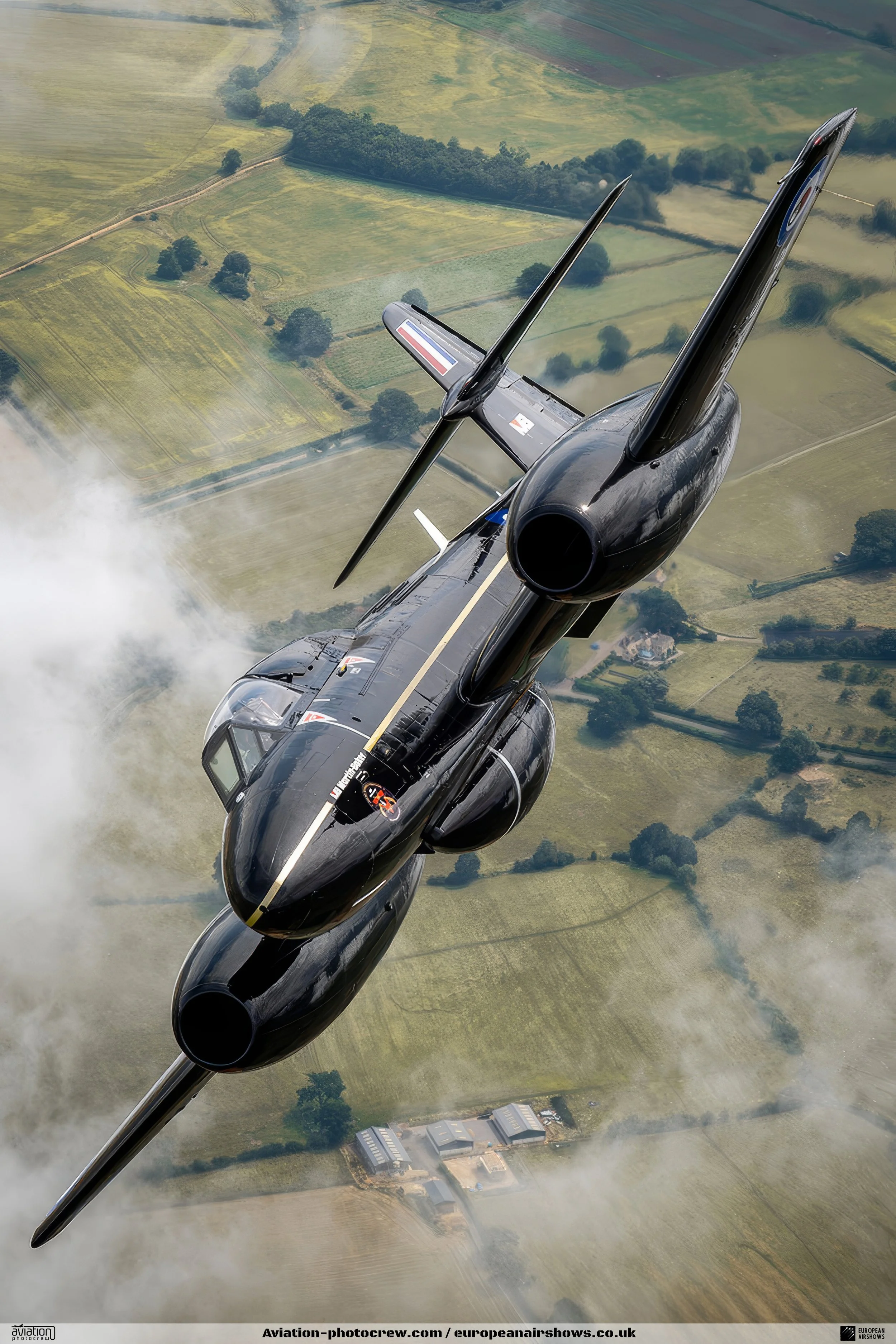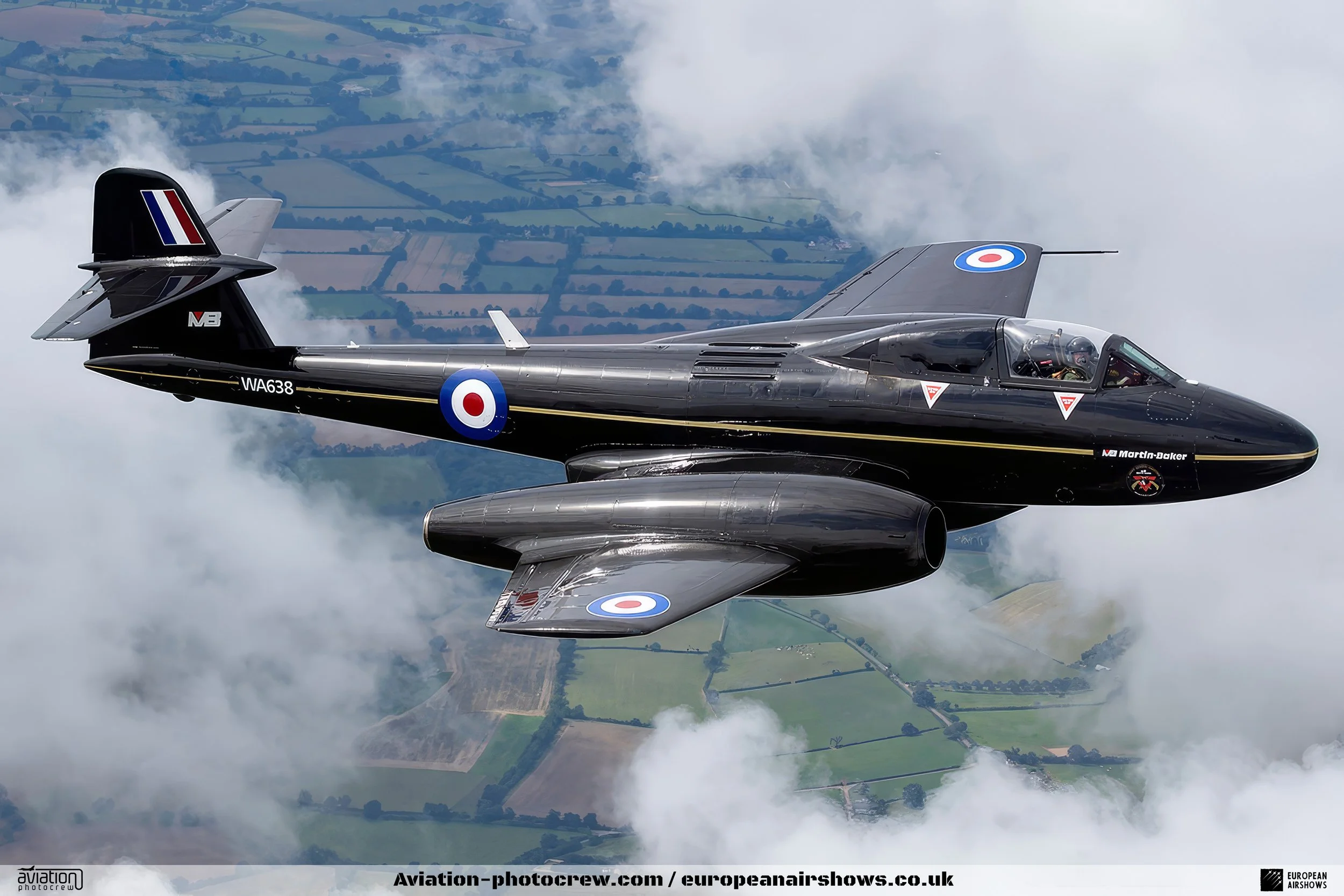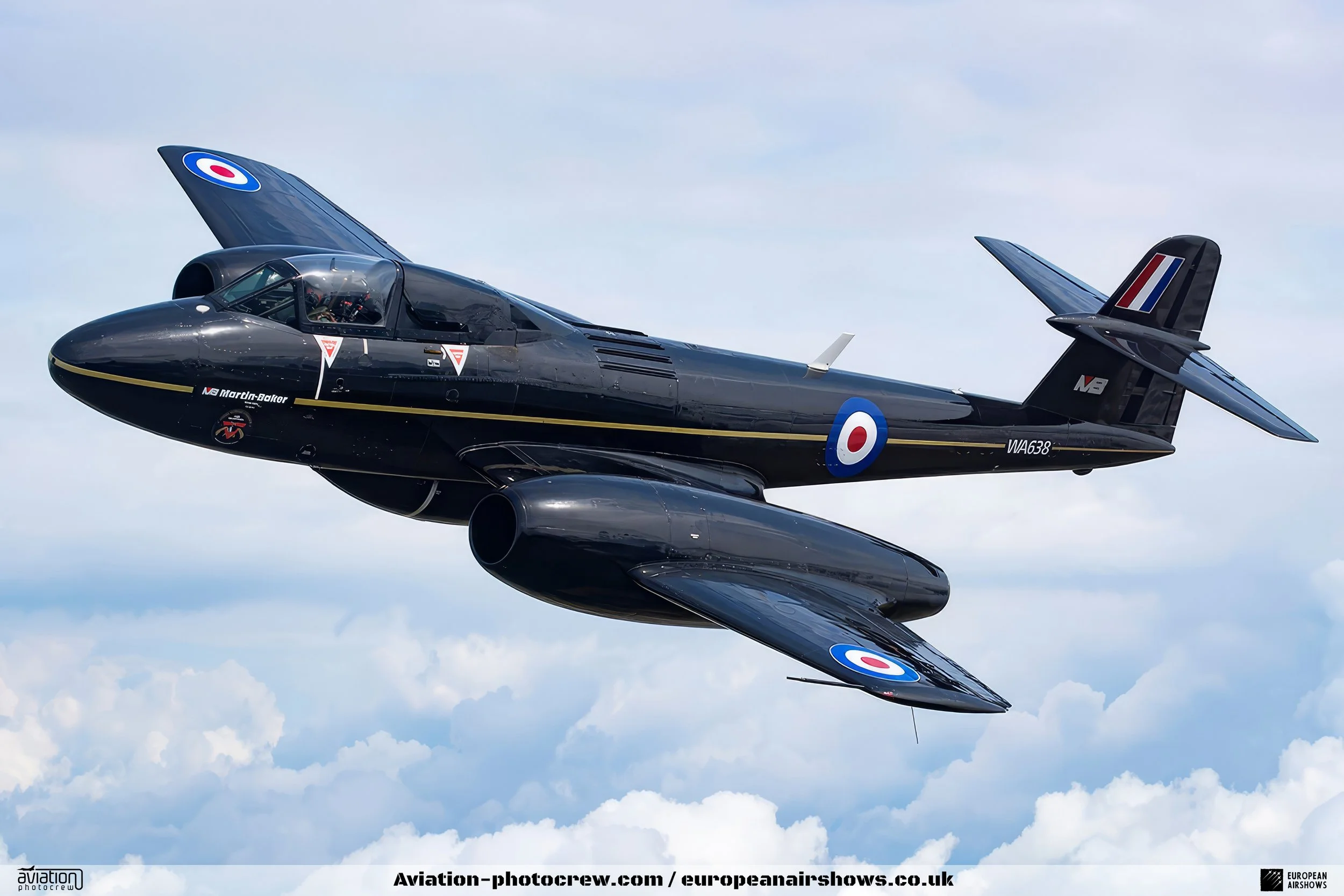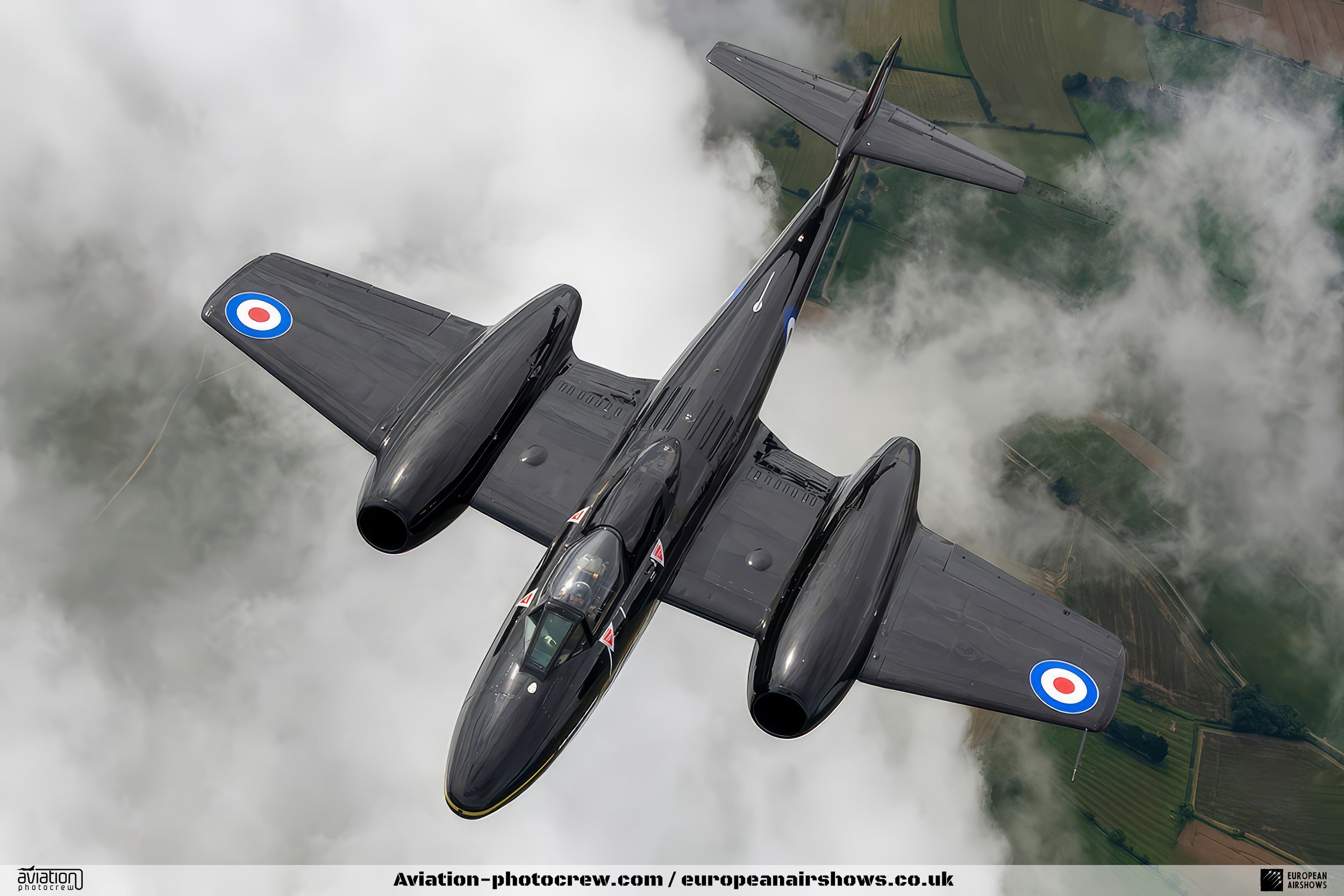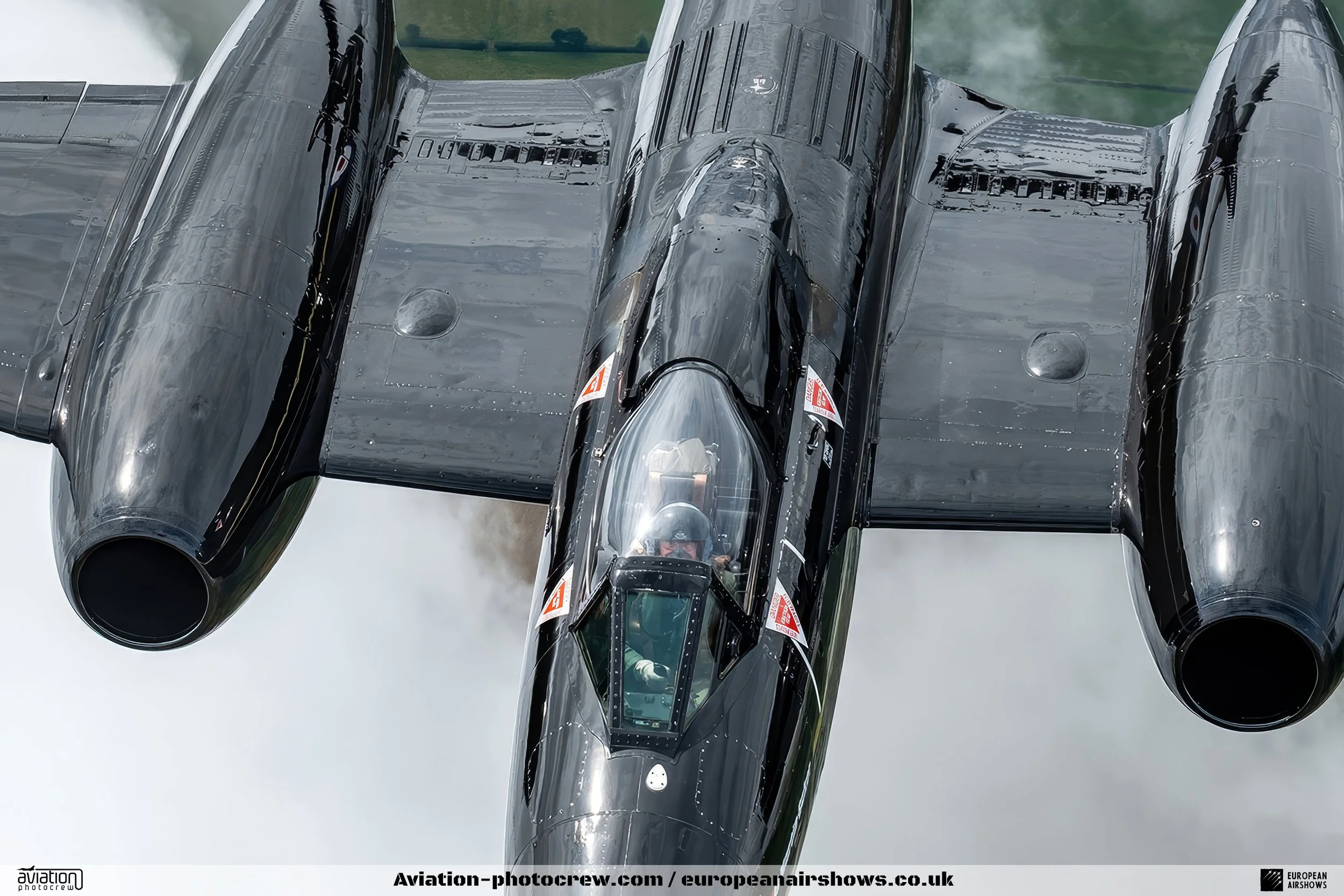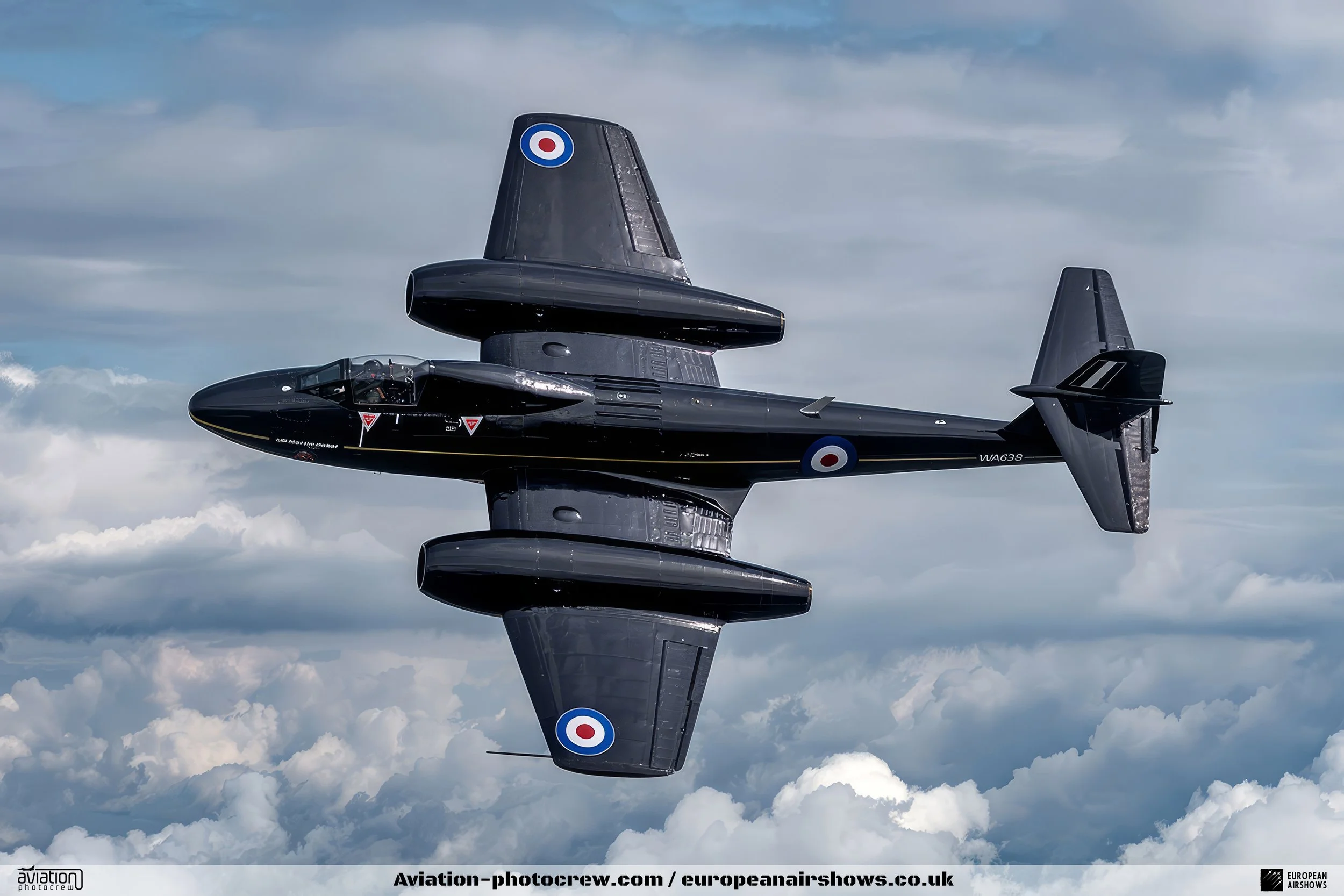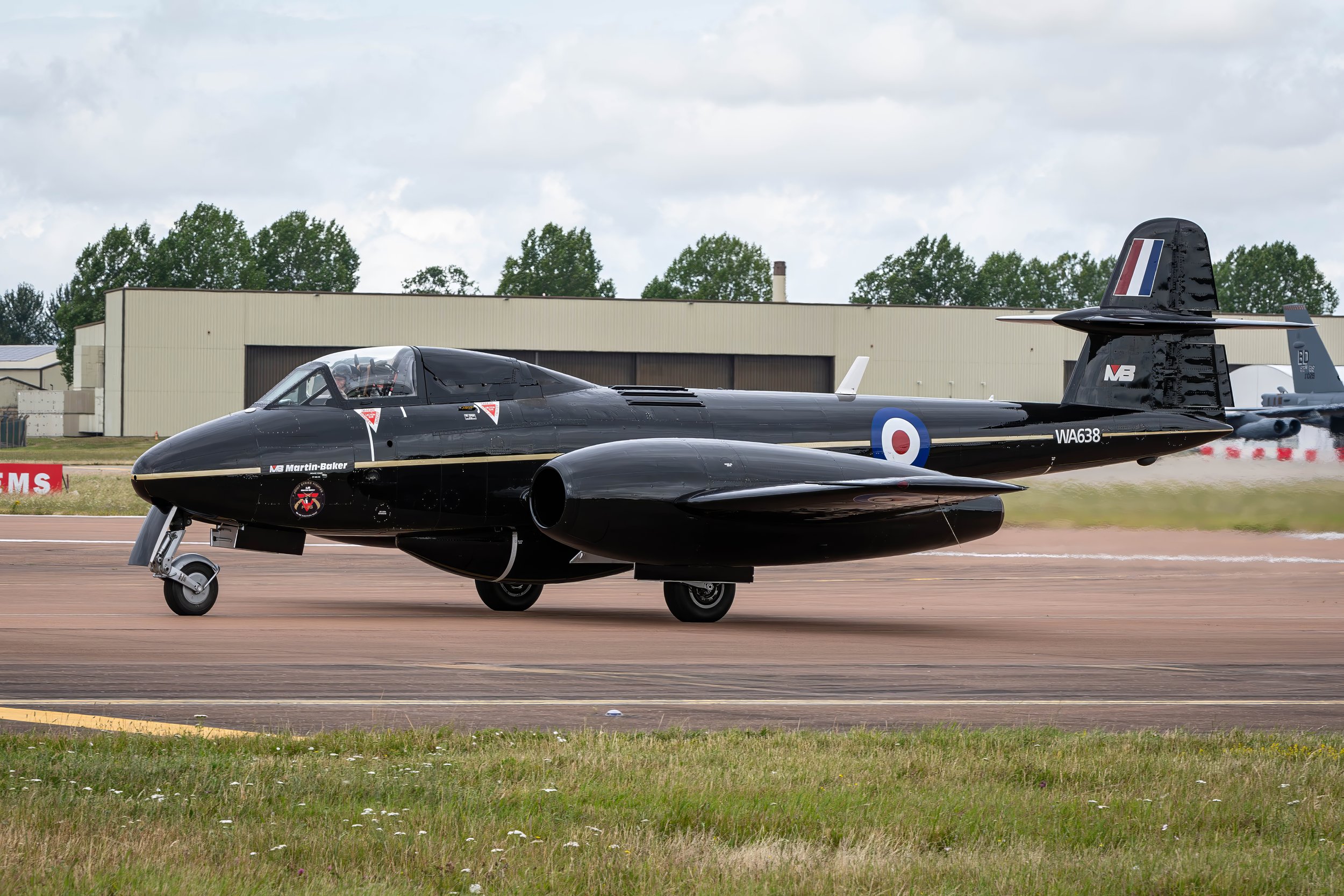
Gloster Meteor
Britain’s first operational jet fighter—V-1 interceptor, European theatre workhorse, and Korea-proven with the RAAF
The Gloster Meteor was the first British jet fighter and the Allies’ only jet to see combat operations in the Second World War. Powered by Frank Whittle–derived turbojets, the prototype first flew on 5 March 1943, and Meteors entered squadron service in July 1944 with No. 616 Squadron. Initially tasked to counter the V-1 flying bomb threat from bases in Kent, the type quickly proved reliable and adaptable, paving the way for wider European deployment and post-war variants from reconnaissance to night fighter.
Development began under Air Ministry Specification F.9/40, with Gloster designing the airframe around Whittle’s turbojets. Early production F.1s led to improved F.3s and post-war F.4/F.8 fighters, while Armstrong Whitworth produced successful two-seat night-fighters (NF.11/12/13). In November 1945, a Meteor IV set the first official jet-powered world speed record, underscoring the type’s rapid maturation.
The Meteor’s longest and most intense combat came in the Korean War, where No. 77 Squadron RAAF flew the F.8 from 1951–53. Outclassed by MiG-15s at altitude, the Australians shifted to ground-attack—flying thousands of sorties and still achieving several MiG claims. Meteors served worldwide and in numerous RAF roles into the 1970s–80s (notably target towing), leaving a long operational legacy for a first-generation jet.
Operational Chronicle
A detailed timeline of development, deployment, and distinguished service
Specification F.9/40
The Air Ministry issues Spec F.9/40 for a jet-propelled fighter. Gloster designs an all-metal twin-jet airframe around Whittle-derived powerplants, leading to multiple prototype configurations during 1941–43.
Maiden Flight
On 5 March 1943, the Meteor prototype flies, becoming Britain’s first jet fighter. Production F.1s follow, with early refinements to engines, canopy and nacelles as the programme accelerates.
First RAF Operations
In July 1944 No. 616 Squadron declares Meteor F.1 operations from Manston, Kent. The first operational jet sorties for the RAF target V-1 flying bombs; the unit achieves its first V-1 “kills” in early August.
North-West Europe Deployment
Meteor F.3s join the Second Tactical Air Force on the Continent for late-war operations, flying air defence and armed reconnaissance as the European campaign concludes.
Jet World Speed Record
On 7 November 1945, a Meteor F.4 sets the first official jet-powered world speed record at over 600 mph, reflecting rapid post-war development.
Korean War (RAAF)
No. 77 Squadron RAAF converts to Meteor F.8s in 1951. After early air-to-air combat with MiG-15s, the unit focuses on ground-attack—flying thousands of sorties and claiming several MiG victories.
Night-Fighter & Recon Families
Armstrong Whitworth builds successful NF.11/12/13 two-seat night-fighters; FR.9 tactical reconnaissance and PR.10 photo-recon variants expand the family’s roles across Europe and the Middle East.
Suez Crisis
Meteors see action with multiple operators in the Middle East, including Israeli and Egyptian air arms, in mixed air-defence and strike roles during the Suez crisis.
Long Tail of Service
Former fighters transition to target towing, test and drone roles. RAF target-tug Meteors remain active into the 1970s–80s, giving the type one of the longest careers of any first-generation jet.
Combat Operations
Key campaigns and roles that defined the Meteor in service
No. 616 Squadron employs Meteor F.1s from Manston to counter flying bombs—the RAF’s first operational jet missions—achieving early V-1 kills and proving the type’s frontline viability.
Meteor F.3s deploy to the Continent for late-war air defence and armed recce, supporting the final push into Germany and safeguarding Allied airspace.
Operating Meteor F.8s, the Australians begin with escort and fighter sweeps but transition to intensive ground-attack—flying thousands of sorties and still recording several MiG victories.
Meteors fly with multiple nations during the Suez Crisis in air-defence and strike roles, highlighting the type’s wide export service in the 1950s.
Armstrong Whitworth Meteor NF.11/12/13s assume radar night-fighter duties, replacing late-mark Mosquitos and providing a crucial air-defence bridge to the all-weather jet era.
Retired fighters gain second lives as TT.20/TT conversions and trials platforms. Meteor activity in these roles endures in UK service into the 1970s–80s.
Service Record
Headline milestones from the Meteor’s long career
Technical Specifications
Essential details and characteristics of the Gloster Meteor
Development Story
From F.9/40 concept to a family of fighters, night-fighters and recces
Origins and Early Prototypes
Under Air Ministry Specification F.9/40, Gloster engineered a twin-jet fighter around Whittle-derived powerplants, flight-testing multiple prototype combinations through 1943. The first flight on 5 March 1943 validated the concept; early design work focused on engine reliability, yaw stability and nacelle refinement before production F.1s emerged.
Into Service and Rapid Evolution
Entering RAF service in July 1944, Meteors initially hunted V-1s from Manston before moving to North-West Europe for late-war operations. Post-war development accelerated: the F.4 introduced more powerful Derwents and structural/aerodynamic improvements, while the F.8 became the definitive single-seater—later proving itself in Korea with the RAAF.
Night-Fighter & Reconnaissance Branches
Armstrong Whitworth developed the two-seat radar-equipped NF.11/12/13 night-fighters, replacing late-mark Mosquitos. Tactical FR.9 and high-altitude PR.10 reconnaissance variants extended the aircraft’s utility across Europe and the Middle East, reflecting the airframe’s versatility.
Records and Long Service
In November 1945 a Meteor F.4 set the first official jet world speed record at over 600 mph. Though superseded by swept-wing types, Meteors continued in air defence, training, trials and target-towing roles—remaining familiar on RAF and overseas inventories into the 1970s–80s.
Enduring Legacy
The Allied jet that went to war—and kept serving for decades
The Gloster Meteor stands as Britain’s first operational jet and the only Allied jet to see combat in WWII. It introduced practical turbojet combat operations, set an early jet speed record, and evolved into night-fighter and reconnaissance families used worldwide. From V-1 interdiction and late-war European duties to hard combat over Korea and broad post-war service, the Meteor bridged eras and proved that first-generation jets could deliver lasting operational value. Its extended afterlife in trials and target-towing roles into the 1970s–80s underlines an exceptional service span for a pioneering design.