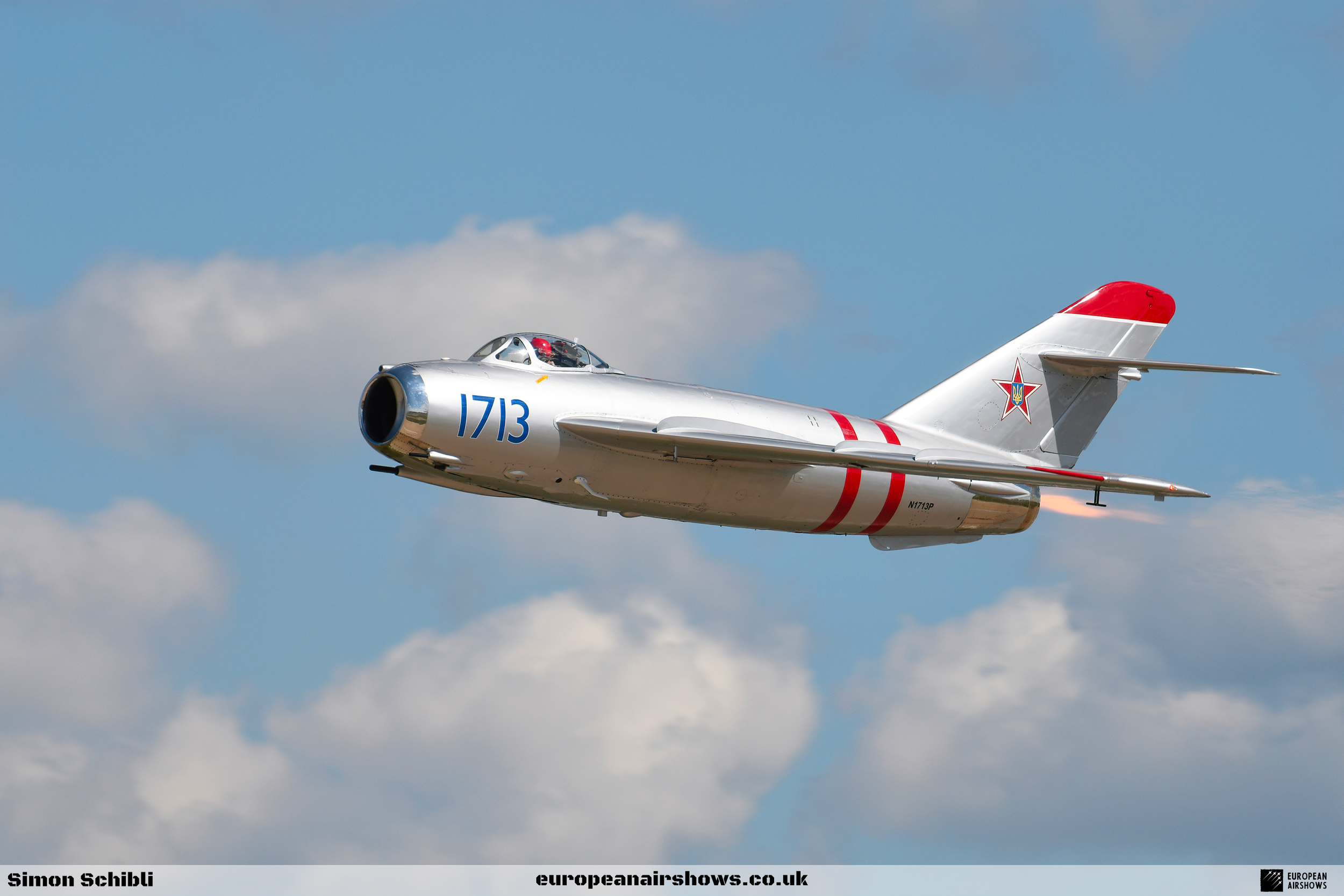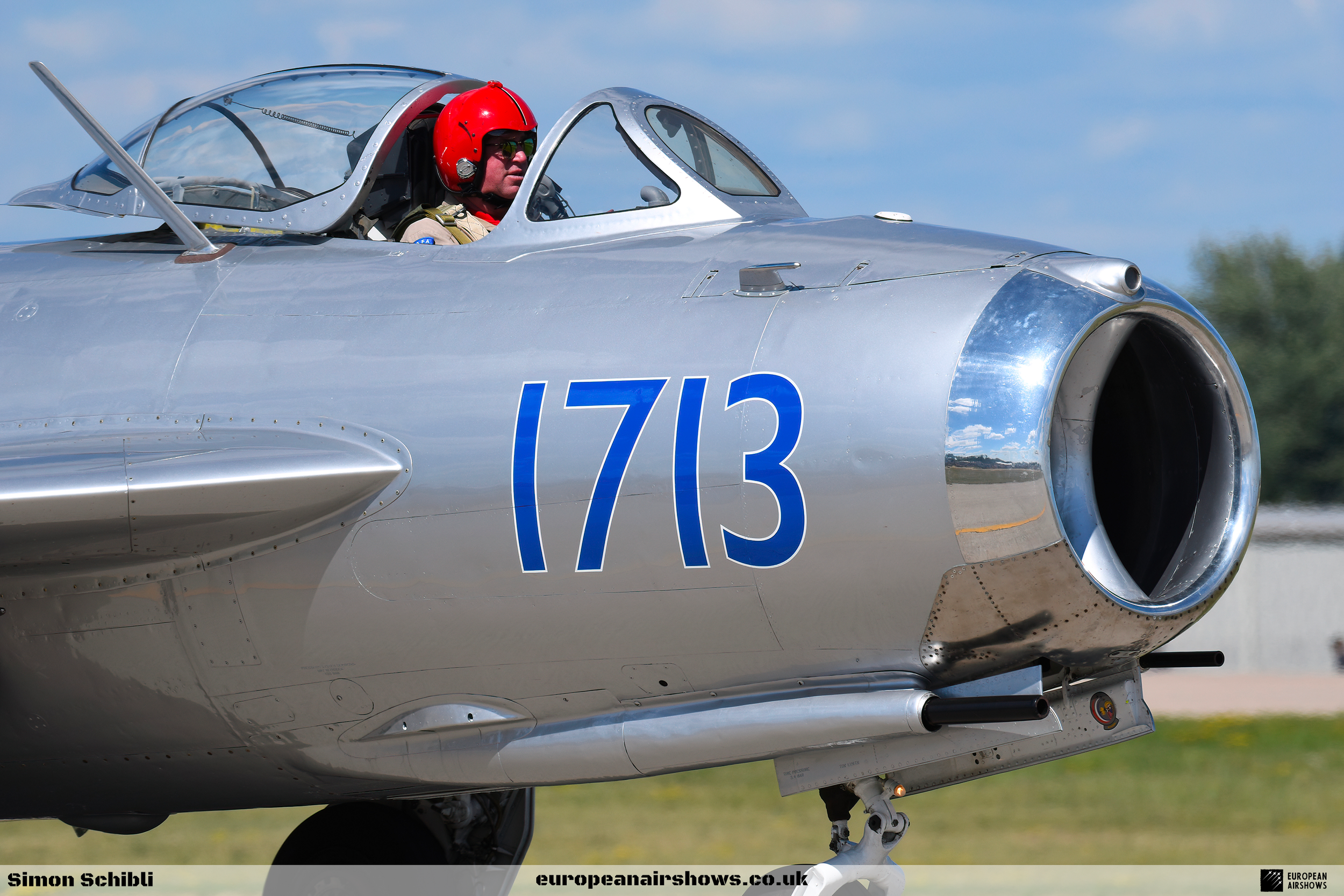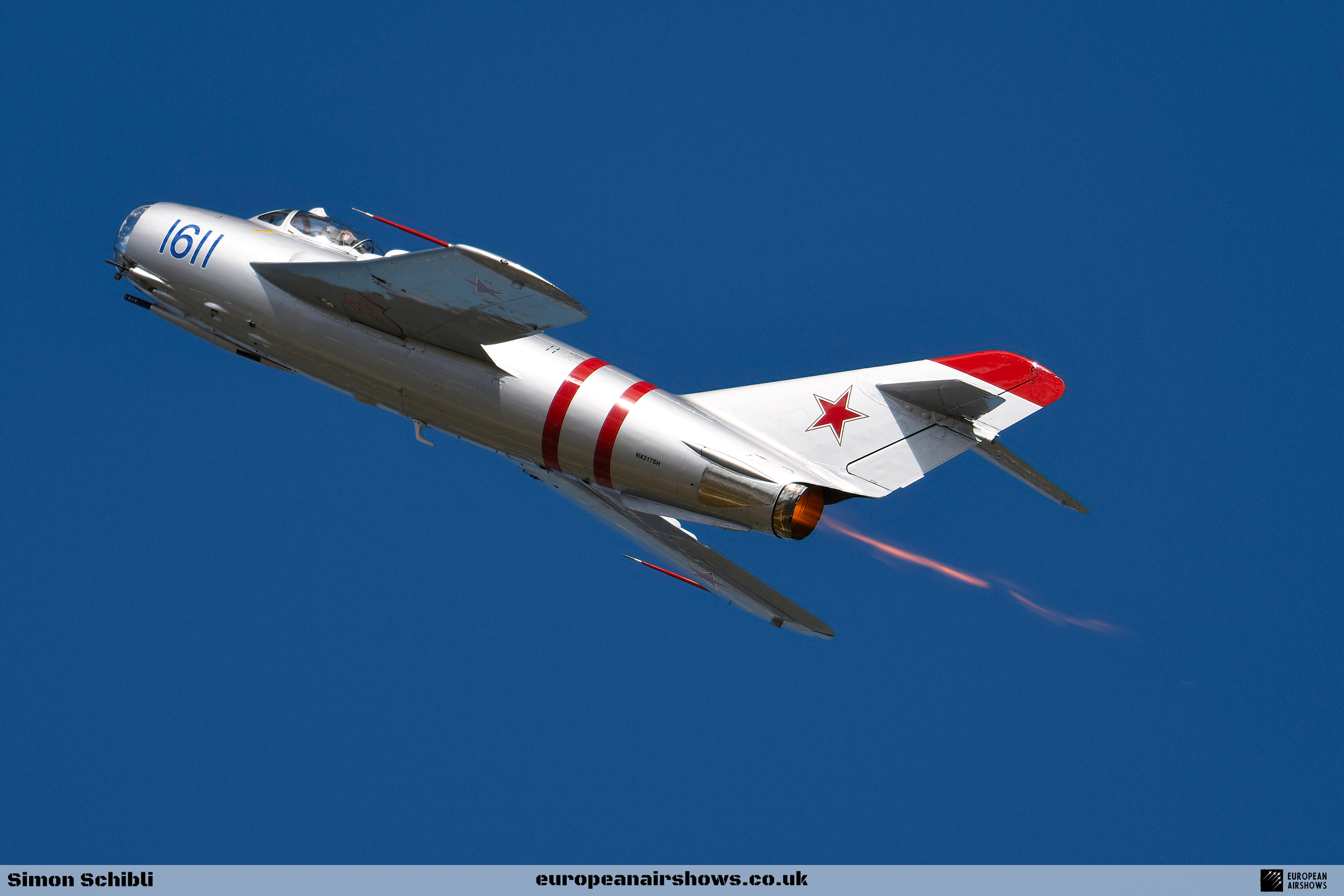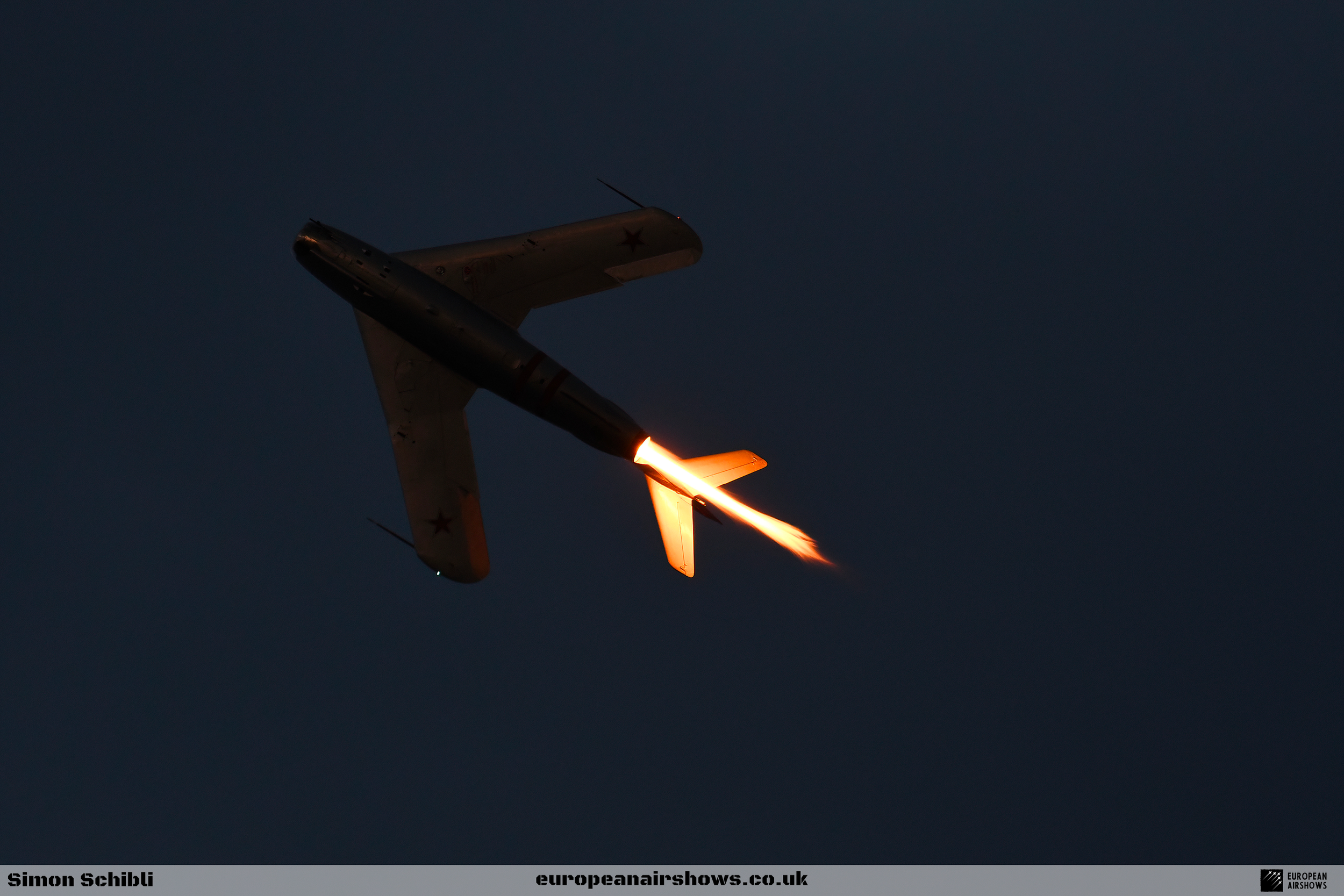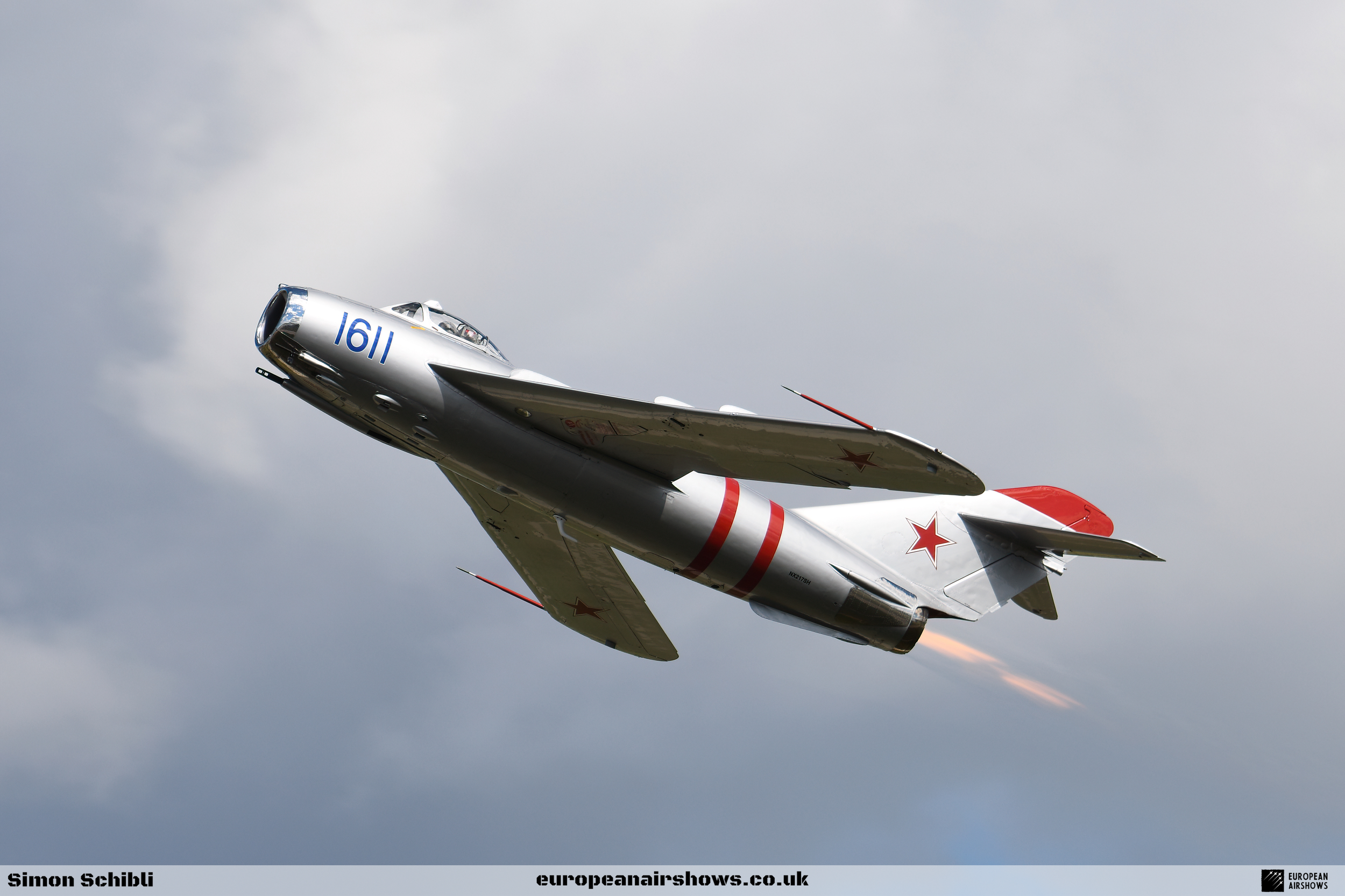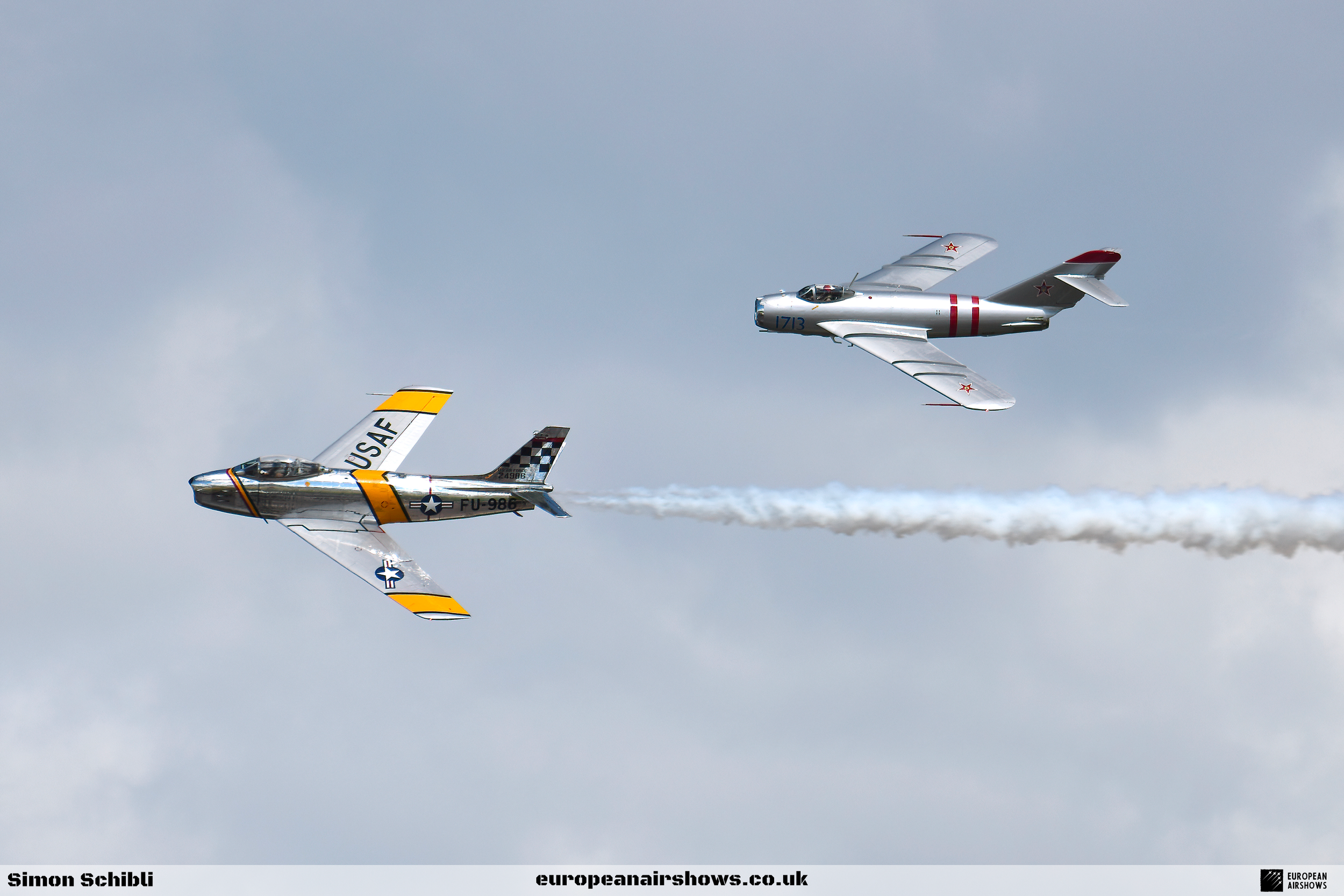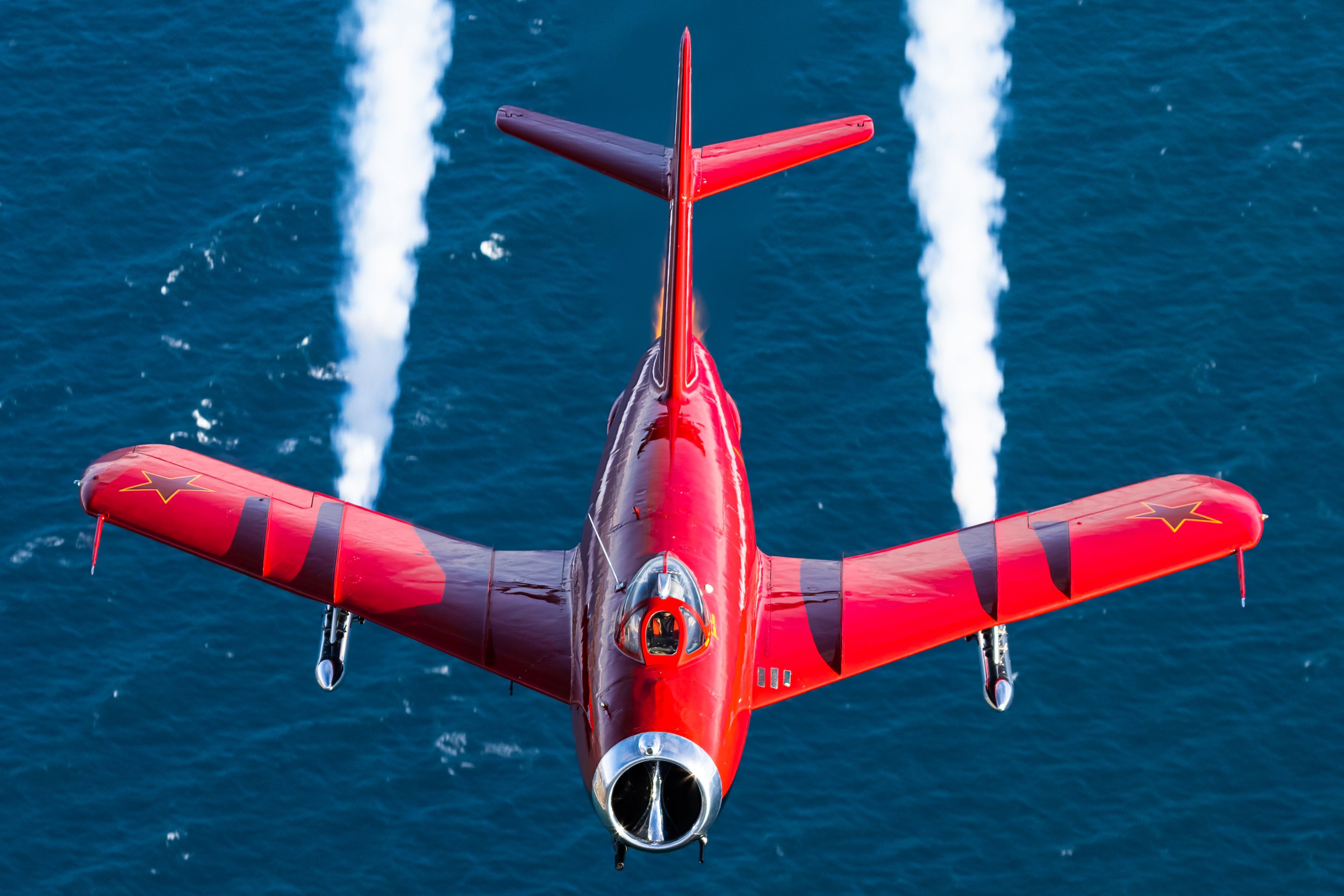
Mikoyan-Gurevich MiG-17 "Fresco"
The transonic fighter that bridged the MiG-15 to the supersonic era—mass-produced, license-built, and battle-proven from the Taiwan Strait to Vietnam and the Middle East.
The Mikoyan-Gurevich MiG-17 emerged as a comprehensive refinement of the MiG-15—stretching the fuselage, sharpening wing sweep, adding a third fence and improving high-Mach behaviour to produce a far steadier gun platform in the transonic regime. The prototype I-330 "SI" flew on 14 January 1950 with Ivan Ivashchenko at the controls, and the type entered service in 1952, too late for Korea but perfectly timed for the jet age's next decade of conflicts.
Production ran across the Soviet Union, Poland and Czechoslovakia, with extensive license-build in China as the Shenyang J-5; more than 10,000 were manufactured across all variants. The definitive MiG-17F introduced an afterburning VK-1F, while MiG-17PF/PFU all-weather interceptors added the "Izumrud" radar and, on the PFU, beam-riding missiles in place of cannon. Export success was vast: the type equipped air arms throughout Eastern Europe, the Middle East, Africa and Asia—and remains in limited service today.
In combat the MiG-17's strengths—instantaneous turn, high-alpha authority, low-speed handling and heavy cannon fit (two 23 mm + one 37 mm)—translated into hard kills. From the 1958 Second Taiwan Strait Crisis through the Vietnam War and the Arab–Israeli wars, MiG-17 units repeatedly demonstrated that tactics and geometry could offset raw speed, especially in visual-range fights against missile-centric adversaries.
Operational Chronicle
A detailed timeline of development, deployment, and distinguished service
Design Finalised
Mikoyan-Gurevich completes the I-330 "SI" design—an aerodynamic re-work of the MiG-15 with 45° outer-panel sweep, extended fuselage and additional wing fence to tame high-Mach pitch/roll issues discovered in service.
Maiden Flight
On 14 January 1950 the prototype flies from the Moscow test centre with Ivan Ivashchenko. Subsequent test work addresses flutter and aileron-reversal margins before the type is cleared for series build.
Type Acceptance & Production
The aircraft is accepted for production; initial batches are prioritised behind MiG-15 output, with wider manufacturing ramping across Soviet plants and later under licence in Poland and Czechoslovakia.
Service Entry
First operational MiG-17s join frontline Soviet units. Although too late for the Korean War, the fighter rapidly equips Warsaw Pact and export customers as a standard day-fighter/interceptor.
Afterburner & Radar Variants
The MiG-17F introduces the afterburning VK-1F; the MiG-17PF adds the RP-1 "Izumrud" radar for all-weather interception, followed by the PFU missile-armed variant.
Suez Crisis
Egyptian MiG-17s see early combat over the Sinai and Canal Zone. Although out-ranged by Western fighters, low-level speed and manoeuvrability make them potent in point defence.
Second Taiwan Strait Crisis
PLAAF/Shenyang J-5 units clash with ROC F-86s during the Quemoy/Matsu crisis, marking one of the MiG-17's first high-profile post-Korea combat deployments.
Vietnam War
VPAF MiG-17s score multiple kills against F-105s, F-8s and F-4s—most famously over the Thanh Hóa (Hàm Rồng) Bridge and in engagements around Hanoi/Haiphong—showcasing the type's close-in prowess.
Arab–Israeli Wars
Egyptian and Syrian MiG-17s fight in the Six-Day War, War of Attrition and Yom Kippur War—tasked primarily with point defence and strike, often at very low level under intense SAM/FGA pressure.
Africa & Export Service
MiG-17s and J-5s serve widely in Africa—including Angola, Ethiopia/Somalia and others—in air defence, strike and training roles, reflecting the type's simplicity and ruggedness.
Legacy & Survivors
Most operators retire the type; a handful remain in limited service (notably in North Korea), while numerous airframes fly privately or are preserved worldwide.
Combat Operations
Major campaigns where the MiG-17 distinguished itself in action
Shenyang J-5/MiG-17 units duel ROC fighters around Quemoy/Matsu, demonstrating the type's sharp handling and climb in point-defence sorties over the islands and strait.
VPAF MiG-17s claim numerous victories against F-105s, F-8s and F-4s. Gunnery, tight turns and low-altitude tactics offset opponents' speed and missiles in many engagements.
Egyptian MiG-17s fly interception and strike at low level under heavy IAF pressure, often from dispersed bases, highlighting the type's simplicity and survivability.
Egyptian and Syrian units use MiG-17s for point defence and close air support in the conflict's early, high-tempo phases alongside newer MiG-21s.
Across Angola and the Horn of Africa, MiG-17s serve in ground-attack and air-defence roles, valued for short, rough-field operations and straightforward maintenance.
Adopted by dozens of air arms, the MiG-17 becomes the archetypal export jet fighter of its era—training generations of pilots and anchoring national air defences.
Service Record
Key milestones and statistics from the MiG-17's long career
Technical Specifications
Essential details and characteristics of the Mikoyan-Gurevich MiG-17
Development Story
From MiG-15 refinement to a ubiquitous Cold War fighter
Origins and Aerodynamic Re-Work
Post-Korea testing showed the MiG-15's control harmony and stability degraded near Mach 1. Mikoyan's team lengthened the fuselage, increased outer-panel sweep to roughly 45°, added a third wing fence and refined the tail to delay compressibility effects, improve roll response and give pilots a steadier firing platform at high subsonic speed.
The prototype I-330 "SI" took to the air in January 1950. Early flutter and aileron-reversal issues were identified and solved during state trials, paving the way for acceptance the following year and series production thereafter.
Variants and Capabilities
The initial day-fighter led to the MiG-17F with an afterburning VK-1F—boosting climb and dash speed—and to the MiG-17PF, which integrated the RP-1 "Izumrud" radar for night/all-weather interception. The PFU traded cannon for beam-riding missiles. Licence production created vast fleets: Poland's Lim-5/6 and China's J-5/J-5A ensured spares, training and upgrades for decades.
Operational Lessons
In service, the MiG-17 excelled in visual-range fights where instantaneous turn, low-speed handling and heavy cannon dominated. Vietnam confirmed that geometry, teamwork and rules-of-engagement often decide outcomes: subsonic MiG-17s could and did defeat faster F-105s and F-8s—and threaten F-4s—when fights collapsed into the merge.
By the late Cold War the type shifted to attack and training roles, yet its simplicity, short-field performance and robustness kept it relevant in austere environments. Survivors still fly privately and in a few state inventories—an enduring testament to an archetypal Cold War fighter.
Enduring Legacy
A ubiquitous Cold War workhorse
The MiG-17 stands as one of the most widely produced jet fighters in history—combat-tested across continents, endlessly exported and licence-built, and still flying in limited numbers more than seven decades after its first flight on 14 January 1950. It bridged first-generation swept-wing jets and the supersonic age, proving that agility, guns and tactics could still dominate the merge. From factories in the USSR, Poland and Czechoslovakia to Shenyang's J-5 lines, the MiG-17 reshaped global air power at modest cost, leaving a legacy of simplicity, durability and combat credibility.