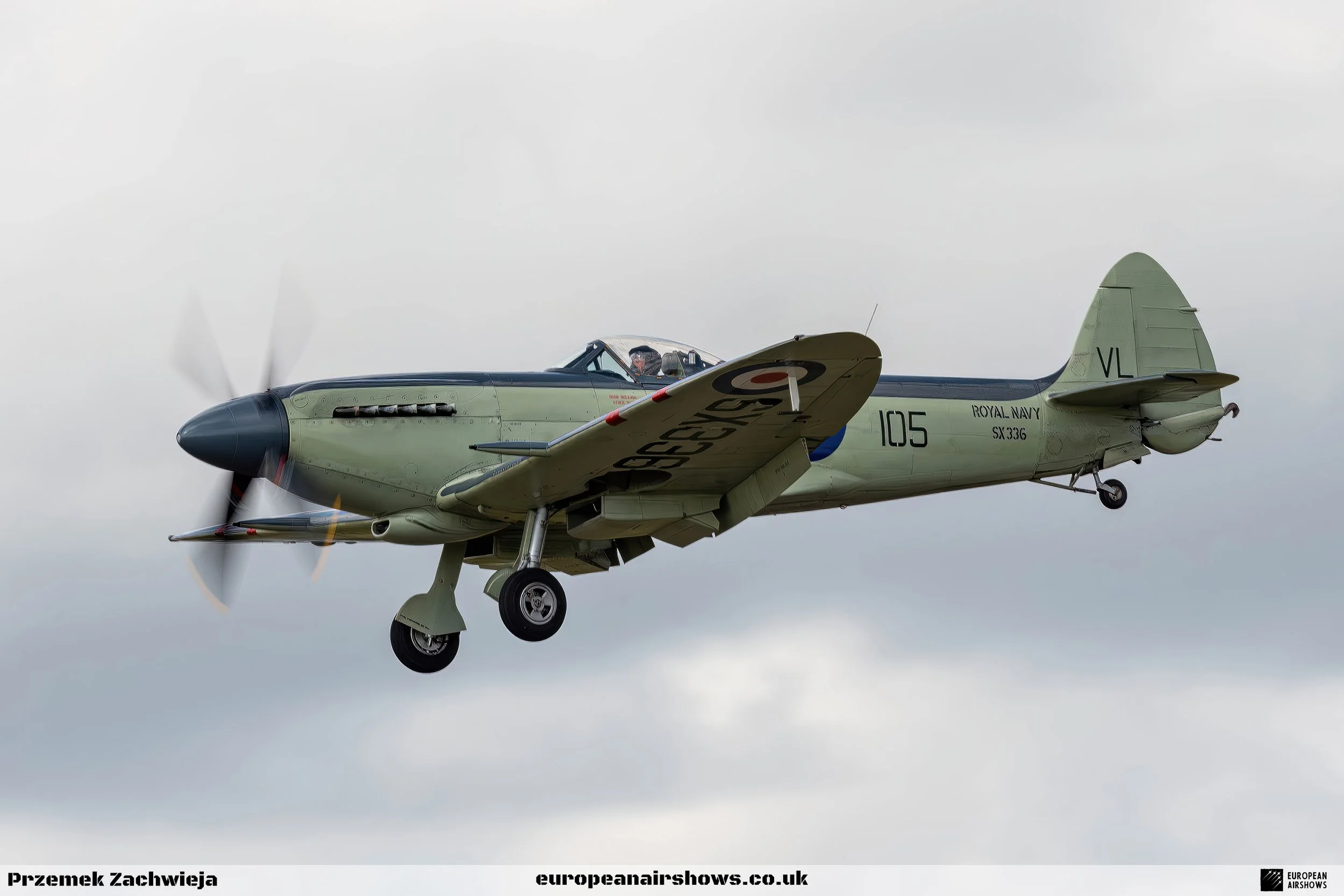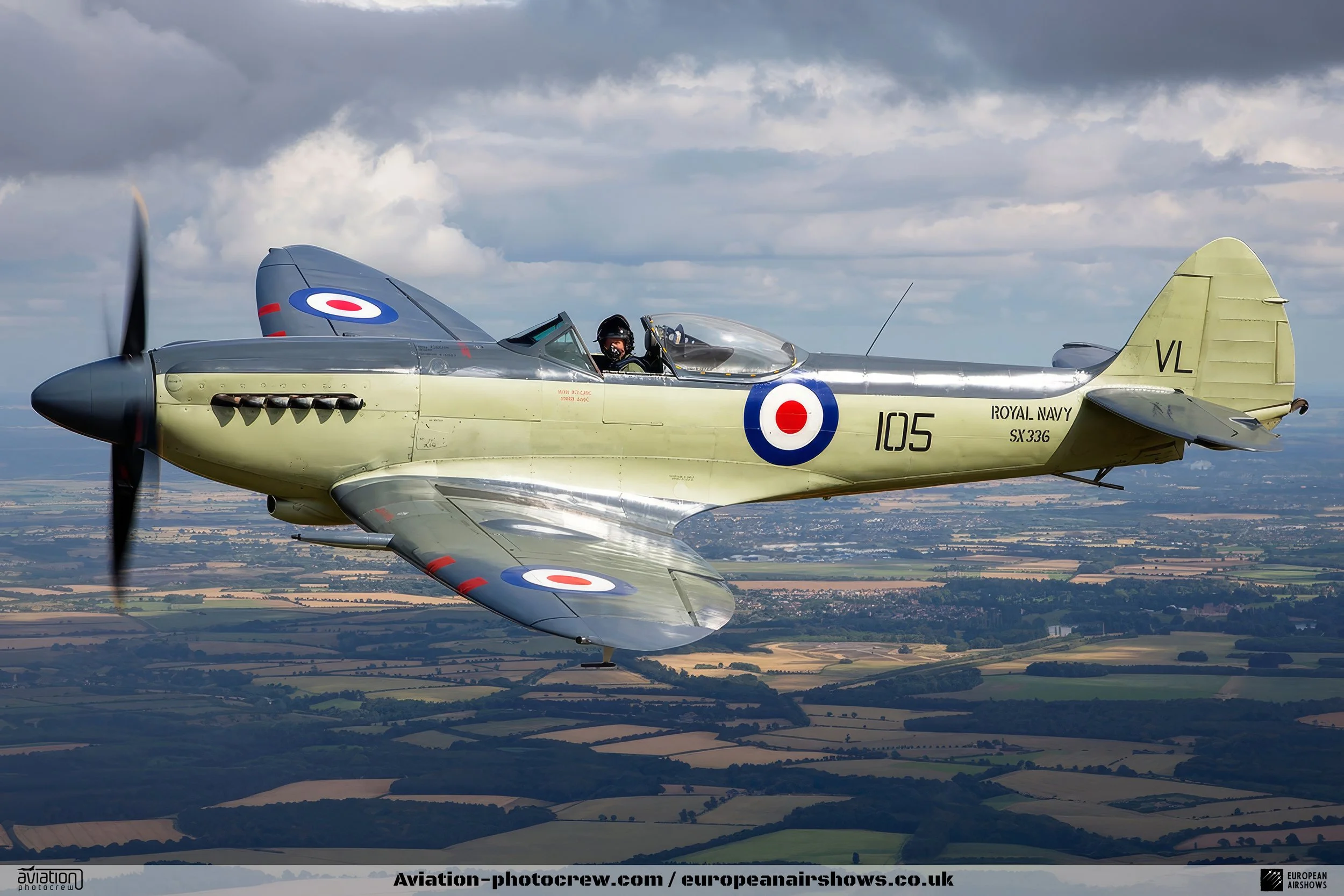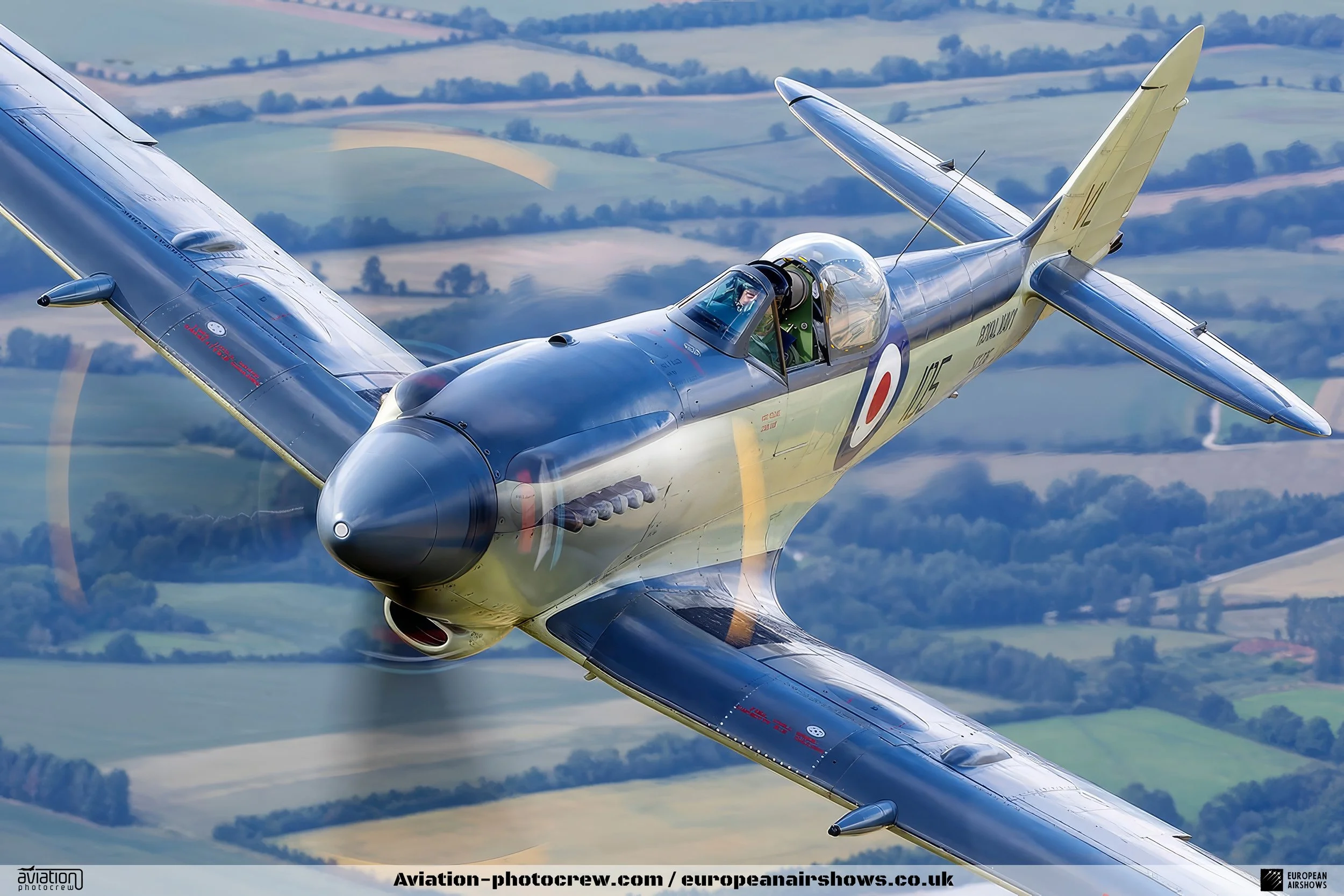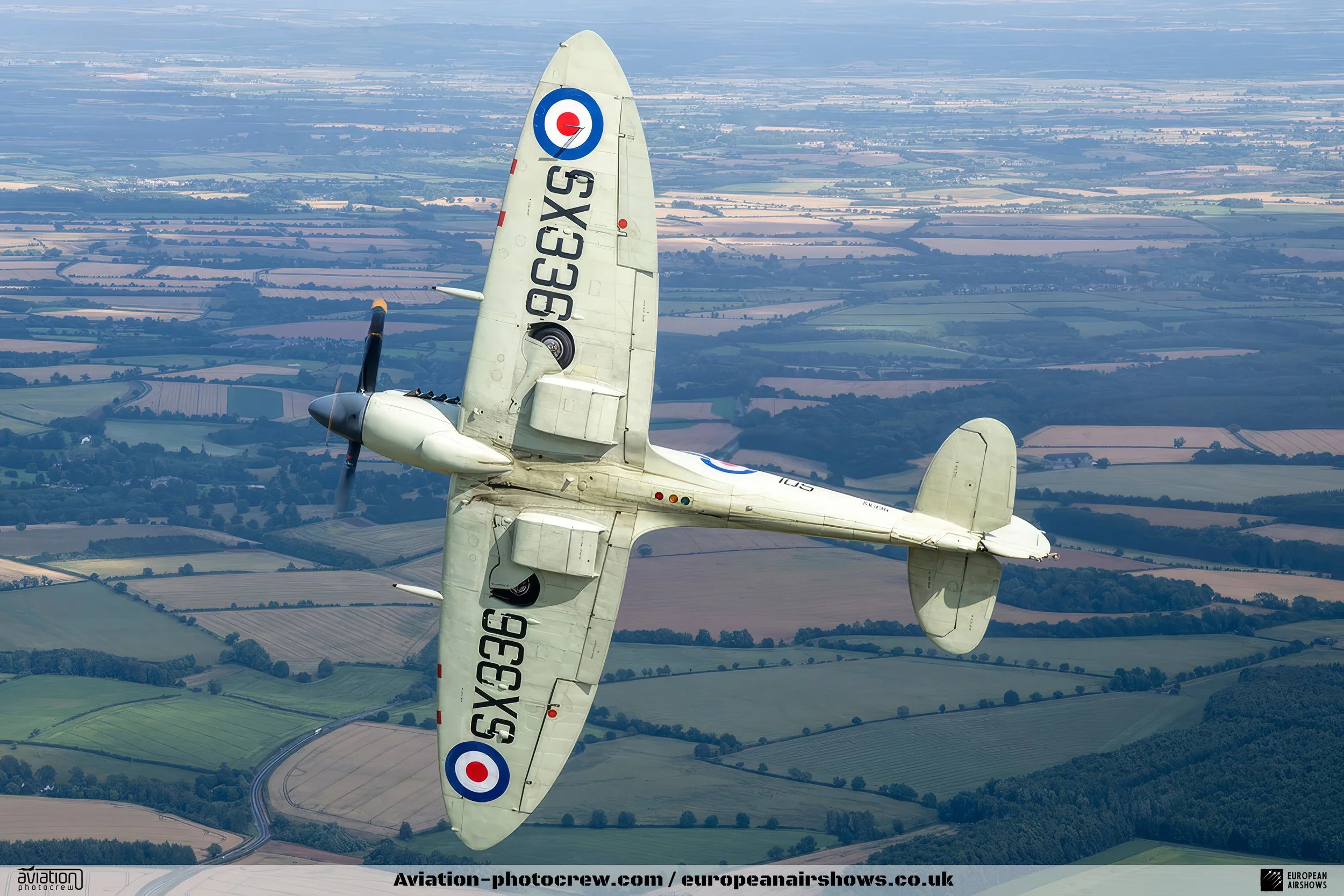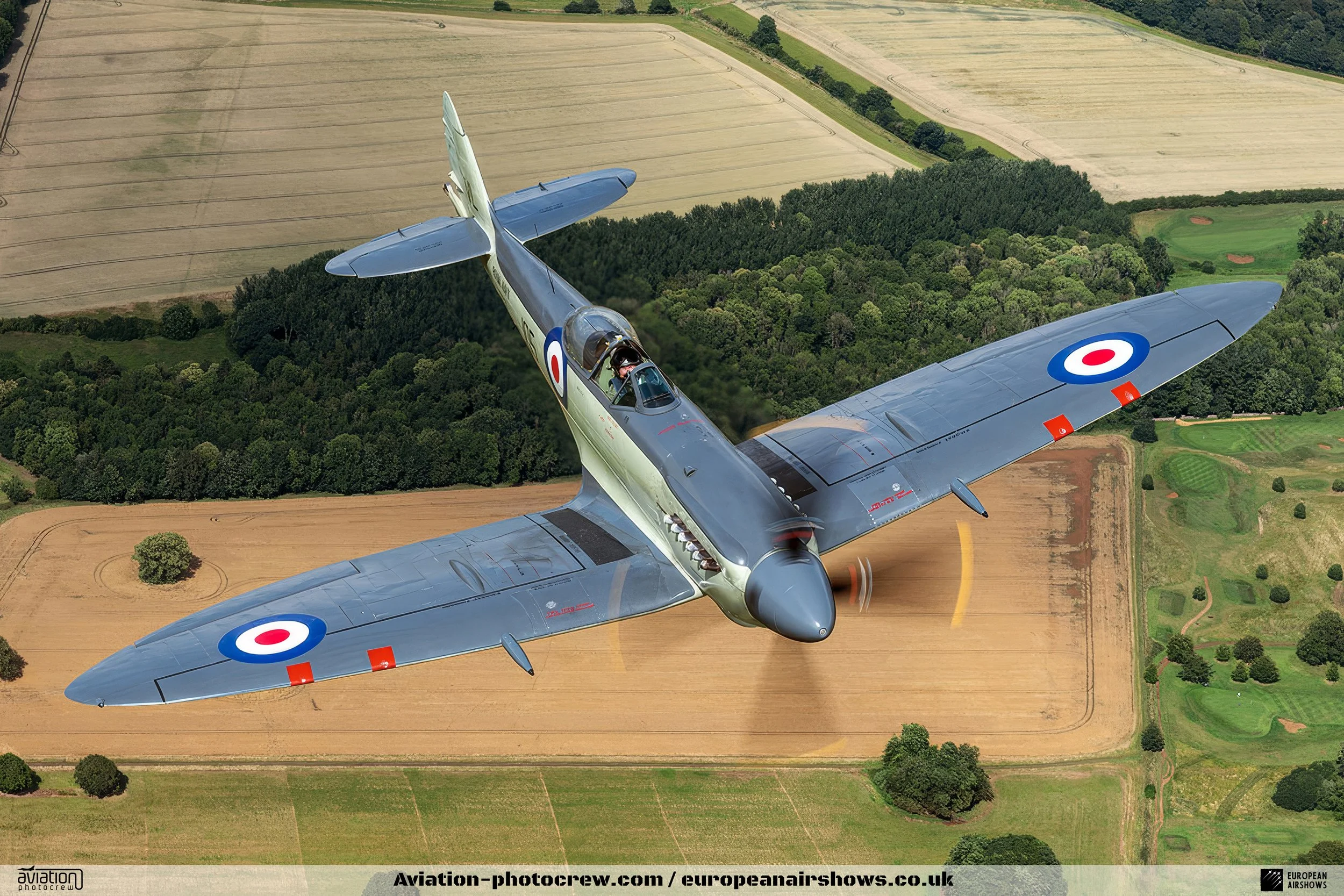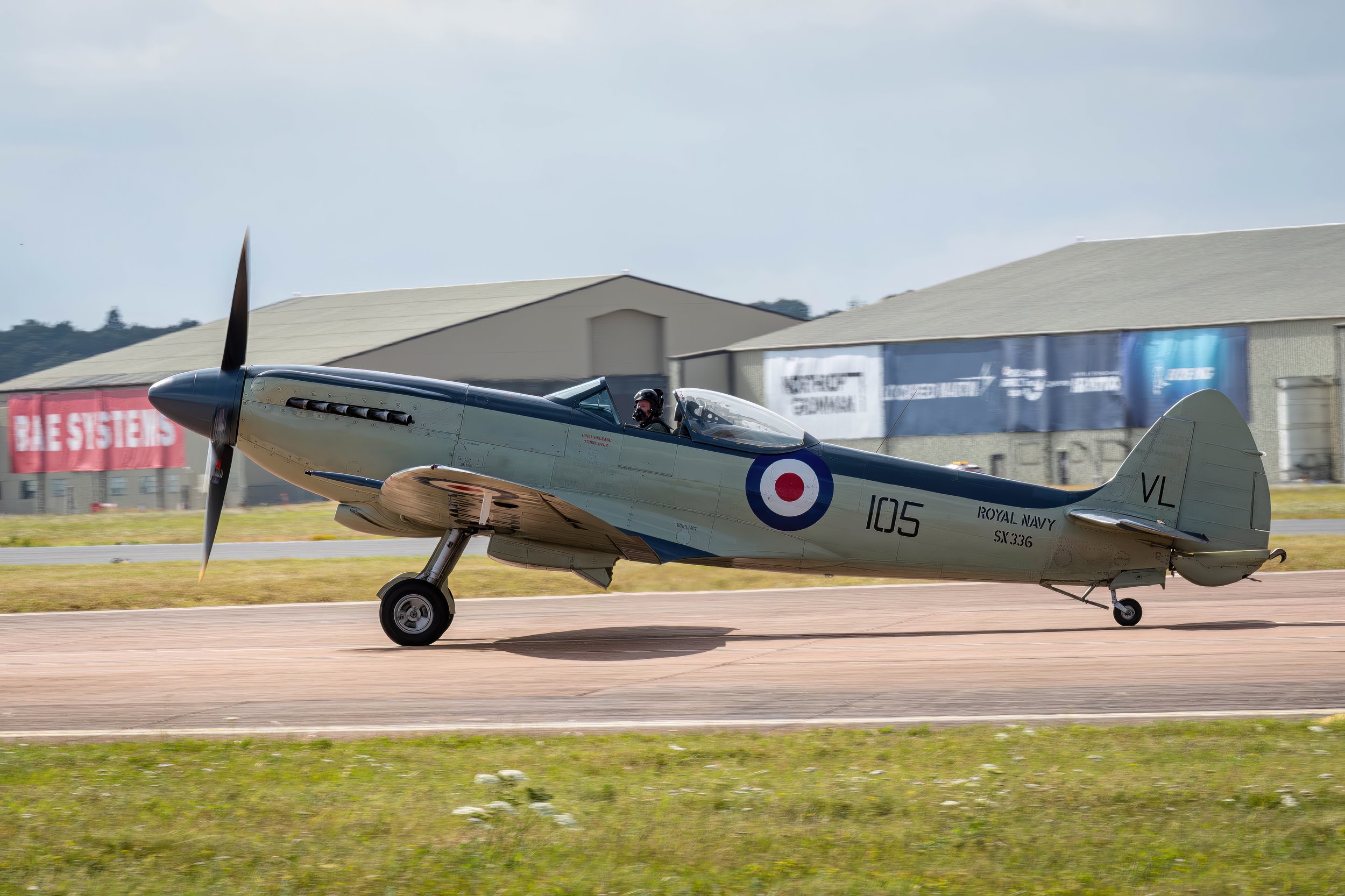
Supermarine Seafire
The Naval Spitfire That Defended Allied Fleets From North Africa to the Pacific Theatre
The Supermarine Seafire represented one of the most significant adaptations in naval aviation history—transforming the legendary land-based Spitfire into a carrier-capable fighter that would serve with distinction across multiple theatres of World War II and beyond. On 7 January 1942, the Seafire took its maiden flight, marking the culmination of years of development that began with the Admiralty's 1938 proposal to create a naval variant of Britain's most celebrated fighter aircraft.
Despite initial opposition from senior leadership, including Winston Churchill, who prioritized maintaining land-based Spitfire production numbers for the defense of Britain, the Admiralty persisted in its vision. The internal conflict highlighted the complex resource allocation decisions facing British military leadership during the escalation to global war. By late 1941, the first batch of Seafire Mk.Ib fighters entered production, serving primarily as experimental platforms that allowed Fleet Air Arm pilots to master the unique challenges of operating a high-performance fighter from carrier decks.
The breakthrough came with the F Mk.III variant introduced in 1942. This operationally viable version incorporated reinforced landing gear, enhanced armament, improved performance characteristics, and better handling qualities specifically tailored for the demanding environment of carrier operations. With these improvements, the Seafire transformed from an experimental concept into the backbone of Fleet Air Arm fighter operations, establishing itself as a formidable weapon that would see action from the Mediterranean to the Pacific.
Operational Chronicle
A detailed timeline of development, deployment, and distinguished service
Development Proposed
In May 1938, the British Admiralty formally proposed the development of a carrier-capable Spitfire variant. This proposal came at a critical juncture as the Royal Navy recognized the urgent need to modernize its naval aviation capabilities in the face of escalating global tensions and the likelihood of conflict with Germany.
Initial Production
By late 1941, the first batch of Seafire Mk.Ib fighters entered production. These early models, while not fully optimized for carrier operations, provided invaluable experience for Fleet Air Arm pilots and ground crews in adapting Spitfire performance to the naval environment. The primary concern centered on undercarriage durability during carrier landings.
Maiden Flight
On 7 January 1942, the Supermarine Seafire completed its first flight, beginning its journey toward becoming the Fleet Air Arm's primary carrier-based fighter. This milestone represented the successful translation of the Spitfire's exceptional performance characteristics to naval aviation, though significant development work remained to create a fully operational variant.
F Mk.III Introduction
The introduction of the F Mk.III variant marked a turning point in the Seafire's development. This version incorporated critical improvements including reinforced landing gear, enhanced armament options, and improved handling characteristics. The F Mk.III became the first truly operationally viable Seafire model, forming the backbone of FAA fighter squadrons throughout the war's middle and late periods.
Operation Torch
November 1942 saw the Seafire's combat debut during Operation Torch, the Allied landings in North Africa. Seafires provided crucial air cover for invasion forces, engaging Vichy French and Axis aircraft while protecting naval assets. The operation validated the Seafire's combat effectiveness and established its reputation as a formidable carrier-based fighter capable of challenging enemy aircraft on equal terms.
Sicily and Italy
Throughout 1943, Seafires played pivotal roles in the Mediterranean theatre. During the July invasion of Sicily (Operation Husky), Seafires provided essential air cover, protecting ground forces and naval assets while engaging Axis fighters. This continued in September during the Italian mainland invasion, where the aircraft's agility and firepower proved decisive in establishing Allied air superiority over beachheads and supply routes.
Operation Overlord
The Seafire's contribution to D-Day and the Normandy campaign represented the pinnacle of its European service. Operating from carriers in the English Channel, Seafires maintained air superiority over the invasion beaches, intercepted German reconnaissance aircraft, and protected the massive Allied naval armada. The aircraft's presence was instrumental in ensuring that Allied forces could establish and maintain their crucial foothold in France without significant Luftwaffe interference.
Operation Dragoon
In August 1944, Seafires continued their proven track record during Operation Dragoon, the Allied invasion of southern France. The aircraft provided air support and maintained local air superiority, showcasing the type's versatility across diverse operational environments and weather conditions. This operation further demonstrated the Seafire's reliability and effectiveness in combined amphibious operations.
Pacific Theatre Service
With the conclusion of the European war, Seafires transitioned to the Pacific theatre as part of the British Pacific Fleet. Here, they faced a dramatically different threat environment, particularly the challenge of intercepting kamikaze attacks. The Seafire's speed and climbing performance proved valuable in this role, though the intense tropical conditions and sustained high-tempo operations pushed both aircraft and pilots to their limits.
Korean War
The Seafire's final major combat deployment came during the Korean War, where FAA squadrons conducted hundreds of ground attack and combat air patrol missions against North Korean forces. Operating in conditions ranging from intense summer heat to bitter winter cold, Seafires proved their enduring combat value even as jet fighters began to dominate naval aviation. This conflict marked the end of an era for piston-engine carrier fighters.
Withdrawal from Service
By the mid-1950s, the Fleet Air Arm began phasing out its remaining Seafires in favor of more modern aircraft including the Hawker Sea Fury and the first generation of jet-powered naval fighters such as the de Havilland Sea Vampire, Supermarine Attacker, and Hawker Sea Hawk. The Seafire's retirement marked the end of the piston-engine fighter era in British naval aviation.
Combat Operations
Major campaigns where the Seafire distinguished itself in action
The Seafire's baptism of fire came during the Allied landings in North Africa. Operating from escort carriers, Seafires provided air cover for invasion forces, engaged Vichy French fighters, and protected the fleet from Axis air attacks. The operation successfully demonstrated the aircraft's combat effectiveness in its intended role.
During the Allied invasion of Sicily, Seafires provided essential air cover over the landing beaches and protected naval forces from Axis air attack. The aircraft's superior performance allowed FAA pilots to engage German and Italian fighters on favorable terms, contributing significantly to the establishment of Allied air superiority over the island.
Seafires continued their Mediterranean service during the invasion of mainland Italy, delivering critical air support for ground forces while maintaining air superiority over beachheads. The aircraft's agility and firepower proved effective against both aerial threats and ground targets throughout the campaign.
The Seafire played a vital role during the D-Day landings and subsequent Normandy campaign. Operating from carriers positioned in the English Channel, Seafires maintained air superiority over the invasion beaches, intercepted German reconnaissance flights, and protected the massive Allied naval armada during the most critical amphibious operation in military history.
During the Allied invasion of southern France, Seafires continued their proven track record of providing effective air cover and close air support. The operation showcased the aircraft's versatility and reliability across diverse operational environments, from Mediterranean heat to varying weather conditions along the French coast.
Transitioning to the Pacific theatre, Seafires faced an entirely new challenge: intercepting kamikaze attacks against Allied ships. The aircraft's speed and rate of climb proved valuable in this demanding role, while its pilots adapted to the intense tropical operating environment and high-tempo operations of the Pacific war's final months.
Service Record
Key milestones and statistics from the Seafire's distinguished career
Technical Specifications
Essential details and characteristics of the Supermarine Seafire
Development Story
The evolution from concept to combat-proven carrier fighter
Origins and Political Challenges
The Seafire's journey began in May 1938 when the British Admiralty proposed adapting the Spitfire for carrier operations. This proposal emerged during a period of escalating international tensions, as the Royal Navy recognized that its existing carrier-based fighters would be inadequate for the coming conflict. However, the proposal immediately encountered significant opposition from influential figures, including Winston Churchill, who prioritized maintaining and increasing land-based Spitfire production to defend Britain from aerial attack.
This internal conflict within British military and political leadership highlighted the difficult resource allocation decisions facing the nation as war approached. The Spitfire production lines were already struggling to meet demand, and diverting any capacity to a naval variant seemed potentially catastrophic given the imminent threat from the Luftwaffe. Despite these formidable obstacles, the Admiralty continued to advocate for the program, arguing that modern carrier-based fighter capability would prove essential in any prolonged conflict.
Early Development and Testing
By late 1941, as the Battle of Britain had been won and Spitfire production had increased substantially, the first batch of Seafire Mk.Ib fighters entered production. These early variants served primarily as experimental platforms, allowing Fleet Air Arm pilots and maintenance crews to gain crucial experience in operating a navalized Spitfire. The conversion process involved relatively modest modifications: the addition of an arrester hook, naval radio equipment, and catapult attachment points.
However, these early Seafires revealed significant challenges. The most pressing concern centered on the aircraft's undercarriage, which had been designed for operations from smooth grass or concrete airfields, not the violent environment of carrier deck landings. The narrow track of the landing gear, combined with the Seafire's long nose and limited forward visibility during landing approaches, made carrier operations demanding even for experienced pilots. Deck landing accidents were relatively common, particularly during the type's early service.
The F Mk.III Breakthrough
The introduction of the F Mk.III variant in 1942 marked a watershed moment in the Seafire's evolution. This version incorporated critical improvements that addressed many of the earlier variants' limitations. The landing gear was strengthened to better withstand the forces of carrier landings, though it remained a vulnerability throughout the aircraft's service life. More importantly, the F Mk.III featured enhanced armament options, improved overall performance, and handling characteristics better suited to the carrier environment.
The F Mk.III became the definitive Seafire variant of World War II, equipping the majority of FAA fighter squadrons during the war's critical middle and late periods. Pilots gradually mastered the aircraft's demanding handling characteristics, developing techniques and procedures that maximized its considerable strengths while managing its limitations. The Seafire's exceptional speed, rate of climb, and maneuverability—inherited from its Spitfire heritage—made it a formidable opponent in air combat, capable of meeting enemy fighters on equal or superior terms.
Operational Evolution
Throughout its service life, the Seafire continued to evolve in response to operational experience. Later variants incorporated more powerful Griffon engines, further improved undercarriage designs, and various aerodynamic refinements. However, the fundamental challenge of adapting a land-based fighter for carrier operations was never completely resolved. The Seafire remained more demanding to operate from carriers than purpose-designed naval fighters, requiring skilled pilots and imposing higher maintenance demands.
Despite these challenges, the Seafire proved its worth in combat across multiple theatres. From the Mediterranean to the English Channel to the Pacific, Seafire pilots consistently demonstrated that the aircraft could deliver world-class fighter performance from carrier decks. The type's combat record validated the Admiralty's original vision, even if the path to achieving that vision had been considerably more difficult than initially anticipated.
Enduring Legacy
A symbol of British naval aviation excellence
The Supermarine Seafire stands as a testament to British engineering ingenuity, operational adaptability, and the Fleet Air Arm's determination to field world-class fighter capabilities during the most demanding period in naval aviation history. From its first flight on 7 January 1942 through combat service spanning three major conflicts—World War II's multiple theatres and the Korean War—the Seafire not only upheld the legendary Spitfire's reputation but established its own distinguished record in the annals of naval aviation. It represented the culmination of piston-engine carrier fighter development, bridging the gap between the biplane era and the jet age that would follow, while proving that with skilled pilots and dedicated support, even an aircraft not originally designed for carrier operations could excel in that demanding role. The Seafire's service record across the Mediterranean, European, and Pacific theatres demonstrated that naval aviation had truly come of age as a decisive factor in modern warfare.