
Bucharest International
Airshow
2025
Eighteen Romanian F-16s in the opening flypast, Patrouille de France’s Bucharest debut, Flying Bulls warbirds and a full night show. BIAS delivered scale few free-entry European events can match.
More than thirty Romanian military aircraft opened the show, including eighteen F-16AM/BM Fighting Falcons, before a programme led by the Dassault/Dornier Alpha Jets of Patrouille de France, the Luftwaffe Eurofighter Typhoon, Flying Bulls warbirds, the Mikoyan-Gurevich MiG-15 (Lim-2) and BIAS’s spectacular night flying.
The 2025 edition of the Bucharest International Airshow and General Aviation Exhibition (BIAS) once again confirmed its standing as Eastern Europe’s largest and most ambitious free-entry air event. Staged at Bucharest Băneasa–Aurel Vlaicu International Airport, the show drew an estimated 250,000 visitors across the weekend, with Friday’s rehearsal day and Saturday’s full programme basking under cloudless skies and searing late-summer heat. Sunday offered a cooler, breezier atmosphere, but a fast-moving thunderstorm cut the programme short, a reminder that airshows remain at the mercy of weather no matter how carefully planned.
The numbers were suitably impressive. Over 200 aircraft were present in flying or static roles, supported by 700 accredited spotters and more than 350 journalists, generating a combined media reach of nearly 27 million people. Saturday’s flying continued into the night, crowned by a spectacular fireworks display and concert that gave the event more of a festival character than a conventional airshow. For a city show, with no entry ticket, it is hard to think of a European equivalent.
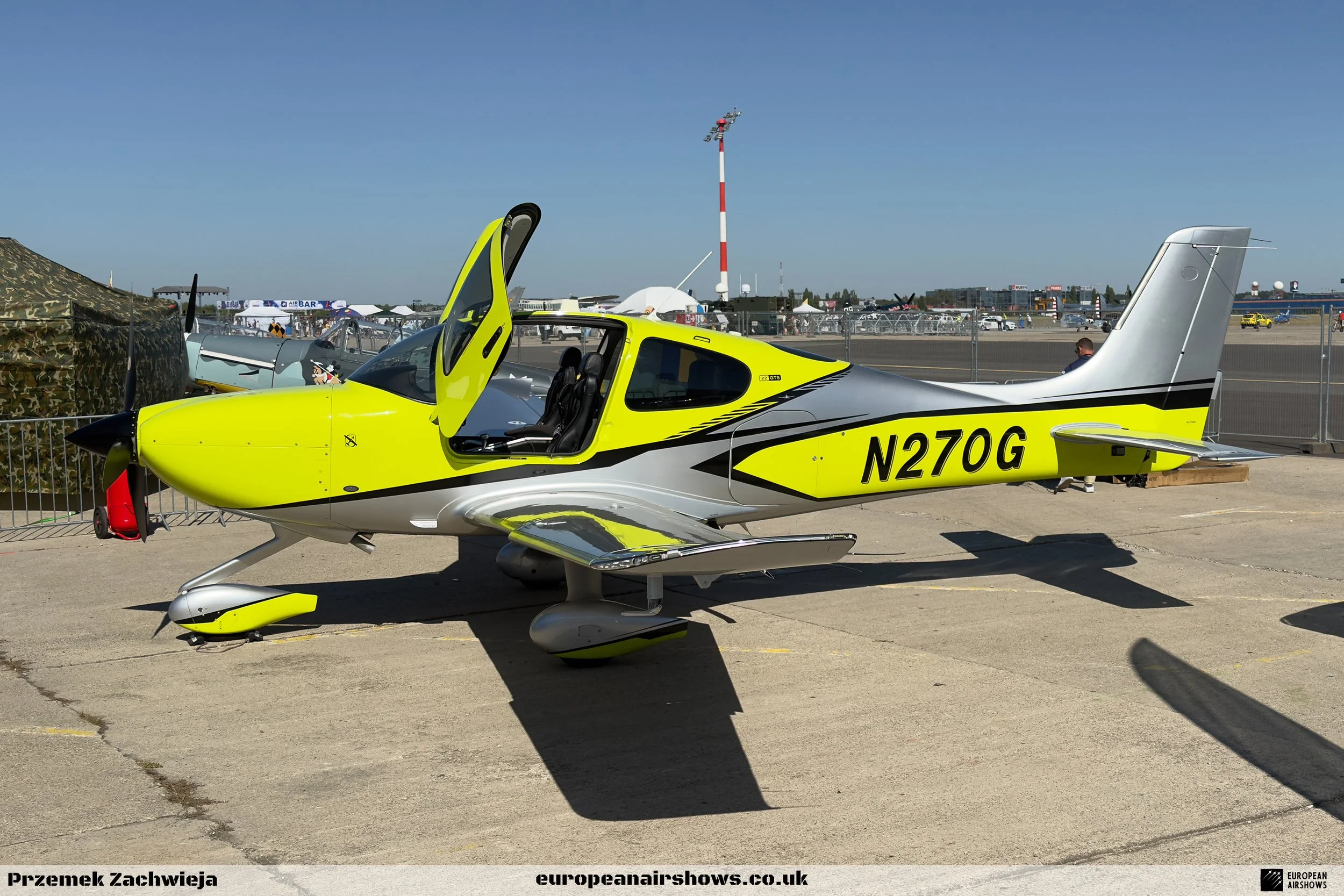
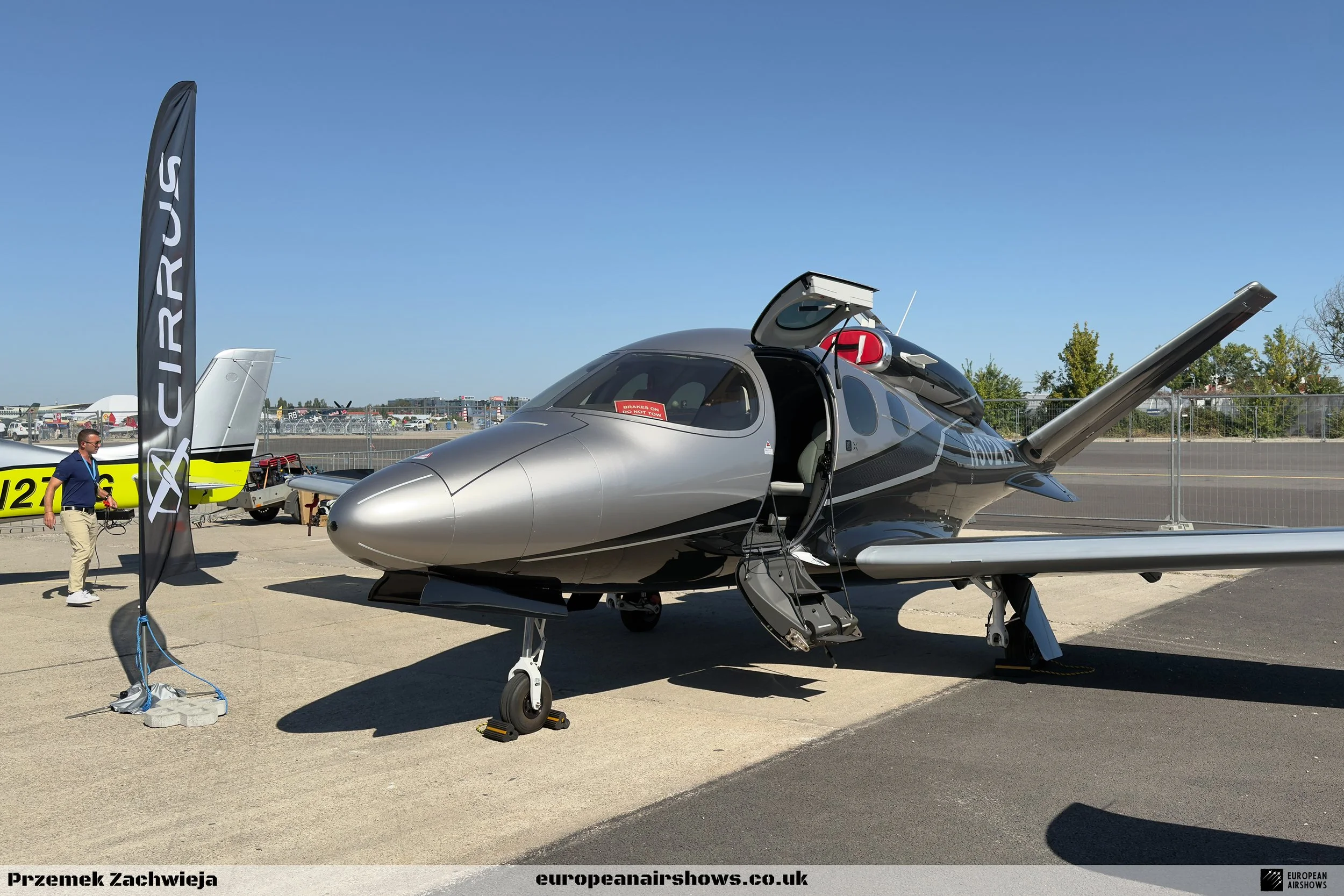
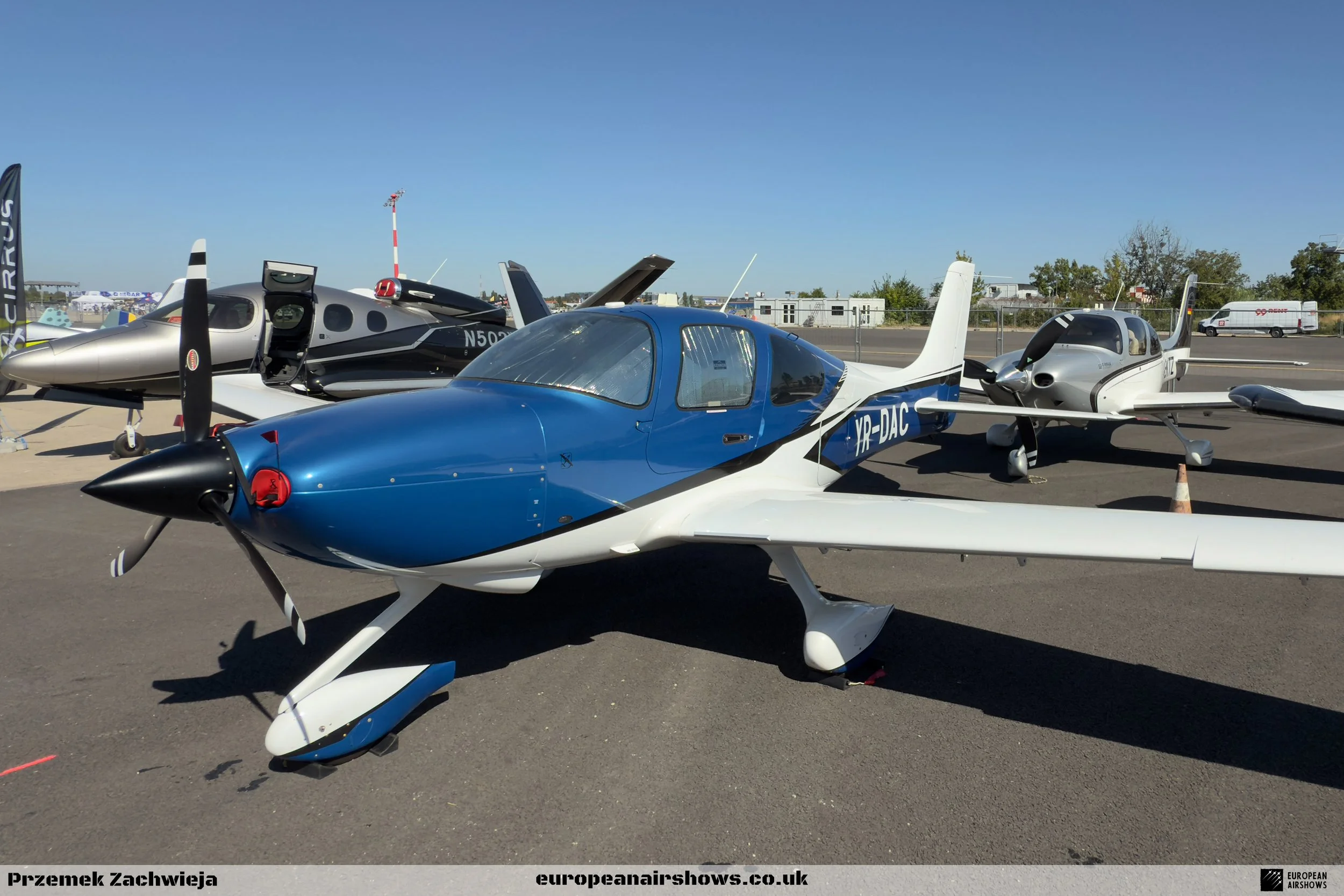
At the heart of the site, the General Aviation Exhibition filled three hangars and more than fifty stands. Here, visitors could explore the spectrum of civil flying, from flight schools offering trial lessons and career pathways to avionics houses, maintenance providers and manufacturers. Cirrus Aircraft presented a strong line-up including several SR20s and SR22s—one in an eye-catching green-and-silver scheme—as well as the futuristic Vision SF50 G2+ Jet. Most exhibitors opened cockpits and simulators to the public, giving a highly interactive feel, while outside the hangars a line of squadron and team merchandise stalls added colour and atmosphere. With plentiful food and drink stands, Saturday in particular took on a carnival feel.
The static park was slimmer than in previous editions, a reflection of Poland’s Radom International Airshow, staged the same weekend with a far larger military line-up. Tragedy at Radom inevitably cast a shadow—on Thursday a Polish Air Force F-16C Fighting Falcon crashed during rehearsals, killing its pilot, Major Maciej “Slab” Krakowian. BIAS acknowledged the loss with a minute’s silence before flying on Saturday, and the scheduled Red Arrows flypasts on Saturday were cancelled.
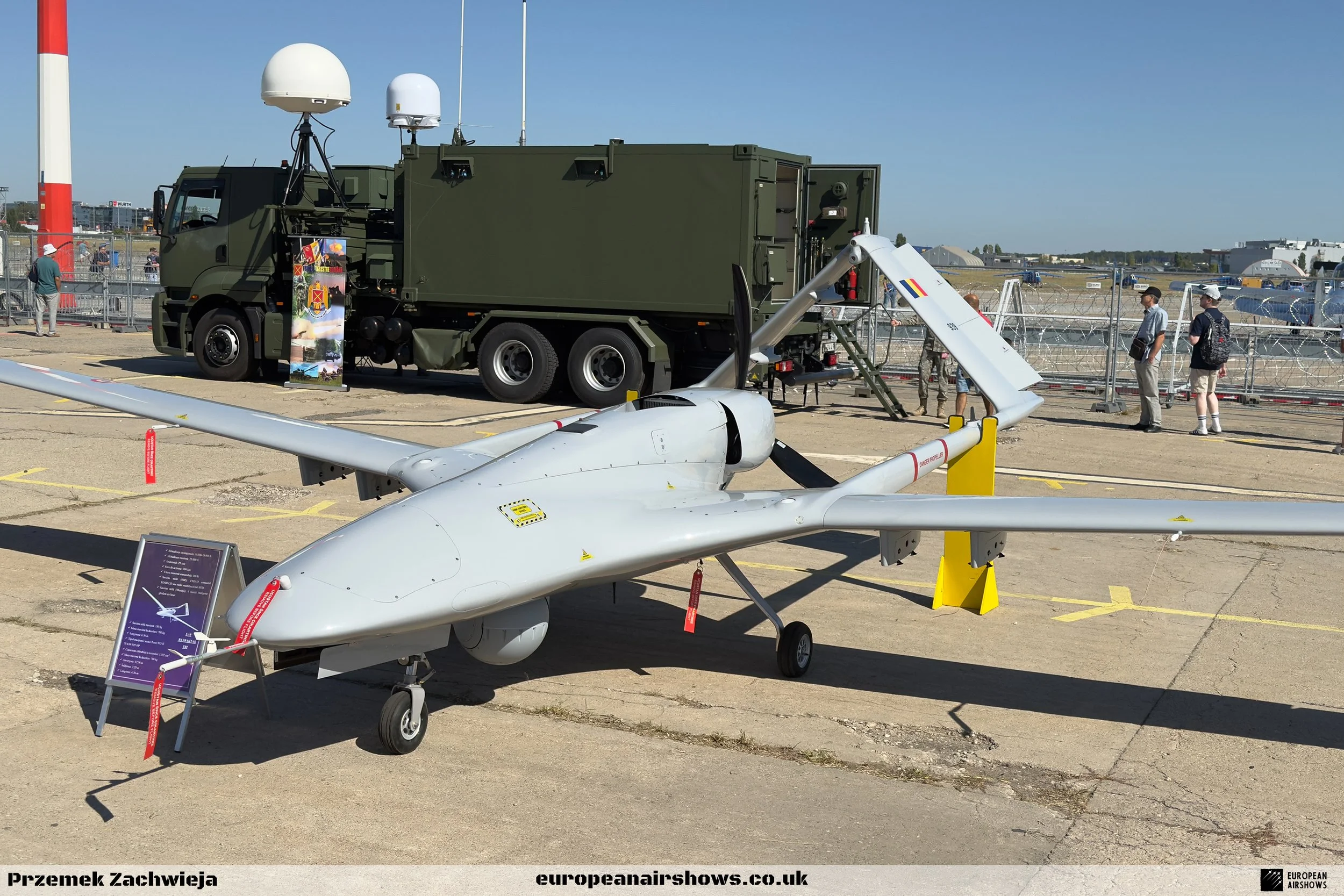
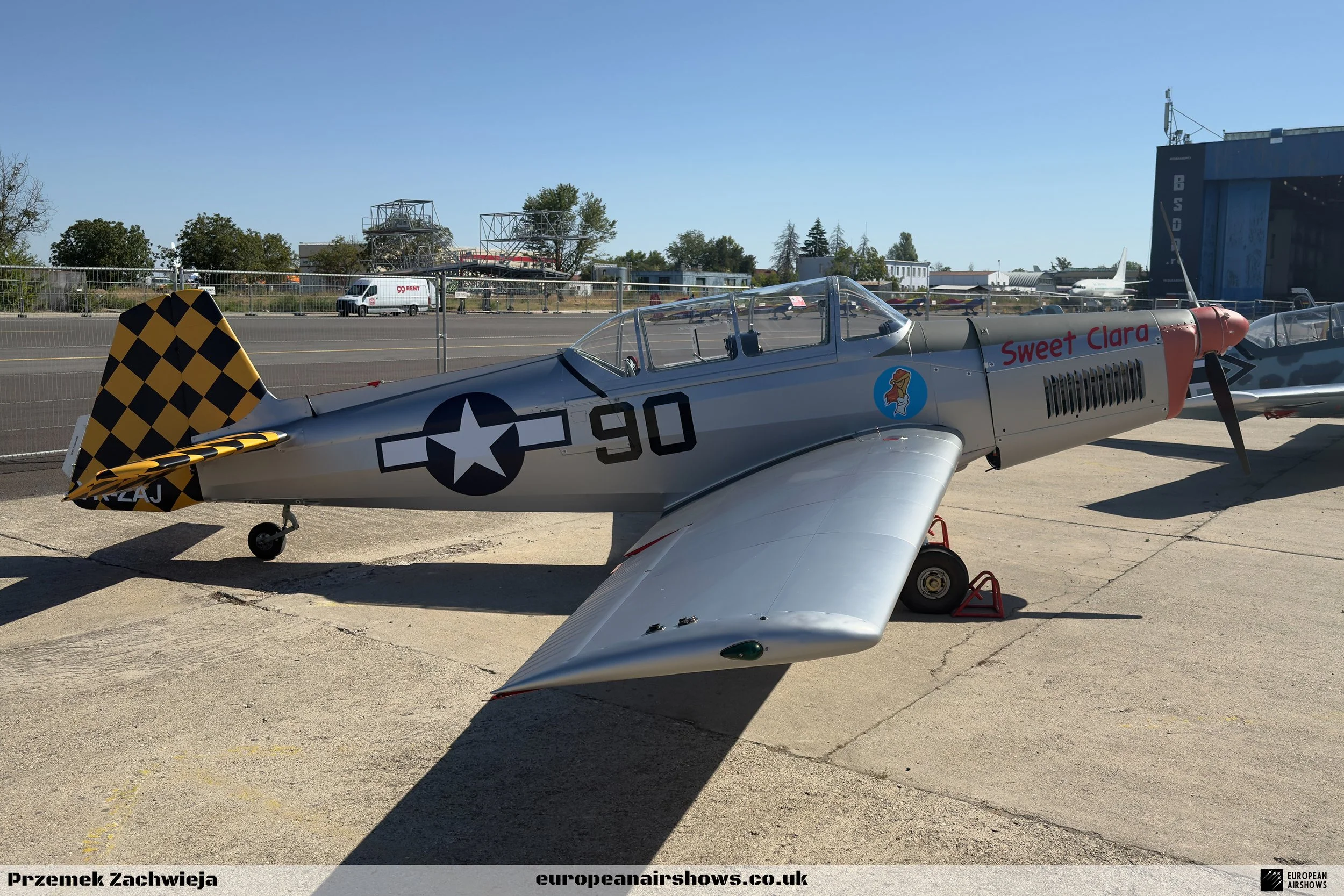
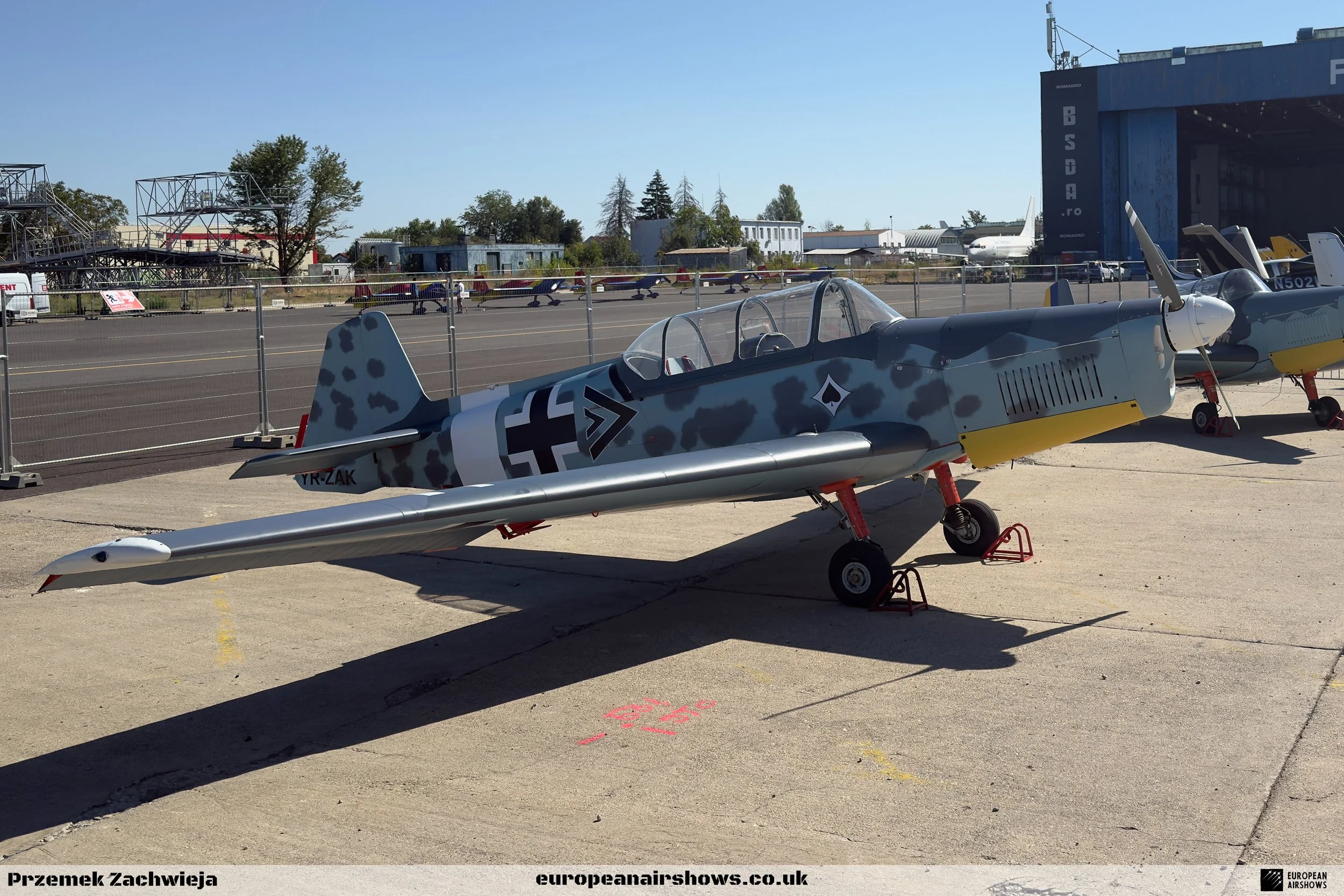
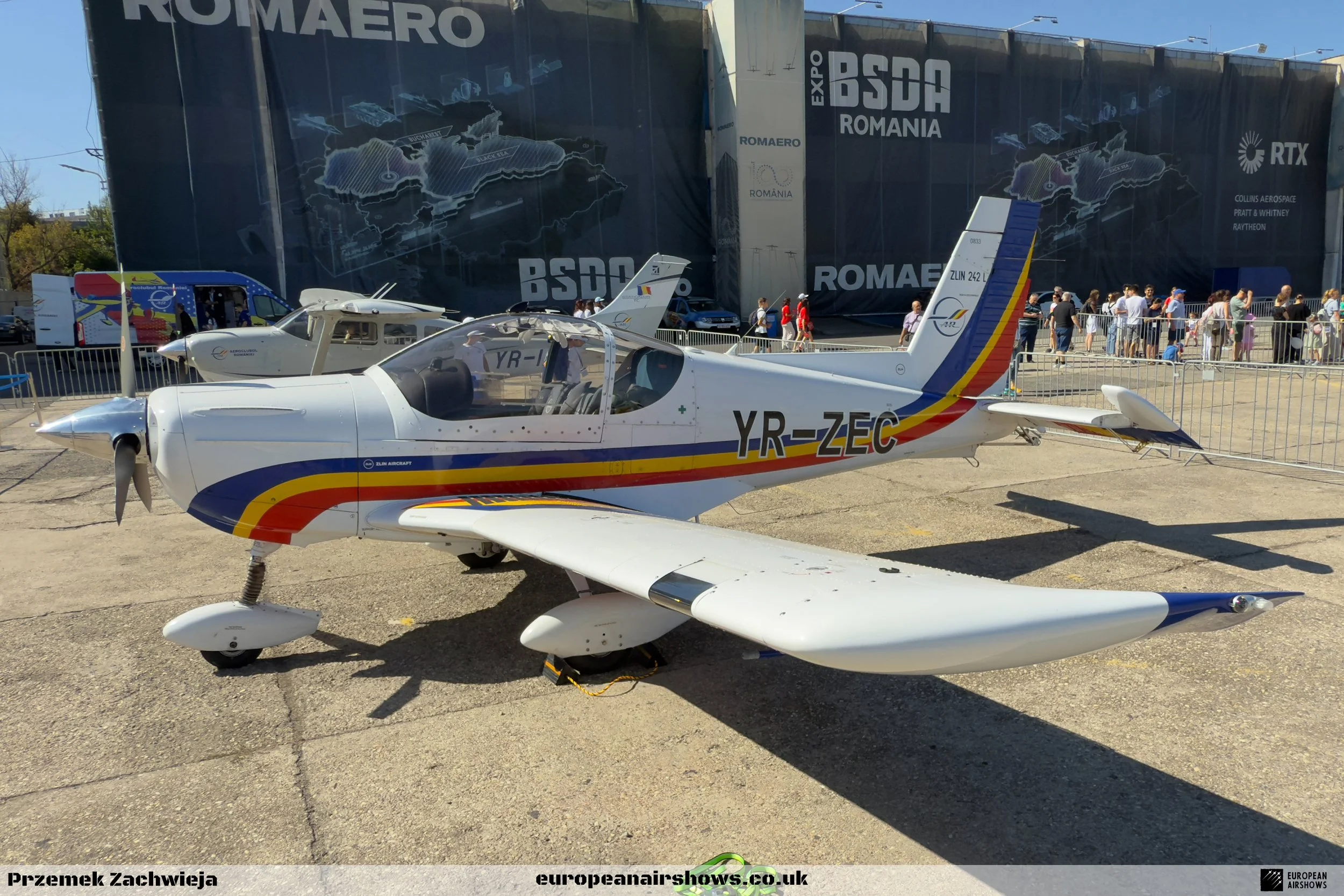
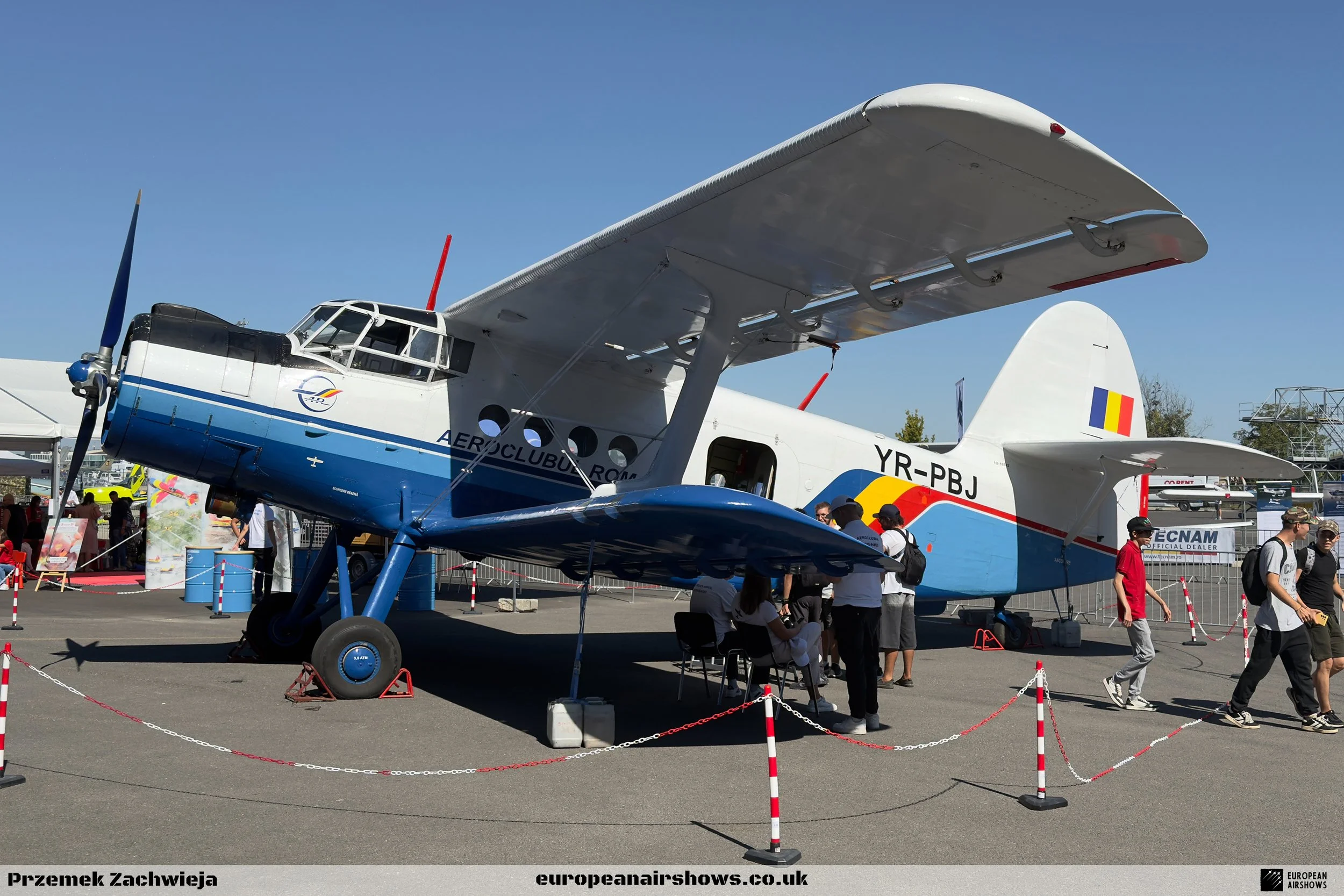
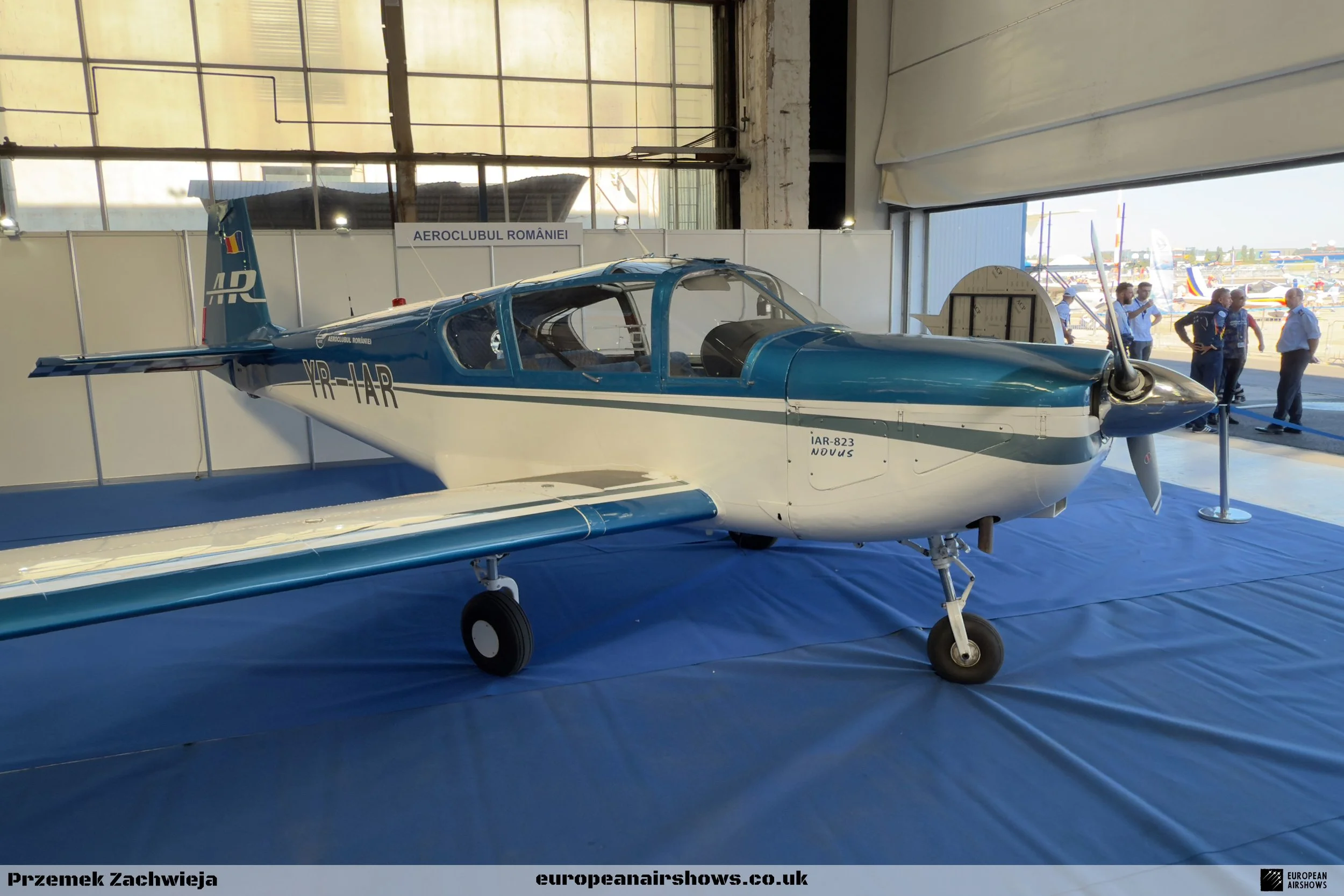
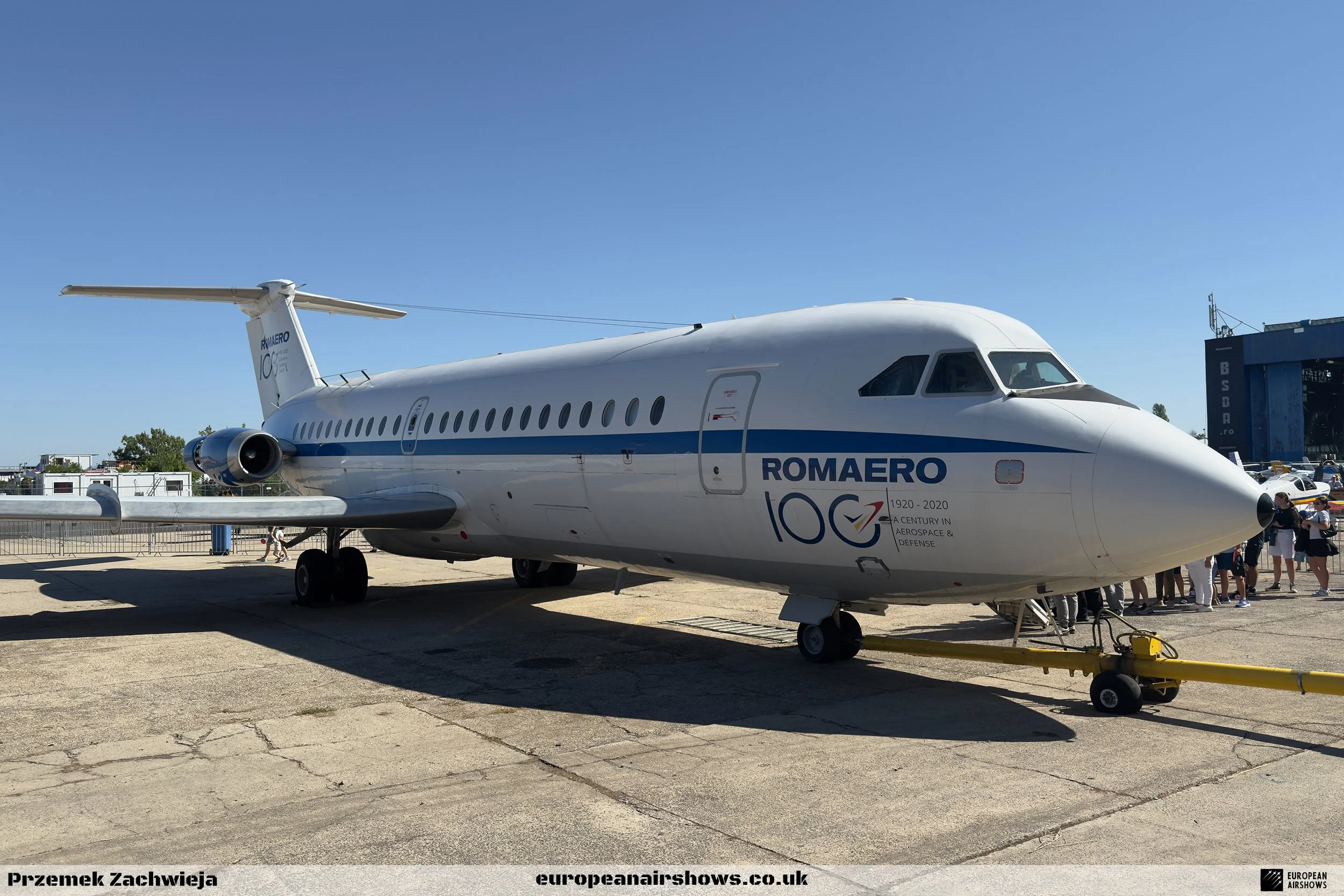
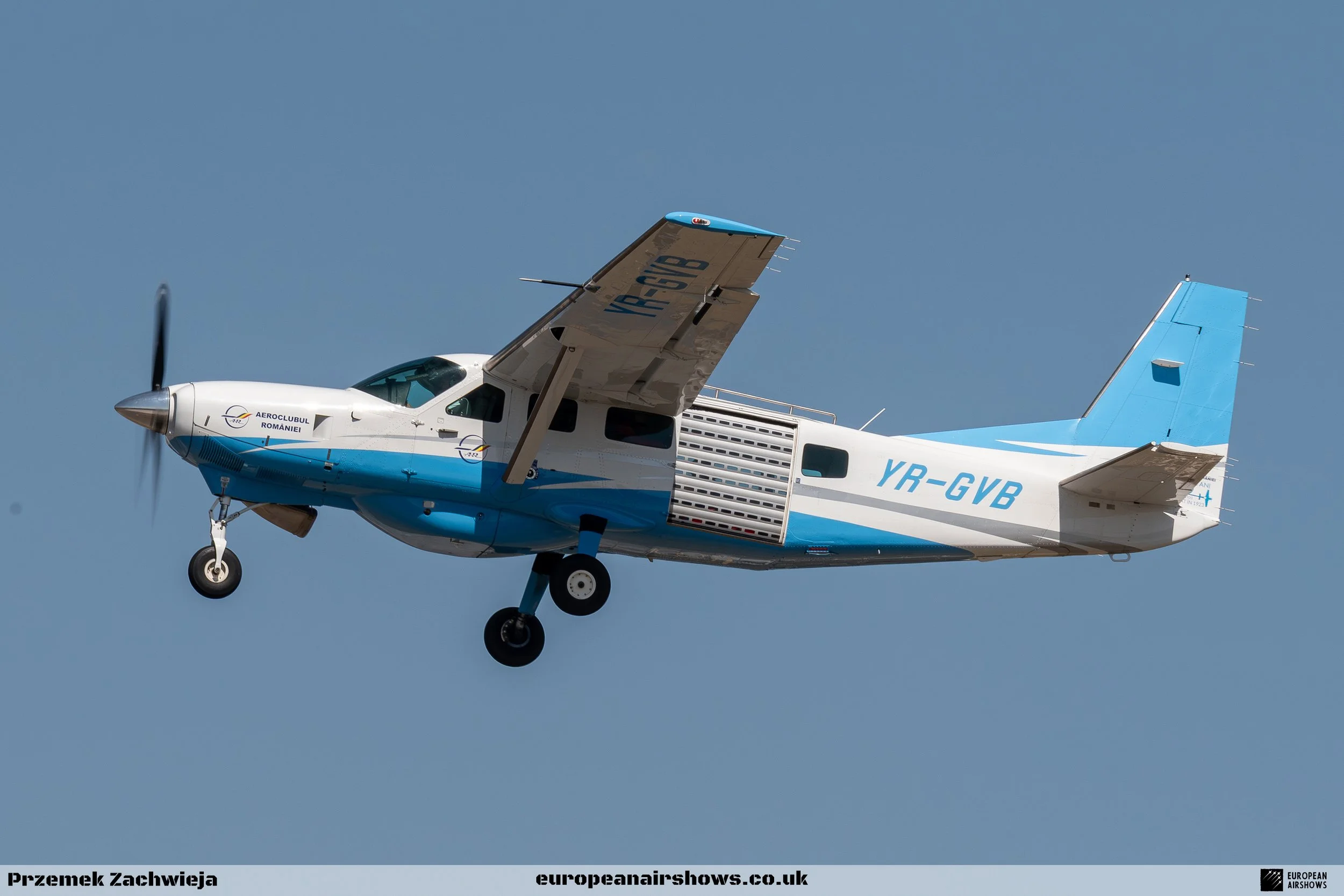
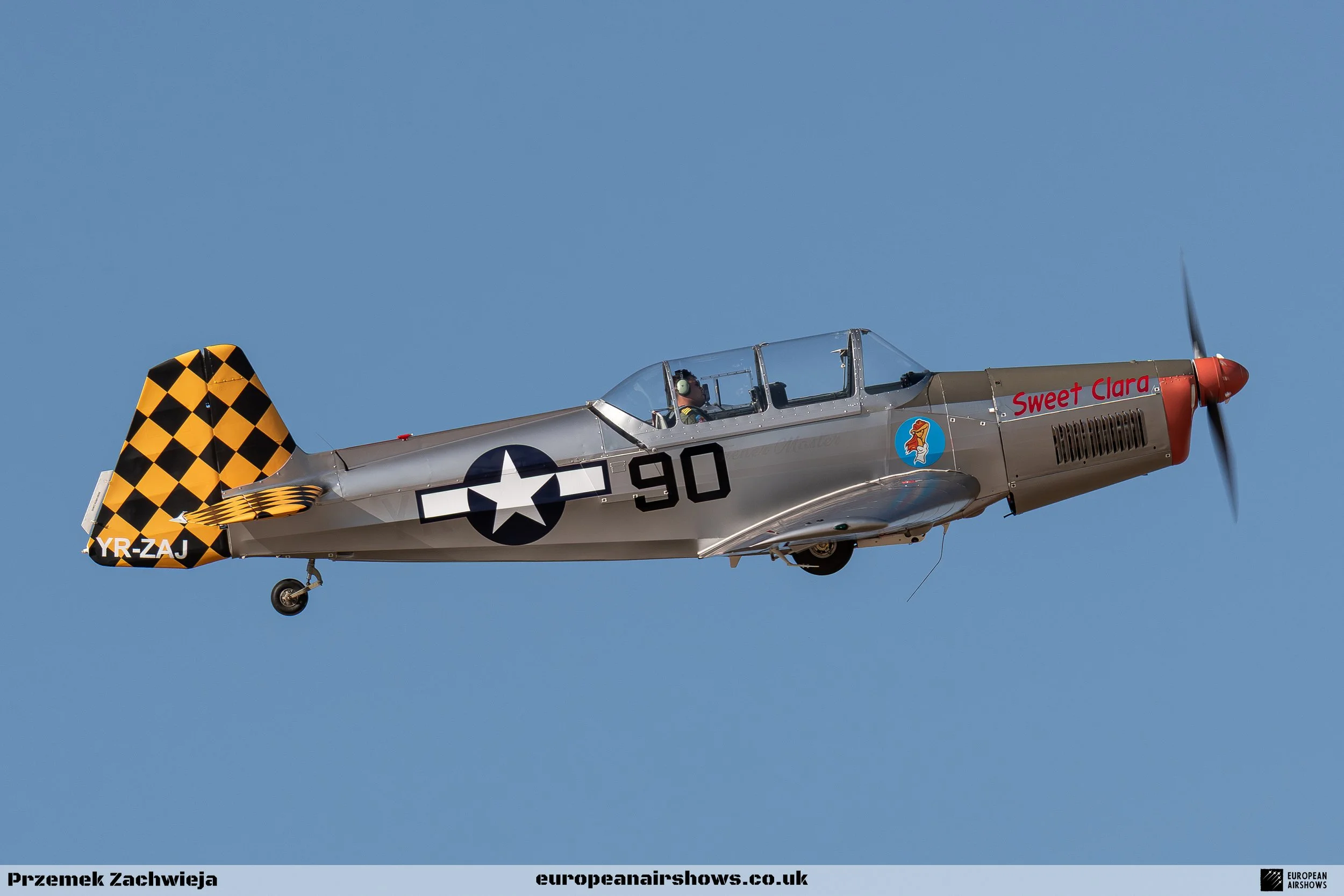
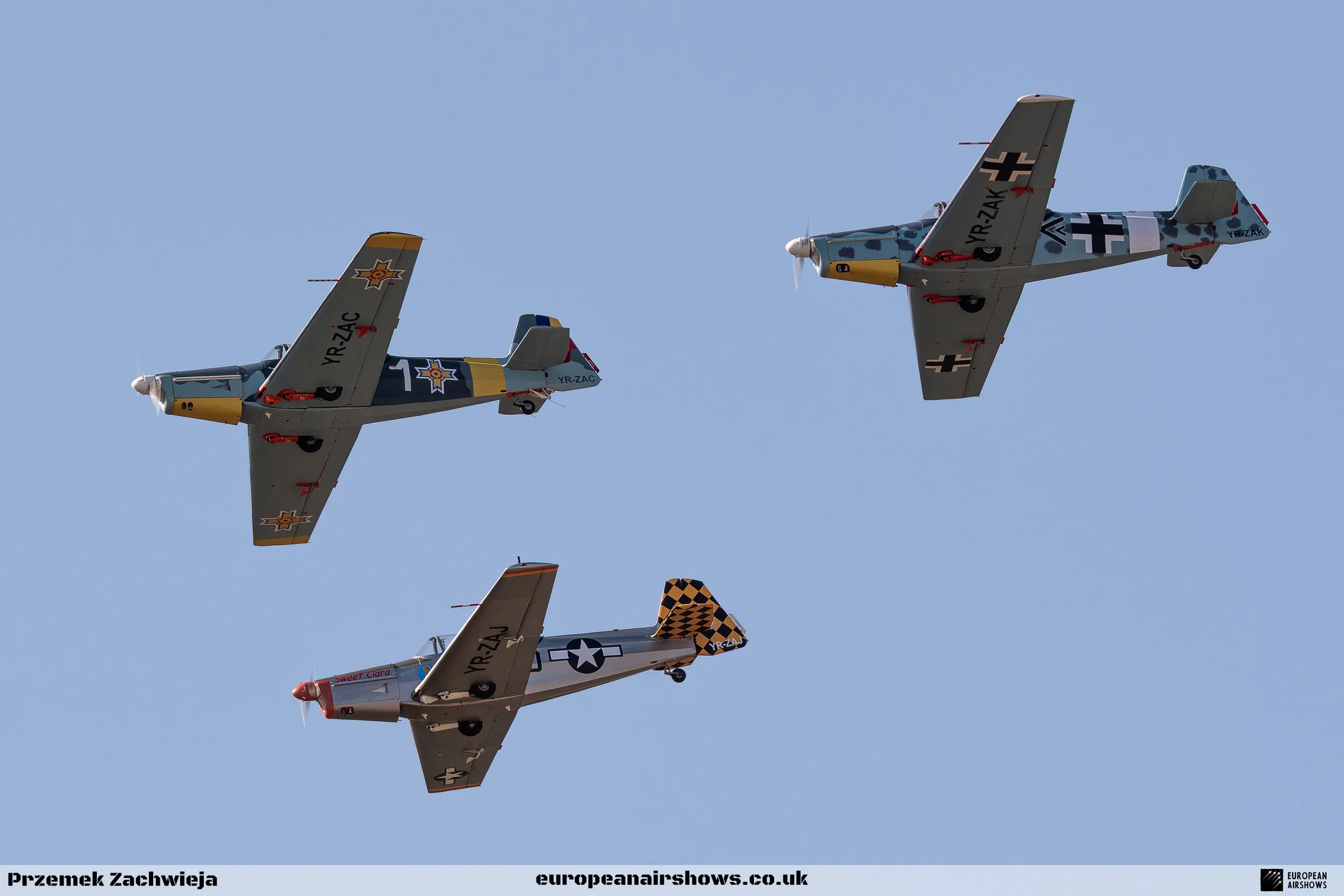
Even with reduced numbers, there were gems. The most discussed was a BAC 1-11-488GH One-Eleven, once operated by Tombouctou Aviation (Mali) as TZ-BSC, and retired to Băneasa in 2011. Though unairworthy, the aircraft was opened to visitors, evoking Romania’s own Rombac 1-11 production chapter of the 1980s. Nearby, Aeroclubul României contributed a strong line-up: Antonov An-2, IAR-823, Zlín 242, Extra 300L, and three Zlín 526F Trener Masters in vintage schemes for the new Escadrila Zlín team.
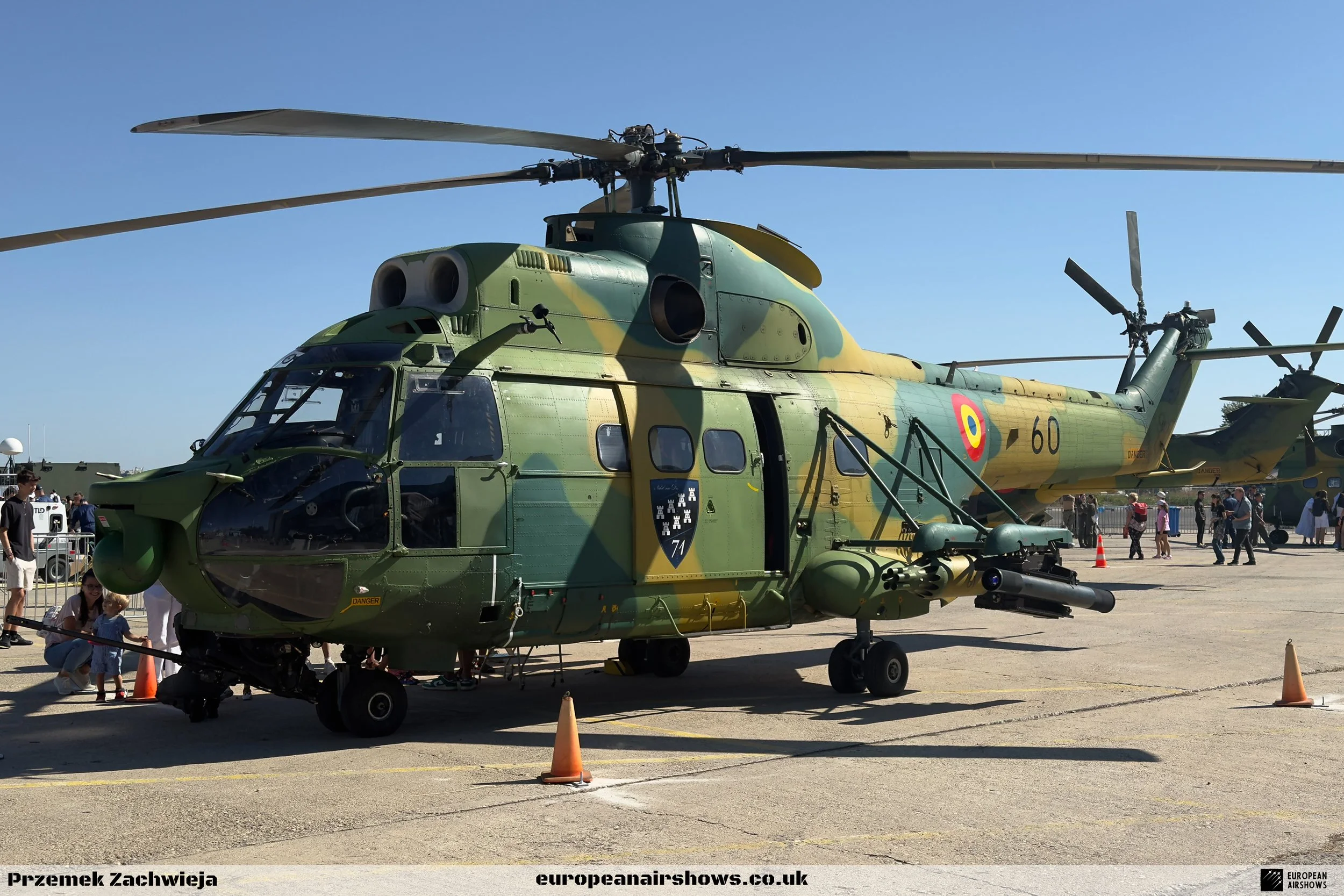
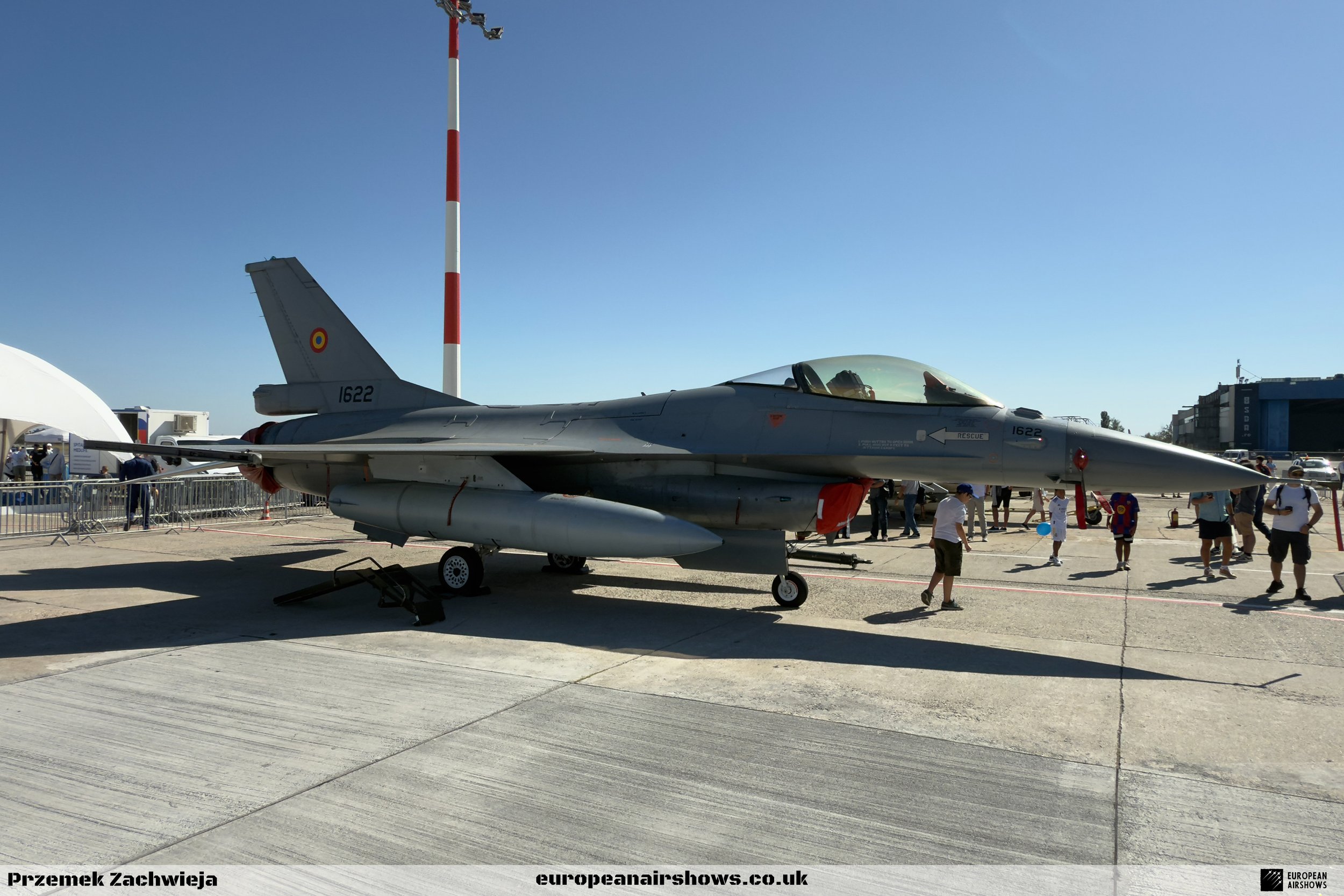
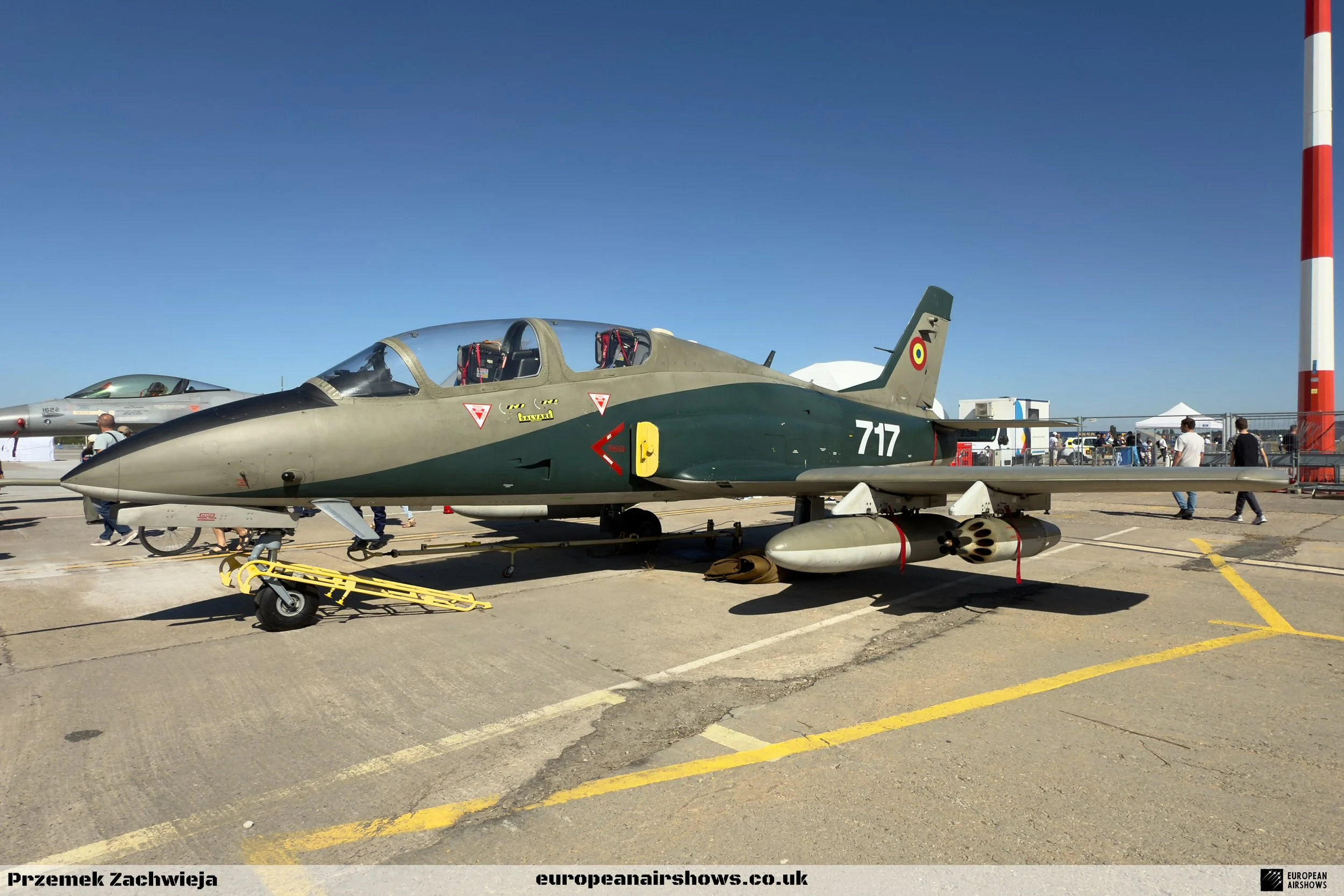
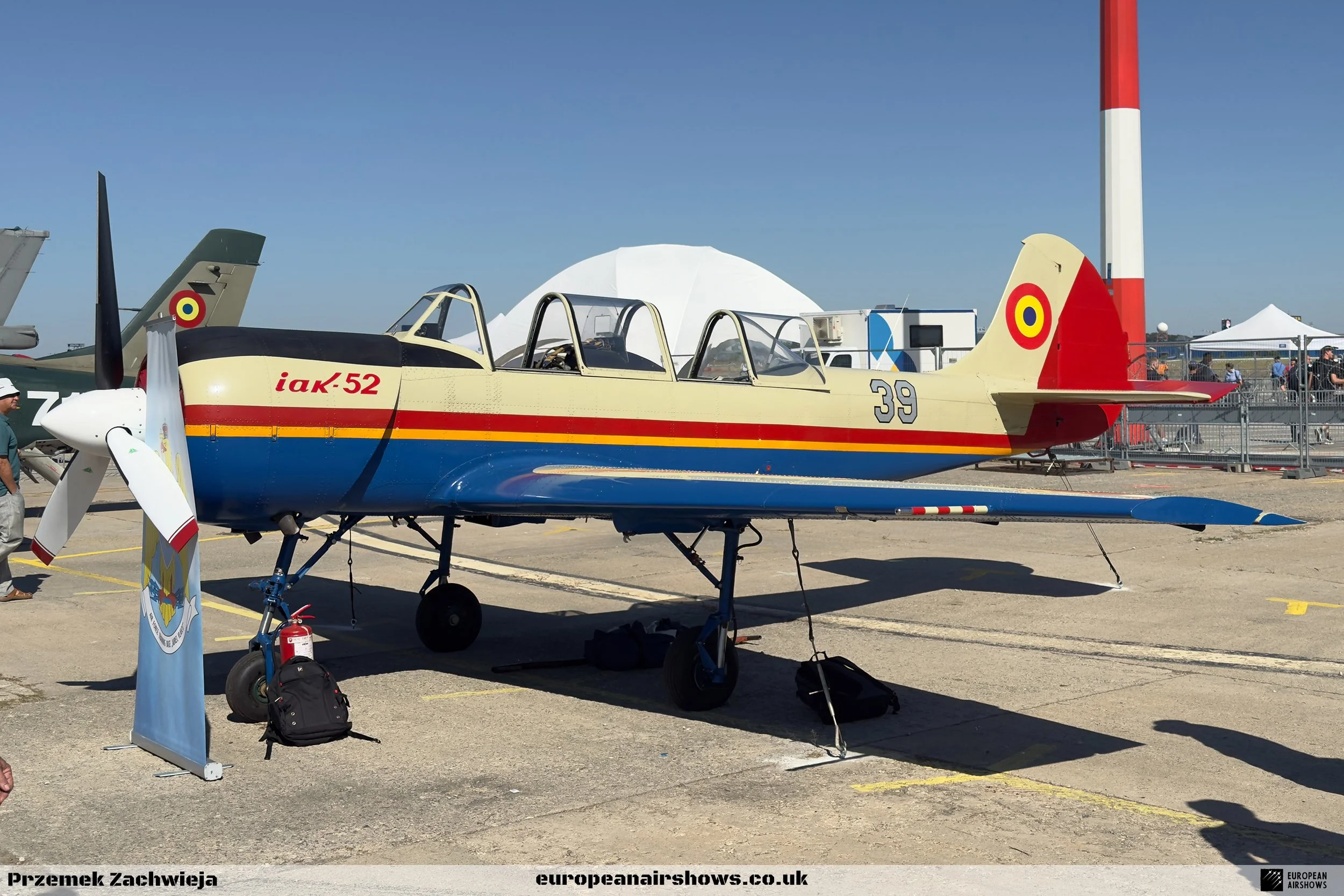
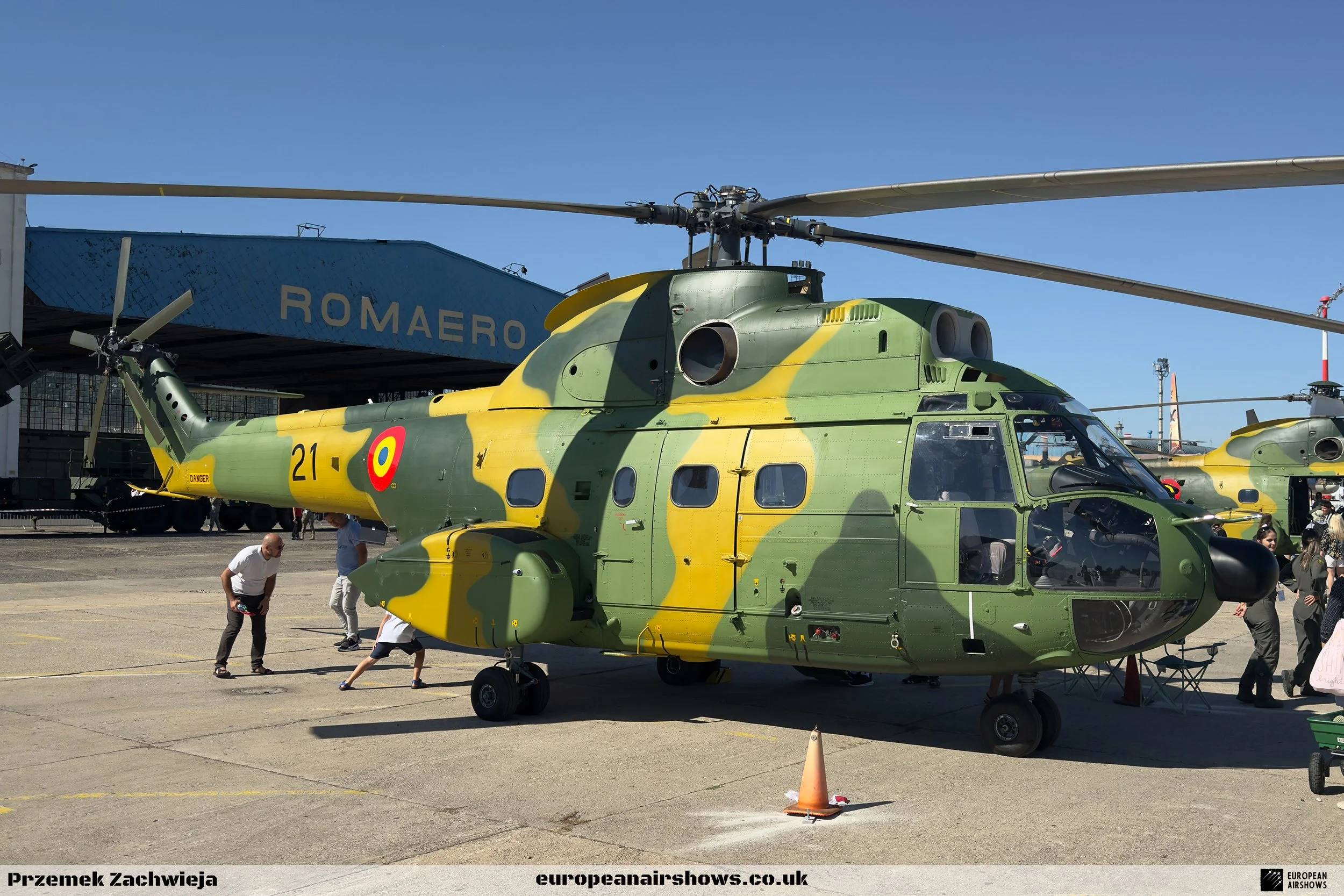
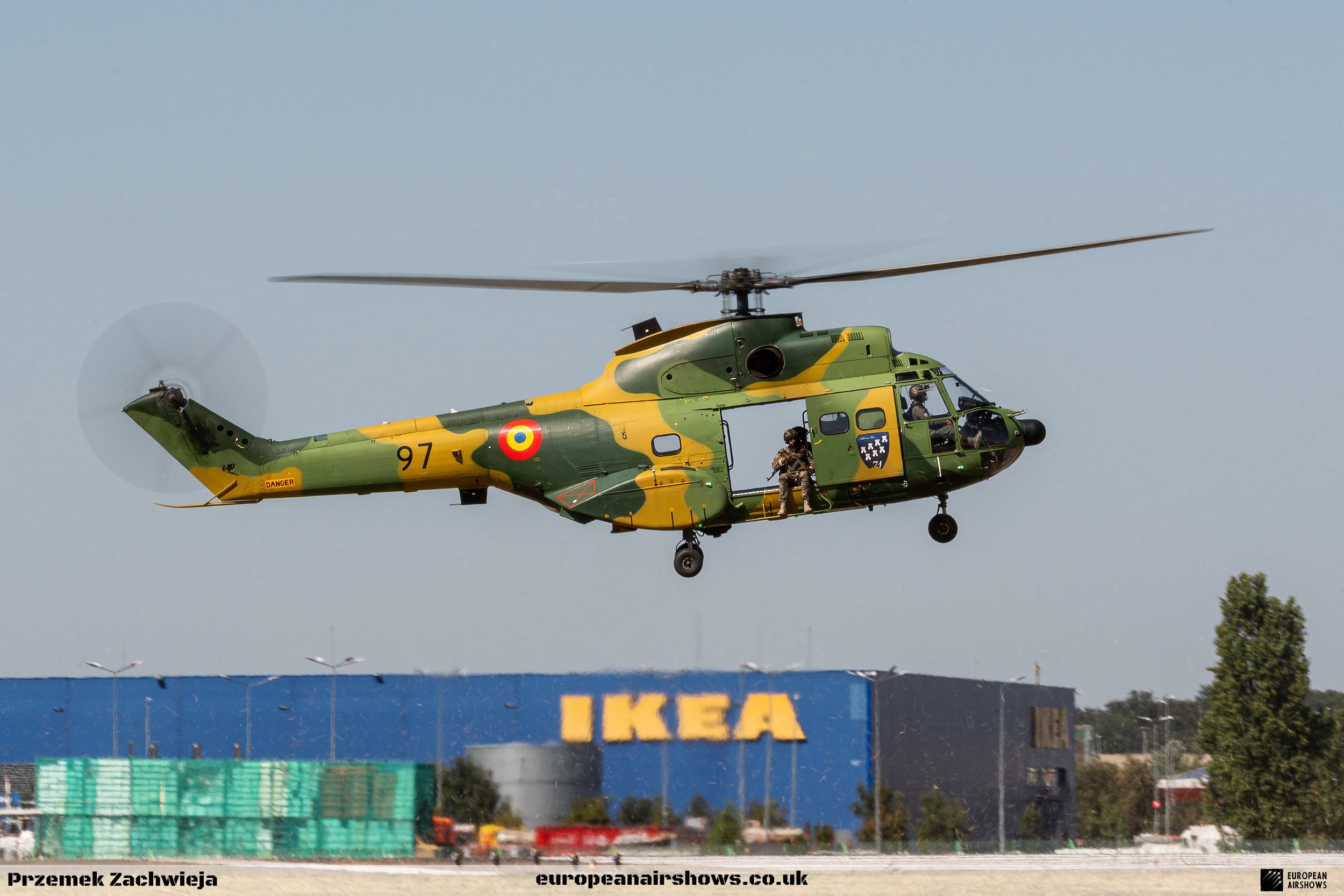
Military types formed the backbone of the static, led by indigenous IAR 330 Pumas (in L, M and SOCAT versions), IAK-52 trainers, the rarely seen IAR-99 Șoim jet and ex Royal Norwegian Air Force F-16AM Fighting Falcon.
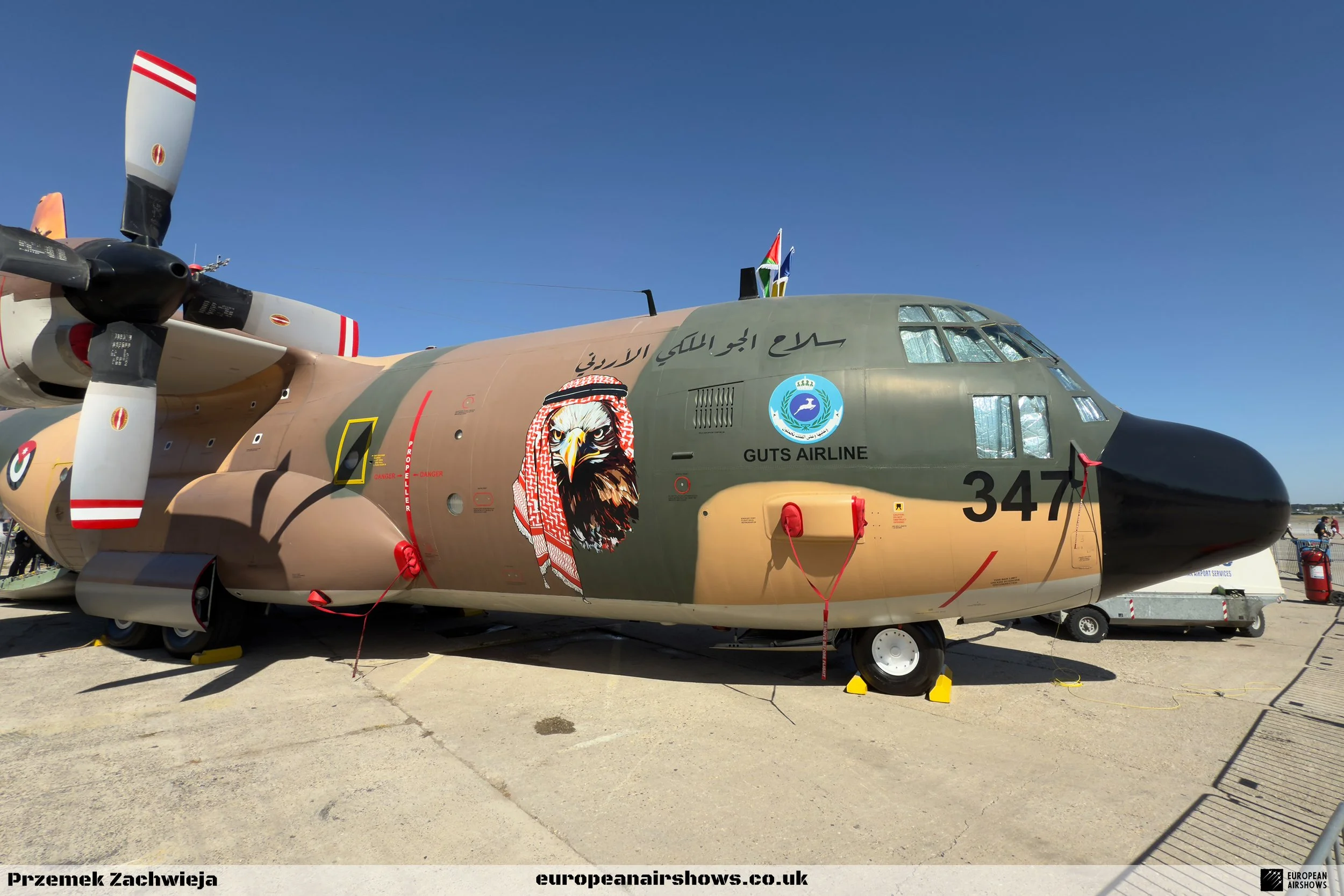
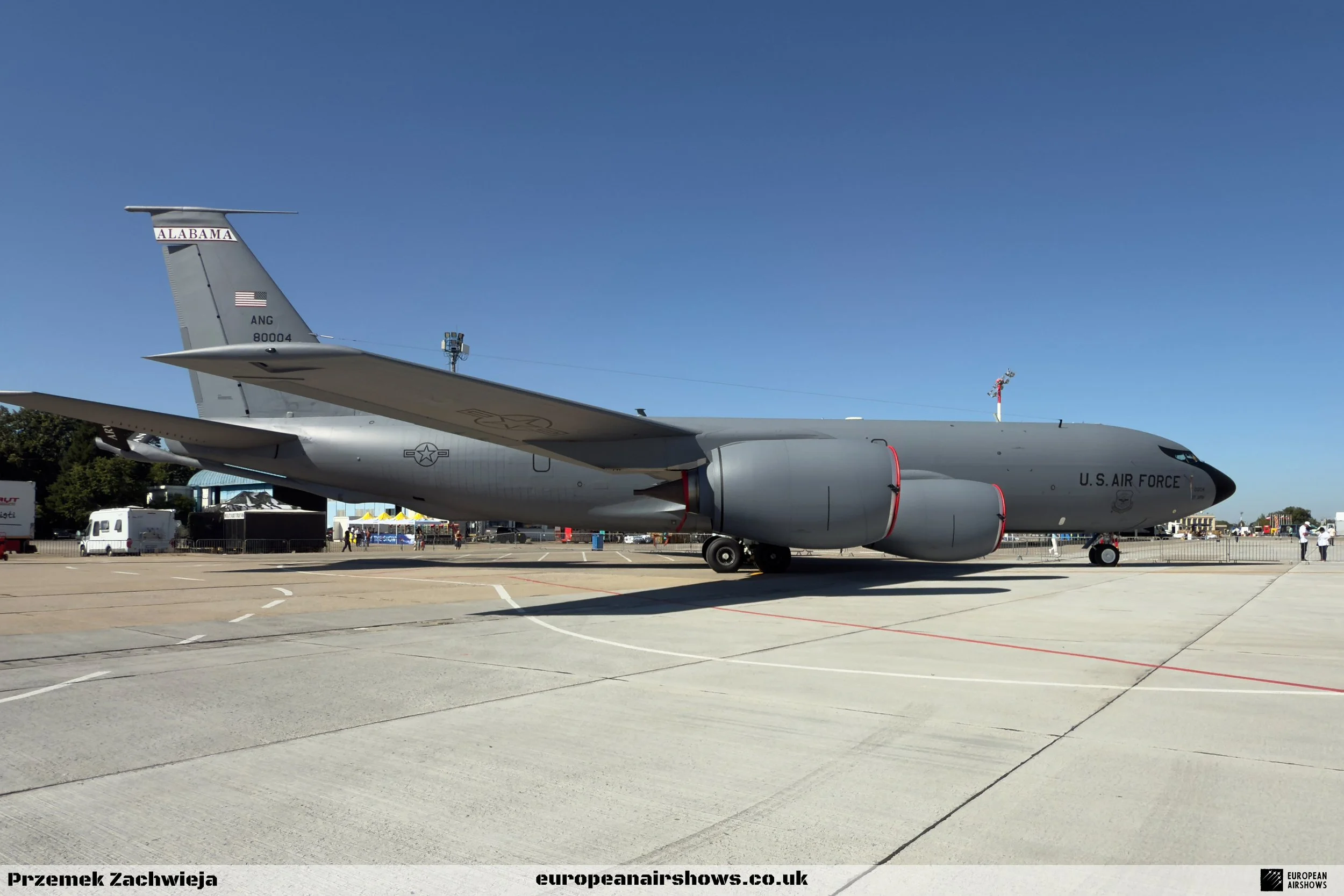
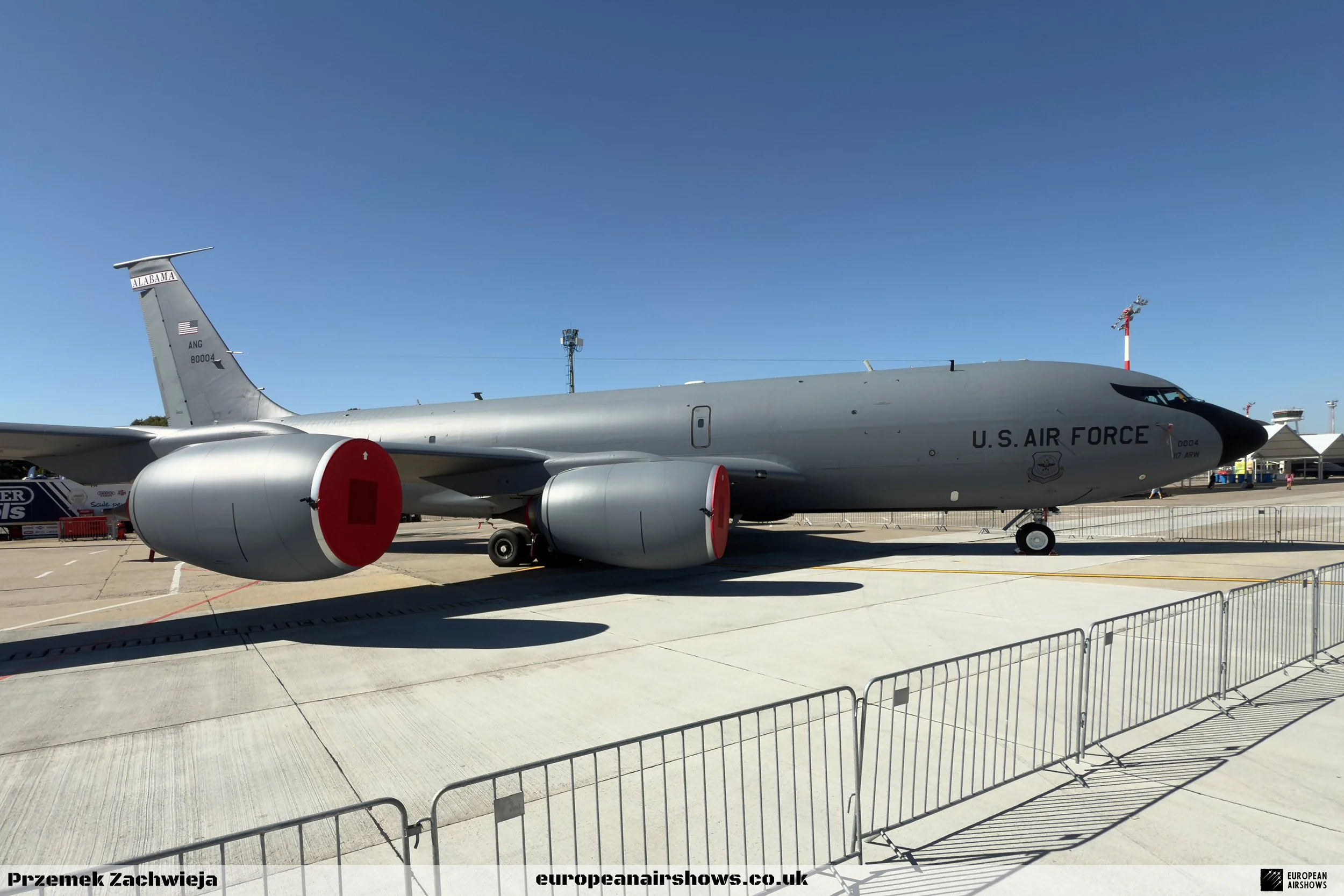
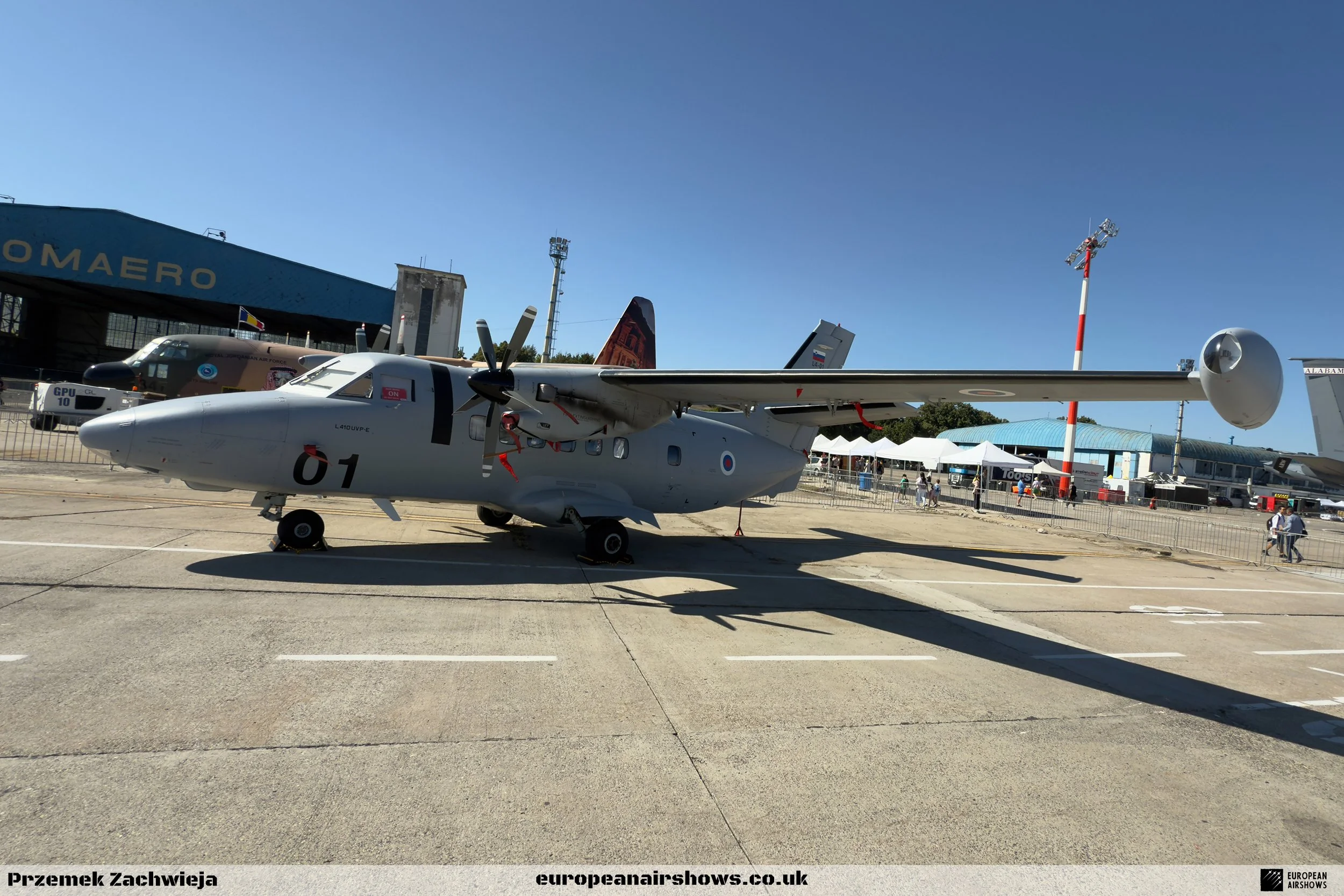
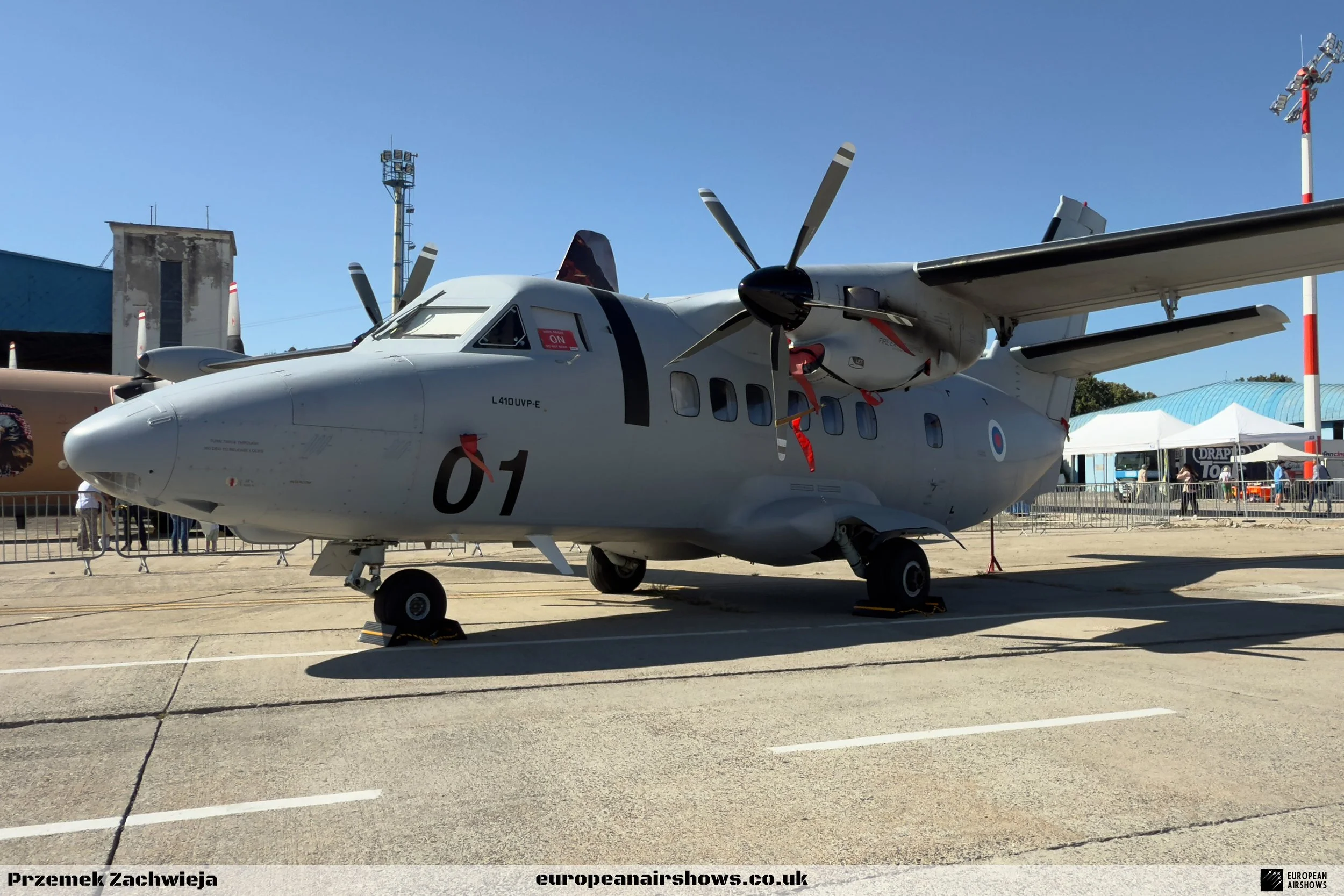
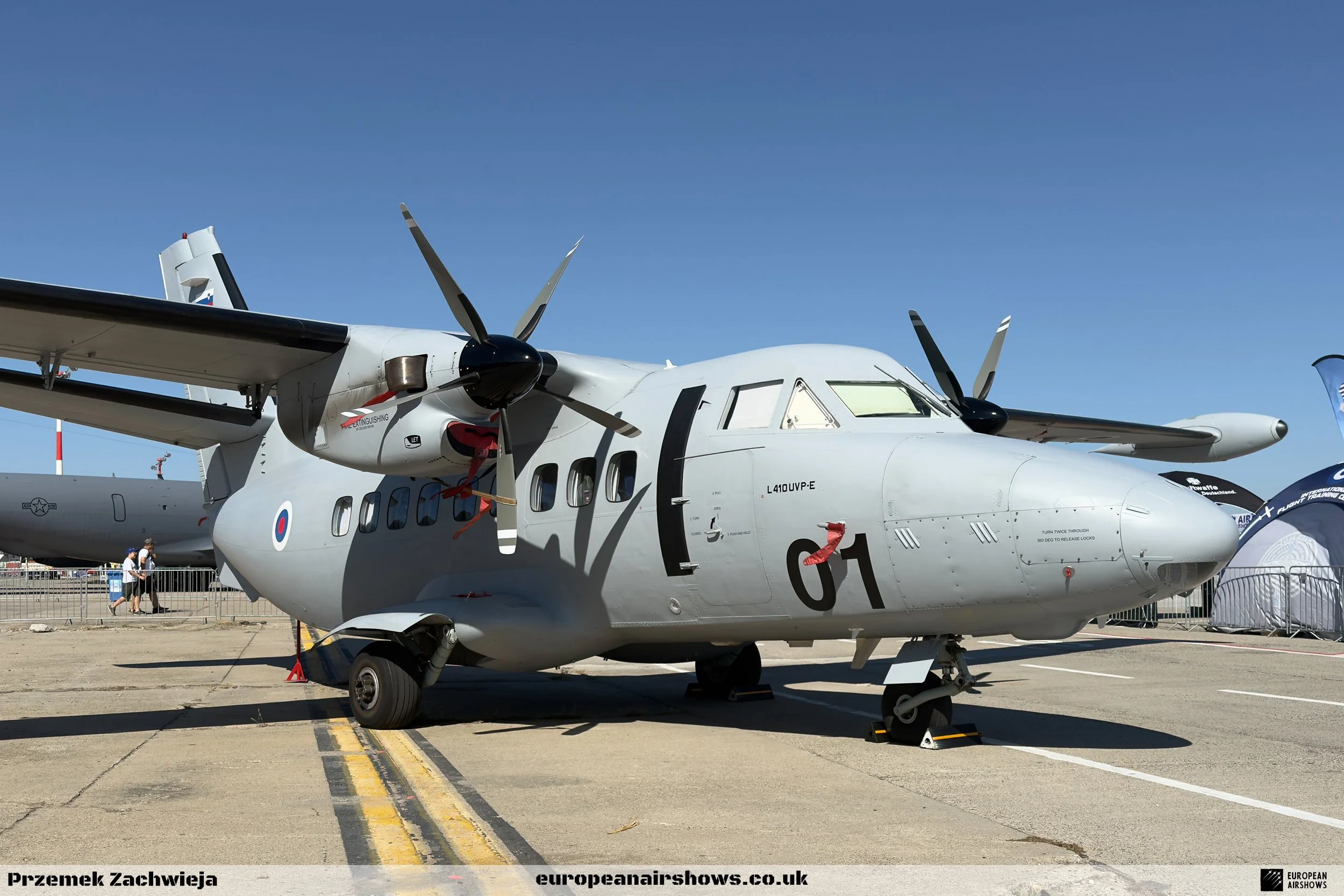
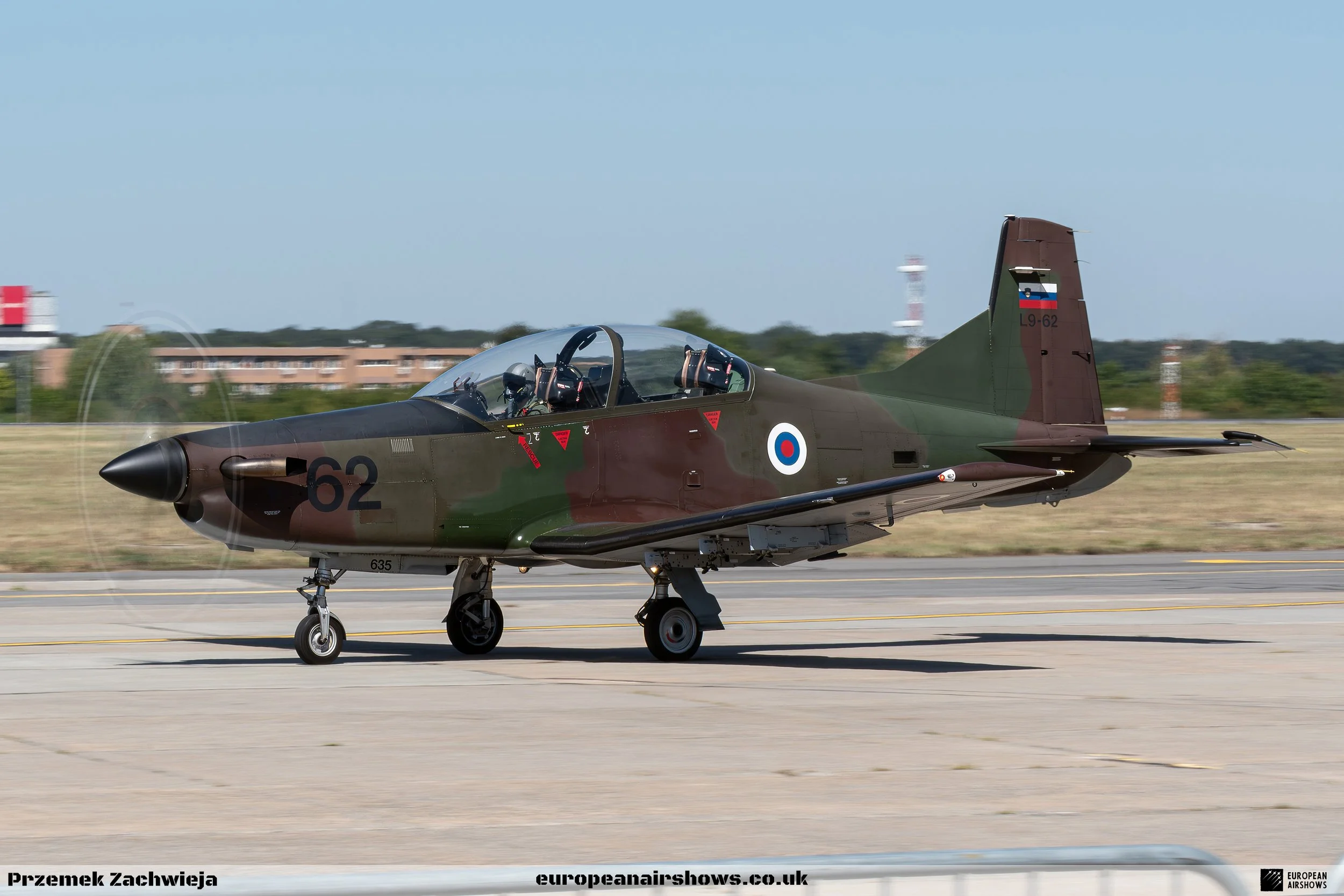
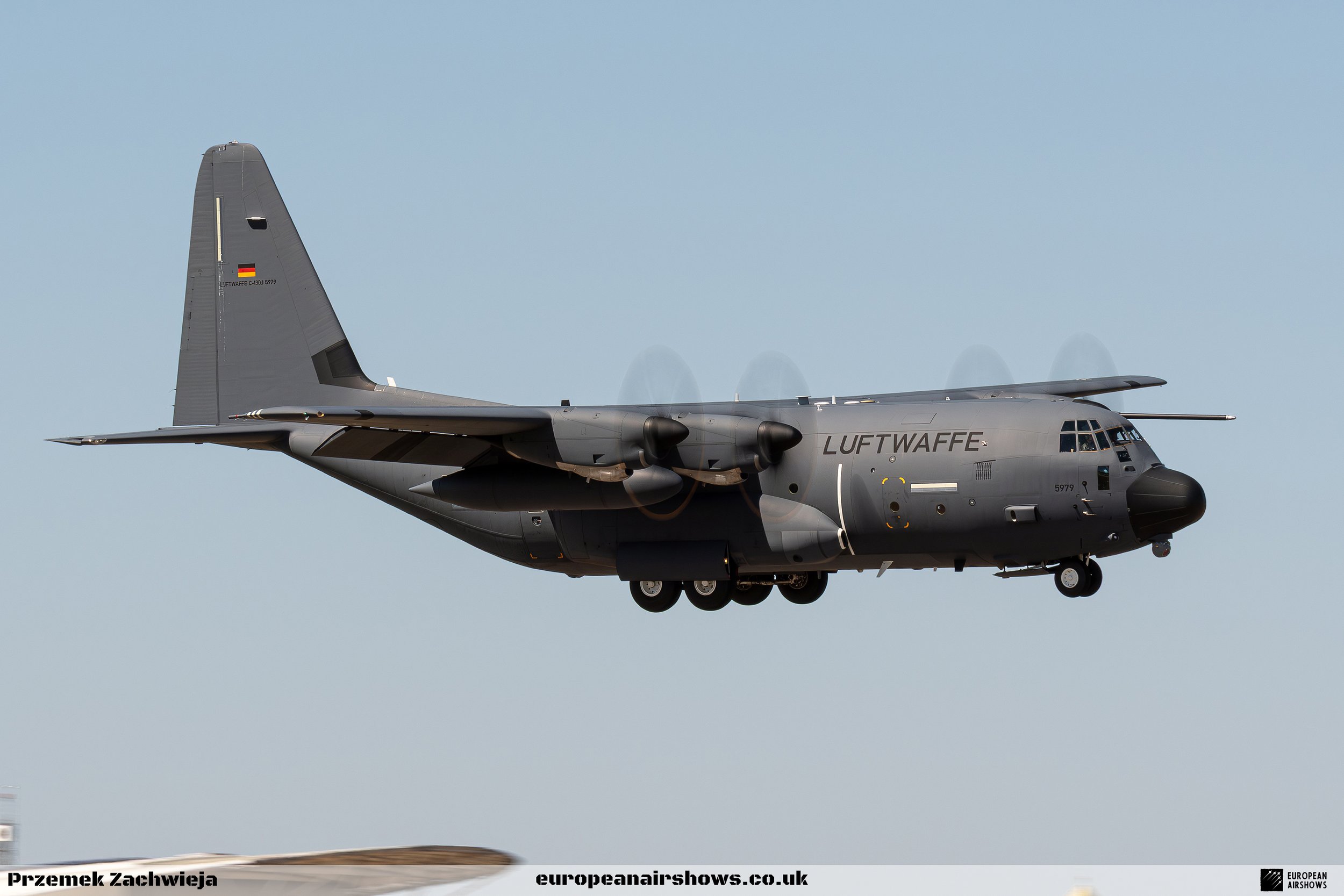
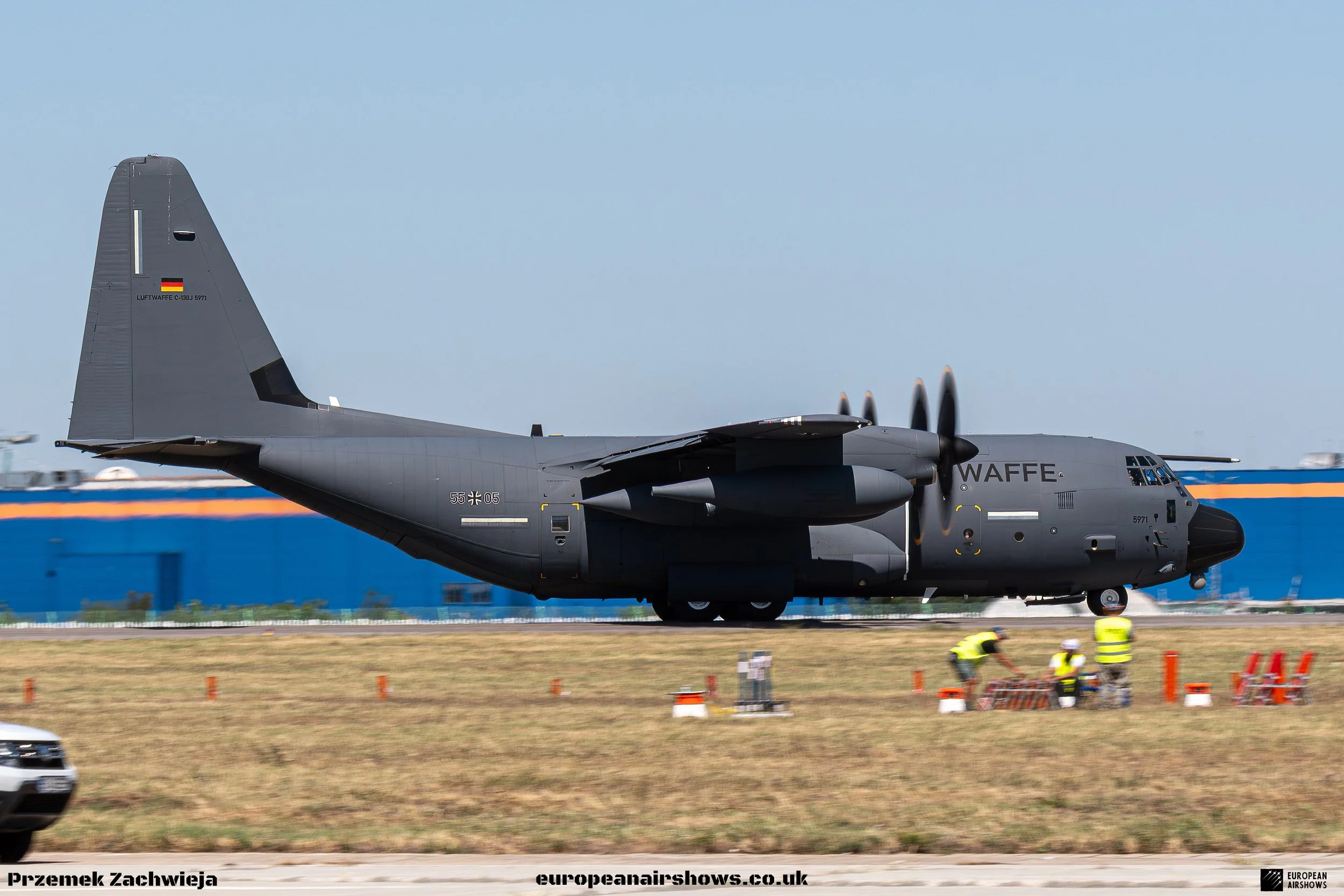
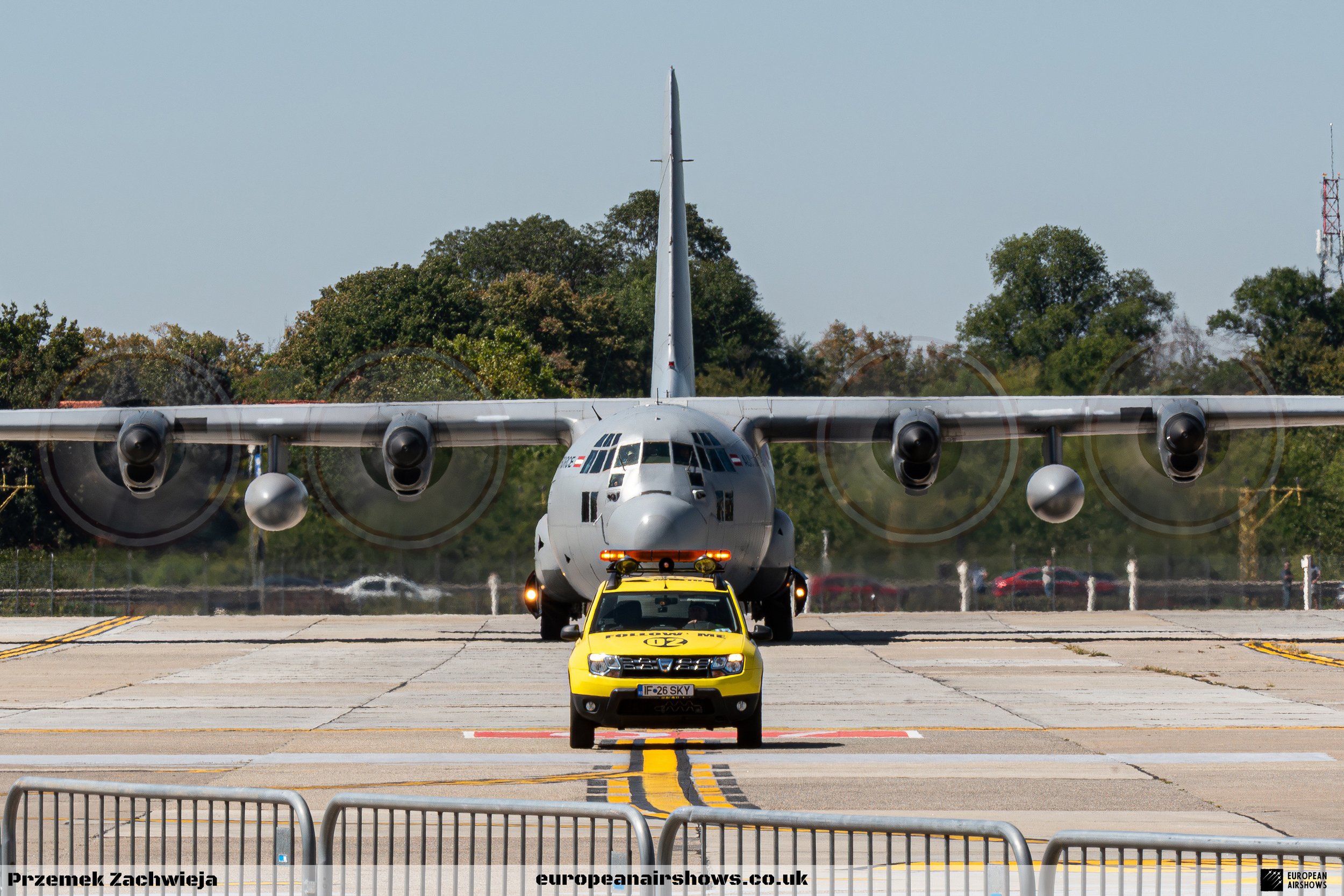
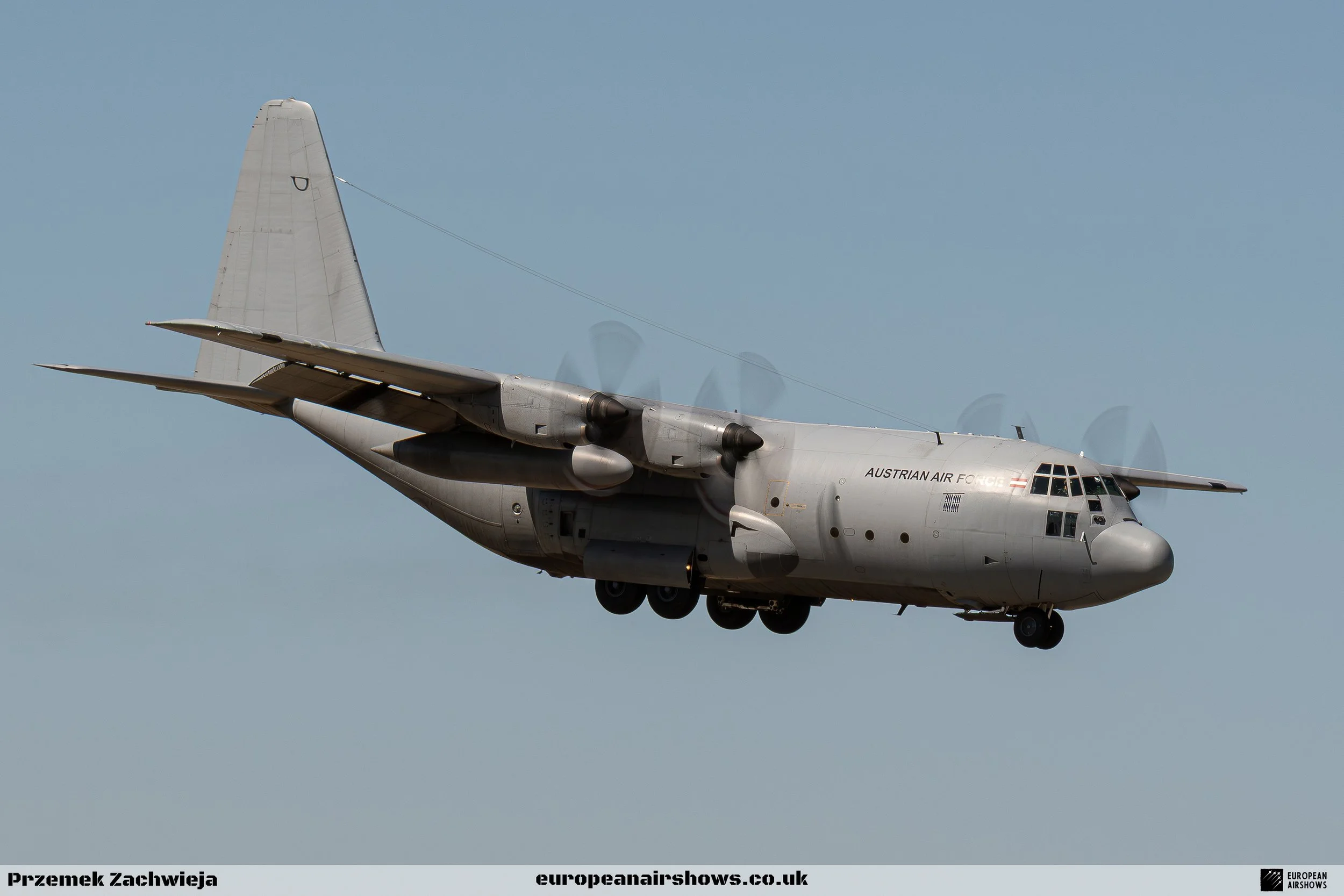
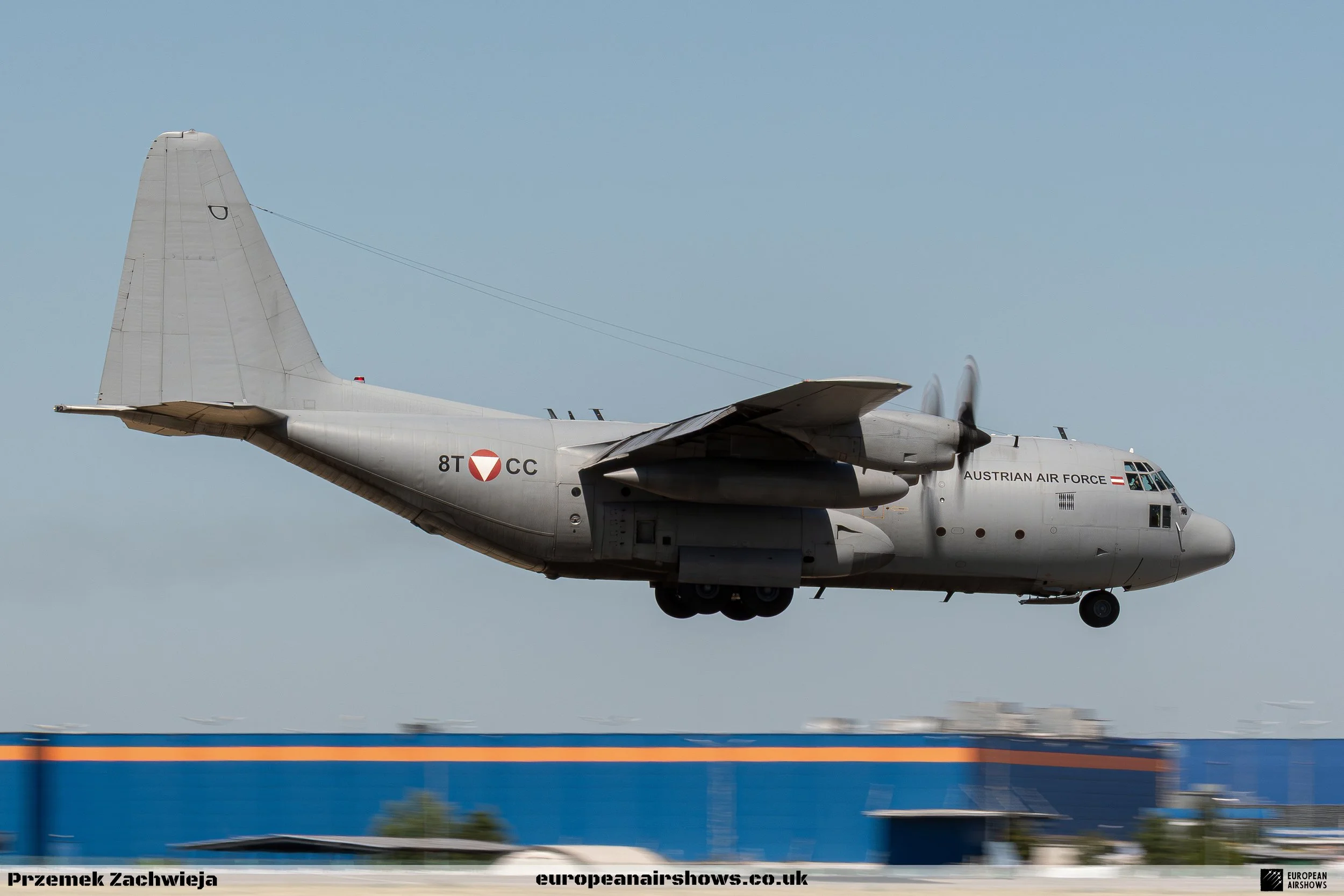
Foreign contributions gave the line-up some welcome variety. A Slovenian Air Force Let L-410UVP-E joined a Royal Jordanian Air Force Lockheed C-130H Hercules, two Italian Air Force Eurofighter F-2000A Typhoons, and an Austrian Air Force C-130K Hercules. Dominating the apron was a USAF Boeing KC-135R Stratotanker from the 117th Air Refuelling Wing, Alabama Air National Guard, currently deployed to Europe. Visitors who attended Friday’s arrivals were also treated to a Luftwaffe Lockheed Martin C-130J Super Hercules from the joint Franco-German transport unit at Évreux-Fauville Air Base, supporting the Patrouille de France; its comings and goings were enthusiast highlights in their own right.
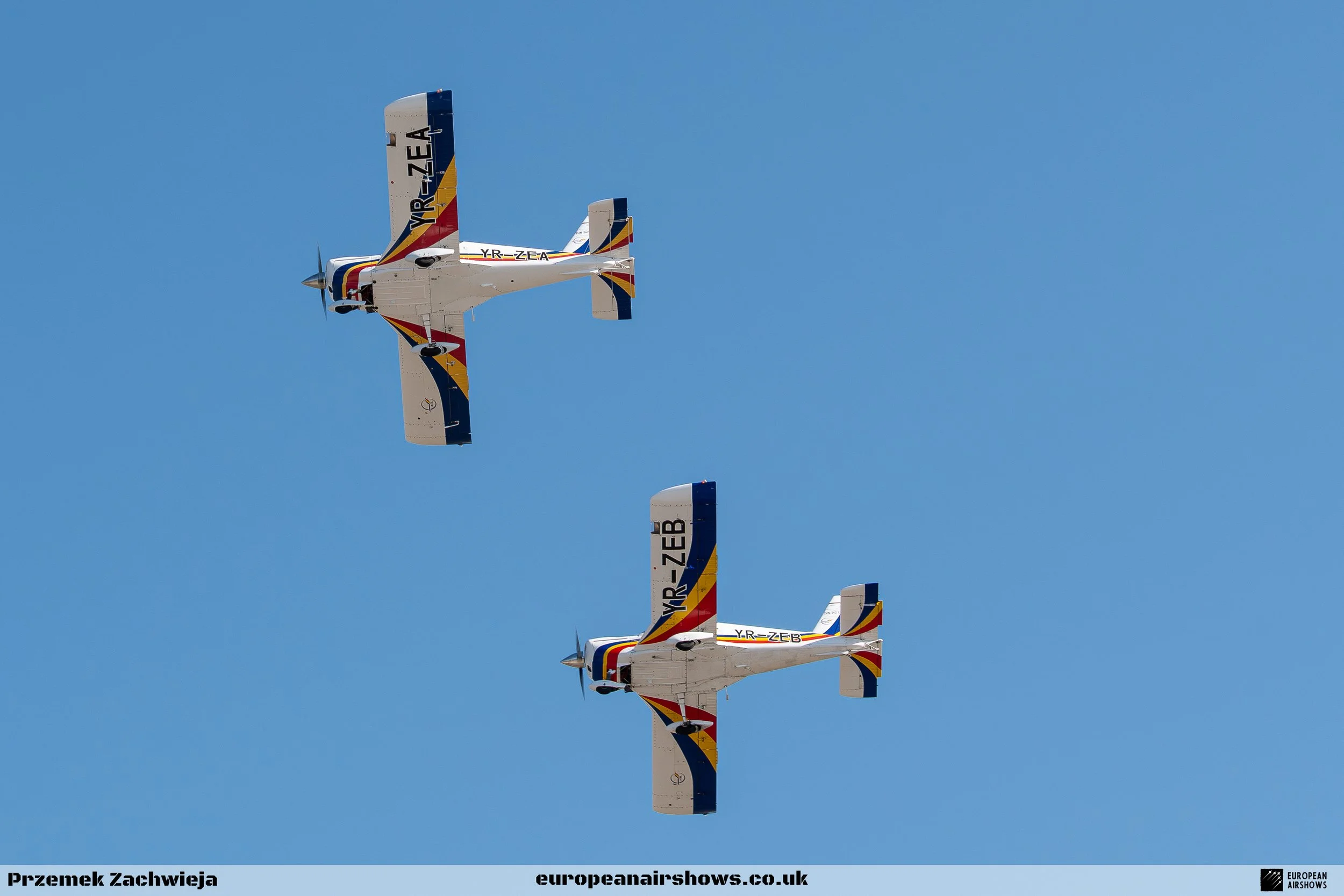
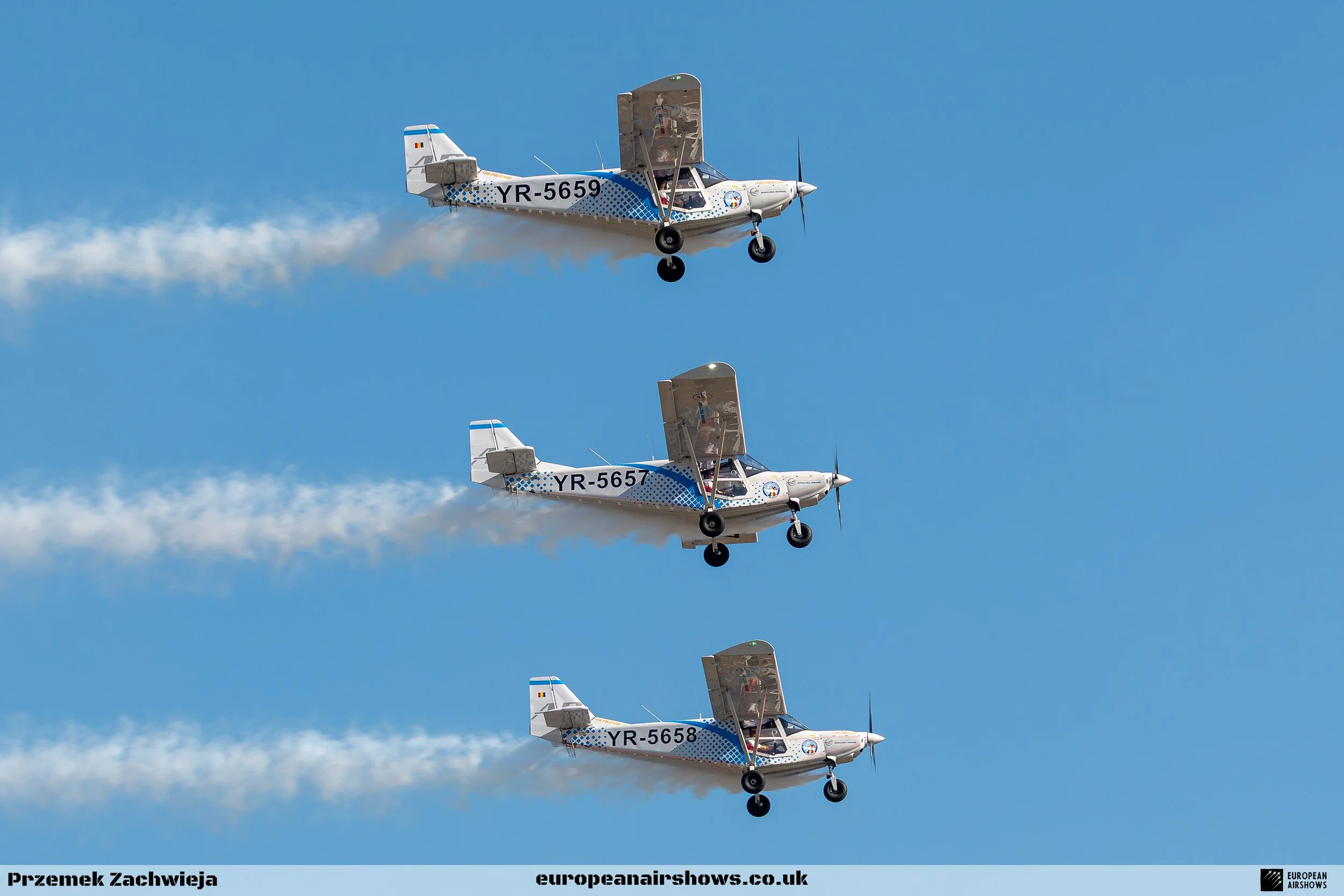
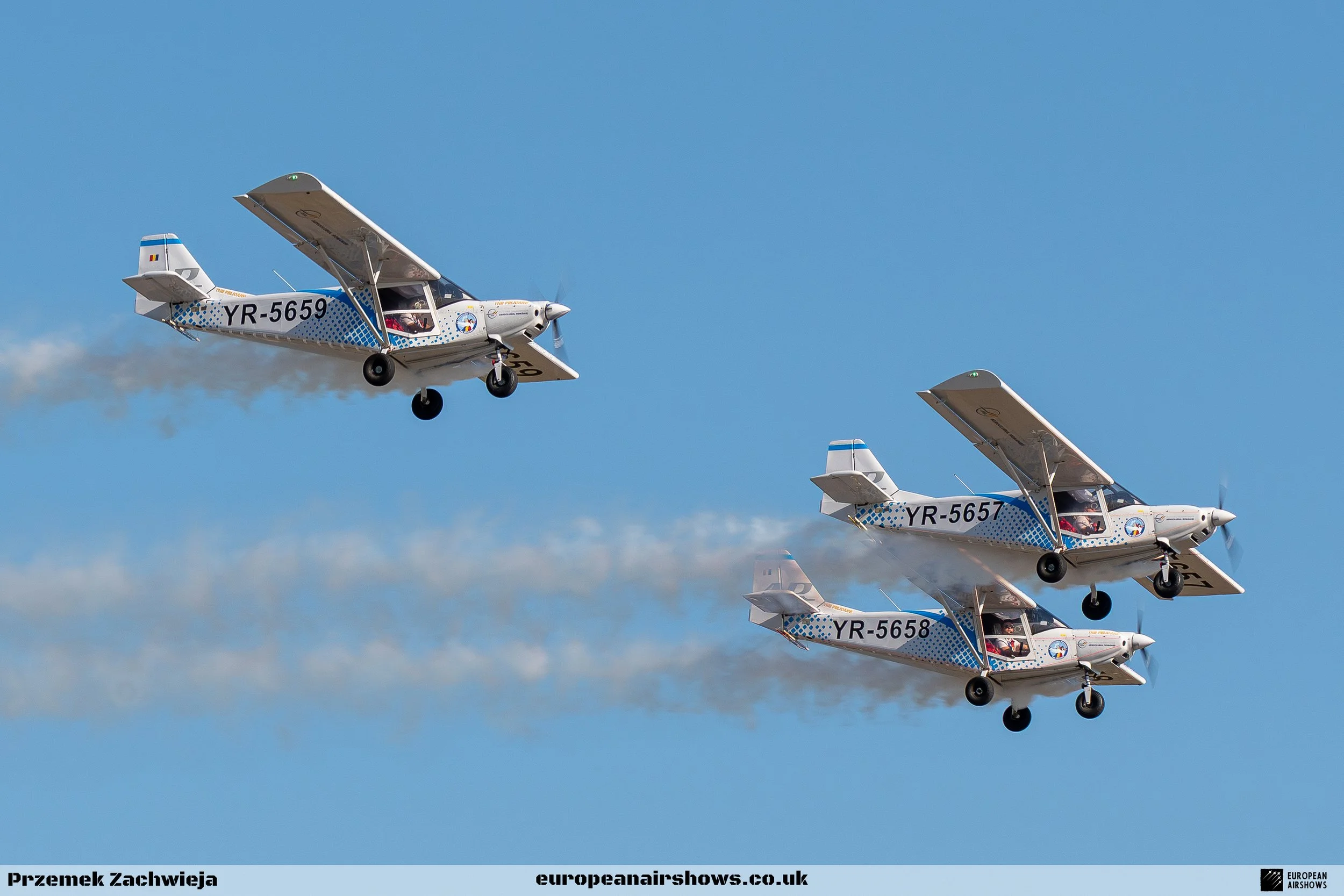
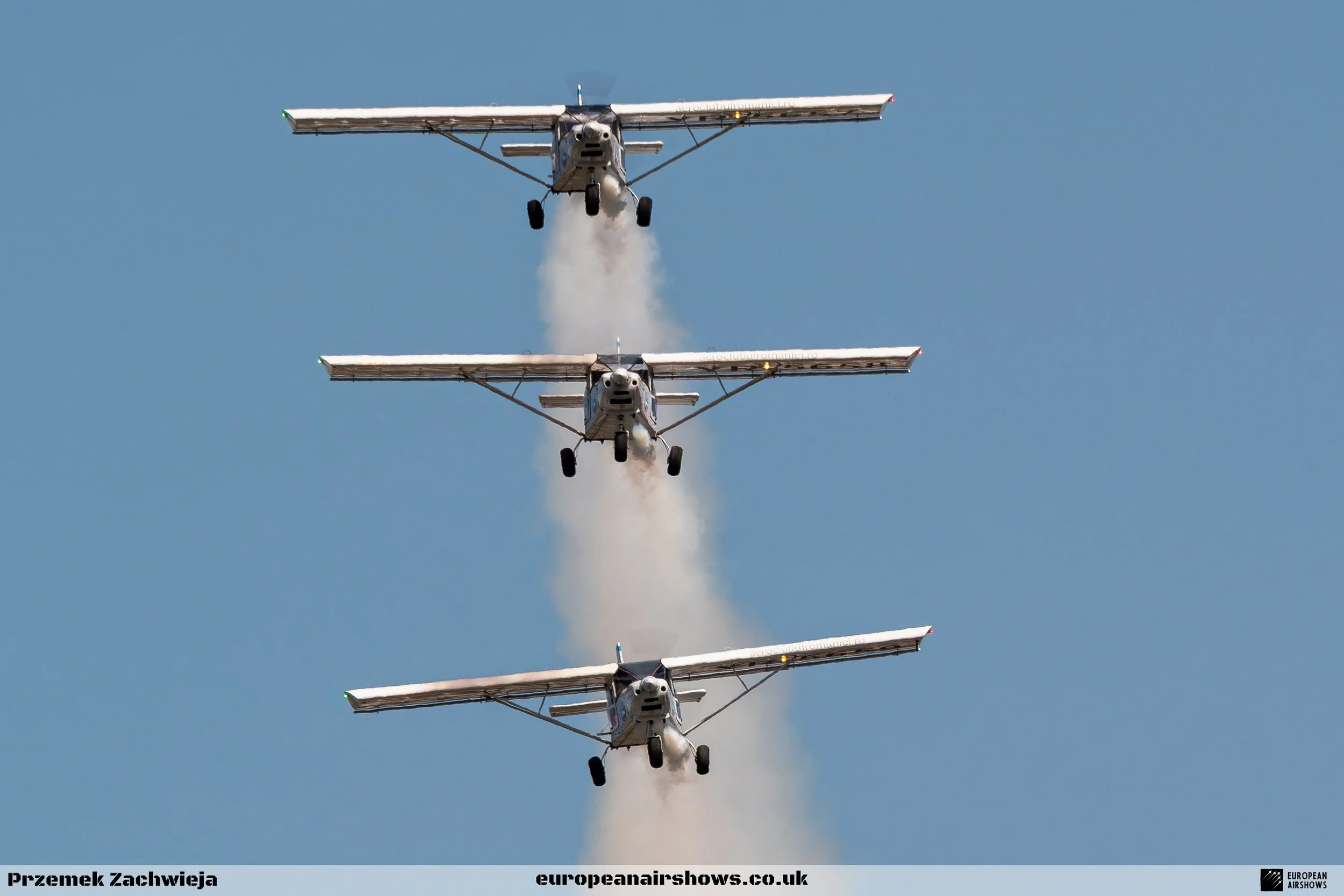
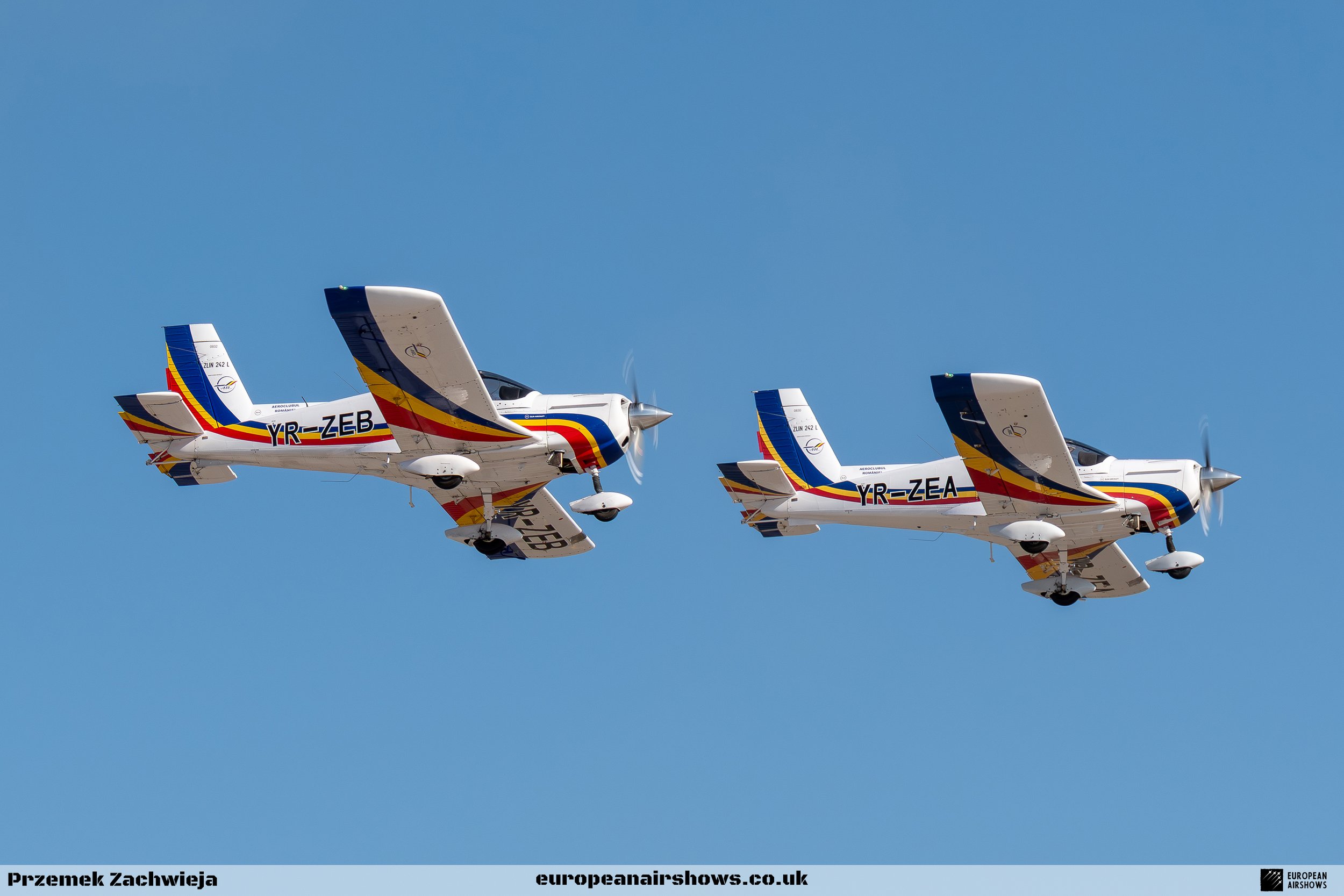
The early flying belonged to Aeroclubul României. Out front, two Zlín 242s, each fitted with novelty car-style horns, flew a string of passes that set a light-hearted tone. Sharing the slot, but in their own formation, the Pelicans Formation Team brought their trio of ICP Savannahs. On Sunday, they were joined by the Flying Dragons Paramotor Team, seven pilots trailing plumes of coloured smoke across the Băneasa sky in a lively daytime display.
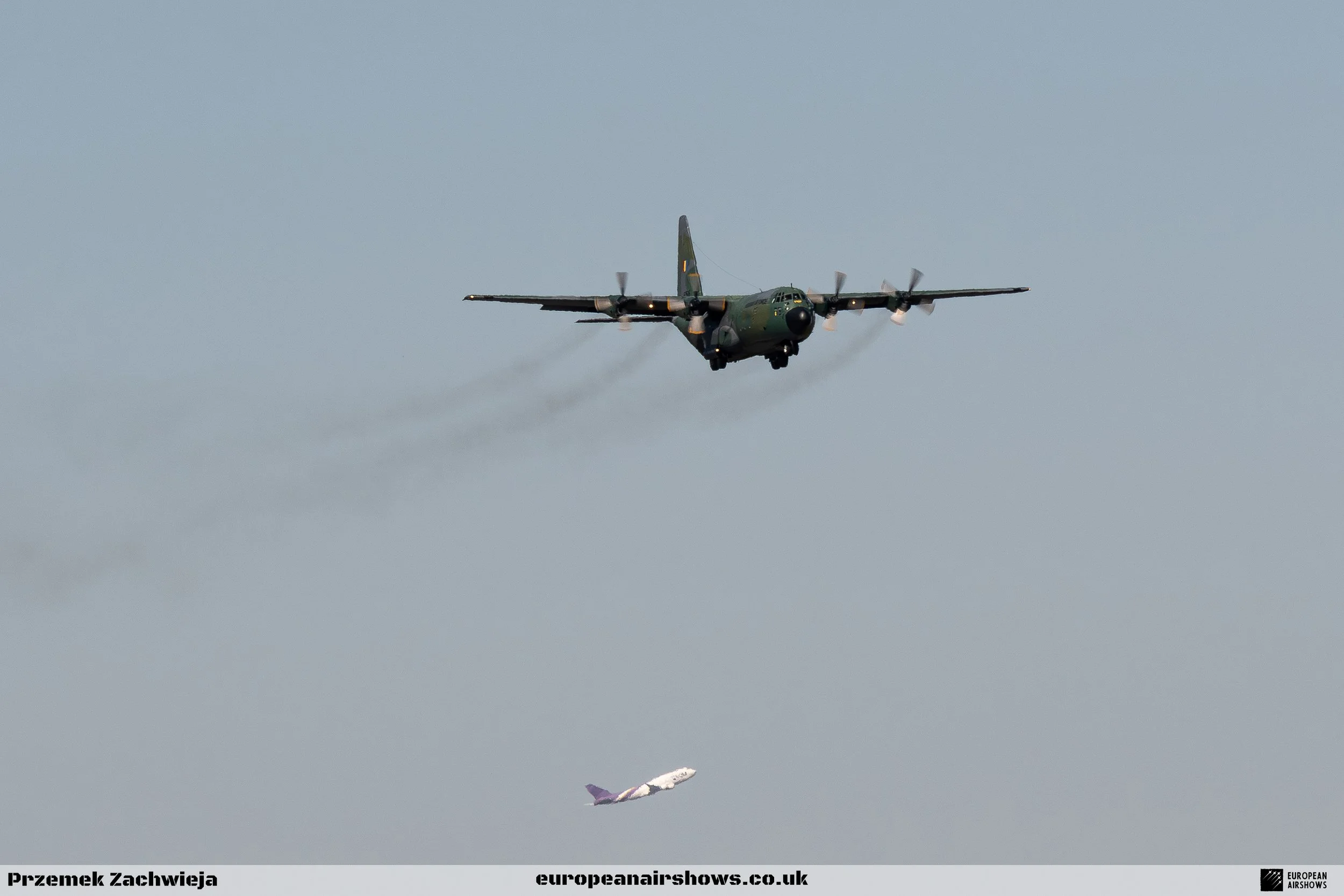
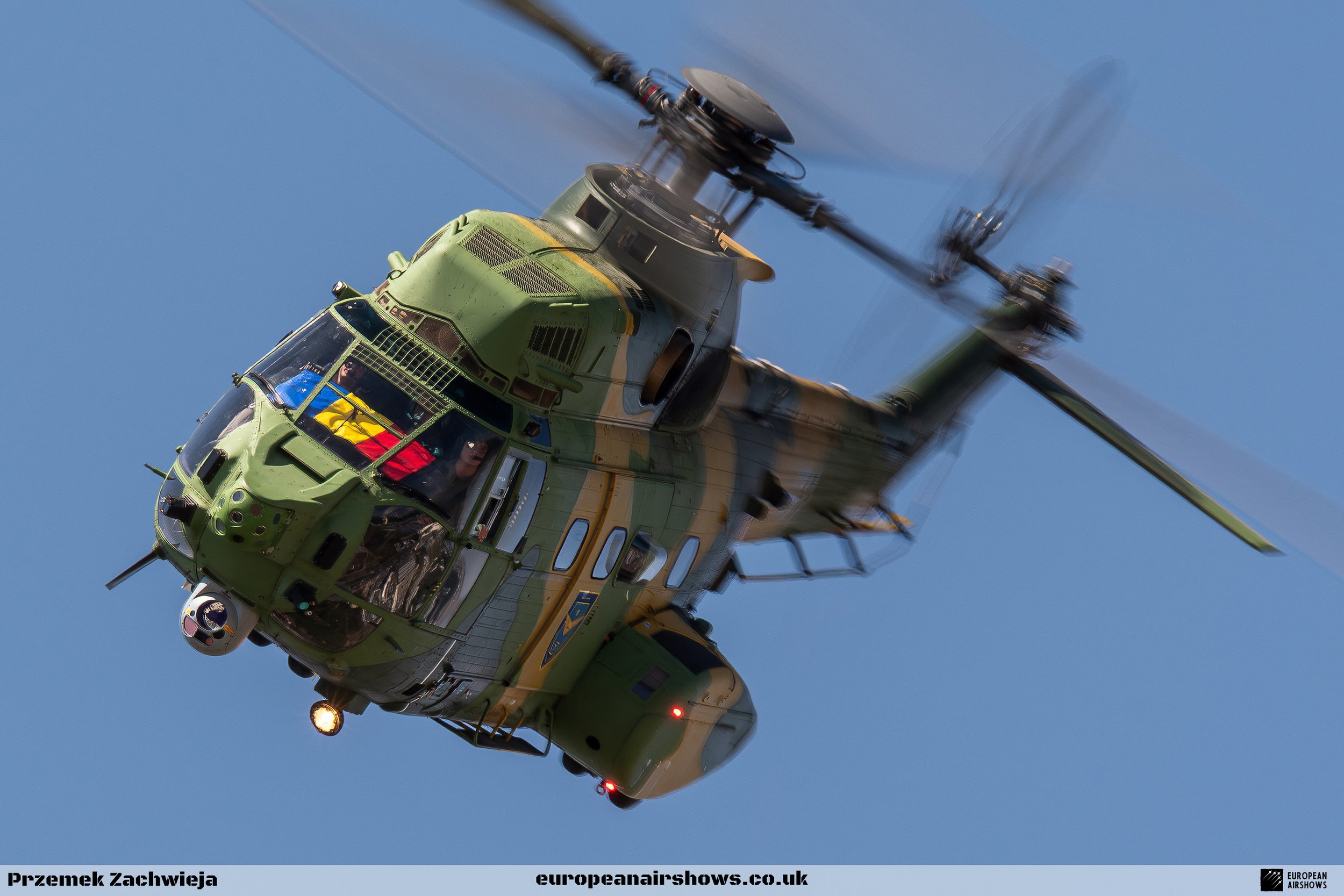
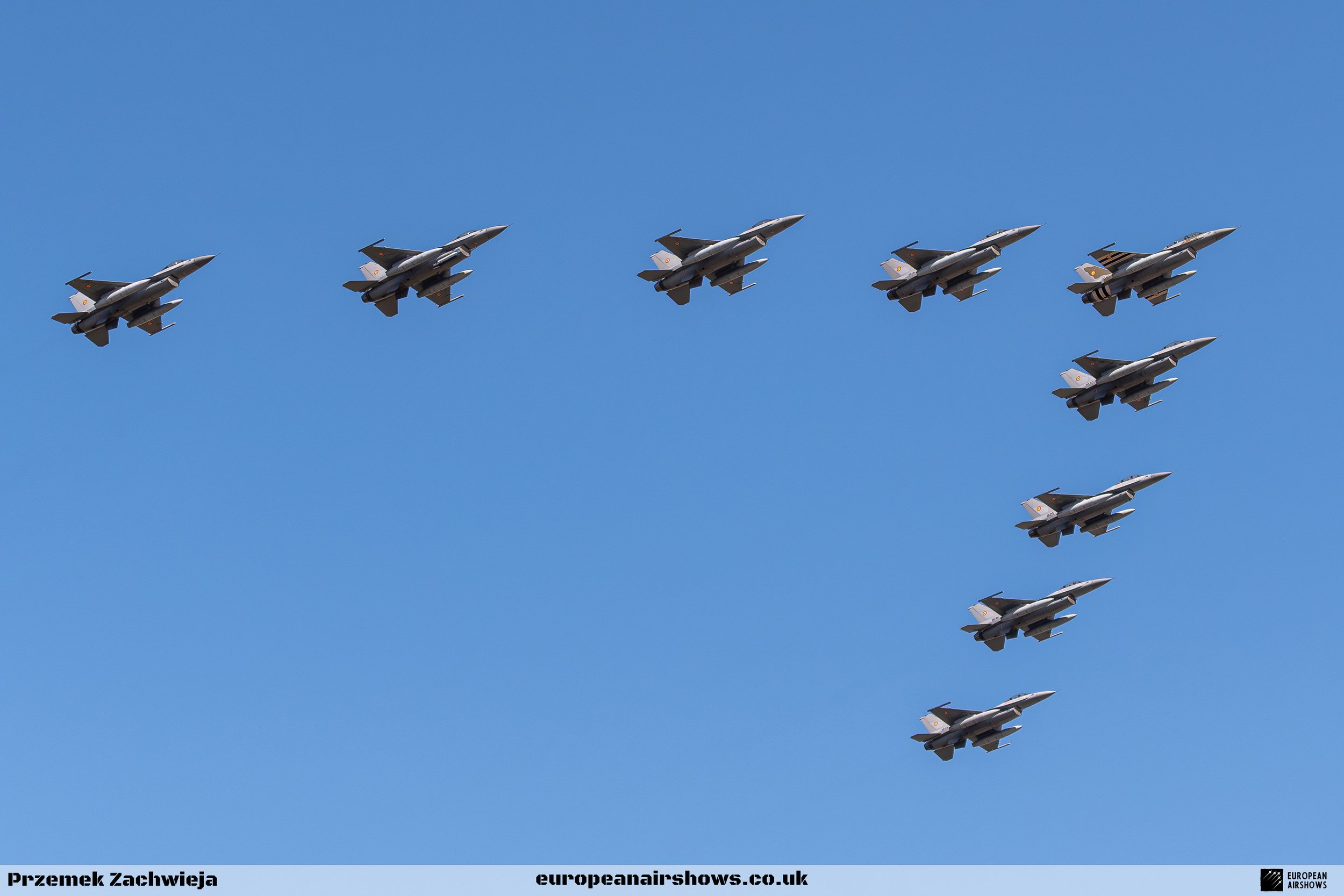
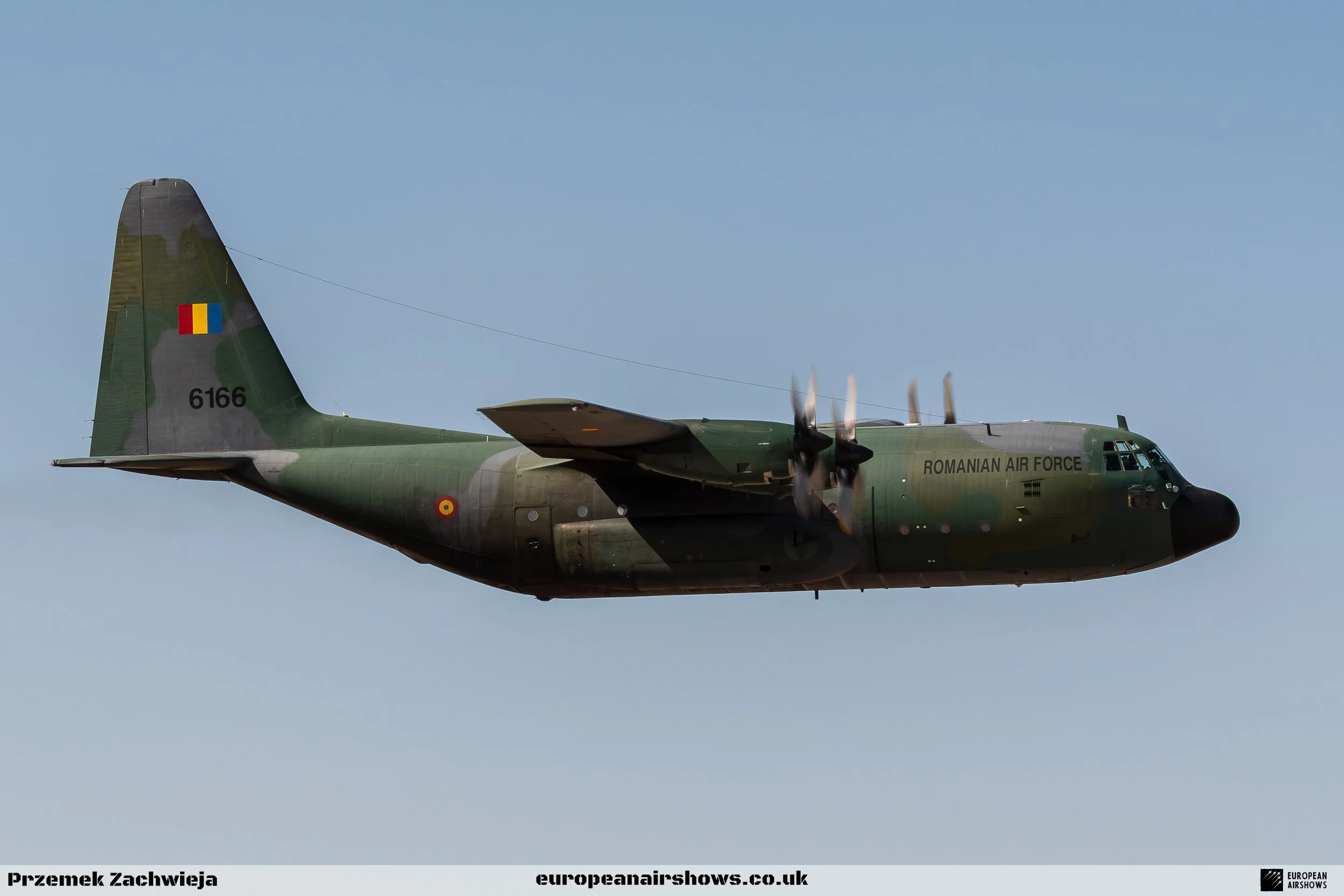
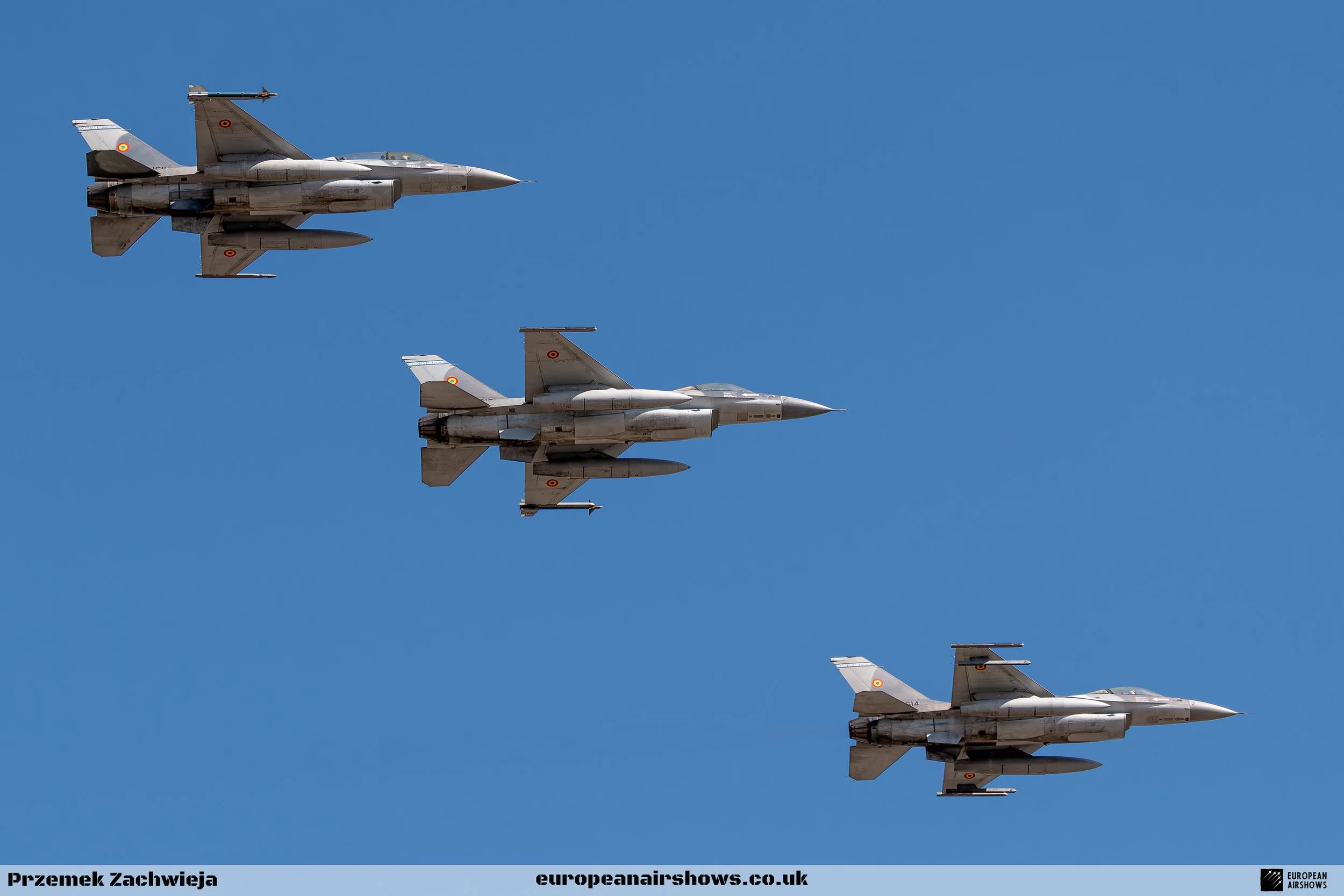
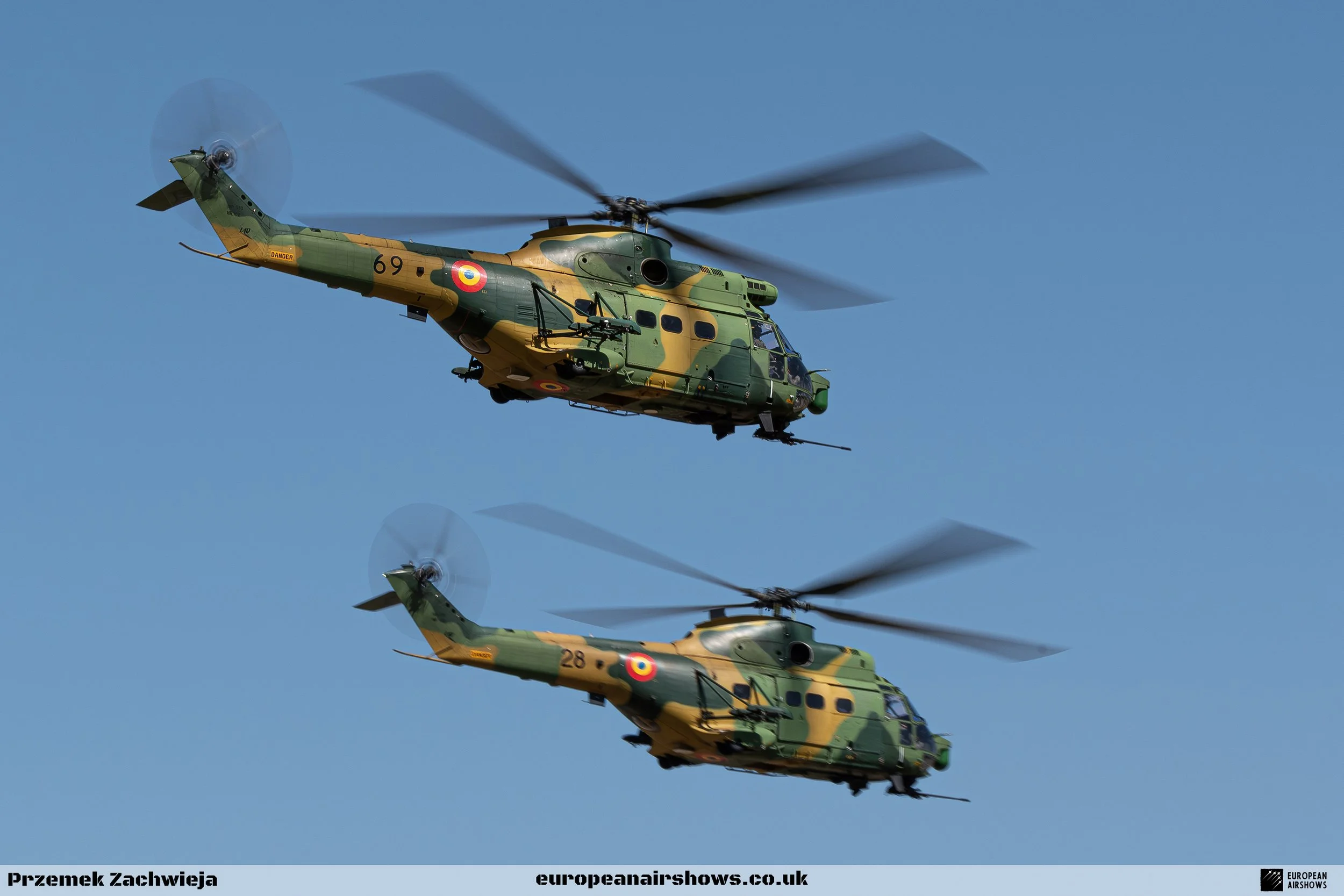
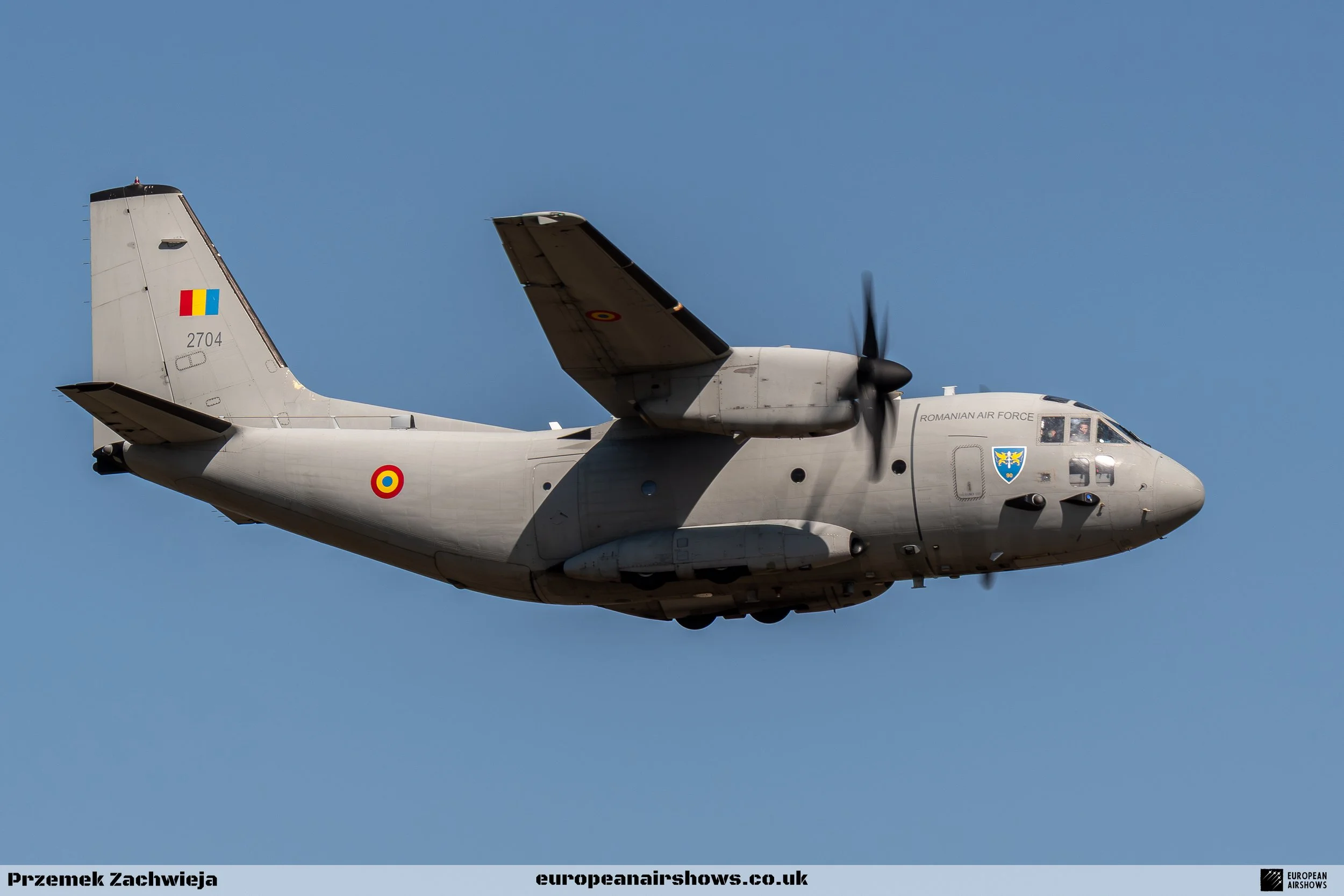
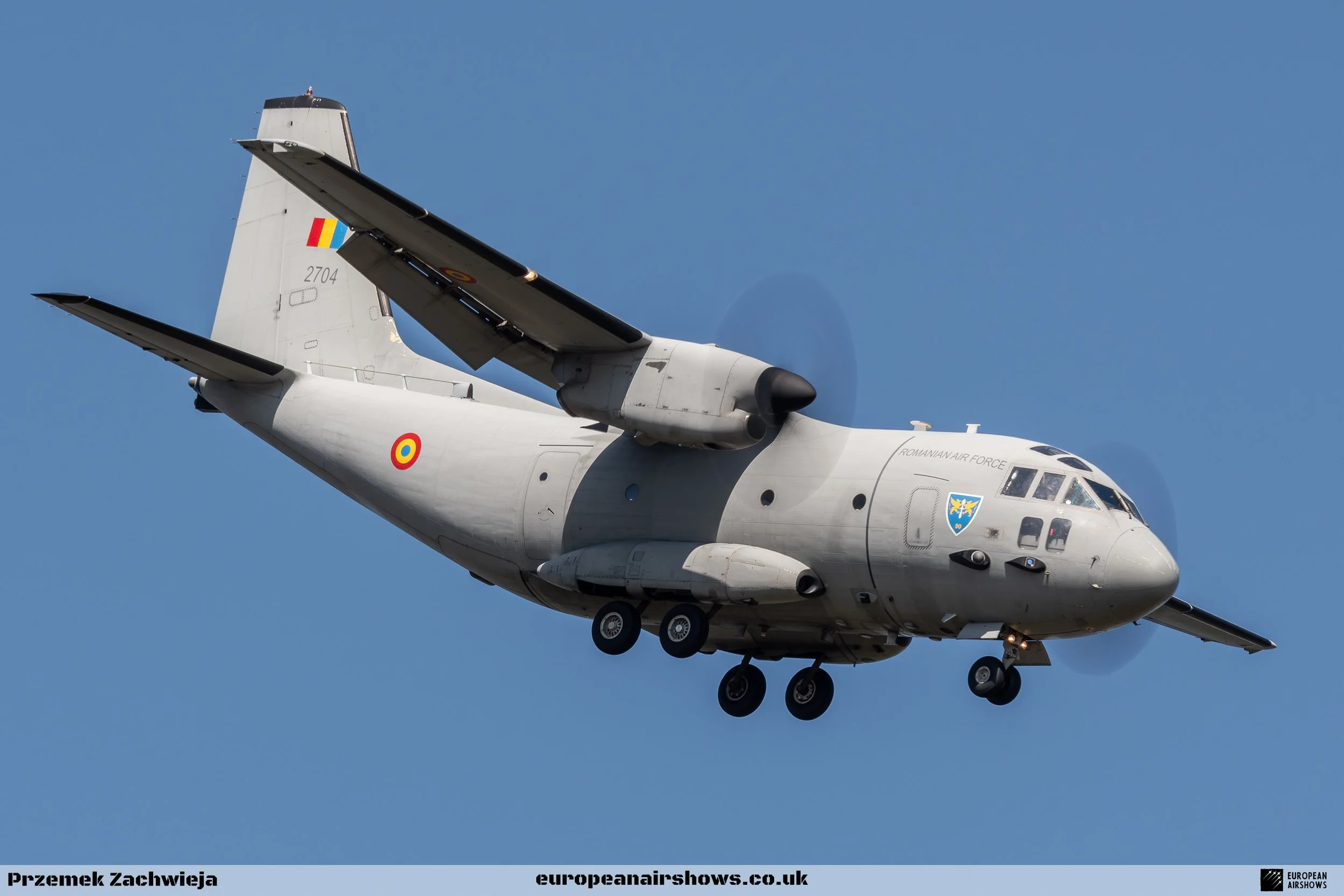
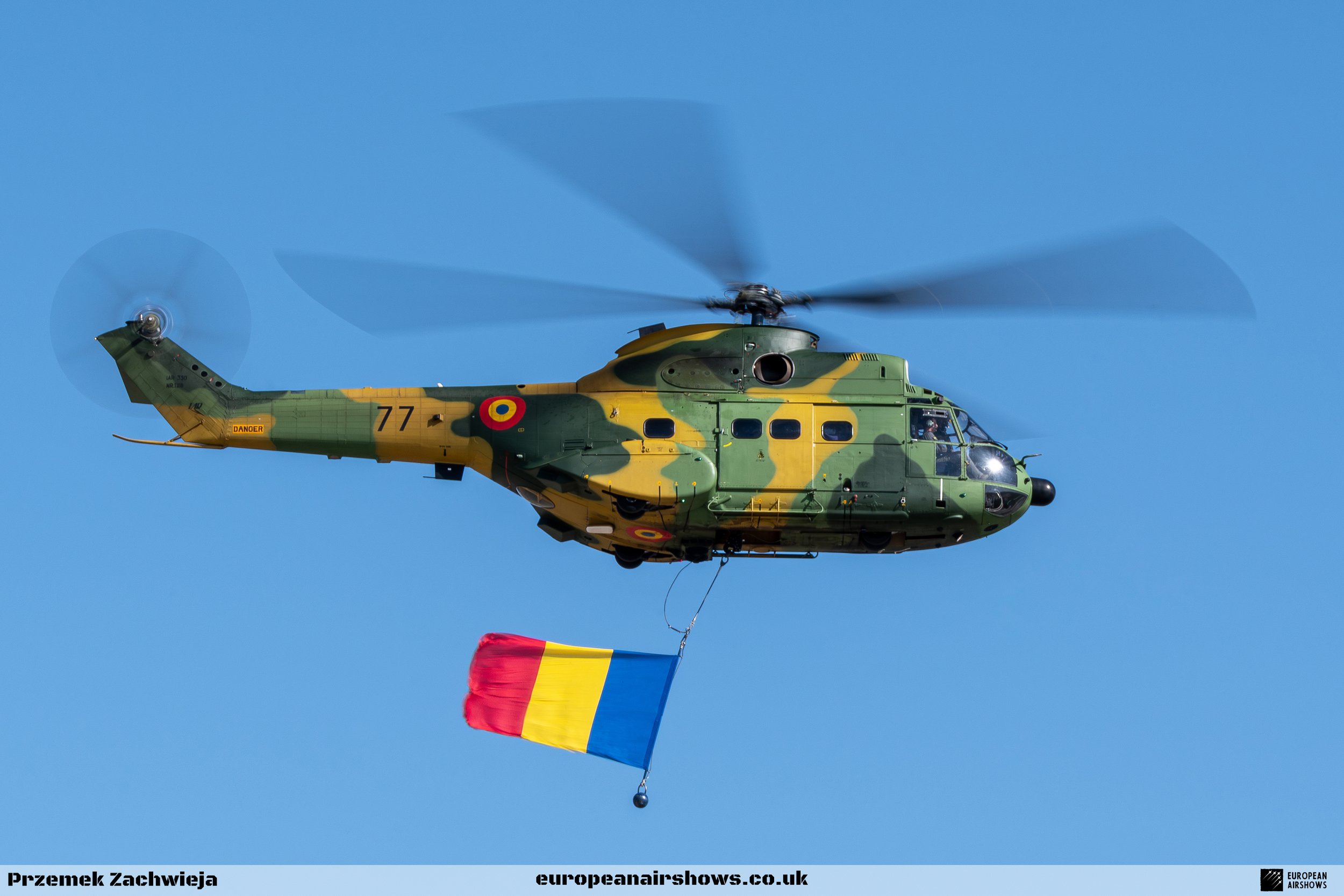
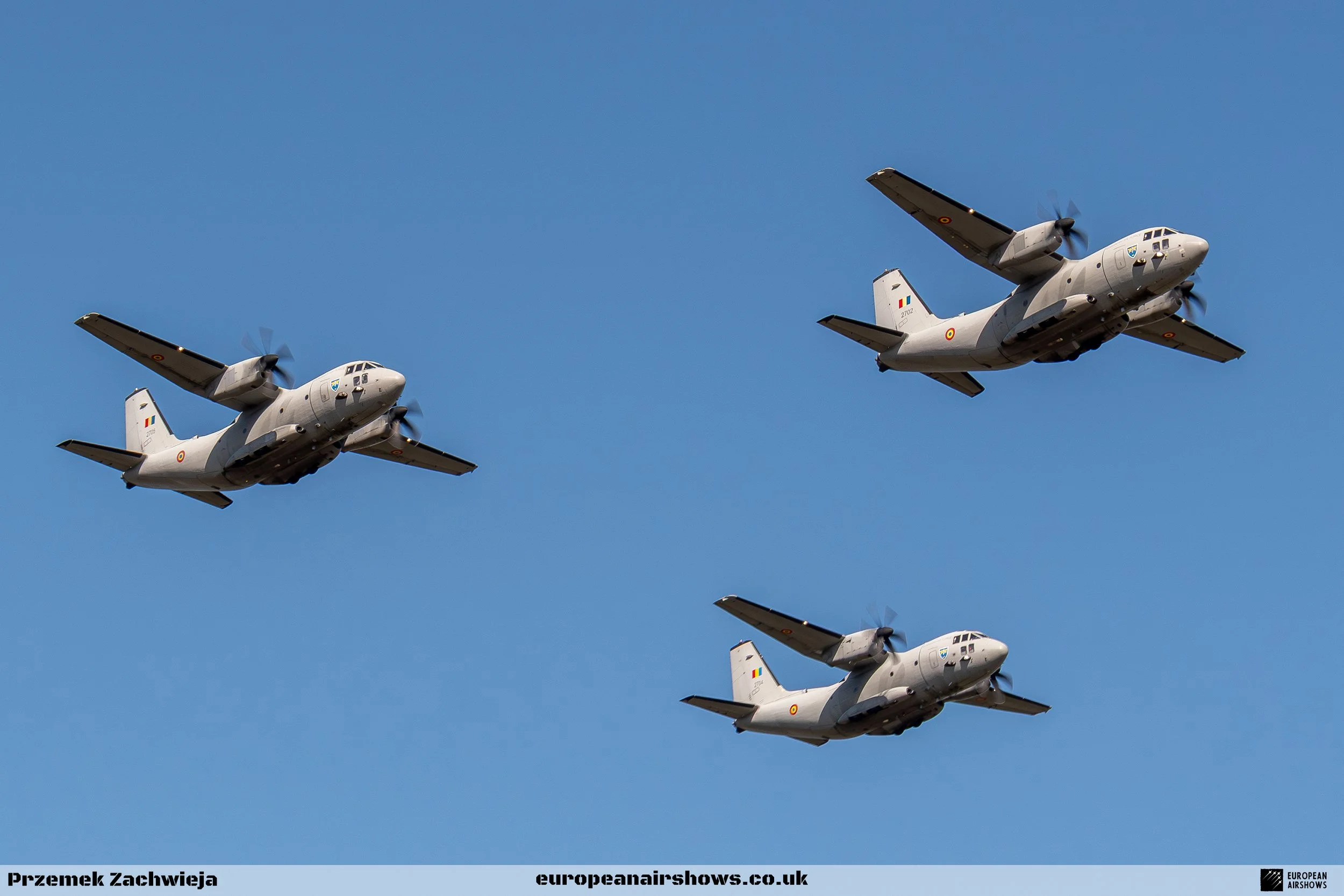
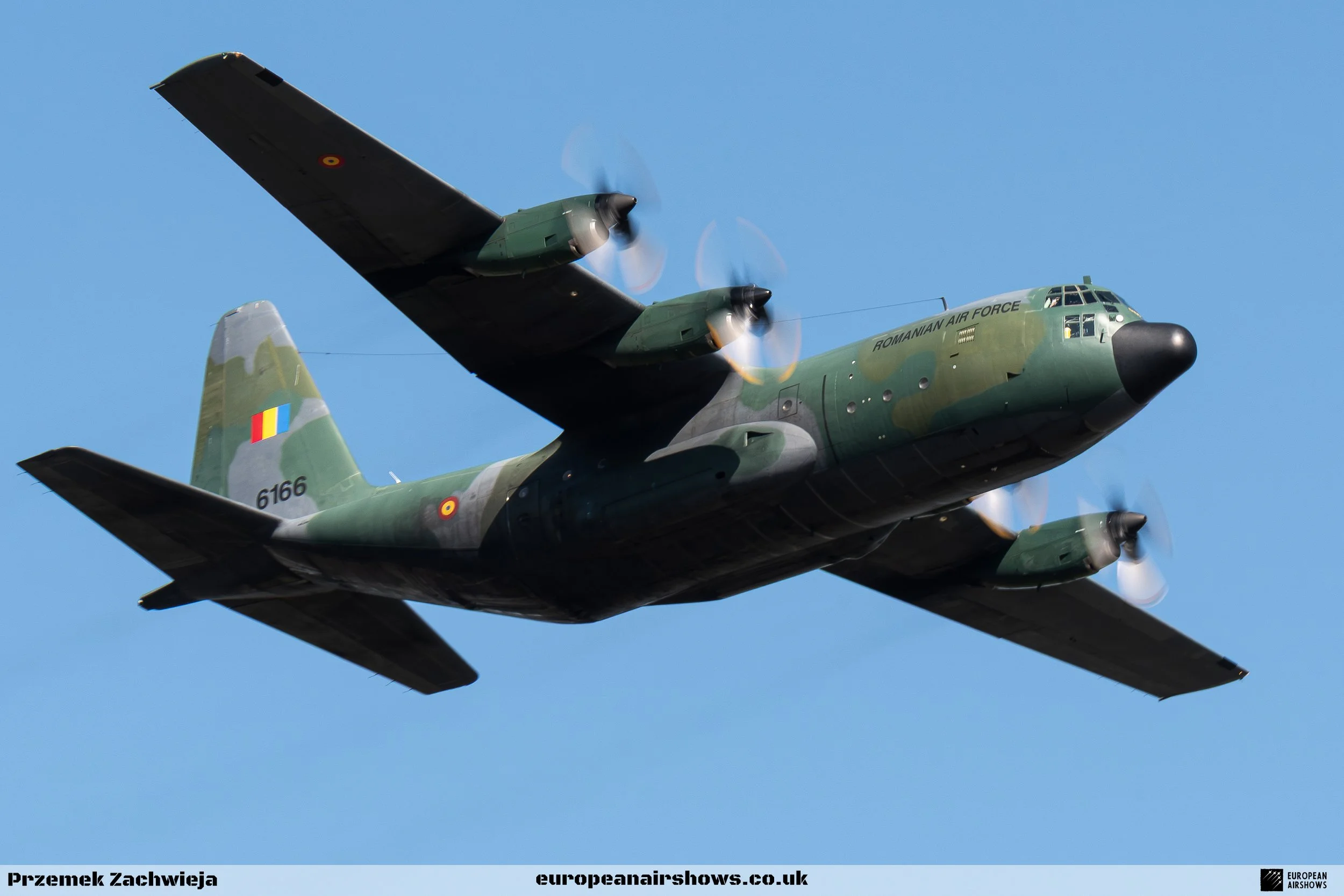
Formalities then took over. Saturday opened with a moment of silence for the Polish Air Force F-16 pilot killed at Radom during rehearsals, followed by the Romanian national anthem. On Saturday, this segued directly into one of the largest mass flypasts in the show’s history: more than thirty aircraft in waves across the field. At its head was an IAR 330 Puma trailing the national flag, followed by ten more Pumas in multiple variants, two immaculate nine-ships of F-16AM/BM Fighting Falcons, three C-27J Spartans, and a camouflaged Lockheed C-130B Hercules—a rare survivor of Romania’s original Hercules fleet.
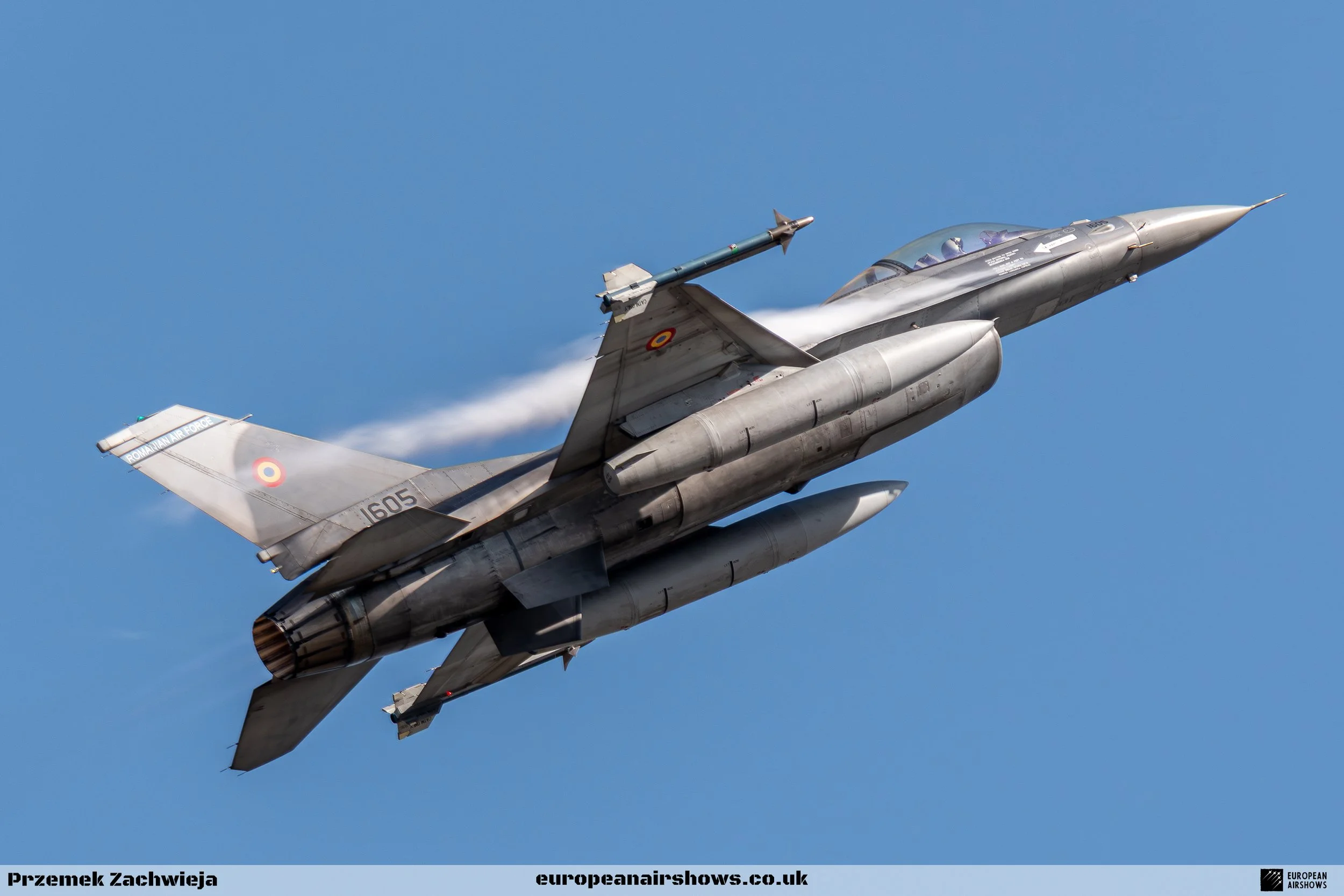
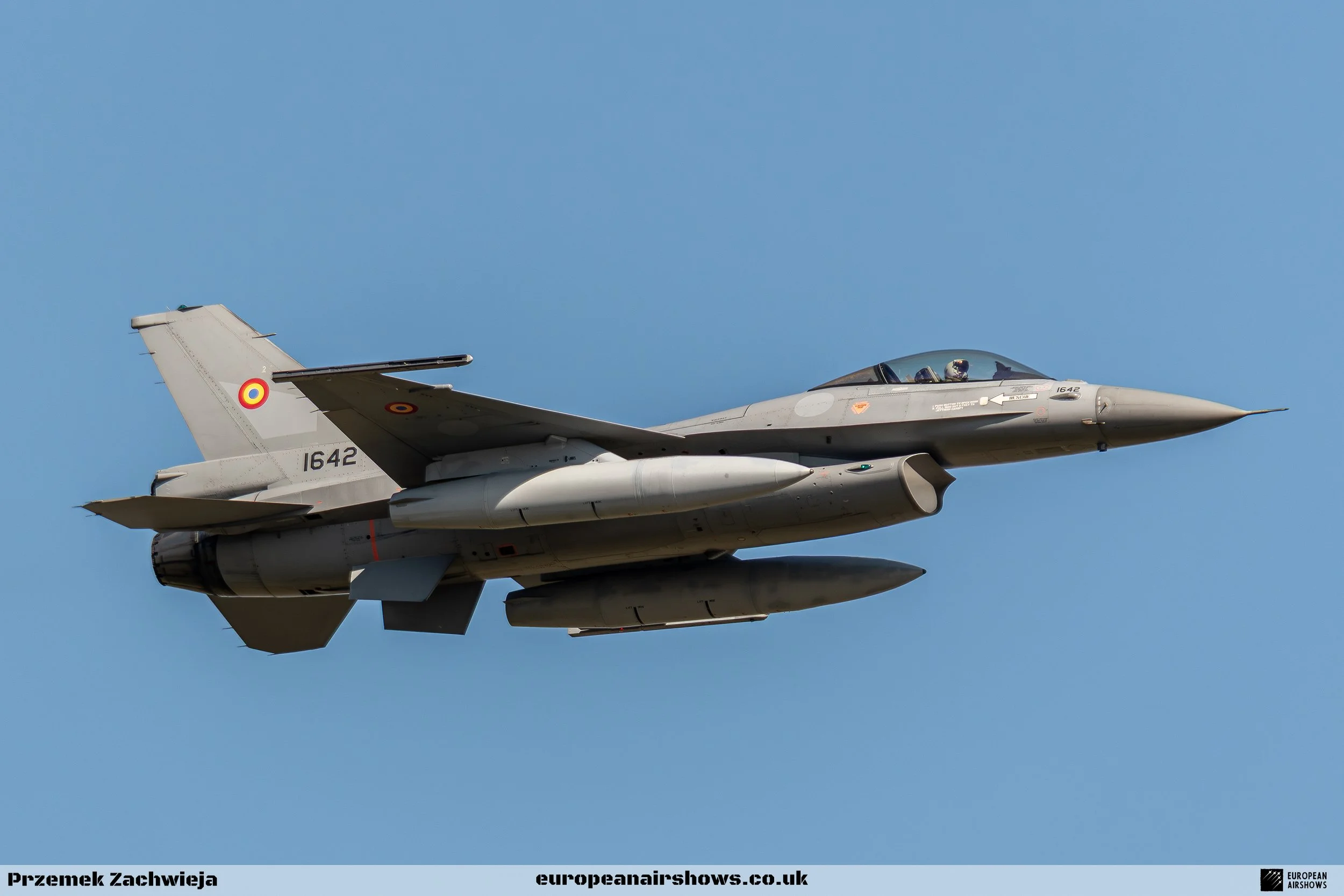
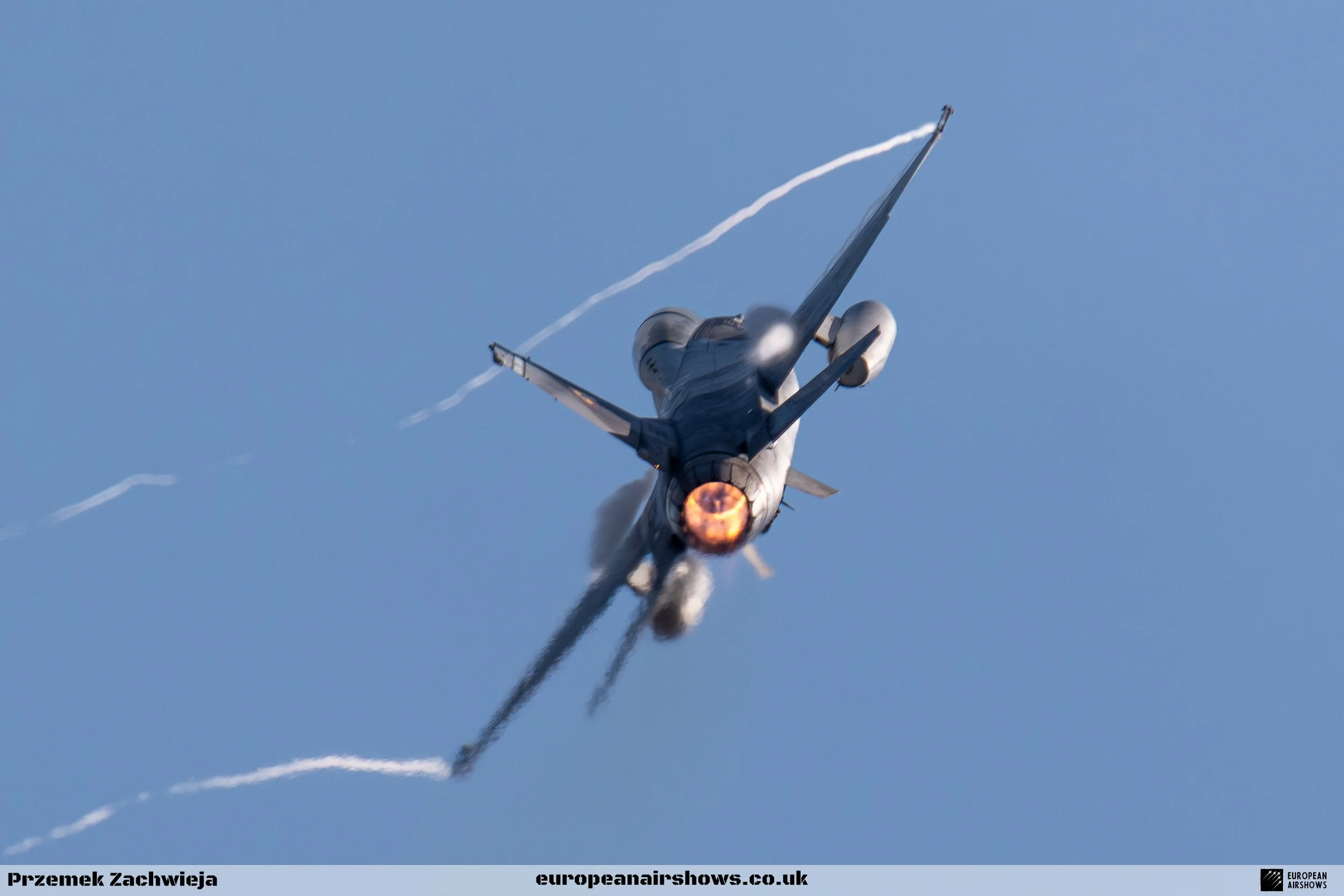
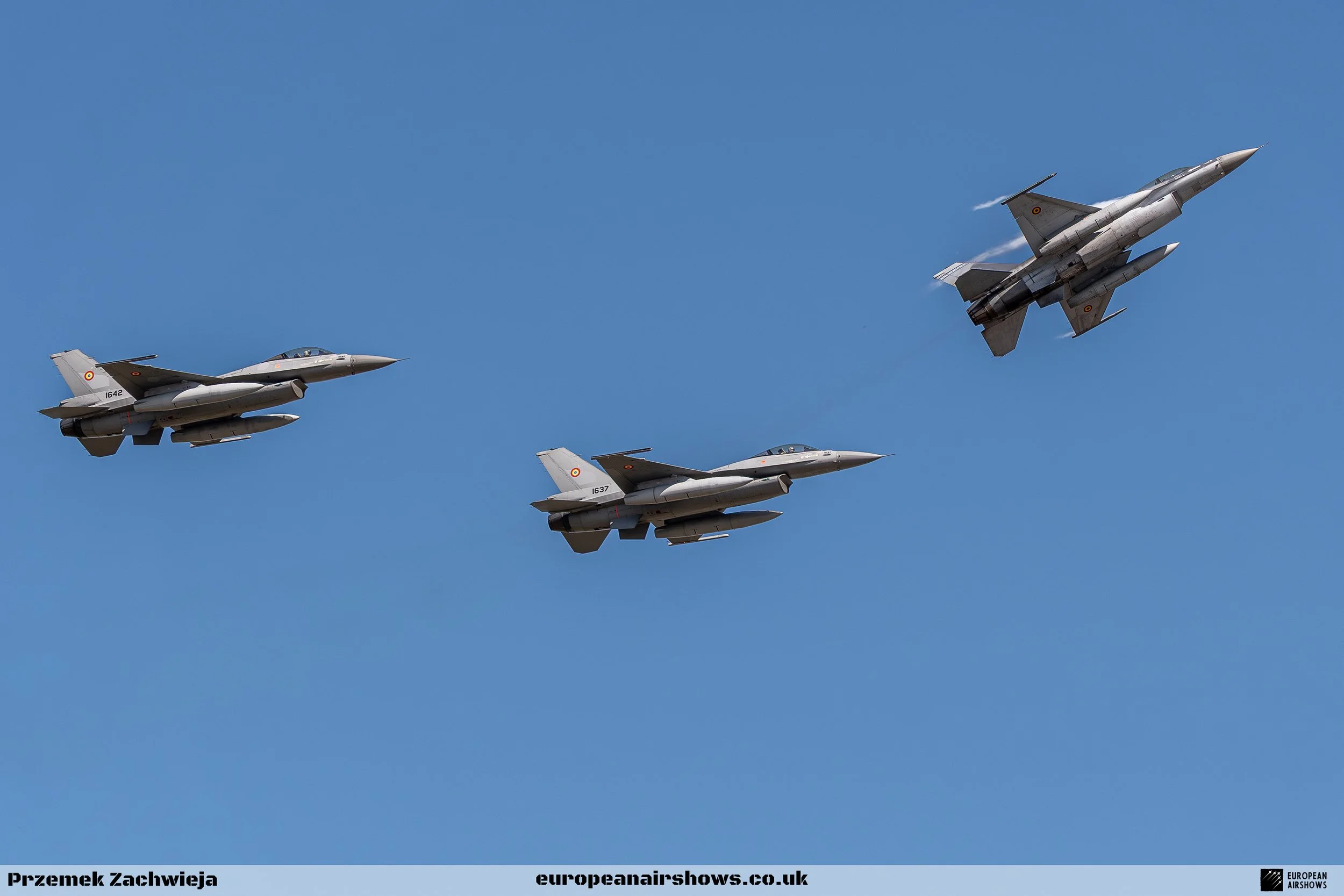
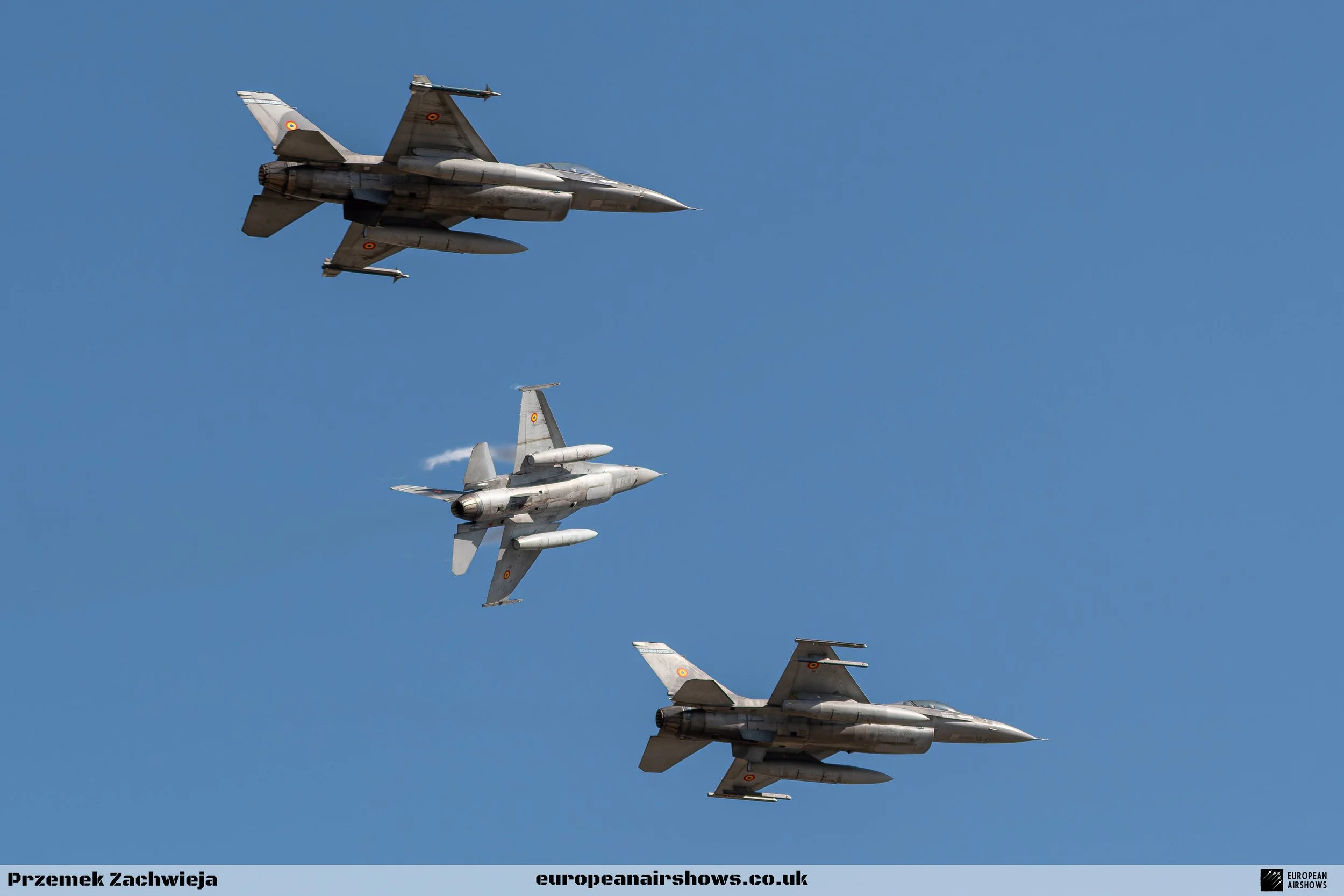
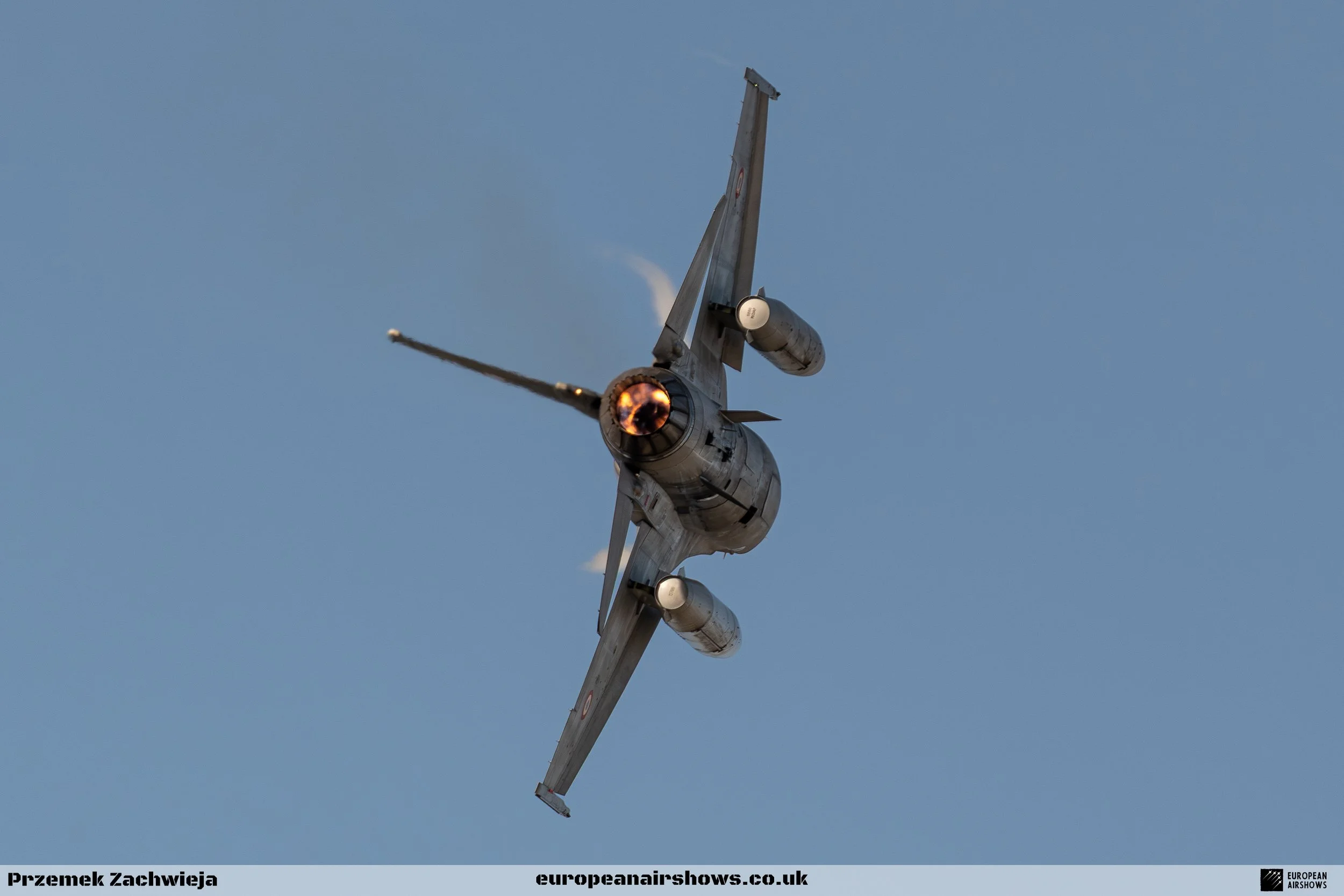
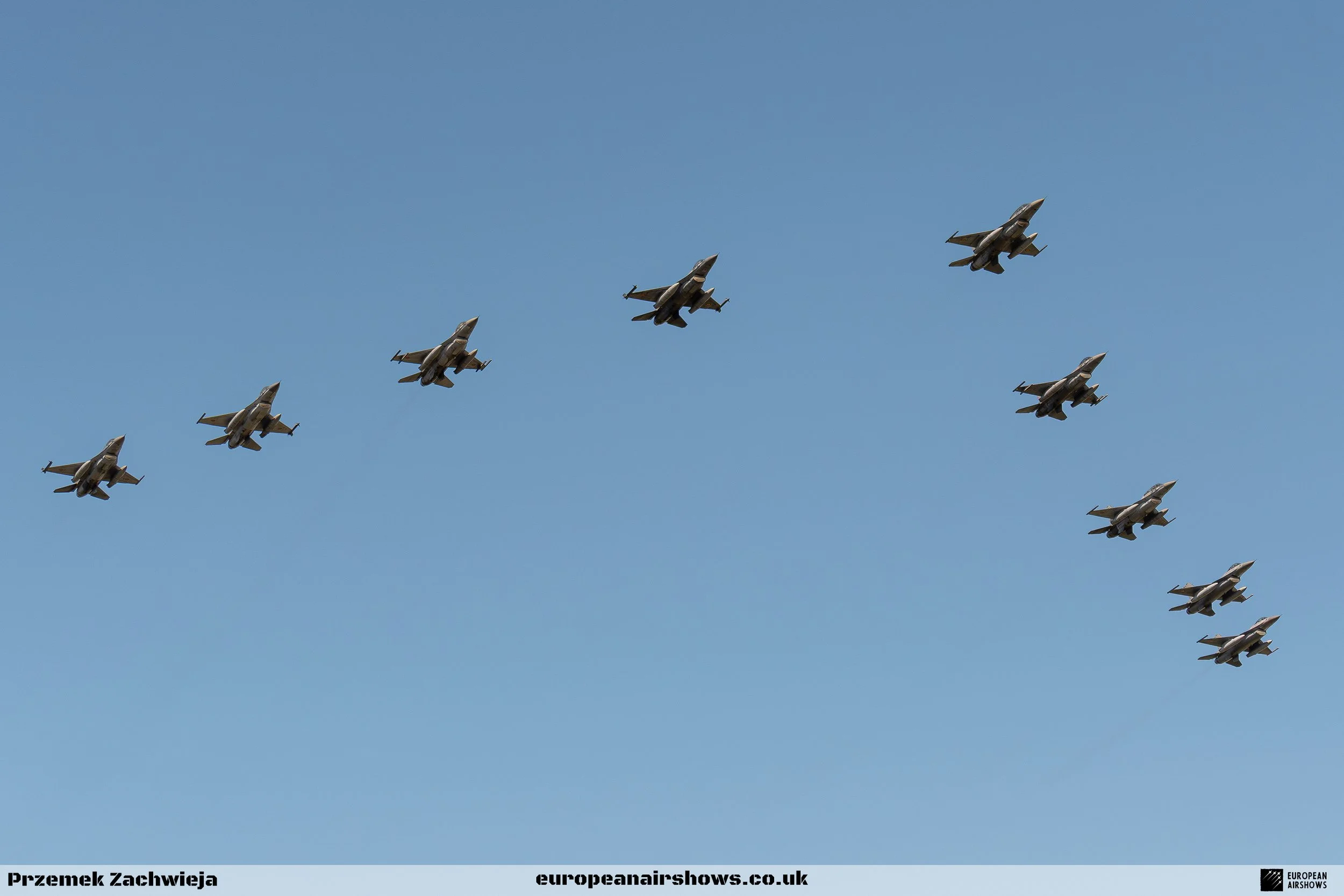
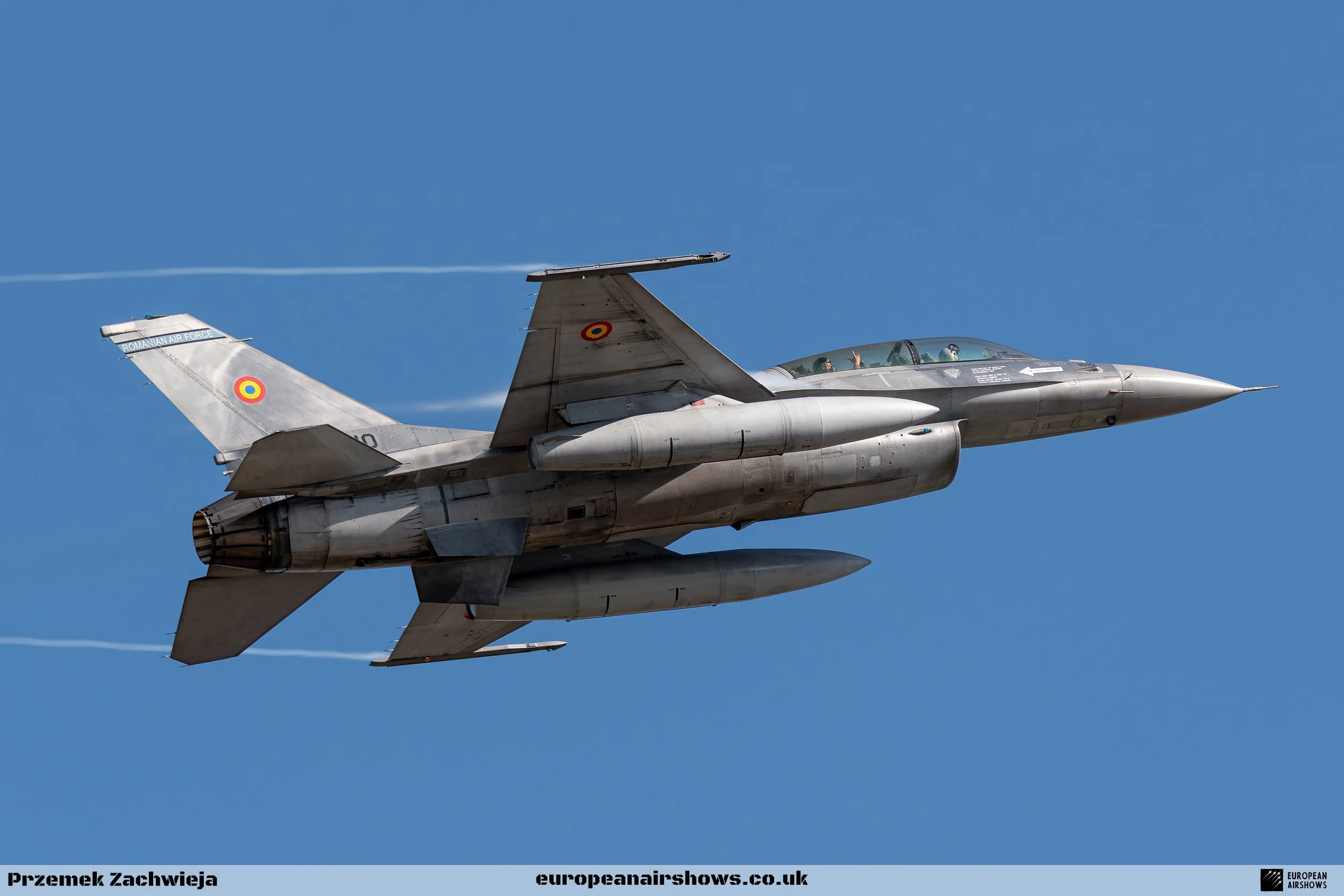
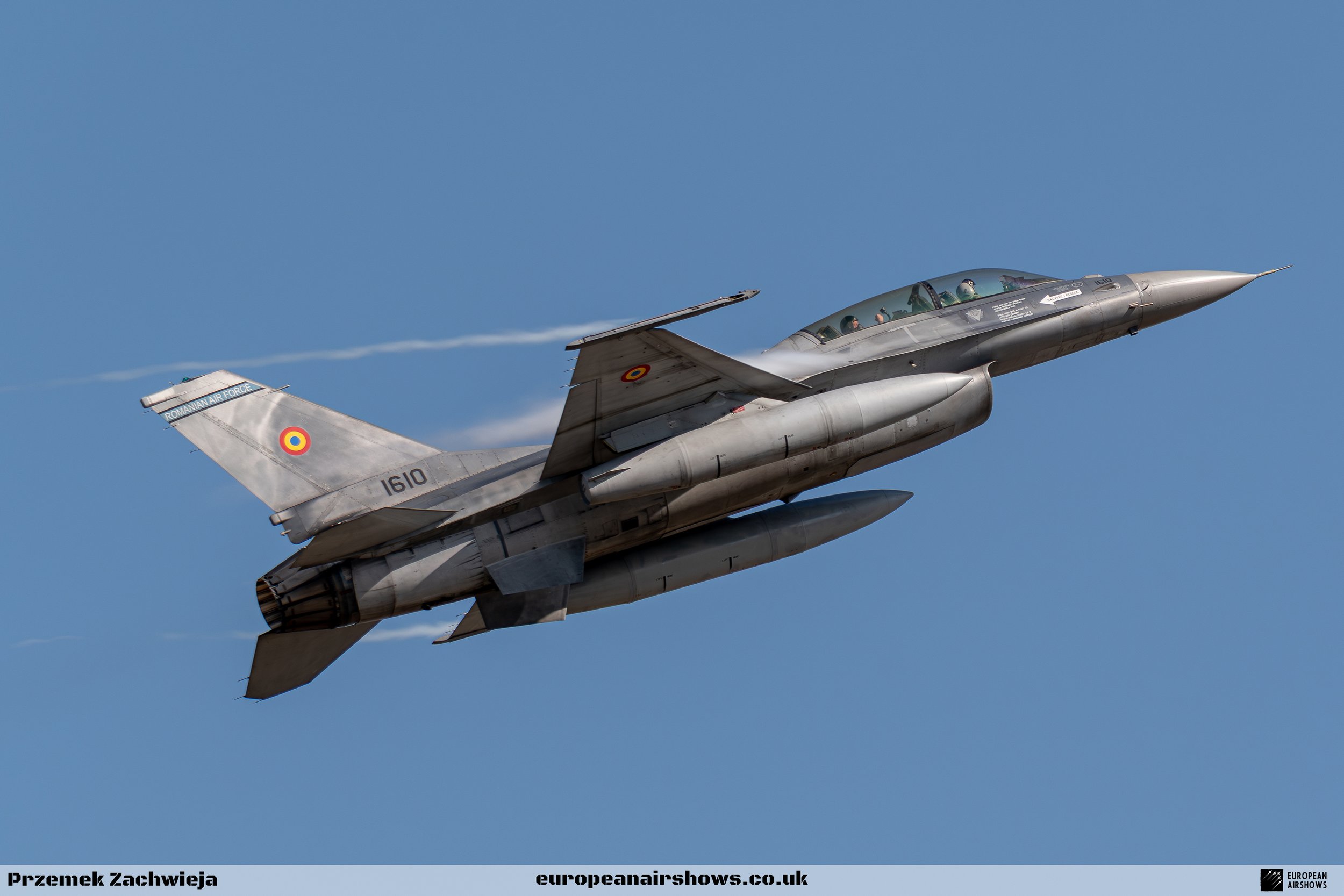
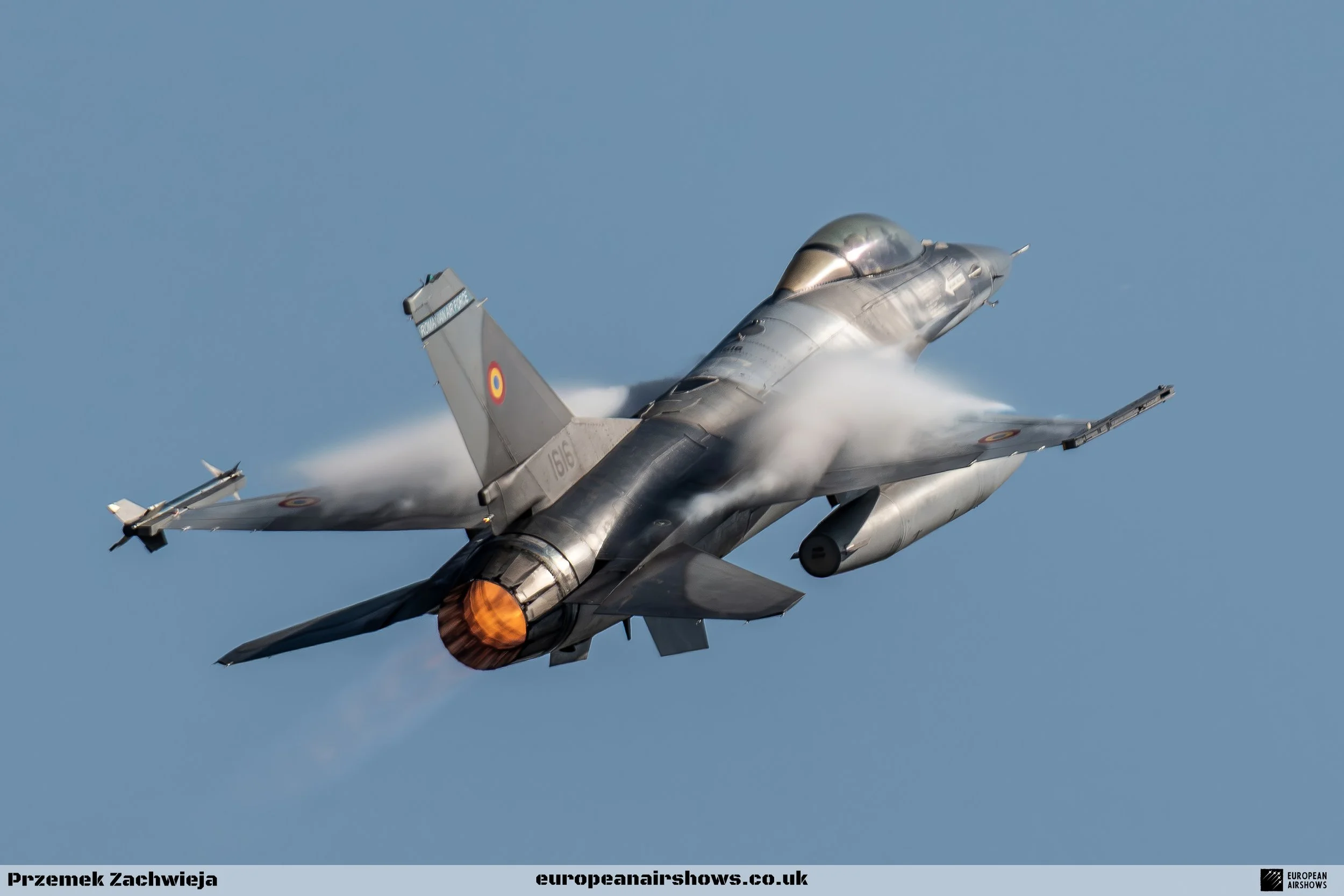
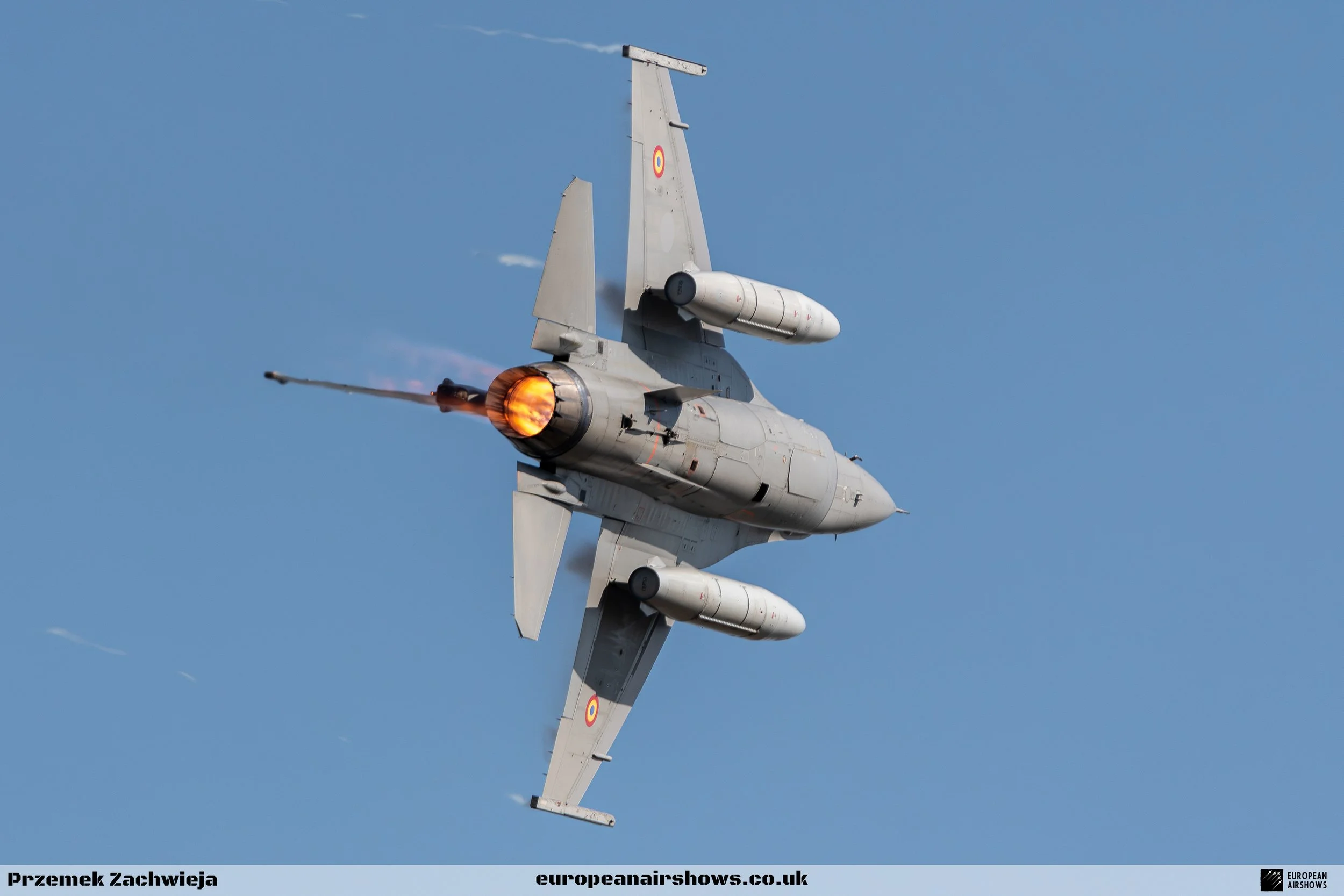
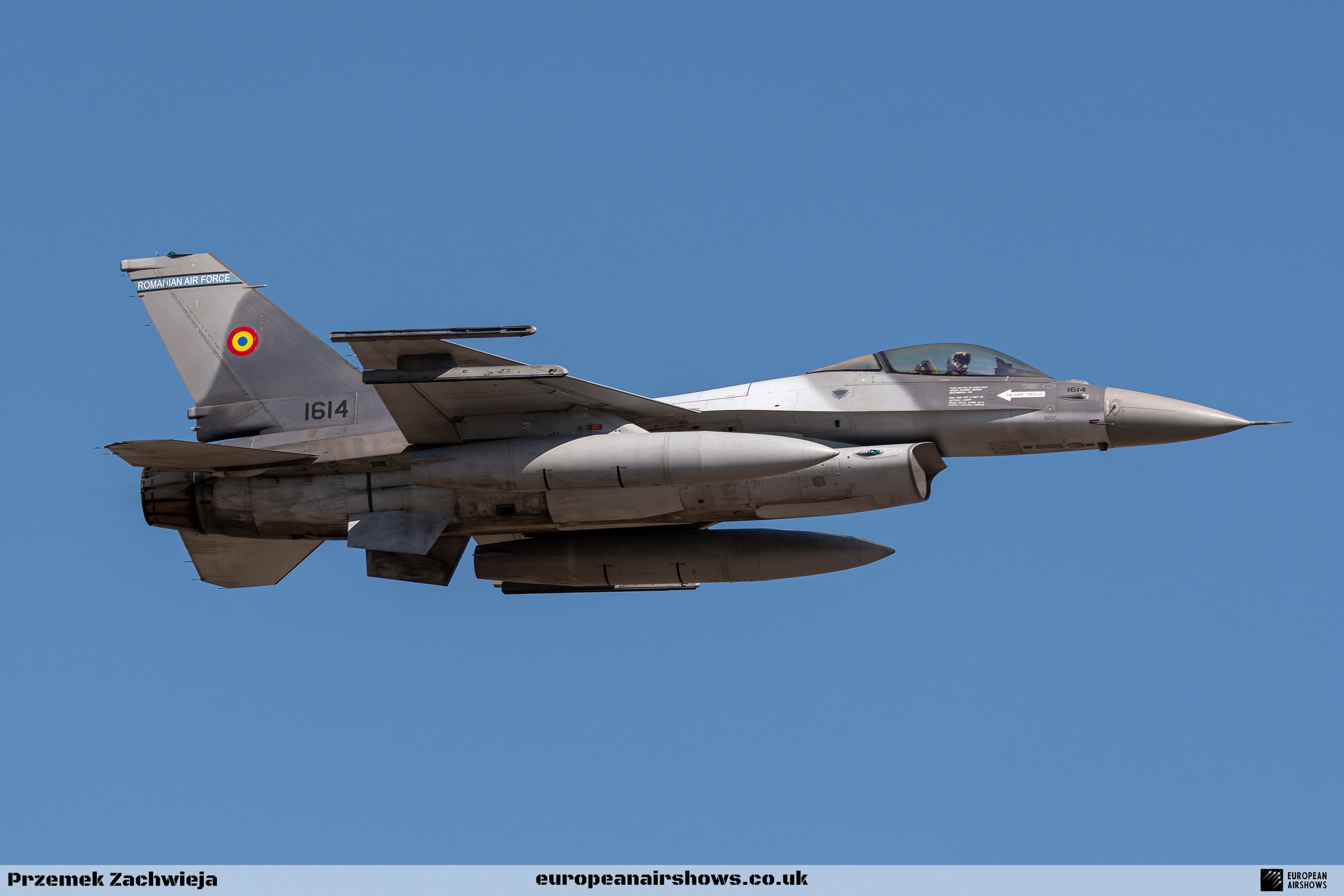
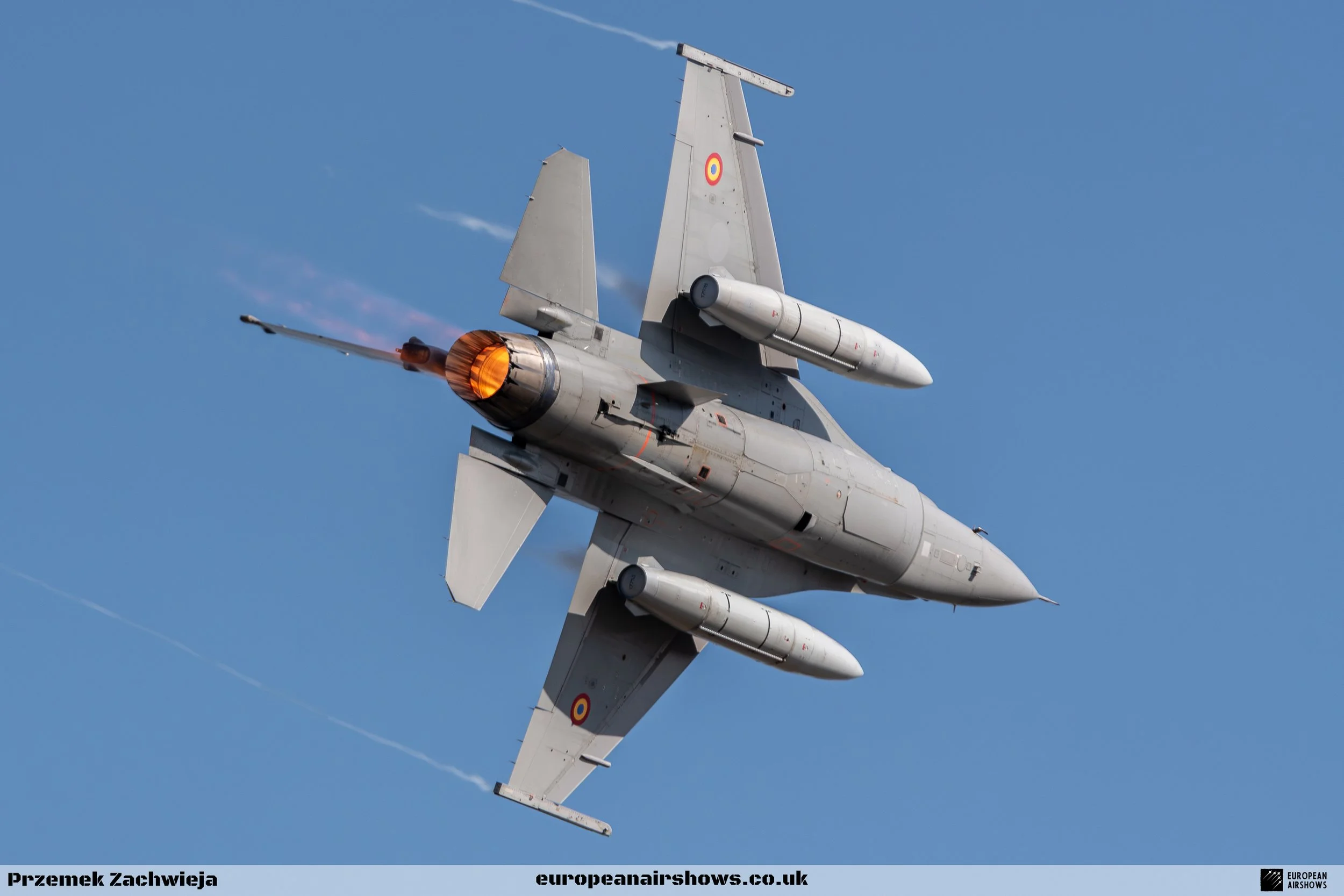
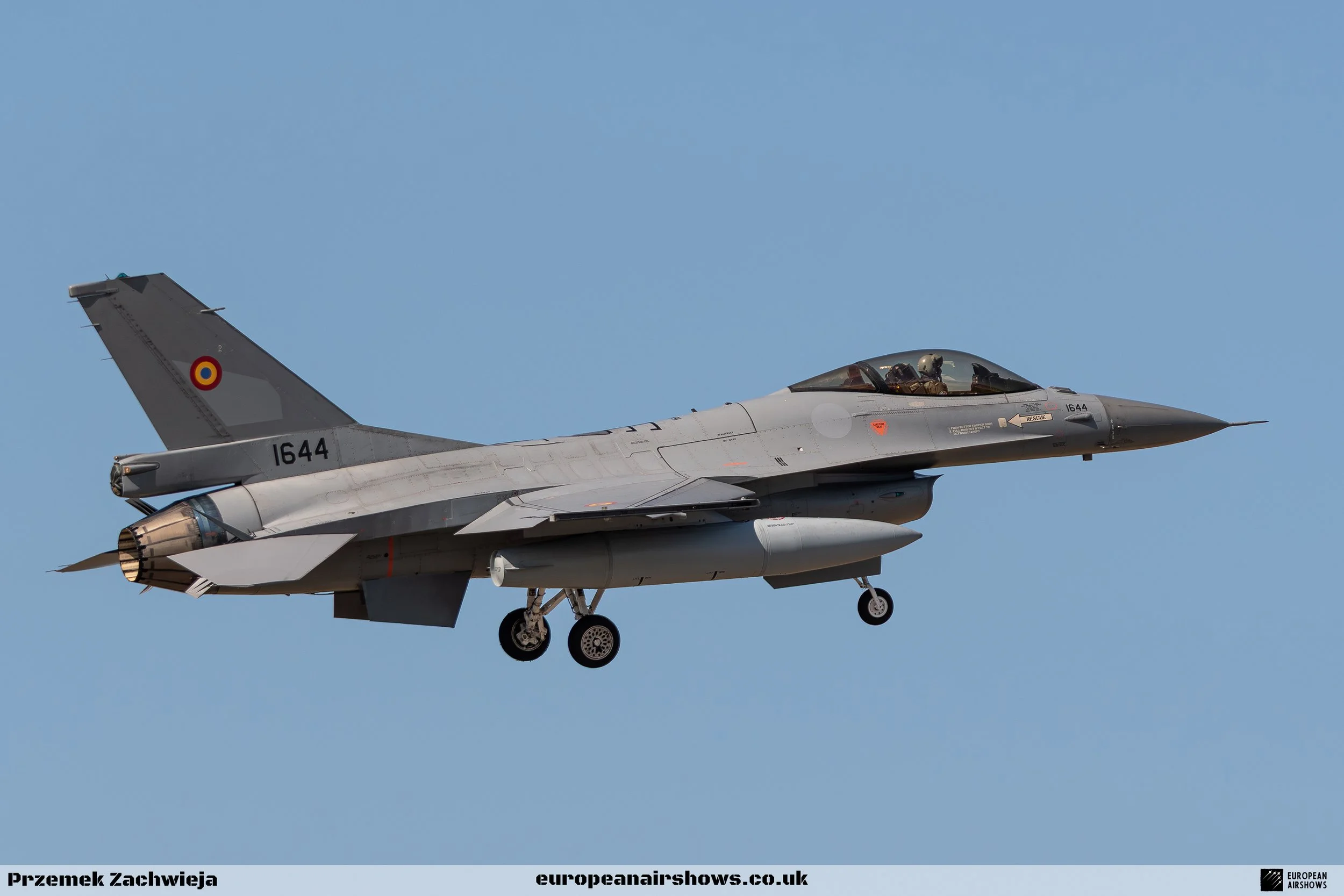
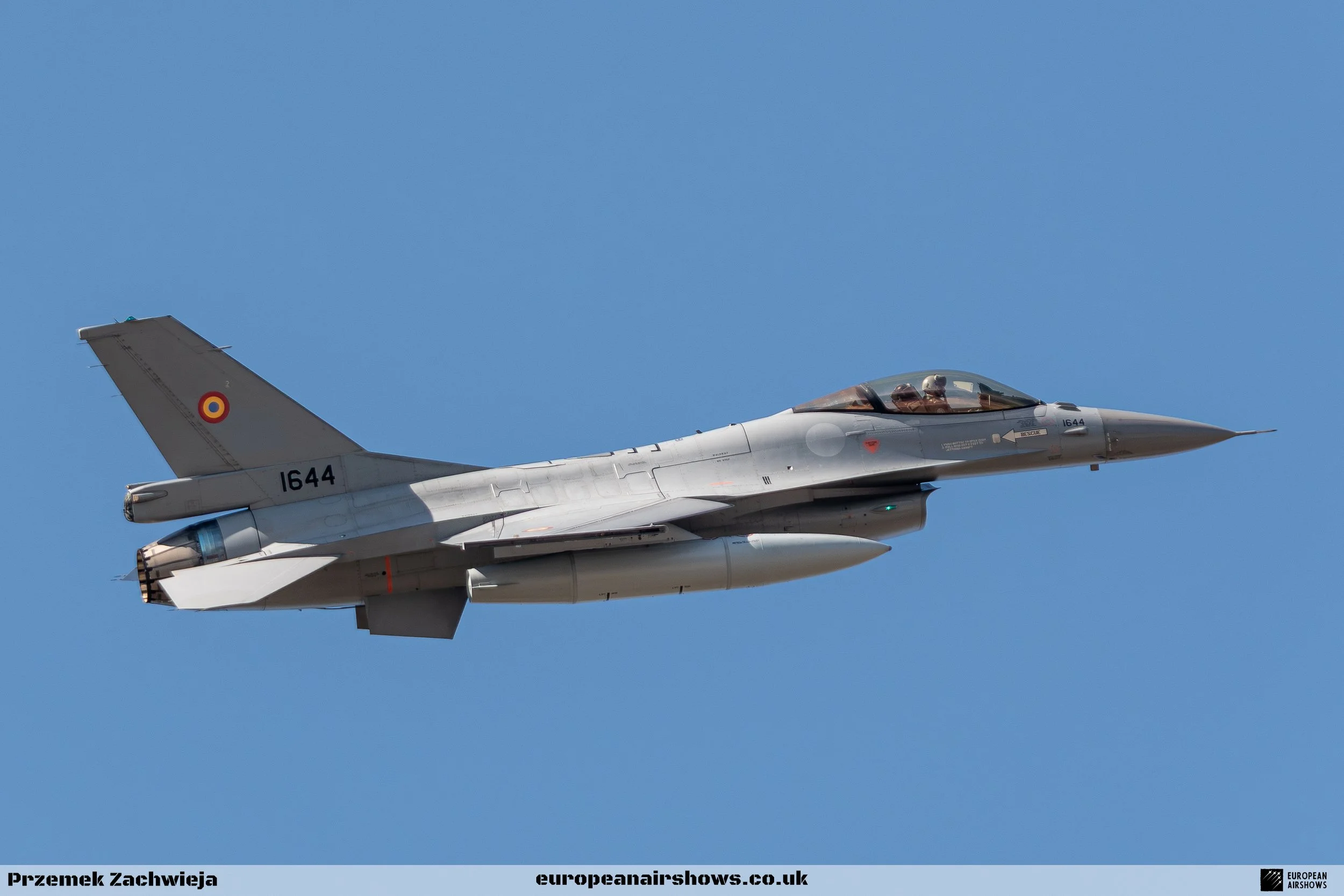
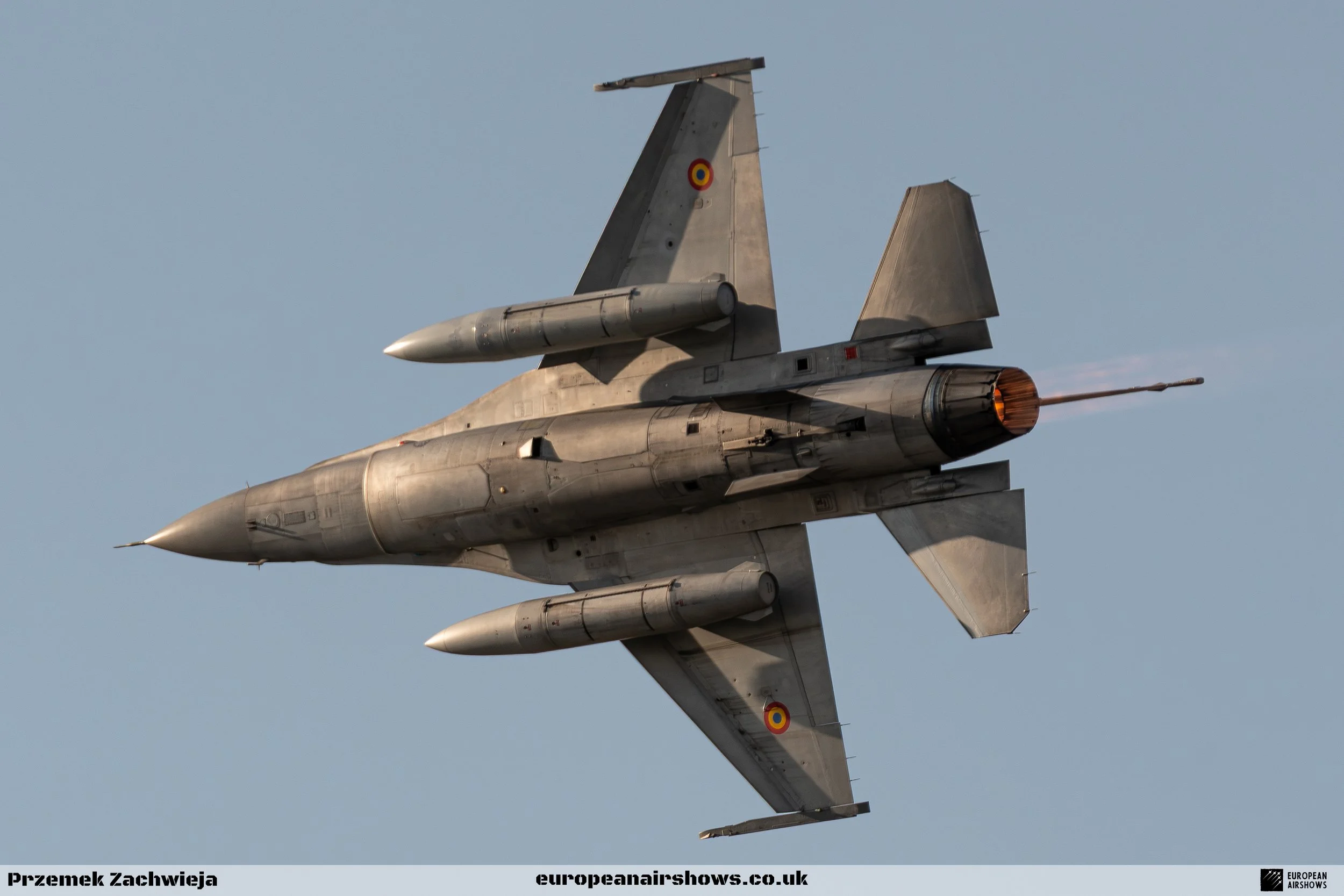
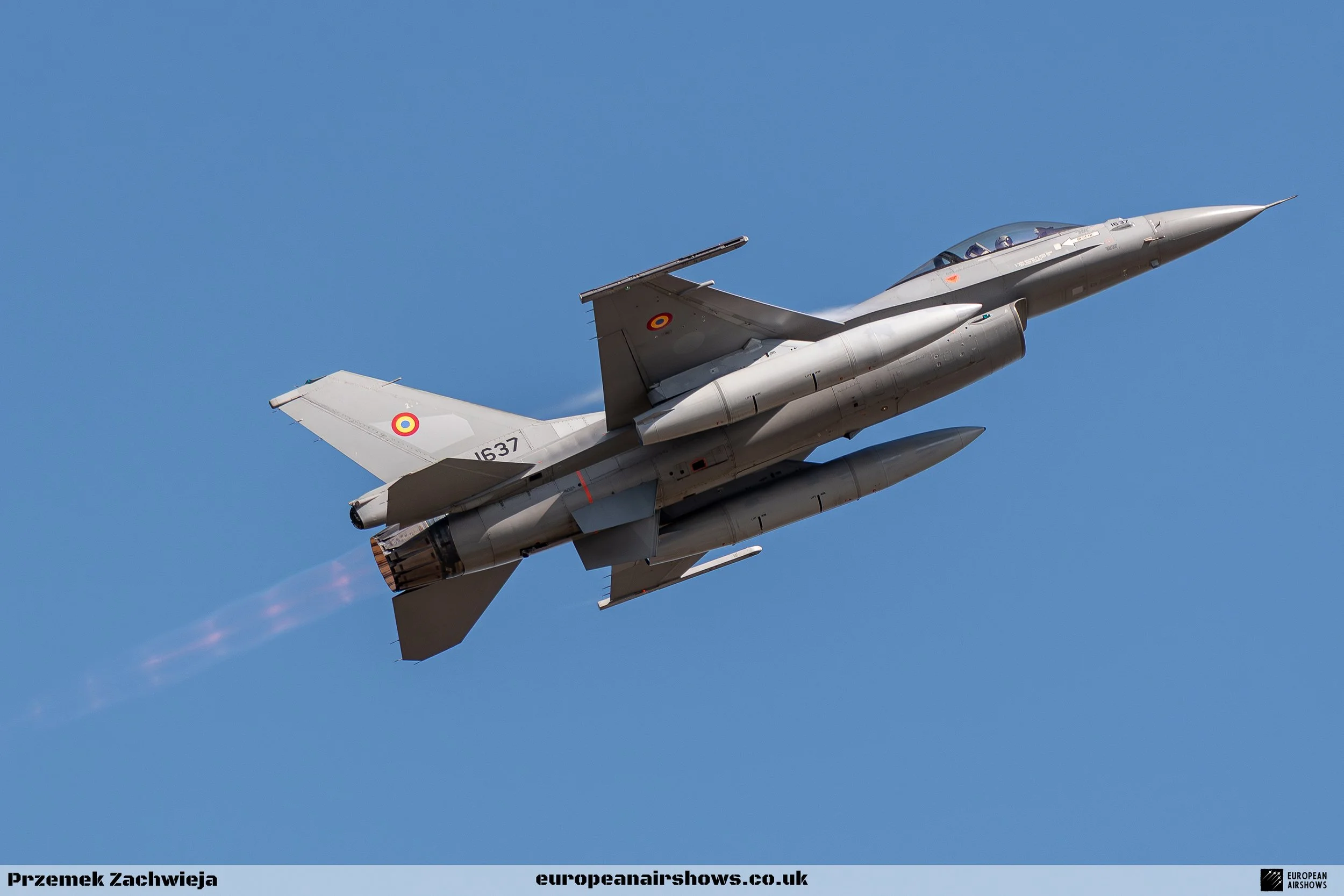
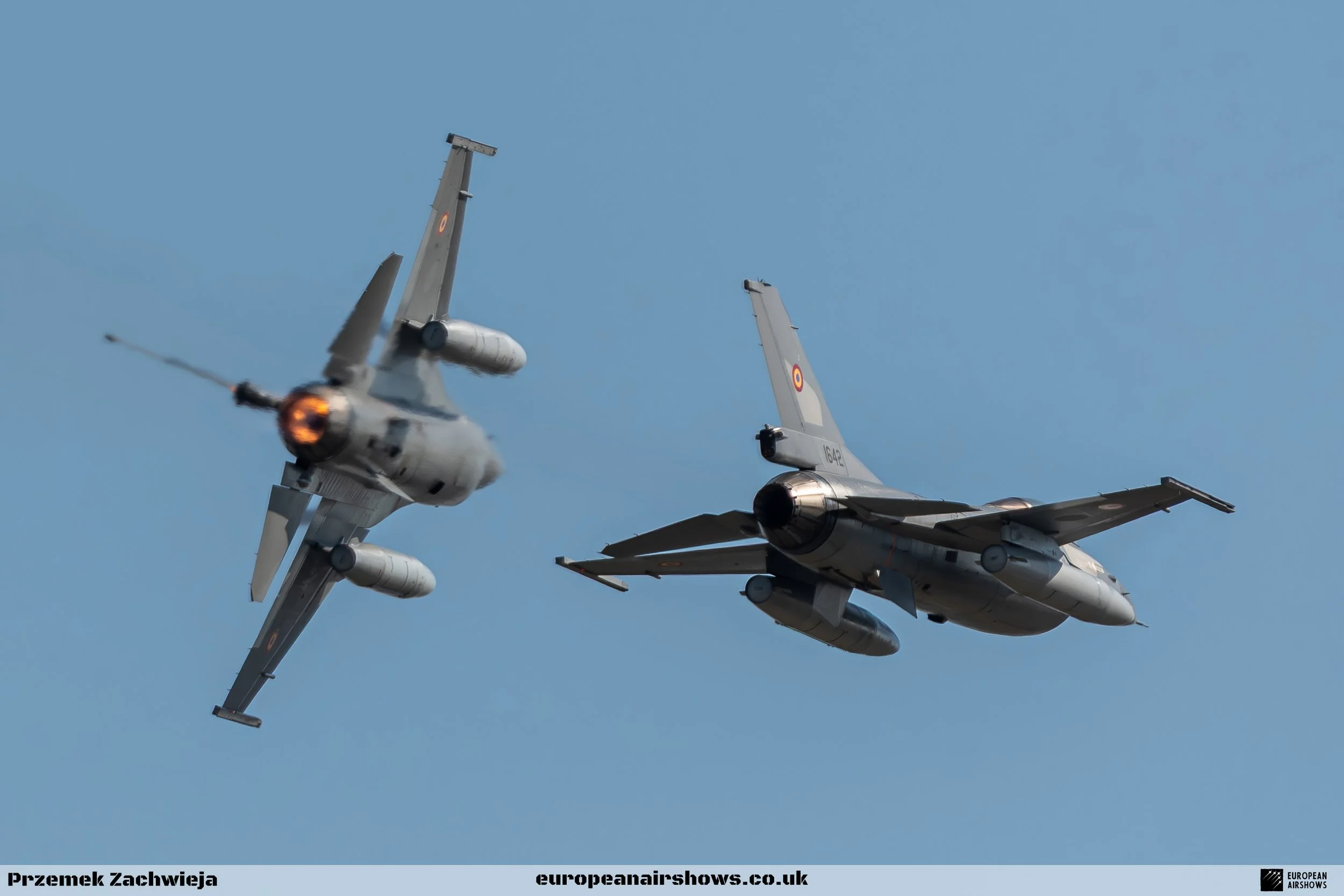
Straight after, three separate elements of F-16s returned in succession, each executing a sweeping break into a short, aggressive profile of tight turns, afterburner climbs and low fast passes. Drawn from both 71st Air Base “General Emanoil Ionescu” at Câmpia Turzii and 86th Air Base “Locotenent Aviator Gheorghe Mociorniță” at Fetești, the sequence underlined Romania’s transformation into an F-16 nation. With more than thirty Fighting Falcons now in service—drawn from ex-Portuguese and ex-Norwegian stocks and replacing the MiG-21 LanceR—they are set to form the backbone of the RoAF until the first F-35A Lightning IIs arrive in the 2030s. The sight and sound of eighteen jets airborne together left no doubt about the scale of that change.
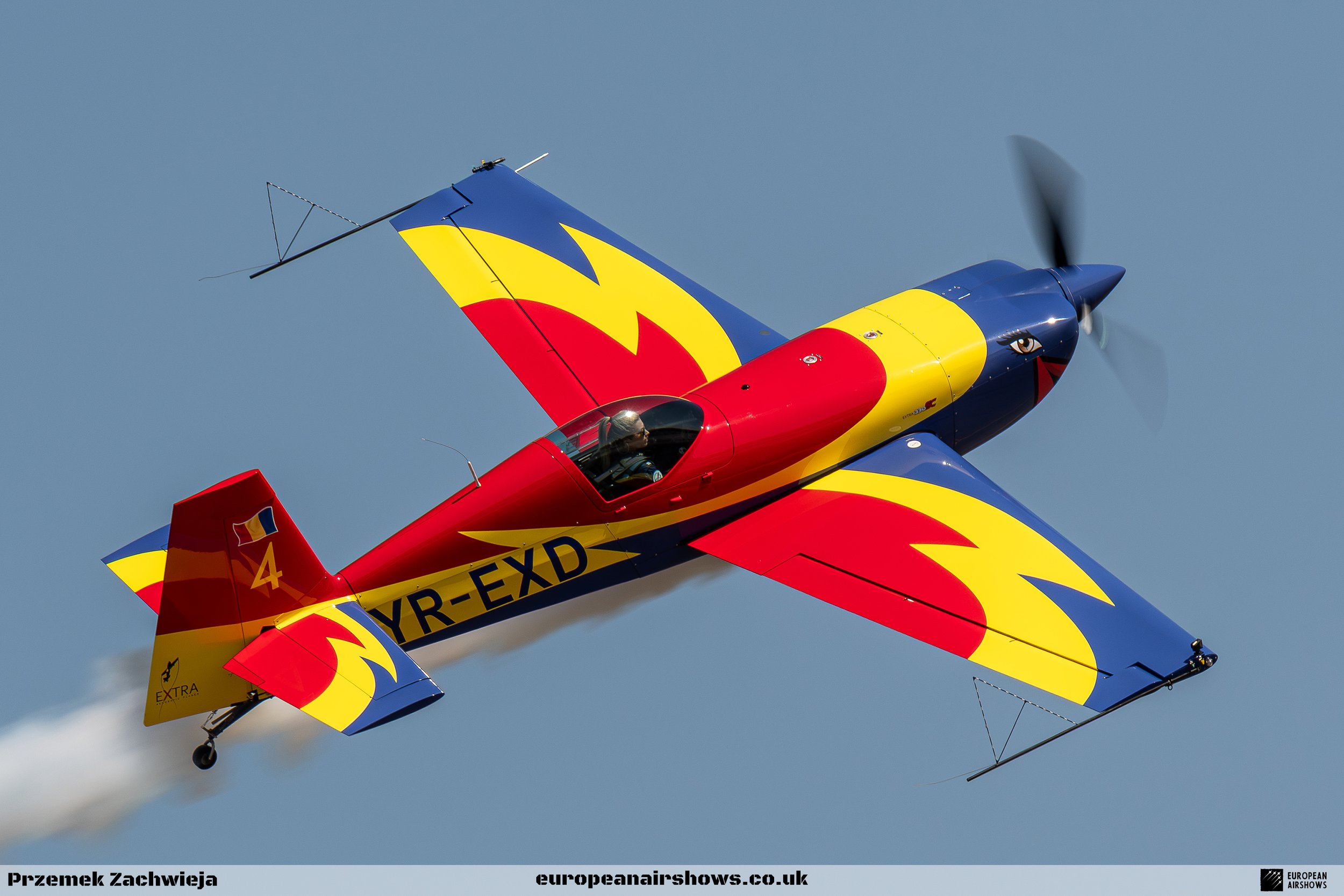
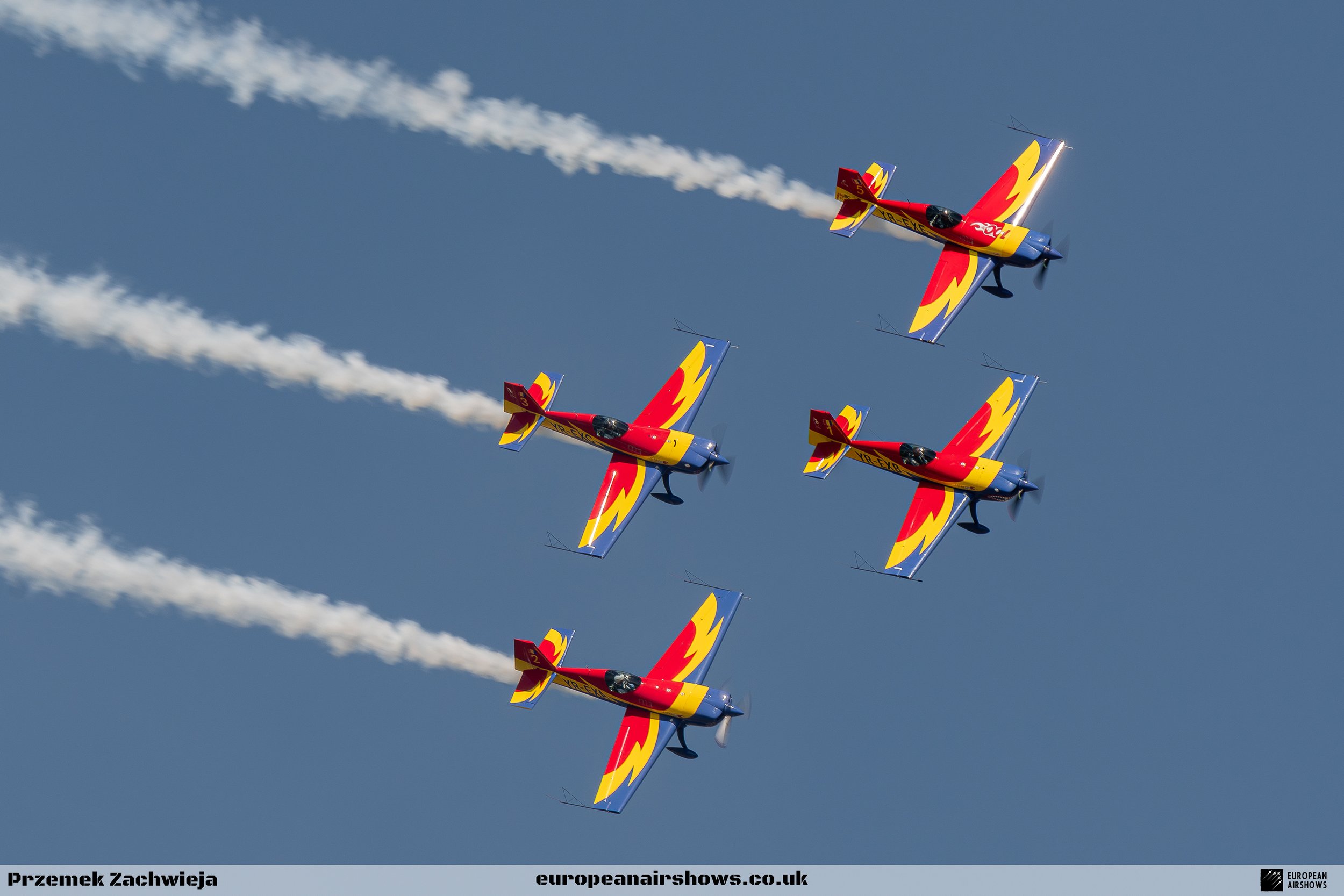
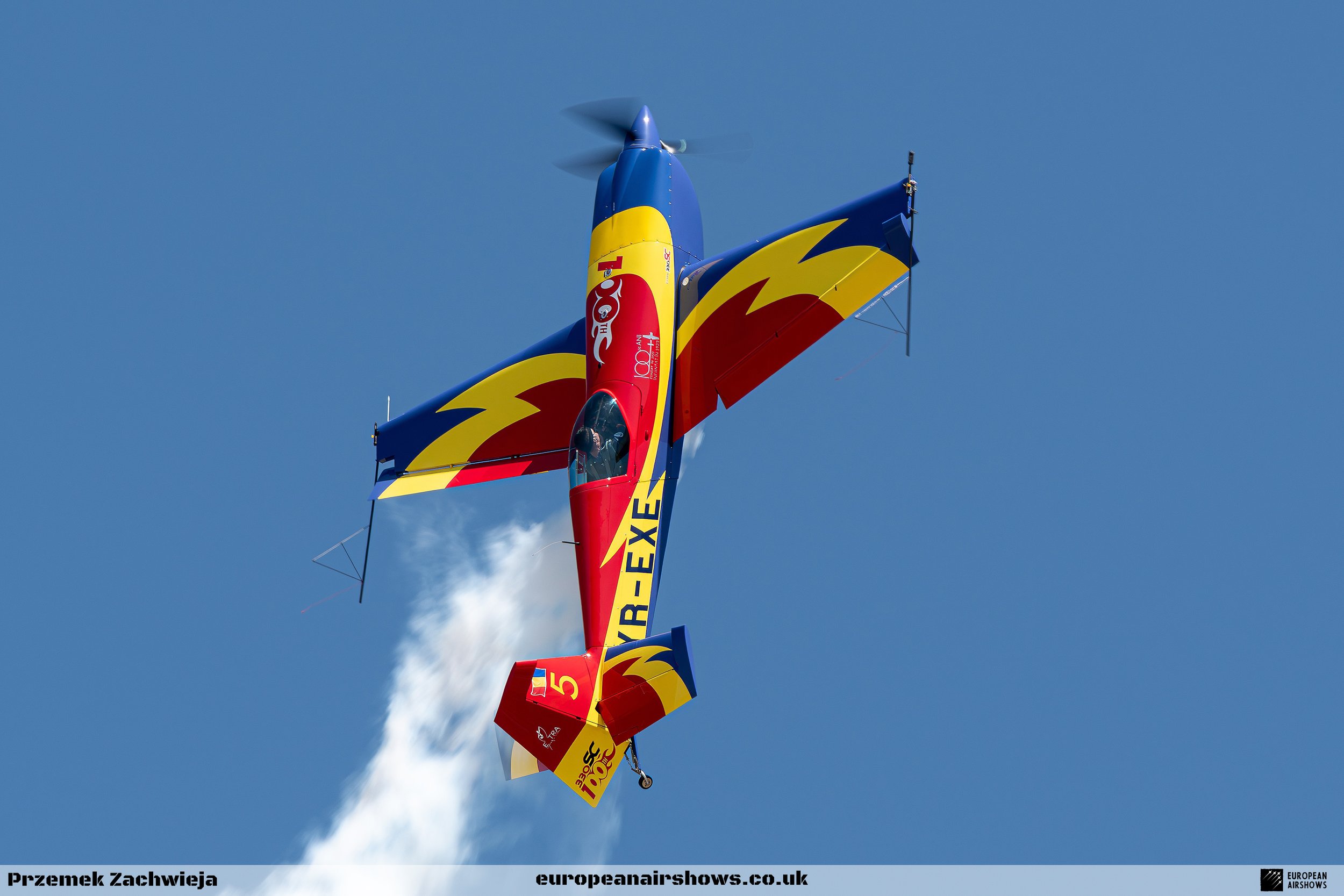
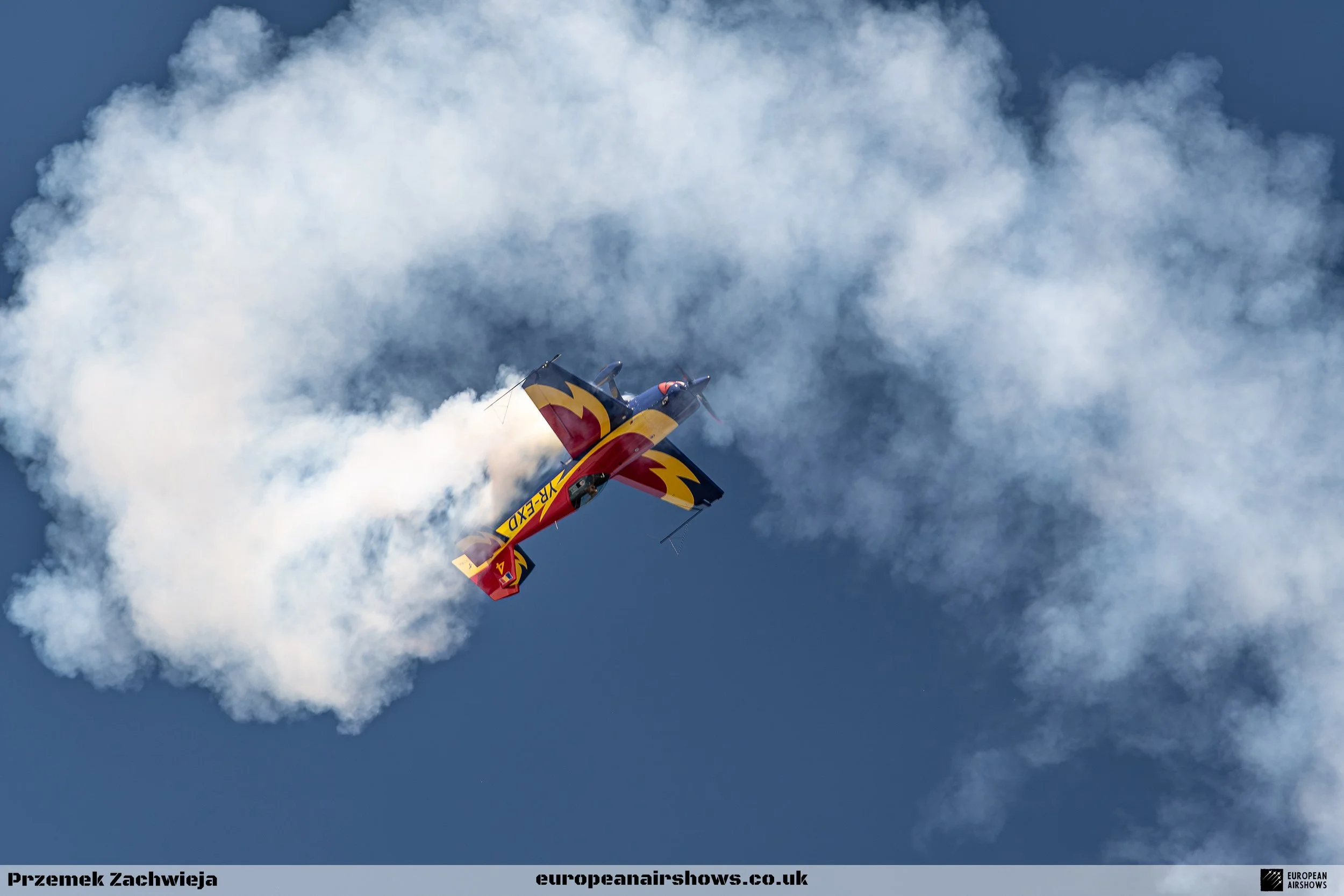
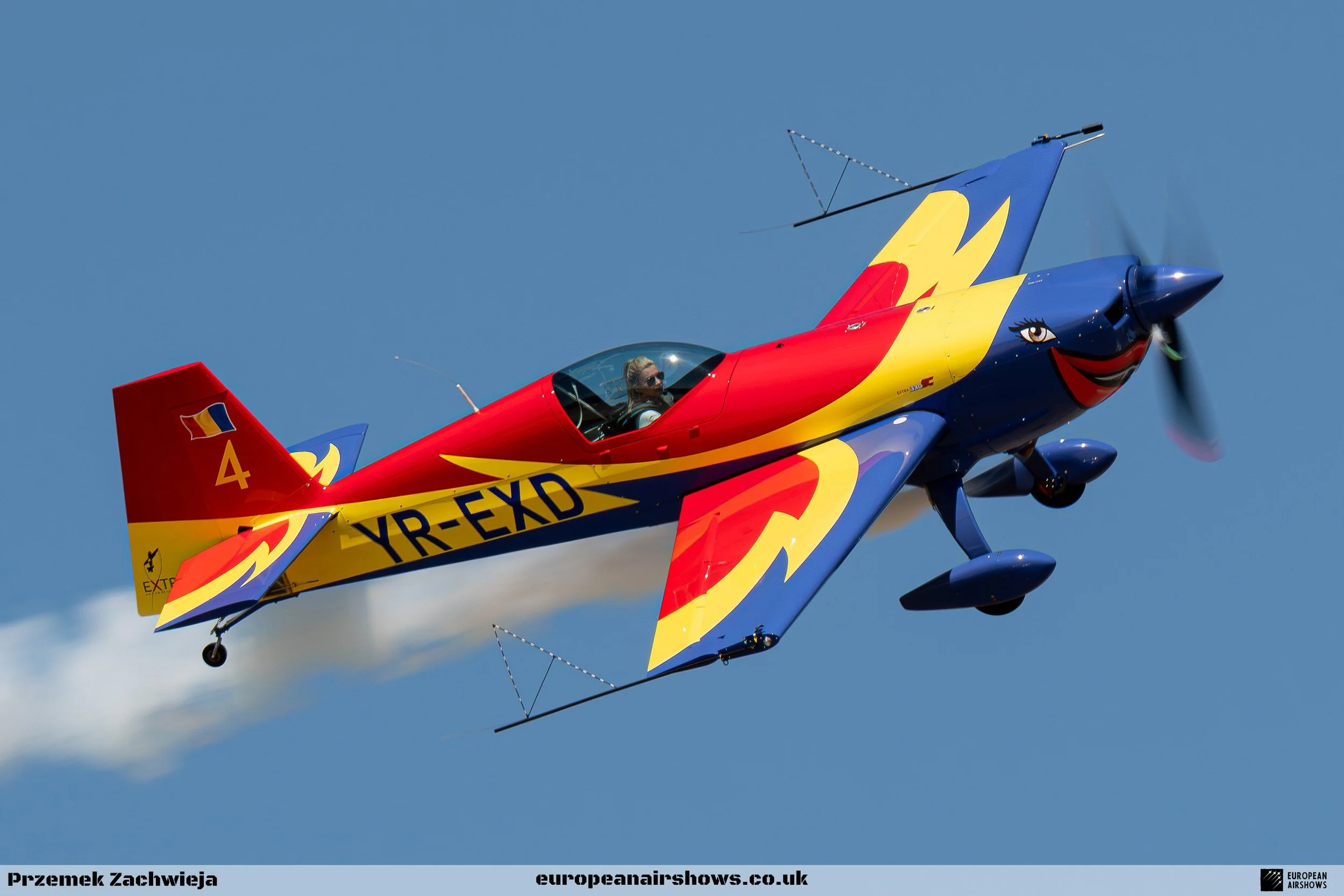
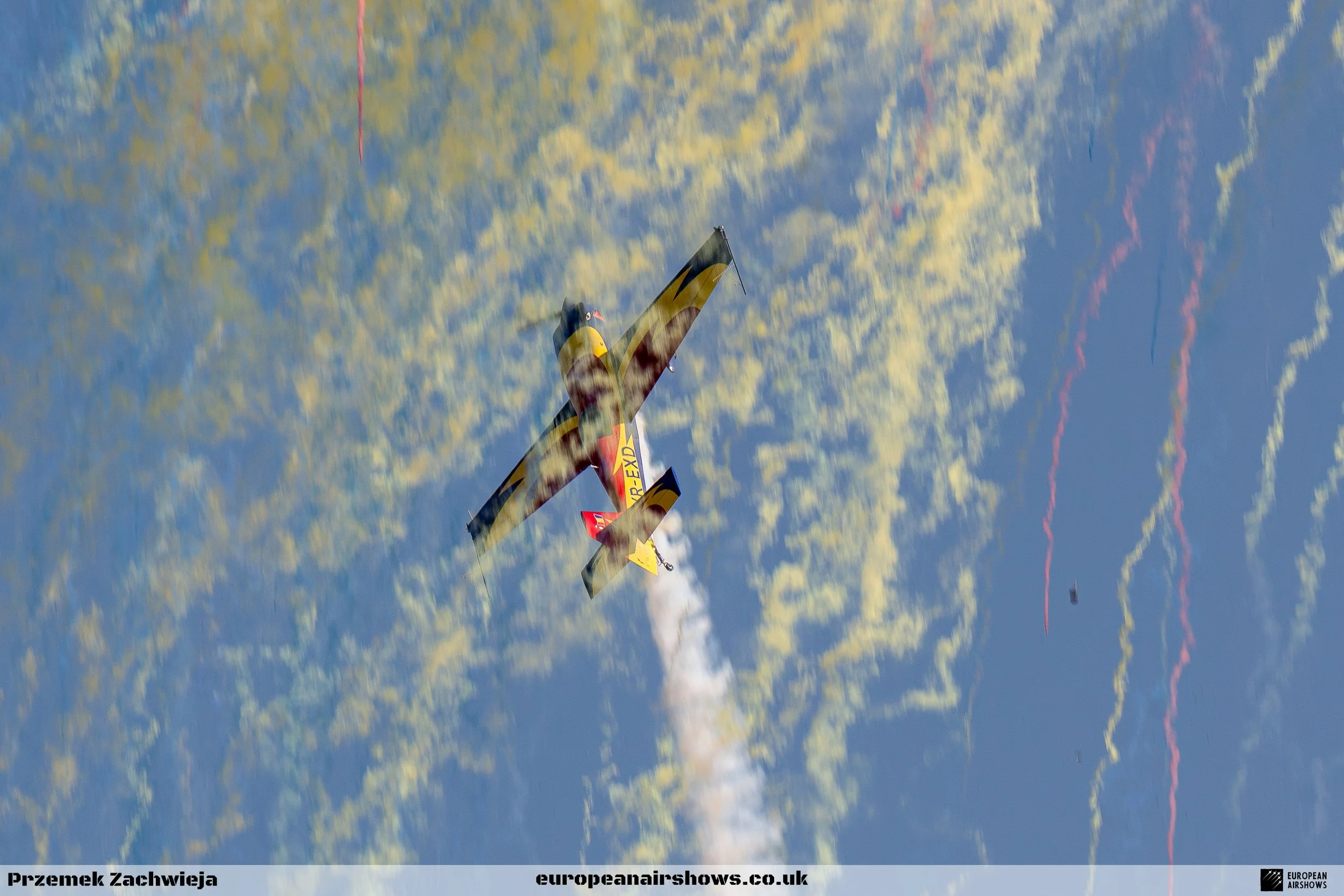
Aeroclubul României once again carried a large share of the home-grown displays, and their contributions were both varied and consistently polished. Andreea Bănesaru’s solo in the Extra 330SC was a highlight of the morning, flown with crisp precision and without overloading the sequence. Point rolls stopped sharply on the cardinals, verticals were properly drawn and recovered on centre, and a measured tail-slide showed the aircraft’s authority at low speeds. Coloured ground pyro added punctuation but never became the focus. Later in the programme she returned to slot into the Hawks of Romania formation, underlining her role as the team’s soloist.
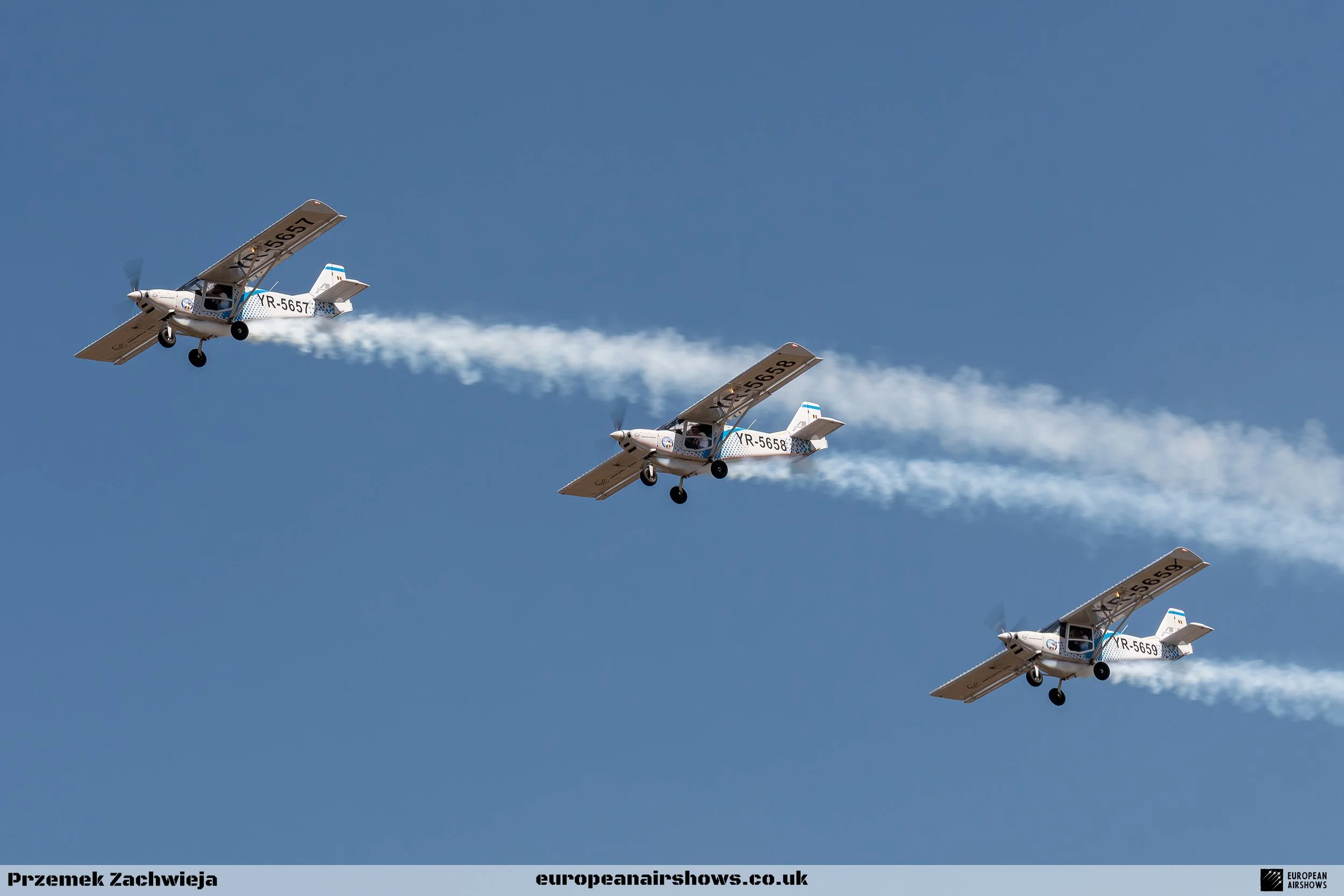
The Pelicans Formation Team, flying three ICP Savannahs, offered something unusual for a show of this scale: a relaxed, non-aerobatic routine flown at close quarters. Their transitions between Trail, arrow and line-abreast were neat, and the party piece of the third ship flying around its partners’ smoke worked well against the Băneasa backdrop. At the close, each aircraft broke into solo passes that gave the crowd one last look at the Savannahs’ STOL profile.
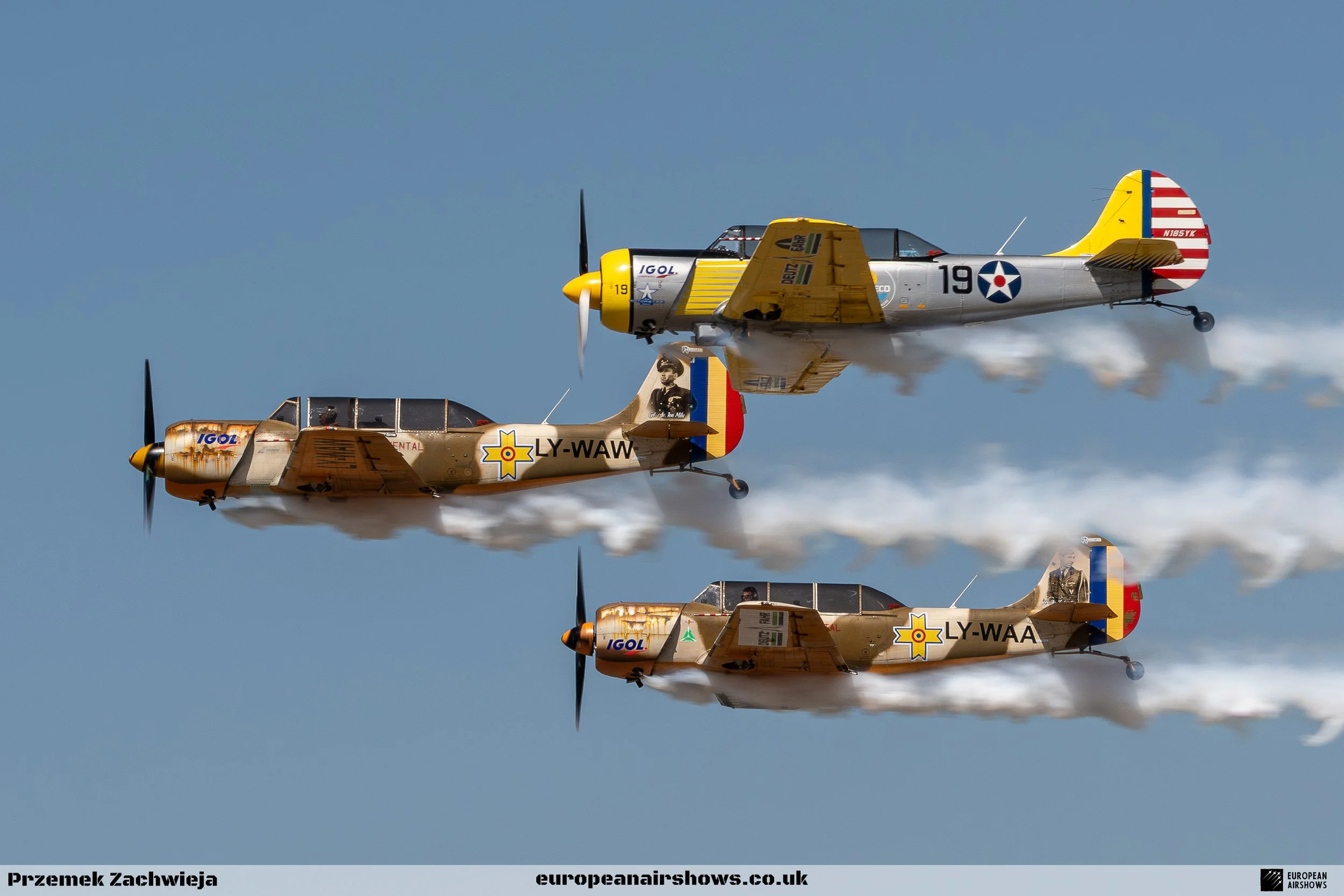
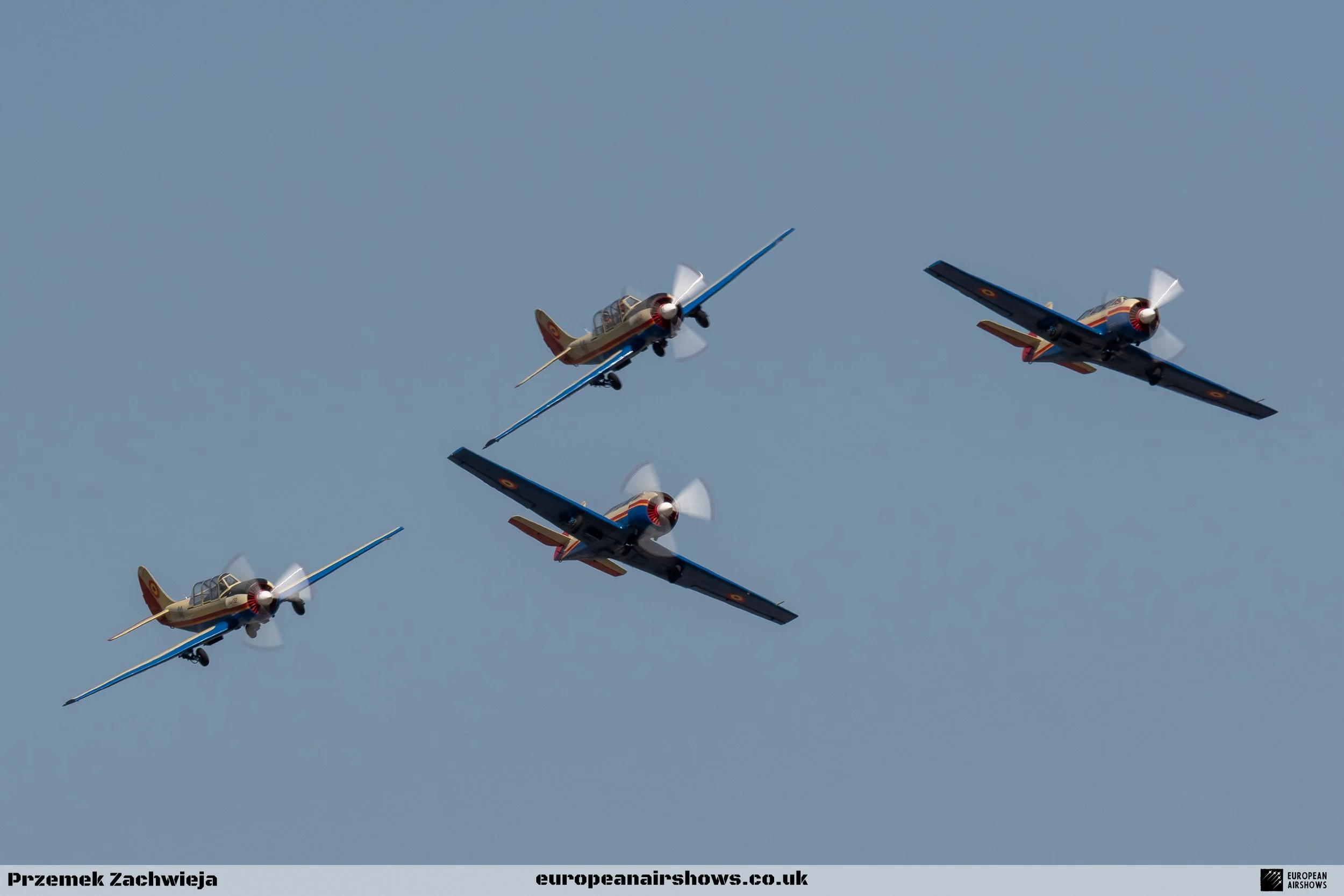
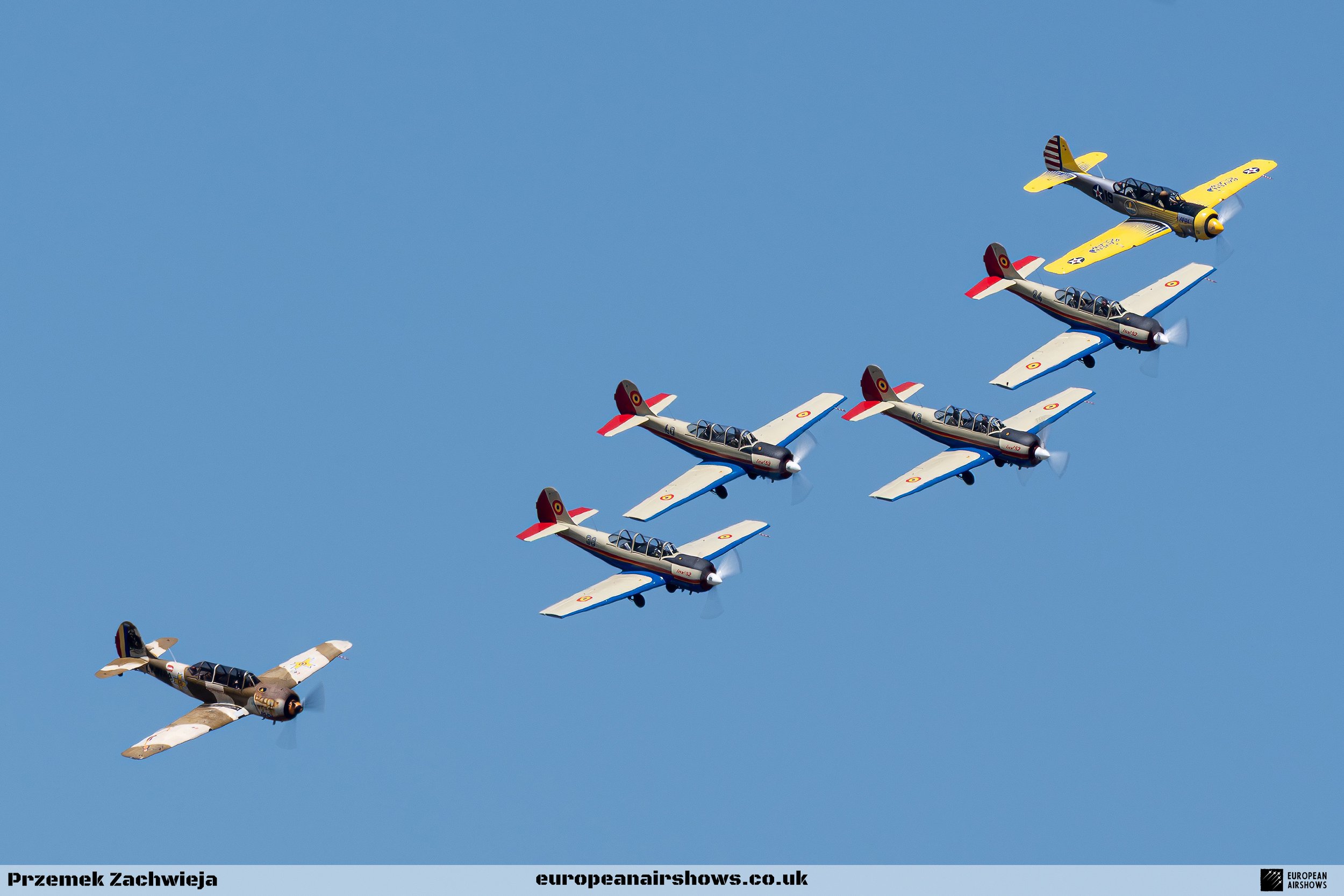
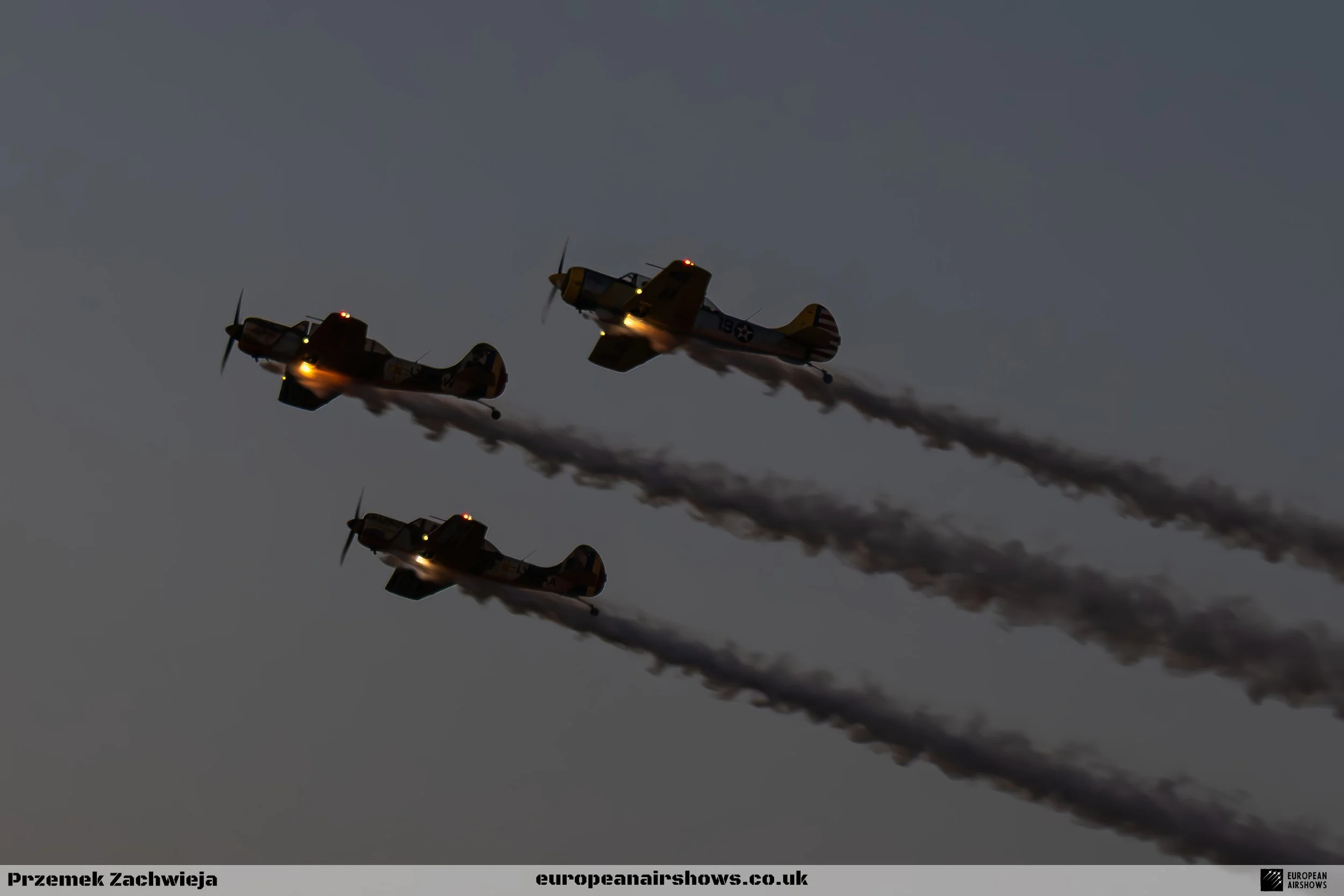
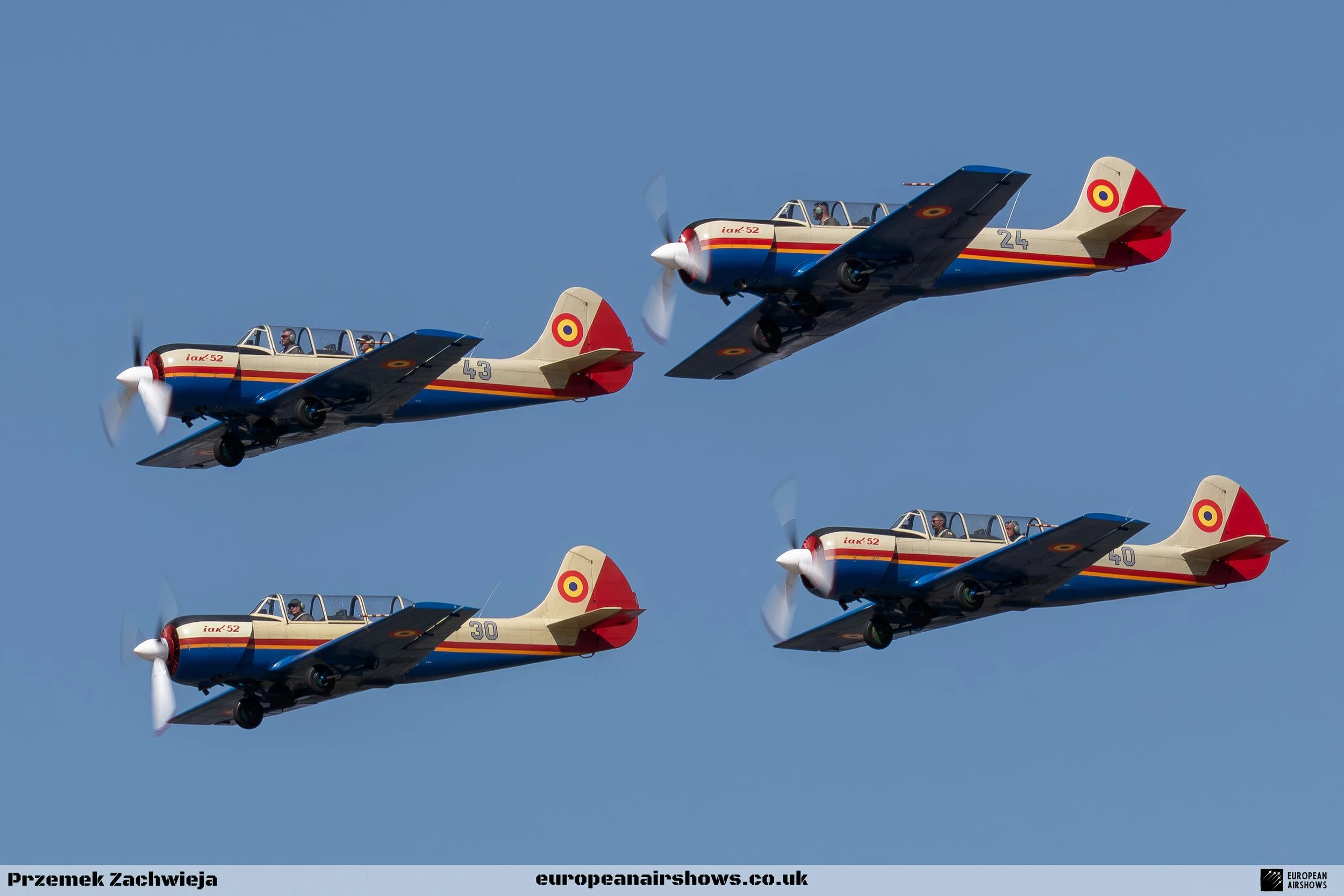
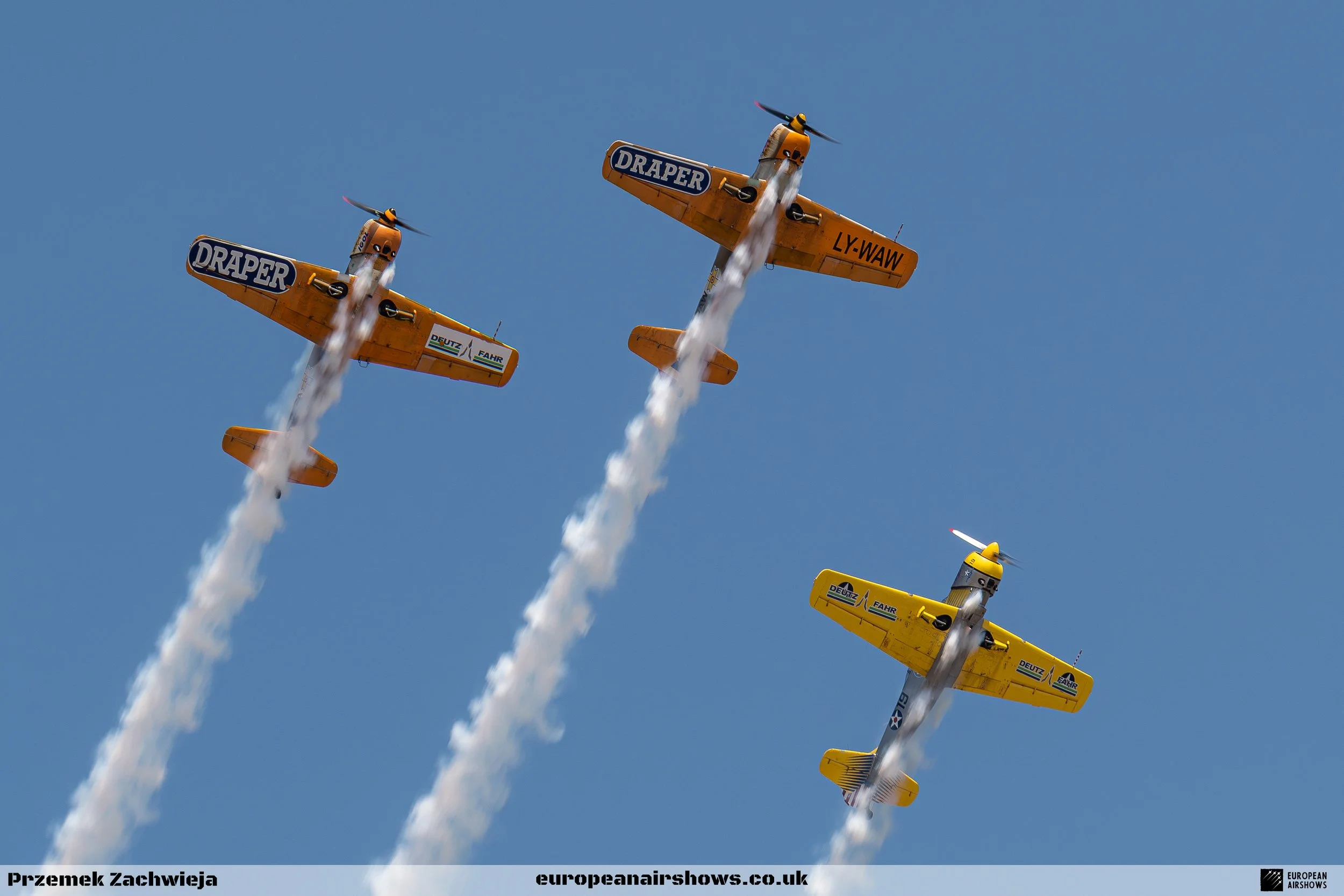
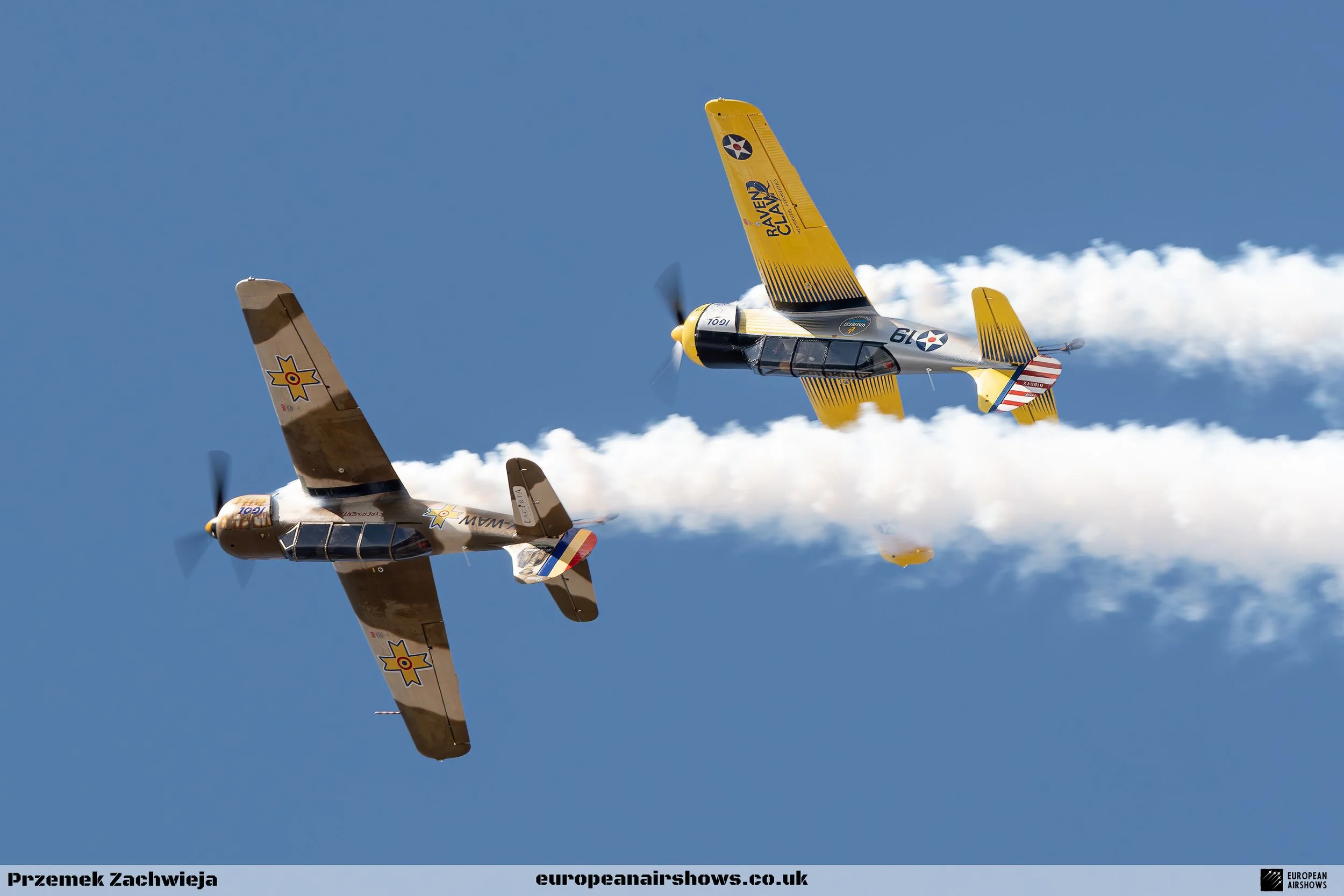
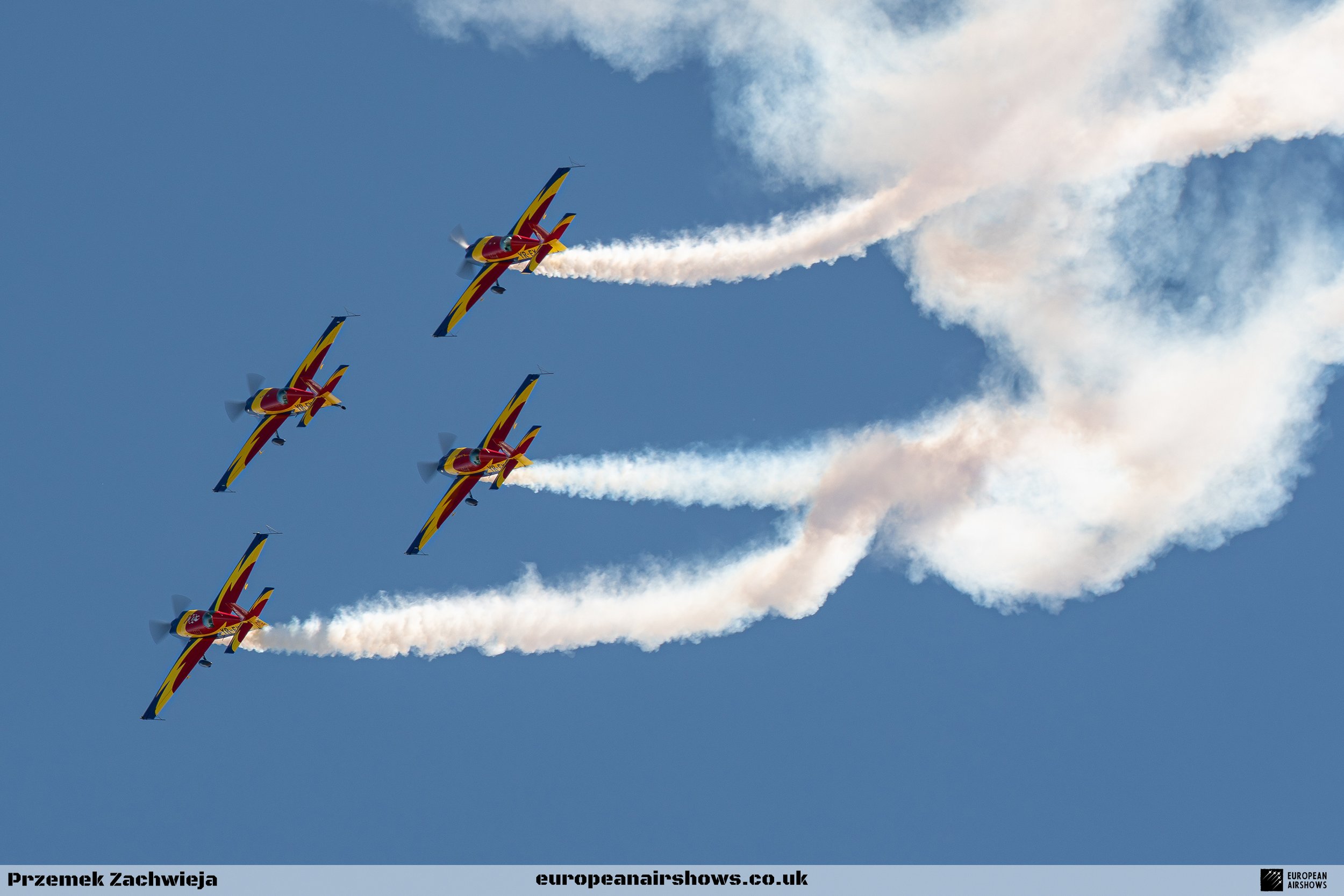
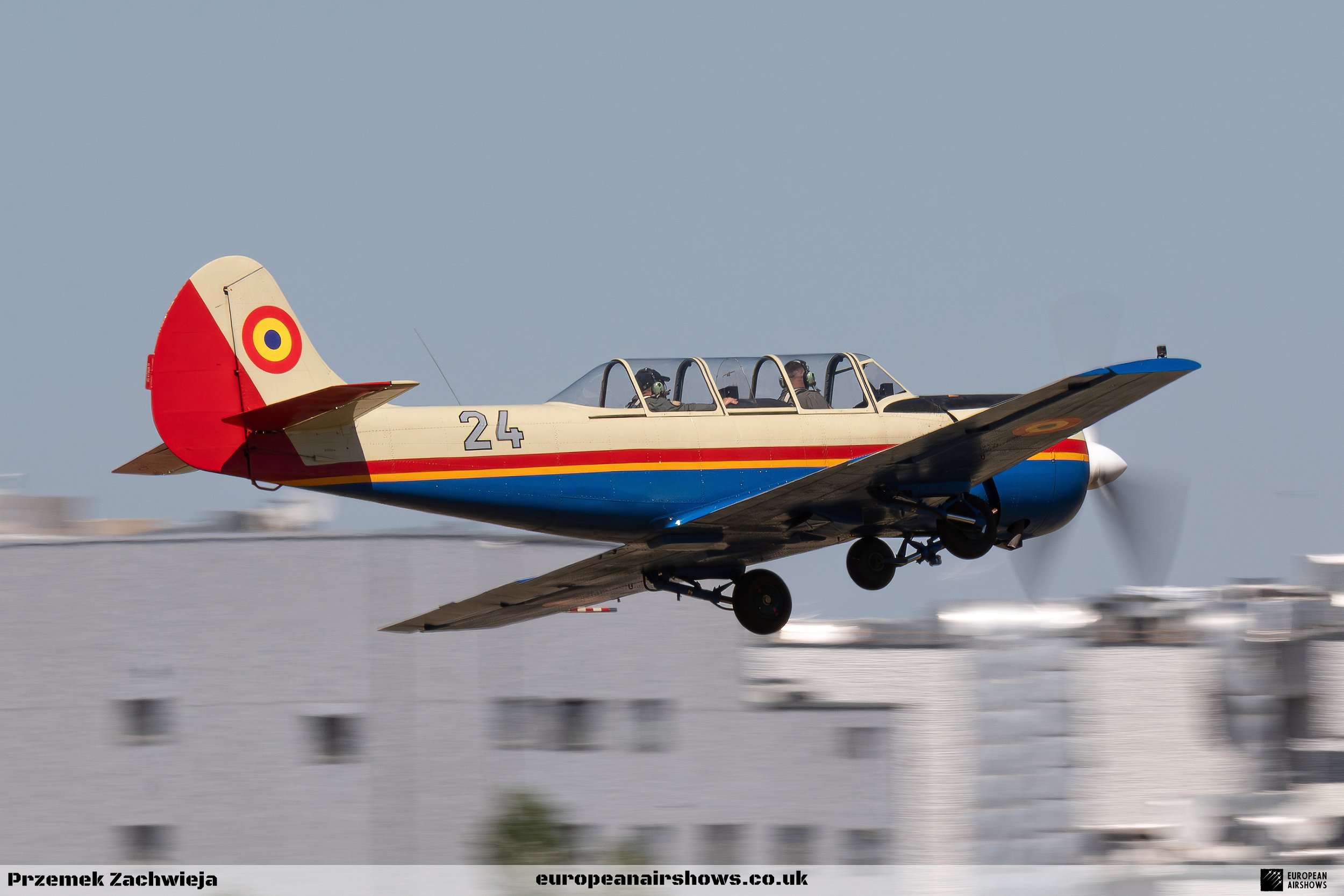
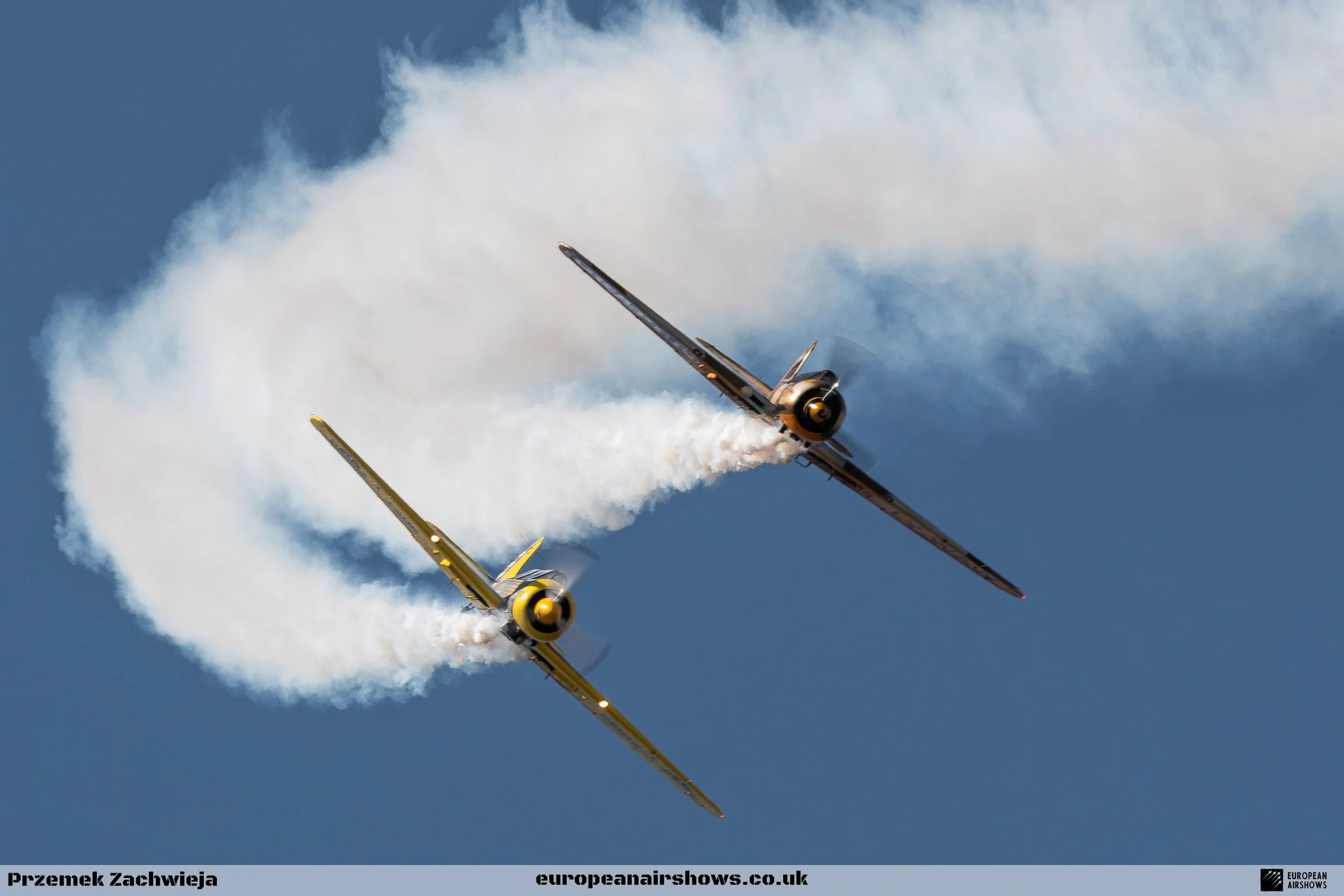
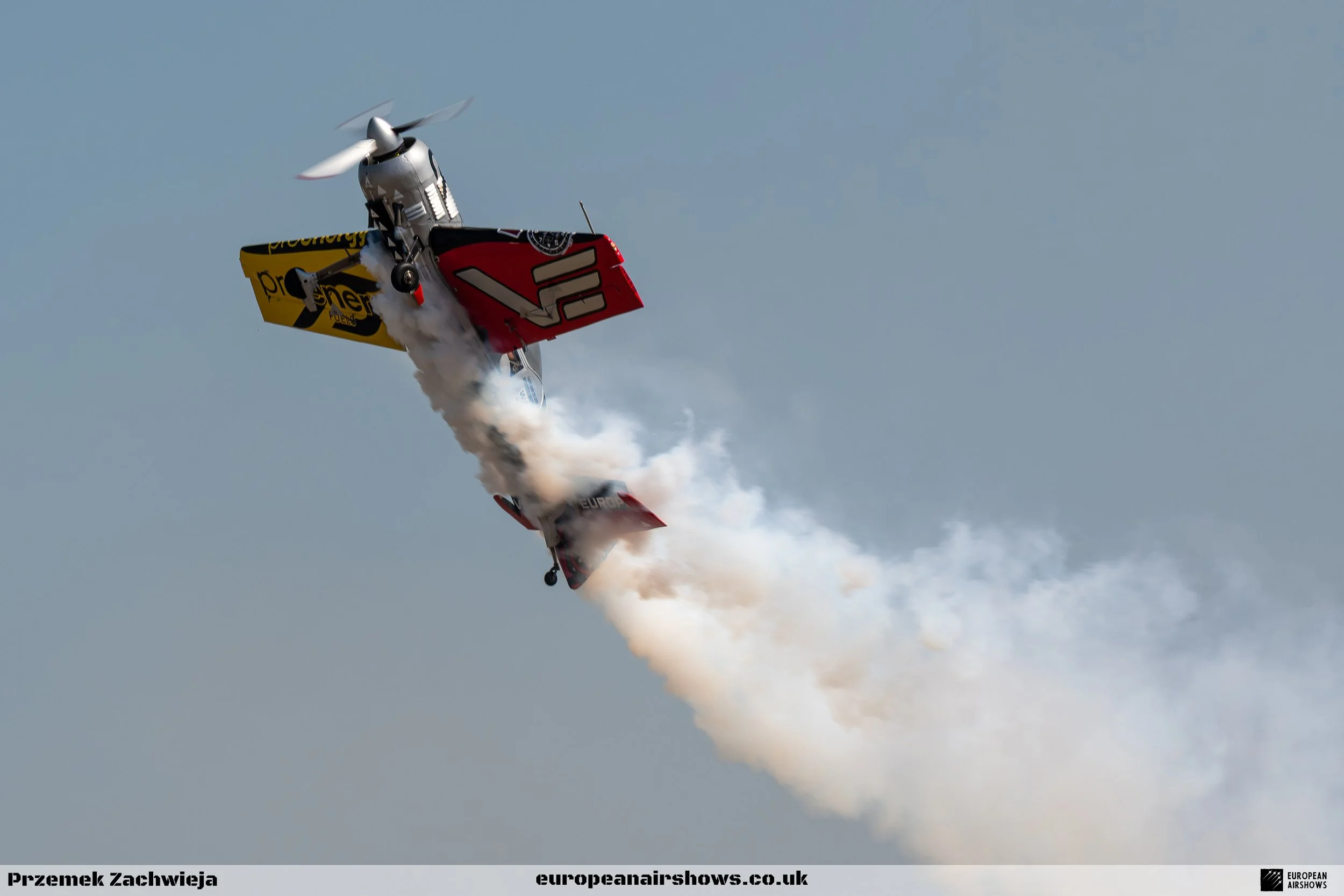
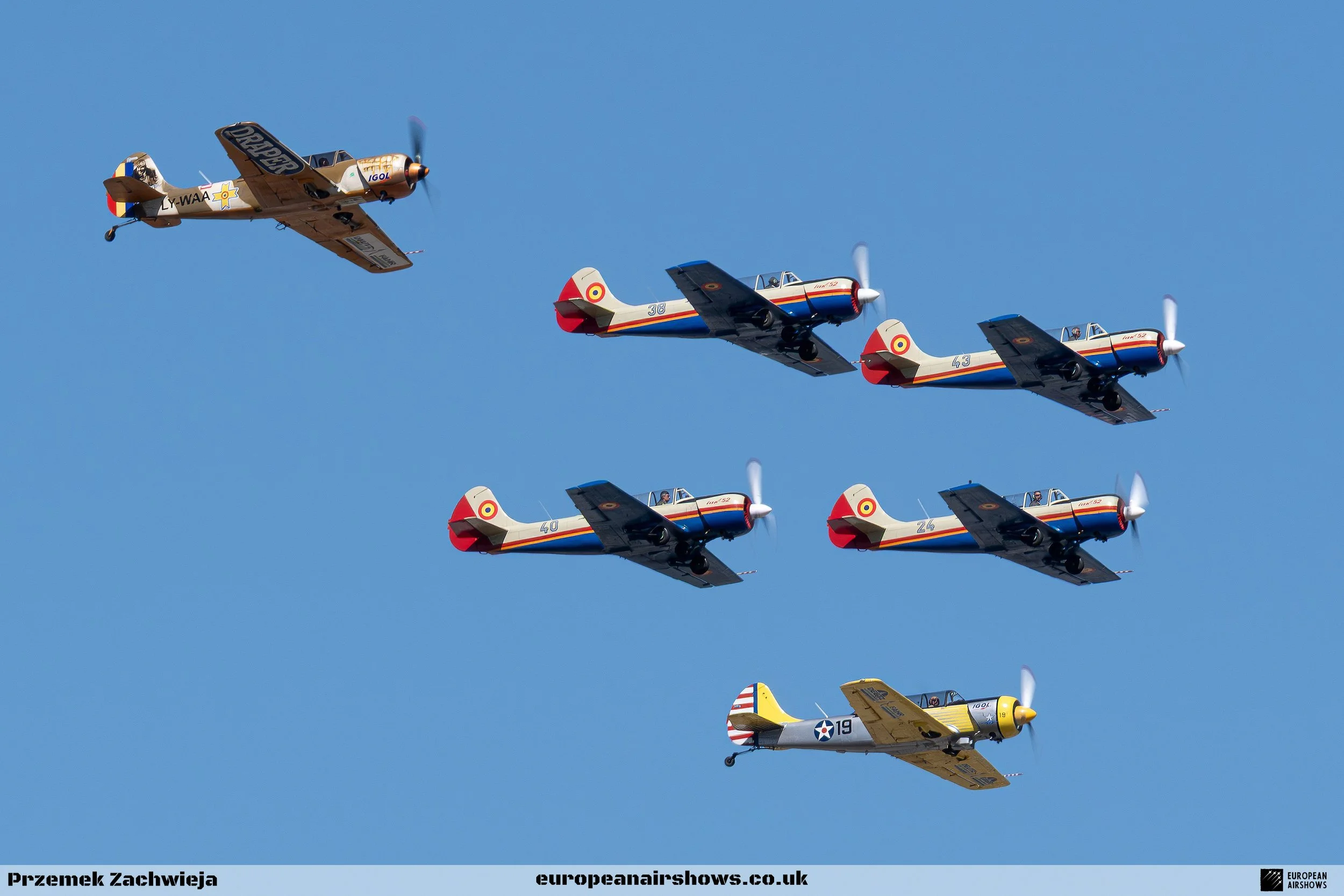
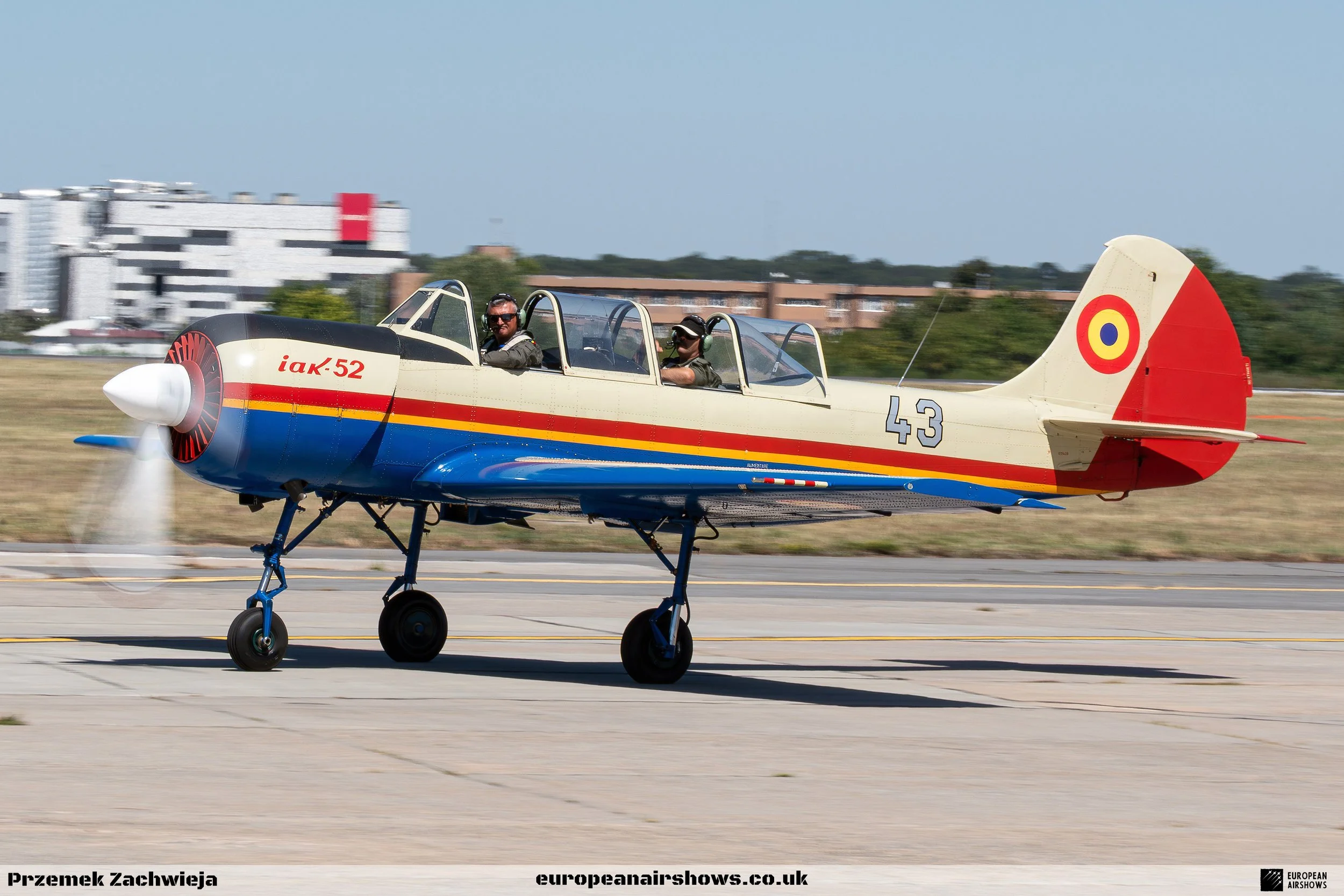
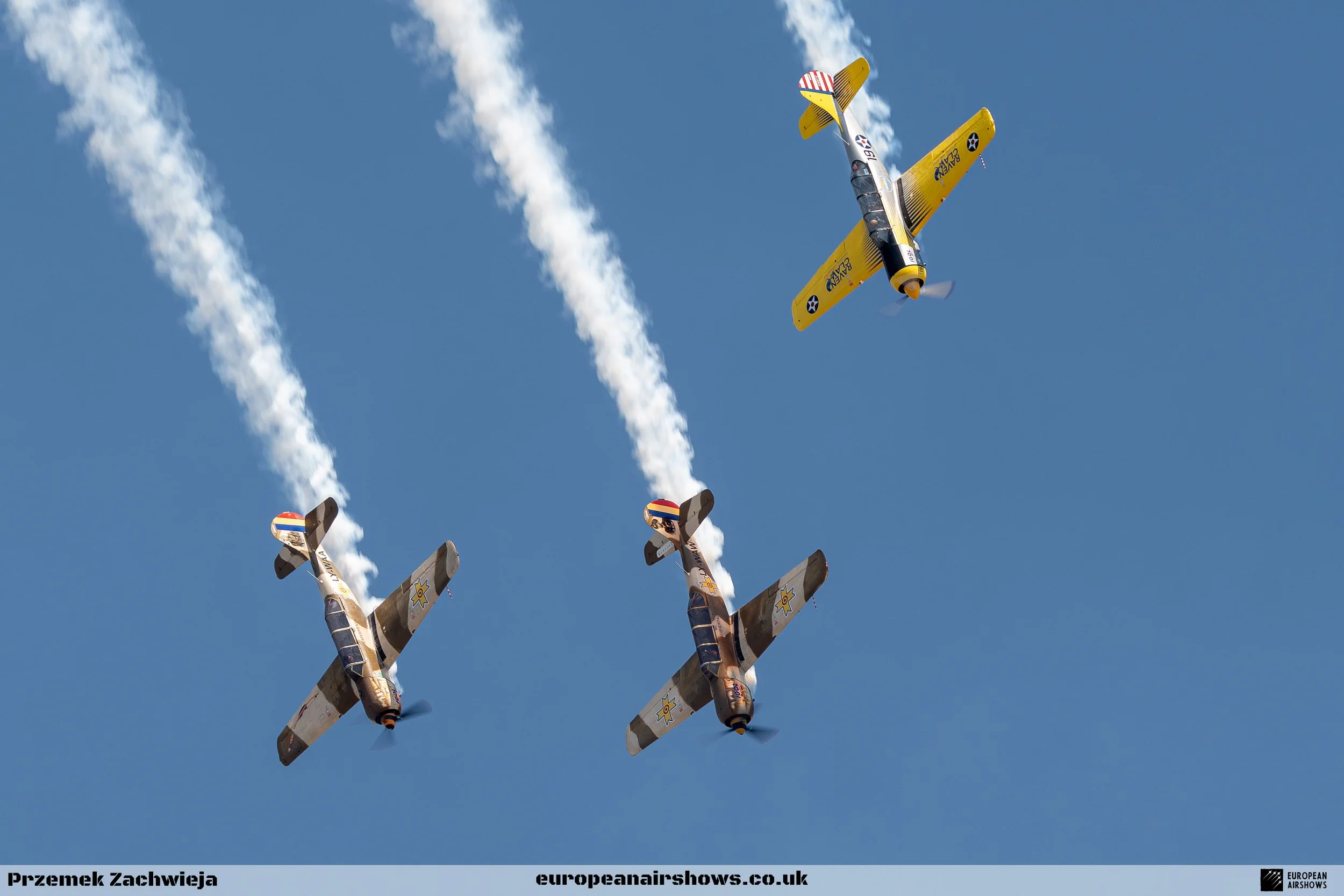
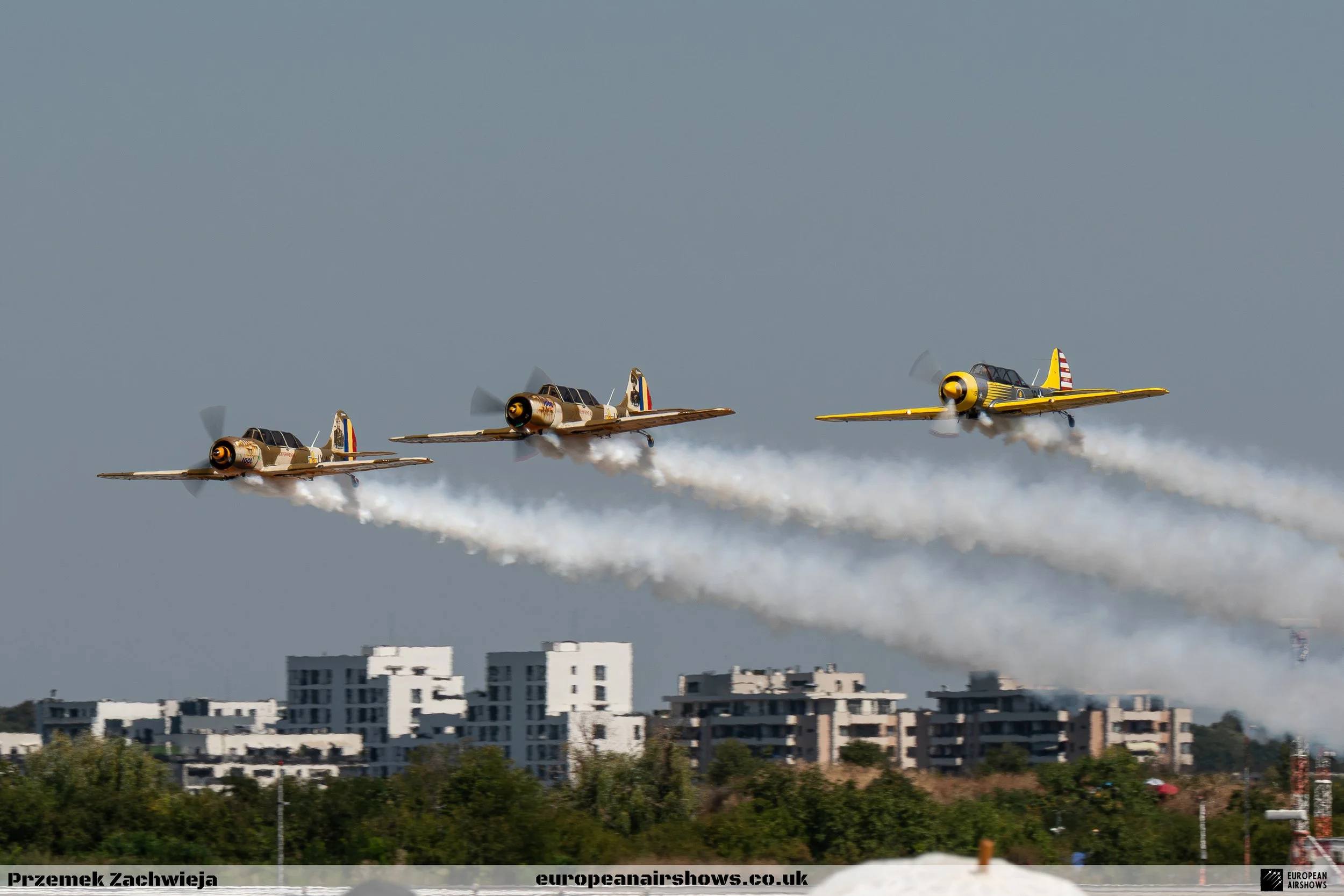
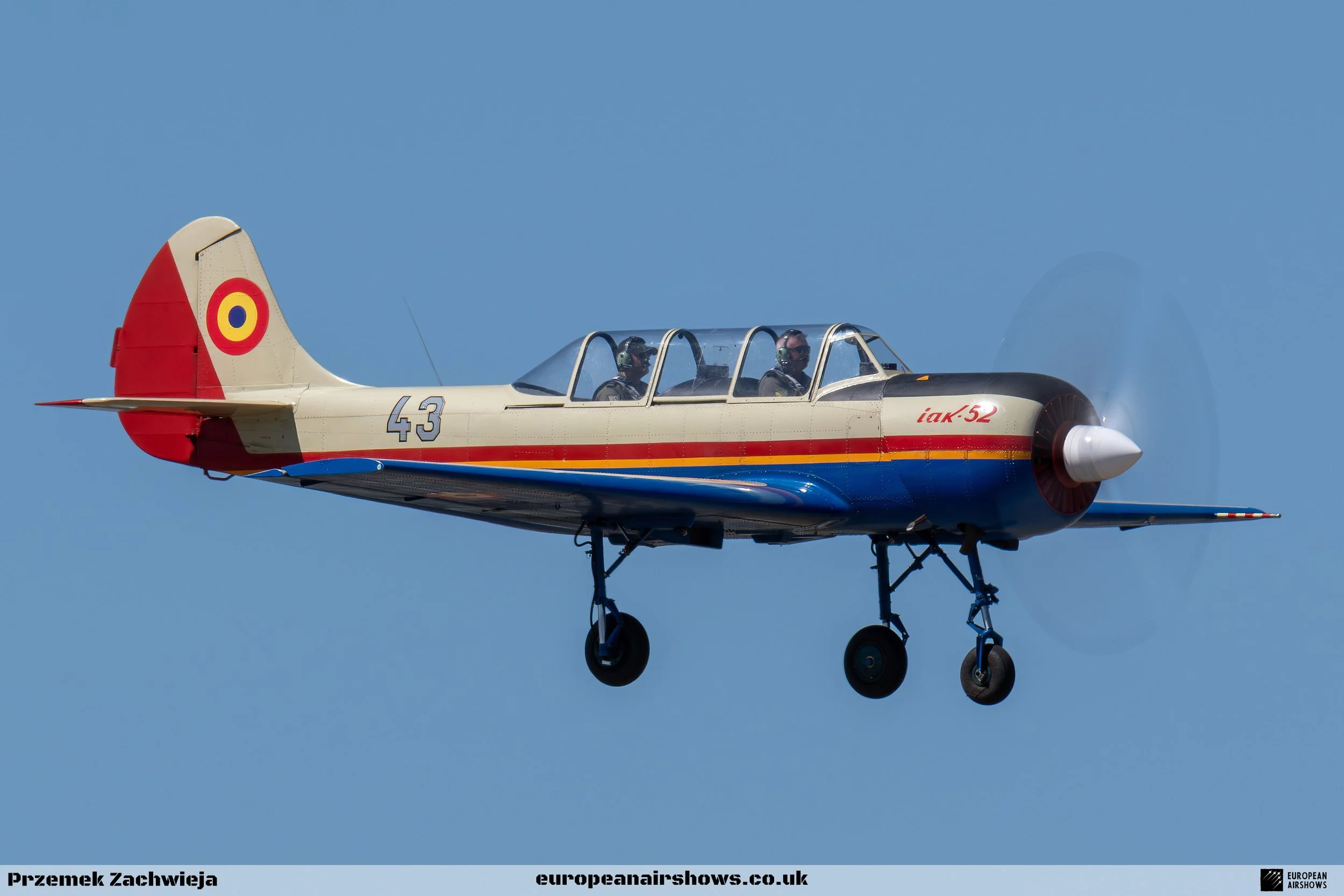
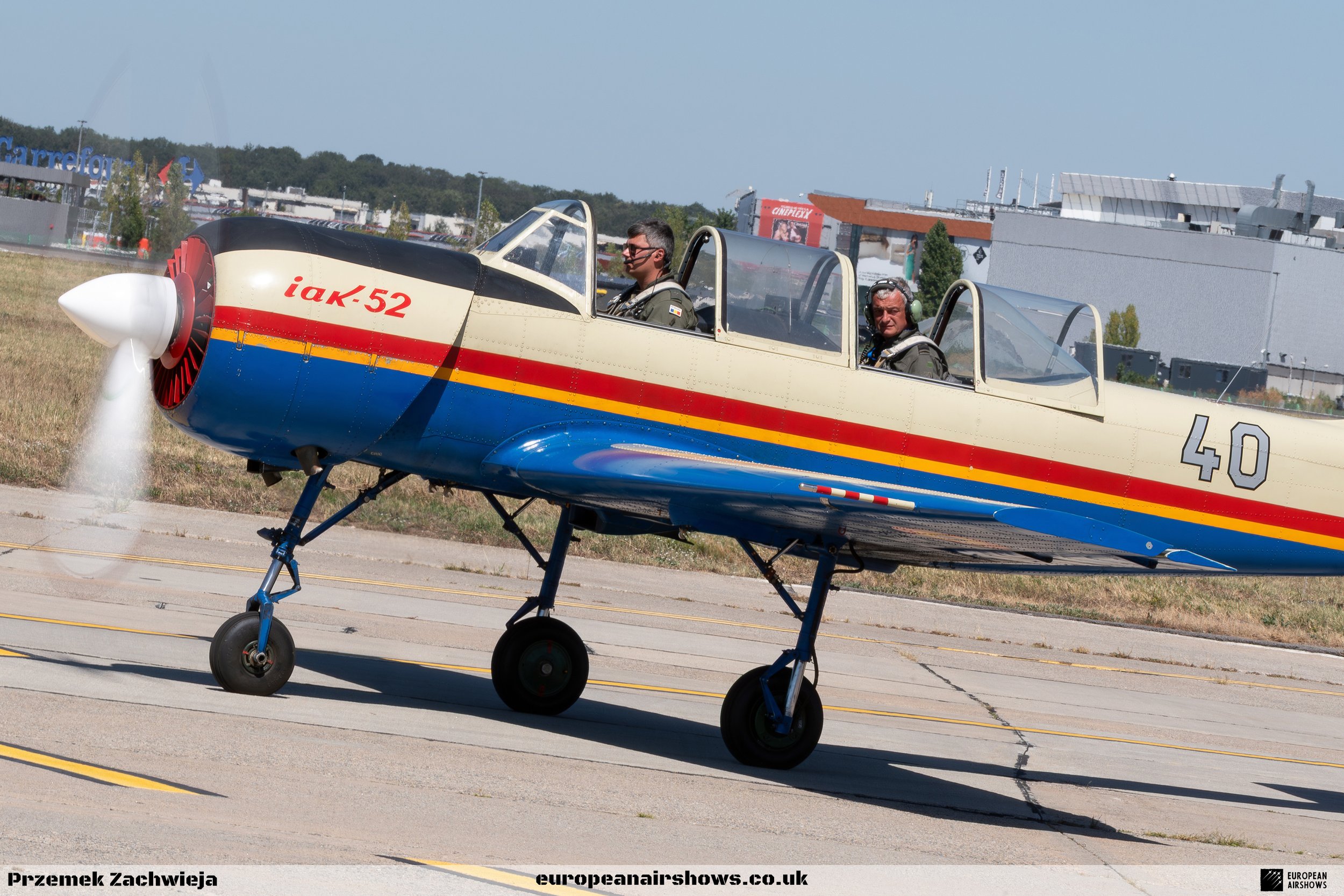
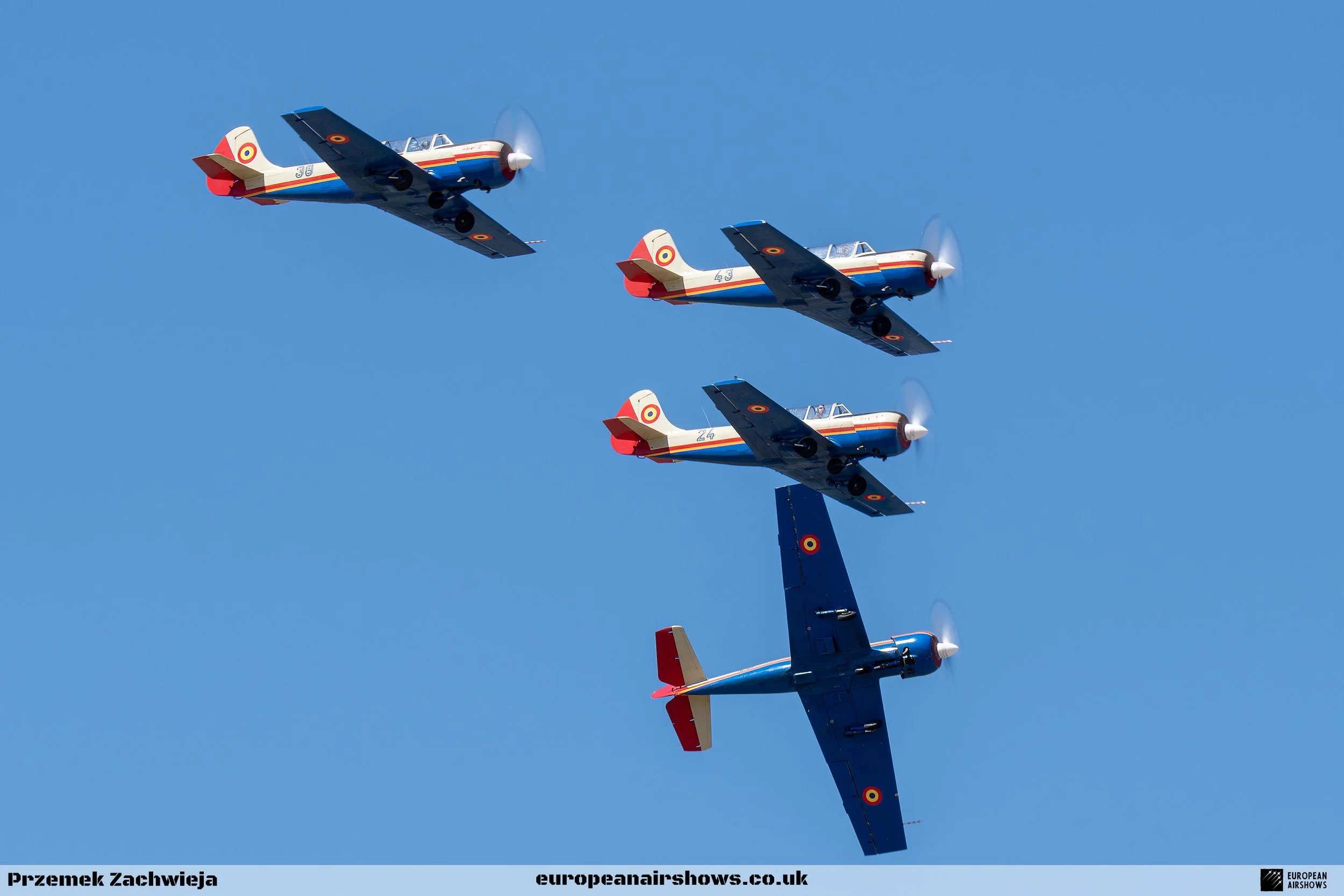
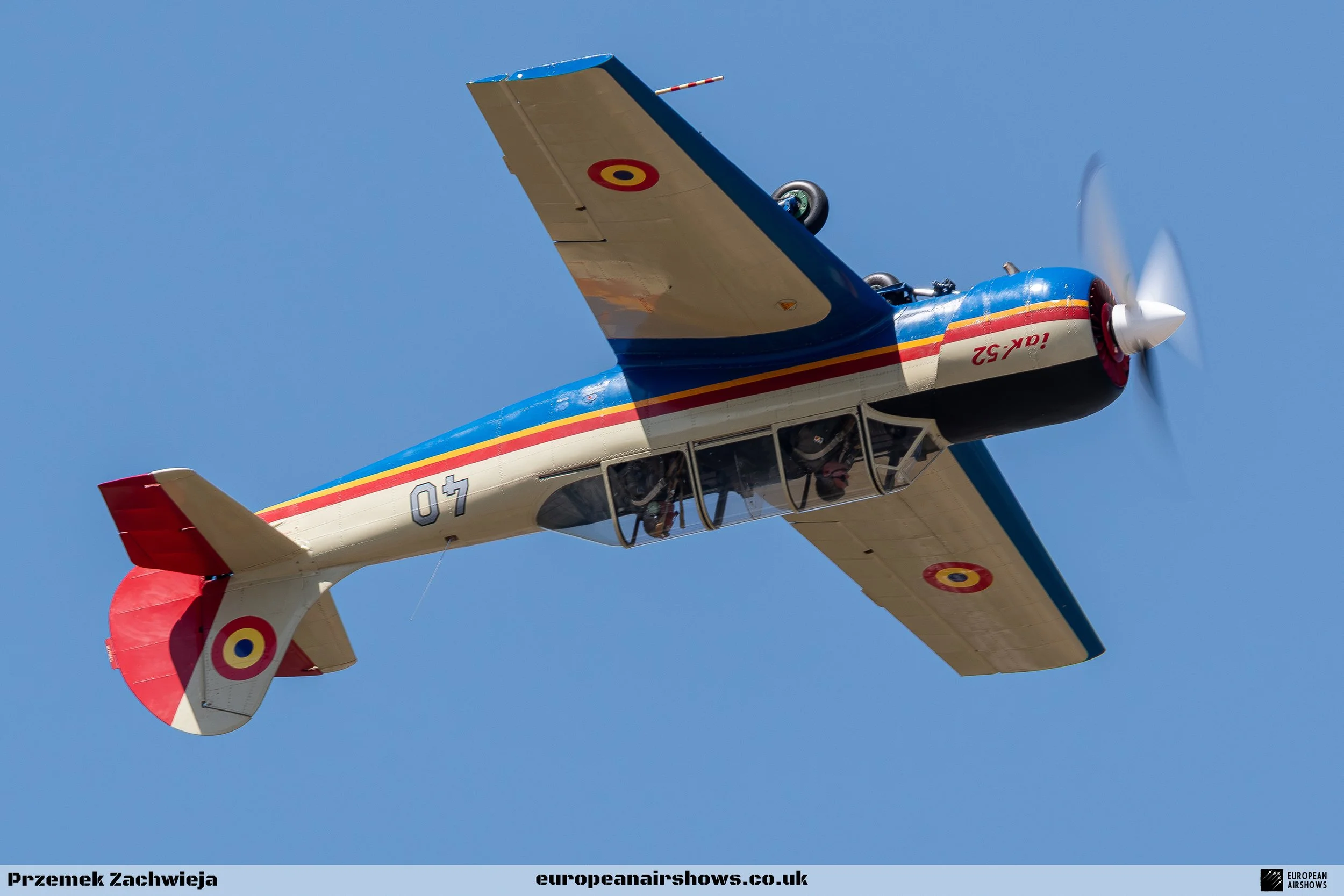
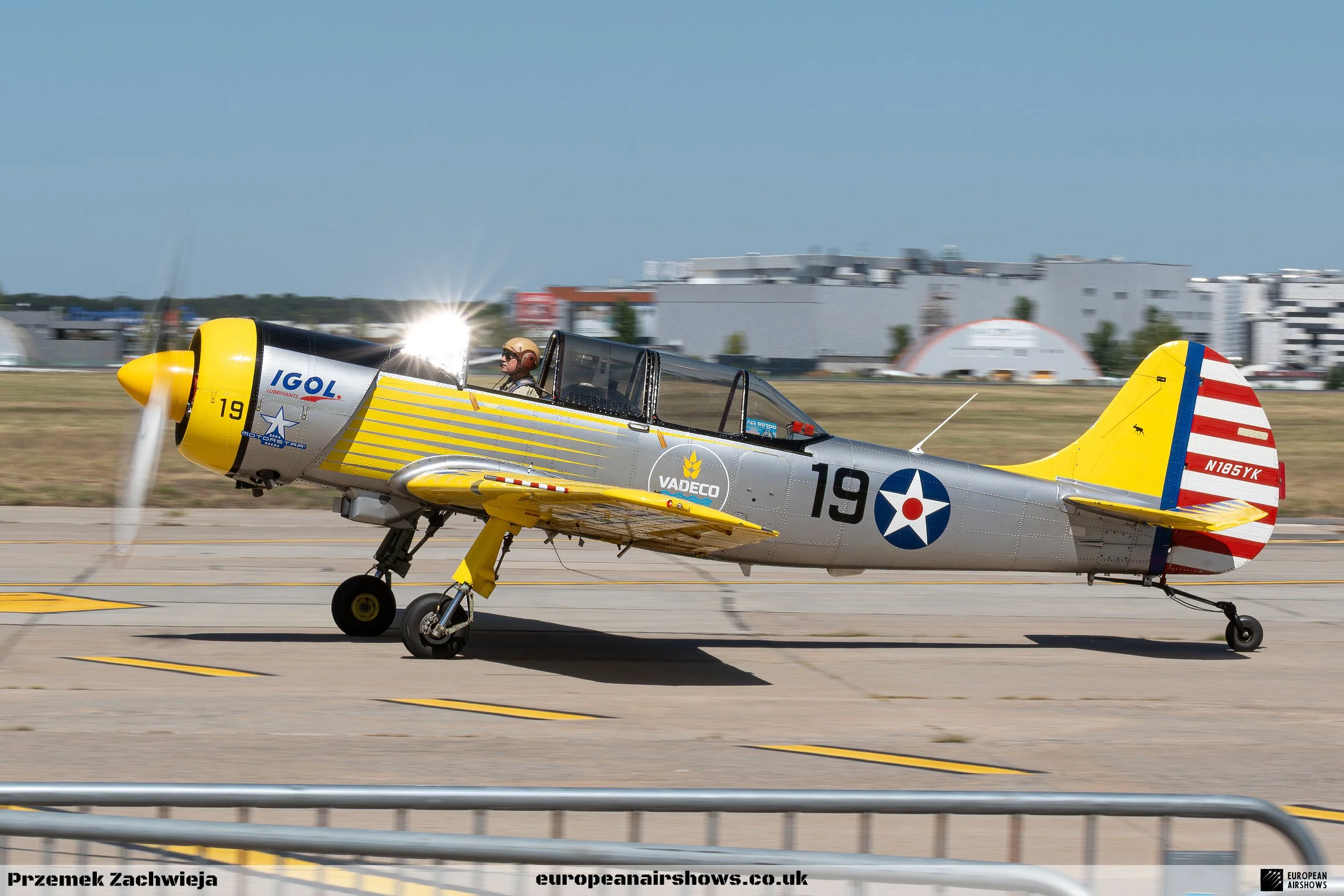
The Aerobatic Yakers, in their familiar trio of Yak-52s, added more punch. Their formation work was sharp and compact, with looping and rolling figures that played to the radial engines’ growl. On Saturday, two of their aircraft joined the four Romanian Air Force Iak-52s, creating an unusual six-ship before splitting into mixed civilian-military passes. The handover was tidy: the Yakers peeled away to land while the RoAF pair carried on with a brief solo finale.
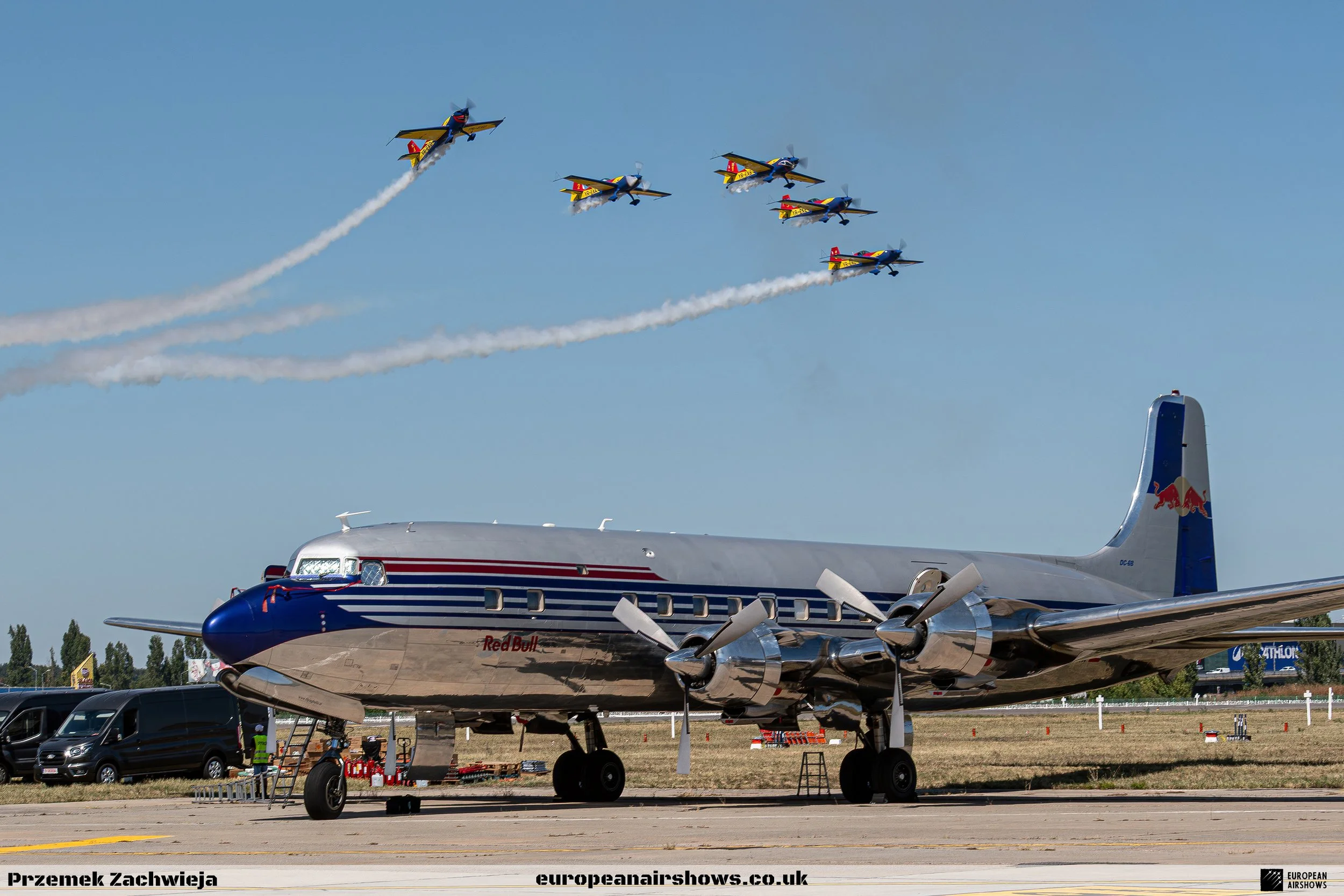
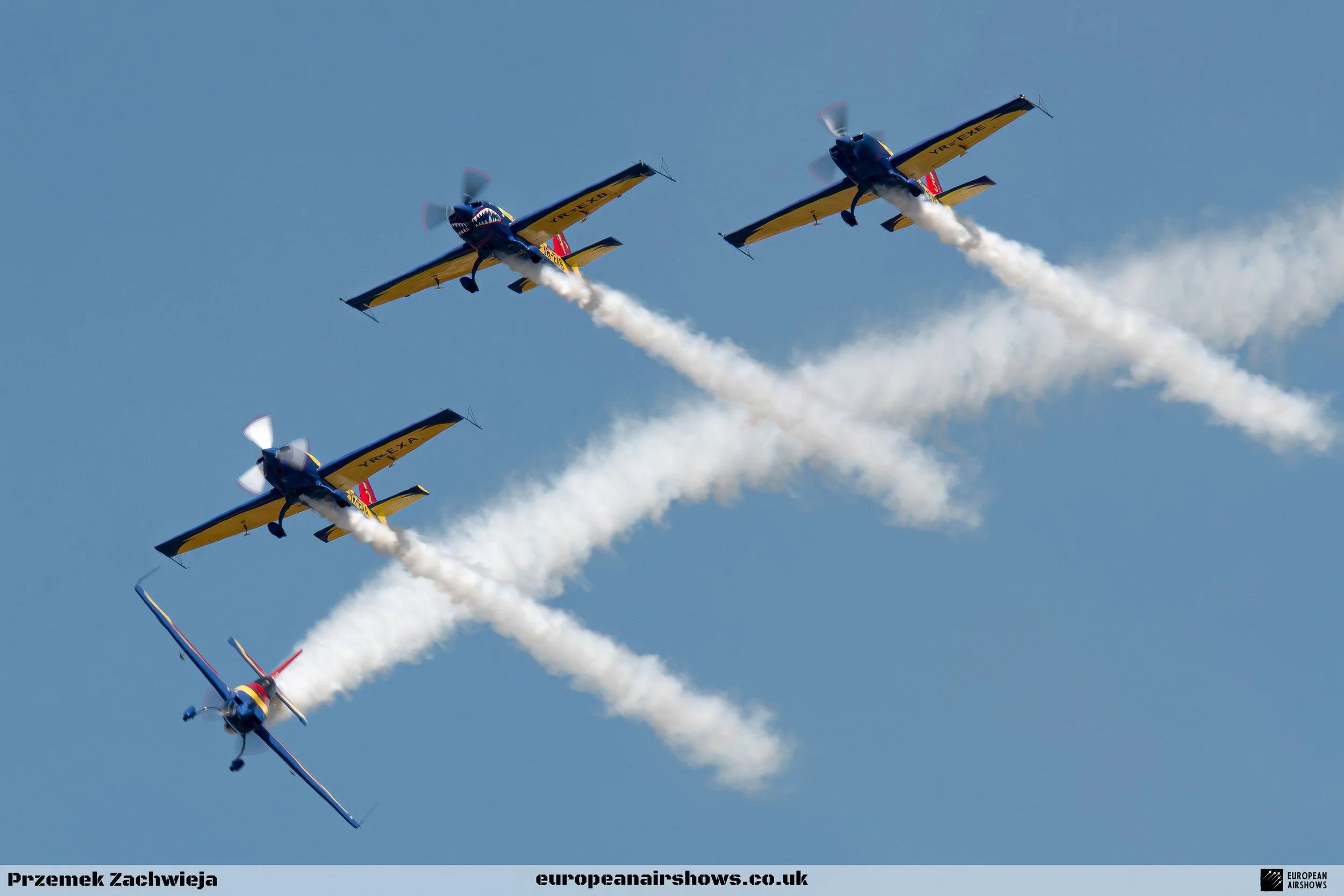
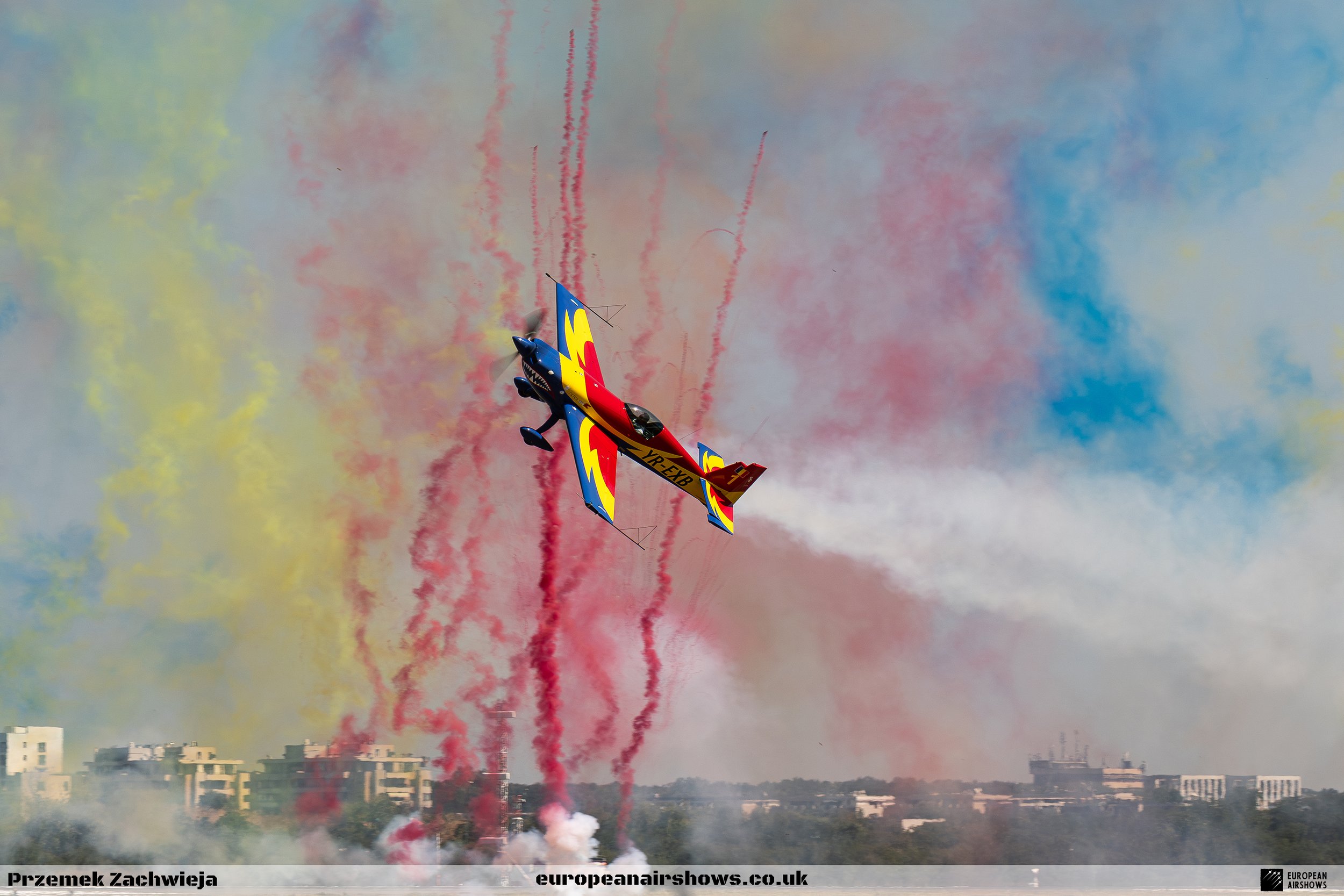
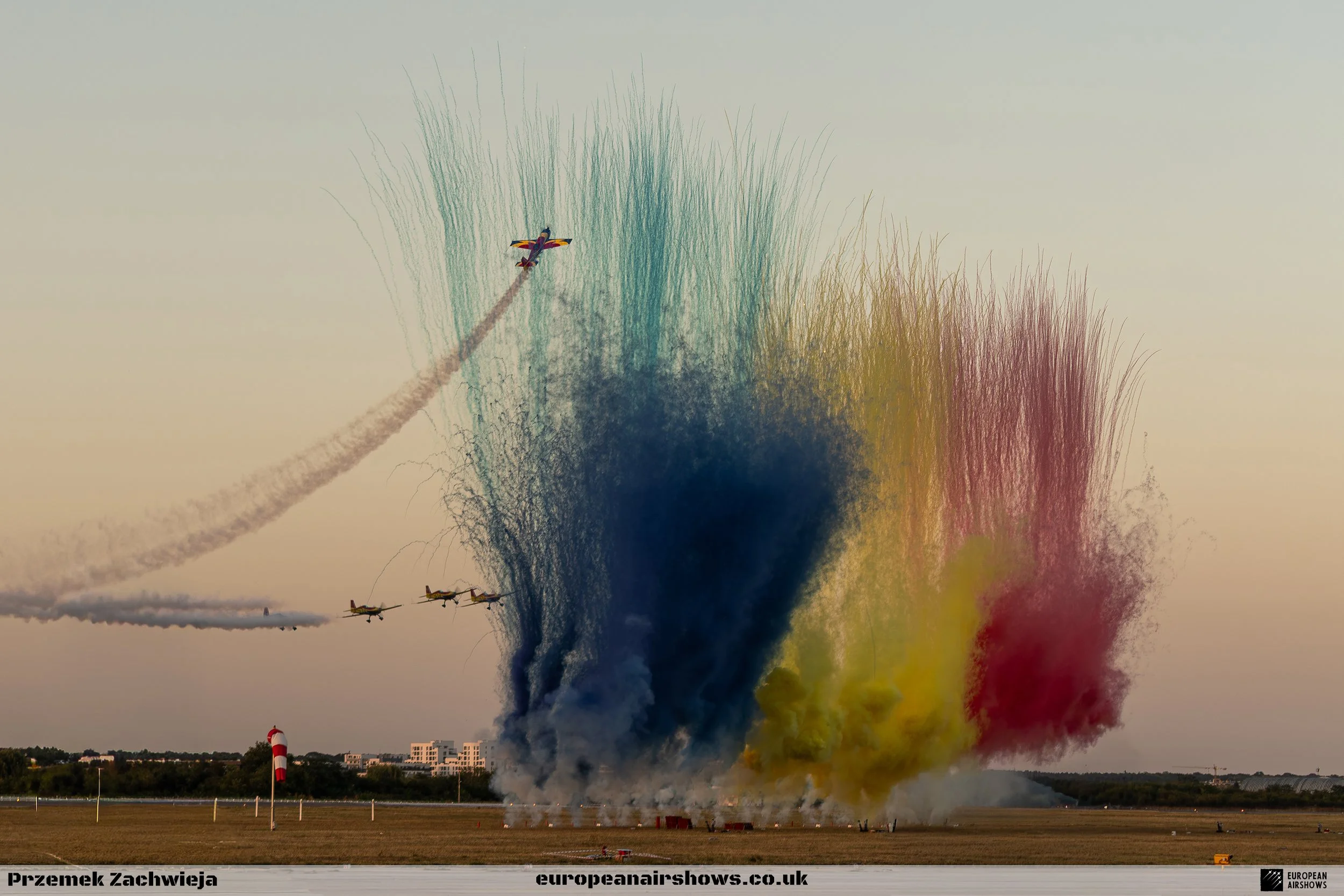
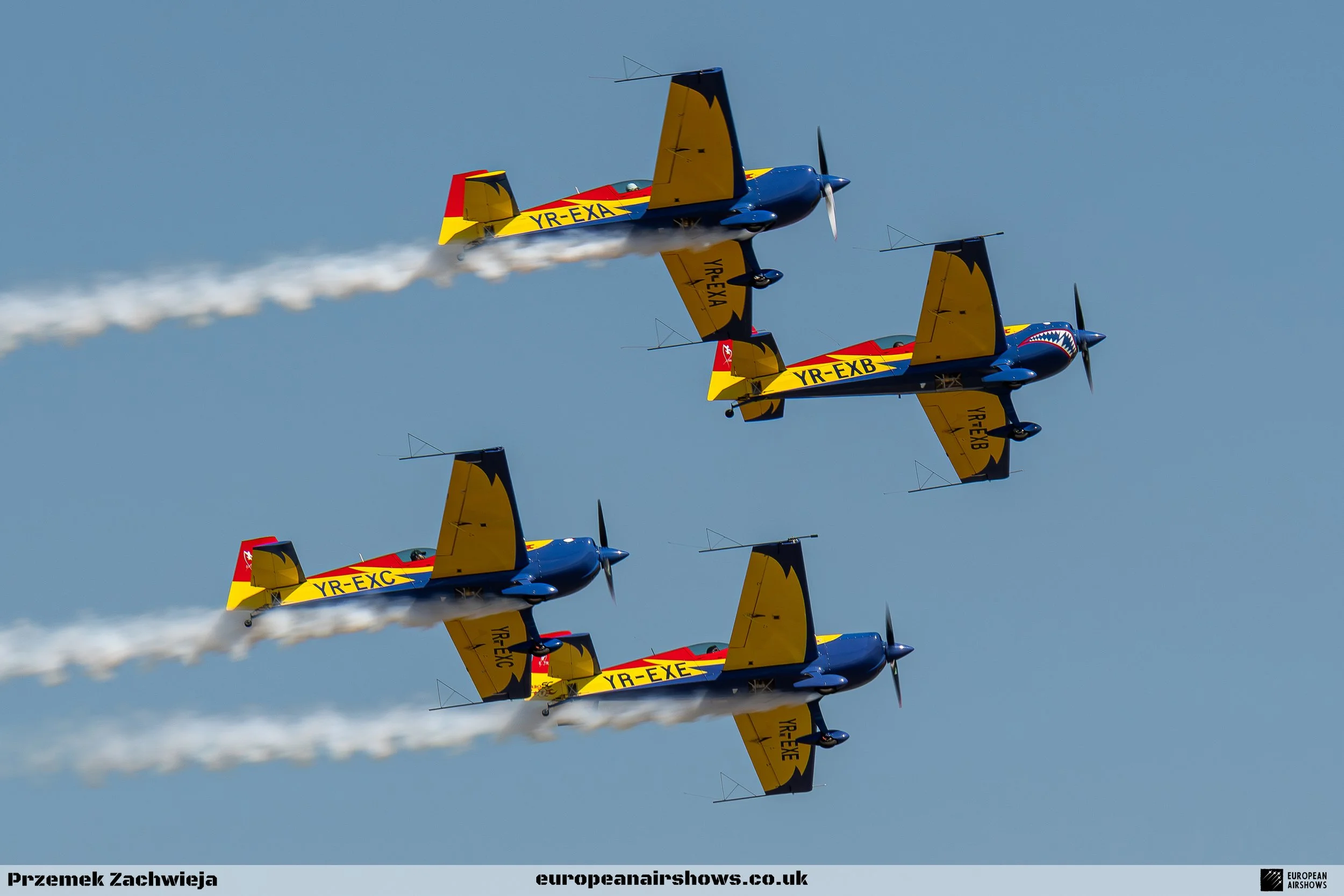
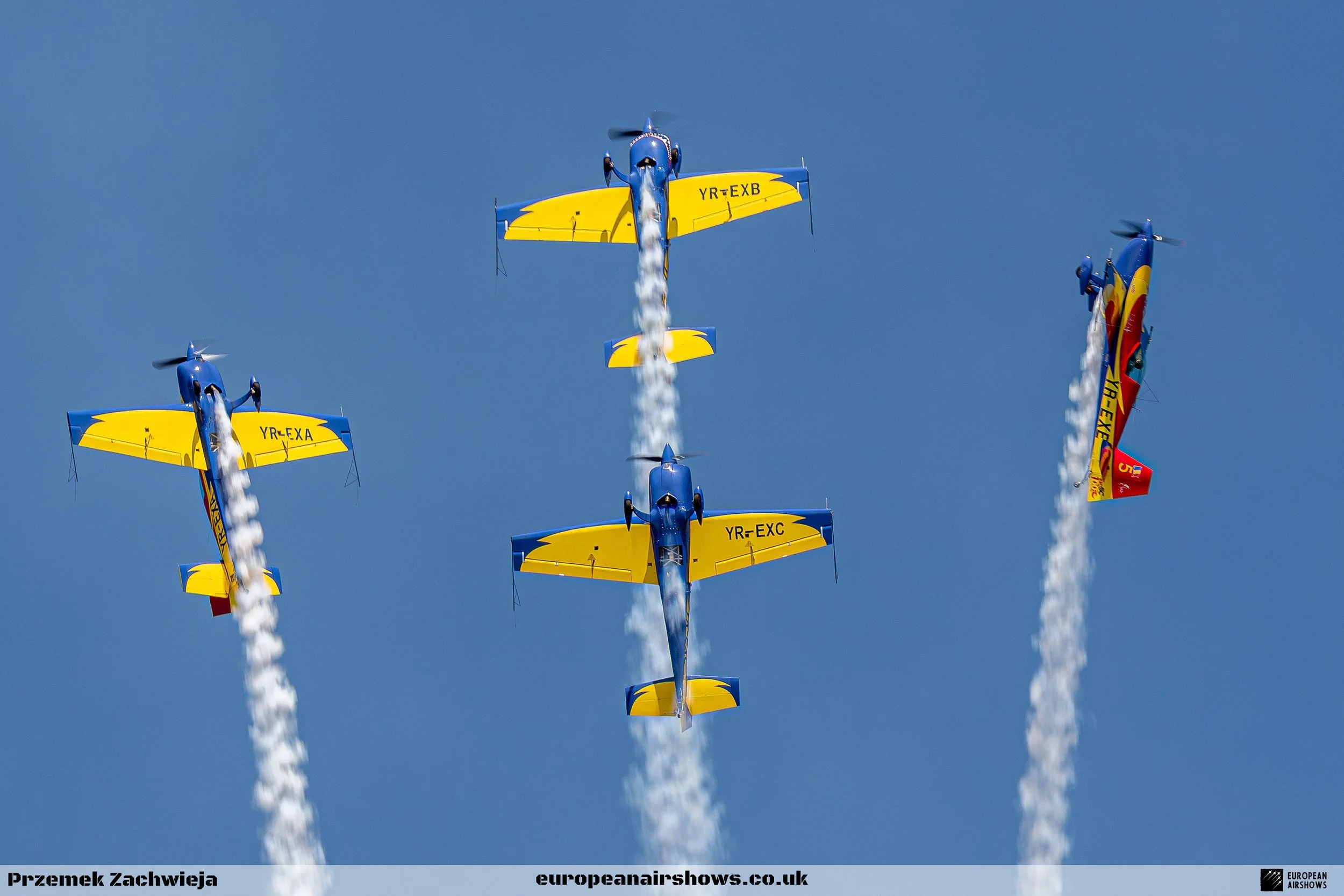
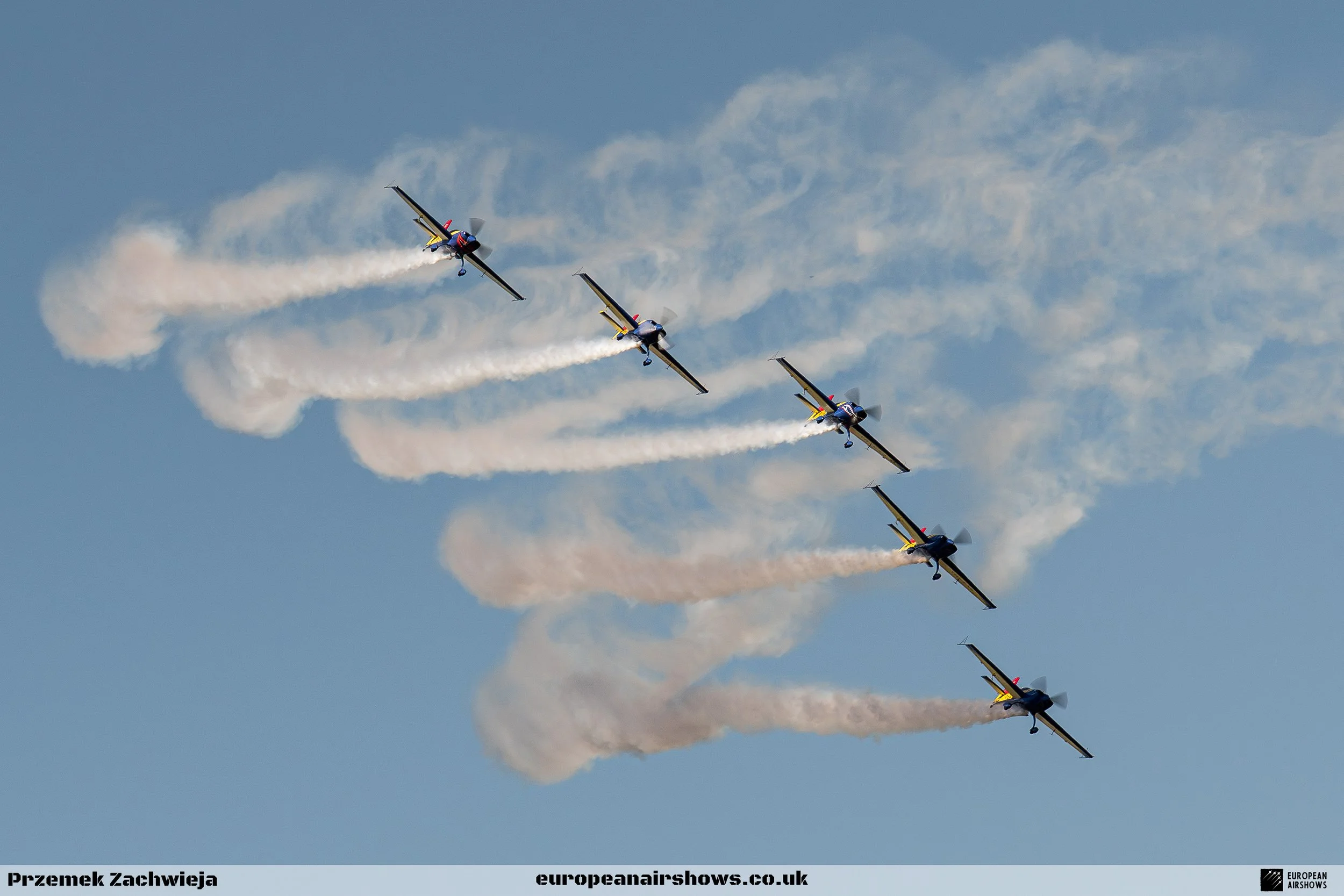
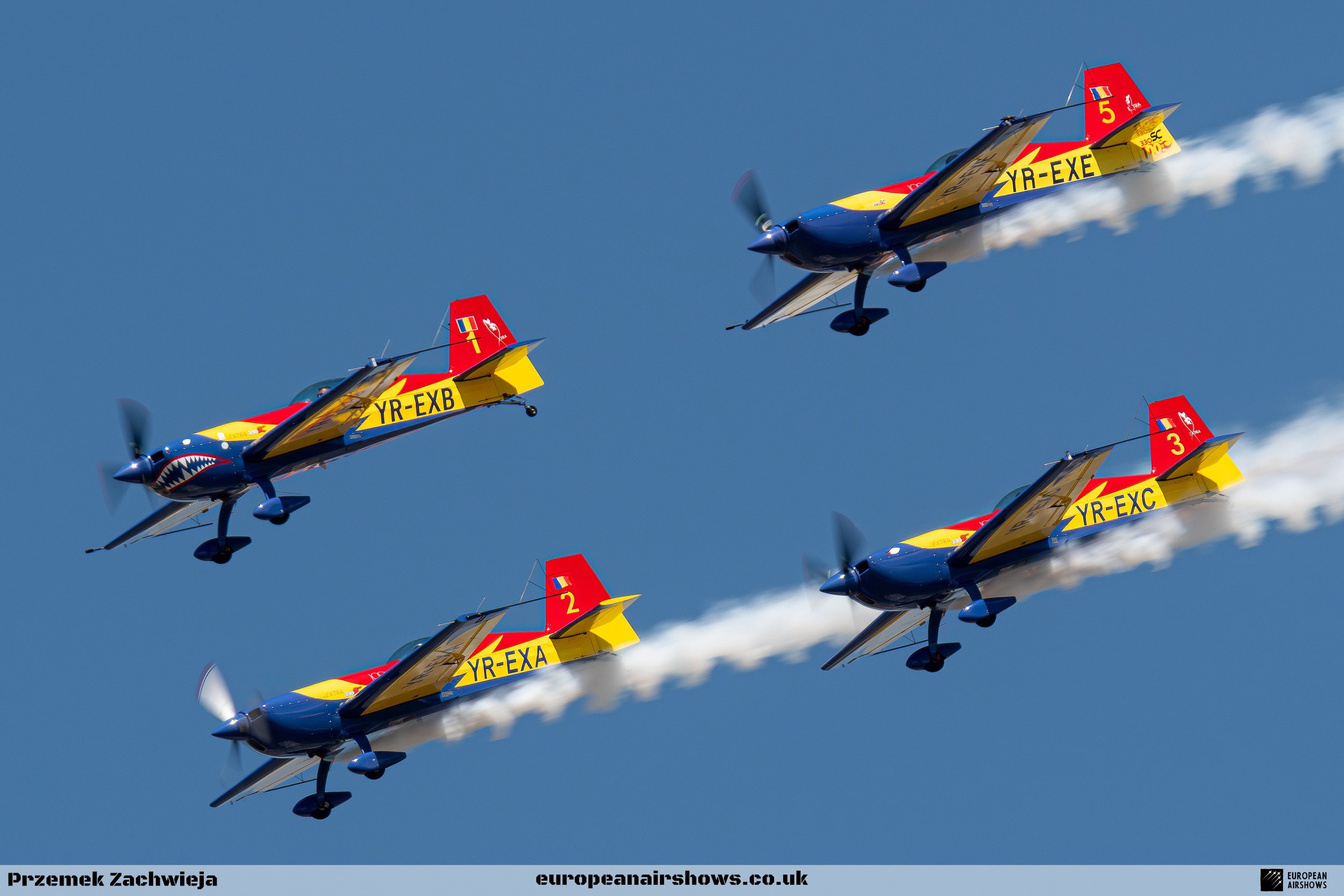
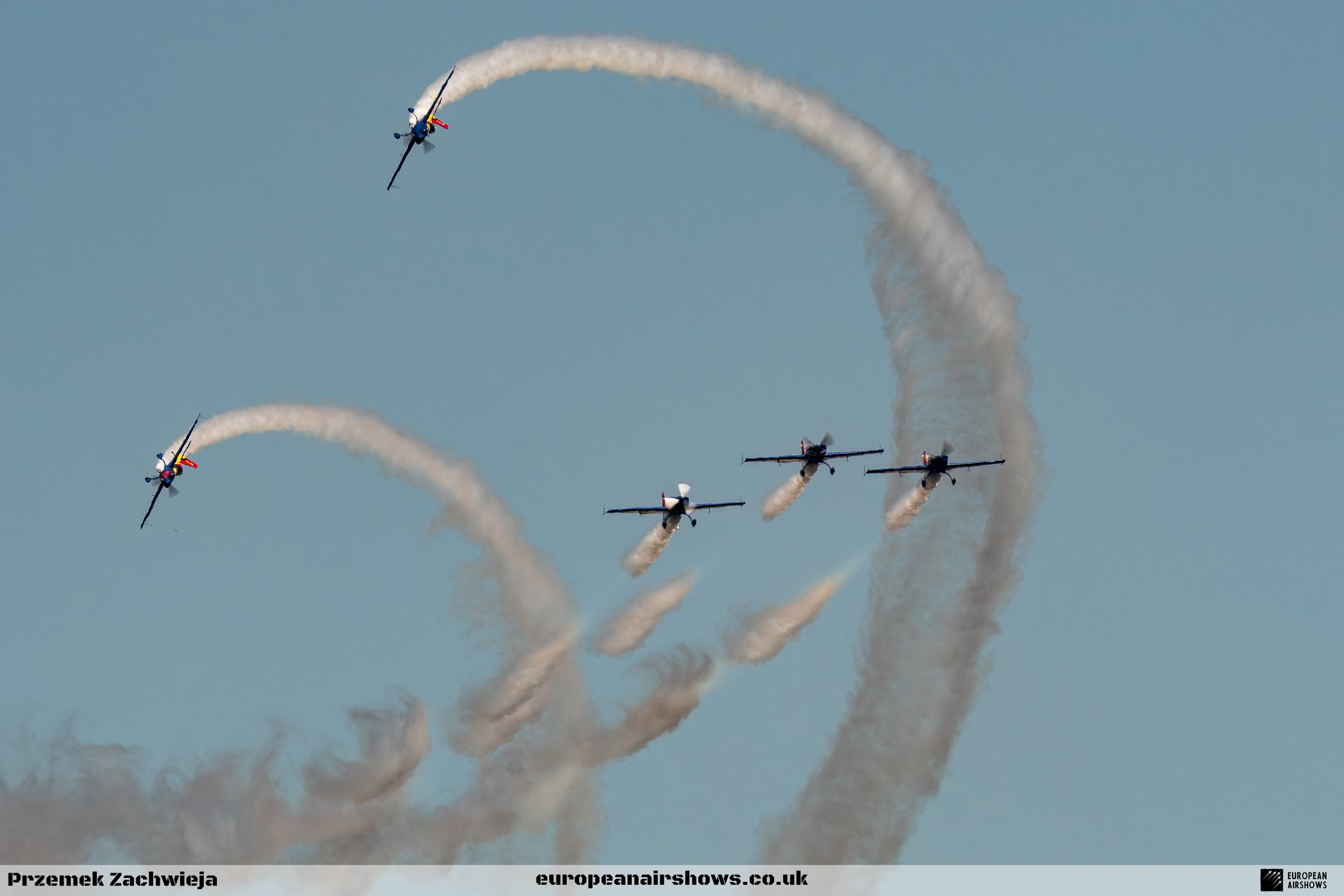
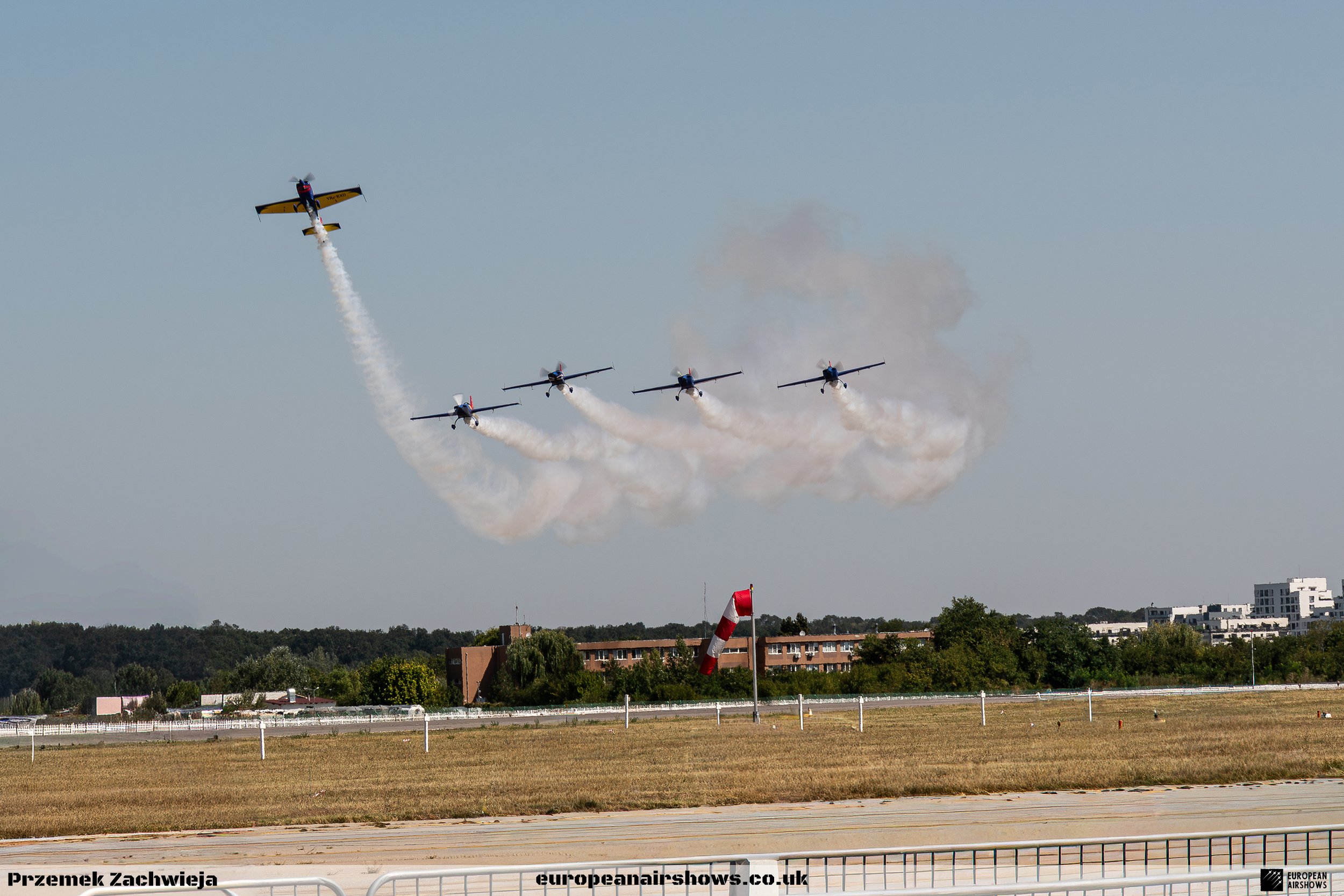
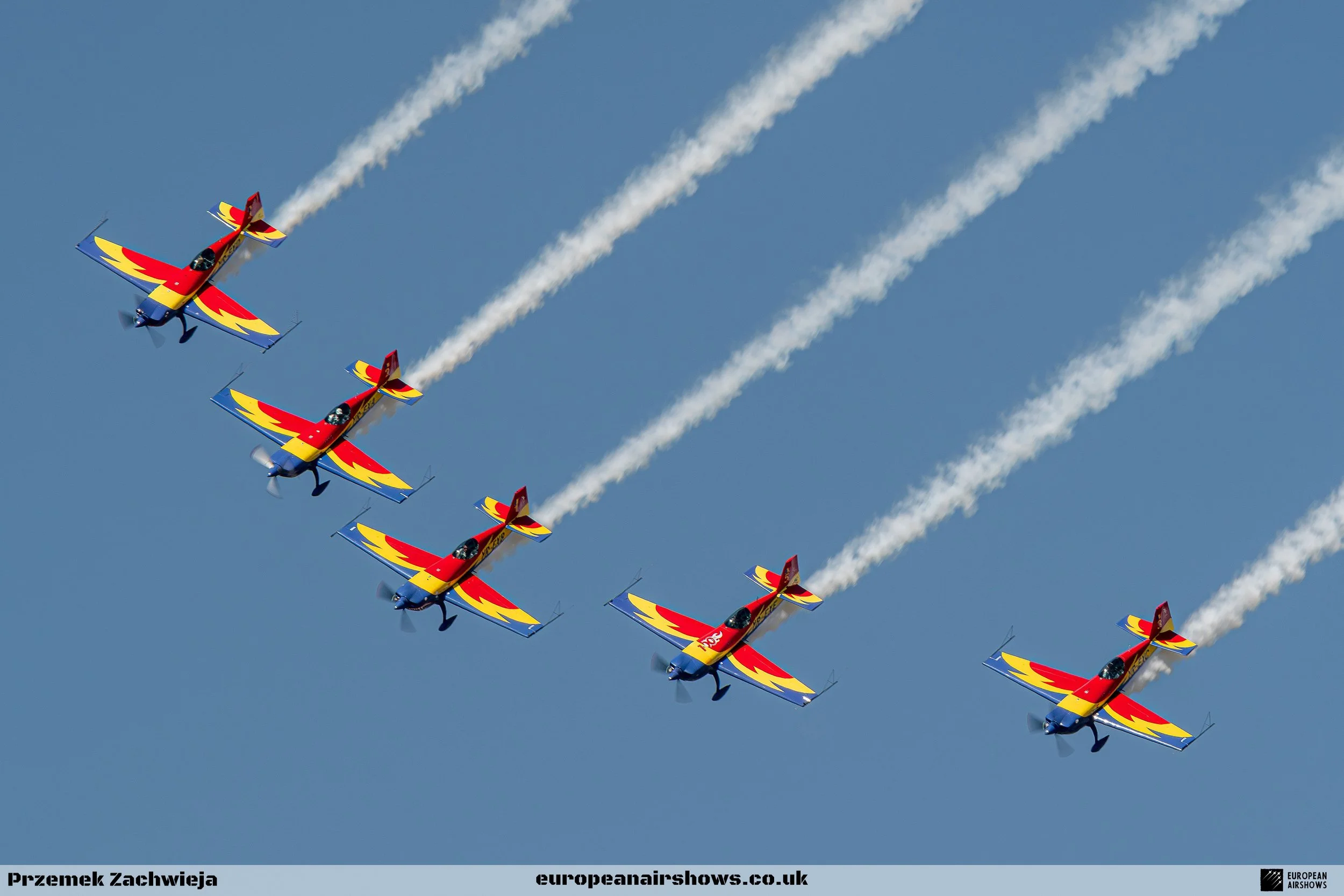
The Hawks of Romania, flying five Extra 330SCs, raised the tempo with one of their most assured performances to date. They opened with a dramatic crowd-rear arrival and performed some passes as a five-ship. The use of dotted smoke added a distinctive visual texture, while coordinated ground pyro reinforced the Romanian tricolour theme. In the middle of the display, Bănesaru detached for her solo display as the four ship looped and rolled in front of the crowd.
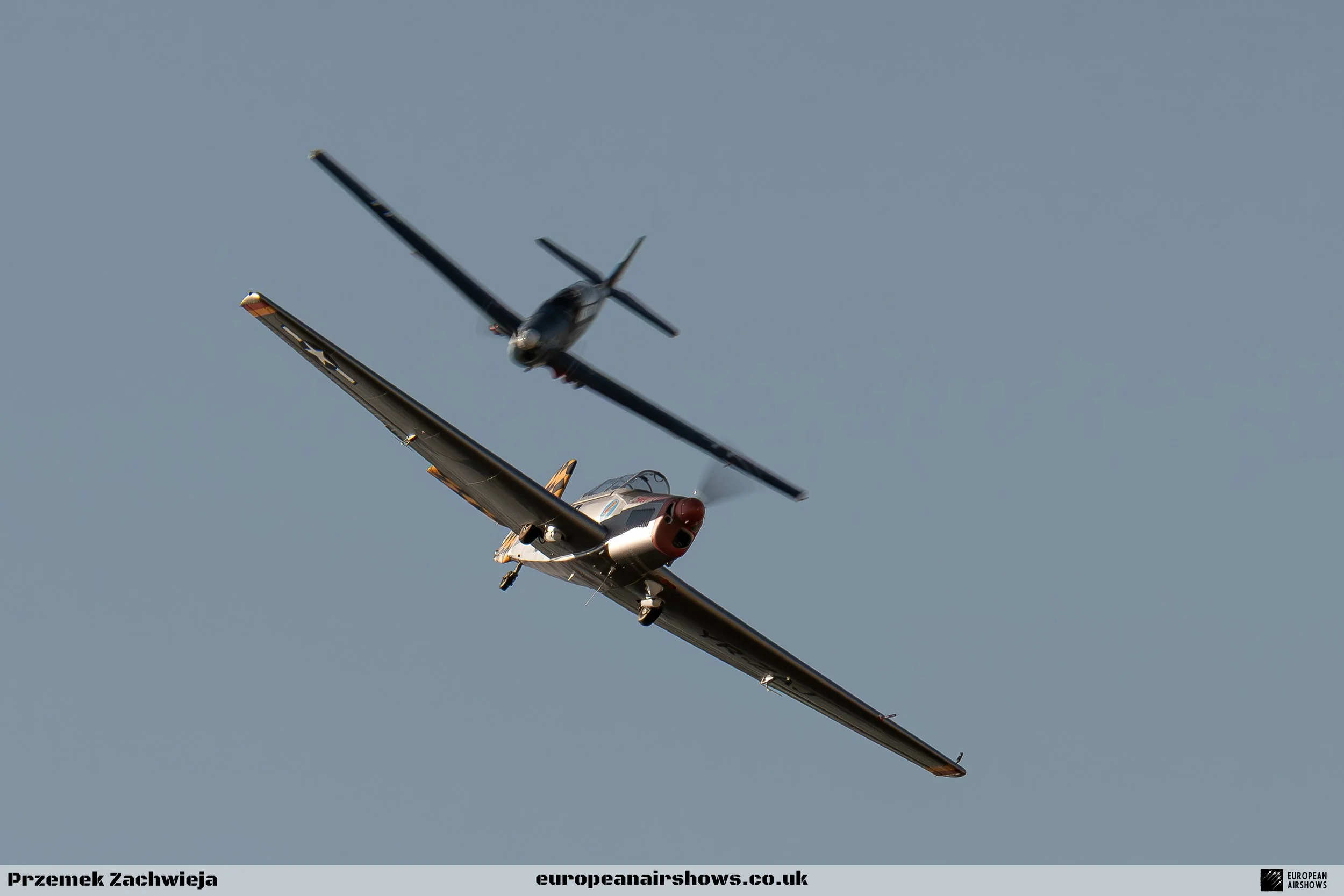
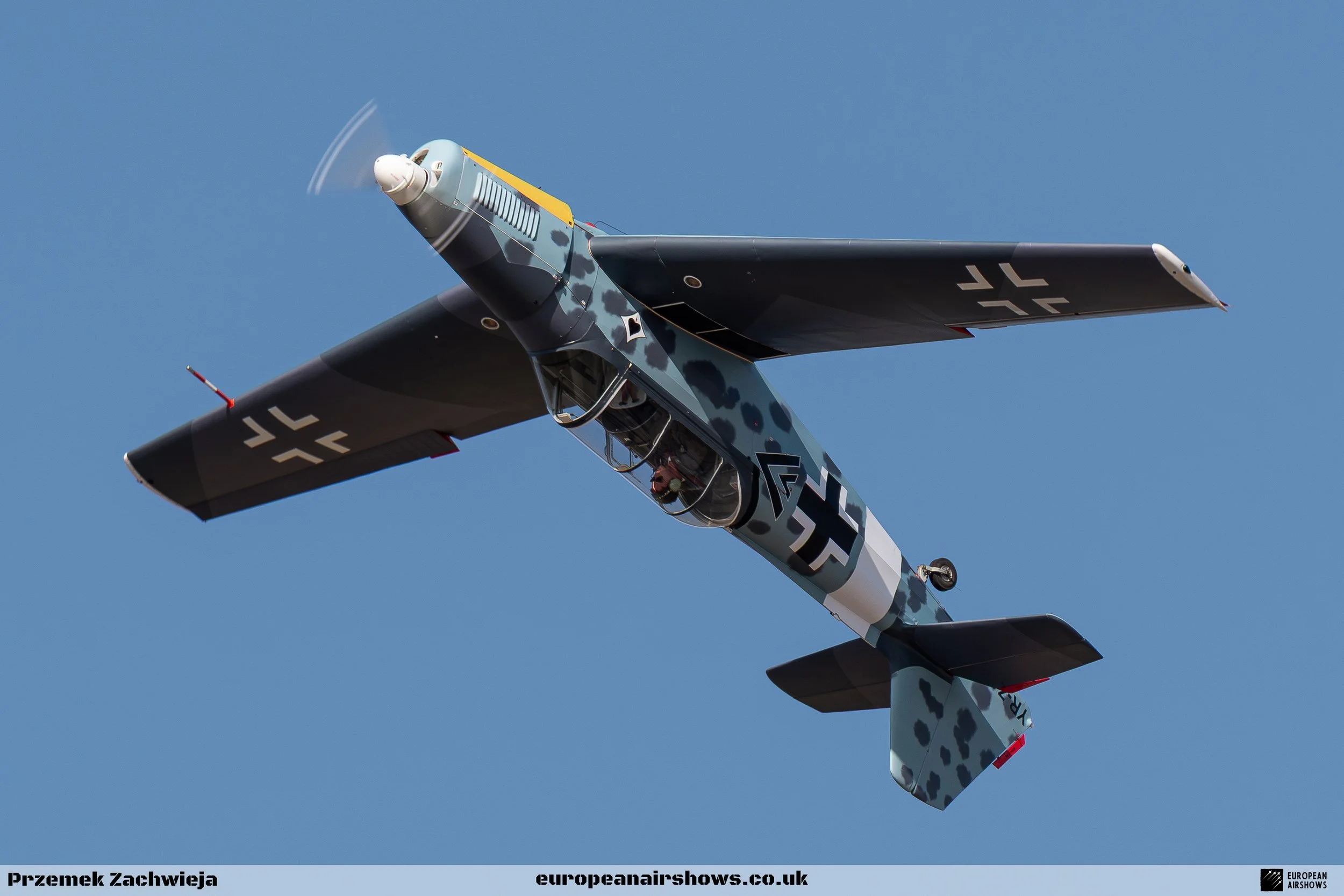
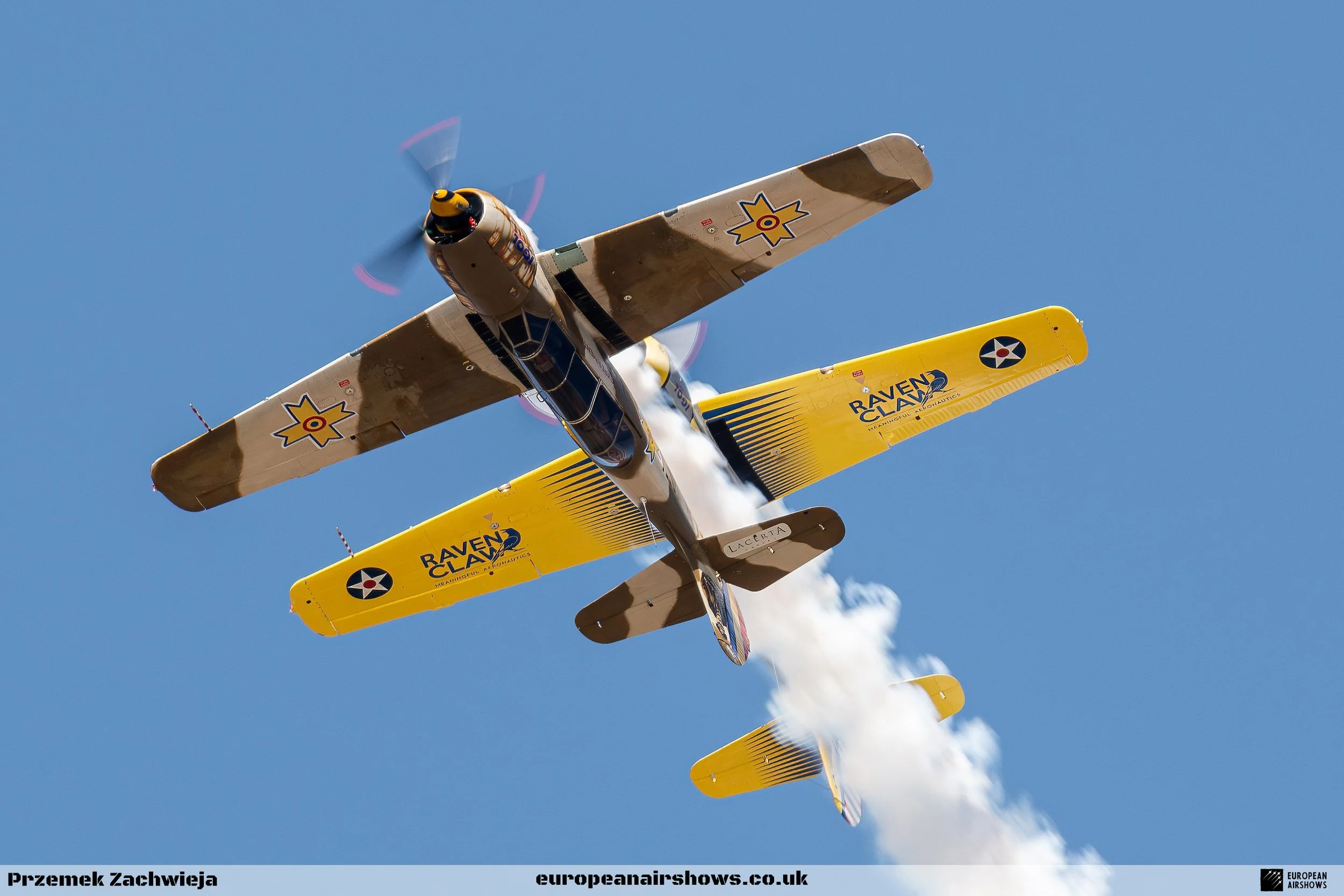
Adding something entirely new to BIAS, the newly formed Escadrila Zlin flew three Zlín Z 526 Trener-Masters in historically inspired American, German, and Romanian liveries, accompanied by ground-based pyrotechnics. Their routine depicted a stylised WWII dogfight, featuring tail-chases, opposition passes, and loose mock engagements that kept the crowd engaged without tipping into pantomime. It was a confident debut that instantly gave the team its own distinct character within the Aeroclub family.
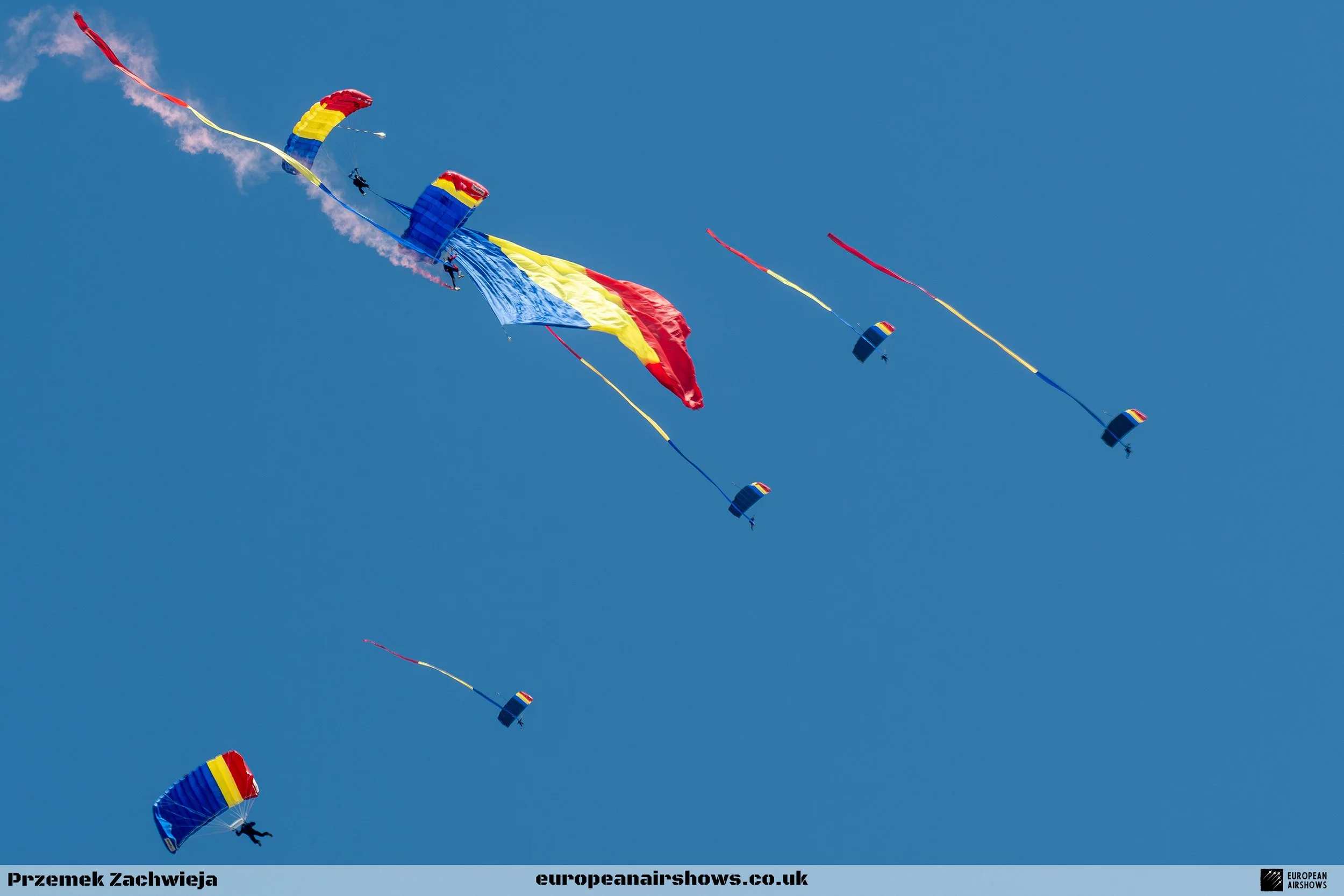
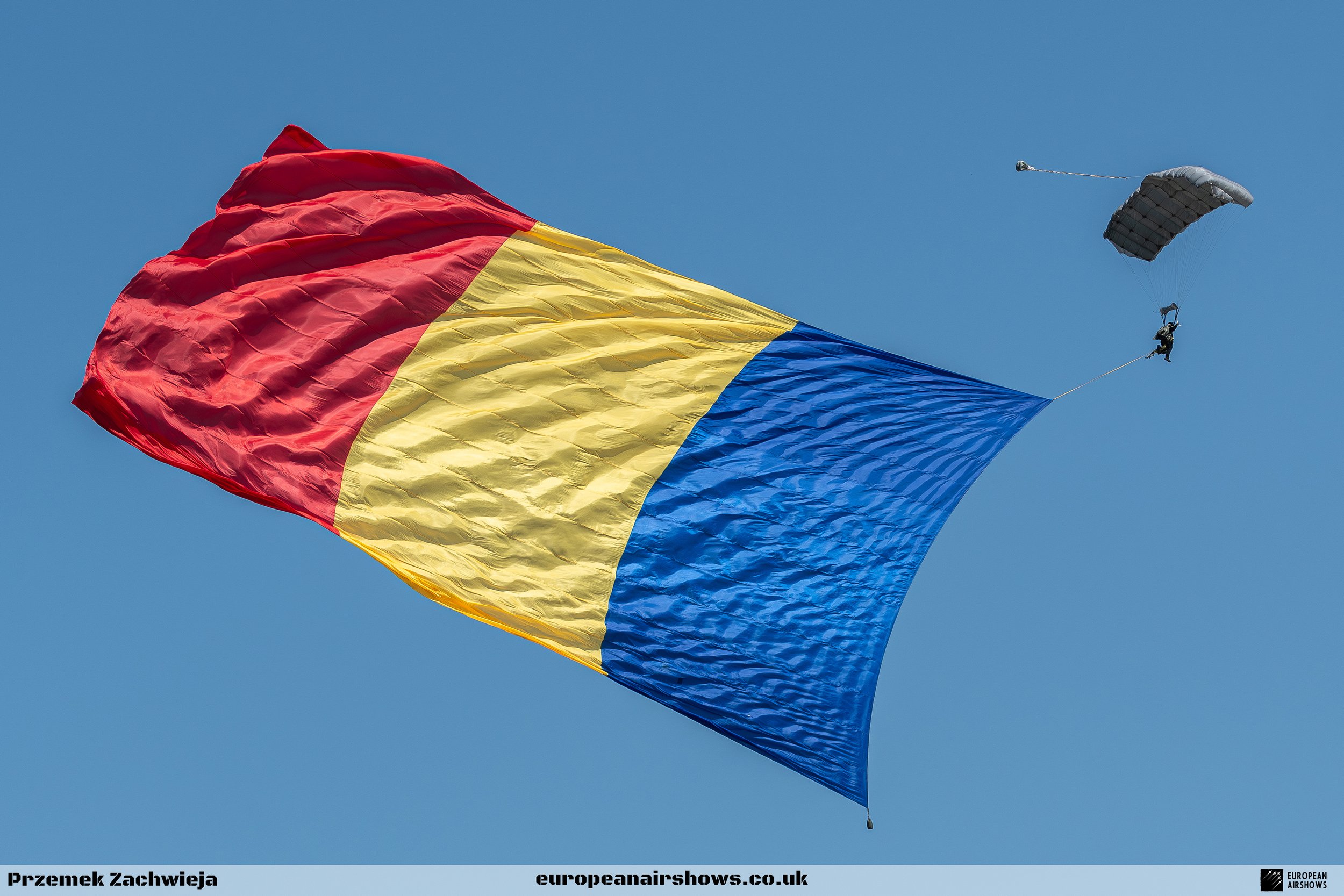
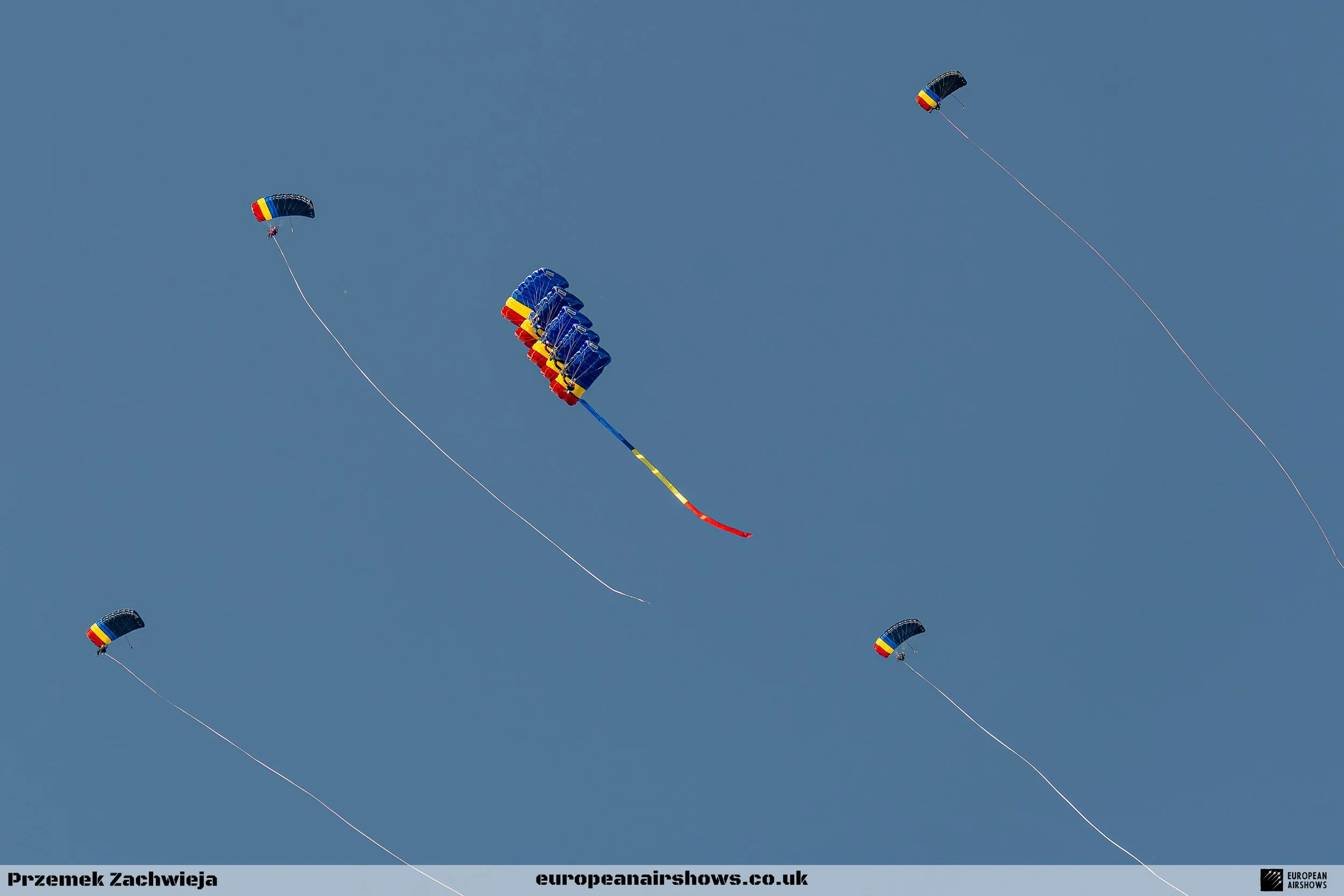
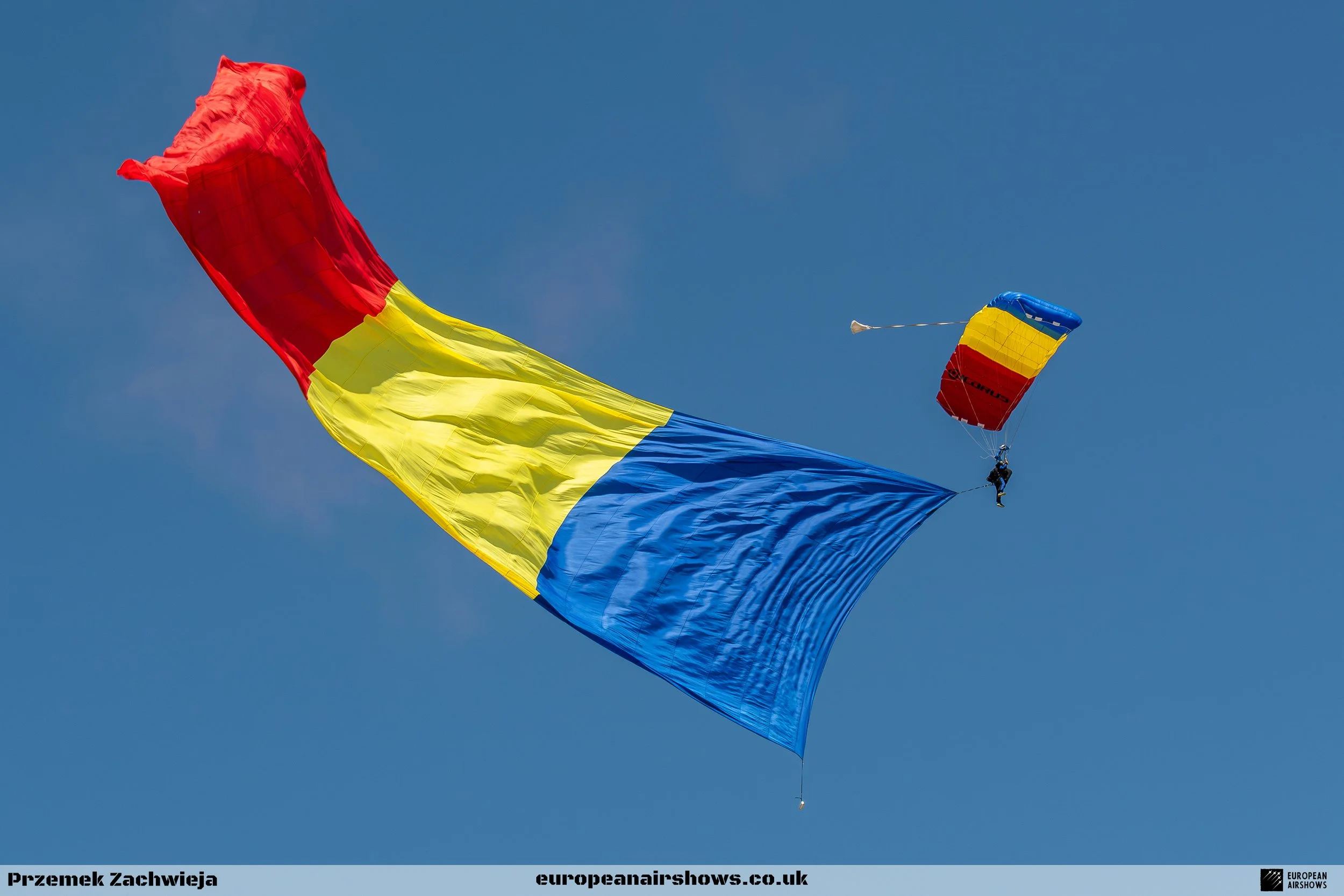
Parachuting was provided by the Blue Wings team, exiting cleanly from a Cessna 208B Grand Caravan. Their canopy-relative manoeuvres stacked parachutes into neat formations, enhanced by trailing smoke. One jumper descended with a vast Romanian flag that caught the light perfectly, while another carried a smaller version. A second jump later in the day omitted the flags and kept the focus squarely on the precision work, a good variation that stopped the act from feeling repetitive.
The Forțele Aeriene Române contributed on a scale no other participant could match, fielding a broad cross-section of types both in the static park and in the flying programme. From transports and helicopters to trainers and fast jets, most of the service’s current fleet was represented, underlining the depth of a force now well into its transition from Cold War legacy equipment to modern NATO-standard capability.
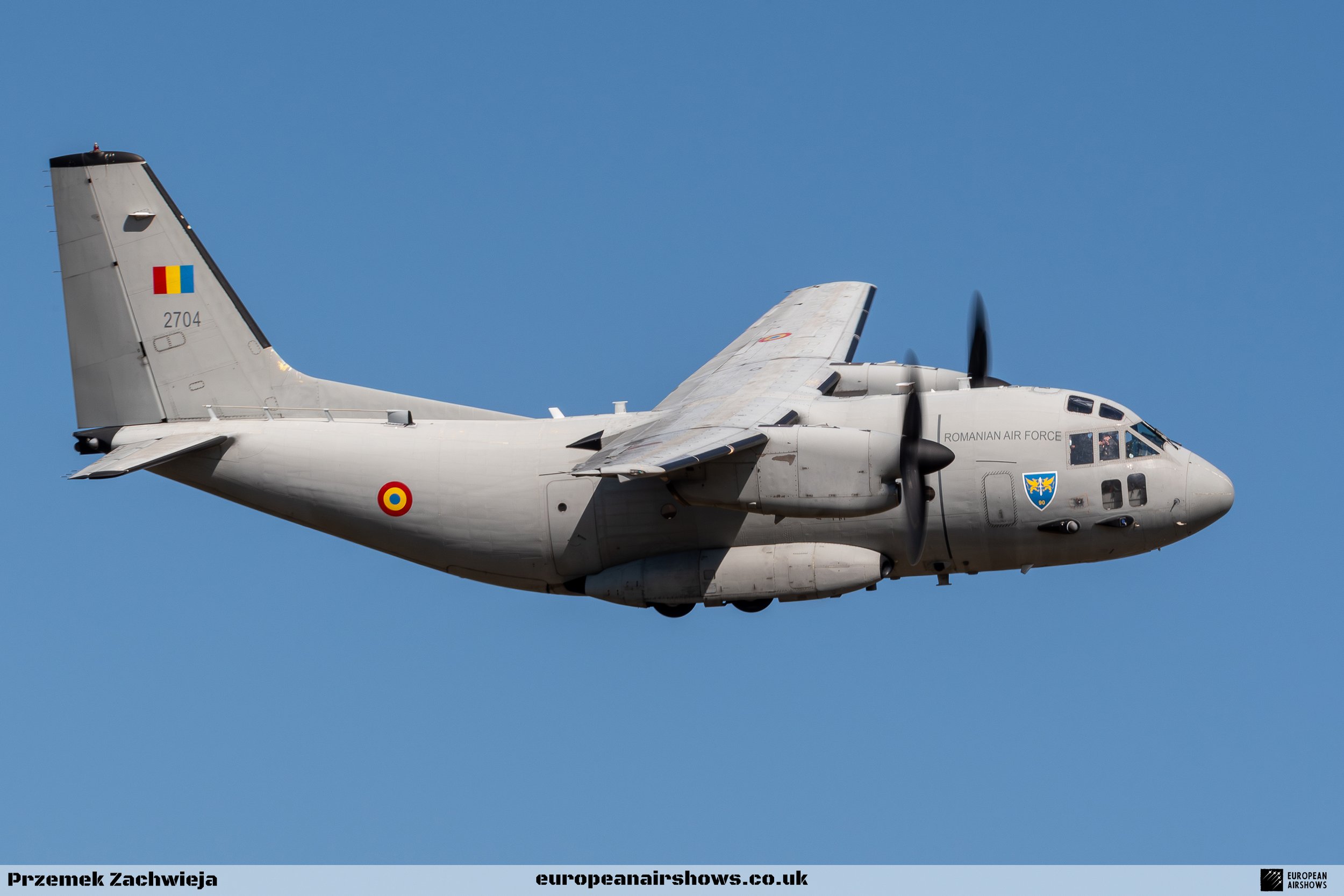
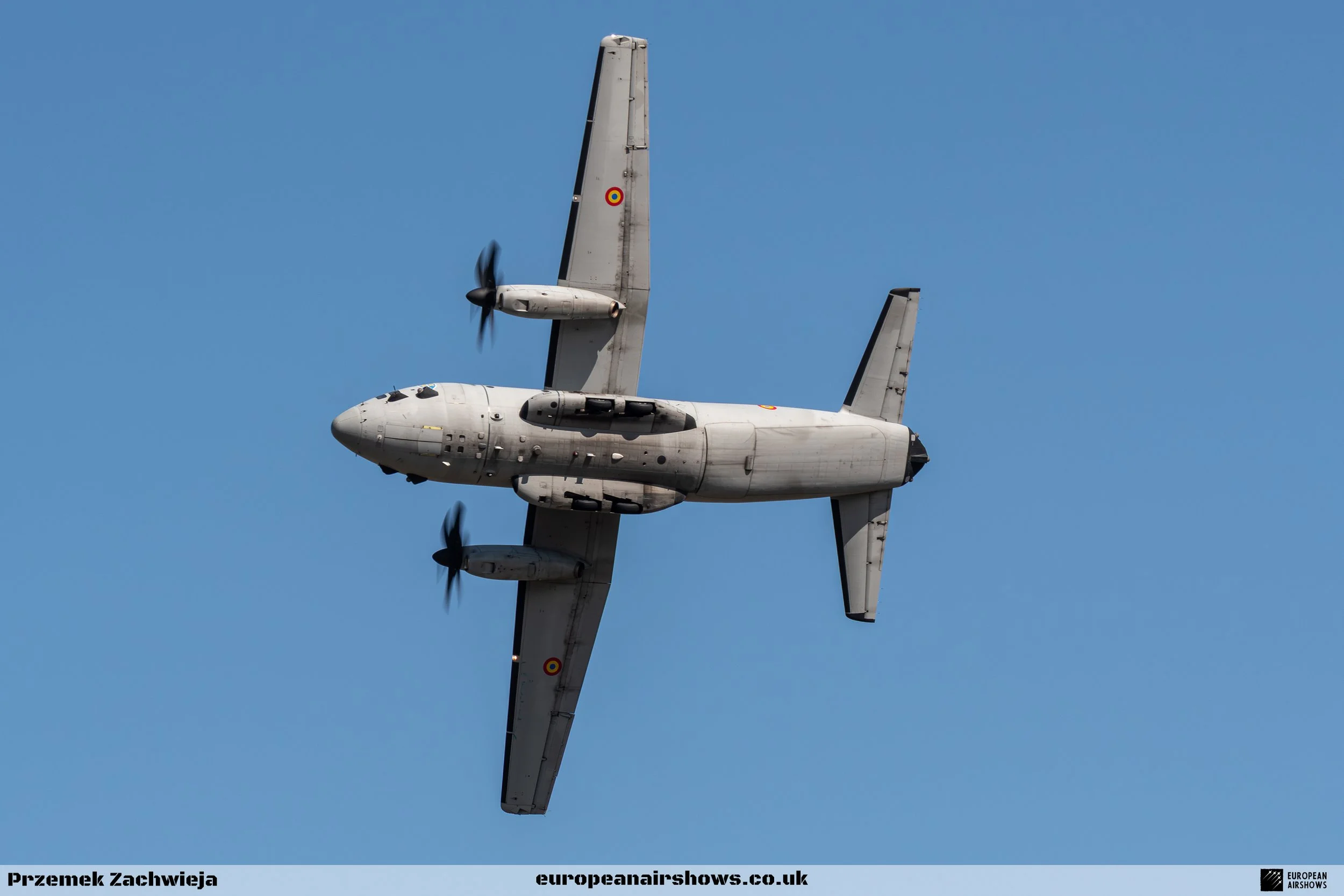
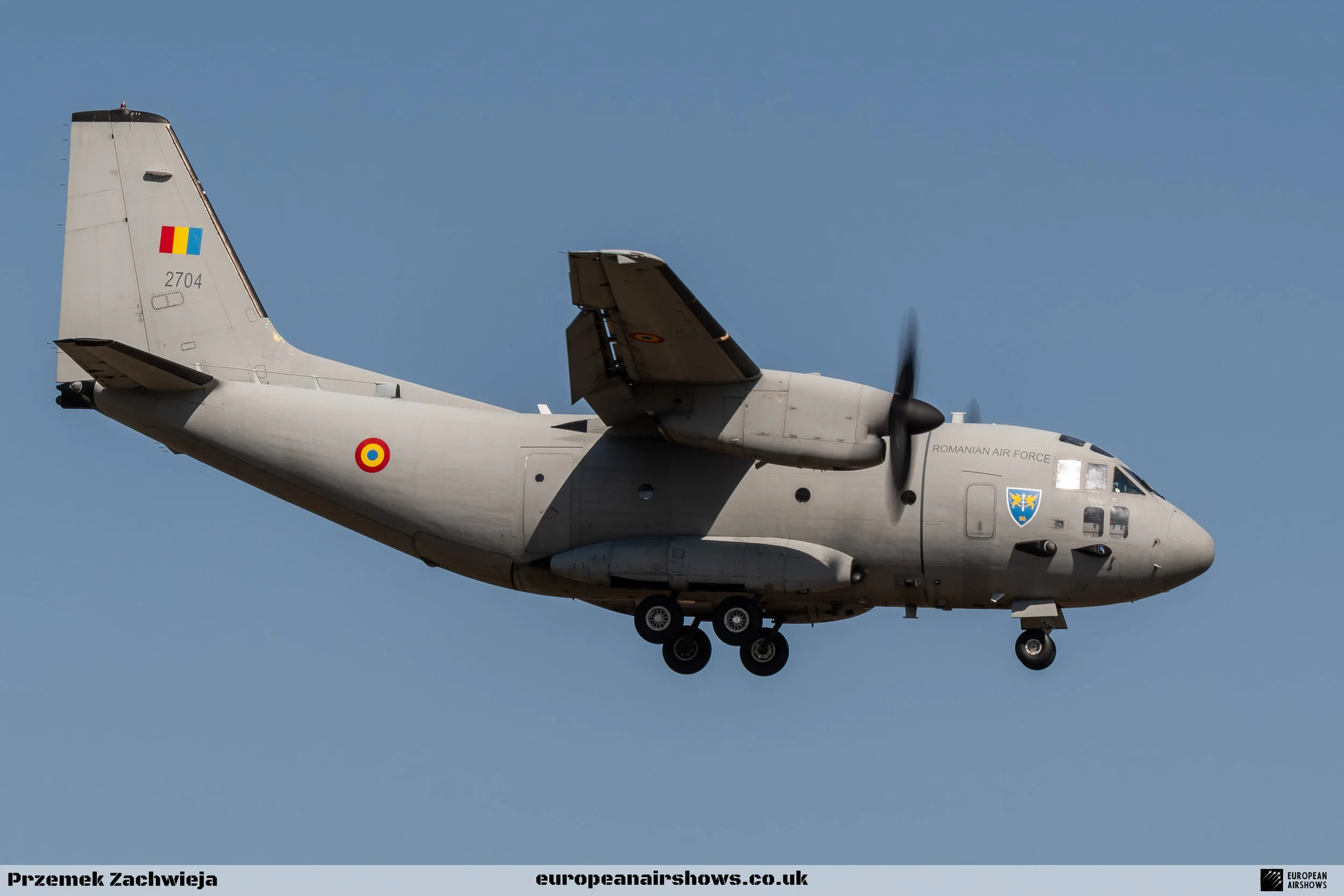
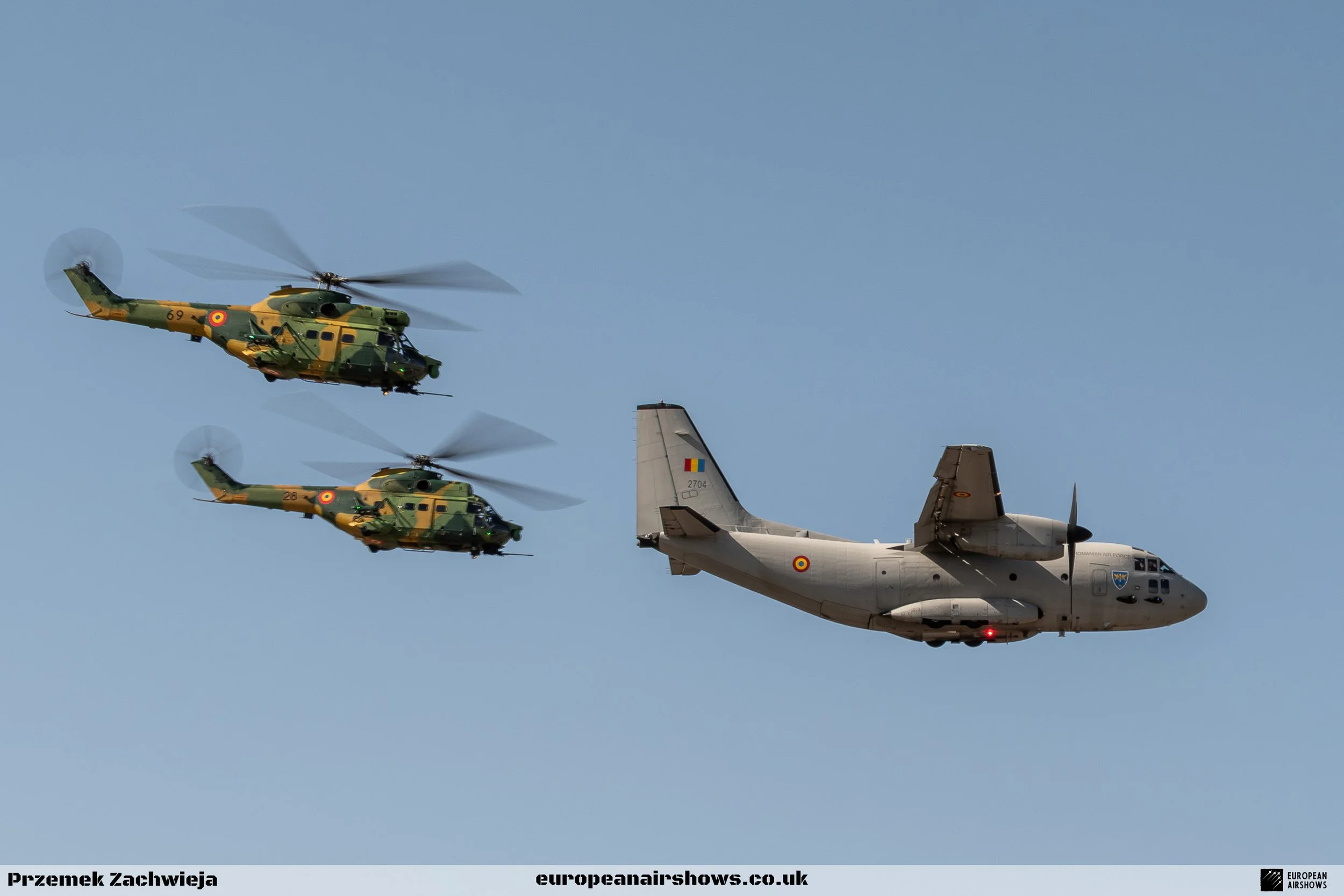
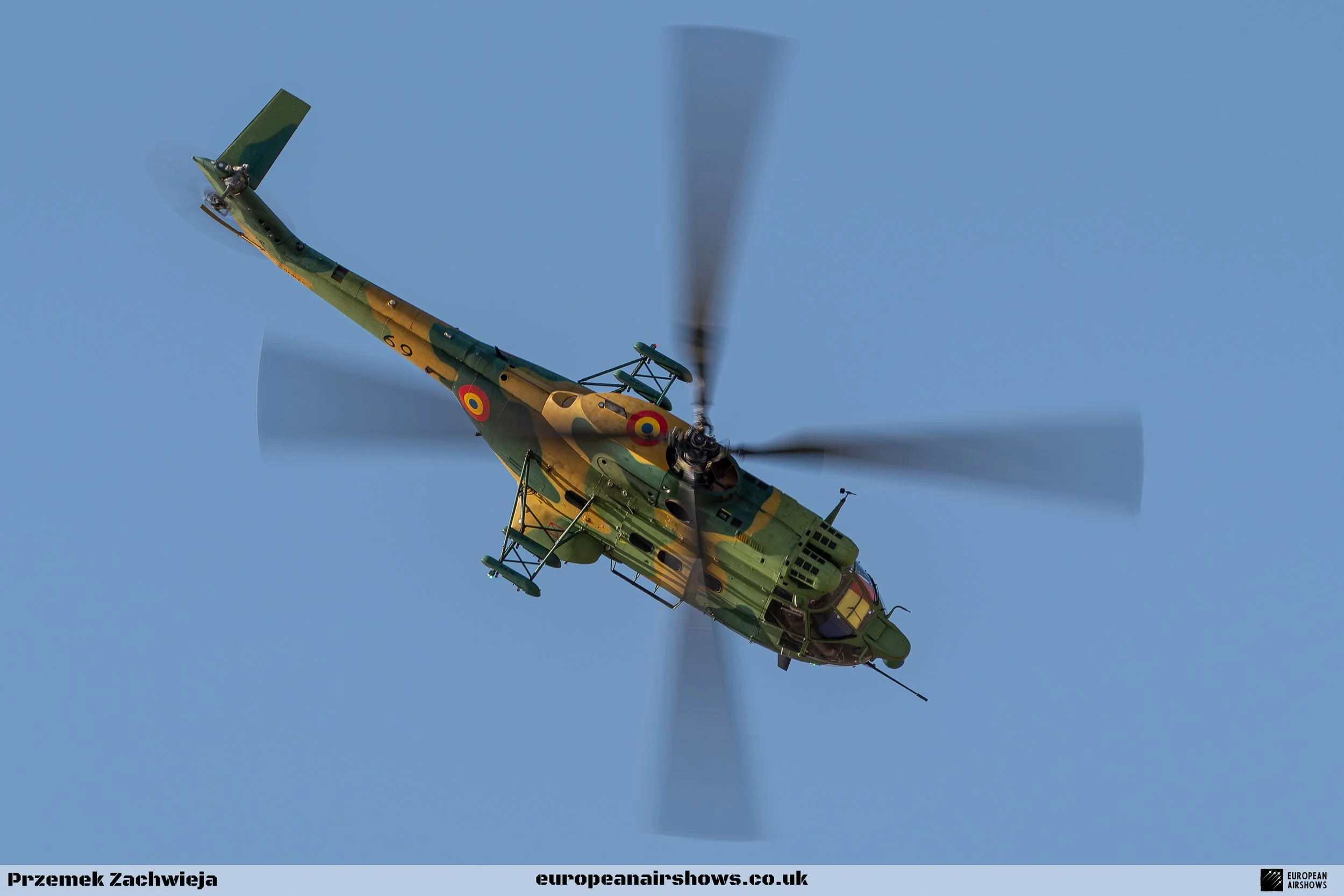
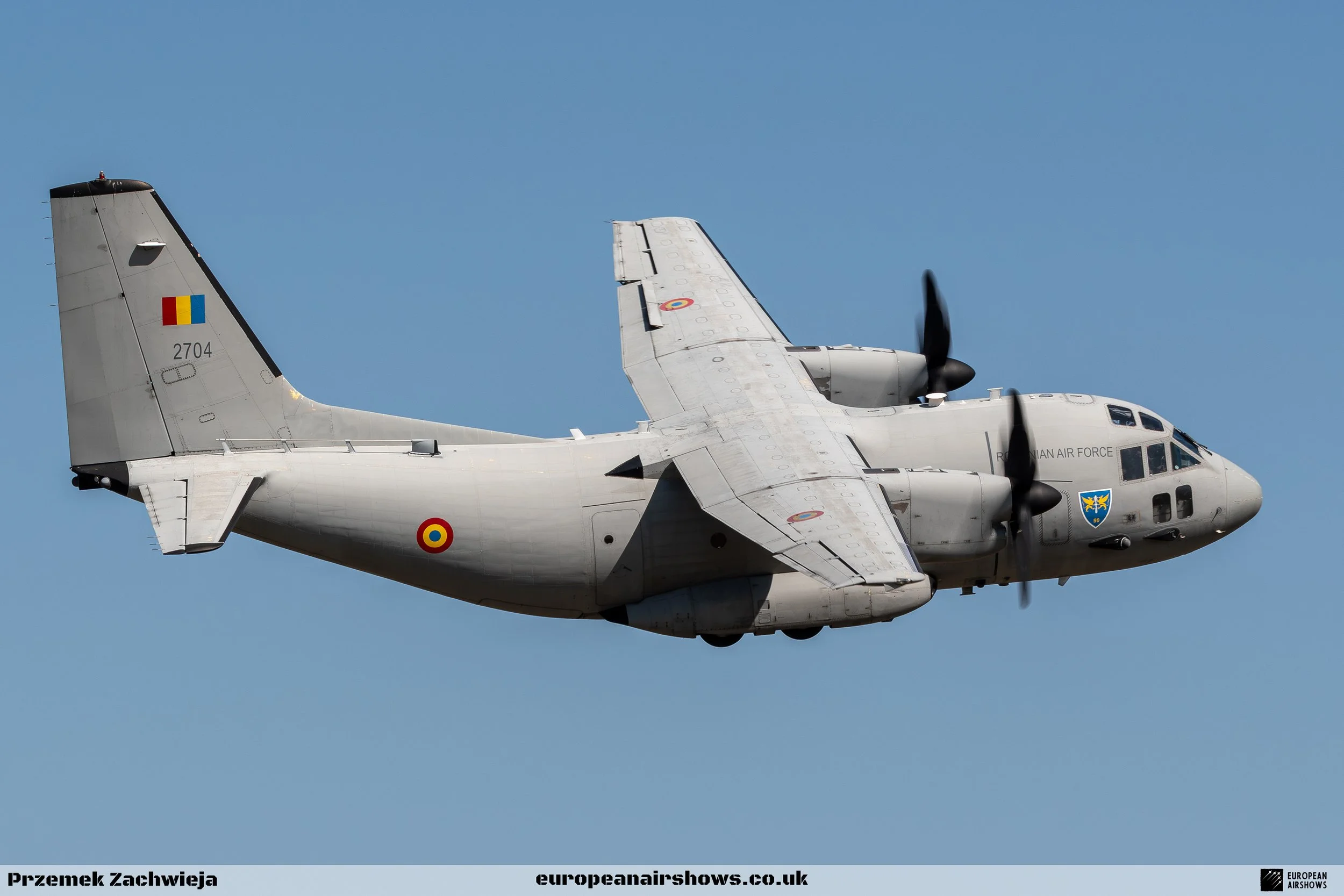
The tactical transport fleet was shown to excellent effect. The three-ship of Leonardo C-27J Spartans that featured in the opening flypast soon returned, breaking into individual flypasts with one aircraft performing a solo handling demonstration. Tight, constant-banking orbits, steep tactical approaches, and brisk go-arounds gave a convincing demonstration of why the 90th Airlift Base at Otopeni keeps its seven Spartans busy with everything from humanitarian relief to special operations support. Later in the day, a Spartan led two IAR 330 SOCAT gunships across the field before the SOCAT peeled off into an aggressive golden-hour solo, one of the most dynamic displays of the weekend.
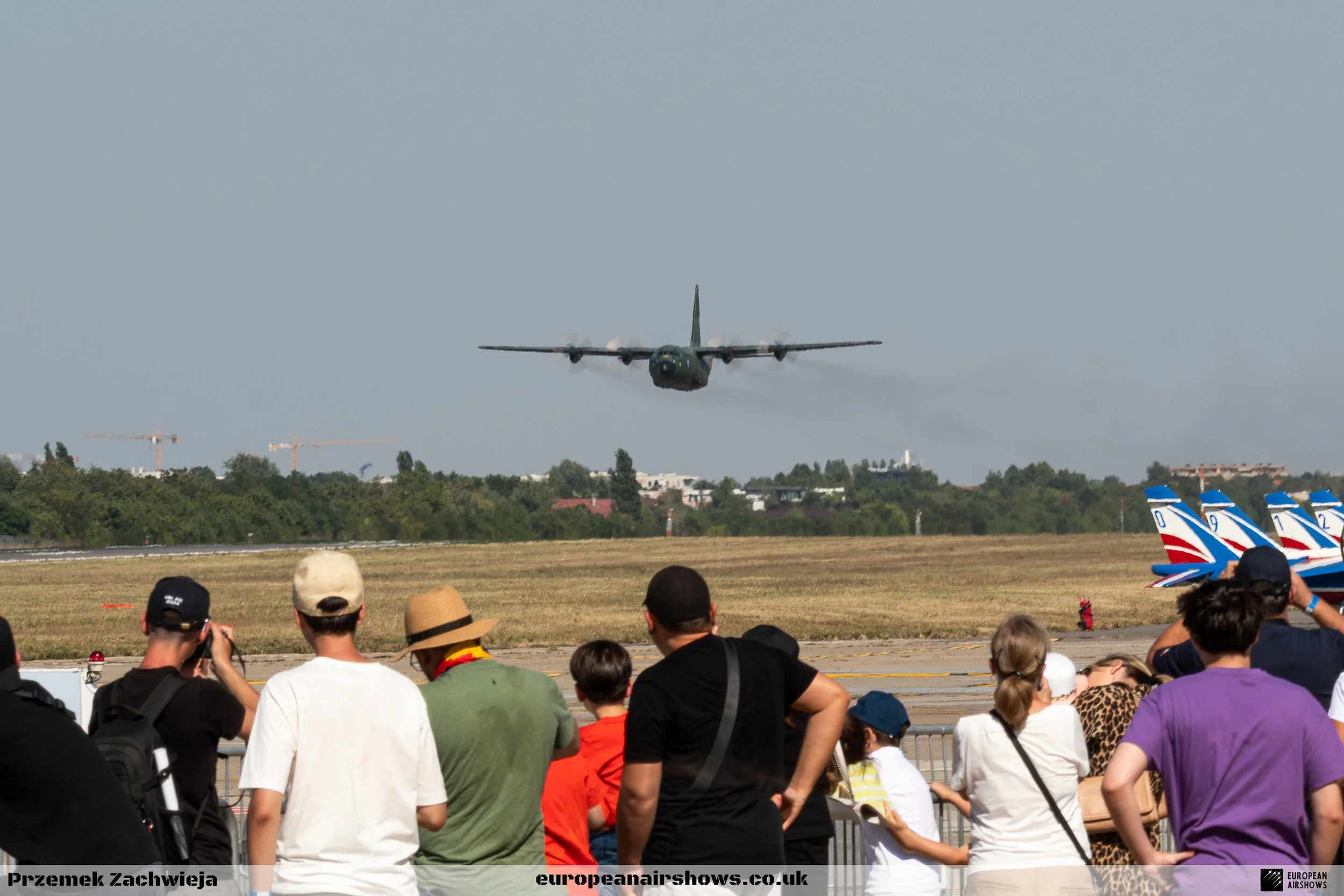
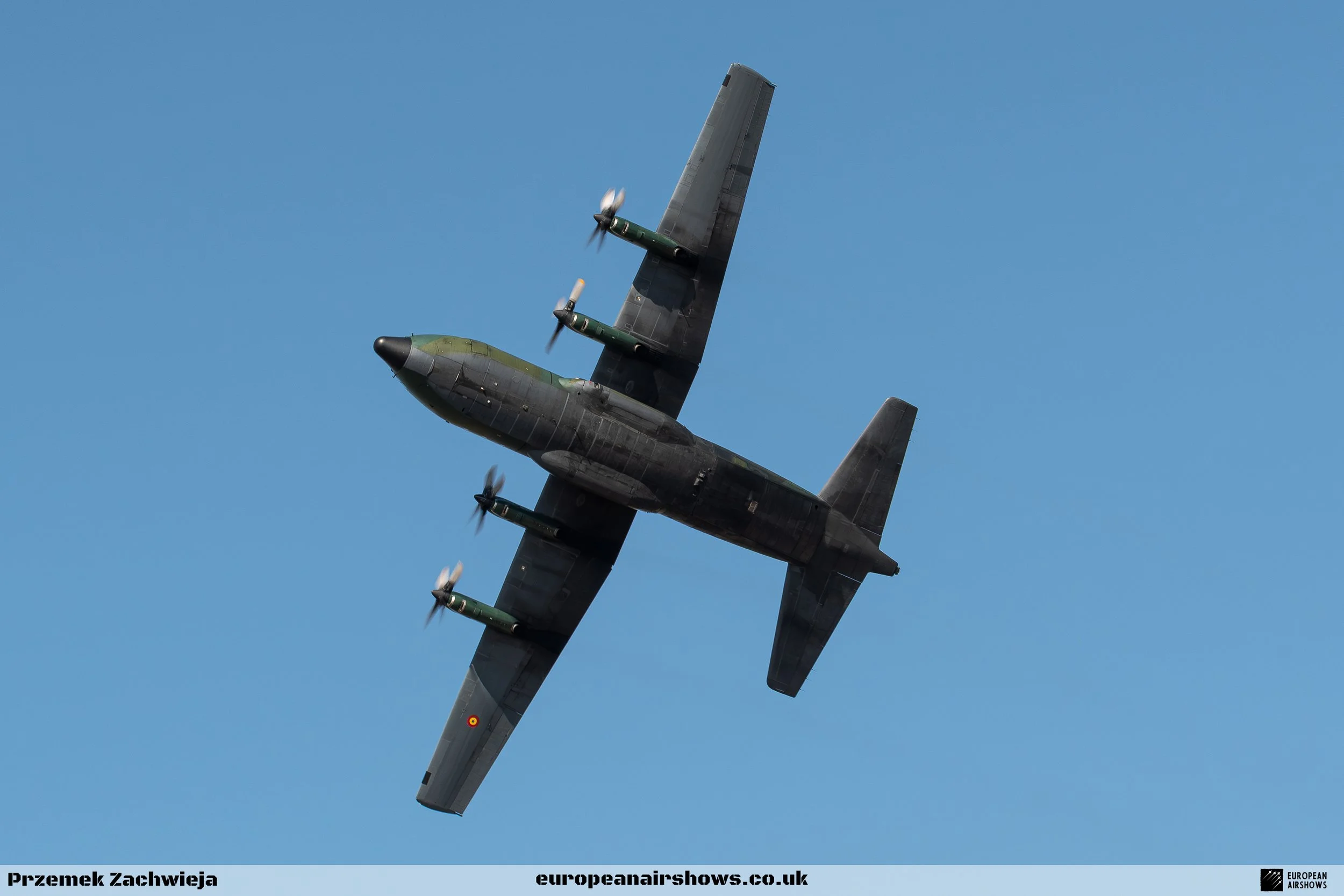
The Lockheed C-130B Hercules—a veteran B-model in its distinctive green-and-brown camouflage—was equally prominent. Romania operates four Hercules (two B-models and two H-models), all based at Otopeni alongside the Spartans. For its first outing, the aircraft dropped a mixed stick of military and civilian parachutists, one trailing a huge Romanian flag that drew a roar from the crowd. Later, it returned for a solo handling sequence of low passes and tight, low-level turns that belied the age of the type, a survivor of Romania’s original Hercules fleet dating back to the 1990s.
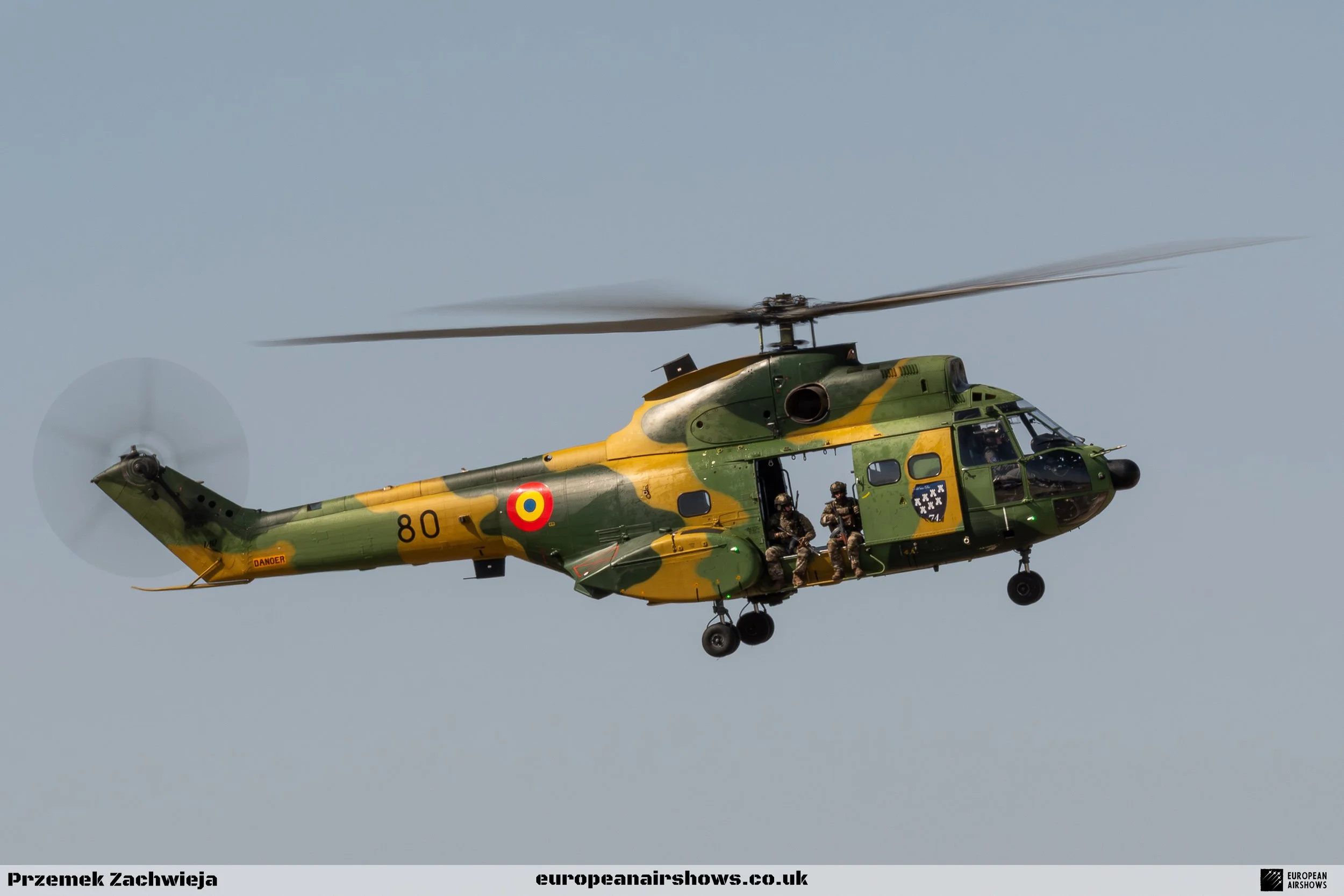
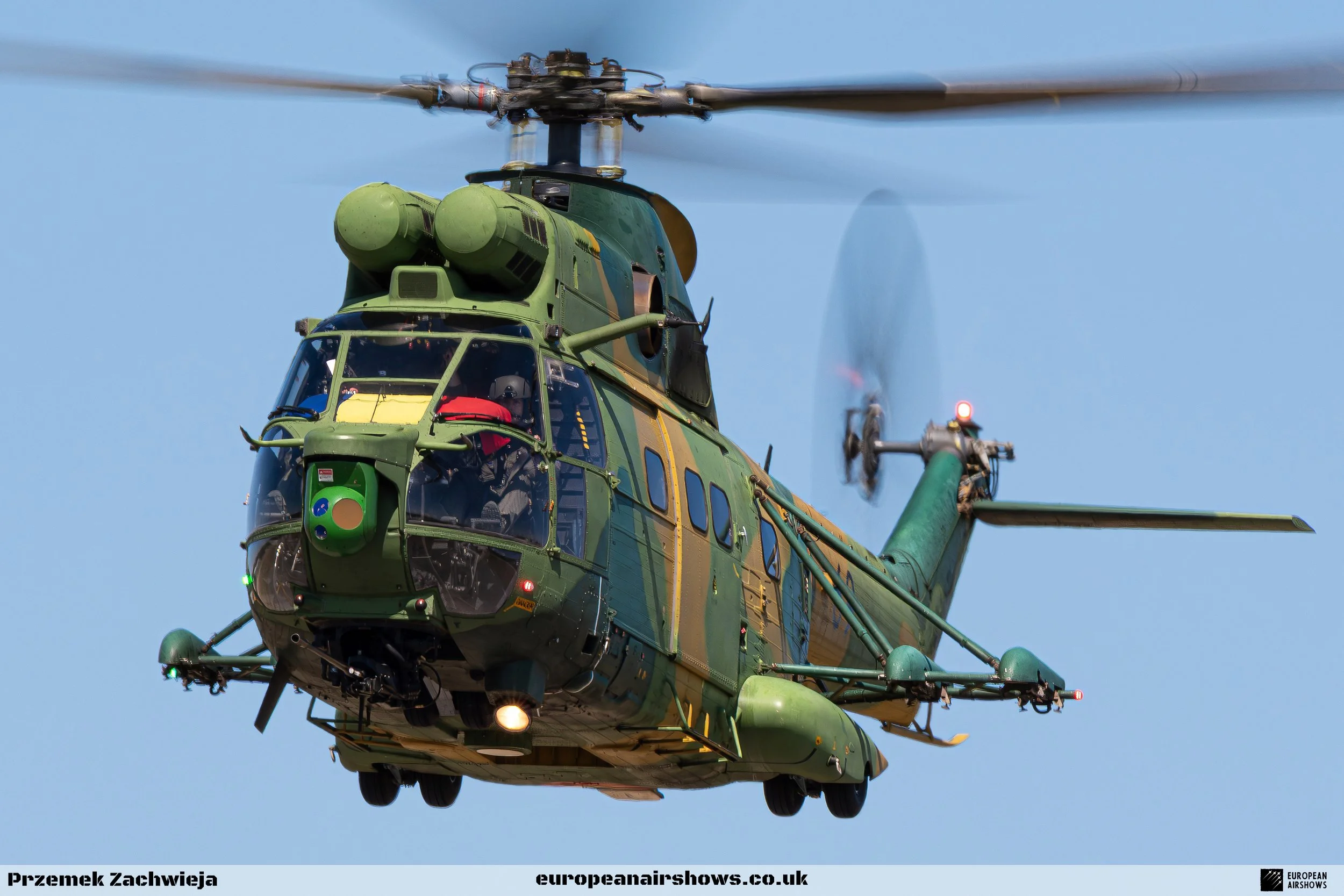
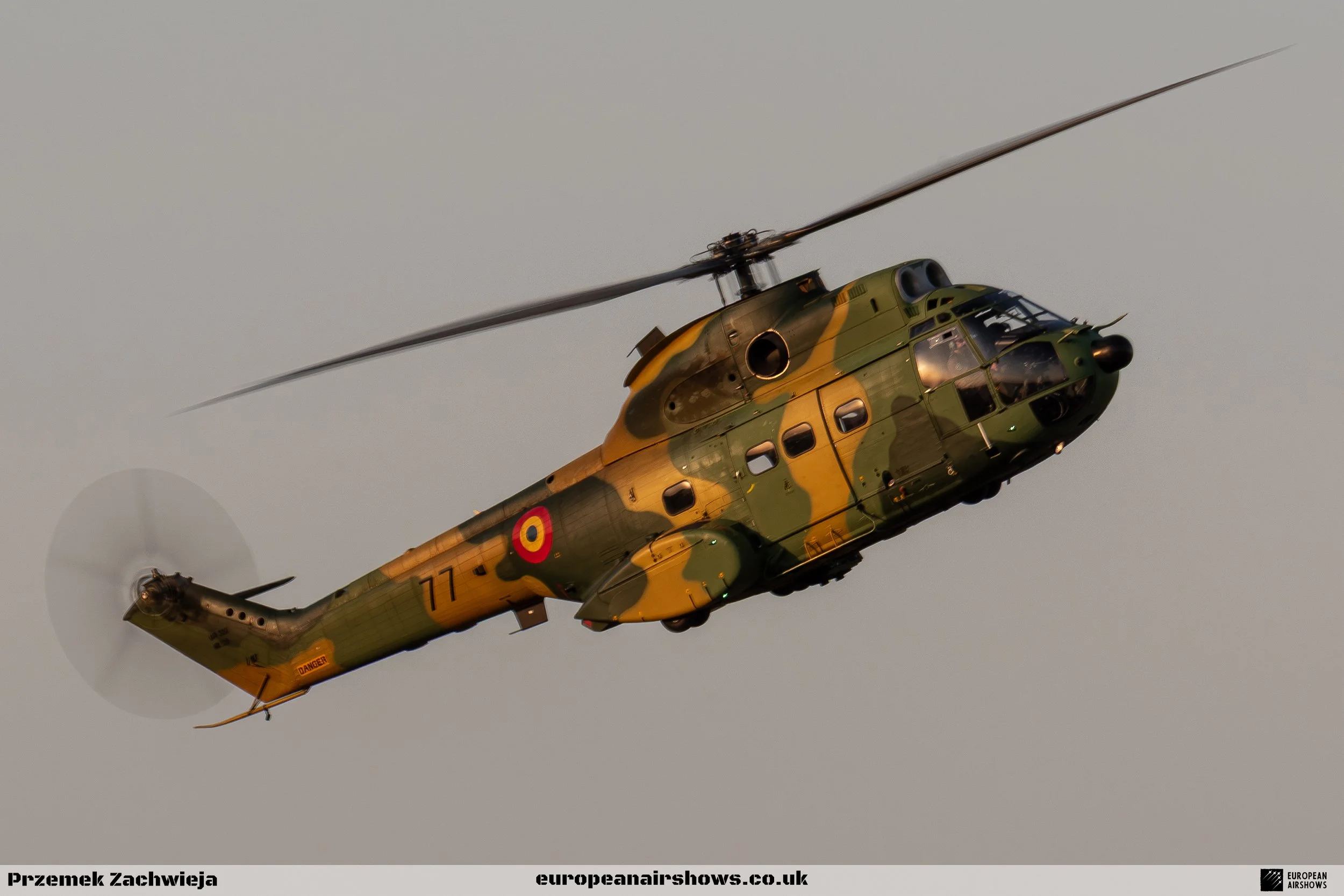
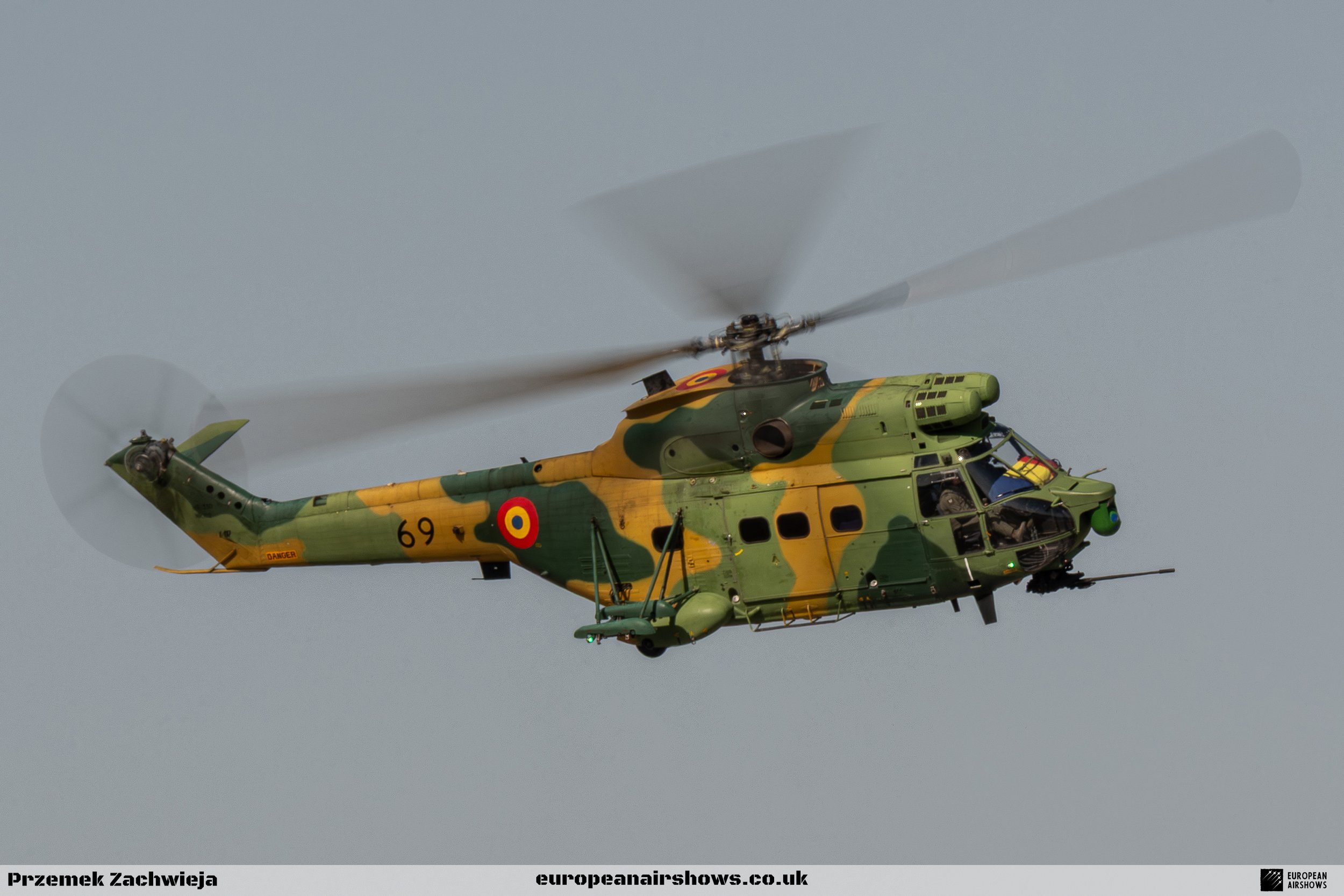
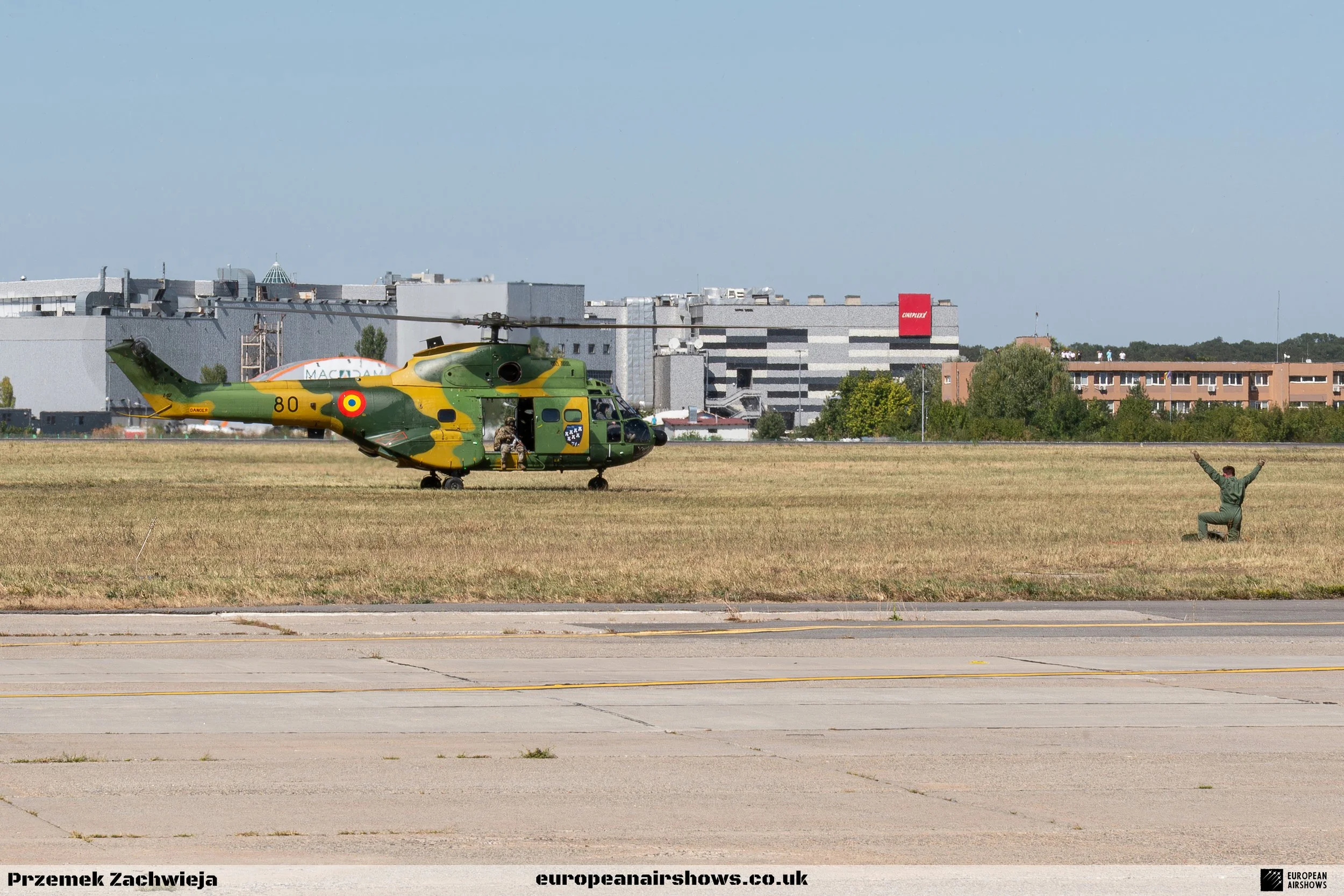
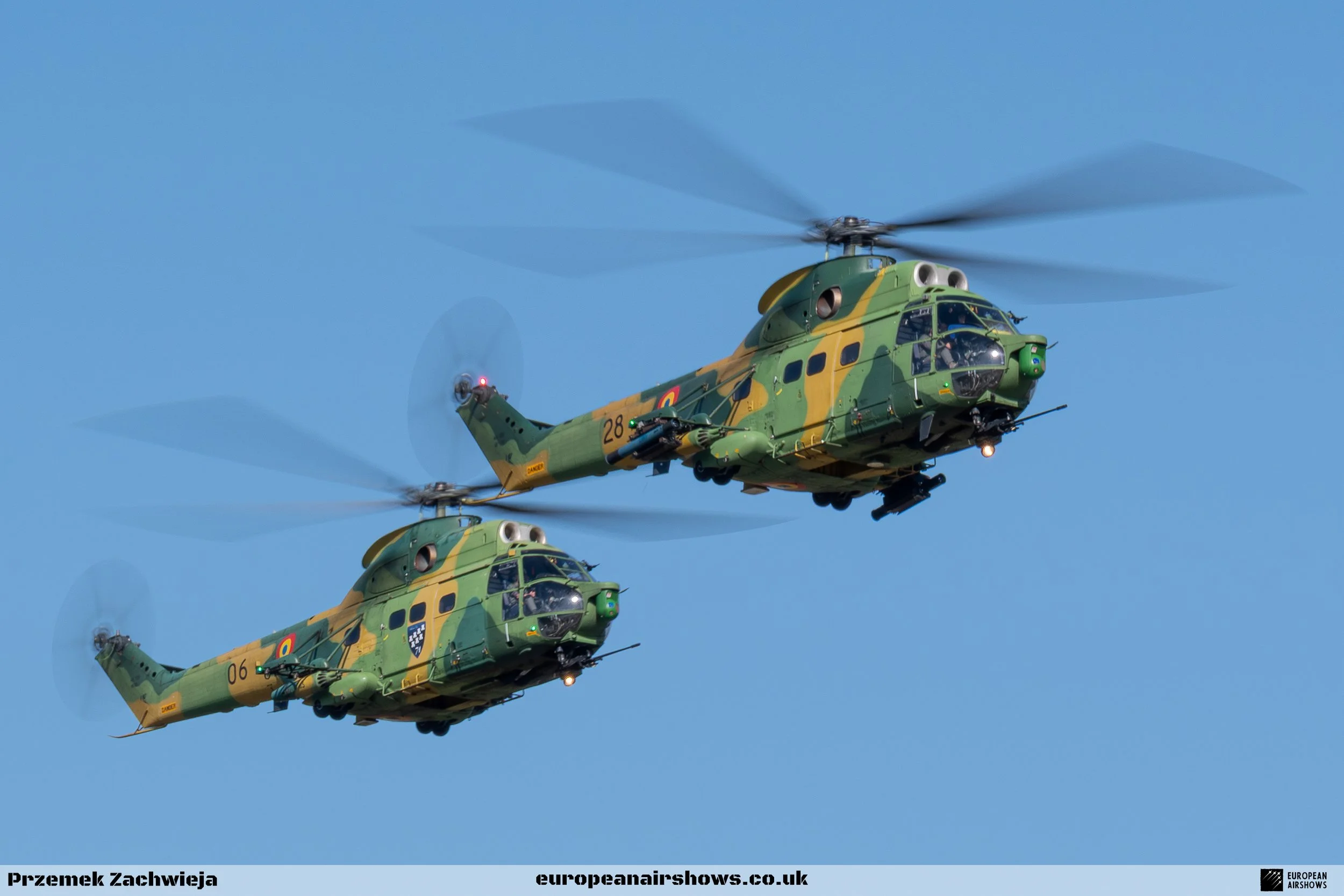
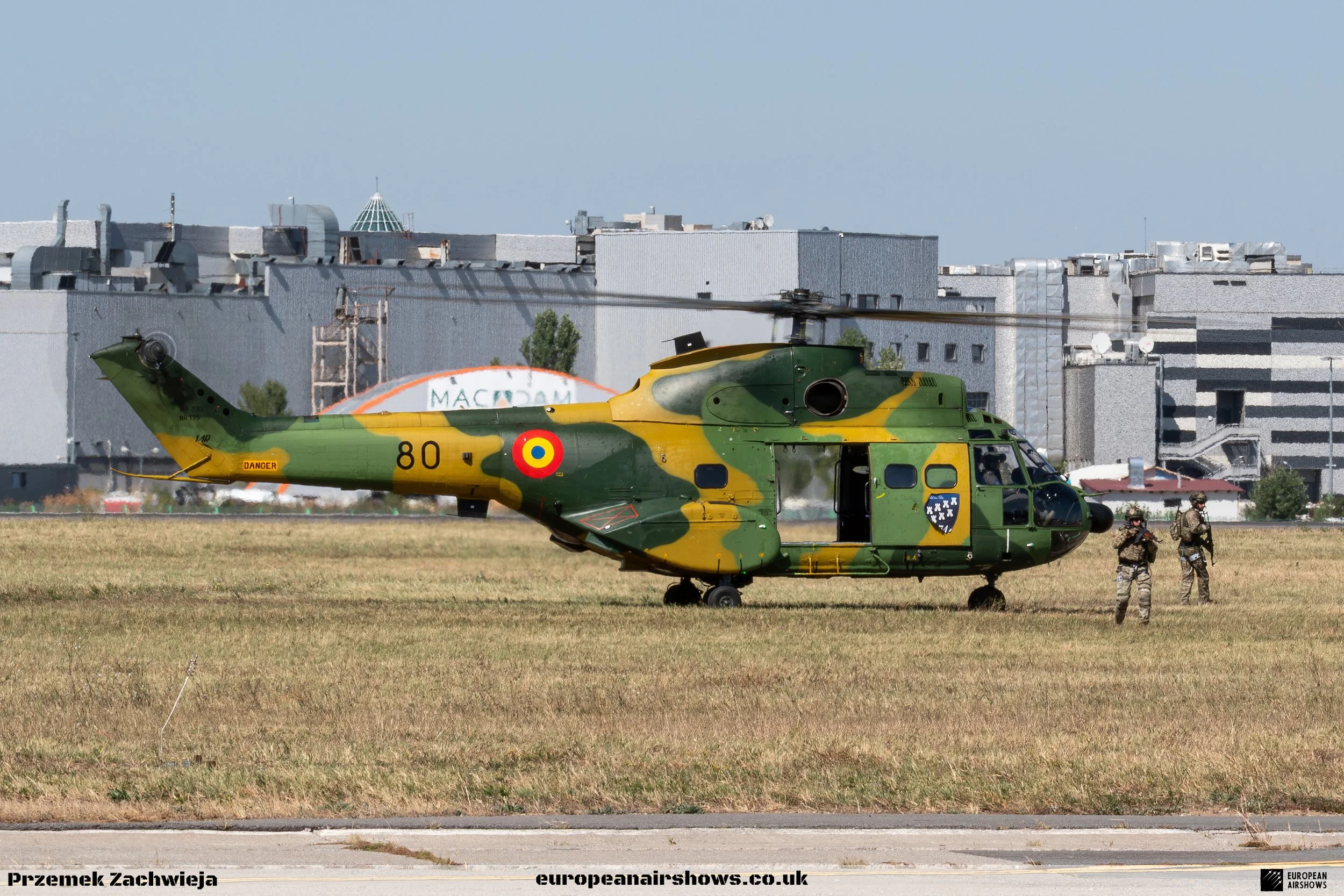
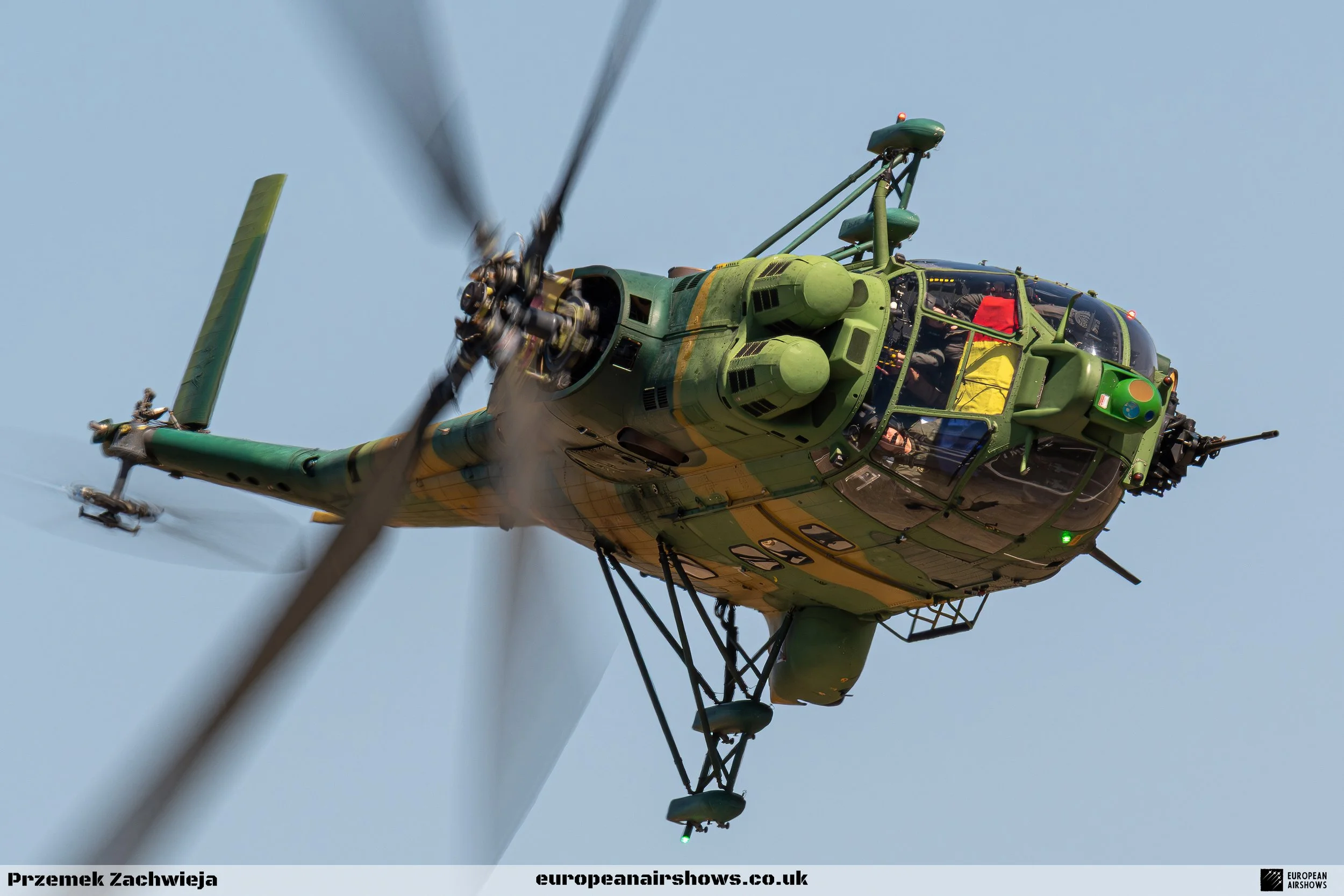
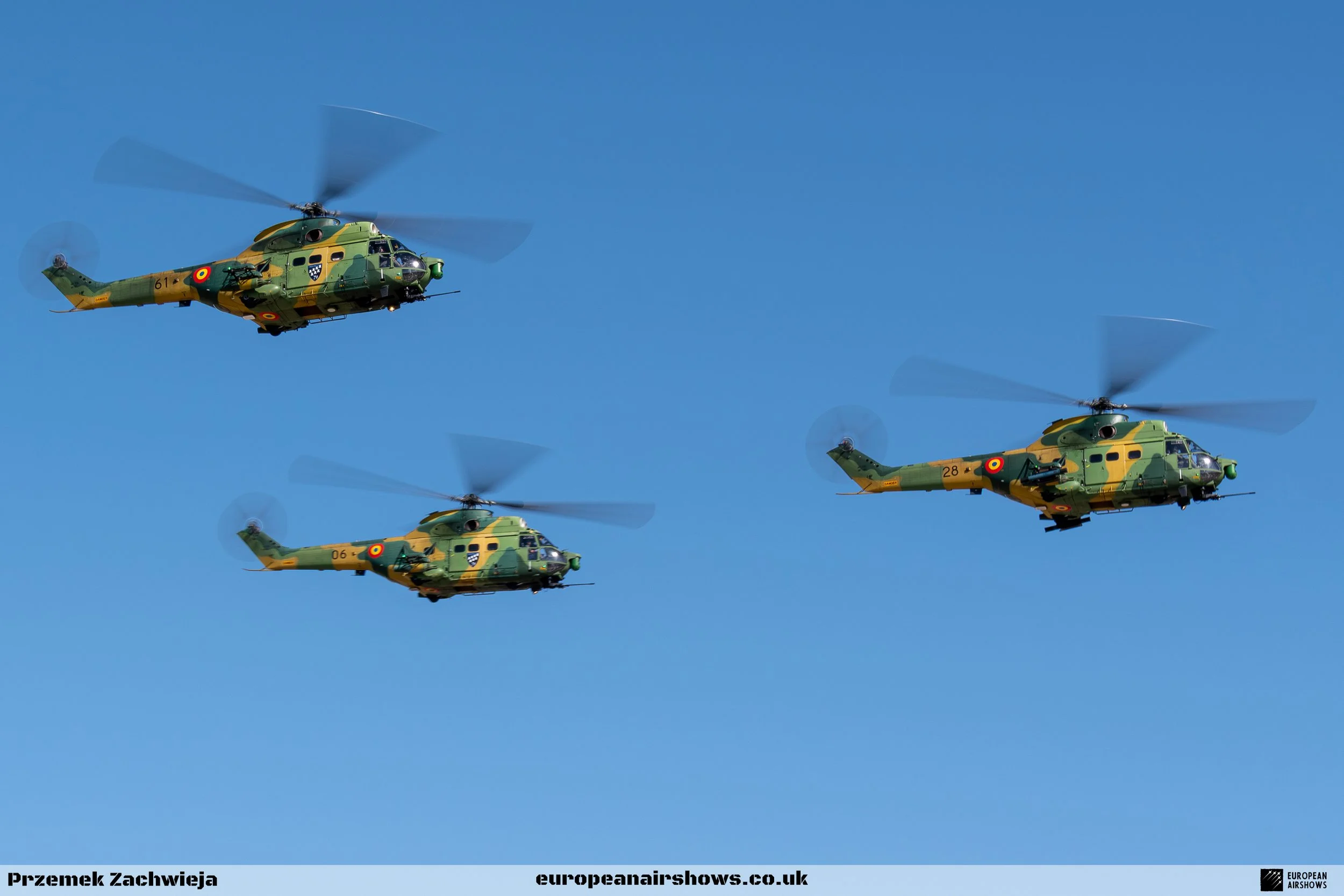
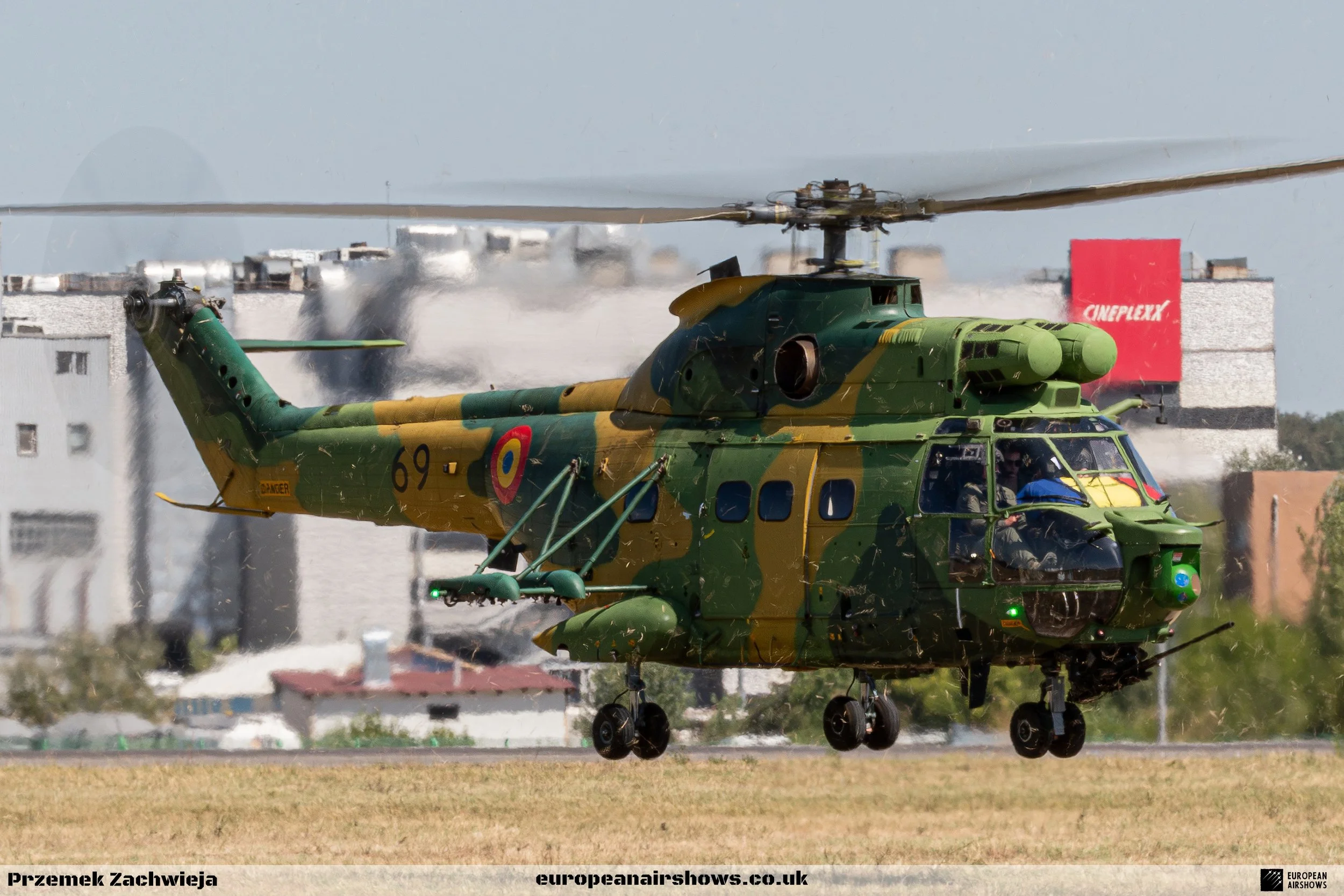
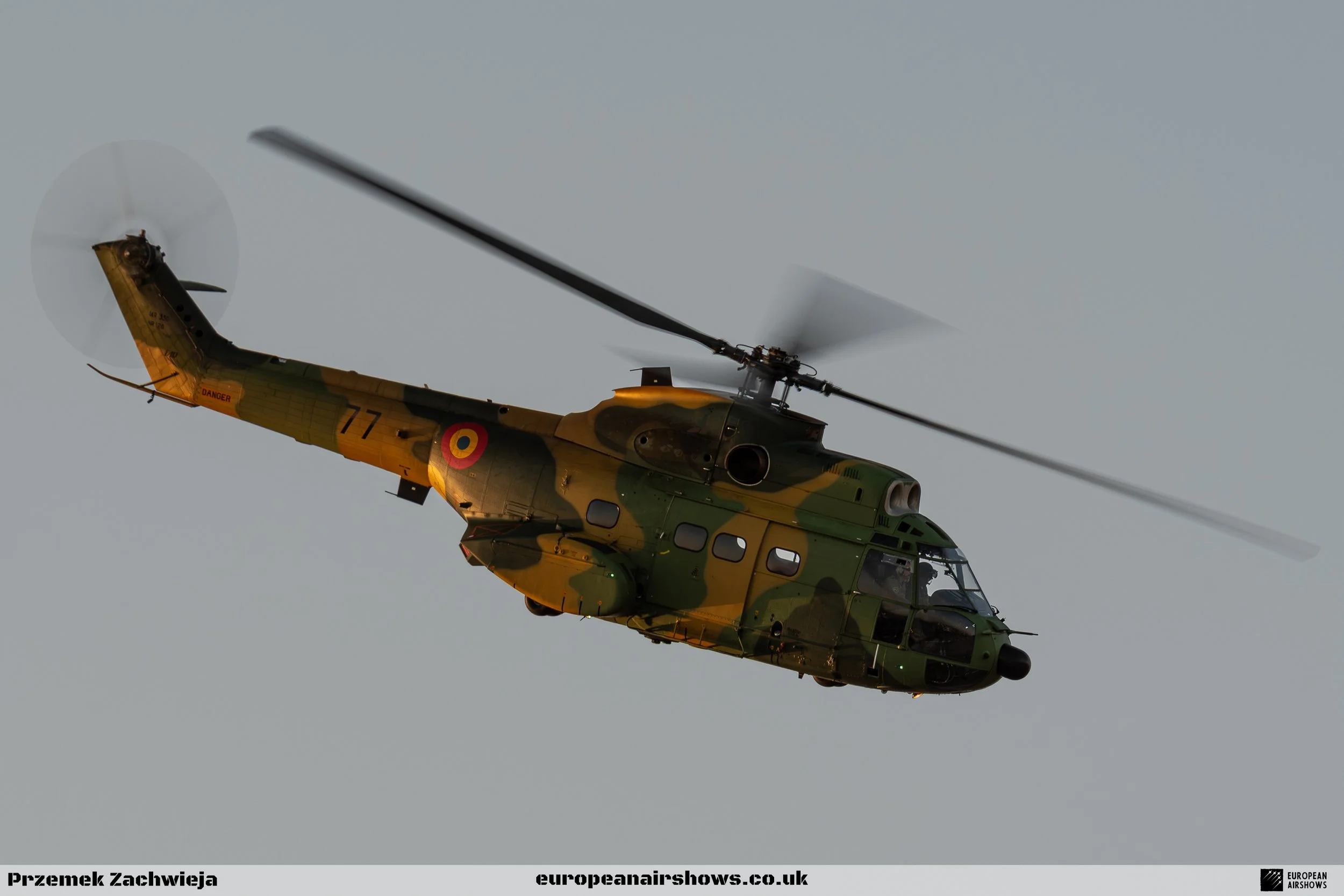
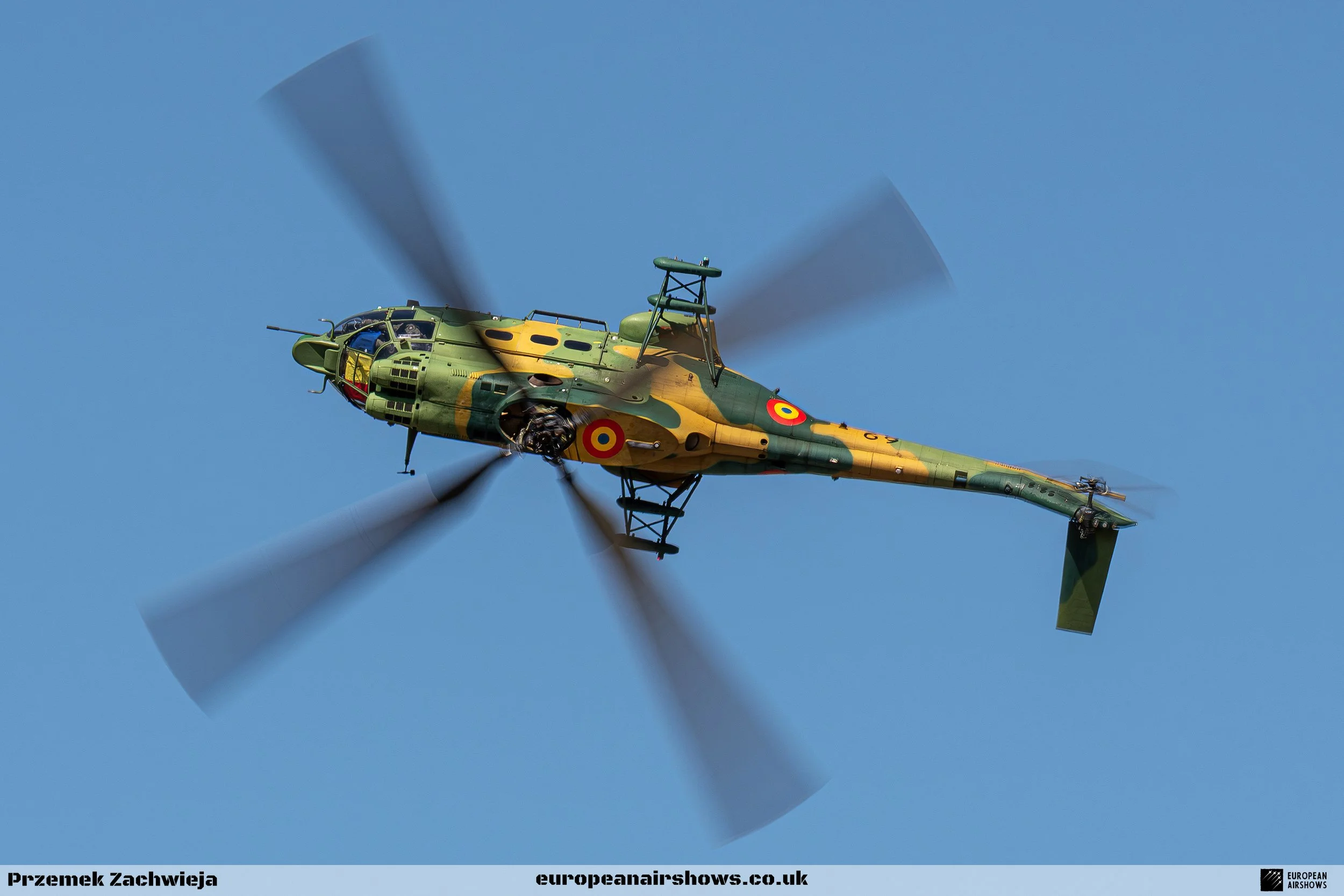
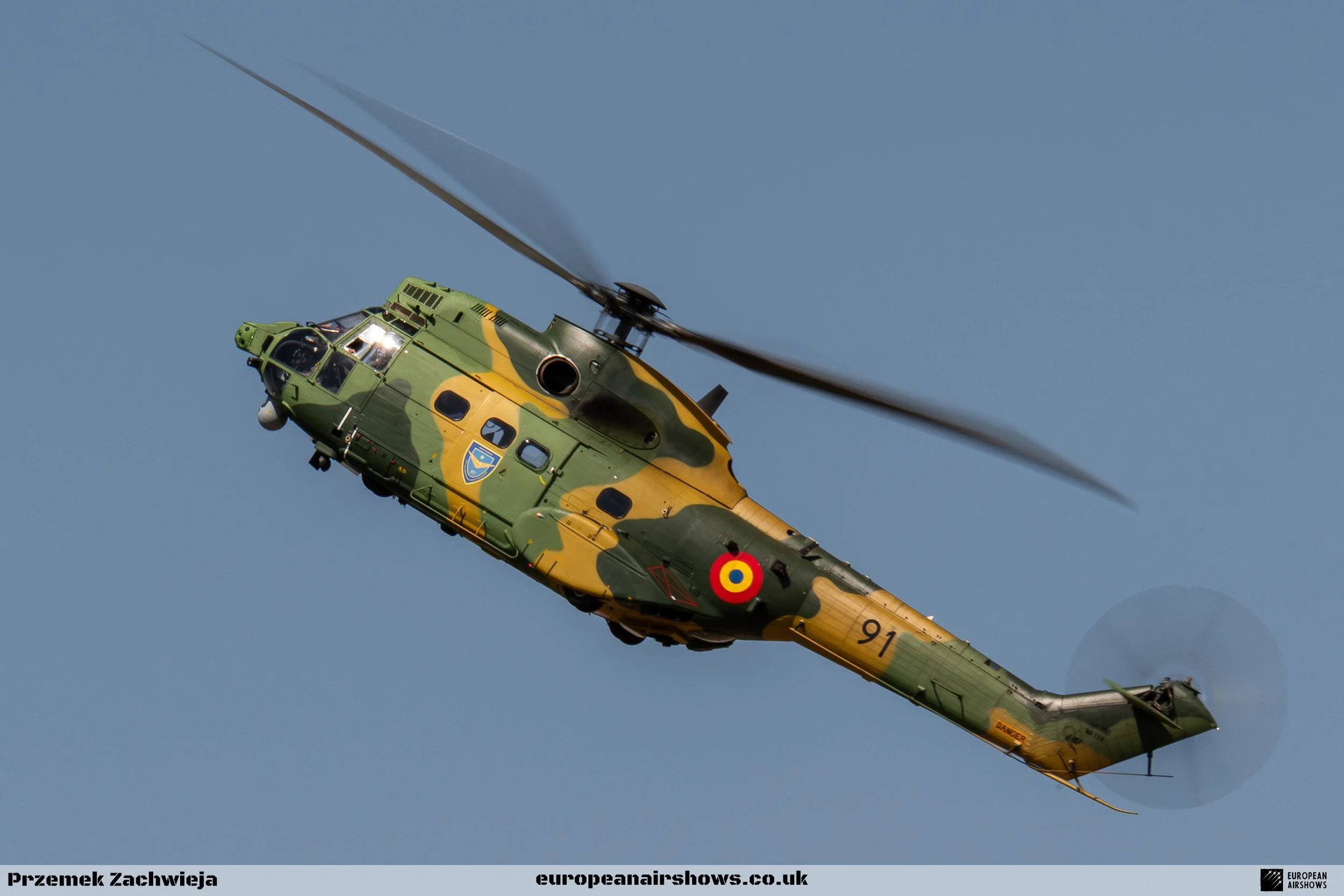
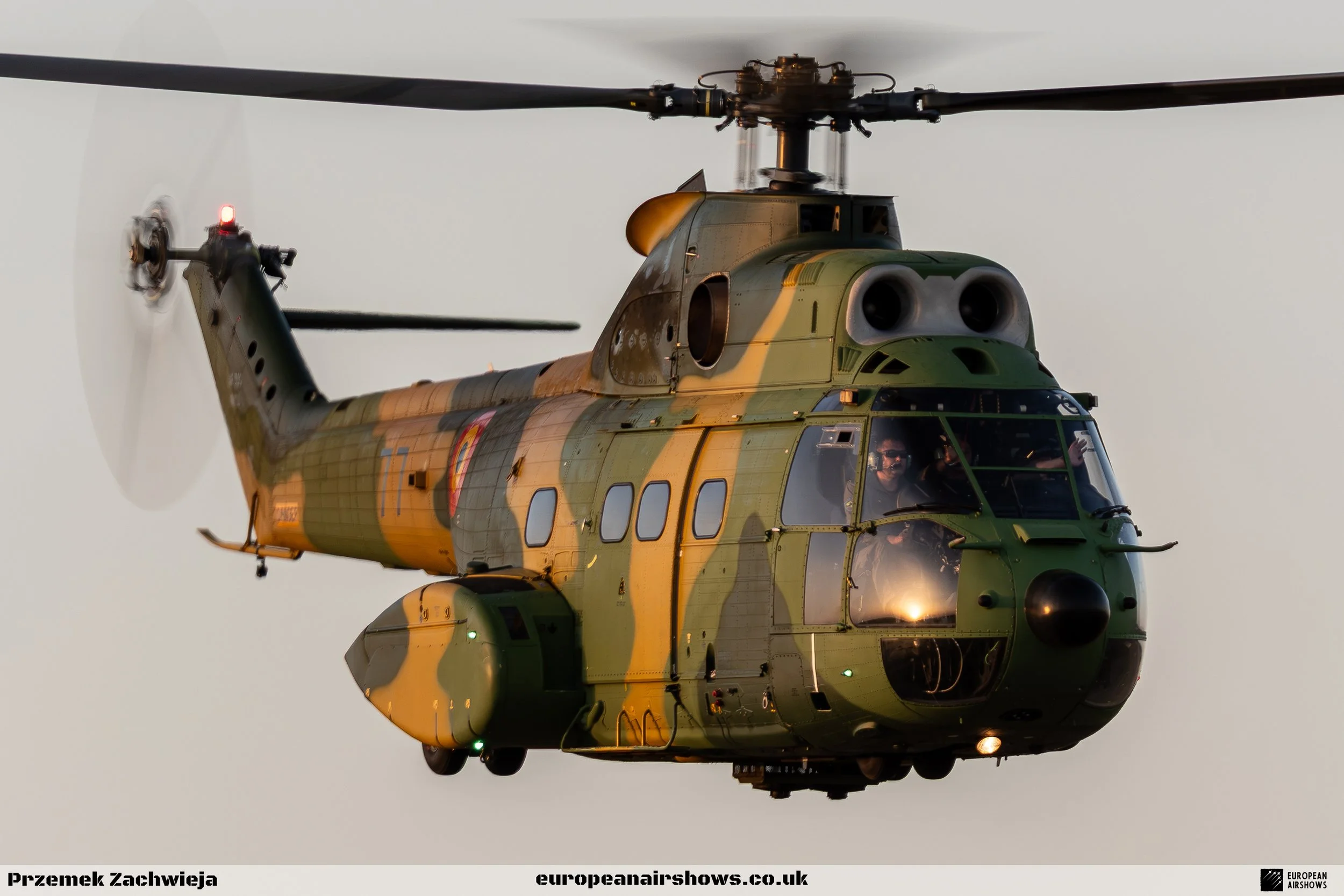
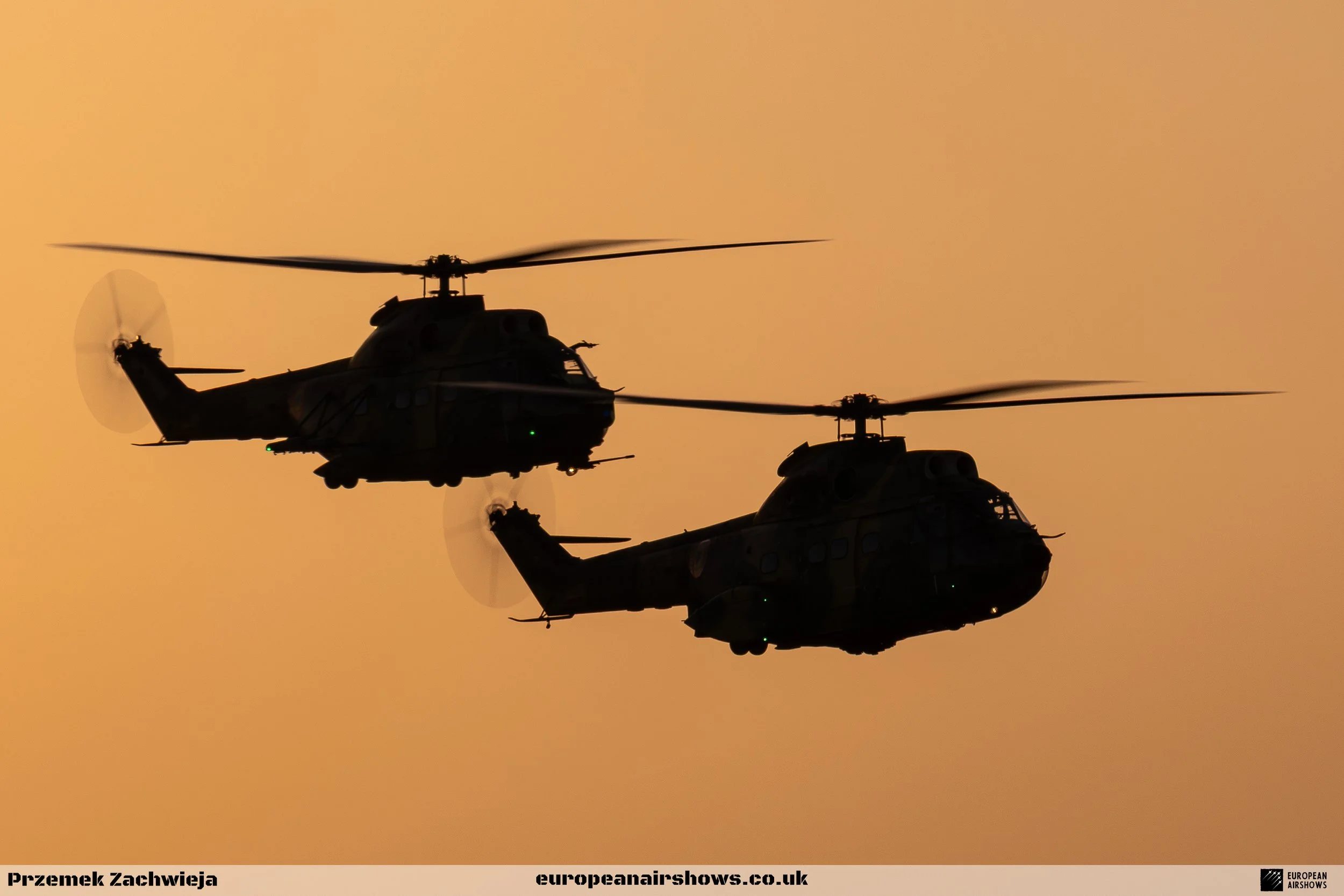
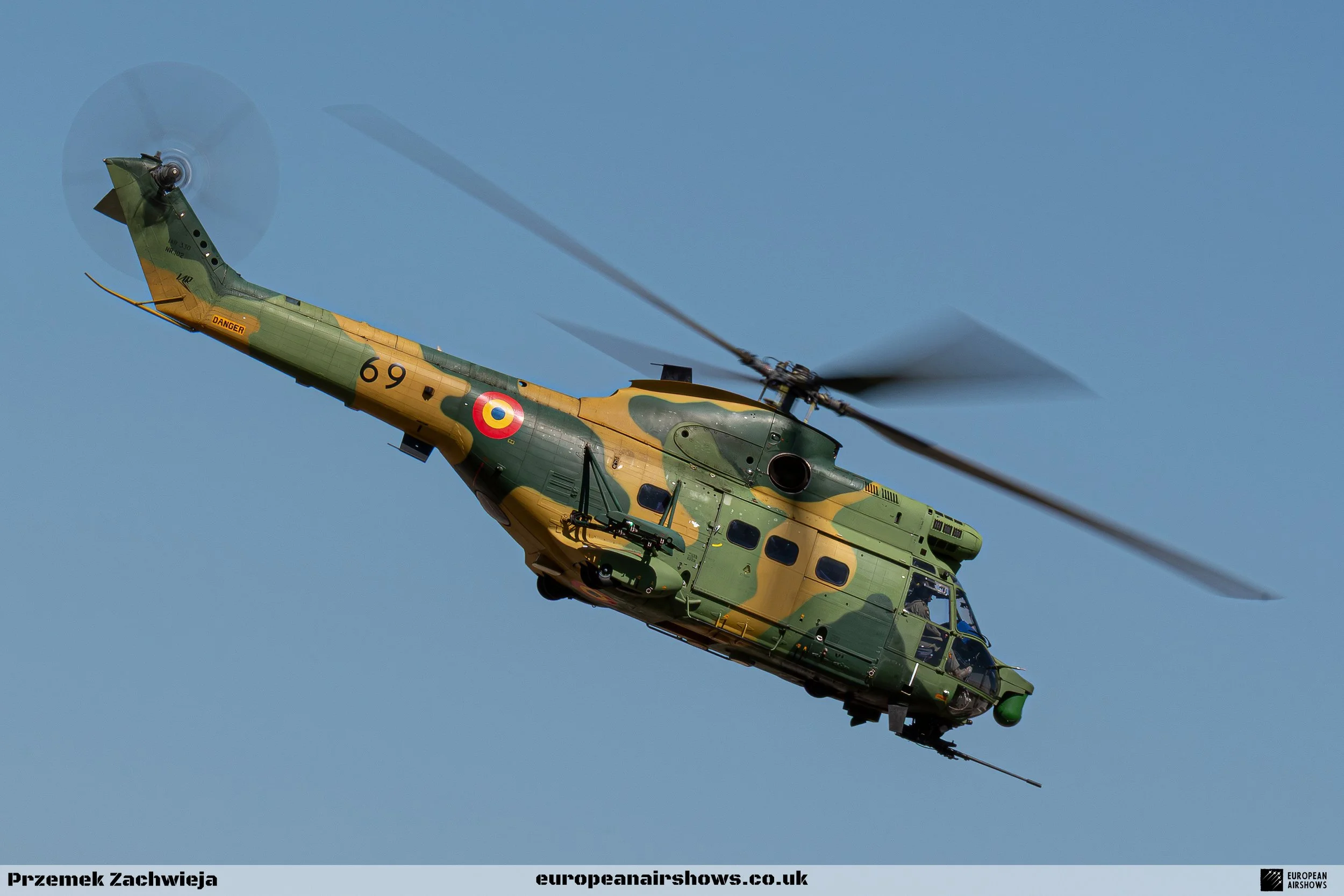
Rotary-wing power came from the IAR-330 Puma, a design with deep national roots and decades of service history. Eleven examples in multiple versions had already impressed in the mass flypast, but the helicopter’s solo performances were even more striking. A typical three-ship arrival ended with one aircraft breaking away to perform a close, aggressive routine that included steep pedal turns, quick-stops, and near-inverted banks, a vivid reminder of how confidently the Puma is flown in Romanian service. Over the weekend, all major versions were represented: the IAR 330L transport model, the upgraded IAR 330M, and the heavily armed IAR 330 SOCAT gunship with its FLIR turret and rocket pods.
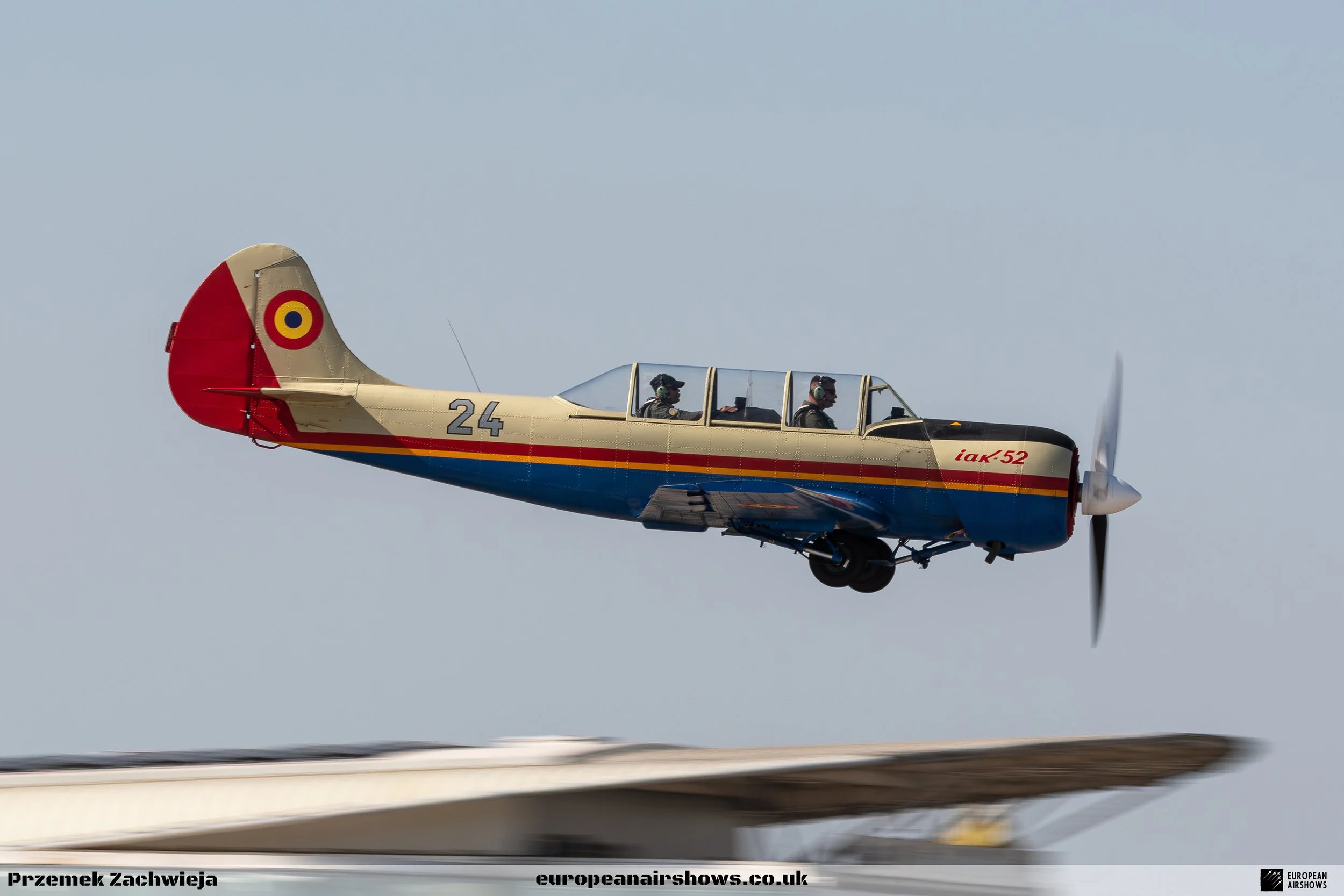
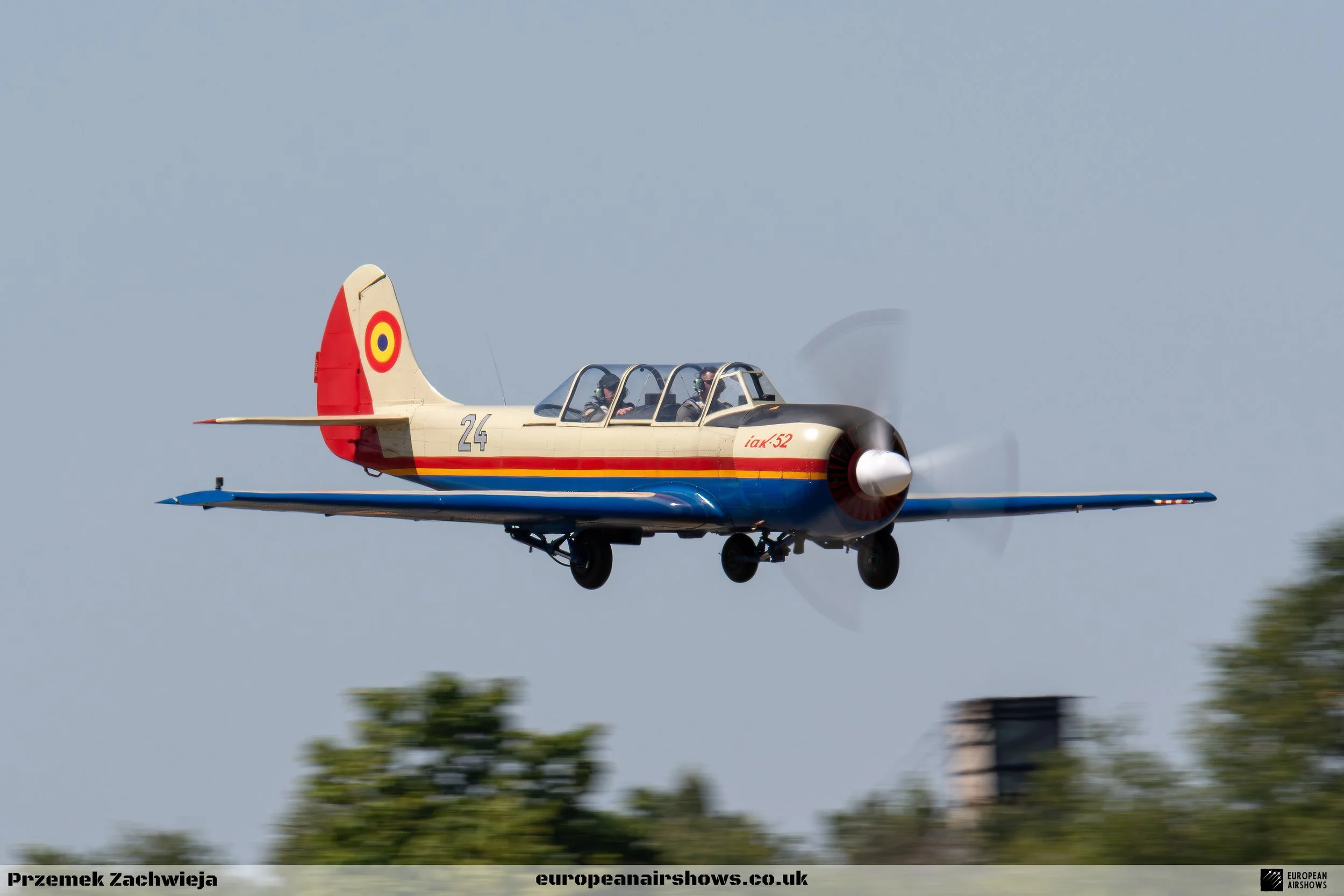
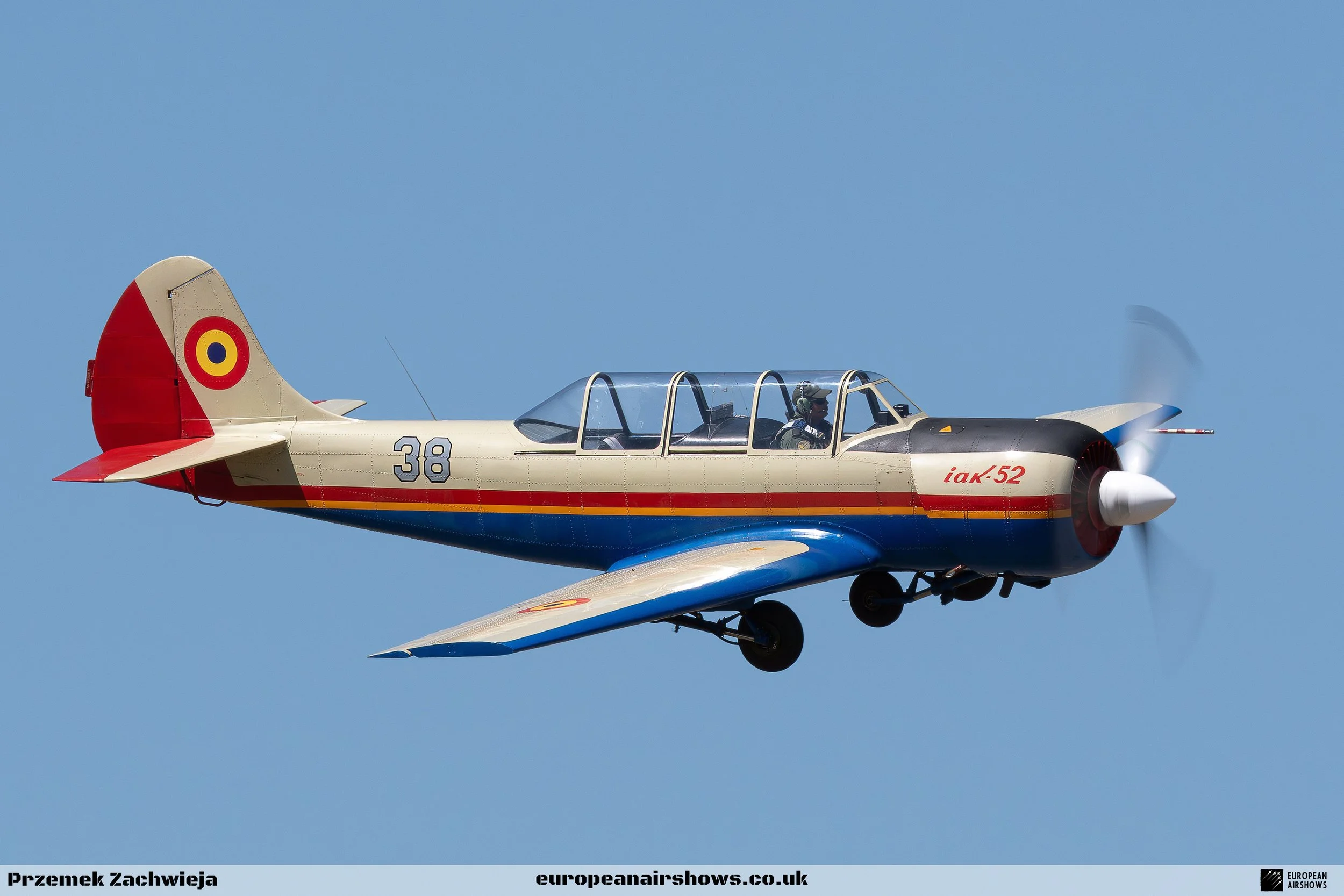
Training heritage was also strongly represented. A four-ship of IAK-52s, from Boboc Air Base and flown by active RoAF instructors, offered a rare chance to see the type still in military use. These aircraft, operated primarily by the Boboc training base, flew a varied routine of formation passes, two-versus-two opposition manoeuvres, half-loops and solo figures. At one point, a pair traced a heart shape in the sky—less visible without smoke but appreciated for the effort. Later, the four-ship linked up with the civilian Aerobatic Yakers to form a larger Yak-52 package, before each element peeled away for solo farewells.
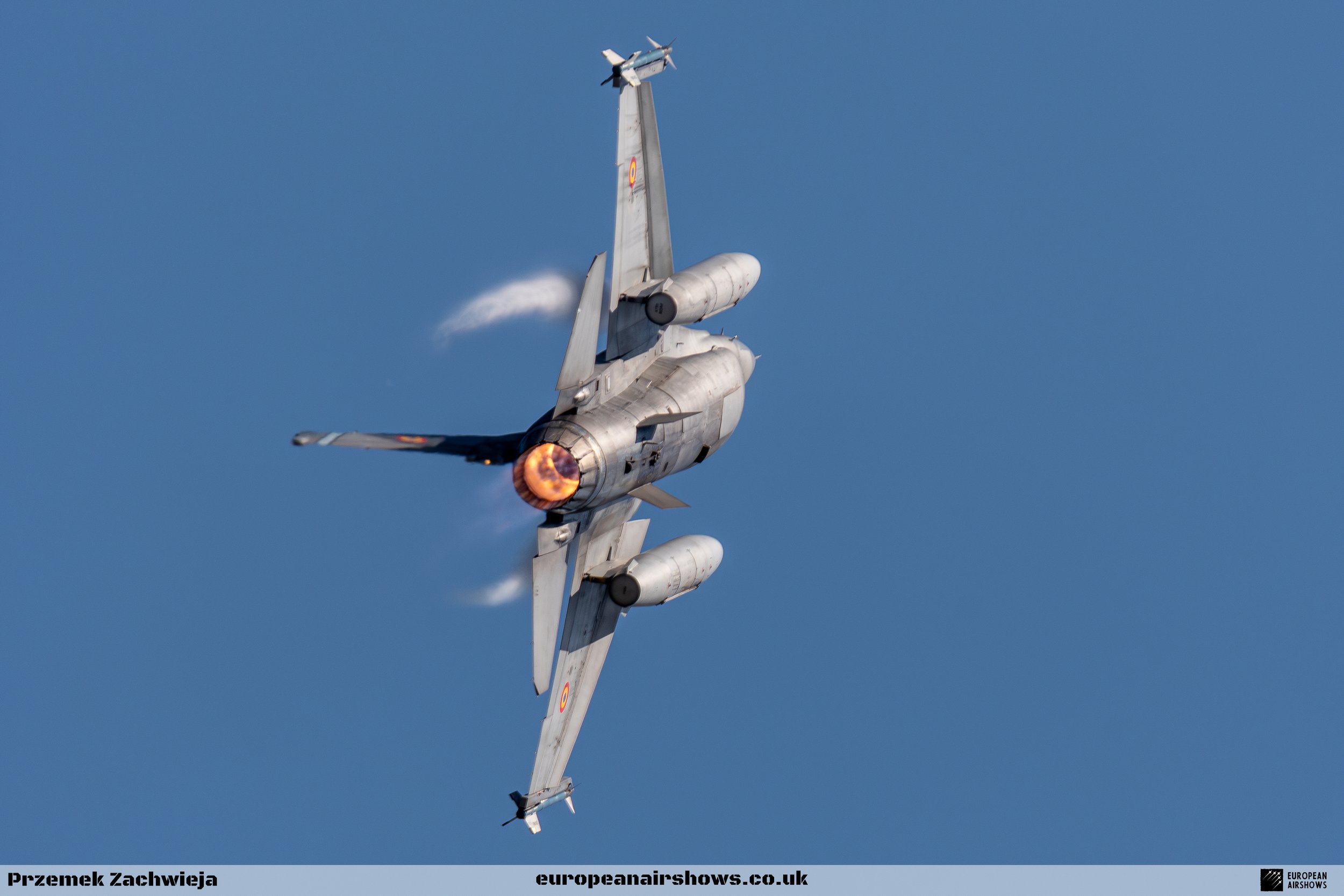
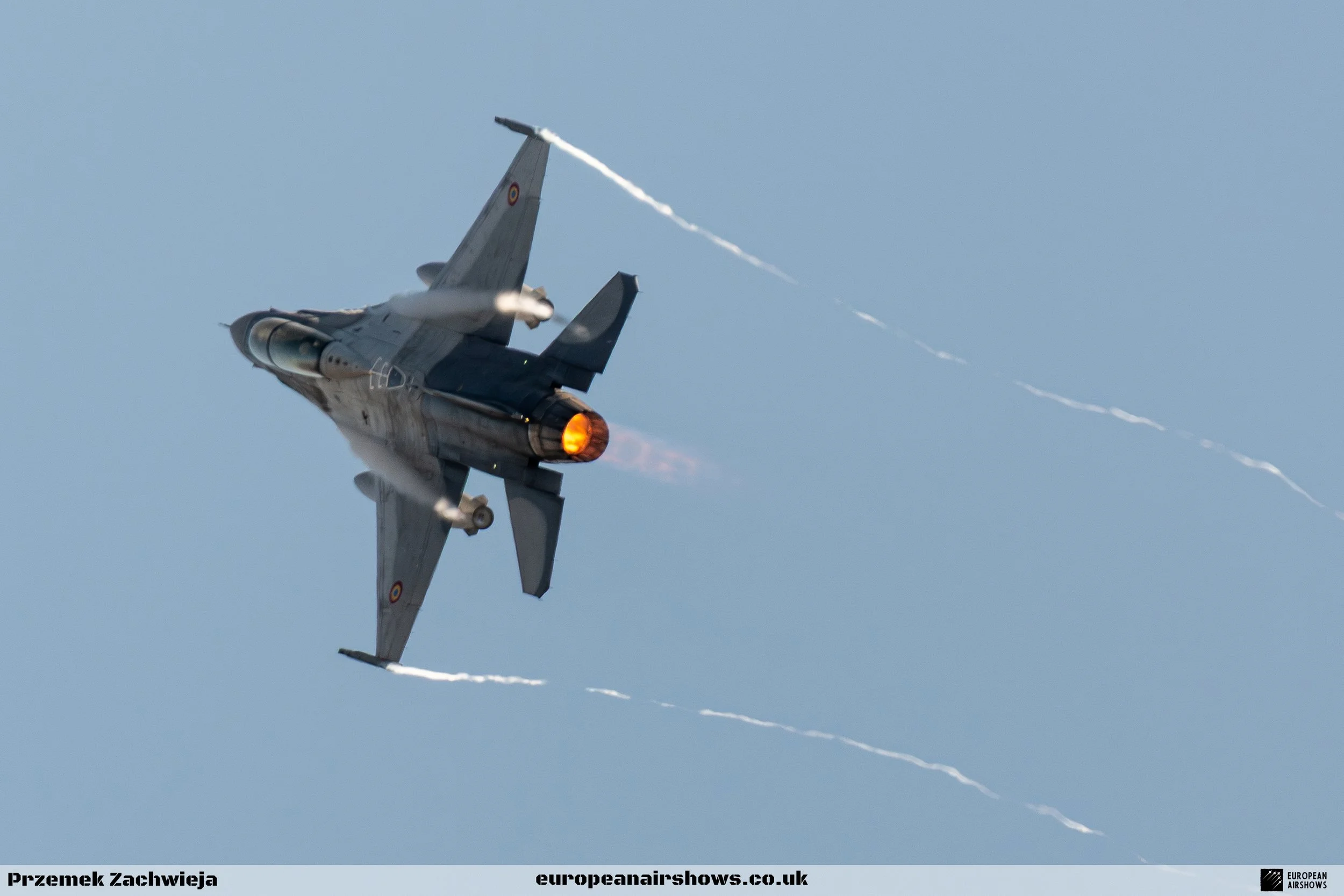
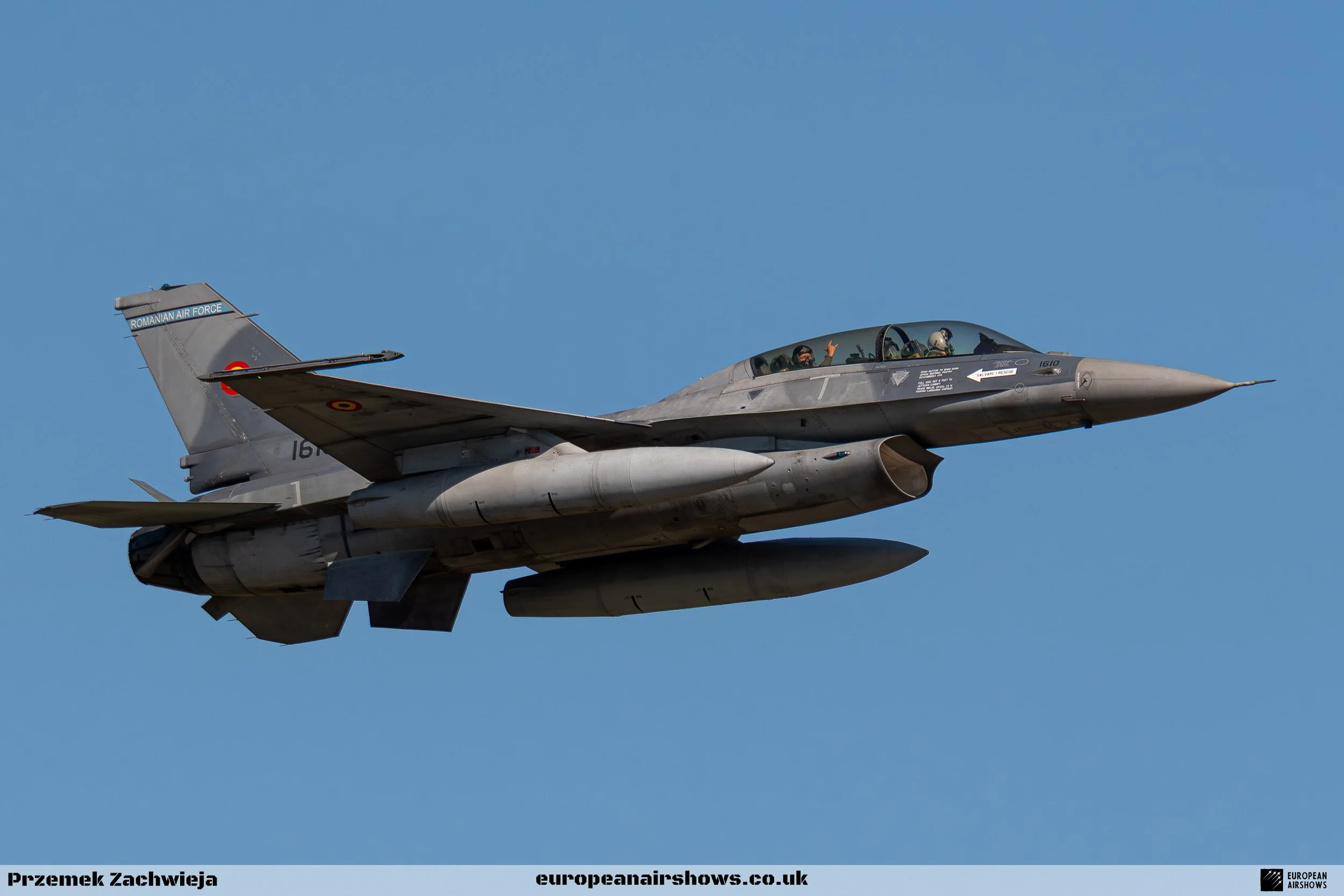
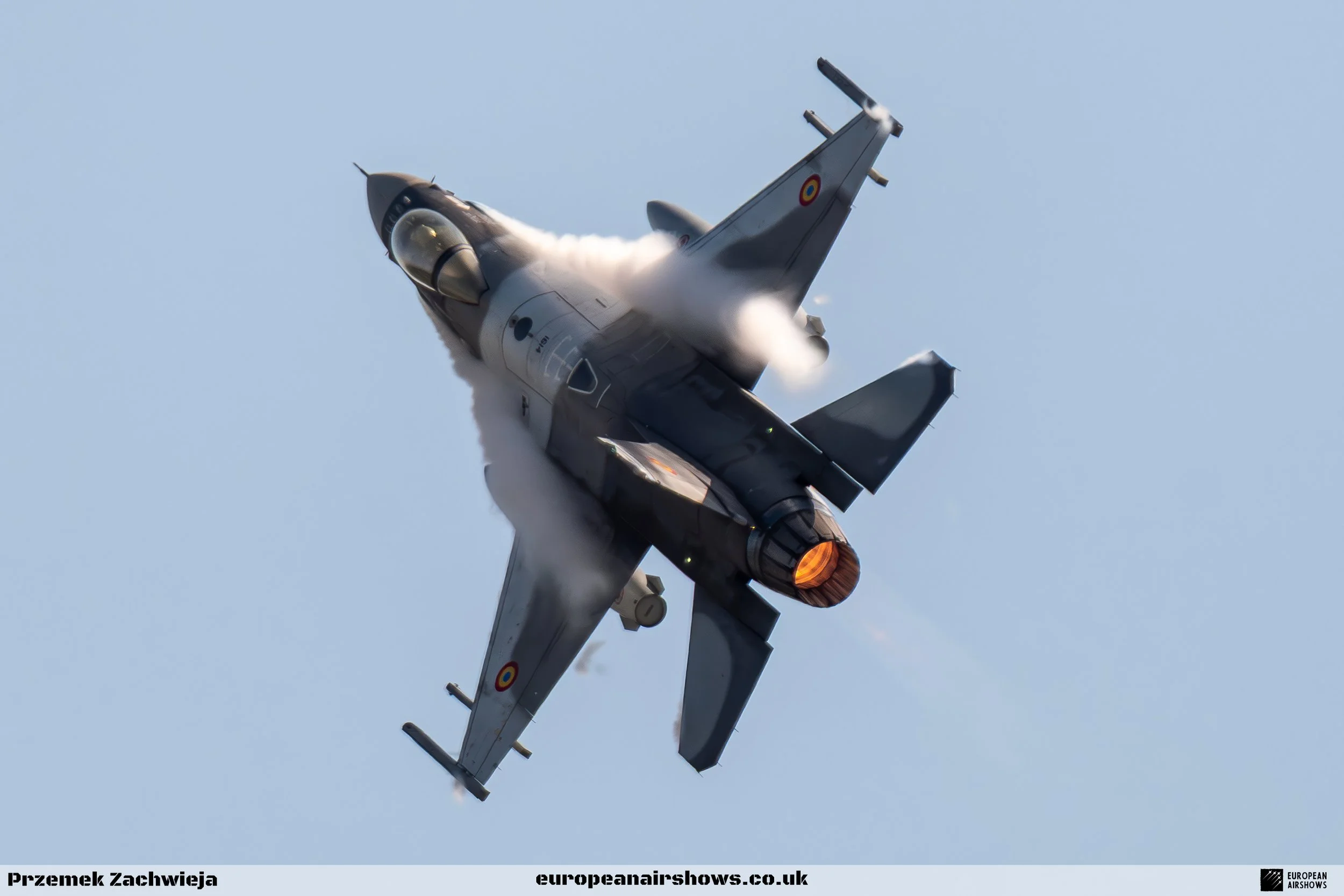
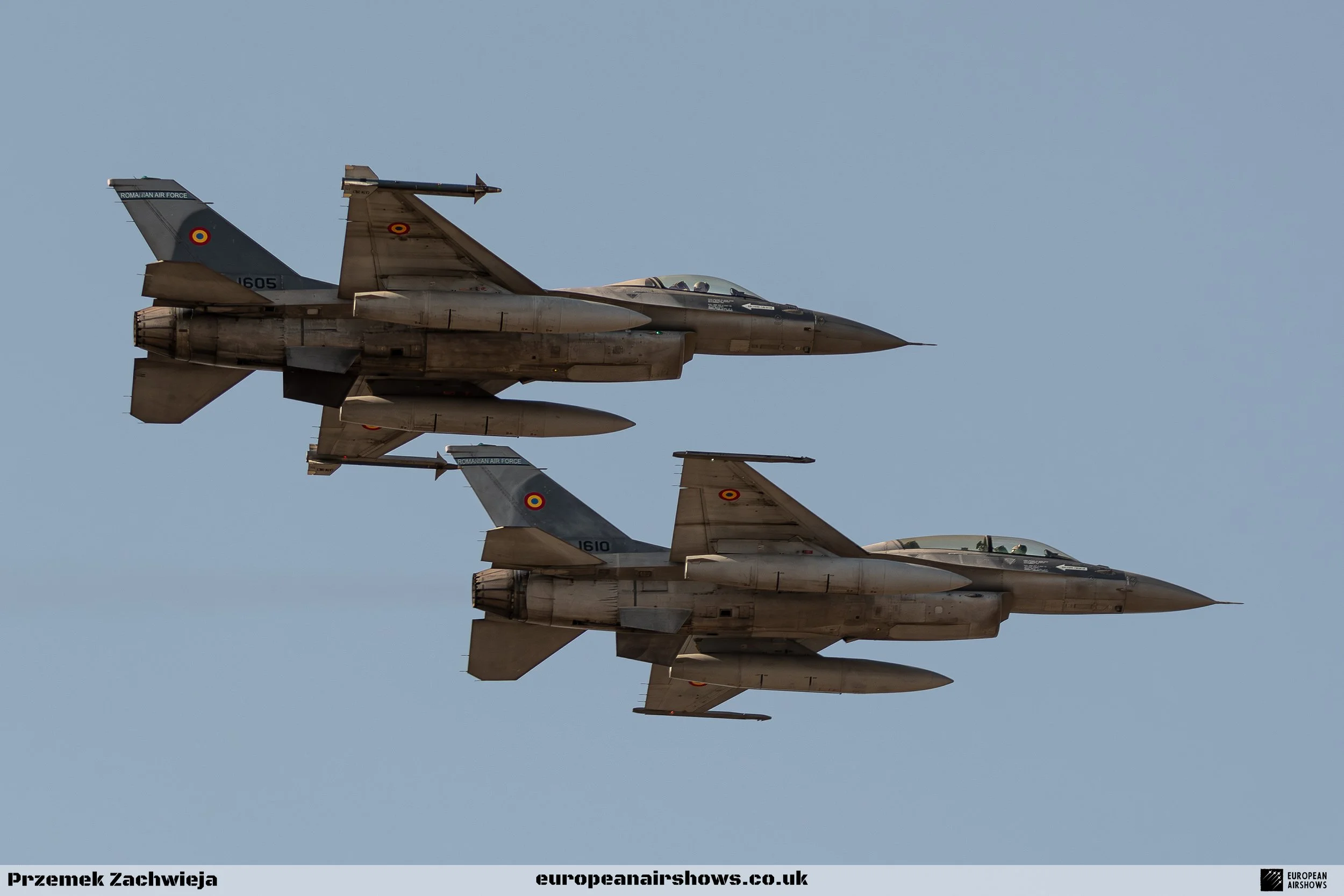
Fighter power was, naturally, the centrepiece. Beyond their starring role in the mass flypast, the F-16AM/BM Fighting Falcons flew a noisy, aggressive two-ship tactical demonstration that emphasised energy and agility. Max-rate turns and high-speed passes underlined why the type has so quickly become the backbone of Romanian air defence.
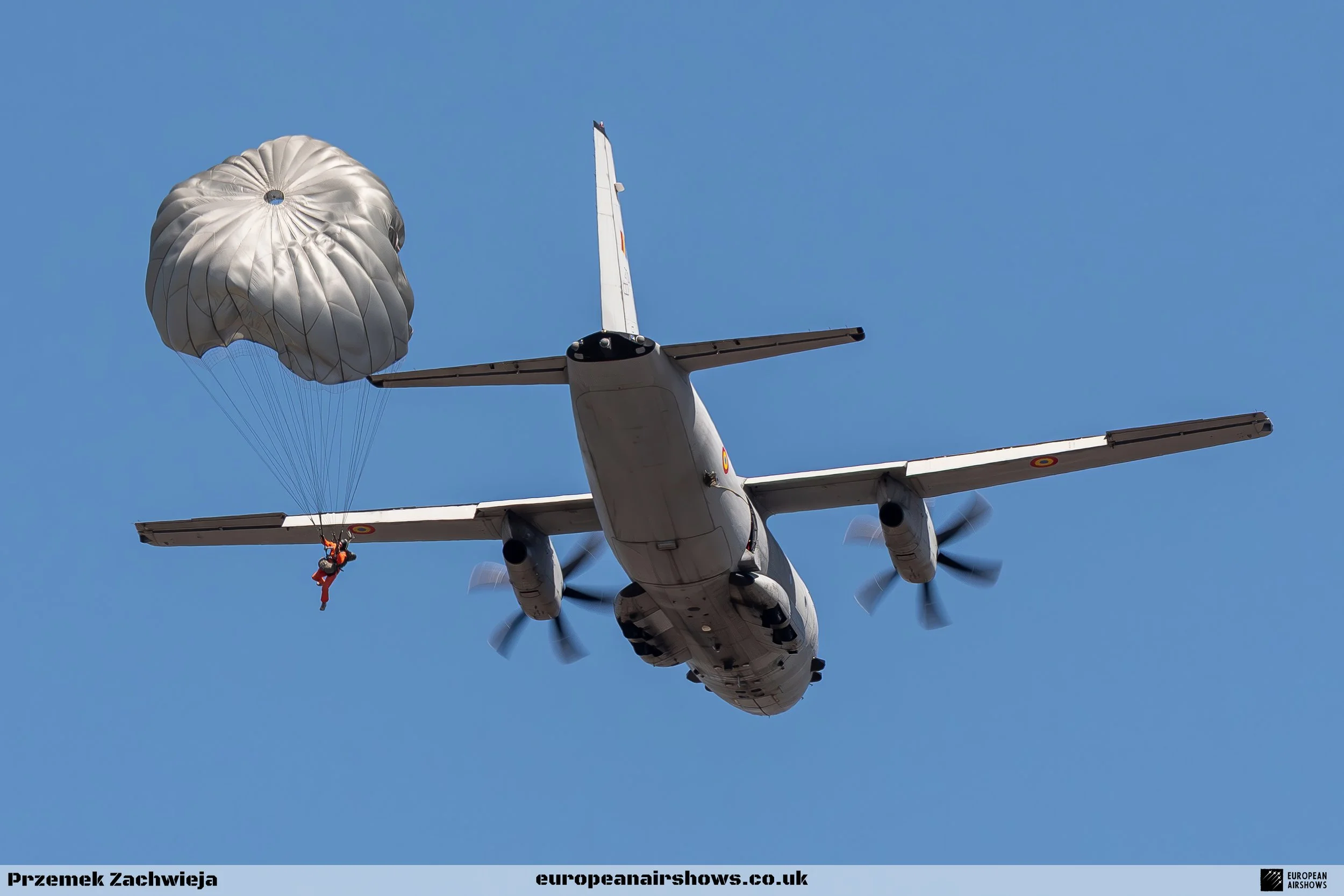
Modern operations were represented by a tightly choreographed combat search-and-rescue (CSAR) demonstration staged by the Forțele Aeriene Române. A C-27J Spartan opened the scenario by dropping a “downed pilot” under a round parachute, setting the rescue narrative in motion. Almost immediately, a pair of F-16 Fighting Falcons tore across the field with simulated strafing runs to suppress “enemy” forces, followed at treetop height by IAR-330 SOCAT gunships firing rockets in close support. The finale came as two IAR-330L Pumas dived into the landing zone and ground pyrotechnics provided a dramatic backdrop as the “pilot” was recovered and whisked to safety. The sequence was tight, easy to follow and authentic in tone—an effective showcase of how multiple air assets integrate under live conditions.
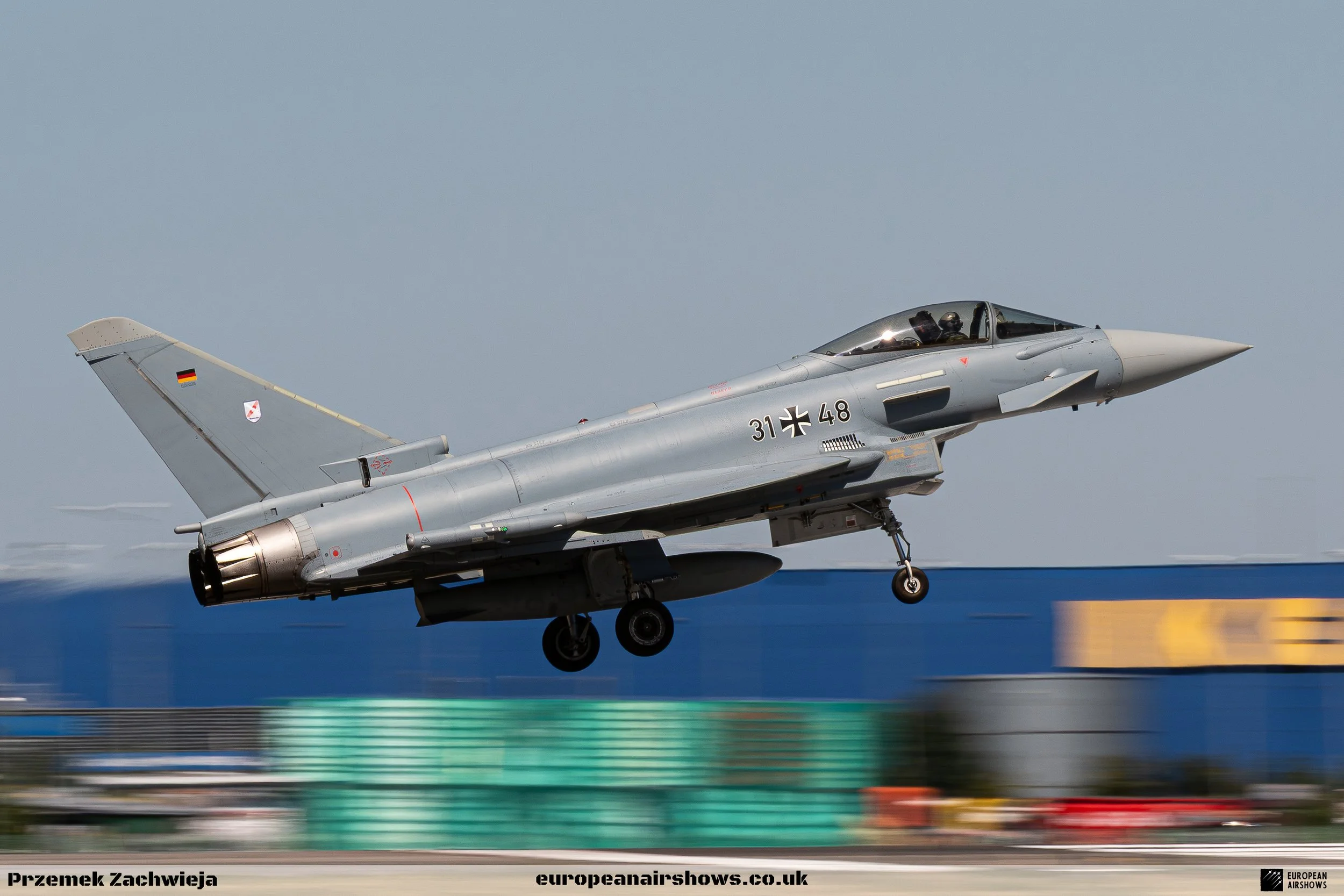
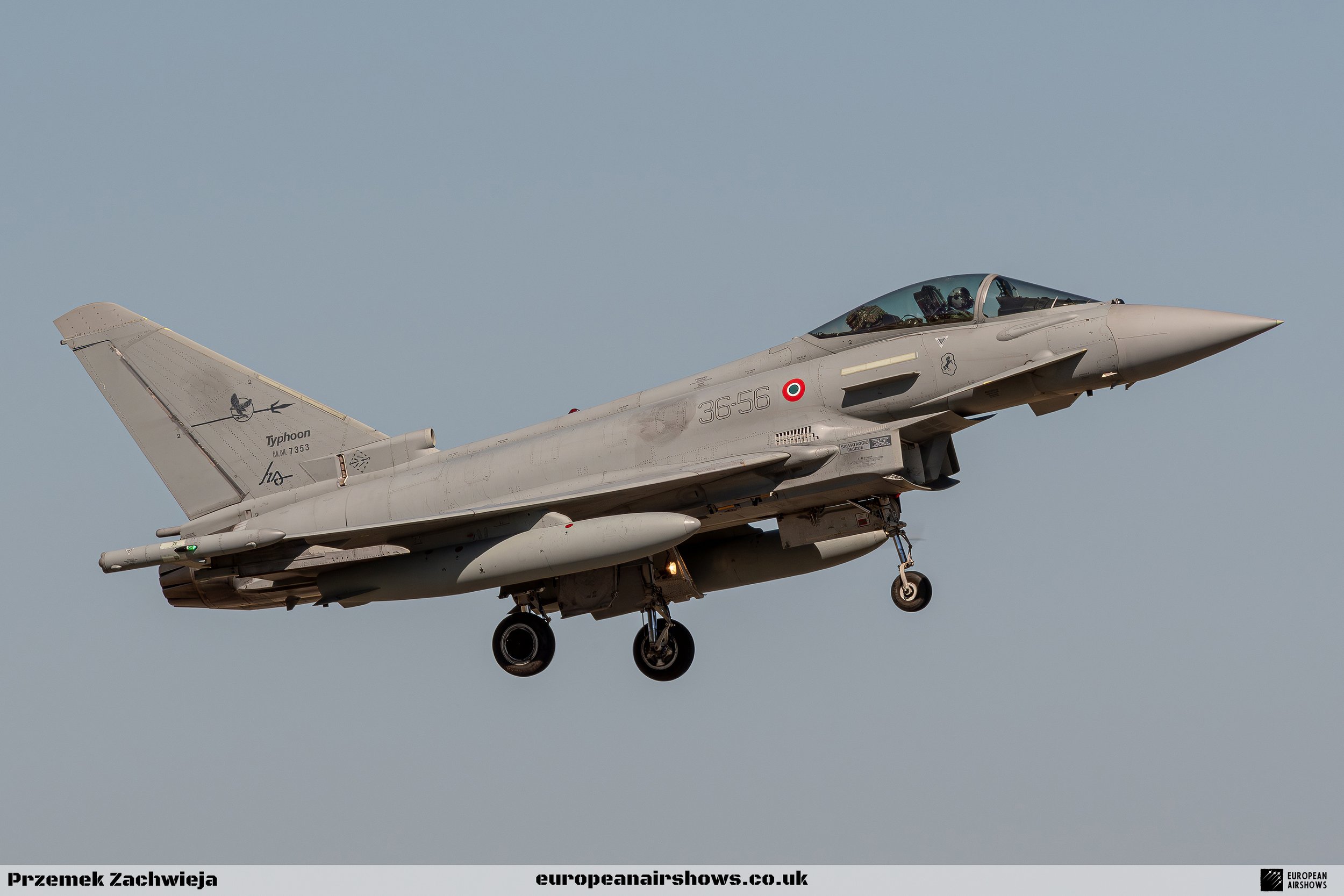
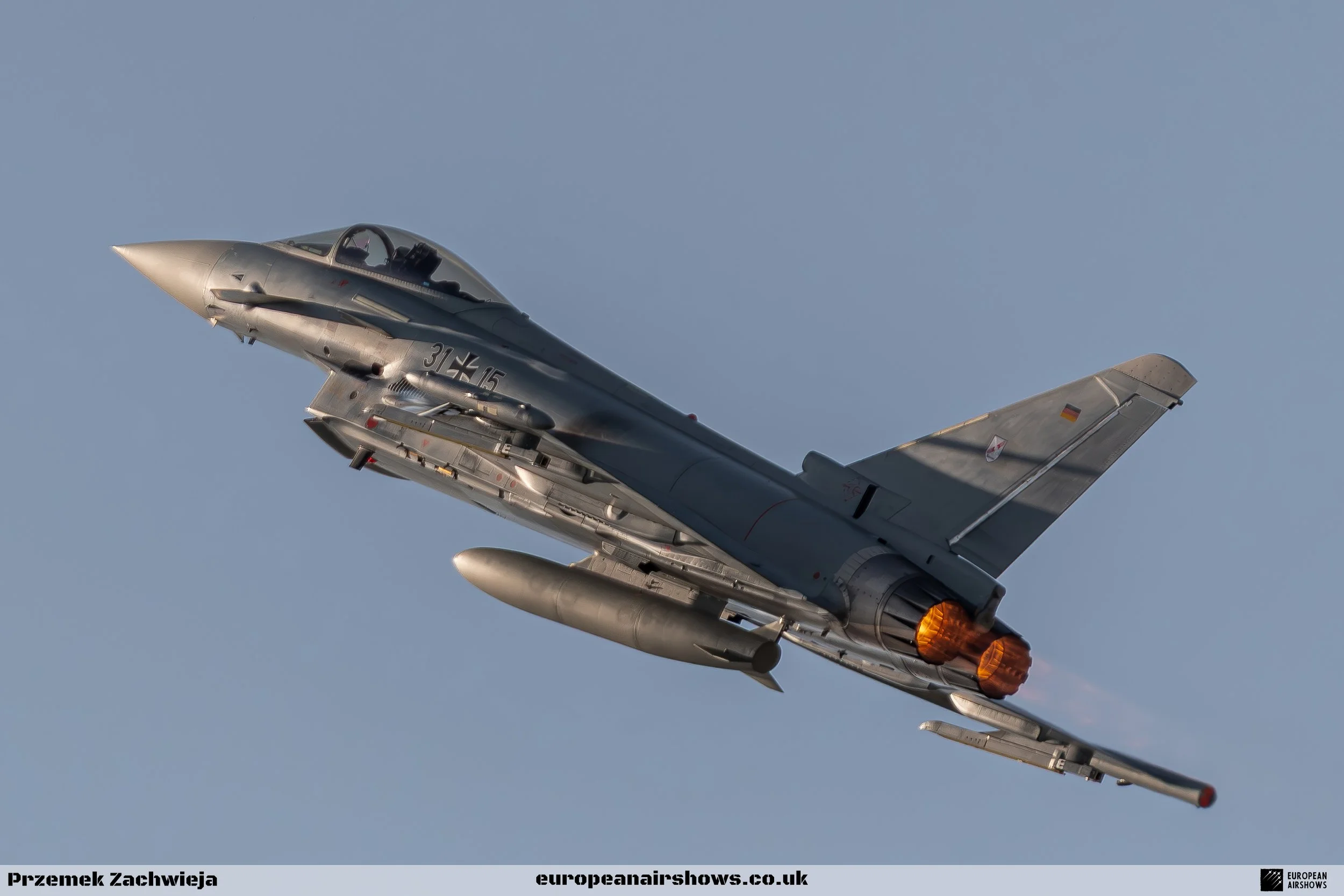
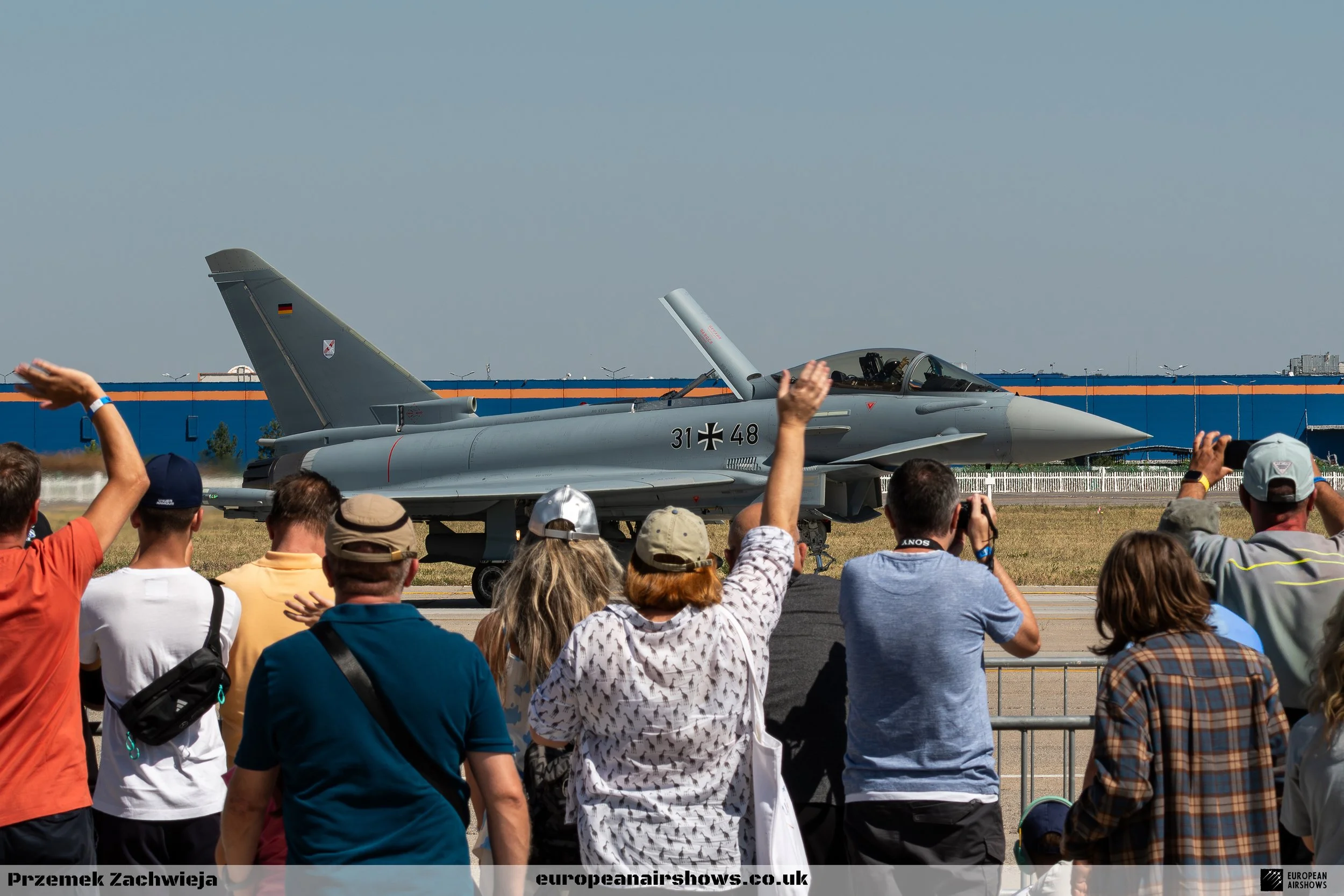
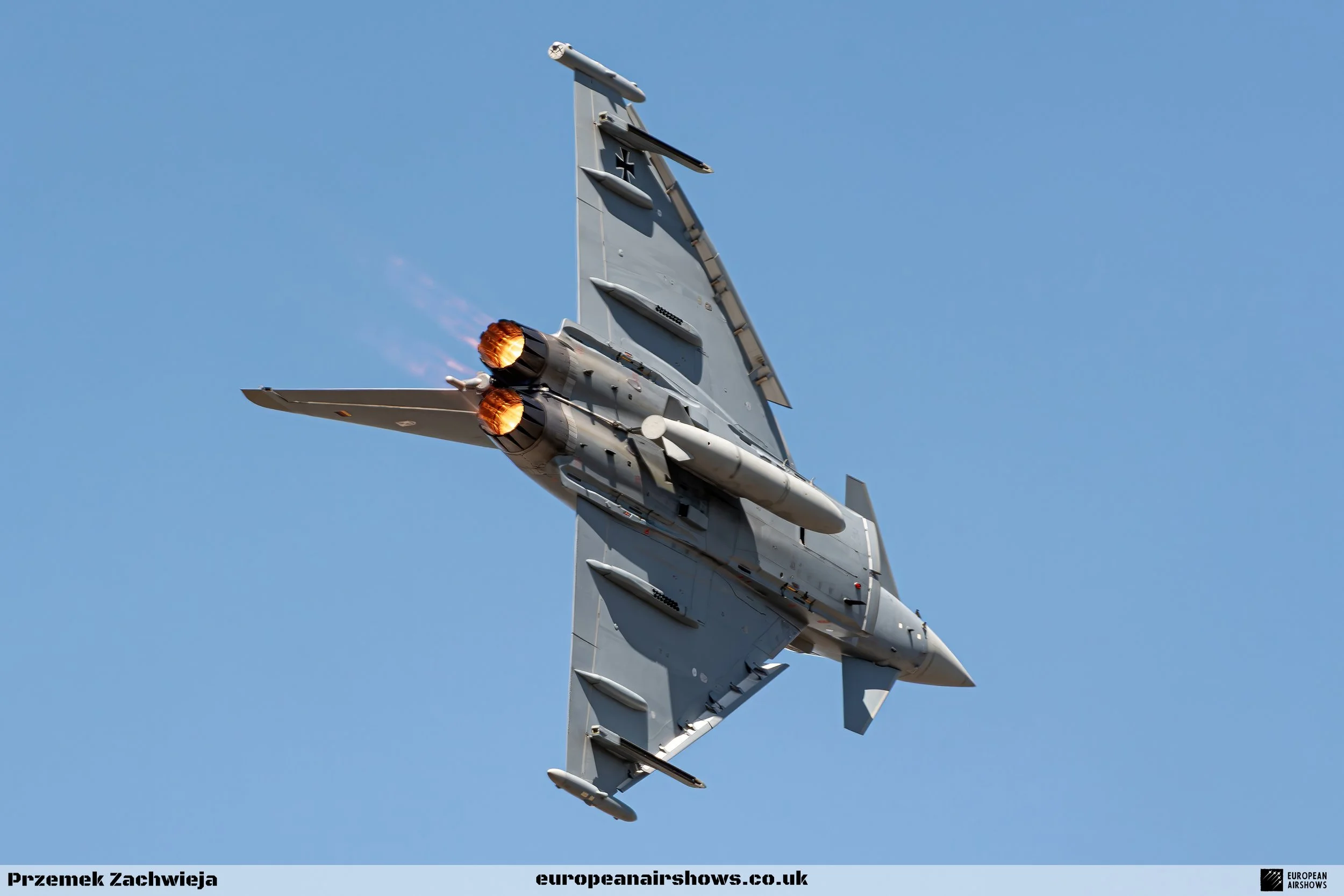
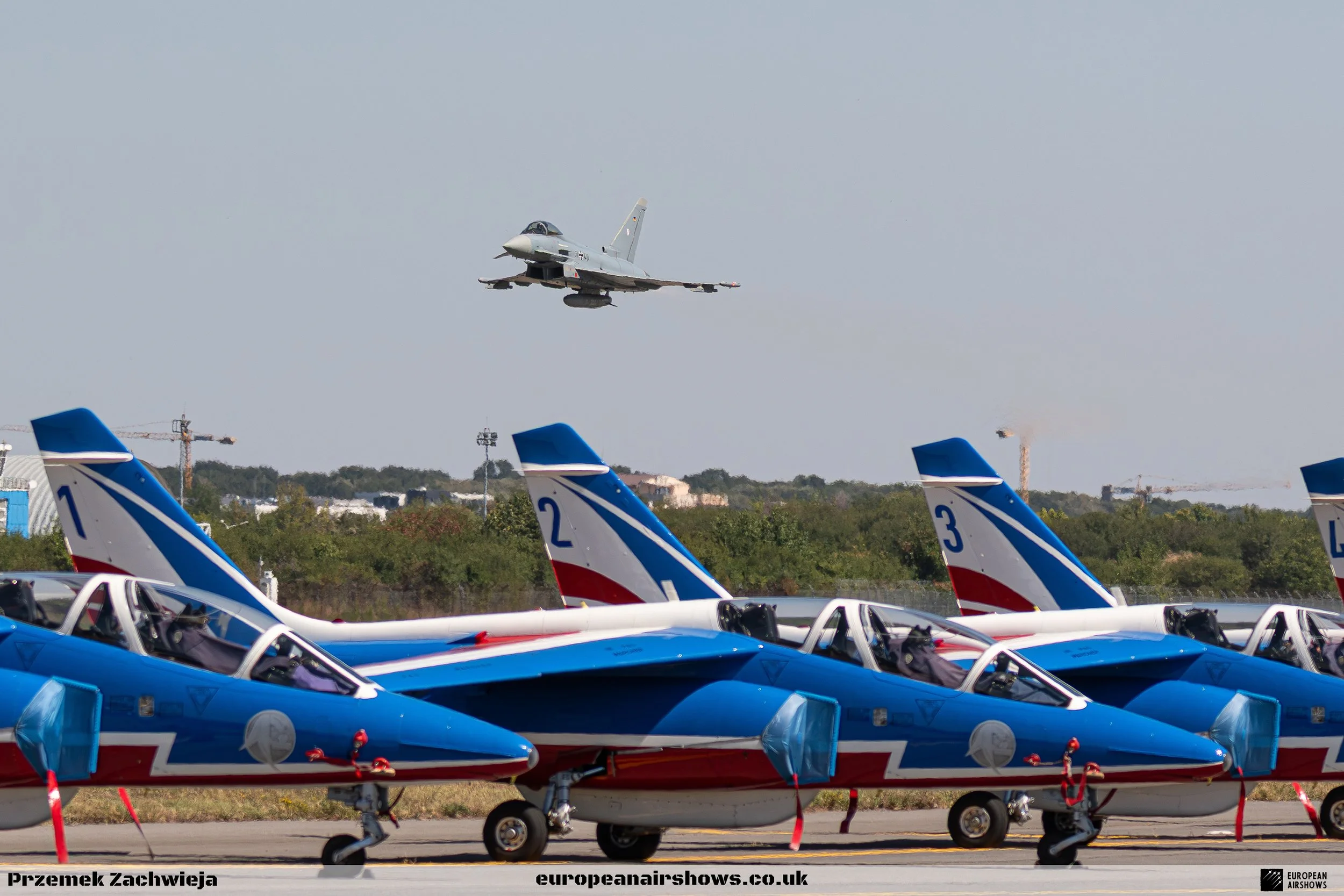
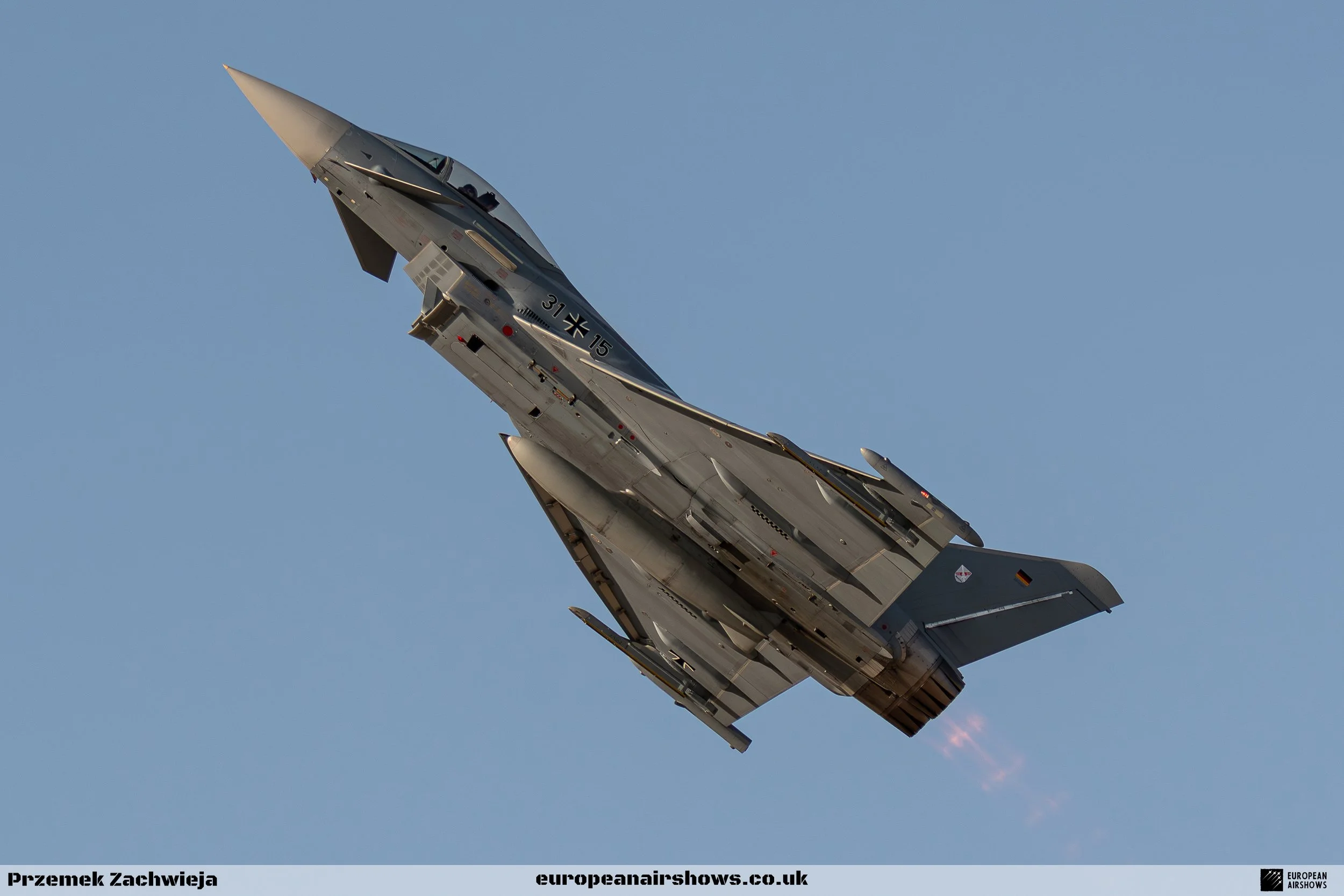
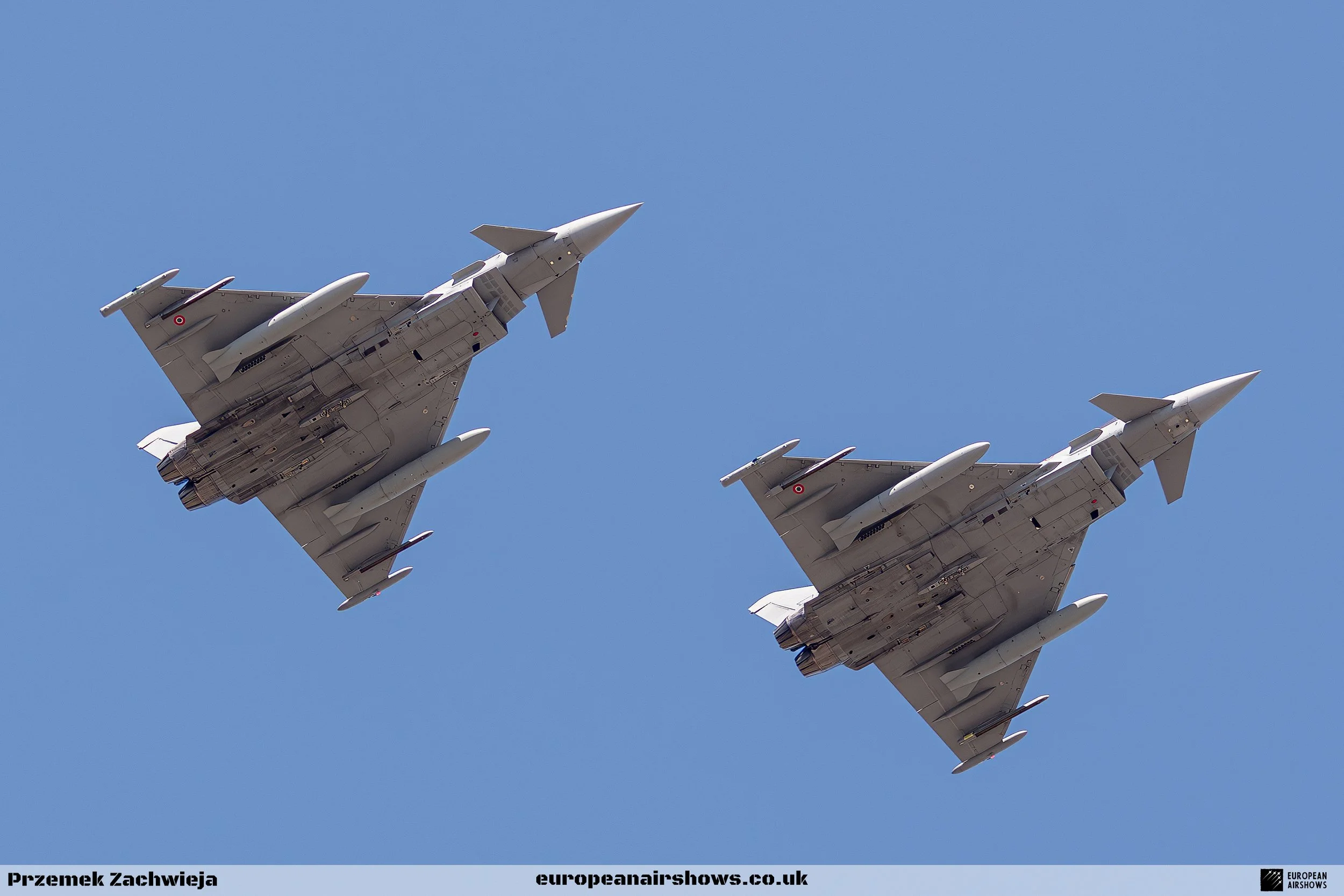
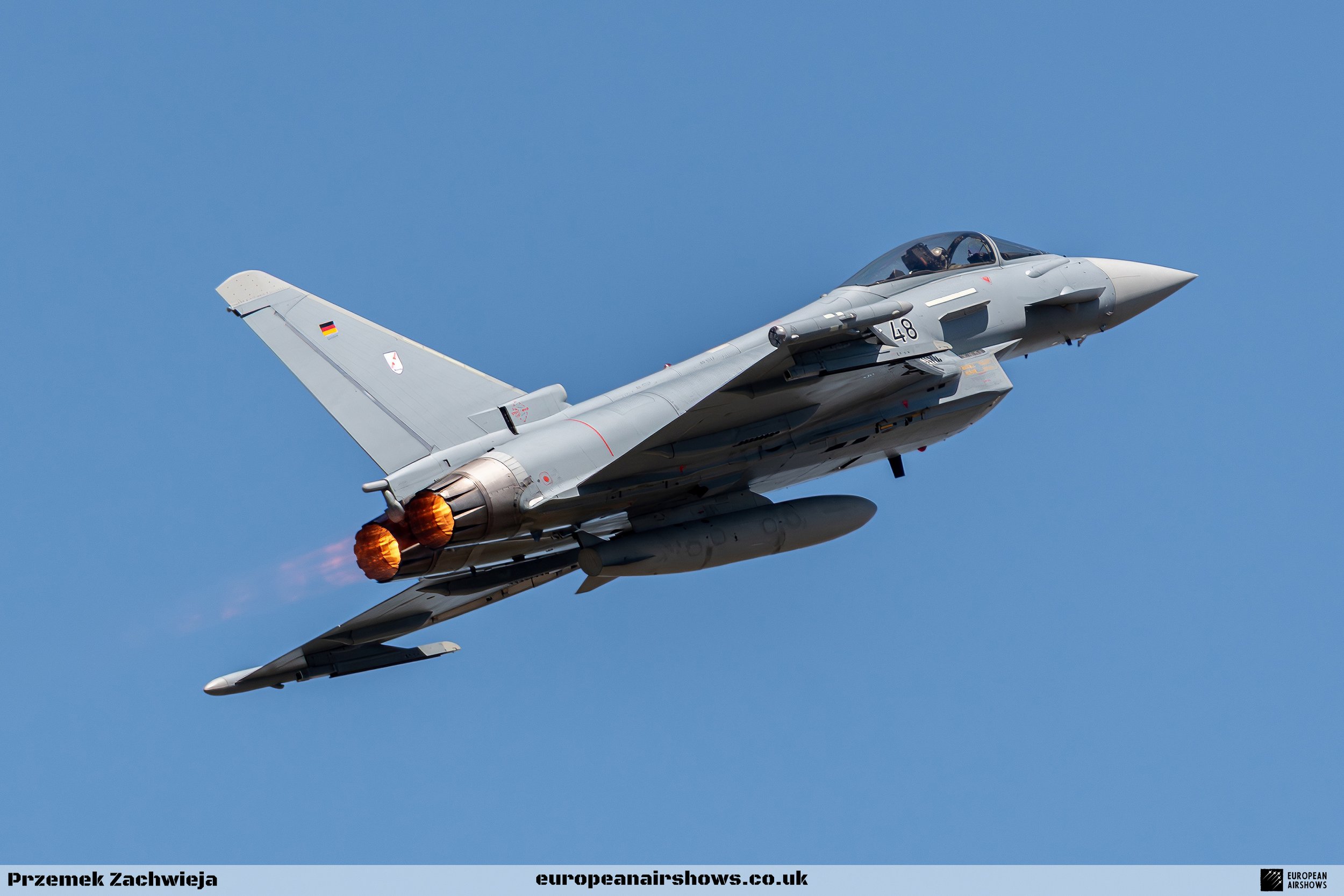
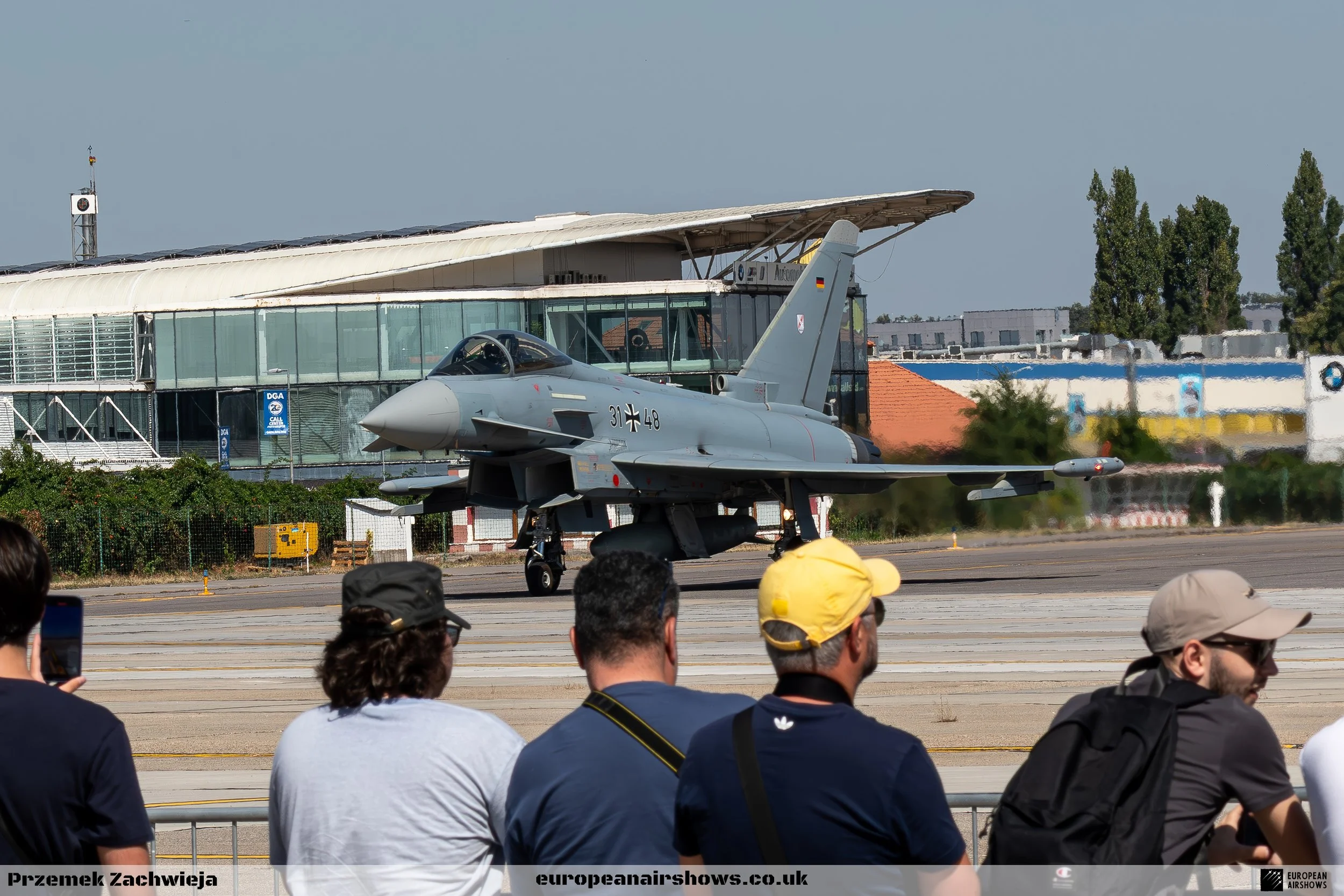
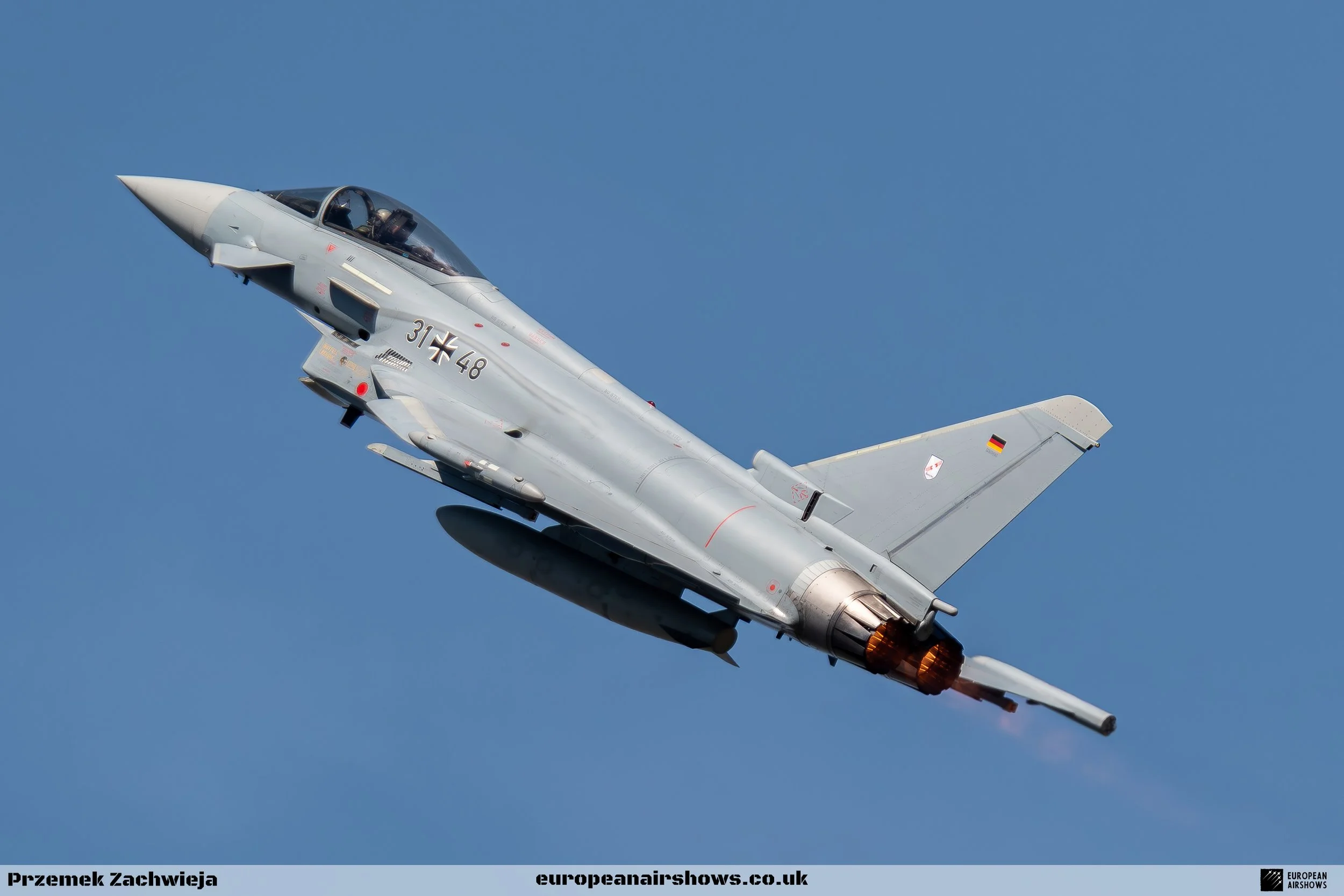
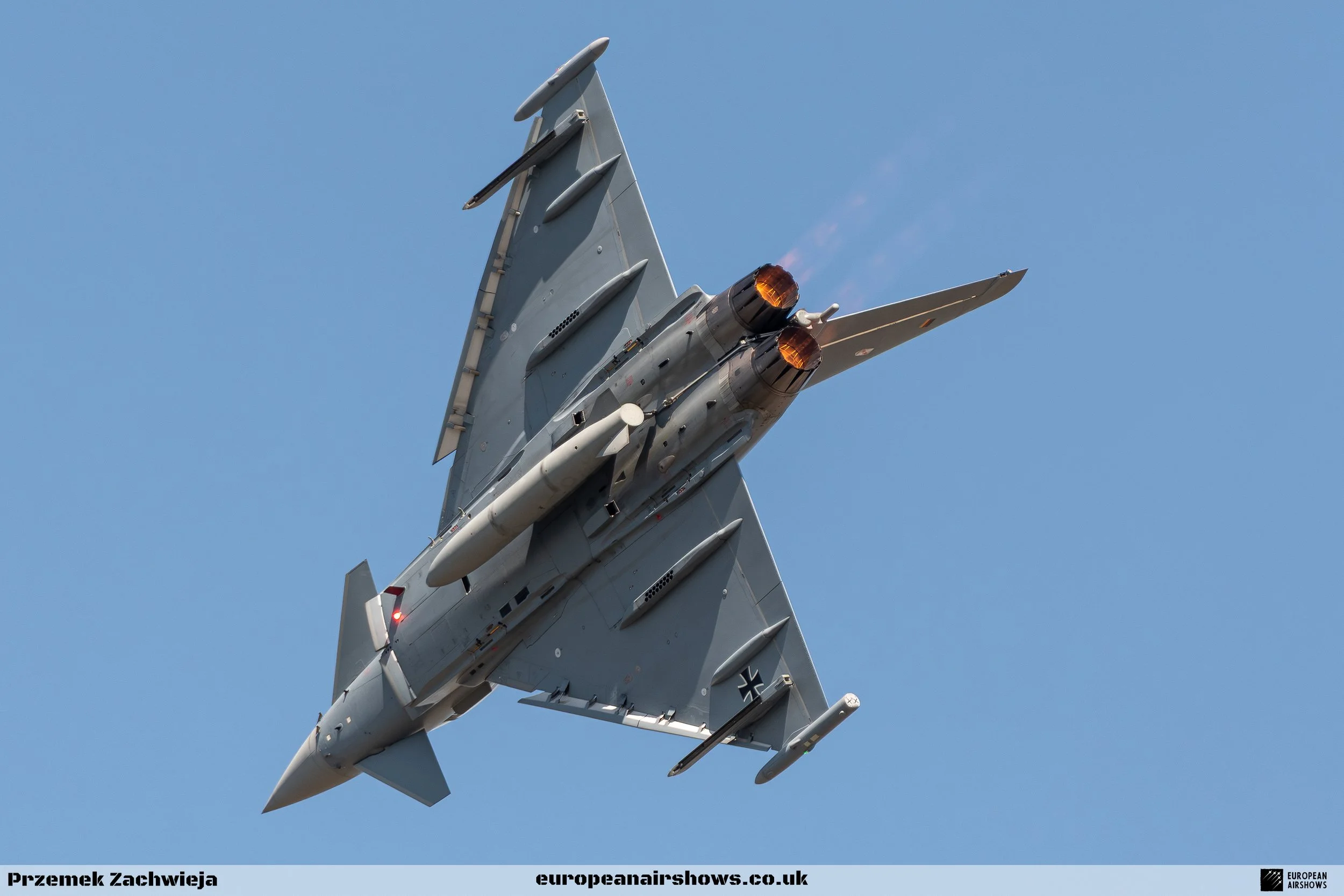
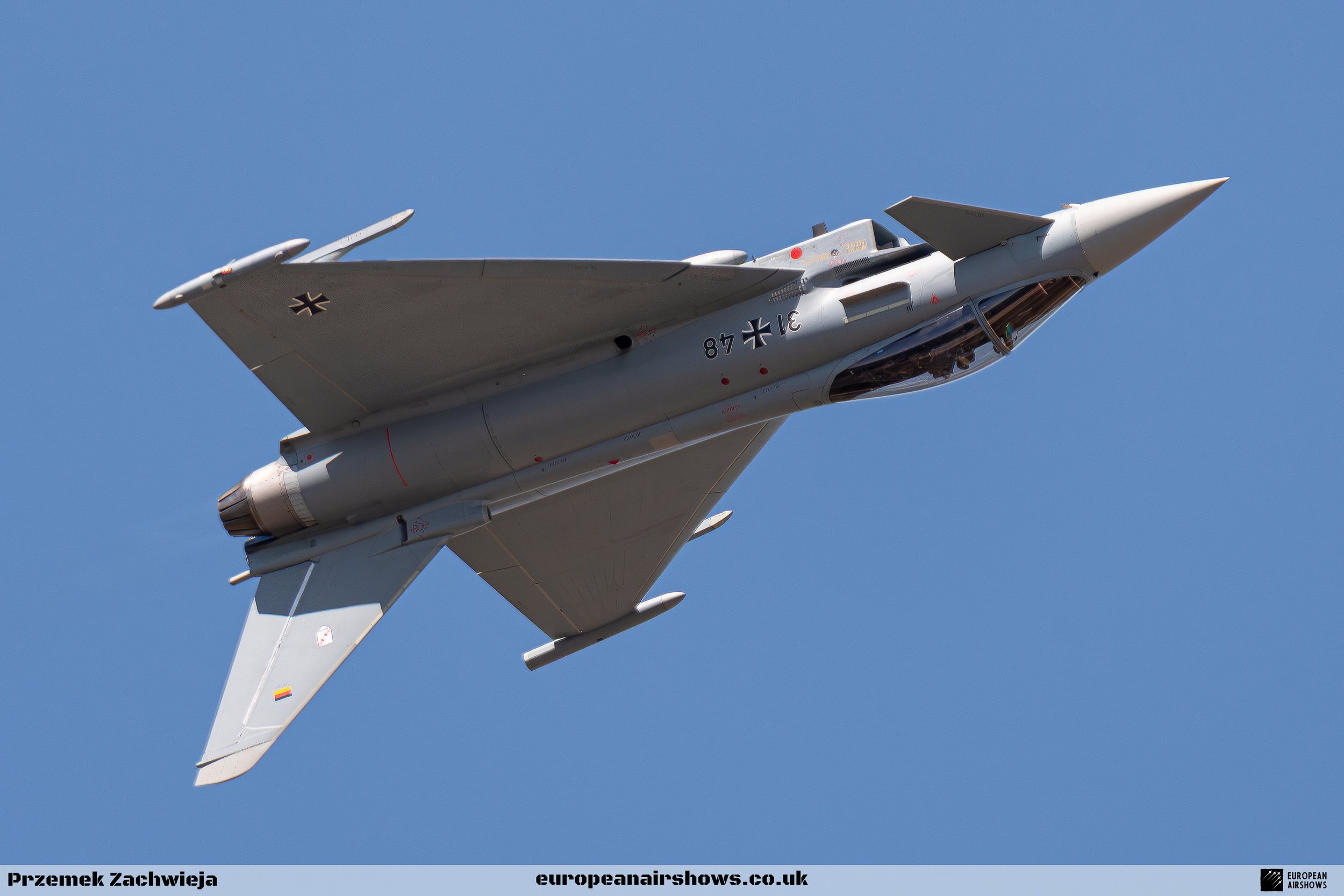
Foreign air forces brought extra flavour to BIAS 2025, with solo displays that nicely complemented the mainly Romanian programme. The highlight was the Luftwaffe’s Eurofighter Typhoon from Tactical Air Wing 31 “Boelcke.” Display pilot Lieutenant Colonel Michael “Bambam” Schaudienst flew a sharp, focused routine full of slow high-angle passes, steep vertical climbs, and tight, high-G rolls, always keeping the action at show centre. When the Typhoon returned on Saturday evening, its blue-grey paint caught the low sun — a striking sight, and the only foreign fast jet solo this year, showing how Radom’s bigger airshow inevitably pulled some participants away.
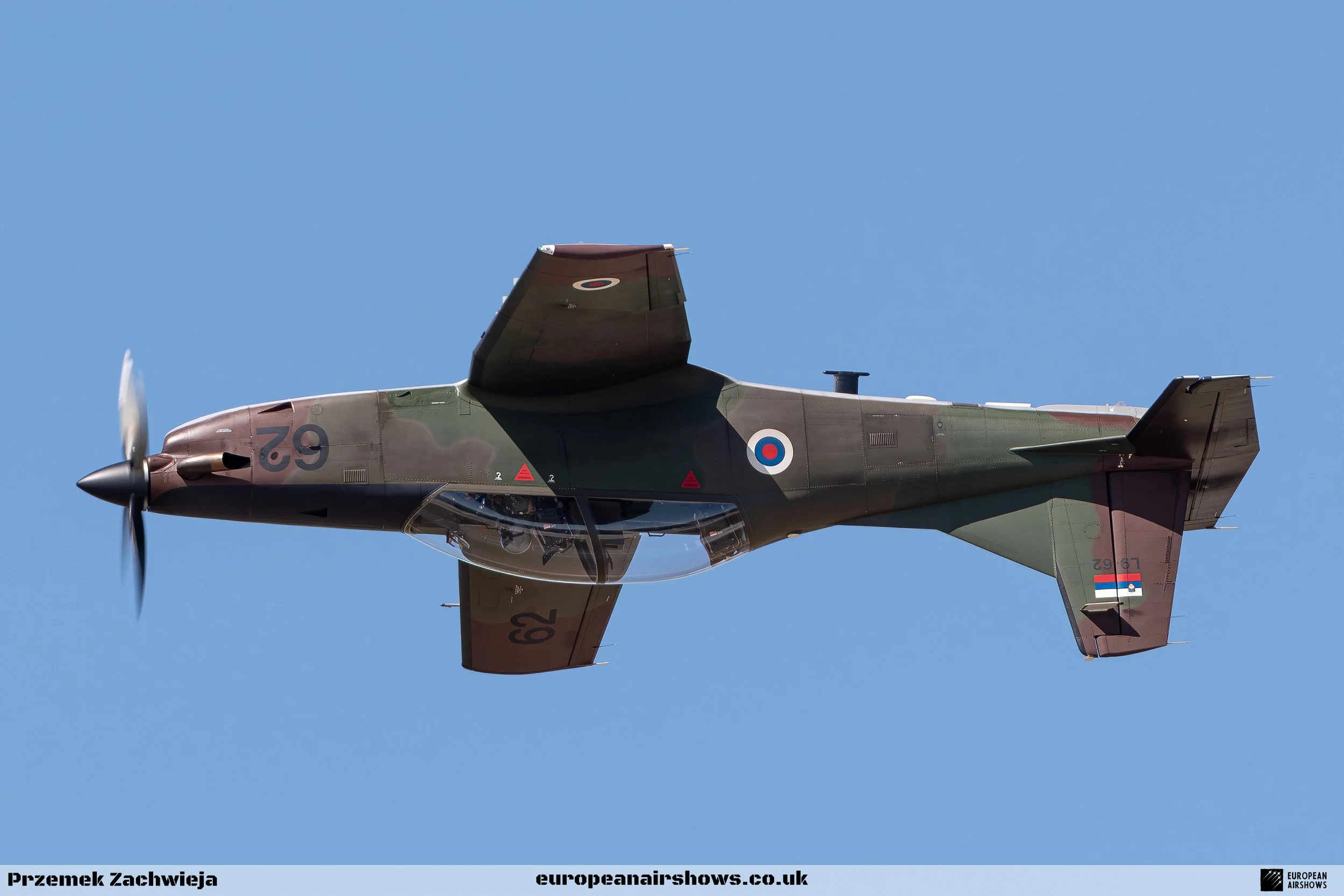
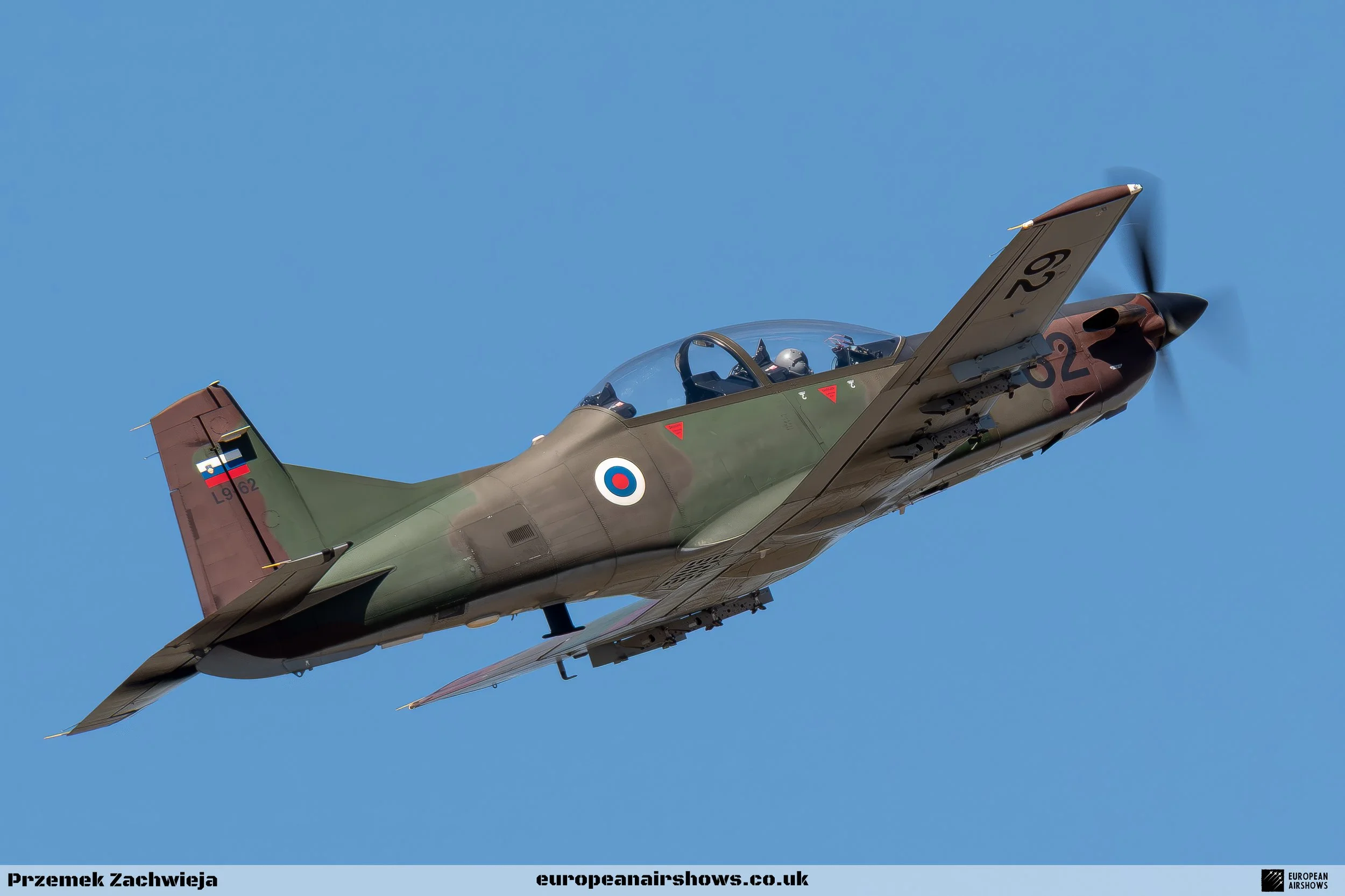
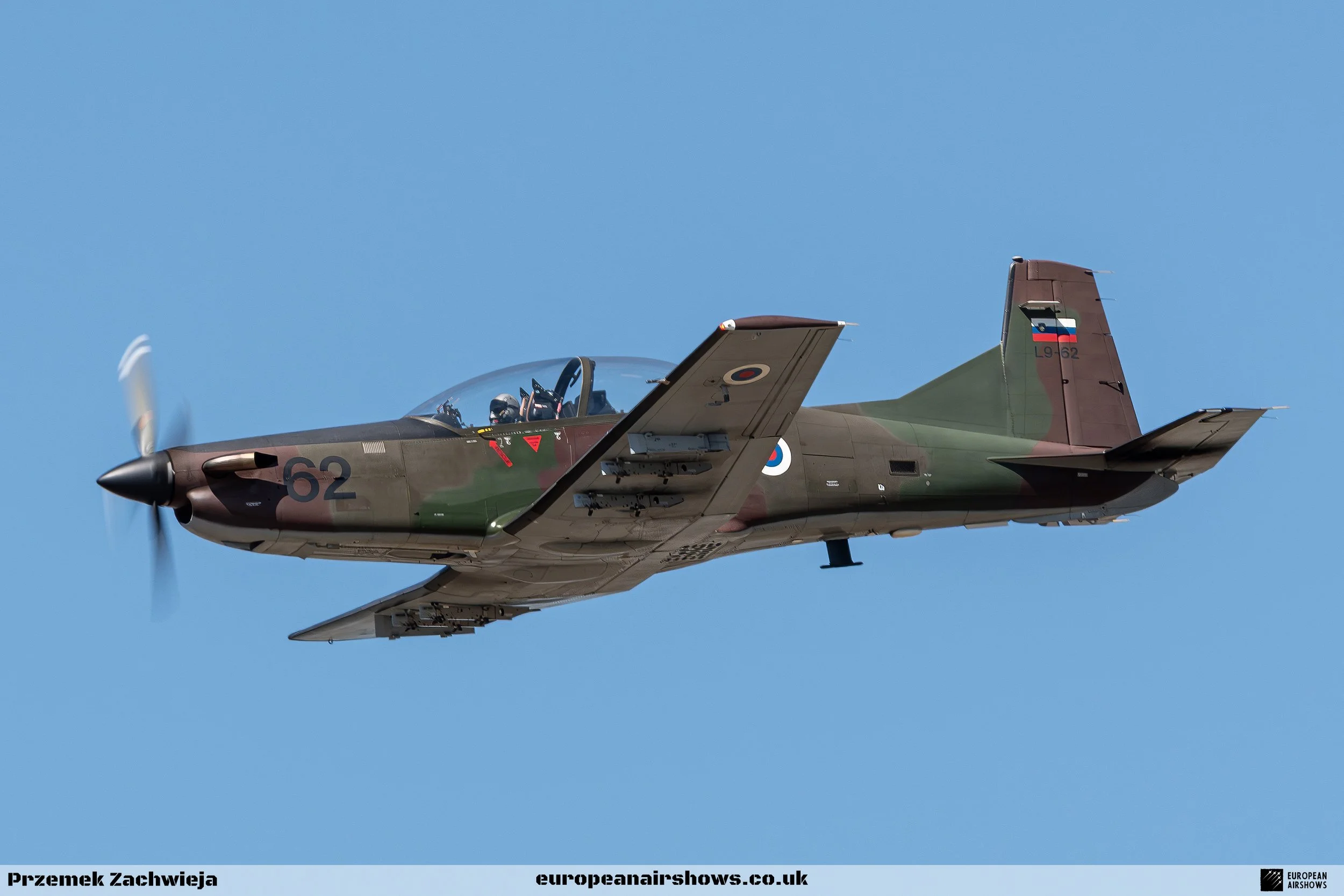
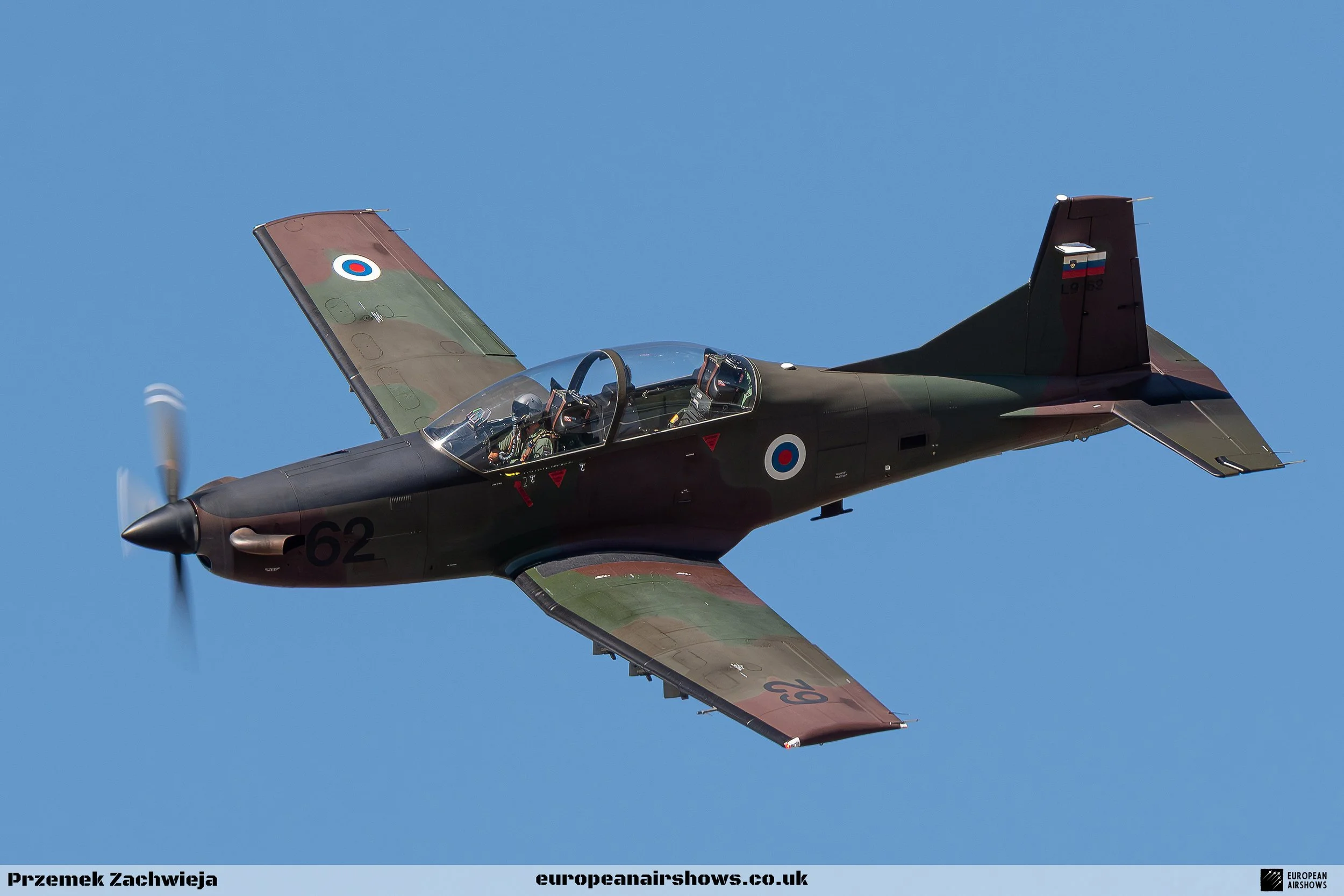
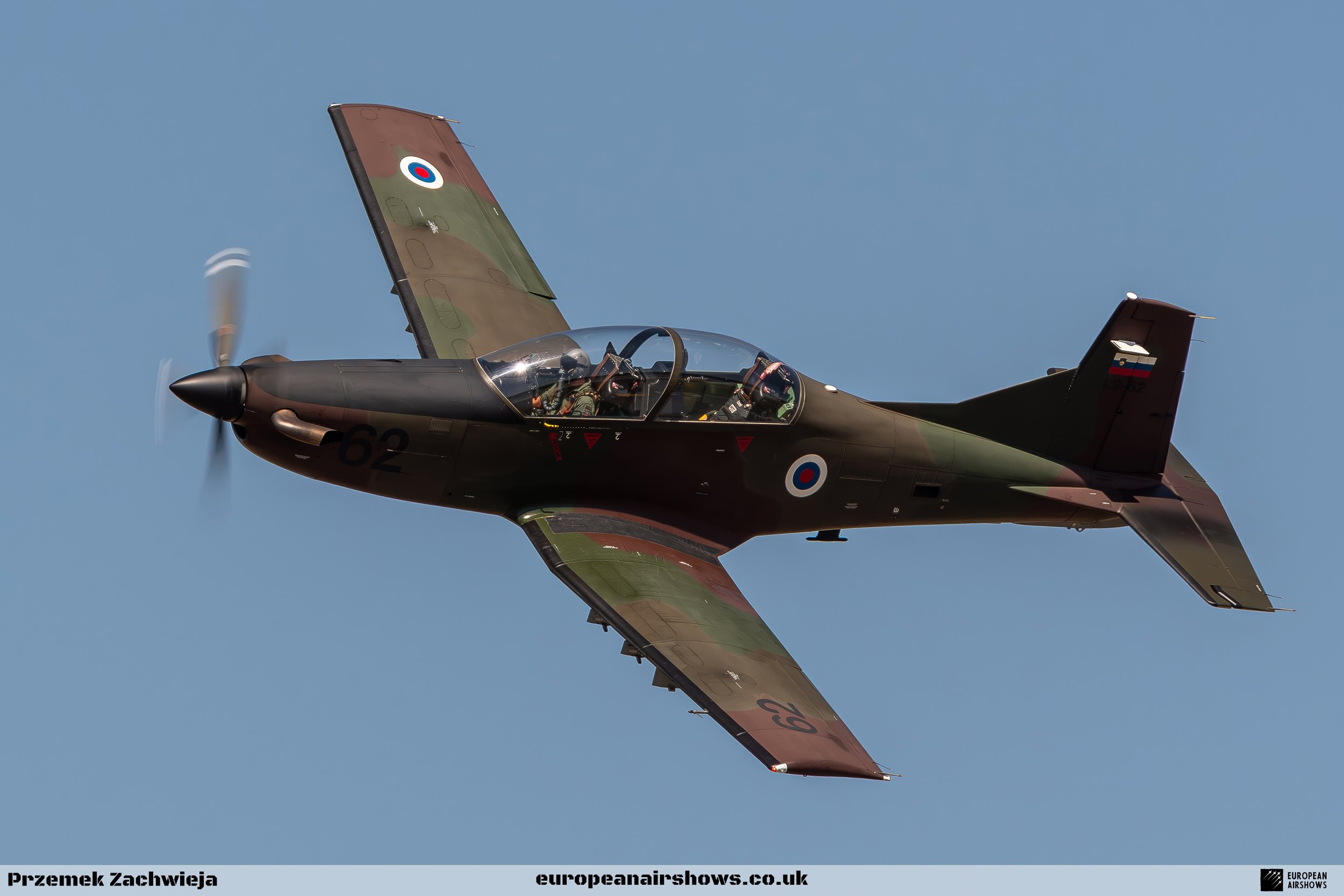
The Slovenian Air Force’s Pilatus PC-9M Hudournik, flown by Captain Sašo Šebuk, showed just how agile a turboprop trainer can be. Sharp four- and eight-point rolls led into clean loops, inverted passes, and negative-G pushovers, underlining the aircraft’s versatility as both a trainer and a light-attack platform. Based at Cerklje ob Krki, Slovenia operates a small but active fleet of Hudourniks, and Šebuk — the newest of only two official PC-9 display pilots — delivered a polished, professional routine.
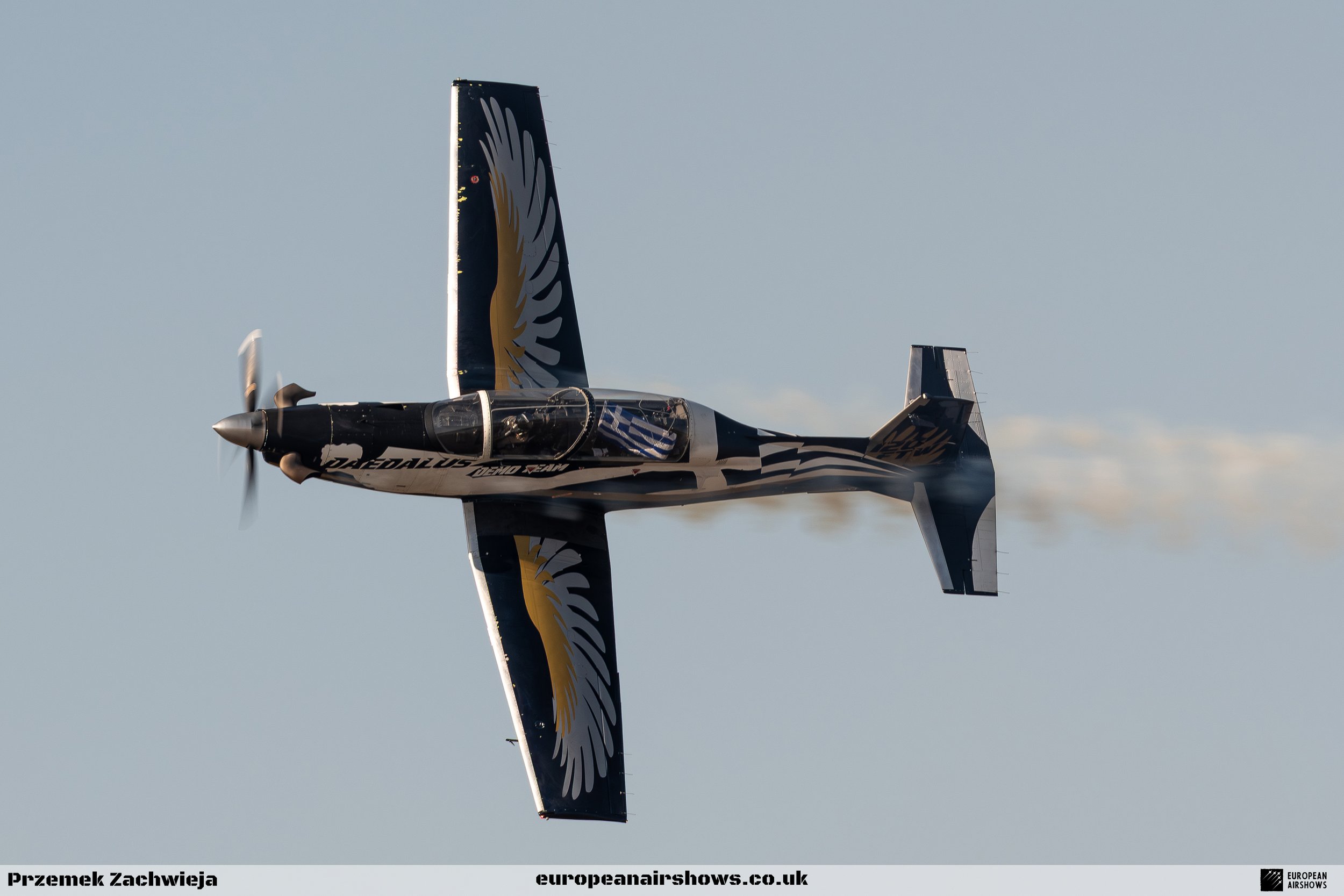
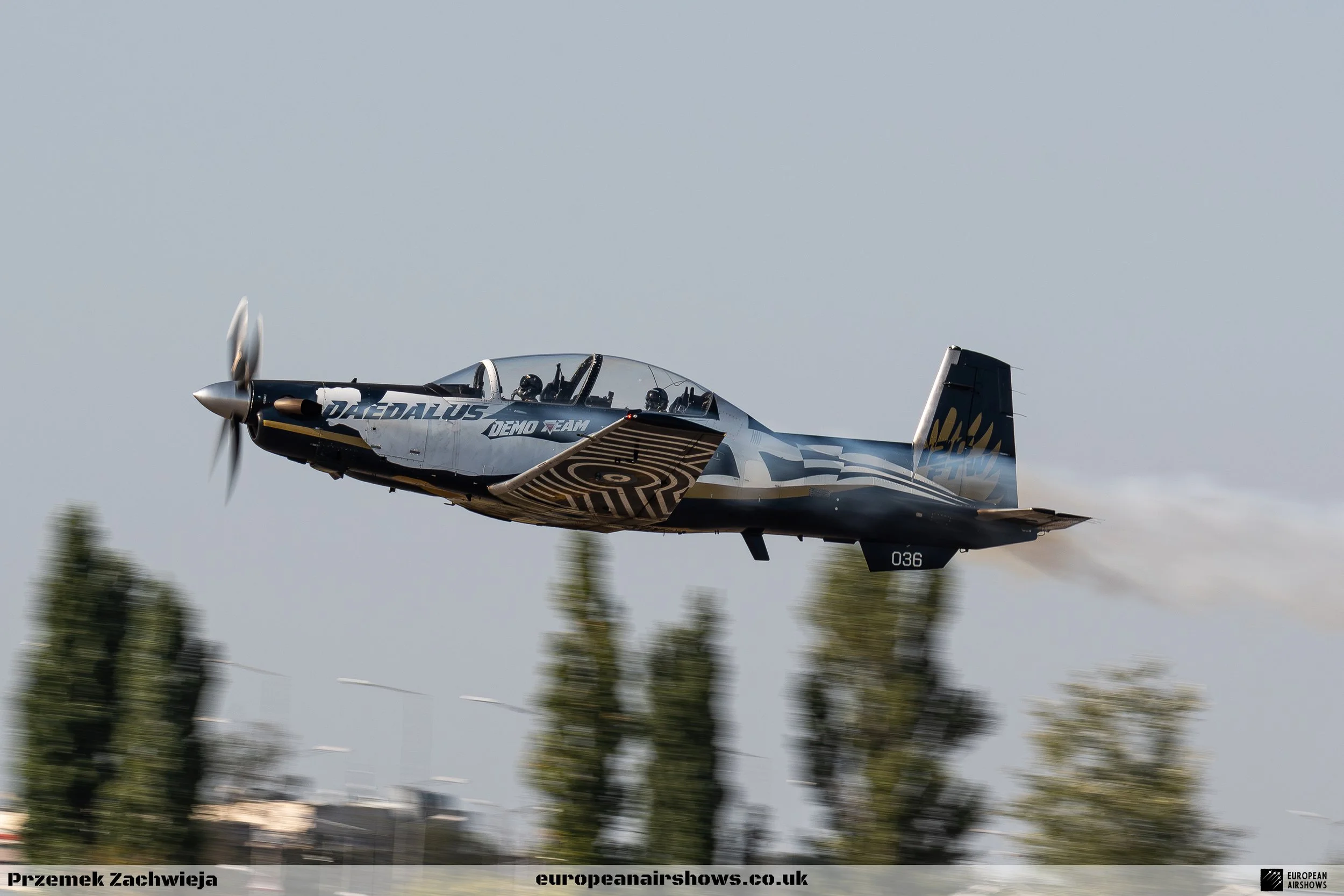
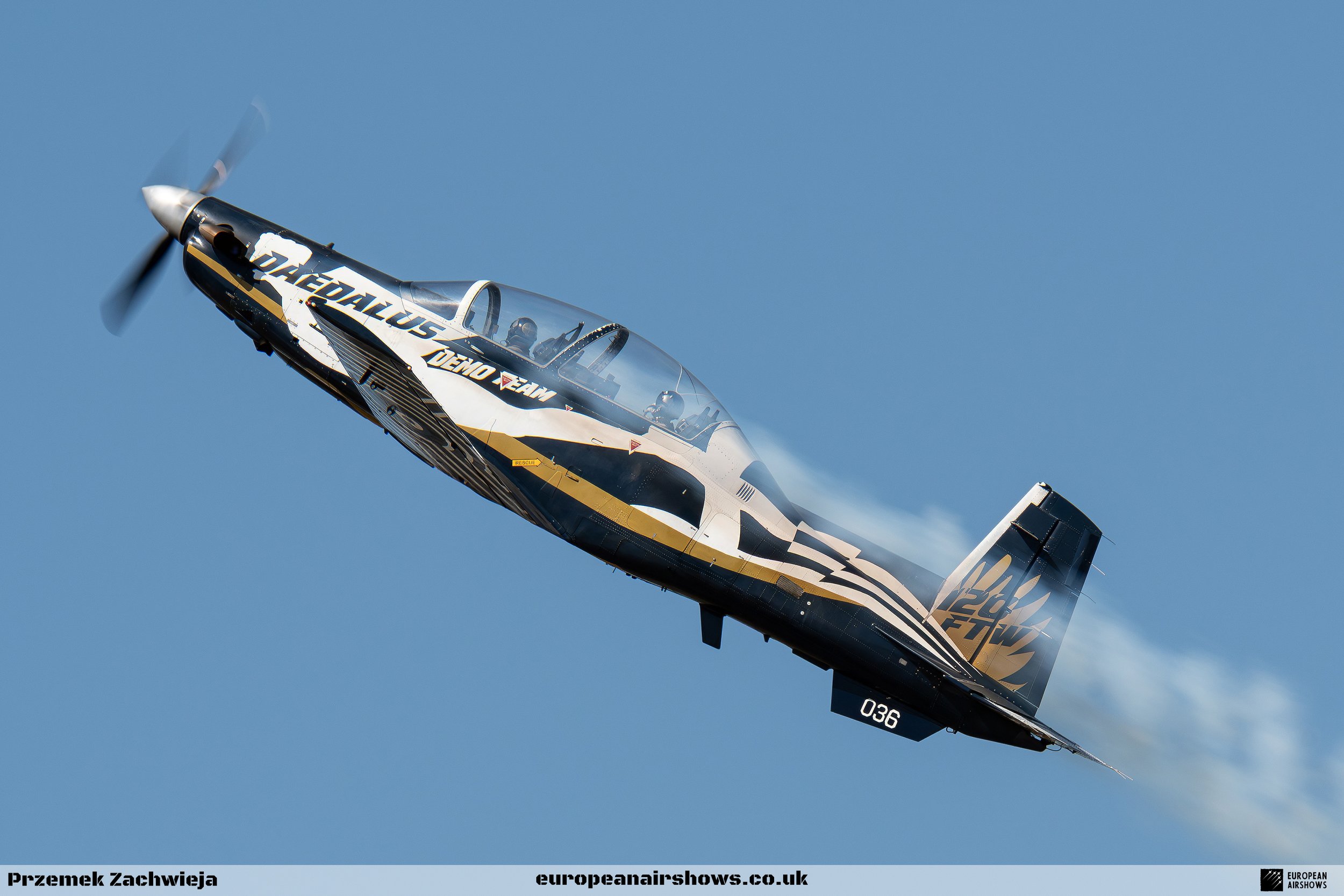
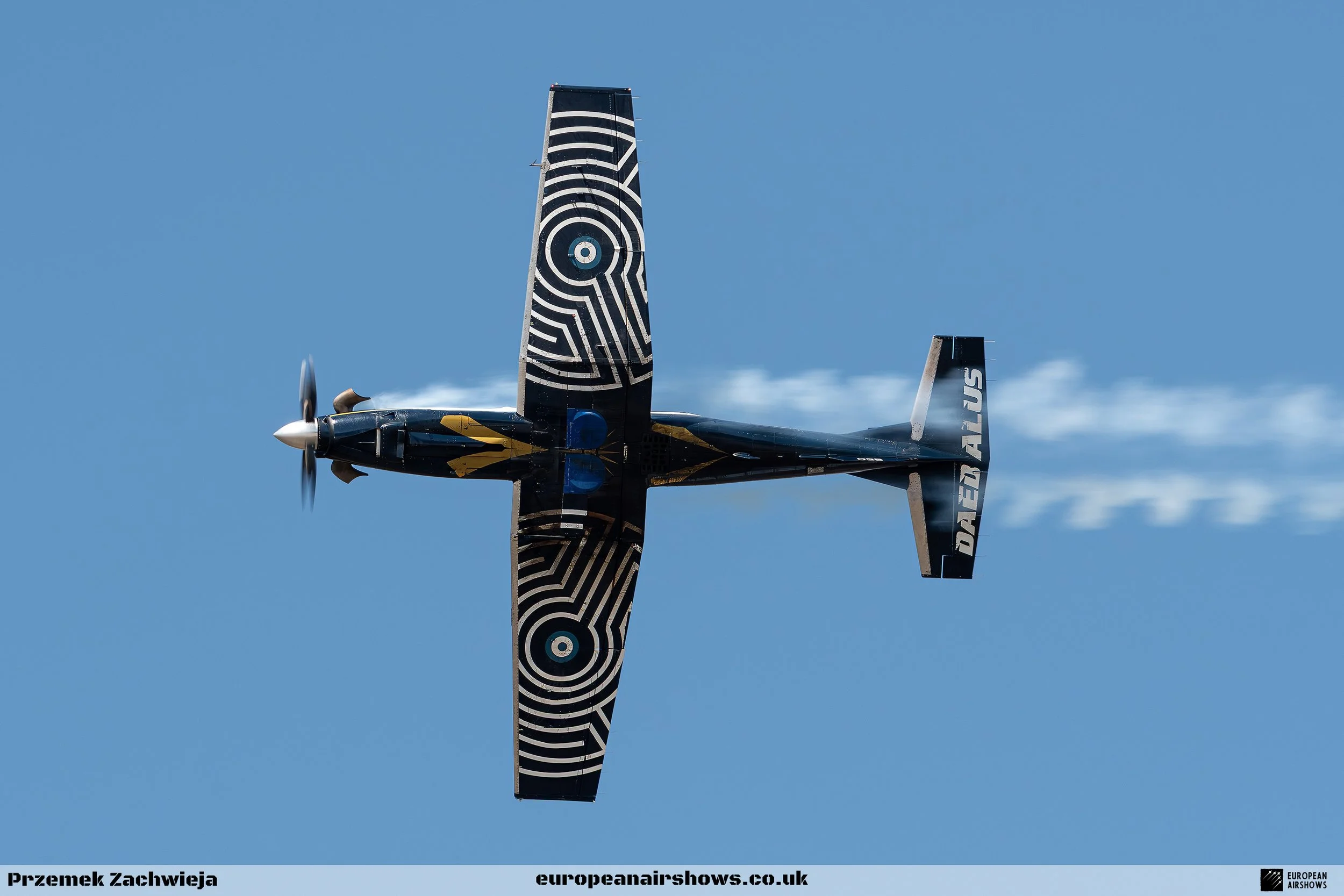
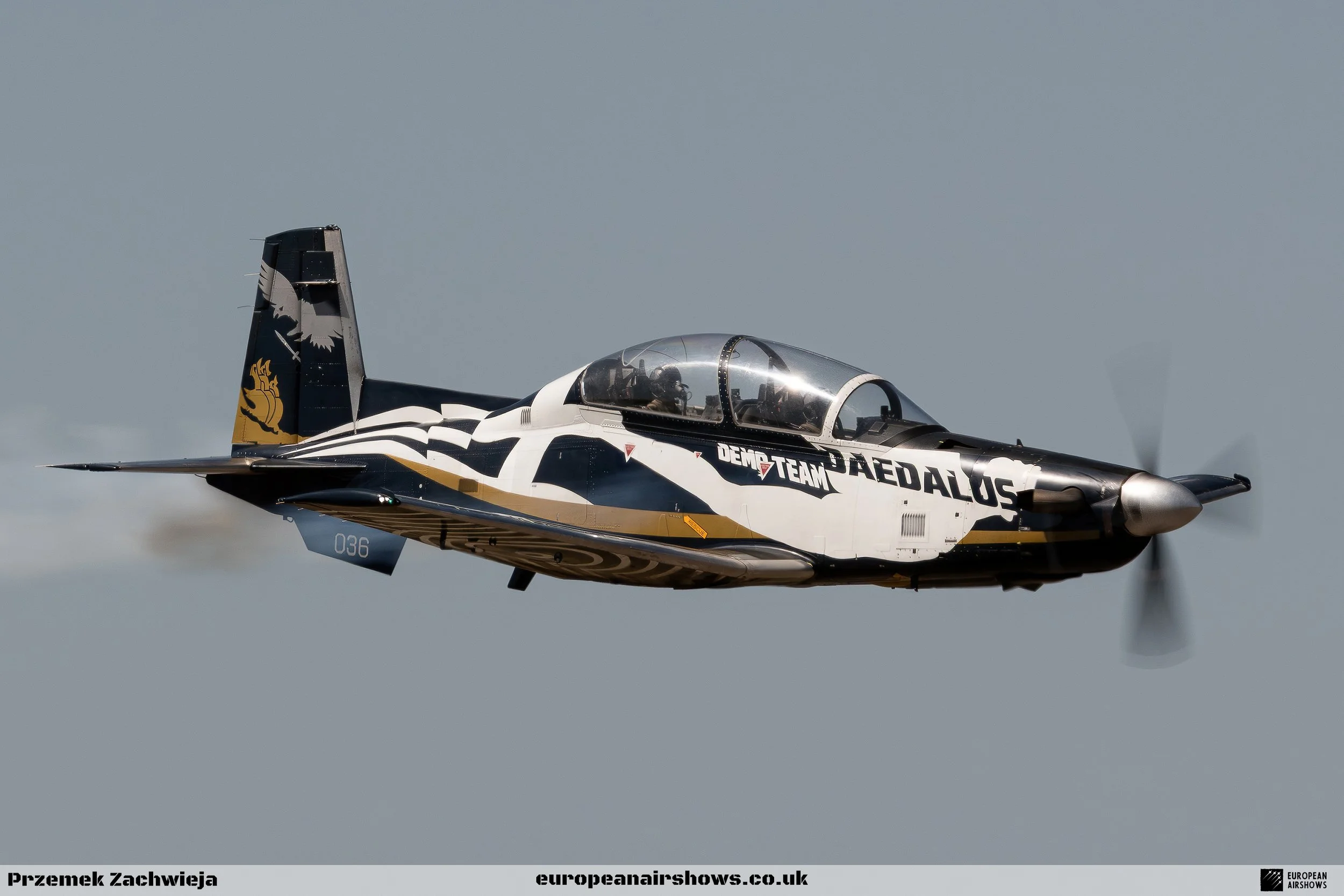
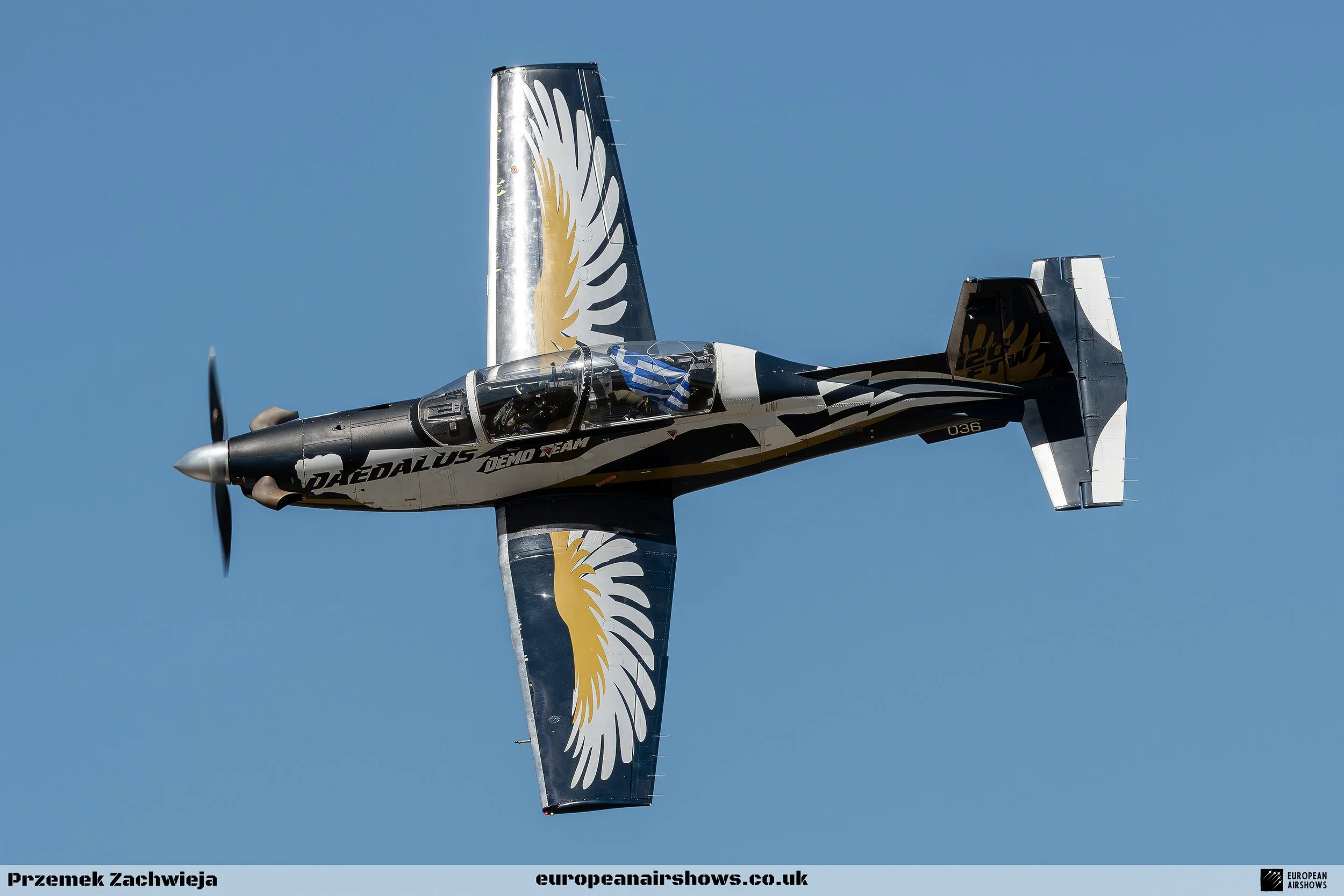
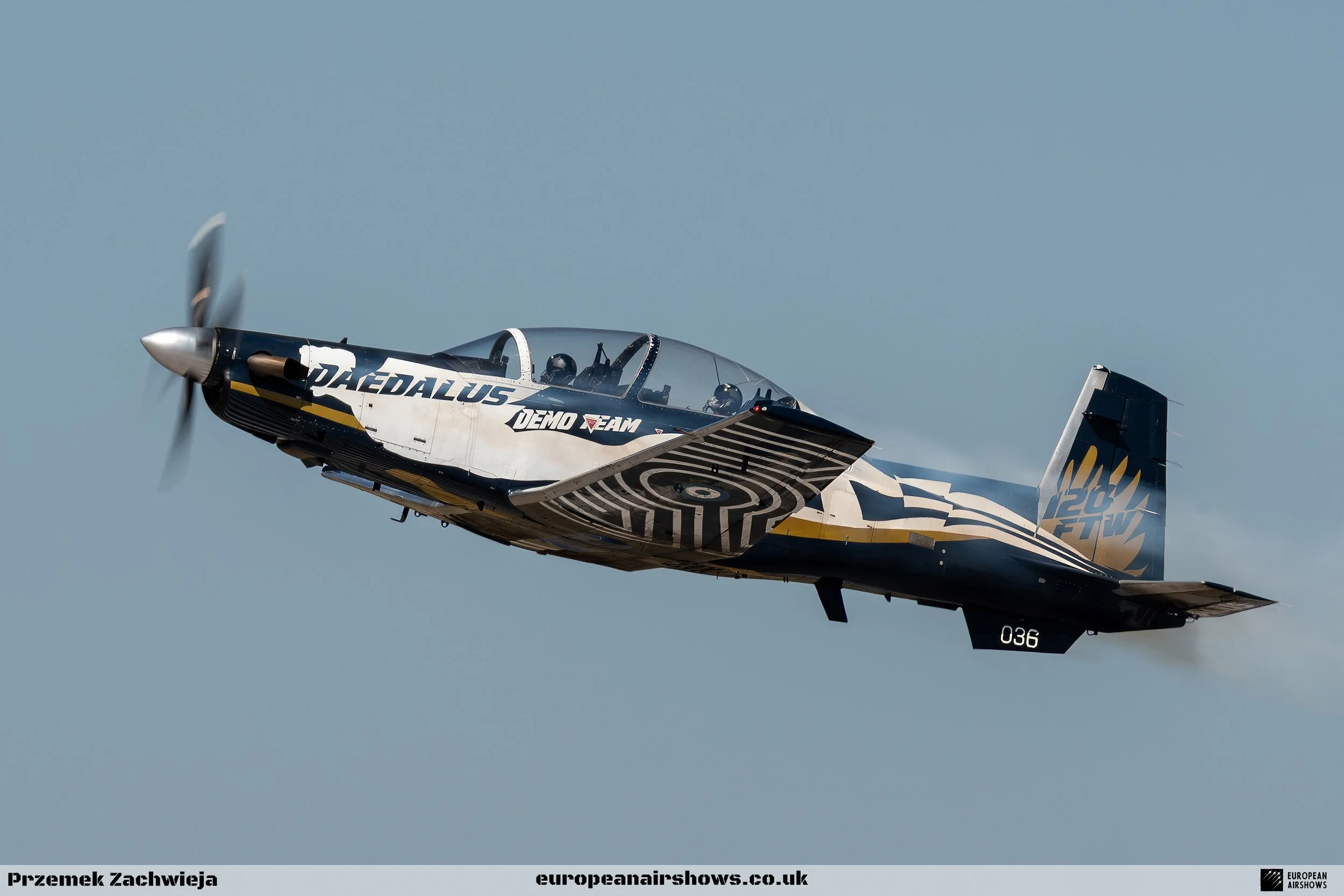
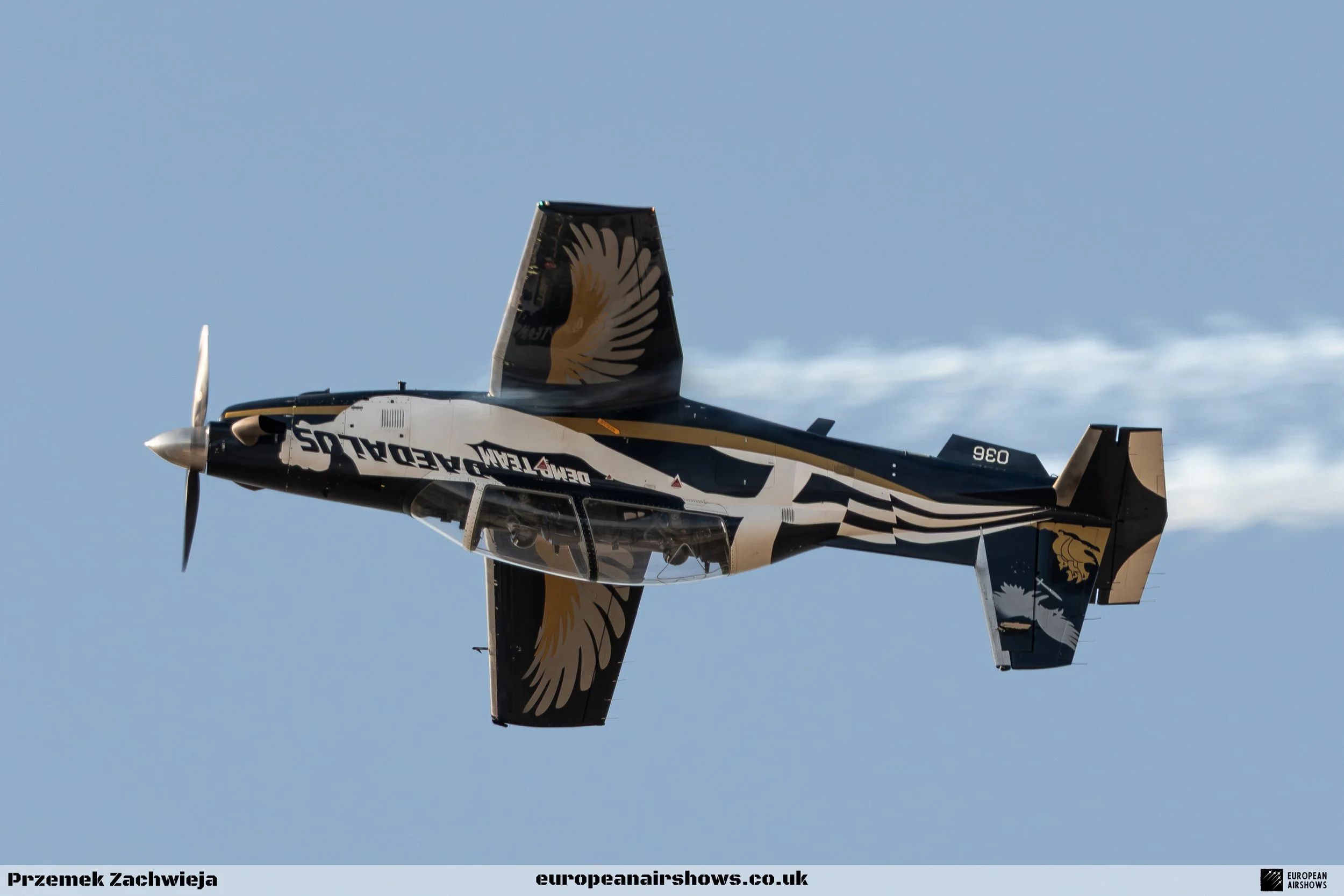
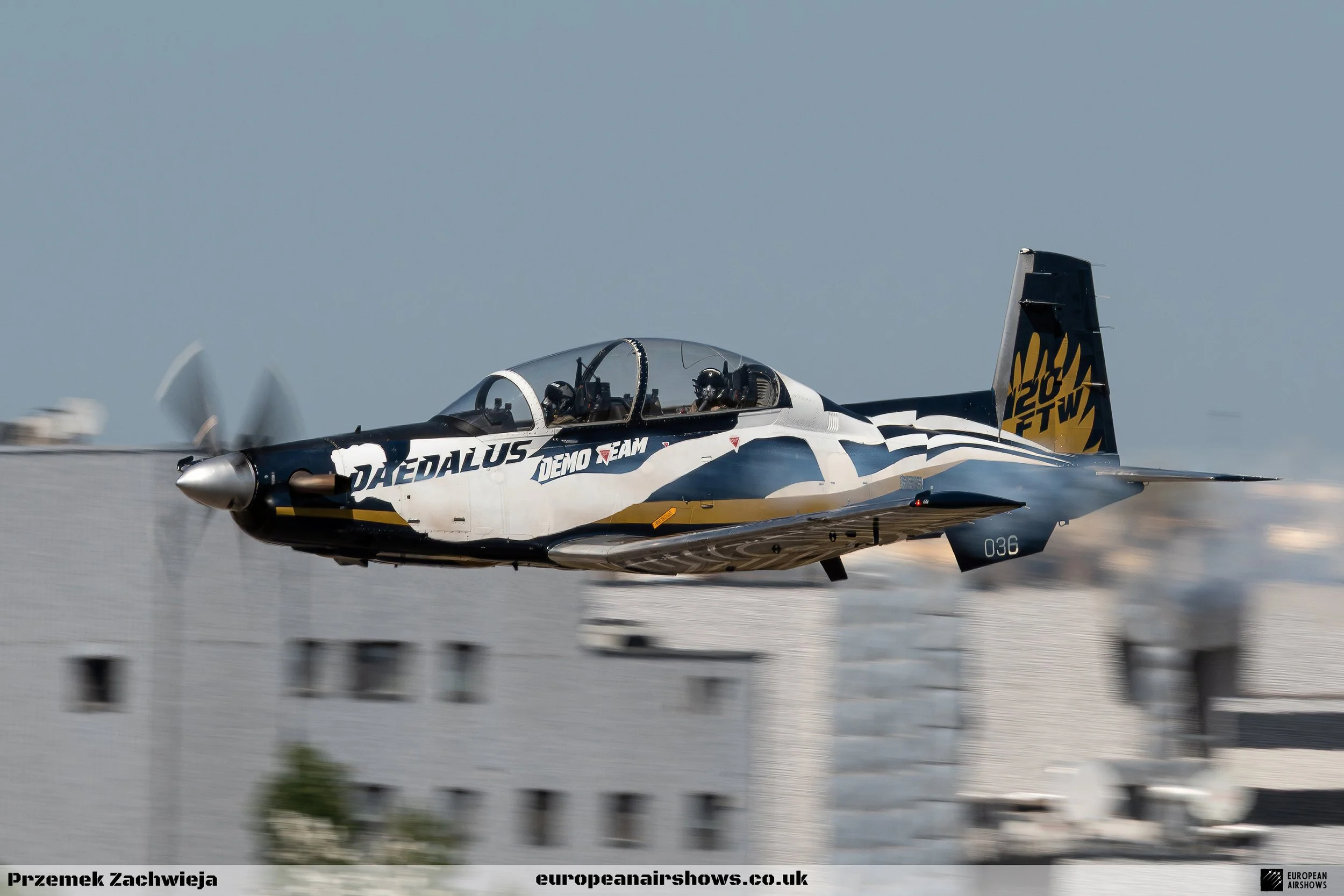
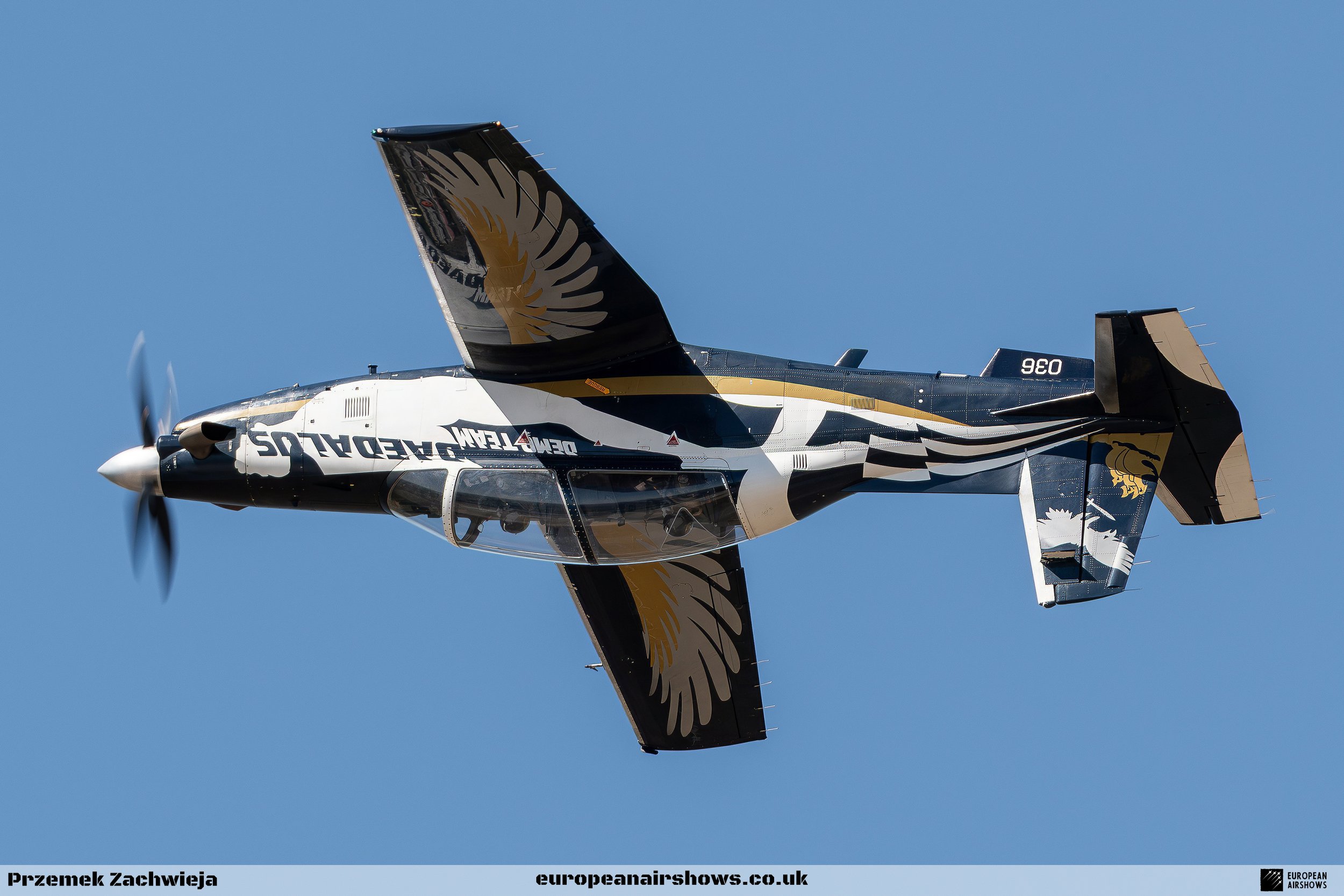
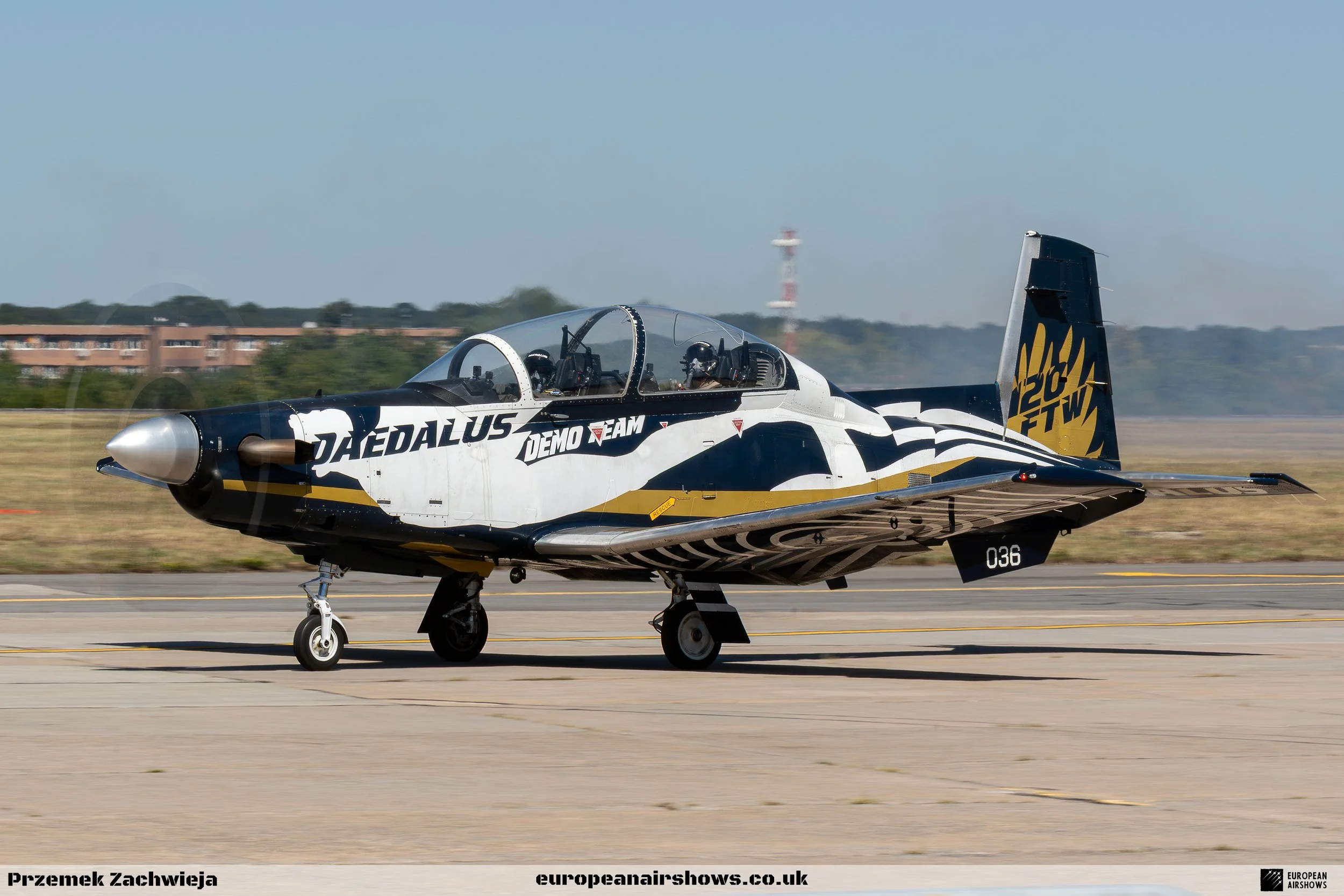
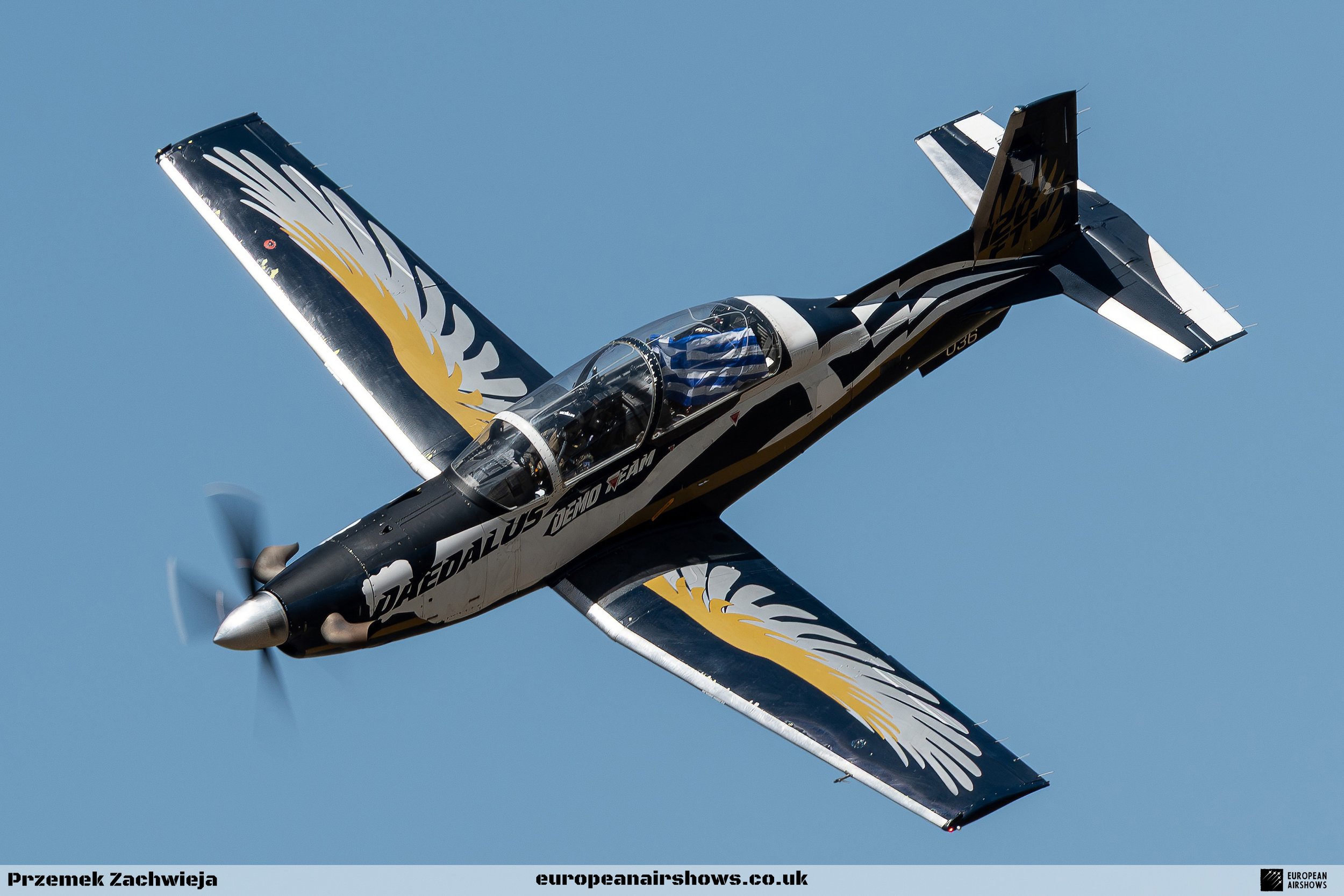
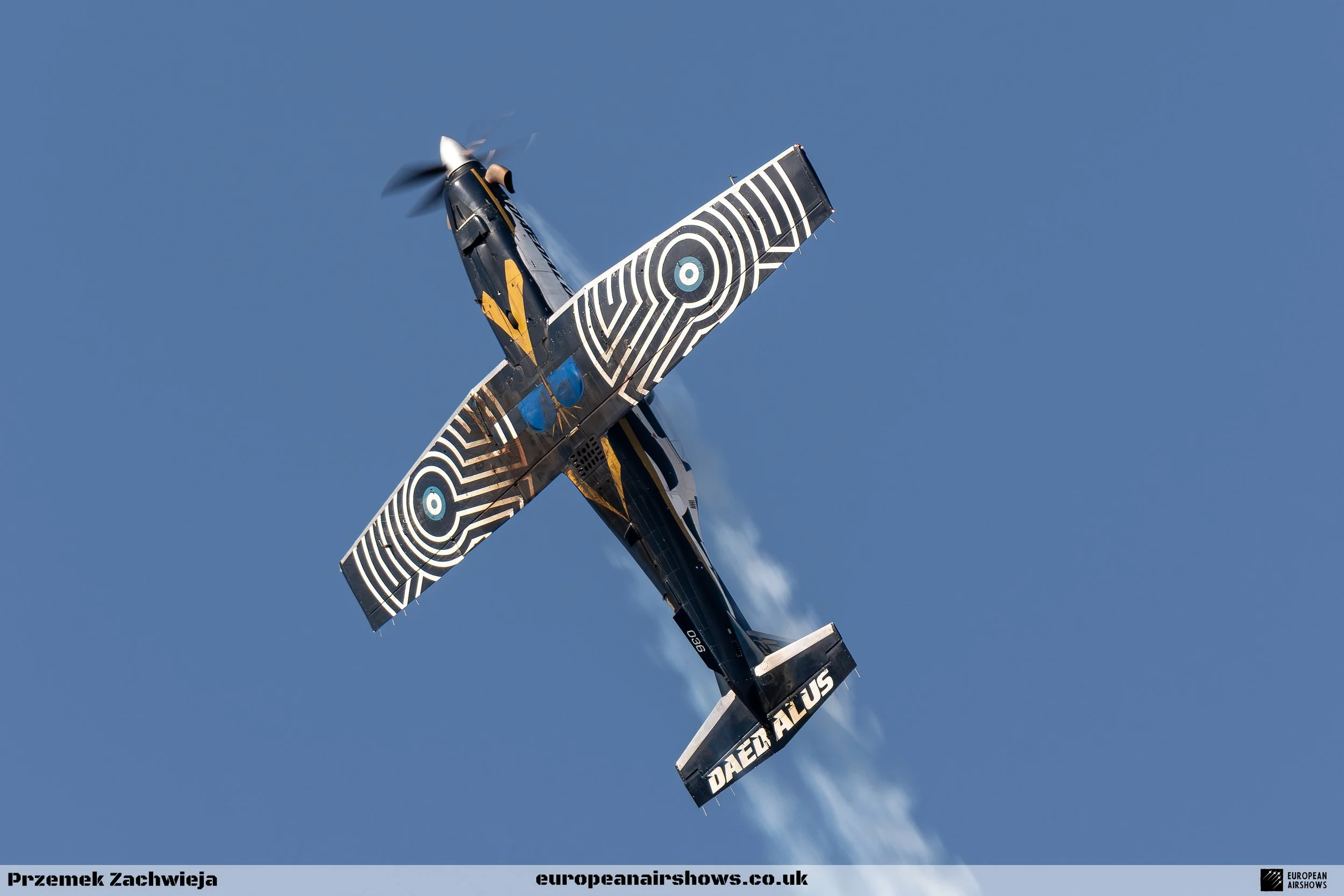
From Greece, the Hellenic Air Force’s Daedalus Demo Team brought the Beechcraft T-6A Texan II, flown by Captain Vasileios “Bill” Ntintis. The display mixed classic aerobatics — loops, slow rolls, and hesitation rolls — with the sharp handling of a modern trainer. A well-narrated sequence helped the crowd follow along, highlighting the Texan’s key role in HAF pilot training.
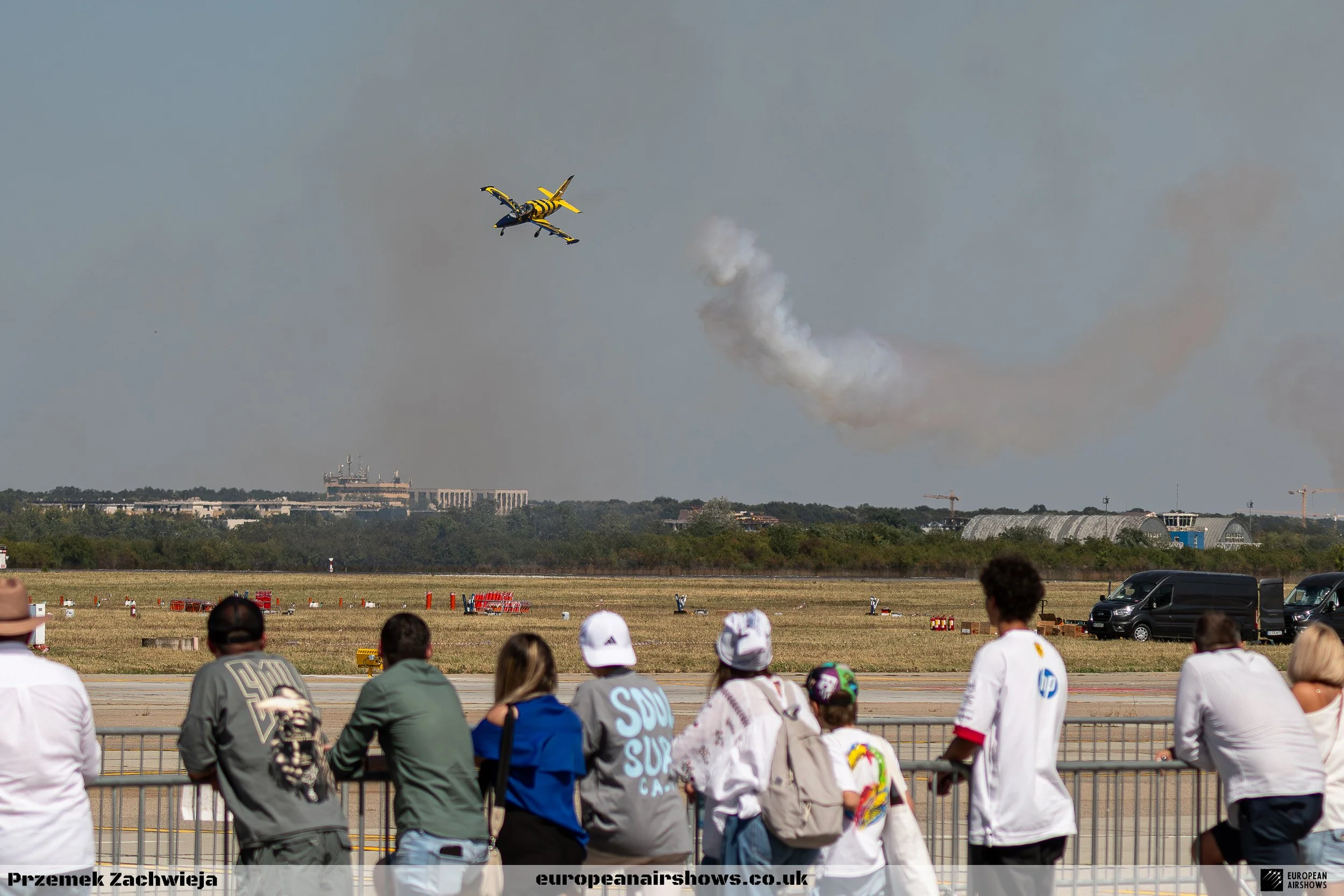
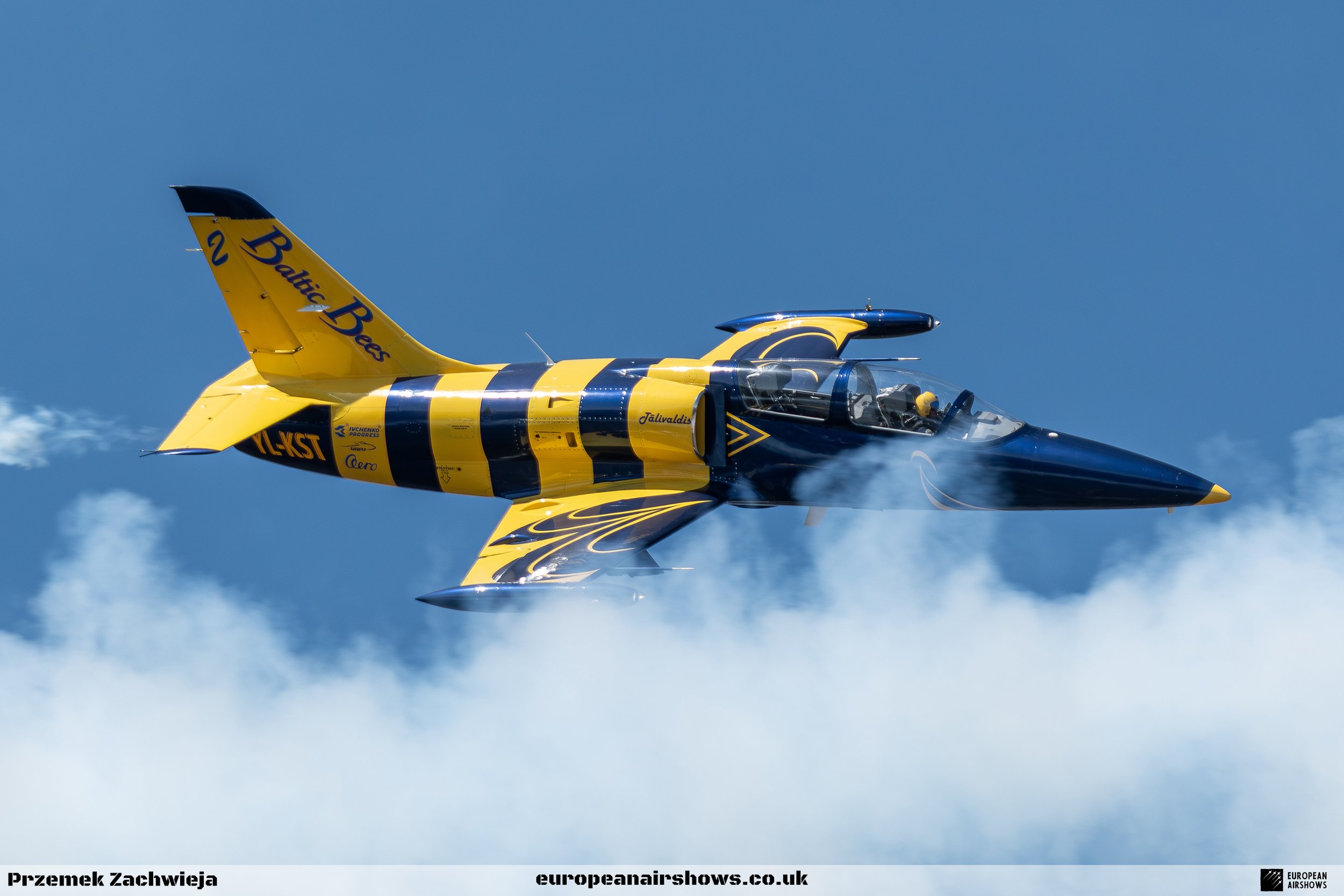
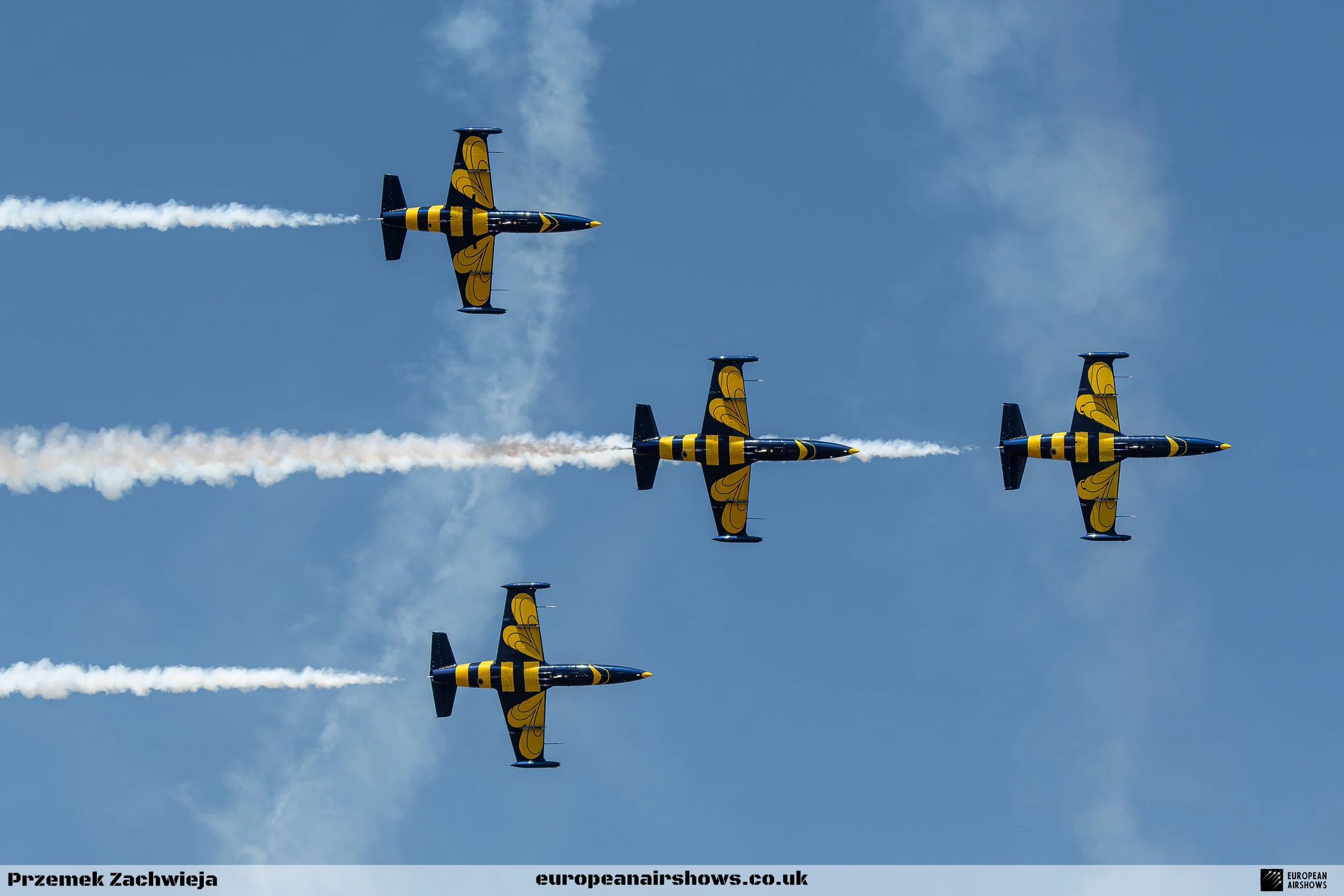
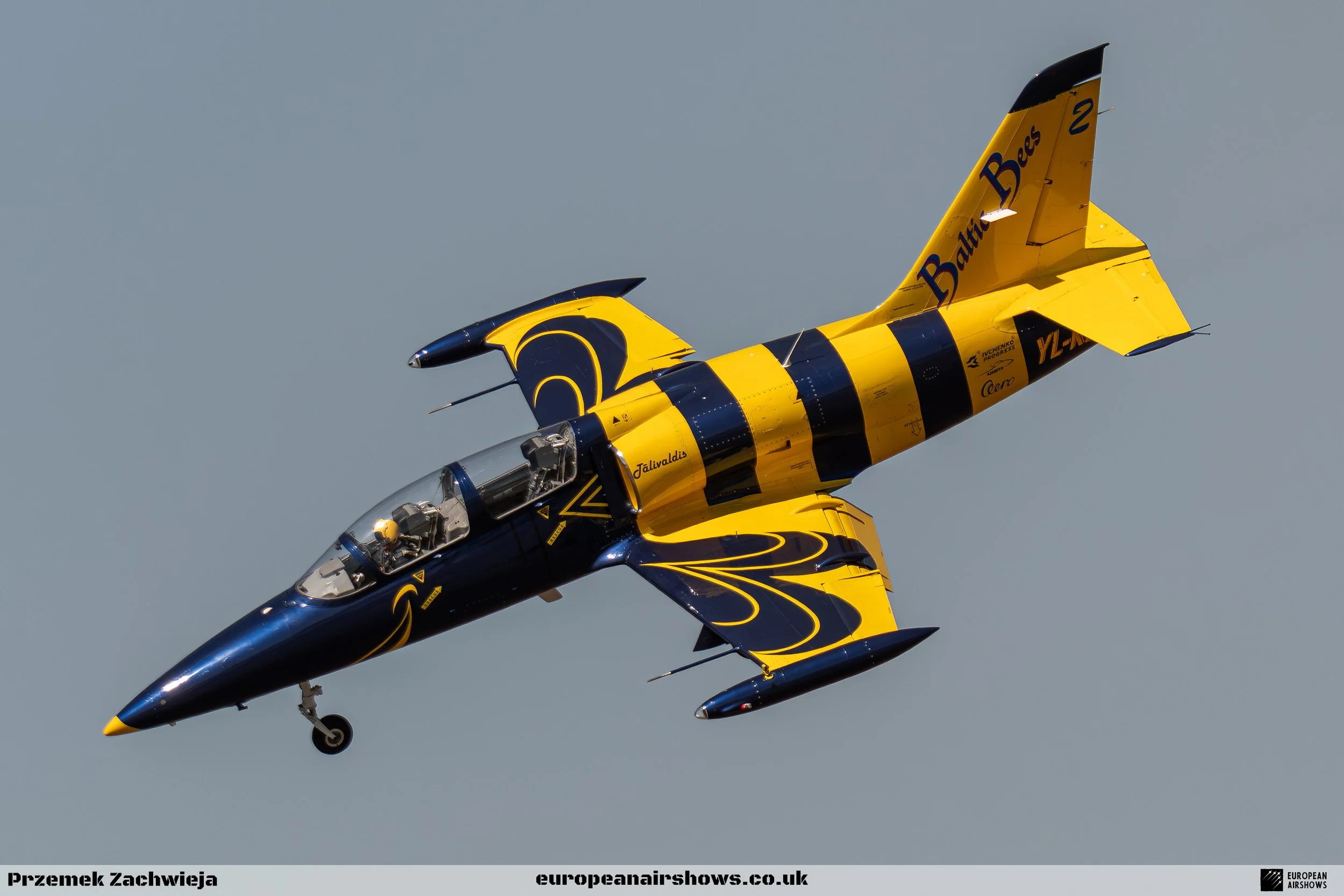
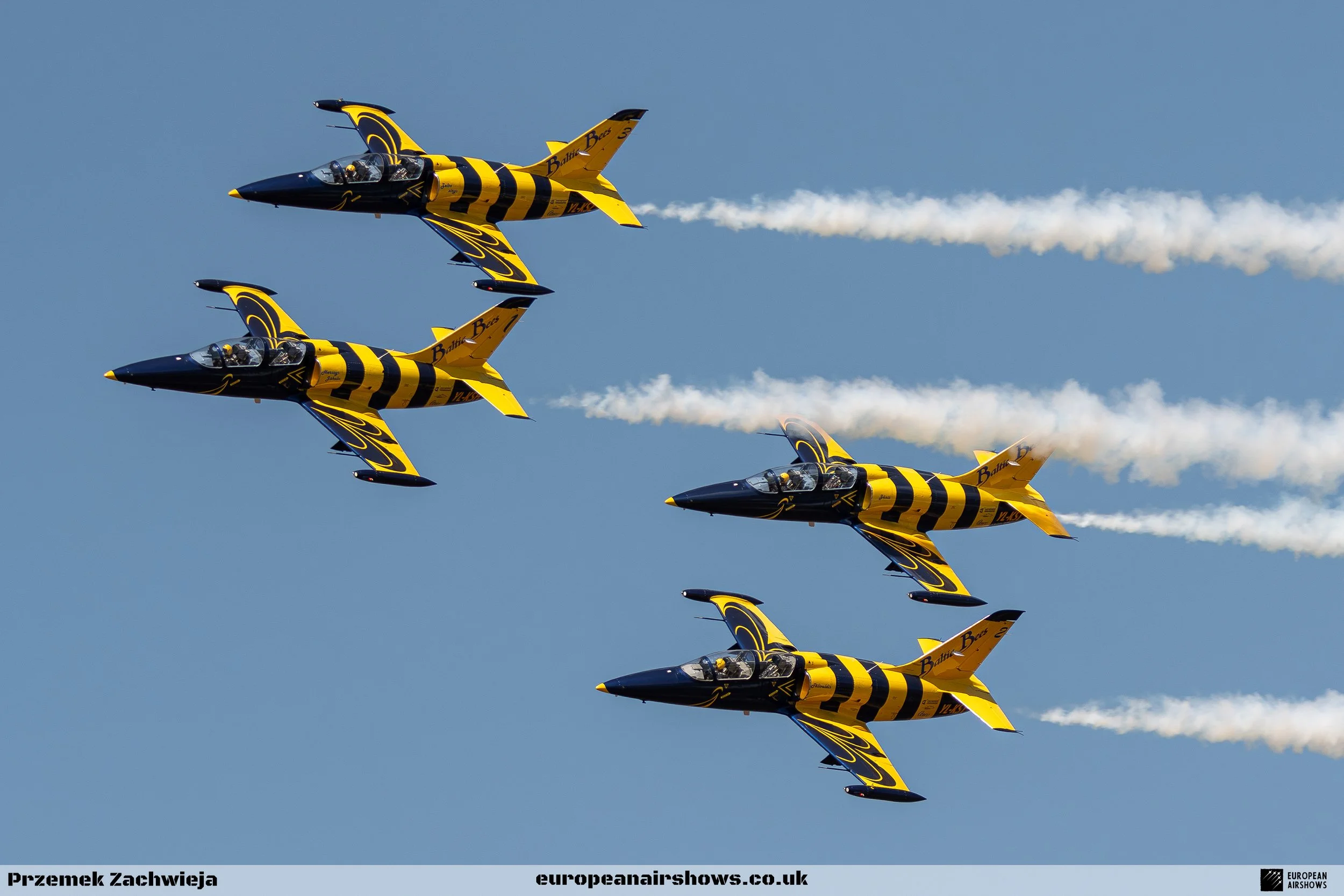
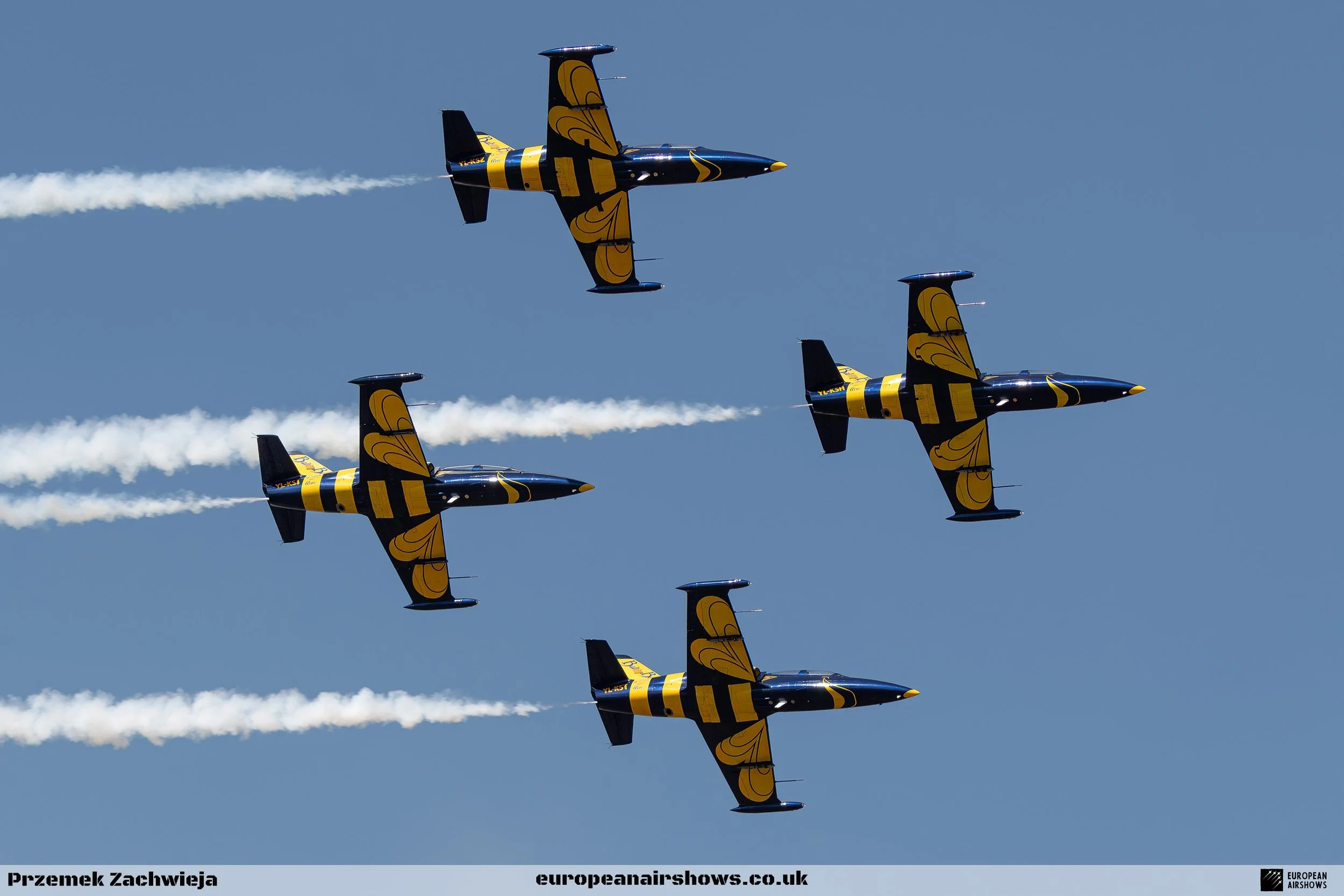
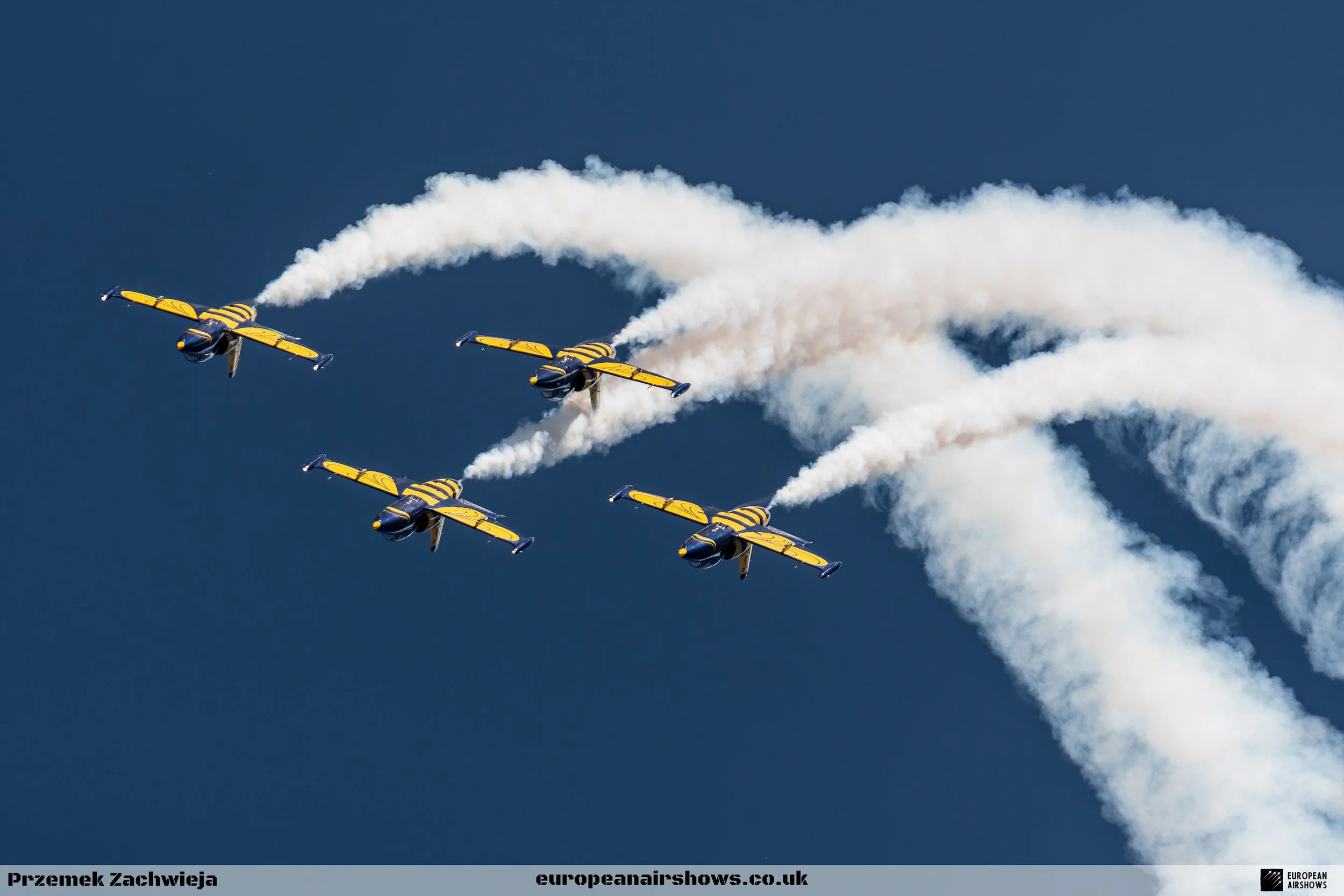
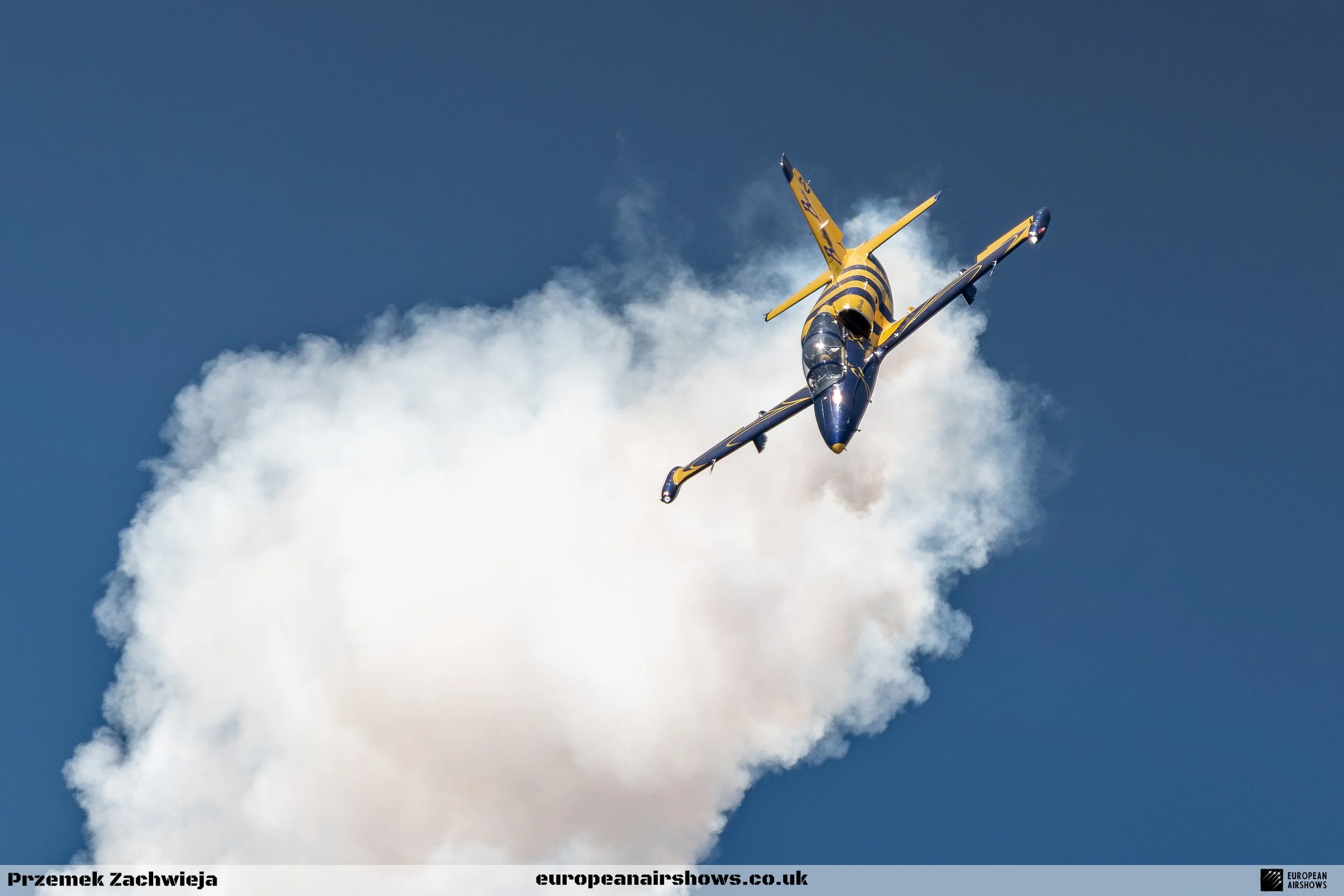
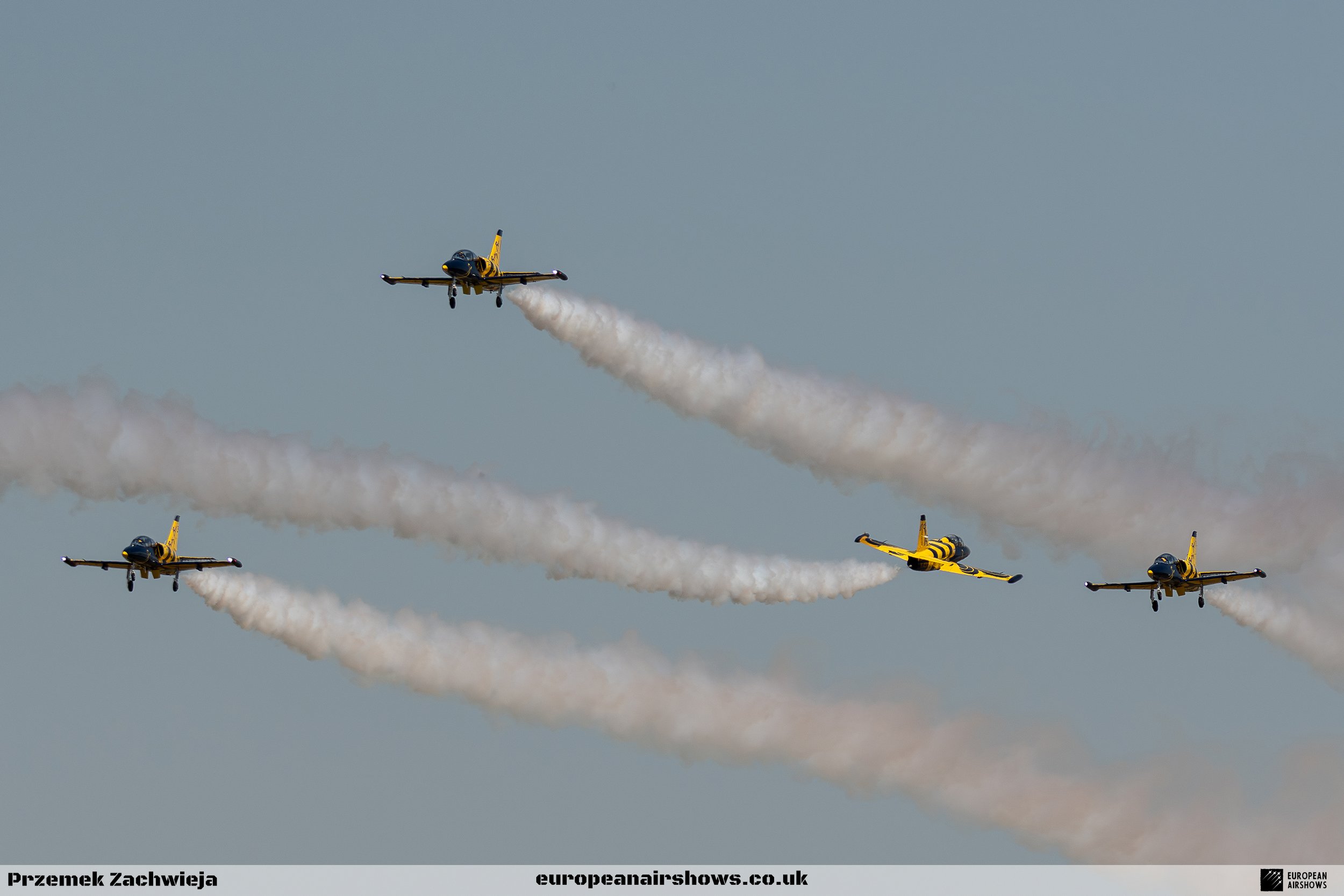
Latvia’s Baltic Bees Jet Team returned to Băneasa with a four-ship of Aero L-39C Albatros trainers — less a stylistic choice than the result of a tough few years. Several aircraft and much of their logistics were stranded in China during the pandemic, and although the last jets were brought home over the 2023–24 winter, the team rebuilt around a tighter four-ship display in 2024 and has mostly kept that format into 2025 while the fleet and pilot roster recover. In Bucharest, this produced a sharp, economical routine: diamond loops, precise barrel-roll passes, and dramatic breaks that kept all four aircraft clearly visible against the city skyline, their blue-and-gold paint schemes glowing in the heat-haze. The sequence does include more pauses as the jets reposition between manoeuvres, but the clean formations and crisp timing hold attention throughout. For Romanian fans, the display carried extra weight — it marked the Bees’ first BIAS appearance since 2019, closing a six-year gap that neatly framed the story of their interruption and return.
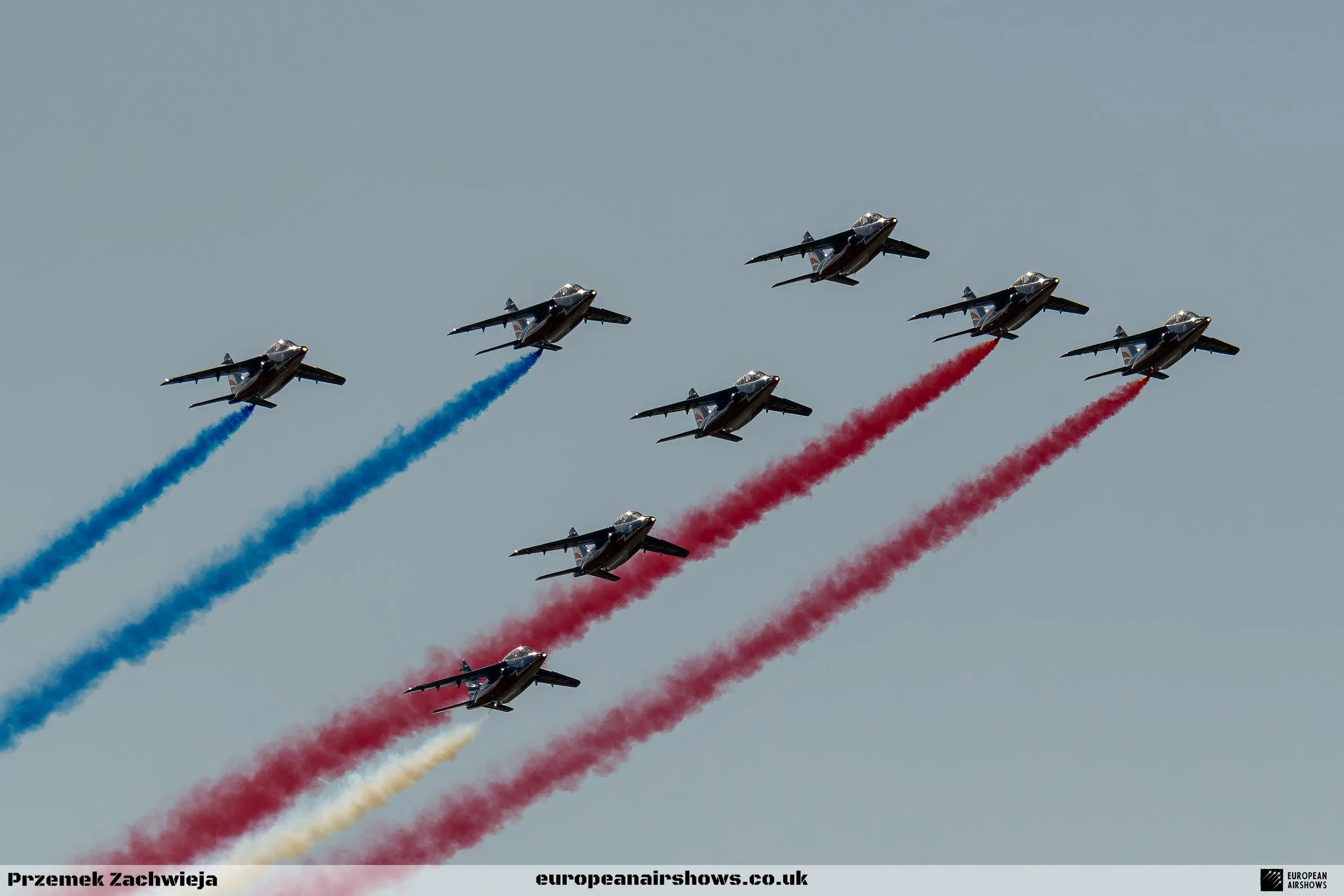
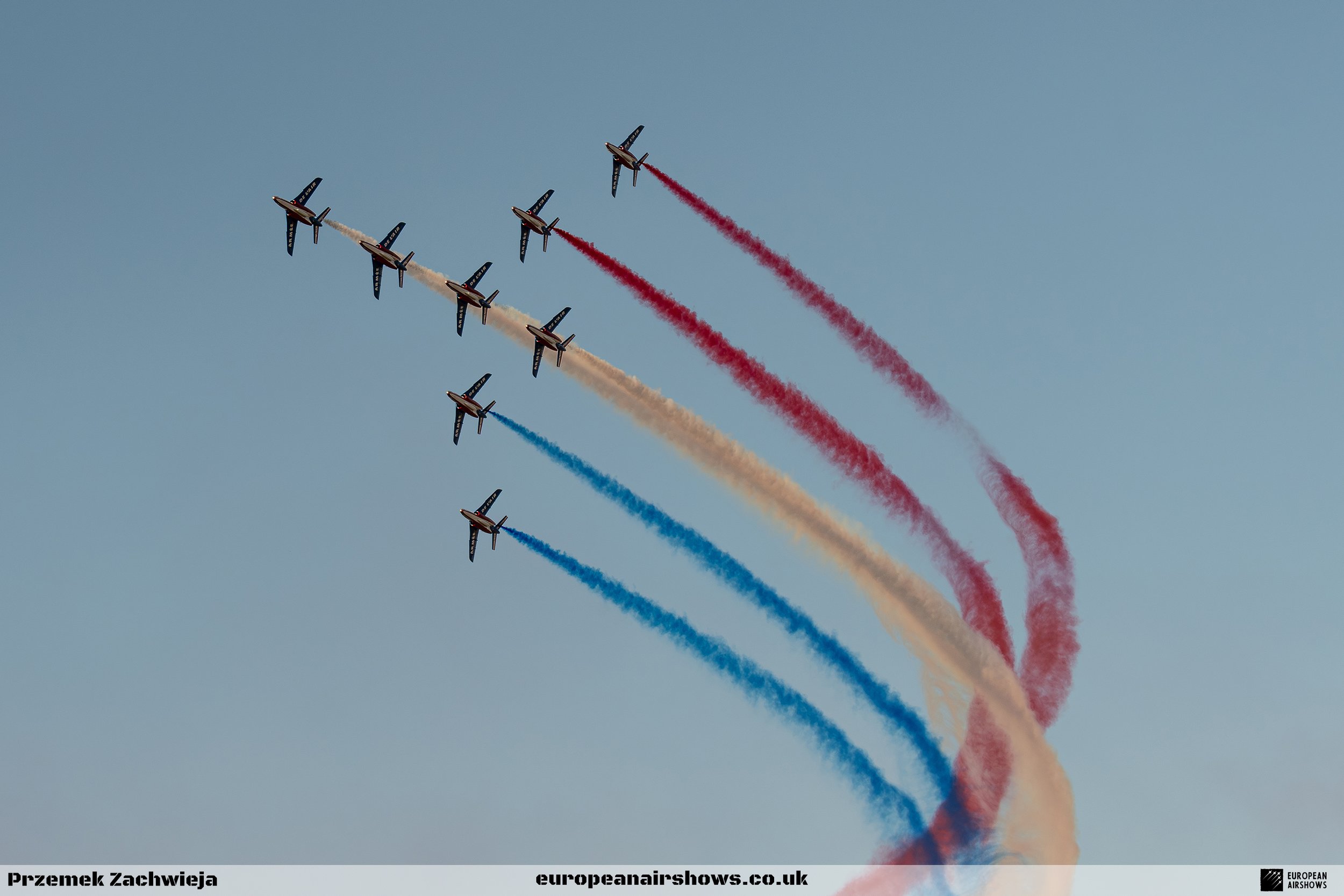
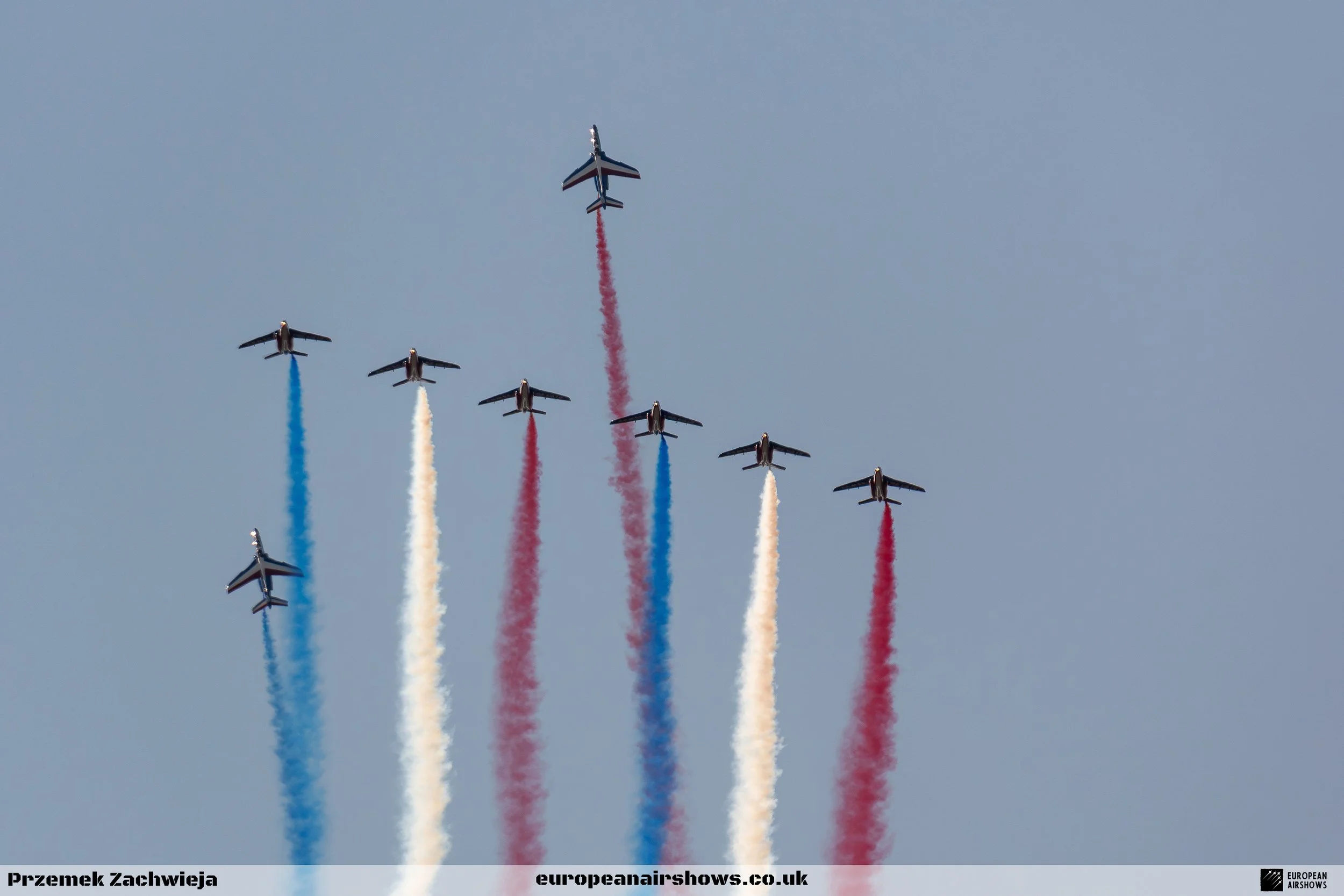
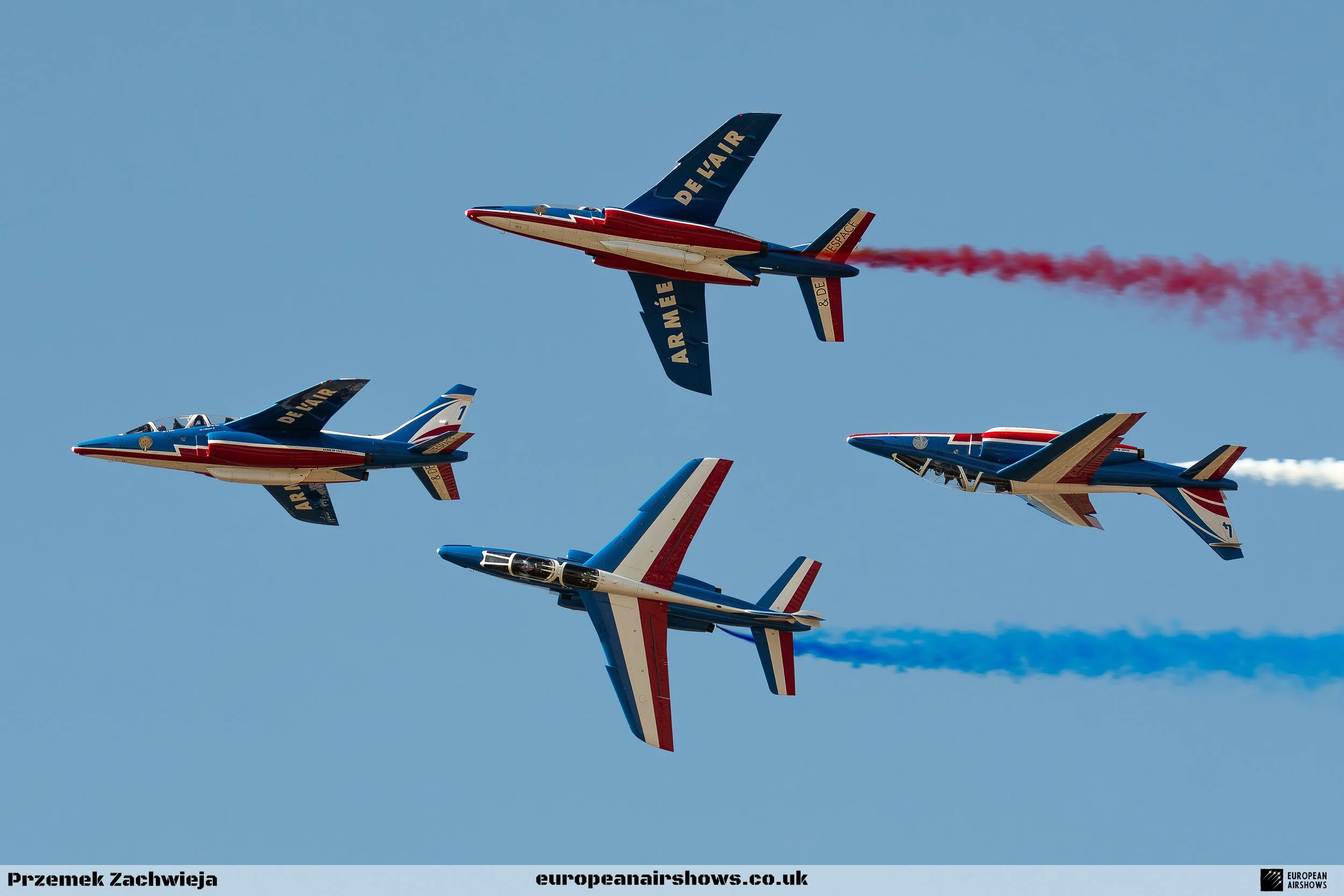
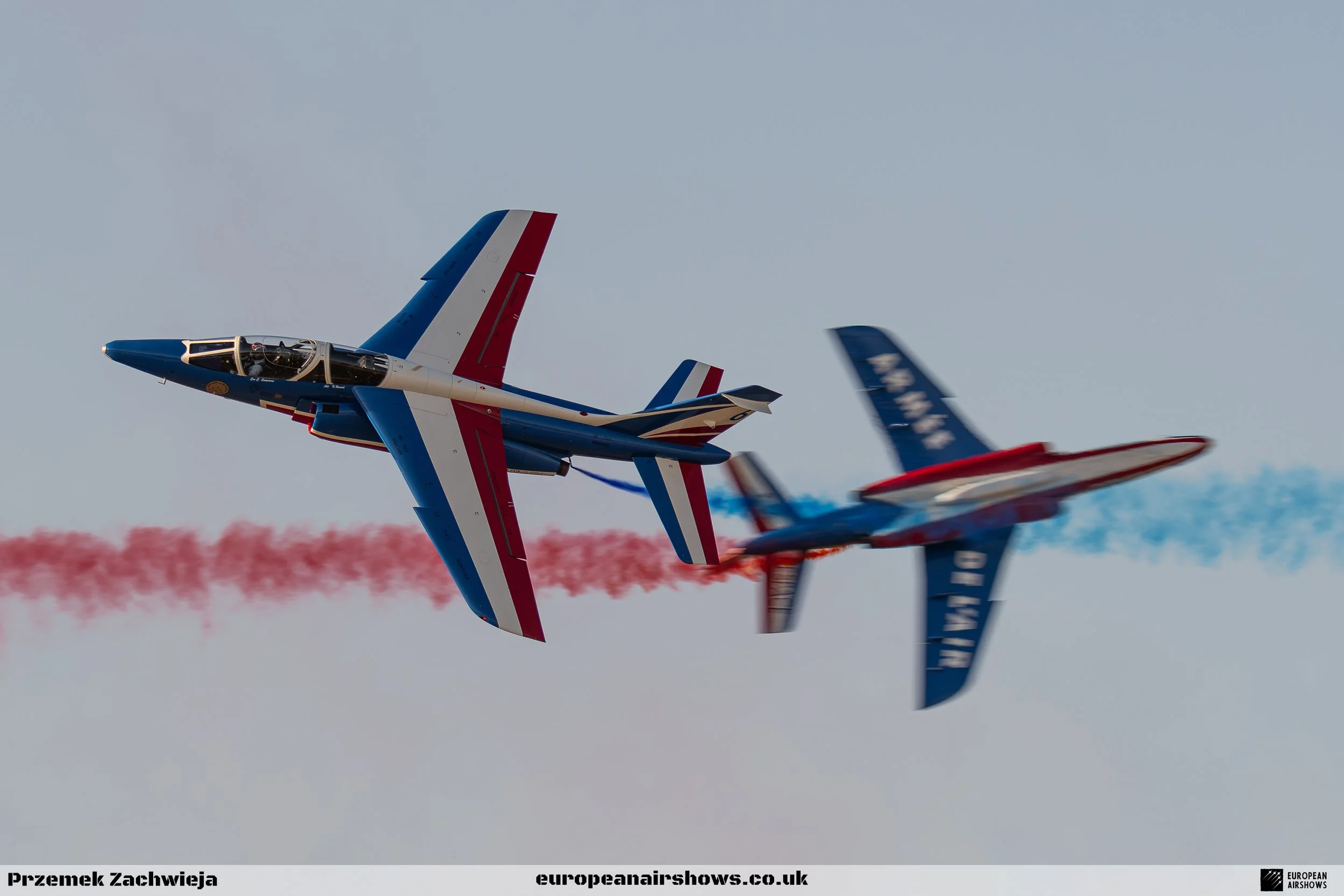
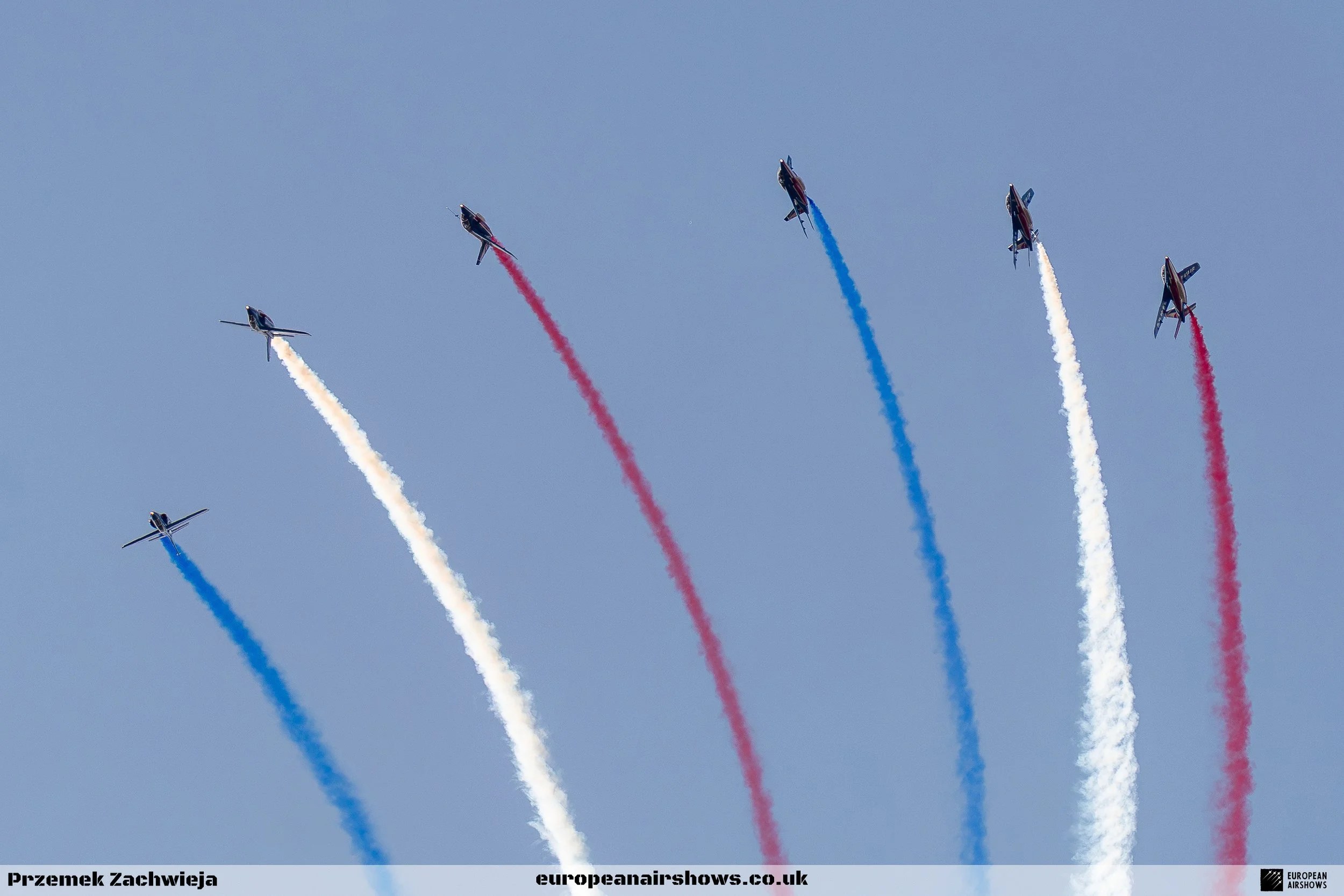
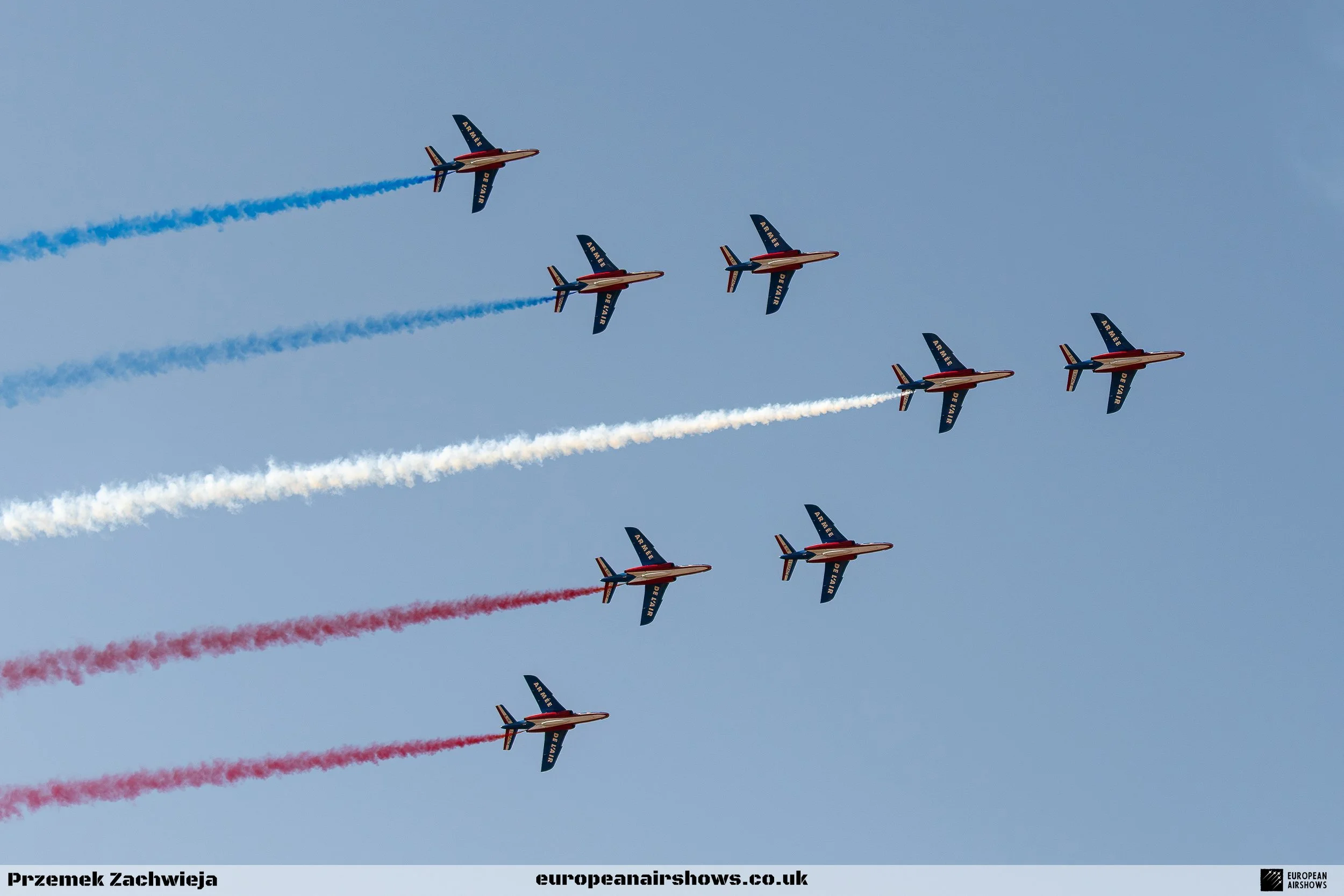
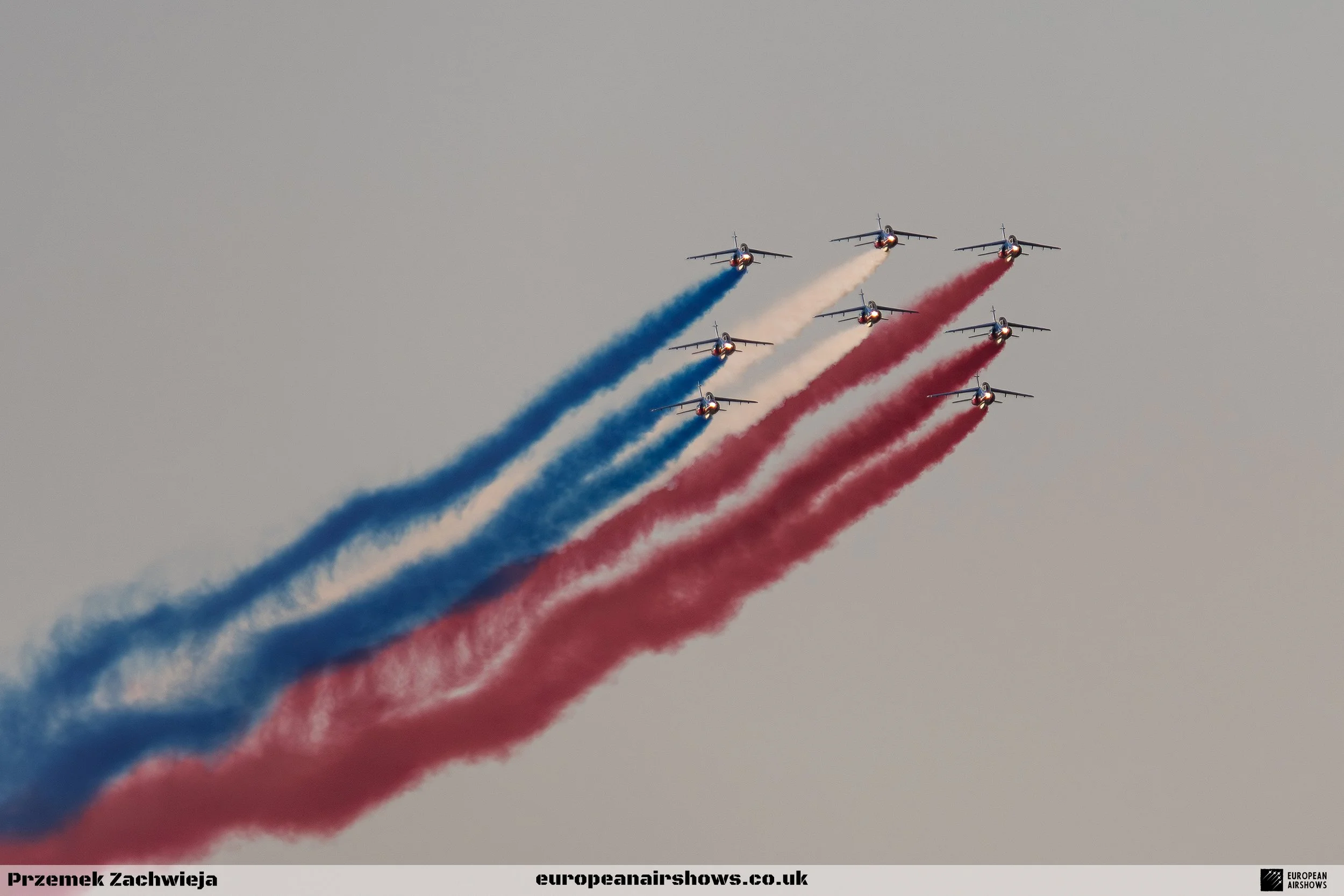
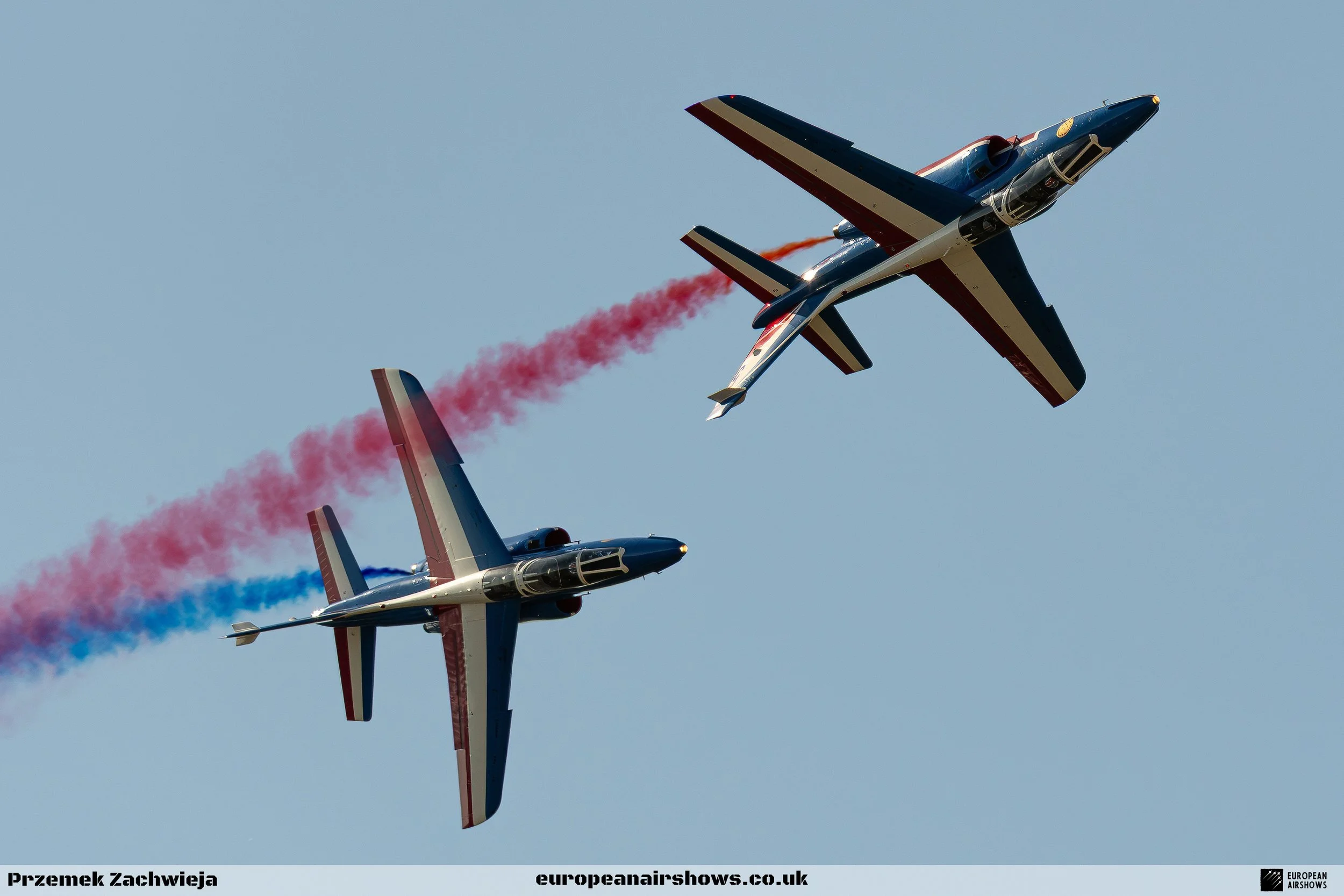
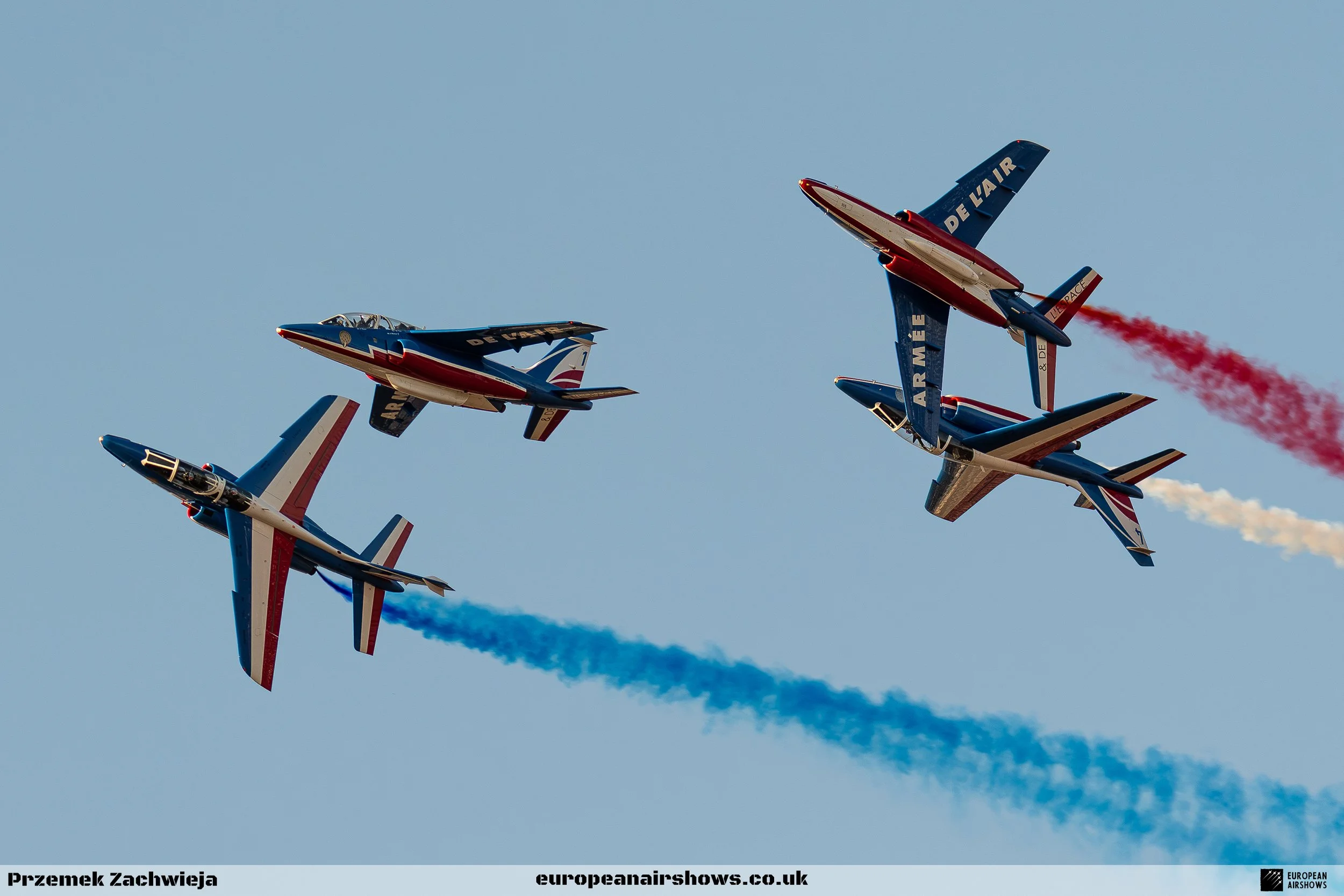
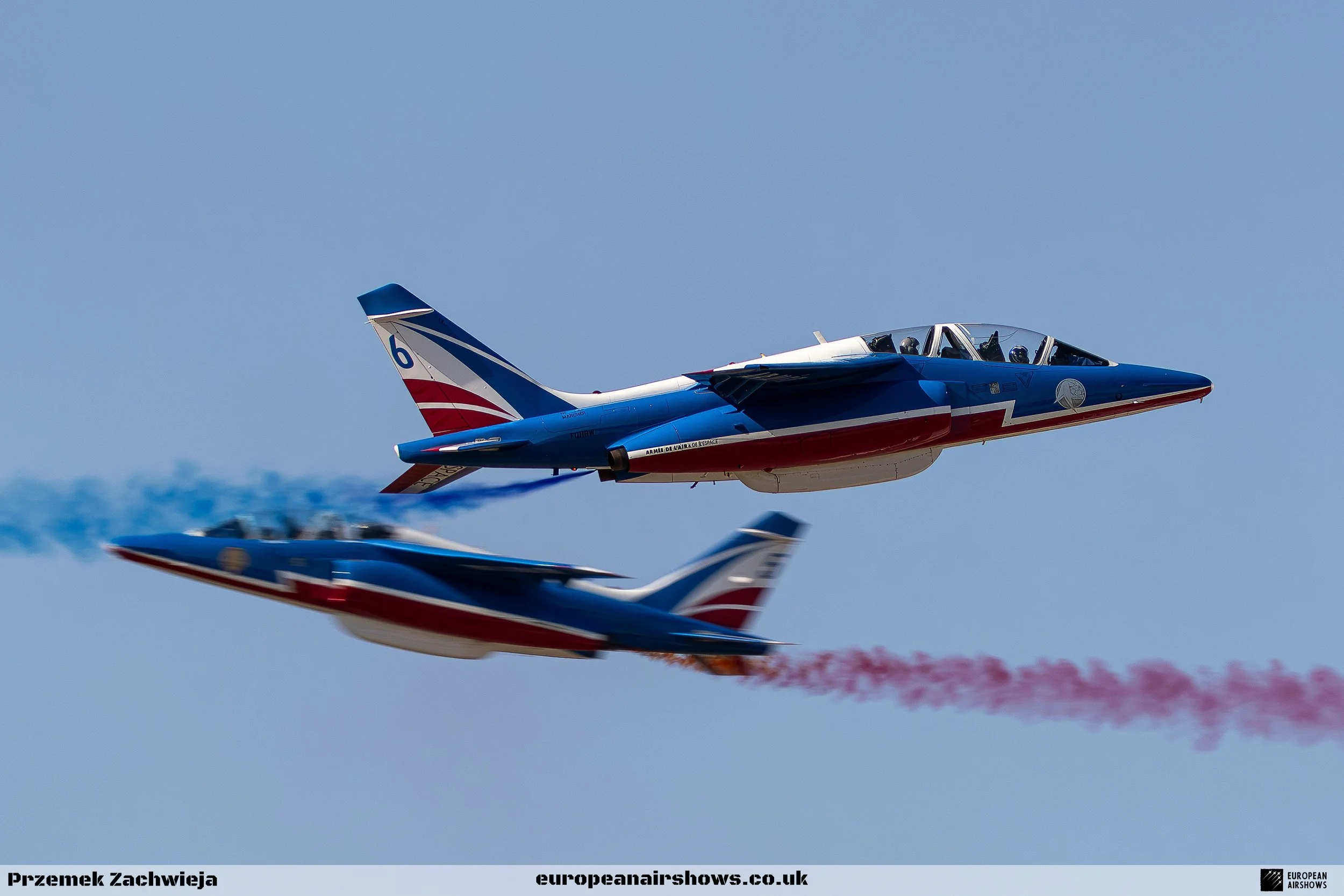
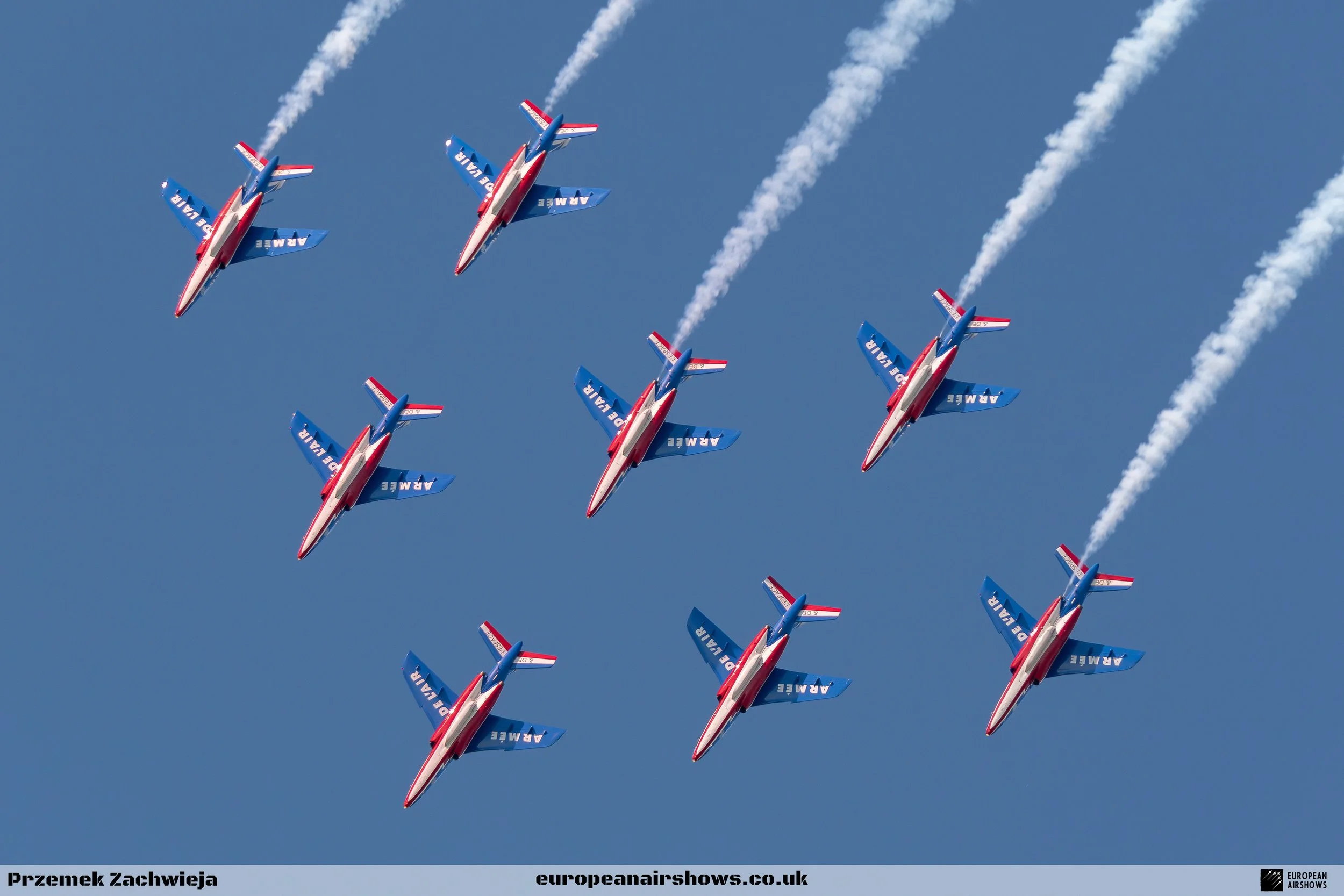
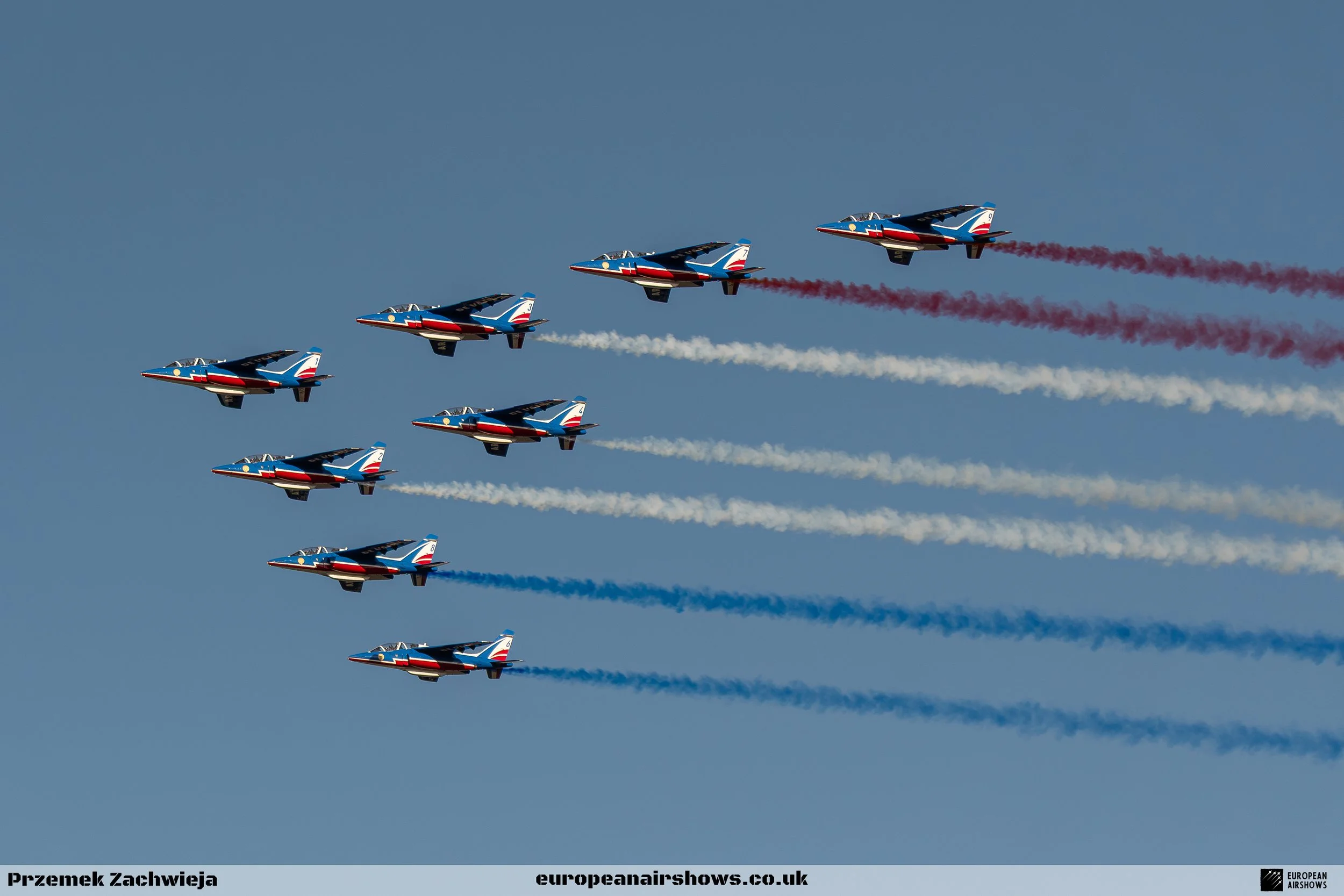
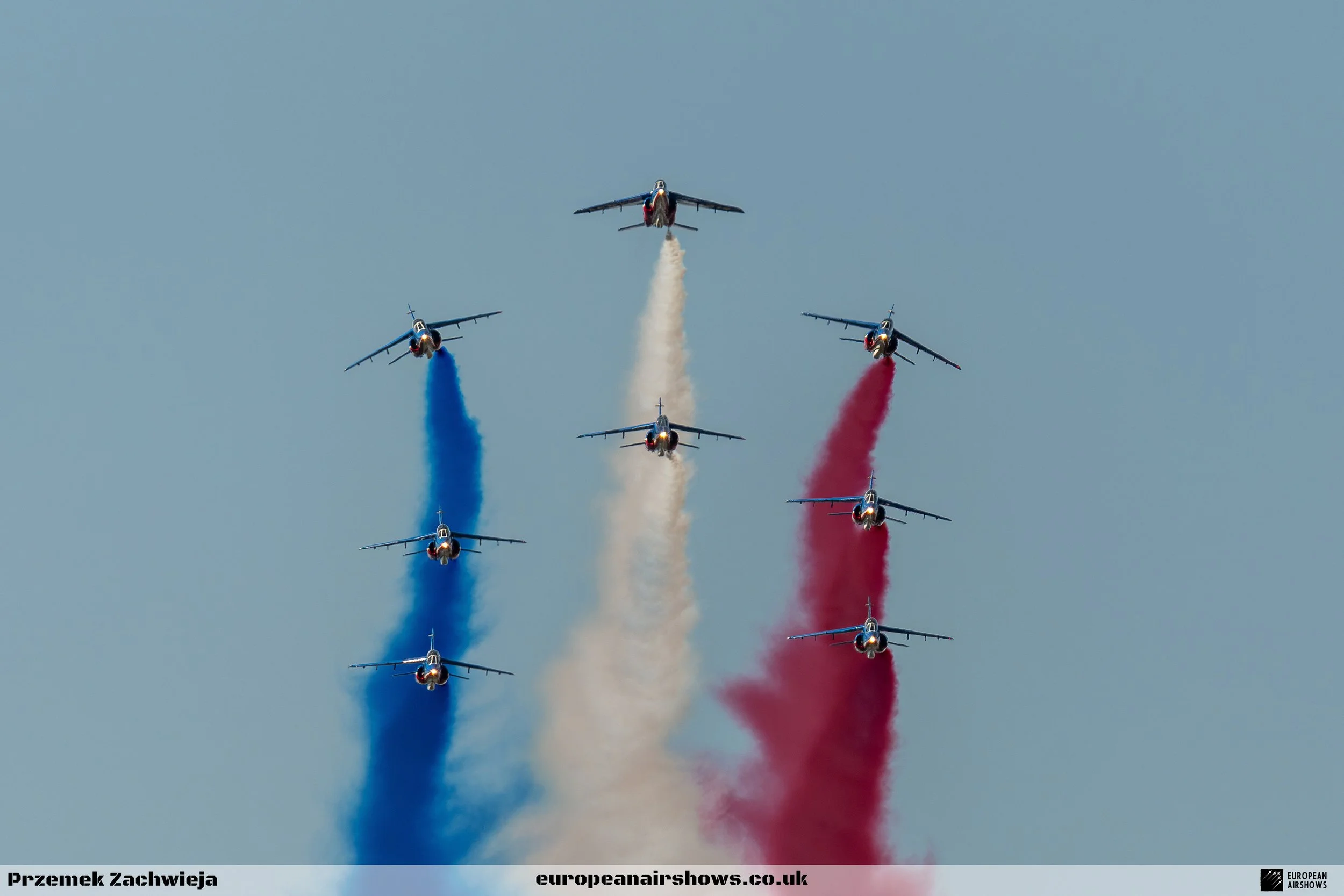
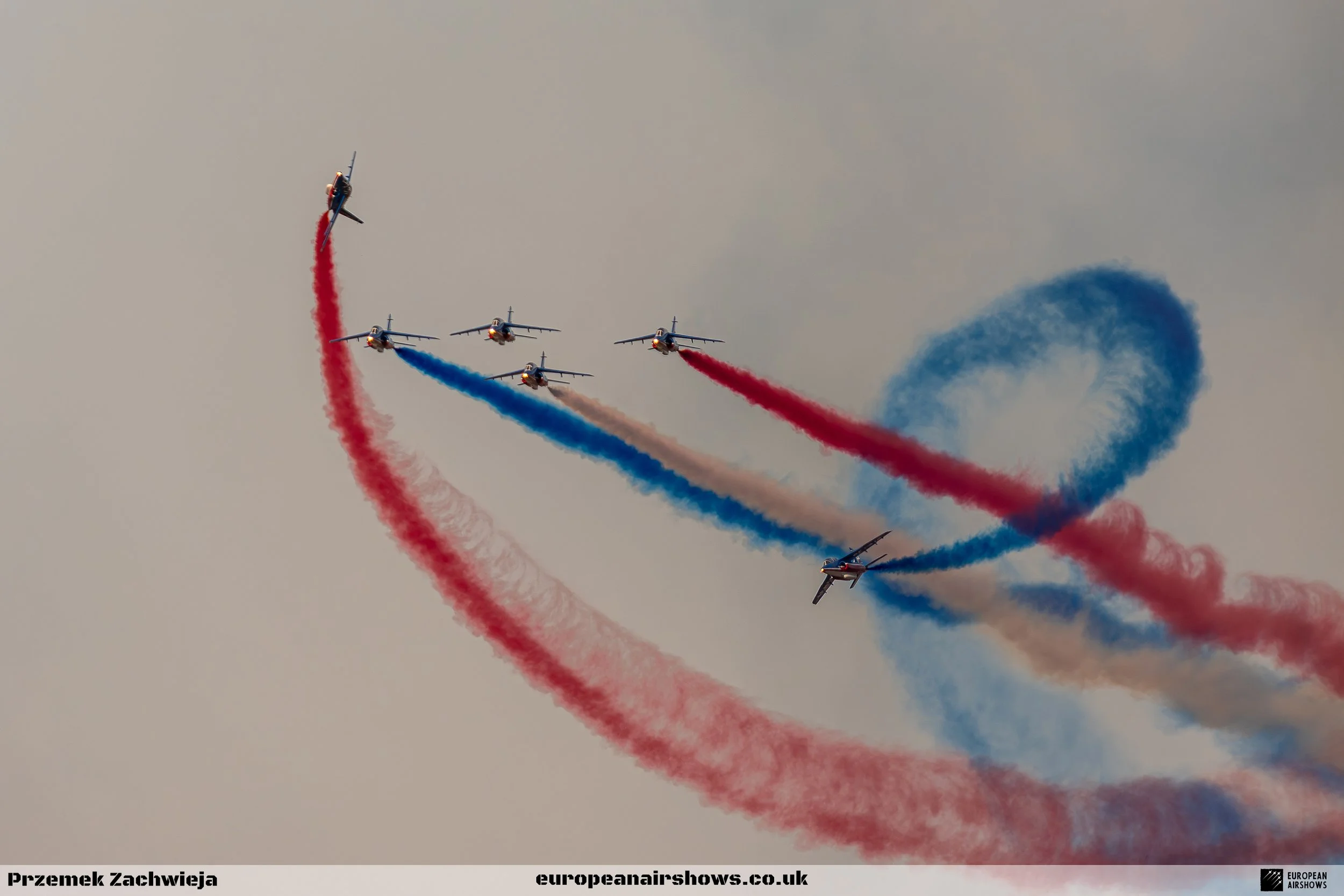
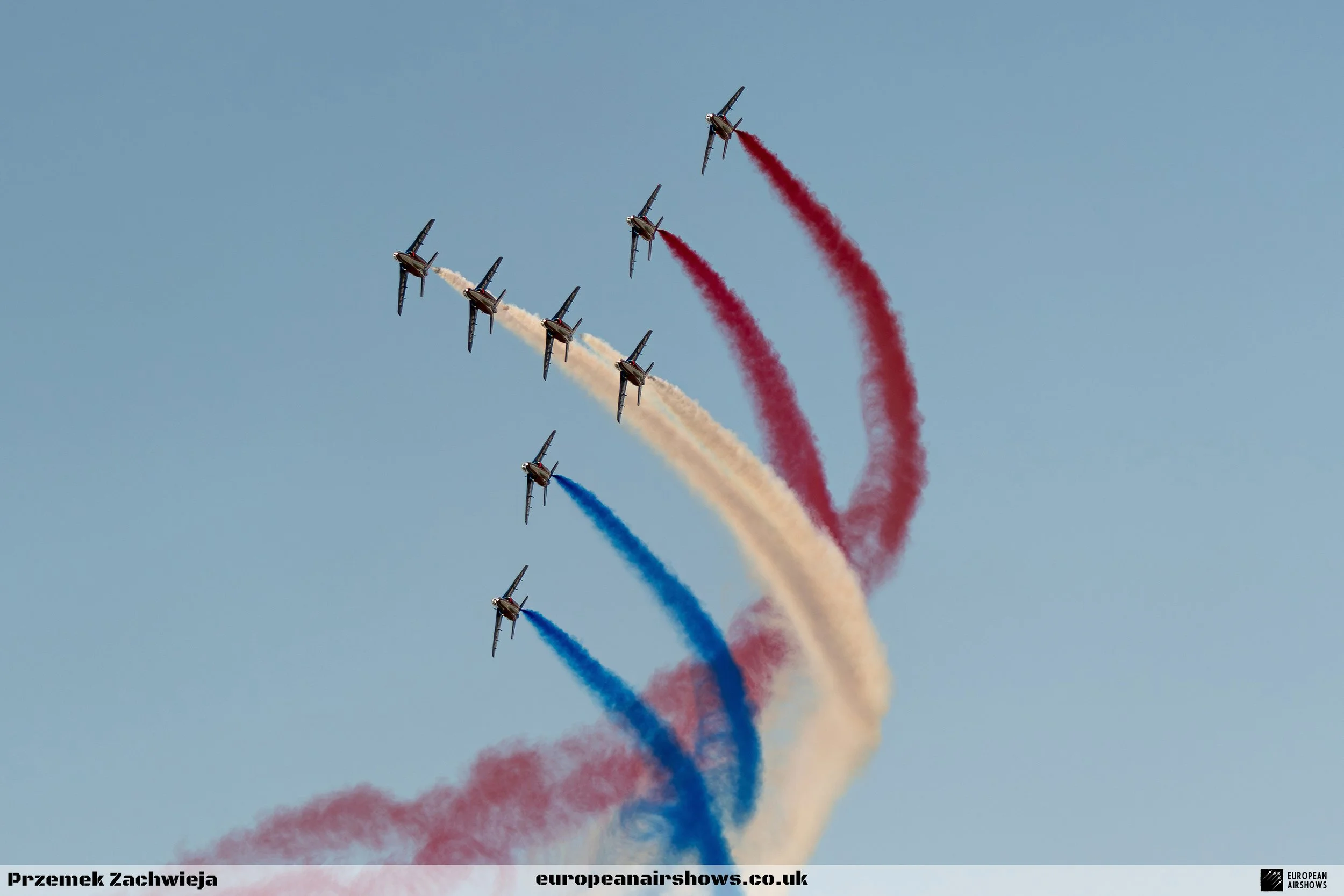
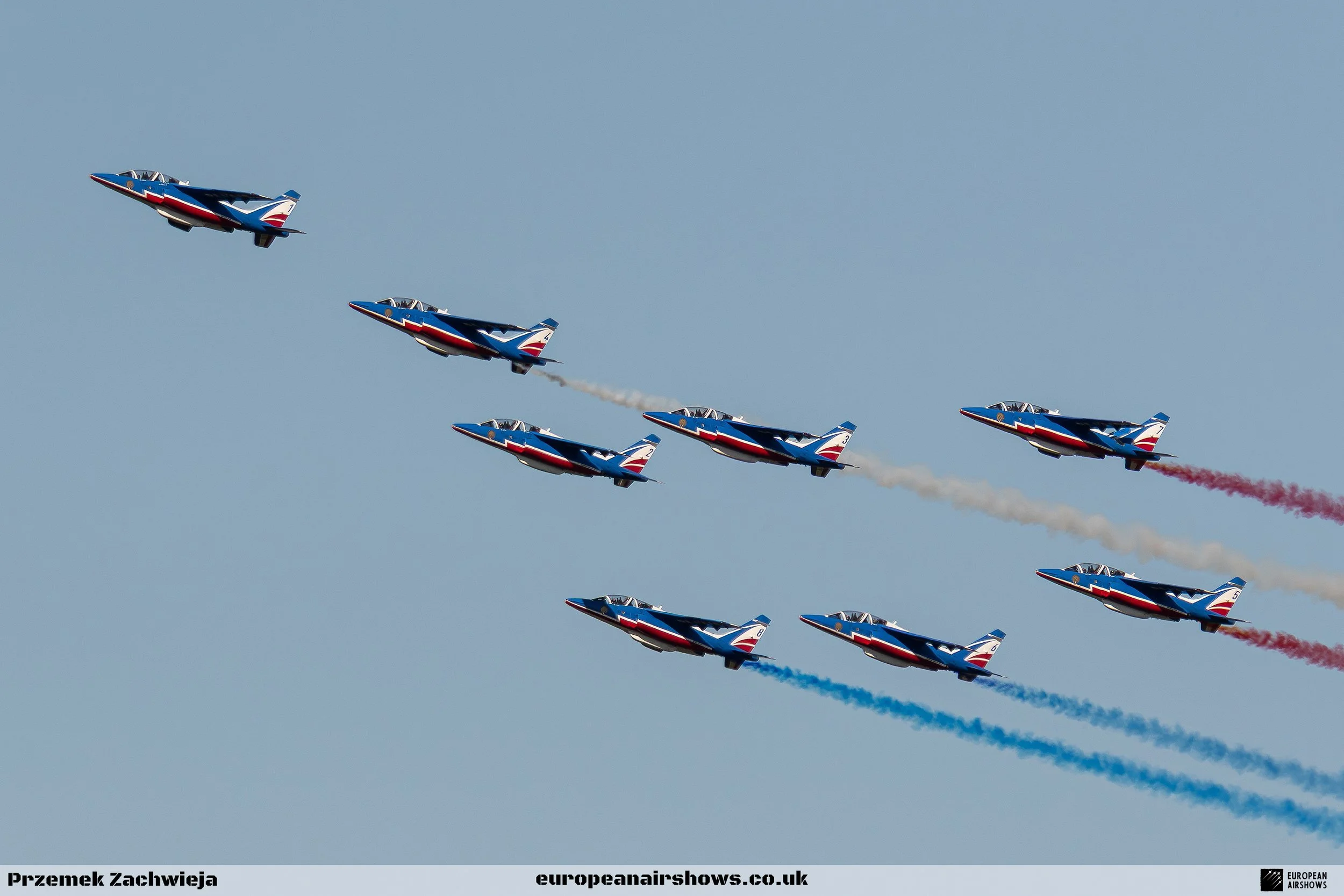
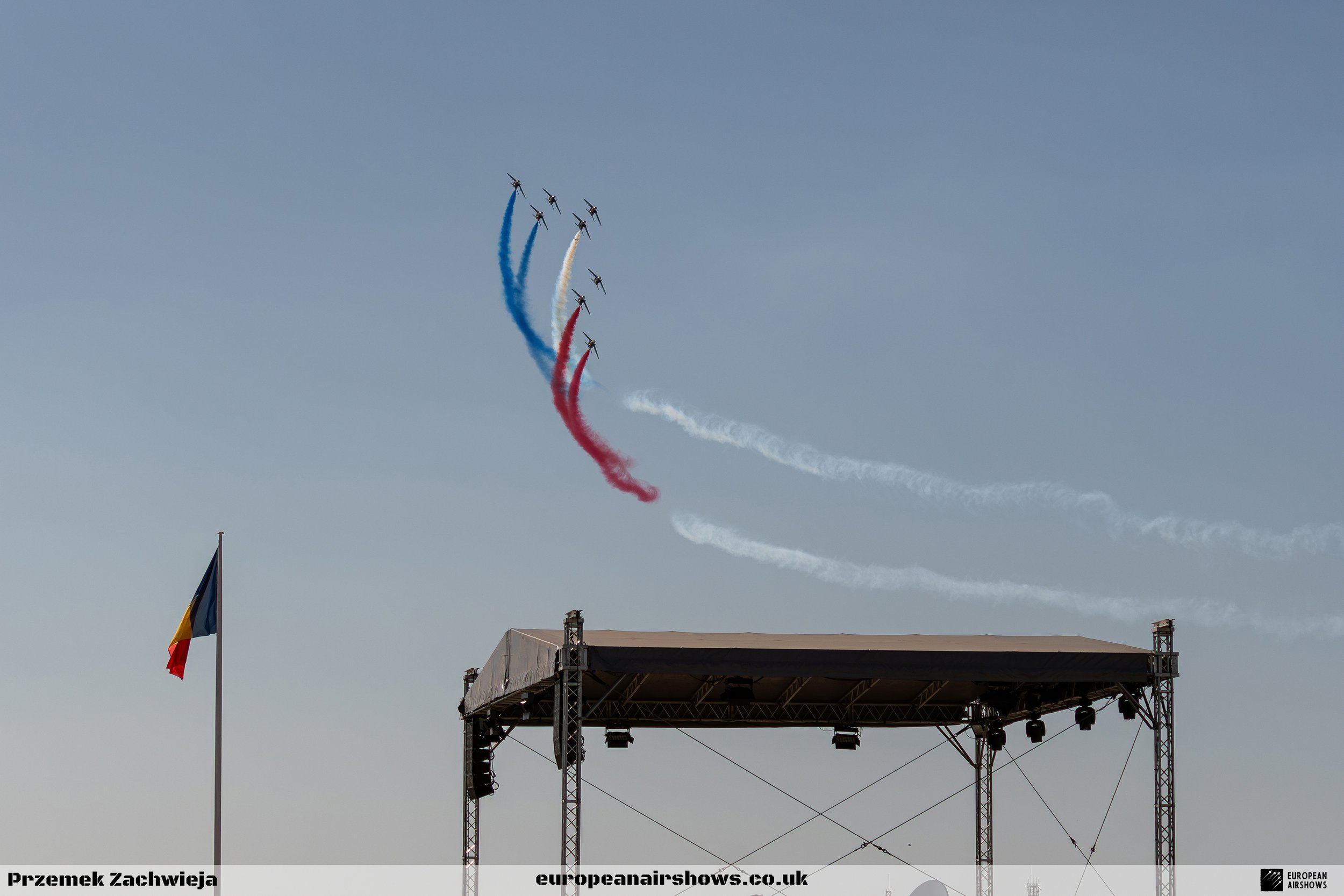
The real highlight of the weekend came from France. The Patrouille de France made their long-awaited Romanian debut, bringing eight Dassault/Dornier Alpha Jets and the kind of polish that comes only from decades at the top of European display flying. From their opening tricolour arrival, the routine flowed seamlessly through perfect diamond formations, mirrored opposition passes, and the trademark heart traced high above the capital. The symmetry, timing, and finesse were unmistakable, with the team’s blue, white, and red smoke leaving some of the weekend’s most memorable images. For many spectators, simply seeing the team over Bucharest for the first time justified the trip — and their performance more than lived up to expectations.
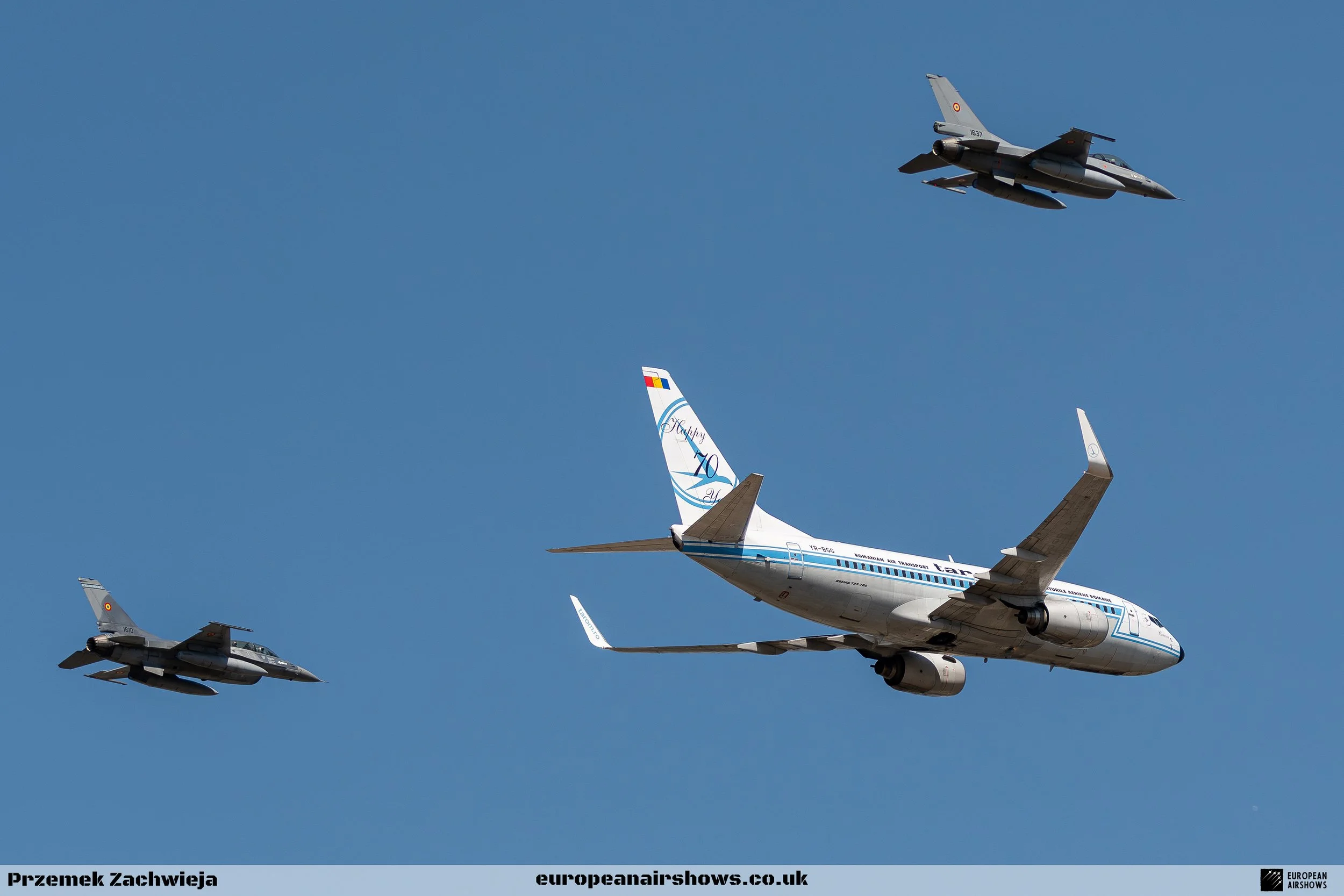
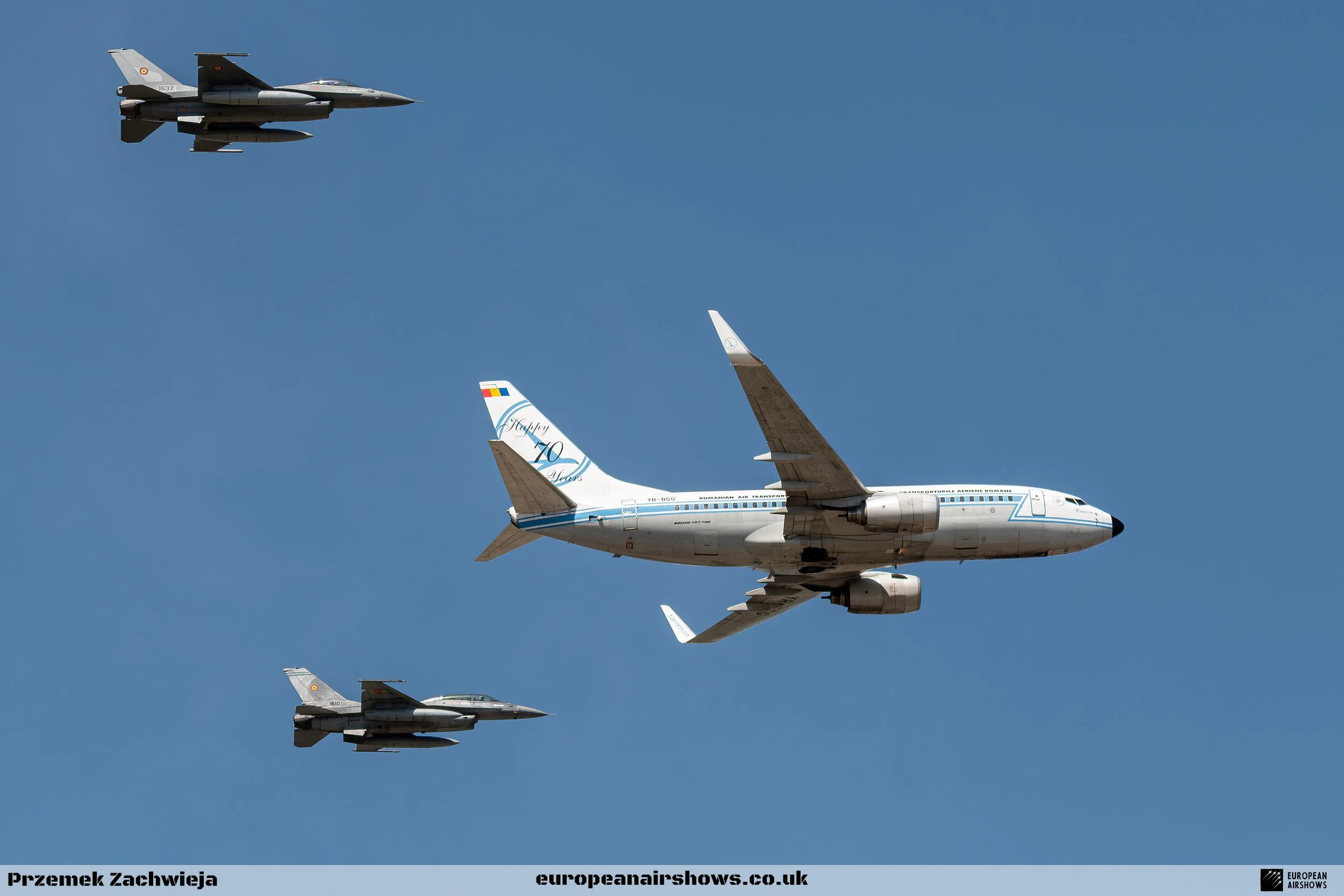
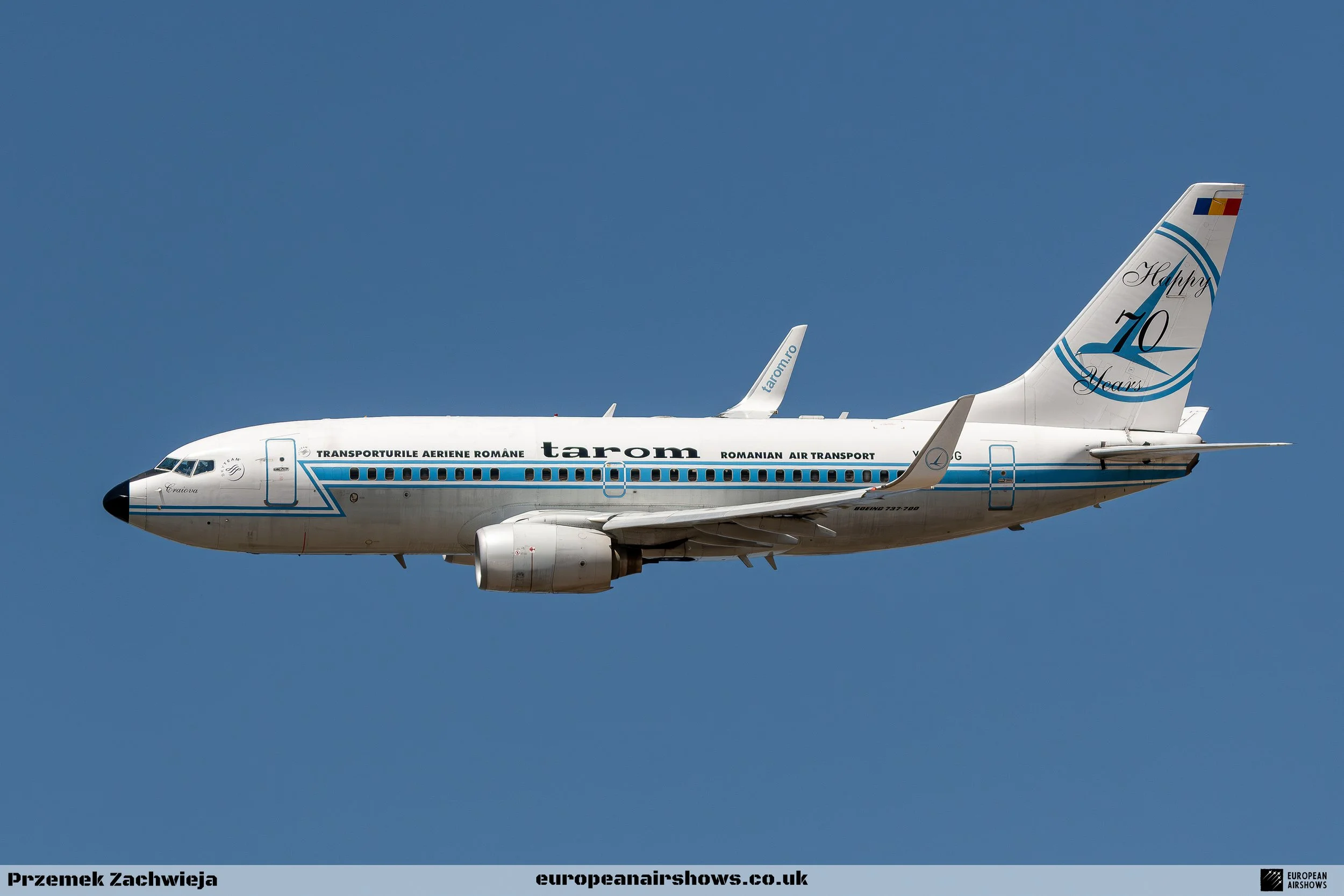
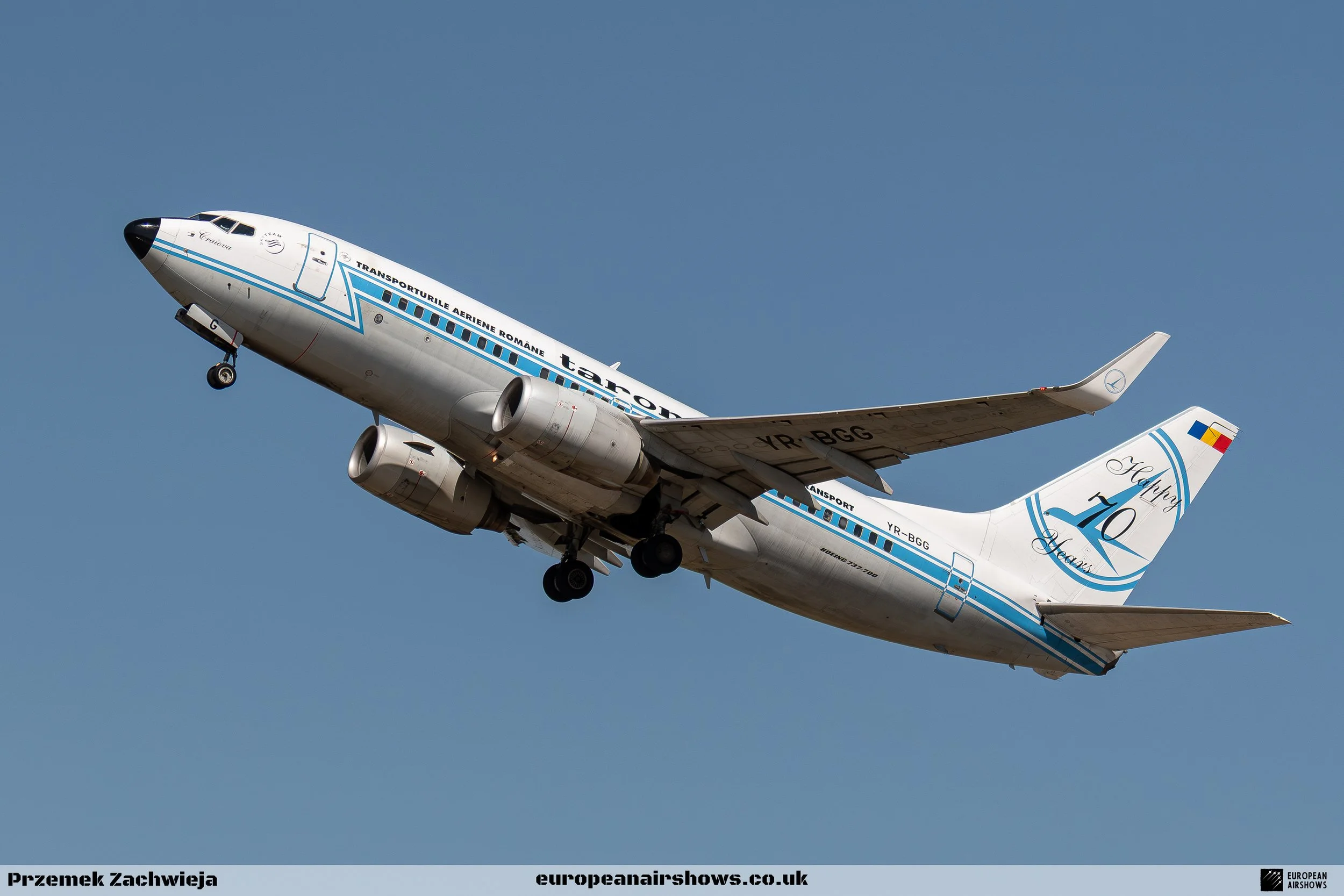
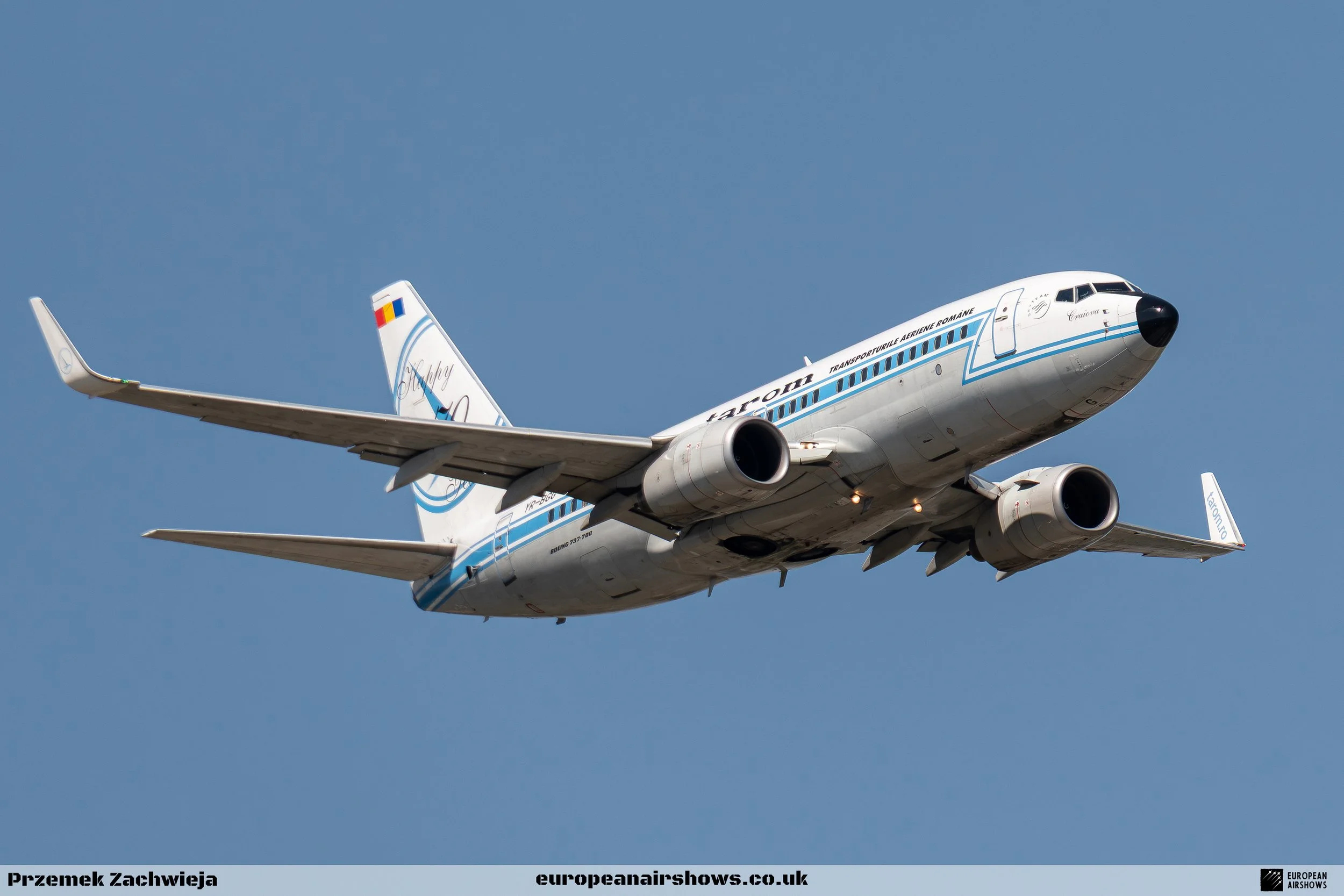
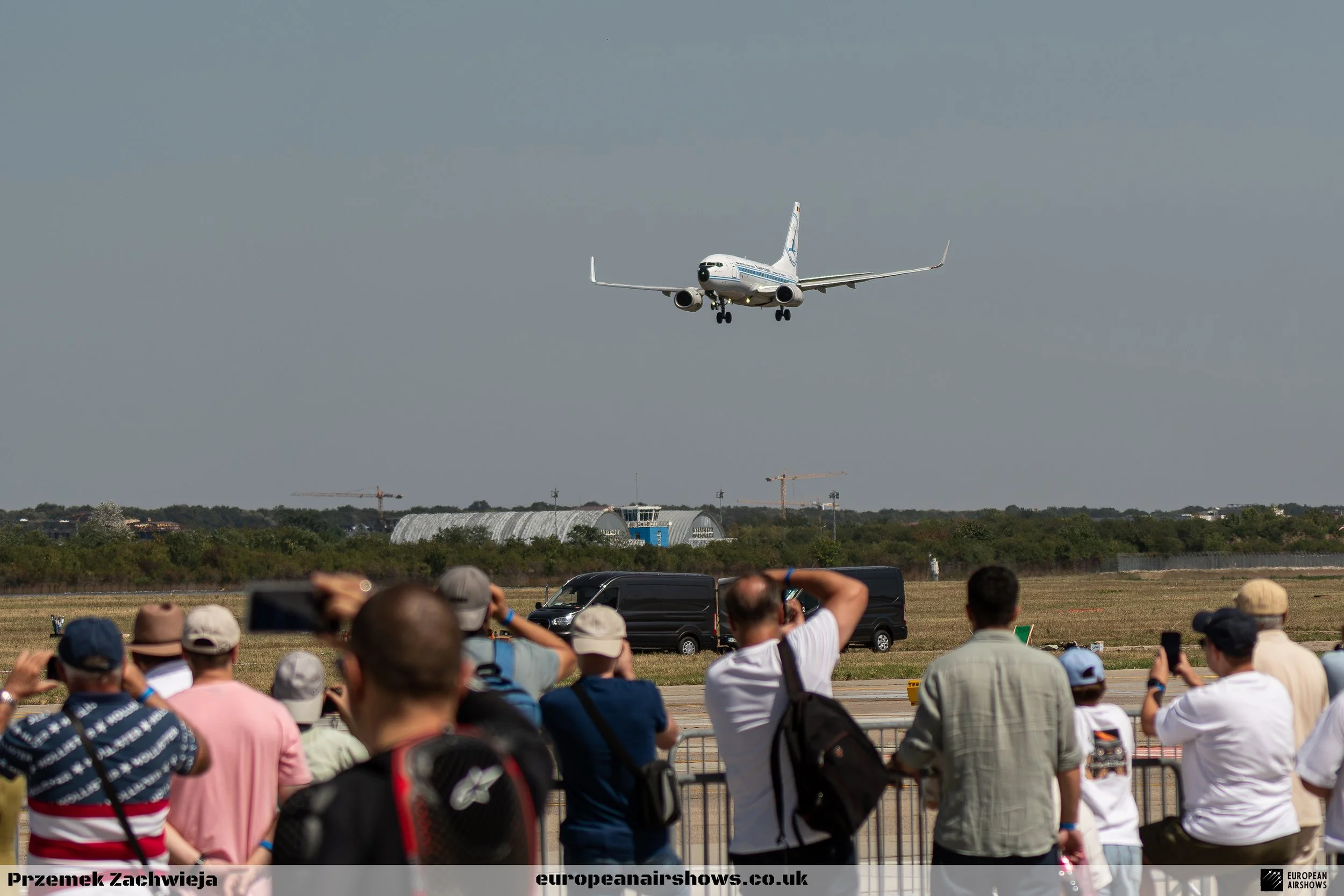
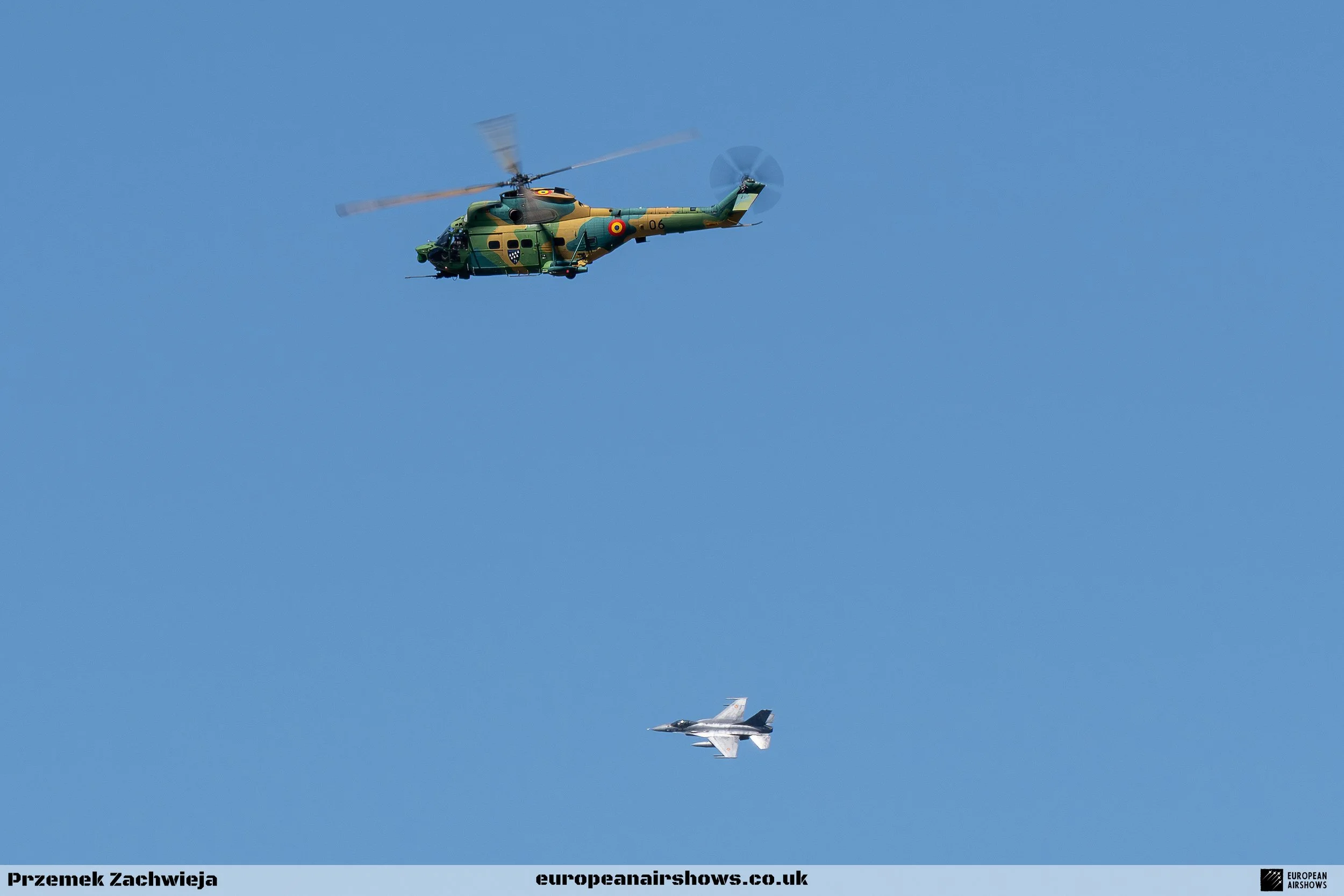
National carrier pride came in on cue with TAROM’s Boeing 737-78J wearing the celebratory “Happy 70 Years” colours. The jet arrived in close company with two RoAF F-16s before the fighters slid away, leaving the 737 to work a neat, unhurried solo: clean photo passes to show the retro palette and titles, configuration changes mid-sequence, then a notably low, on-speed pass in full landing trim that drew a cheer along the fence. For spotters it was a welcome treat—YR-BGG has been the principal canvas for TAROM’s anniversary scheme through 2025—and seeing it perform over its home city gave the livery a fitting stage.
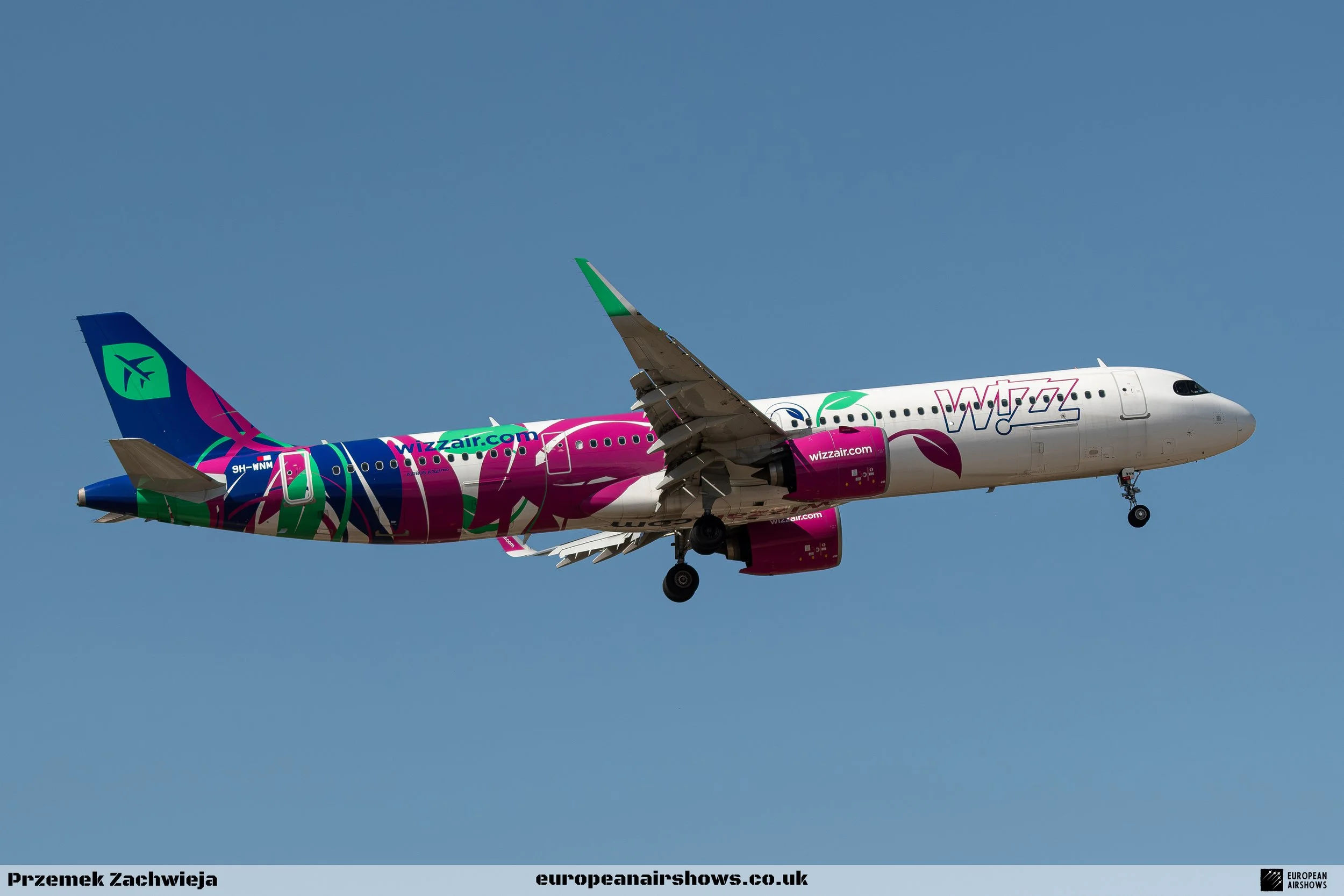
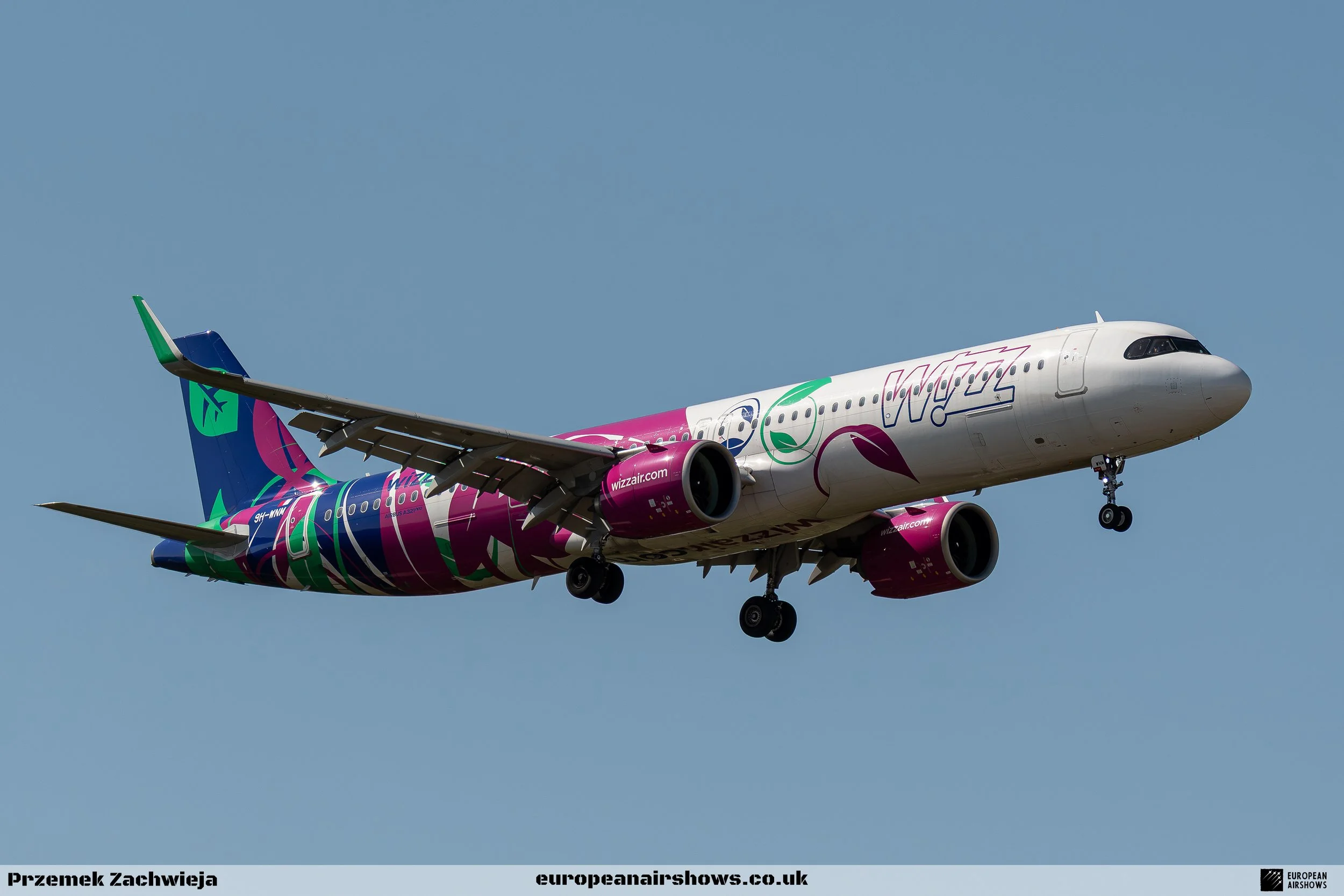
Low-cost giant Wizz Air countered with an Airbus A321-271NX in the eye-catching “Fly the Greenest” special. The long-bodied neo first appeared “dirty,” nose high with gear and flaps down, before sweeping back for a clean, higher-energy run that showed off the sharklets and stretched fuselage. The special scheme was created through Wizz’s sustainability-themed design competition and has quickly become a fleet poster-child; catching it over Bucharest felt apt given the airline’s huge local footprint and its heavy reliance on the A321neo across the network.
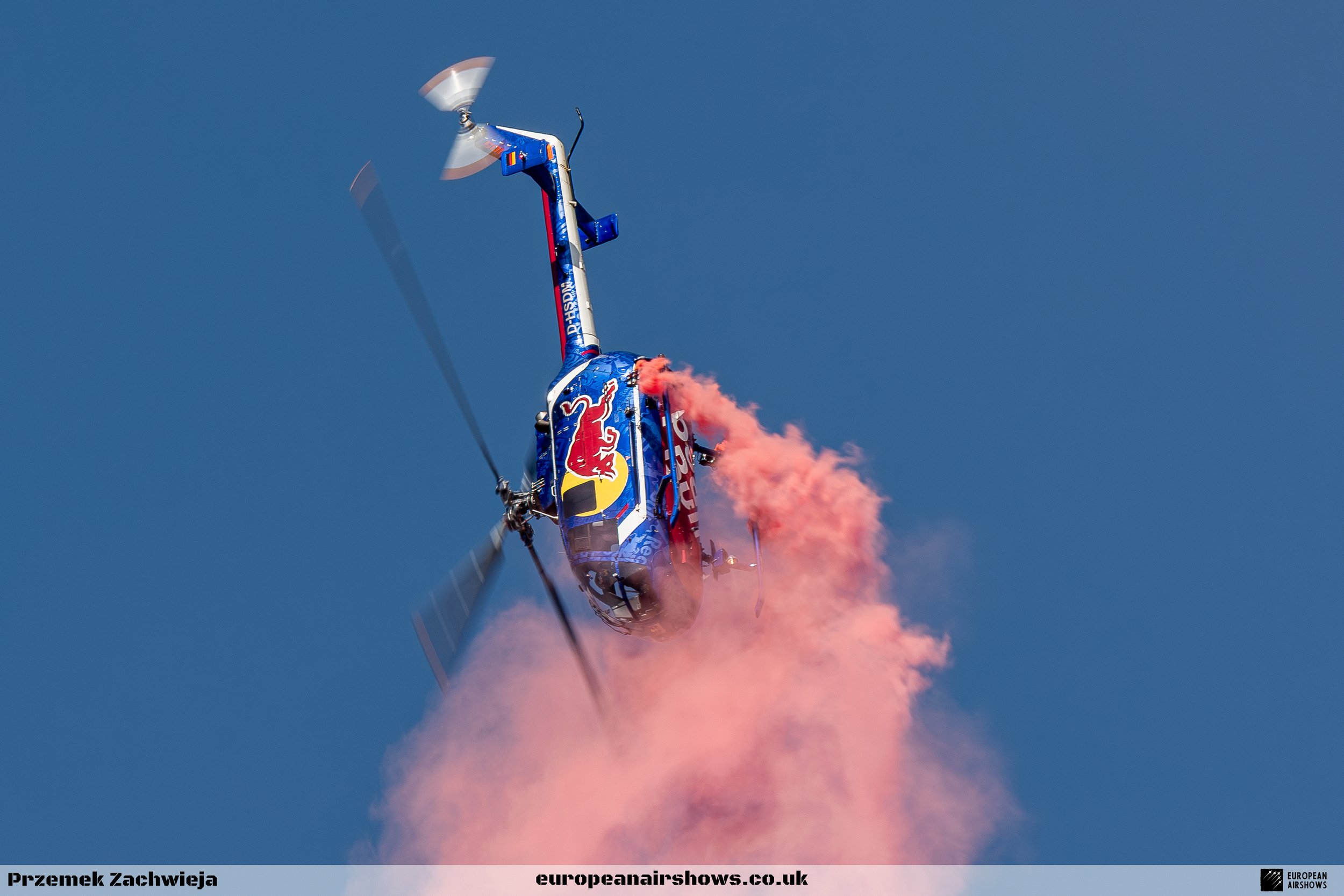
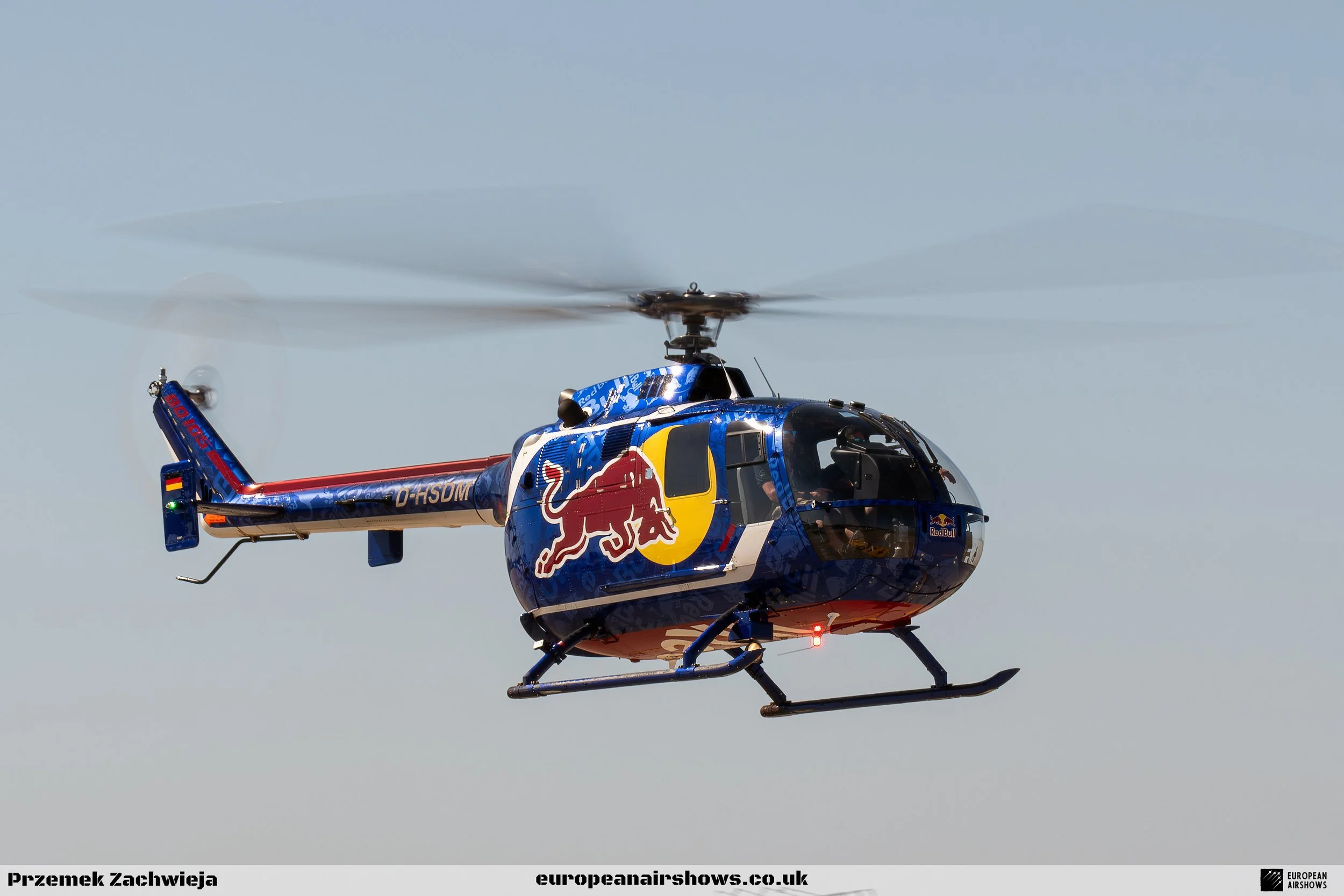
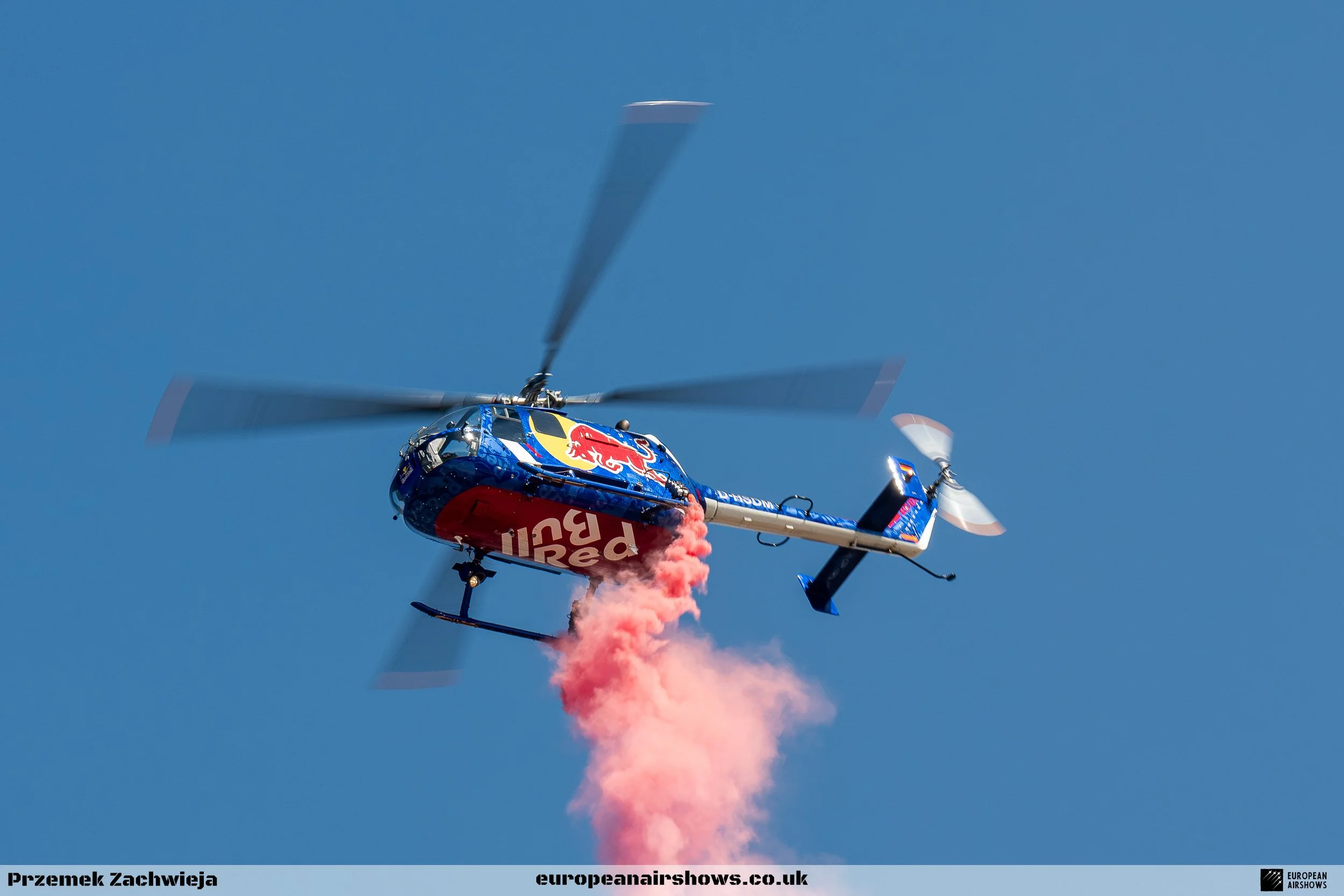
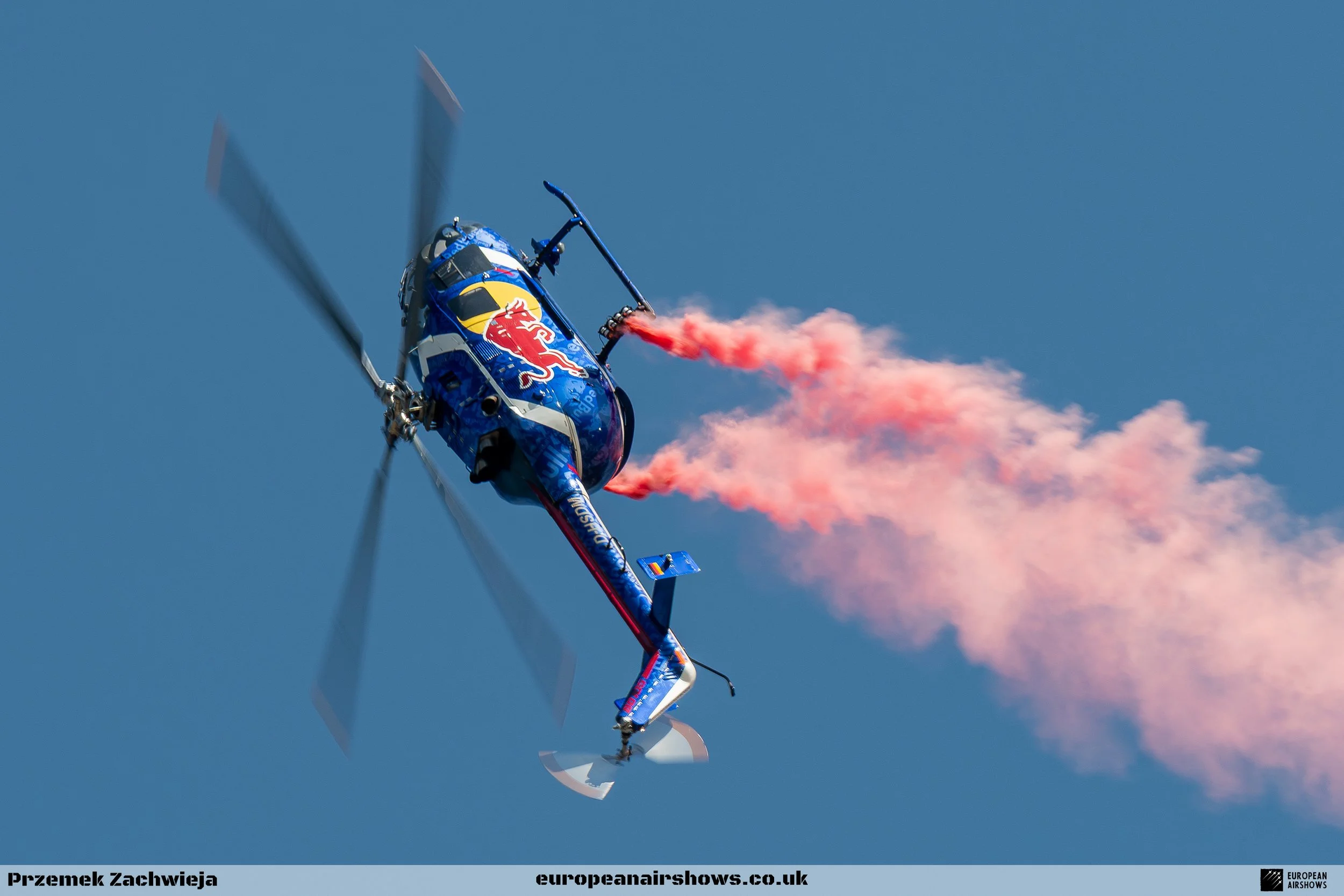
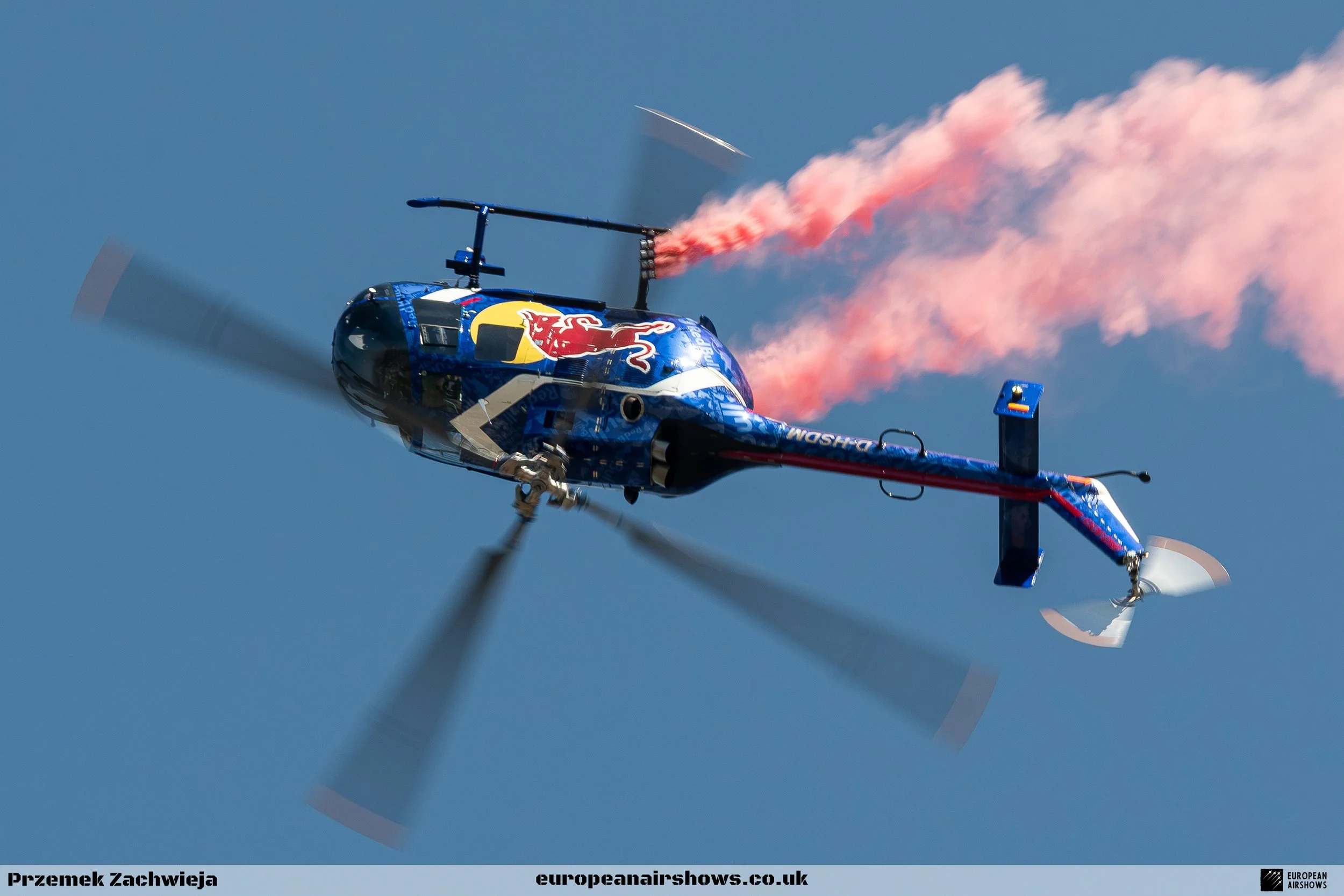
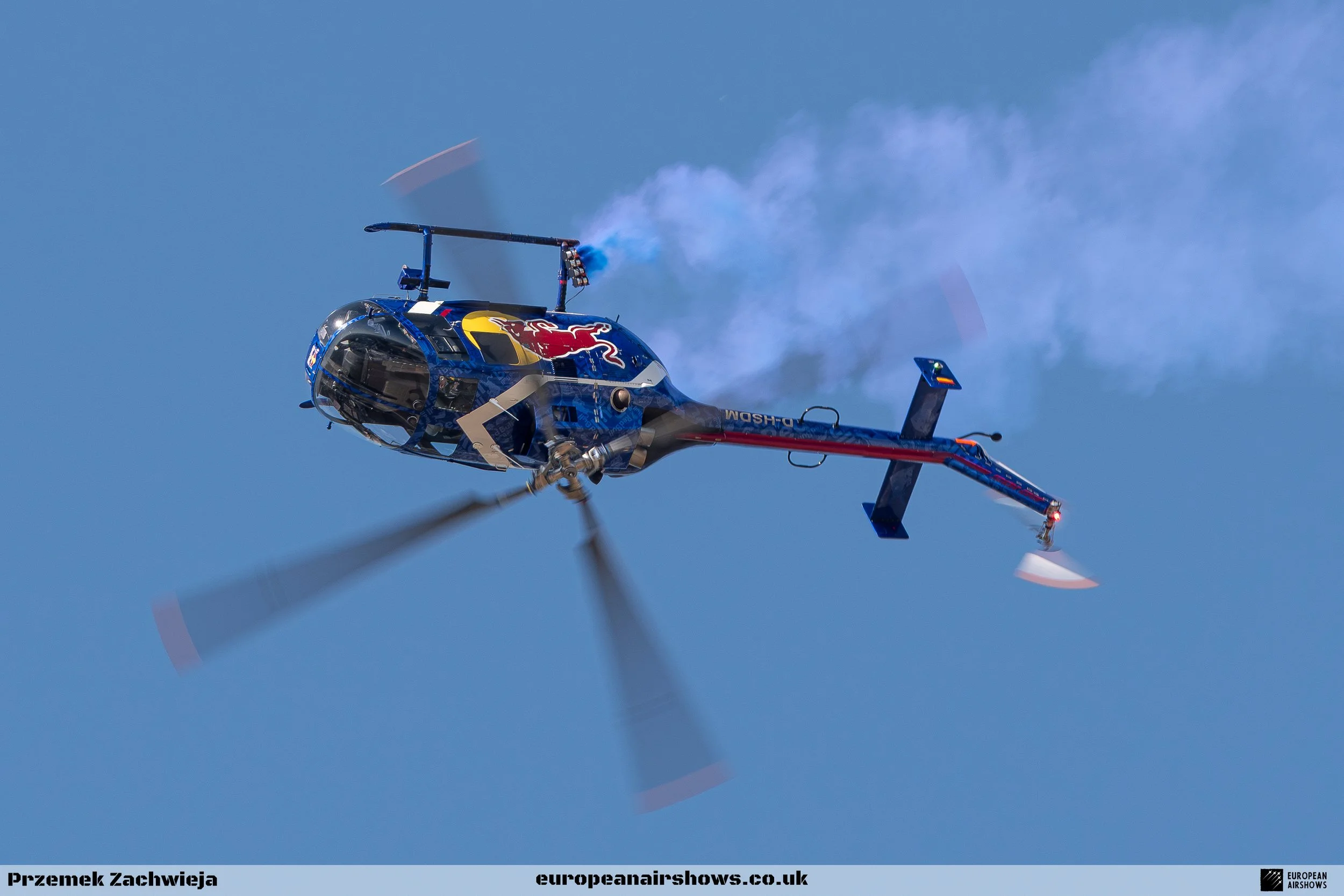
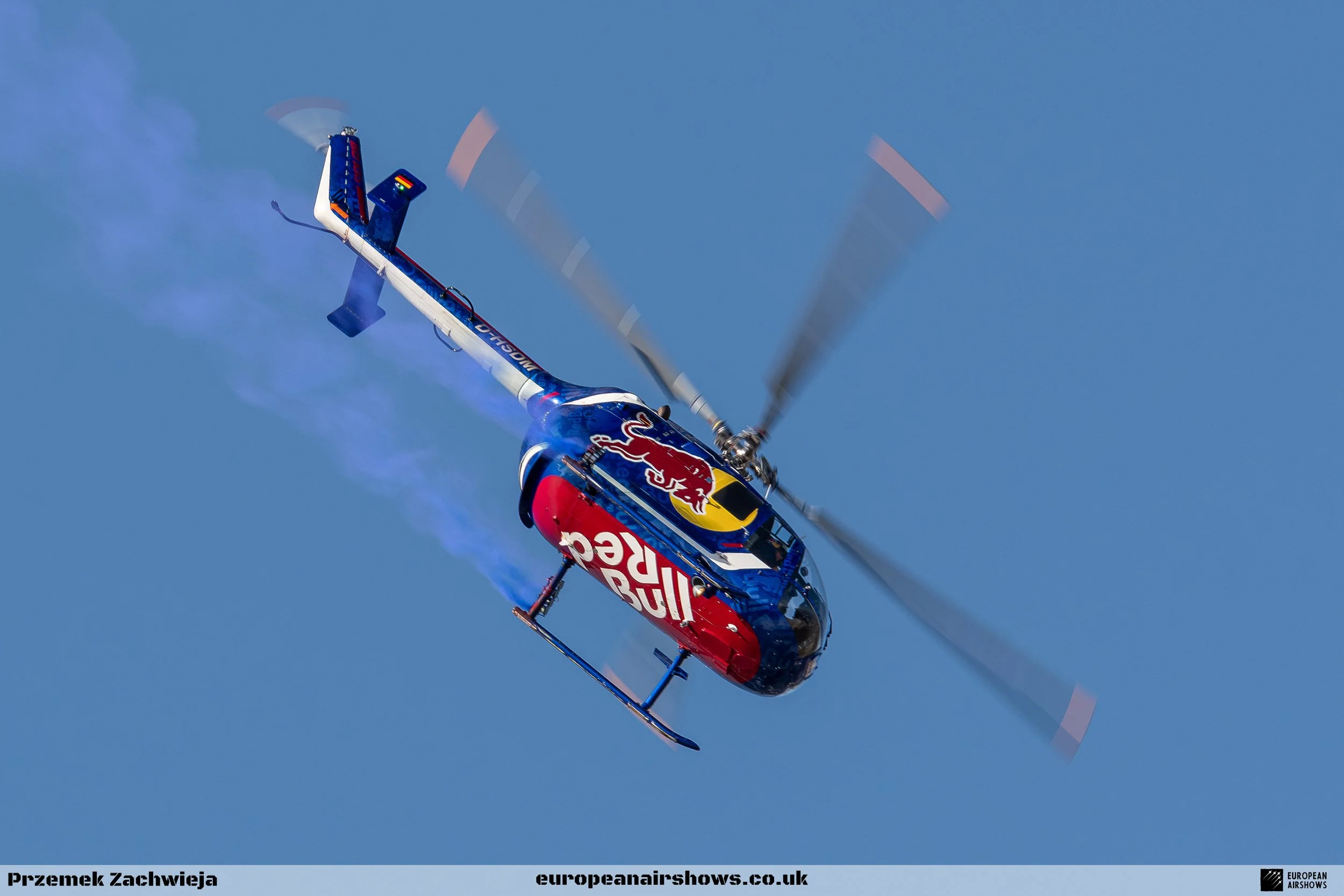
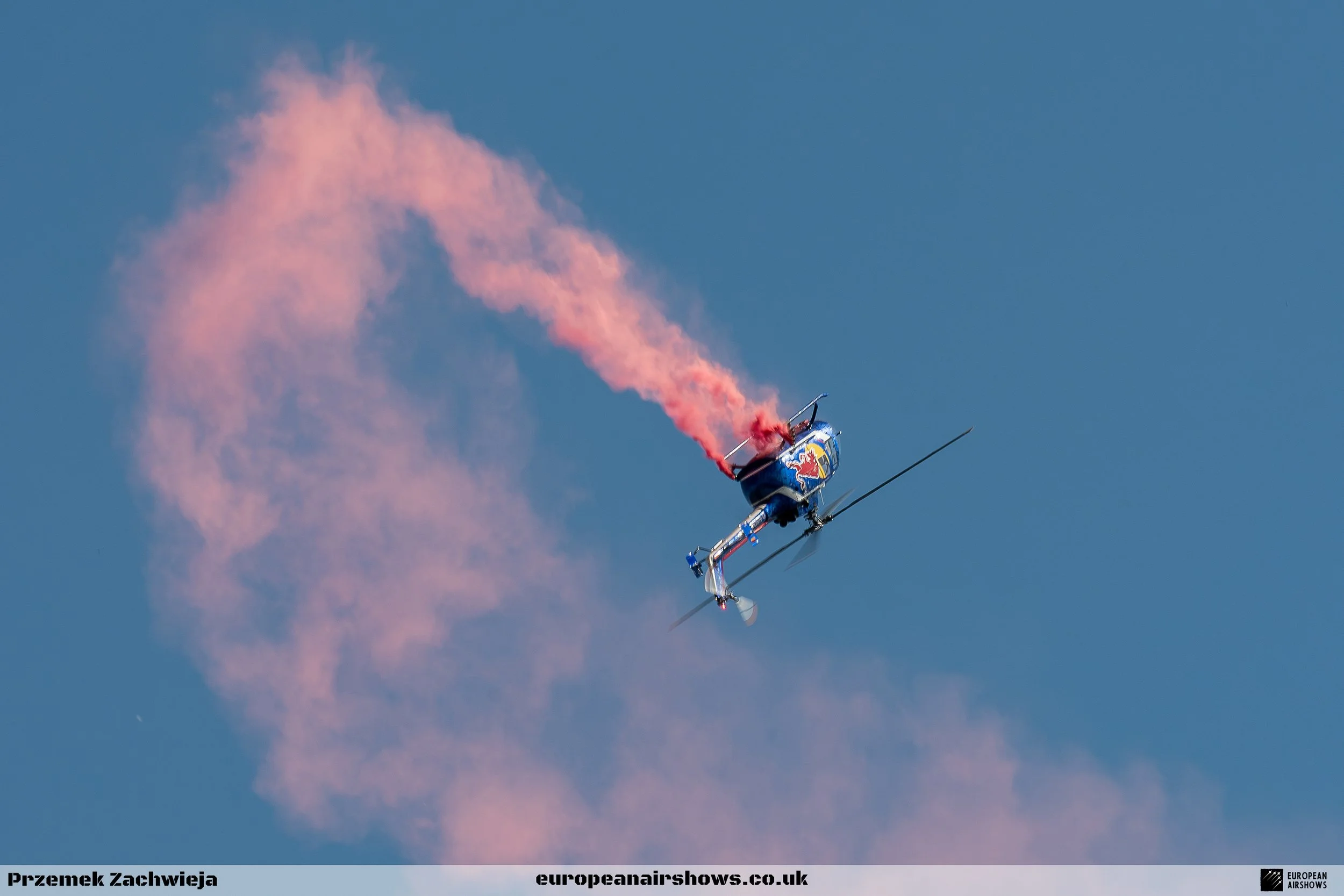
The civilian headliners added colour and variety to what was otherwise a heavily military-flavoured flying programme. The Flying Bulls BO-105 reminded everyone why the type remains the definitive aerobatic helicopter. Its rigid rotor system allowed true loops, barrel rolls and front flips that seemed to defy physics, each figure flown tight on centreline without the drift that often plagues rotary routines.
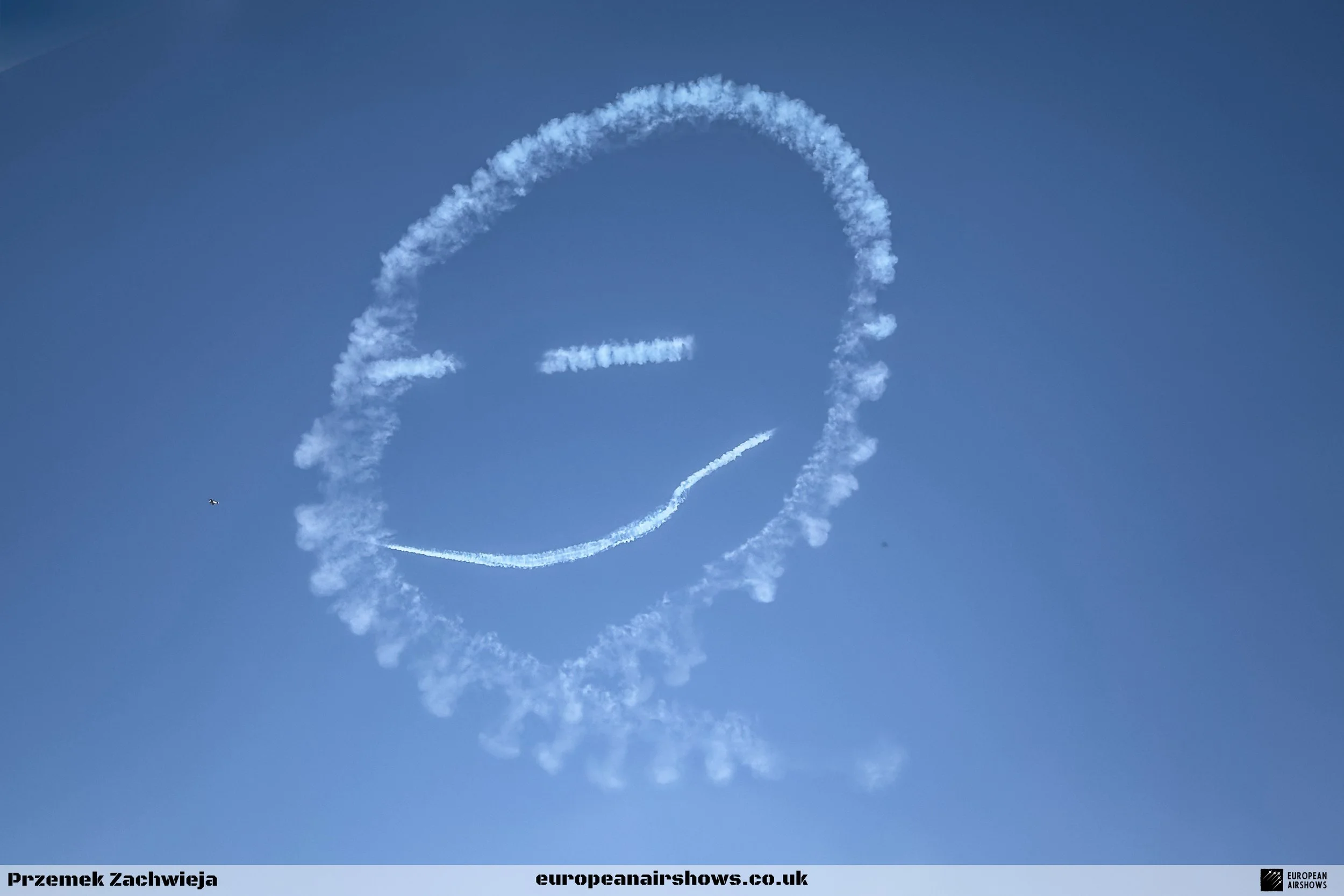
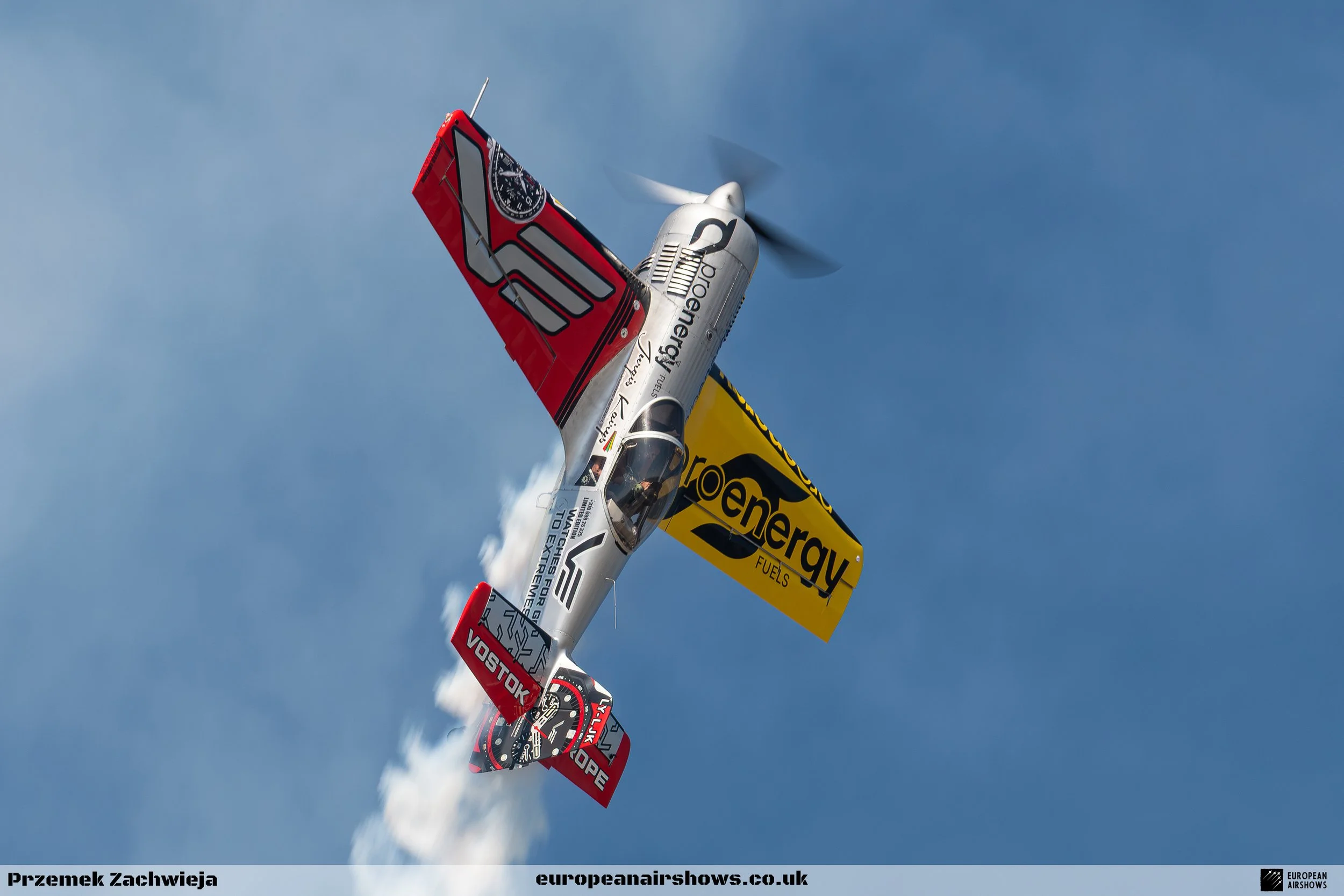
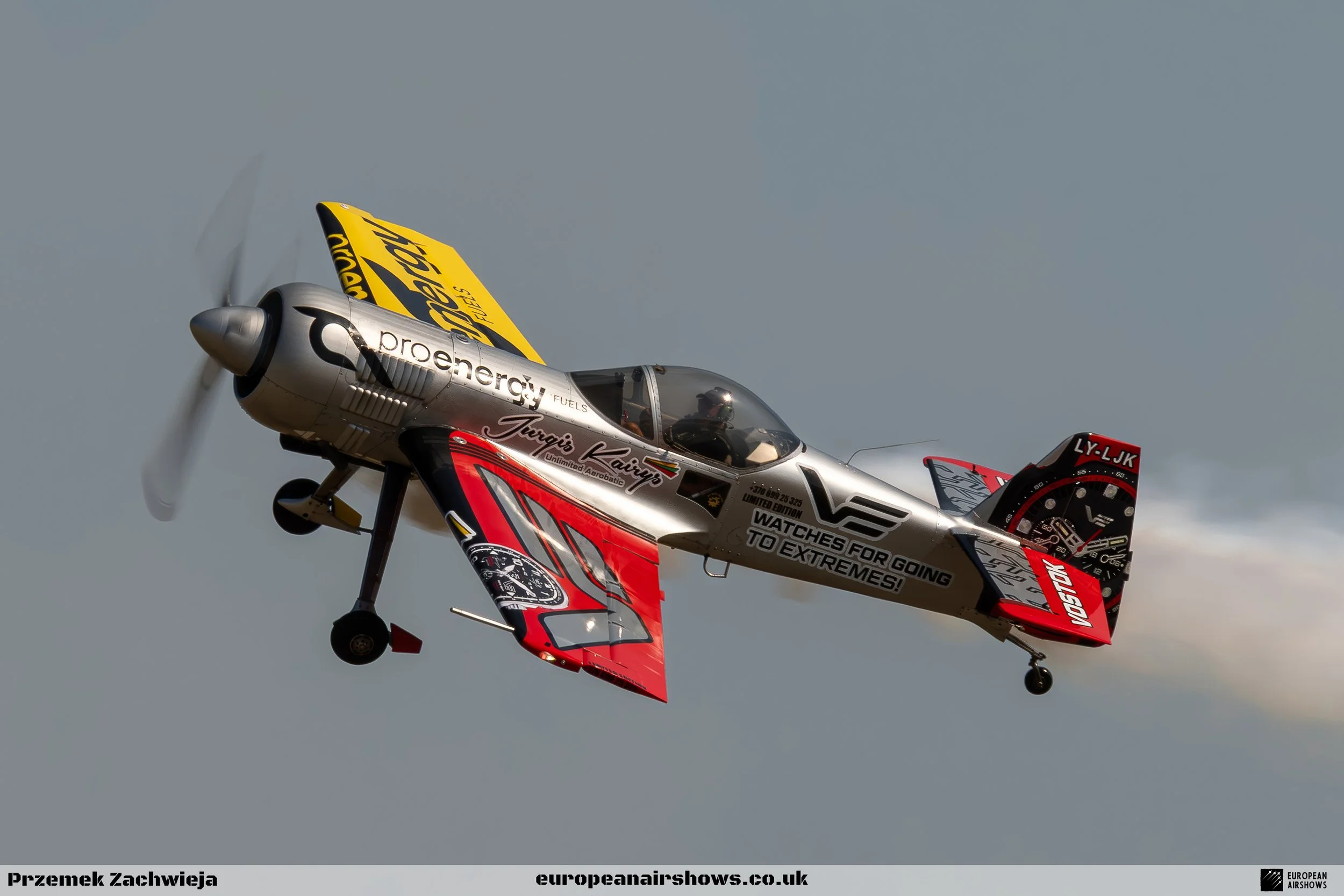
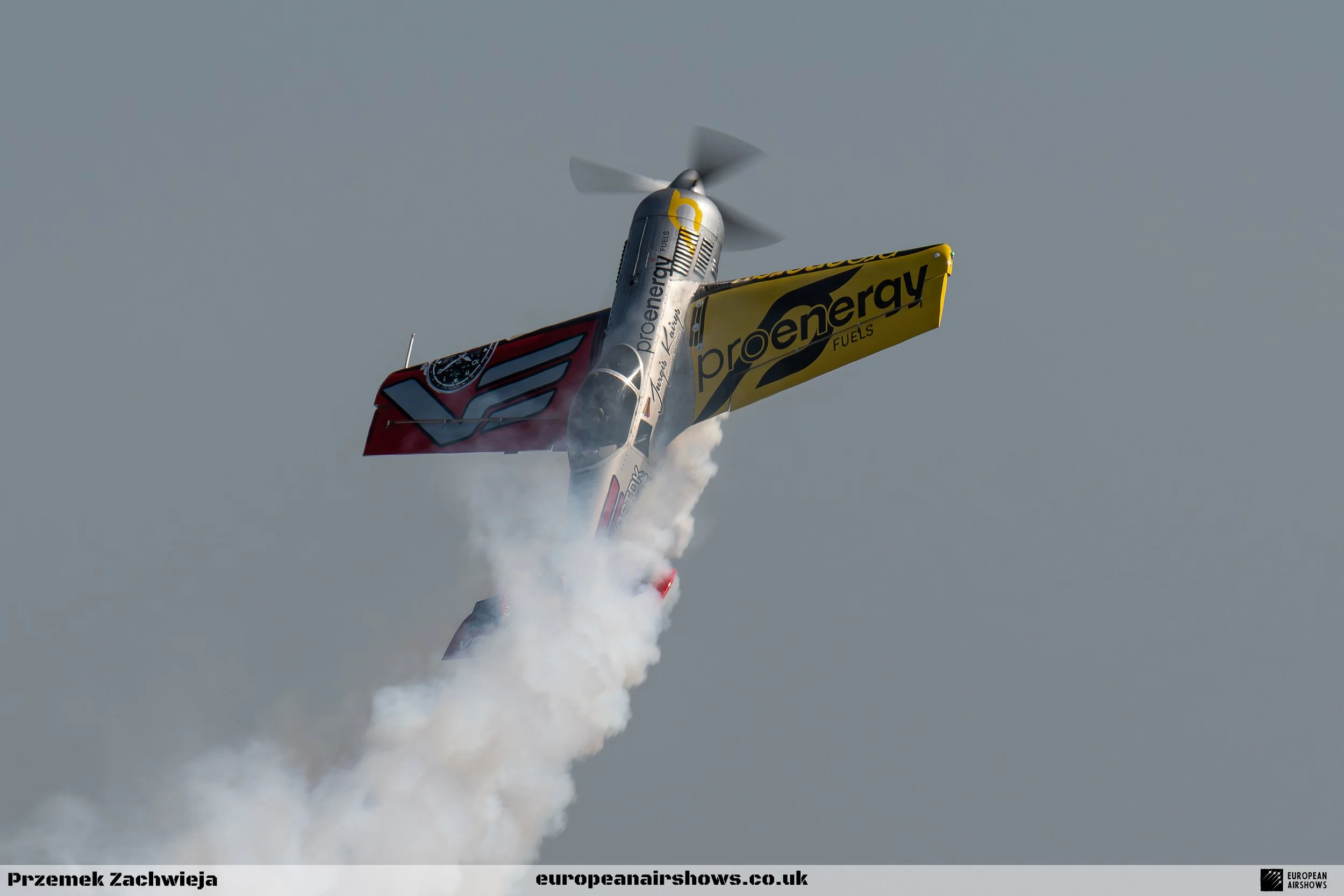
From fixed-wing Unlimited aerobatics, Jurgis Kairys was his irrepressible self in the Sukhoi Su-31. His trademark “cobra on take-off” set the tone, the nose spearing skyward as the wheels left the runway, before tumbling into torque rolls, lomcevaks and gyroscopic stalls that seemed to defy order yet always resolved neatly back on the axis. He even managed to trace a smoke-drawn smiley face over Băneasa, a theatrical flourish that belied the technical skill beneath. The closing cobra on landing roll was pure Kairys: part showmanship, part engineering demonstration from a man who has shaped the Eastern bloc aerobatic scene for three decades.
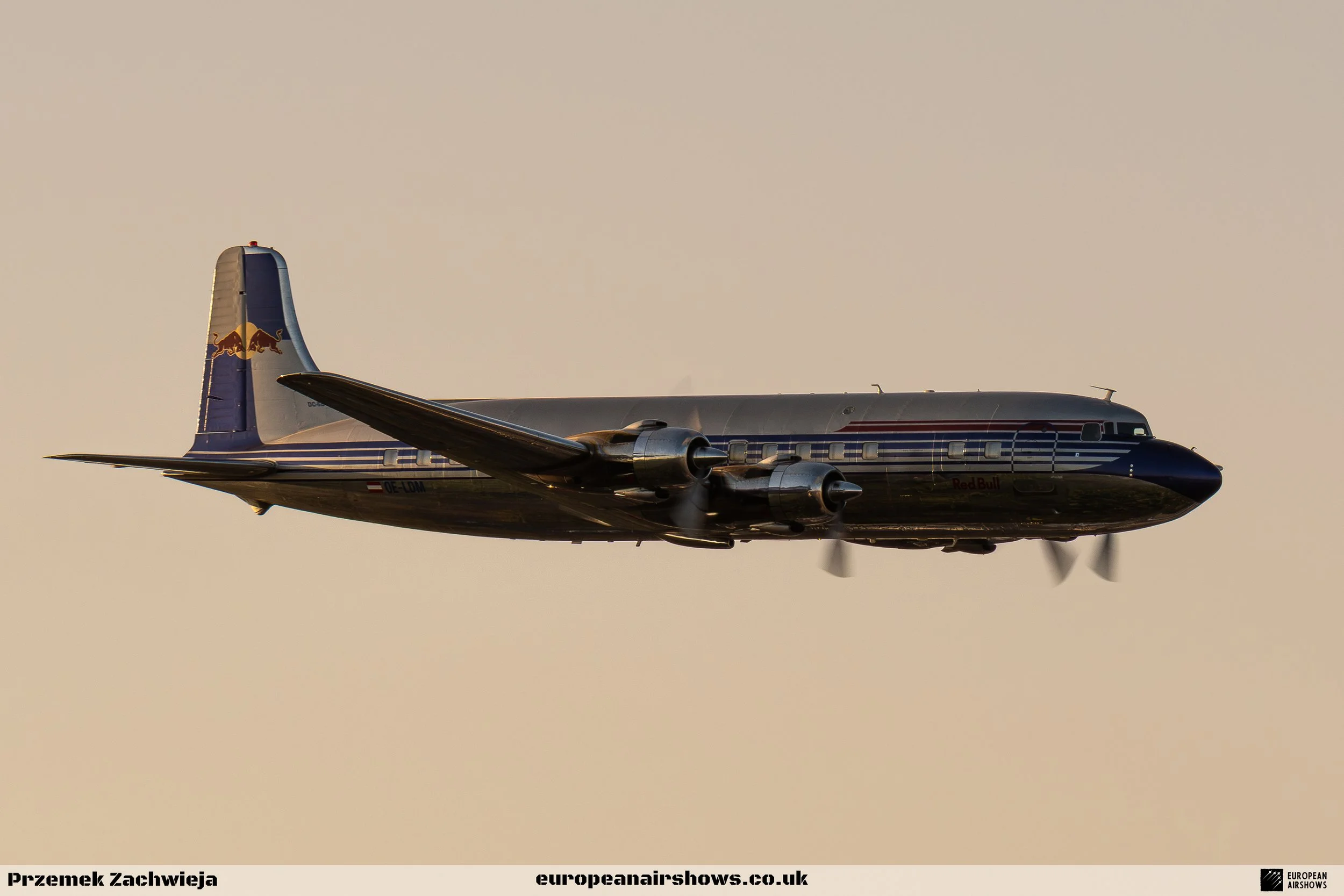
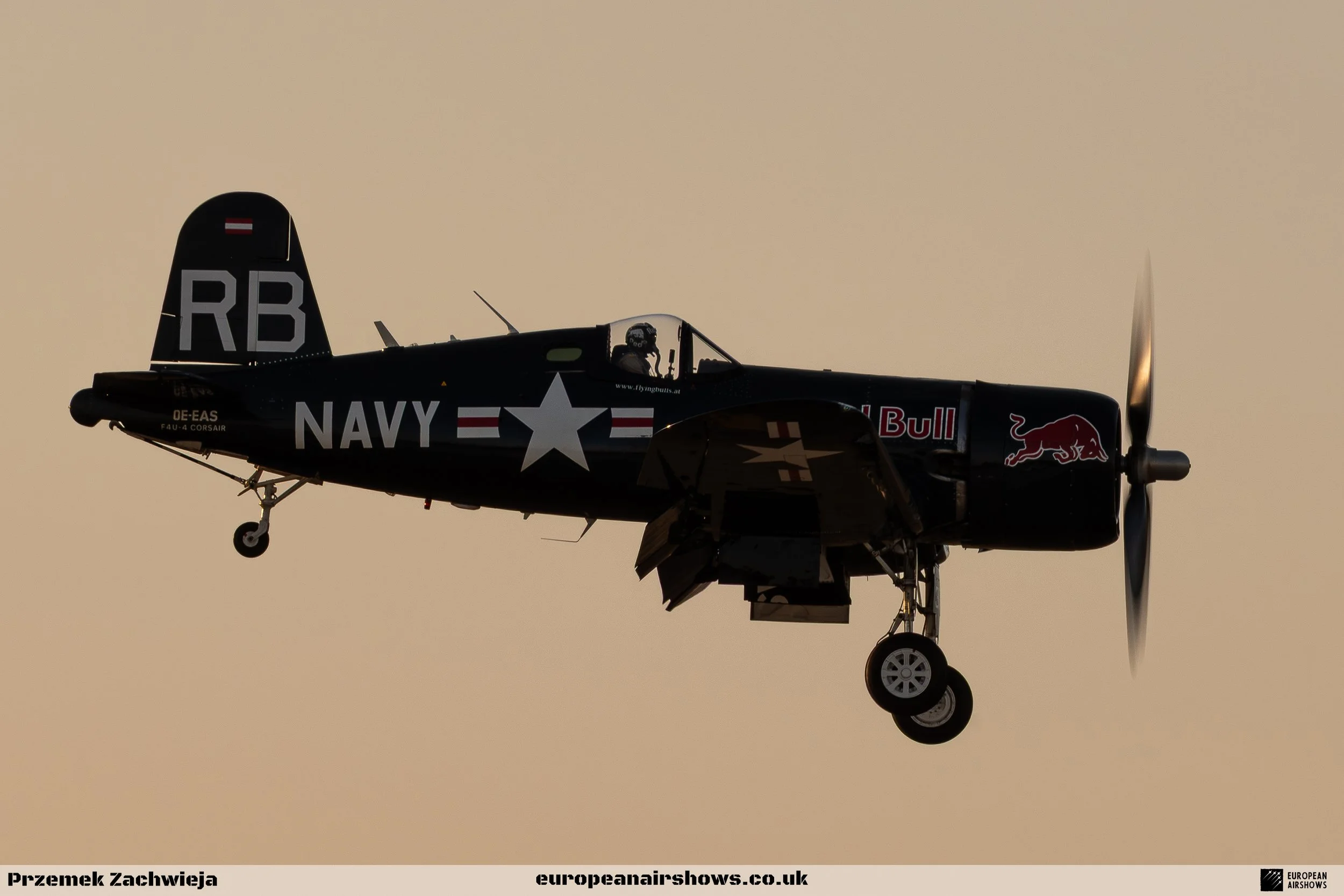
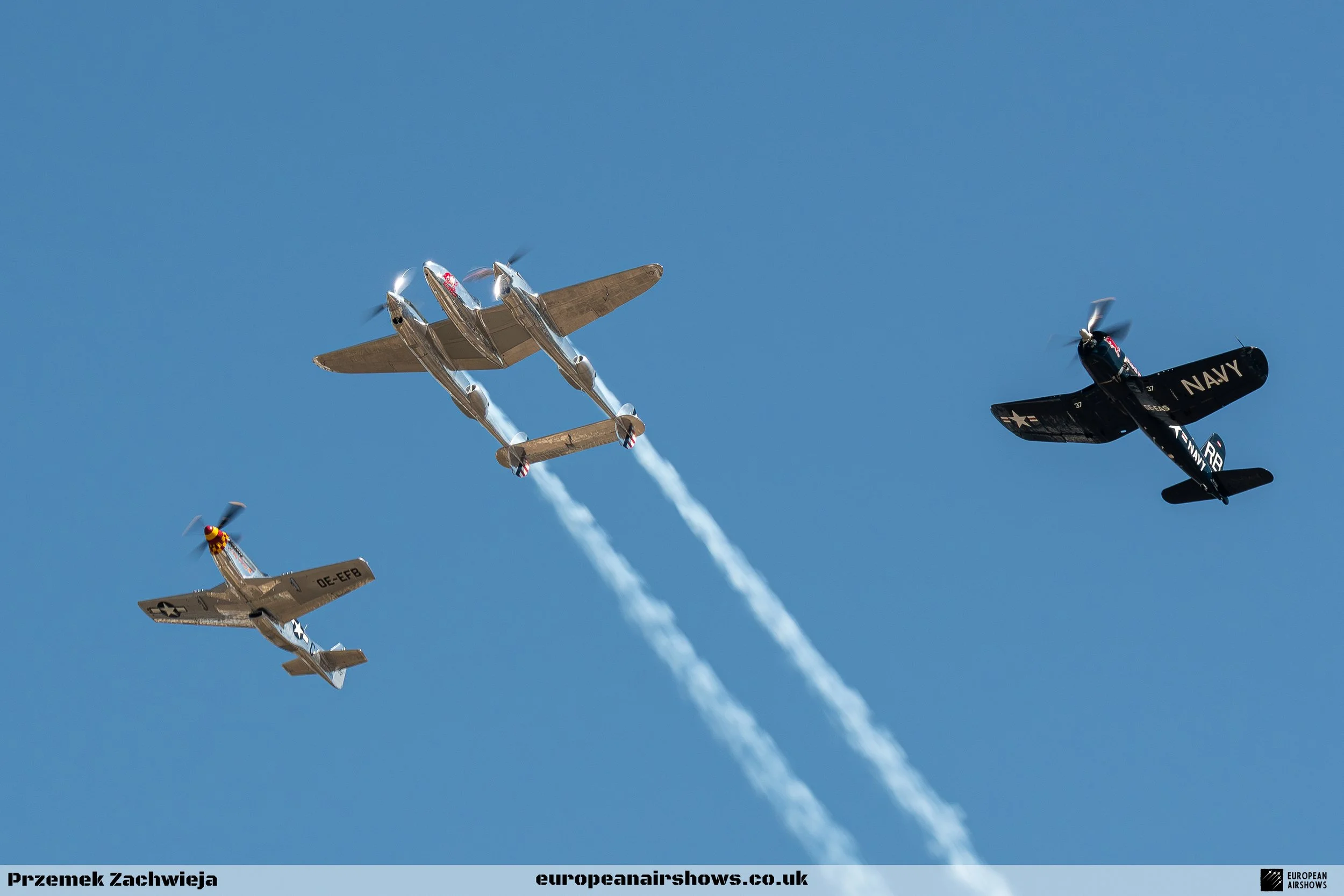
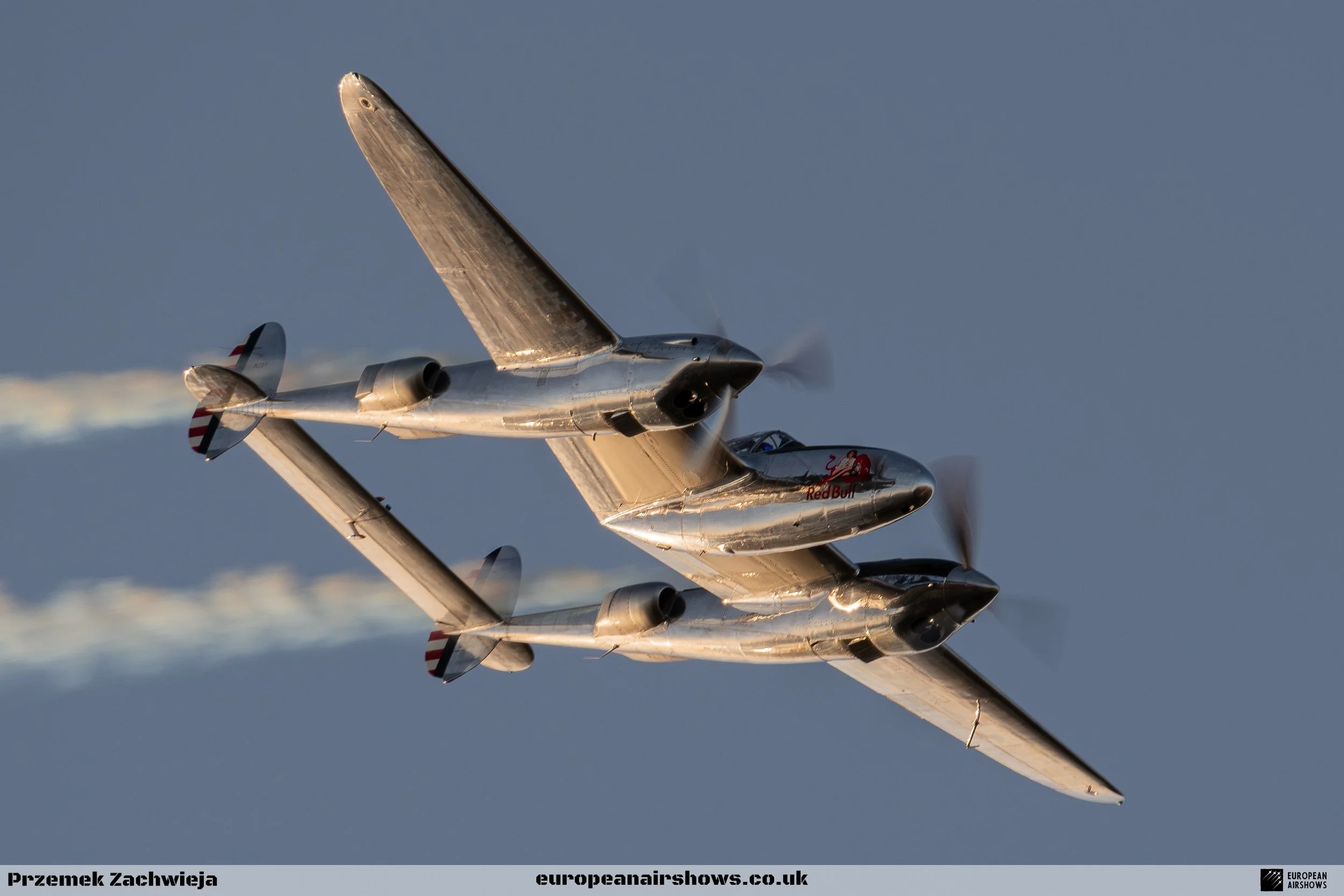
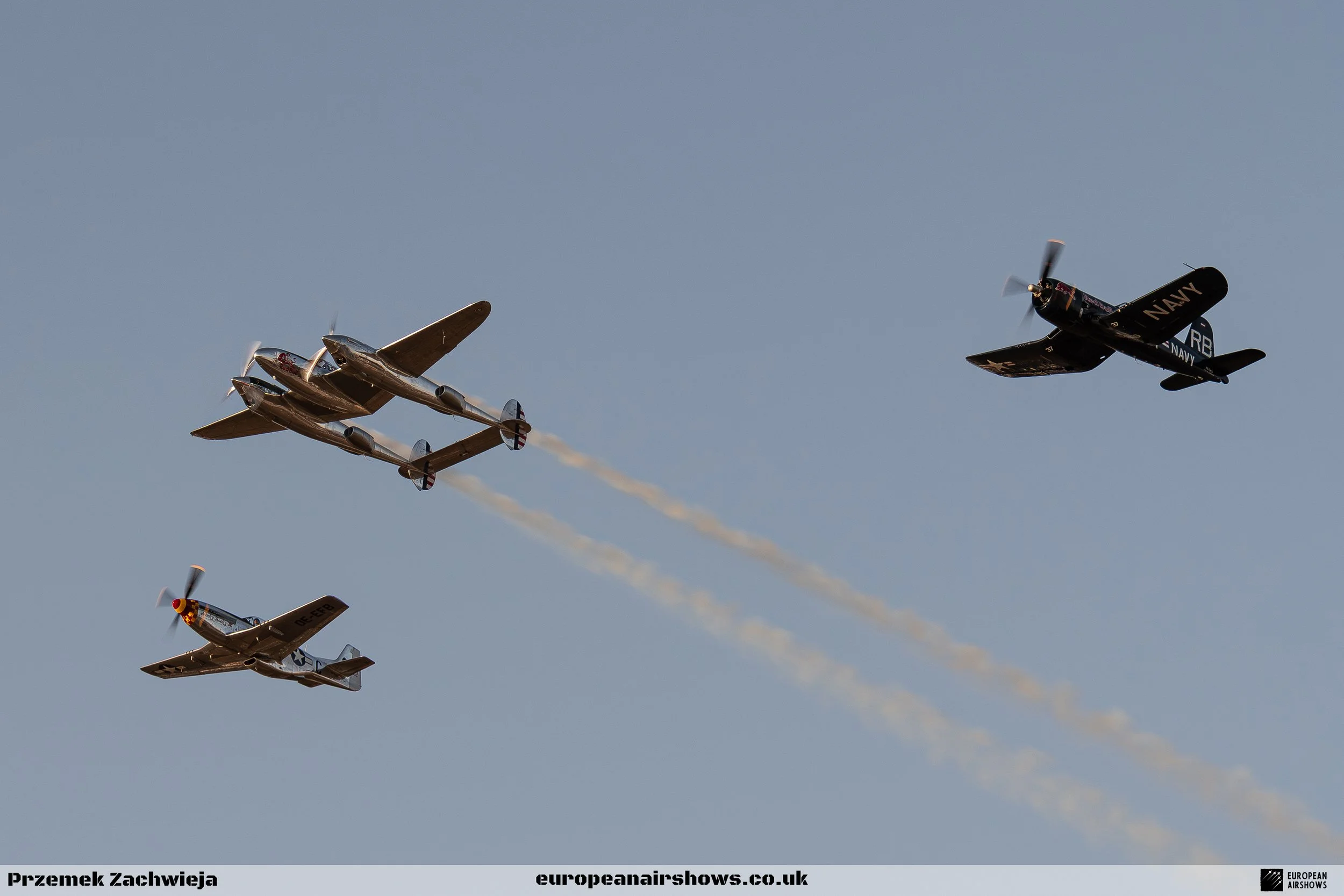
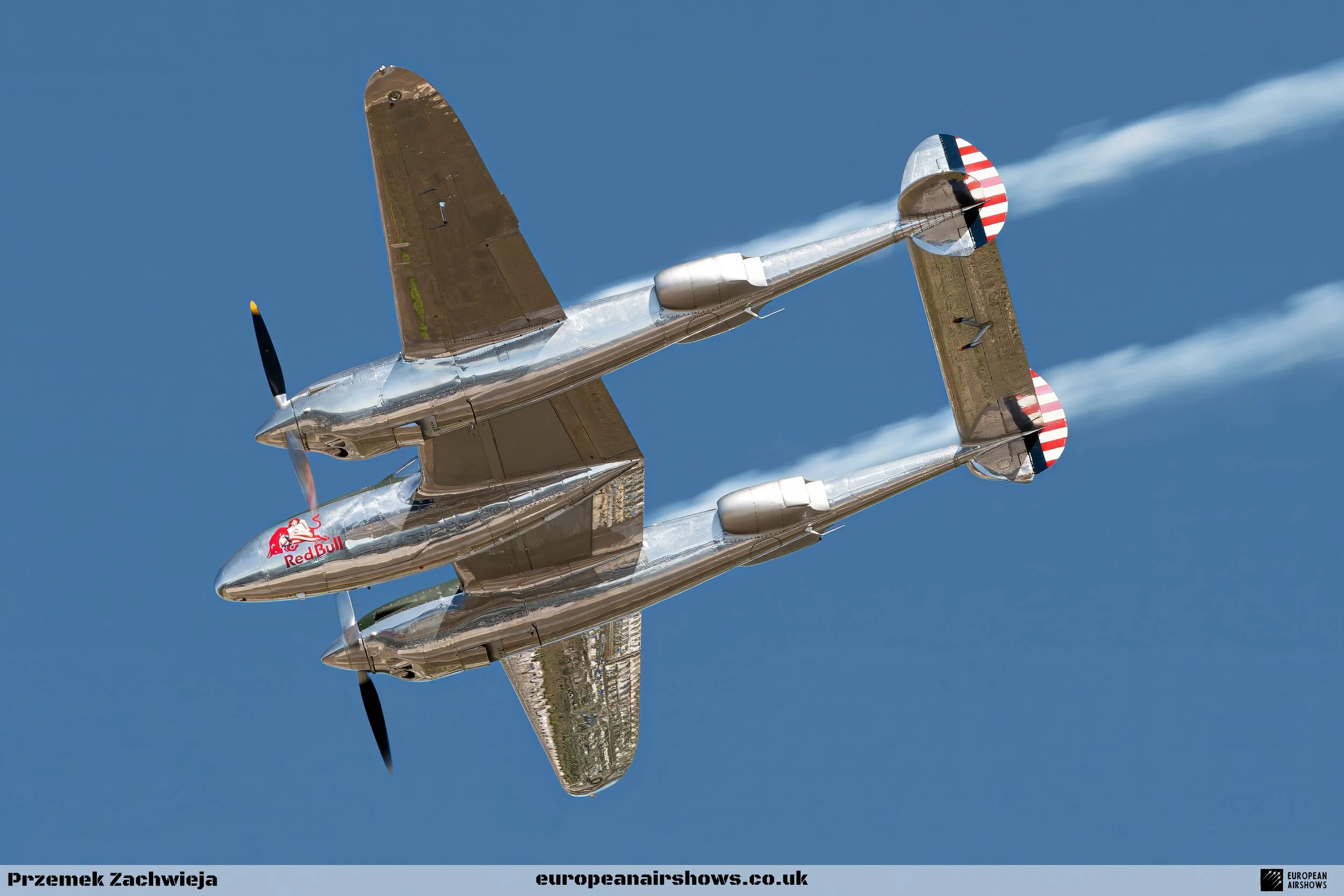
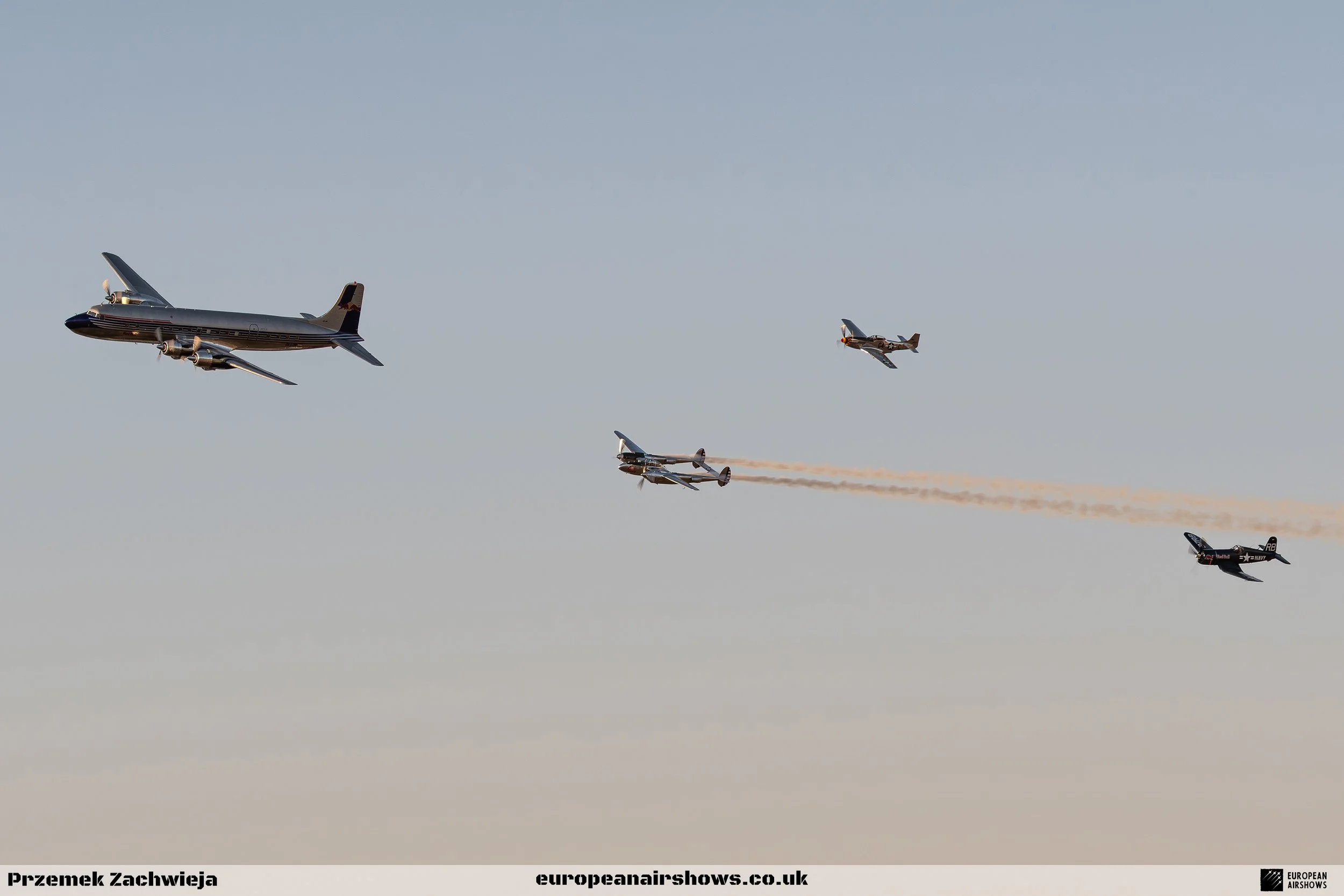
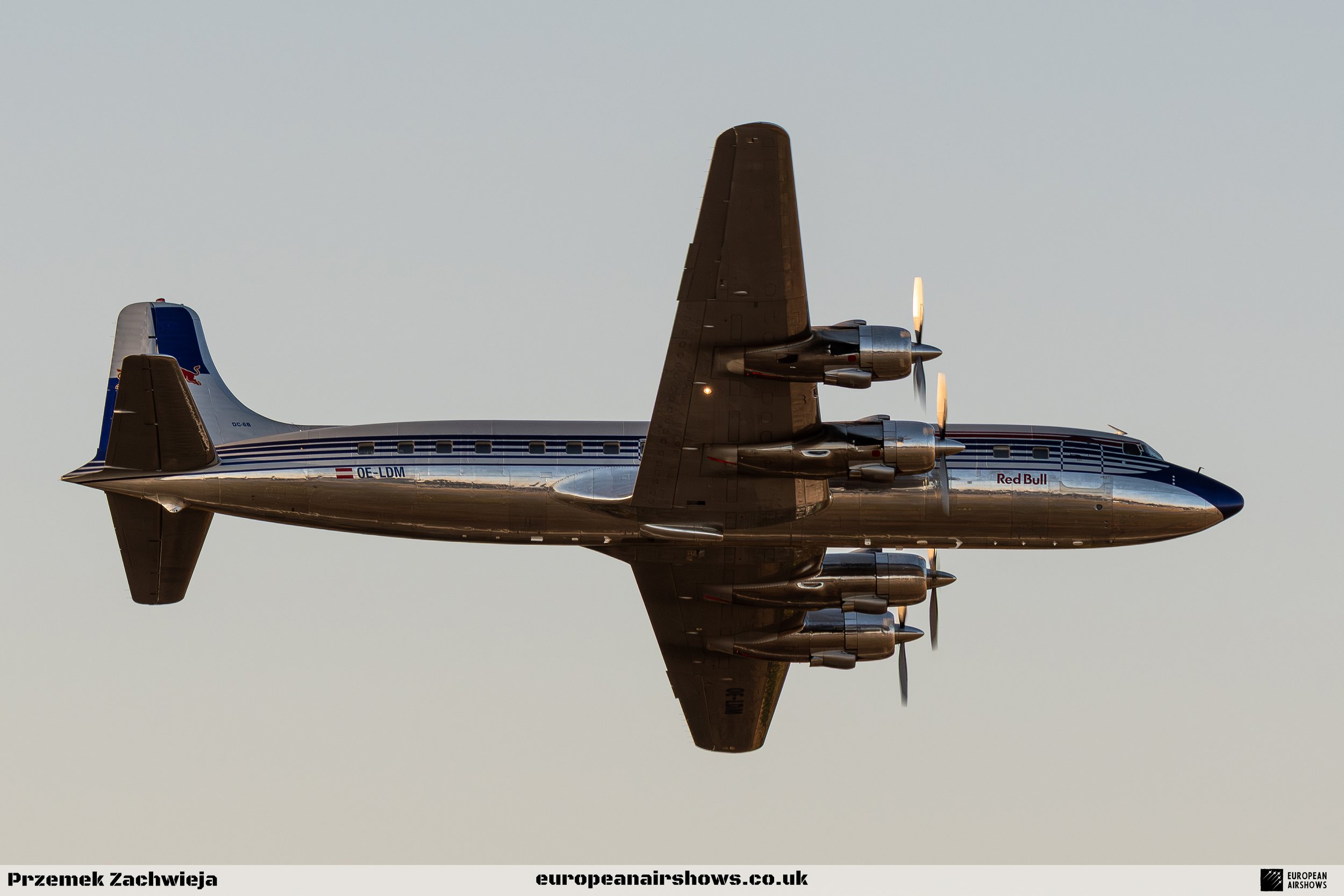
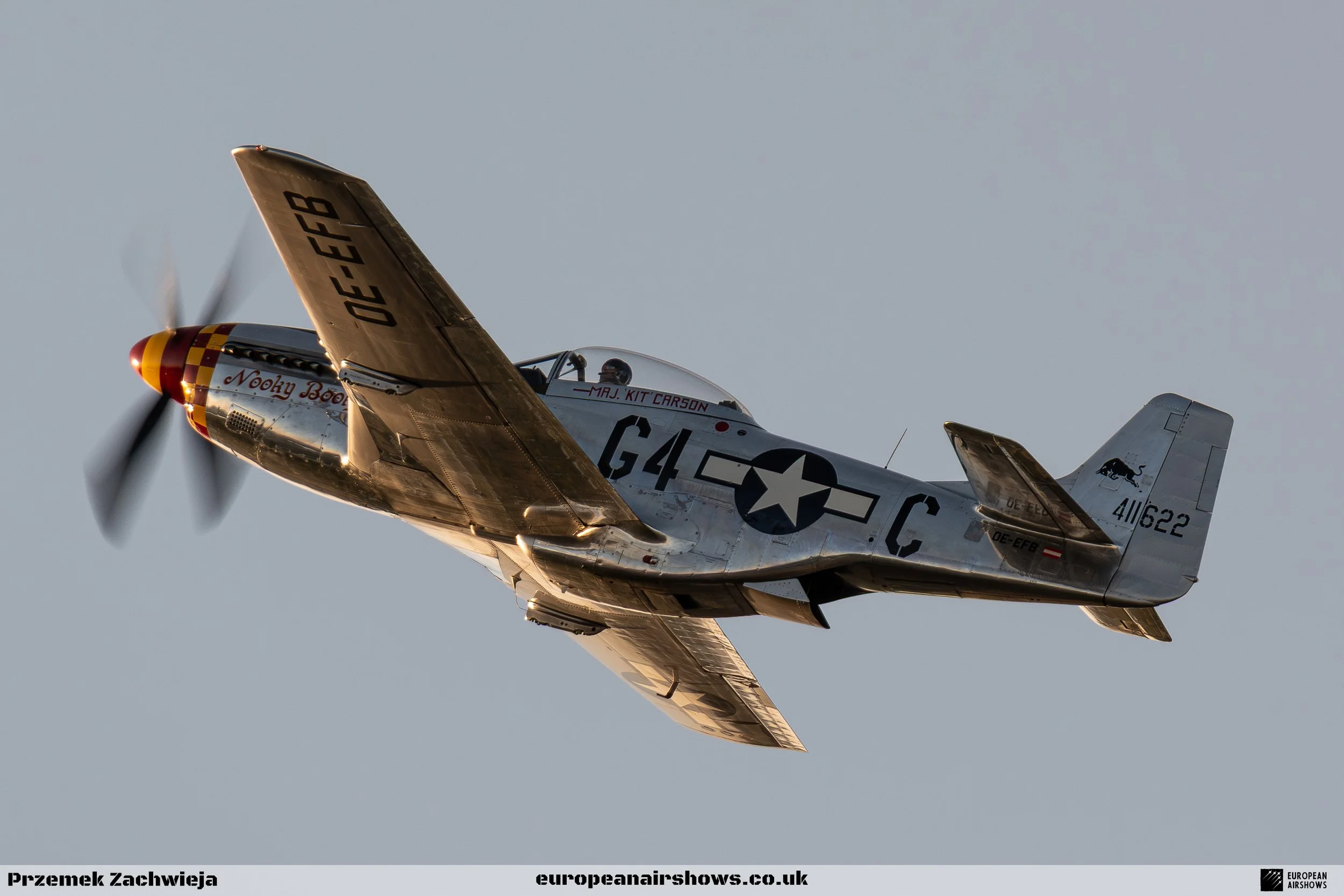
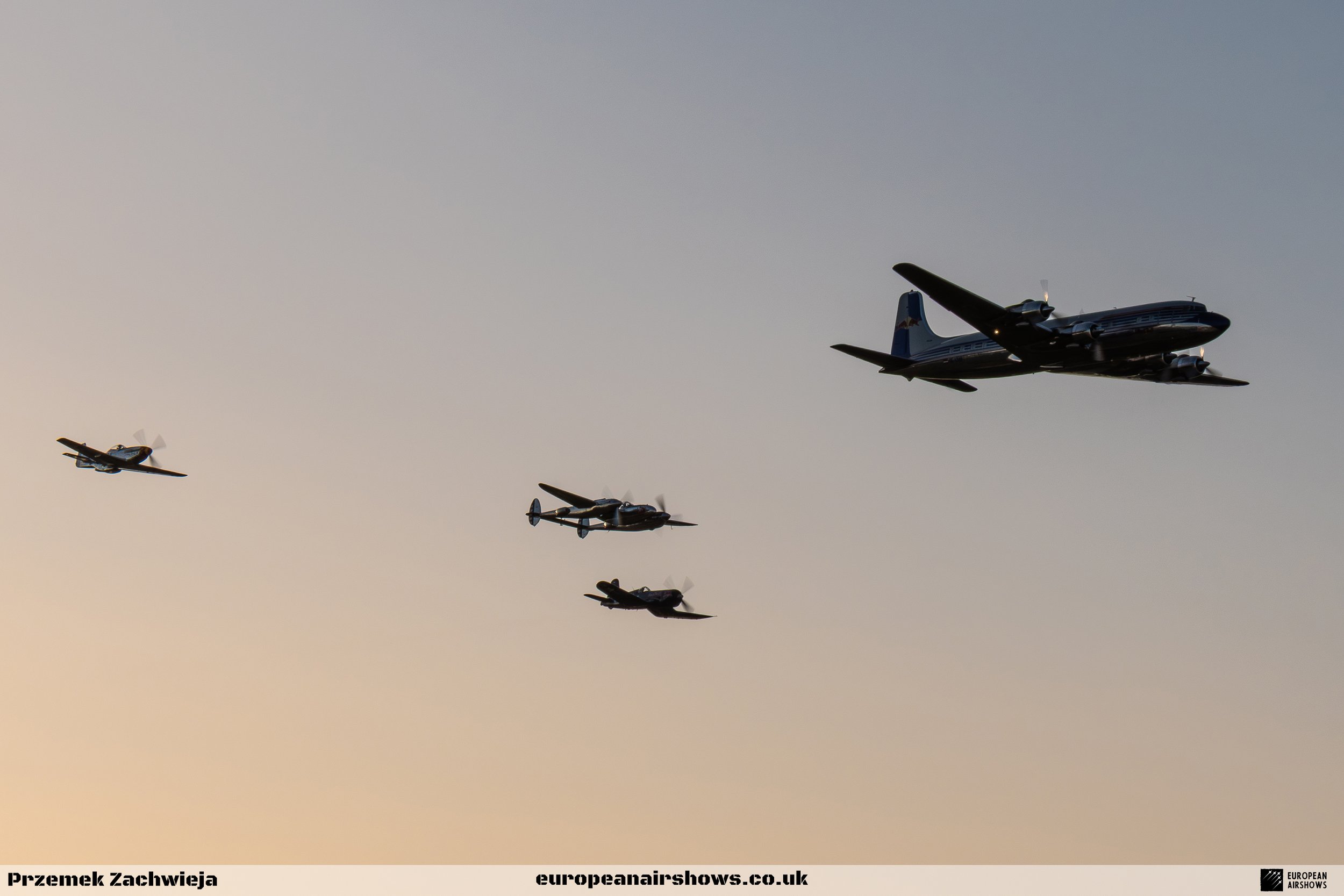
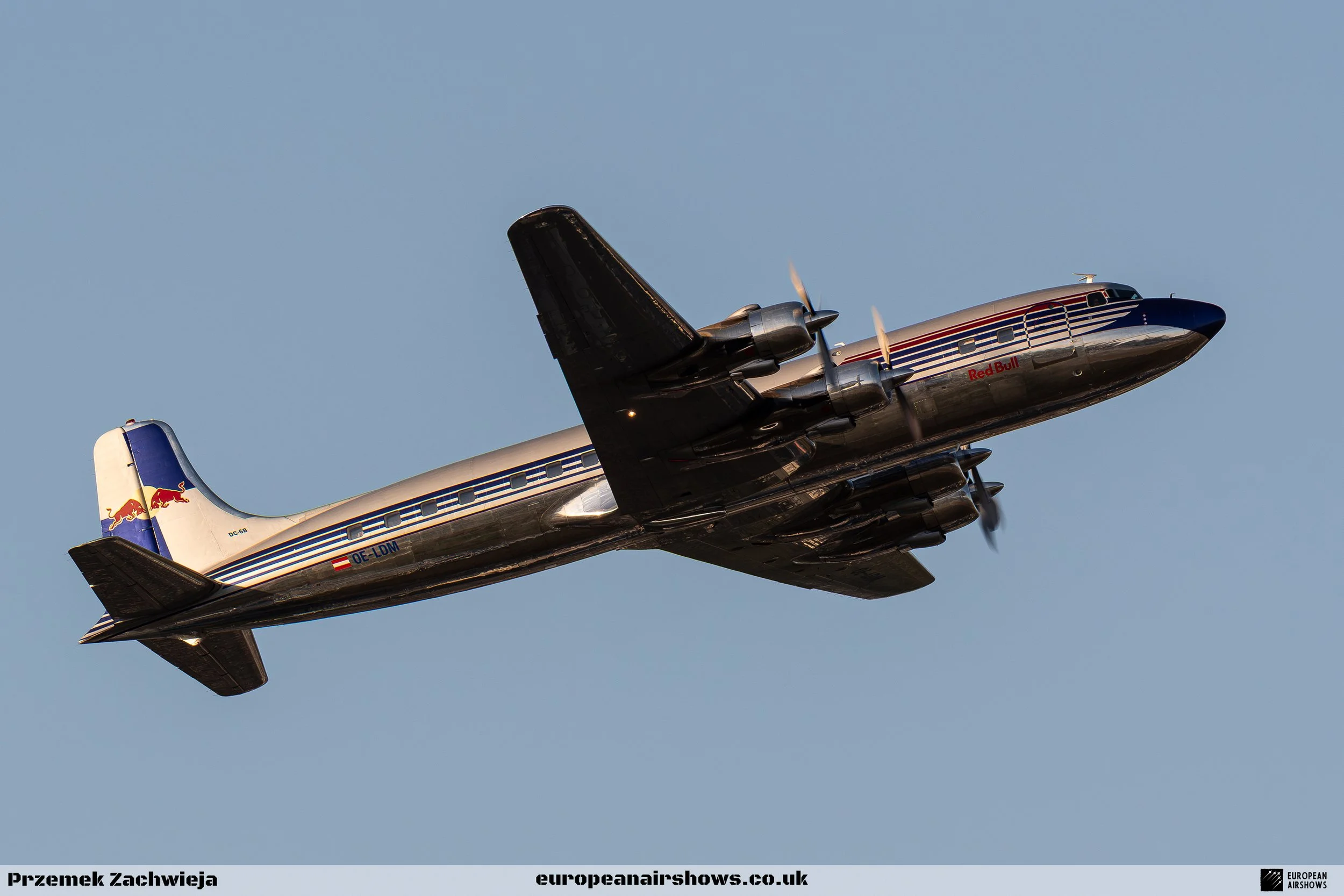
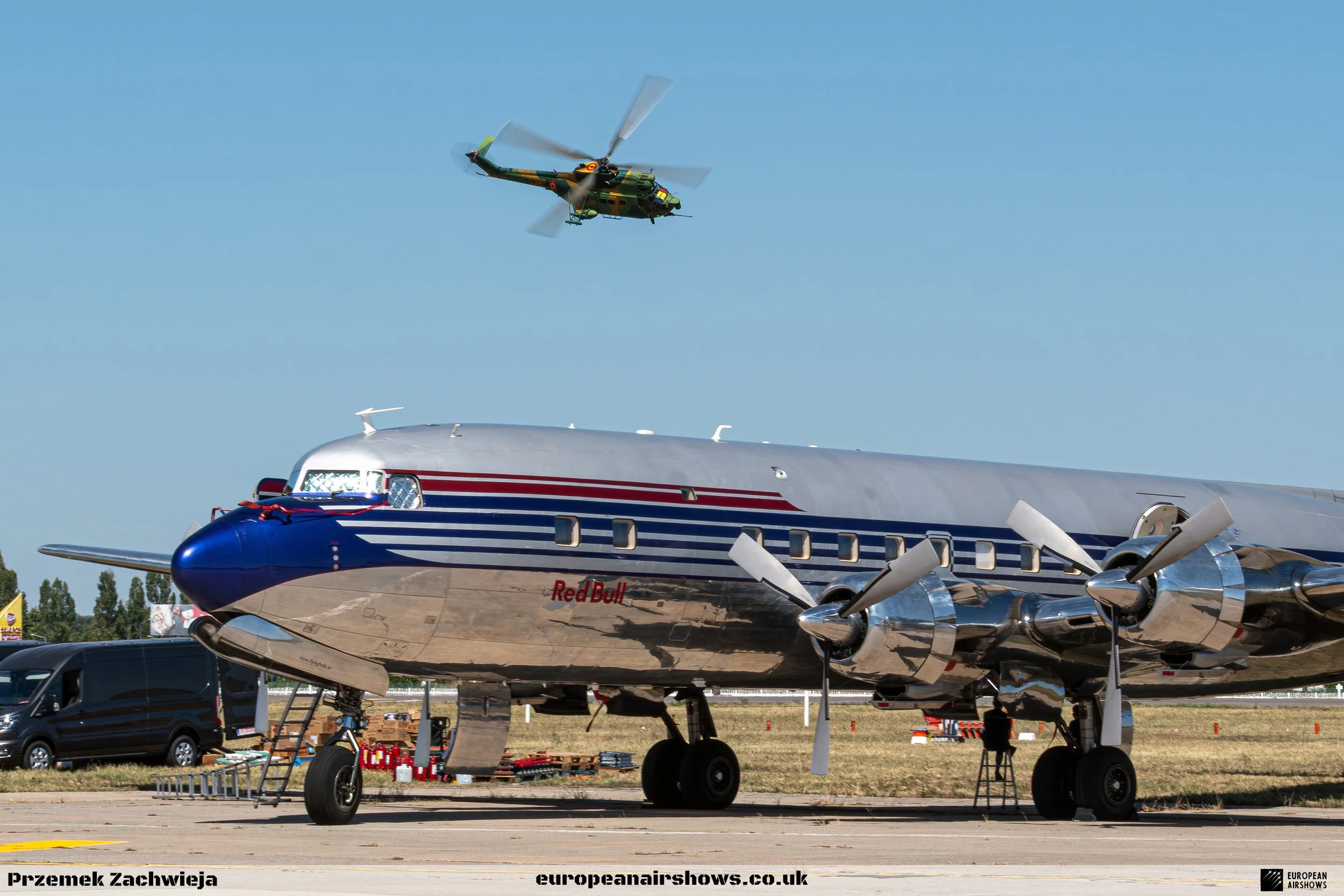
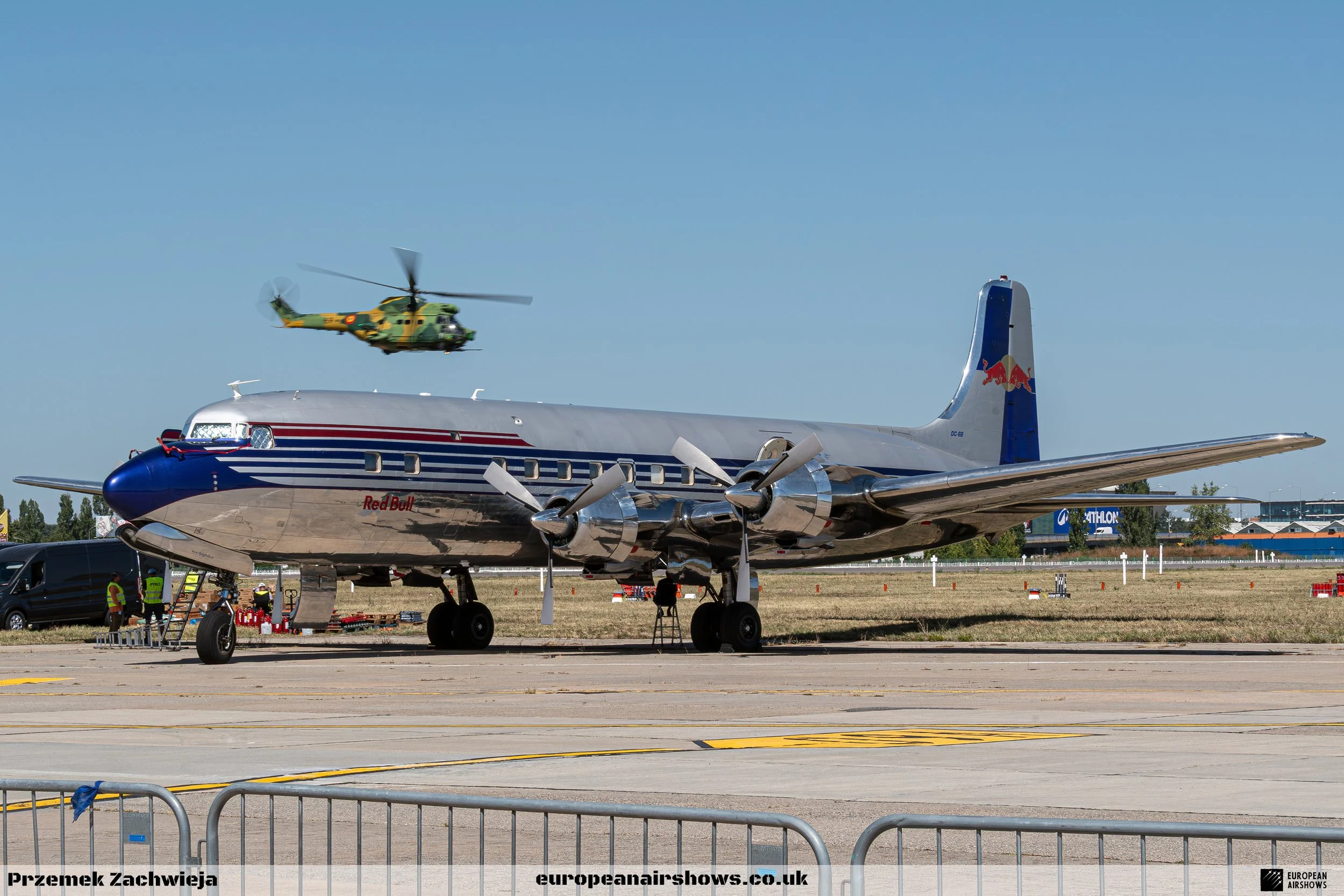
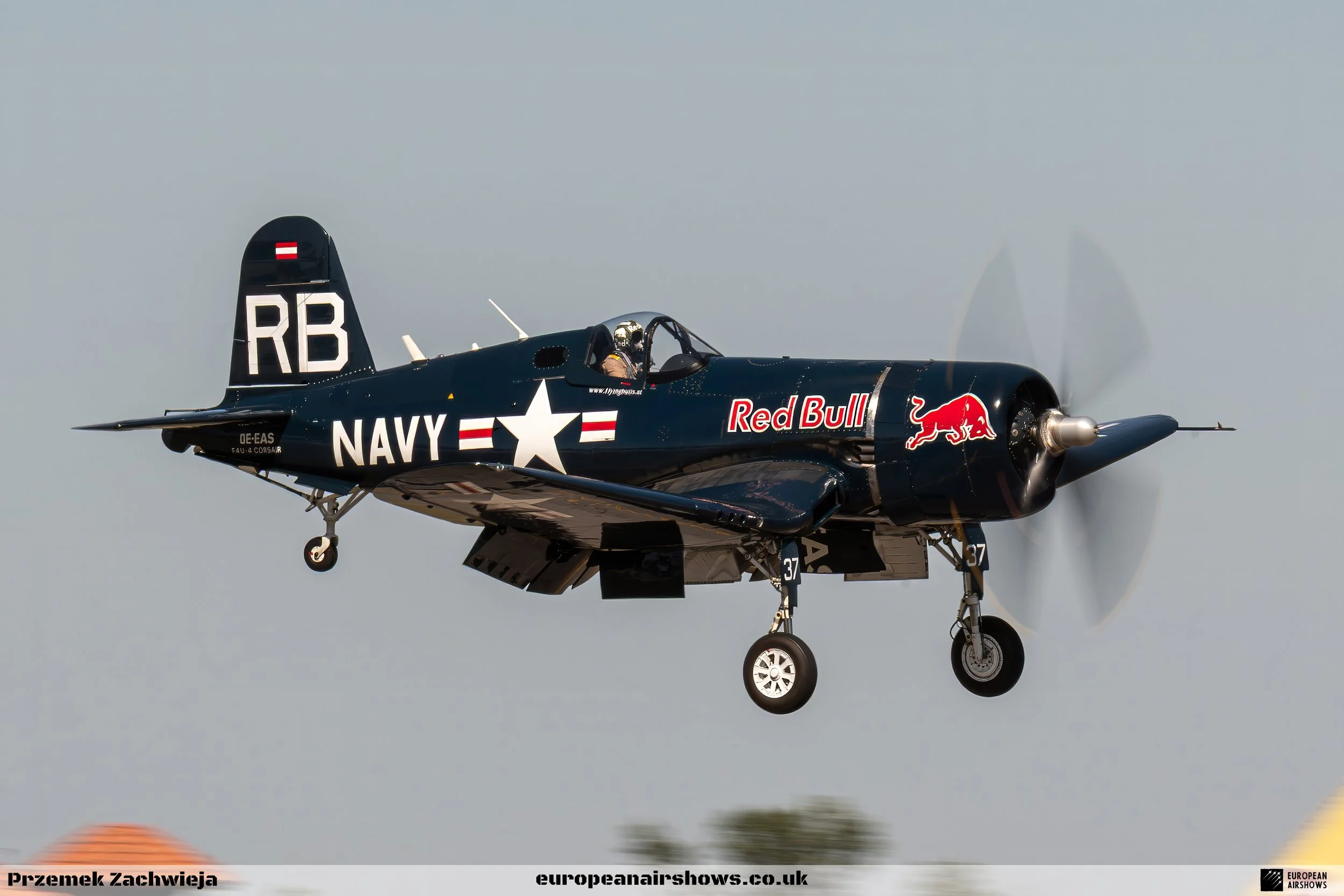
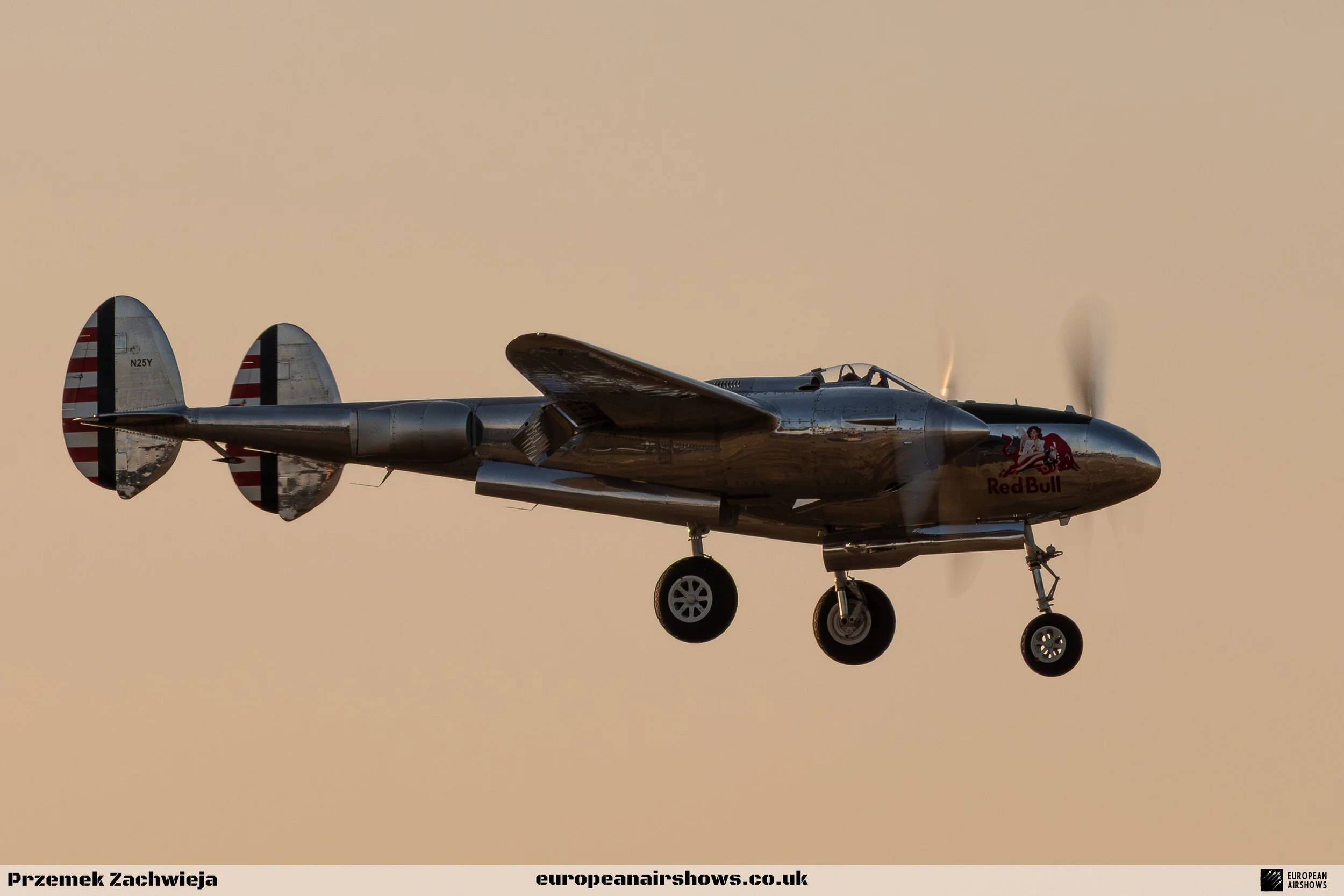
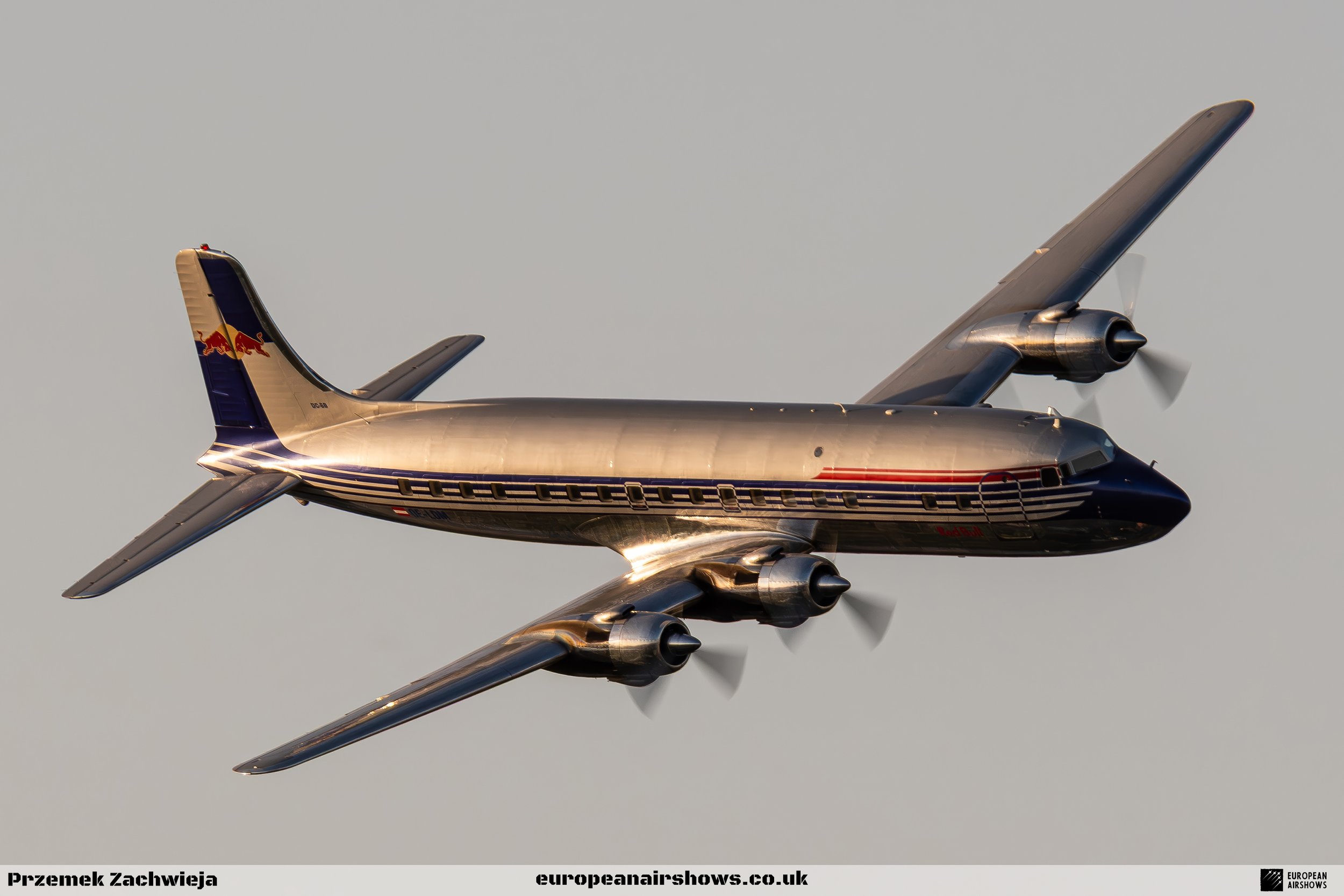
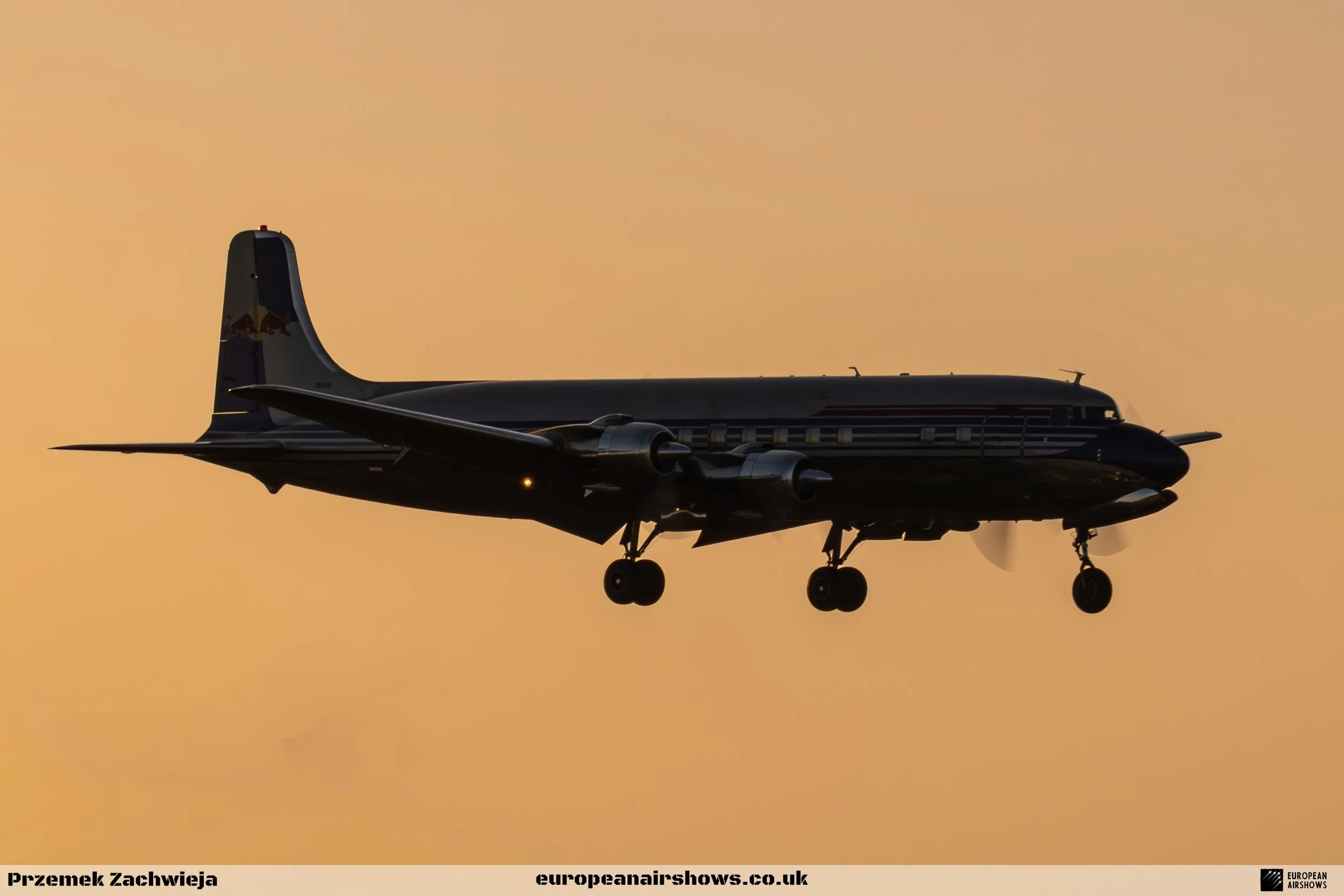
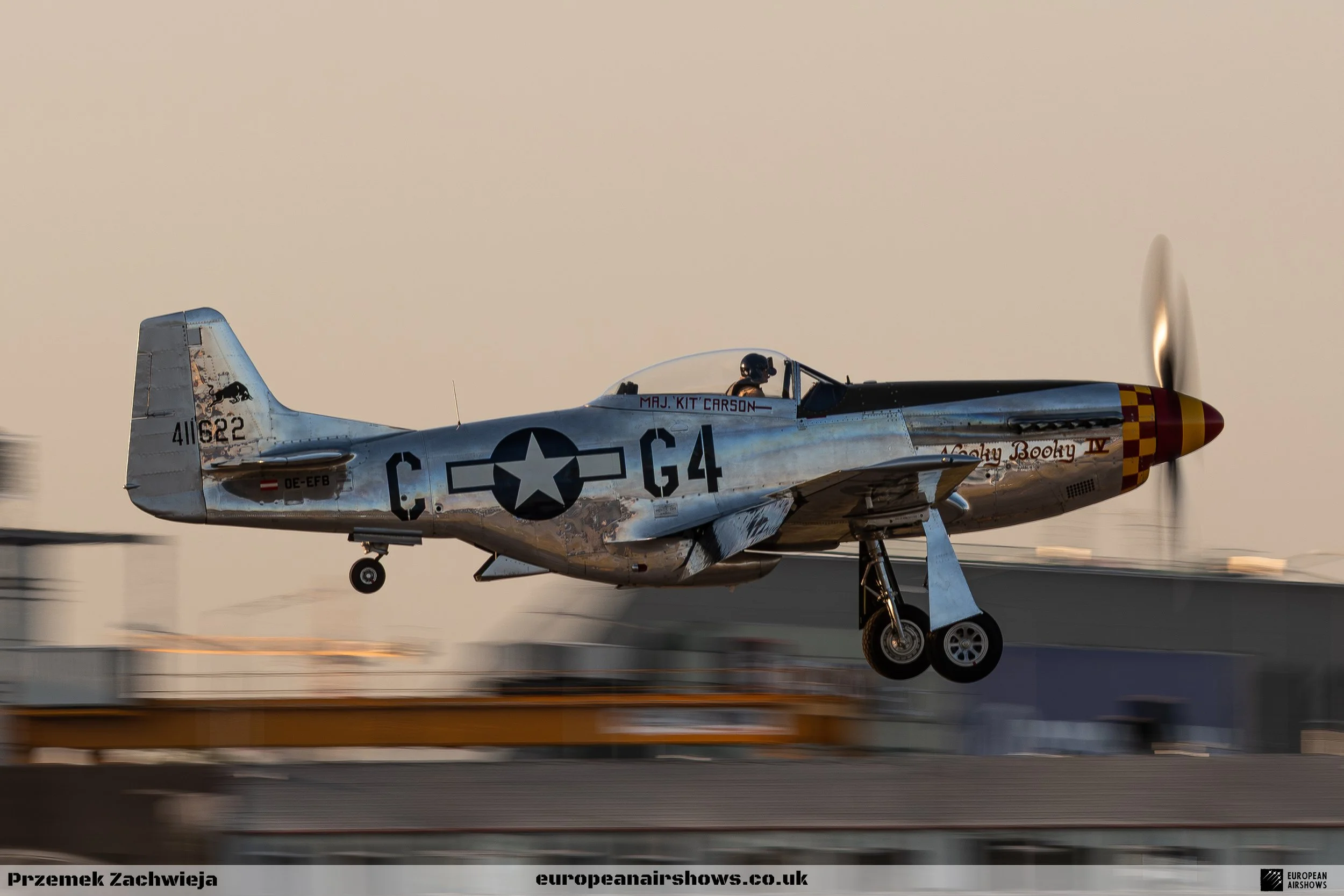
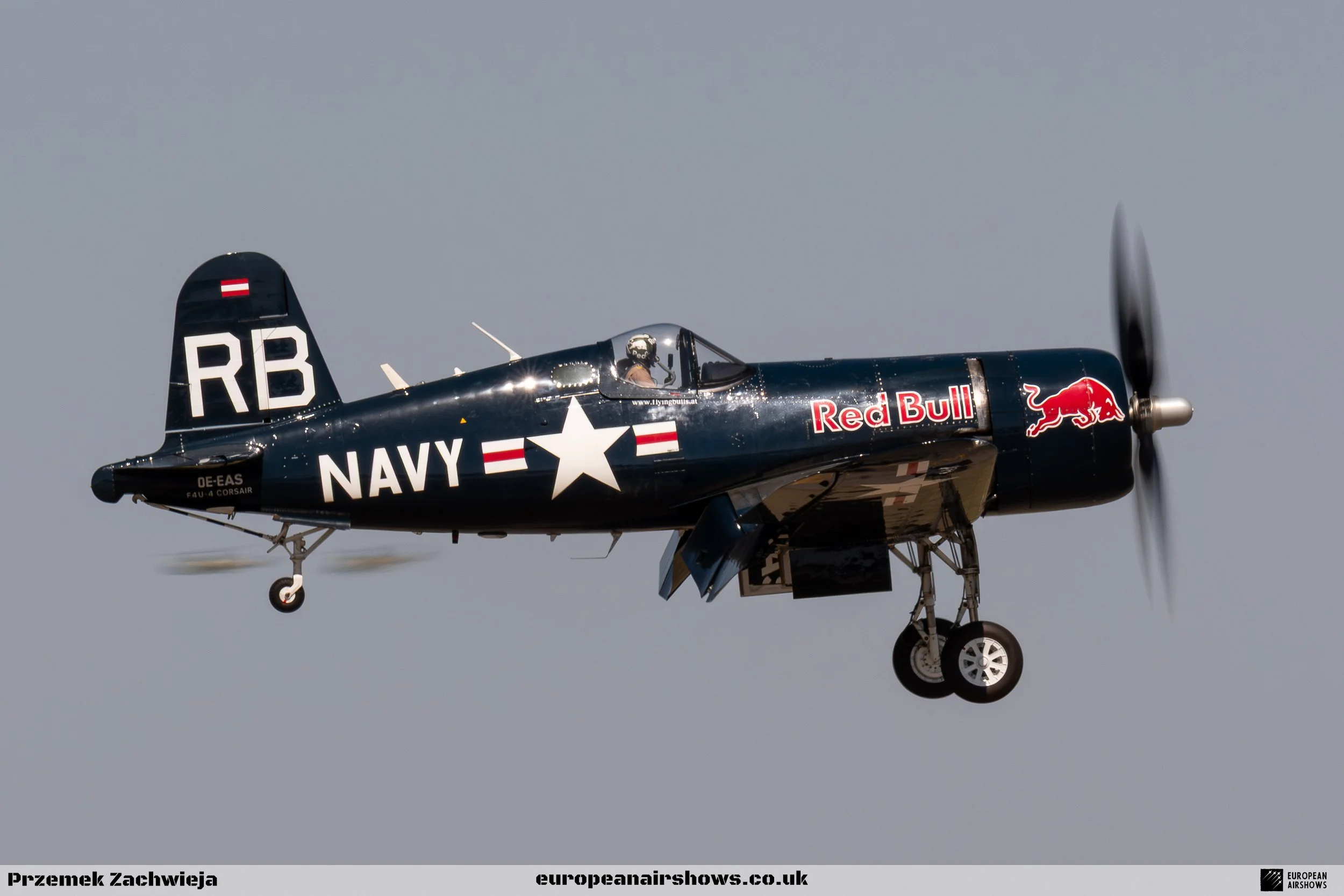
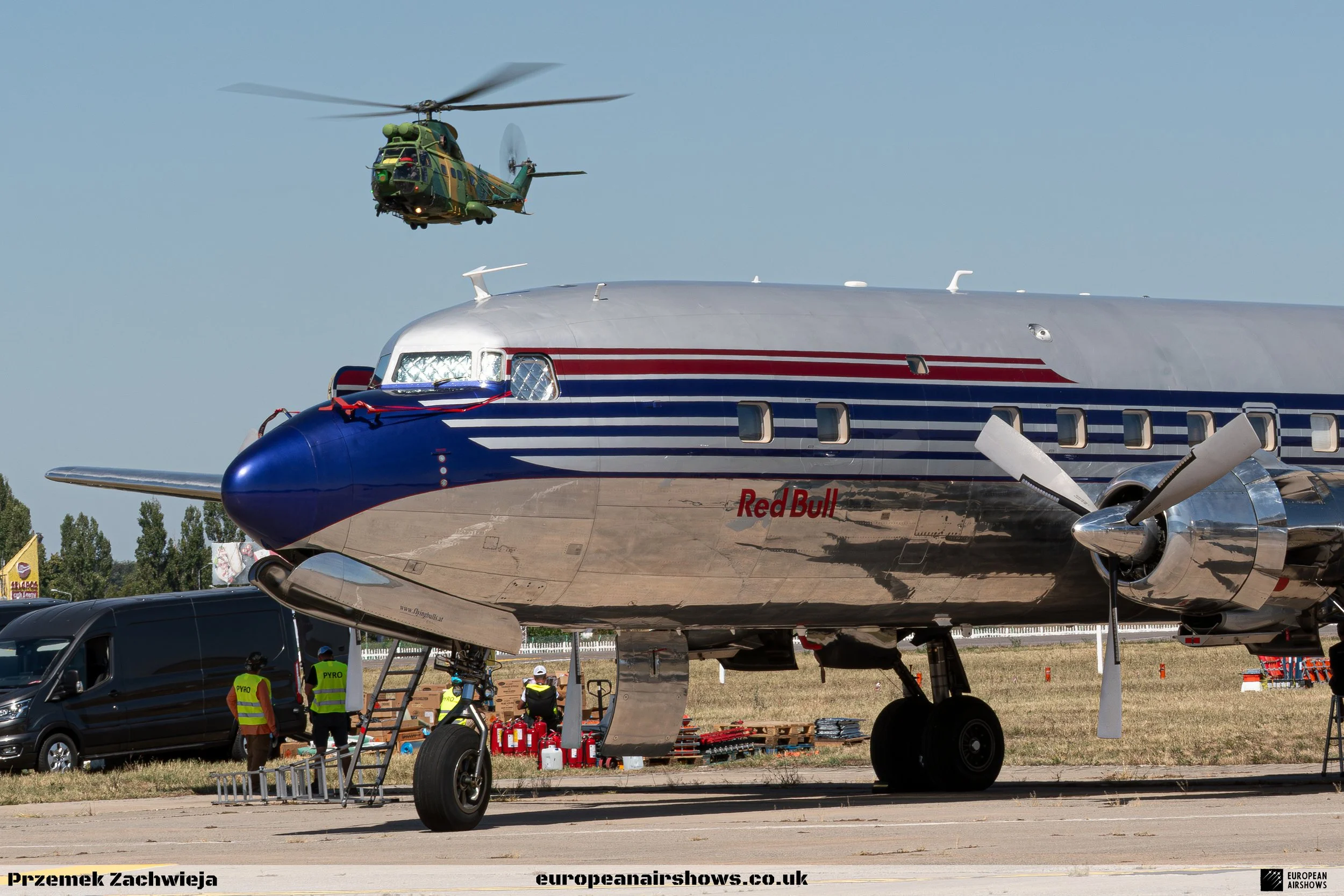
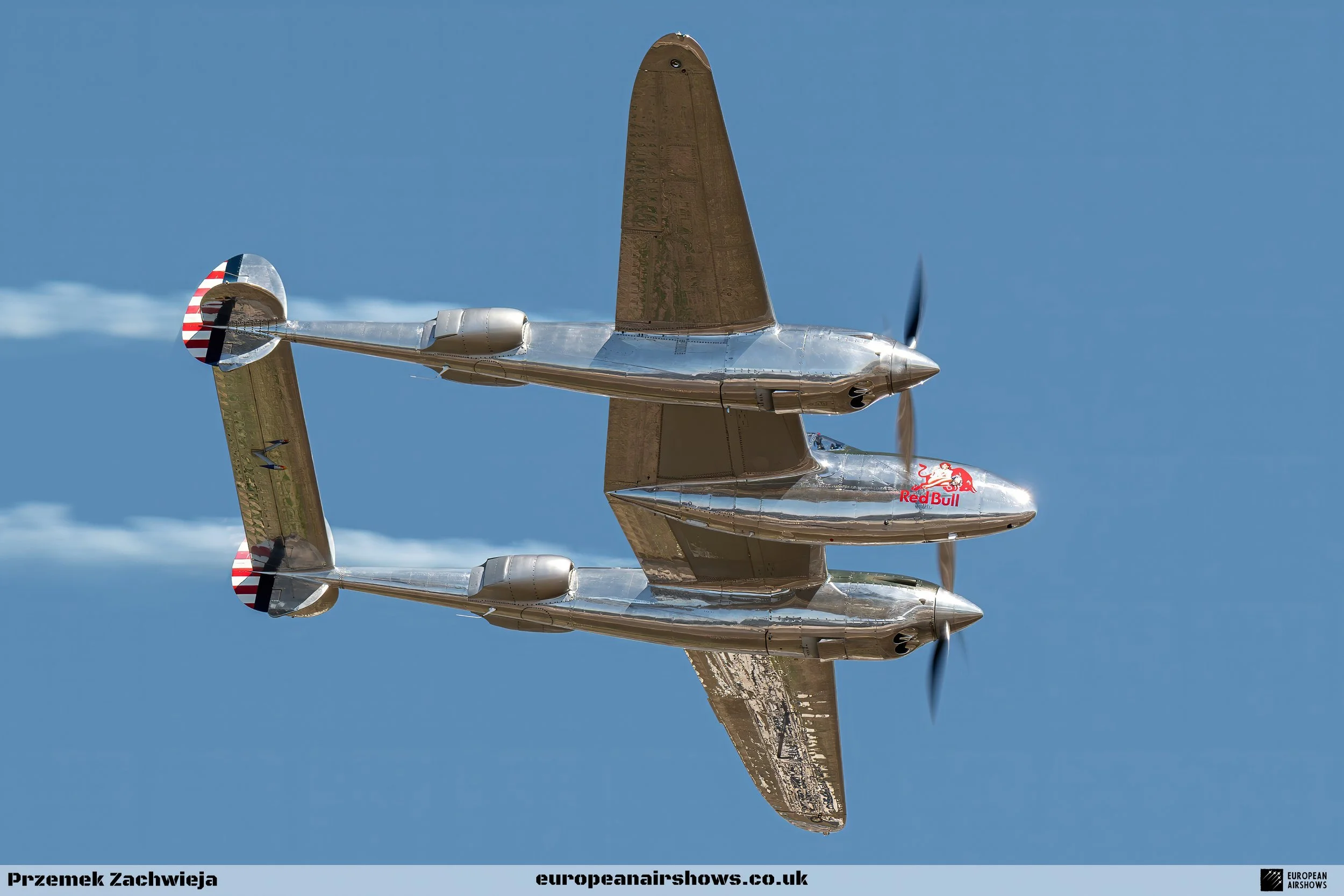
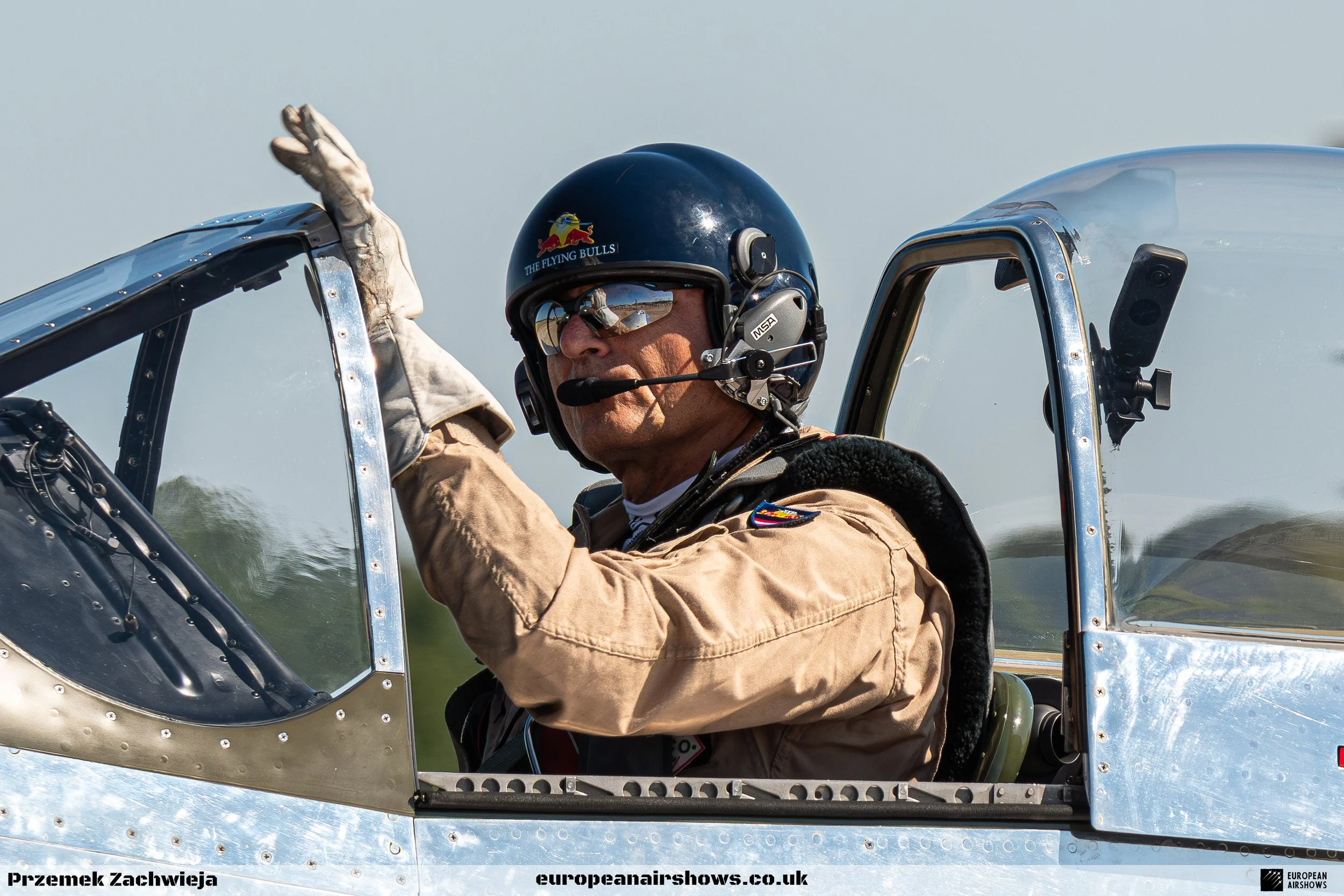
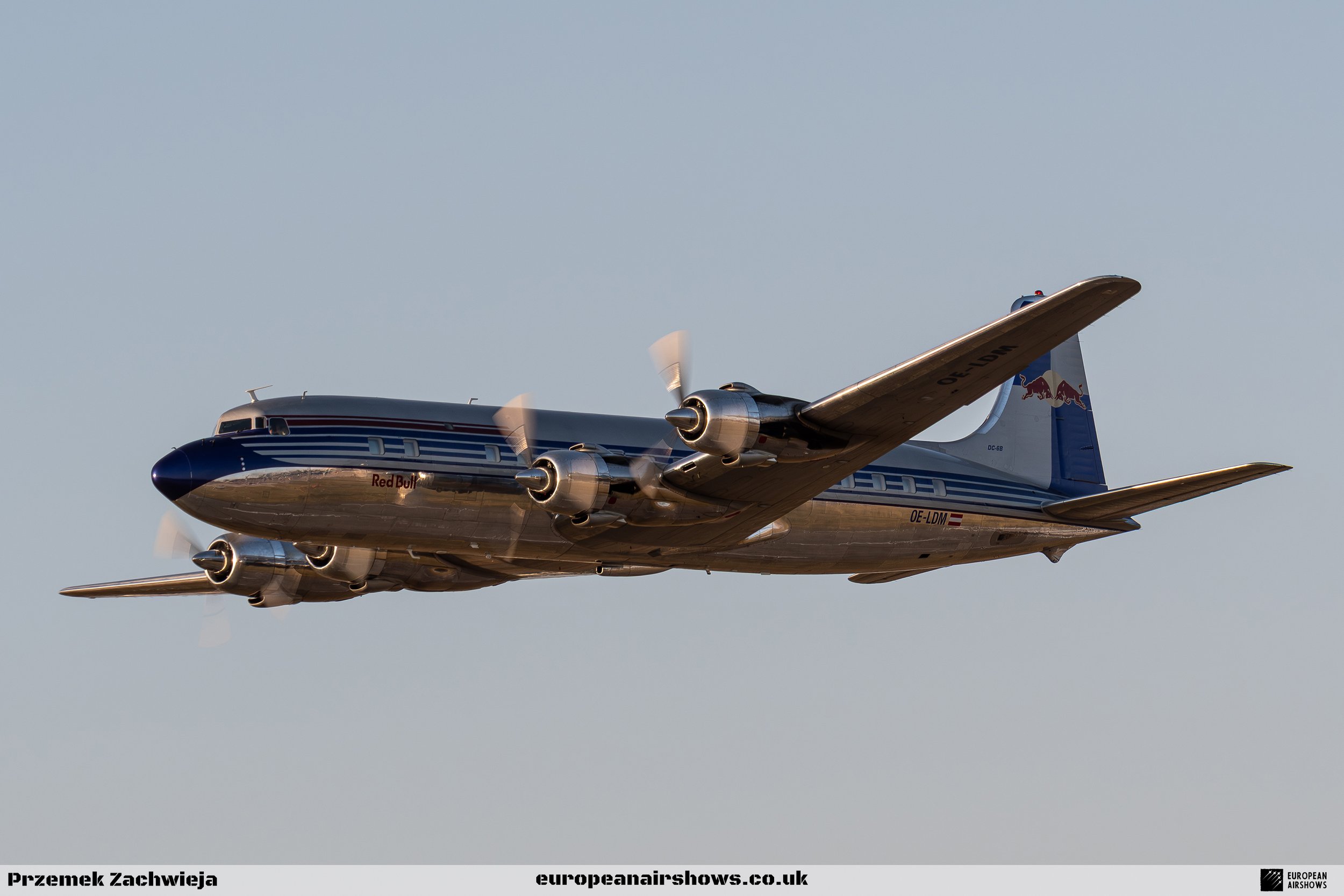
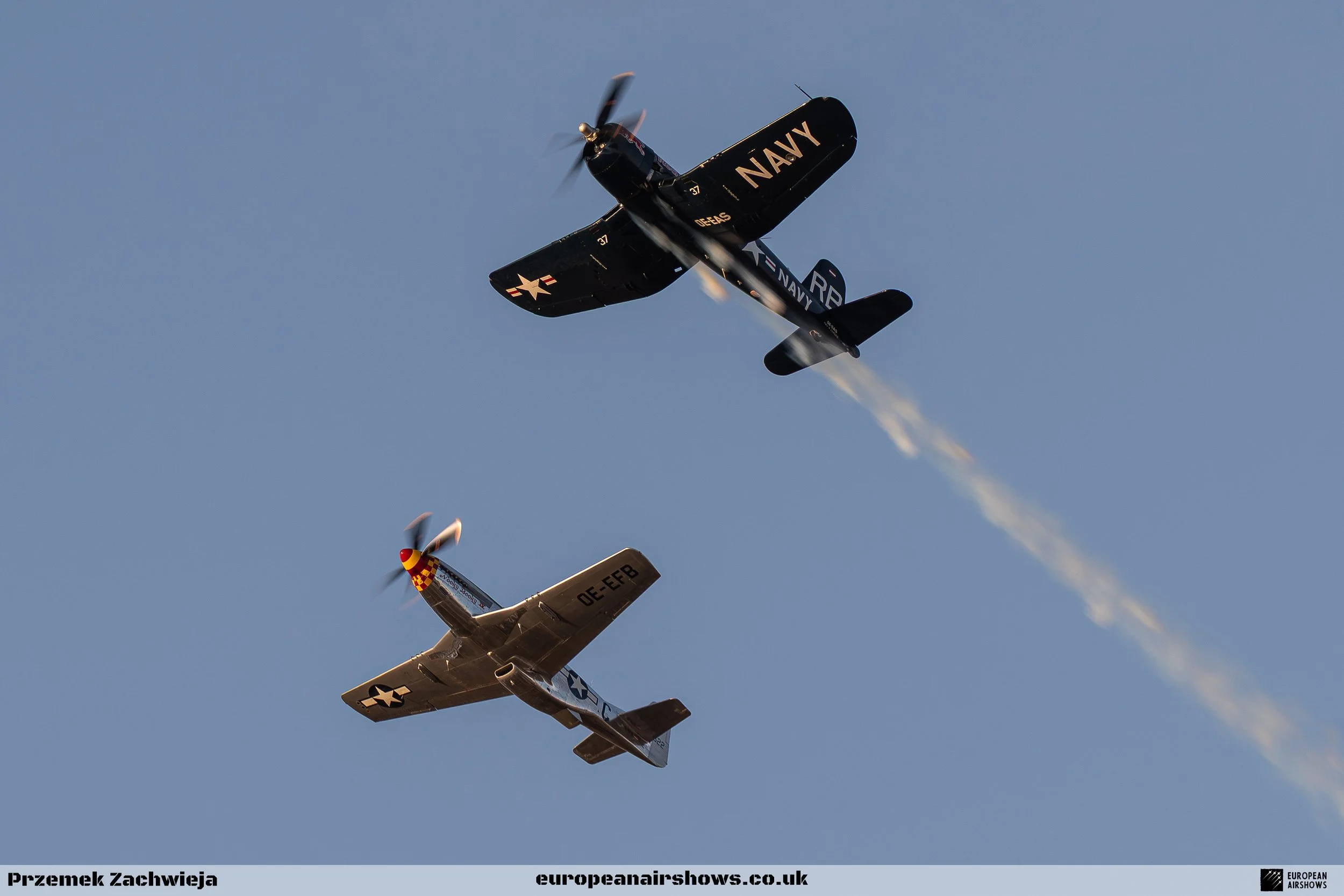
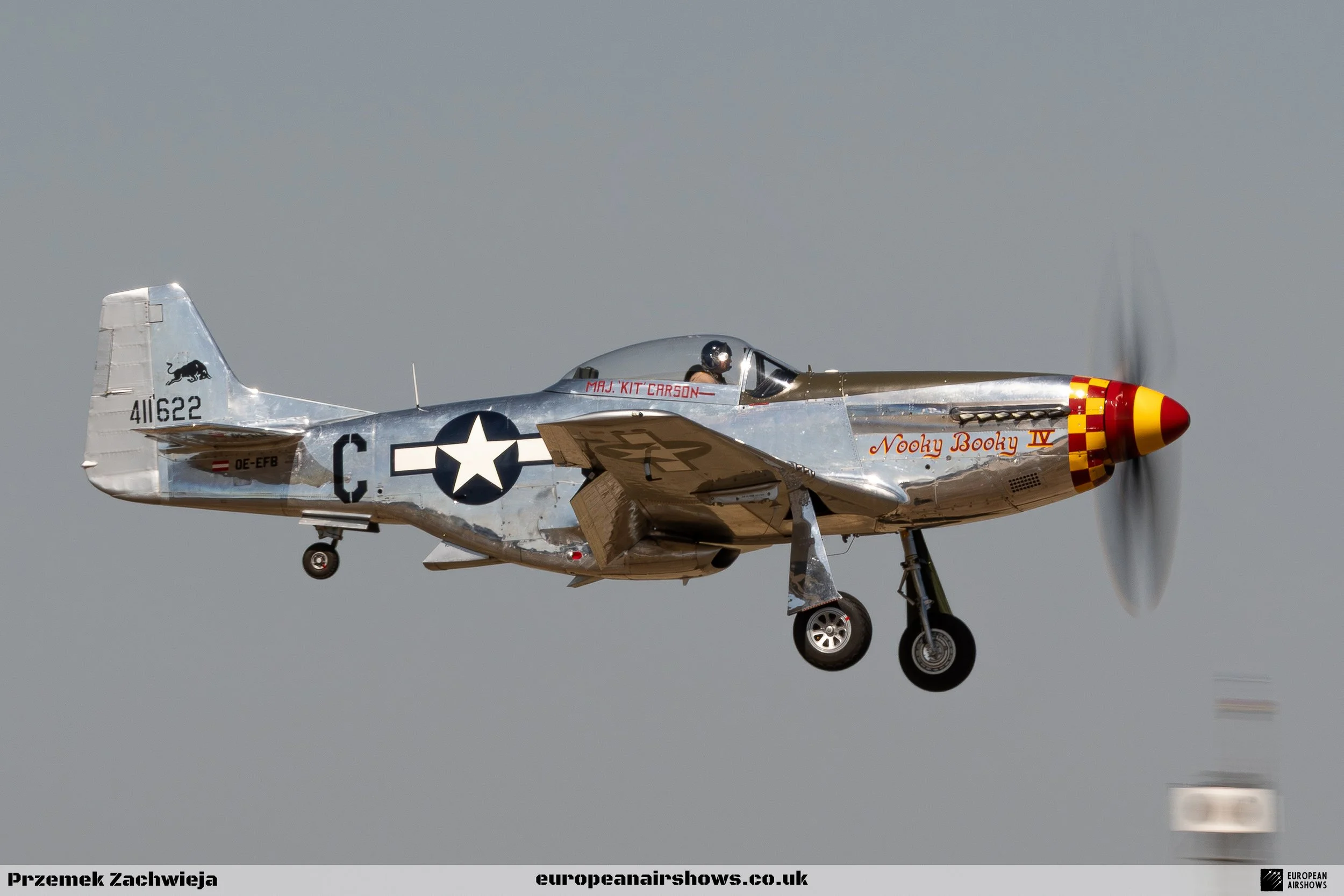
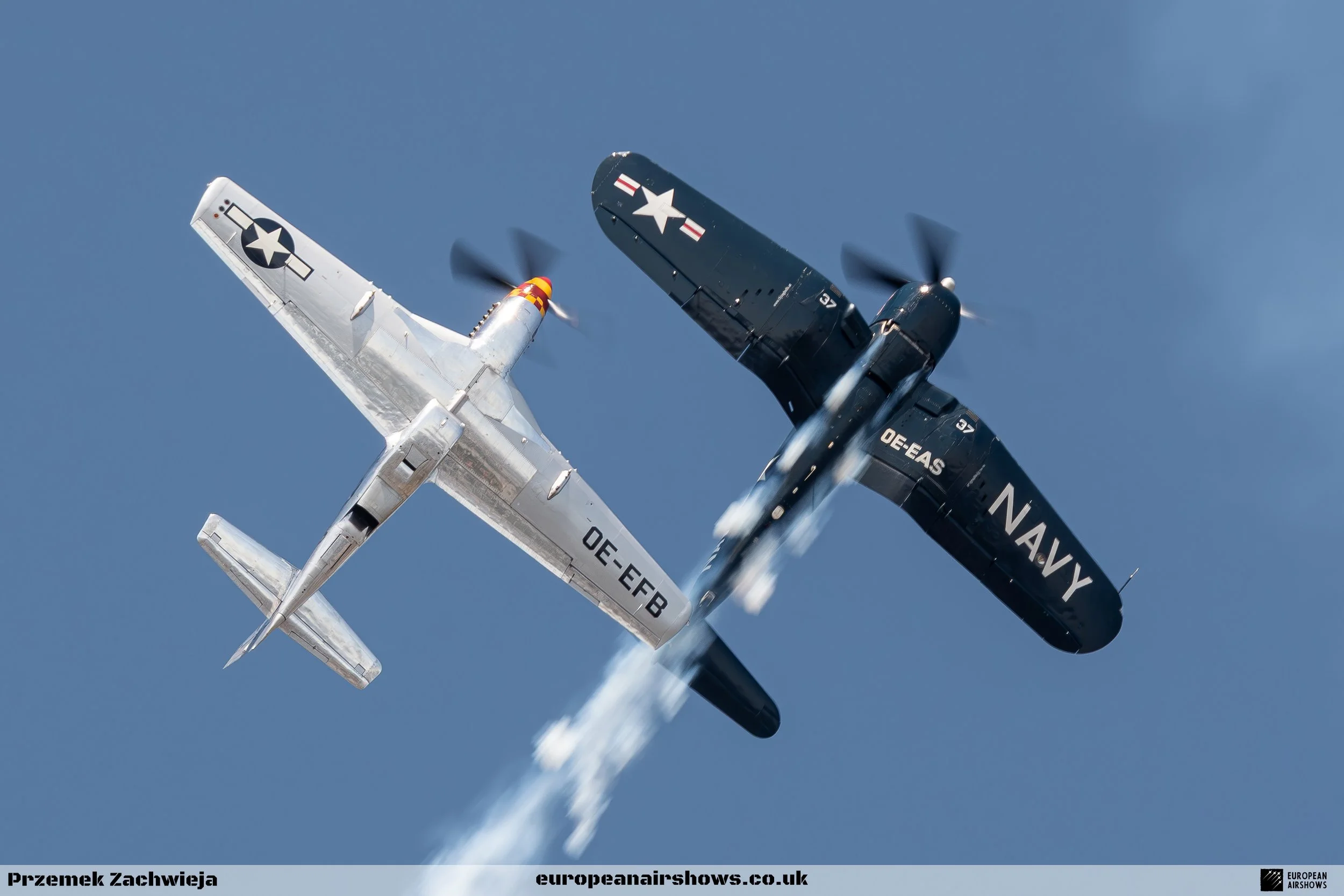
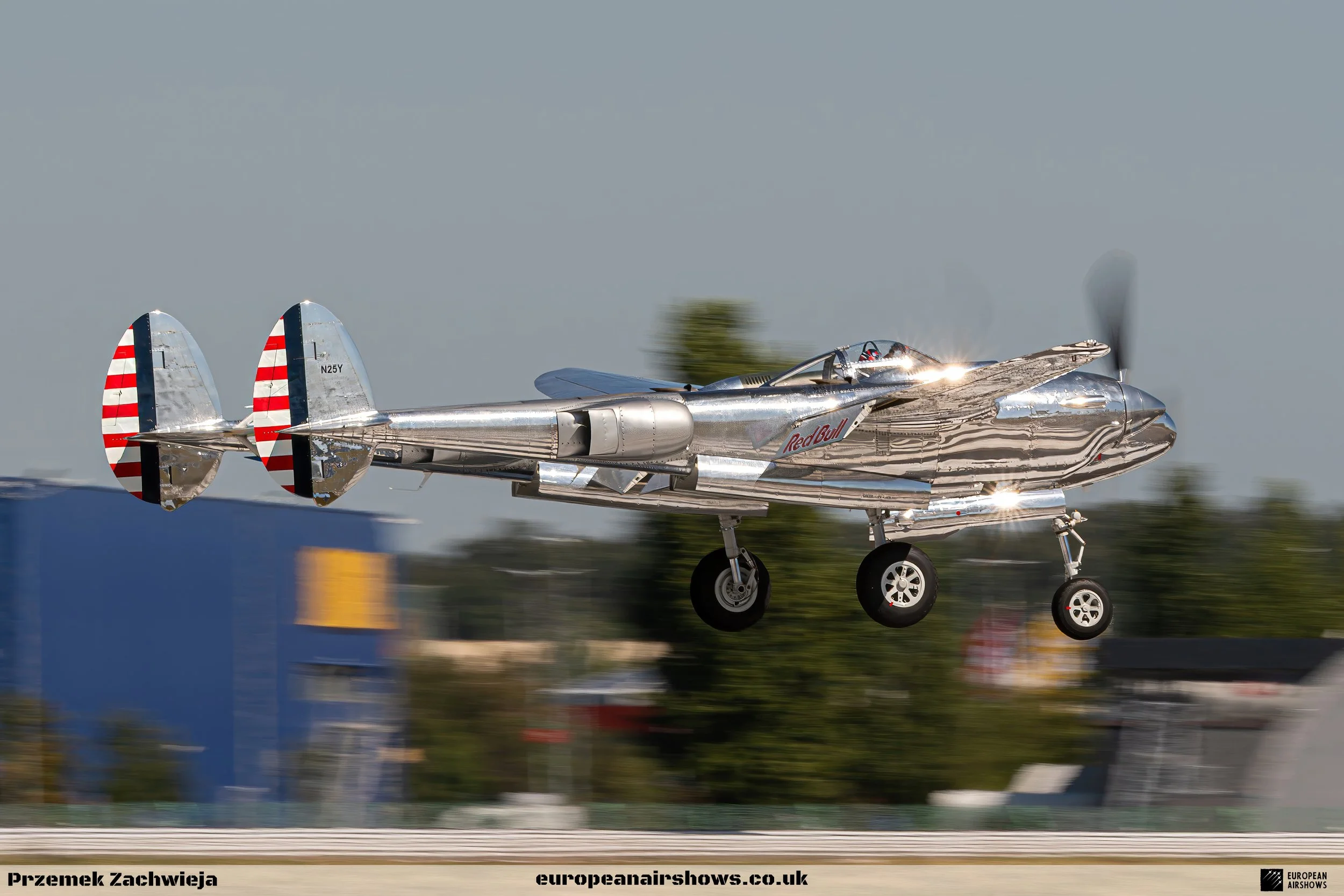
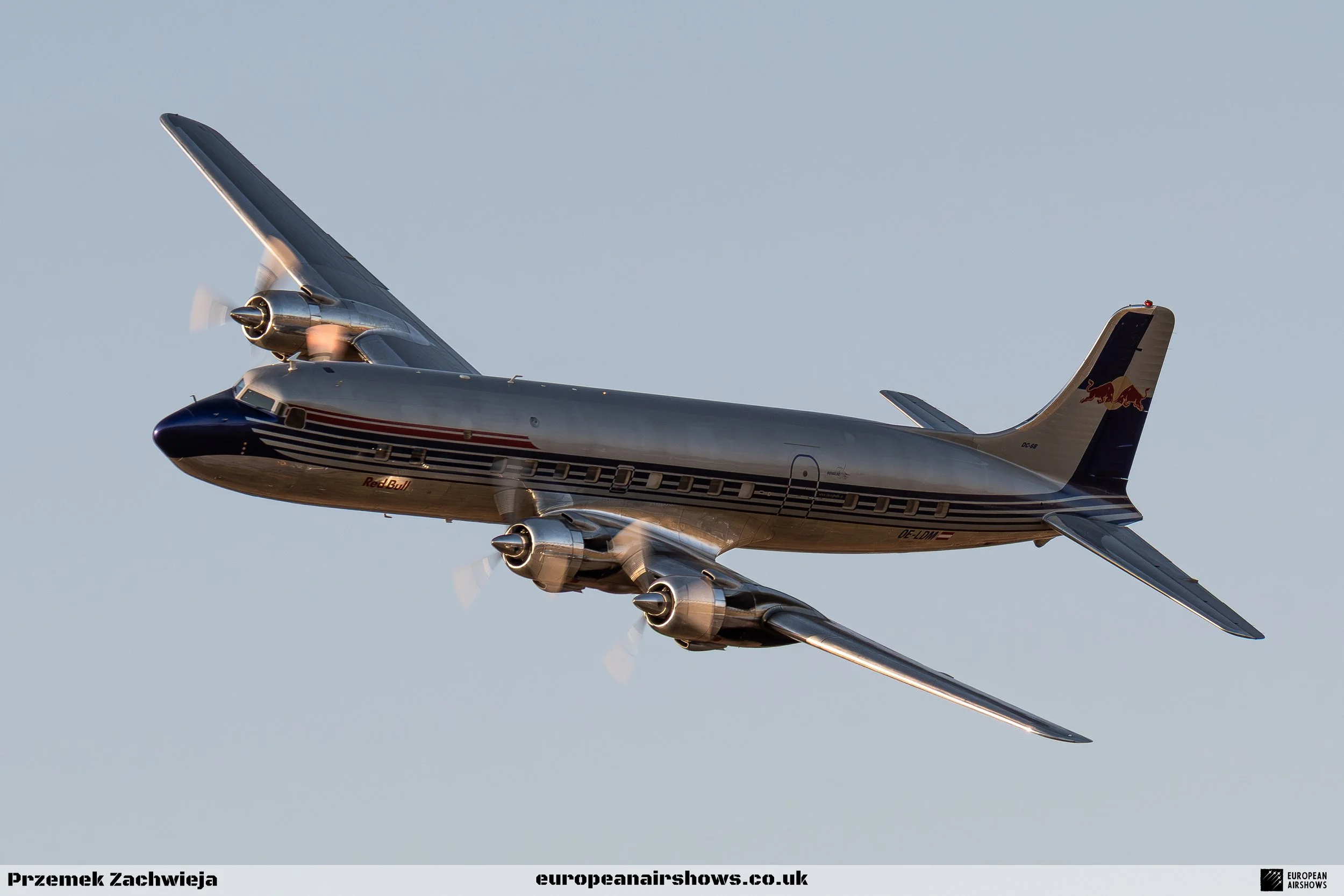
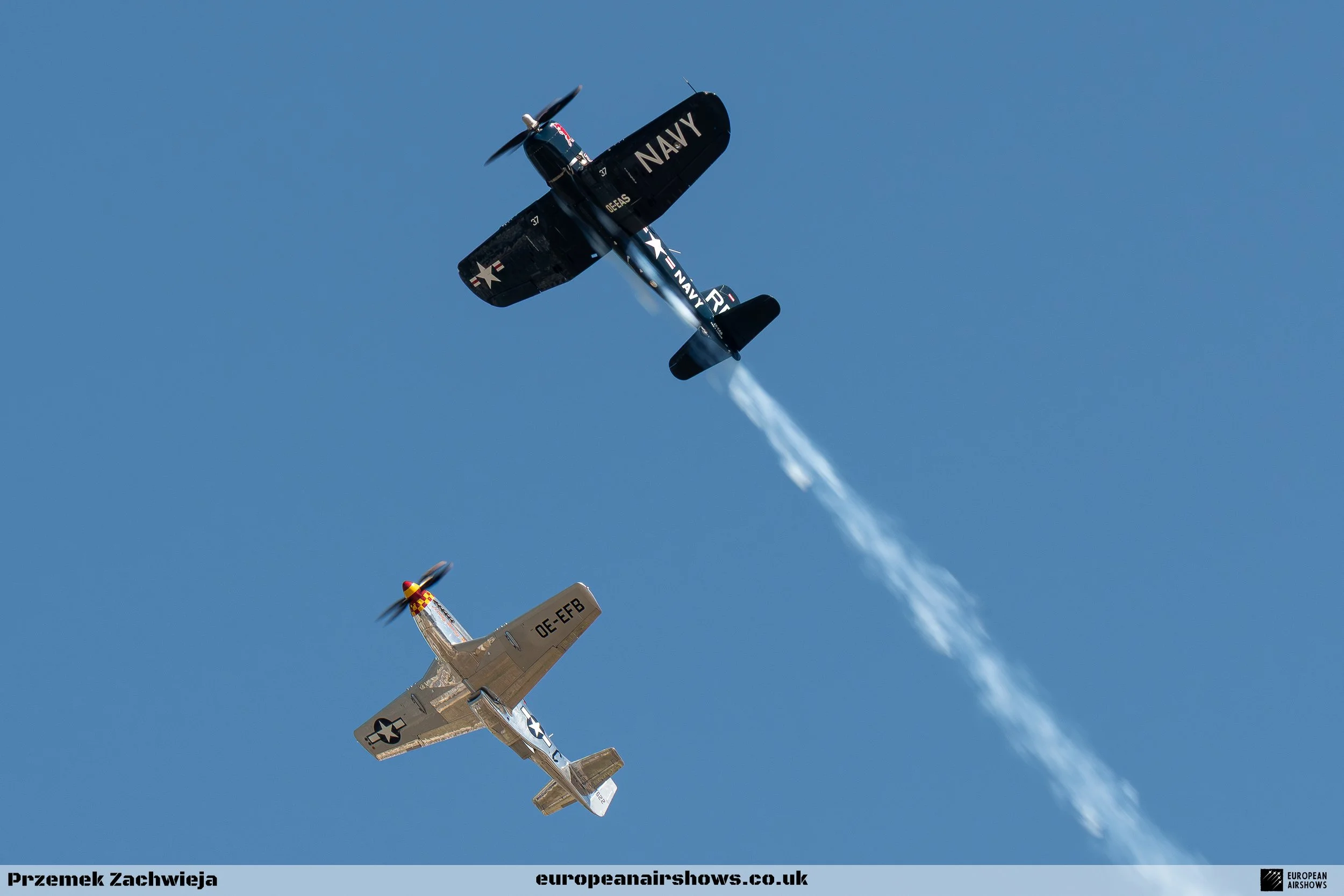
The Flying Bulls warbird fleet added glamour and spectacle in equal measure. Their afternoon sequence featured the Vought F4U-4 Corsair, North American P-51D Mustang and Lockheed P-38 Lightning in close formation before breaking into a P-51/F4U pair and a solo Lightning sequence that highlighted the twin-boom’s elegant lines. In the evening, they returned, joined by the Douglas DC-6B, one of the most immaculately kept piston airliners in the world. The four-ship flew two measured formation passes before the fighters broke off and the DC-6 performed a solo display, its polished fuselage glowing in the golden light. For many, this was the photographic highlight of the entire show—warbird heritage presented with the Bulls’ trademark precision and finish.
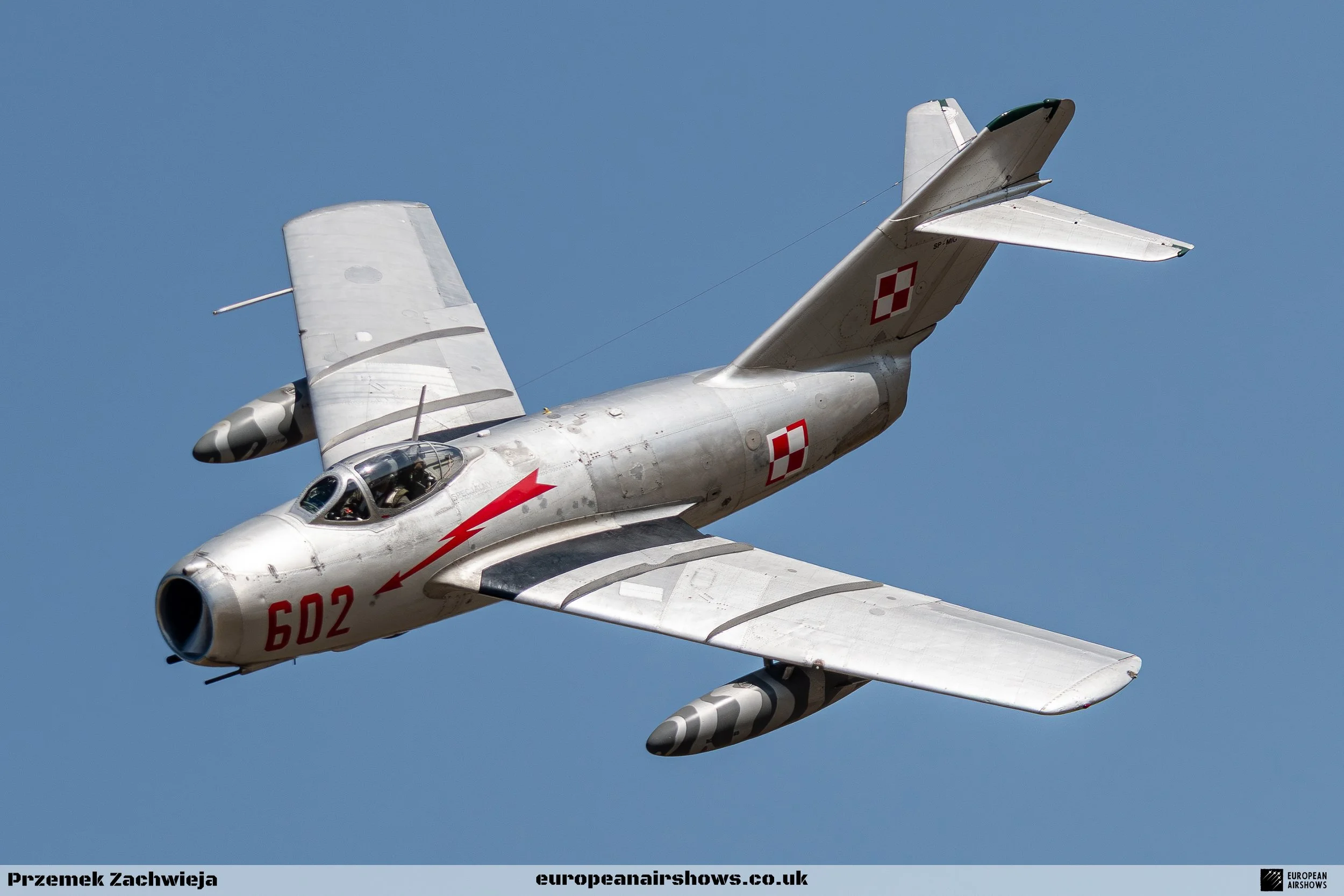
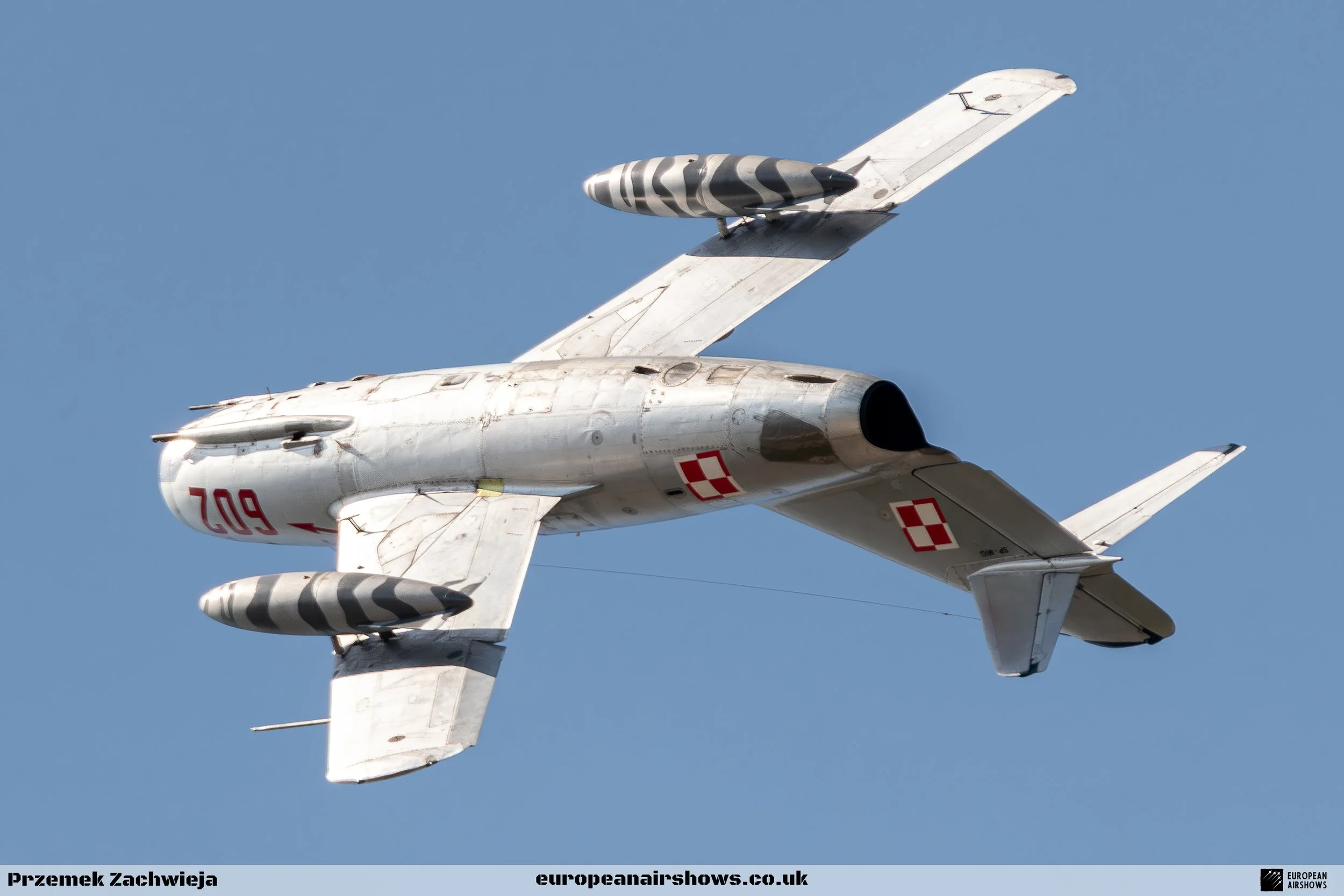
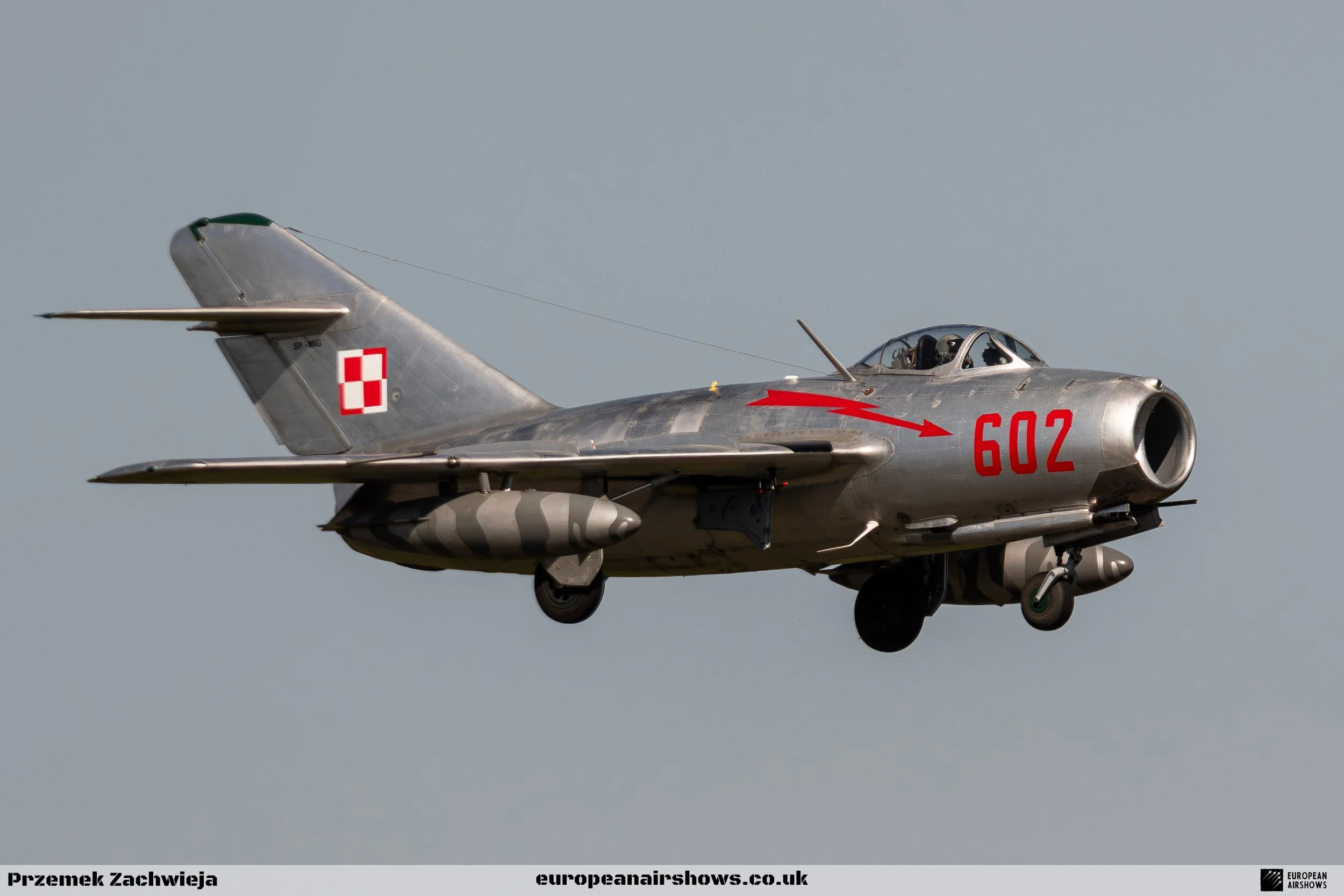
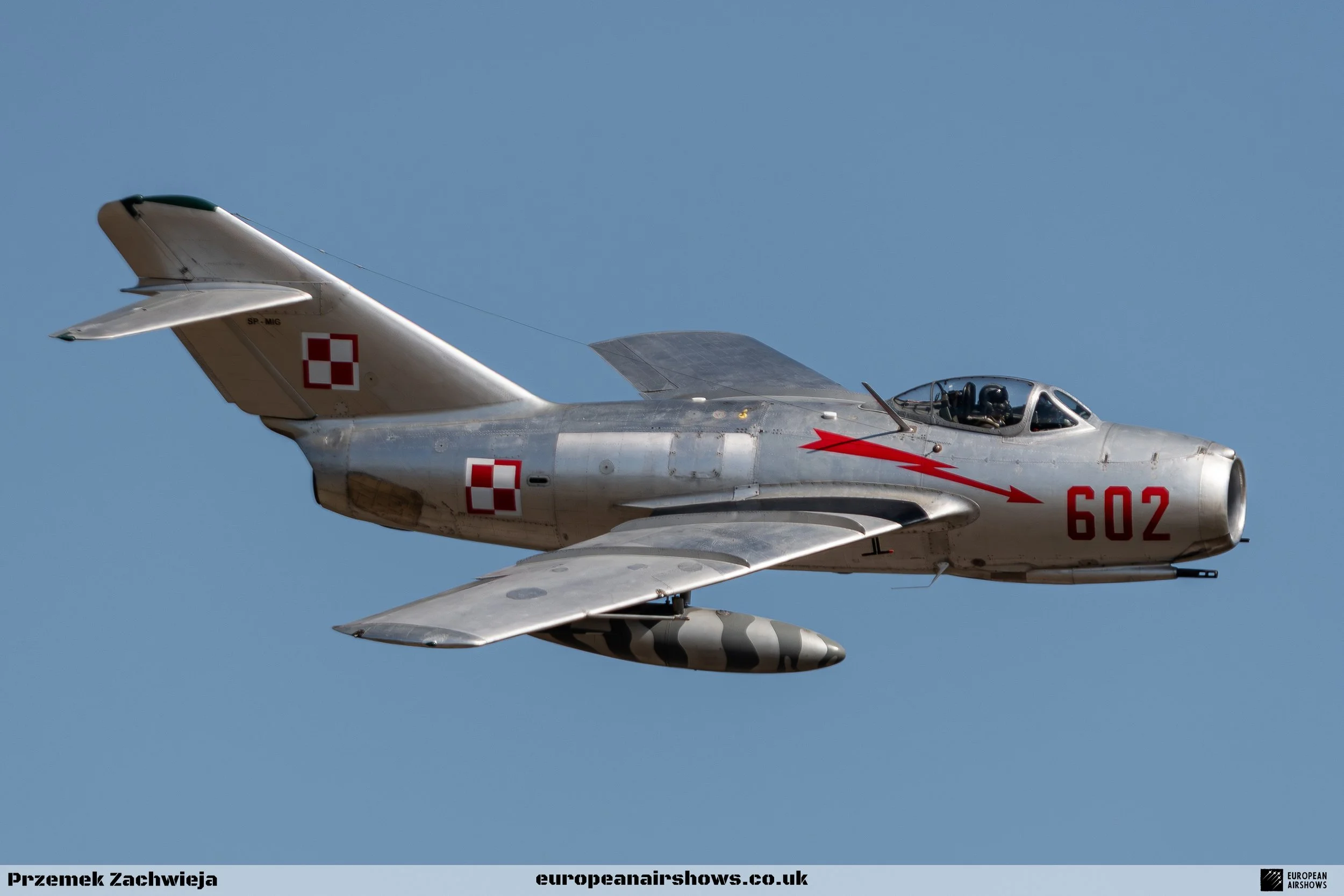
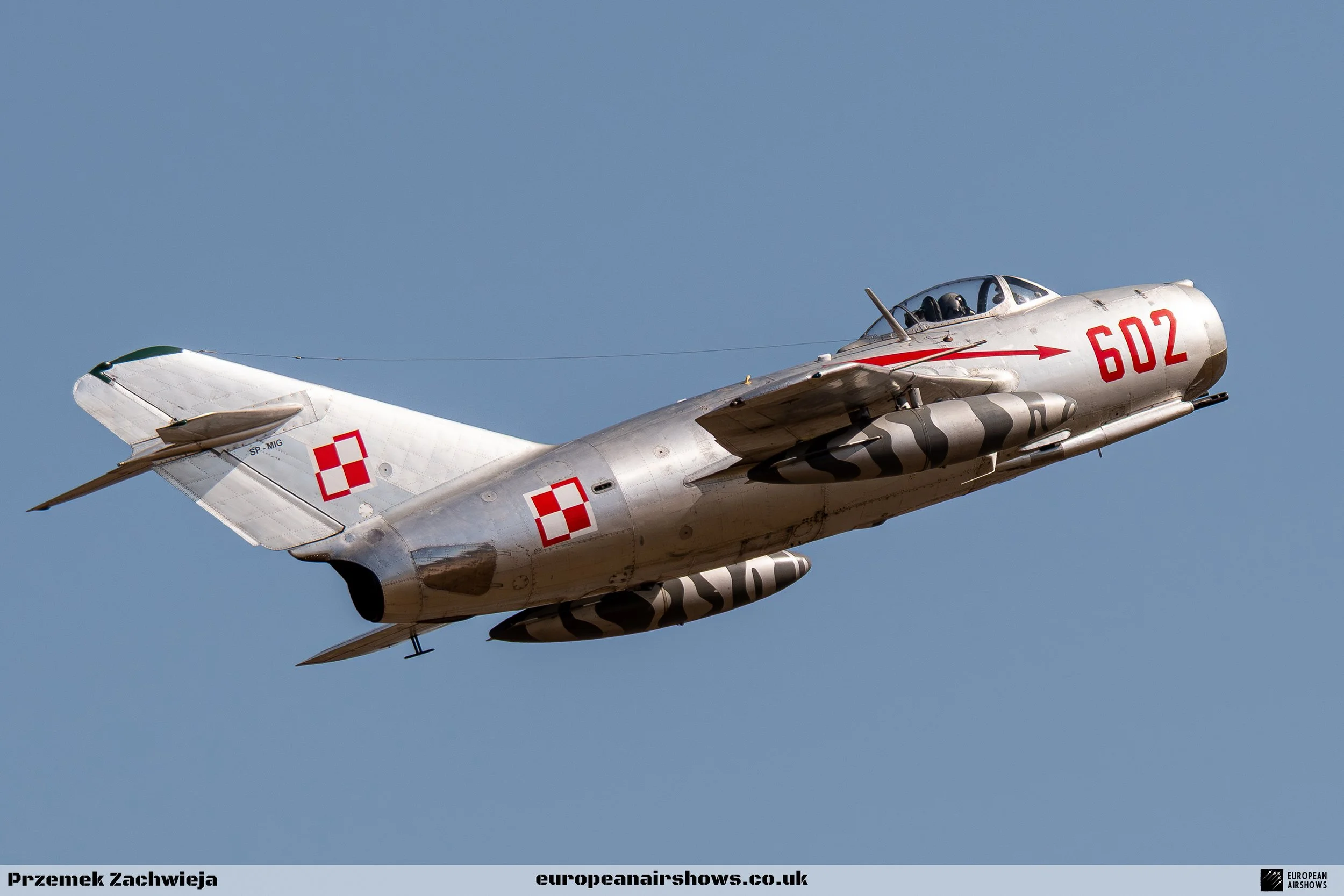
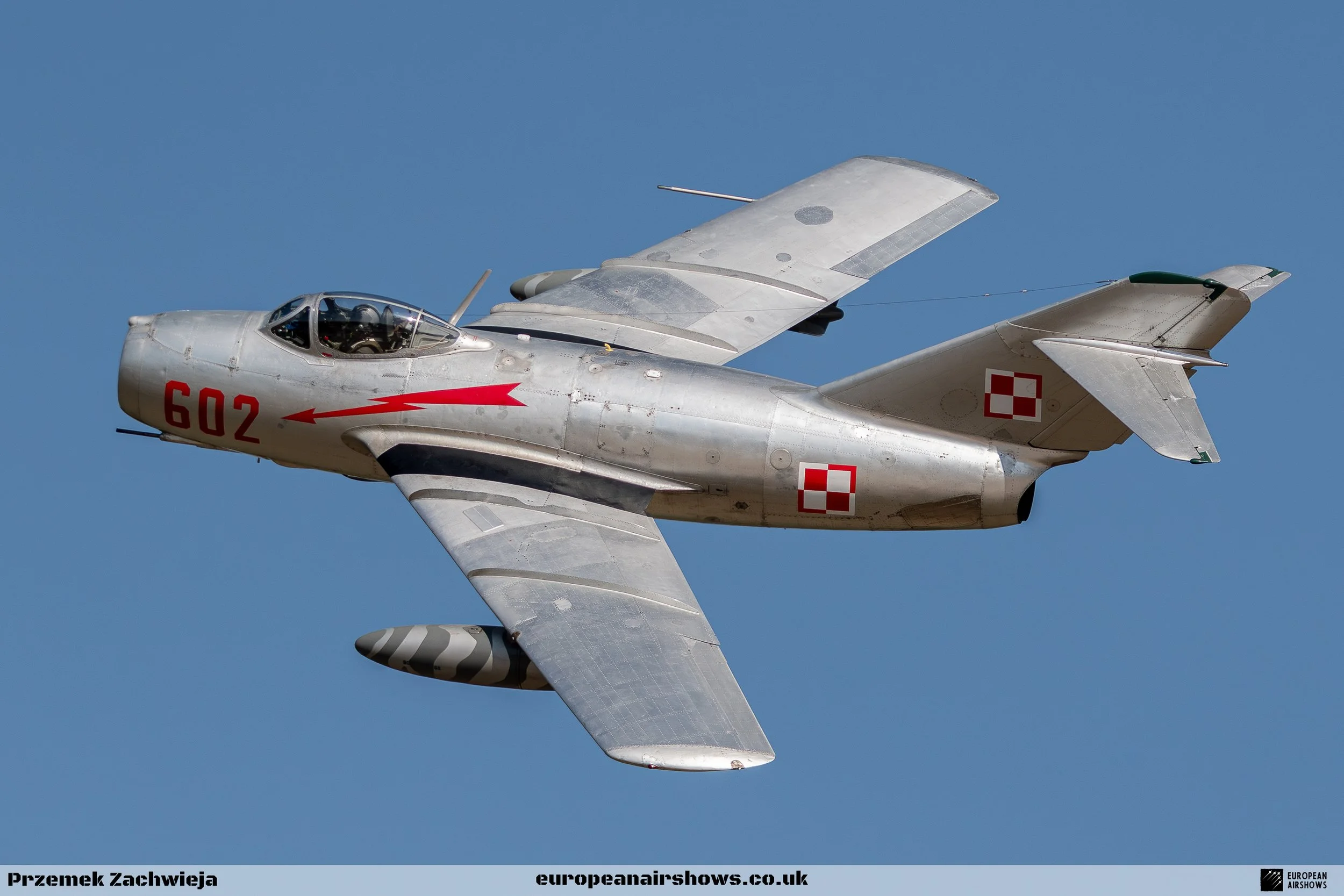
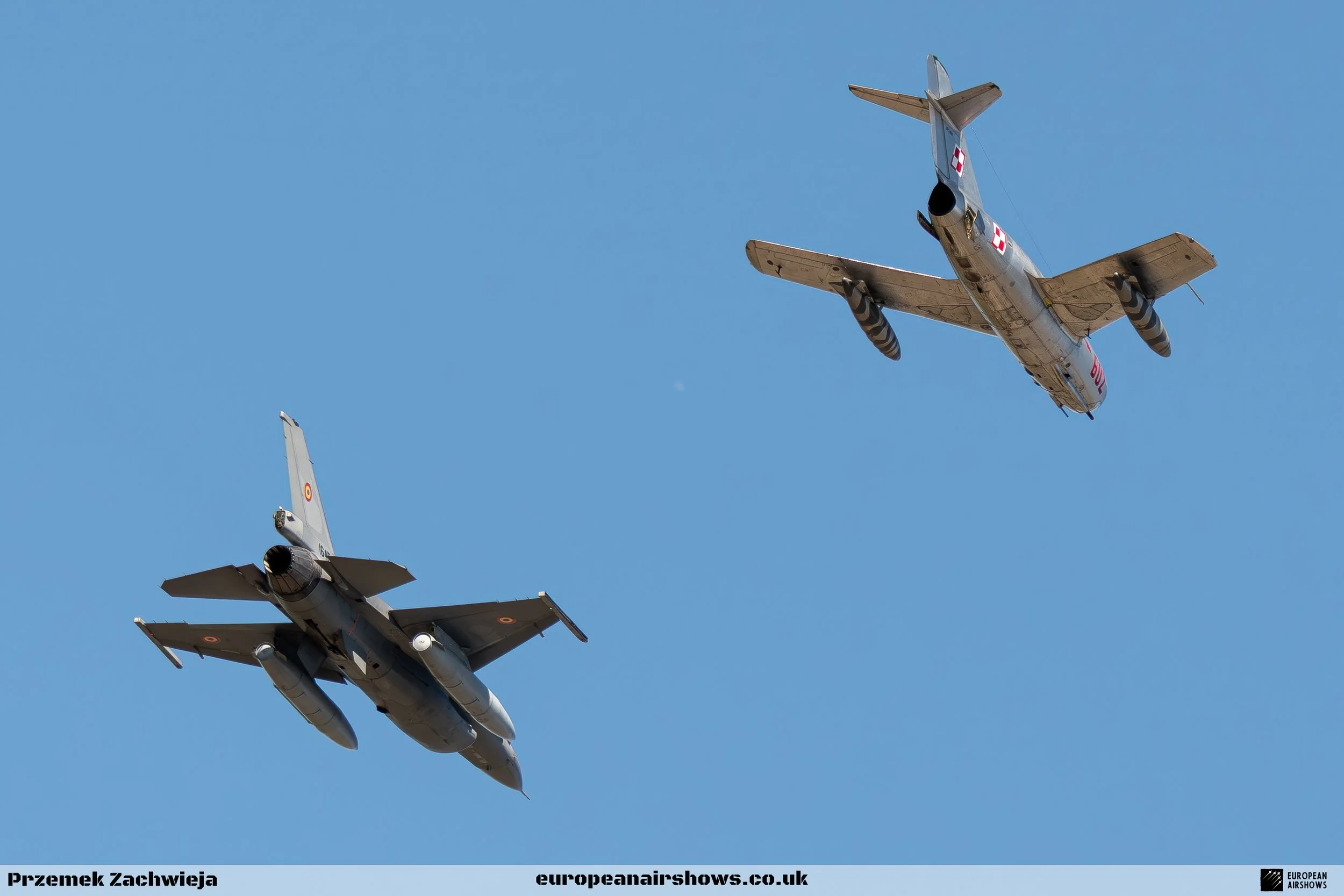
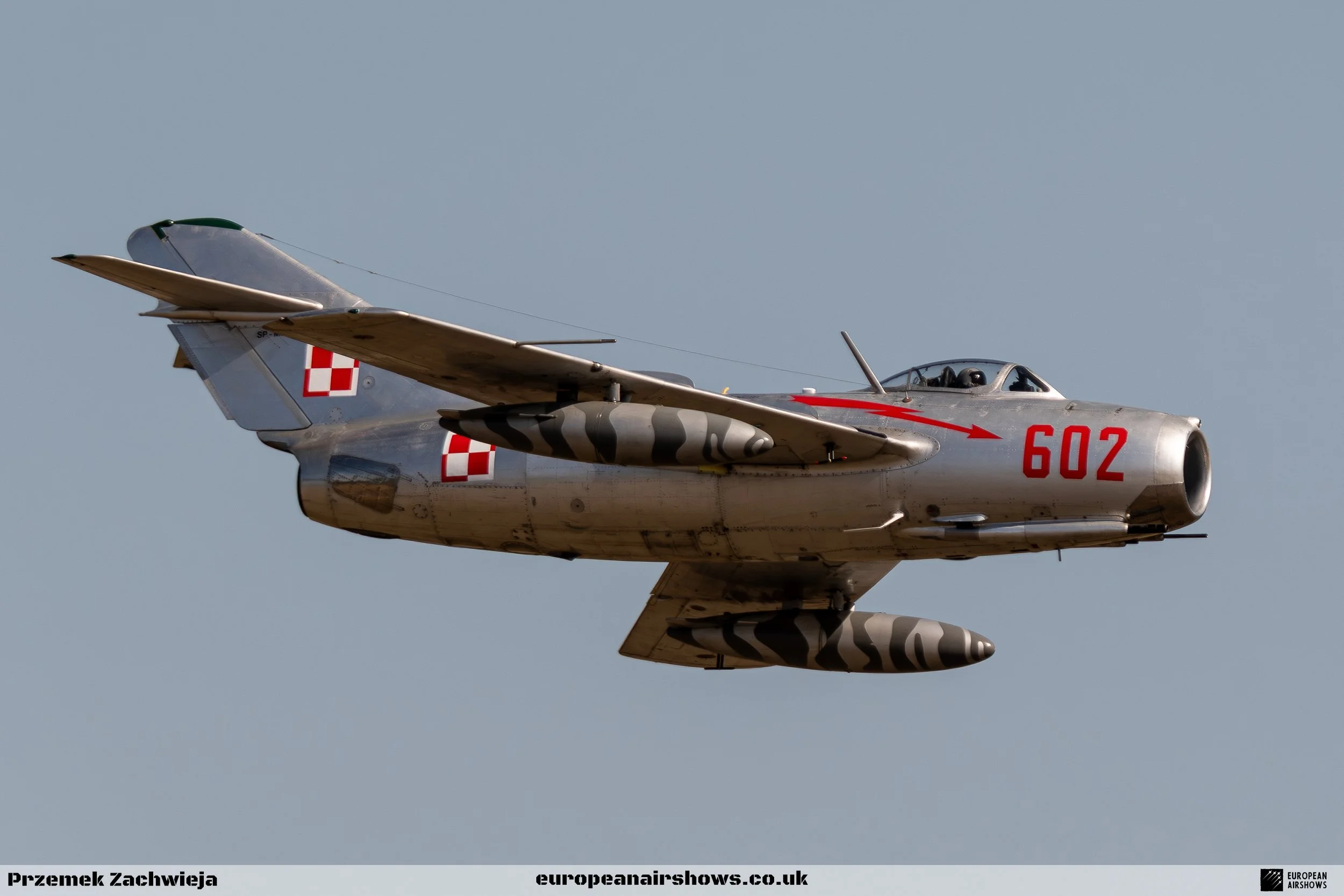
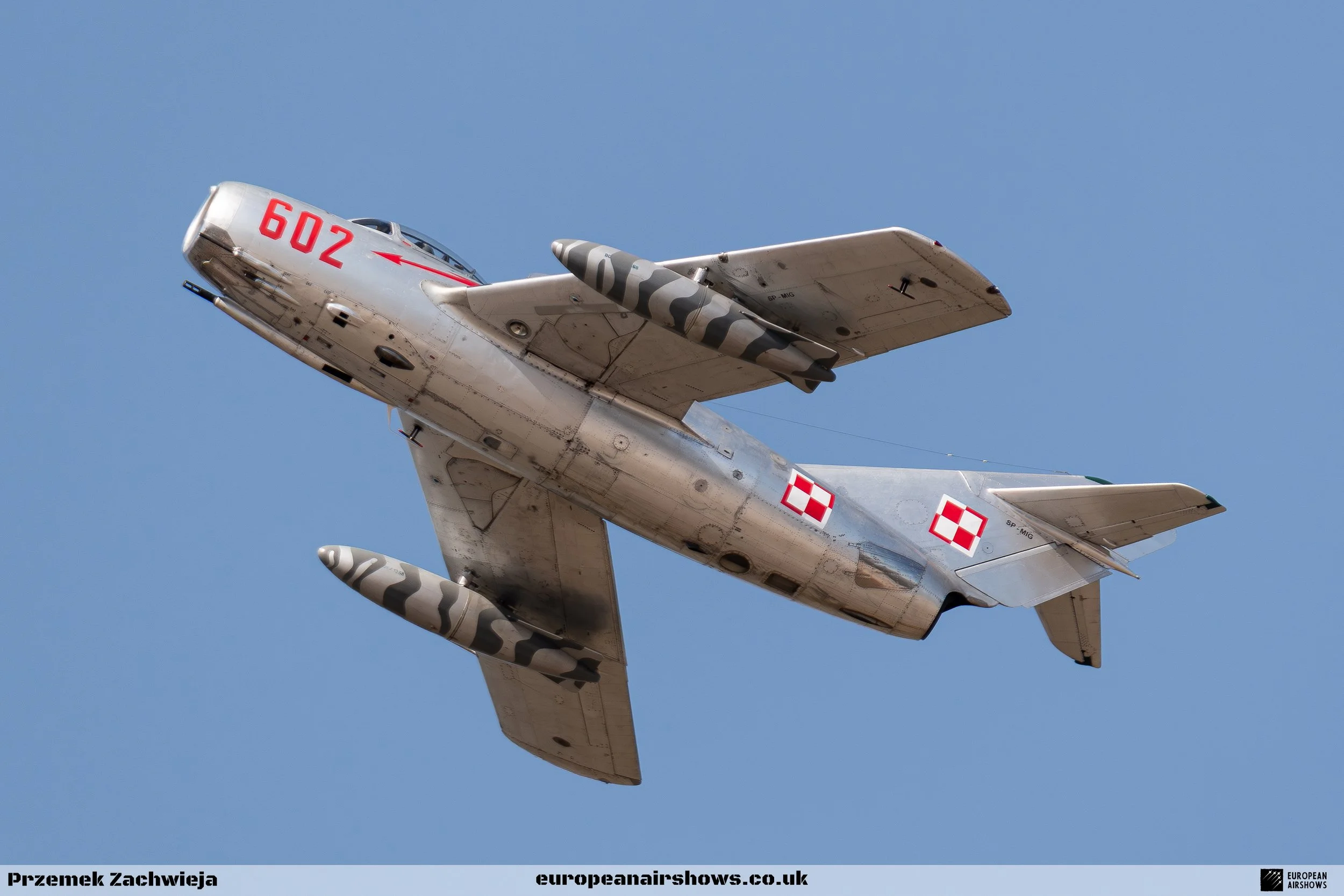
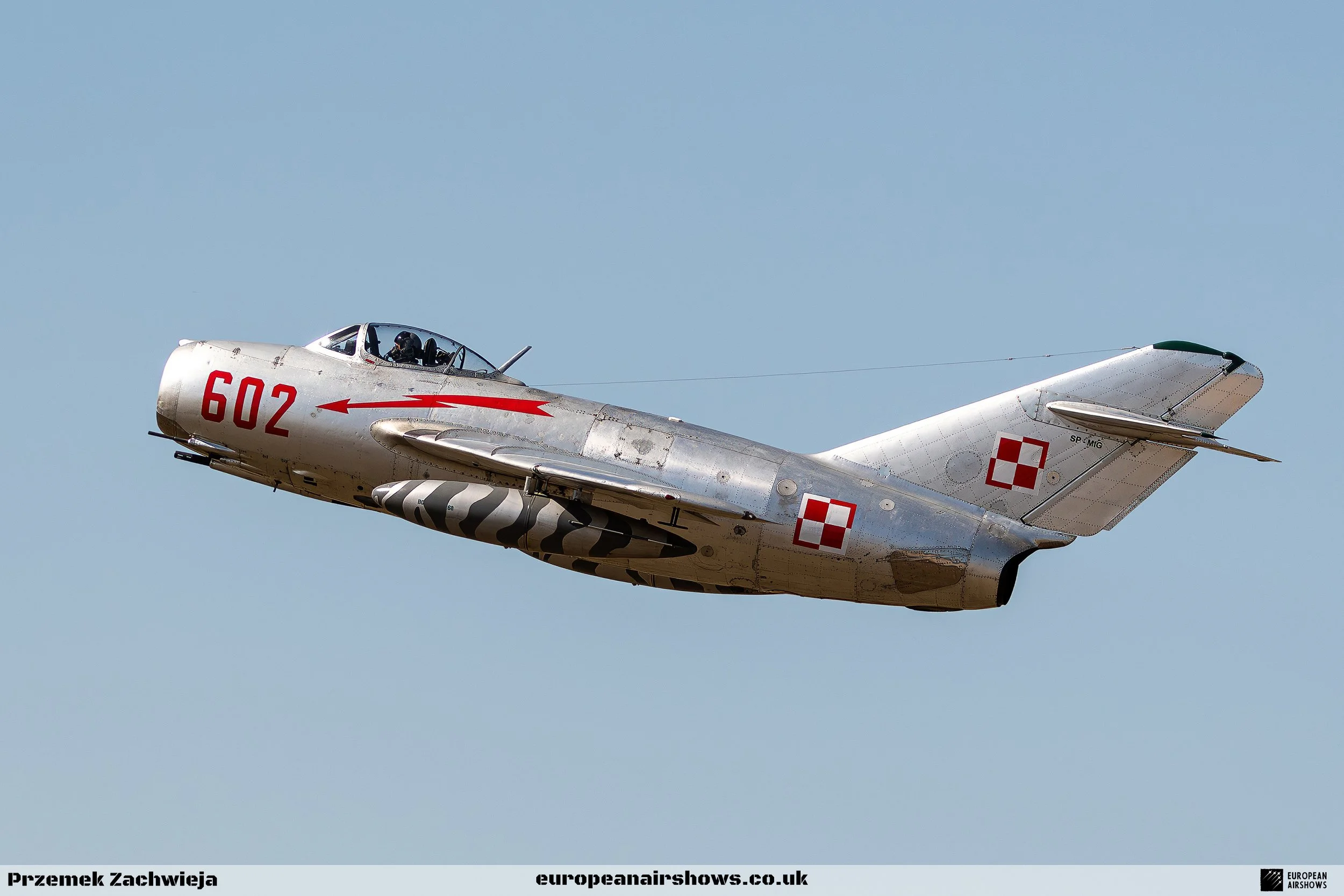
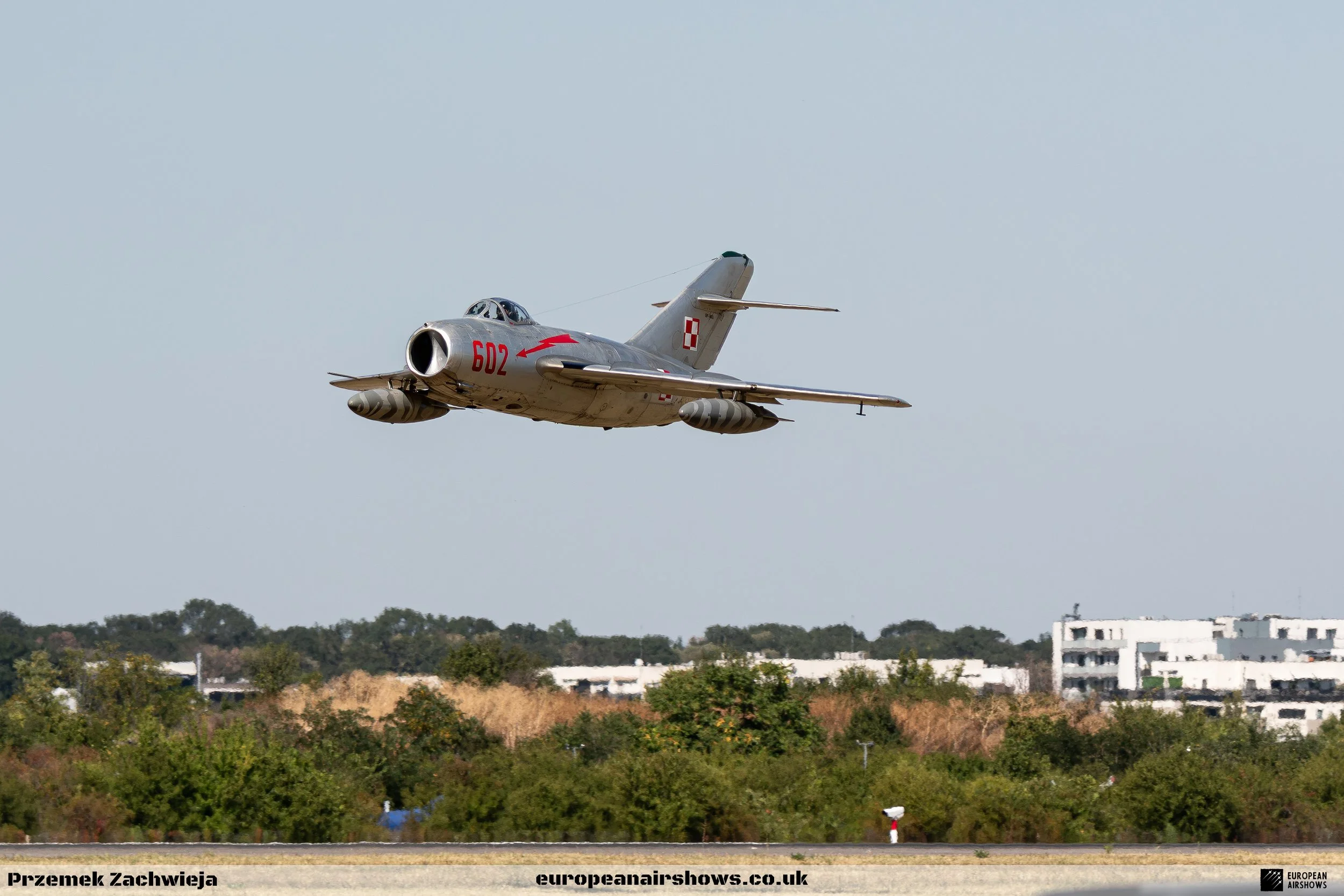
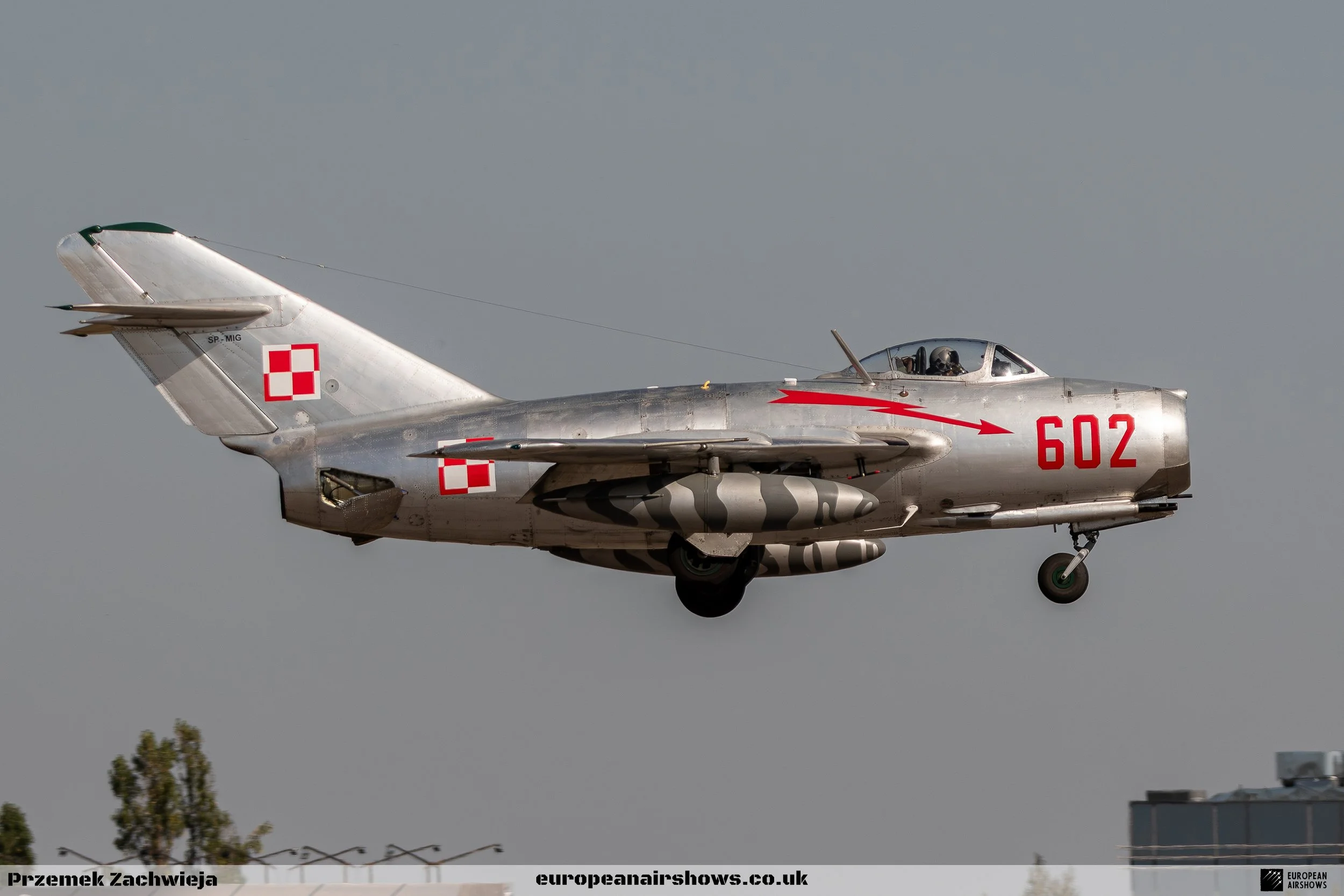
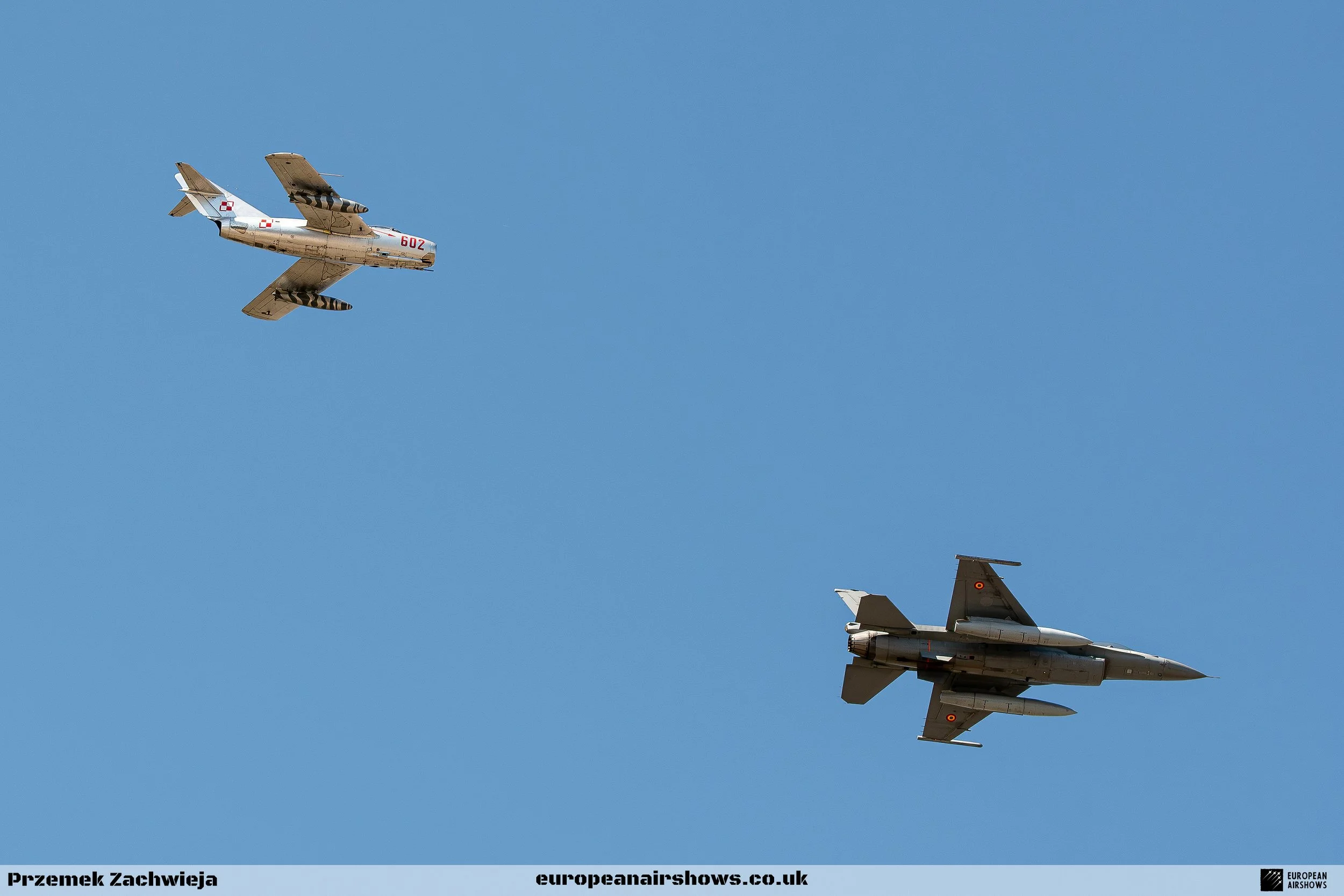
Cold War history came alive through the Mikoyan-Gurevich MiG-15 (Lim-2) of FUBAR Aviation, flown by Bartosz Maciejczyk. The Polish-built Lim-2 is one of only two MiGs currently kept airworthy by the organisation, the other being a two-seat SB Lim-2. Beyond these, the team is actively restoring a Lim-5 (MiG-17) to flight and has even acquired several ex-Argentinian Aermacchi MB-339s, underscoring their ambition to keep rare Eastern Bloc and Cold War jets in front of European audiences. At Băneasa, the Lim-2 was displayed with restraint and style, banking through long and low topside passes that showed off its swept wings and nose intake to full advantage, the Lis-1 engine leaving a smoky signature evocative of the 1950s. The highlight came later in the day when the MiG joined up with a Romanian F-16AM Fighting Falcon for a joint flypast before breaking into a playful tail-chase. While never a historical pairing—the MiG-15’s service peak came in Korea in the early 1950s, long before the F-16 first flew in 1974—the juxtaposition worked superbly as theatre. It carried particular resonance in Romania, whose own air force once operated MiG-15s before moving on to the MiG-21 LanceR that the F-16 fleet has now replaced. Seeing the two in the same frame offered a striking reminder of just how far Romanian combat aviation has progressed.
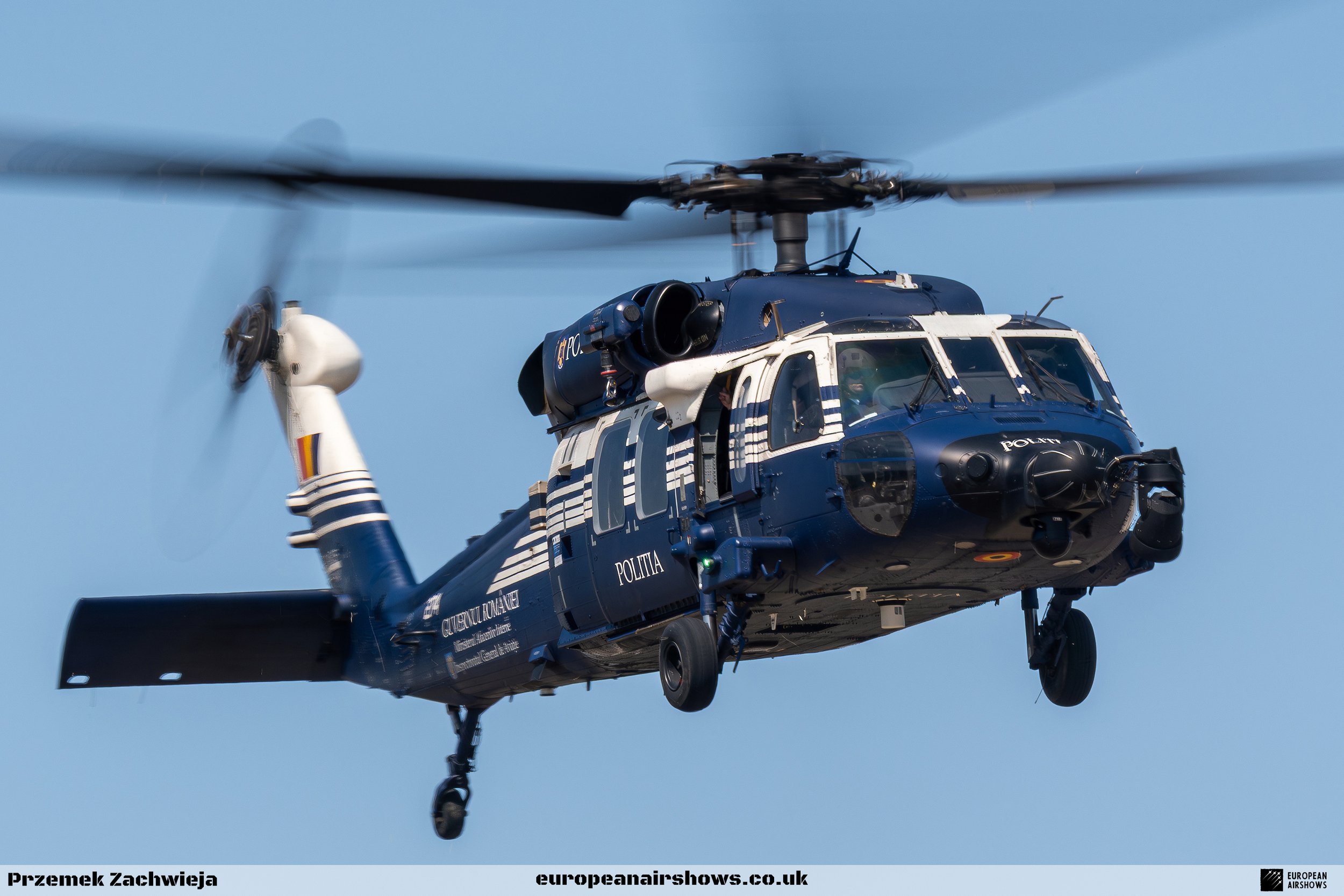
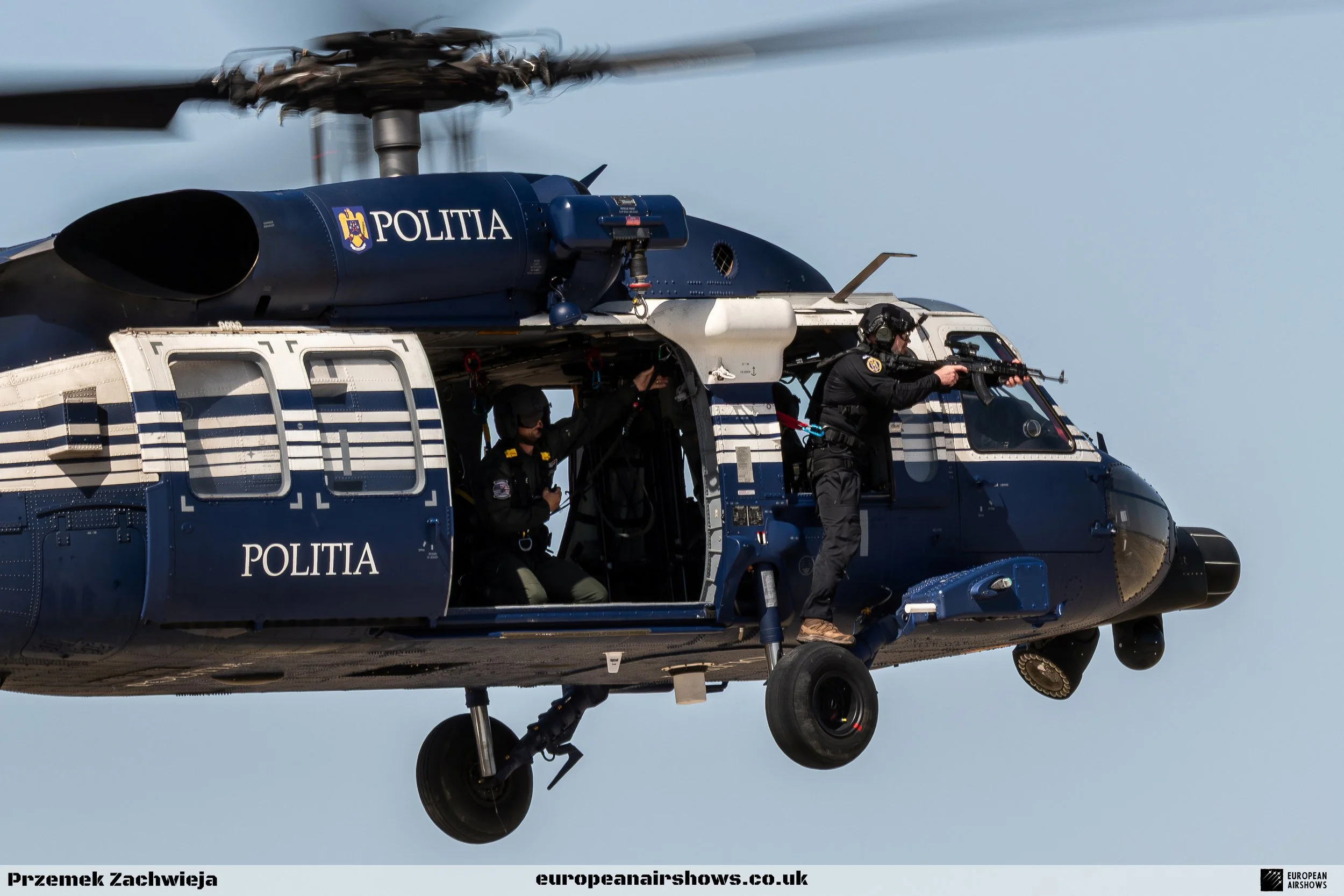
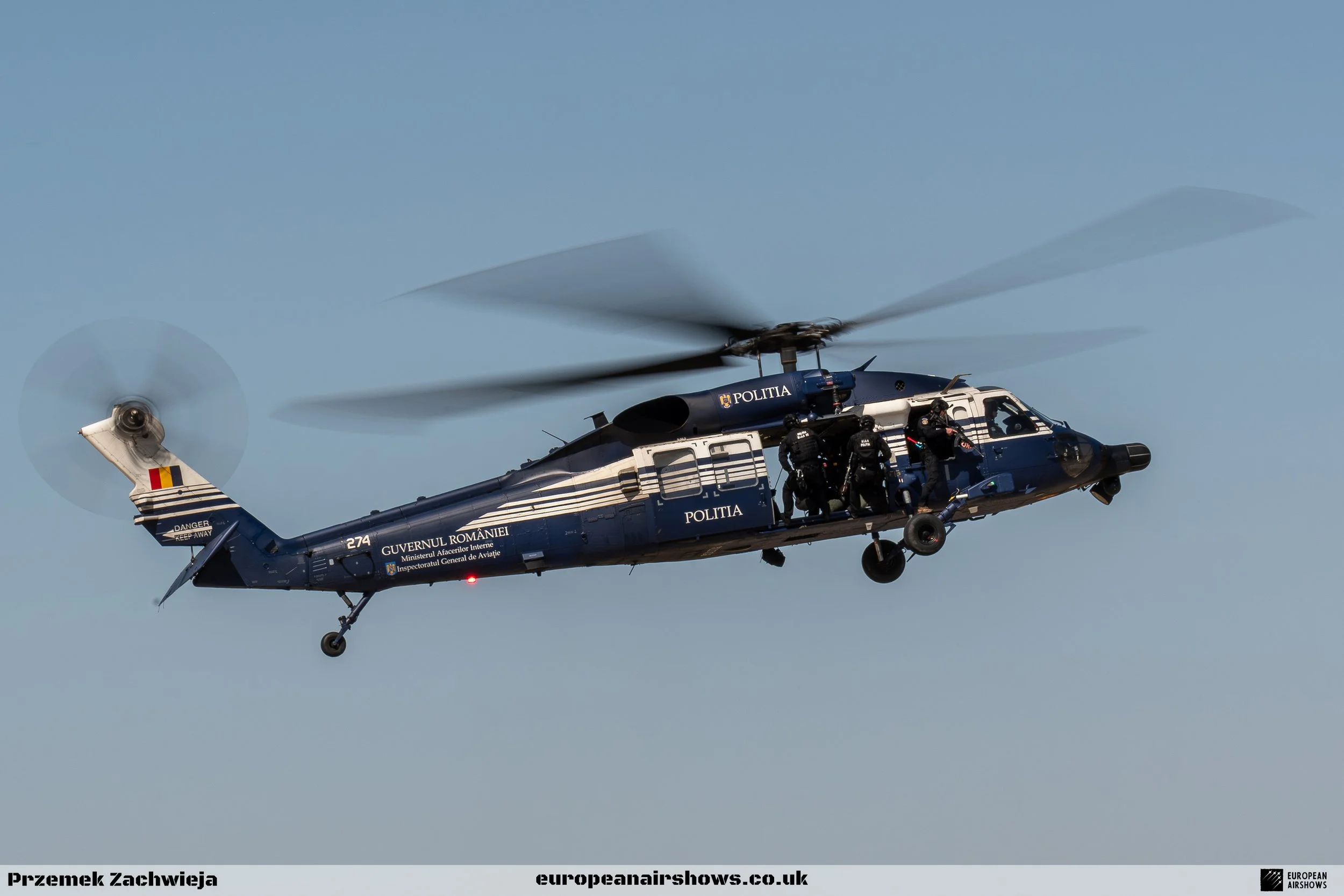
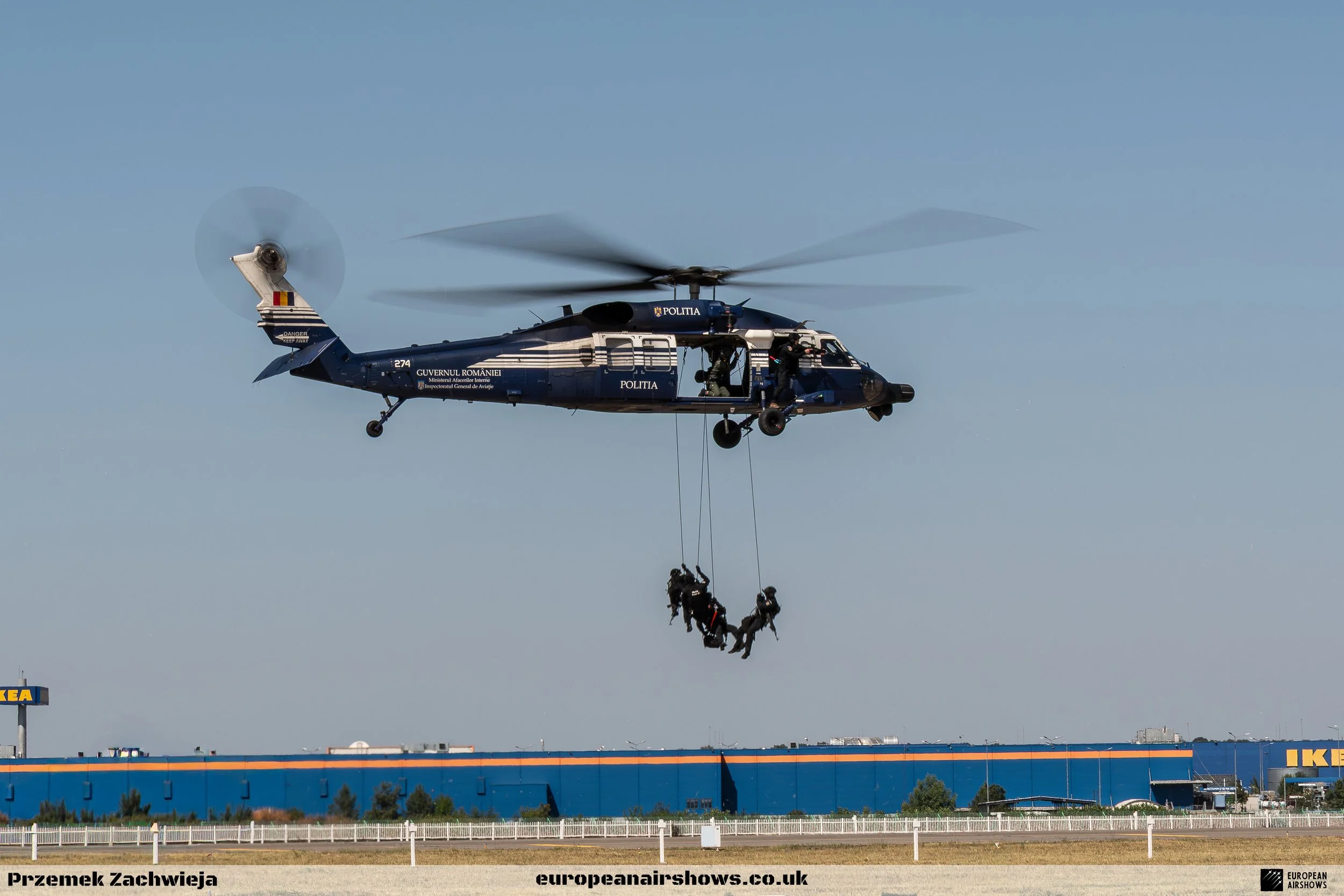
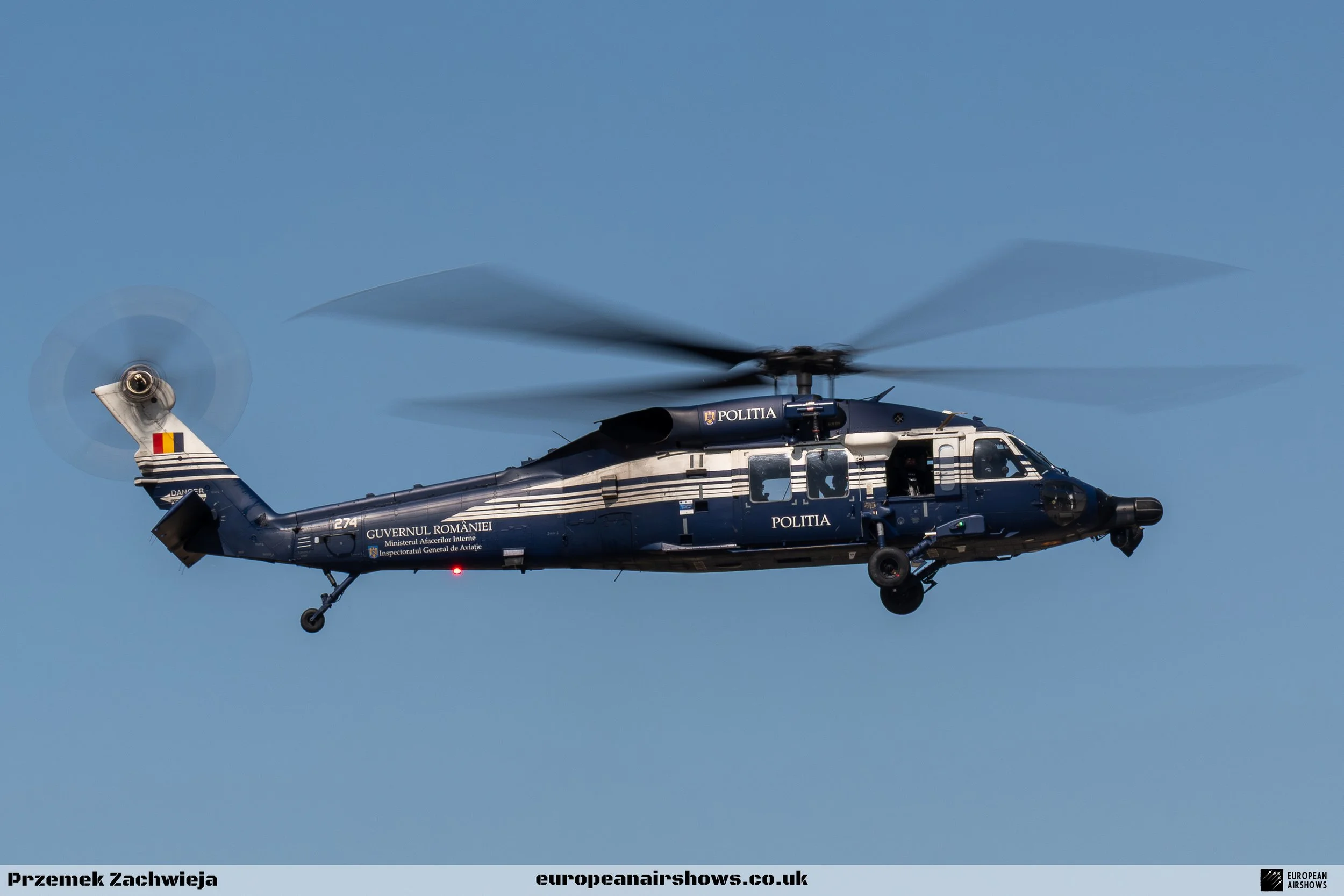
The Romanian Ministry of Internal Affairs contributed its own spectacle with a PZL S-70M Black Hawk of the Inspectoratul General de Aviație (IGAv), supported by the SIAS counter-terrorism unit. Saturday’s routine began with a handling display—pedal turns, quick-stops, and nose-low banks—before the helicopter departed the scene, only to return seconds later carrying a full detachment of special forces. They were inserted into the showground under the cover of rotor downwash and swiftly neutralising a staged threat before being extracted back into the Black Hawk. For Romania, the type represents a significant capability leap, offering a NATO-standard platform for internal security and joint-policing missions. For the audience, it was an impressive demonstration of coordination between aircrew and ground forces, blending real-world utility with airshow theatre.
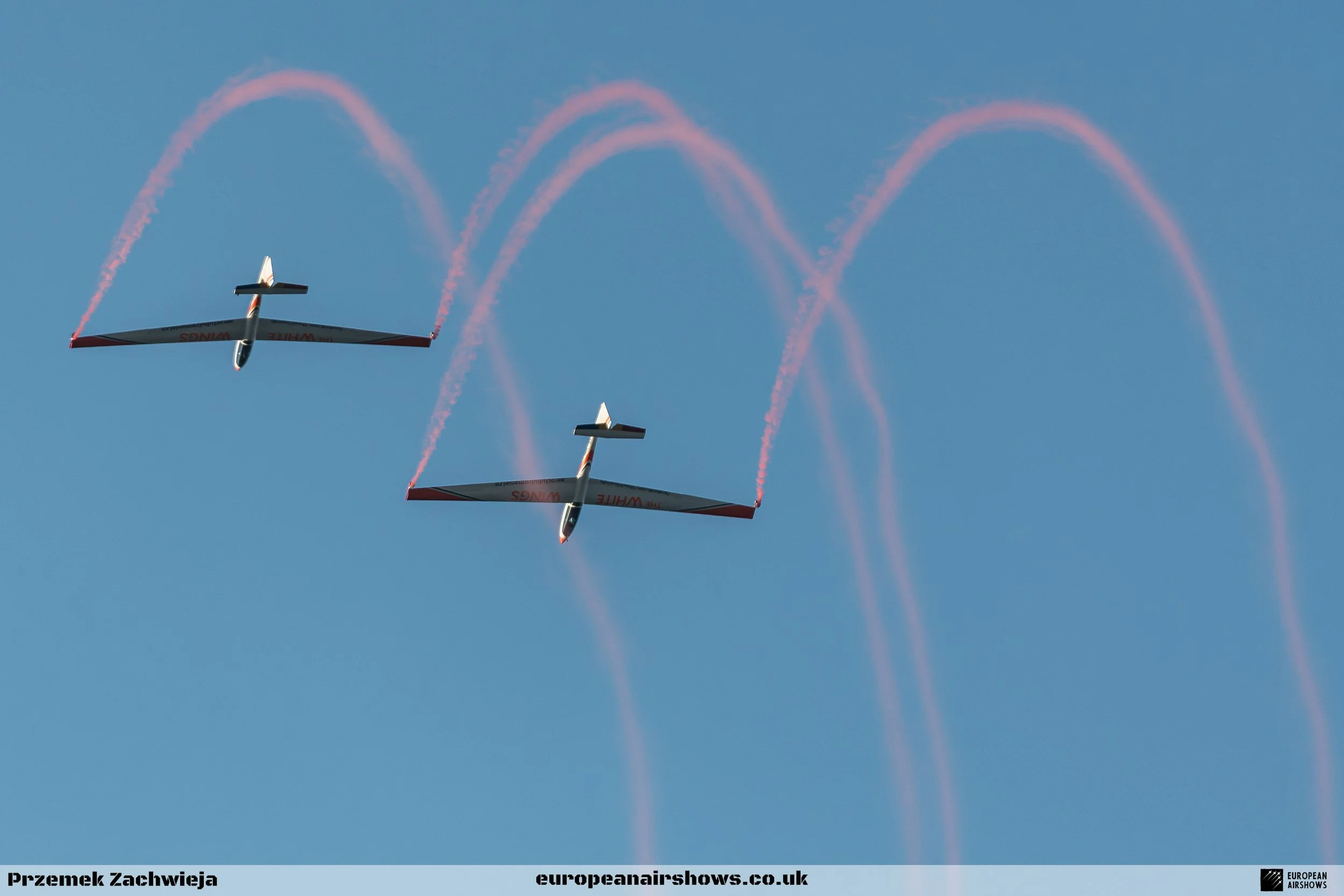
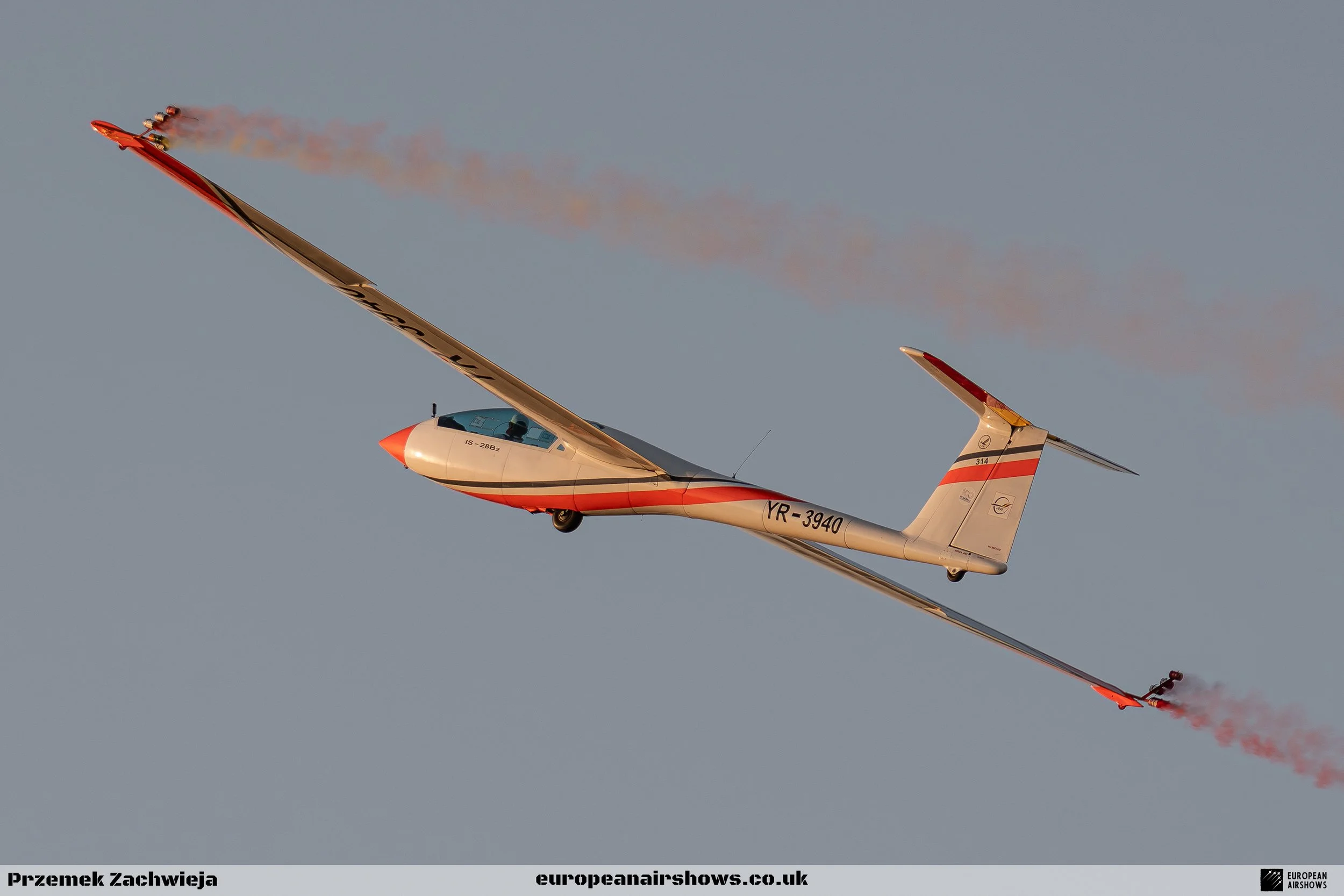
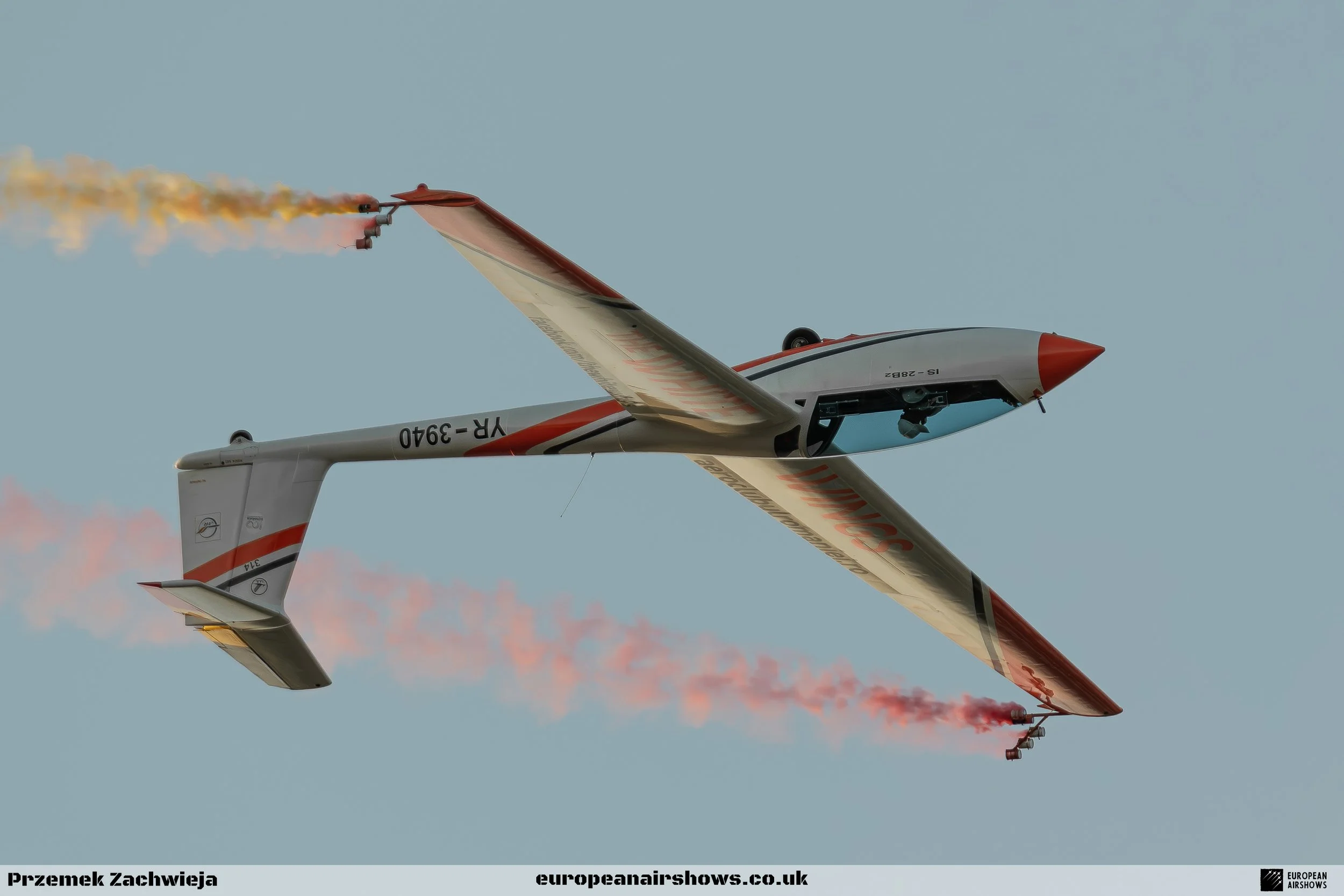
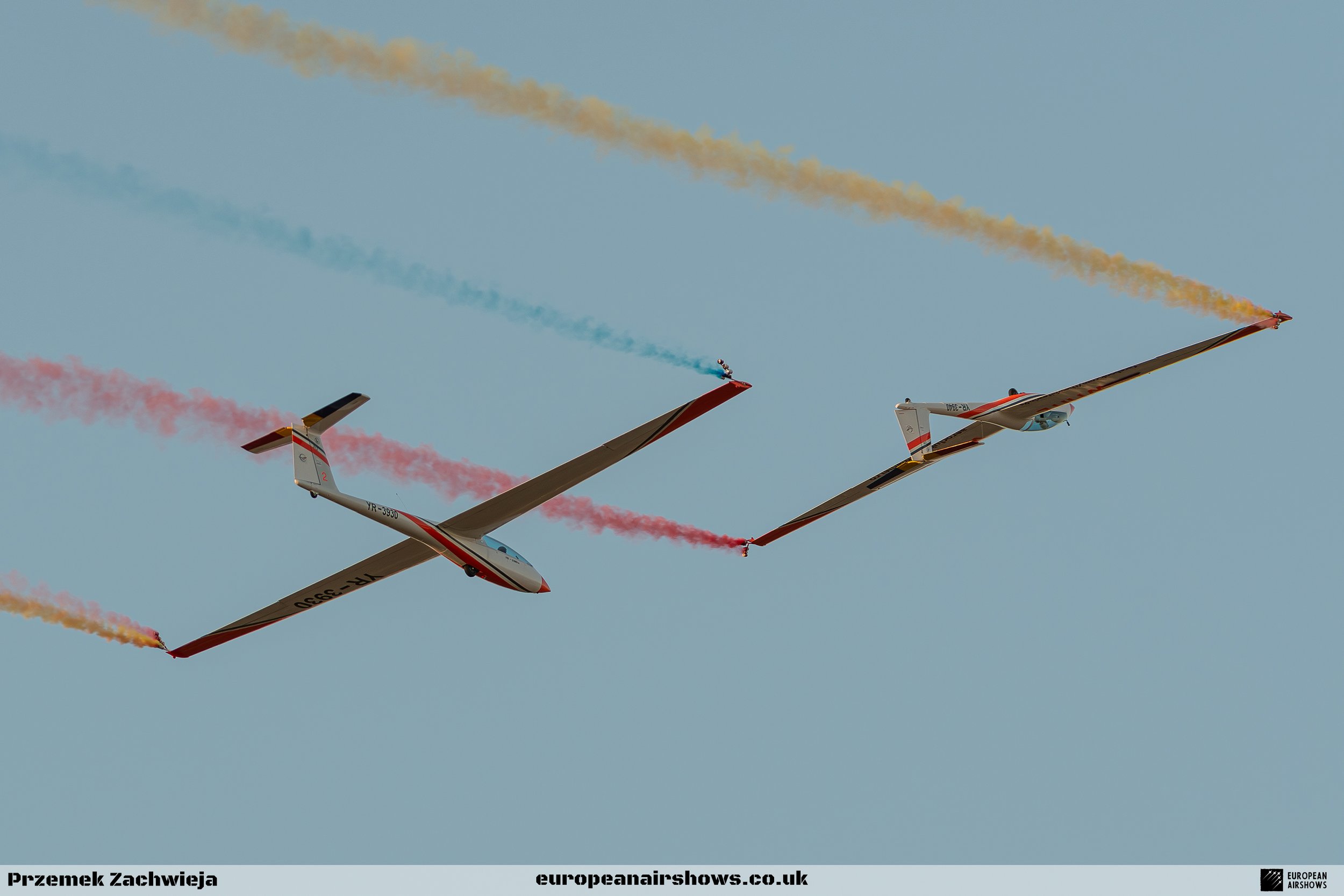
As the heat bled from the day, the evening programme opened in quietly elegant fashion with White Wings. The twin ICA IS-28B2 sailplanes worked the last lift of the sunset in close company, carving long, unhurried arcs and gentle crossovers that seemed to hang in the warm air. Smoke traced their figures with fine calligraphy, a serene counterpoint to the day’s noise and a perfectly judged bridge into night.
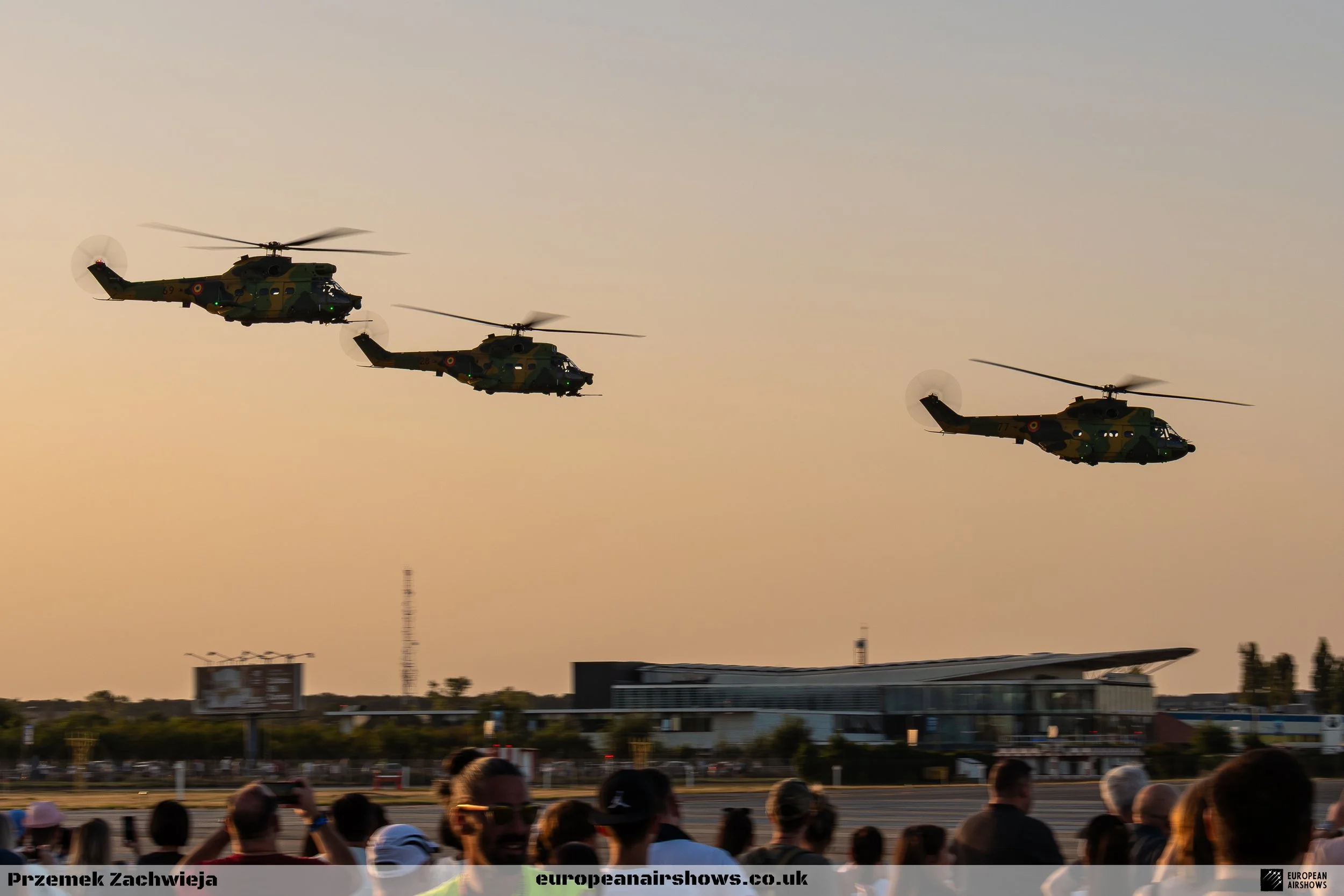
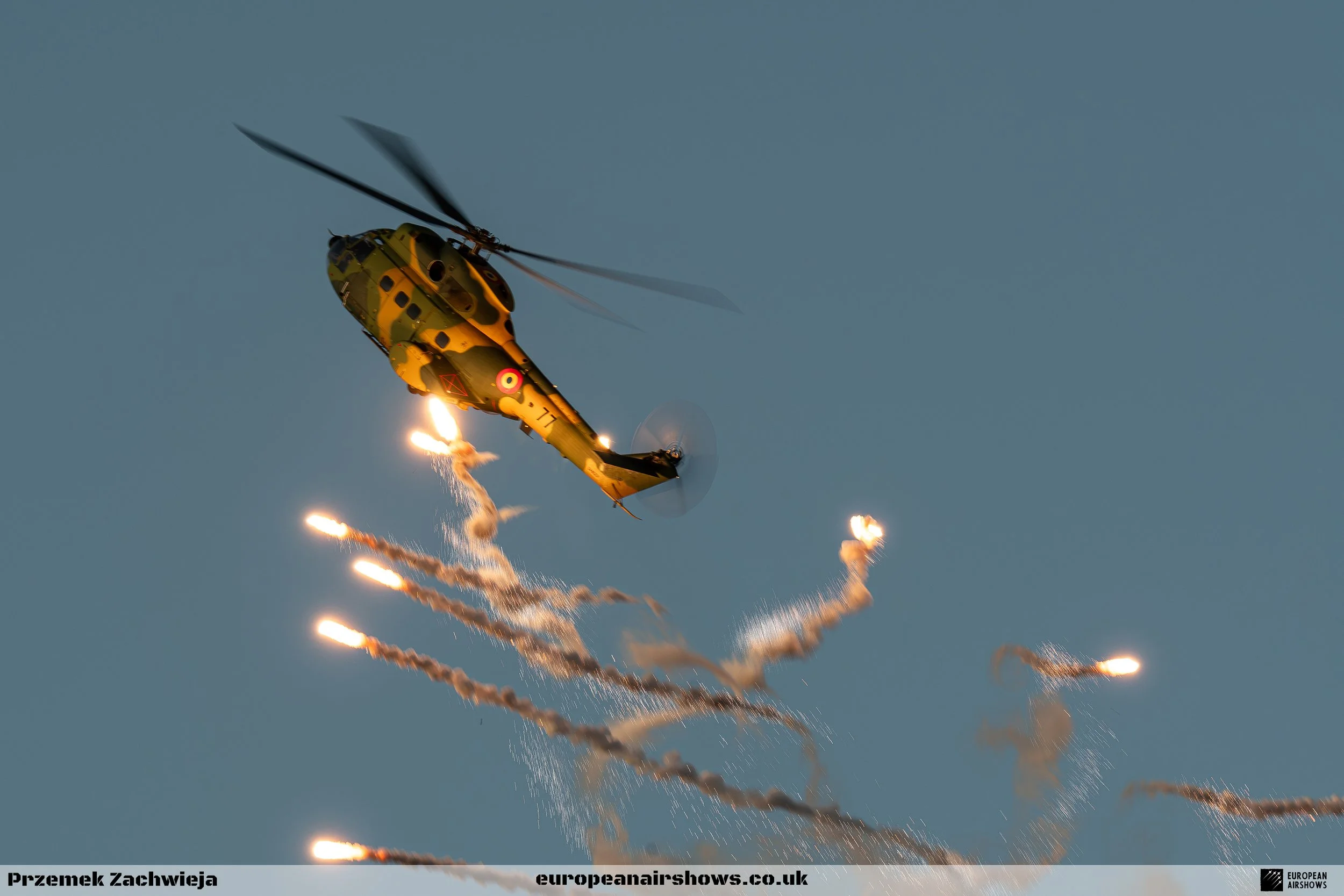
Three IAR-330 Puma helicopters arrived next in tight file, one ship detaching for a solo that turned handling into theatre. Flare blooms lit the dusk as the Puma pivoted through pedal turns and nose-high climbs—the choreography tight, close-in and designed for the night.
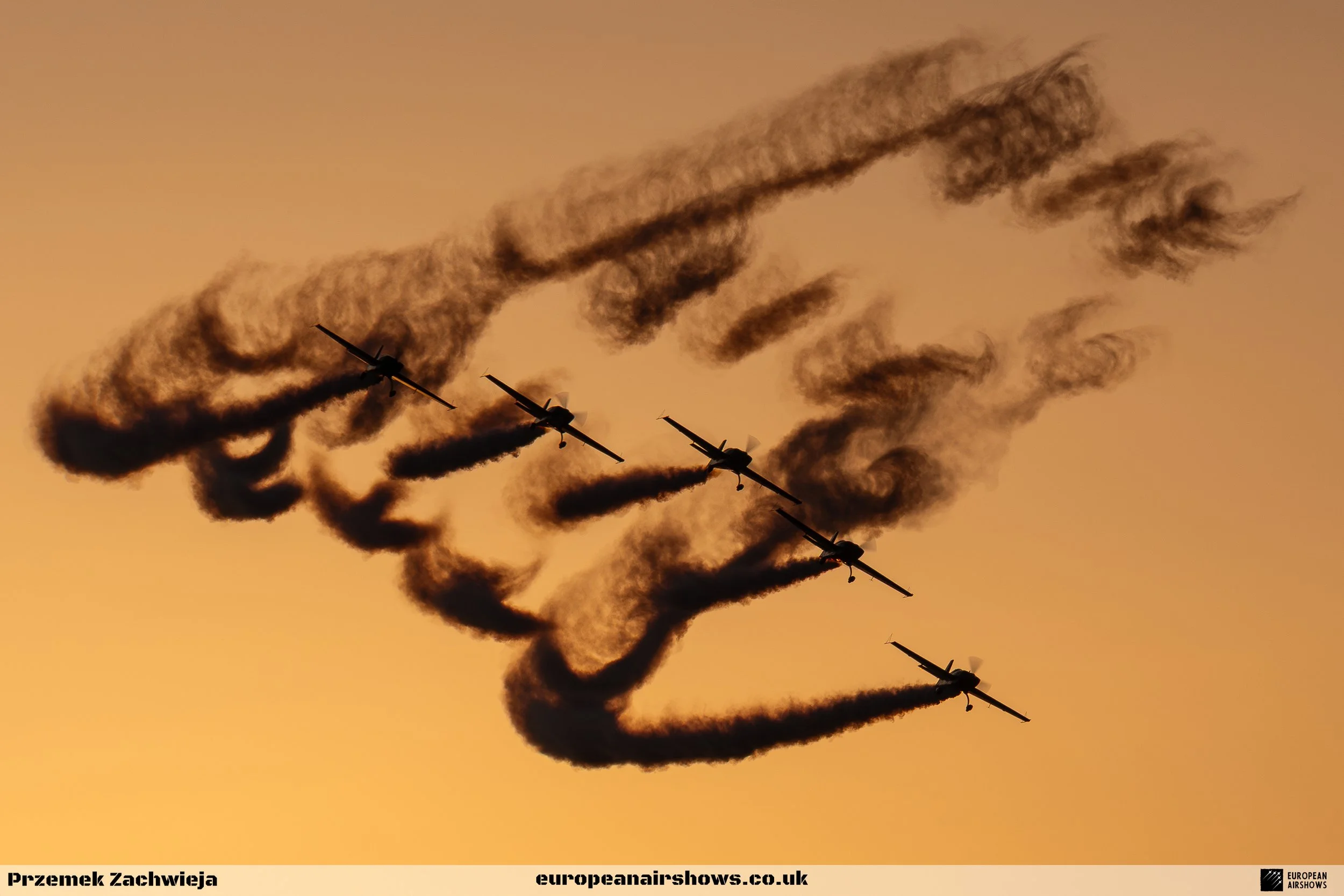
The Hawks of Romania timed their second sortie to the light. Five Extra 330SCs drew familiar loops and rolling figures against an orange sky, underlined by ground pyro in the colours of the Romanian flag. Well-paced and centre-box, it read beautifully in the half-light.
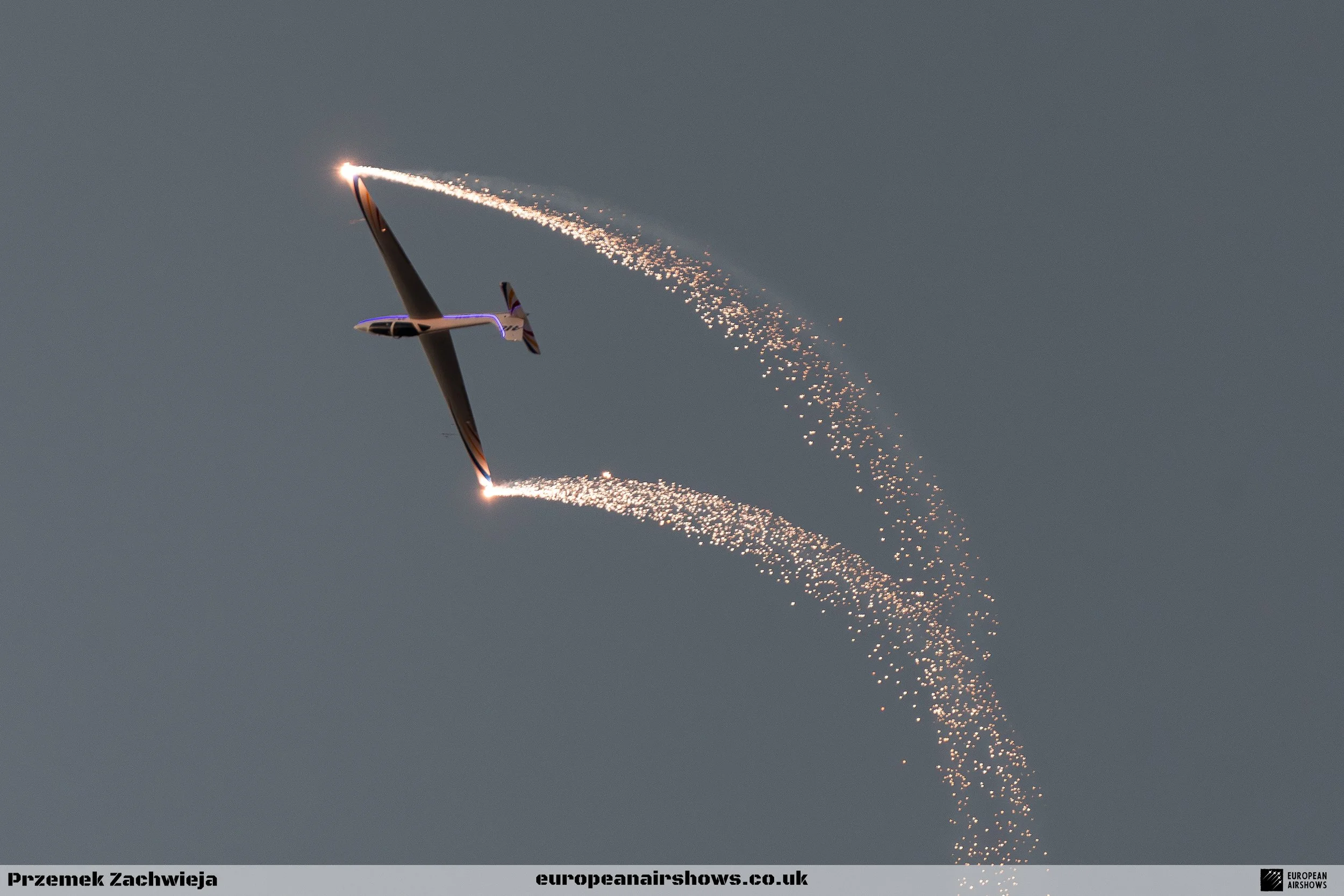
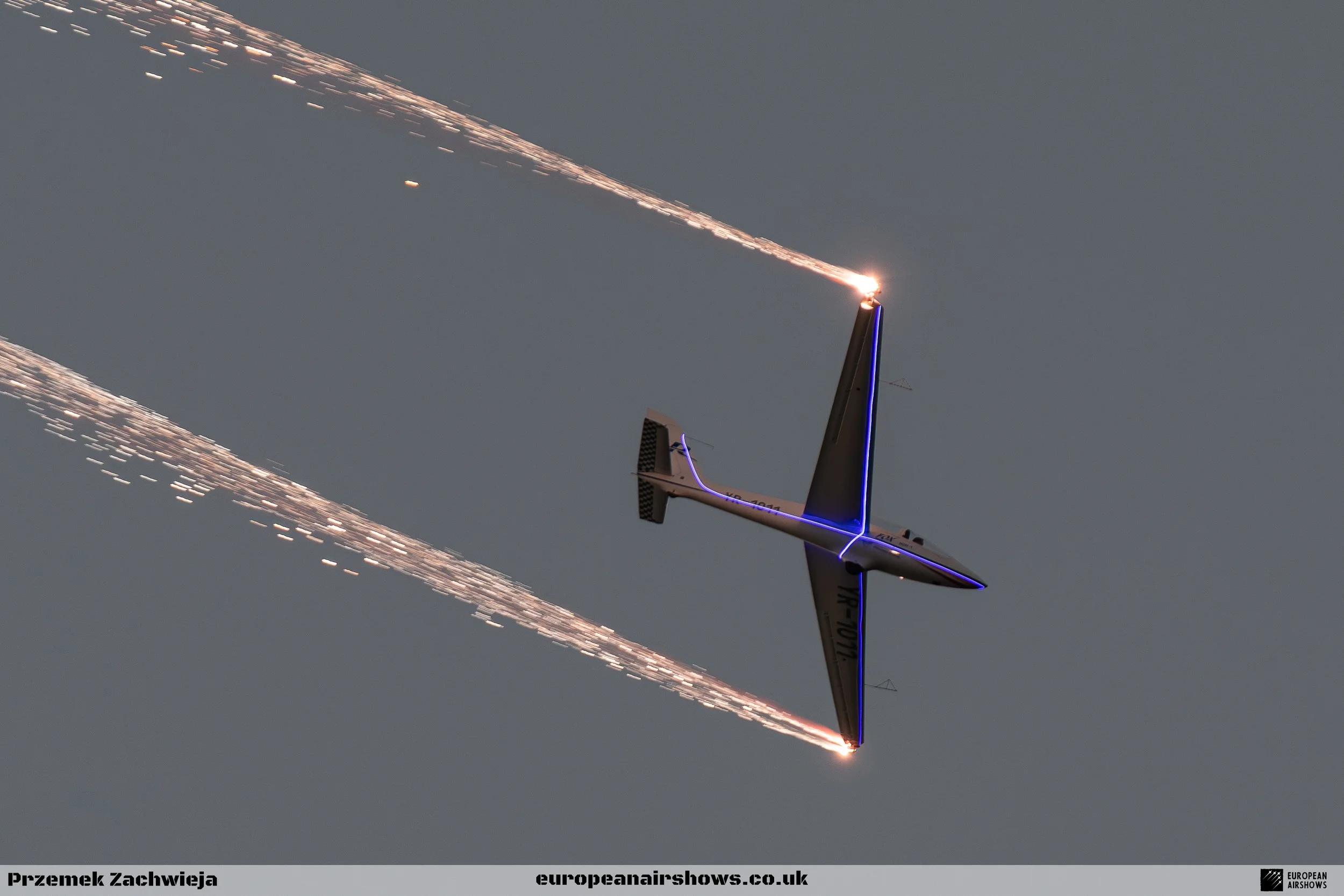
With darkness settling, SoloFox changed the texture of the show. Wingtip pyrotechnics turned each roll and looping figure into bright comet trails, sketching luminous geometry overhead while the glider’s silence amplified the visual drama.
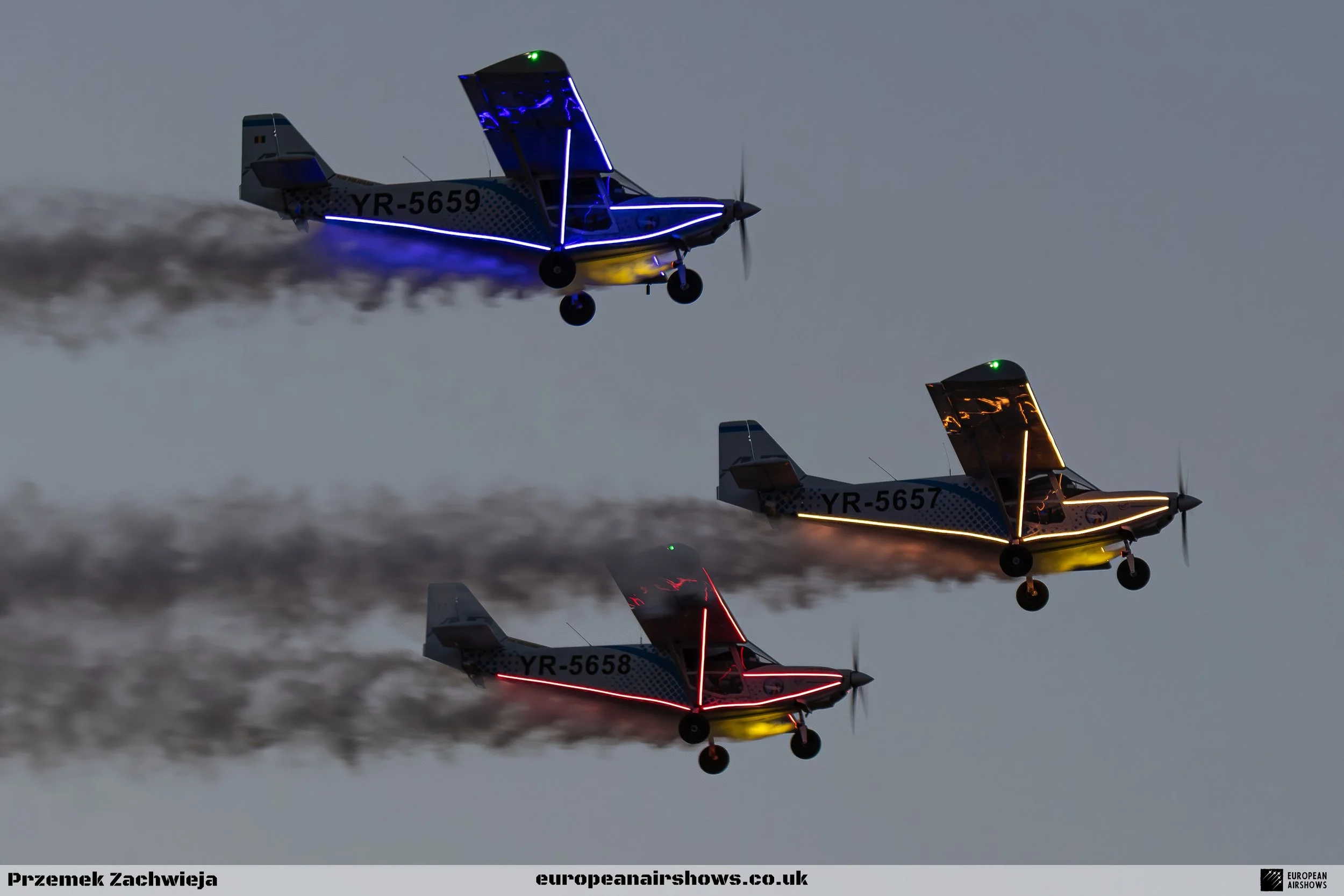
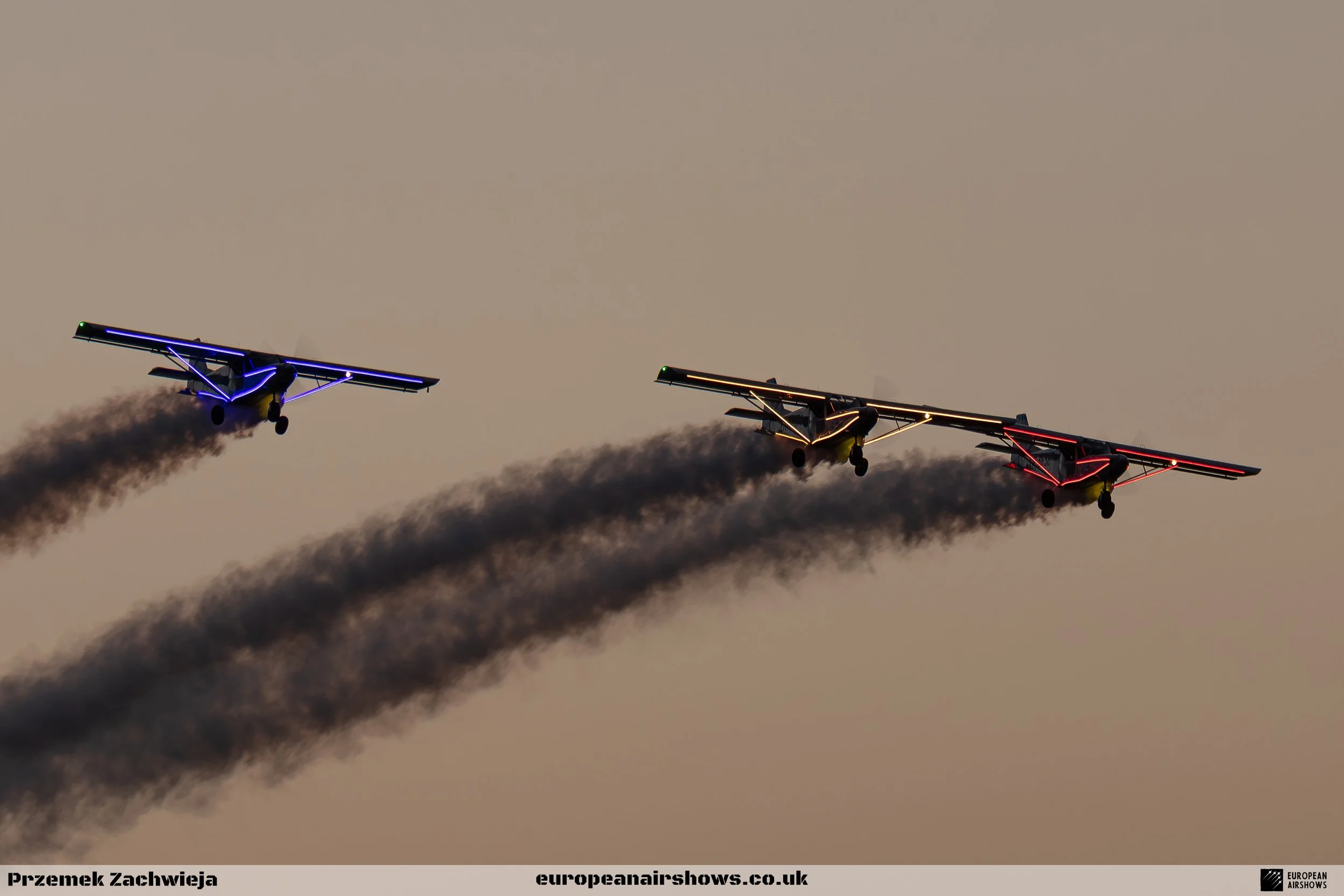
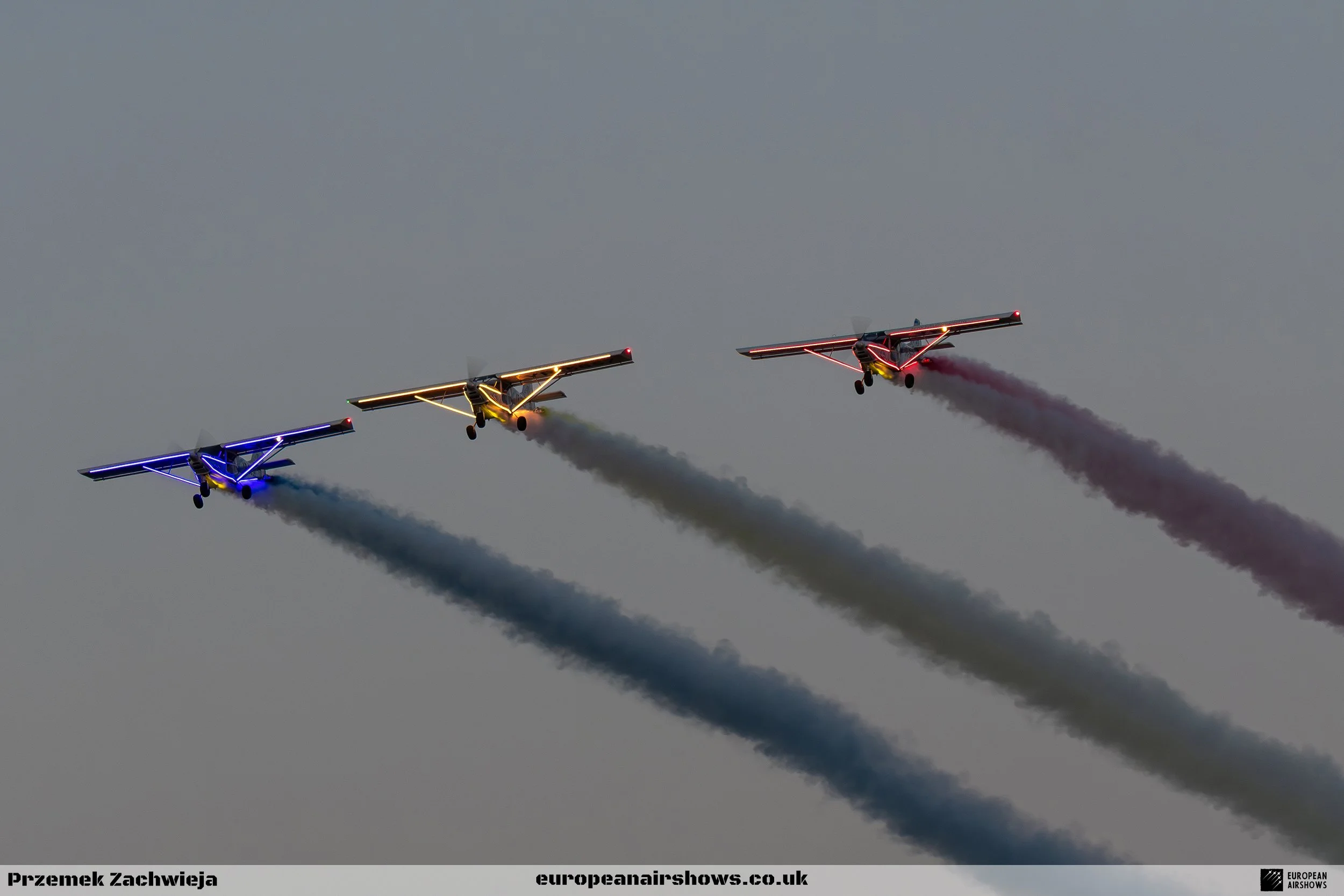
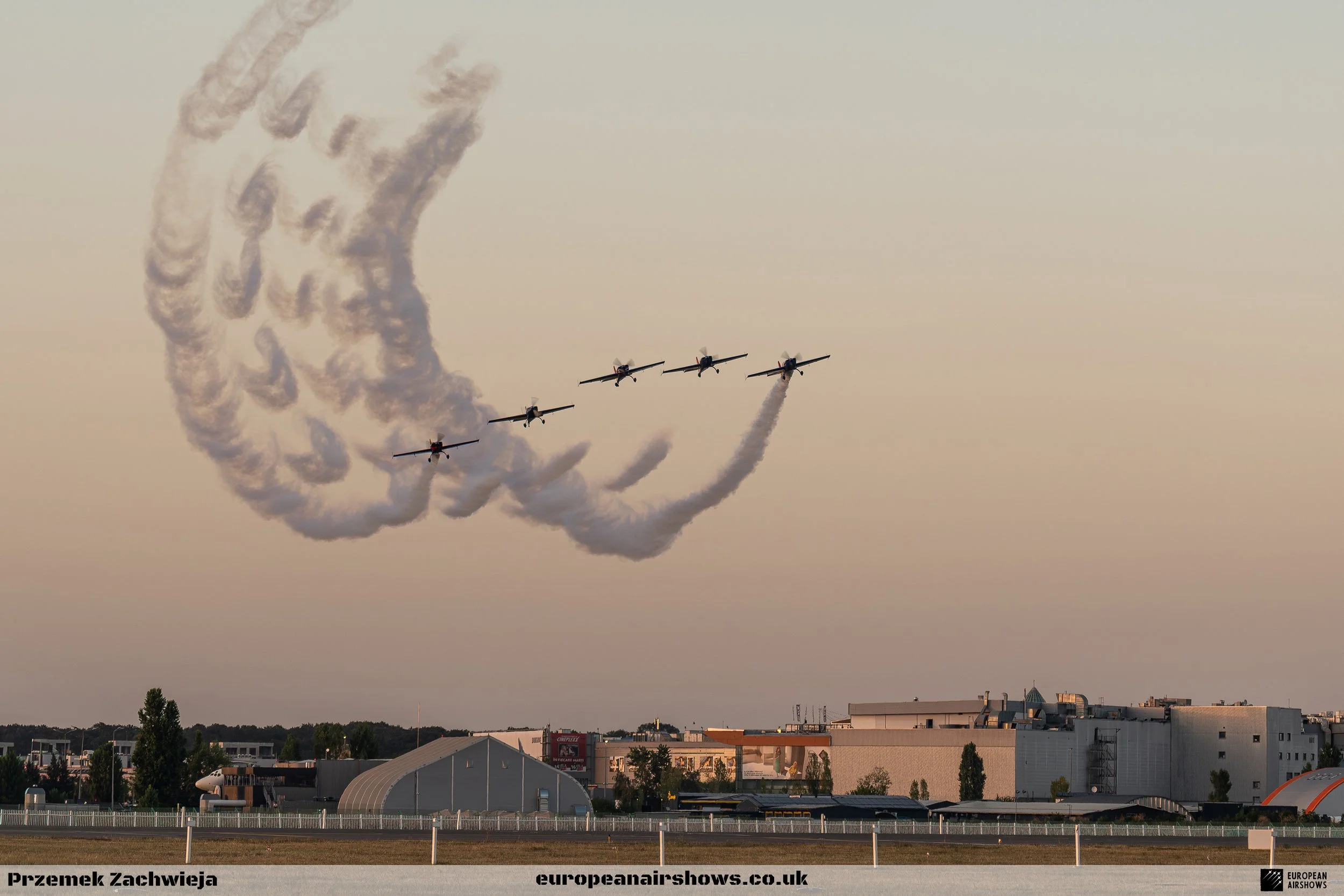
A genuine first for Băneasa followed: the Pelicans Formation Team presented their debut evening/night display. Their trio of ICP Savannahs carried LED lighting in red, yellow and blue to echo the national tricolour and, while there was still enough light, added coloured smoke to the picture. The flying remained true to the type—close, gentle formation work, neatly framed—made special by the illumination.
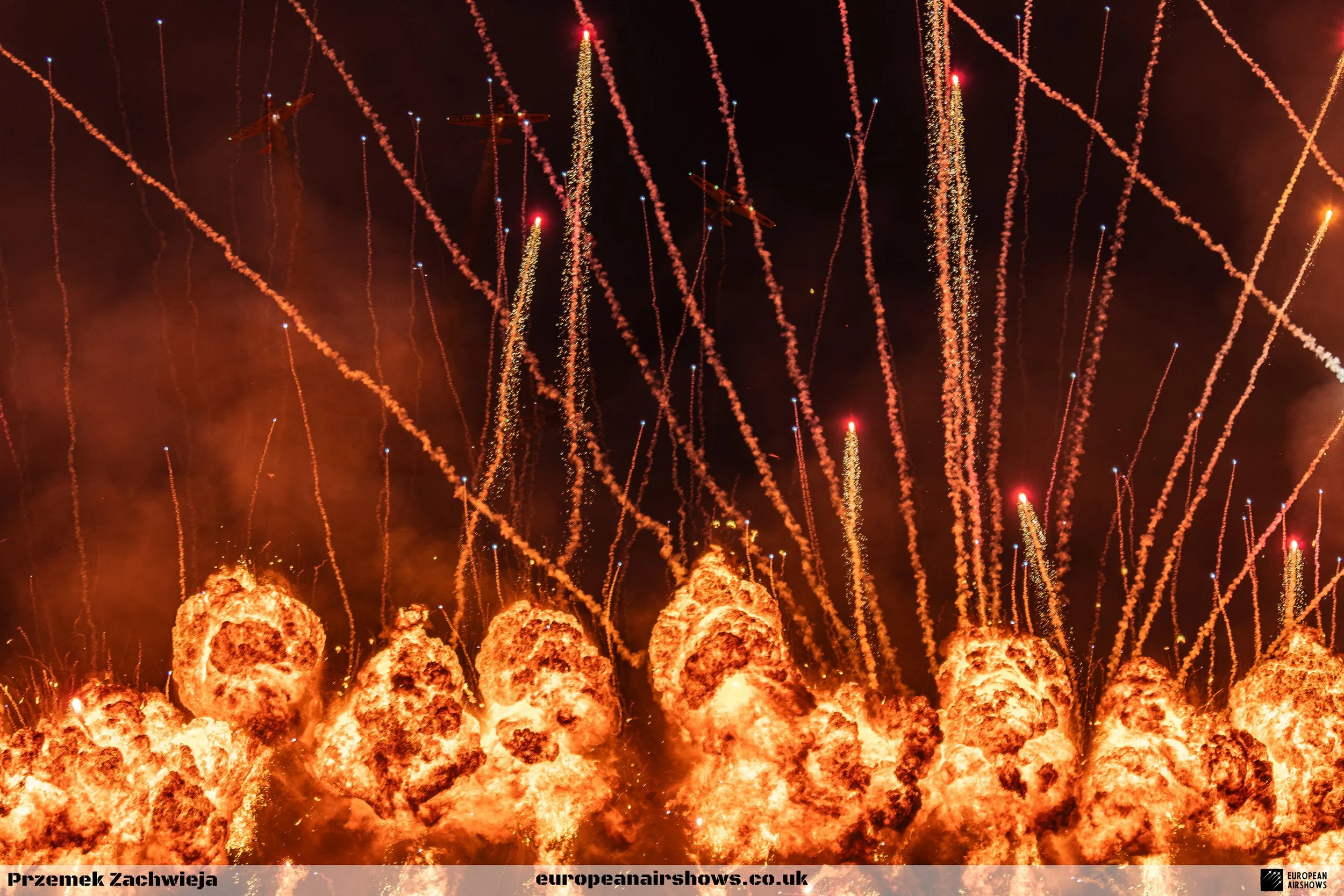
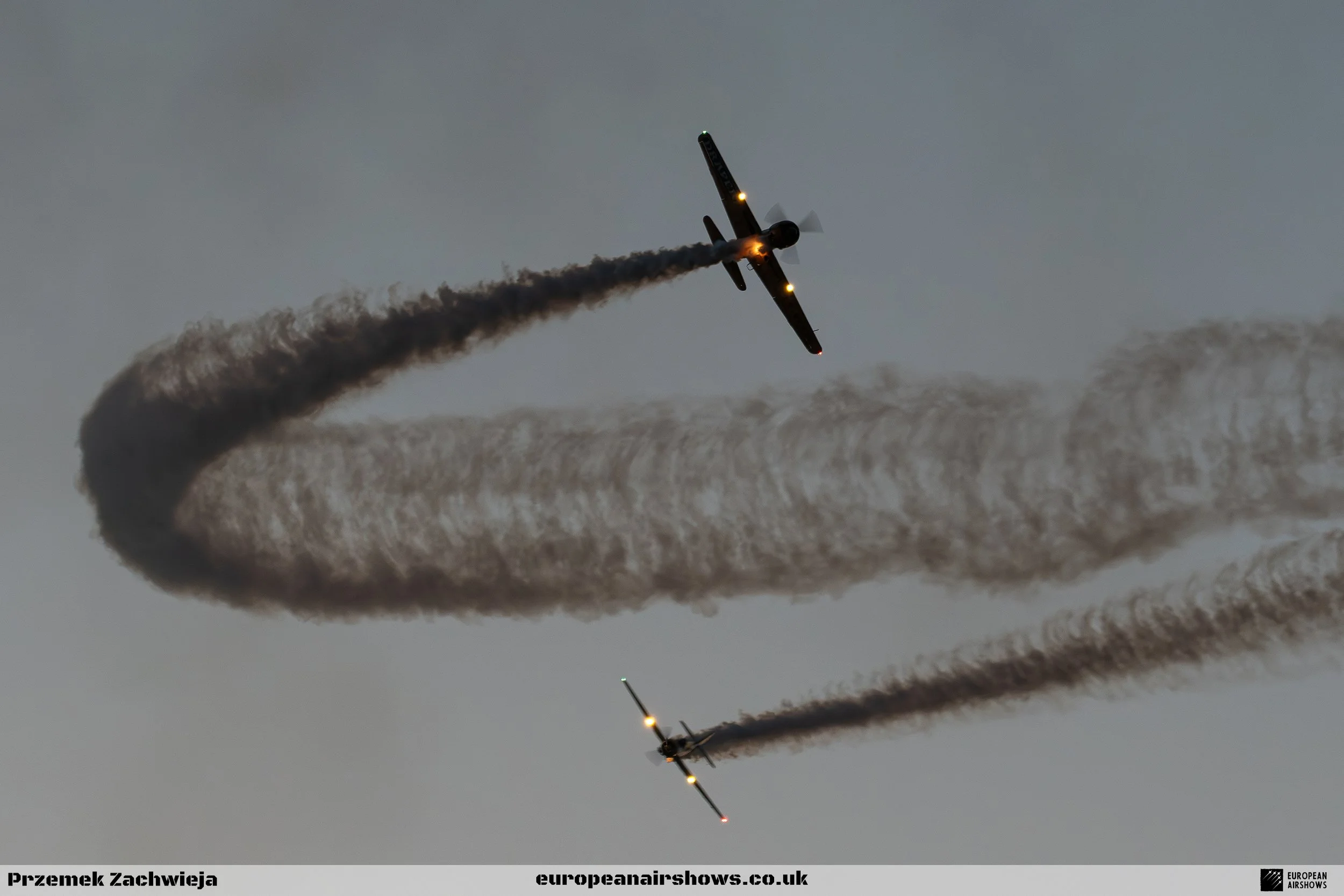
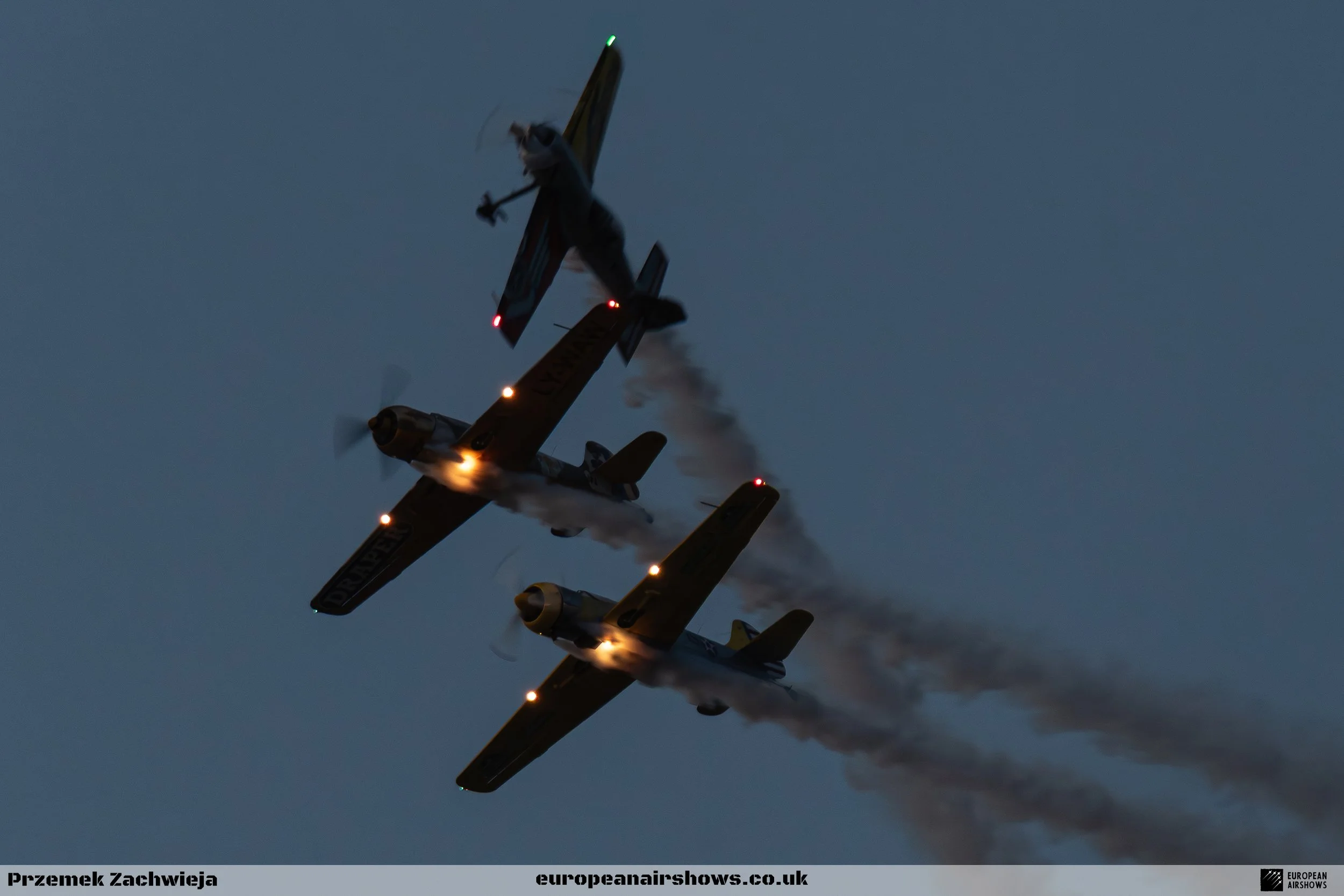
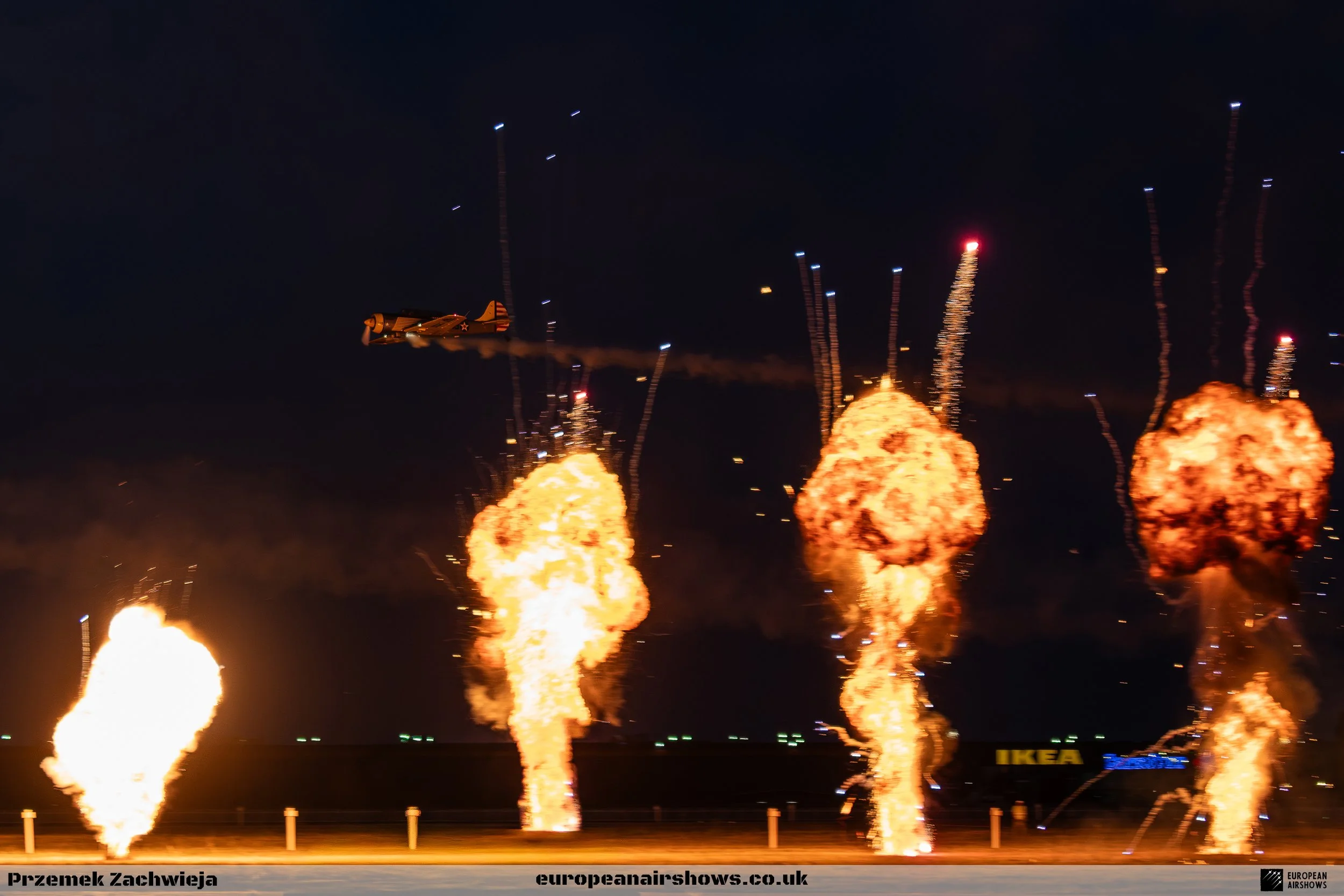
The Air Bandits—Iacării Acrobați with Jurgis Kairys—then slammed the throttle forward on the night segment. Yak-52s and Su-31 tore through the night to Rammstein’s “Du Hast”, backed by sirens, ground explosions, and towering fireballs along the display line. It was unabashed airshow theatre and went down exactly as intended.
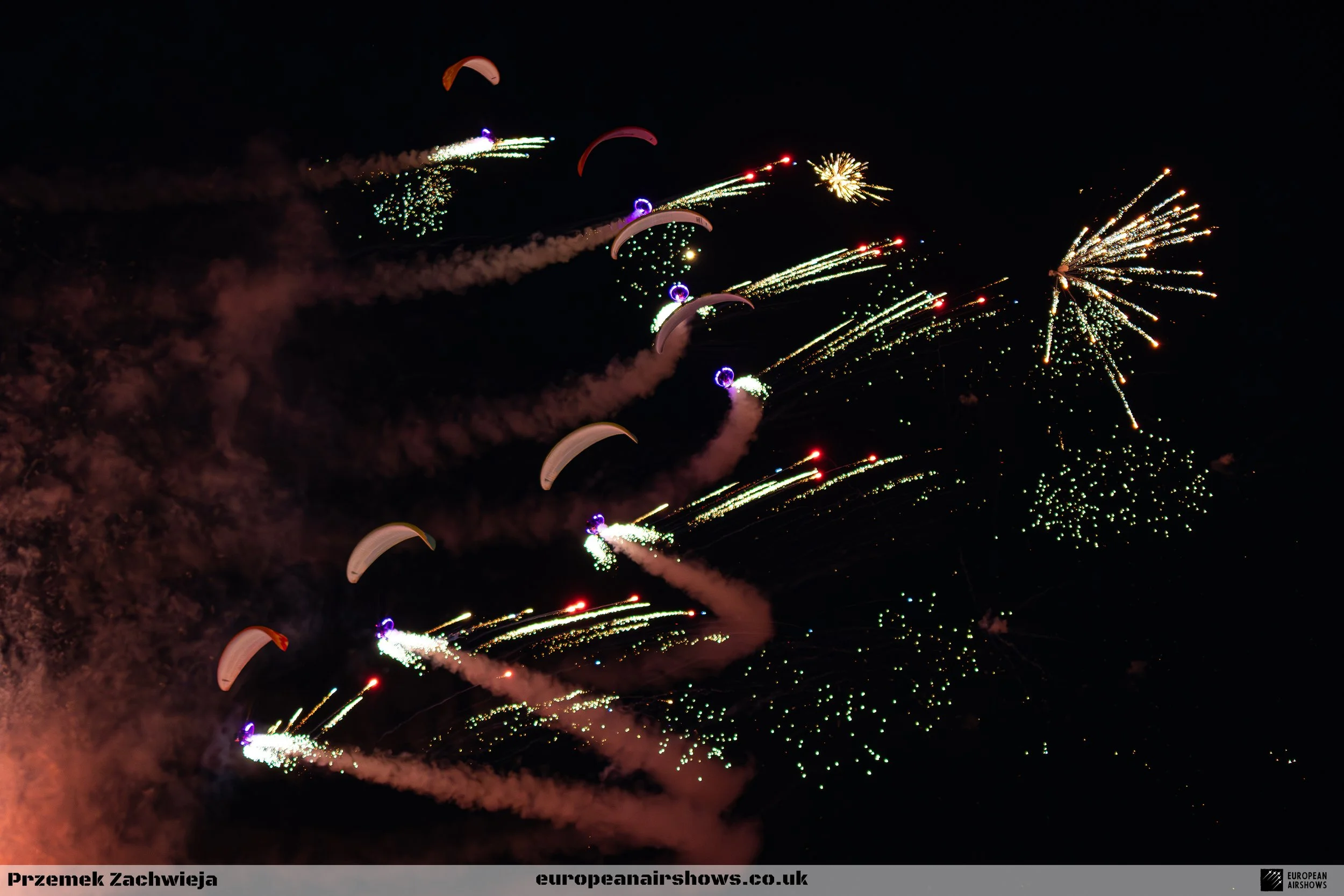
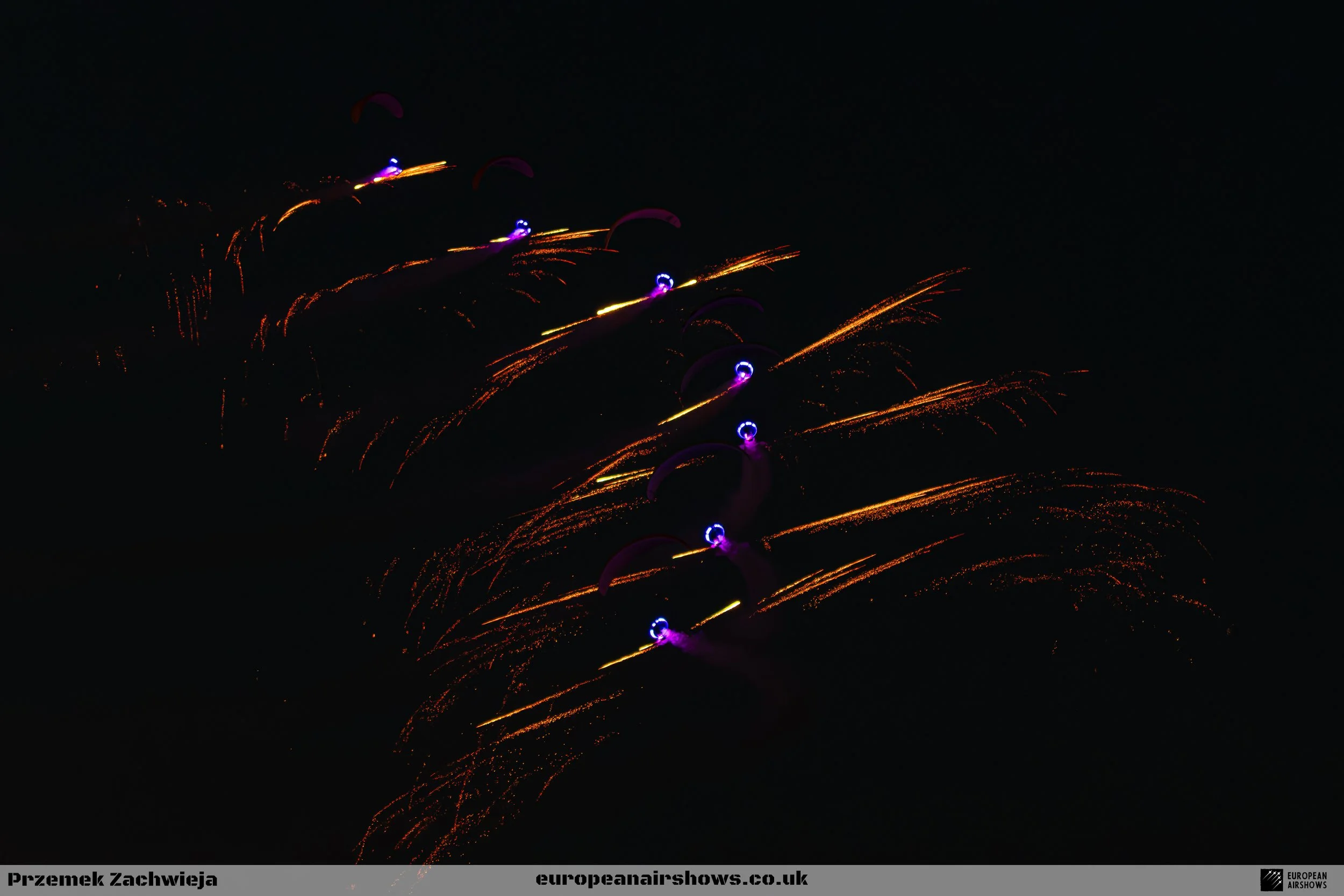
For contrast, the Flying Dragons paramotor team offered a slower, hypnotic coda: seven machines weaving synchronised patterns of music, light, their pyro trails crossing and uncrossing in meticulously timed figures that drew sustained applause.
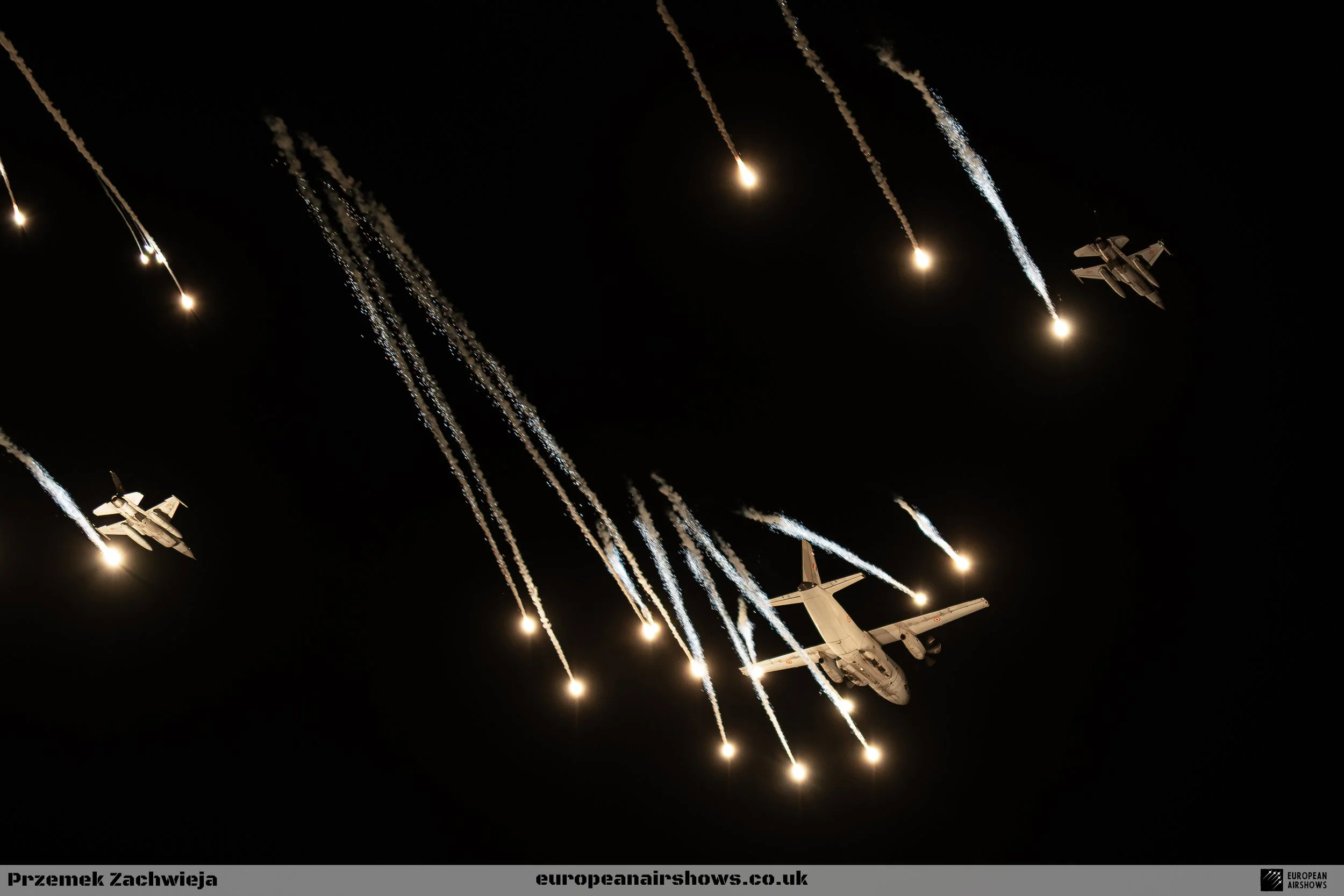
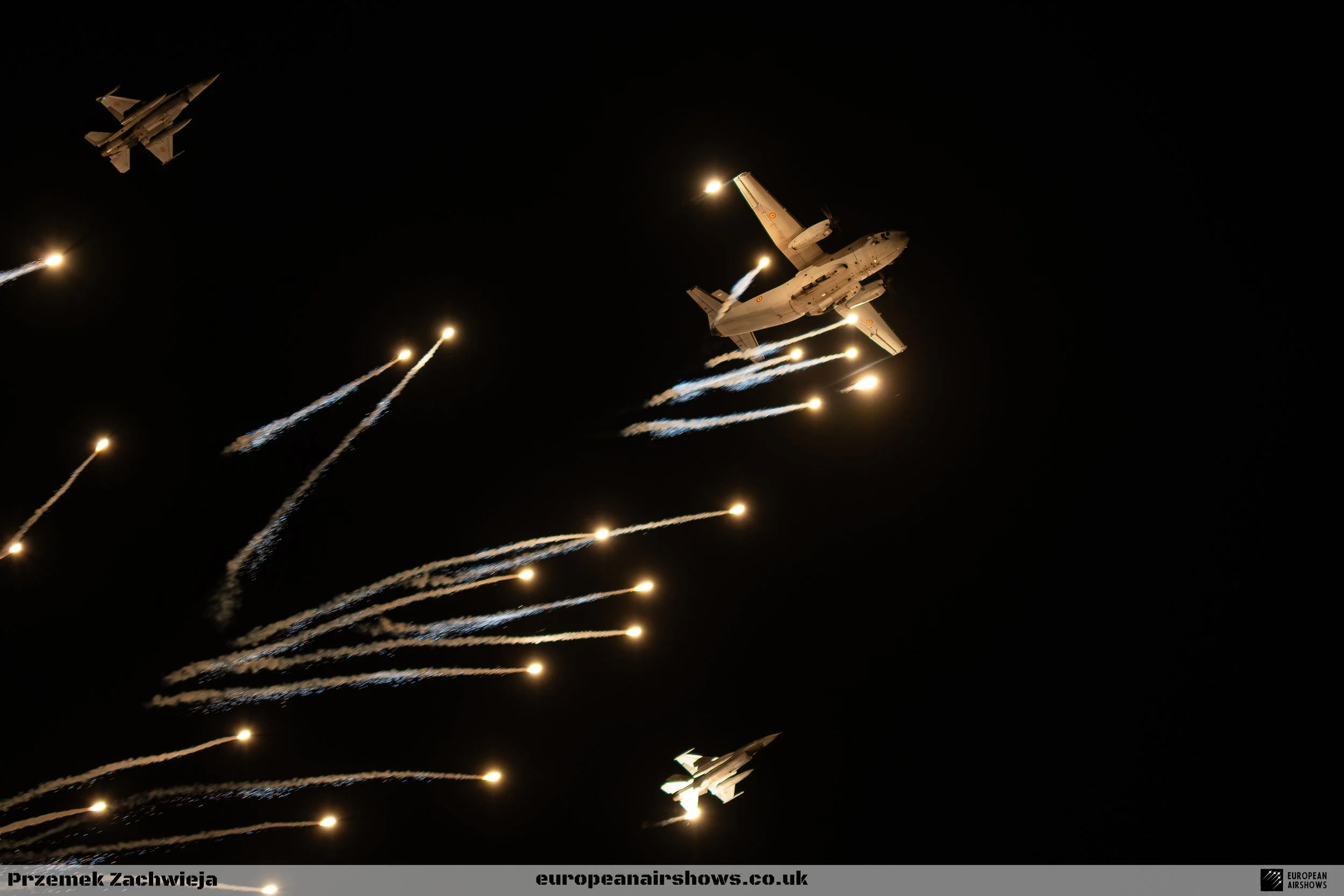
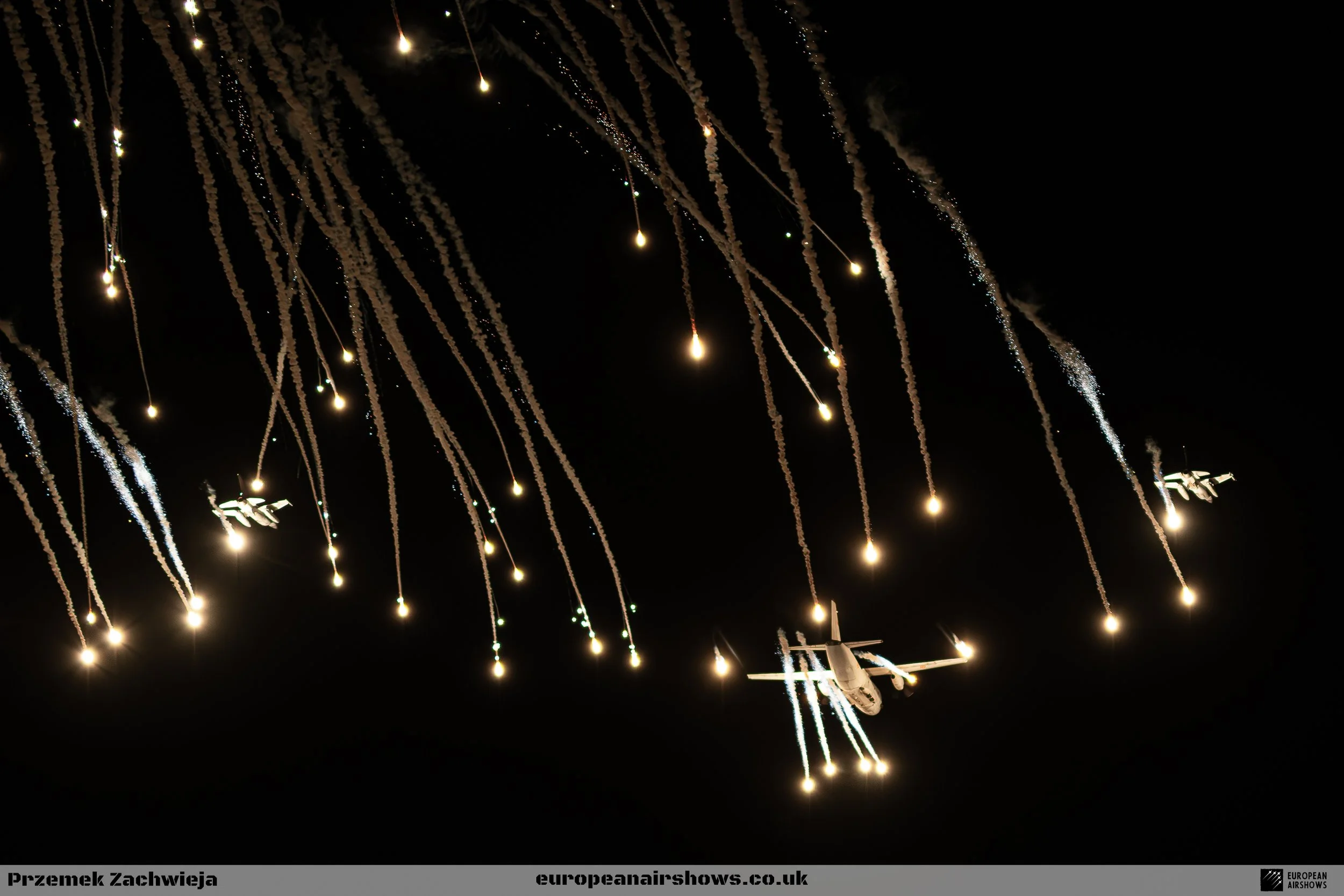
The final flying participant was the Romanian Air Force C-27J Spartan and two F-16 Fighting Falcons that performed a single flypast with plenty of flares lighting up the Bucharest sky.
Fireworks then took the baton, a full aerial display over the airfield segueing into the Saturday-night concert. It’s here that BIAS blurs into city festival: aviation at its core, but framed by atmosphere, scale and showmanship few European events can match.
For all the challenges of competing with Radom’s international pull, BIAS 2025 delivered another weekend of scale, colour and spectacle that underlined why it remains such a fixture on the European circuit. The Forțele Aeriene Române carried the programme on their shoulders, contributing with breadth and depth across both the flying and static displays. The Aeroclub’s civilian teams brought warmth and variety, while the foreign contributions—particularly the Patrouille de France, Baltic Bees, and the Luftwaffe Eurofighter Typhoon—ensured an international flavour even in a thinner year.
What sets Bucharest apart is not just the flying content, but the way the show merges into a wider festival. The general aviation exhibition, the bustling merchandise stalls, the Saturday night concert and fireworks—these combine with the aerial theatre to create something larger than an airshow alone. That sense of inclusivity was reflected in the sheer scale of the audience: hundreds of thousands of people filling the airport perimeter, many perhaps experiencing their first close encounter with military and civil aviation side by side.
Sunday’s weather-shortened programme reminded everyone of the unpredictability of outdoor events, but the high points of Saturday—mass flypasts, dynamic solos and team routines, the illuminated night show—ensured the 2025 edition will be remembered as another milestone for the organisers. With Romania’s air force deep in transition to the F-16 and looking ahead to the F-35 era, and with its civilian and aerobatic communities flourishing alongside, Bucharest is well placed to continue its role as Eastern Europe’s premier aviation showcase.
More airshow reviews
Read more reports, photography and first-hand coverage from airshows across Europe.