
REVIEW: Bray Air Display 2025
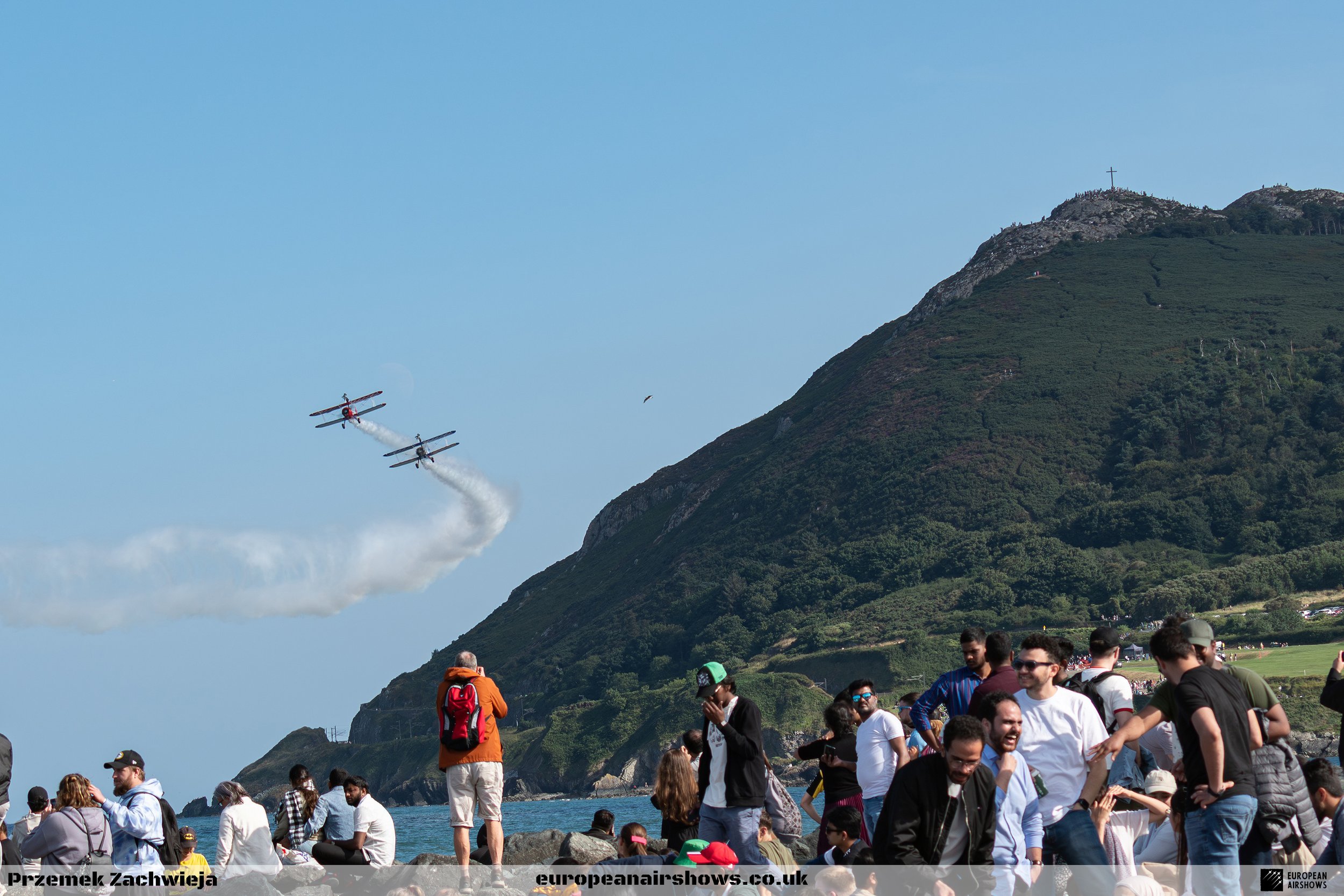
On Saturday, August 2, 2025, the picturesque seaside town of Bray, County Wicklow, transformed into a vibrant stage for the annual Bray Air Display, Ireland’s largest free aviation festival. Nestled along the scenic Irish coast, Bray’s Victorian promenade and iconic stony beach provided a distinctive backdrop for this family-friendly spectacle, drawing over 40,000 spectators to witness a thrilling showcase of aerobatics and aviation prowess.
The event, a cornerstone of the #SummerInBray tourism campaign, capitalised on Bray’s charming seaside ambience, with Bray Head looming dramatically in the distance. With clear blue skies and balmy temperatures, the weather was near-perfect, though a gusty wind added a touch of challenge for pilots and a risk of sunburn for the enthusiastic crowds packing the beaches and promenade.


The Bray Air Display, now in its 18th year, has long been a highlight of Ireland’s summer calendar, historically attracting top-tier international acts that elevated its status among European airshows. Pre-COVID, the event boasted heavy-hitting performers like the Italian Air Force’s Frecce Tricolori in 2016, the Spanish Air & Space Force Hornet in 2017, and regular appearances by the RAF Red Arrows, Patrouille Tranchant, RAF BBMF Lancaster, and the Swedish Air Force Historic Flight’s Viggen and Draken. These displays brought a global flair and rare aircraft to Bray’s shores, cementing its reputation as a must-visit for aviation enthusiasts. However, since its return post-COVID, the airshow has undergone a noticeable shift, with a scaled-back ambition in securing high-profile international acts and a reduction from a two-day event in pre-COVID years to a single day in 2024 and 2025, leaving some longing for the event’s former grandeur.
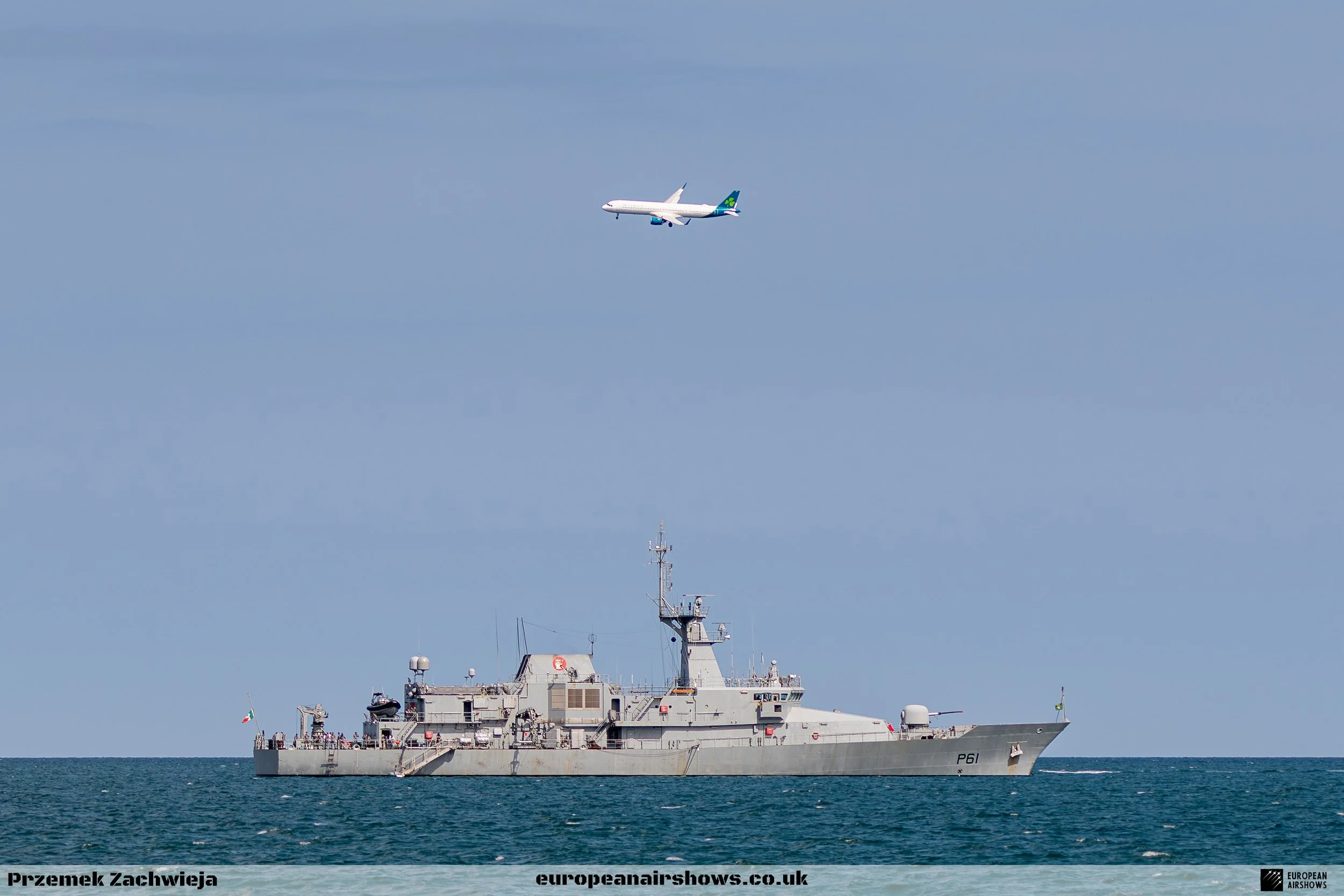
Despite a 2025 lineup that appeared lacklustre on paper—missing Bray favourites like the Royal Jordanian Falcons and international military participants—the event defied expectations, delivering one of the most memorable editions in recent years. The absence of rare performers was offset by the pilots’ exceptional performances, a display line that felt closer to the crowd than in previous years, and ideal weather conditions that bathed the aircraft in golden late-afternoon light, delighting photographers and spectators alike. Beyond the skies, the ground entertainment was a major draw, with the Seafront Funfair buzzing with energy, the innovative “Future of Flight” Tech Zone showcasing drone technology, and a striking static display by the Irish Defence Forces. Families explored intricate model aircraft presented by the Model Aeronautics Council of Ireland, savoured artisan treats at the Food and Craft Village, and marvelled at Bray’s coastline from thrilling helicopter rides over Bray Head, ensuring a festive atmosphere that complemented the aerial spectacle. Adding to the spectacle, the Irish Navy’s LÉ Samuel Beckett, a state-of-the-art Samuel Beckett-class offshore patrol vessel, was anchored offshore. Launched in 2013 and commissioned in 2014, this 90-meter, 2,256-tonne ship, named after the renowned Irish playwright, is equipped with a 76mm OTO Melara cannon and designed for fisheries protection, search and rescue, and maritime security, its sleek silhouette enhancing the event’s coastal charm and maritime prestige.


The 2025 Bray Air Display, held on Saturday, August 2, marked a refreshing turnaround from recent years, with the least cancellations of any post-COVID edition, though the Northern Ireland-based scale replica of the Spitfire was a last-minute absence. Despite this minor setback, the event delivered a captivating lineup of performers who made the most of the near-perfect weather, with clear skies and golden late-afternoon light enhancing the spectacle. The air displays kicked off at 3 pm with a thrilling parachute drop by the Irish Defence Forces’ Black Knights Parachute Display Team, leaping from an Irish Air Corps AW139 helicopter. The Black Knights, known for their precision, descended from 4,000 feet onto Bray’s stony beach, their black parachutes emblazoned with the Irish tricolour slicing through the sky. Trailing smoke for added drama, their pinpoint landing drew roars from the crowd, setting an electrifying tone for the day. This high-adrenaline opener, a staple of Bray’s displays, highlighted the skill of the Defence Forces and their seamless coordination with the Air Corps, making it a crowd-pleasing start to the show.
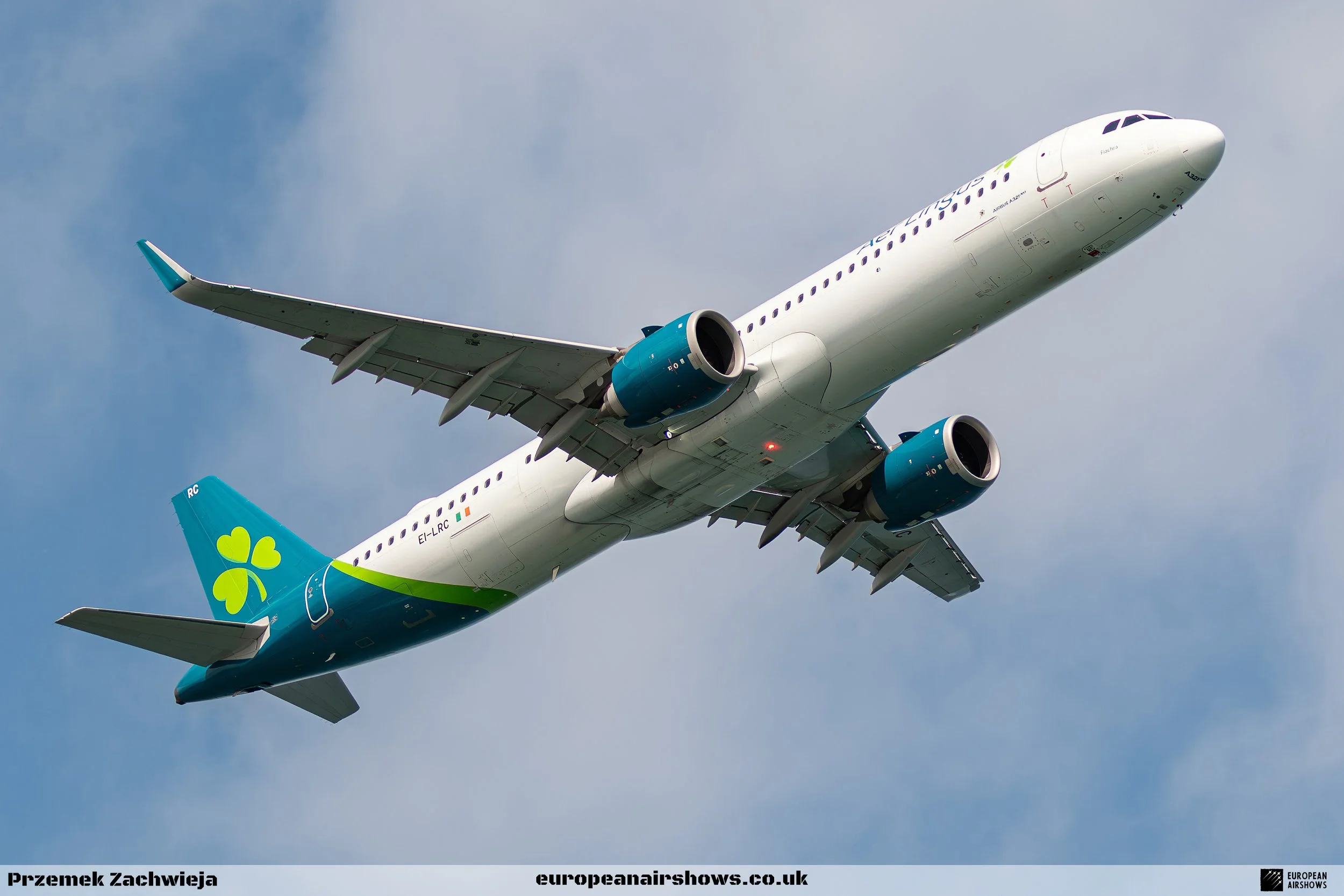
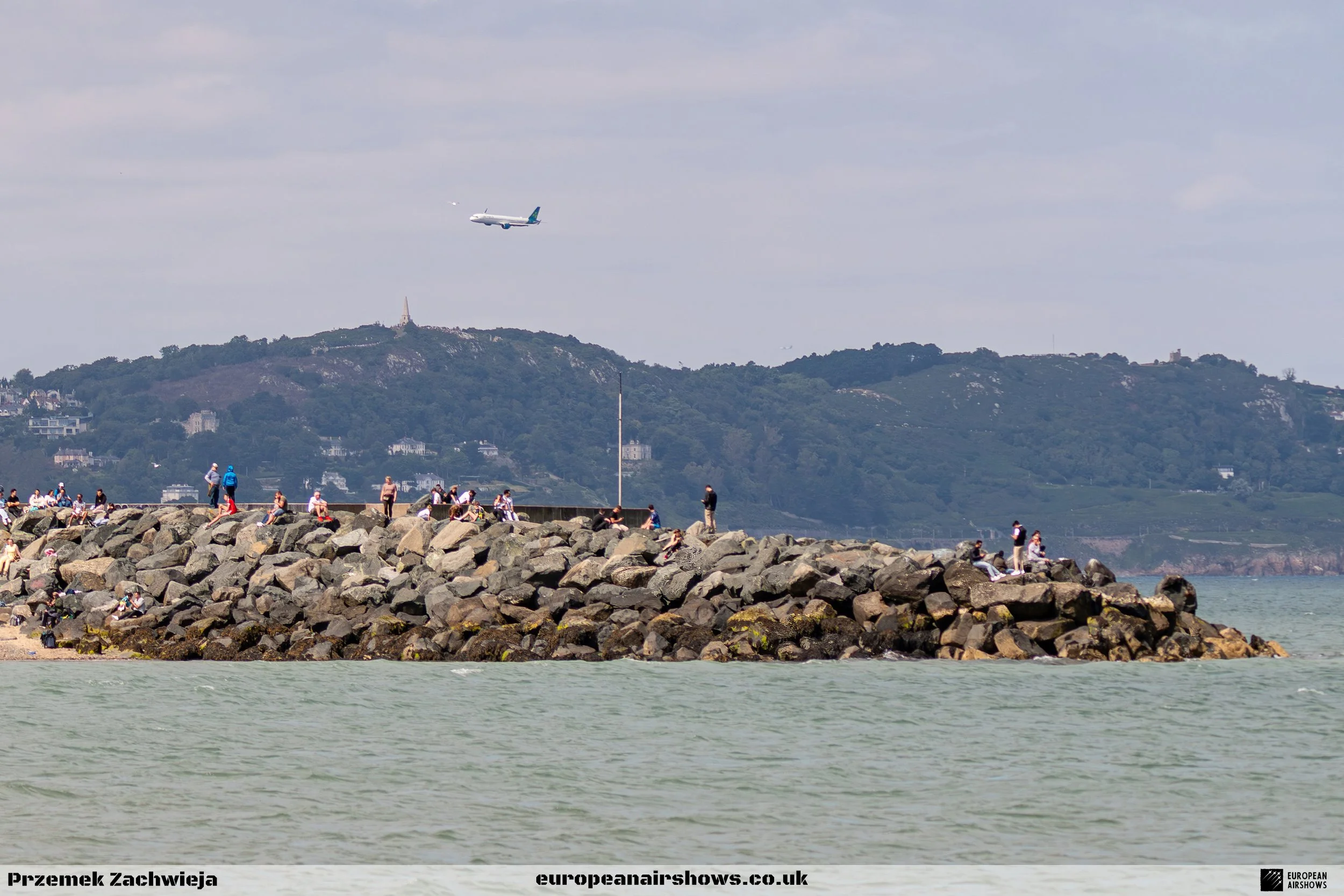
The Aer Lingus Airbus A321neo delivered a majestic performance, captivating spectators with a series of fast and slow flypasts in various configurations, including a striking landing gear-down pass that showcased its operational versatility. The A321neo, a next-generation narrow-body airliner with a range of up to 7,400 km, is a cornerstone of Aer Lingus’ fleet modernization, offering enhanced fuel efficiency and passenger comfort with its CFM LEAP-1A engines and spacious cabin. Seeing a civilian airliner at an airshow, particularly one from Ireland’s flag carrier, is a rare treat, evoking a sense of national pride and connecting everyday aviation with the spectacle of aerobatics. The A321neo’s sleek white-green livery gleamed under Bray’s sunny skies, its low passes over the Irish Sea thrilling the crowd and harking back to the airshow’s tradition of featuring airliners, a nod to Bray’s proximity to Dublin Airport.




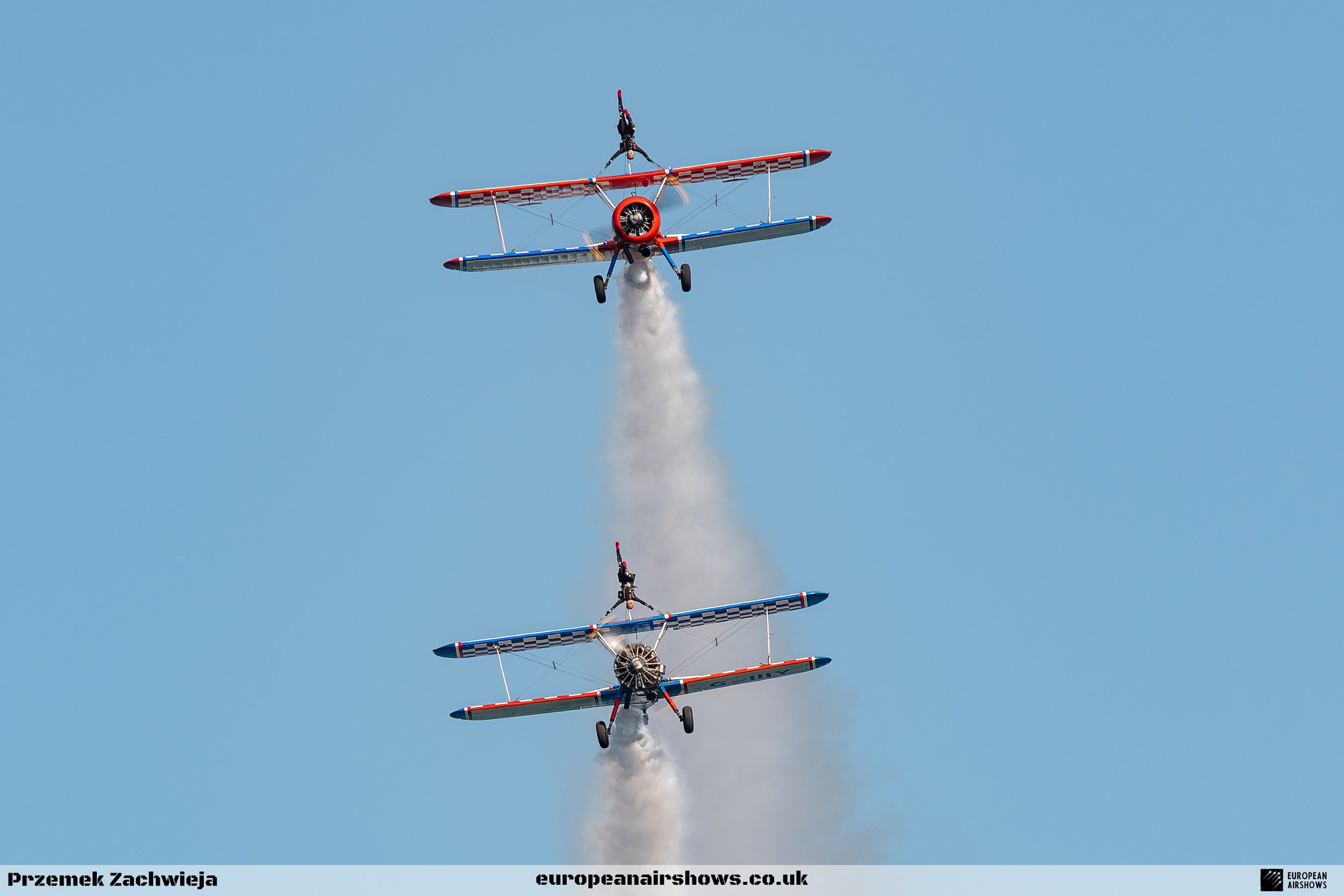
The AeroSuperBatics Wingwalkers, performing atop two Boeing Stearman biplanes, brought heart-stopping excitement to Bray with their daring formation display. This UK-based team, renowned Guinness World Record holders, featured performers executing choreographed stunts on the wings of the vintage biplanes, their vibrant liveries catching the golden late-afternoon light in a way that outshone all other displays. The Stearmans, iconic 1930s trainers powered by radial engines, roared through the sky as the wingwalkers performed handstands, waves, and synchronised movements, defying gravity with breathtaking precision. The display’s energy, amplified by the perfect lighting, created a visual spectacle that left the crowd gasping and photographers scrambling to capture every moment. The AeroSuperBatics’ unique blend of aerobatics and acrobatics, set against Bray’s coastal backdrop, made their performance a highlight that perfectly balanced nostalgia with adrenaline-fueled showmanship.
Eddie Goggins, known as “The Flying Dentist” due to his day job as a dental surgeon, thrilled the audience with a dynamic solo aerobatic display in his CAP232. With over 24 years of aerobatic experience, Goggins is a celebrated figure in Irish aviation, having competed in national and international competitions and earning a reputation for his precise and spirited performances. The CAP232, a French-designed single-seat aerobatic aircraft, is renowned for its lightweight carbon-fibre construction and exceptional agility, capable of pulling up to ±10g in the hands of a skilled pilot. Goggins pushed the aircraft to its limits, executing some extremely spectacular manoeuvres that showcased both his skill and the CAP232’s remarkable performance. His display, set against the vibrant Bray seafront, was a testament to the passion of individual pilots who keep aerobatics alive, earning enthusiastic applause from the crowd for its intensity and flair.





Emerald Airlines, operating as Aer Lingus Regional, brought a second airliner to the show with their ATR 72-600, which performed a series of impressive flypasts, including fast runs and slower passes in landing configuration. The ATR 72-600, a modern turboprop designed for regional routes, features advanced avionics and efficient Pratt & Whitney engines, making it a workhorse for Aer Lingus Regional’s network across Ireland and the UK. Its distinctive green tail and compact design made it a striking sight as it banked sharply over the Irish Sea, demonstrating the versatility of regional aircraft in an airshow setting. The inclusion of a second civilian airliner added a unique dimension to Bray, highlighting the diversity of Irish aviation and the skill of Emerald Airlines’ pilots. The flypasts, particularly in landing configuration, offered a rare glimpse into the operational side of commercial aviation, delighting spectators who appreciated seeing a familiar regional aircraft in such a dynamic context.
The Garda Air Support Unit’s EC135 T2, maintained and flown by the Irish Air Corps from Casement Aerodrome, delivered a gripping handling demonstration featuring sharp turns, hovers, steep climbs, and rapid descents. The Eurocopter EC135, a twin-engine light helicopter, is a critical asset for Ireland’s aerial policing, equipped for surveillance, pursuit, and support missions with advanced cameras and thermal imaging. Its agility was on full display as the pilot executed precise manoeuvres, showcasing the helicopter’s role in law enforcement and its ability to operate in demanding conditions. The GASU’s performance, set against Bray’s coastal backdrop, highlighted the seamless collaboration between the Air Corps and An Garda Síochána, offering spectators a glimpse into the high-stakes world of aerial policing. The display’s dynamic energy and technical precision made it a compelling addition to the lineup, resonating with the crowd’s appreciation for Ireland’s public service aviation.




The Irish Historic Flight Foundation presented a nostalgic display with two former Irish Air Corps de Havilland Canada Chipmunk T.20 trainers, performing a non-aerobatic routine of graceful formation flypasts and a dramatic break. These 1950s-era aircraft, once used for pilot training, are lovingly maintained by the Foundation to celebrate Ireland’s aviation heritage. Their distinctive silver and green liveries gleamed in the sunlight, evoking memories of the Air Corps’ early years as they flew in tight formation over the Irish Sea. The Chipmunks’ gentle curves and classic design stood in contrast to the high-energy aerobatics of other performers, offering a serene yet captivating tribute to aviation’s golden age. The display culminated in a perfectly executed break, delighting the crowd with its precision and reinforcing the Foundation’s mission to preserve Ireland’s aeronautical legacy for future generations.
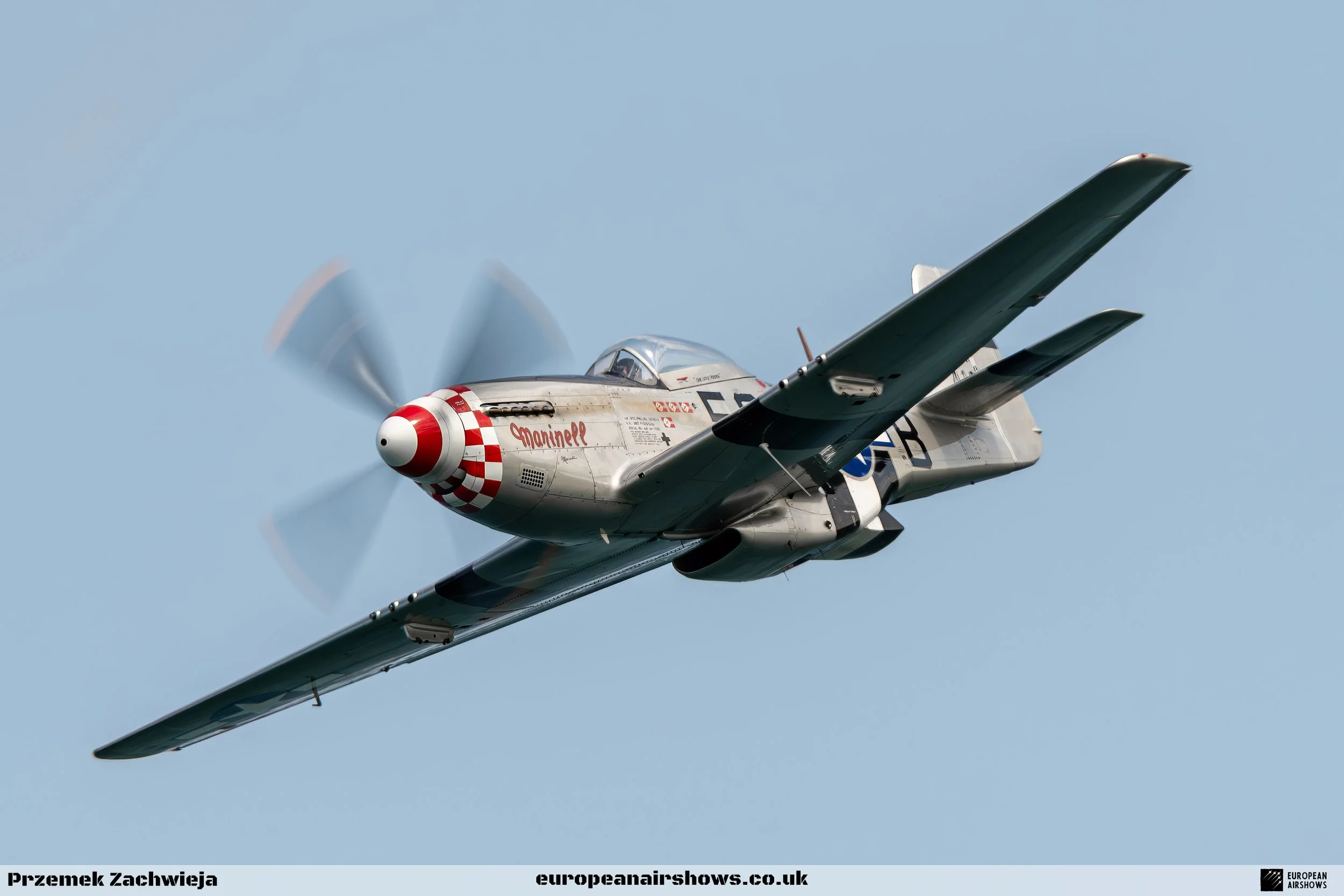
The North American P-51D Mustang “Marinell,” flown expertly by Isabel Rutland from Northwind, was a showstopper, its Rolls-Royce Merlin engine roaring across Bray’s seafront. This genuine World War II warbird, which claimed four enemy aircraft before being shot down over Northern France in 1944, is a meticulously restored icon of aviation history. Rutland’s display featured high-speed passes and graceful aerobatics, with plenty of topside passes that thrilled photographers capturing the Mustang’s sleek lines. The Marinell’s performance was a visceral reminder of the P-51’s wartime legacy, blending raw power with elegant manoeuvres that left the crowd in awe.
Richard Goodwin, a perennial favourite at Irish airshows, brought his Jet Pitts to Bray for a high-energy aerobatic display that pushed the boundaries of the classic Pitts Special. The Jet Pitts, a modified Pitts S-2 biplane fitted with two jet engines, combines the agility of a traditional aerobatic aircraft with the raw power of jet propulsion, creating a unique spectacle. Goodwin’s unlimited freestyle routine featured heart-stopping tumbles, spins, and knife-edge passes, showcasing his daring and the aircraft’s extraordinary capabilities. The Jet Pitts’ distinctive roar and smoke trails electrified the crowd, making it a standout for its sheer intensity. As a regular at Bray, Goodwin’s performance reinforced his reputation as a crowd-pleaser, delivering a masterclass in aerobatics that perfectly complemented the event’s vibrant atmosphere.


The BAC Strikemaster Mk82, flown by Ian Brett from Strikemaster Display UK, delivered a powerful aerobatic display that brought a military jet presence to Bray. The Strikemaster, a 1970s-era jet trainer used by several air forces, is known for its robust design and versatility, powered by a Rolls-Royce Viper engine. Brett’s expert piloting showcased the aircraft’s agility through tight loops, rolls, and high-speed passes, its distinctive grey Ex-Sultan of Oman Air Force camouflage livery cutting a striking figure against the clear skies. The Strikemaster’s roar and dynamic manoeuvres evoked the era of Cold War aviation, thrilling spectators with its blend of precision and power. As one of the few jet displays at Bray 2025, it added a high-octane dimension to the lineup, cementing its place as a fan favourite.
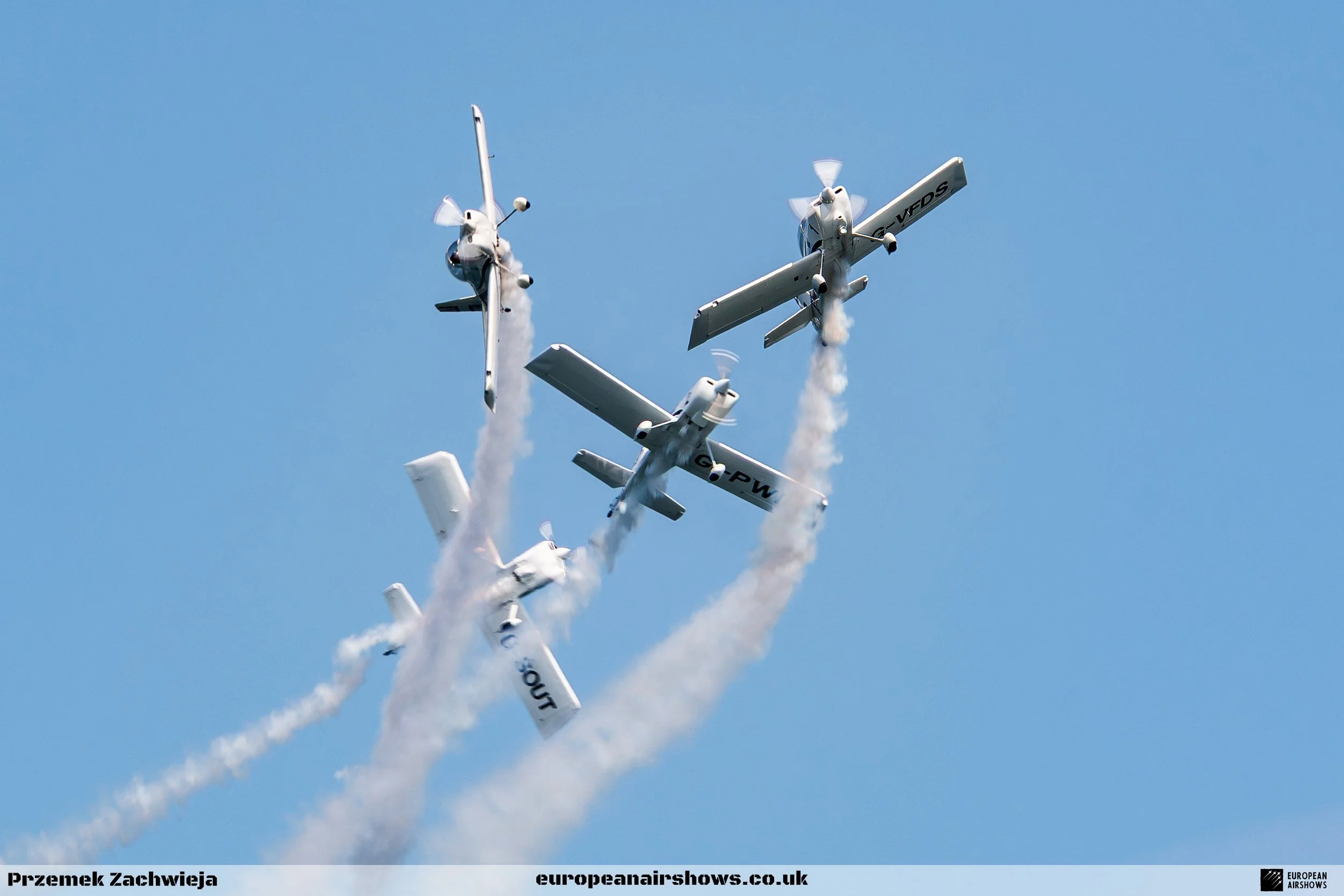
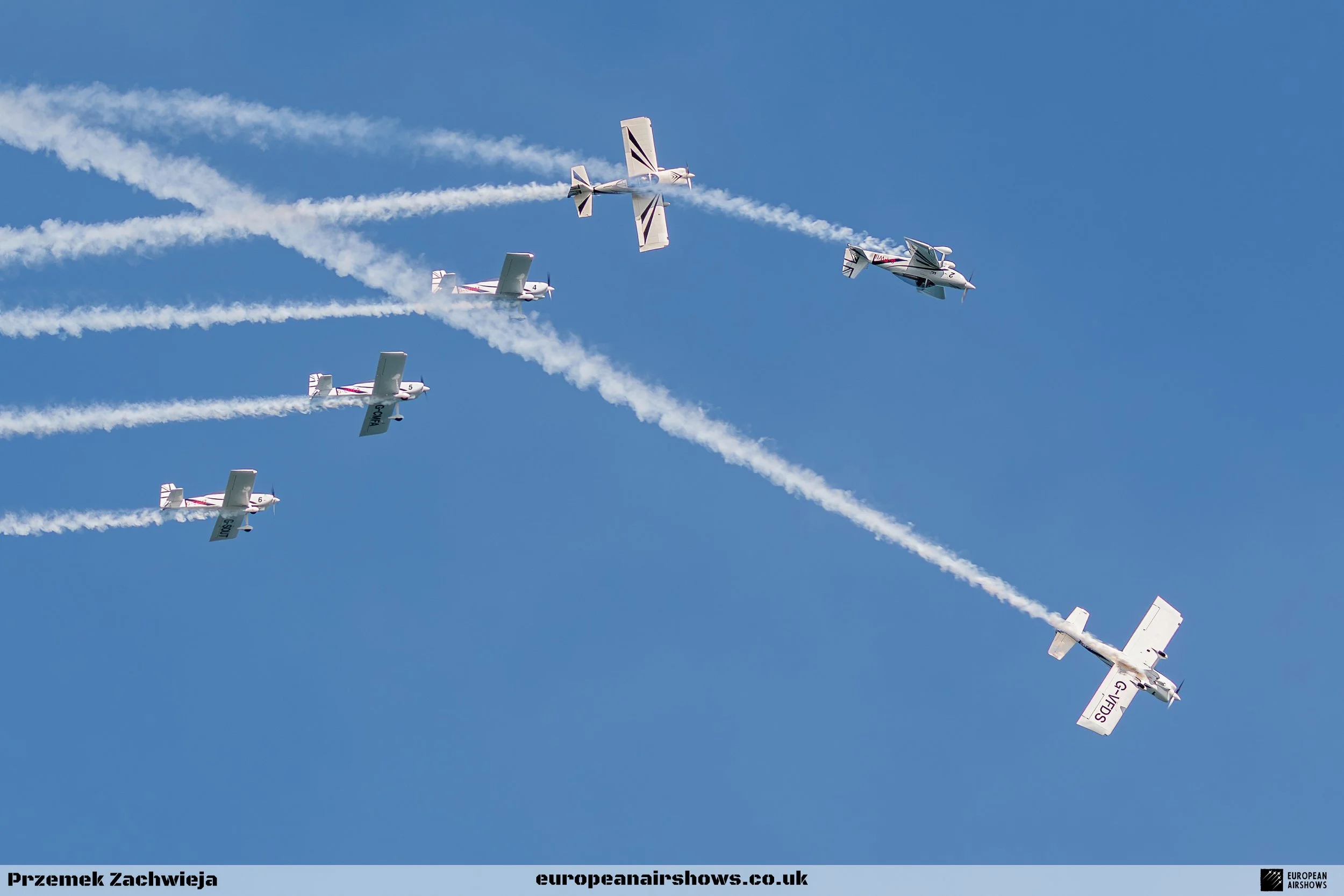
Team Raven, with their six Van’s RV-8 aircraft, delivered an energetic and beautifully executed formation aerobatic display, their tight manoeuvres painting intricate patterns in the sky. Known for their self-built, high-performance homebuilt aircraft, Team Raven showcased impeccable teamwork with synchronised rolls, loops, and formation changes that captivated the audience. While the team has performed as a seven-ship formation elsewhere in 2025, it was a slight disappointment that Bray saw their six-ship routine, though it remained a highlight for its precision and dynamism.


The Irish Coast Guard stole the show with the debut of their new Leonardo AW189 helicopter, which performed a gripping winching demonstration, highlighting its role in search and rescue operations. The AW189, a state-of-the-art helicopter replacing the Sikorsky S-92—a familiar sight at previous Bray displays—boasts advanced avionics and enhanced range, making it ideal for Ireland’s challenging maritime environment. The winching demo, showcasing the crew’s expertise in simulated rescue scenarios, was a powerful tribute to the Coast Guard’s lifesaving mission. Complementing this was the Beechcraft B200 King Air, the Coast Guard’s first fixed-wing aircraft, which performed several flypasts in its Bray debut. Based at Shannon Airport, the B200 is equipped for maritime surveillance and environmental monitoring, its sleek design adding a modern flair to the display.
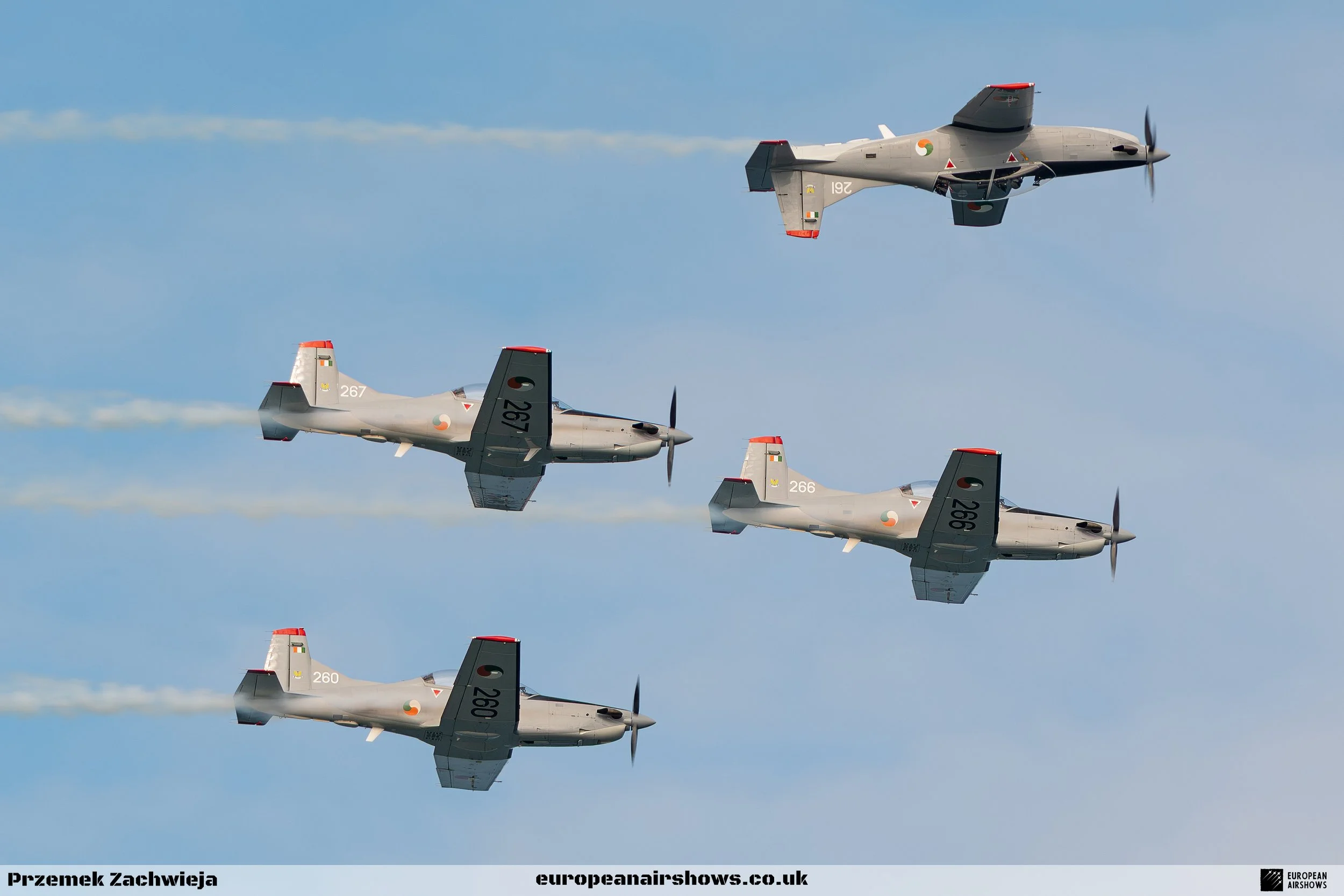
The Irish Air Corps closed the 2025 Bray Air Display with a spectacular grand finale, beginning with a dynamic handling demonstration by a Leonardo AW139 from No. 3 Operations Wing’s 301 Tactical Helicopter Squadron. This versatile helicopter, one of six in the Air Corps’ fleet, performed sharp turns, hovers, sideways flight, and steep climbs, showcasing its role in army support, air ambulance, and ministerial transport. The AW139’s agility and the pilots’ skill kept the crowd on edge, its sleek design cutting through the golden light. Next, the Airbus C-295 MSA from No. 1 Operations Wing’s 101 Squadron performed several flypasts, its modern maritime surveillance capabilities on full display. Designed for fisheries protection and logistical transport, the C-295’s imposing presence highlighted the Air Corps’ evolving role in Ireland’s security. The finale came from the Irish Air Corps’ Silver Swallows aerobatic team, who arrived from the crowd’s rear in a surprise entrance, delivering an exceptionally polished display. Unlike their usual routines, the 2025 performance skipped opposition passes and solo maneuvers, focusing instead on formation loops, flypasts in different formations, and a dramatic final break. Flying four Pilatus PC-9M trainers, the Swallows—named after the migratory bird and a nod to Irish aviation heritage—demonstrated remarkable precision for a team that performs only once or twice annually. Their display, set against Bray Head, was a fitting crescendo, blending national pride with aerobatic excellence and leaving the crowd in awe of Ireland’s aerial guardians.


The Bray Air Display 2025 proved that even a leaner lineup could deliver an unforgettable spectacle, revitalising Ireland’s premier aviation festival with a blend of skill, nostalgia, and innovation. Despite the absence of international heavyweights and the disappointment of a single-day format, the event overcame its challenges through stellar performances, ideal weather, and a vibrant coastal atmosphere. From the Black Knights’ daring parachute drop to the Silver Swallows’ polished finale, each act showcased the passion and precision of aviation, while the ground entertainment—spanning the Seafront Funfair, “Future of Flight” Tech Zone, and Irish Defence Forces’ static display—ensured a family-friendly experience that resonated with all ages. The presence of the LÉ Samuel Beckett offshore added a majestic maritime touch, reinforcing Bray’s unique seaside charm. While the airshow may not yet have recaptured its pre-COVID grandeur, the 2025 edition demonstrated resilience and potential, leaving spectators hopeful for a reinvigorated future. With golden light bathing the displays and Bray Head framing the scene, this year’s event was a testament to the enduring allure of flight and the community spirit of Ireland’s summer celebrations.
