Follow-Me Team
Zlin Z-226MS and Z-326MF · Four-aircraft heritage formation
Four individually restored Czech trainers, four distinctive colour schemes and one tightly controlled formation. Follow-Me presents the Zlin Trenér family through precision group flying rather than aerobatic figures.
- Country
- Czechia
- Home
- Zábřeh airfield, LKZA
- Formation
- Four aircraft
- Core type
- Zlin Z-226MS
- Second type
- Zlin Z-326MF
- Status
- Active civilian team
The team
A formation built around friendship, restoration and four unmistakable Zlins.
Follow-Me is based at Zábřeh airfield near Hlučín, between Opava and Ostrava in Czechia's Moravian-Silesian Region. The team describes itself simply as four friends flying four aircraft from the classic Zlin Trenér family, with the group shaped by the pilots and machines gathered at LKZA.
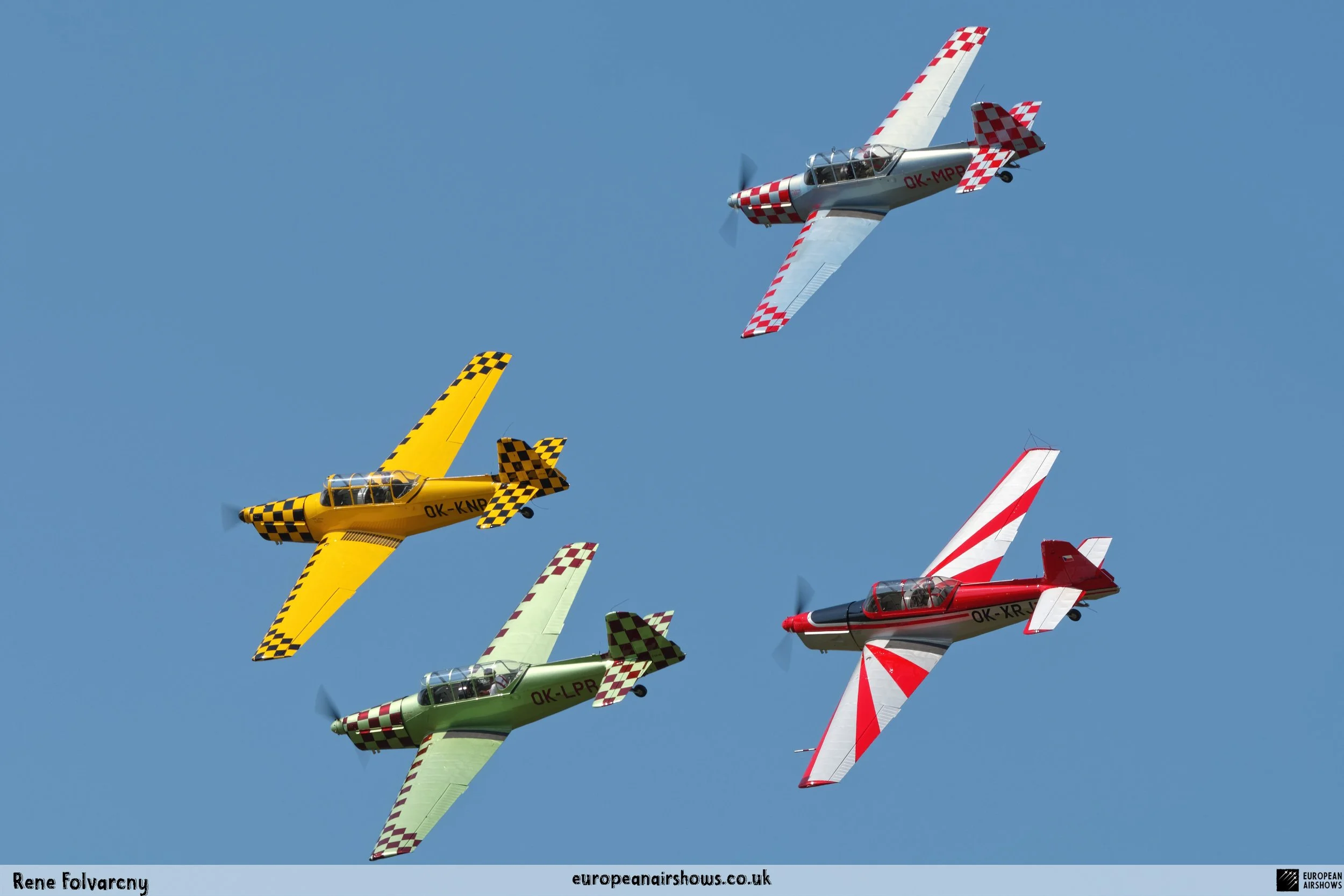
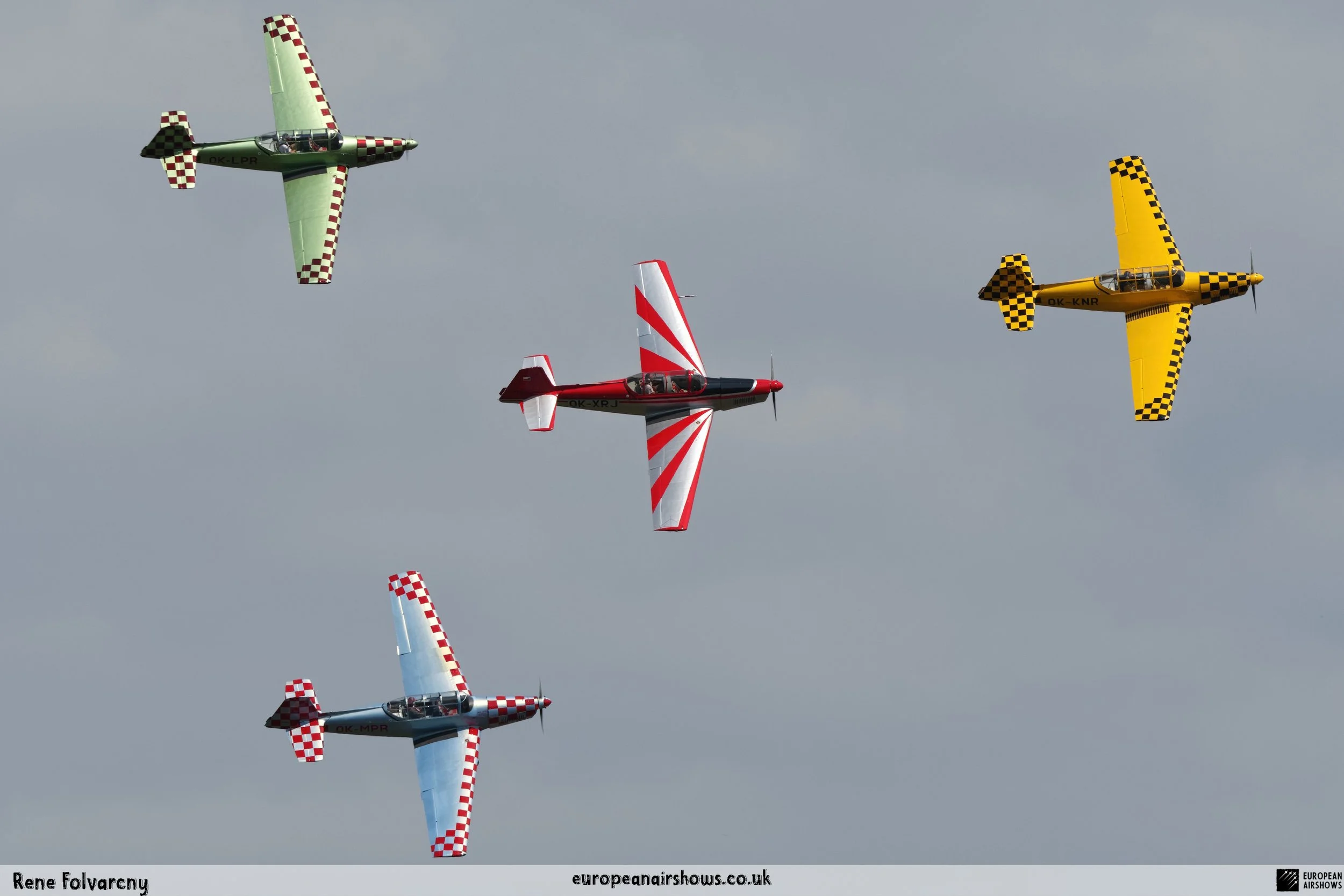
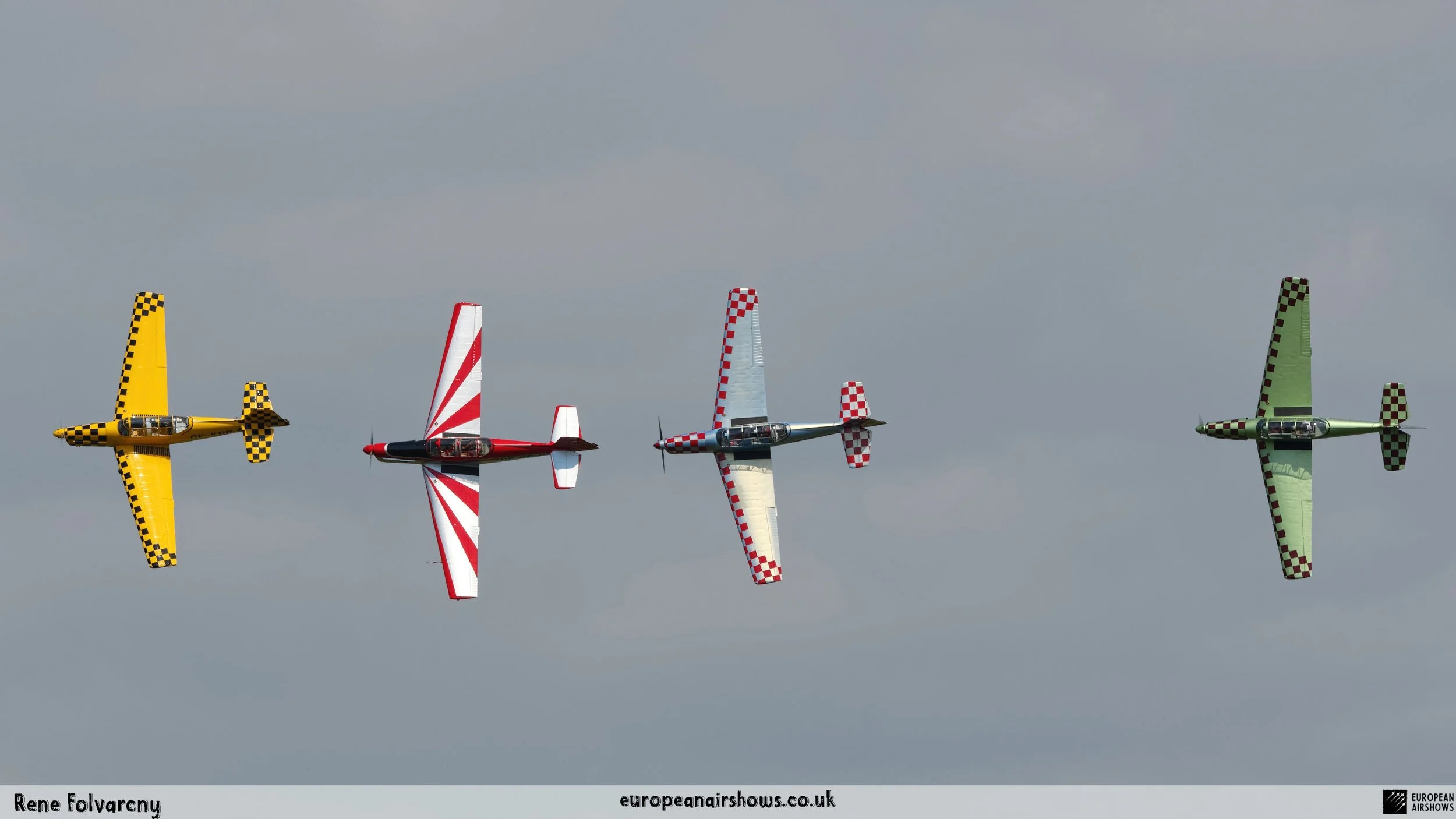
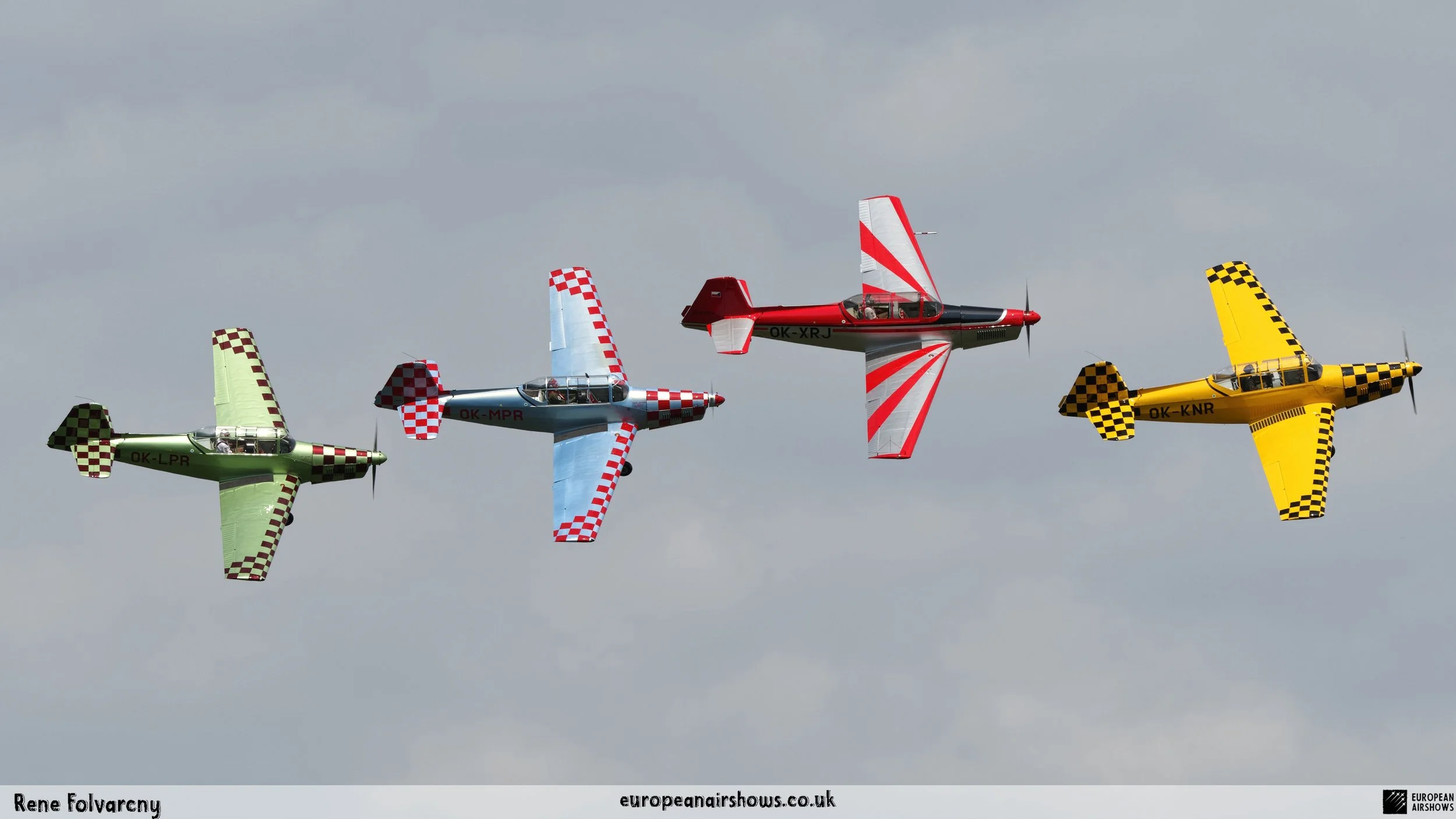
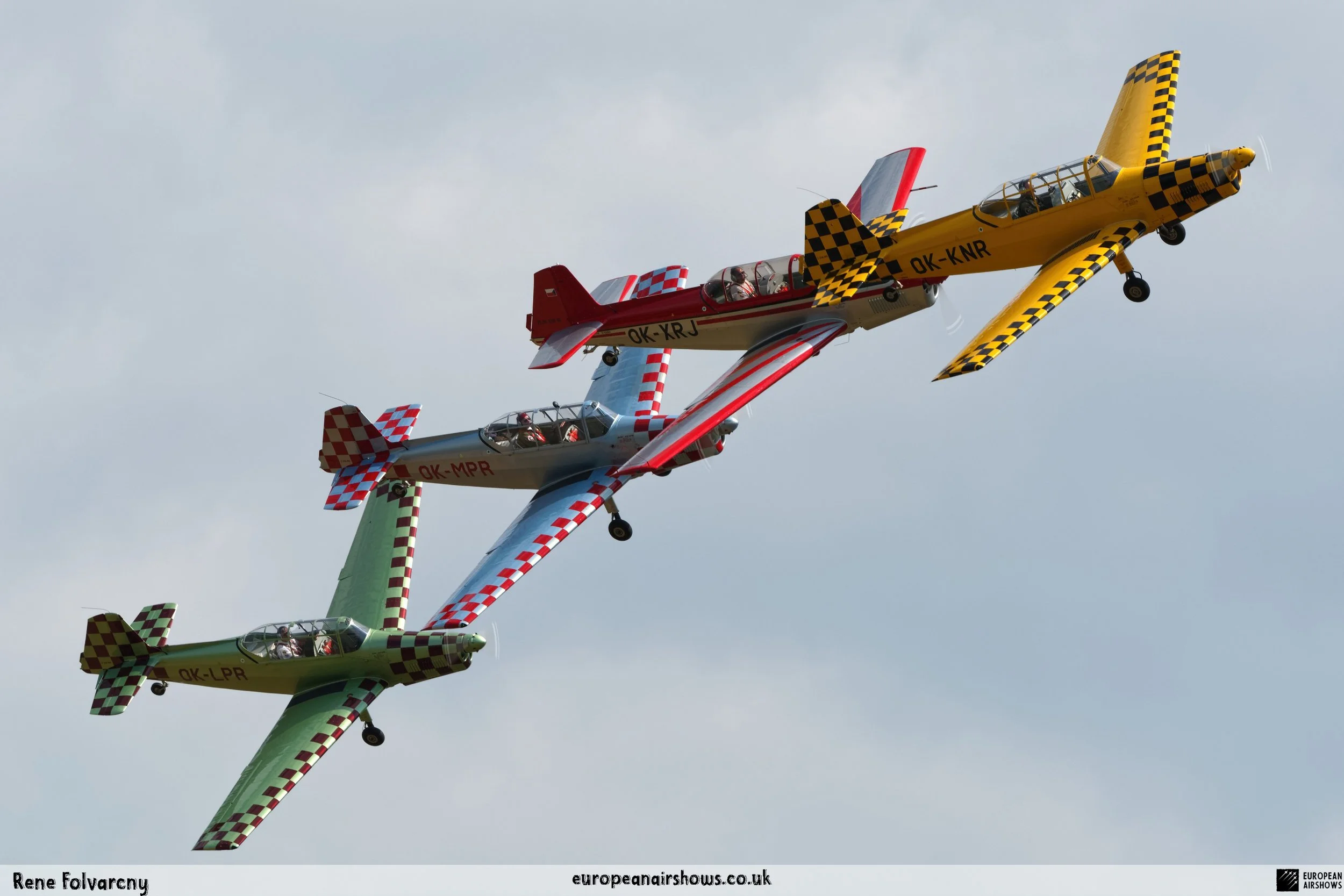
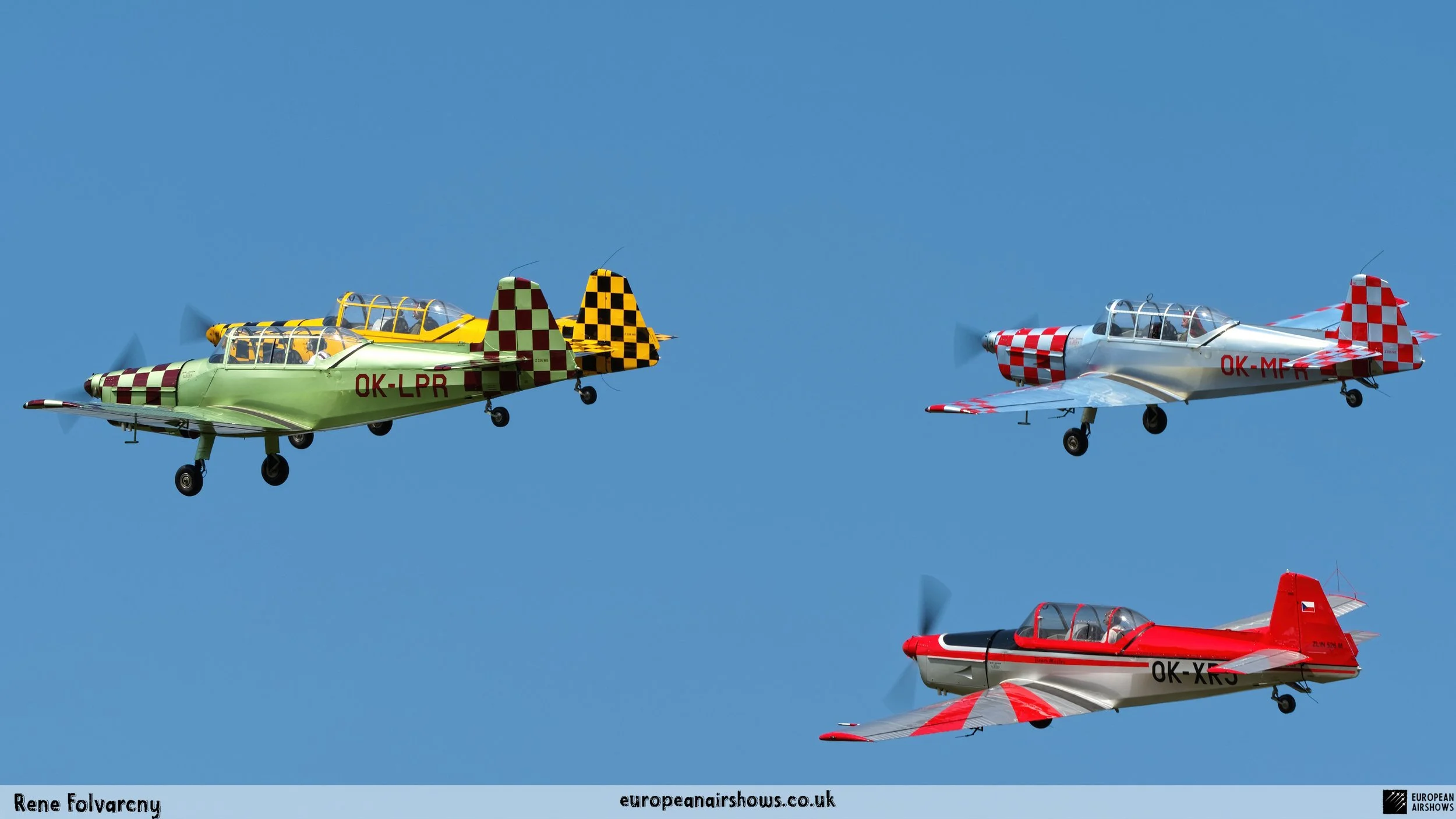
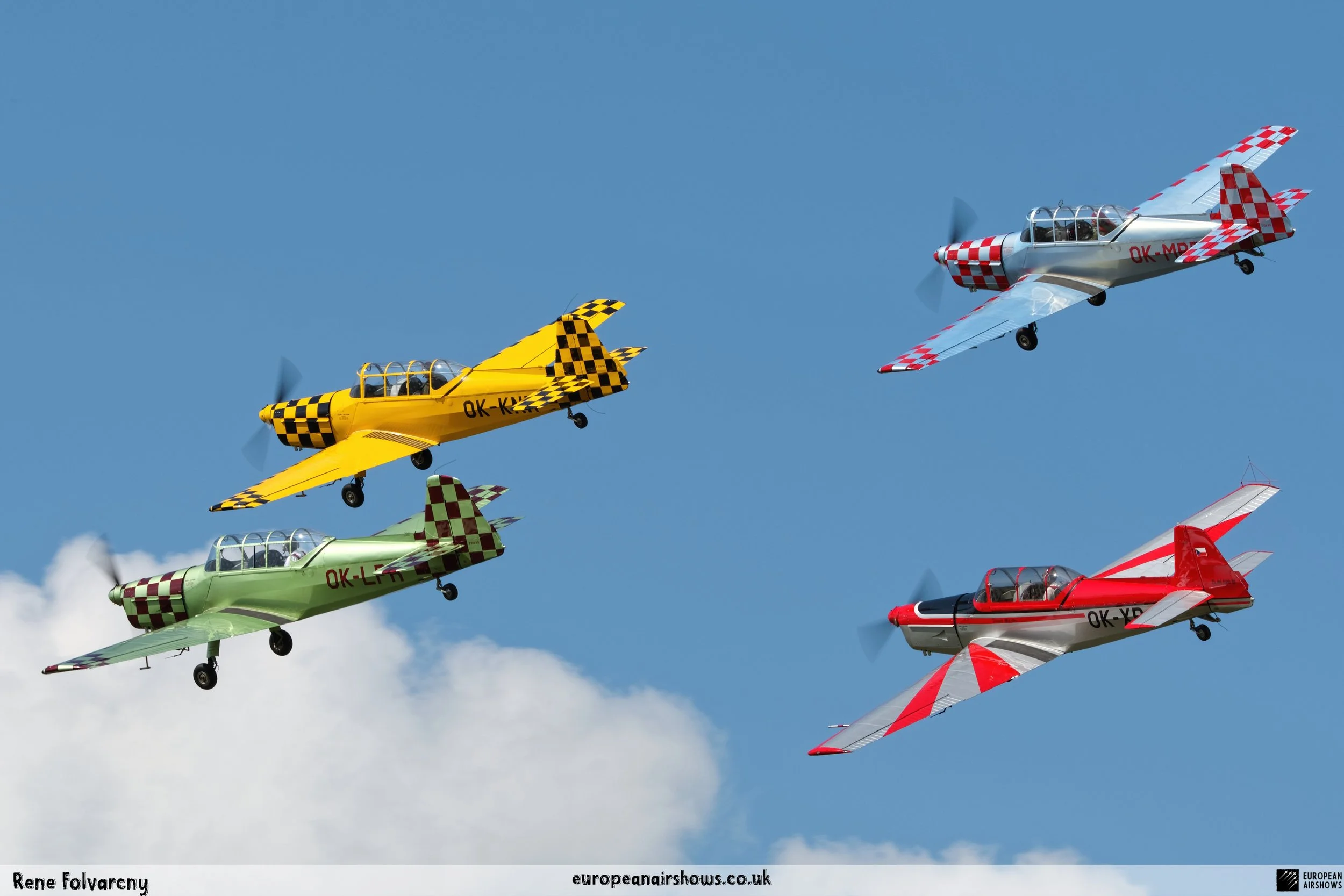
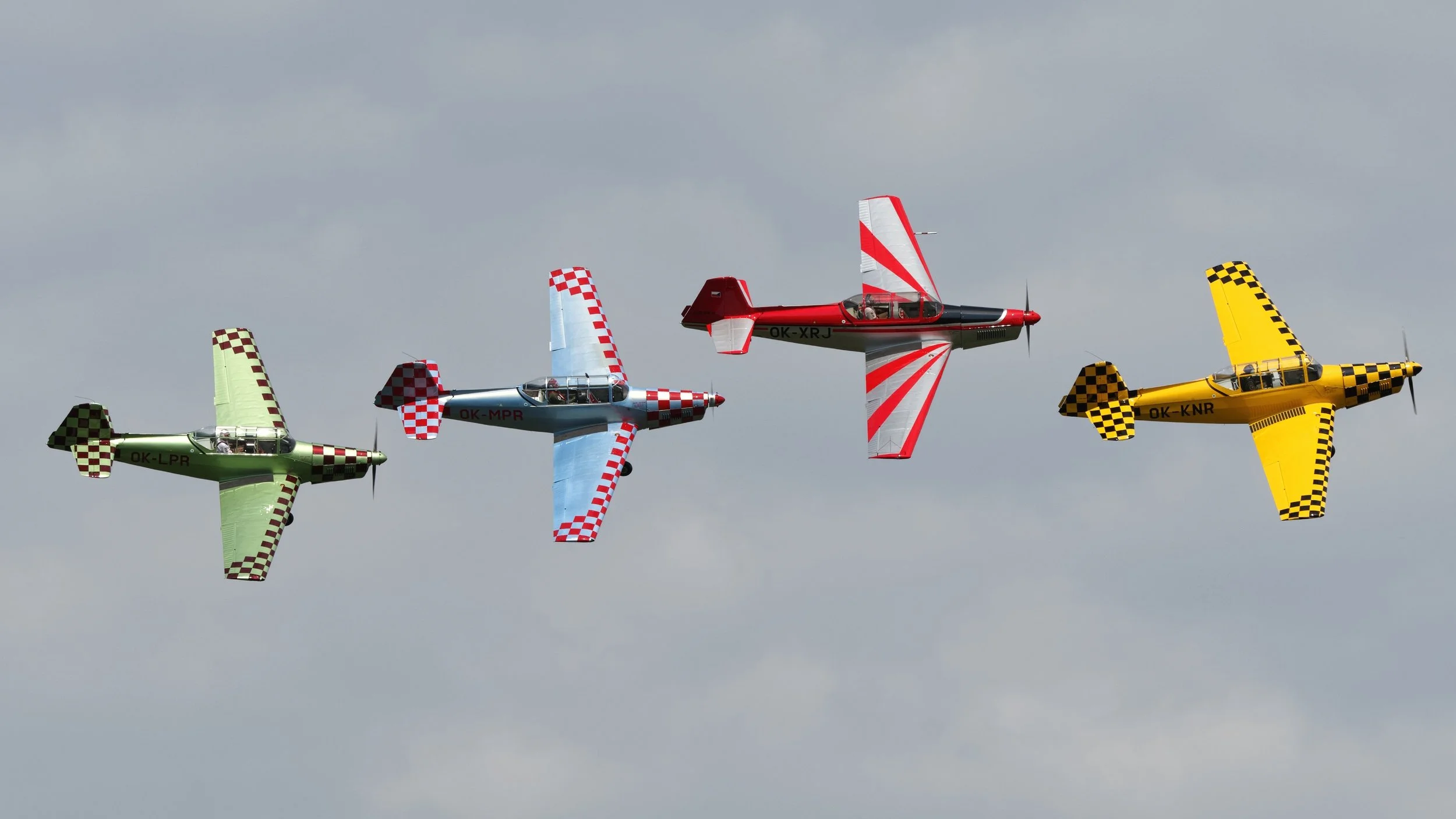
The public identity is inseparable from the aircraft. Each has its own registration, colour scheme and restoration story, so the formation looks deliberately varied rather than like a fleet painted in one sponsor livery. Together they preserve a cross-section of post-war Otrokovice design and Czech aeroclub history.
Why “Follow-Me”?
Leader OK-KNR wears the yellow and black checkerboard style associated with airport follow-me vehicles. The three other Zlins follow that conspicuous leader in the air, turning a practical ground-handling instruction into the team's name and clearest visual signature.
A team built in stages
The team's official material traces how its four aircraft were restored and assembled rather than declaring a single formal date of foundation. The familiar quartet was possible by spring 2009, when OK-LPR returned to flight as the formation's newest Z-226MS. That date marks completion of the documented four-aircraft fleet, not necessarily the formal creation of the team.
Independent, civilian and aeroclub rooted
Follow-Me is not a military unit and the aircraft are not modern factory demonstrators. The group operates within the Czech sport-aviation world, with close ties to Zábřeh airfield and to the specialists who restored and converted its veteran Zlins.
The display
Precision formation flying, without pretending the aircraft are aerobatic specials.
The team states that its Zlins are no longer approved for aerobatic flight. The challenge is therefore to fly the prepared sequence as accurately and tightly as possible, using spacing, geometry and the sound of four inline six-cylinder engines to create the spectacle.
Four-aircraft picture
The established act keeps three fixed-gear Z-226MS aircraft and the retractable-gear Z-326MF together as one readable formation.
Tight station keeping
The visual impact comes from consistent relative position and disciplined spacing rather than individual high-energy manoeuvres.
Distinctive leader
Yellow and black OK-KNR gives the formation an immediate focal point and makes the “follow-me” idea visible from the crowd line.
Heritage pace
The sequence is shaped around the performance and approved operation of restored 1950s and 1960s trainers.
Four six-cylinder engines
The synchronised sound of the M-137-powered formation is as characteristic as the colour contrast between the airframes.
Event-dependent presentation
Weather, serviceability, venue limits and pilot availability determine what can be shown on a particular day.
The aircraft
Not four interchangeable machines, but four individual survivors.
All four aircraft belong to the Zlin Z-26 Trenér family, but their paths into the team are very different. Three are Z-226MS conversions with fixed tailwheel undercarriages. The fourth, OK-SEN, is a Z-326MF with retractable main gear and a history that includes service in France before returning to Czechia.
The common thread is the 180 hp M-137 series engine and an extensive record of restoration or conversion work. Their individual build years, serials, former identities and equipment matter more than a generic specification copied from one original factory variant.
-
OK-KNR · c/n 103
Zlin Z-226MS
Built in 1957 as a Z-226T. After an earlier Z-126T conversion, it received a 180 hp engine and V-503A metal propeller in 2007. Its yellow and black finish marks it as the leader.
-
OK-MPR · c/n 263
Zlin Z-226MS
Built in 1958 and later removed from use before restoration. Converted to Z-226MS standard, it returned to the air on 23 March 2005 in its silver and red scheme.
-
OK-LPR · c/n 020
Zlin Z-226MS
Built in 1957 as Z-226B OK-KMX and used largely for glider towing. It emerged from restoration in spring 2009 as OK-LPR and became the formation's newest Z-226MS.
-
OK-SEN · c/n 893
Zlin Z-326MF
Built in 1963, later operated in France as F-BMQR and returned in dismantled form in 1992. Its 1997 conversion produced what the team identifies as the first Z-326MF.
The story so far
The team's history is written through the lives of its aircraft.
1957
Two future team aircraft are built
Serial 103 begins life as a Z-226T, while serial 020 leaves Otrokovice as the Z-226B registered OK-KMX. They will later become OK-KNR and OK-LPR.
1958
OK-MPR's airframe leaves Otrokovice
Serial 263 is produced and begins a long aeroclub career before withdrawal, museum ownership and eventual restoration to Z-226MS standard.
1963-1965
Serial 893 heads for France
The future OK-SEN is built in 1963, then enters service at the aviation school in Chartres under the French registration F-BMQR.
1997
The first Z-326MF conversion
After returning to Czechia in dismantled form, serial 893 is overhauled and converted with an M-137 engine and V-503 metal propeller. It reaches Zábřeh as OK-SEN.
2005
OK-MPR returns to flight
Restoration from museum-held airframe to Z-226MS standard culminates in a new first flight on 23 March, adding the silver and red aircraft to the emerging group.
2007
OK-KNR gains formation performance
The yellow and black leader is fitted with a 180 hp engine and metal V-503A propeller after its earlier four-cylinder configuration proves unsuitable for group flying.
2009
OK-LPR completes the familiar quartet
The former Z-226B OK-KMX emerges from restoration as Z-226MS OK-LPR, described by the team as its new formation addition.
Established identity
Four Zlins, one close formation
Follow-Me develops into a regular Czech display act and travels to selected Central European events while retaining the three Z-226MS plus one Z-326MF format.
Continuing operation
The four-ship remains active
Recent documented appearances continue to show the established quartet, preserving both the aircraft and the discipline of close group flying.
Identity & context
Four details keep the profile accurate, even when an individual appearance changes.
Formation, not aerobatics
The team explicitly says these aircraft are no longer approved for aerobatic flight. Precision and closeness define the act.
Three plus one
The established fleet is three Z-226MS aircraft with fixed gear and one Z-326MF with retractable main gear.
Every airframe has a name
OK-KNR, OK-MPR, OK-LPR and OK-SEN are not anonymous fleet examples. Each has a documented serial and restoration history.
Current appearance varies
The team identity is stable, but the exact pilot positions and event presentation remain subject to availability, serviceability and local limits.