
Air Show Radom 2027 in Doubt as Polish MoD Pulls Back
The future of one of Europe’s largest and most recognisable military airshows has been thrown into serious doubt after Poland’s Ministry of National Defence confirmed that it does not currently plan to organise Air Show Radom in 2027. The City of Radom, however, is refusing to give up on an event which has grown over more than two decades into one of the most important dates on the European airshow calendar.
From crowds approaching 200,000 and programmes featuring more than 200 aircraft to strategic bomber flypasts, international display teams and some of the biggest names in military aviation, Radom has built a reputation far beyond Poland. After the planned 2025 edition was cancelled and with no traditional event currently confirmed for 2027, the latest position from the Ministry raises a much bigger question: what happens next to an airshow that has become part of the identity of the city itself?
Poland’s Ministry of National Defence has confirmed that it does not currently plan to organise Air Show Radom in 2027.
In a response reported by the Polish Press Agency, the Ministry pointed to the rapidly changing geopolitical situation, particularly the continuing war in Ukraine. It said the priority for the Polish Armed Forces, including the Polish Air Force, remains the completion of operational and training tasks.
For an event so deeply connected with the Polish military, that is a major obstacle.
It does not, however, mean that the story of Air Show Radom 2027 is completely over.
Radom Mayor Radosław Witkowski has made clear that the city has no intention of simply accepting the loss of the show. He says discussions have been taking place in Warsaw for several months and stressed that he has not been informed of any decision to permanently terminate the International Air Show project.
Witkowski described Air Show as one of the most important events promoting Radom and said there is still time to discuss its future format with both the military and political sides.
The final decision, he acknowledged, ultimately rests with the Polish military.
That leaves Air Show Radom in an unusual position. There is no confirmed 2027 edition and the Ministry of National Defence currently has no plans to organise one, yet the host city continues to push for the event’s return.
Why the Ministry’s decision matters
Air Show Radom is not an event which the city can simply reproduce on the same scale without the involvement of the Polish Armed Forces.
The organisation of the planned 2025 edition illustrates just how closely the different parties are connected.
A formal agreement signed at the Ministry of National Defence in February 2025 brought together the General Command of the Armed Forces, Military Property Agency, City of Radom, Polish Airports and other local organisations. An organising office operated with the Military Property Agency and General Command, alongside the city and airport authorities.
Military participation is equally important to what spectators actually see.
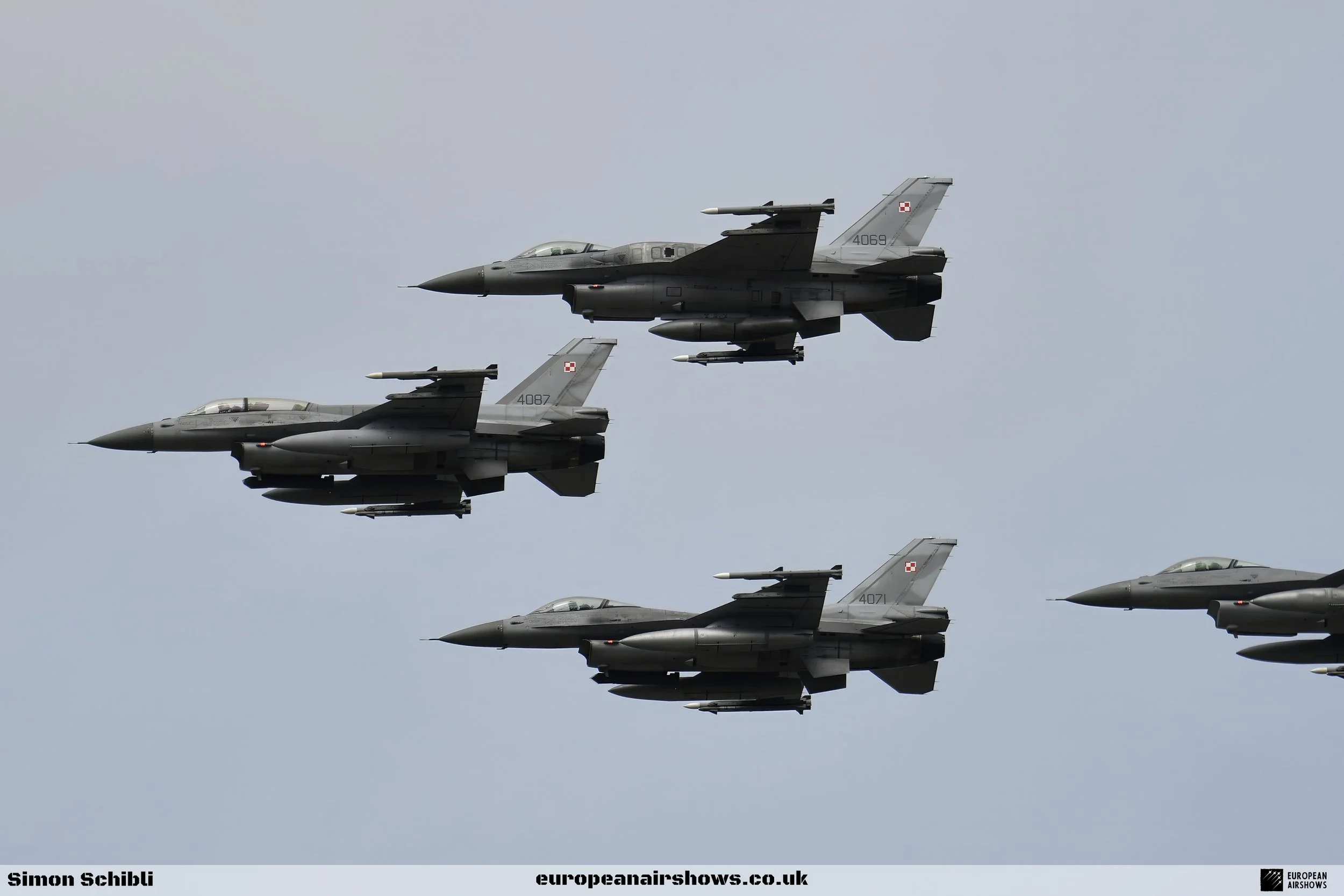
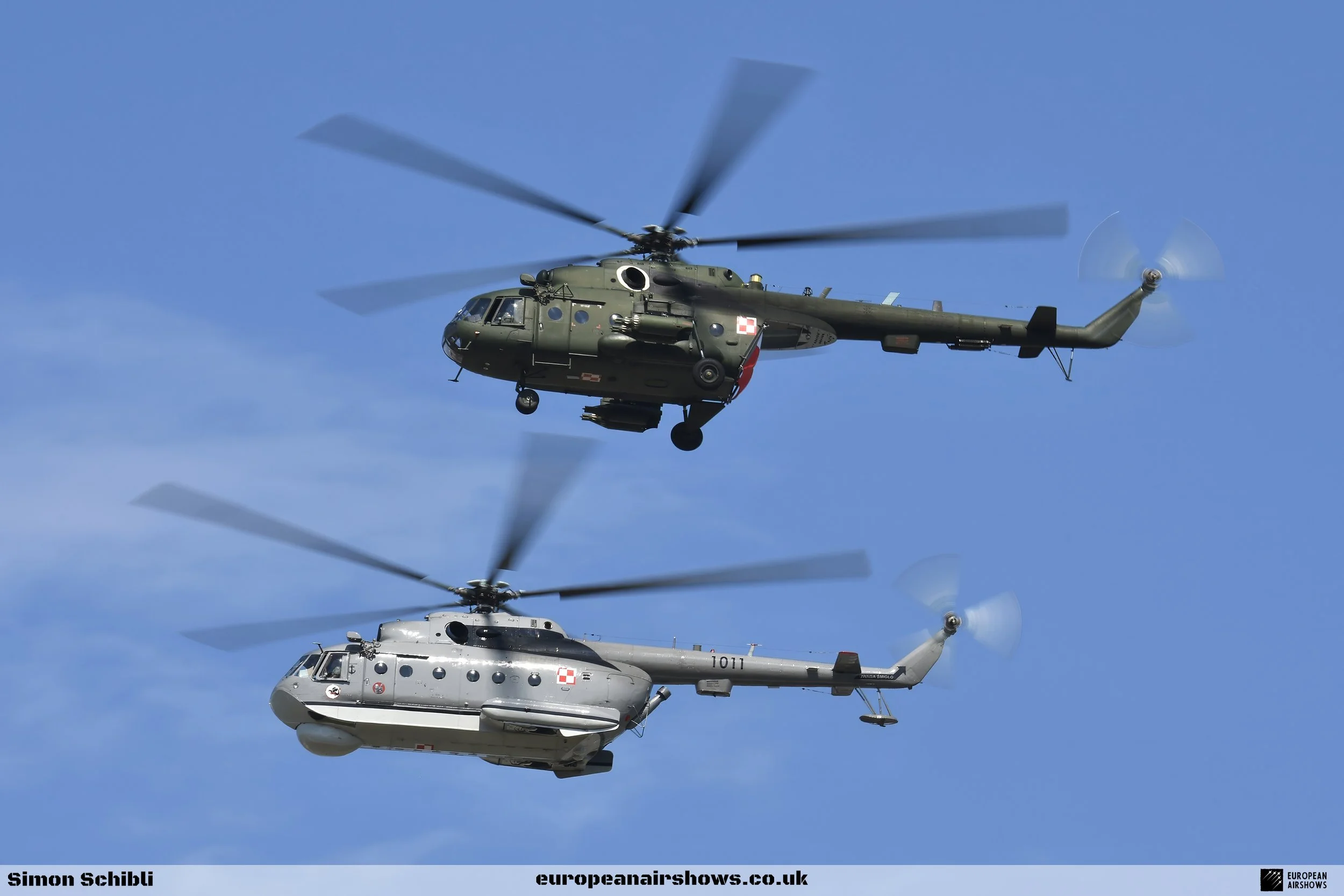
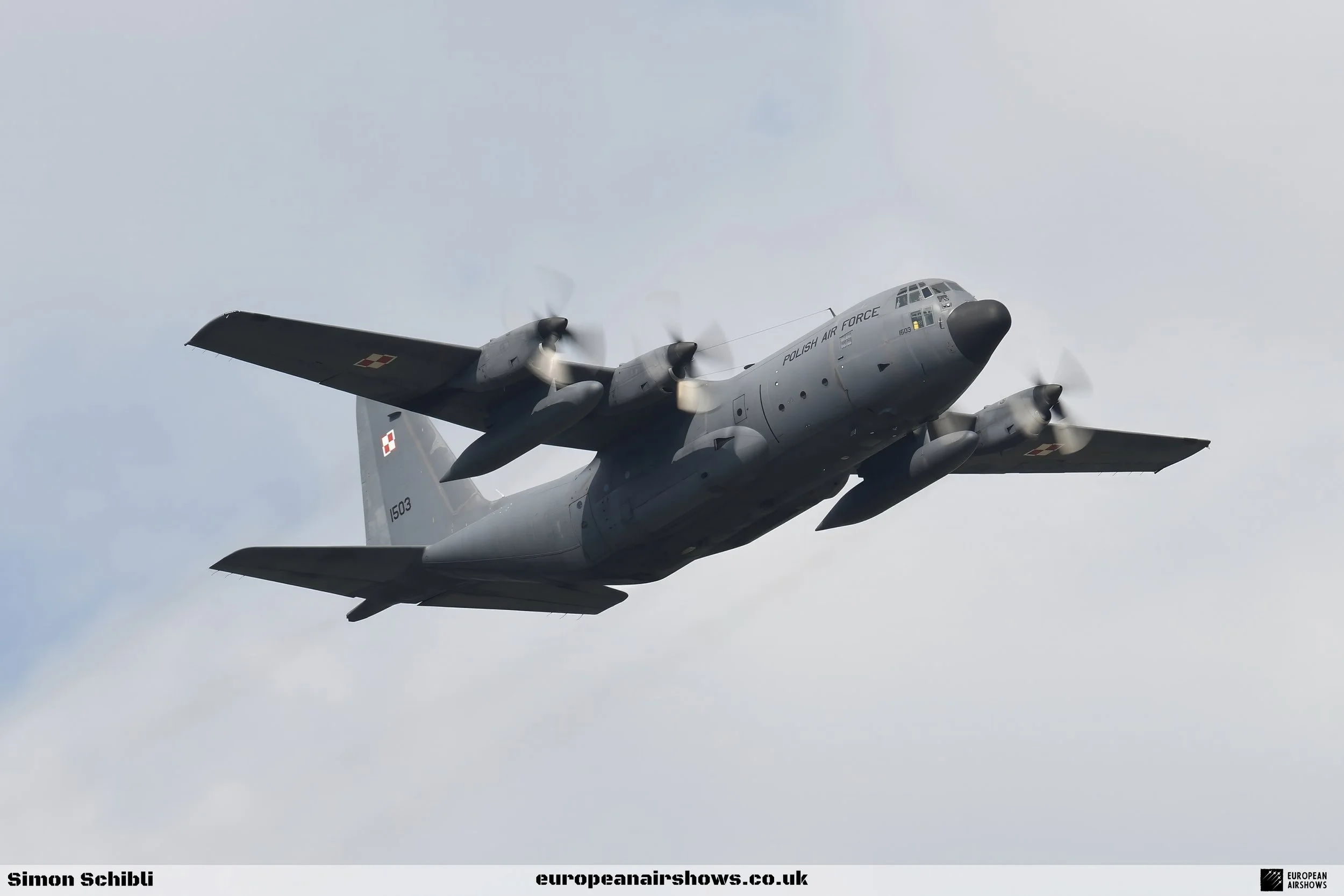
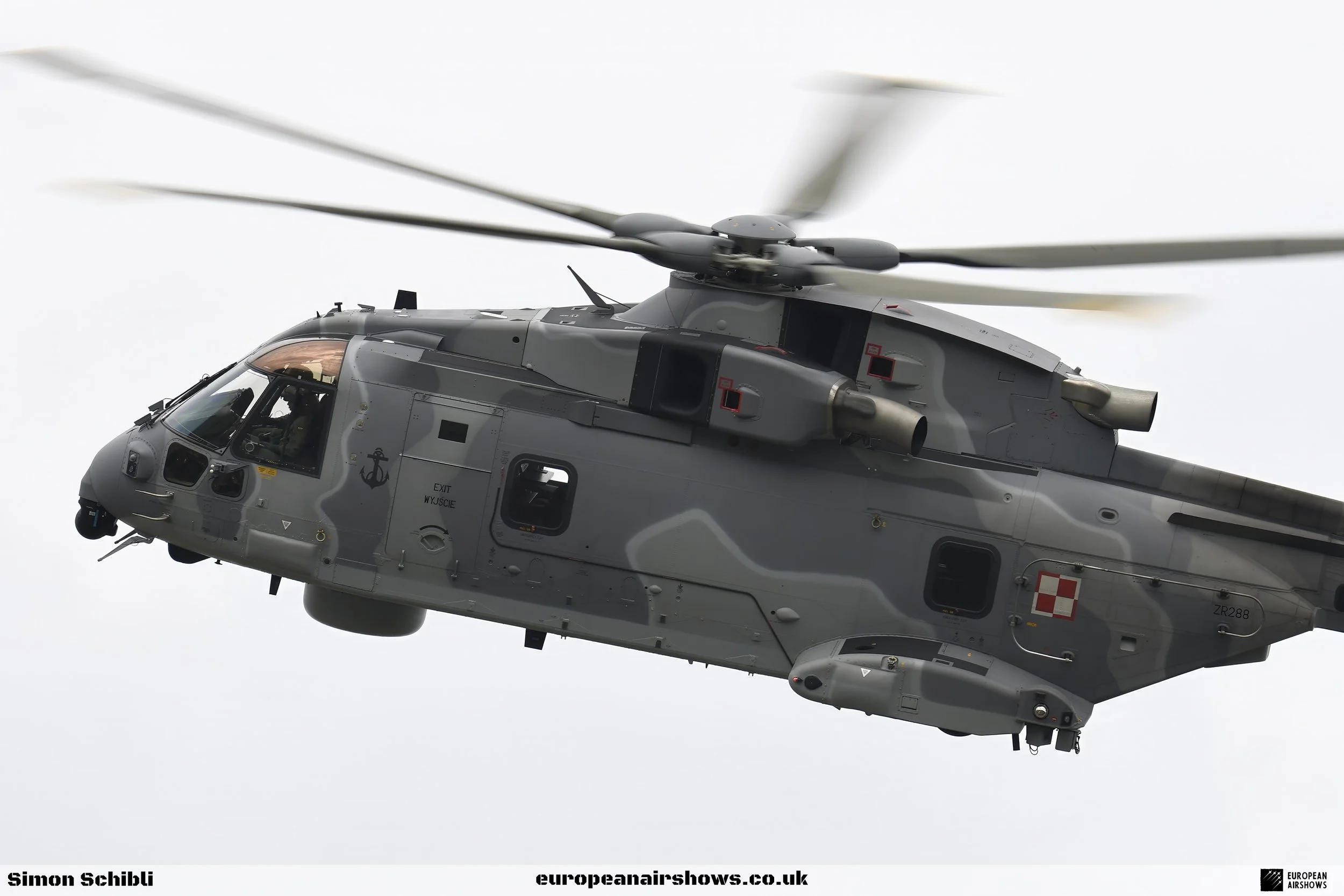
Radom has traditionally offered far more than a handful of military displays within an otherwise civilian programme. Large formations of Polish aircraft, operational demonstrations, fast jets, helicopters, transports and extensive displays of equipment from across the Armed Forces have been part of the character of the event.
The Ministry itself described the planned 2025 show as a platform for promoting the Polish Armed Forces, strengthening Poland’s international image and bringing the military closer to the public.
Without that level of involvement, any replacement would inevitably be a very different event.
From Poznań to Radom
Although the event has become synonymous with Radom, the history of Poland’s International Air Show actually begins elsewhere.
The first event was held at Poznań-Ławica on 28 August 1991, at an extraordinary moment in European aviation history.
The Cold War was coming to an end, and aircraft which had represented opposing military blocs could suddenly appear together in front of the same audience.
The inaugural programme included USAF F-15s and F-16s, the French Mirage 2000, British Tornado and Soviet Su-27 alongside Polish military and civilian aircraft. According to the event’s official history, more than 200,000 spectators attended.
Further international shows followed at Dęblin in 1995, Bydgoszcz in 1996 and Dęblin again in 1998.
Then, in 2000, the event arrived at Radom.
That first Radom edition established much of the formula which would define the show for the next quarter of a century.
Alongside a huge selection of Polish aircraft came Dutch and American F-16s, the Mirage 2000C, Czech L-159, Spanish C-295, British Jaguar and Hawk, Swedish Gripen and a rare British Canberra T.4. Patrouille de France was among the display teams.
Radom had found its airshow.
A showcase for a changing Polish Air Force
One of the most fascinating aspects of Radom has always been its ability to document the changing face of Polish military aviation.
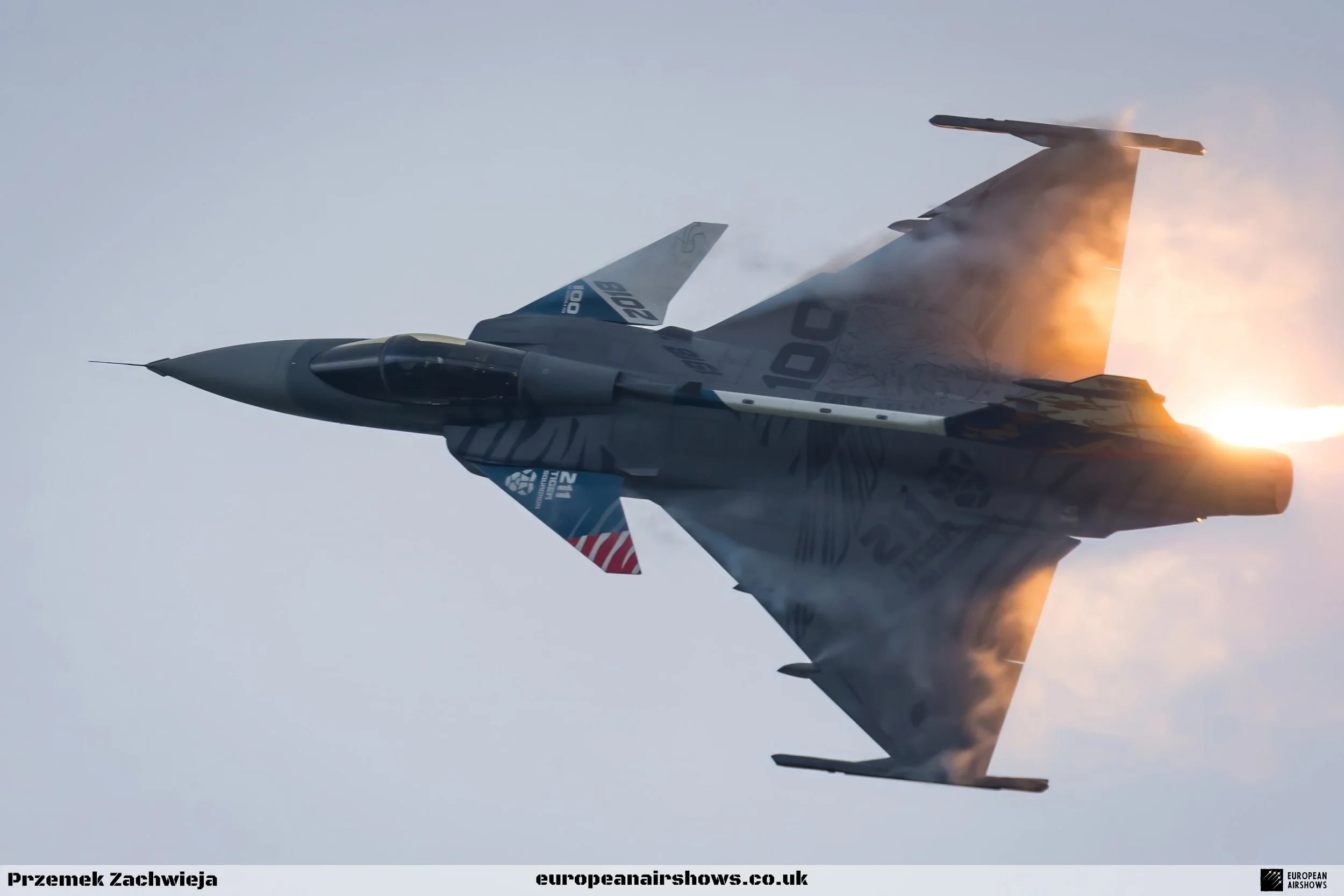
The 2002 edition came as Poland was approaching its decision on a new multirole combat aircraft. All three major contenders, the F-16, JAS 39 Gripen and Mirage 2000-5, appeared at the show.
At the same event, a Polish MiG-21 made its final flight.
It was almost a perfect snapshot of Polish aviation at a crossroads: the Cold War generation beginning to disappear as Western aircraft competed to shape its future.
A year later, Radom welcomed the Red Arrows for their first display in front of a Polish audience, alongside Patrouille de France and another substantial international military programme.
By 2005, more than 170,000 spectators were travelling to the event. The Red Arrows, Patrouille de France and Patrulla Águila all appeared at the same edition, backed by Polish teams and an extensive selection of operational military aircraft.
Radom was no longer simply a large Polish airshow. It was becoming one of the major military aviation gatherings in Europe.
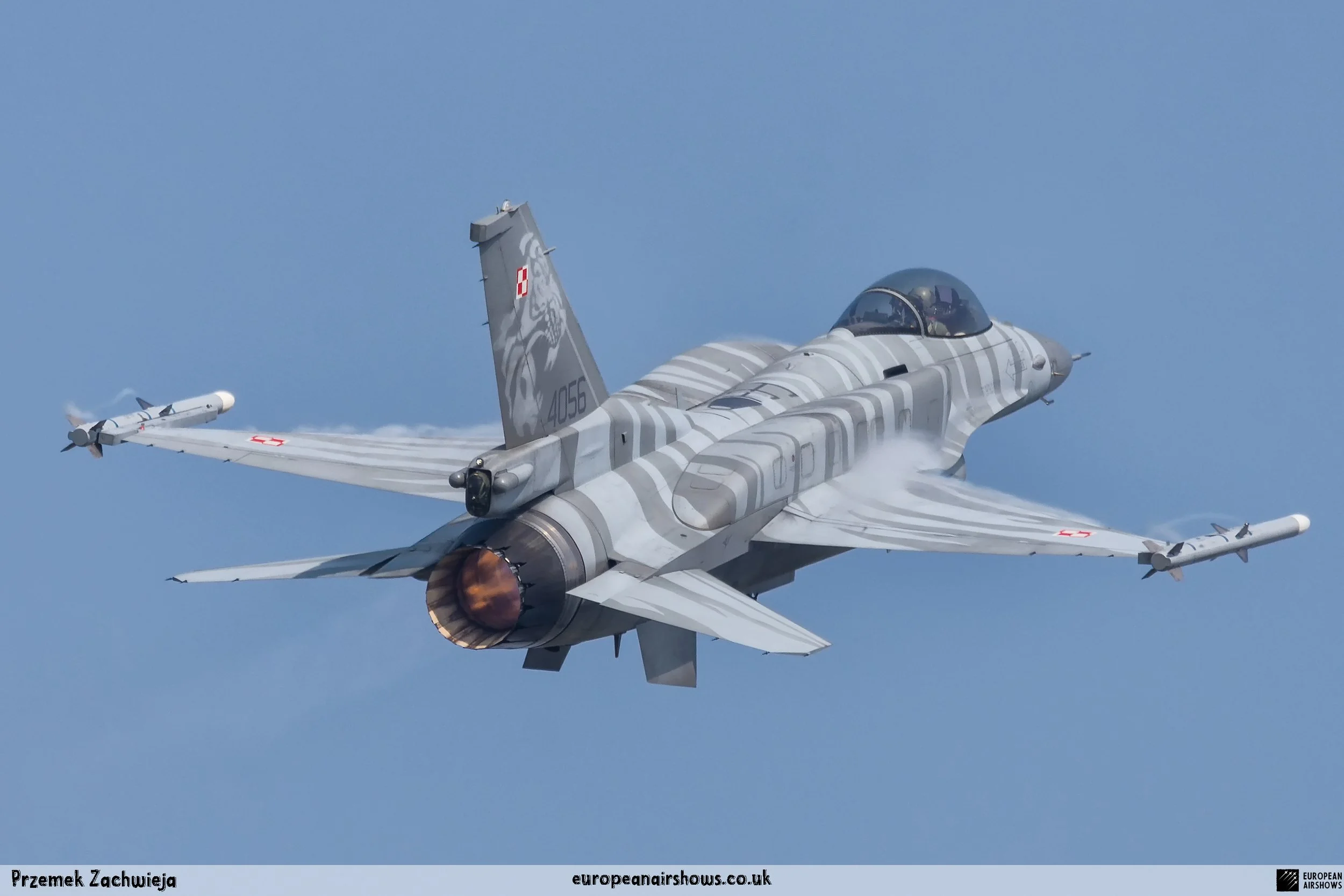
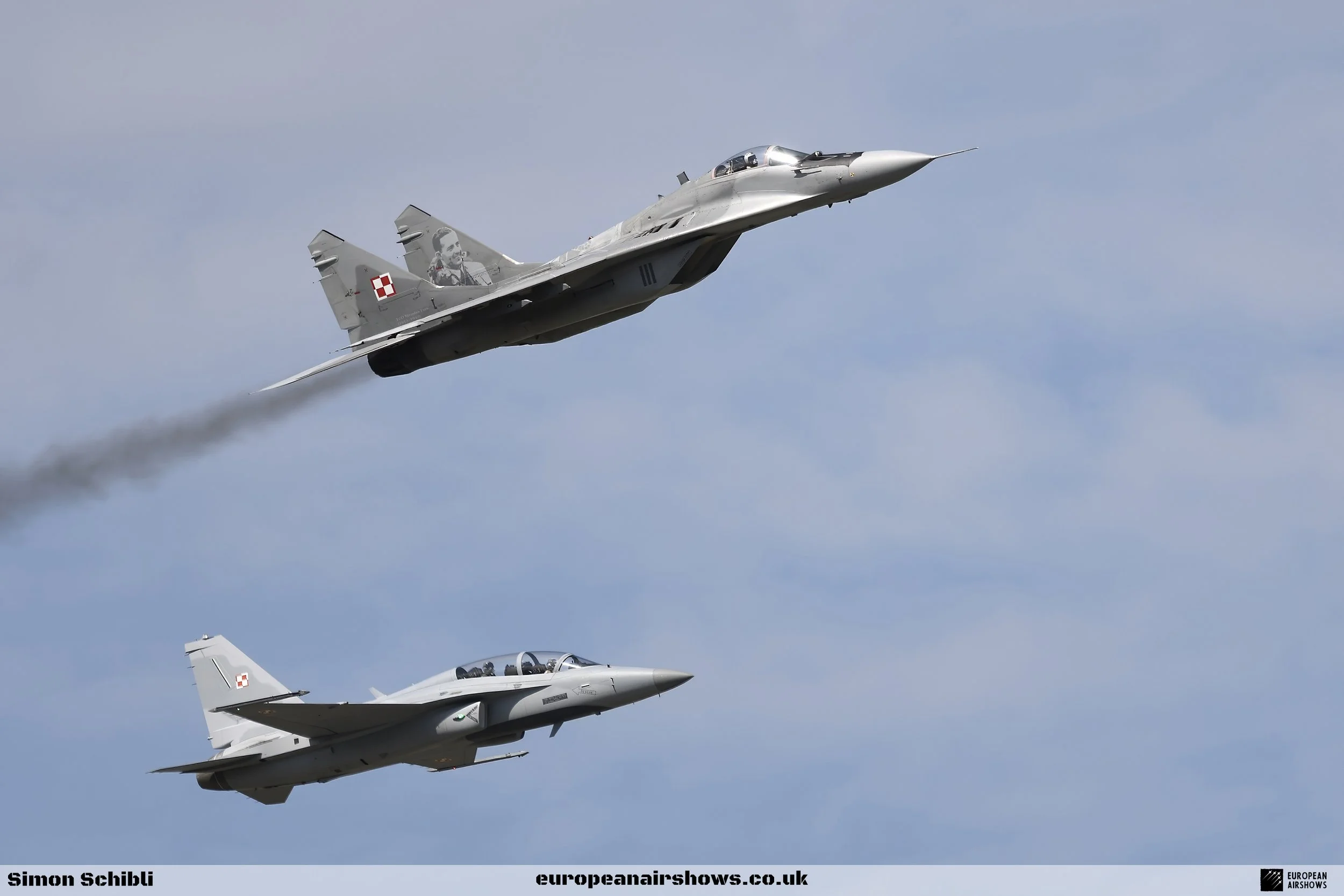
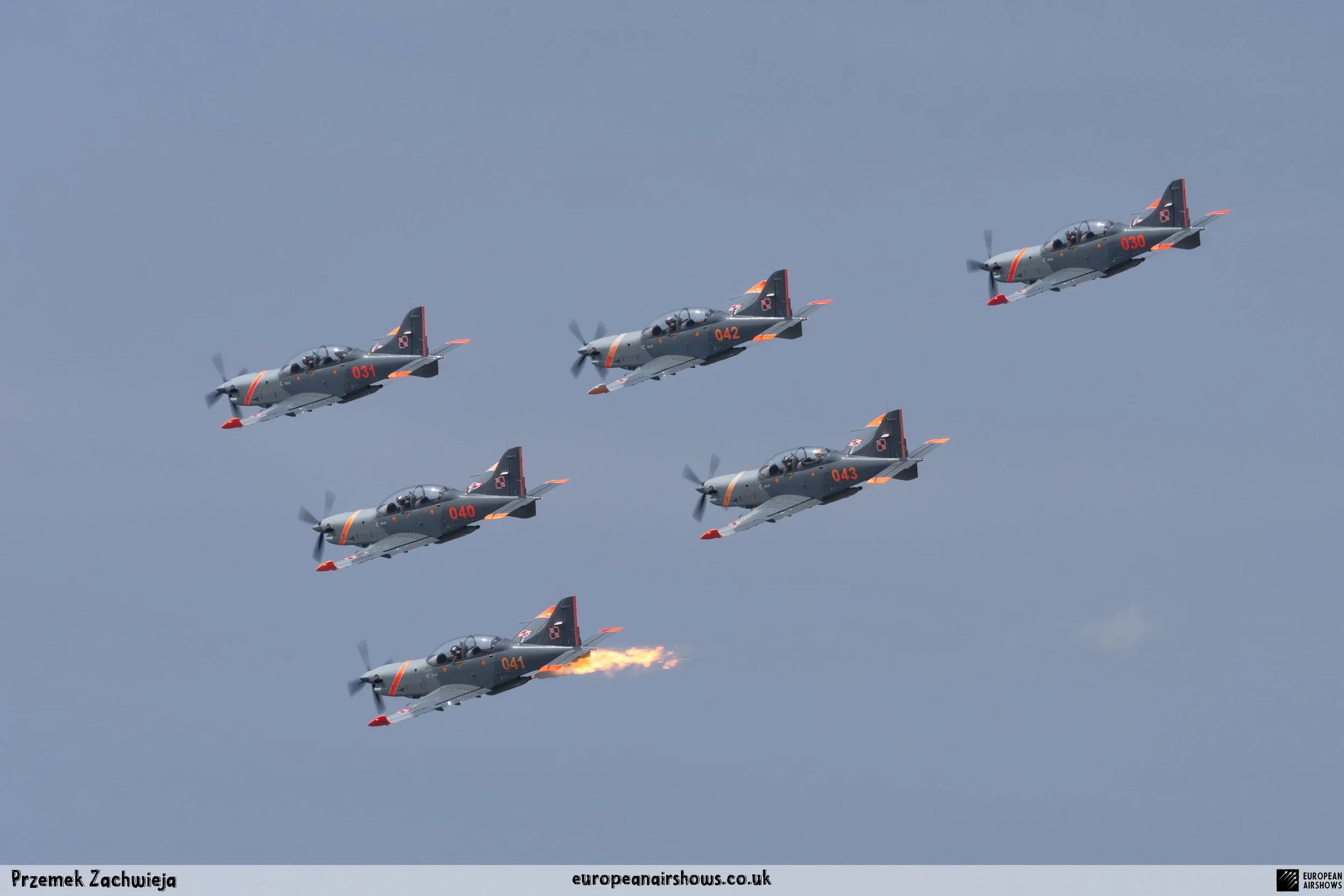
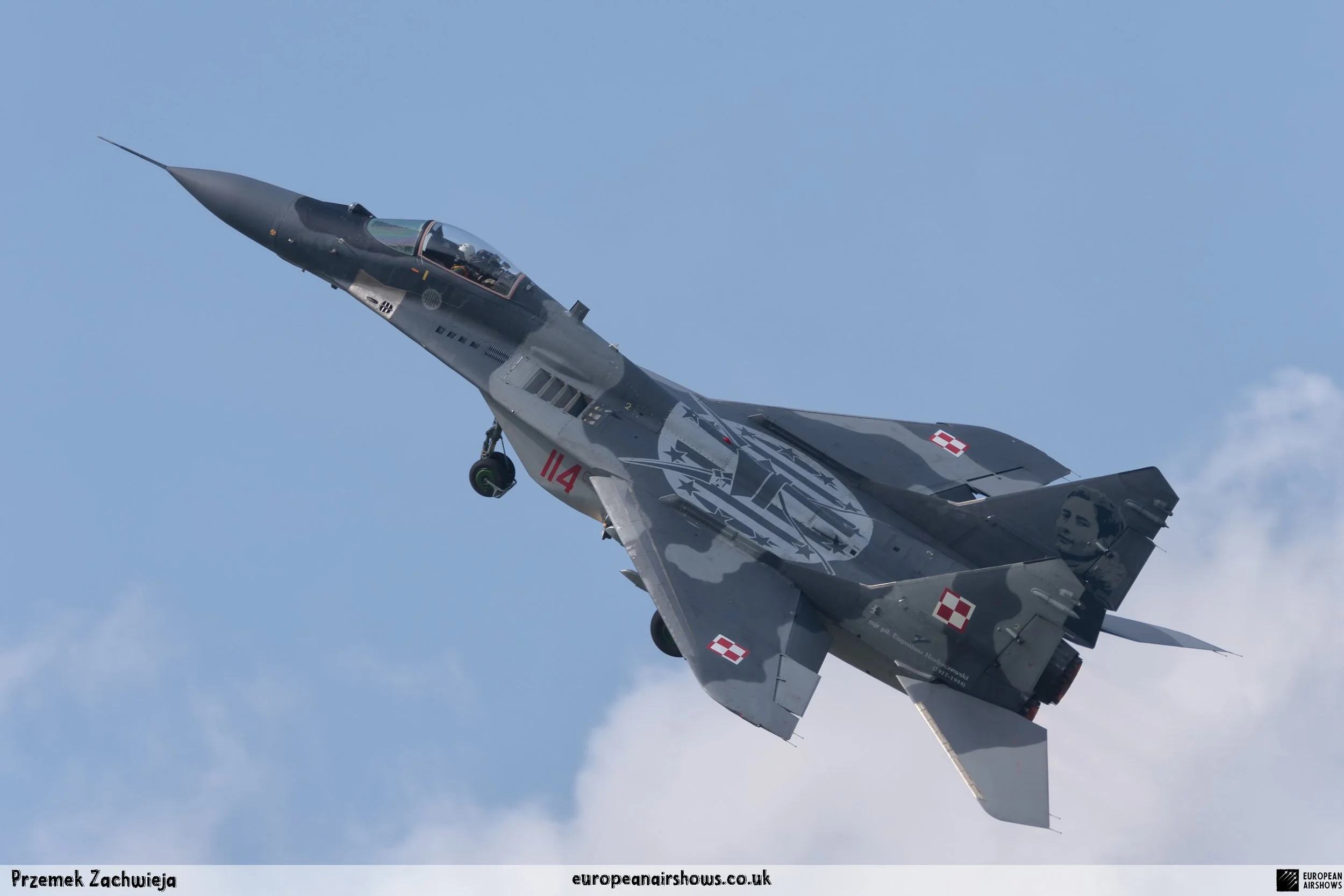
Bigger and bigger
Following difficult editions in 2007 and 2009, the show returned strongly in 2011 with around 180 aircraft and six aerobatic teams.
The opening alone featured more than 30 Polish military aircraft and helicopters, while the visiting line-up included F-16s, A-10s, Eurofighter Typhoons, Gripens, transports and an unusually strong selection of Eastern European military hardware.
Two years later came one of Radom’s defining editions.
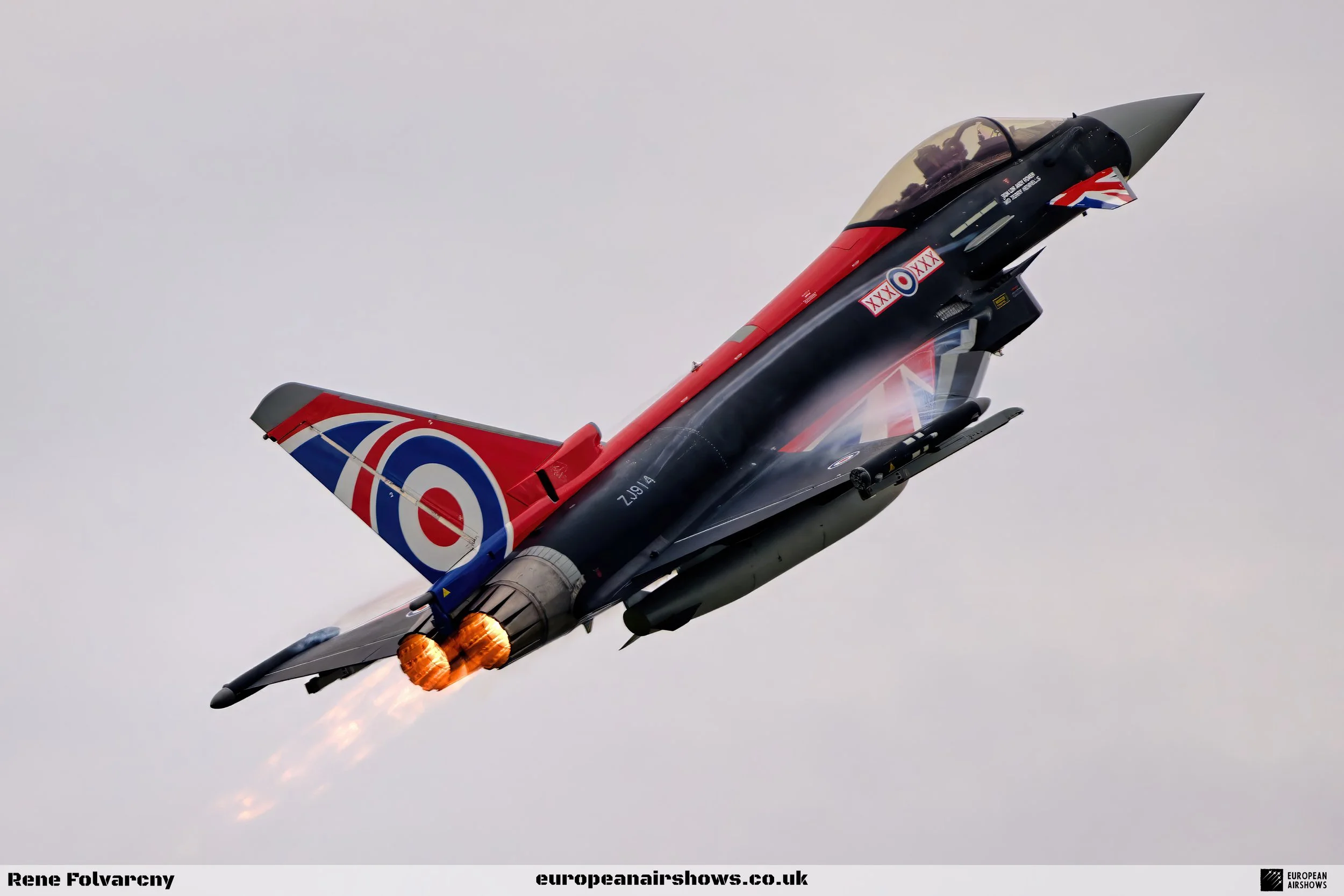
Around 180,000 spectators attended in 2013, with 216 aircraft and helicopters representing 20 countries. Seven aerobatic teams participated, while the flying programme included Rafale, Eurofighter Typhoon, Gripen, F-16, MiG-29 and C-27J Spartan displays.
On the ground, the static display included aircraft such as the Ukrainian Il-76 and German P-3 Orion alongside Polish and allied military equipment.
The scale increased again in 2015.
More than 250 military and civilian aircraft were involved, with aviators representing 20 countries. Around 3,000 people worked across the show weekend, supported by hundreds of police officers, firefighters, doctors and paramedics.
For enthusiasts, however, the attraction was never simply the numbers.
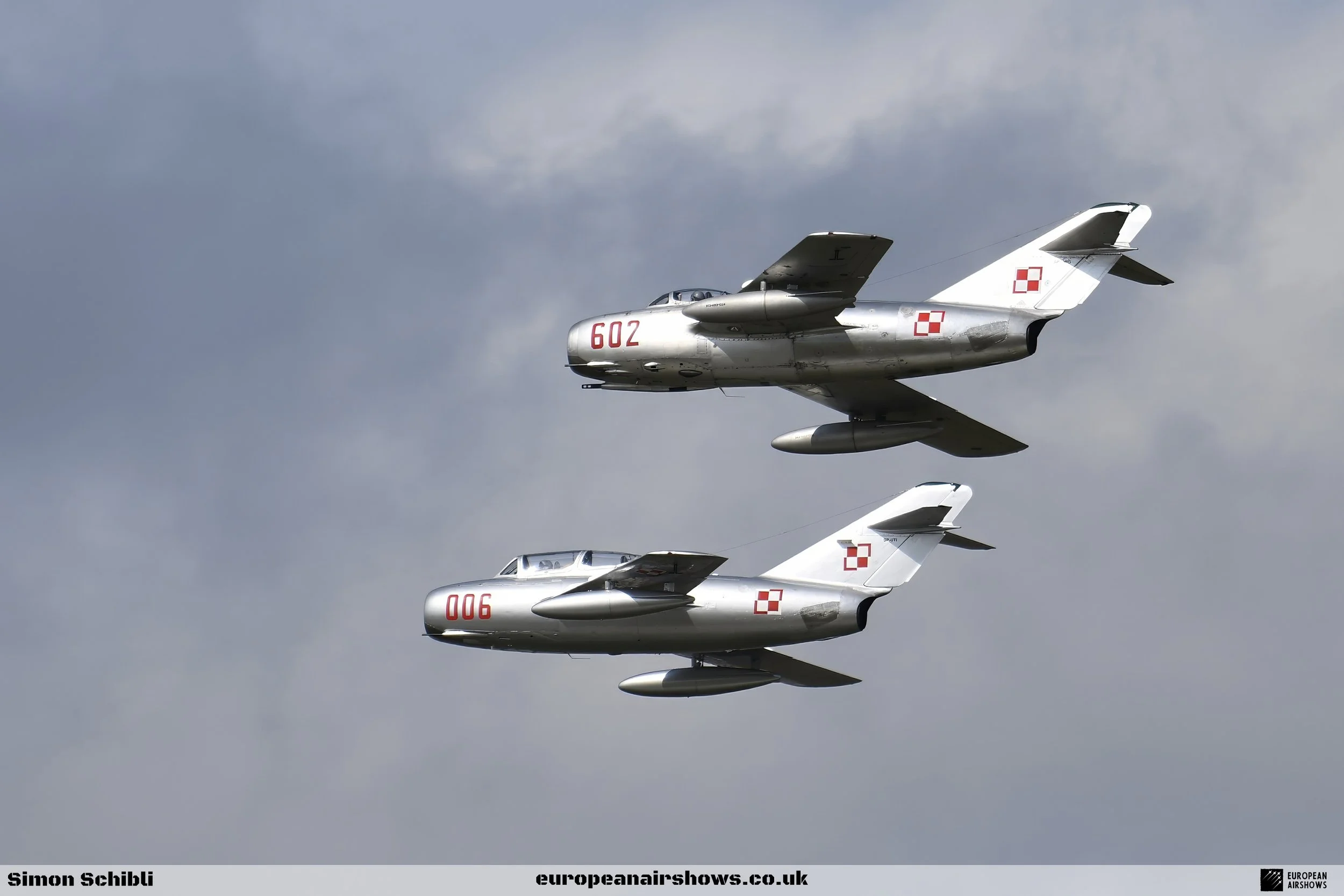
Radom developed a reputation for mixing the obvious headline acts with aircraft that could be extremely difficult to find elsewhere. MiG-21s, MiG-29s, Su-22s and other Eastern-built aircraft could appear alongside Rafales, F-16s, Eurofighters, Gripens and the leading European formation teams.
That East-meets-West character became one of Radom’s greatest strengths.
B-1 and B-52 over Radom
The 2017 edition provided one of the most memorable examples of the show’s ability to produce something exceptional.
More than 170,000 spectators attended and over 177 military and civilian aircraft were involved.
Among the highlights were flypasts by two of the United States Air Force’s most recognisable strategic bombers, the B-1B Lancer and B-52 Stratofortress.
For a Central European airshow already packed with military participation, the sight of American strategic bombers passing over the airfield added another level of significance.
The following year was equally important for very different reasons.
Celebrating 100 years of Polish military aviation
Air Show Radom returned unusually quickly in 2018 as part of celebrations marking 100 years of Polish independence and the centenary of Polish military aviation.
Participants came from more than 20 countries, with approximately 180,000 spectators attending across the weekend.
The programme included Frecce Tricolori, Patrulla Águila, Patrouille Suisse, Midnight Hawks, Wings of Storm and the Royal Jordanian Falcons.
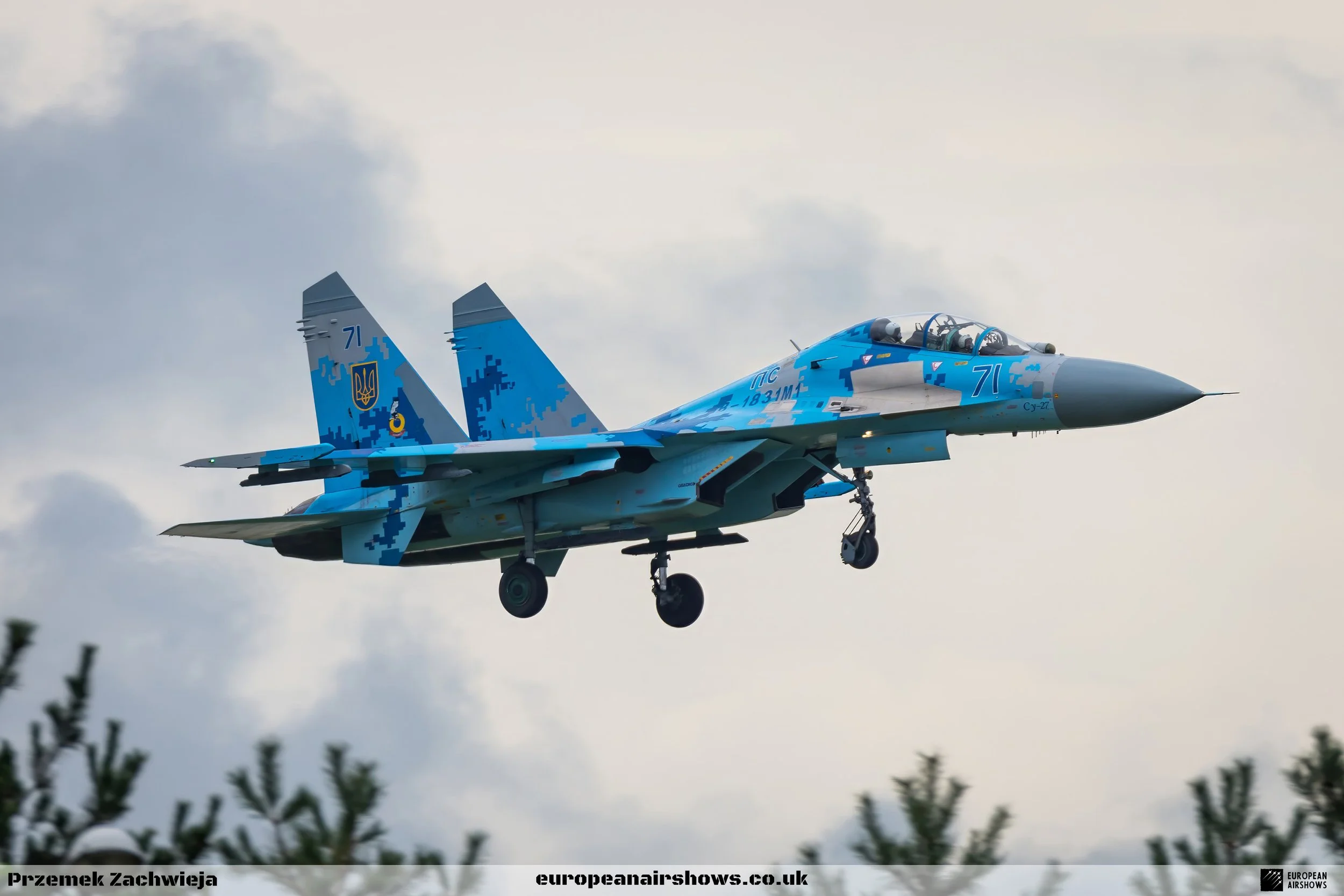
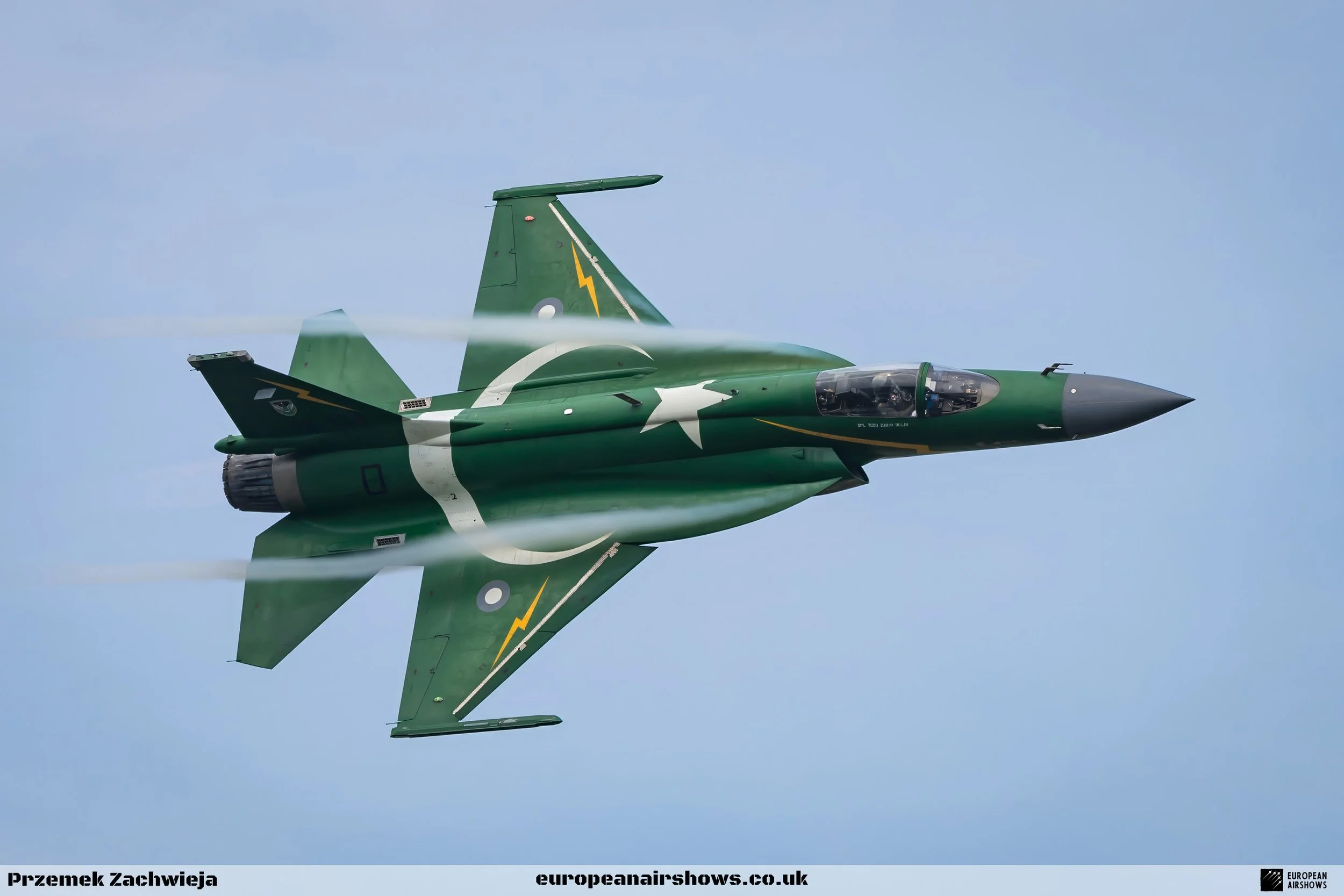
Fast-jet participation included Polish and foreign F-16s, Eurofighter Typhoon, Gripen and the Ukrainian Su-27, while Pakistan’s JF-17 made its first appearance in Polish skies.
The Flying Bulls added another dimension with an F4U-4 Corsair, B-25J Mitchell, two Alpha Jets and T-28B Trojan.
It demonstrated what Radom did particularly well: modern military aviation, national heritage, international participation and historic aircraft all packed into one enormous event.
It would then be five years before spectators returned.
The huge comeback of 2023
After the lengthy break, Air Show Radom finally returned on 26 and 27 August 2023.
Any concern that the absence might have diminished the event’s popularity quickly disappeared.
More than 175,000 people attended.
The official figures tell the story: 89 flying displays, participants from 17 countries, almost 20 hours of flying and more than 200 aircraft across the dynamic and static programmes.
The opening aerial parade alone consisted of 19 formations and 67 aircraft.
There were 157 aircraft involved in the dynamic programme and another 40 on the aircraft static display, while 72 pieces of equipment representing the Polish Armed Forces and NATO allies were displayed on the ground.
The organisers described the attendance as the third highest for an airshow in Europe.
For many enthusiasts, Radom 2023 felt less like a restart and more like confirmation that one of Europe’s great military shows was back.
The next edition was planned for 2025.
A show that never opened
Preparations for the 18th International Air Show Radom were well advanced throughout 2025.
The Ministry of National Defence described the event as not only a showcase of modern aviation, but also a celebration of aviation heritage and an opportunity to strengthen the relationship between the Polish Armed Forces and the public.
A formal organisational agreement had been signed in February and expectations were once again high.
Then, on the evening of 28 August 2025, during rehearsals at Radom, a Polish Air Force F-16 crashed.
The pilot, Major Maciej “Slab” Krakowian, leader of the Polish F-16 Tiger Demo Team, was killed. No bystanders were injured.
The entire 2025 Air Show was subsequently cancelled.
It was a devastating loss for Polish military aviation and the wider European display community.
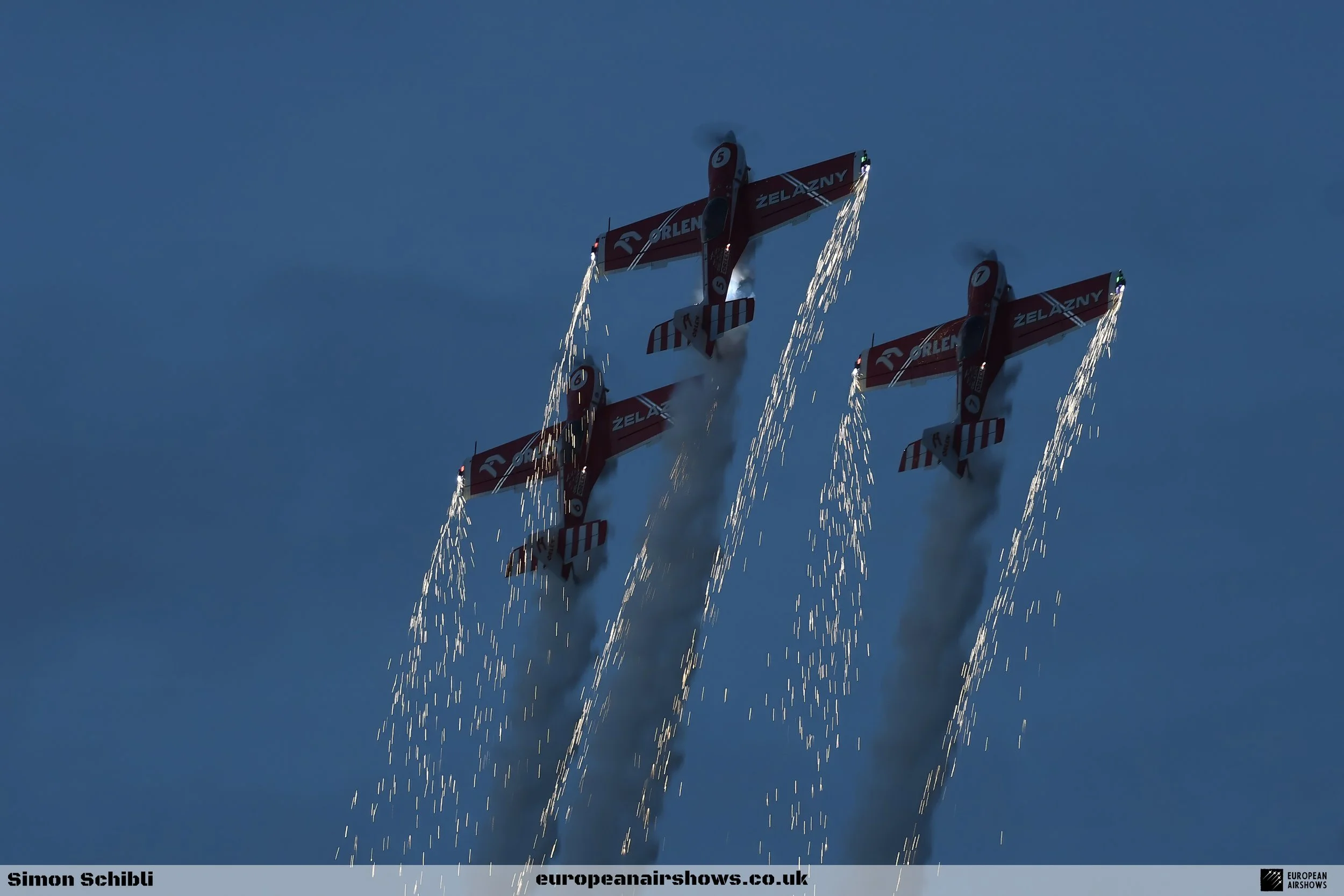
The accident also became the third fatal tragedy associated with the Radom show. In 2007, Żelazny pilots Lech Marchelewski and Piotr Banachowicz were killed when two aircraft collided during their display. Two years later, a Belarusian Air Force Su-27 crashed during its performance, killing both crew members.
Those losses form an important and sombre part of Radom’s history, but they should not be allowed to define an event whose story spans decades and hundreds of thousands of visitors.
Crucially, the Ministry of National Defence has not said that the 2025 F-16 accident is the reason it does not currently plan to organise a 2027 event. Its stated explanation concerns the geopolitical situation and the operational and training priorities of the Polish Armed Forces.
Why Radom matters
Air Show Radom occupies an unusual position among European events.
It is large enough to attract the major international display teams and modern fast jets, yet its identity has always remained unmistakably Polish.
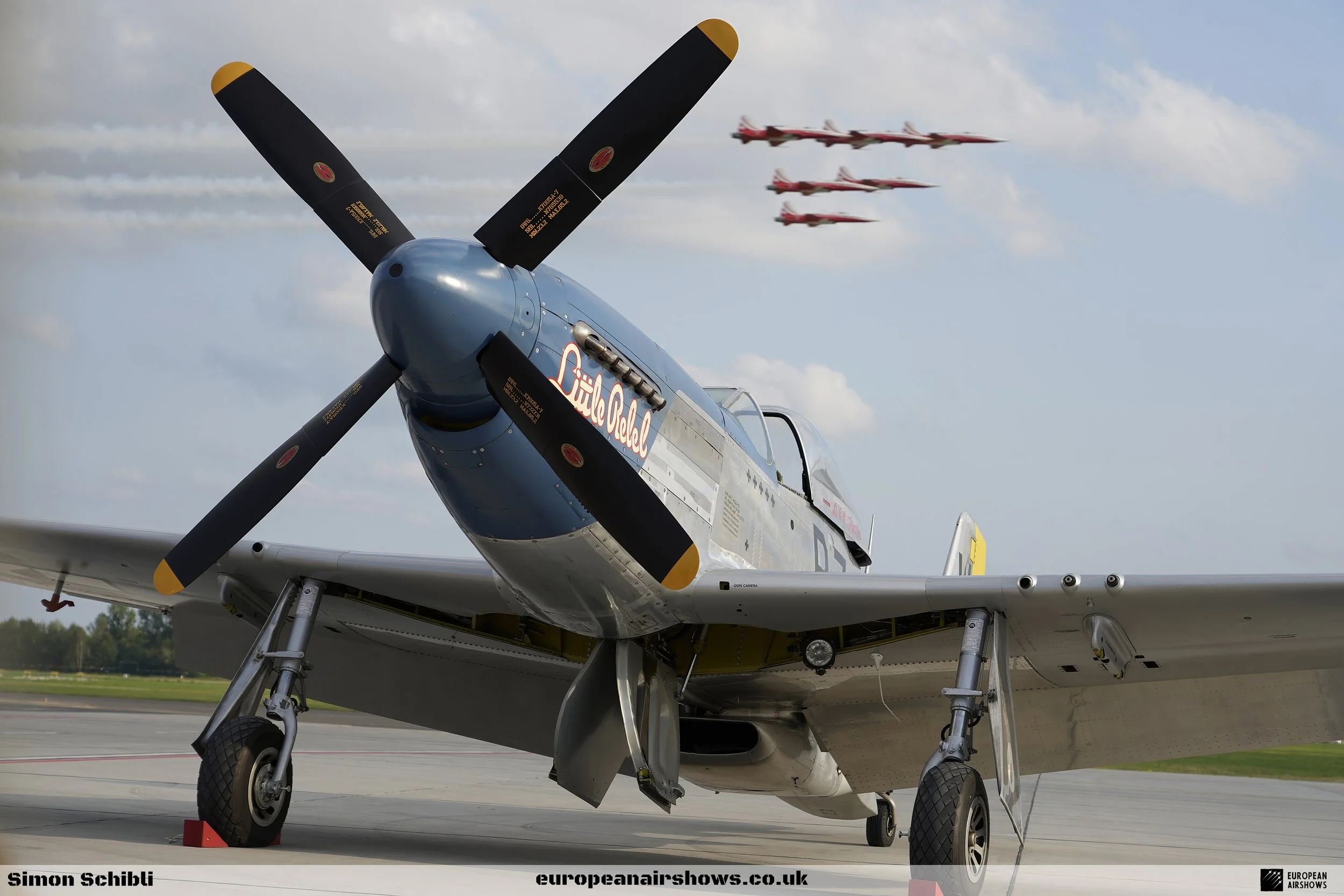
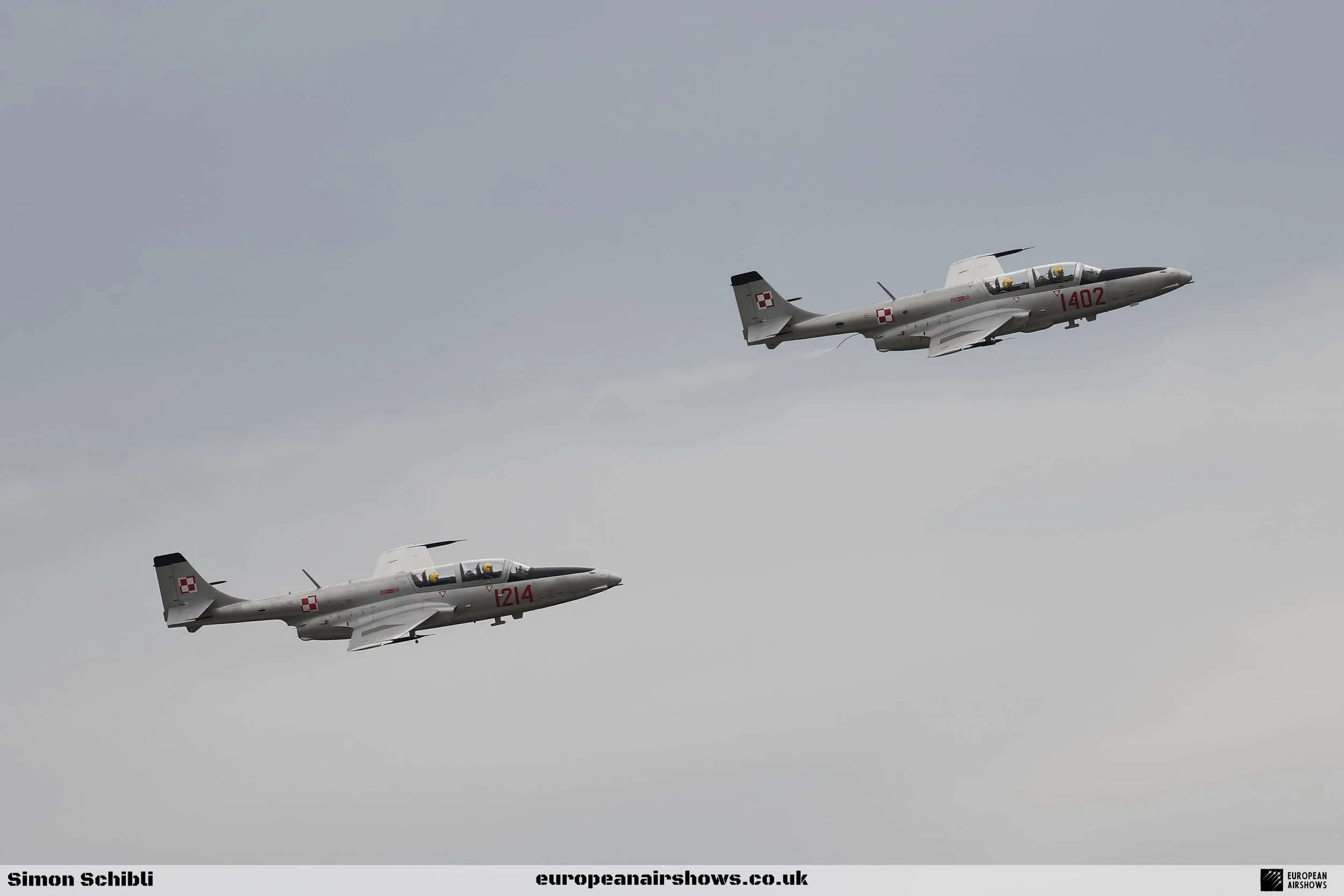
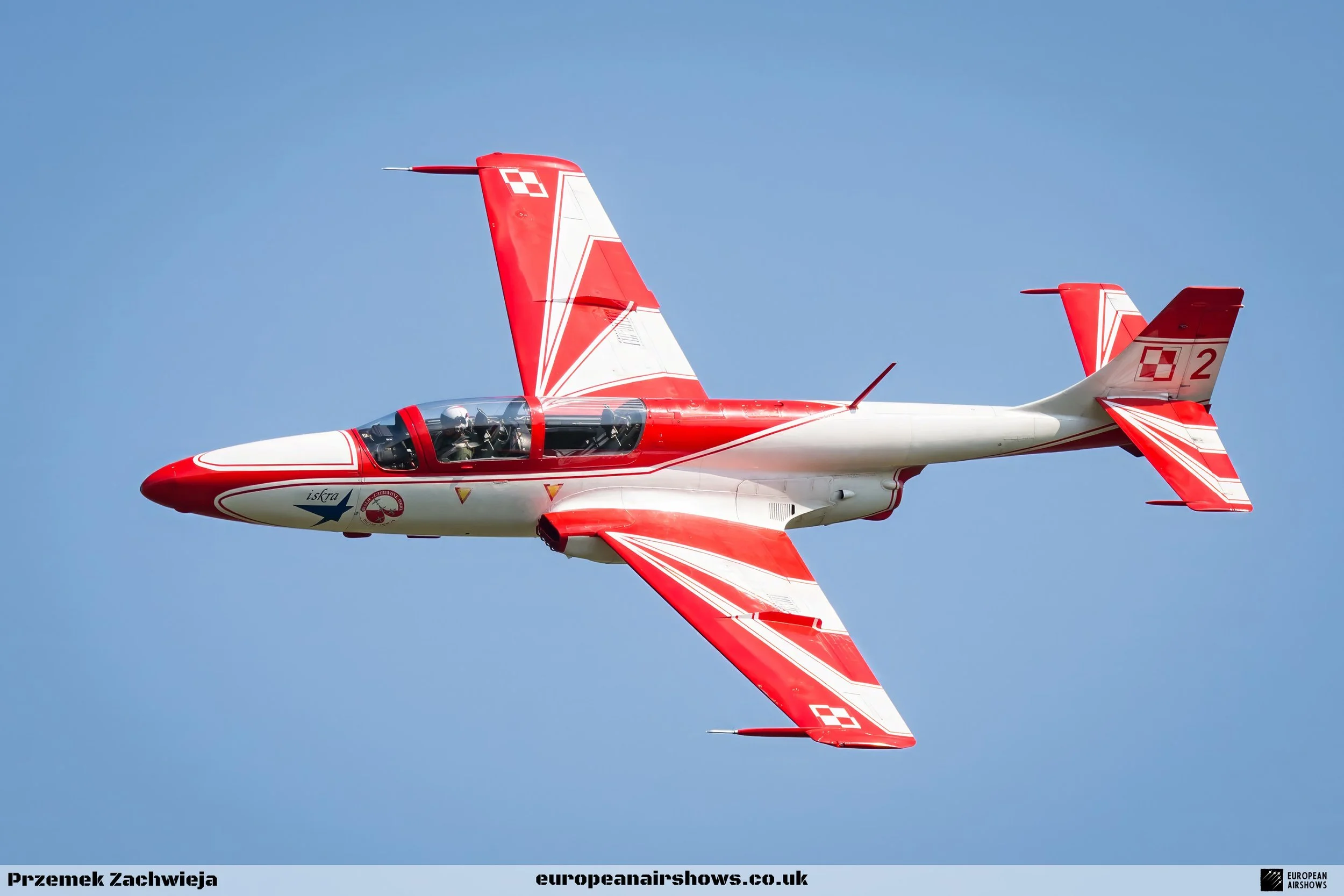
For decades it provided enthusiasts with the chance to see Polish MiG-21s, MiG-29s, Su-22s and TS-11 Iskras alongside their Western counterparts.
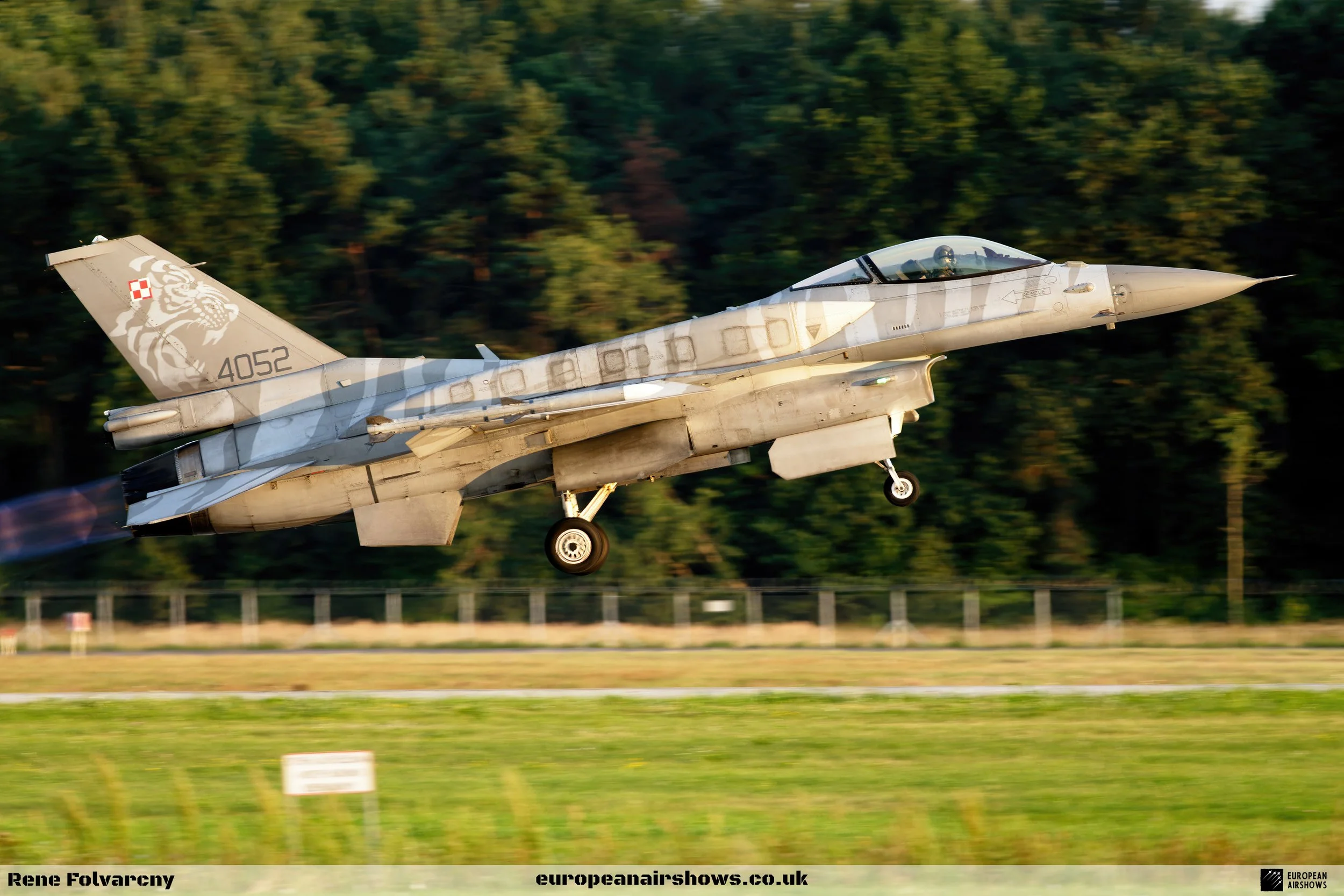
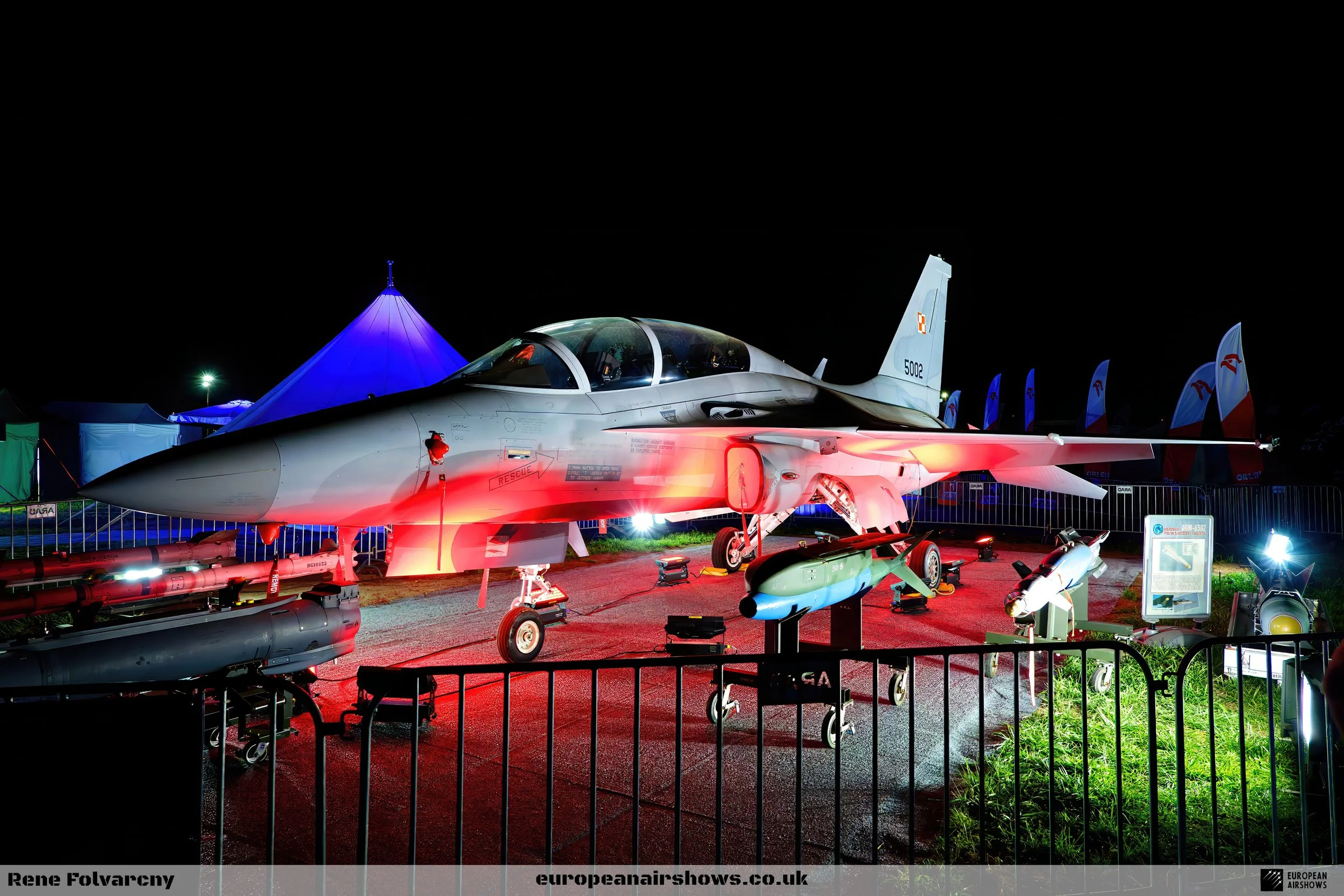
As those aircraft have disappeared or approached retirement, Radom has also documented the transition towards the F-16, M-346 and a new generation of Polish military aviation.
At the same time, the extensive international participation has given it a genuinely European character.
That combination explains why Radom has developed a following well outside Poland.
There are larger aviation events and there are more specialised ones, but relatively few combine mass formations, solo fast jets, operational scenarios, international aerobatic teams, historic aircraft and enormous military static displays on the scale Radom has repeatedly achieved.
For the city, the relationship is equally important.
Mayor Witkowski has described the International Air Show as one of the most important, if not the most important, events promoting Radom. The city says it has substantial experience from its involvement in previous editions and remains ready to participate should the military give the event the green light.
After more than 25 years, Radom and the Air Show have become difficult to separate.
Is Air Show Radom 2027 cancelled?
For now, the most accurate answer is more complicated than a simple yes or no.
The Polish Ministry of National Defence does not plan to organise Air Show Radom in 2027. Given the central role of the Ministry and Polish Armed Forces, that places a traditional 2027 edition in very serious doubt.
But the City of Radom has not accepted that as the final word.
Radosław Witkowski says talks are continuing, that there is still time to discuss the format of the event and that he has heard nothing suggesting the wider International Air Show project is being permanently abandoned.
For a show of Radom’s scale, changing the Ministry’s current position would be a significant hurdle. The organisational structure of previous editions shows just how important military participation is to making the event possible.
That means enthusiasts should not currently expect a 2027 edition unless the situation changes.
At the same time, it would be premature to declare Air Show Radom finished forever.
A European airshow institution
Whatever happens in 2027, Radom’s place in European airshow history is already secure.
The wider International Air Show story stretches back to Poznań in 1991, while Radom itself has hosted the event since 2000.
Since then it has welcomed aircraft from across Europe and beyond, presented some of the world’s leading aerobatic teams, attracted crowds approaching 200,000 and assembled programmes containing more than 200 aircraft.
It has seen the final flight of a Polish MiG-21, watched Poland choose and introduce a new generation of combat aircraft, welcomed the Red Arrows to a Polish audience for the first time, hosted strategic bomber flypasts and celebrated a century of Polish military aviation.
Most importantly, it became one of those rare airshows whose location alone is enough to identify the event.
For aviation enthusiasts, Radom is not simply a city with an airshow. Radom is an airshow destination.
That is why the latest news matters.
The Ministry of National Defence has made its current priorities clear. The City of Radom has made it equally clear that it intends to continue fighting for the event.
Whether those two positions can ultimately be reconciled remains to be seen.
For now, Air Show Radom 2027 remains in serious doubt, but after more than three decades of International Air Show history and more than a quarter of a century at Radom, the city is determined that the story should not end here.
