
REVIEW: Duxford Battle of Britain Airshow 2025
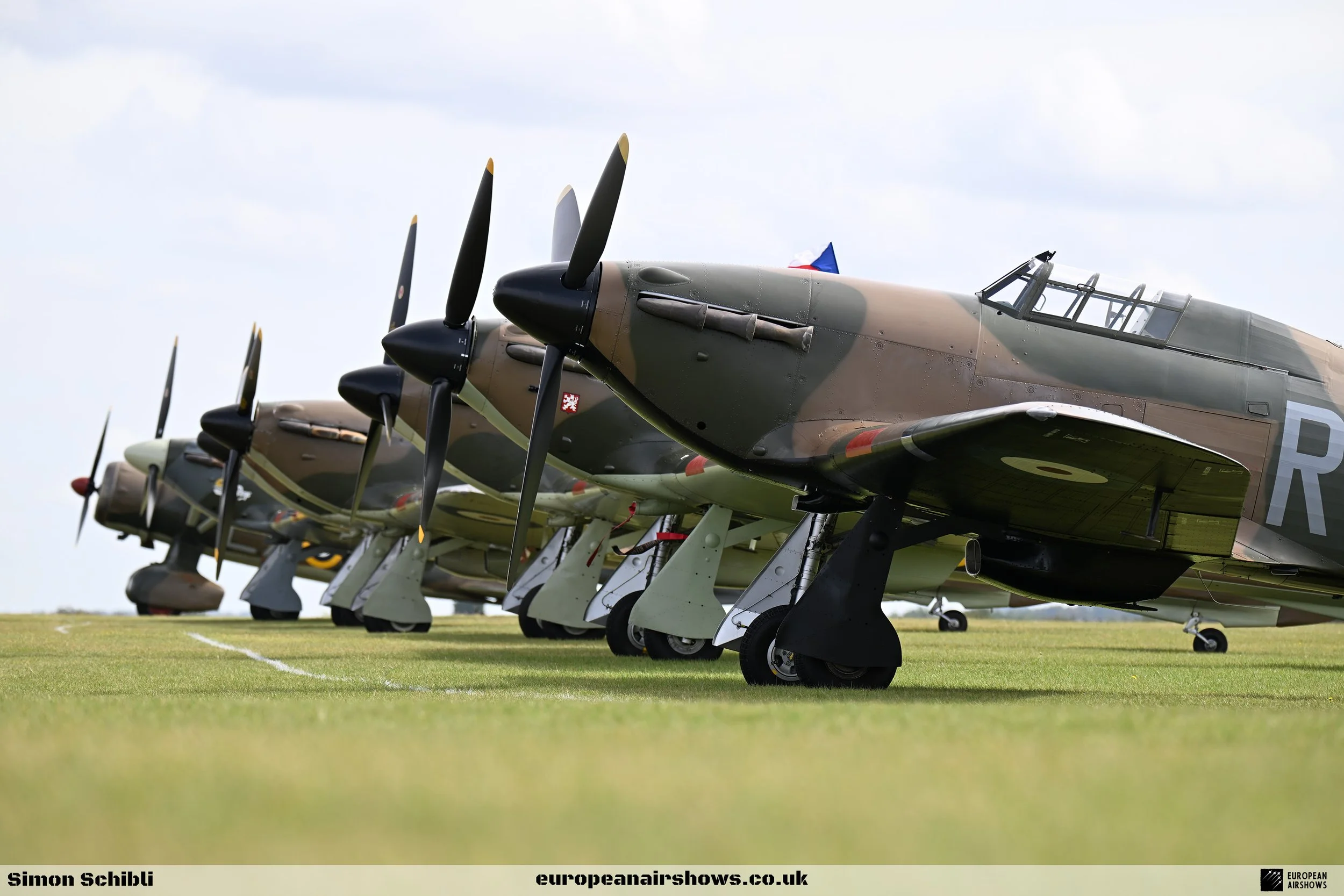
Battle of Britain Airshow at Imperial War Museum Duxford remains one of the landmark events of the European historic aviation calendar, and the 2025 edition carried particular significance thanks to the exceptional gathering of eight Hawker Hurricanes. European Airshows member Simon Schibli travelled to Duxford to report on the event, making a rapid day trip from Switzerland to witness the opening day of the show and the rare assembly of these iconic aircraft.
The journey began early in the morning at Geneva Airport with a flight to London Gatwick Airport on Saturday 6 September 2025. From there it was straight to the railway station to catch a direct train north to Cambridge. The historic university city offered little time for exploration however, as the schedule required an immediate transfer to the shuttle buses heading toward Duxford. A short journey later the airfield finally came into view and, despite the tightly packed travel schedule, arrival came well before the flying programme began.
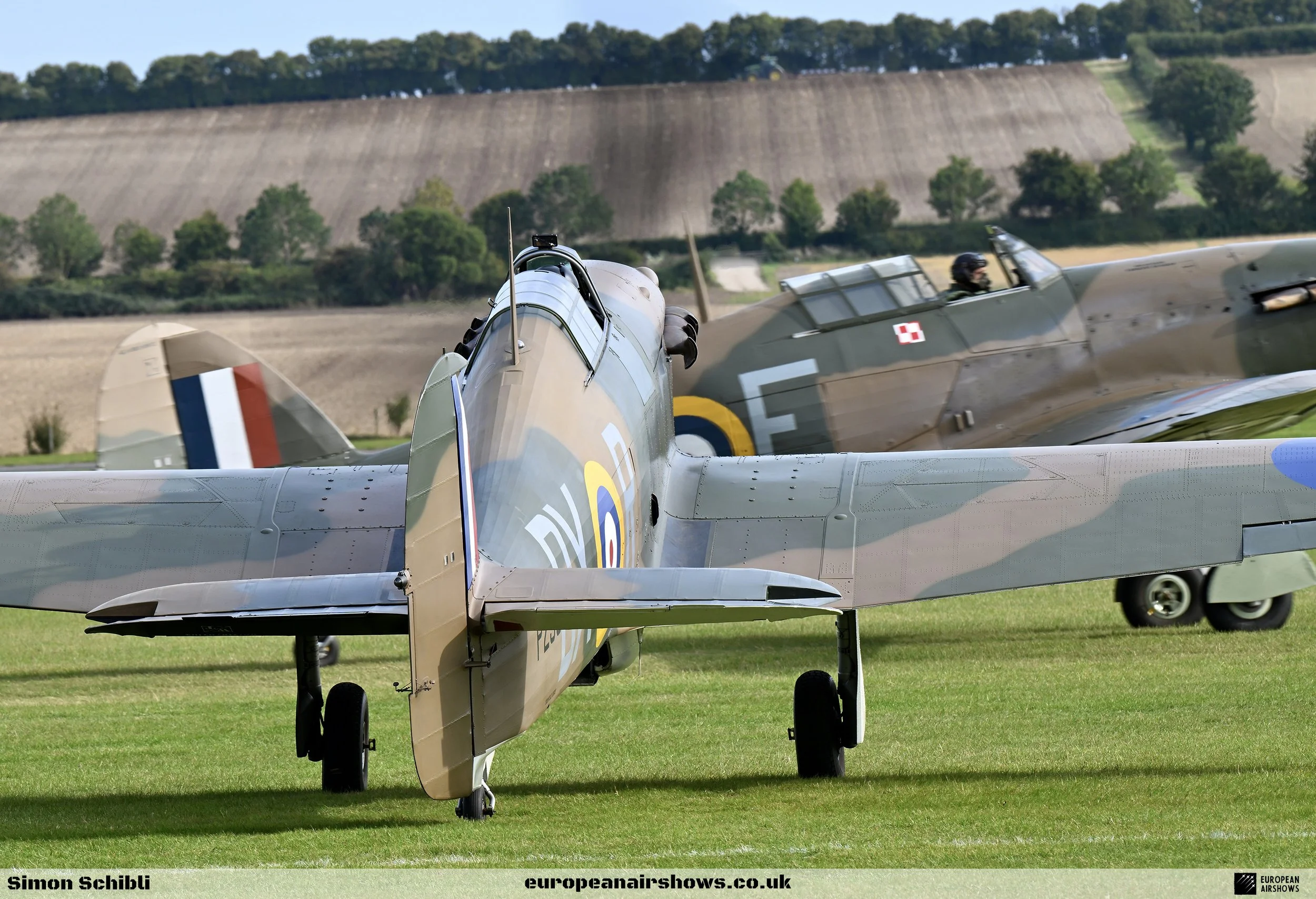
Entry procedures proved smooth and efficient and before long the crowdline and taxiways were already busy with activity. It was not yet 11 a.m. and spectators were already surrounded by aircraft preparing for the afternoon programme. The primary reason for making the journey quickly became clear on the flightline itself.
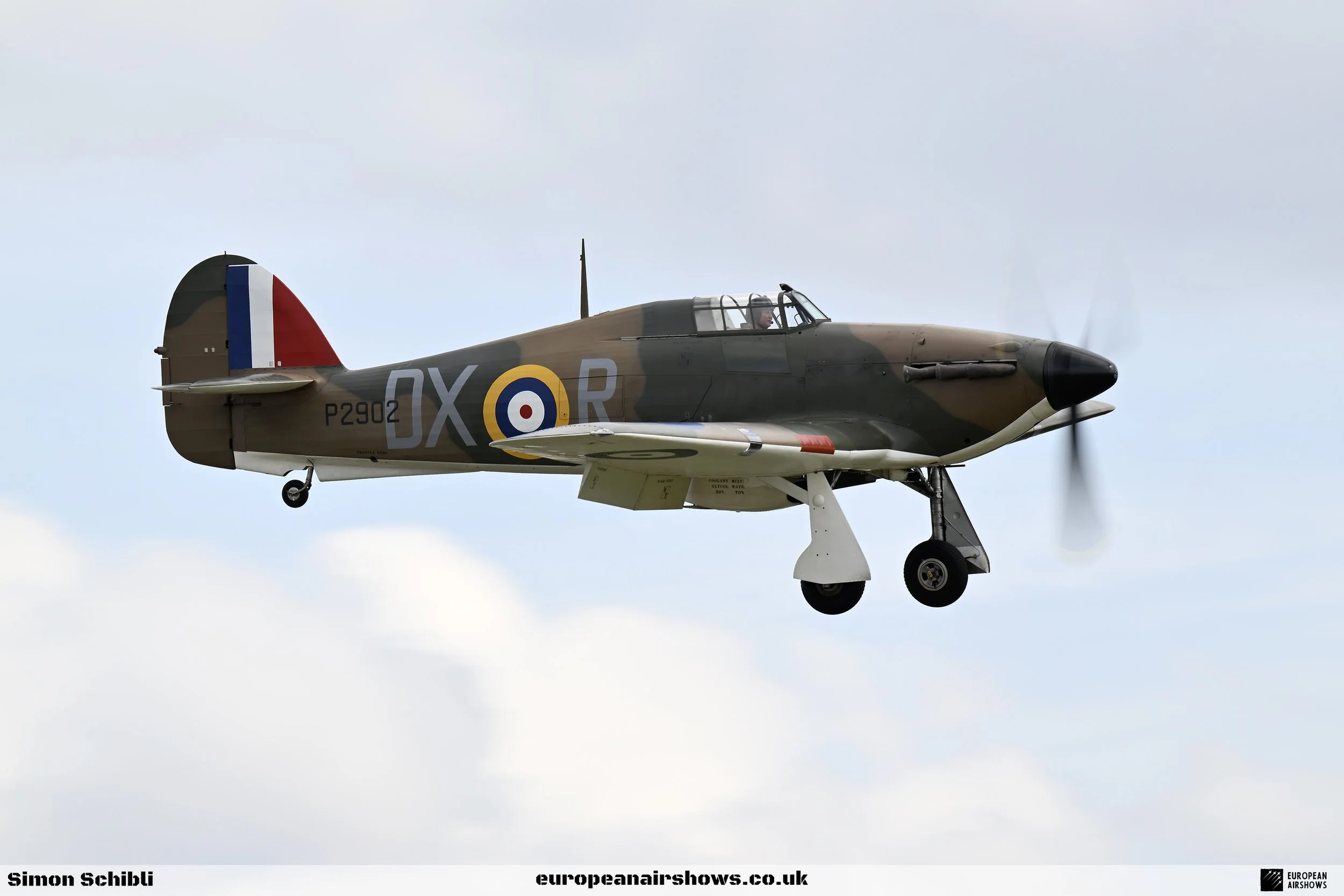
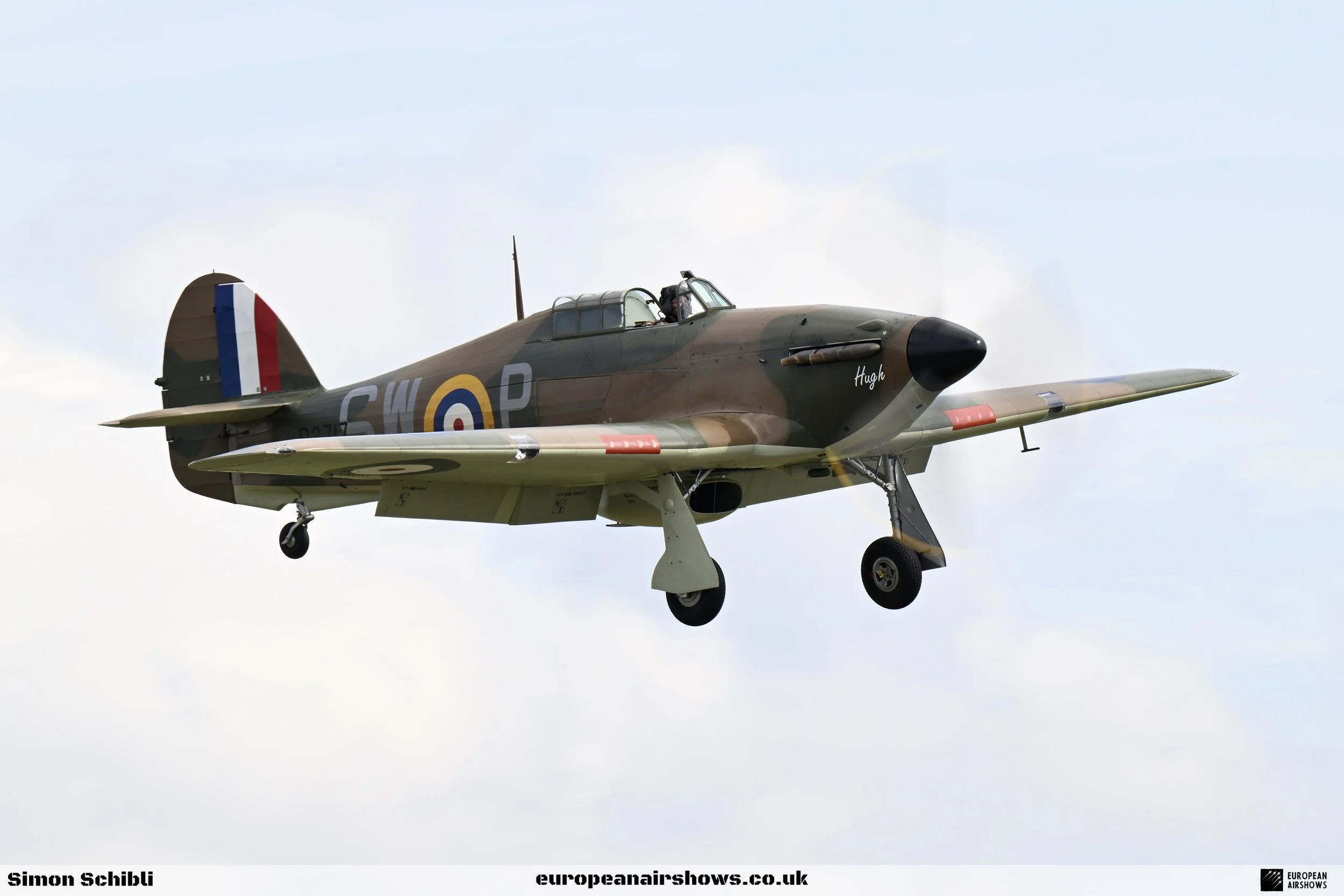
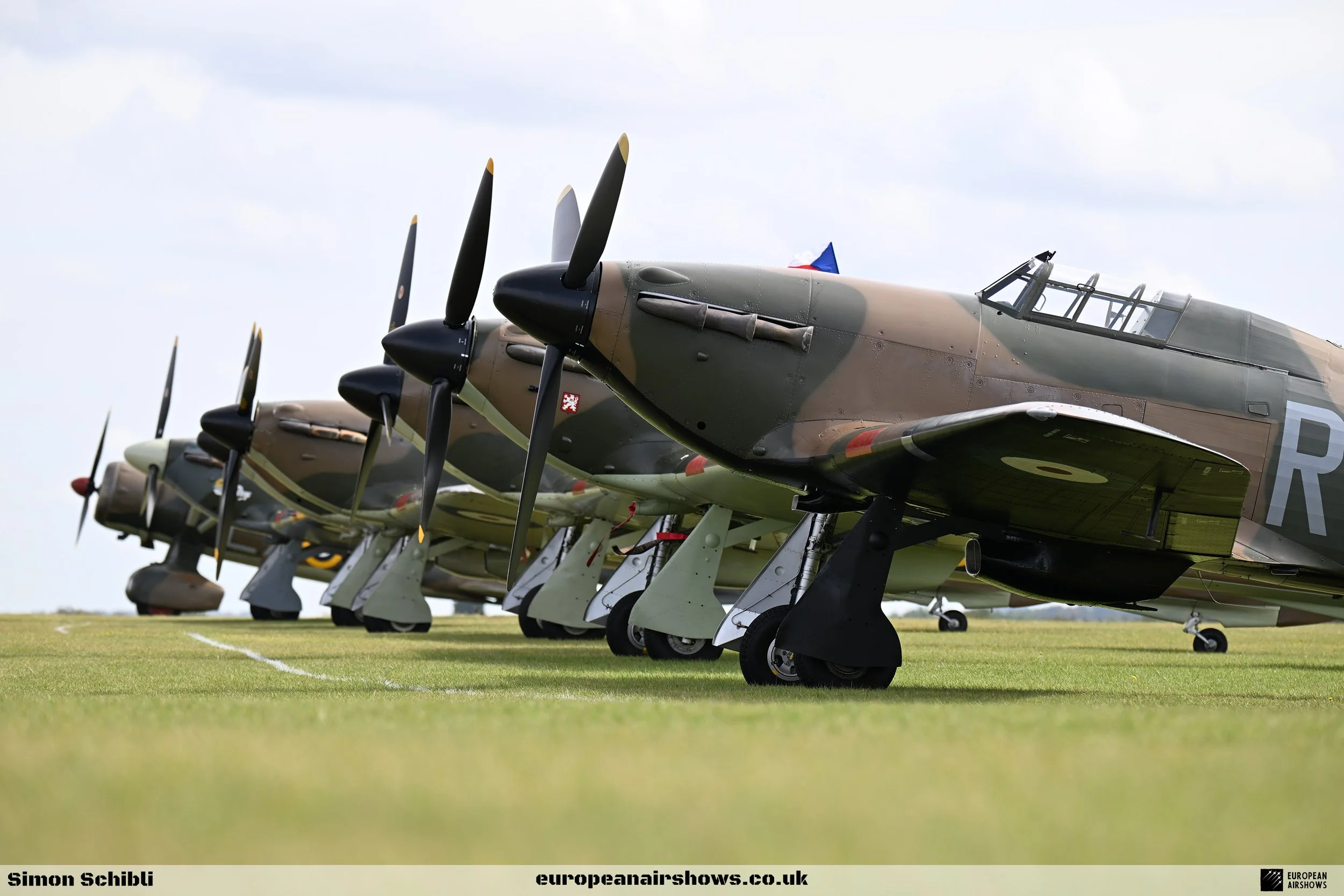
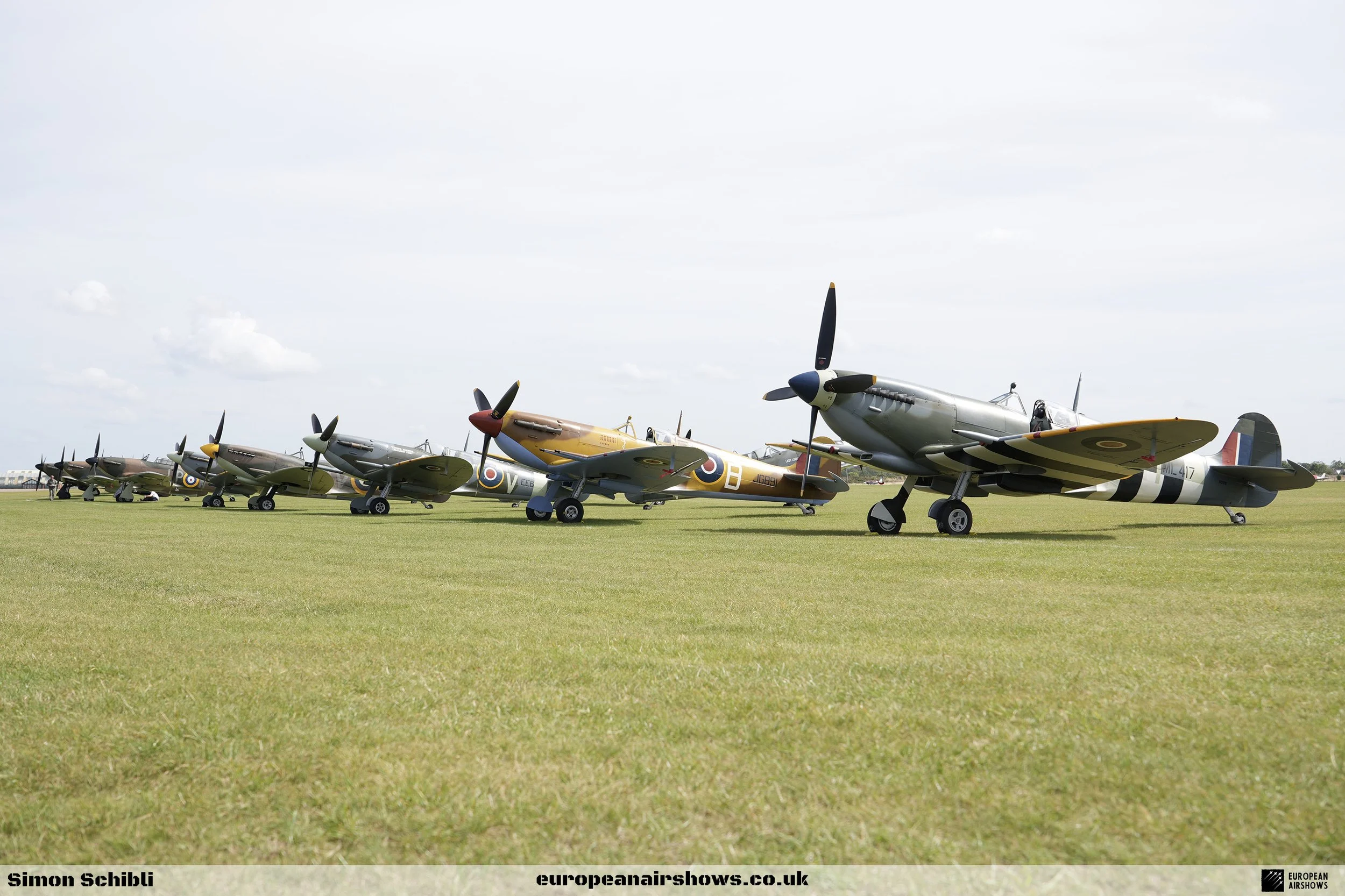
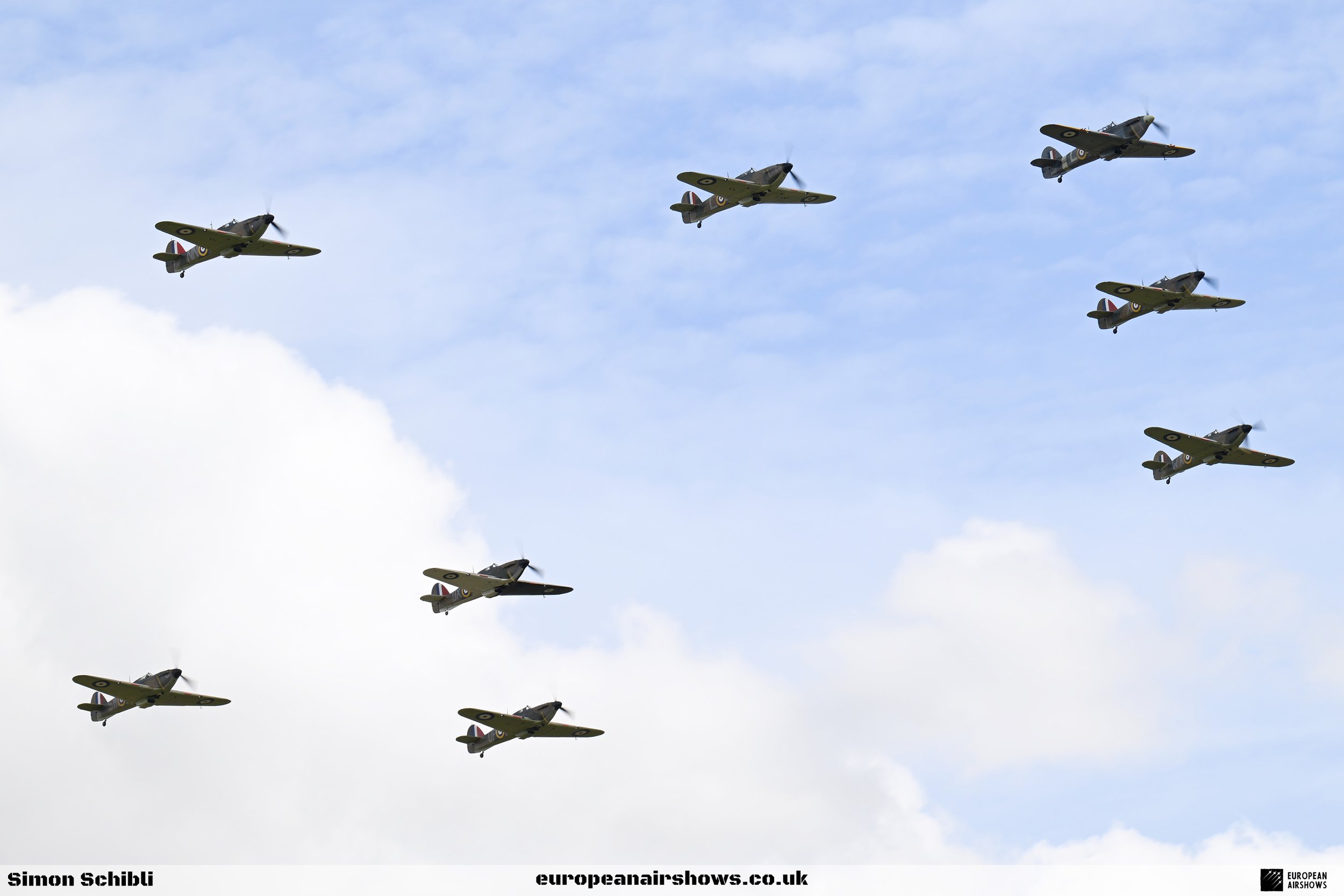
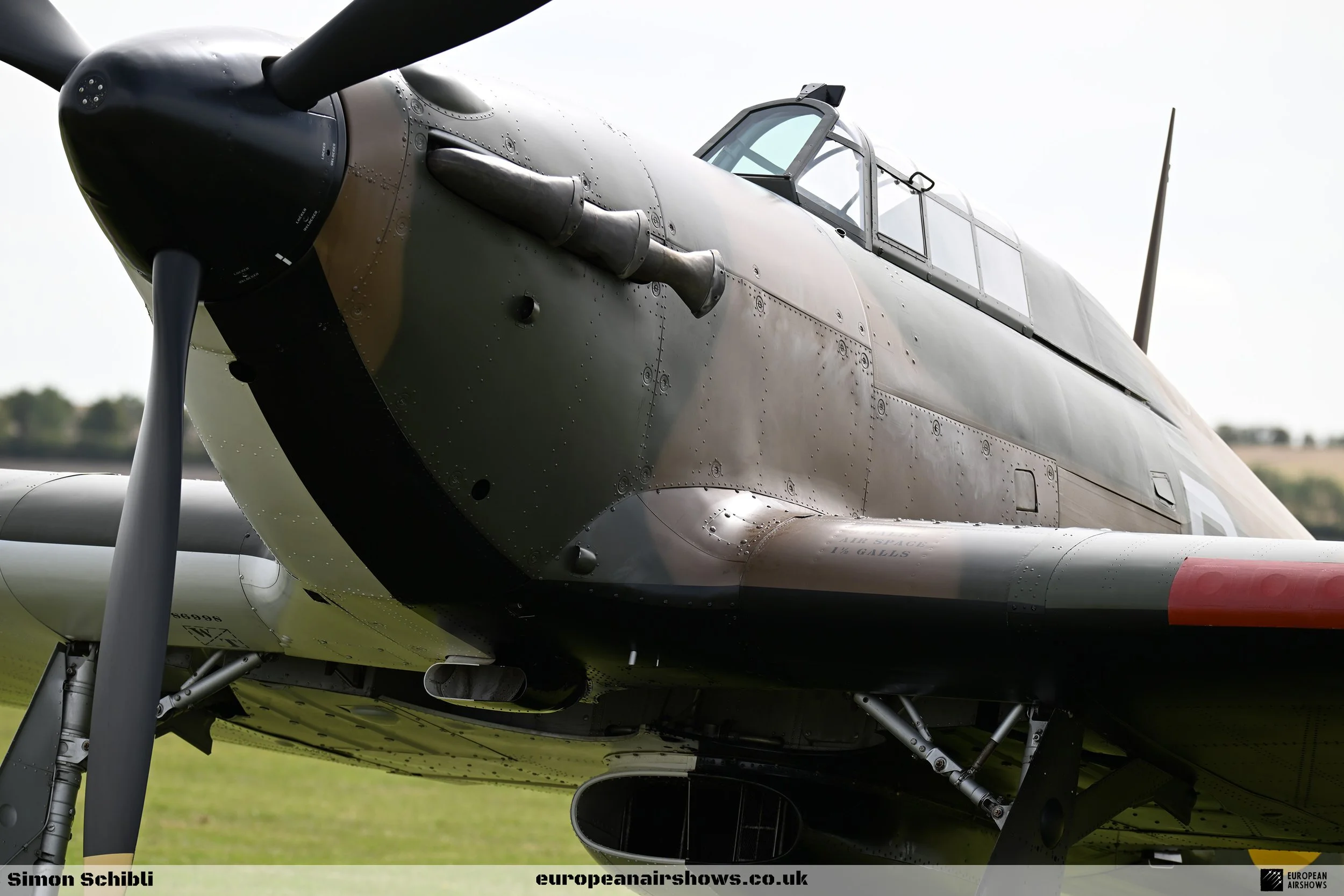
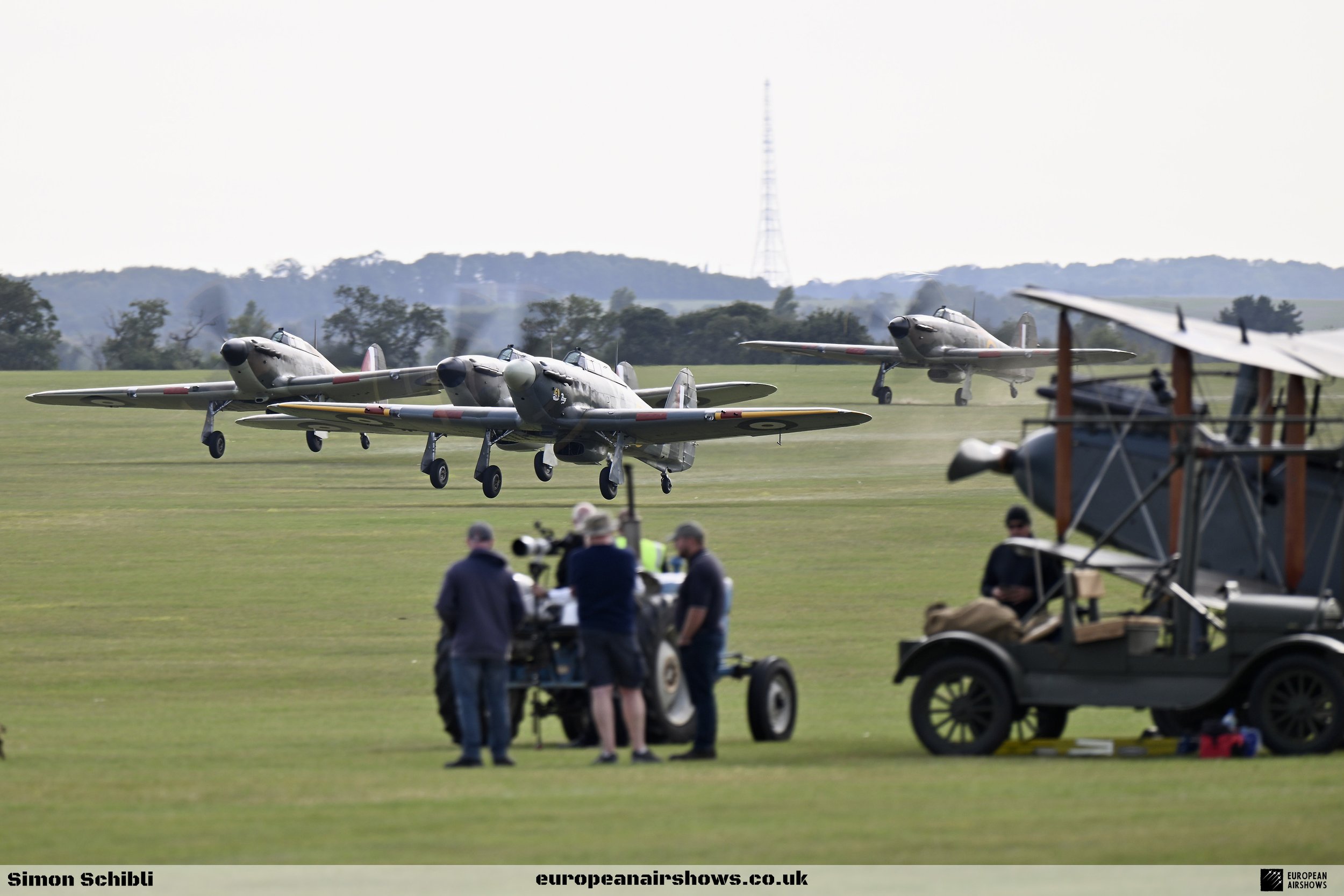
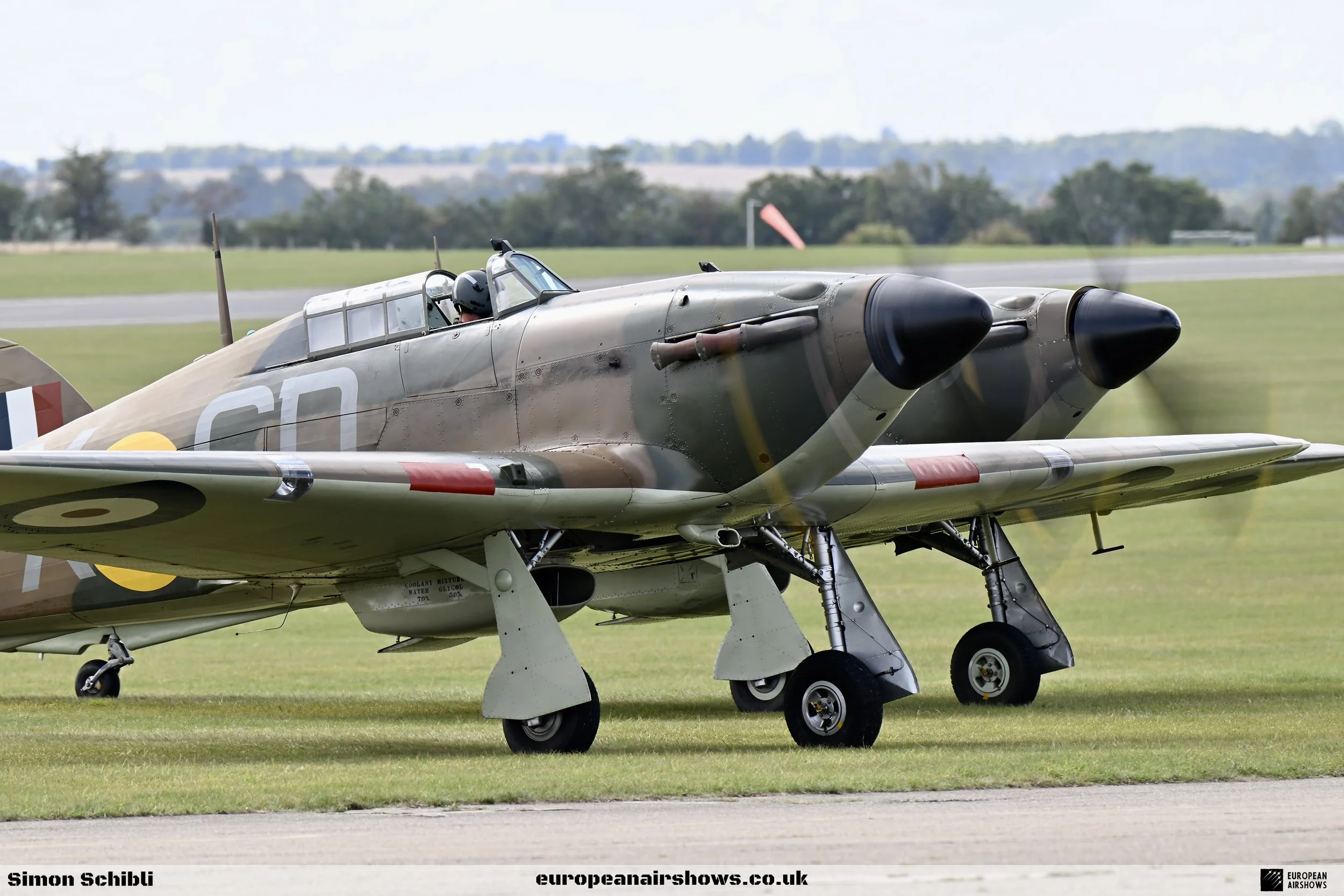
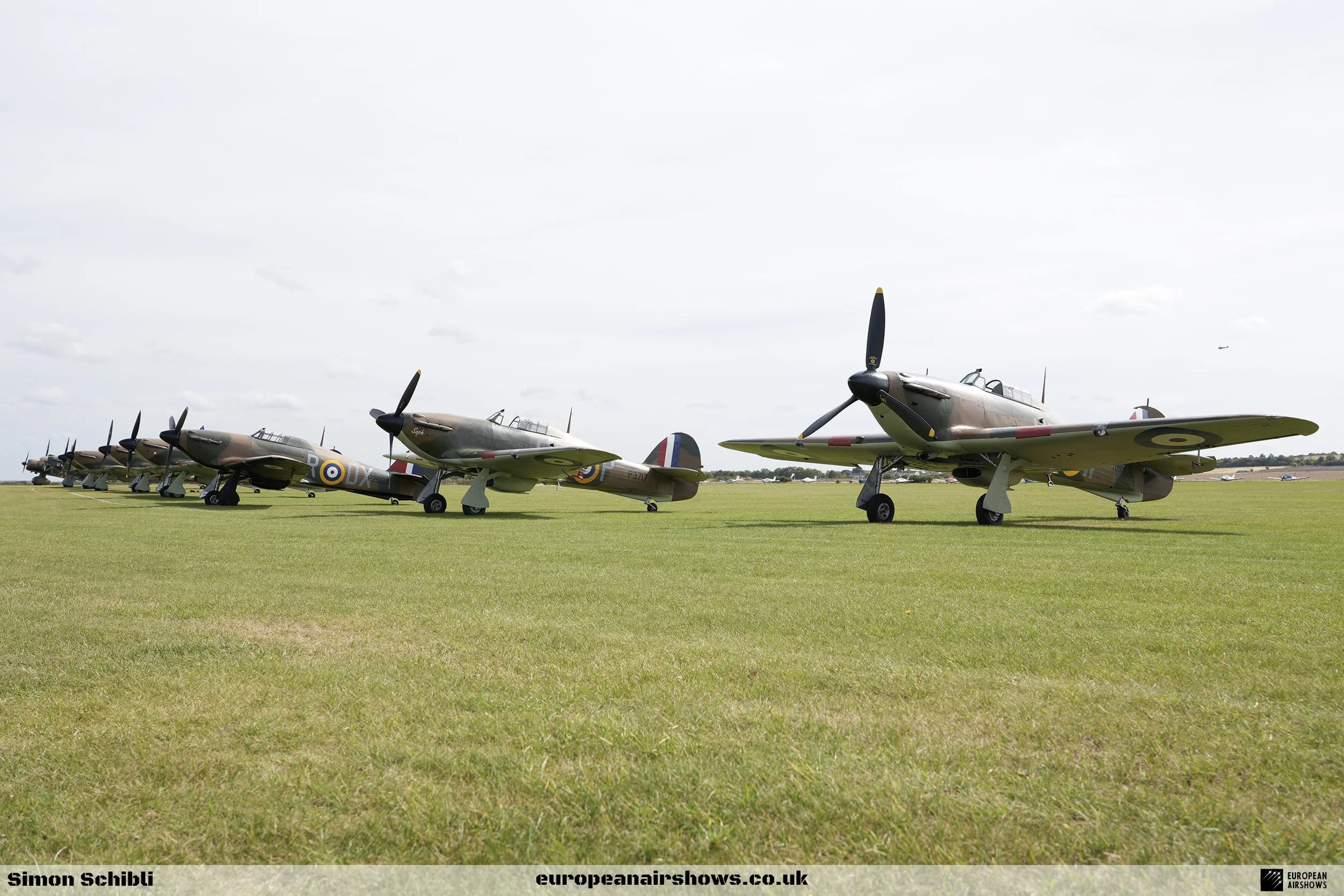
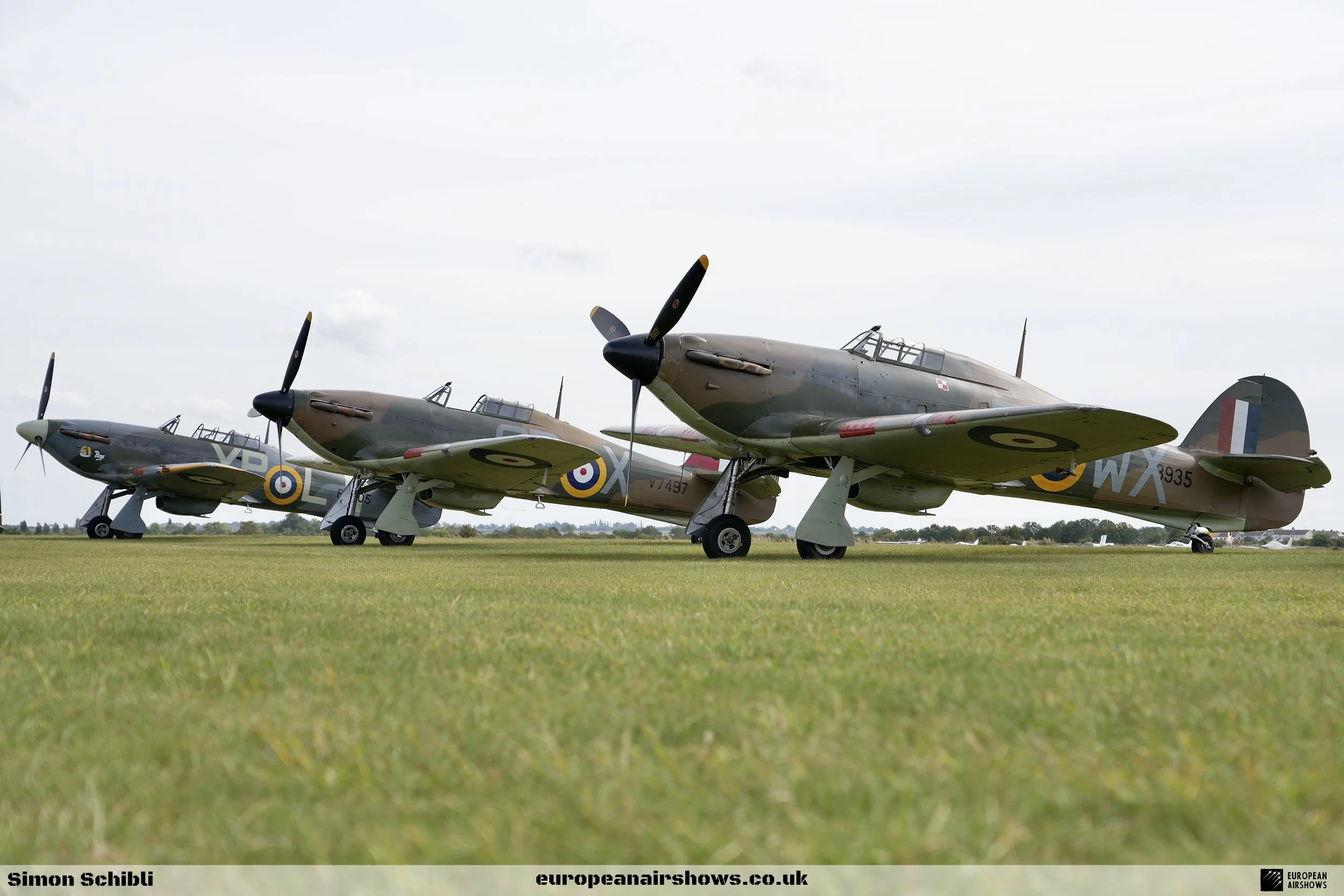
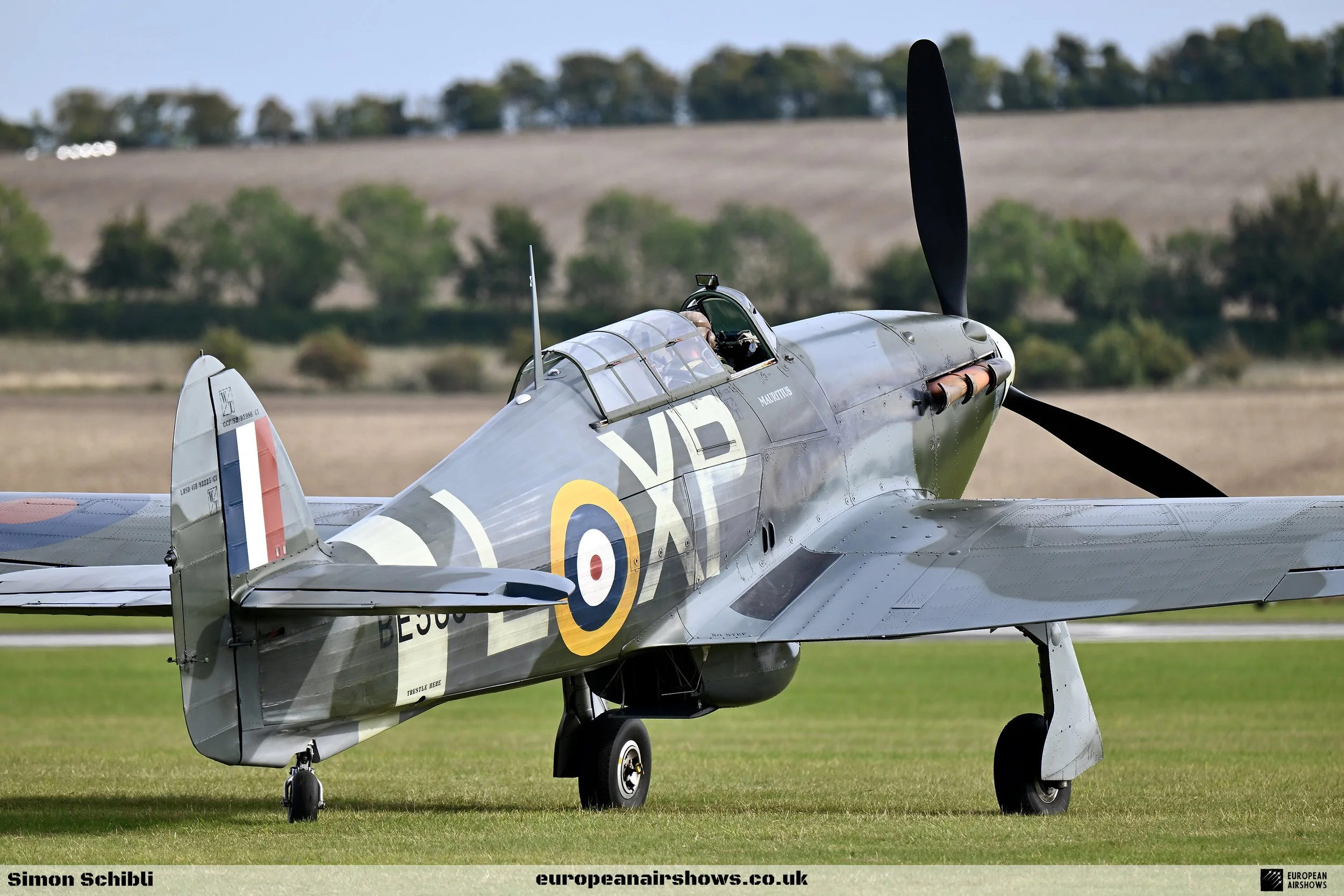
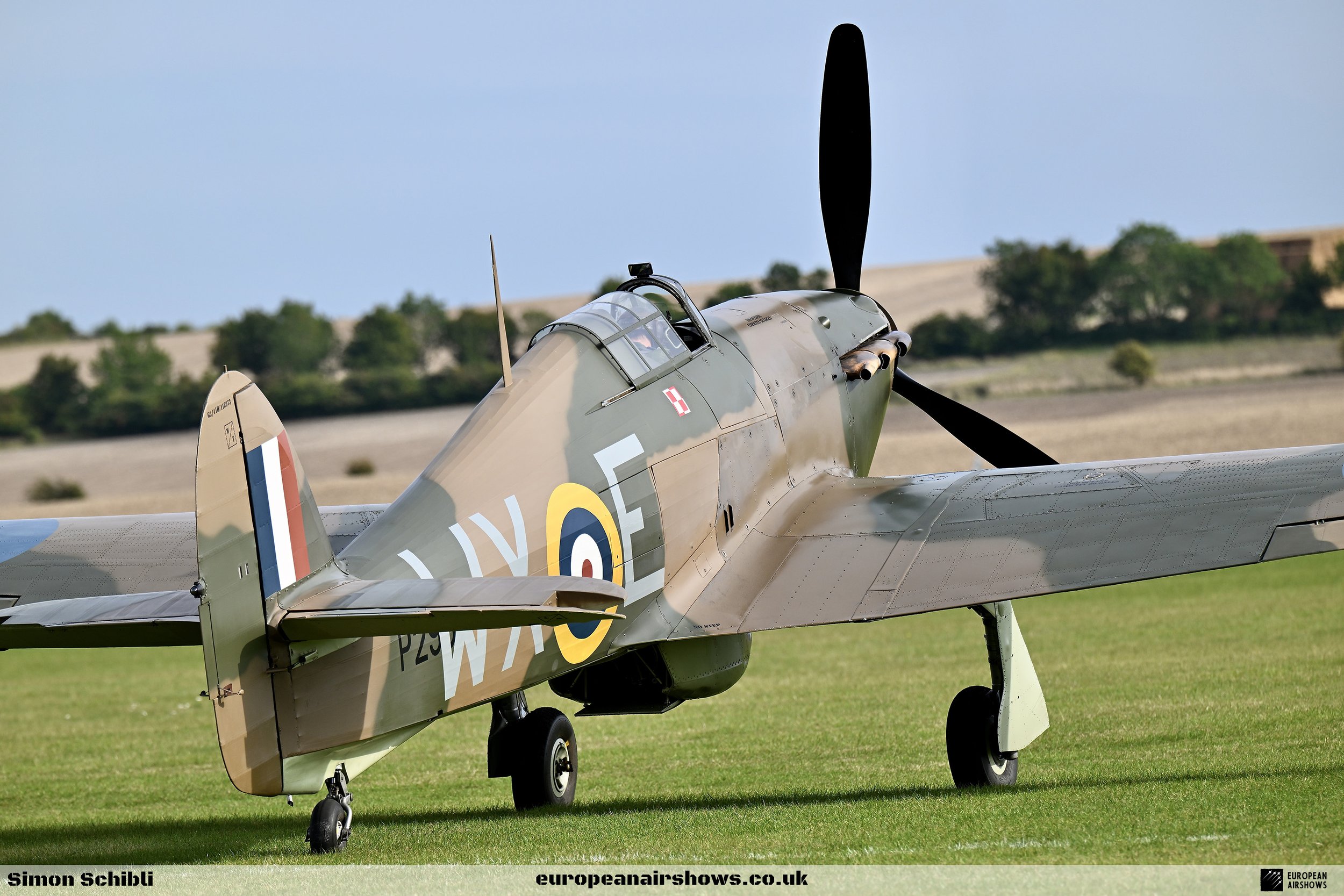
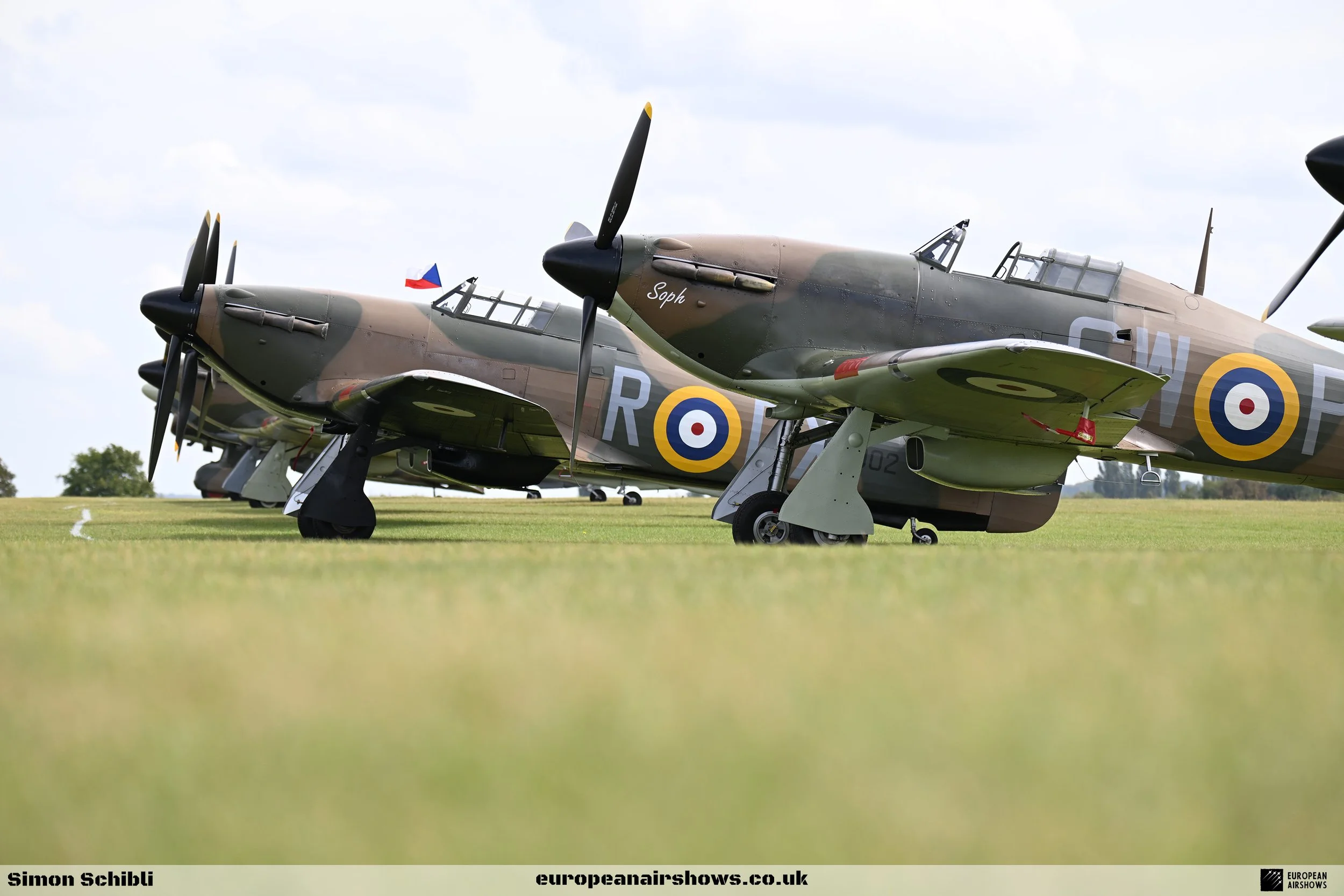
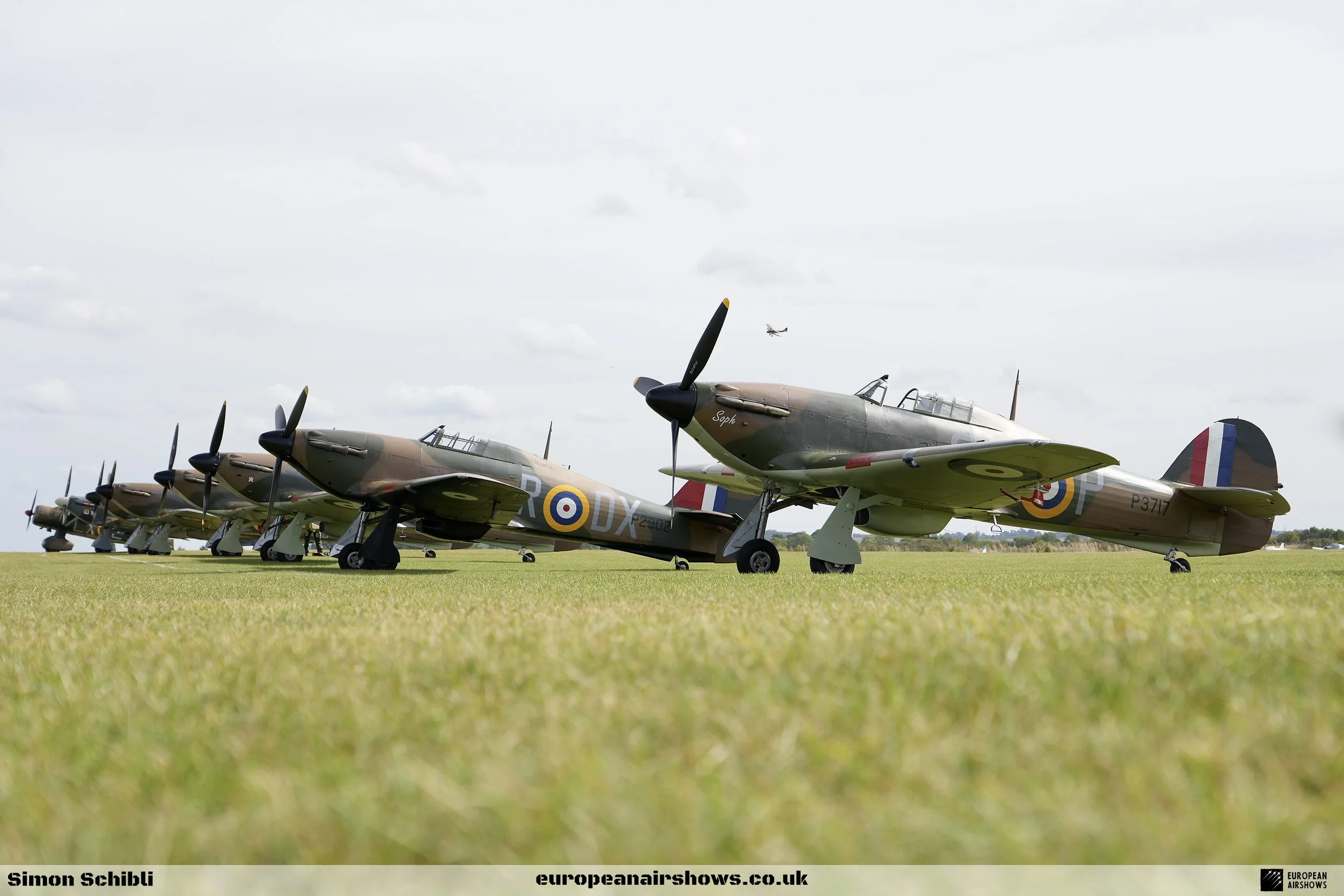
All eight Hawker Hurricanes were present and lined up together.
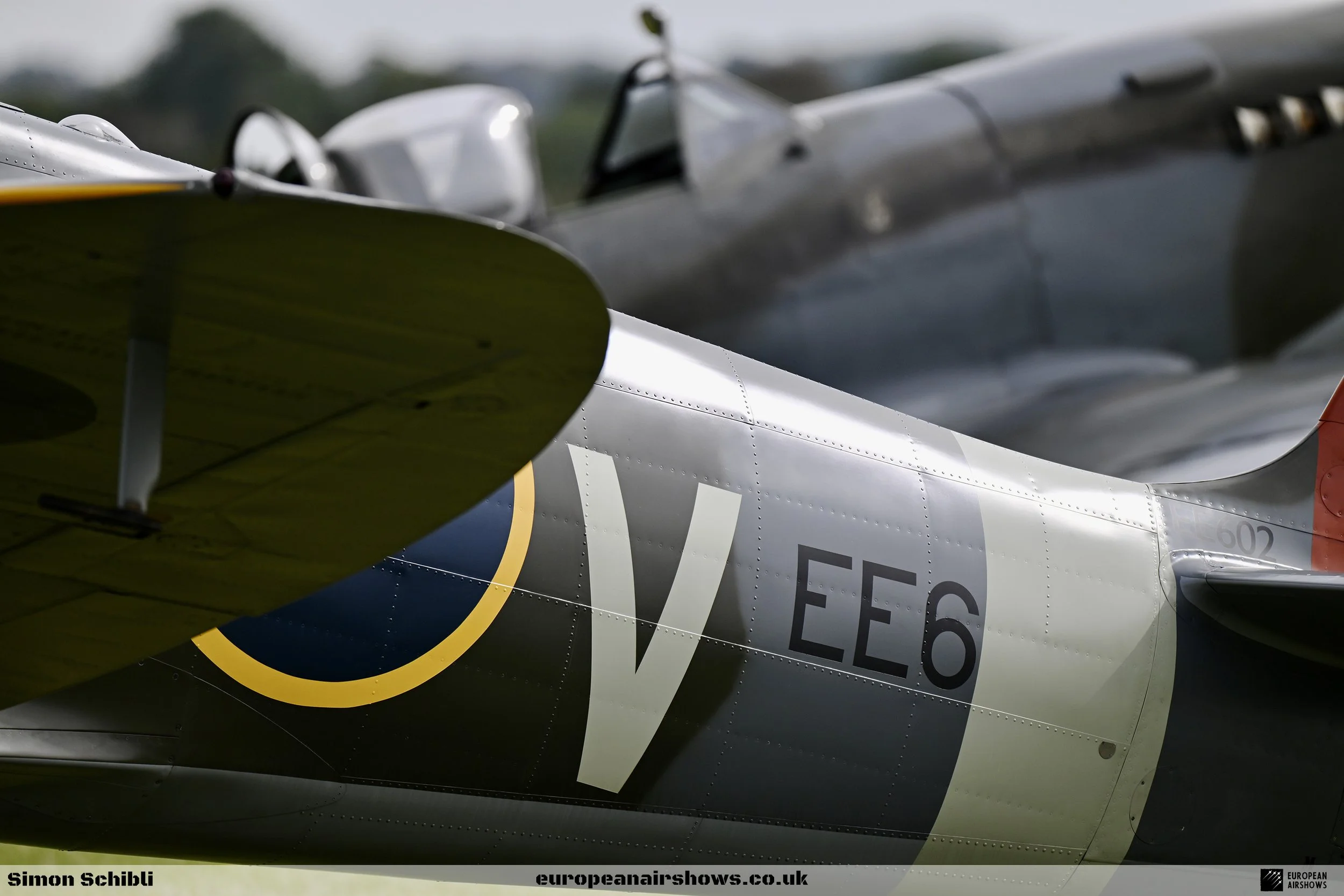
Even at Duxford, where historic aircraft are a regular sight, the view of eight Hurricanes assembled side by side remains extraordinary. The scene quickly became the focus of attention for photographers and enthusiasts alike. Lighting conditions proved somewhat difficult and finding the right angles to properly capture the line-up required some patience, but the opportunity to see such a collection of Hurricanes together more than justified the effort. The short window of time along the taxiway passed quickly before spectators were politely asked to move toward the public viewing areas ahead of the flying display.
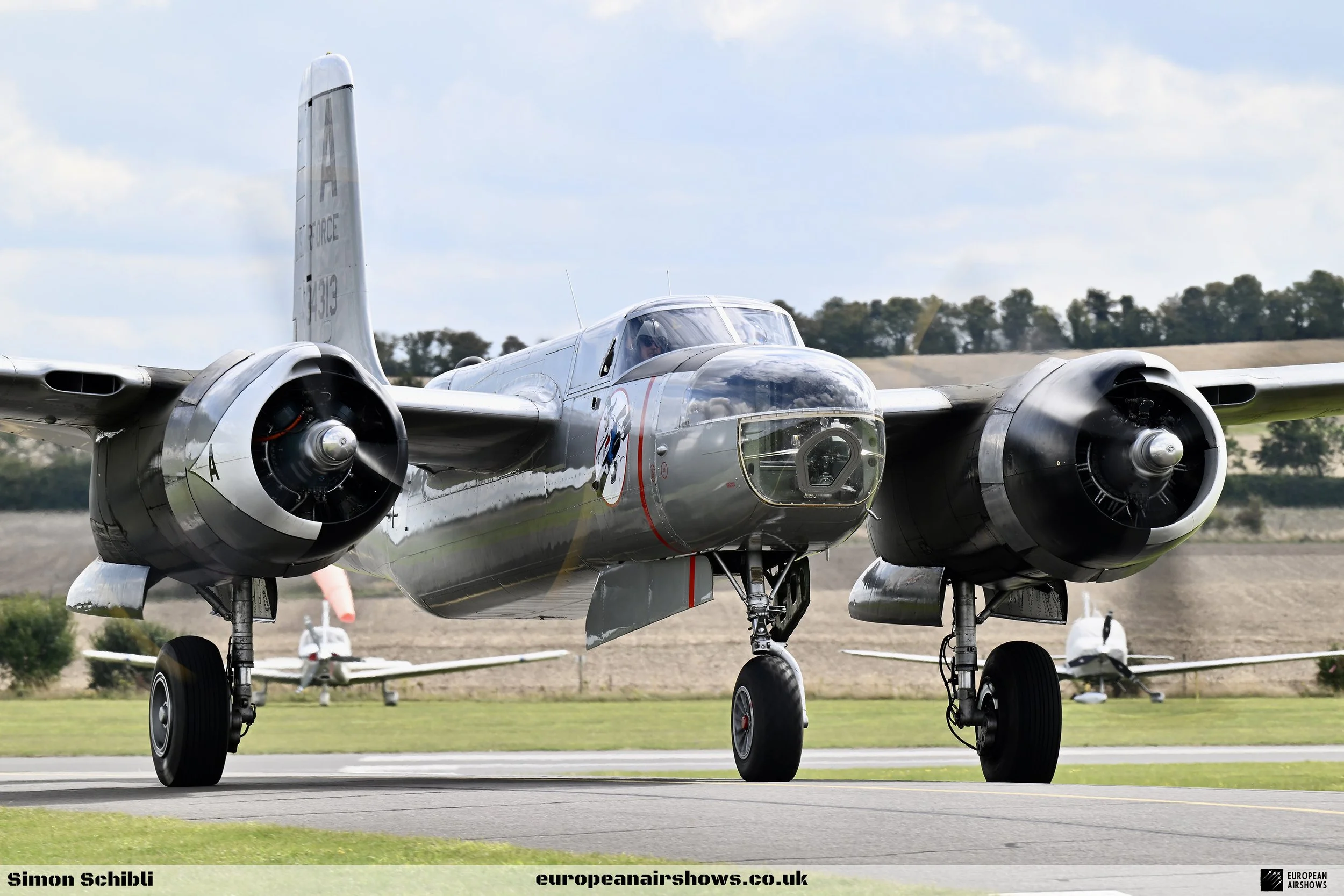
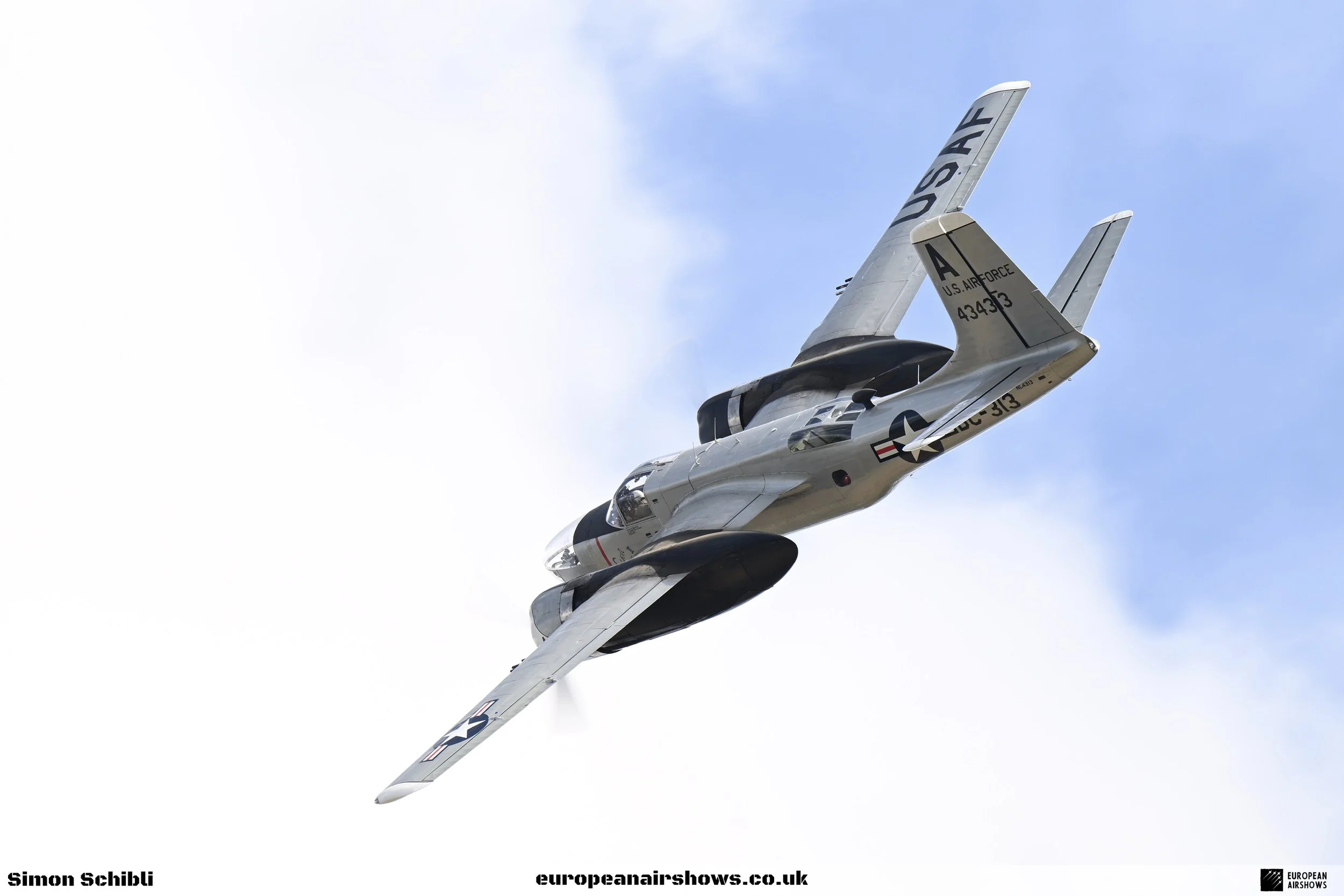
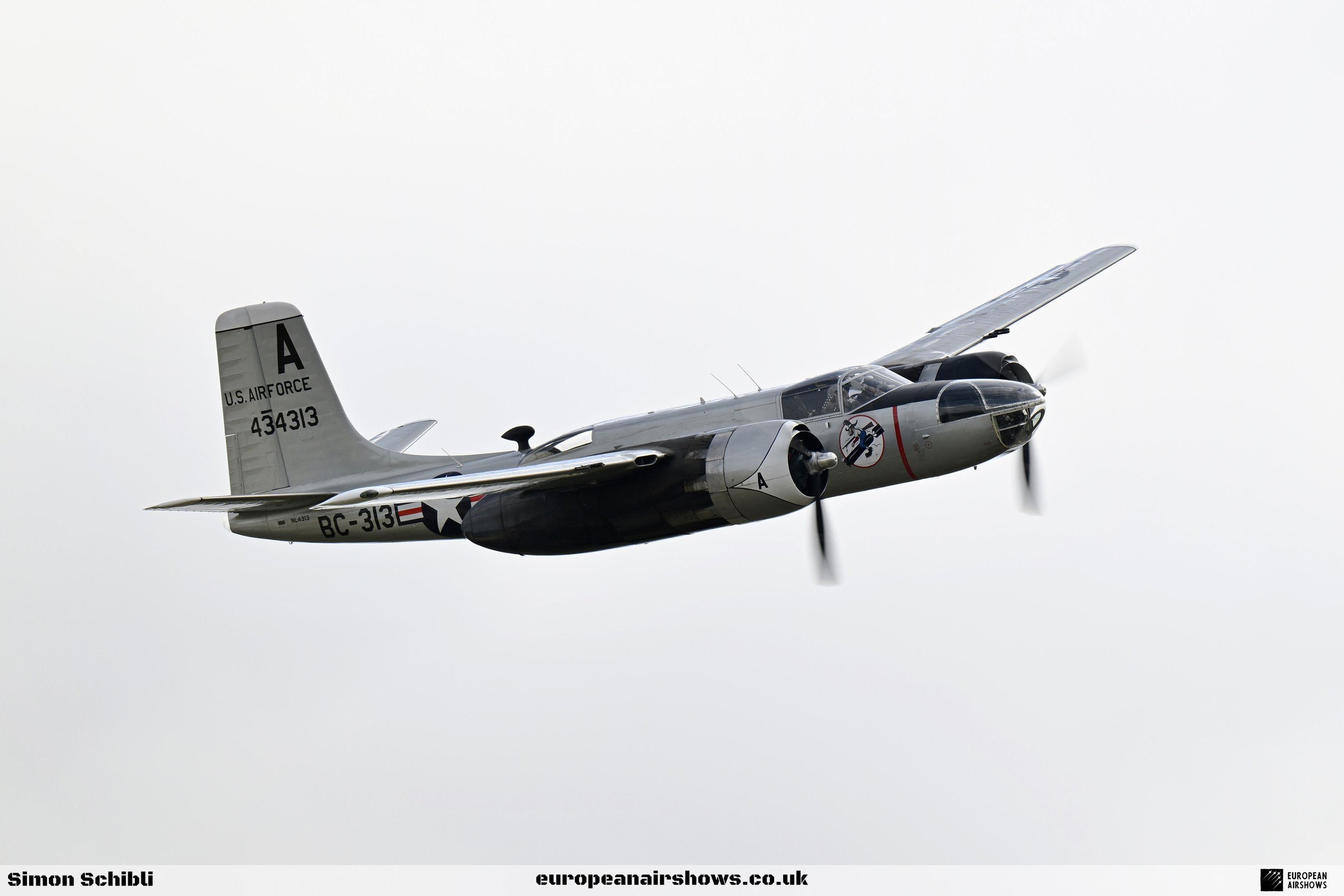
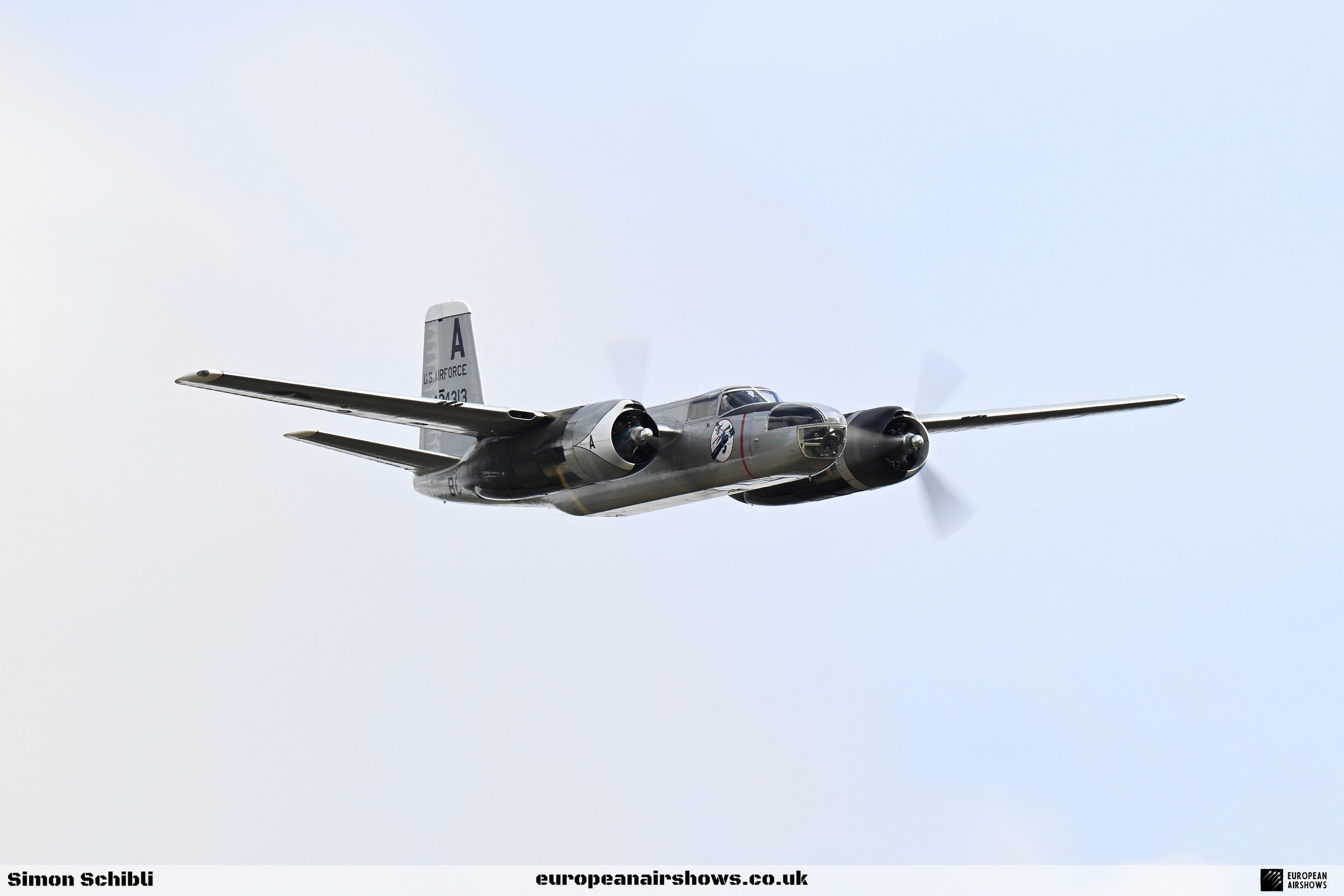
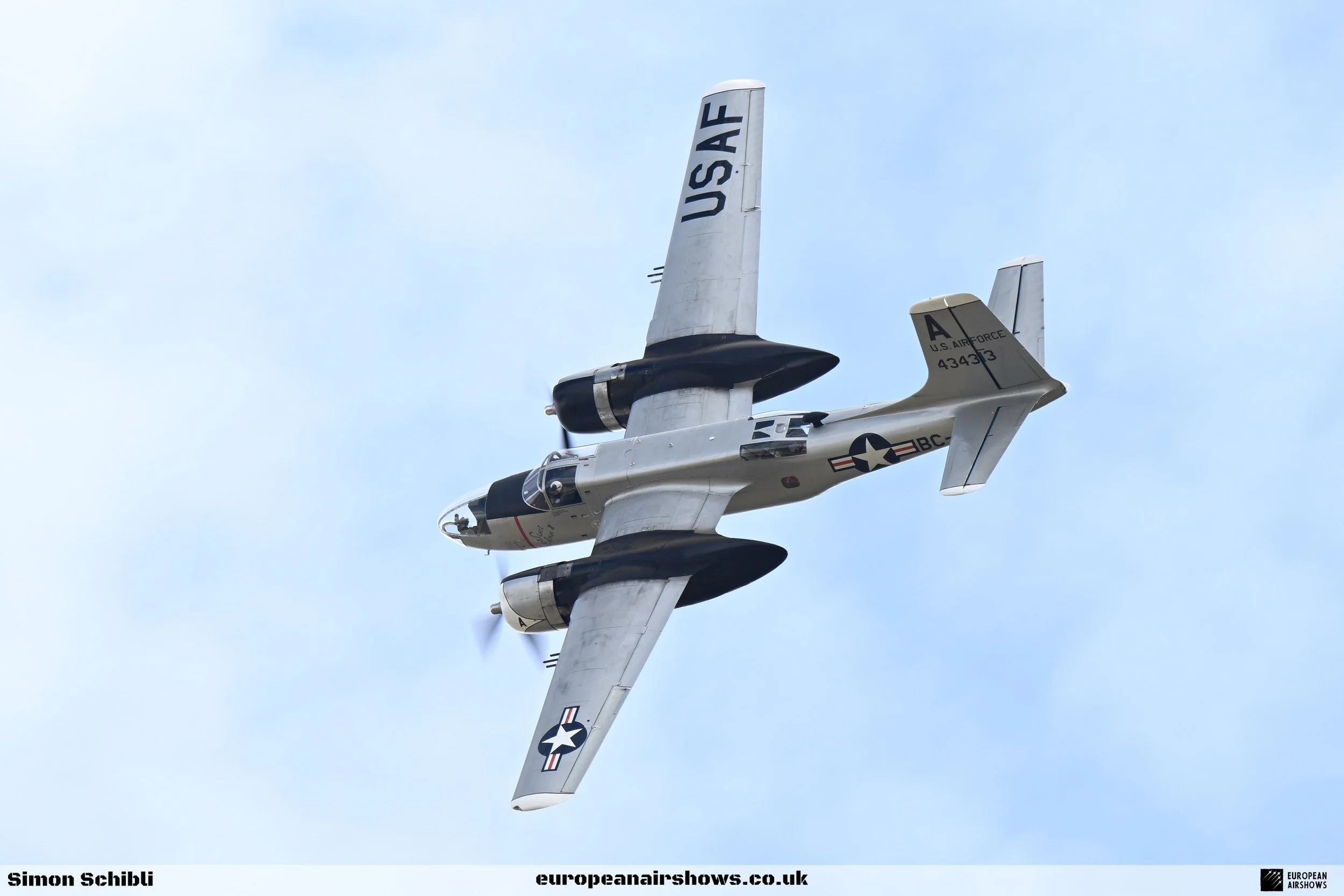
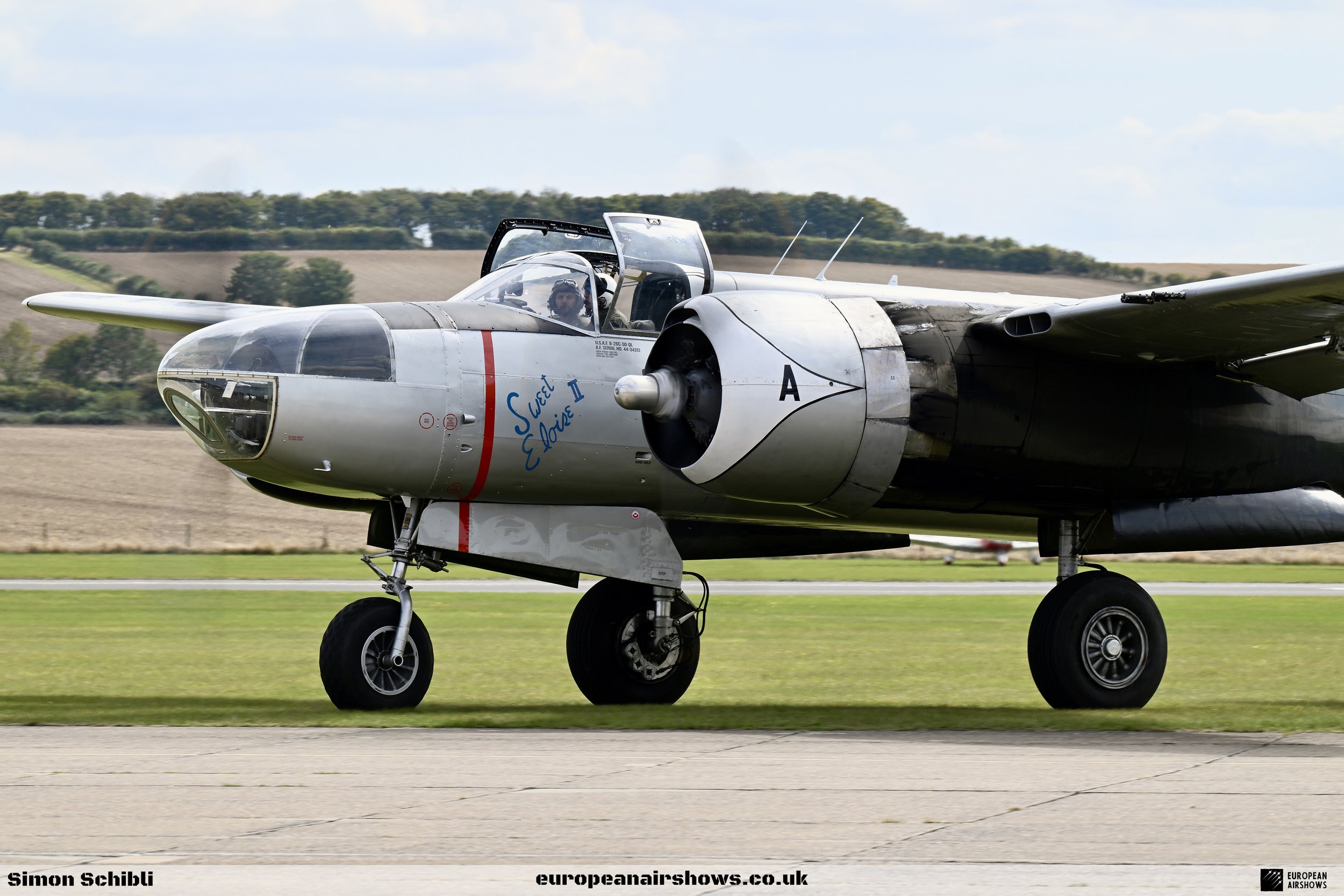
With the crowd now settled along the showline and the weather proving pleasant, the flying programme soon began to unfold. One of the first notable highlights was the Douglas A-26C Invader “Sweet Eloise II”, an aircraft that had only recently arrived in Europe and remains a rare sight on the continent. The Invader departed first while the Hurricanes prepared behind the scenes, offering an impressive demonstration of the type’s speed and presence.
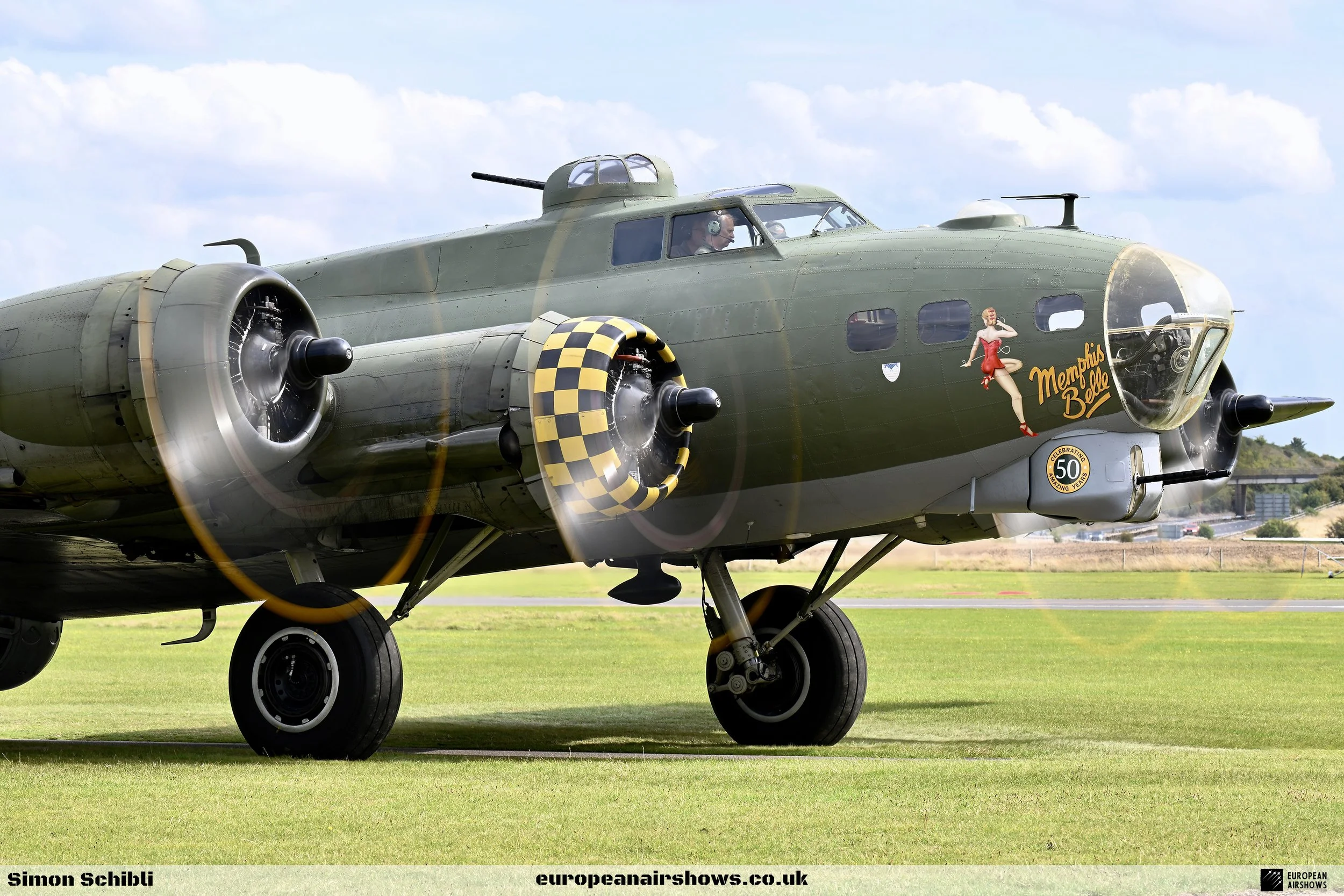
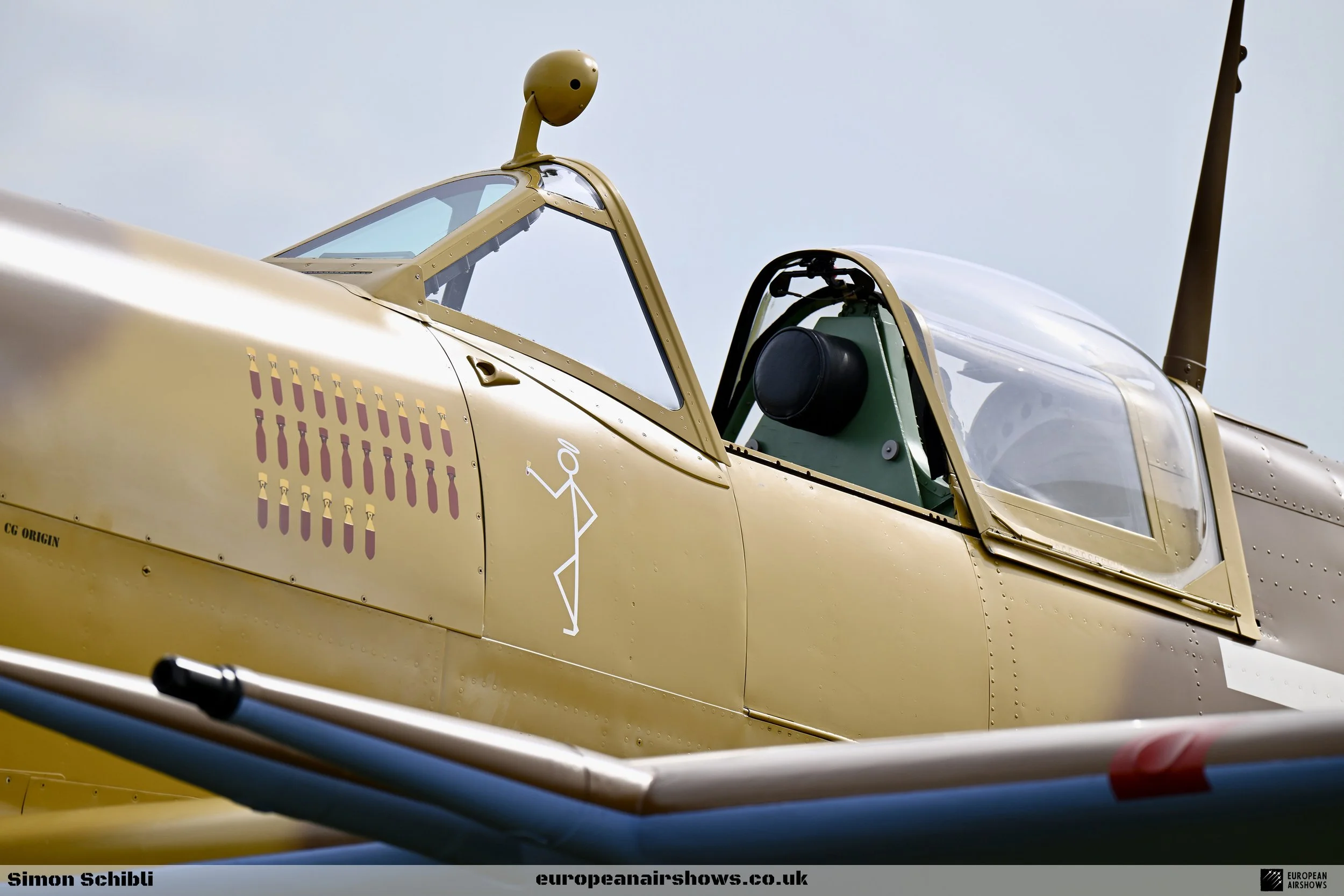
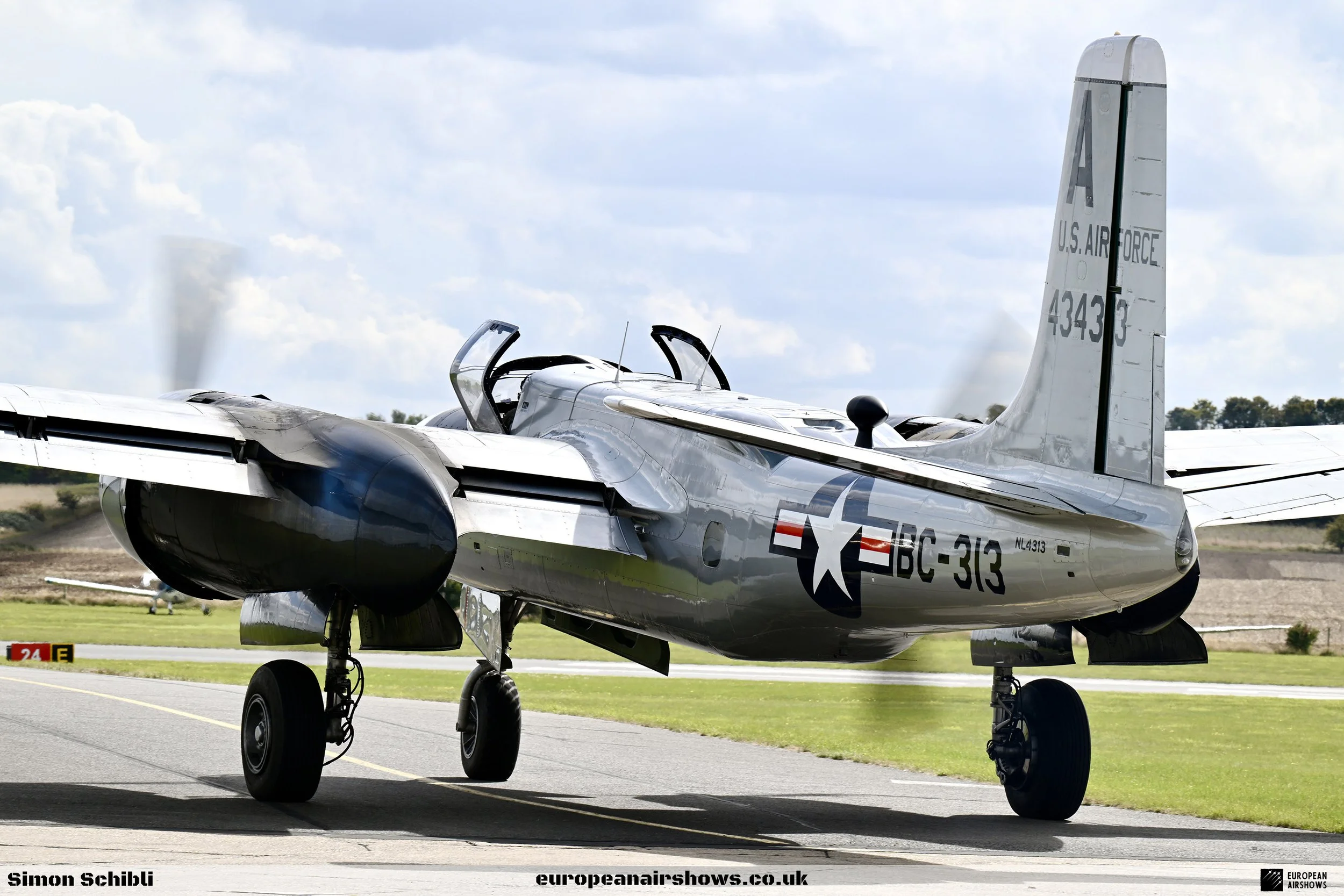
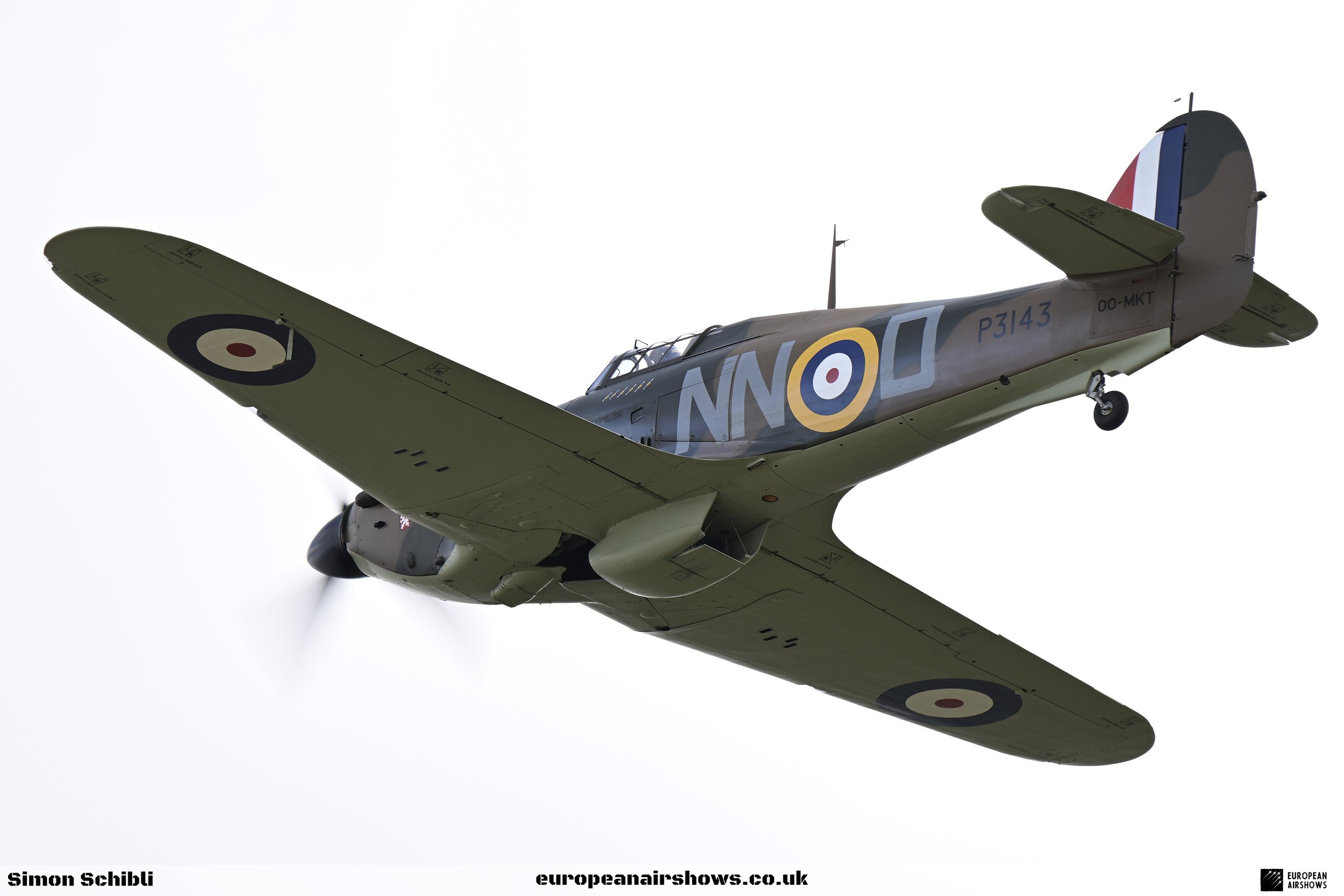
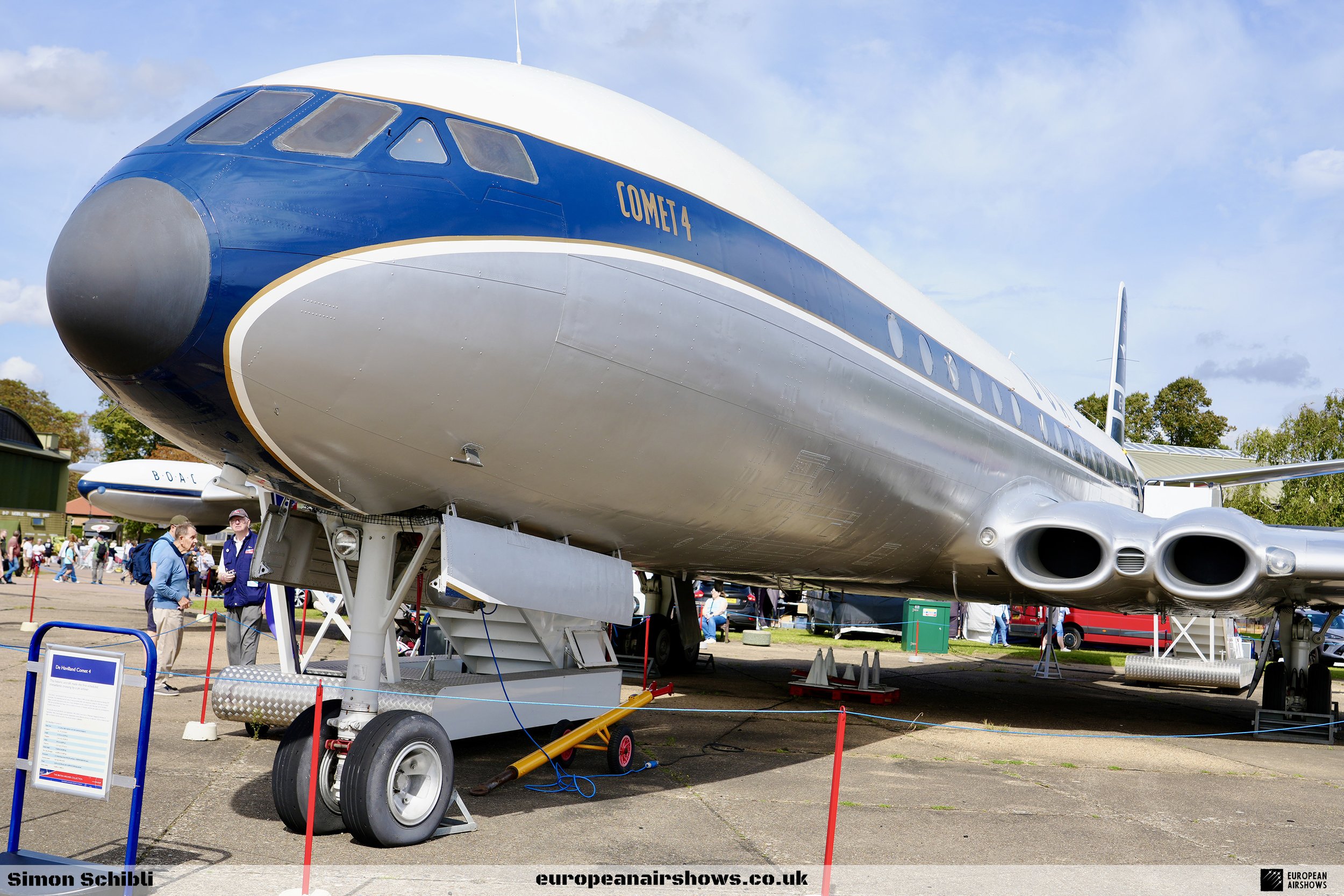
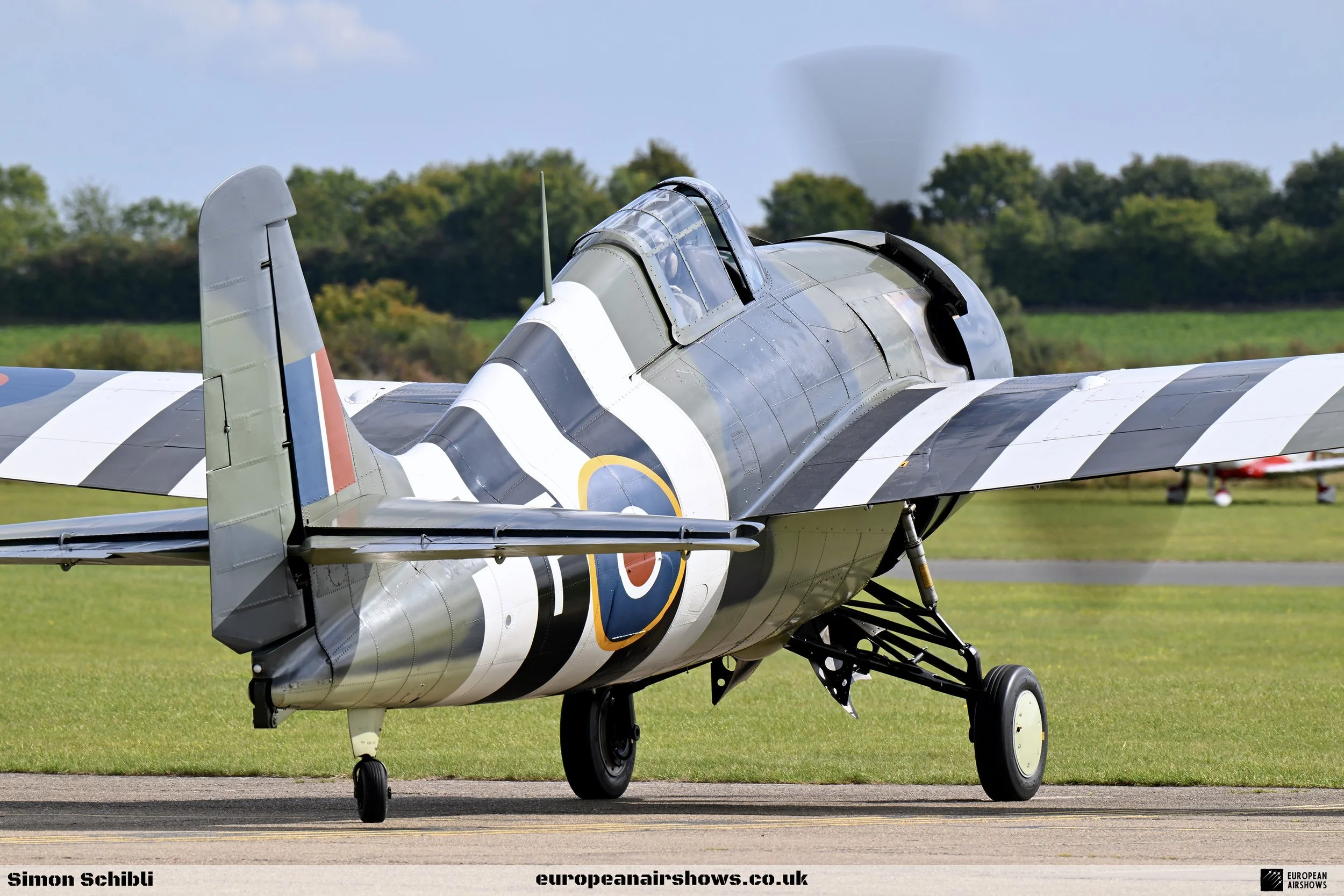
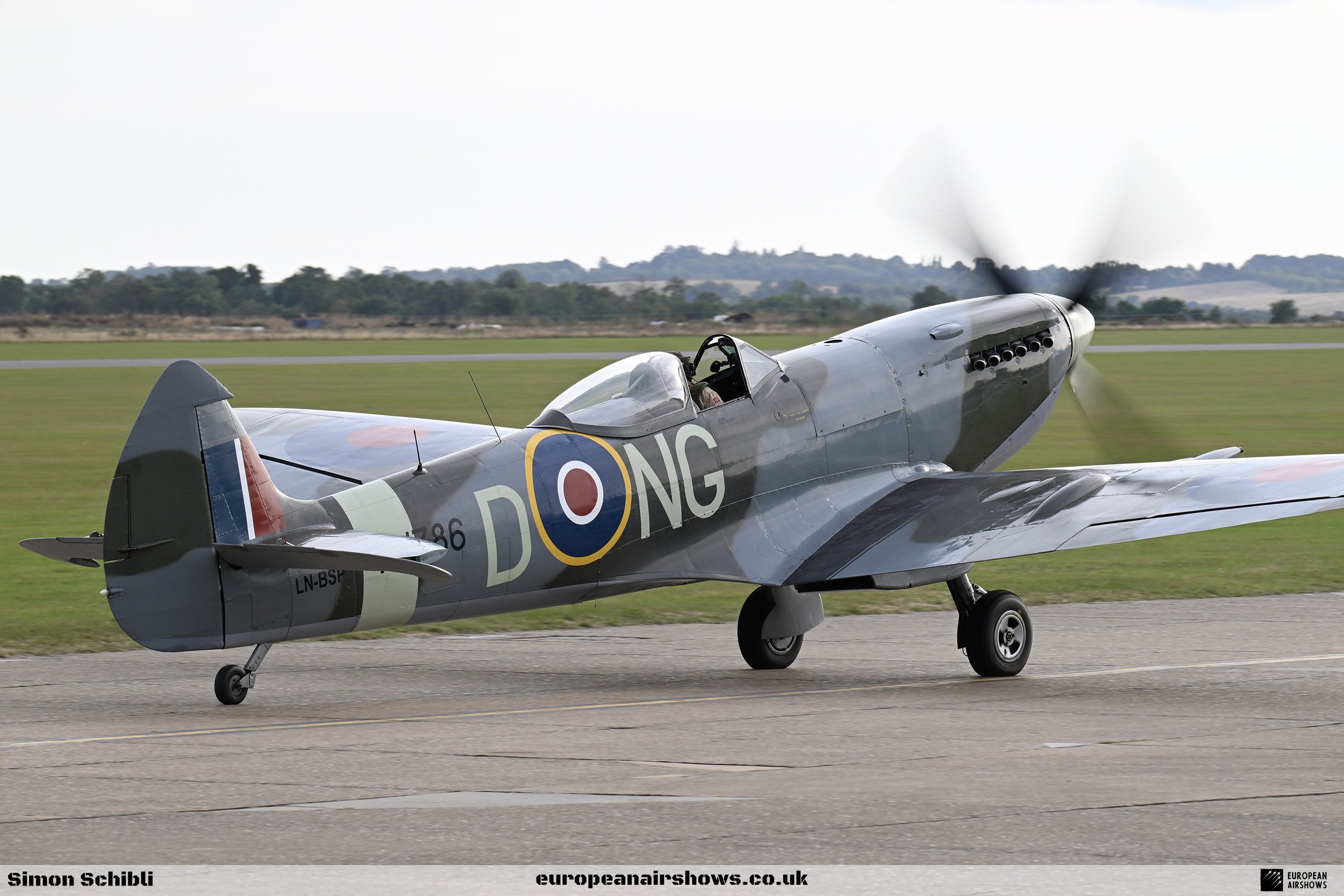
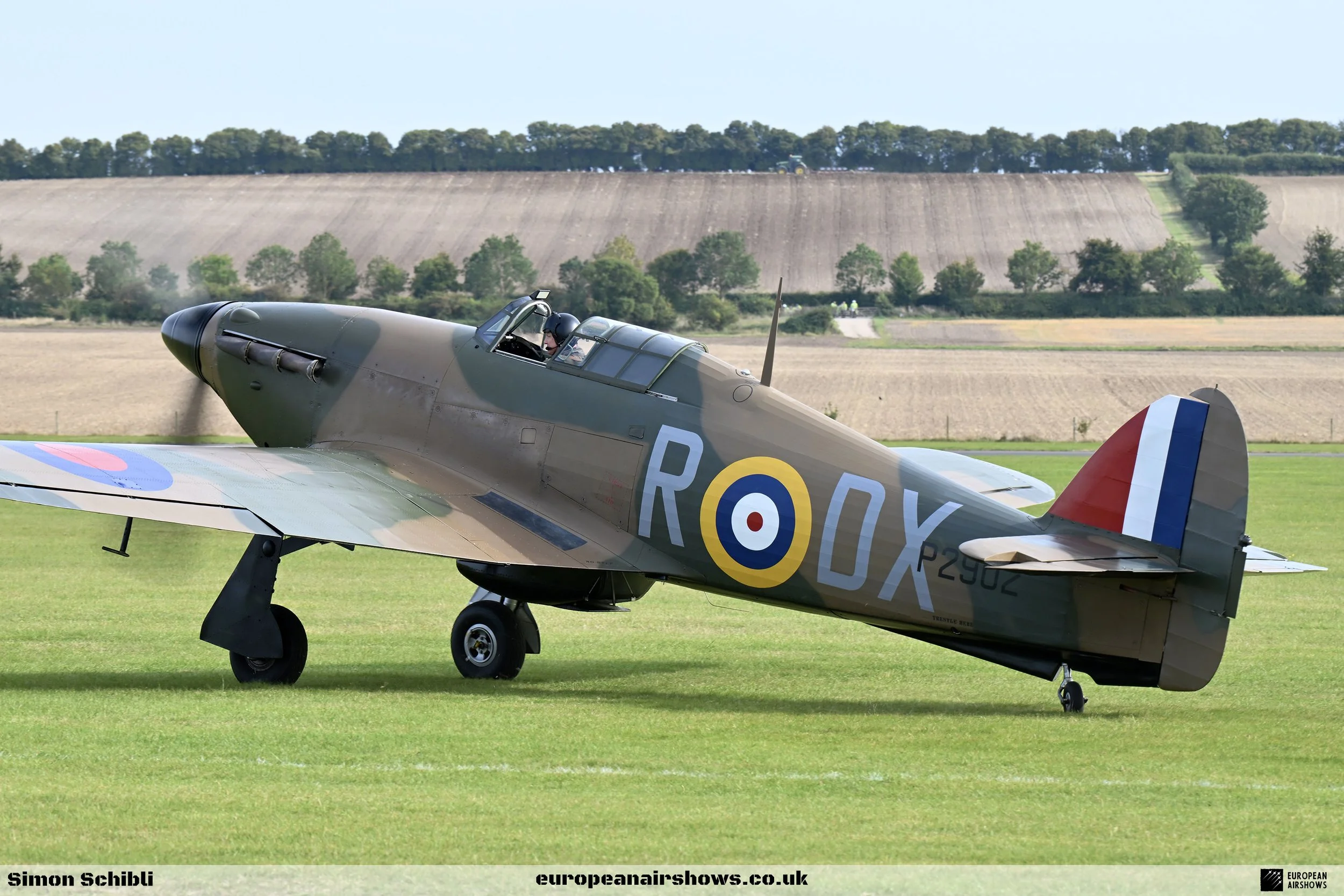
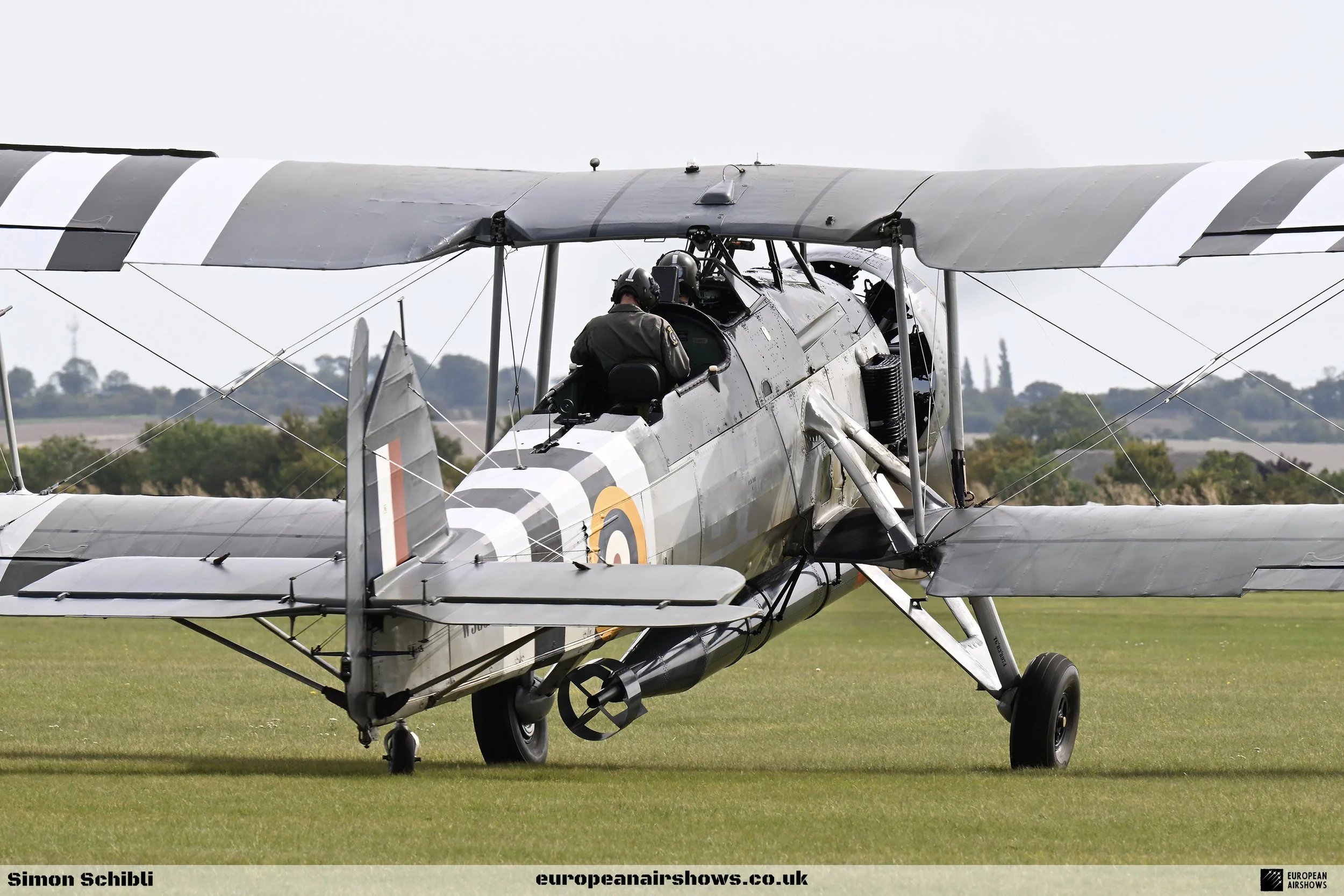
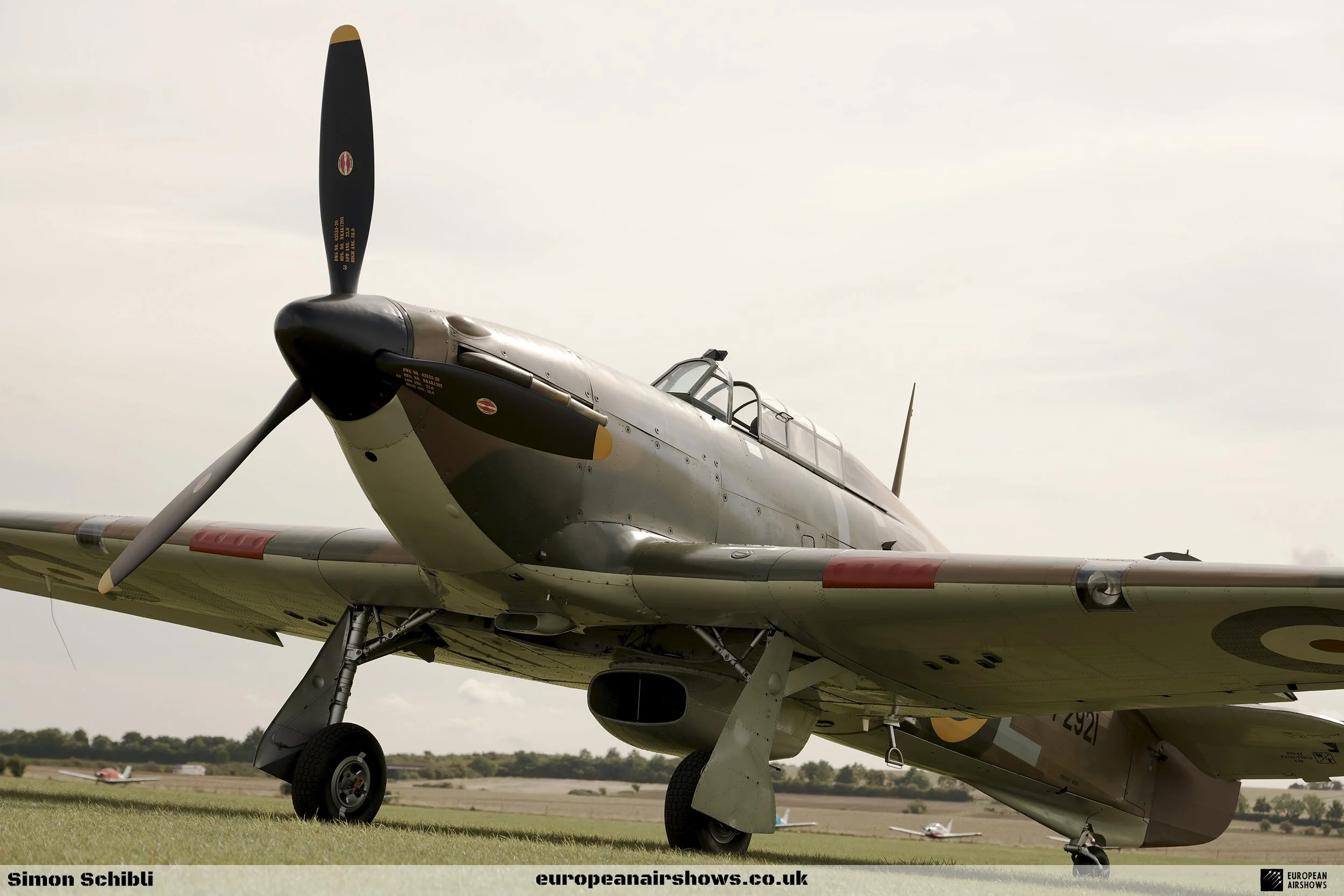
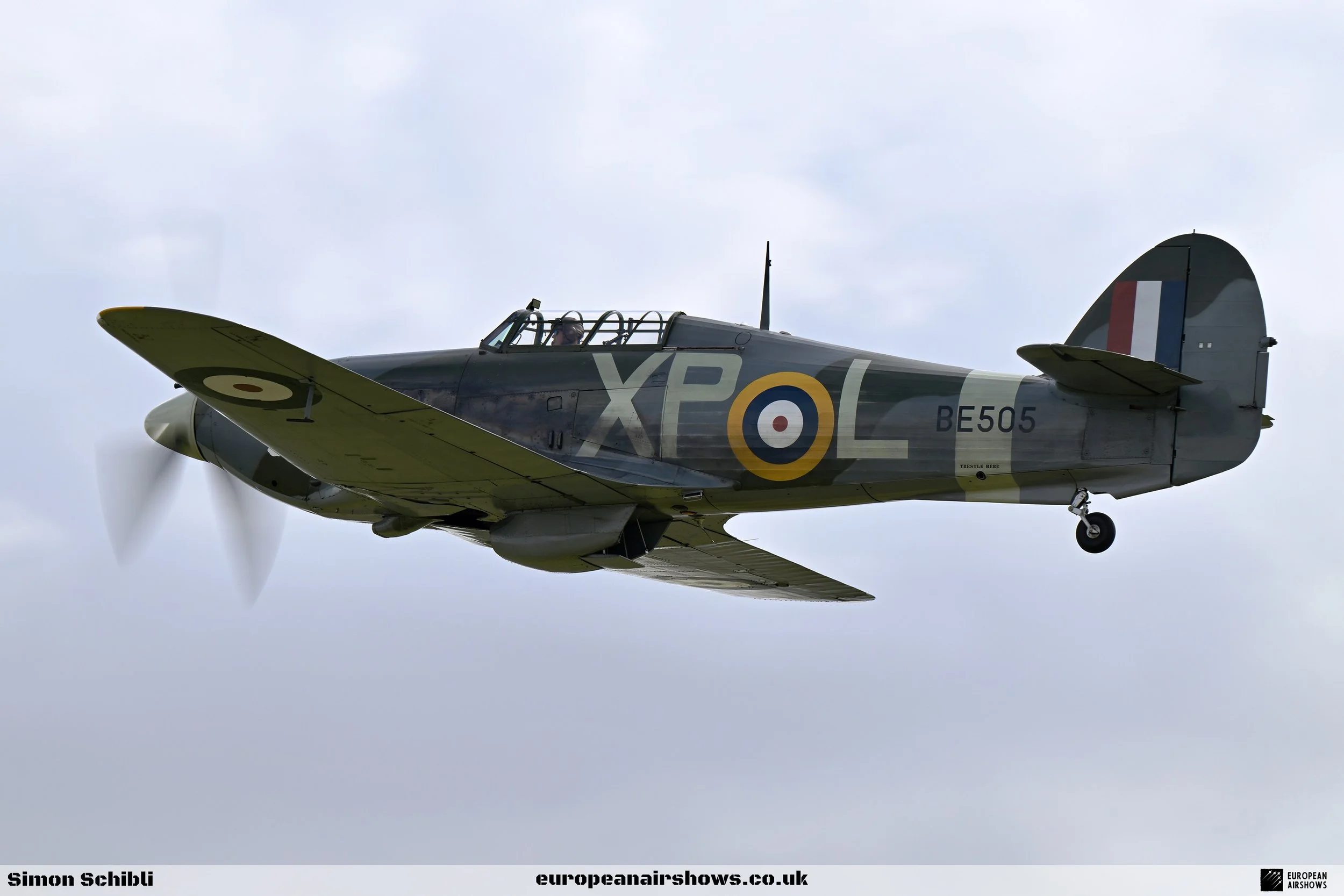
Positioned opposite the AirSpace Museum, the view allowed the audience to enjoy the elegant sequence of historic aircraft departures as the show gathered momentum. The Invader soon returned for a dynamic solo display while the Hurricanes regrouped into formation. Seeing an A-26 display in Europe remains something of a rarity and the aircraft’s appearance provided one of the early highlights of the afternoon.
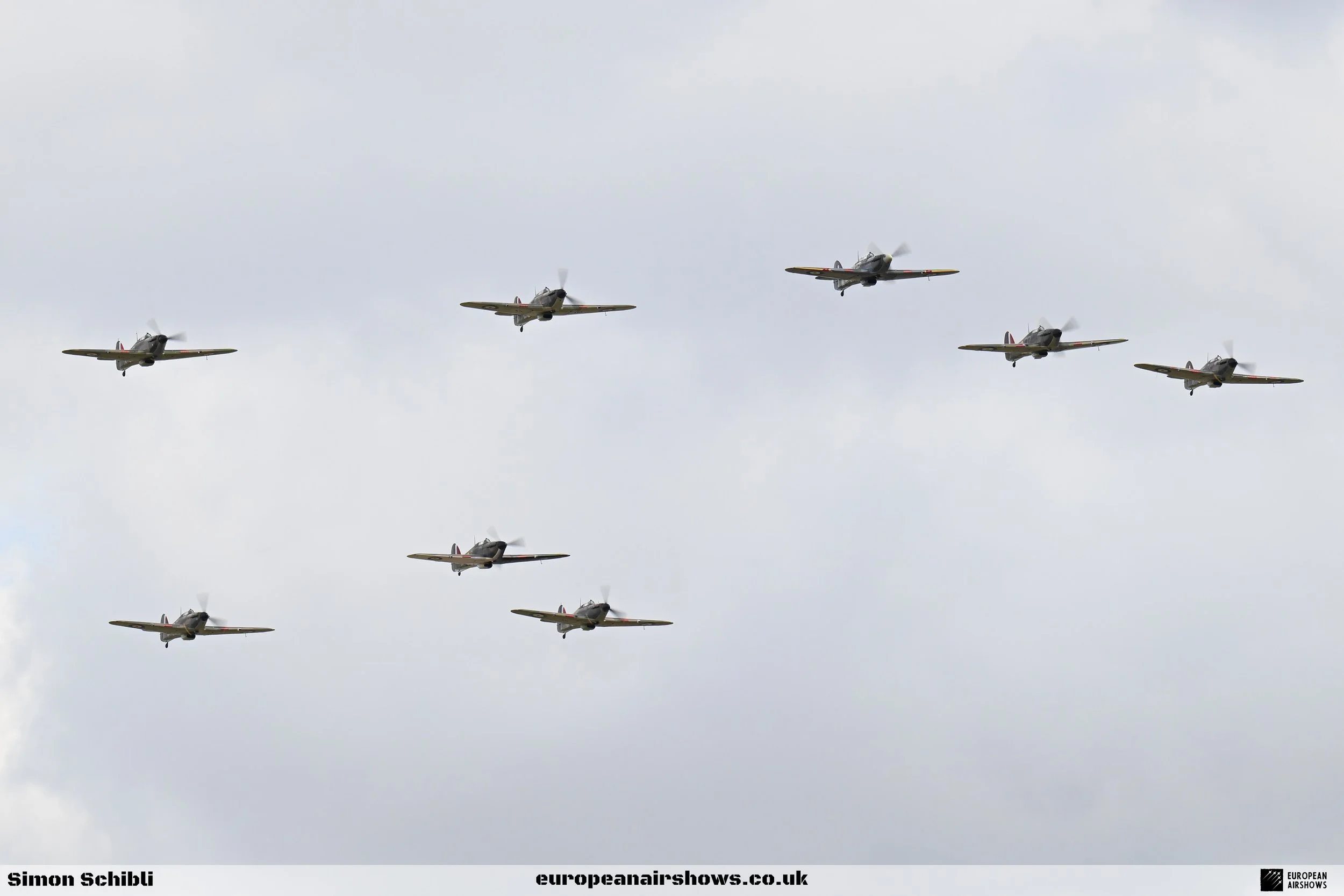
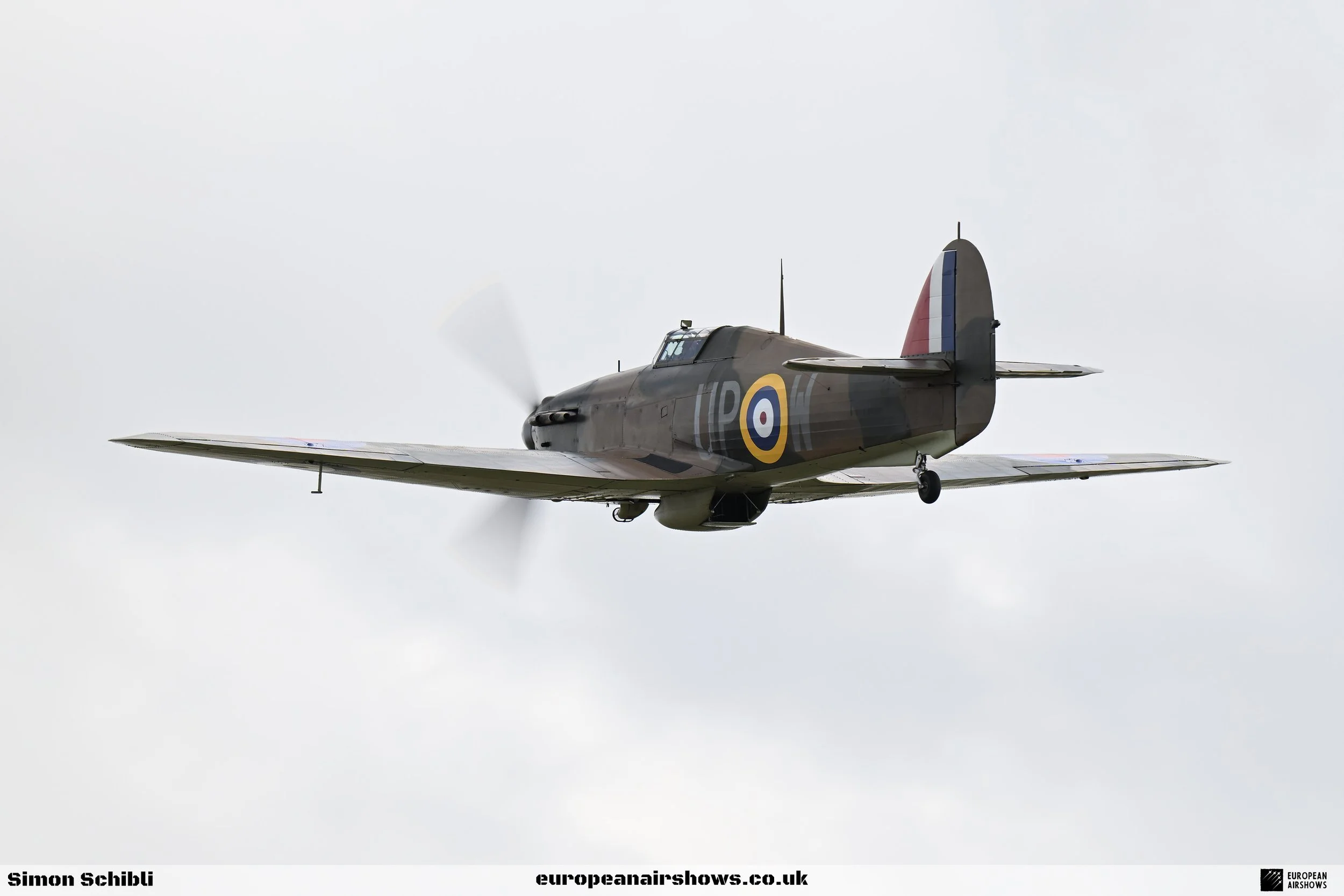
The Hurricanes then returned to the sky in formation, delivering a series of elegant passes that built toward an already legendary chase sequence. The display captured the atmosphere of the Battle of Britain theme perfectly and proved to be one of the most memorable moments of the day.
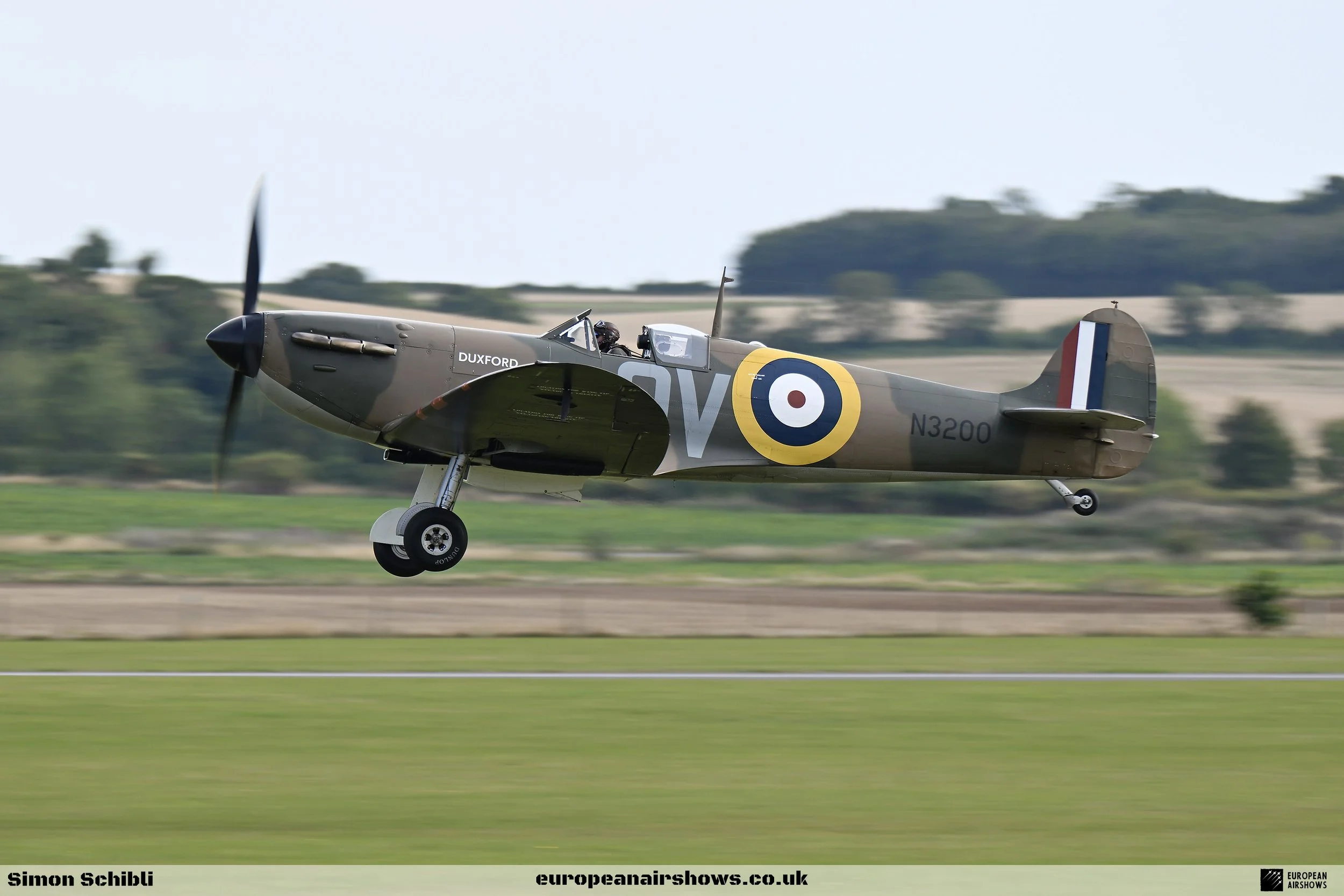
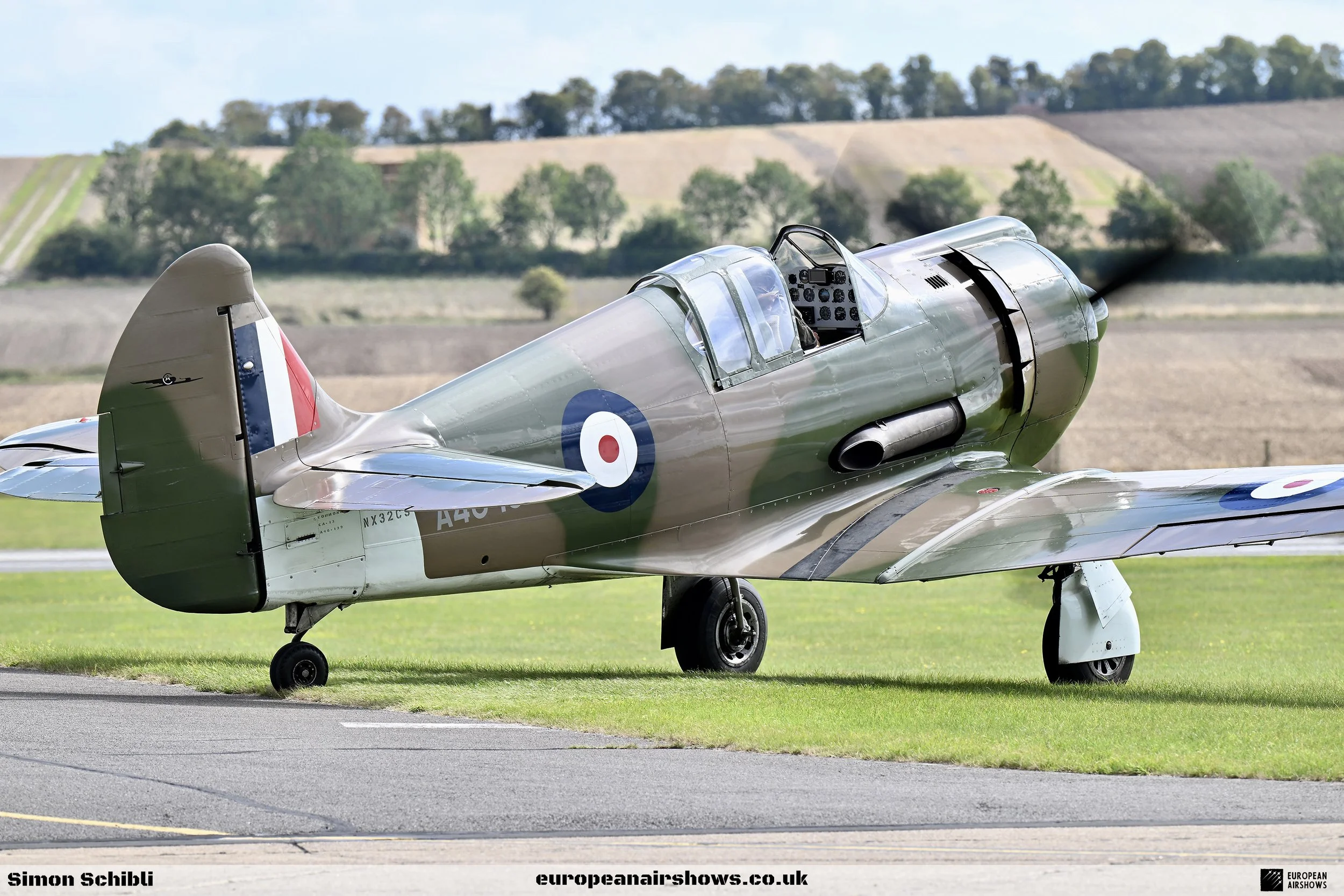
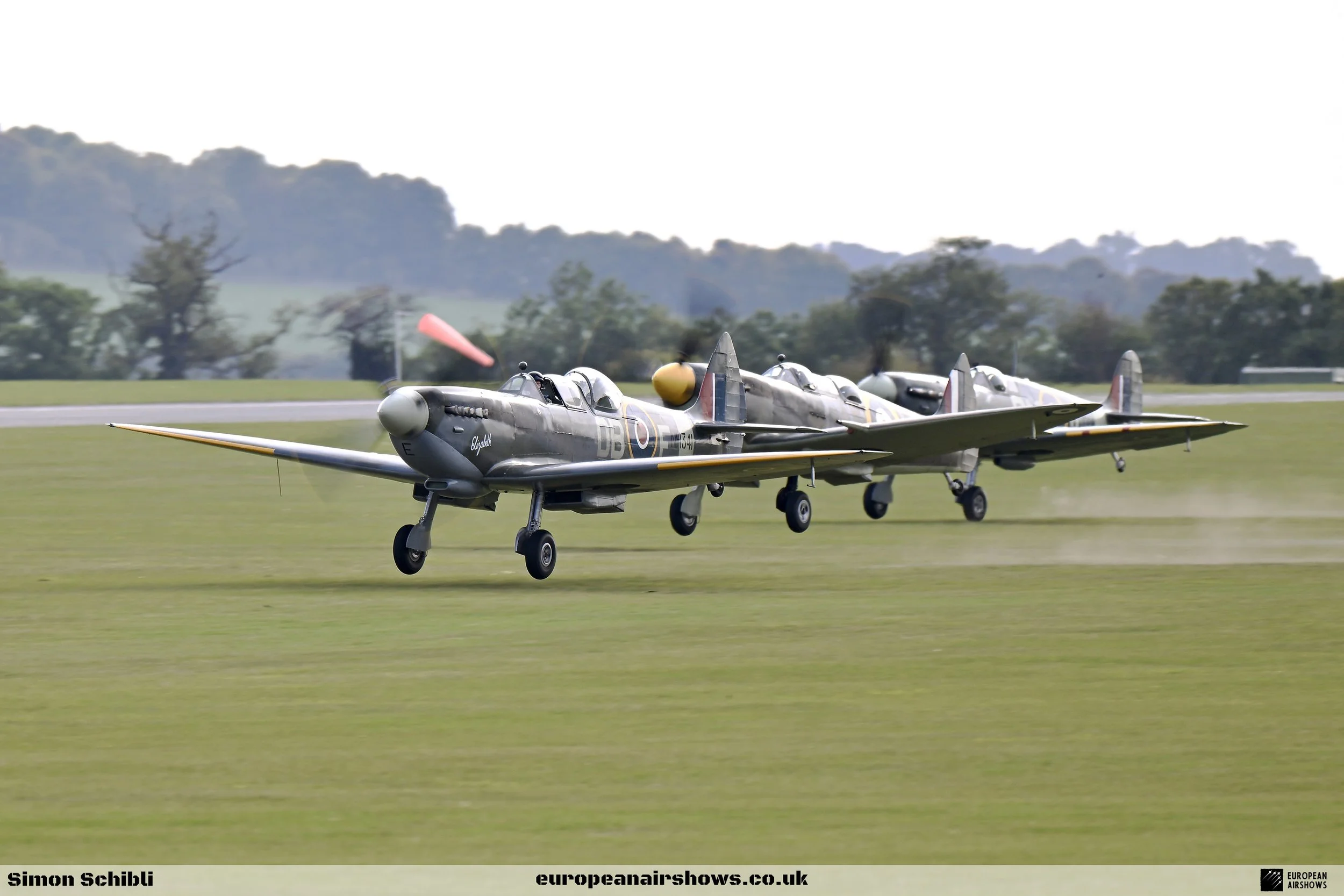
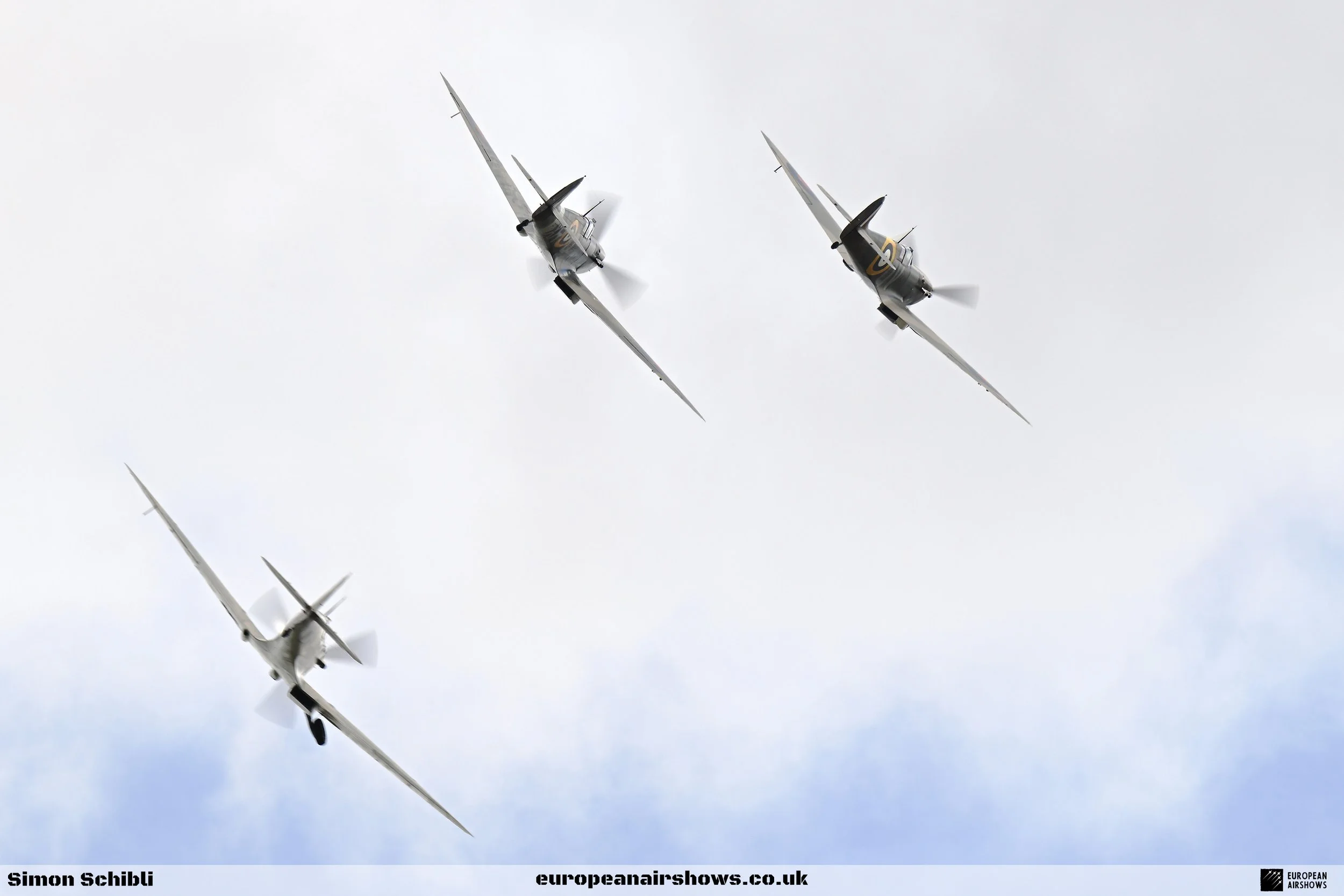
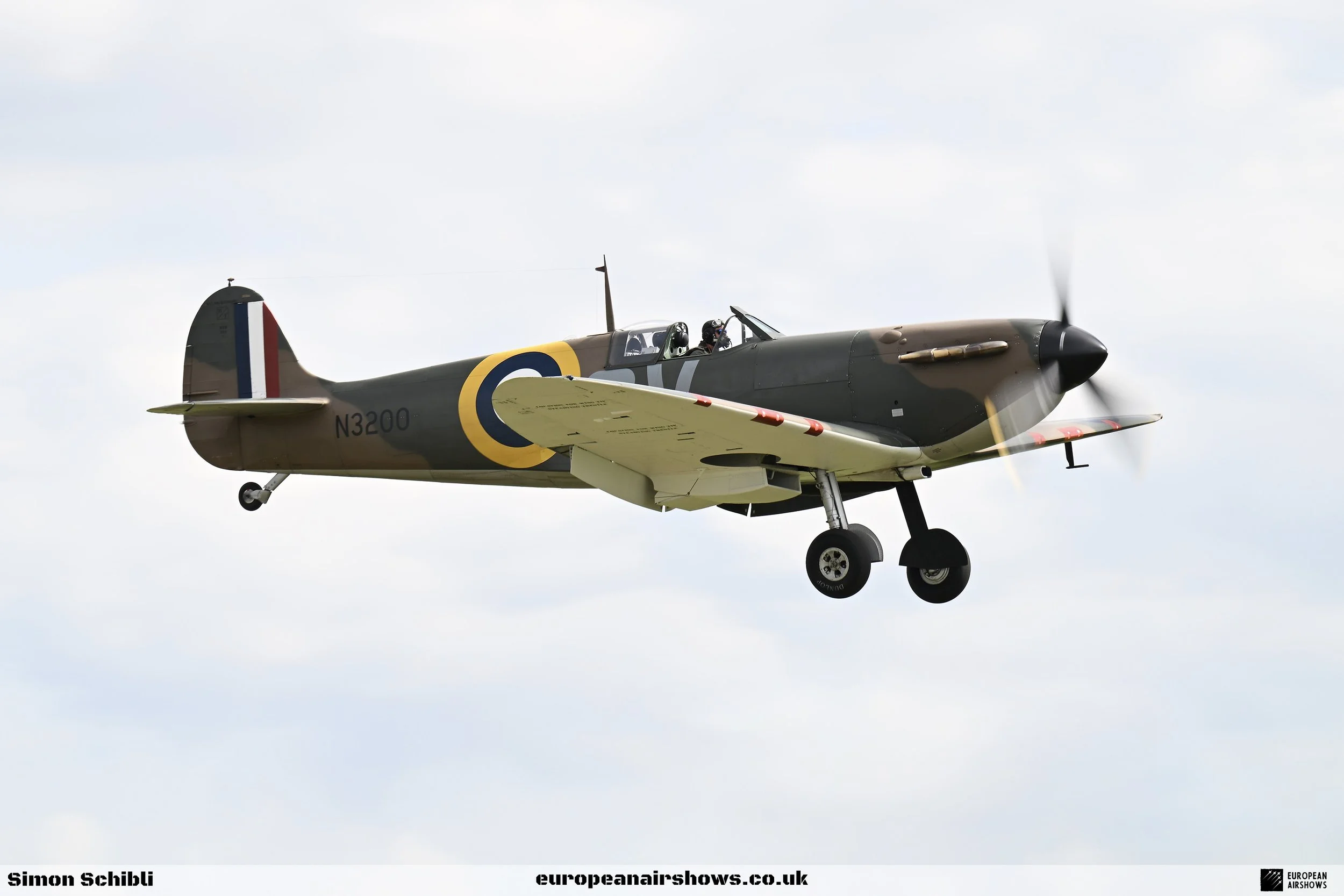
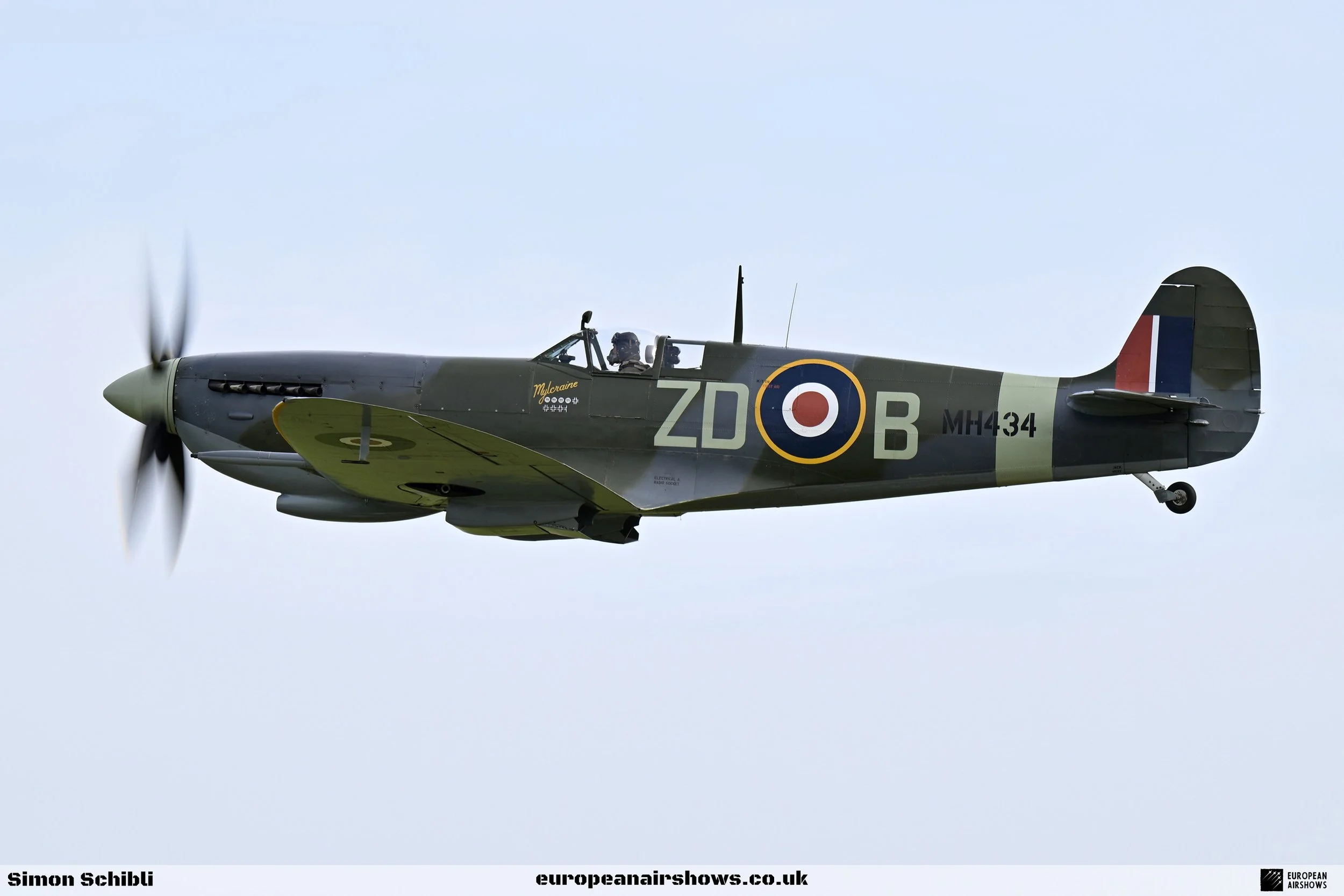
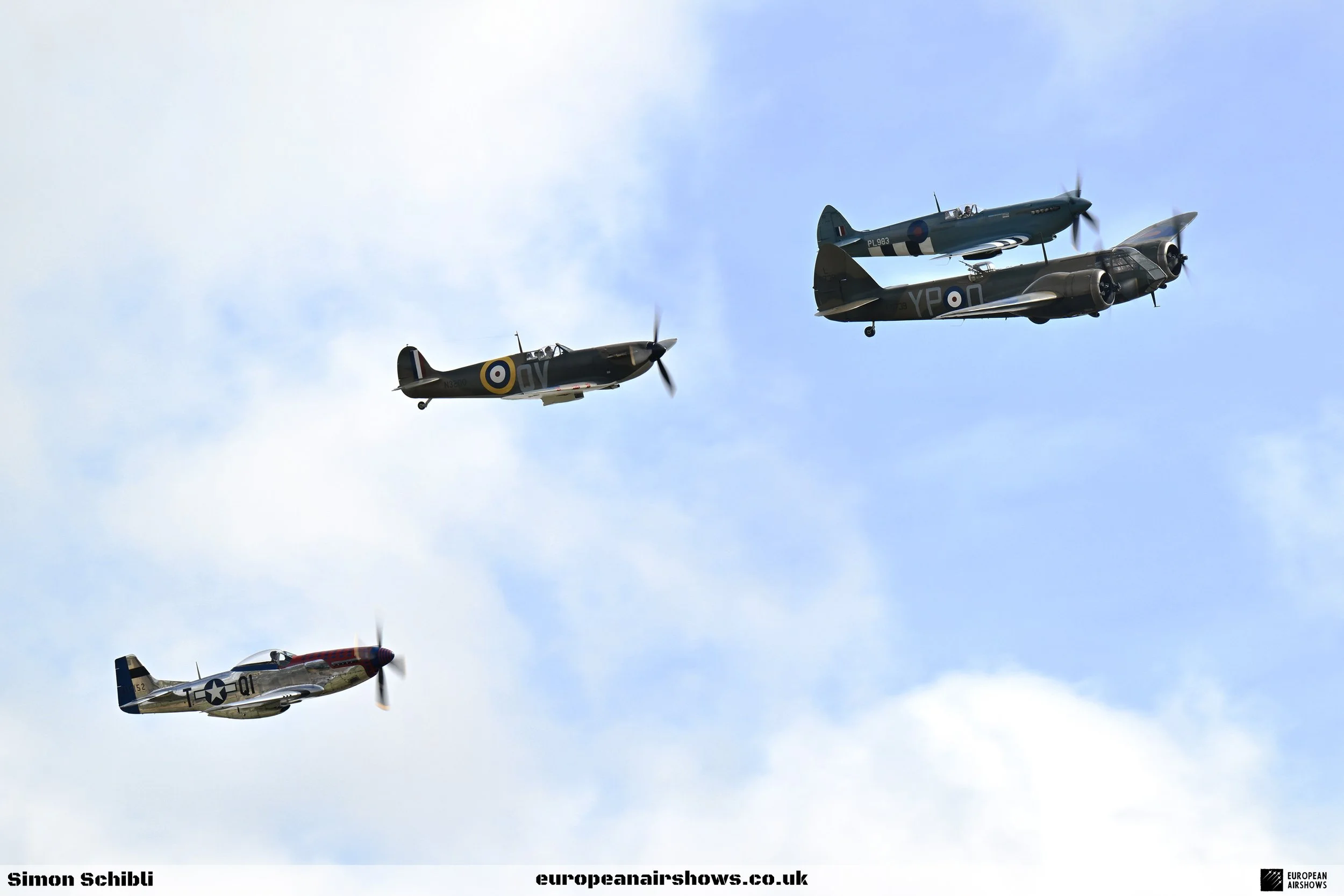
Even once the Hurricanes had landed, the programme continued to maintain the wartime atmosphere. A trio of Supermarine Spitfire Mk.I fighters appeared alongside their familiar airshow adversary, the Hispano Aviación Buchón, recreating a scene reminiscent of the aerial battles of 1940. Another aircraft already well known to British audiences this season followed with the appearance of the CAC Boomerang, a rare Australian fighter that continues to attract considerable attention whenever it flies in Europe.
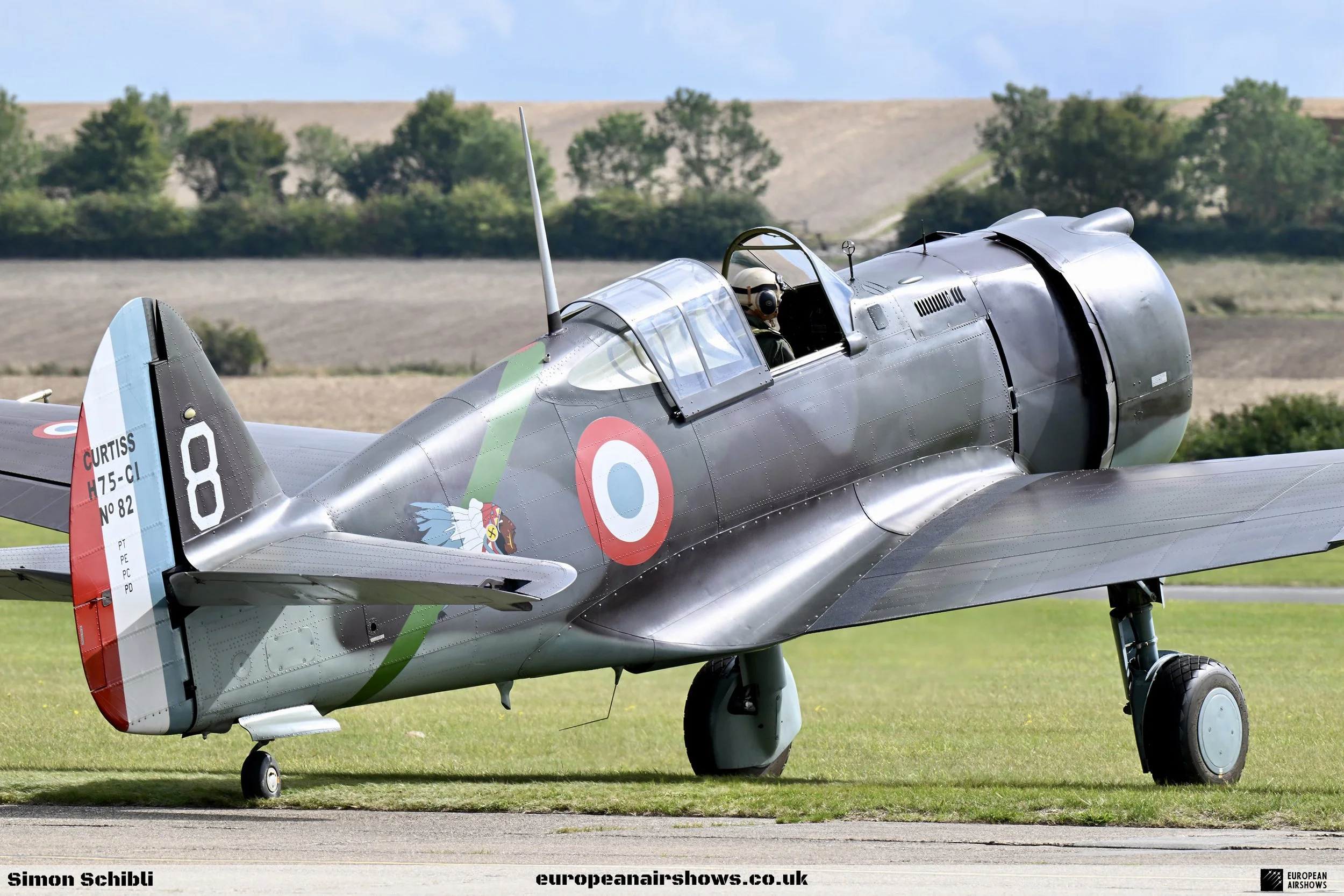
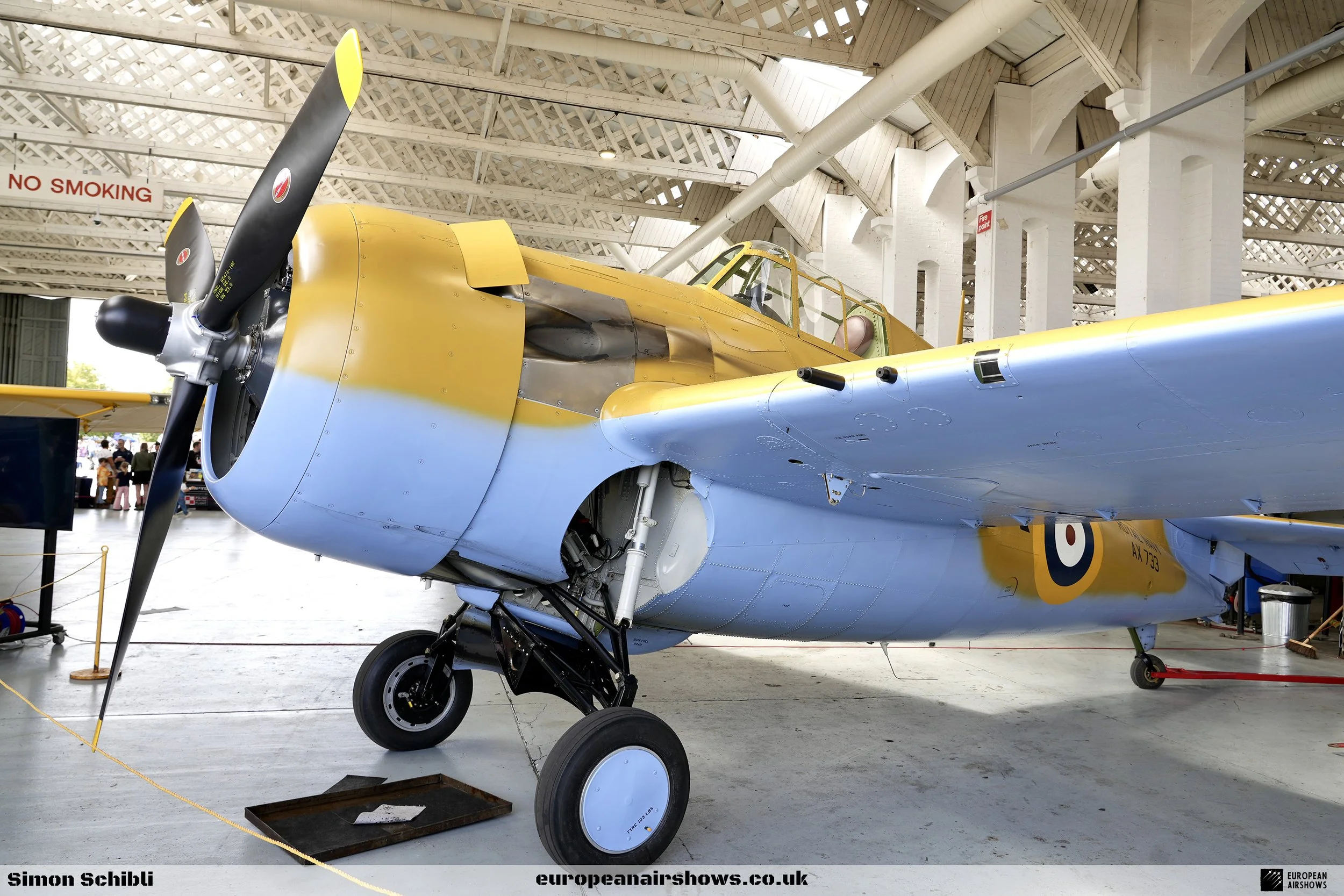
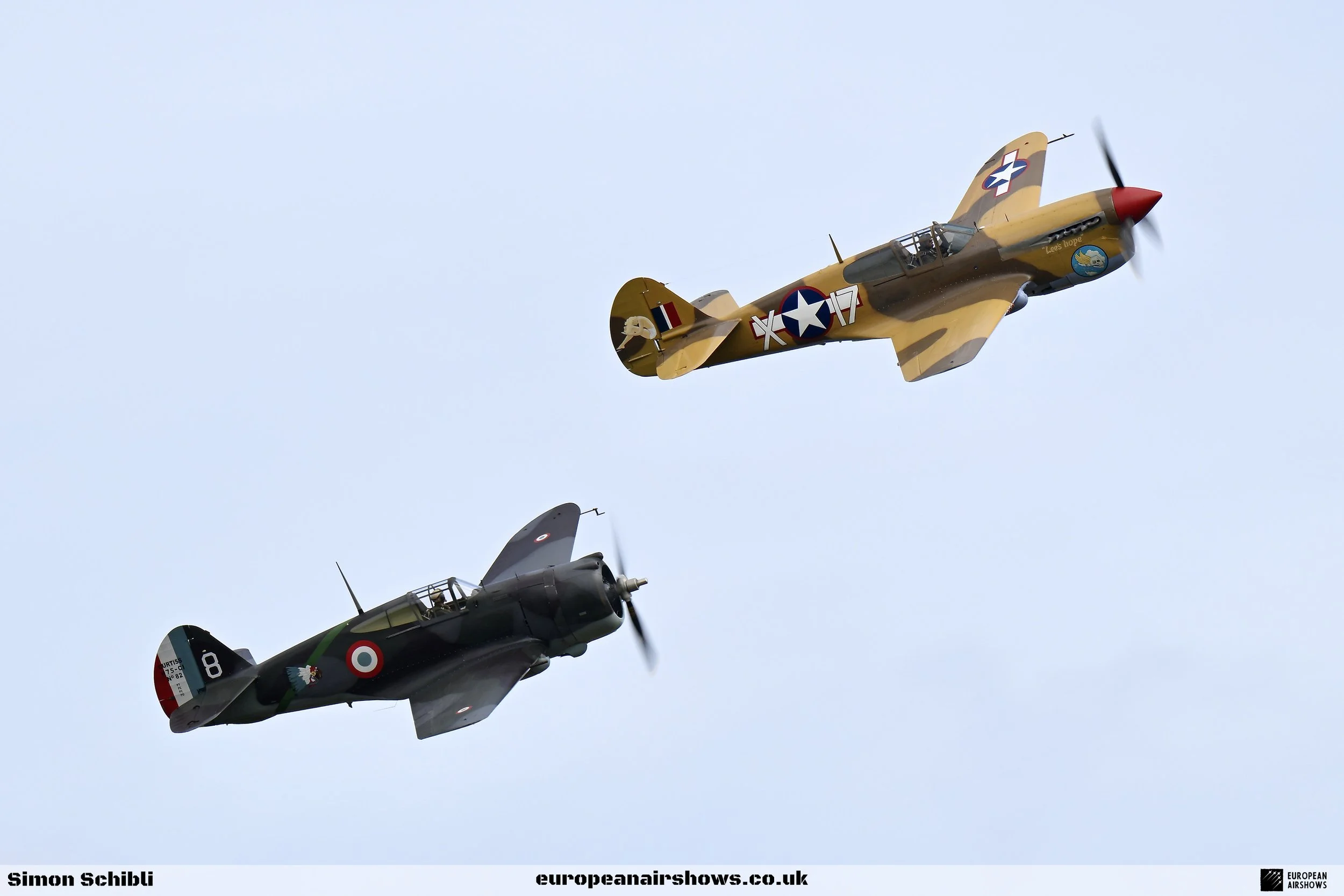
The Fighter Collection’s Curtiss H-75A Hawk then took to the air, continuing the wartime theme from the Duxford-based fleet. The Grumman F4F Wildcat had also been scheduled to appear but unfortunately remained grounded due to weather conditions. Instead the Hawk was joined by the Curtiss P-40F Warhawk, the Merlin-powered variant of the famous fighter and another aircraft operated by The Fighter Collection.
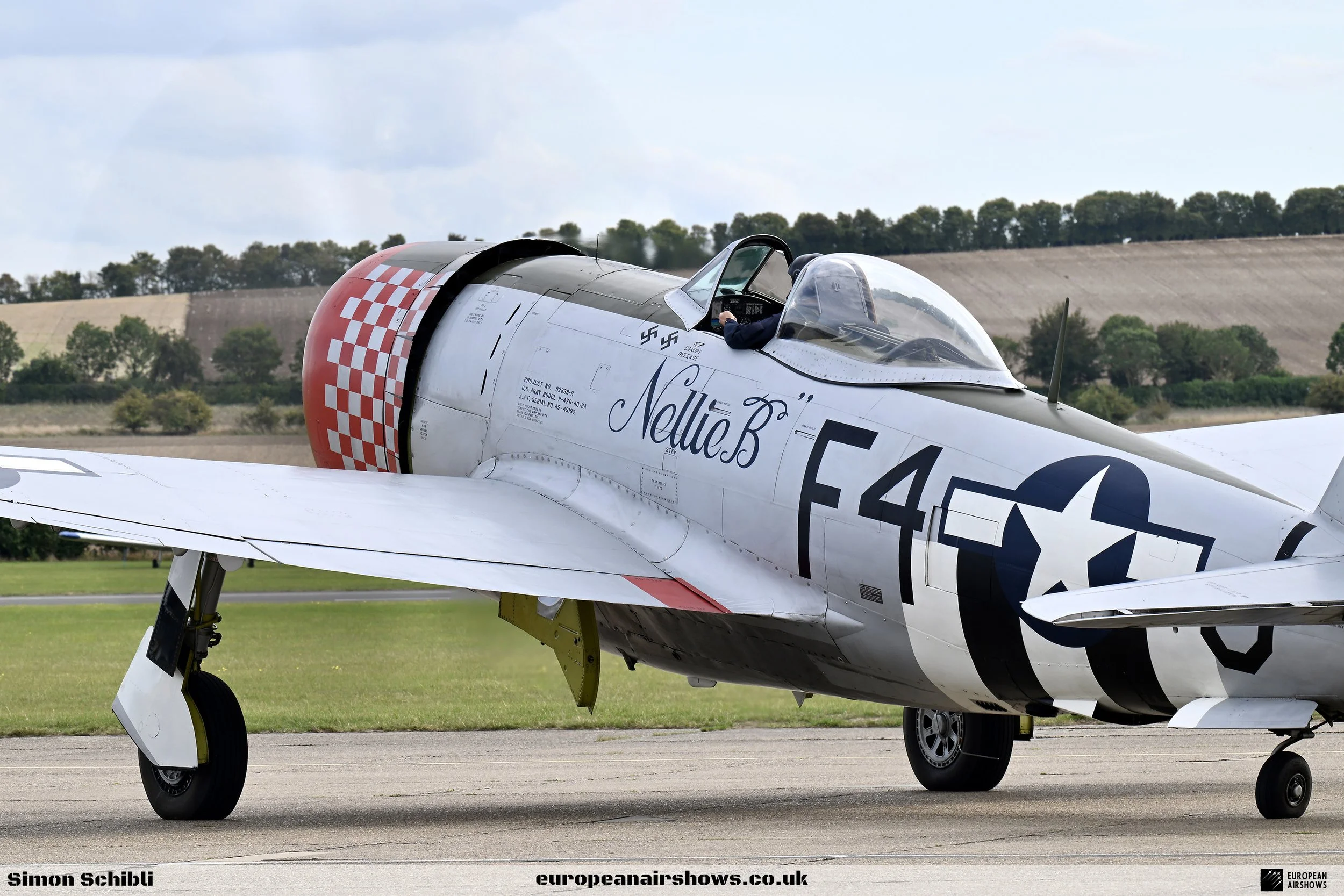
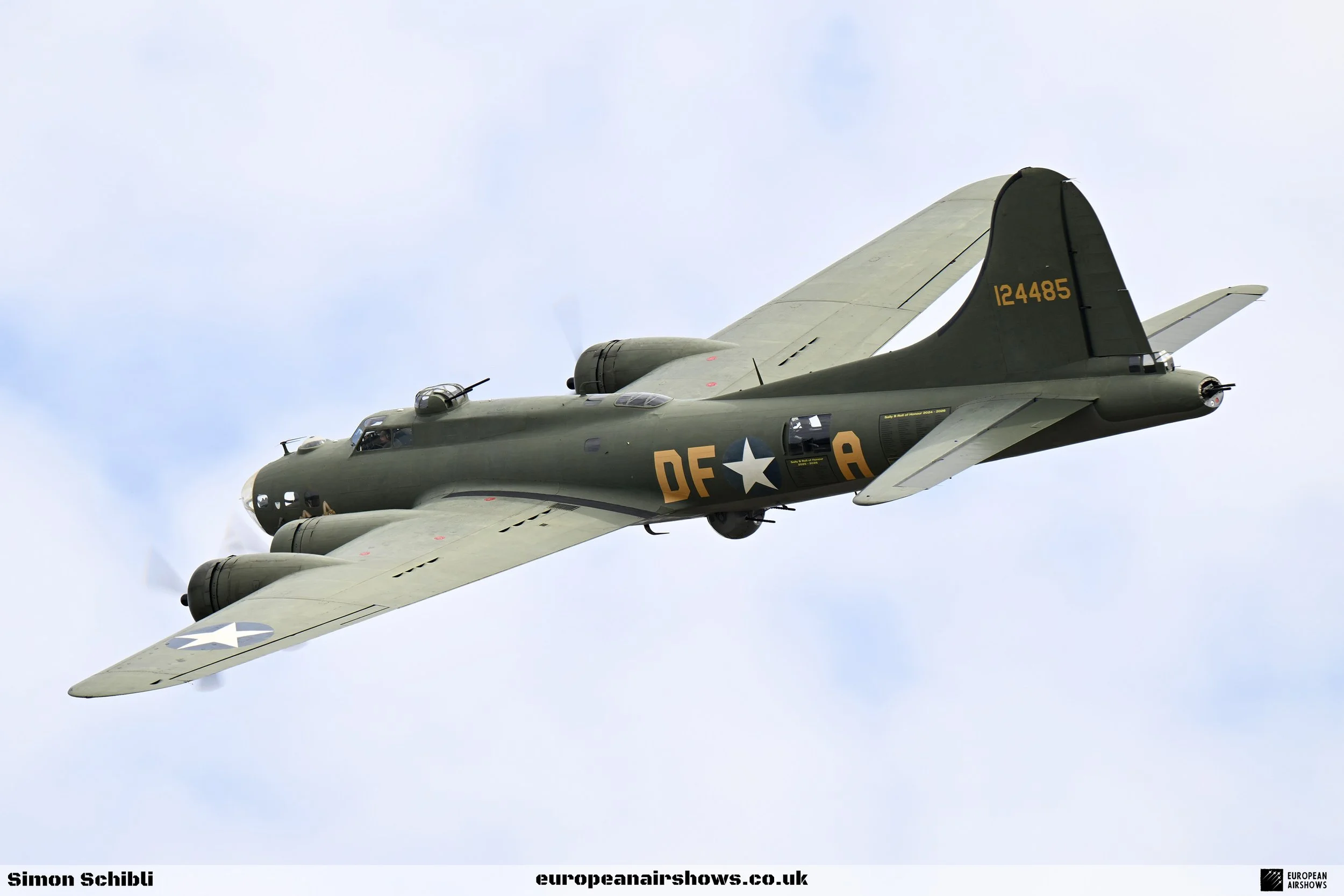
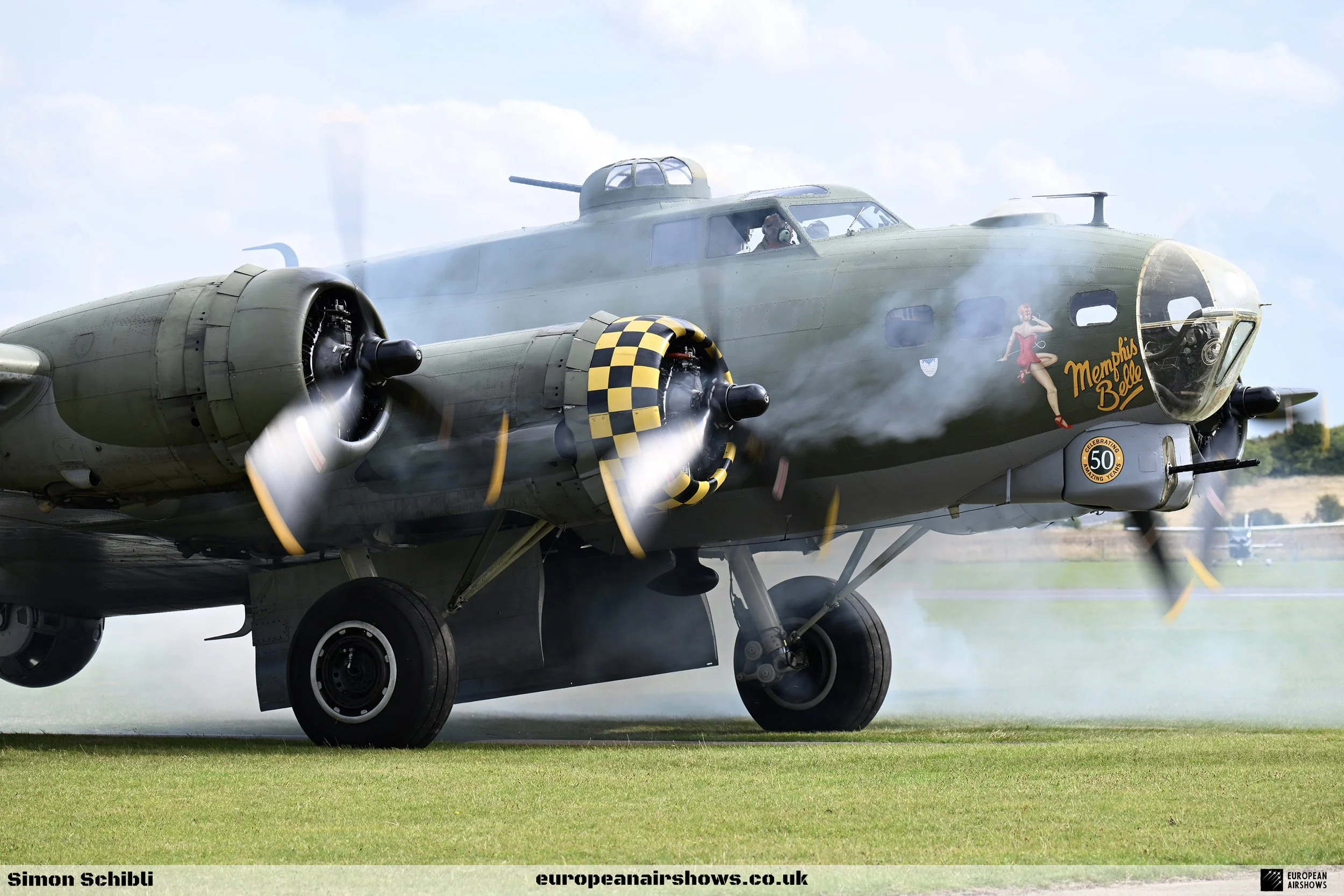
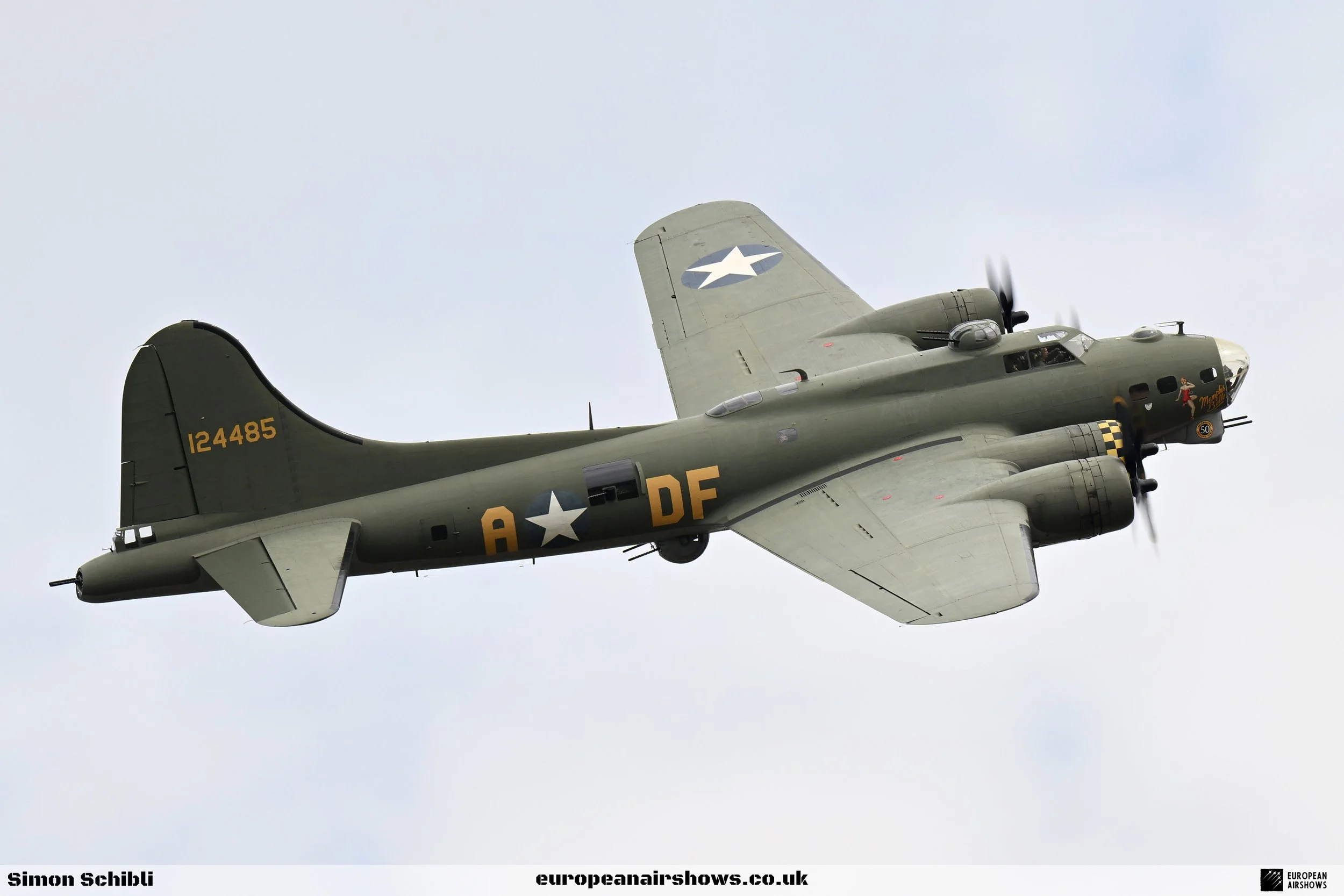
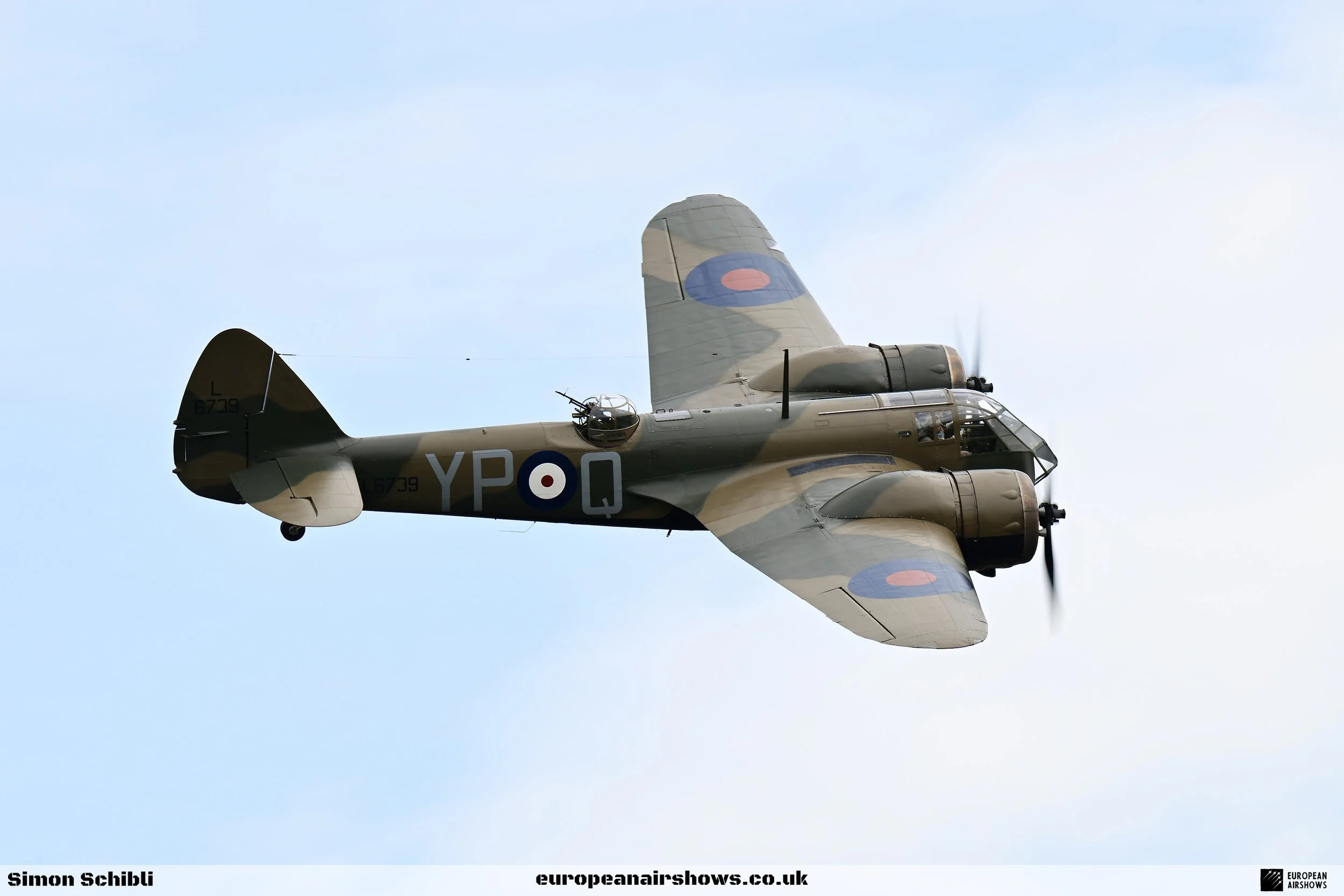
The programme then transitioned briefly toward heavier wartime aircraft with the Bristol Blenheim Mk.I, before introducing some powerful American machinery. The Republic P-47D Thunderbolt “Nellie B” brought its distinctive radial engine sound to the display before the arrival of one of Duxford’s most famous residents, the Boeing B-17G Flying Fortress “Sally B”, operated by B-17 Preservation Ltd. Few aircraft generate the same emotional reaction from British audiences and the Flying Fortress remains one of the centrepieces of the Duxford flying programme.
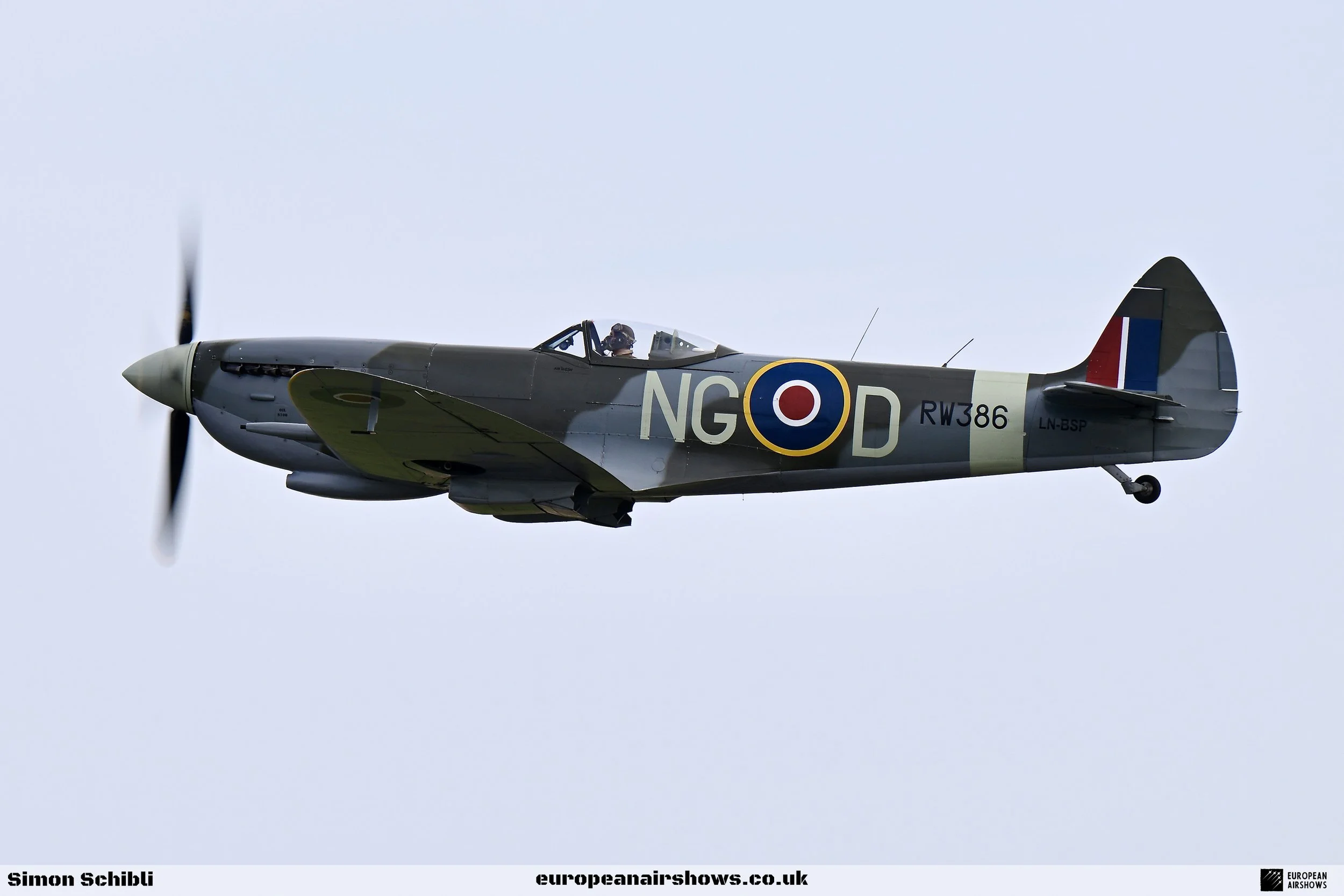
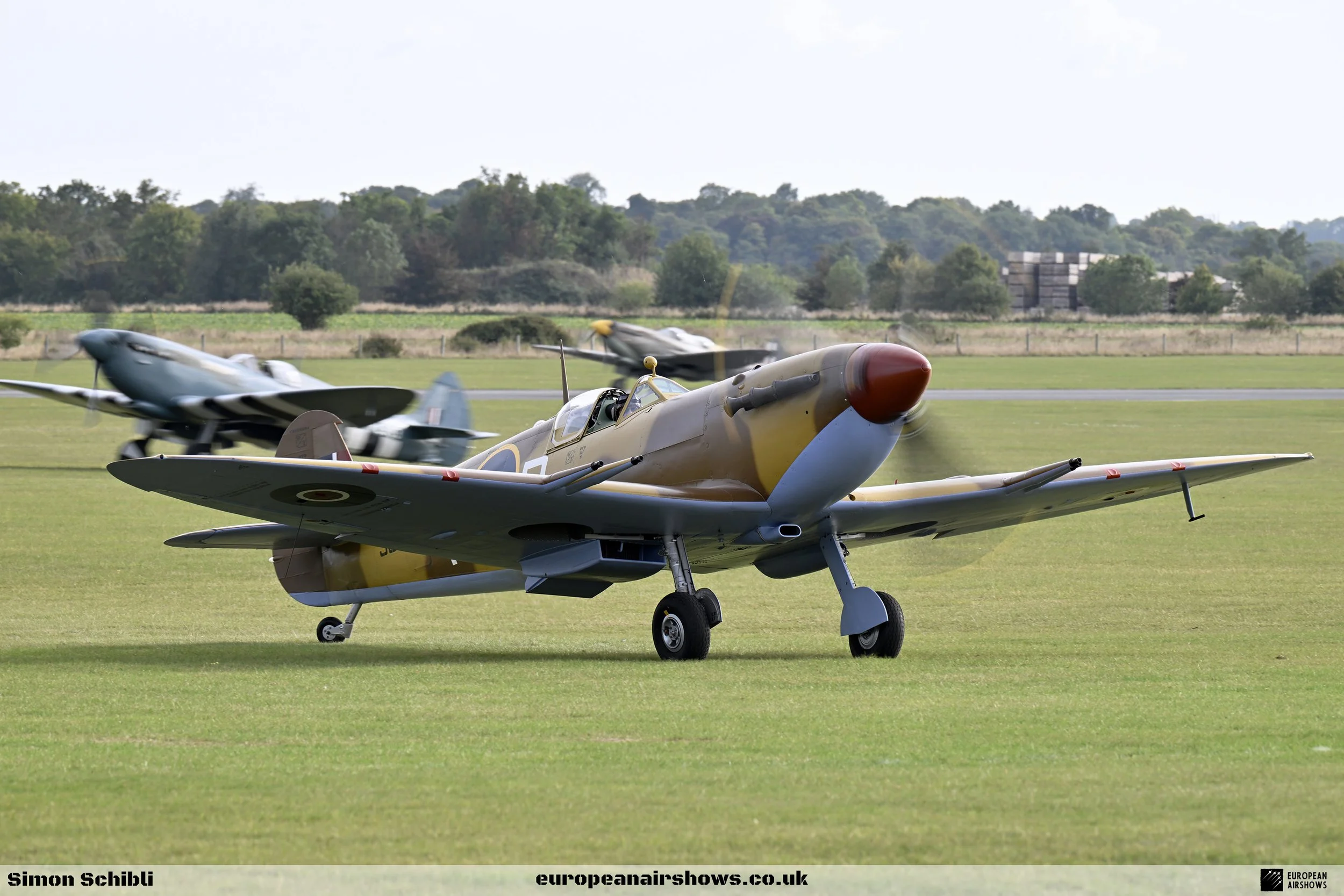
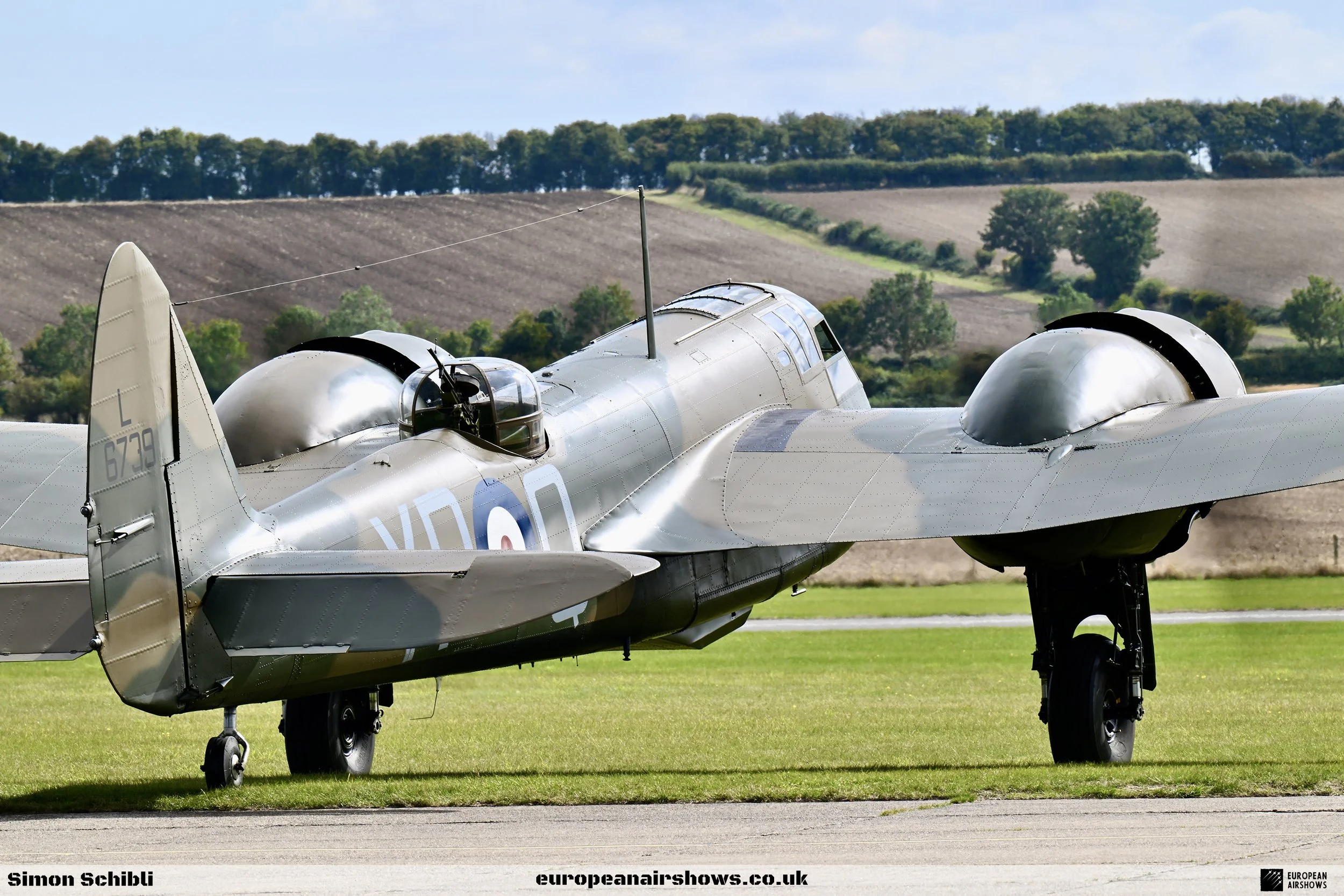
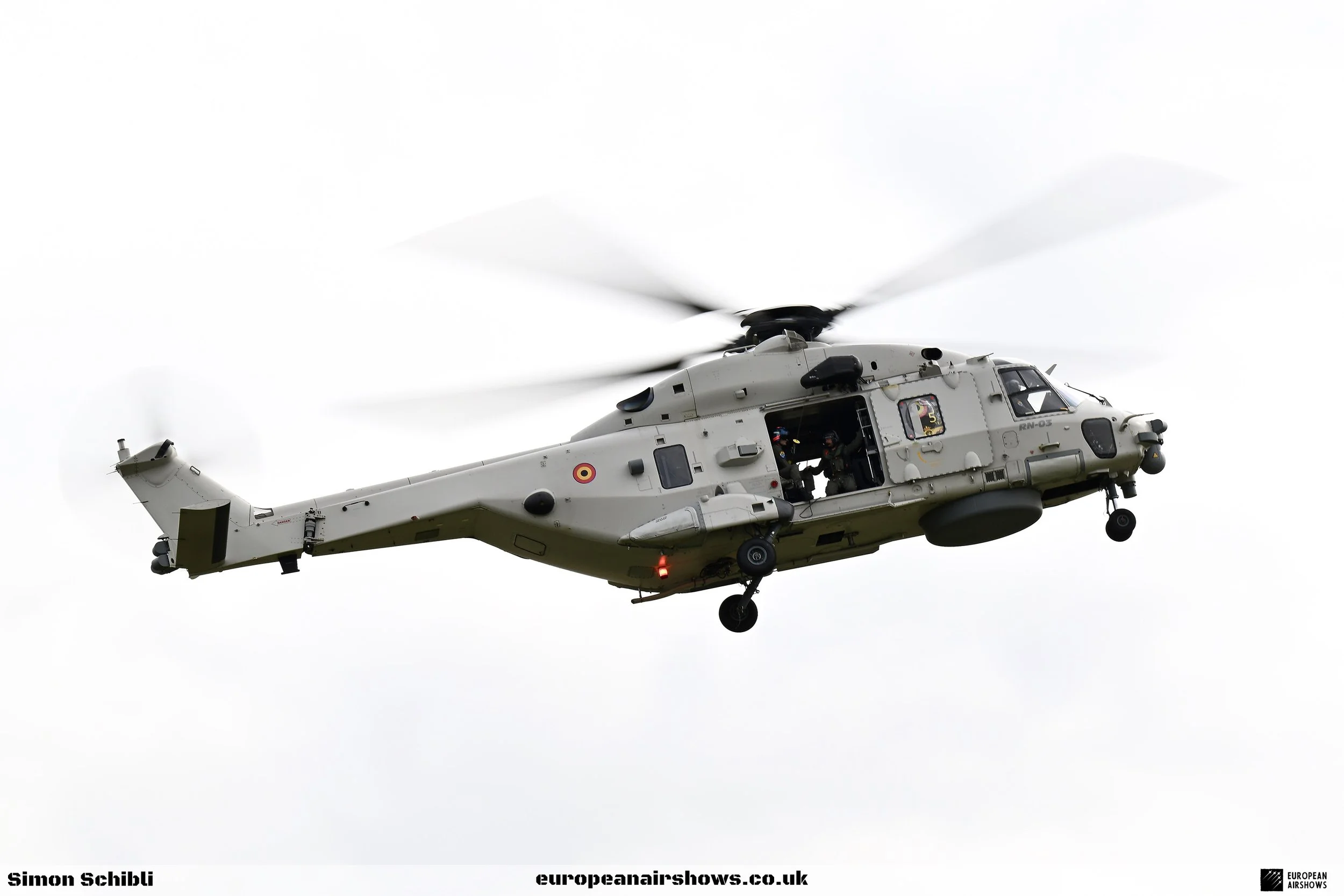
A new segment of the display then introduced a mix of British and international aircraft. The Hawker Fury Mk.II opened the sequence before a visiting NH90 helicopter from the Belgian Air Component demonstrated modern military rotary-wing operations.
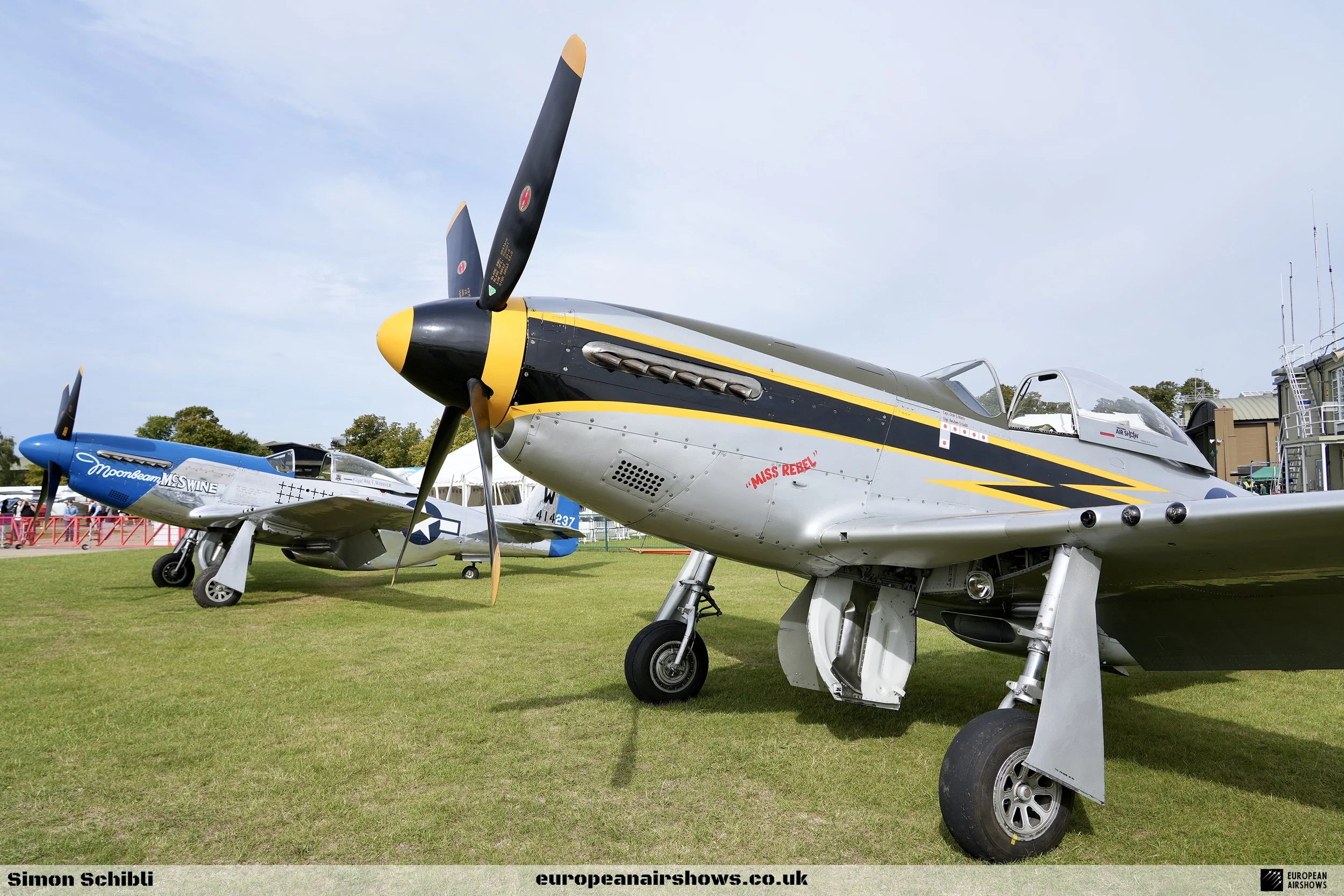
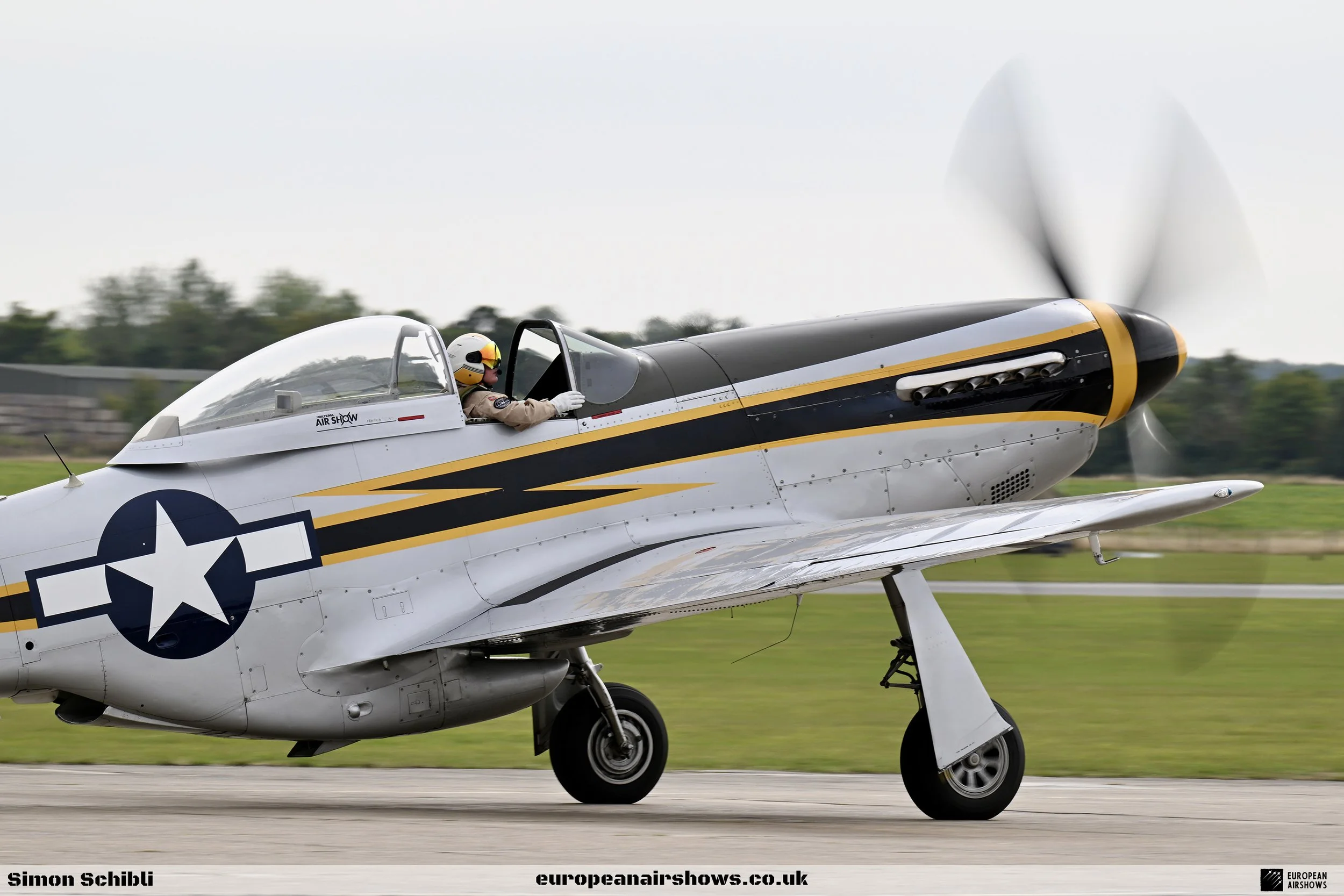
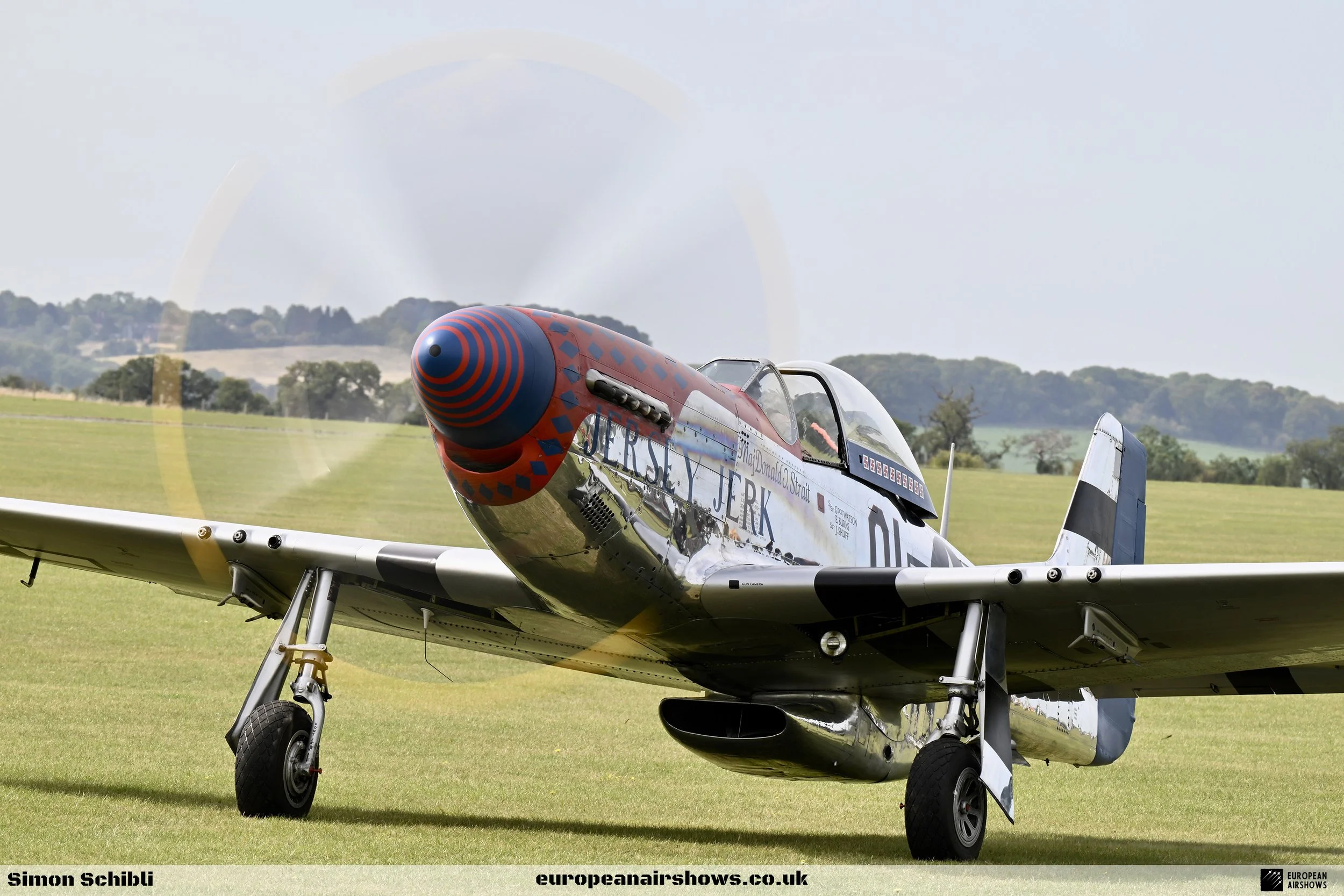
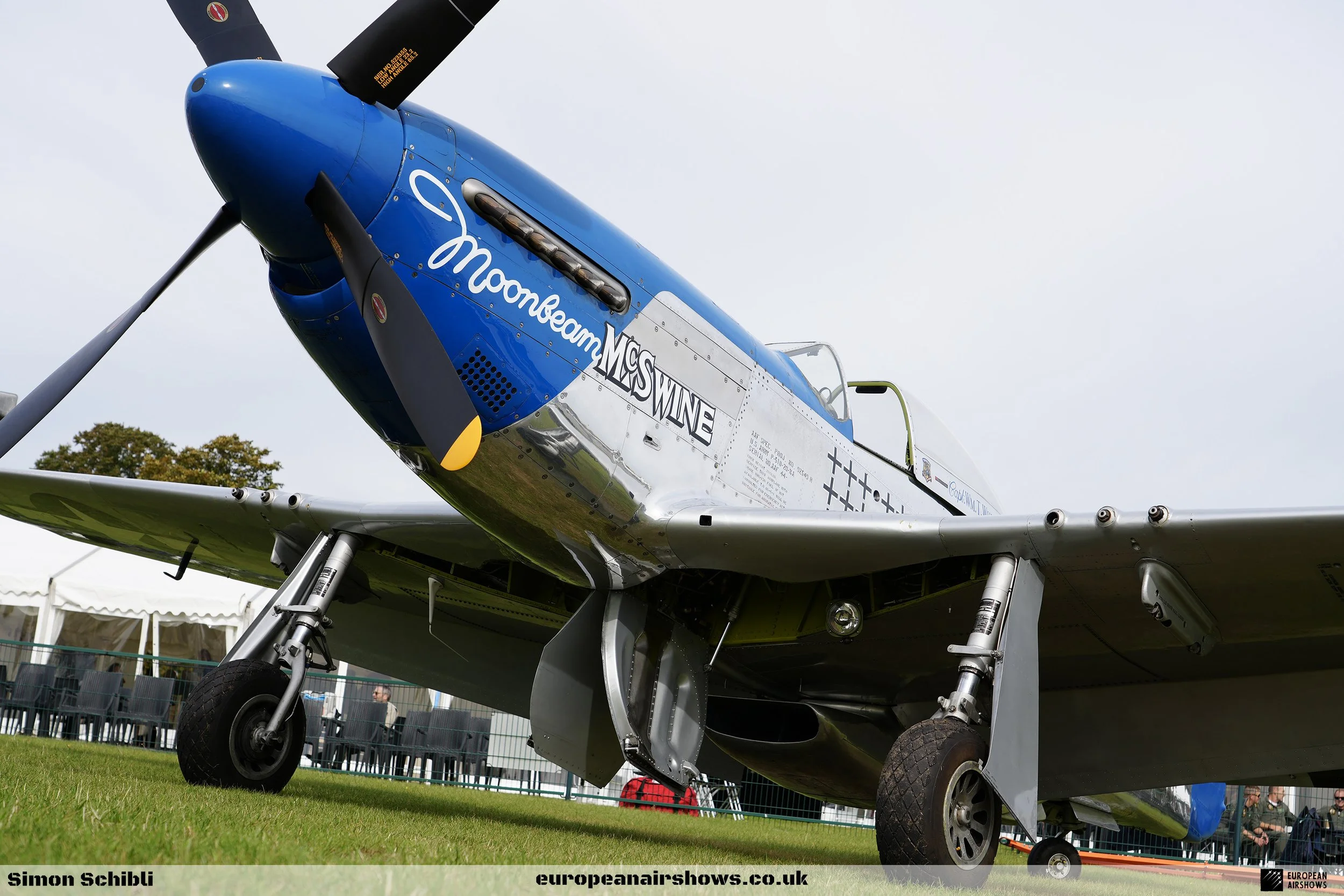
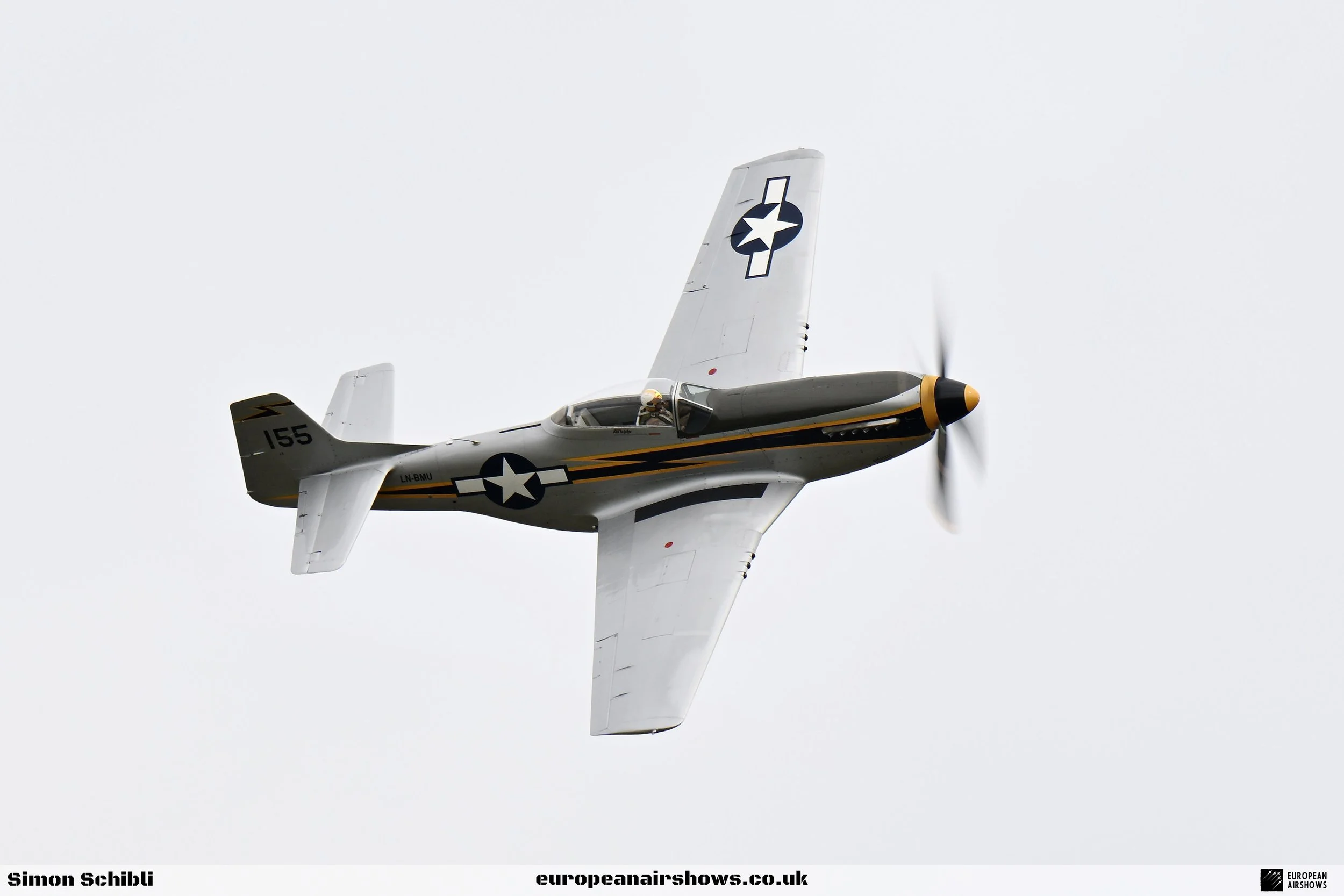
Attention soon returned to classic American fighters as three North American P-51 Mustangs departed in succession: P-51D “Moonbeam McSwine”, recently returned to Europe, P-51D “Jersey Jerk” and the Cavalier F-51D “Miss Rebel”. With three Mustangs available there had been potential for a dramatic formation sequence, and the individual departures felt like a slight missed opportunity for something more visually striking.
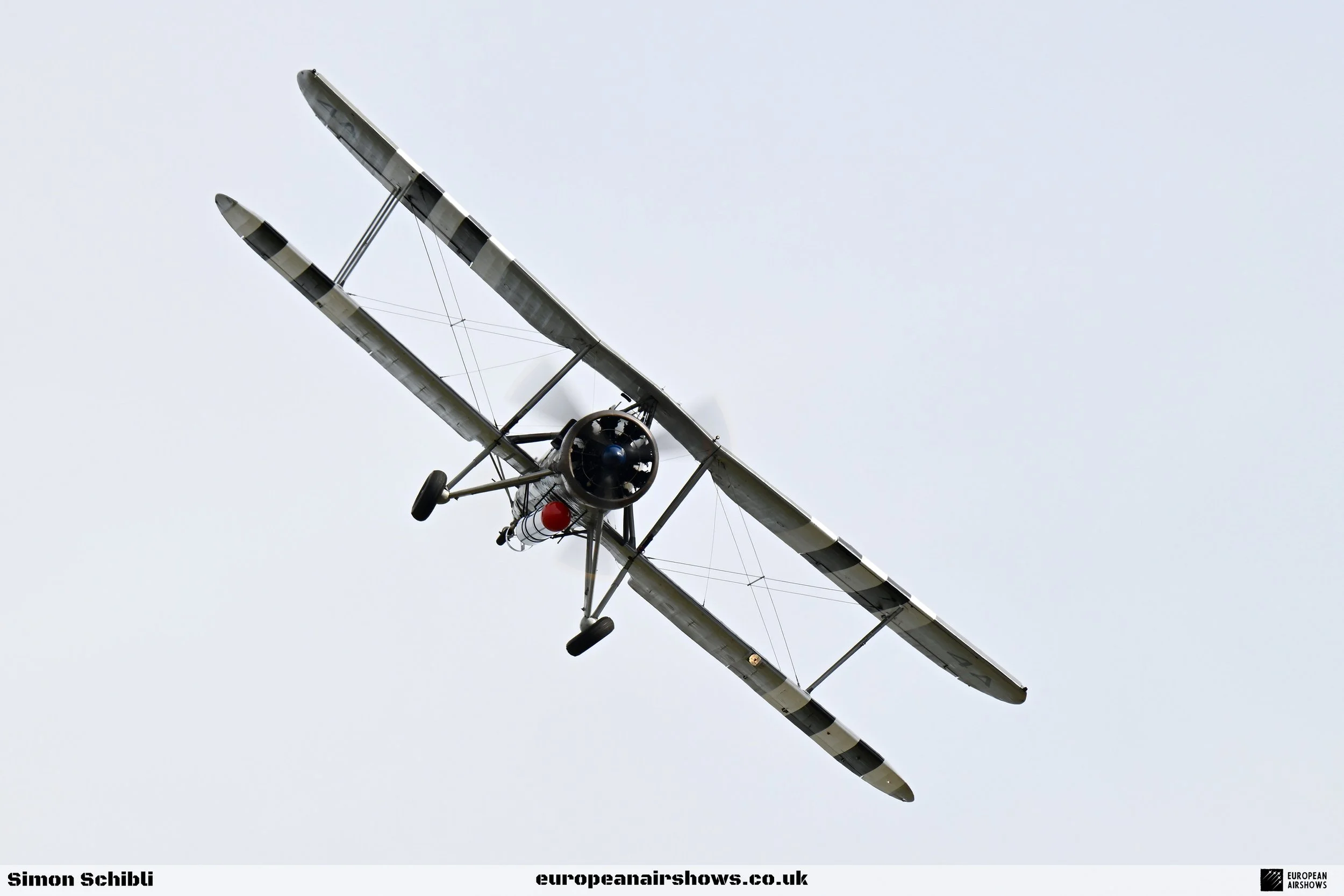
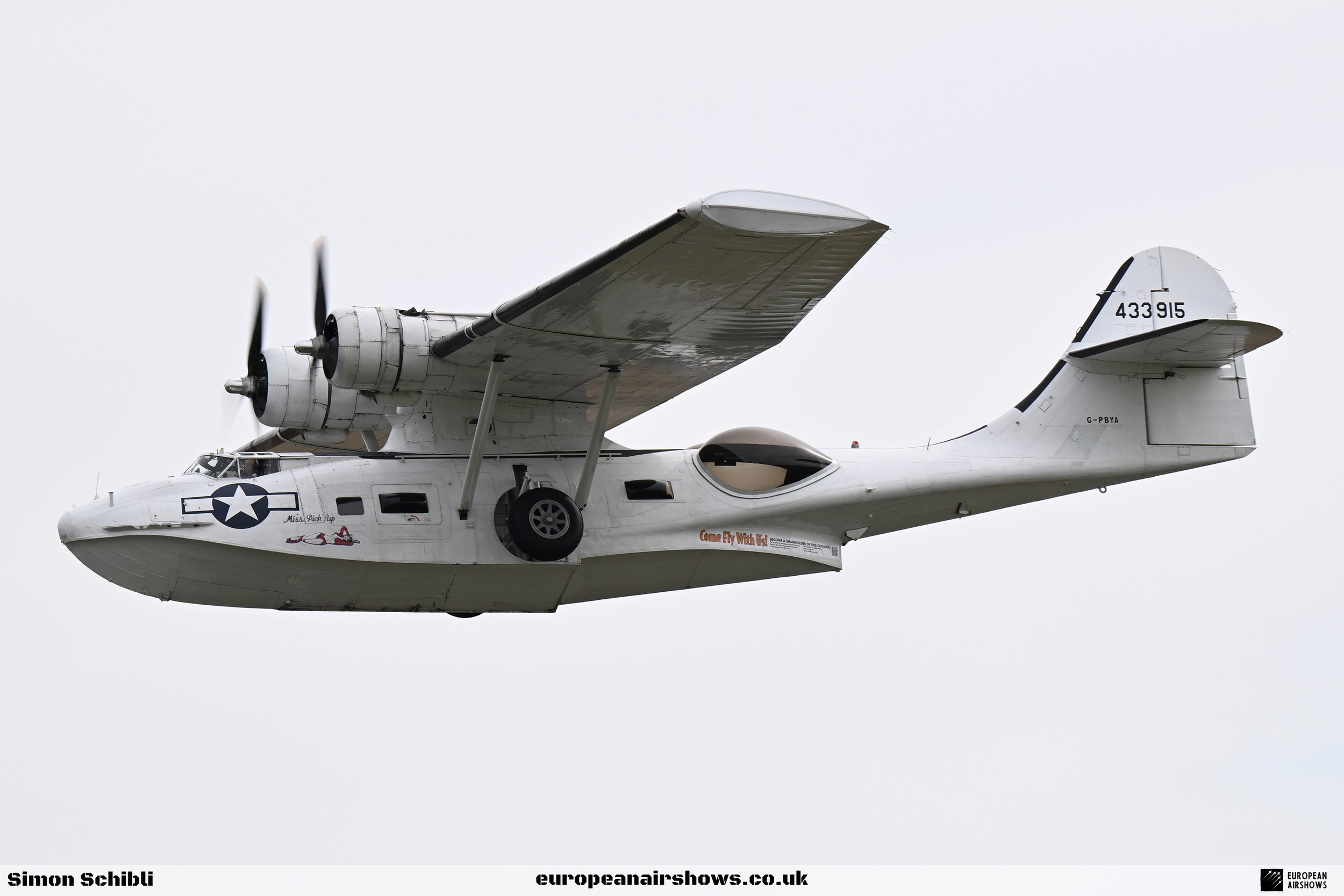
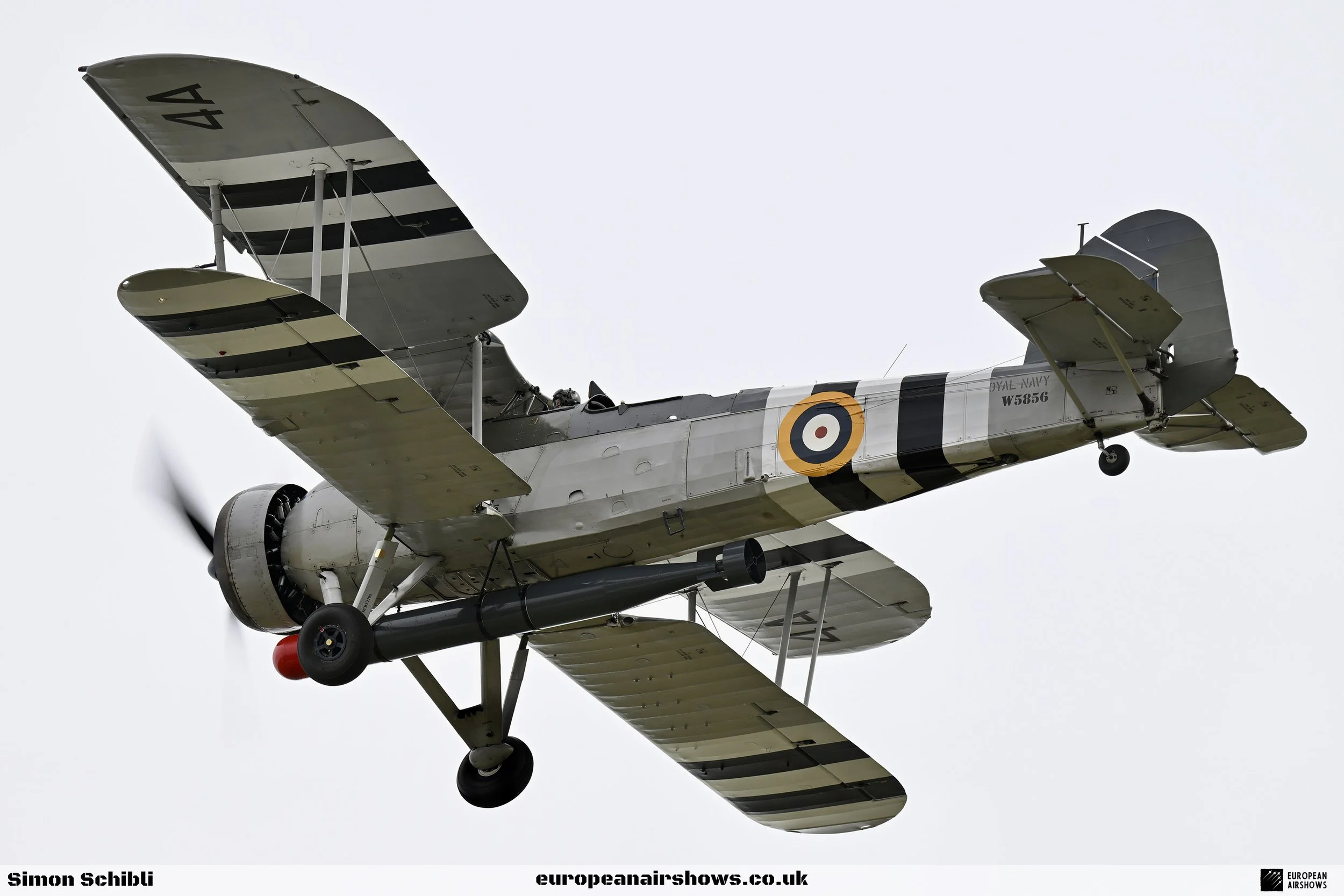
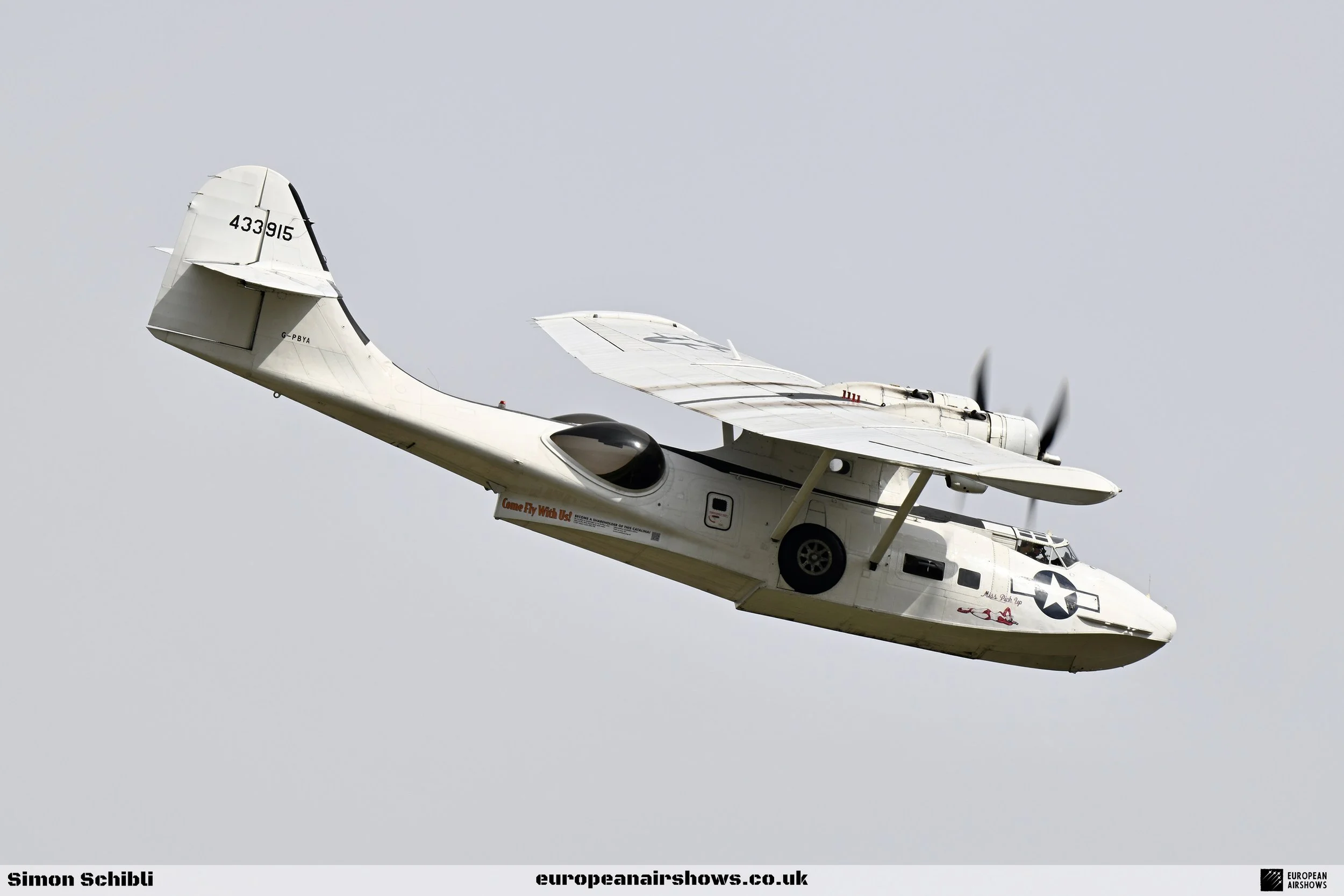
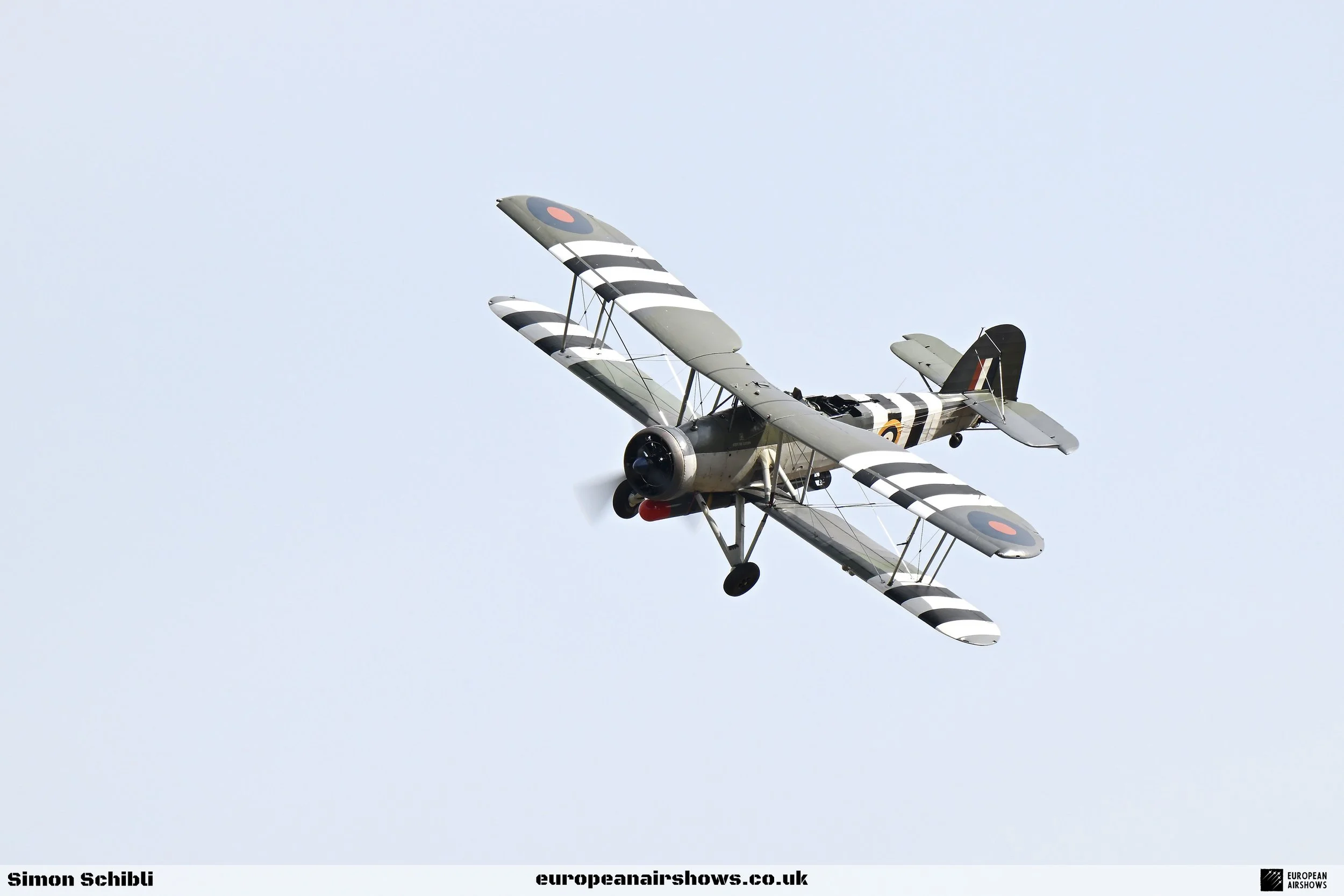
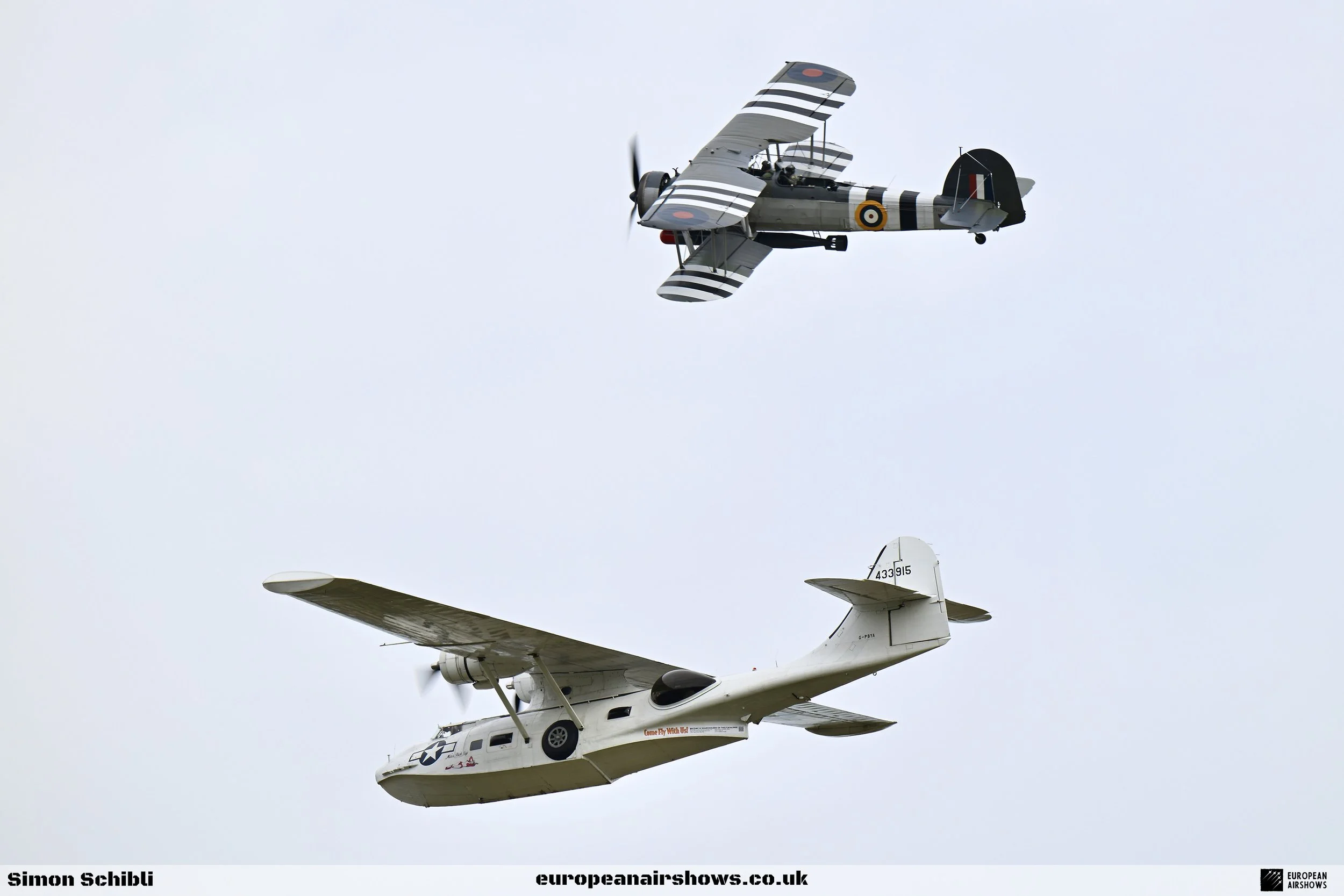
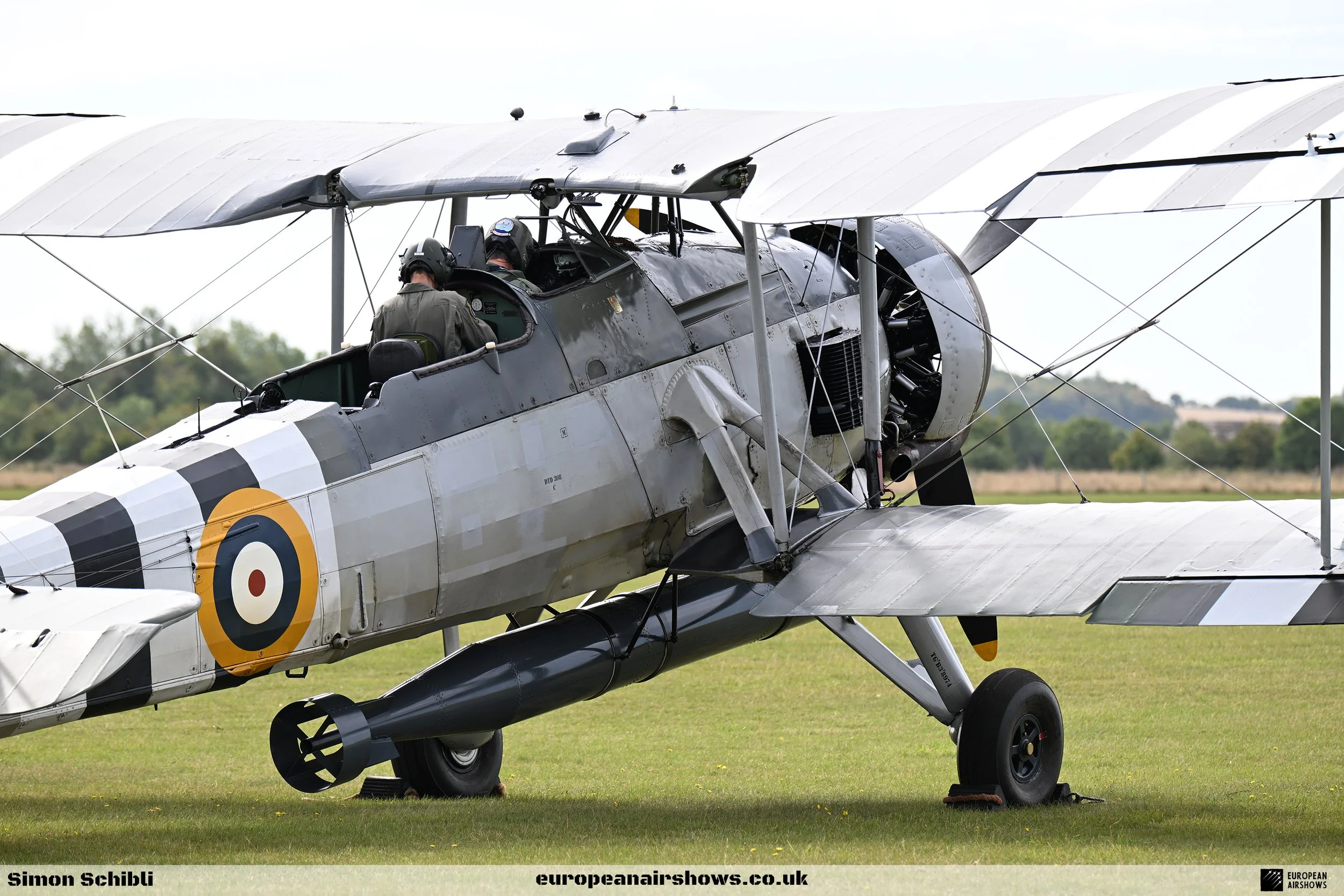
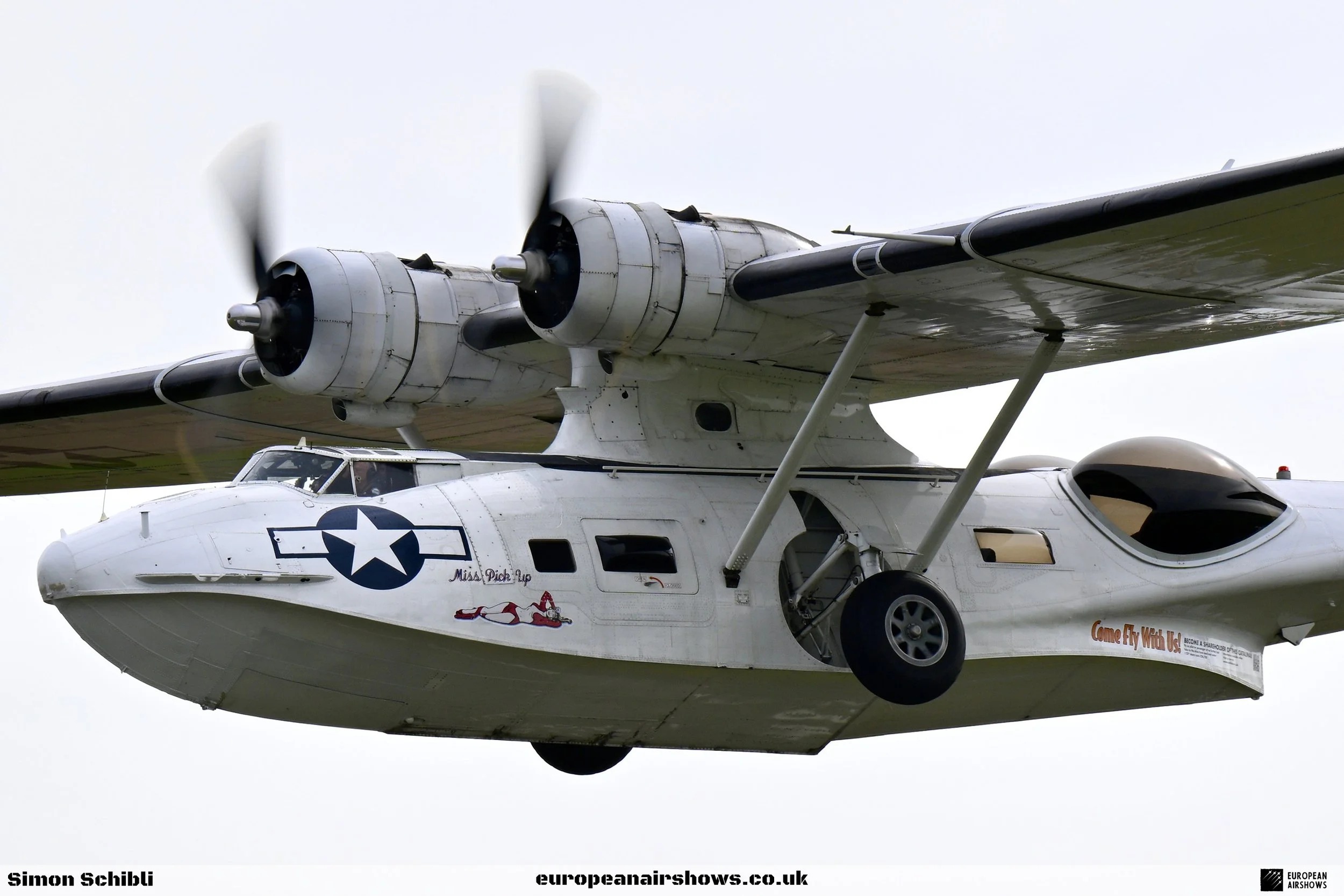
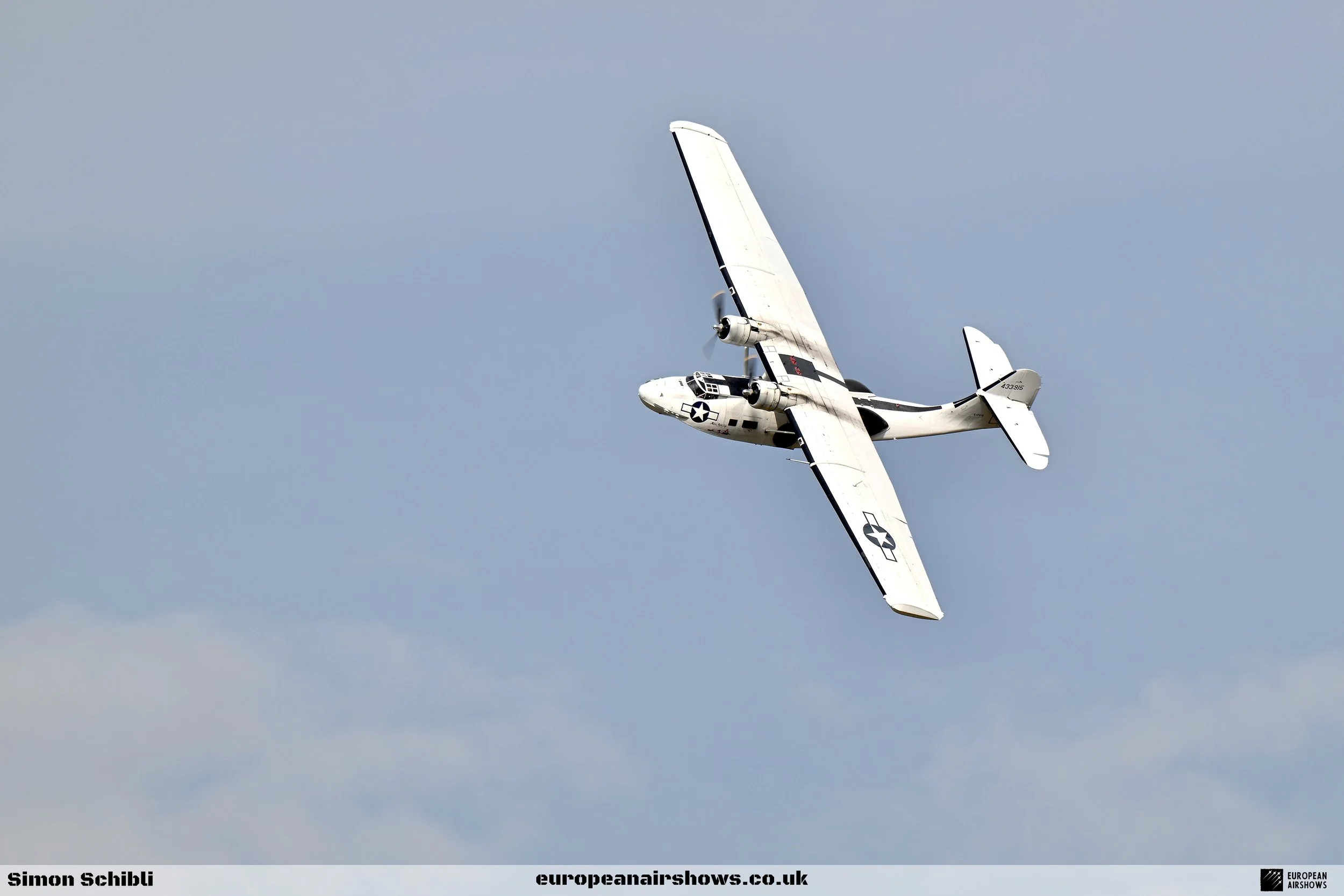
A Royal Navy themed segment followed with the Consolidated PBY-5A Catalina “Miss Pick Up”, operated by Plane Sailing, flying alongside the famous Fairey Swordfish. Both aircraft added welcome variety to the programme and provided a slower, more atmospheric interlude.
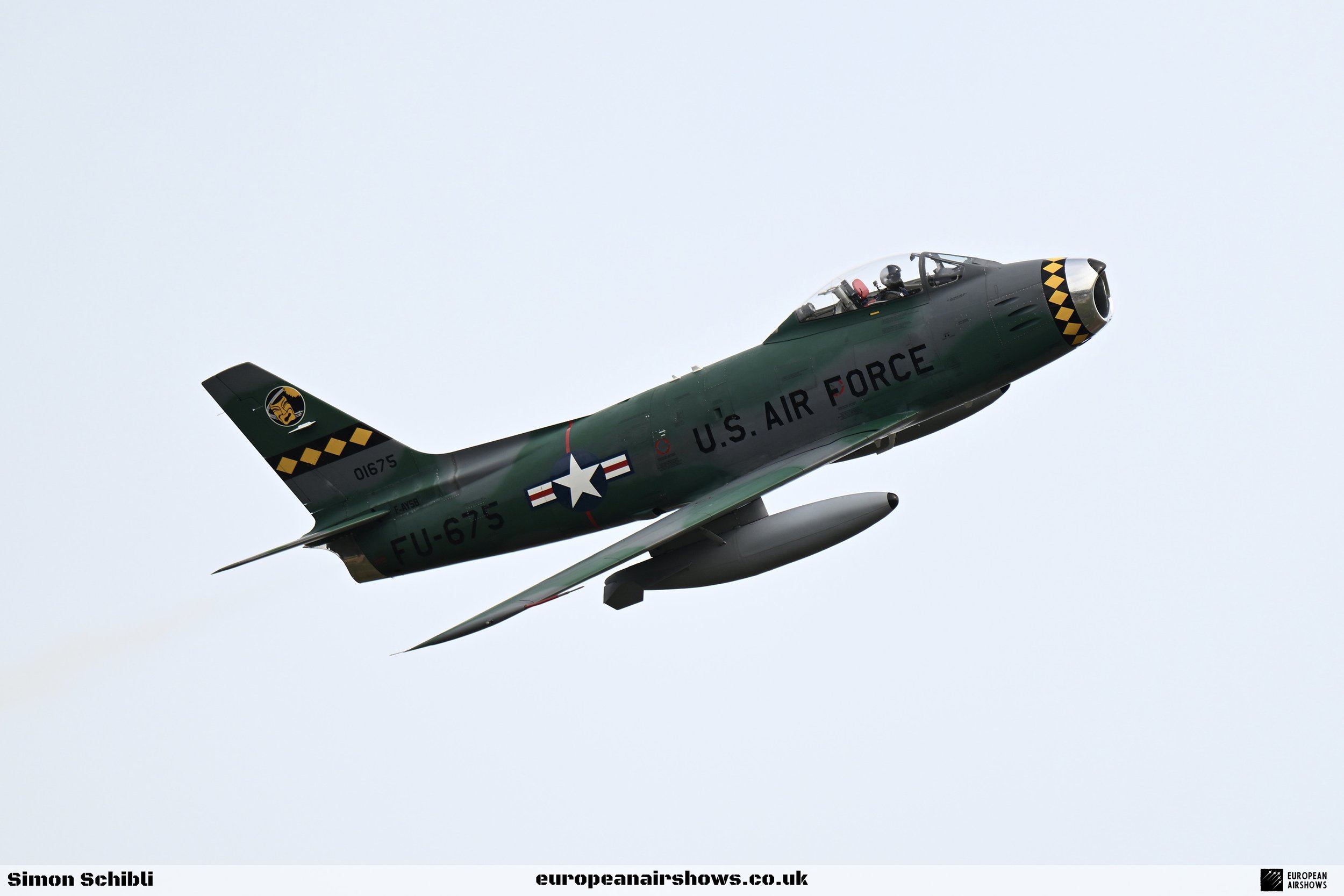
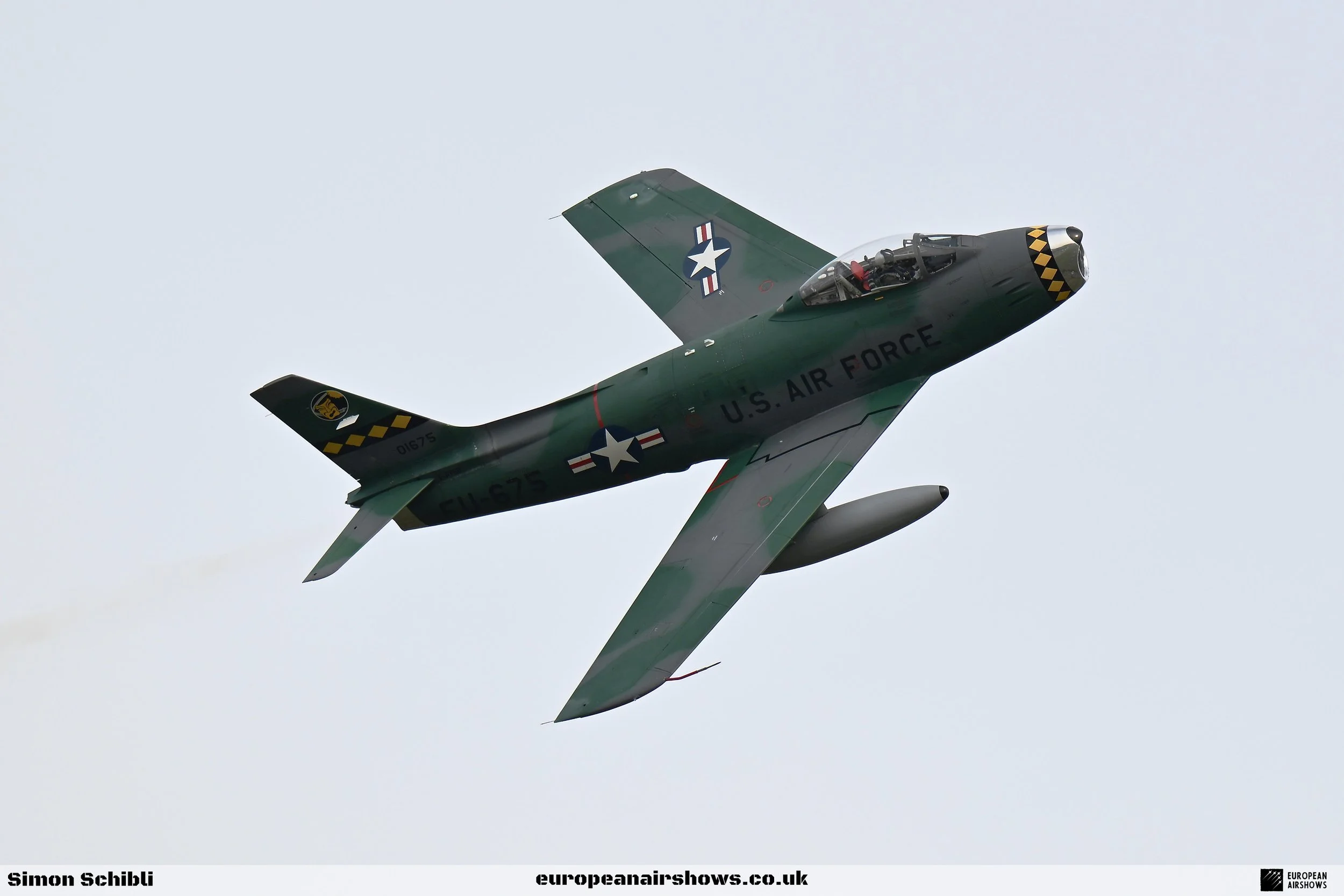
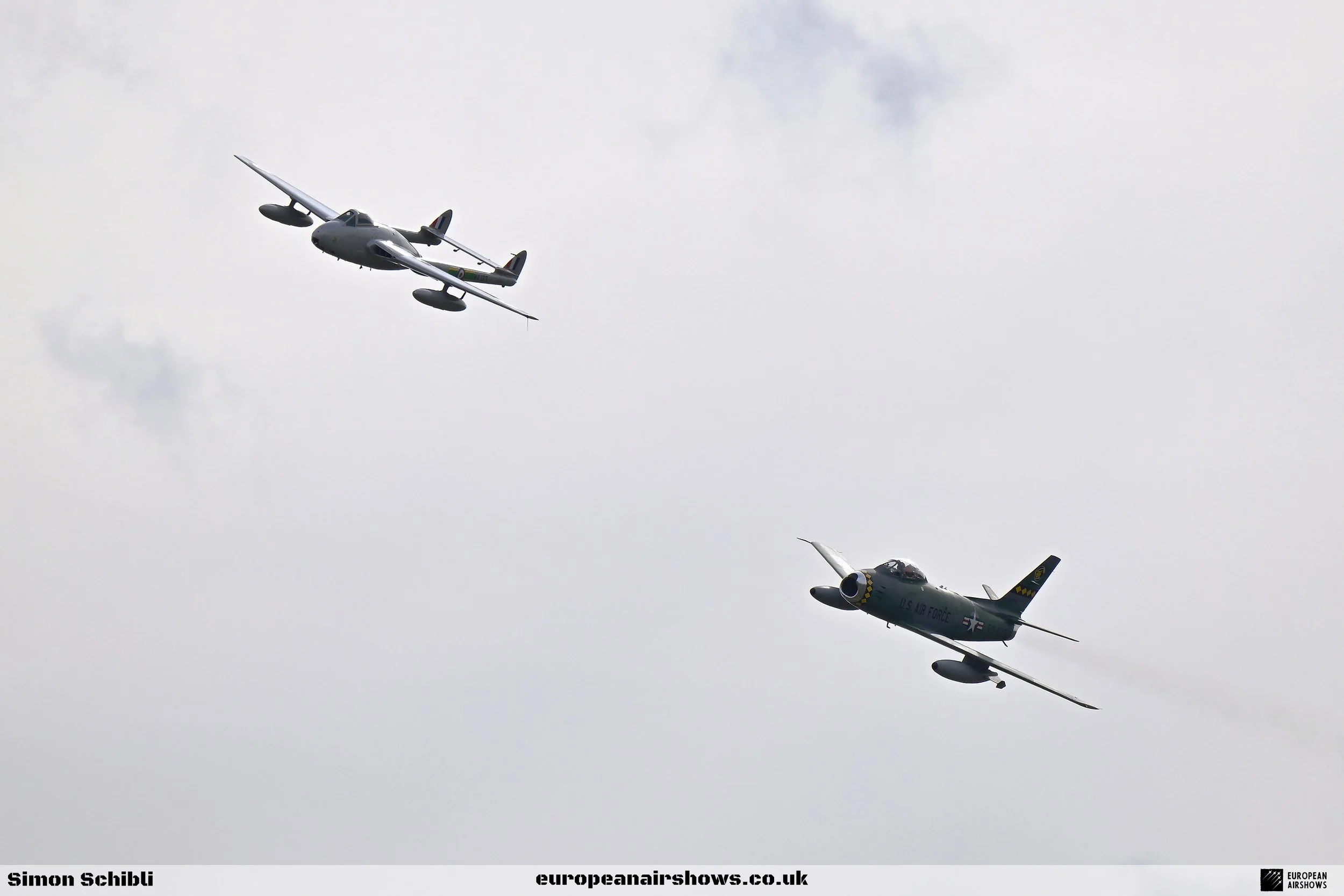
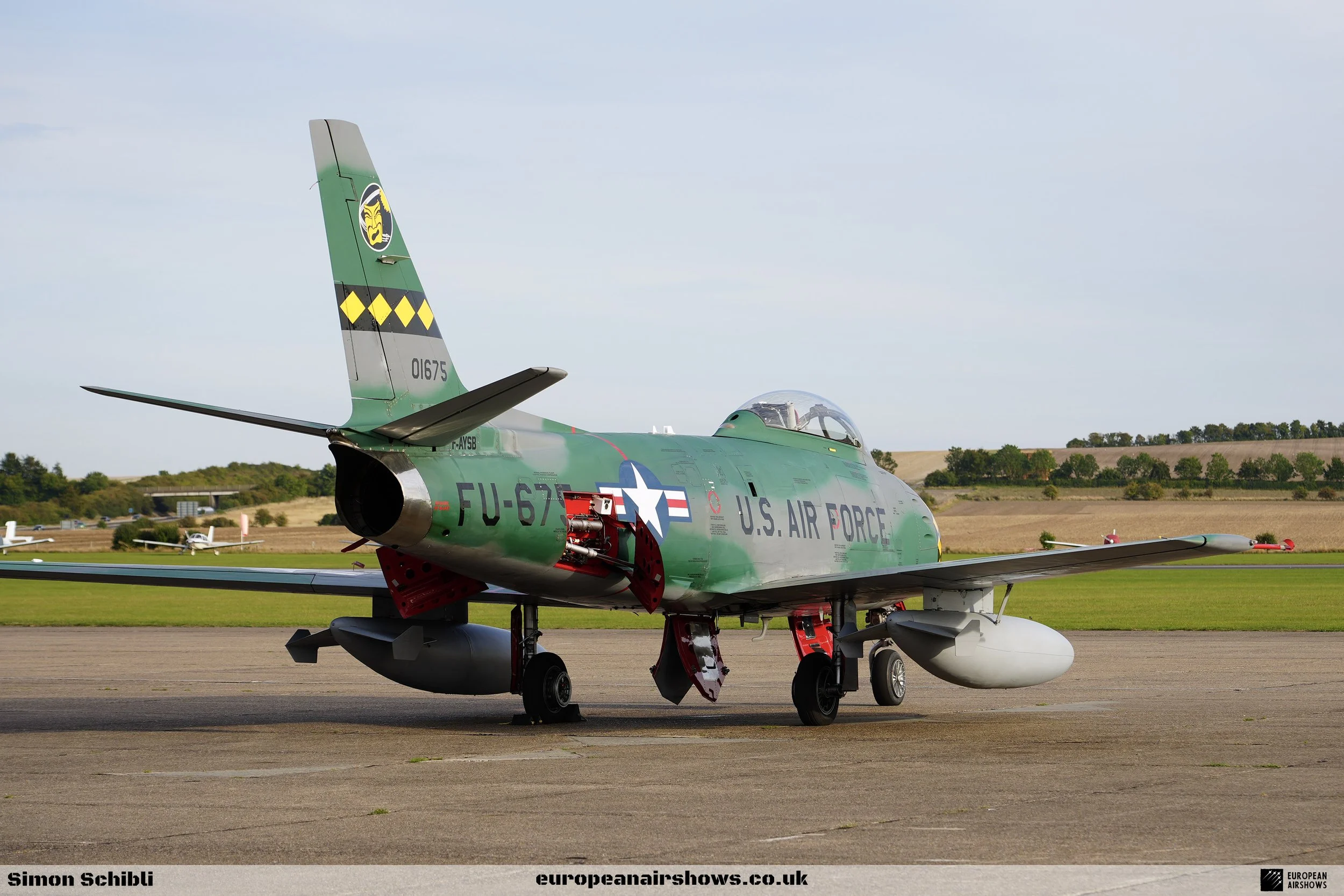
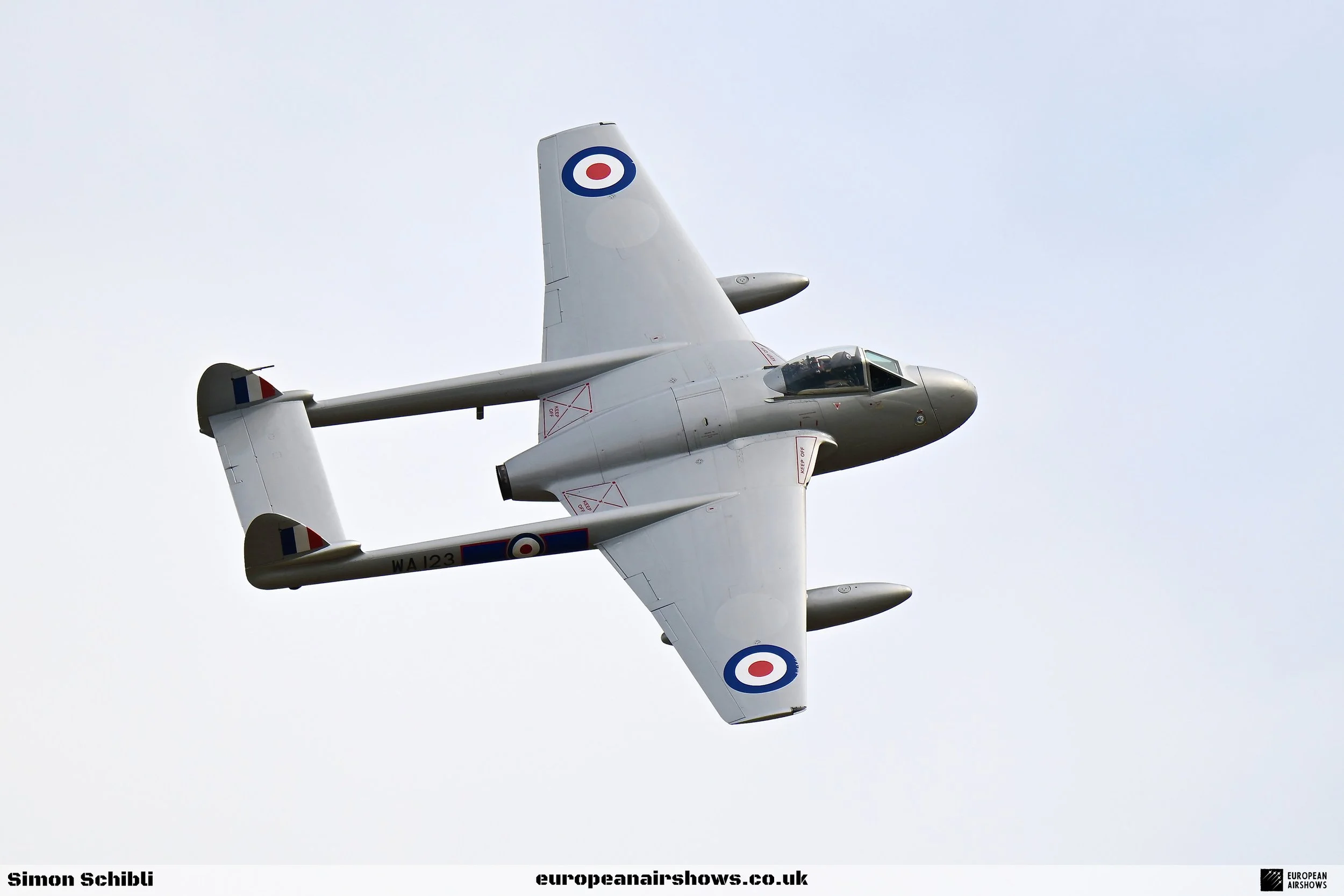
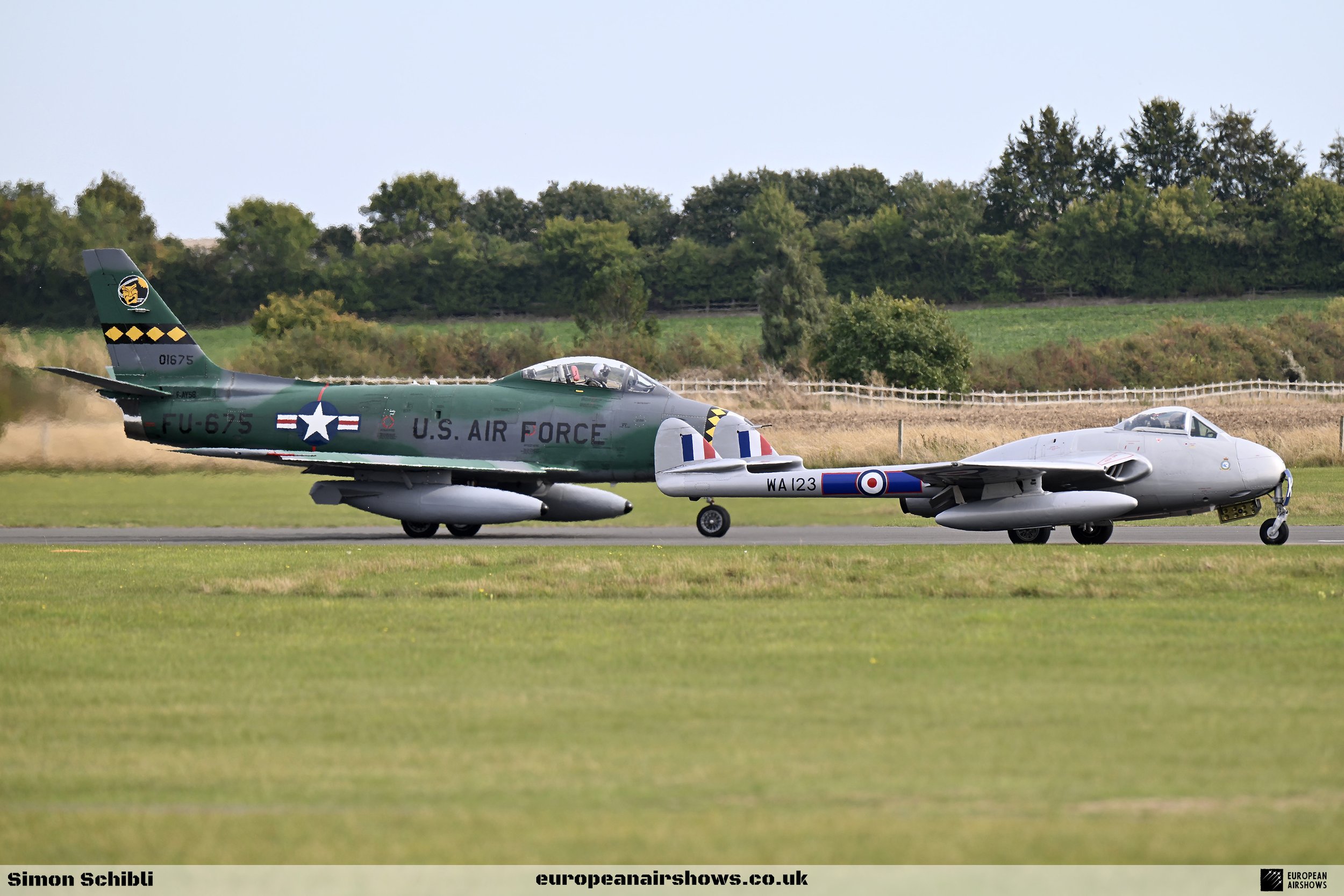
Early jet aviation also featured with the appearance of the Norwegian Historical Squadron de Havilland Vampire FB.52 and the Canadair CL-13 Sabre Mk.6 operated by Mistral Warbirds. The two aircraft opened their display with an unusual formation pass before separating for enjoyable solo demonstrations that contrasted nicely with the piston-engine warbirds dominating the rest of the programme.
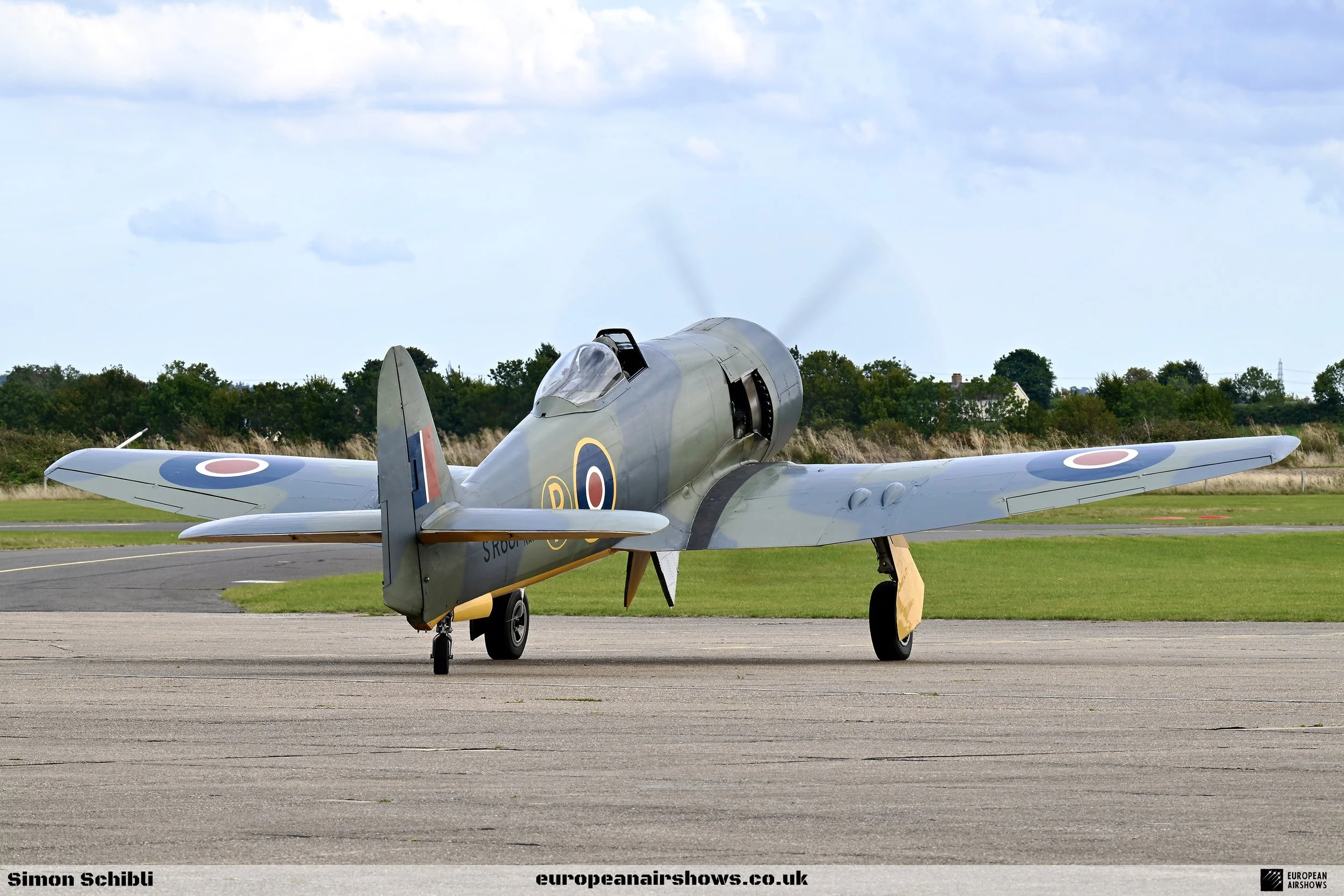
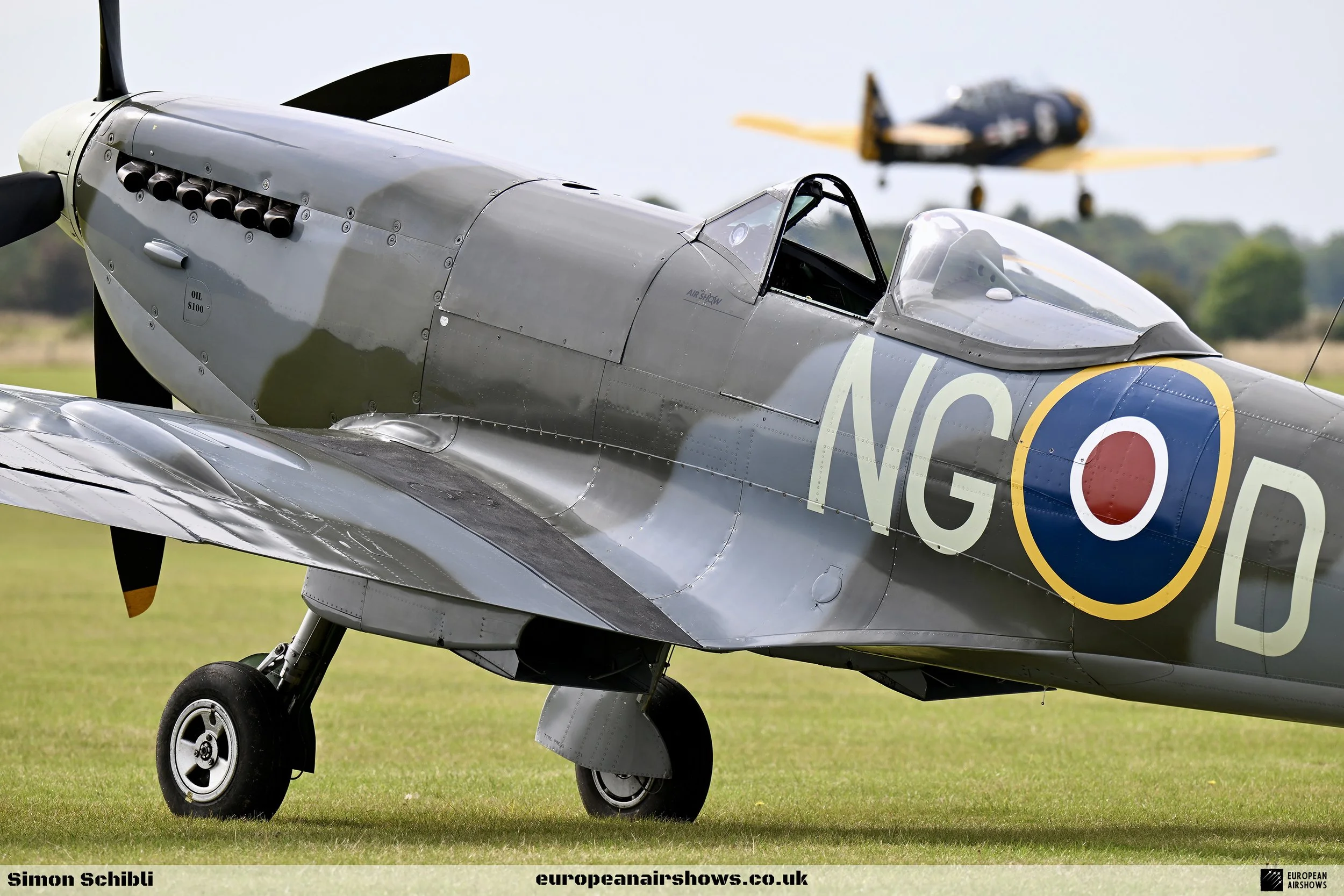
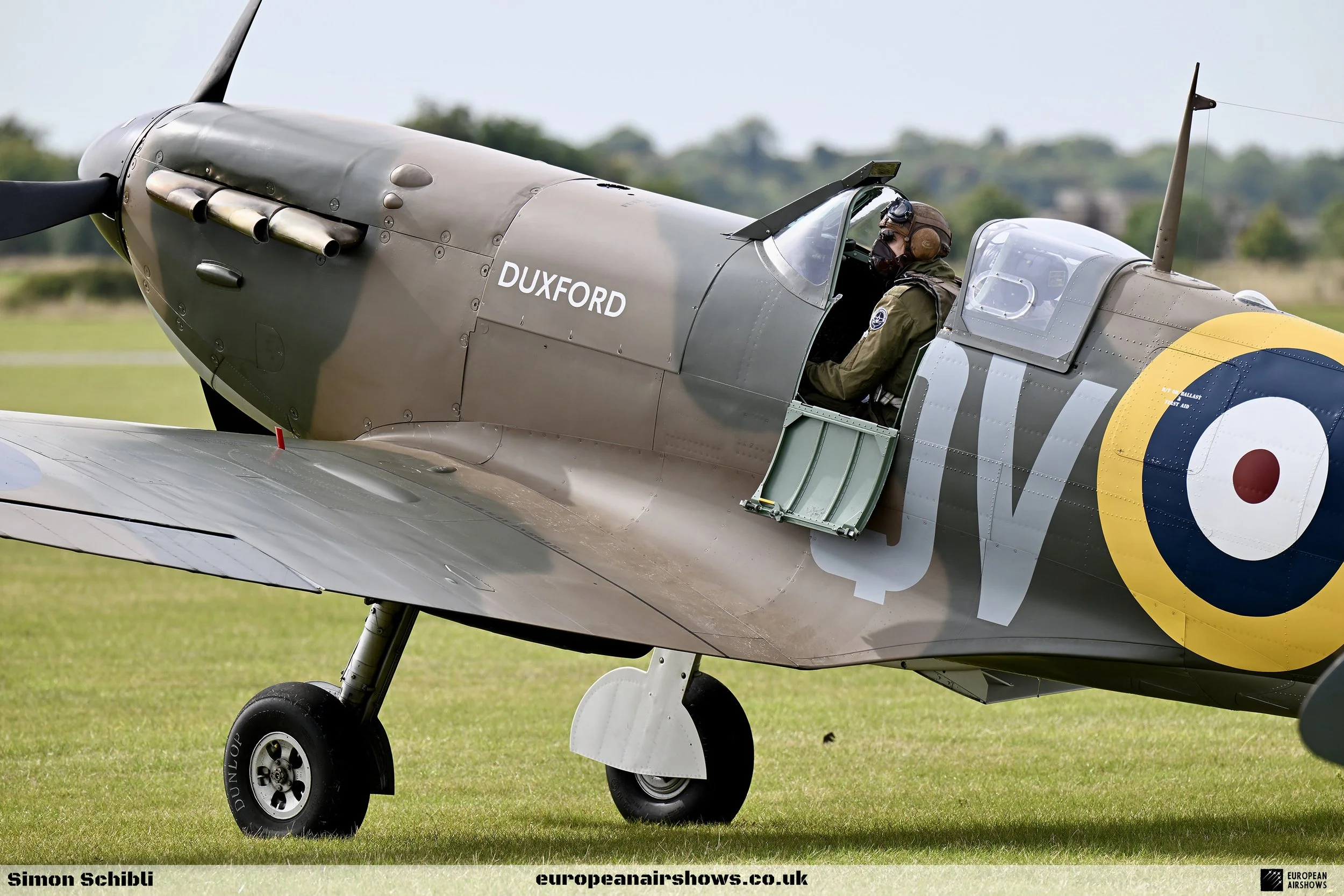
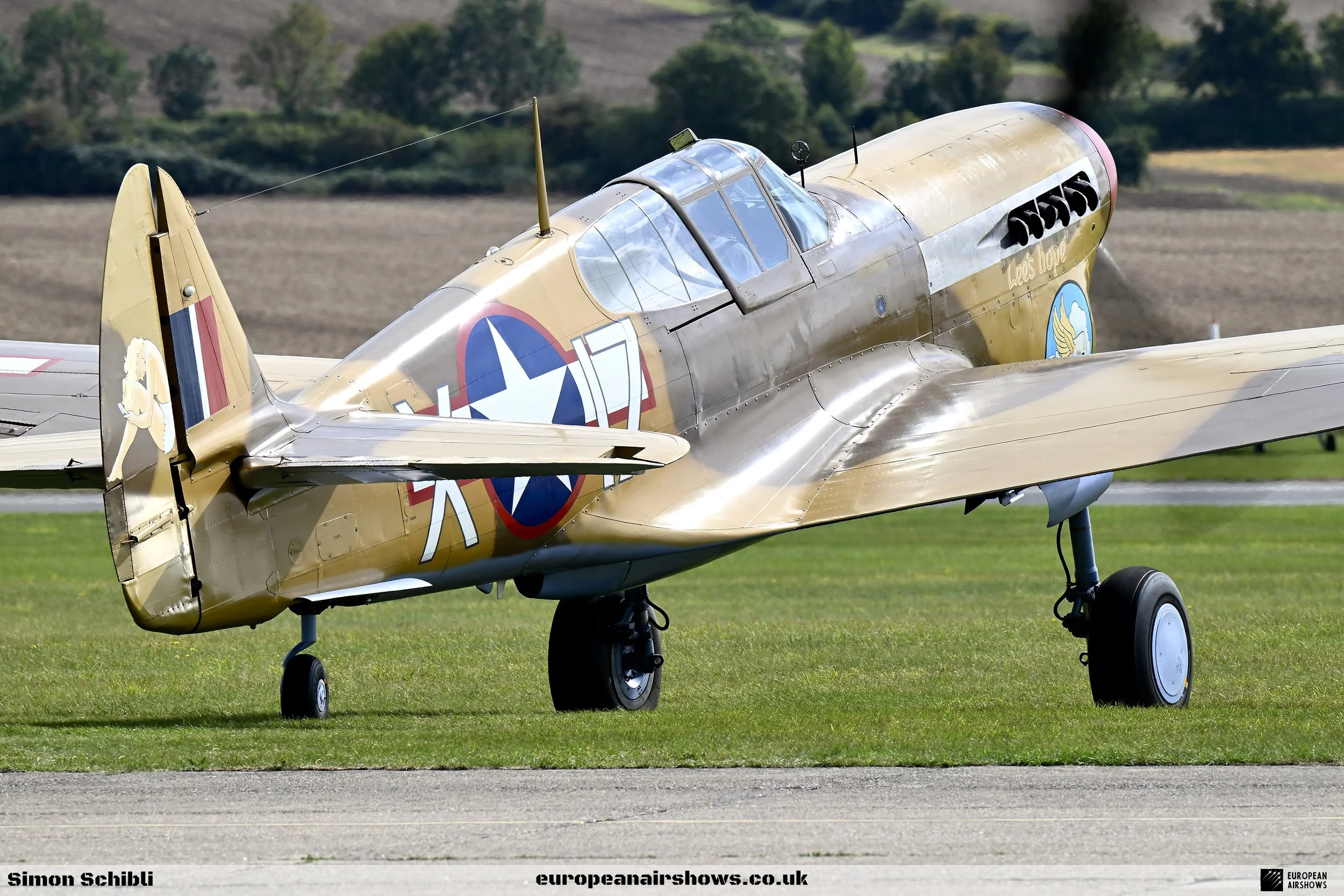
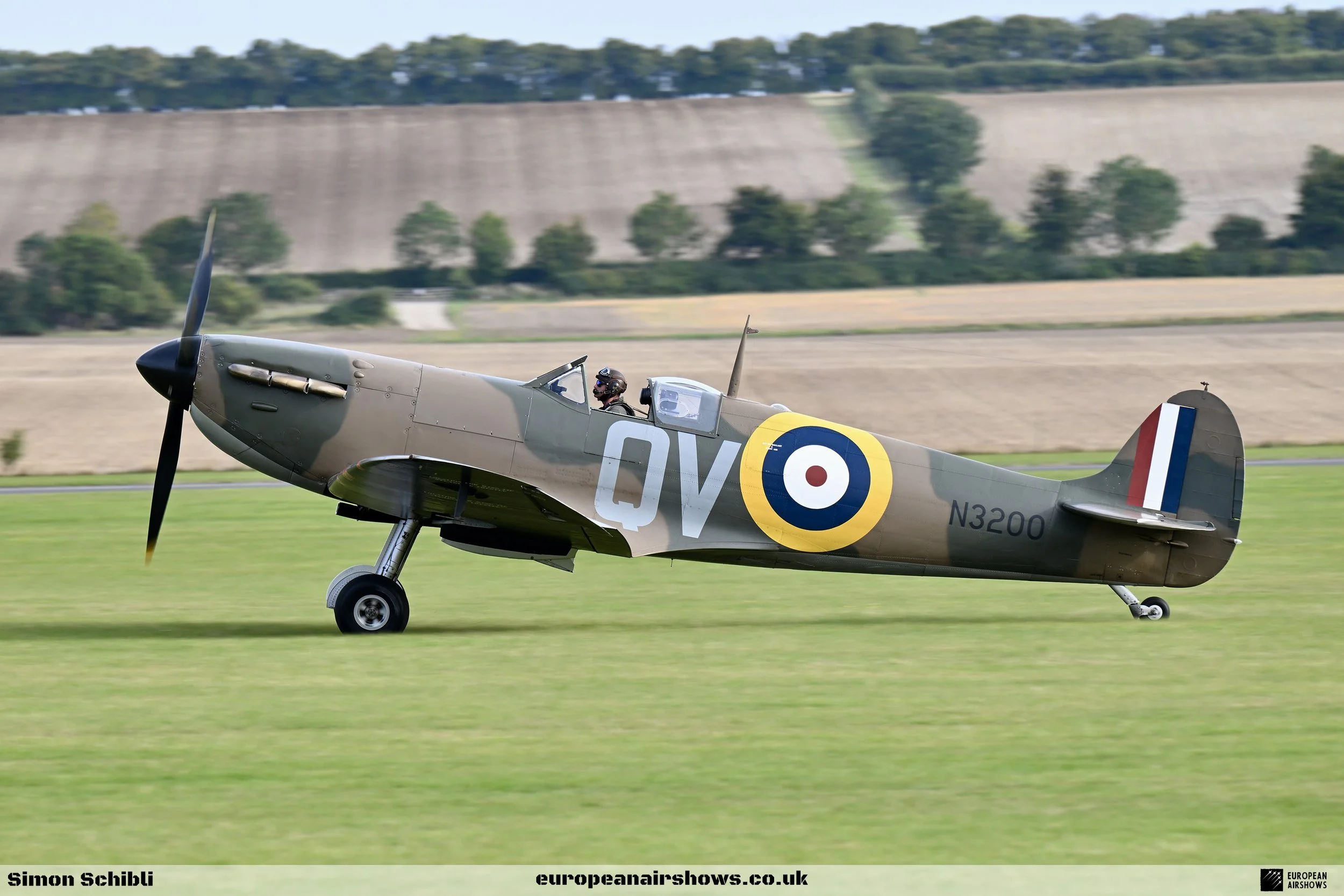
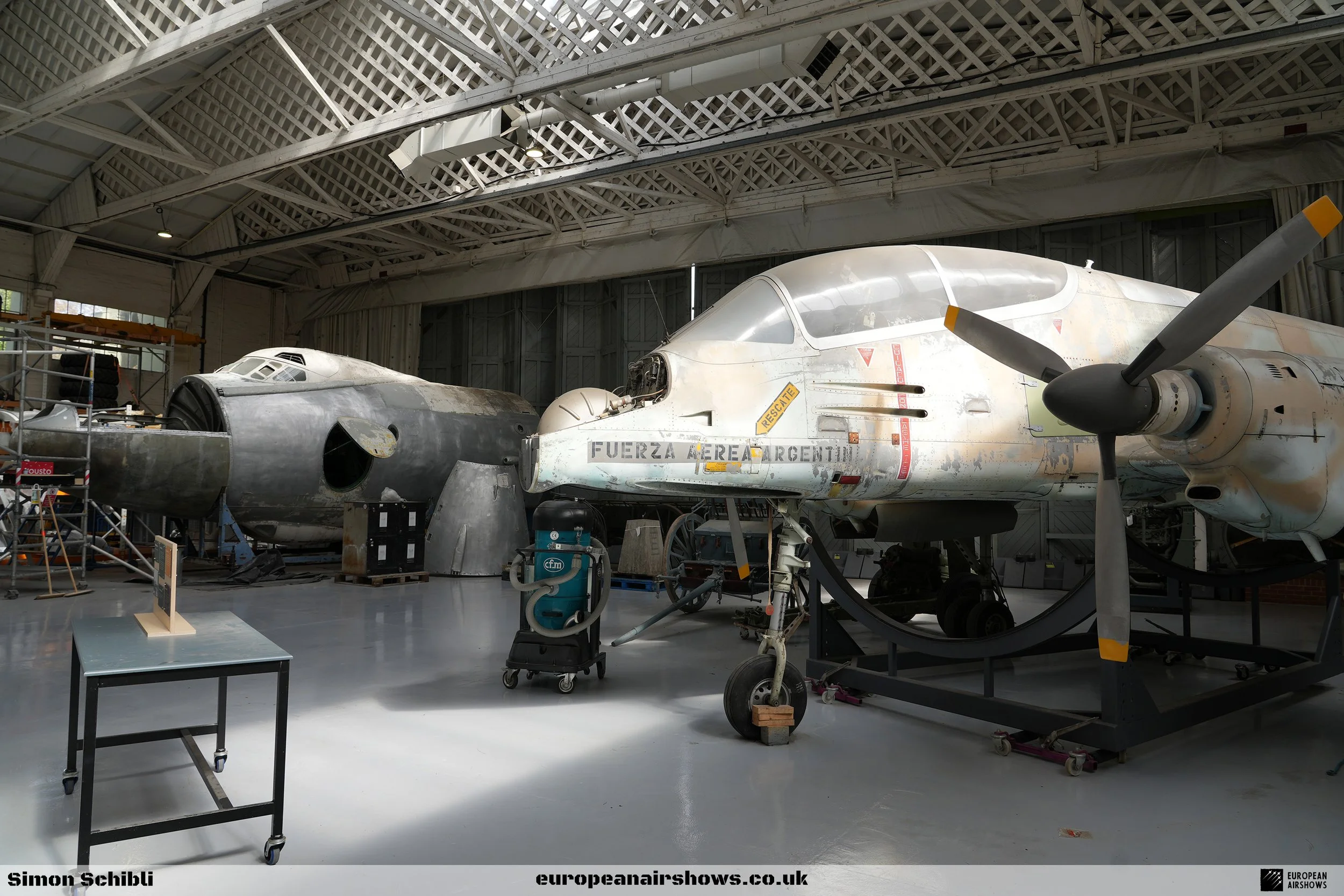
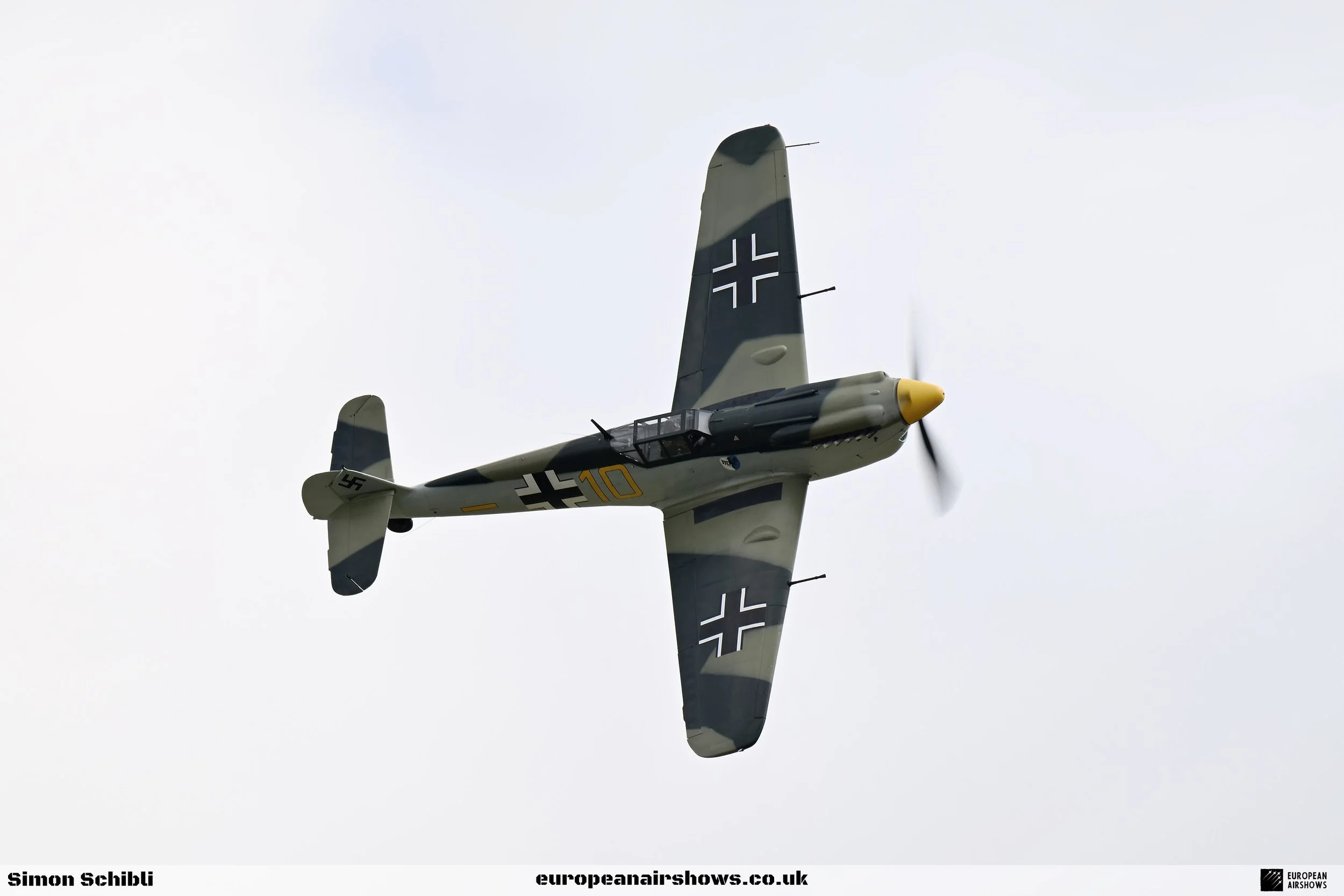
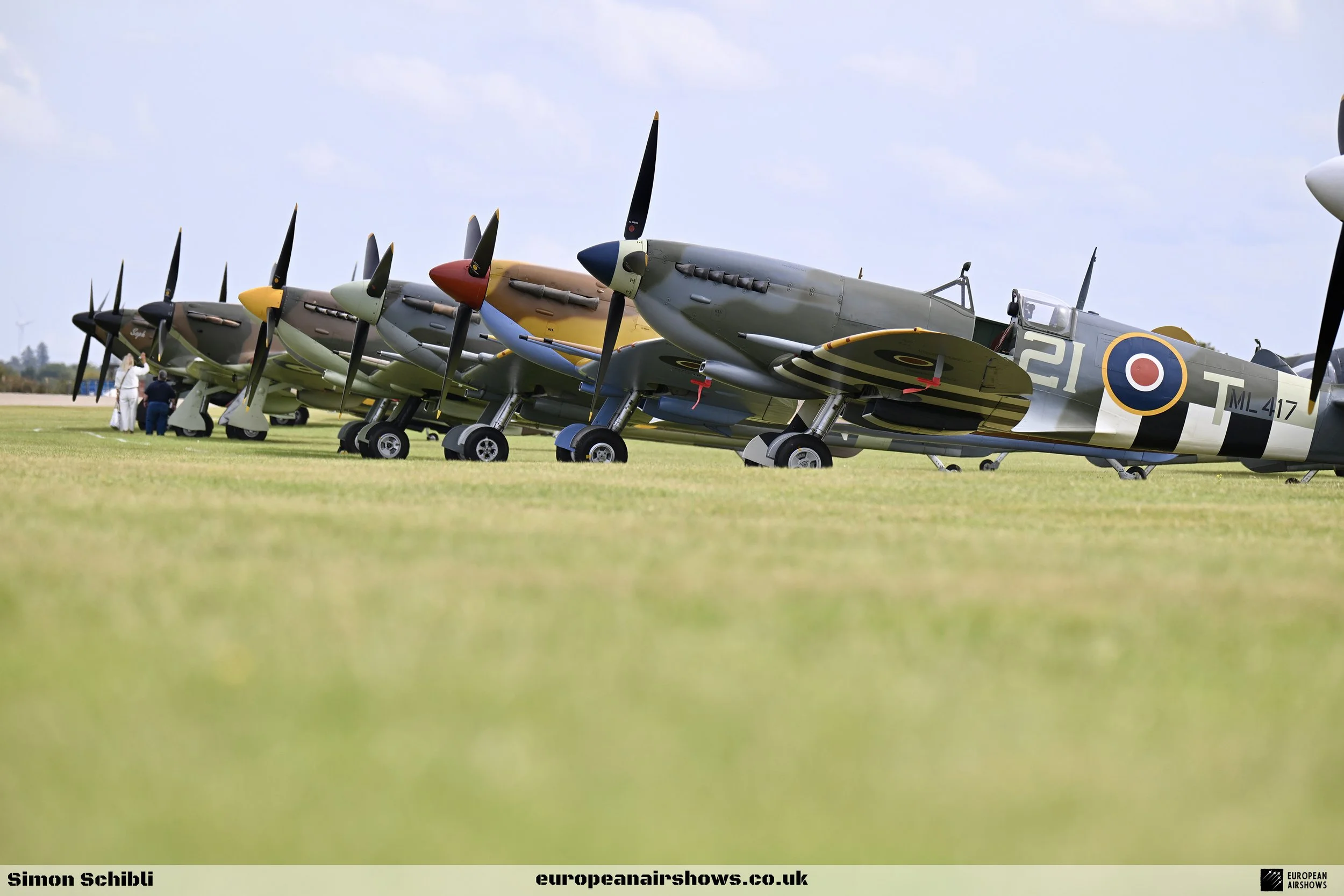
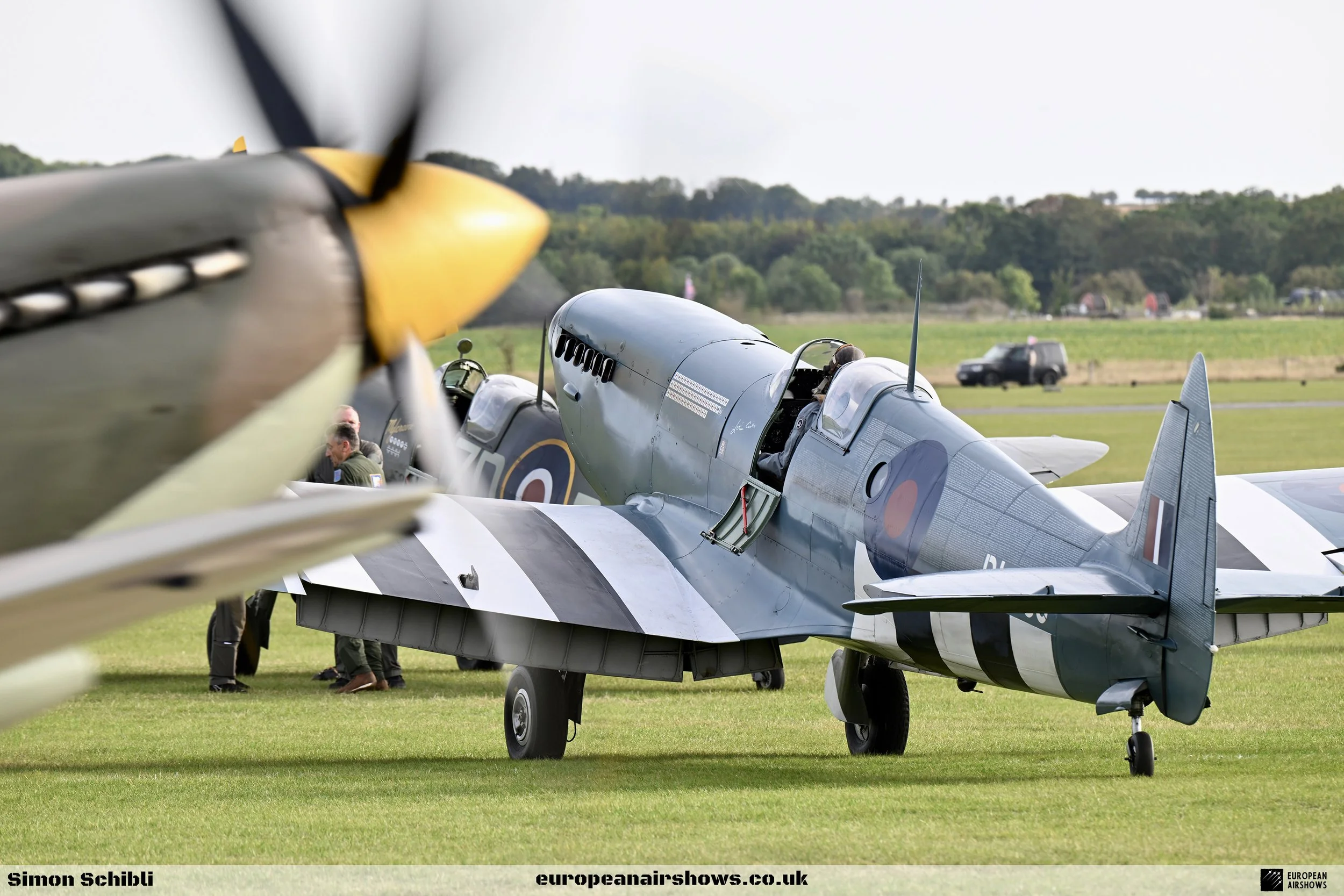
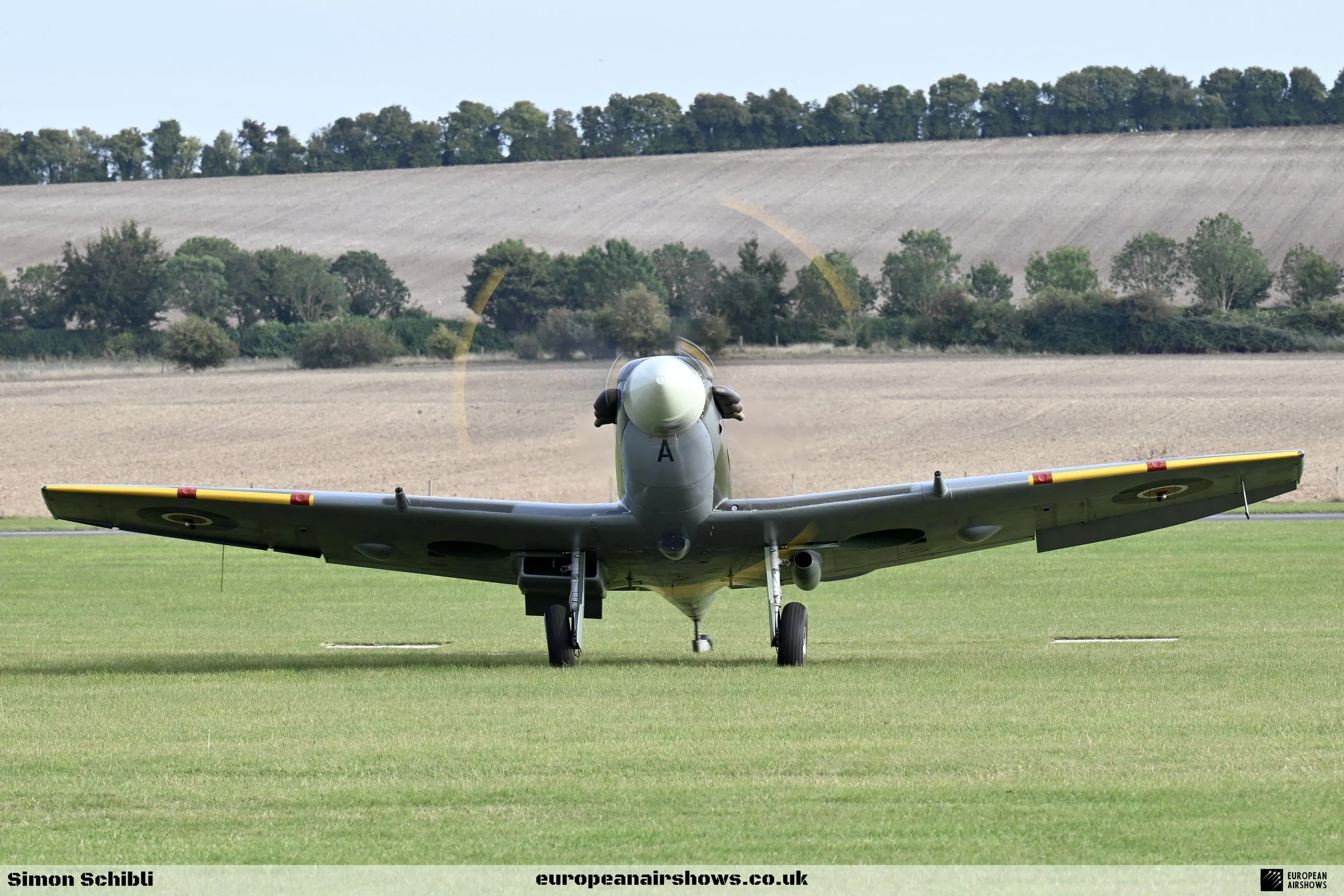
As the afternoon progressed, anticipation gradually shifted toward the event’s finale. Long rows of Spitfires and Hurricanes were already positioned on the grass, hinting at the scale of what was about to take place. Engines began to start one after another, flames flickered from exhausts and the sound of Merlin engines gradually filled the airfield.
Then an additional surprise appeared overhead.
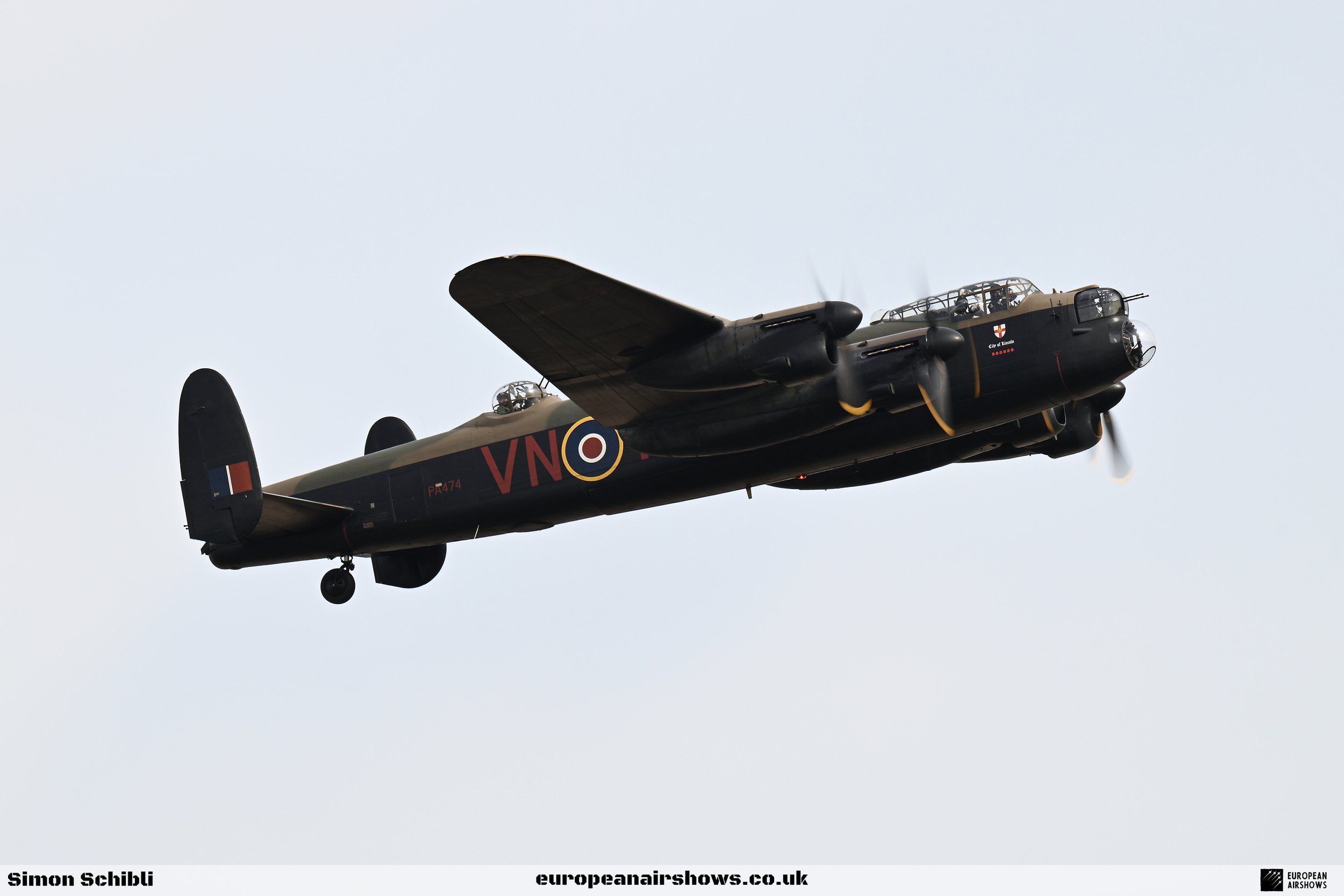
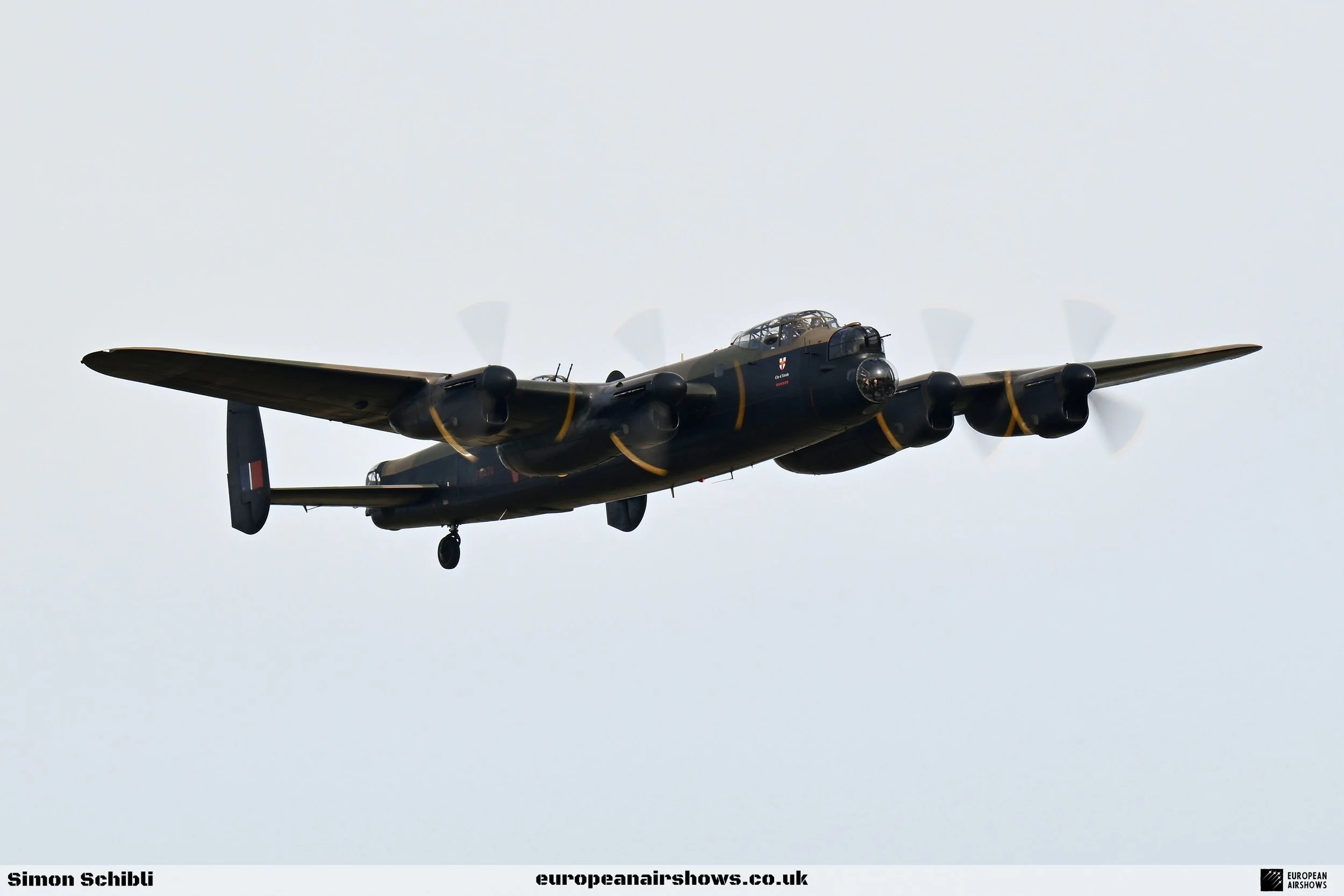
The Battle of Britain Memorial Flight’s Avro Lancaster B.I PA474 arrived above the airfield to perform one of its final displays before entering a major maintenance period scheduled for 2026. The timing created an extraordinary scene. On the ground, large numbers of Spitfires and Hurricanes were preparing for departure while the Lancaster flew overhead in tribute to the era the aircraft represent.
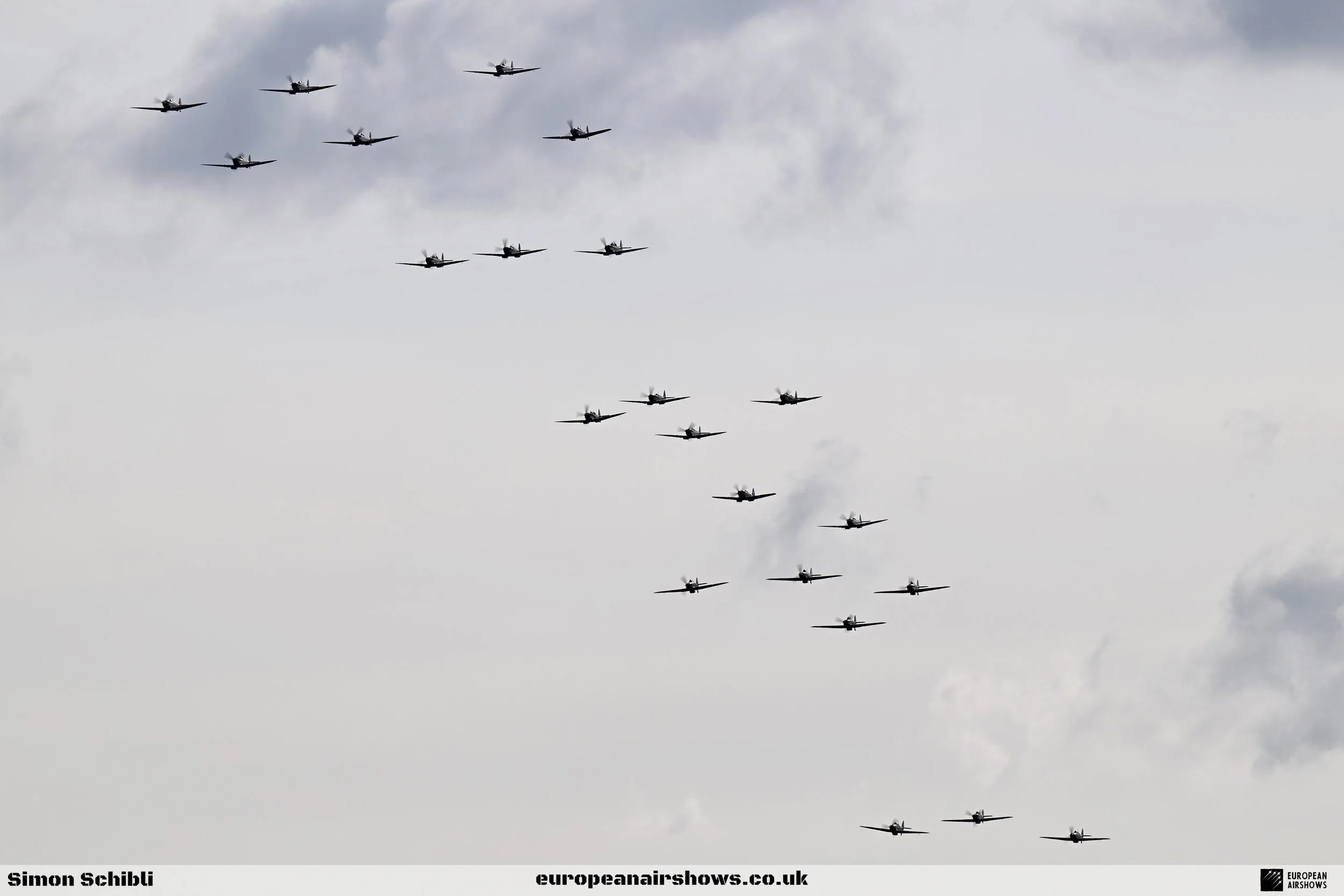
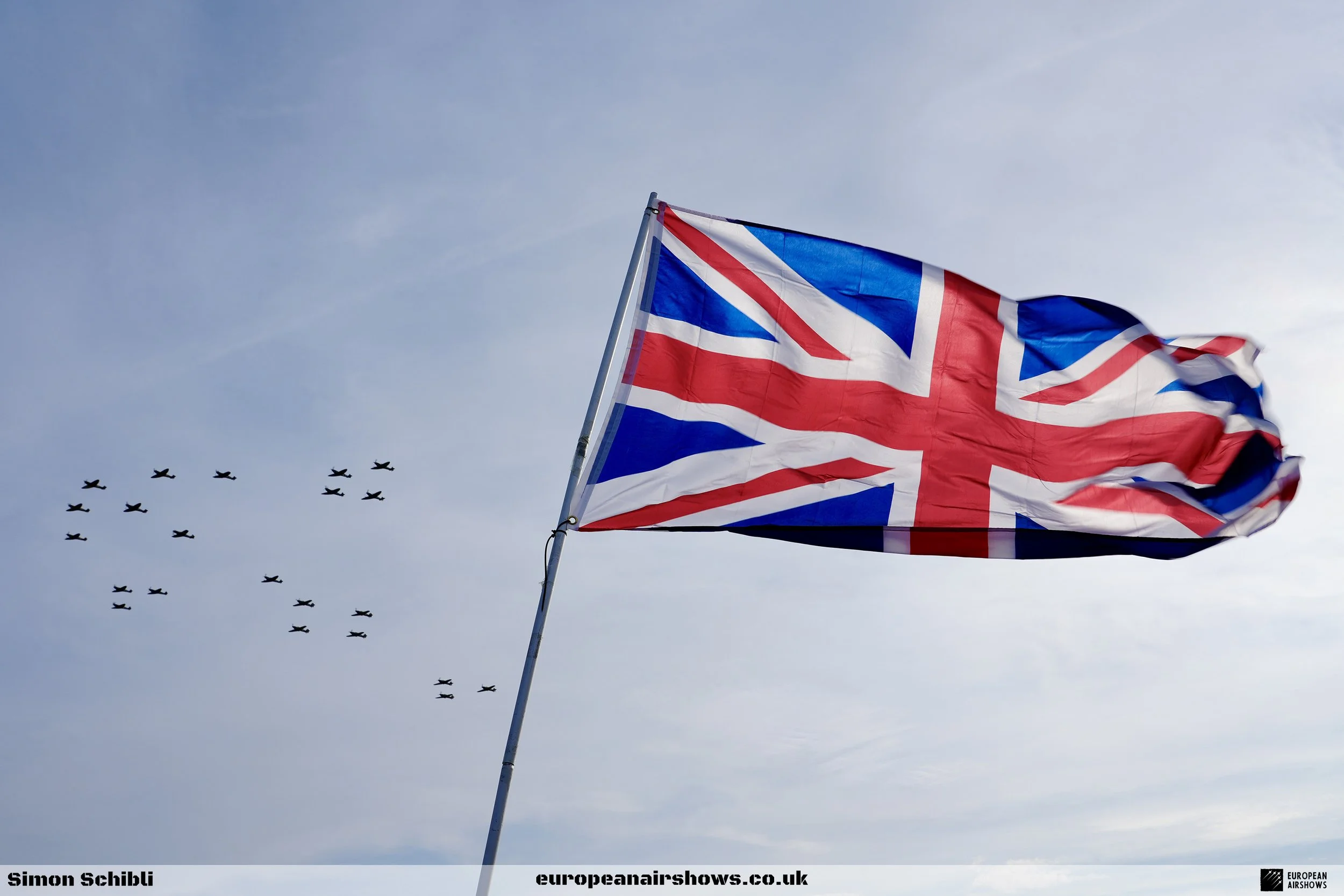
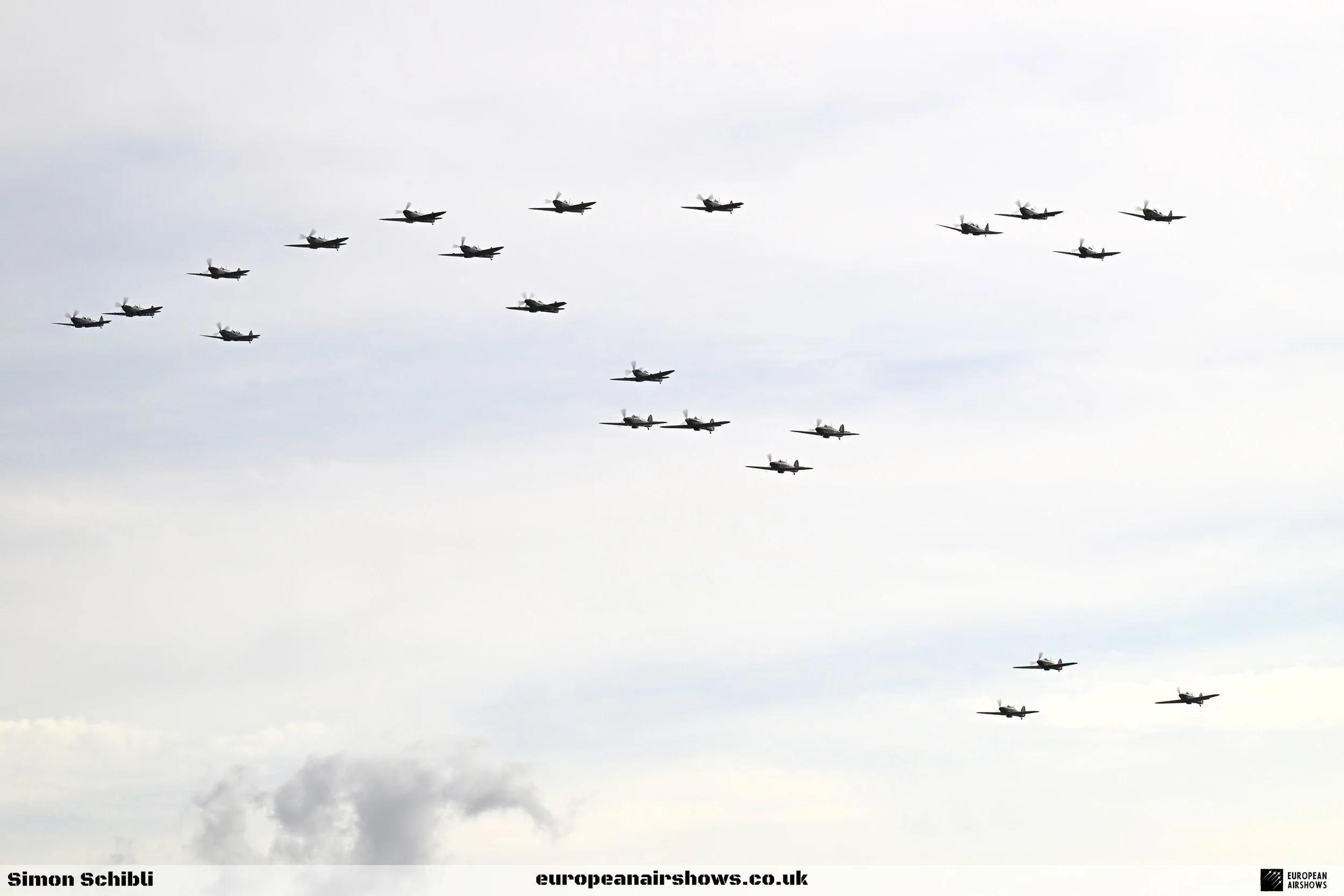
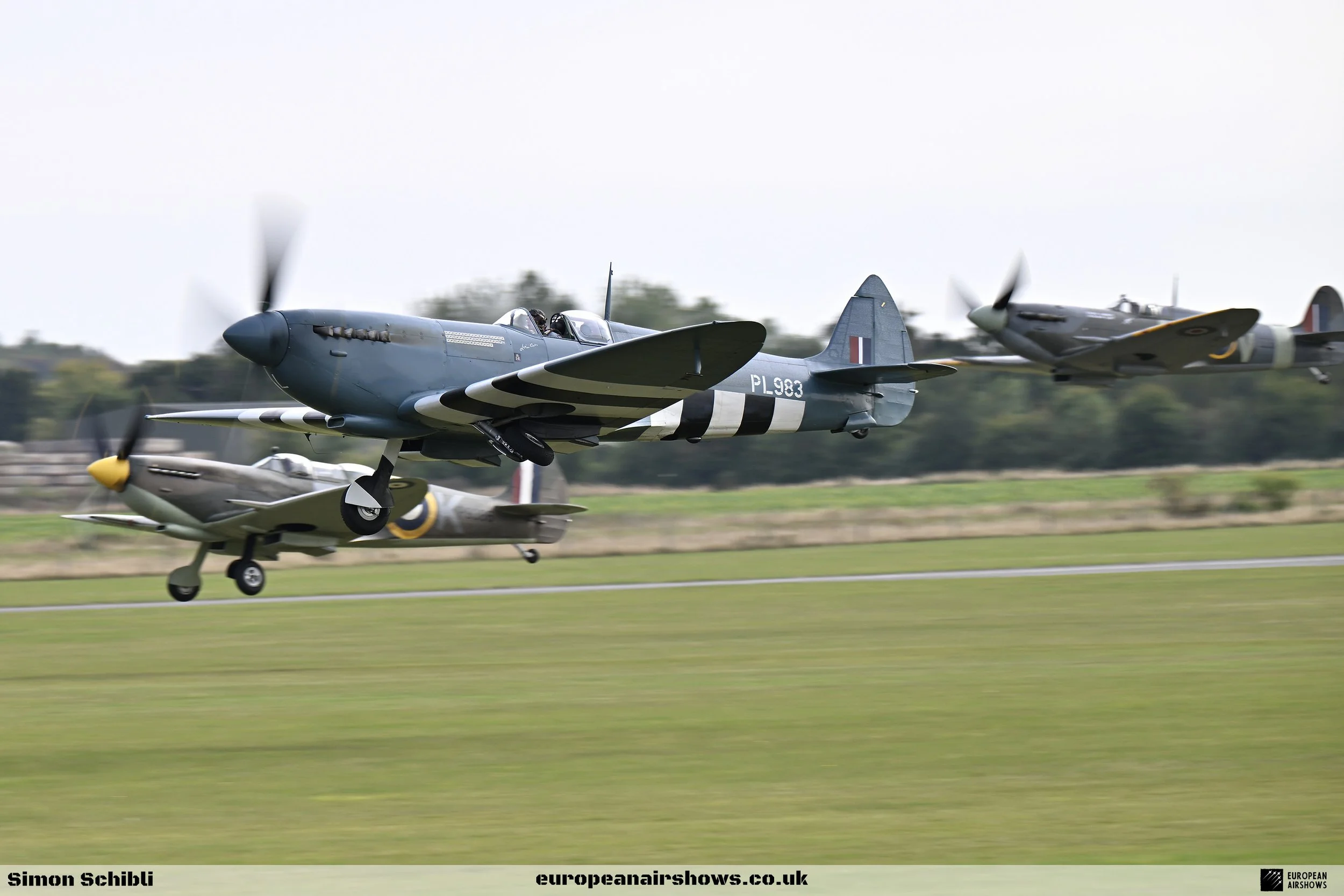
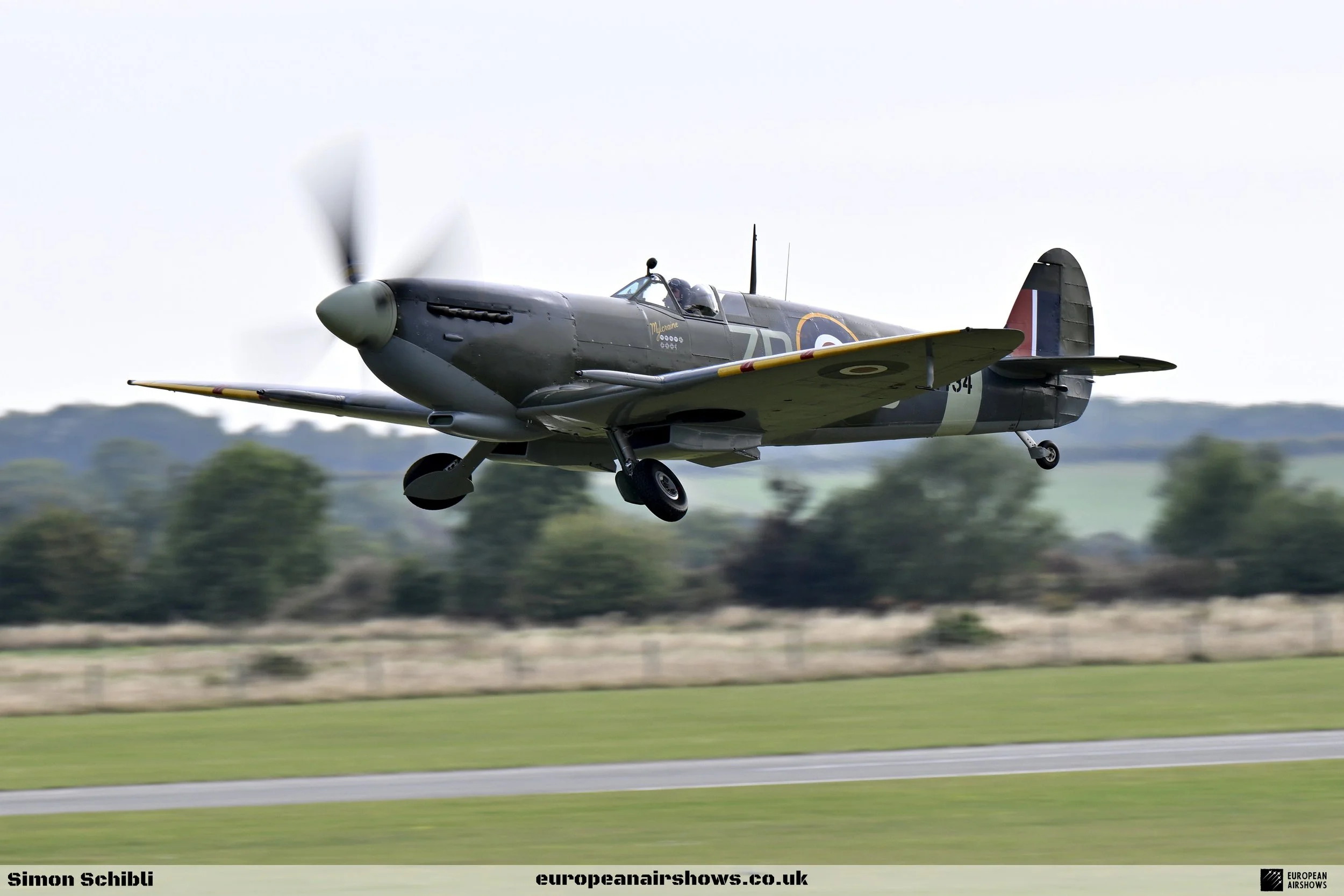
What followed was a spectacular mass take-off sequence reminiscent of Duxford’s most famous airshow moments. Four Hurricanes departed together before the Spitfires followed in quick succession, some passing particularly low and close to the crowd. The dramatic departures eventually gave way to a more emotional conclusion when twenty-two Spitfires and Hurricanes returned together in formation accompanied by the recorded voice of Winston Churchill.
The effect was powerful and served as a fitting tribute to the theme of the event.
As the aircraft gradually returned to the ground and the day came to a close, the experience could be considered brief but intense. A few displays were missed due to the compressed travel schedule and the weather unfortunately kept several aircraft on the ground. Two particularly disappointing cancellations were the Junkers Ju-52 from France and the Bréguet Alizé, both of which would have added further depth to the programme.
Despite these setbacks the lineup remained exceptionally strong. As is often the case at Duxford, the quality and quantity of aircraft were outstanding even if some displays occasionally lacked the proximity or dynamism that photographers might hope for. Lighting conditions also proved challenging throughout the day.
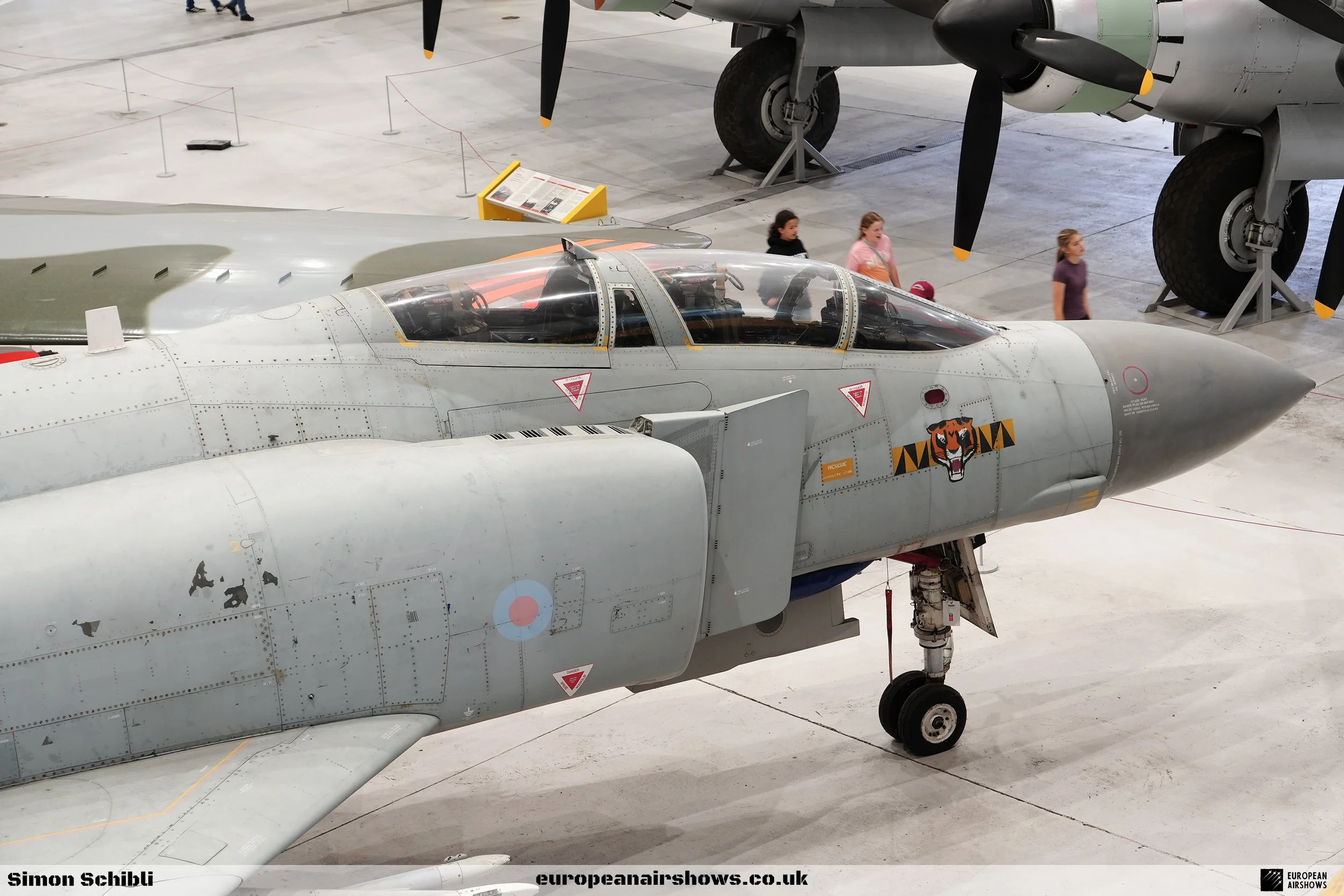
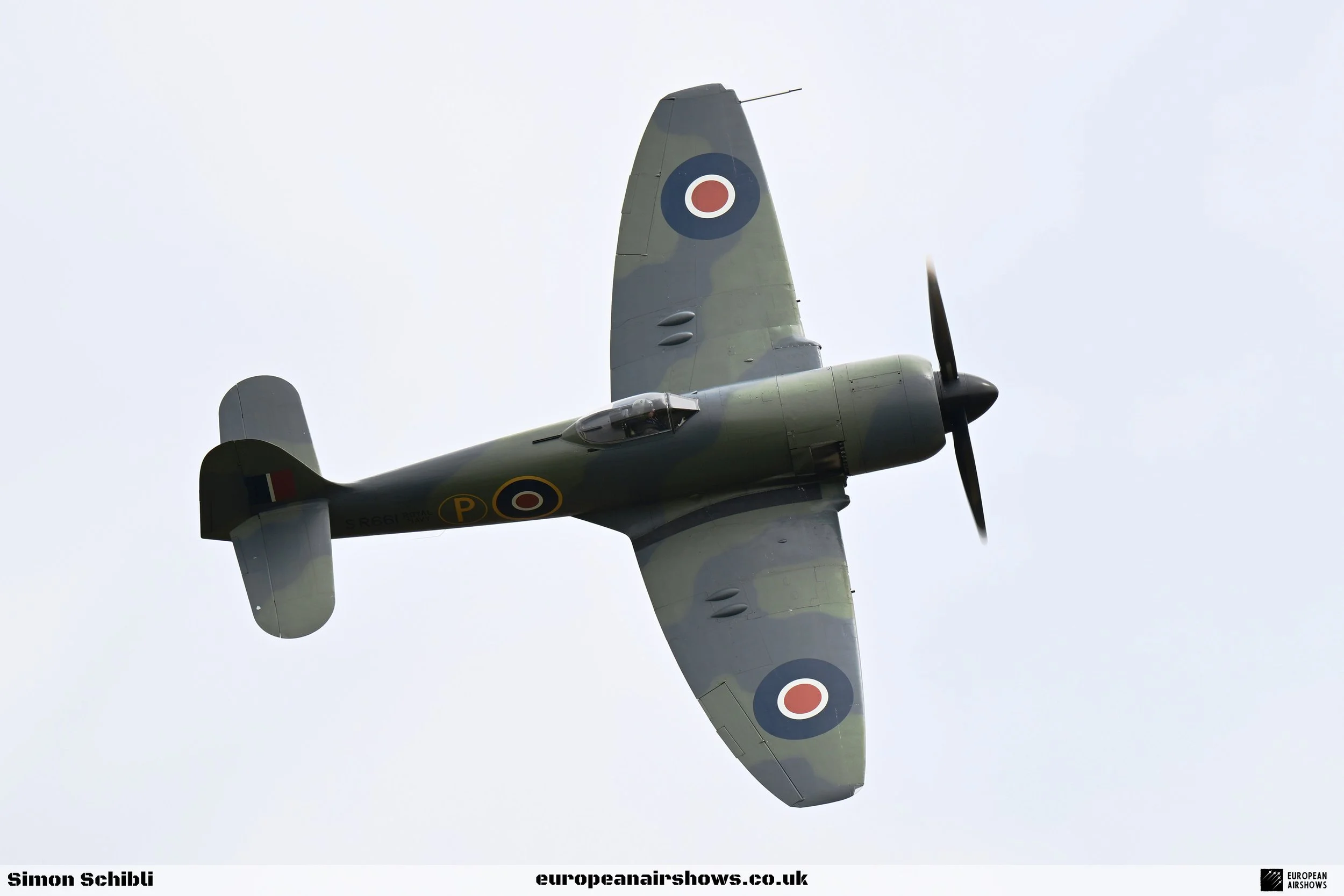
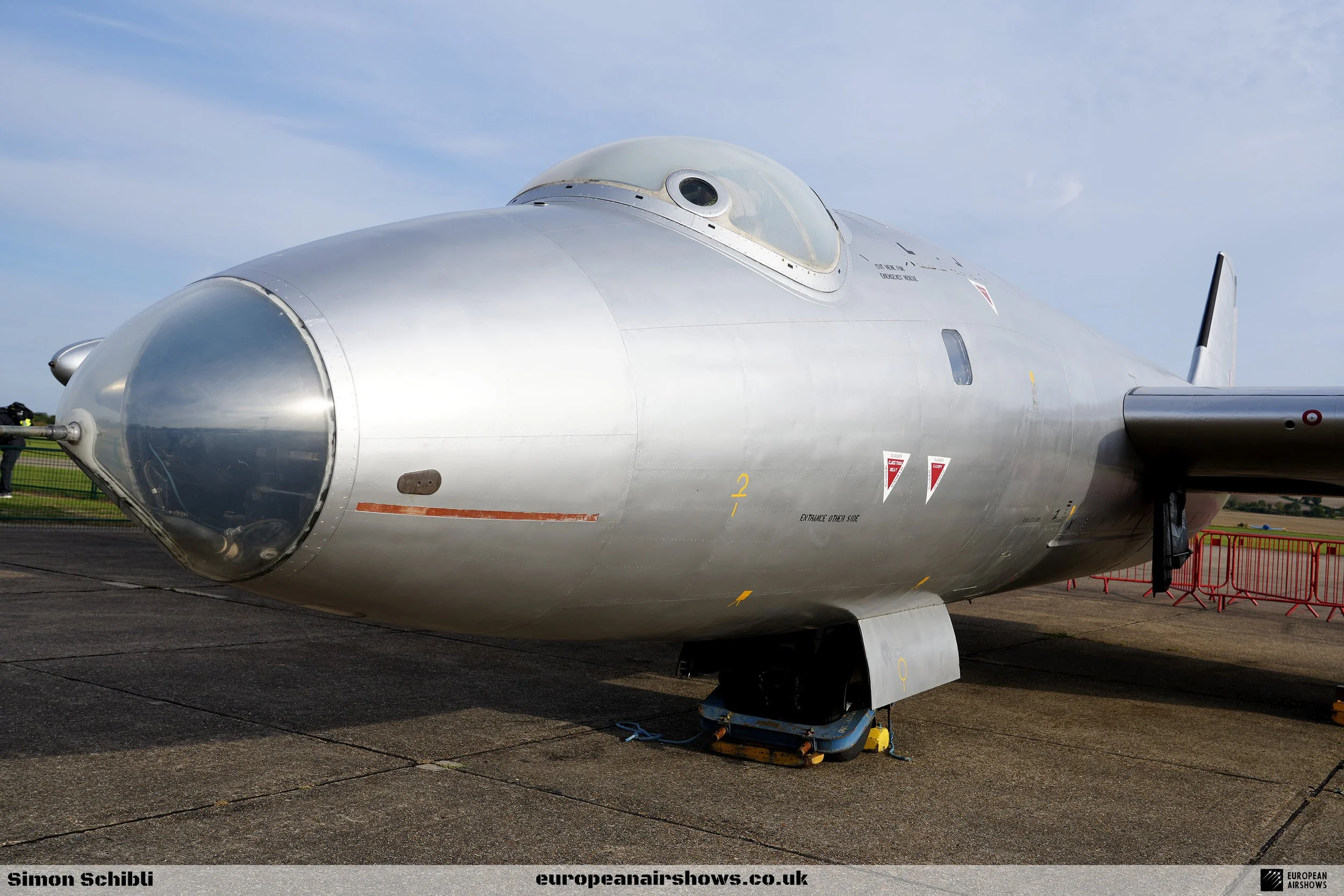
Nevertheless the visit ultimately proved highly rewarding. What began as a complex travel plan quickly turned into a memorable aviation experience filled with rare aircraft, powerful historical themes and several truly special moments in the sky above Duxford.
Even though Sunday’s programme — which included the Avro Anson Mk.I MH120 operated by R.A.F. Station Czechoslovakia — could not be attended, the opening day alone demonstrated why Duxford continues to hold such a special place within the European airshow calendar.
One conclusion remains clear.
Duxford is an airfield that always rewards the journey, and it remains a place worth returning to again and again.
