Wildcat Aerobatics
2 × Pitts S-2B · British formation aerobatics, 2010 to 2019
A Norfolk-based civilian duo that paired two compact Pitts biplanes for close formation, mirrored aerobatics, opposition passes and a smoke-drawn heart. Aircraft unserviceability ended most of its 2019 programme, and the team was disbanded later that year.
- Founded
- 2010
- Founders
- Al Coutts and Willie Cruickshank
- Aircraft
- Pitts S-2B
- Display format
- Two aircraft
- Former home
- Old Buckenham, Norfolk
- Status
- Disbanded
The former team
Two Pitts, a small civilian organisation and a display built for clarity and pace.
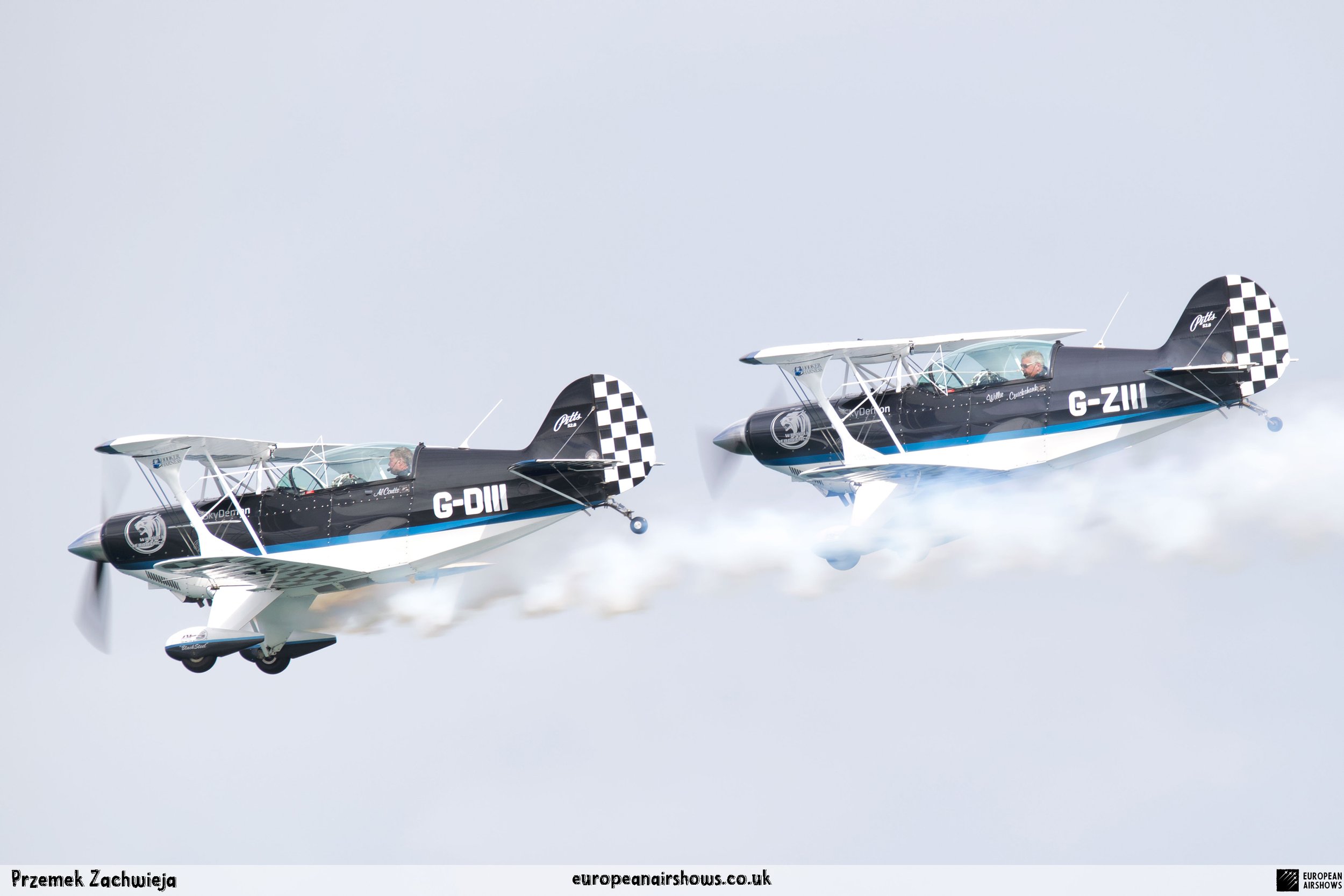
Wildcat Aerobatics was founded in 2010 by Al Coutts and Willie Cruickshank. Based around Old Buckenham Airfield in Norfolk, the private team developed a two-Pitts routine that could work at coastal airshows, airfield events, festivals and private displays across Britain, the Channel Islands and northern Europe.
Coutts and Cruickshank formed the central display pairing. Later team profiles also list Ed Ludlow among the pilots, while Kate Royall handled publicity and commentated at displays. Personnel and aircraft availability could change, but the public identity remained a two-aircraft Pitts act.
Wildcat 3
David Jenkins flew with the team from its earlier years and was known as Wildcat 3. For 2015, Wildcat planned to add his single-seat Edge 360 to the programme alongside the established Pitts pair. Jenkins was a highly accomplished competition pilot and British Advanced champion in 2012 and 2013.
The final season
Wildcat opened its 2019 programme with a two-aircraft display at Wildfest, Wildcraft Brewery in Norfolk, on 1 June. The team subsequently announced that its intended 100th display would take place at Old Buckenham on 27 July, but a significant unserviceability affecting one Pitts forced the rest of the two-ship season to be cancelled.
The surviving plan was a singleton appearance at the Aylsham Show on 26 August. No later public Wildcat display has been found, and historical team directories record that the organisation was disbanded later in 2019. This page therefore uses a definite former-team status rather than leaving the group marked as temporarily inactive.
The display
Close formation flowed into separation, crossing passes and a heart written in smoke.
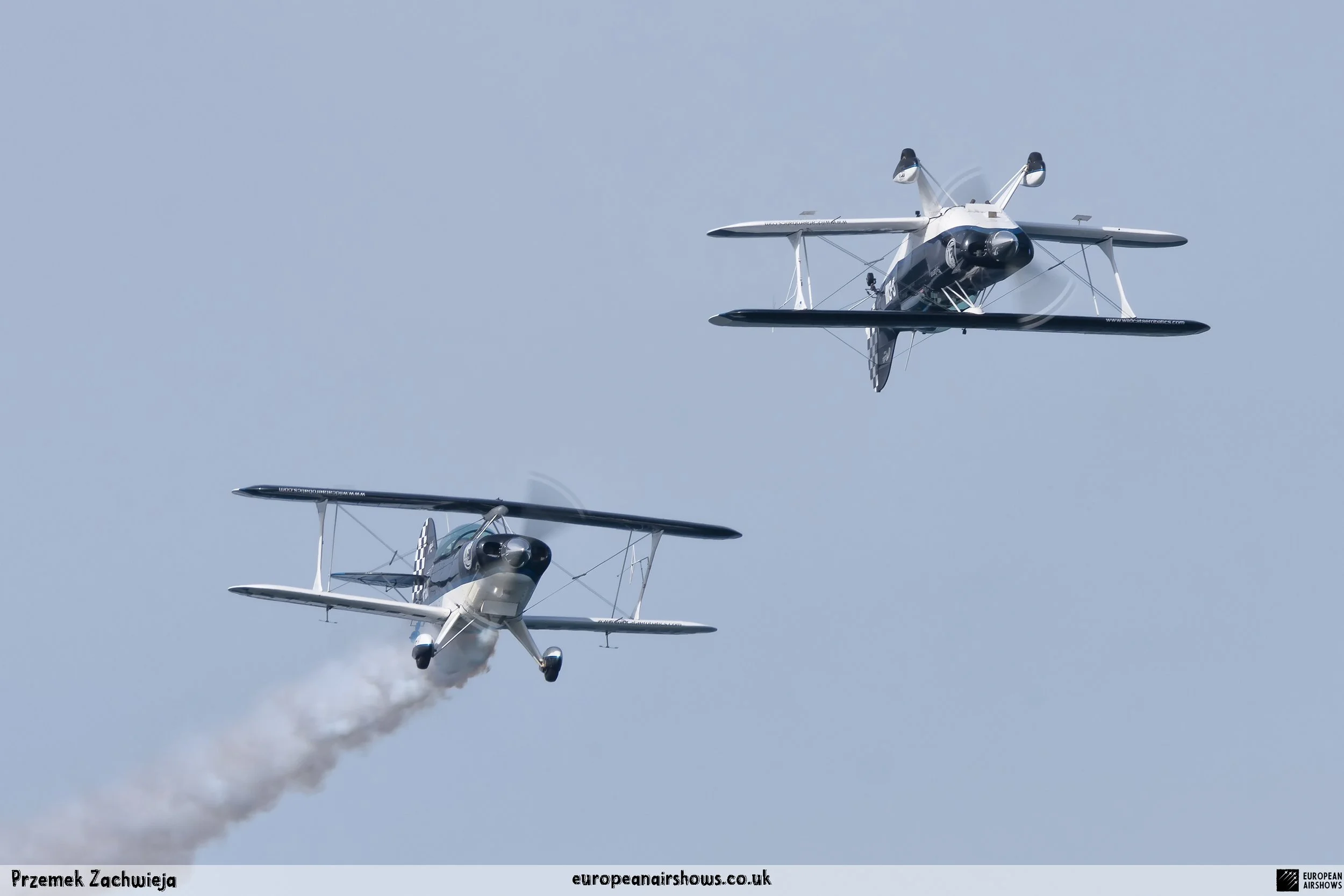
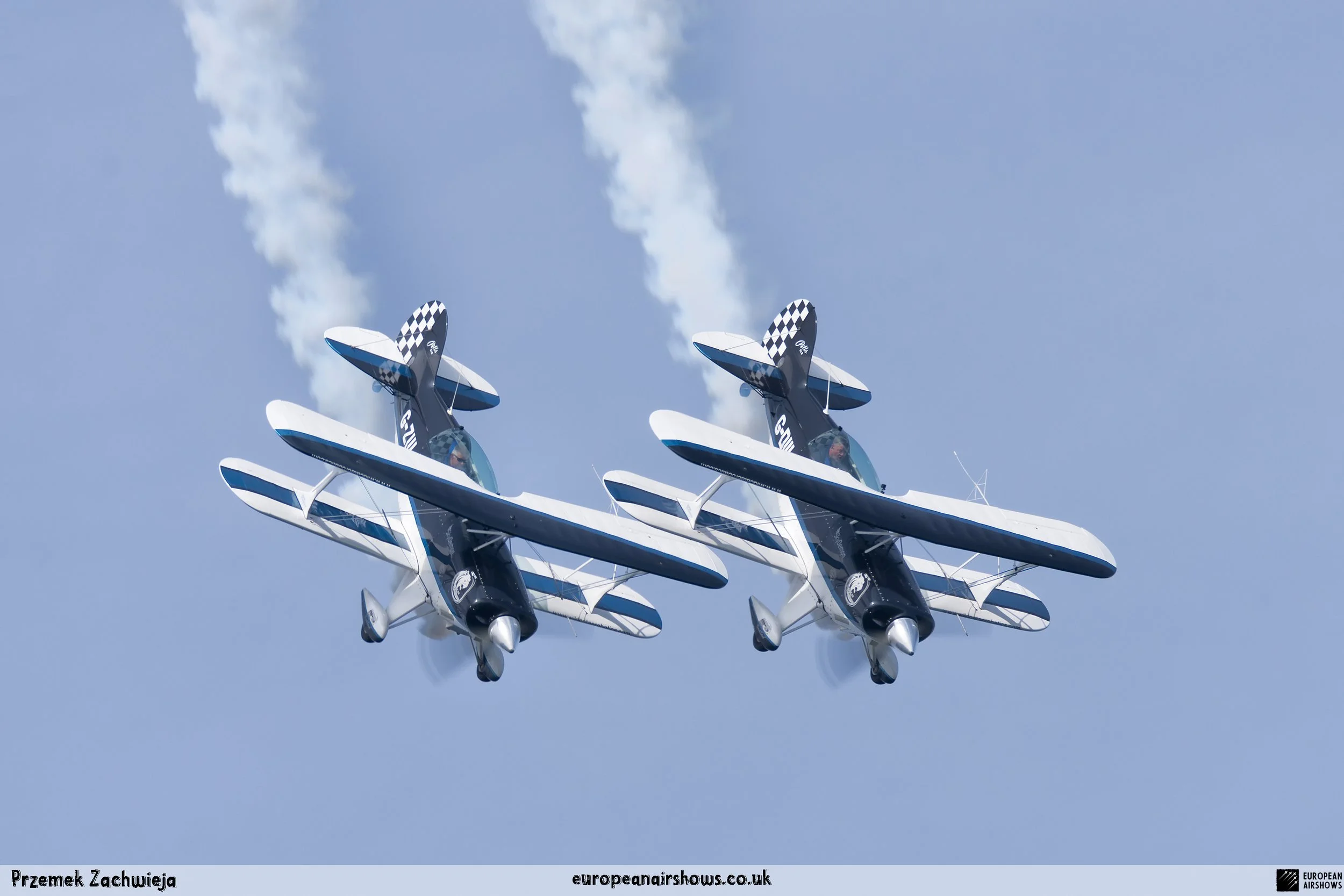
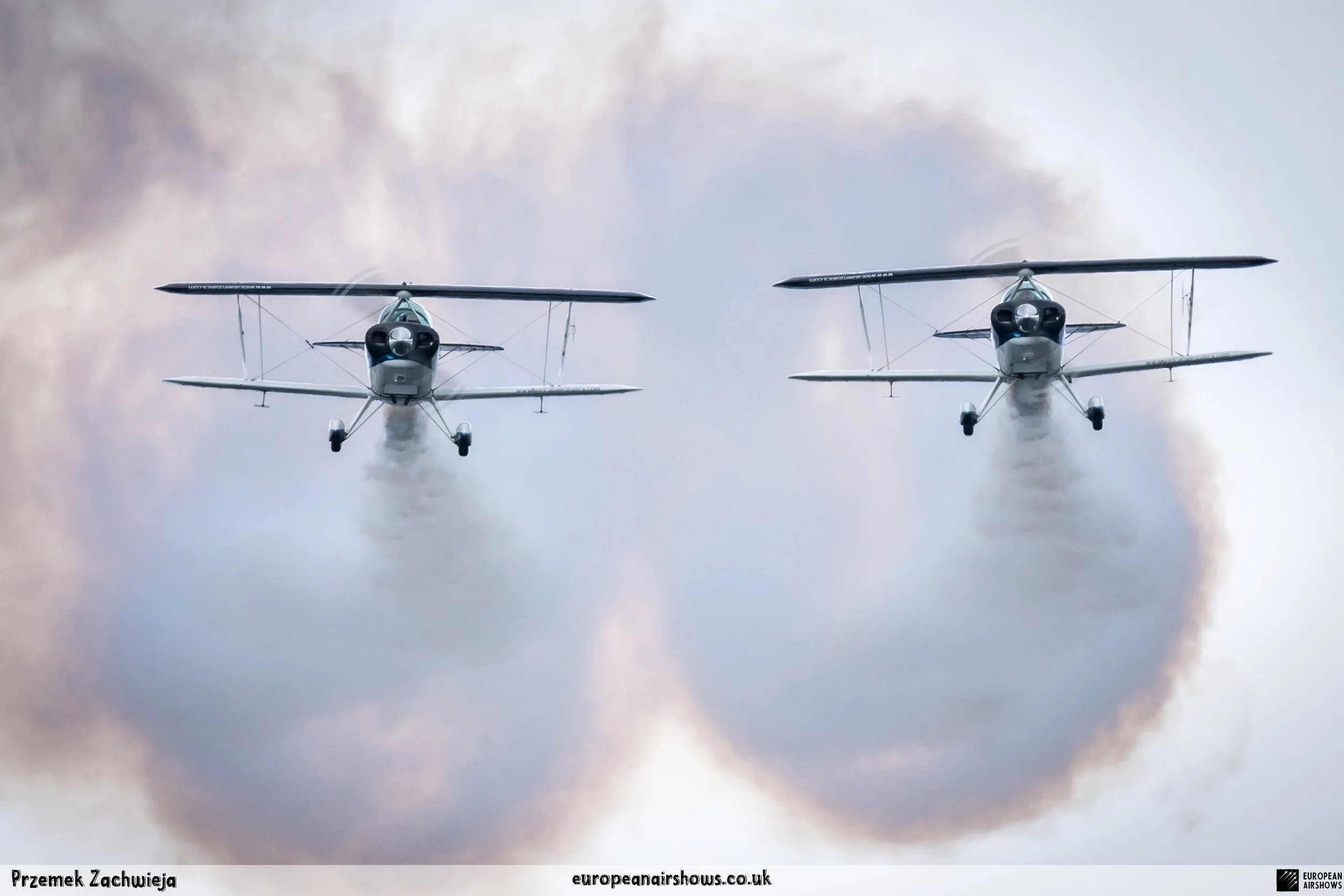
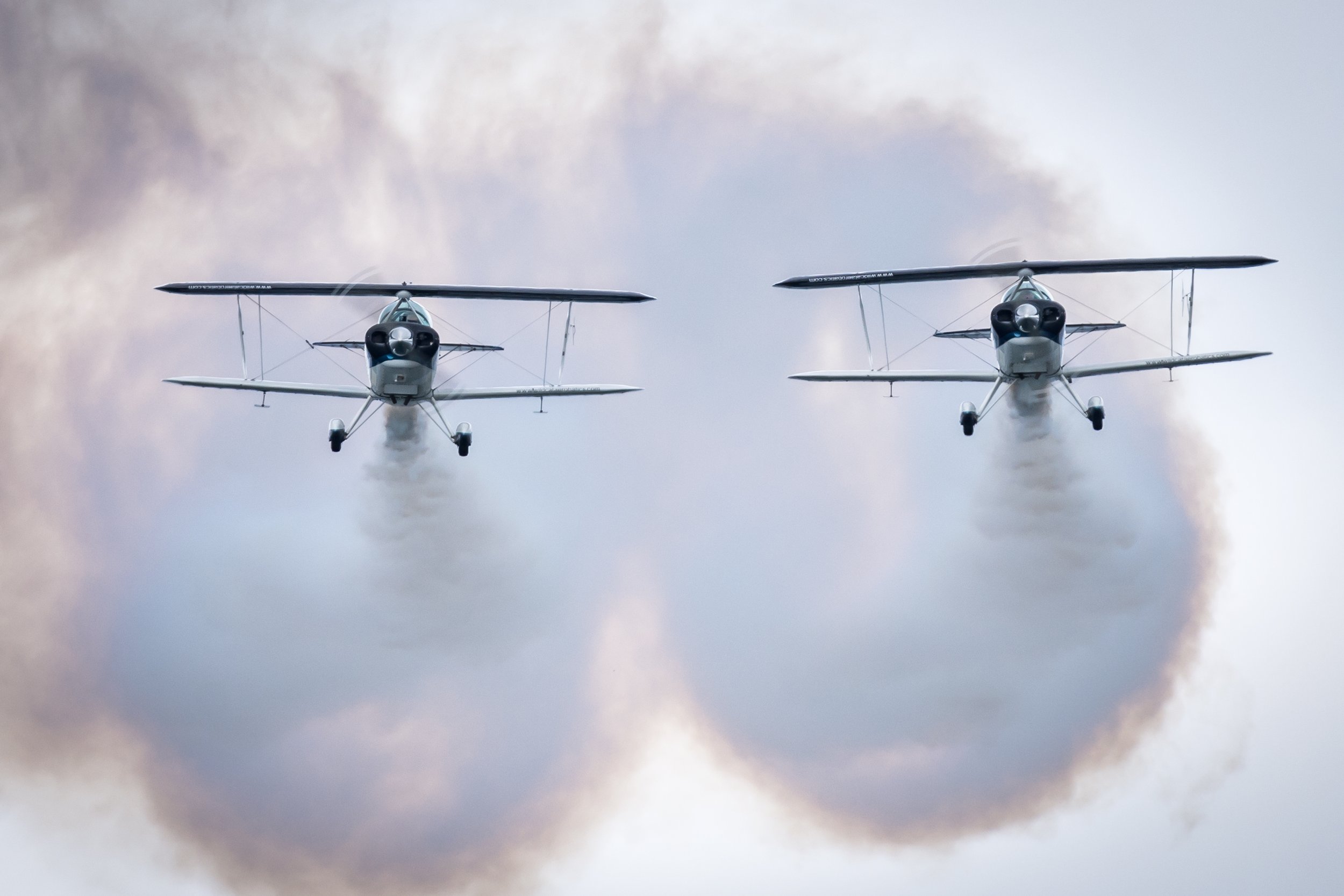
Wildcat combined the Pitts S-2B's rapid response with a routine spectators could read easily. The two aeroplanes alternated between acting as one shape and arriving from opposite directions, with smoke showing the path of every loop, break and rejoin.
Close formation
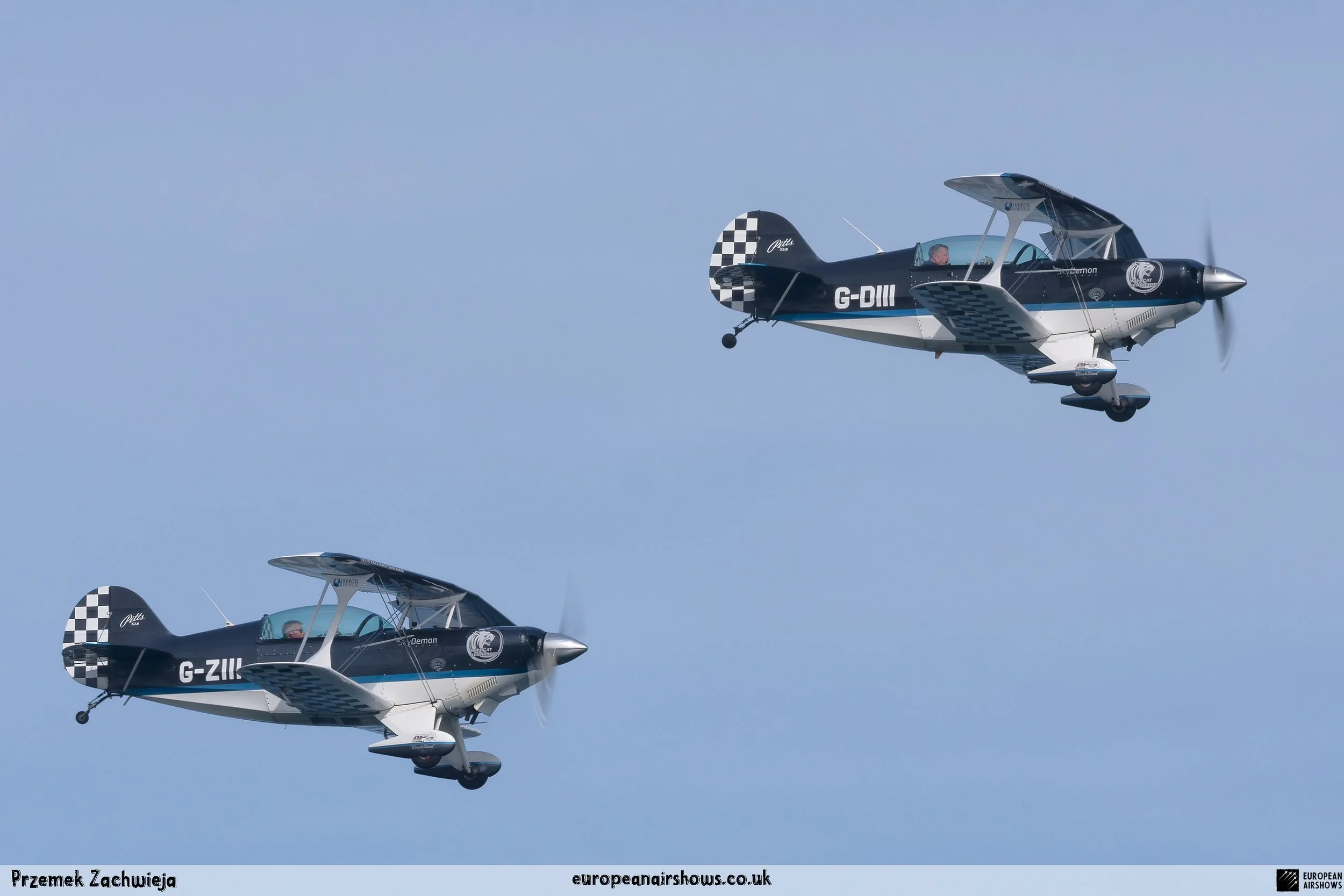
The pair flew loops, turns and rolling elements in compact formation, matching bank, pitch and speed while preserving visual separation.
Mirrored aerobatics
Symmetrical figures placed the aircraft on opposing sides of the display axis, creating balanced shapes rather than two unrelated solo routines.
Opposition passes
Head-on crossings provided the sharpest contrast with the flowing formation work. Contemporary descriptions advertised combined closing speeds above 400 mph.
Breaks and rejoins
The pilots separated, reversed and rebuilt the formation, making closure judgement and relative positioning part of the show.
Heart in the sky
A large smoke-drawn heart became the team's best-known crowd-facing figure and was sometimes dedicated to a person chosen for the event.
Smoke-on presentation
White smoke made the geometry visible at distance and linked the faster opposition elements to the smoother formation sequence.
The aircraft
The two-seat Pitts combined compact dimensions, 260 horsepower and exceptionally direct control response.
Pitts S-2B
The S-2B is a factory-built, two-seat development of the Pitts Special family. Although it carries Curtis Pitts' name and preserves the basic biplane concept, AOPA's type history credits Herb Anderson with the S-2B design in the early 1980s. It combined tandem seating with a 260 hp Lycoming AEIO-540 and full inverted fuel and oil capability.
Why Wildcat used it
A 20 ft wingspan and roughly 17 ft 9 in length produced a small silhouette, allowing the two aircraft to form a compact display shape. Light controls, a published roll rate around 240 degrees per second and strong climb performance gave the pilots the response needed for rapid formation corrections, vertical figures and fast reversals.
The Wildcat aircraft
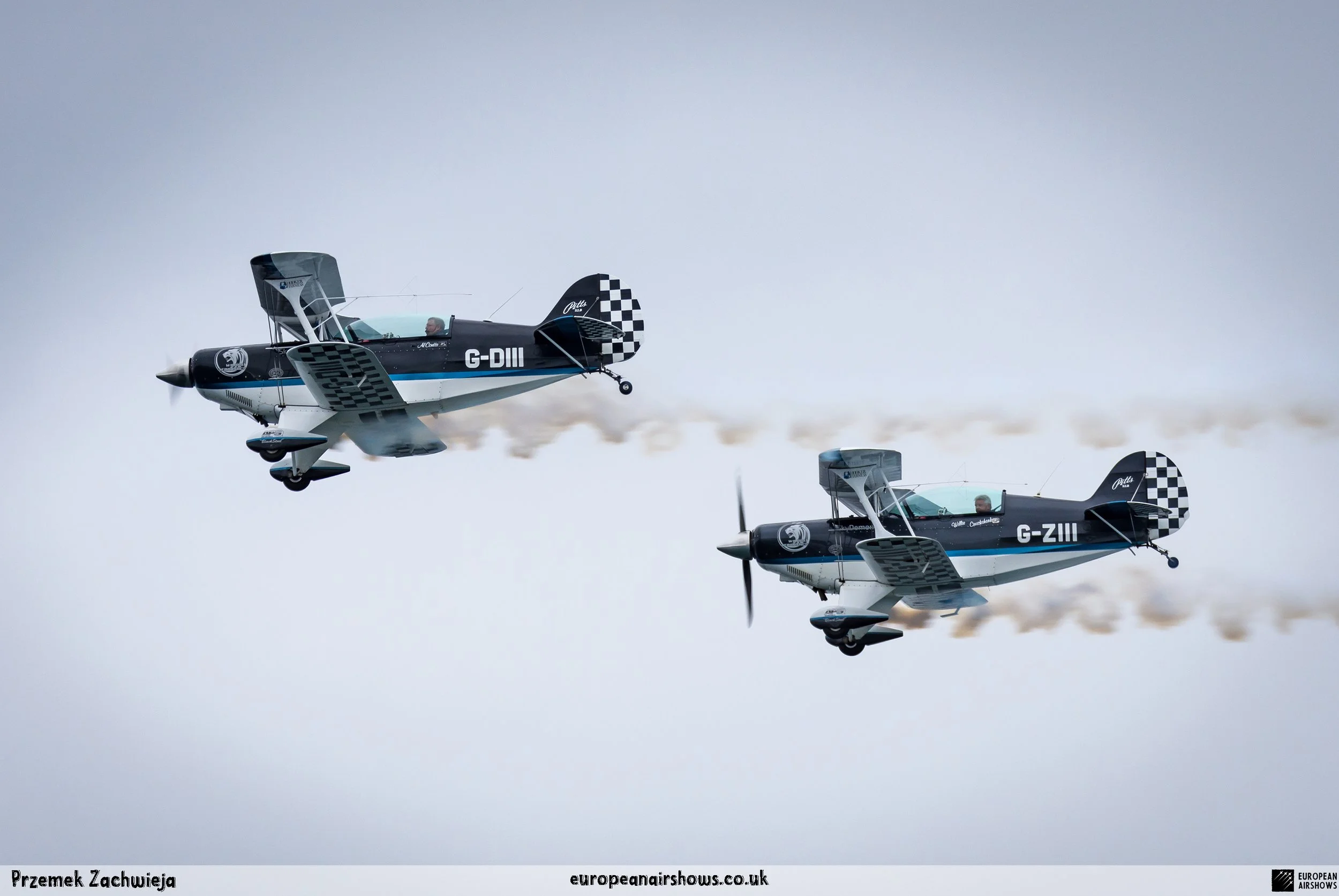
The pair most consistently documented in the mature team colours was G-DIII and G-ZIII. Earlier photographs also place G-SPITZ alongside G-ZIII, showing that the historical fleet evolved. Registrations identify individual airframes; they do not mean the aircraft remained a team after the organisation disbanded.
Airframe-specific figures still matter
The figures alongside describe a representative production S-2B. Exact empty mass, installed propeller, smoke equipment and approved operating limitations depend on the individual aircraft and its documents. The earlier draft's 21,000 ft ceiling and generic range are omitted because AOPA's S-2B reference gives a 12,500 ft service ceiling and does not support presenting those values as Wildcat operating data.
G-DIII
A principal Pitts S-2B in the later two-aircraft Wildcat formation.
G-ZIII
The other consistently documented member of the mature display pair.
G-SPITZ
Photographed with G-ZIII during an earlier phase of the team's development.
G-EDGJ
David Jenkins' Edge 360, planned as Wildcat 3's solo element for 2015 and not one of the Pitts pair.
The complete timeline
Nine display seasons, one planned expansion and a final year cut short.
1944
The first Pitts flies
Curtis Pitts' original small aerobatic biplane begins a family that will dominate competition and later produce the two-seat S-2B.
2010
Wildcat Aerobatics is formed
Al Coutts and Willie Cruickshank establish a private British team around two Pitts Specials and Old Buckenham Airfield.
2011 to 2014
The circuit expands
The duo develops into a regular visitor to public and private events in Britain, the Channel Islands and northern Europe.
2013
David Jenkins flies as Wildcat 3
Jenkins combines competition flying with team appearances while the core public formation remains the Pitts pair.
22 April 2015
David Jenkins is lost
The planned Edge 360 expansion ends when Jenkins dies during aerobatics at an Old Buckenham media event.
2016 to 2018
The two-Pitts team continues
Wildcat returns to the British circuit, with its close formation, opposition passes and smoke heart remaining the central display identity.
1 June 2019
Final confirmed two-ship display
The Pitts pair flies a fifteen-minute afternoon display at Wildfest, hosted by Wildcraft Brewery in Norfolk.
Summer 2019
Unserviceability ends the formation season
A significant technical problem affecting one Pitts forces the team to cancel the remaining two-aircraft bookings, including its announced 100th display.
26 August 2019
Final singleton appearance
One Wildcat Pitts appears at Aylsham Show on the August Bank Holiday, closing the team's documented public display history.
Late 2019
The team is disbanded
Historical directories record Wildcat Aerobatics as ending in 2019, with no subsequent team programme or revival.
Legacy & identity
Four distinctions preserve the team as it actually was without implying a current operation.
Disbanded, not dormant
The organisation ended in 2019. Old social accounts and photographs preserve its history but do not represent an active booking programme.
Civilian, not military
Wildcat was a privately operated British team. The name has no connection to the Royal Navy Wildcat helicopter display or the Grumman fighter.
Two Pitts formed the act
The mature display identity was G-DIII and G-ZIII as a pair. Other associated airframes do not turn the standard routine into a larger formation.
The final show was a solo
Wildfest was the last confirmed two-ship display. Aylsham was a final singleton appearance after the formation season had been cancelled.