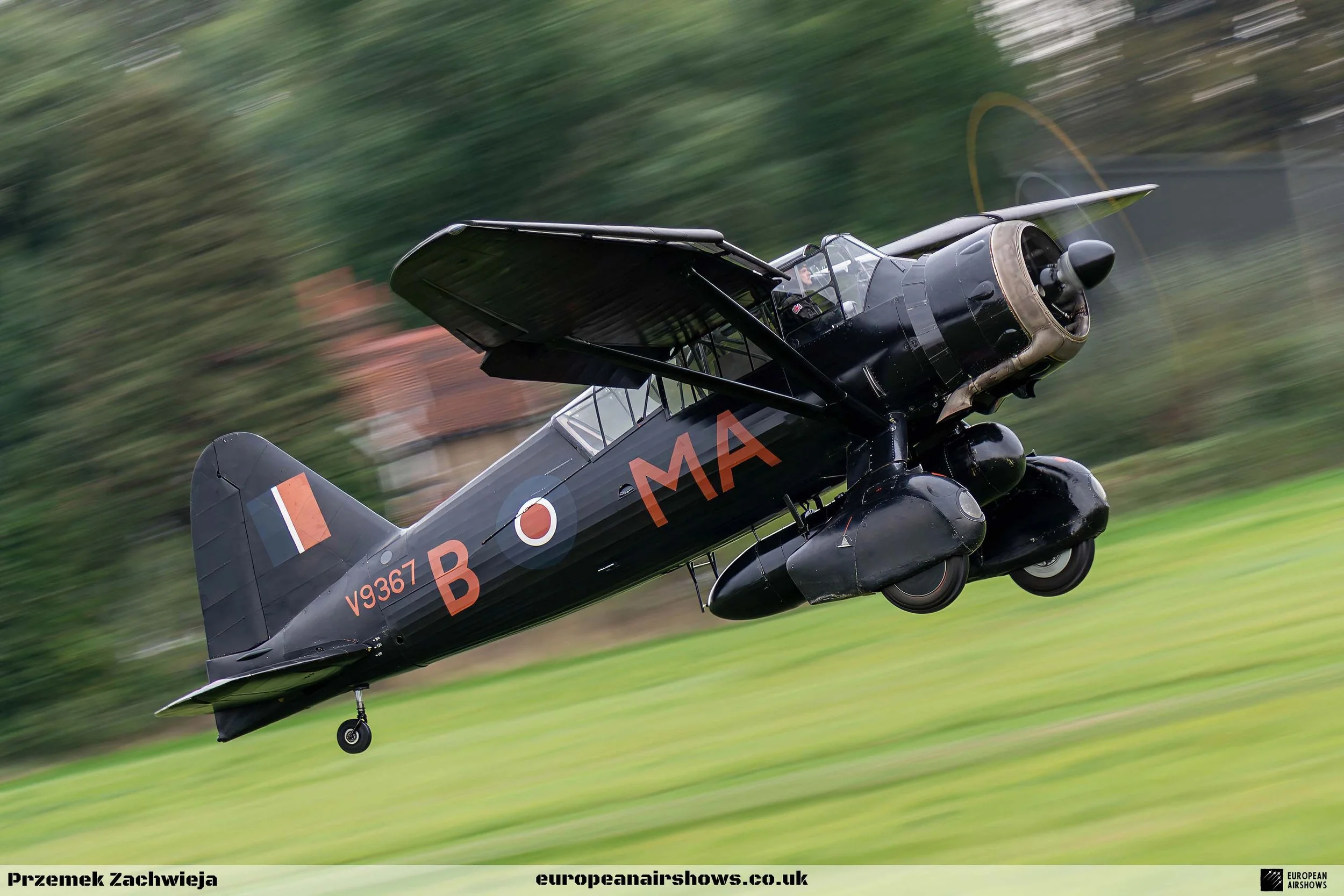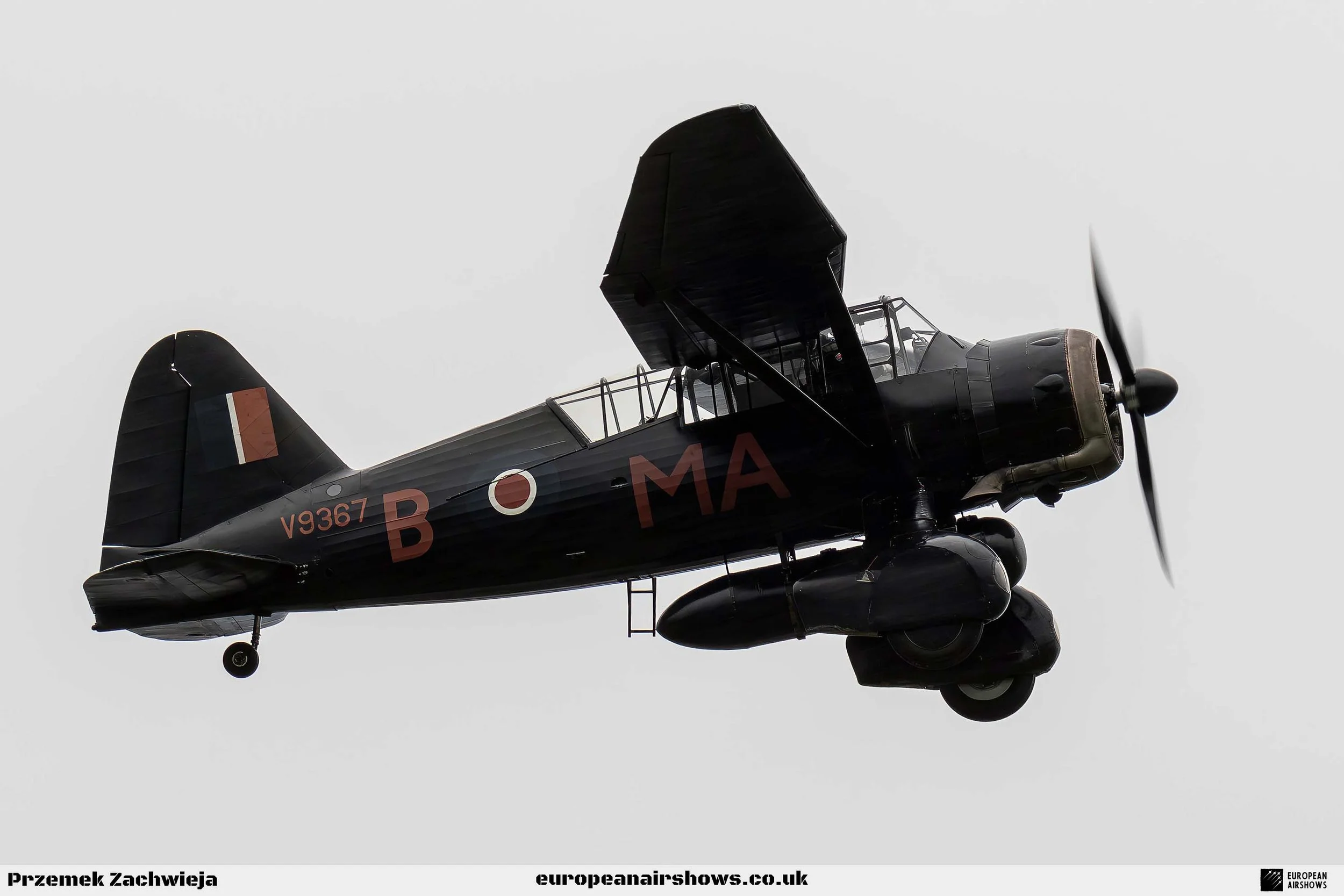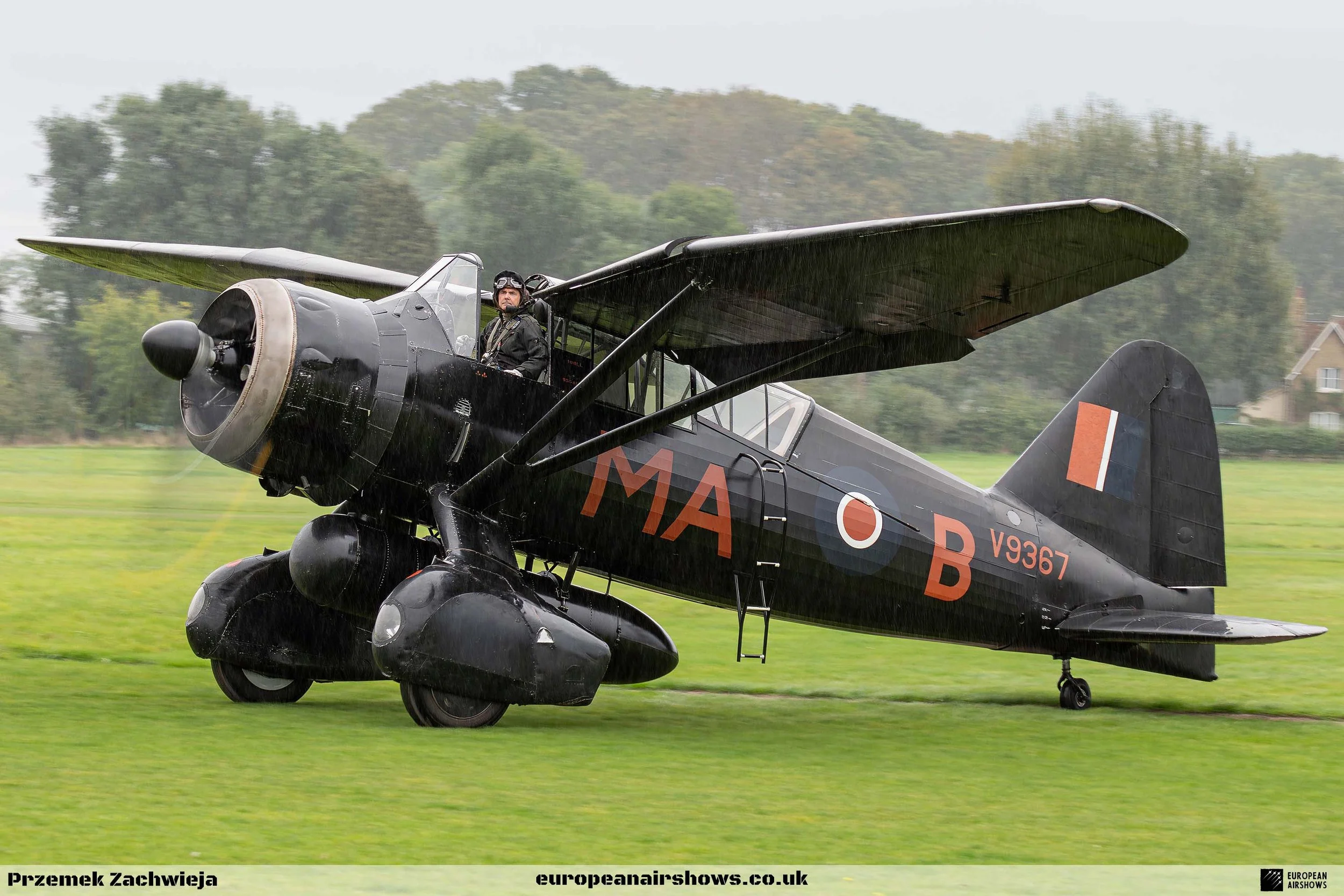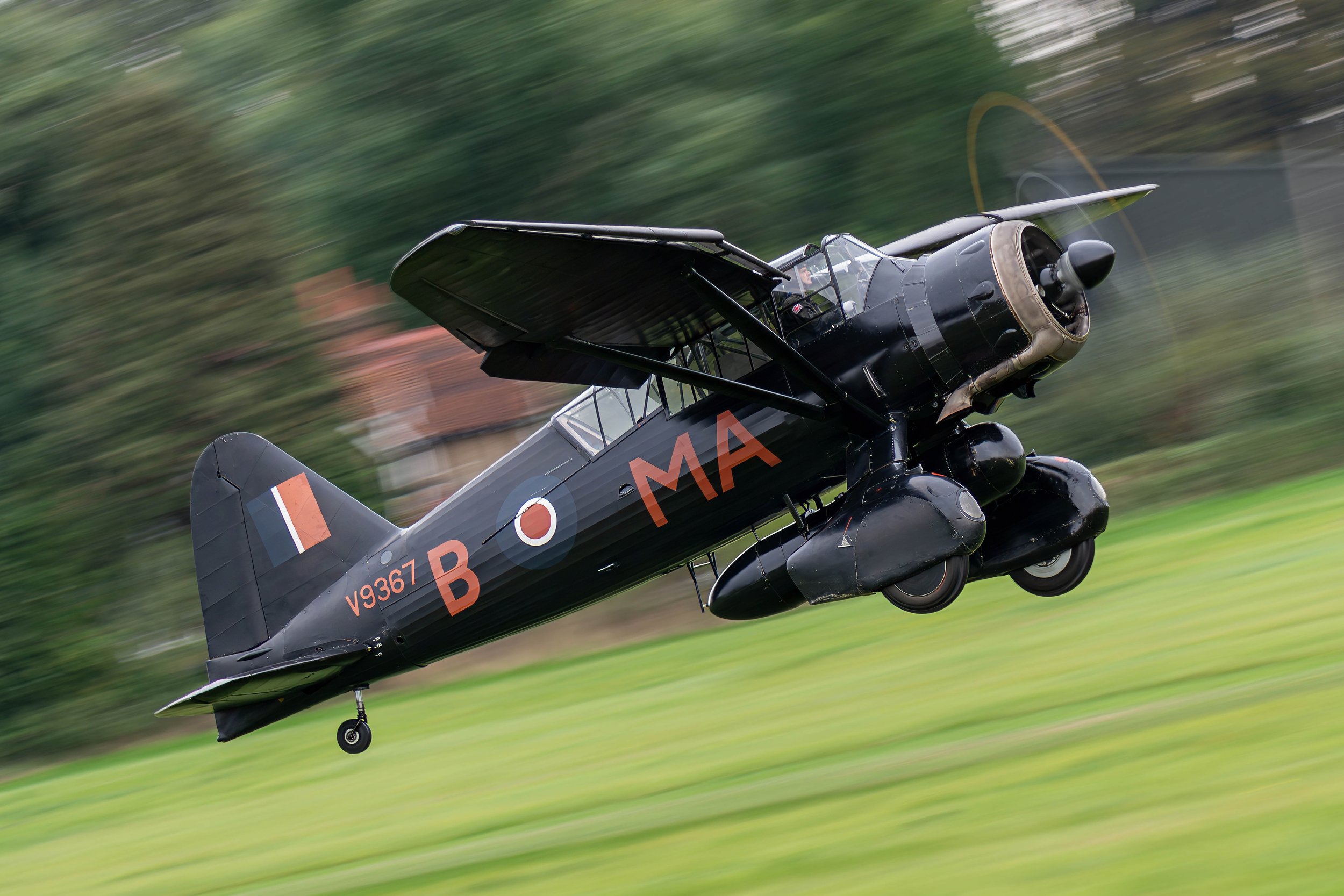
Westland Lysander G-AZWT
About the Westland Lysander
The Westland Lysander might not have been the sleekest or most ferocious bird in the skies, but it’s got a story that’s equal parts grit, ingenuity, and downright sneaky brilliance. Built by Westland Aircraft, this British army cooperation and liaison plane was a star player before and during World War II, famous for its knack for landing on postage-stamp-sized airstrips and its starring role in some of the war’s most hush-hush operations. Imagine a plane that’s less about dogfights and more about dropping secret agents into Nazi-occupied territory under the cover of night—now that’s the Lysander in a nutshell. Let’s take a deep dive into its history, from its drawing-board beginnings to its legacy as a quiet hero of the war.
The Lysander’s tale kicks off in 1934, when the British Air Ministry decided their old Hawker Hector was ready for the retirement home. They issued a spec for a new army cooperation aircraft—one that could handle artillery spotting, reconnaissance, and maybe toss a few light bombs for good measure. Enter Arthur Davenport and the Westland Aircraft crew, who cooked up a high-wing monoplane that looked like it was built to take a beating. With a sturdy undercarriage for rough-and-tumble landings and a roomy cockpit for its pilot and observer, the Lysander was all about practicality. Those high wings? Perfect for eyeballing enemy positions or scoping out a clandestine drop zone. It wasn’t flashy, but it was ready to get the job done.
What really made the Lysander stand out was its STOL—Short Take-Off and Landing—superpowers. Thanks to some clever engineering with leading-edge slats and oversized flaps, this plane could hop into the air or touch down in spaces that’d make a modern pilot break out in hives. We’re talking takeoffs and landings measured in mere yards, not miles. This wasn’t just a neat trick—it was a game-changer. The Lysander could plop down in a farmer’s field or a forest clearing, making it the go-to choice for operations where runways were a pipe dream. The first prototype buzzed into the sky in 1936, and by 1938, it was strutting its stuff with the Royal Air Force, proving it had the chops to handle the toughest gigs.
The Lysander wasn’t a one-and-done deal—it evolved over time. After that successful 1936 debut, production kicked into gear, and several variants rolled out. The Mk I was the original, packing a Bristol Mercury engine and basic armament. The Mk II upped the ante with a more powerful engine, while the Mk III became the real MVP, especially for special ops. That version even sported a fixed ladder for agents to scramble on and off in a flash—talk about a quick getaway! Each tweak brought better performance or specialized gear, tailoring the Lysander for everything from reconnaissance to its later cloak-and-dagger duties. By the time the Mk III hit the scene, it was clear this plane was destined for more than just spotting artillery.
When World War II erupted, the Lysander was thrust into action, buzzing around during the Phoney War and the Battle of France. It did its job—reconnaissance, artillery spotting—but it wasn’t exactly a golden age for the little plane. Slow as molasses and about as nimble as a brick, it was a sitting duck for German fighters. The evacuation of Dunkirk in 1940 was a brutal wake-up call: Lysanders were getting chewed up by faster, meaner enemies like the Messerschmitt Bf 109. Losses piled up, and it looked like the Lysander might be grounded for good. But as the saying goes, when one door closes, another opens—and for the Lysander, that new door was painted black and flown by moonlight.
Enter the Special Operations Executive (SOE), Britain’s shadowy outfit for espionage and sabotage. They saw the Lysander’s STOL skills and thought, “This is our ride.” Suddenly, the plane that couldn’t cut it in a dogfight became the backbone of clandestine missions across occupied Europe. Picture this: a Lysander swooping into a tiny French field lit only by Resistance flashlights, dropping off an agent with a suitcase full of secrets, then vanishing into the night. Or maybe it’s picking up a resistance fighter on the run from the Gestapo. These ops were pure adrenaline—pilots needed ice in their veins and a knack for flying blind. The Lysander became a legend in the SOE, linking the underground war effort with the Allies, one daring landing at a time.
The Lysander didn’t just stick to Europe’s backyards—it spread its wings to other theaters, too. In the Middle East and Far East, it tackled reconnaissance, light bombing, and even tried its hand as a fighter (spoiler: it wasn’t great at that last one). In places like Egypt or Burma, it buzzed over deserts and jungles, doing whatever odd jobs the war threw its way. It wasn’t always the star of the show—faster planes often stole the spotlight—but its versatility kept it in the fight. Whether it was scouting enemy positions or dropping a few bombs, the Lysander proved it could adapt, even if it was sometimes the underdog in a high-speed world.
When the war wrapped up, the Lysander’s days of dodging flak and ferrying spies were over. It didn’t disappear, though—it just switched gears. The RAF kept it around for training and communication roles, letting new pilots cut their teeth on its quirky controls. Some Lysanders even went civilian, sold off for aerial photography or crop dusting. It wasn’t the most glamorous second act—imagine going from secret missions to spraying fields—but it showed the plane’s staying power. By the late 1940s, though, most had been retired, their wartime heroics fading into memory as newer, shinier aircraft took over.
The Westland Lysander might not have racked up kill counts like a Spitfire or hauled bombs like a Lancaster, but its legacy is something special. It’s the plane that thrived in the shadows, making the impossible possible for the SOE and the brave souls who fought in secret. It wasn’t about glory—it was about getting the job done, whether that meant landing in a muddy field or dodging enemy patrols. Today, it’s remembered as a symbol of the clandestine war, a tribute to the pilots and agents who risked it all. A few surviving Lysanders still grace museums, quiet reminders of a time when stealth and courage flew hand in hand.
Specifications
Crew
1
Length
30 ft 6 in (9.30 m)
Wingspan
50 ft 0 in (15.24 m)
Height
14 ft 6 in (4.42 m)
Max Speed
212 mph (341 km/h, 184 kn)
Range
600 mi (970 km, 520 nmi)
Service Ceiling
21,500 ft (6,600 m)
Rate of climb
1,410 ft/min (7.1 m/s)
Lysander IIIA Variant
The Westland Lysander IIIA was no ordinary aircraft—it was the cool, upgraded cousin of the Lysander family, built for some of World War II’s most daring missions. While its earlier siblings, like the Mk I and Mk II, stuck to standard army cooperation duties, the IIIA strutted onto the scene with a beefier engine that set it apart. Out went the Bristol Mercury XX or Perseus XII of the prior variants, and in came the Bristol Mercury 30, a powerhouse that gave the IIIA extra oomph. This wasn’t just about bragging rights; that enhanced engine meant the IIIA could take off from tiny, improvised airstrips—often under the cover of darkness—with the kind of gusto that made it perfect for its shadowy assignments.
Where the IIIA really flexed its uniqueness was in its knack for clandestine operations. Some of these aircraft were tricked out with a rear cockpit ladder, letting secret agents hop on or off faster than you could say “espionage.” Add to that an extra fuel tank for longer range, and the IIIA could slip deep into enemy territory without breaking a sweat. Unlike its predecessors, which weren’t quite as sneaky, the IIIA became the go-to ride for covert missions, dropping off operatives behind enemy lines with a quiet confidence that screamed “mission accomplished.”
When it came to defending itself, the IIIA didn’t mess around. Earlier Lysanders might have settled for a single machine gun in the rear cockpit, but the IIIA rolled up with twin .303 Browning machine guns, giving its gunner a fighting chance against pesky enemy fighters. Sure, it wasn’t the fastest bird in the sky—its lumbering pace was a family trait—but those dual guns added some serious bite to its bark. This upgrade made the IIIA a tougher nut to crack compared to its lighter-armed relatives, proving it could handle more than just ferrying duties.
The IIIA’s versatility was another feather in its cap, catching the eye of air forces beyond the Royal Air Force. It found fans among the Free French Air Force, Portugal, and even the United States Army Air Forces, who saw its potential for everything from target towing to bomb-dropping. While other Lysander variants stuck closer to home, the IIIA’s adaptability let it spread its wings internationally. That global appeal underscored how its beefed-up features—like that powerful engine and enhanced armament—made it a standout in the Lysander lineup.
In the end, the Westland Lysander IIIA wasn’t just another tweak on the drawing board—it was a wartime game-changer. With its souped-up Mercury 30 engine, sneaky modifications for secret ops, and a rear cockpit ready to rumble, it carved out a niche that its predecessors couldn’t touch. Whether it was whispering through the night on a covert drop or holding its own in a scrap, the IIIA proved it was more than a workhorse; it was a silent hero of the skies, leaving its mark with a mix of grit and ingenuity.
Did You Know?
- The Westland Lysander was a star of secret missions during World War II, used to sneak agents into and out of occupied Europe. Its ability to land on tiny, makeshift airstrips—sometimes just 400 yards long—made it perfect for these nighttime operations orchestrated by the Special Operations Executive (SOE).
- The Lysander sported a high-wing design with automatic leading-edge slats and slotted flaps—pretty cutting-edge stuff for the 1930s! These features gave it a ridiculously low stalling speed of 65 mph, letting it take off and land in places other planes couldn’t dream of.
- For its spy-dropping duties, the Lysander got some cool mods: a fixed ladder on the left side for agents to hop in and out fast, and a massive external fuel tank under the belly to stretch its range for those long, sneaky flights across enemy lines.
- Deemed too slow and vulnerable for front-line combat by 1940, the Lysander didn’t fade away. Instead, it thrived in its clandestine role, flying dangerous solo missions until the war’s end, proving that adaptability beats obsolescence.
- Did you know Canada built Lysanders too? The National Steel Car Corporation churned out these planes under license, mostly for training and target towing, helping prep Allied aircrews for the fight while adding a North American twist to this British bird.
Test Your Knowledge
Lysander G-AZWT
In 1938, amidst the looming shadows of war, a new Westland Lysander IIIA rolled off the production line in Yeovil, England, destined for the Royal Air Force with the serial V9552. Little did it know that its journey would take it across the Atlantic and back, through war and peace, and into the hearts of aviation enthusiasts decades later. During World War II, V9552 was shipped to Canada in 1942, where it swapped its clandestine duties for the less glamorous role of a target tug with the Royal Canadian Air Force, proudly wearing the serial 2355. It buzzed the skies, towing targets for gunners until the war’s end, when it was struck off charge on August 22, 1946. Luckily, it dodged the scrapheap and landed in the hands of Wes Agnew, a former RCAF instructor with a passion for preserving winged relics.
The year 1971 marked a homecoming for V9552 as it crossed the Atlantic once more, this time bound for the Strathallan Collection in Scotland. Registered as G-AZWT, it underwent a loving restoration, emerging in December 1979 to soar again, decked out in the markings of V9441, a Lysander flown by No. 309 (Polish) Squadron. Alas, its wings were clipped in 1986, grounded and tucked away in storage for over a decade—an aviation hibernation of sorts. But hope wasn’t lost; in 1997, V9552 rolled into Duxford, its next pit stop for a revival, before being snapped up in 1998 by the Shuttleworth Collection, a sanctuary for historic aircraft with a knack for breathing life back into old birds..
At Shuttleworth, V9552 got the royal treatment. In 1999, thanks to a generous donation from the family of Peter Vaughan Fowler—a pilot who danced with danger on secret missions during the war—it was repainted in a striking all-black scheme to mimic V9367 / MA-B, an aircraft of No. 161 Squadron RAF that Fowler once flew. The restoration wrapped up, and on August 10, 2001, G-AZWT roared back into the sky, a phoenix risen from the hangar. It settled into its new home at Old Warden, Bedfordshire, where it’s been delighting crowds ever since as part of the Shuttleworth Collection, a testament to its knack for survival and style.
Today, V9552, still sporting its G-AZWT registration, is a rare gem—one of the few airworthy Lysanders left in the world, and the only one in the UK rocking the special duties black livery. It’s a flying tribute to the shadowy heroes of wartime, cutting through the skies above Old Warden with a grace that belies its rugged past. It’s strutted its stuff at airshows like Flying Legends at Duxford in 2007, proving it’s still got the moves, and even dodged a minor scare at the Shuttleworth Race Day Air Show in 2023 when a tail panel decided to part ways mid-flight—yet it touched down safely, cool as ever.