Turkish Stars
NF-5A/B 2000 national aerobatic team of the Turkish Air Force
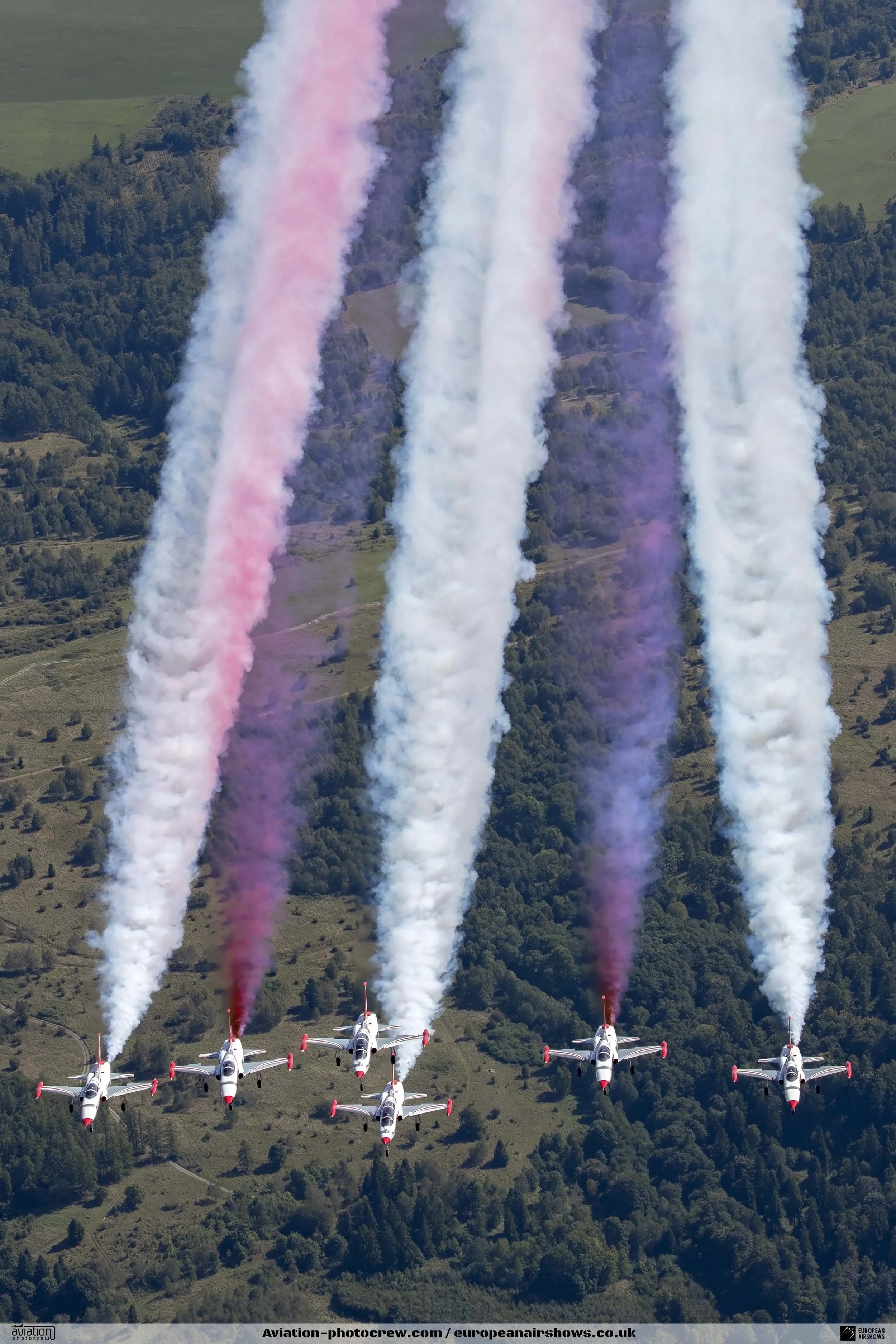
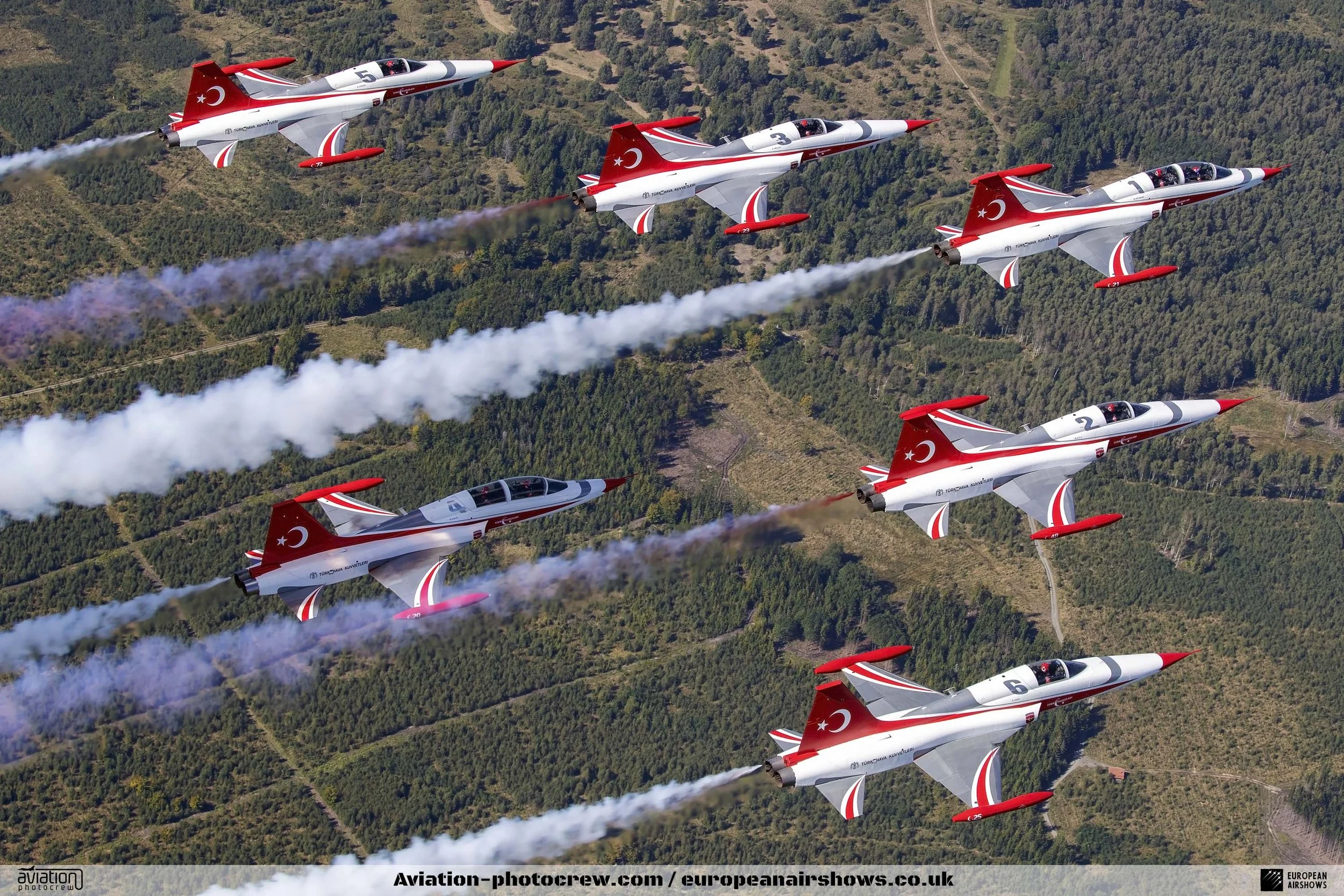
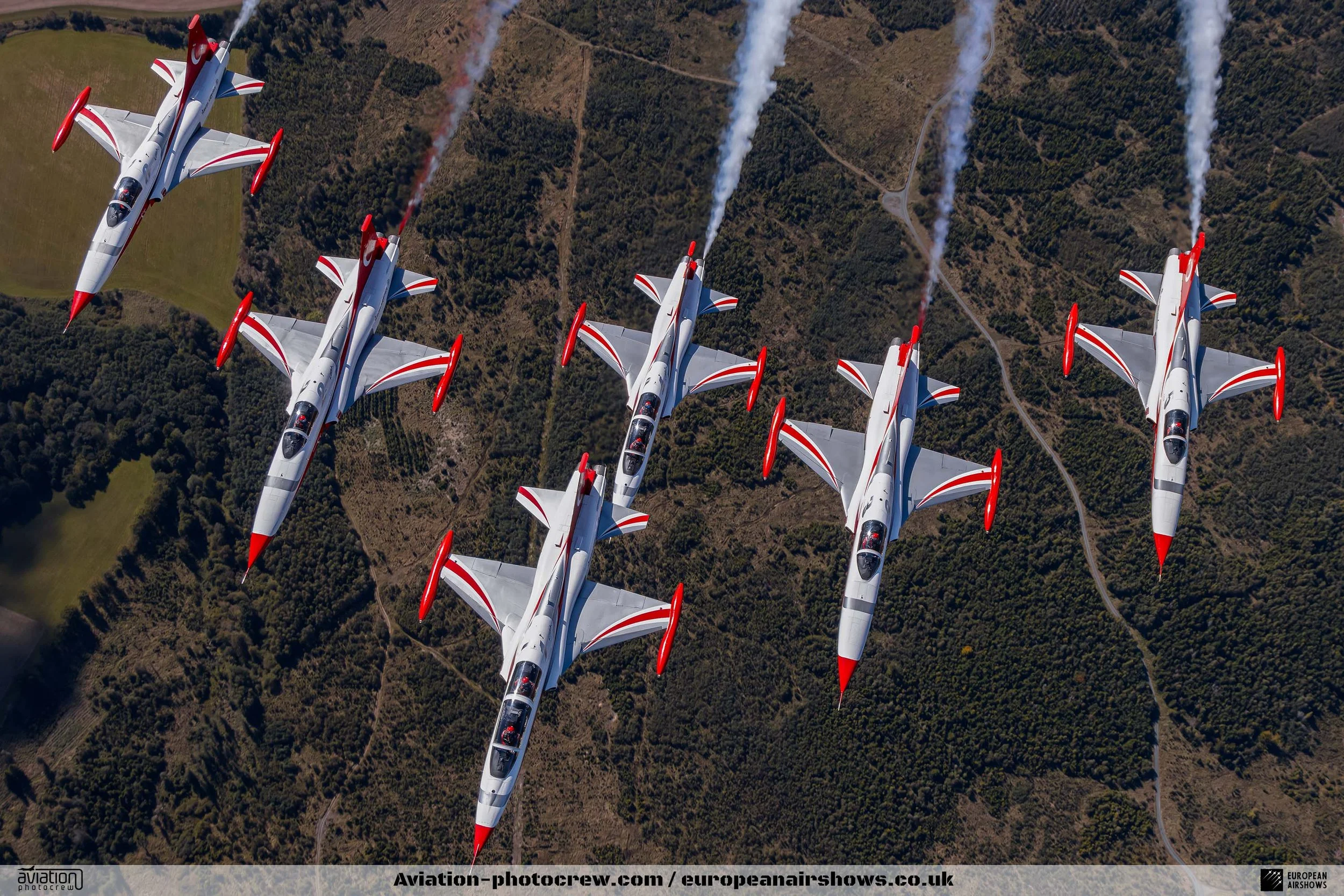
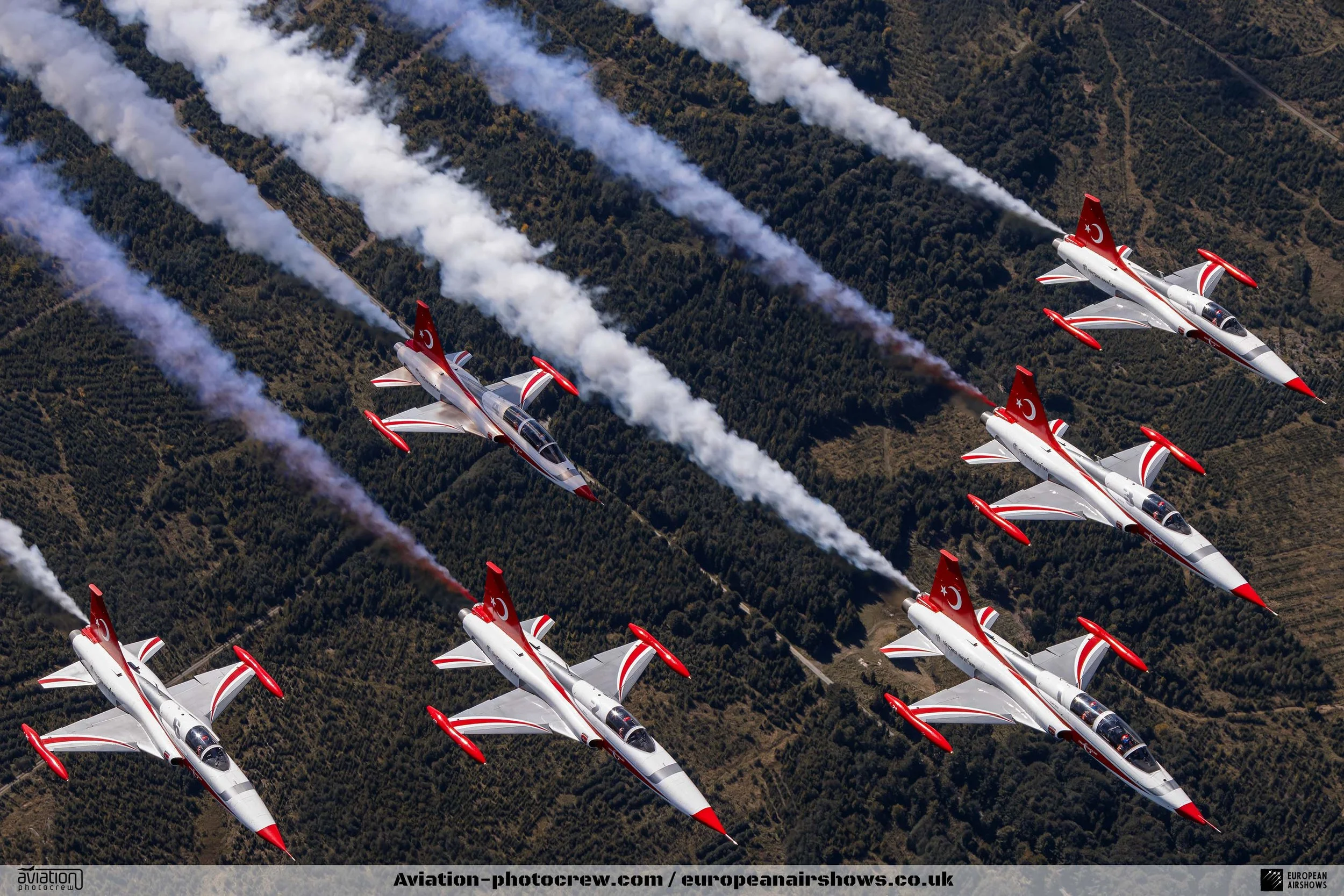
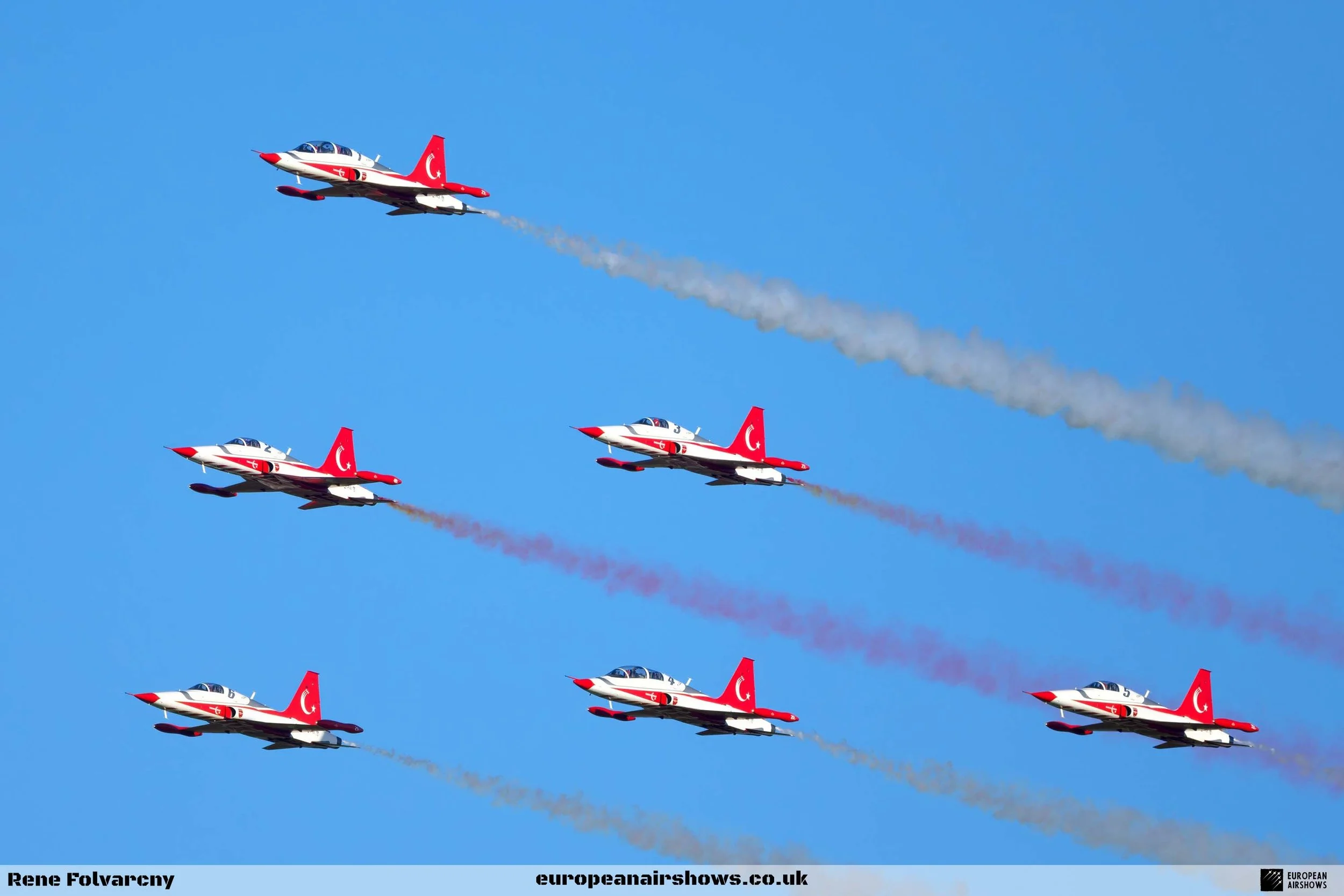
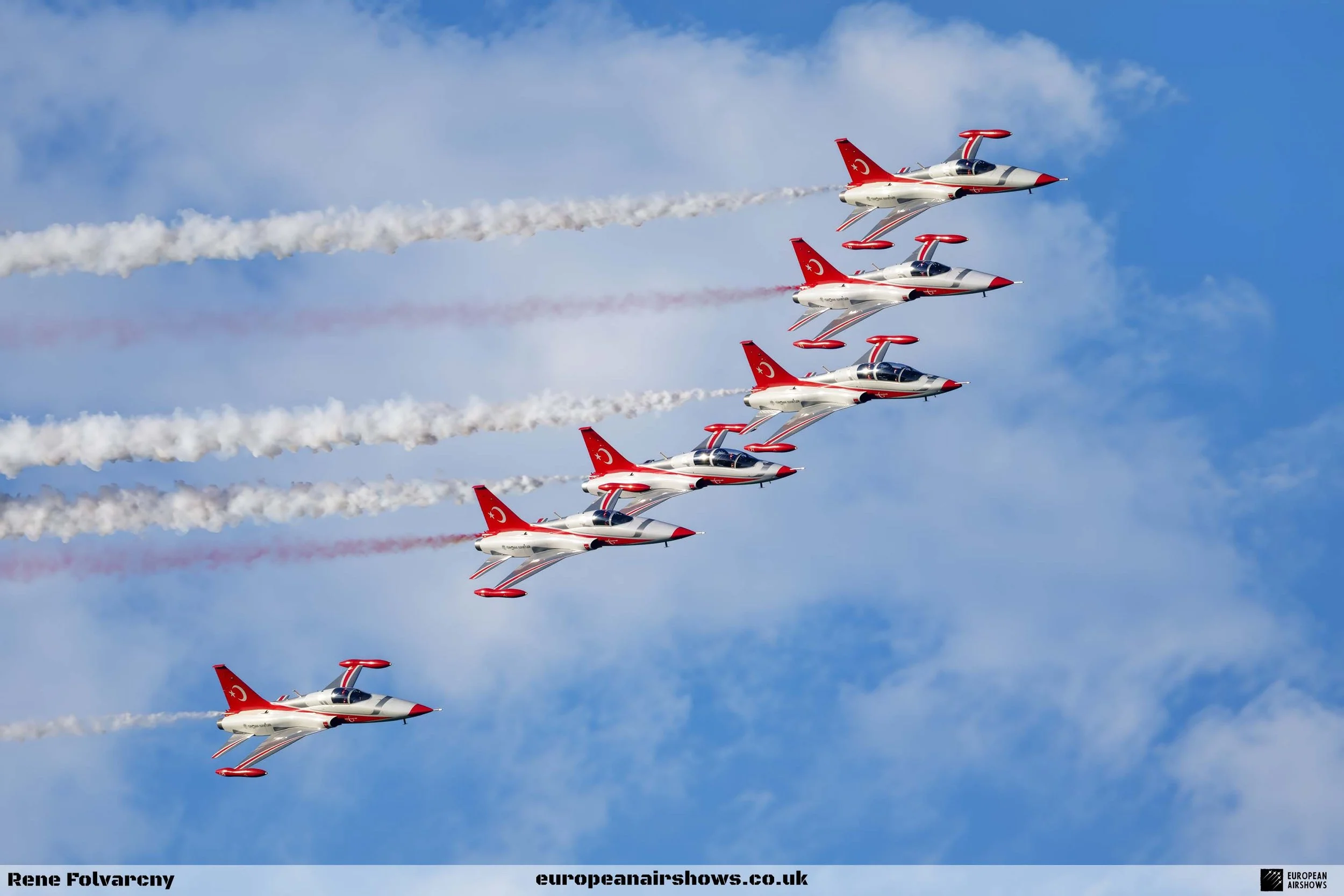
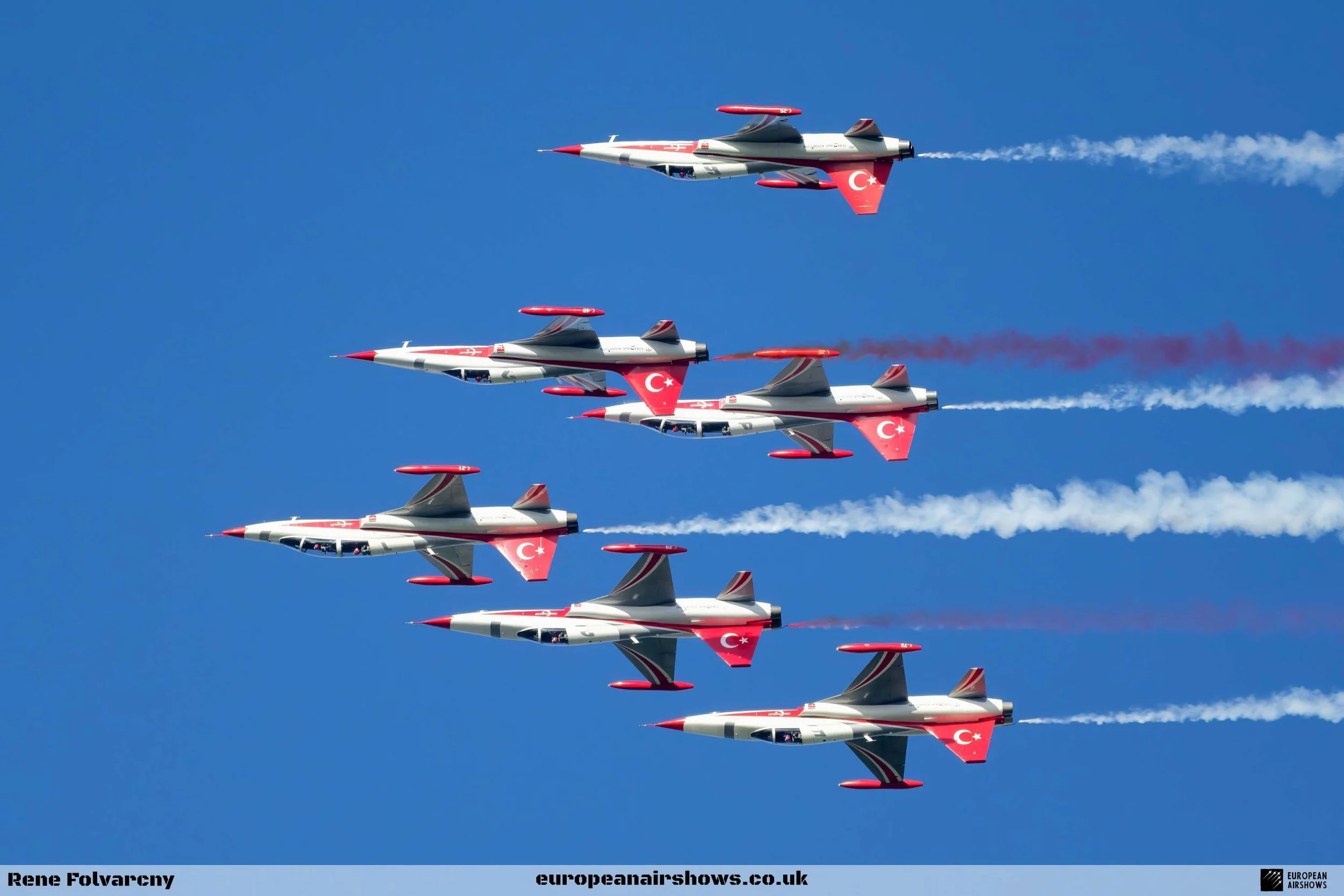
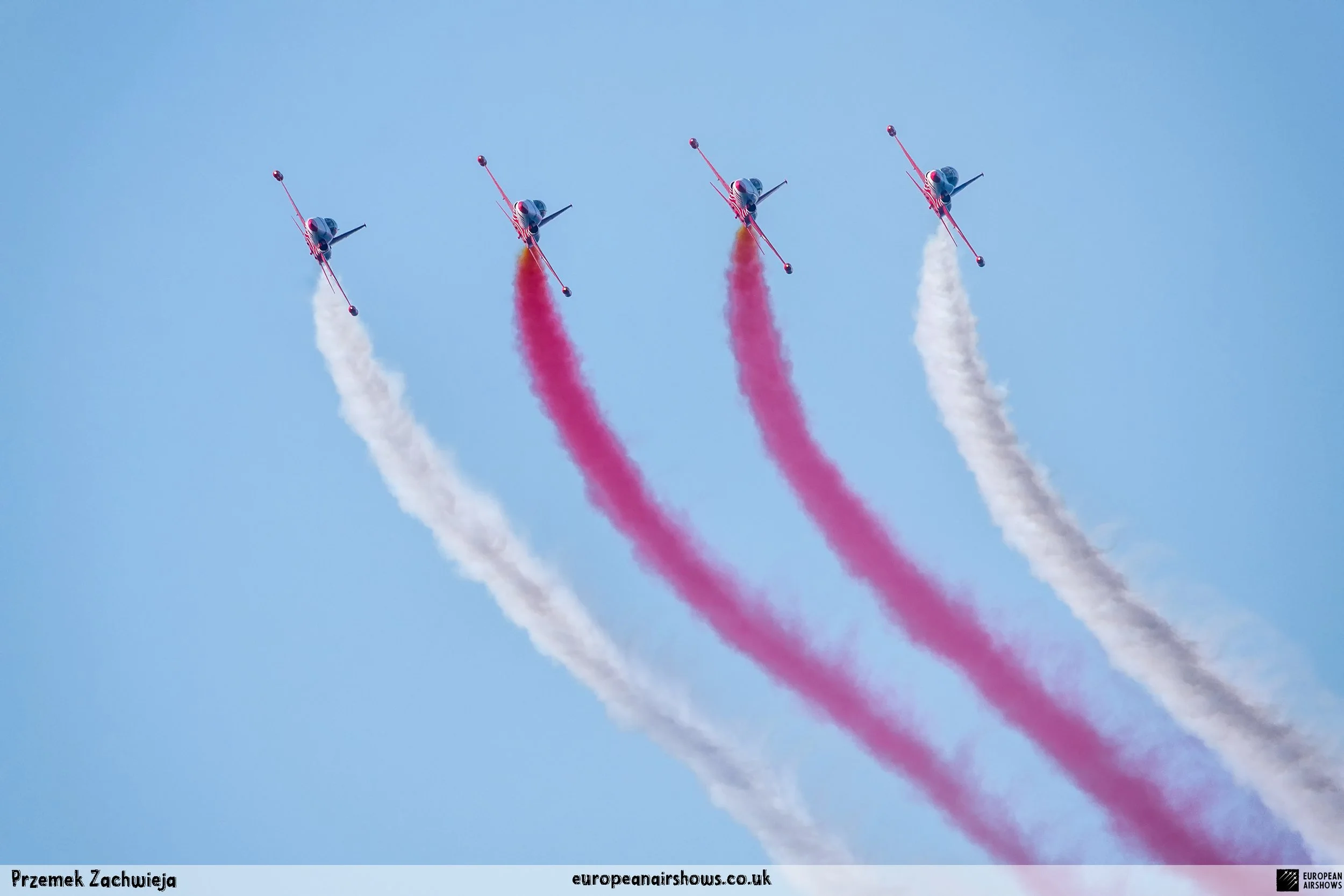
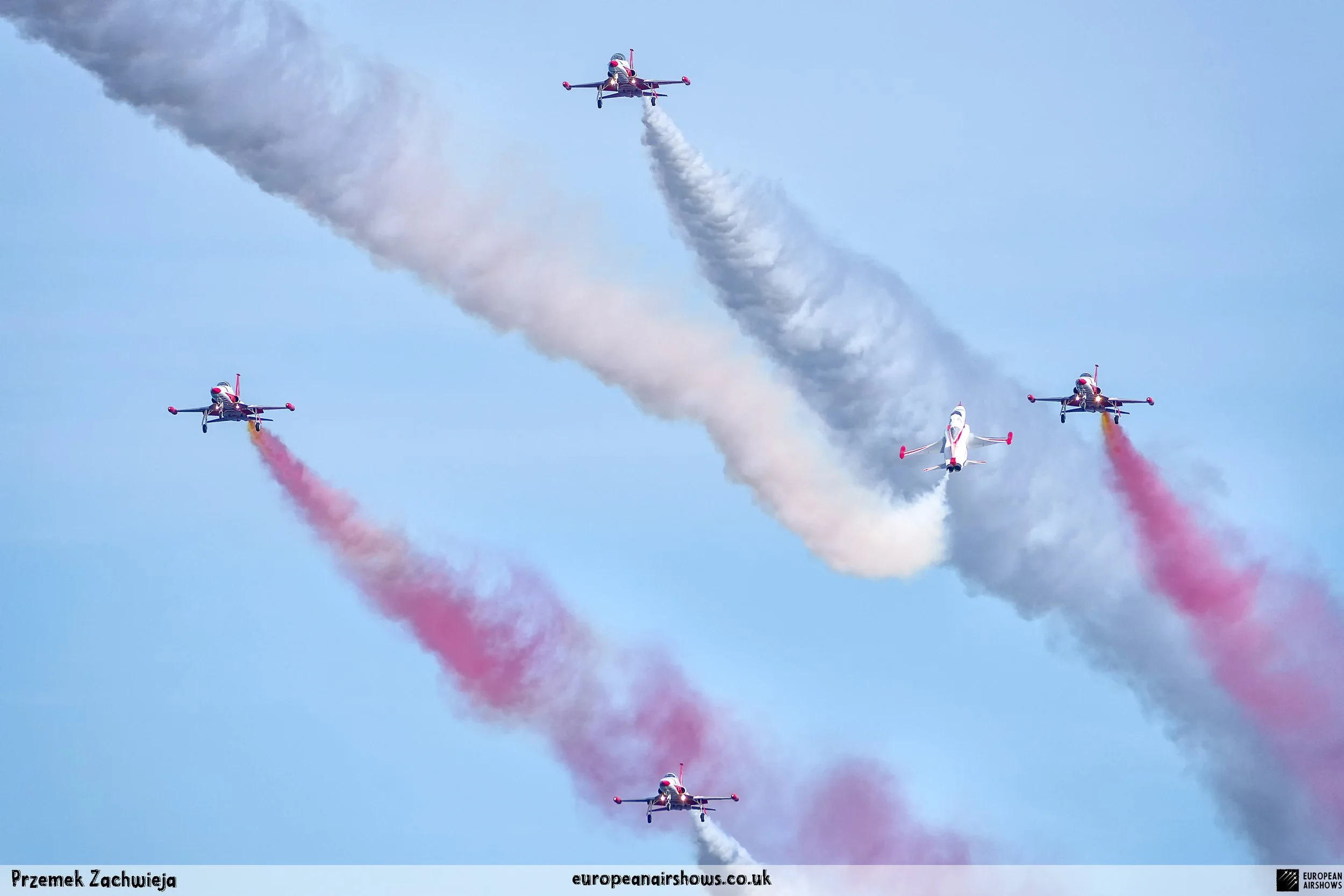
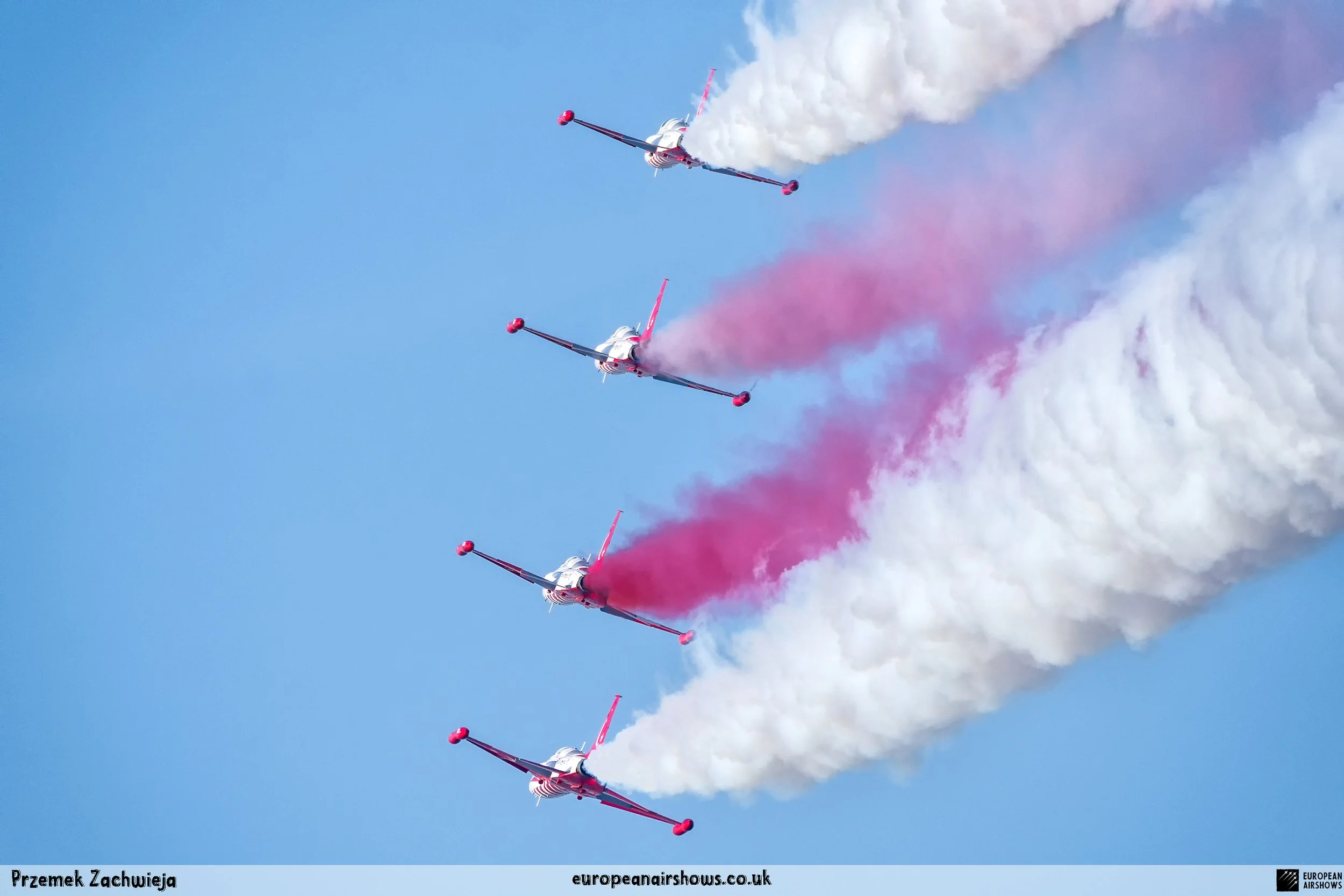
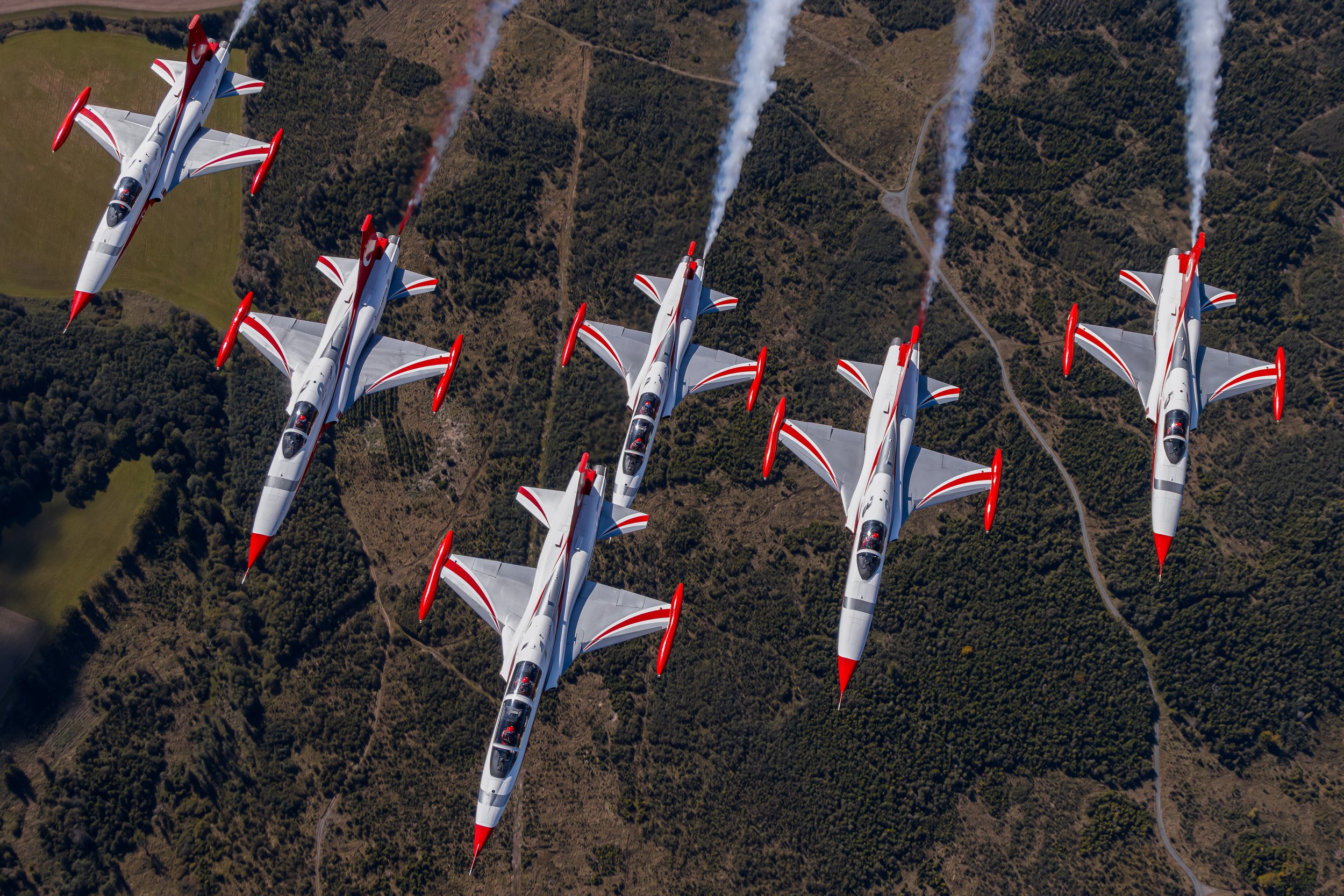
Turkish Stars brings as many as eight supersonic NF-5s into a display built around close formation flying, rapid shape changes, solo crossings and red-and-white smoke. Based at Konya, the 134th Aerobatic Squadron represents the modern continuation of Turkey's long military formation-aerobatics tradition.
- Formation order
- 7 November 1992
- First display
- 18 June 1993
- Full formation
- Up to 8 aircraft
- Aircraft
- NF-5A/B 2000
- Display profiles
- High, low and flat
- Home
- Konya
The team
Eight supersonic jets shaped into one national display identity.
Created after a twenty-year break
The Turkish Air Force had operated several jet aerobatic teams from the early 1950s, but no permanent formation existed between 1972 and 1992. Approval to create a new team inside 132nd Weapons Tactics and Standardisation Squadron at Konya was granted on 11 September 1992. The four-aircraft formation order followed on 7 November, and flying training began with four NF-5s on 25 December.
From four aircraft to a full eight-ship
The first public display used four NF-5A/Bs at Akıncı on 18 June 1993. Six-aircraft displays followed in 1994, the first seven-ship in April 1995 and the first eight-aircraft demonstration at Konya on 30 March 2004. Eight remains the complete team format, although serviceability, venue requirements and the purpose of an appearance can produce six- or seven-aircraft programmes.
A squadron, not a seasonal collection of pilots
Turkish Stars now operates as the 134th Aerobatic Squadron Command, commonly described in Turkish as the 134th Akrotim Filo Komutanlığı. Its pilots, engineering specialists and support personnel work as a dedicated military unit at Konya's 3rd Main Jet Base. Published selection requirements demand substantial jet experience before a pilot can begin the team's close-formation conversion.
Every control input is flown by hand
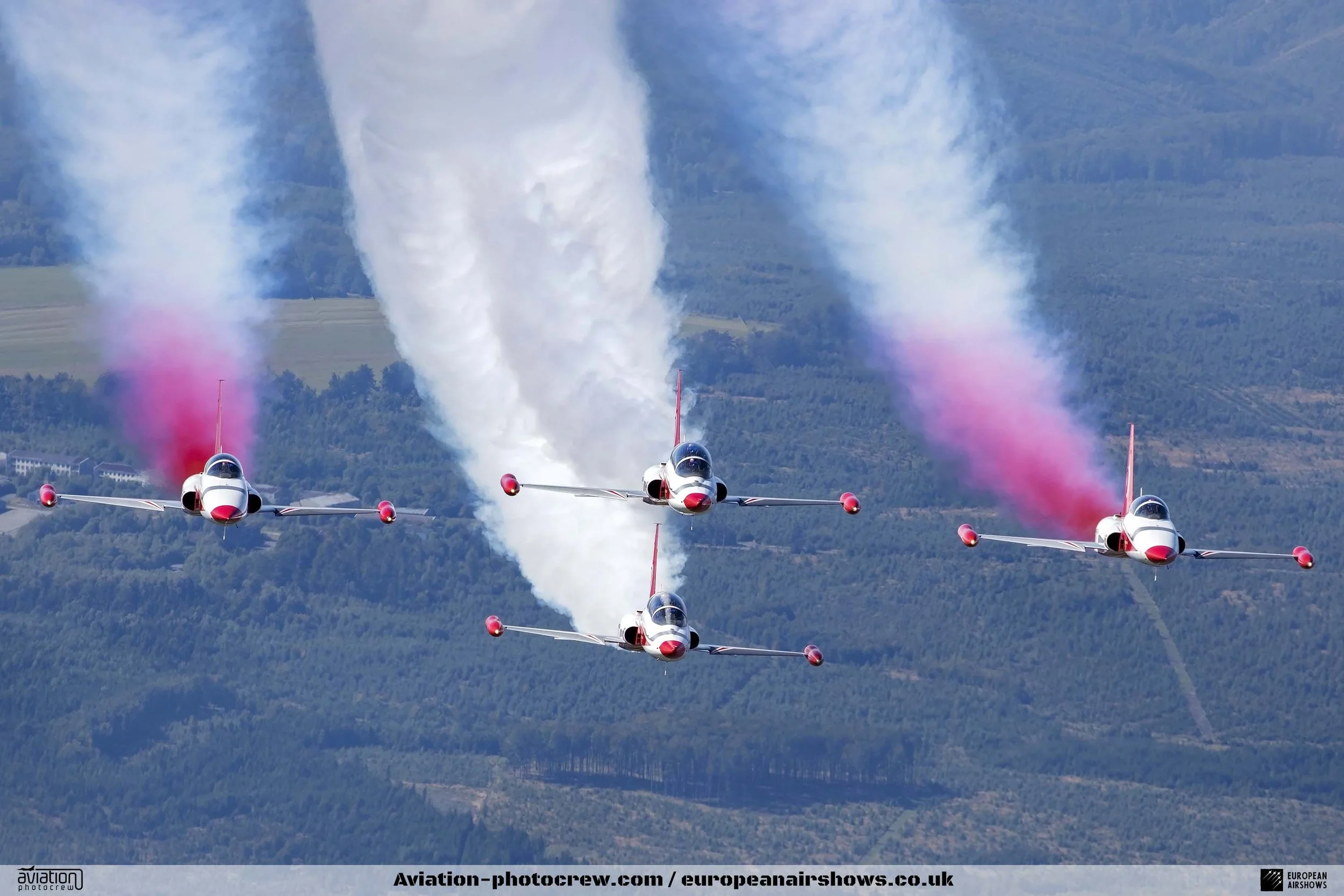
The team stresses that its manoeuvres are performed manually rather than through an automated formation system. Pilots maintain position using visual references, control coordination and disciplined briefing and debriefing. That is particularly demanding in the main formation, where the distance between aircraft can reduce to roughly three feet, or about one metre.
The display
The main formation fills the sky; the solos bring the crossings to the crowd.
Turkish Stars adapts its programme to the weather through high, low and flat display packages. The full sequences combine large formation figures with solo aircraft, while the flat programme replaces the vertical manoeuvres with changing formation passes beneath a lower cloud base.
Six-, seven- or eight-ship formation
The main package presents broad national-symbol and geometric shapes, close formation passes and coordinated changes that keep a large number of aircraft readable from the ground.
High, low and flat routines
Published guidance uses cloud-base thresholds of about 9,000 feet for the high programme, 4,000 feet for the low programme and 1,000 feet for the flat formation-pass sequence.
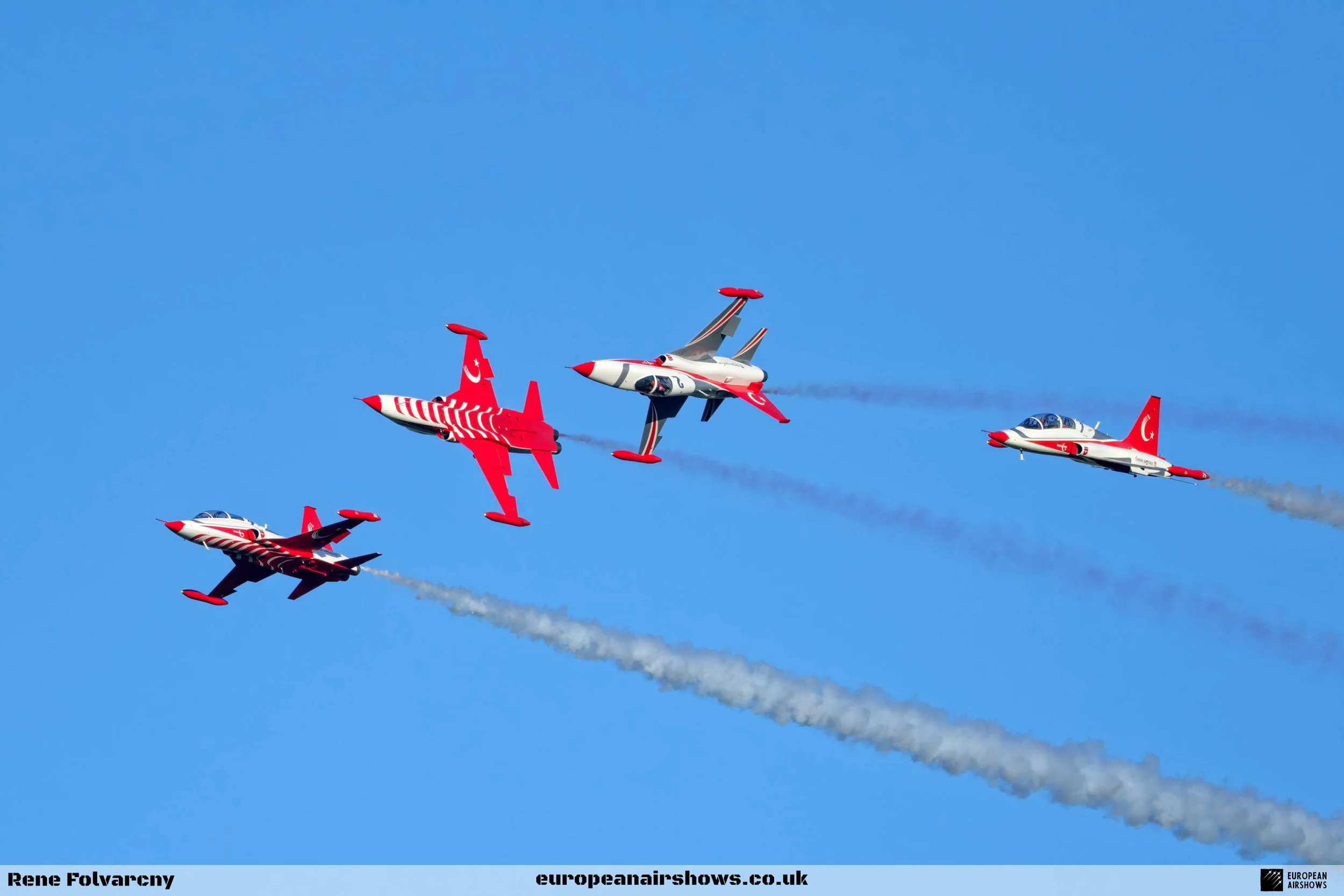
Solo opposition work
The solo aircraft separate from the main formation for rapid approaches, rolling passes, head-on crosses and changes of closure rate that contrast with the smoother group figures.
Signature intersection figures
Team pilots have highlighted a gear-down intersection through the formation and a leader reversal into the approaching main package as distinctive Turkish Stars manoeuvres.
Wide speed and g range
Official team guidance places display speeds at roughly 160 to 550 knots. Formation figures commonly reach around 5.5 to 6 g, while solo flying can use the aircraft limits of -3 to +7.33 g.
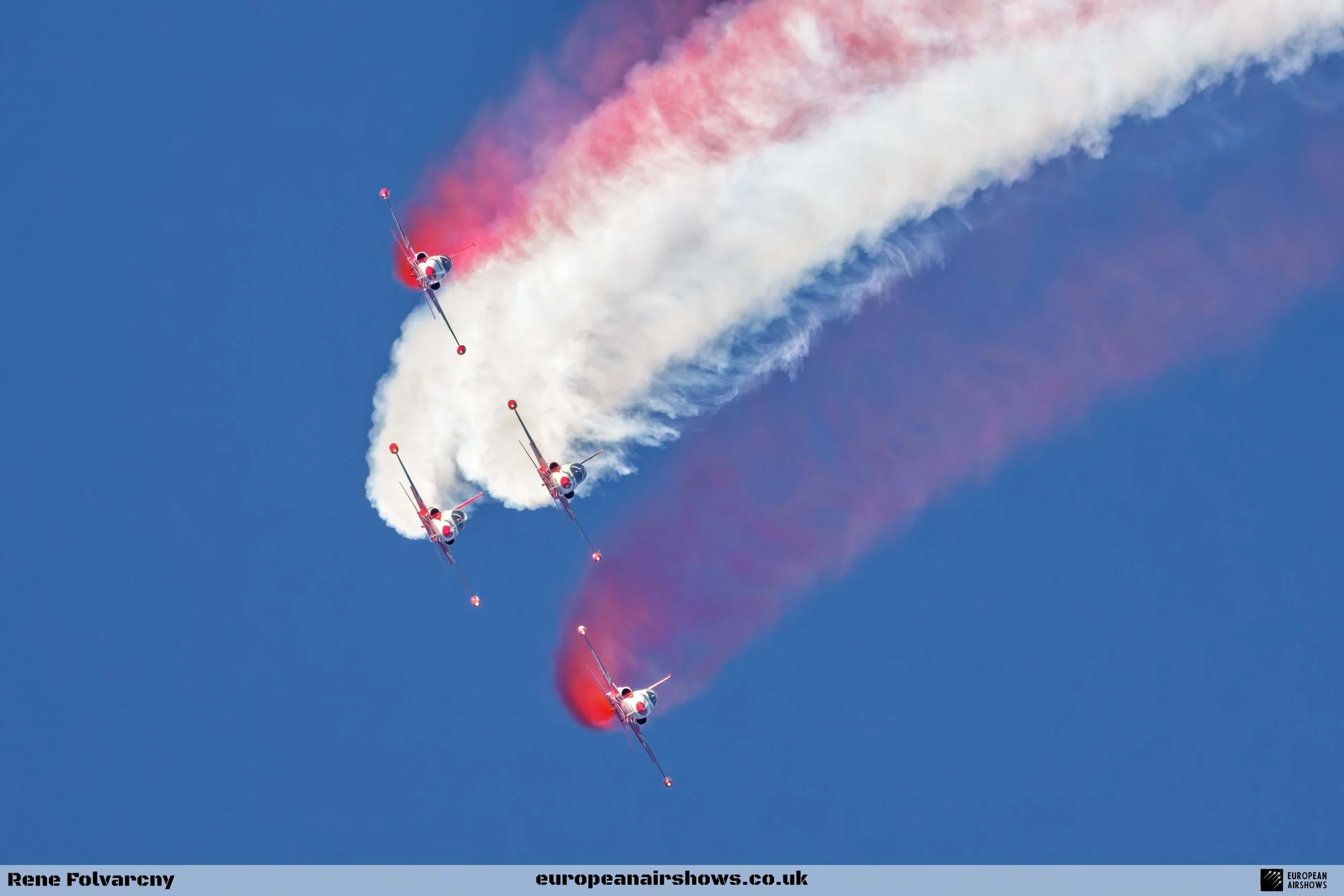
Red and white smoke
Modified wingtip tanks feed colouring fluid towards the exhausts, creating the red-and-white trails that connect the aircraft's flight paths with the colours of the Turkish flag.
The aircraft
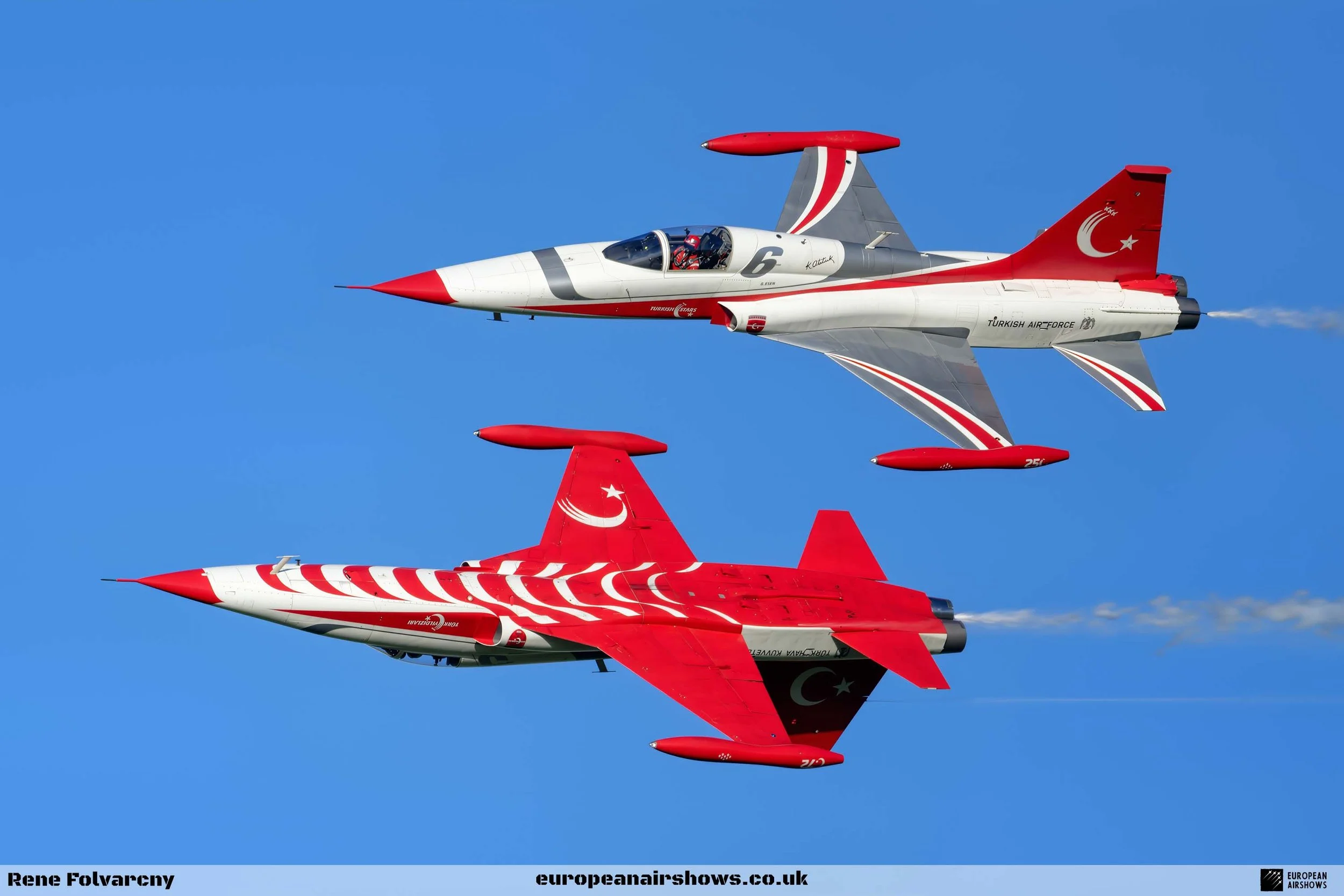
Canadair NF-5A/B 2000: a compact Freedom Fighter adapted for display work.
The Canadian-built member of the F-5 family
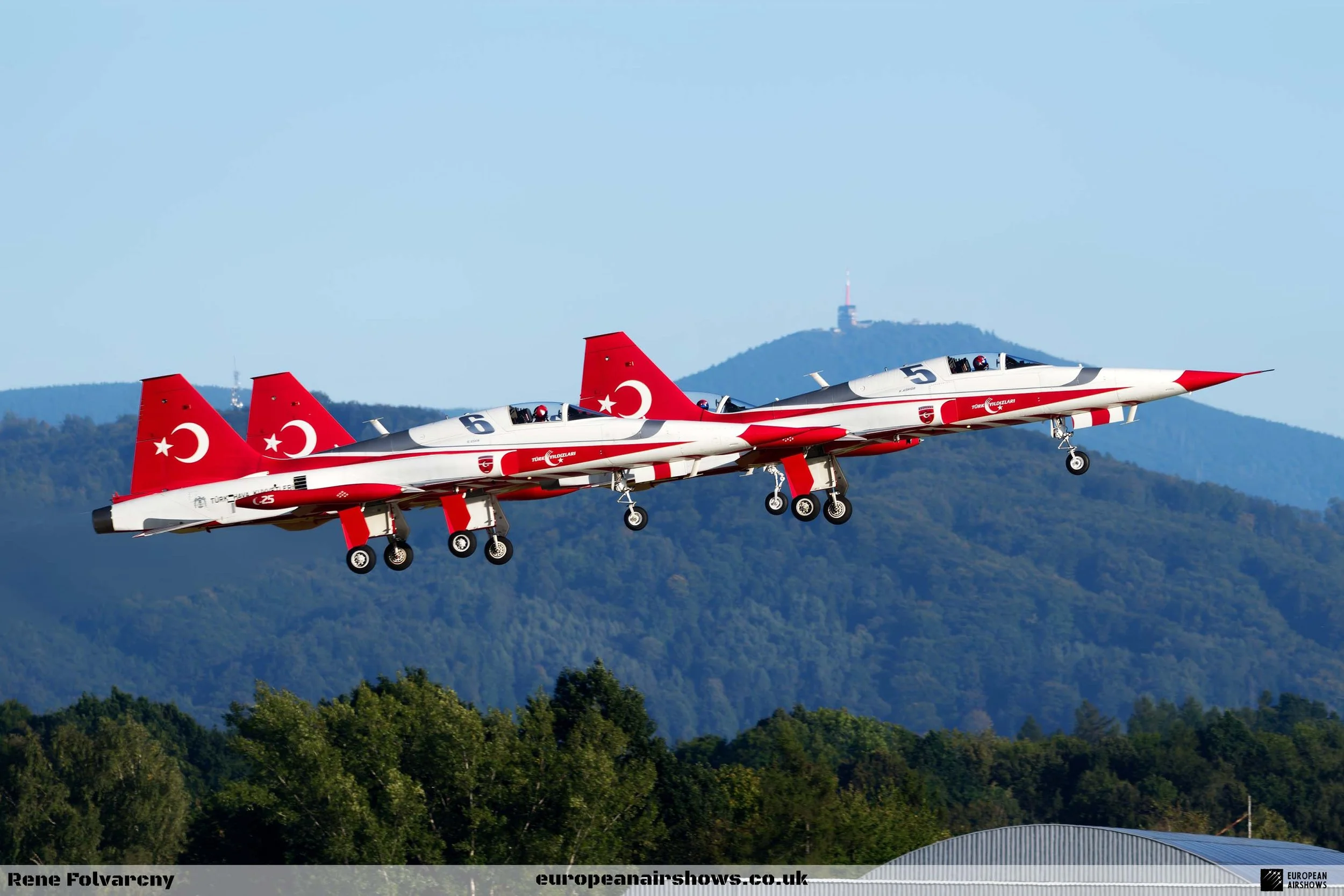
The NF-5 belongs to the Northrop F-5 Freedom Fighter family but was built in Canada by Canadair for European service. Its compact airframe, two afterburning engines and uncomplicated handling made the type economical to operate while retaining the performance of a genuine supersonic light fighter. The single-seat NF-5A and tandem two-seat NF-5B both appear in the Turkish Stars fleet.
Display conversion began in 1993
Work at the 1st Air Supply and Maintenance Centre in Eskişehir removed the gun barrels and chaff-and-flare equipment that were no longer required for the display role. The affected areas were faired, cockpit panels were rearranged for improved visibility and the mirrors were changed and supplemented to provide better references during formation flying.
The wingtip tanks became the smoke system
The tip tanks were isolated from the aircraft fuel system and converted into reservoirs for the display fluid. Hydraulic pumps send that fluid to nozzles near the engine exhausts. Together with the red-and-white finish, the modification gave Turkish Stars the visual identity first delivered to the unit in July 1994.
Video debriefing and the NF-5 2000 standard
A three-axis video-recording system was fitted in 2000 to improve post-flight assessment. From 2010 the team began displaying with modernised NF-5 2000 aircraft. The update extended the useful life of the fleet and refreshed its systems while preserving the size, control response and twin-engine layout around which the routine had been developed.
Why the aircraft still suits the team
The NF-5 is fast enough for dramatic solo crossings but small enough for eight aircraft to remain visually connected inside the display area. Its modest dimensions also reduce the apparent spacing between aircraft, strengthening the effect of the team's close formations without requiring a much larger airshow box.
The story so far
From a four-aircraft experiment to Turkey's eight-ship supersonic team.
1952-71
Six earlier Turkish Air Force aerobatic teams
Formation aerobatics developed alongside the Turkish Air Force's move into the jet age. A succession of teams flew types including the F-84, F-86, F-100 and F-5, establishing the lineage that later led the Air Force to describe Turkish Stars as its seventh aerobatic team.
1992
The new team is approved and begins training
Approval was granted on 11 September, the order to create a four-NF-5 aerobatic team was issued on 7 November and the first four-aircraft training sortie took place on 25 December at Konya.
1993
Turkish Stars makes its first public display
Four NF-5A/Bs displayed at the 4th Main Jet Base at Akıncı, Ankara, on 18 June. The team subsequently gained squadron status and work began at Eskişehir to create a dedicated red-and-white display fleet.
1994
The modified fleet and first six-ship arrive
Nine NF-5As and one NF-5B were returned to the team in July after their display conversion. The first six-aircraft demonstration followed at Diyarbakır on 5 October before the team appeared during Republic Day celebrations later that month.
1995
The formation expands to seven aircraft
Turkish Stars flew its first seven-ship display at Eskişehir on 20 April during the distinguished visitors' day for Exercise Distant Thunder 95, bringing the team close to its eventual full format.
2000-01
Video debriefing and the landmark Baku audience
Three-axis recording equipment strengthened the debrief process in 2000. On 24 August 2001 a Baku display was reported to have attracted more than one million spectators, becoming the best-known crowd figure associated with the team.
2004
The first full eight-aircraft display
After work to expand the programme, the complete eight-ship routine was flown for the first time at Konya on 30 March. Eight aircraft have since represented the team's maximum formation strength.
2010
The NF-5 2000 display era begins
Turkish Stars moved to modernised NF-5 2000 aircraft, extending the service life of the type and allowing the established routine to continue on refreshed airframes and systems.
2012
Captain Ümit Özer is lost during training
Ümit Özer, who had joined Turkish Stars in 2011, was killed in an NF-5 training accident at Konya on 13 March. He is remembered by the team as one of the pilots who represented the Turkish Air Force at home and abroad.
2021
Captain Burak Gençcelep is lost at Konya
Burak Gençcelep was killed when an NF-5 crashed during a training flight in the Karatay district on 7 April. He had joined Turkish Stars in 2020 after operational assignments elsewhere in the Air Force.
2023
HÜRJET appears beside Turkish Stars
Turkey's new advanced jet trainer flew publicly with the NF-5 team, signalling the aircraft intended to carry the national aerobatic role into its next generation while HÜRJET flight testing continued.
2026
Two HÜRJETs join the eight-ship formation
On 12 June, two HÜRJET prototypes joined eight Turkish Stars NF-5s after departing Mürted, creating the first ten-aircraft formation of its kind in Turkish aviation. The NF-5 remained the active display aircraft afterwards, including a seven-ship performance at the Belgian Air Force Days later that month.
Legacy and future
Remembering the pilots who were lost while preparing for the team's next aircraft.
In remembrance
Captains Ümit Özer and Burak Gençcelep were killed in separate NF-5 training accidents at Konya in 2012 and 2021. Both had joined Turkish Stars after completing wider Turkish Air Force flying assignments. Their service belongs to the team's history and is remembered in its official memorial record.
HÜRJET is the future, but NF-5 remains the present
HÜRJET aircraft intended for Turkish Stars have been associated with a 2026 delivery plan, and two prototypes have already flown beside the complete NF-5 formation. As of July 2026, however, public displays were still being flown by NF-5A/B 2000s. The handover should therefore be described as an active transition, not a completed fleet replacement.