Tiger Nine
Tiger 9 Aeronautical Display Team · Volunteer historic formation
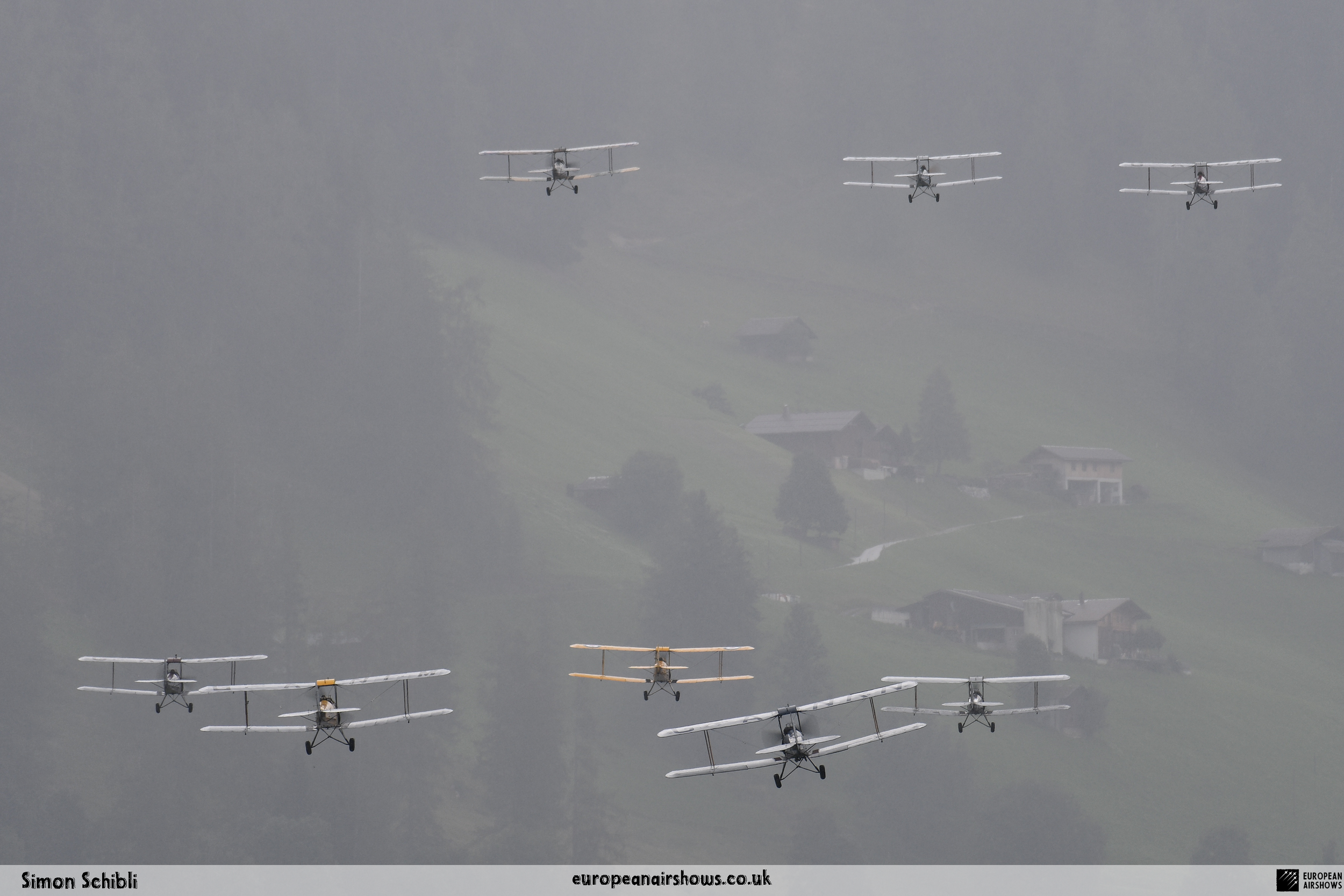
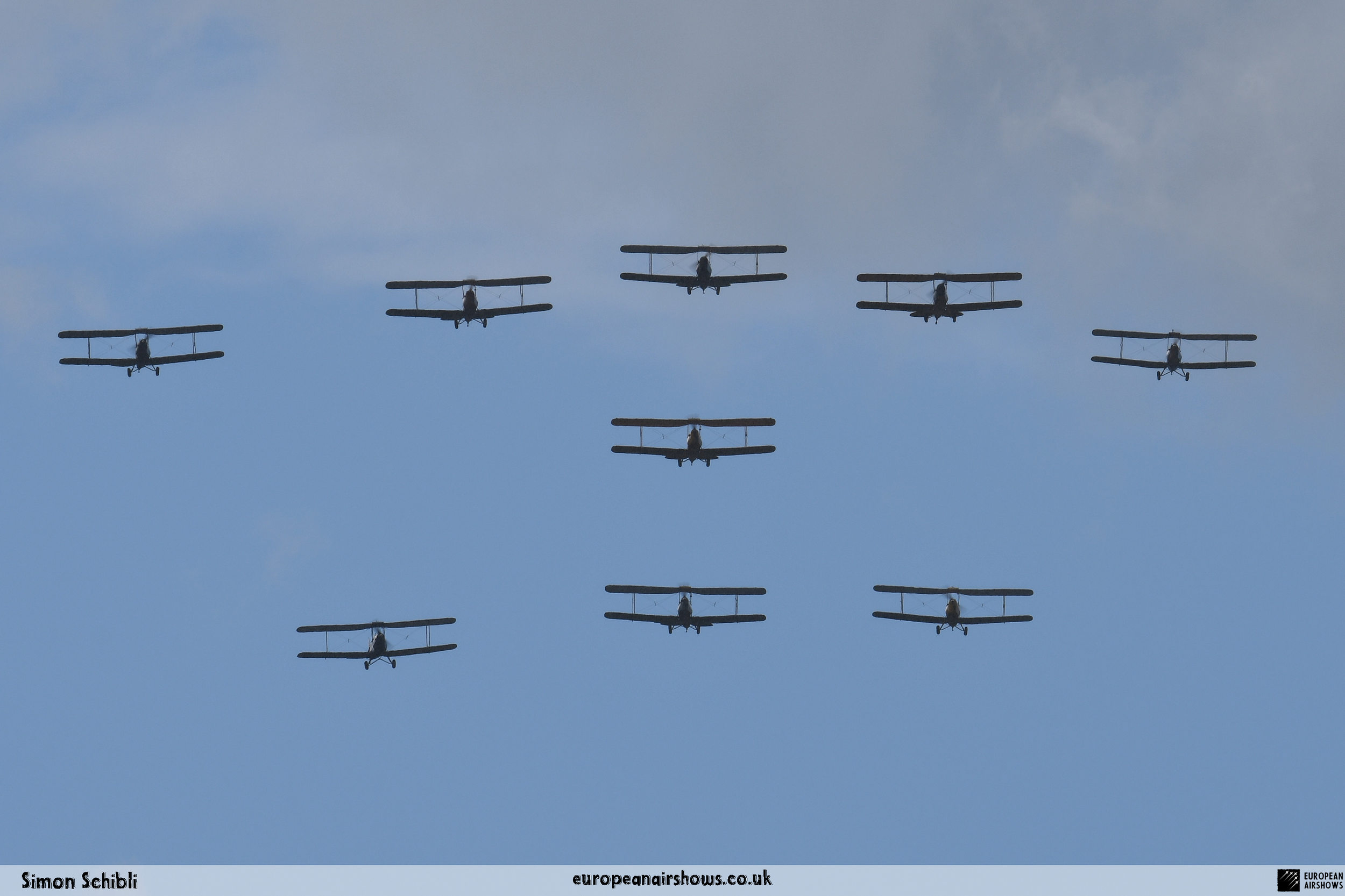
Nine open-cockpit de Havilland Moths, gathered from private owners and flown by experienced volunteers. Tiger Nine turns the modest pace of a 1930s trainer into a display of scale, geometry and disciplined formation flying.
- Formed
- 2005
- Organisation
- de Havilland Moth Club
- Format
- Nine-aircraft formation
- Core type
- de Havilland DH.82A Tiger Moth
- Practice
- Private aerodrome in Wiltshire
- Status
- Active volunteer team
The team
Nine aircraft in the routine, more than a dozen volunteers behind it.
Tiger Nine was formed in the summer of 2005 after the de Havilland Moth Club was asked to provide a nine-Tiger Moth flypast for its 25th International Rally at Woburn Abbey. A core of former Diamond Nine pilots, initially led by Jeff Milsom, trained specifically for the large close-formation task.
The flypast was intended as a special rally feature, but its reception gave the new team a future. A complete display routine followed for the next flying season, turning the original one-off formation into the Club's regular Tiger 9 Aeronautical Display Team.
Nine is the format, not the membership
The de Havilland Moth Club records more than a dozen active team members, all experienced, high-time Tiger Moth pilots. They declare availability for a limited number of displays and must be able to provide an aircraft. The nine positions are therefore filled from a wider qualified pool.
No permanent fleet and no single home base
Tiger Nine does not own nine dedicated, identically painted aircraft parked at one airfield. Its Moths remain individually owned and based, then gather for training and displays. The Club says pre-season practice is normally held at a private aerodrome in Wiltshire, which is more accurate than assigning the team to White Waltham.
The Diamond Nine inheritance
The de Havilland Moth Club's Woburn rallies had earlier inspired the Diamond Nine, which displayed for 15 seasons. Tiger Nine is its successor rather than a renamed continuation, carrying the large civil Moth-formation tradition into a new team created for the 2005 rally.
The display
Scale, timing and colour at genuine vintage-aircraft pace.
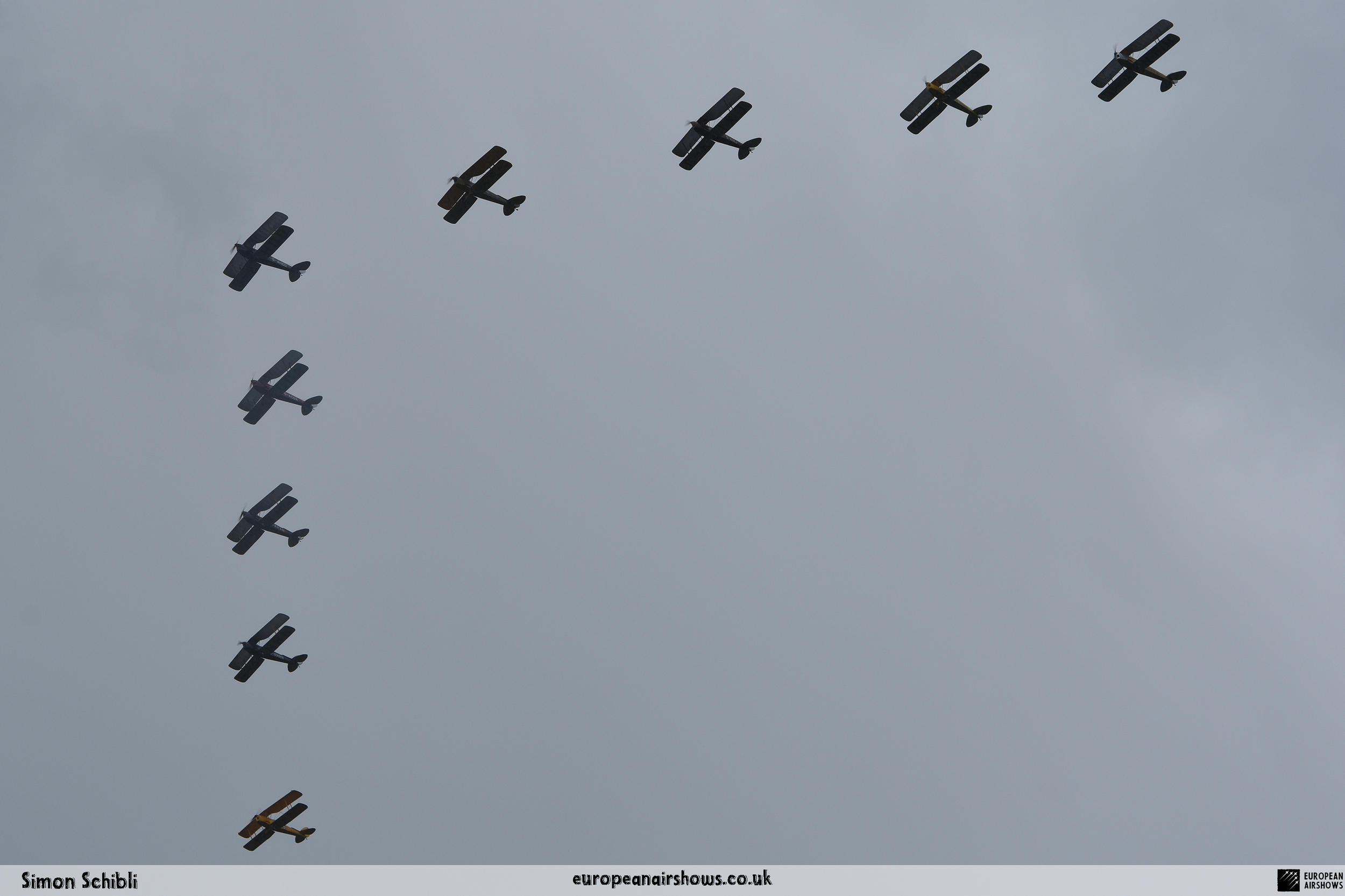
Tiger Nine's impact comes from putting a large formation of open-cockpit biplanes into clean, readable shapes. Broad formation passes, changes of geometry and carefully timed breaks keep the display moving without asking the low-powered trainers to imitate a modern aerobatic team.
The nine-aircraft picture
The full formation is the centrepiece: nine Moths presented as one broad, unmistakable shape across the display line.
Geometry over energy
Position, symmetry and timing create the spectacle. The display is designed around the Tiger Moth's character rather than high-energy vertical manoeuvres.
Changes of formation
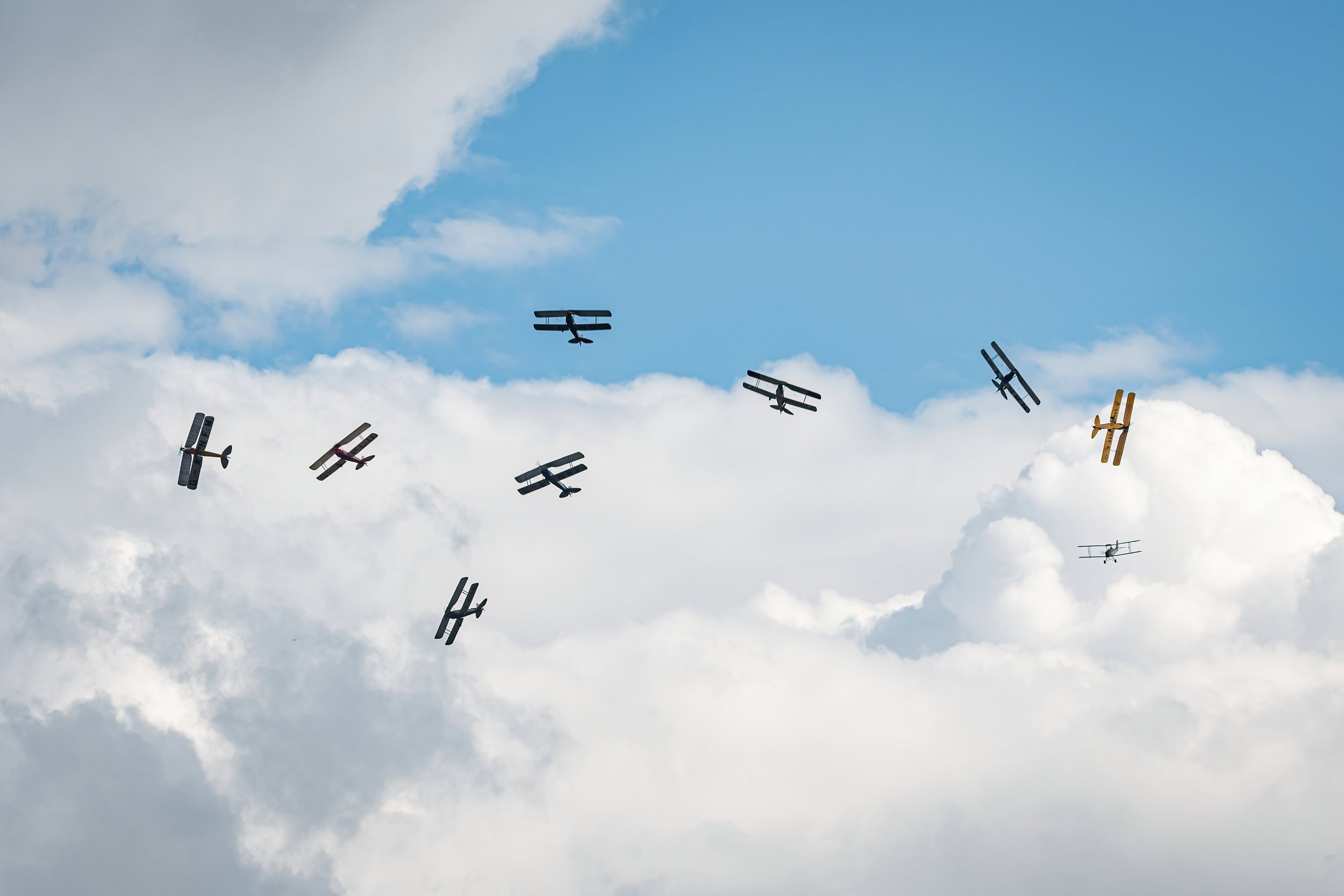
The pilots reshape the group between passes, giving the audience new silhouettes while maintaining the spacing of a large vintage formation.
Timed breaks
Aircraft peel away in sequence to turn one large formation into a flowing series of individual lines and recoveries.
A demanding aeroplane
Modest power, open cockpits, limited visibility and the original type's lack of wheel brakes reward anticipation and disciplined station-keeping.
Availability shapes the show
Weather, serviceability and the volunteer line-up can change the number and mix of Moths without changing the team's identity.
The aircraft
The DH.82A is the core, but Tiger Nine is not a fixed fleet of nine airframes.
The Tiger Moth at the centre
The first DH.82 Tiger Moth flew from Stag Lane on 26 October 1931. The type entered RAF service with the Central Flying School only months later and became the defining elementary trainer for generations of Commonwealth pilots. More than 8,800 were eventually built.
Privately owned aircraft, individual histories
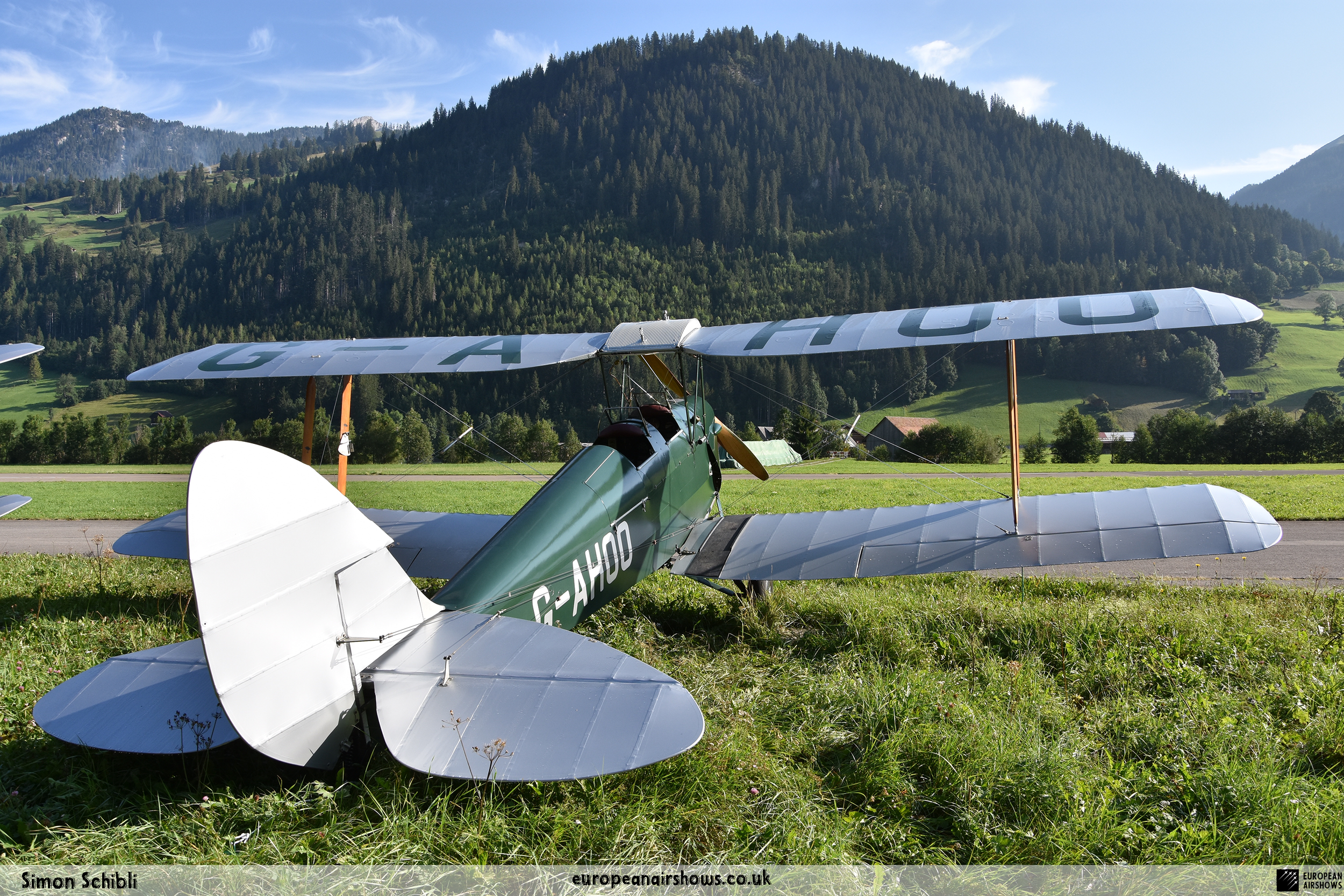
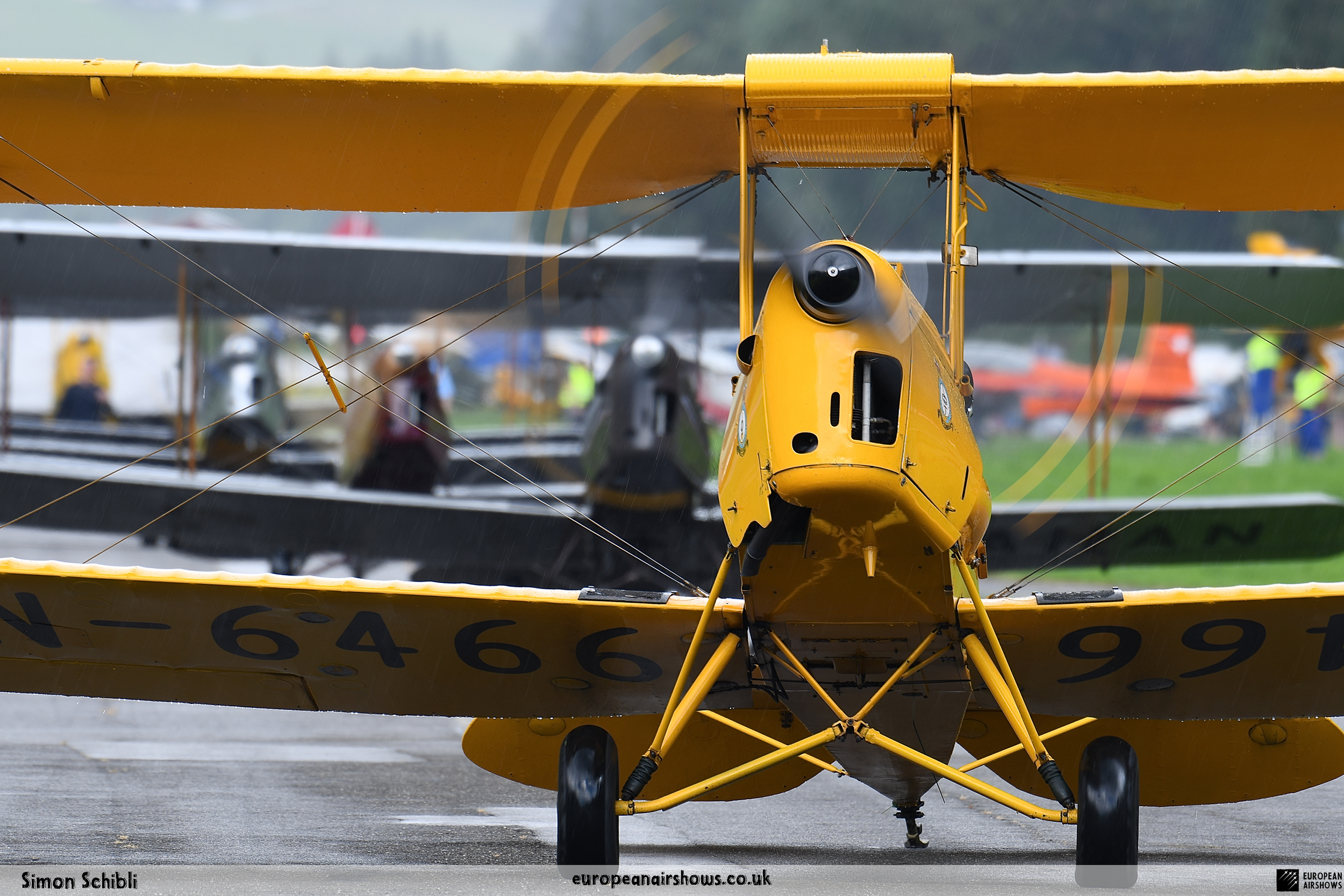
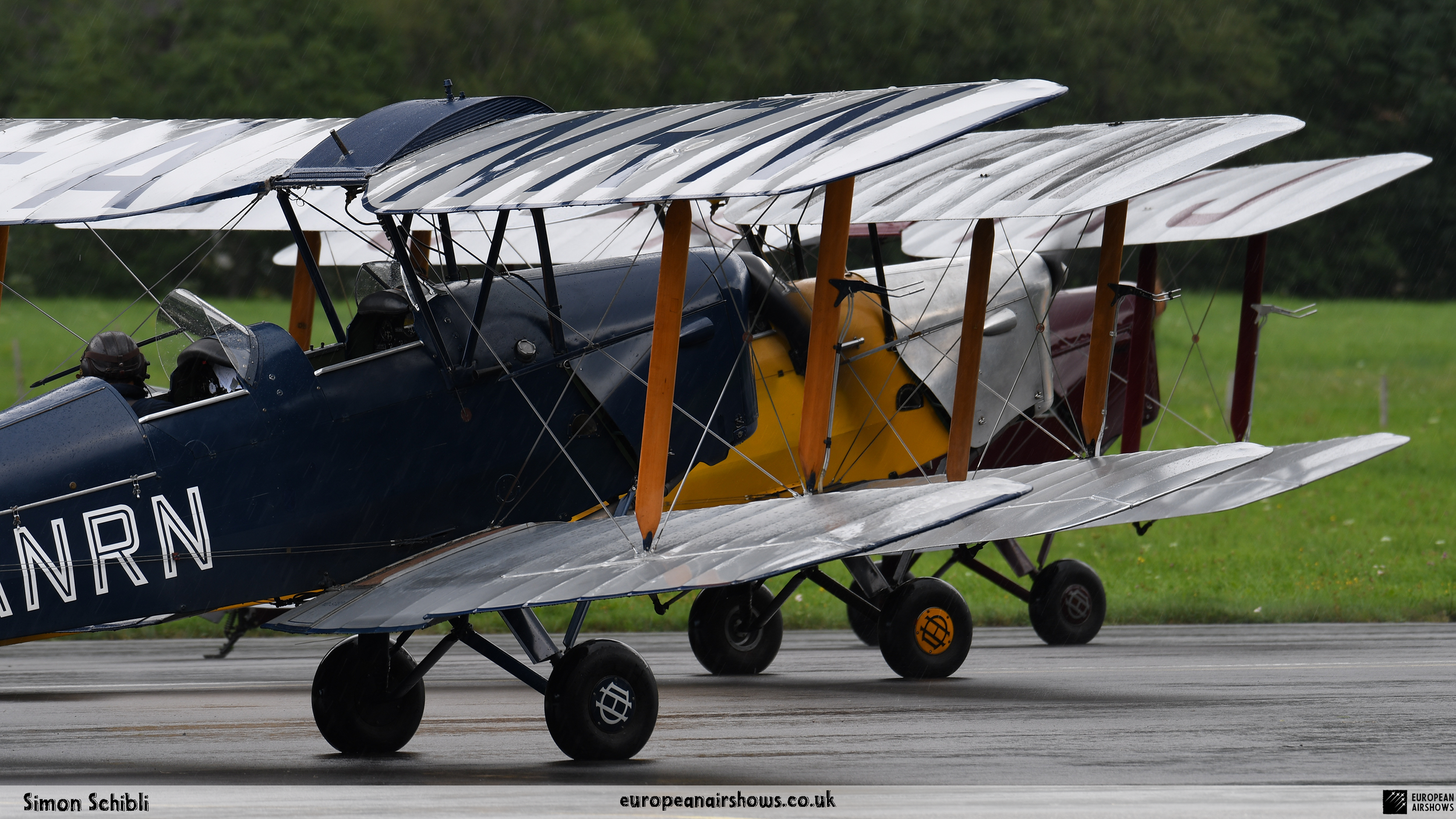
Team members provide their own aircraft, so there is no permanent list of nine registrations. The Moths retain different owners, bases, paint schemes and histories. Some wear genuine or representative RAF identities; others appear in civil colours. A registration list from one display is therefore evidence for that event, not a permanent team inventory.
Closely related Moths can join the formation
The standard identity is a nine-Tiger Moth team, but the practical line-up has not always been nine identical DH.82As. At Duxford in 2018, eight DH.82As flew with a DH.60GIII Moth Major. A documented Duxford formation in 2022 combined seven DH.82As with a DH.60GIII Moth Major and a de Havilland Queen Bee.
Built to teach
A typical British DH.82A combines a welded steel-tube fuselage with wooden wings and fabric covering. Its 130 hp inverted four-cylinder Gipsy Major engine gives gentle performance by modern standards, but the aircraft was deliberately capable of aerobatic and instrument training as well as the fundamentals of take-off, landing and accurate handling.
DH.82A Tiger Moth
The core team aircraft and the type around which the nine-aircraft routine is built.
DH.60GIII Moth Major
A closely related de Havilland Moth documented as part of Tiger Nine event formations.
de Havilland Queen Bee
The rare target-aircraft derivative has joined a documented nine-aircraft display line-up.
Owner supplied
Pilots must be able to provide an aircraft rather than drawing from a dedicated team fleet.
Mixed colours
RAF training finishes, historic identities and civilian schemes appear together.
Event specific
Registrations and exact variants must be confirmed for the individual appearance.
The story so far
From a Woburn rally request to one of historic aviation's largest regular formations.
Before 2005
The Diamond Nine tradition
de Havilland Moth Club rallies inspire the earlier Diamond Nine Formation Team, which displays for 15 seasons and establishes the Club's large-formation tradition.
Summer 2005
Nine Moths for Woburn
A new team, built around former Diamond Nine pilots and led by Jeff Milsom, trains for a requested nine-Tiger Moth flypast at the Club's 25th International Rally.
2006
The flypast becomes a display
After the Woburn formation's success, Tiger Nine develops a complete public display routine rather than remaining a one-off rally feature.
2016
Pooleys sponsorship begins
Pooleys begins sponsoring Tiger Nine, renewing a connection that previously included sponsorship of the Airtour Diamond Nine during the 1980s.
2018
Sixteen Moths write “100”
Tiger Nine aircraft join seven additional Tiger Moths in a 16-aircraft formation shaped as “100” for the Royal Air Force centenary, including a demanding Duxford appearance.
2019
British Air Display Association recognition
The team receives the BADA Trophy for its support, professionalism and commitment in mounting the memorable RAF centenary formation in testing conditions.
Established format
A volunteer nine-aircraft display
Tiger Nine continues as the de Havilland Moth Club's successor to Diamond Nine, assembling experienced pilots and privately owned Moths for a limited number of appearances.
Identity & context
Four details explain what Tiger Nine is, and why its line-up is never quite identical.
Nine is the routine
The official display is designed for nine Moths, but the Club maintains a larger pilot pool so availability can be managed safely.
Volunteer, not commercial
Team members are experienced volunteers within the de Havilland Moth Club. The aircraft are supplied by their pilots rather than owned as a dedicated fleet.
Tiger Moths, with exceptions
The DH.82A defines the team, although closely related Moth Major and Queen Bee aircraft have joined documented event formations.
A successor, not a rename
Tiger Nine follows the Club's earlier Diamond Nine tradition, but was created as a new team for the 2005 Woburn rally request.