The Flying Bulls (Fixed-Wing)
Warbirds · vintage transports · trainers · aerobatic and utility aircraft
An airworthy collection based at Salzburg Airport, where rare aircraft are not preserved behind ropes but maintained to fly, formate and perform across Europe.
- Origins
- 1980s
- Company founded
- 1999
- Base
- Salzburg Airport
- Published fixed-wing fleet
- 18 aircraft
- Engineering home
- Hangar-8
- Status
- Active in 2026
The organisation
More than an airshow team, this is a flying collection with its own engineering culture.
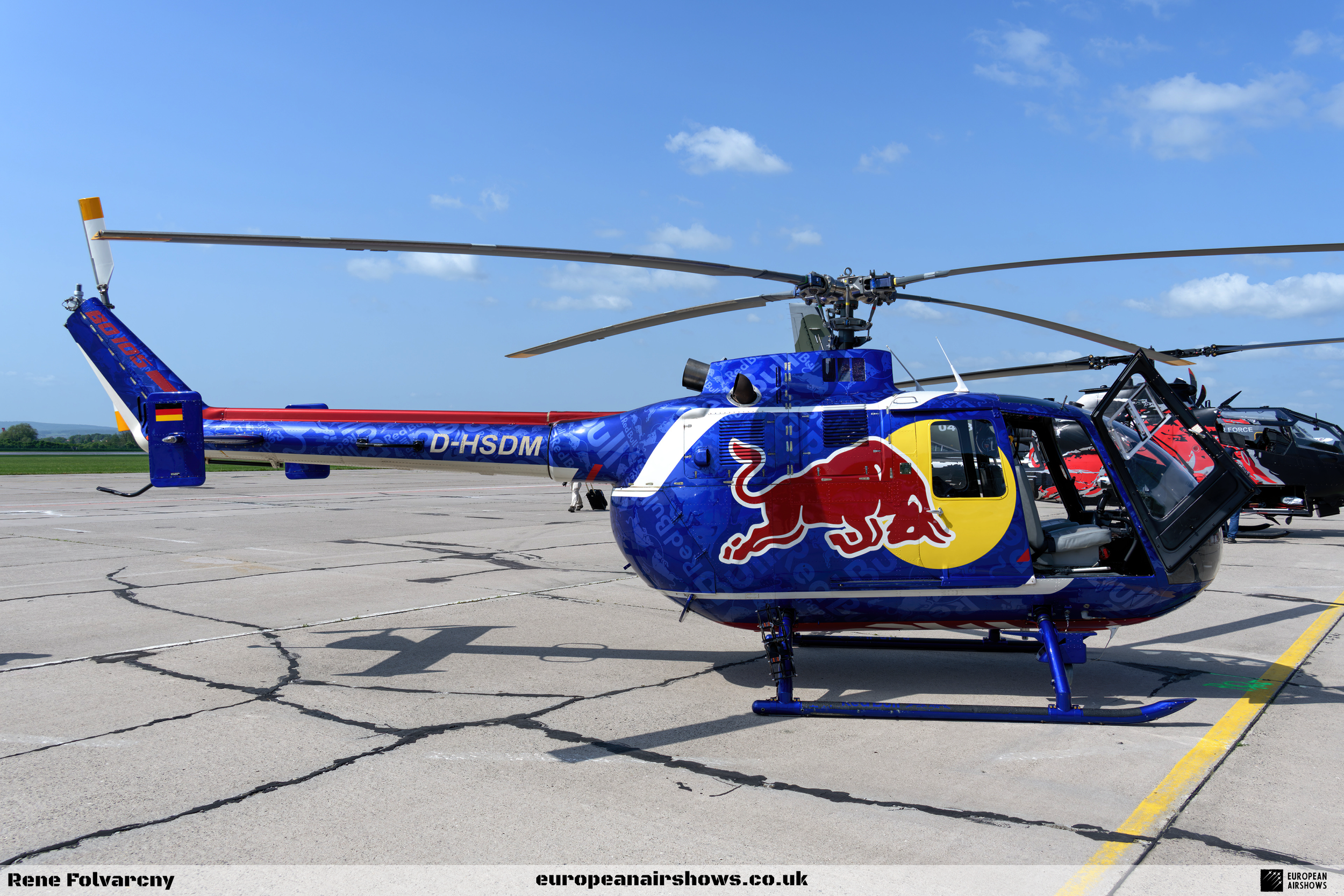
The Flying Bulls are often described as a display team, but that label only covers part of the operation. At Salzburg Airport they combine pilots, engineers, restorers and event staff around an unusually varied fleet. Heavy transports, piston fighters, trainers, utility aircraft and an aerobatic machine can all sit within the same programme, although the package sent to an event changes with the venue, distance, aircraft availability and display approval.
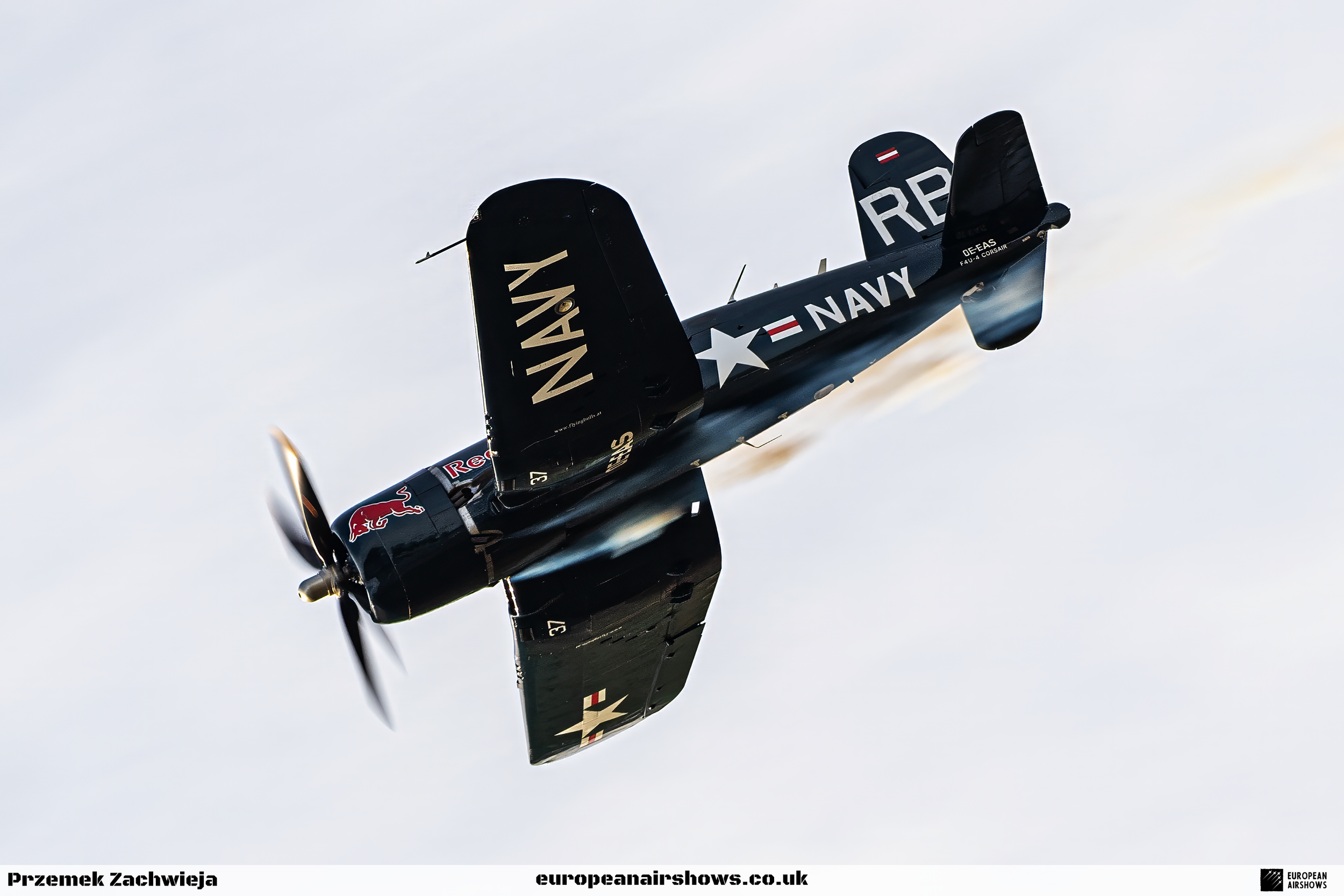
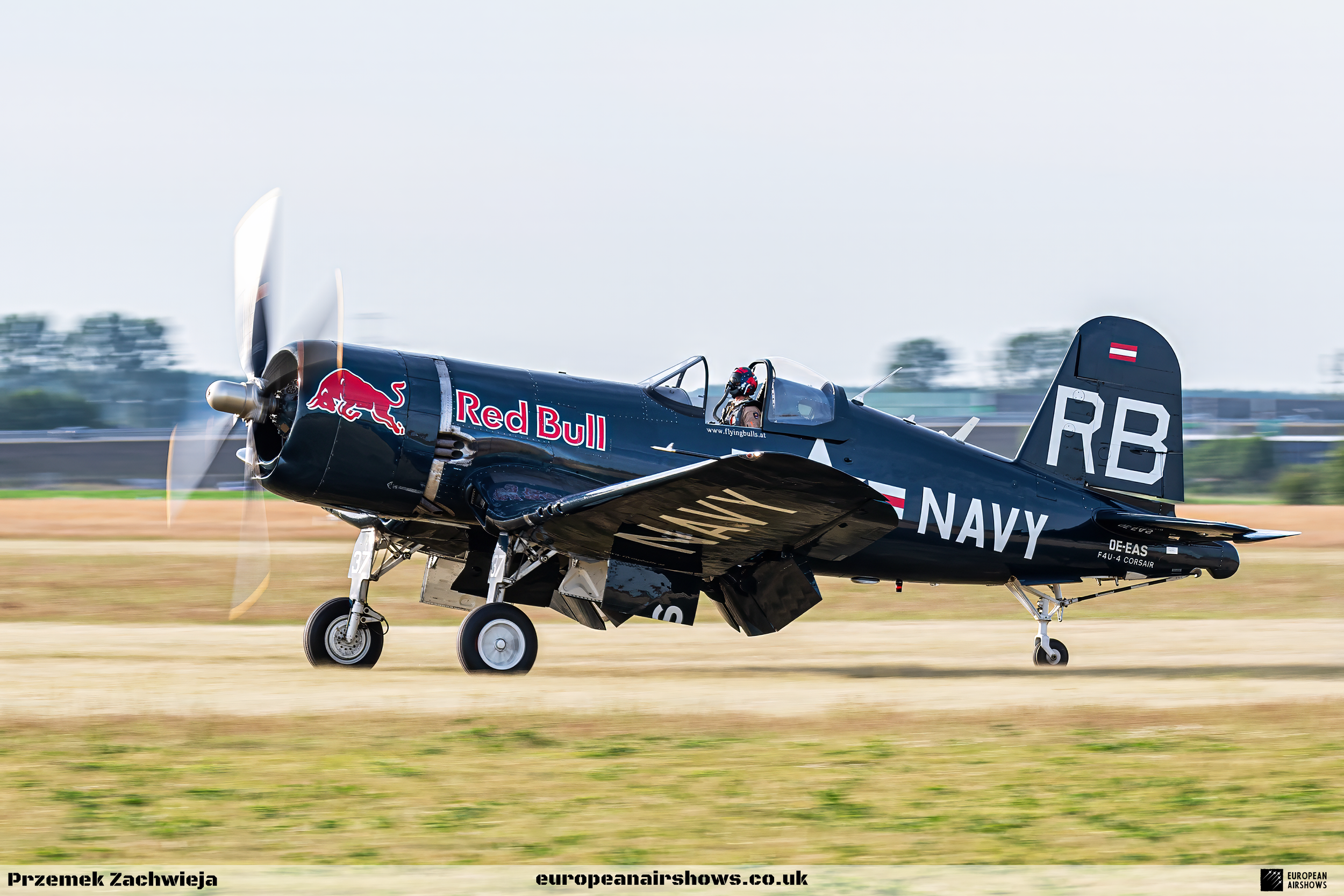
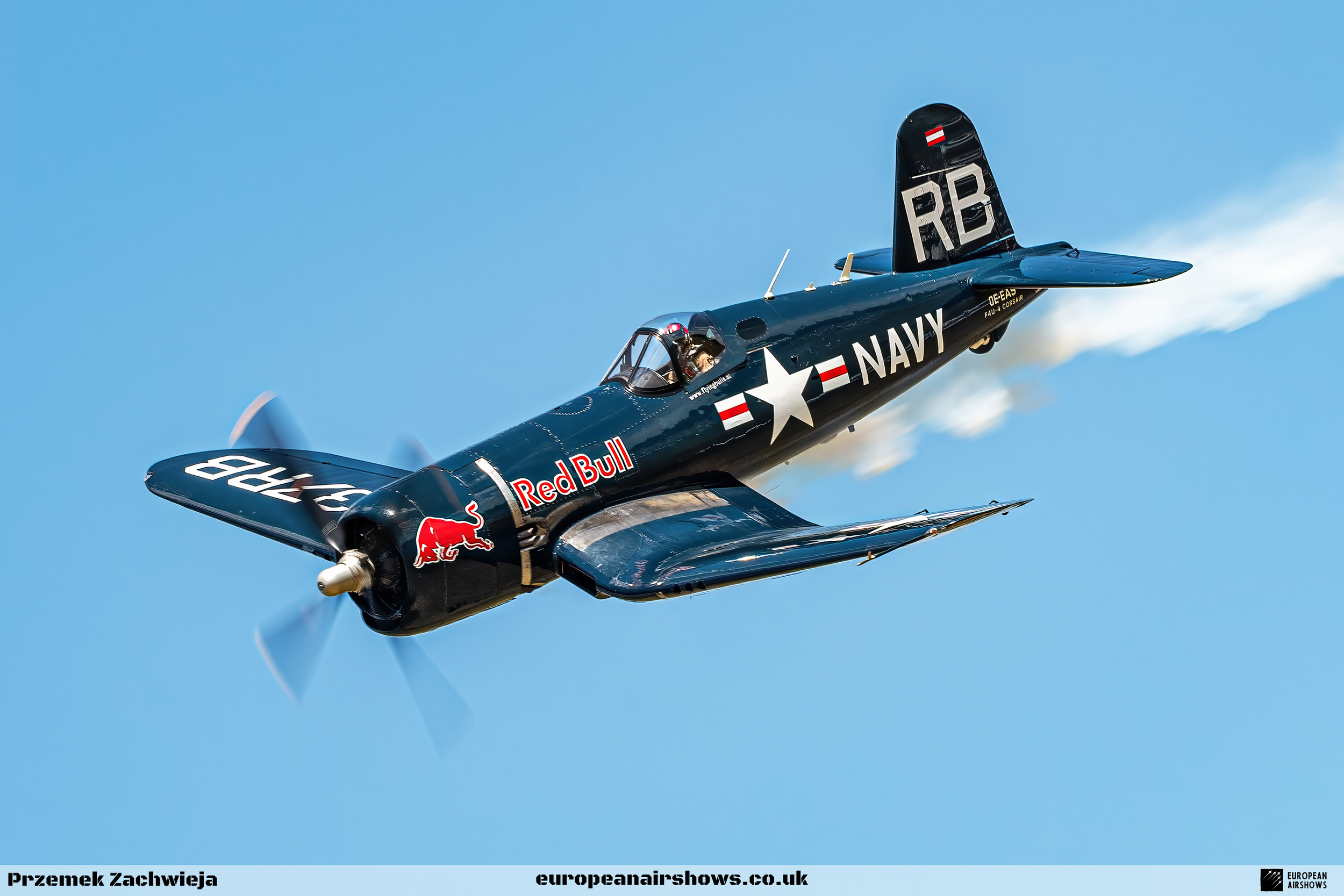
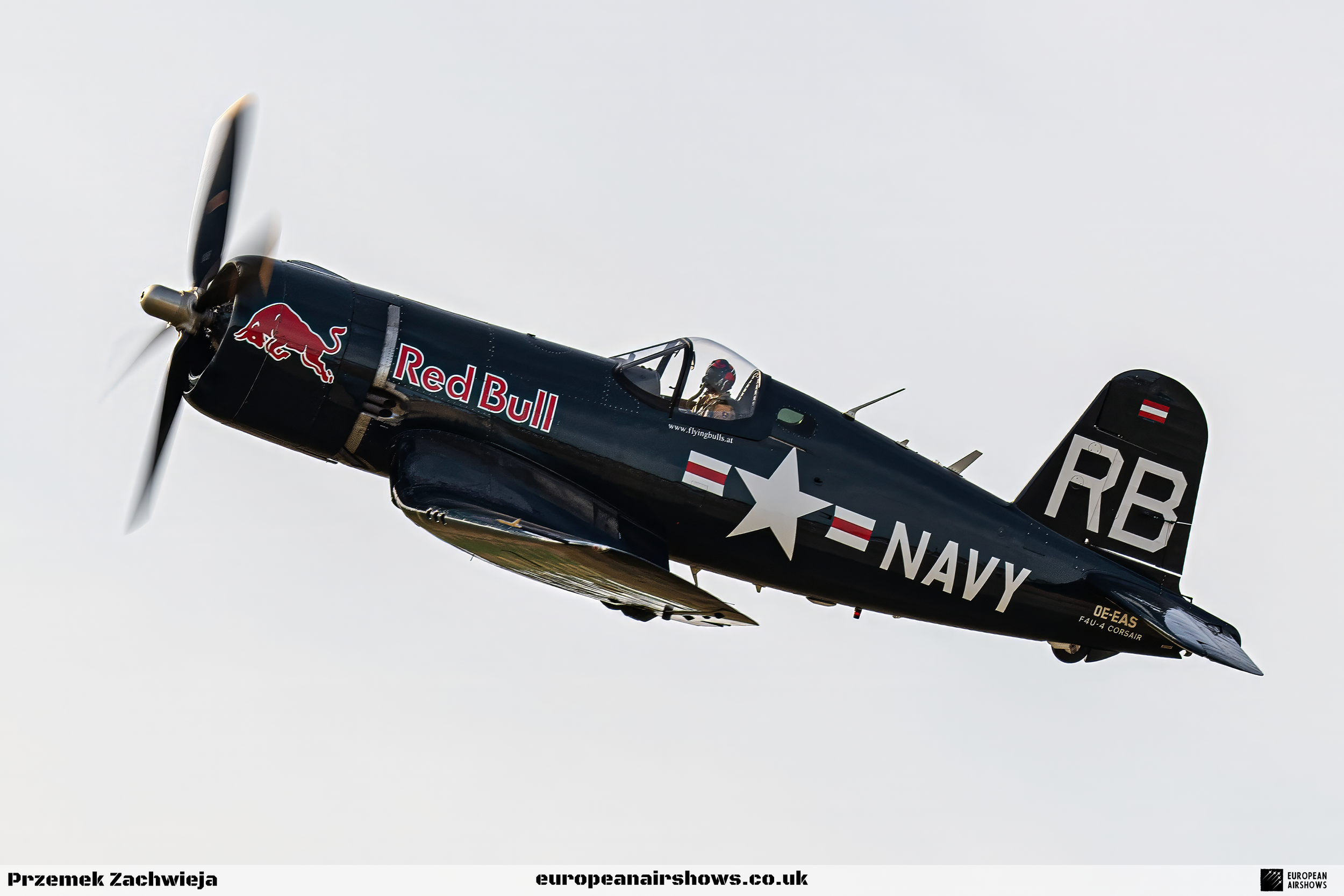
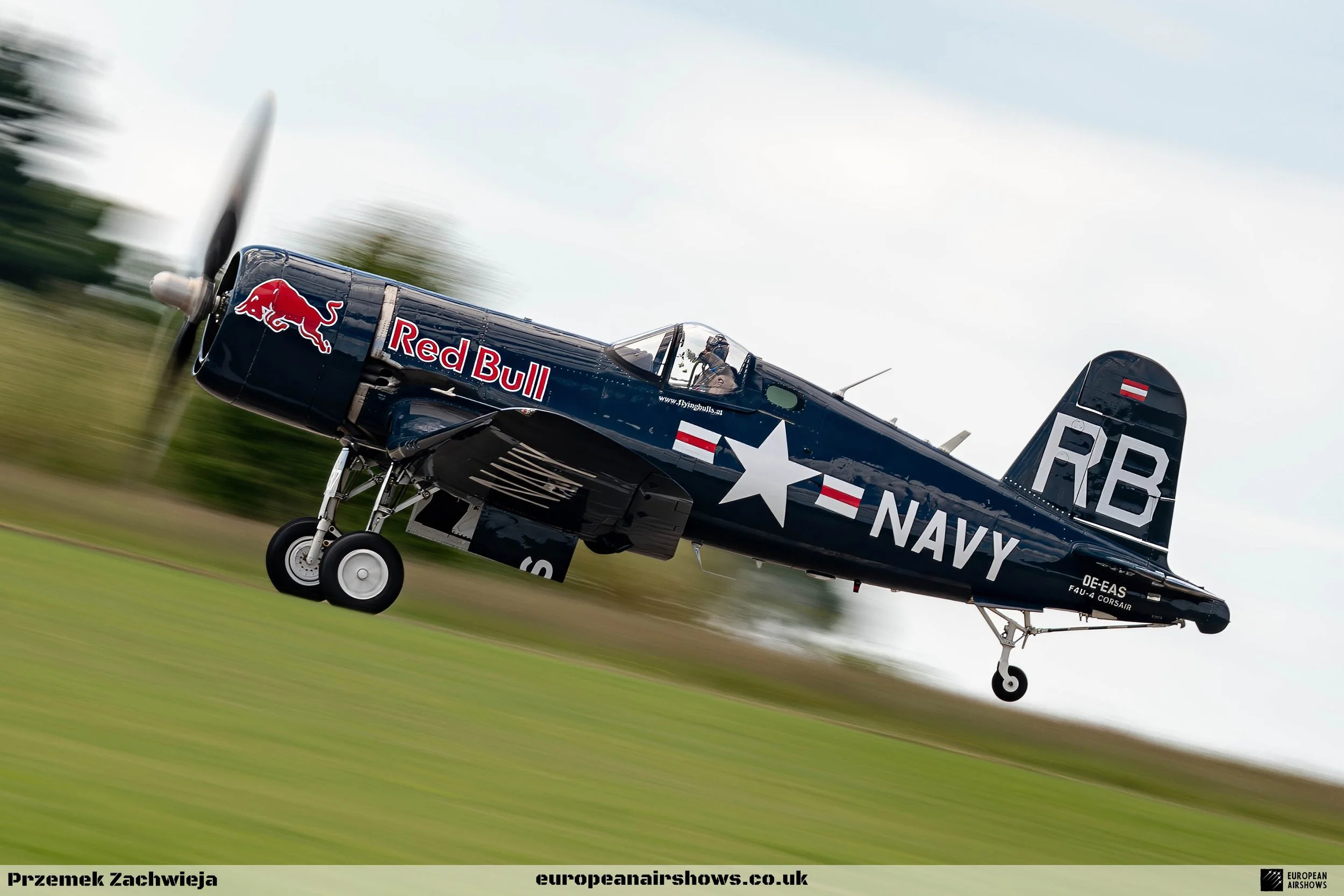
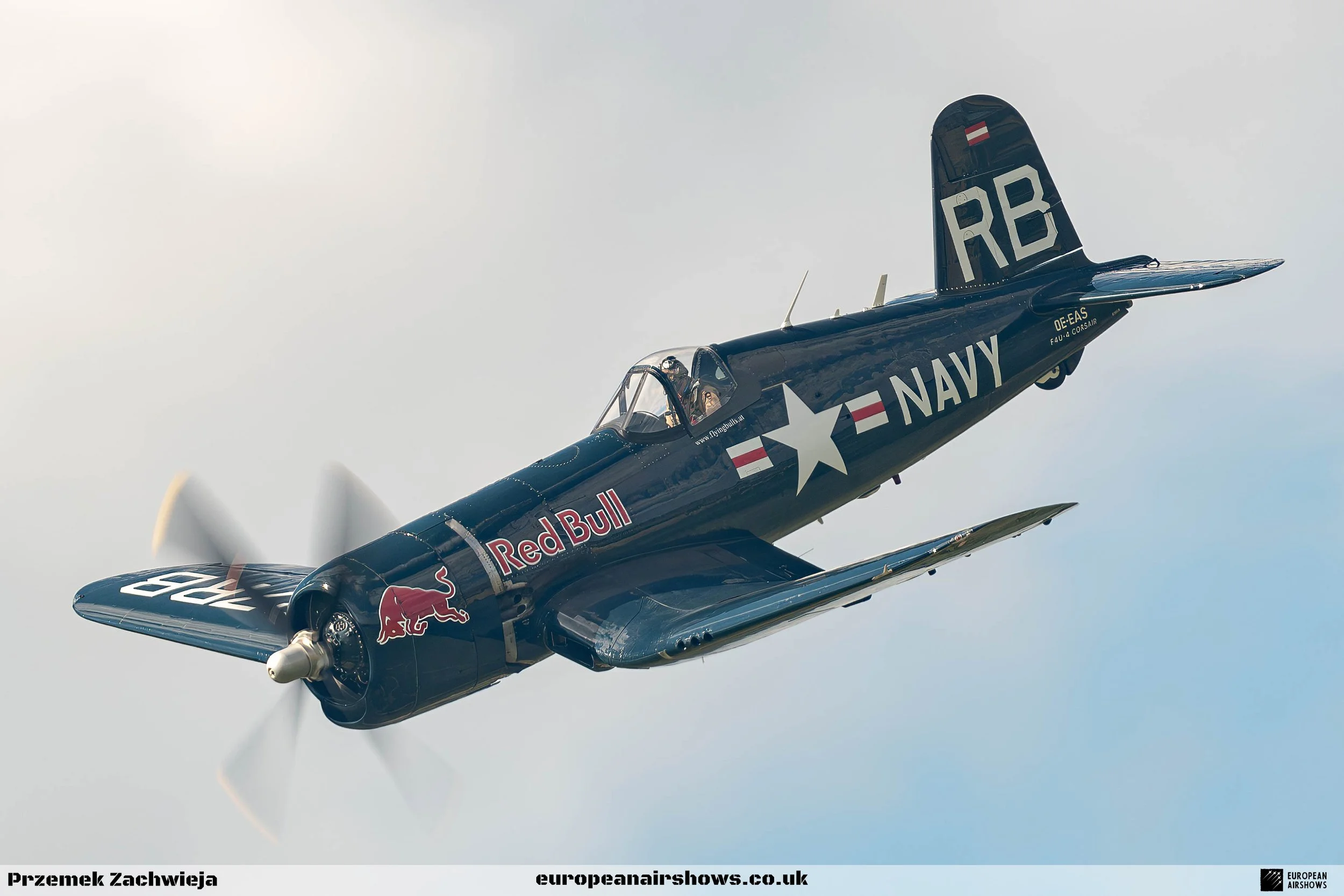
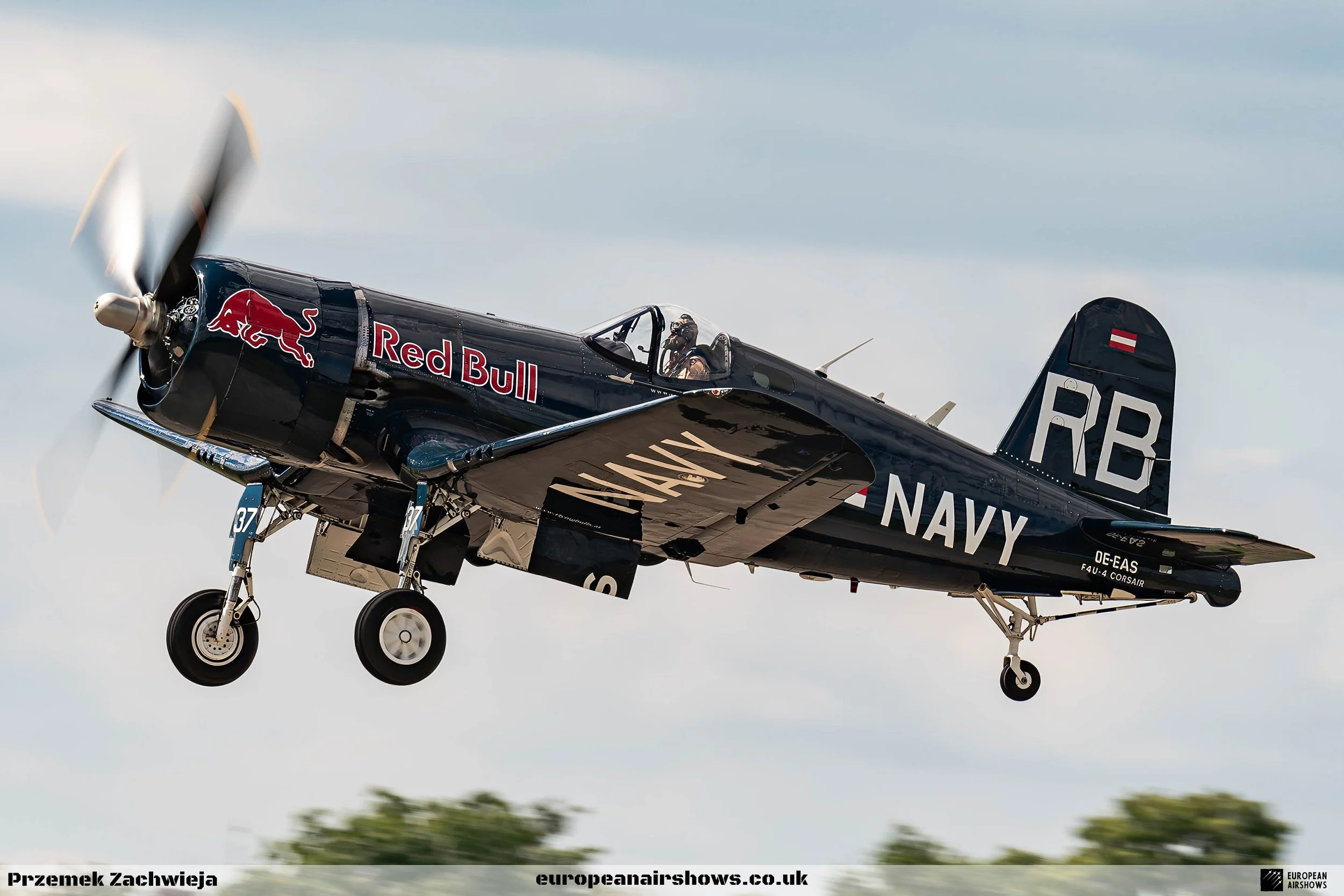
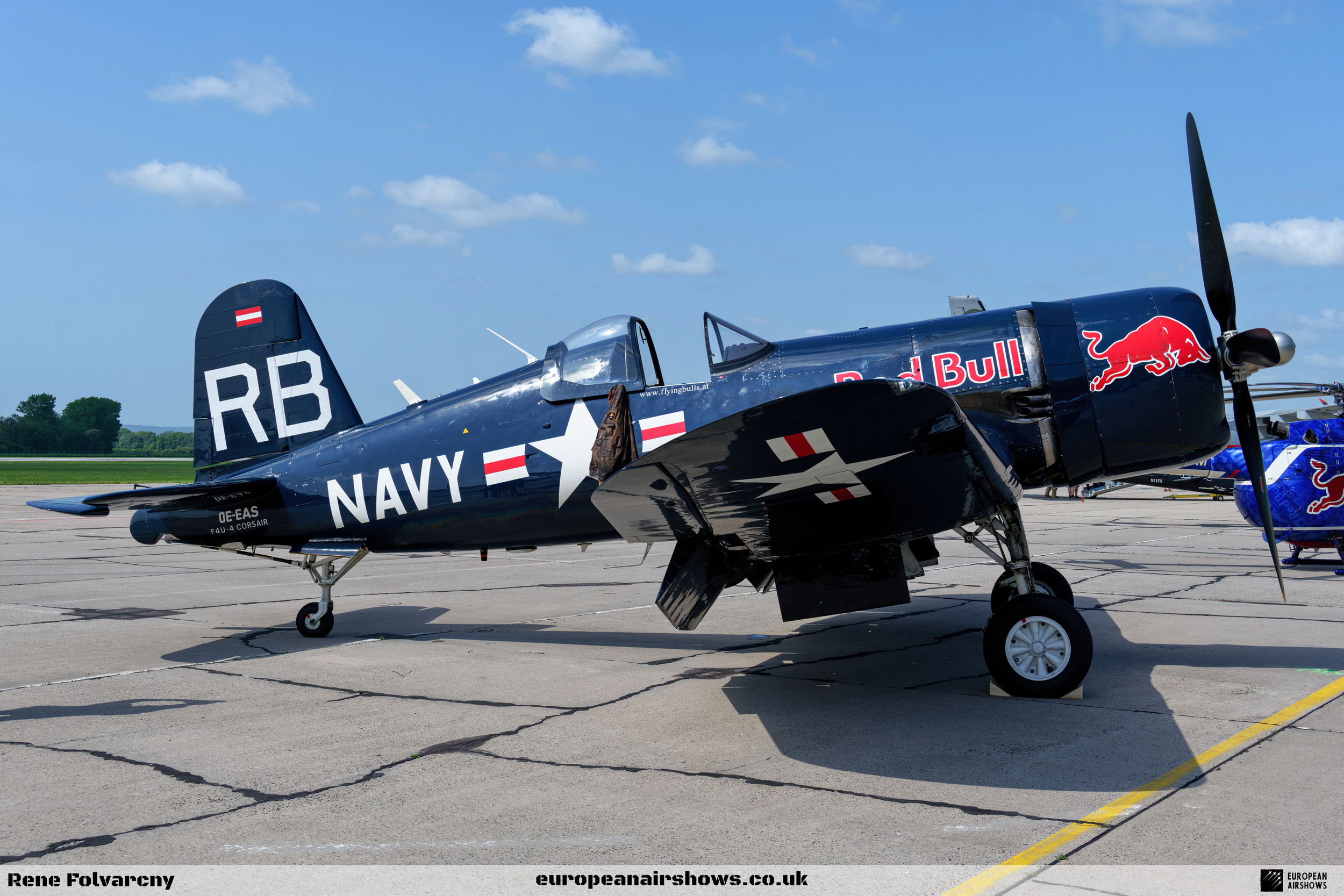
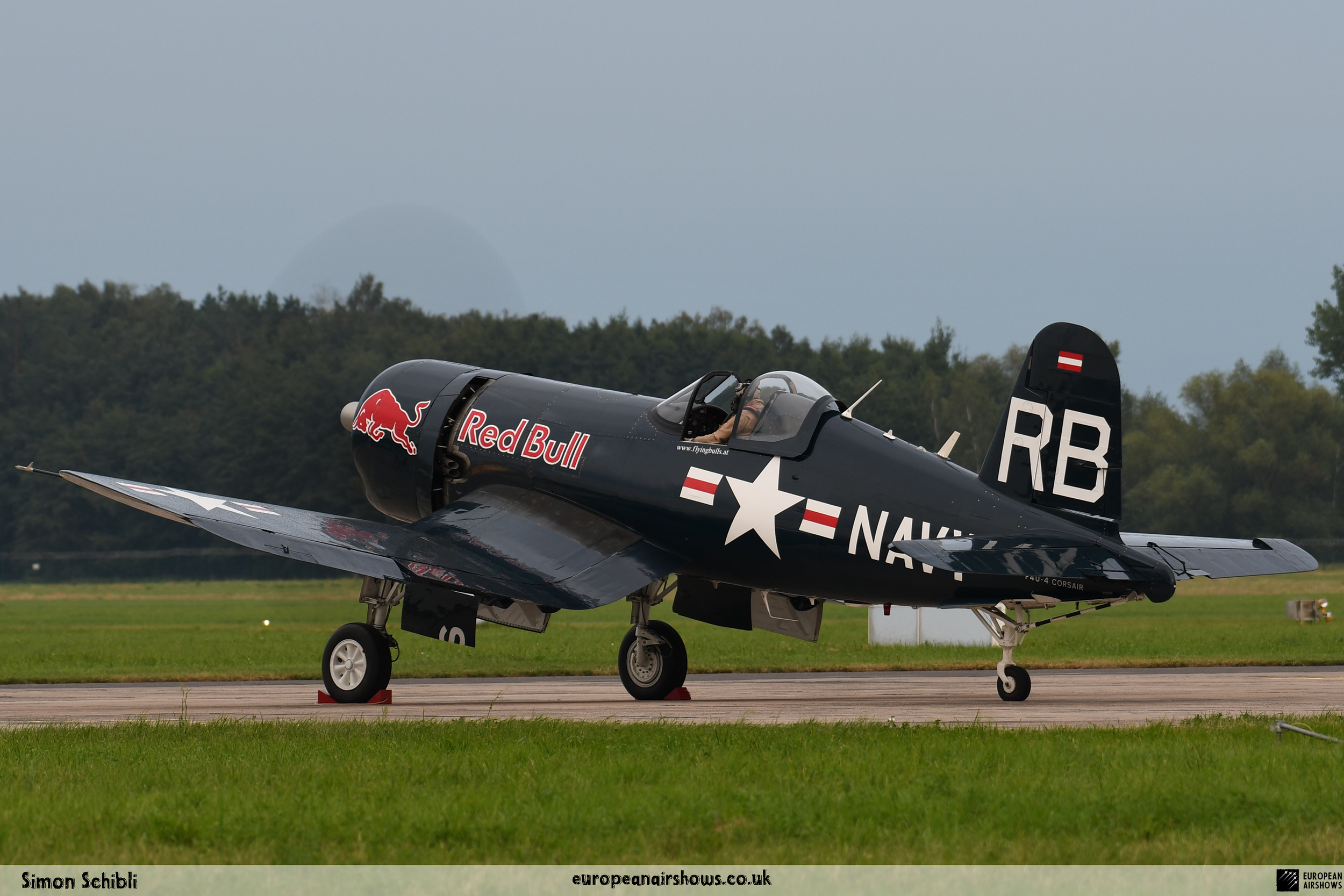
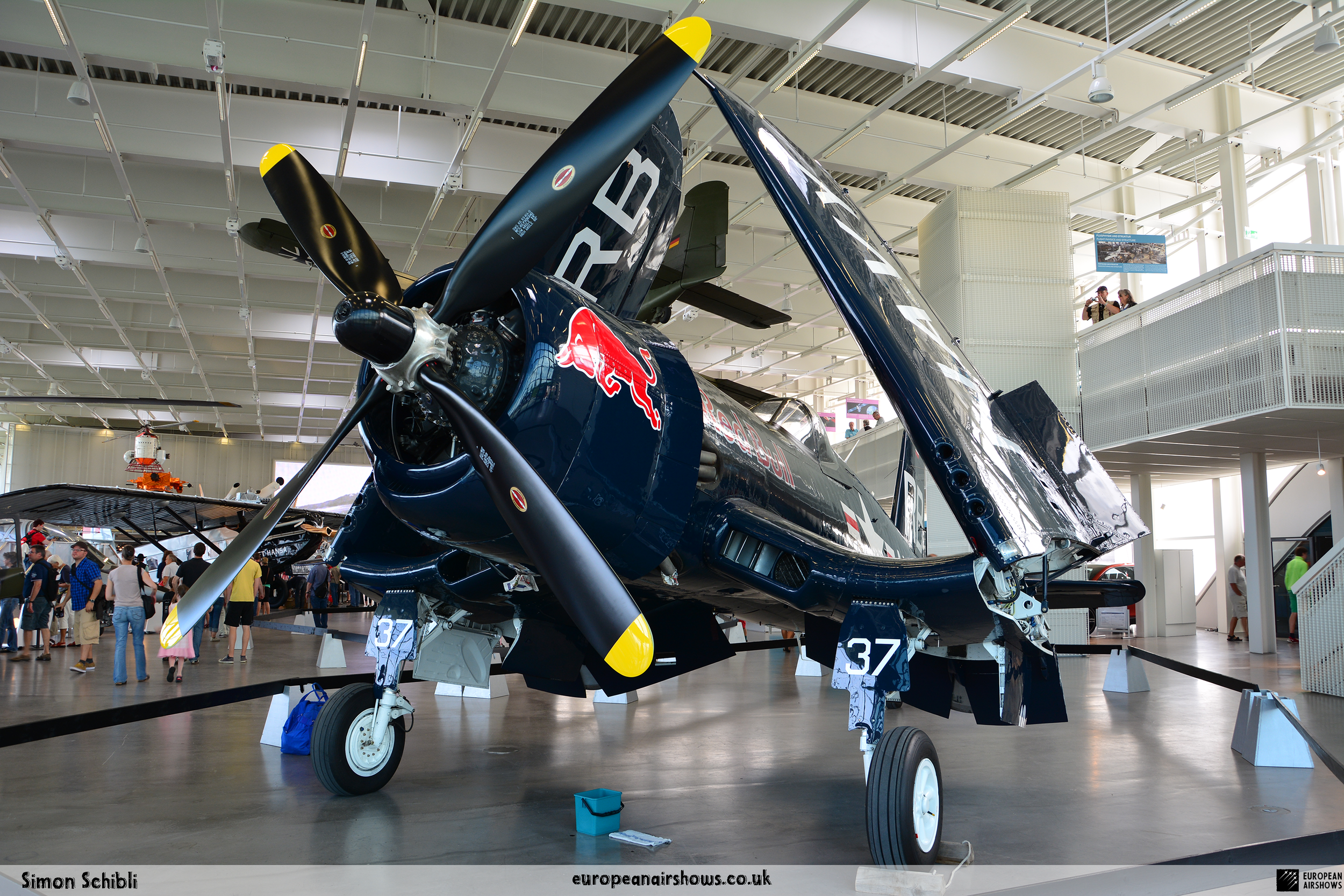
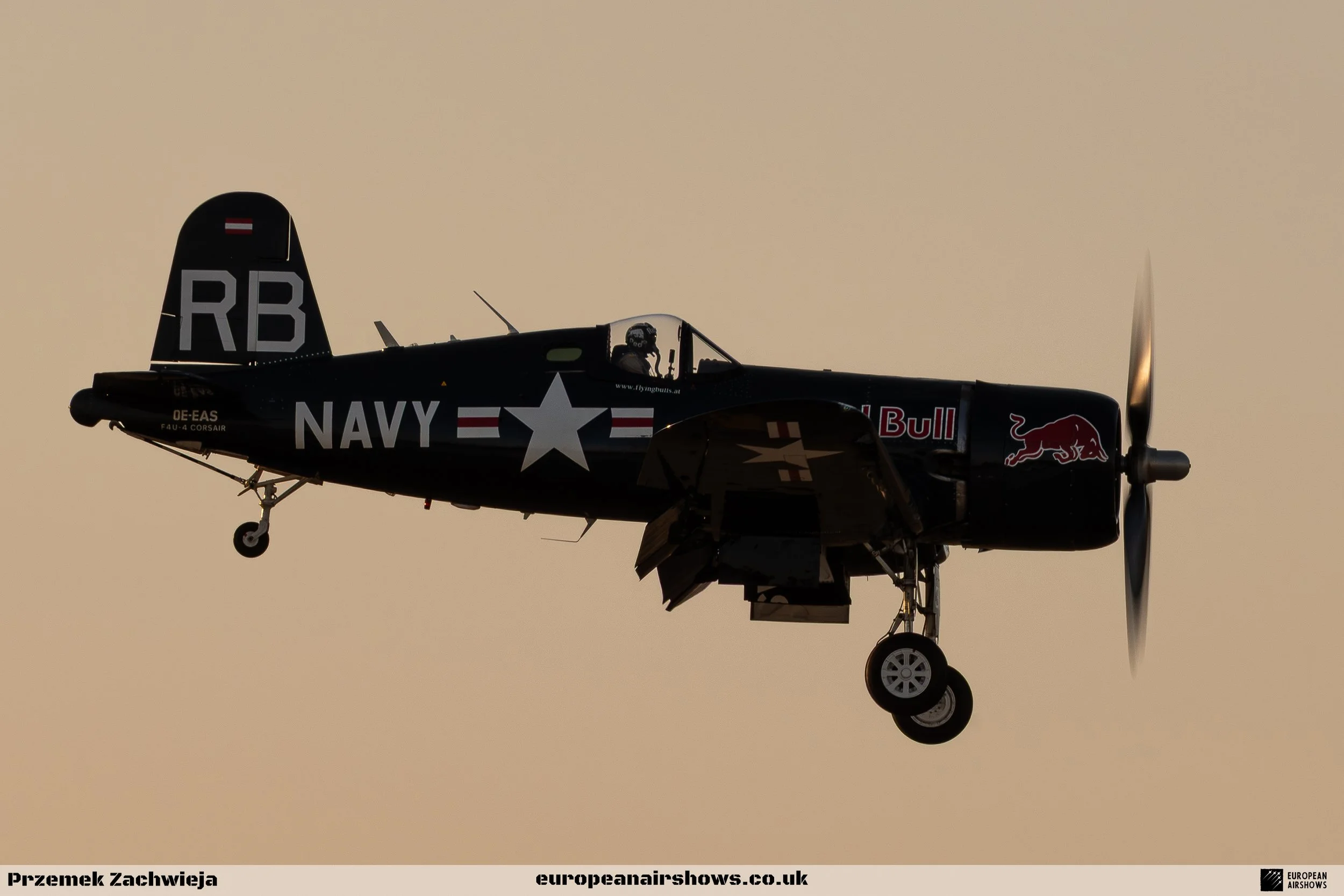
The story began in the 1980s with Tyrolean Airways pilot Siegfried "Sigi" Angerer. His search for an affordable warbird led to a North American T-28B, followed by a Grumman G-44 Widgeon and a Chance Vought F4U-4 Corsair. Angerer met Red Bull founder Dietrich Mateschitz on 5 October 1991. Their shared enthusiasm turned a personal collection into a much larger project, and The Flying Bulls were established as a separate company in 1999.
Hangar-7 shows the aircraft, Hangar-8 keeps them flying
The public face of the collection is Red Bull Hangar-7, opened at Salzburg Airport on 22 August 2003. Across from it, Hangar-8 is the maintenance and restoration base. The full engineering operation moved there in early 2004. That relationship matters: the highly polished aircraft seen in Hangar-7 are not static museum exhibits. They are working machines that return to Hangar-8 for inspection, servicing and restoration.
A broad pilot group rather than one fixed formation
Raimund Riedmann is the organisation's flight operations manager and chief pilot for fixed-wing aircraft. Eskil Amdal combines flying with his role as CEO. The current published pilot group also includes specialists such as Frédéric Akary, Eric Goujon, Frederic Handelmann, Miguel Hochleitner, Hans Pallaske, Ludwig Reiter and Nicolas Rossier. Their qualifications overlap, but particular aircraft are normally associated with pilots who have the relevant type experience and display role.
The scale of the operation is easy to underestimate. The organisation reported that roughly 55 of more than 120 appearance requests were realised during the 2025 season. Pilots and technicians rotate, aircraft move between events and Salzburg, and annual training at Maribor brings the complete travelling operation together before the main European season.
The display
There is no single Flying Bulls fixed-wing routine.
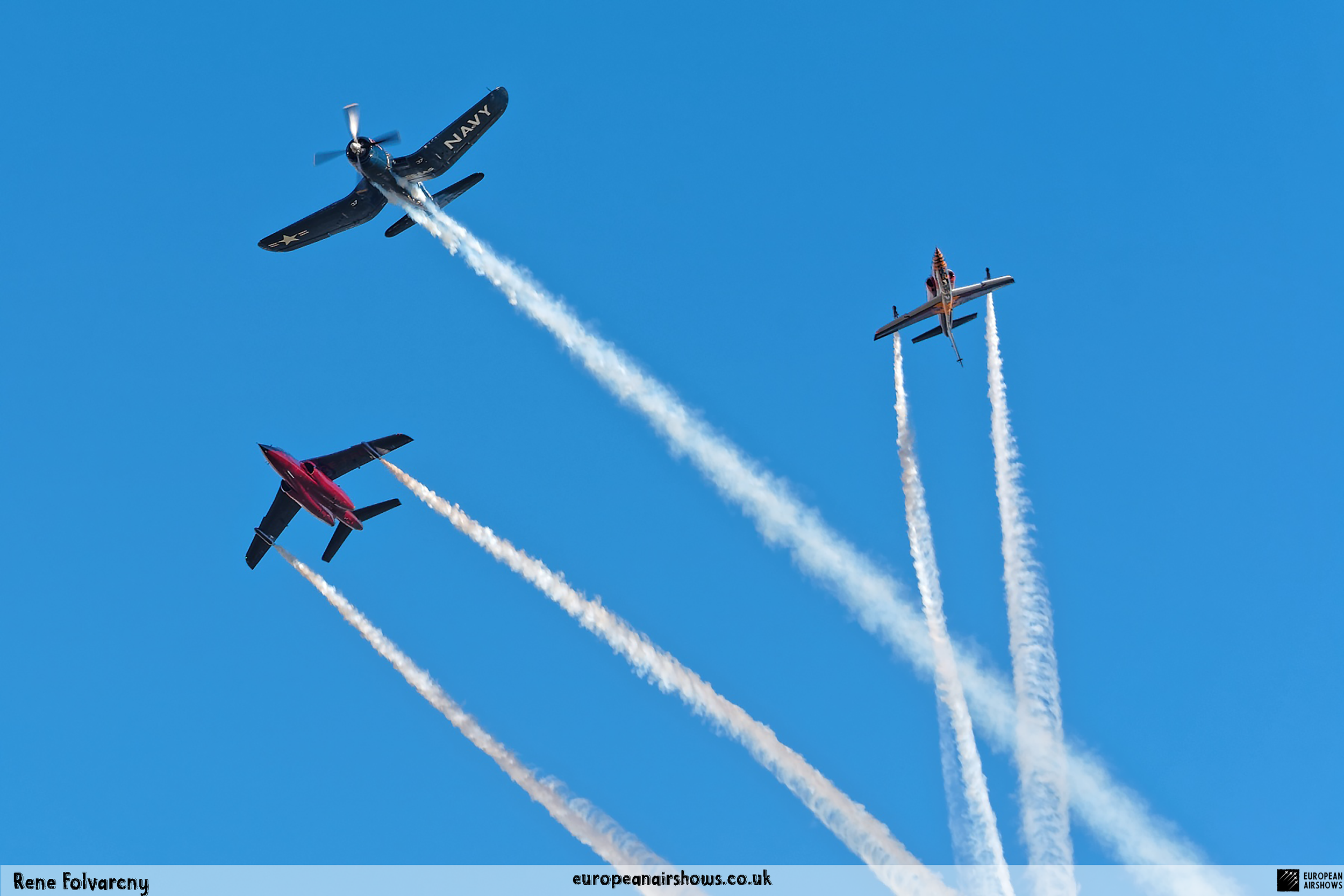
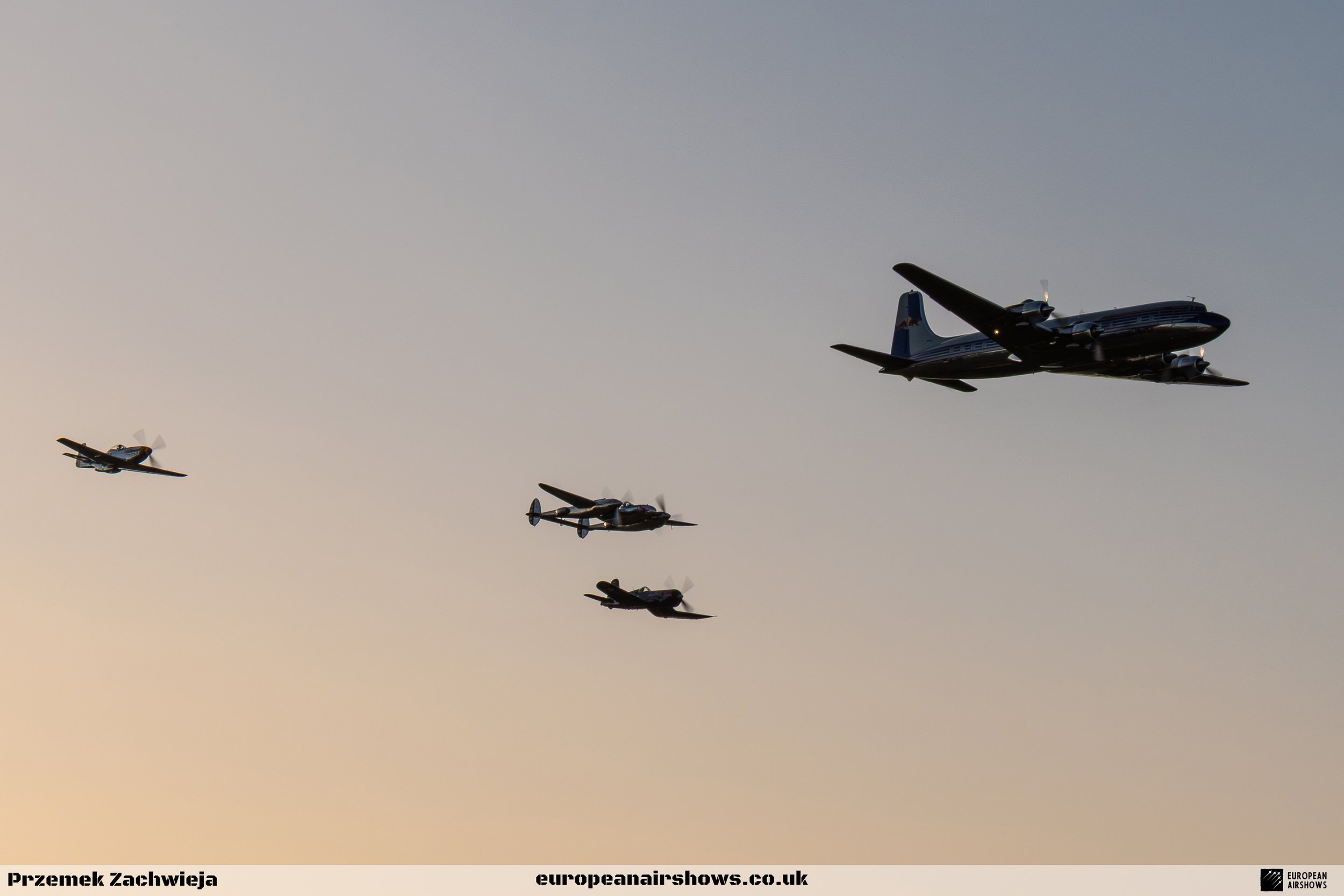
A Flying Bulls booking may mean one solo aircraft, a carefully matched warbird formation, the DC-6B, a utility demonstration or several separate sequences. The organisation's strength is the ability to build a coherent programme from aircraft with very different speed, mass, handling and operating requirements.
Warbird formations
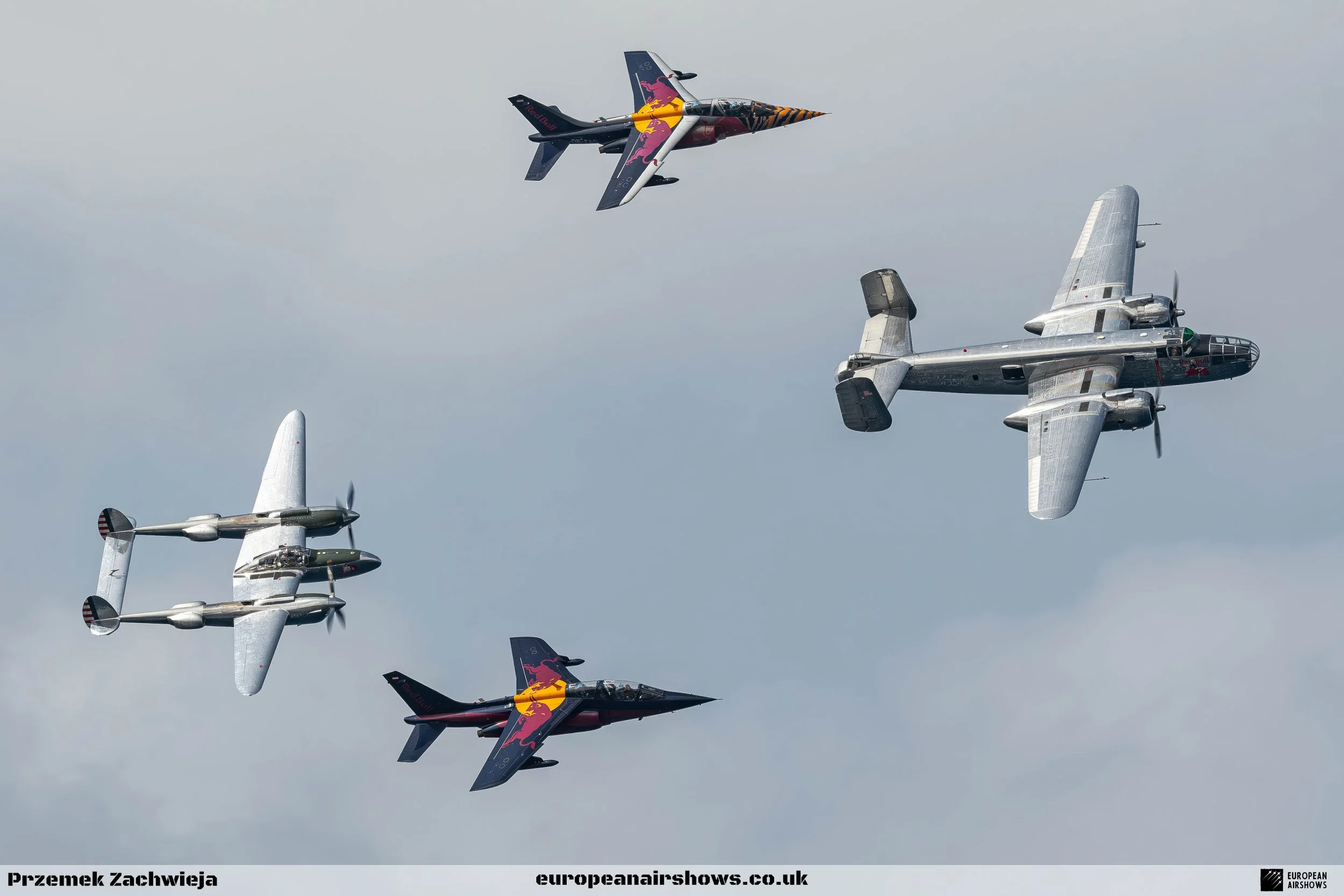
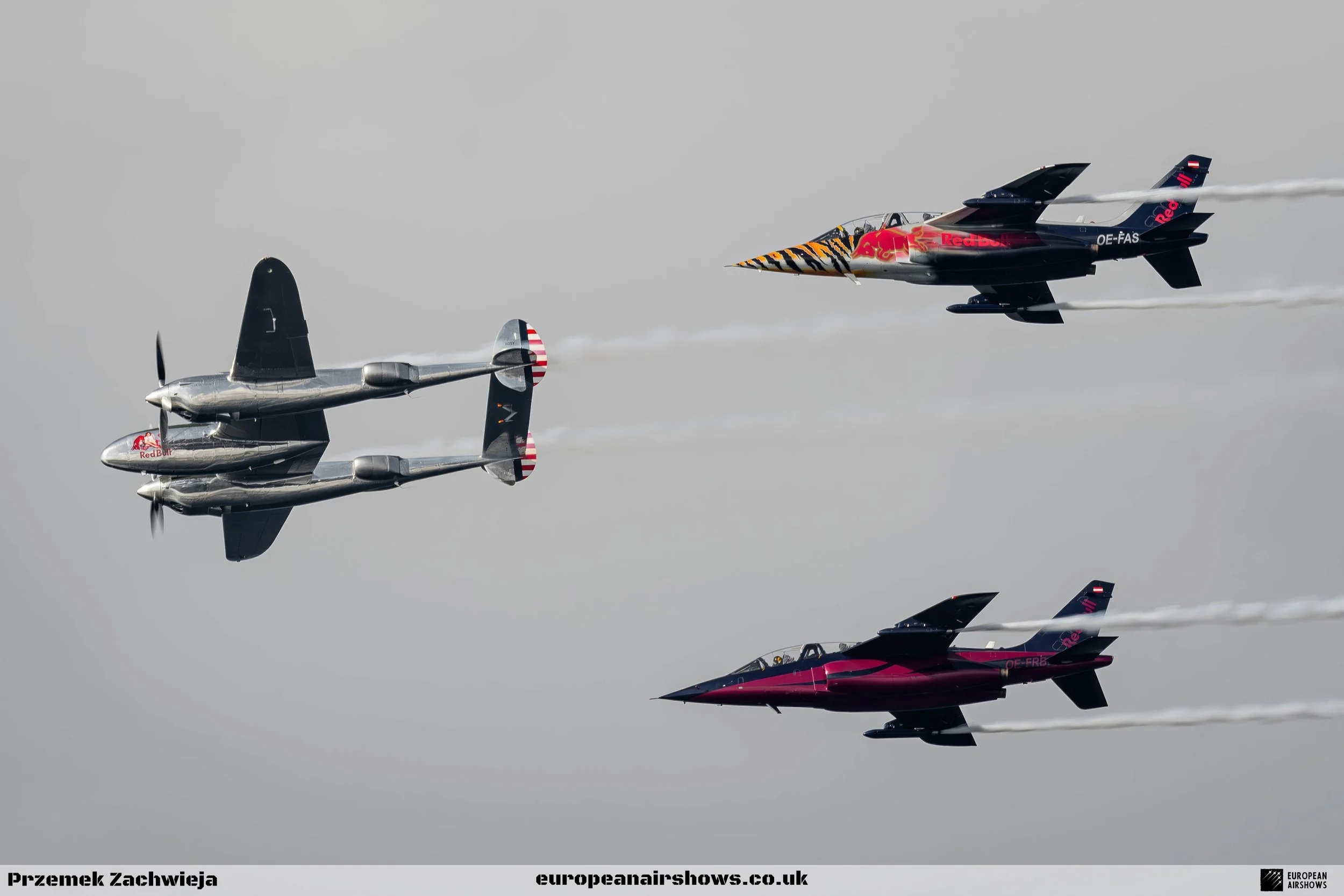
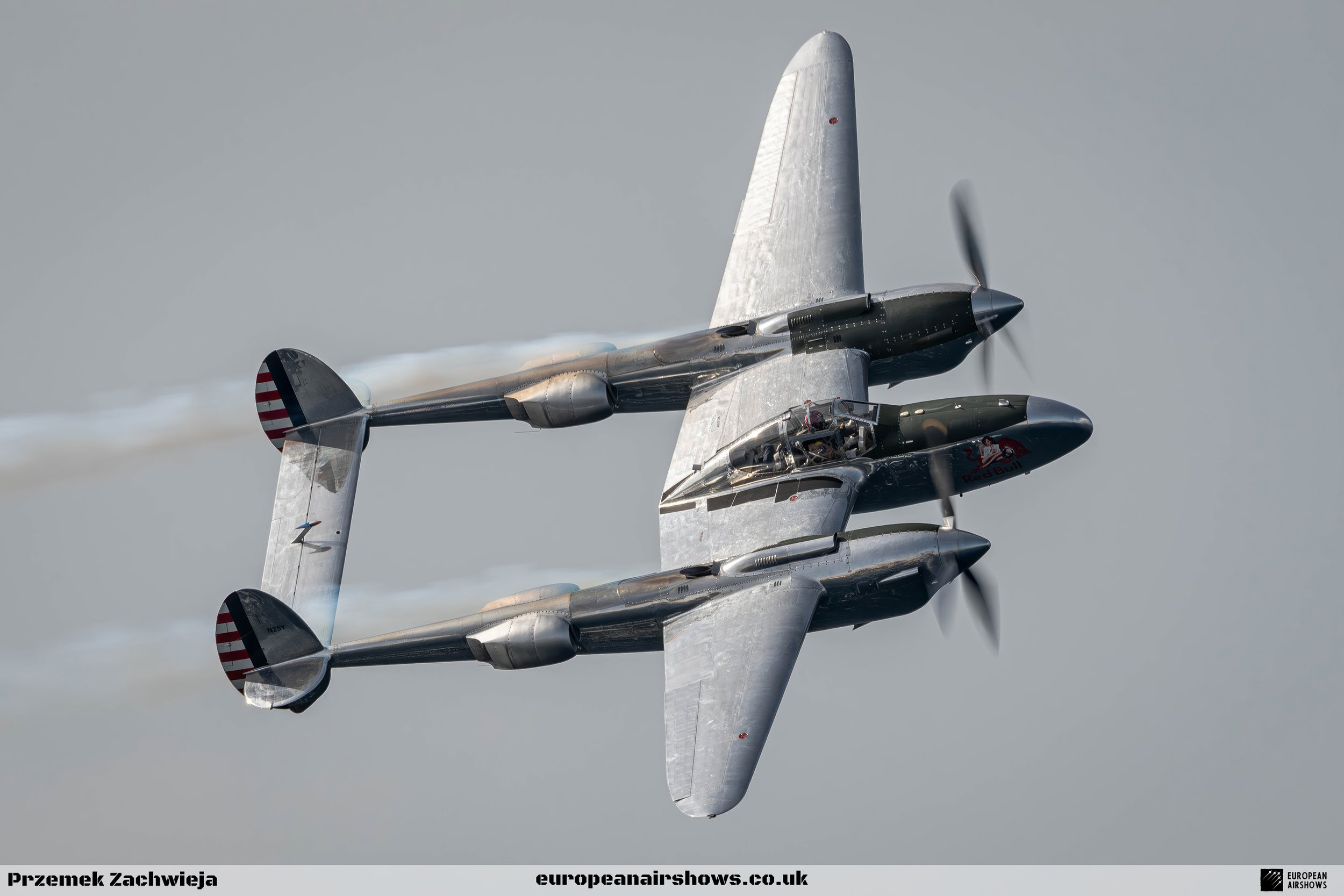
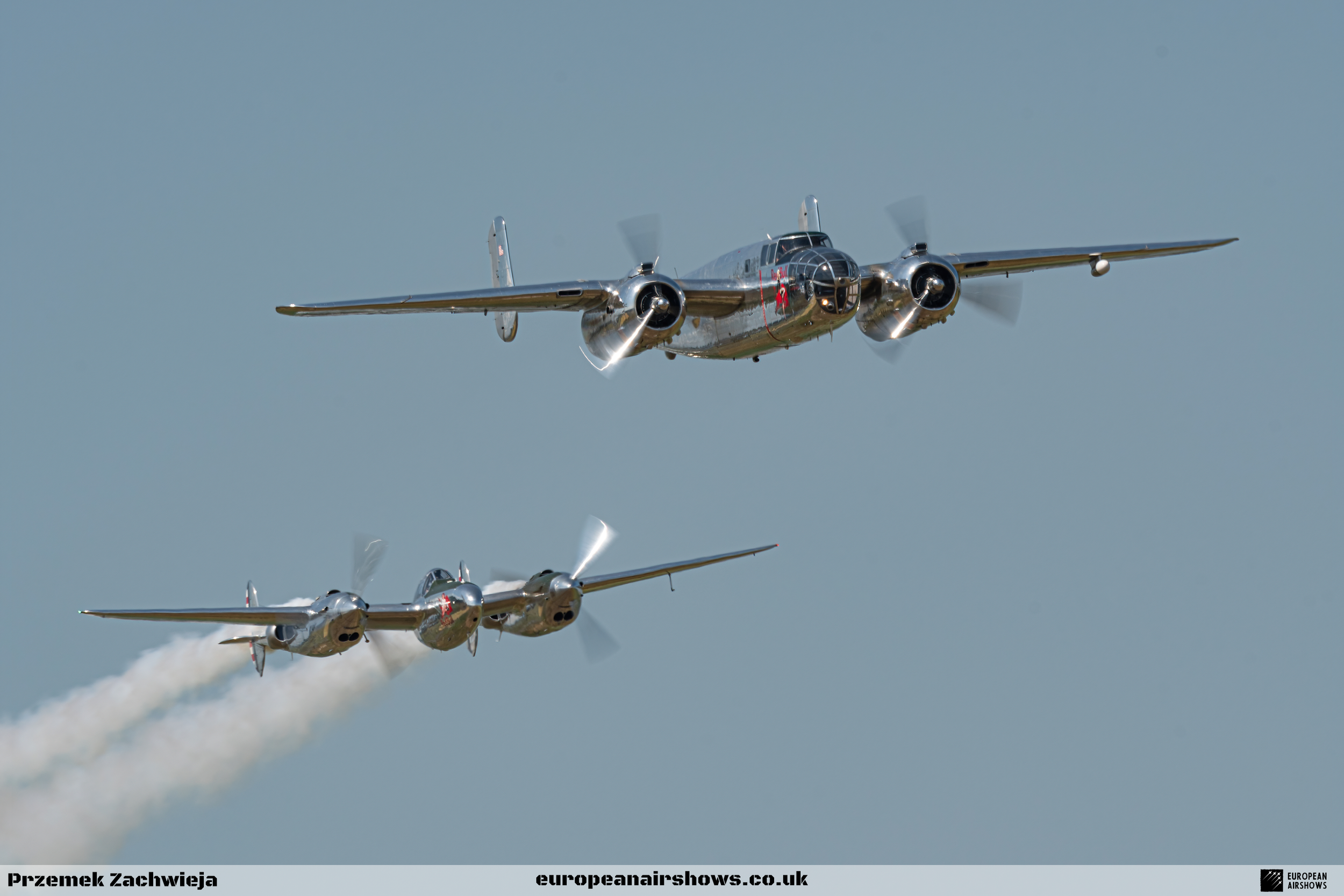
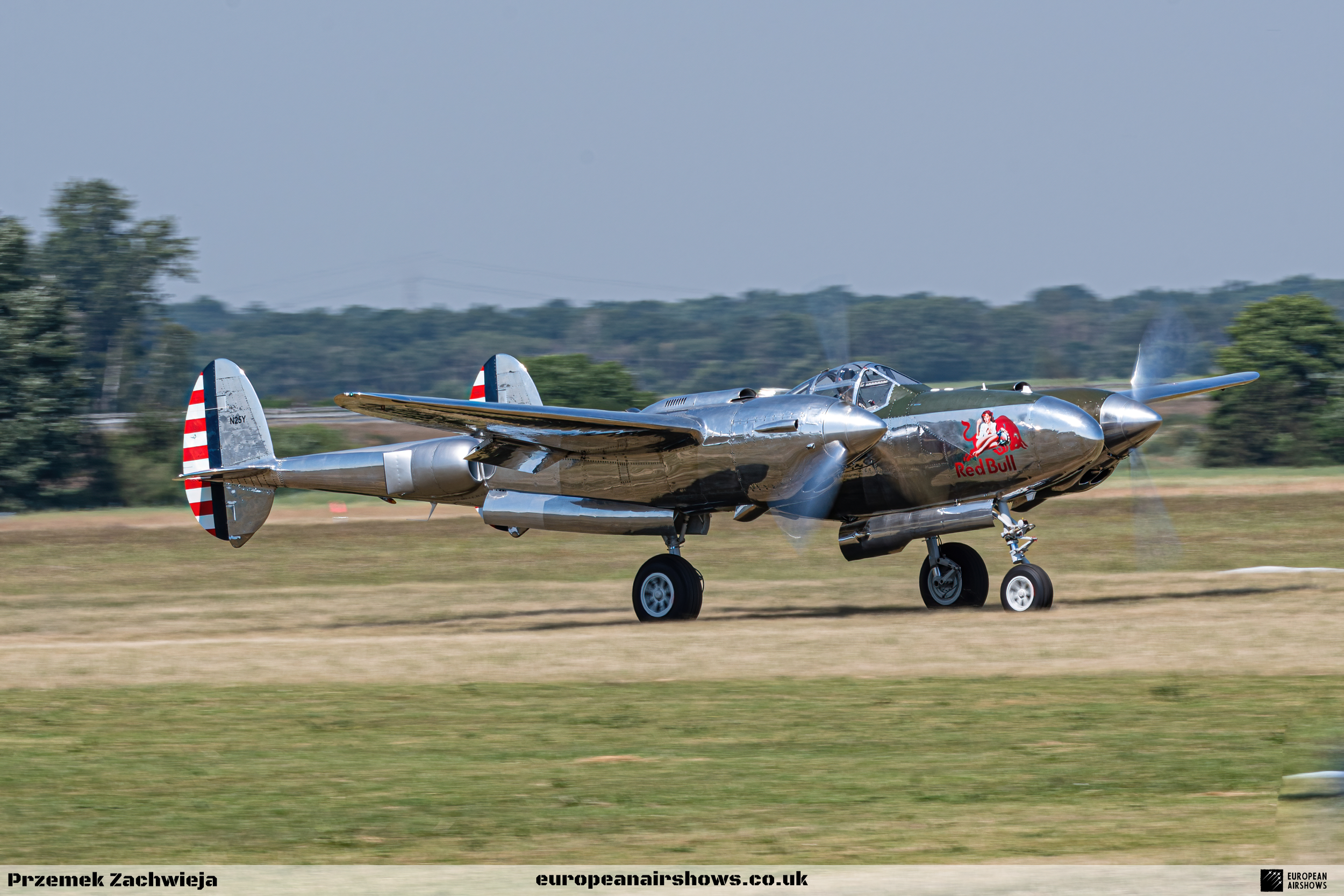
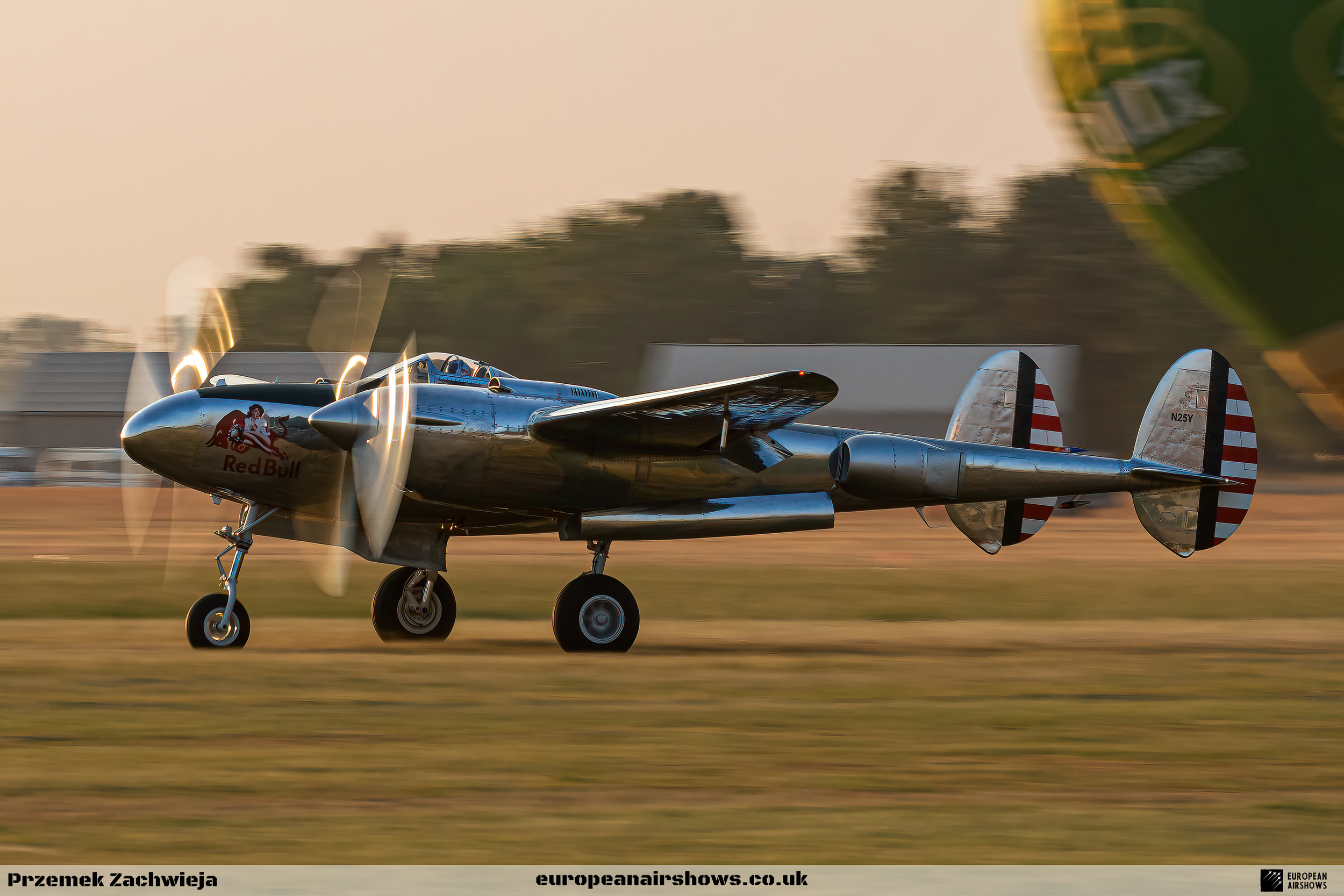
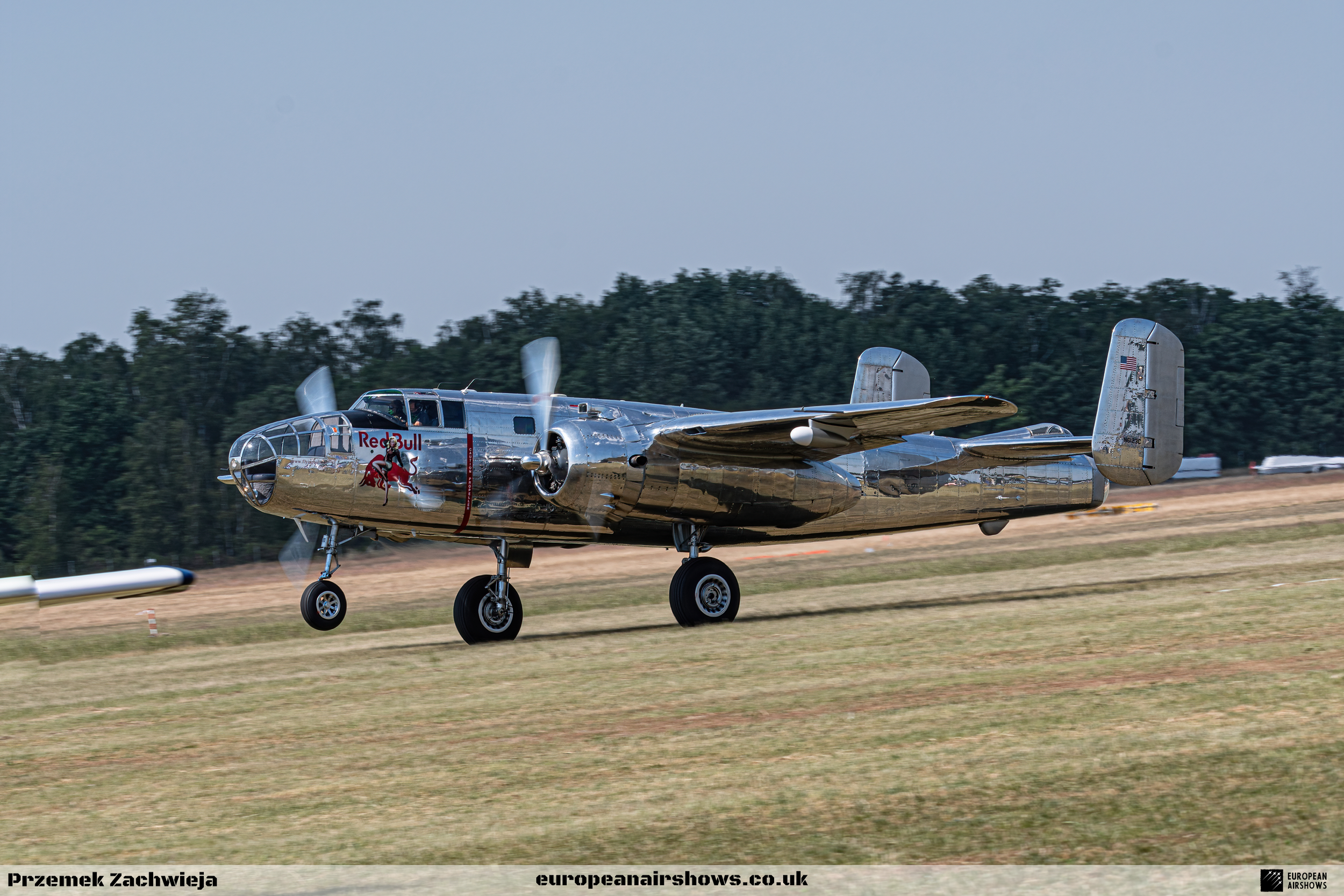
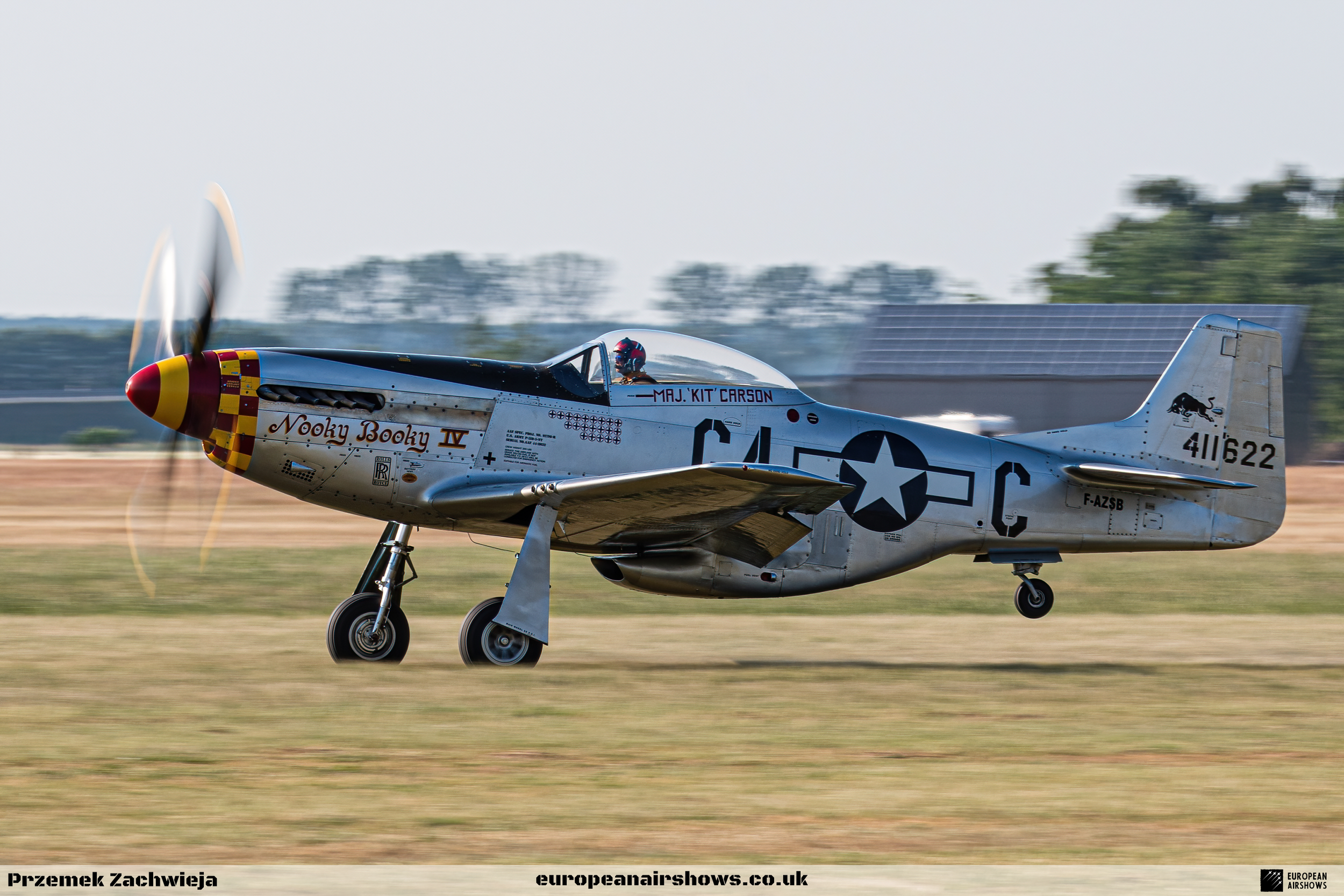
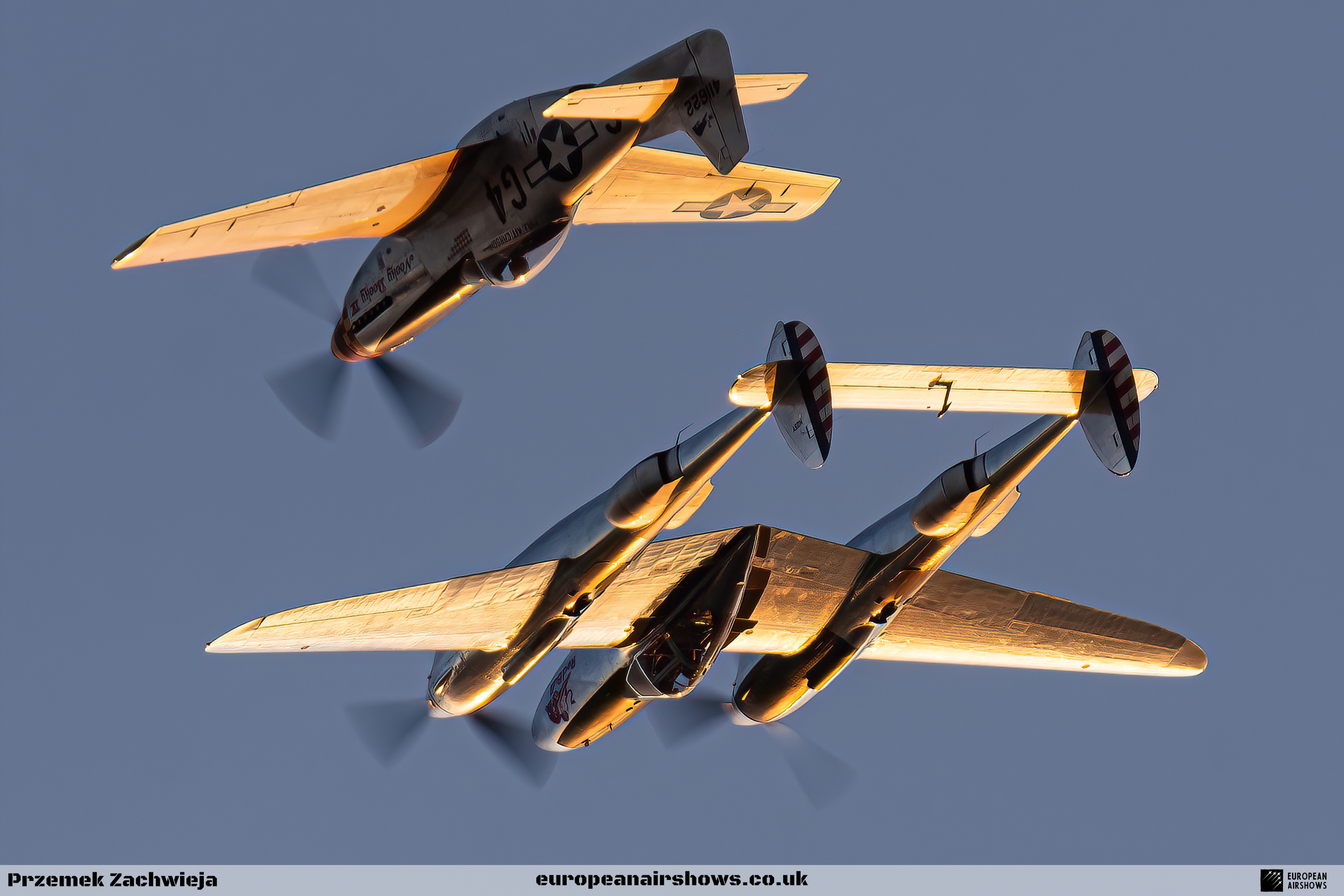
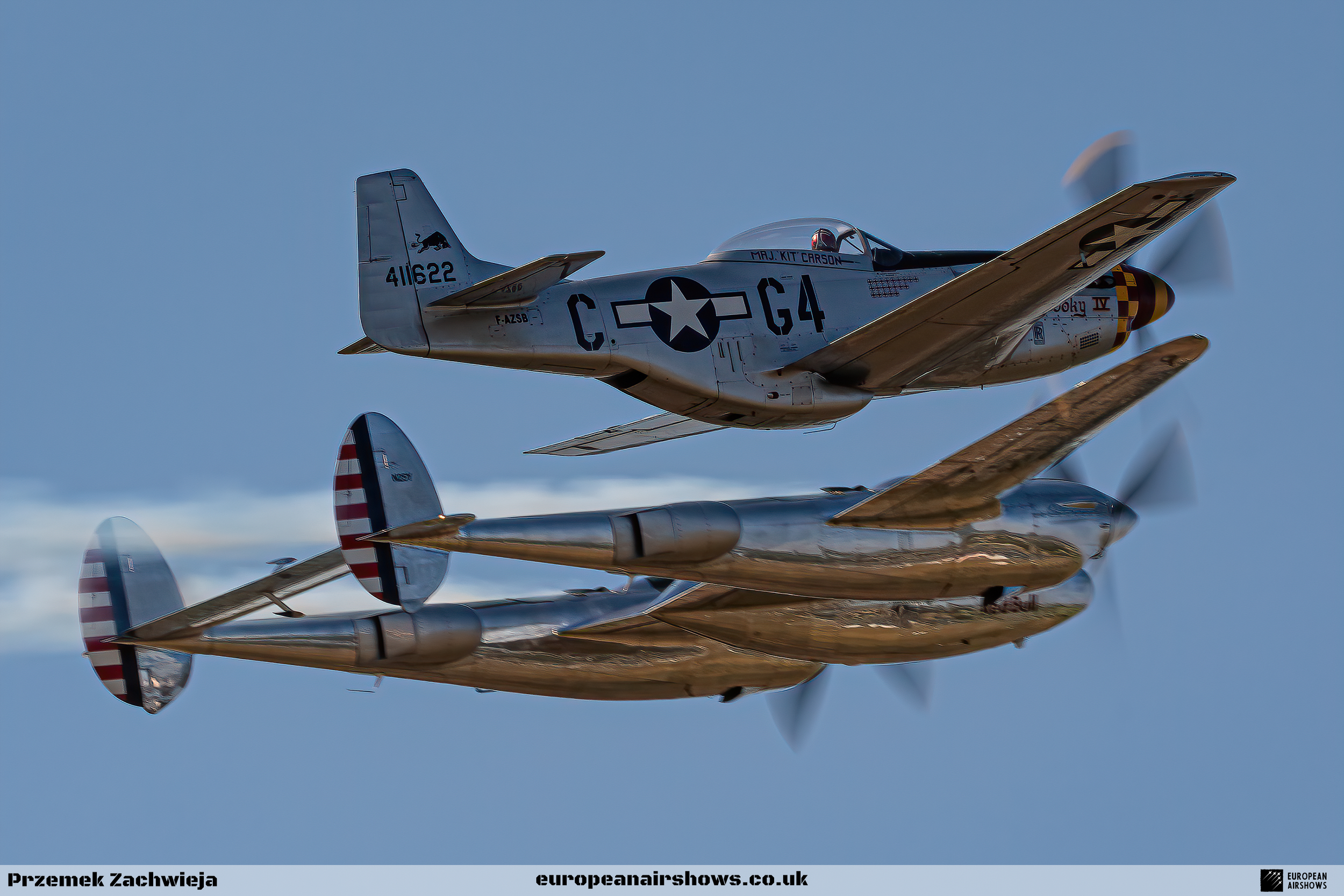
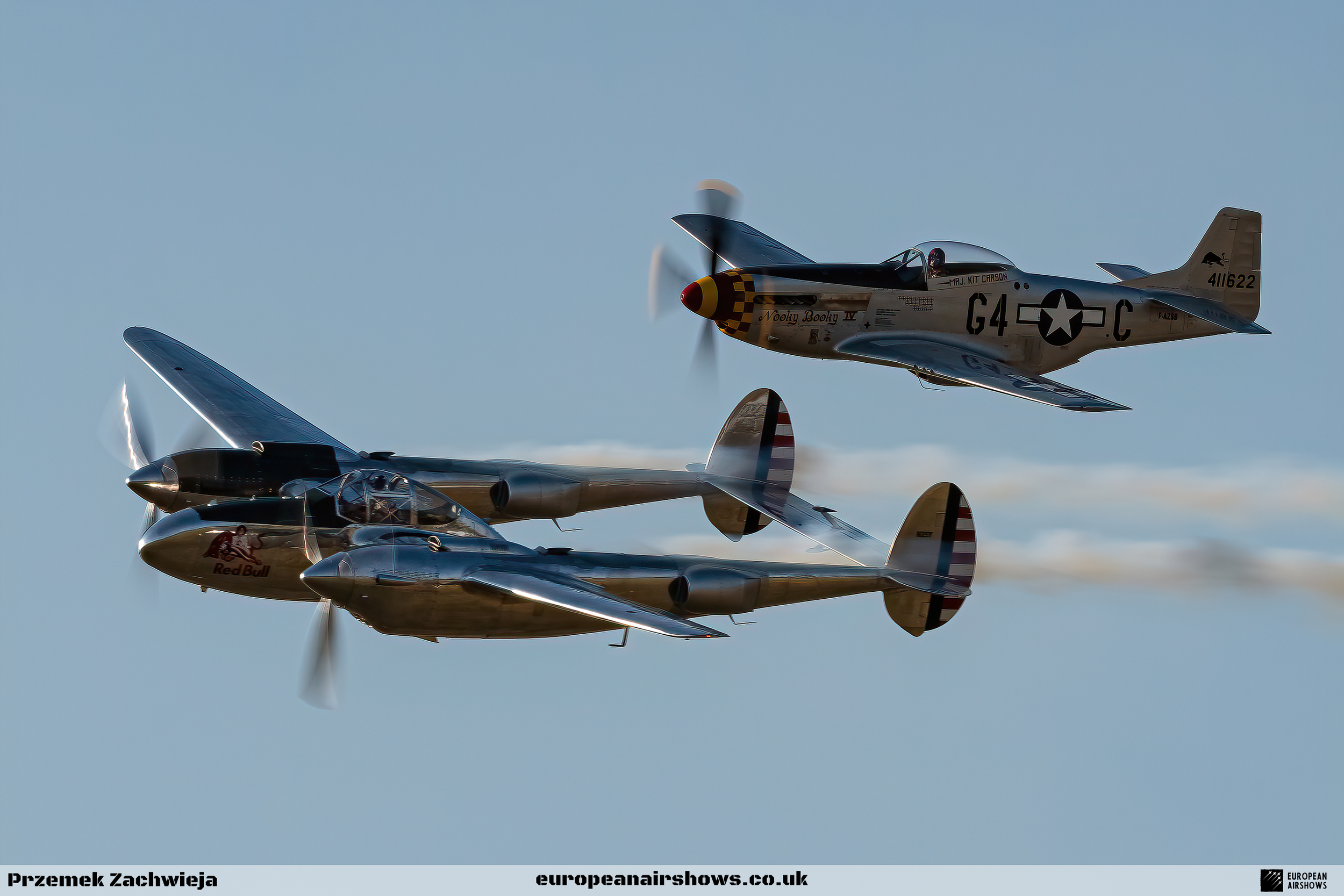
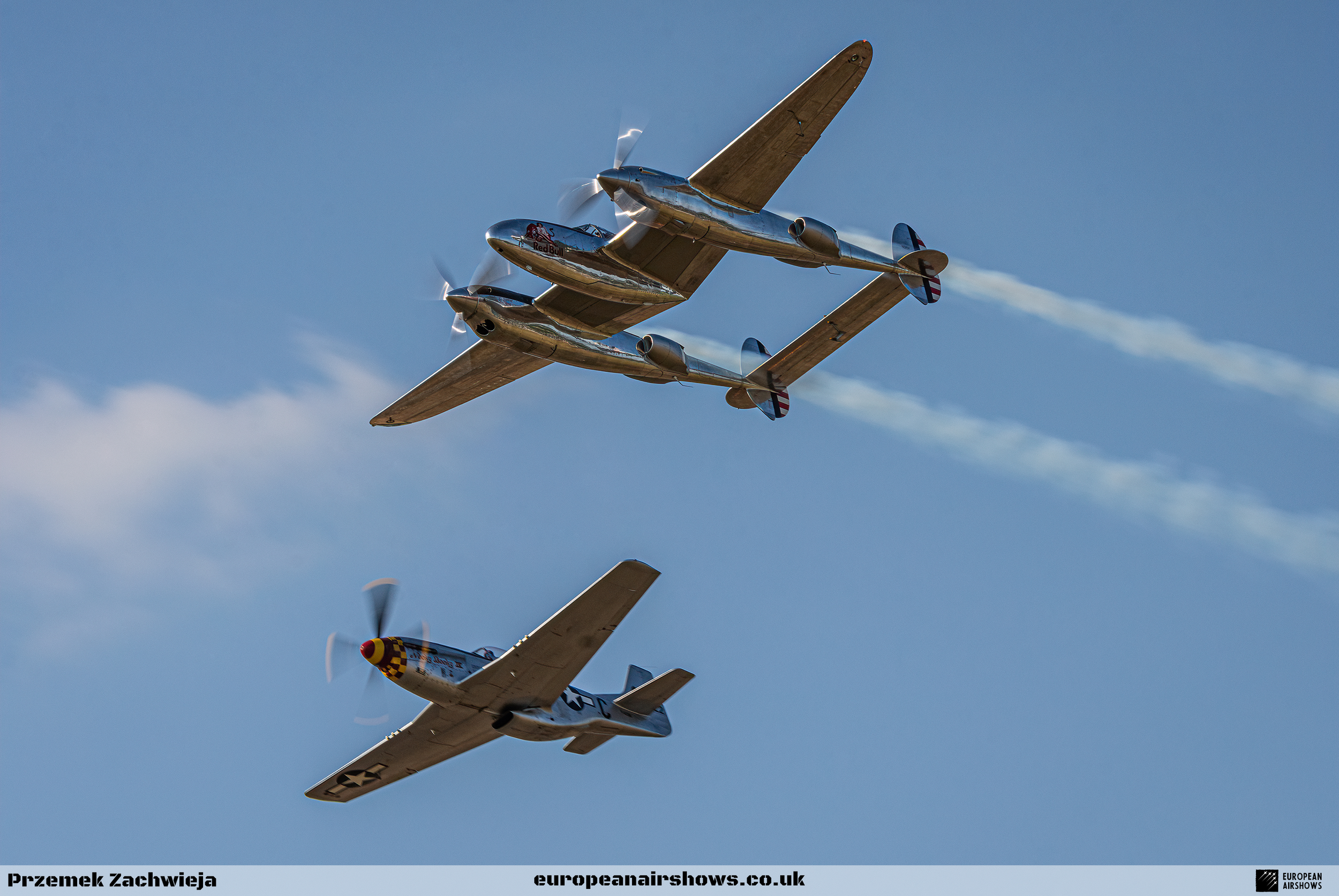
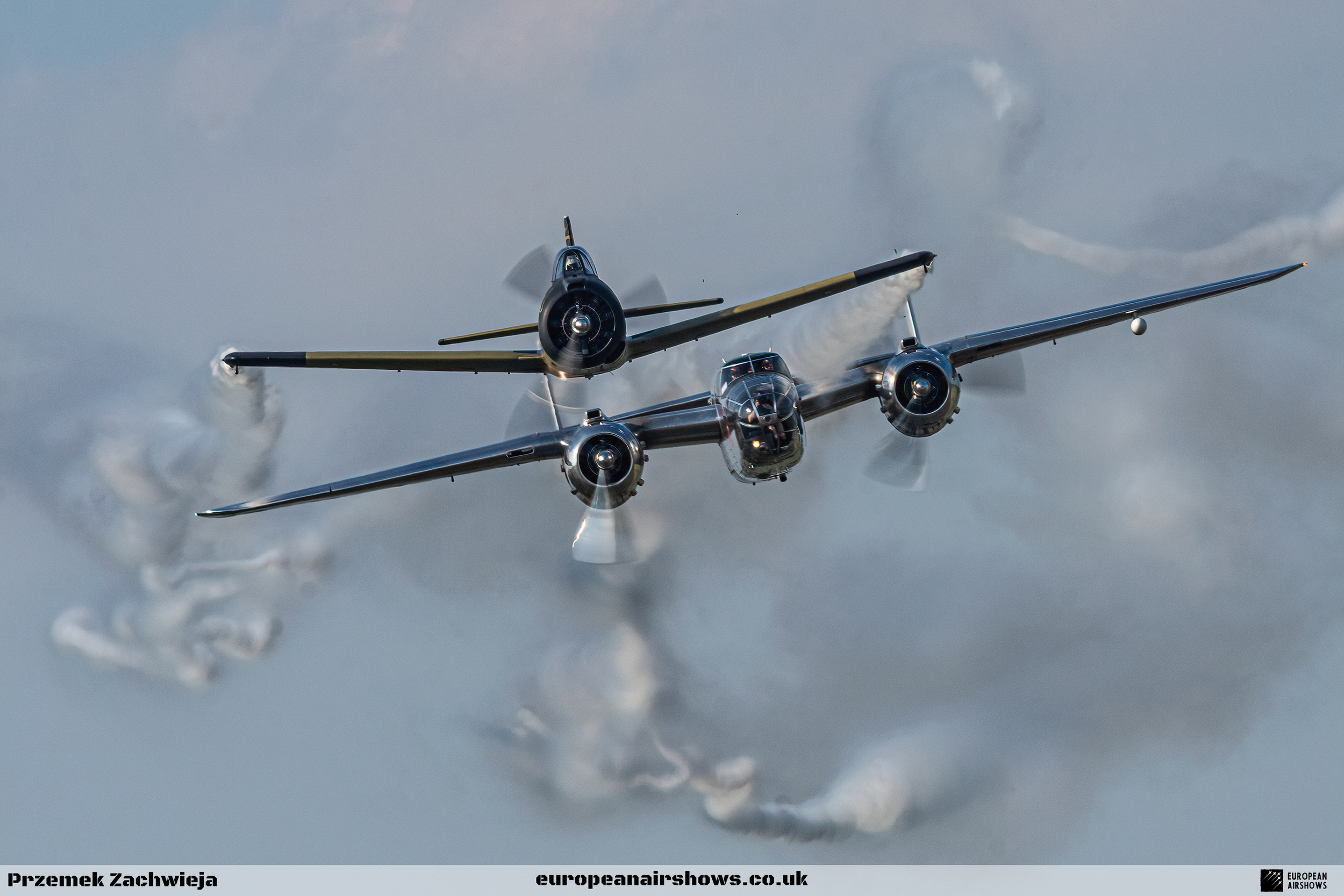
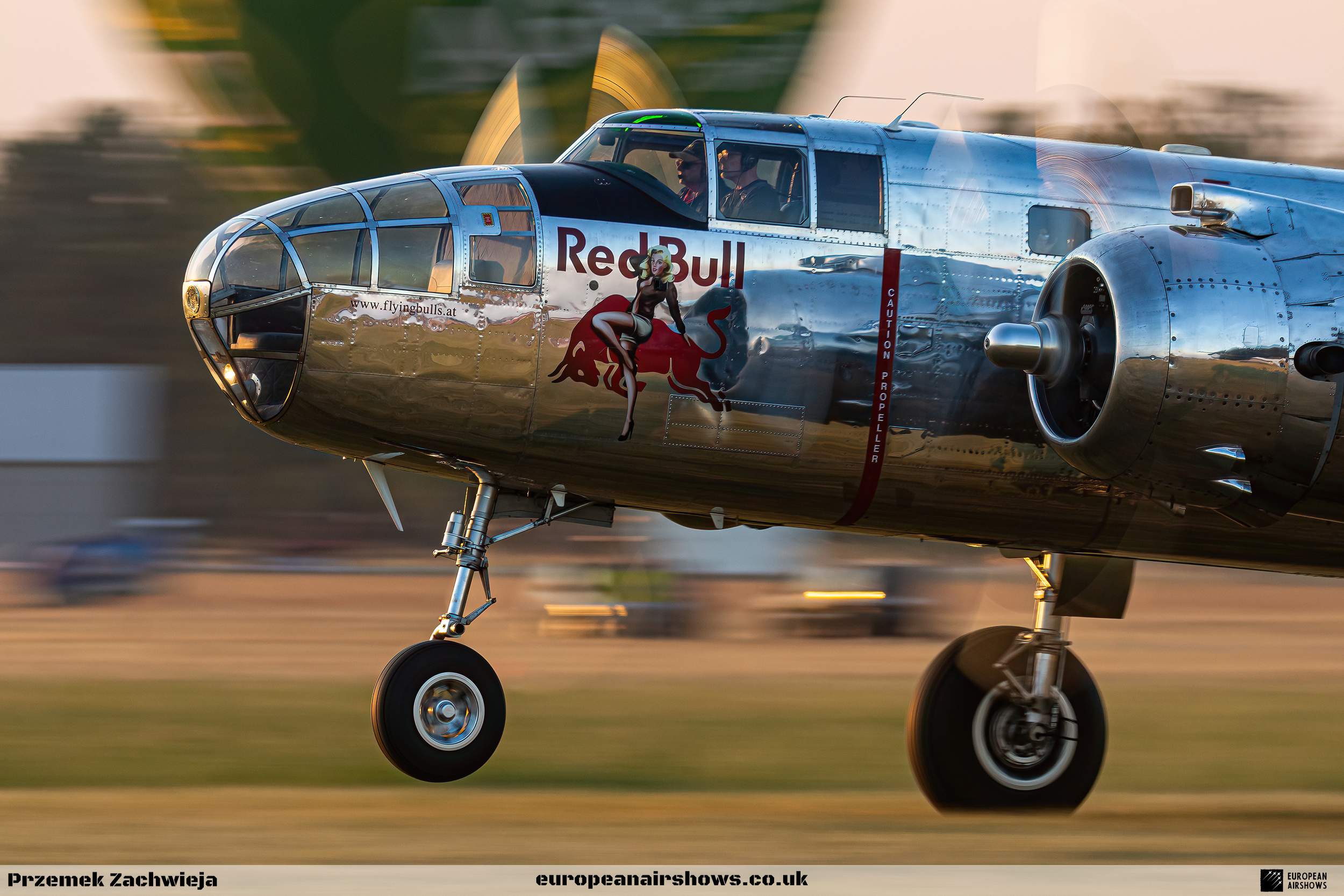
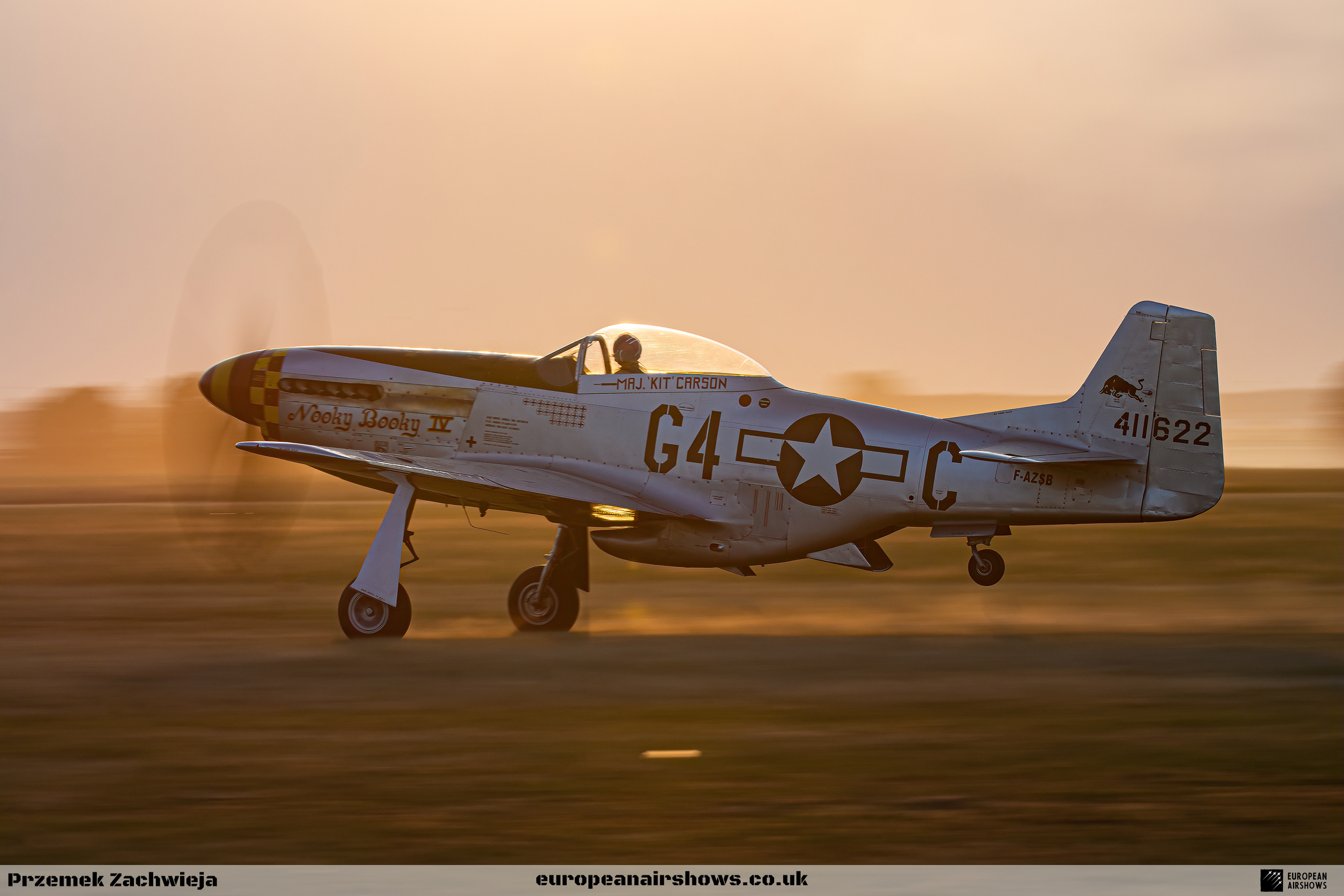
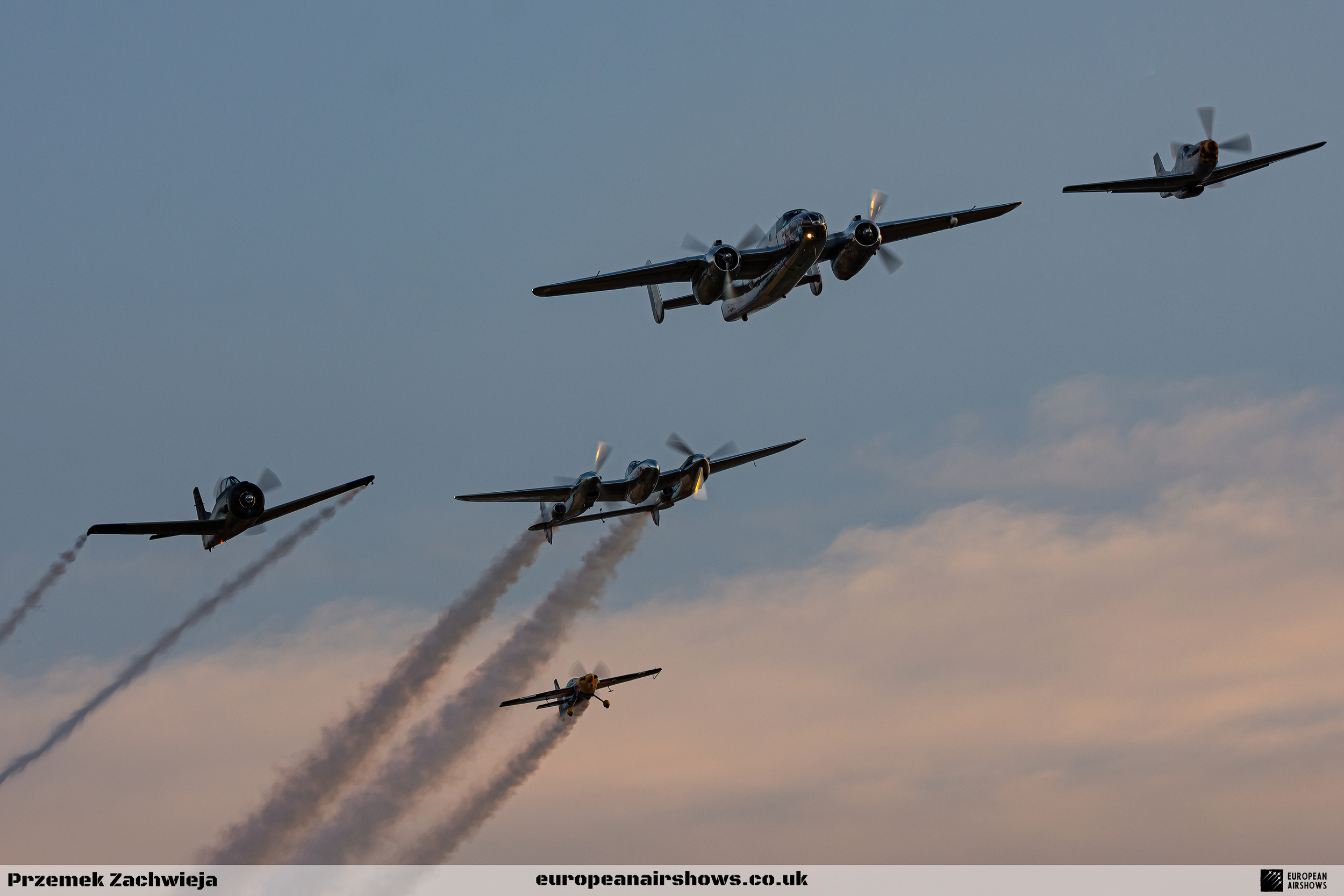
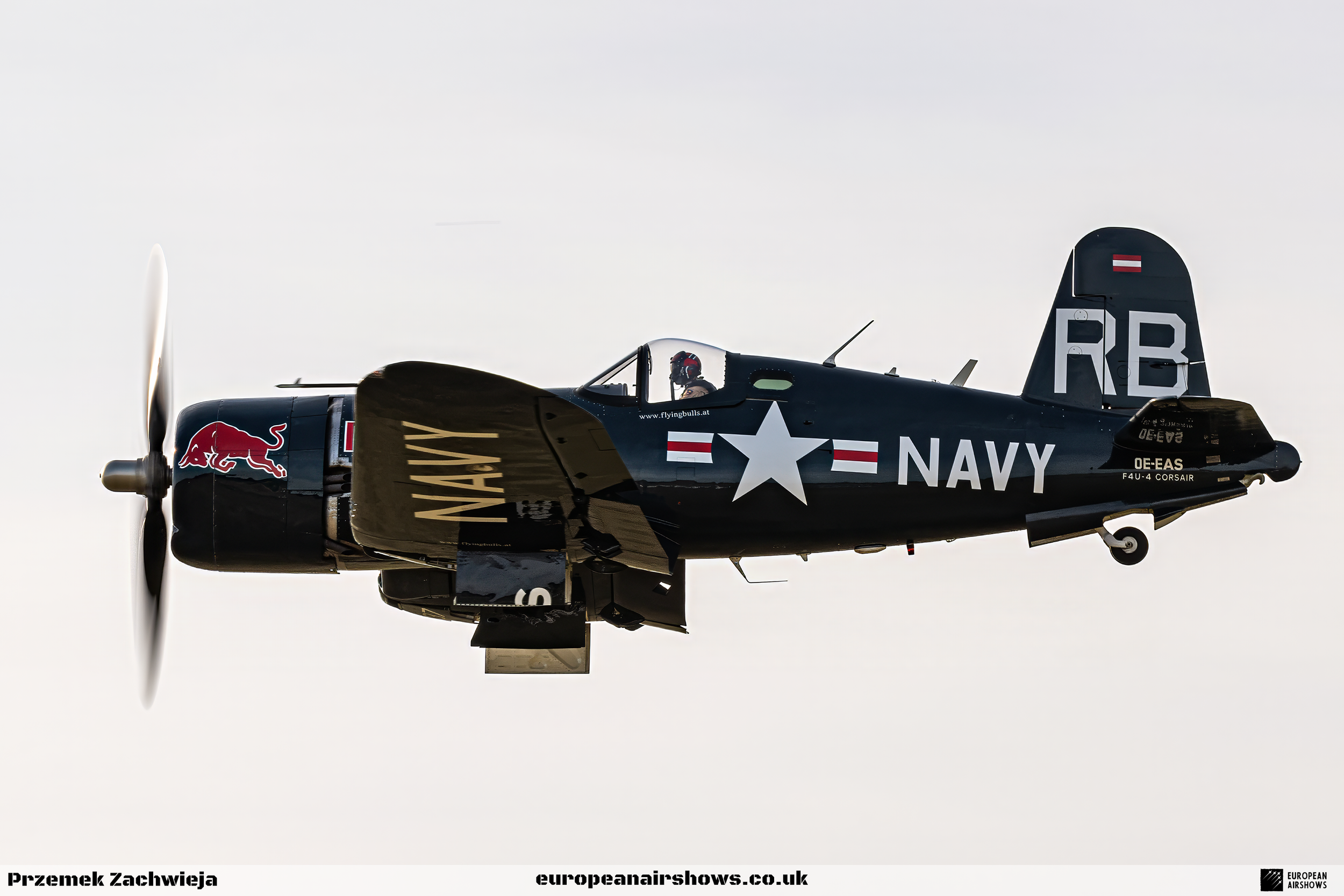
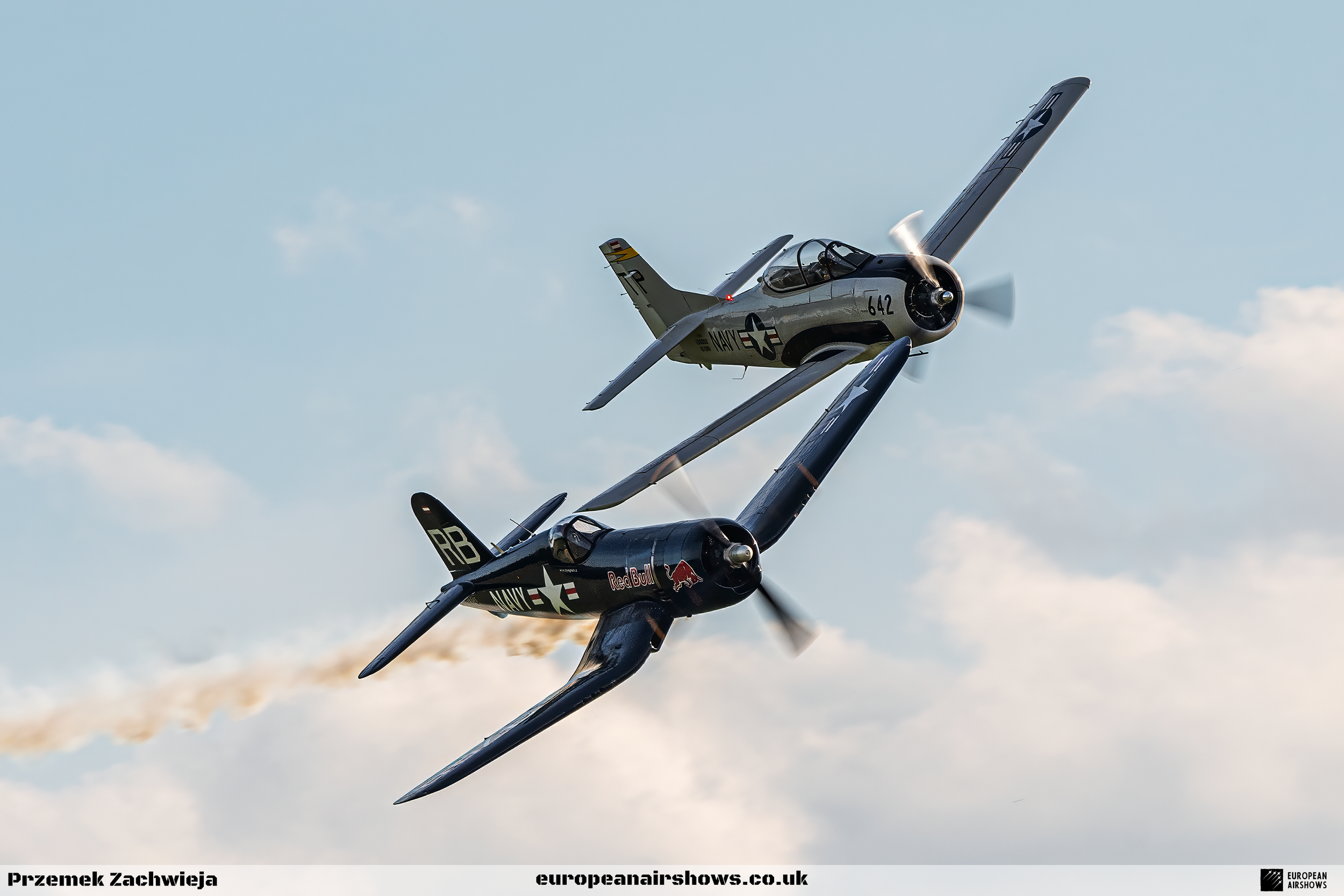
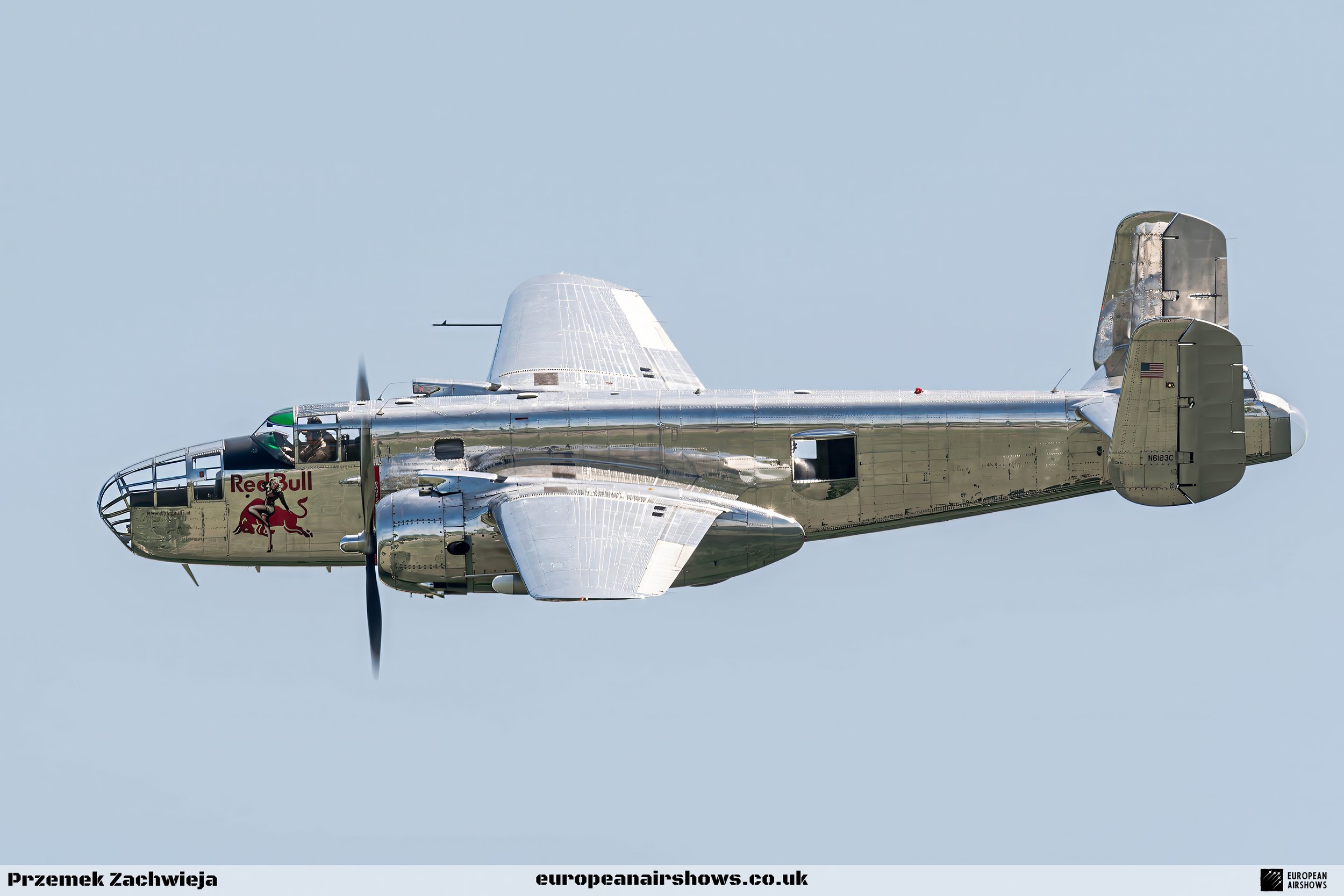
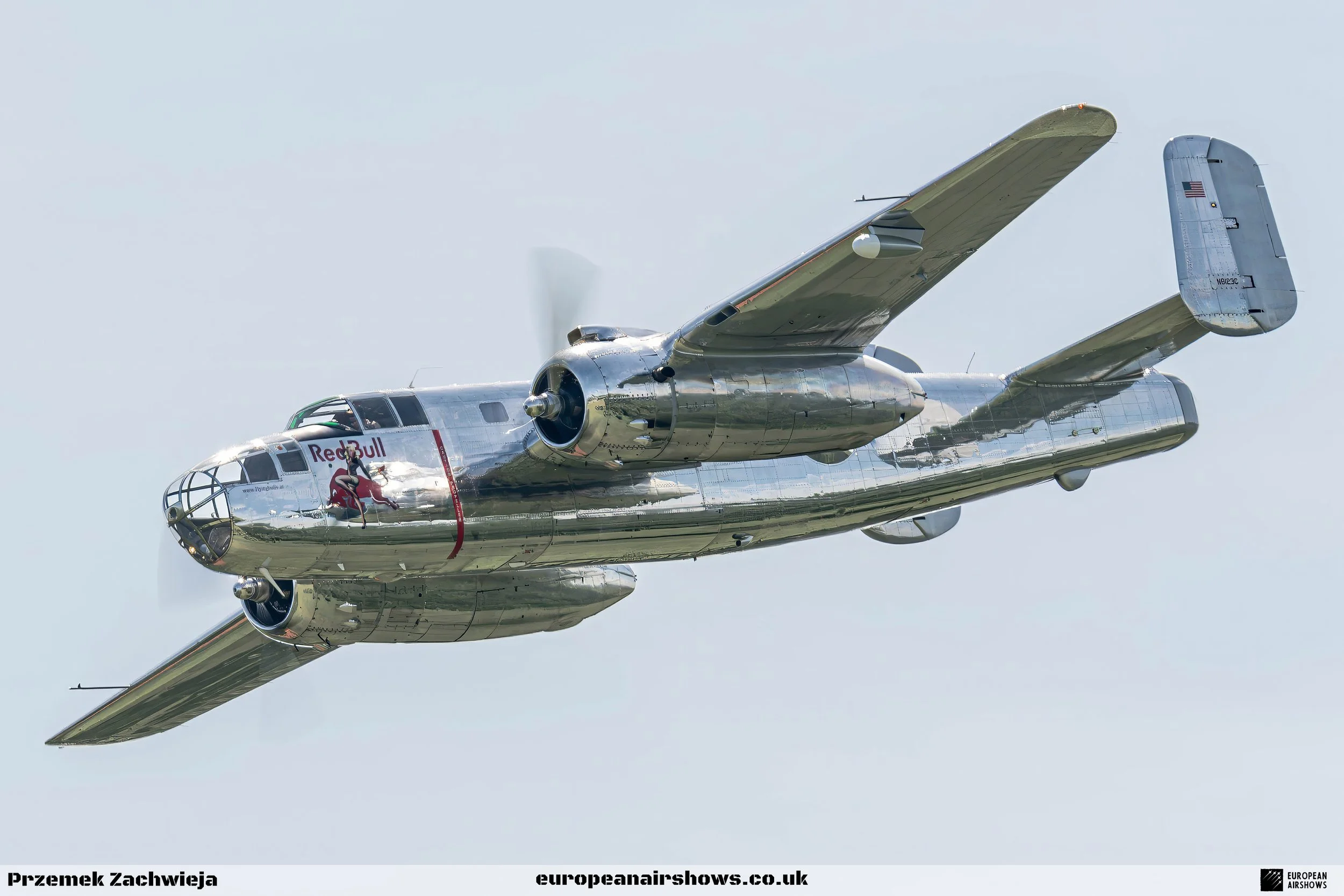
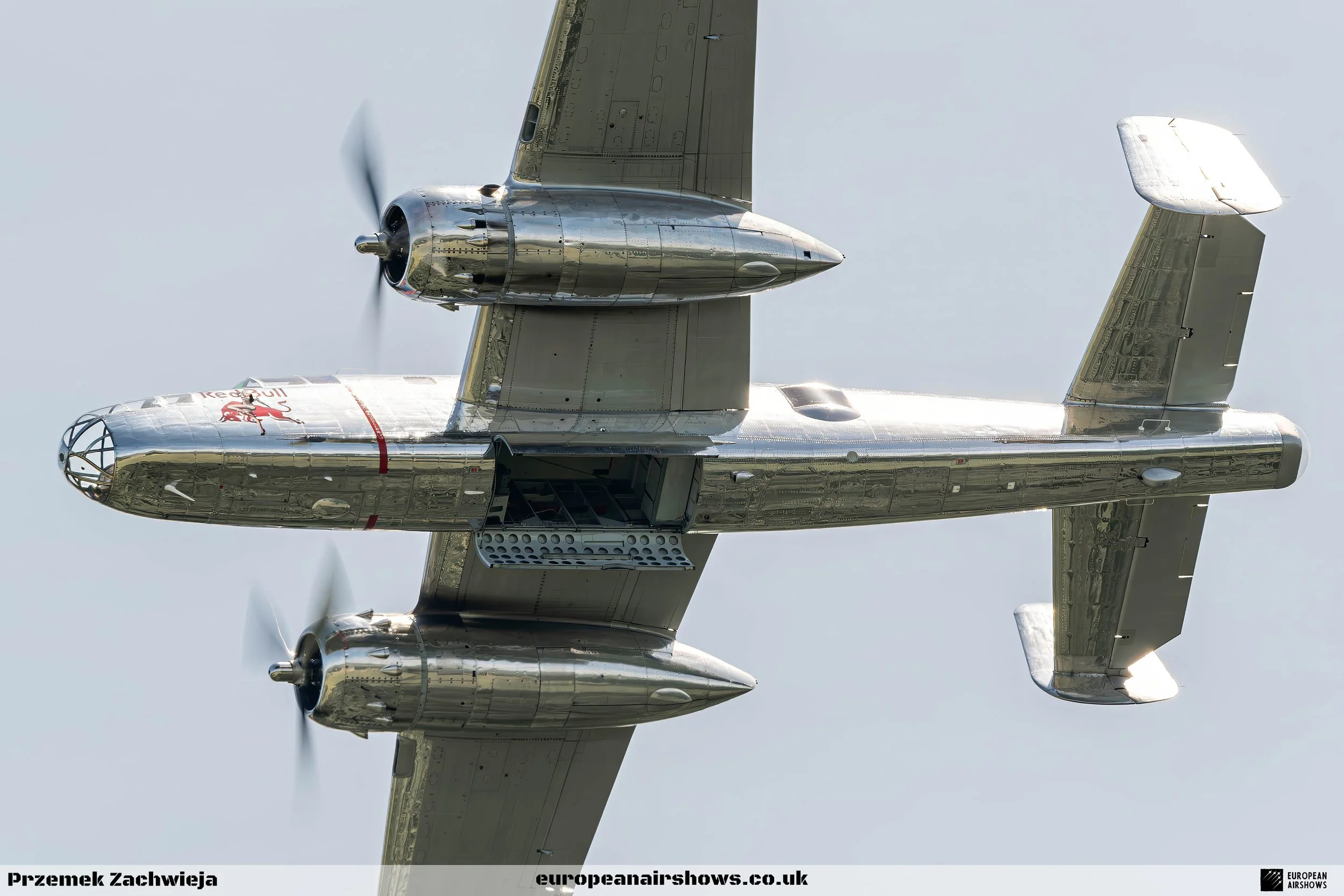
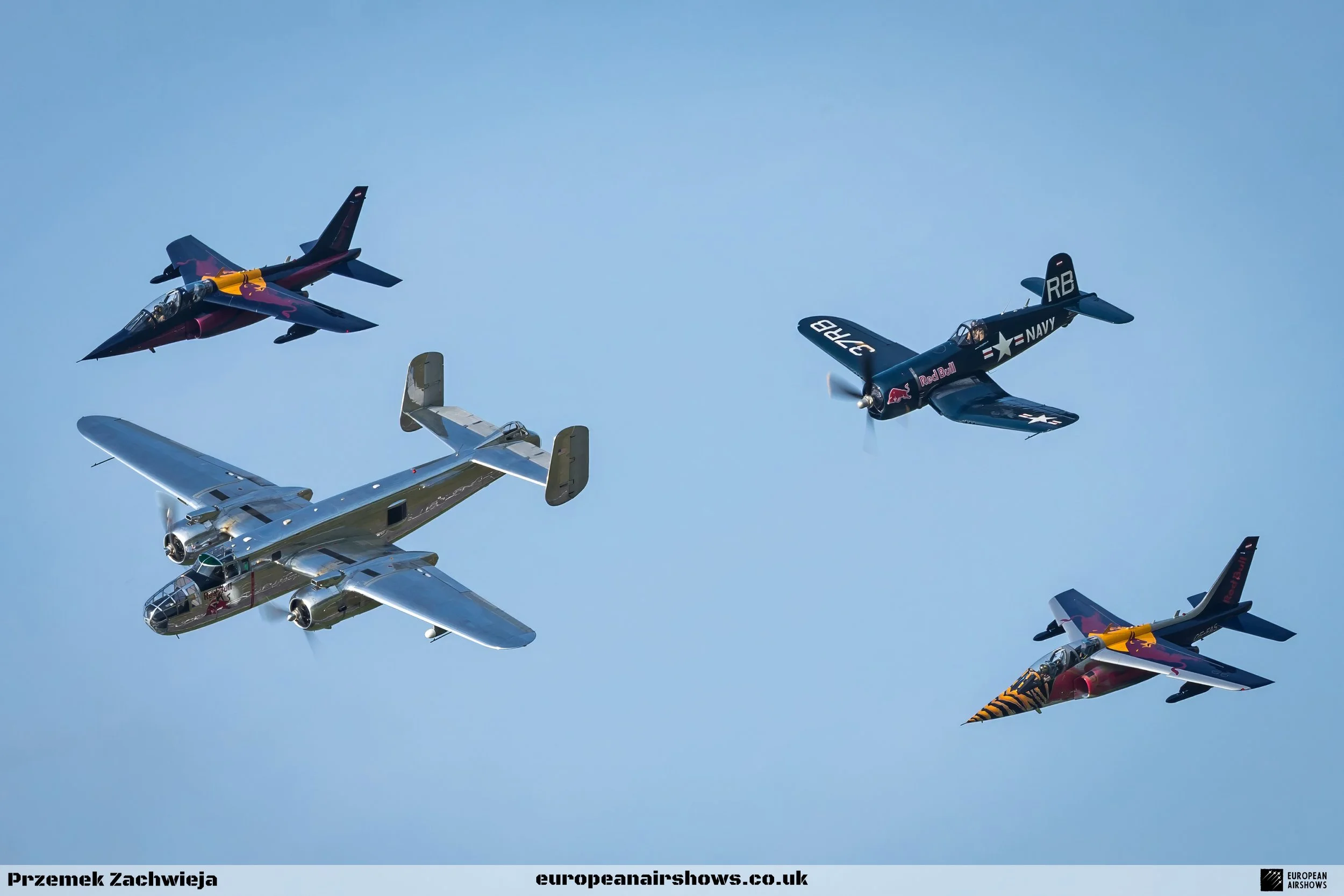
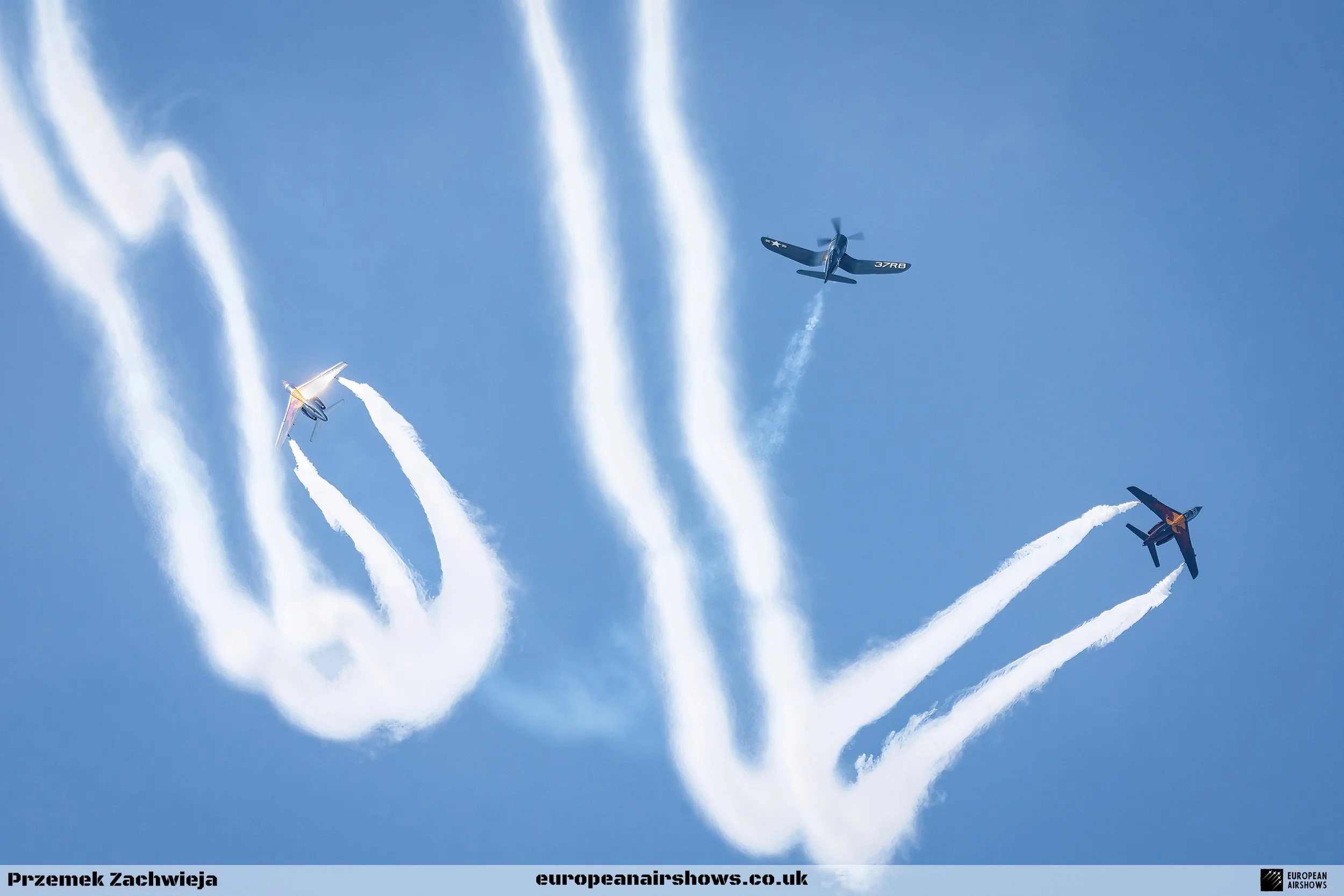
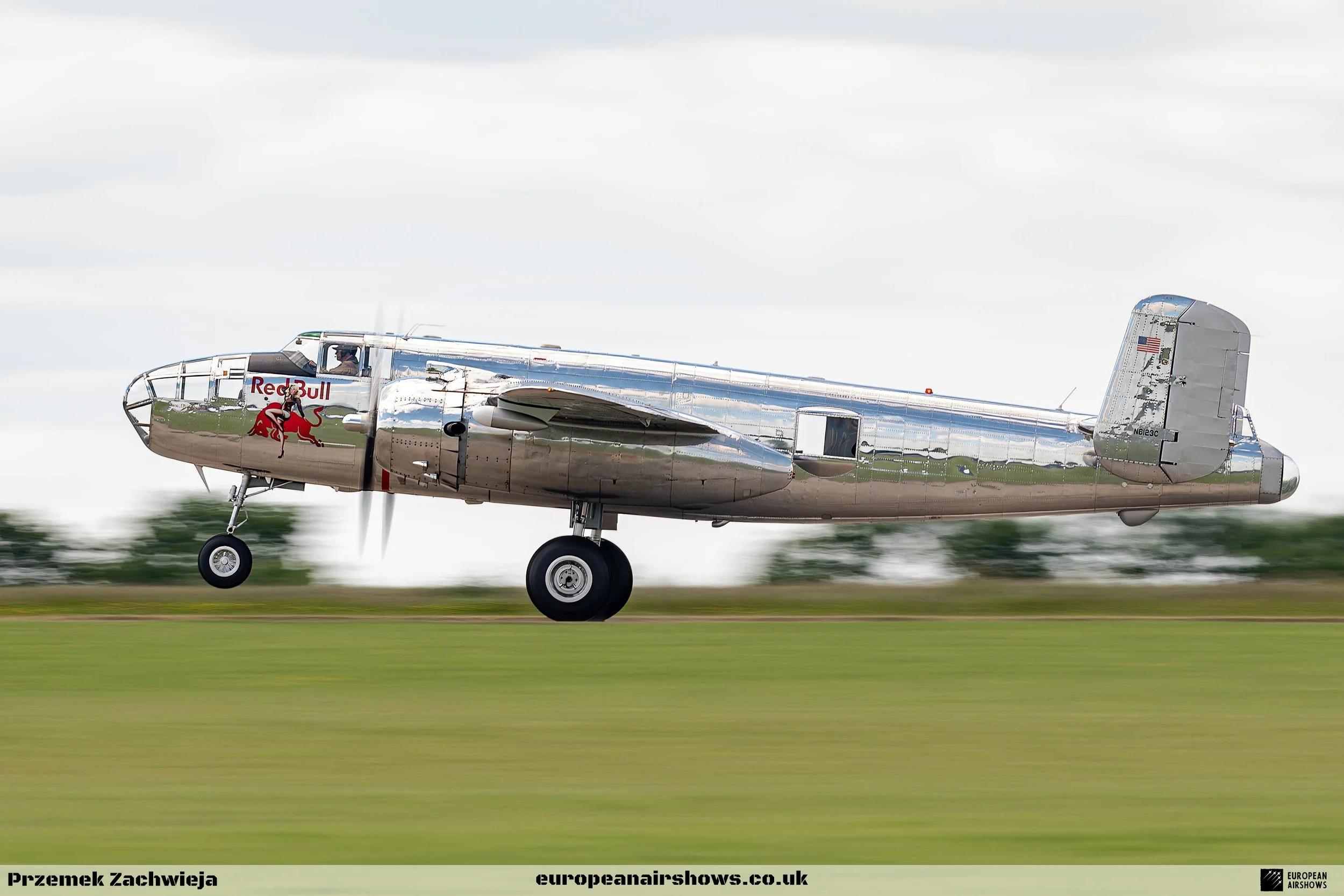
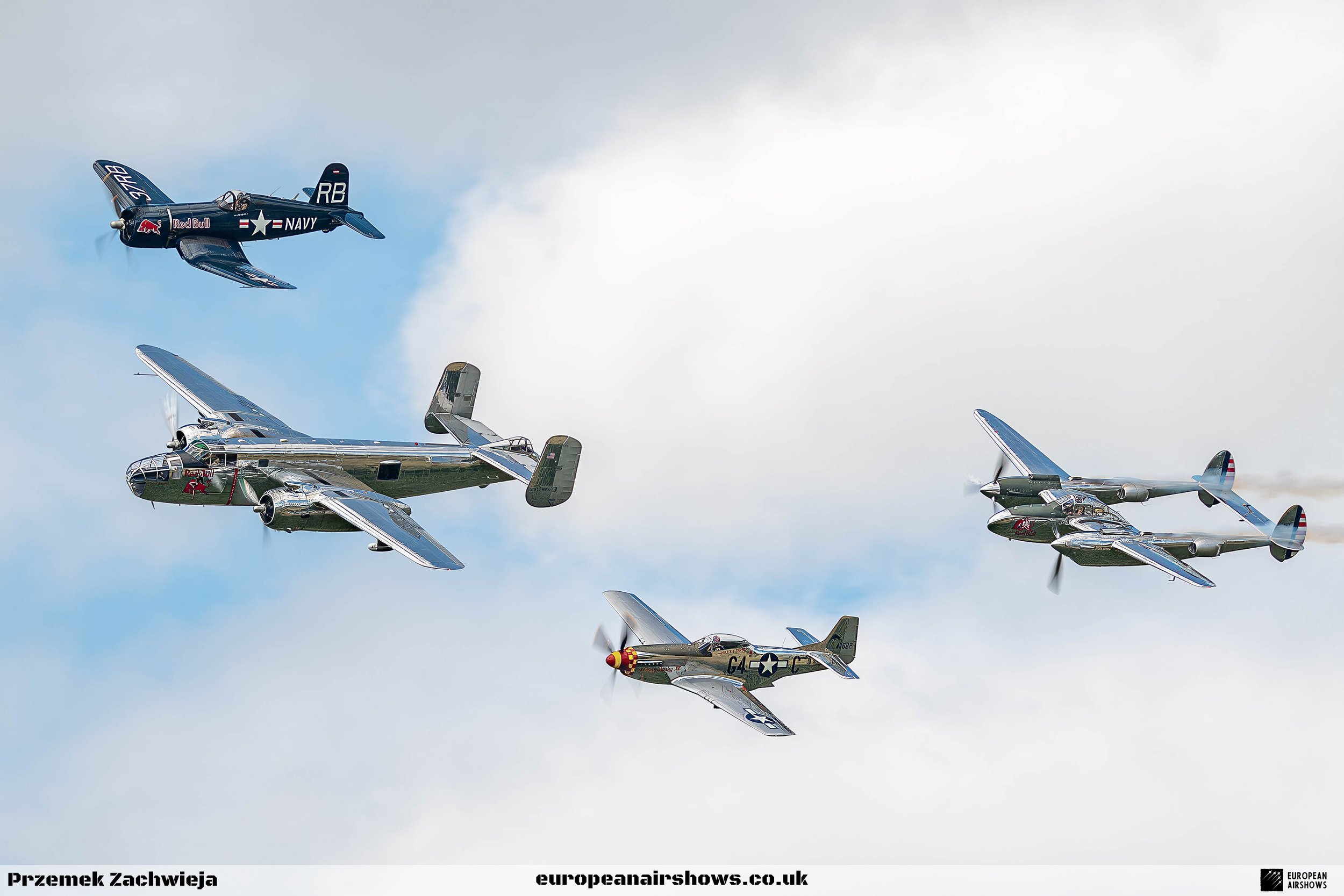
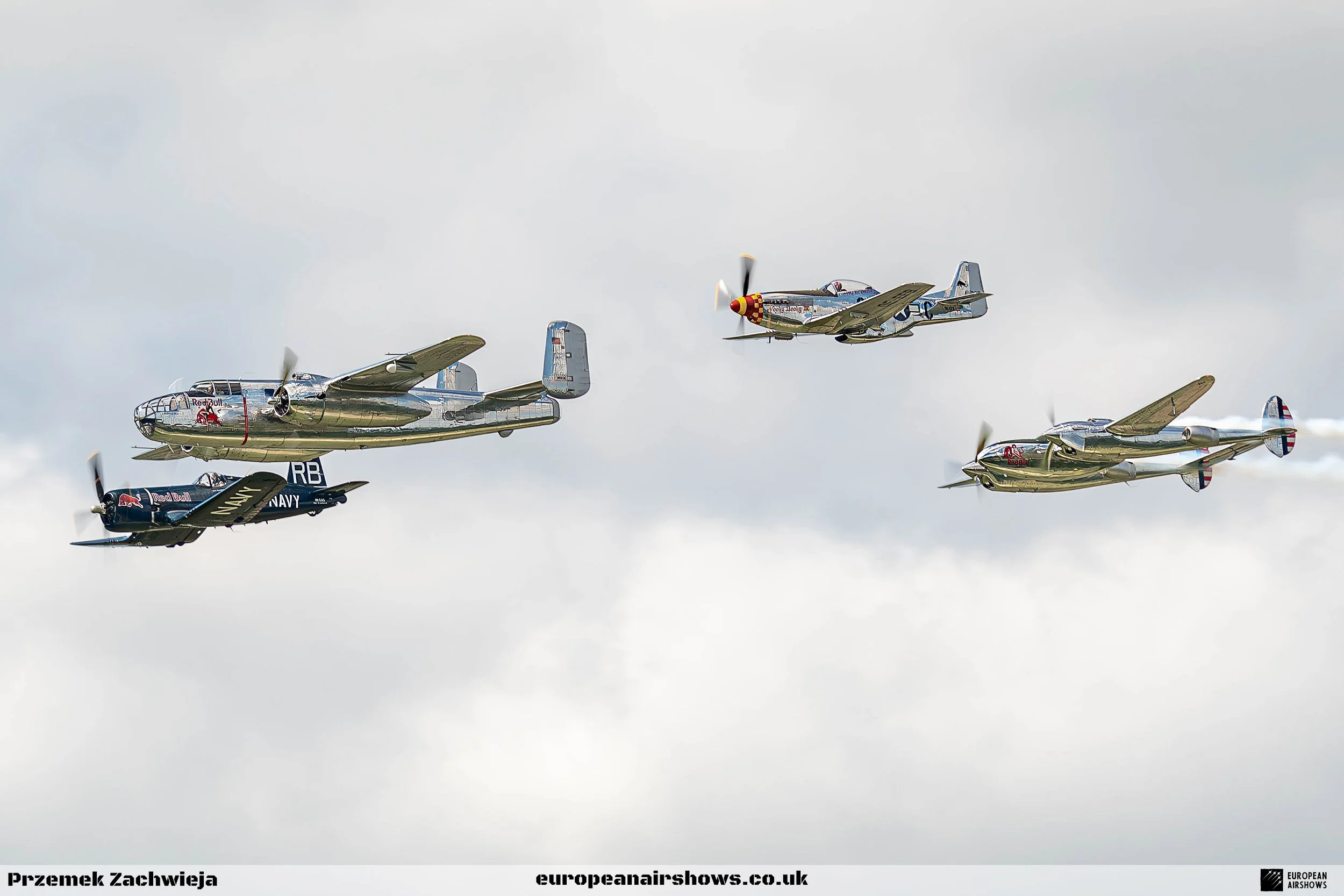
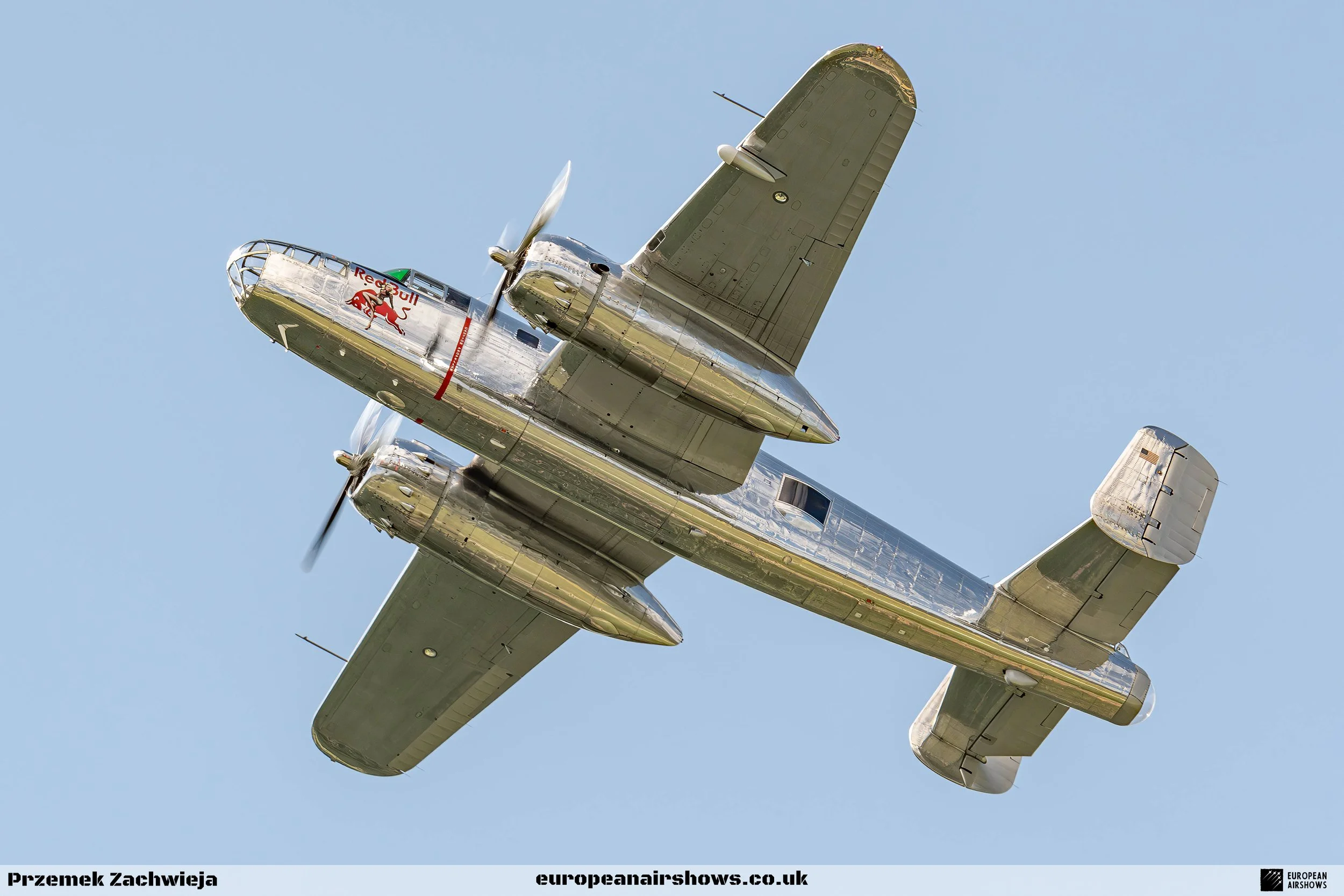
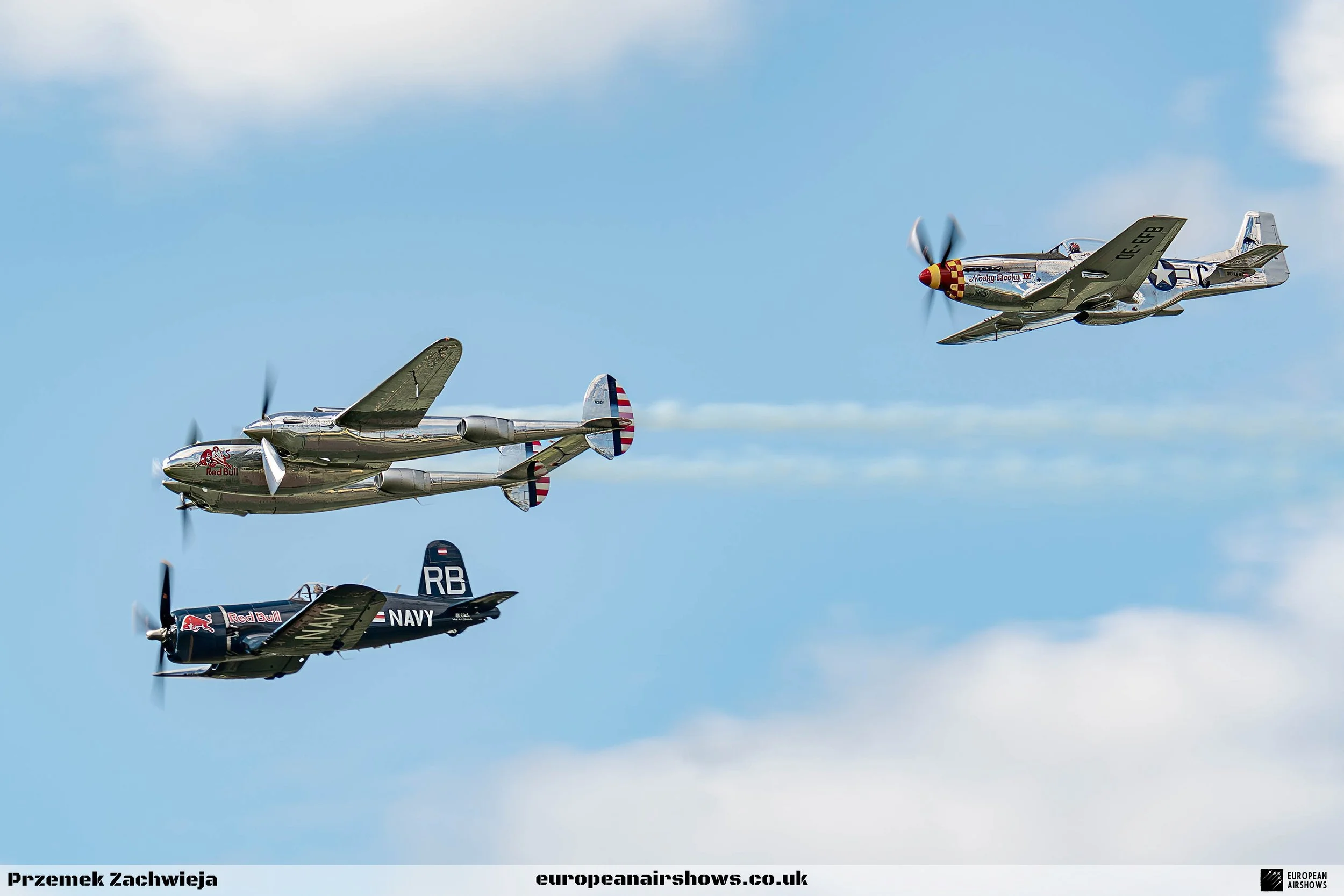
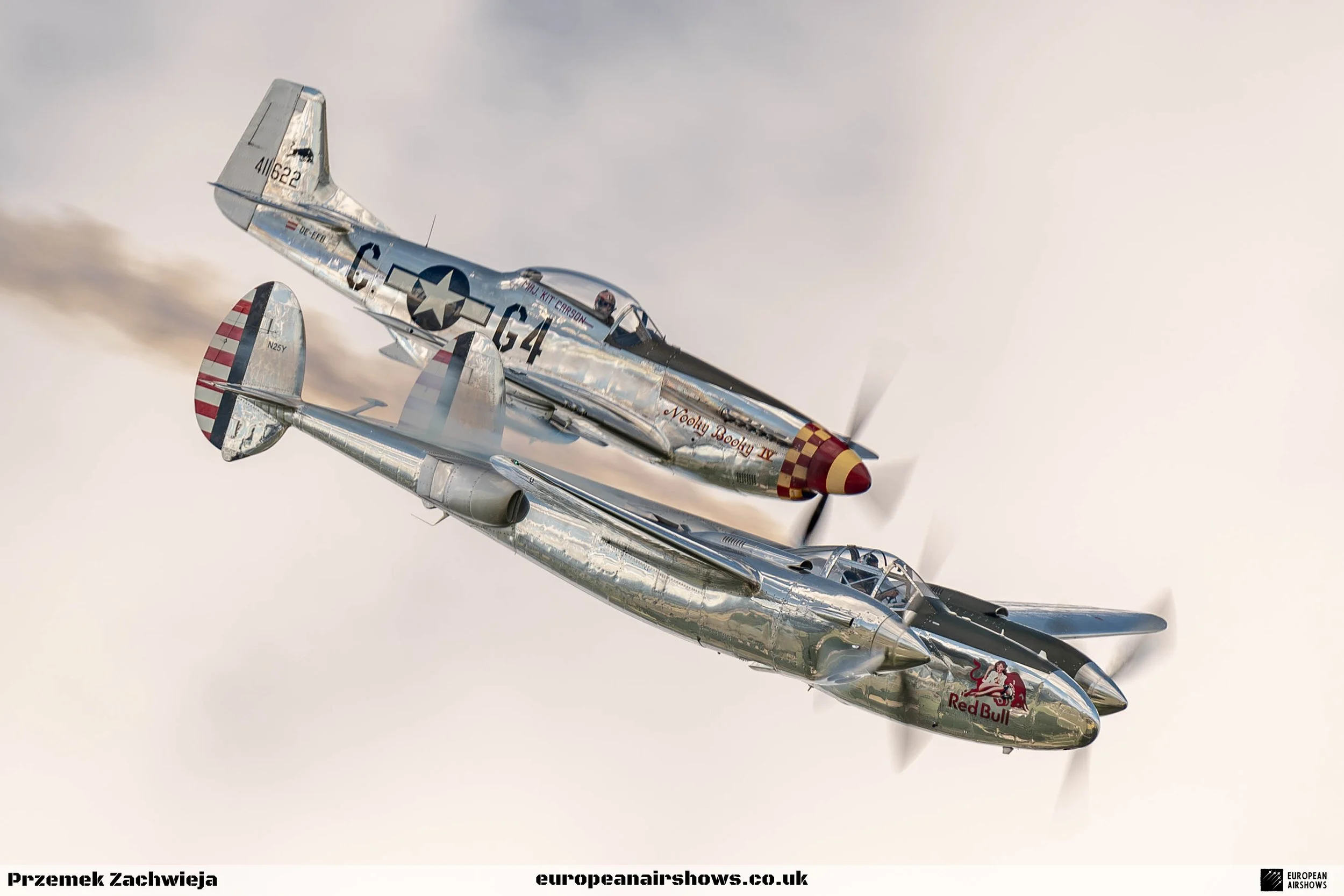
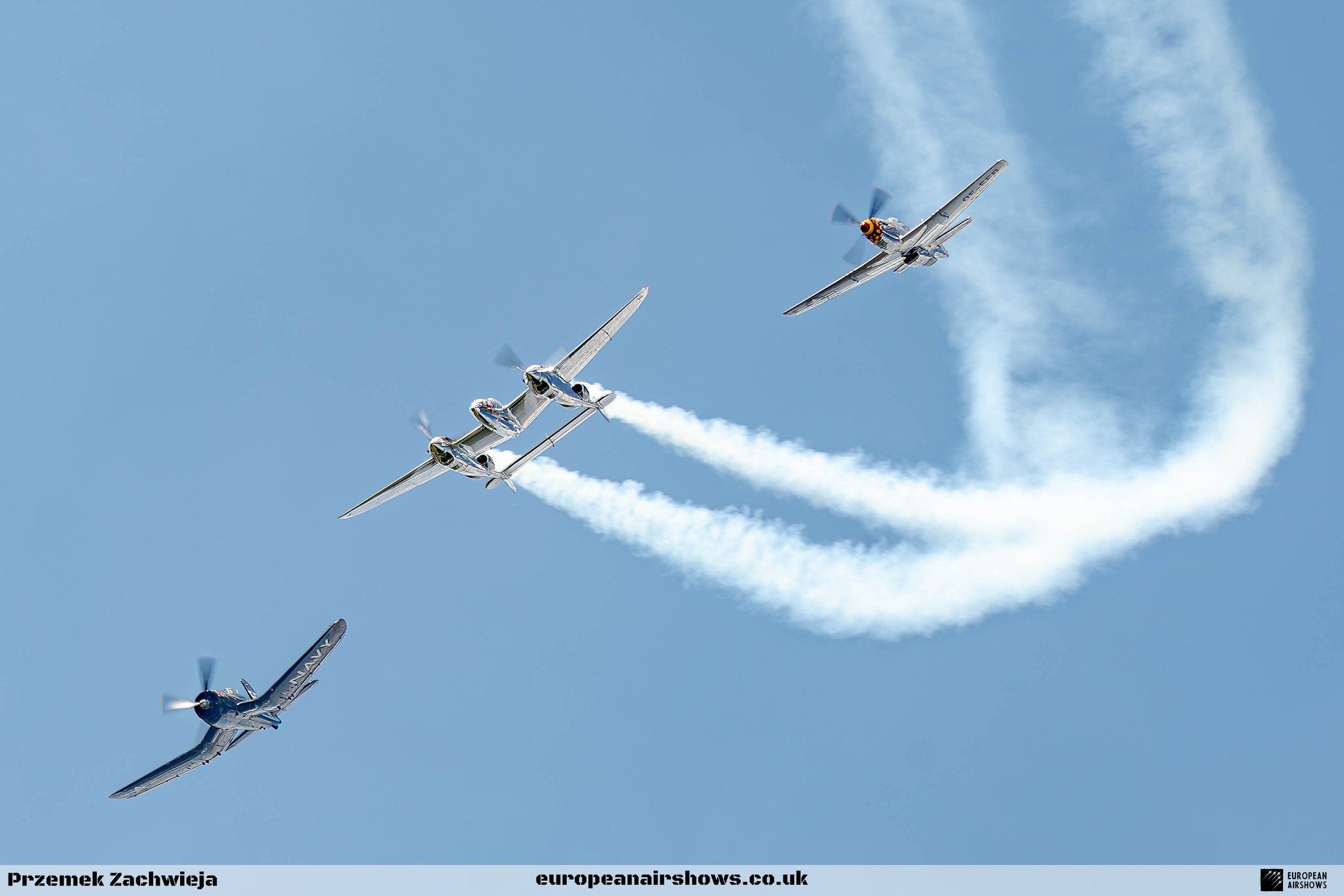
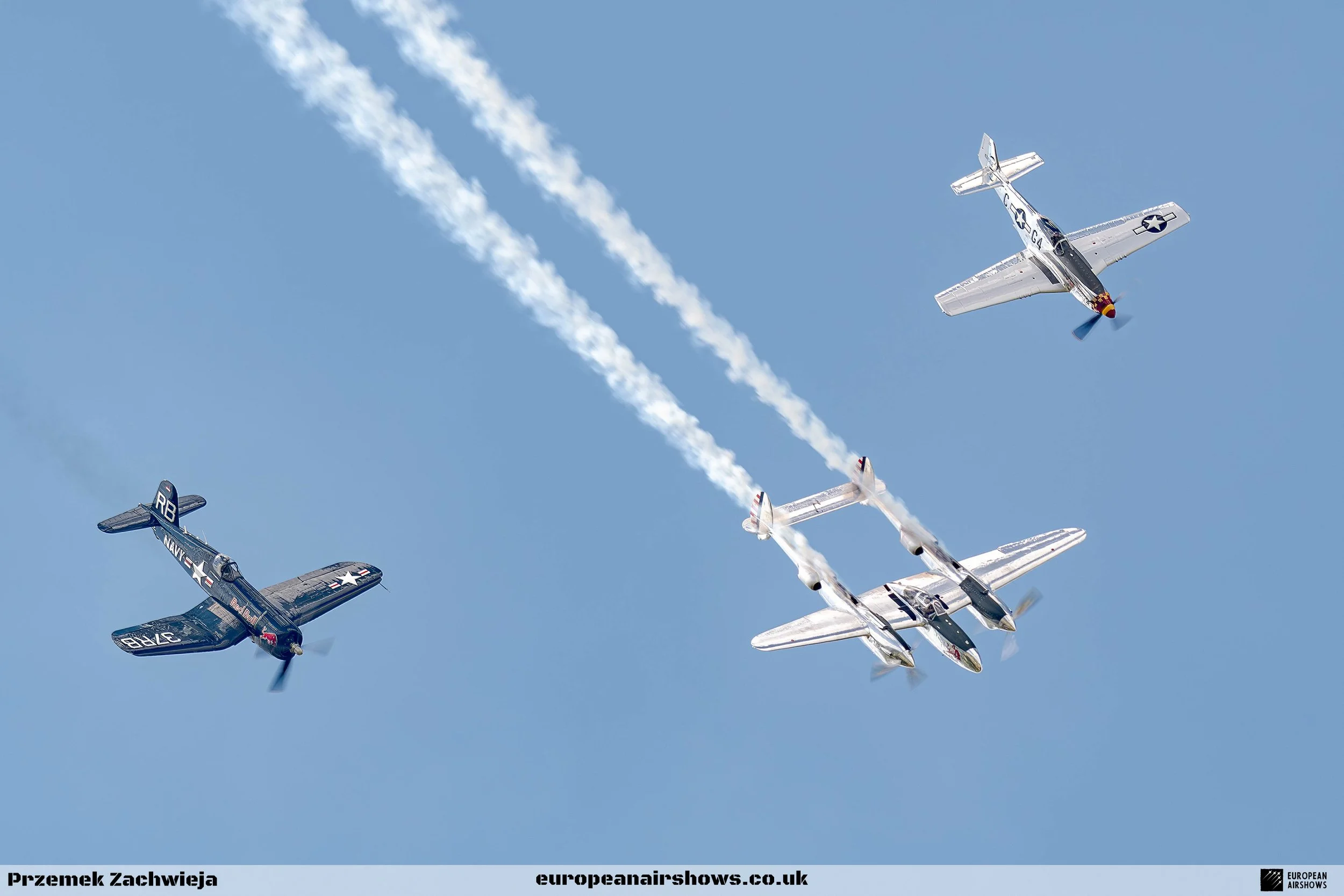
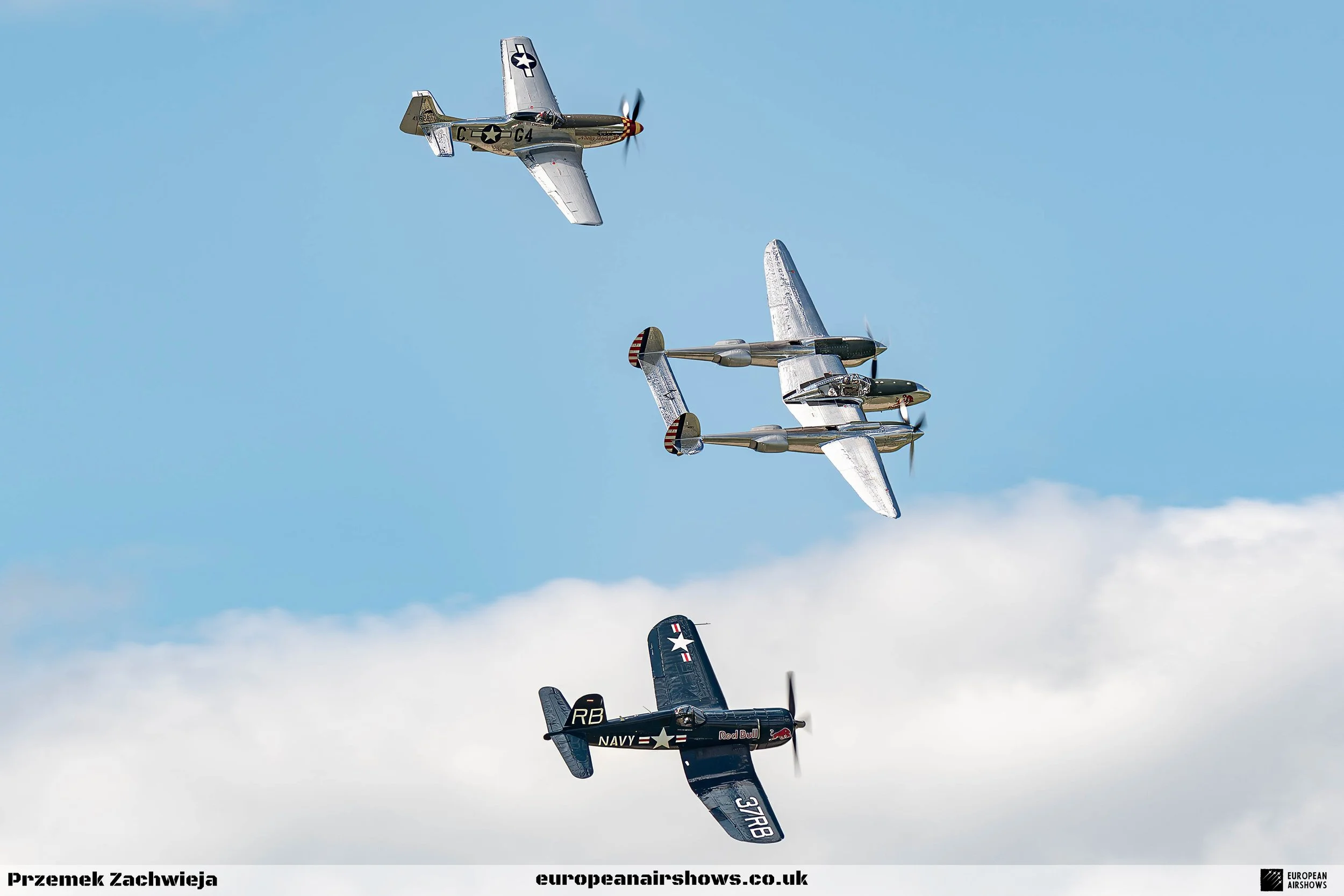
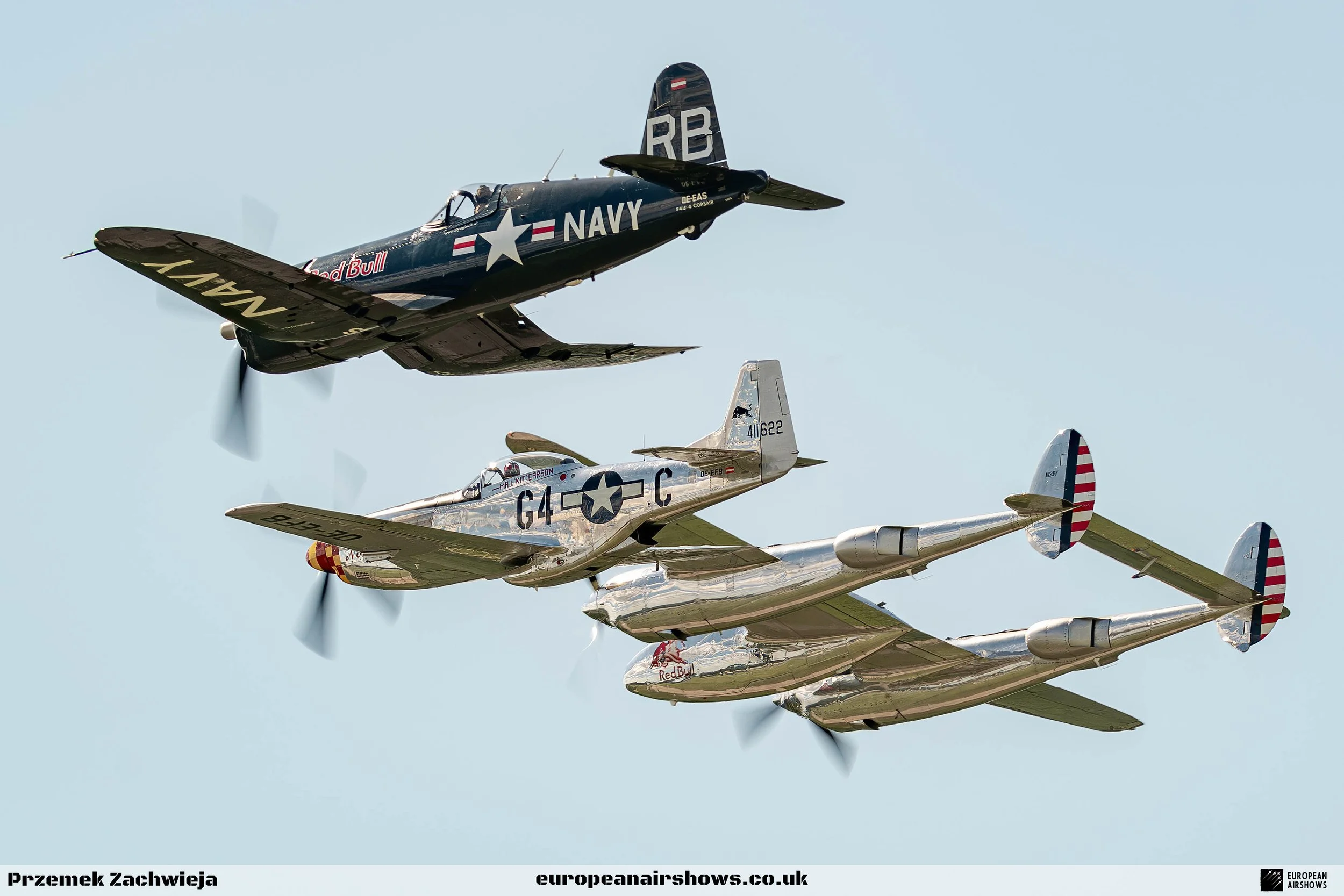
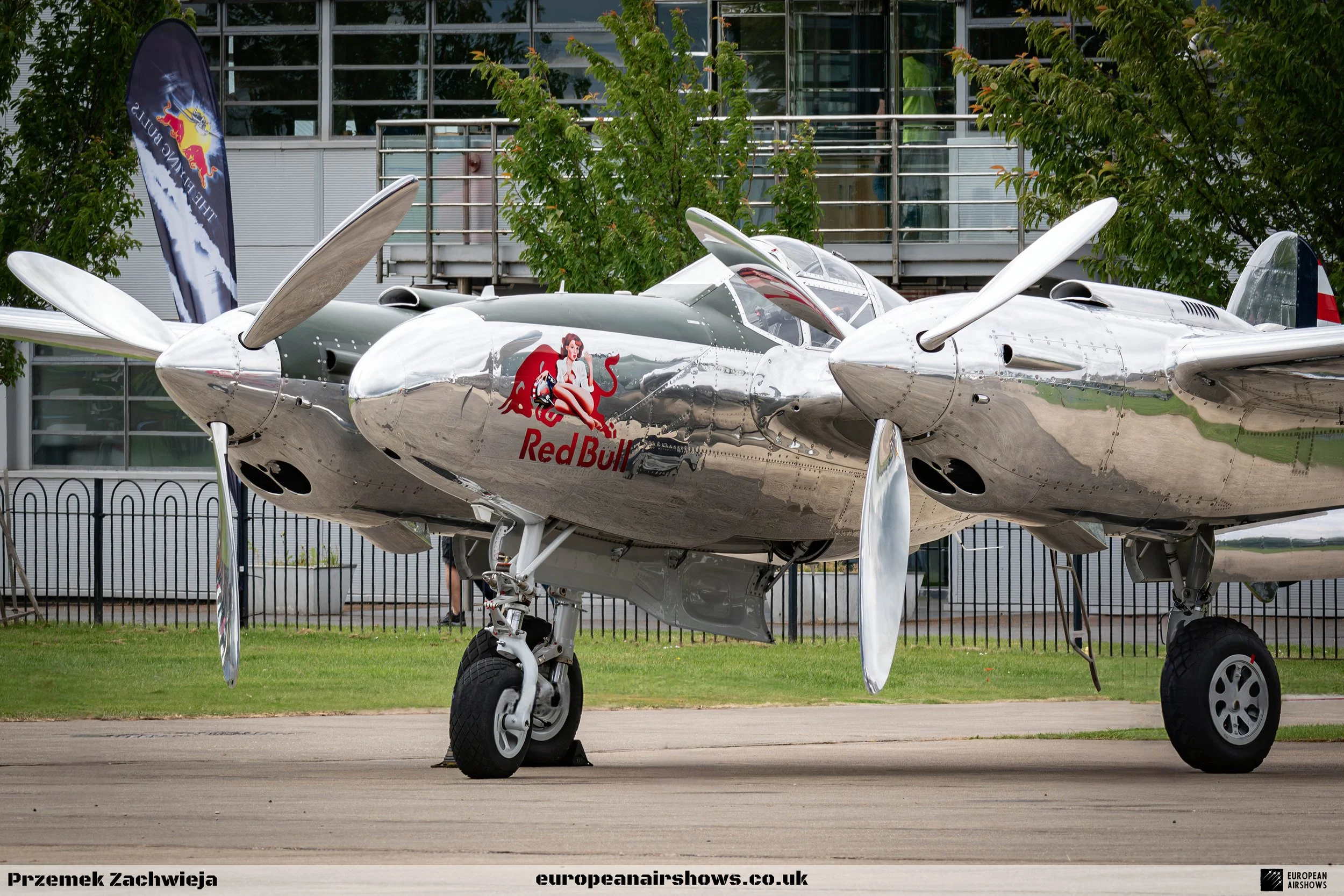
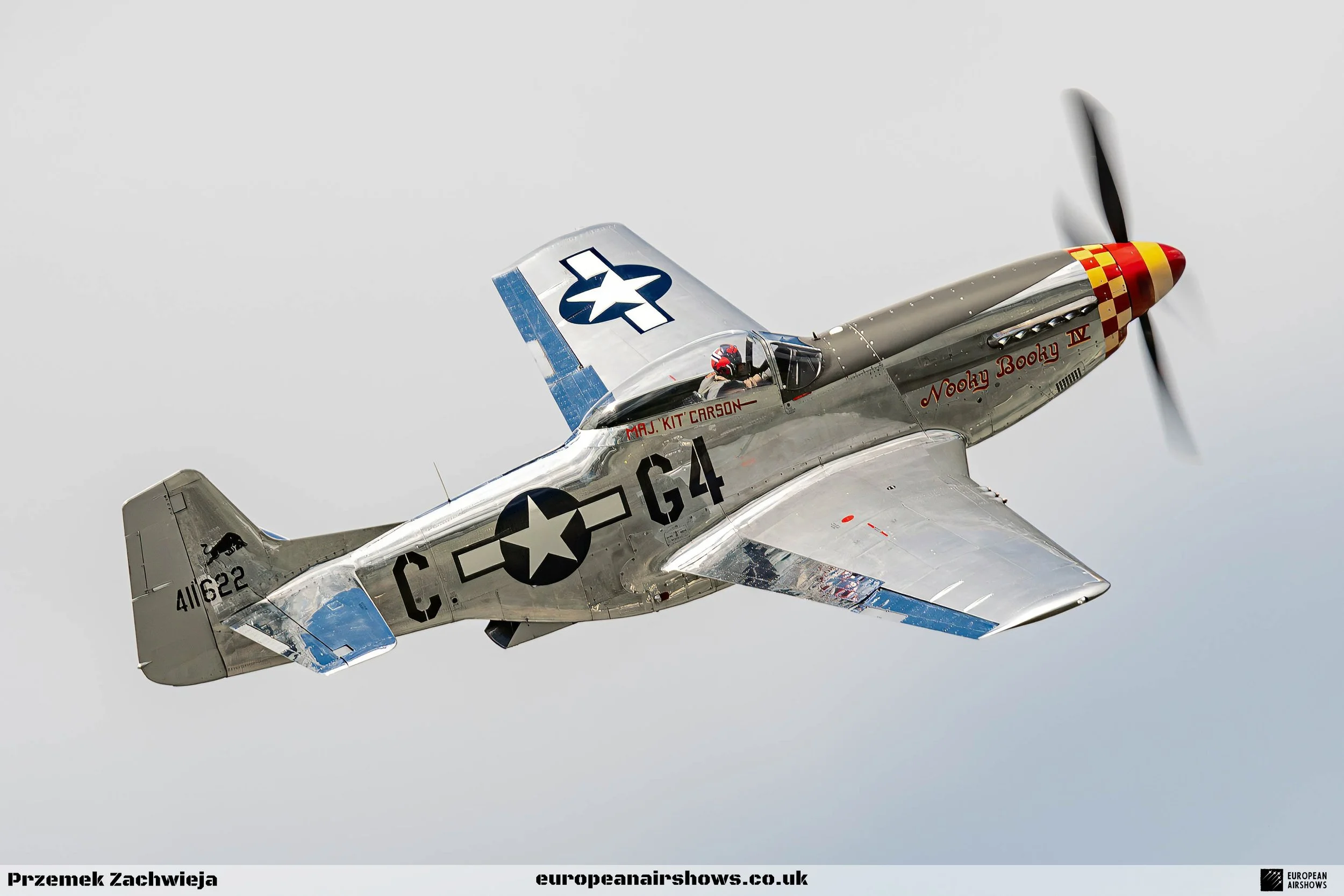
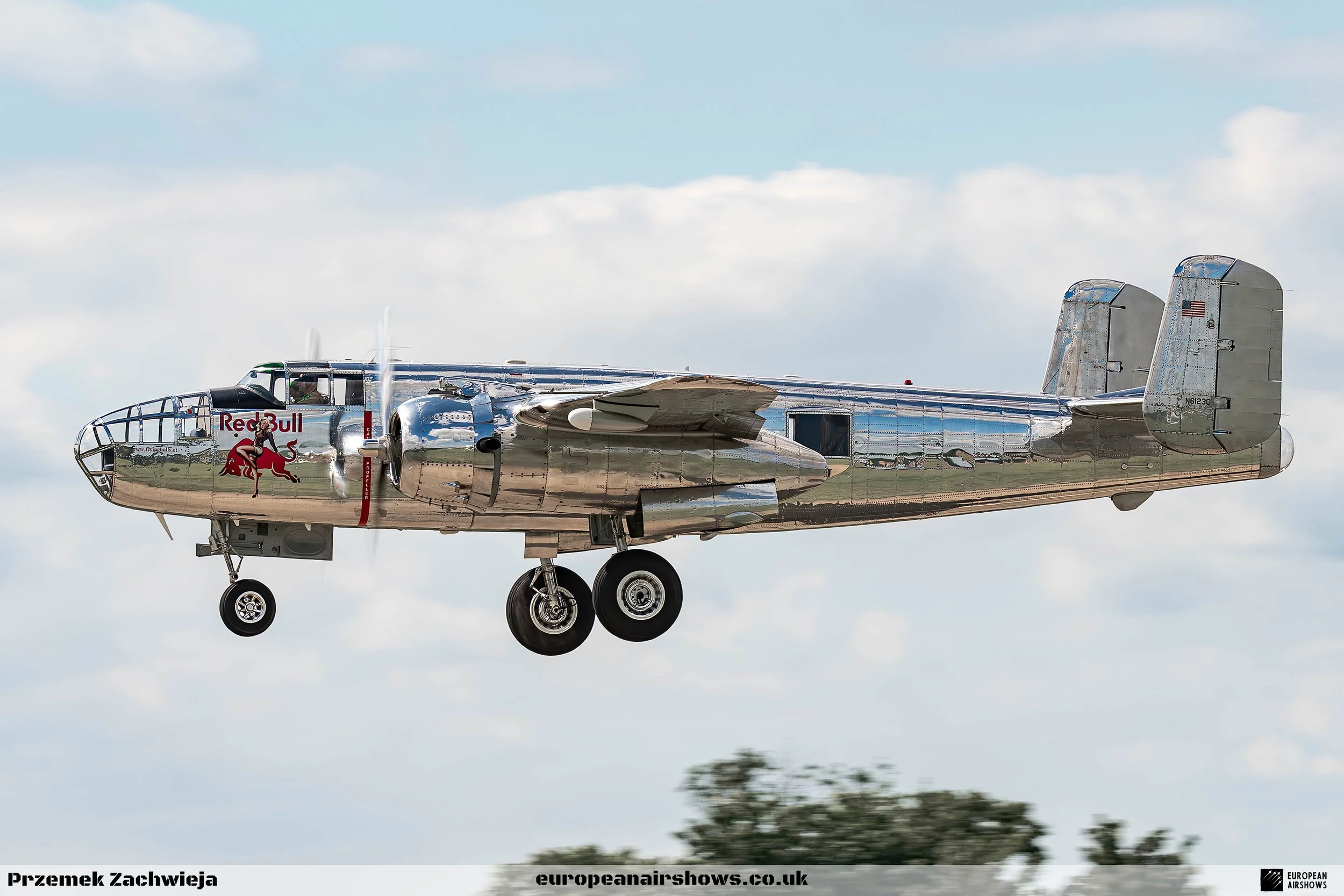
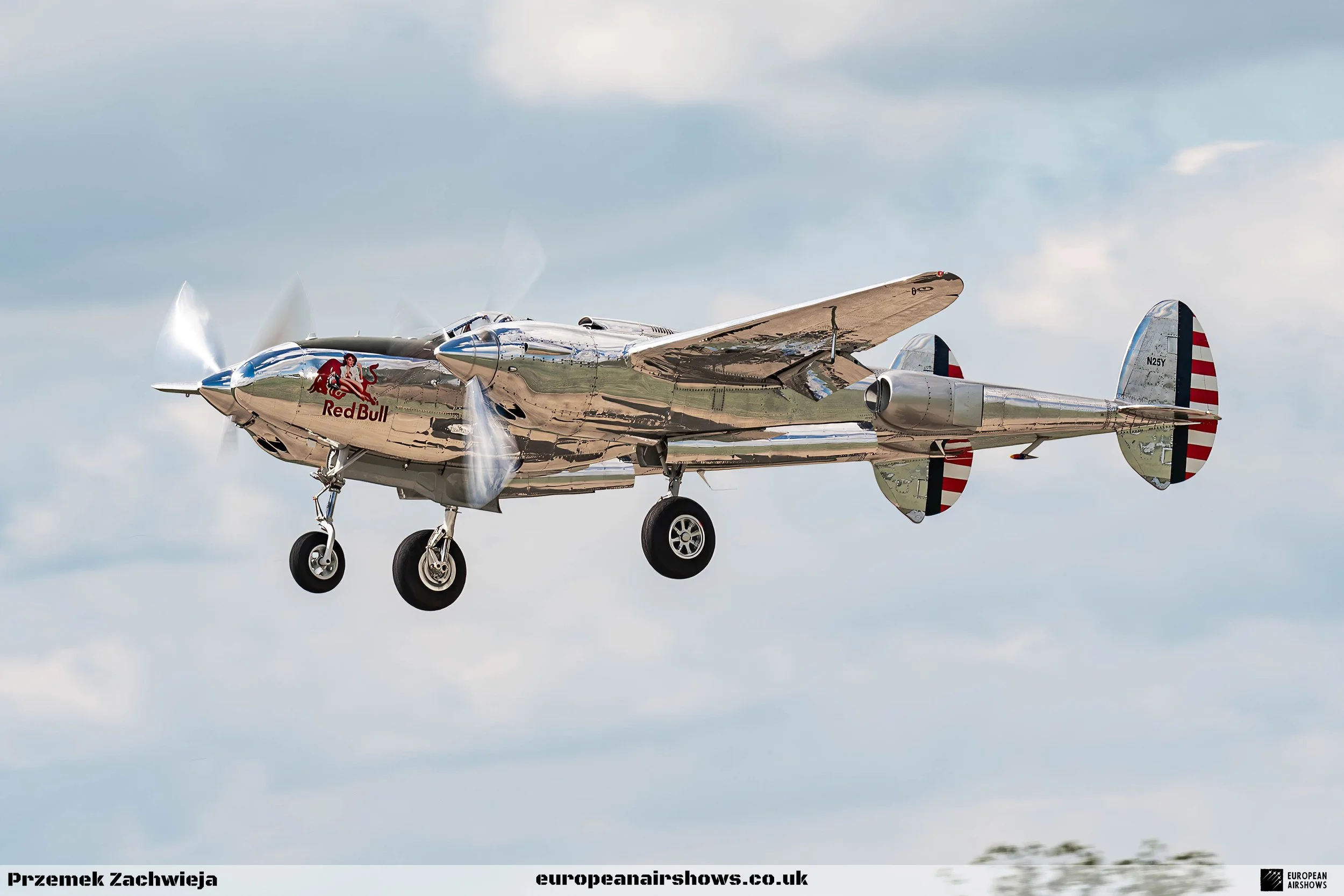
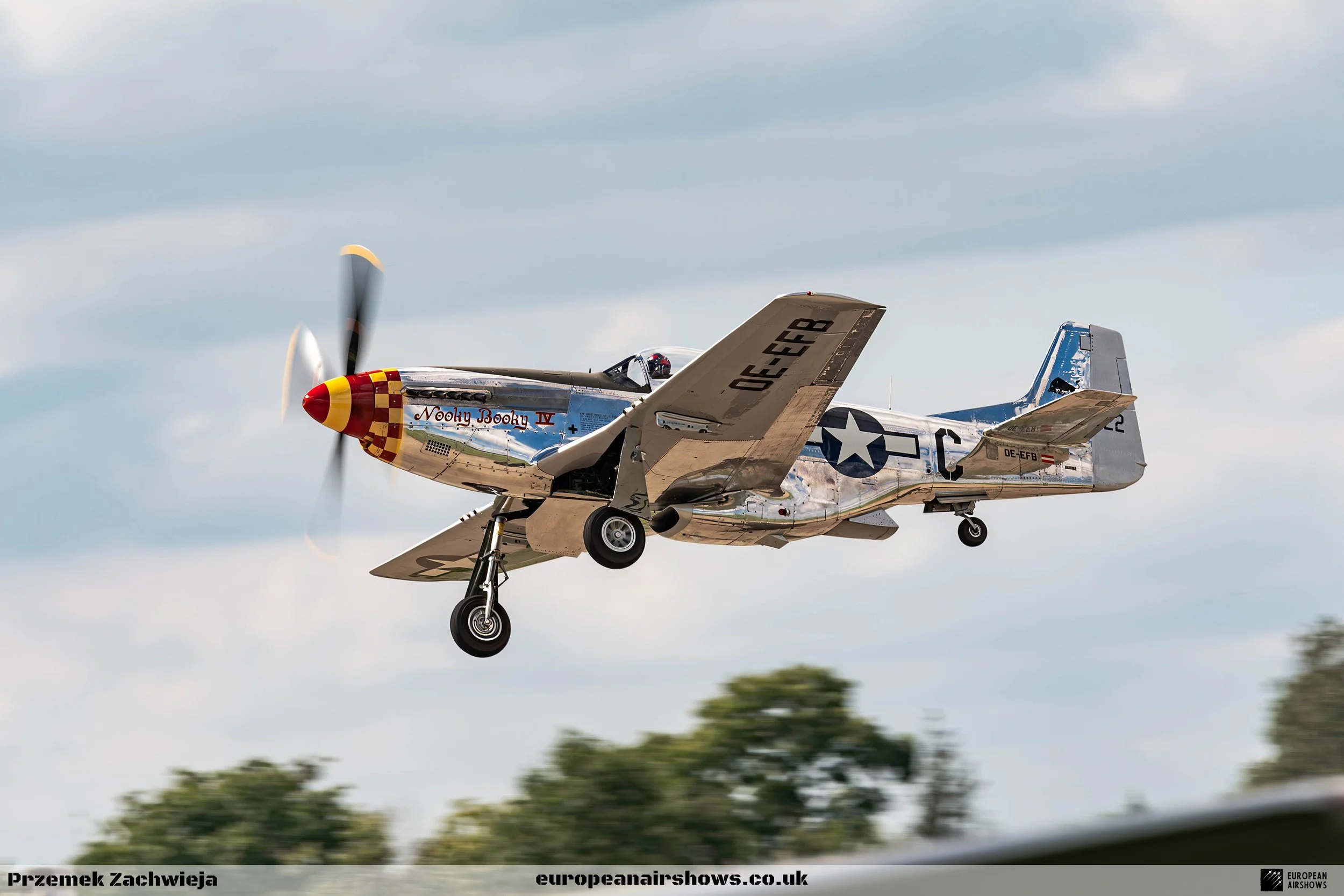
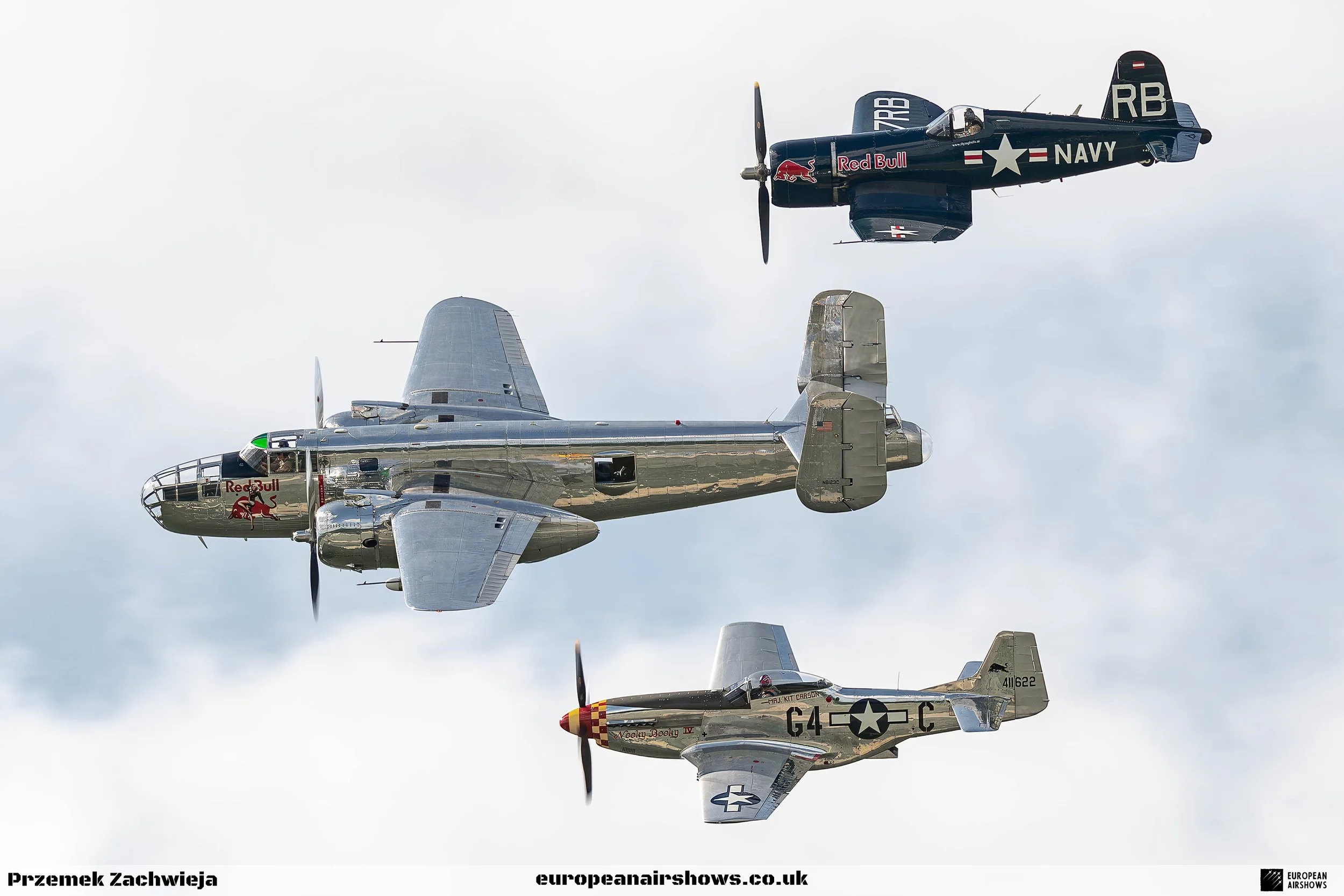
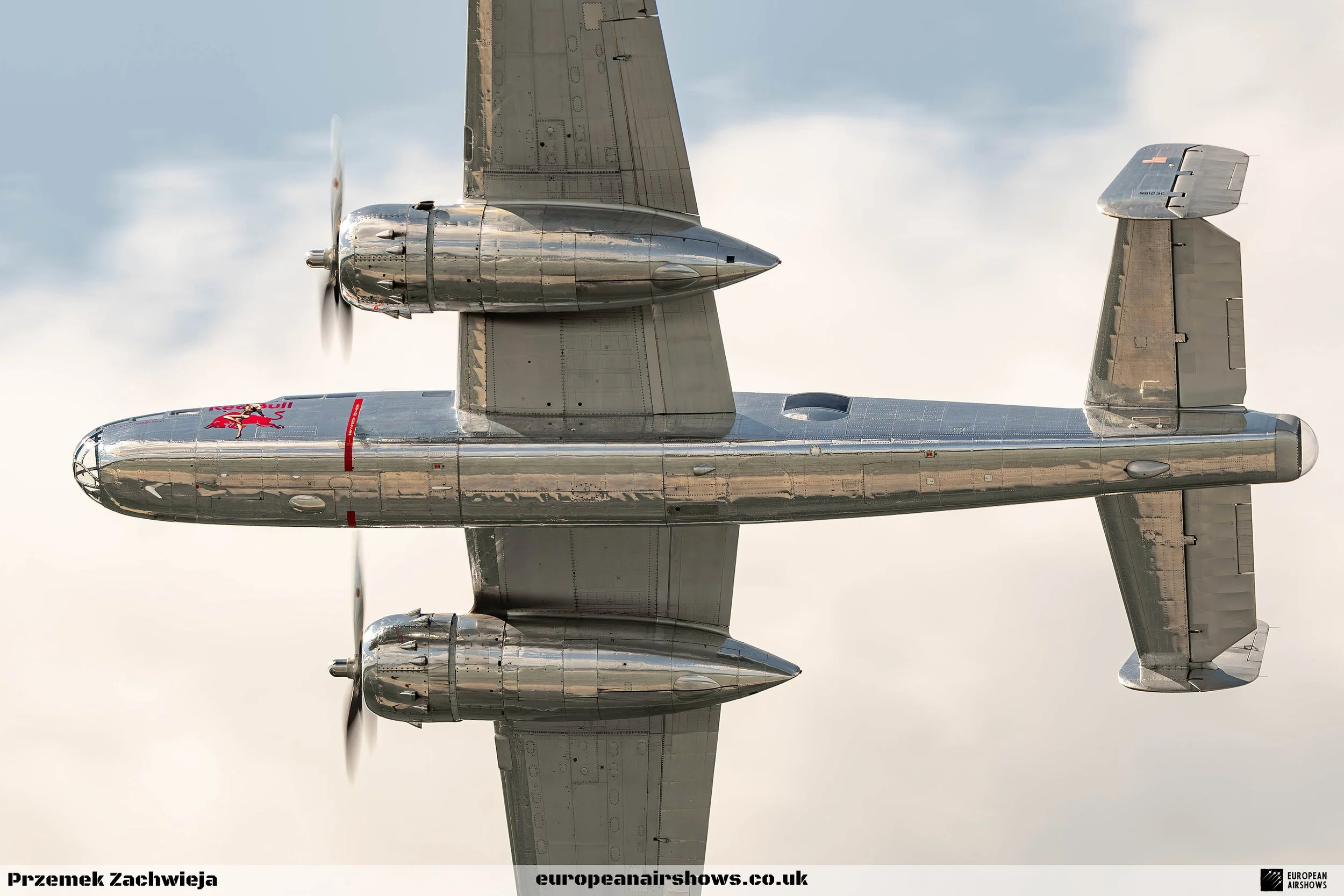
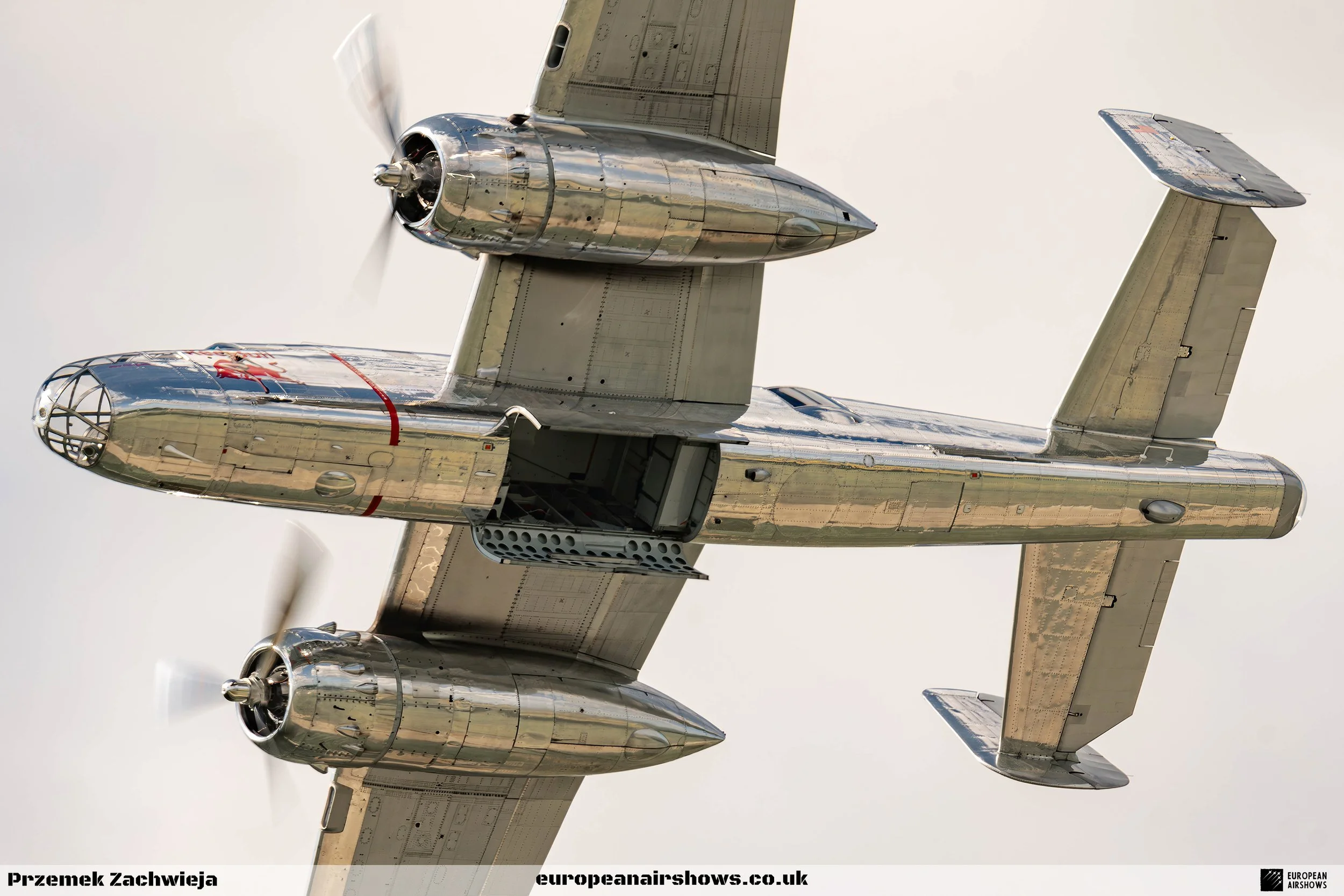
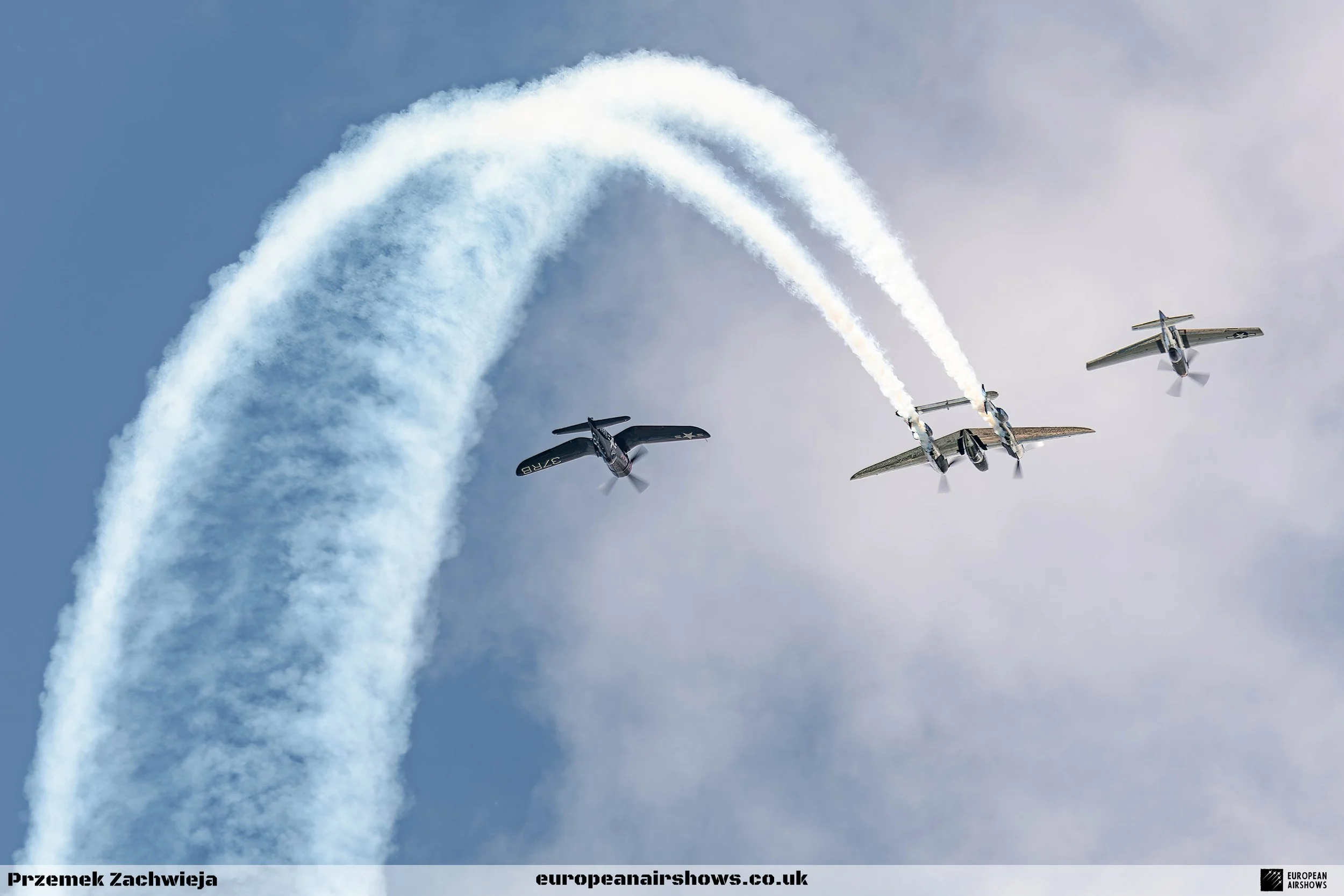
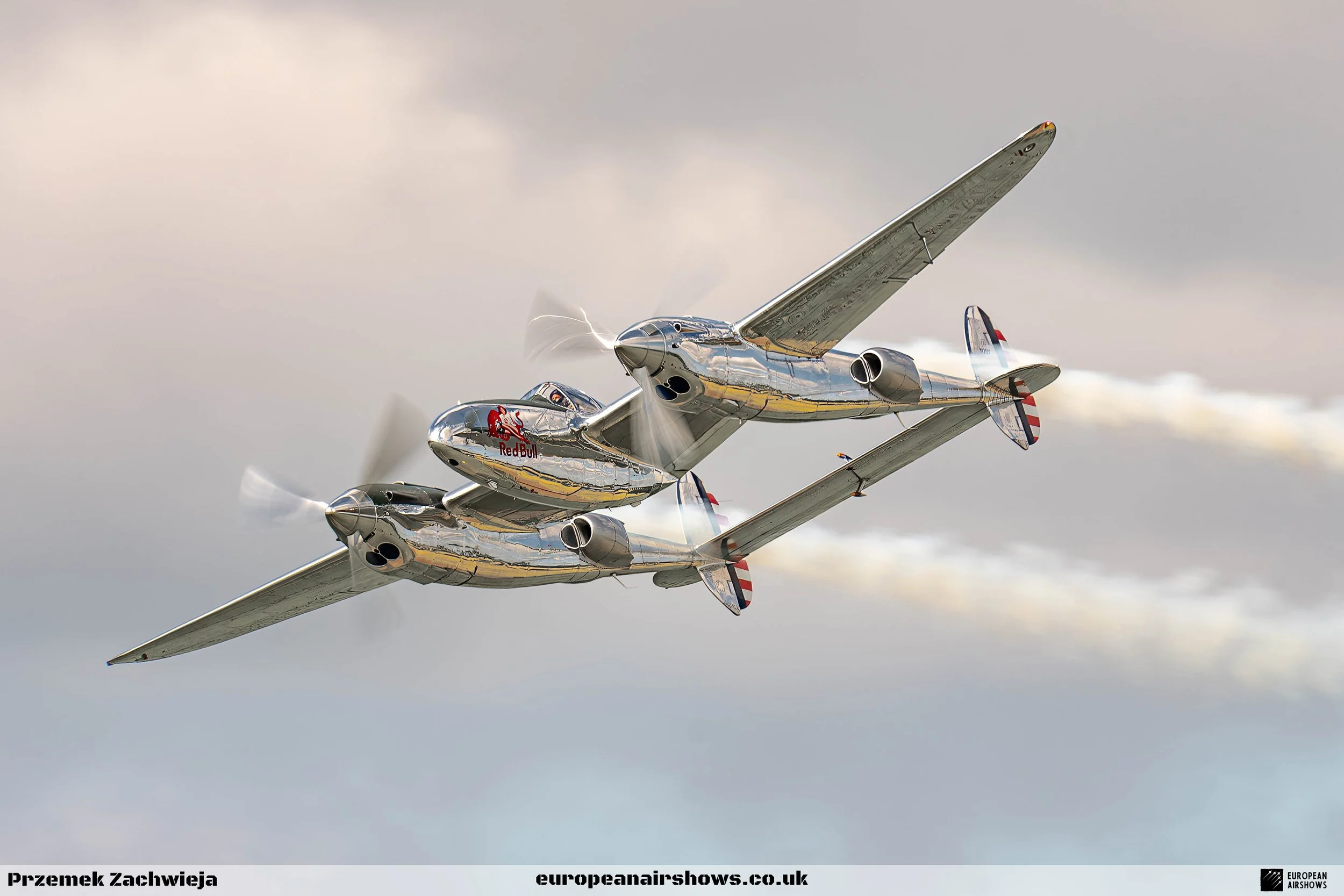
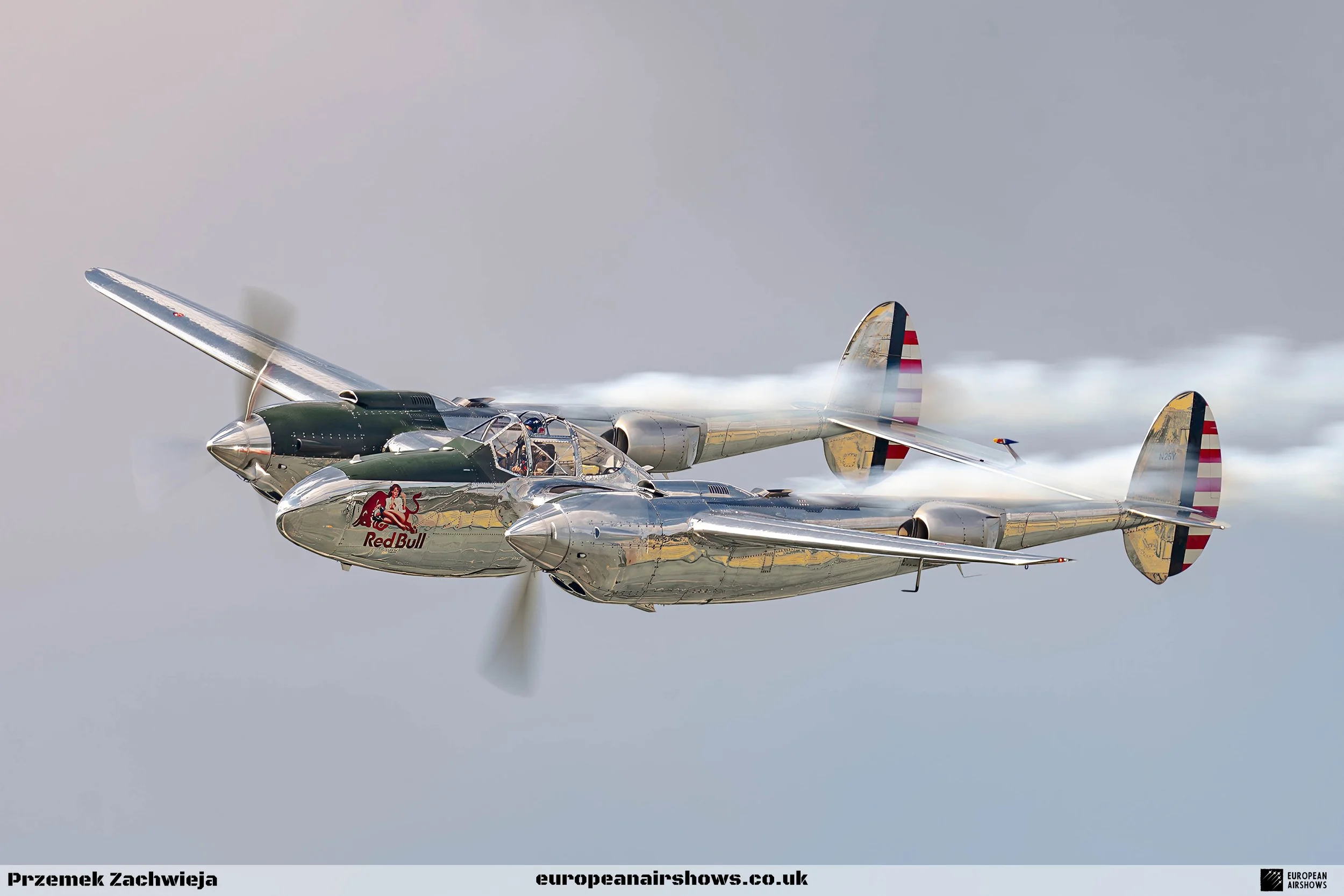
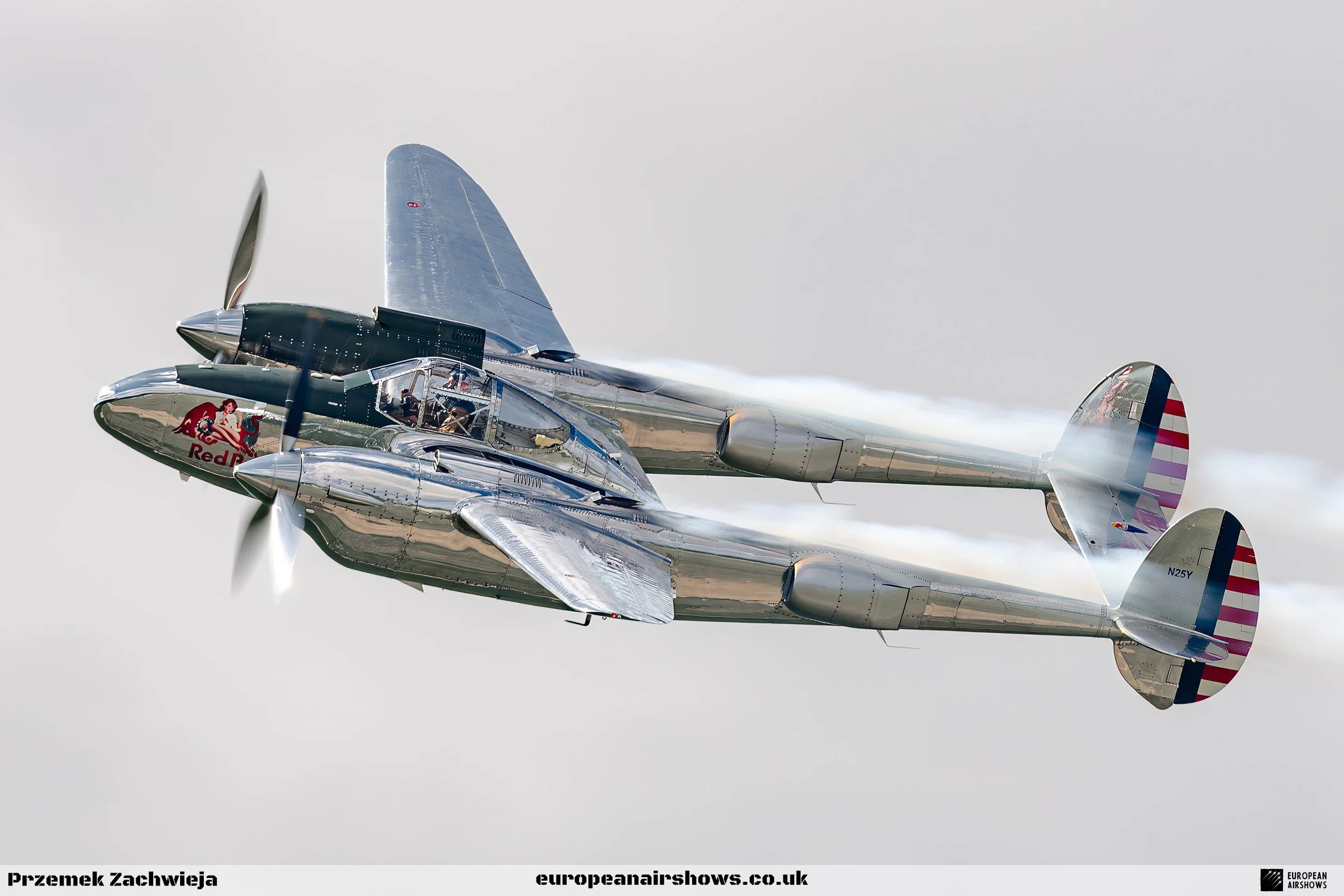
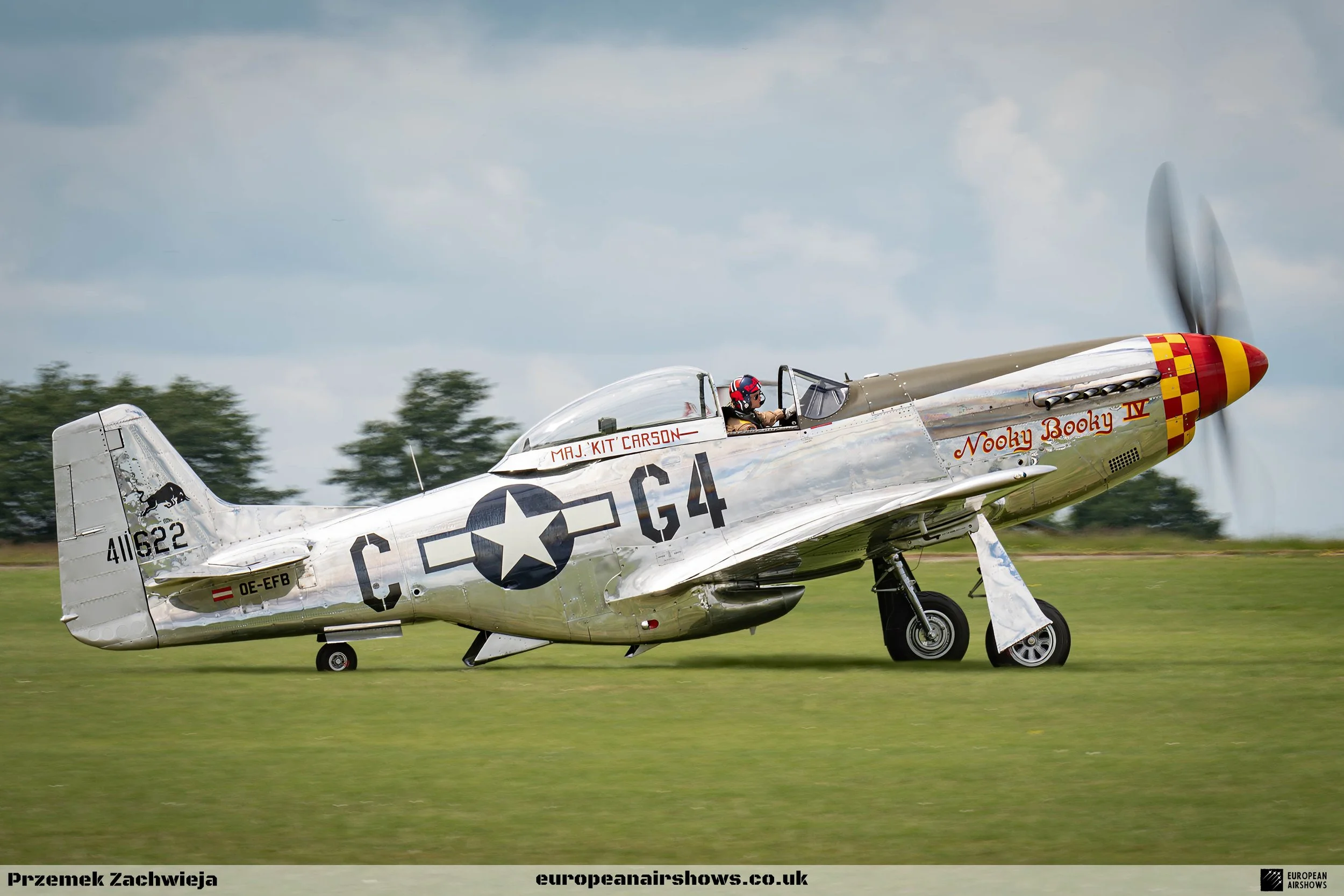
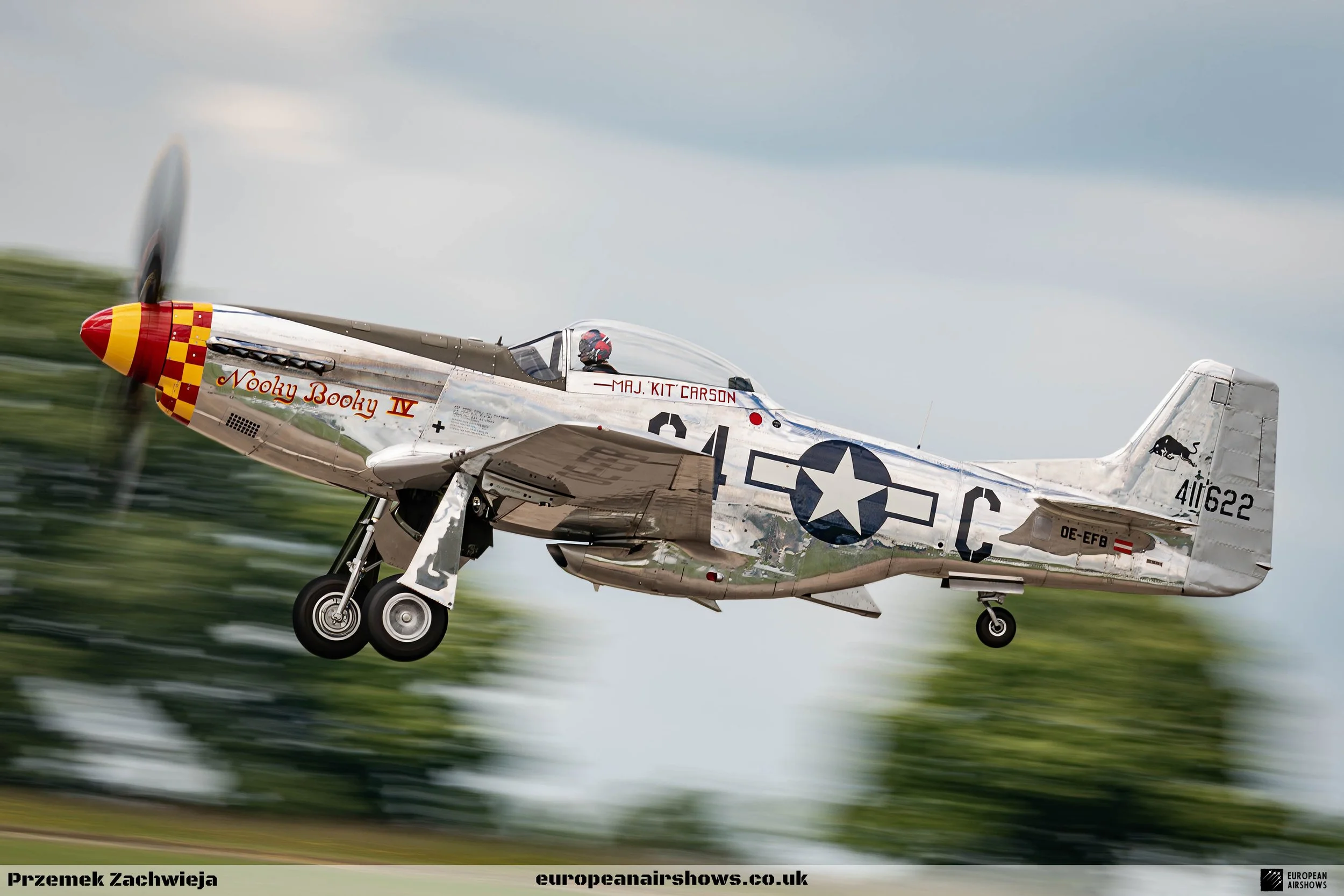
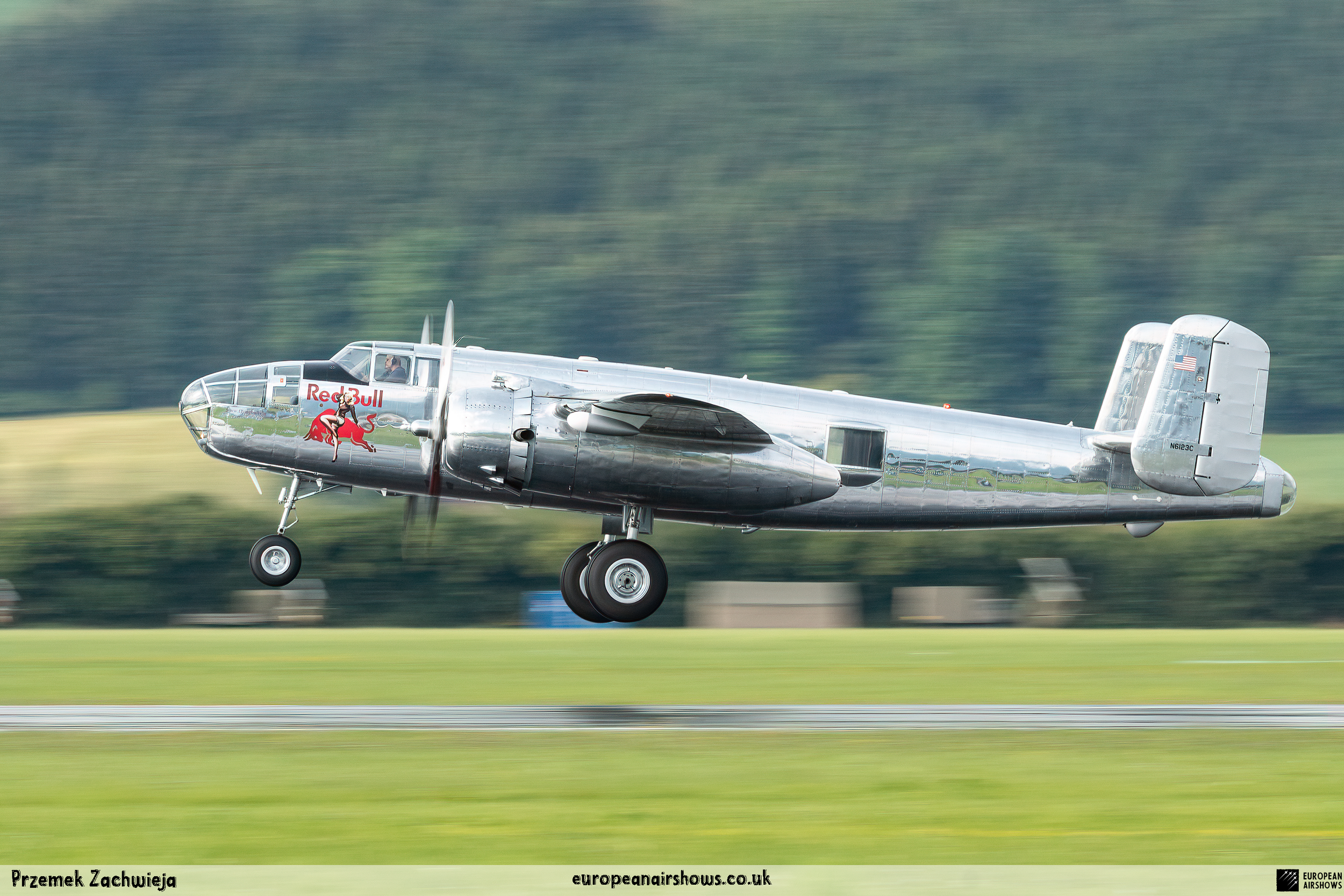
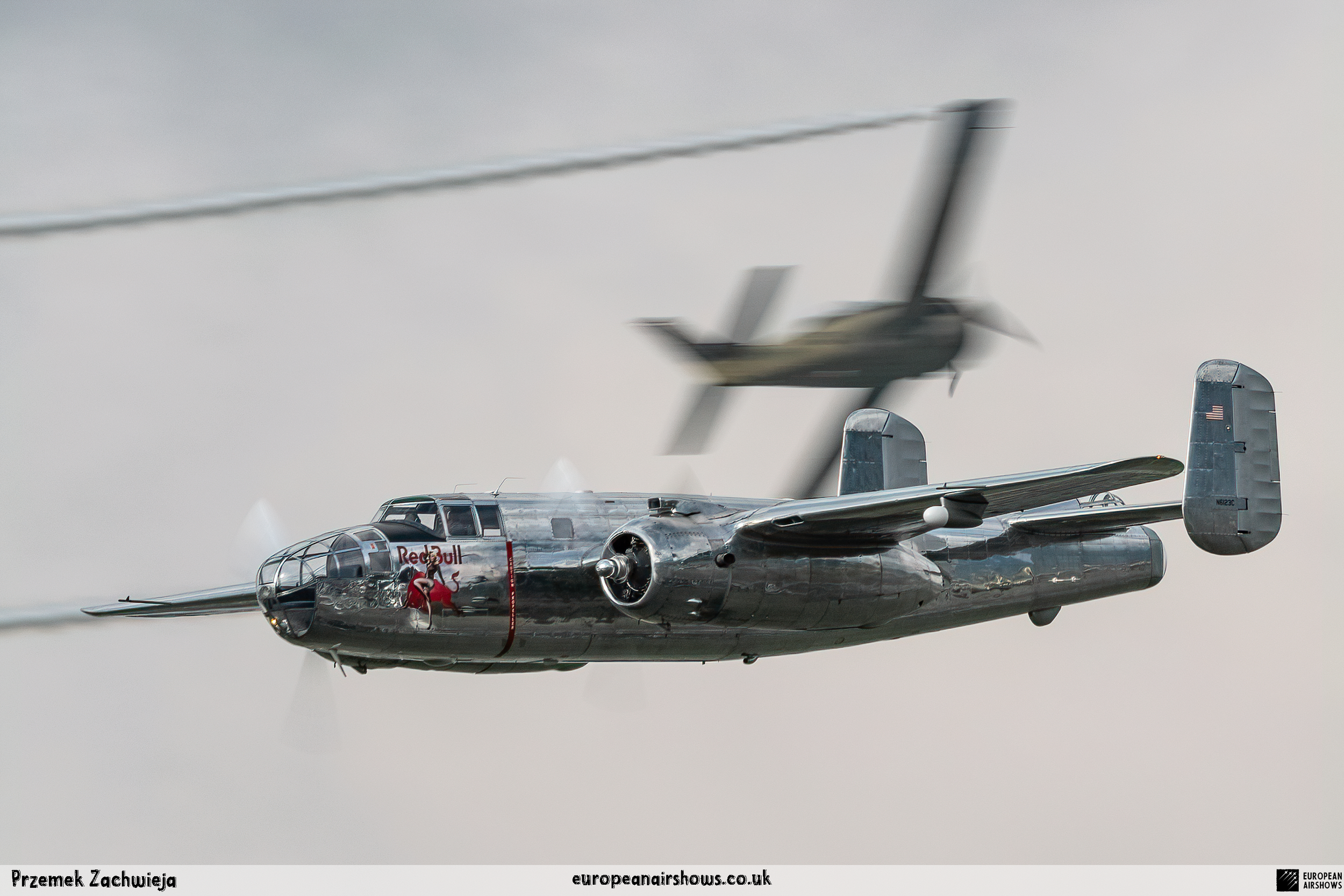
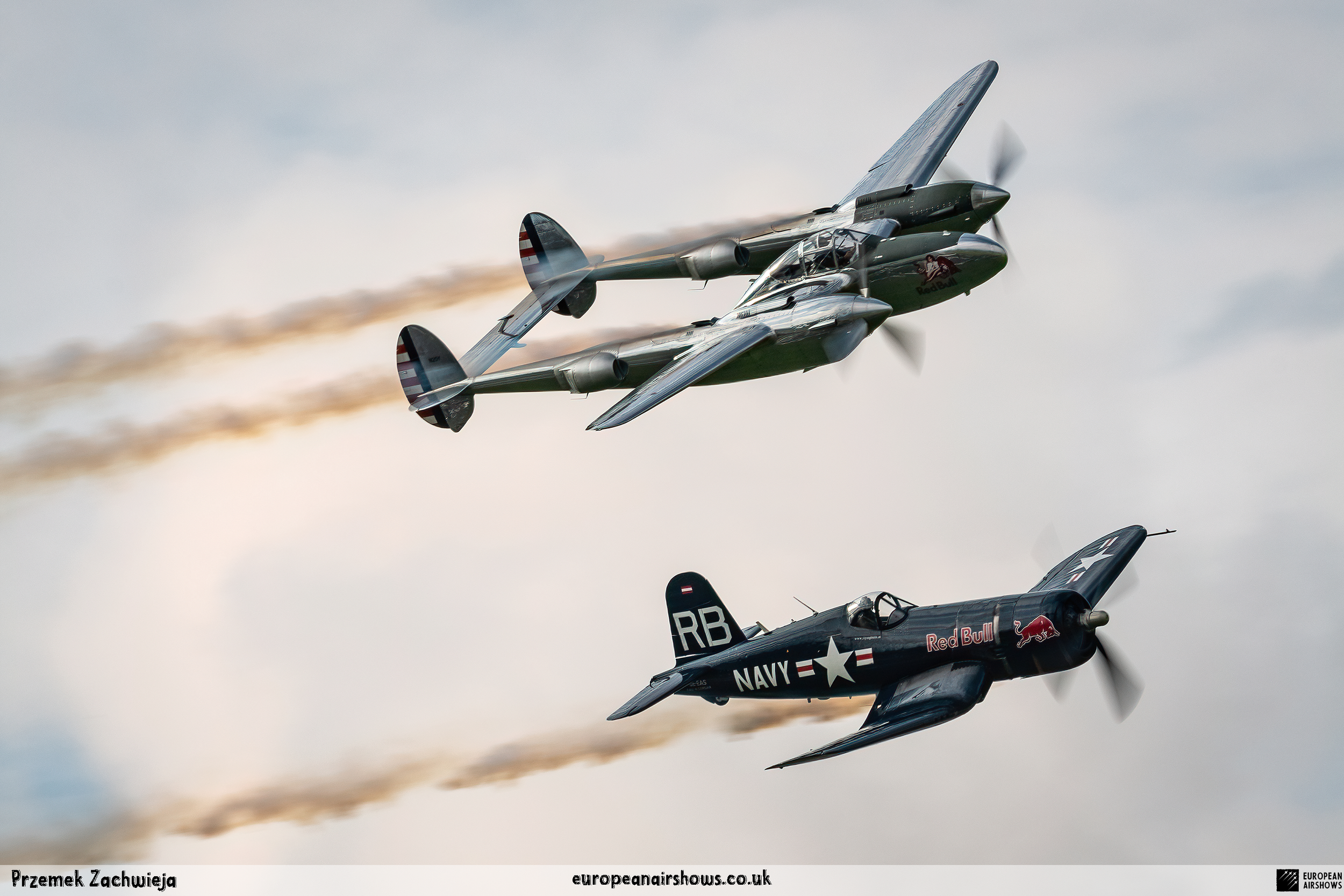
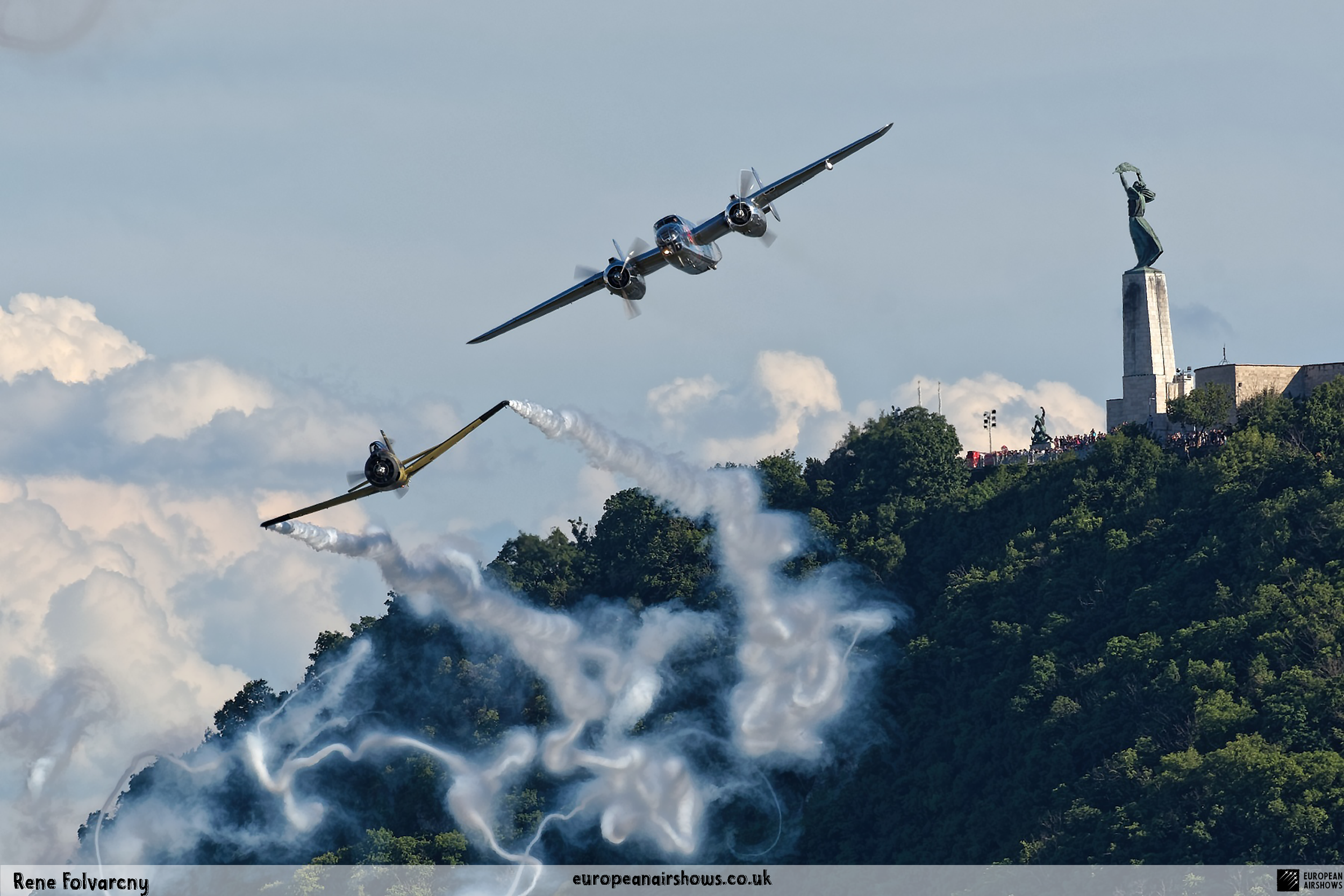
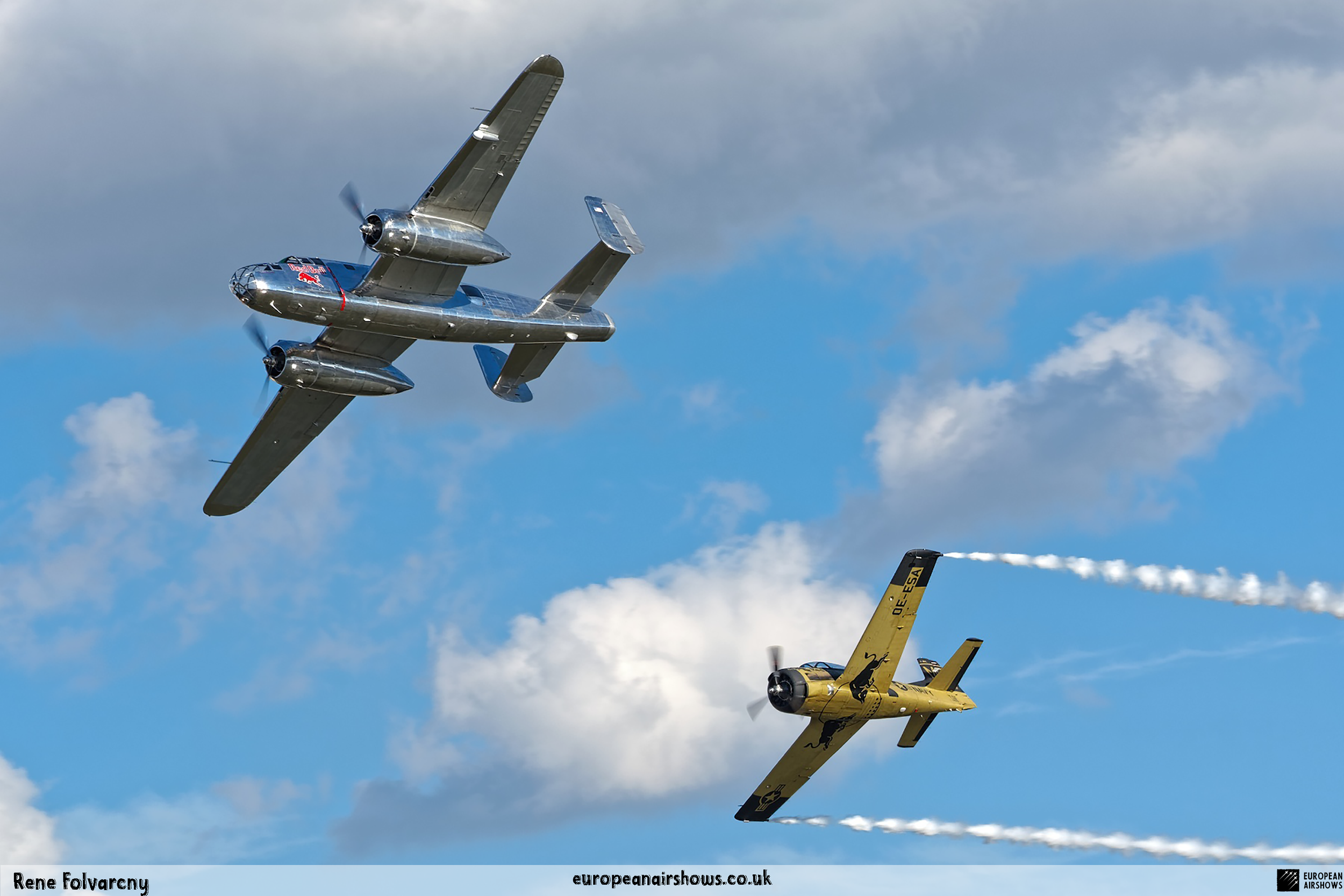
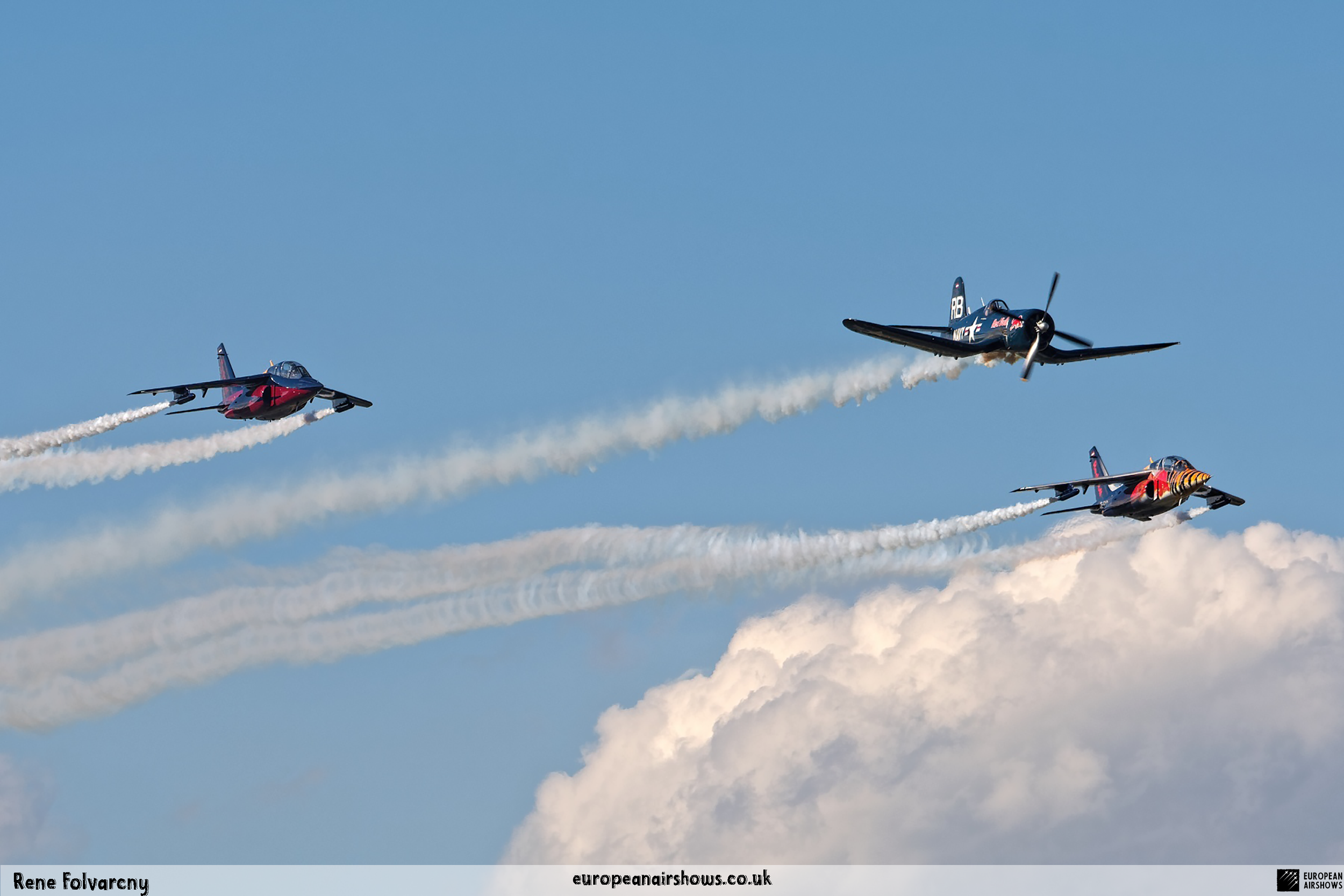
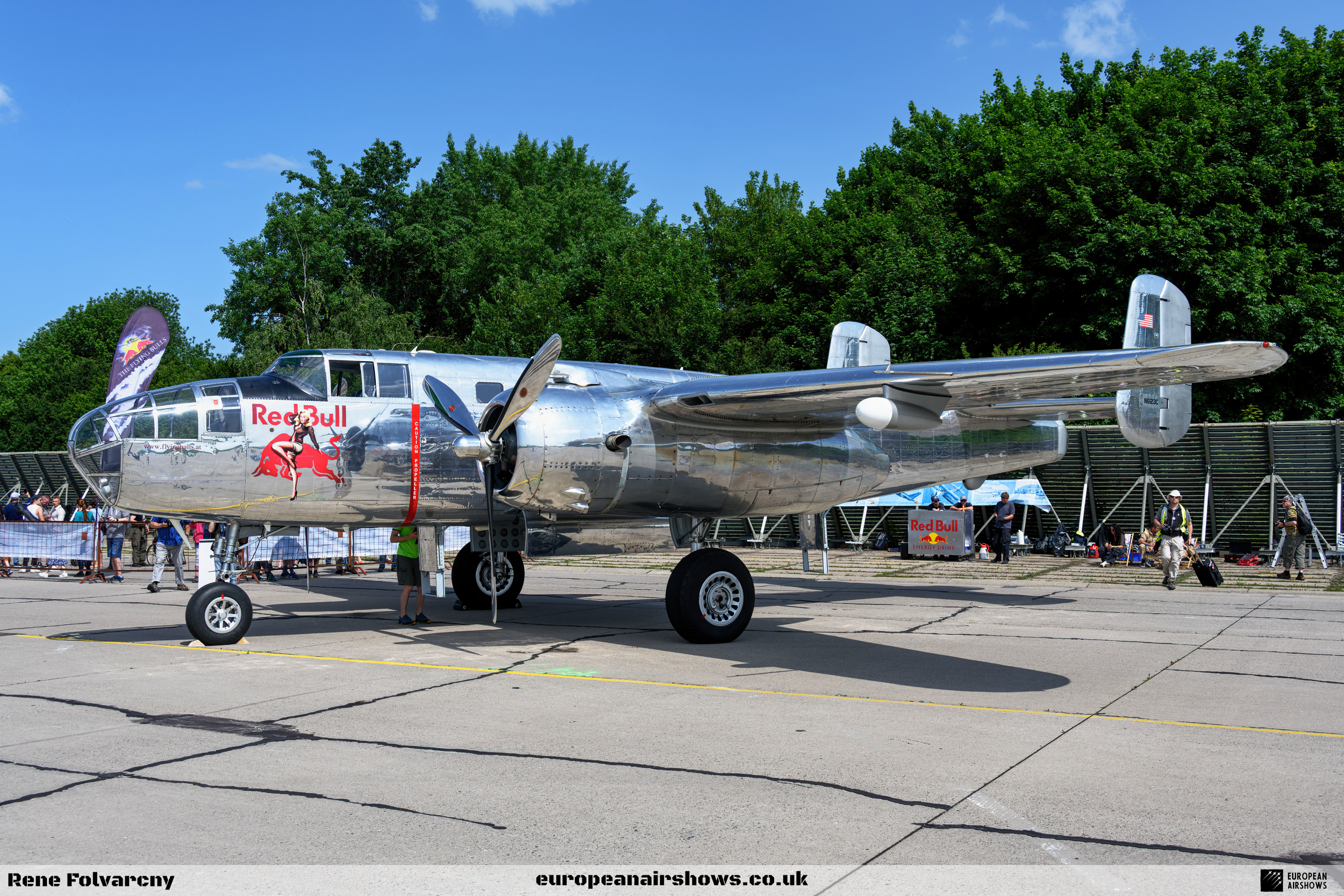
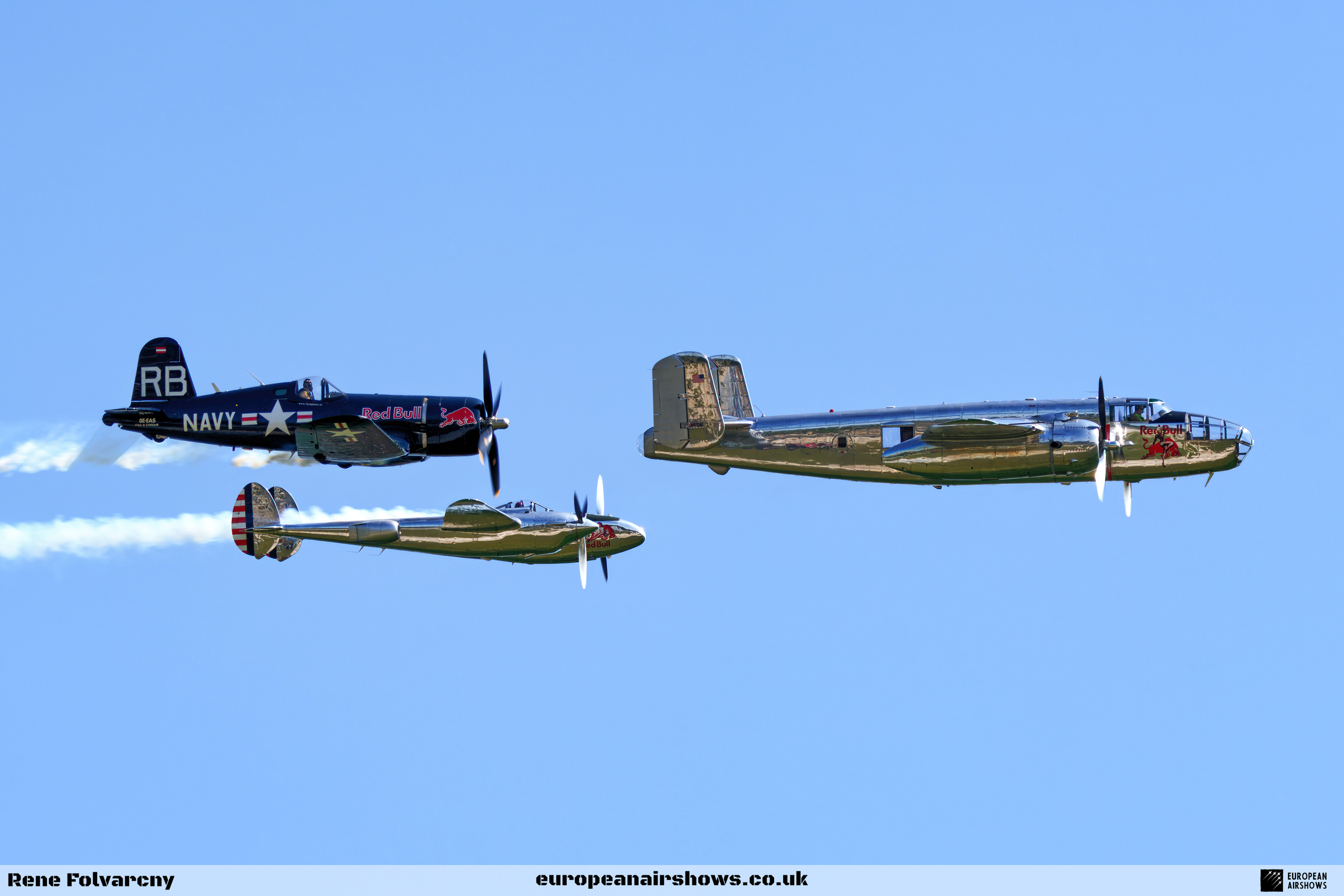
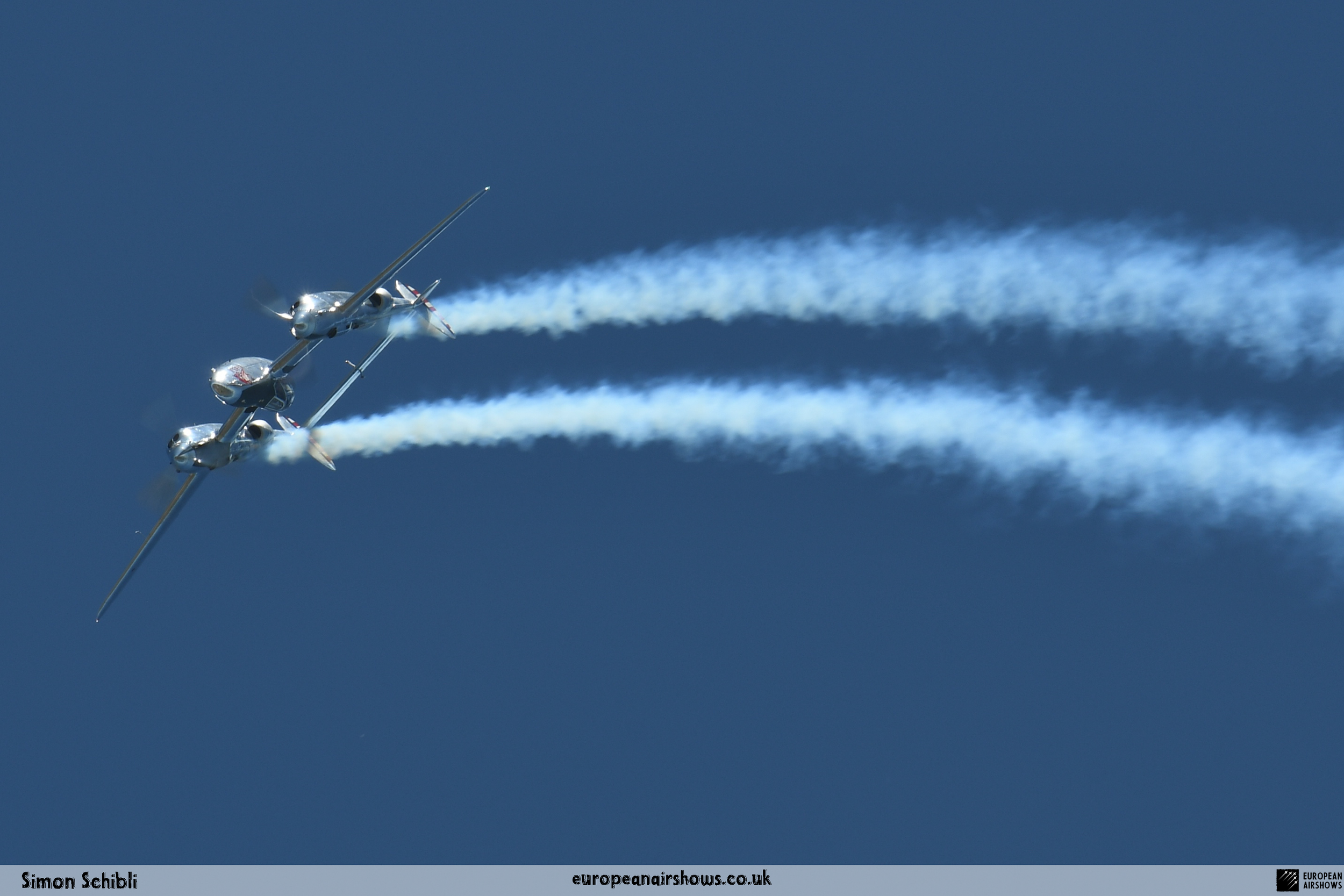
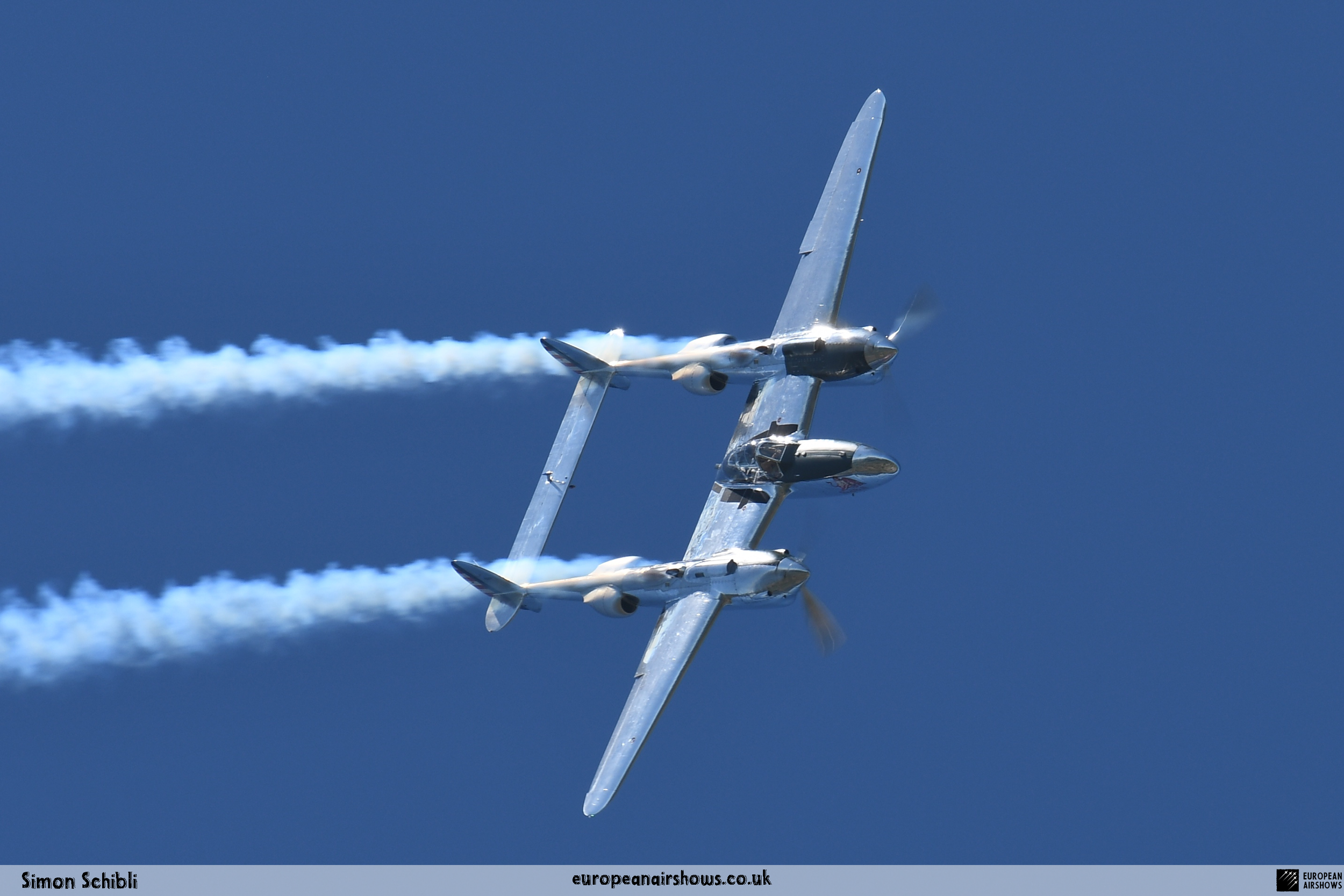
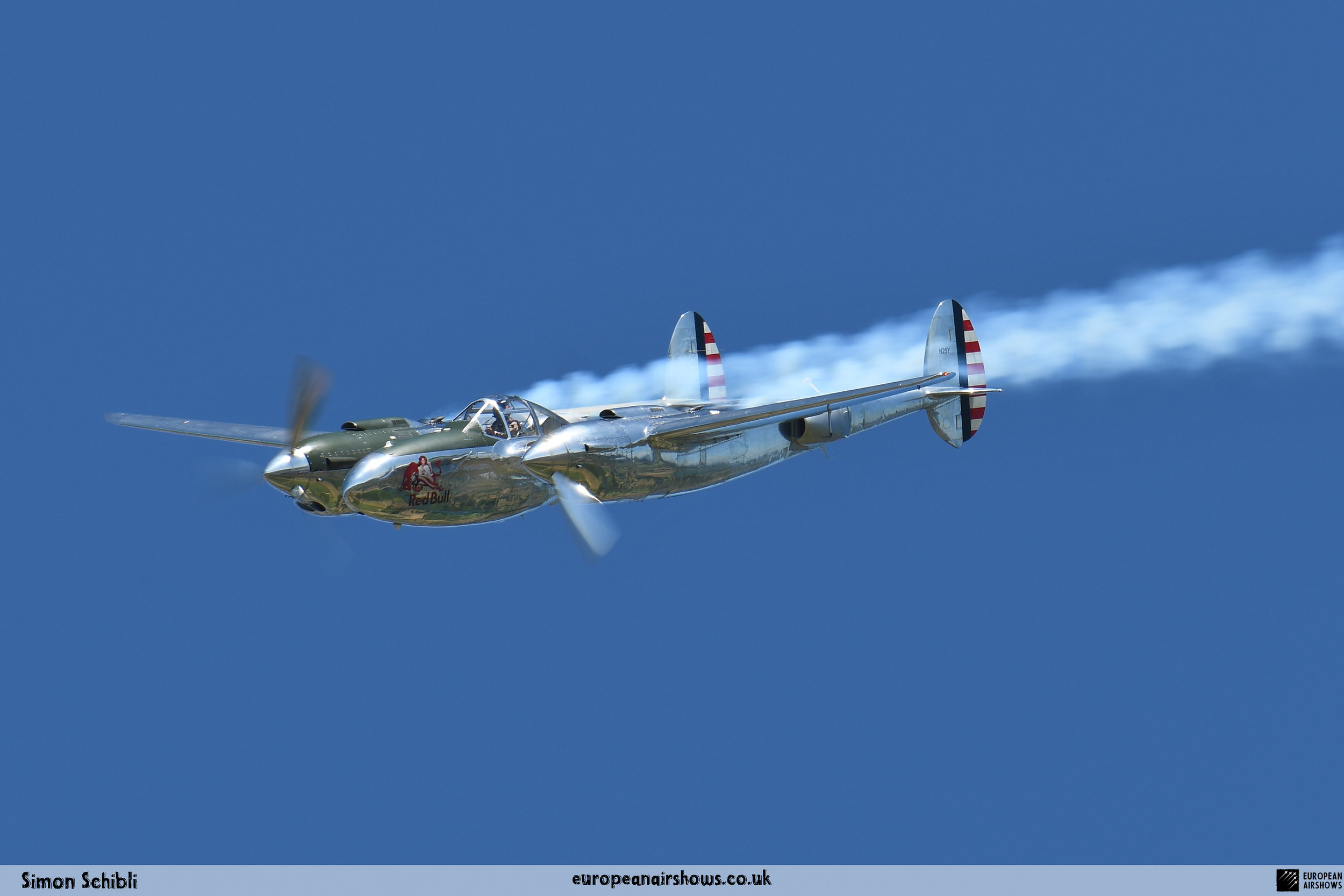
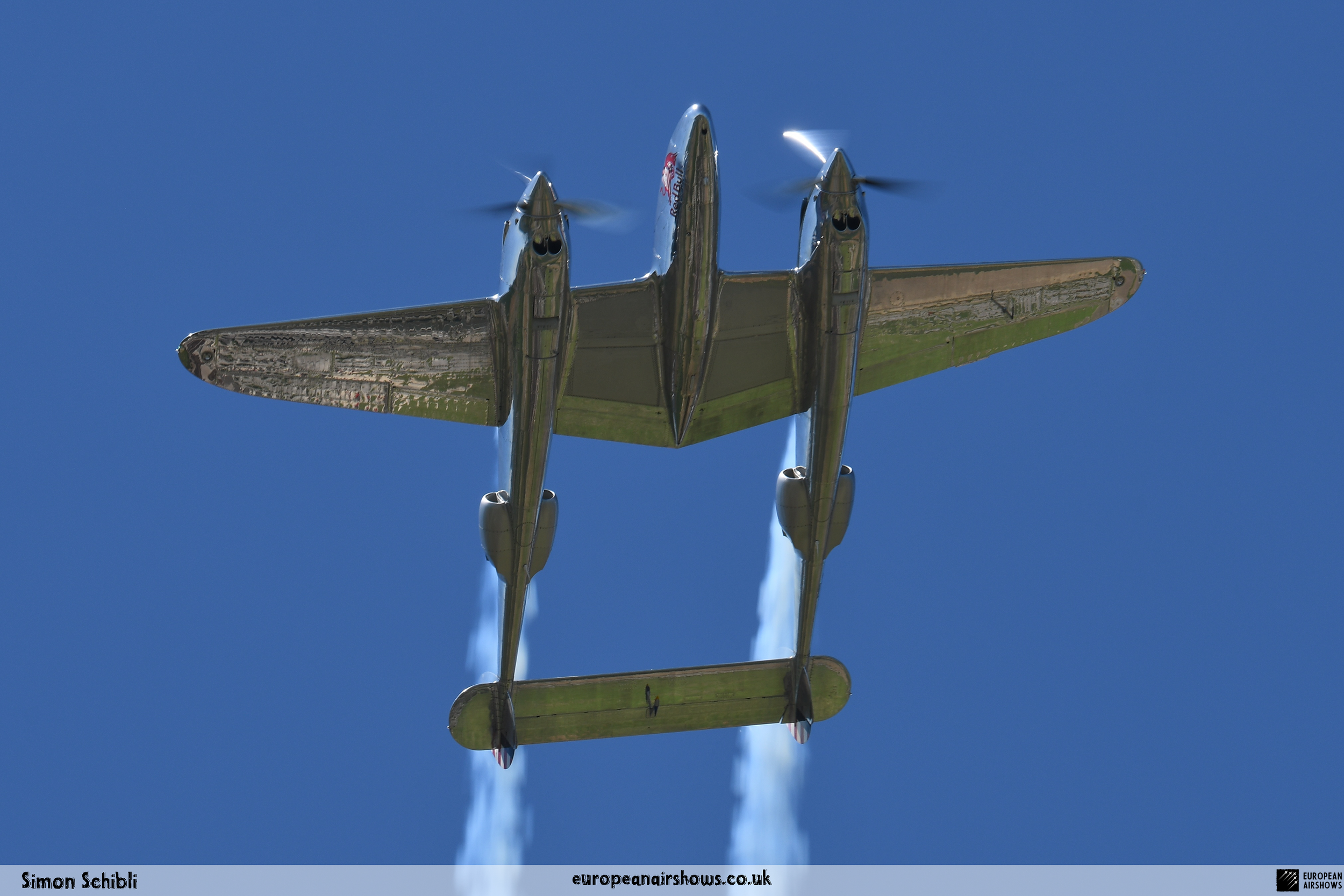
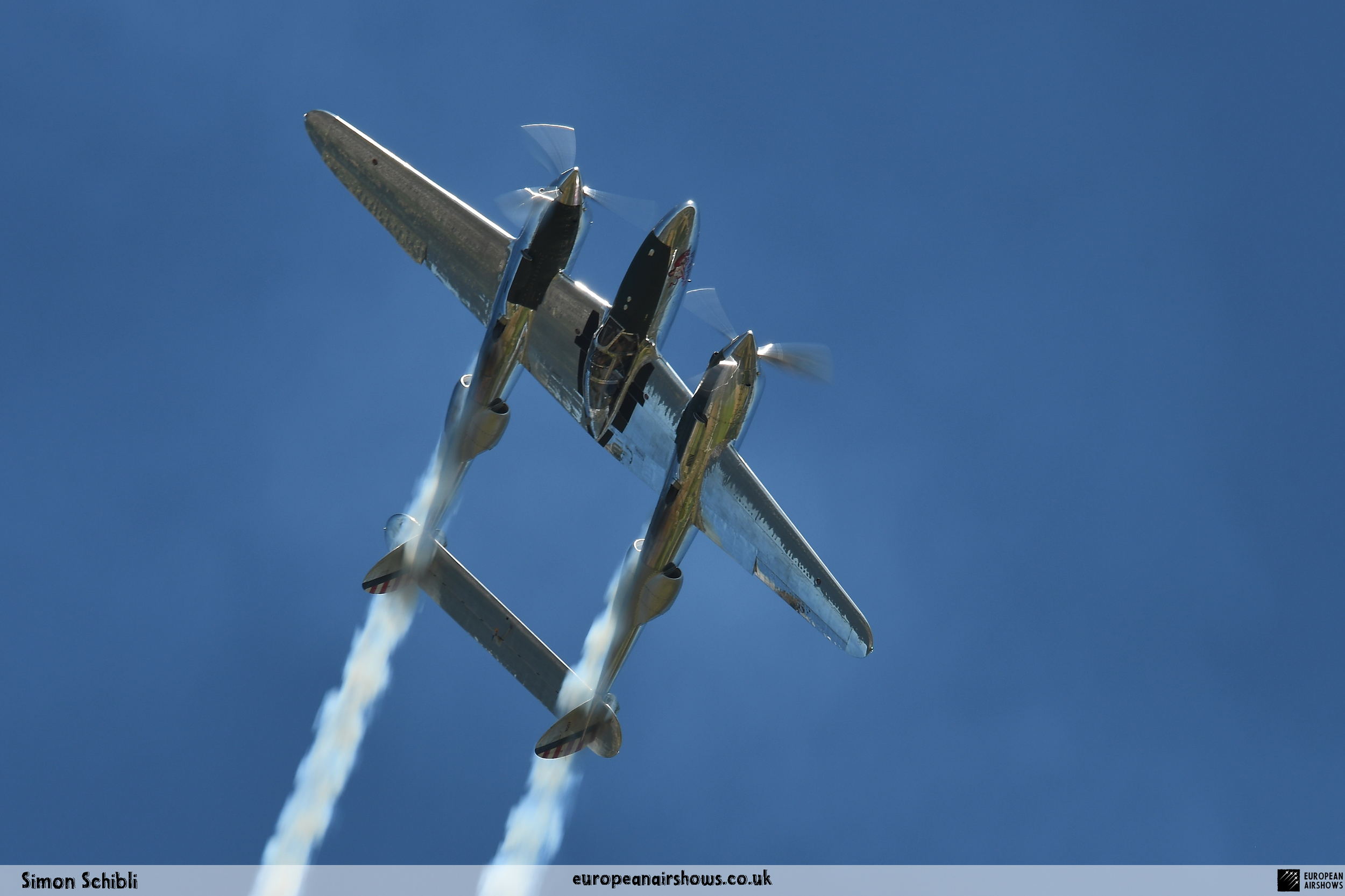
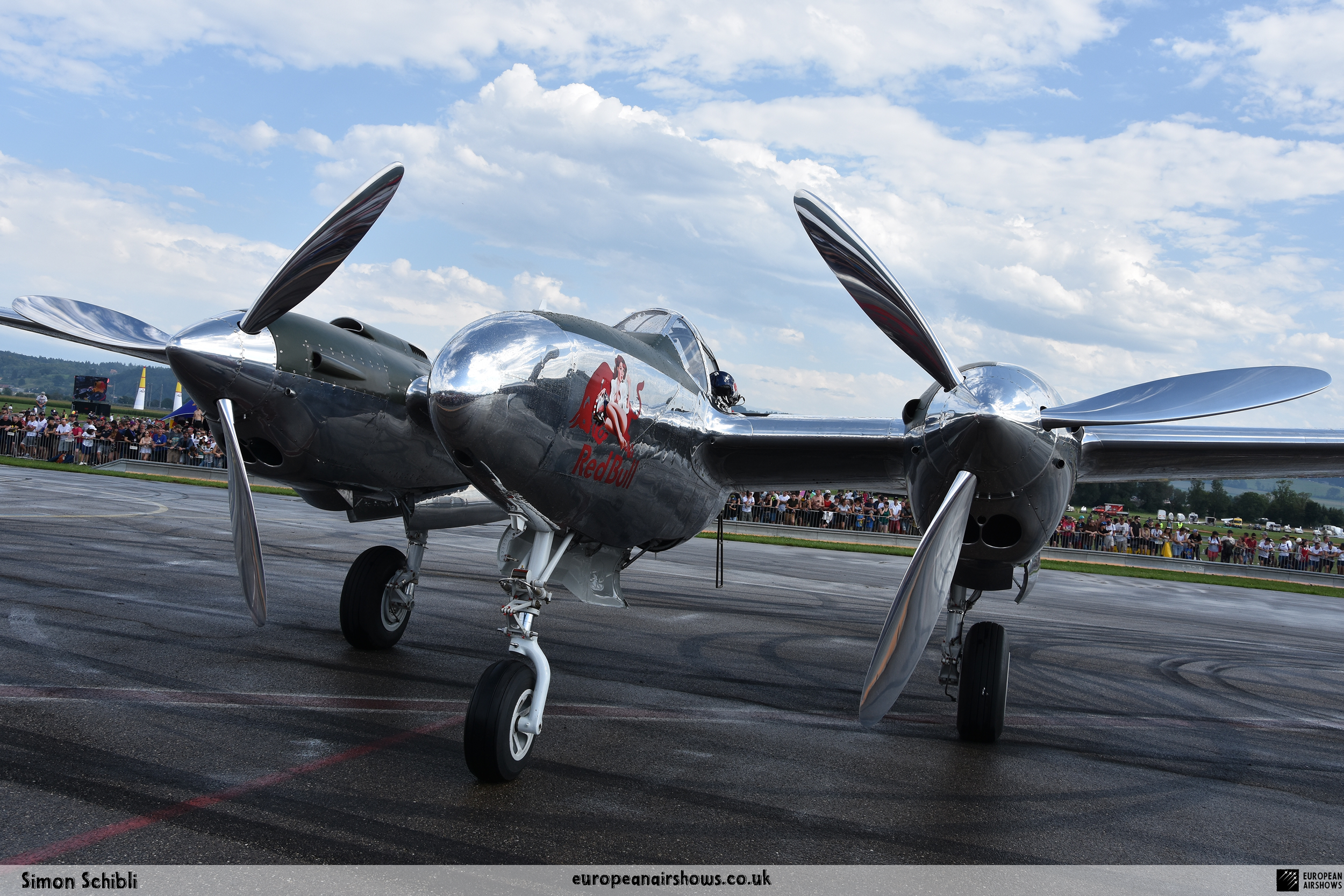
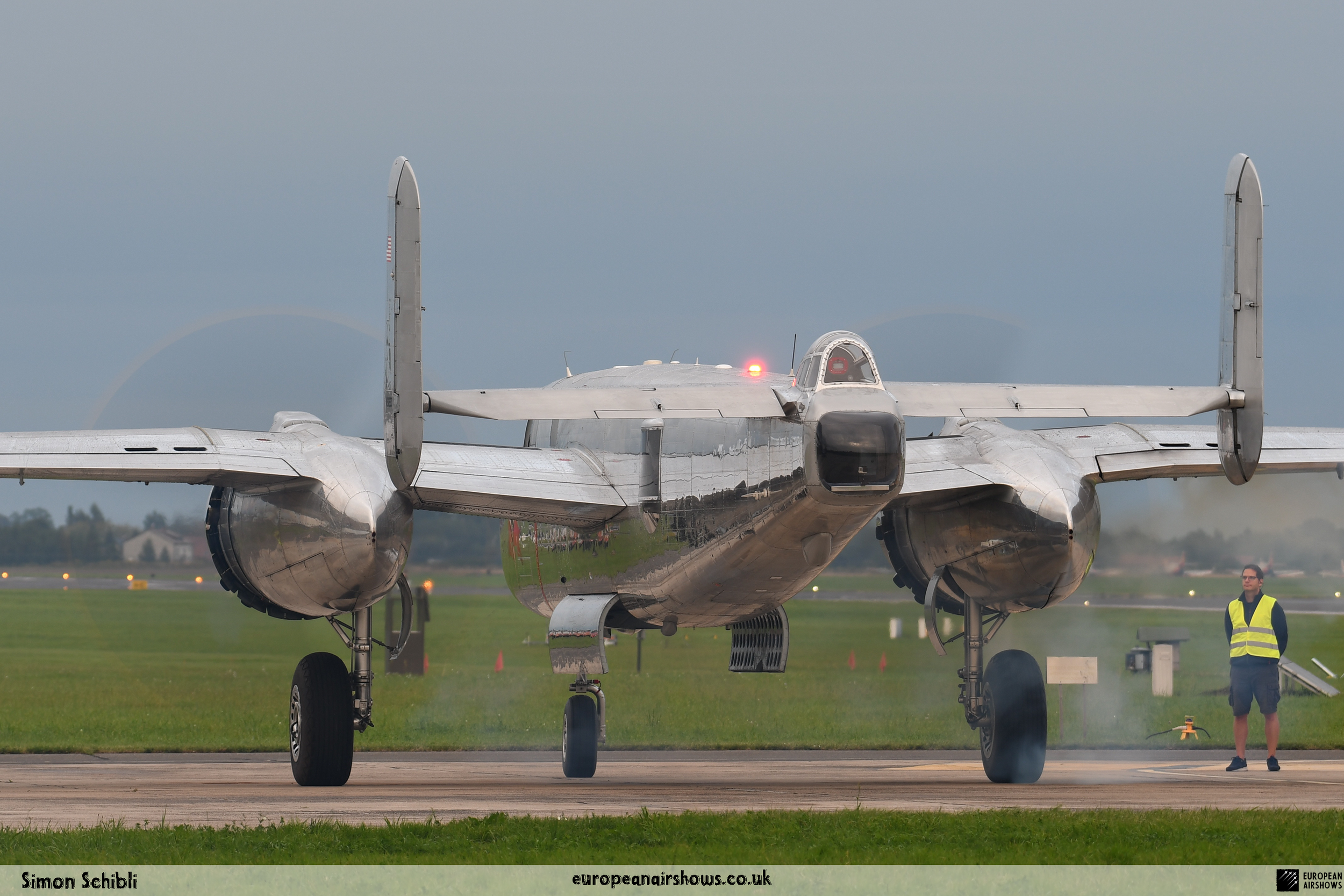
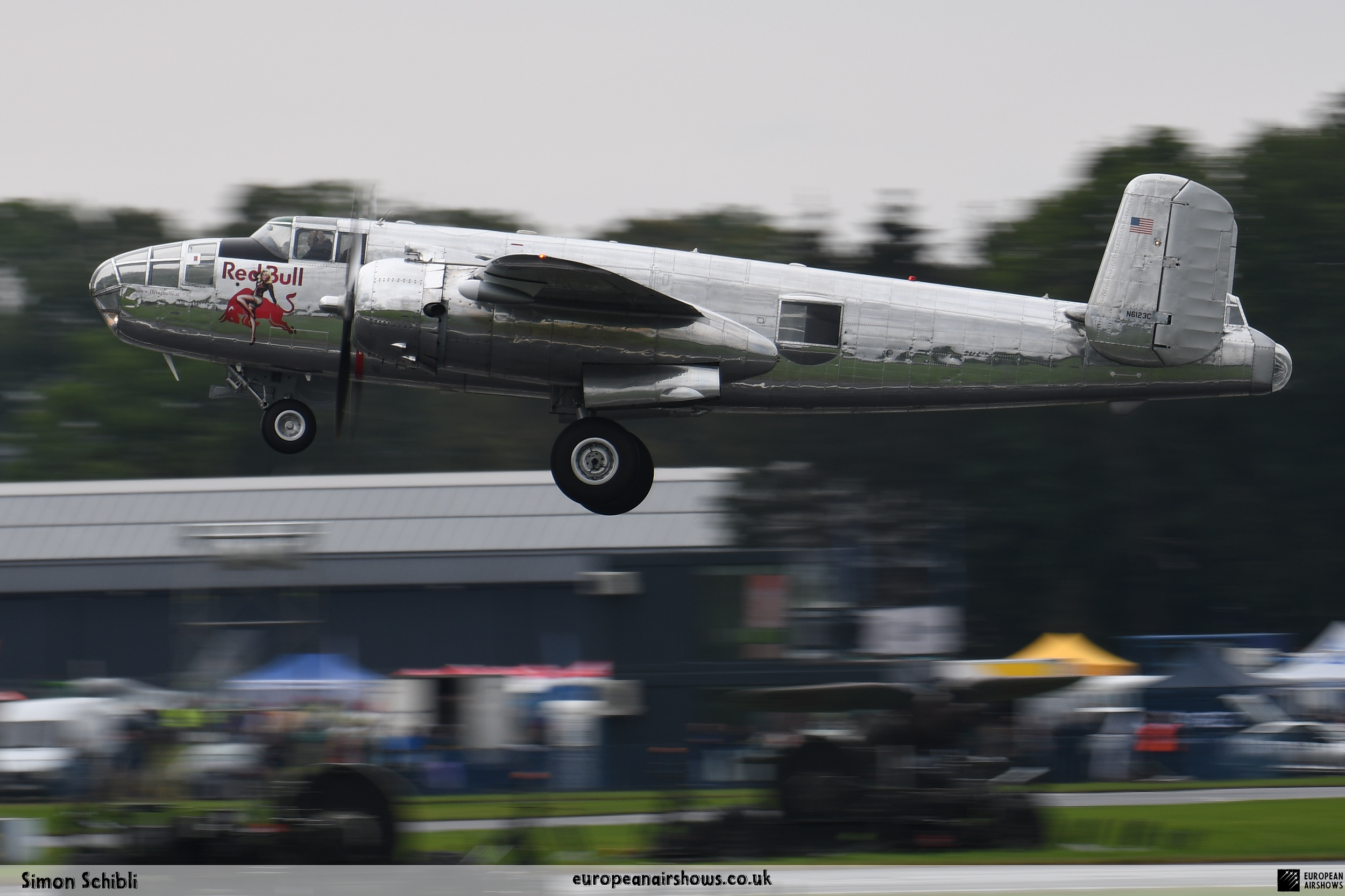
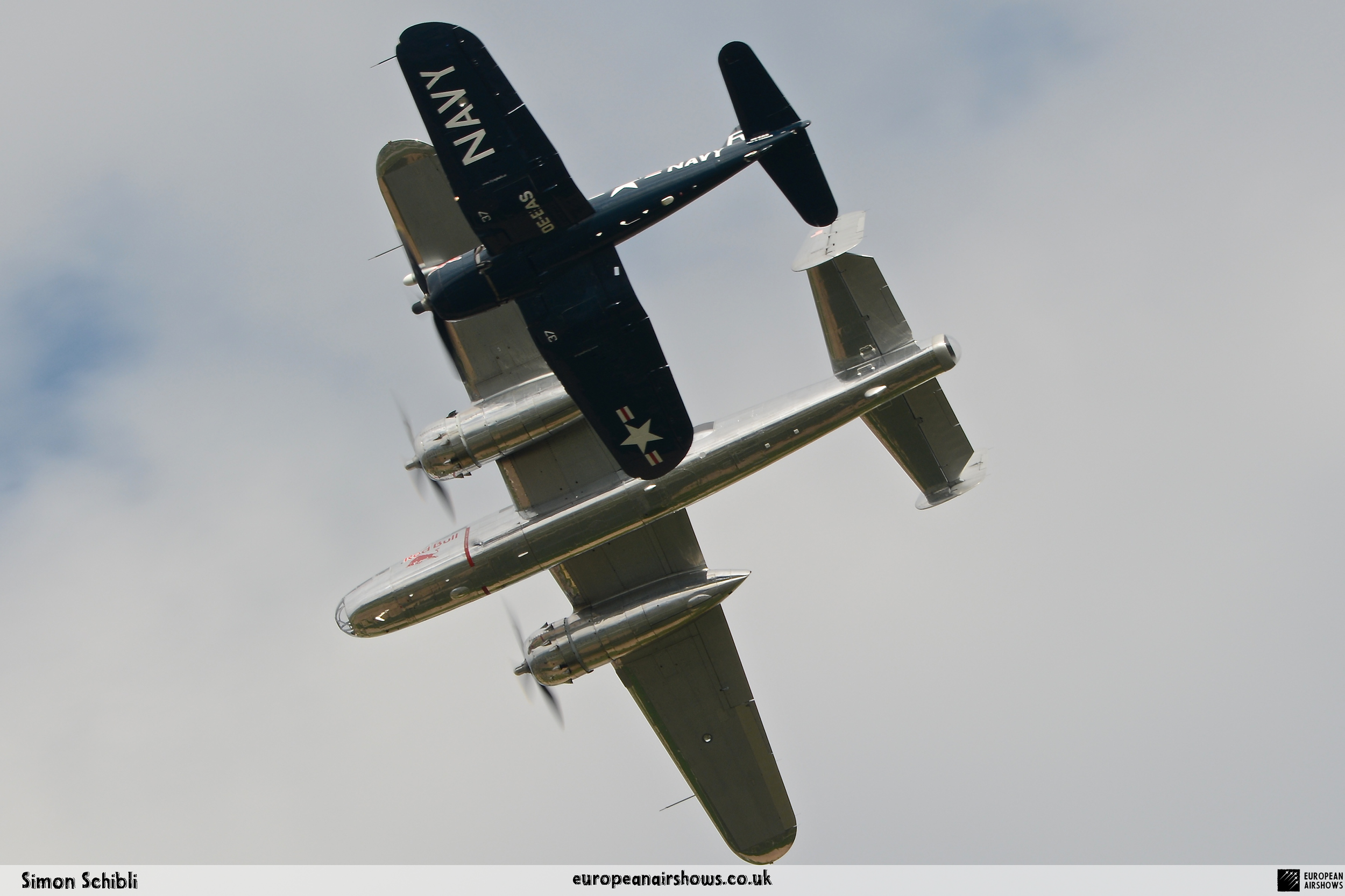
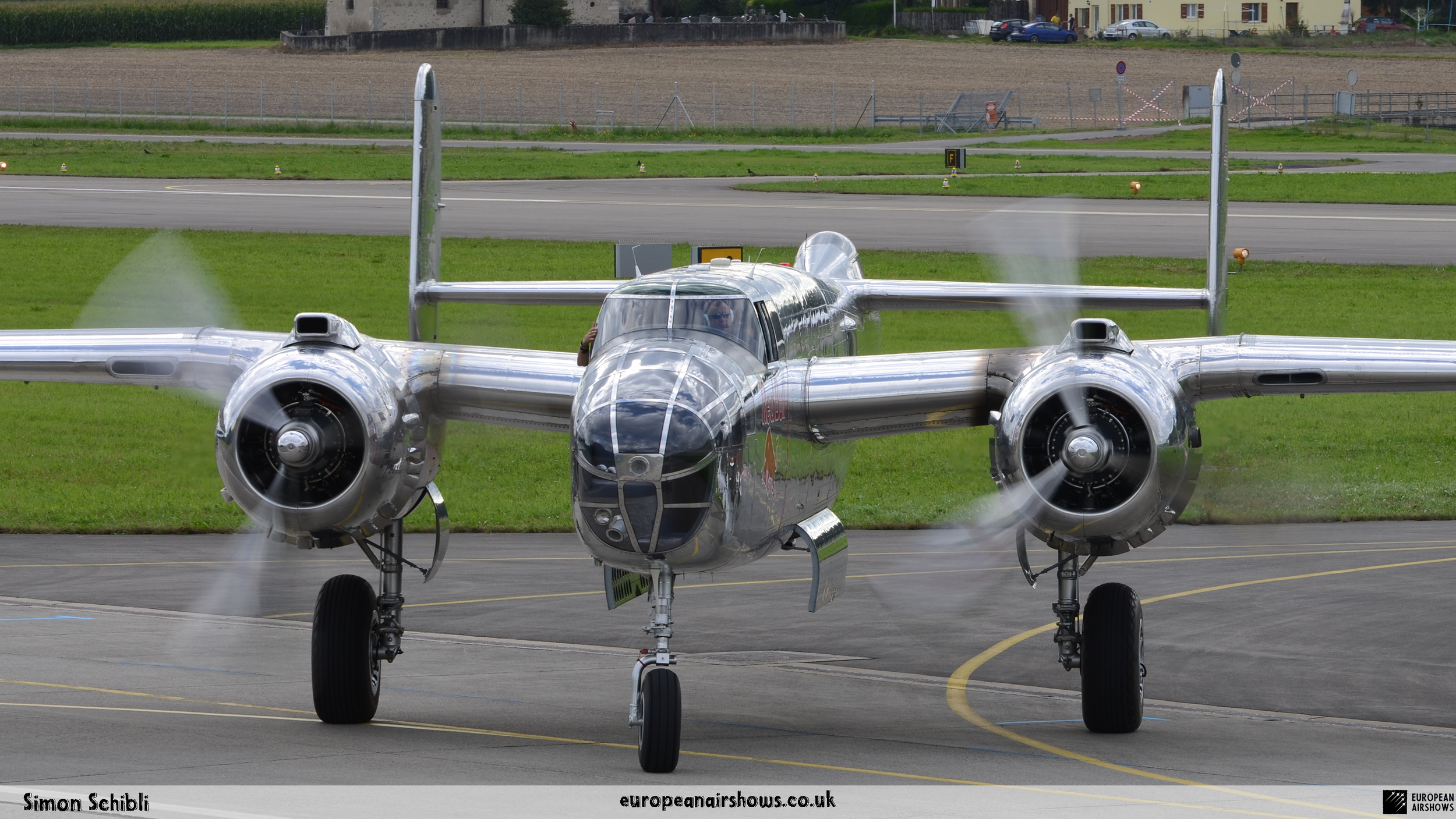
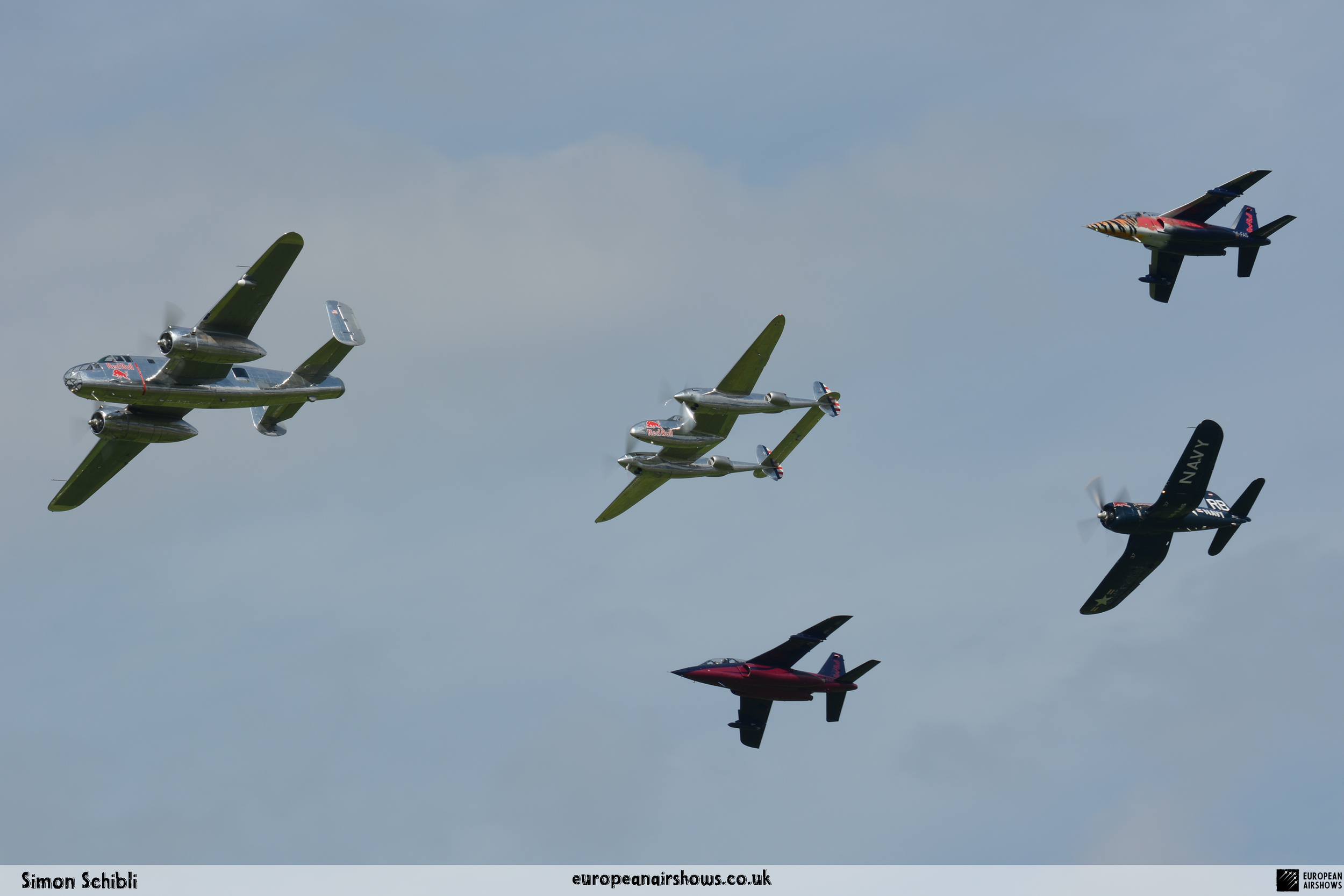
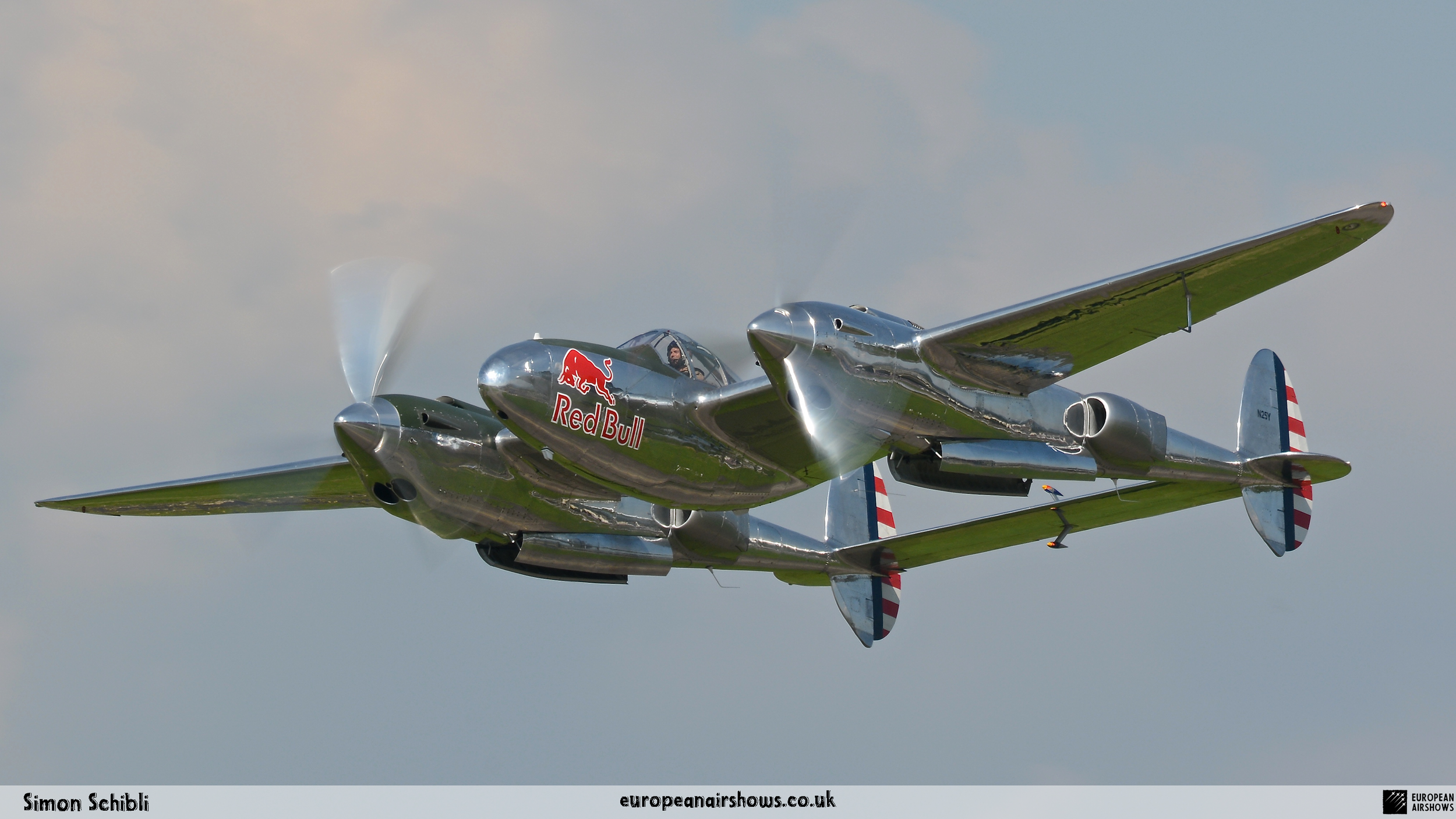
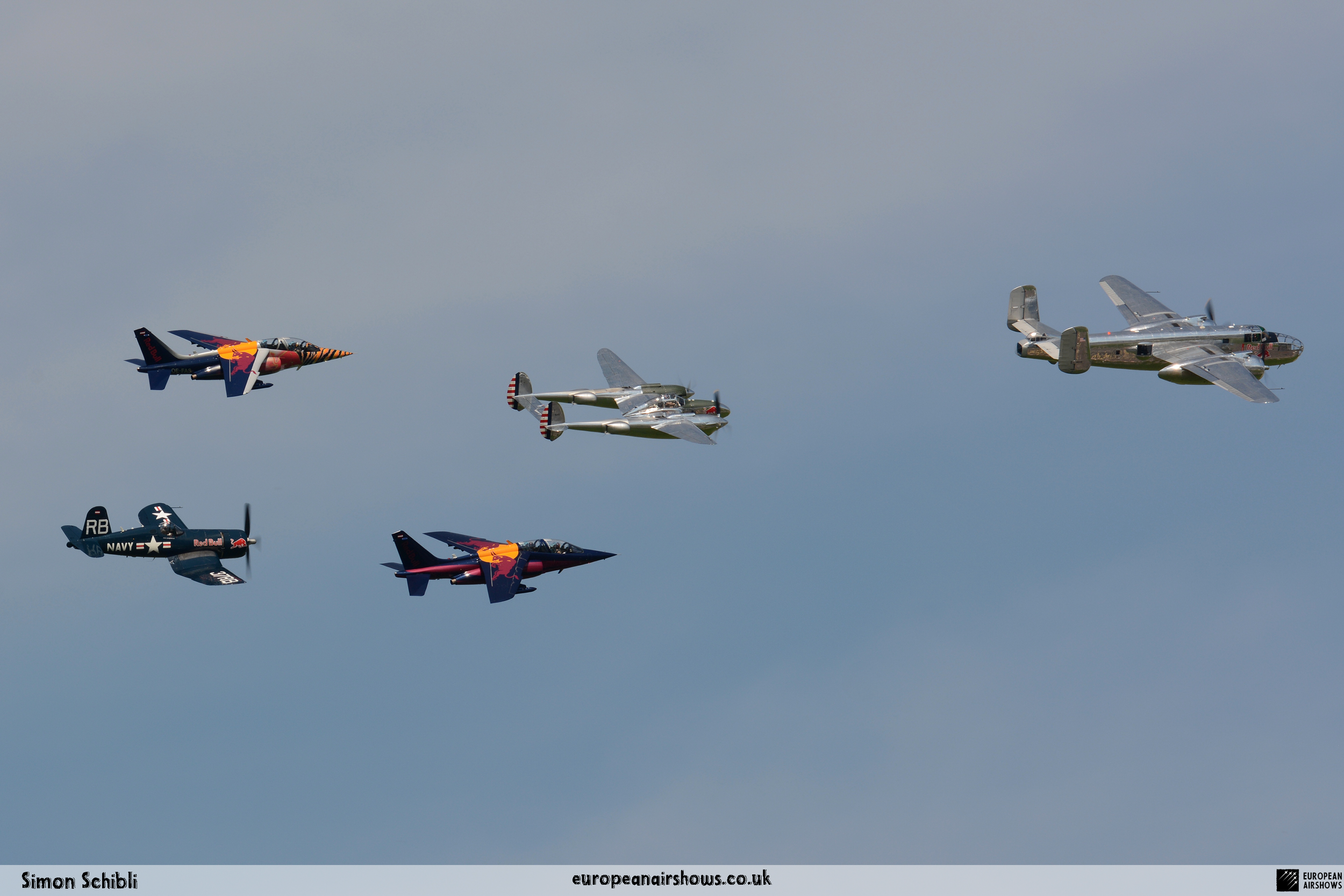
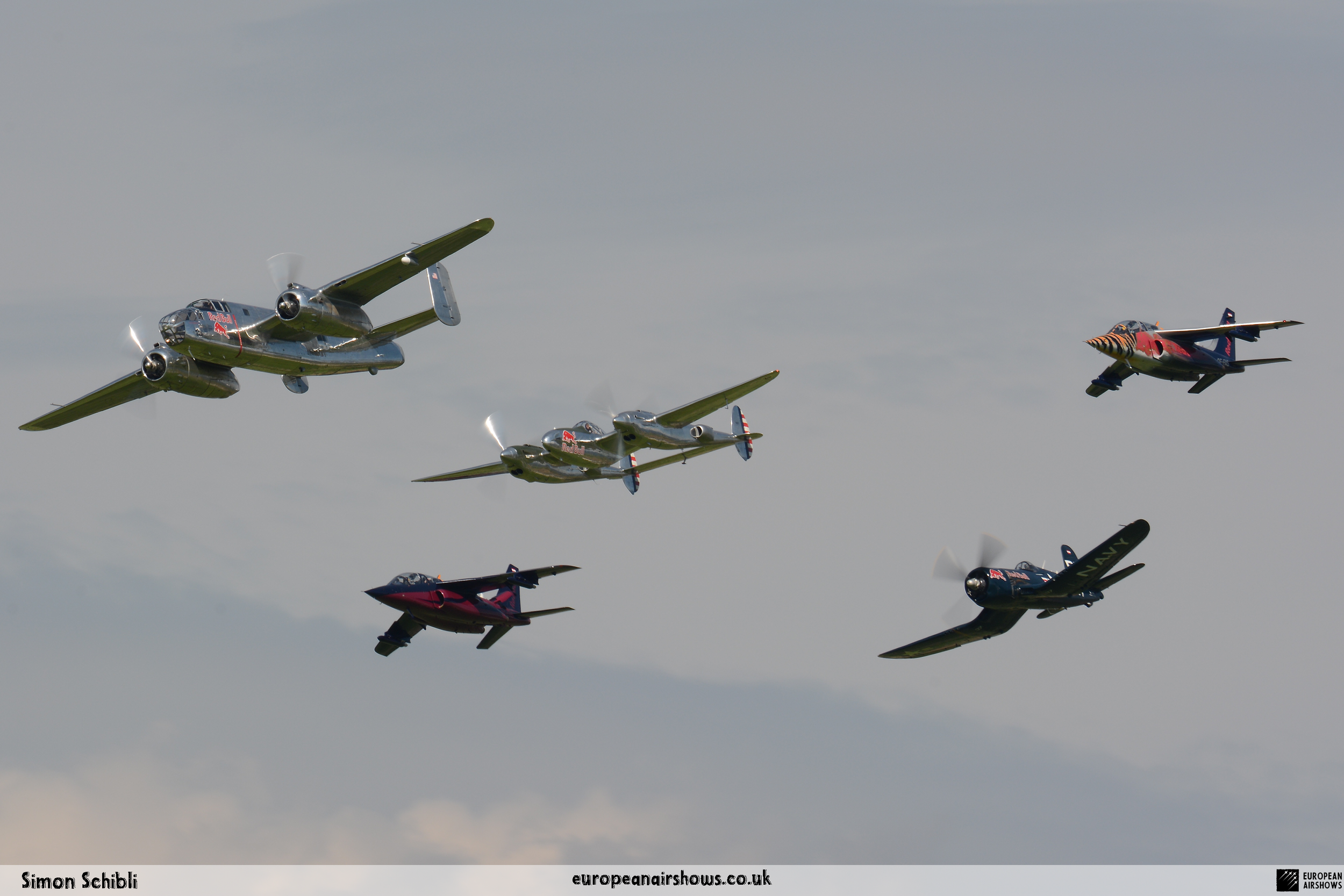
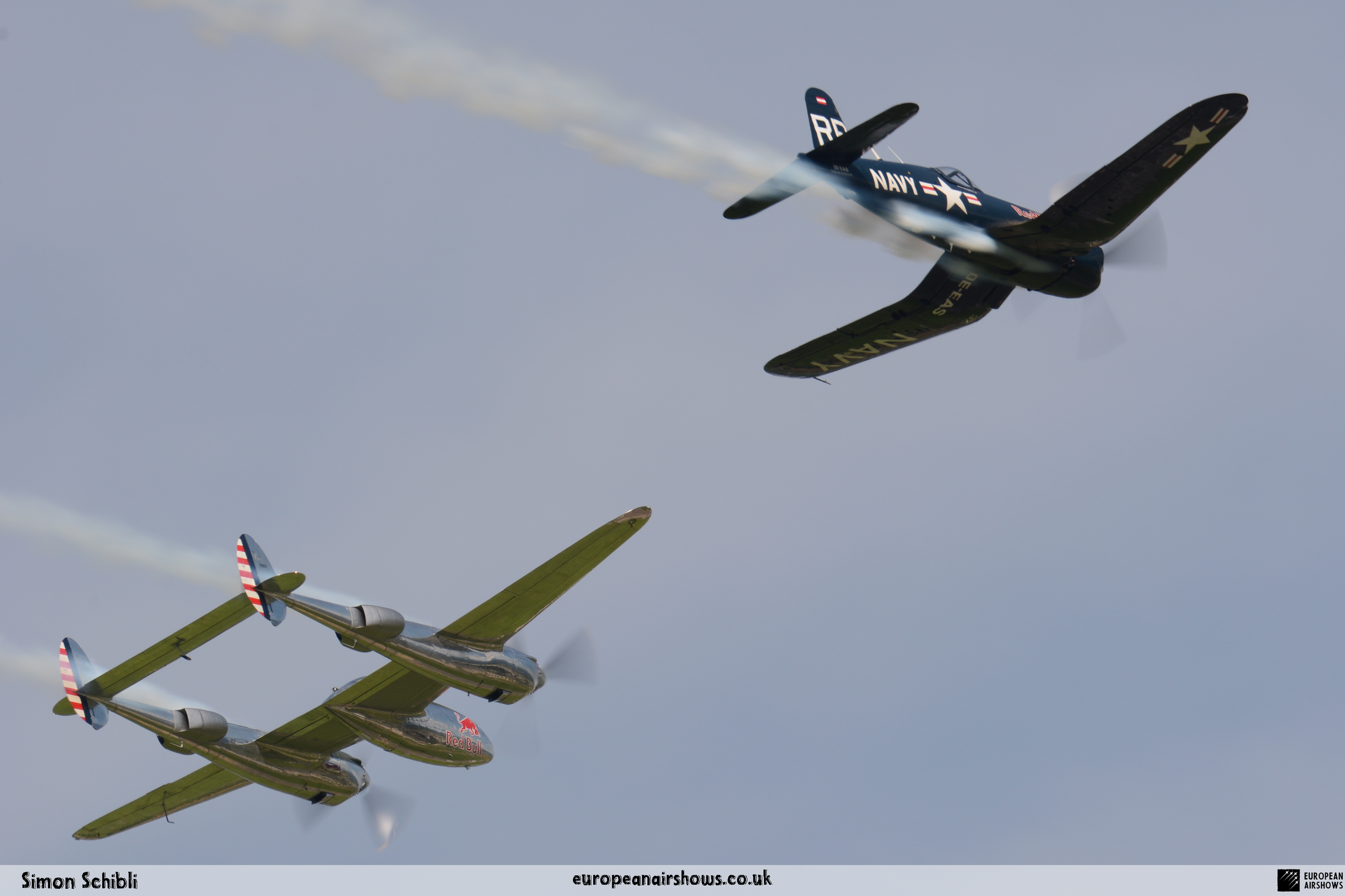
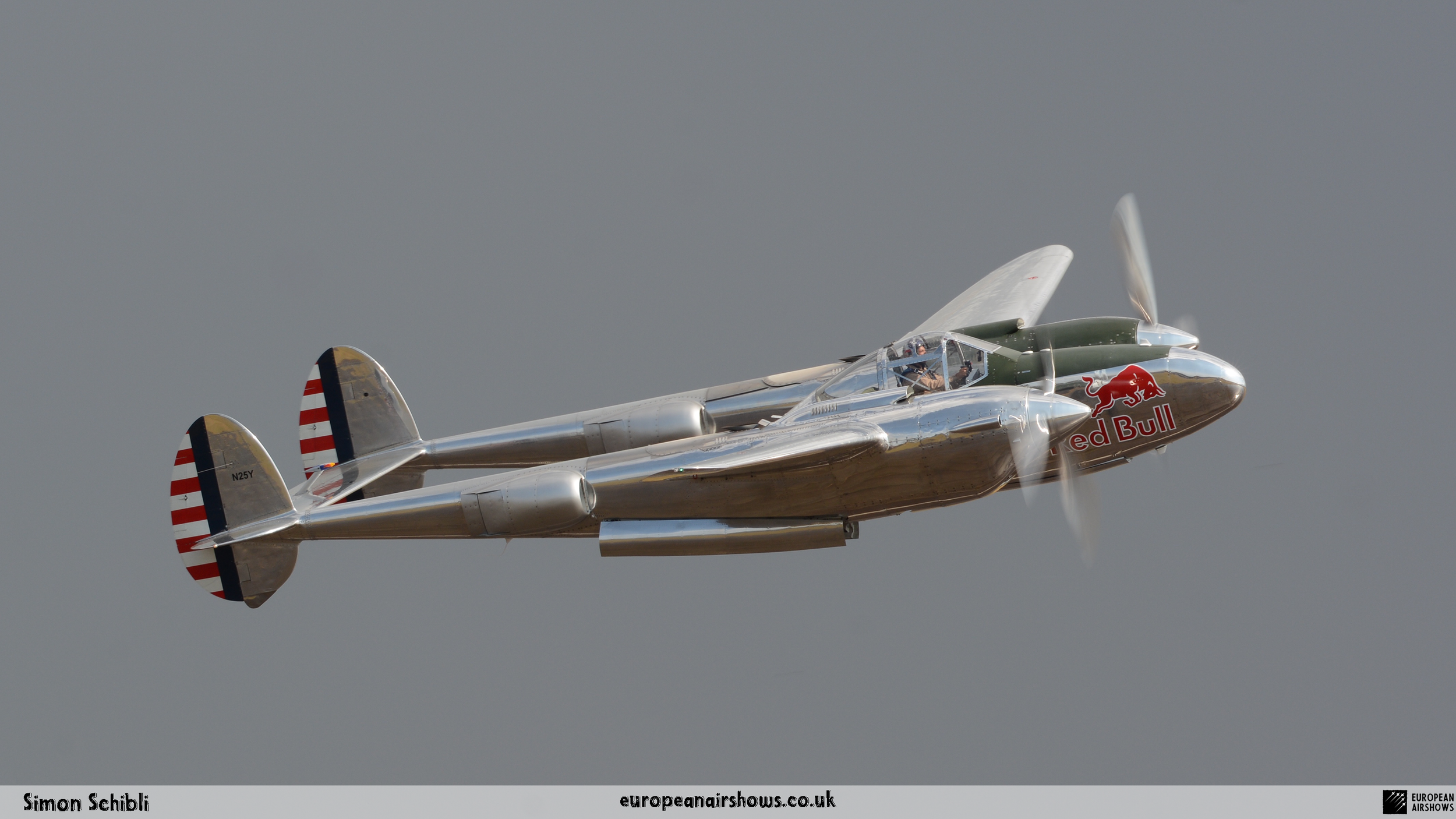
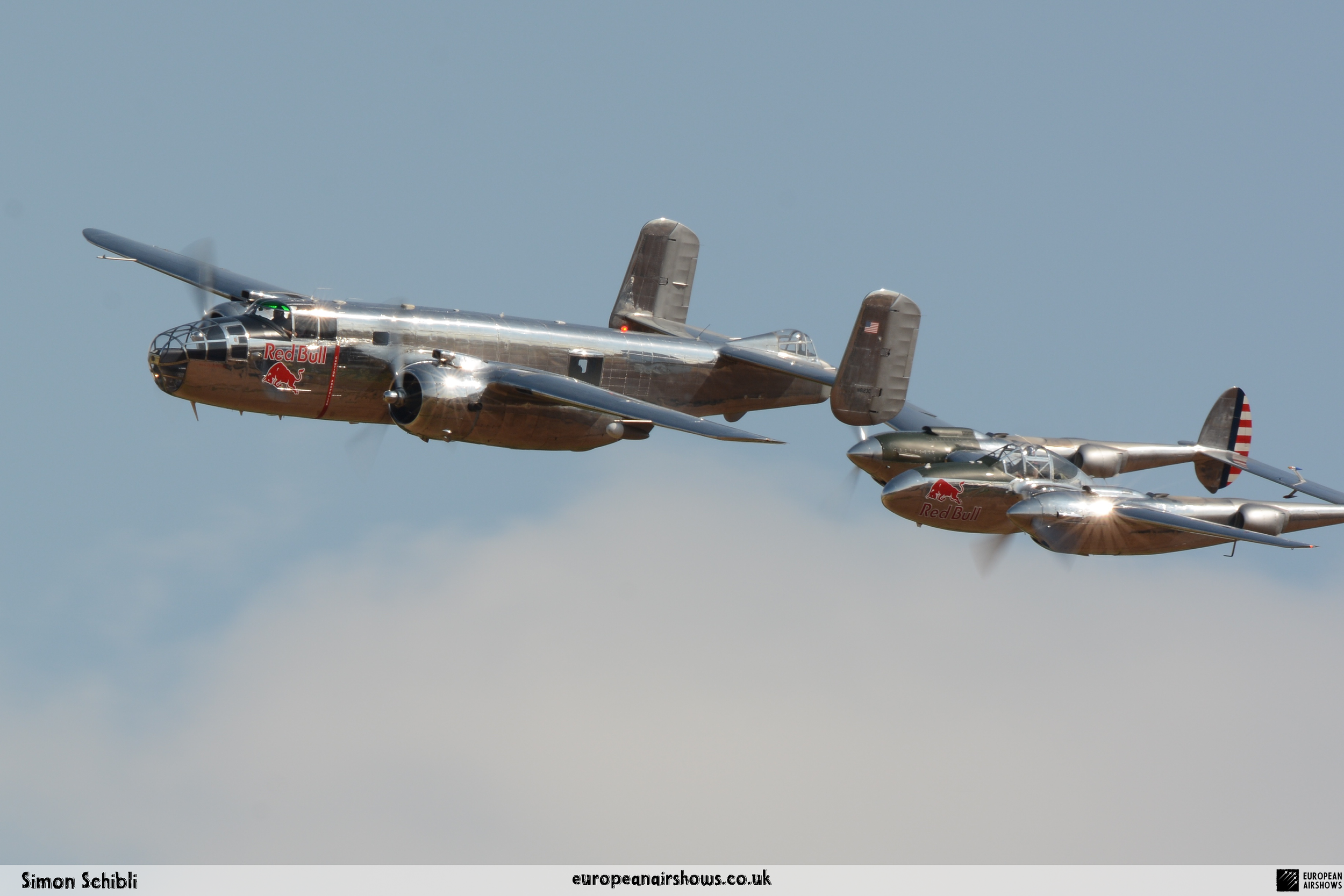
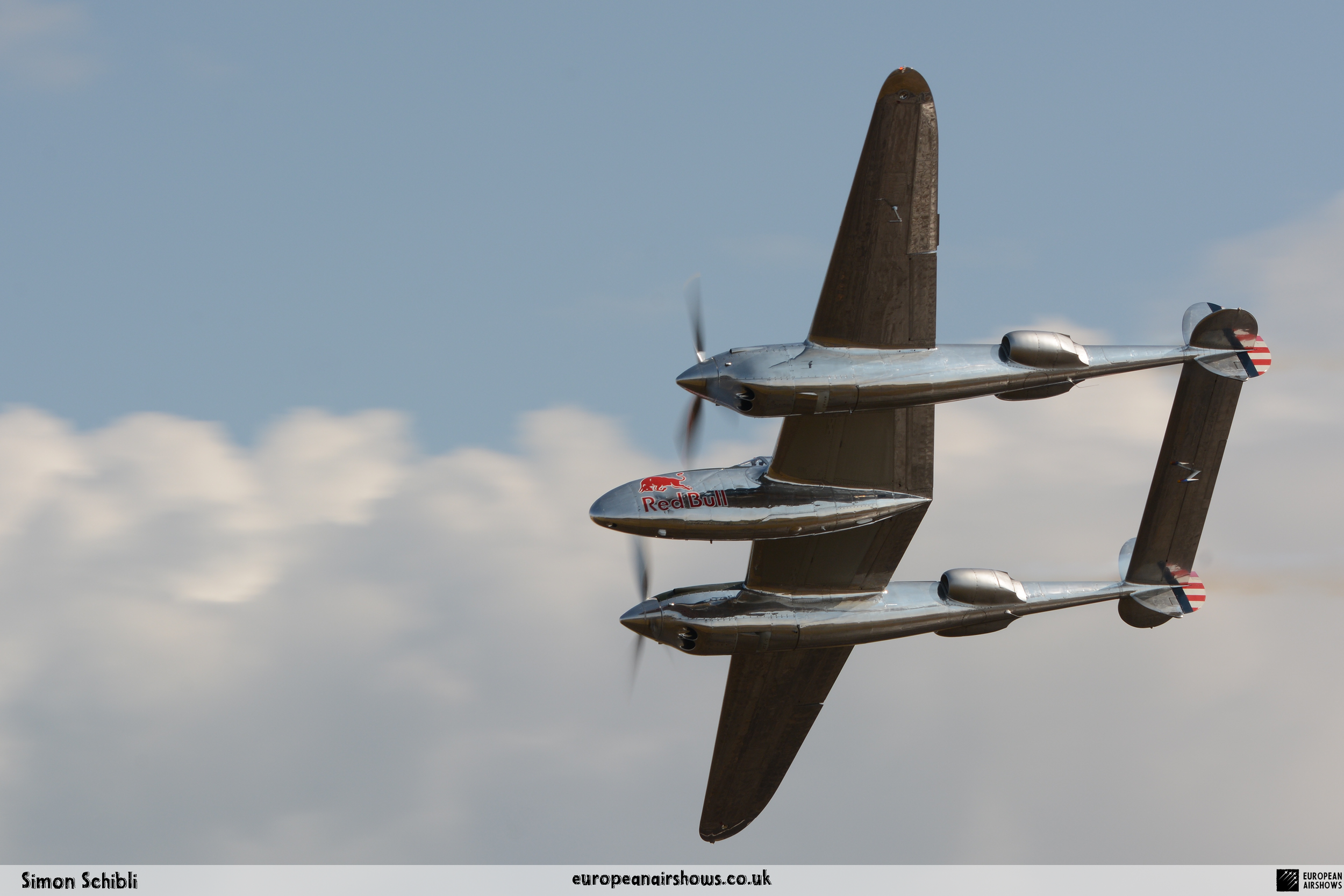
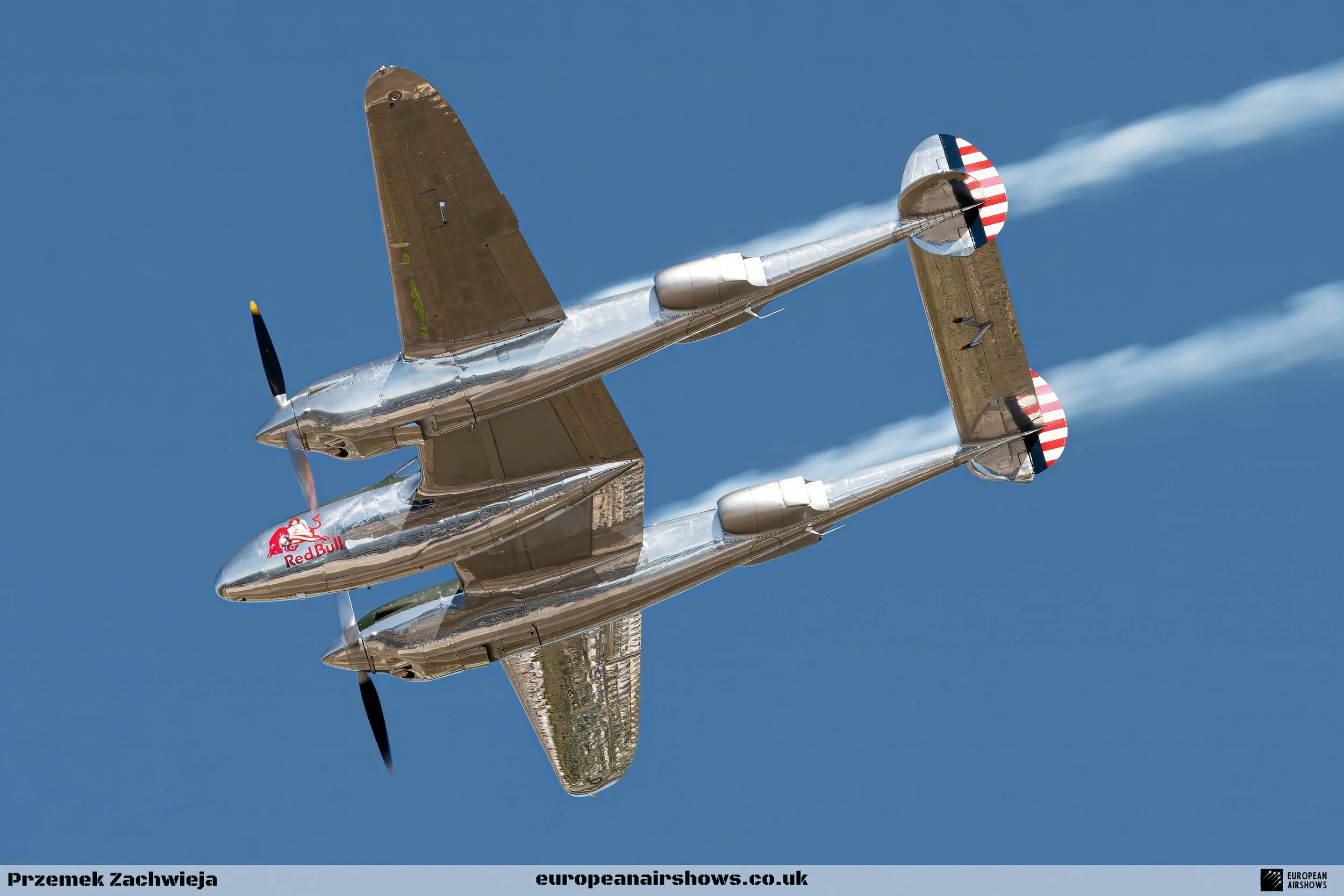
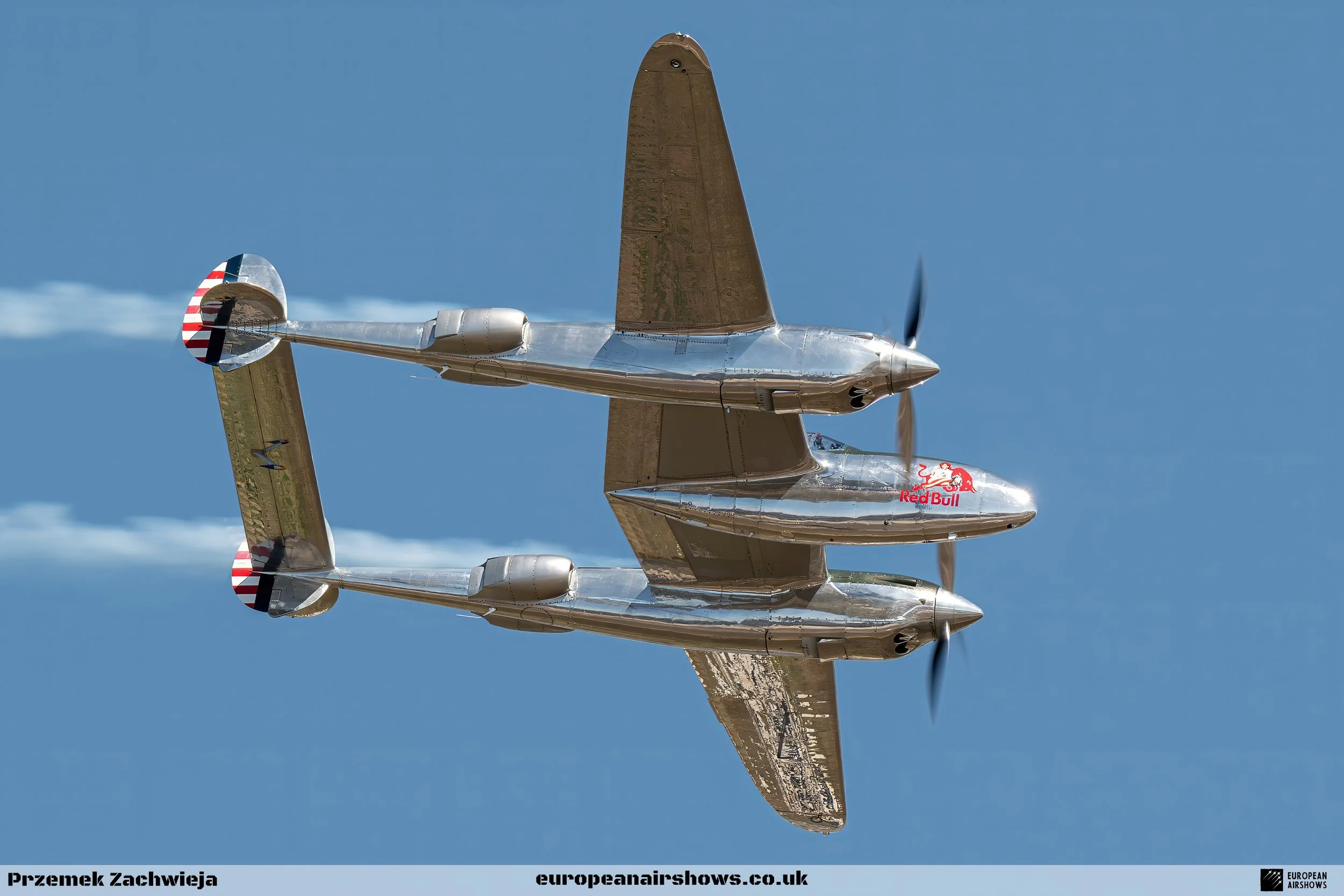
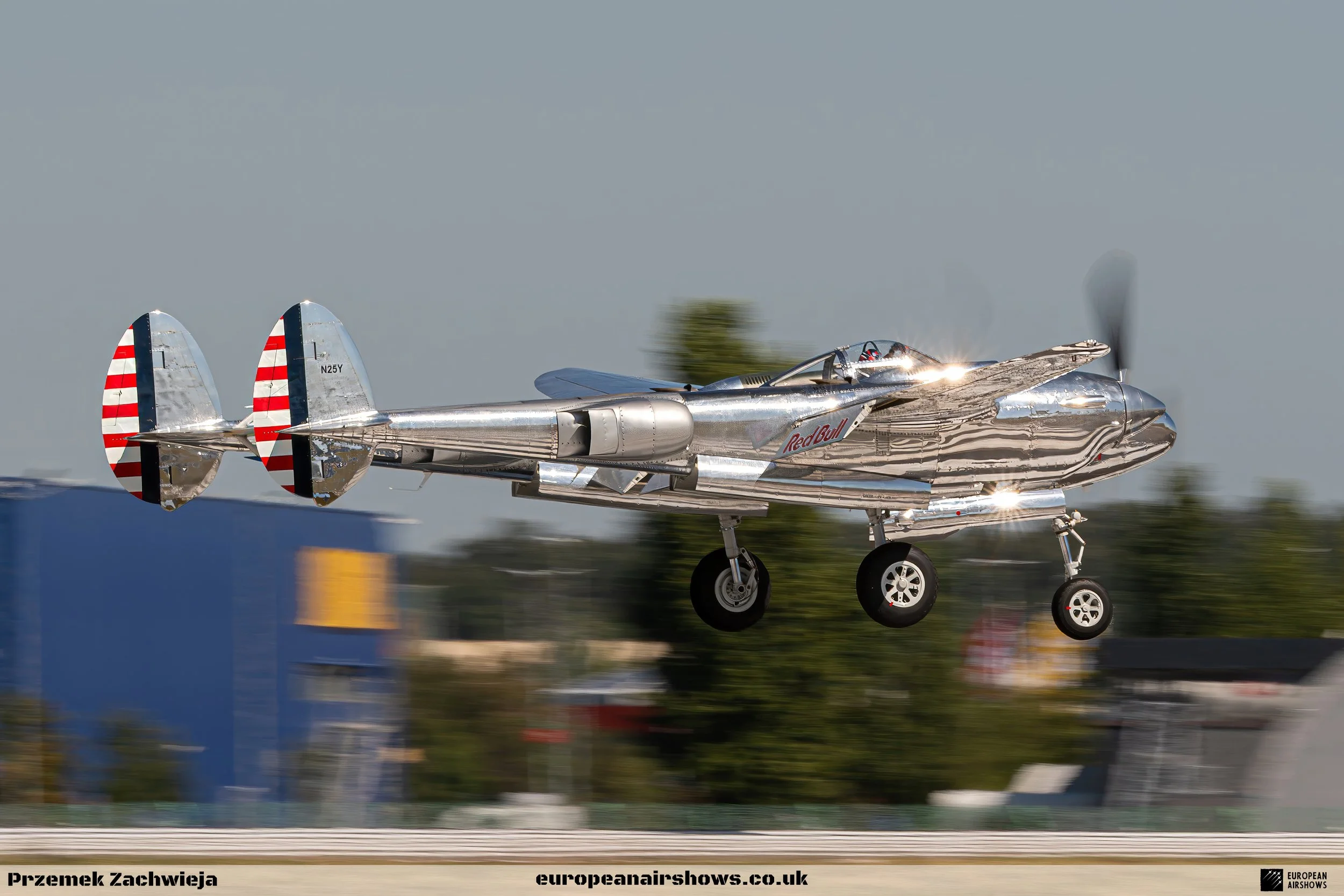
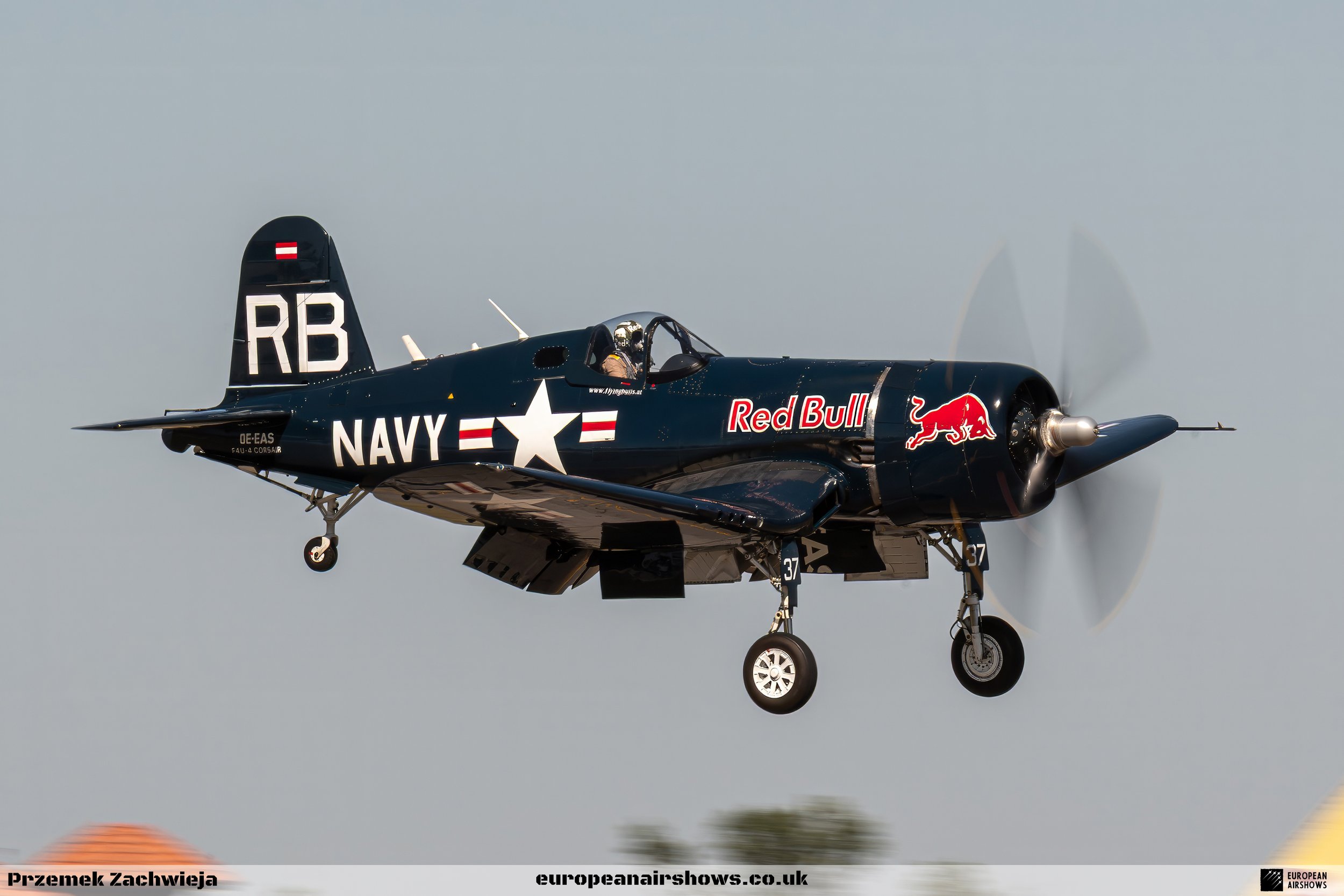
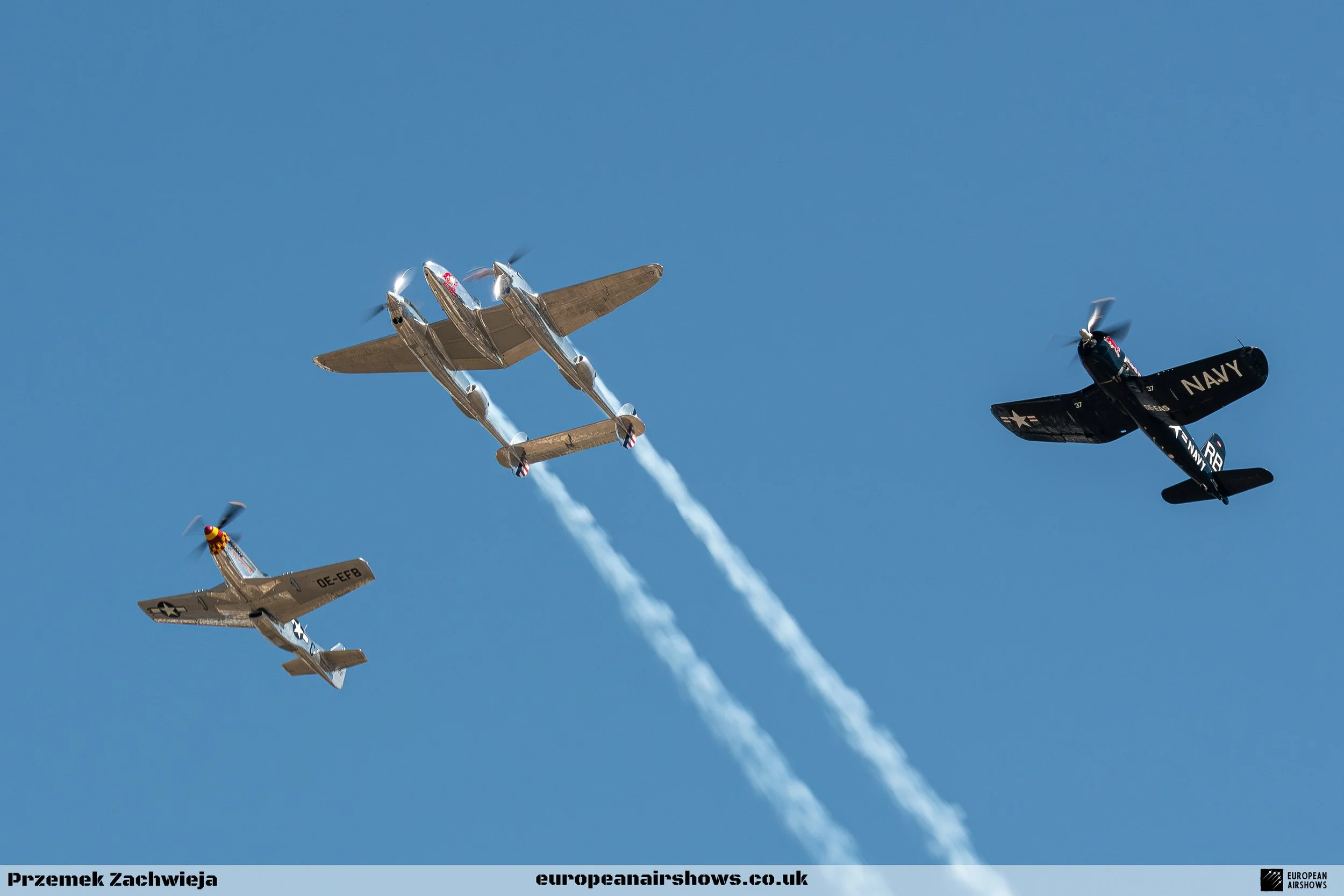
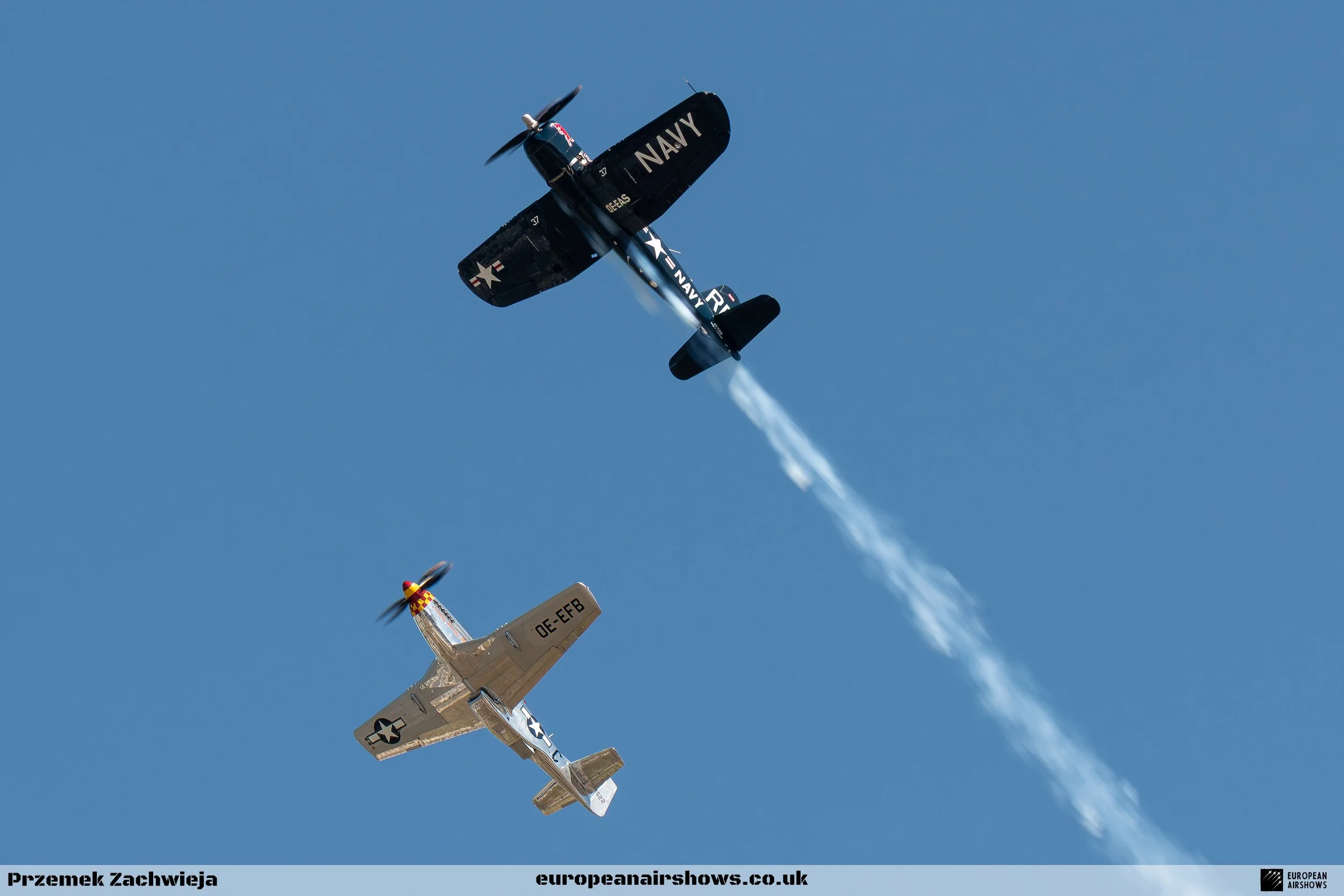
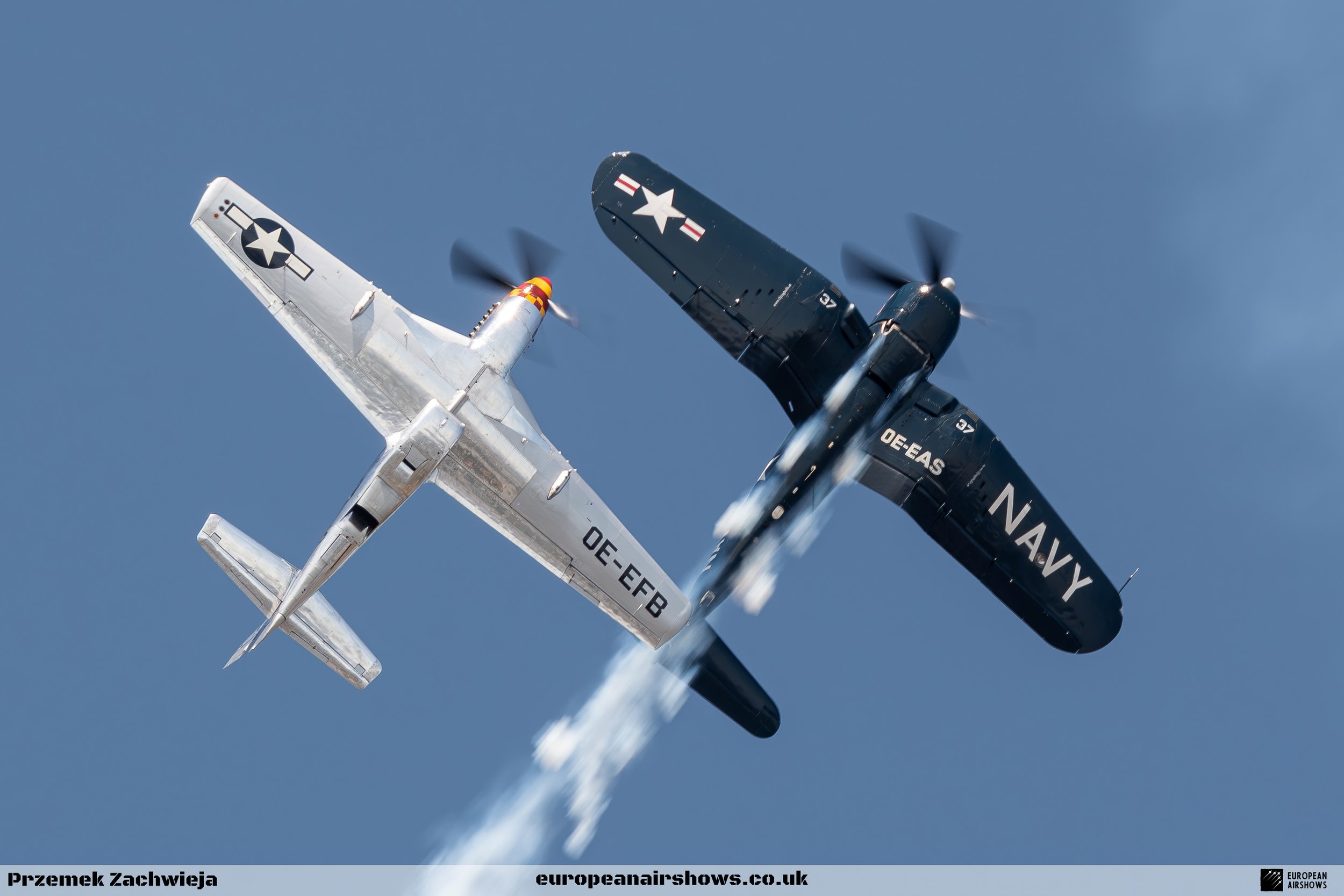
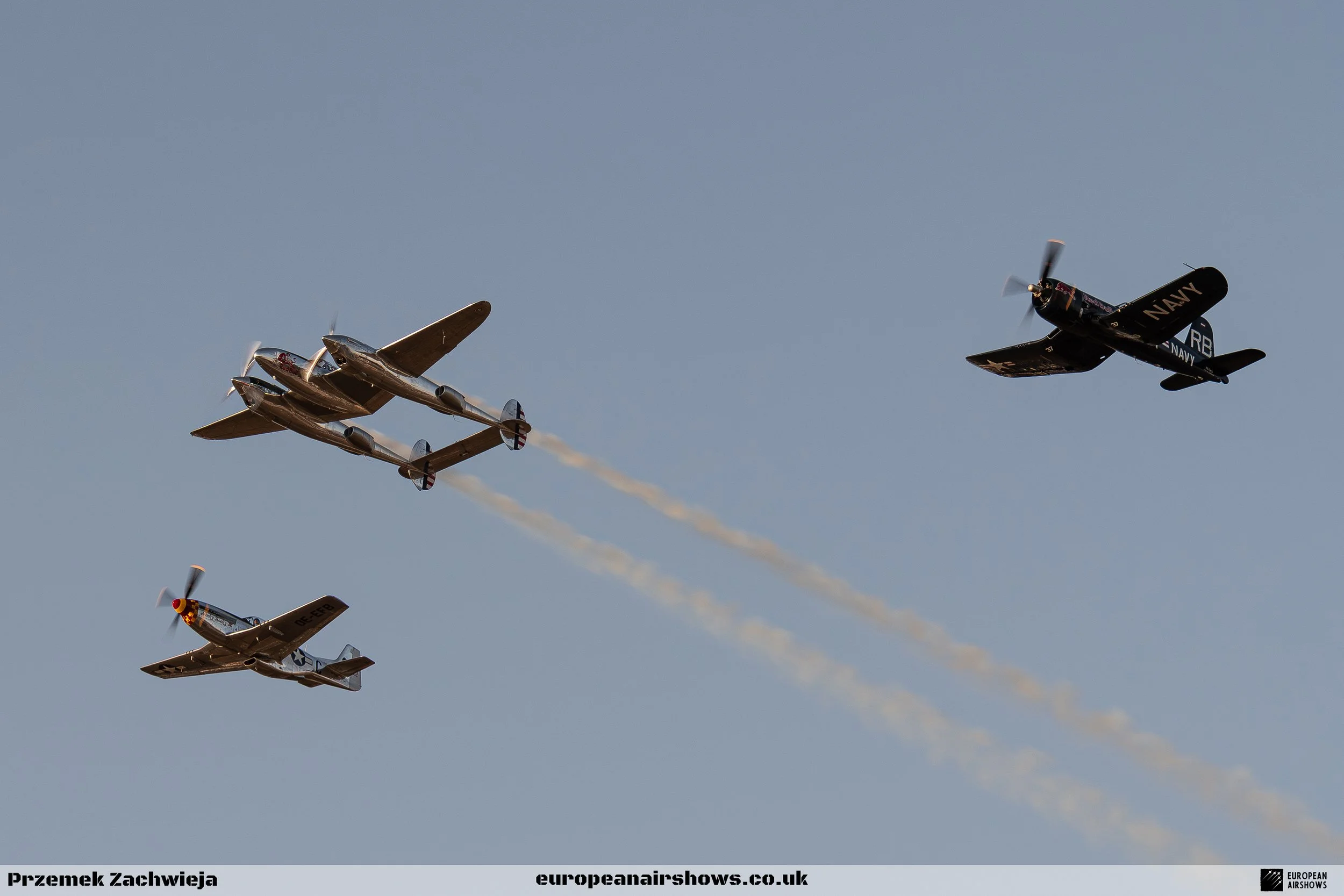
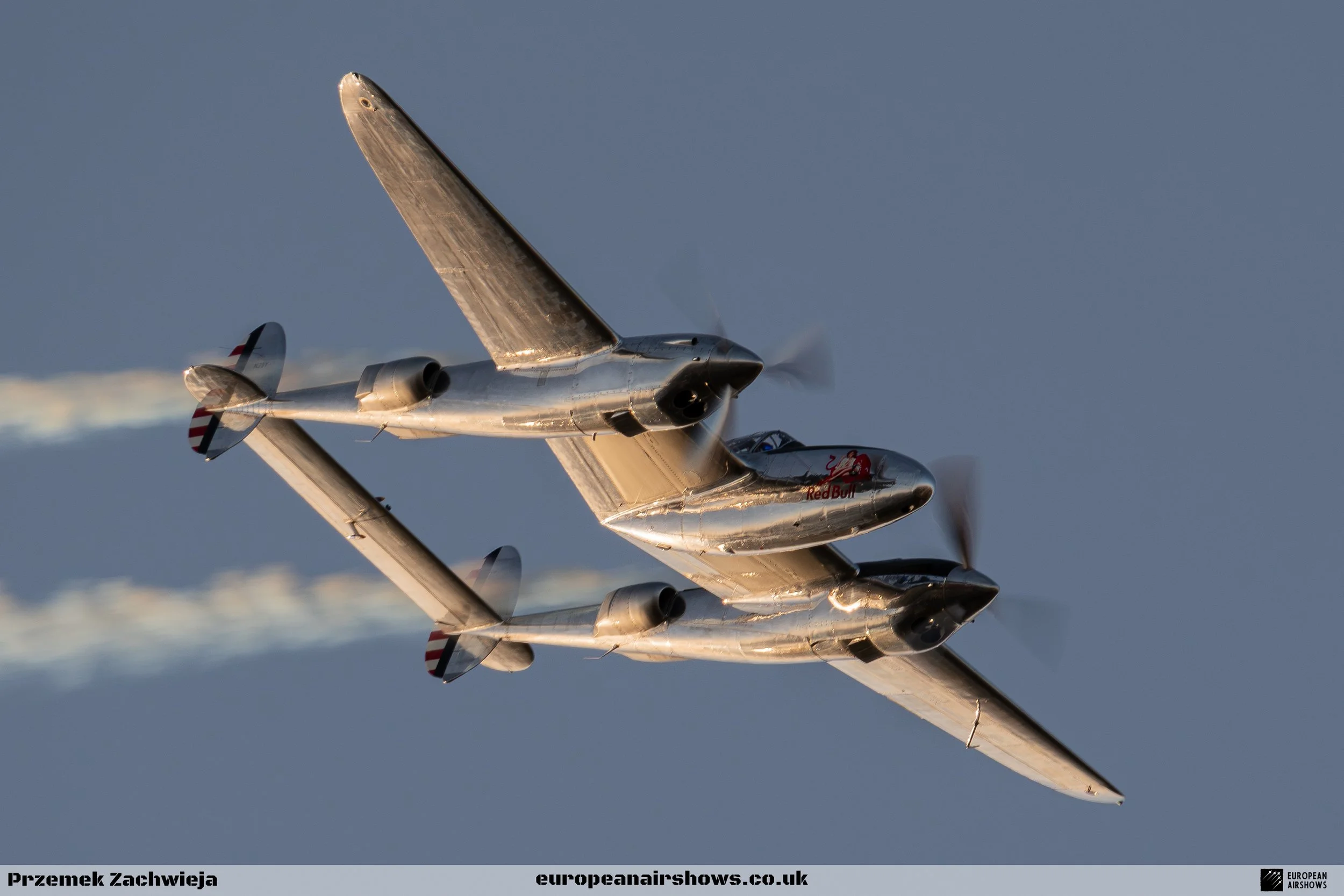
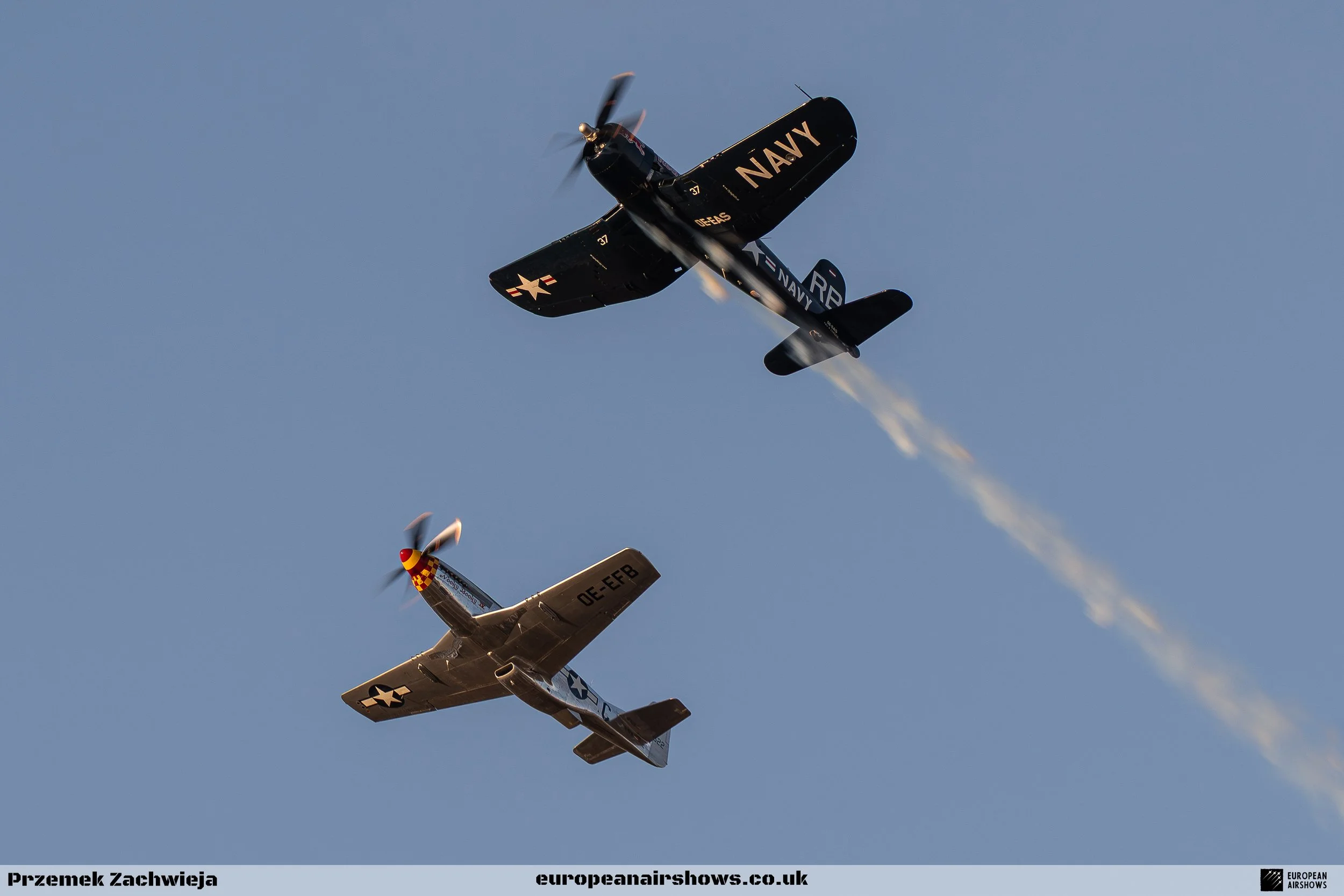
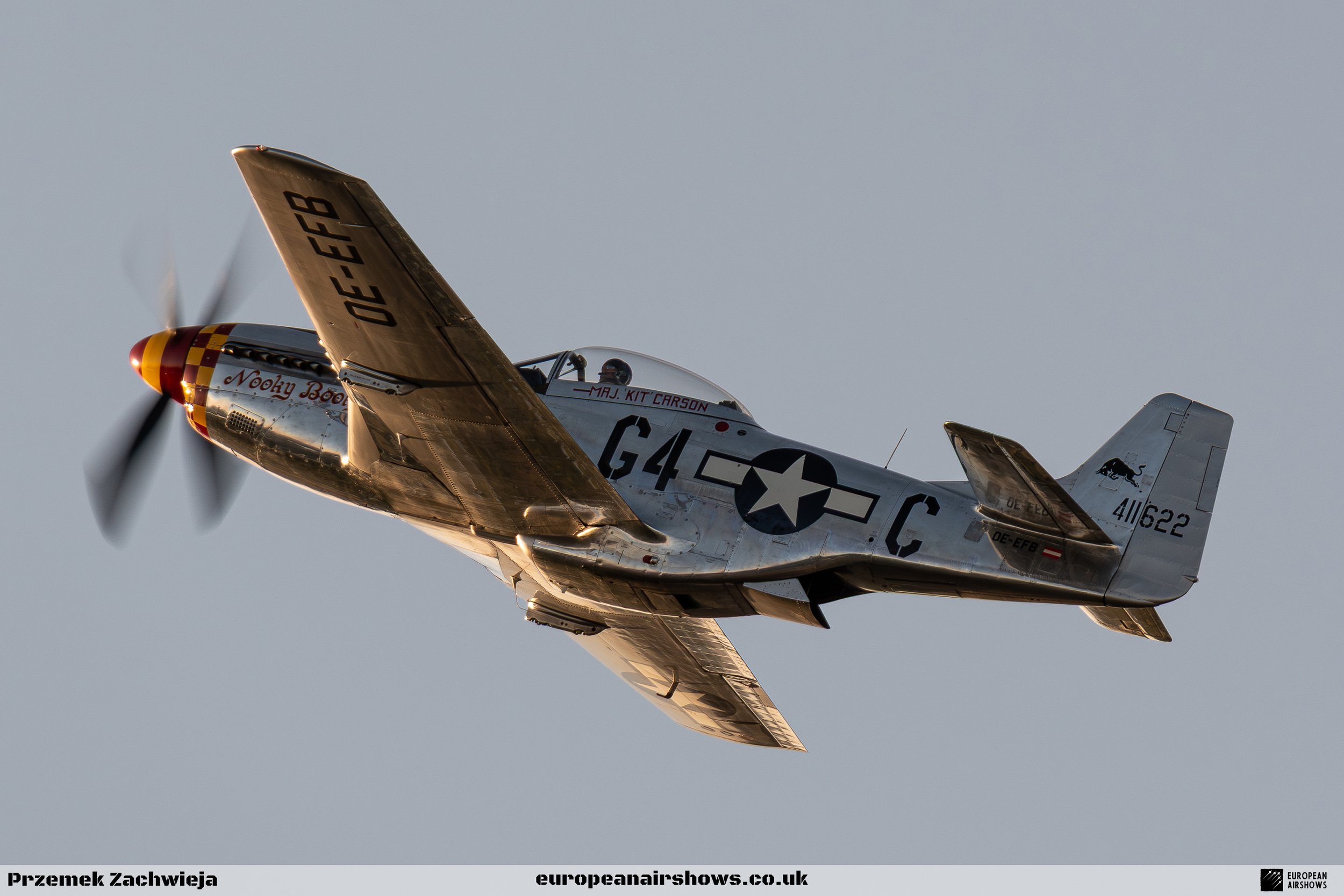
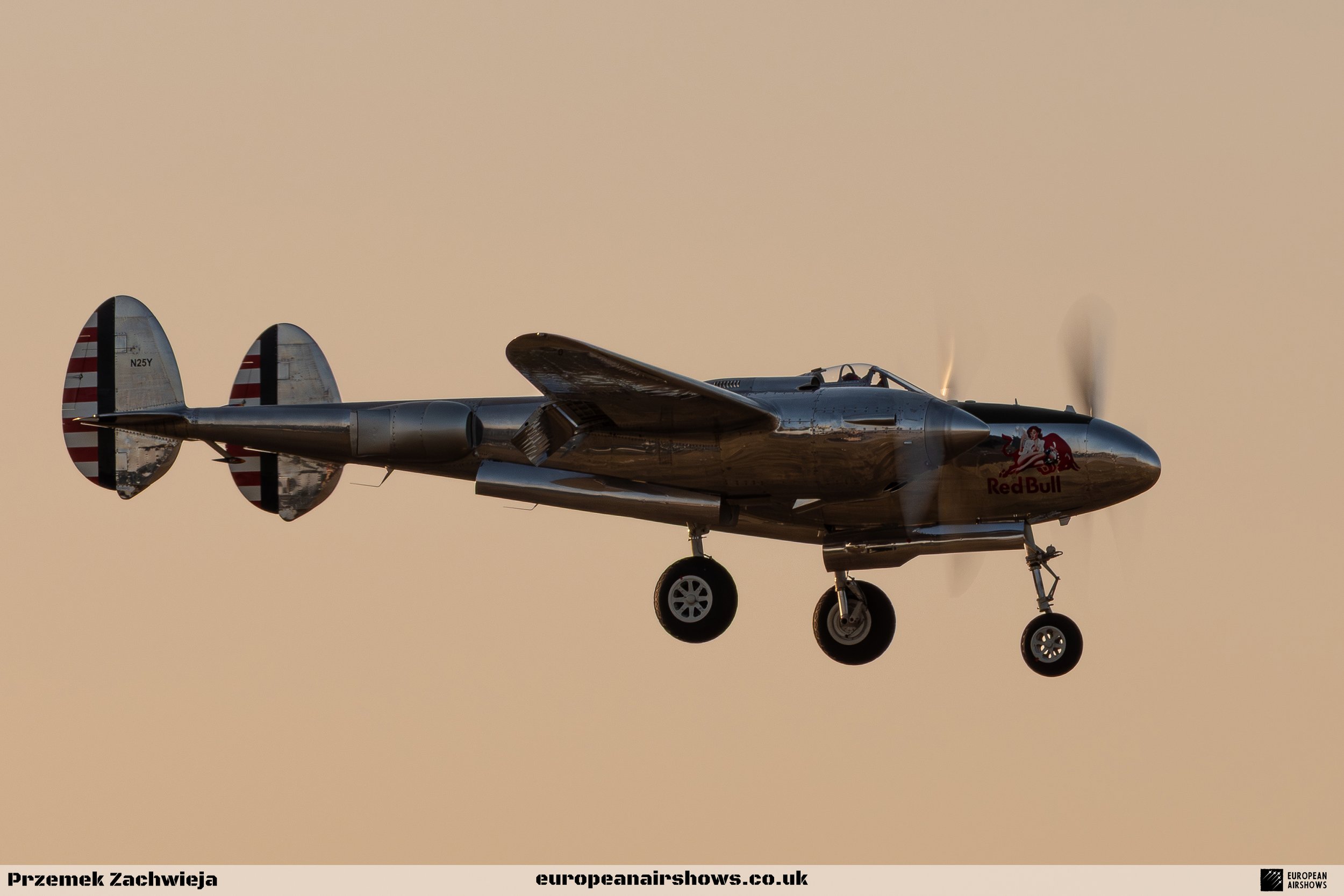
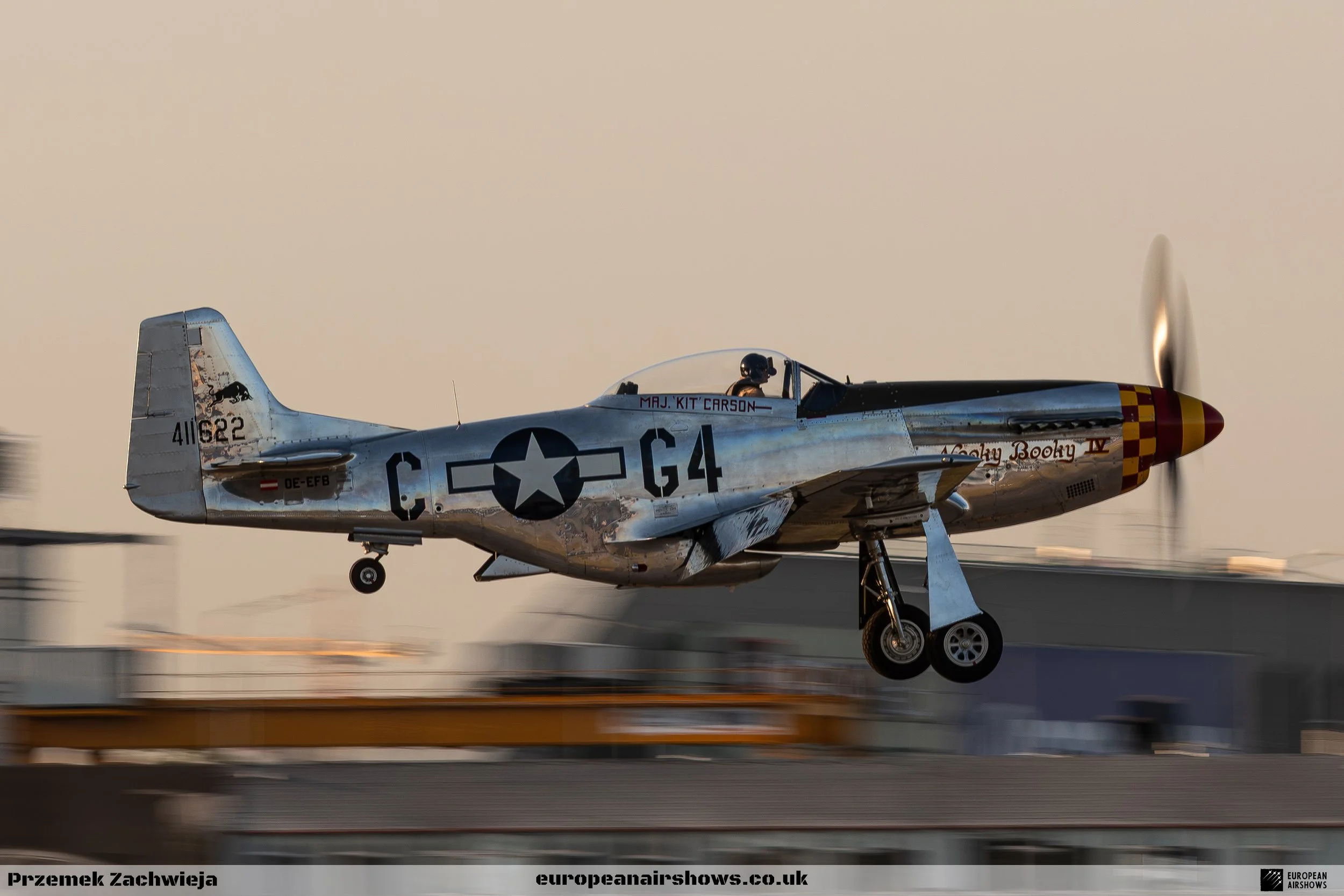
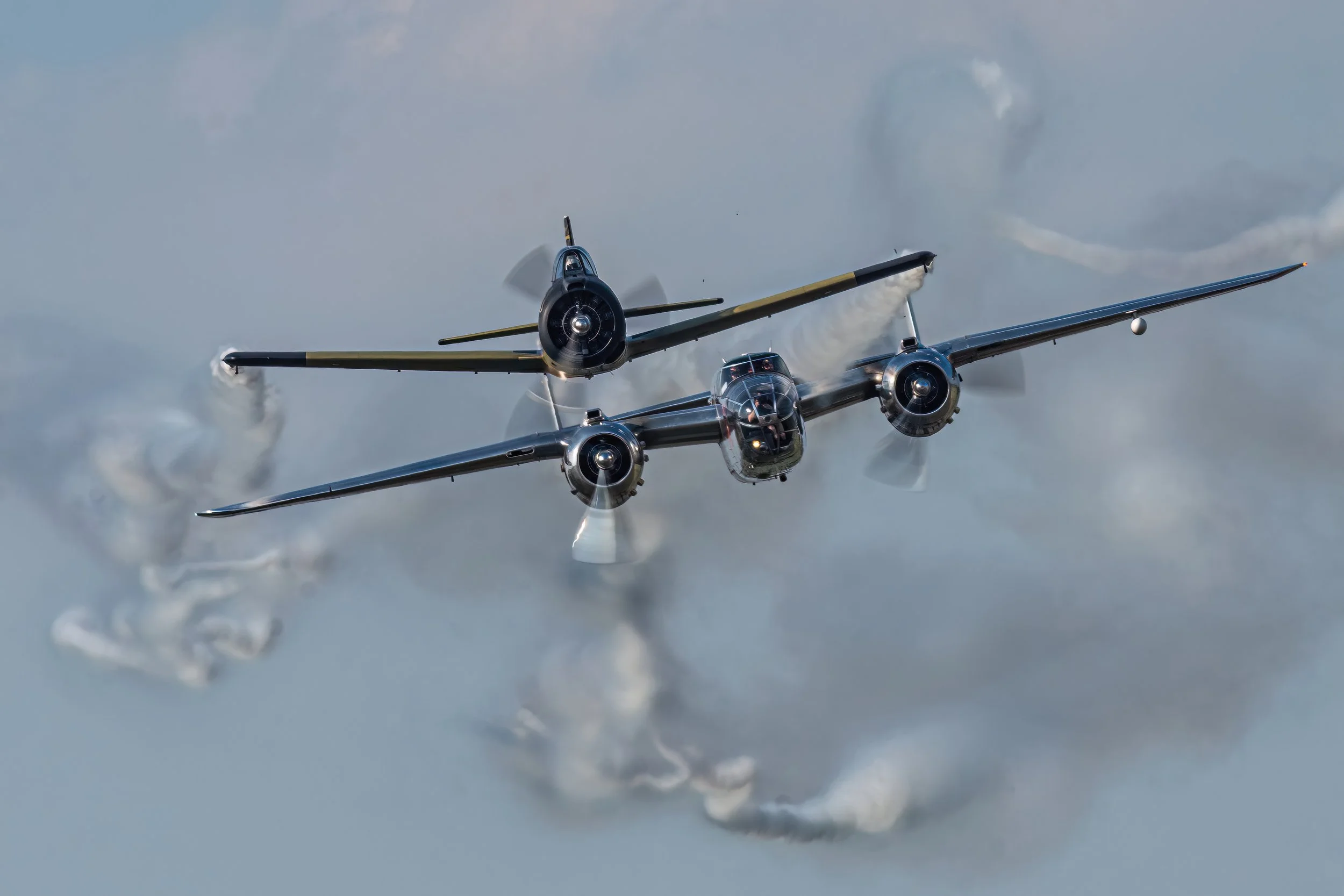
The P-38, P-51D, F4U-4, B-25J and now the F8F-2 can be combined in formations that make their contrasting shapes and engine notes part of the spectacle.
Heavy-metal presence
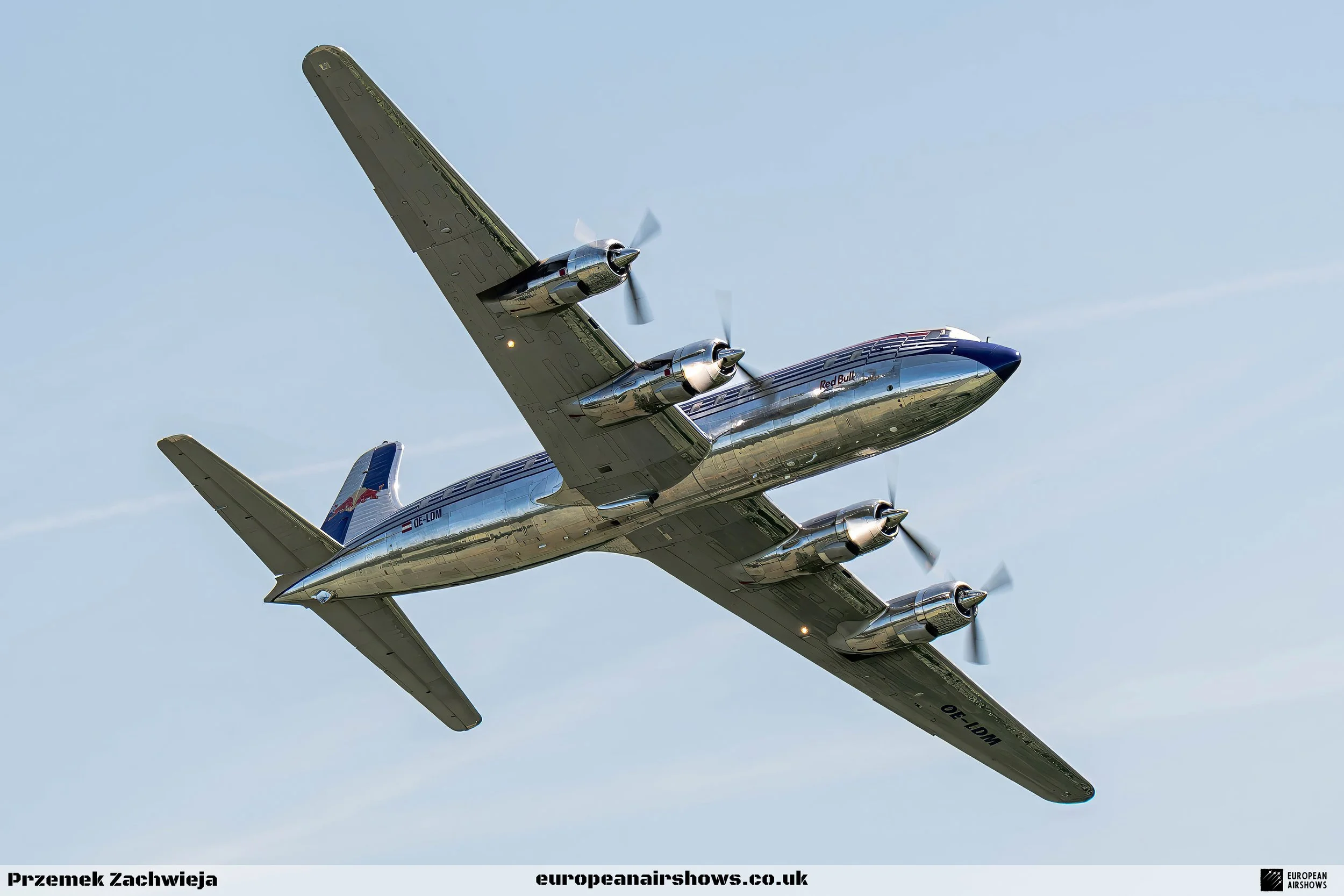
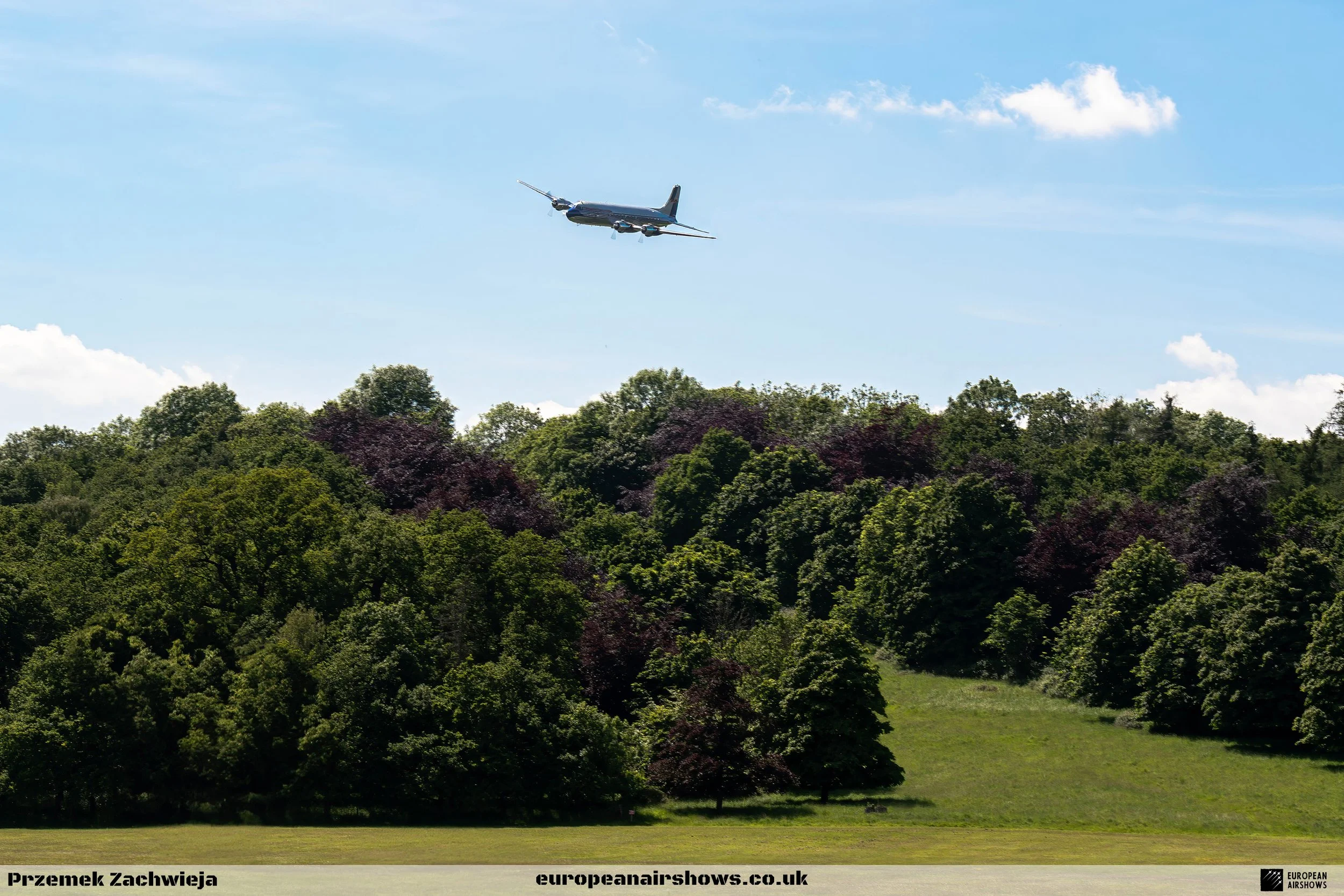
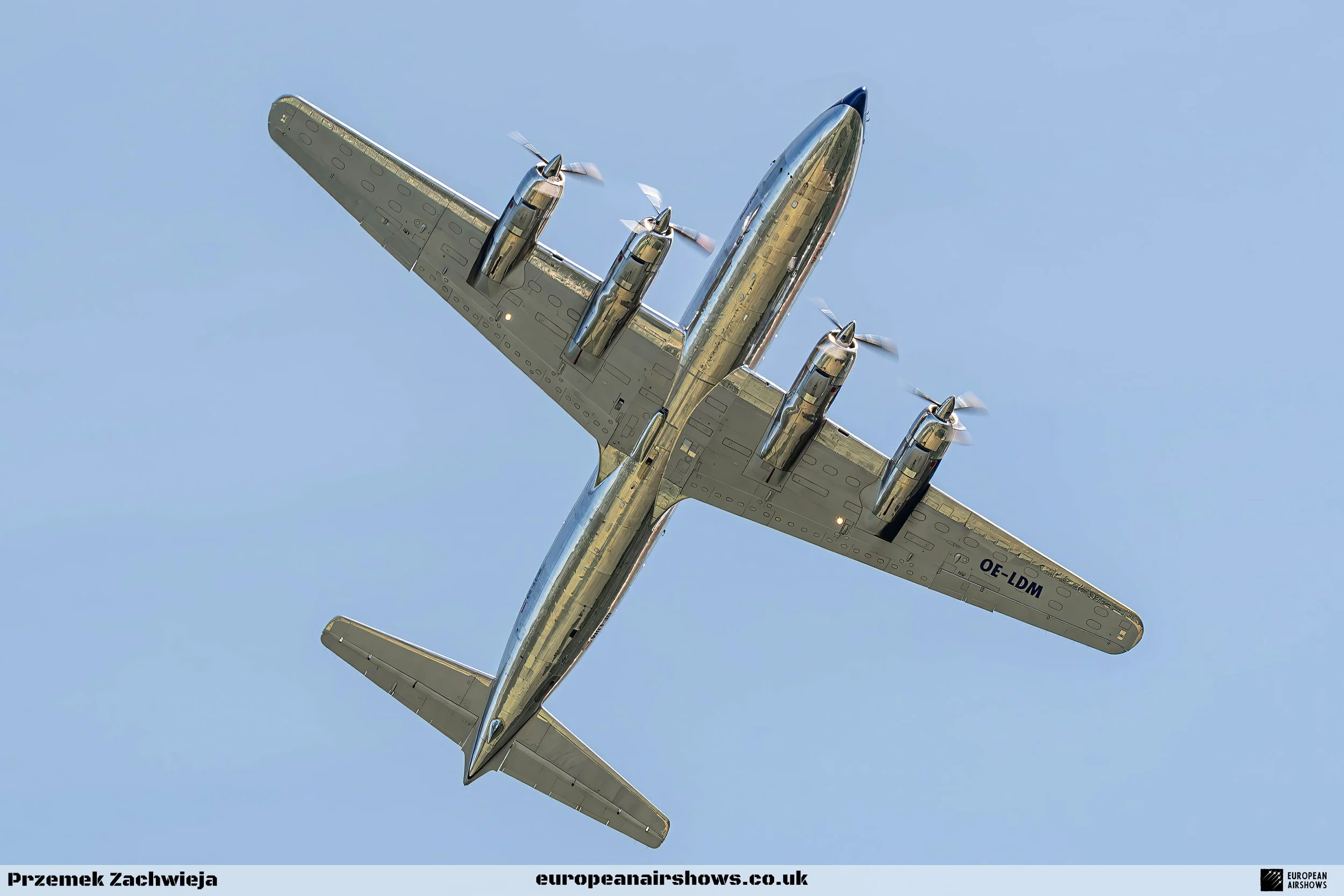
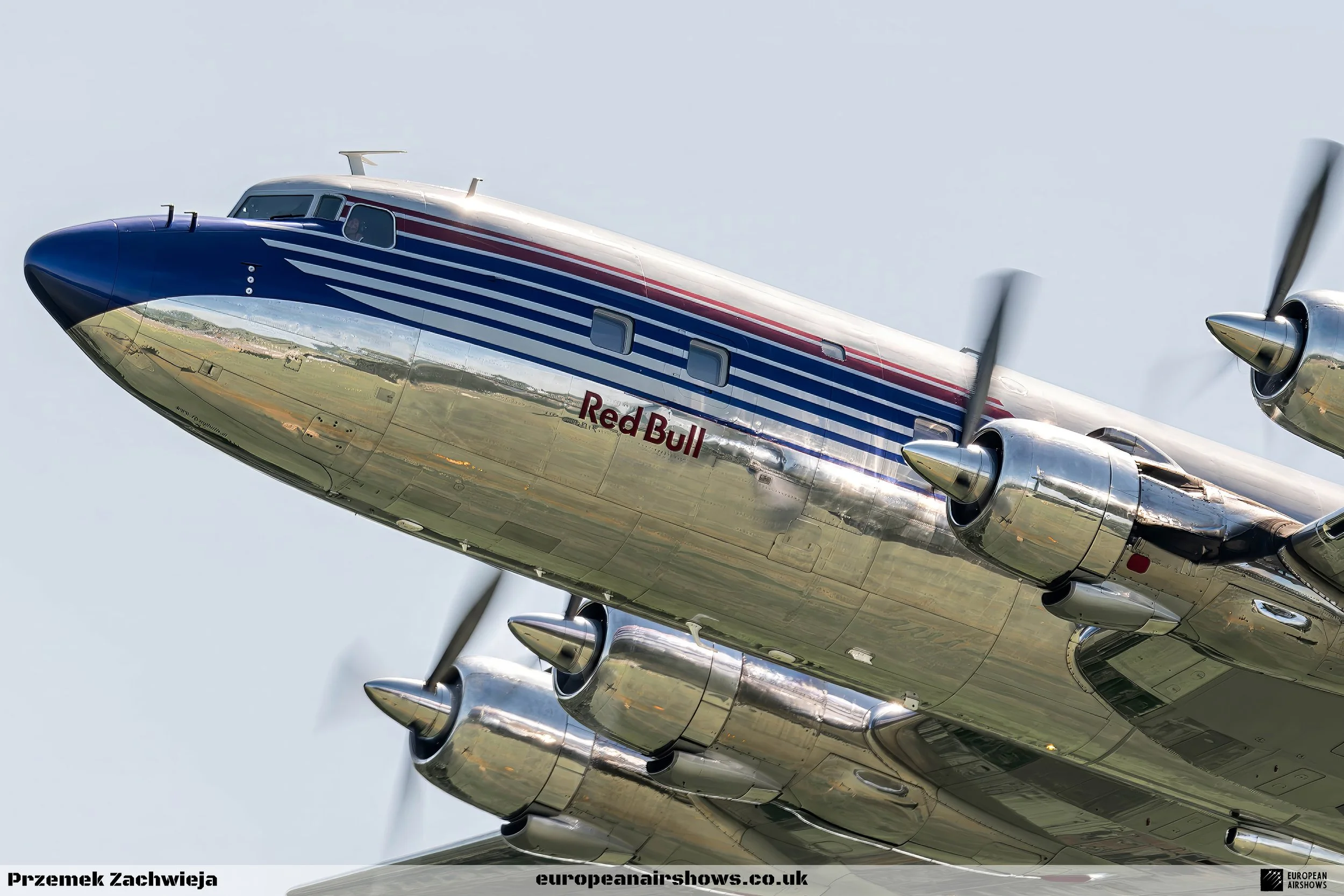
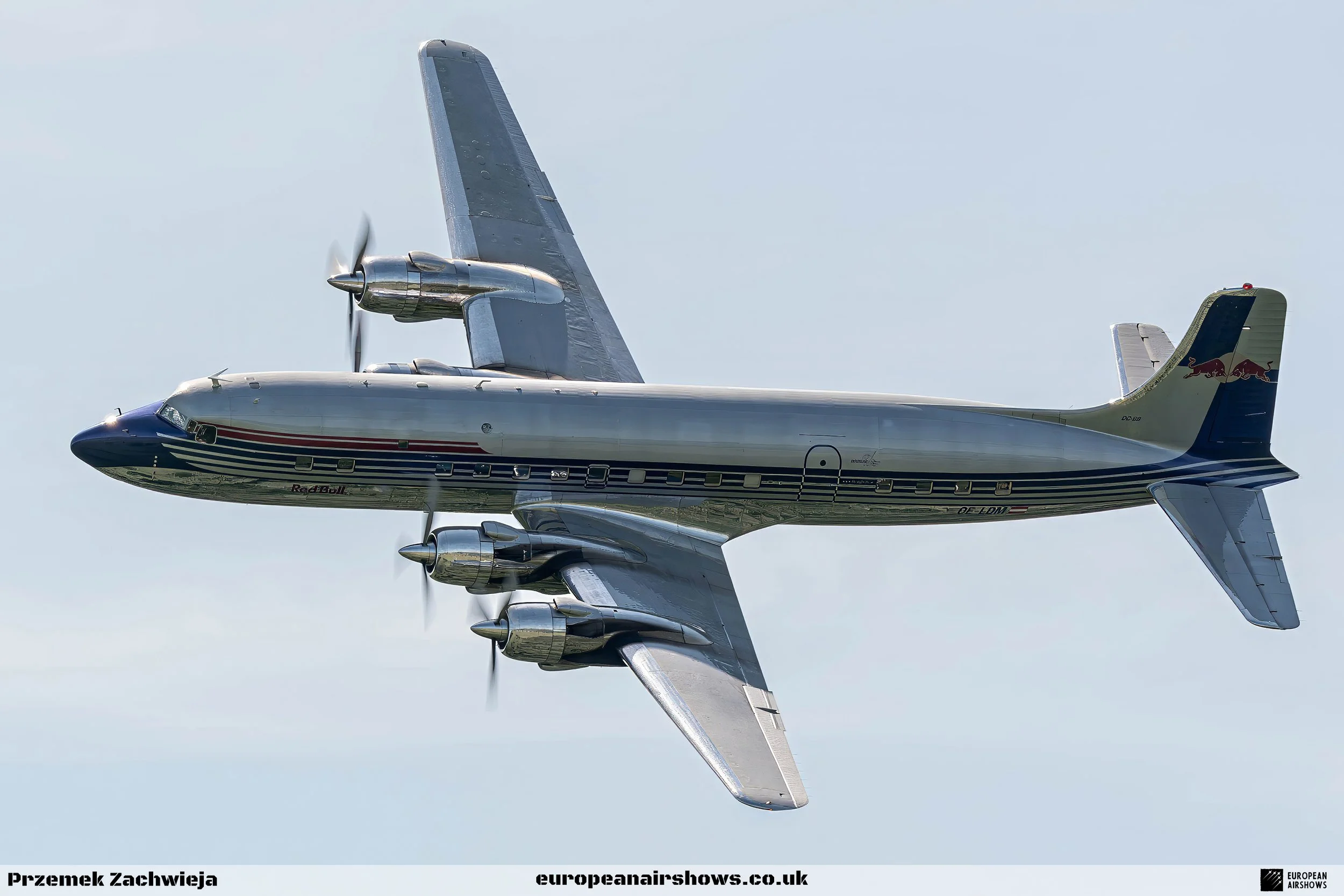
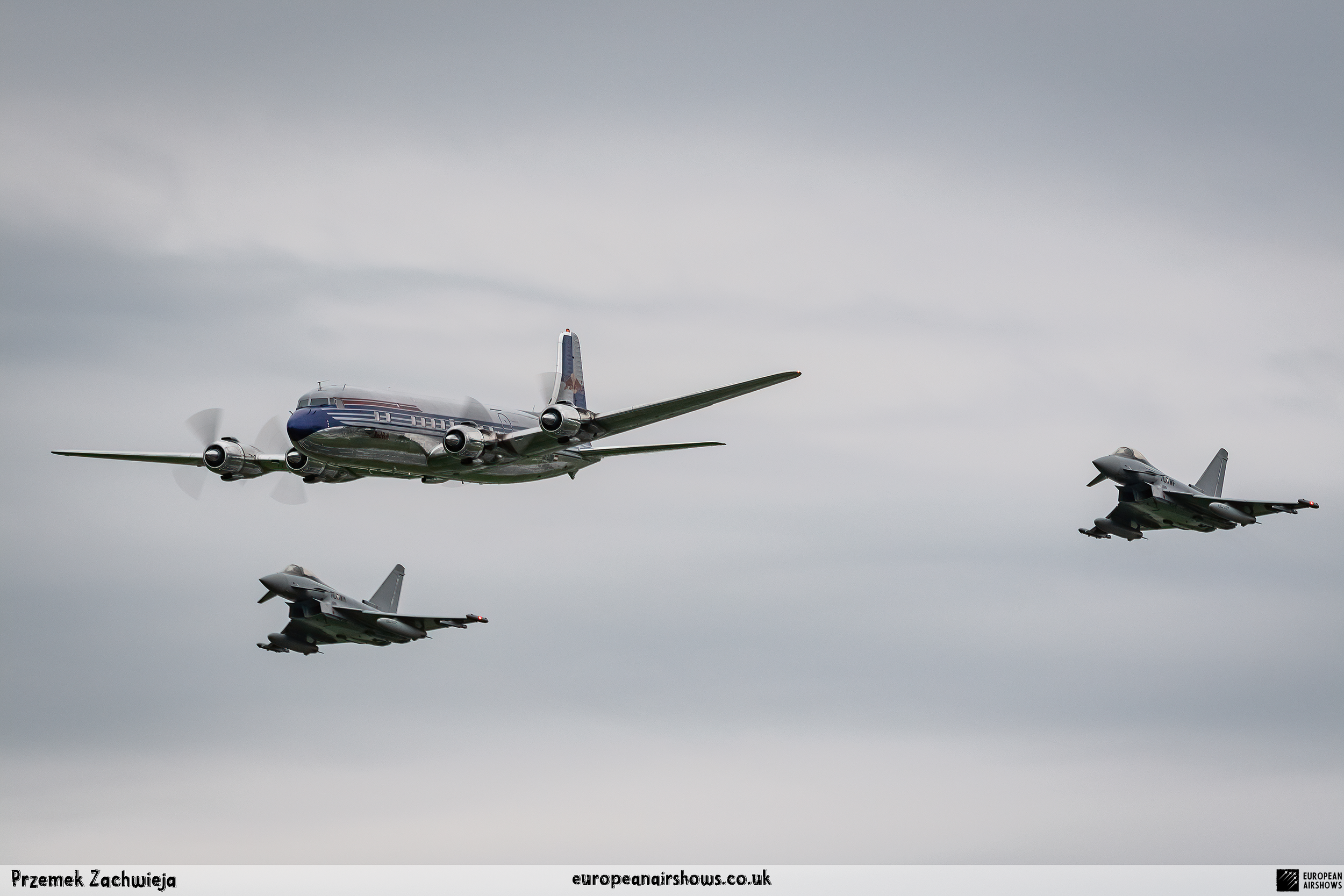
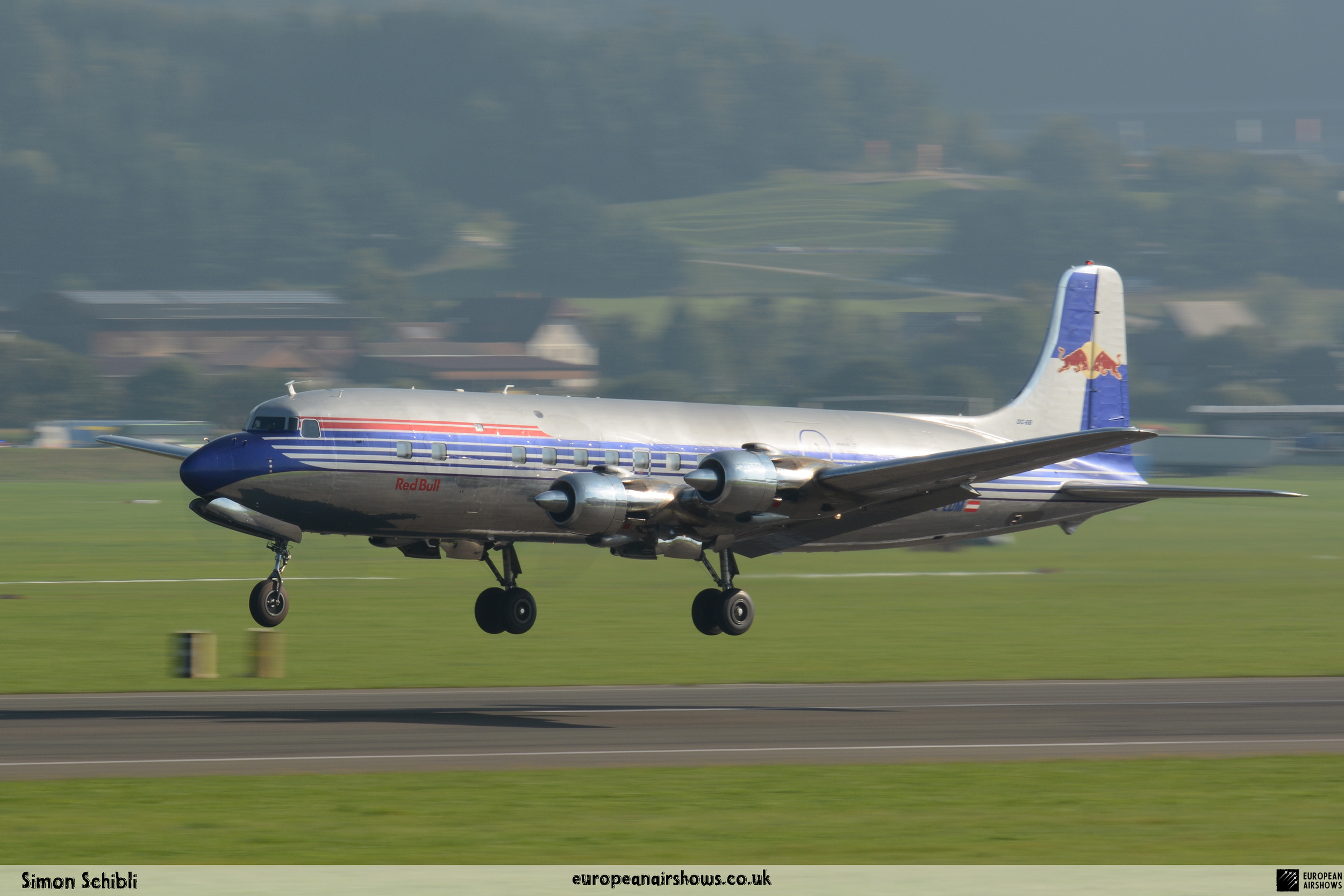
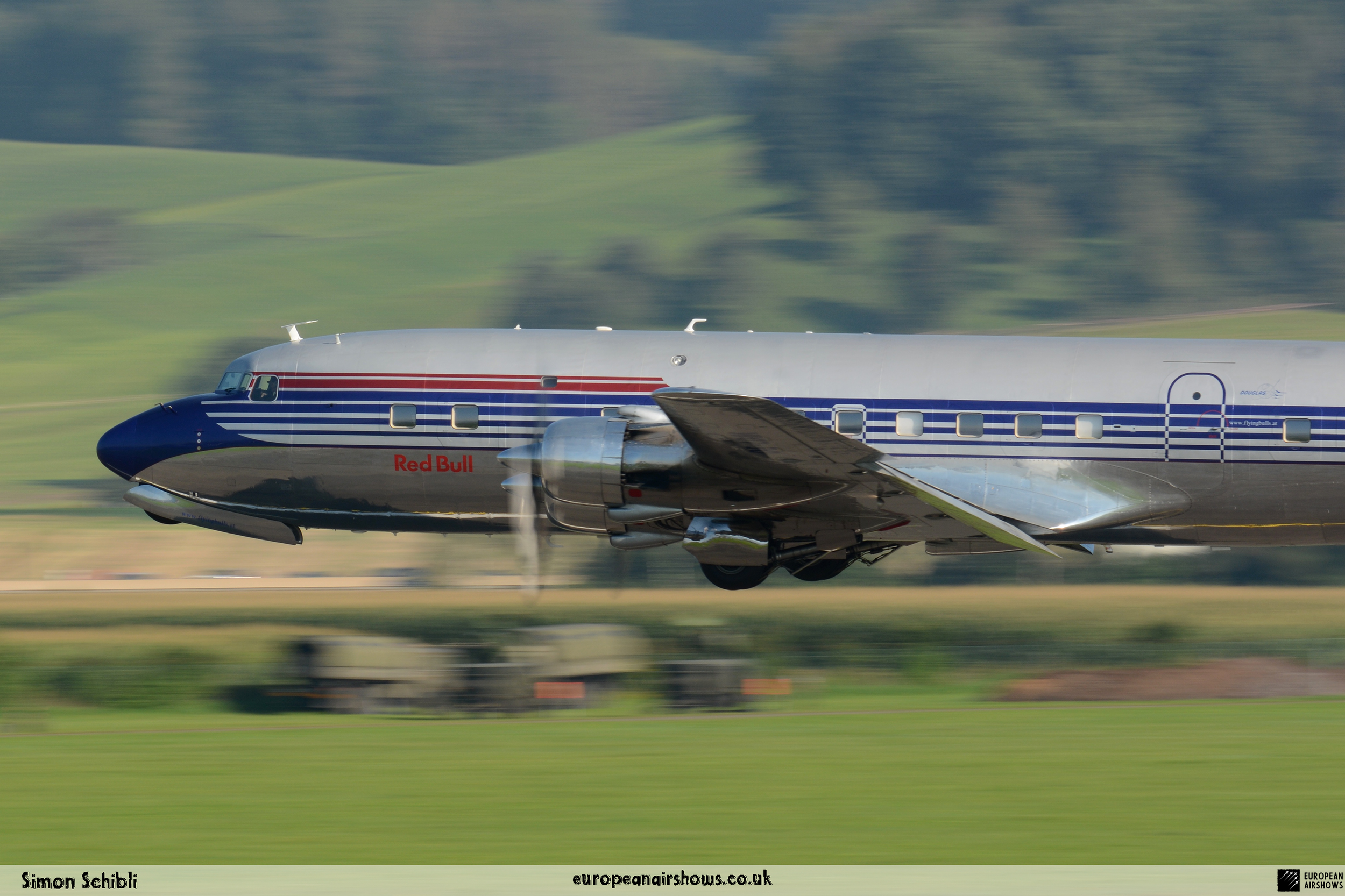
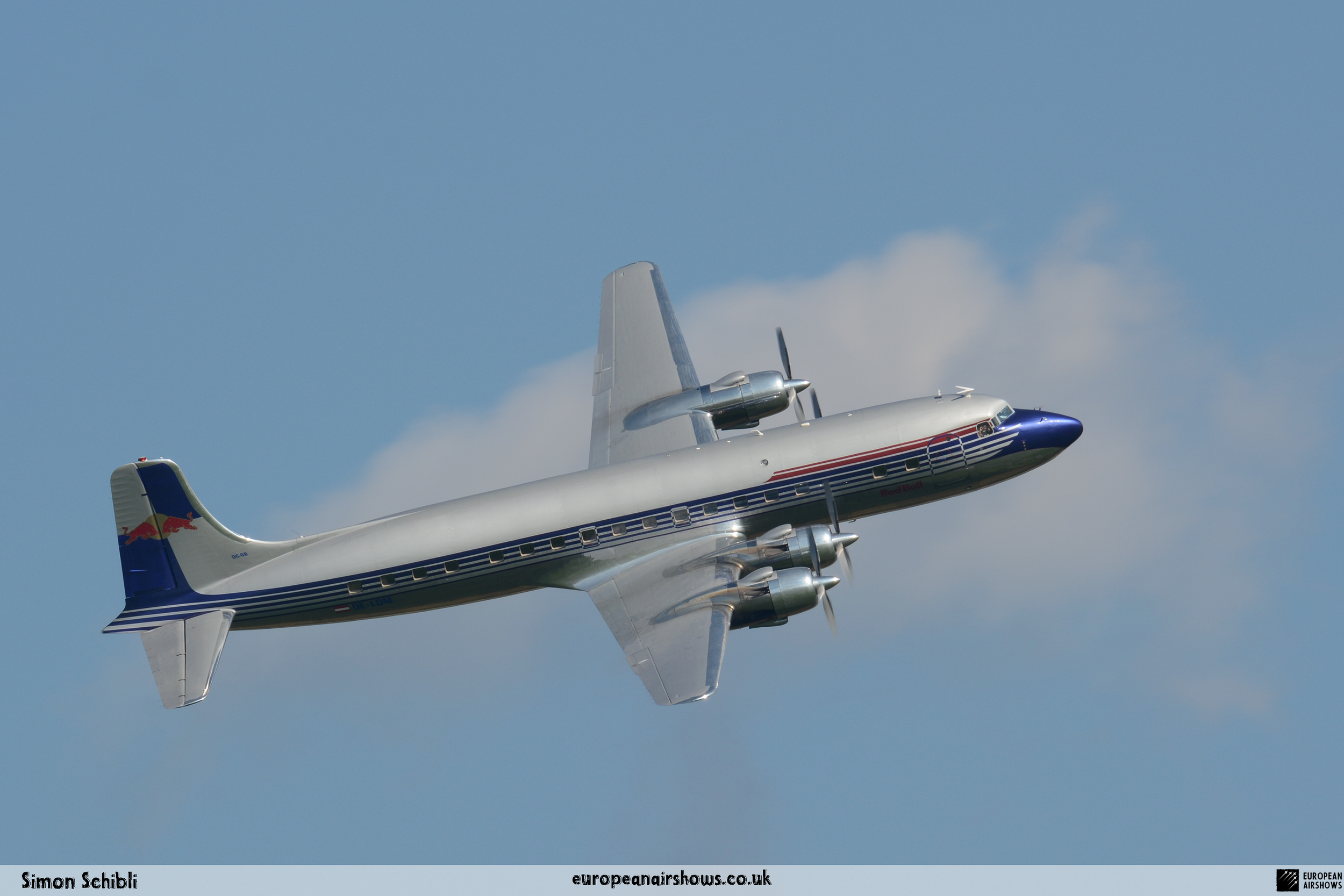
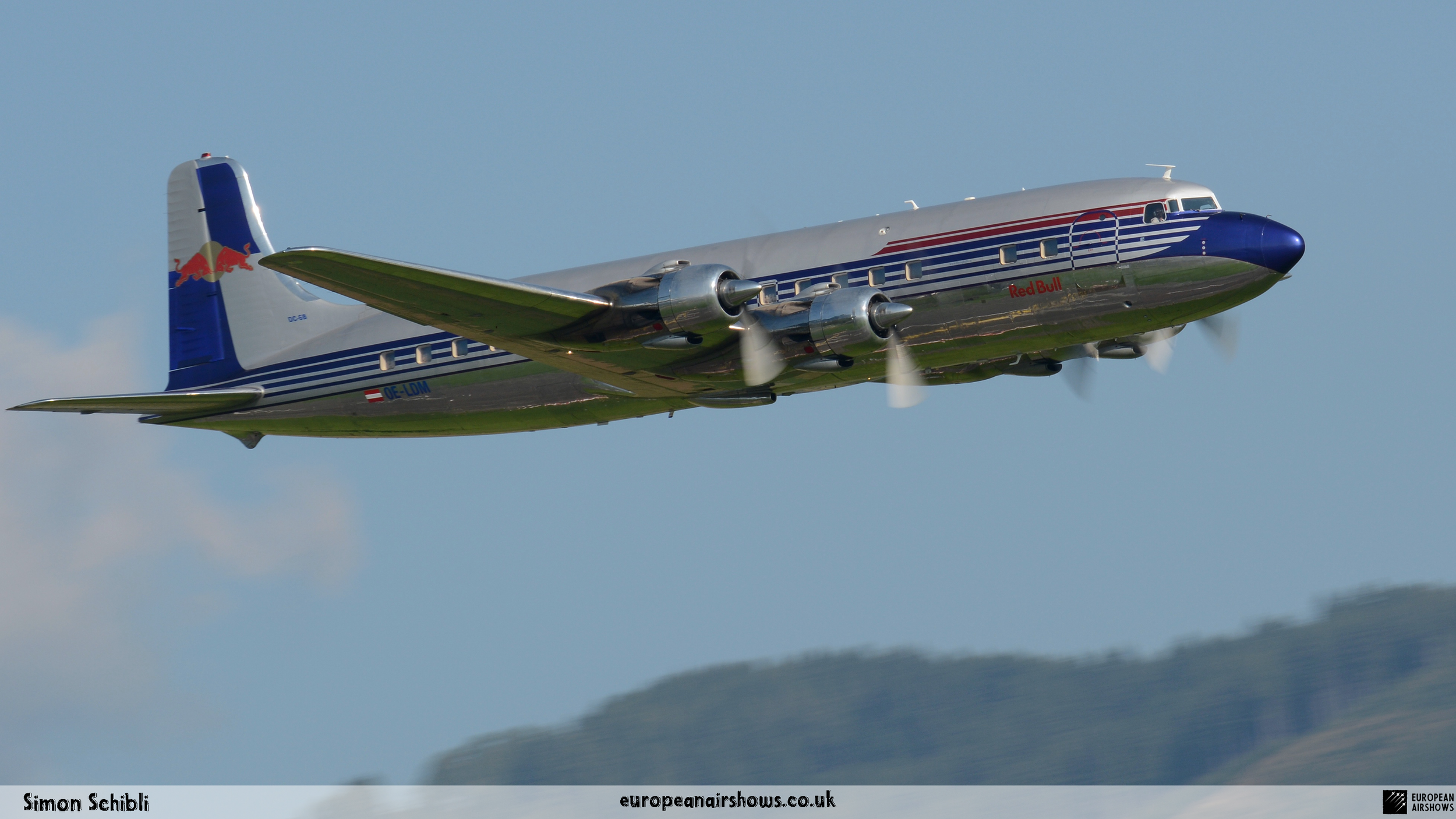
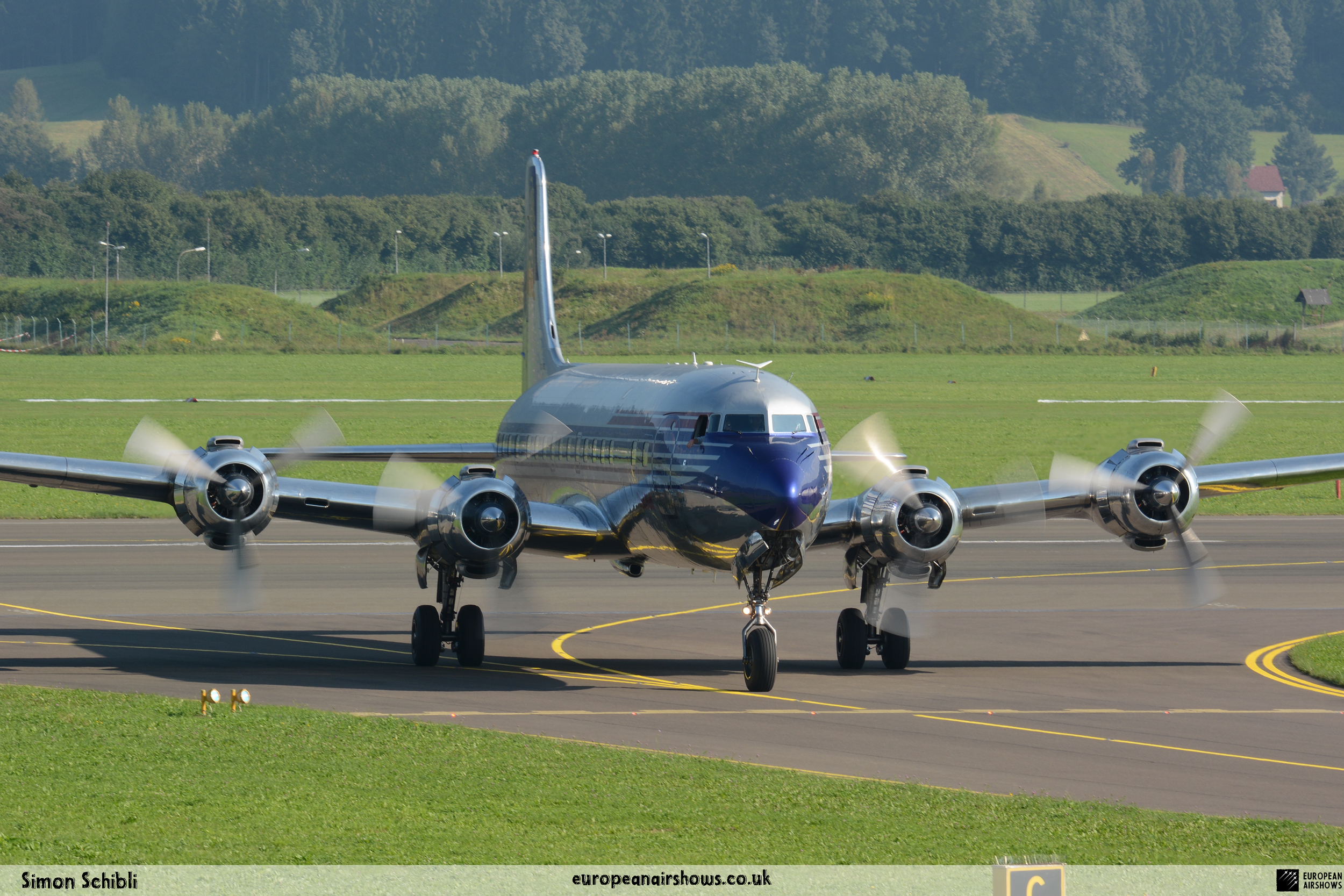
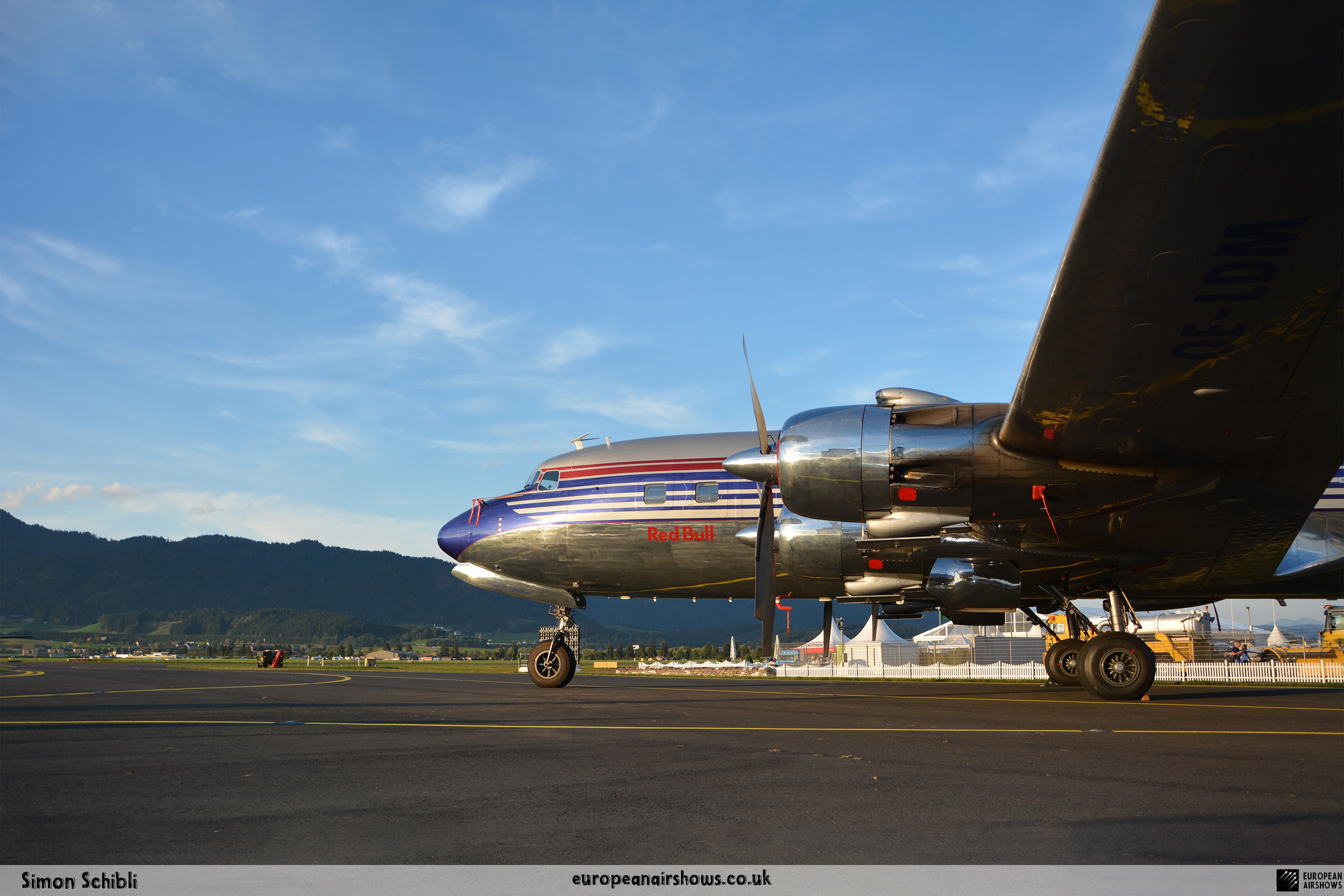
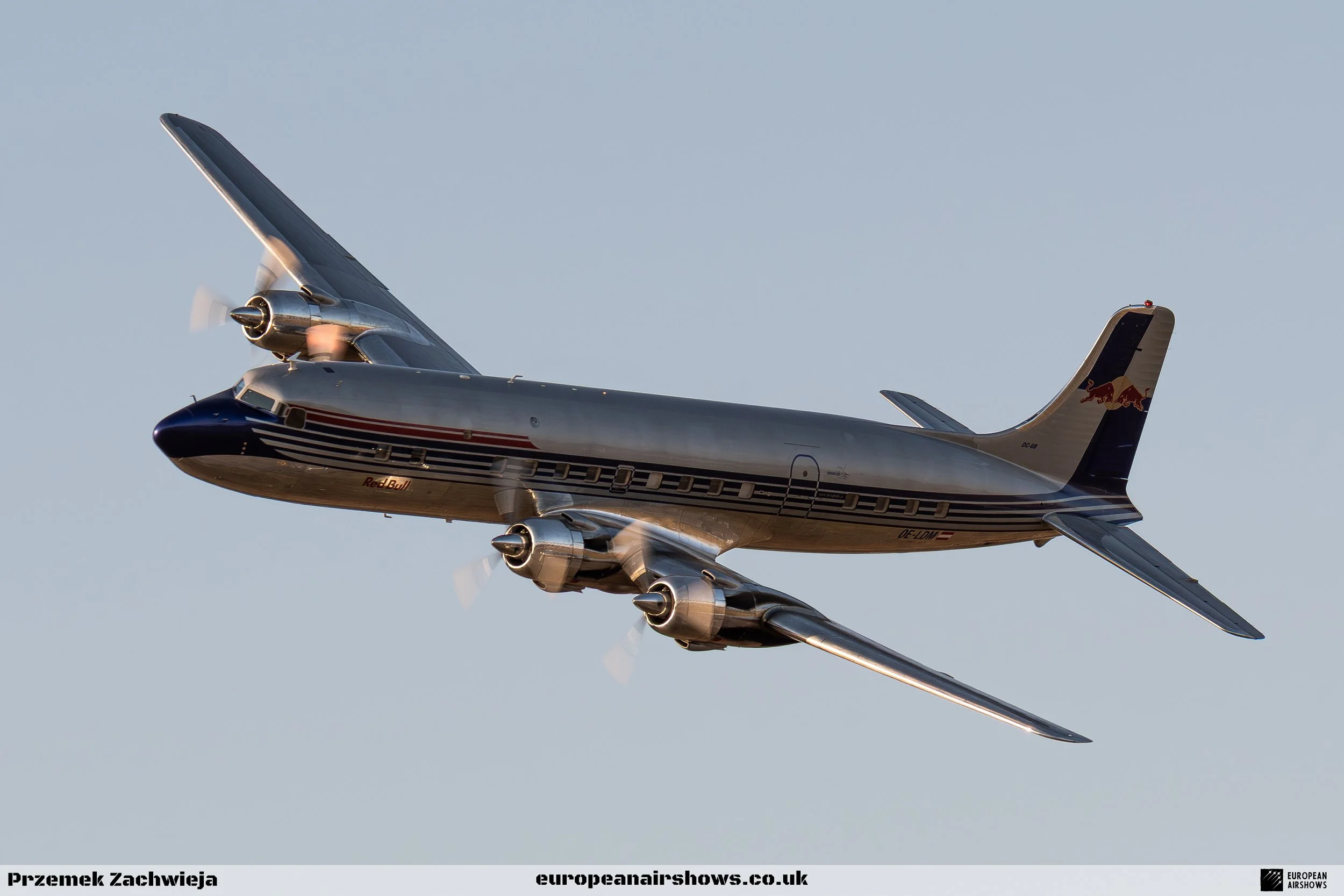
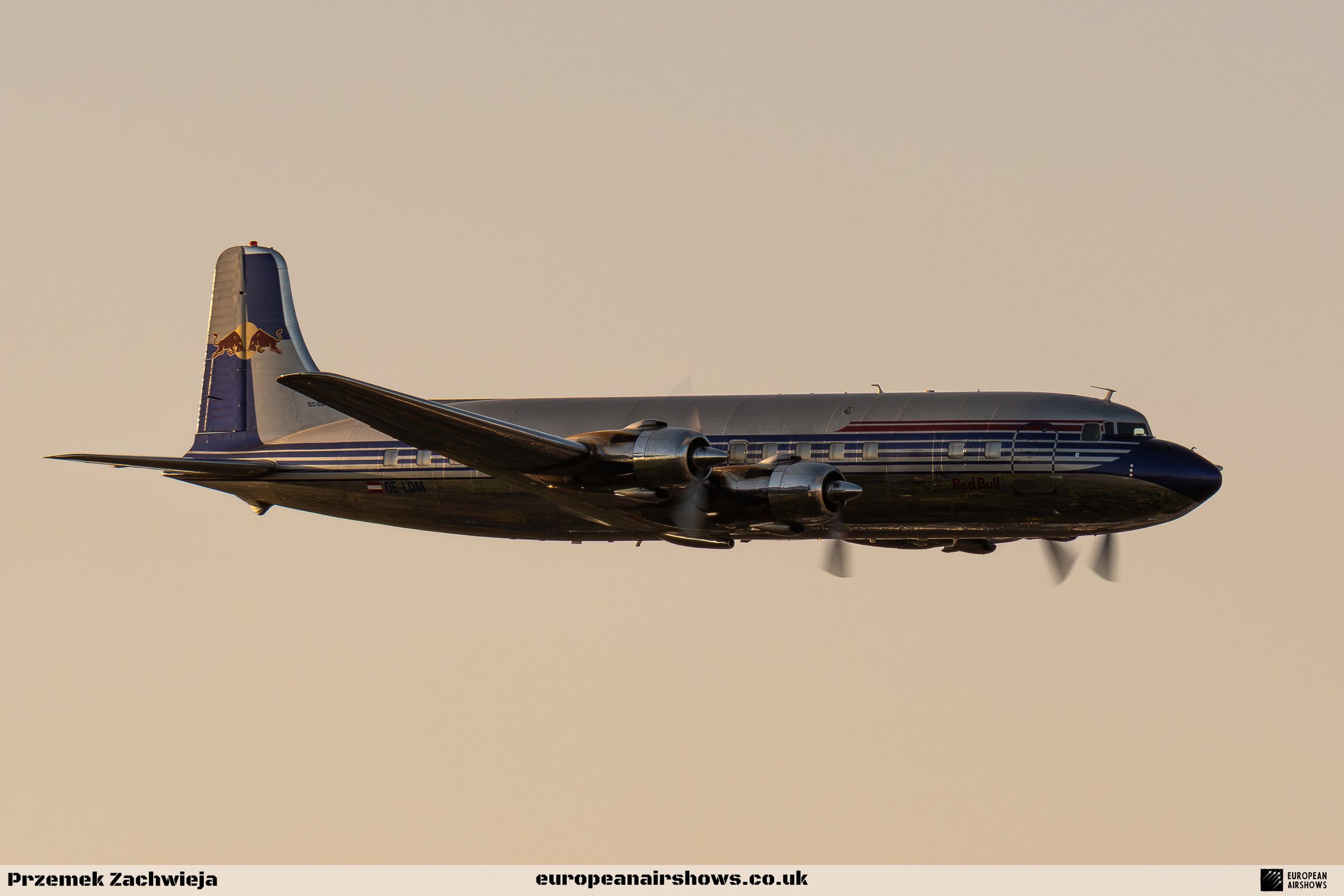
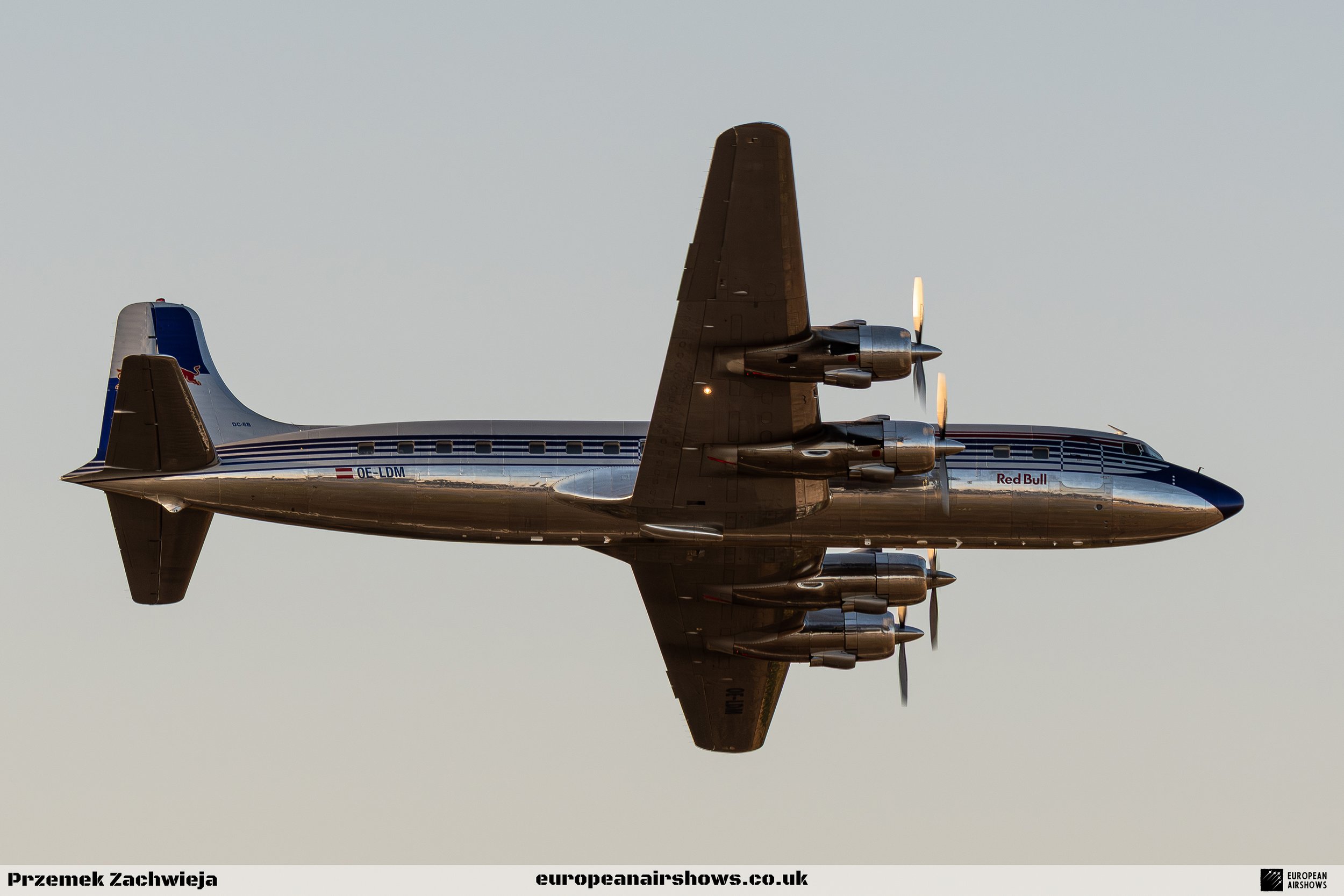
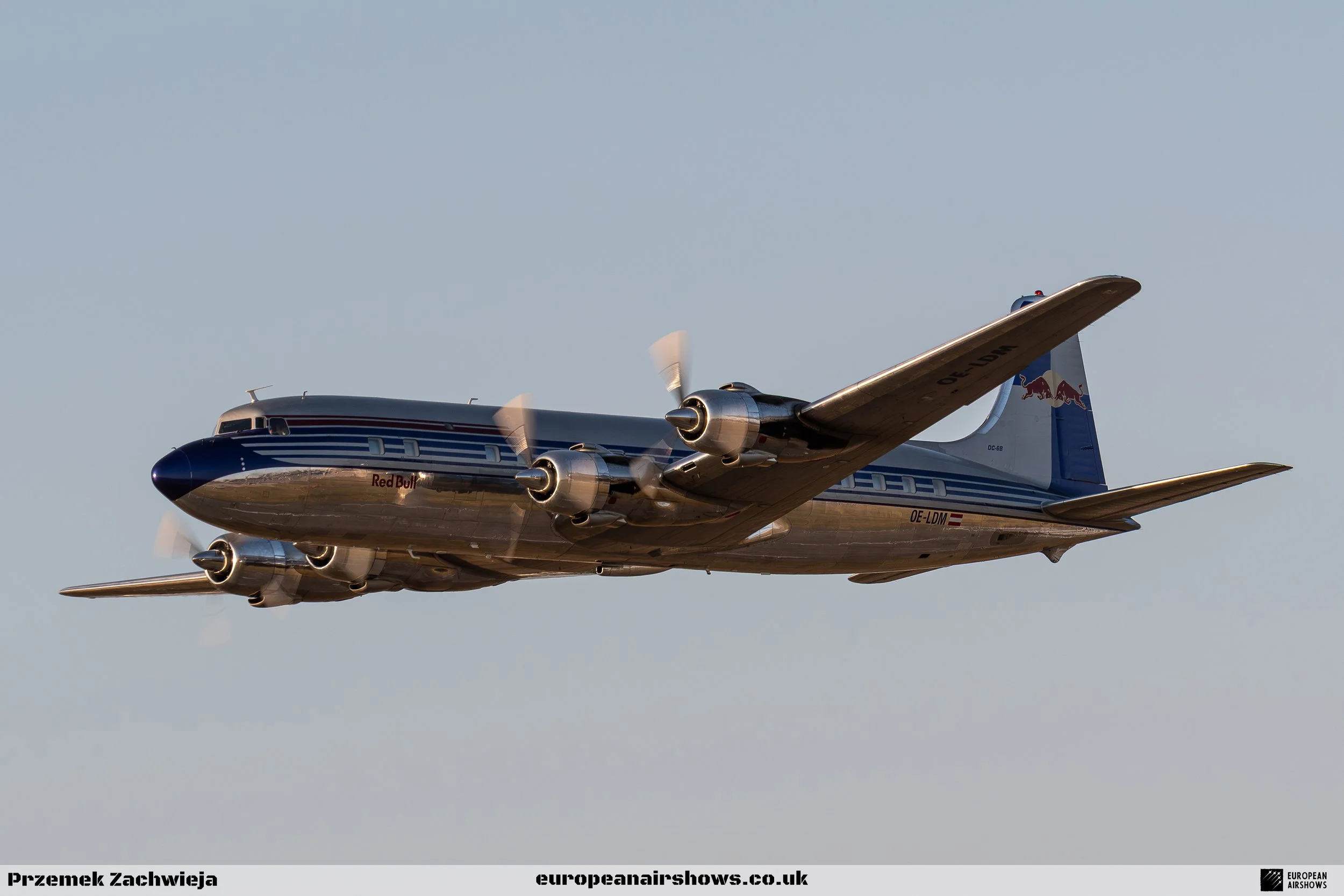
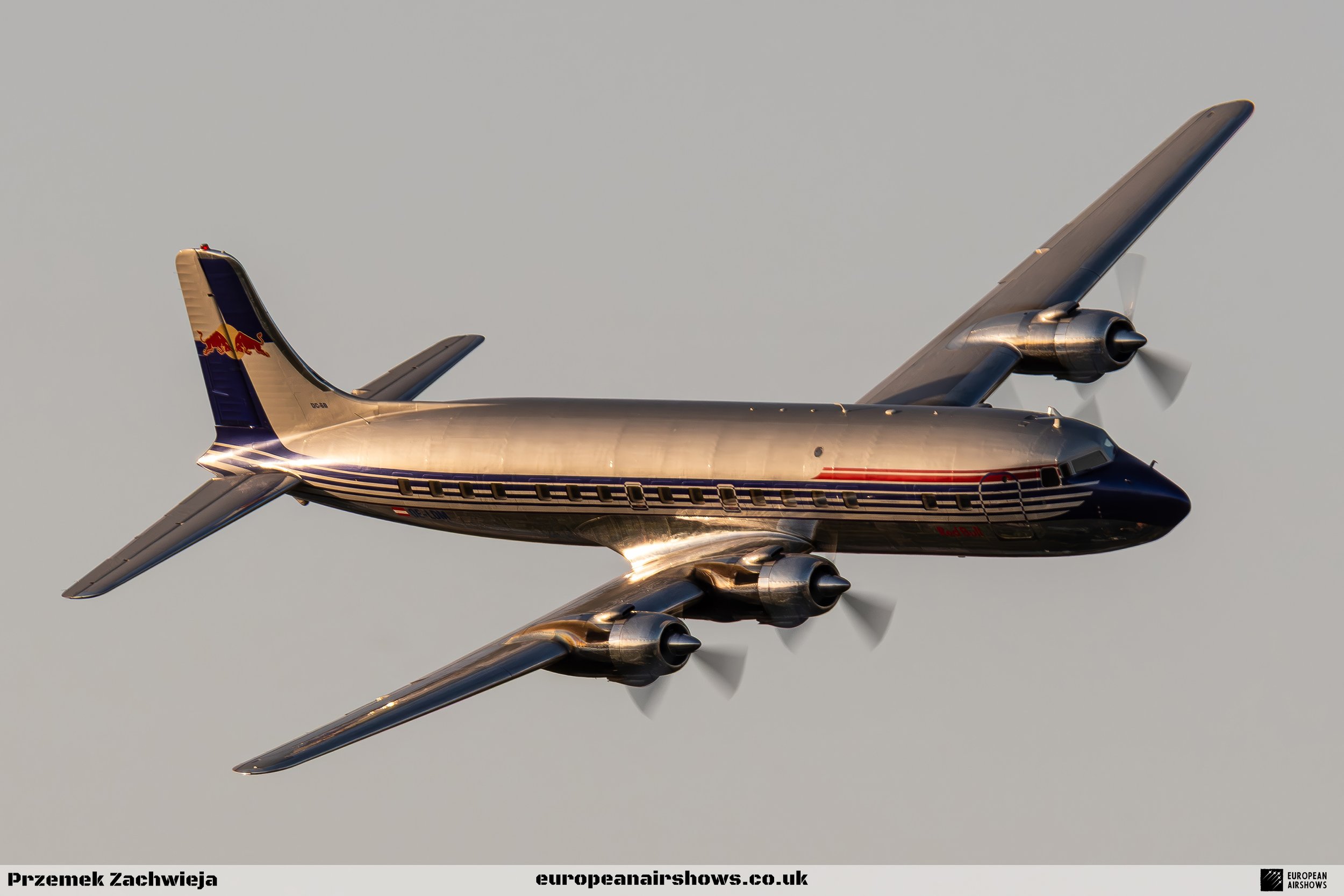
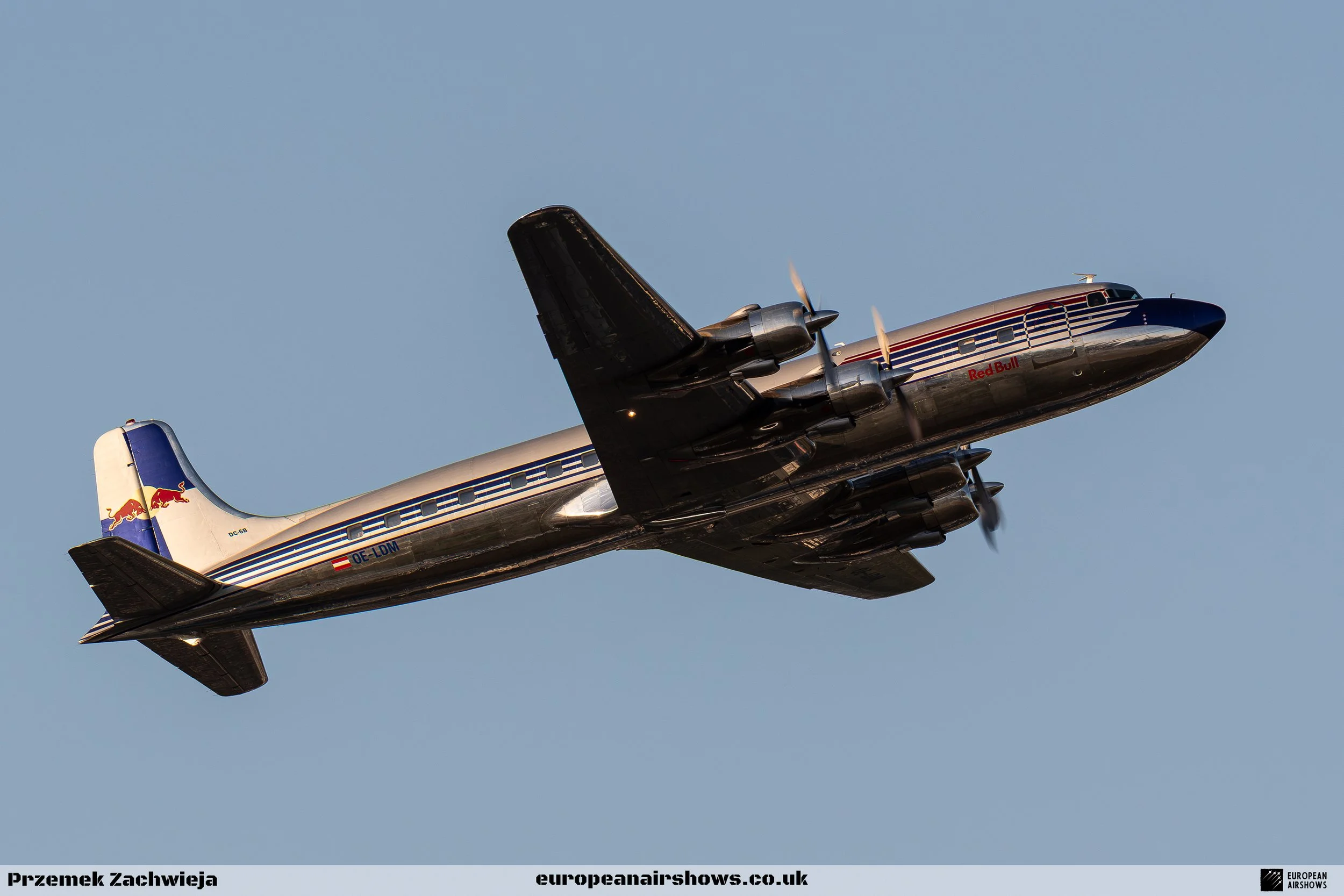
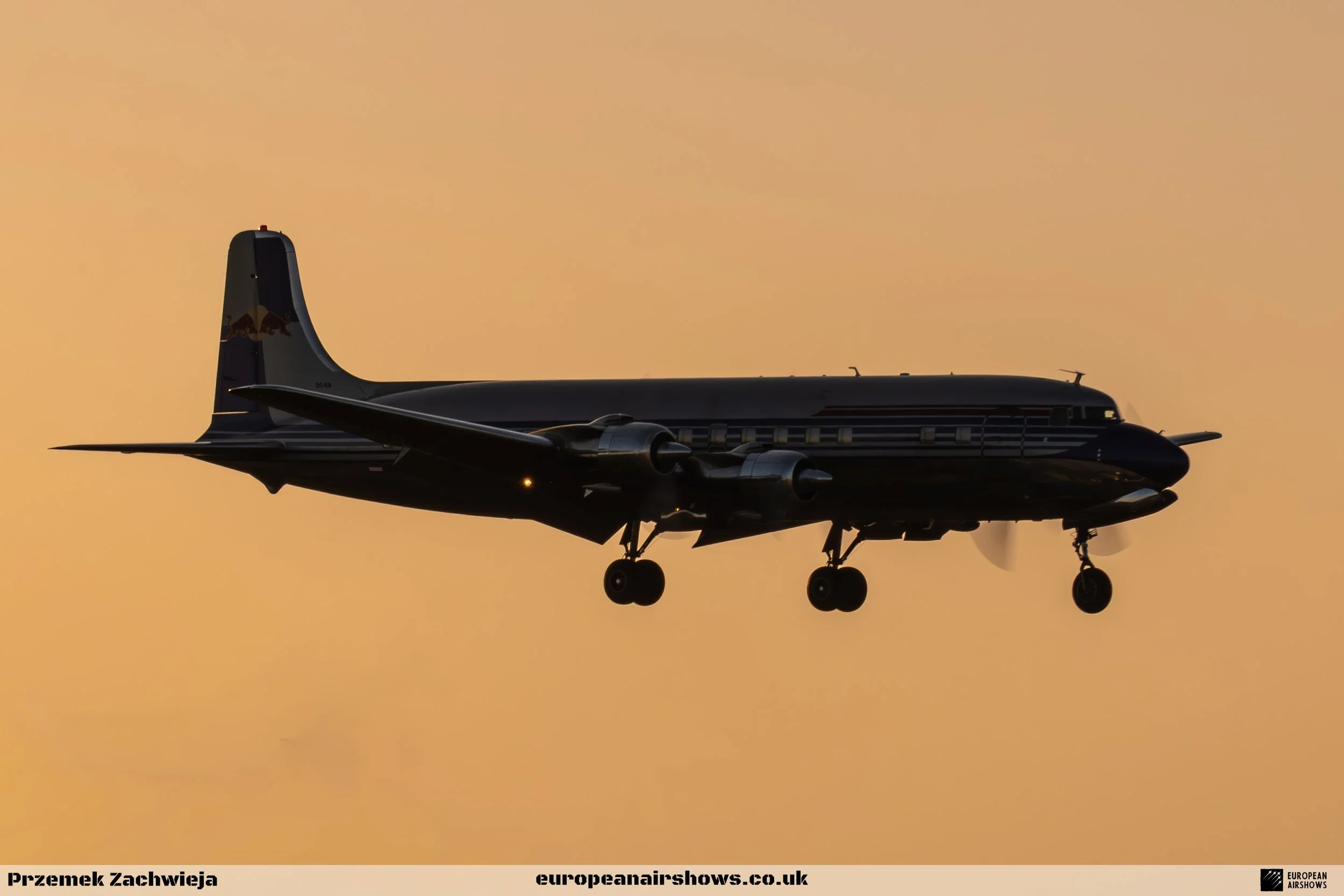
The four-engine DC-6B is the flagship. Its display relies on scale, sound, sweeping turns and precise crew coordination rather than fighter-style manoeuvring.
Solo performance
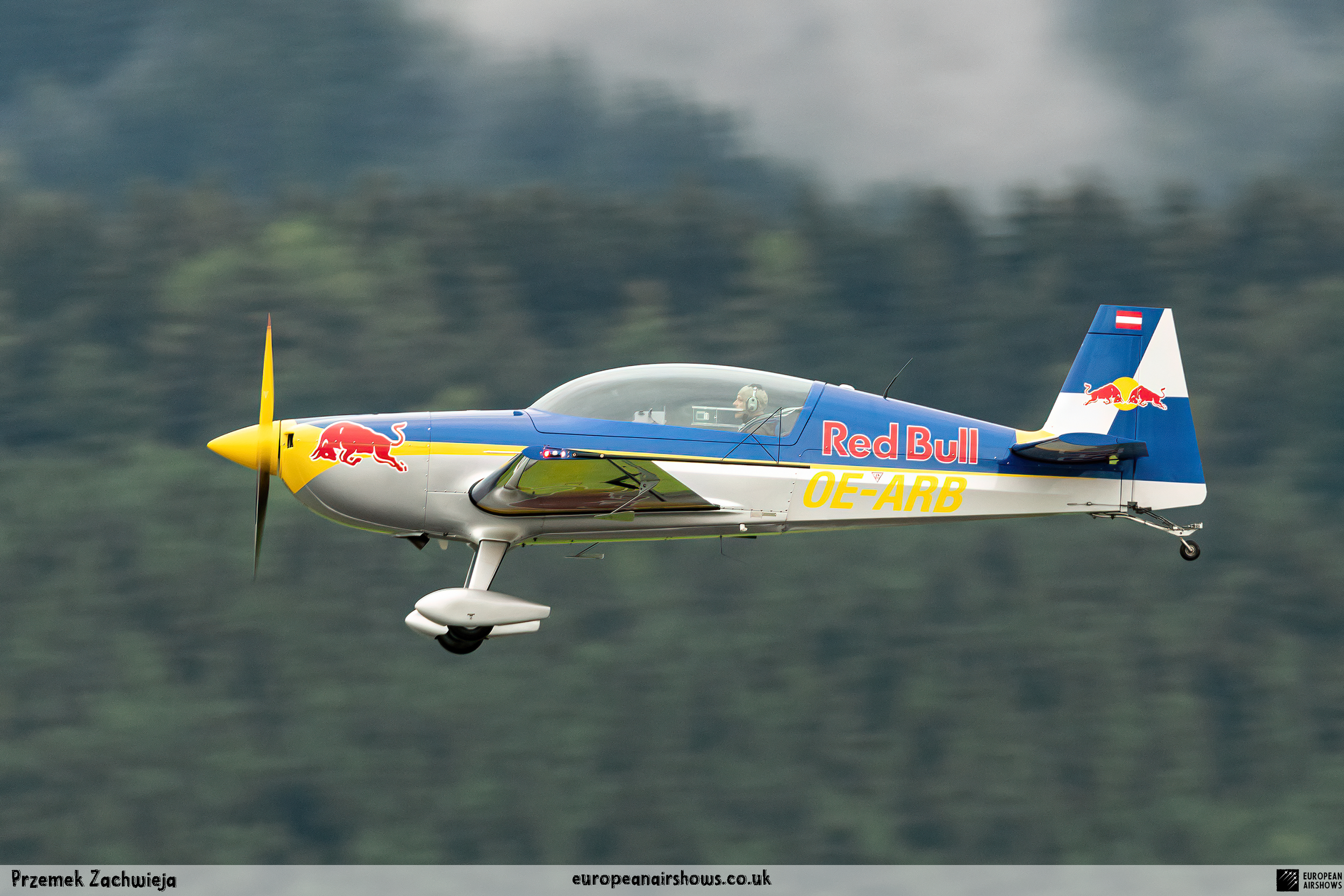
The Extra 300 LX provides dedicated aerobatic energy, while the Sabre, Bearcat and individual warbirds can each be presented around their own performance and history.
Utility flying
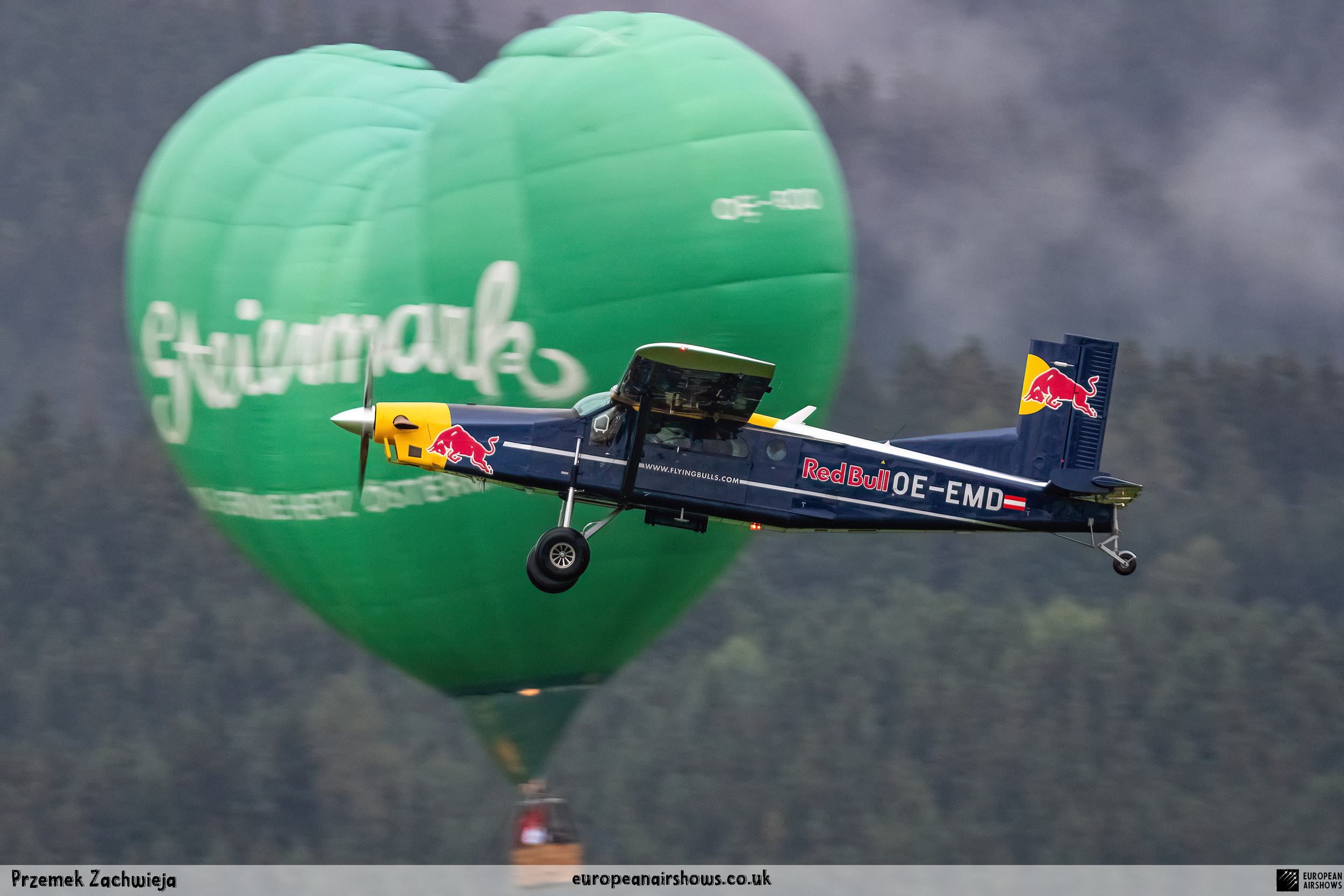
The PC-6, Caravan, Husky and other working aircraft broaden the programme beyond warbirds, with short-field, parachuting, water-flying or specialist roles depending on the booking.
Formation discipline
Different aircraft do not share the same acceleration, turn radius or energy retention. The formation must be planned around a common safe envelope, not simply visual impact.
Event-specific line-ups
The complete collection never represents one promised display package. Only aircraft confirmed by the event organiser should be treated as attending or flying.
The aircraft
Eighteen current fixed-wing aircraft, from a four-engine propliner to Europe's only flying Sabre.
Douglas DC-6B - the crown jewel
The 1958-built Douglas DC-6B, OE-LDM, is the collection's flagship. Originally delivered to JAT and used by Yugoslav leader Josip Broz Tito, it later served Zambian president Kenneth Kaunda. Sigi Angerer found it advertised in Africa in March 2000. It reached Salzburg on 7 July after a 28-hour delivery flight, and a three-year restoration beginning in 2001 returned it to the air in exceptional condition.
Combat aircraft and advanced trainers
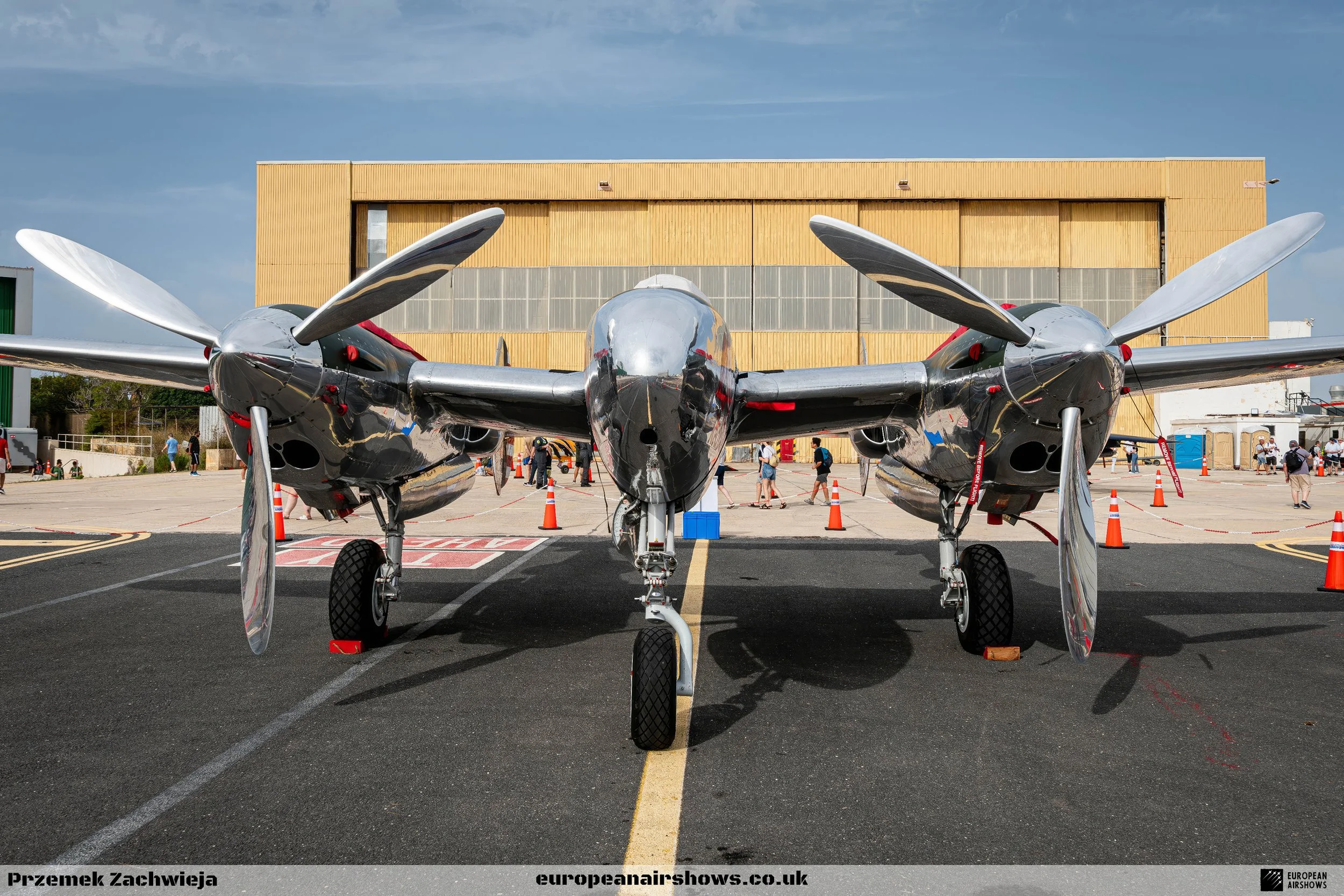
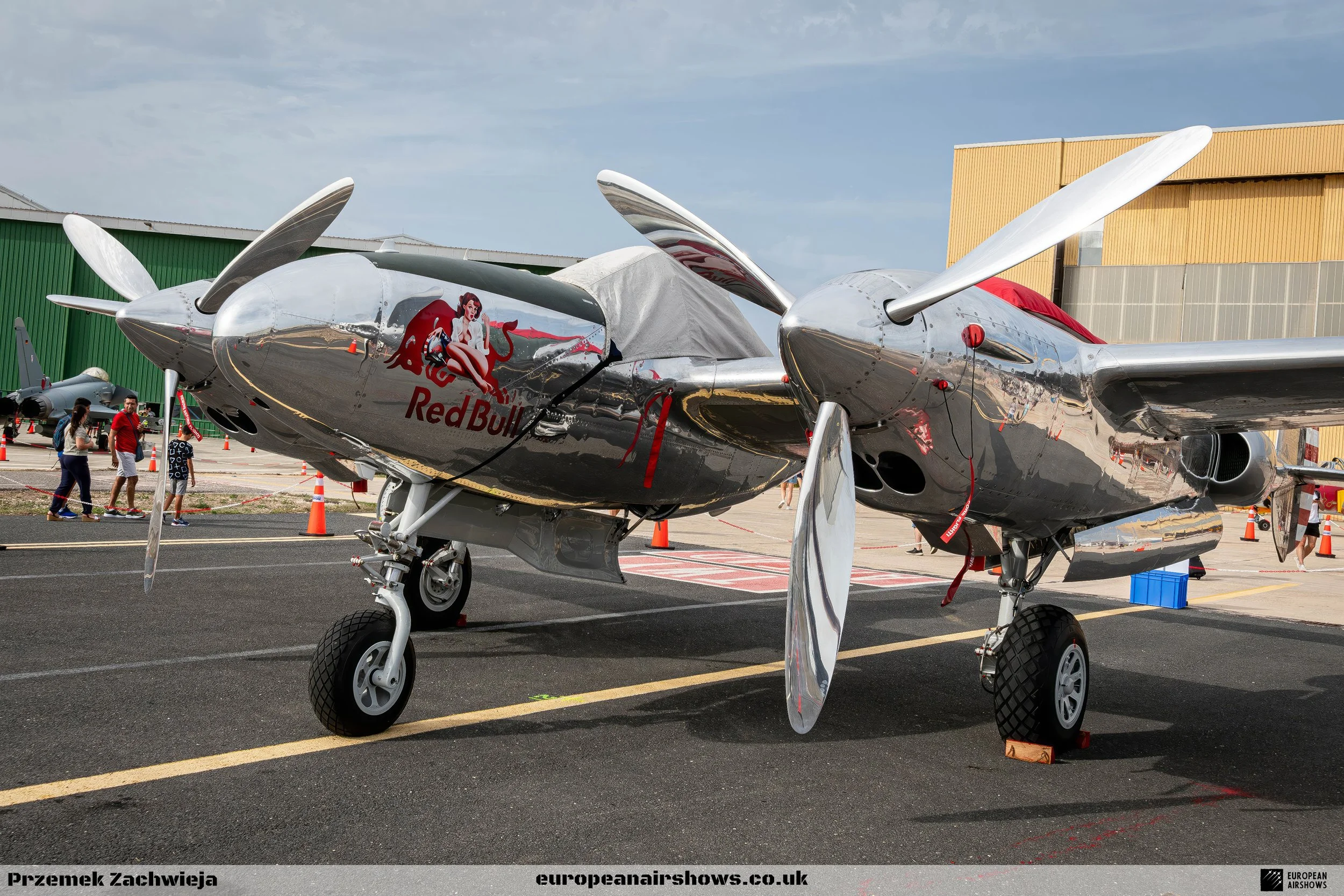
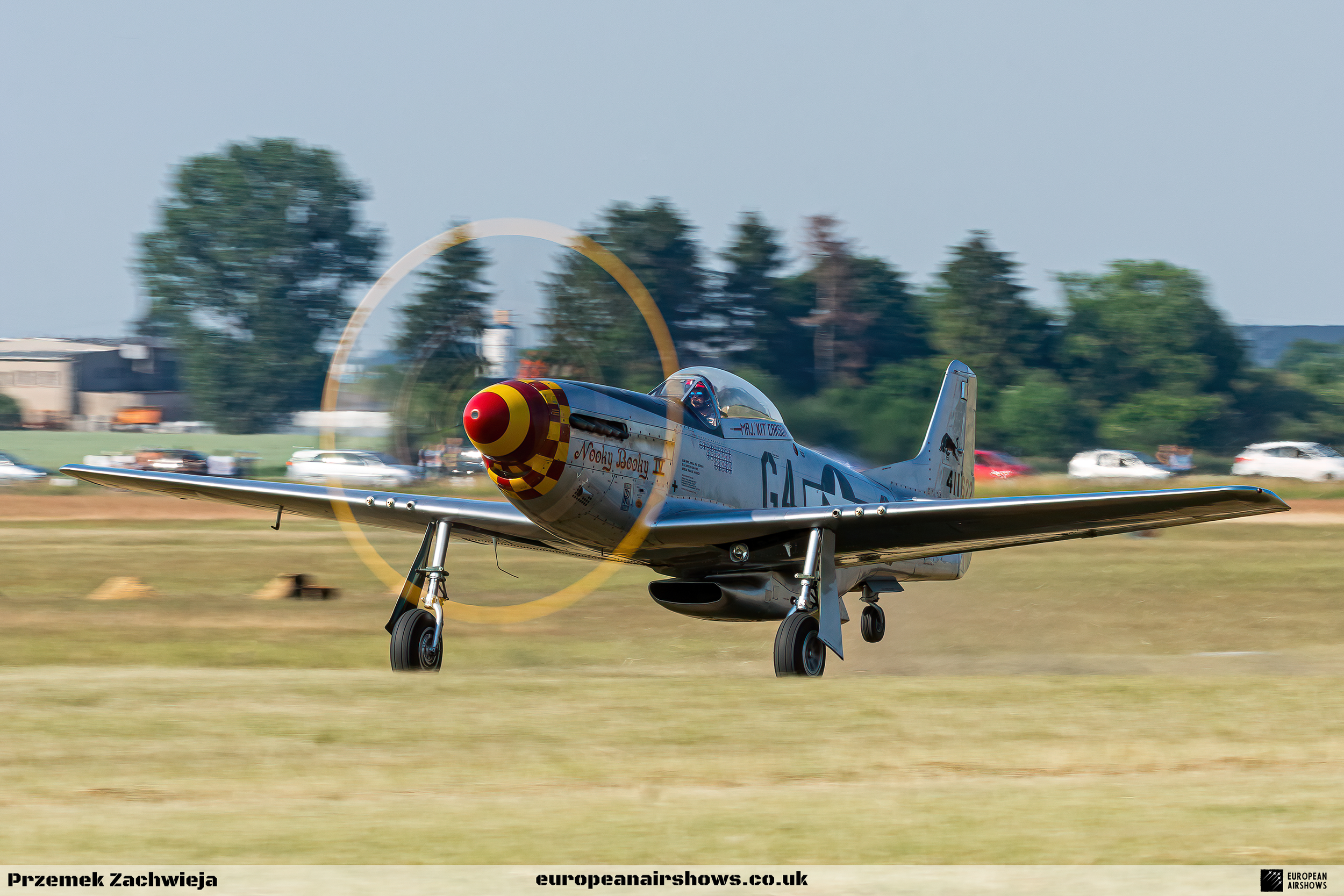
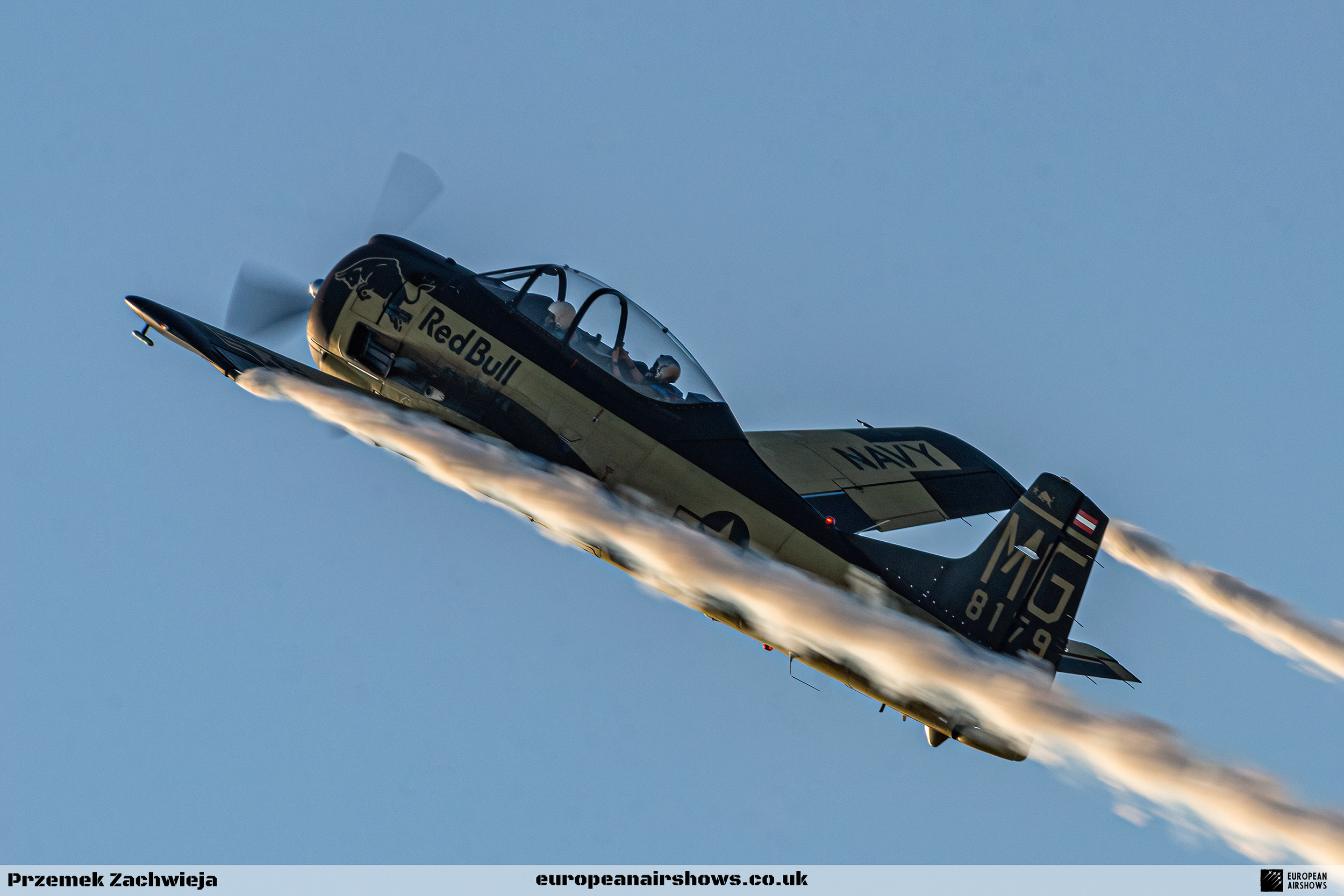
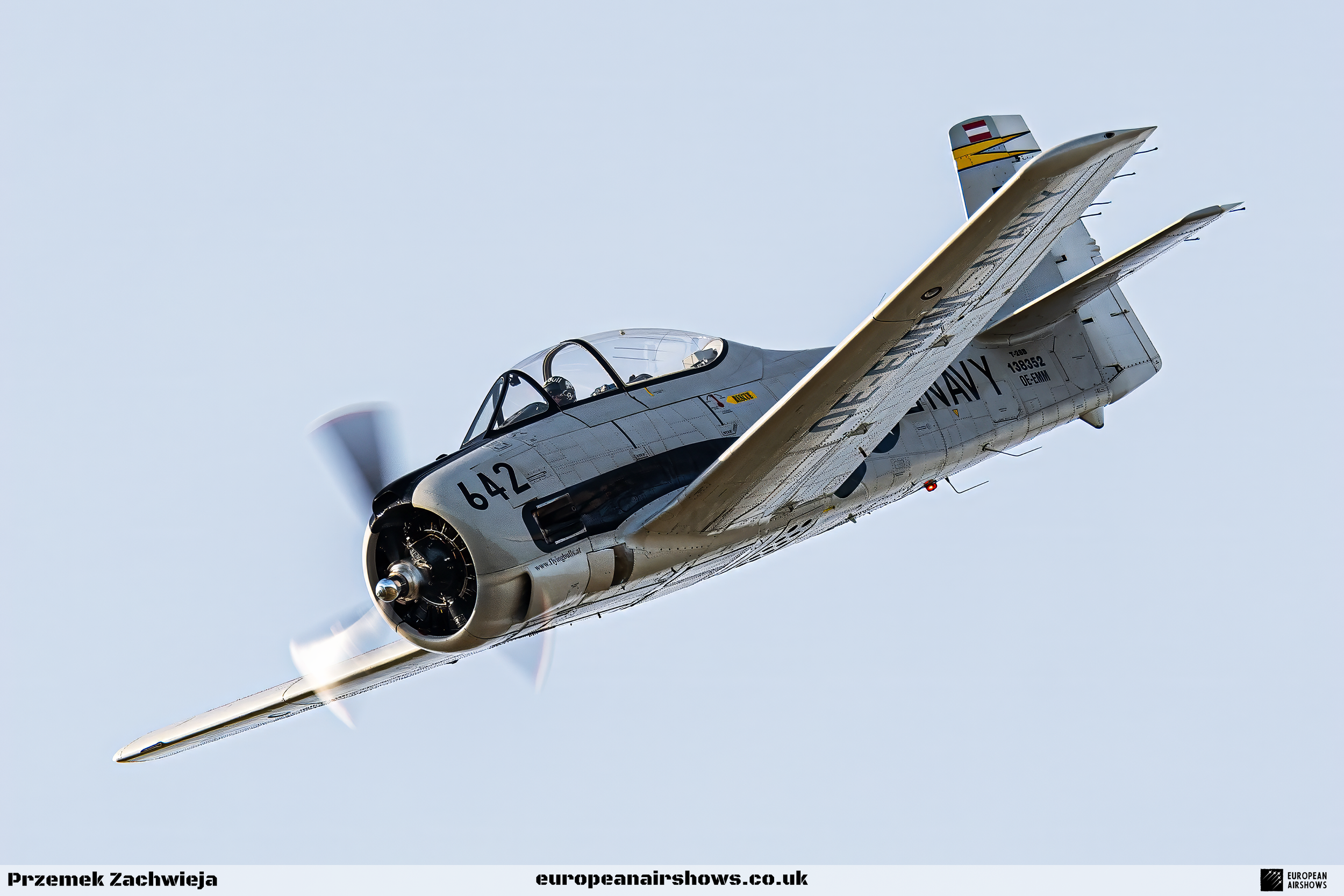
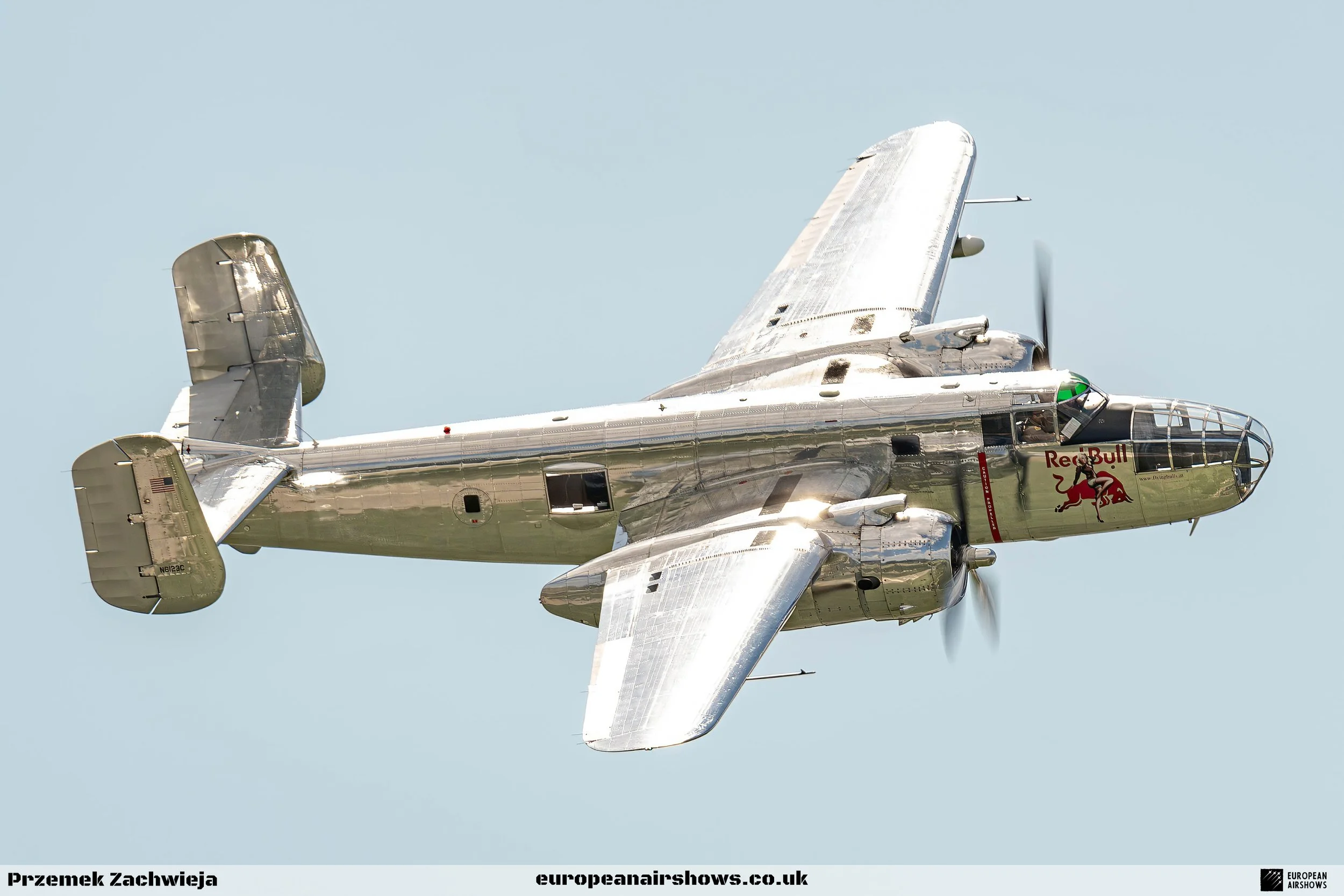
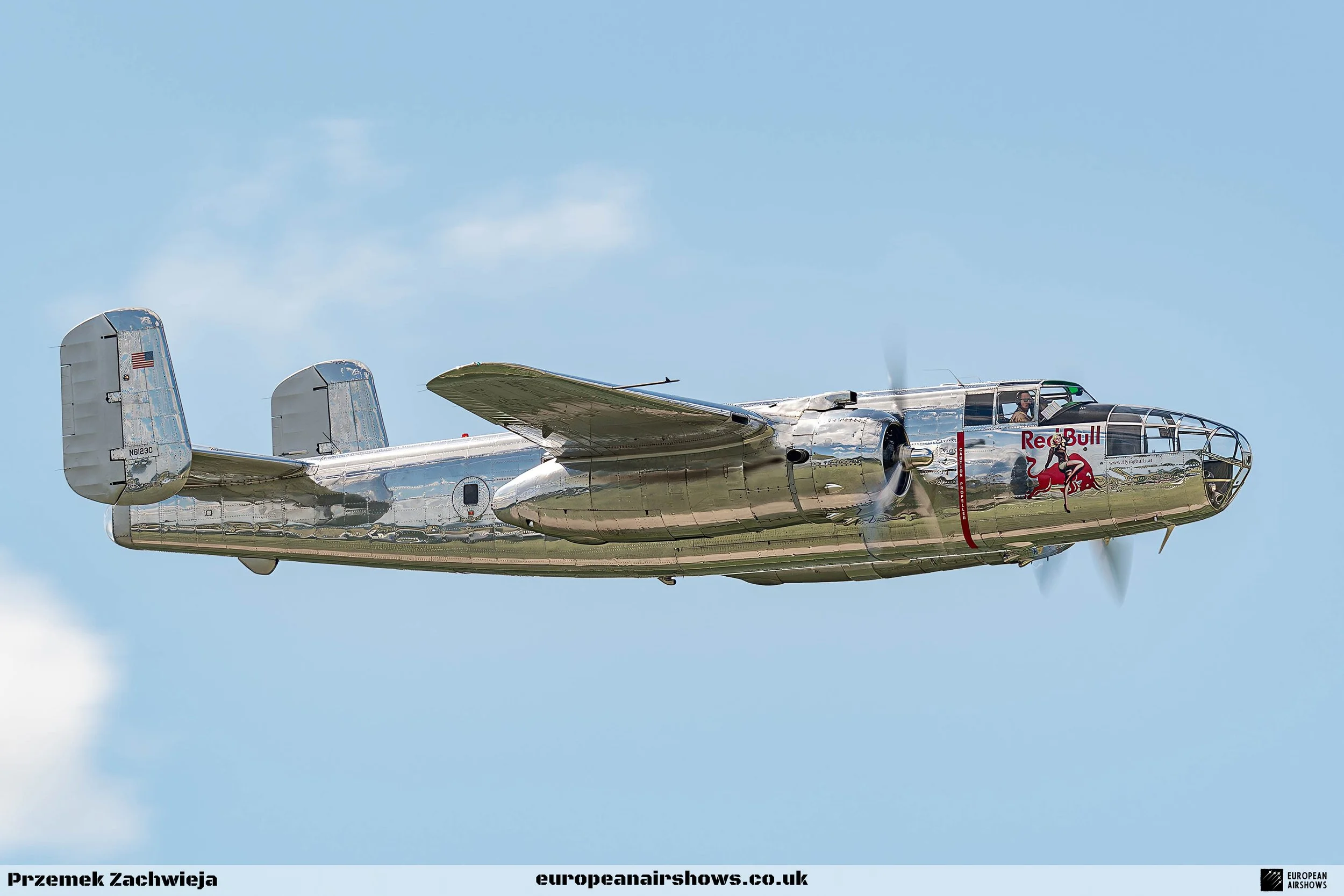
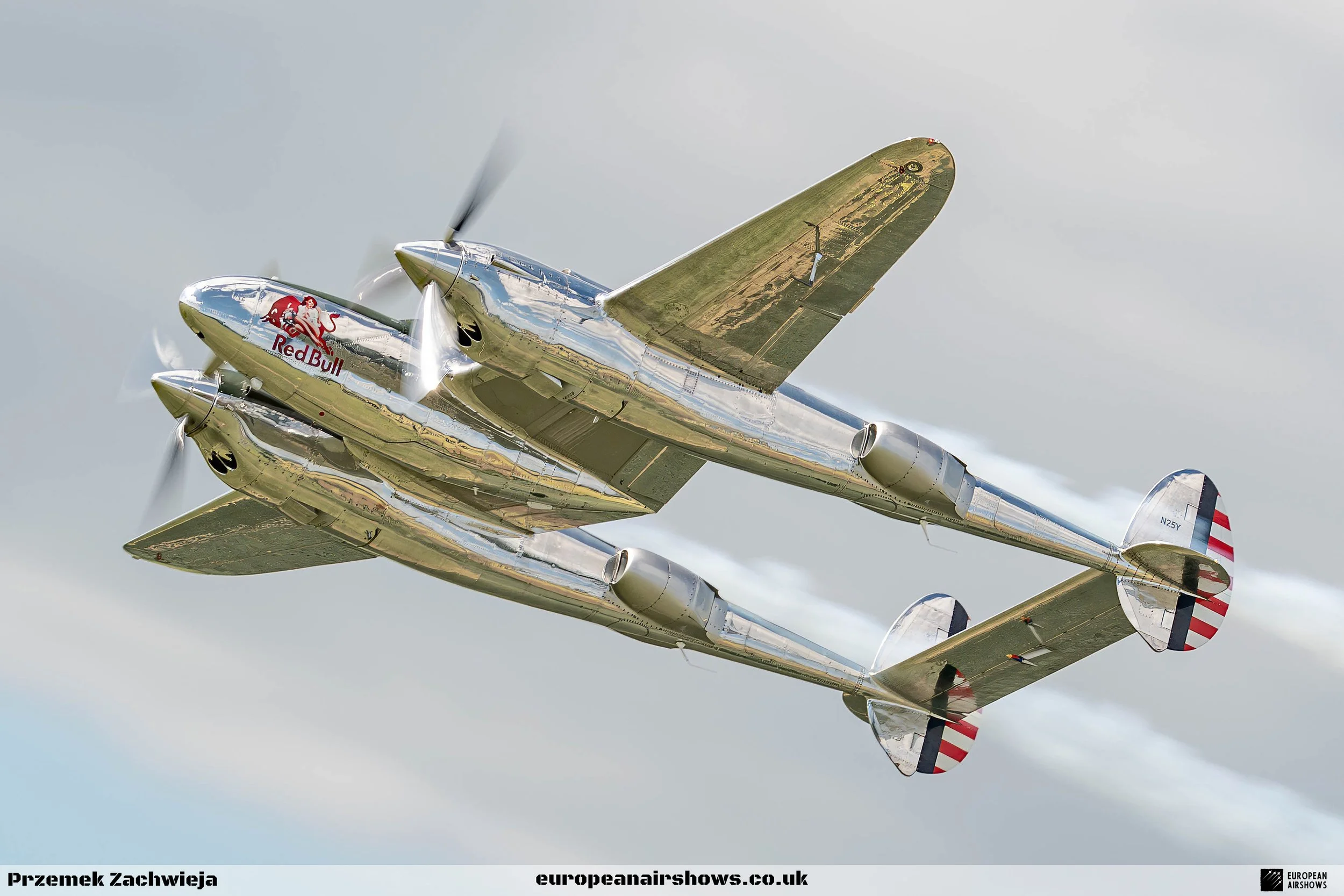
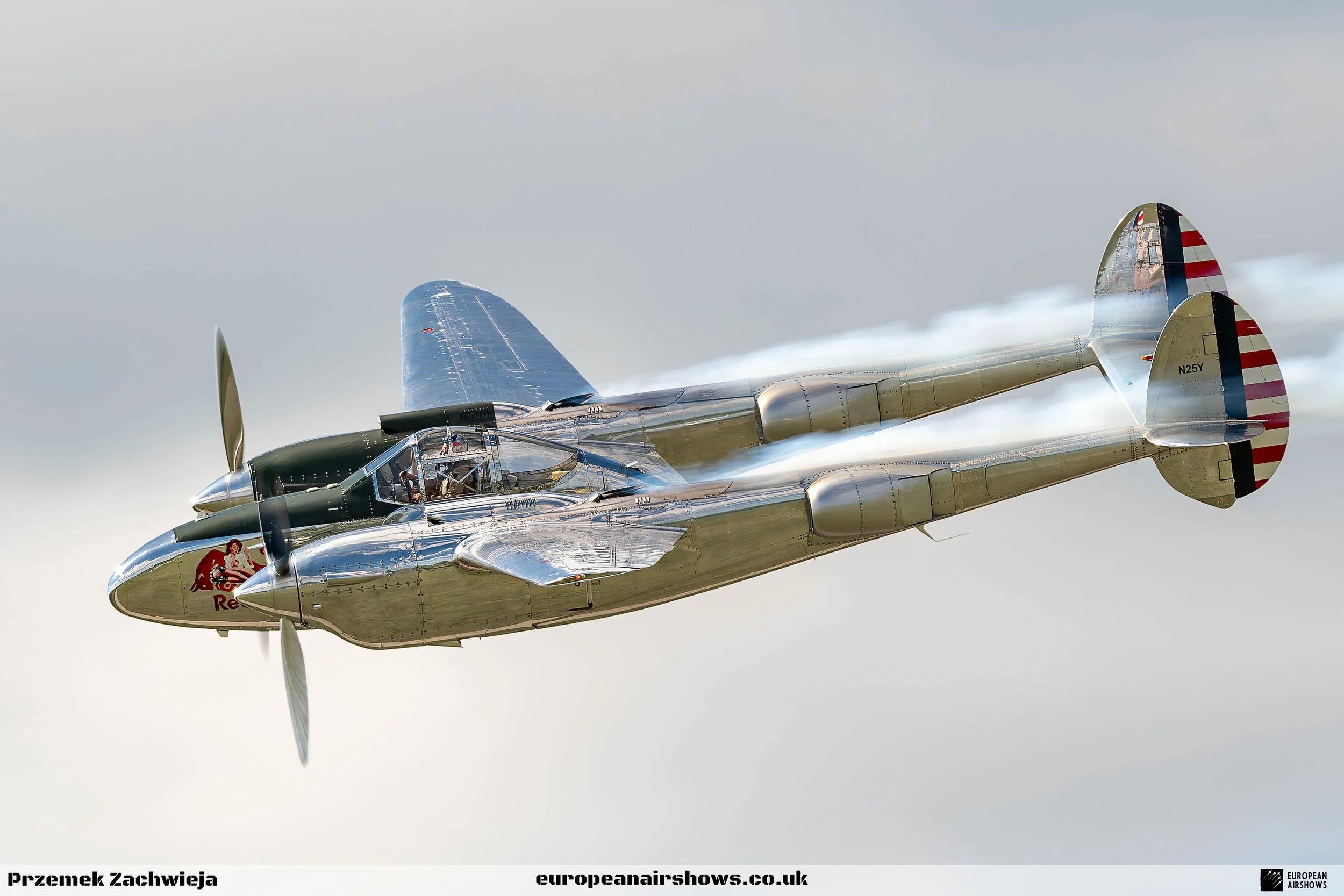
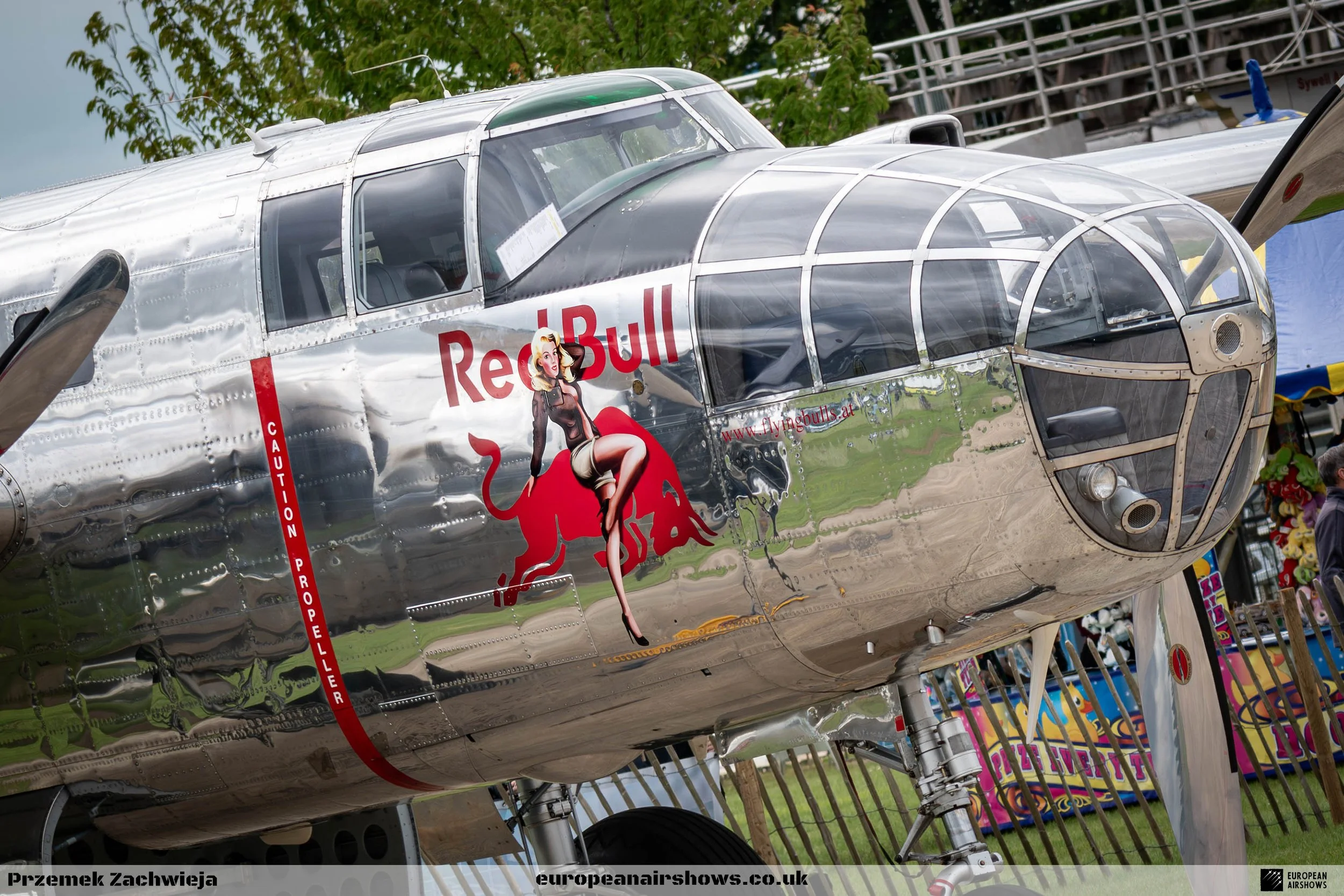
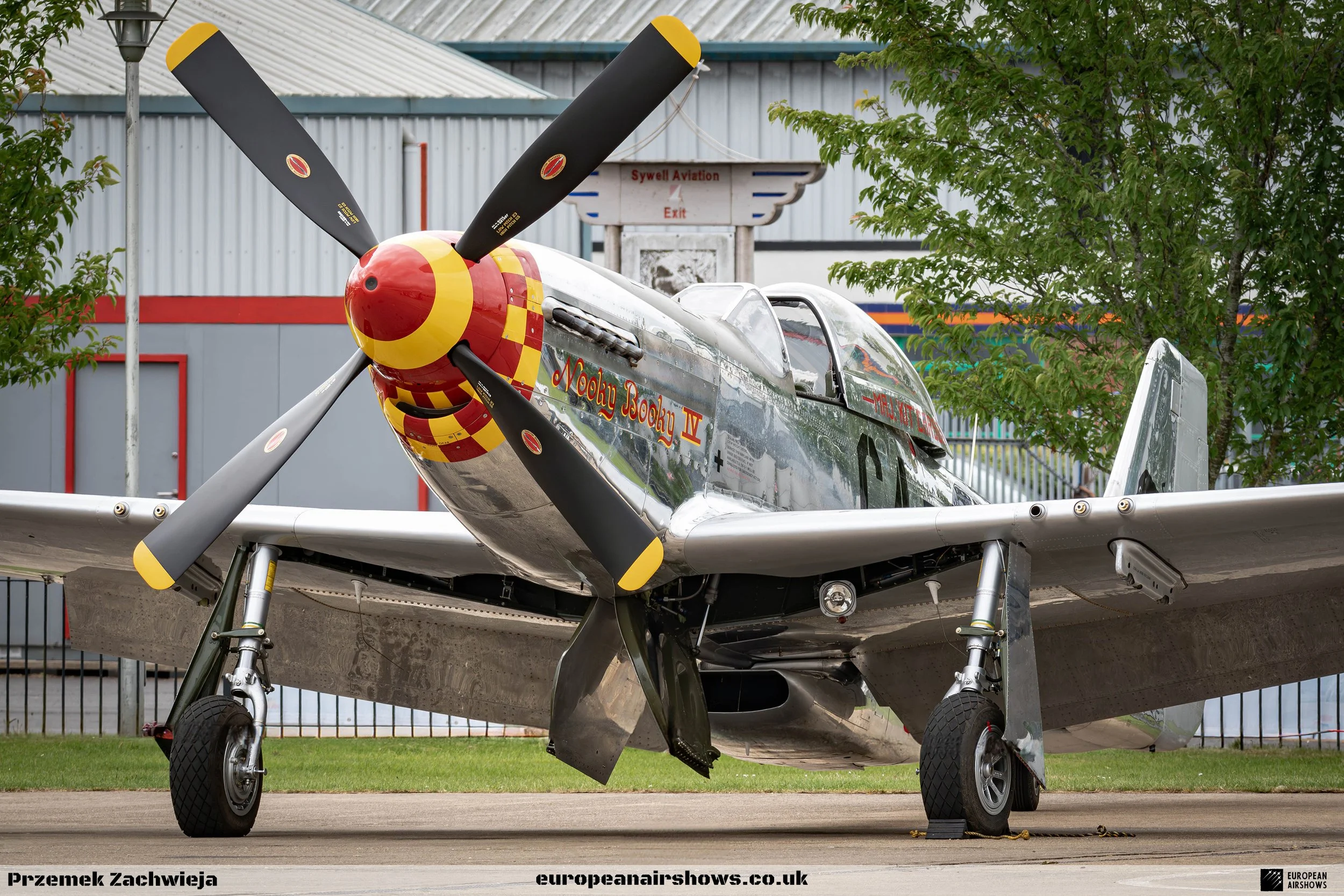
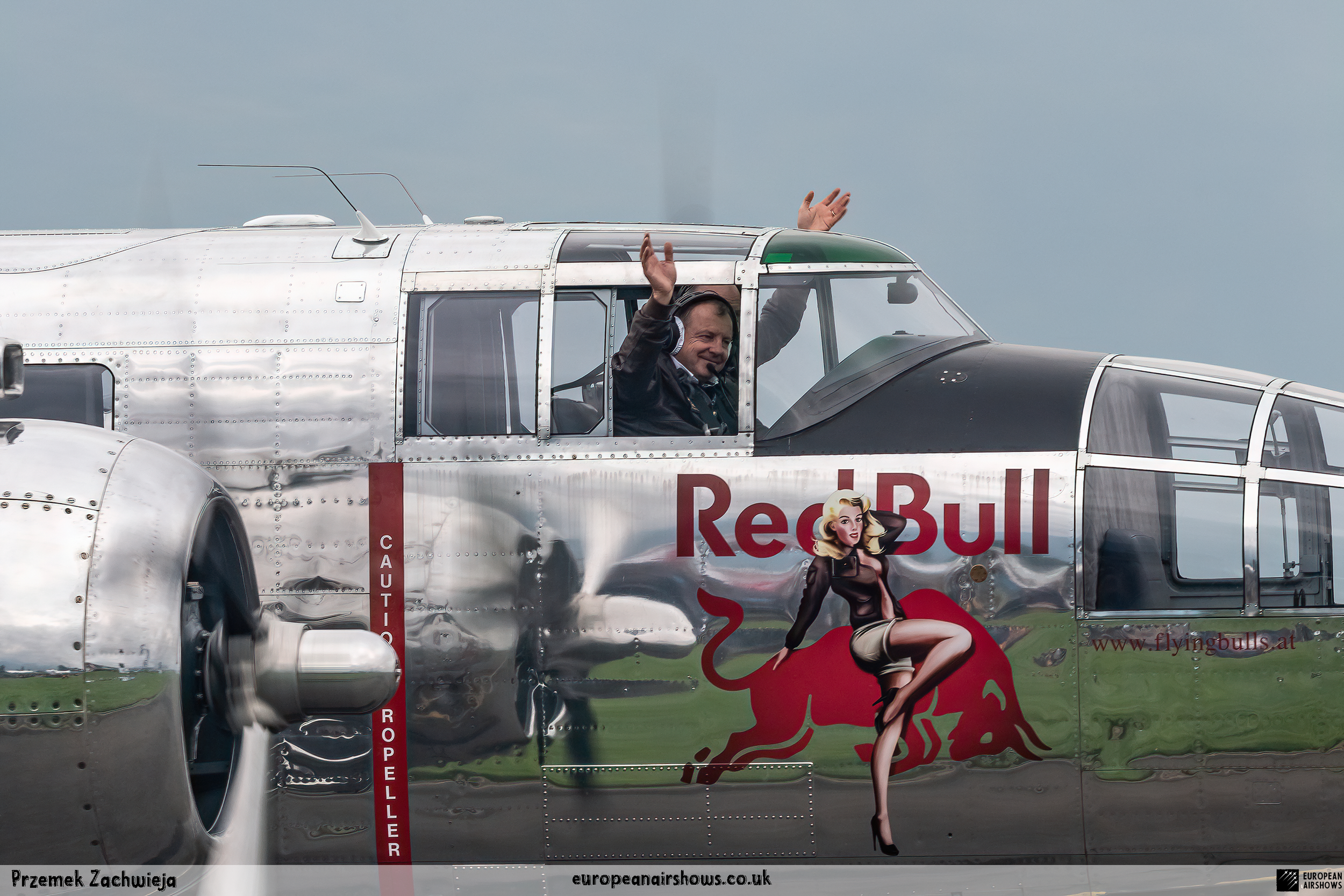
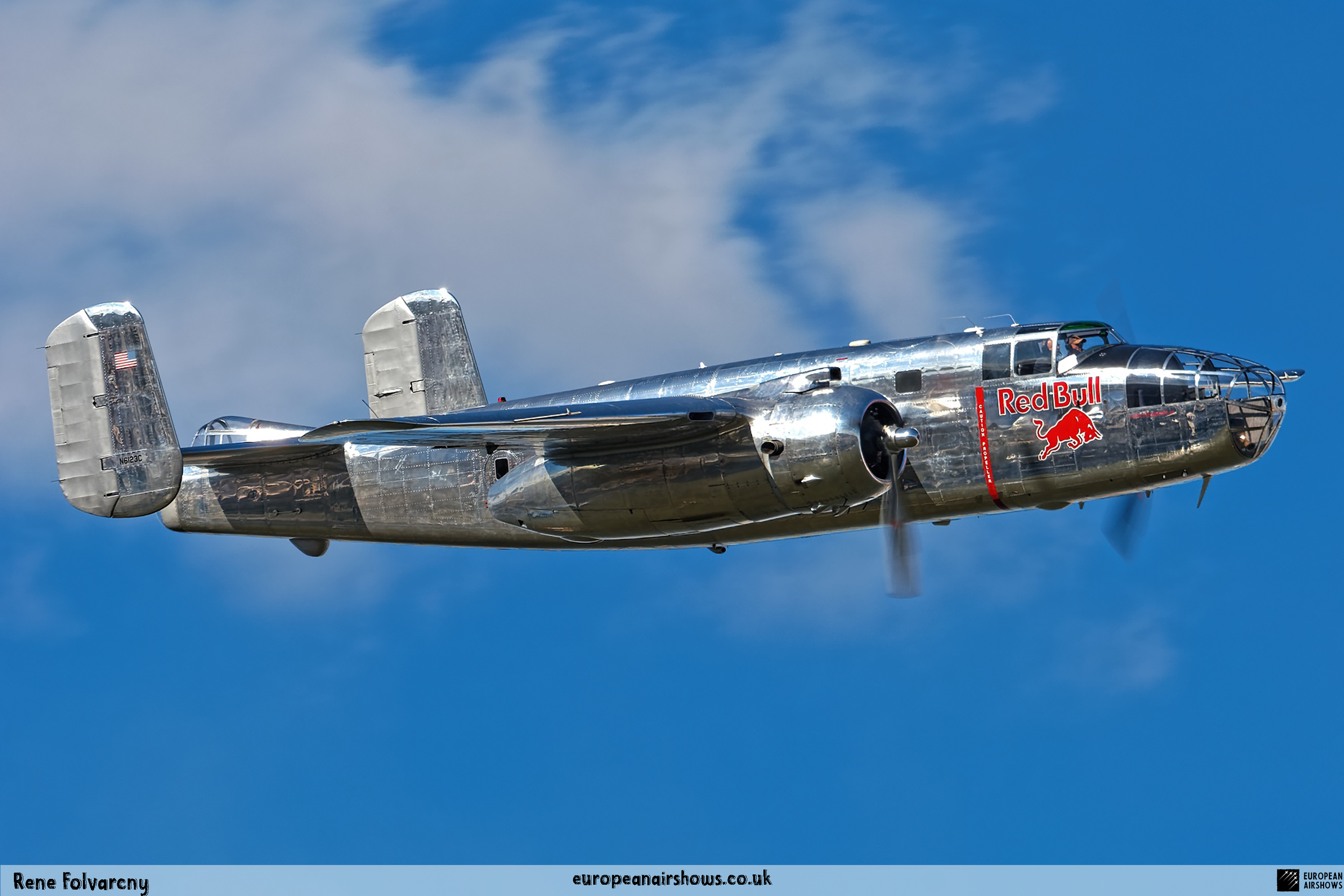
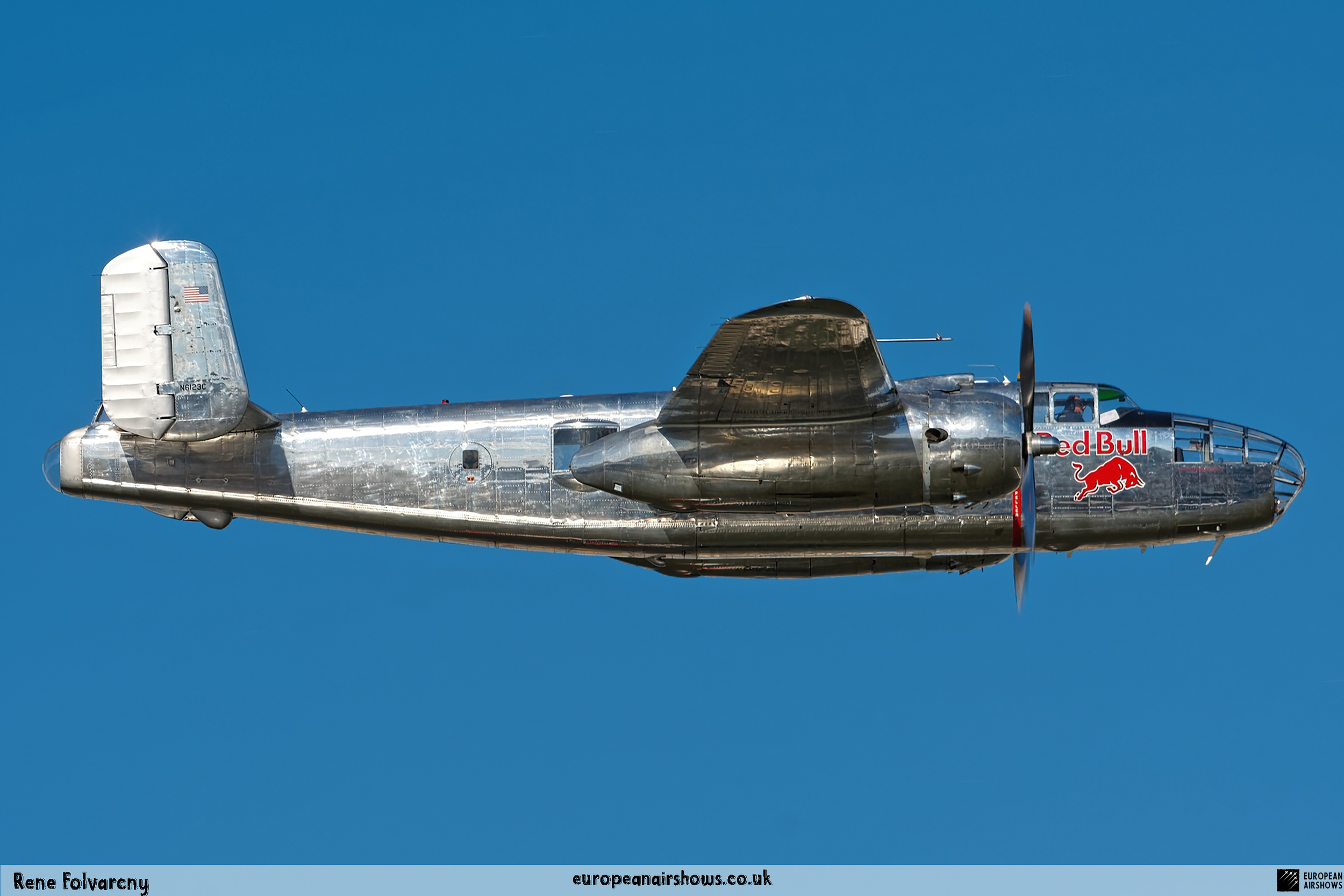
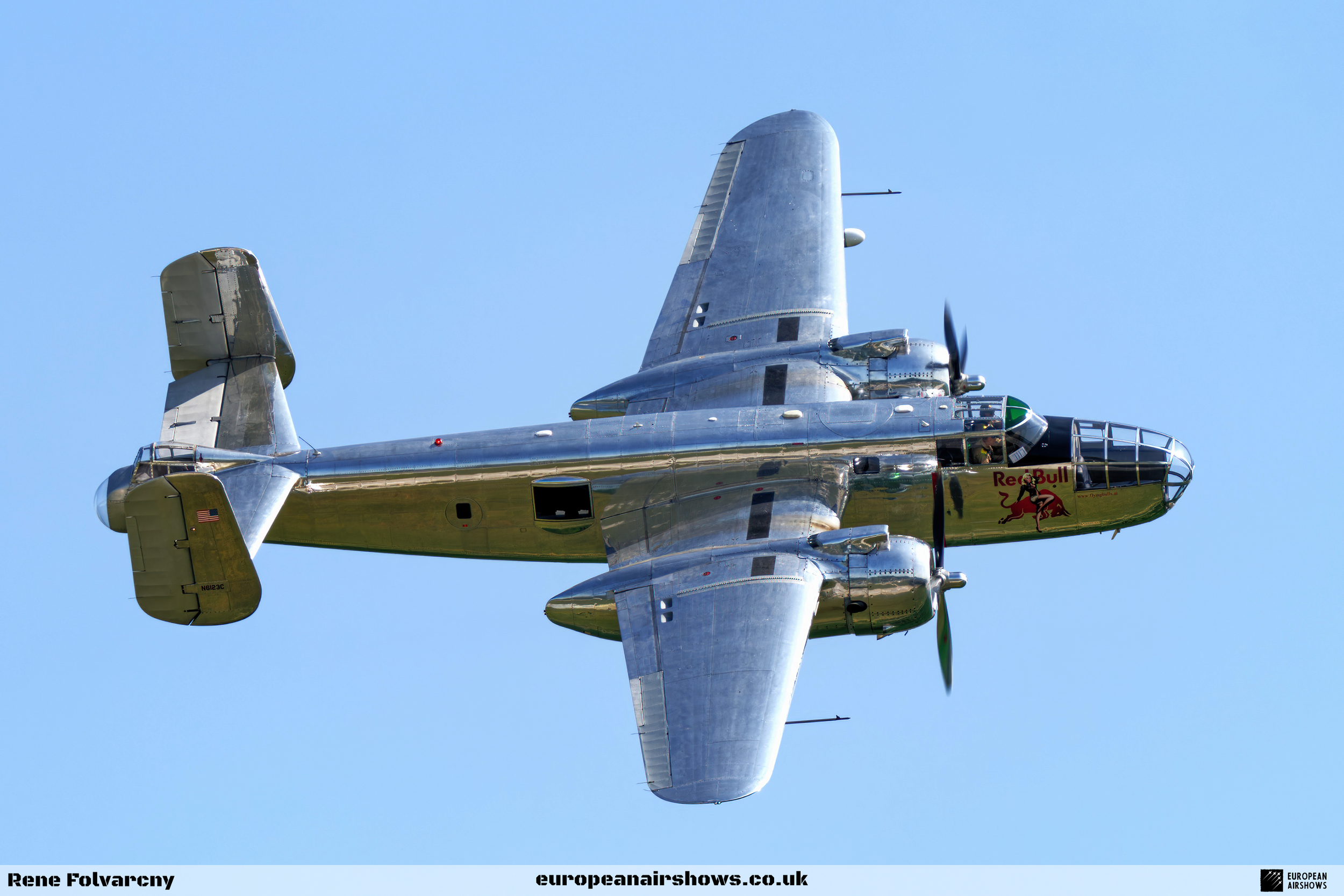
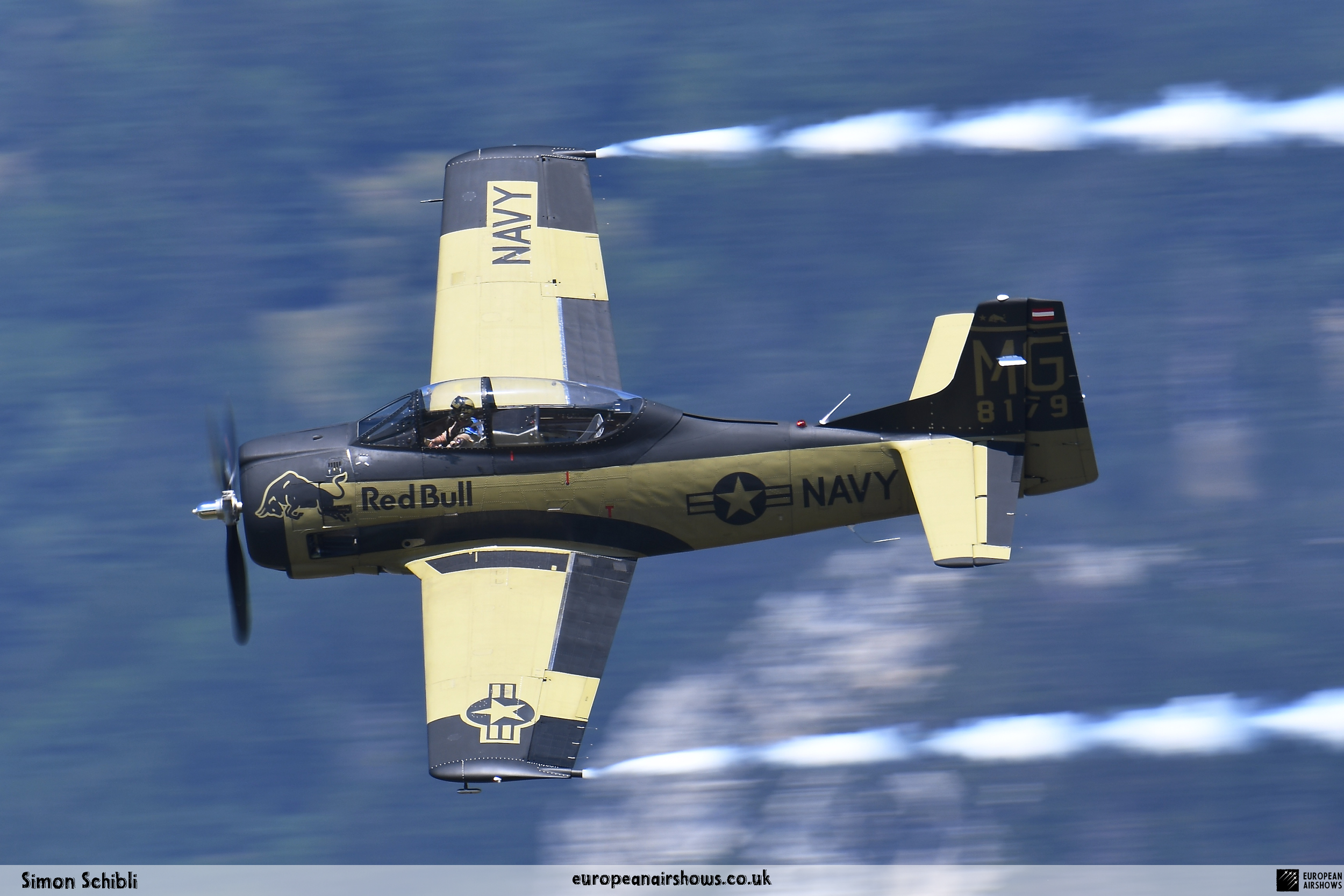
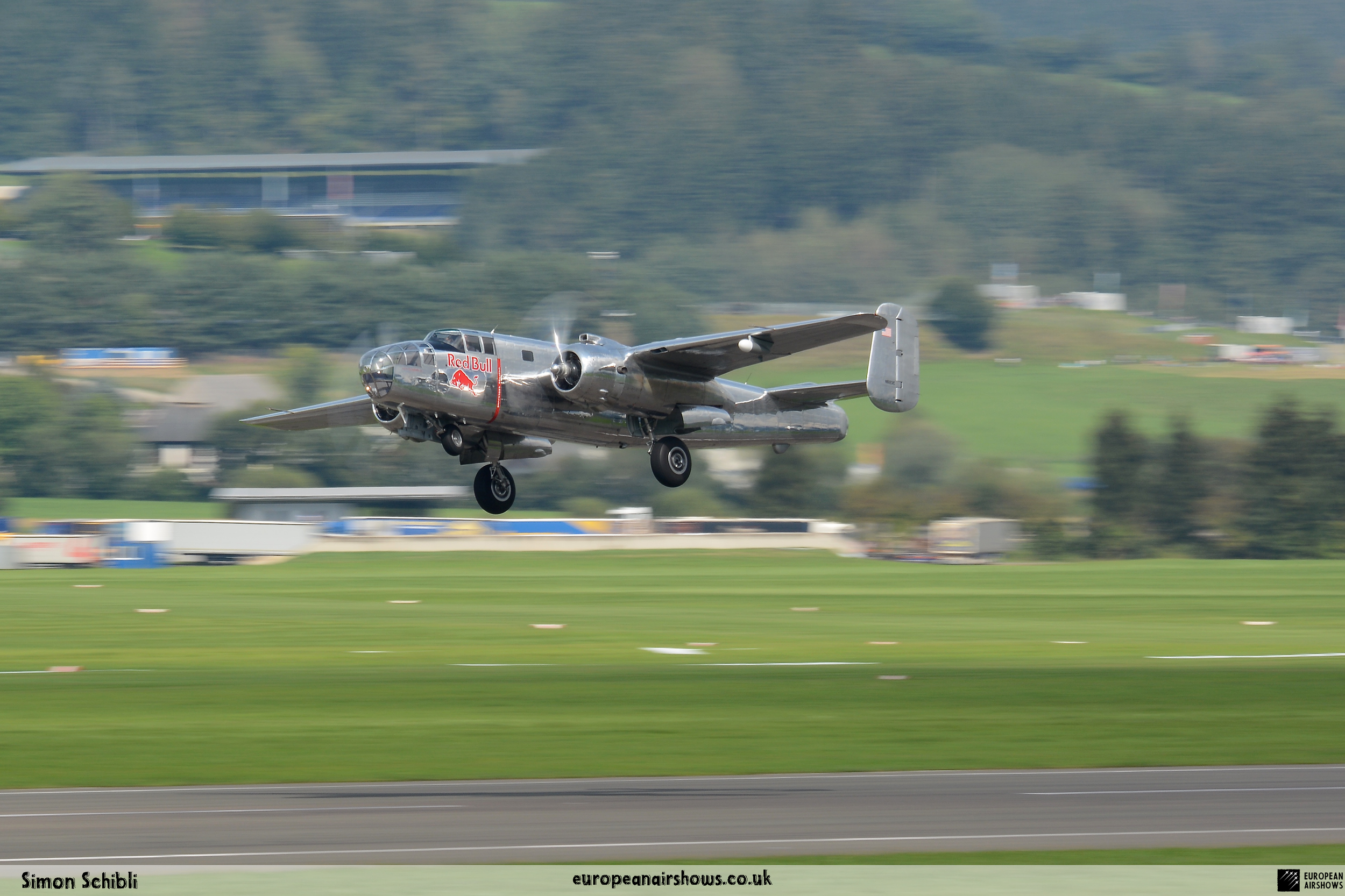
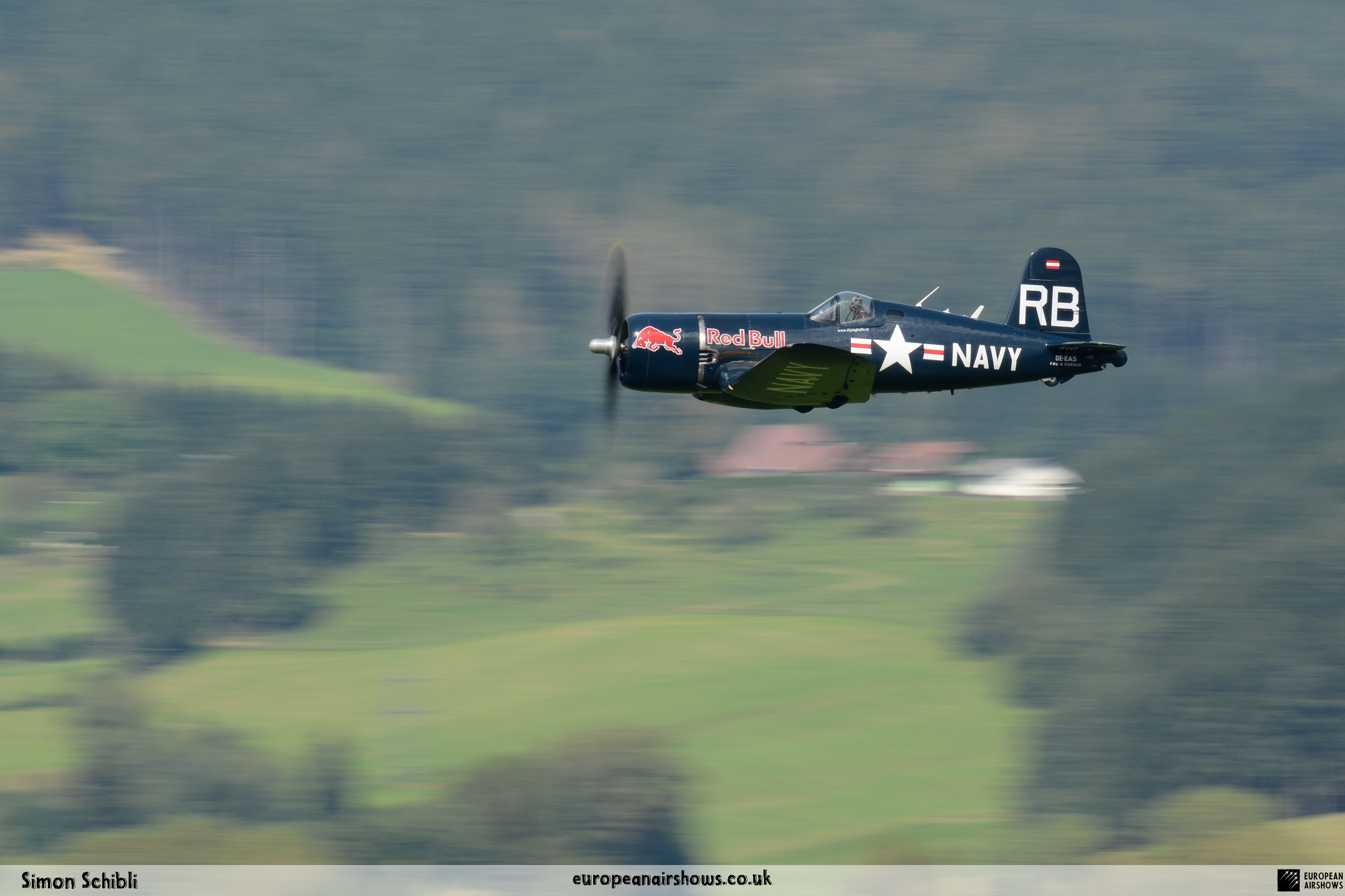
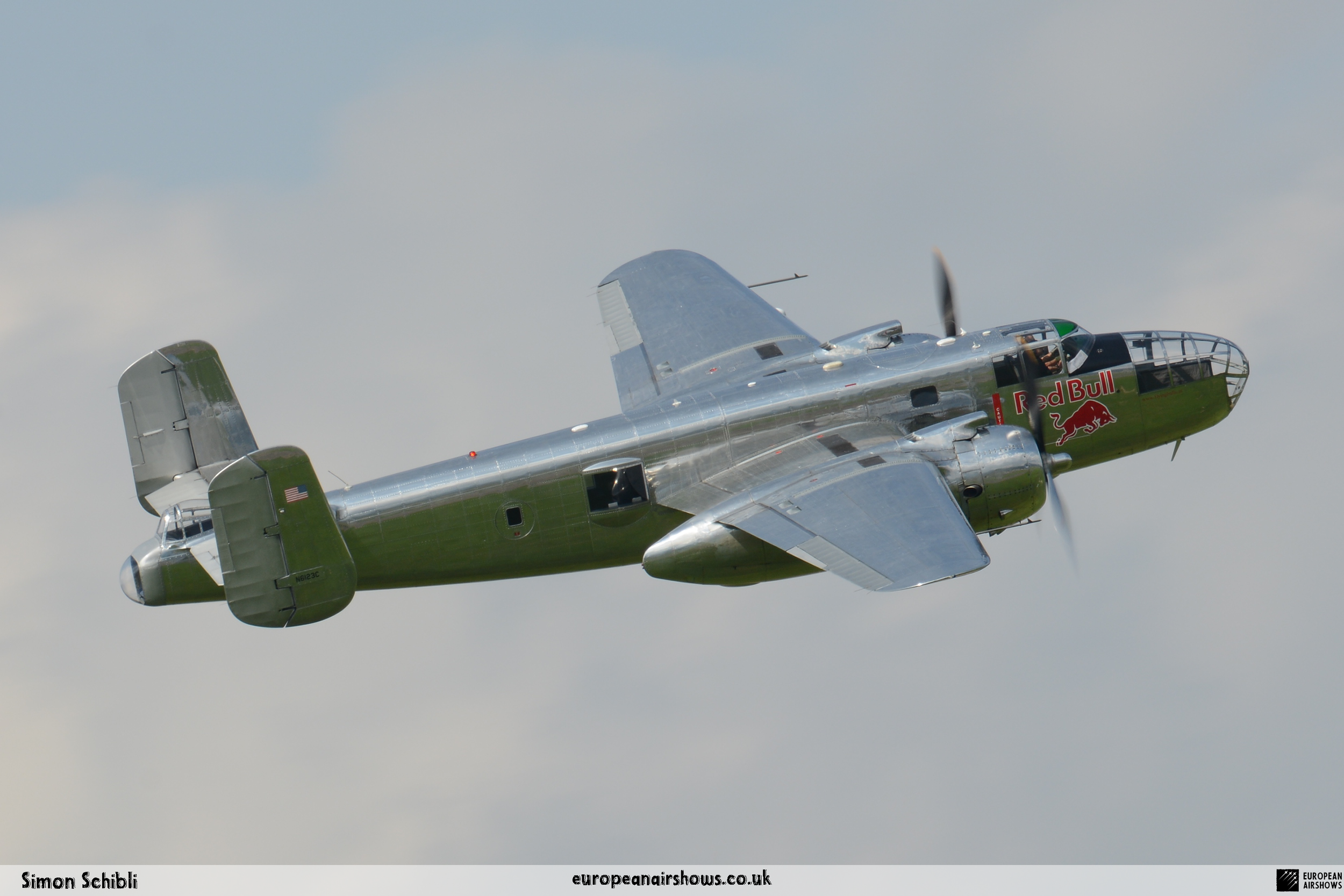
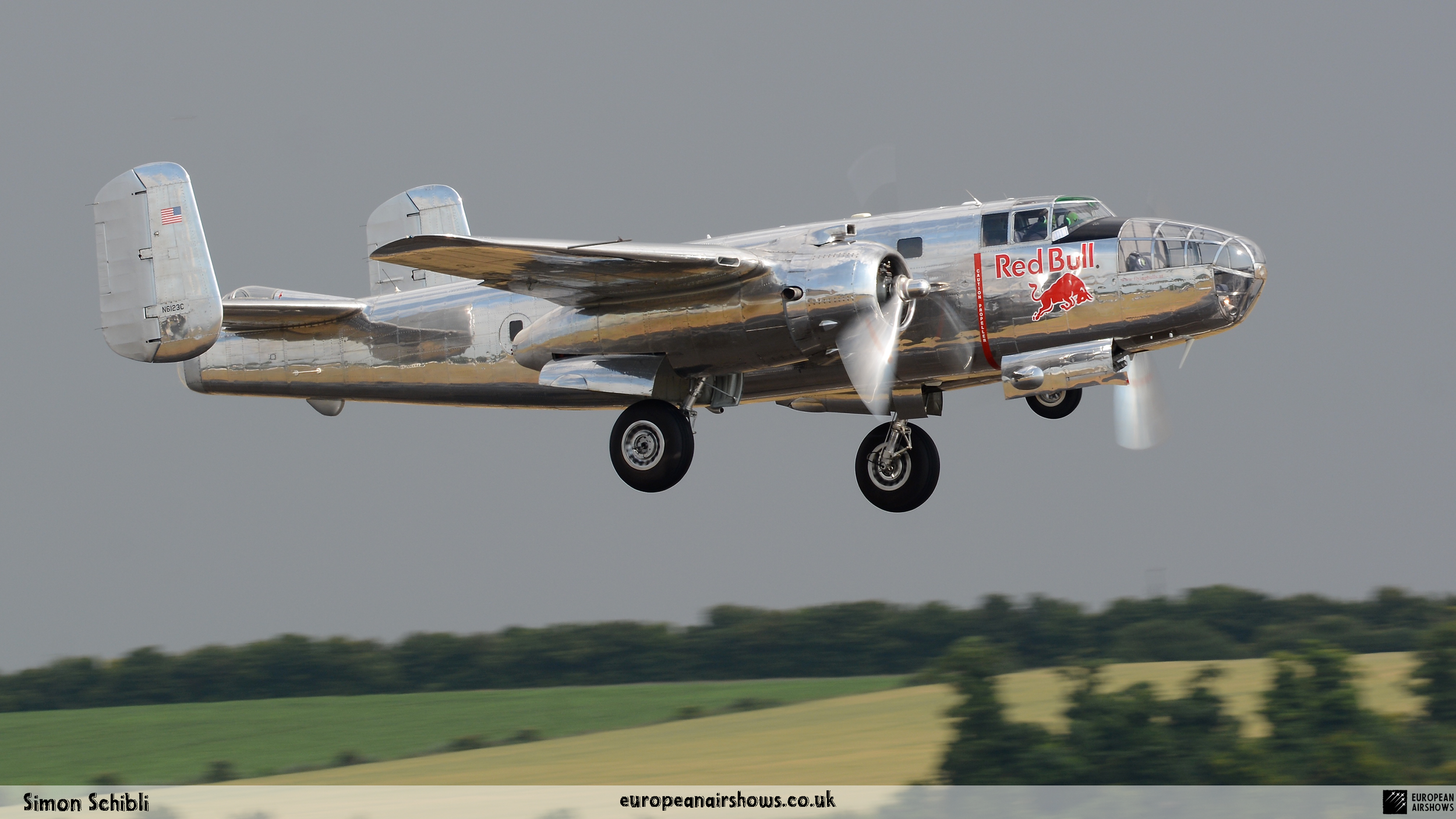
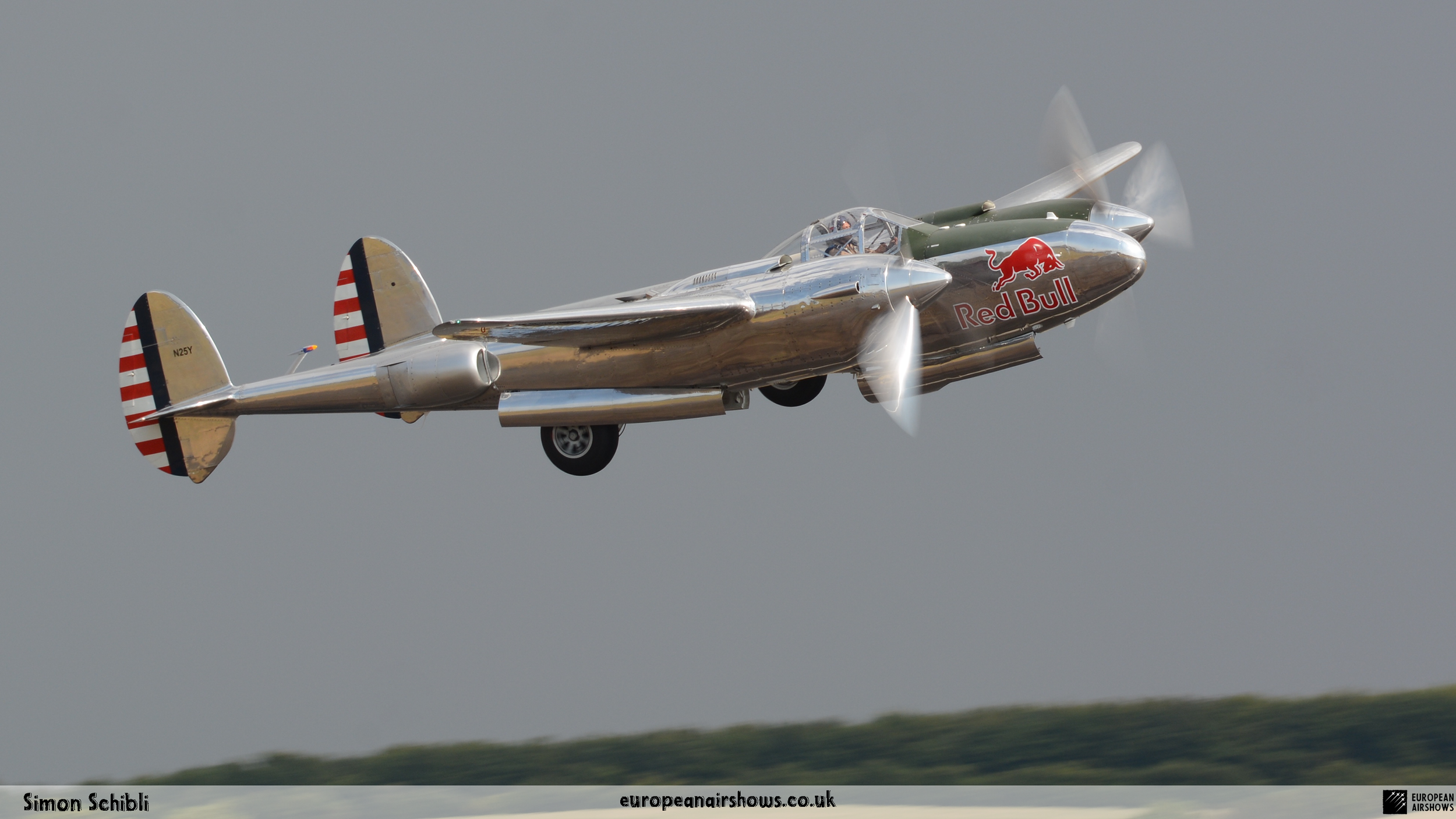
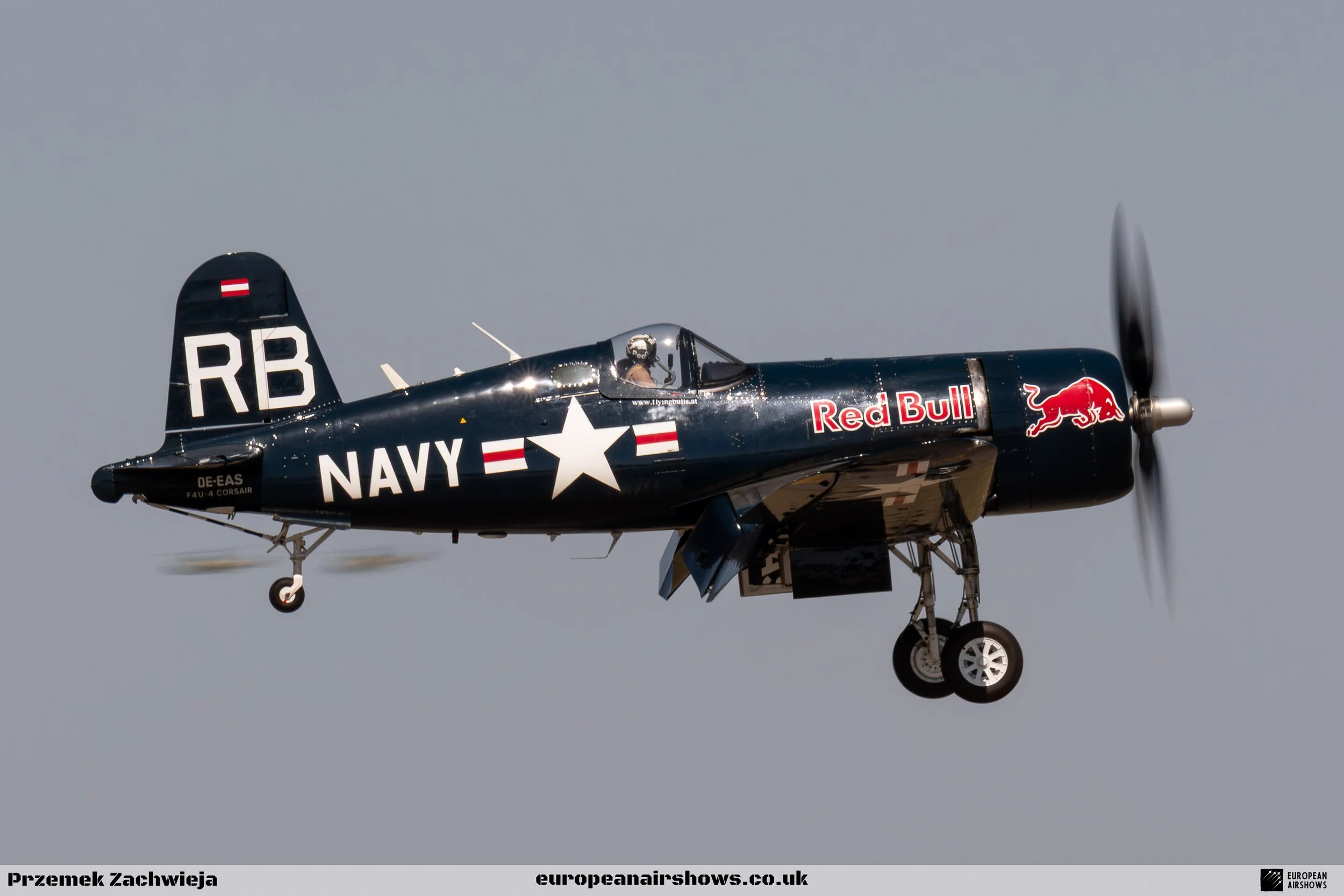
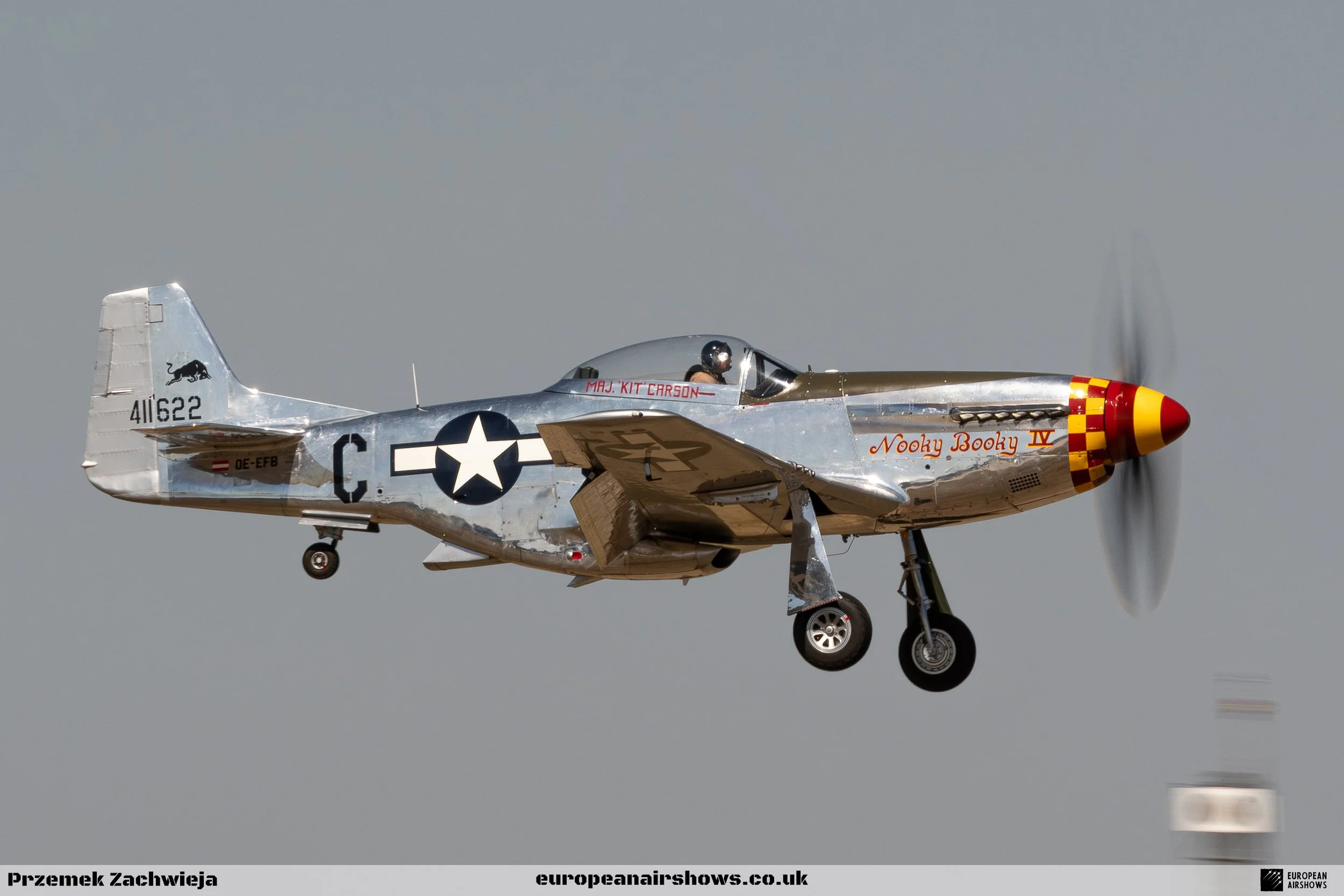
The current official fleet lists the North American B-25J Mitchell, Lockheed P-38 Lightning, North American P-51D Mustang, Chance Vought F4U-4 Corsair, Grumman F8F-2 Bearcat, Canadair CL-13B Sabre Mk.6, North American T-28B and North American T-6. Together they cover the transition from wartime piston aircraft through the first generation of swept-wing jet fighters.
Classic trainers
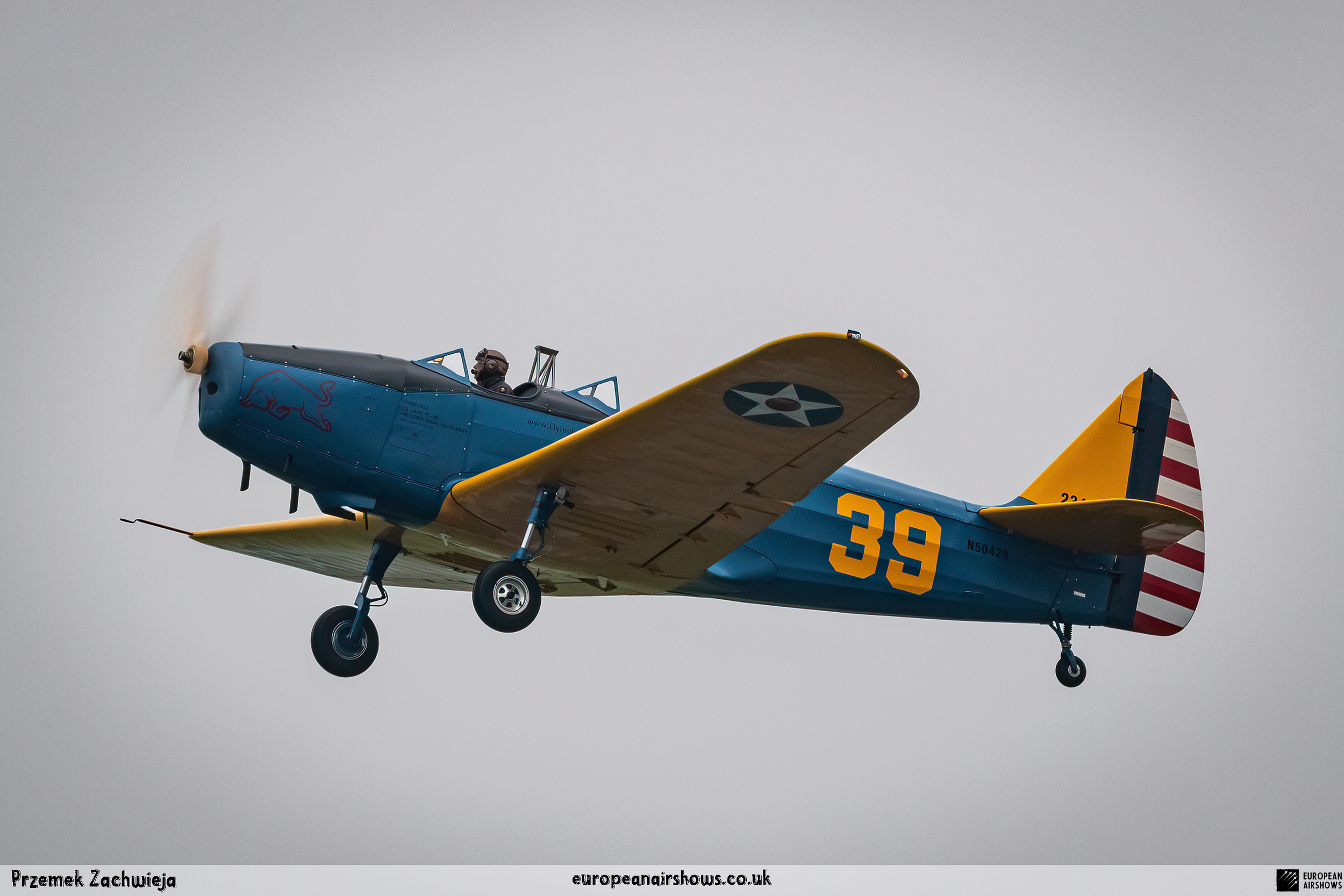
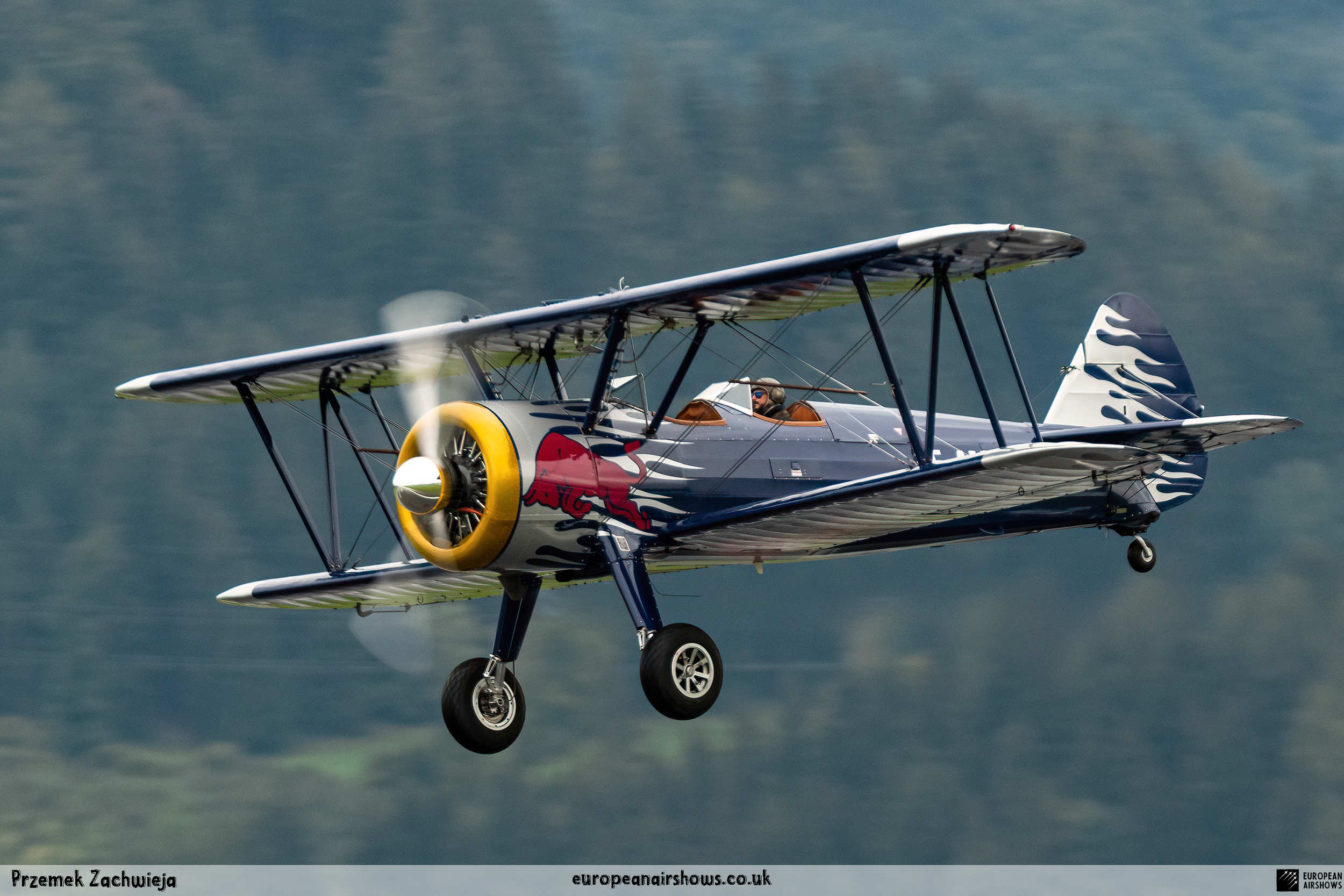
Three lighter training aircraft sit behind the headline warbirds: the Boeing PT-17 Stearman, Fairchild PT-19 and Beech T-34 Mentor. They represent different stages in the development of primary military training, from open-cockpit biplane instruction to a post-war monoplane derived from the Beech Bonanza.
Utility, observation and aerobatics
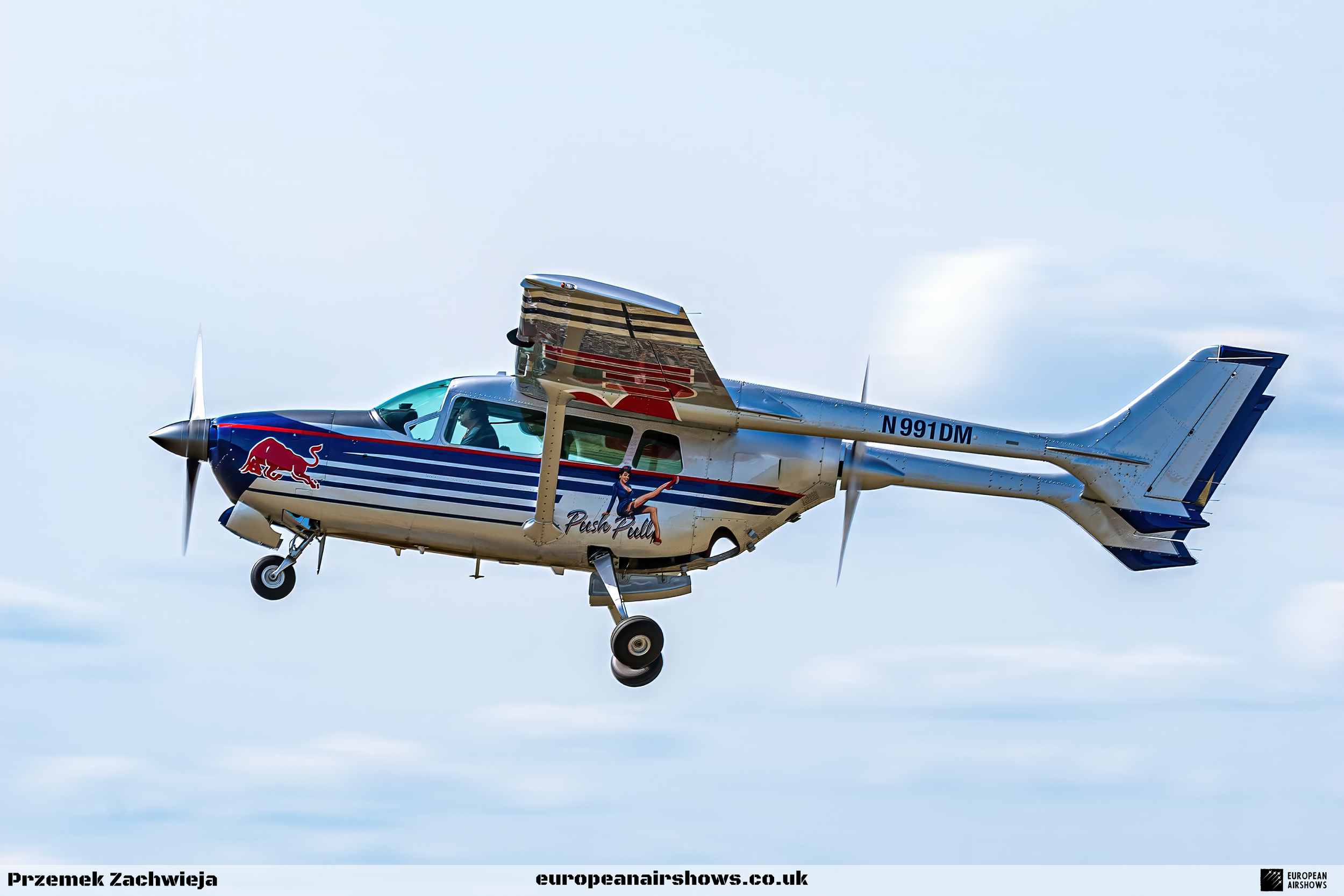
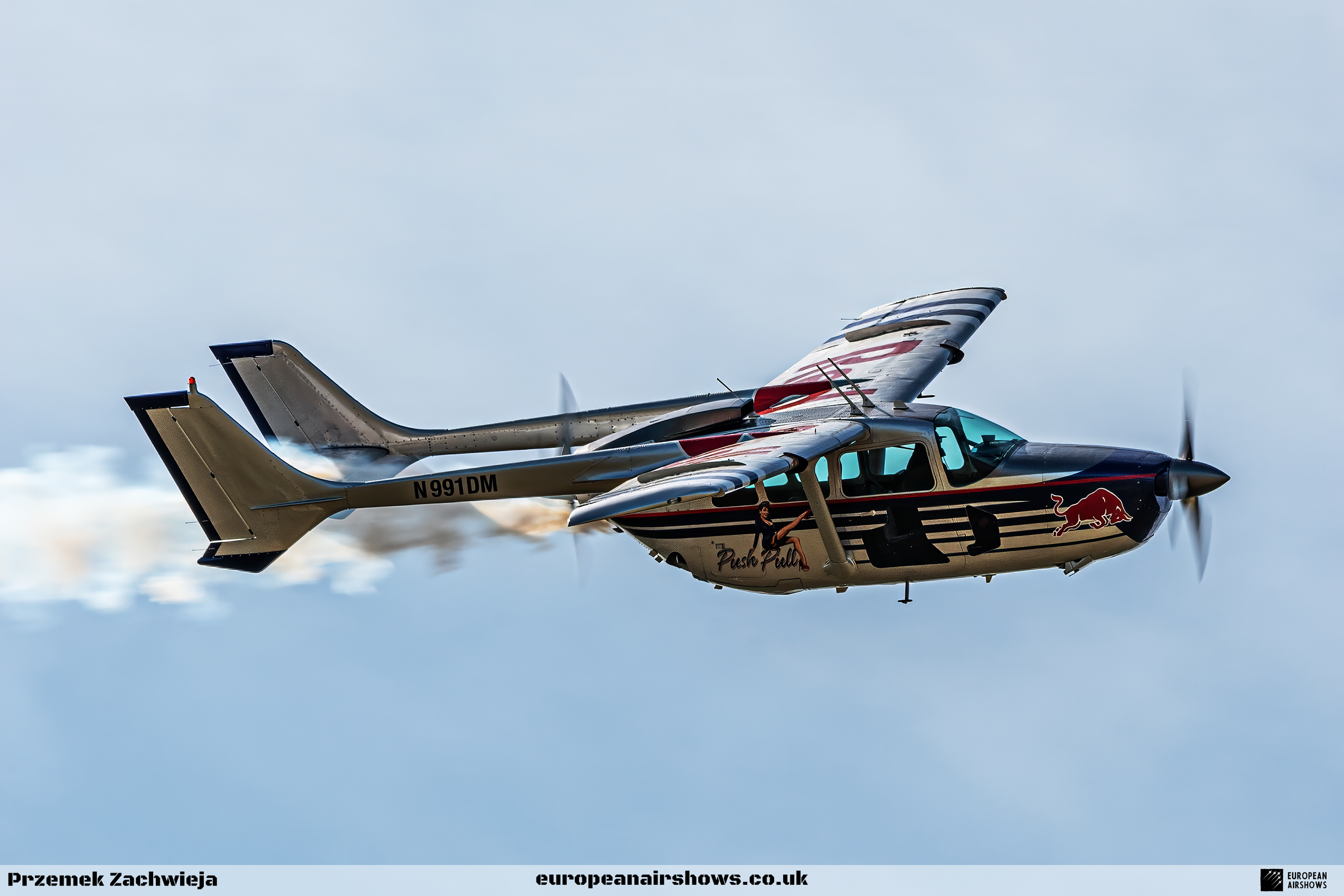
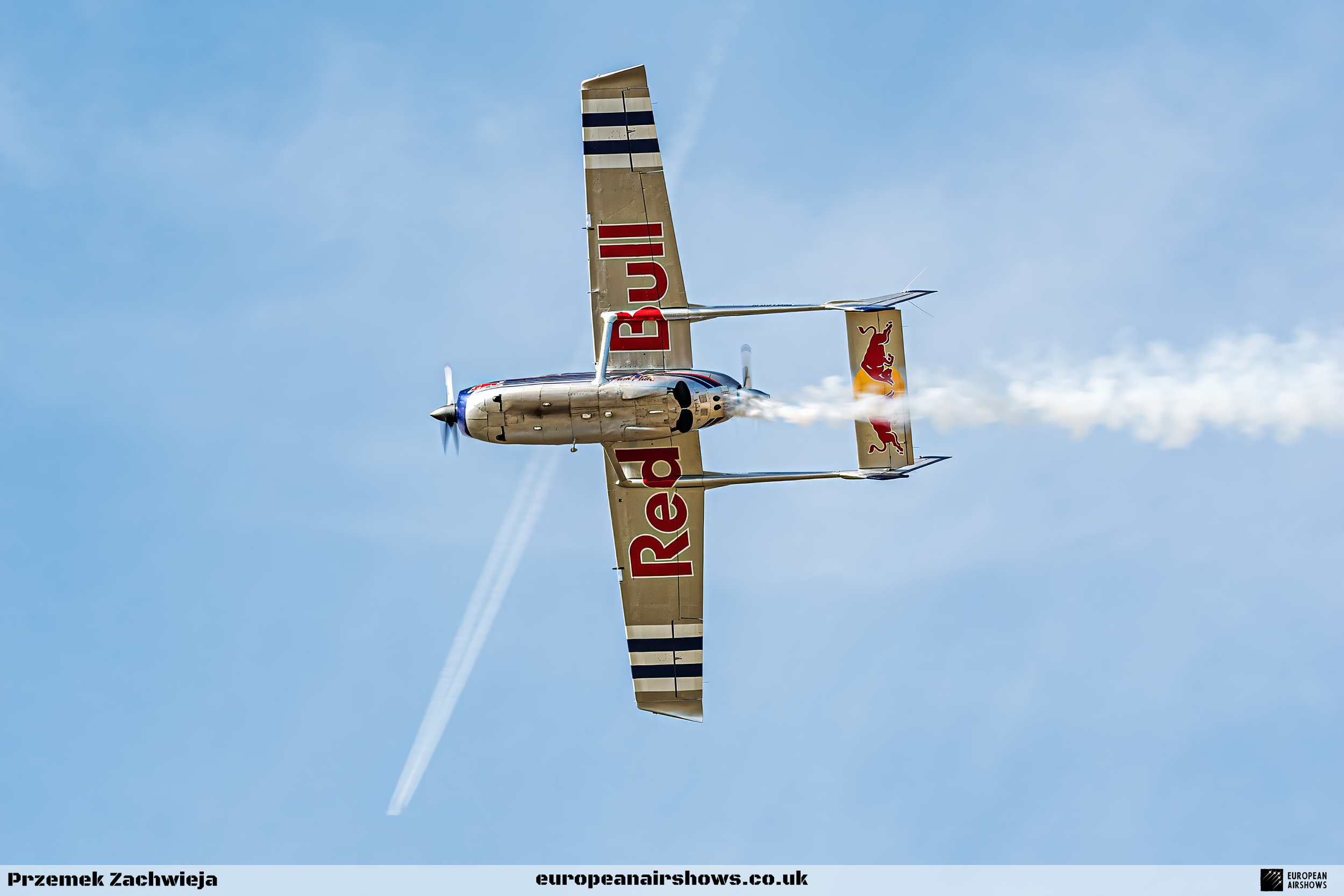
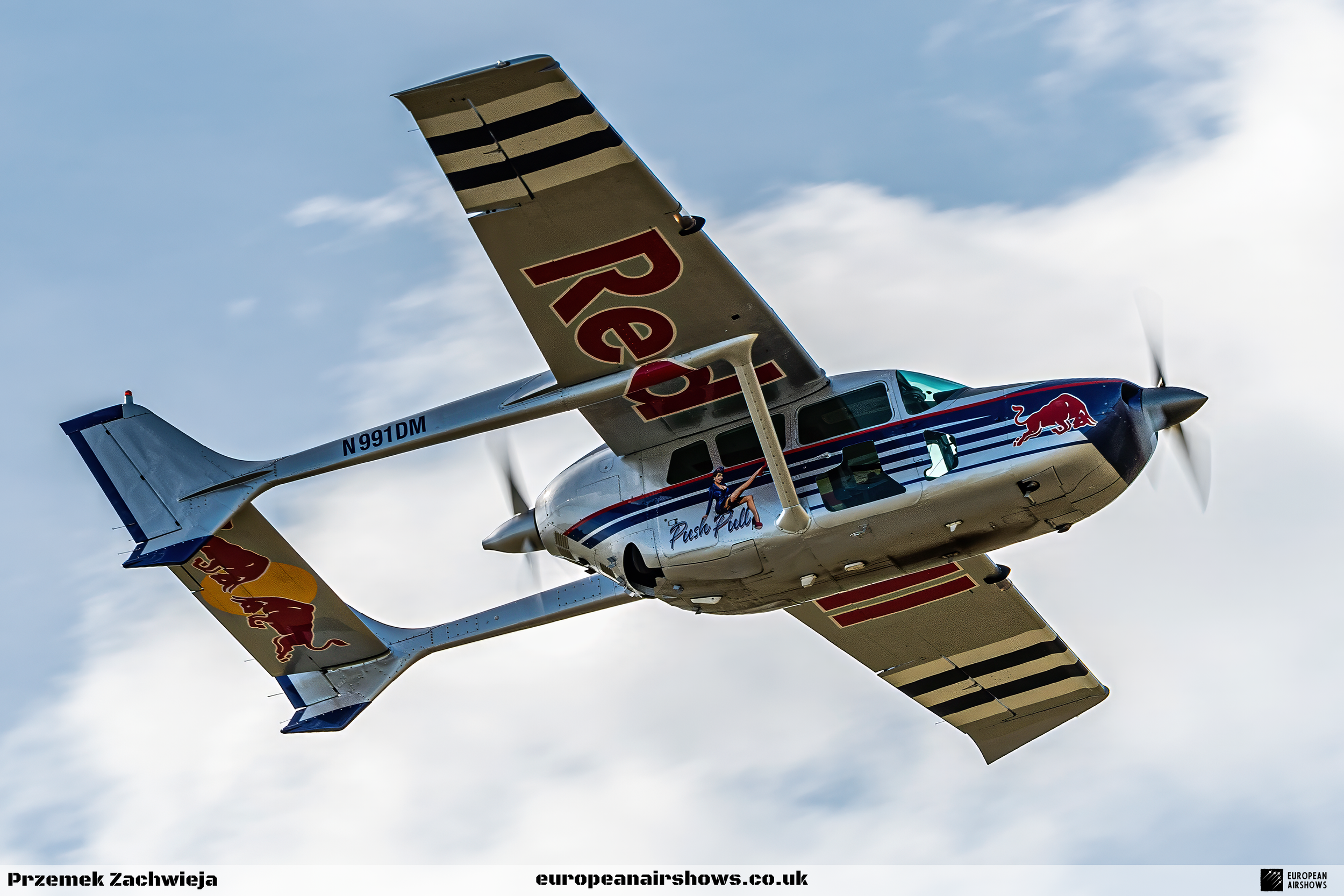
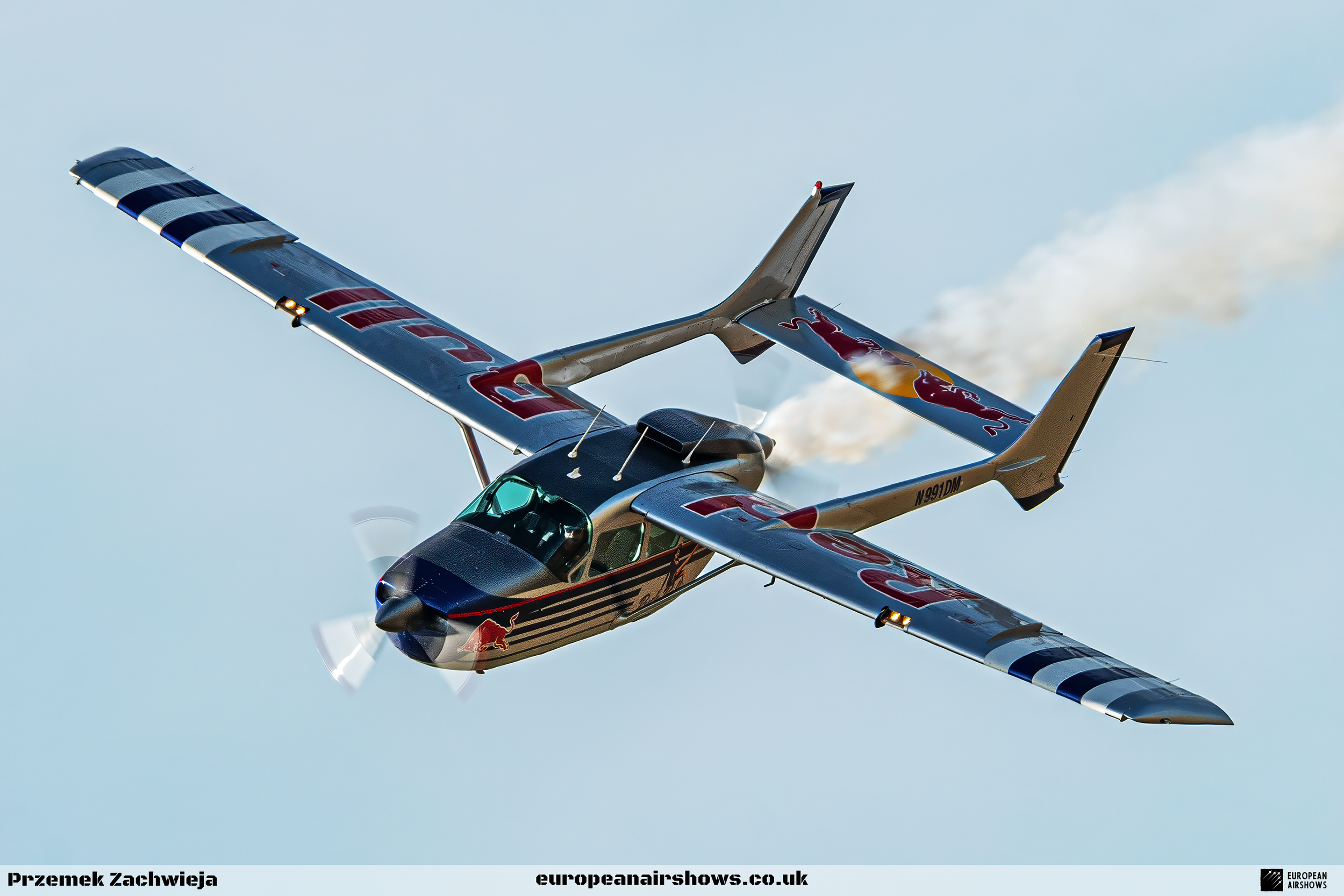
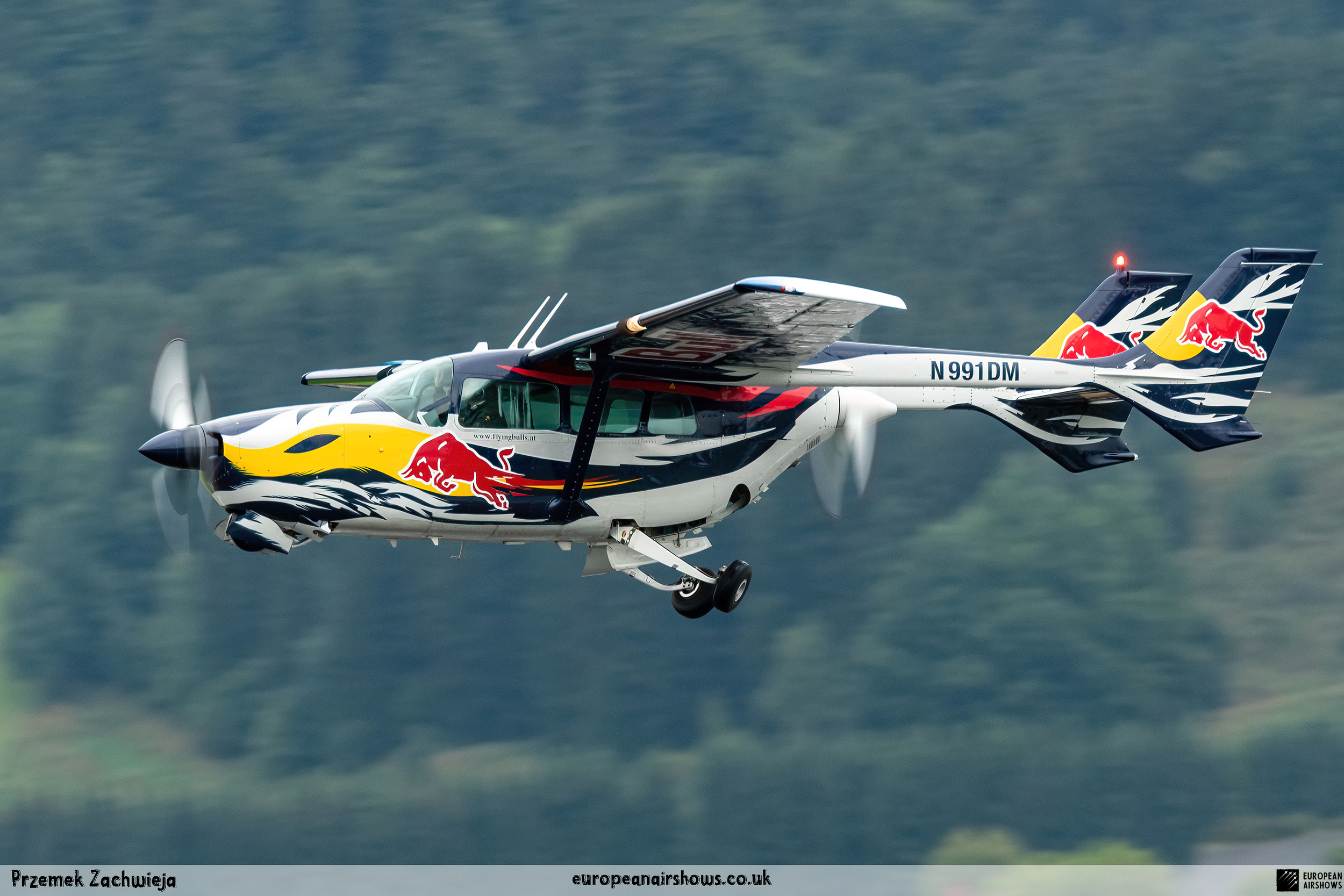
The Pilatus PC-6, Cessna 337 Skymaster, amphibious Cessna 208 Caravan, Aviat Husky and P.68TC Observer give the fleet real utility and specialist capability. The Extra 300 LX is the dedicated modern aerobatic aircraft. This group explains why a Flying Bulls appearance can be about short-field flying, parachuting, observation, water operations or unlimited-style aerobatics as well as historic combat types.
What is no longer treated as current
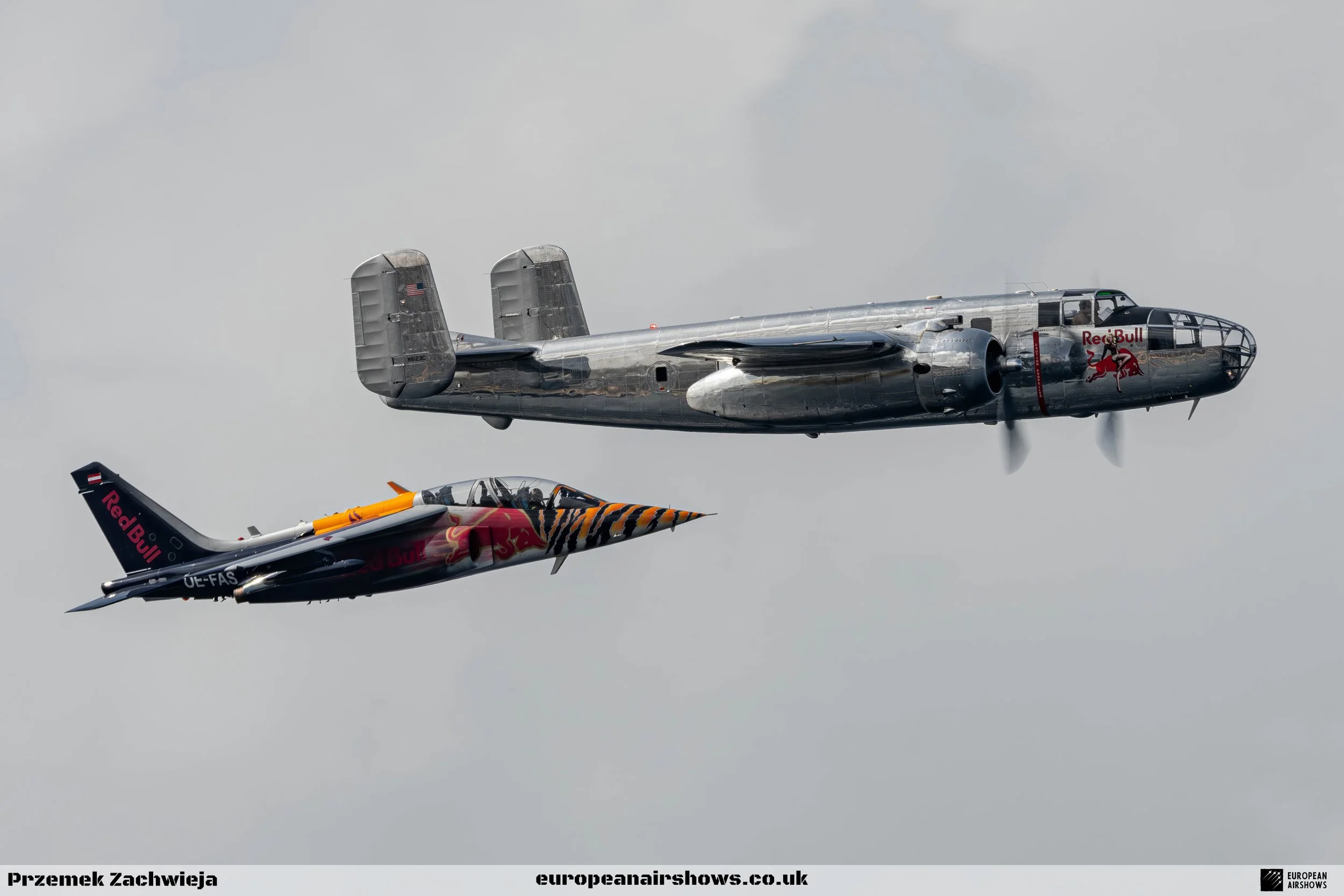
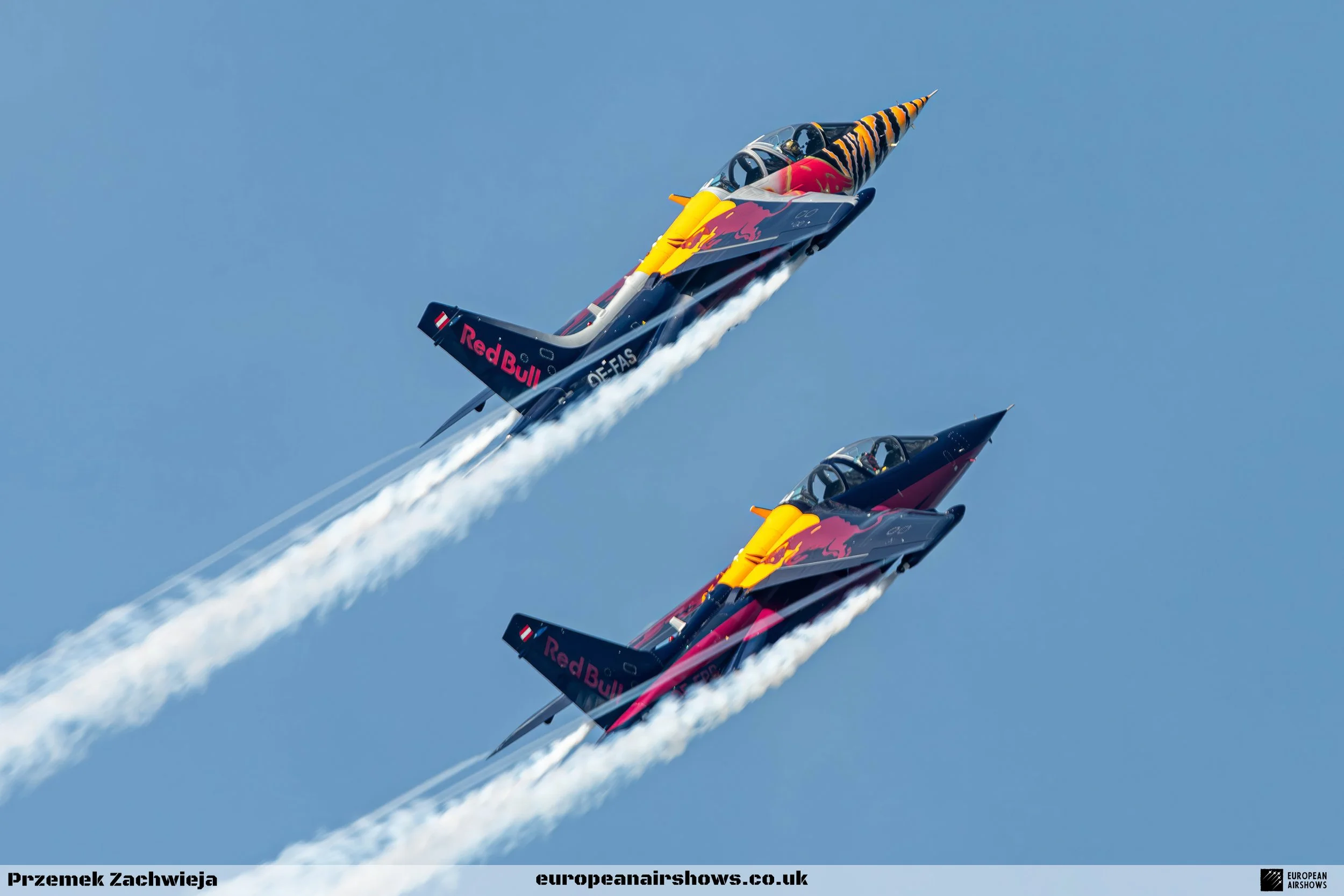
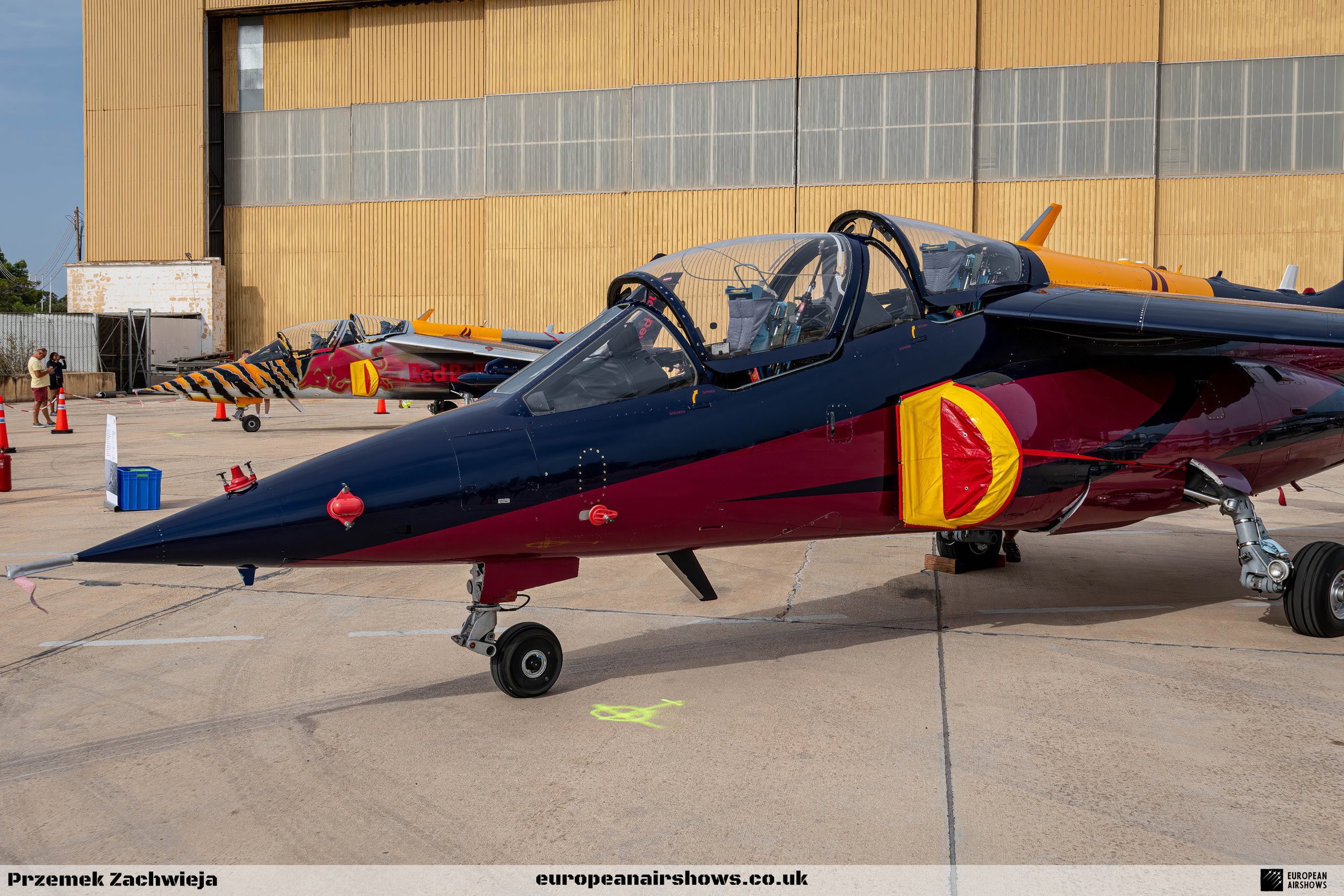
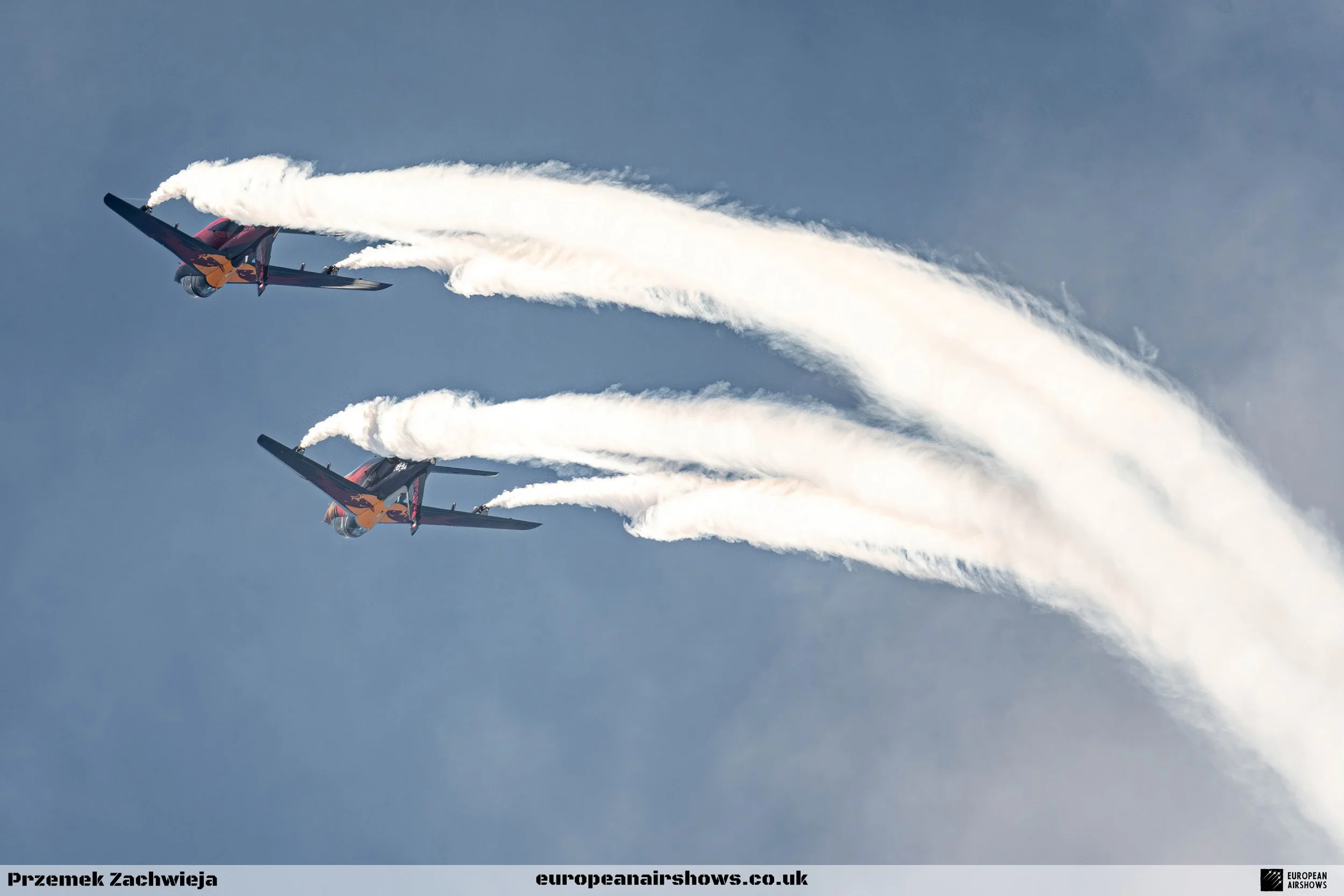
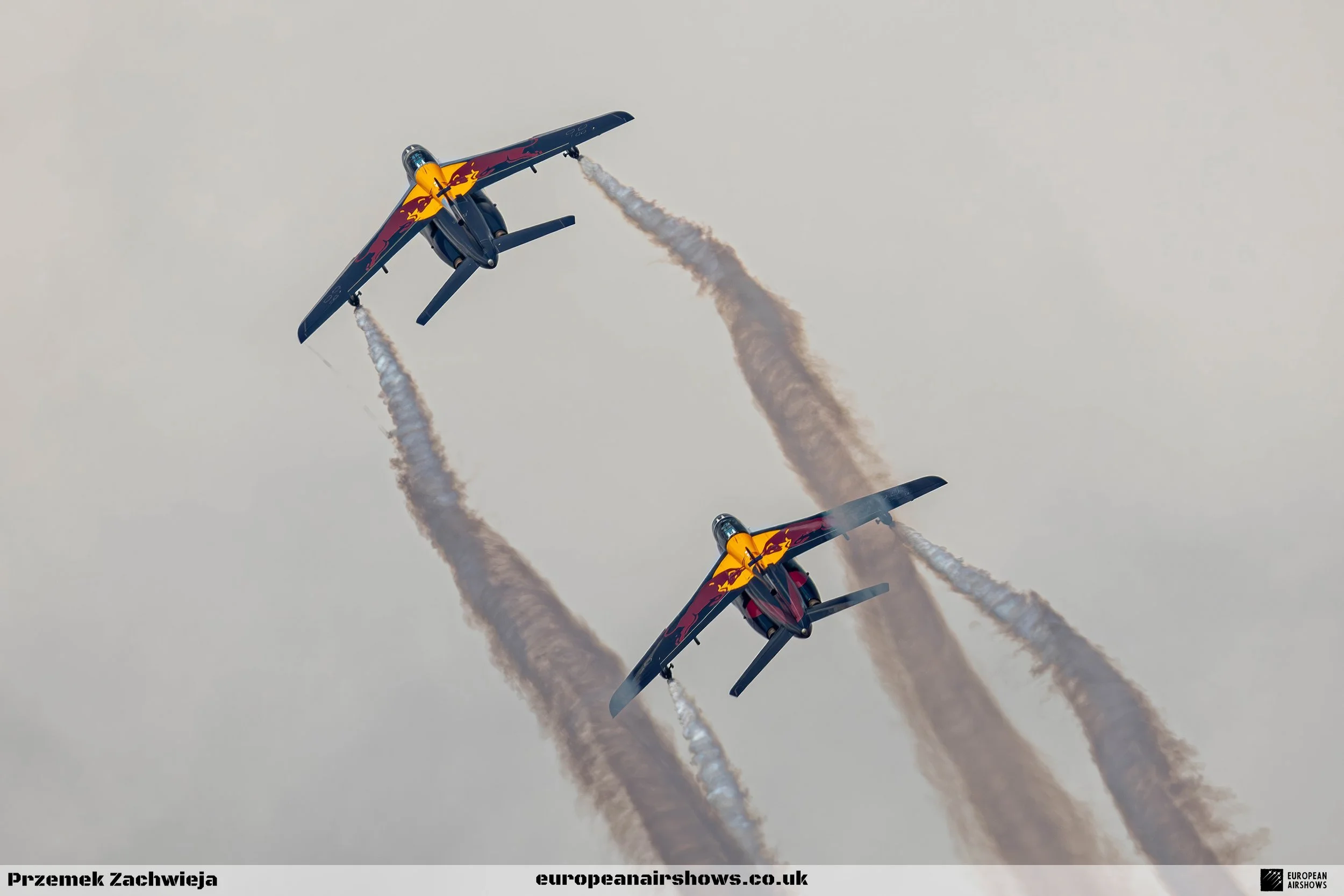
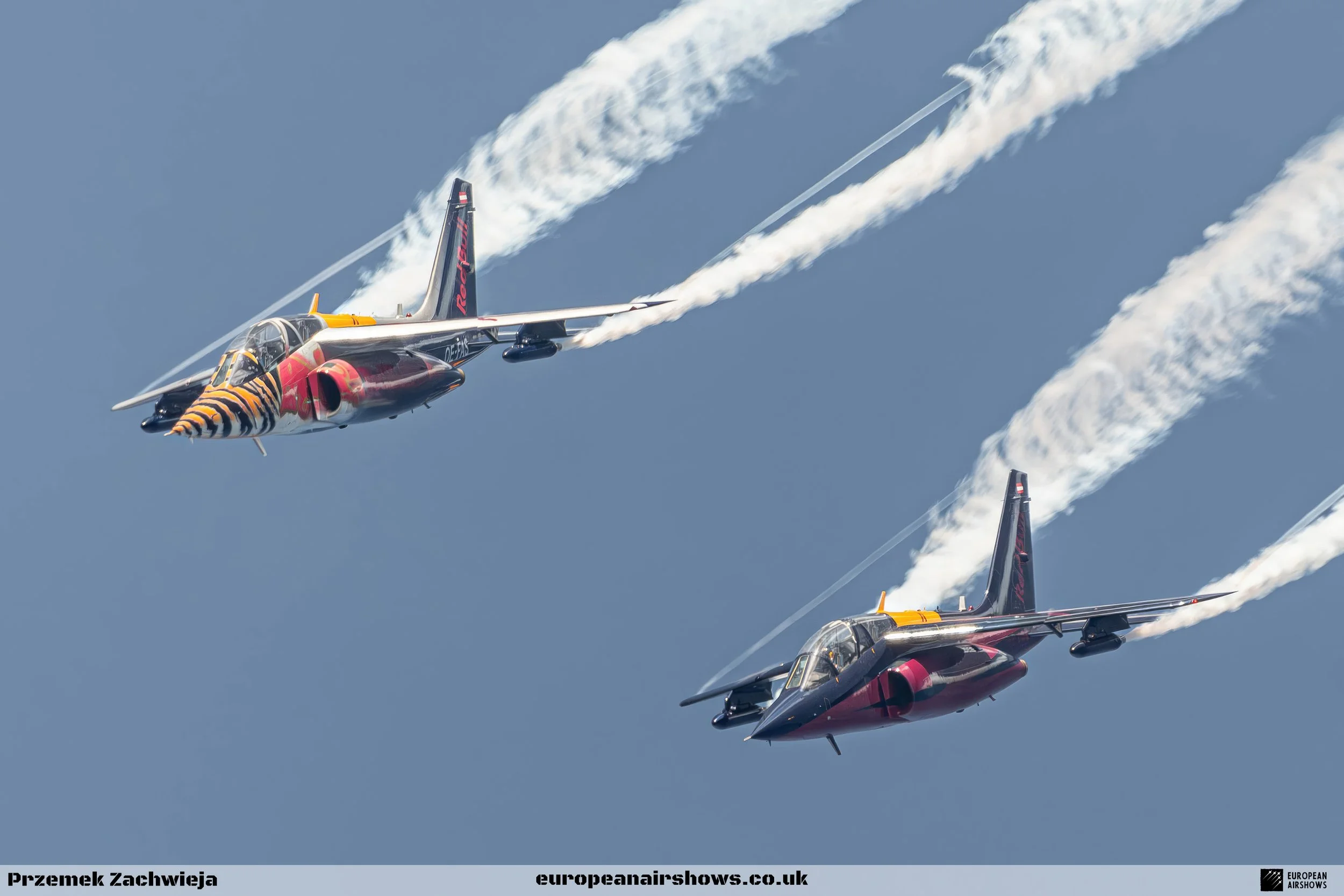
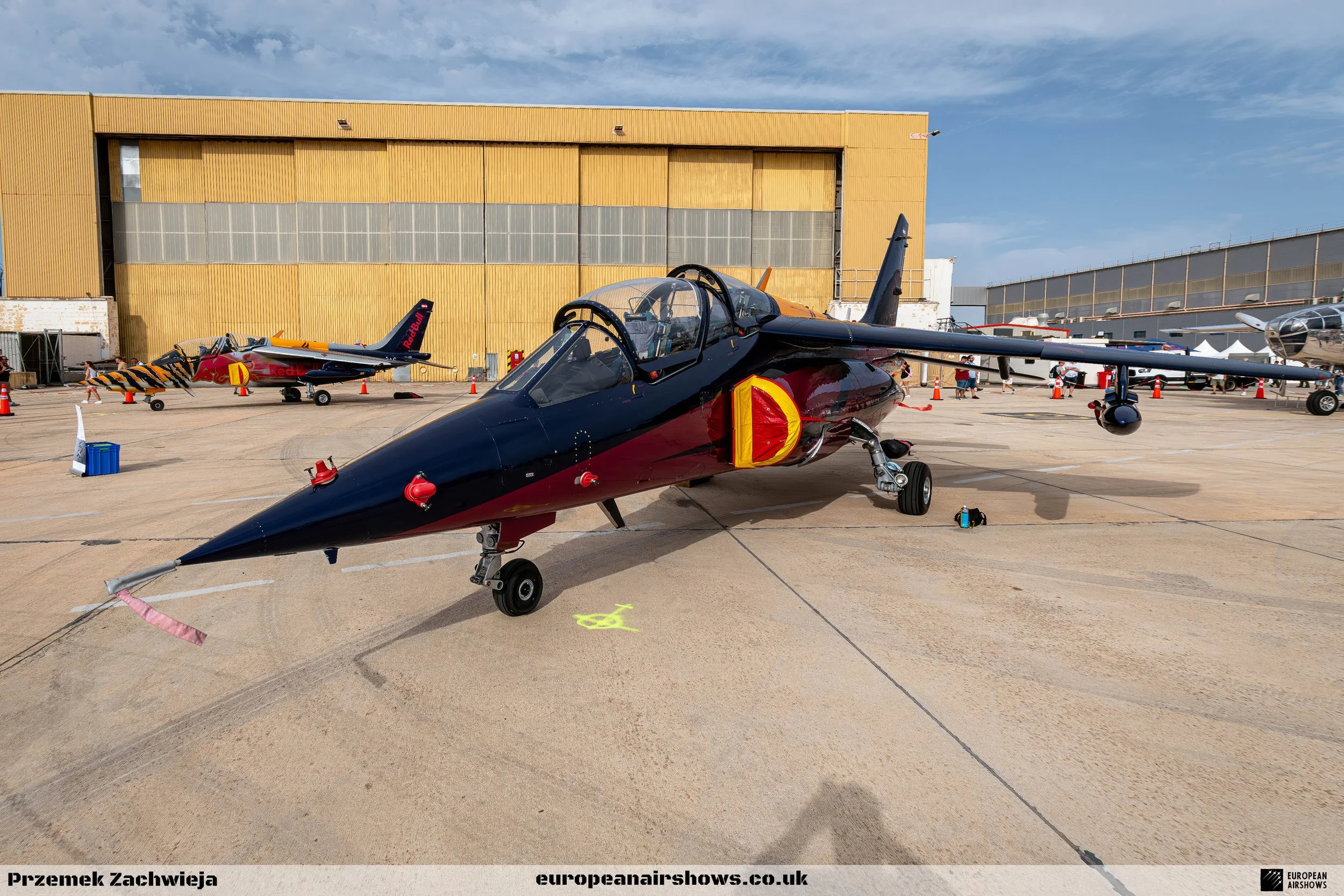
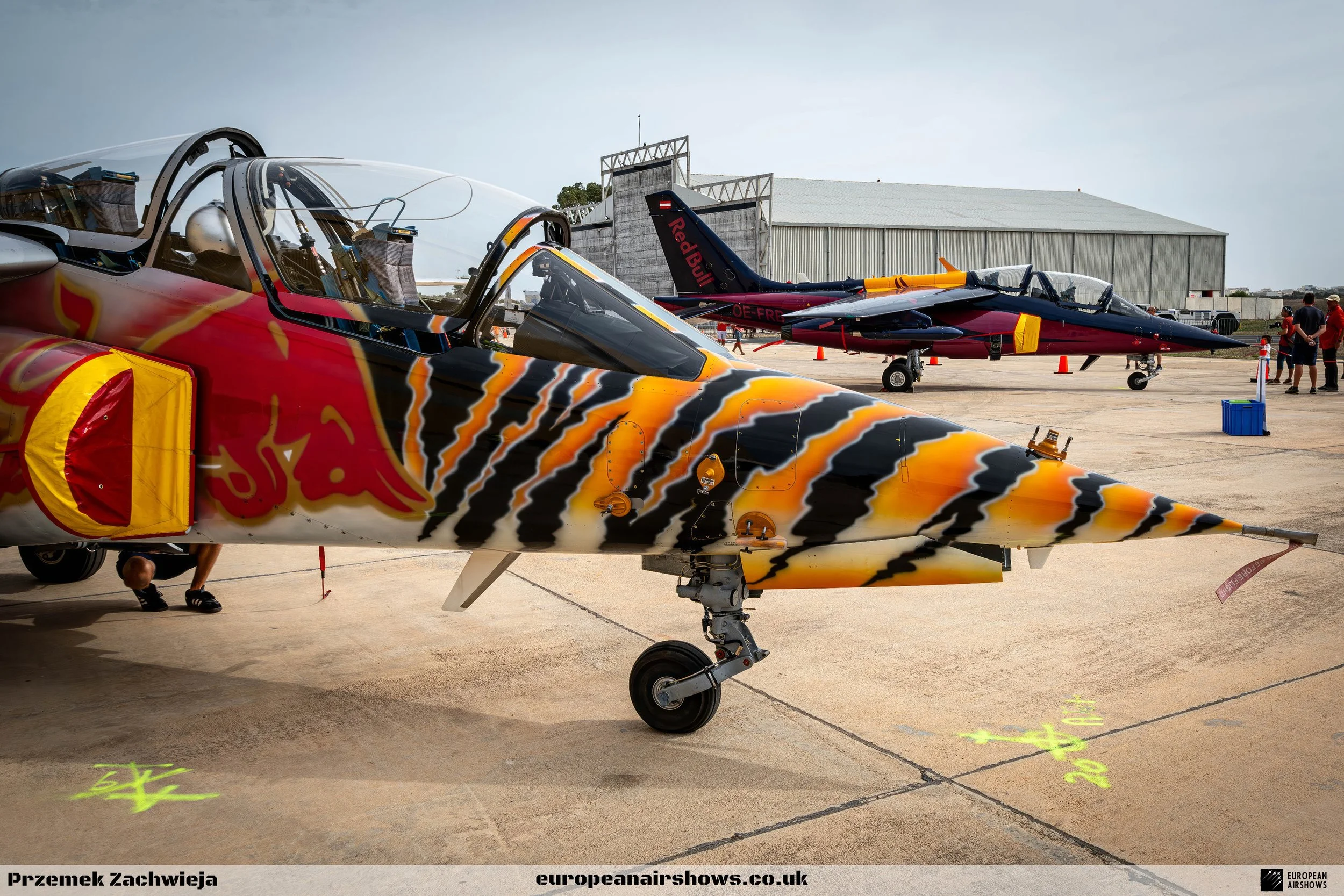
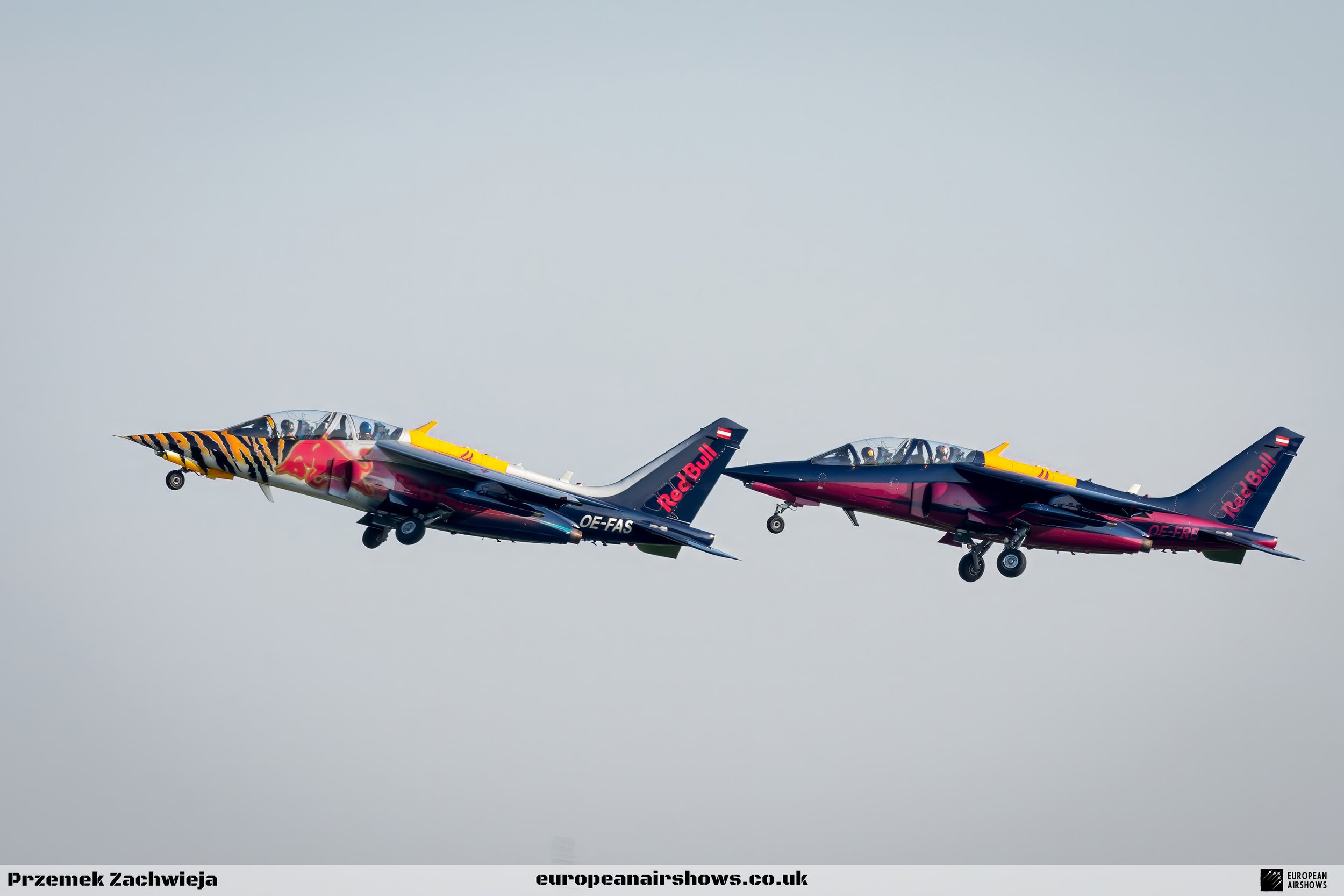
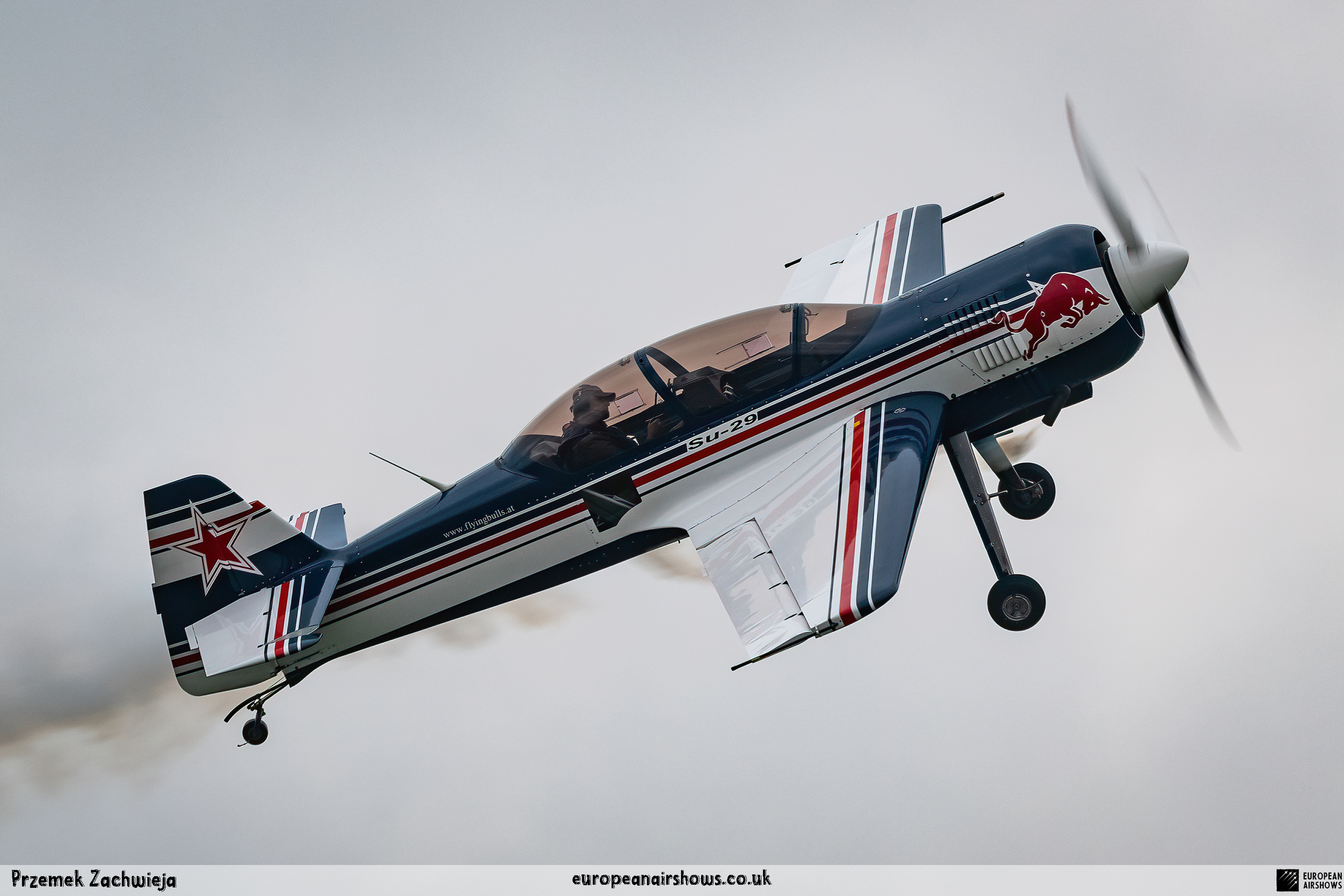
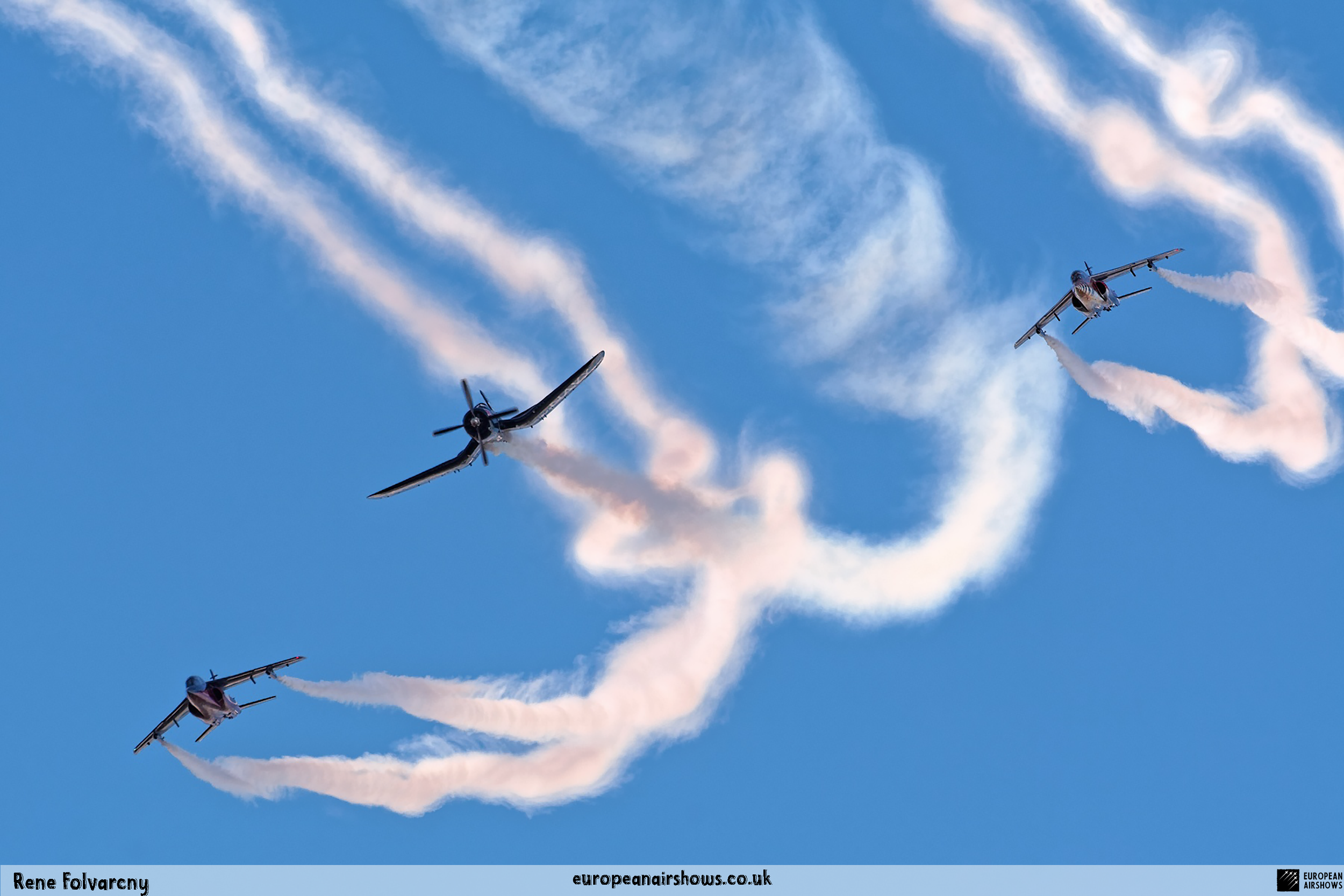
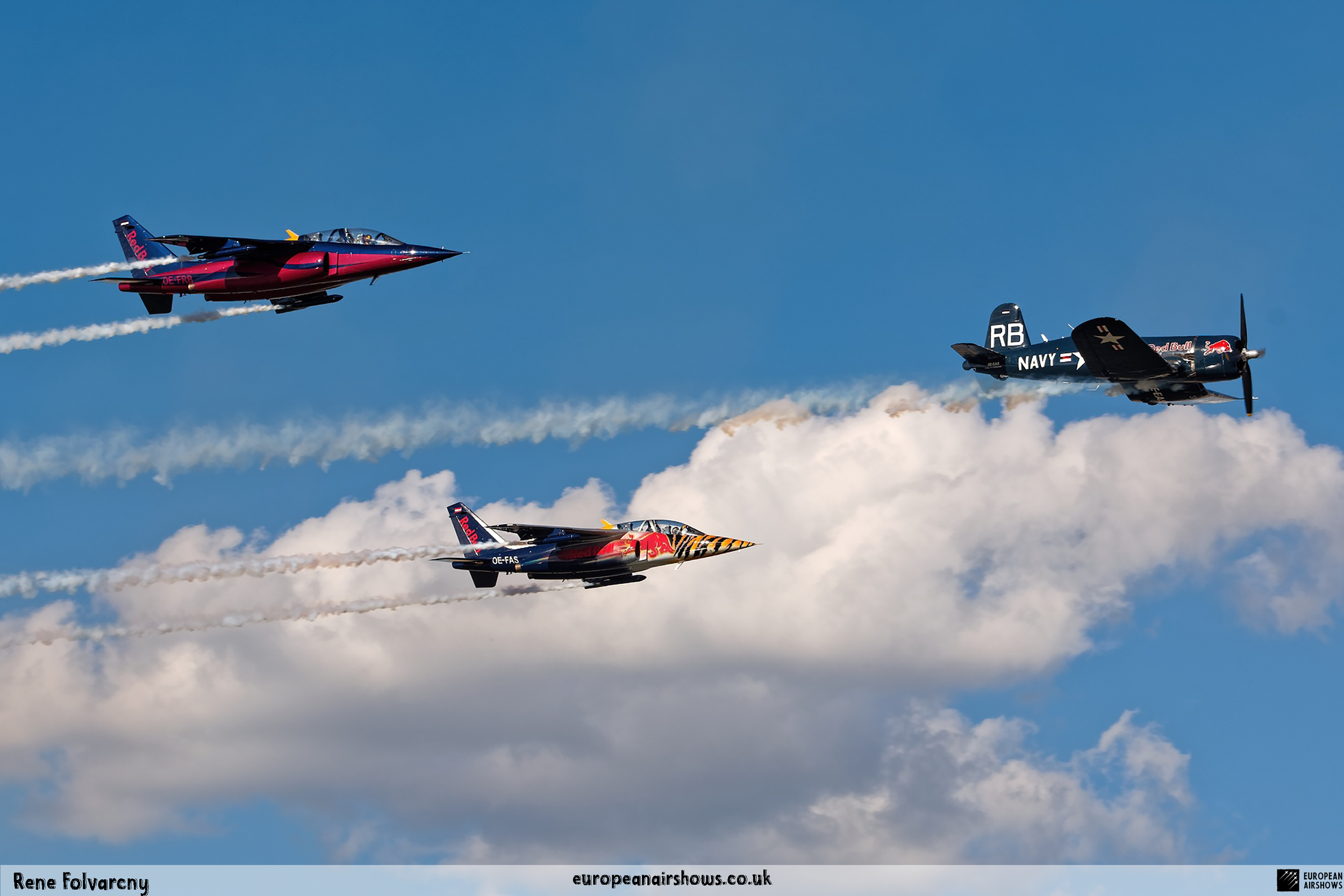
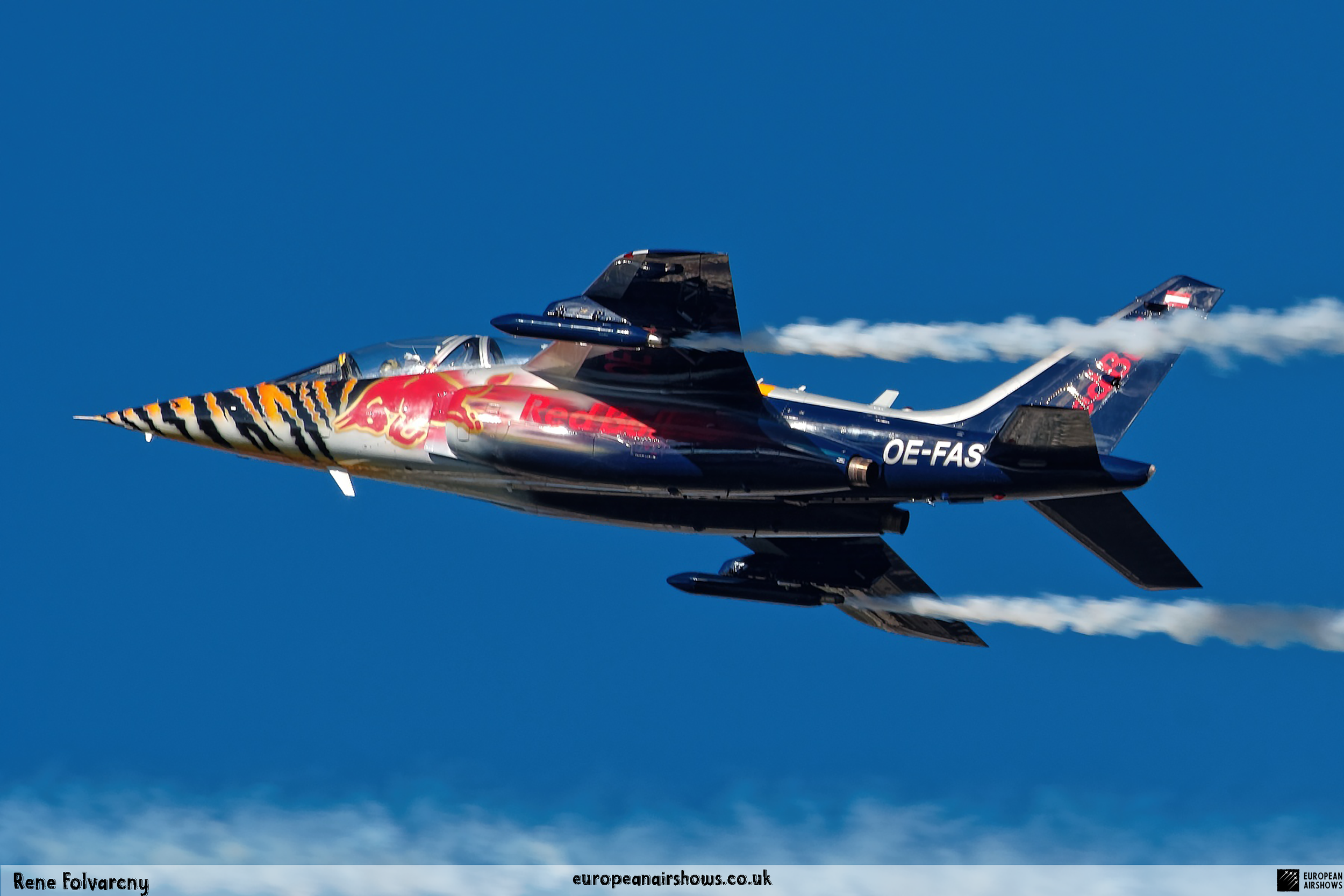
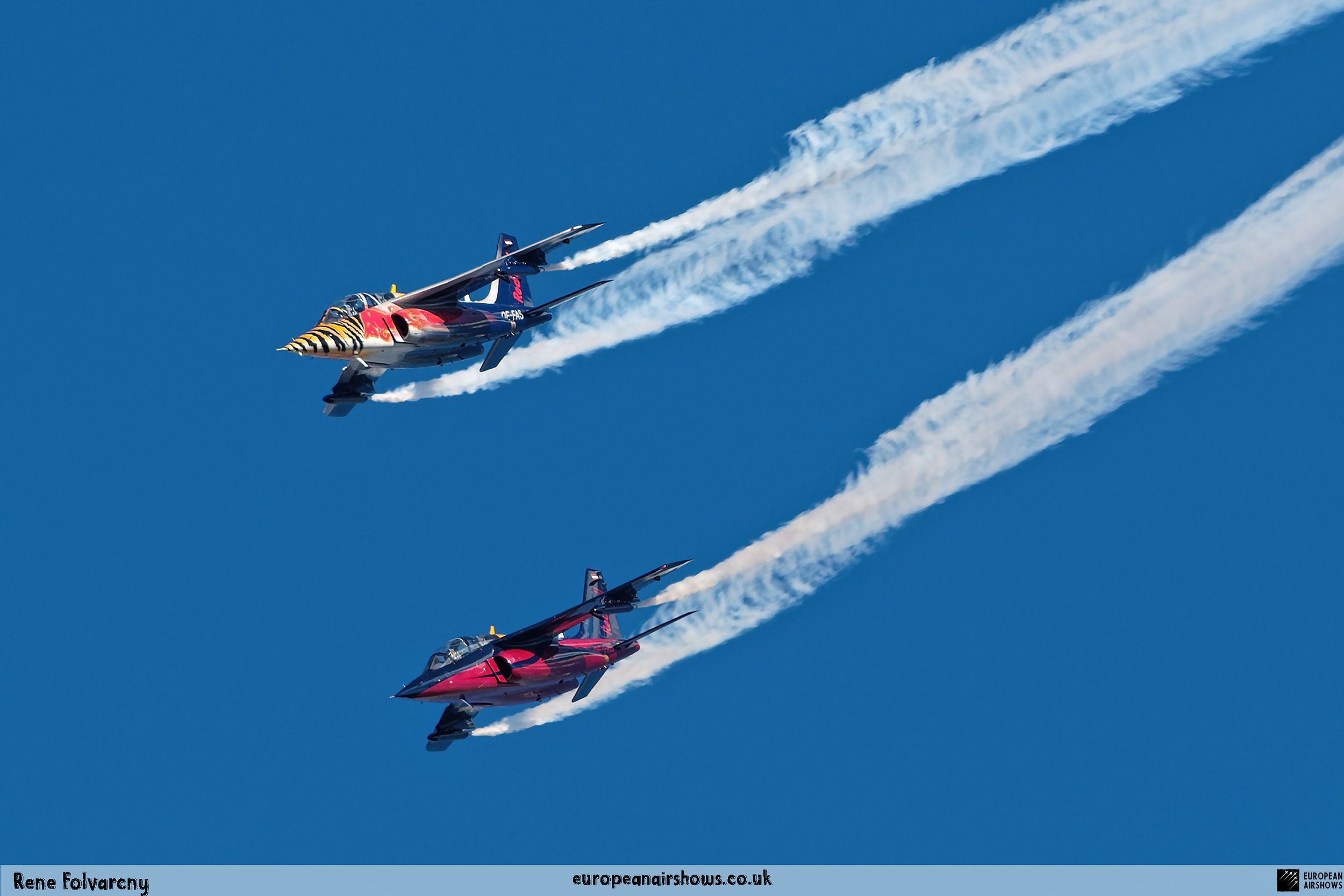
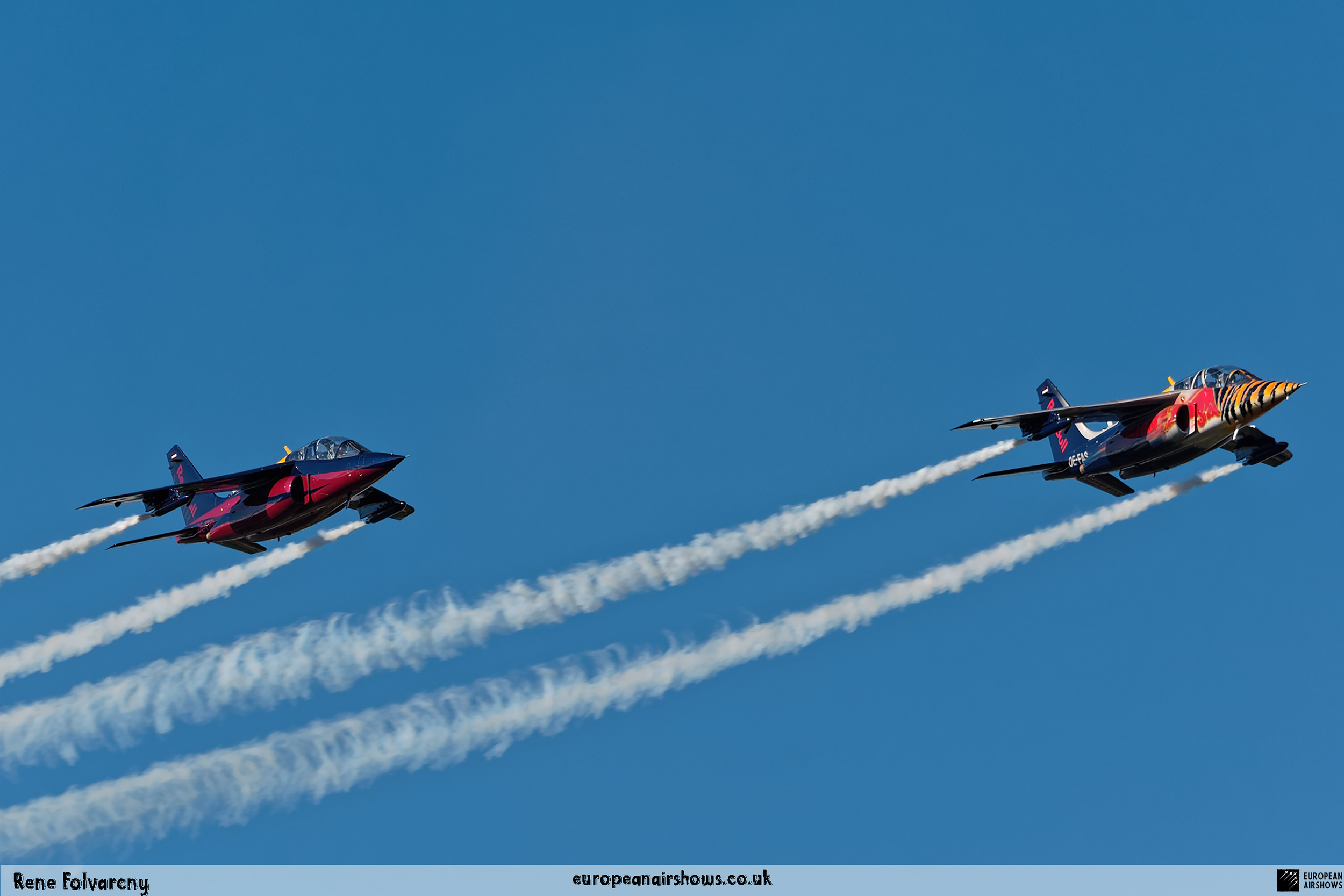
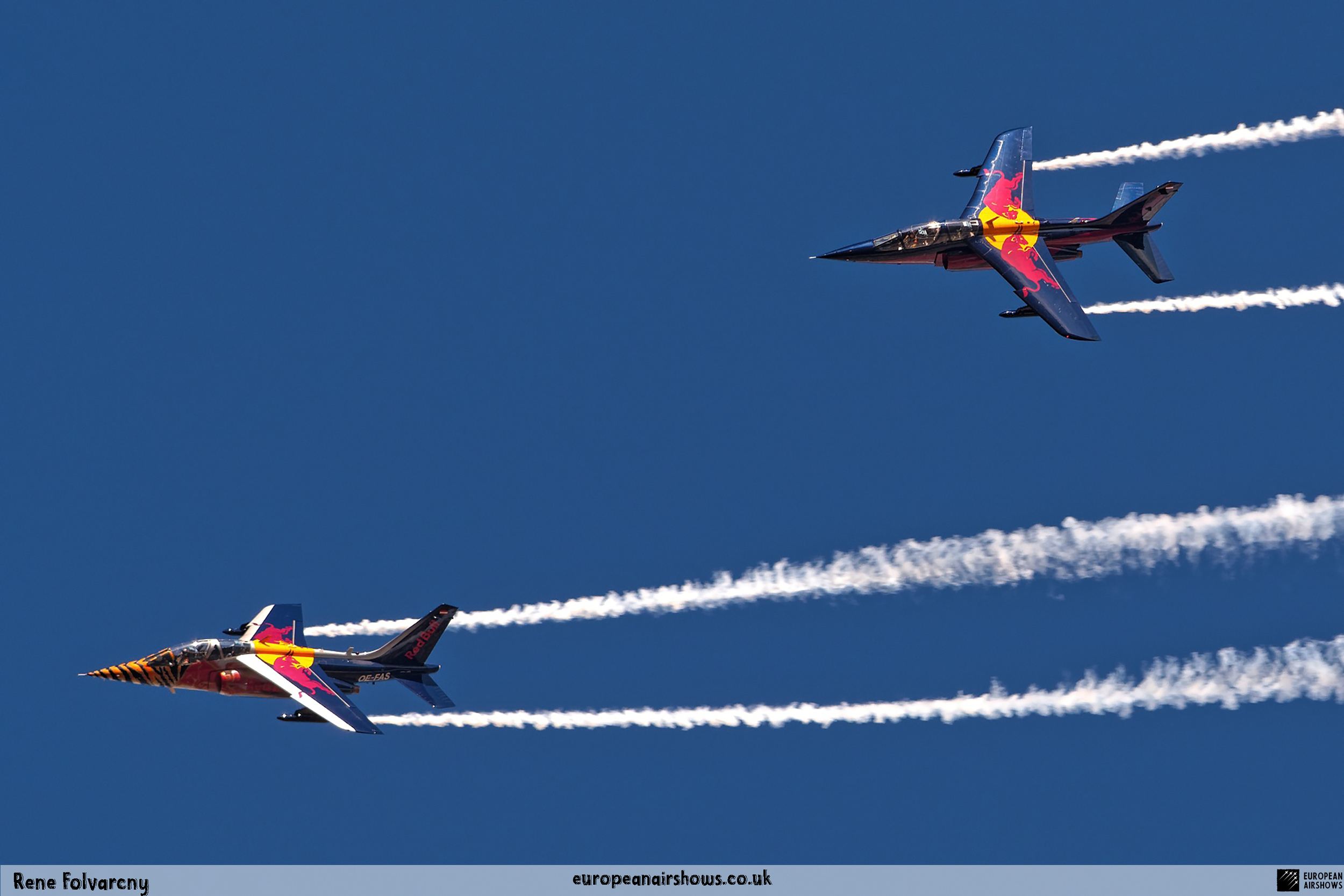
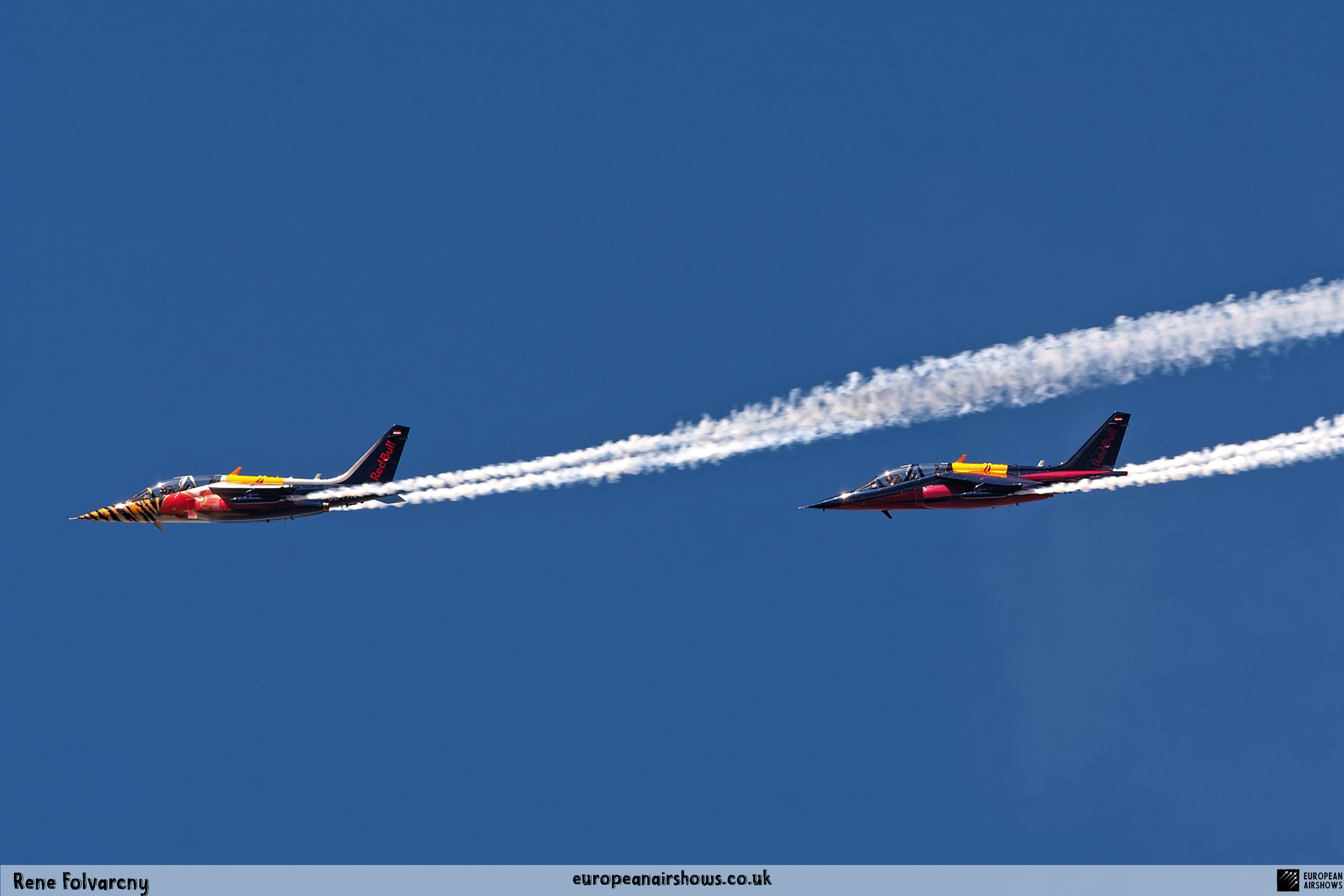
Earlier Flying Bulls material featured Alpha Jets, a Sukhoi Su-29, the BD-5J microjet and other aircraft. They are not listed on the live official fleet page used for this 2026 profile, so they are not included in the current total. The organisation's website still describes Stefan Doblhammer as an Alpha Jet pilot, but that biographical reference is not evidence that the jets remain in the active fleet.
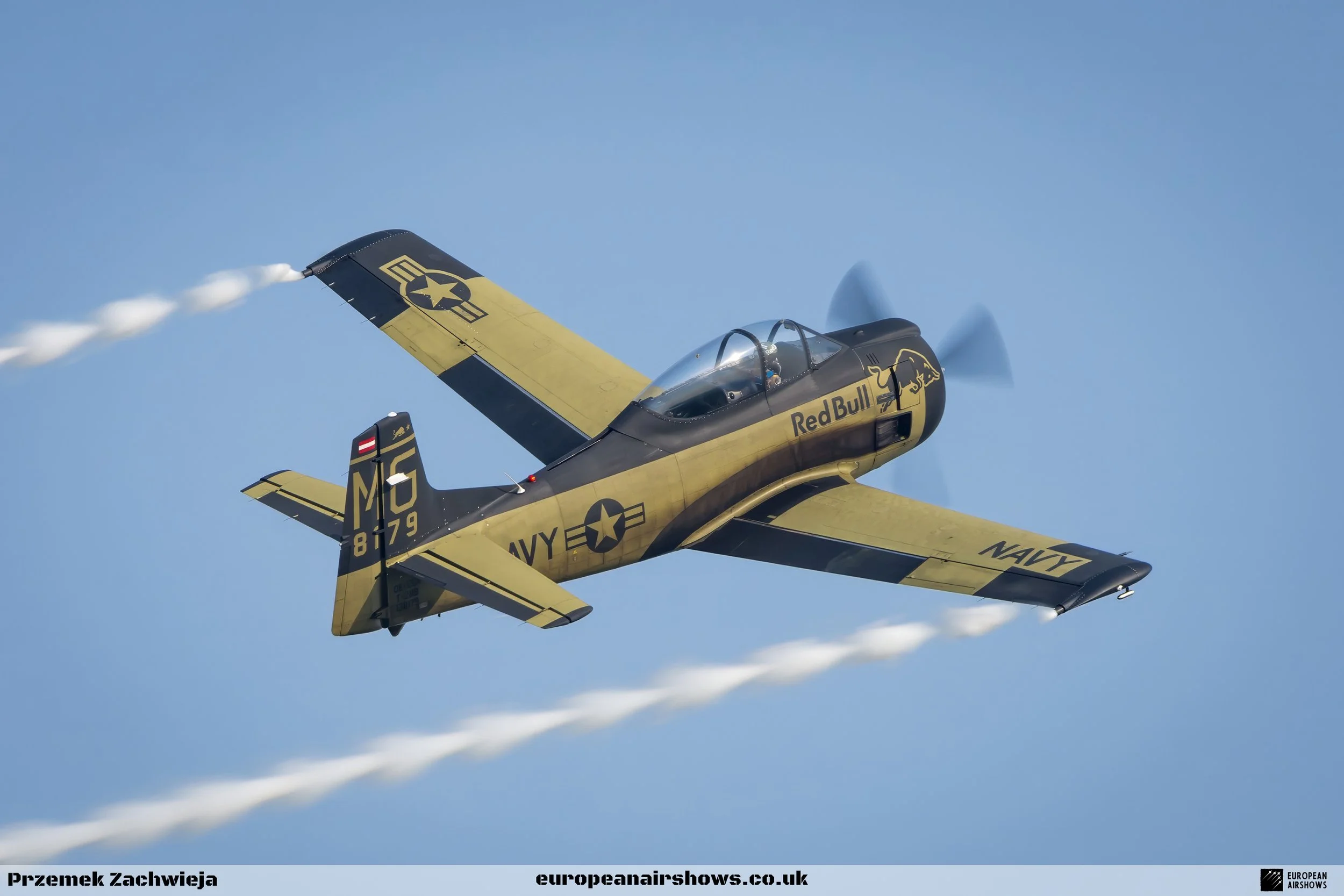
The T-28 identity changed after 2021
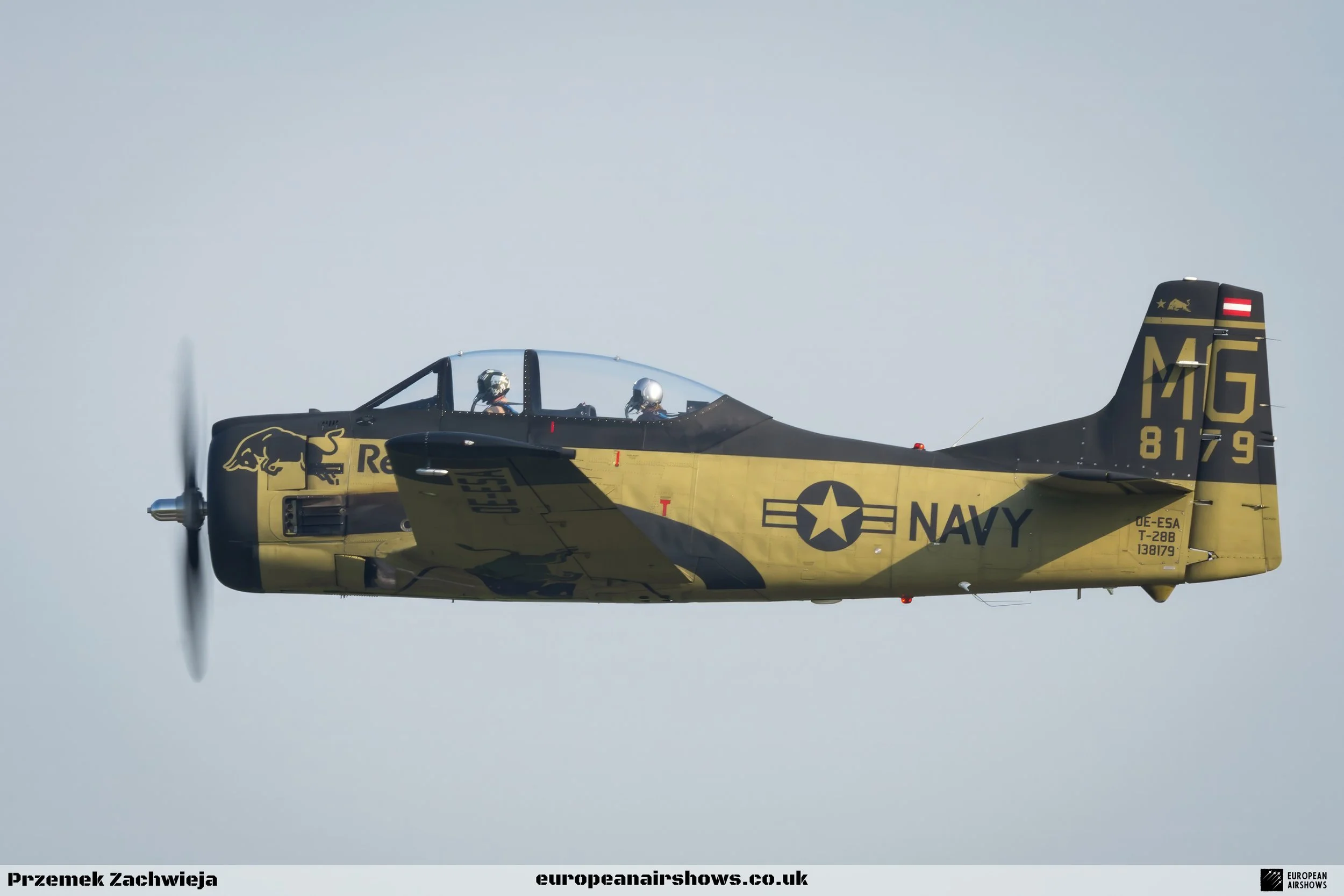
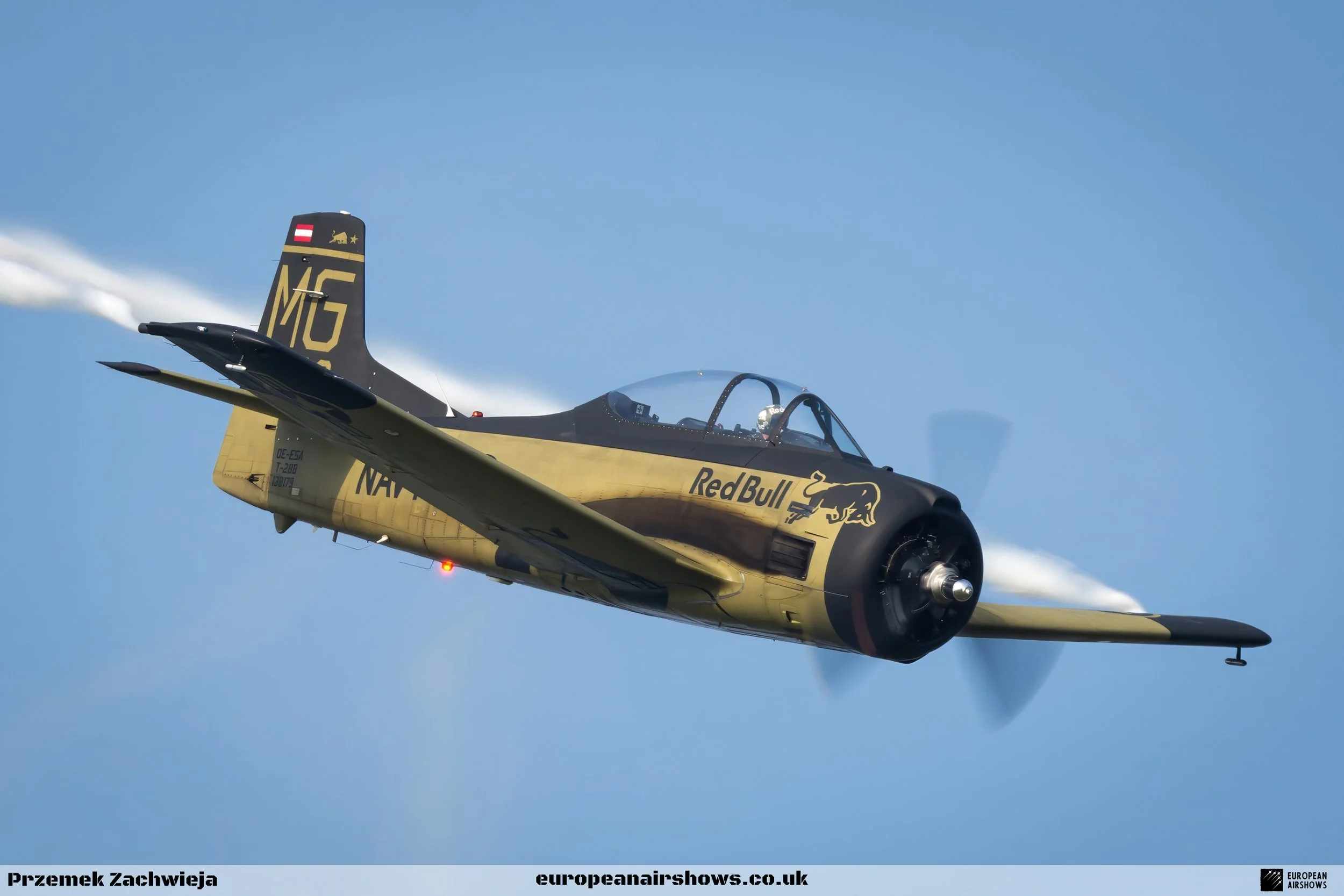
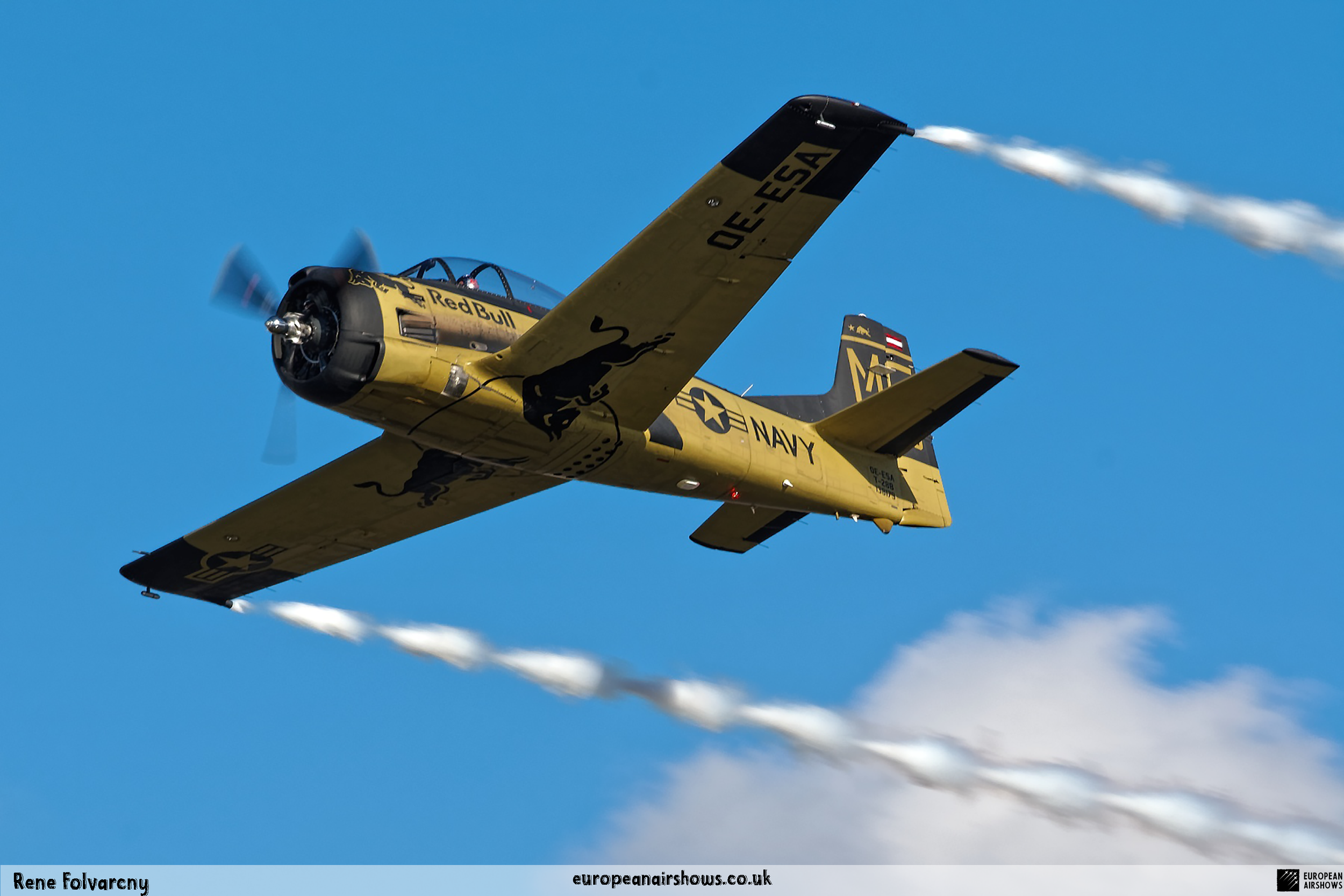
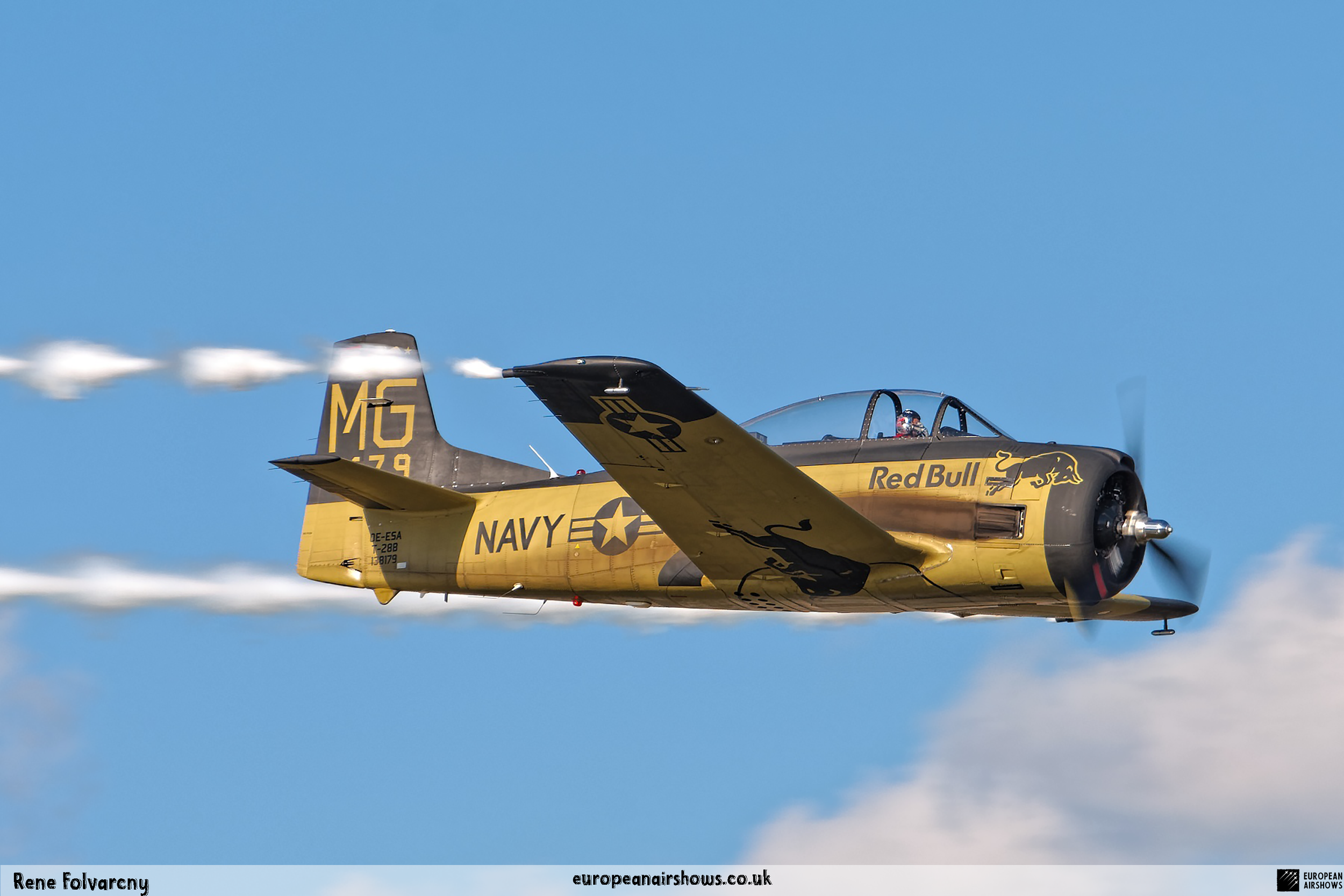
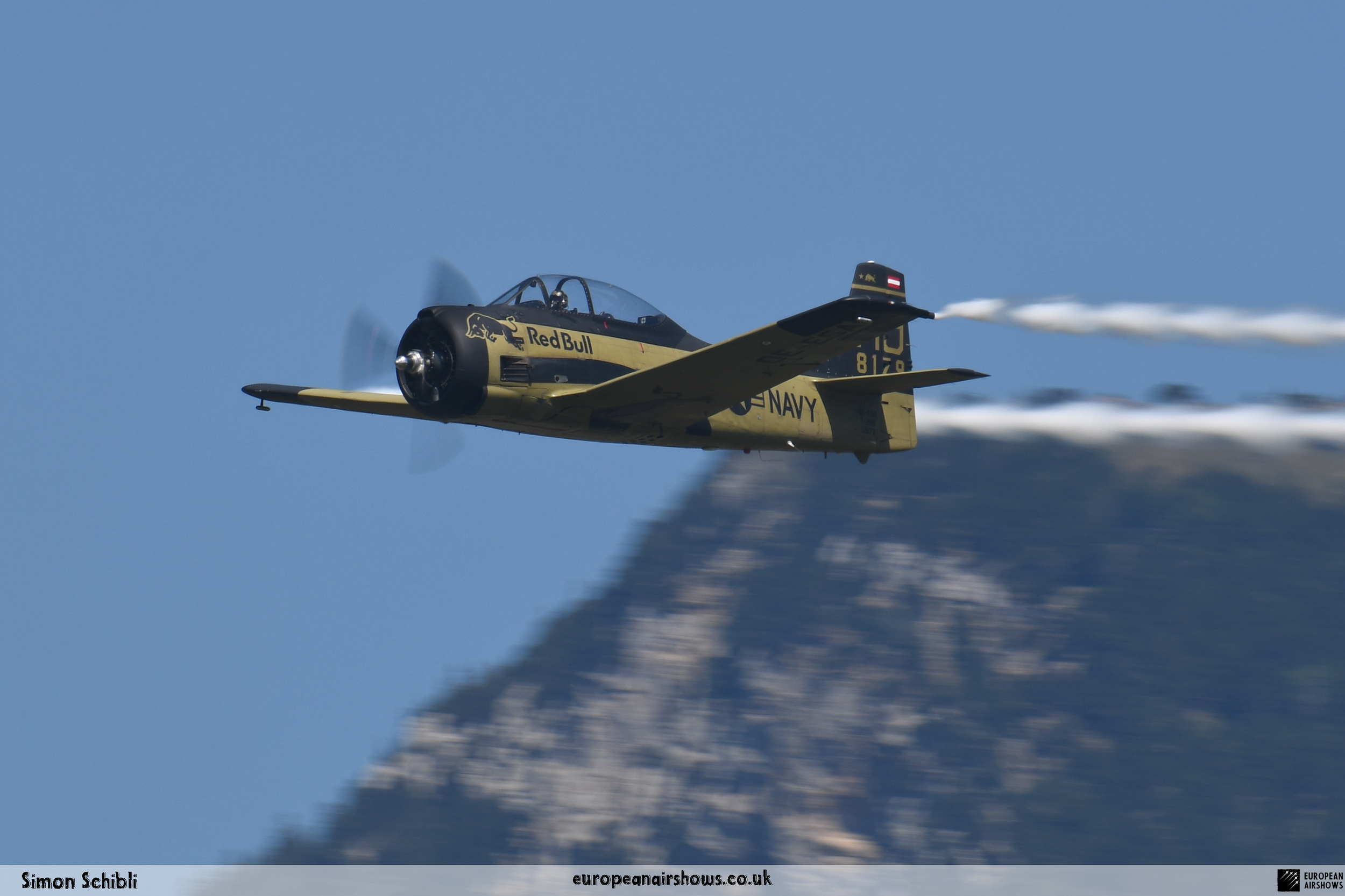
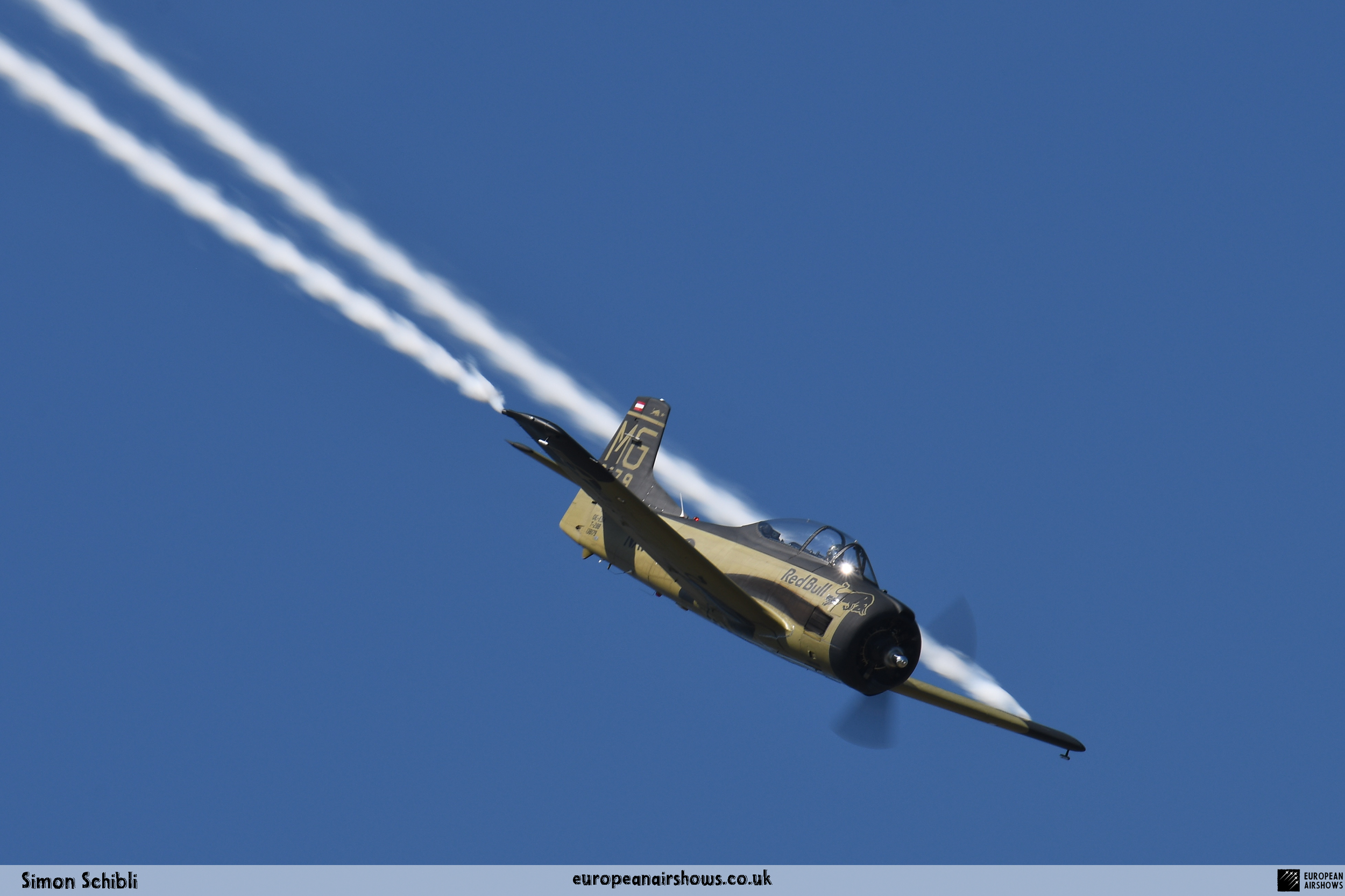
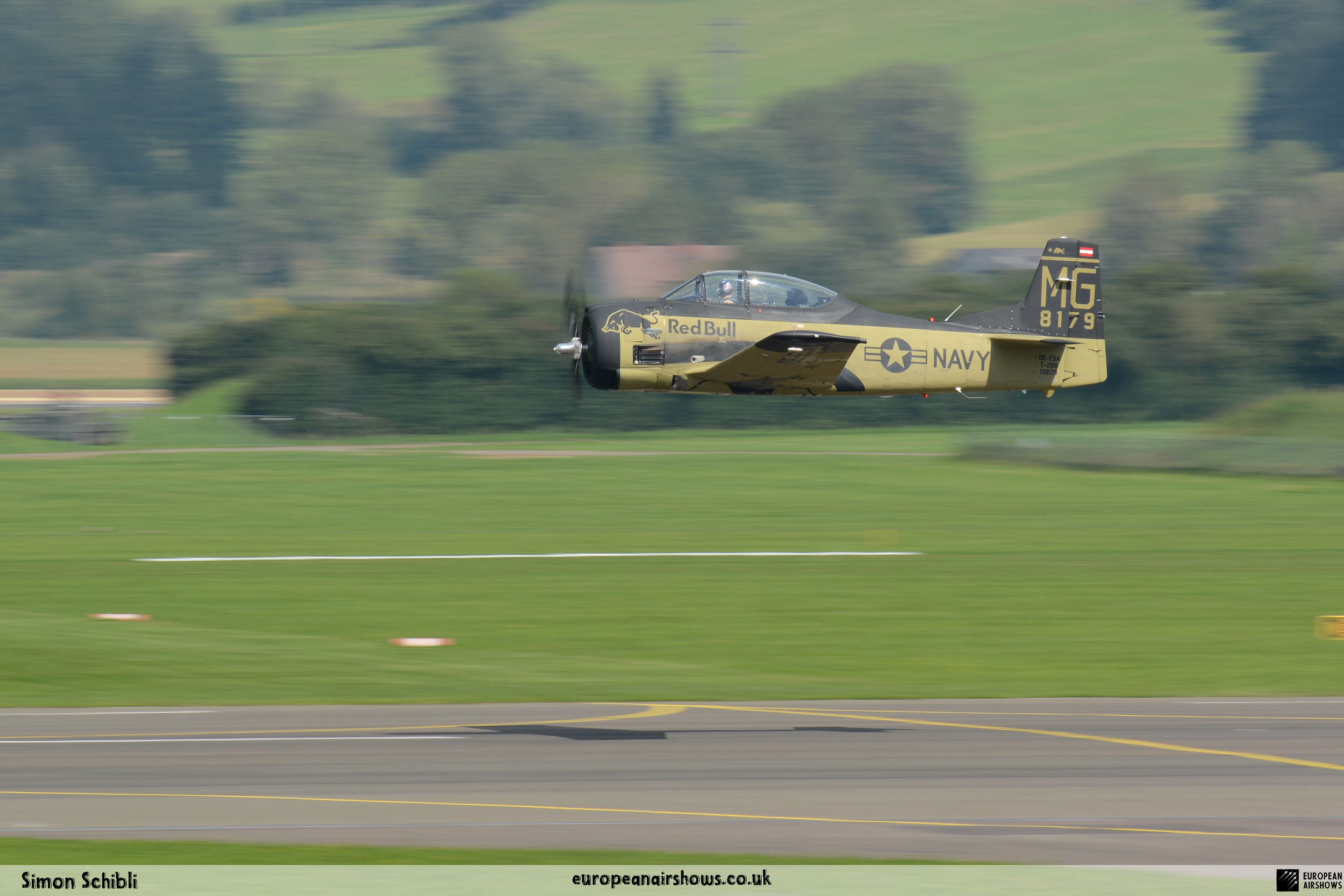
The current North American T-28B is OE-EMM, an aircraft that served with four air forces before joining the modern collection. It is not OE-ESA, the Flying Bulls T-28B lost in the 2021 accident in the Czech Republic. Keeping those two aircraft separate prevents photographs and history from being attached to the wrong airframe.
The story so far
From Sigi Angerer's first restorations to an eighteen-aircraft fixed-wing fleet.
1980s
The collection begins
Tyrolean Airways pilot Sigi Angerer searches for an affordable warbird, brings a North American T-28B to Innsbruck for restoration and later adds a Grumman G-44 Widgeon and F4U-4 Corsair.
5 October 1991
Angerer meets Dietrich Mateschitz
The two meet during a scenic flight. A friendship and partnership follows, with the Corsair helping demonstrate how historic aircraft could represent the Red Bull idea of giving people wings.
1999
The Flying Bulls company is founded
The loose group of pilots and technicians gains a permanent corporate structure as plans mature for a new home at Salzburg Airport.
March-July 2000
The DC-6B comes to Salzburg
Angerer finds the aircraft advertised in Africa in March. It leaves Windhoek on 7 July and reaches Salzburg after a 28-hour delivery flight with four stops.
2001-2004
Three years restore the flagship
Thousands of engineering hours, a renewed interior, four new engines and modernised systems turn the former presidential transport into the centrepiece of the collection.
22 August 2003
Hangar-7 opens
The glass-and-steel building becomes the public home of the collection at Salzburg Airport, designed around the size of the DC-6B rather than around a conventional museum floor plan.
Early 2004
Maintenance moves into Hangar-8
The engineering operation transfers from its temporary Hangar 9 facility into the purpose-built maintenance and restoration base opposite Hangar-7.
1 May 2013
Guido Gehrmann is lost
The Flying Bulls pilot dies when the BD-5J microjet crashes near Baumkirchen and Mils in Tyrol during an attempted emergency landing after reported technical problems.
20 June 2021
Rainer Steinberger is lost
Steinberger dies when Flying Bulls T-28B OE-ESA crashes in the Czech Republic while returning from the Antidotum Airshow at Leszno to Salzburg. His passenger survives with serious injuries.
3 October 2022
Sigi Angerer's lasting legacy
The founder and former chief pilot dies aged 74. The organisation credits him with finding, saving, restoring and flying the aircraft that made The Flying Bulls possible.
June 2025
The Bearcat arrives
F8F-2 BuNo 121776 reaches Salzburg after shipment from the United States and reassembly in Belgium. A major systems renewal prepares it for future European flying.
2025 season
Approximately 55 appearances
The fleet travels from Leszno to Bucharest, Spielberg, Norway and Hahnweide. Reopened Hangar-7 also hosts the organisation's first display directly over its Salzburg home base.
2026
The Sabre joins the fleet
Canadair CL-13B Sabre Mk.6 N80FS becomes the newest addition, flown by Frédéric Akary. The Bearcat is prepared for its first full Flying Bulls display season.
In memory
Two fixed-wing pilots whose loss remains part of the Flying Bulls story.
Both accidents are recorded here without sensational detail or unsupported speculation. The aim is to remember the pilots and keep the aircraft, dates and circumstances separate.
1 May 2013 · Tyrol, Austria
Guido Gehrmann
Flying Bulls BD-5J pilot · aged 38
Guido Gehrmann was a highly experienced airline and display pilot and a former hang-gliding world champion. He had flown with The Flying Bulls for many years and presented the exceptionally small BD-5J microjet. He died near Baumkirchen and Mils while attempting an emergency landing after reporting technical trouble on the return from an appearance in Tyrol.
20 June 2021 · near Jickovice, Czech Republic
Rainer Steinberger
Flying Bulls T-28B pilot · aged 54
Rainer Steinberger was a respected and experienced Flying Bulls aerobatic pilot. He was flying T-28B OE-ESA from Leszno back to Salzburg when the aircraft crashed in the Czech Republic. Steinberger was killed and his passenger was seriously injured but survived. The current Flying Bulls T-28B, OE-EMM, is a different airframe.
Identity & legacy
The collection works because preservation and performance are treated as the same responsibility.
Not one conventional team
The Flying Bulls fixed-wing operation has no permanent aircraft count or single standard routine. Its identity comes from the collection, the people and the presentation quality across many types.
Two hangars, two linked jobs
Hangar-7 makes the aircraft accessible to the public. Hangar-8 provides the maintenance, repair and restoration capability that allows those same aircraft to leave the display floor and fly.
History told in motion
A mixed warbird formation can show changes in design, speed and power more directly than a static line-up. The aircraft are not flown only for spectacle, but to make their engineering and history tangible.
A living fleet changes
Aircraft arrive, leave, undergo long maintenance periods or move into former-fleet history. A reliable current profile must follow the live official inventory and avoid carrying old types forward automatically.