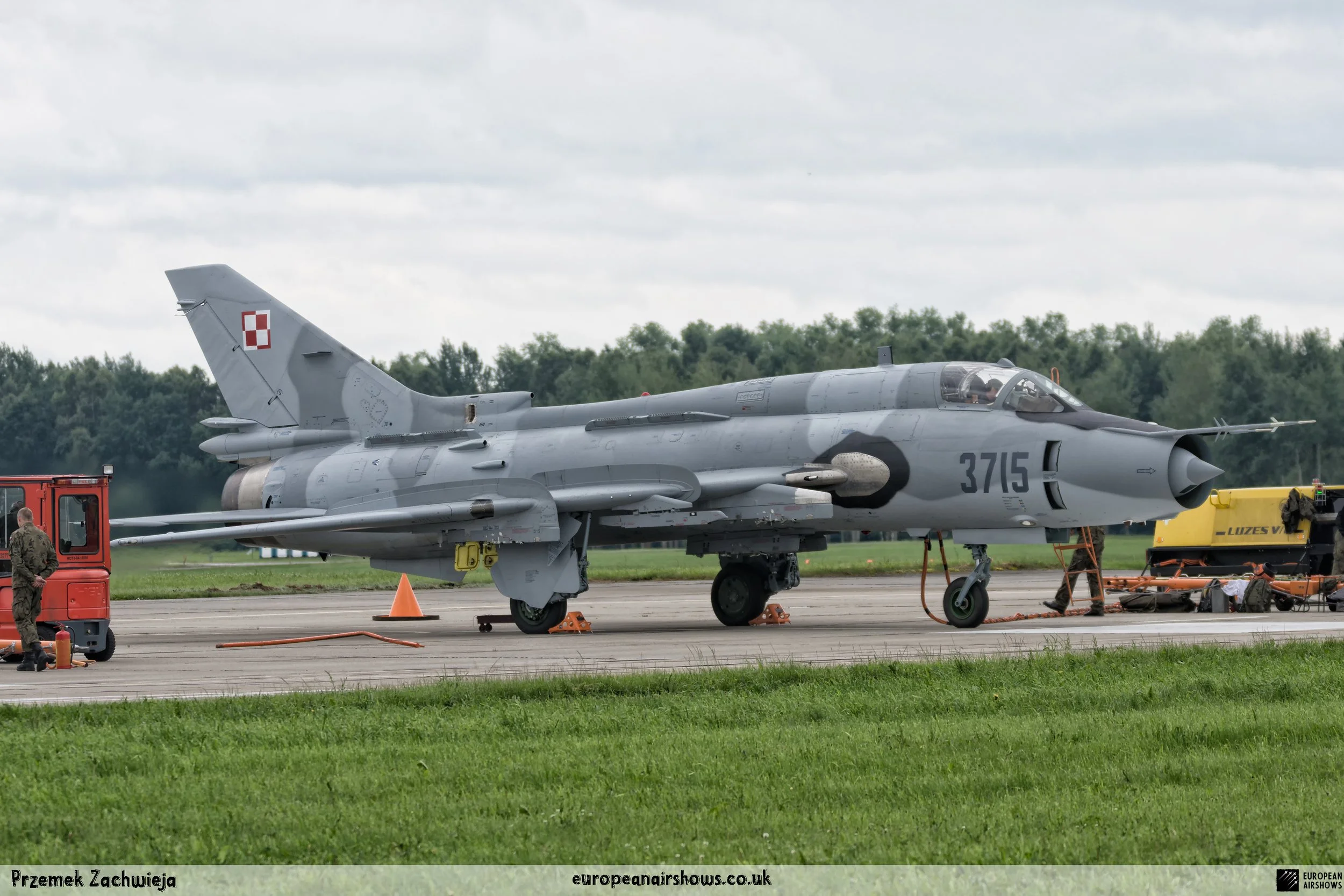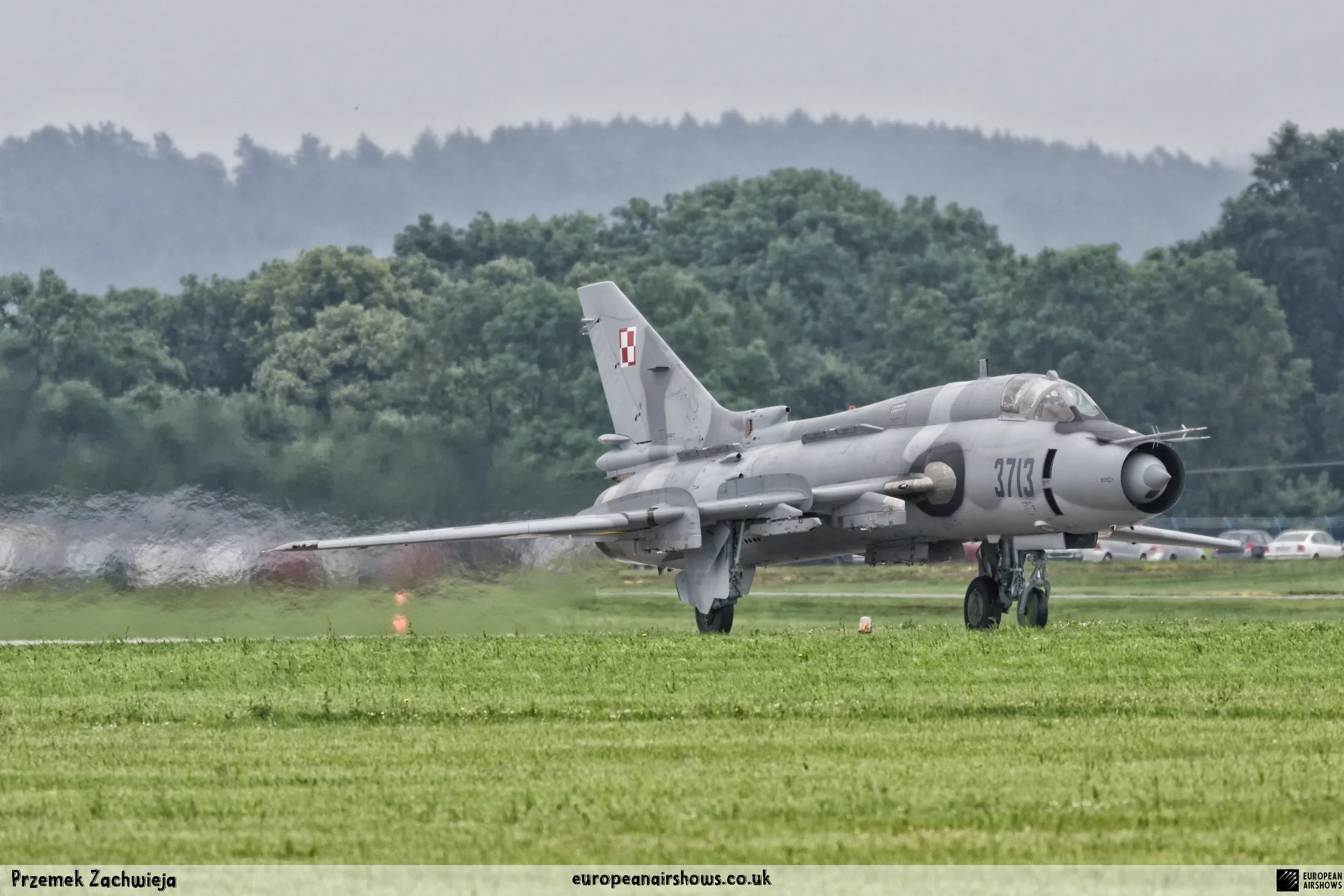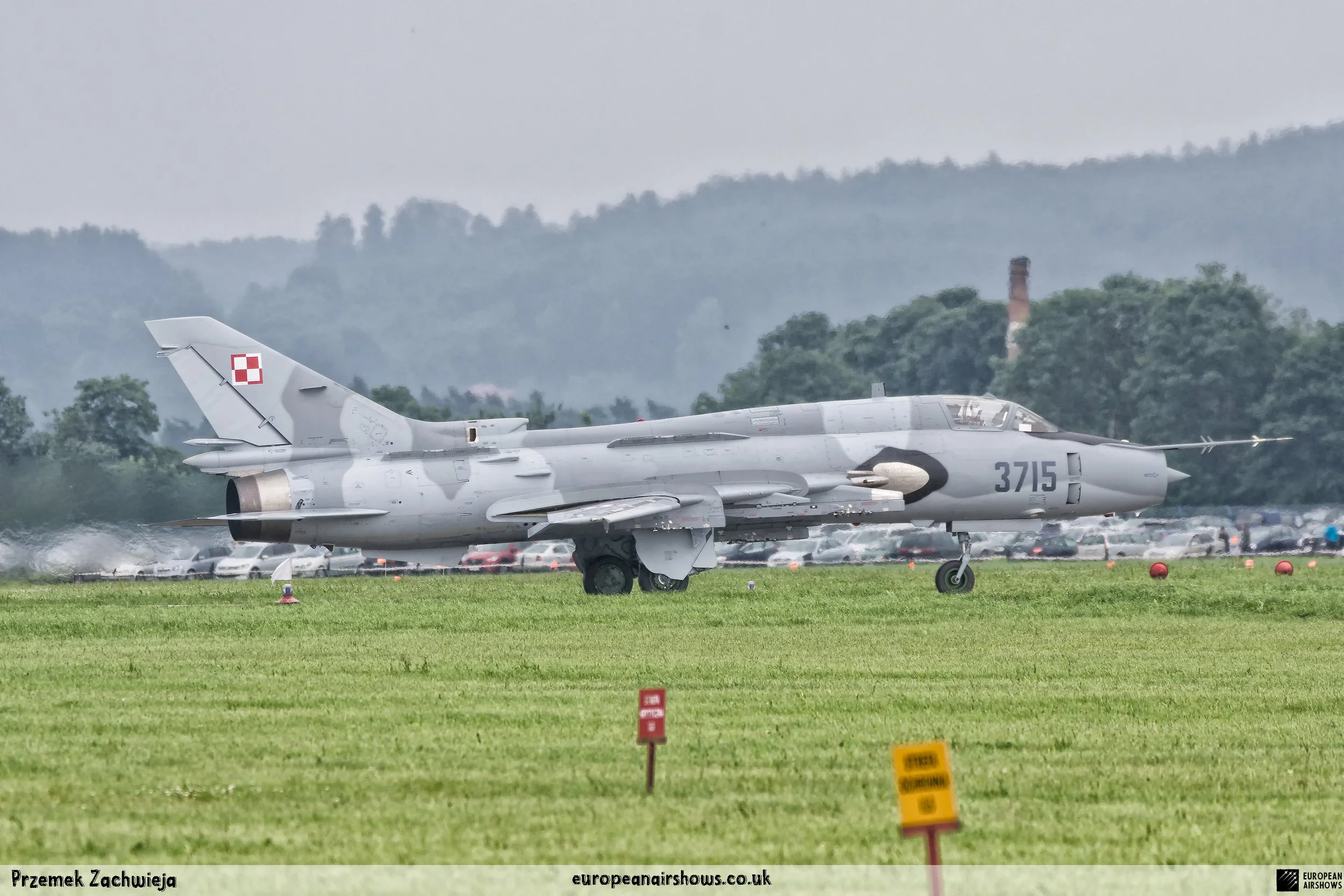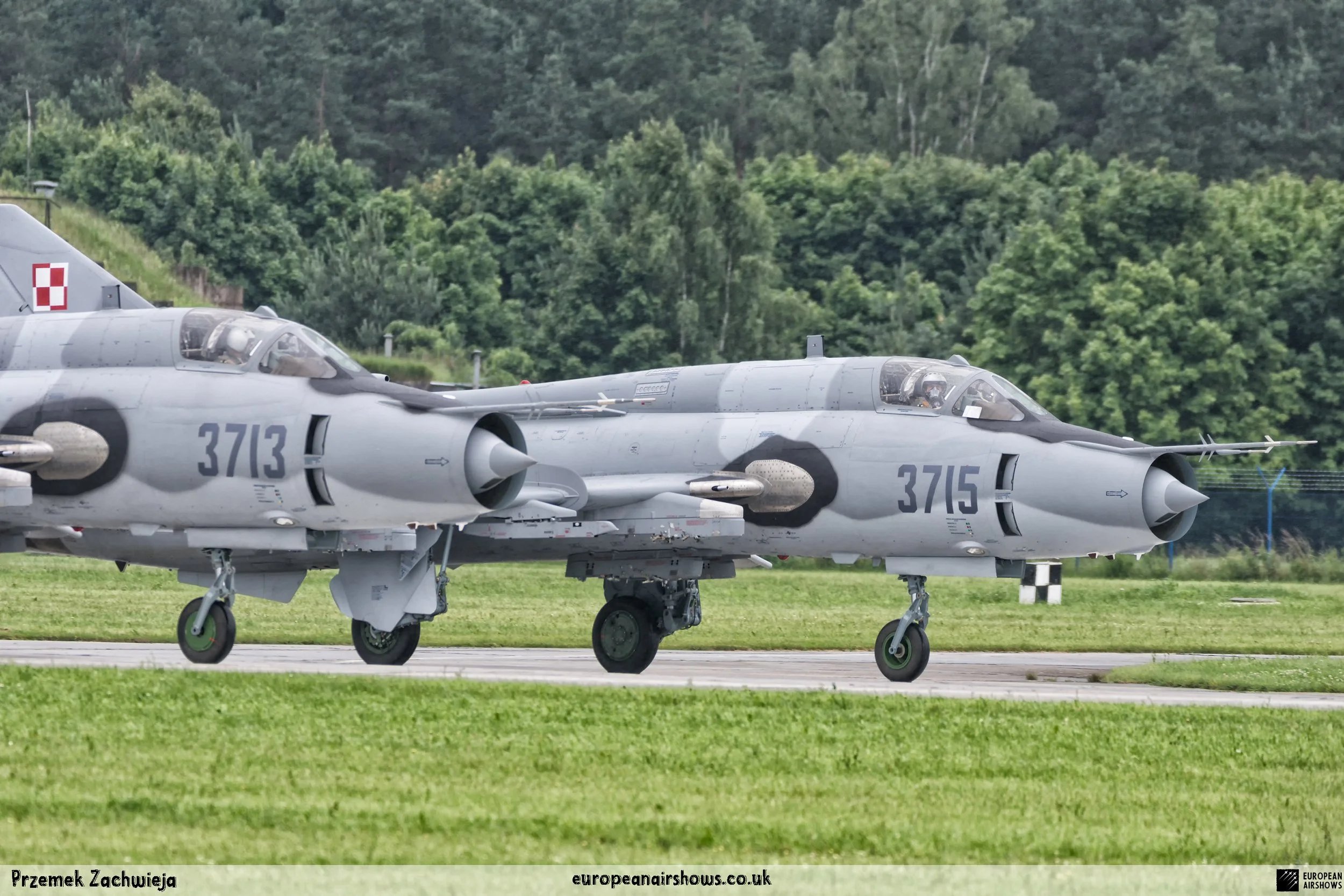
Su-22 Display Team
Sukhoi Display Team of 21st Tactical Air Base, Świdwin
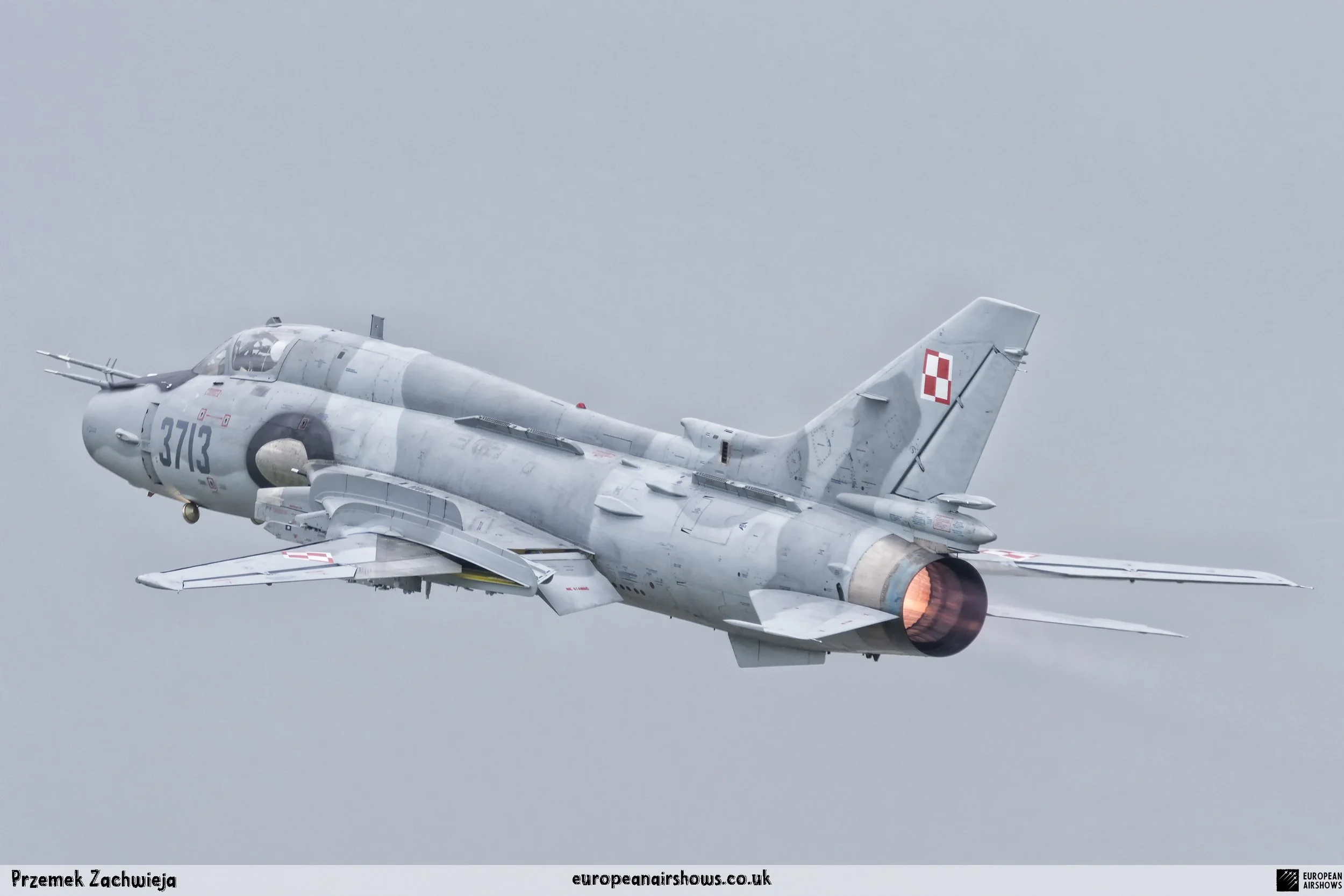
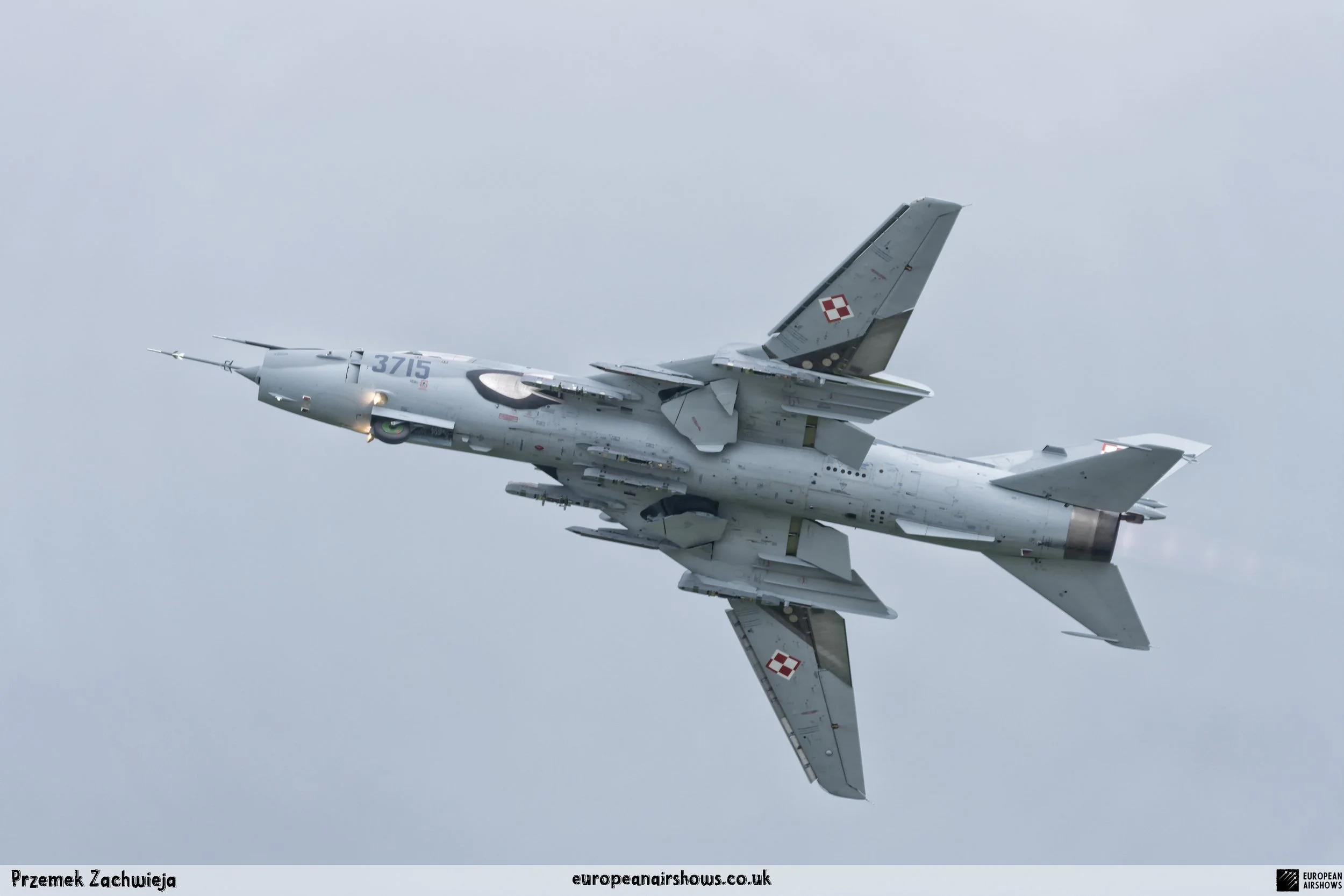
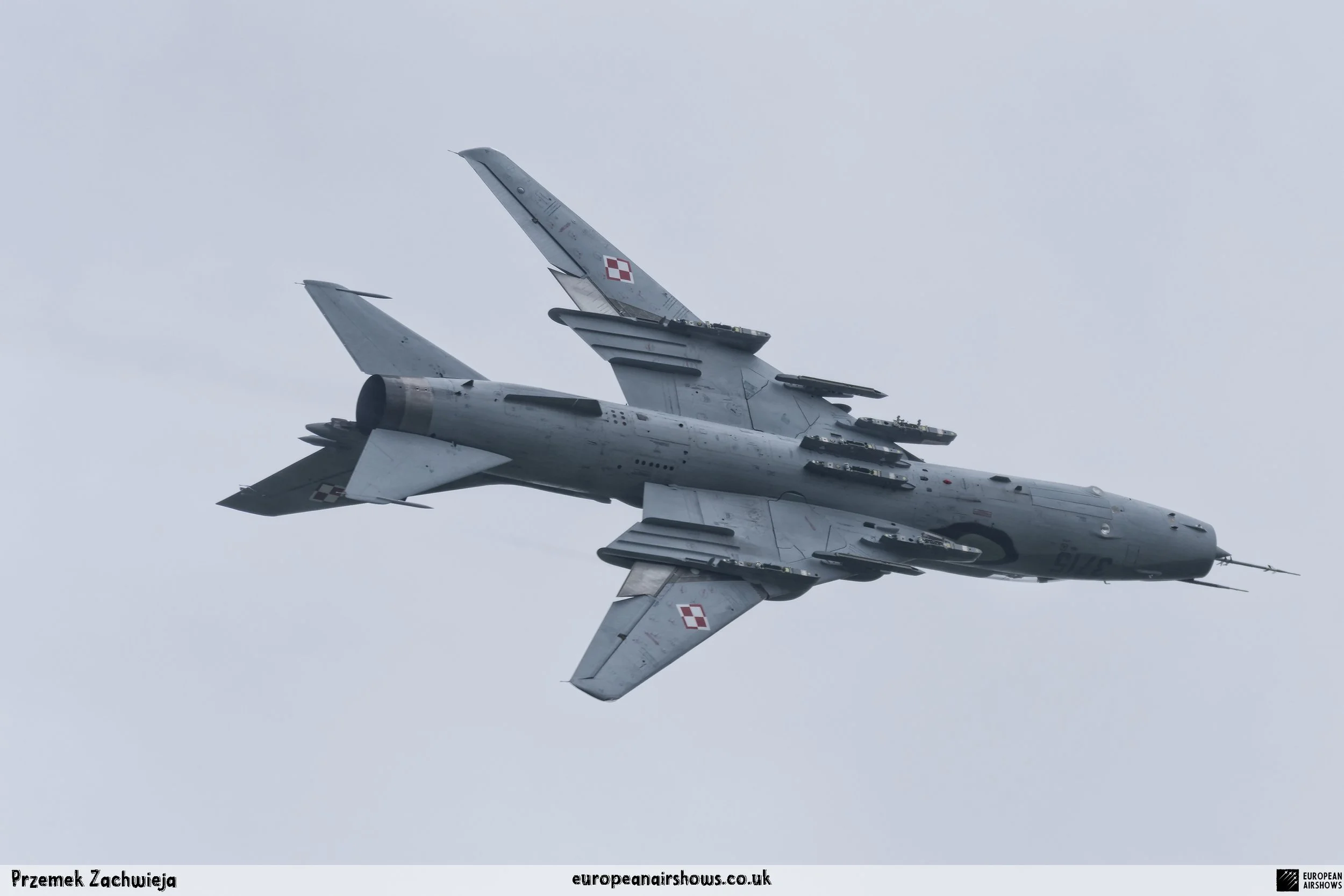
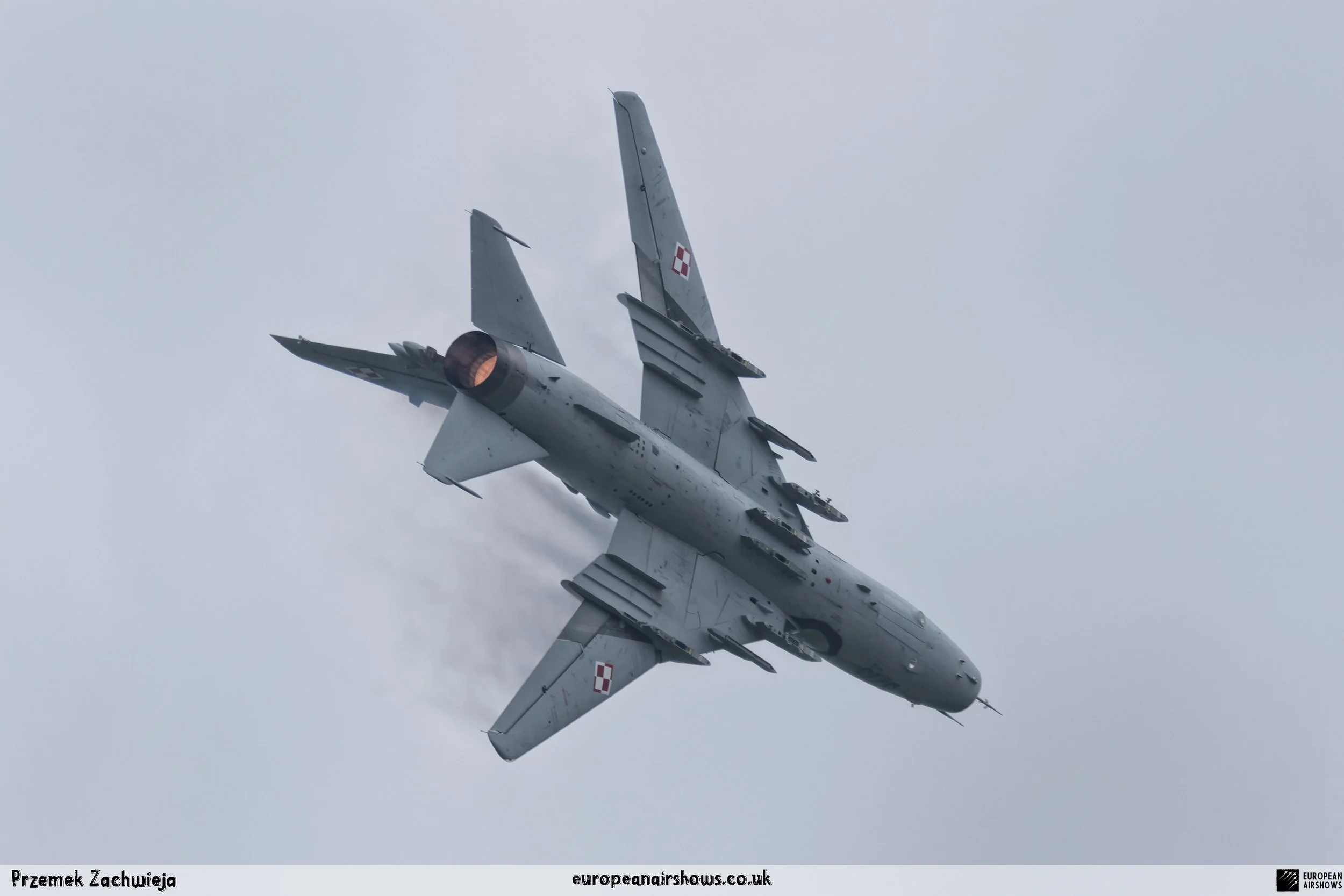
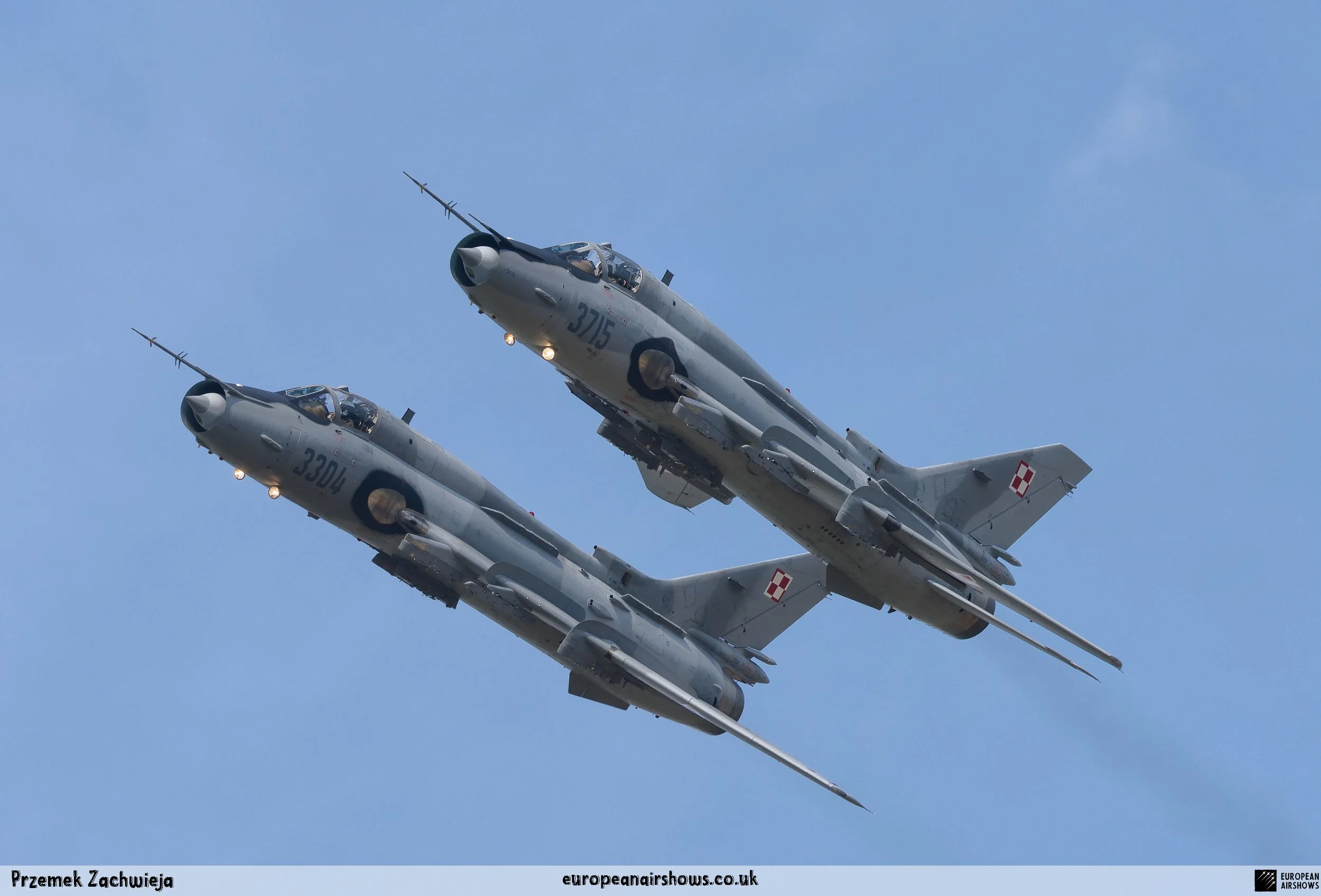
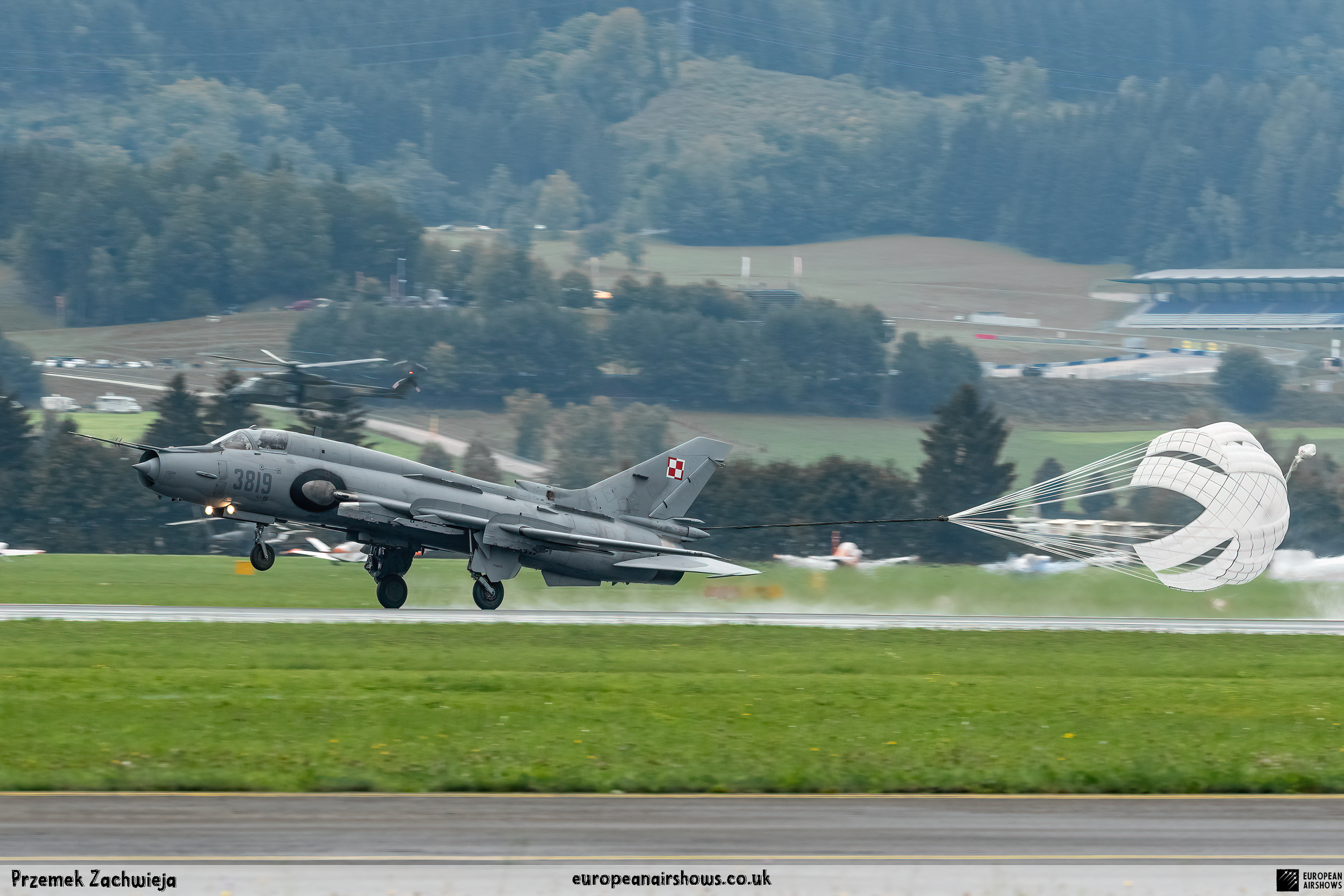
The Polish Air Force's Sukhoi Display Team turned the Su-22 Fitter's operational strike character into a two-aircraft public demonstration. Variable-sweep wings, low-level formation work, solo attack profiles and the heavy jet's unmistakable exhaust made the pair one of Europe's most distinctive Cold War fast-jet displays.
- Established
- 2011
- Regular duo era
- 2011-2019
- Display format
- 2 aircraft
- Aircraft
- Su-22M4 / UM3K
- RIAT award
- 2014
- Fleet retired
- September 2025
The team
An operational strike unit presented as a two-ship airshow demonstration.
Created at Świdwin in 2011
The team was established in 2011 on the initiative of the commander of 21st Tactical Air Base, Colonel Ireneusz Starzyński. Contemporary Polish accounts use the name Sukhoi Display Team; Su-22 Display Team became the equally familiar descriptive name used by international organisers and aviation media. Its purpose was straightforward: show the public the flying skill of Świdwin's crews and the capabilities of the Su-22 in the air rather than only as a static Cold War exhibit.
Front-line pilots, aircraft and engineers
This was not a permanently detached national aerobatic squadron. Pilots, engineers and aircraft came from the operational Su-22 community at Świdwin, particularly 40th Tactical Aviation Squadron within 21st Tactical Air Base. Display preparation therefore sat alongside conversion flying, weapons training, reconnaissance work, exercises and the daily task of sustaining an ageing combat fleet.
A flexible pair, not one fixed combination
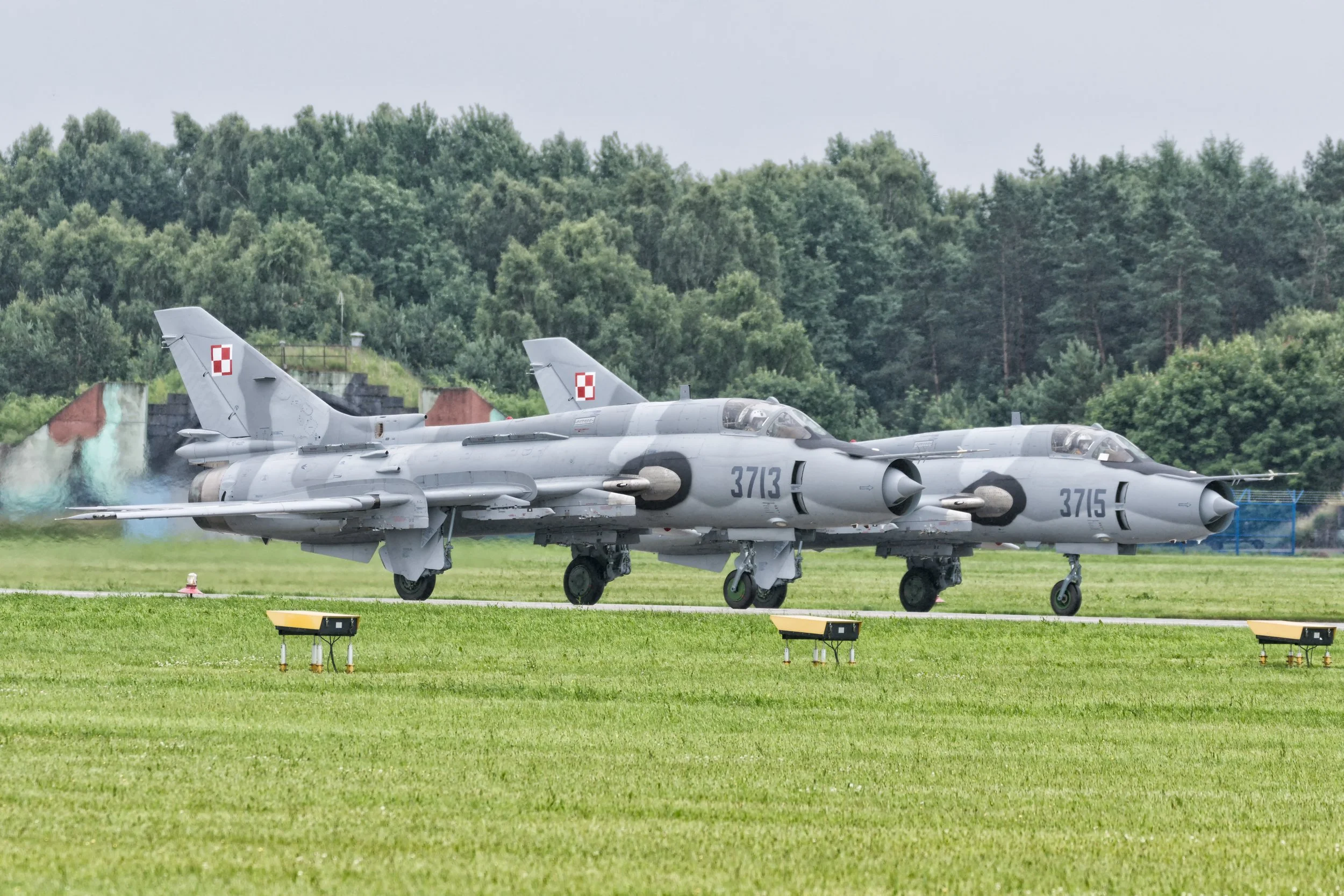
The display was built around two Fitters, but it should not be defined as permanently one single-seat Su-22M4 and one two-seat Su-22UM3K. Major international appearances—including RIAT 2014—used two Su-22M4s, while the UM3K trainer could appear in the team or support the deployment when crew training and availability required it. The aircraft were service machines, not a dedicated display fleet with fixed serials.
From European favourite to historical team
The duo appeared at Polish base events, Radom and selected foreign shows, earning a reputation far beyond the modest size of its schedule. By the end of the 2010s the full pair became less common and solo Su-22 displays increasingly represented the type. The regular two-ship era effectively ended after 2019, six years before Poland finally retired the aircraft.
The display
Two heavy strike aircraft using formation, geometry and configuration changes.
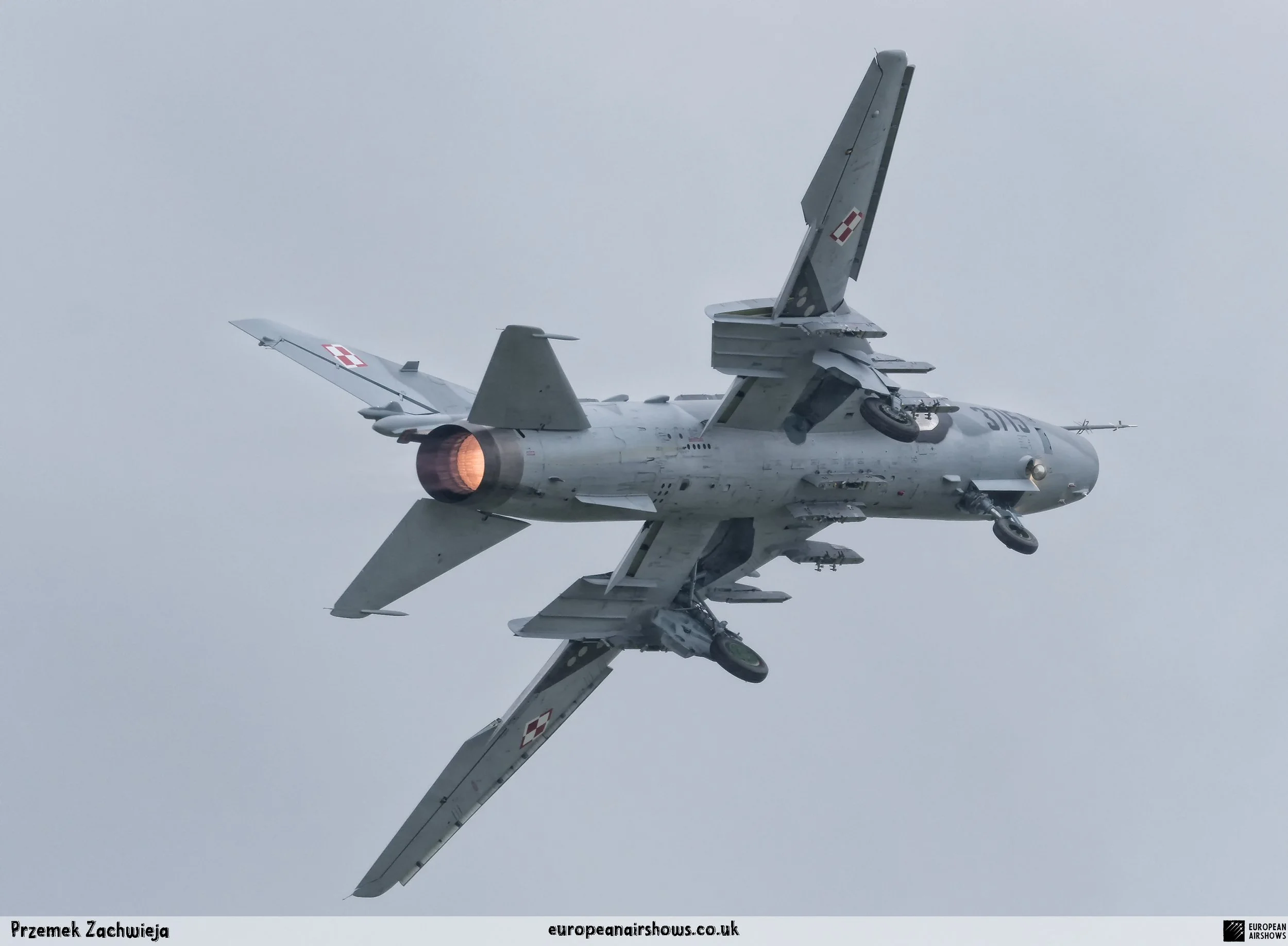
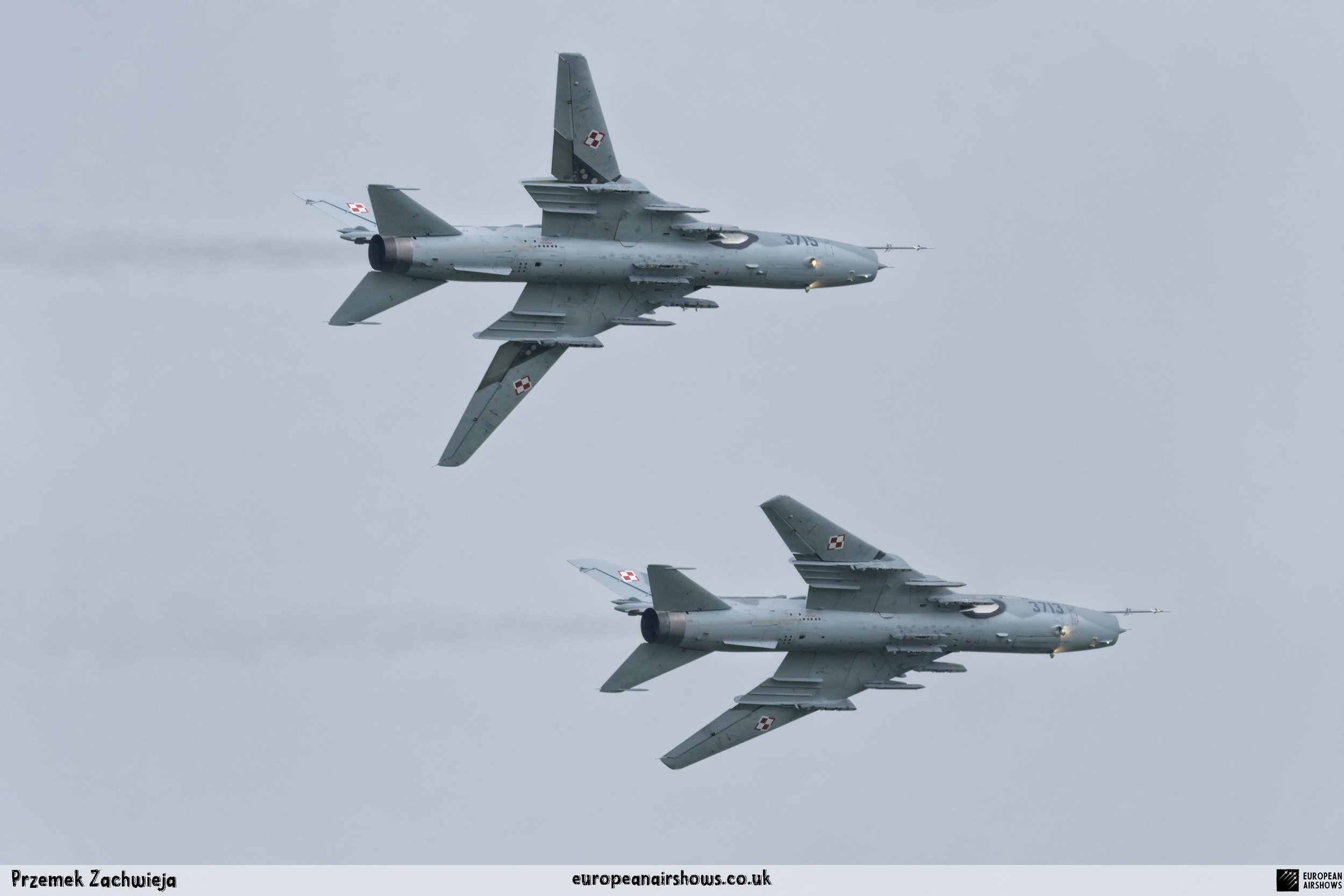
The Sukhoi display was not conventional close-formation aerobatics. It combined a coordinated pair with individual passes that exposed the Su-22's variable wing, low-level strike heritage and very different visual character from modern fly-by-wire fighters.
Two-ship arrival
The aircraft established the act with formation passes and coordinated turns, allowing spectators to compare spacing, configuration and the scale of the Fitter before the pair separated.
Variable wing sweep
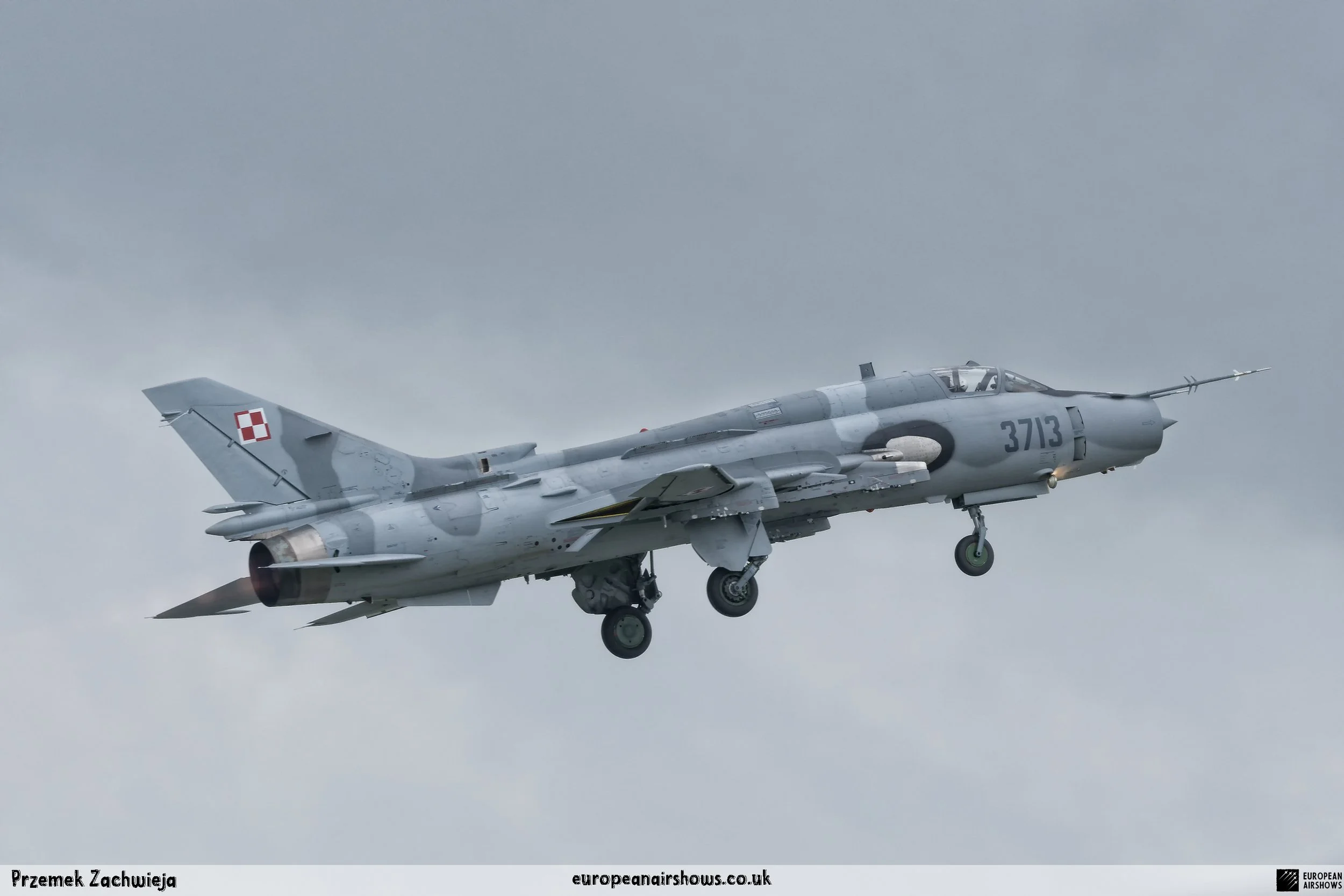
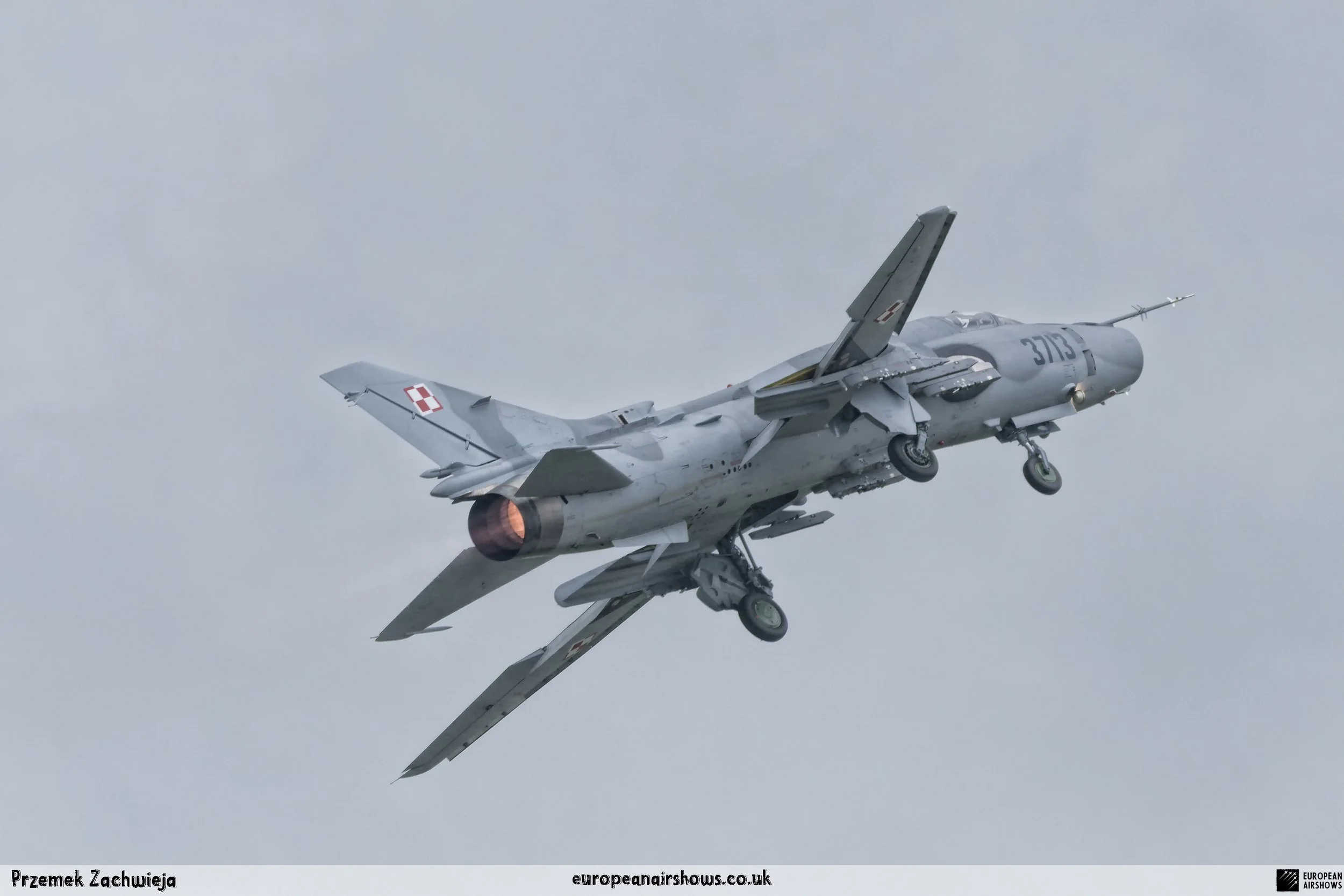
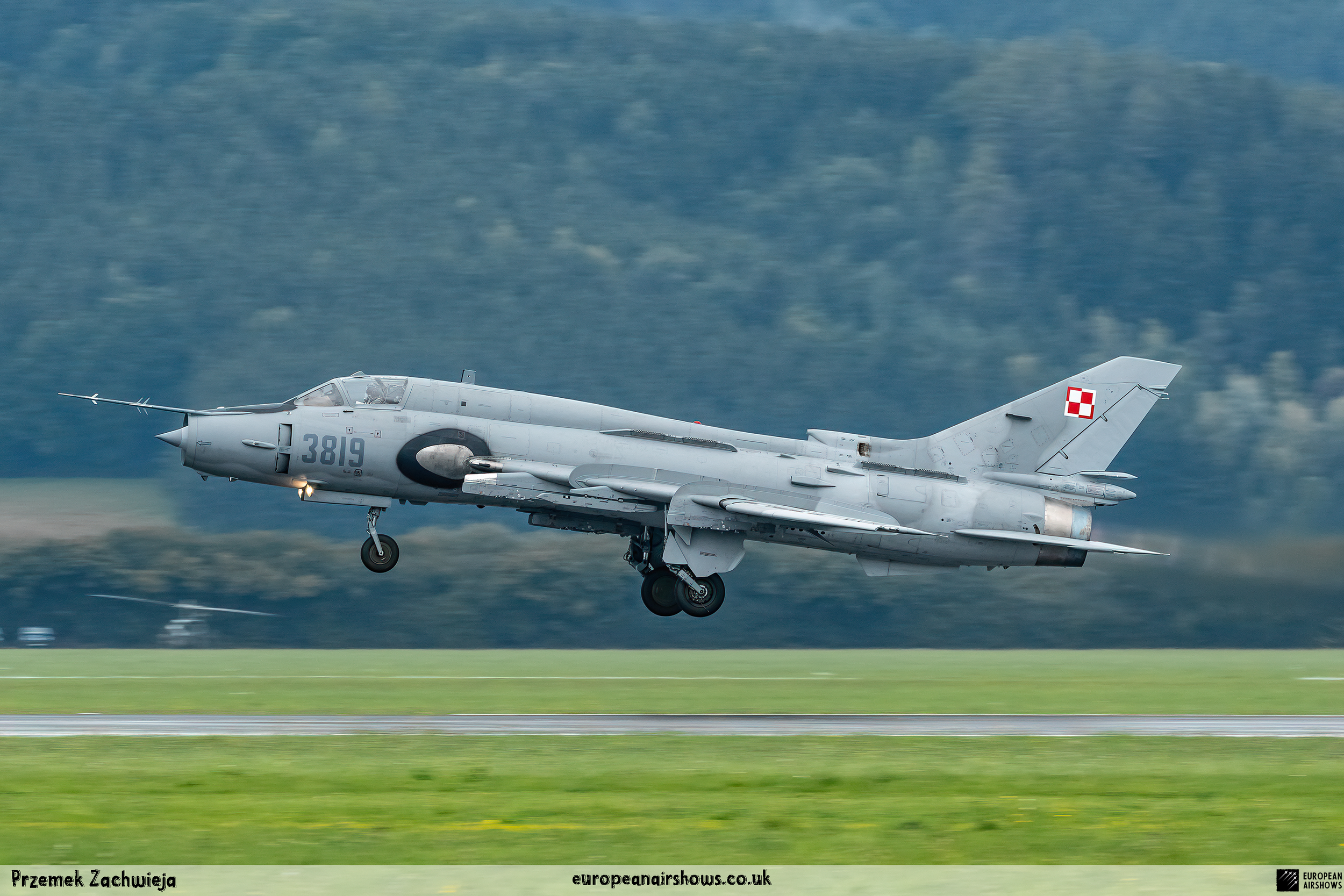
Passes at different sweep settings made the aircraft's defining feature visible: the outer wing panels could move between low-speed and high-speed positions while the inboard wing remained fixed.
Role-demonstration geometry
Curving approaches, low-level runs, breaks and rejoins evoked strike ingress and attack procedures without pretending to reproduce a full operational weapons profile inside an airshow box.
Separated solo elements
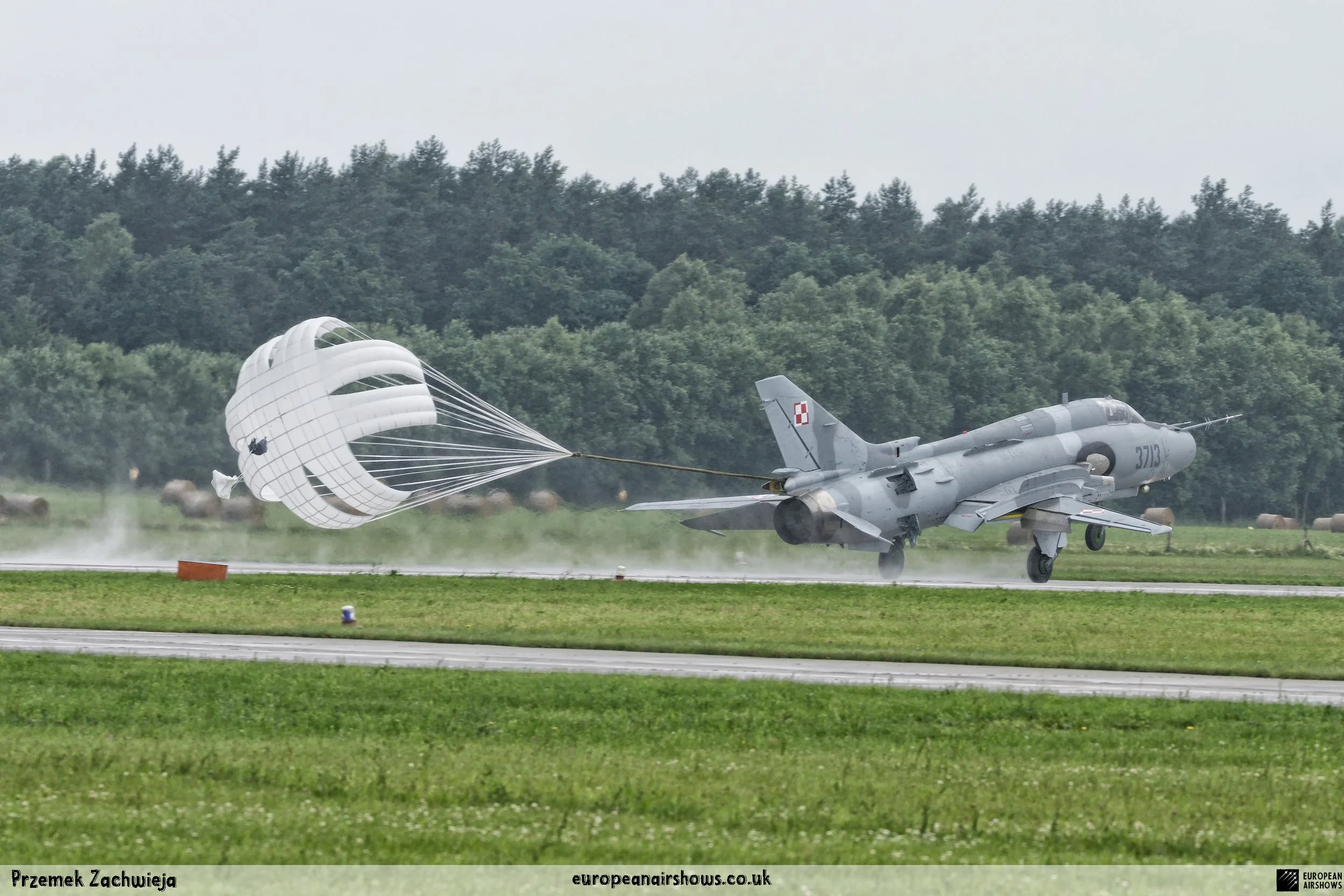
Once split, each aircraft could occupy the display line with swept-wing high-speed passes, slower landing-configuration presentations and climbing turns before the formation was rebuilt.
Afterburner and exhaust
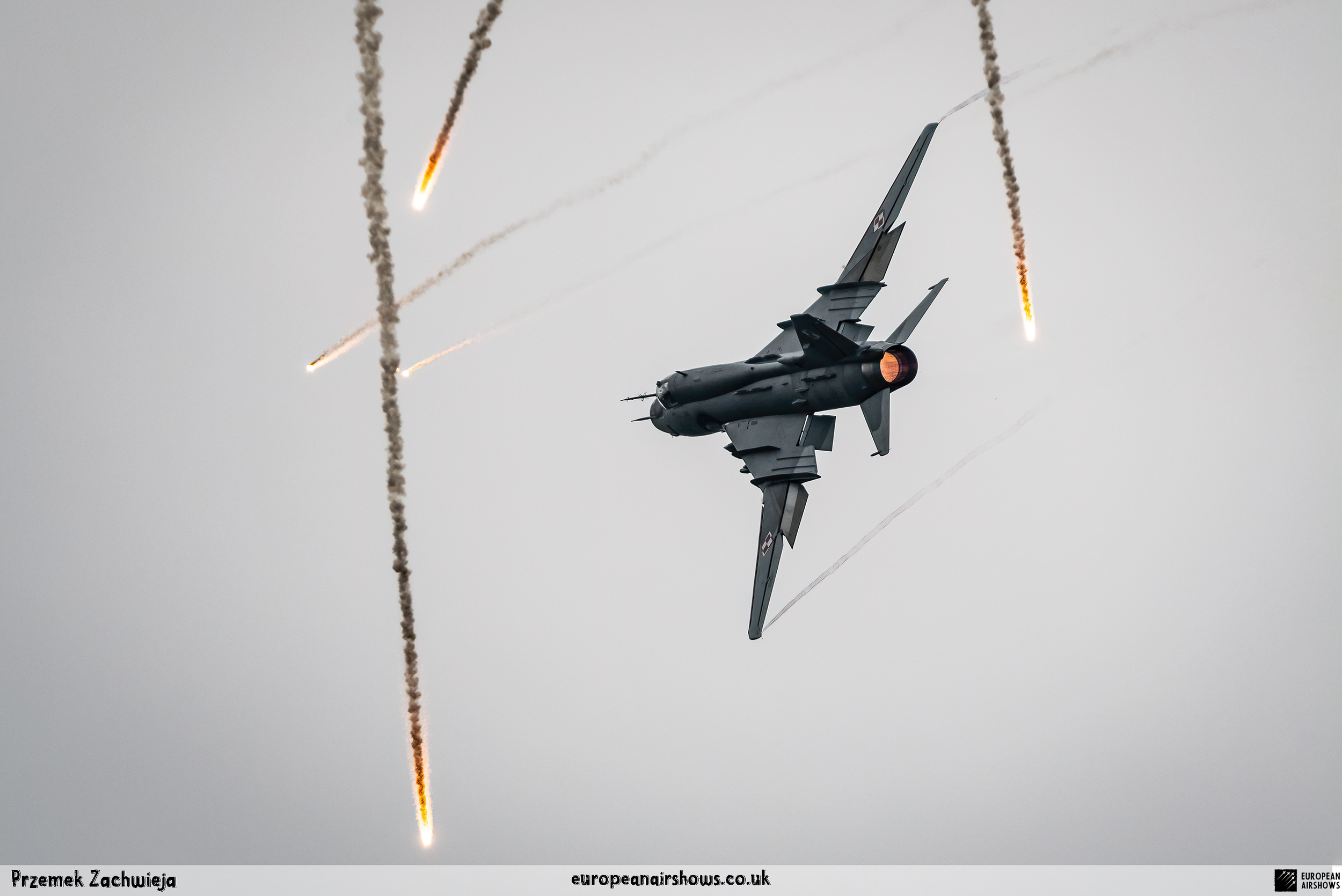
The AL-21F-3's afterburner and naturally dark exhaust gave the display its signature sound and smoke. This was engine exhaust, not a coloured aerobatic smoke system.
Event-specific effects
Countermeasures, pyrotechnics and special attack demonstrations appeared at selected later Su-22 events, but they were not universal features of the original two-ship programme and should be described separately.
The aircraft
Sukhoi Su-22: the final export branch of the swing-wing Su-17 family.
From the fixed-wing Su-7 to the variable-geometry Su-17
The Su-22's lineage began with Sukhoi's Su-7 fighter-bomber. Its high landing speed and limited field performance encouraged development of a variable-geometry derivative. On the Su-17 family only the outer wing panels moved, retaining much of the original centre section while providing a broader operating envelope. Export developments were sold under the Su-20 and Su-22 names.
Su-22M4: the mature single-seat strike variant
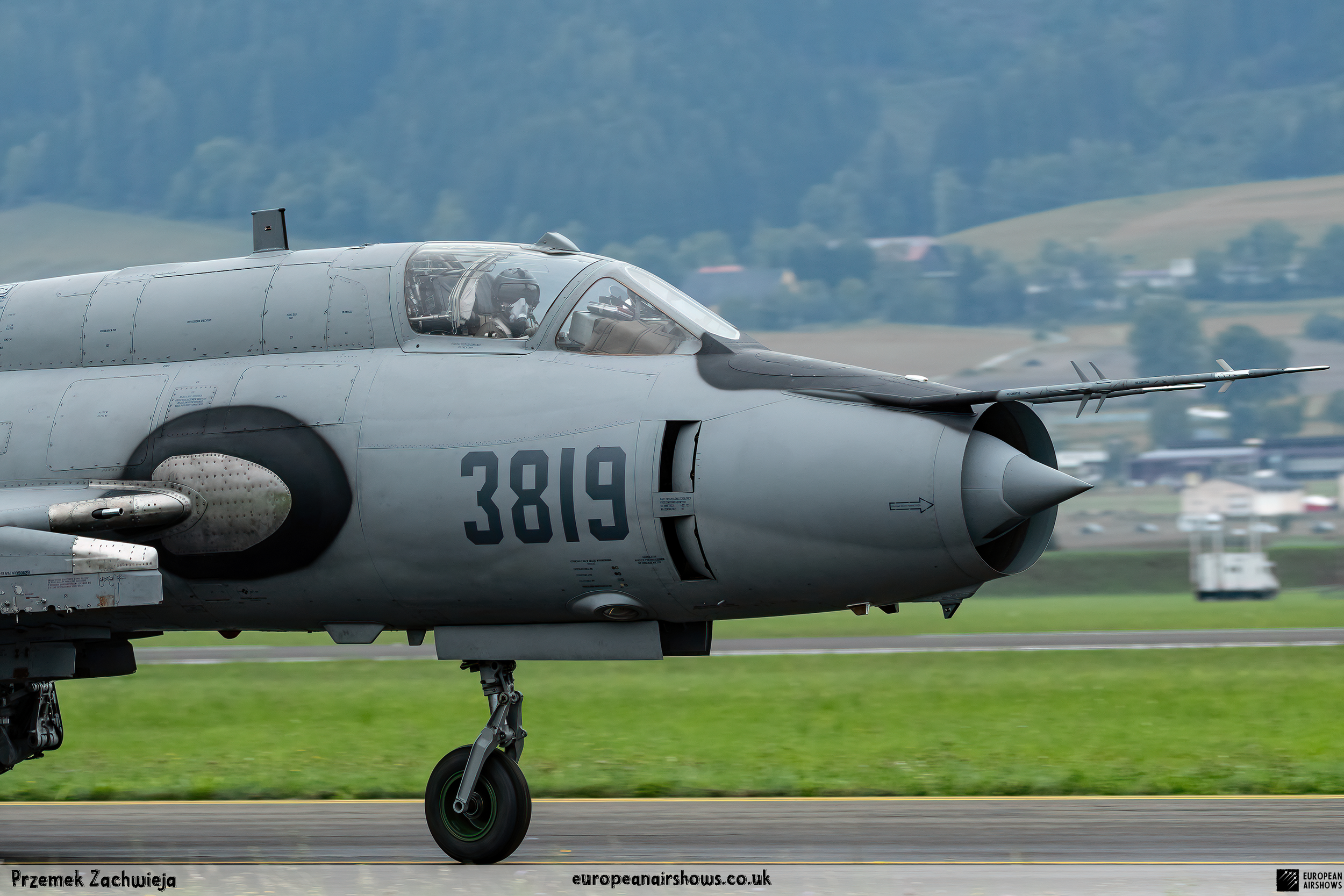
The Su-22M4 was the most developed production version used by Poland. Its PrNK-54 navigation and attack system, Orbita computer and Klon laser station supported navigation, bombing and laser-guided weapon employment. The single-seat aircraft retained two 30 mm NR-30 cannons and could carry bombs, rockets, air-to-surface missiles, short-range air-to-air missiles and specialised reconnaissance or electronic-warfare pods.
Su-22UM3K: training without abandoning the combat role
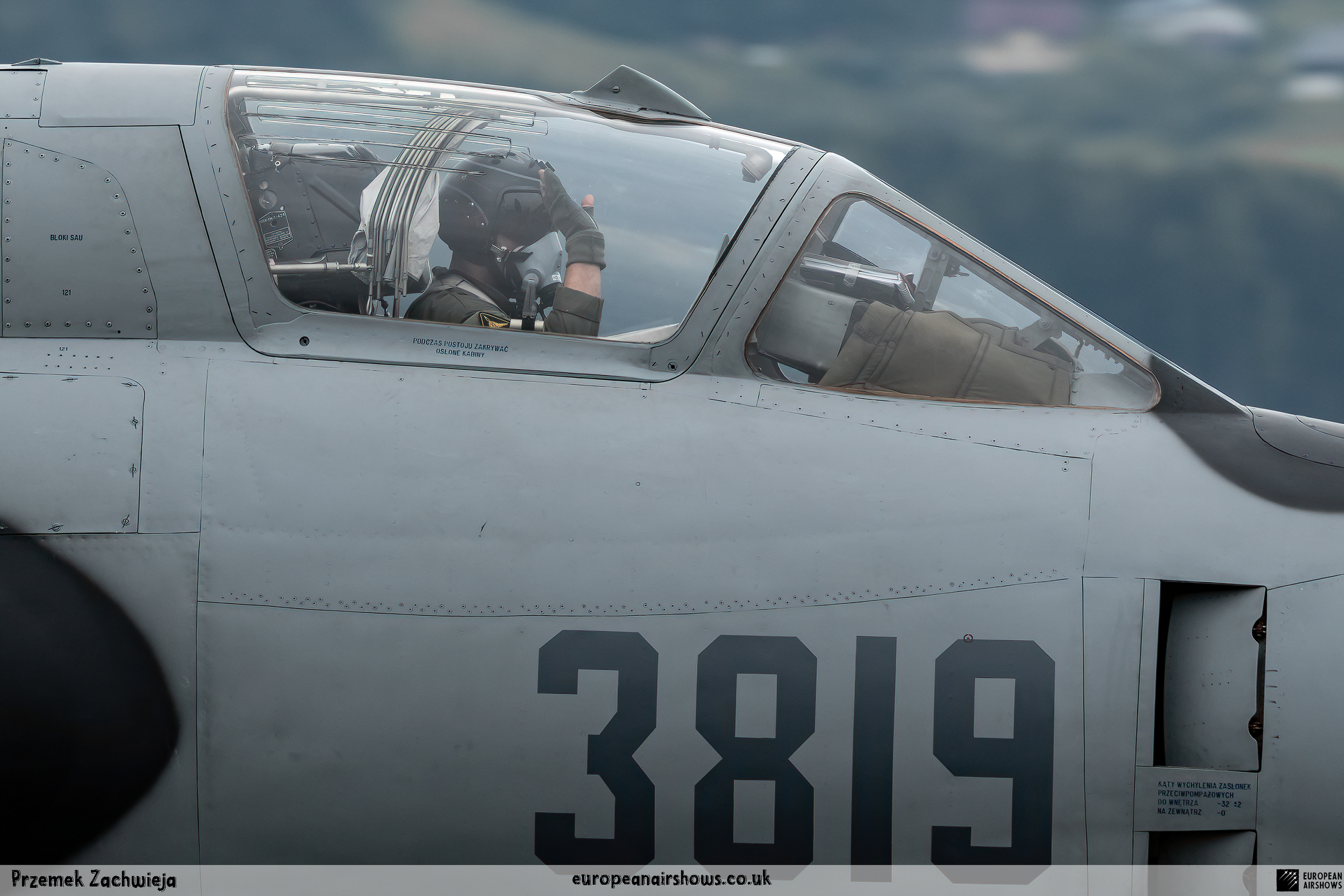
The Su-22UM3K placed two crew members in tandem beneath an extended canopy and was essential for conversion, instruction and continuation training. It remained combat-capable, but the second cockpit required changes to fuel, systems and internal armament; the Polish Aviation Museum lists one NR-30 cannon for the trainer rather than the M4's pair. Its presence gave the display team greater flexibility for training and operational demonstration work.
Poland's 110-aircraft Fitter force
Poland received 90 Su-22M4s and 20 Su-22UM3Ks from 1984, distributing them among several fighter-bomber and bomber-reconnaissance regiments. After successive reorganisations and fleet reductions, the surviving aircraft were concentrated at Świdwin. A life-extension programme kept a smaller group flying without turning the Su-22 into a fundamentally modernised combat aircraft.
Why it remained compelling at an airshow
The Su-22 was large, manually demanding and visually mechanical. Wing movement, the shock of afterburner selection, black exhaust and the contrast between swept high-speed passes and wide-wing low-speed flight were easy to read from the ground. The display did not need elaborate choreography to communicate the aircraft's Cold War strike character.
The story so far
From operational Fitter force to an award-winning display and final farewell.
1984
Su-22 deliveries begin
Poland receives its first Su-22M4 and Su-22UM3K aircraft. Ninety single-seaters and twenty trainers eventually equip units at Piła, Świdwin, Powidz and Mirosławiec, replacing older Su-7 and Su-20-era capabilities with a more advanced strike and reconnaissance platform.
2000s
Operations concentrate at Świdwin
Post-Cold War restructuring reduces the number of Su-22 units. Surviving aircraft and expertise become increasingly concentrated at 21st Tactical Air Base, making Świdwin the natural home for a national display project.
2011
Sukhoi Display Team created
Colonel Ireneusz Starzyński initiates a formal team at 21st Tactical Air Base. After display documentation is prepared and approved by Air Force Command, selected pilots begin theoretical and practical preparation for public demonstrations in Poland and abroad.
2013
Radom and the national circuit
The pair appears at Radom Air Show and becomes established at Polish base celebrations and aviation events. Later Radom appearances follow in 2015 and 2017, alongside visits to Mirosławiec, Mińsk Mazowiecki, Krzesiny, Cewice, Dęblin and the team's home-base celebrations.
2014
RIAT's As The Crow Flies Trophy
Major Bartłomiej Mejka and Captain Radosław Leszczyk fly the two-Su-22M4 demonstration at the Royal International Air Tattoo. FRIAT members vote it the best overall flying demonstration, awarding the team the As The Crow Flies Trophy and giving the duo its defining international success.
2014-2016
Major European appearances
The display reaches audiences at AIR14 in Switzerland, Sanicole in Belgium and other international events. In 2016 it performs over the Baltic during Kołobrzeg's city celebrations—the team's first documented maritime display.
2017-2019
The final regular duo period
The Sukhoi team remains visible at Radom and selected European events. By 2019 programmes could alternate between the familiar two-ship tactical display and a single-aircraft presentation, reflecting fleet availability and the growing difficulty of sustaining a dedicated pair.
2020-2024
Su-22 flying continues without the regular team
The two-ship team no longer maintains a normal international season, but individual Fitters continue operational training, exercises, flypasts, static displays and occasional special demonstrations. Radom 2023 includes a solo night-show attack presentation using photographic flash cartridges.
2025
Farewell displays and final service flights
Radom presents a dedicated Su-22 farewell sequence with pyrotechnics. On 10 September three aircraft fly over Powidz, Piła, Świdwin and Mirosławiec, followed on 11 September by the final flight and official retirement ceremony. Polish Su-22 service ends after 41 years.
Identity & legacy
A short-lived team that became the public face of Poland's final Fitter unit.
Sukhoi Display Team or Su-22 Display Team?
Polish historical sources identify the unit as the Sukhoi Display Team. International airshow programmes and media commonly used Su-22 Display Team, Su-22 duo or Polish Fitter display. They describe the same Świdwin demonstration rather than separate teams.
The team and the aircraft's farewell are different chapters
The dedicated pair belonged principally to the 2010s. The Su-22 itself remained operational until September 2025 and continued appearing in public through solos, flypasts, static displays and specially organised farewell sequences. Keeping those phases separate prevents every late Su-22 appearance from being mislabelled as a team display.