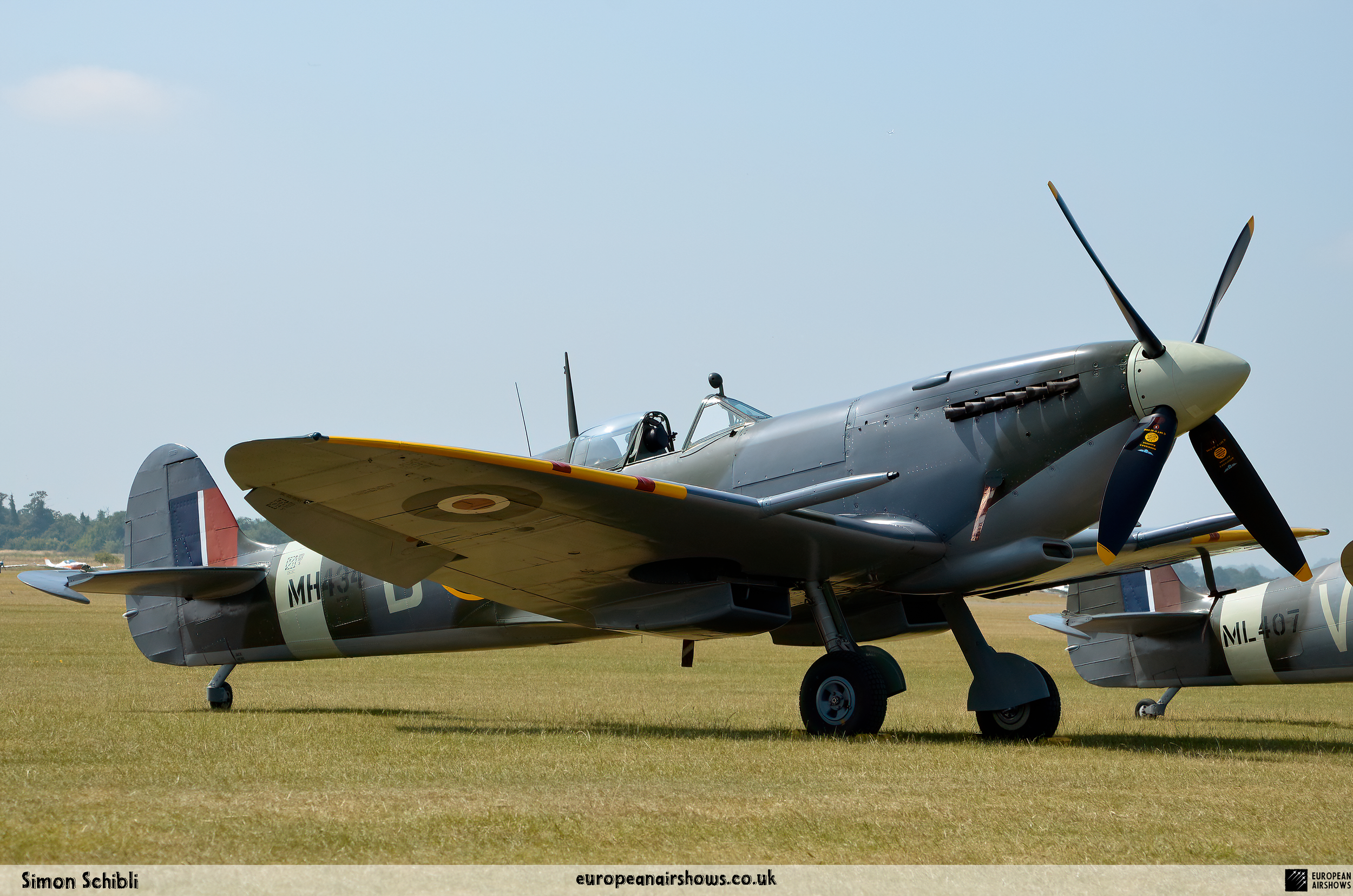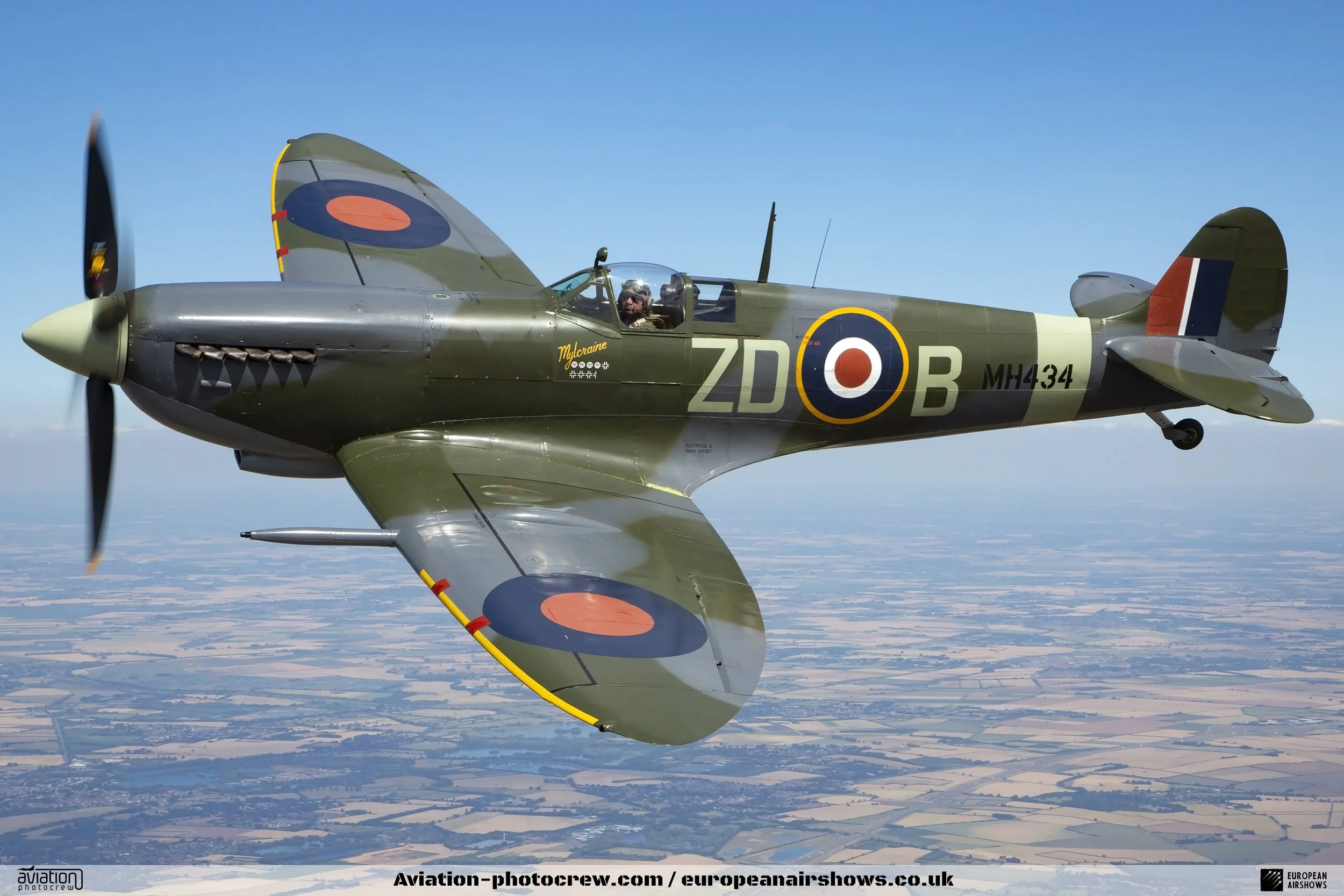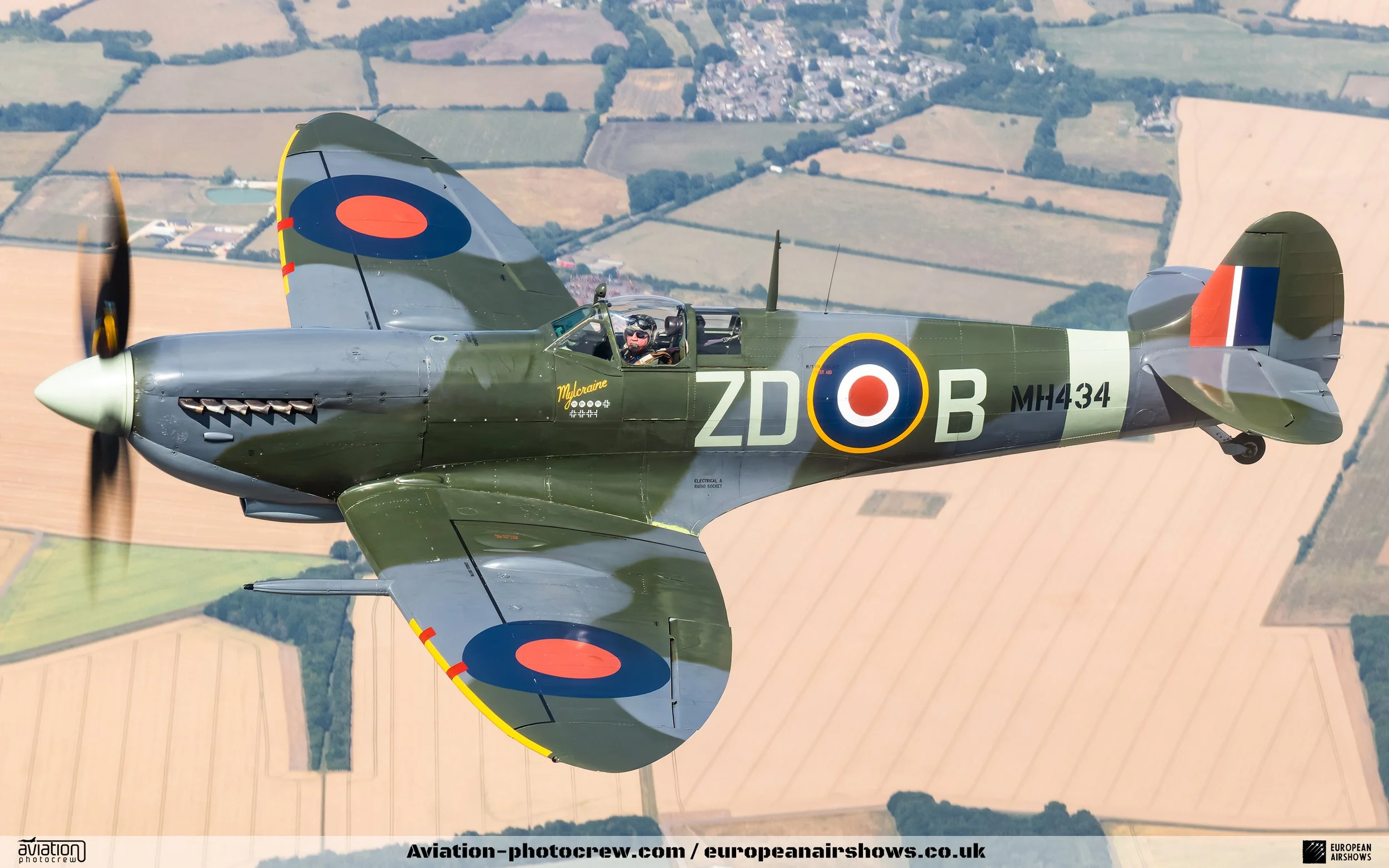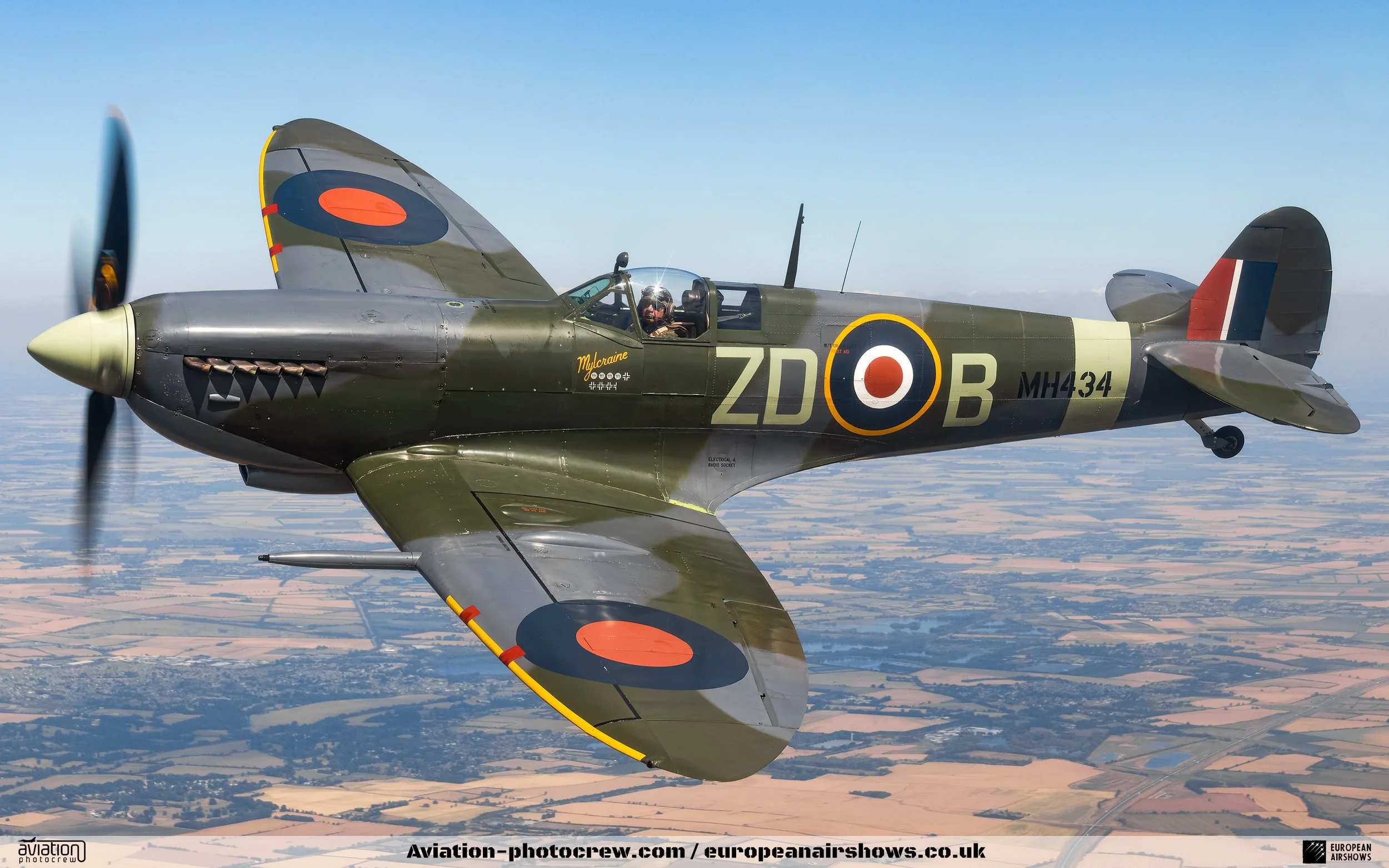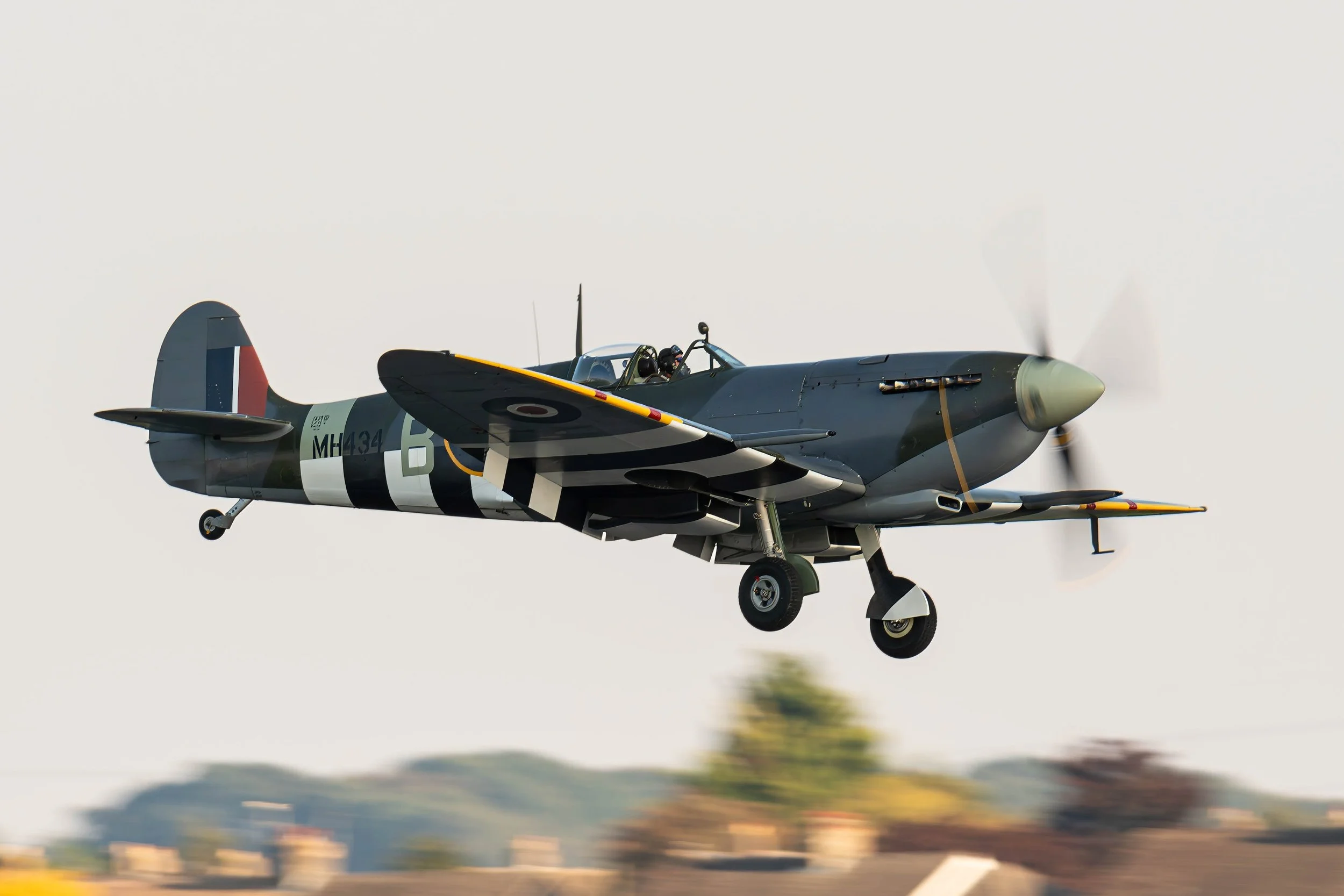
Supermarine Spitfire Mk.IX G-ASJV

Supermarine Spitfire Mk.IX G-ASJV

About the Spitfire

The Supermarine Spitfire first took to the air in the mid‑1930s and quickly became an icon of British aviation. Designed by Reginald Mitchell for the Royal Air Force, its distinctive elliptical wing and innovative stressed‑skin construction enabled exceptional speed and maneuverability. From early prototypes to successive “marks” that introduced improved armament, stronger structures, and more powerful Rolls‑Royce Merlin engines (and later Griffon engines), the Spitfire was continuously refined to meet the changing demands of aerial combat during World War II. Its elegant design and high performance made it a symbol of determination and hope during Britain’s darkest hours.

Throughout its operational history, the Spitfire evolved from a sleek, single‑seat interceptor into a multifaceted workhorse. Early versions faced significant production challenges with rapid modifications—ranging from upgrades in cockpit design to re‑armament changes driven by combat experience. The aircraft played a decisive role in the Battle of Britain and later proved adaptable as a fighter‑bomber, a high‑altitude interceptor, and even as a carrier‑based fighter (in the Seafire variant). By the end of the war, more than 20,000 Spitfires of various marks had been built, a testament to its versatility and the industry-wide efforts that supported its production.

Even as World War II drew to a close, the Spitfire’s development continued with further modifications to improve high‑altitude performance, extend range with increased fuel capacity, and enhance pilot visibility. The transition from Merlin to Griffon engines ushered in a new era of performance that allowed the aircraft to remain competitive against evolving enemy designs. Long celebrated after the war as a masterpiece of aeronautical engineering, the Spitfire is now an enduring symbol of British ingenuity, frequently appearing in museums and airshows, where it continues to captivate aviation enthusiasts around the world.

Specifications

Crew

1

Length

31 ft 1 in (9.47 m)

Wingspan

36 ft 10 in (11 m)

Height

12 ft 7 in (3.8 m)

Max Speed

404 mph (650 km/h, 350 kn)

Range

433 mi (698 km, 376 nmi)

Service Ceiling

42,500 ft (12,954 m)

Rate of climb

4,700 ft/min (23 m/s)

Mk.IX Variant

The Spitfire Mark IX was developed in the early months of 1942 as a high‐performance interim solution to counter the formidable Focke-Wulf Fw 190, which had outclassed earlier Spitfire models. In response to operational reports highlighting the Fw 190’s superior high-altitude performance, the Royal Air Force urgently required an upgraded fighter without having to wait for an entirely new design. The answer came in the form of an extensive conversion programme in which existing Mk Vc airframes were modified to accept a more powerful, two‐stage supercharged Merlin engine.

One of the first Mk IX aircraft was a modified Mk Vc (designated AB505) that underwent flight trials in April 1942. The new engine – initially the Merlin 61 and later developed into variants such as the Merlin 63 and the Merlin 66 for low‐altitude work – delivered what many pilots later described as a “quantum leap” in performance. With a revised power plant, the Mk IX was able to climb faster, maintain higher speeds at altitude, and offer improved manoeuvrability compared to its predecessors. Its airframe was adapted to accommodate the increased output of the Merlin engine, and production models typically featured the “universal” Type C wing with distinctive double cannon blisters over the inner gun bays.

The variant was produced both as a conversion and as a new-build aircraft. Early Mk IXs were sometimes converted from Mk Vc airframes; they were easily identified by features such as the large cannon blisters and identification lights on the fuselage behind the aerial mast. Later production models – commonly referred to as the Spitfire Mk IXb for low-altitude (LF) versions – were built with clipped wingtips to enhance roll rate and low-level performance. There was also a high-altitude version (HF Mk IX) powered by the high-performance Merlin 70 engine, which enabled the aircraft to maintain competitiveness even in the thin air at high altitudes.

Over 5,600 Mk IXs were built, making it one of the most numerous and versatile Spitfire variants. It not only served as an effective fighter against German aircraft throughout the European theatre of operations but also found adaptations as a fighter-reconnaissance (PR) and even a fighter-bomber. The PR versions were extensively modified to carry vertical or oblique cameras in lieu of armament and played an important role in gathering intelligence through photo-reconnaissance missions.

Pilots and ground crews alike came to appreciate the Mk IX for its relative ease of handling compared to earlier marks, as well as its dramatic improvement in performance. Its ability to operate at multiple altitudes and its adaptability for several combat roles ensured that the Spitfire Mk IX became a mainstay of RAF Fighter Command from mid-1942 until the later stages of the war, when the newer Griffon-engined variants gradually superseded it.

Did You Know?

  • The destruction of Supermarine’s Itchen and Woolston factories by enemy bombing led to production being shifted to numerous “shadow factories”—with Castle Bromwich becoming the main hub for Spitfire manufacturing.
  • Early Spitfires were famous for their elegant, elliptical wing design, chosen not only for its low induced drag but also for its aesthetic appeal—a design feature that helped to capture the public’s imagination.
  • The Spitfire Mk IX was actually developed as a “stopgap” measure in response to the Focke‐Wulf Fw 190 threat and was produced from converted Mk Vc airframes before later high‐altitude models appeared.
  • Some Spitfire variants were adapted for photo reconnaissance. For example, the PR Mk XIX became the definitive reconnaissance version with increased fuel capacity and specialized camera installations.
  • Engine changes sometimes required more than simply swapping powerplants—the installation of the Griffon engine, for instance, necessitated modifications to the cowling, tail, and undercarriage to cope with its different thrust line and increased weight.

Test Your Knowledge

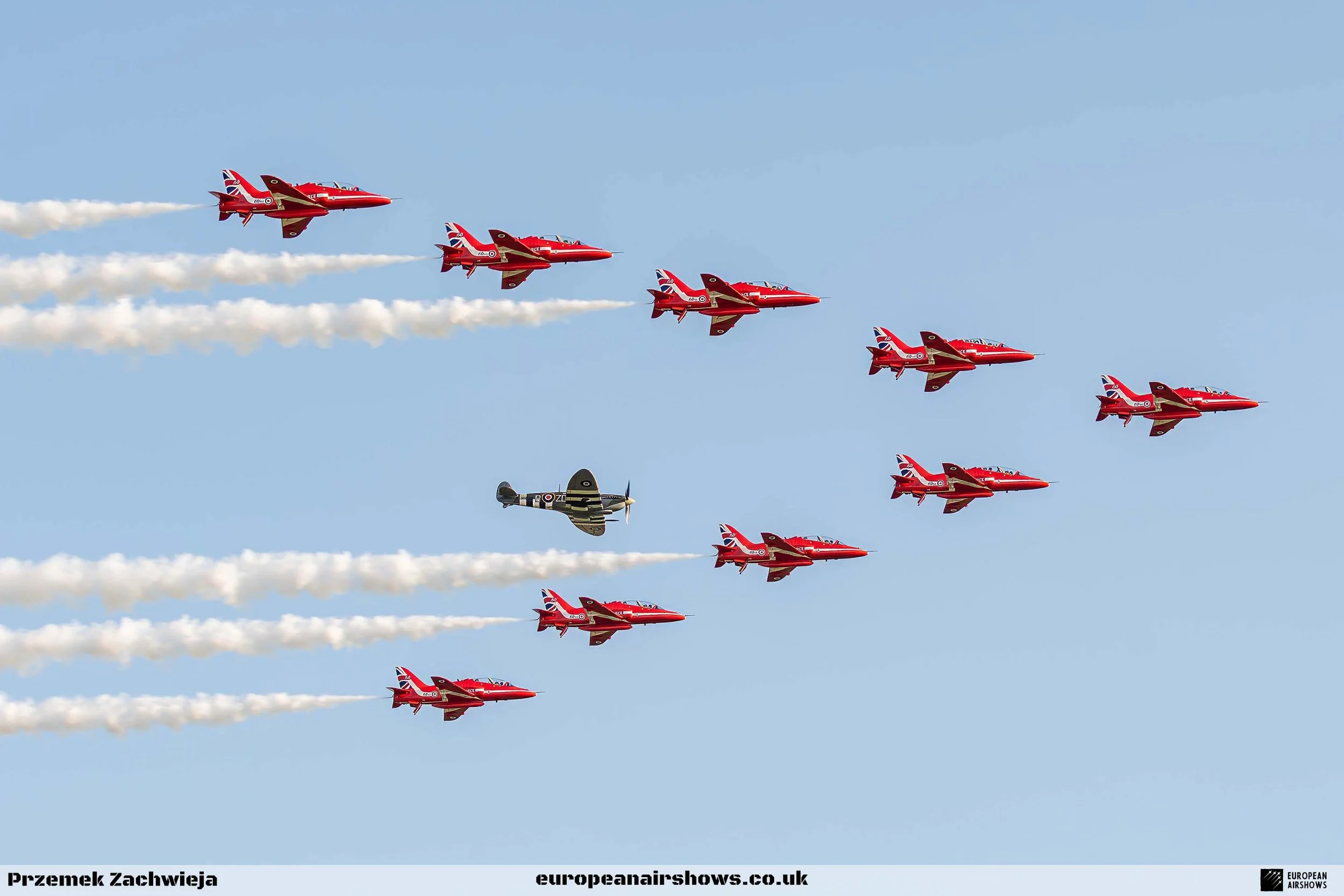
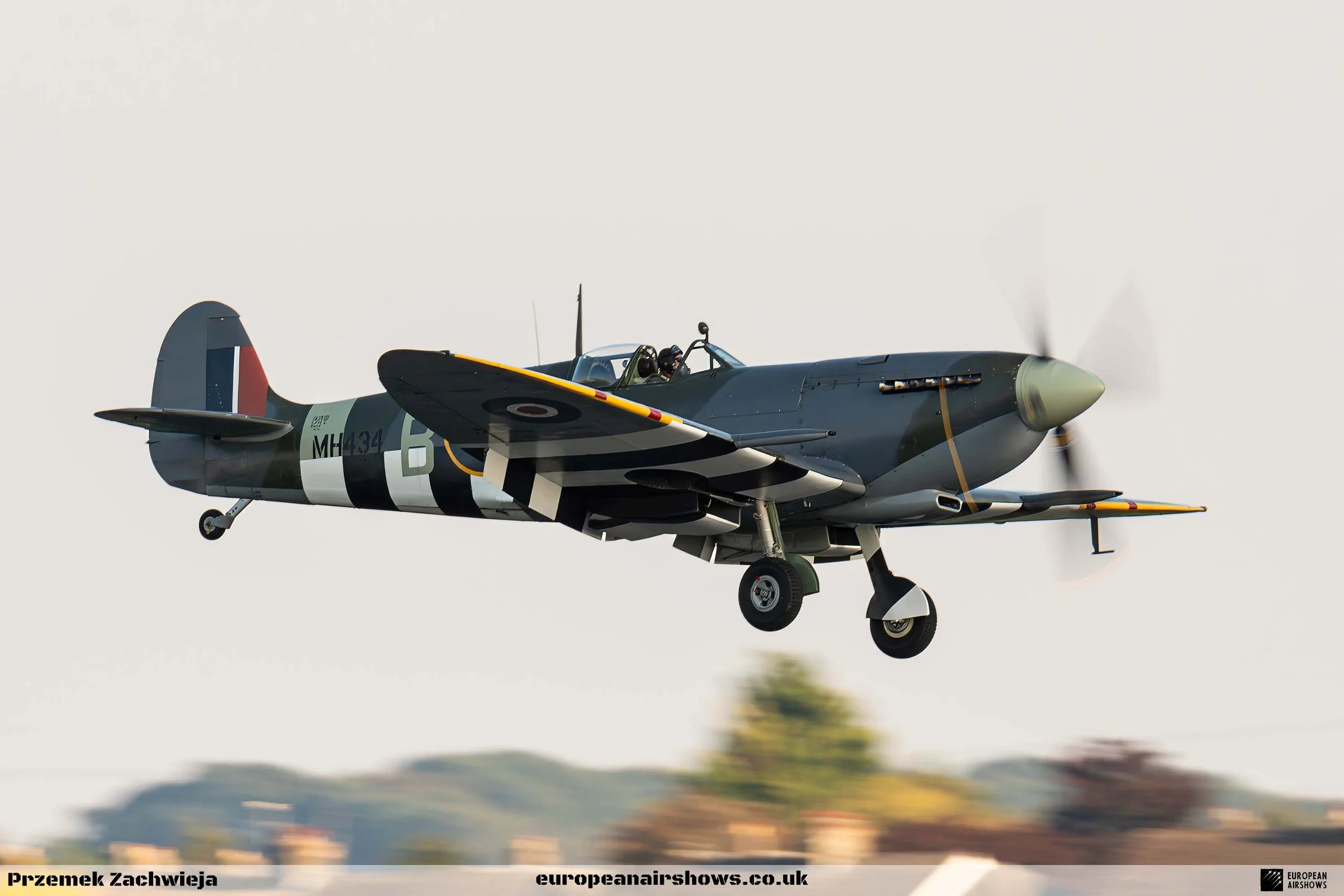
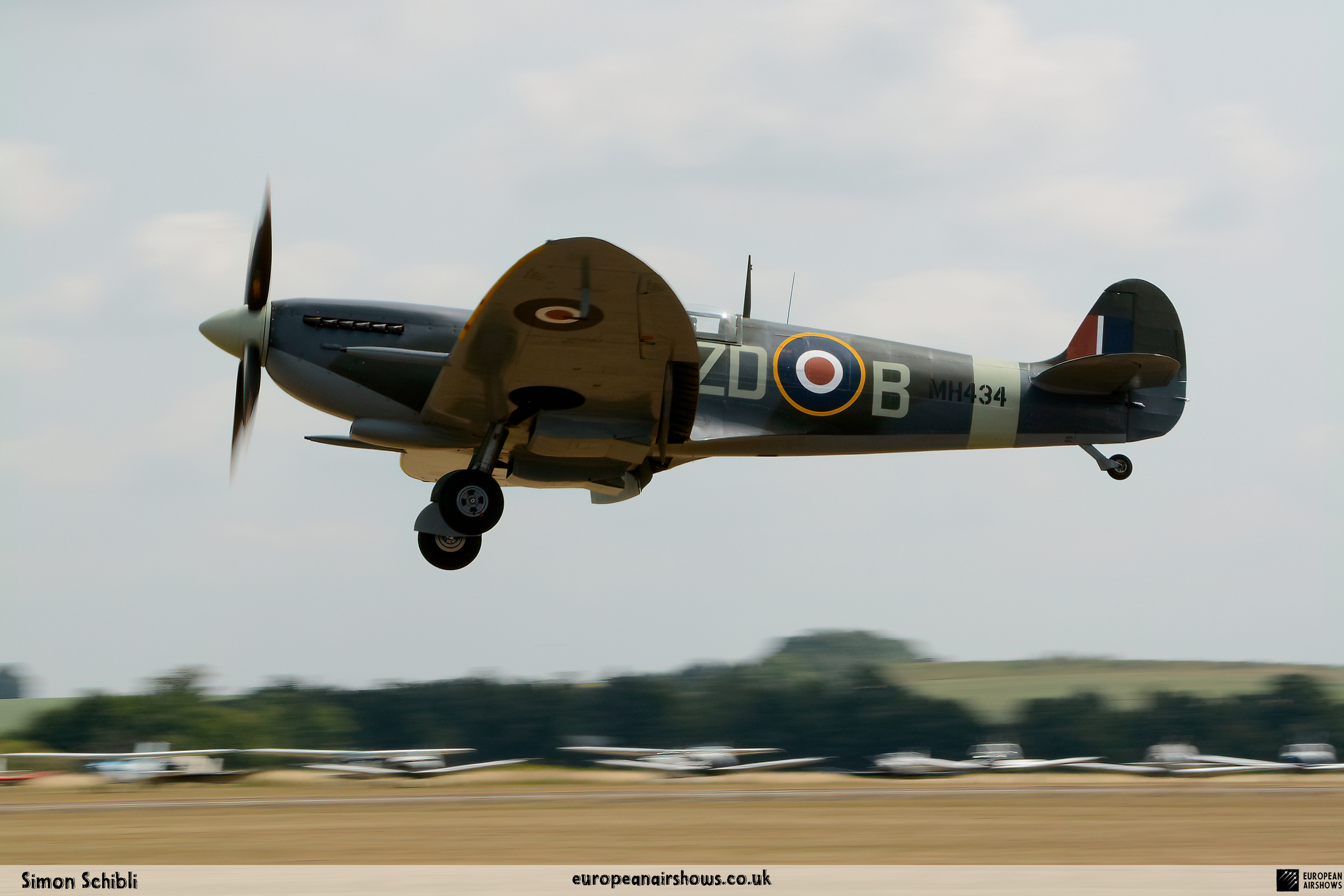
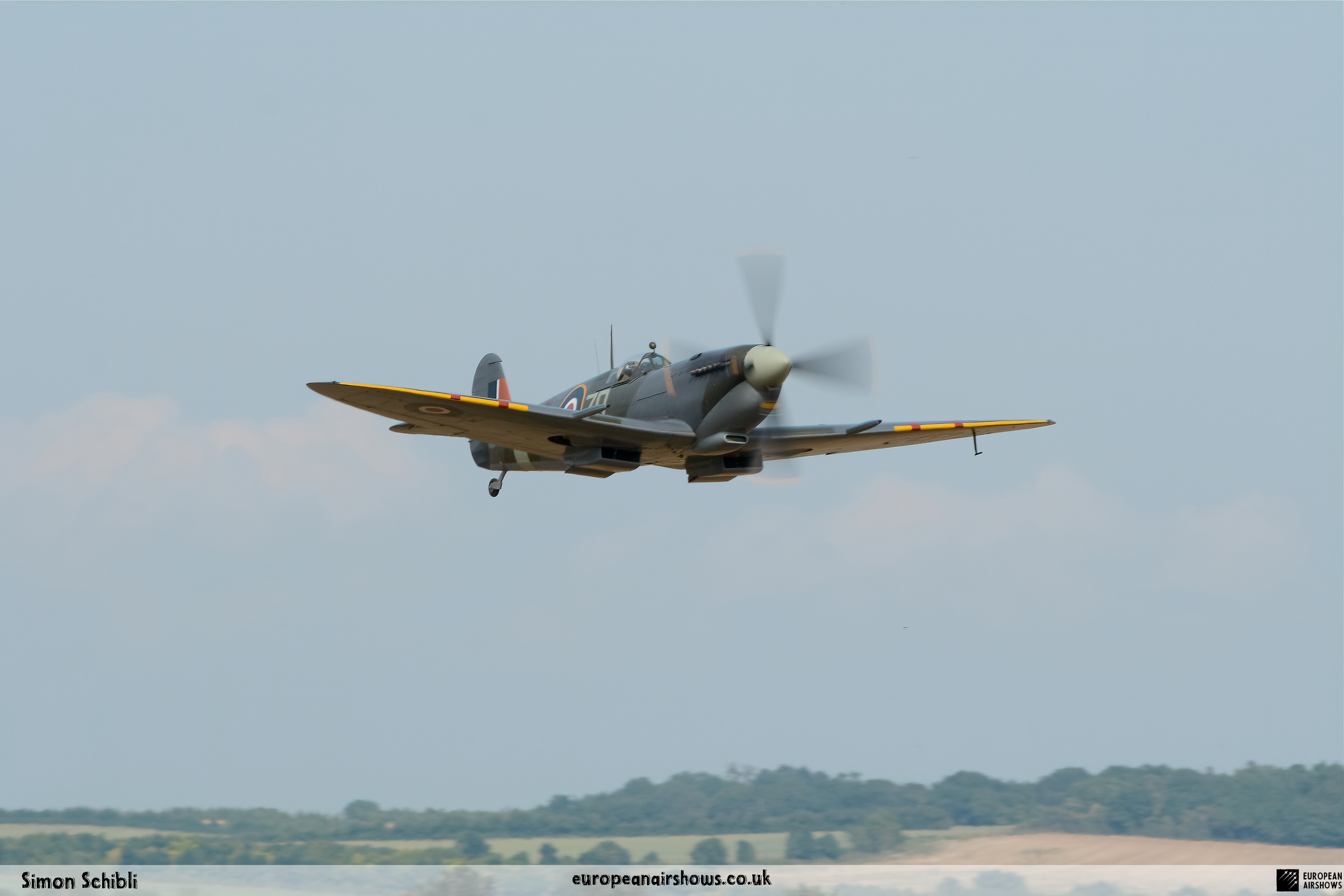
Spitfire Mk.IX G-ASJV

MH434 is a classic Supermarine Spitfire with a storied past, having been built in 1943 at Vickers’ Castle Bromwich facility during World War II. Remarkably, the aircraft has never undergone a major rebuild, preserving its original character and adding to its historical cachet. Its inaugural flight took place in early August 1943 and was flown by none other than Alex Henshaw, the legendary test pilot whose pre-war achievements and role as Supermarine’s Chief Test Pilot were already firmly established.

Almost immediately after its first flight, MH434 entered combat action. In August 1943, the Spitfire was assigned to 222 Squadron and allocated to South African pilot Flight Lieutenant Henry Lardner-Burke, an ace with seven and a half kills and three damaged enemy aircraft to his name. On 27 August, while escorting USAAF B-17 bombers over France in the St Omar area, Lardner-Burke shot down a Focke-Wulf FW-190 and damaged a second during a mission. The aircraft continued to prove its mettle with further successes on 5 September, when it claimed another FW-190, and on 8 September when it shared credit for downing a Messerschmitt Bf-109G over Northern France.

In 1944, MH434 experienced a brief transfer to 350 Squadron at Hornchurch before returning to 222 Squadron. Under the command of Flight Sergeant Alfred “Bill” Burge, the aircraft flew 12 additional operational sorties. As the squadron’s new modified Mark IX variants—capable of carrying rockets—were introduced, MH434 went on to complete more than 80 sorties before being finally stood down in March 1945.

After the war, the Spitfire’s journey continued internationally. In 1947, the Royal Netherlands Air Force purchased the aircraft and designated it H-105, assigning it to 322 Squadron where it undertook ground strafing and light bombing missions. It later crash-landed in Semarang, Java, but after spending some time in storage and undergoing repairs, MH434 took to the skies once more in Holland on 10 March 1953. Its next phase came under the Belgian Air Force, where it served as SM-41 at the Advanced Pilot School in Koksijde and later with 13 Wing at Brustem.

MH434’s story then took a turn toward civilian life and the world of entertainment. On 26 March 1956, airline pilot Tim Davies bought the aircraft and returned it to Britain, re-registering it as G-ASJV. After a full overhaul in Stansted and Elstree, the Spitfire was flown solely for pleasure and even featured in the film Operation Crossbow. In November 1967, the aircraft joined Spitfire Productions Ltd’s collection for their “motion picture airforce” assembled by Group Captain Hamish Mahaddie for the film Battle of Britain. Following the film’s completion in 1968, the venerable aircraft was sold to Sir Adrian Swire, Chairman of Cathay Pacific Airways, who repainted it in a 1944 camouflage scheme adorned with his initials, AC-S, as squadron codes. During this period, MH434 also featured in other notable productions, including A Bridge Too Far.

The Spitfire’s long and varied career reached another milestone in April 1983 when it was auctioned to Ray Hanna of Nalfire Aviation Ltd, an influential figure in aviation preservation. As one of the founding aircraft of the Historic Military Flying Collection (OFMC), MH434 underwent a major rebuild during the winter of 1994–95. Today, the aircraft remains a celebrated figure in the airshow circuit and on the movie screen, while also flying with the authentic 222 Squadron codes, ZD-B, when not in heavy demand for film roles. With its blend of wartime service, international adventure, cinematic stardom, and devoted preservation, MH434 continues to soar as a true icon of aviation history.

Return to All Performers