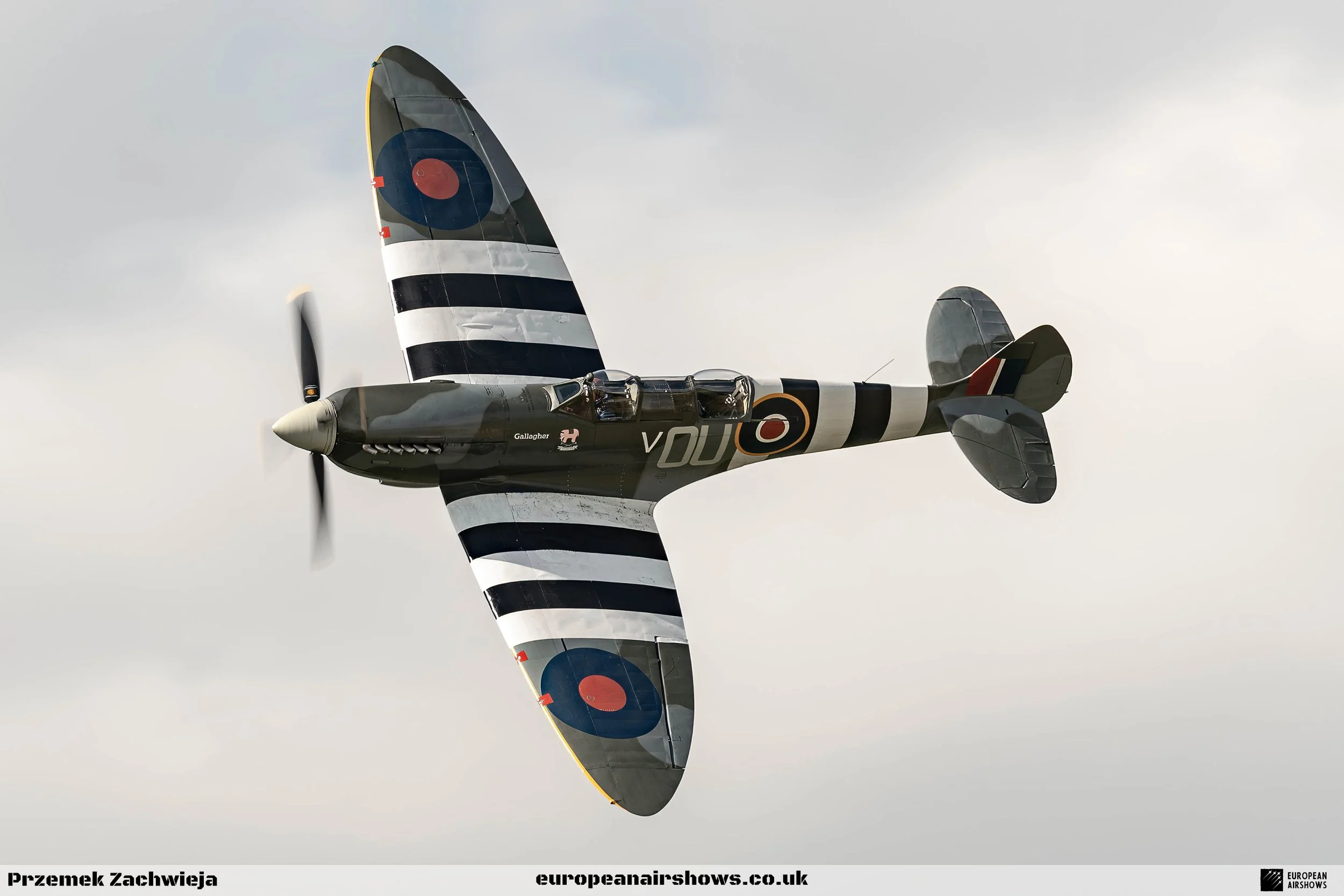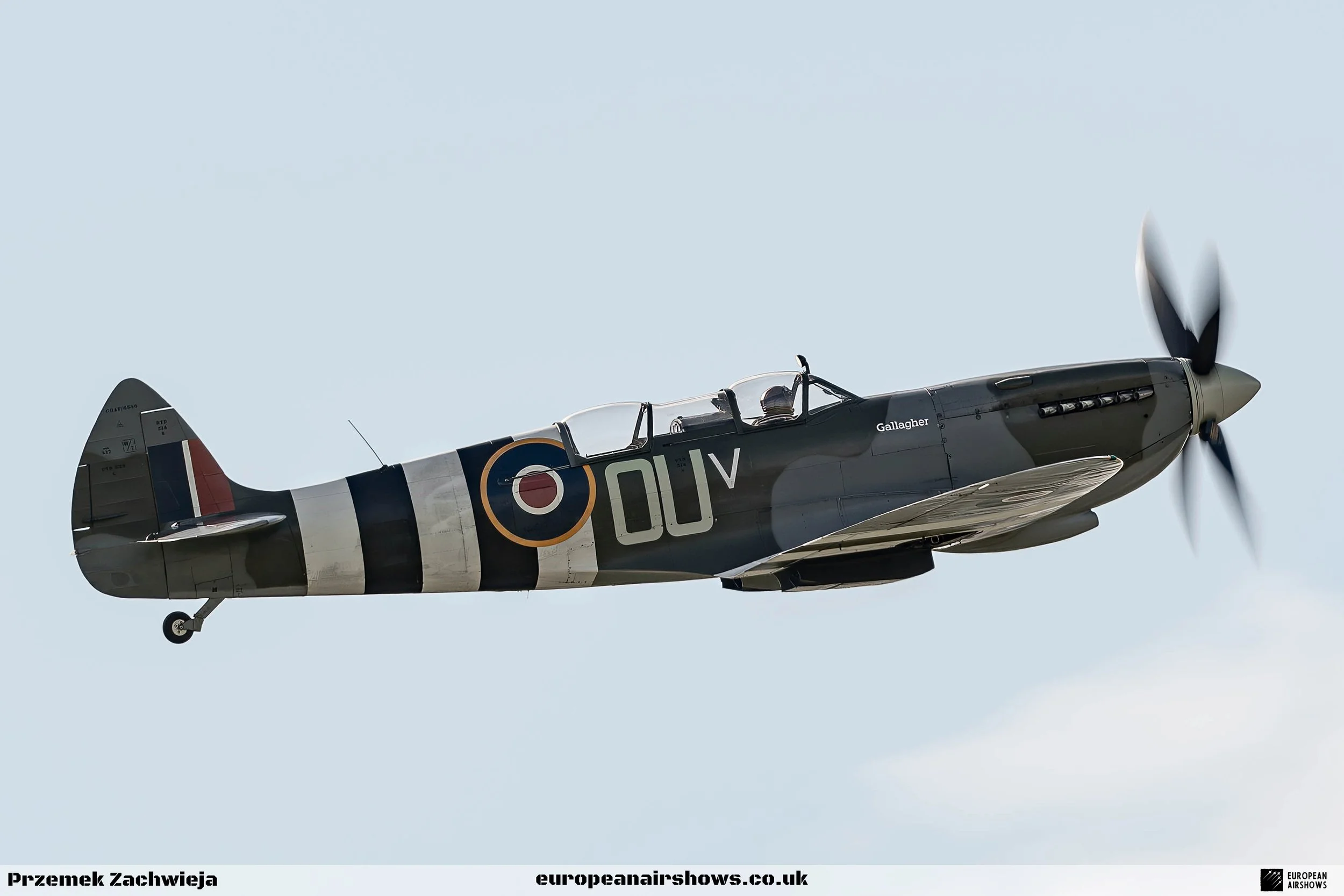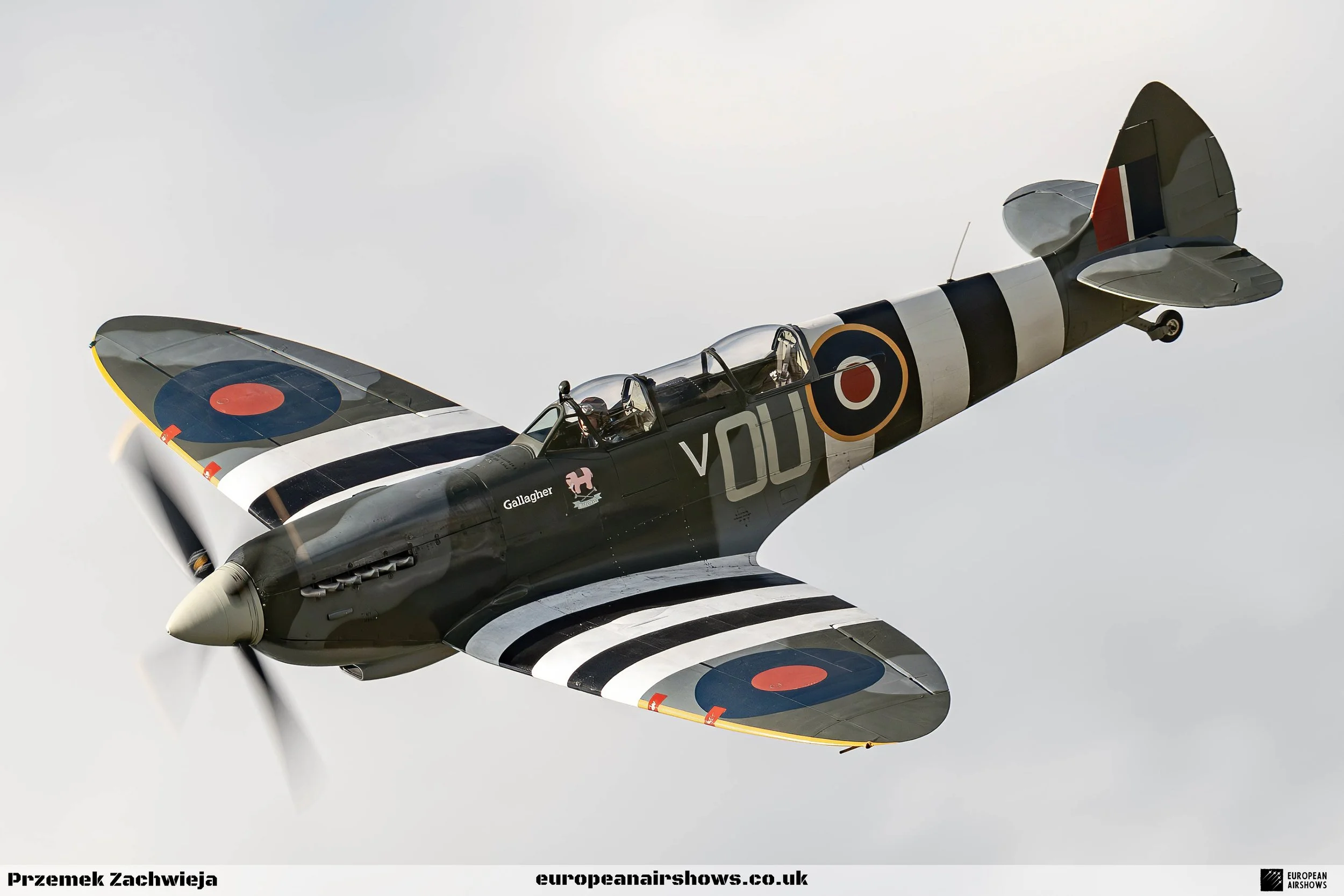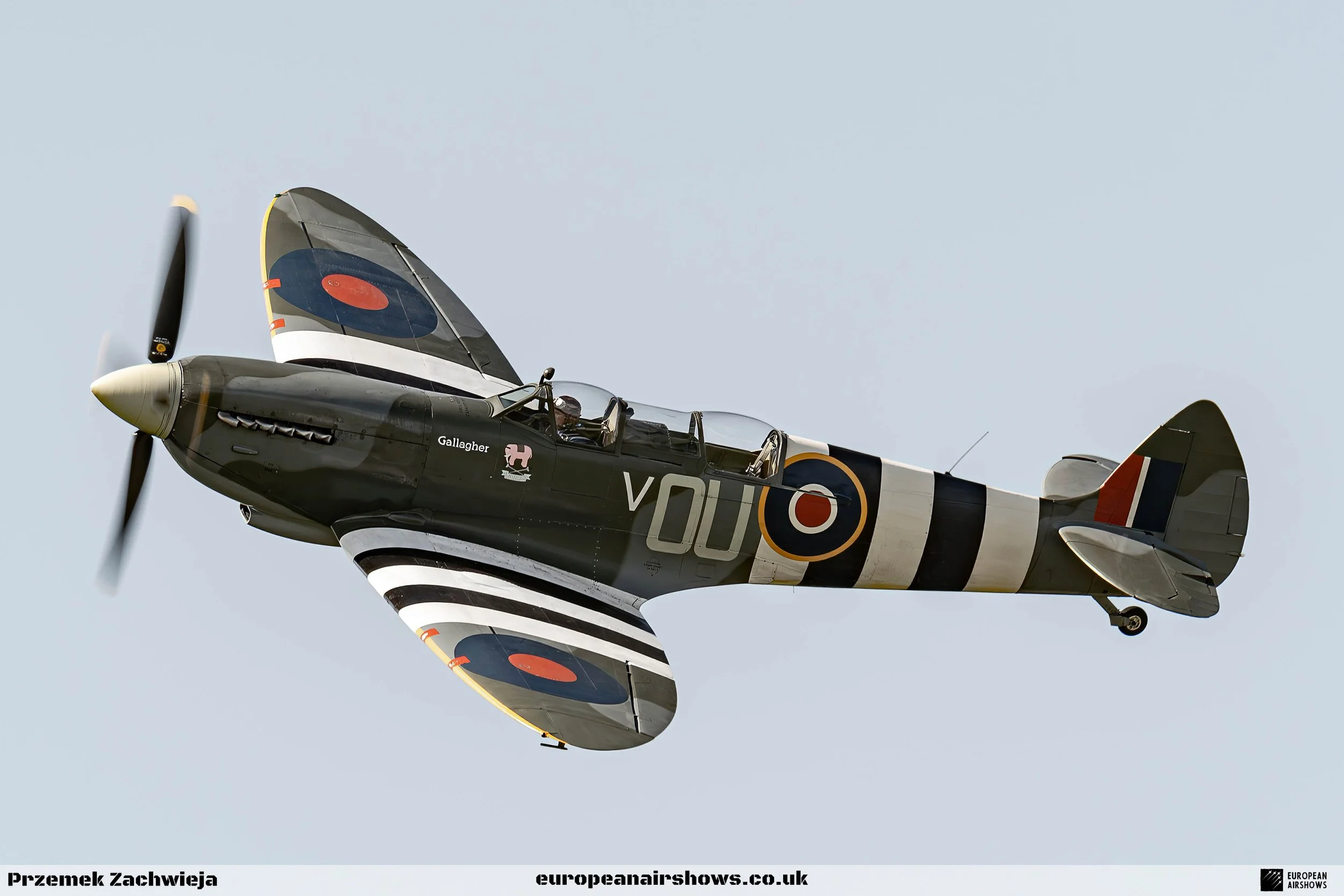
Supermarine Spitfire T.IX G-LFIX

Supermarine Spitfire T.IX G-LFIX

About the Spitfire

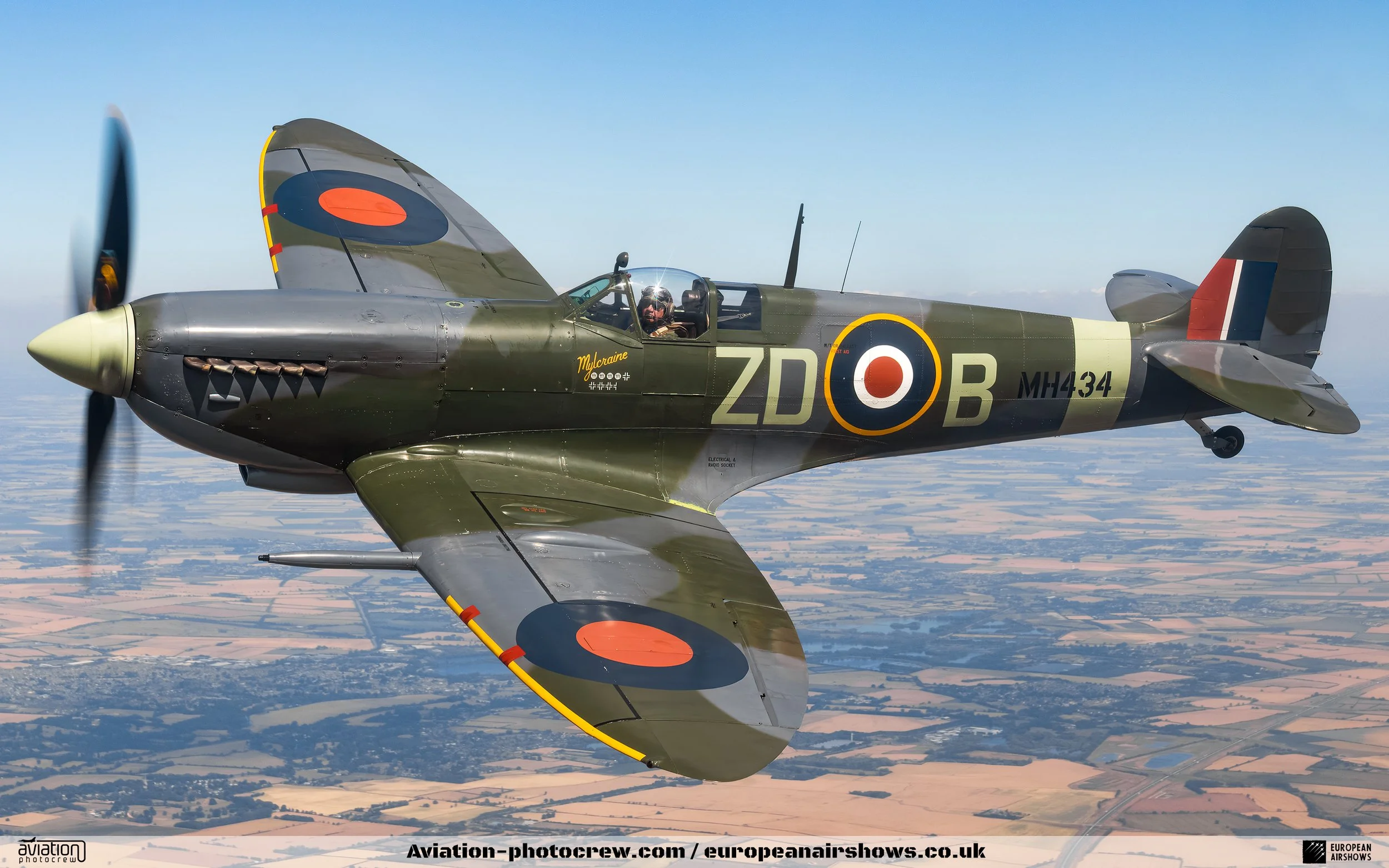
The Supermarine Spitfire first took to the air in the mid‑1930s and quickly became an icon of British aviation. Designed by Reginald Mitchell for the Royal Air Force, its distinctive elliptical wing and innovative stressed‑skin construction enabled exceptional speed and maneuverability. From early prototypes to successive “marks” that introduced improved armament, stronger structures, and more powerful Rolls‑Royce Merlin engines (and later Griffon engines), the Spitfire was continuously refined to meet the changing demands of aerial combat during World War II. Its elegant design and high performance made it a symbol of determination and hope during Britain’s darkest hours.

Throughout its operational history, the Spitfire evolved from a sleek, single‑seat interceptor into a multifaceted workhorse. Early versions faced significant production challenges with rapid modifications—ranging from upgrades in cockpit design to re‑armament changes driven by combat experience. The aircraft played a decisive role in the Battle of Britain and later proved adaptable as a fighter‑bomber, a high‑altitude interceptor, and even as a carrier‑based fighter (in the Seafire variant). By the end of the war, more than 20,000 Spitfires of various marks had been built, a testament to its versatility and the industry-wide efforts that supported its production.

Even as World War II drew to a close, the Spitfire’s development continued with further modifications to improve high‑altitude performance, extend range with increased fuel capacity, and enhance pilot visibility. The transition from Merlin to Griffon engines ushered in a new era of performance that allowed the aircraft to remain competitive against evolving enemy designs. Long celebrated after the war as a masterpiece of aeronautical engineering, the Spitfire is now an enduring symbol of British ingenuity, frequently appearing in museums and airshows, where it continues to captivate aviation enthusiasts around the world.

Specifications

Crew

1

Length

31 ft 1 in (9.47 m)

Wingspan

36 ft 10 in (11 m)

Height

12 ft 7 in (3.8 m)

Max Speed

404 mph (650 km/h, 350 kn)

Range

433 mi (698 km, 376 nmi)

Service Ceiling

42,500 ft (12,954 m)

Rate of climb

4,700 ft/min (23 m/s)

T.IX Variant

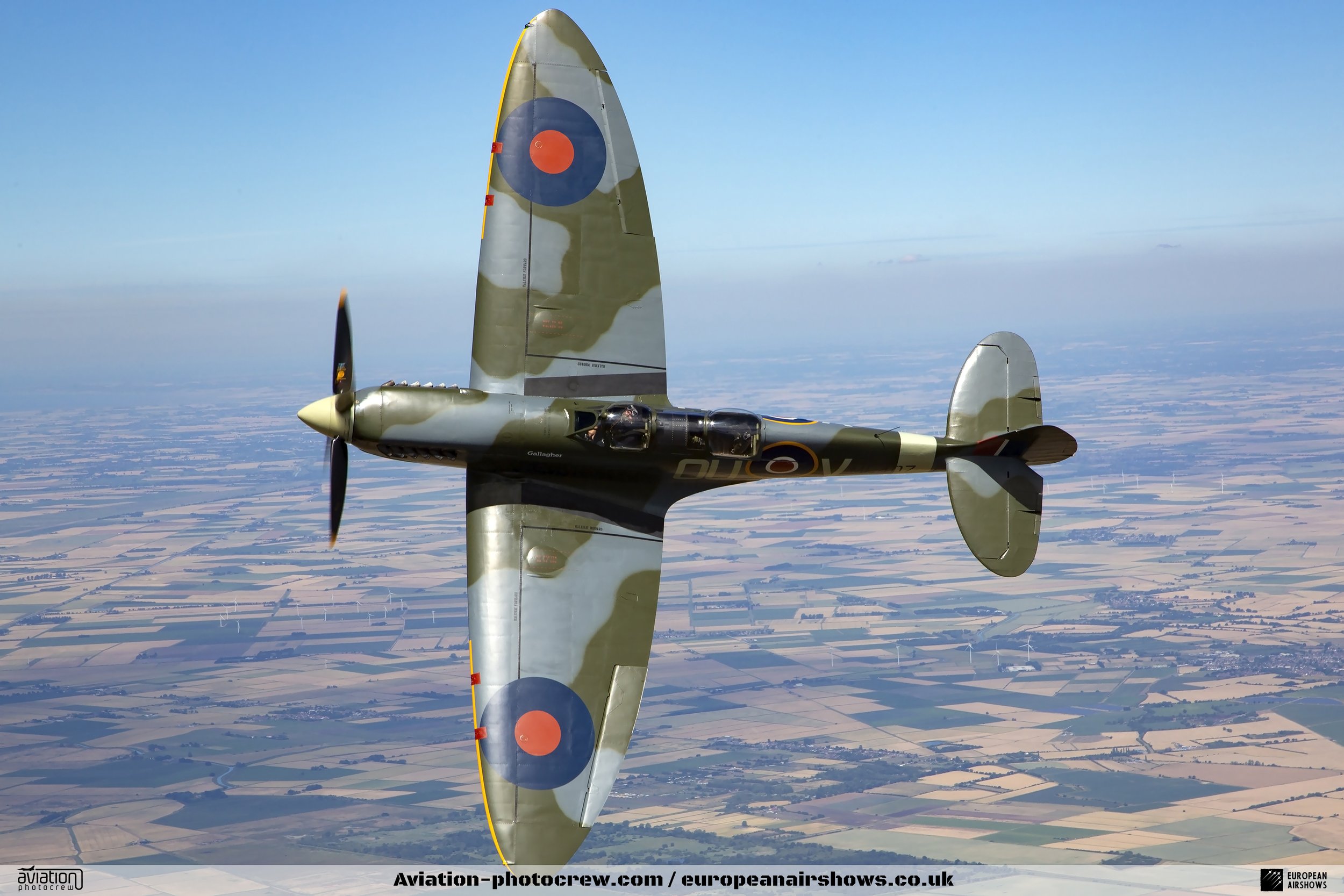
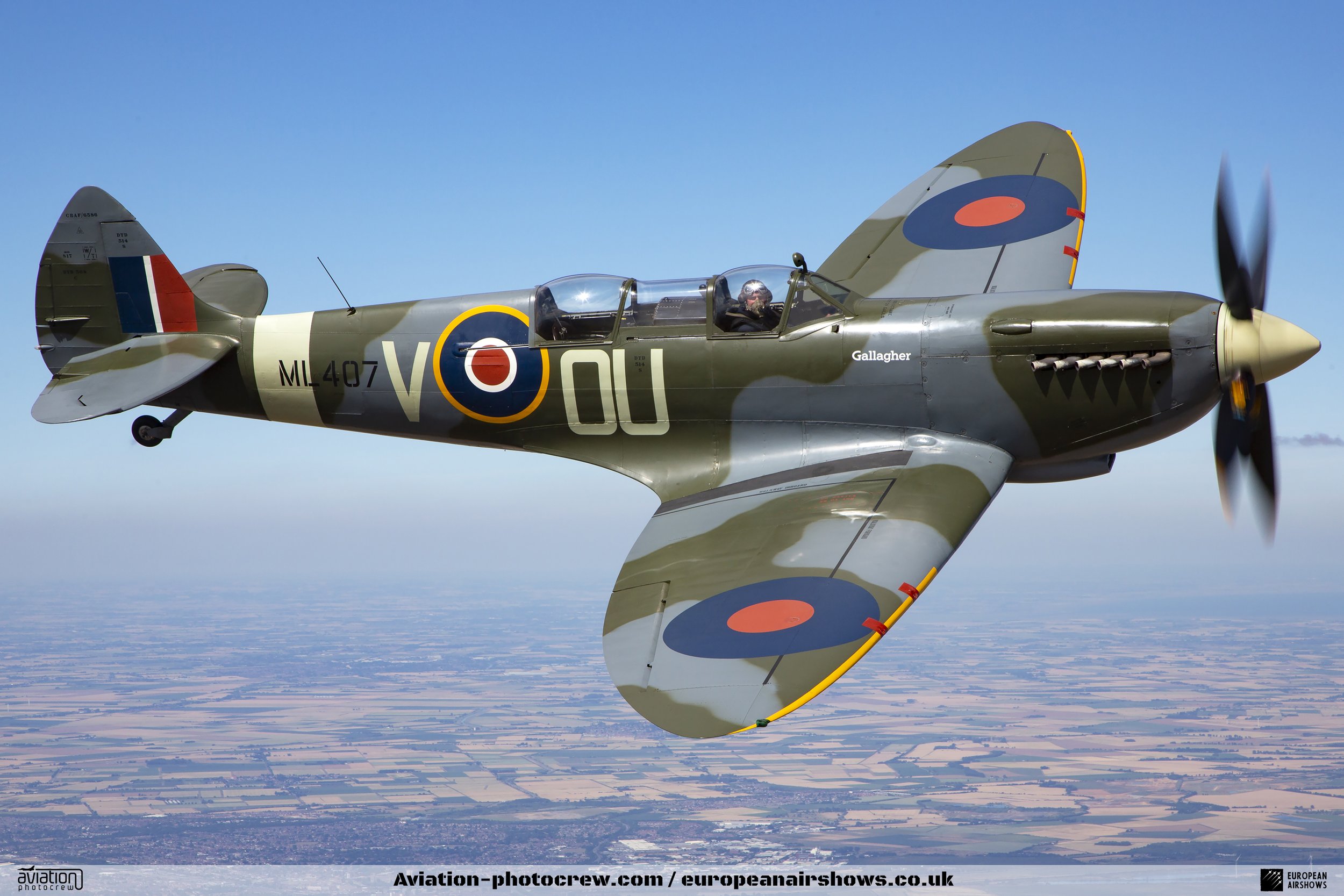
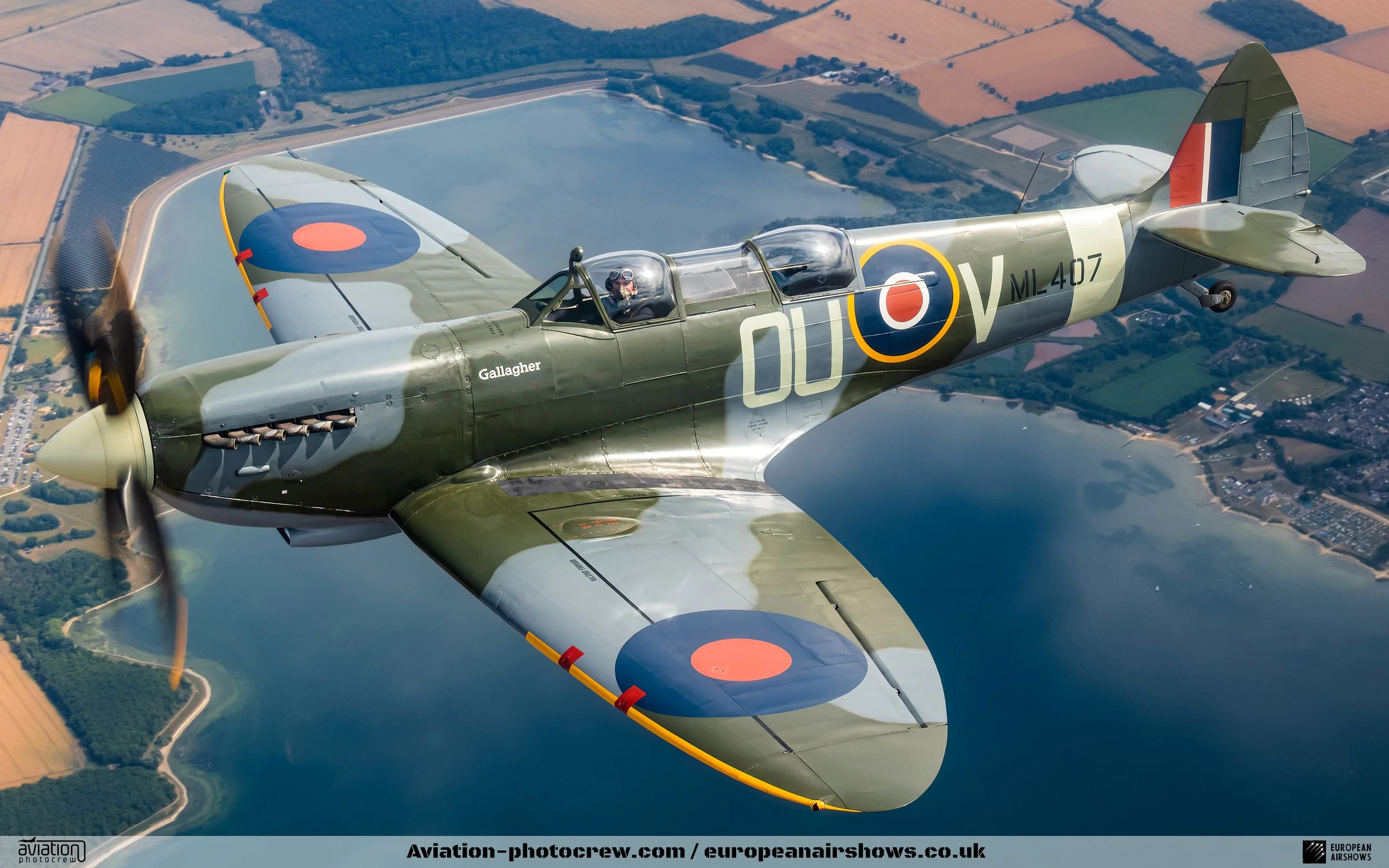
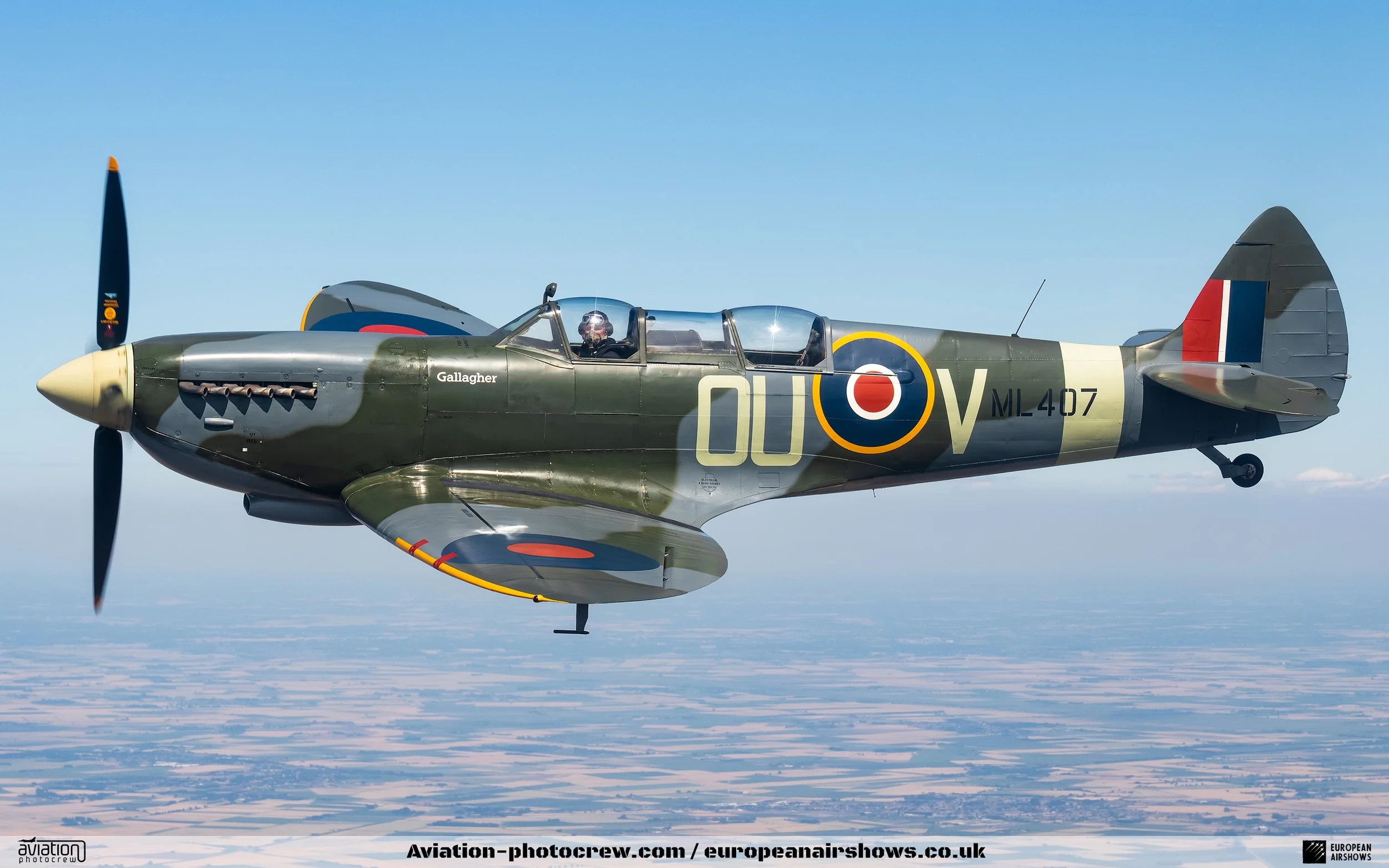
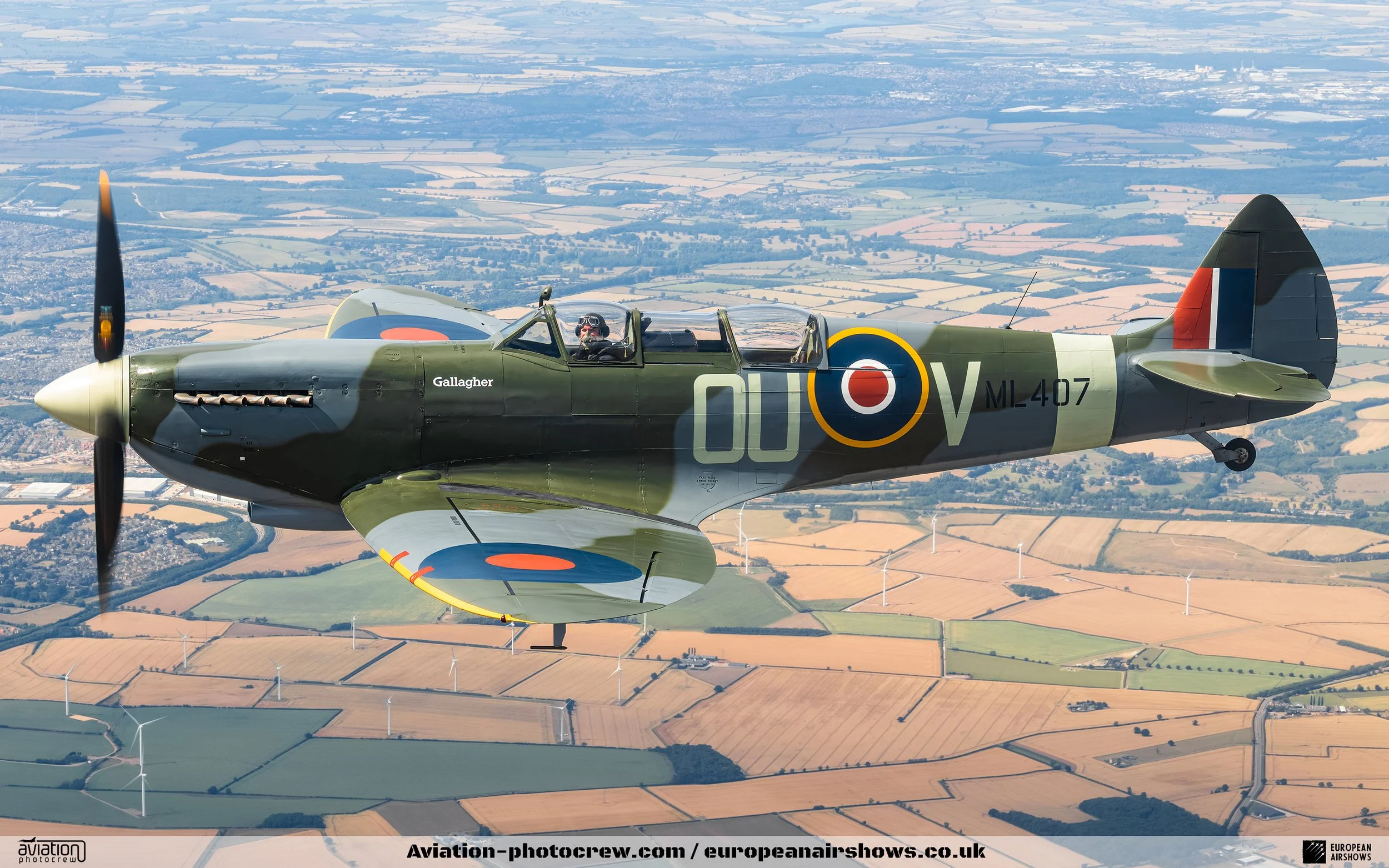
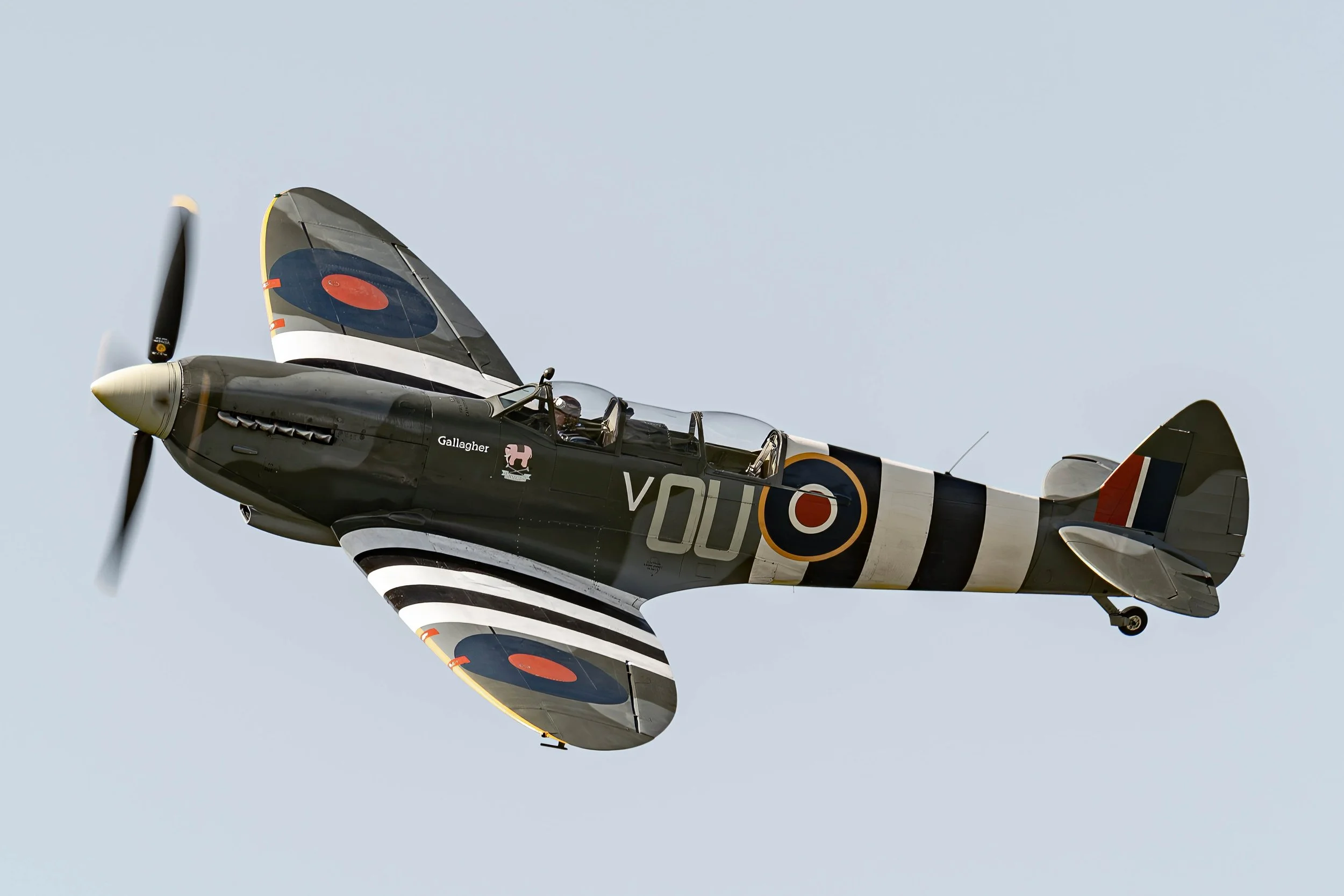
The two‐seat T.IX was a postwar conversion of the highly successful single–seat Spitfire Mk.IX, adapted to serve as a trainer and transition aircraft. Developed at a time when surplus fighters were available and the need arose for dual‐instruction platforms, the T.IX variant incorporated an additional cockpit behind the pilot’s seat. This extra seat allowed an instructor to accompany a student for both flight training and basic weapons practice, while also enabling the aircraft to serve in an engineering instructional role.

During World War II, a few experimental conversions and improvised modifications saw single–seat Spitfires used as trainers. However, it was not until after the conflict that a more formal two–seat variant emerged. Early in the postwar period a demonstrator – an already existing Mk. VIII airframe – was modified to include a second cockpit. Shortly thereafter, production work began on converting standard Mk.IX fighters into the two–seat T.IX variant. In 1948, a batch of ten T.IXs was exported to India, while further conversions were carried out on surplus aircraft.

The T.IX retained the distinctive elliptical wing and refined aerodynamics of its fighter forebear, along with the Merlin-powered performance characteristics that had made the Spitfire renowned. The conversion involved carefully modifying the aft fuselage to accommodate a second cockpit without compromising the aircraft’s balance or handling. Despite being designed for training purposes, the T.IX was still fitted with defensive armament—typically, a pair of .303 Browning machine guns mounted in the outer wing bays—to provide trainees with a realistic experience of combat controls and gunnery practice.

Primarily used as a training platform, the two–seat T.IX proved highly effective in transitioning pilots from basic trainers to frontline fighters. Its dual–seat configuration allowed instructors to demonstrate sophisticated aerial maneuvers and weapons techniques while monitoring and guiding student performance. A small number of these conversions were also used in ground technical training to instruct aircraft engineers in the Spitfire’s intricate systems. In 1951 the Irish Air Corps acquired six T.IX (sometimes designated TR.9) aircraft to support their Seafire fleet training program. Over the ensuing decades, a handful of T.IX aircraft survived in museum collections and among warbird enthusiasts, serving as a tangible link to the Spitfire’s long and varied service history.

Did You Know?

  • The destruction of Supermarine’s Itchen and Woolston factories by enemy bombing led to production being shifted to numerous “shadow factories”—with Castle Bromwich becoming the main hub for Spitfire manufacturing.
  • Early Spitfires were famous for their elegant, elliptical wing design, chosen not only for its low induced drag but also for its aesthetic appeal—a design feature that helped to capture the public’s imagination.
  • The Spitfire Mk IX was actually developed as a “stopgap” measure in response to the Focke‐Wulf Fw 190 threat and was produced from converted Mk Vc airframes before later high‐altitude models appeared.
  • Some Spitfire variants were adapted for photo reconnaissance. For example, the PR Mk XIX became the definitive reconnaissance version with increased fuel capacity and specialized camera installations.
  • Engine changes sometimes required more than simply swapping powerplants—the installation of the Griffon engine, for instance, necessitated modifications to the cowling, tail, and undercarriage to cope with its different thrust line and increased weight.

Test Your Knowledge

Spitfire T.IX G-LFIX

Grace Spitfire ML407 is a storied aircraft with a history as dramatic and varied as the era it was born into. Originally built in early 1944 at Castle Bromwich, ML407 began life as a Mark IX single-seat fighter and soon found itself in the thick of World War II. Over the final 12 months of the conflict, the aircraft served with six different Allied squadrons of the RAF’s 2nd Tactical Air Force, flying 176 operational combat sorties and logging 319 combat hours.

Delivered on 29 April 1944 to 485 New Zealand Squadron by Jackie Moggridge—one of the top lady pilots of the Air Transport Auxiliary—ML407 became the mount of Flying Officer Johnnie Houlton DFC. A notable moment in its wartime career came on D-Day, 6 June 1944, when Houlton, flying ML407, claimed responsibility for the first enemy aircraft shot down over the Normandy beachhead.

During December 1944, ML407 was passed on to 341 Free French Squadron under Sergeant Jean Dabos. The aircraft subsequently served with various Allied squadrons, including 308 (Polish) Squadron, 349 (Belgian) Squadron, 345 (Free French) Squadron, 332 (Norwegian) Squadron, and finally returned to 485 (New Zealand) Squadron at the close of hostilities.

After the war, ML407 was sent to a Maintenance Unit. In 1950, it was selected by Vickers-Armstrongs at Eastleigh, Southampton for conversion to a two-seat configuration. This conversion was undertaken to serve as an advanced trainer for the Irish Air Corps. Renumbered as 162, the aircraft flew to Baldonnel and accumulated an additional 762 flying hours with the IAC before being placed in storage and subsequently offered for sale in 1968. It was then purchased by Sir William Roberts for his museum in Strathallan.

A new chapter in ML407’s life began in late 1979 when Design Engineer Nick Grace, who had long dreamed of flying a Spitfire, acquired the aircraft from the Strathallan Museum. Over five years, Nick painstakingly restored ML407 to flying condition in its two-seat configuration. As part of his restoration, he developed the “Grace in Line Canopy Conversion” to replace the aircraft’s original bulbous rear canopy with a more streamlined design that respected the Spitfire’s authentic lines. The revamped aircraft took to the skies once again on 16 April 1985, with Nick at the controls and Carolyn occupying the rear cockpit. This exciting return to flight was captured in the acclaimed documentary “The Perfect Lady,” available in the Grace Trilogy DVD.

Nick Grace’s success at numerous airshows across the UK and Europe was tragically cut short in 1988 when he lost his life in a car accident, leaving behind his widow Carolyn and their young children, Olivia (5) and Richard (4). Determined to honor his memory and keep ML407 flying, Carolyn undertook the challenge of learning to pilot the very aircraft her husband had restored. Her journey, documented in the film “Going Solo” (also part of the Grace Trilogy DVD collection), saw her go solo in ML407 in 1990. By 1991, Carolyn had gained display authorization and over the following two years added aerobatic and formation flying qualifications to her repertoire. Over a remarkable 25-year period, she accumulated more than 900 flying hours on Spitfires before retiring from active flying in 2017.

Today, the Grace Spitfire ML407 is based at Sywell Aerodrome and is meticulously cared for by a dedicated team of engineers led by Richard Grace at Air Leasing Ltd. Air Leasing’s select team of pilots regularly fly ML407 at various airshows, display events, and passenger flights, preserving the legacy of this historic aircraft for future generations. In a poignant twist, Richard Grace—who both maintained and flew the aircraft in honor of his late father’s passion—carried forward the family tradition until his own untimely passing in late 2024.

Return to All Performers