Supermarine Spitfire Mk.IX G-PMNF

Supermarine Spitfire Mk.IX G-PMNF

About the Spitfire

The Supermarine Spitfire first took to the air in the mid‑1930s and quickly became an icon of British aviation. Designed by Reginald Mitchell for the Royal Air Force, its distinctive elliptical wing and innovative stressed‑skin construction enabled exceptional speed and maneuverability. From early prototypes to successive “marks” that introduced improved armament, stronger structures, and more powerful Rolls‑Royce Merlin engines (and later Griffon engines), the Spitfire was continuously refined to meet the changing demands of aerial combat during World War II. Its elegant design and high performance made it a symbol of determination and hope during Britain’s darkest hours.

Throughout its operational history, the Spitfire evolved from a sleek, single‑seat interceptor into a multifaceted workhorse. Early versions faced significant production challenges with rapid modifications—ranging from upgrades in cockpit design to re‑armament changes driven by combat experience. The aircraft played a decisive role in the Battle of Britain and later proved adaptable as a fighter‑bomber, a high‑altitude interceptor, and even as a carrier‑based fighter (in the Seafire variant). By the end of the war, more than 20,000 Spitfires of various marks had been built, a testament to its versatility and the industry-wide efforts that supported its production.

Even as World War II drew to a close, the Spitfire’s development continued with further modifications to improve high‑altitude performance, extend range with increased fuel capacity, and enhance pilot visibility. The transition from Merlin to Griffon engines ushered in a new era of performance that allowed the aircraft to remain competitive against evolving enemy designs. Long celebrated after the war as a masterpiece of aeronautical engineering, the Spitfire is now an enduring symbol of British ingenuity, frequently appearing in museums and airshows, where it continues to captivate aviation enthusiasts around the world.

Specifications

Crew

1

Length

31 ft 1 in (9.47 m)

Wingspan

36 ft 10 in (11 m)

Height

12 ft 7 in (3.8 m)

Max Speed

404 mph (650 km/h, 350 kn)

Range

433 mi (698 km, 376 nmi)

Service Ceiling

42,500 ft (12,954 m)

Rate of climb

4,700 ft/min (23 m/s)

Mk.IX Variant

The Spitfire Mark IX was developed in the early months of 1942 as a high‐performance interim solution to counter the formidable Focke-Wulf Fw 190, which had outclassed earlier Spitfire models. In response to operational reports highlighting the Fw 190’s superior high-altitude performance, the Royal Air Force urgently required an upgraded fighter without having to wait for an entirely new design. The answer came in the form of an extensive conversion programme in which existing Mk Vc airframes were modified to accept a more powerful, two‐stage supercharged Merlin engine.

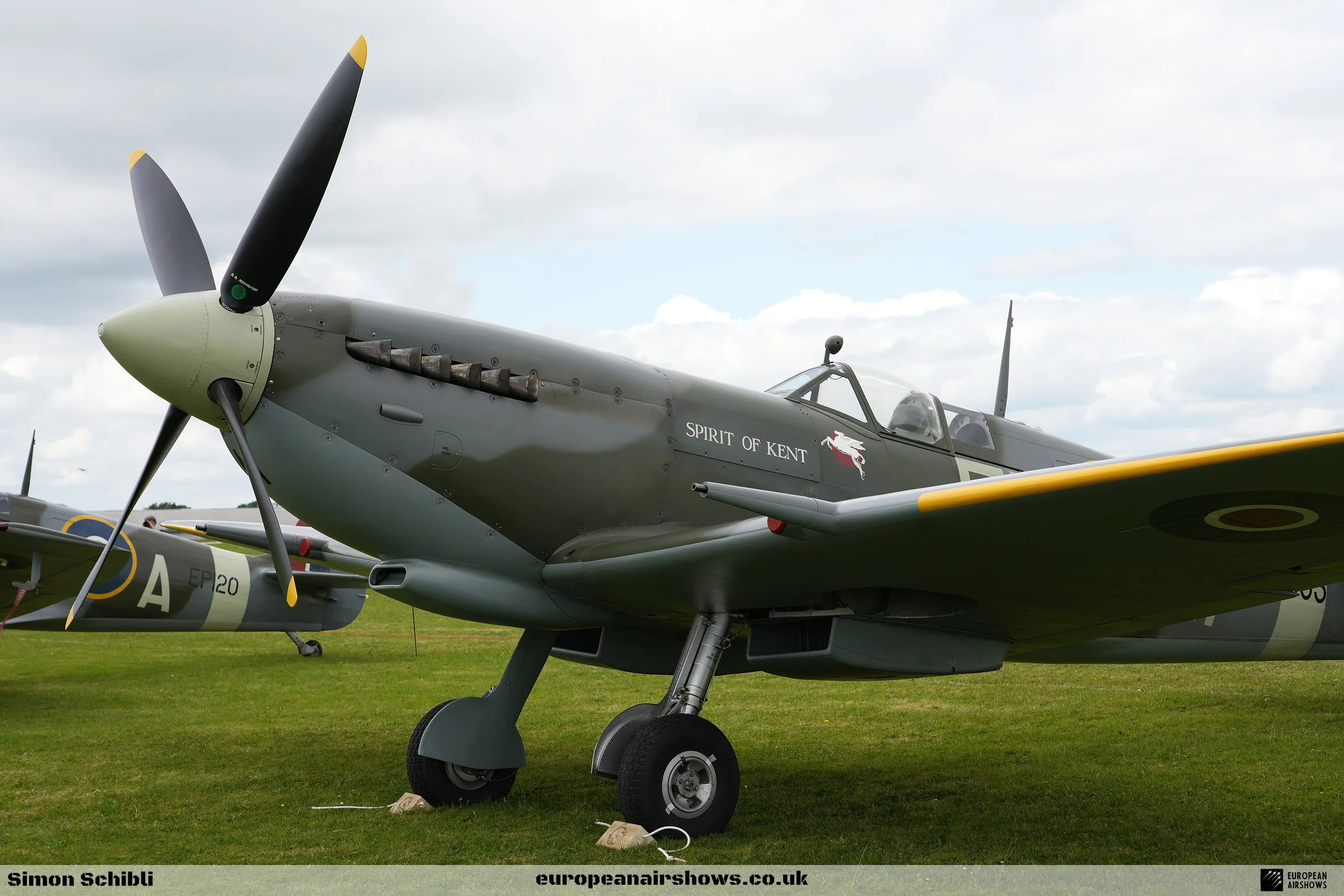
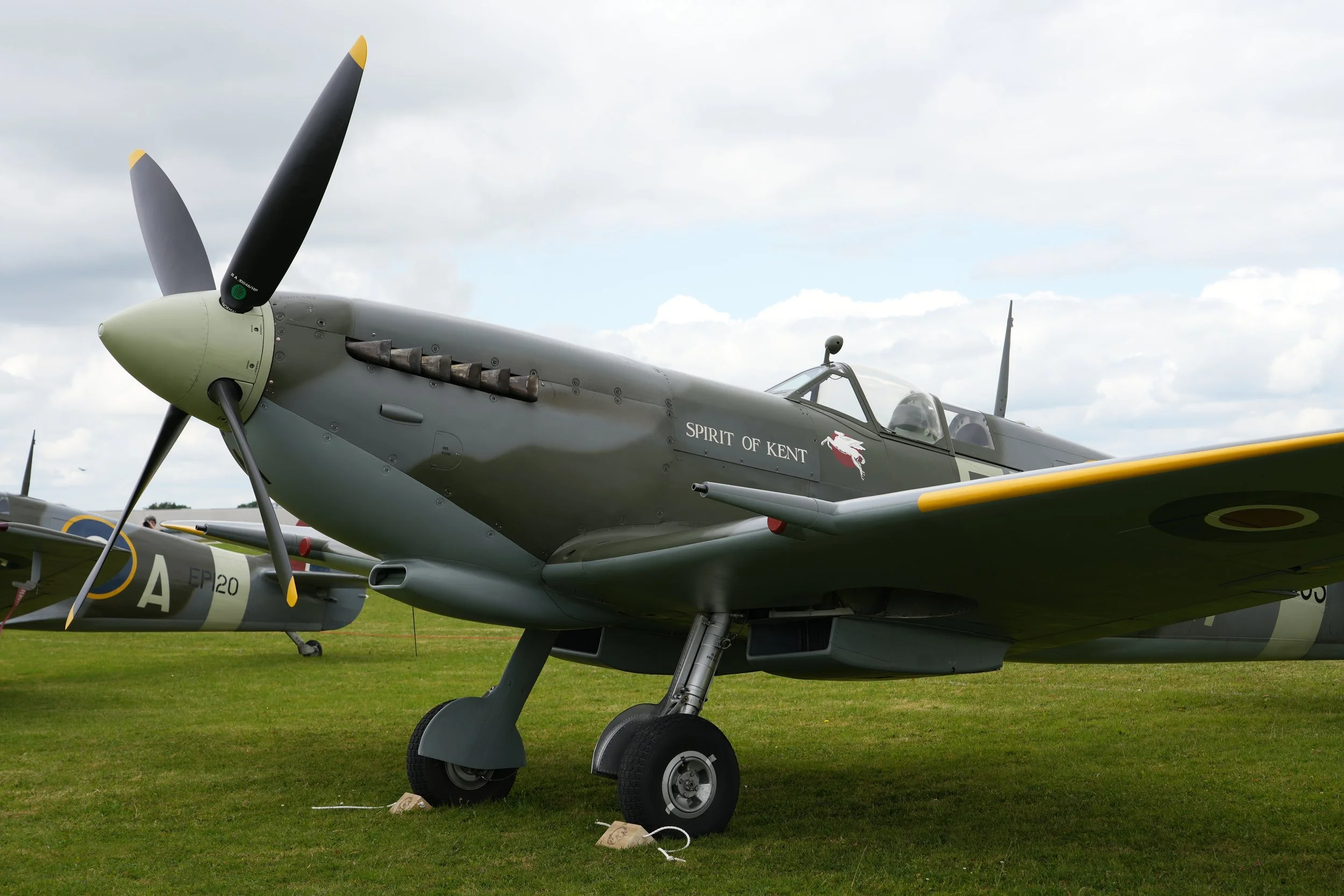
One of the first Mk IX aircraft was a modified Mk Vc (designated AB505) that underwent flight trials in April 1942. The new engine – initially the Merlin 61 and later developed into variants such as the Merlin 63 and the Merlin 66 for low‐altitude work – delivered what many pilots later described as a “quantum leap” in performance. With a revised power plant, the Mk IX was able to climb faster, maintain higher speeds at altitude, and offer improved manoeuvrability compared to its predecessors. Its airframe was adapted to accommodate the increased output of the Merlin engine, and production models typically featured the “universal” Type C wing with distinctive double cannon blisters over the inner gun bays.

The variant was produced both as a conversion and as a new-build aircraft. Early Mk IXs were sometimes converted from Mk Vc airframes; they were easily identified by features such as the large cannon blisters and identification lights on the fuselage behind the aerial mast. Later production models – commonly referred to as the Spitfire Mk IXb for low-altitude (LF) versions – were built with clipped wingtips to enhance roll rate and low-level performance. There was also a high-altitude version (HF Mk IX) powered by the high-performance Merlin 70 engine, which enabled the aircraft to maintain competitiveness even in the thin air at high altitudes.

Over 5,600 Mk IXs were built, making it one of the most numerous and versatile Spitfire variants. It not only served as an effective fighter against German aircraft throughout the European theatre of operations but also found adaptations as a fighter-reconnaissance (PR) and even a fighter-bomber. The PR versions were extensively modified to carry vertical or oblique cameras in lieu of armament and played an important role in gathering intelligence through photo-reconnaissance missions.

Pilots and ground crews alike came to appreciate the Mk IX for its relative ease of handling compared to earlier marks, as well as its dramatic improvement in performance. Its ability to operate at multiple altitudes and its adaptability for several combat roles ensured that the Spitfire Mk IX became a mainstay of RAF Fighter Command from mid-1942 until the later stages of the war, when the newer Griffon-engined variants gradually superseded it.

Did You Know?

  • The destruction of Supermarine’s Itchen and Woolston factories by enemy bombing led to production being shifted to numerous “shadow factories”—with Castle Bromwich becoming the main hub for Spitfire manufacturing.
  • Early Spitfires were famous for their elegant, elliptical wing design, chosen not only for its low induced drag but also for its aesthetic appeal—a design feature that helped to capture the public’s imagination.
  • The Spitfire Mk IX was actually developed as a “stopgap” measure in response to the Focke‐Wulf Fw 190 threat and was produced from converted Mk Vc airframes before later high‐altitude models appeared.
  • Some Spitfire variants were adapted for photo reconnaissance. For example, the PR Mk XIX became the definitive reconnaissance version with increased fuel capacity and specialized camera installations.
  • Engine changes sometimes required more than simply swapping powerplants—the installation of the Griffon engine, for instance, necessitated modifications to the cowling, tail, and undercarriage to cope with its different thrust line and increased weight.

Test Your Knowledge

Spitfire Mk.IX G-PMNF

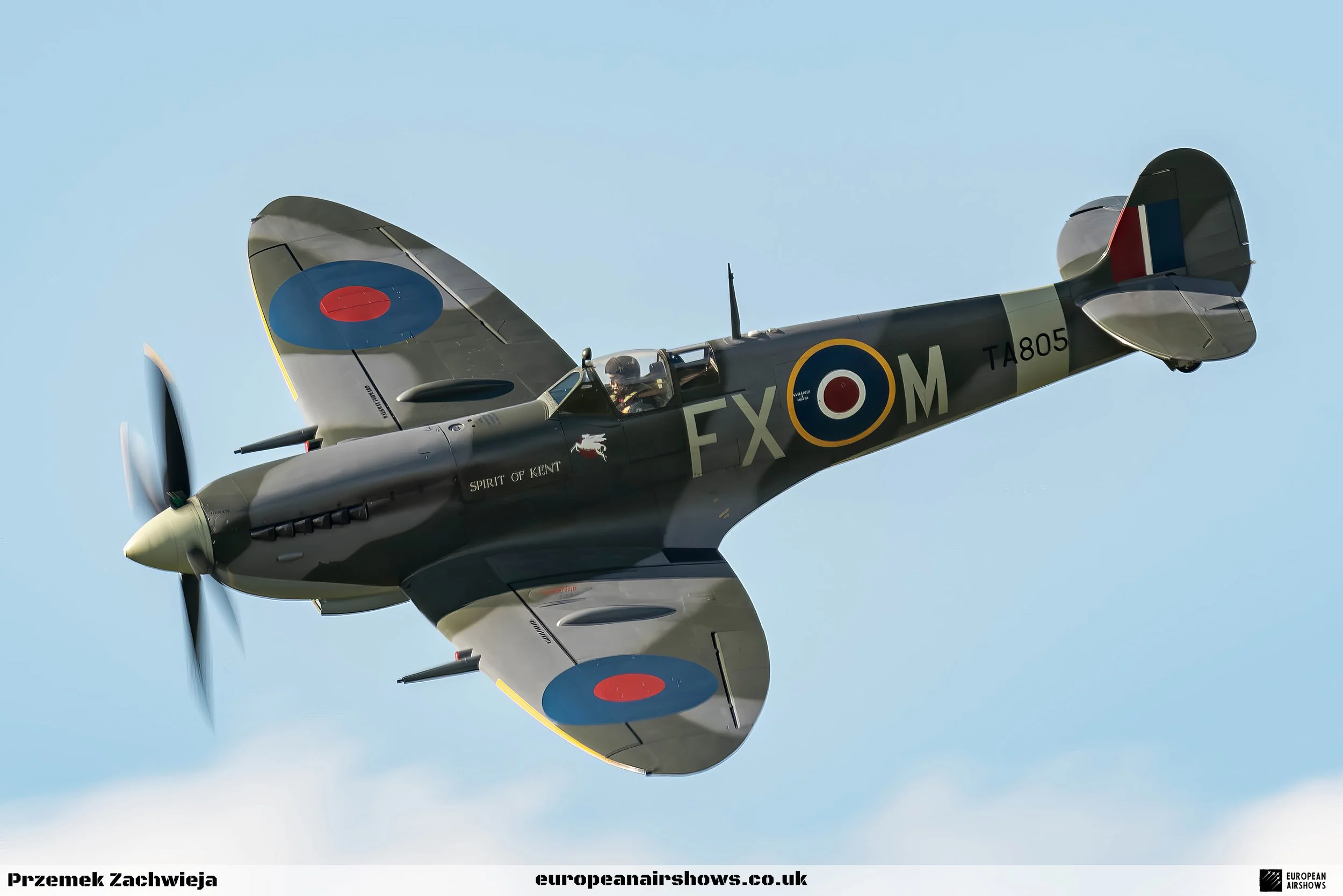
TA805 is a storied Supermarine Spitfire with a history as vibrant as the aircraft itself. Built in late World War II at the famous Supermarine works in Castle Bromwich in the West Midlands, TA805’s career began with the Royal Air Force. Assigned the code letters HF, the aircraft was accepted into service by No. 39 Maintenance Unit in December 1944 and soon found its way into active duty.

By mid-1945, on 17 June, TA805 joined 183 (Gold Coast) Squadron based at Chilbolton. Under the command of Squadron Leader J. R. Cullen DFC, the squadron was in the process of converting from the Typhoon IB to the Spitfire IX—a change carefully documented in the squadron’s Operational Record Book. The story tells of pilots and their kit being ferried by Dakotas to Chilbolton, where they became part of Fighter Command’s No. 11 Group. After a period of intensive conversion and training, including practice gunnery and bombing sessions at Hawkinge under the leadership of Squadron Leader Storrar, the squadron returned to operations at Bentwaters.

TA805’s service record includes participation in commemorative events as well. It is believed that the aircraft may have been part of the 1945 Battle of Britain commemoration flight over London—a tribute led by a wing assembled from 24 squadrons including the renowned 234 Squadron. This event was conducted under the wing of Wing Commander Roland P. Beamont DSO and Bar DFC, a legendary figure from the Battle of Britain and later a famed test pilot.

After its distinguished service with the RAF, TA805’s journey took an international turn. In early 1949, the aircraft was transferred to the South African Air Force and later, in 1954, it was sent for scrapping by the South African Metal & Machinery Co in Salt River, Cape Town. However, its end was not the end of its story.

TA805 was given a second lease on life during a remarkable restoration project that began when its remains were transferred to Airframe Assemblies works in Sandown on the Isle of Wight in early 1992. Previously stored in Sussex, the aircraft lay dormant until new owners took over around 1995. The intense restoration project, driven by enthusiasts like Steve Atkins (Oxford, UK, from 1989 to 1995), Peter Monk, and Mike Simpson, embarked on the painstaking process of rebuilding—starting with manufacturing many small fuselage pieces over the course of a year. By July 1998, the rebuilt fuselage was unveiled, and work on the wings began in May 2000. Over the following years, the fuselage was kitted out with essential systems and the cockpit instrument panels were reinstated by February 2002.

In June 2002, the nearly reborn fuselage left Airframe Assemblies for Sedlescombe in Sussex and then on to ARCO at Duxford, where the engine was fitted and final assembly was underway. By March 2003, the wings and final stages of assembly were taking shape, with skinning, the fitting of gun covers, and the construction of wing tips nearing completion. Come August 2003, the wings were finalized, complete with wing tips, flaps, and ailerons.

TA805, now registered as G-PMNF and restored to an airworthy condition by Airframe Assemblies at Sandown, took to the skies for its first post-restoration flight in December 2005 as part of a 234 Squadron scheme. Since 2011, it has been based in the Biggin Hill Heritage Hangar at Biggin Hill Aerodrome in Kent, continuing to enchant both aviation enthusiasts and the general public with its fascinating heritage.

Return to All Performers