Red Devils
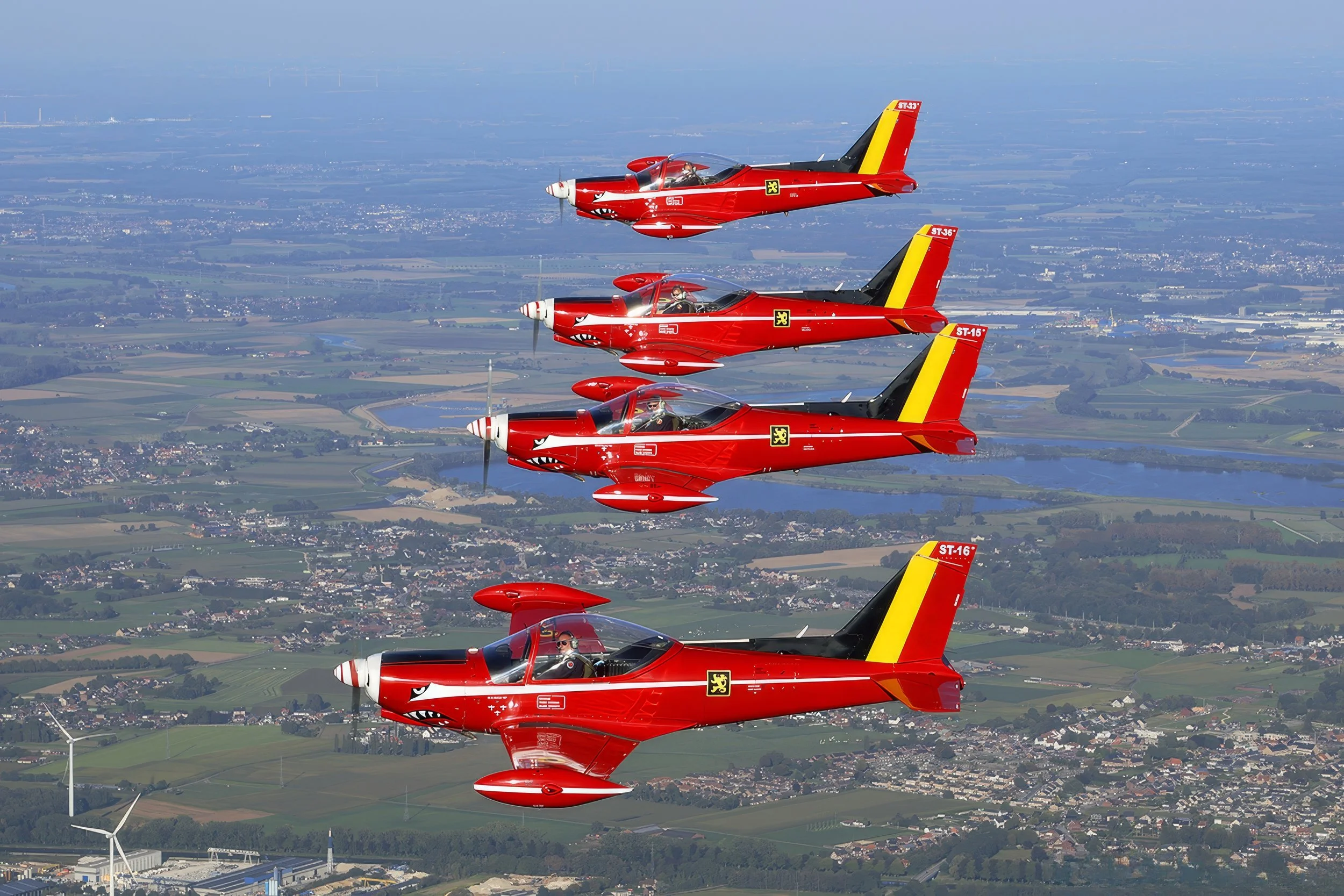
Four-aircraft SIAI-Marchetti SF-260 aerobatic team
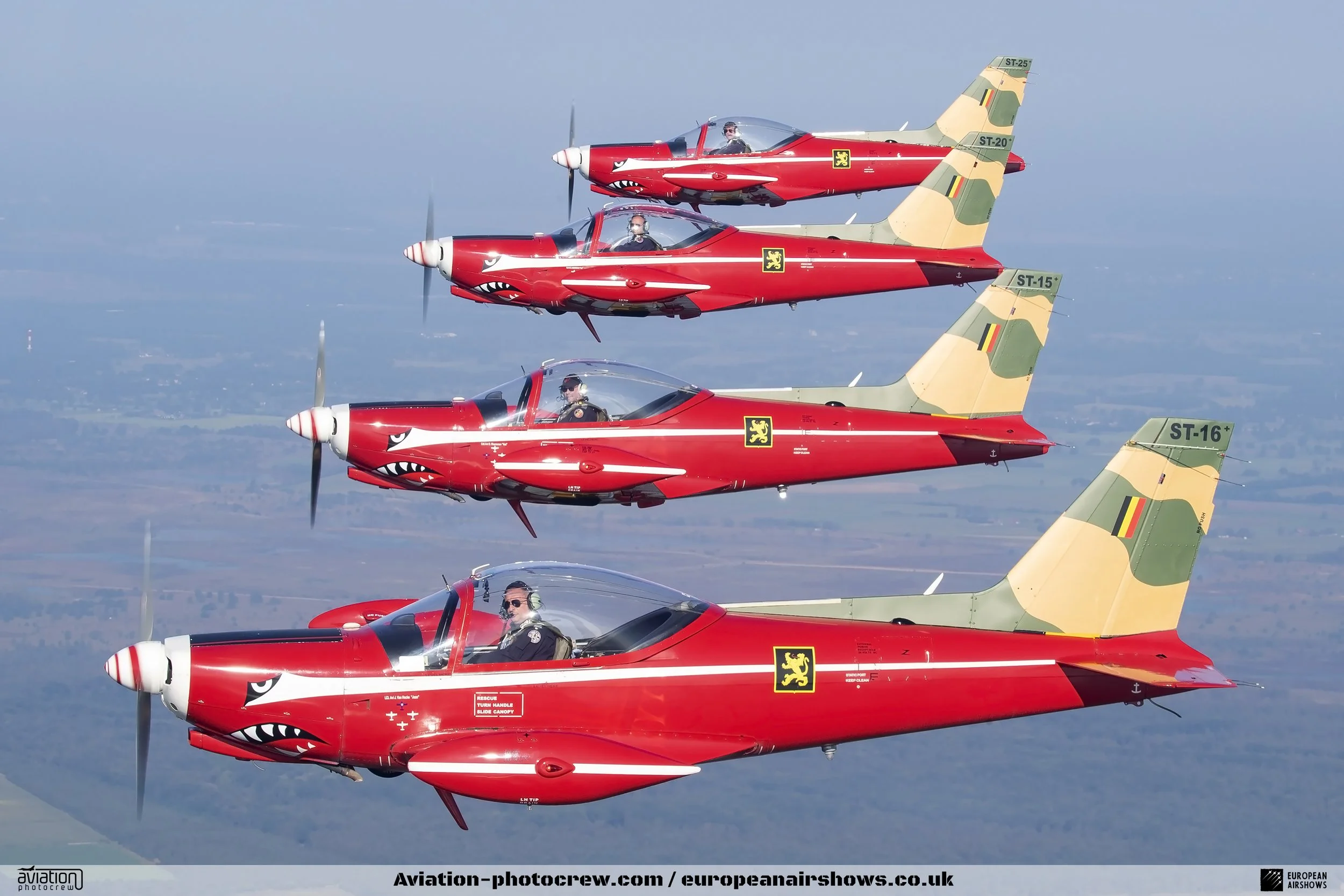
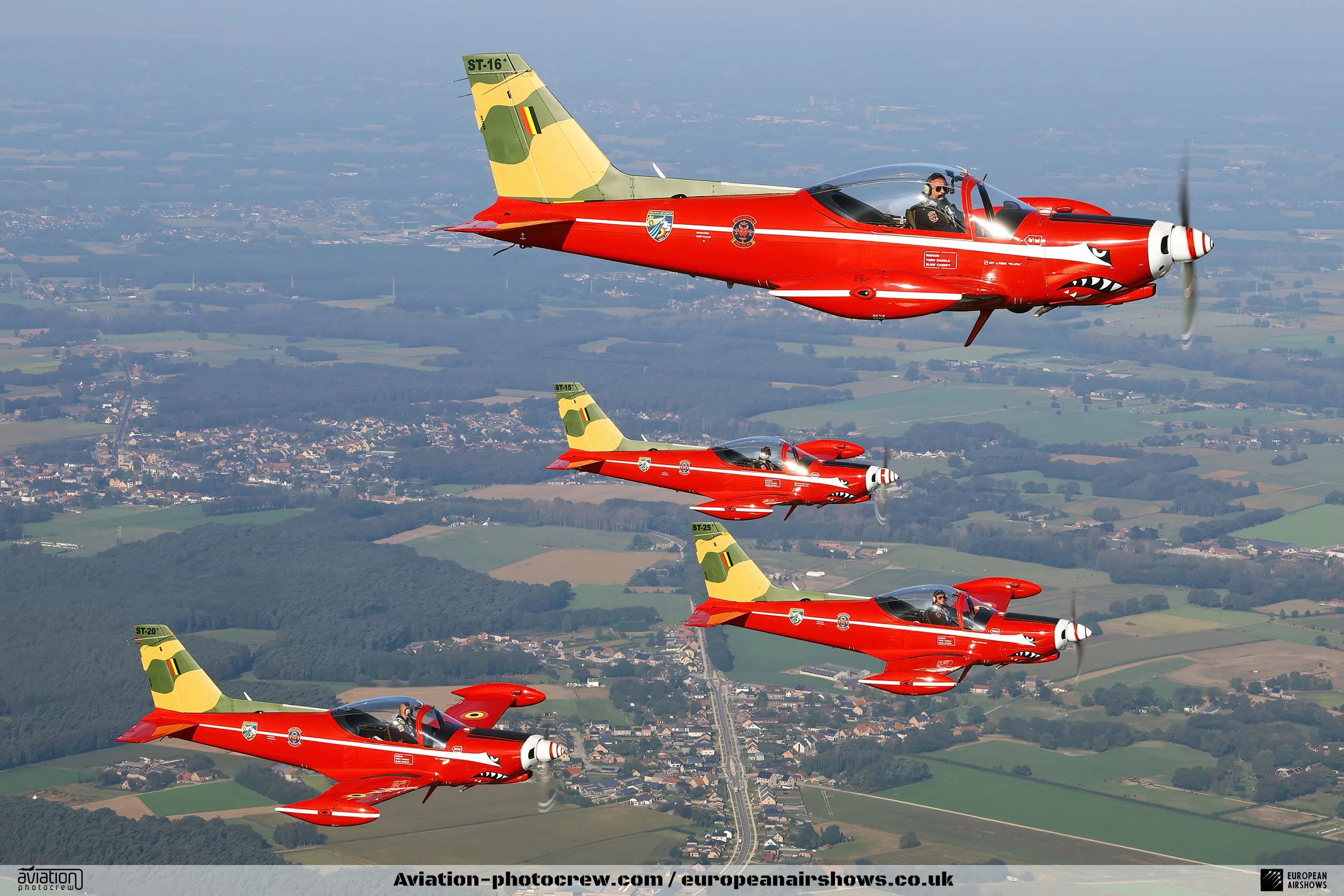
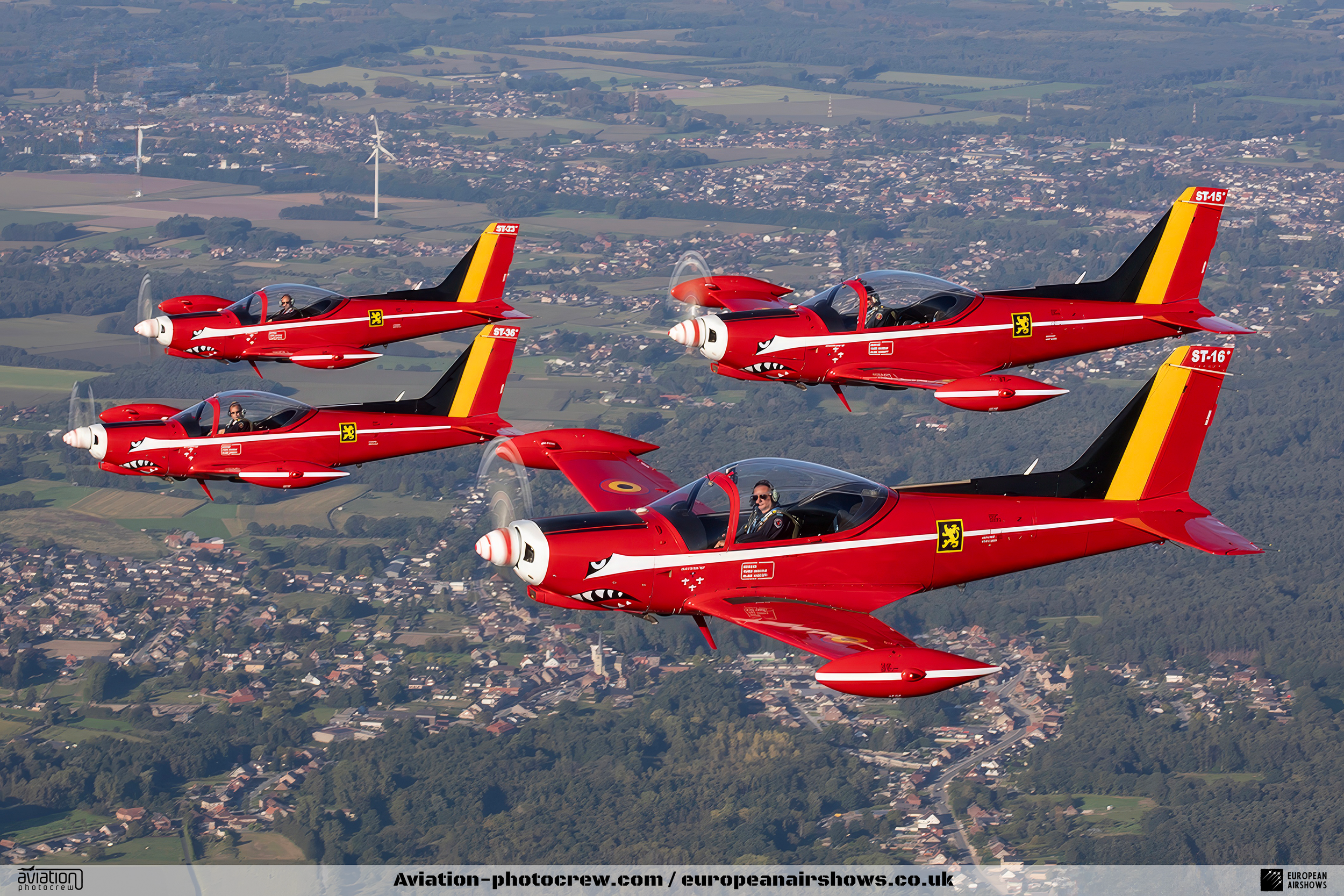
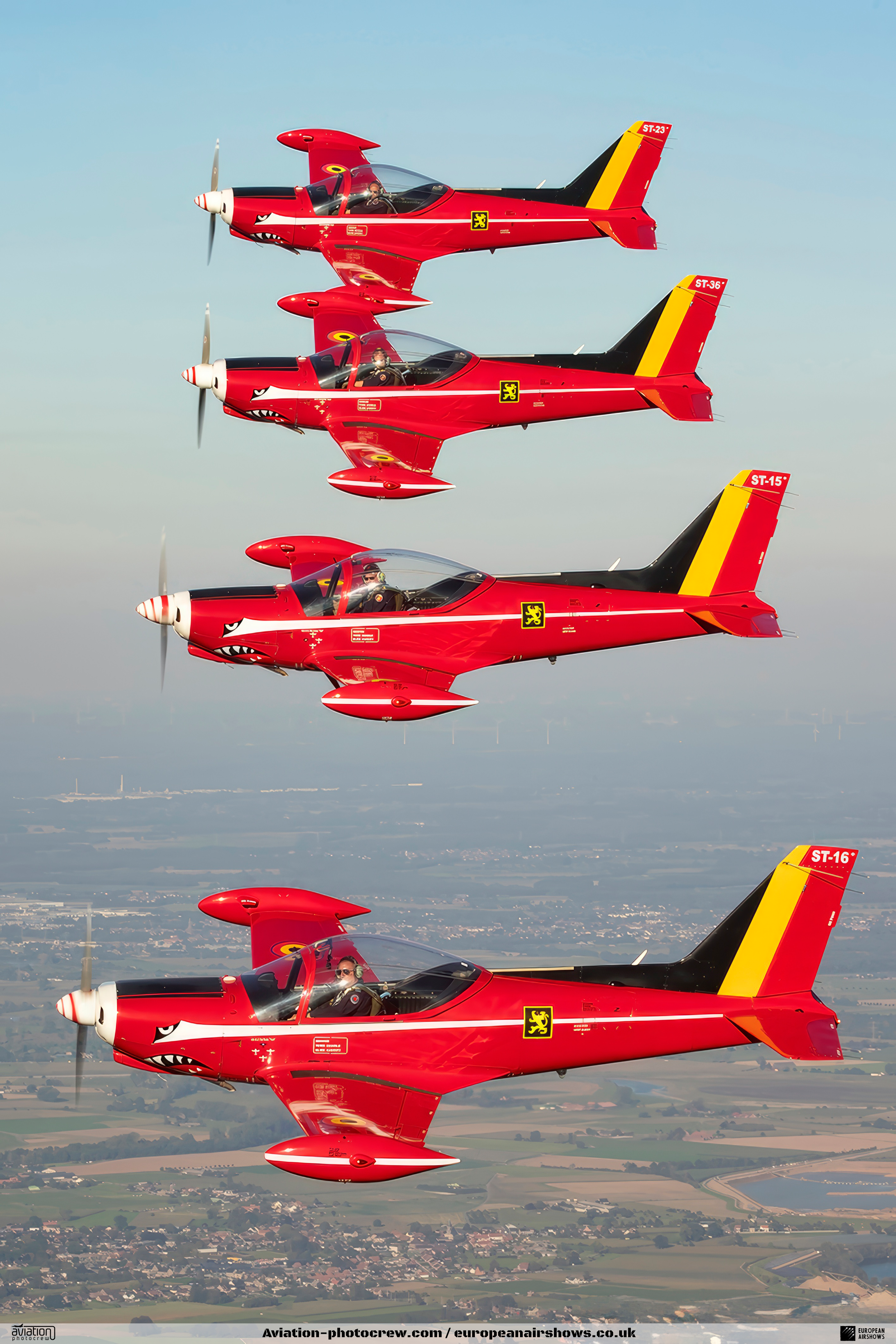
The modern Red Devils brought together four military flying instructors and four elementary trainers in a precise formation display. Their name linked the SF-260 team with celebrated Belgian display formations of the Hunter and Fouga eras. The team is now inactive.
- Name adopted
- 1960
- Modern revival
- 2011
- Formation
- 4 aircraft
- Aircraft
- SF-260
- Unit
- 5 Squadron
- Base
- Beauvechain
Current status
The Red Devils are inactive.
Belgian Defence described the stoppage as a temporary pause so pilot training could take priority during the move away from the SF-260. Belgium has since selected the PC-7 MKX as its new basic training system, but that aircraft decision did not confirm a return for the display team.
The team explained
A display team built from the training school.
The modern Red Devils were not a separately staffed, full-time display squadron. Their pilots were instructors from the Basic Flying Training School and 5 Squadron at Beauvechain. The same people responsible for teaching military students also flew the public four-ship routine.
That training connection shaped the display. The leader set the flight path and timing, while the other pilots maintained their positions by watching the lead aircraft and making continuous, precise corrections. In the classic four-ship shape, two wingmen sat behind the leader and the slot pilot closed the formation from the rear.
Why use instructor pilots?
Formation flying demands clear planning, repeatable technique and disciplined communication—the same habits instructors develop in everyday training. The team made those professional skills visible without pretending that the SF-260 was a front-line combat aircraft.
More than the four cockpits
A formation display also depends on engineers, ground personnel, operations staff and a commentator. Their work turns four separate aircraft into one coordinated public performance and keeps the flying programme connected to the unit behind it.
The display explained
Precision made readable.
The SF-260’s compact size and piston-aircraft speed let spectators follow the geometry of the formation. The modern routine combined close four-ship aerobatics with breaks, rejoins, crossing passes and smoke. Its exact sequence could change with the venue and weather.
Close formation
Four aircraft presented as a single shape, with each wingman holding a disciplined visual position on the leader.
Formation aerobatics
Loops and rolling manoeuvres showed that the pilots could retain the formation while its attitude and energy changed.
Breaks and rejoins
Fan breaks opened the formation dramatically; the rejoin then demonstrated spacing, timing and closure control.
Crossing passes
Opposition and crossover figures created apparent convergence while every flight path remained carefully separated.
Smoke
Smoke made flight paths visible, helping the audience read loops, breaks and the spacing between aircraft.
Adaptable sequence
Display planning allowed the team to protect clear margins while keeping the routine legible at different sites and in changing conditions.
The aircraft explained
SIAI-Marchetti SF-260: the trainer behind the display.
Designed by Italian engineer Stelio Frati, the SF-260 is a single-engine, low-wing aircraft with all-metal construction and retractable tricycle landing gear. The design first flew in 1964 and combined a clean airframe with responsive handling.
Belgium introduced the SF-260 in 1969 for elementary military flying training. The aircraft were initially associated with Goetsenhoven before the training operation moved to Beauvechain in 1996. Generations of Belgian military pilots began their training on the type.
The qualities needed by a trainer also suited a display team: predictable handling, good visibility, enough performance for formation aerobatics and a direct connection with the service’s pilot-training role.
Team history
Three aircraft eras, one famous name.
1957
A Hunter formation begins
The Belgian Air Force created a four-aircraft Hawker Hunter F6 display formation. It expanded to nine Hunters in 1959 and briefly appeared with 16, establishing a striking national fast-jet display presence.
1960–63
The Red Devils name
Reorganised as a four-ship team, the red-painted Hunters adopted the Red Devils identity in 1960. This first named team was disbanded in 1963.
1965–77
The Fouga Magister era
The name returned with the Fouga CM.170 Magister. Formation size changed over the period, including reductions during the fuel crisis, before this second Red Devils era ended in 1977.
2008
Hardship Red
Instructors from 5 Squadron at Beauvechain formed Hardship Red, a four-aircraft SF-260 display. It restored a Belgian military formation act without yet using the historic name.
2011
The modern Red Devils
Hardship Red became Red Devils and the aircraft received the red identity associated with the earlier teams. The revival joined the name’s history to Beauvechain’s pilot-training community.
2025
Display activity paused
Belgian Defence announced a temporary pause so pilot training could be prioritised while the SF-260 replacement was addressed. Belgium later selected an 18-aircraft PC-7 MKX training system; the selection did not announce the display team’s return.
Context and legacy
What the history actually connects.
Continuity of a name, not one continuous unit
The Hunter, Fouga Magister and SF-260 Red Devils belonged to three distinct periods, separated by long gaps. The shared name and red identity created a tradition; they did not make the team a single organisation operating continuously from 1960.
A display grown from training
The modern team’s importance came from who flew it and what the aircraft represented. Instructor pilots displayed the same SF-260 used at the beginning of military flying training, turning the training school’s everyday standards into a public demonstration.