Rafale M Role Demo
Tactical Rafale Marine demonstration of the French Navy
The Rafale M Role Demo places two operational carrier fighters into a fast, compact tactical sequence. Formation flying, high-energy breaks, opposing passes, rapid rejoins and carrier-style approaches present the aircraft as a naval combat system rather than as a conventional aerobatic display team.
- Documented by
- 2016
- Usual formation
- 2 aircraft
- Aircraft
- Dassault Rafale M
- Current standard
- F4.1
- Shore base
- Landivisiau
- Carrier
- Charles de Gaulle
The team
A tactical demonstration assembled from France's operational carrier fighter force.
Not a permanent aerobatic squadron
The Rafale M Role Demo is not organised like the Patrouille de France or the Rafale Solo Display. It is a naval role demonstration built from operational aircraft, pilots and support personnel whose primary responsibility is preparing for combat from BAN Landivisiau and the aircraft carrier Charles de Gaulle. Public appearances therefore sit behind training, exercises, deployments and alert commitments.
Three flotillas can provide the aircraft and crews
Landivisiau is home to Flottilles 11F, 12F and 17F, the three units operating the Rafale Marine. The display is not permanently owned by one of them. Different flotillas have presented the sequence at different events, and aircraft can return directly to normal squadron flying once the appearance is complete.
The two-ship is the recognised core
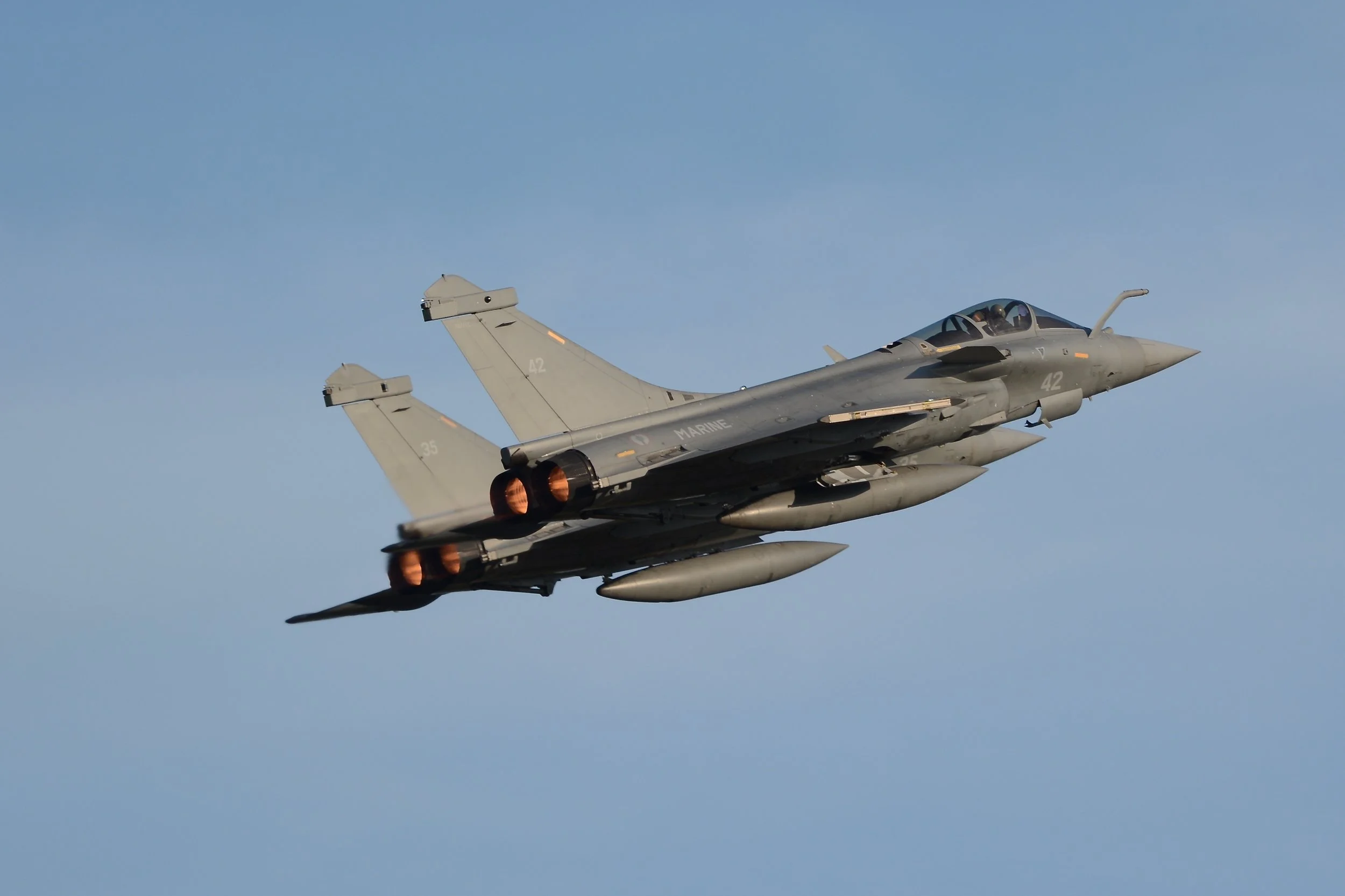
The familiar programme uses a pair of Rafale Ms. Two aircraft allow the demonstration to show close formation, separation, tactical geometry and rapid rejoining while keeping the sequence readable from the ground. Larger formations have occasionally been prepared for major French events, but they are special versions rather than the permanent standard.
Front-line availability shapes every season
The Marine nationale does not maintain dedicated display airframes for the role demo. The same fighter force supports carrier work-ups, air defence, strike, maritime attack, reconnaissance, nuclear deterrence and overseas operations. That is why bookings are selective and why the composition of the detachment may change from one appearance to another.
The display
Two carrier fighters showing tactics, power and deck-operating character.
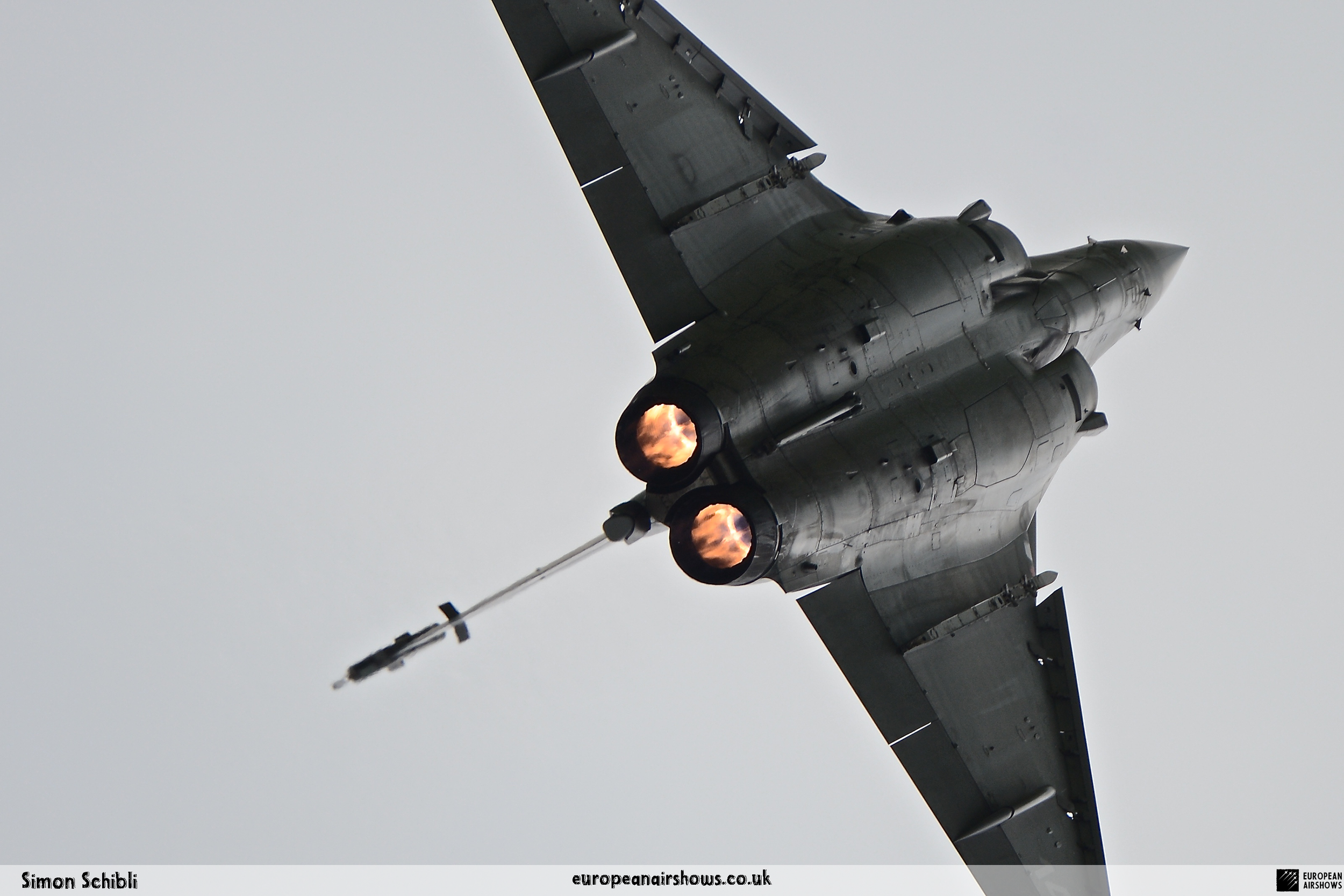
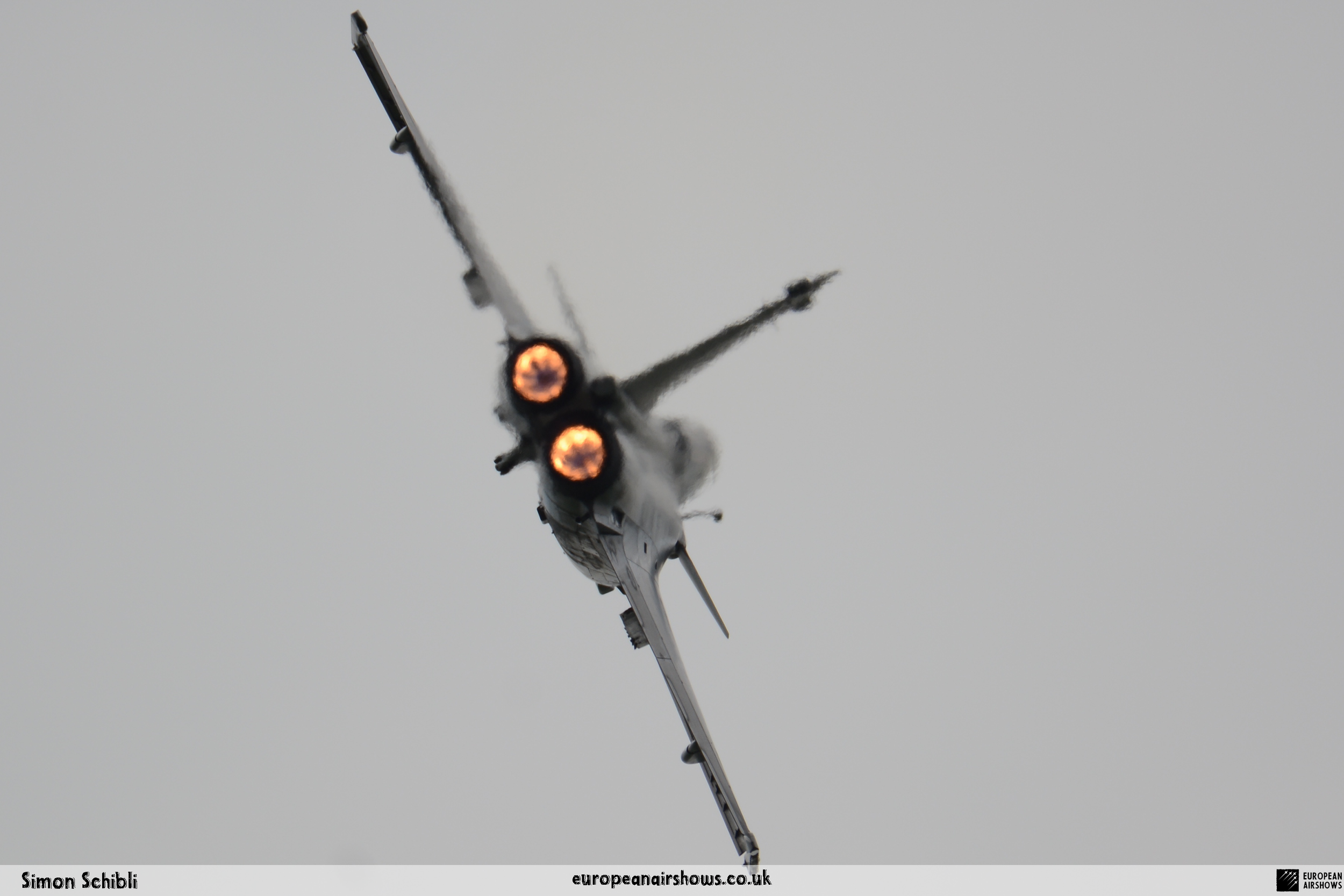
The programme is designed as a role demonstration, not a synchronised aerobatic routine. Its exact order can change, but the pair normally moves between close formation and separated tactical elements, using speed, afterburner, rapid turns and carrier-style passes to explain how naval Rafales operate together.
Formation departure or arrival
Where the venue permits, the sequence can begin with both aircraft launching or entering together, immediately establishing the Rafale M as a two-ship combat element.
Close tactical formation
The pair uses echelon and line-style presentations to show precise station keeping before opening the spacing for the faster work.
High-speed passes
Swept passes with afterburner emphasise the acceleration and compact profile of the carrier fighter without turning the display into a conventional solo sequence.
Breaks, crossings and rejoins
The aircraft separate into opposing or offset flight paths, then reverse and rebuild the pair, making the tactical relationship between leader and wingman visible to the crowd.
Carrier recovery cues
Missed approaches and go-arounds can be flown with the arresting hook extended, bringing the Rafale M's deck-landing equipment into the display rather than leaving it hidden in the aircraft file.
A flexible naval programme
Weather, airfield layout and operational availability affect the sequence. Special events have supported larger formations, while the two-ship remains the best-known and most portable version.
The aircraft
Dassault Rafale M: the carrier-borne member of France's omnirole fighter family.
One combat system, three closely related variants
Rafale was designed for both the French Air and Space Force and the Marine nationale. The land-based Rafale C is a single-seater, the Rafale B a two-seater, and the Rafale M a single-seat carrier fighter. All share the same basic aerodynamic design and mission system, giving the naval fleet access to the same air-to-air, strike, reconnaissance and electronic-warfare architecture.
The naval changes are concentrated where the carrier demands them
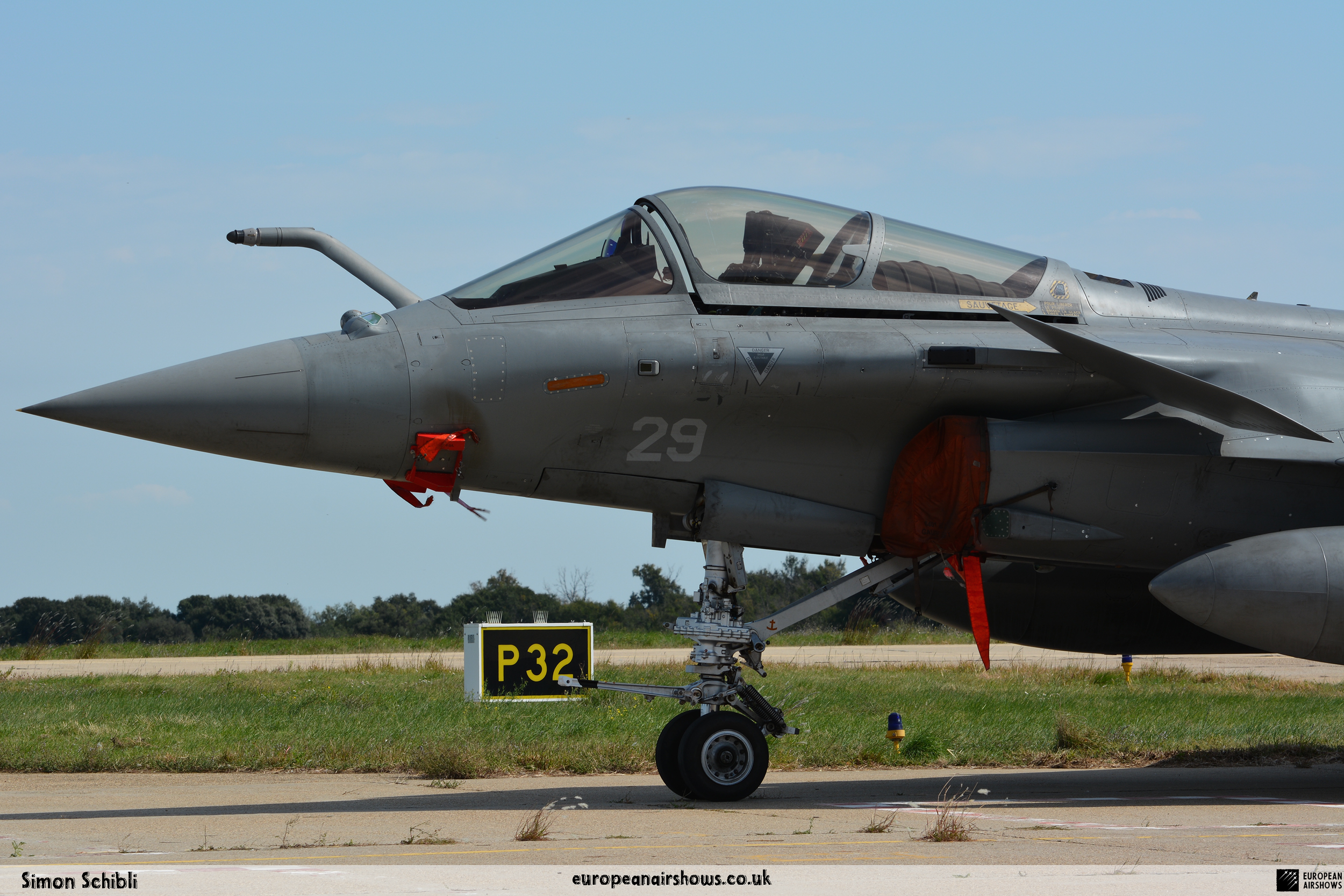
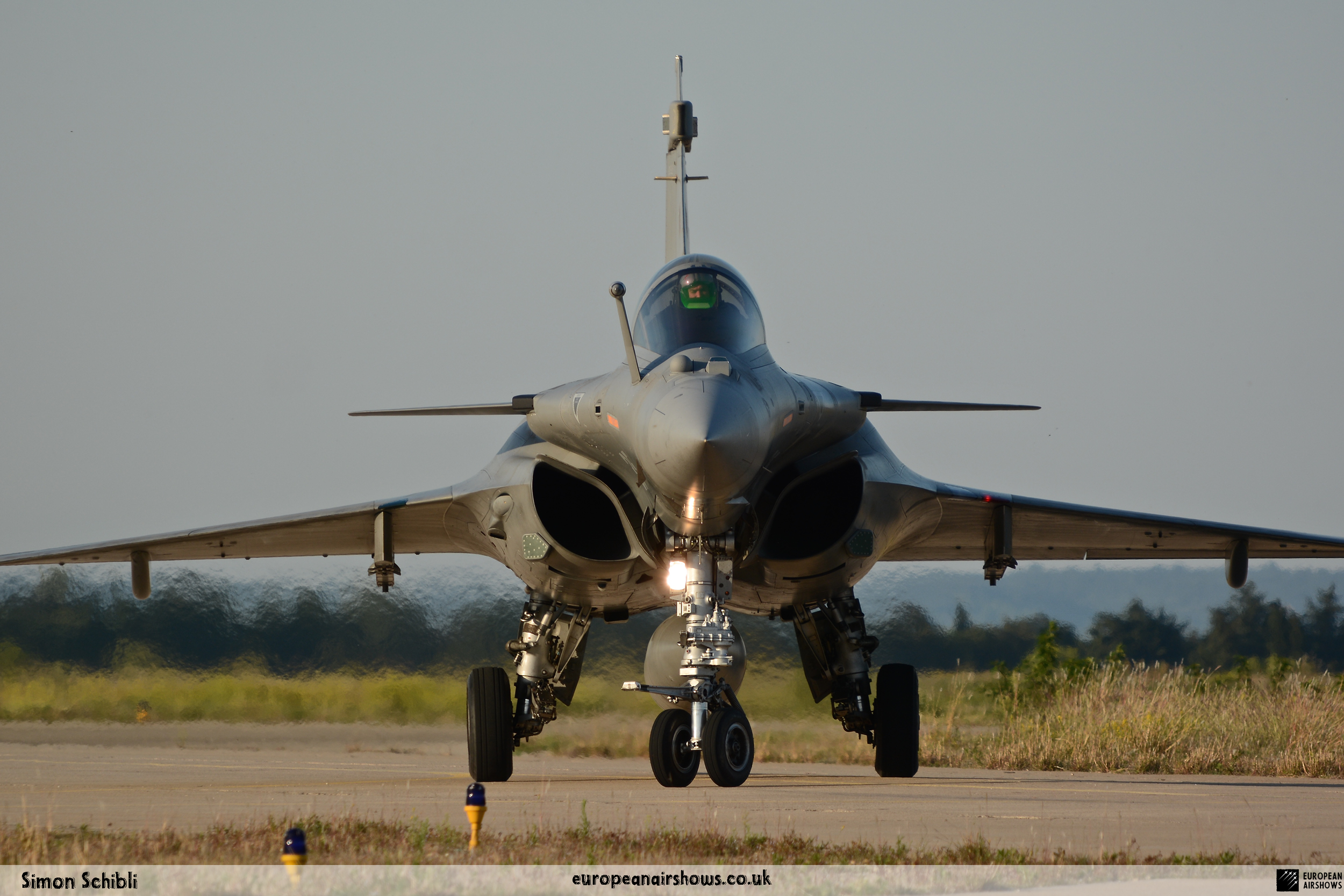
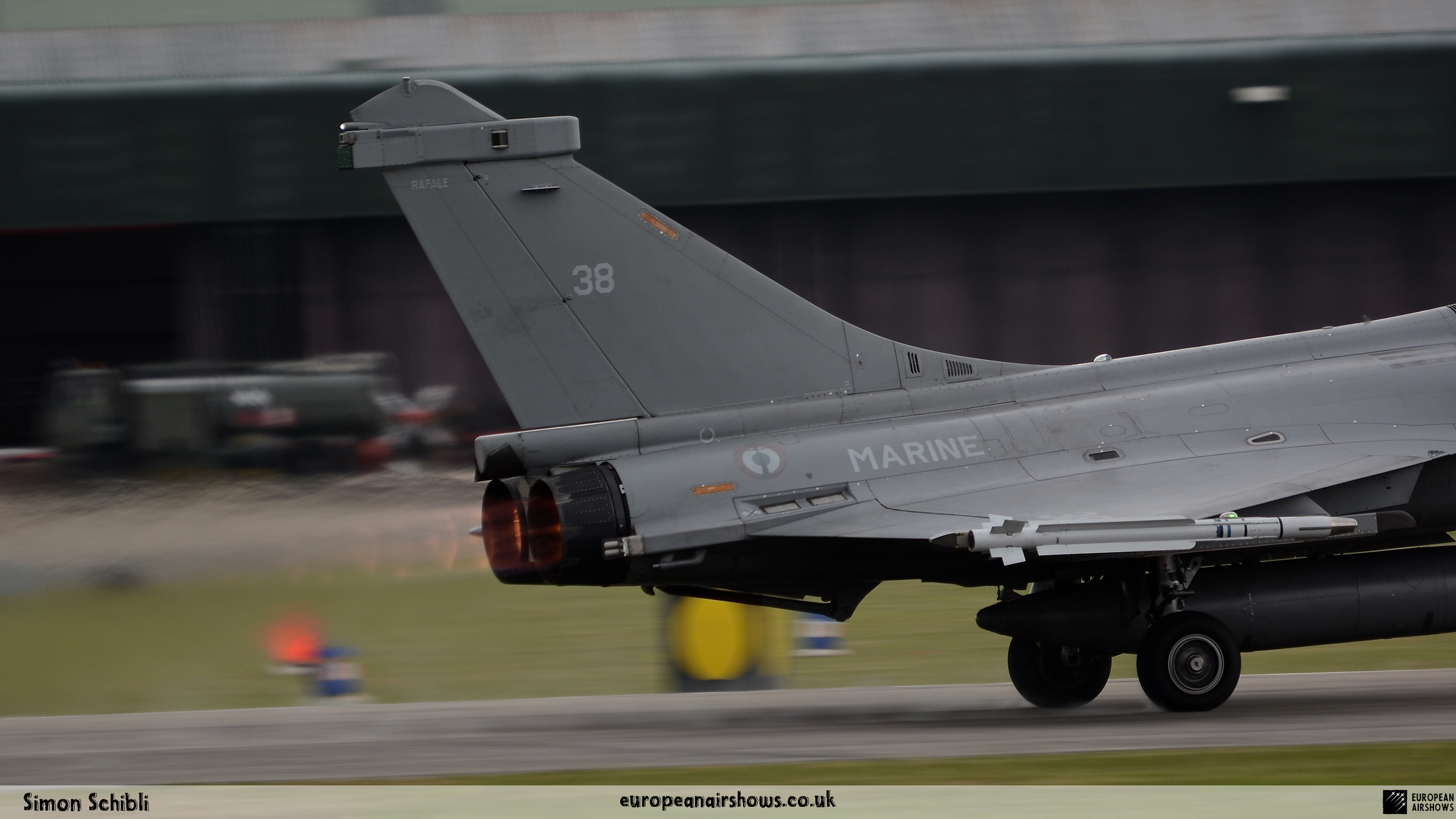
Dassault identifies the main differences between the M and land variants as the undercarriage and arresting hook. The naval aircraft has the structure and landing gear required for catapult launches and high-sink-rate arrested recoveries, together with a distinctive nose-gear arrangement for the launch bar. It also has thirteen external stations rather than the fourteen available on land-based Rafales.
Canards, delta wing and digital flight control
The close-coupled canards work with the delta wing to retain control and lift at high angle of attack. A digital fly-by-wire system manages the deliberately relaxed aerodynamic stability, allowing rapid response and strong manoeuvrability while protecting the aircraft throughout its permitted flight envelope.
Two M88 engines give naval safety and compact power
Two Safran M88-2 turbofans provide the thrust. Twin engines support acceleration and sustained manoeuvring, but their importance at sea is wider than display performance: the Marine nationale also values the redundancy and recovery options available when operating far from a diversion airfield.
A sensor-fusion fighter rather than a single-sensor platform
The RBE2 AESA radar, Front Sector Optronics, SPECTRA electronic warfare suite, identification systems and off-board information are fused into a single tactical picture. Link 16 connects the aircraft with other fighters, the E-2C Hawkeye, ships and coalition command systems, while SPECTRA detects, identifies and locates radar, missile and laser threats.
The exact standard in current French naval service
The Marine nationale identifies its Rafale Marine fleet as operating at F4.1 standard. F4.1 adds new functions and equipment within the Rafale's continuous-development path while preserving the common airframe and mission-system approach that allows older aircraft to be upgraded rather than replaced by a separate model.
Why it is described as omnirole
A Rafale M can move between air defence, precision attack, maritime strike, reconnaissance, buddy refuelling and nuclear deterrence. The term goes beyond carrying different weapons: sensor fusion and mission-system design allow tasks to be combined or changed during the same sortie, a central reason the aircraft replaced several specialised French naval types.
The story so far
From a naval prototype to the public face of modern French carrier aviation.
1986
The Rafale A demonstrator flies
Dassault's technology demonstrator made its first flight on 4 July. It established the aerodynamic and systems direction for a new French combat aircraft intended to serve both land-based and naval forces.
1991
Rafale M01 begins the naval test programme
The first single-seat Marine prototype took the Rafale into the specialised work required for catapult launches, arrested landings and sustained carrier operations.
2000-01
Production aircraft reach the Marine nationale
Deliveries began in 2000 and the first aircraft reached Flottille 12F at Landivisiau in 2001. Early Rafale Ms deployed during Operation Héraclès as the Navy introduced its new fighter at sea.
2002
The Rafale Marine enters service
The aircraft formally entered French naval service while 12F continued the experimentation, conversion and operational-development work needed to turn the new platform into a deployable carrier weapon.
2004
Flottille 12F becomes operational
On 25 June the first Rafale Marine unit was declared operational, completing the transition from initial service entry to a front-line carrier capability.
2008
Interoperability with US carriers is demonstrated
Rafale M operations with USS Theodore Roosevelt reinforced the aircraft's compatibility with American CATOBAR procedures. Dassault identifies it as the only non-US fighter type cleared to operate from US carrier decks.
2011
Carrier combat operations over Libya
Rafale Ms flew air-defence, strike, reconnaissance and refuelling sorties during Operation Harmattan, demonstrating the breadth of the omnirole concept from Charles de Gaulle.
2016
The pair role demonstration is firmly documented
RNAS Yeovilton announced the return of a two-ship Rafale M role demonstration showing operational tactics. The pair won the event's Best Fixed Wing Display award, confirming that the format was already established rather than newly created that year.
2018
Two-ship and four-ship formats appear in one season
A four-aircraft tactical presentation was prepared for La Ferté-Alais, while two-ship demonstrations appeared at Yeovilton and the Royal International Air Tattoo. Different flotillas supplied the UK displays, underlining the operational and non-permanent nature of the act.
2023
F4 begins its naval introduction
Flottille 17F became the first Marine unit selected to introduce the Rafale F4 standard. F4.1 is now identified by the Marine nationale as the current operational standard of the naval fleet.
Understanding the display
A public demonstration shaped by carrier operations and front-line priorities.
Role demo means tactics before aerobatics
The pair is not trying to imitate a national formation team or the Air and Space Force's Rafale Solo Display. Its purpose is to show how two naval fighters depart, support one another, separate, manoeuvre and recover. The display's character comes from operational geometry, not from a catalogue of named aerobatic figures.
The aircraft connects the crowd to the carrier air wing
Every pass represents a fighter whose normal workplace alternates between Landivisiau and Charles de Gaulle. The strengthened landing gear, launch arrangement and arresting hook are not decorative naval details: they allow a 24-tonne-class combat aircraft to operate from a moving flight deck and project French air power far from home.