PC-7 Team
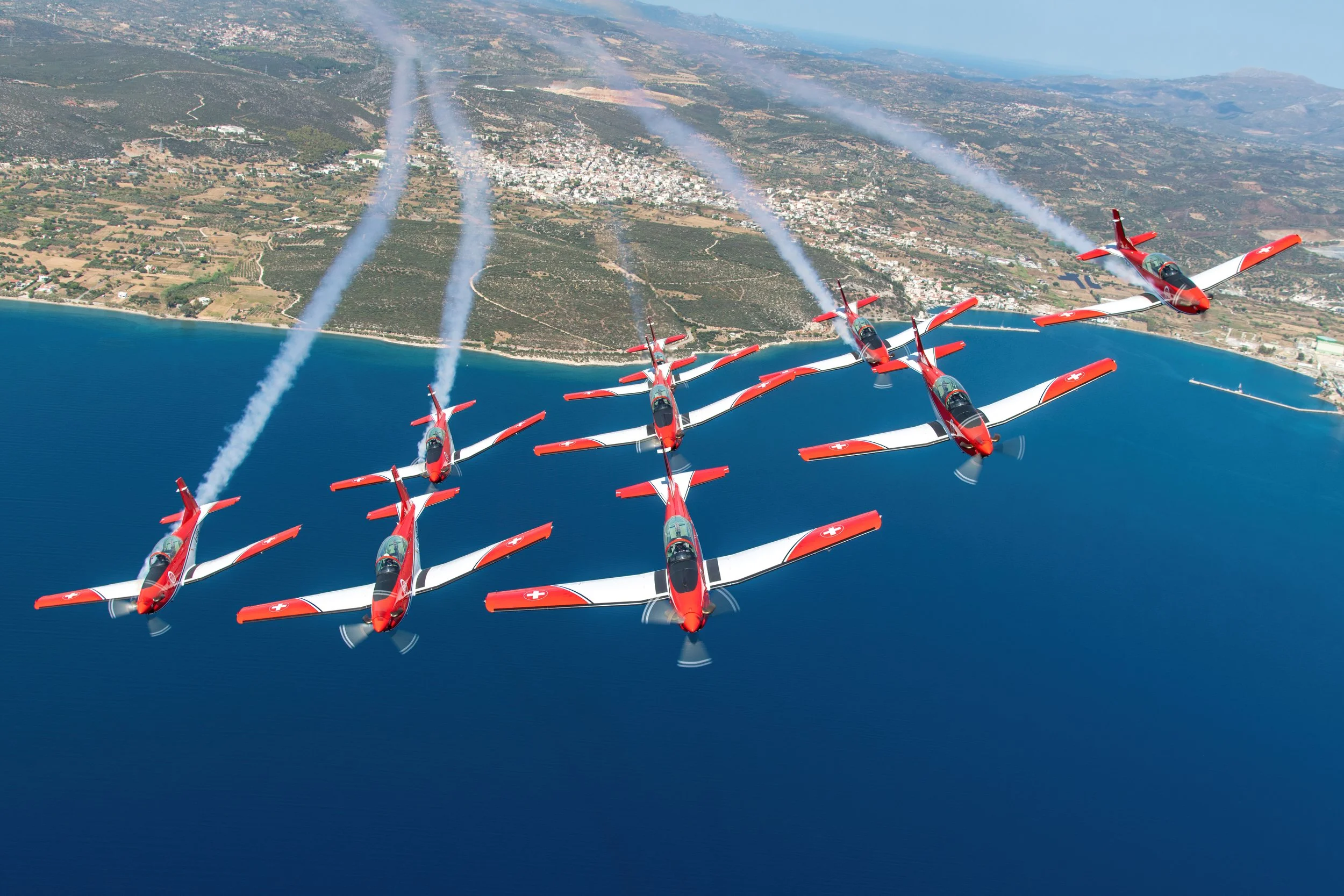
Nine-ship Pilatus PC-7 formation display team of the Swiss Air Force
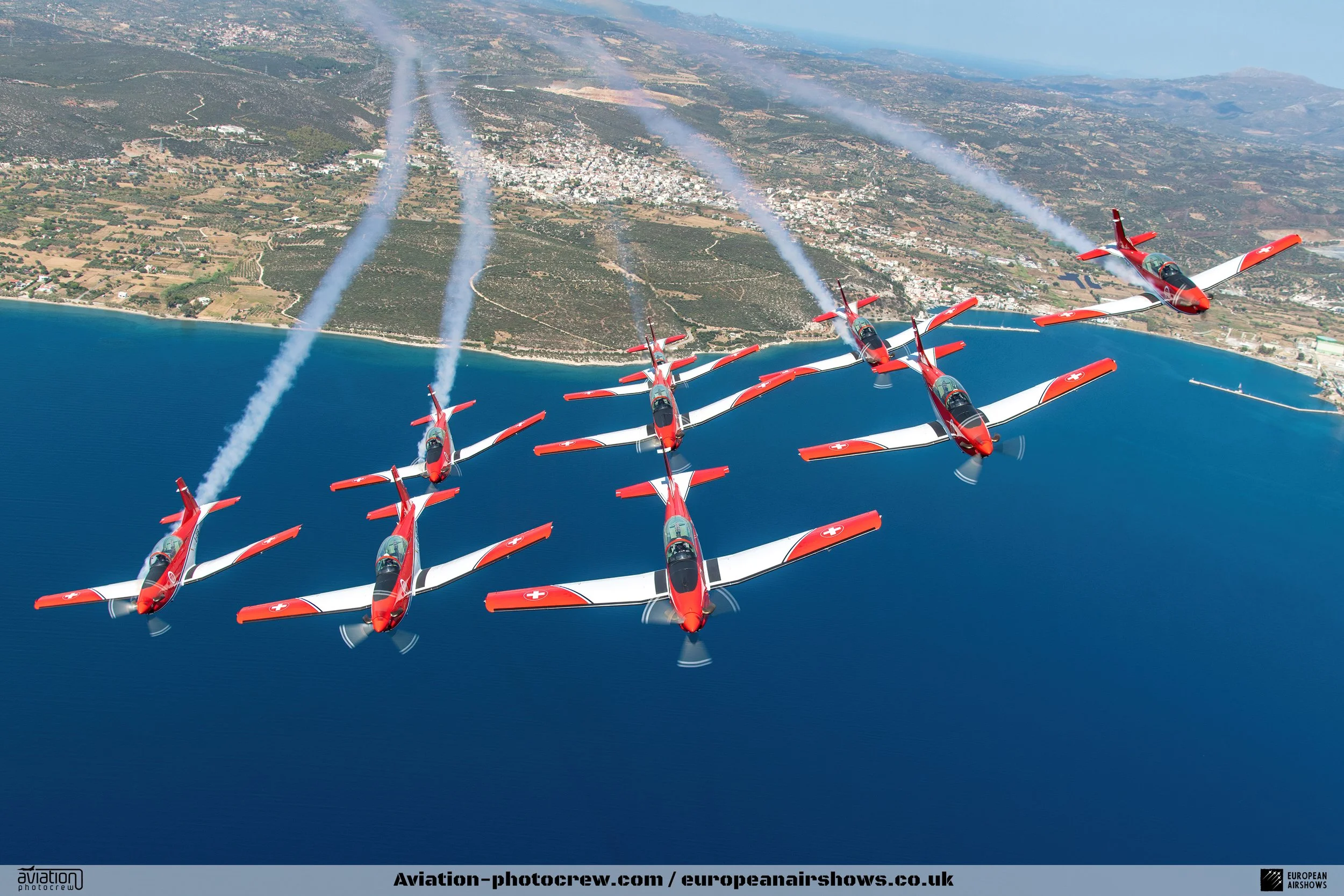
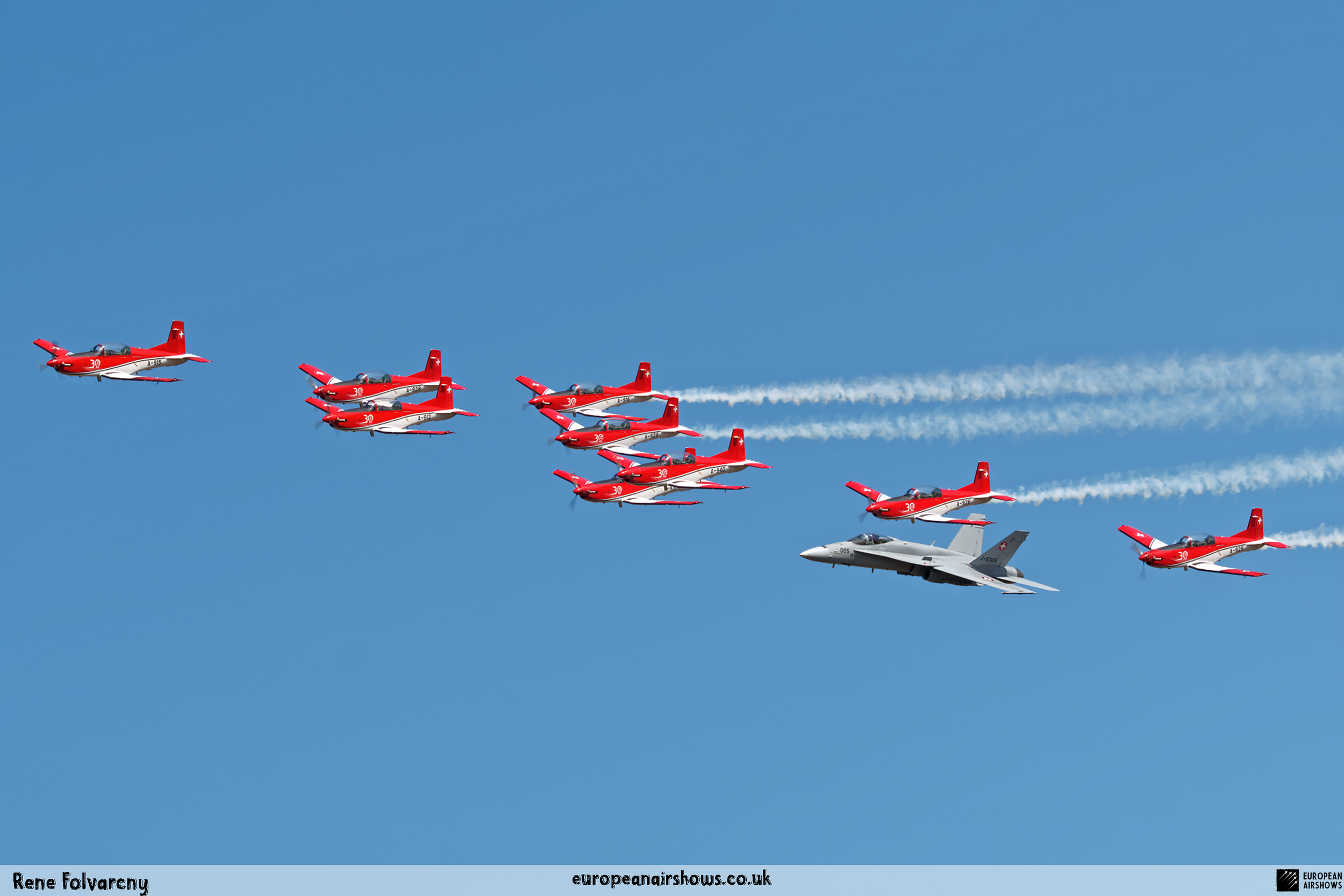
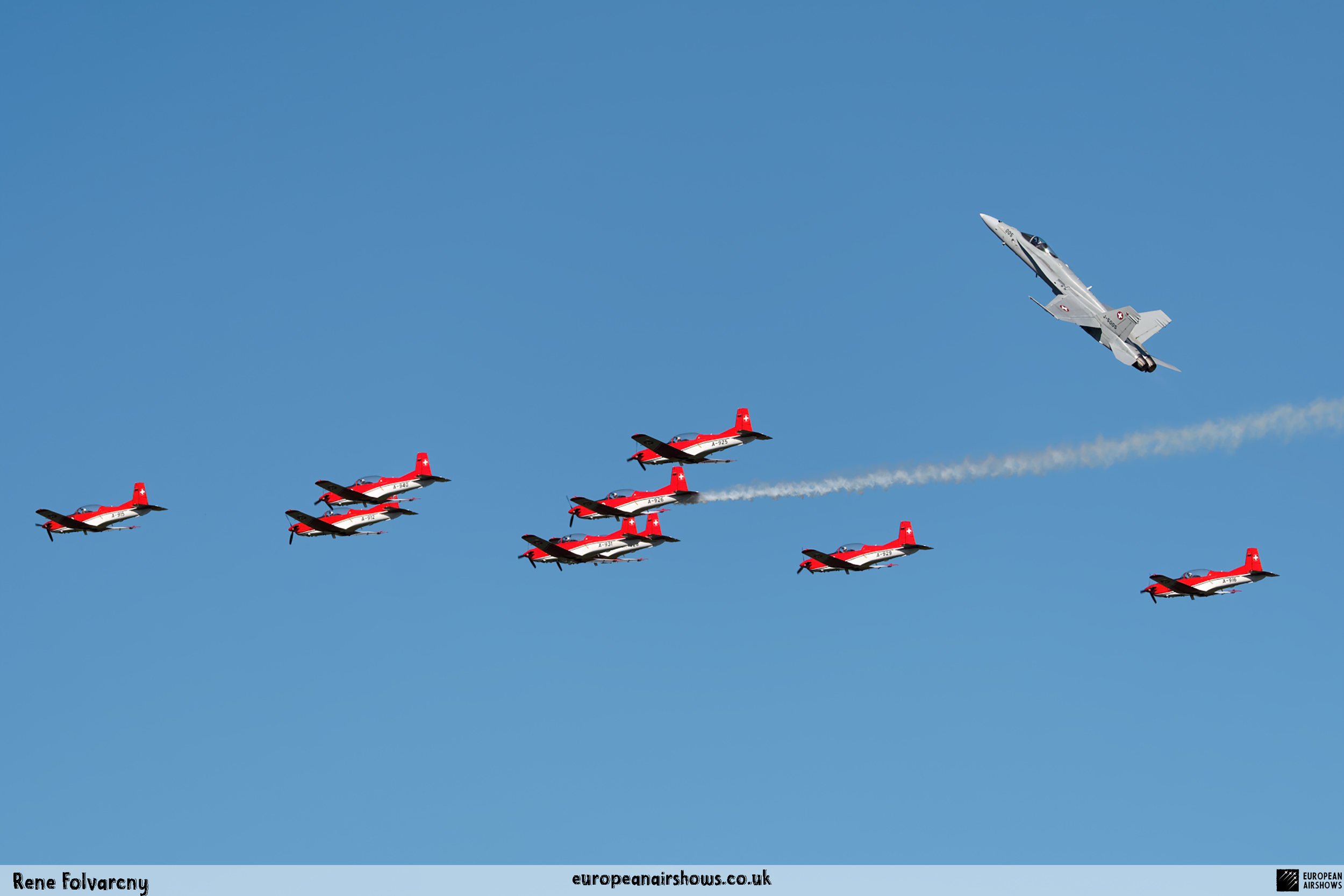
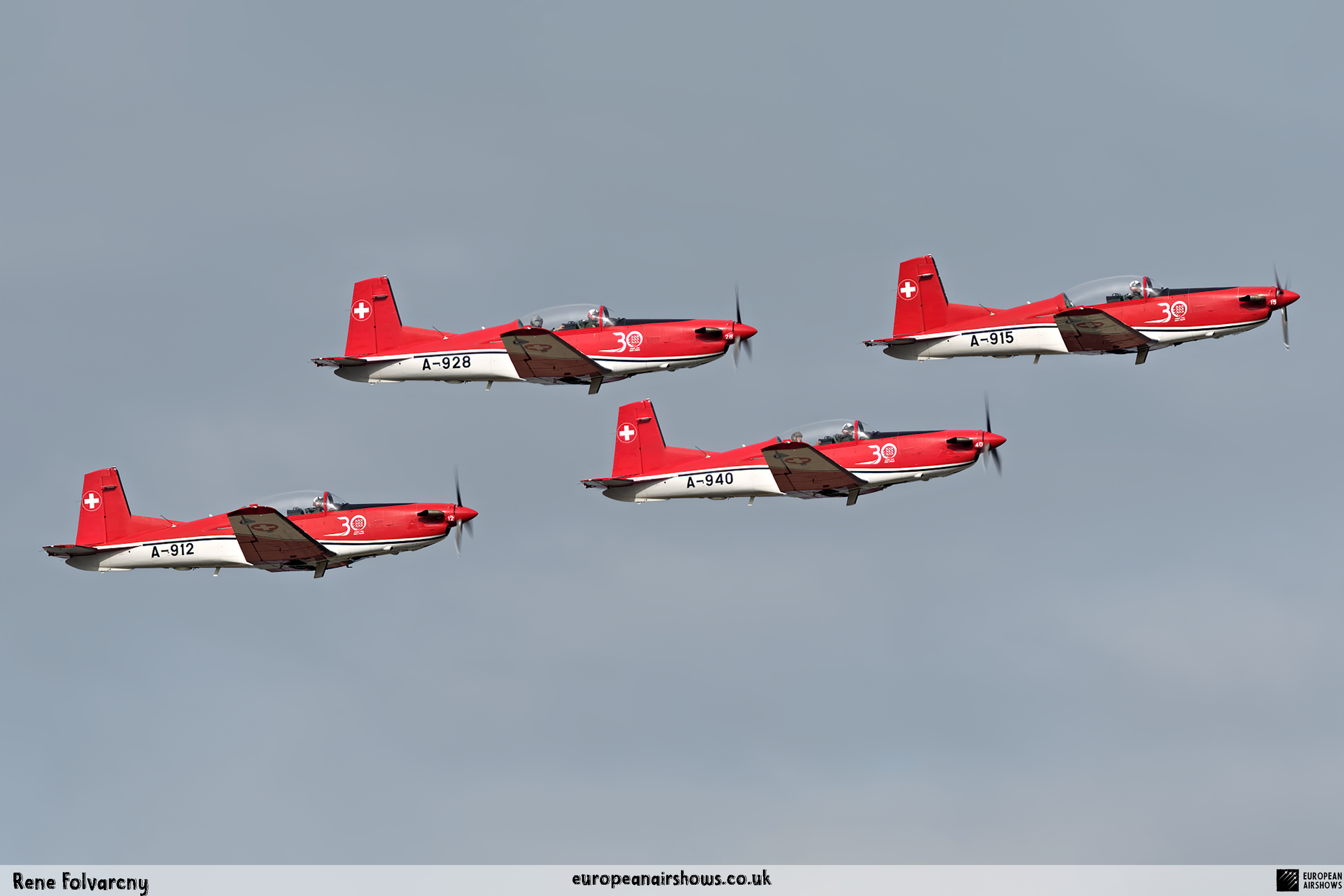
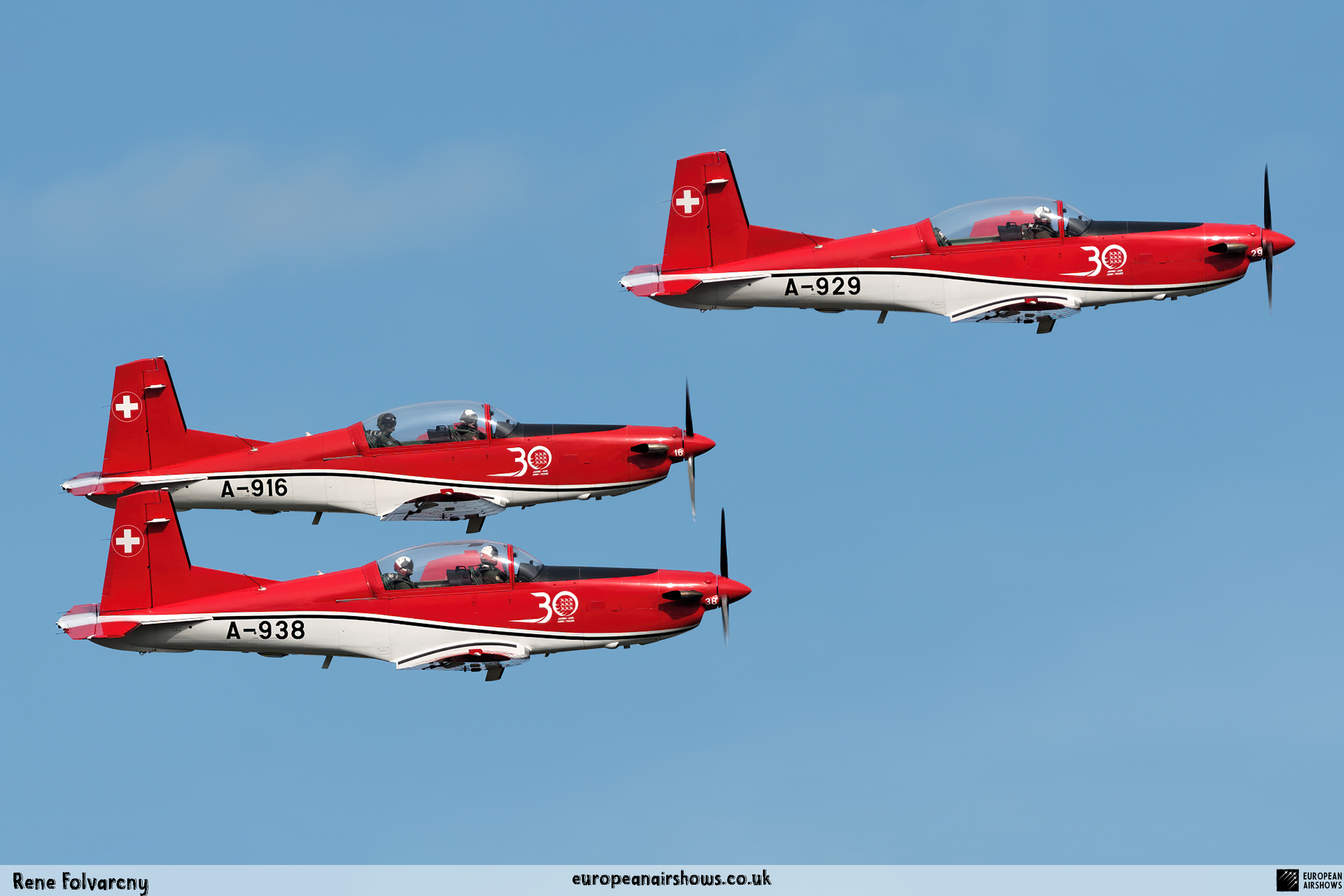
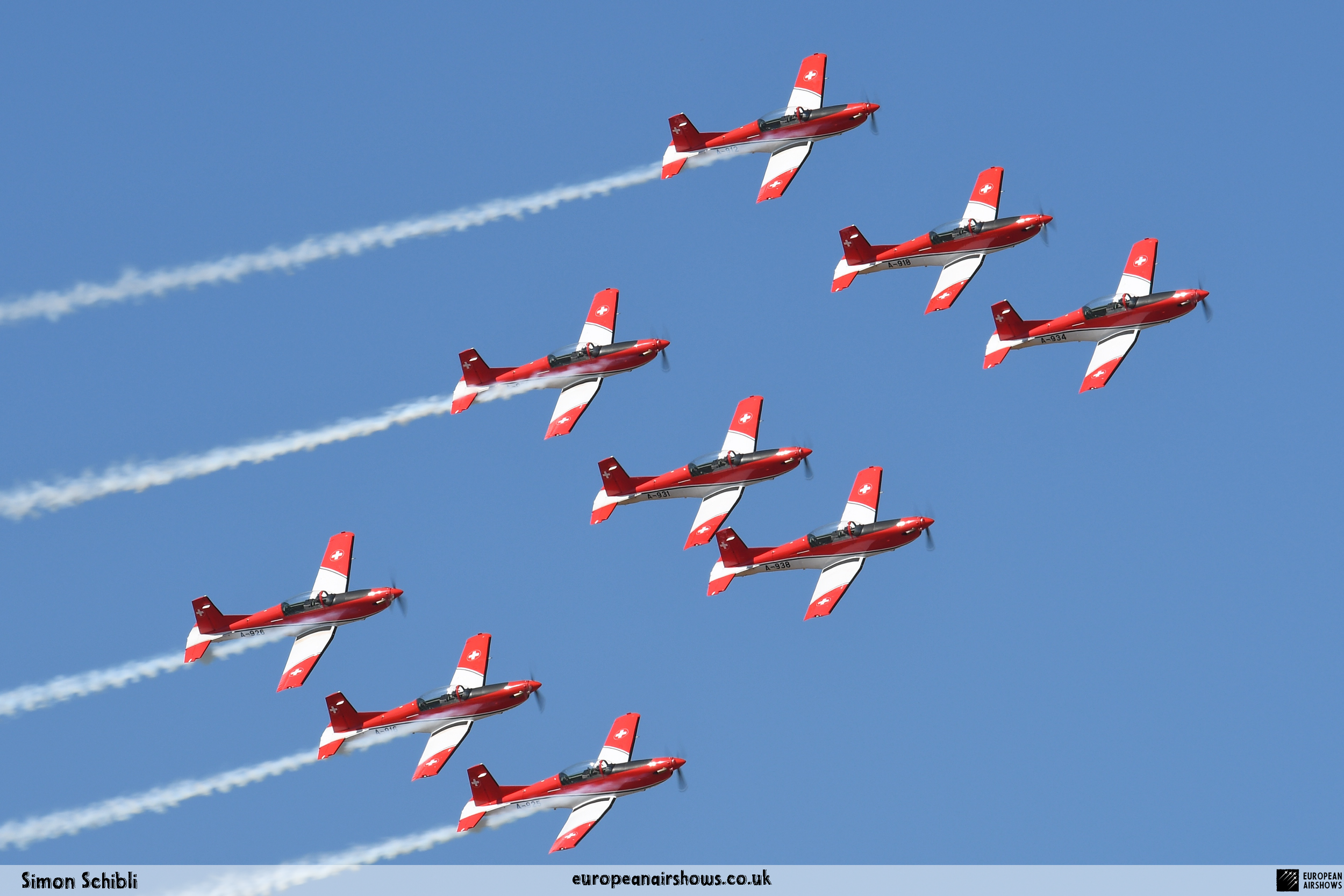
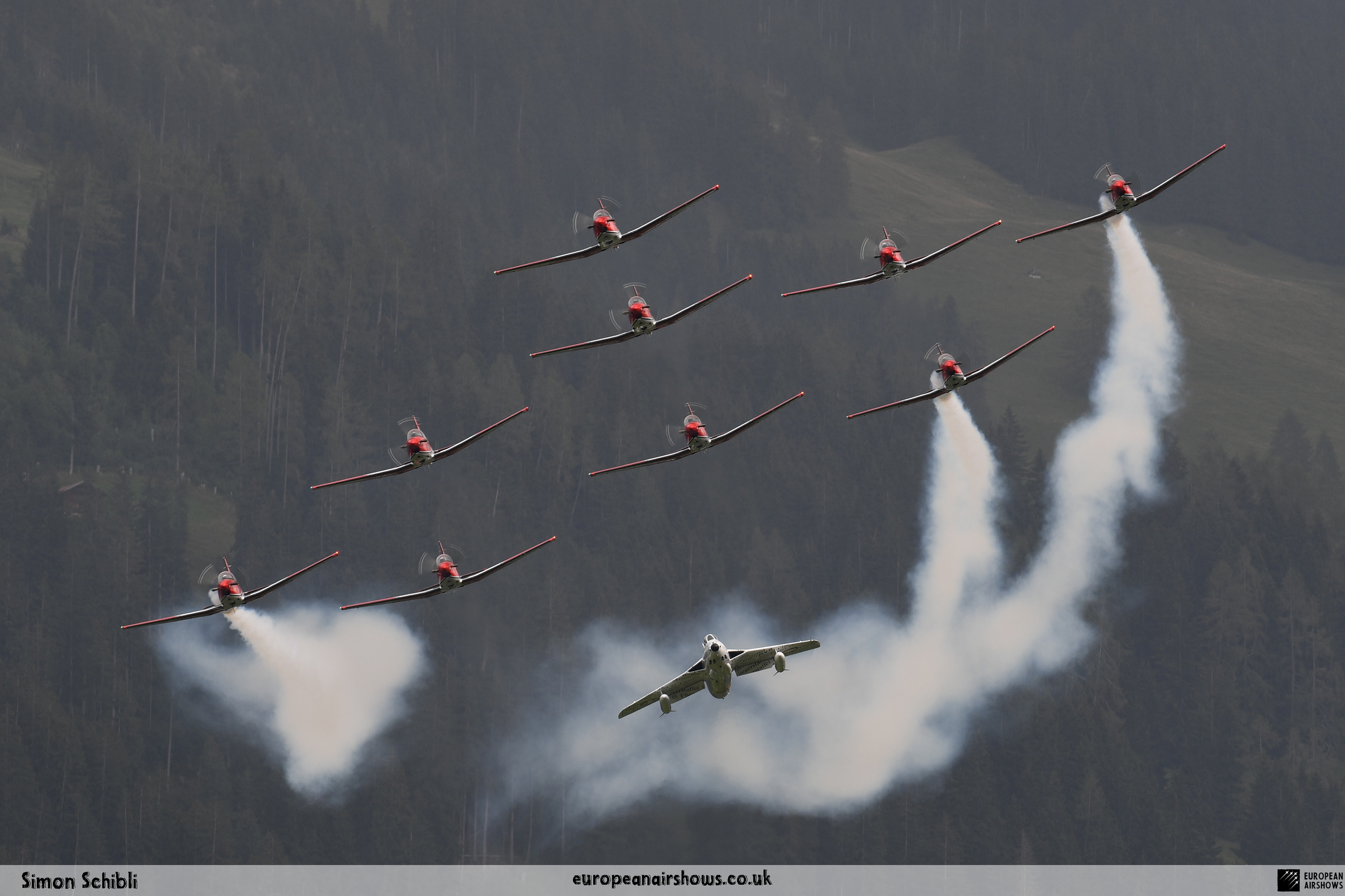
The PC-7 Team brings together nine red-and-white Swiss trainers and nine frontline fighter pilots. Large formations, rapid changes, full-team aerobatics, mirror flying, crossings and solo elements turn the Air Force's basic trainer into one of Europe's most distinctive military formation displays.
- Formation roots
- 1987
- Official team
- 1989
- Standard team
- 9 aircraft
- Aircraft
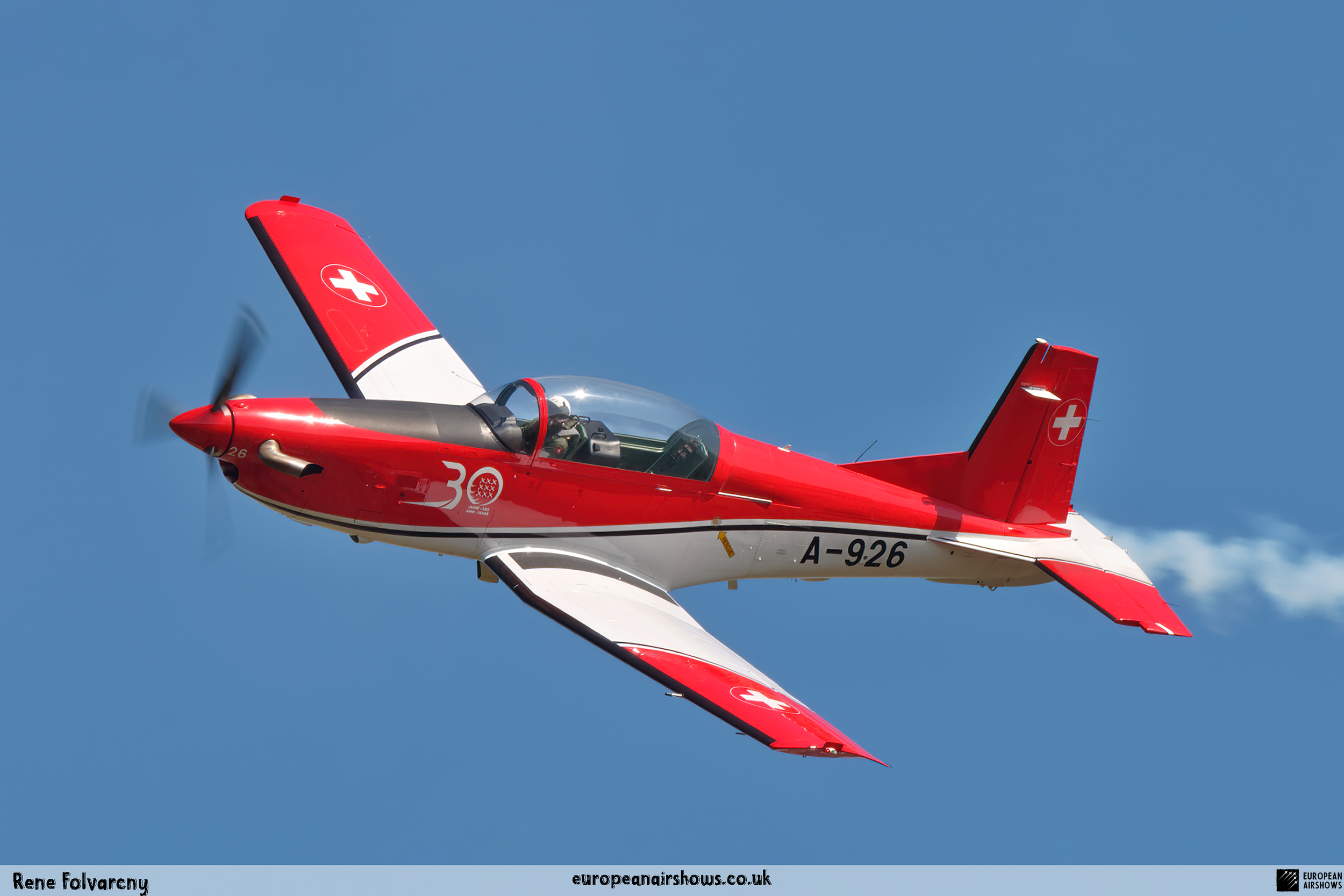
- Pilatus PC-7
- Display length
- About 25 minutes
- Pilots' main role
- F/A-18 operations
The team
A national display team flown as a second duty by operational fighter pilots.
Nine F/A-18 pilots return to the basic trainer
Every display pilot is a career member of the Swiss Air Force's Professional Aviator Corps. Their primary work is on the F/A-18 Hornet, contributing to air sovereignty, air policing and the wider operational mission from Switzerland's fighter bases. Flying with the PC-7 Team is an additional assignment rather than a full-time display posting.
The team selects and develops its own replacements
New members are chosen by the serving display pilots. They already arrive as qualified military aviators, so conversion into the team is not about learning basic aerobatics from the beginning. It is about mastering a specific position in a nine-aircraft system, learning the visual references, timing and calls, and building the mutual trust needed to fly only a few metres apart.
A compact training cycle demands careful preparation
The team completes an intensive training course at the start of its display period. Outside that course, the pilots do not operate as a permanently assembled aerobatic squadron: they normally regroup before an appearance, rehearse at the display location and then return to their frontline duties. Detailed briefing, programme walk-throughs and video debriefing make that limited flying time productive.
The ground organisation is deliberately flexible
Swiss Air Force mechanics prepare and inspect the aircraft at the base from which the team is operating. They are not permanently assigned to a separate display fleet. For an overseas deployment, a compact maintenance party travels with the team, allowing nine aircraft to be supported without creating a standalone aerobatic unit.
The display
Nine aircraft moving as one, then opening into crossings and solos.
The PC-7's relatively tight turning circle keeps the action close to the crowd throughout a display of about 25 minutes. The sequence balances the scale of a nine-ship formation with rapid reshaping, full-team aerobatics and smaller elements that create contrast without allowing the programme to lose momentum.
Large formation arrival
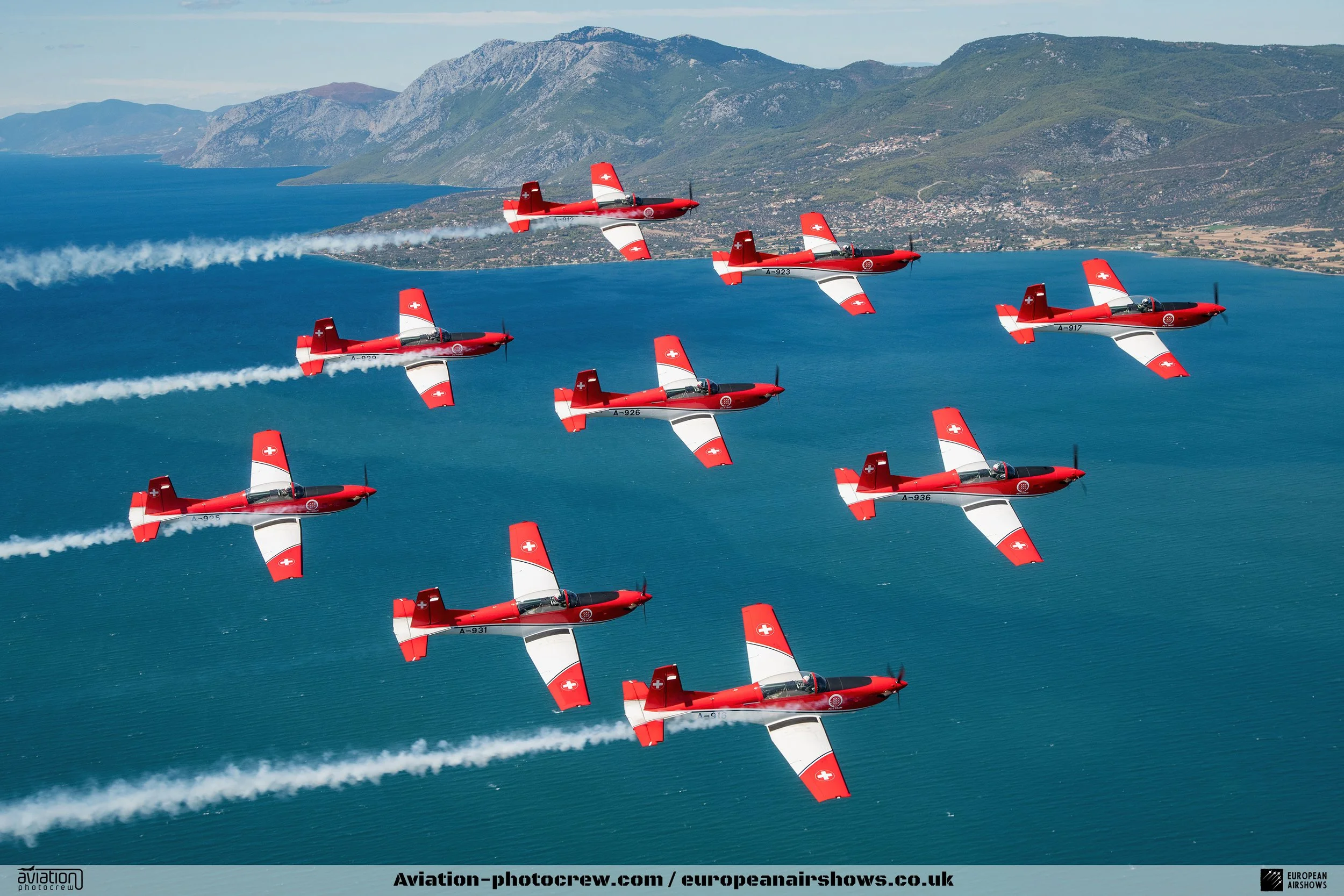
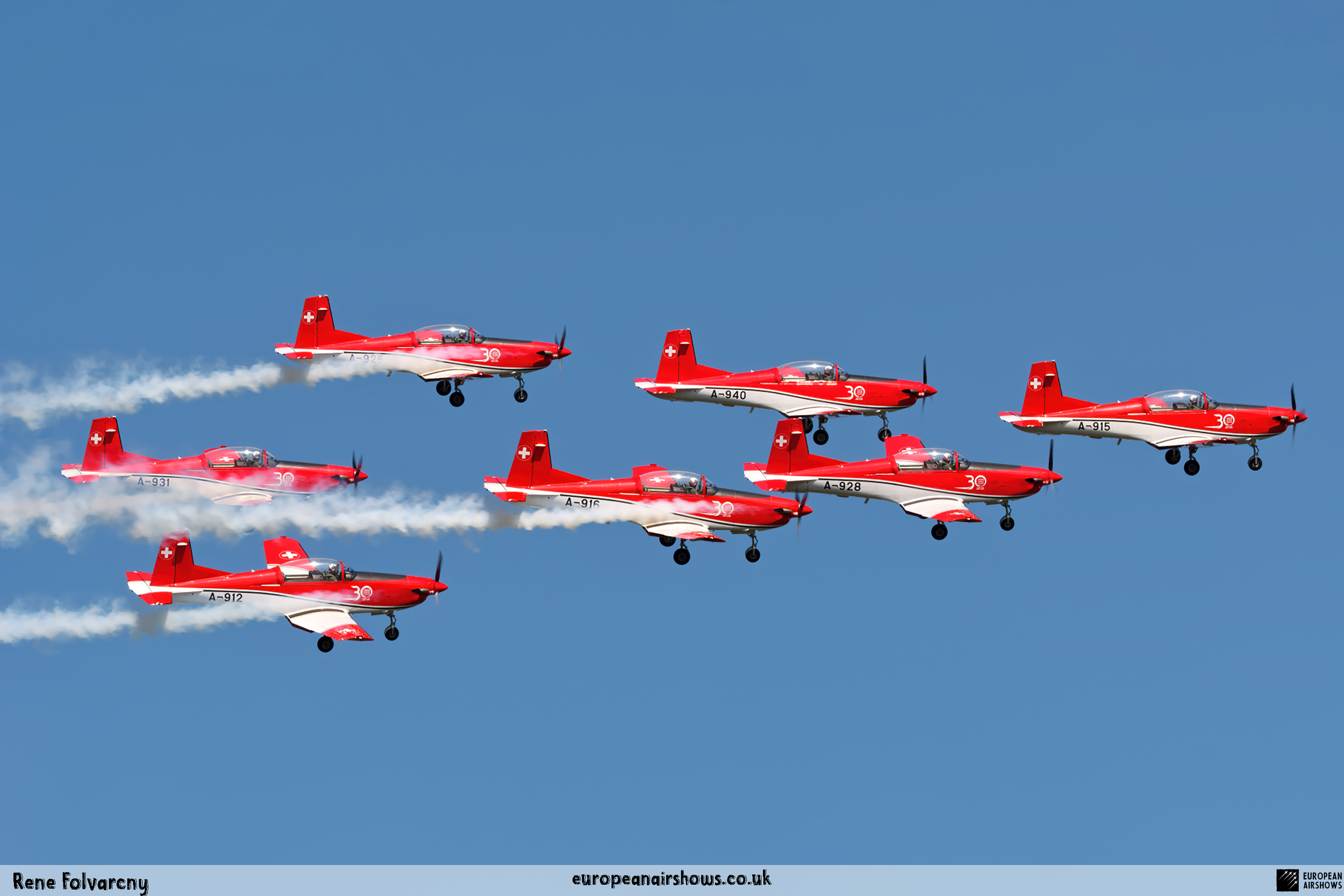
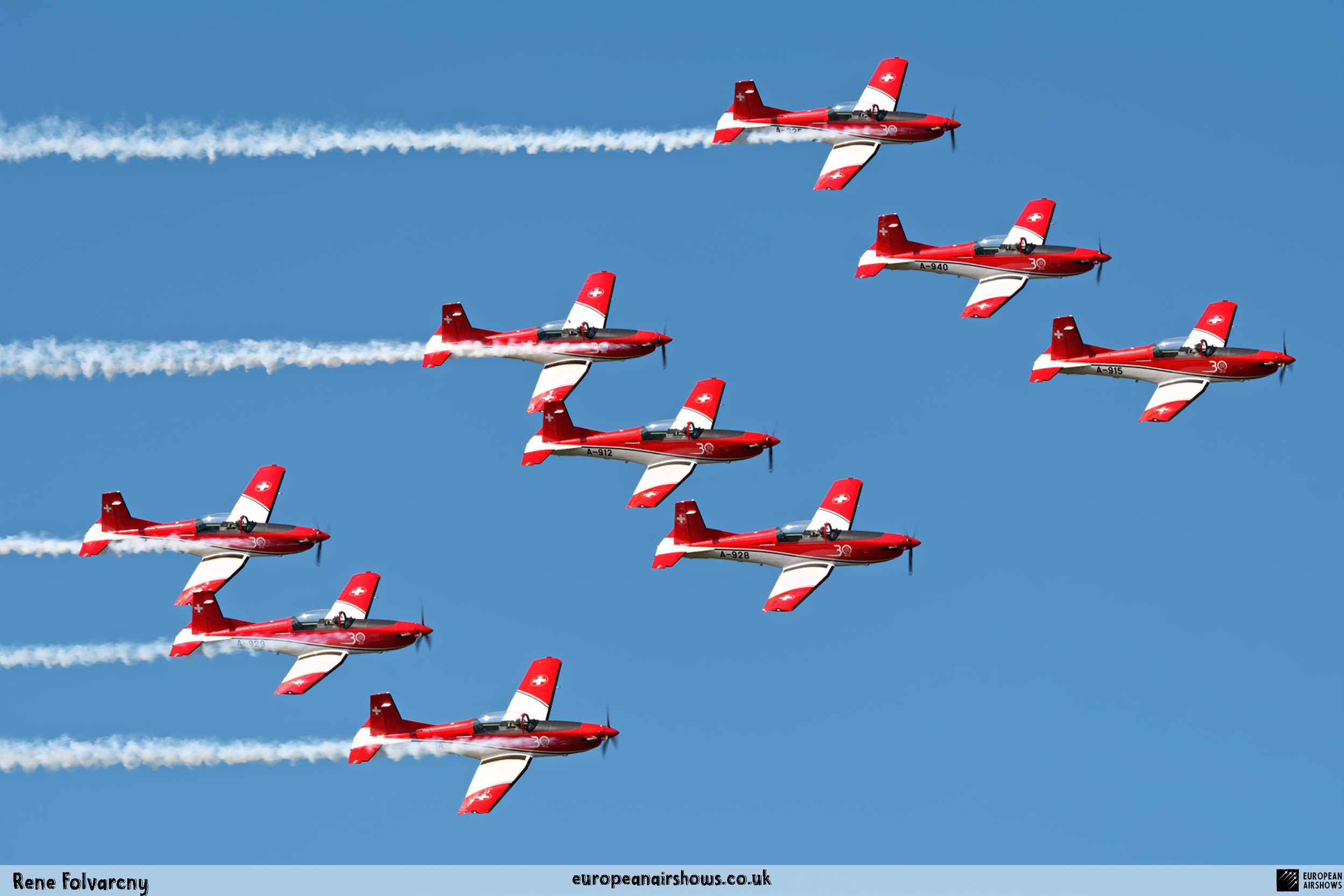
The team establishes its scale immediately, presenting nine aircraft in a clean geometric formation before the first major change.
Entirely hand-flown
Formation aerobatics are flown manually. The leader defines the flight path while the other eight pilots hold visual references on the leader and their nearest neighbours.
Three to five metres apart
At the closest formation points, small control and power corrections maintain spacing measured in only a few metres, even while the team is manoeuvring under load.
Loops and formation changes
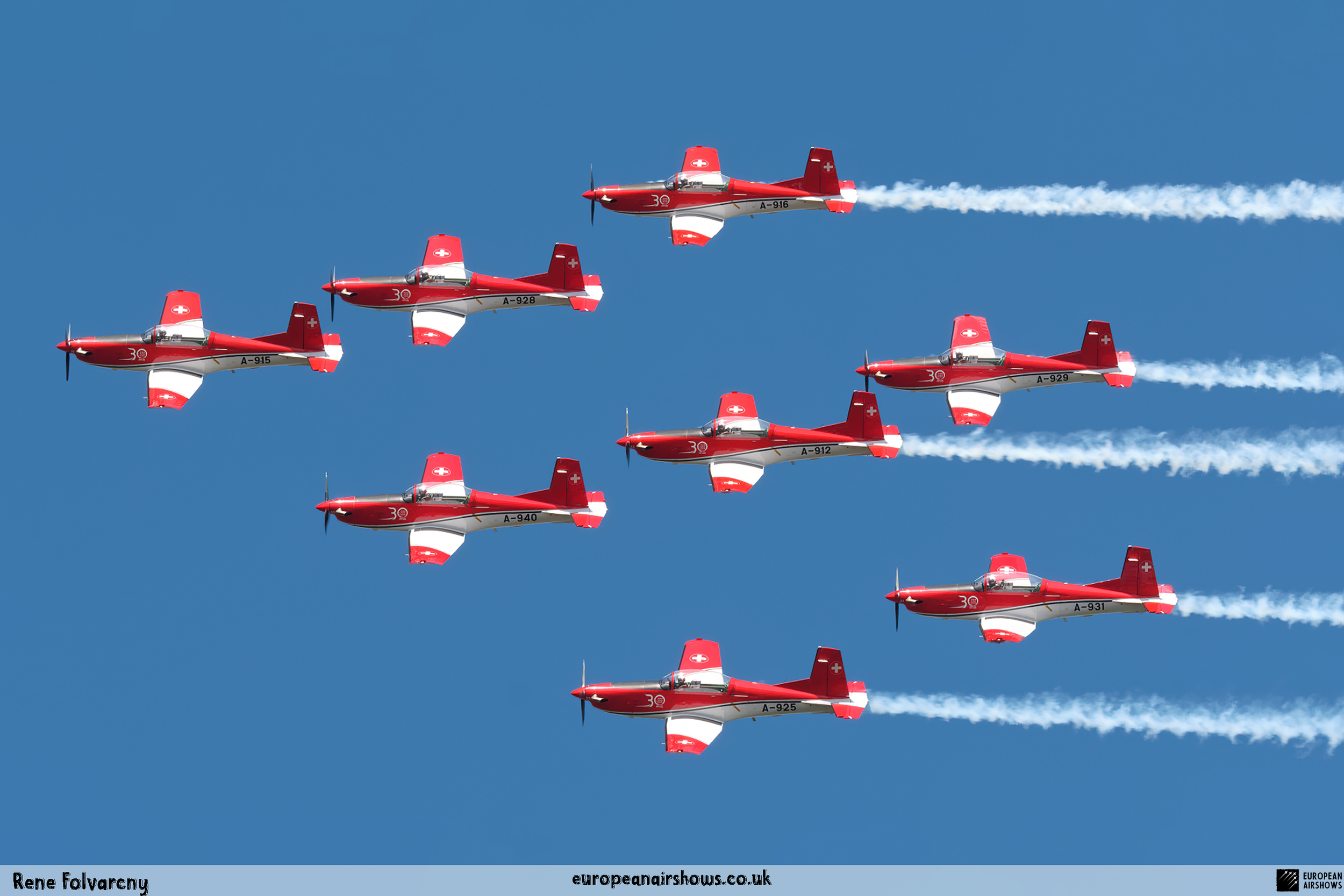
Full-team loops and broad formation transitions use the complete group, making the propeller-driven display feel larger and more dynamic than its speed alone suggests.
Crossings, mirror work and solos
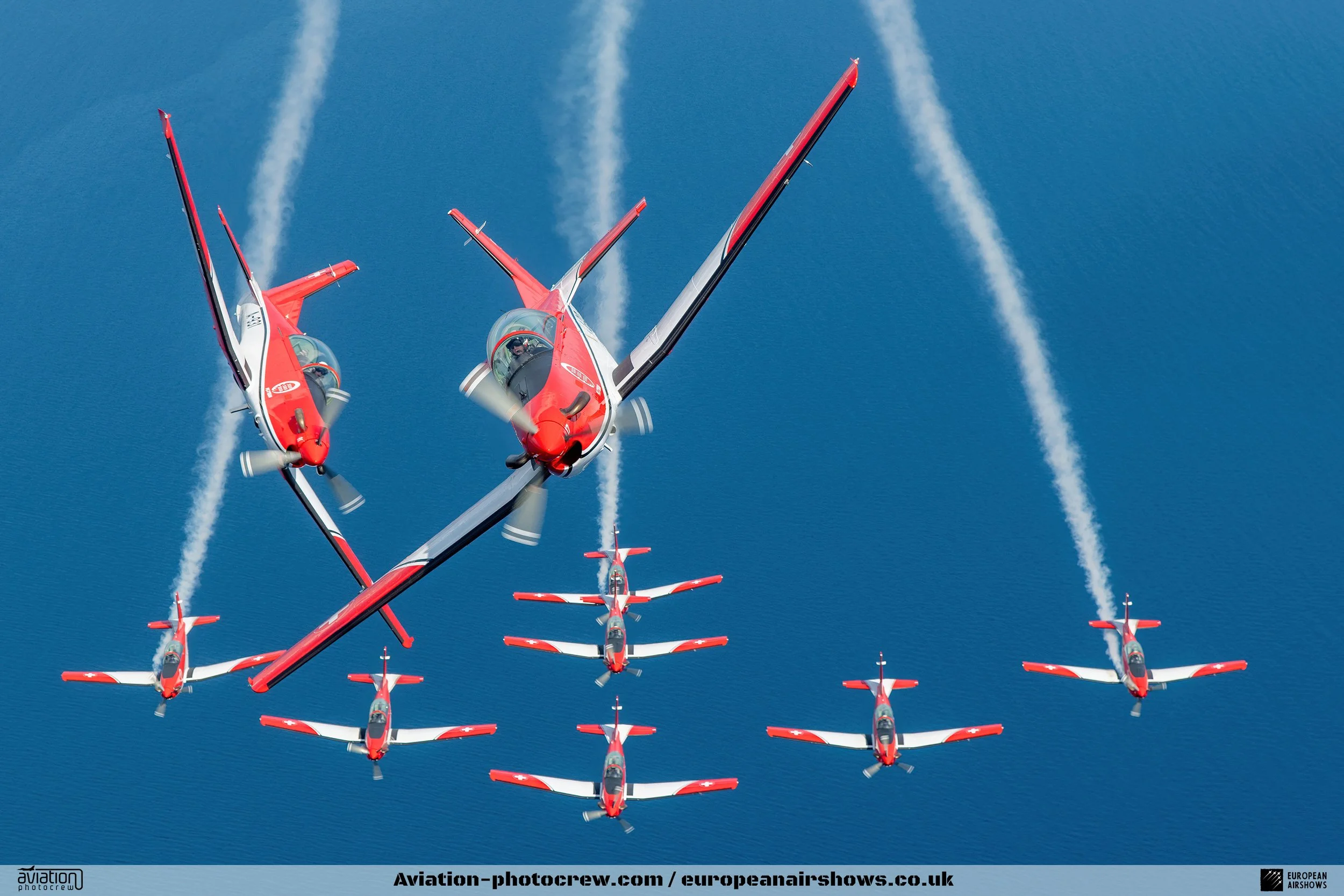
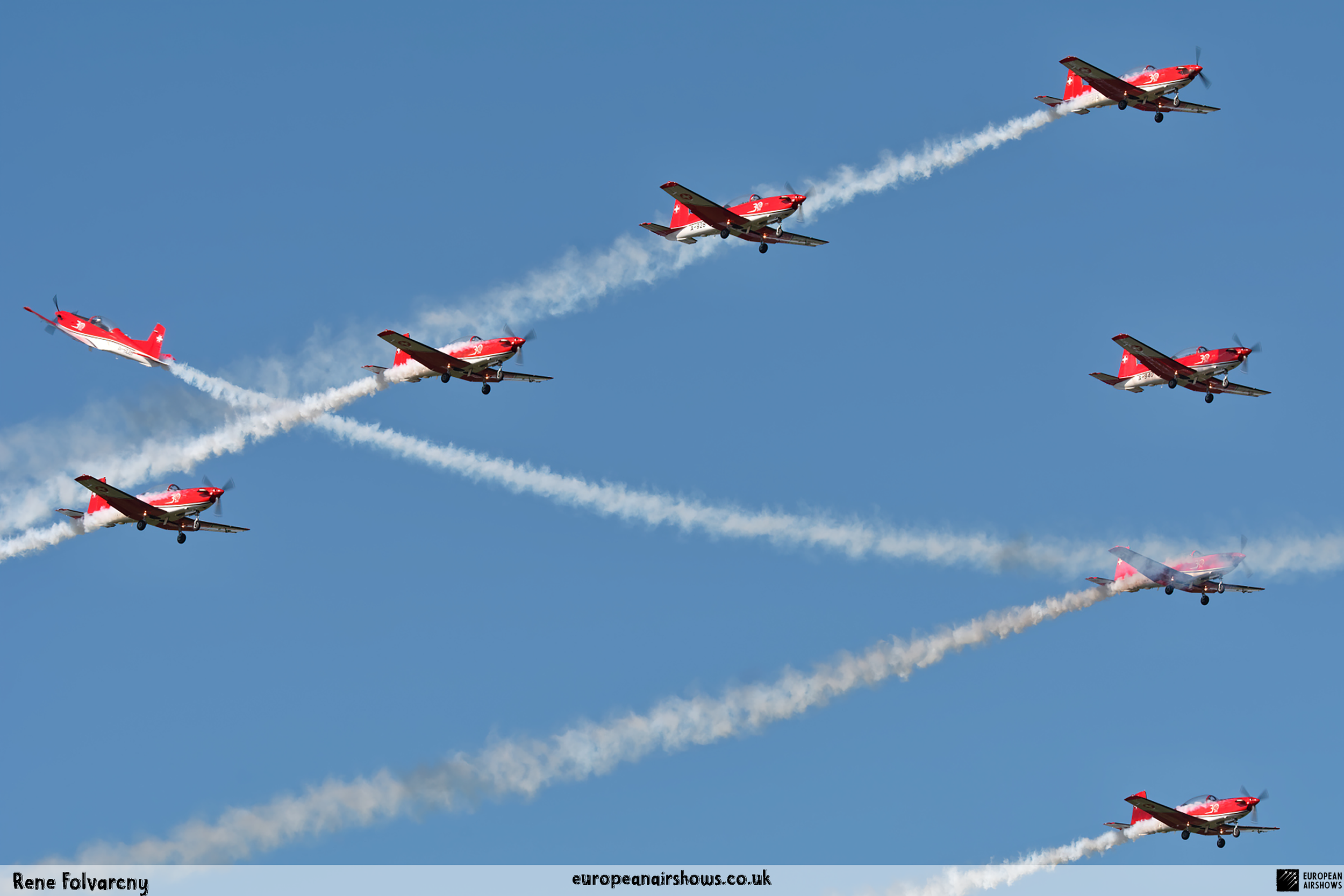
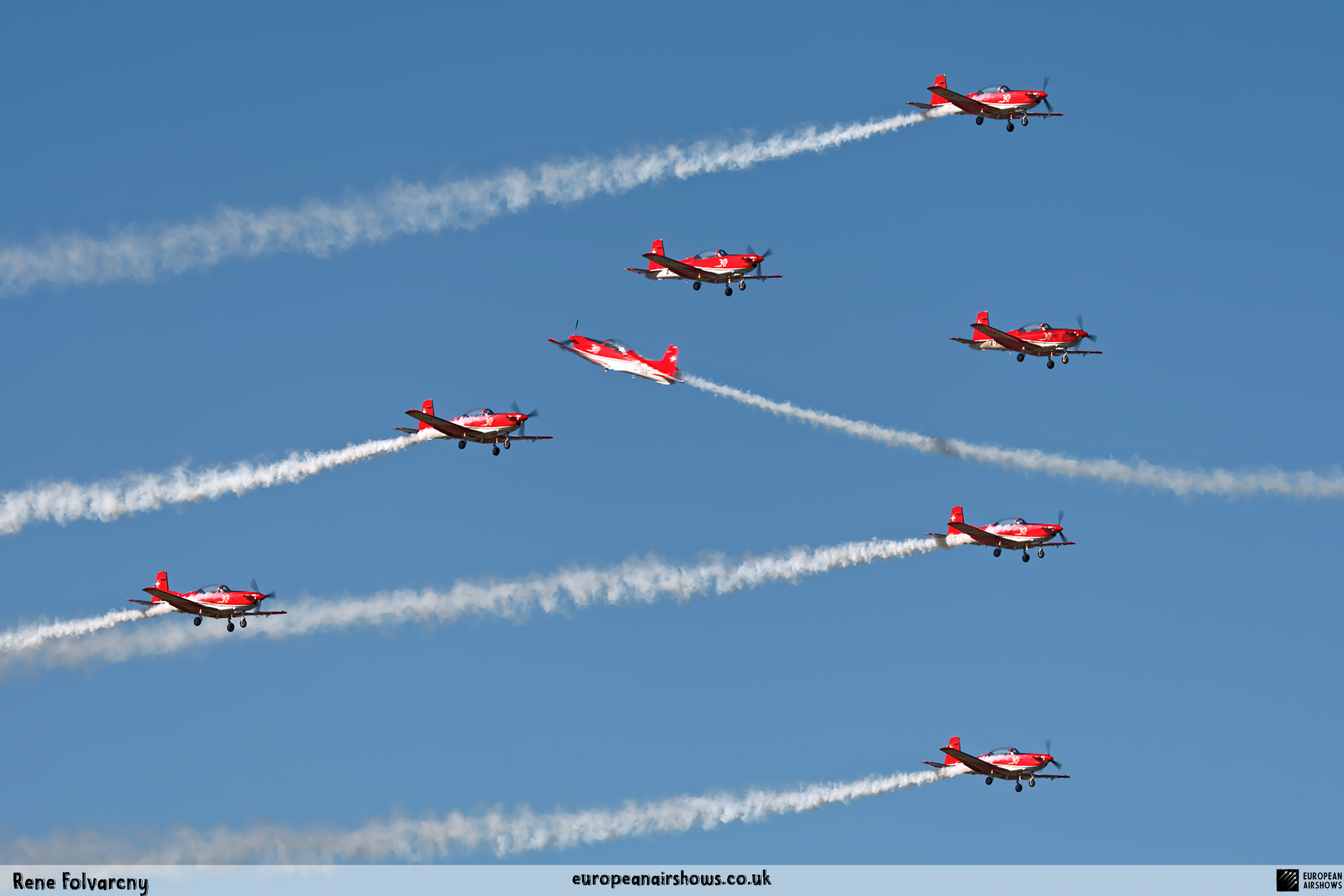
The formation can divide into smaller elements for multiple crossings, opposition work and mirror flying before regrouping for the closing figures.
Smoke and weather flexibility
White smoke reveals the shape of the manoeuvres, while the programme can be adapted when cloud prevents the full vertical sequence from being flown.
The aircraft
Pilatus PC-7 Turbo Trainer: Switzerland's modernised basic trainer.
From the Pilatus P-3 to a successful turboprop trainer
The PC-7 emerged from Pilatus work to combine the proven layout of the piston-engined P-3 with turbine power. A P-3 conversion became an early PC-7 development aircraft, but the production model was substantially redesigned before series manufacture began in the 1970s. The result was a rugged all-metal, low-wing trainer with tandem seating, retractable landing gear and the reliability of the Pratt & Whitney Canada PT6.
The foundation of Swiss military flying training
Switzerland ordered forty PC-7s in 1981 and introduced the type during the early 1980s. It is used for selection and basic training of future helicopter and jet pilots, including visual and instrument flying, aerobatics and formation work. Those are not separate airshow skills: the PC-7 Team presents a highly refined version of disciplines that already belong to the aircraft's training role.
The Swiss fleet was transformed in 2008 and 2009
Twenty-seven surviving aircraft received a major modernisation. A glass cockpit, GPS and autopilot improved the training environment and enabled civil instrument-flight certification, while the former orange-and-silver finish gave way to the red-and-white national colour scheme now inseparable from the team.
A simple airframe that demands precise energy management
The PT6A-25A drives a three-blade Hartzell propeller and gives the PC-7 enough performance for loops, rapid reversals and sustained formation changes without pushing the display far from the crowd. The aircraft is not a purpose-built competition machine: its appeal comes from using a working military trainer with clear handling, immediate power response and a strong structural envelope.
The exact standard flown by the team
Current Swiss official material identifies the aircraft simply as the Pilatus PC-7 Turbo Trainer. This profile follows that terminology rather than using the NCPC-7 label. The display aircraft are the modernised Swiss standard with glass cockpit, GPS, autopilot, red-and-white livery and the smoke capability introduced for the team's anniversary displays.
The story so far
From an experimental nine-ship to one of Switzerland's best-known aviation symbols.
1970s
Pilatus P-3 pairs establish the idea
The Swiss Air Force's earlier display tradition included two Pilatus P-3 trainers flying synchronised aerobatics. Those paired routines created the conceptual starting point for a larger propeller-driven formation.
1981-83
The PC-7 enters the Swiss training system
Switzerland ordered forty PC-7 Turbo Trainers and introduced the new orange-and-silver aircraft during the early 1980s. Solo demonstrations soon showed the public the capabilities of the new basic trainer.
1987
The first nine-aircraft formation flies
Colonel Hansruedi Ruesch ordered a nine-ship for the Air Force championships. Nine volunteers met at Locarno on 20 July for a three-day course, then performed publicly at Dübendorf on 29 August.
1989
The PC-7 Team is officially established
The formation was assembled as an official team for the 75th anniversary of the Swiss Air Force. Major Res Dubs led nine pilots in creating a programme designed to show the full range of formation flying possible with propeller aircraft.
1992
The "neuf magnifiques" make their overseas debut
The team travelled abroad for the first time to Avord in France. International appearances then became an increasingly important part of its ambassadorial role.
1998
A threatened disbandment is avoided
Cost-saving proposals placed the team's future in doubt. Federal Councillor Adolf Ogi argued successfully for its continuation, and the display programme expanded to more European events and an appearance in Israel.
2008-09
The PC-7 fleet receives a complete modernisation
Twenty-seven aircraft gained a glass cockpit, GPS and autopilot. The red-and-white Swiss national scheme replaced the original orange-and-silver appearance and gave the team its modern visual identity.
2013
International recognition at the Royal International Air Tattoo
The team received the King Hussein Memorial Sword for the best flying demonstration at RAF Fairford, one of the most prestigious awards on the European airshow circuit.
2014
Smoke arrives for the 25th anniversary
The team's built-in smoke system entered use during its anniversary year. The white trails made the geometry, crossings and formation changes easier to follow while preserving the aircraft's national red-and-white appearance.
2019
Thirty years of the official team
The anniversary was marked by a special identity recalling the orange colour of the early PC-7 era, together with commemorative aircraft details, a dedicated publication, a film and newly composed display music.
Understanding the identity
A display built around Swiss training, engineering and teamwork.
Nine aircraft make precision visible
The PC-7 Team does not rely on extreme speed. Its scale comes from placing nine aircraft into formations large enough to read across the sky, then changing those shapes quickly and cleanly. Every uneven gap would be visible from the ground, so the formation itself becomes the clearest measure of the pilots' accuracy.
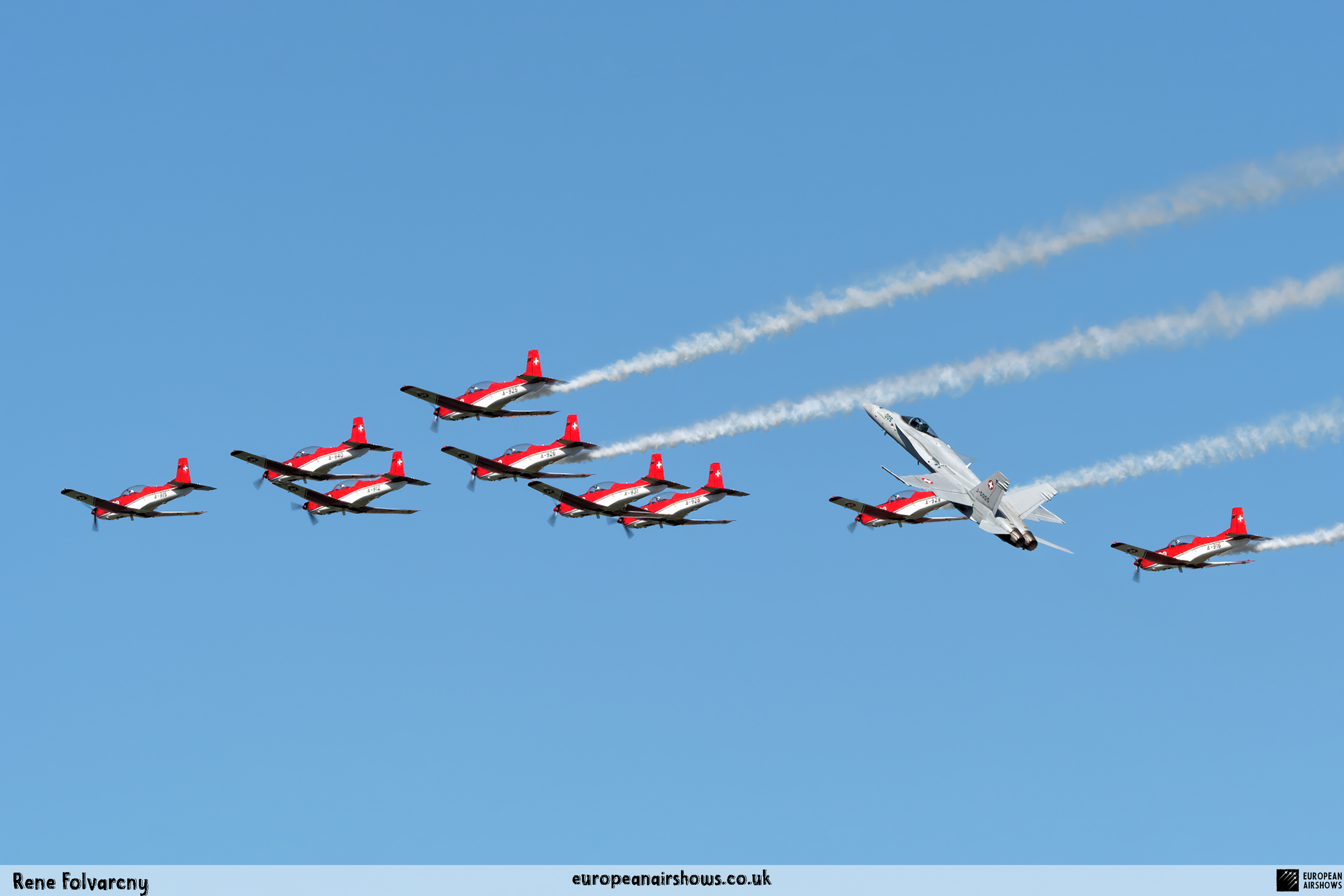
The display connects basic training to air defence
The aircraft represents the beginning of a Swiss military pilot's flying education, while the people in the cockpits normally operate the F/A-18 at the opposite end of that training path. Bringing those two worlds together gives the team an identity that is both ceremonial and directly connected to the Air Force's operational mission.