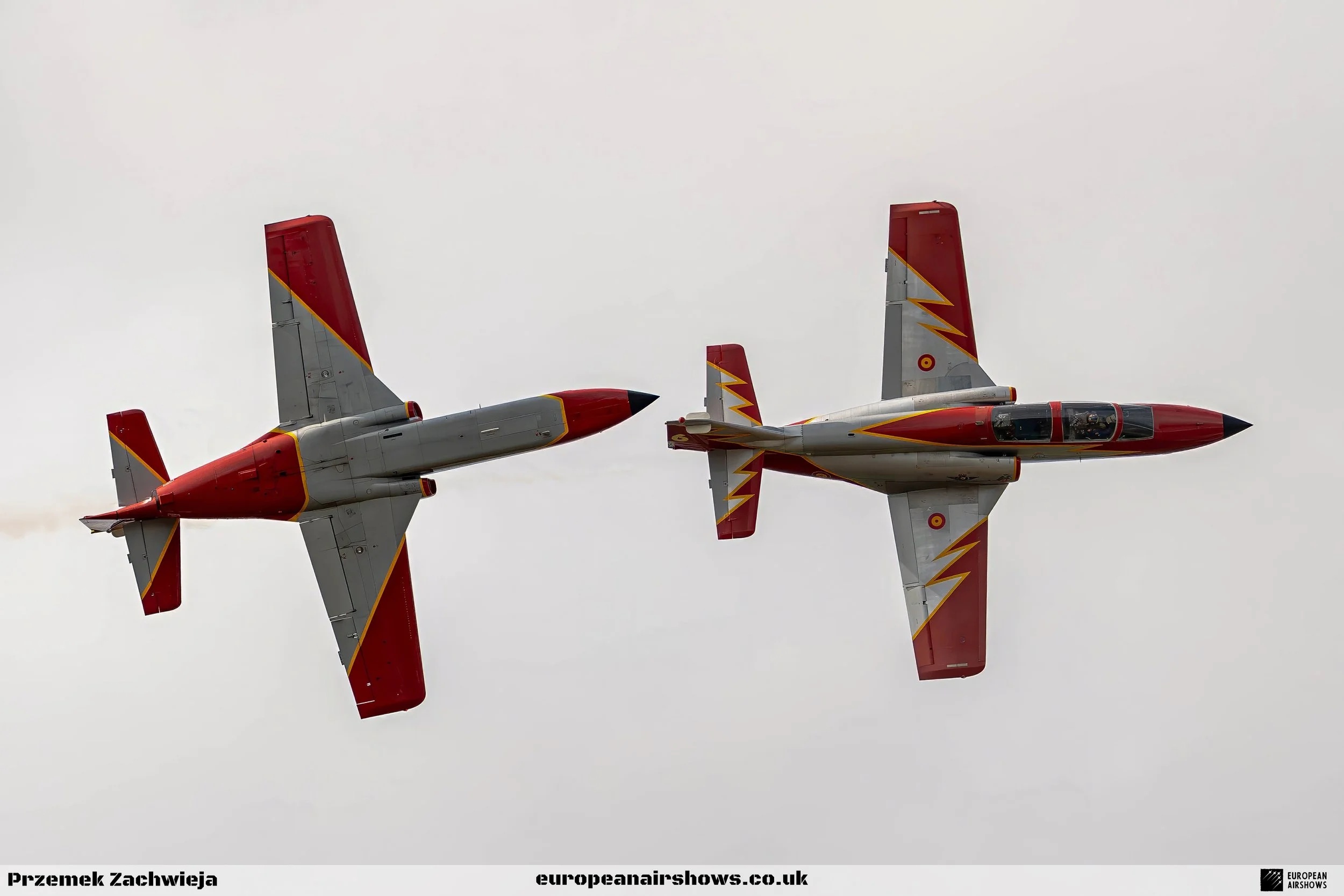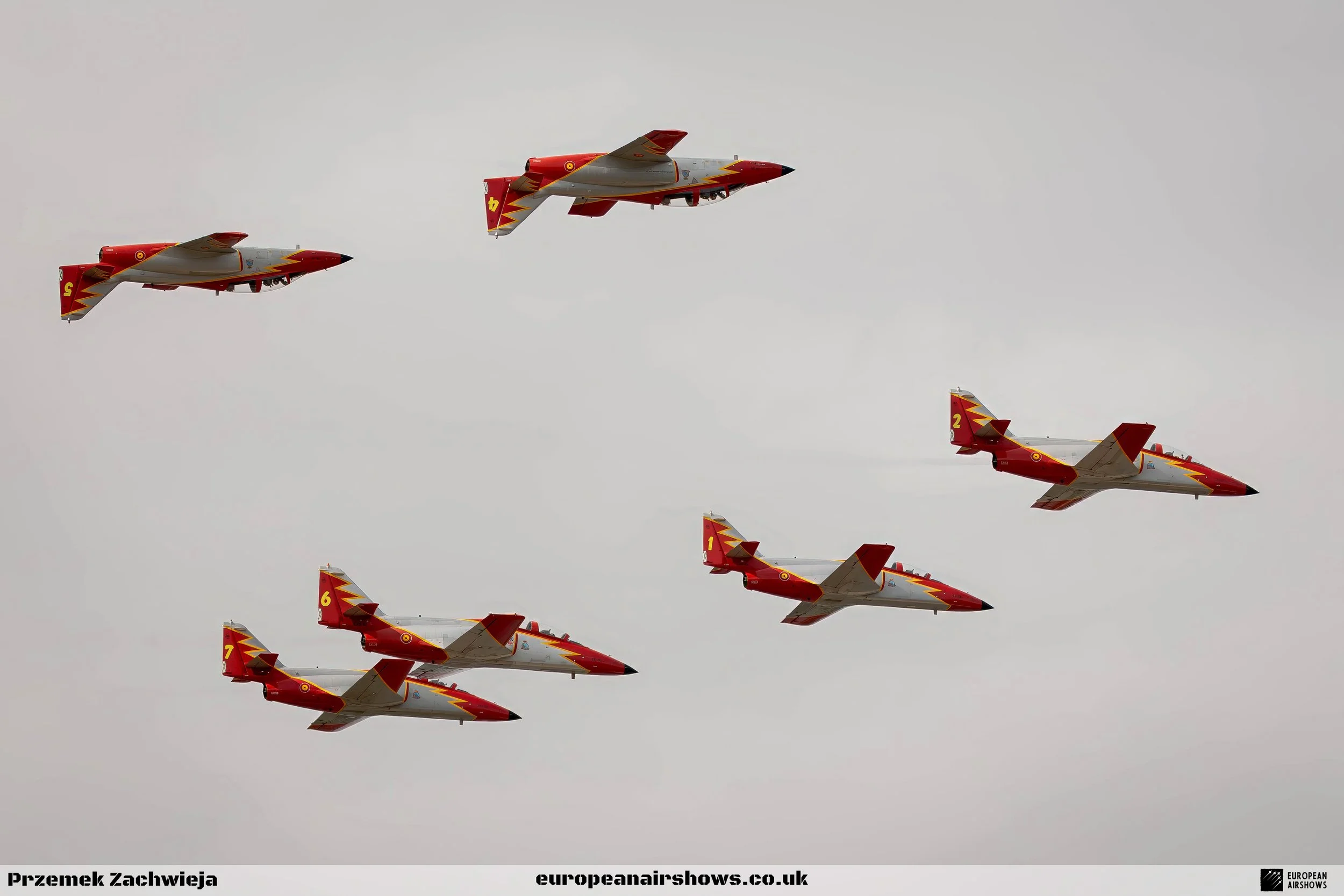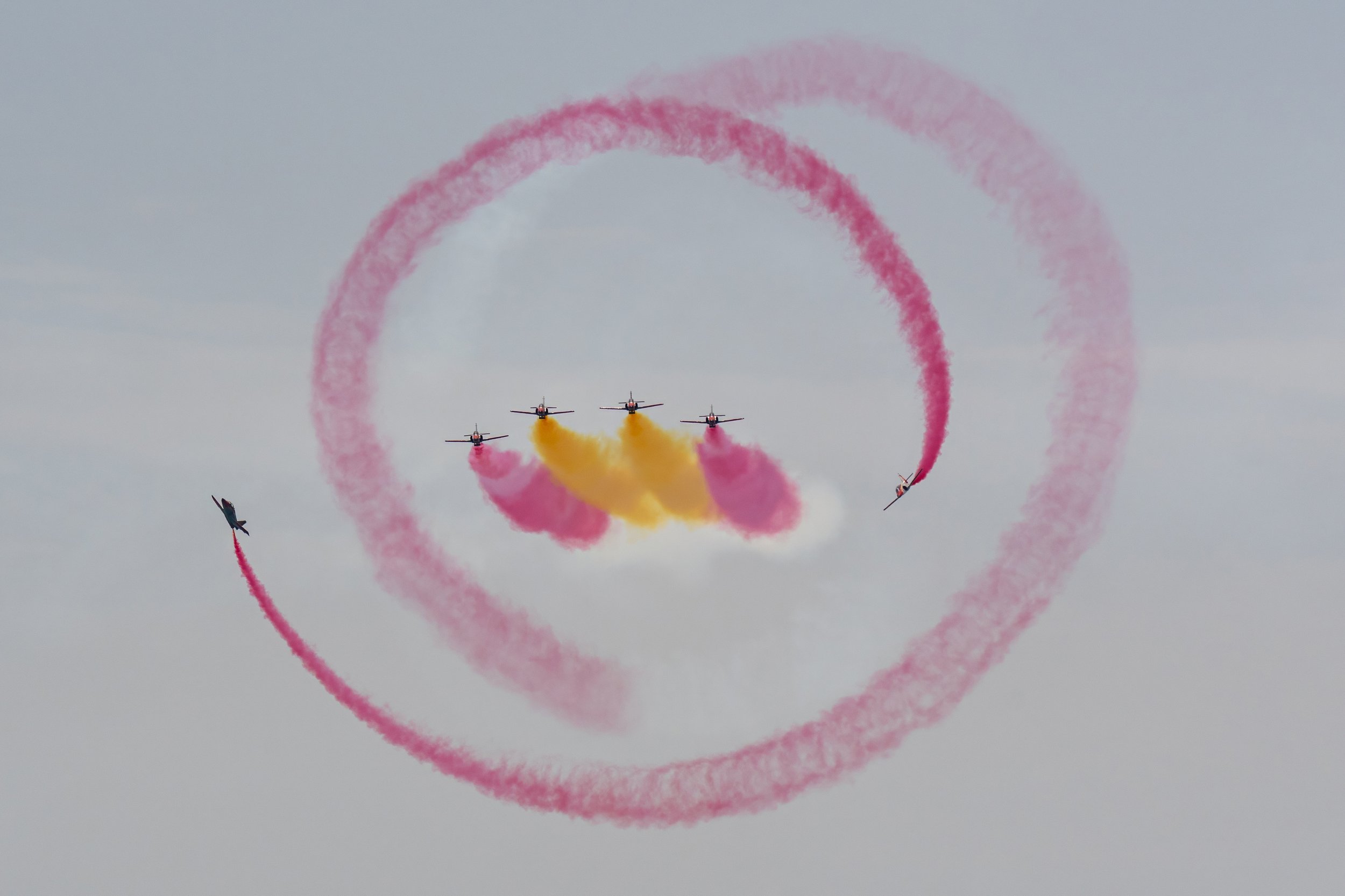
Patrulla Águila
CASA C-101EB Aviojet national aerobatic team · 1985–2025
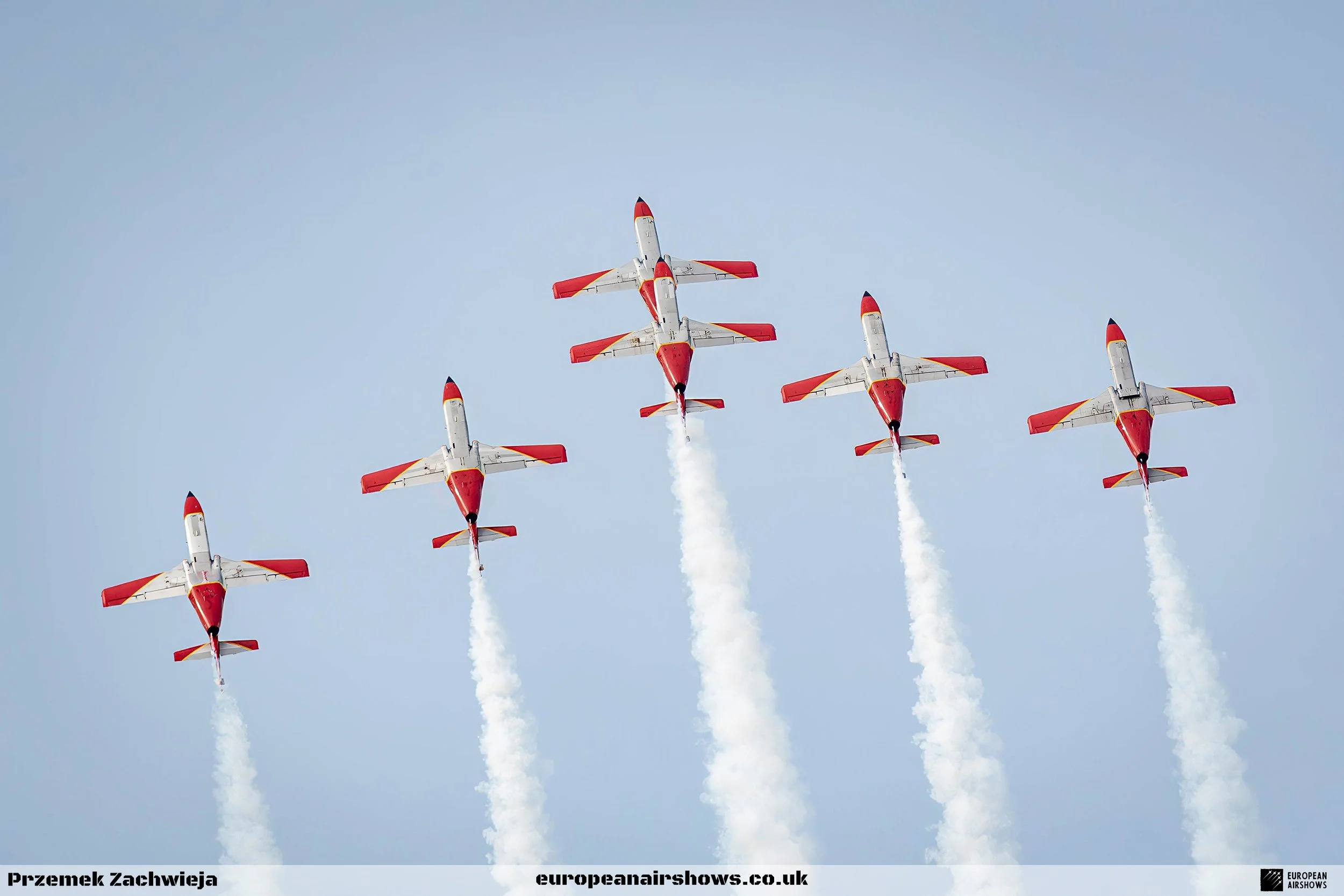
Patrulla Águila was Spain’s national military aerobatic team for forty years, joining the instructor pilots of the Academia General del Aire with the Spanish-built C-101 Aviojet. Its final display took place at San Javier on 15 June 2025. The PC-21 formation now seen at Spanish events is Formación Mirlo: a separate six-aircraft instructor project that is preserving the team’s formation-flying knowledge but has not yet been declared the new national aerobatic team.
- First team flight
- 4 June 1985
- Public debut
- 14 June 1985
- Historic formation
- 7 aircraft
- Final-season formation
- 6 aircraft
- Displays completed
- More than 500
- Final display
- 15 June 2025
Current status
Patrulla Águila has ended, while Formación Mirlo builds something different.
Early transition announcements suggested that Patrulla Águila might simply exchange the C-101 for the PC-21. The official position after Aire 25 was more precise: the C-101 team had said goodbye, the PC-21 would appear as Formación Mirlo rather than Patrulla Águila, and Spain would have a future aerobatic team at an undetermined date. Events since then support that distinction.
The C-101 team is inactive
The final Patrulla Águila display was flown over the Mar Menor on 15 June 2025. Later Spanish Air and Space Force material described the unit as deactivated and recorded the flight as the end of forty years of representation and service.
Formación Mirlo is a separate PC-21 formation
Five E.27s made the formation’s public debut during the Madrid National Day flypast in October 2025. By May 2026 it had grown to six aircraft and appeared at San Javier with a sequence of changing formations and flypasts, not a full Patrulla Águila-style aerobatic routine.
The future national aerobatic team remains unresolved
Mirlo personnel describe teaching as their primary task and say the project is progressing without a fixed deadline or pressure to become an aerobatic team. Separately, the future Saeta II jet is being studied against possible Patrulla Águila requirements, but no team aircraft has been selected.
This profile therefore marks Patrulla Águila as inactive. Formación Mirlo is documented as the current six-aircraft PC-21 formation preserving the San Javier flying tradition, but it is not presented as a revived Patrulla Águila until the Spanish Air and Space Force formally says that it is.
The team
An academy team built by instructors, not a detached full-time display squadron.
Spain’s national aerobatic representative
Patrulla Águila was created at the Academia General del Aire in San Javier to represent the Spanish Air Force, demonstrate the quality of its training system and showcase a Spanish-designed aircraft. It became the public successor to earlier Spanish military teams, especially the F-86F Sabre-equipped Patrulla Ascua, while developing a visual identity and flying style of its own.
Instructor pilots first
The pilots were serving academy instructors rather than members of a unit devoted only to public displays. Their normal responsibilities included teaching and assessing future military aviators, maintaining instructional standards and remaining current on the C-101. Display training had to be fitted around that primary mission, making the team a direct extension of the academy rather than a separate show organisation.
From five aircraft to the classic seven
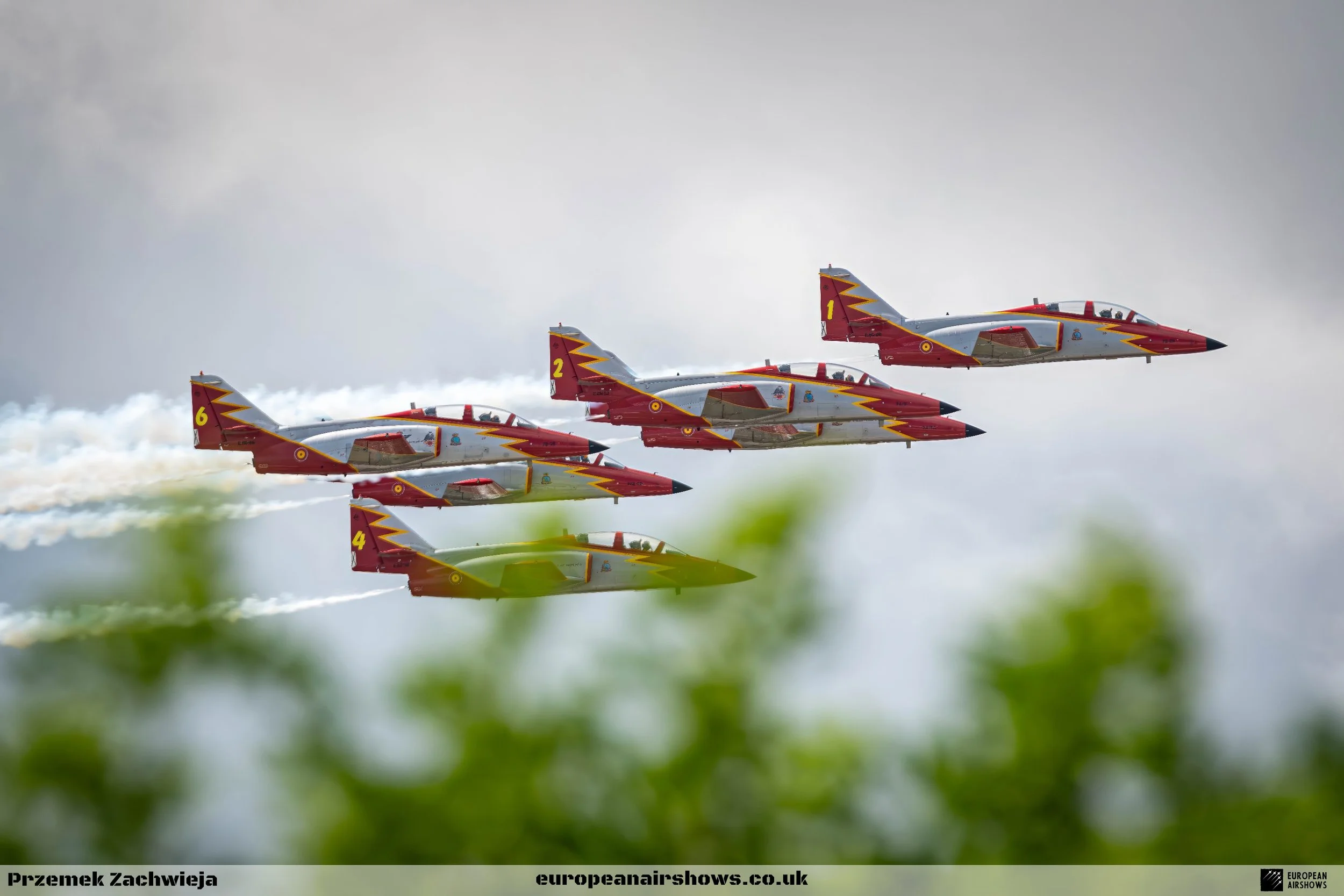
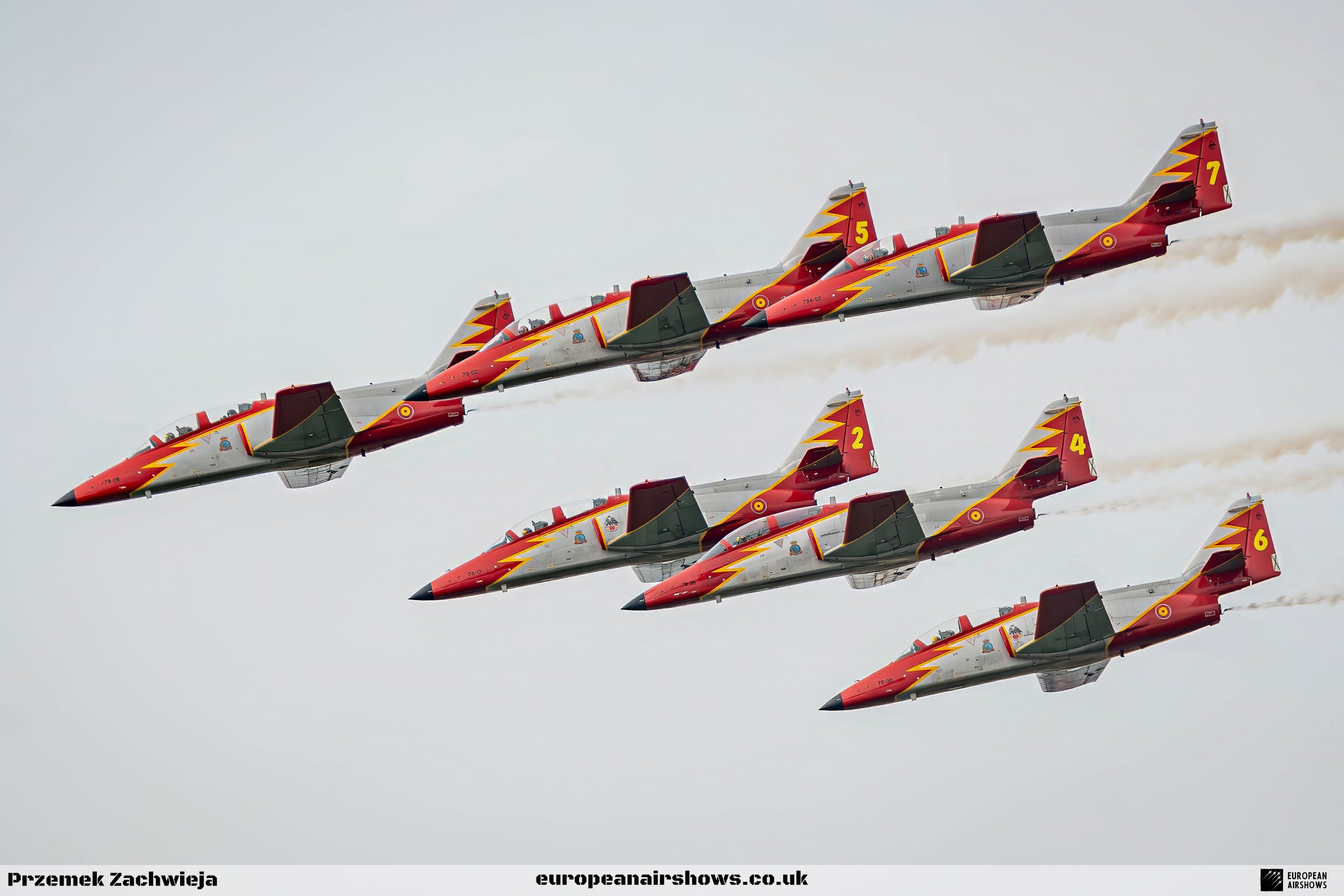
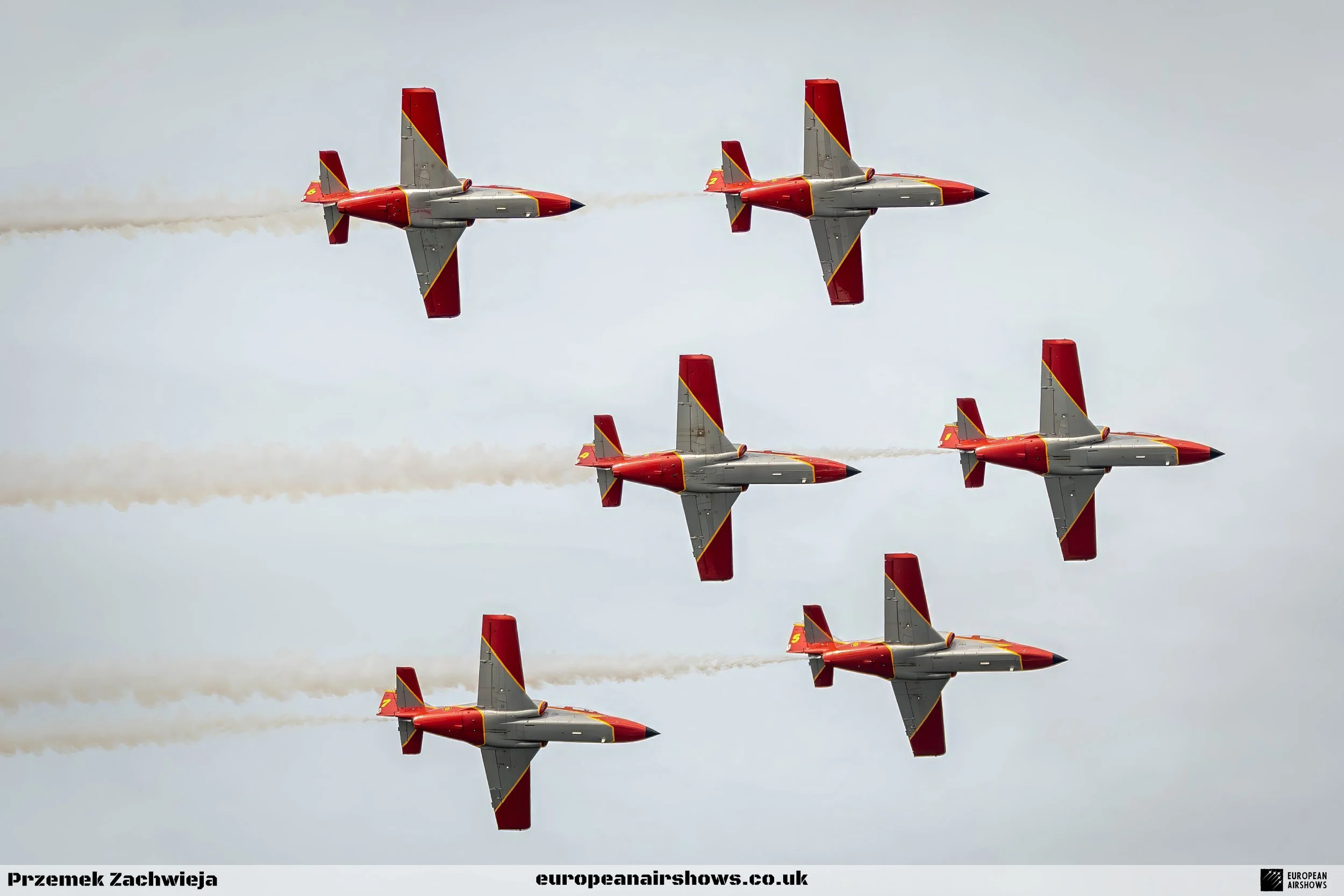
Five C-101s made the first team flight on 4 June 1985. The formation soon grew to six, then added a seventh aircraft in April 1988. Seven became the classic Patrulla Águila structure and allowed the routine to divide into a main formation, opposing elements and solo work. Fleet availability meant the returning airshow routine of the final years was normally flown by six aircraft, but the seven-ship image remained central to the team’s identity.
A team renewed without discarding experience
Display positions changed as pilots completed tours, yet continuity was preserved by retaining experienced members alongside newcomers. The leader, wingmen, slot and solo positions demanded different sightlines, power settings and responsibilities. New pilots therefore learned not only a sequence of manoeuvres but the exact visual references, radio discipline and trust required to fly the C-101 only metres from another aircraft.
Engineering was part of the display identity
The academy’s technicians maintained aircraft that were already at the end of an exceptionally long training career. Display operations added the smoke system, national colour requirements, intensive formation sorties and deployments away from San Javier. The final years were therefore as much a story of engineering persistence and fleet husbandry as of pilot skill.
More than five hundred displays
Across four decades, Patrulla Águila completed more than 500 displays, including more than 170 outside Spain. The team appeared at airshows, national celebrations, military anniversaries and international events, while its red-and-yellow smoke became a familiar part of Spain’s 12 October National Day flypast.
The C-101 display
Flowing formation aerobatics, then crossings, solos and a formation landing.
Patrulla Águila’s routine was shaped by an aircraft with modest thrust but forgiving handling and a wide usable speed range. The display relied on energy management, disciplined geometry and smooth transitions rather than the vertical acceleration of a modern fighter or a lightweight aerobatic jet.
Close formation opening
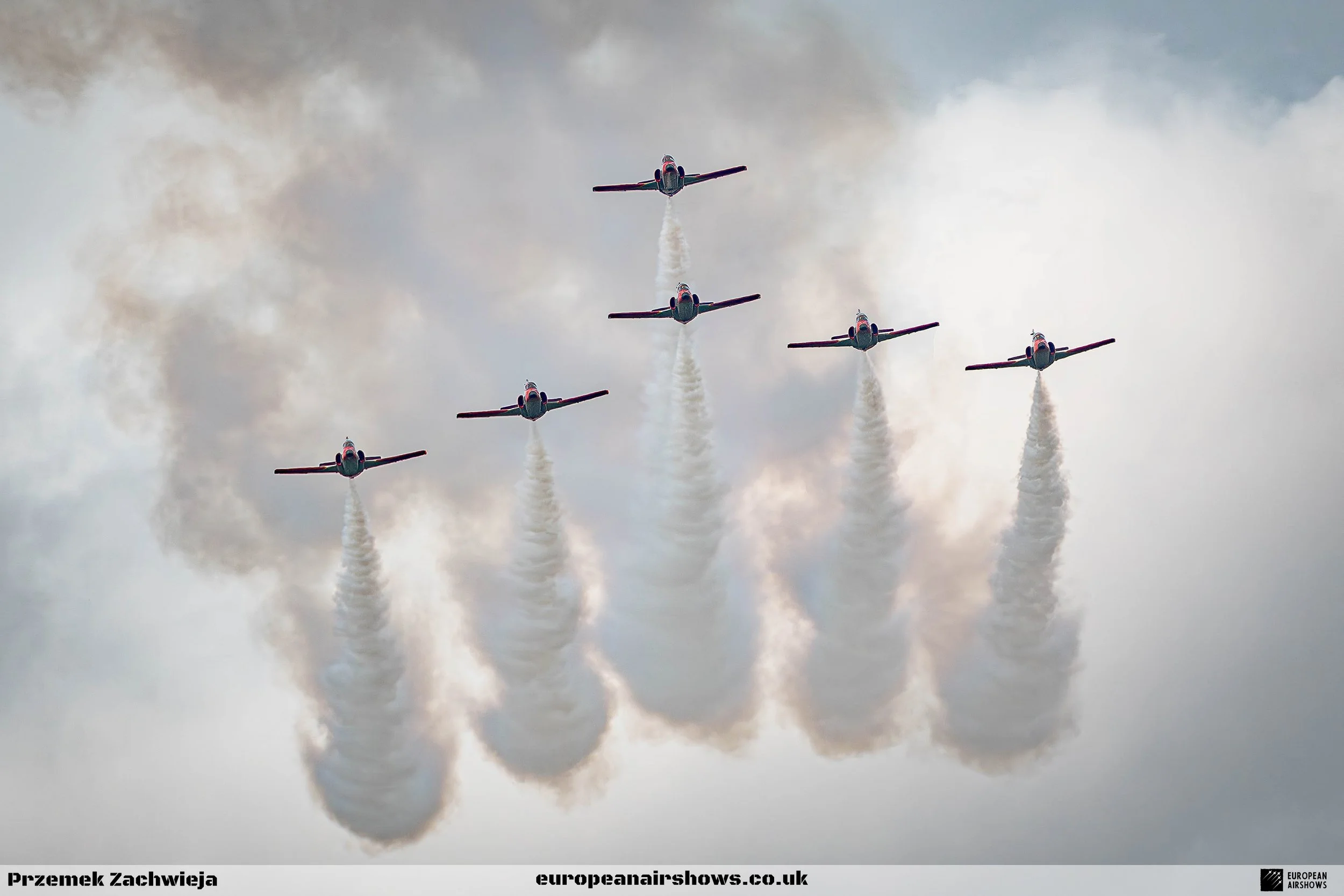
The aircraft entered as one group and moved through loops, barrel rolls and changing shapes while maintaining the measured spacing associated with academy formation training.
Póker and arrow formations
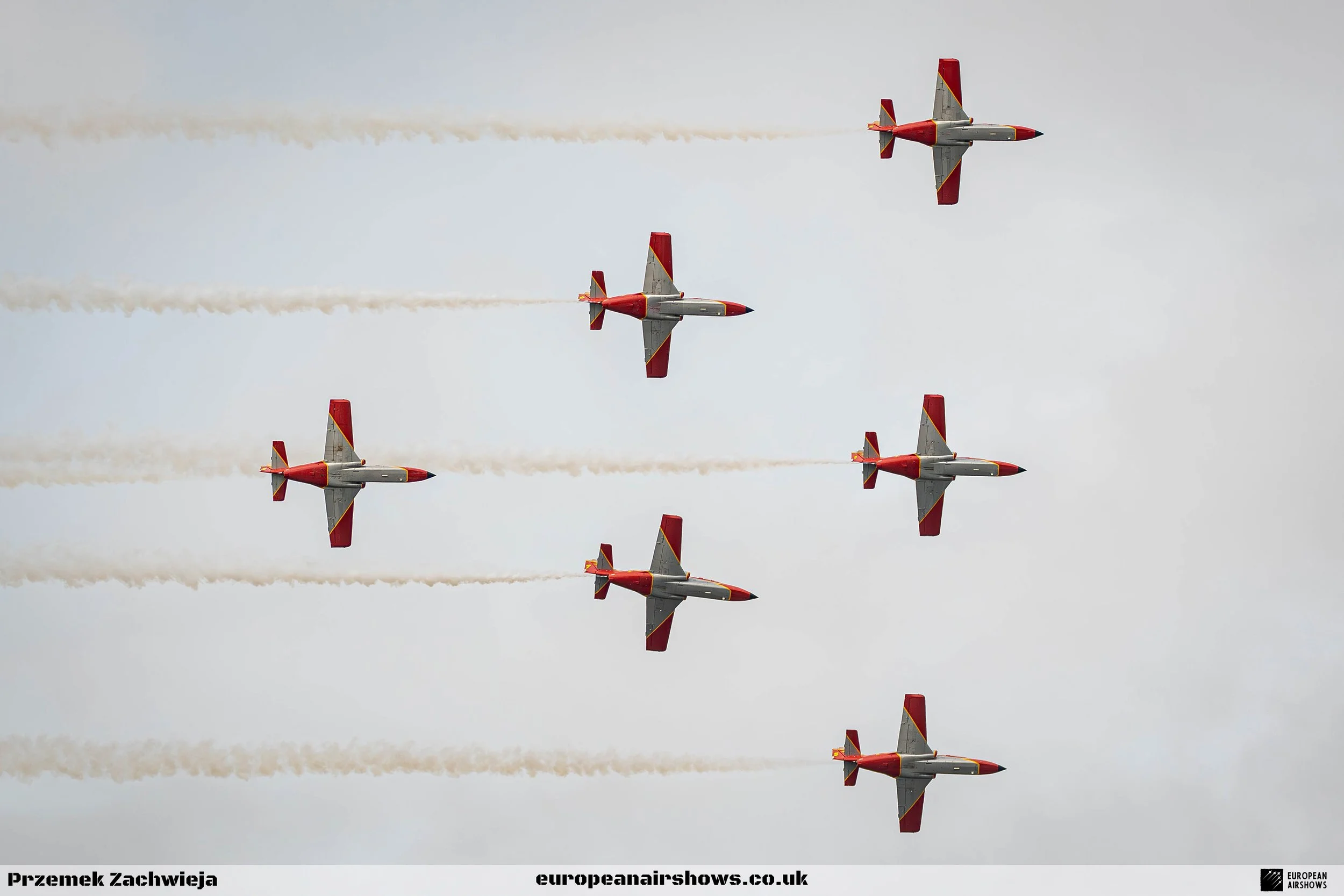
The routine used broad, readable shapes that showed the team’s symmetry from the ground. Póker became one of the formations most closely linked with the final C-101 sequence.
Opposition and mirror work
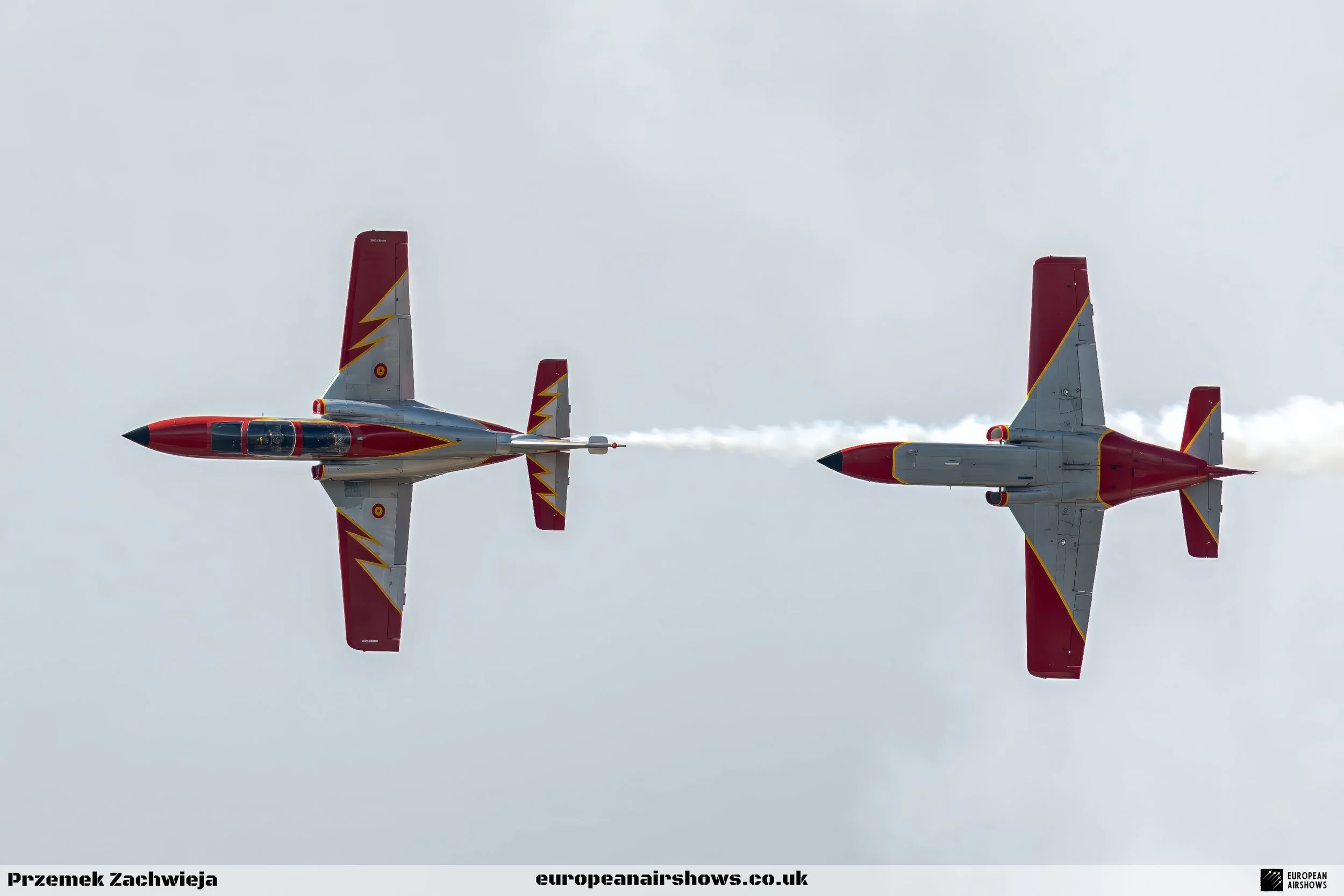
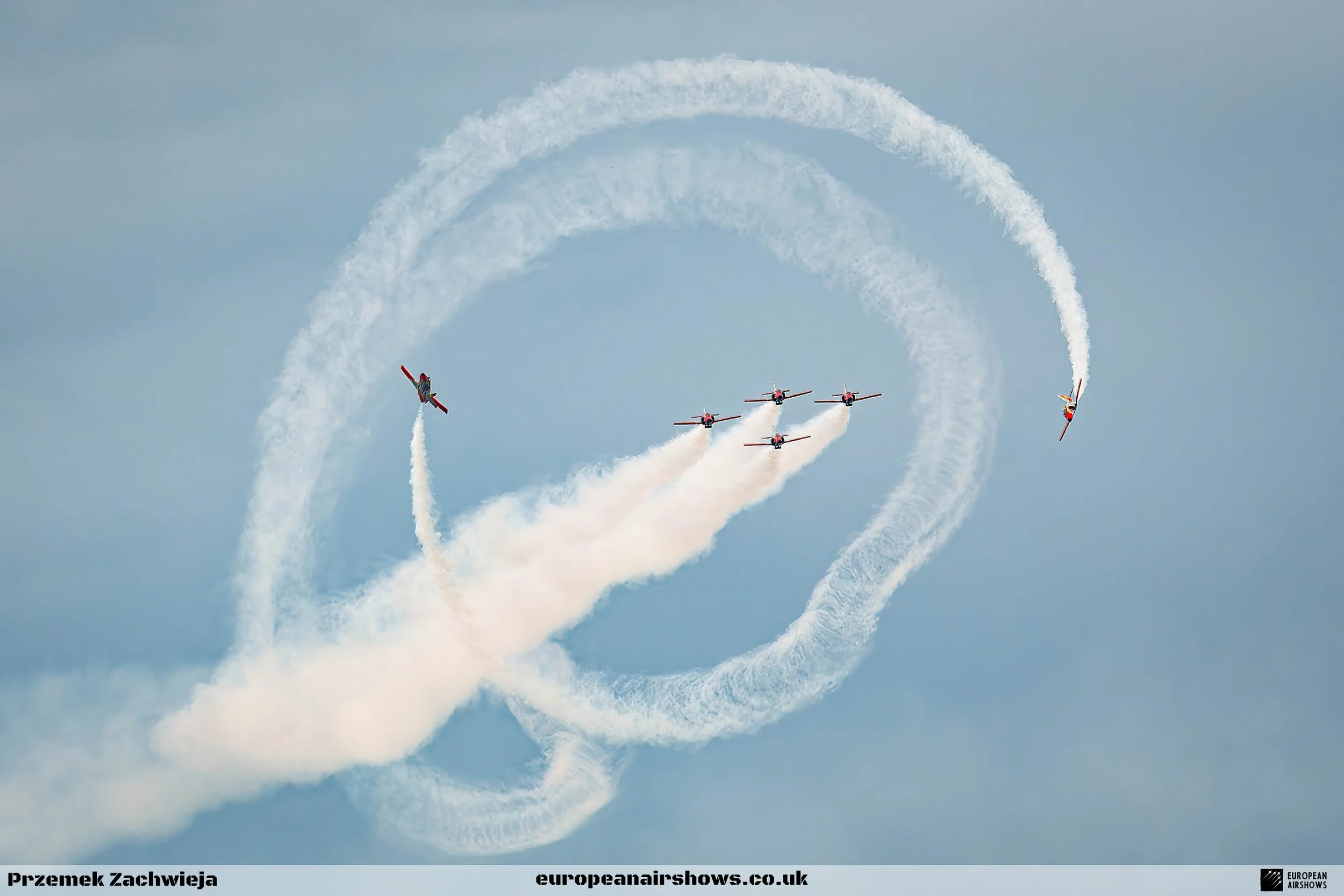
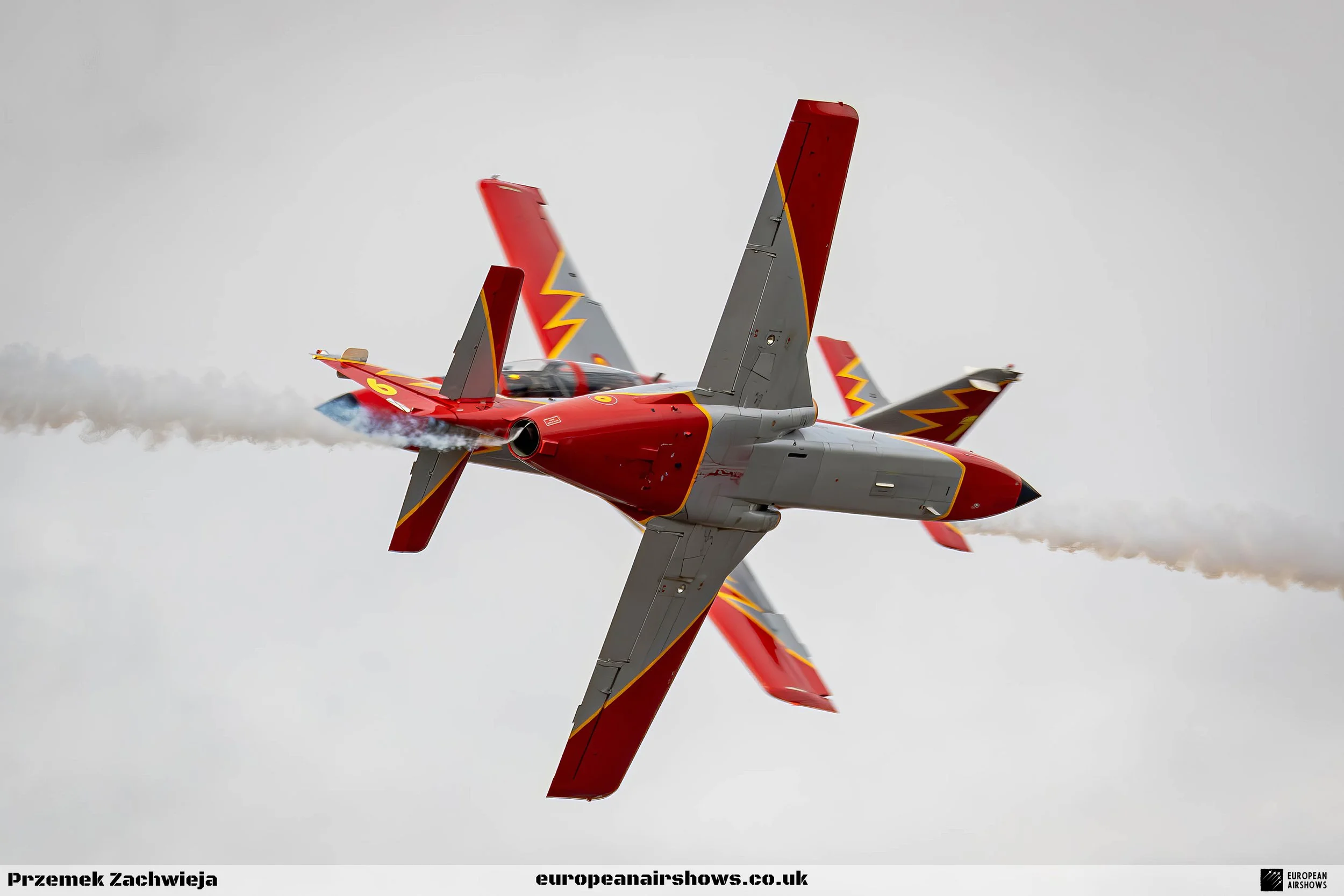
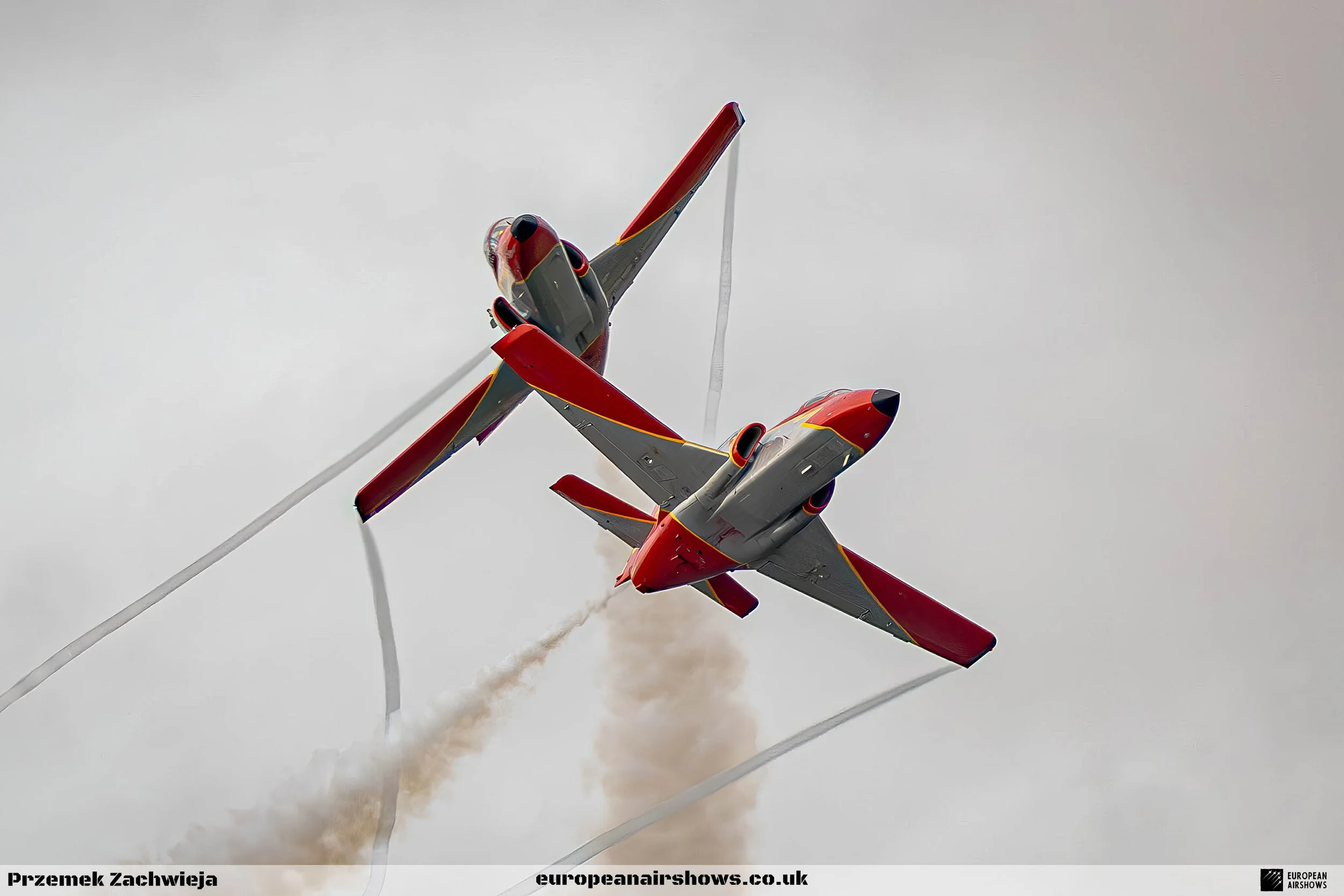
Smaller elements separated for crossings, paired passes and manoeuvres such as the Flip Flap and Cruce Borgoña, creating movement while the remaining aircraft repositioned.
Solo manoeuvres
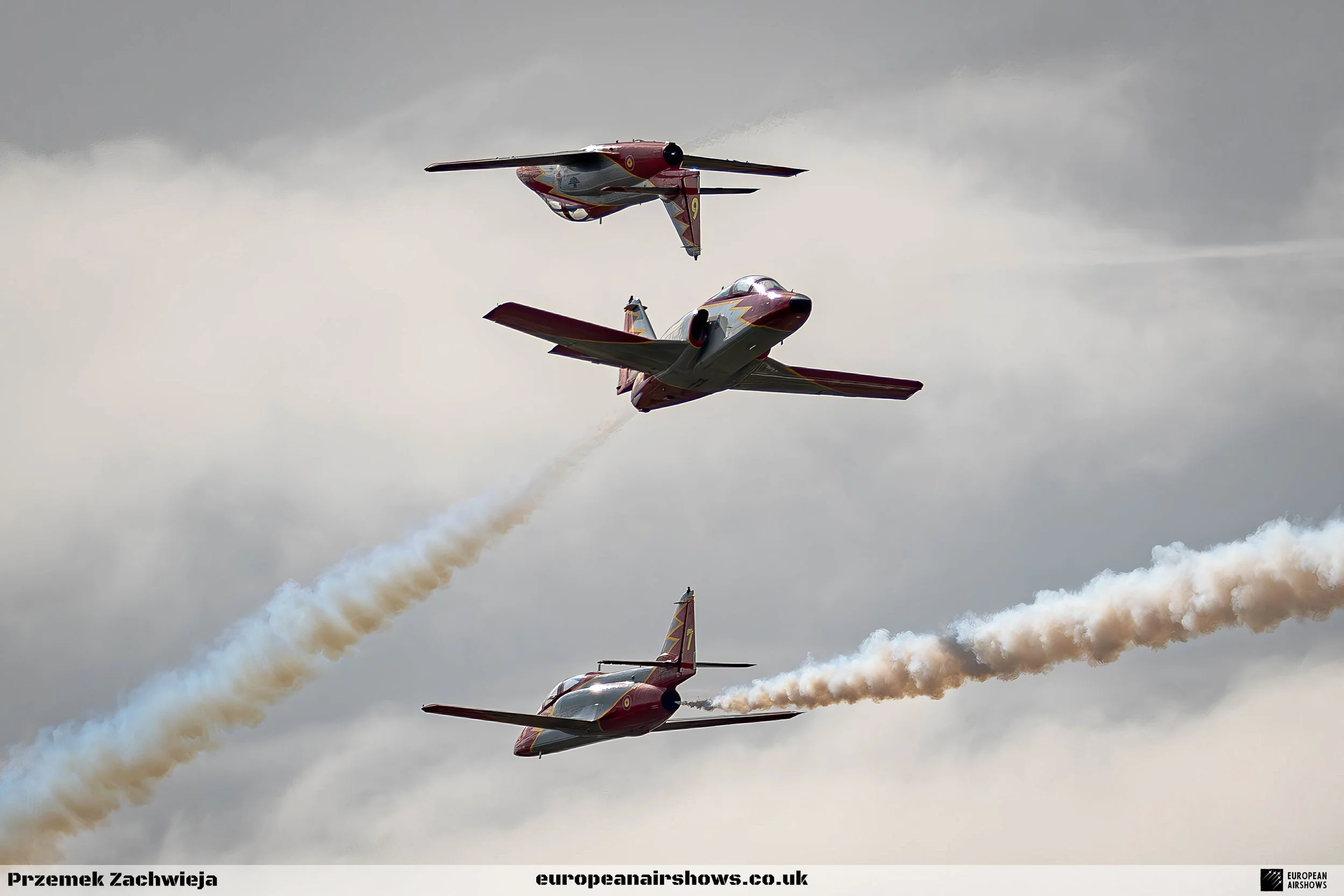
The solo aircraft demonstrated the C-101’s low-speed control and broad flight envelope, including vertical figures and the distinctive Sacacorchos sequence.
Red, yellow and white smoke
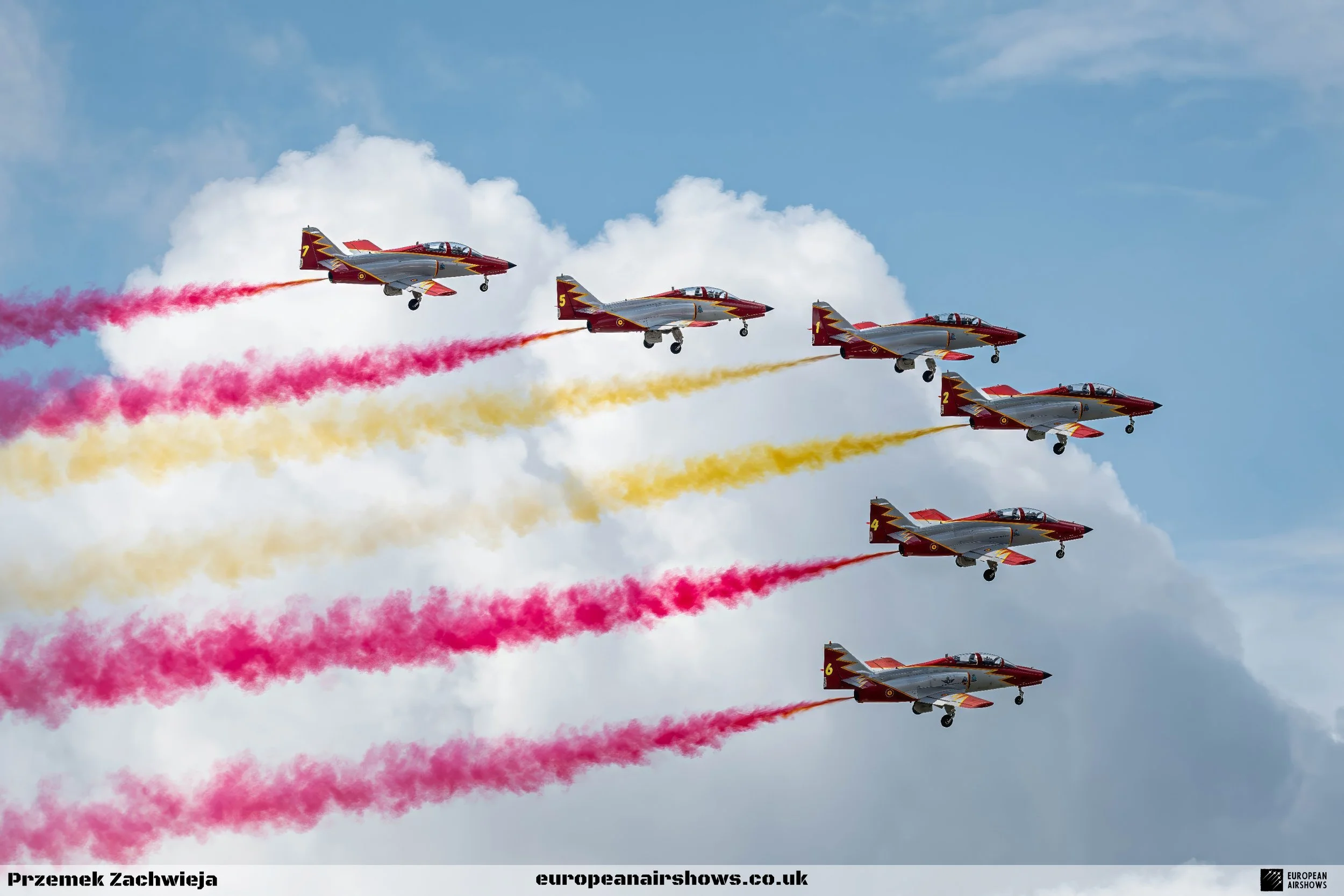
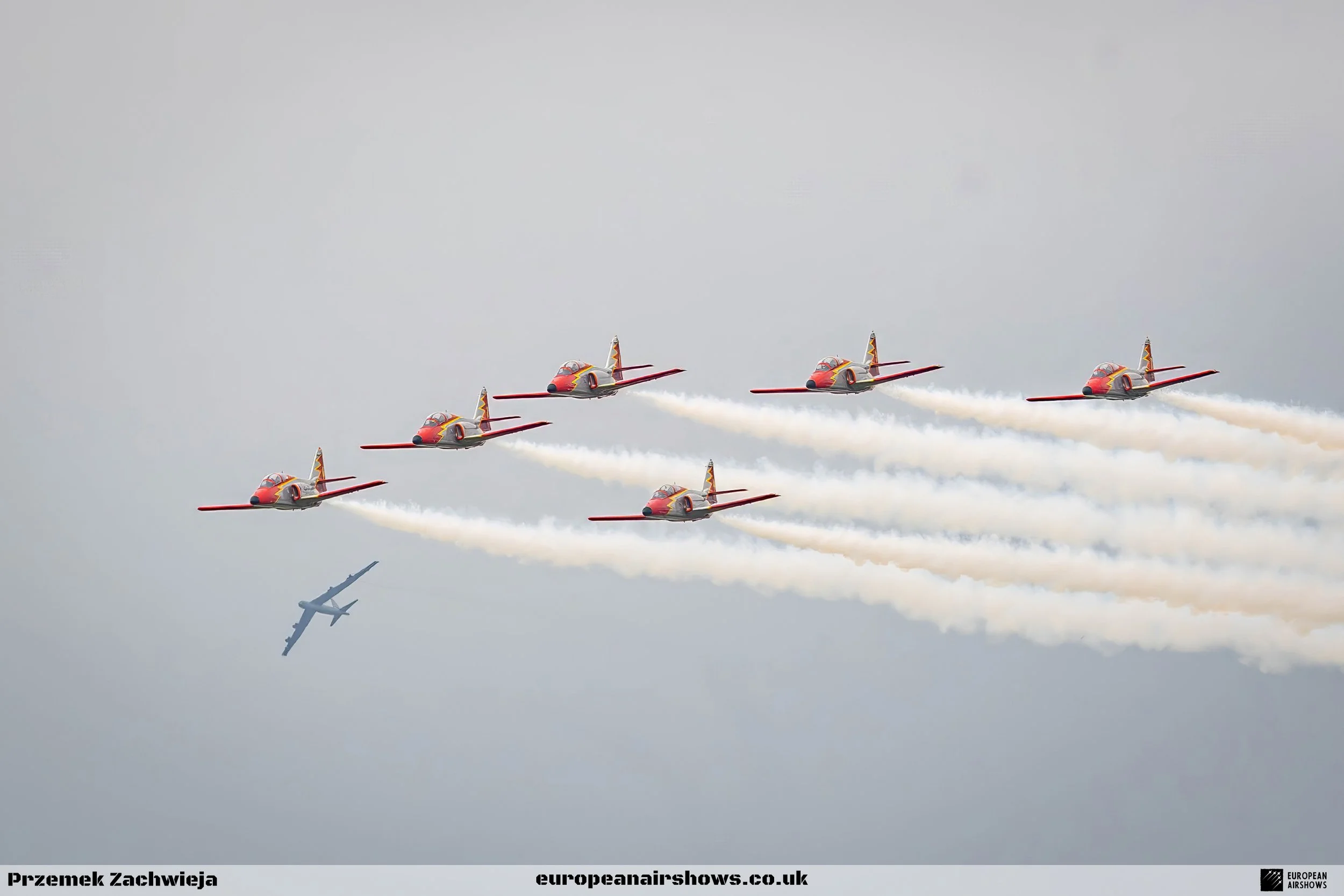
Coloured smoke transformed the formation into a moving Spanish flag. White smoke traced most figures, while red and yellow were reserved for national-colour passes and ceremonial moments.
Formation landing
The participating C-101s returned to the runway together in a tightly coordinated formation landing, a demanding signature that separated Patrulla Águila from most national display teams.
The aircraft
CASA C-101EB Aviojet: the Spanish trainer that defined the team.
A national trainer programme
Spain commissioned CASA in 1975 to develop a new jet trainer. The first prototype flew on 29 June 1977, the first production aircraft followed in October 1979 and the first four were delivered to the academy at San Javier in January 1980. The design combined a simple low wing, tandem cockpit, economical turbofan and robust undercarriage suited to repeated student landings.
The exact Spanish variant: C-101EB / E.25
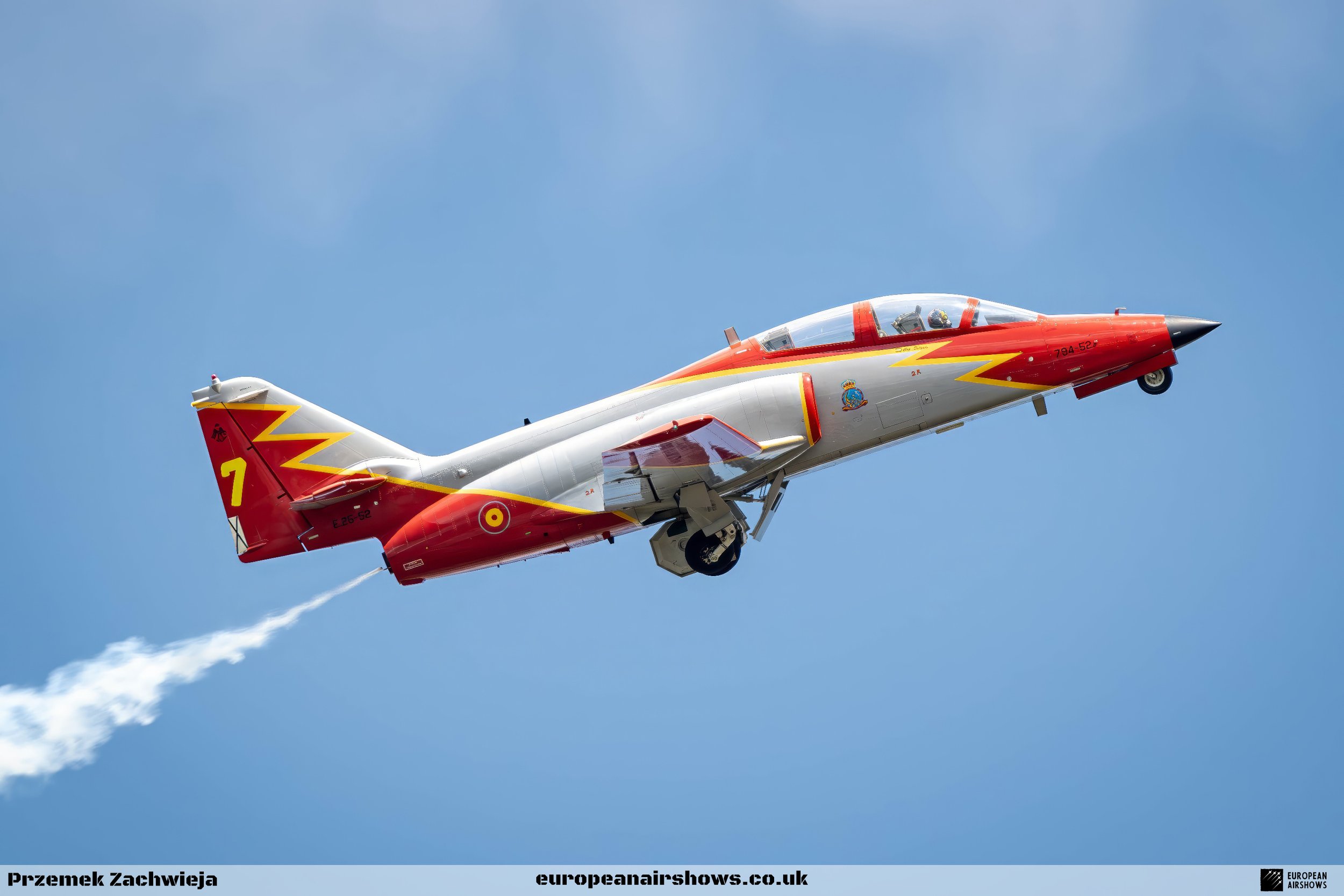
Patrulla Águila flew the Spanish C-101EB, designated E.25 by the Air Force and officially named Mirlo. It was the basic and advanced training version rather than the armed export derivatives supplied to other countries. Spain acquired 88 examples, making the EB the largest-produced member of the family.
A forgiving aircraft that rewarded accuracy
The C-101 did not possess the thrust-to-weight ratio of the Alpha Jet, Hawk or MB-339. Its value was different: predictable handling, a broad flight envelope and the stability required for teaching. In display flying that meant energy had to be conserved carefully, but it also made the aircraft exceptionally well suited to smooth close formation.
Display modifications without creating a new variant
Team aircraft carried the distinctive silver, red and yellow scheme and smoke-generating equipment, but they remained C-101EB trainers. The smoke installation and markings should not be treated as a separate Aviojet variant or as proof that individual serials belonged permanently to the team.
Why the C-101 era had to end
The academy completed its training transition to the PC-21 while the team’s remaining C-101s continued the display role. By 2025 the Aviojet had already left San Javier’s main training syllabus and the Spanish Air and Space Force had fixed Aire 25 as both the team’s fortieth-anniversary celebration and the aircraft’s farewell.
Pilatus PC-21 / E.27
Formación Mirlo flies standard Spanish PC-21 trainers from the academy’s E.27 fleet, equipped with removable underwing smoke pods for ceremonial and public formation flying. Spain ordered 24 aircraft and then a further 16, completing a forty-aircraft training fleet by the end of 2025. The type reaches 685 km/h, is cleared to +8/-4 g and combines a glass cockpit with embedded training systems.
Formación Mirlo, not Patrulla ÁguilaSaeta II advanced jet trainer
Spain’s future Hürjet-derived advanced combat trainer is scheduled for delivery between 2031 and 2035. Airbus states that studies are assessing whether the Saeta II meets the specific needs of Patrulla Águila. That makes it a credible future candidate, but it is not a confirmed display-team selection and does not turn the current PC-21 formation into a temporary answer by official declaration.
Suitability study onlyHistory
From five academy trainers to forty years as Spain’s aerial ambassador.
1956–1965
Patrulla Ascua creates the national jet-team tradition
Four F-86F Sabres of Patrulla Ascua establish Spain’s first enduring national formation-aerobatic identity. Its red-and-yellow visual language later influences the C-101 team’s livery.
29 June 1977
The C-101 prototype flies
CASA’s new Spanish jet trainer makes its maiden flight from Getafe, beginning the aircraft programme that will become inseparable from Patrulla Águila.
17 January 1980
The first production aircraft reach San Javier
Four C-101EBs are delivered to the academy’s 793 Squadron. The aircraft enters Spanish service as the E.25 Mirlo and begins training generations of military pilots.
4 June 1985
Five C-101s make the first team flight
Academy instructors launch the first Águila formation from San Javier to study the C-101’s suitability for close-formation aerobatics and a national display role.
14 June 1985
Public debut at Jerez de la Frontera
Only ten days after the first formation sortie, the new team gives its first public exhibition at Jerez, beginning a display career that will last exactly four decades.
July 1986
First appearance outside Spain
Patrulla Águila travels to Belgium for its first international appearance, establishing the outward-facing ambassadorial role that will take the team to more than 170 overseas displays.
April 1988
The seventh aircraft joins
Expansion to seven C-101s creates the classic team structure and gives the routine greater freedom to combine a main formation with solos, pairs and opposition figures.
1991–1992
New livery and the national colours
A revised silver, red and yellow scheme draws on Patrulla Ascua heritage. Red and yellow smoke develops into one of the team’s defining signatures, while the Barcelona Olympic year gives Patrulla Águila a major national stage.
2000s–2010s
A familiar presence across Europe
The seven silver jets become regular visitors to major international airshows while maintaining Spanish ceremonial duties, academy commitments and the demanding formation-landing finale.
2019–2020
A period of loss and interruption
Fatal training accidents at San Javier claim former and serving Patrulla Águila pilots. Together with the pandemic and the shrinking C-101 fleet, the events contribute to a prolonged break from normal airshow displays.
September 2022
The PC-21 enters Spanish service
The E.27 takes over the academy’s modern training mission. C-101 flying continues for Patrulla Águila even after the type has ceased to be the academy’s main instructional aircraft.
2023
Six-ship airshow displays return
Patrulla Águila returns to the international airshow circuit in a six-aircraft format, including a major appearance at the Royal International Air Tattoo.
2024
The last overseas season
The C-101s complete final foreign appearances, including Beja and AIRPOWER24, while planning intensifies for the team’s fortieth anniversary and aircraft farewell at San Javier.
15 June 2025
Final Patrulla Águila display
Aire 25 brings the C-101 team’s story to a close before a huge audience over the Mar Menor. The aircraft paint Spain’s colours in the sky for the final time as Patrulla Águila.
12 October 2025
Formación Mirlo makes its public debut
Five PC-21s trail the national colours over Madrid during the National Day flypast. Official material names the formation separately and says it has taken over the ceremonial overflight role previously associated with Patrulla Águila.
3 May 2026
Six PC-21s appear at the San Javier airshow
Formación Mirlo grows to six aircraft and flies changing formations and smoke passes over its home area. The pilots describe the appearance as an overflight within a gradual training programme rather than the debut of a completed national aerobatic display.
Future
Spain promises another aerobatic team, without fixing the form
The Air and Space Force states that it will again have an aerobatic team, but no activation date, final name or aircraft has been announced. Mirlo continues building instructor formation experience while Saeta II suitability studies remain separate from that work.
Understanding the identity
One team ended in 2025; another formation is protecting what it learned.
Águila means eagle; Mirlo means blackbird
Patrulla Águila’s name described the team. Mirlo was the official Spanish service name of the C-101 and has now been adopted by the PC-21 formation as a deliberate link to the academy aircraft that carried the previous team for forty years.
PC-21 does not automatically mean Patrulla Águila
The new trainer appeared beside the C-101 during the farewell, creating an understandable impression of a direct aircraft handover. Official post-event wording instead states that the PC-21 flies as Formación Mirlo, not as Patrulla Águila.
Mirlo is preserving capability before chasing spectacle
Its volunteer instructor pilots are rebuilding multi-aircraft formation experience, position discipline and demonstration planning. Their stated priority remains teaching students, with public appearances used as measured steps in development rather than proof of a finished aerobatic routine.
Saeta II is a possibility, not the announced answer
Airbus is studying whether the future advanced jet trainer could satisfy Patrulla Águila requirements. Deliveries are not due until the 2030s, and no official decision currently connects that study to the activation timetable of Spain’s next aerobatic team.
In remembrance
Remembering academy aircrew closely connected with Patrulla Águila.
Three fatal training accidents between August 2019 and February 2020 deeply affected the San Javier community. The people recorded here were serving or former Patrulla Águila pilots whose instructional work linked the team to the academy’s wider flying mission.
26 August 2019 · La Manga
Francisco Marín Núñez
The academy instructor and former Patrulla Águila solo pilot was killed when his C-101 crashed into the Mediterranean during an instructional sortie.
18 September 2019 · Mar Menor
Daniel Melero Ordóñez and Rosa María Almirón Otero
The former Patrulla Águila pilot and academy student were killed when their T-35C Tamiz crashed during elementary flight instruction.
27 February 2020 · La Manga
Eduardo Fermín Garvalena Crespo
The serving Águila 5 solo pilot was killed when his C-101 crashed into the sea during a programmed training sortie from San Javier.
This section is limited to the closely connected fatal accidents preserved in the supplied profile and verified against Spanish defence reporting. It is not intended as a complete catalogue of every accident involving the C-101 or the Academia General del Aire.
European Airshows photography
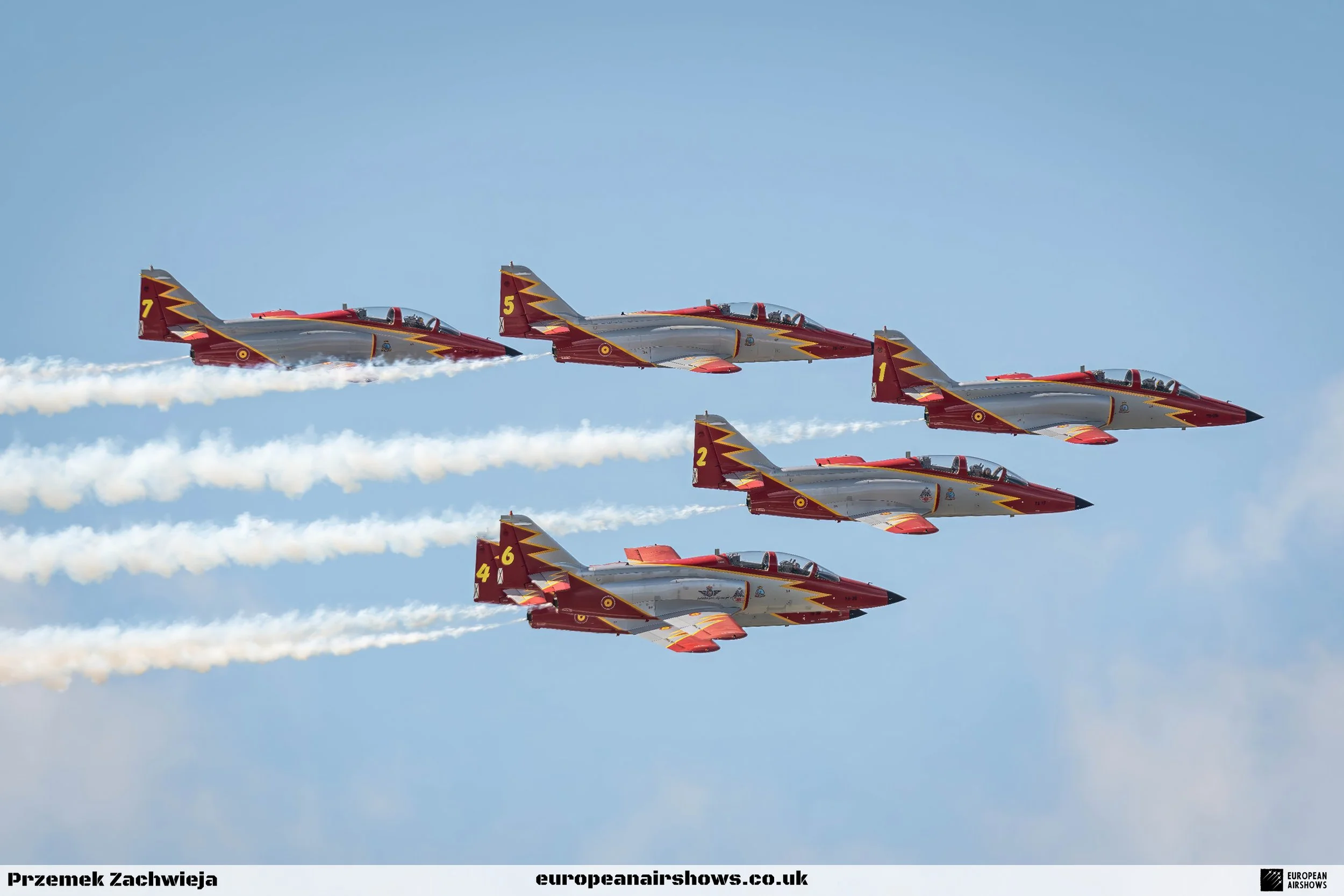
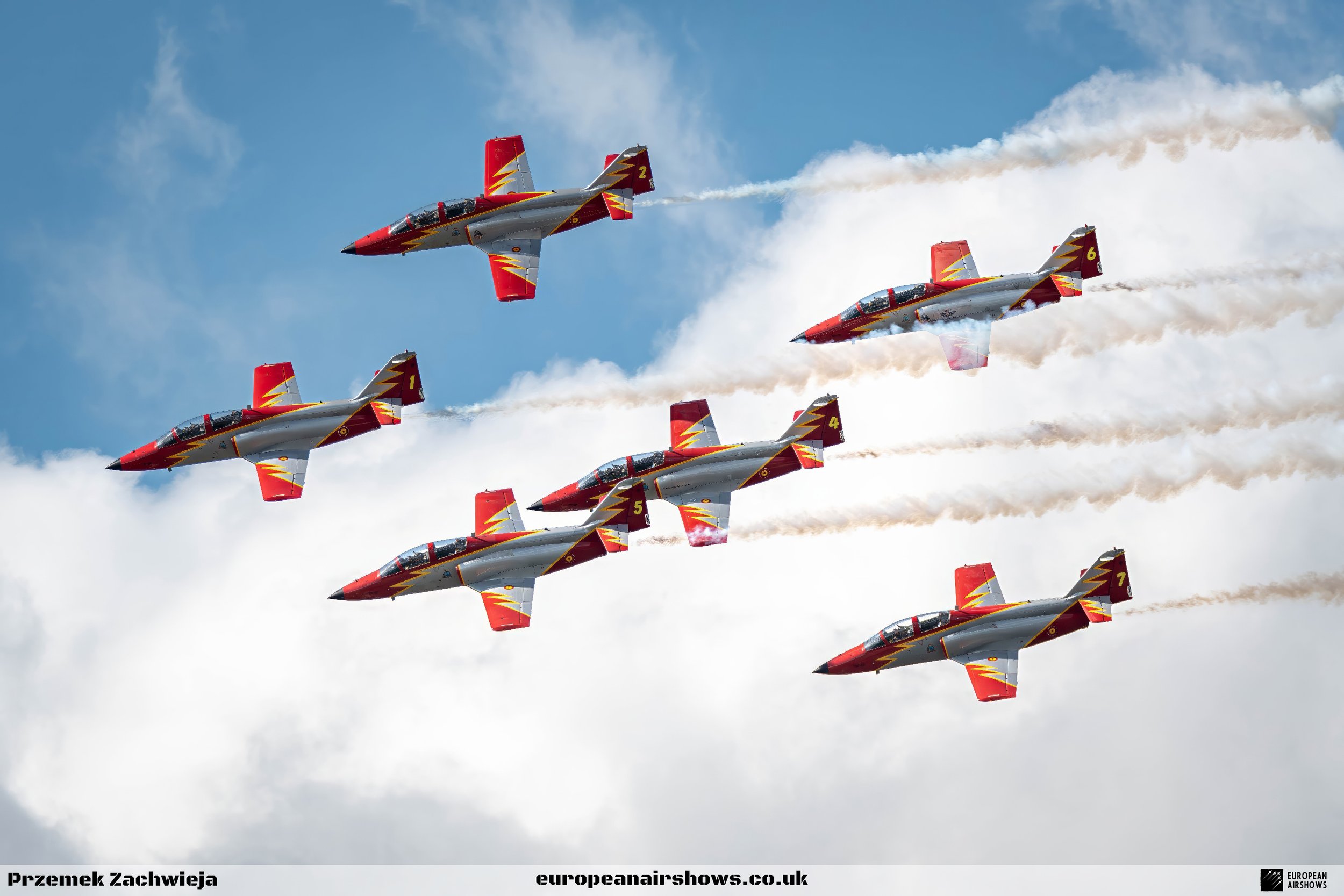
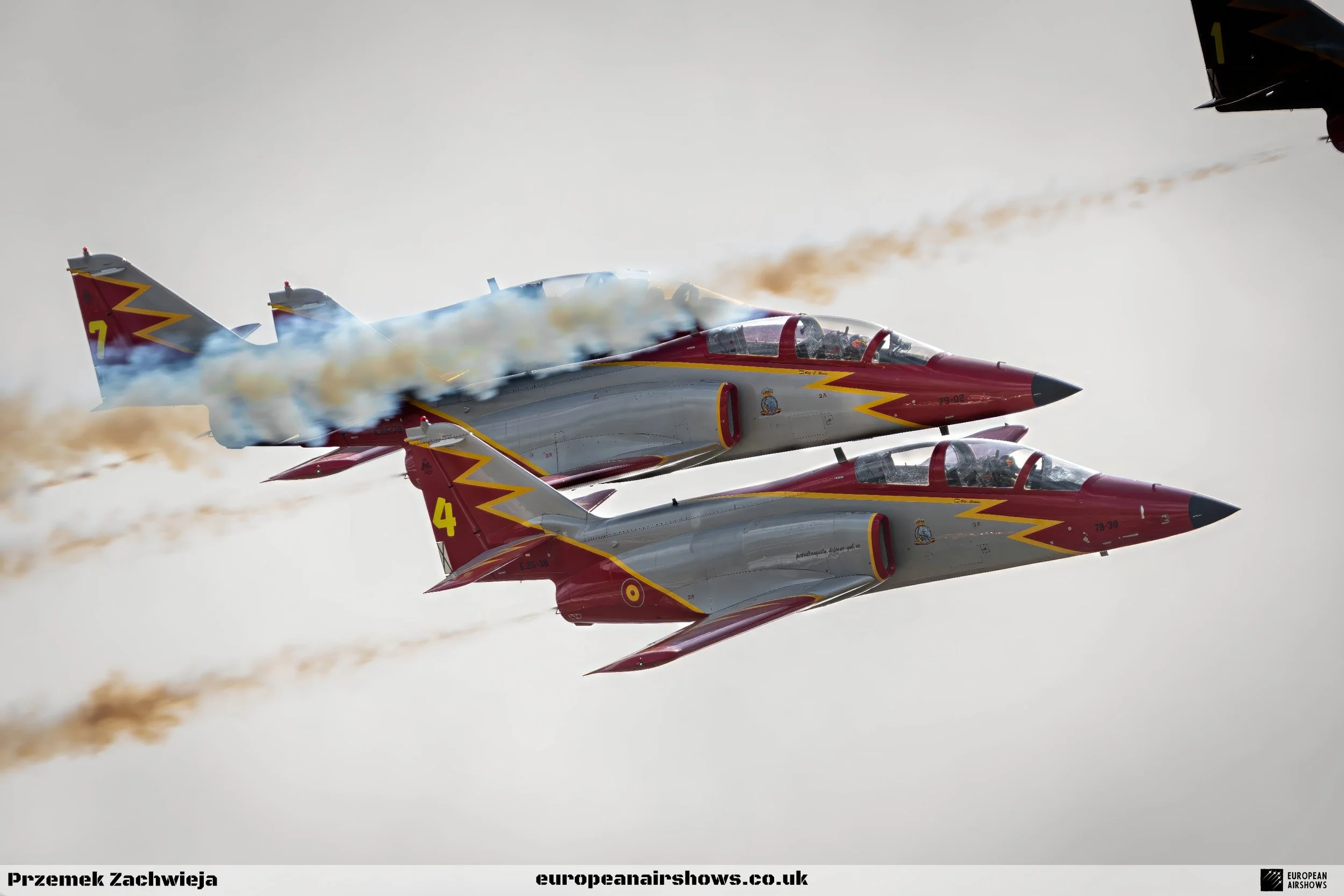
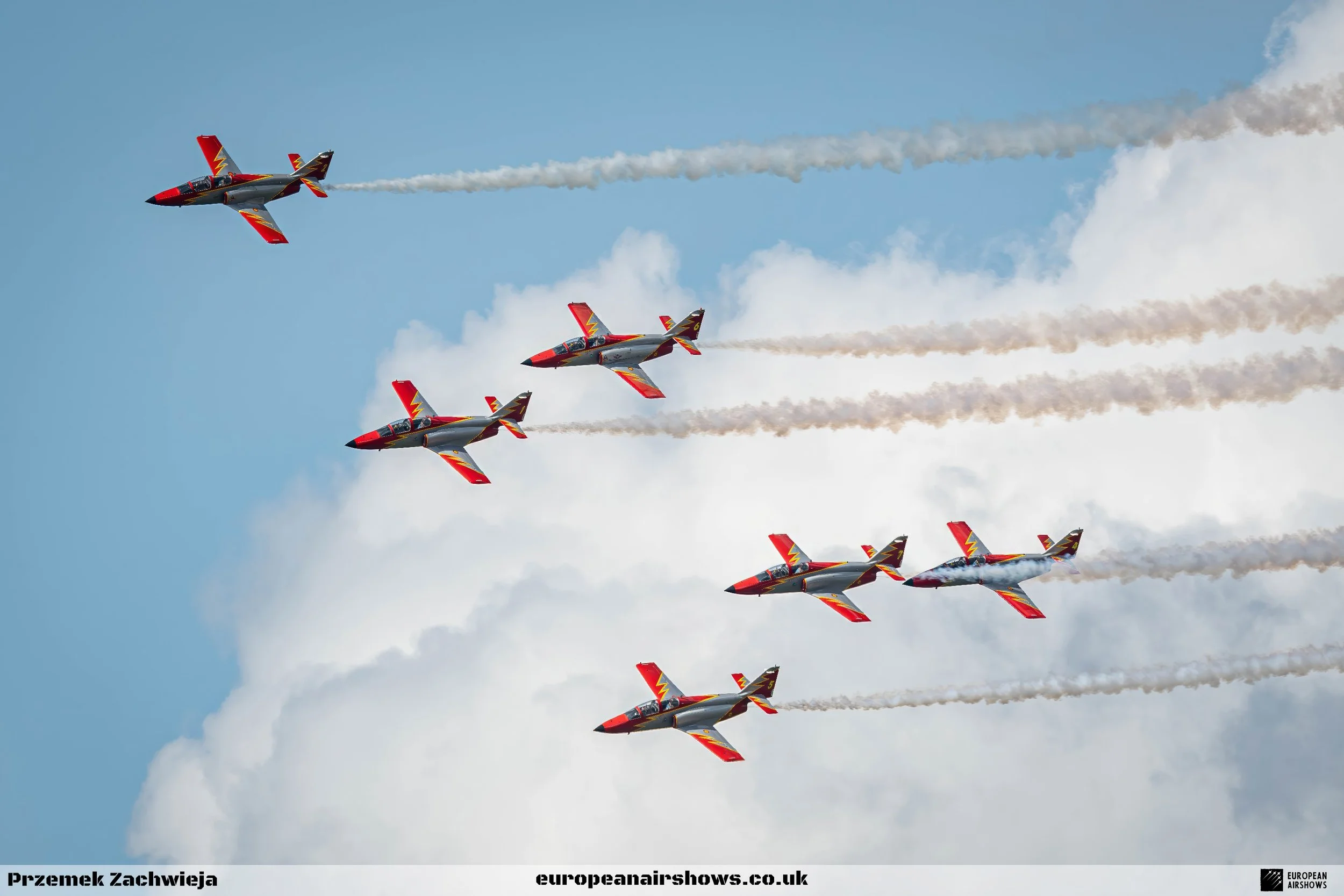
Explore the photos of Patrulla Águila below.
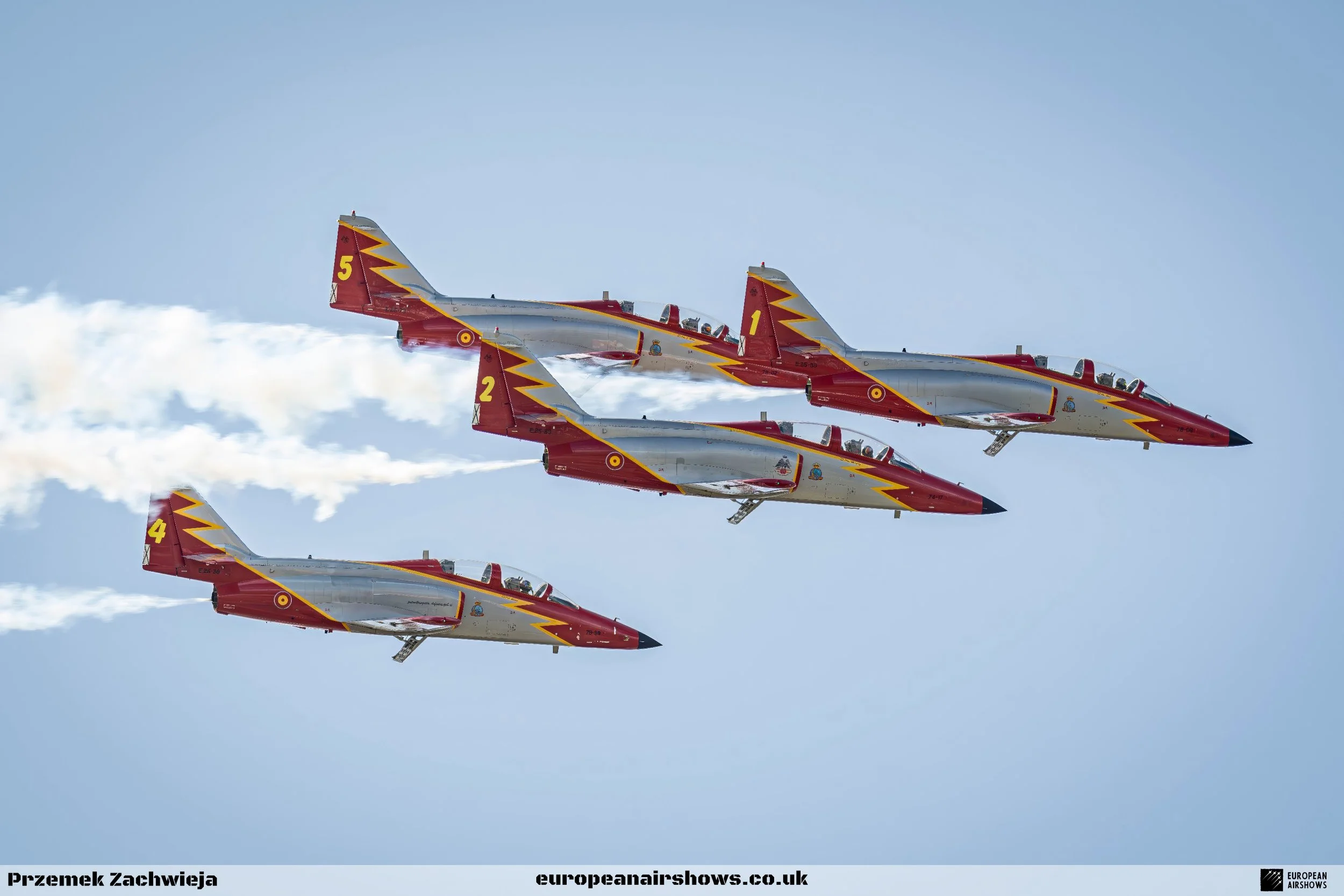
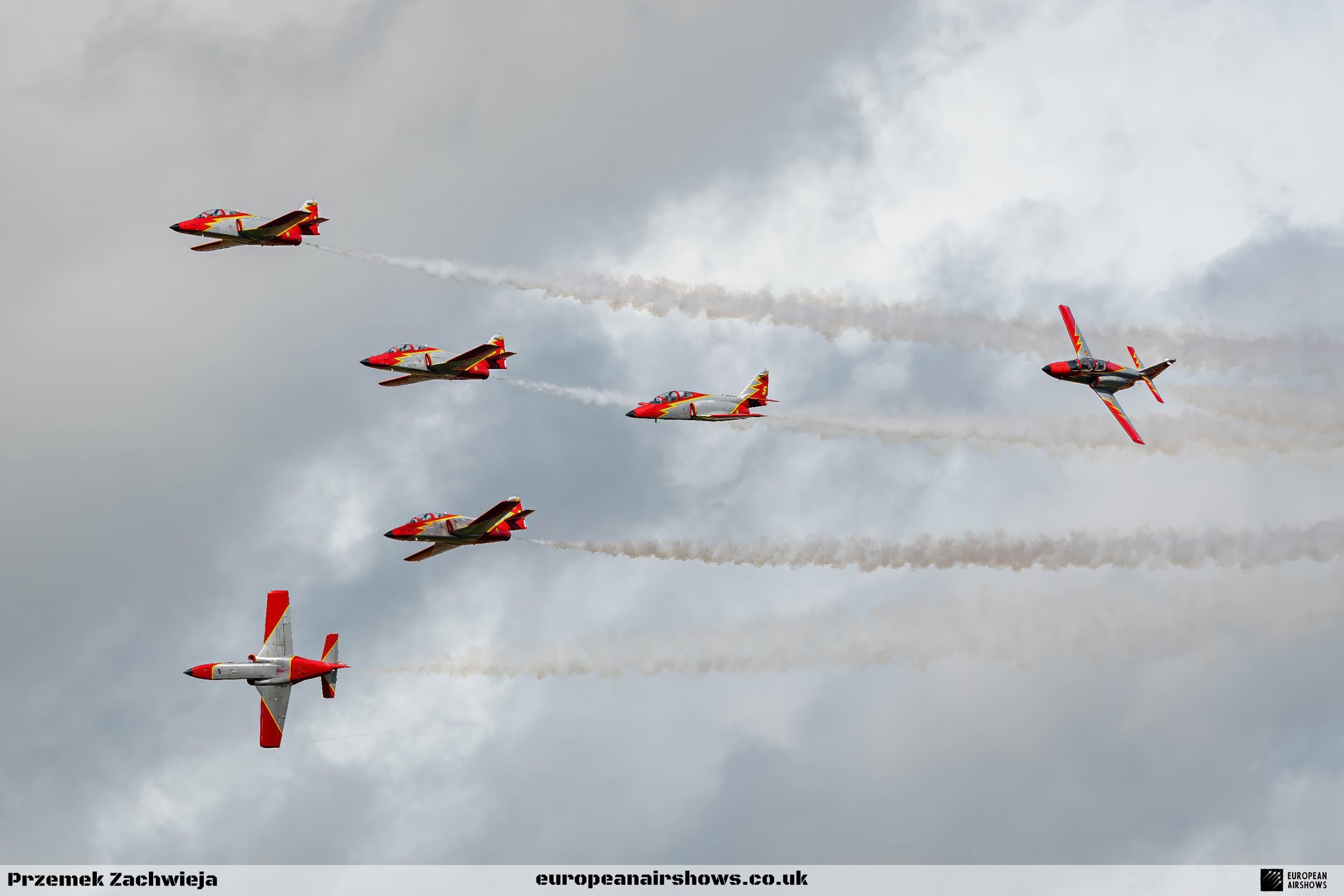
Continue into the gallery for the silver C-101s in close formation, red and yellow smoke across the display line, opposition crossings and the final-era six-ship routine that closed forty years of Spanish formation aerobatics.