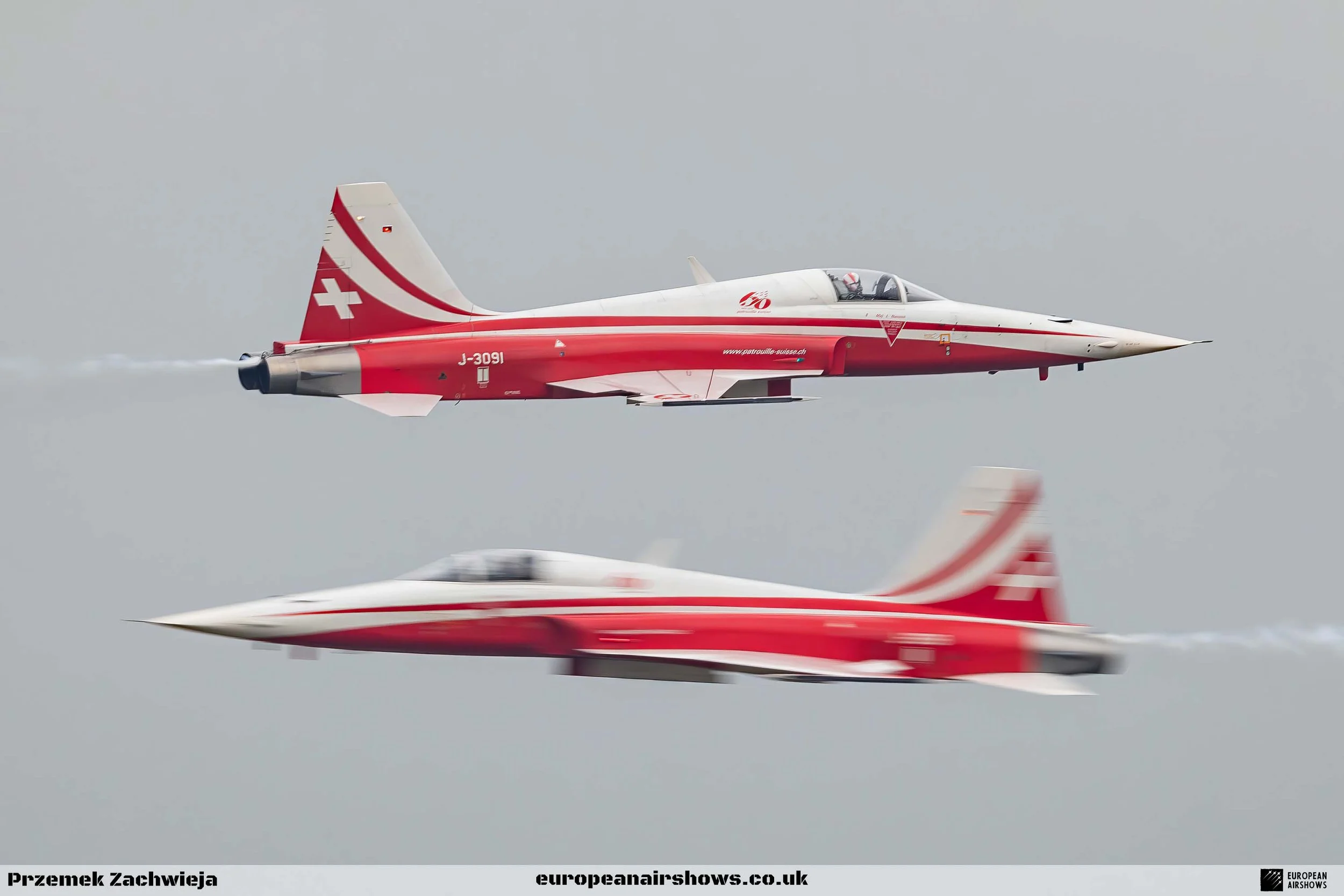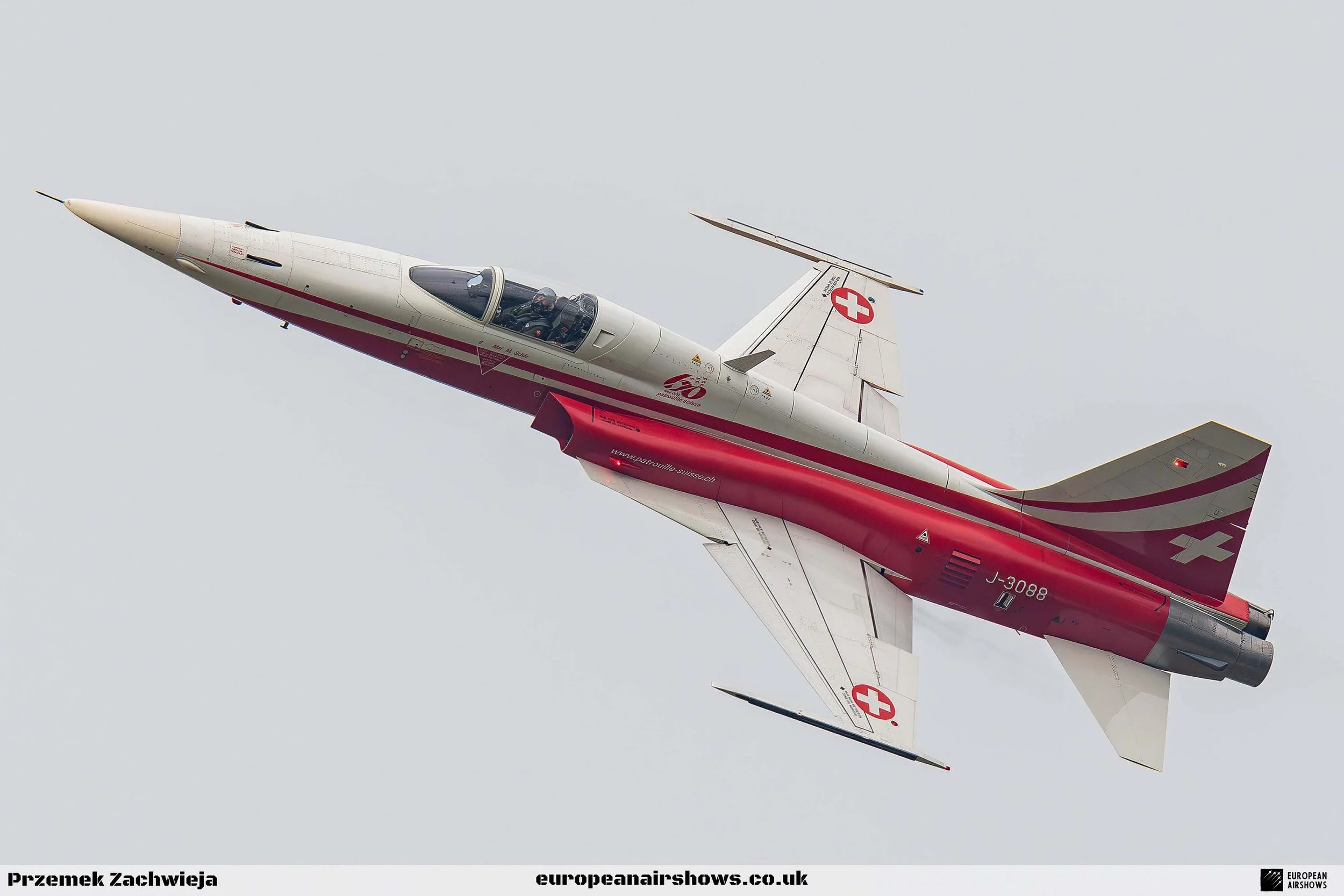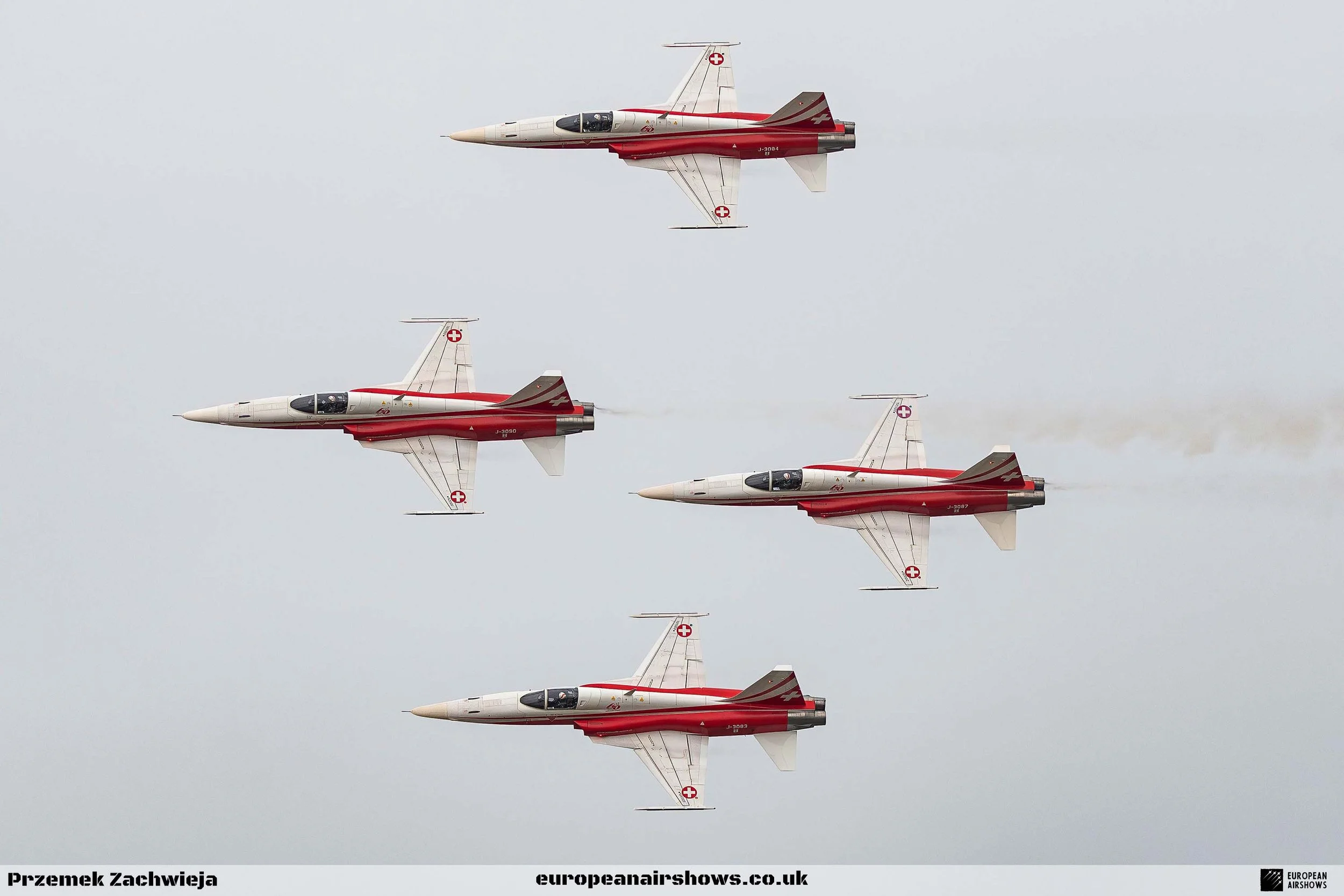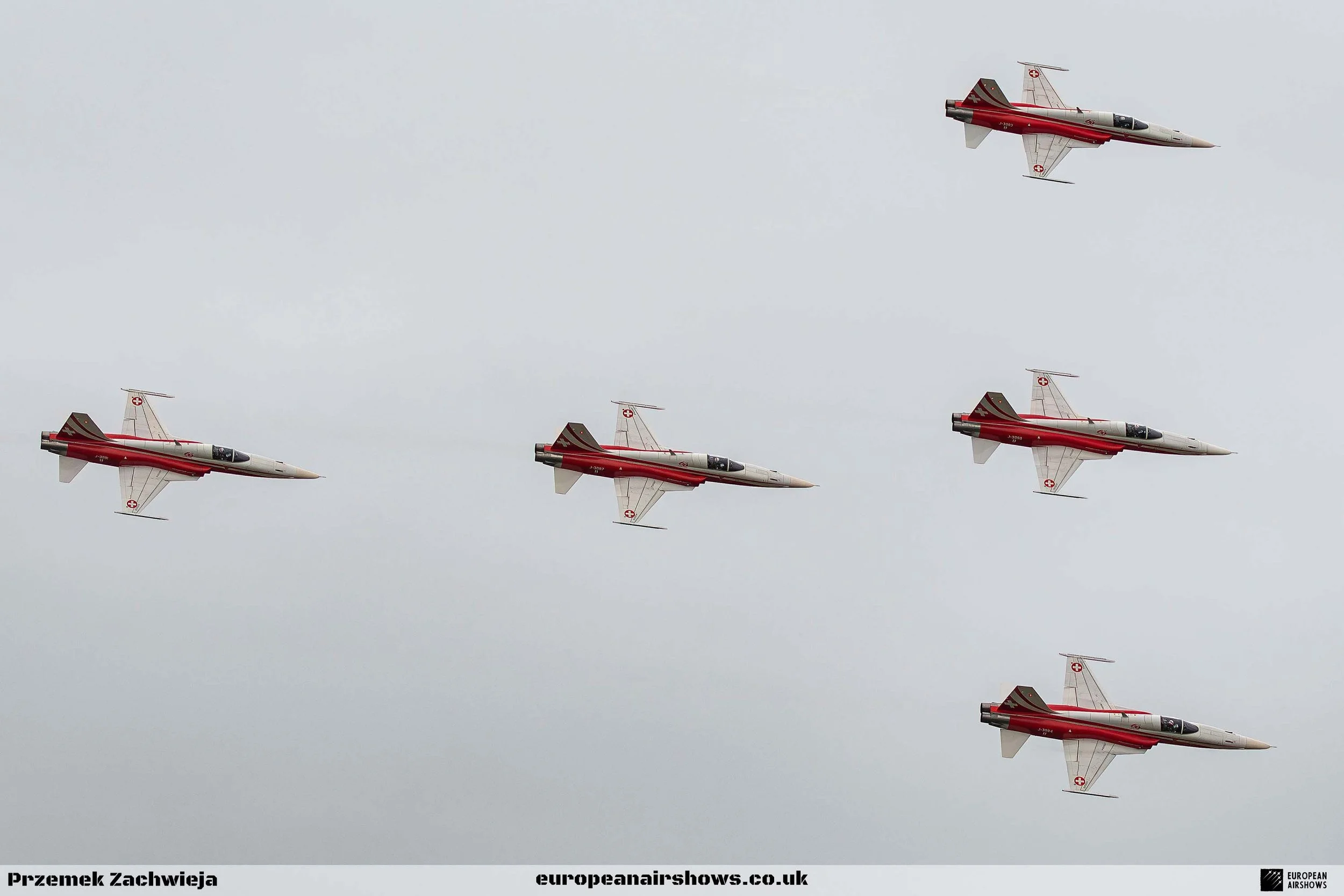
Patrouille Suisse
Six-ship Northrop F-5E Tiger II aerobatic team from Emmen Air Base
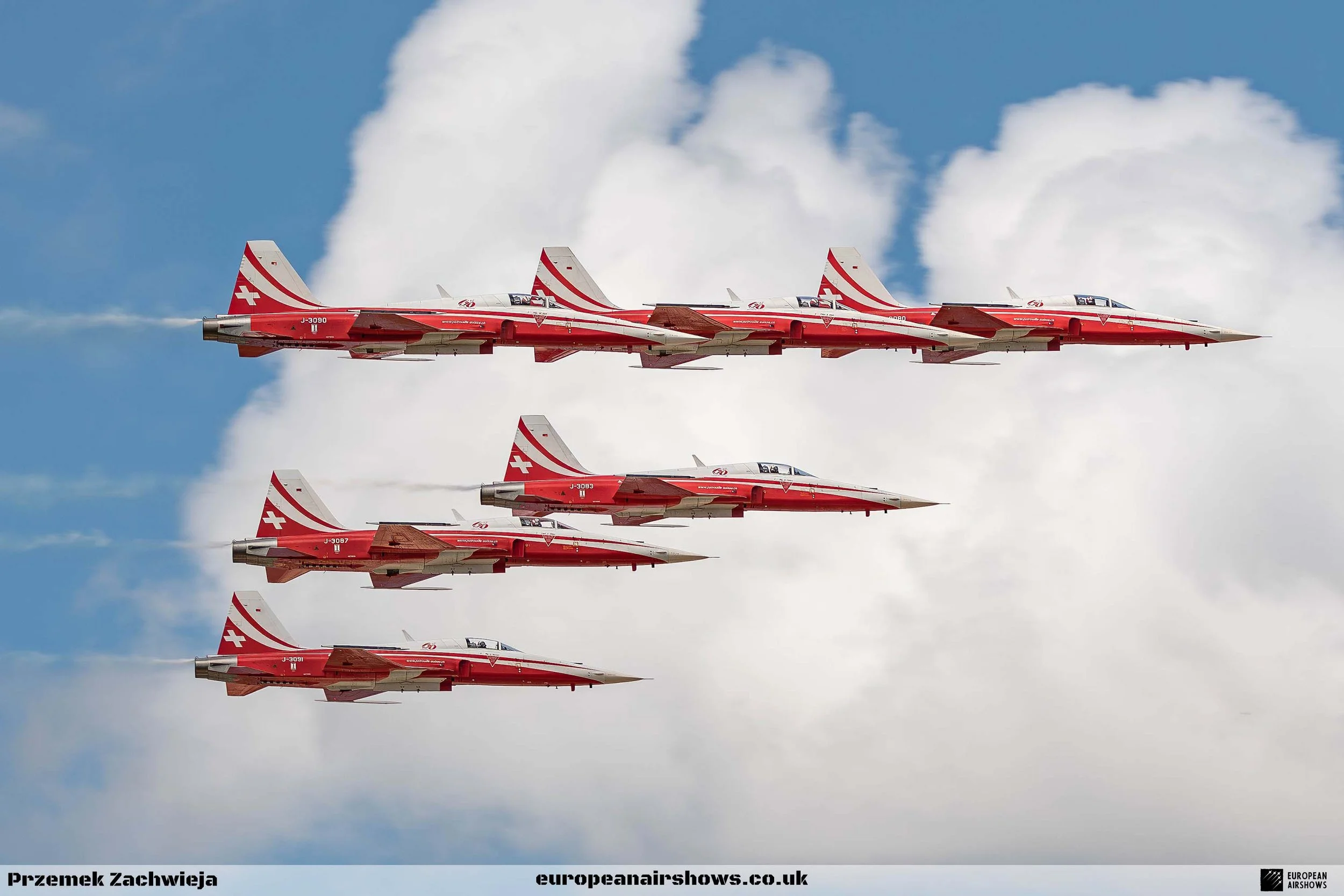
Patrouille Suisse is the official aerobatic team of the Swiss Air Force and one of Europe’s longest-established fast-jet formations. Created on 22 August 1964 with Hawker Hunters, the team has flown six F-5E Tiger IIs since 1995. It remains active, but the approved retirement of the Swiss Tiger fleet no later than the end of 2027 places the present team in its final planned era, with no confirmed replacement aircraft or direct successor yet announced.
- Founded
- 22 August 1964
- Hunter era
- 1964–1994
- Tiger era
- Since 1995
- Display aircraft
- Northrop F-5E
- Formation
- Six aircraft
- Current plan
- F-5 withdrawal by end 2027
The team
Six frontline-trained pilots, flying the display as a secondary military duty.
Switzerland’s official national aerobatic team
Patrouille Suisse was created to represent the Swiss Air Force at national events and to show the standard of Swiss military formation flying to the public. Unlike a full-time display squadron with pilots detached from normal service for several years, its aviators come from the F/A-18 Hornet frontline community and perform with the team alongside their primary air-defence and air-policing duties.
The commander directs the display from the ground
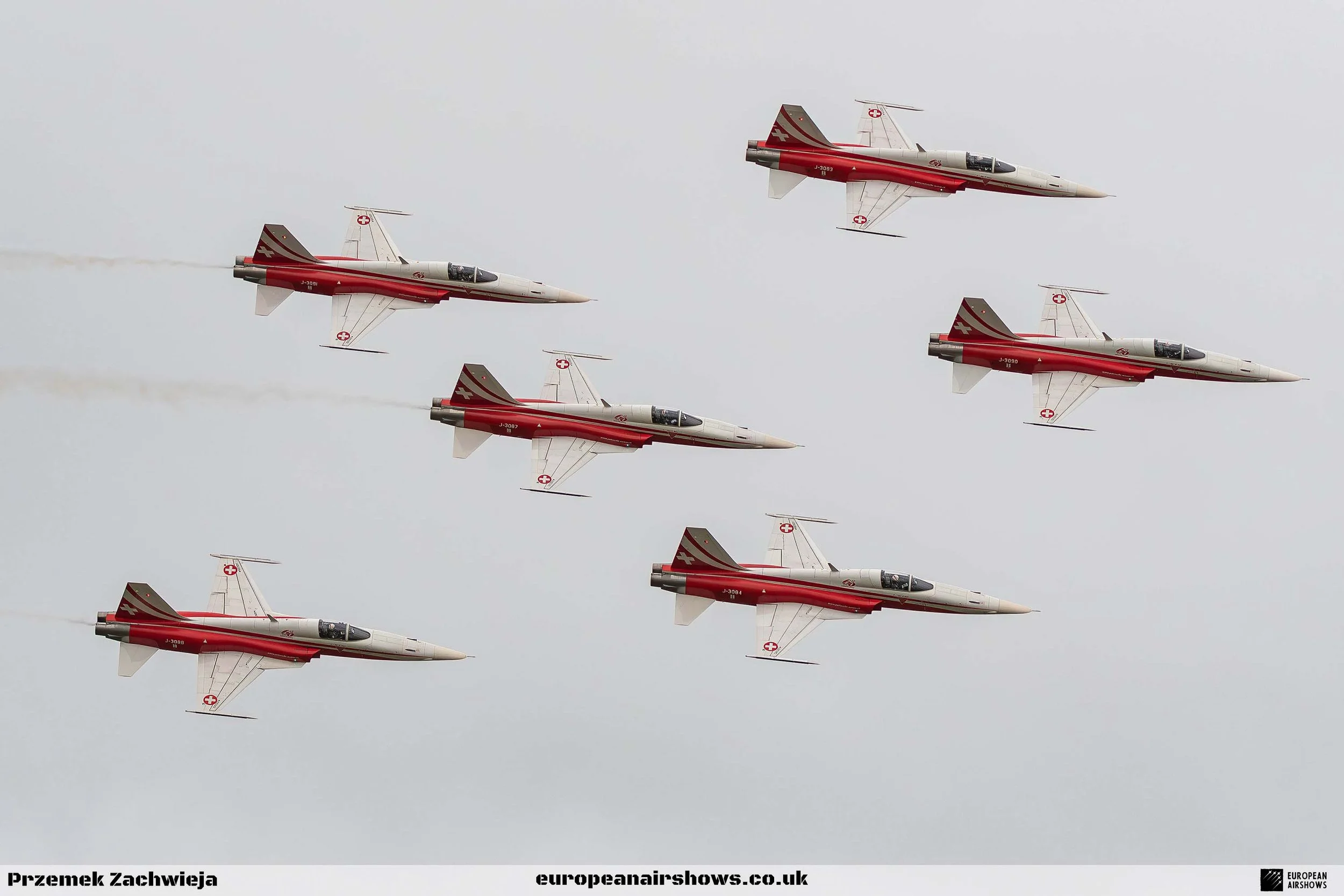
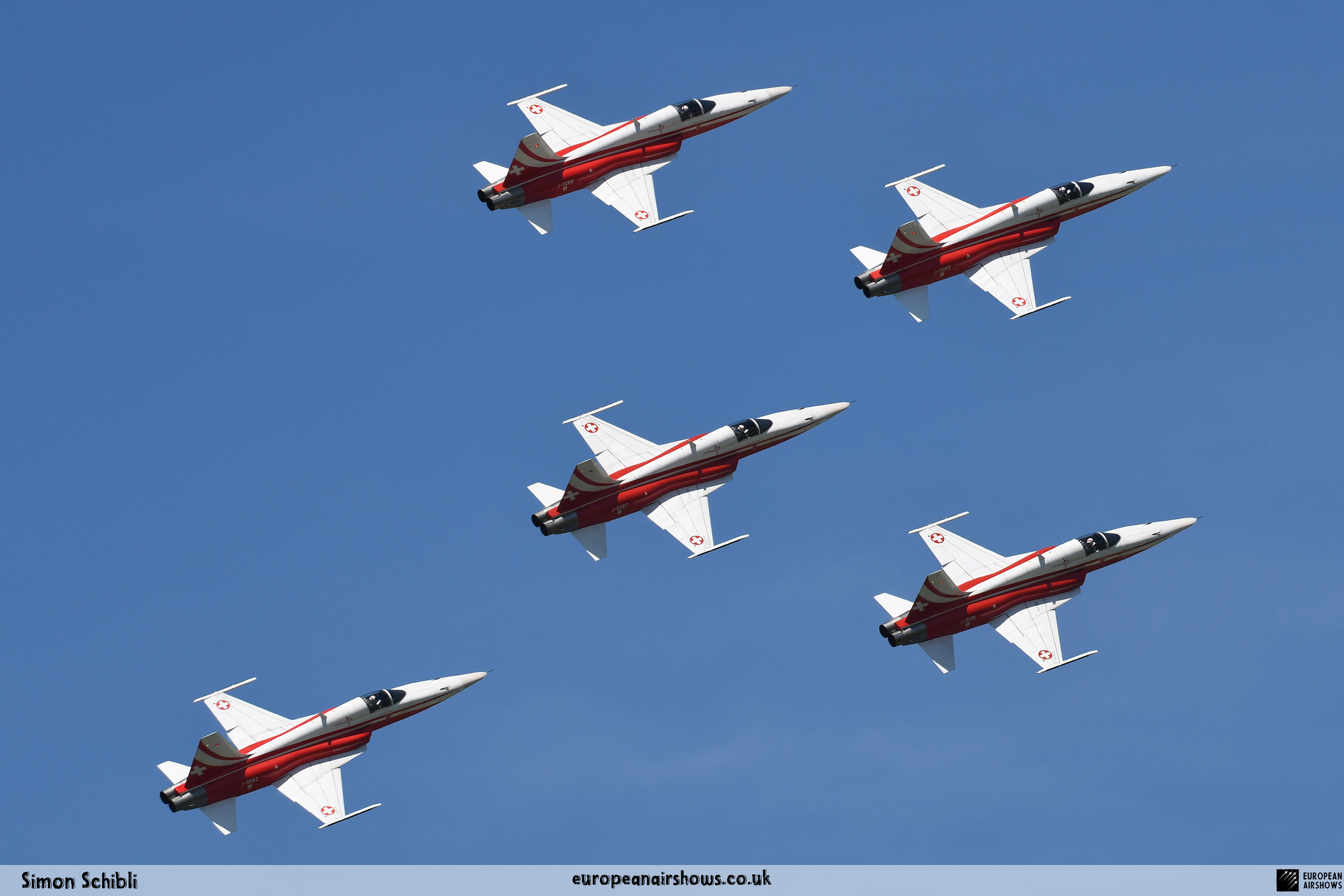
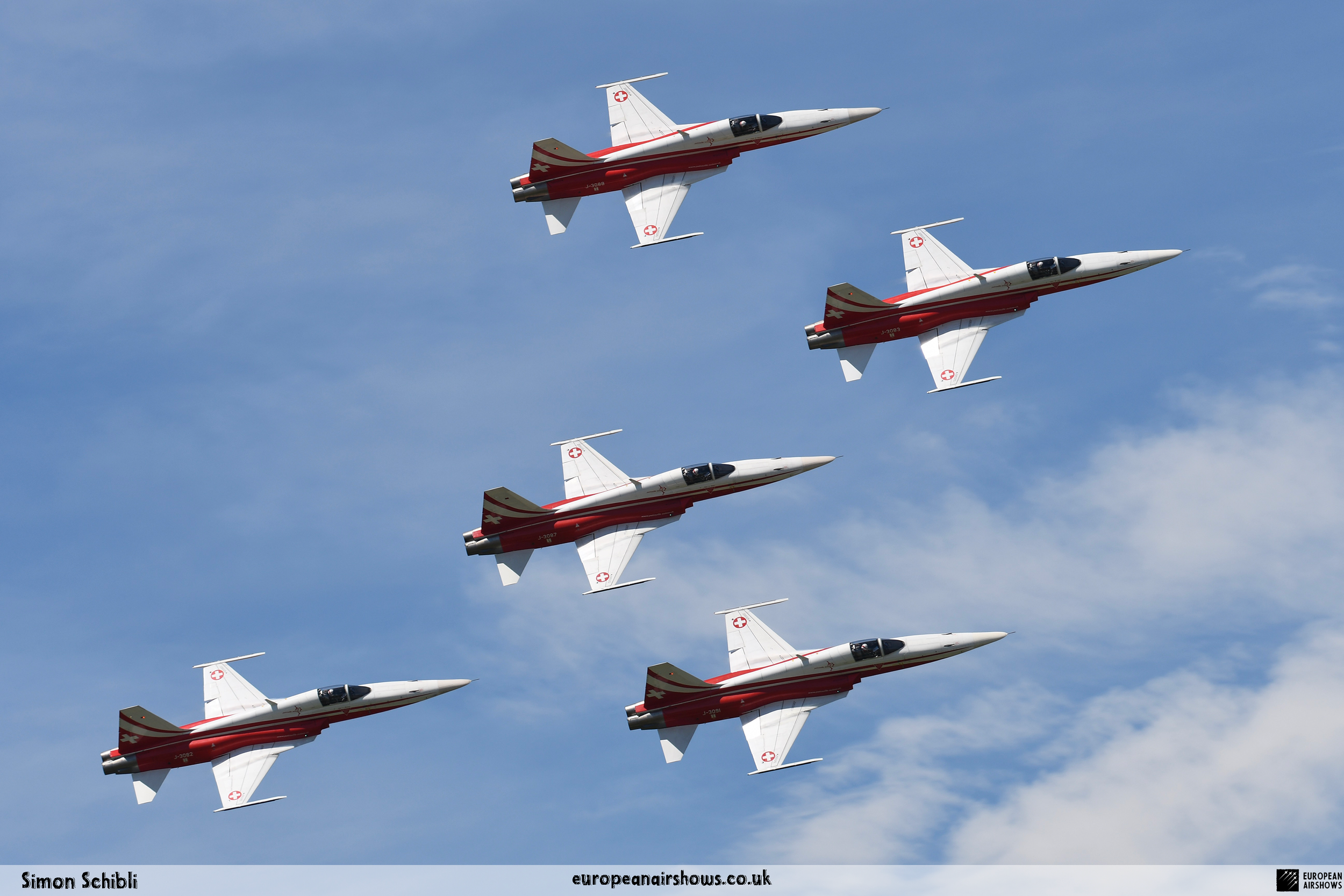
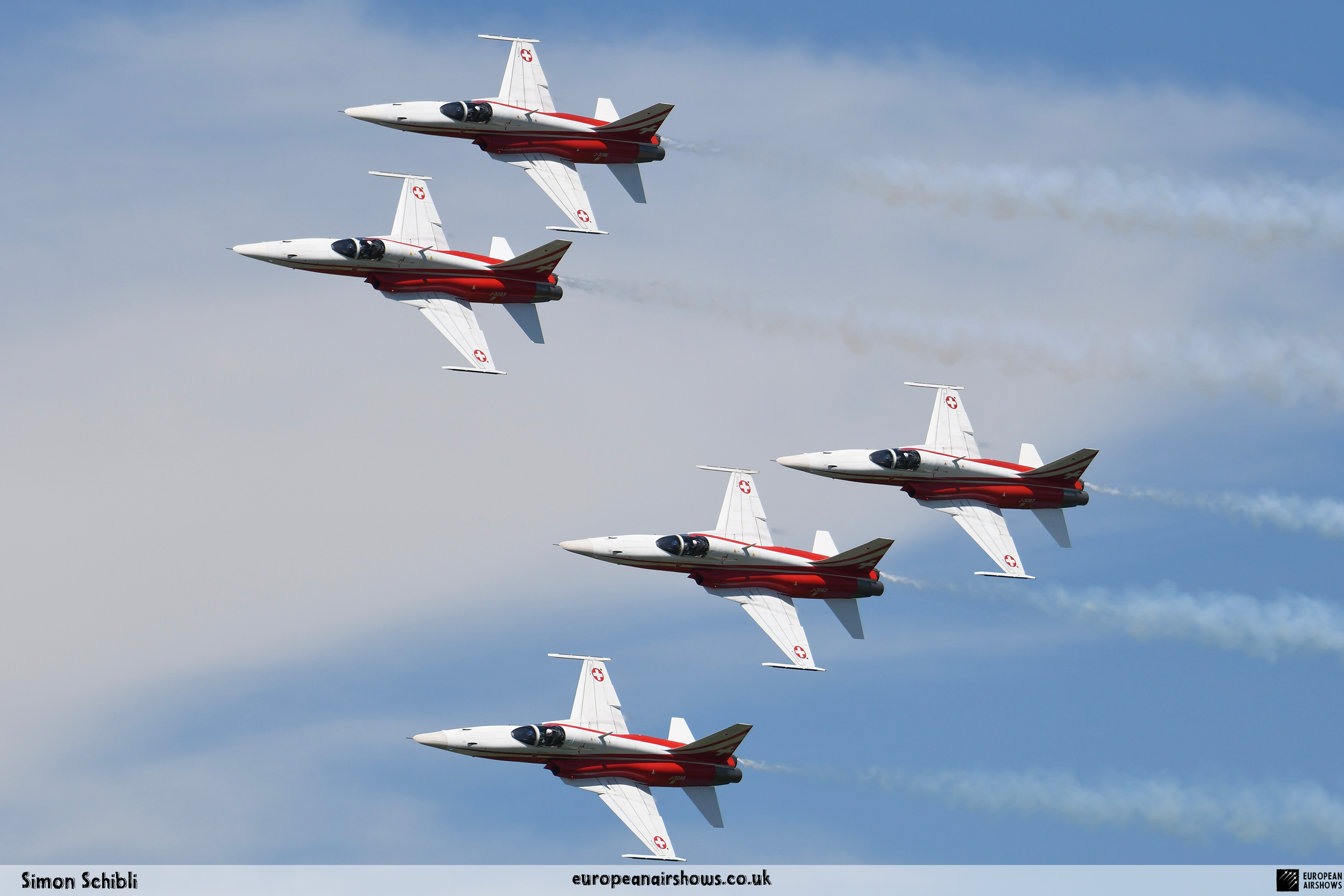
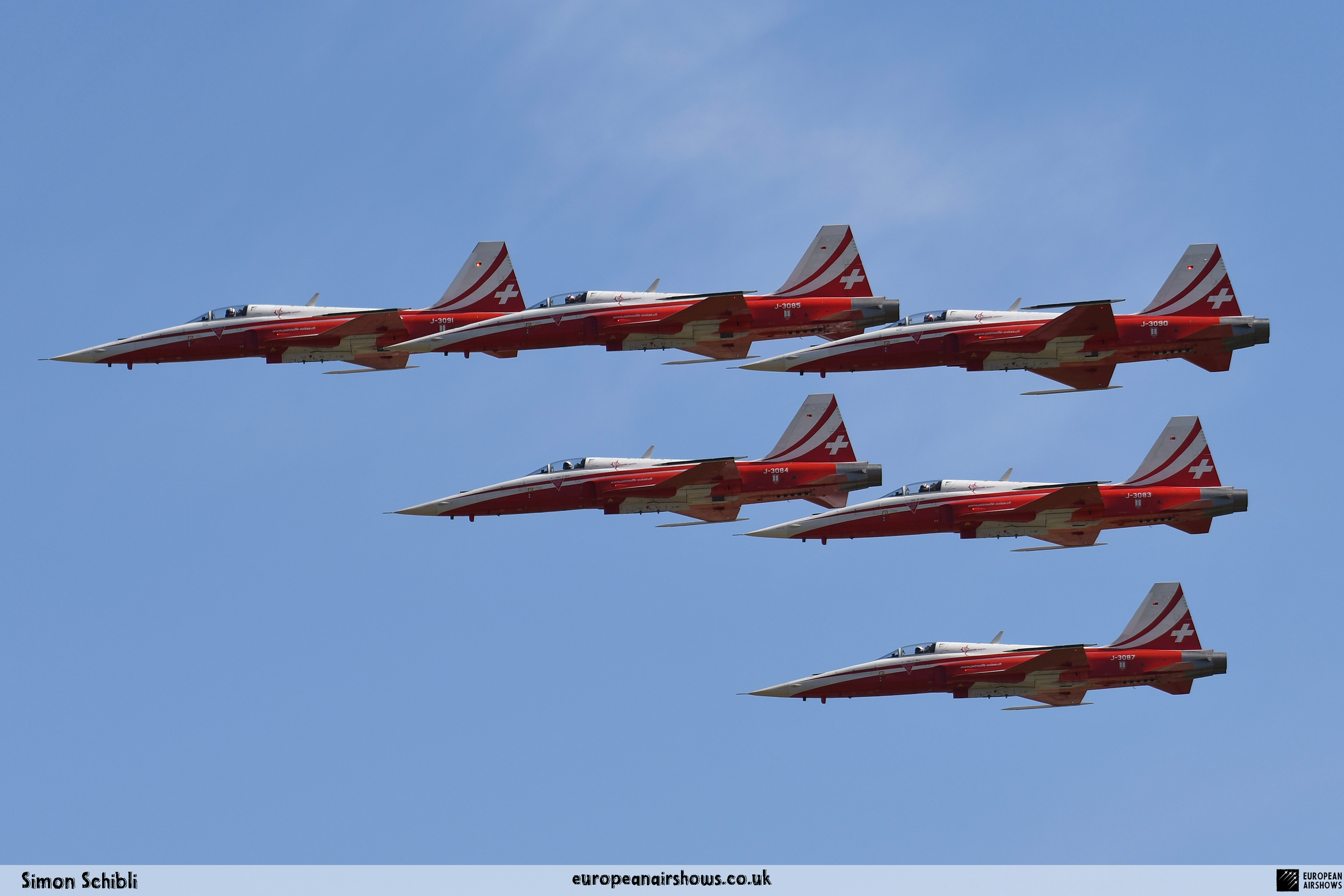
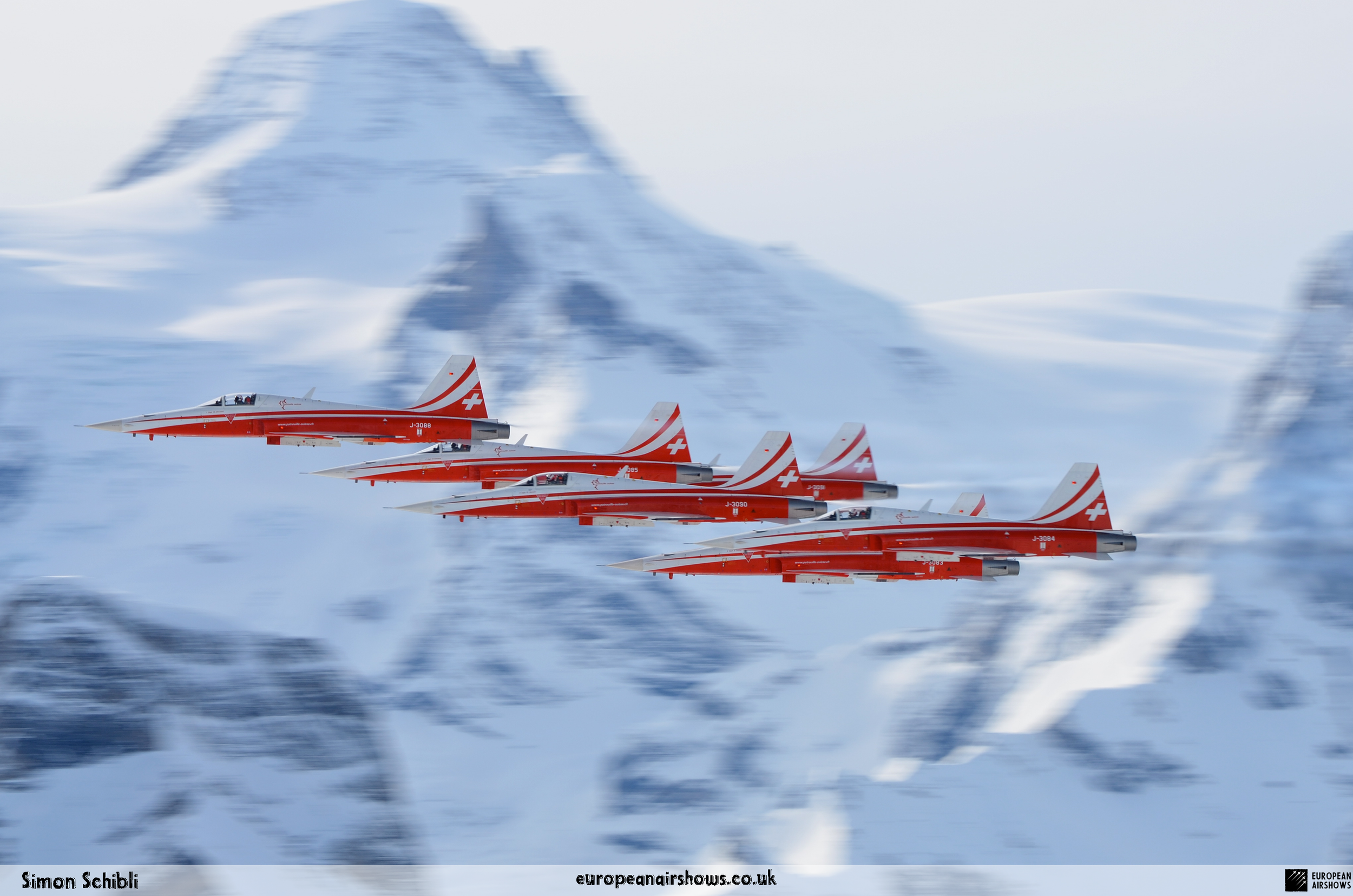
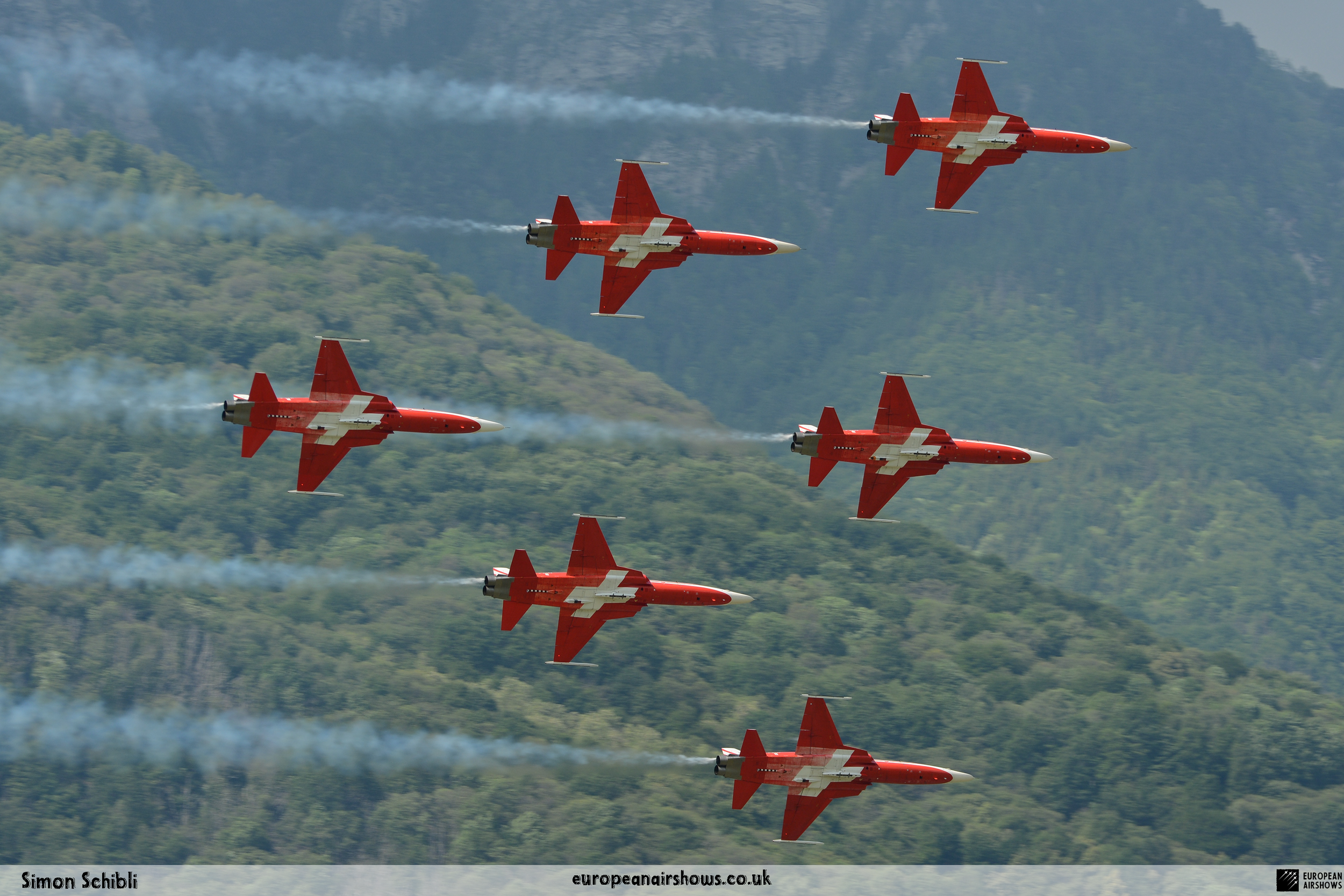
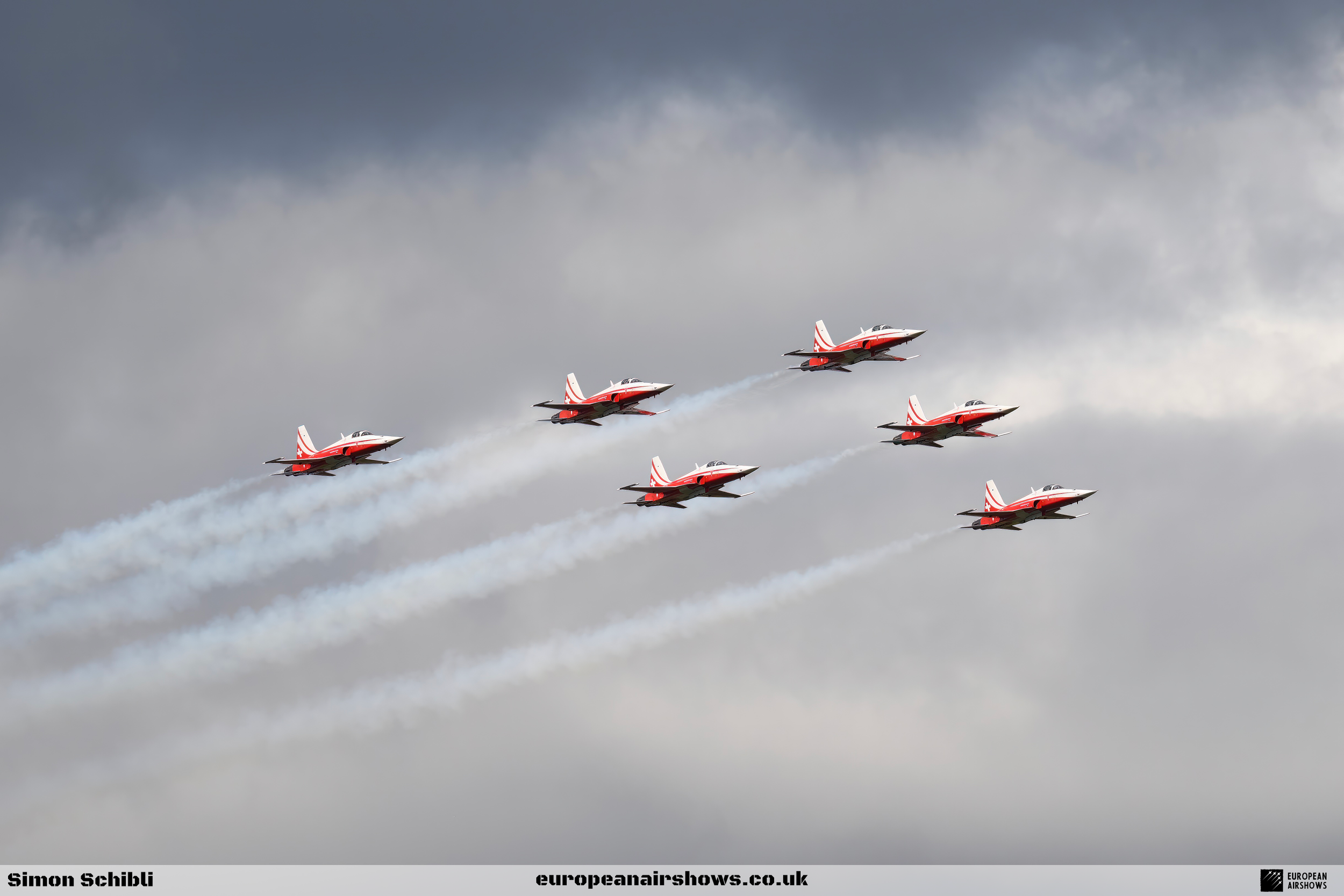
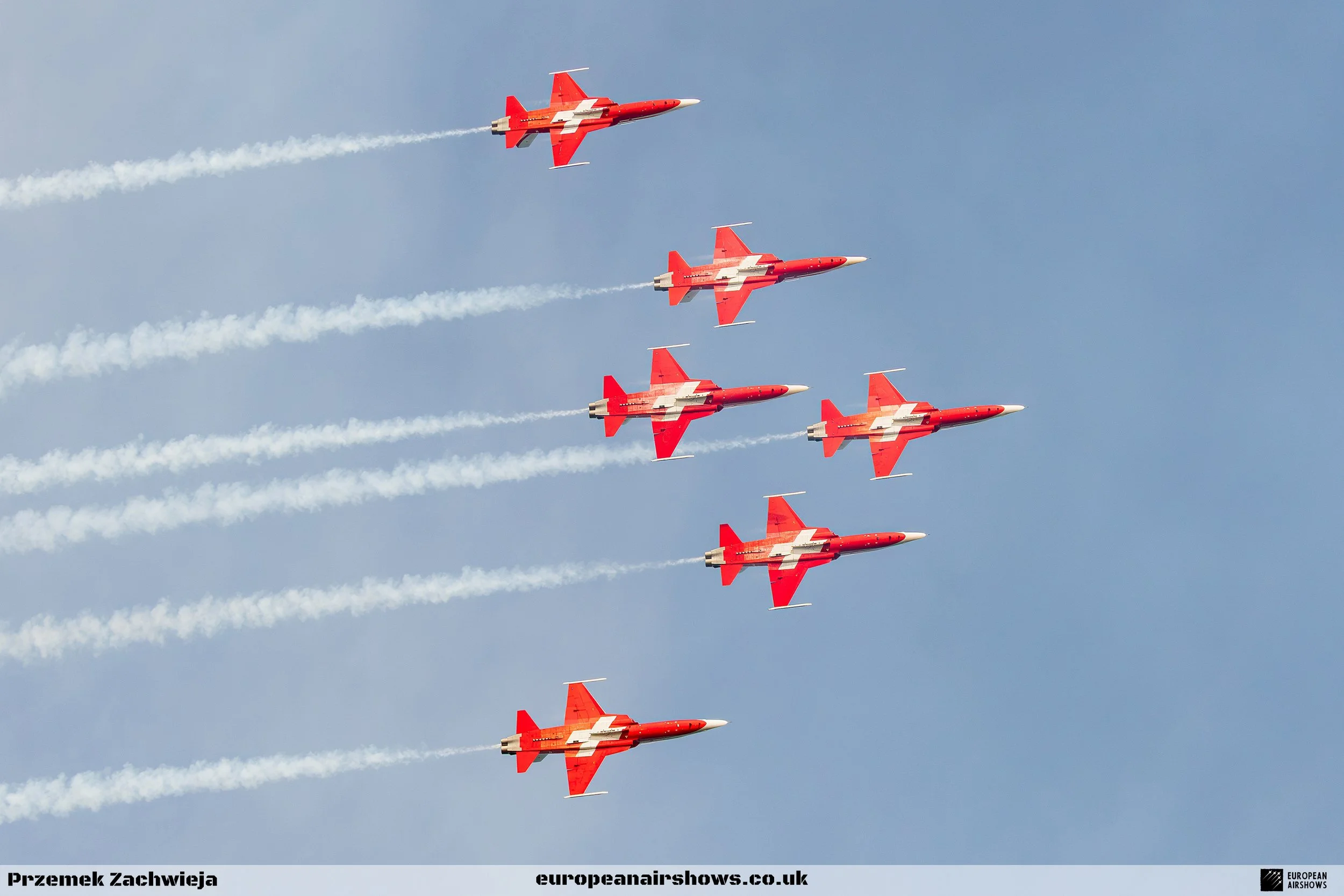
The flying formation contains six aircraft. Tiger Uno leads and positions the entire sequence, calls formation changes and commands the smoke system. The right and left wingmen create the stable inner reference, Tiger Quattro holds the slot behind the leader, and Tiger Cinque and Tiger Sexi form the two solo positions used for the more dynamic crossings and opposition work. Tiger Zero, the team commander, supervises from the ground and remains in radio contact throughout the performance.
Precision is visual rather than automated
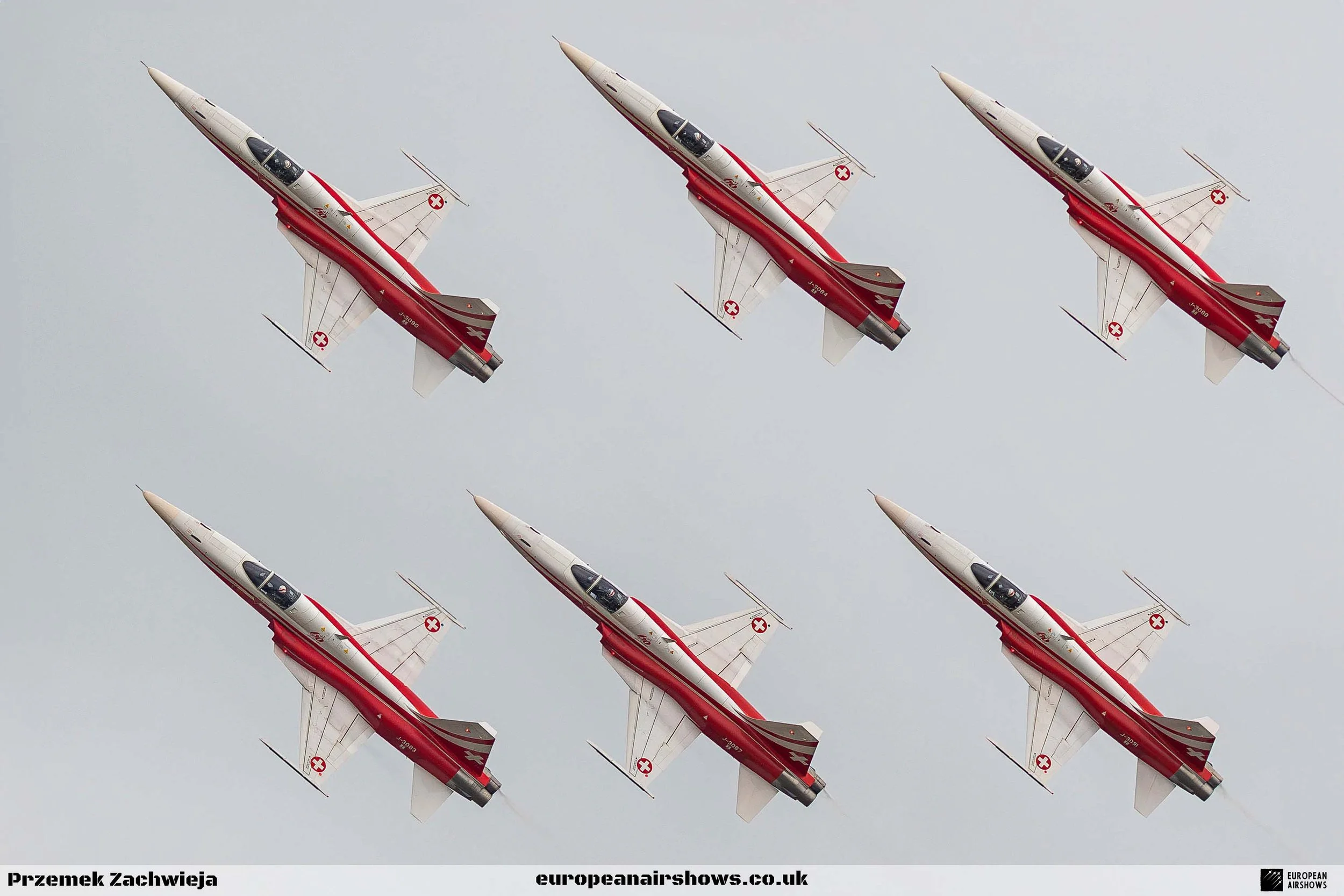
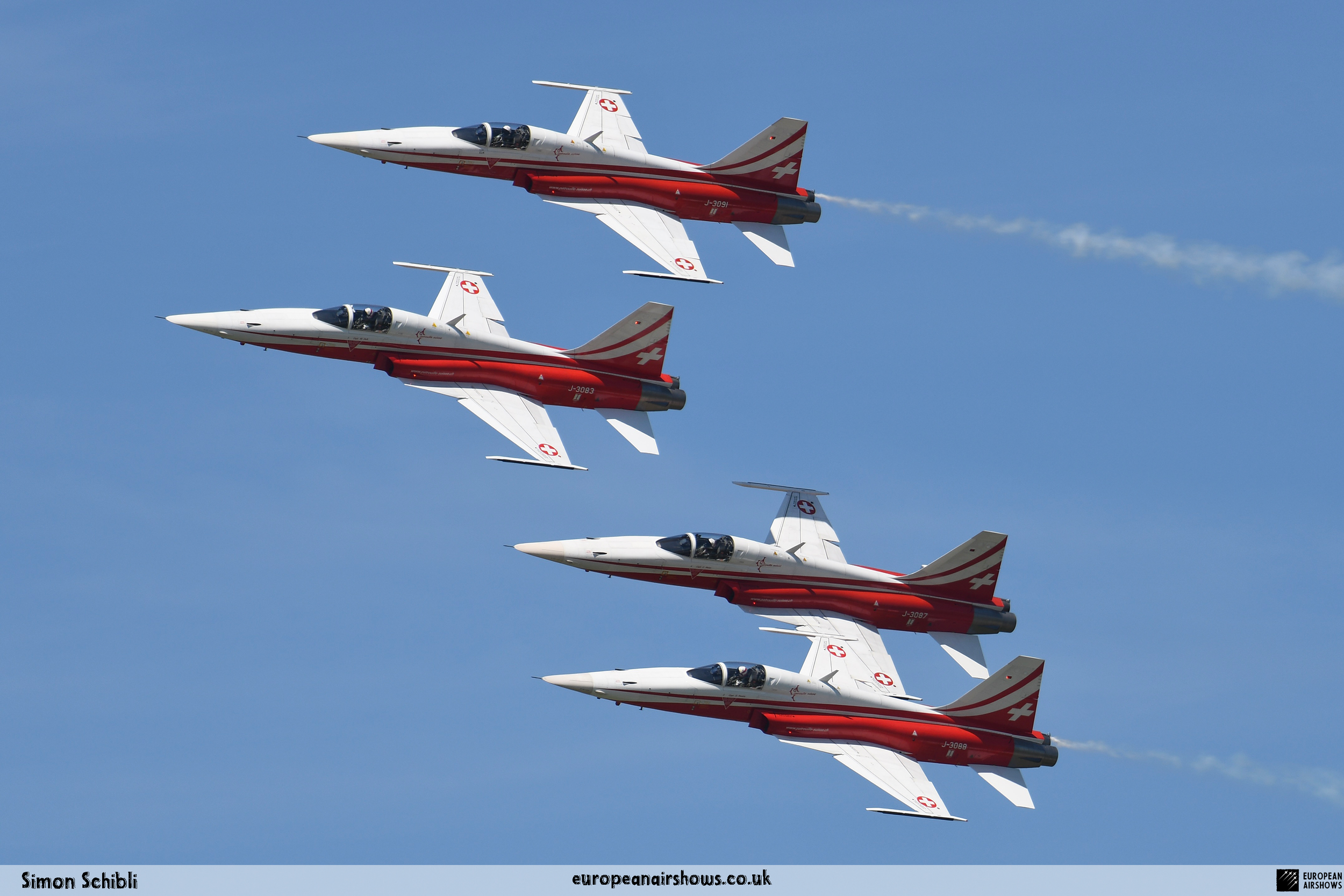
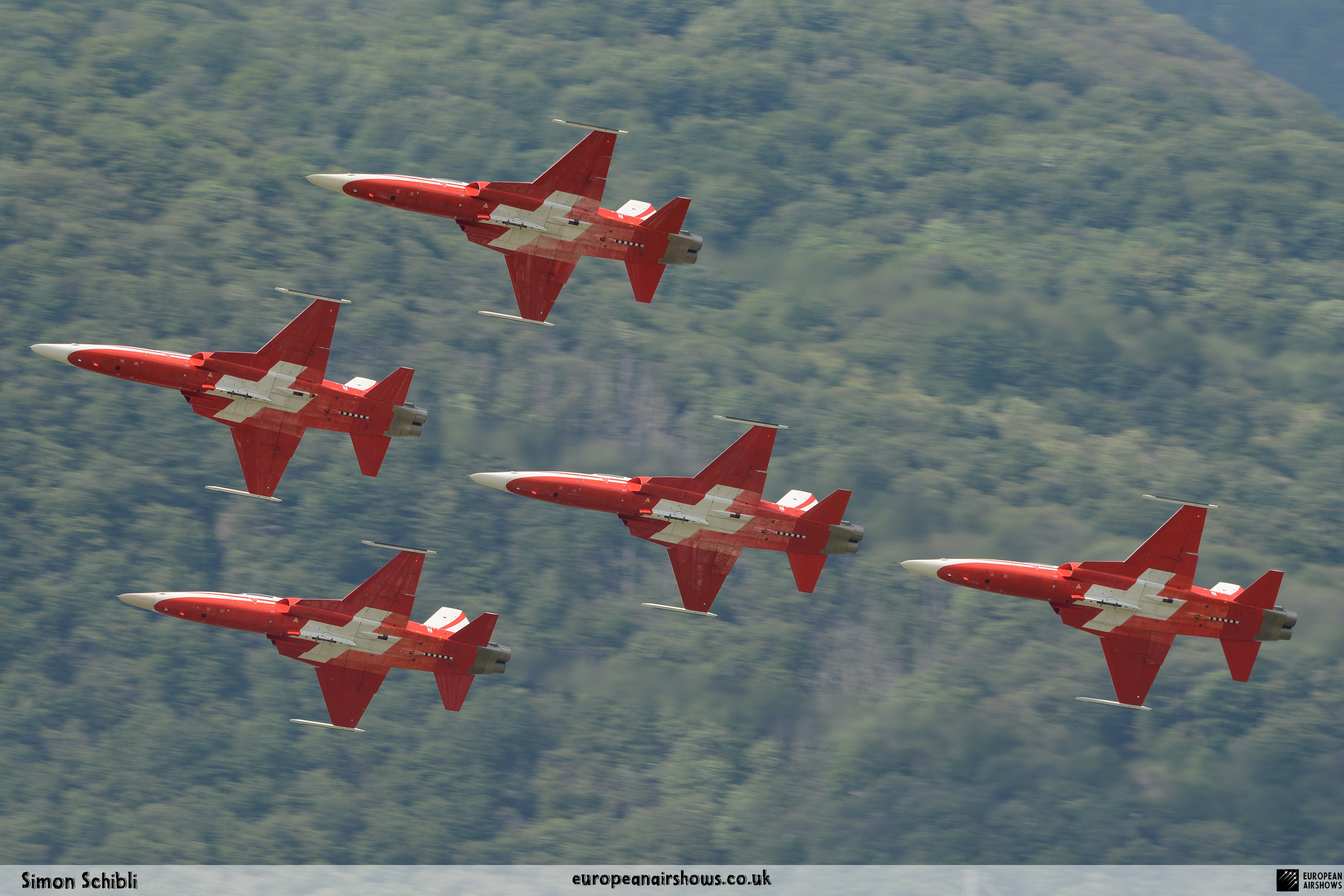
Formation position is held by looking at reference points on the aircraft ahead; there is no electronic formation-keeping system. The spacing can be only three to five metres, with each aircraft stepped roughly two metres vertically to avoid the wake of the jet in front. The leader concentrates on navigation, timing and safe positioning while the other pilots devote their attention to maintaining geometry and reacting instantly to commands.
The team is built around part-time specialists
The six pilots are supported by a ground-based commander, commentators and specialist ground crew drawn from aircraft maintenance, avionics, weapons, flight operations and logistics. Their work is not limited to polishing a dedicated show fleet: the F-5s belong to the remaining Swiss Tiger system, so preparation must satisfy military airworthiness and operational standards before every training sortie and public appearance.
Emmen is the operational centre
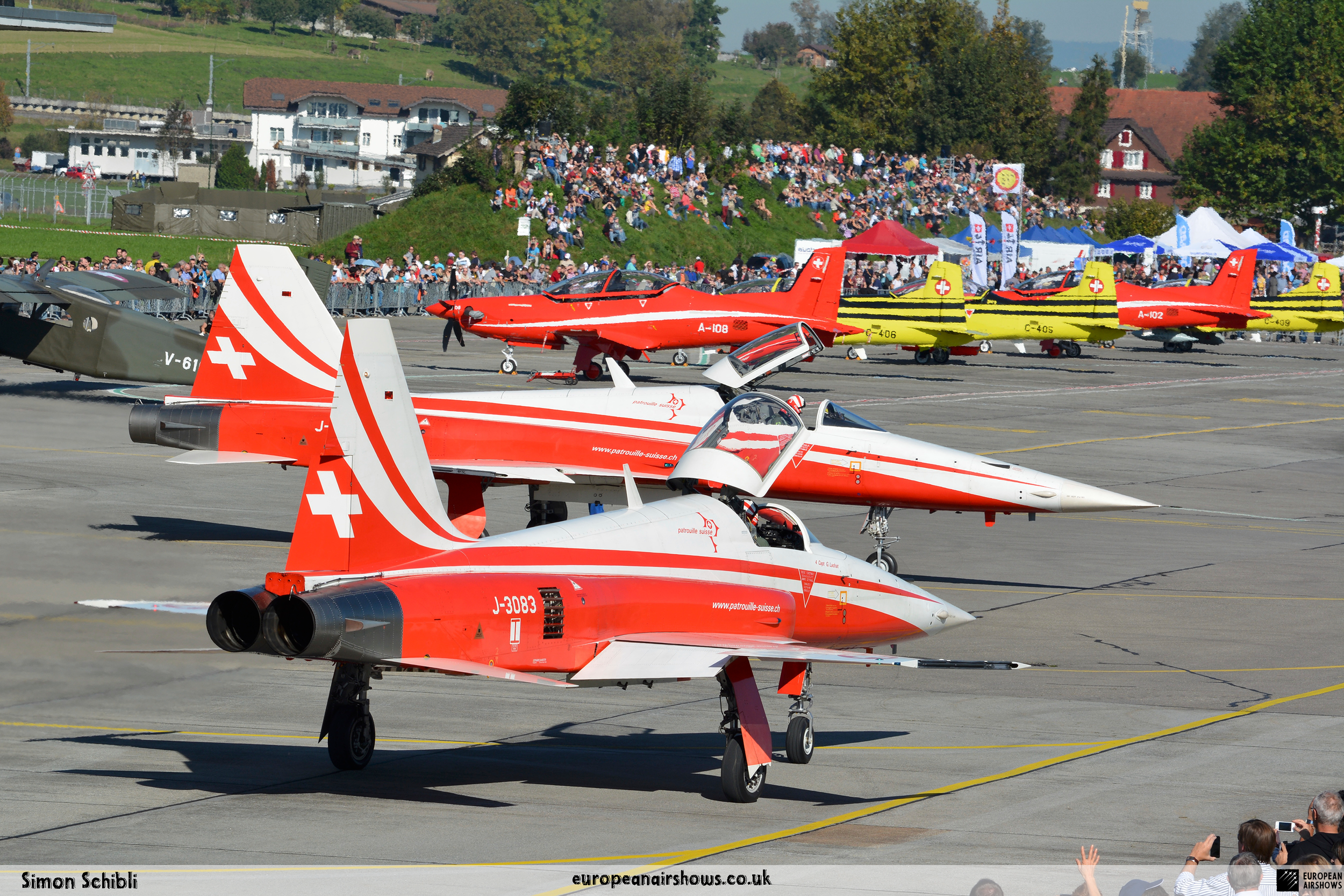
Emmen Air Base is the team’s home and the starting point for much of its seasonal training. The airfield also provides the engineering and logistics support needed to move six fighters, personnel, spares and ground equipment to venues in Switzerland and abroad. The compact red-and-white fleet has therefore become closely associated with both the base and the wider Lucerne region.
“Felix” connects the air and ground elements
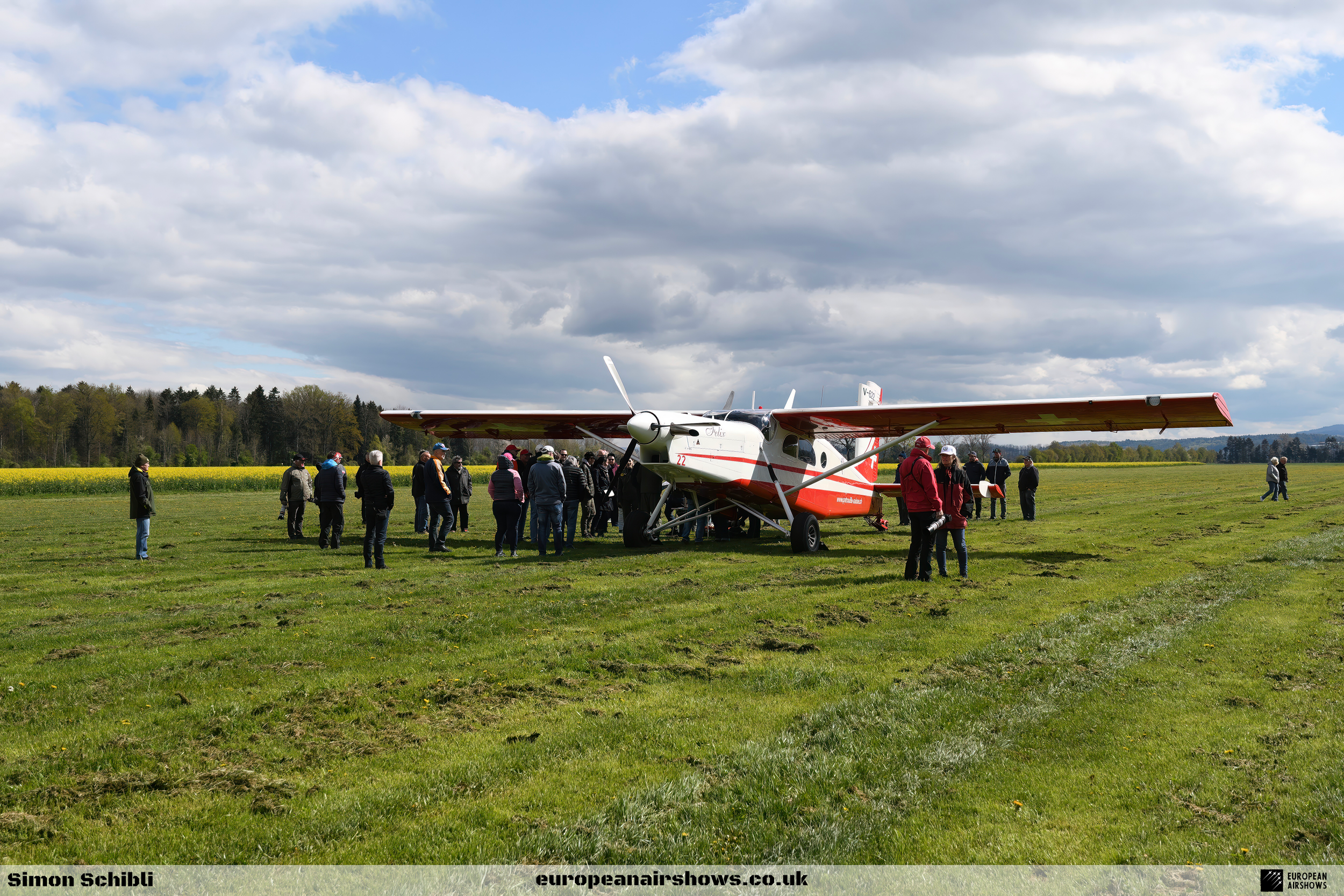
Since April 2007, the team has been supported by Swiss Air Force PC-6 Turbo Porter V-622, painted in Patrouille Suisse colours and known as Felix. It carries the commander, a commentator and a camera operator to training and display sites. From the ground, the commander uses it as the practical link between the formation, organisers and the public presentation of the team.
The display
Supersonic-capable fighters make the routine larger, faster and more demanding than a trainer display.
The F-5’s speed and turning radius give Patrouille Suisse a broad display footprint. A loop can be entered at around 850 km/h, reach four to five g and occupy roughly three kilometres of diameter. A formation barrel roll is entered at about 700 km/h and still requires around 1.5 kilometres. Those figures explain why the programme must be adapted carefully to each venue, its surrounding terrain and the available airspace.
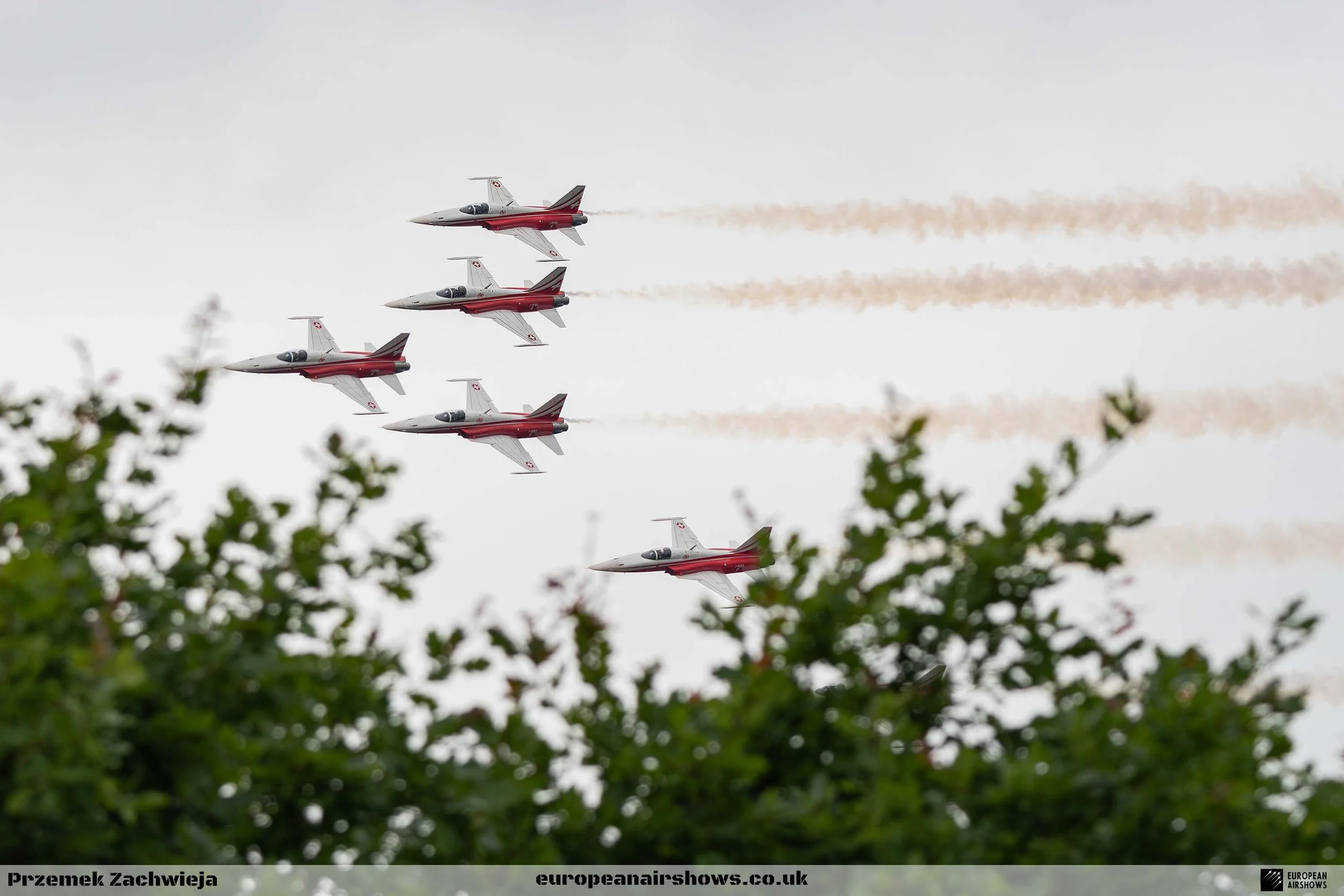
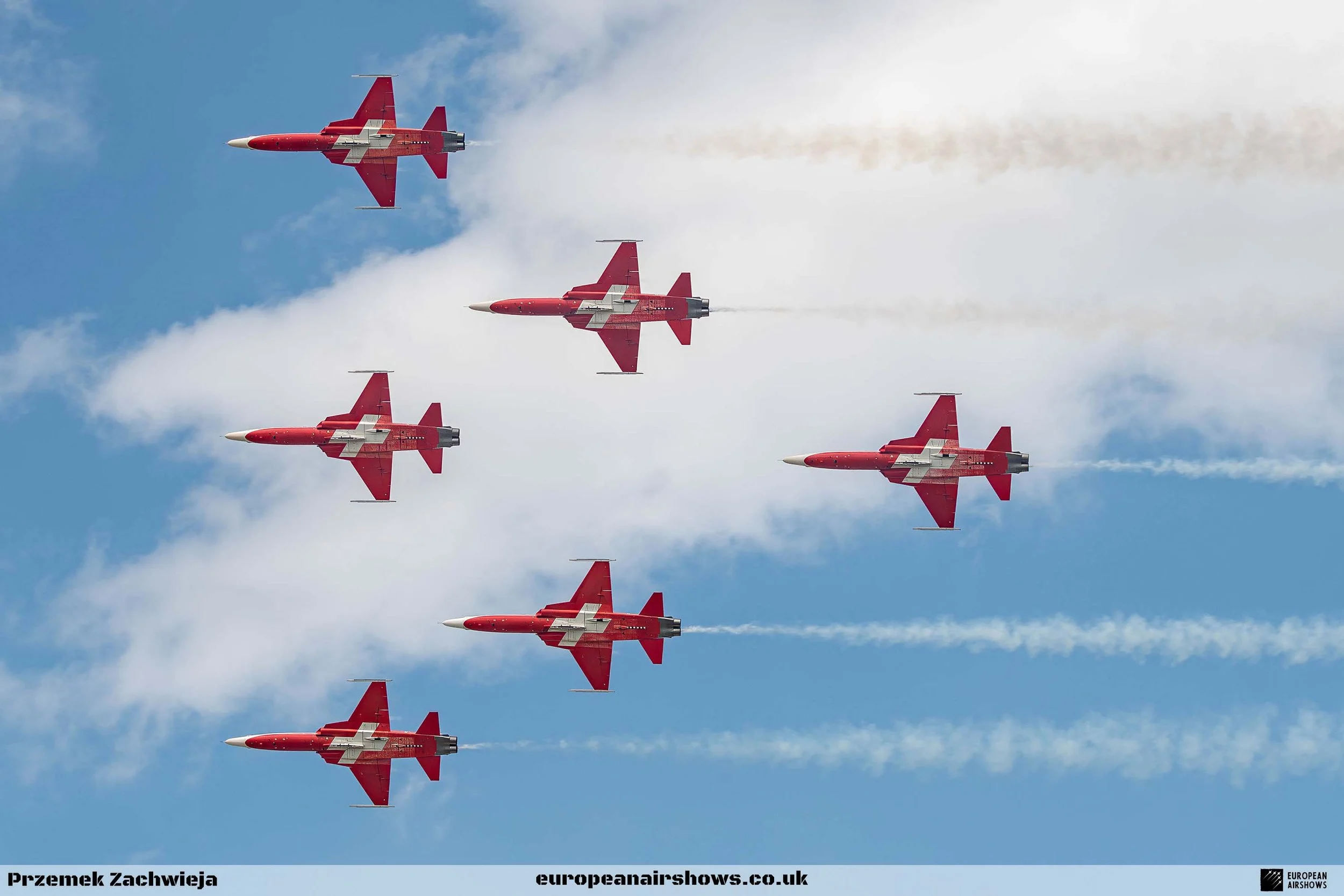
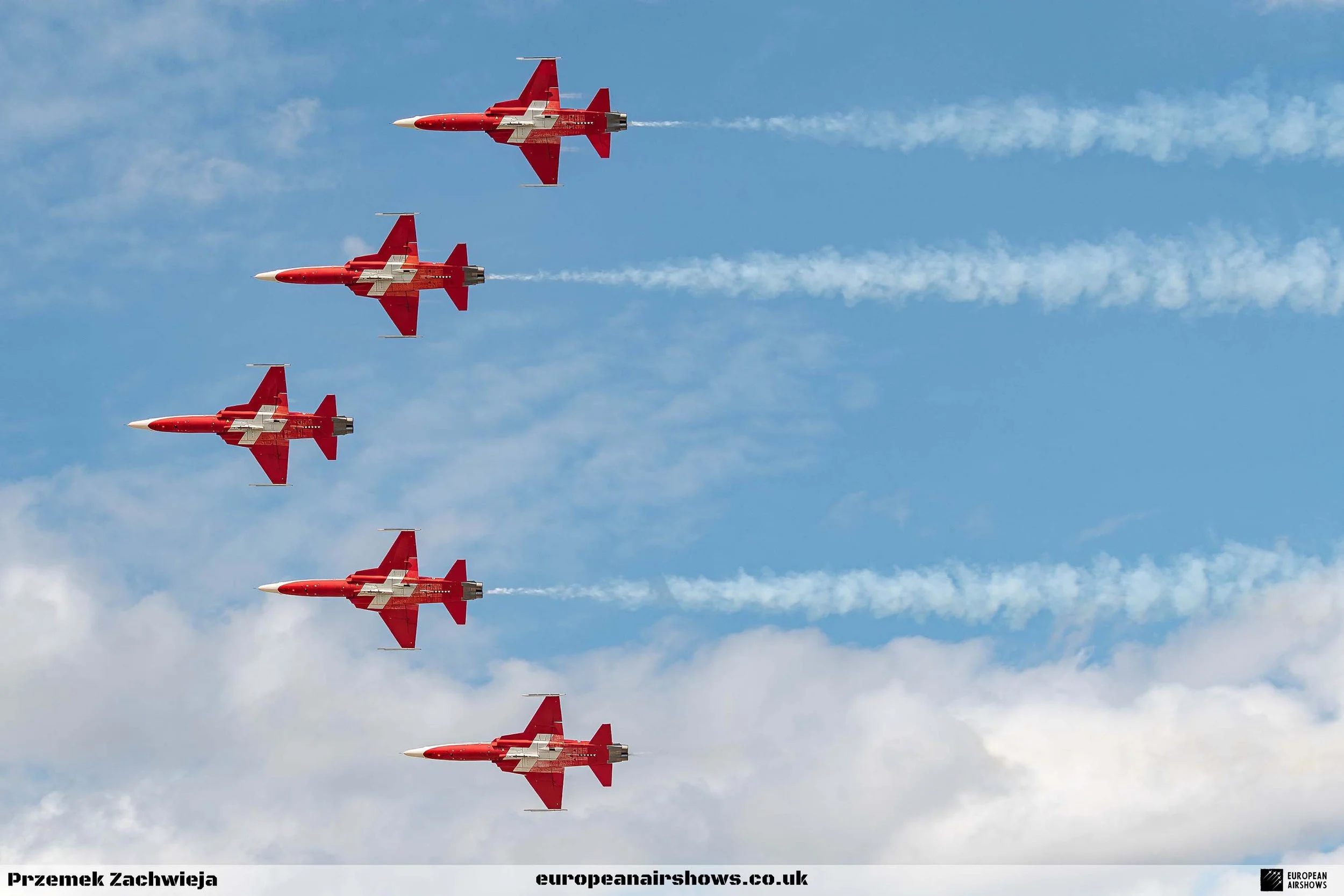
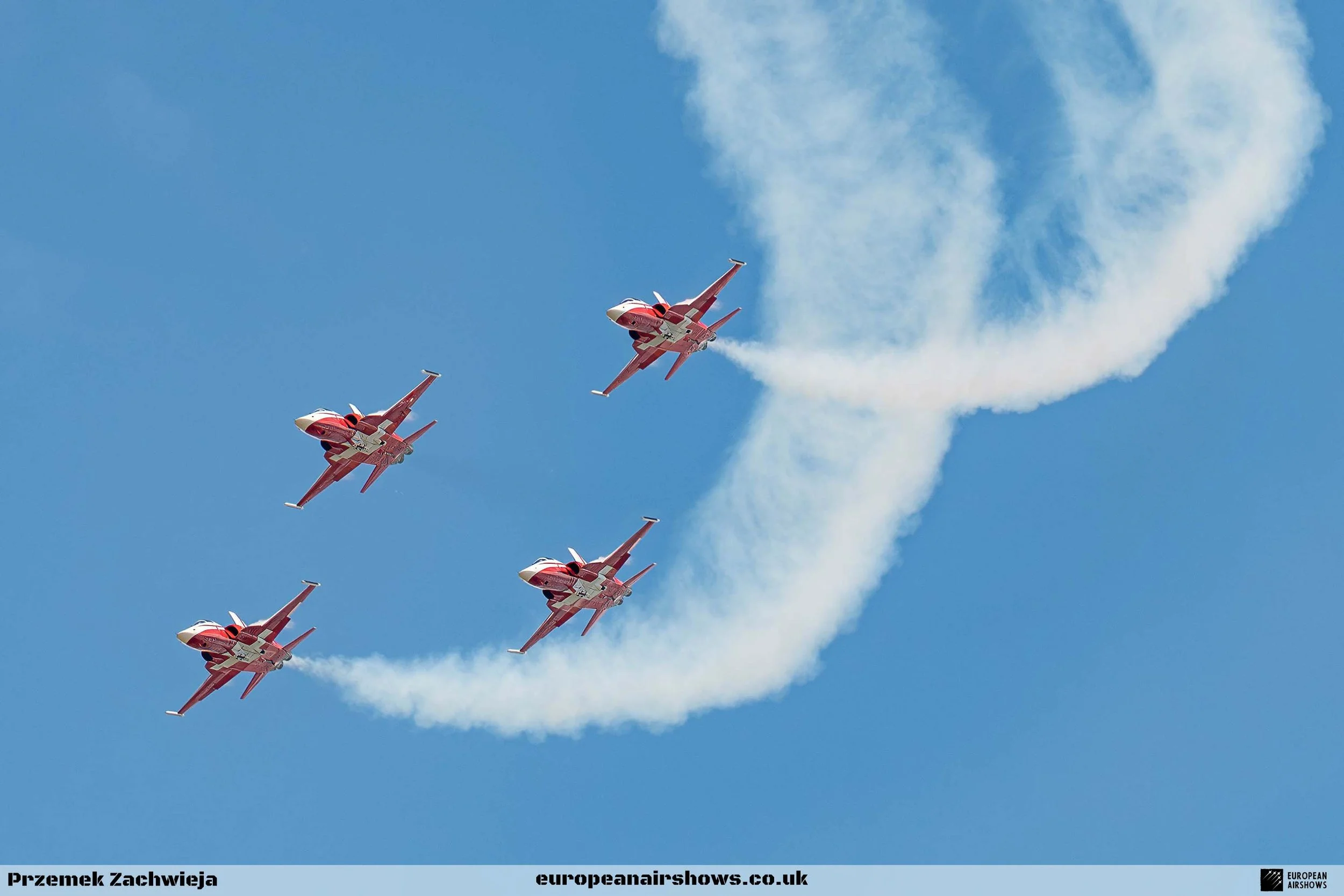
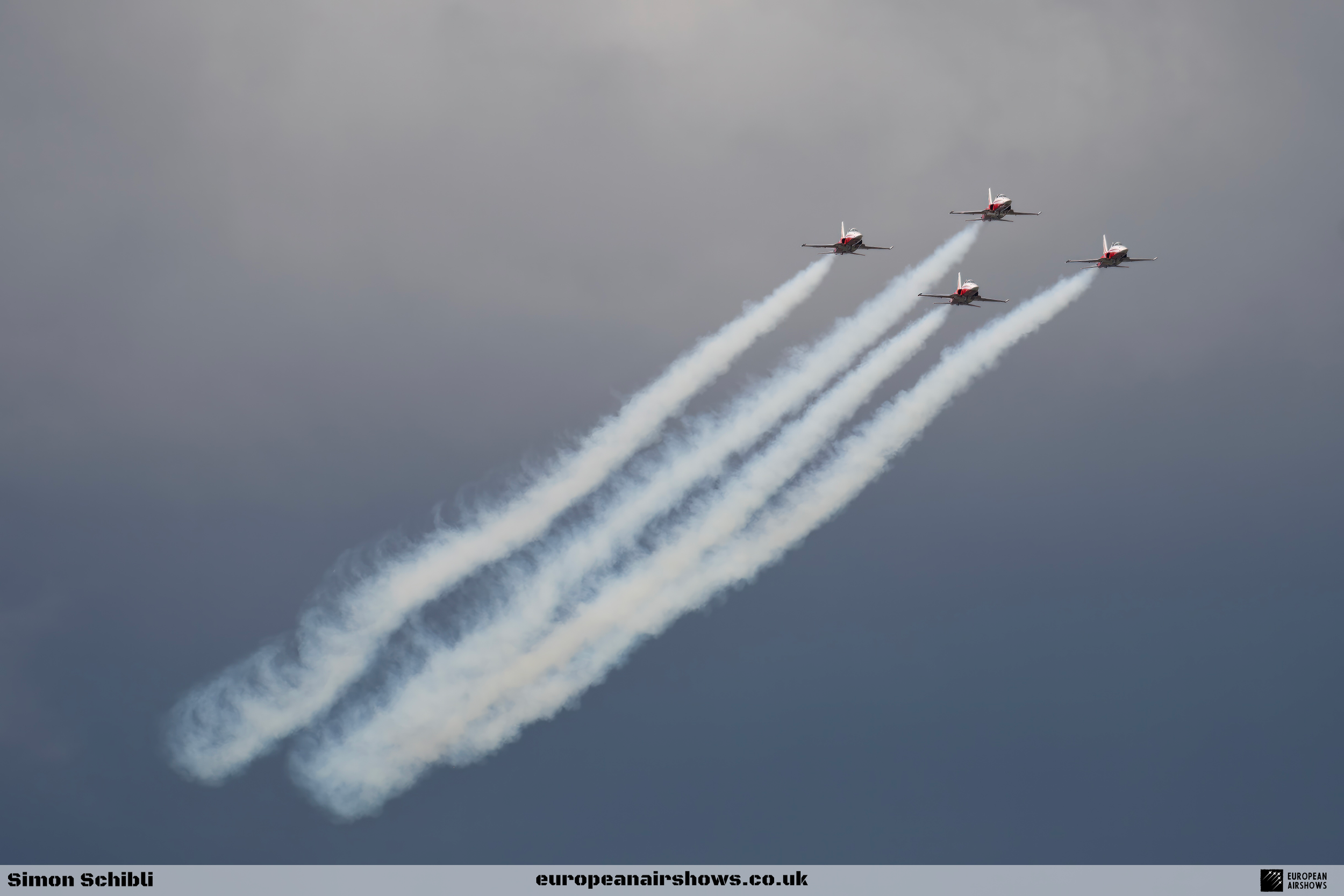
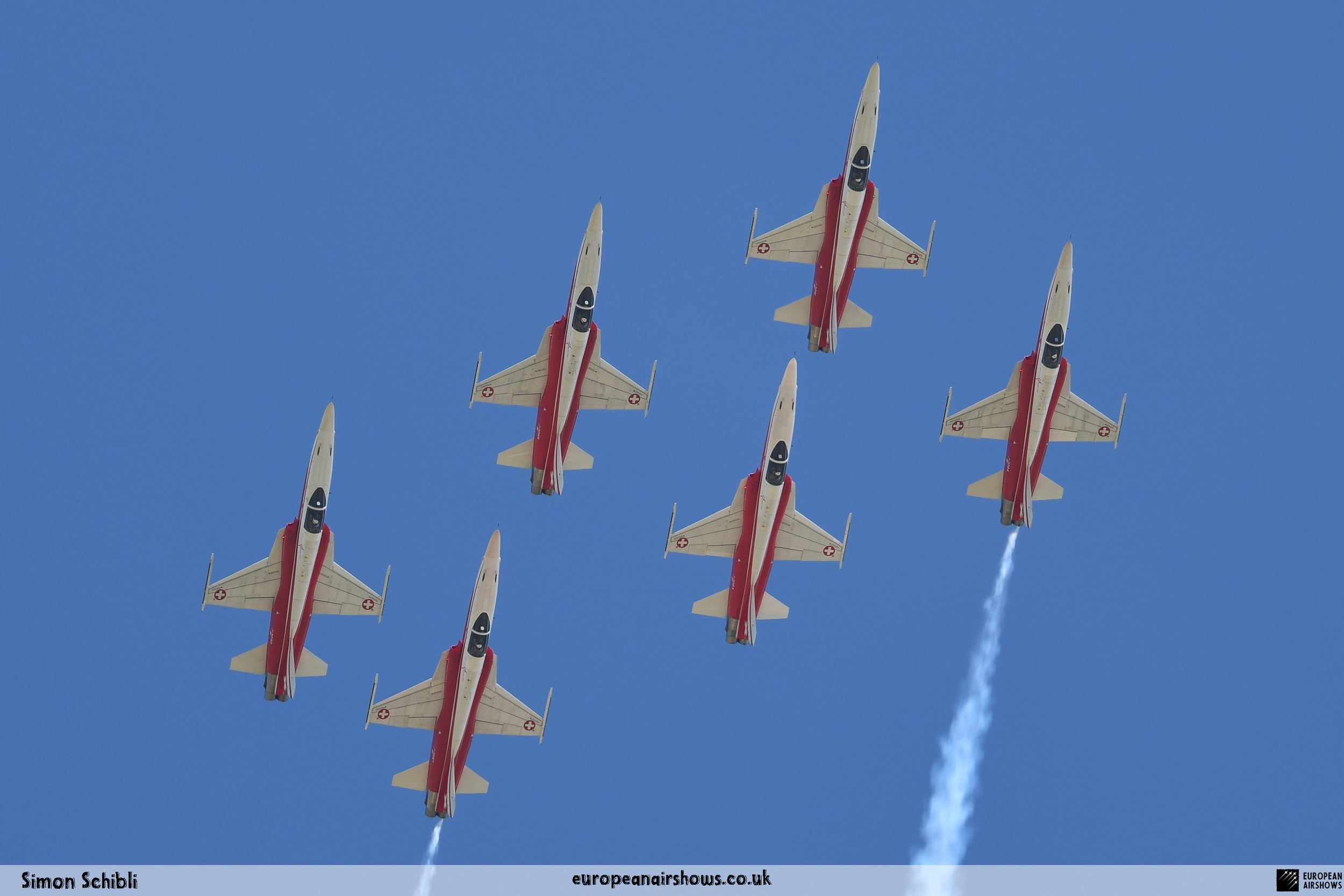
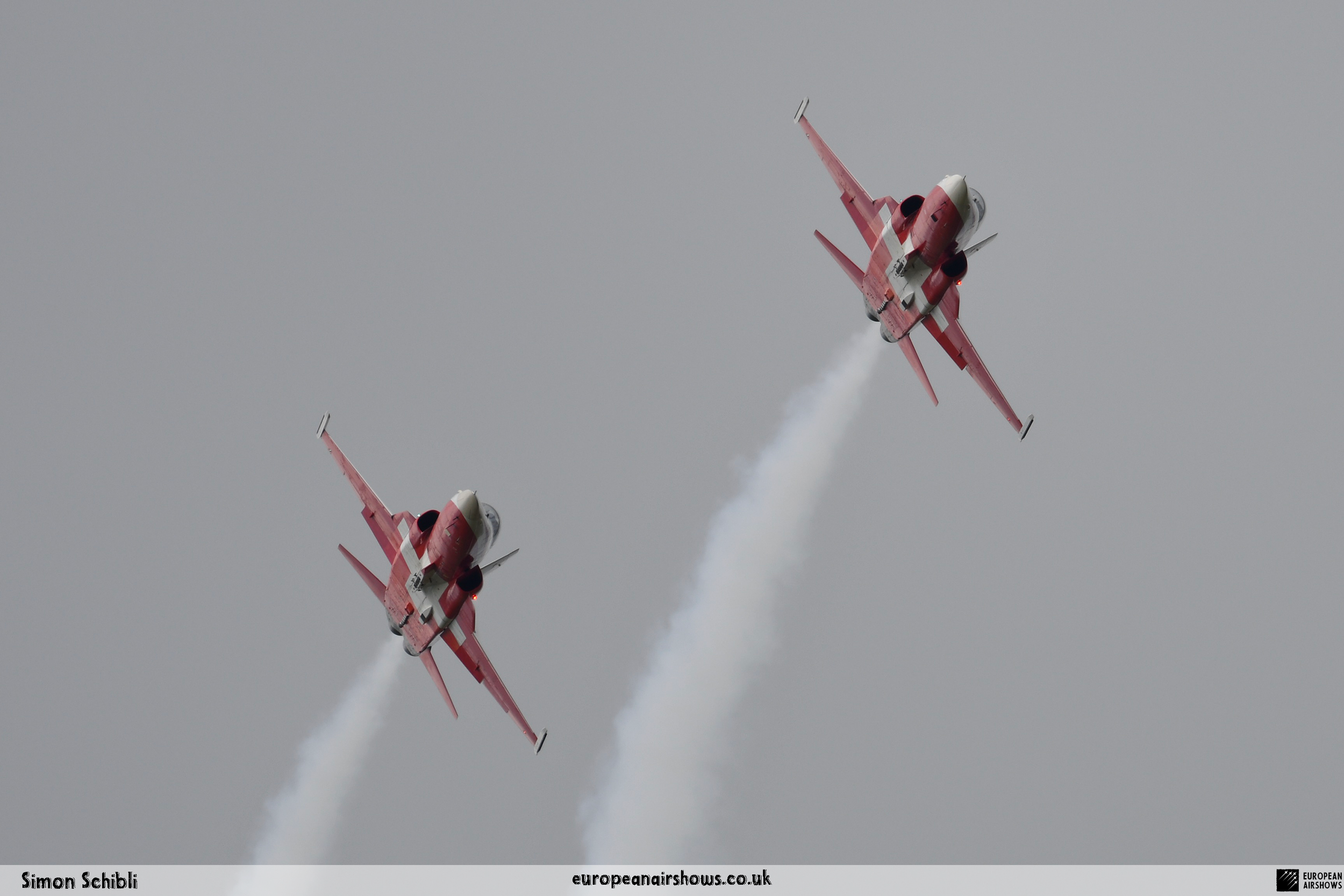
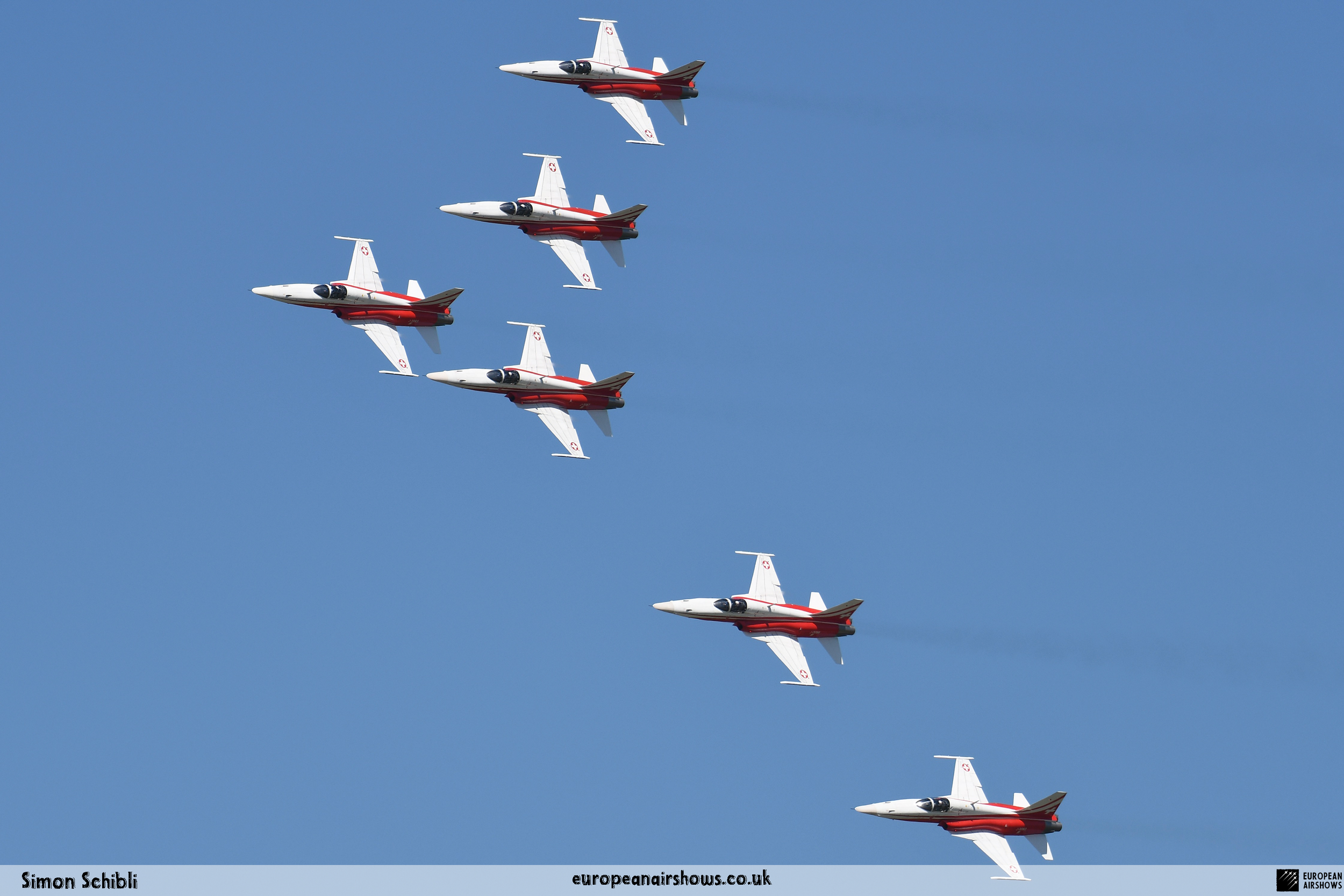
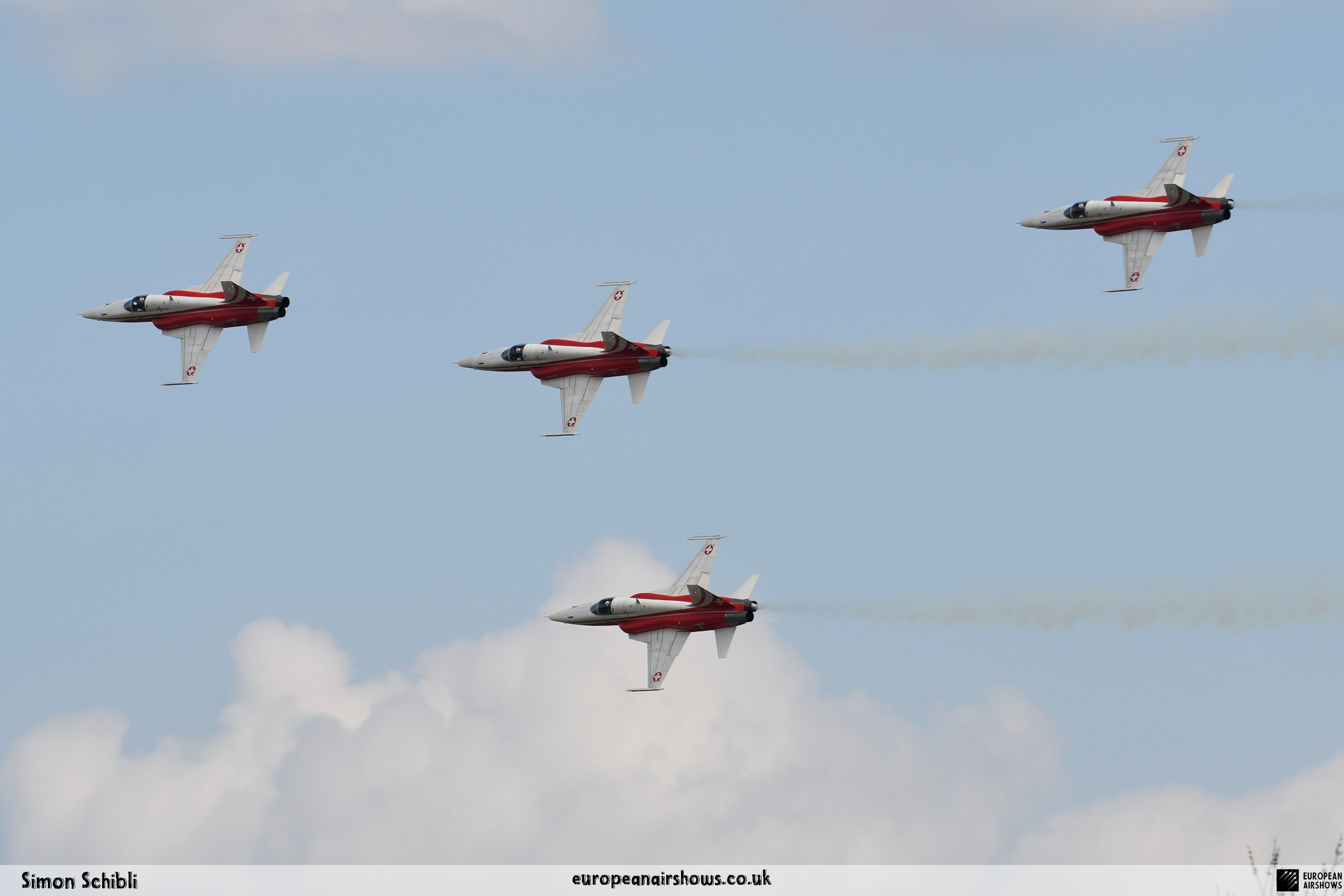
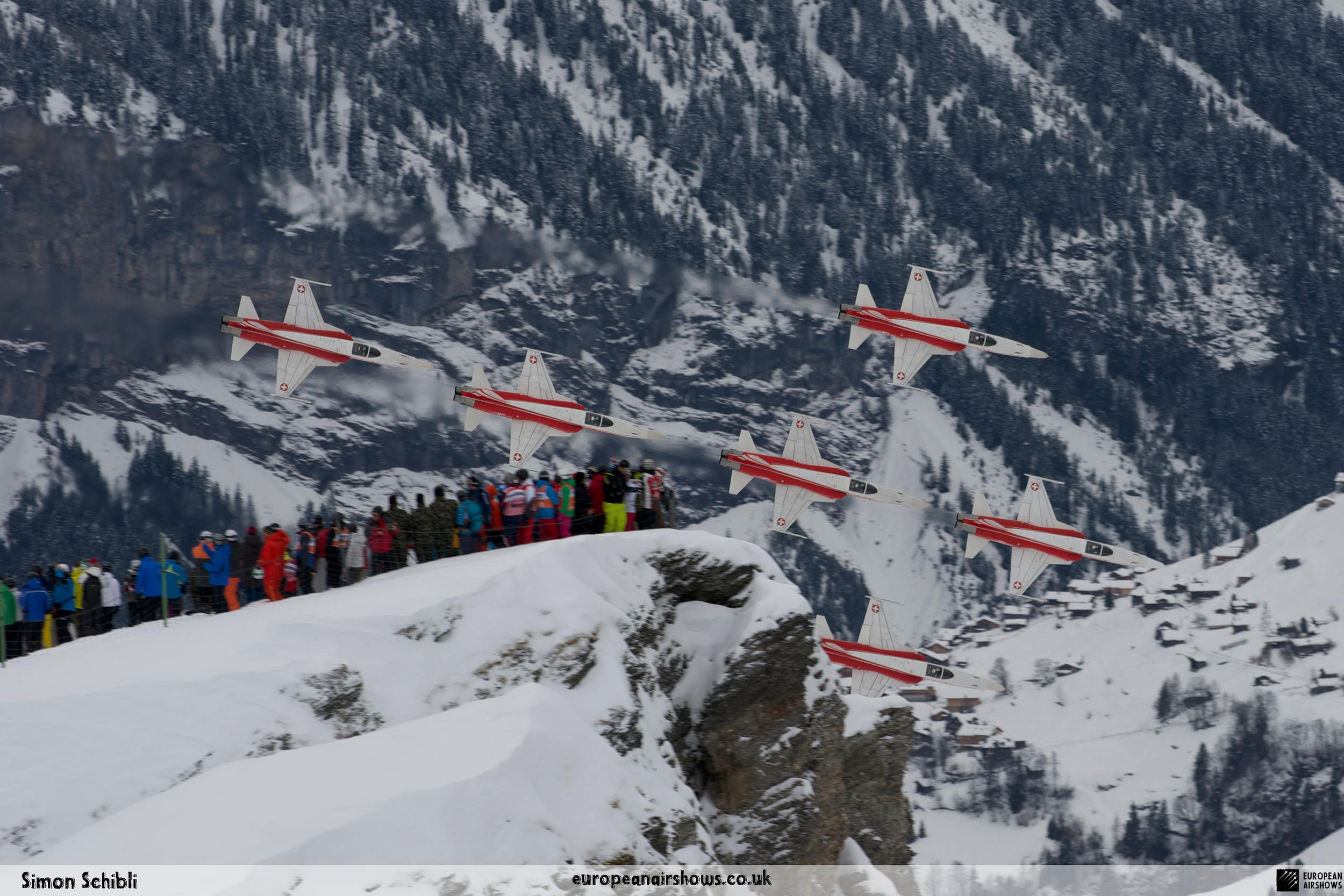
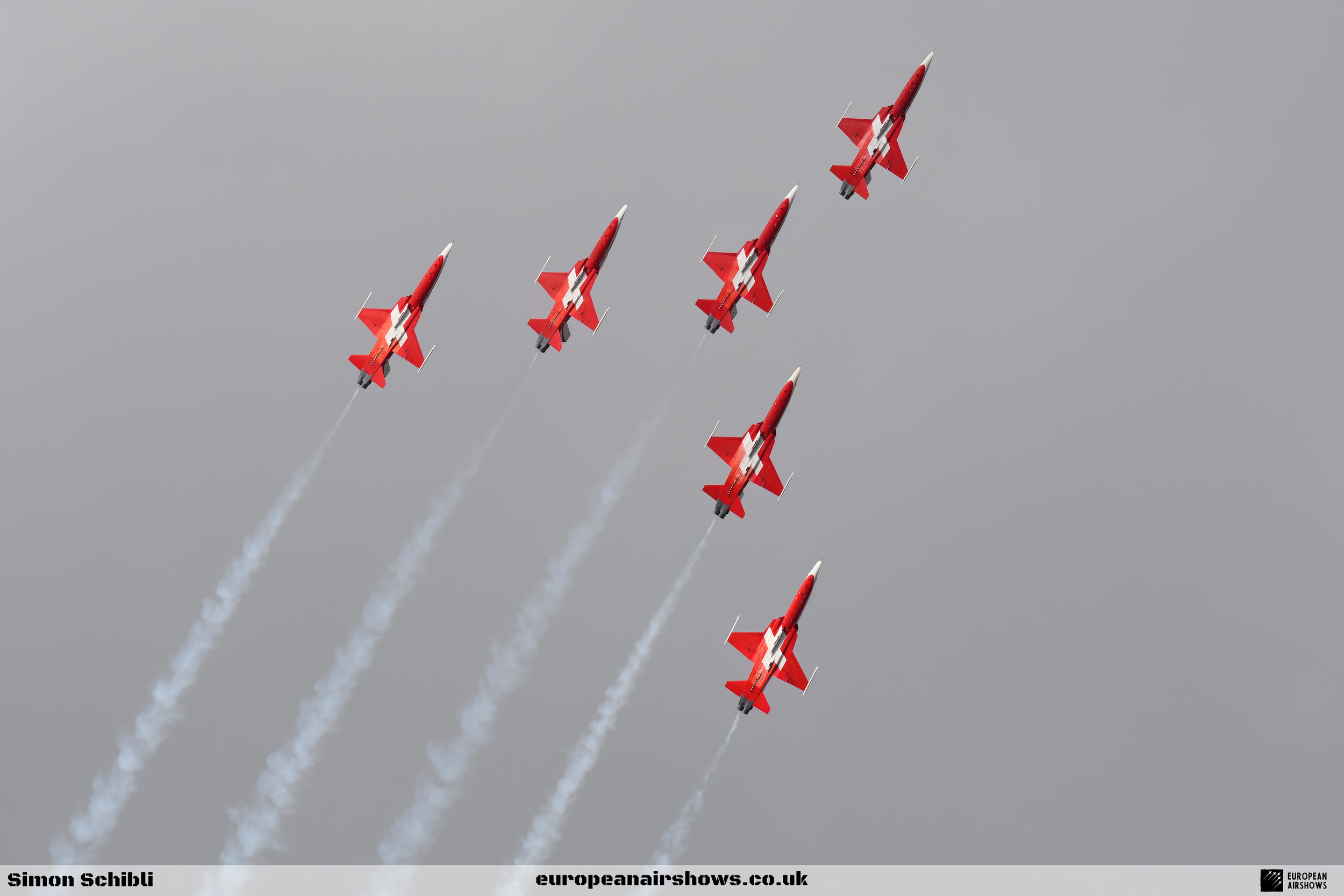
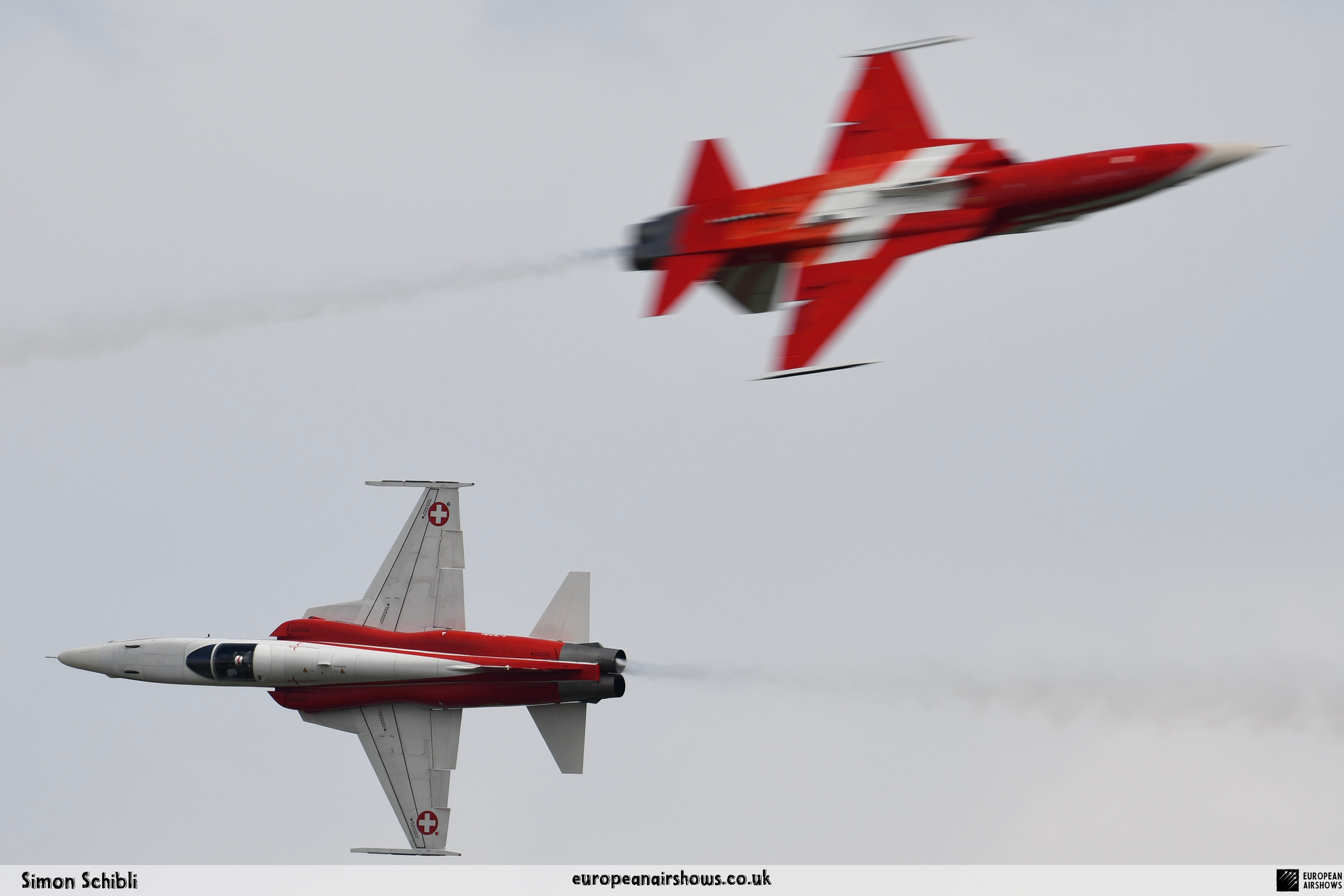
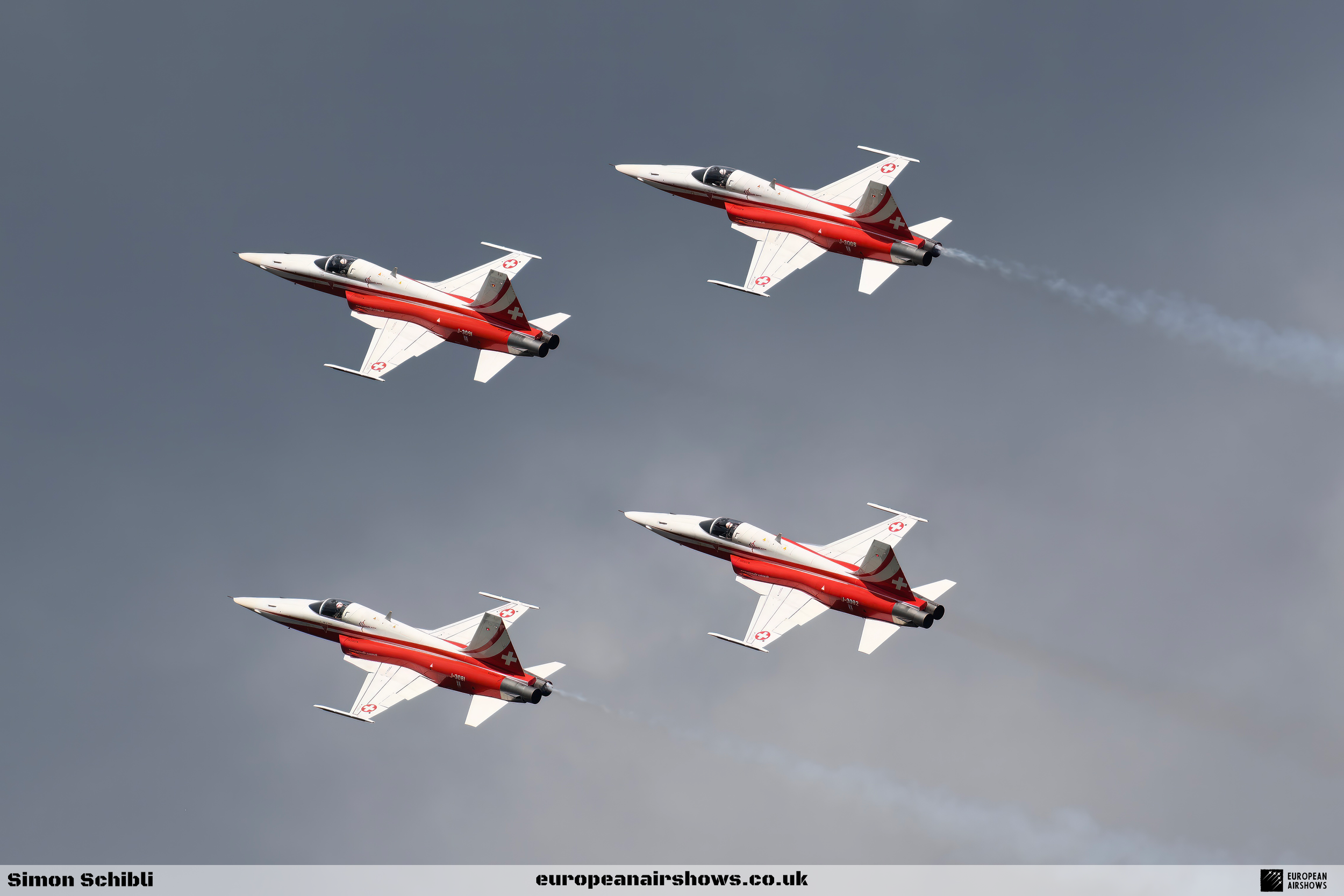
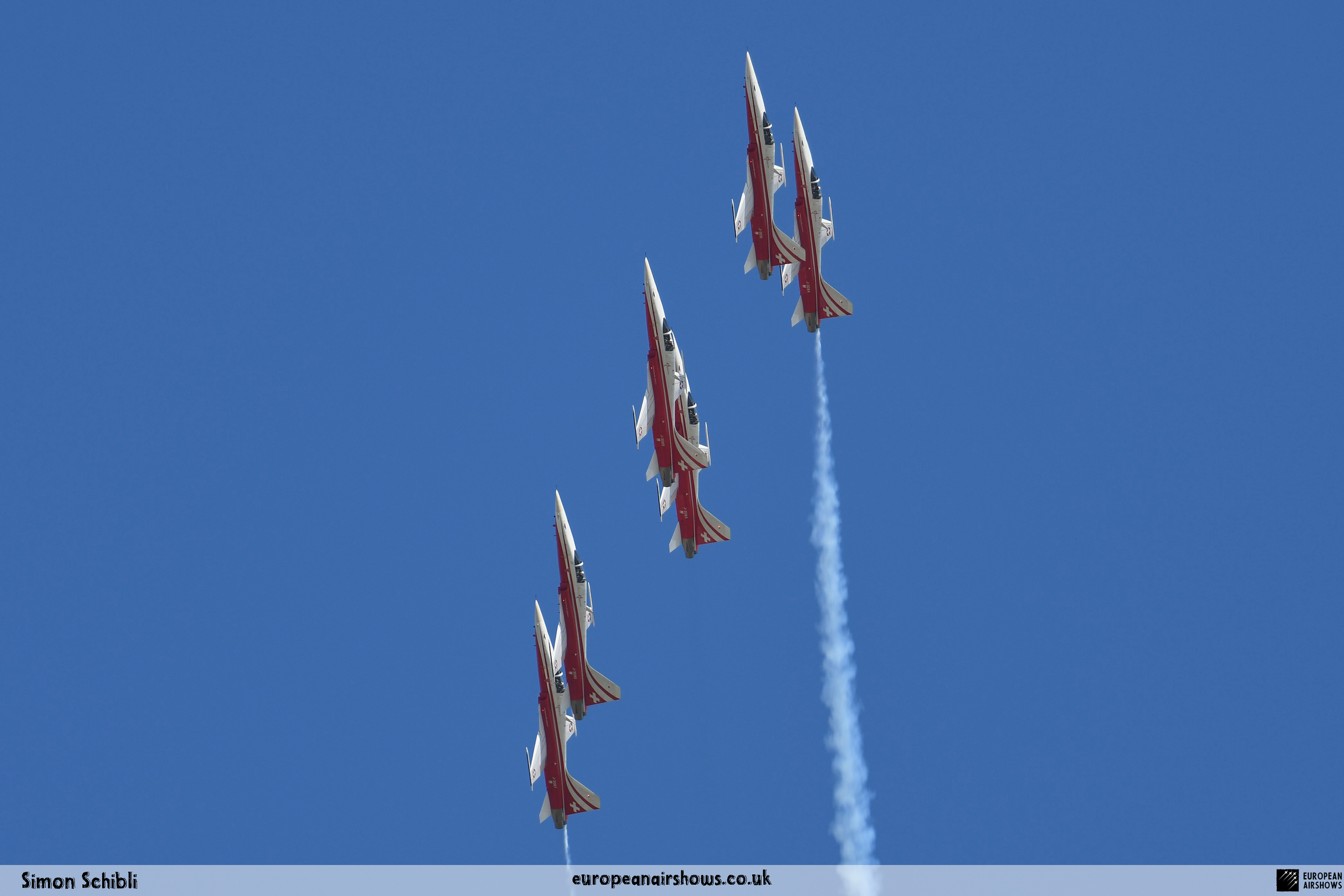
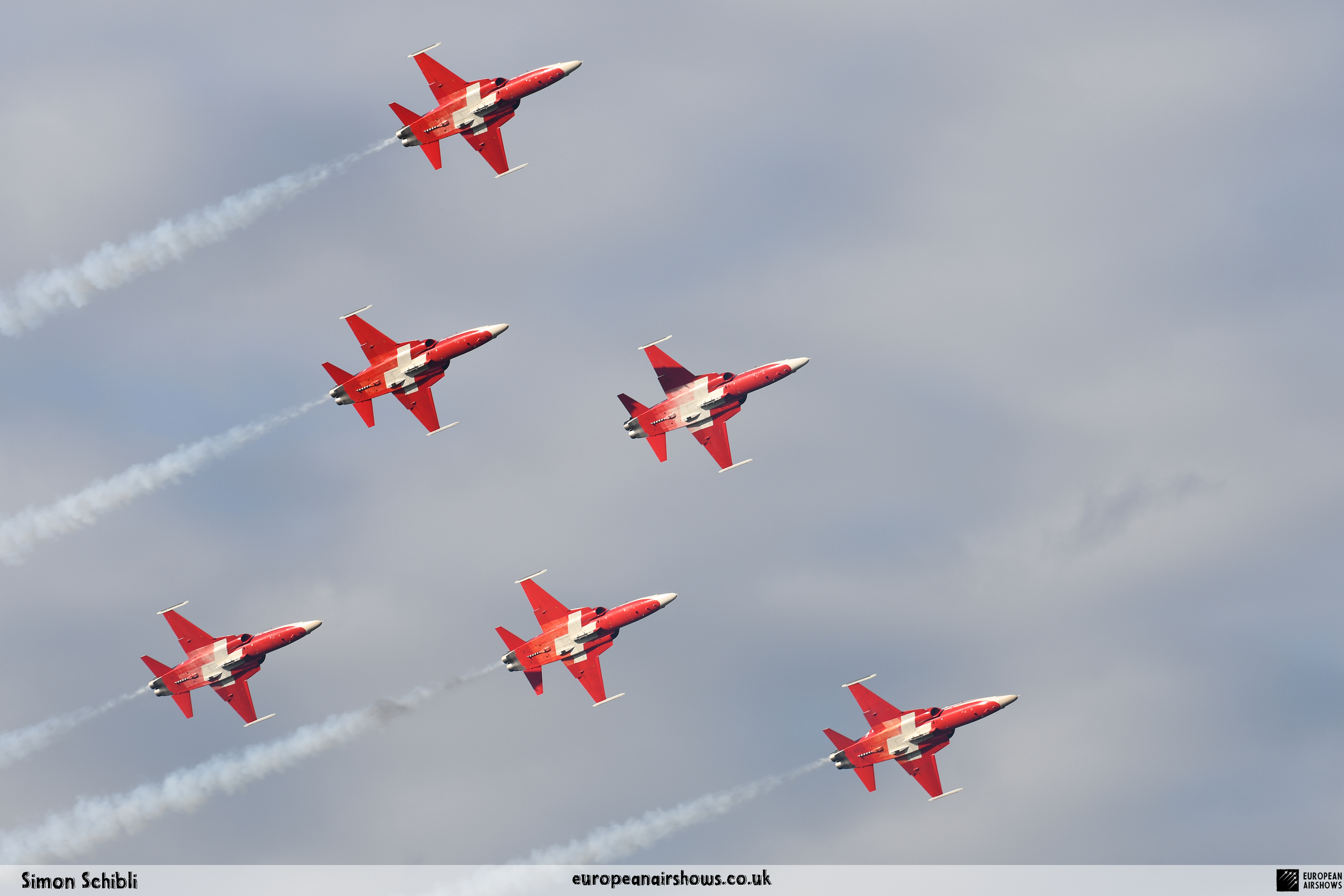
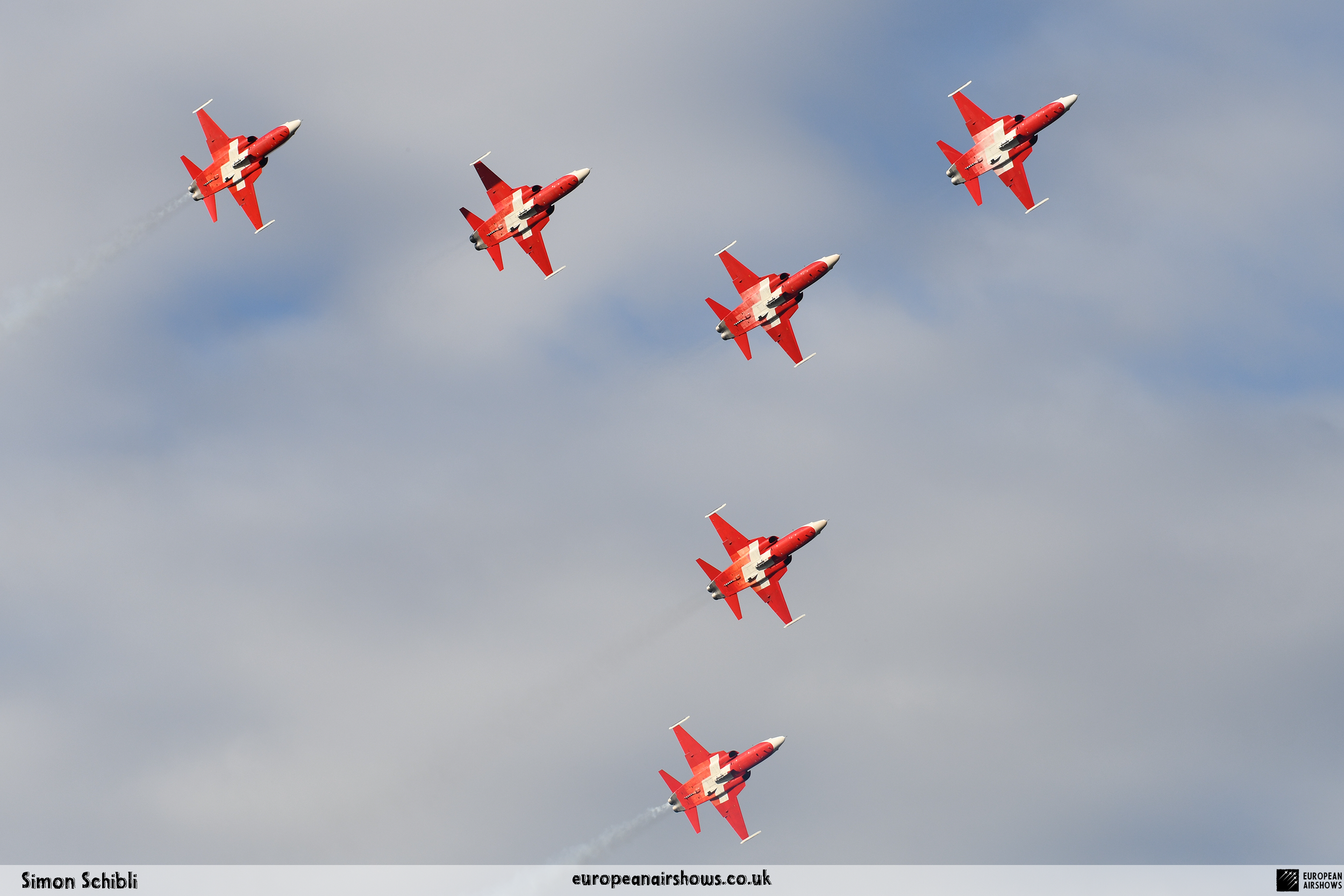
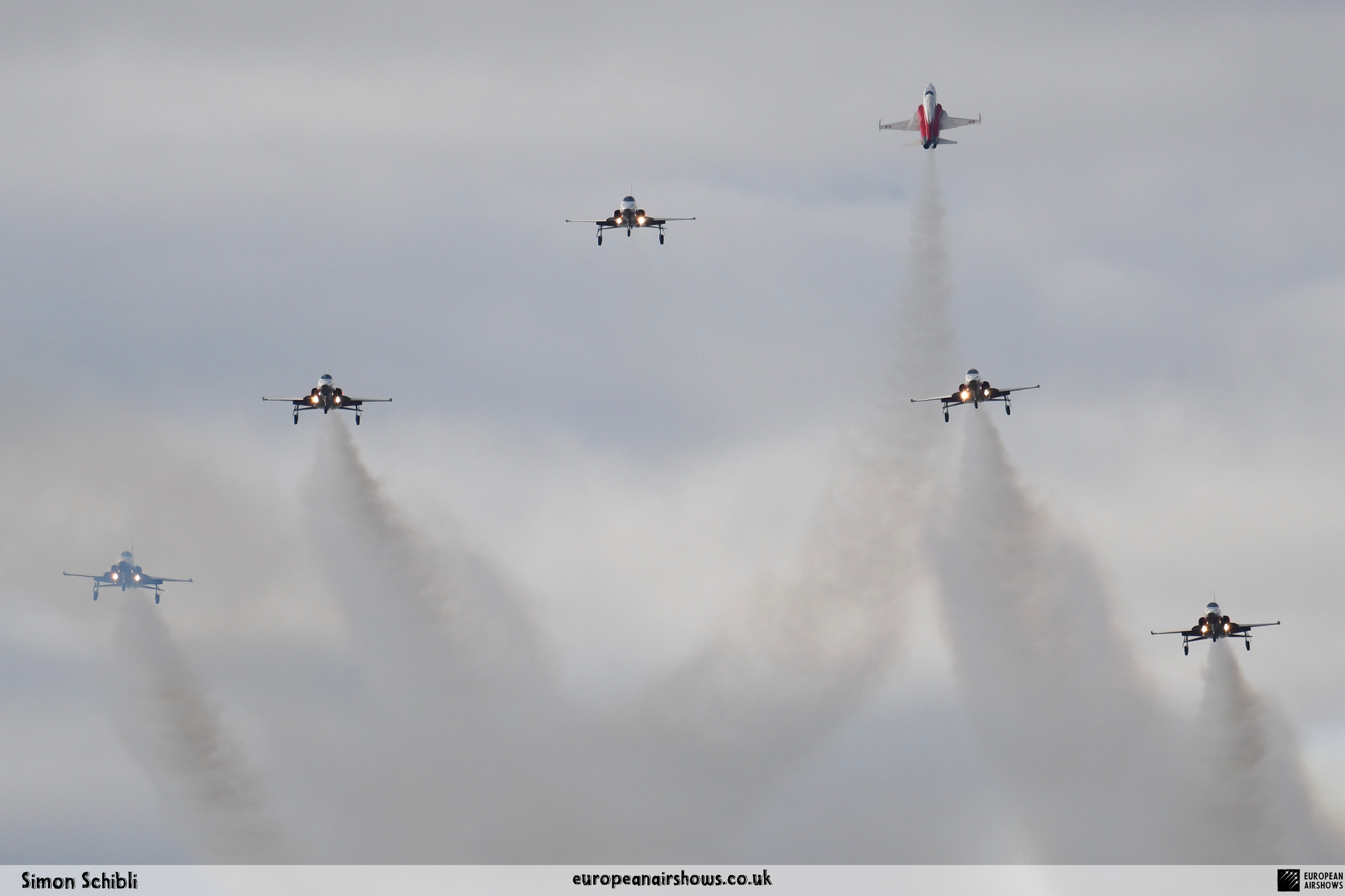
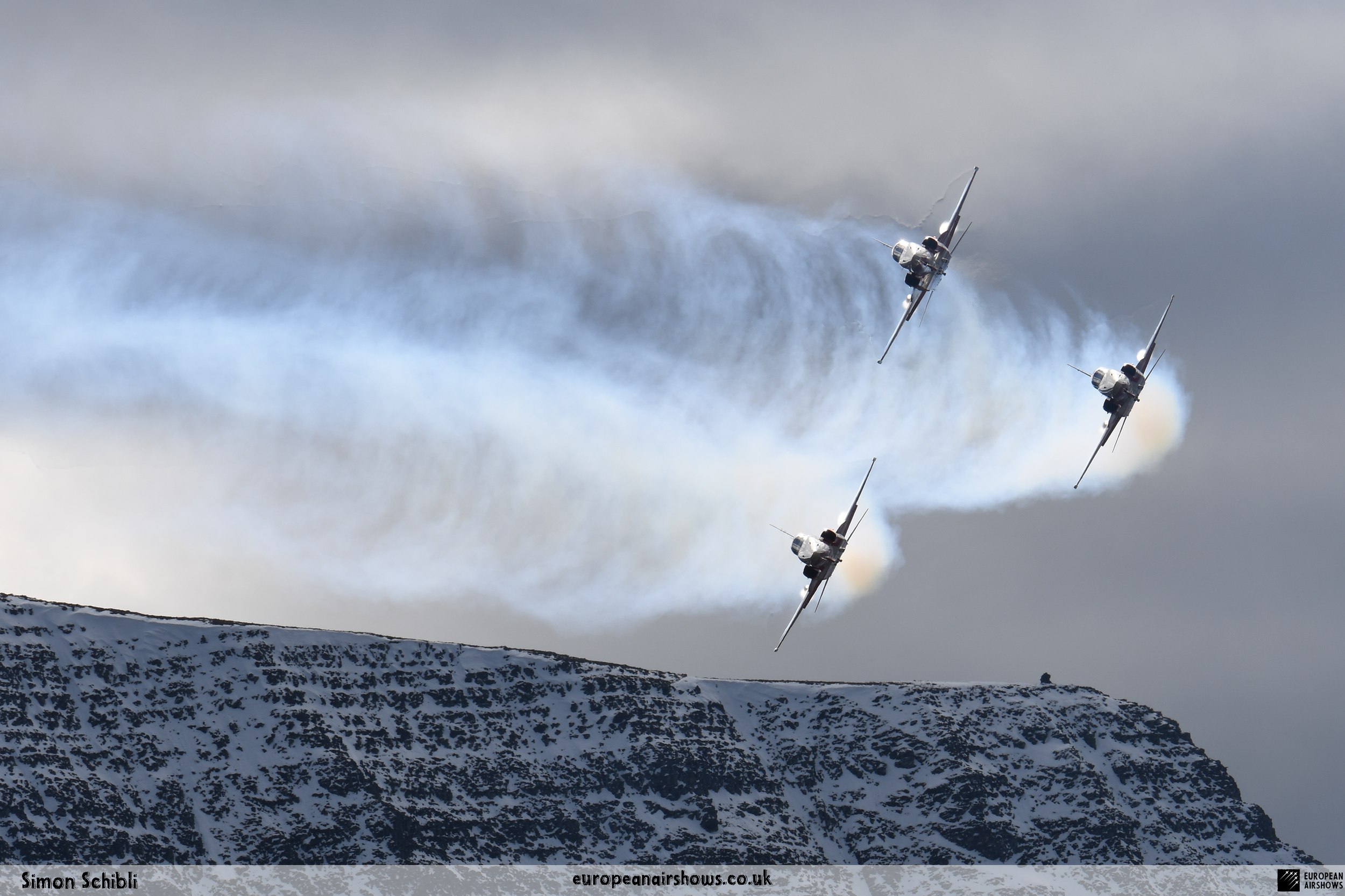
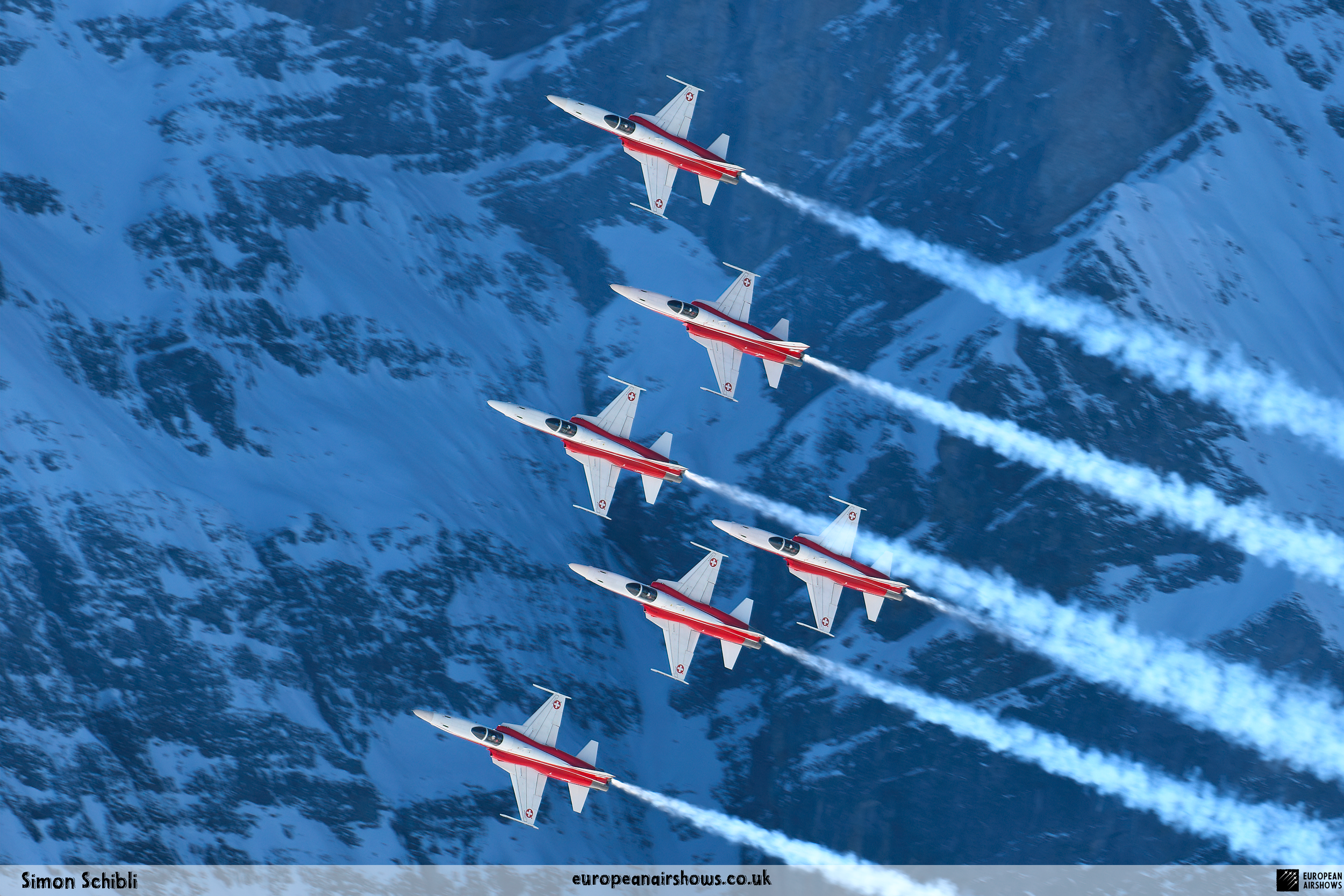
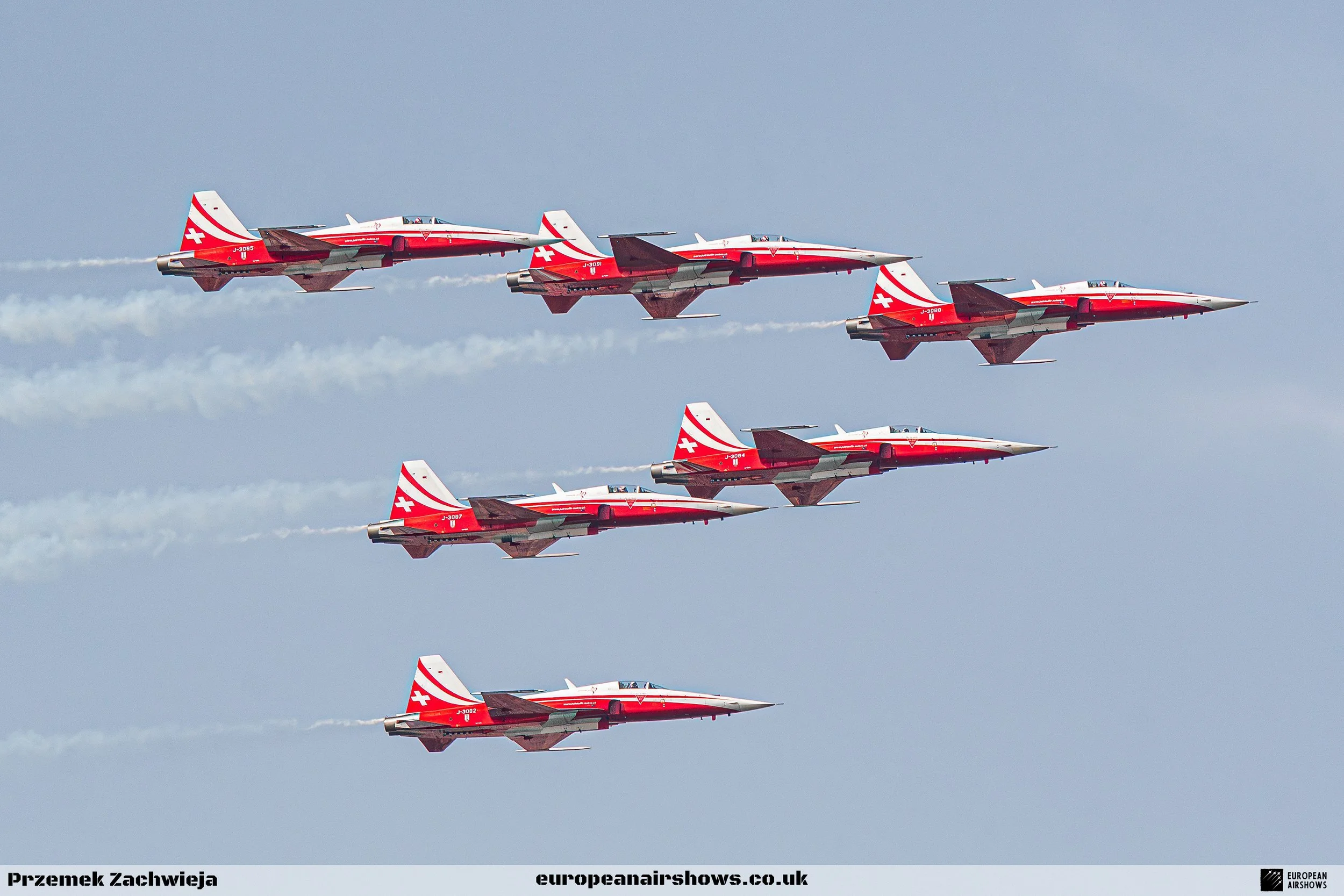
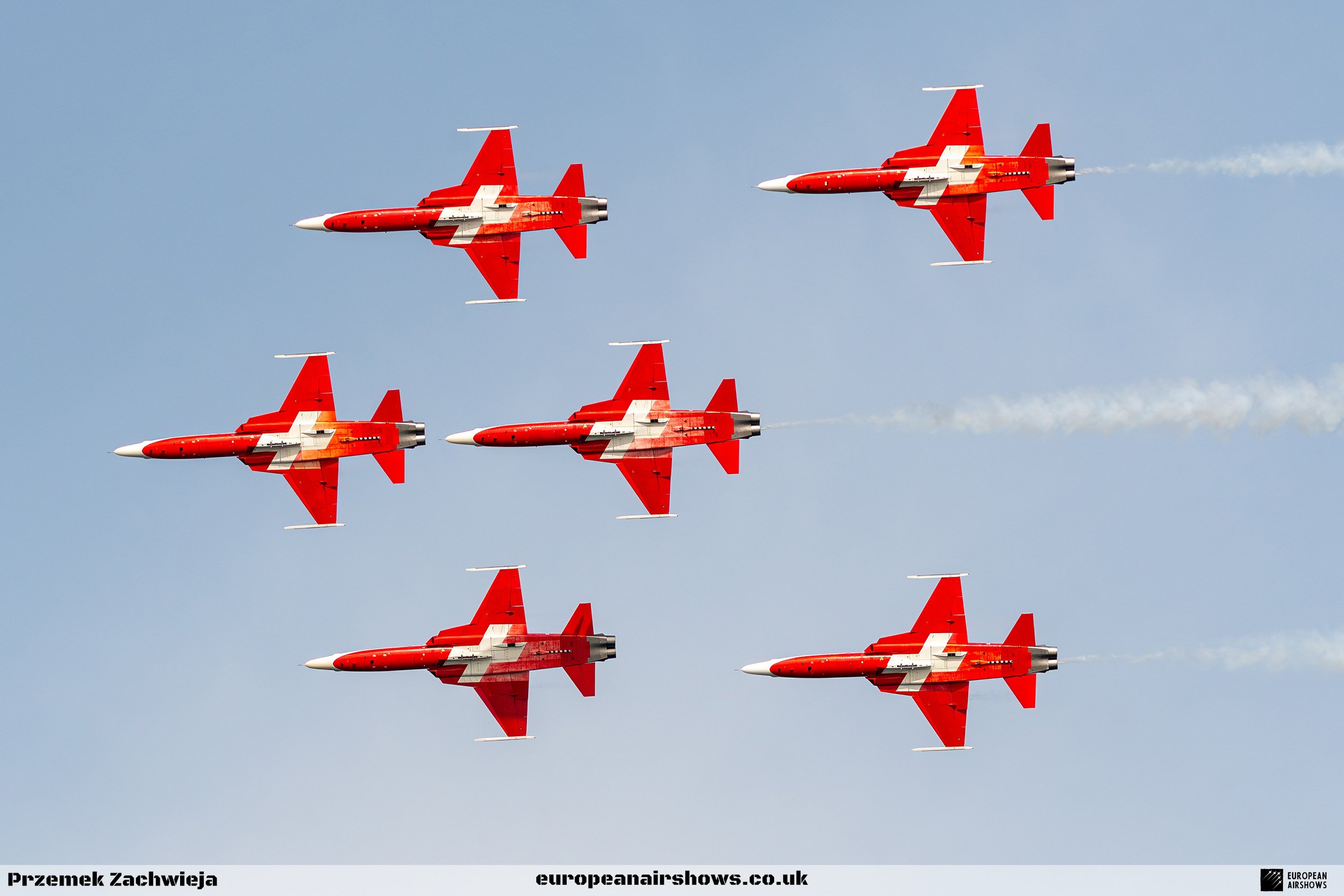
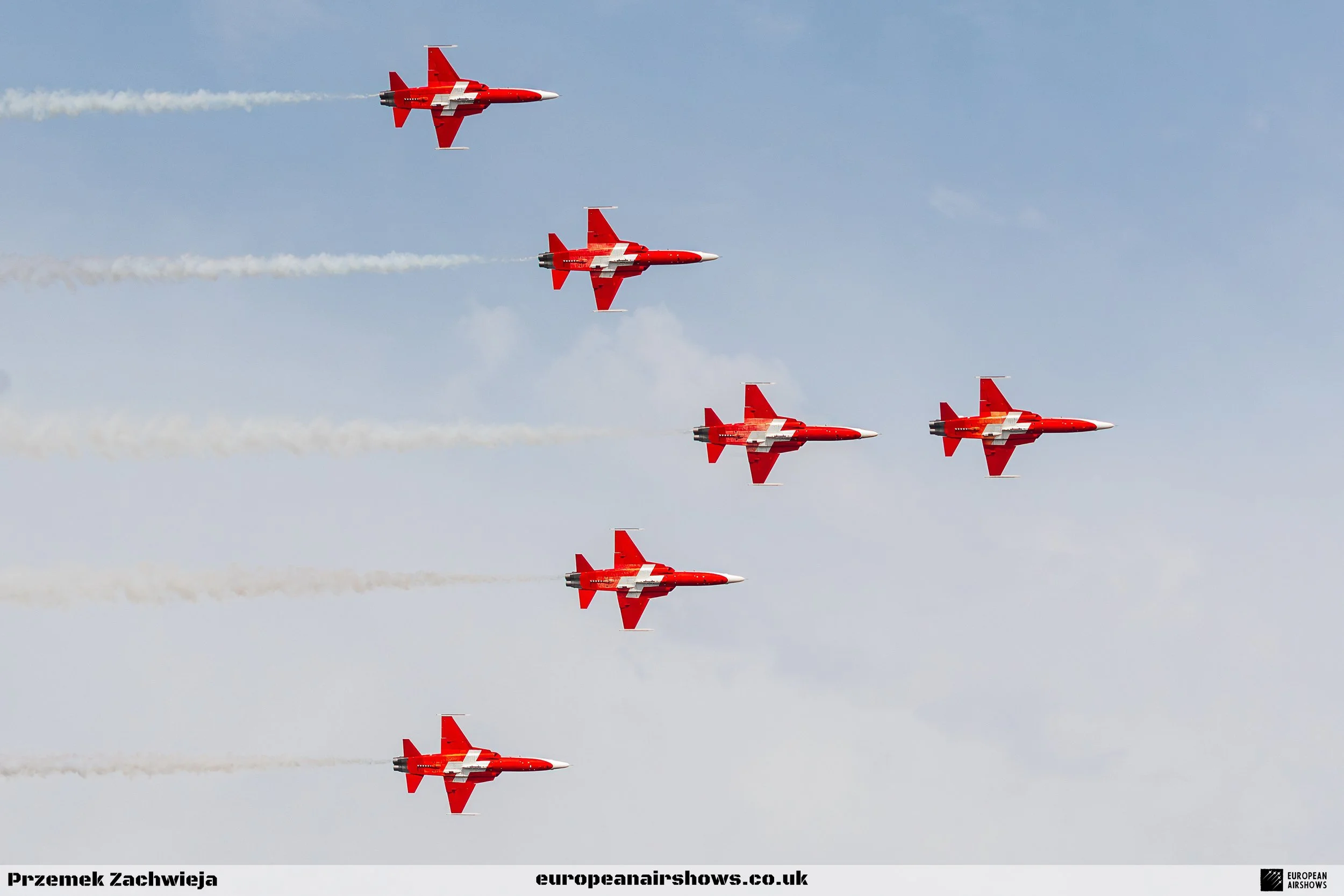
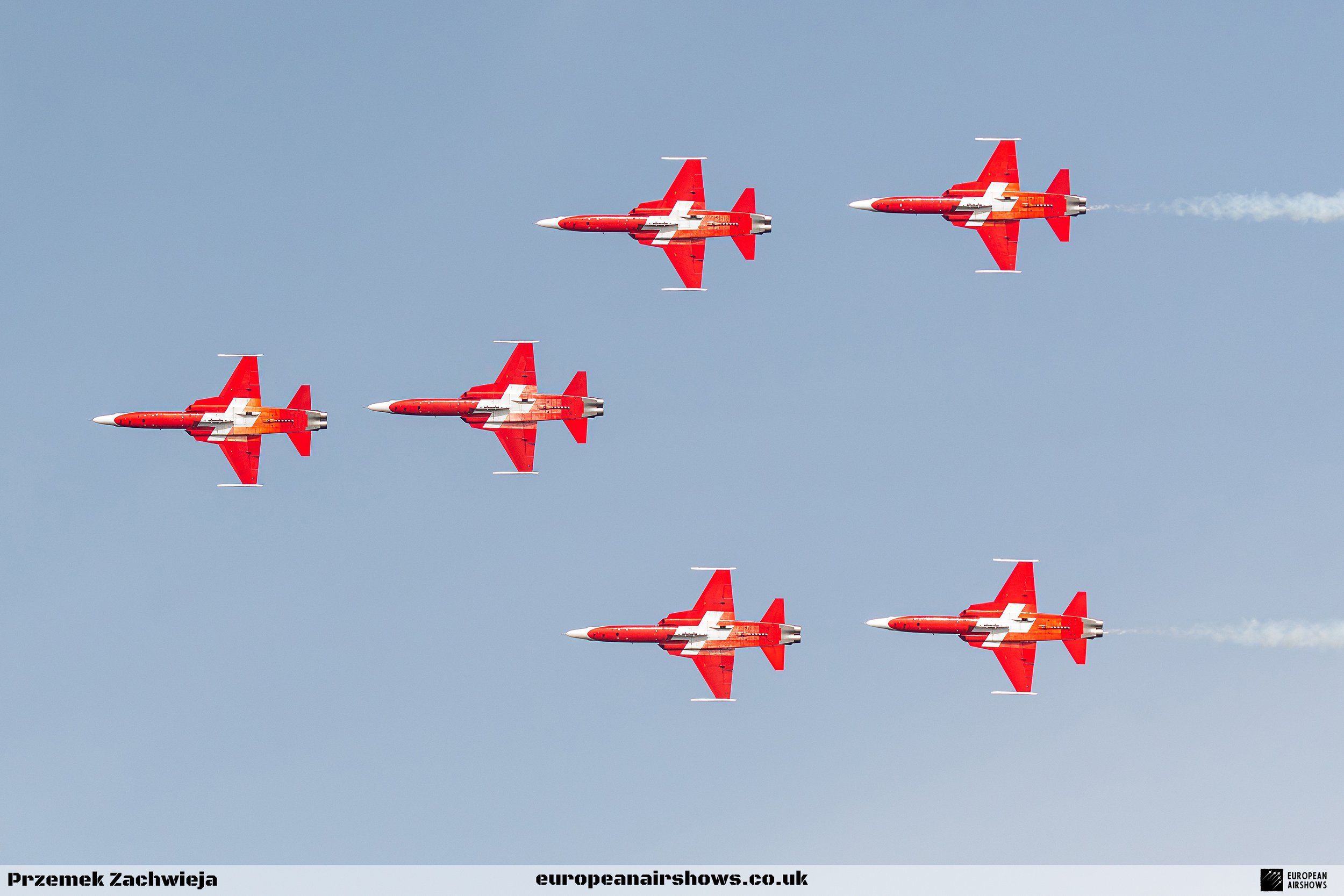
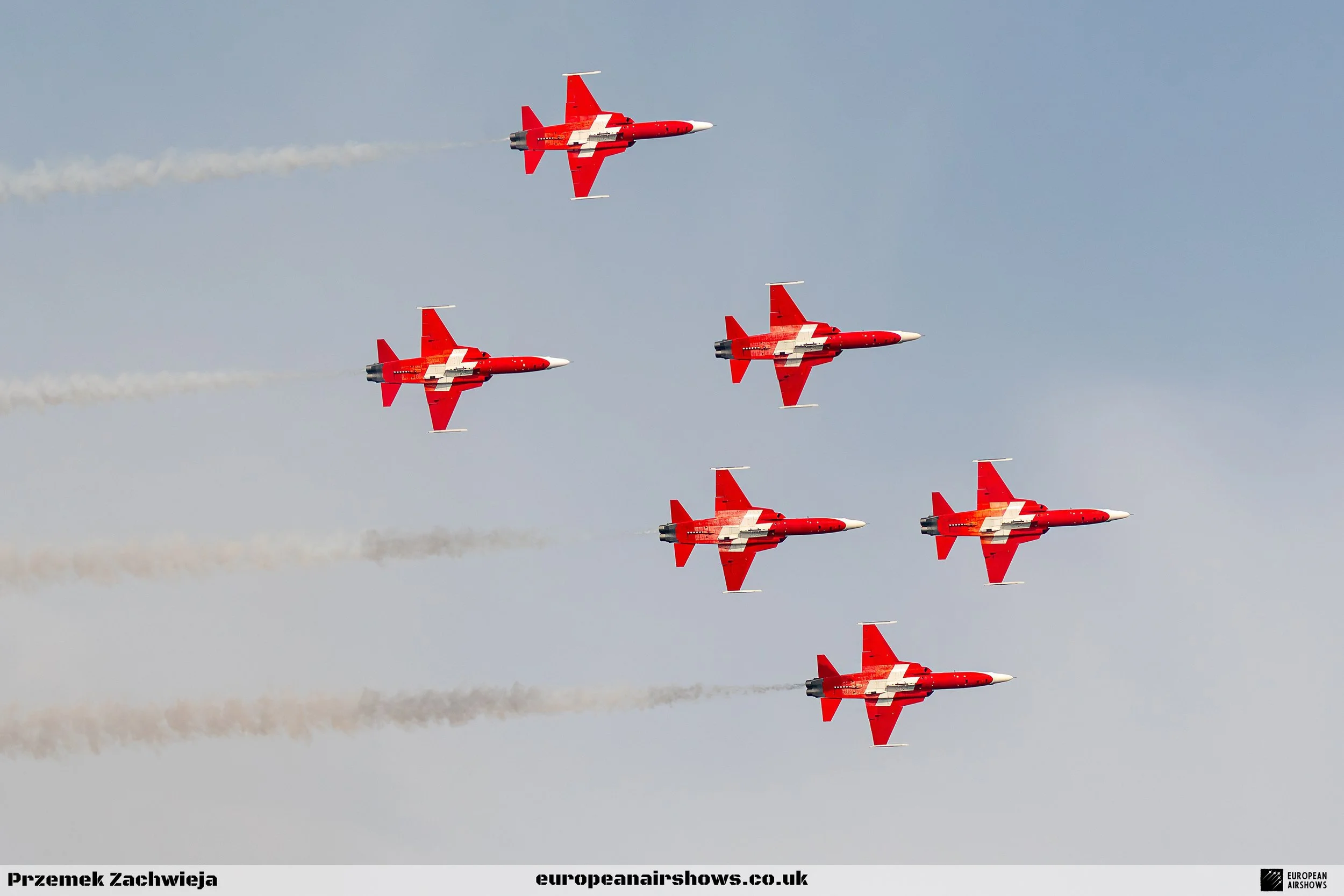
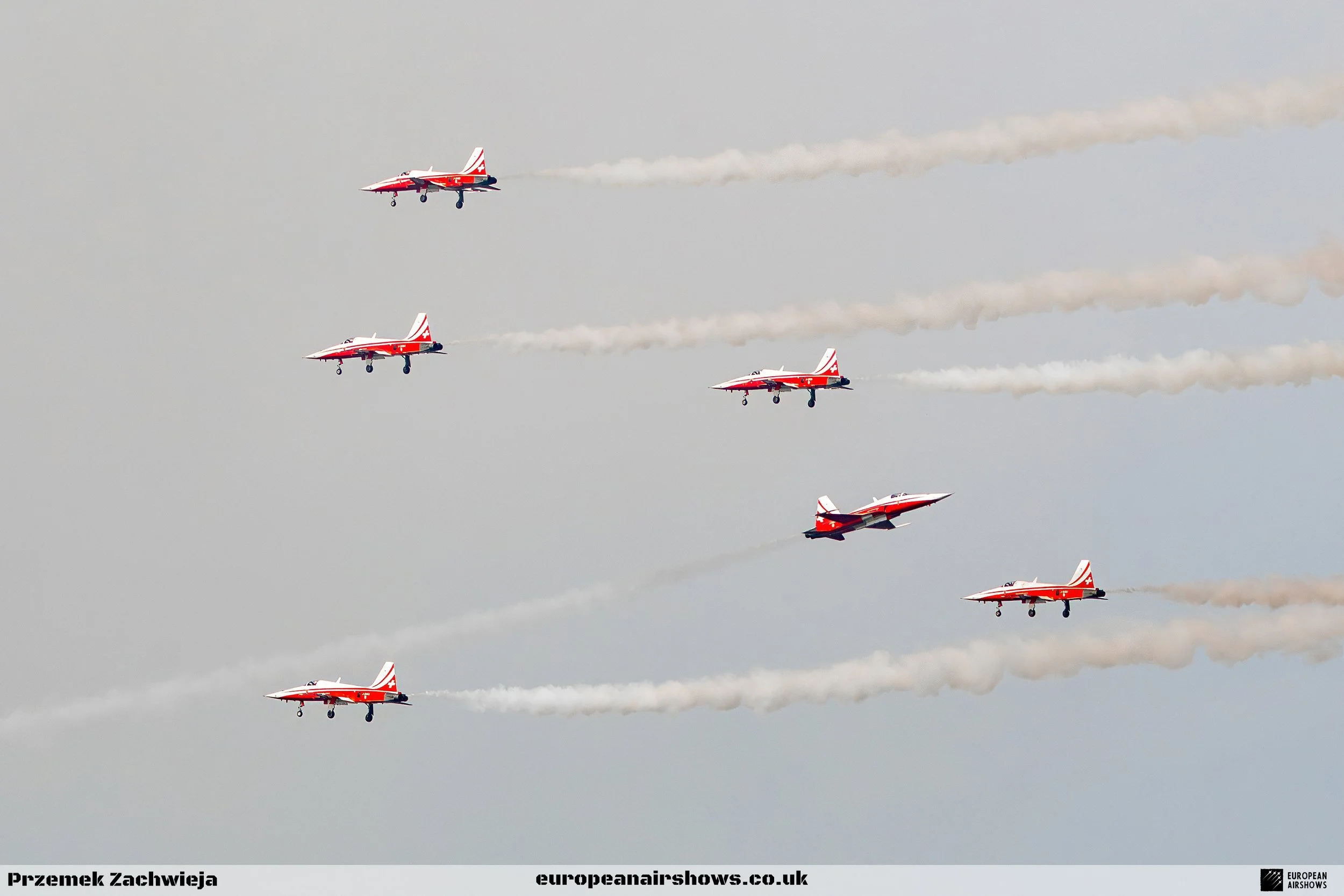
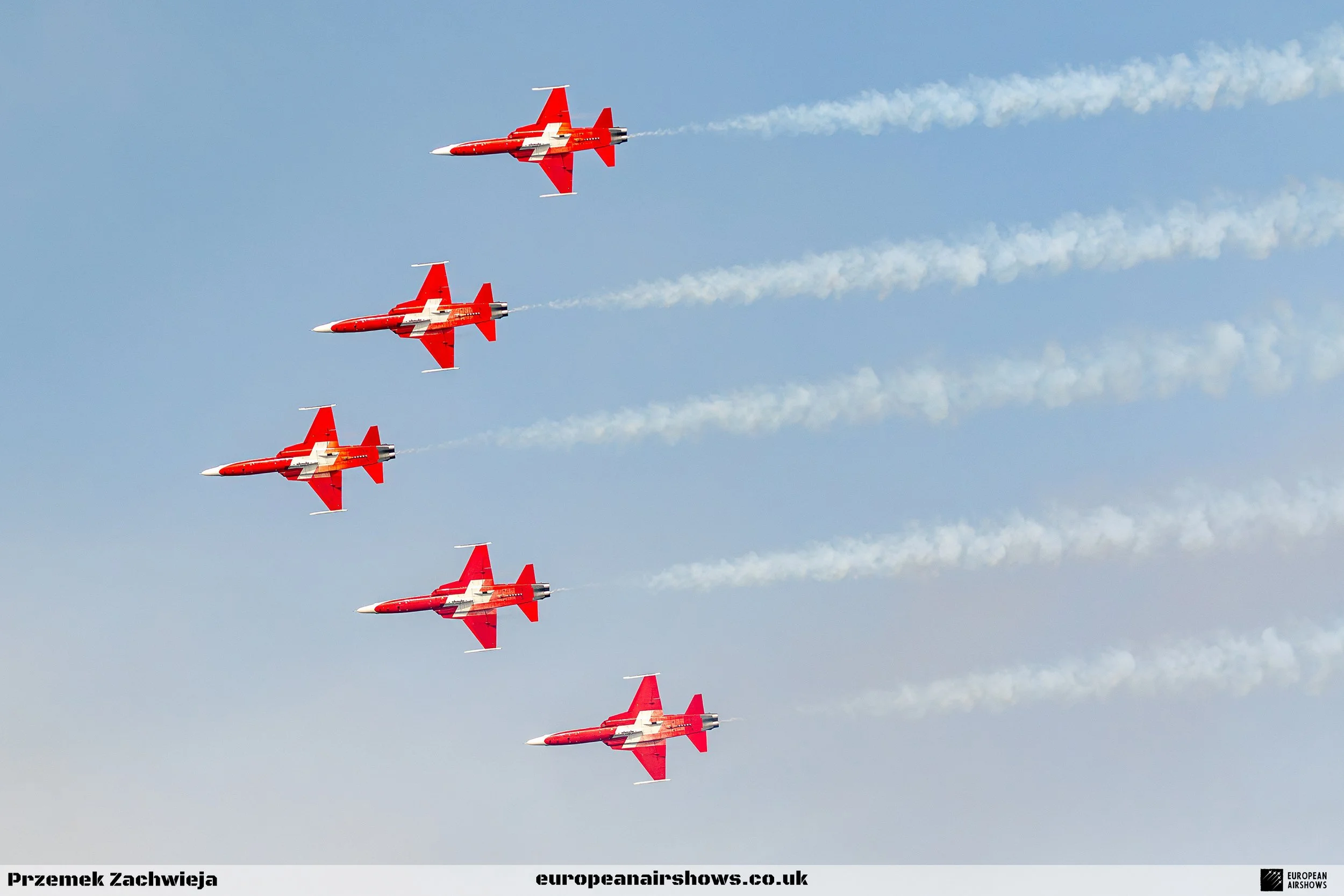
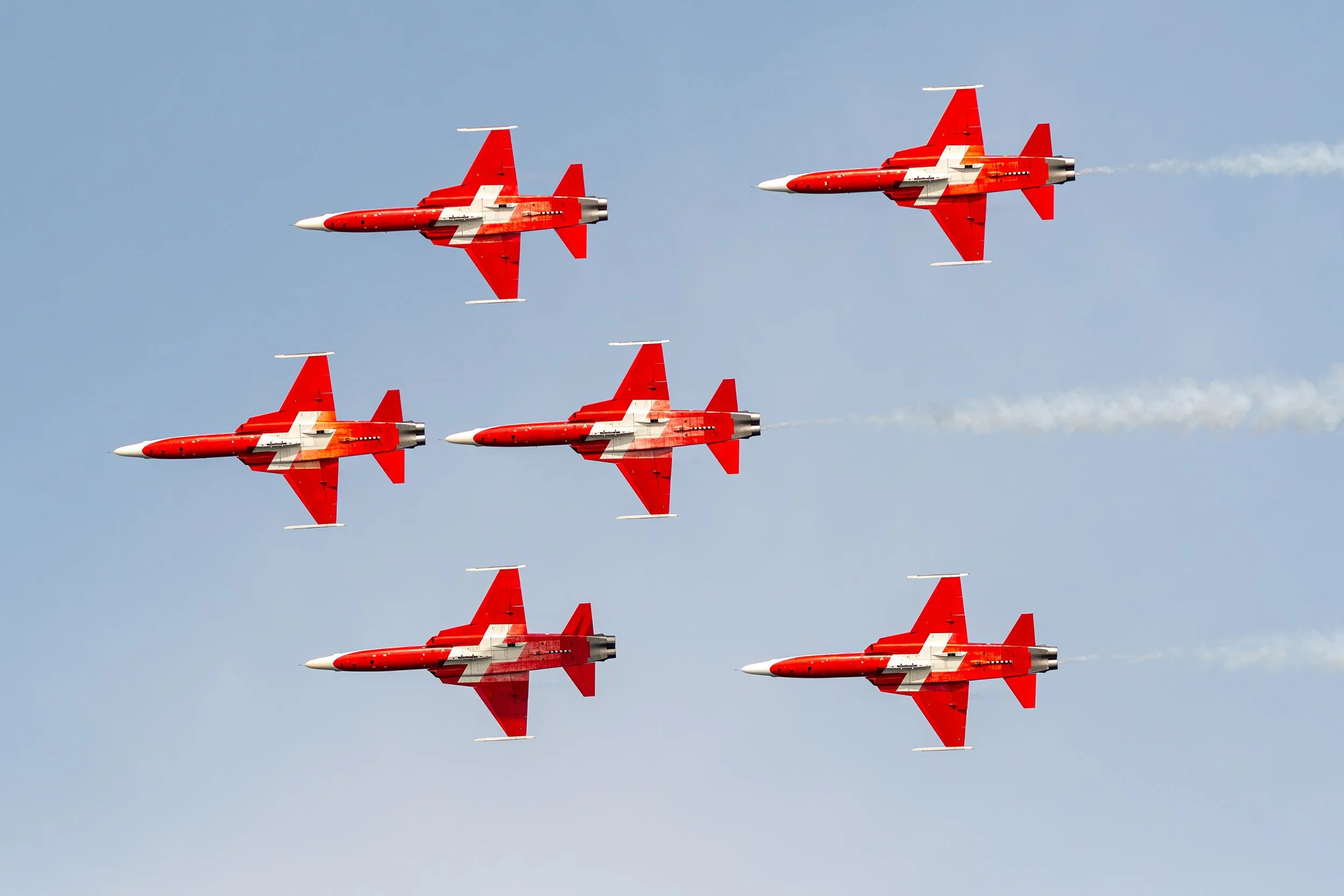
The formation phase presents six aircraft as one shape through loops, rolls, climbing turns and rapid changes of geometry. Later, the solo pair separates for opposition passes and synchronised figures while the main group repositions. White smoke makes the flight path readable, but the visual character comes primarily from the red-and-white fighters, their compact spacing and the speed carried through each manoeuvre.
Six-ship formation work
The opening and closing sections use the complete team in changing diamonds, arrows, deltas and swept formations.
Large loops and rolls
The fighters’ speed creates broad vertical figures that must be positioned well ahead of the crowd before the formation returns to the display axis.
Solo opposition work
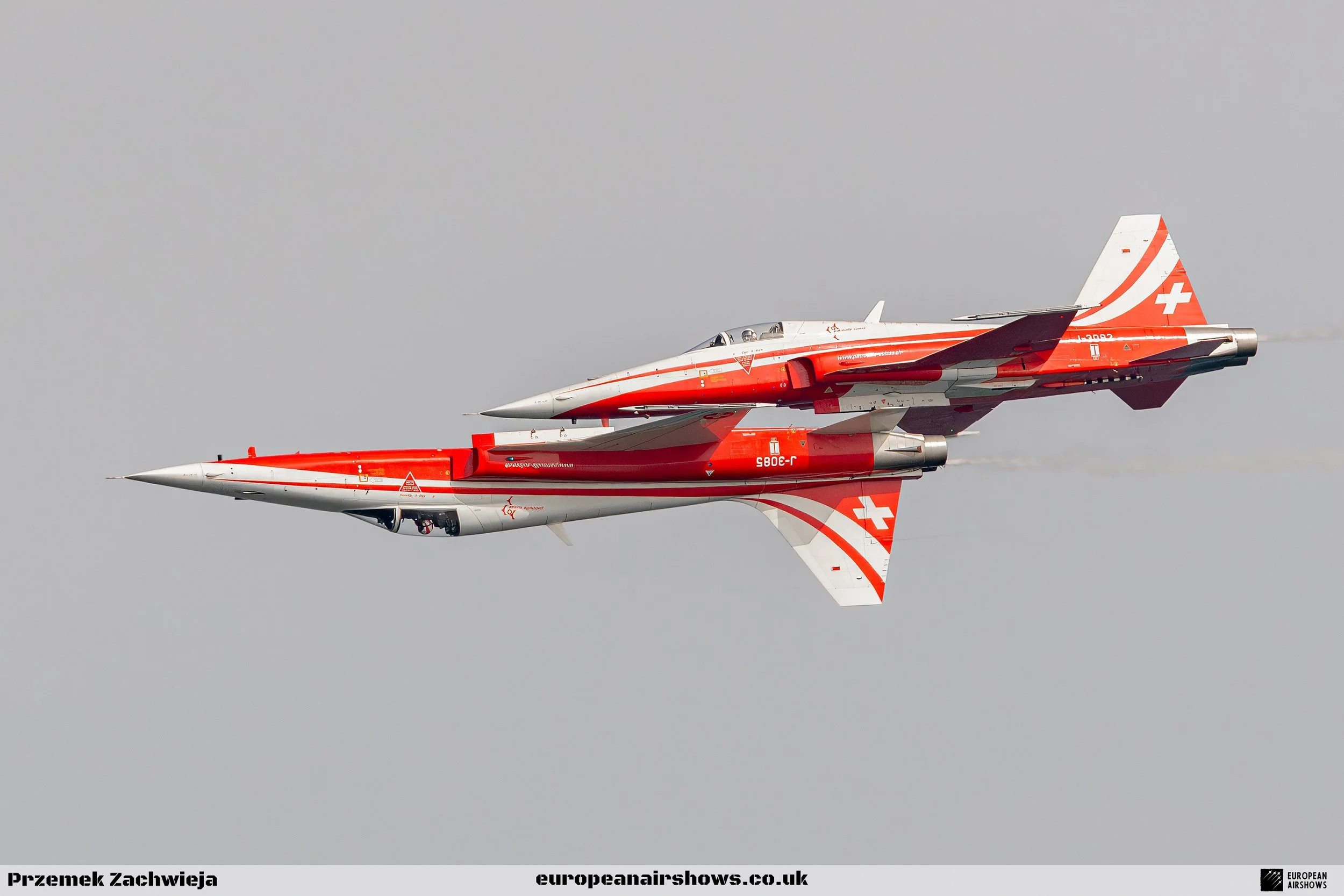
Tiger Cinque and Tiger Sexi provide crossings, opposing passes and closely timed manoeuvres while the main formation rebuilds.
White smoke only
The smoke system outlines the geometry without using national-colour trails; the Swiss identity comes from the aircraft livery itself.
Weather alternatives
Fair-, medium- and poor-weather programmes preserve a public presentation when the cloud base is too low for the complete vertical sequence.
Strict display boundaries
Minimum heights, crowd distances and terrain references are built into every plan, particularly at compact or mountainous Swiss venues.
The aircraft
Northrop F-5E Tiger II: the compact fighter that transformed the team in 1995.
Designed as an affordable light fighter
Northrop developed the Tiger II from the earlier F-5A/B Freedom Fighter. The F-5E introduced more powerful J85 engines, greater internal fuel, enlarged wing-root extensions and improved avionics while retaining the small frontal area, straightforward maintenance and responsive handling that made the family attractive to air forces unable to support a much larger and more expensive fighter.
Switzerland bought 110 Tigers
The Swiss Air Force acquired 110 F-5E/F aircraft in two procurement batches, with service beginning in 1978. They were bought as air-defence fighters for limited protection of sectors at lower altitude. As the fleet aged, many aircraft were withdrawn or sold to the United States, while the remaining examples shifted towards training, target presentation, towing, test and display duties.
The team flies the single-seat F-5E
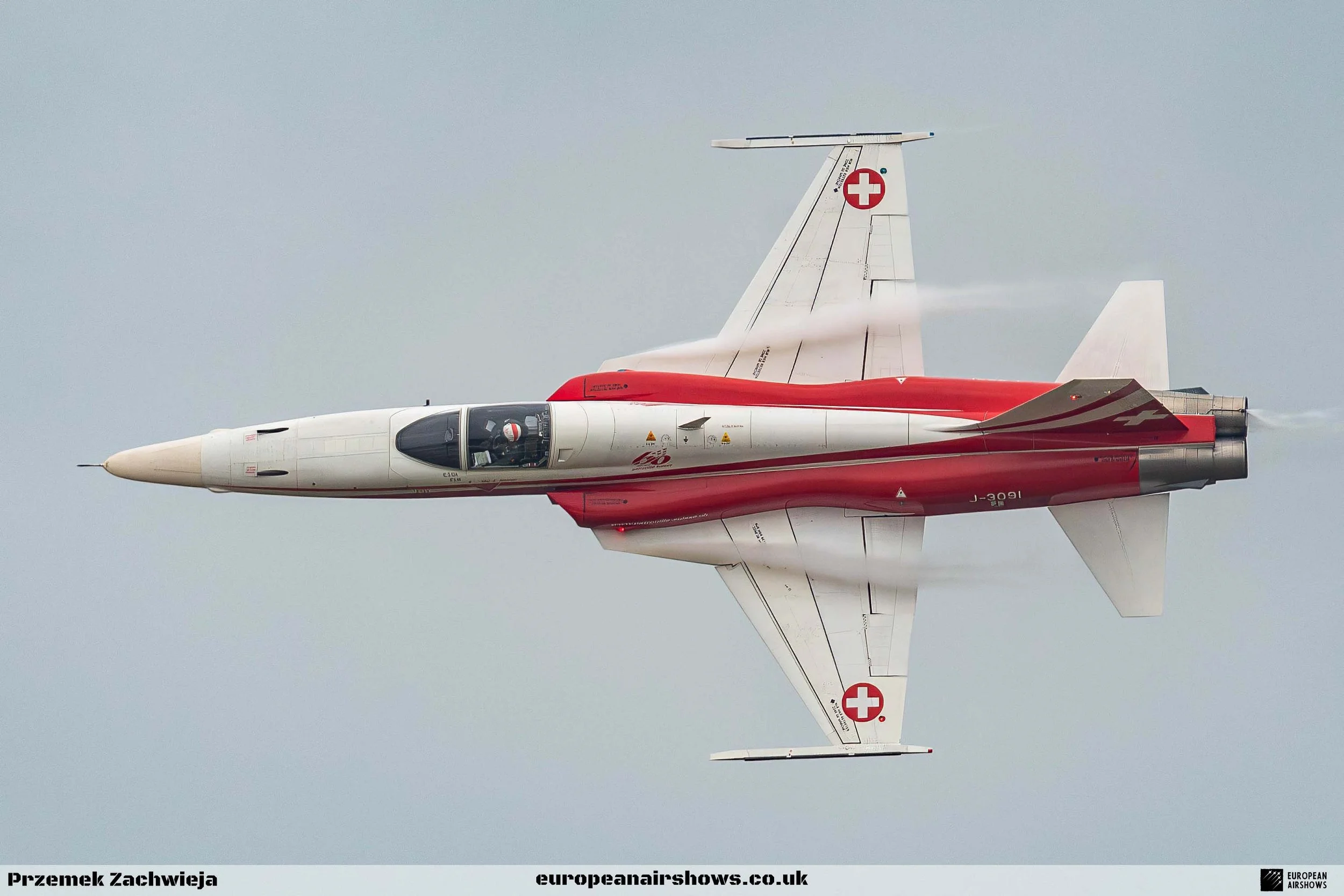
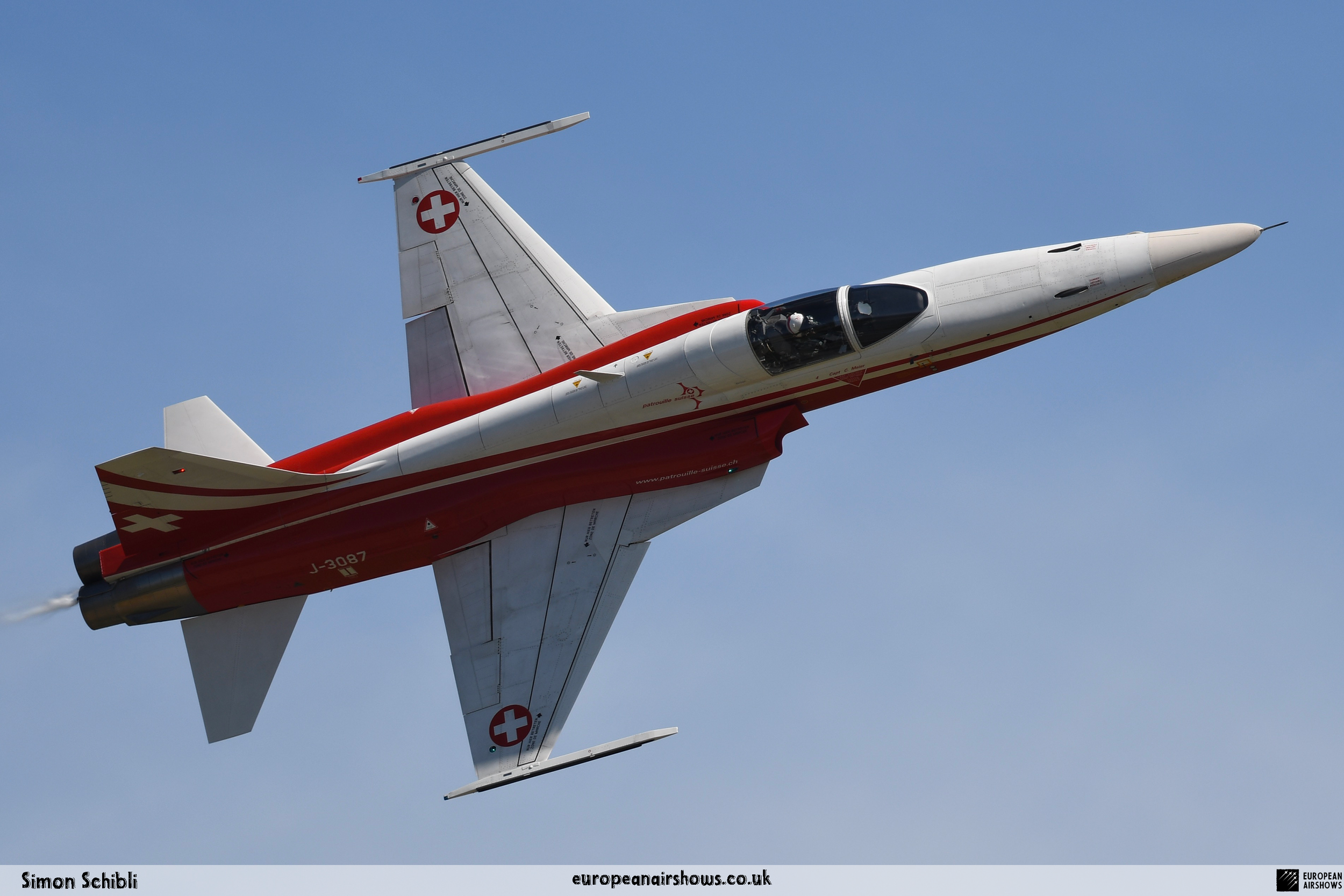
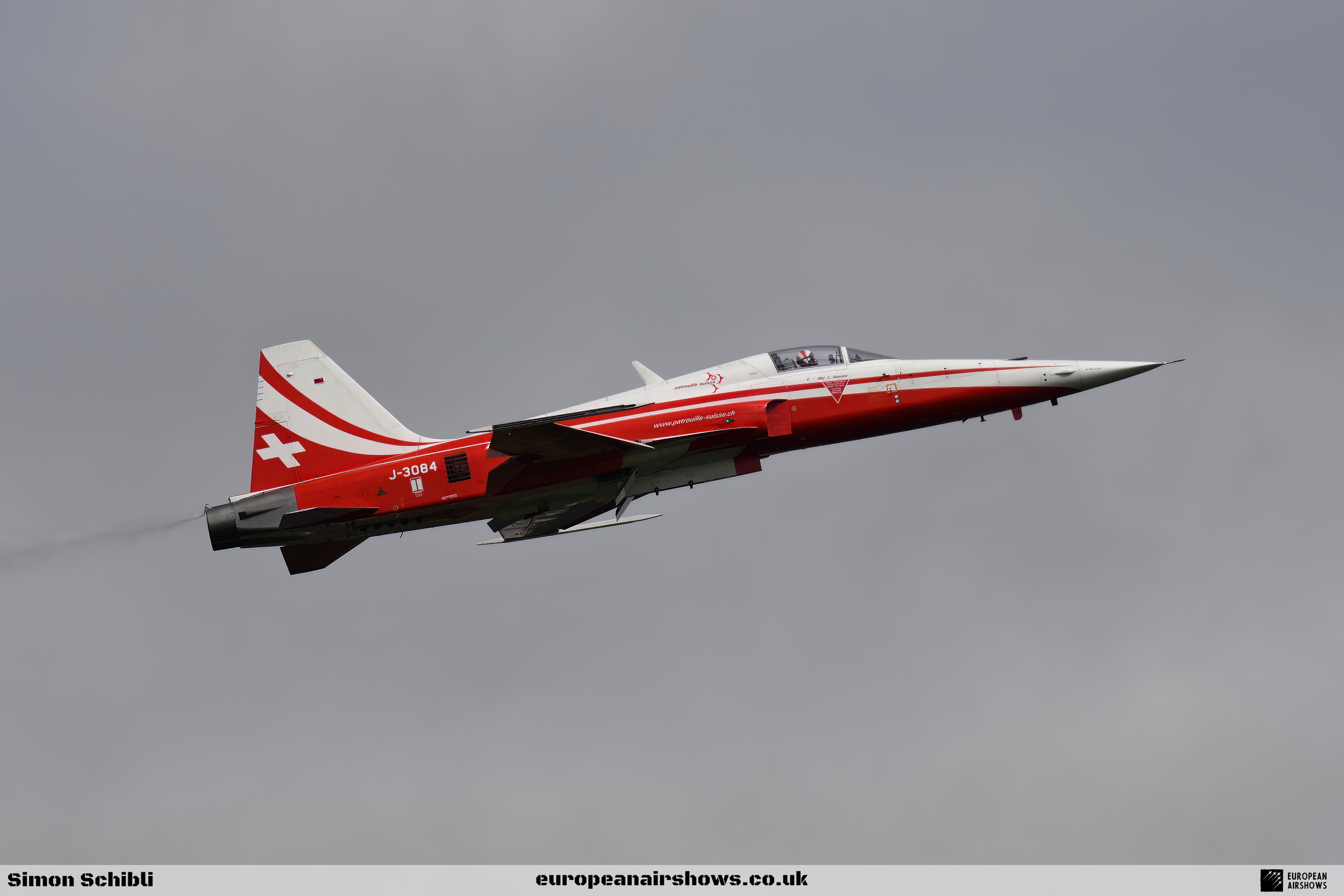
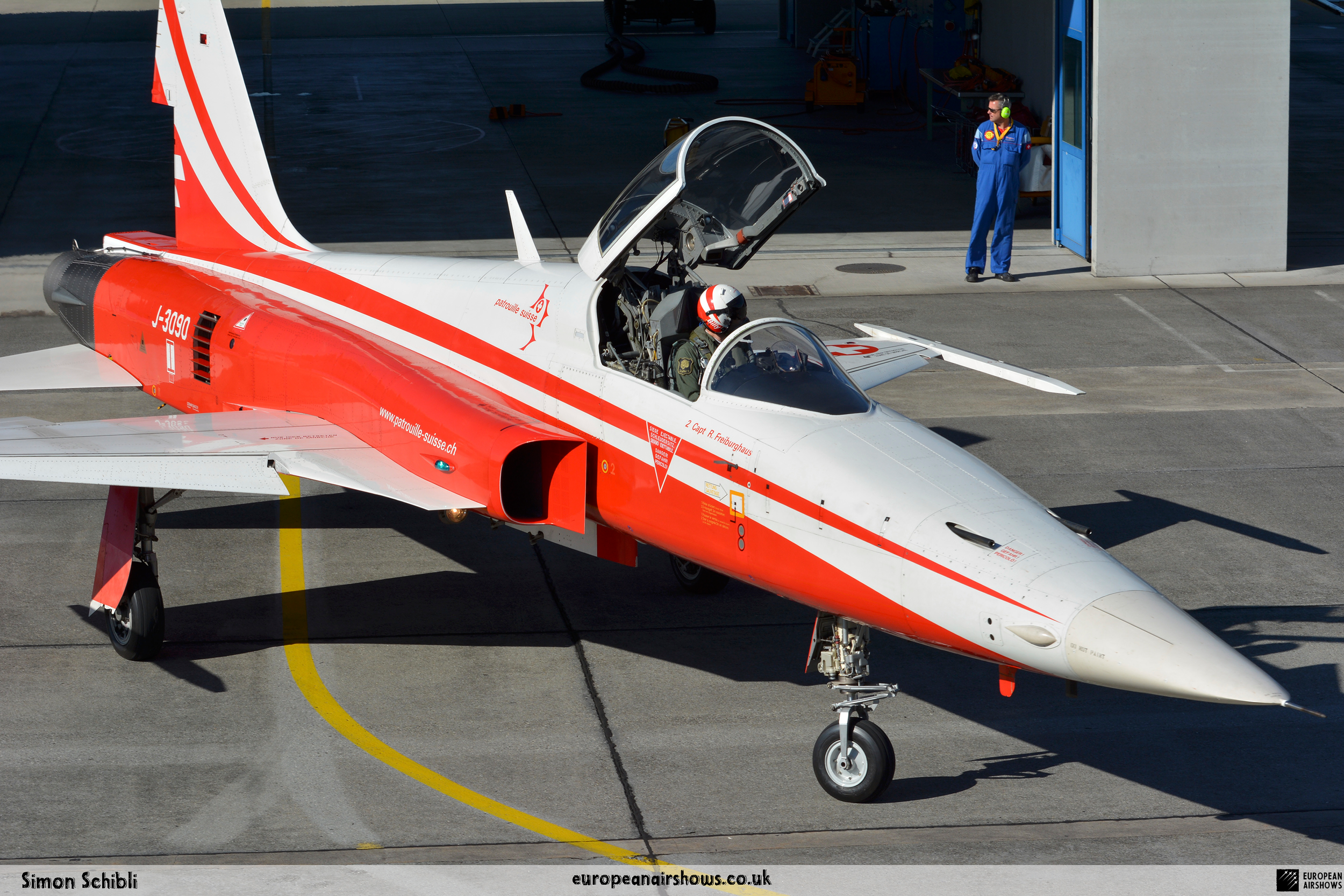
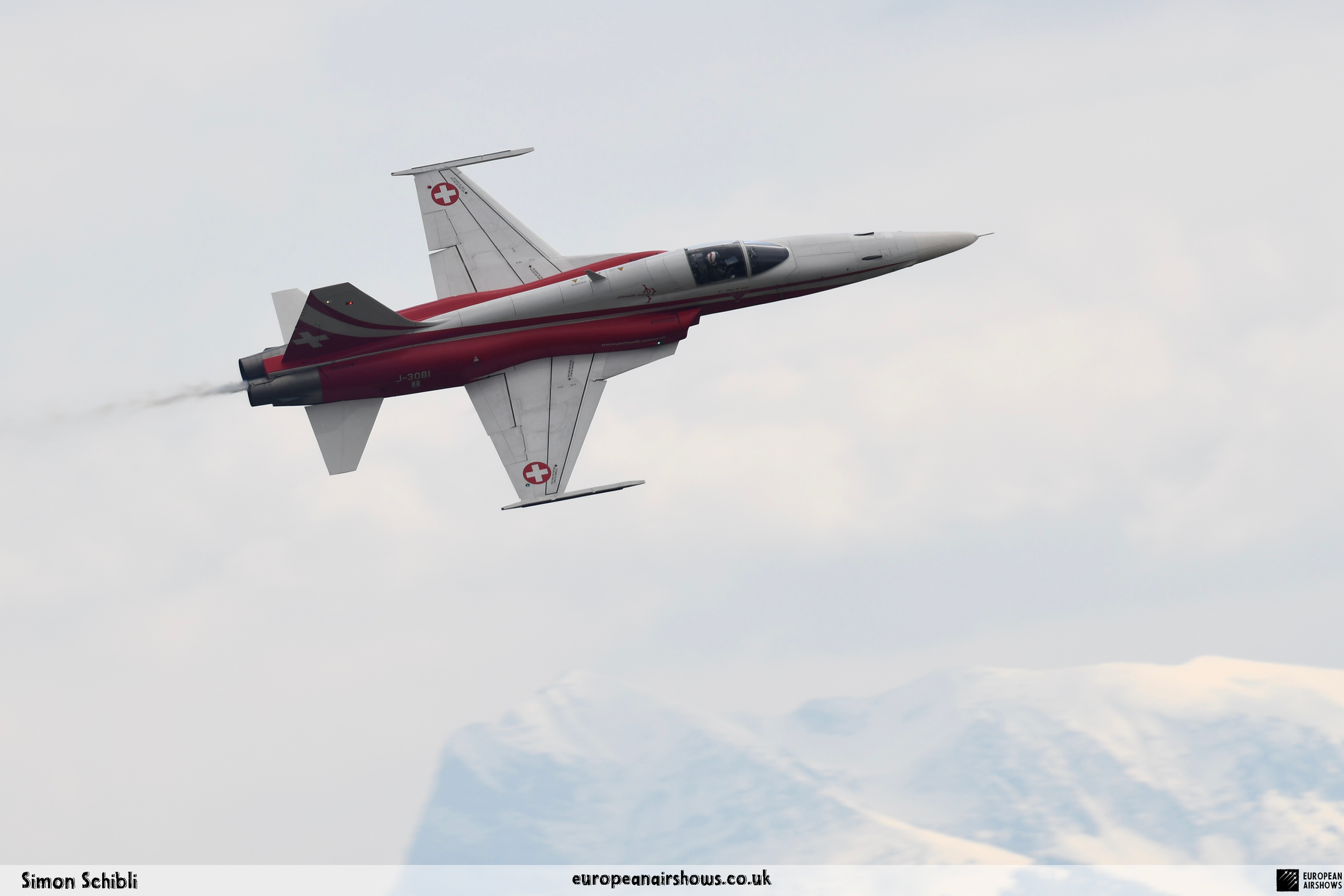
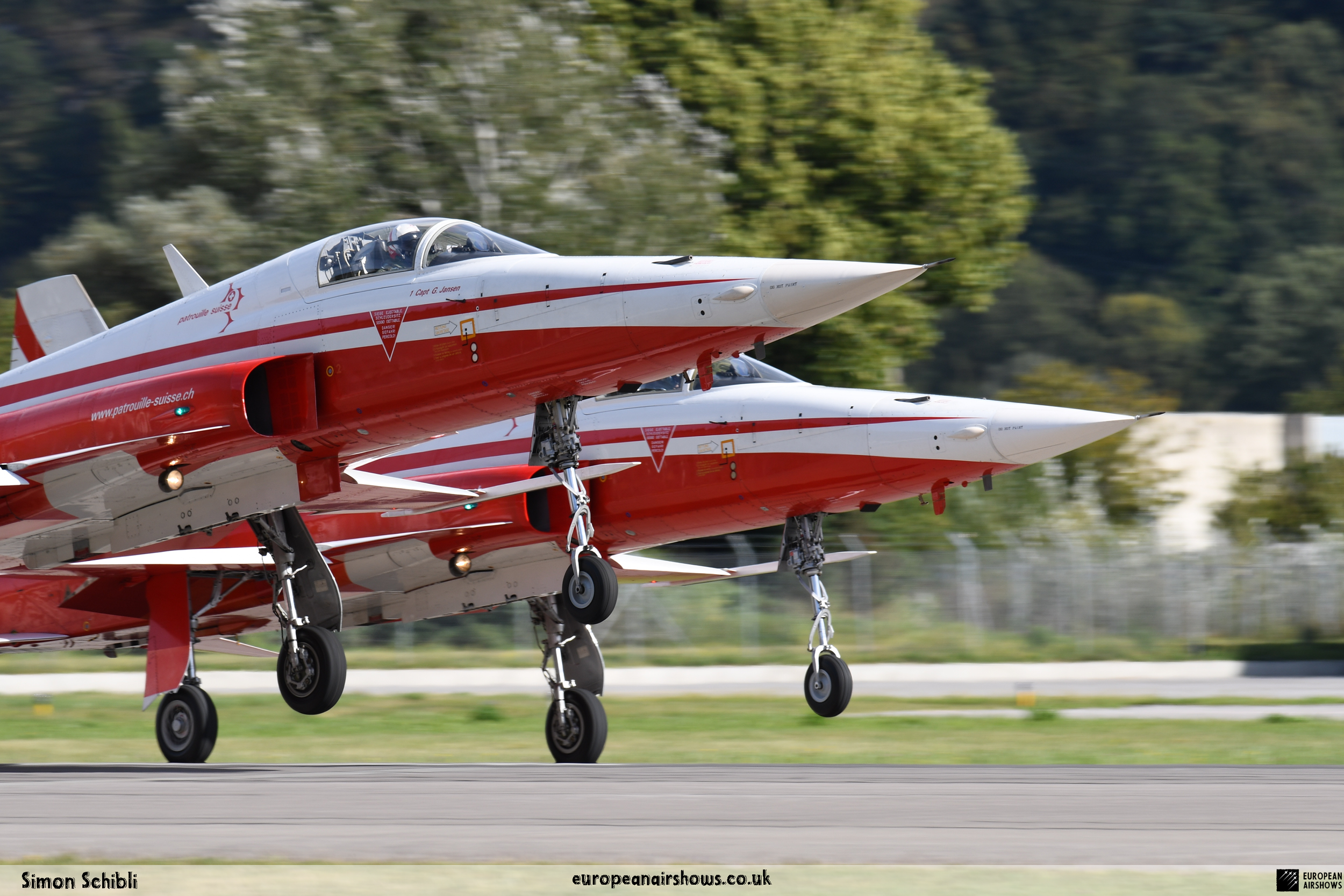
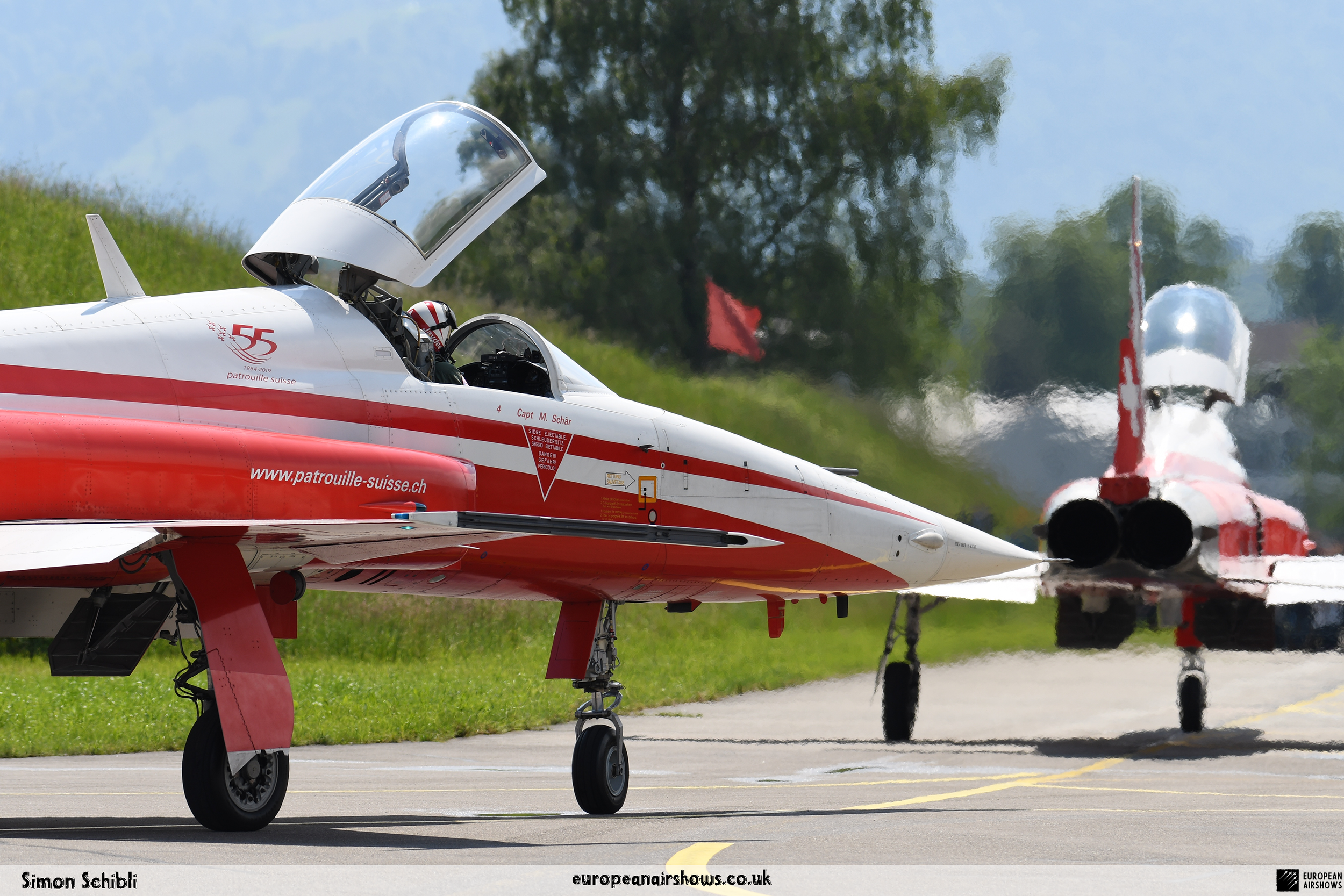
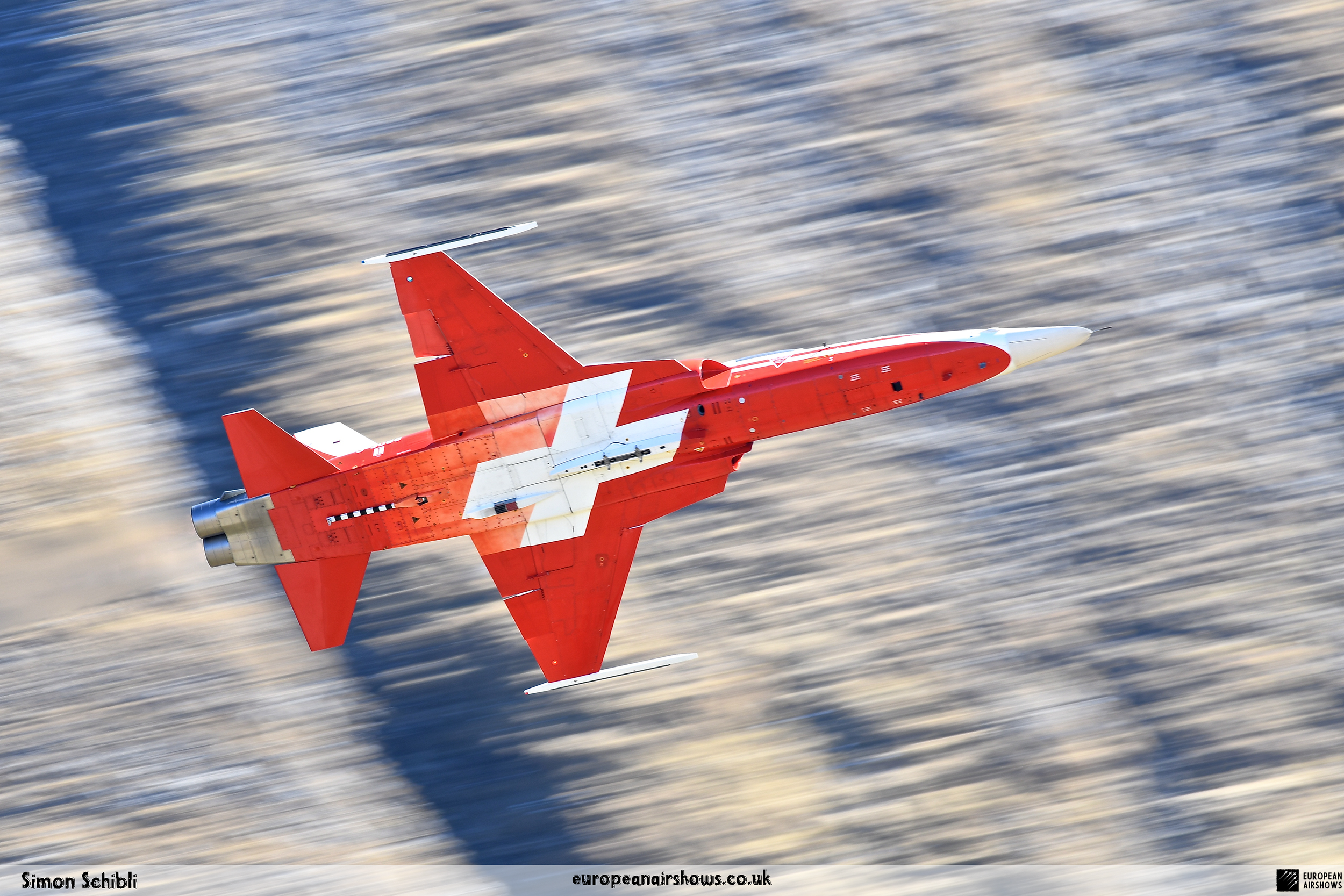
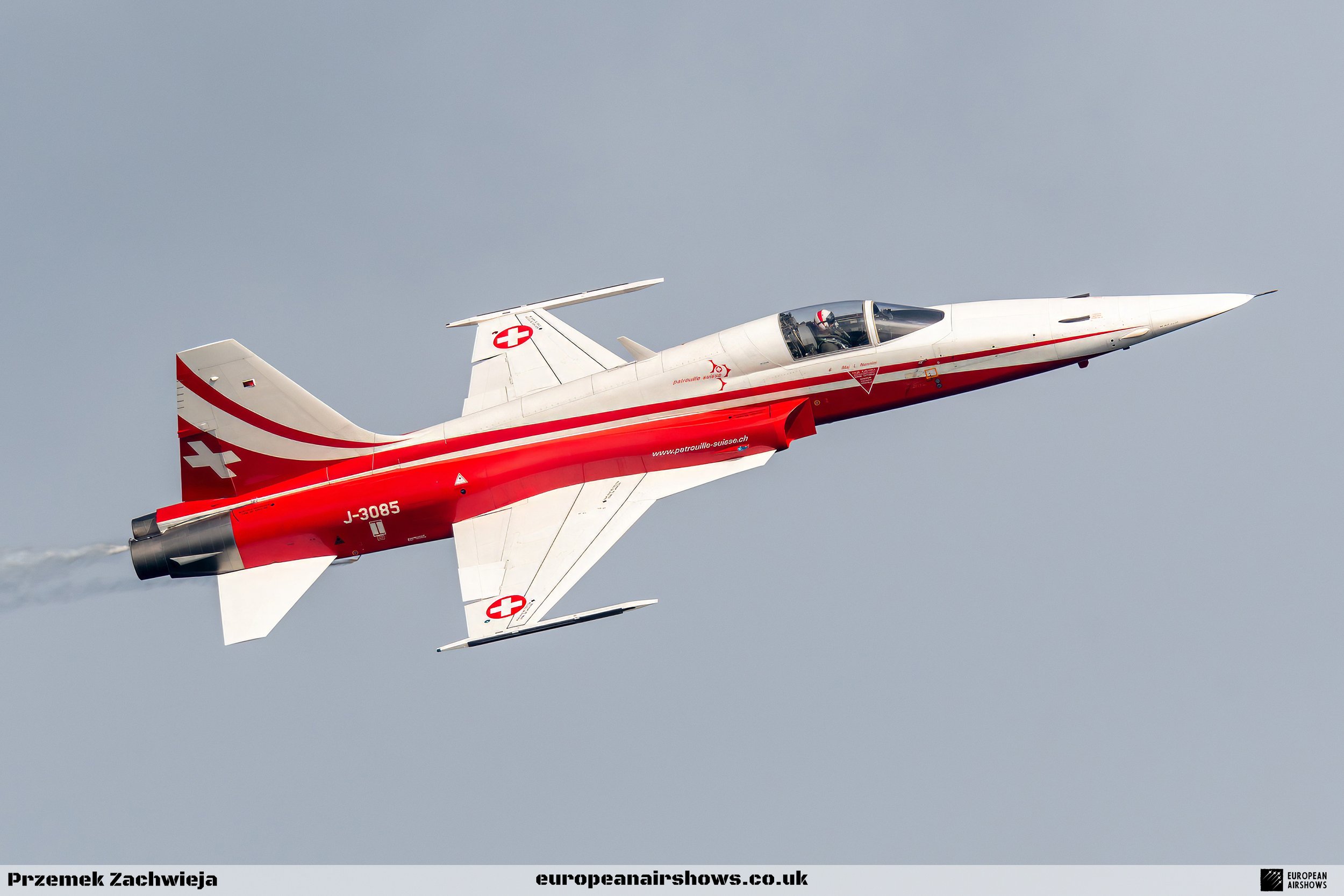
Patrouille Suisse’s six display positions use the single-seat F-5E Tiger II, not the two-seat F-5F. The Swiss aircraft retain the standard fighter cockpit, twin engines and ejection system, with the display fleet distinguished by its red-and-white national colour scheme and the installation used to create white smoke.
Small size helps close formation
The F-5E is narrow, compact and highly responsive. Its relatively modest wingspan allows the six aircraft to appear visually dense without the enormous span of a heavy fighter formation, while twin afterburning engines provide the acceleration needed to recover energy after loops, steep turns and solo crossings.
A fighter from another operational era
The Tiger remains an impressive display aircraft, but it is no longer a credible modern air-defence platform. Swiss official assessments state that its sensors and weapons are obsolete for contemporary air combat and that the remaining fleet can now be used only as service aircraft by day and in good visibility. Its public role should therefore not be confused with the missions assigned to the F/A-18 or incoming F-35A.
Its age now determines the team’s future
Continued operation beyond the present plan would require investment in ejection seats, avionics, navigation, maintenance and personnel. With the first Swiss F-35A activity expanding and the F/A-18 fleet remaining in use, the government and Parliament have prioritised ending the Tiger fleet rather than supporting a third fast-jet system mainly for secondary tasks and displays.
History
From four Hunters at Expo 64 to six Tigers approaching the end of an era.
22 August 1964
Patrouille Suisse is founded
Four Hawker Hunter Mk 58s form the new national display team. Its first appearances are connected with Expo 64 in Lausanne and celebrations marking 50 years of the Swiss Air Force.
1965
The first complete season
The four-aircraft team flies its first full display season, completing four public demonstrations and establishing the formation as a recurring Swiss Air Force ambassador.
1970
A fifth Hunter joins
The formation expands to five aircraft, increasing the range of shapes and allowing the team to develop a more substantial group sequence.
1978
Six aircraft and the first foreign display
Patrouille Suisse, now established as a six-ship, performs abroad for the first time at Salon-de-Provence during the 25th anniversary celebrations of Patrouille de France.
1991
The red-and-white identity appears
For the 700th anniversary of the Swiss Confederation, the Hunters receive bold red-and-white undersides and Swiss crosses, creating the national visual identity later carried into the Tiger era.
1994–1995
Hunter farewell and F-5E transition
The Hunter era closes after 31 years. Patrouille Suisse converts to the faster and more agile F-5E Tiger II for the 1995 season while retaining the six-aircraft structure.
2004
Forty years at Air04
The team celebrates its 40th anniversary during the major Air04 event, held alongside the Swiss Air Force’s 90th anniversary.
April 2007
PC-6 “Felix” enters team service
The specially painted Turbo Porter begins supporting the commander, commentators and media work at training and display locations.
2012
The Nordic Tour
Seven Tigers and two road transports are moved through Scandinavia during a three-week deployment, illustrating the logistics required to tour a full fighter formation.
2014
AIR14 marks the 50th anniversary
The team’s golden jubilee becomes one of the central themes of the large AIR14 celebration at Payerne.
9 June 2016
Mid-air collision at Leeuwarden
Two team F-5Es collide during training in the Netherlands. One pilot ejects and survives; the second aircraft lands safely despite damage. The incident prompts recovery and investigation but does not end the team.
2020
The complete season is cancelled
The coronavirus pandemic causes the first total season cancellation in the team’s history.
2024
Sixty years and a RIAT award
Patrouille Suisse marks its 60th anniversary and receives the King Hussein Memorial Sword at the Royal International Air Tattoo.
September 2025
Parliament approves F-5 withdrawal
Both chambers approve the decision to remove the remaining Tiger fleet from service no later than the end of 2027, placing the current Patrouille Suisse aircraft and organisation on a defined retirement path.
2026
The official farewell period begins
The Swiss Air Force’s own team brochure states that the era of Patrouille Suisse will end with the definitive F-5 retirement in 2027. The team remains active and continues its six-aircraft programme while preparations for the fleet withdrawal proceed.
4 June 2026
A temporary extension is ordered for study
The National Council transmits a postulate asking the Federal Council to examine whether limited F-5 operation to the end of 2030 could reduce risk during the fighter-fleet transition. The request opens a review; it does not itself cancel or extend the approved end-2027 retirement.
Future and identity
The ending is planned, but the exact final chapter is not yet completely fixed.
Active does not mean secure beyond 2027
Patrouille Suisse remains an active six-ship team. However, Parliament has approved the withdrawal of the F-5 fleet no later than the end of 2027, and the 2026 Swiss Air Force brochure explicitly describes the team’s present era as approaching its end.
The 2030 review is not an extension
A June 2026 postulate requires the government to examine a temporary F-5 continuation to the end of 2030 as transition-risk insurance. Until a later decision changes the approved plan, end-2027 remains the correct retirement date to show on this profile.
No successor aircraft has been selected
The F/A-18 and F-35A fleets are required for operational duties, while buying a separate jet trainer solely for display use has not been approved. Earlier government work identified a cheaper turboprop solution as the more realistic way to preserve public outreach.
The PC-7 Team is not automatically Patrouille Suisse
Switzerland already operates the nine-aircraft PC-7 Team, which could assume more of the national ambassadorial role after the Tigers retire. That would preserve a Swiss Air Force formation display, but it should not be described as a confirmed aircraft conversion or direct continuation of Patrouille Suisse unless the Swiss authorities formally make that decision.
In remembrance
Remembering pilots connected with Patrouille Suisse who were lost in military flying accidents.
These incidents did not all occur during public aerobatic displays. They are included because each pilot had a direct place in the team’s history.
18 April 1968 · Axalphorn, Bern
Paul Birrer
The former Patrouille Suisse leader was killed when Hawker Hunter J-4014 struck a ridge during a photographic demonstration flight. Aviation photographer Ernst Saxer, positioned on the ridge, was also killed.
7 April 1976 · Near Wildberg, Zurich
Roland Gygax
The Patrouille Suisse pilot was killed in a Hawker Hunter accident shortly before the 1976 display season.
7 April 1998 · Valais
Andrea Martinoli
The serving team pilot was killed with Karl Heinzelmann when their Swiss Air Force F/A-18D crashed during a military training flight near Crans-Montana.
This is a focused remembrance of pilots directly associated with Patrouille Suisse. It is not a complete list of Swiss Air Force flying accidents.
European Airshows photography
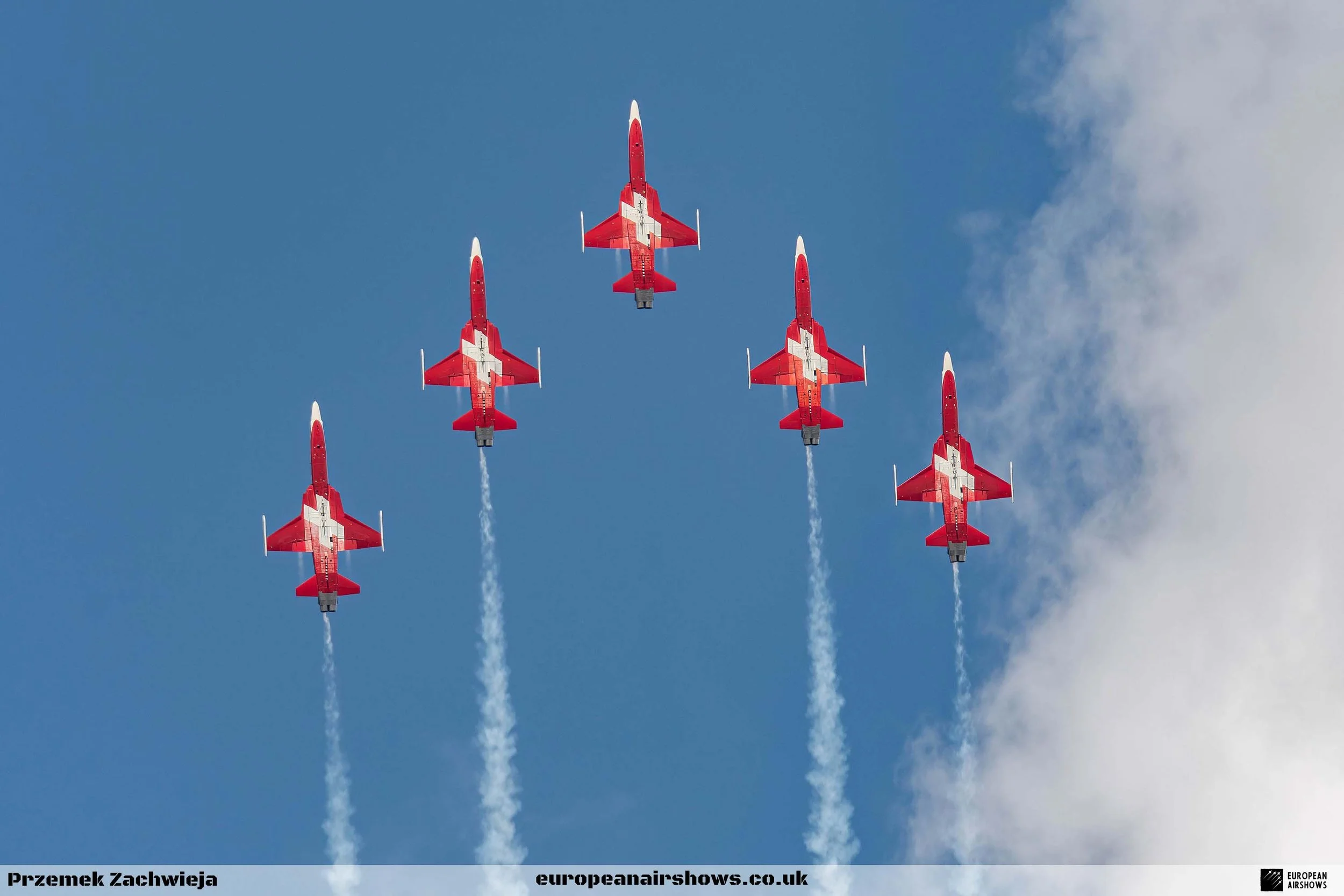
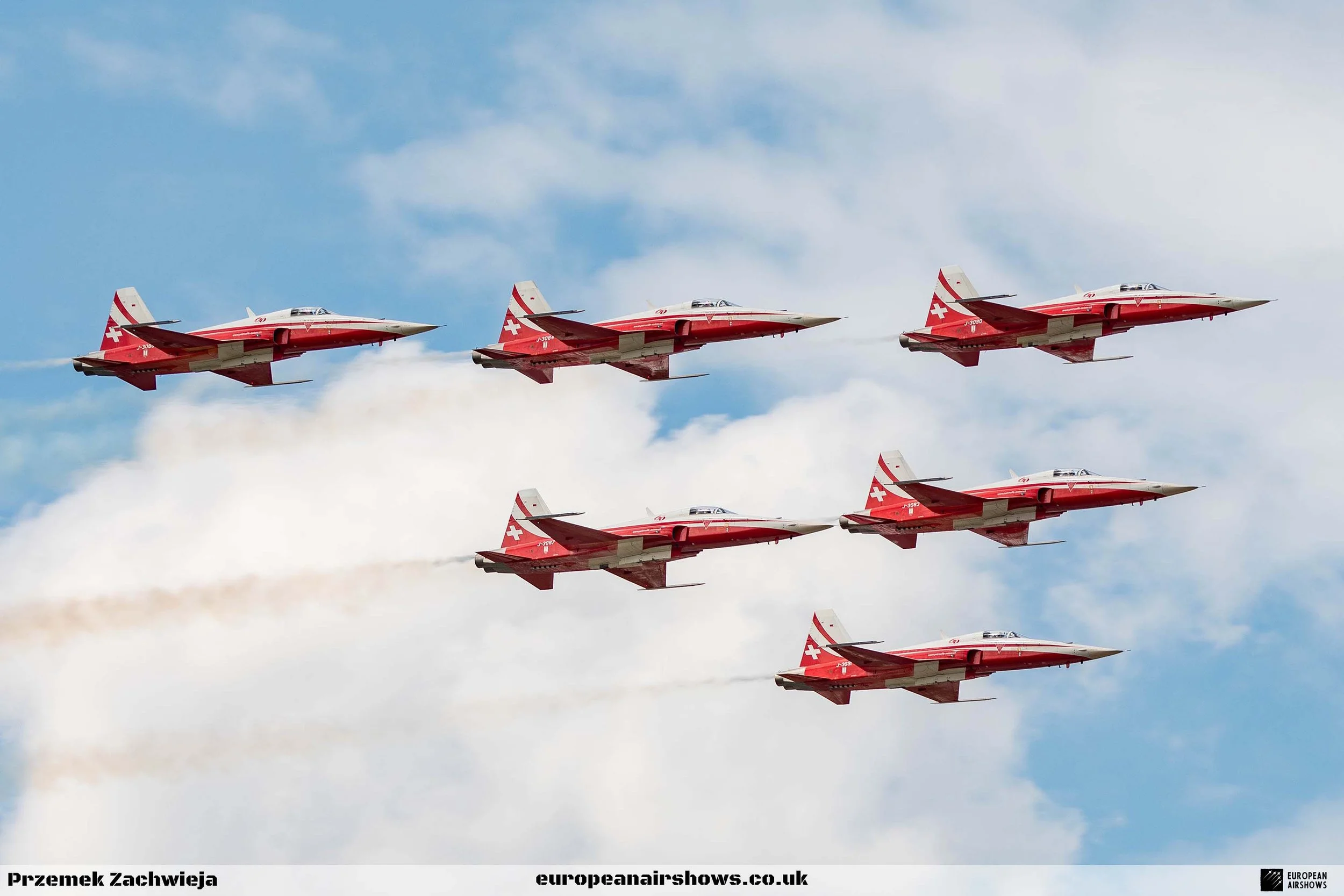
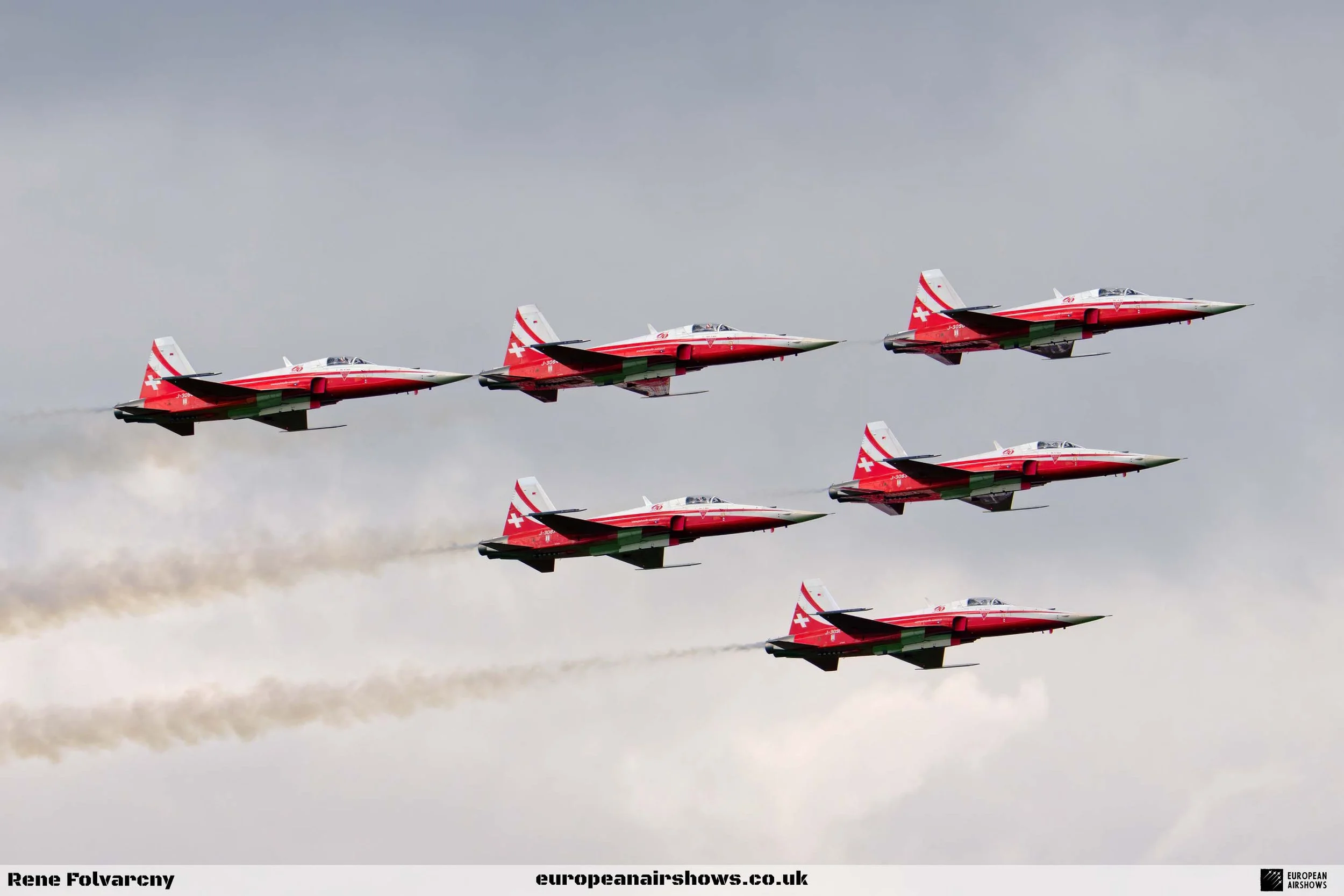
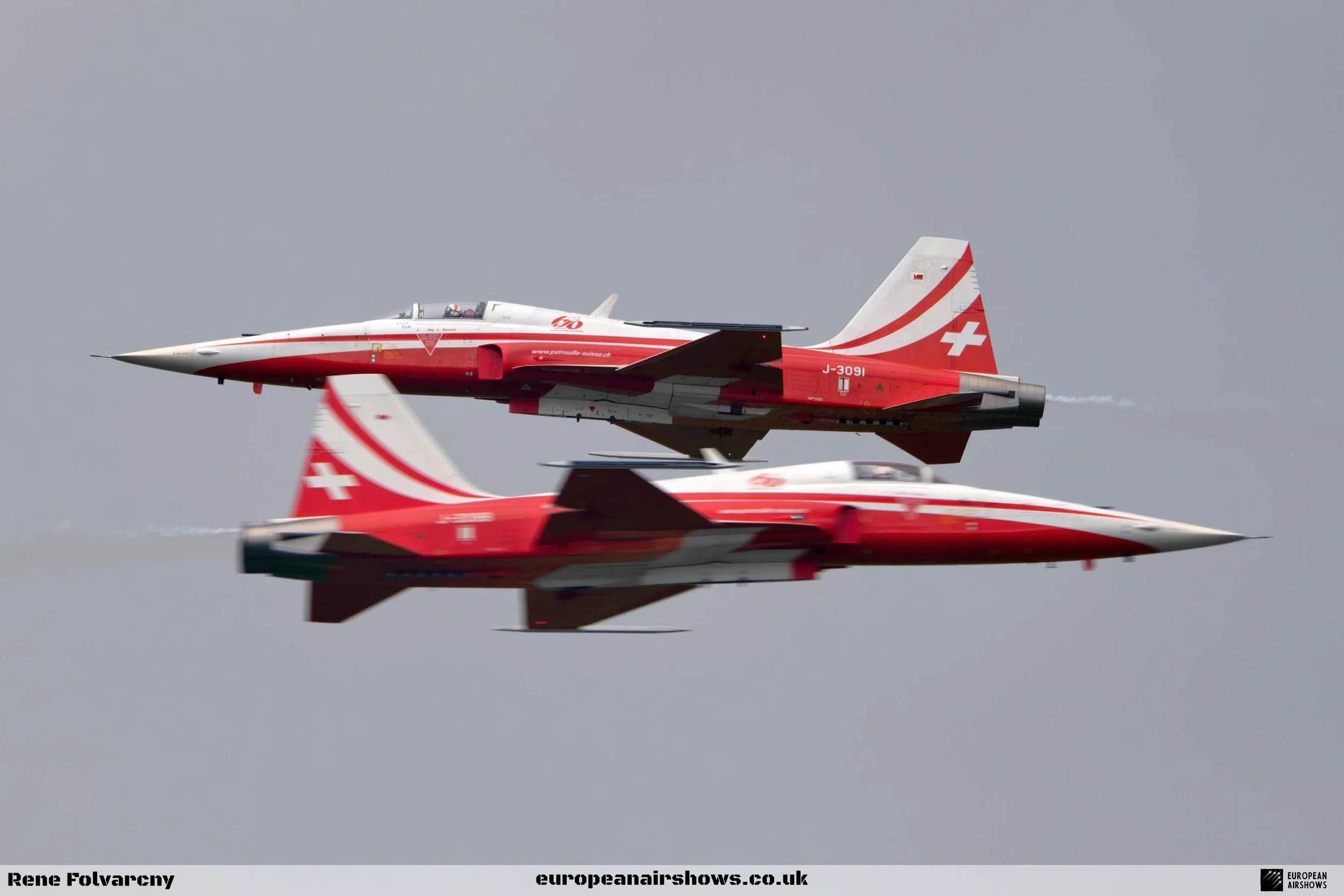
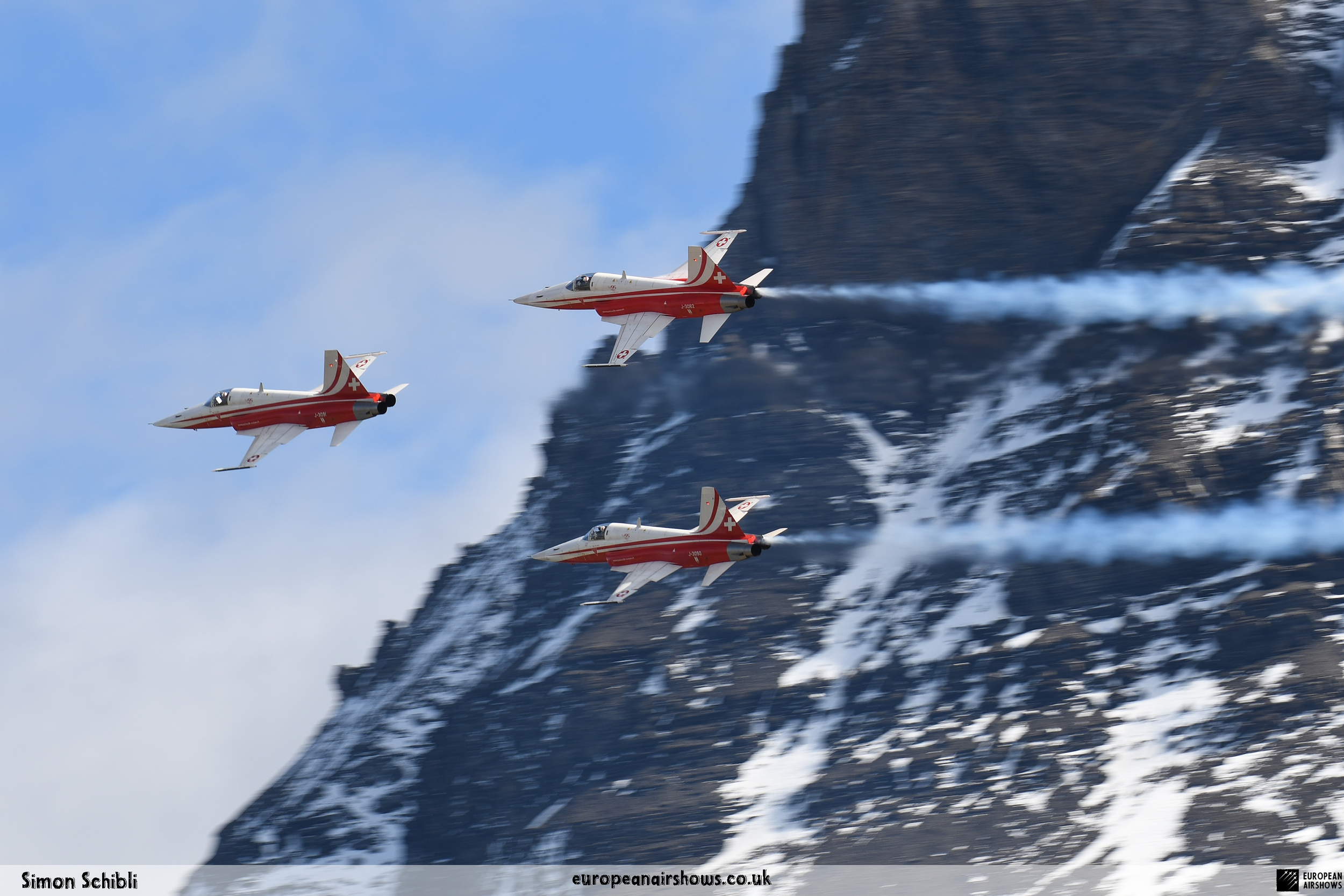
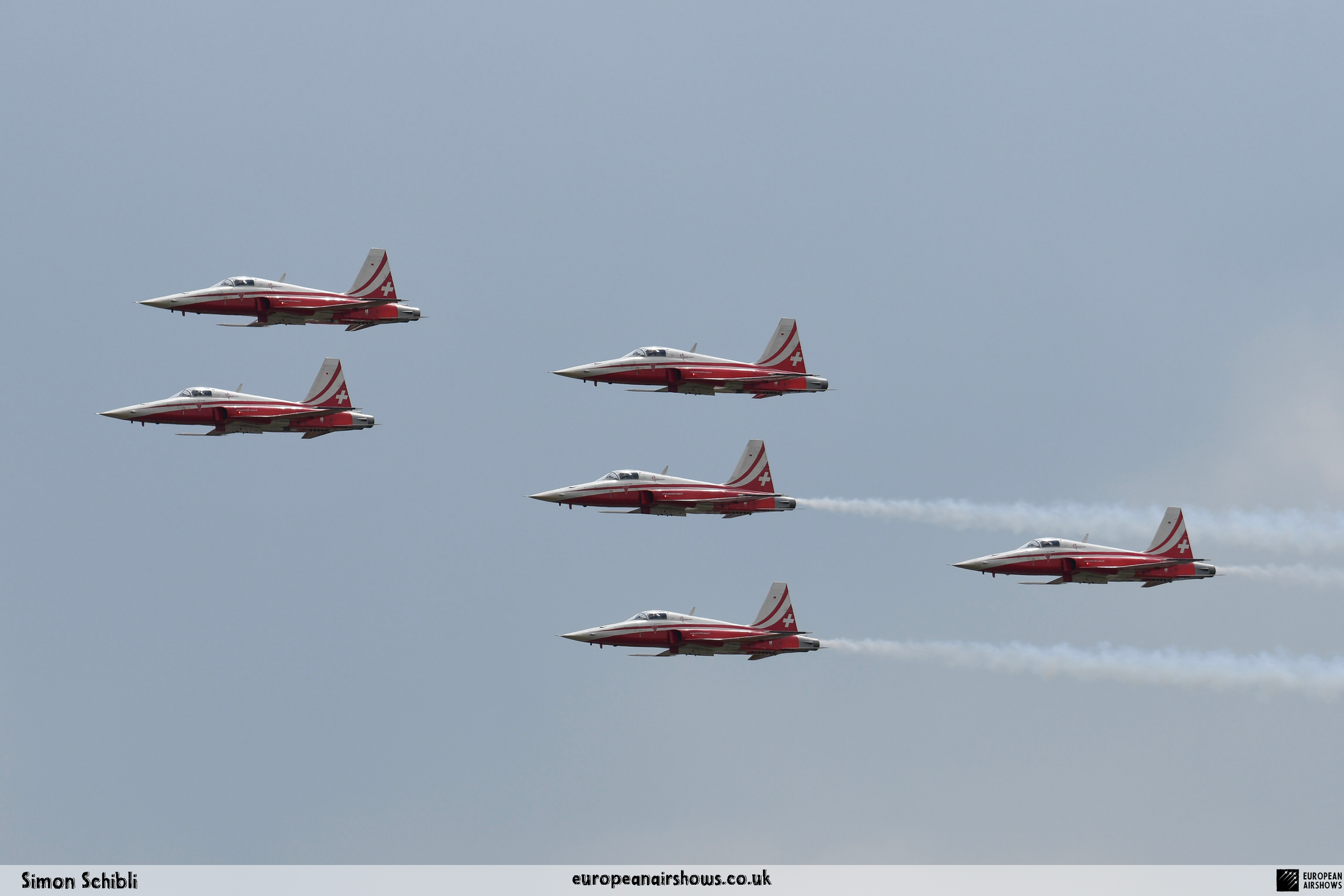
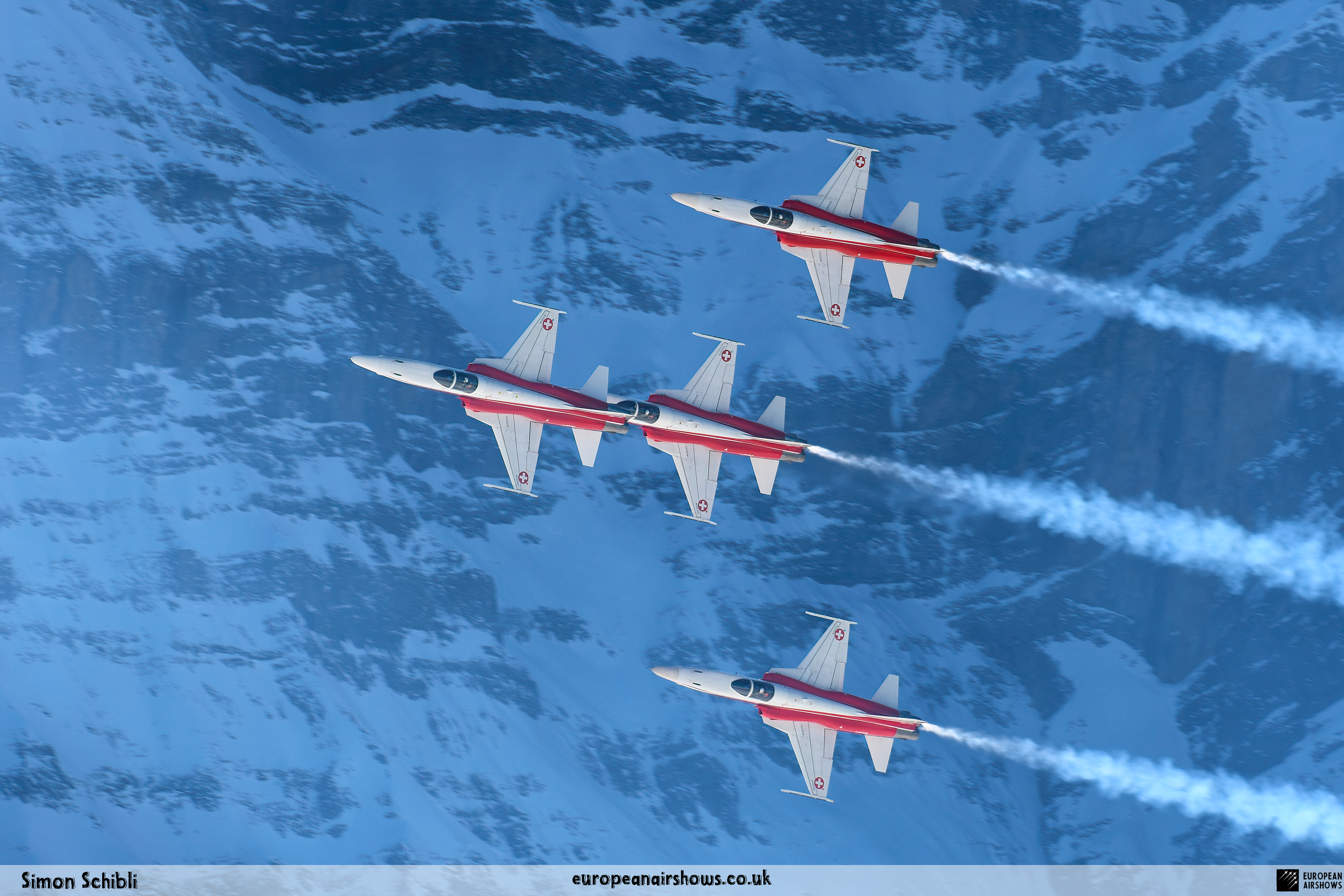
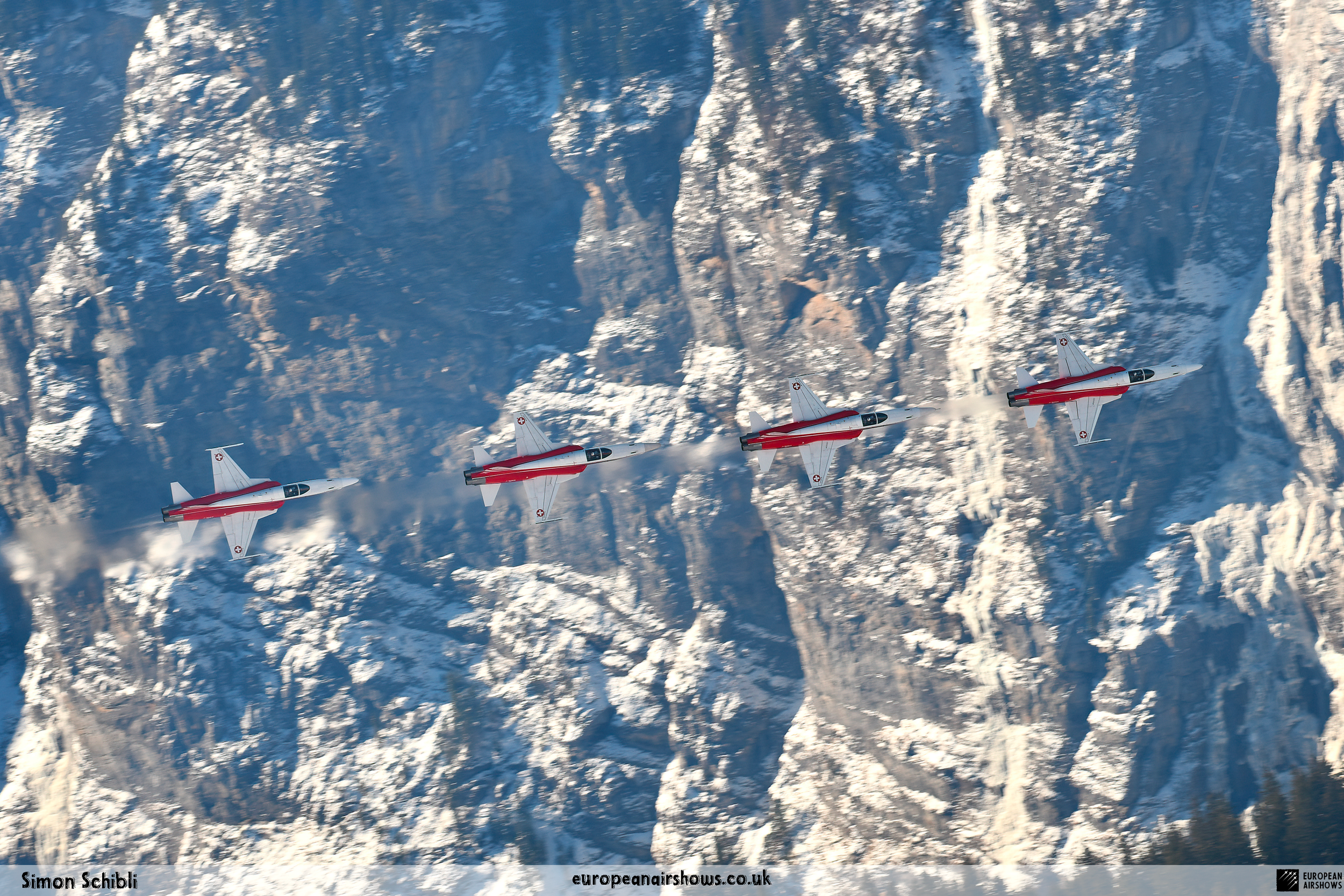
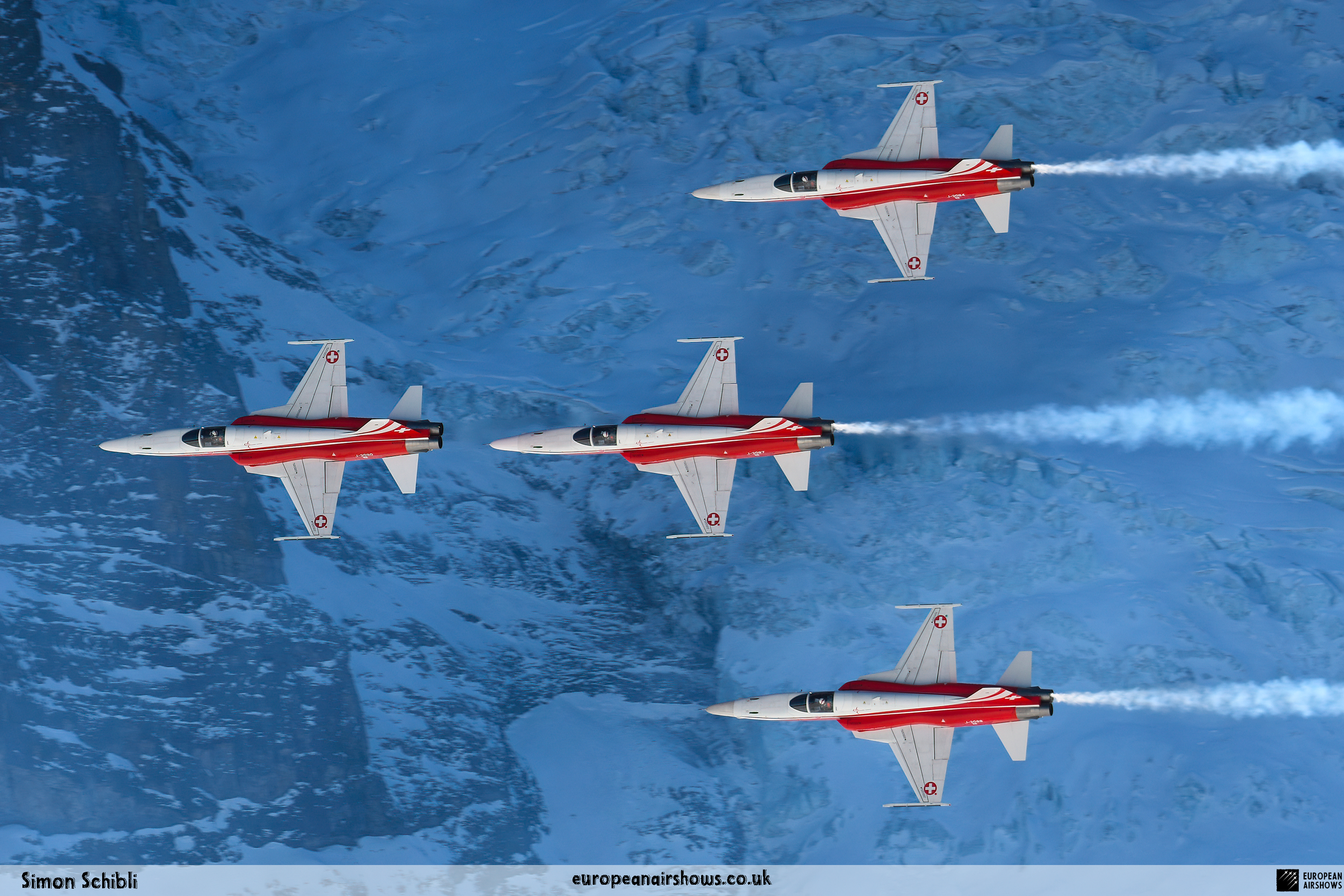
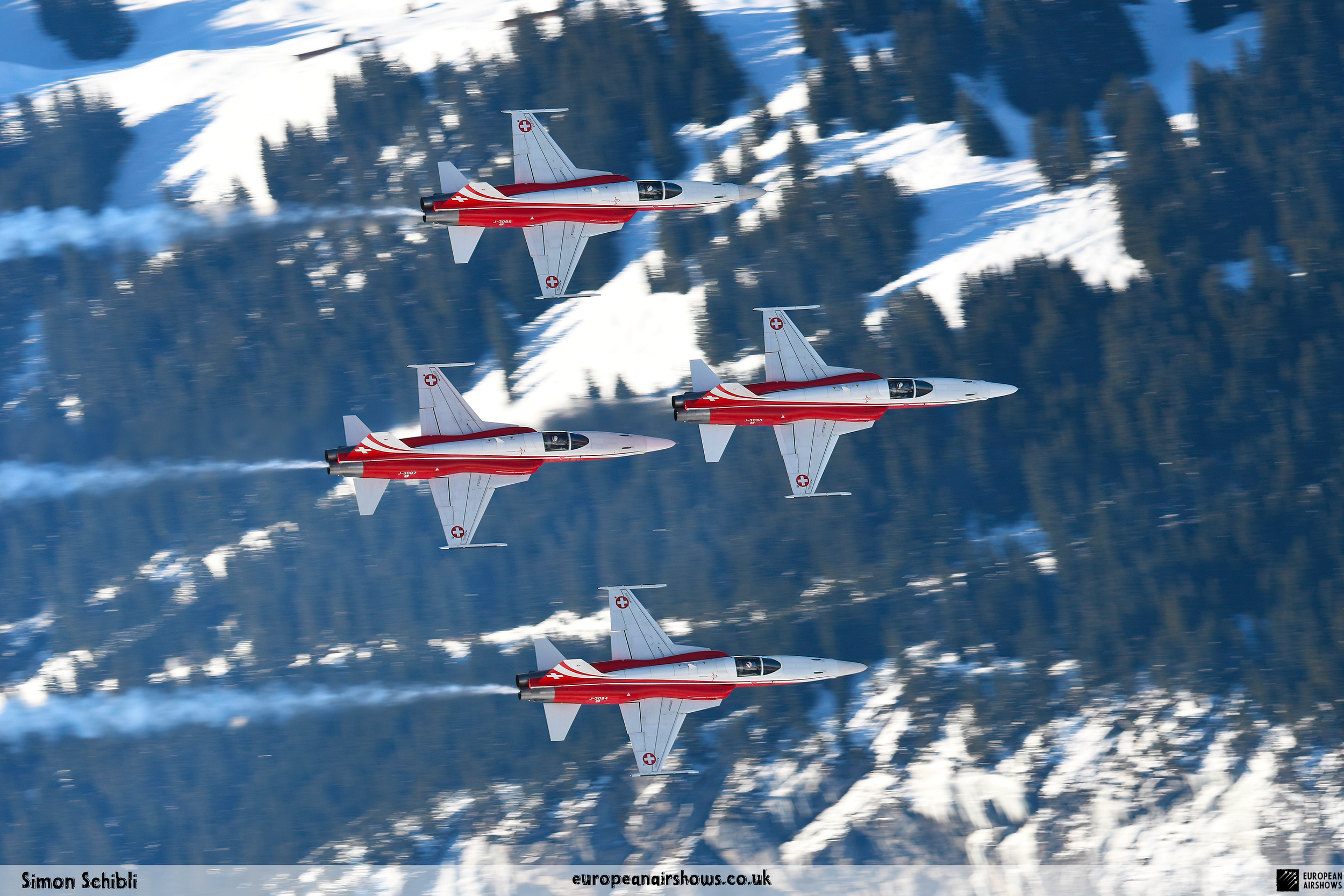
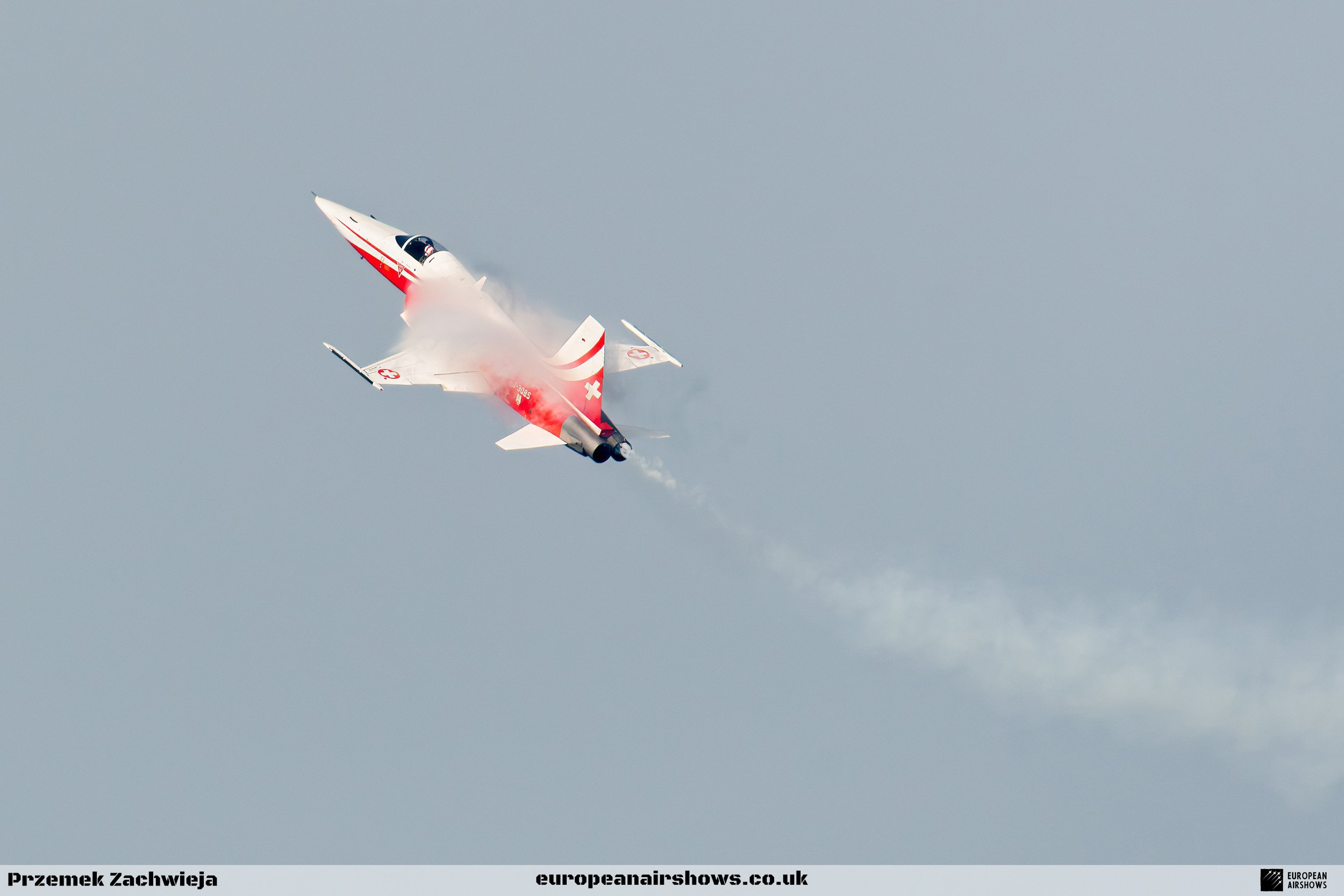
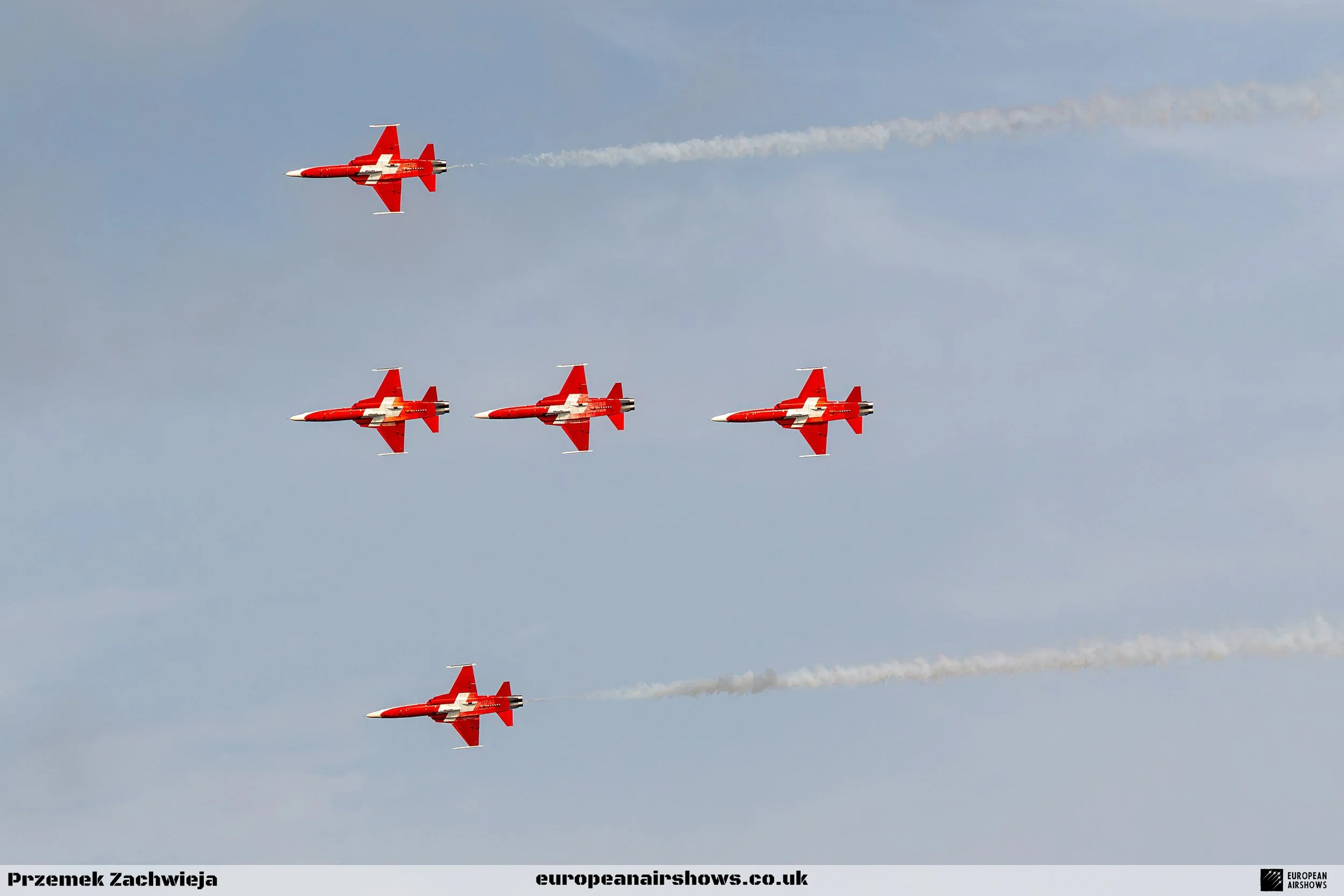
Explore the photos of Patrouille Suisse below.
Continue into the gallery for the red-and-white Tigers in six-ship formation, broad loops, rapid formation changes, white smoke, solo crossings and the compact fighter geometry that has defined the team since 1995.