Očovskí Bačovia
2 × LET L-13 + 2 × LET L-23 Blaník · Four-glider formation aerobatics
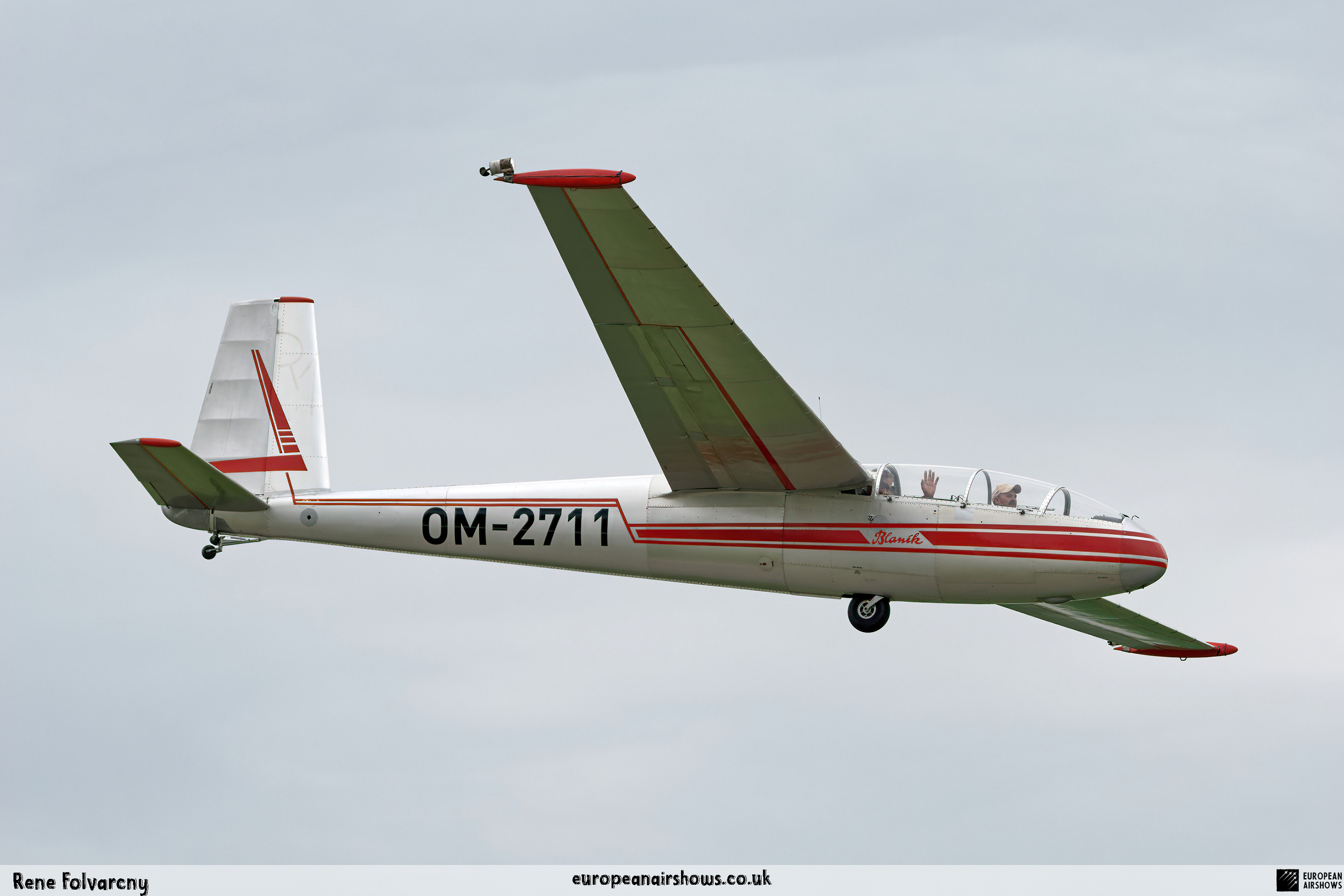
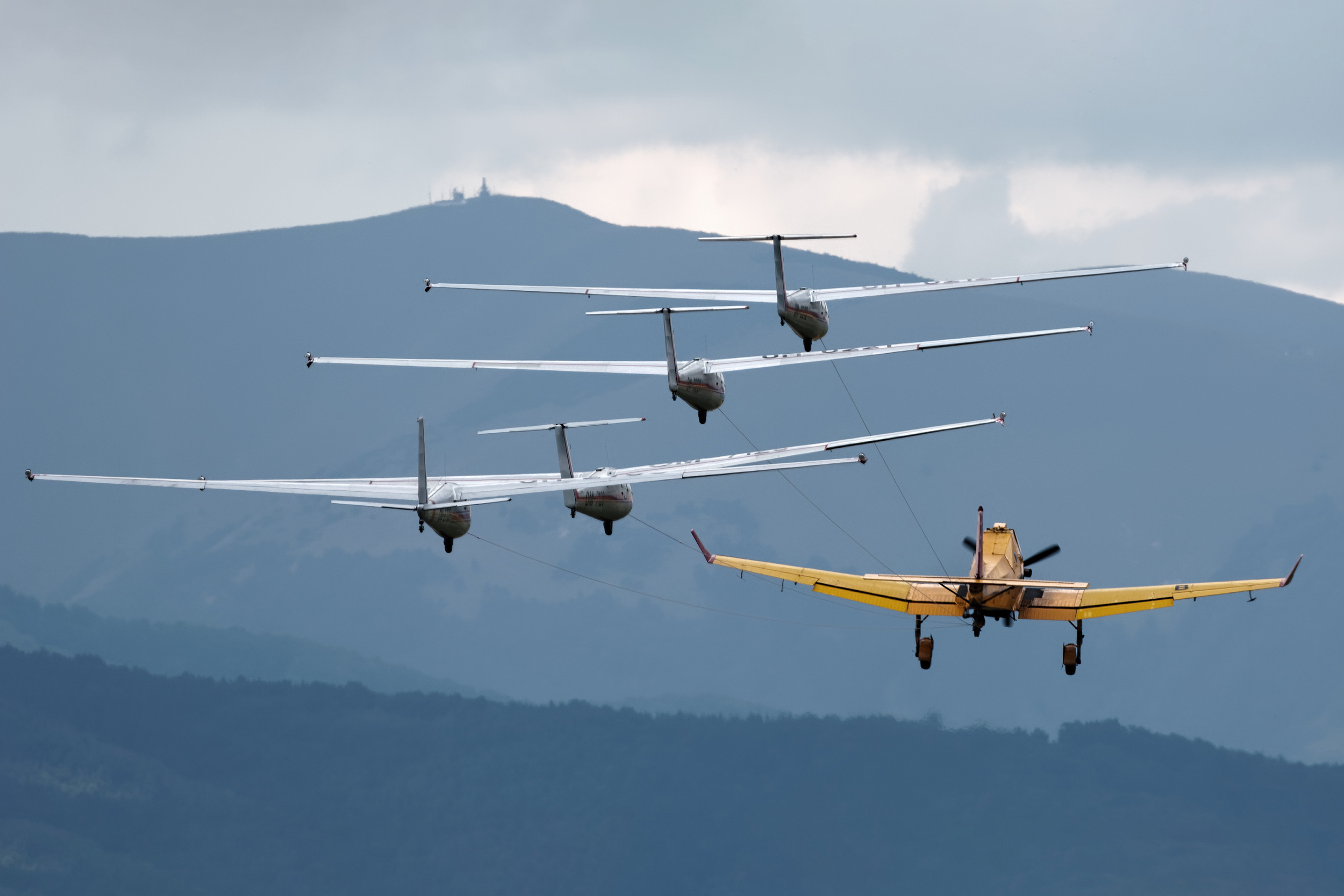
Slovakia's Očovskí Bačovia turn a mass aerotow into the opening act of a quiet aerial ballet. One Z-137T Agro Turbo launches four Blaníks together; after release, the gliders reshape into close formations, aerobatic figures and smoke-drawn patterns above the display line.
- First public display
- 1981
- Home association
- Aeroklub Očová
- Display
- Four gliders
- Current published mix
- 2 × L-13 + 2 × L-23
- Mass-tow aircraft
- Z-137T Agro Turbo
- Recognition
- FAI Diplôme d'Honneur, 1999
The team
More than four decades of Očová formation flying, still active in 2026.
The team's roots reach back to an idea developed by Očová glider pilots Juraj Huliak and Tomáš Rakús in the 1970s. With Jozef Lalík and Ľuboslav Tomašovič, the modern four-glider formation made its first public display at Kunovice in 1981. It has remained part of the Aeroklub Očová story ever since.
Očovskí Bačovia is a civilian sport-aviation team, not a Slovak Air Force unit. Its official home is Očová Airport, identified by Aeroklub Očová as LZOC. The earlier draft's Dobrá Niva, LZDN base claim is not supported by the team's current official material.
A name rooted in the region
“Bača” is a traditional shepherd, especially a head shepherd in Slovak mountain culture. The name refers to Očová's sheep-farming traditions and a well-known regional folk song. It began as a humorous airshow nickname and was used officially by the team from 1998.
Continuity and succession
The latest complete public display roster located was published for 2021: Martin Tišliar led the gliders with Ľuboslav Tomašovič, Jozef Lalík and Branislav Oltus, while Róbert Makovíny flew the Z-137T tug. Earlier team material also documented the training of Peter Jarota, Dušan Bysterský, Filip Tarana and other successors. A fixed 2026 cockpit assignment has not been publicly confirmed, so this profile does not invent one.
Confirmed on the current circuit
The 2025 Očová programme listed the team as two L-13s and two L-23s. On 13 June 2026 the four-glider team appeared again at its home airfield, with current event material advertising the Blaníks in tow behind the Z-137 Agro Turbo. That makes the team clearly active, not historic or dormant.
The display
The tow is the engineering feat. The released formation is the poetry.
A published team description gives a seven-minute released sequence and spacing of roughly 3 to 5 metres, but those are historical reference figures rather than a promise for every venue. Height, sequence, personnel, smoke and weather minima belong to the approved event plan.
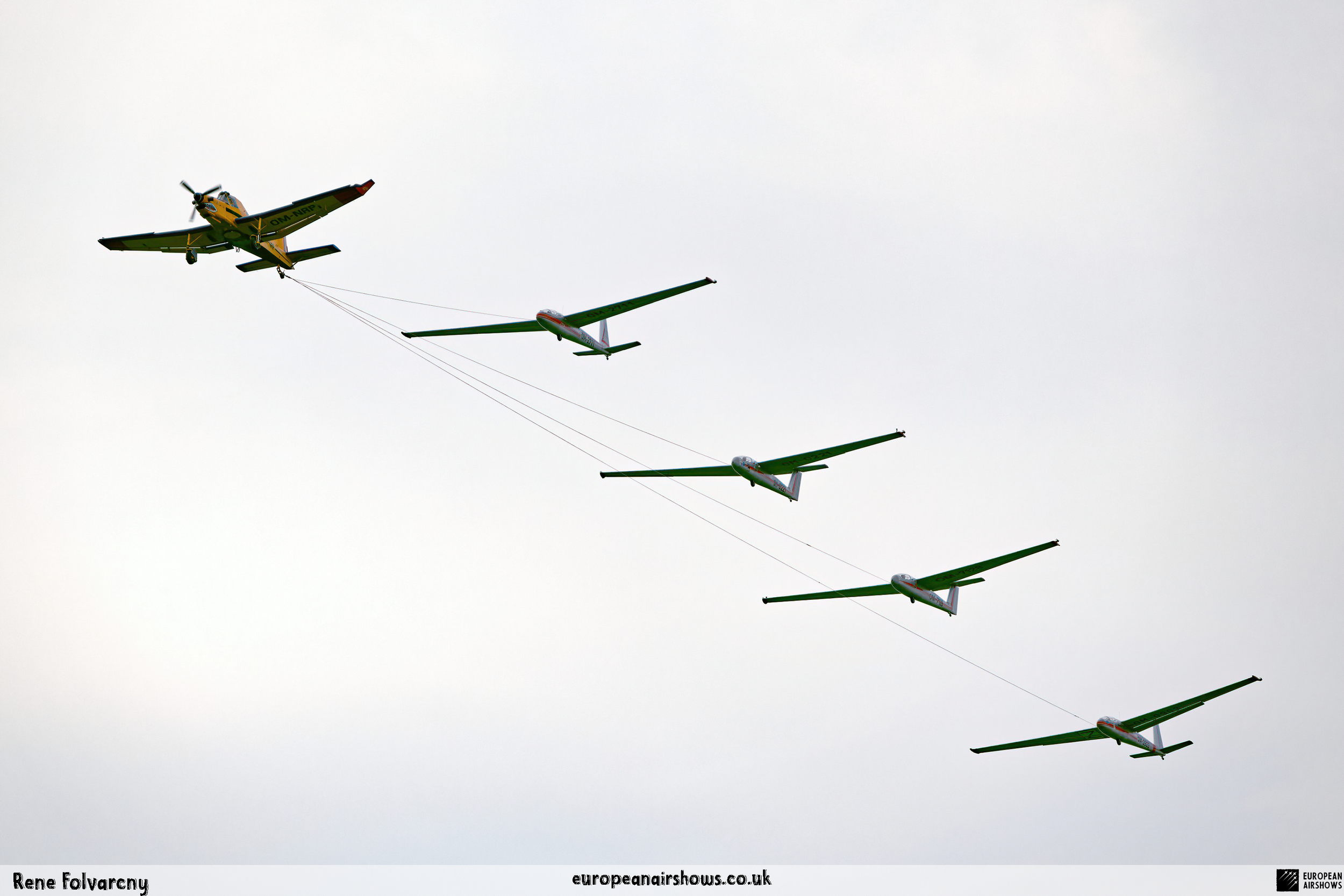
Simultaneous four-tow
All four gliders launch behind one Z-137T, making the climb and positioning phase a visible part of the act.
Coordinated release
The pilots disconnect in sequence and convert the mass-tow geometry into a self-contained four-glider formation.
Close formation
Diamond, echelon and line-based shapes depend on small, controlled changes in relative position rather than engine power.
“Parenica” figure
The team's spiralling, cheese-shaped signature is repeatedly highlighted in Slovak airshow material as a recognisable Očová figure.
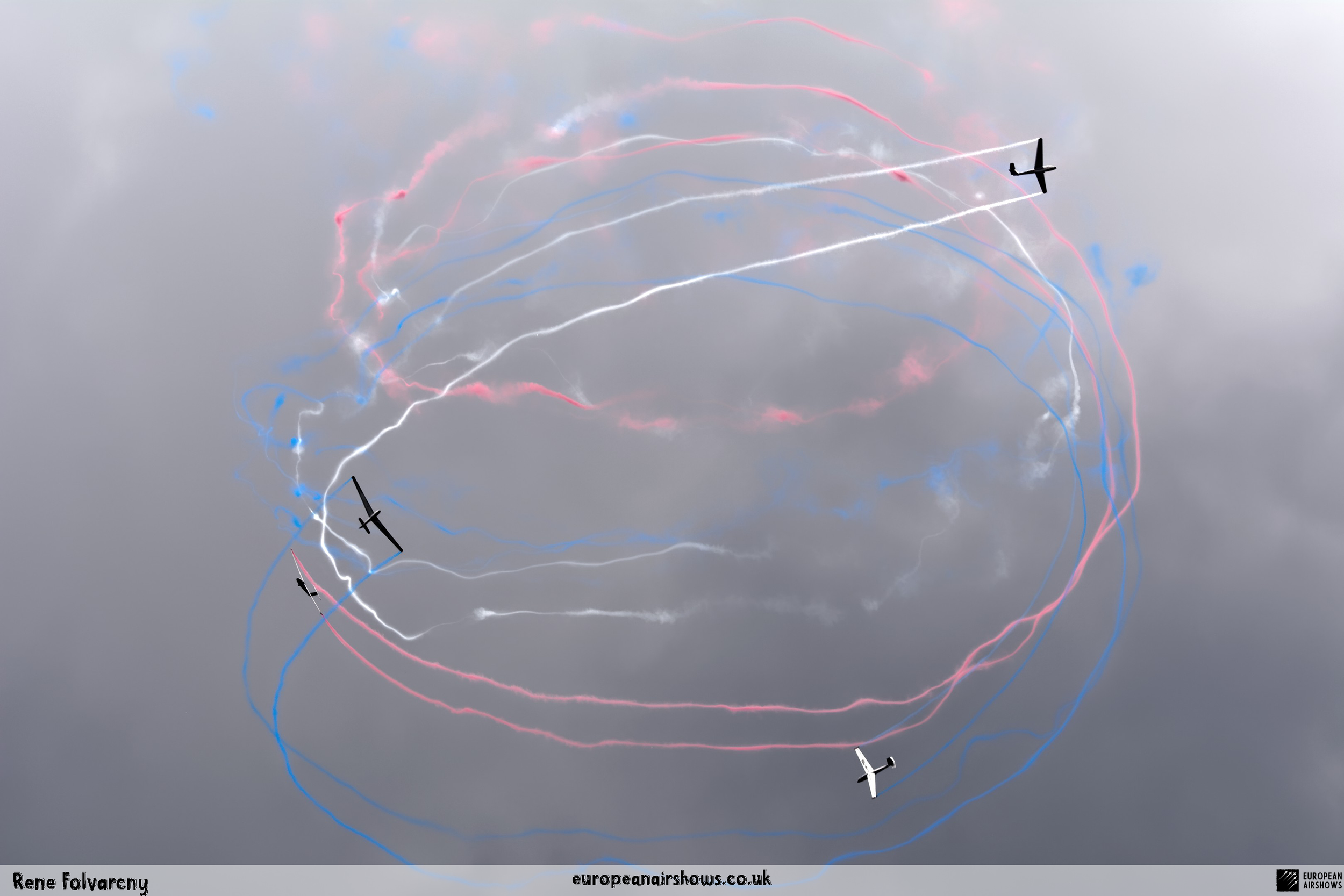
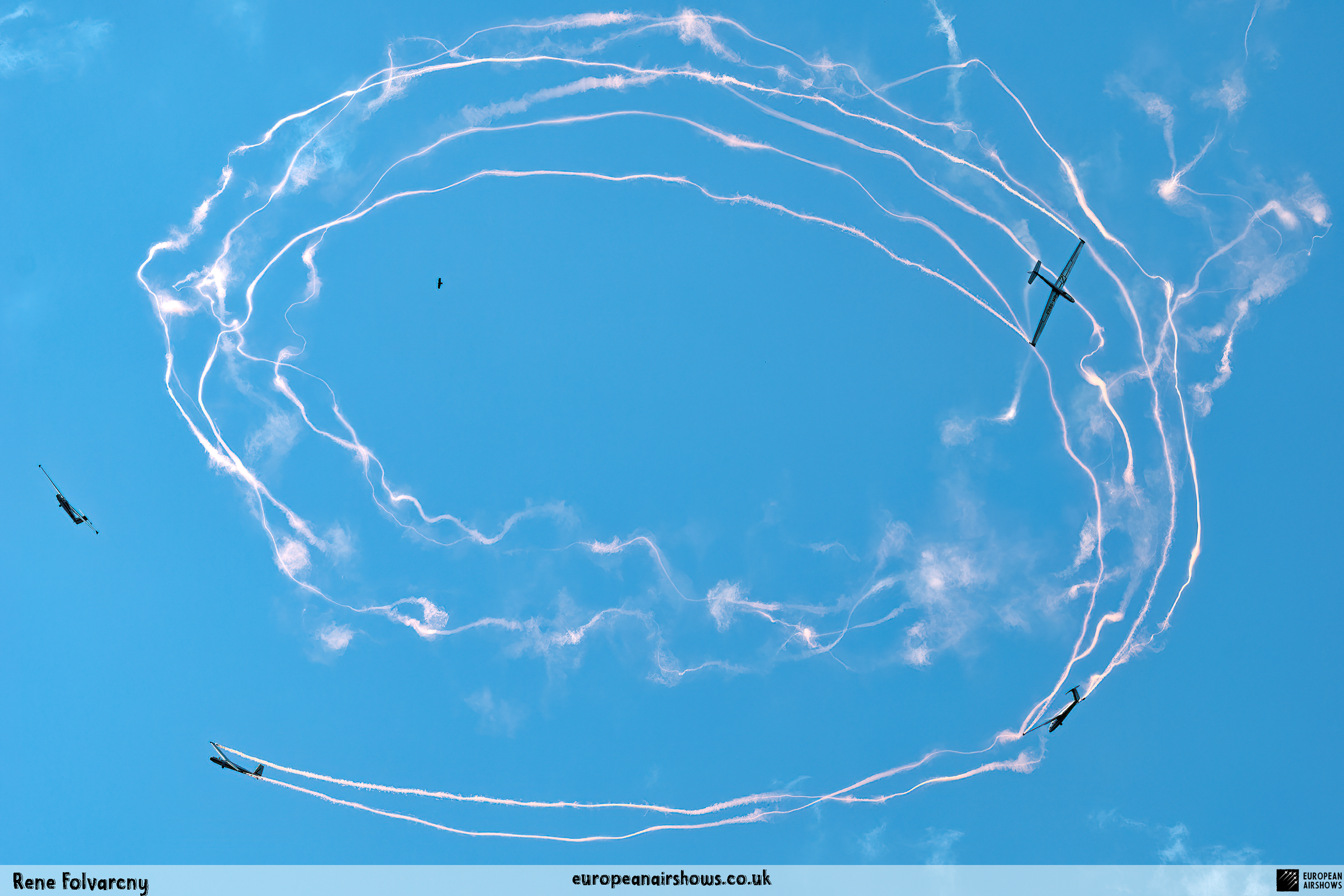
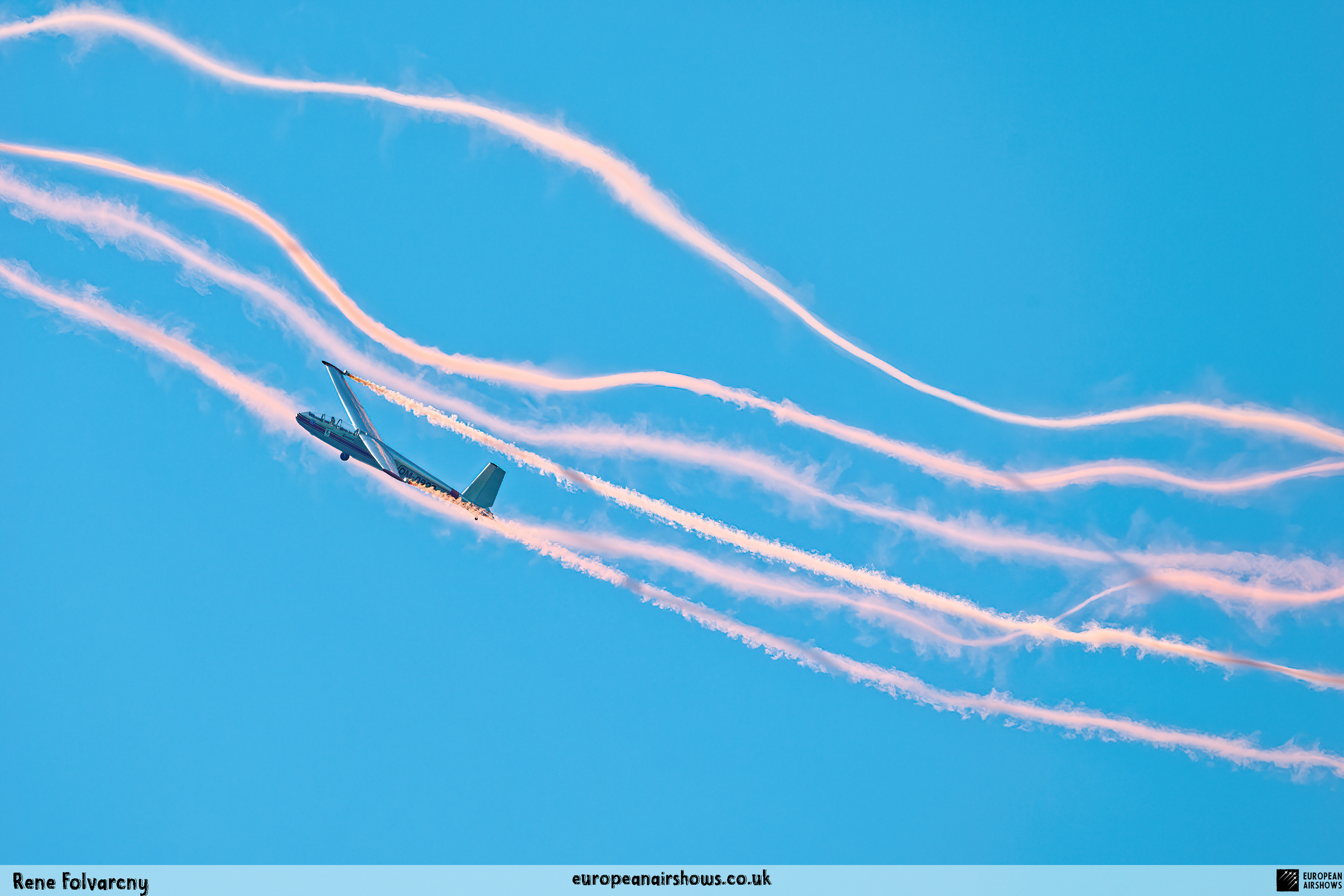
Smoke geometry
Smoke makes the four flight paths readable, revealing symmetry, separation and the changing shape of the formation.
Finite energy
Every manoeuvre trades height for speed. The pilots must complete the sequence with enough energy and spacing for a safe recovery.
The aircraft
Two generations of Blaník share the formation, launched by a purpose-built agricultural turboprop.
LET L-13 Blaník
Karel Dlouhý's L-13 first flew in 1956 and became one of the defining two-seat training sailplanes of the post-war era. It combines an all-metal semi-monocoque structure with forward-swept wings, a tandem cockpit, flaps, airbrakes and a conventional tail.
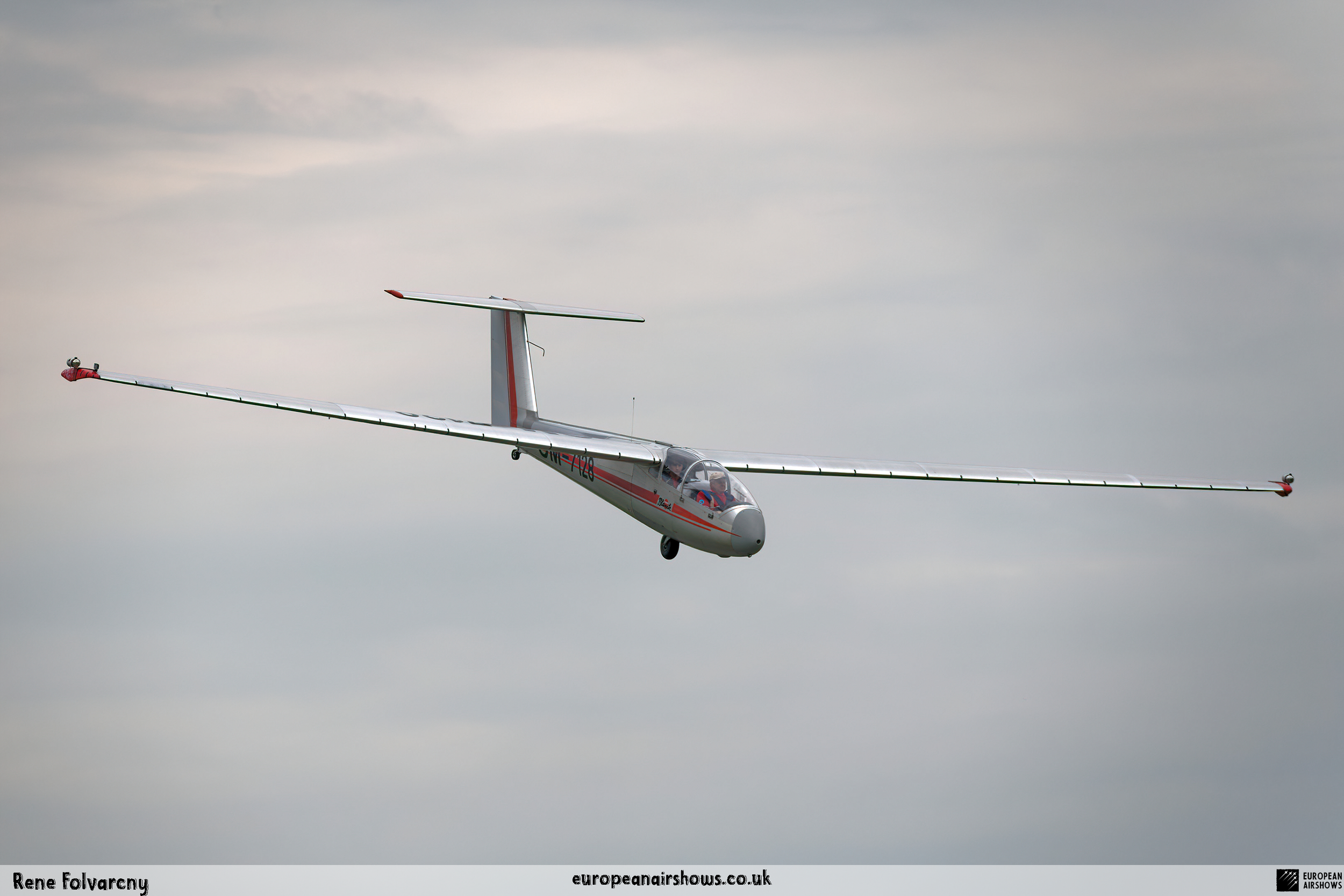
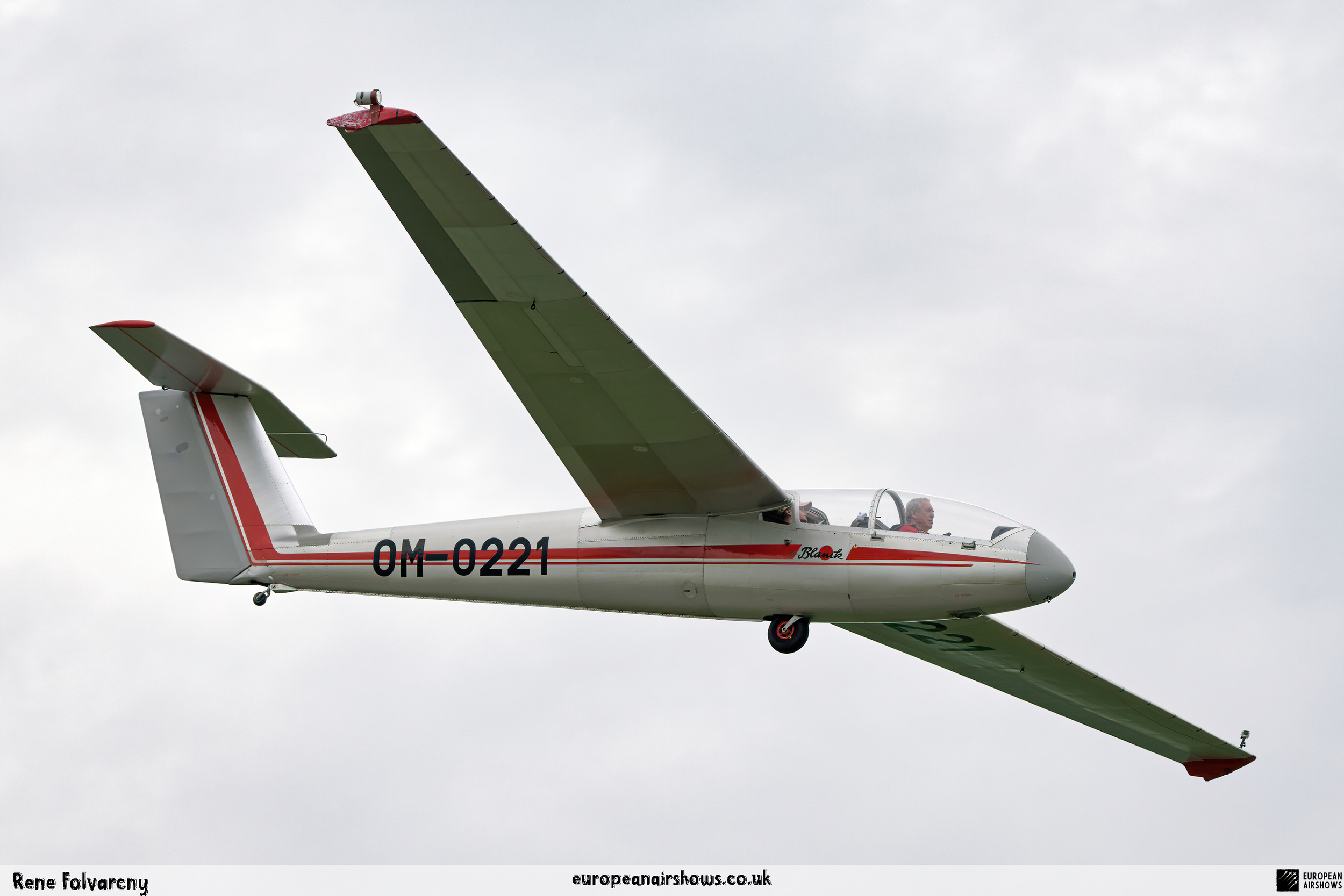
LET L-23 Super Blaník
The L-23 is the later two-seat development. EASA describes it as an all-metal high-wing glider with a trapezoidal wing and T-tail. It keeps mechanically controlled airbrakes, uses a single canopy and can carry either 16.2 m wings or 18.2 m wings with extensions. The team's current published four-ship mix uses two L-23s alongside two L-13s.
Z-137T Agro Turbo
The powerful Czech-built turboprop agricultural aircraft is the enabler of the modern display format. Its role is not merely transport to height: towing four sailplanes together creates the five-aircraft opening image for which the team has been known since 2003.
No single generic “Blaník” specification
L-13 and L-23 are distinct certified types, and even L-23 limits vary by serial-number group and wing configuration. The figures here are type references only. They are not the loaded weights, approved limits or display speeds of a particular team aircraft.
2 × L-13
The original all-metal Blaník design, with conventional tail and flaps.
2 × L-23
The later Super Blaník, identified by its T-tail and revised cockpit.
1 × Z-137T
The Agro Turbo launches all four gliders in the signature simultaneous tow.
4 smoke trails
Effects and exact installation are event and aircraft dependent.
The story so far
From four L-13s at Kunovice to a five-aircraft signature launch.
1974
The idea takes shape
Juraj Huliak and Tomáš Rakús begin developing renewed group flying with Očová's Blaník gliders.
1981
First public four-ship display
Huliak, Rakús, Jozef Lalík and Ľuboslav Tomašovič present the modern formation at Kunovice.
1984
Four powered tugs join
A motor section of four Zlín Z-142s expands the act into four tug-and-glider pairs.
1998
The name becomes official
The long-used nickname Očovskí Bačovia is adopted officially for a display in the Czech Republic.
1999
FAI recognition
The team receives the FAI Diplôme d'Honneur for its contribution to formation and group aerobatic flying.
2001
First four-glider mass tow
The team launches four gliders simultaneously behind one Z-137T, establishing the basis of the modern opening.
2003
A new display format
After the death of powered-formation pilot Peter Benko, the four-Z-142 element ends and the single-tug, four-glider format becomes the team's identity.
2005-06
Mass-tow records
The team demonstrates five- and six-glider tows at Nitra, then successfully launches nine gliders behind one Z-137T at Sliač.
2021
Forty years
Aeroklub Očová records 230 displays, including 90 abroad, across 163 aviation events in the team's first four decades.
2025
The 2 + 2 fleet is published
The official Očová programme identifies two L-13s and two L-23s in the display.
2026
Active at Očová
The team returns to its home airfield programme behind the Z-137 Agro Turbo, confirming continuing four-glider operations.
Identity & context
Four distinctions keep the profile accurate as crew and aircraft assignments evolve.
Active, not historic
The team flew at Očová in June 2026. It should be presented as a current civilian airshow act.
Očová, not Dobrá Niva
Current official material gives Očová Airport, LZOC, as the team's home base.
Two Blaník types
The current published mix is two L-13s and two L-23s, not four identical gliders.
Roster discipline
The 2021 crew list is the latest complete public roster located, so it is not relabelled as a fixed 2026 line-up.