Krila Oluje
Pilatus PC-9M six-aircraft aerobatic team
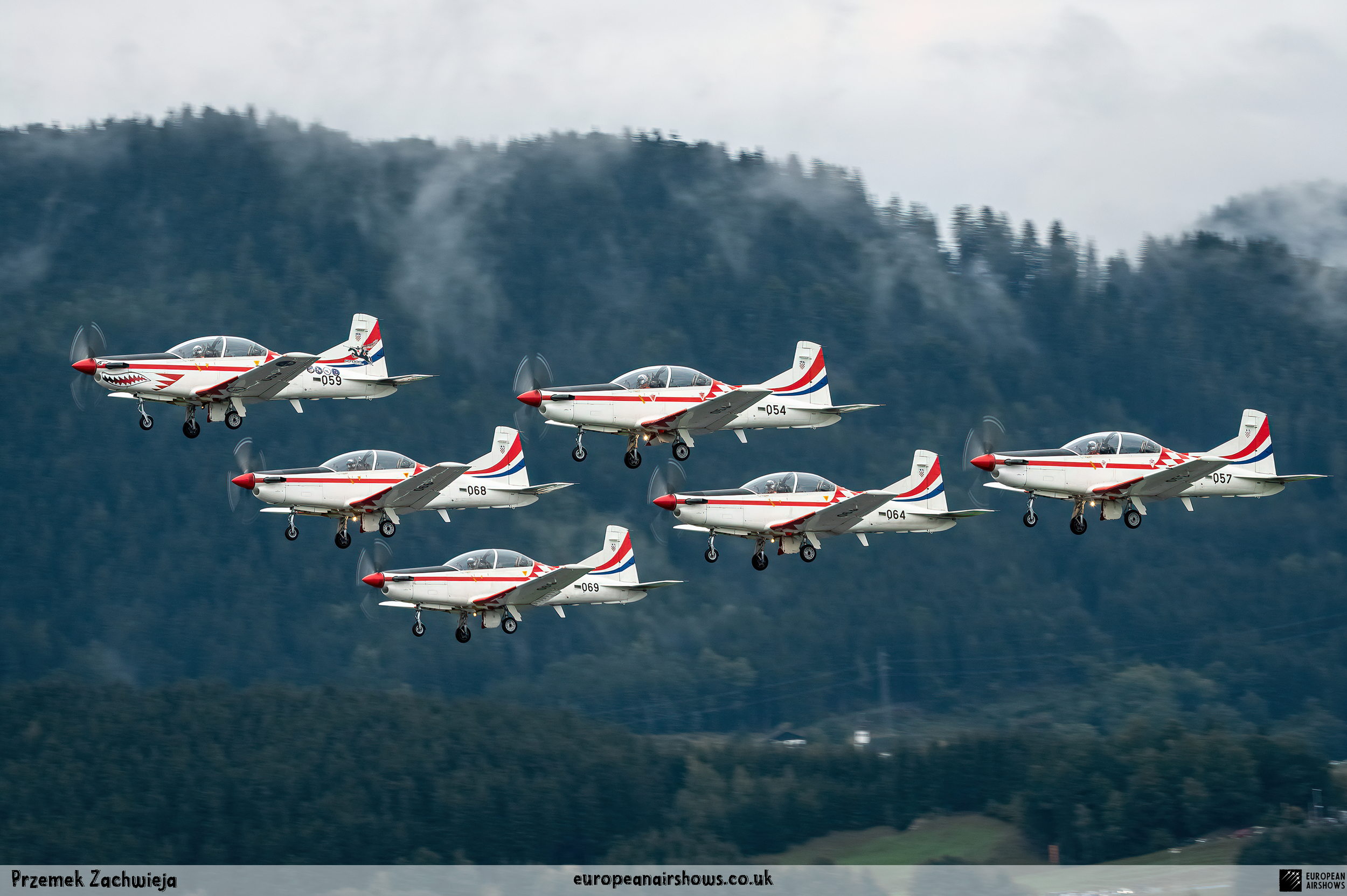
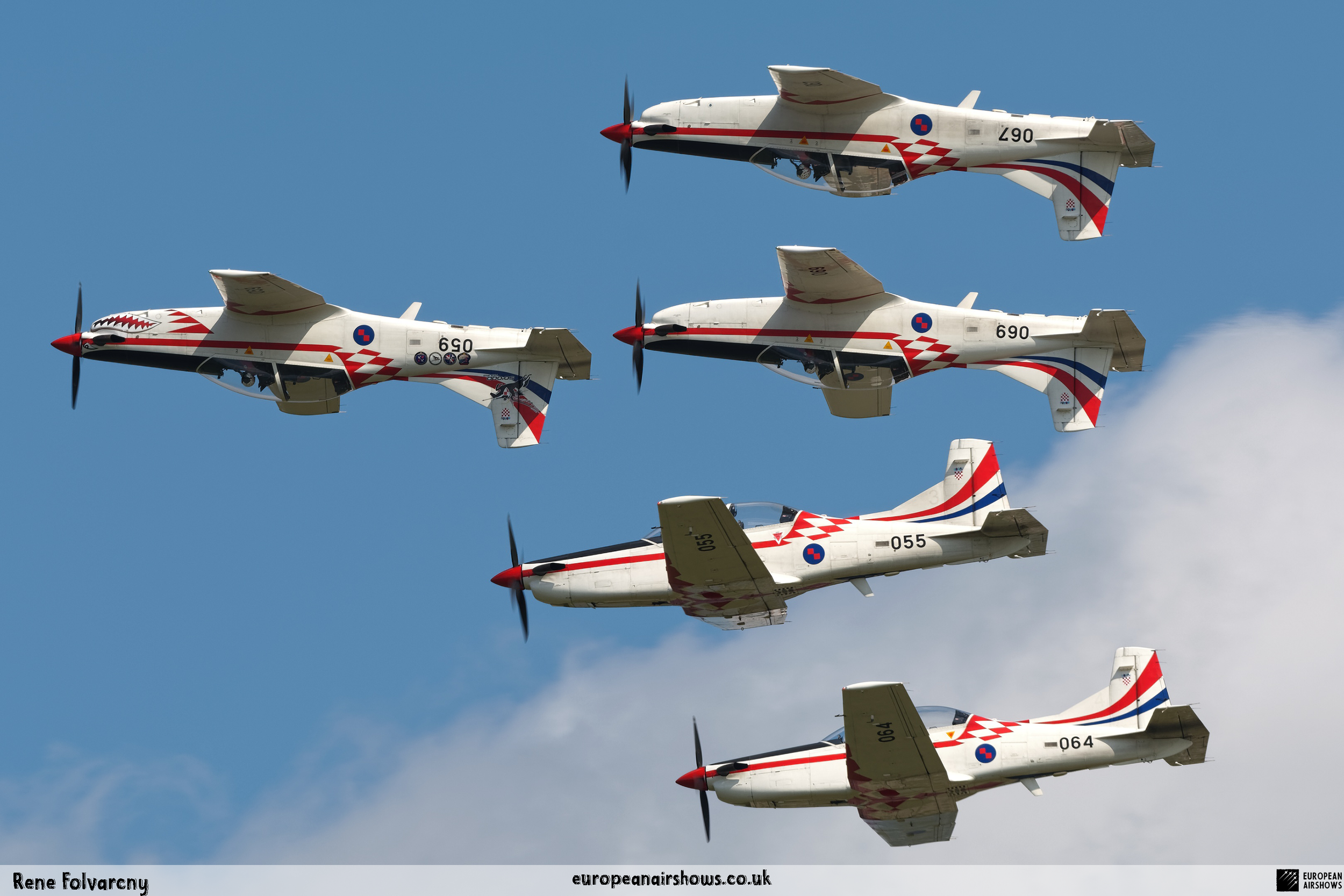
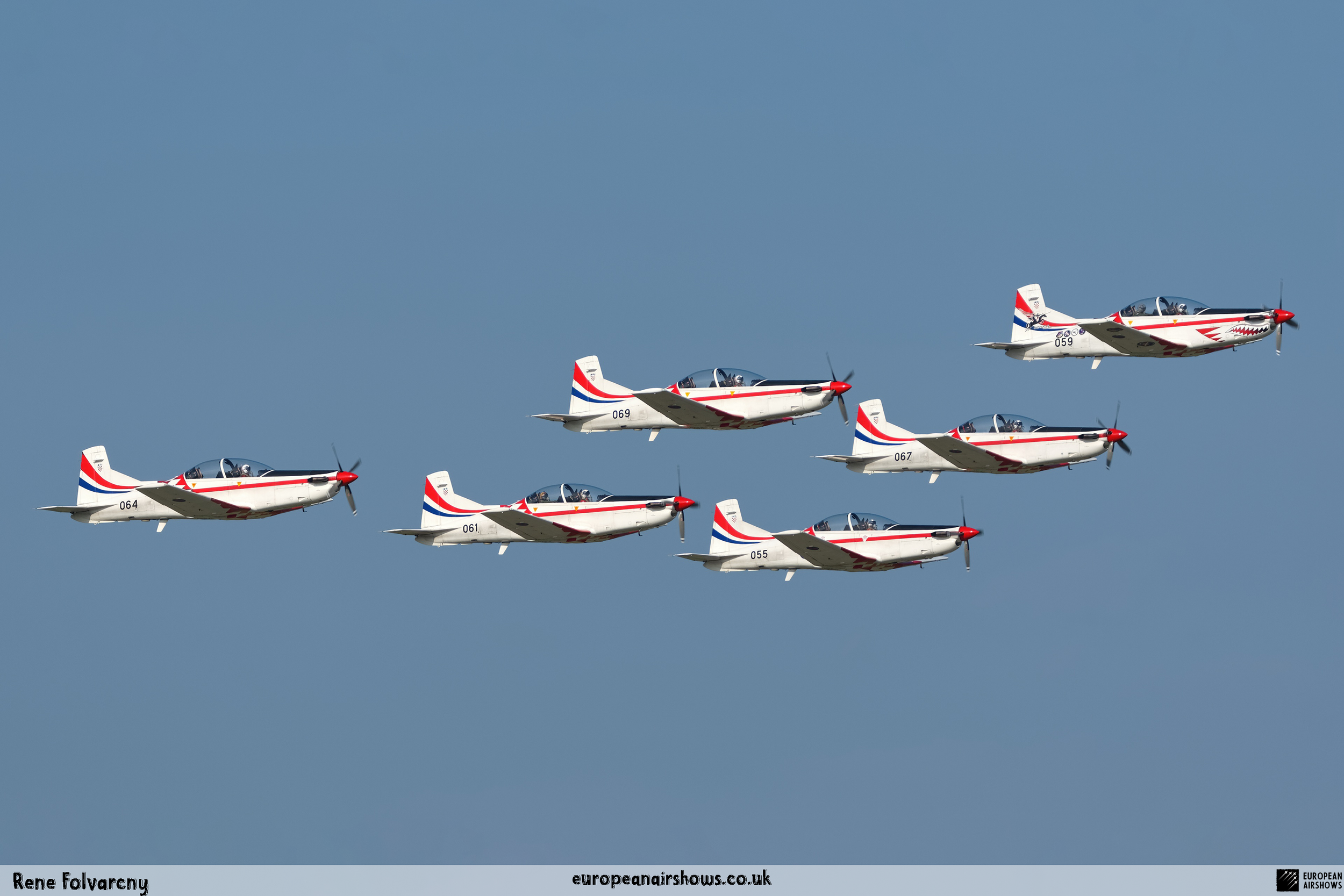
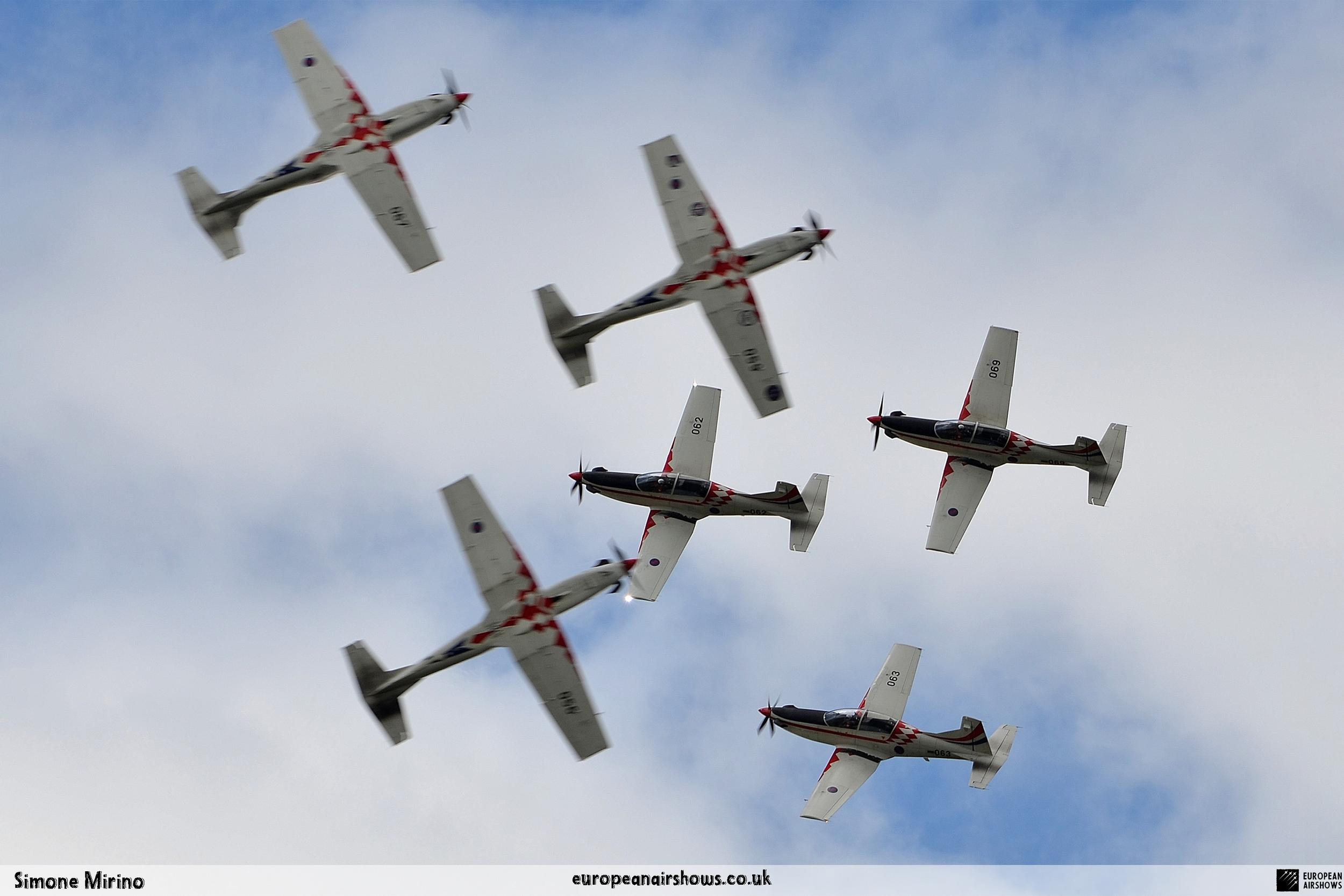
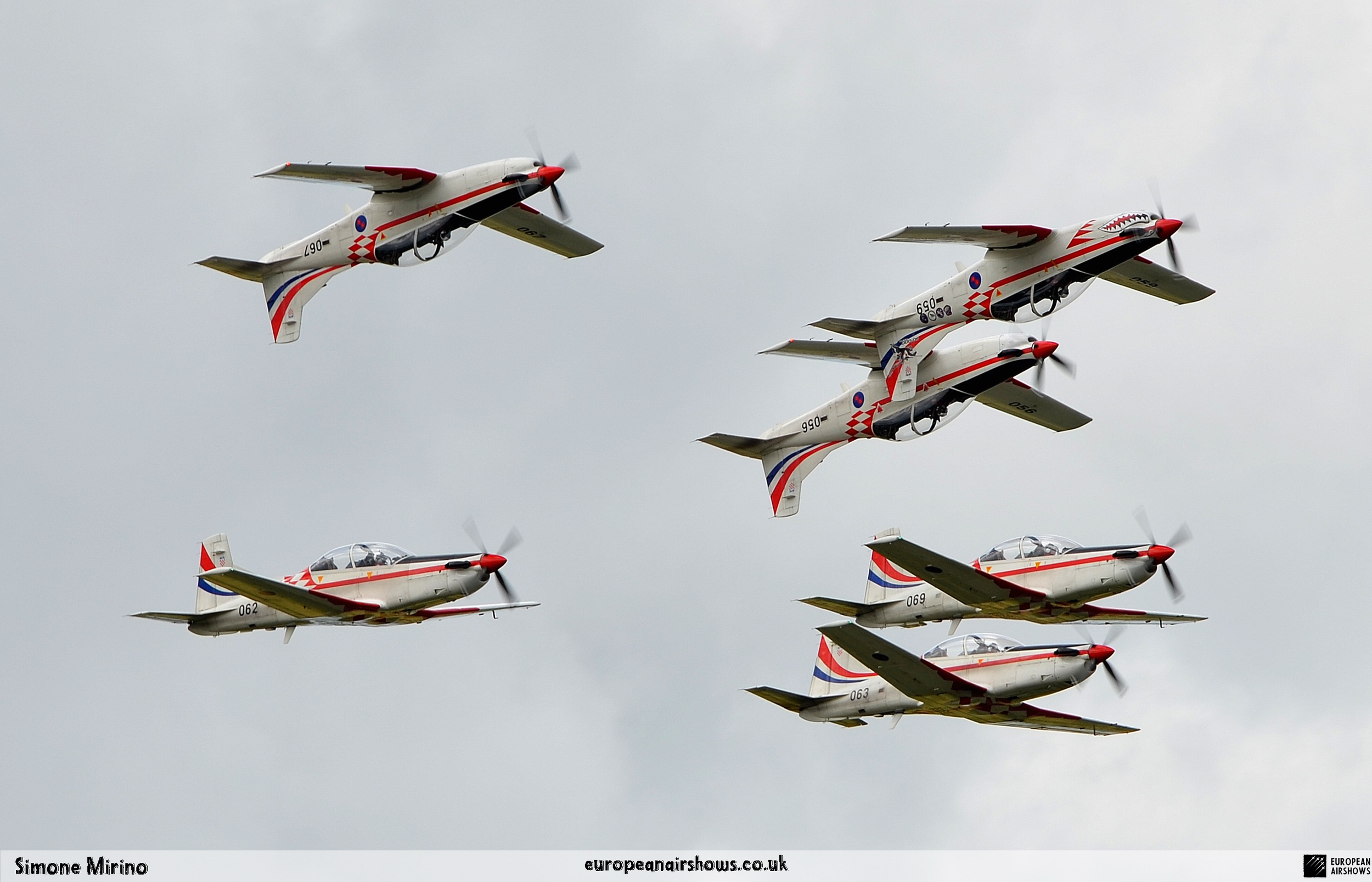
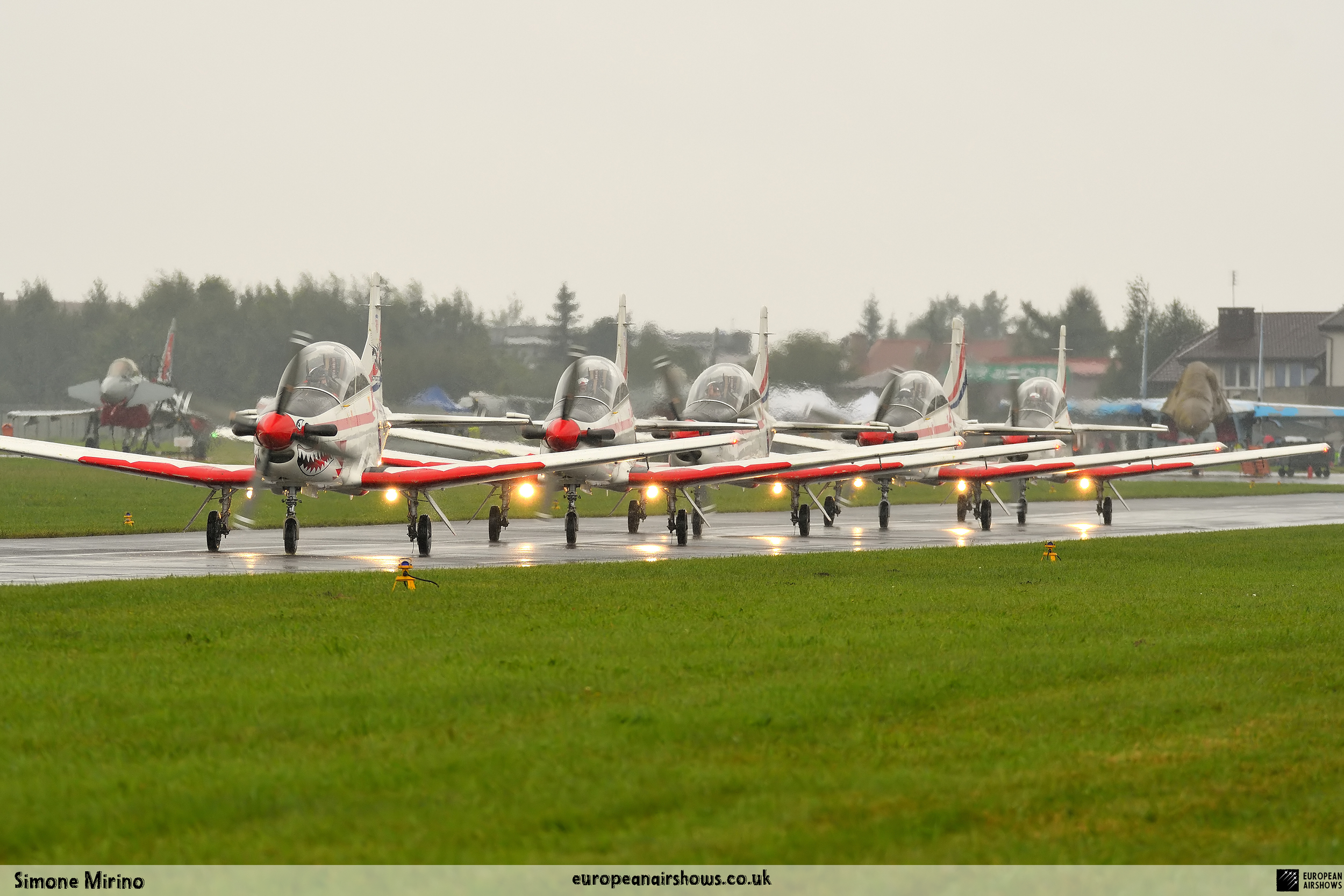
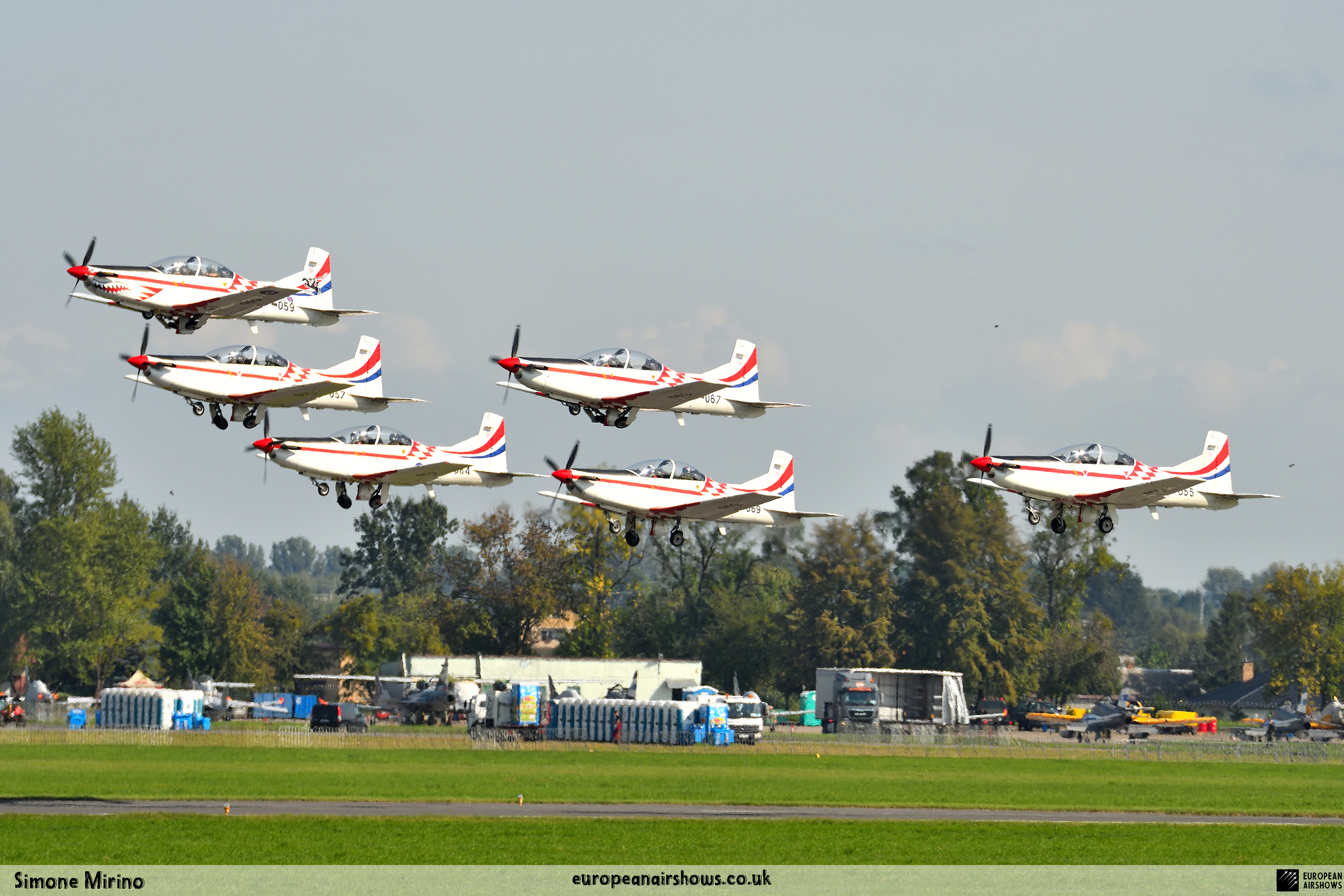
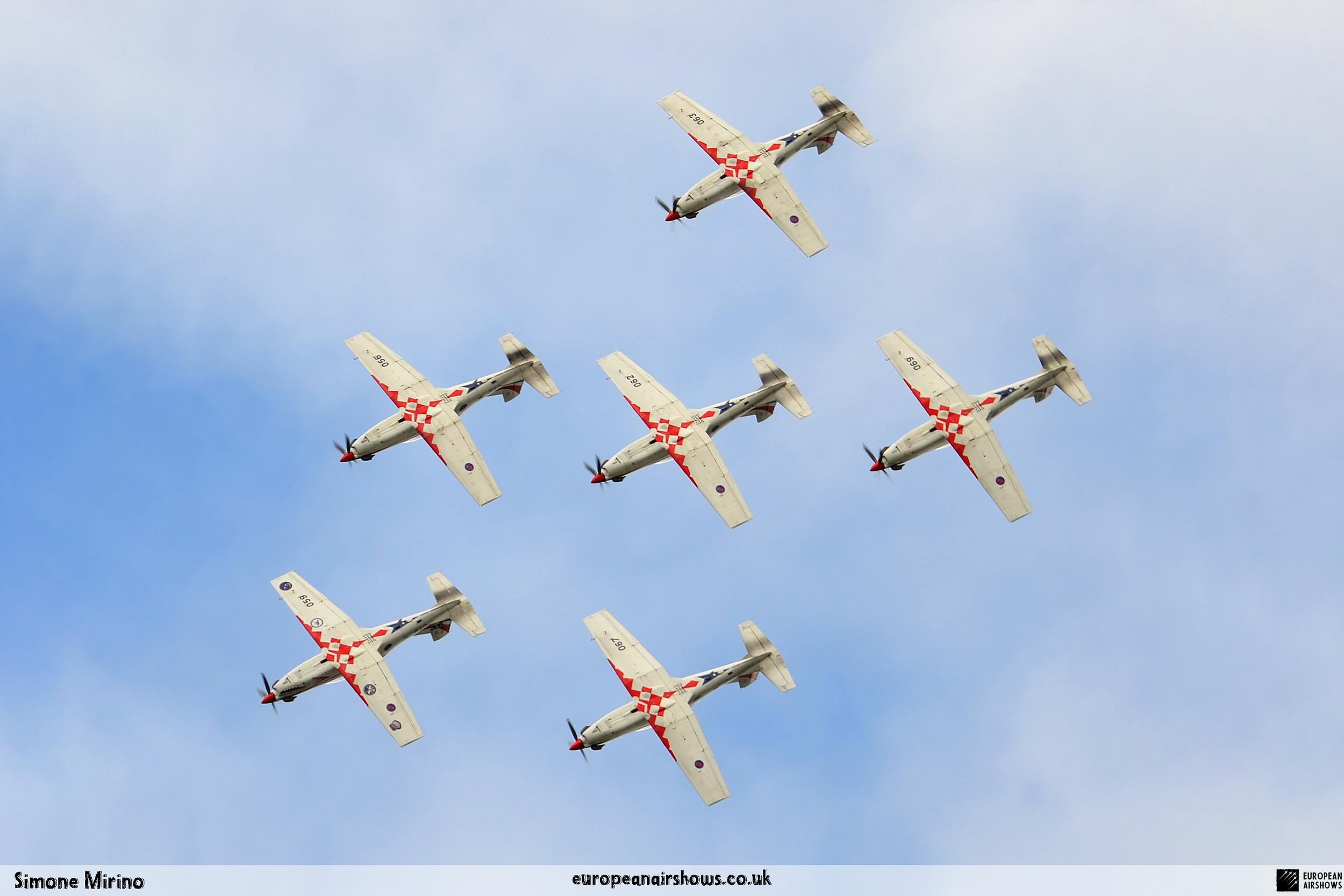
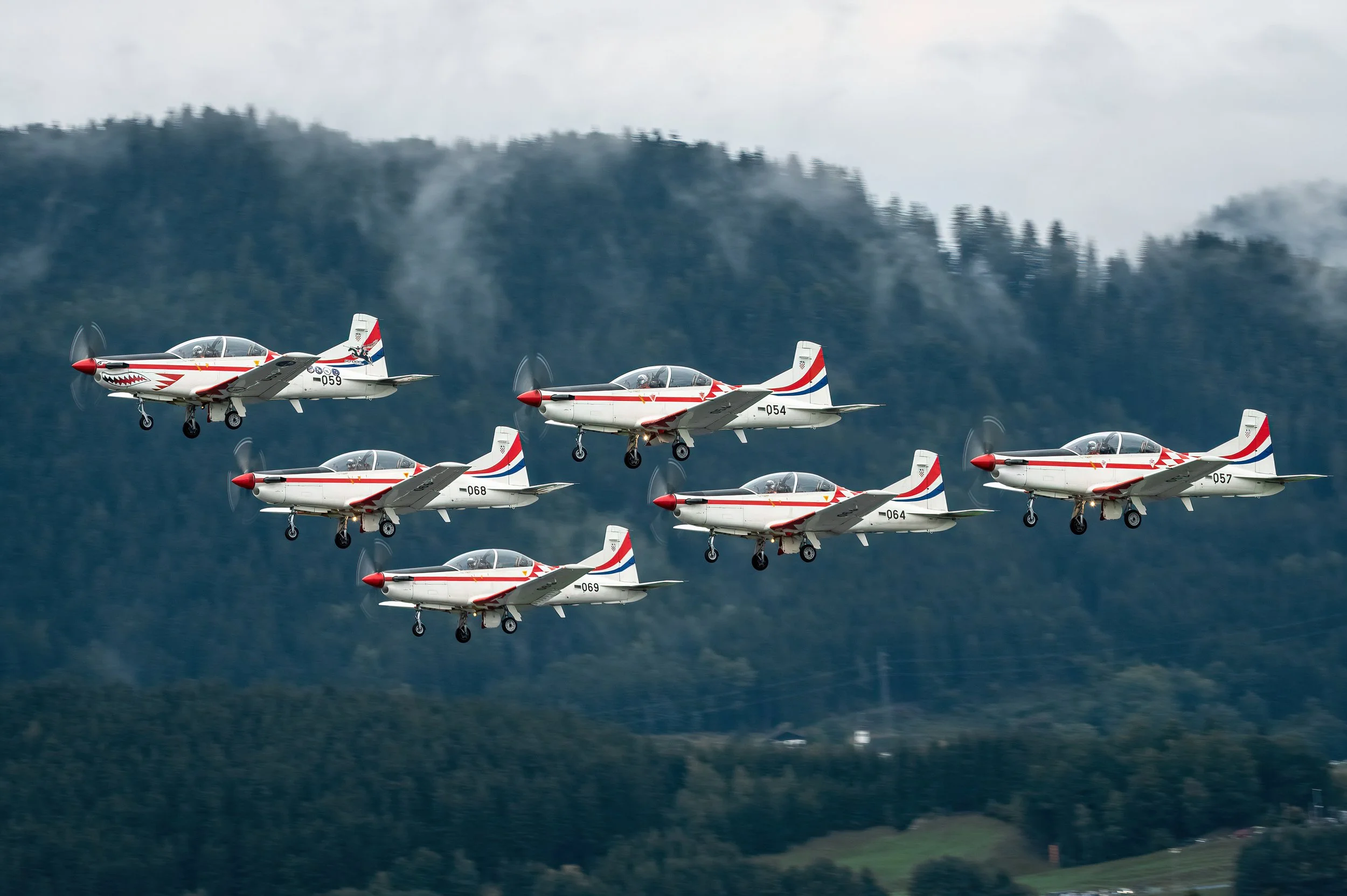
Krila Oluje is Croatia’s national military aerobatic team. Six instructor pilots from the 93rd Wing fly the Pilatus PC-9M in close formation, turning visual judgement, discipline and the standard of Croatian military flying training into a public display.
- Origins
- 2004
- Official name
- 2005
- Formation
- 6 aircraft
- Aircraft
- 6 × Pilatus PC-9M
- Pilots
- 6 flight instructors
- Home
- Zemunik
The team
Six instructors, six positions, one formation.
Instructors before display pilots
Krila Oluje operates within the 392nd Aircraft Squadron of the Croatian Air Force’s 93rd Wing at Zemunik. The pilots are not full-time airshow specialists: their primary duty is teaching the future pilots of the Croatian Air Force.
Selection begins with experience
Candidates are chosen from experienced flight instructors. The published entry standard includes excellent flying technique, suitability for close teamwork and at least 600 flying hours. A successful candidate then progresses through formation aerobatics from two aircraft to the full six-ship team.
Every position is a specialism
Leader, inner wingmen, tail and outer wingmen each use different sightlines and corrections. Training for those positions is specific and continuous, so a pilot cannot simply move anywhere in the formation at short notice. The precision seen from the ground is built through stable roles and repeated practice.
The display
Six aircraft, one visual reference.
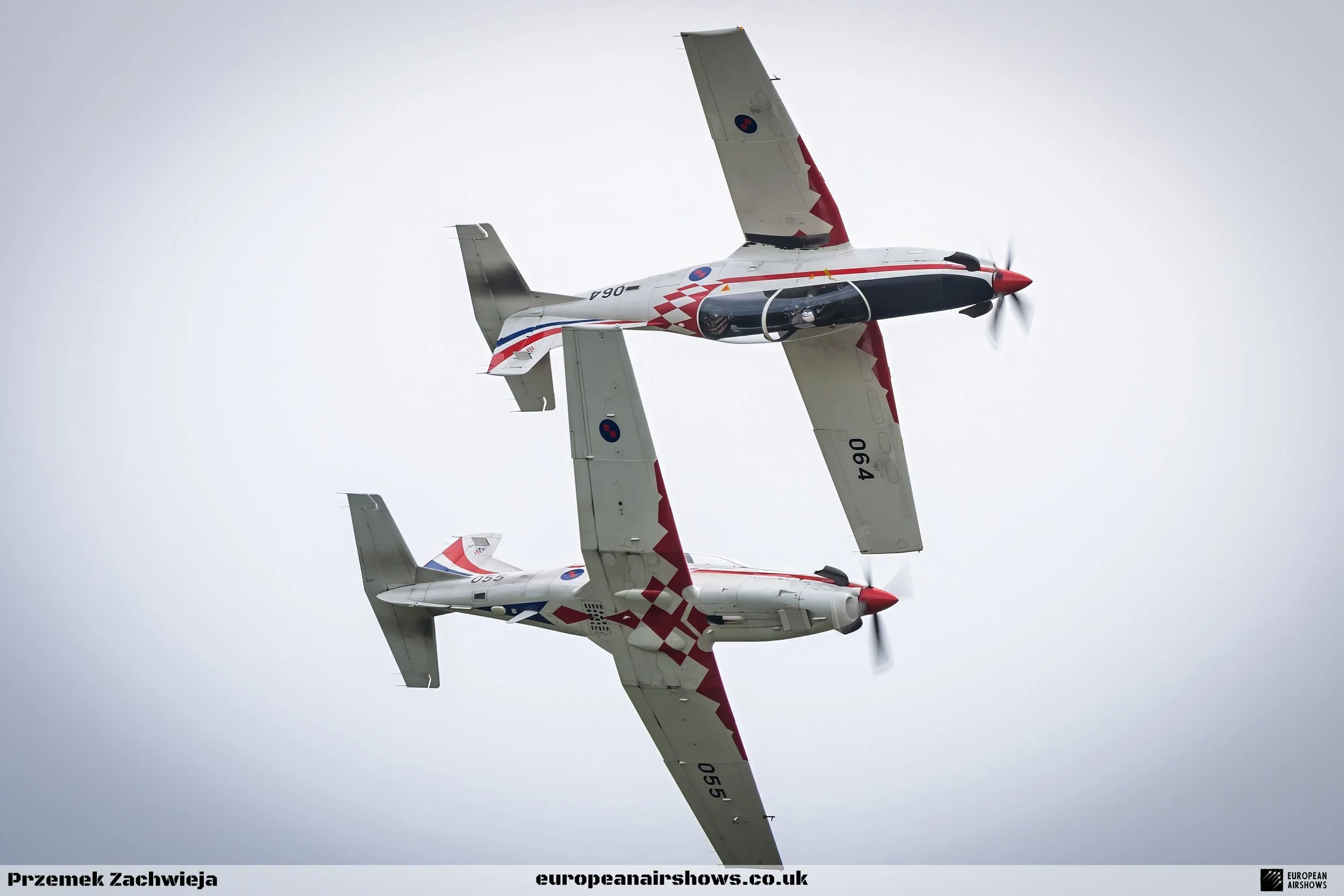
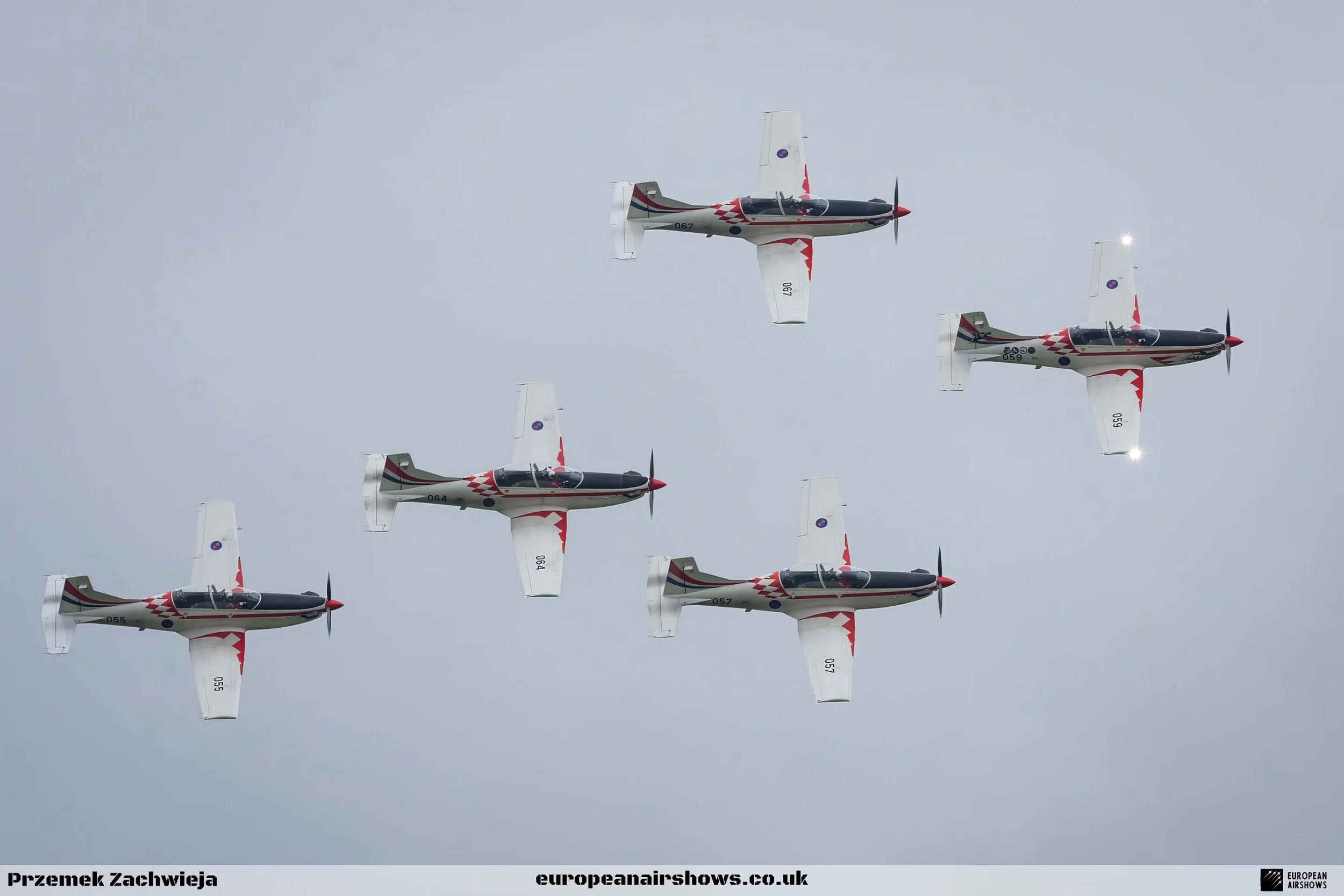
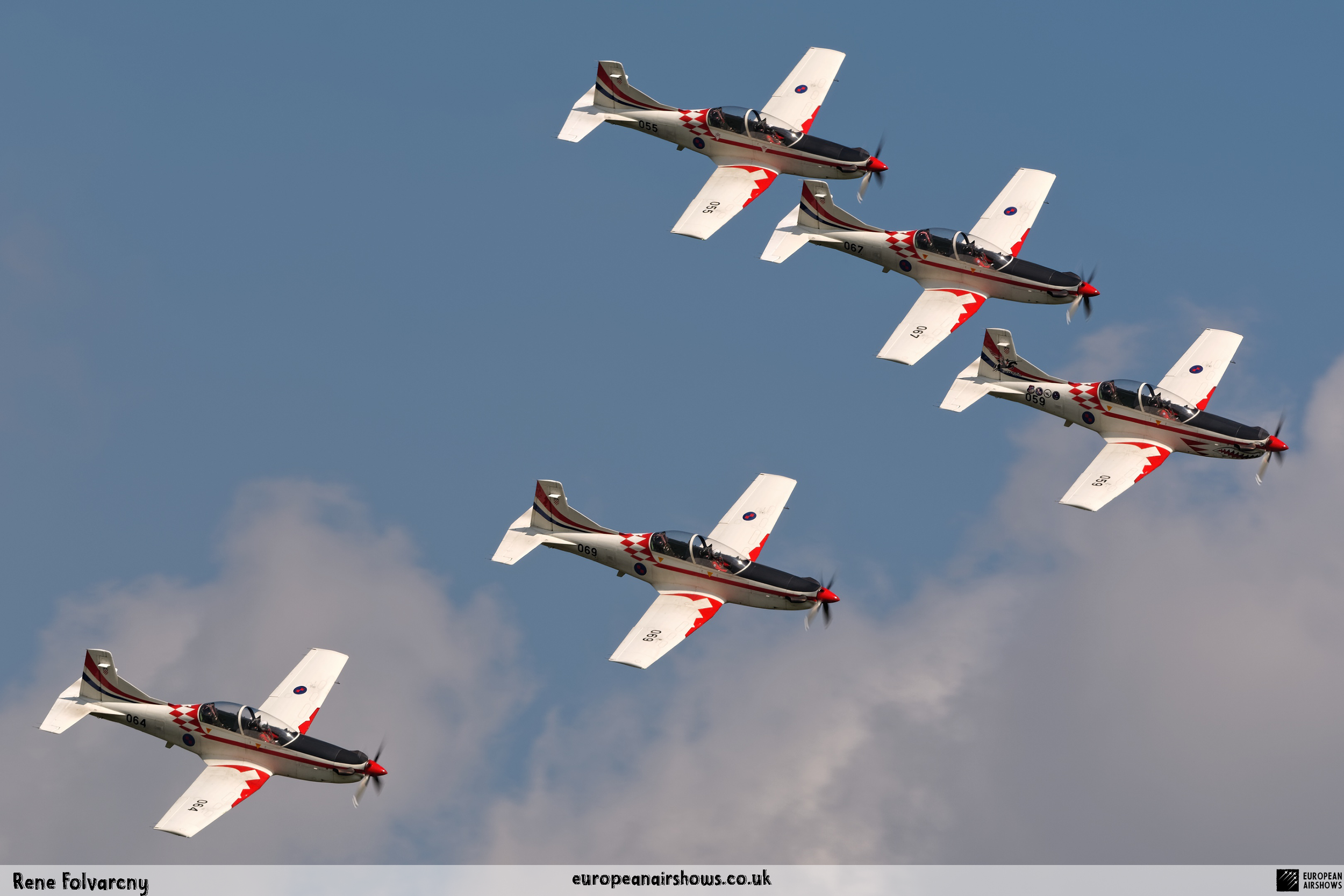
The aircraft can be less than two metres apart and reach about 550 km/h during the routine. Yet the formation is not held together by an automatic system: the pilots judge their position visually and make constant, very small corrections against the lead aircraft. A typical programme lasts around 20 minutes, is flown between roughly 50 and 1,000 metres, and can expose the pilots to loads from about -2.5 to +6.5 g.
The leader
Sets the flight path, timing and energy that the other five pilots must follow.
The inner wingmen
Build the core of the formation and maintain close visual references beside the leader.
The tail
Flies behind the leader on the centreline and anchors the rear of the compact shapes.
The outer wingmen
Extend the formation on either side, using different sightlines from the inner pair.
Formation aerobatics
Loops and rolls ask all six pilots to preserve the shape while speed and loading change.
Breaks and opposition
Crossing passes and smaller groups contrast with the discipline of the full six-ship formation.
The aircraft
Pilatus PC-9M: a trainer agile enough for six-ship aerobatics.
Built first as a training aircraft
The PC-9M is a tandem-seat military trainer developed by Pilatus in Switzerland. Its stable handling supports early instruction, while its power, retractable undercarriage and aerobatic capability allow students to progress into more advanced flying. Those same qualities make it effective in a close-formation team.
Why two engine-power figures appear
The Pratt & Whitney Canada PT6A-62 is often described by its nominal 1,150-shaft-horsepower capability, but the PC-9M installation is flat-rated to 950 shp for take-off and maximum continuous power. Quoting both numbers without that explanation makes the aircraft appear to have two different power outputs.
Why the maximum weight changes
In aerobatic configuration the maximum take-off weight is 2,350 kg and the certified manoeuvring envelope is +7/-3.5 g. The 3,200 kg figure belongs to the heavier utility configuration, which has lower g limits. For a display aircraft, the aerobatic figures are the relevant ones.
The story so far
From a four-aircraft appearance to Croatia’s national six-ship team.
2004
The first public formation display
Four Croatian Air Force PC-9Ms performed at the opening of the European Sailing Championship in Zadar on 23 July. The Ministry of Defence treats this appearance as the beginning of the team’s story.
2005
The name Krila Oluje is presented
The group was officially presented under its present name at Knin on 5 August, during events marking ten years since Operation Storm. By the end of the year the formation had expanded to five aircraft.
2009
The six-aircraft formation takes shape
Krila Oluje made its first flight with six aircraft on 25 March. The leader, two inner wingmen, tail and two outer wingmen established the formation structure most closely associated with the team.
2016
Award-winning RIAT debut
On its first appearance at the Royal International Air Tattoo, the team received the King Hussein Memorial Sword for the best overall flying demonstration at the show.
2025
Twenty years under the Krila Oluje name
The Croatian Air Force marked the team’s twentieth anniversary at Zemunik. The milestone recognised two decades of public displays alongside the pilots’ continuing work as flying instructors.
Name and formation
A national name carried by six specialist positions.
What “Krila Oluje” means
The Croatian name is usually rendered in English as “Wings of Storm”. It was adopted publicly in 2005 and refers to Operation Storm, whose tenth anniversary was being commemorated when the team was presented at Knin.
Why the positions matter
The leader provides the reference; first left and right wingmen form the inner pair; the tail holds the centreline; and two outer wingmen complete the six-ship shape. Because the visual references differ, each position requires its own continuous training.