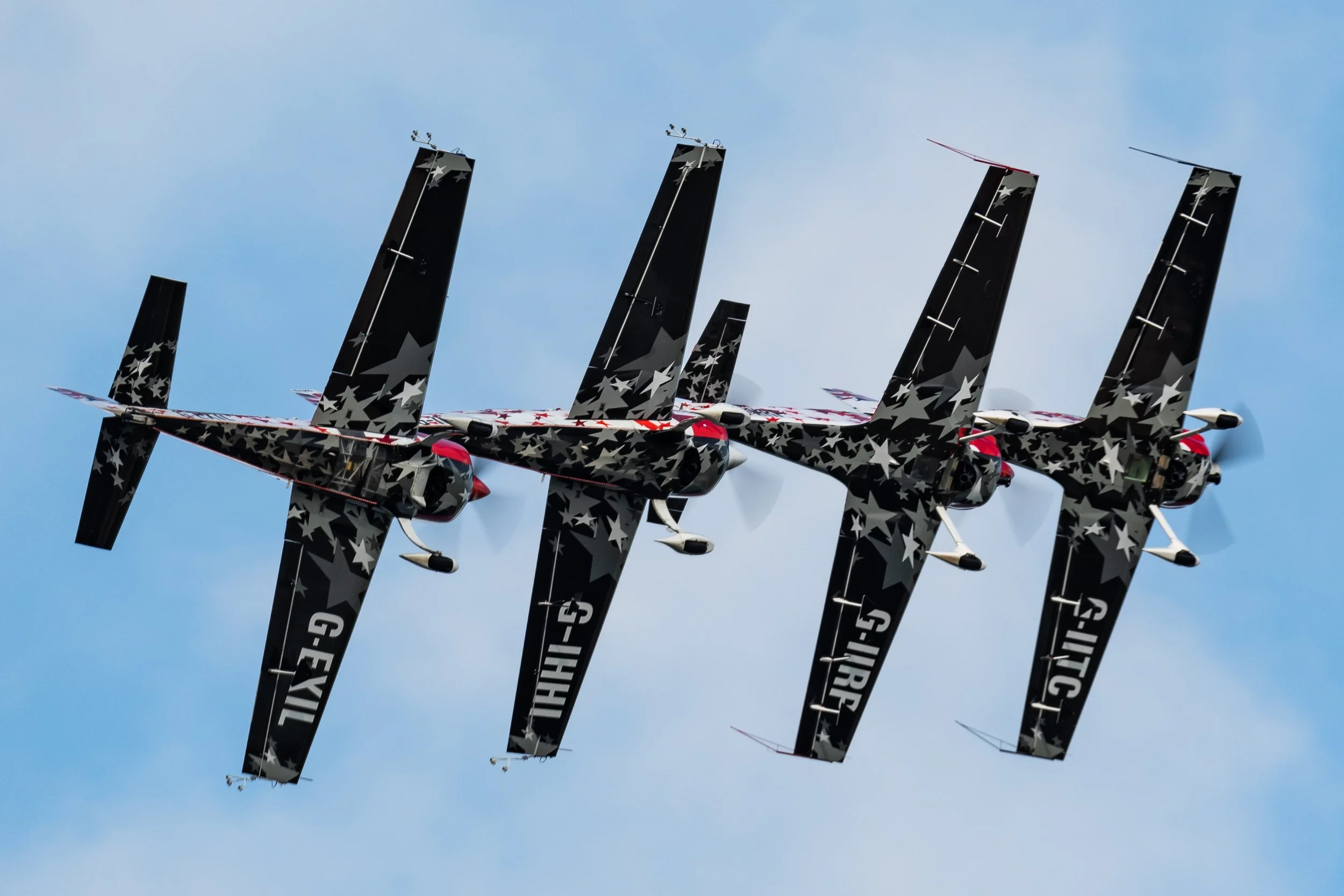
Global Stars
Variable Extra and Edge fleet · Formation, solo, twilight and pyrotechnic displays
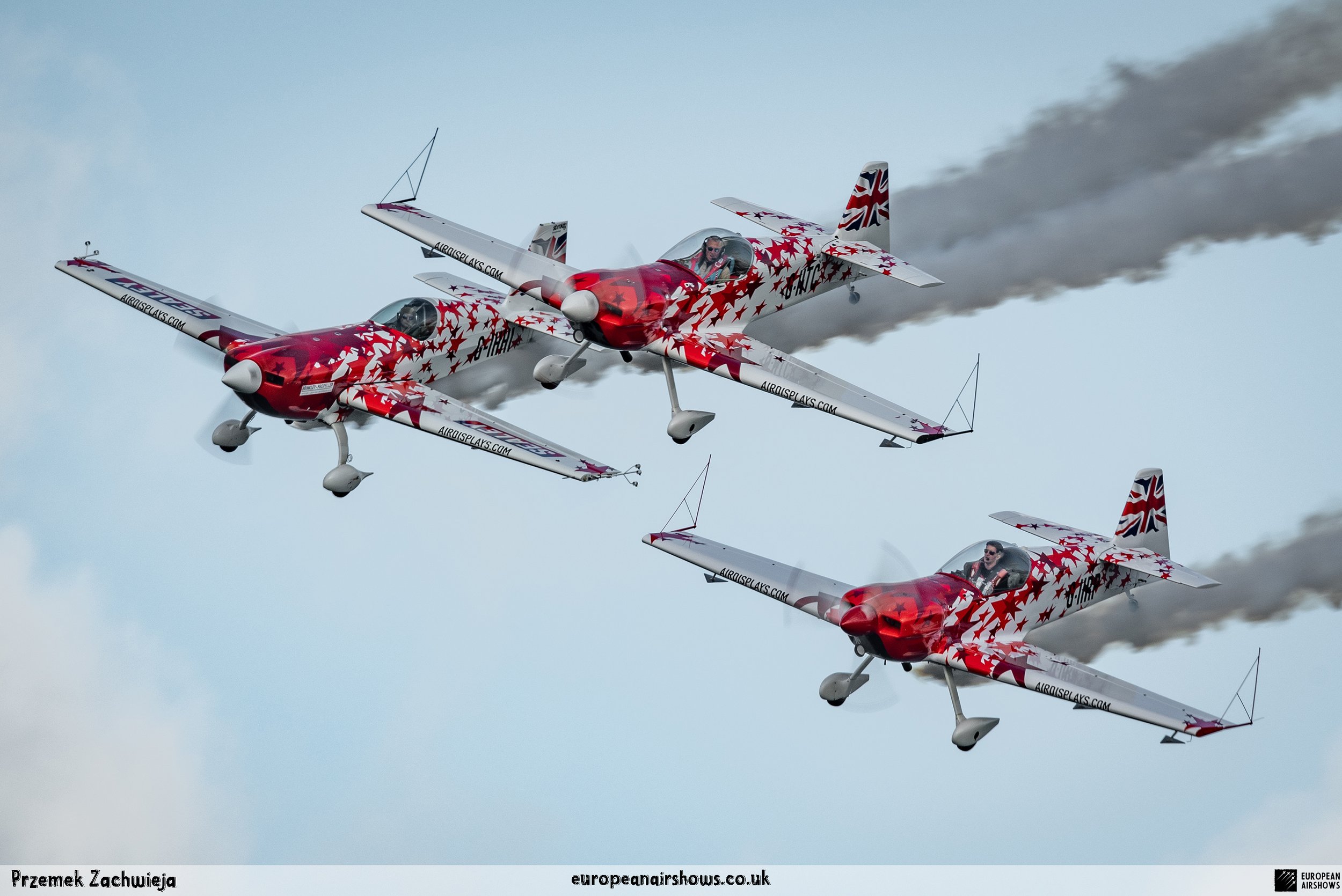
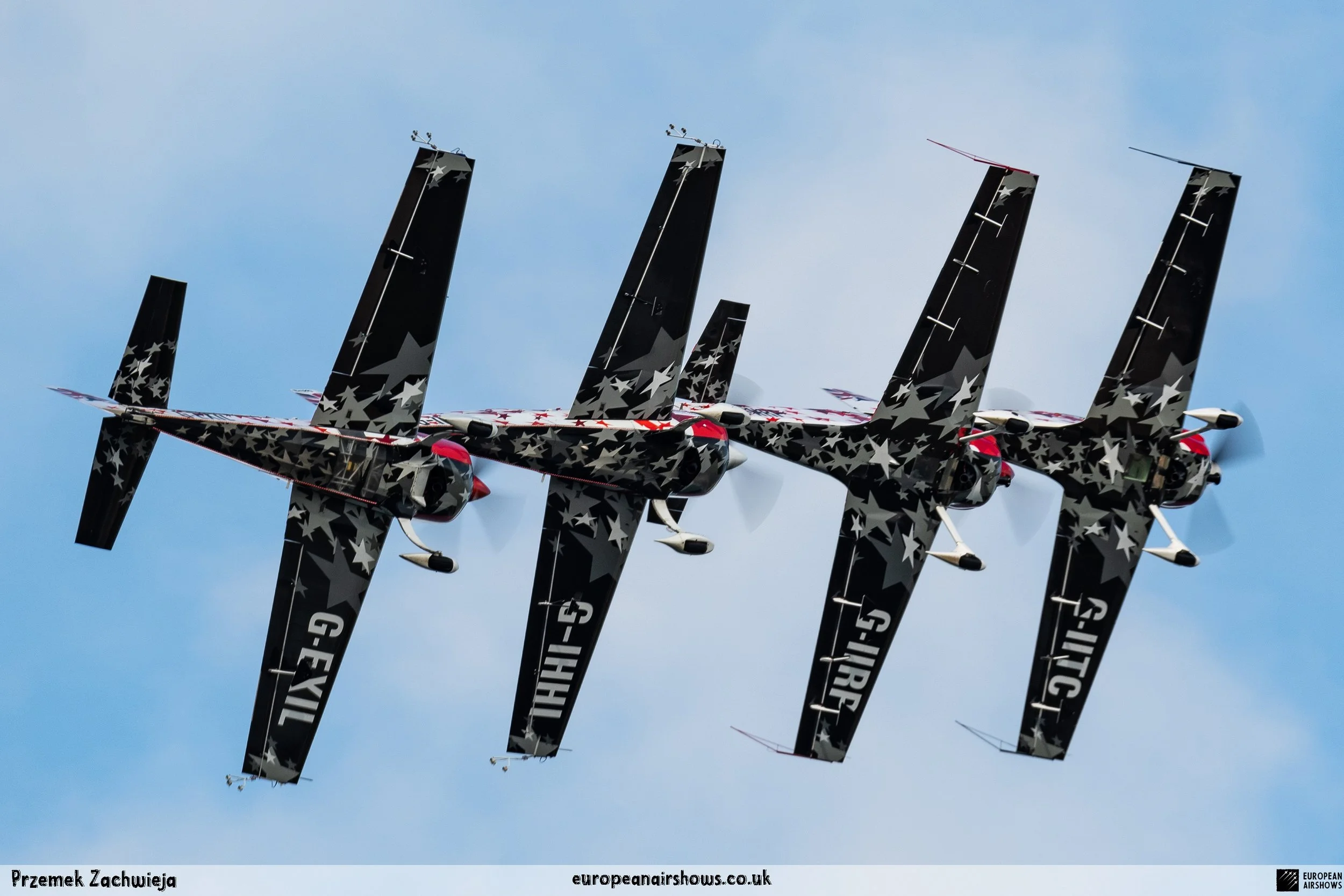
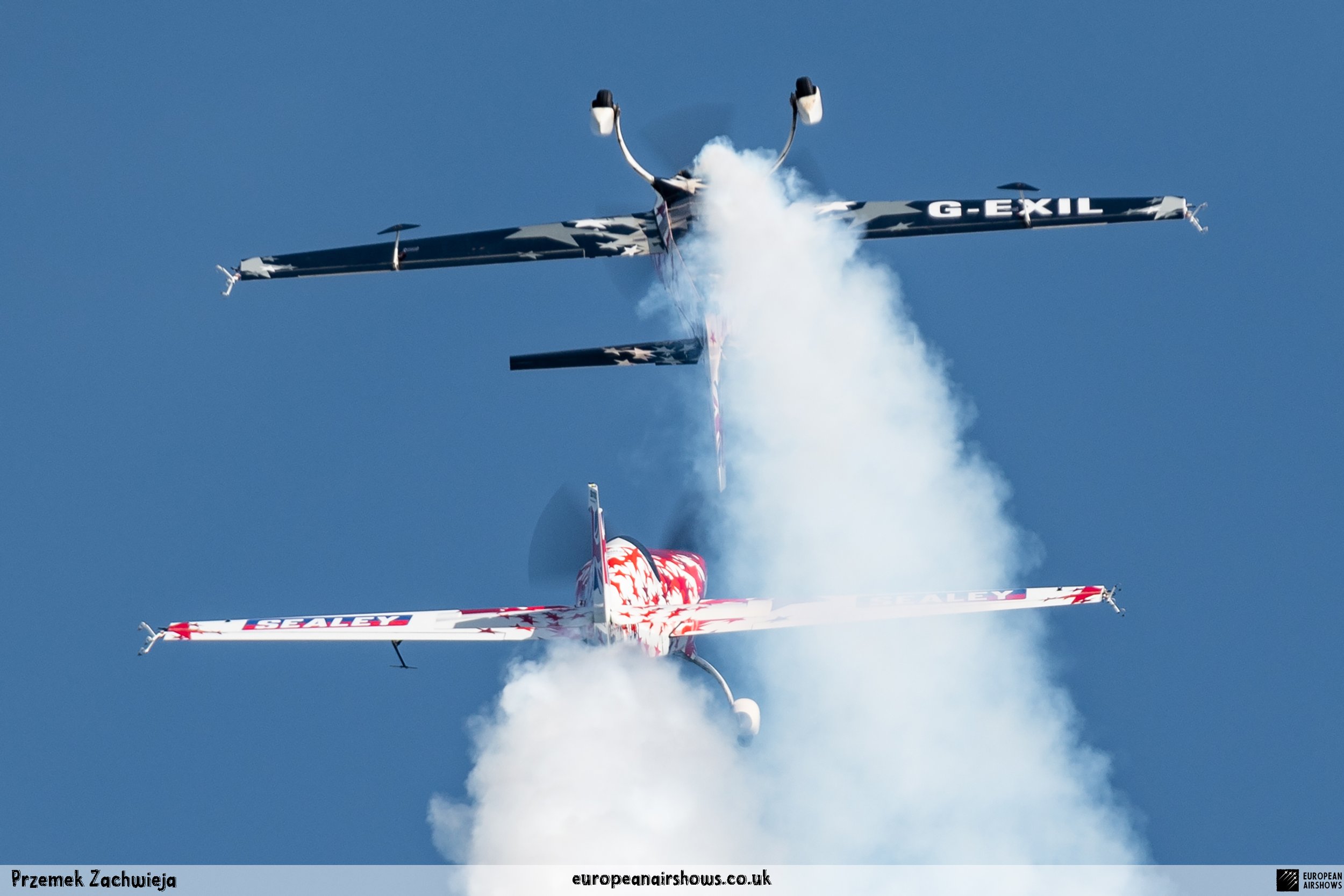
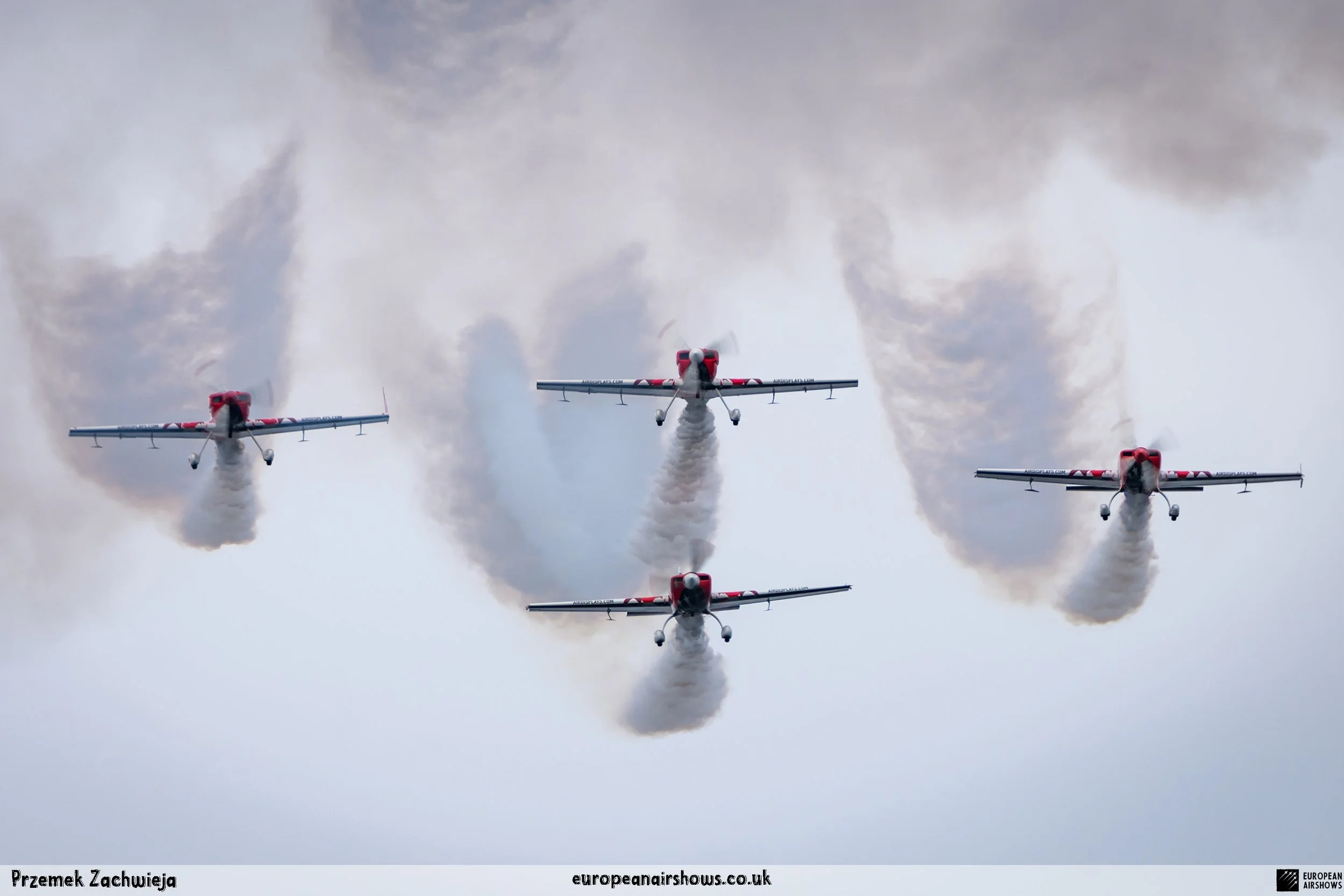
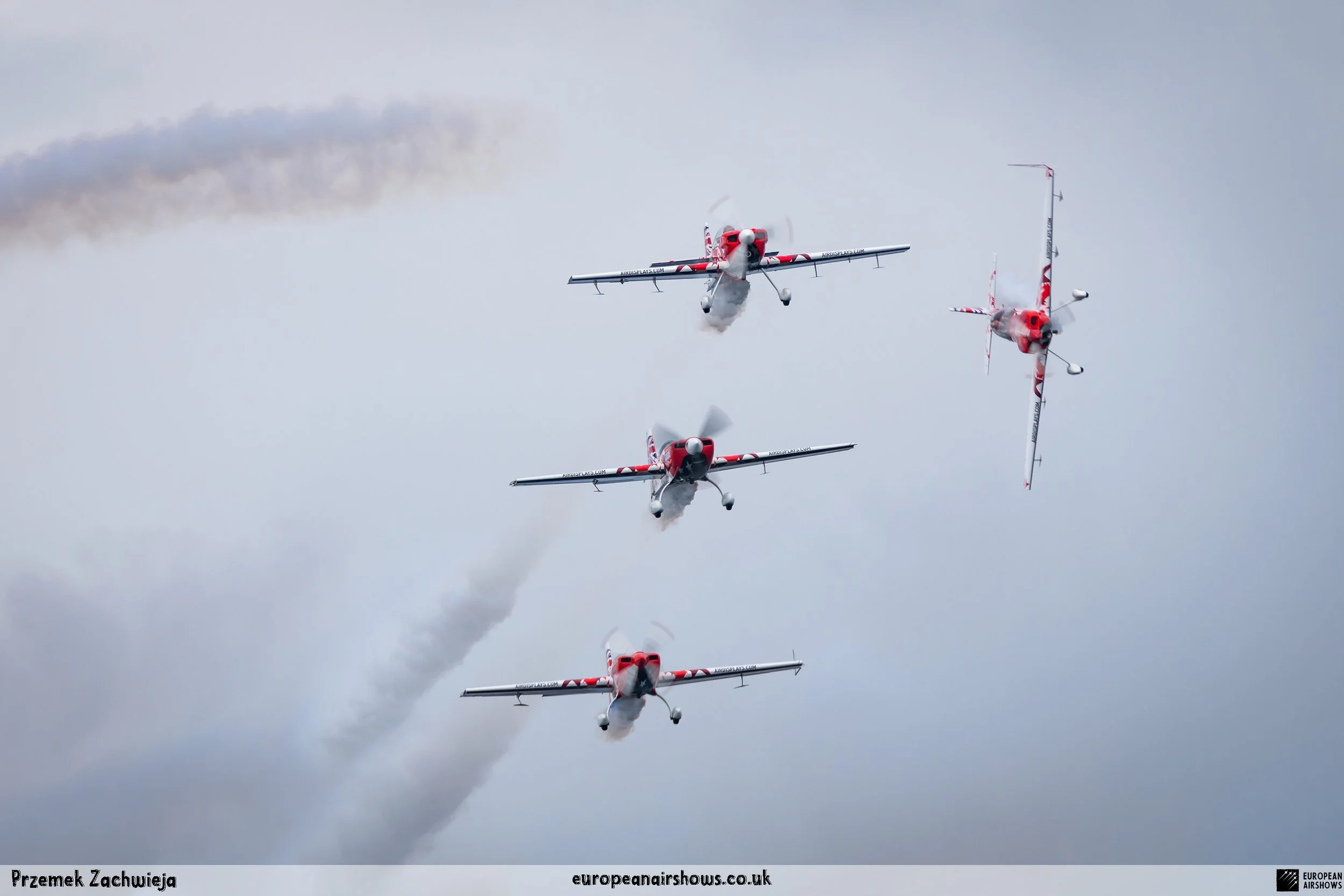
Global Stars combines close formation aerobatics with unlimited solo flying, pulsed smoke and one of the display circuit's most developed aircraft pyrotechnic programmes. It is not a permanently fixed four-ship: Mark Jefferies assembles the pilots and aircraft required for each contract, from smaller teams to major four and five-aircraft international shows.
- Documented since
- 2011
- Home
- Little Gransden, EGMJ
- Format
- Variable, commonly 3 or 4
- Aircraft
- Extra 300/330 and Edge 540
- Signature effects
- Dotty smoke and pyrotechnics
- Status
- Active international team
The team
A deployable pool of champion aerobatic pilots, not a permanently fixed four-aircraft unit.
Global Stars is led by British aerobatic specialist Mark Jefferies from Little Gransden Airfield. Jefferies had previously been a founding member of the Aerostars before creating his own international team. A Global Stars formation is directly documented at the World Air Masters in China in 2011; no reliable primary source has been found for the earlier page's precise claim that the team began in 2006.
The organisation is deliberately modular. The official team site describes a pool of pilots and aircraft from which an event-specific formation can be assembled. That structure explains why published appearances range from solo and smaller formations to four and five-aircraft programmes, and why different Global Stars teams have been able to operate on separate continents.
The present pilot pool
Current team biographies list Mark Jefferies as leader, Chris Burkett, Peter Wells and Chris Heames in numbered formation positions. The roster is not closed: at Wings India in January 2026, Jefferies led Chris Burkett on the right, Chris Heames in the box and Jon Ravenscroft on the left. Earlier regulars have included Tom Cassells, Steve Carver, Mike Pickin and others.
A home base built into the operation
Little Gransden, EGMJ, is both the team's home and the operating centre of Mark Jefferies Air Displays. The 810 m grass airfield in Cambridgeshire is used for training, preparation and maintenance. It also hosts the annual Little Gransden Air and Car Show, where Global Stars remains part of the 2026 programme.
Direct confirmation in 2026
Four aircraft flew three times per day at Wings India 2026, including a twilight show, before three aircraft continued to Nigeria for multiple displays celebrating Oyo State's 50th anniversary. Current British bookings include Watchet, Little Gransden and a three-ship day and dusk programme at Hampshire Air Festival. The evidence shows an active team whose size changes with the job, not an inactive name or a single fixed line-up.
The display
Close formation by day, controlled fire and light after sunset.
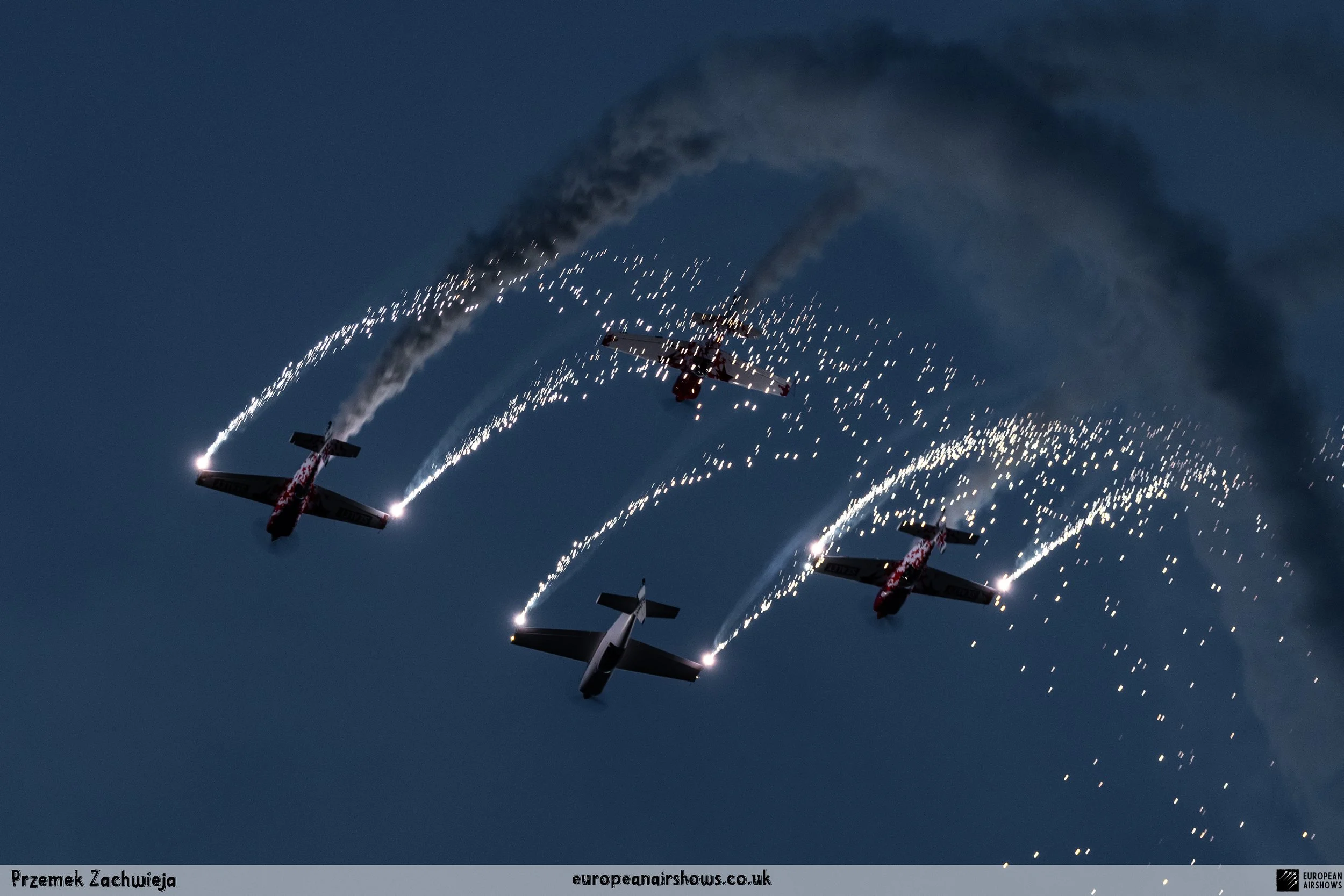
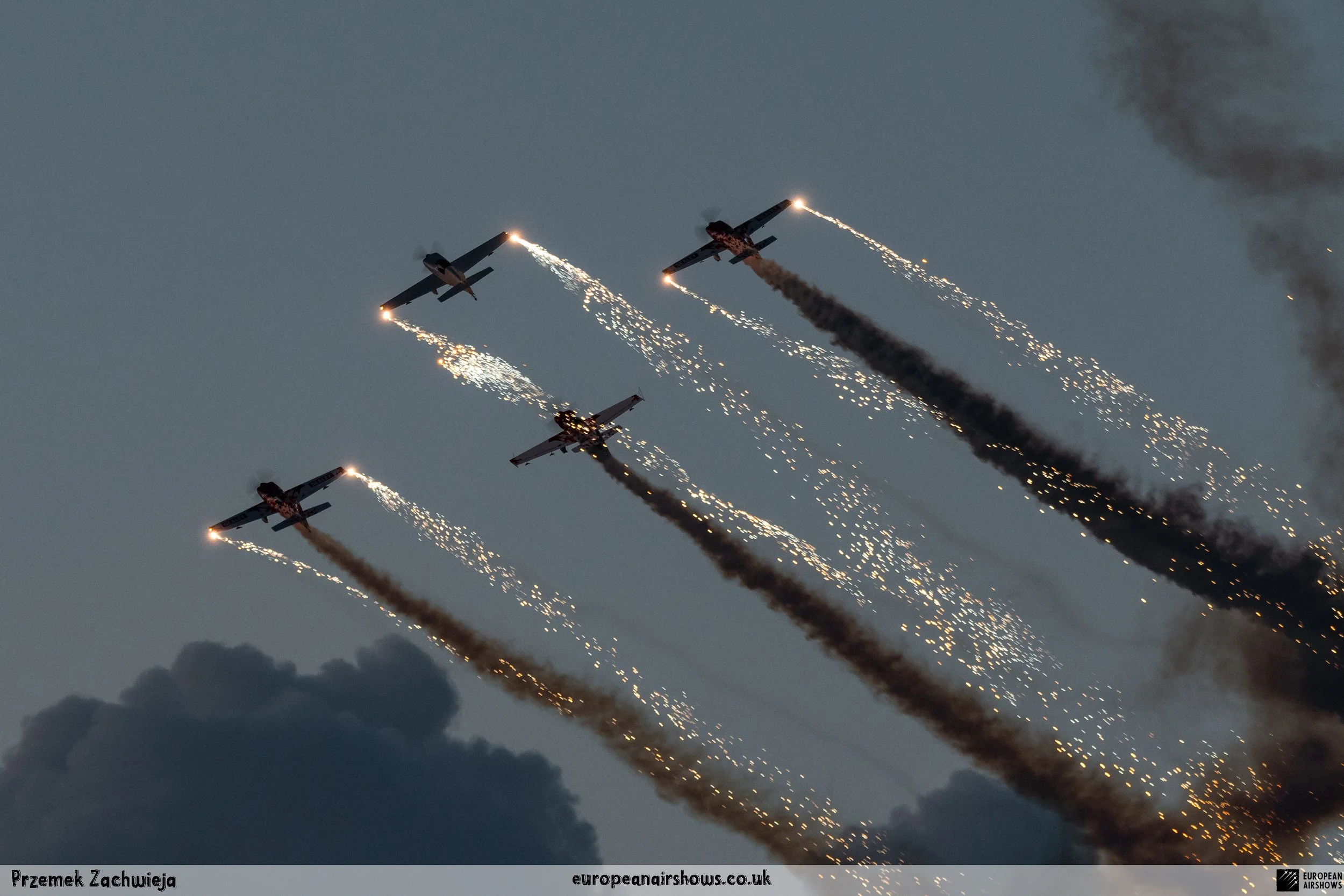
The routine is built to keep aircraft working near crowd centre. Formation loops and rolls lead into breaks, opposition work and unlimited solo aerobatics. Twilight contracts add wingtip sparks, lighting and carefully coordinated ground fireworks, but the exact sequence changes with team size, venue approval, weather and the aircraft fitted for that event.
Loop 270
The team's signature formation figure turns a looping manoeuvre through 270 degrees before redirecting the formation across the display line.
Dotty smoke
A selectable pulsed-smoke mode produces separated smoke marks, extends the available smoke duration and gives the display a recognisable visual rhythm.
Pairs and opposition work
The formation can divide into pairs or smaller elements for mirror passes, synchronised lines and high-closure crosses while another aircraft keeps the centre active.
Unlimited solo flying
A solo element adds rapid rolls, tumbles and gyroscopic manoeuvres beyond the common performance required for close formation aerobatics.
Pyro pylon run
Aircraft trail wingtip sparks while flying a slalom around timed columns from ground-fired roman candles. The team first demonstrated the concept at Avalon in 2015.
Twilight choreography
Aircraft lights, coloured smoke, onboard pyrotechnics and ground effects are timed as one sequence rather than added independently to a normal daytime routine.
The aircraft
A mixed aerobatic fleet selected for each deployment, not one permanent standard type.
The recent European quartet
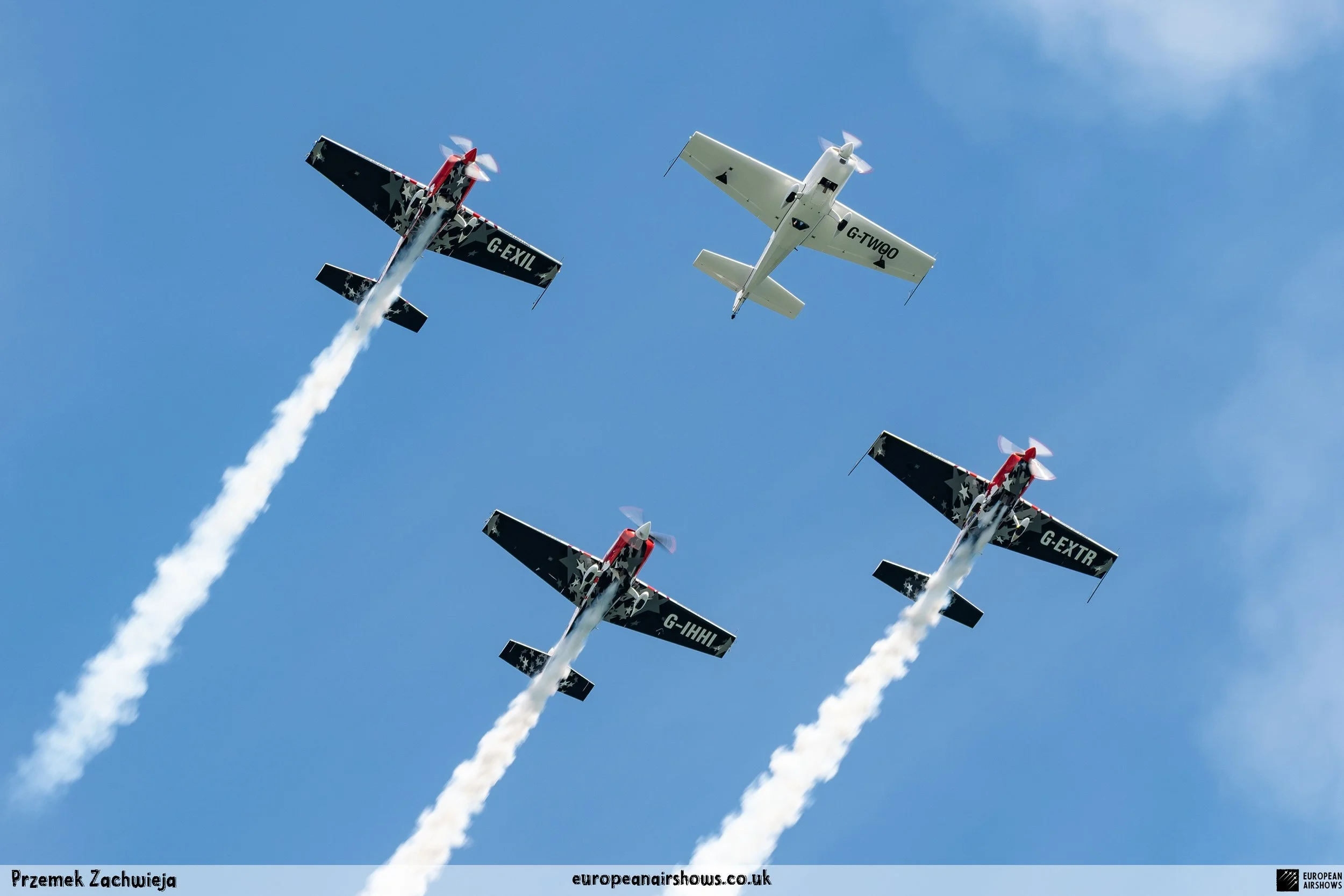
An official Dutch event exemption for Rescue Zeeland 2025 named G-IIHI, G-BZII, G-EDGY and G-EXIL. Contemporary records identify them respectively as an Extra 330SC, Extra 300L, Zivko Edge 540 and Extra 300S. That is the clearest recent example of how Global Stars can combine different single-seat and two-seat aerobatic designs in one formation.
International substitutions are normal
Wings India 2026 used a four-aircraft formation and photographic records identify Extra 300L G-JOKR as one member of that deployed quartet. Aircraft are disassembled, shipped in containers, rebuilt, inspected and test flown before major overseas appearances. The team later sent three of the aircraft onward to Nigeria while the fourth remained with the India support group.
Extra 330SC
The 330SC is the most capable single-seat Extra associated with Jefferies' solo work. Extra Aircraft specifies a 315 hp Lycoming AEIO-580-B1A, carbon wing and empennage, 7.5 m span, 585 kg typical equipped empty mass and a certified plus or minus 10 g aerobatic envelope at 780 kg. Those are type figures, not the loads used in a Global Stars formation display.
Aircraft history is broader than the present fleet
Global Stars has previously displayed the CAP 232 and Extra 260, and the official site still reflects several historical combinations. They belong in the team's history but should not be presented as guaranteed members of every current booking. The Edge 540 is the important omission from the old page: G-EDGY was documented with the team in 2025.
G-IIHI
Extra 330SC, single-seat unlimited aerobatic aircraft used in the 2025 European quartet.
G-BZII
Extra 300L, tandem-seat formation and aerobatic aircraft documented with the team in 2025.
G-EDGY
Zivko Edge 540 V1, single-seat high-performance aerobatic aircraft.
G-EXIL
Extra 300S, single-seat member of the recent European formation.
G-JOKR
Extra 300L documented as part of the four-aircraft Wings India 2026 deployment.
Historic types
Extra 260 and CAP 232 have important past roles but are not guaranteed current aircraft.
The story so far
From an international formation concept to containerised four-ship tours and five-aircraft pyro.
Before 2011
Jefferies flies with the Aerostars
Mark Jefferies develops extensive formation experience as a founding member of the Aerostars before creating his own international display organisation.
2011
Global Stars at World Air Masters
The Global Stars formation concept is directly documented at the World Air Masters event in Dazu, China, with Jefferies and Andy Bickmore.
2013-2014
Aircraft pyro approval
Development of an Extra wingtip pyrotechnic installation begins in June 2013. The team says the approval process takes roughly 18 months.
2015
The pyro pylon run at Avalon
Jefferies and Tom Cassells combine wingtip sparks with a slalom around ground-fired roman-candle columns at the Australian International Airshow.
2017
The mixed four-ship is profiled
Pilot magazine documents a regular formation combining CAP 232, Extra 260, Extra 330SC and Extra 300L aircraft, supported by a wider reserve pilot pool.
2019
Five aircraft and skytyping in China
Global Stars expands to a five-aircraft formation at Sichuan and tests its GPS-timed skytyping system with the words “SICHUAN 70”.
2024
Four-ship pyro over Portstewart
A four-aircraft dusk display in Northern Ireland demonstrates that the large pyrotechnic formation remains part of the team's modern programme.
November 2025
Day and twilight shows in Saudi Arabia
Four container-shipped aircraft fly both daytime formation and twilight pyrotechnic programmes at Sand and Fun, Al Thumamah.
January 2026
Four aircraft at Wings India
Jefferies, Burkett, Heames and Ravenscroft fly flag-colour passes plus morning, afternoon and twilight displays at Begumpet.
February 2026
Three aircraft continue to Nigeria
The team flies multiple day and twilight shows across Oyo State before its aircraft are packed for return to Little Gransden.
2026 UK season
Variable formations remain the rule
Watchet and Little Gransden publish Global Stars appearances, while Hampshire Air Festival specifically books a three-ship and Saturday dusk show.
Identity & context
Four details explain what Global Stars is, and why its line-up keeps changing.
British and civilian
Global Stars is a private display organisation led by Mark Jefferies. It is not a military team or a state-sponsored national formation.
Built for international work
The team was created specifically for overseas displays and has operated across Europe, Asia, the Middle East, Africa and Australasia.
A pool, not one quartet
Pilots and aircraft are selected for each contract. Four-ship is a familiar format, but three-aircraft and larger formations are equally authentic Global Stars programmes.
Effects are a separate capability
Dotty smoke, pyrotechnics, skyart and skytyping require the right aircraft fit and approvals. They should never be assumed for every daytime booking.