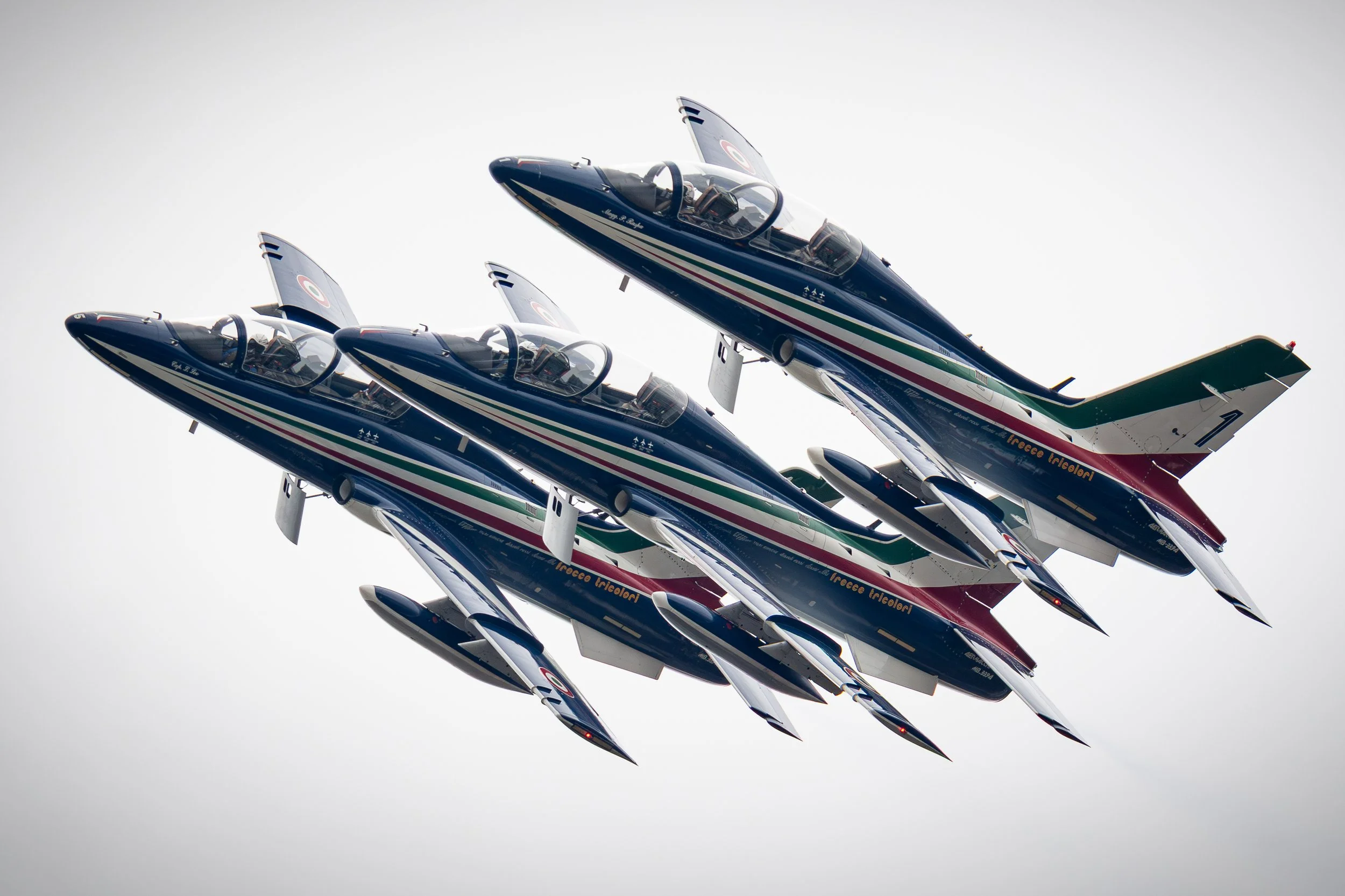
Frecce Tricolori
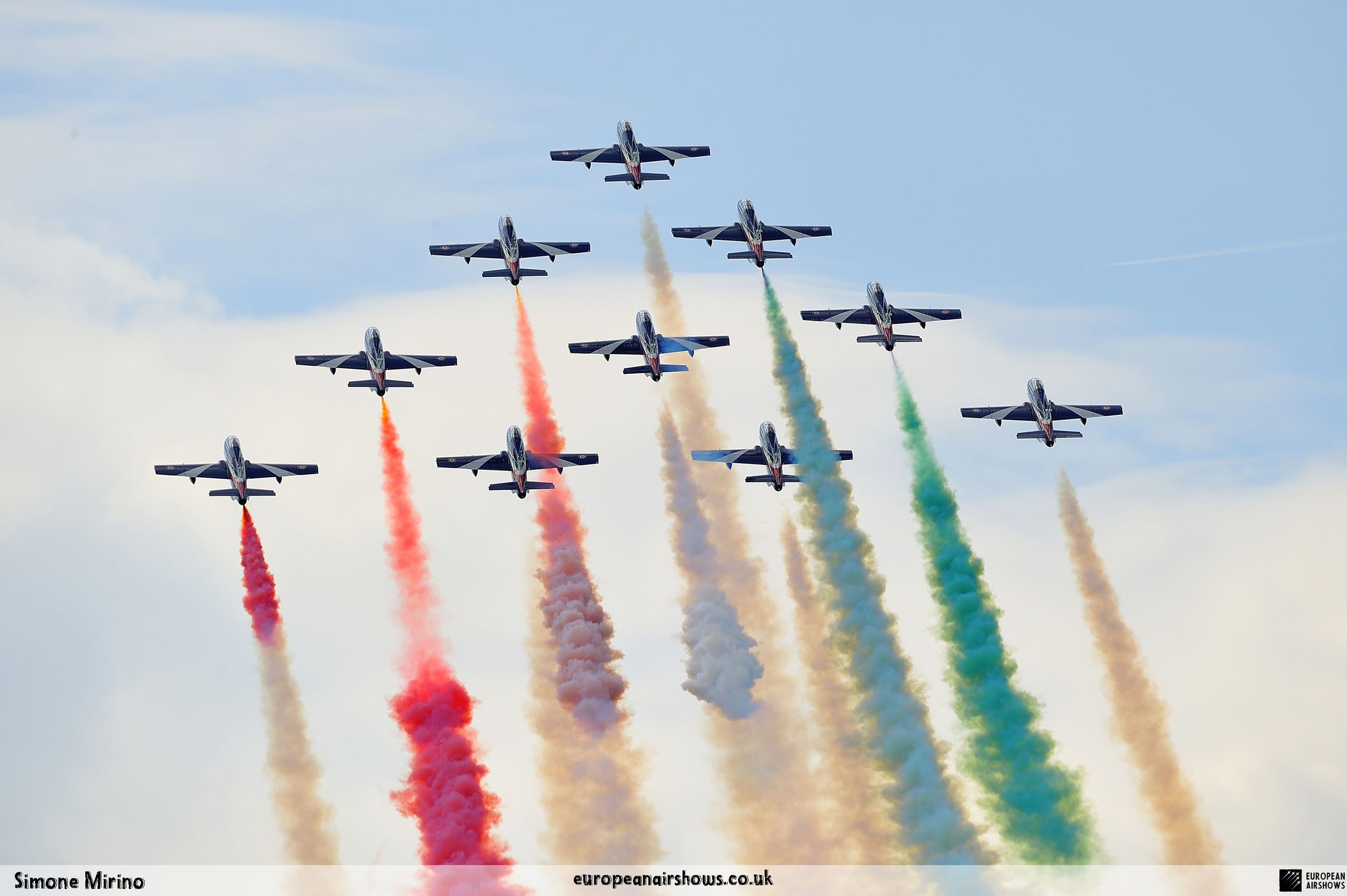
Ten-aircraft Aermacchi MB-339PAN national aerobatic team
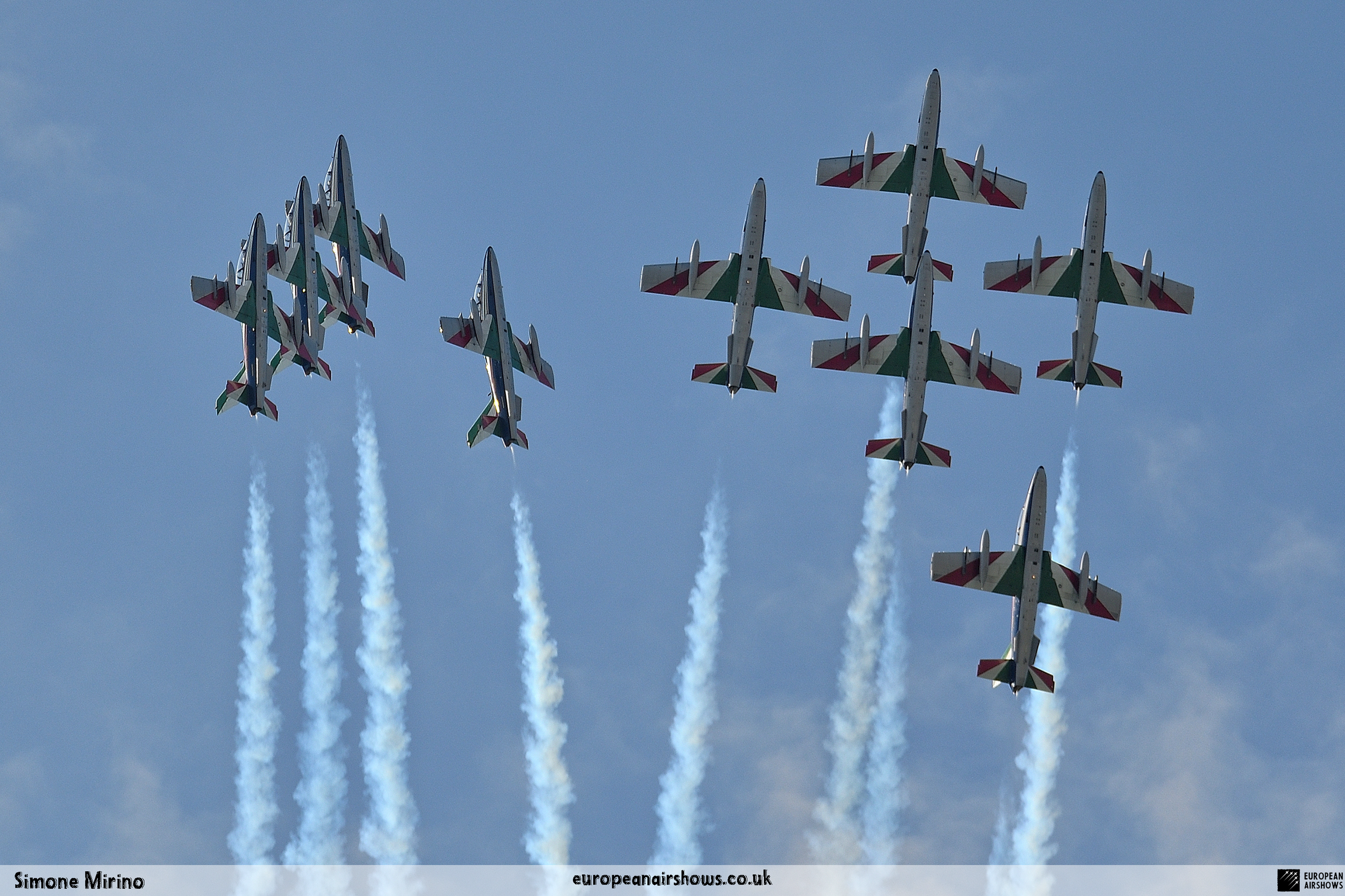
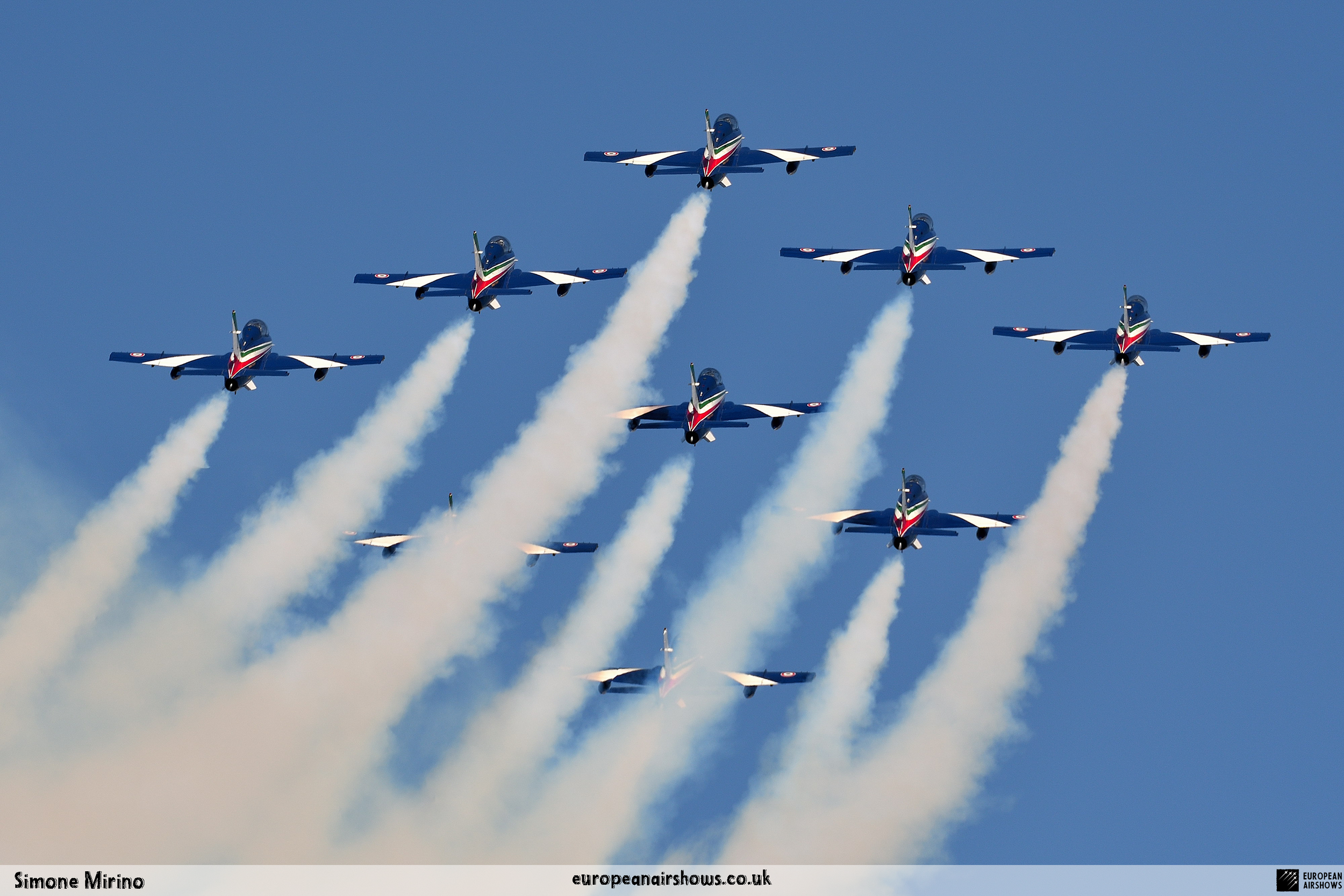
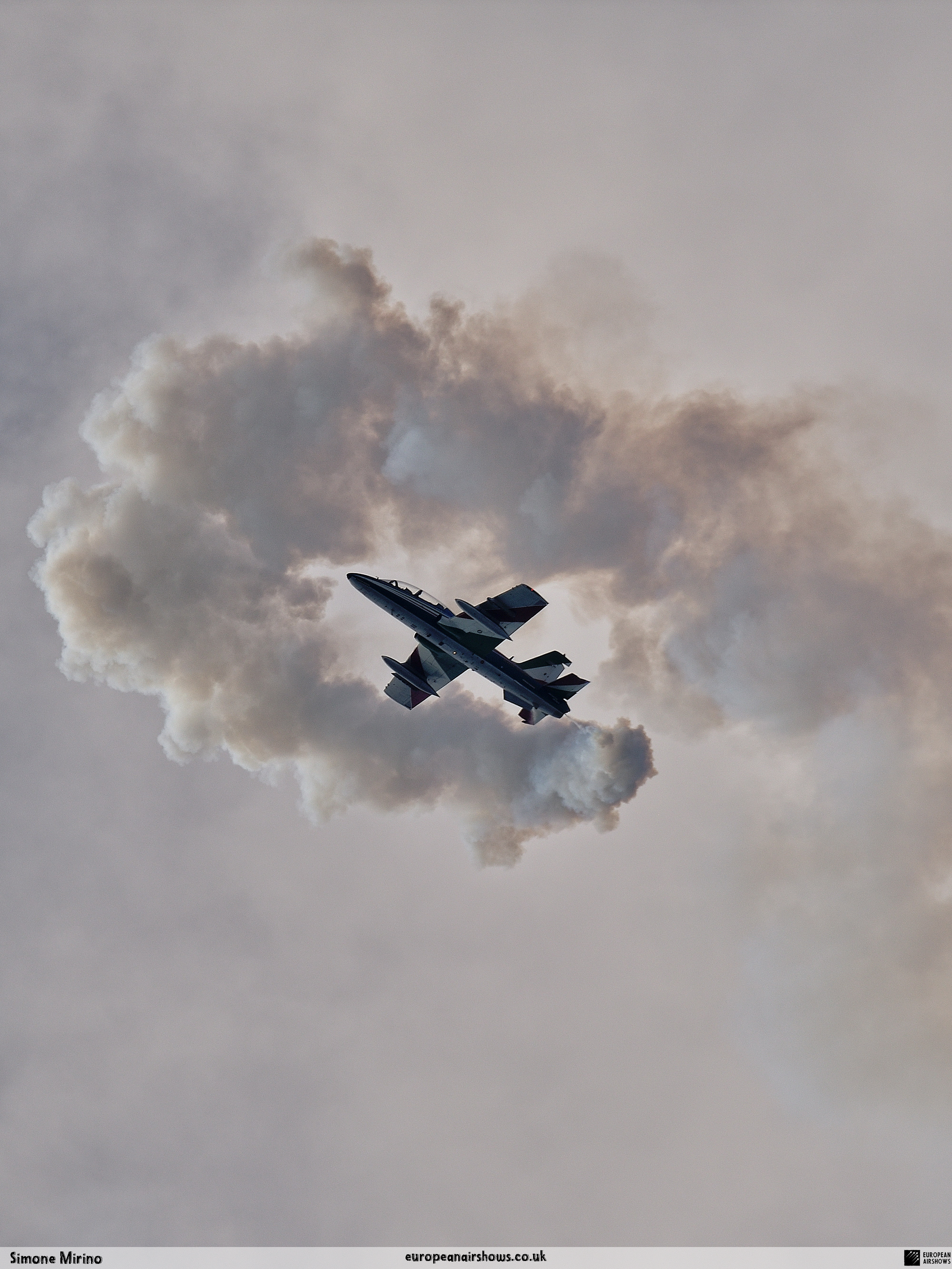
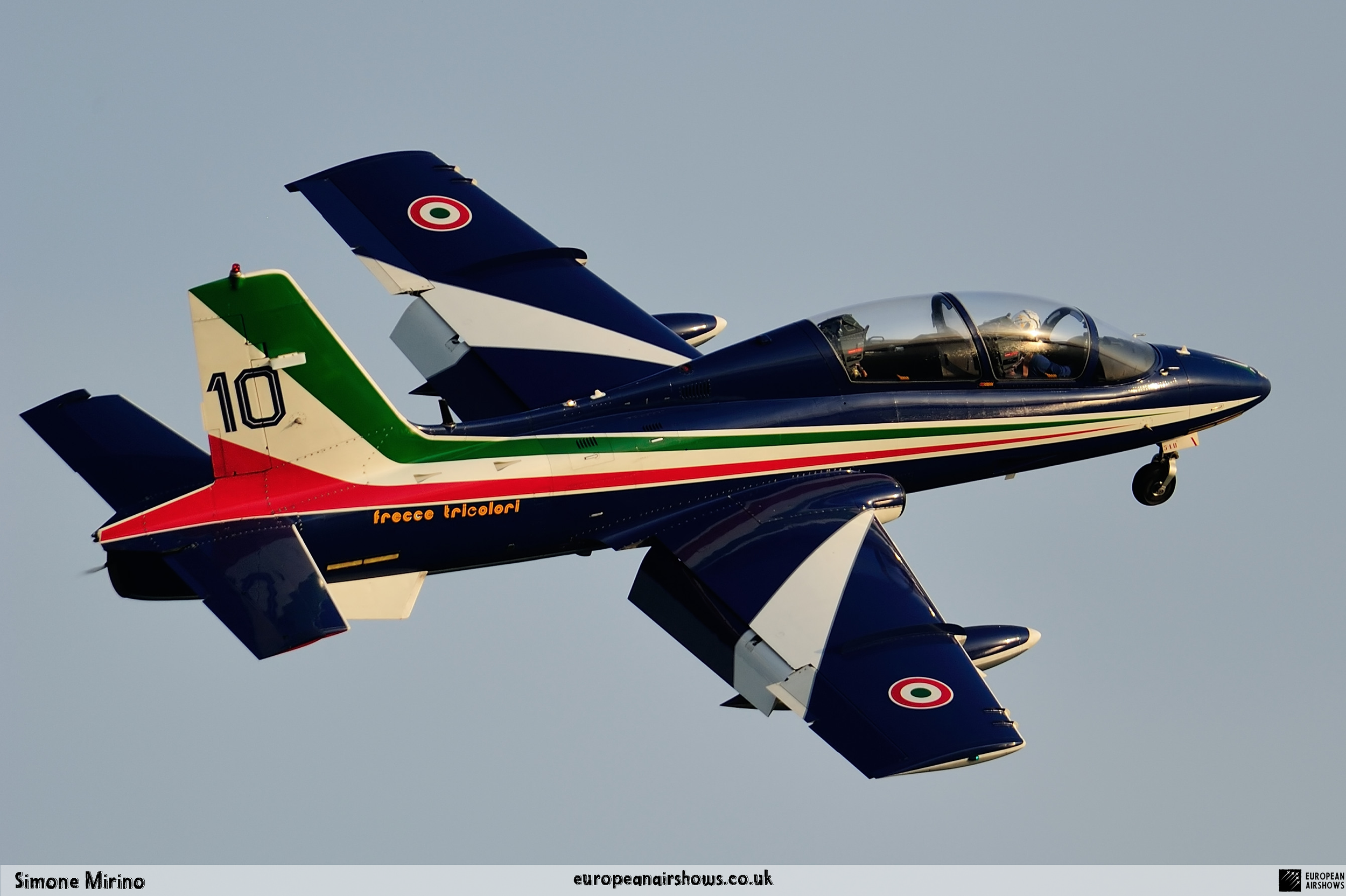
Frecce Tricolori is the Italian Air Force’s national aerobatic team. The 313° Gruppo Addestramento Acrobatico flies ten MB-339PANs: nine in the main formation and Pony 10 as the soloist. From its home at Rivolto, the unit turns military formation discipline into one of Italy’s most recognisable displays.
- Established
- 1961
- Formation
- 9 + 1 — 10 total
- Aircraft
- MB-339PAN
- Soloist
- Pony 10
- Unit
- 313° G.A.A.
- Home
- Rivolto
The team
Ten display aircraft, eleven Pony numbers, one permanent flying unit.
A dedicated Italian Air Force unit
Frecce Tricolori is the public name of the 313° Gruppo Addestramento Acrobatico, the Italian Air Force’s permanent aerobatic training group. The ten-aircraft flying element is only its most visible part. Roughly a hundred military personnel work across flying, aircraft maintenance and the support needed to take the display away from Rivolto.
The positions that shape the display
Pony 0 is the group commander. In the air, Pony 1 leads the main formation and controls its manoeuvres; Pony 6 leads the second section during separations, crossings and rejoins; and Pony 10 is the soloist. Pony 2 to Pony 9 complete the nine-aircraft collective formation around those key positions.
Experience brought in — and taken back
Display pilots are selected from the Italian Air Force’s operational flying units rather than recruited into a separate career stream. They arrive with front-line experience, learn one position before progressing through the formation, and eventually return that experience to the wider service. Aircraft specialists provide the same continuity on the ground.
The display
Nine in formation. One soloist. No empty sky.
The Italian Air Force’s published programme contains 18 manoeuvres. It opens with all ten aircraft together, then divides the formation into sections while the soloist’s figures are placed between collective passes. The result is a continuous sequence rather than a series of isolated set pieces.
All ten together
The opening establishes the full scale of the team before Pony 10 leaves the other nine aircraft to begin the solo sequence.
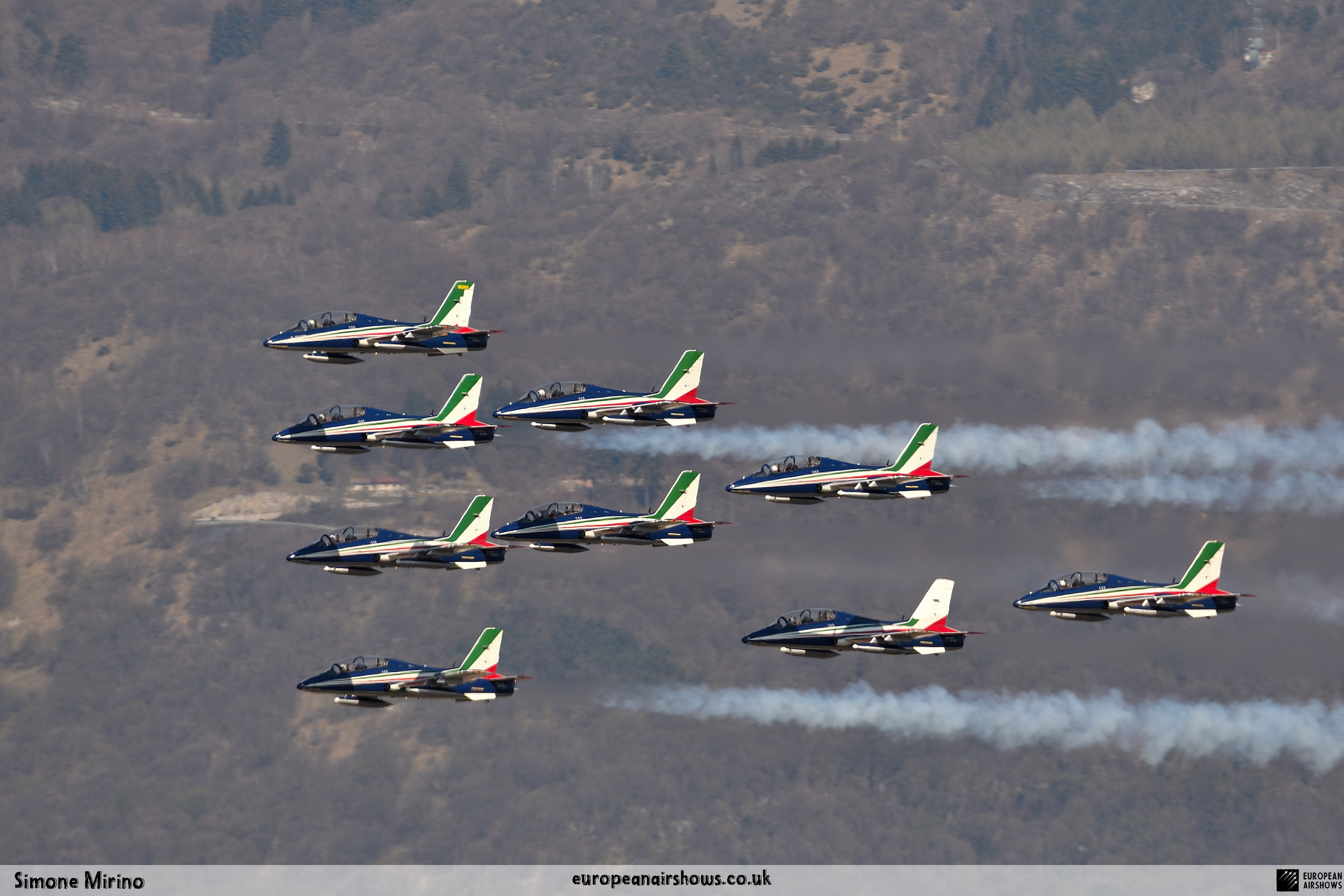
Nine-aircraft formation
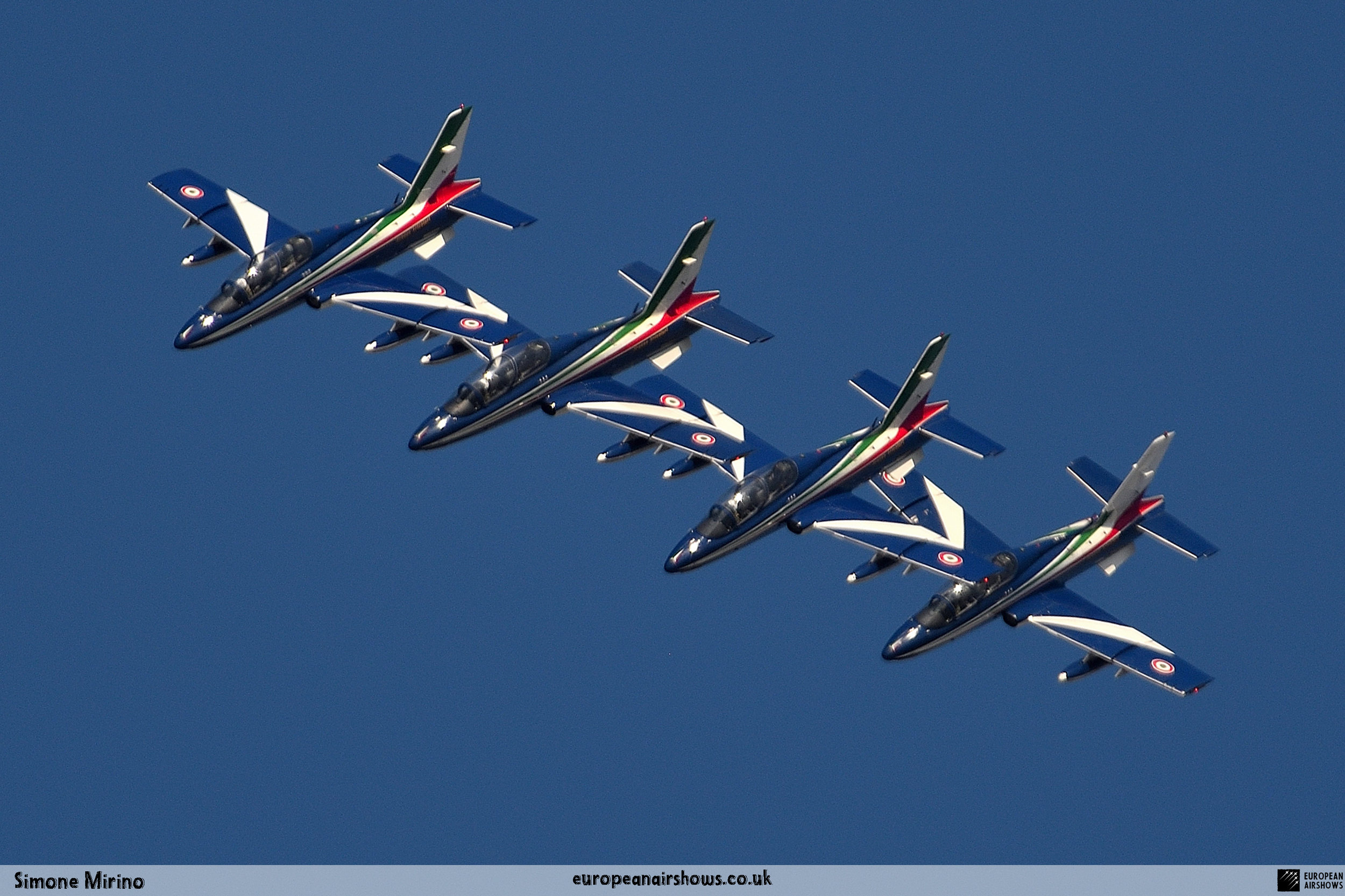
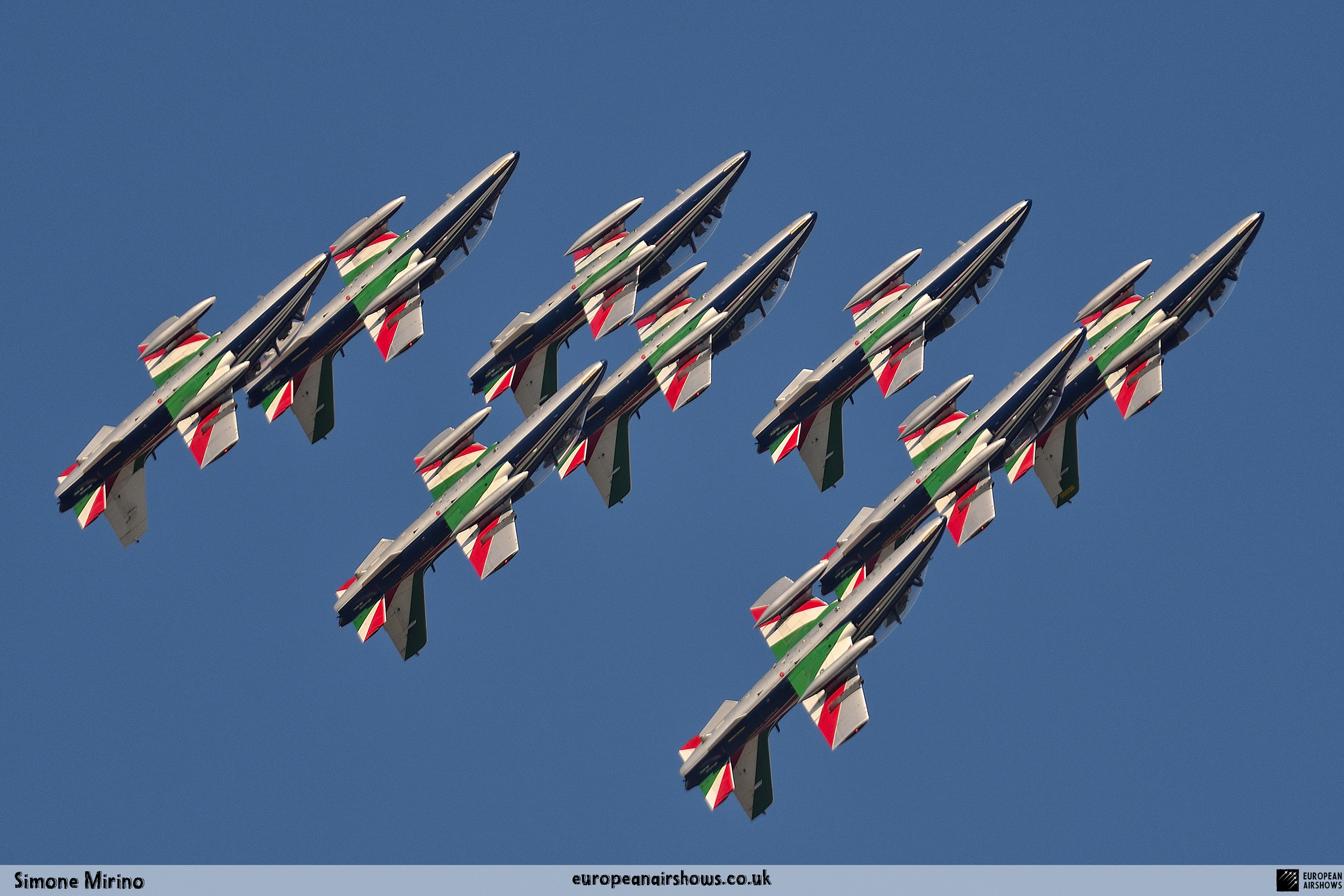
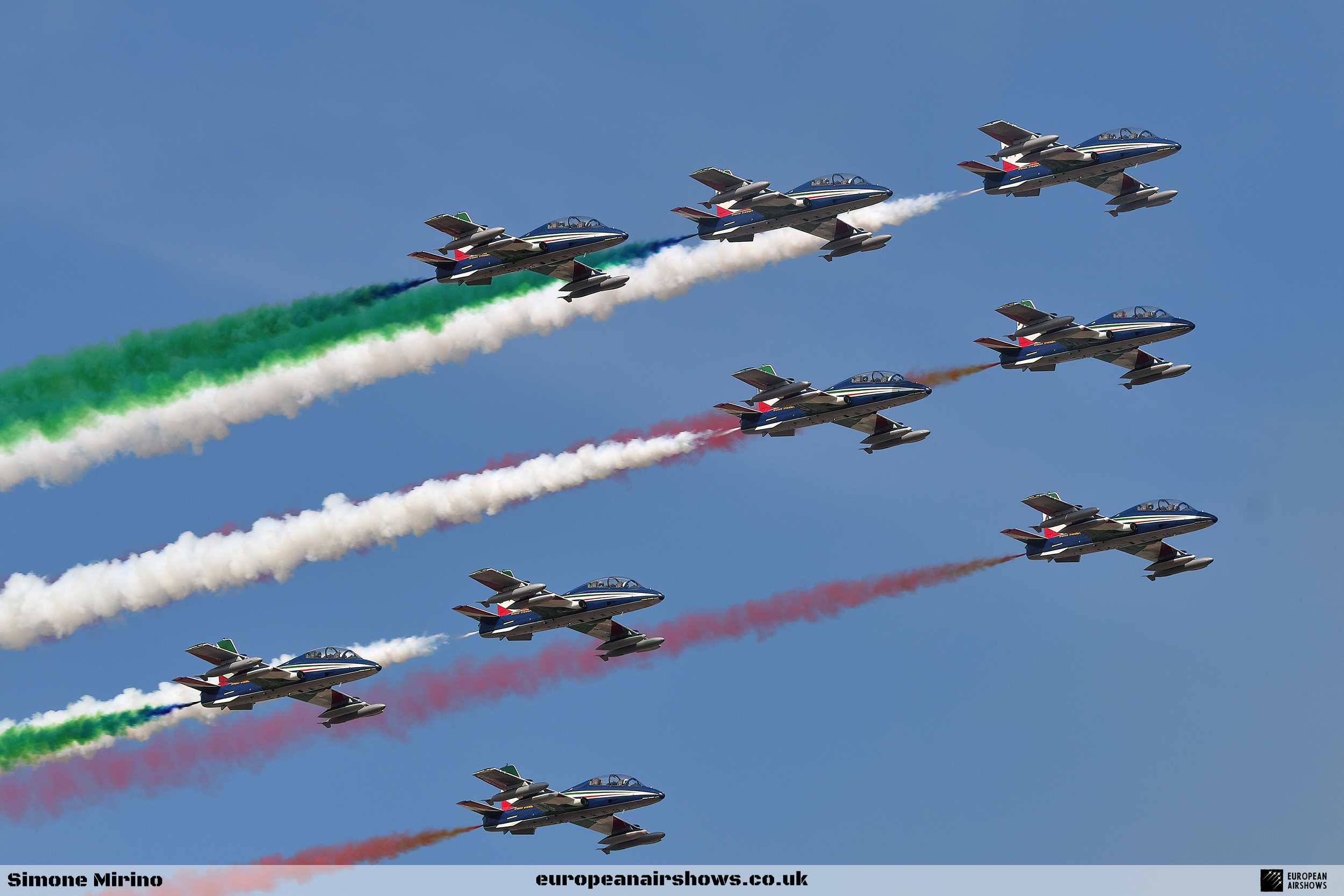
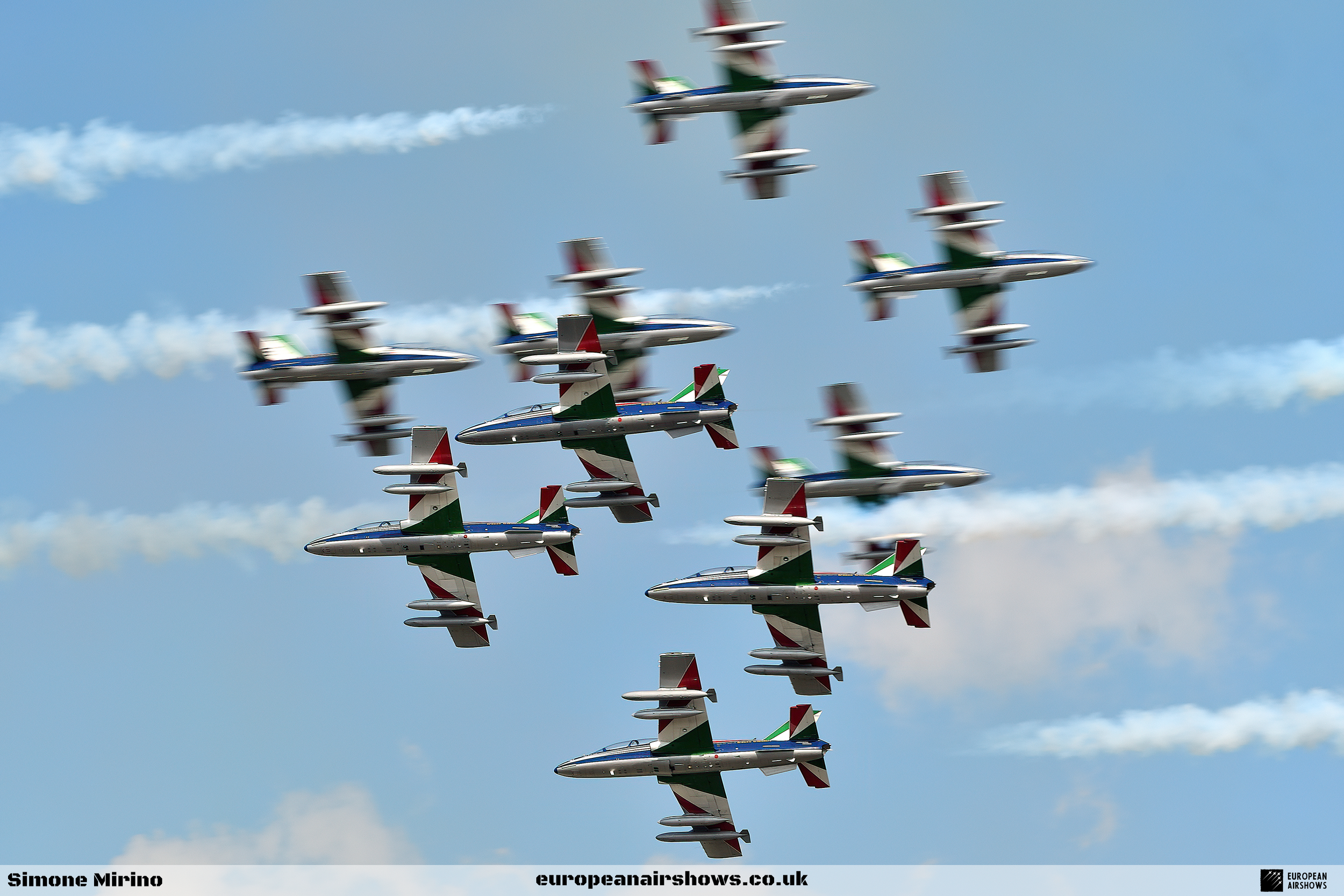
Pony 1 leads the collective formation through loops, rolls and changes of shape while eight wingmen hold visual references.
Split sections
Pony 6 leads the second section through separations, opposing passes and precise rejoins with the section led by Pony 1.
Pony 10 solo
The soloist fills the gaps while the main formation turns away, showing the MB-339PAN as an individual aerobatic aircraft.
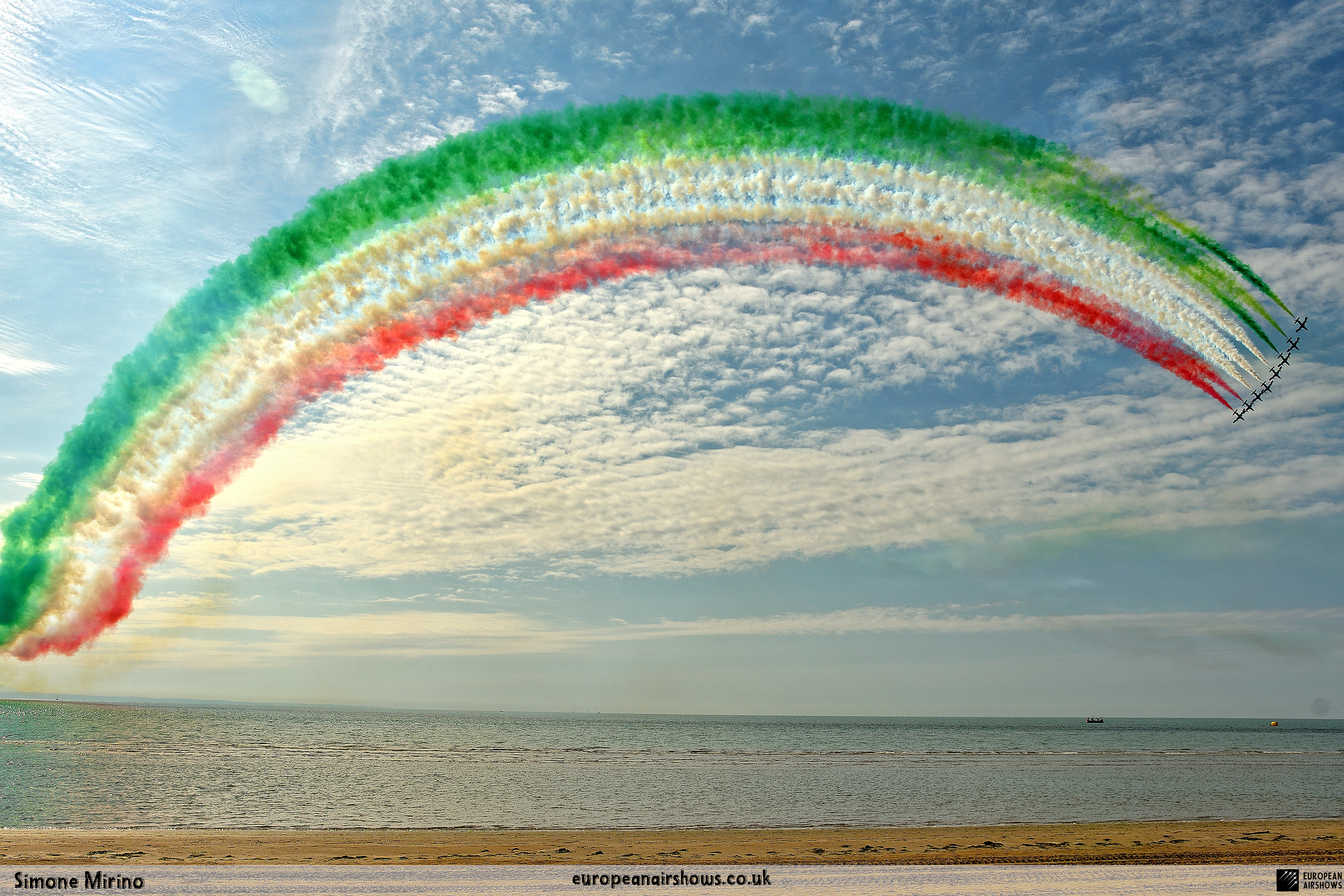
Tricolour smoke
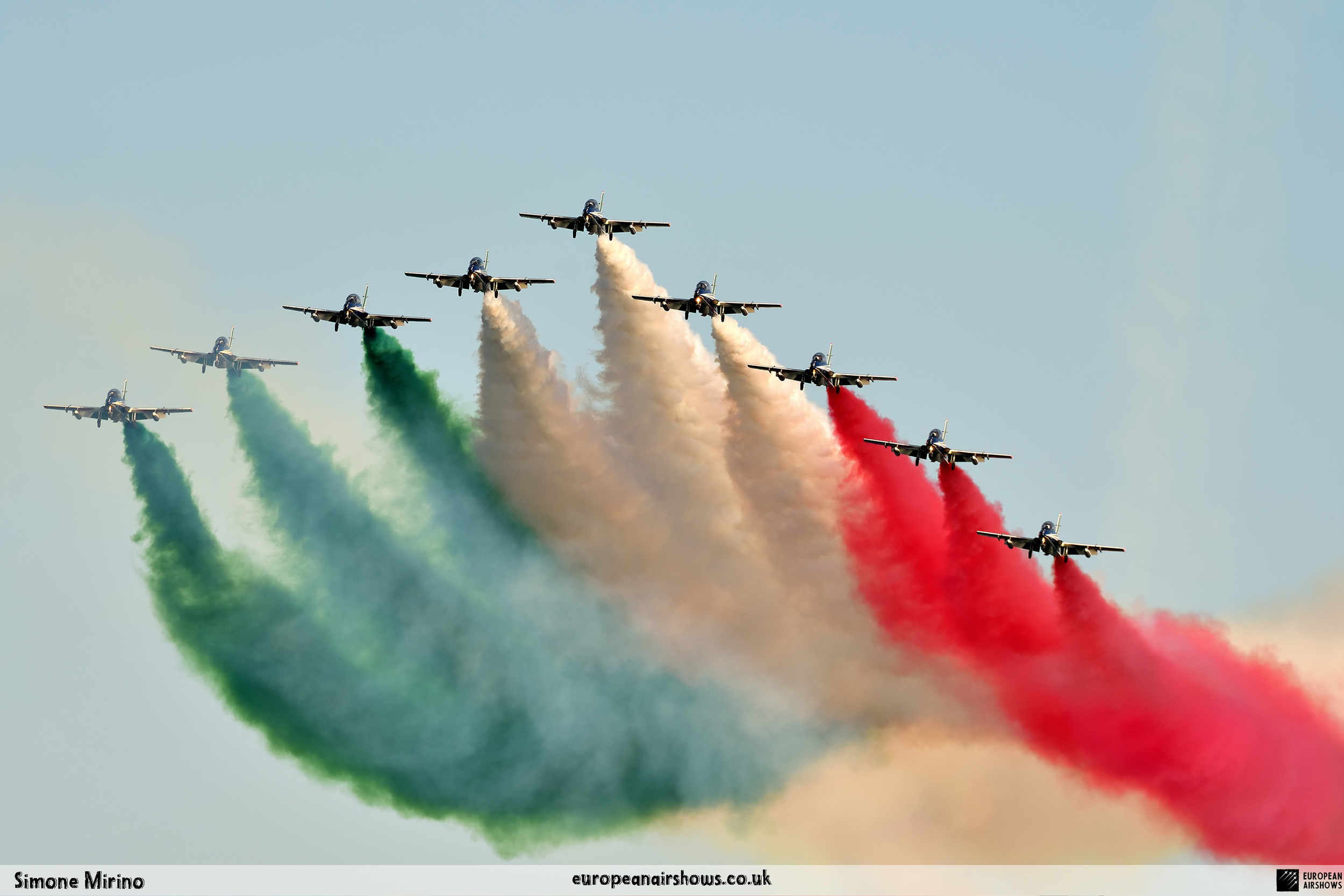
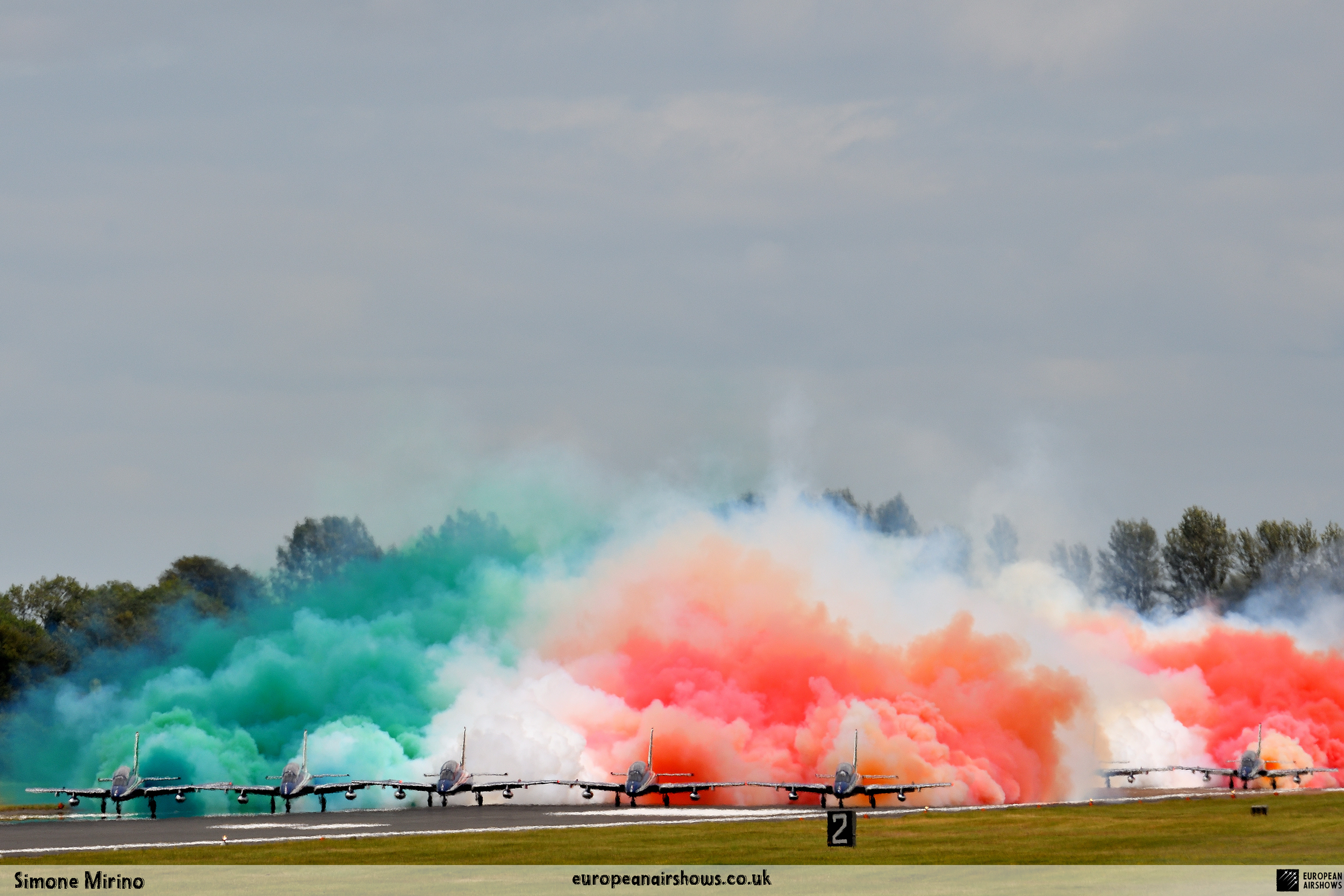
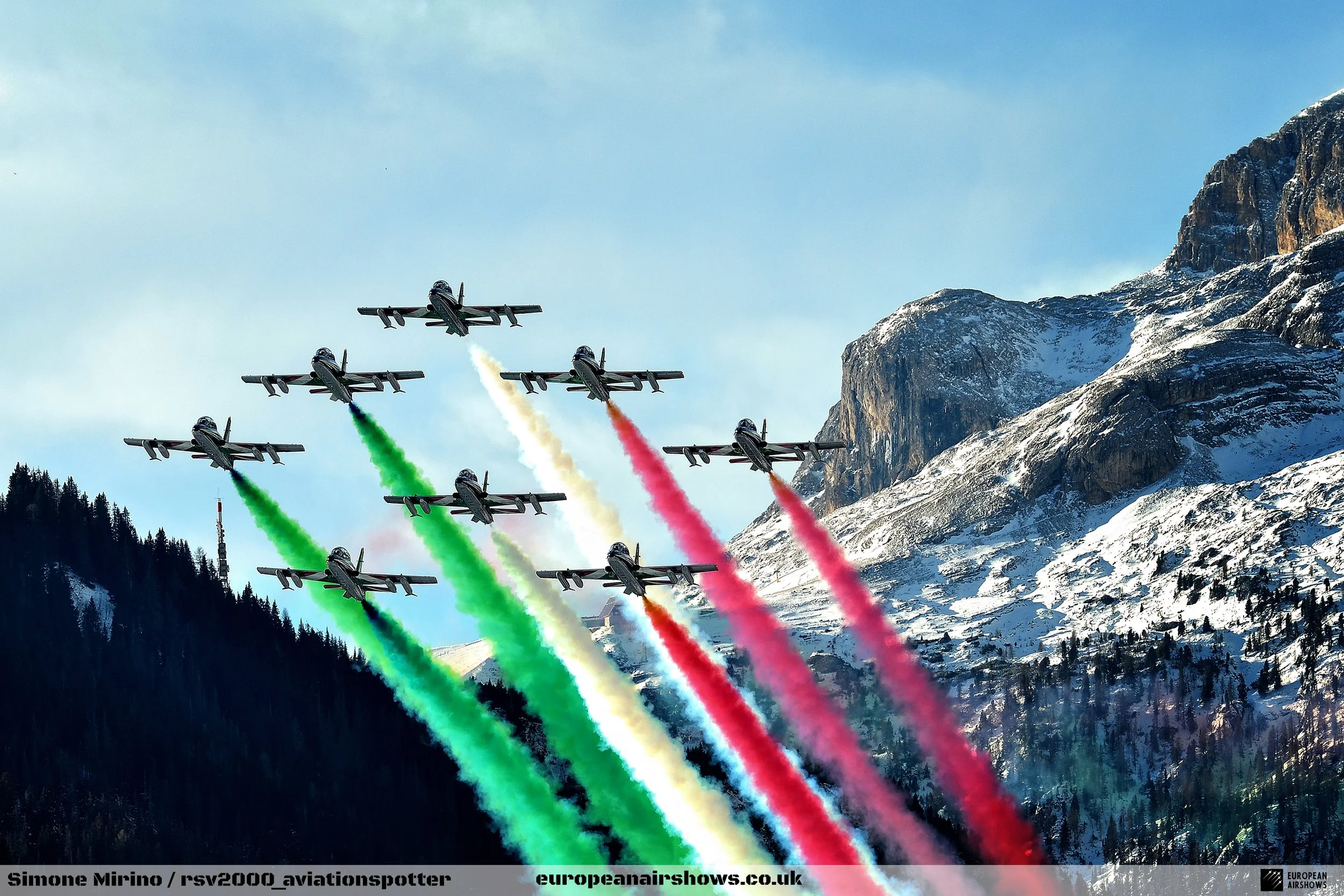
Green, white and red smoke traces crossings and breaks, turning the geometry of the display into a large Italian flag in motion.
Weather alternatives
When cloud removes vertical room, the sequence can reduce high figures while preserving formation changes and horizontal passes.
The aircraft
Aermacchi MB-339PAN: an Italian trainer adapted for national display flying.
An Italian two-seat trainer
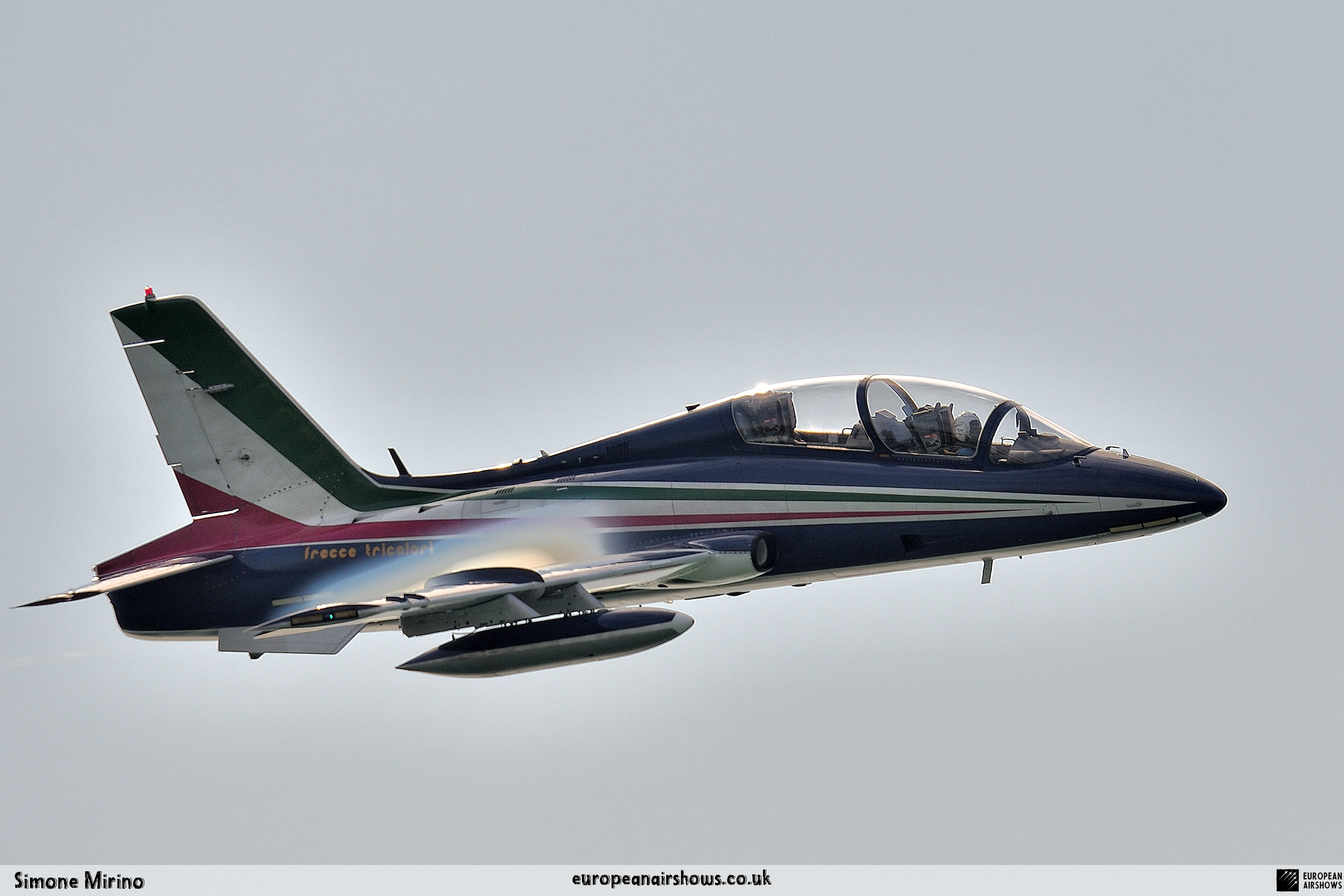
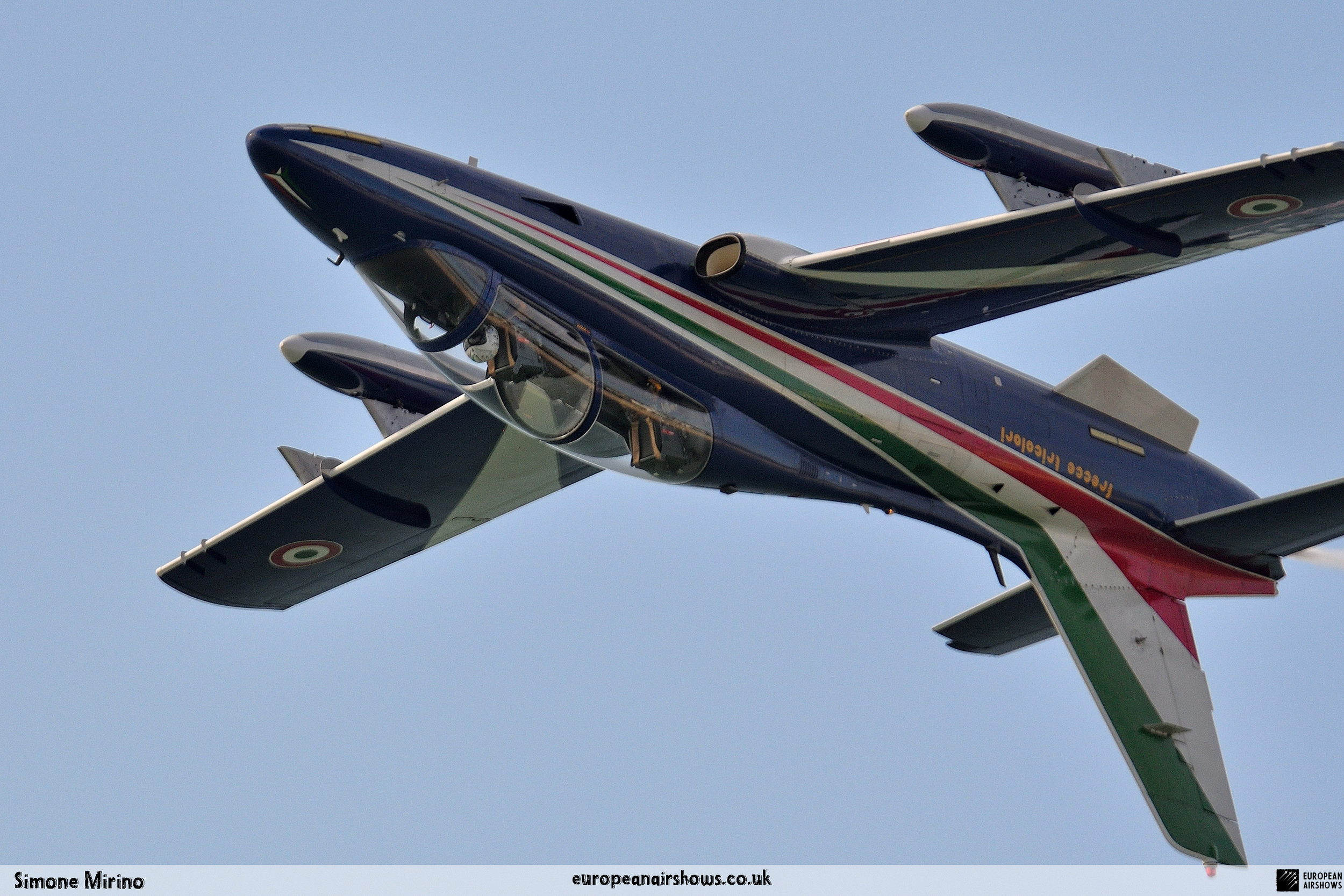
The MB-339 was designed and built in Italy by Aermacchi as the successor to the MB-326. It is a single-engine, two-seat light training and attack aircraft. The rear seat is raised above the front cockpit, giving an instructor the forward view needed during training.
What makes the PAN version different
In Italian Air Force nomenclature the display aircraft is the AT-339A (PAN). It retains the trainer’s tandem cockpit but adds a purpose-built smoke installation. Two tanks mounted beneath the wings feed that system, allowing white smoke or the green and red colours used to draw the national flag across the sky.
Why it suits the display
When it replaced the Fiat G.91PAN, the MB-339 gave the team an aircraft the Italian Air Force describes as easier and more agile. Its subsonic performance and responsive handling let the ten aircraft build a compact, readable sequence close enough for the audience to follow the formation changes.
The successor has been chosen
The Italian Air Force presented the Leonardo M-346 as the next Frecce Tricolori aircraft in 2024, together with a new livery by Pininfarina. The official announcement said it would replace the MB-339PAN “in the coming years”; it did not set a handover date. Until that transition is formally completed, the MB-339PAN is the team’s current display aircraft.
The story so far
From rotating fighter teams to a permanent national aerobatic unit.
1952–60
Front-line wings take turns representing Italy
Before Italy created a permanent national team, aerobatic duty rotated among fighter units. Cavallino Rampante, Getti Tonanti, Tigri Bianche, Diavoli Rossi and Lanceri Neri helped establish the post-war formation-flying tradition inherited by the PAN.
1961–62
The national team forms at Rivolto
A Special Aerobatic Unit was formed at Rivolto on 1 March 1961, made its first official outing at Trento on 1 May, and became the 313° Gruppo Addestramento Acrobatico on 1 July. In 1962 the Sabres received the three-arrow green, white and red scheme that fixed the Frecce Tricolori identity.
1963–66
The G.91PAN establishes the 9+1 format
The first Italian-built Fiat G.91PAN arrived on 28 December 1963. The formation grew to nine aircraft, and from the 1966 season the tenth aircraft performed as a dedicated soloist: the 9+1 structure still used by the team.
1982
The MB-339PAN takes over
The first MB-339PAN was delivered on 6 January. A mixed formation of four G.91s and five MB-339s marked the change on 27 April, and the Frecce returned to full 9+1 strength during the same season.
28 Aug 1988
The Ramstein tragedy
Three Frecce Tricolori aircraft collided during the air show at Ramstein Air Base in West Germany. The three Italian pilots and 67 people on the ground ultimately died. The loss of 70 lives remains inseparable from the history of the team and of air-show safety.
1992–2005
International appearances resume
The 1992 Columbus tour took the team back across the Atlantic, including a flypast at Niagara Falls. In 2005 the Frecce received the King Hussein Memorial Sword for best display at the Royal International Air Tattoo.
2022
The ten-aircraft scale receives formal recognition
Guinness World Records recognised the PAN as the military aerobatic team performing displays with the greatest number of aircraft — a distinction rooted in its long-established 9+1 format.
2024
North America again — and the next aircraft
The team returned to Canada and the United States after 32 years. Following the tour, the Italian Air Force presented the M-346 and its Pininfarina-designed scheme as the future successor to the MB-339PAN, without announcing a fixed service-entry date.
Understanding the identity
The arrows, the colours and the exact meaning of 9+1.
9+1 means ten aircraft — not eleven
Nine MB-339PANs fly the collective formation and Pony 10 performs the solo sequence. Pony 0 is the commander’s organisational number, not an extra aircraft in the display. That is why the team is correctly described as a ten-aircraft 9+1 formation.
A name written in three colours
“Frecce Tricolori” means “Tricolour Arrows”. The identity dates to 1962, when three green, white and red arrows appeared along the Sabres’ fuselages. Today the same national colours define the aircraft, the smoke and the team’s role as a flying representative of the Italian Air Force and Italy.