The Flying Bulls Aerobatic Team
4 × XtremeAir XA42 · High-energy formation aerobatics
A Czech four-aircraft team combining close formation, negative-G flying, mirror figures and vertical manoeuvres in the carbon-composite XA42. It is a separate operation from the Austrian Flying Bulls historic collection.
- Lineage
- 1958 / Box Trener 1960
- Flying Bulls name
- 2000
- Aircraft
- 4 × XtremeAir XA42
- Formation
- Four aircraft
- Base
- Jaroměř-Josefov
- Status
- Active 2026 display team
The team
More than six decades of Czech formation aerobatics, carried forward by a modern four-pilot line-up.
The team's roots reach back to Chrudim in 1958, where Jiří Tlustý and Božej Struž began developing close formation aerobatics with fellow pilots Antonín Klimenda and Ladislav Bezák. The formation is normally dated from 1960 under the Box Trener name, flying Czech-built Zlín Trenér aircraft.
That original chapter ended in 1982. The concept returned after the political changes around 1990, first under the Unimax Devils identity and later as Sky Box. Flying Zlín Z-50s, Sky Box won the FAI World Cup for aerobatic teams in 1998 and established the international reputation from which the modern team developed.
The Flying Bulls era
Red Bull support brought the Flying Bulls Aerobatic Team name in 2000. The Zlín 50 remained the team's aircraft until spring 2014, when the group moved to the faster and more powerful two-seat XtremeAir XA42. This was a major technical change, but the defining ideas remained close spacing, mirror flight and aerobatics performed as a coordinated formation.
The current four
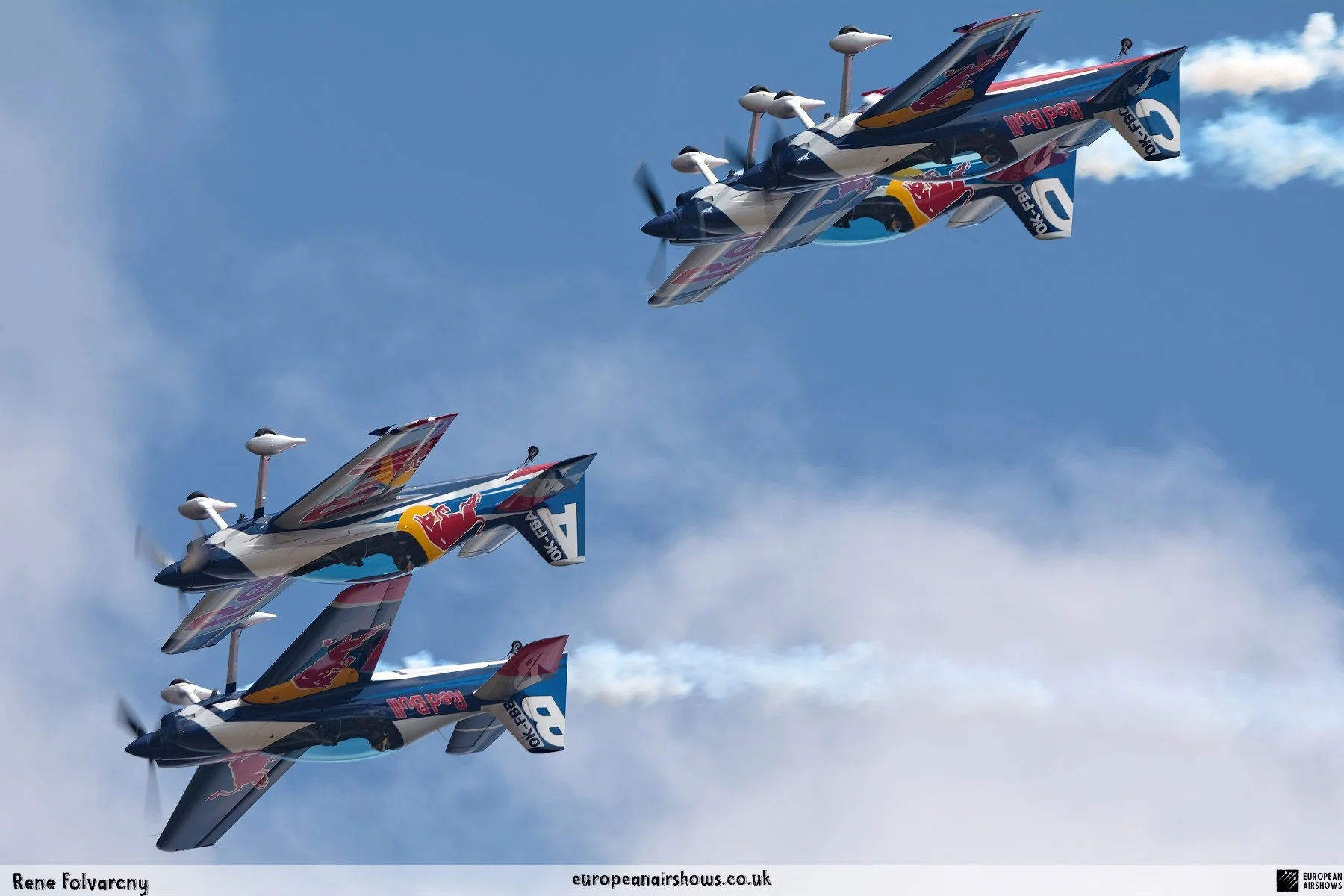
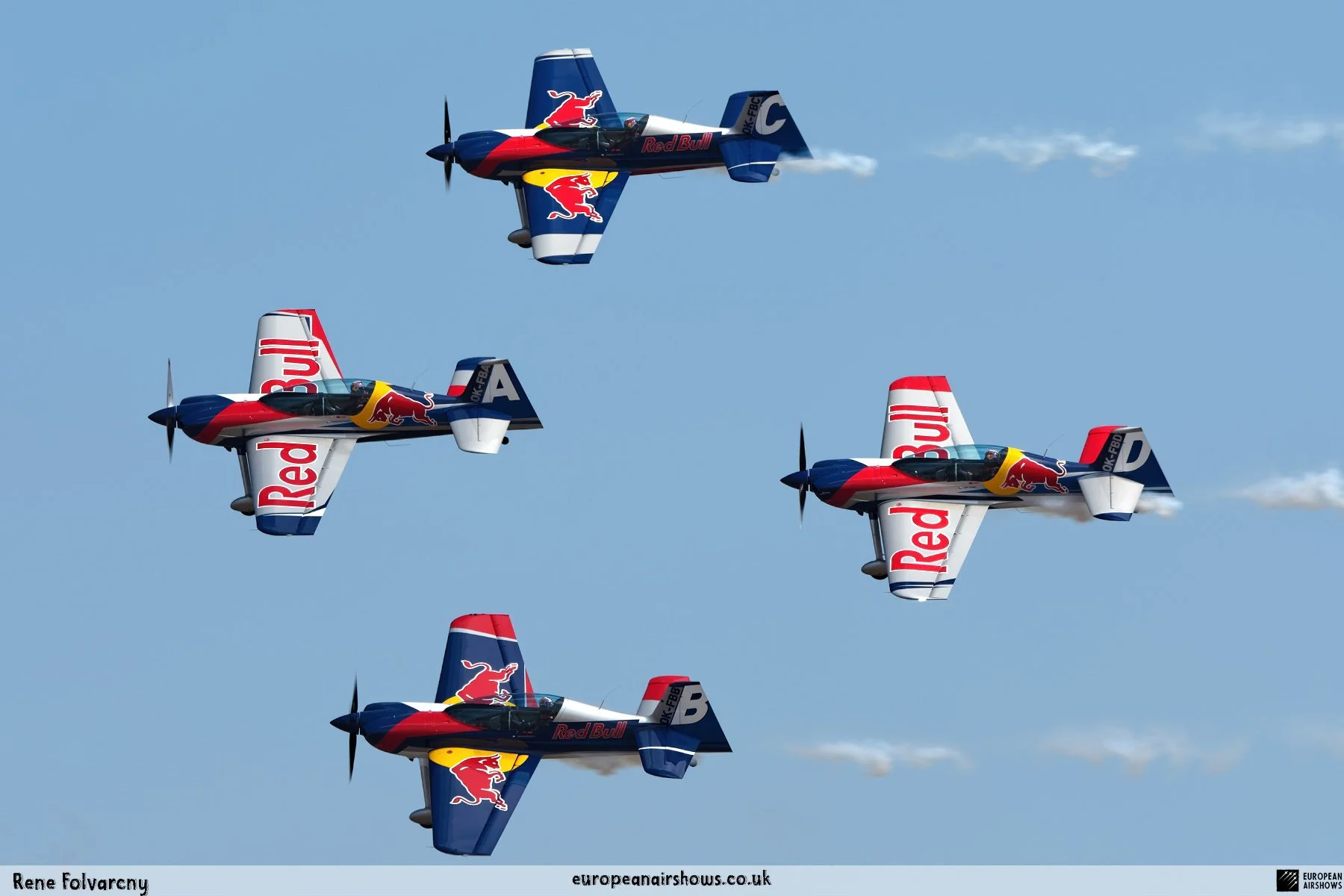
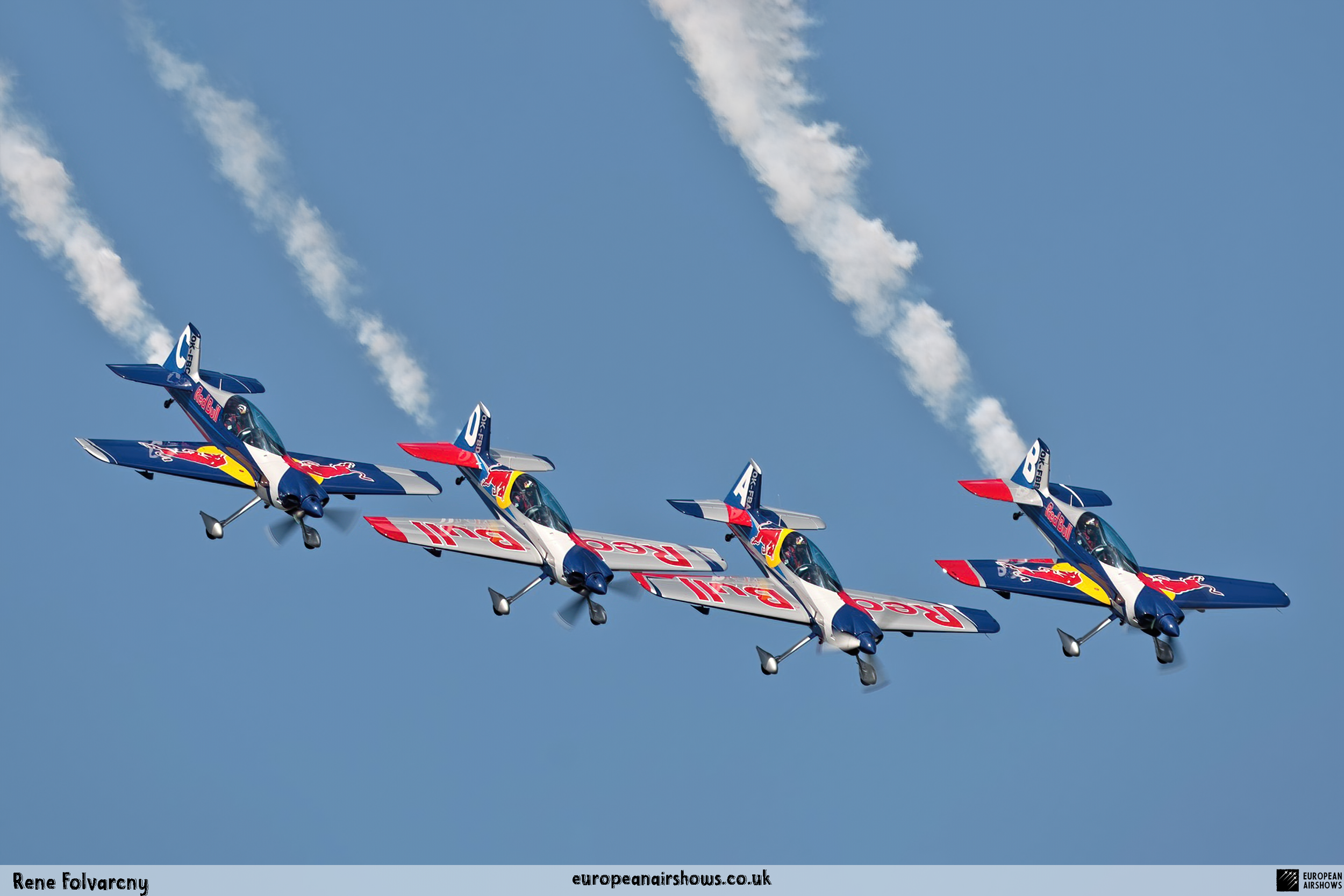
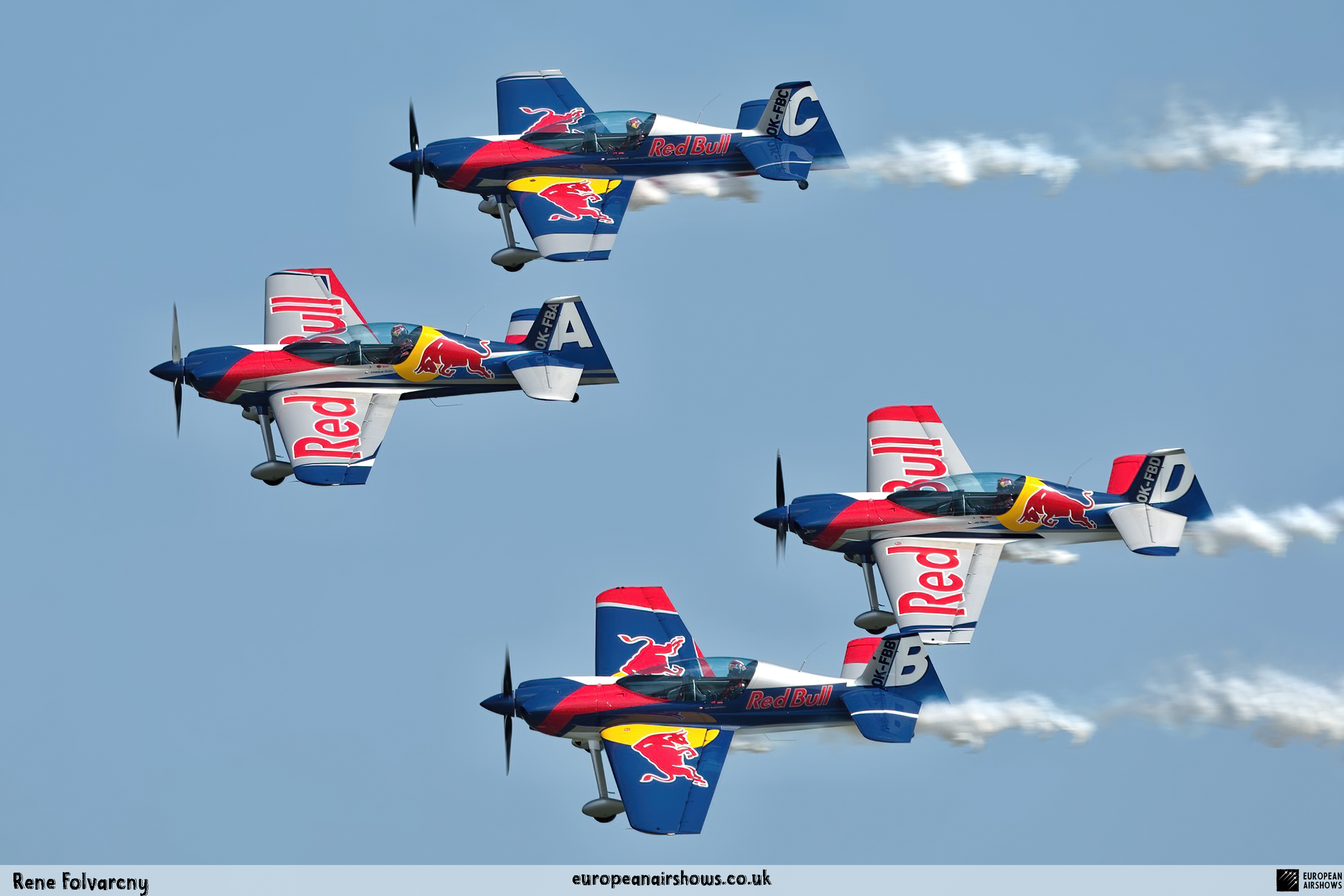
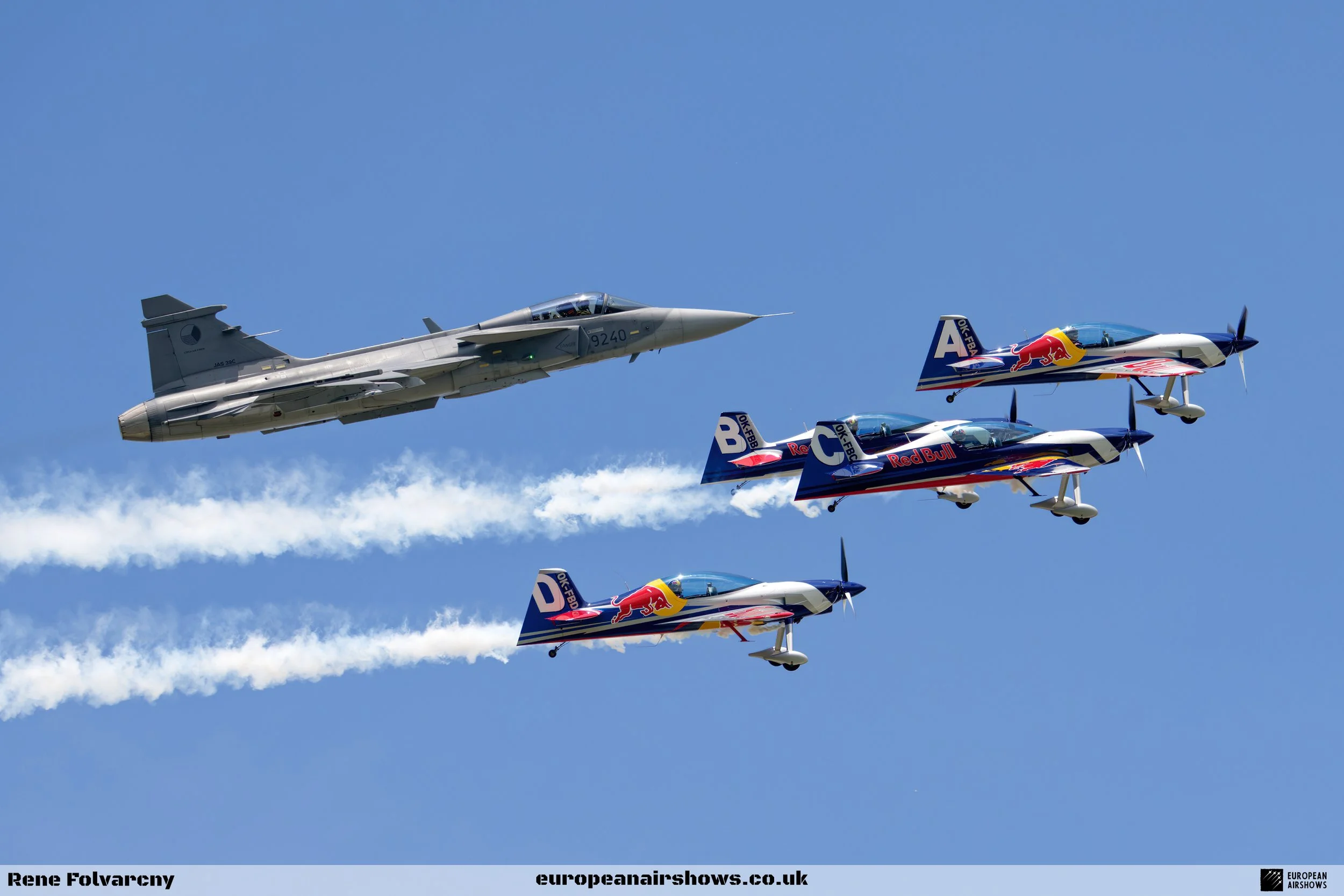
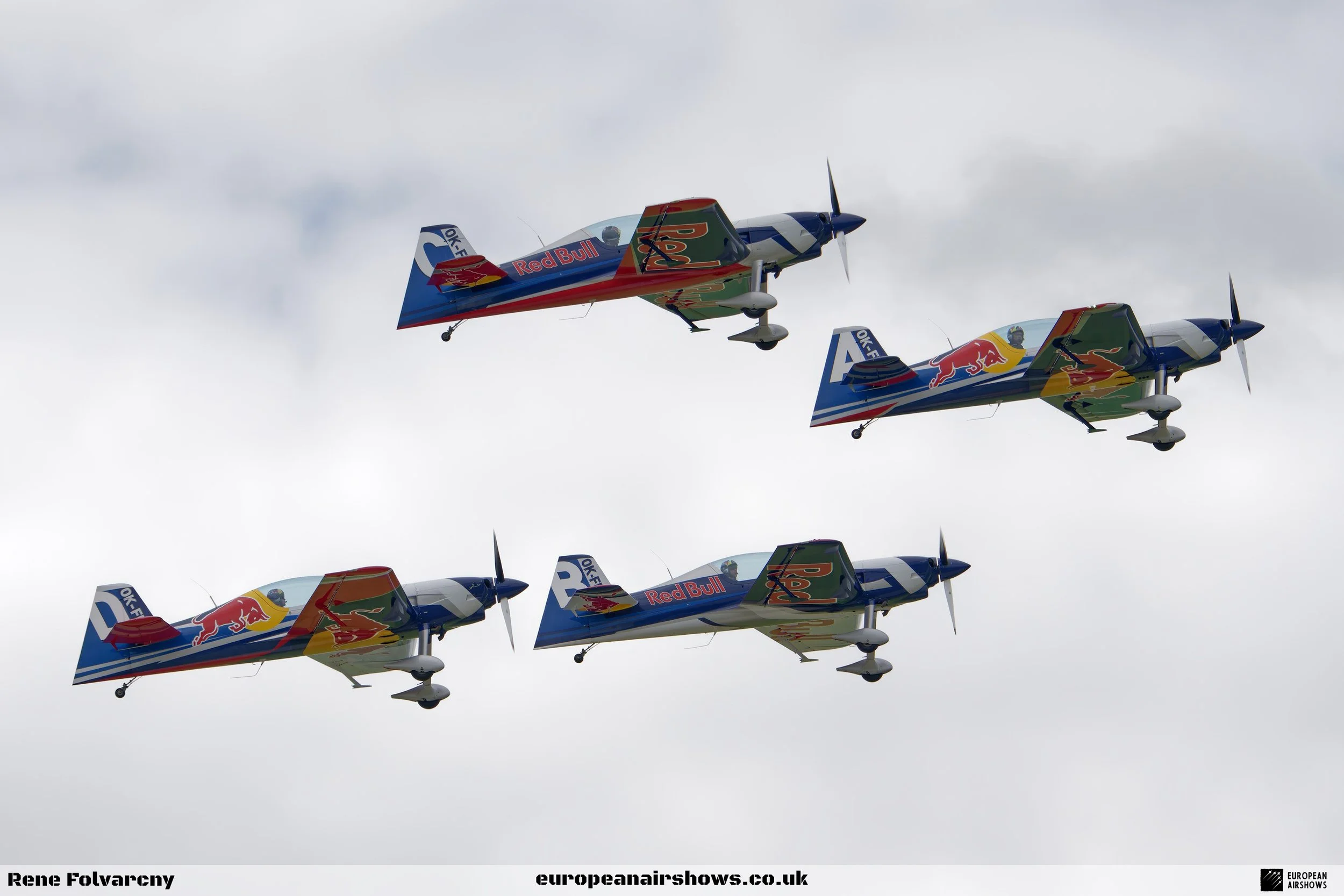
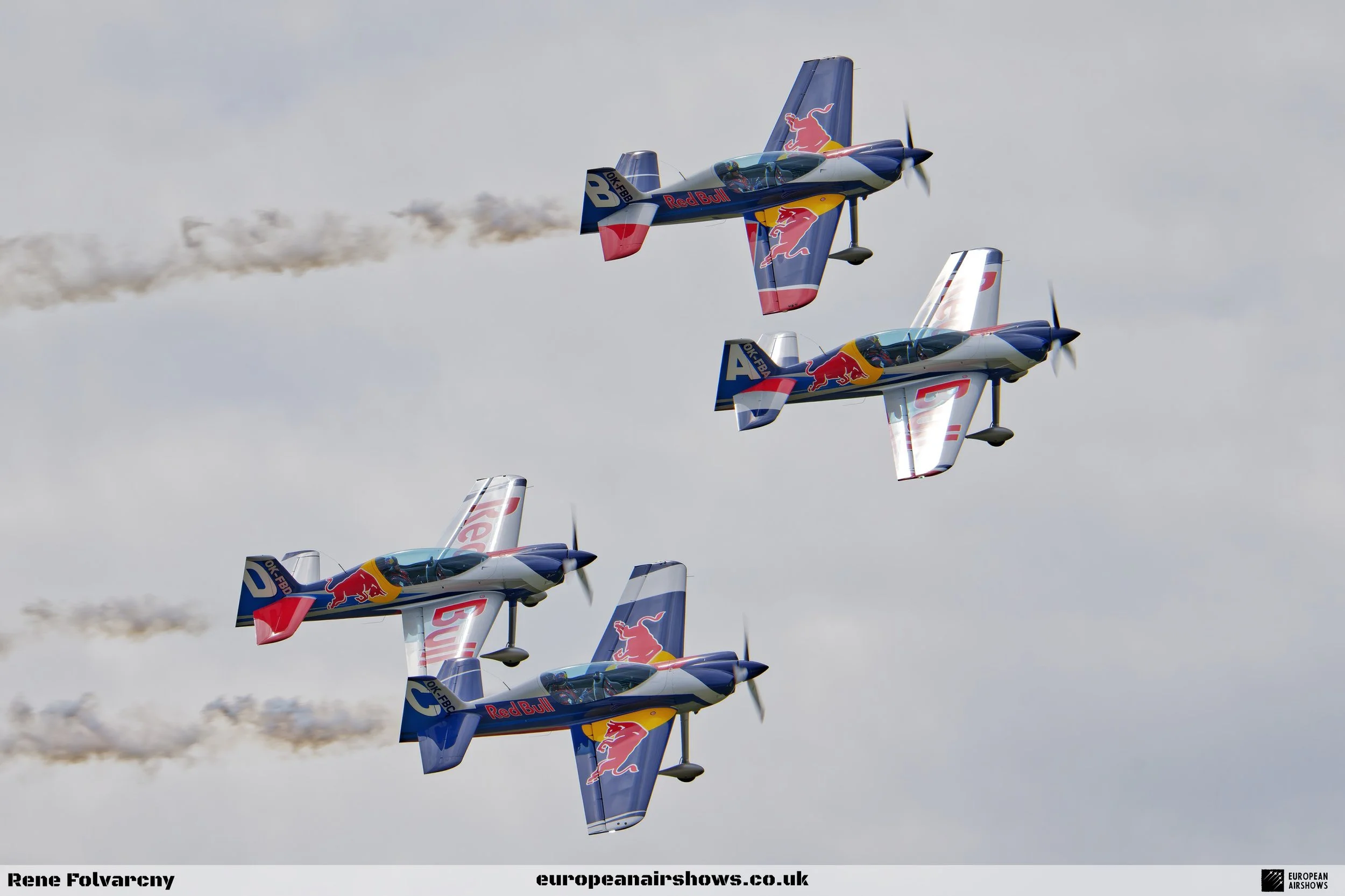
Stanislav Čejka leads the current formation. Jan Tvrdík, Jan Rudzinskyj and Martin Špaček complete the four-aircraft team. Official material identifies Čejka, Tvrdík and Špaček as experienced JAS 39 Gripen pilots, while Rudzinskyj is a freelance airshow pilot. Their four aircraft carry registrations OK-FBA, OK-FBB, OK-FBC and OK-FBD.
The military flying experience of three pilots does not make the Flying Bulls a military unit. This is a Czech civilian display team, supported by Red Bull and operating from Jaroměř-Josefov Airfield in north-eastern Bohemia. Its aircraft, team and home base are distinct from the historic aircraft collection operated from Salzburg in Austria.
Active international programme
The team flew an international European season in 2025 and published a multi-country programme for 2026. Confirmed appearances and current event material continue to list the same four XA42 aircraft and pilot line-up, making the team's active status clear.
The display
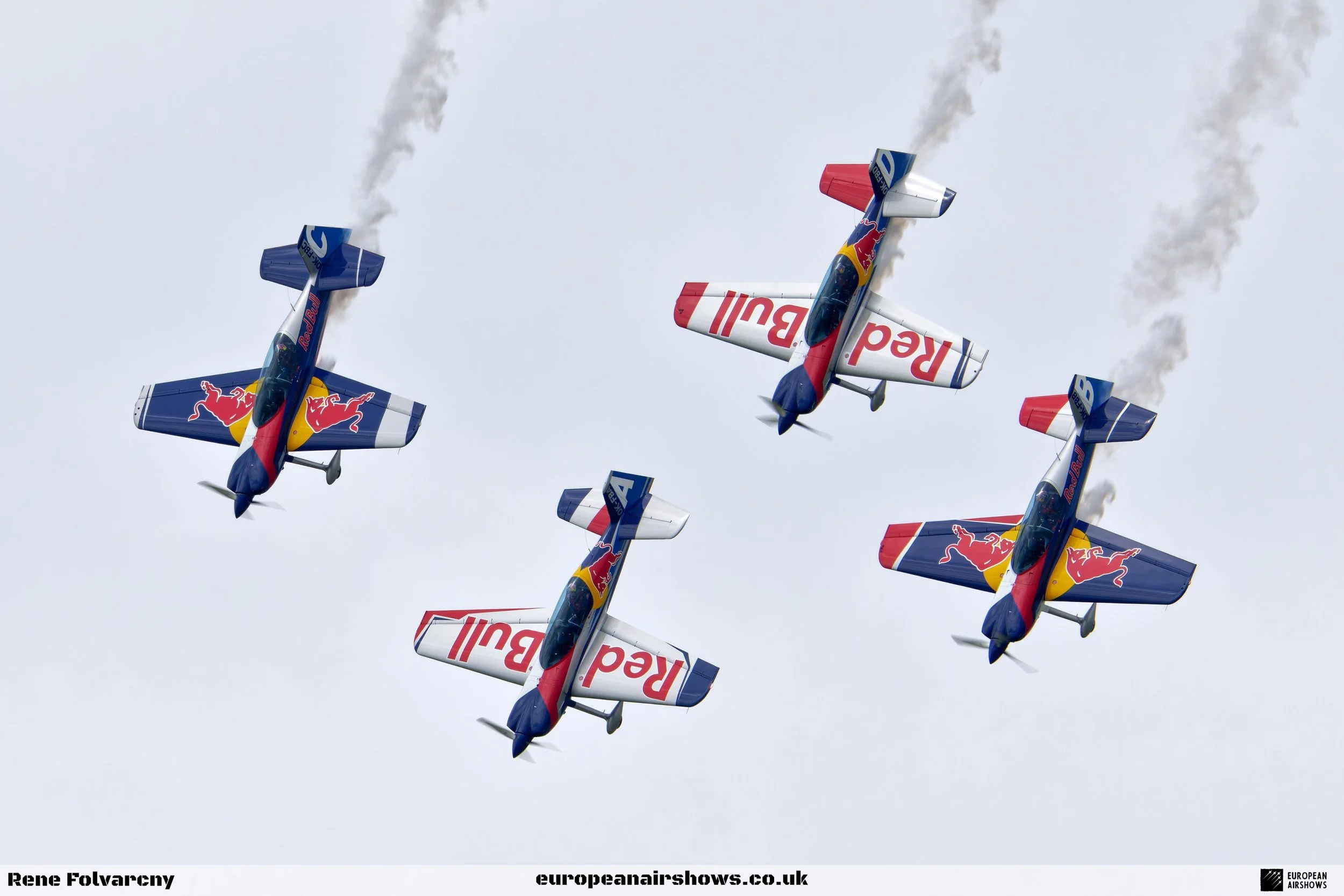
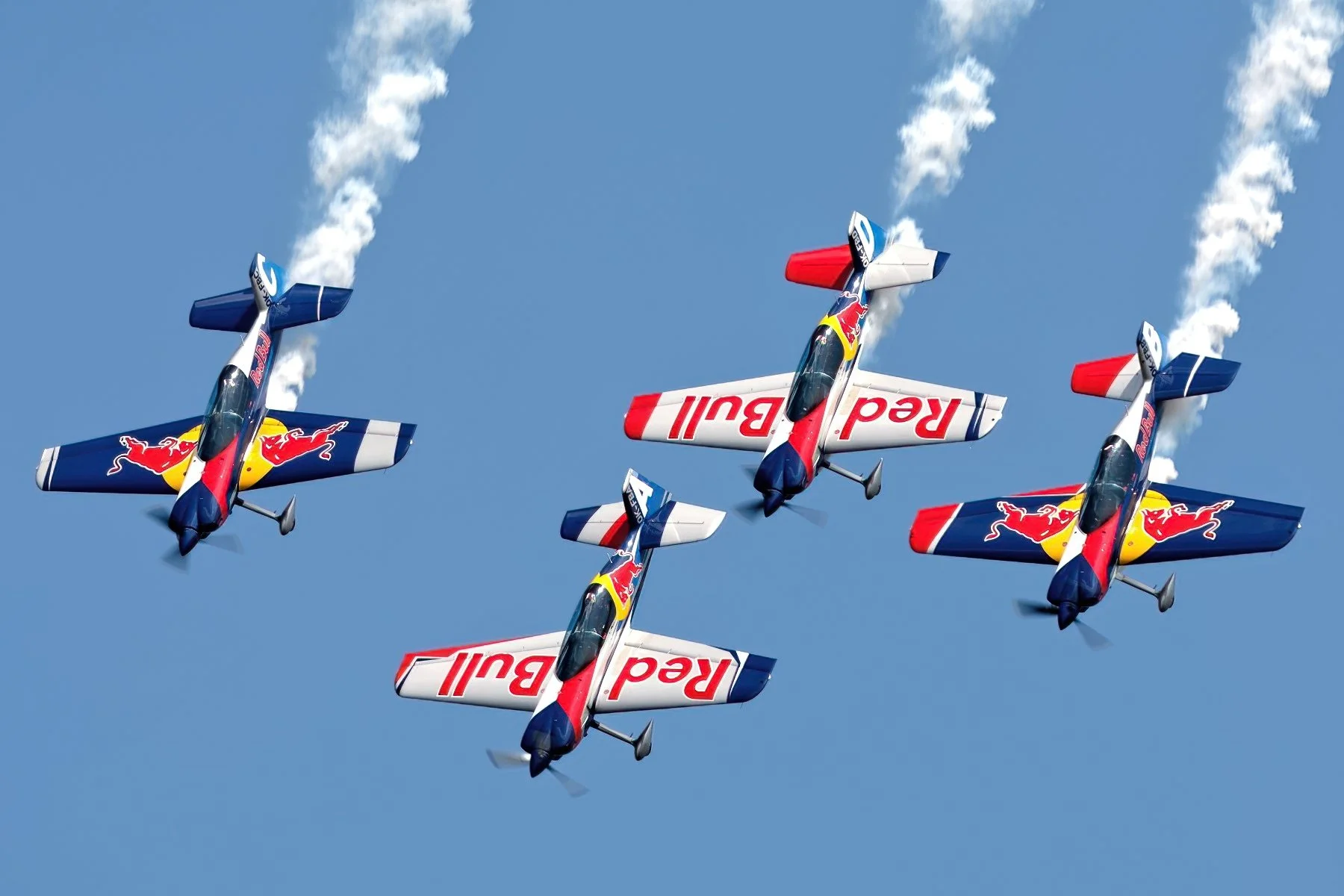
Four aircraft moving as one through positive, negative and vertical aerobatics.
The XA42 gives the team far more vertical performance and negative-G capability than its Zlín predecessors. Official figures put display speed at up to 420 km/h and the routine's working loads between approximately -5 g and +7 g, below the aircraft's full certified structural limits.
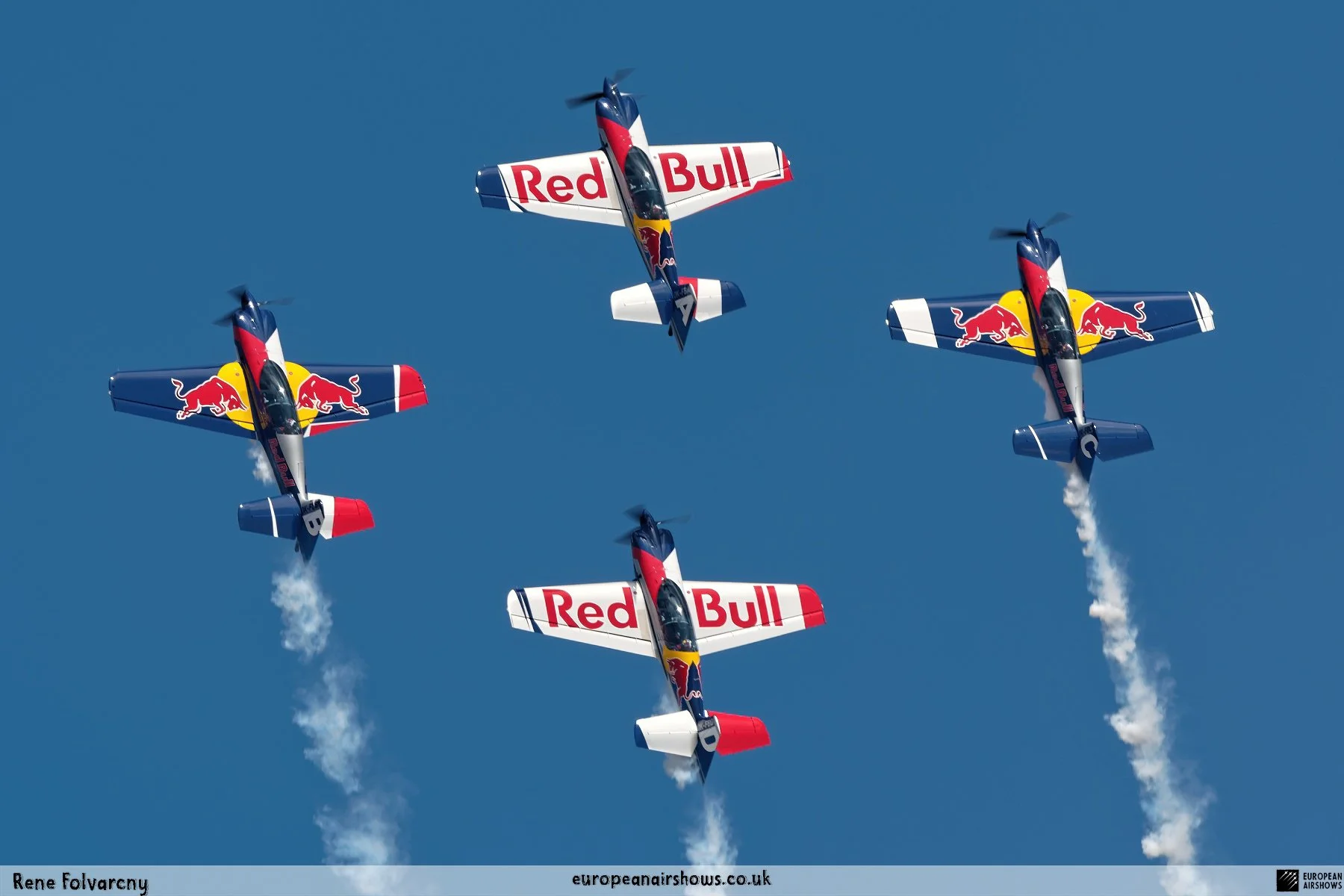
Tight four-ship geometry
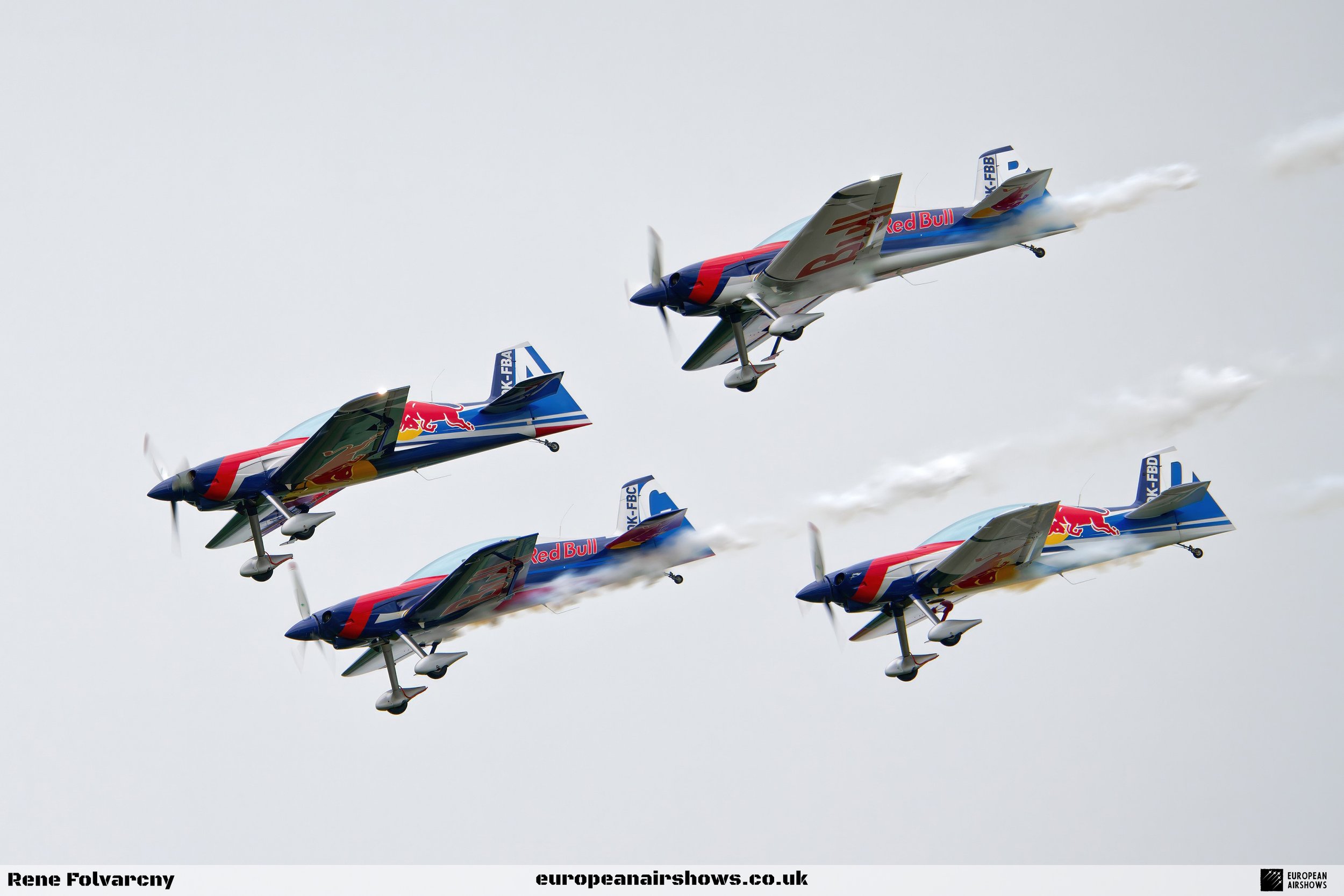
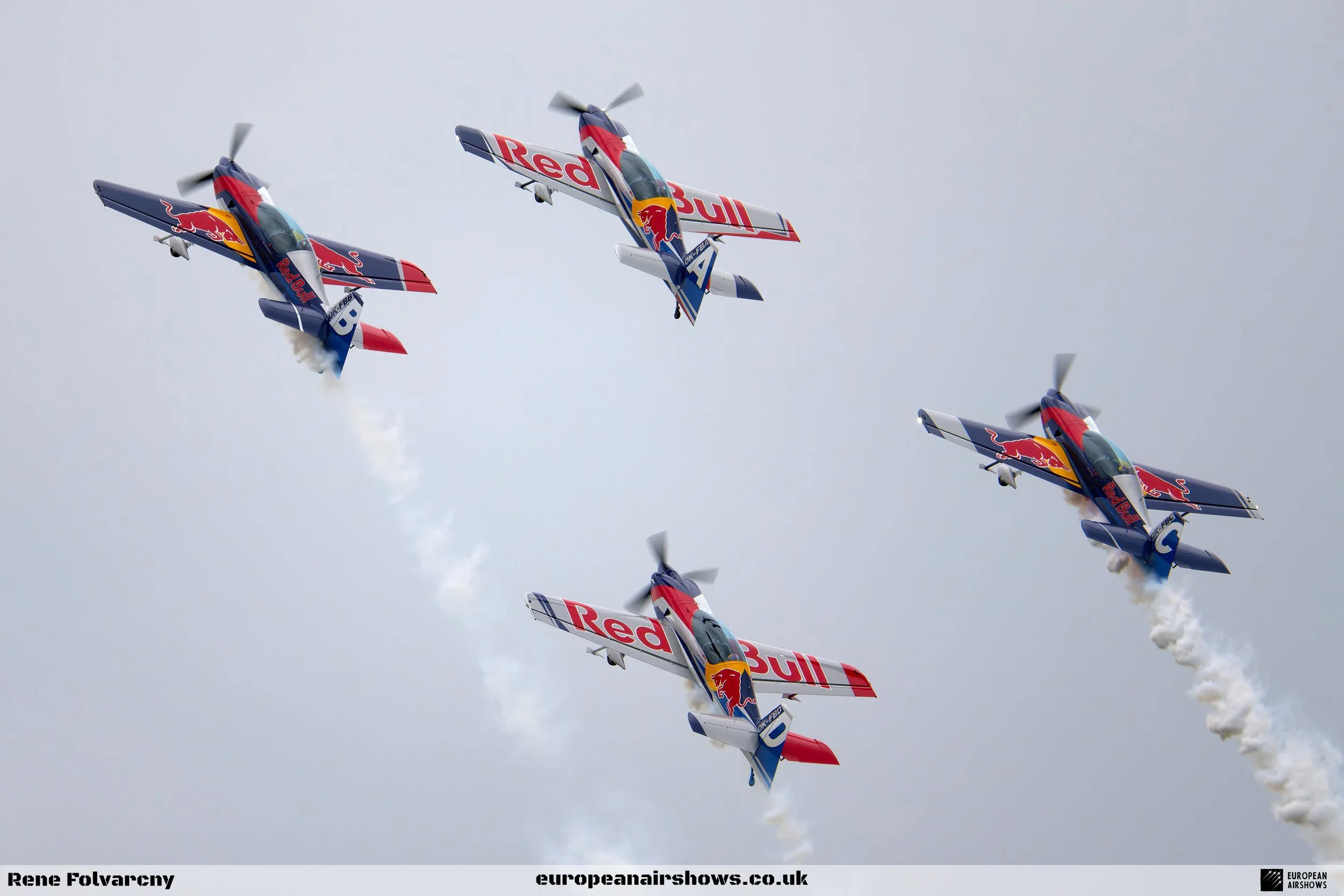
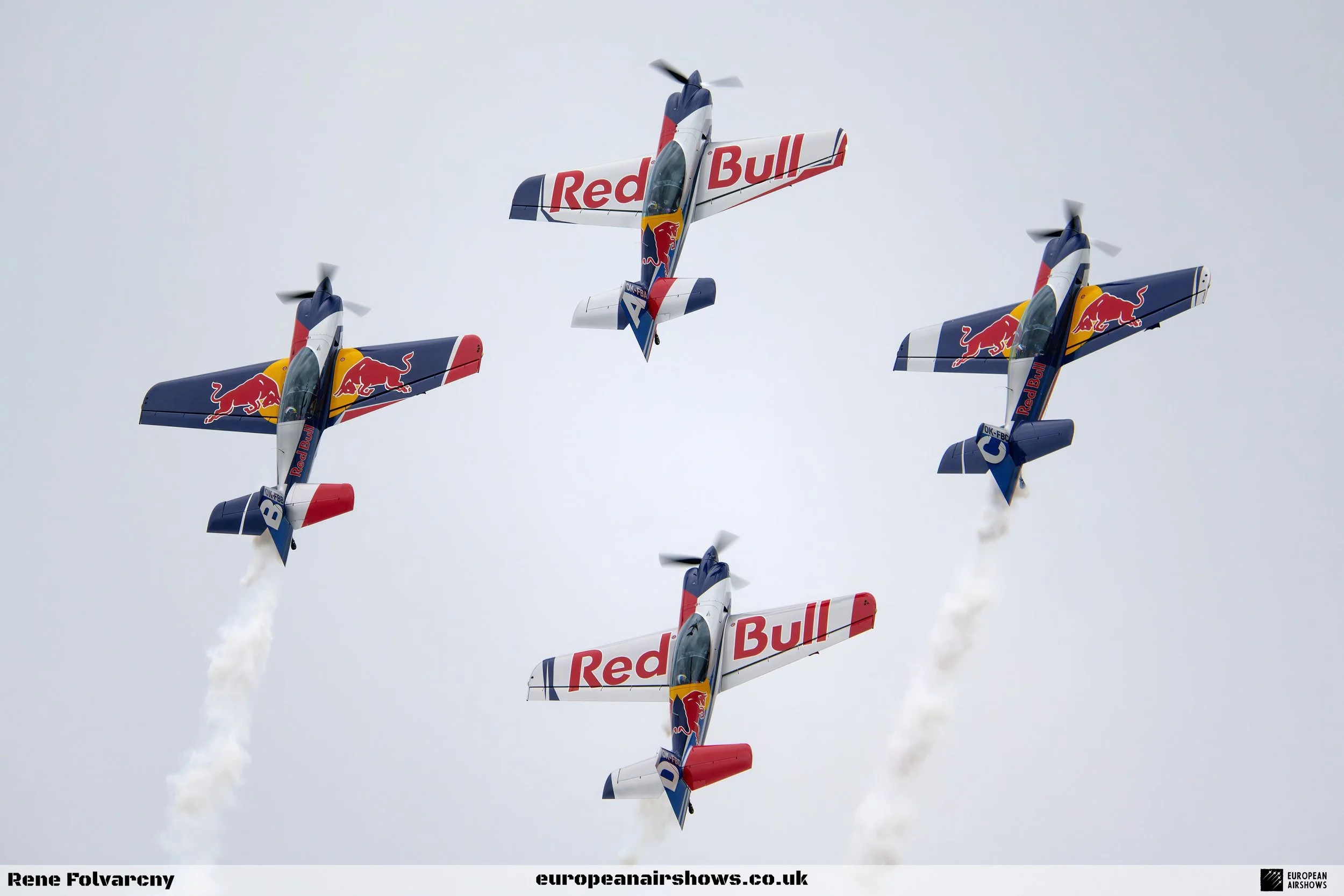
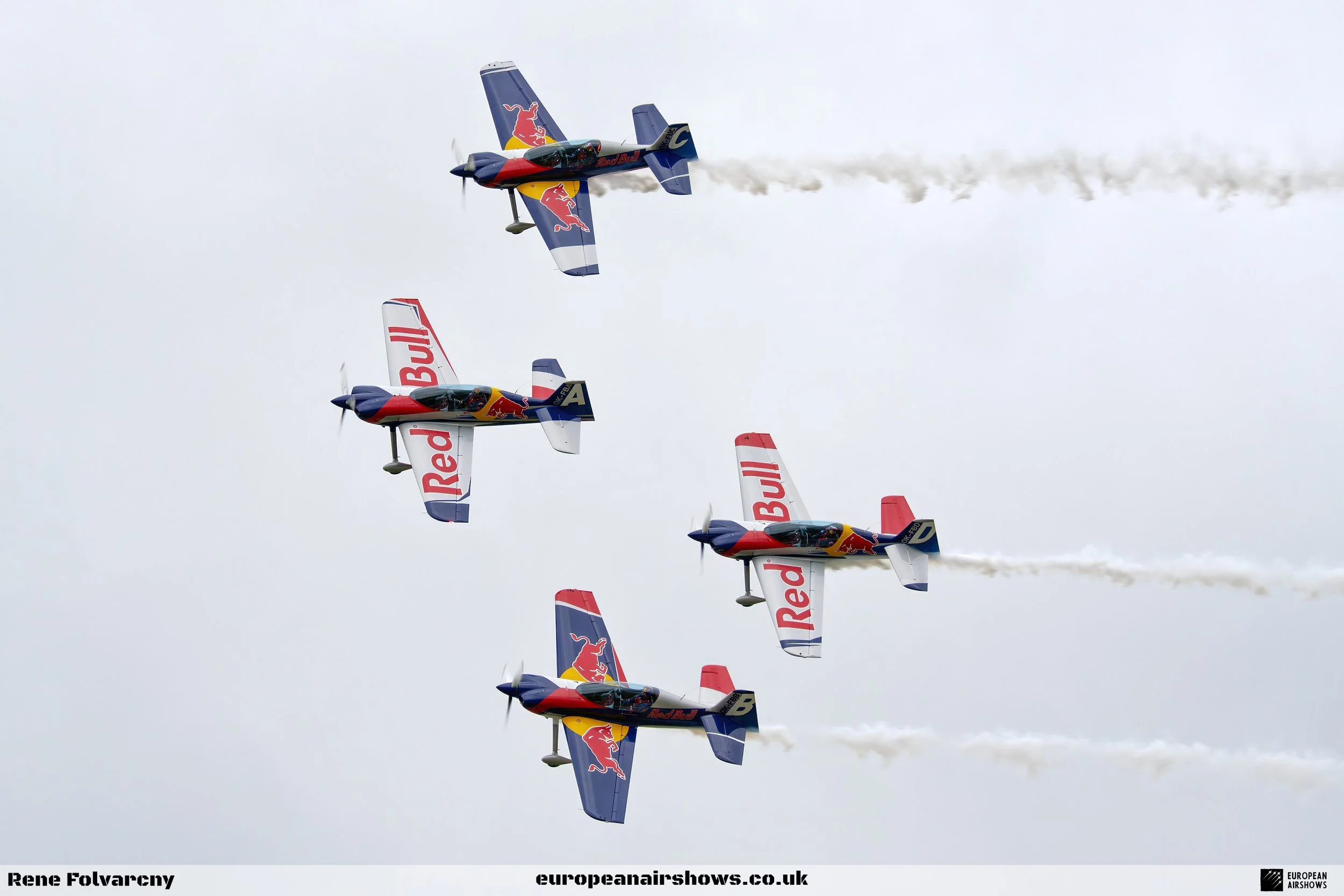
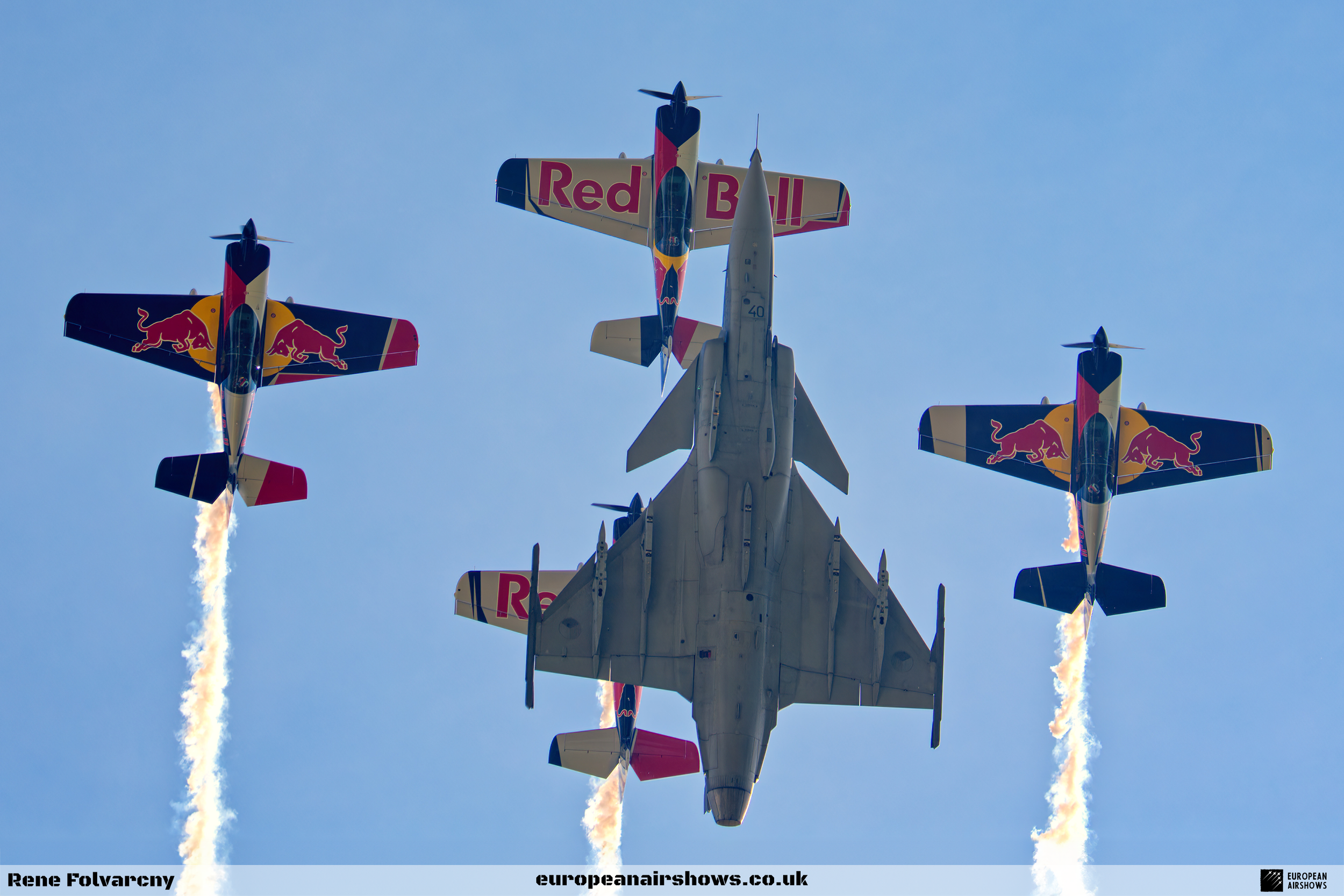
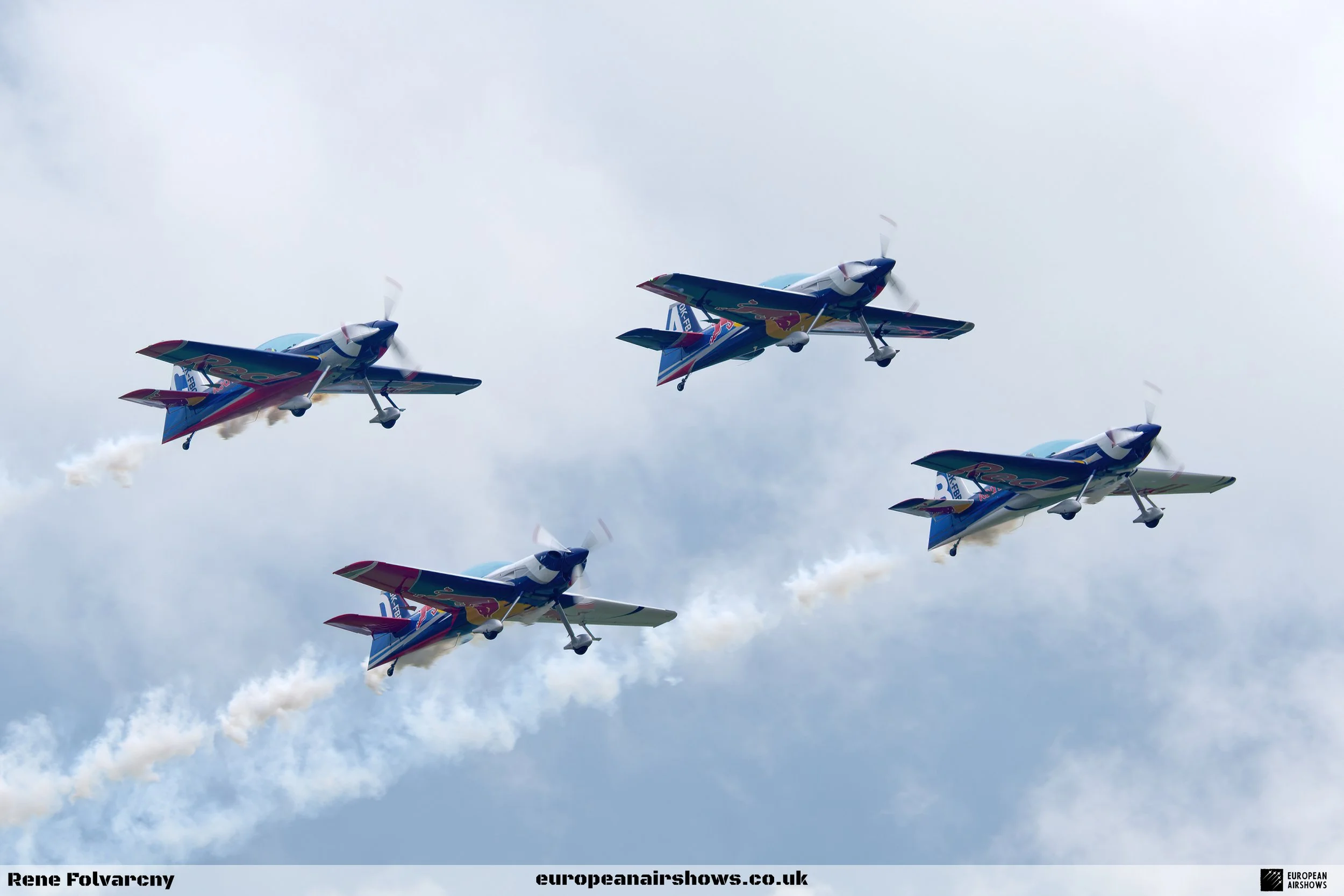
The routine begins from disciplined close formation, with small relative movements magnified by four matching aircraft, aligned attitudes and continuous white smoke.
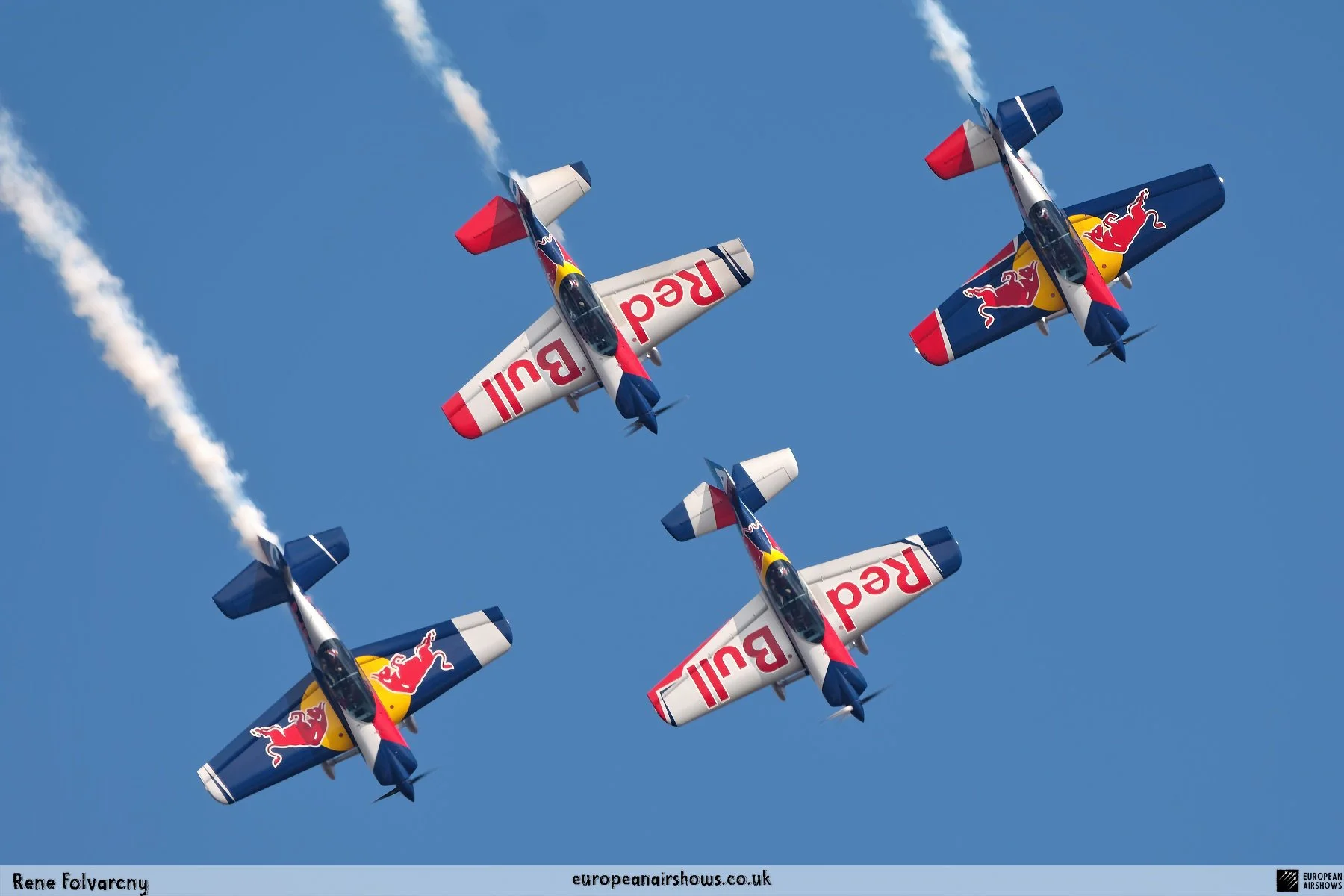
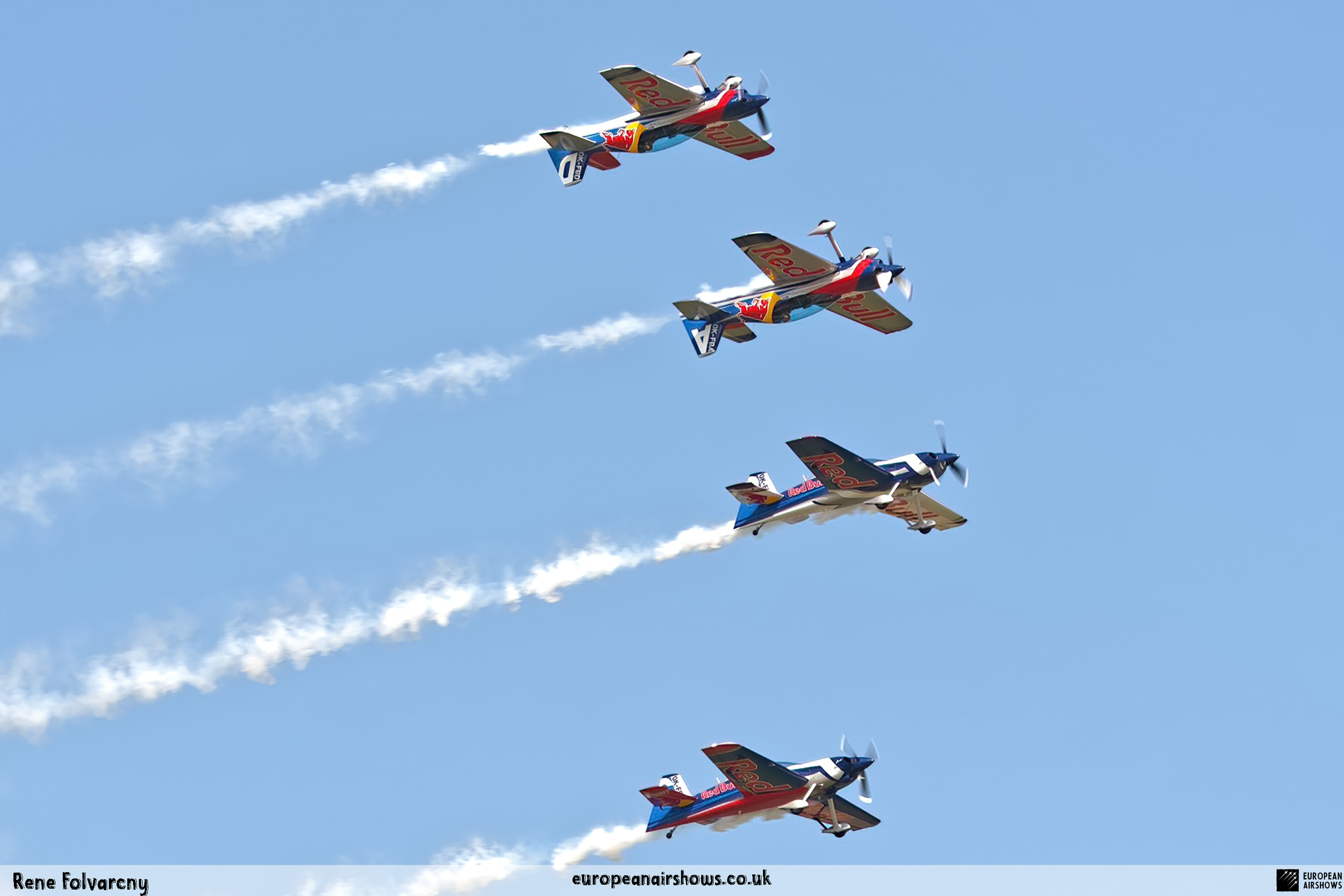
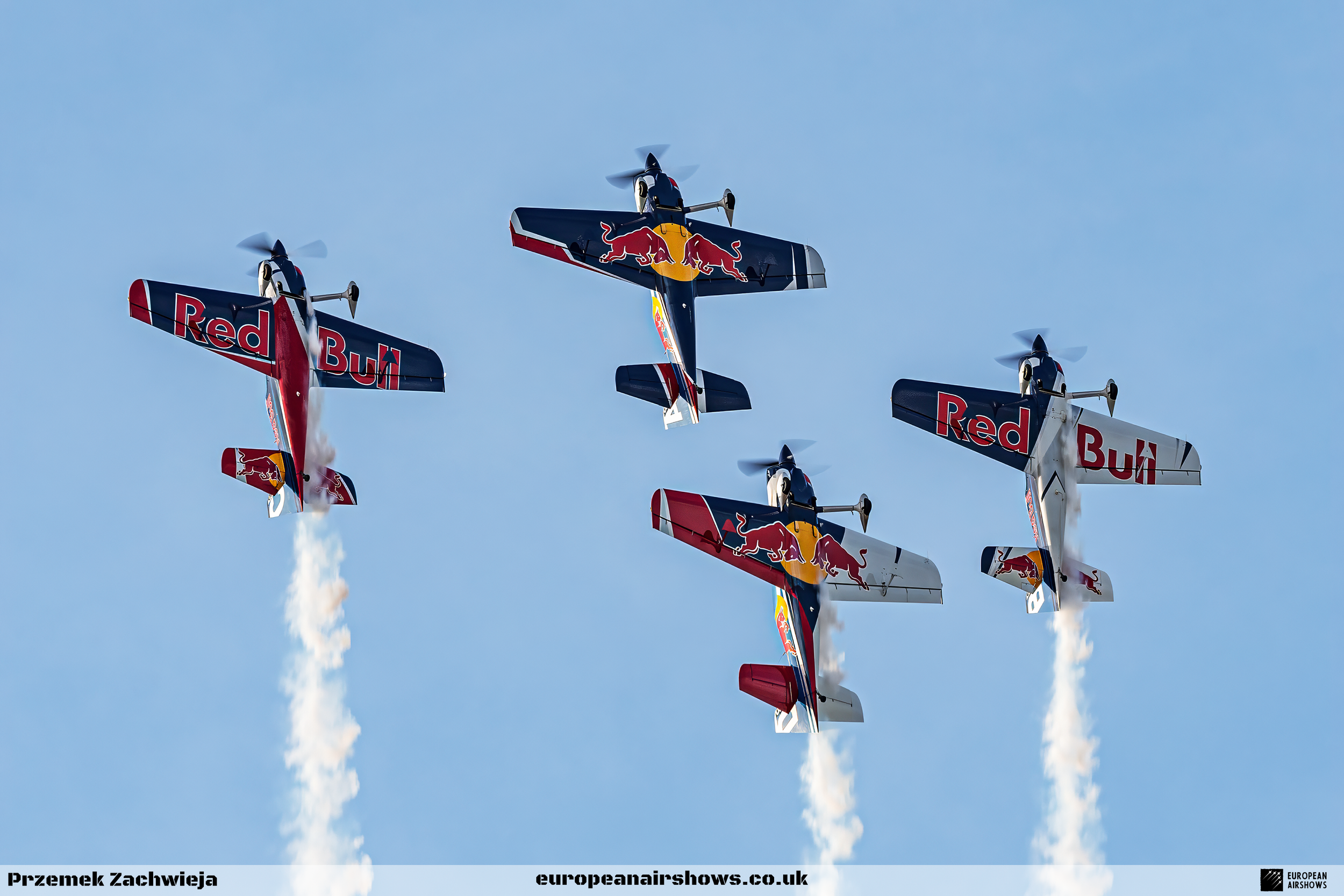
Vertical formation loops
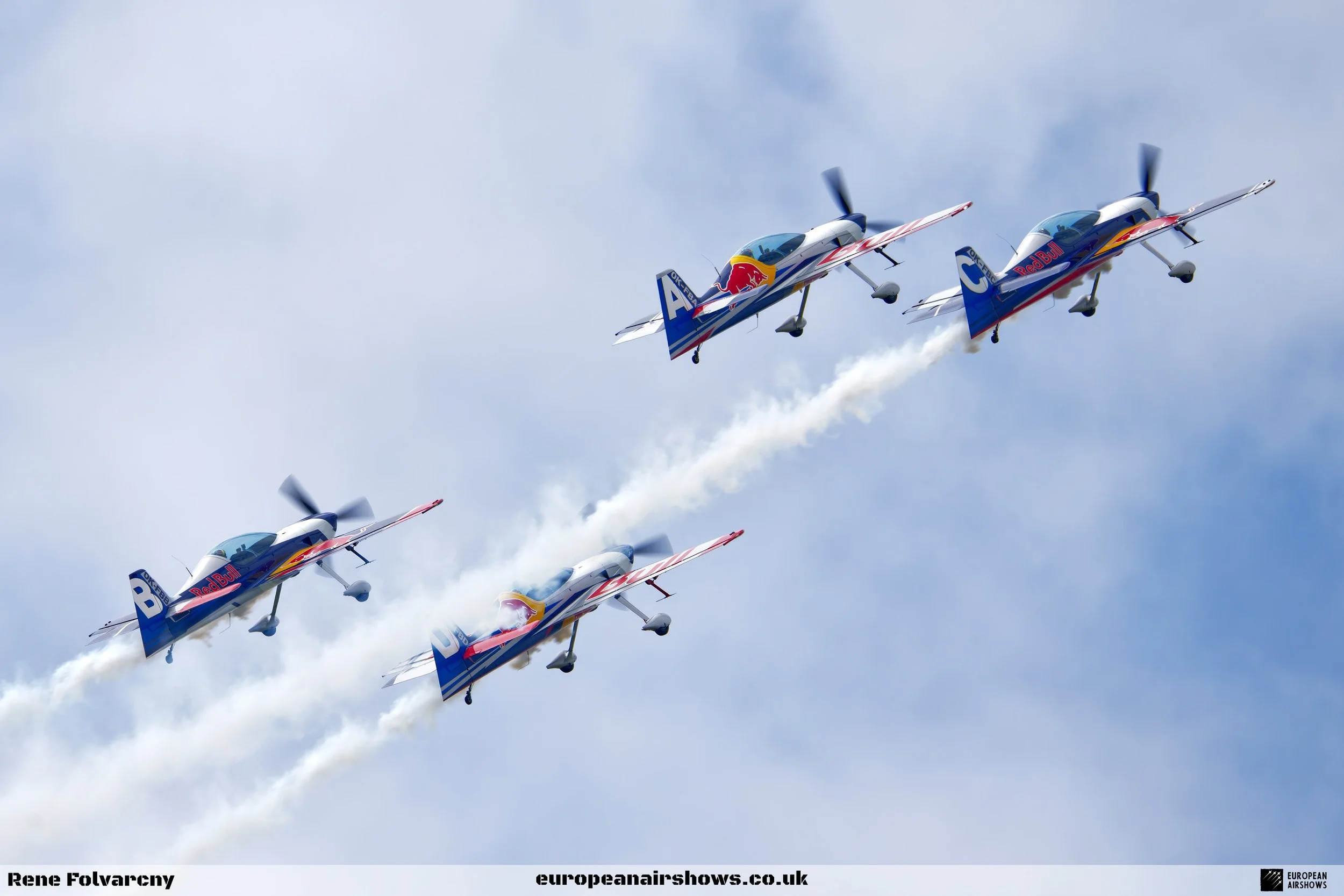
The 315 hp XA42 allows the formation to carry its geometry into the vertical, combining energy management with precise throttle, rudder and elevator control.
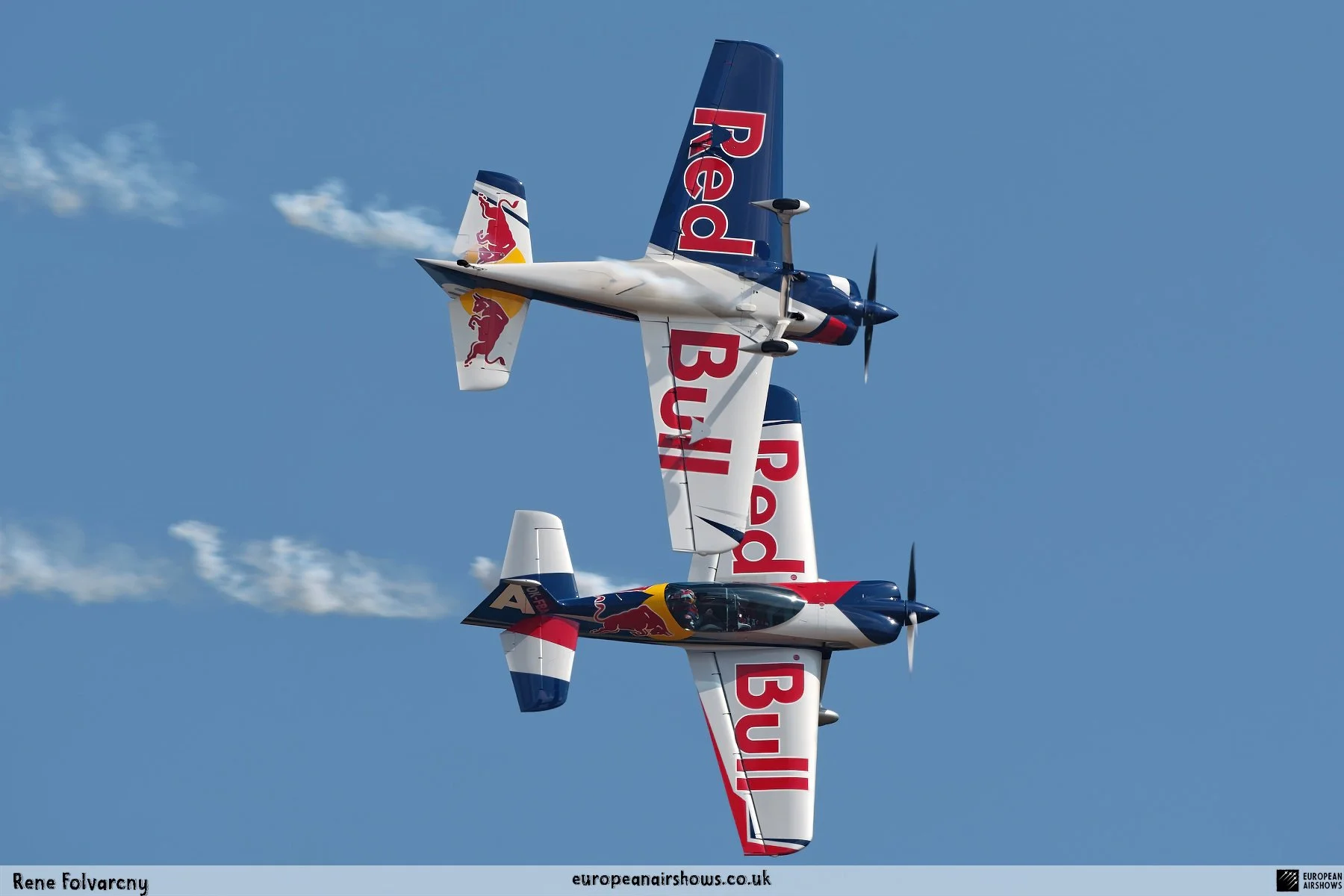
Mirror aerobatics
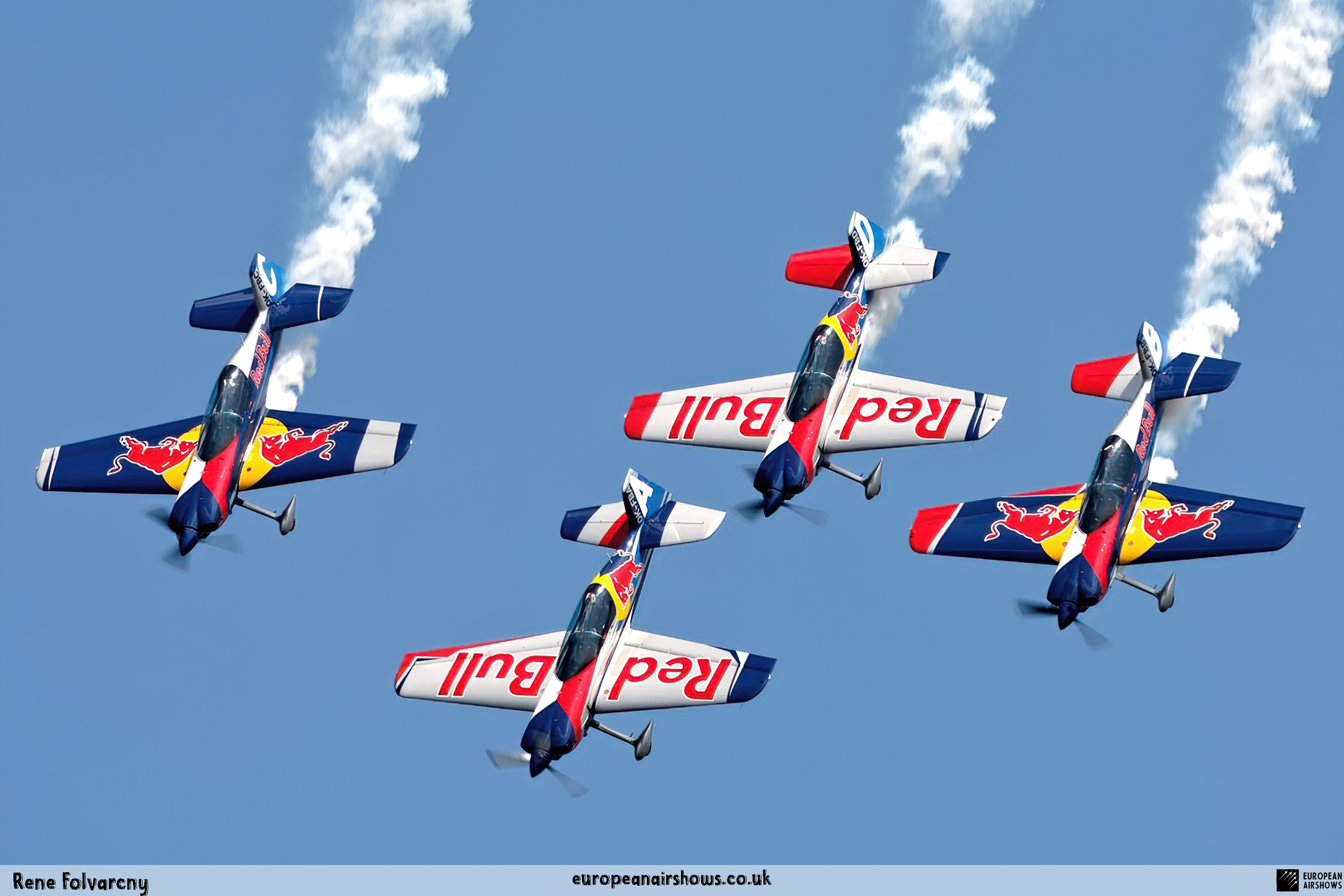
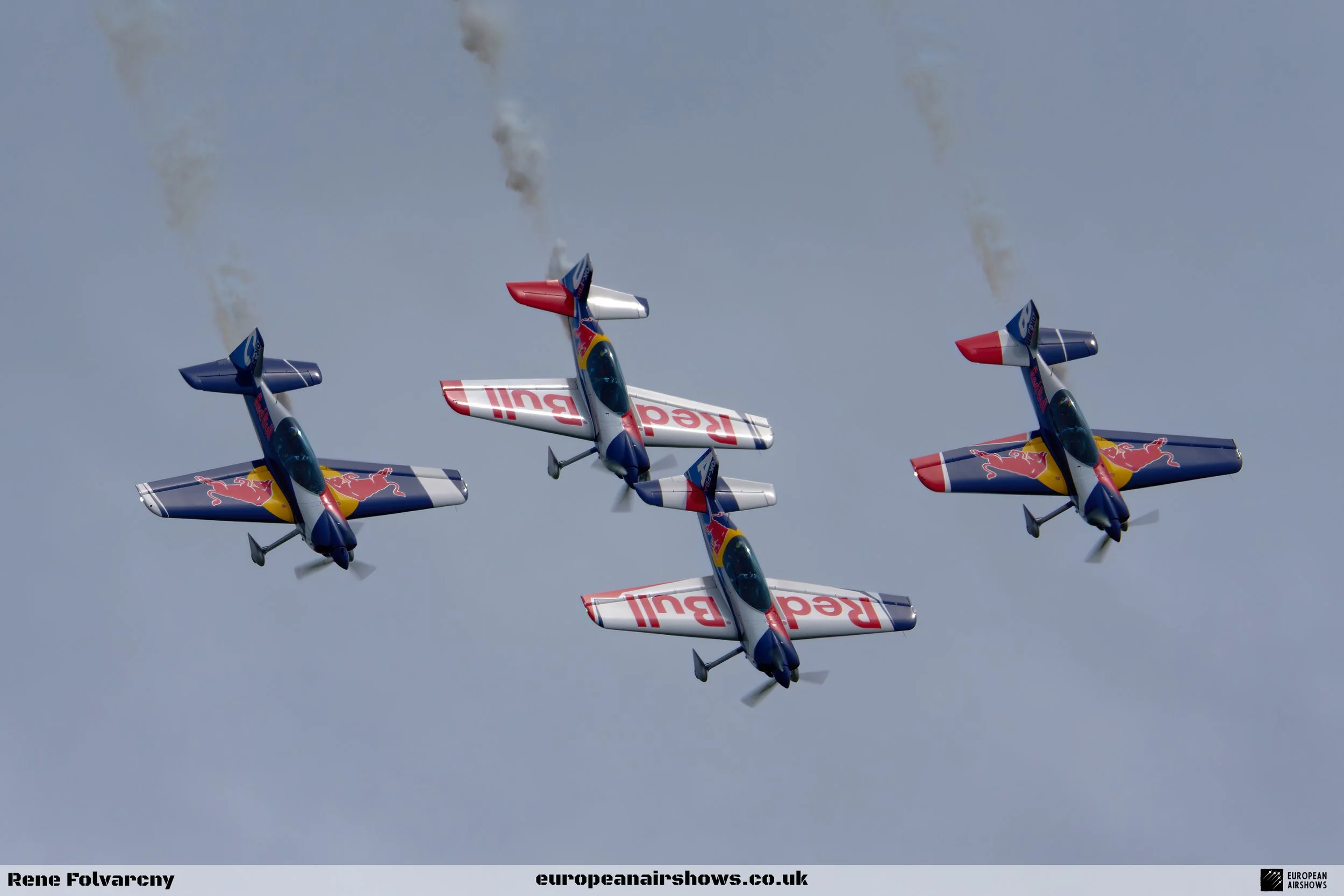
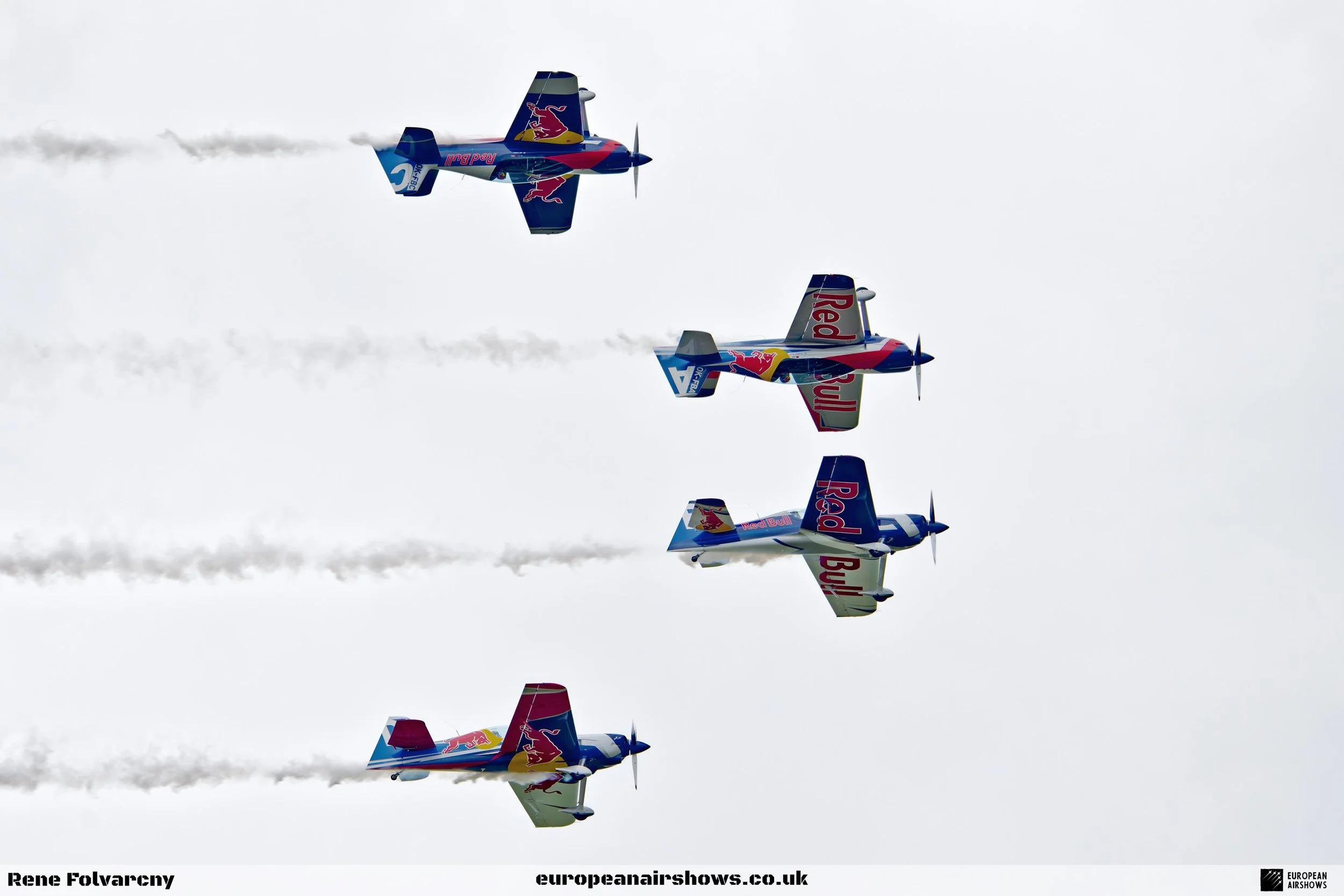
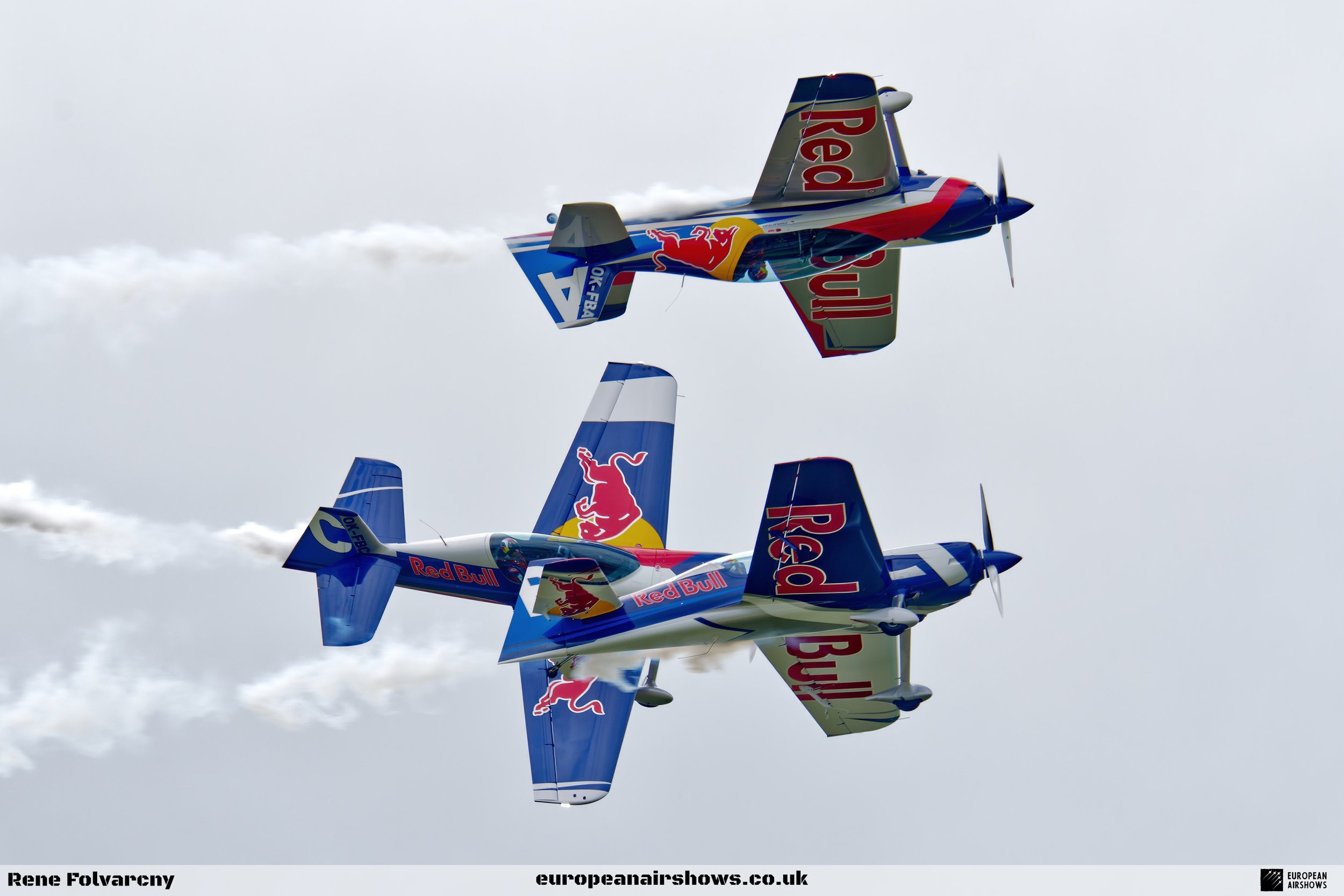
One aircraft can fly inverted above or below another, creating a symmetrical pair whose spacing must remain accurate while both pilots manage very different control forces.
Outside and negative-G flight
Inverted loops and outside elements distinguish the act from teams whose routines are dominated by positive-G figures, using the XA42's purpose-built aerobatic structure.
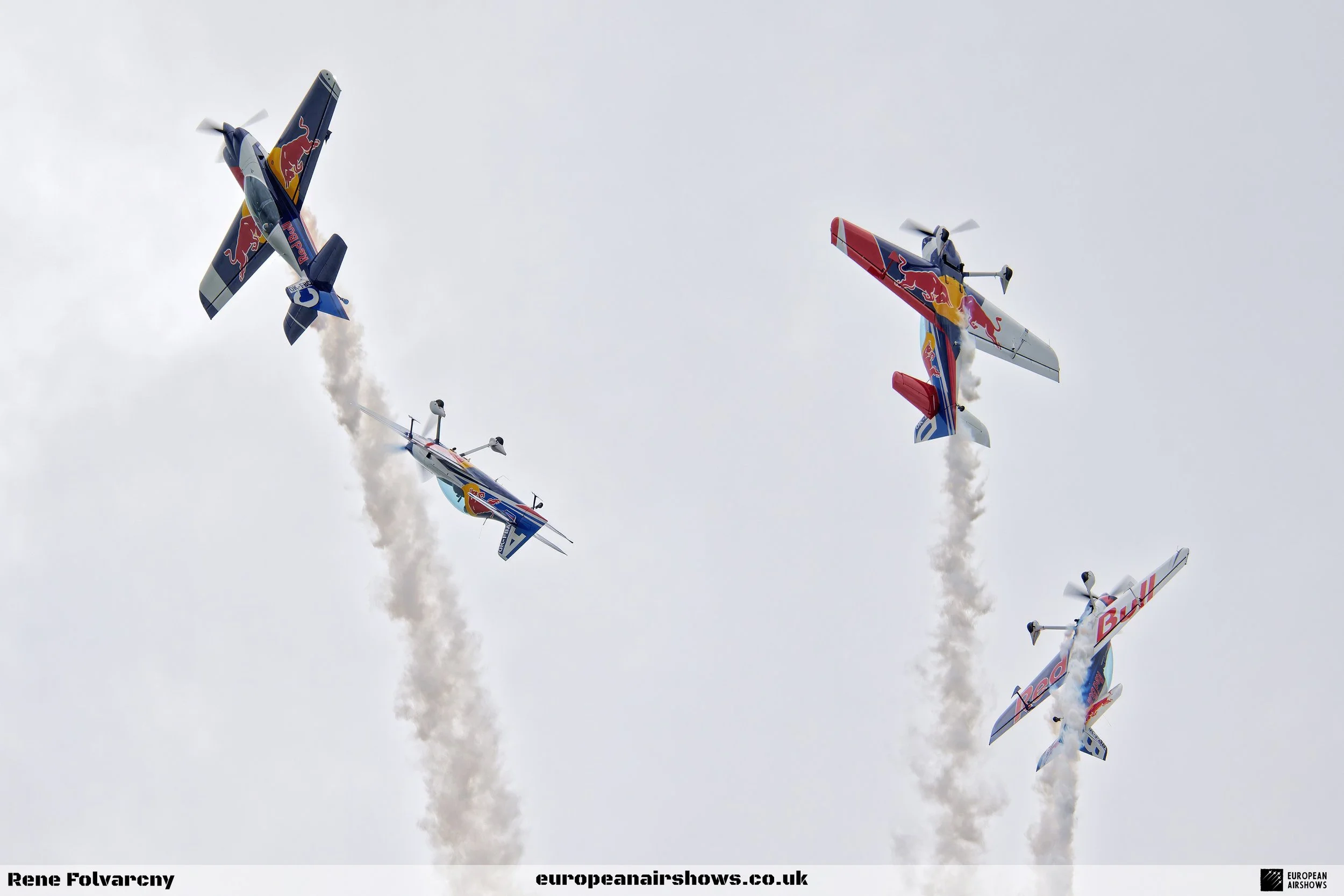
Opposition and crossover
Breaks release aircraft from the main formation for high-closure passes and crossing figures before the pilots rebuild the four-ship presentation.
Smoke as a flight trace
Each XA42 carries a dedicated smoke system. The four trails show the path, separation and symmetry of figures that would otherwise disappear too quickly against the sky.
The aircraft
A carbon-composite unlimited aerobatic aircraft designed to remain controllable at the extremes of the flight envelope.
XA42 and Sbach 342
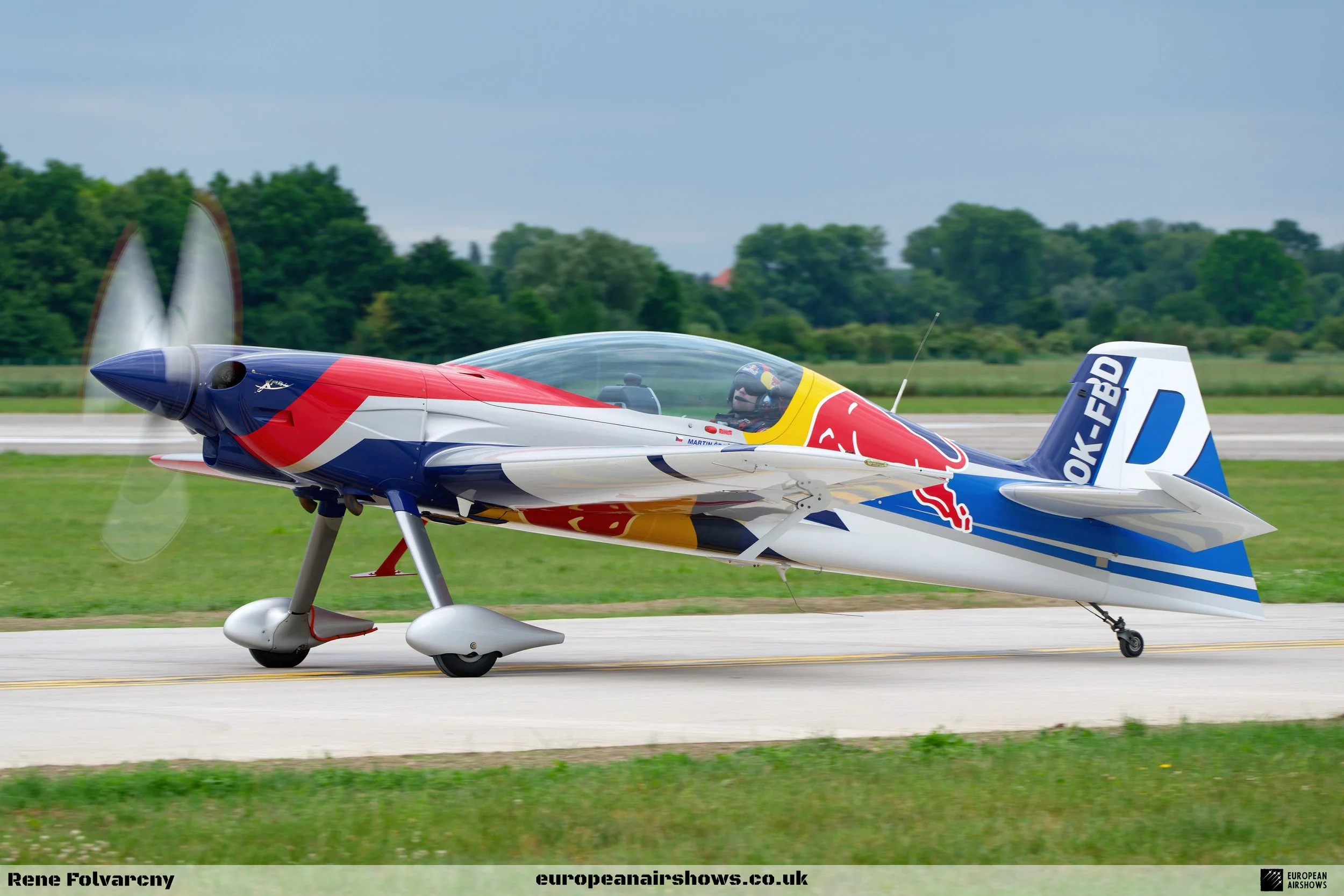
XA42 is the certified type designation; Sbach 342 was the aircraft's earlier marketing name. It is a German-designed two-seat tandem aerobatic monoplane with a carbon-fibre reinforced composite primary structure, conventional tailwheel landing gear and controls optimised for rapid, precise response.
Six cylinders and 315 horsepower
The Lycoming AEIO-580-B1A is a fuel-injected, air-cooled six-cylinder engine rated at 315 hp. It drives a three-blade constant-speed MT propeller. The engine's inverted oil system supports sustained aerobatic operation, while the aircraft's power-to-weight ratio gives the team the vertical performance needed to fly large formation figures.
Certified for two different roles
The XA42 is approved in Utility and Acrobatic categories. At the 850 kg aerobatic maximum take-off mass, the approved flight-manual limits are +10 g and -10 g. Utility operation allows up to 999 kg but uses much lower limits of +4.4 g and -2 g. Weight and category therefore matter whenever a performance figure is quoted.
Display numbers are not structural limits
The team publishes approximately -5 g to +7 g and speeds up to 420 km/h for its routine. Those are useful descriptions of the display, but they should not be confused with the XA42's certified VNE of 225 kt or its full ±10 g aerobatic-category envelope.
OK-FBA
Assigned to team leader Stanislav Čejka in the current published formation.
OK-FBB
Flown by Jan Tvrdík in the current four-aircraft line-up.
OK-FBC
Flown by freelance airshow pilot Jan Rudzinskyj.
OK-FBD
Flown by Martin Špaček, completing the current four-ship.
The story so far
Czech-built trainers, World Cup success and a modern XA42 formation linked by one evolving display tradition.
1958
The Chrudim roots
Jiří Tlustý, Božej Struž, Antonín Klimenda and Ladislav Bezák begin developing the close formation aerobatic tradition from which the later team descends.
1960
Box Trener takes shape
The formation becomes established with Zlín Trenér aircraft, creating the disciplined Czech civilian team identity recognised in later histories.
1982
The original chapter closes
Political and operational constraints bring the first long era of organised formation display flying to an end.
Around 1990
The formation returns
The concept is revived after political change, first as the Unimax Devils and later as Sky Box, now using Zlín Z-50 aerobatic aircraft.
1998
FAI World Cup success
Sky Box wins the FAI World Cup for aerobatic teams, confirming the formation's place among the leading international civilian acts.
2000
The Flying Bulls name
Red Bull support begins a new branded era while the team continues flying the Zlín 50 and expands its international programme.
Spring 2014
XA42 replaces the Zlín
The team adopts the XtremeAir XA42, gaining more power, vertical performance and negative-G capability for the modern four-aircraft routine.
February 2015
Aero India contact
Two Zlín 50s flown by outgoing team pilots Radka Máchová and Jiří Saller touch during a display at Bengaluru. Both pilots land safely. It is not an XA42 incident.
2021
The last Sky Box-era pilot steps back
Miroslav Krejčí ends his XA42 flying with the team after mentoring the present generation and providing a direct link to the earlier formation.
2025-2026
An active international team
The four XA42s continue across European programmes, with a published multi-country 2026 season confirming the team remains fully active.
Identity & context
Four distinctions make sense of a long and sometimes confusing history.
Czech team, not Austrian collection
This is the four-XA42 aerobatic team based at Jaroměř-Josefov. The Flying Bulls collection at Salzburg operates historic aircraft under the same wider brand but is a separate organisation.
Lineage is older than the name
The roots begin in 1958 and Box Trener is normally dated from 1960. The Flying Bulls identity itself arrived with Red Bull support in 2000.
XA42 and Sbach 342
Sbach 342 is the former marketing name commonly used in airshow material. XA42 is the type designation found in the EASA certificate and approved flight manual.
Certified limits are not routine loads
The XA42 can be approved to ±10 g at its 850 kg aerobatic mass. The team's published display range is lower, around -5 g to +7 g, and better represents what spectators see.