The Firebirds
Two Van's RV-4s · Daylight, dusk and pyrotechnic formation displays
A compact British two-ship whose character changes with the light: close formation and synchronised aerobatics by day, then illuminated aircraft, coloured pyrotechnics and glowing trails across the twilight sky.
- Founded
- 2015 as FireFlies
- Current identity
- Firebirds since 2022
- Aircraft
- 2 × Van's RV-4
- Formation
- Two aircraft / two pilots
- Display modes
- Daylight and twilight pyro
- Status
- Active in 2026
The team
A small independent act with two distinct personalities: precision in daylight and spectacle at dusk.
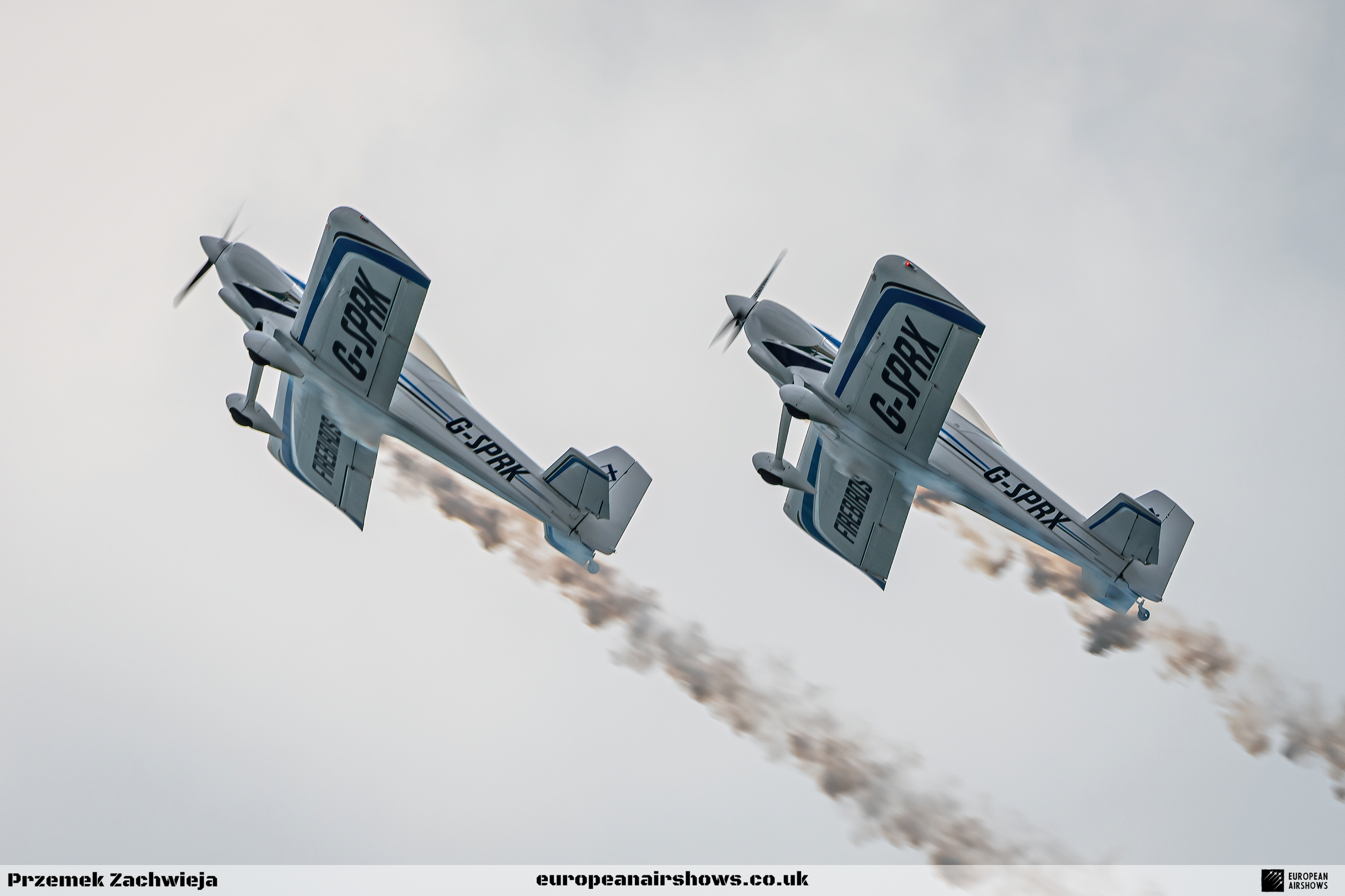
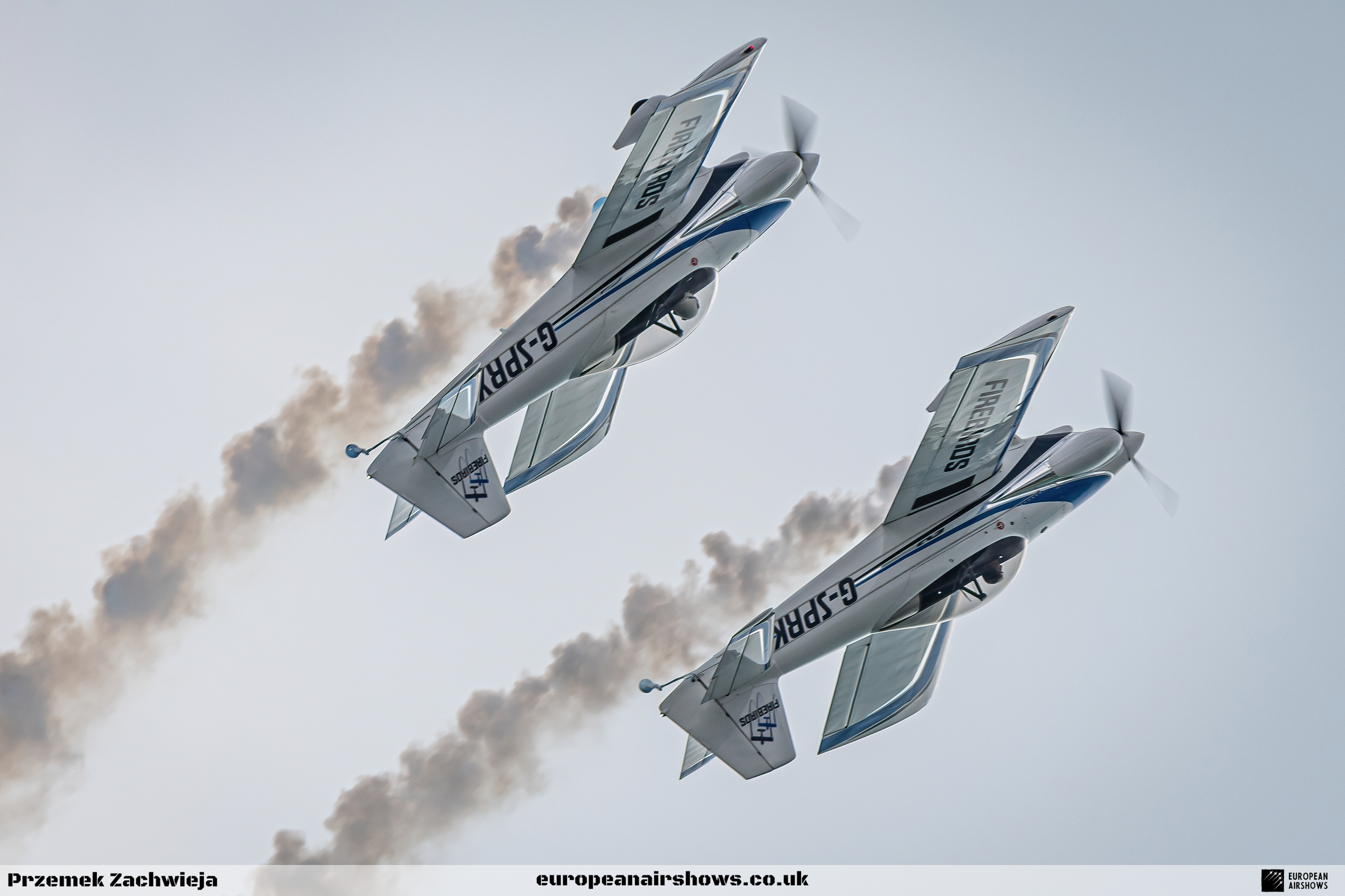
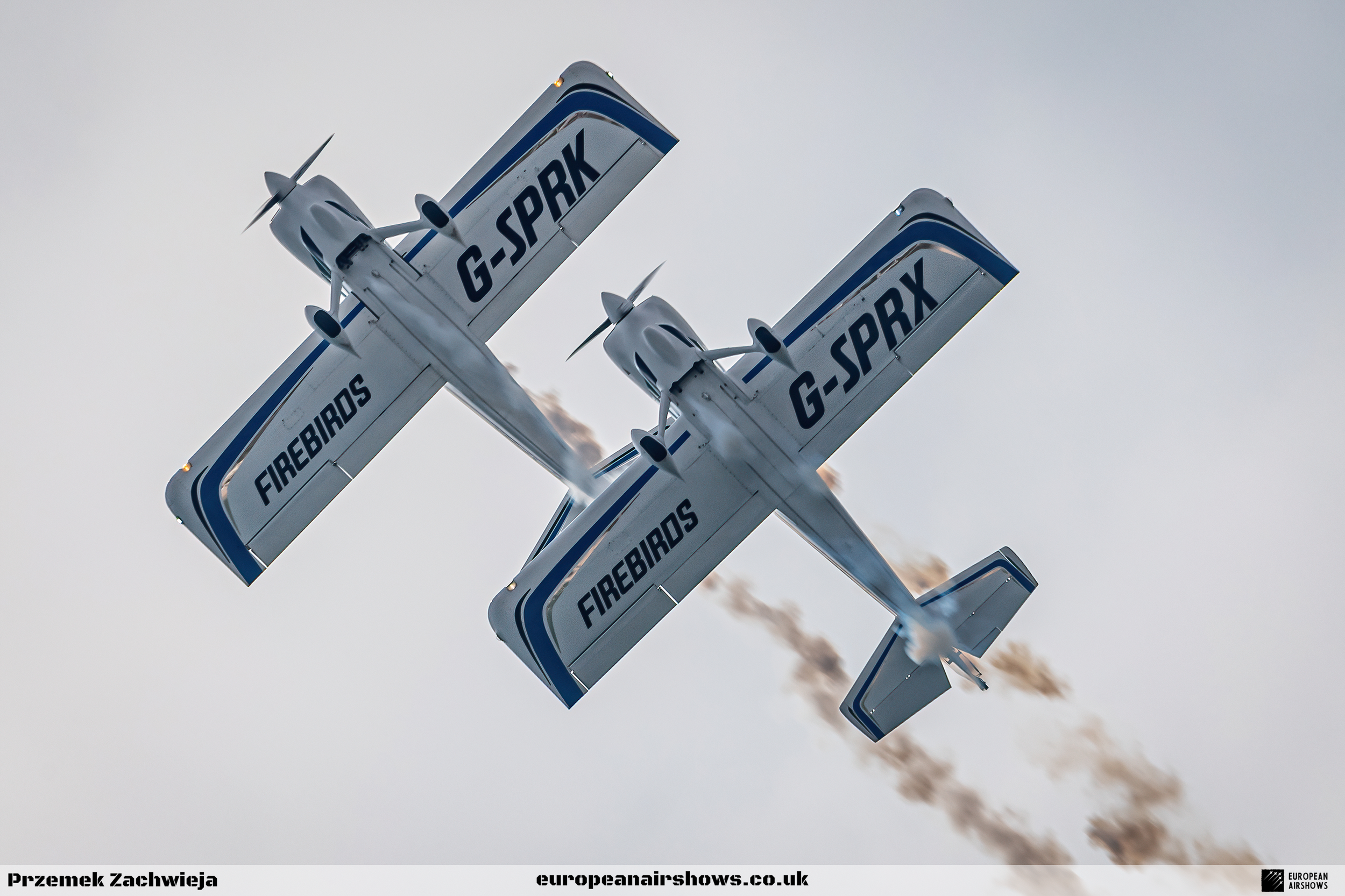
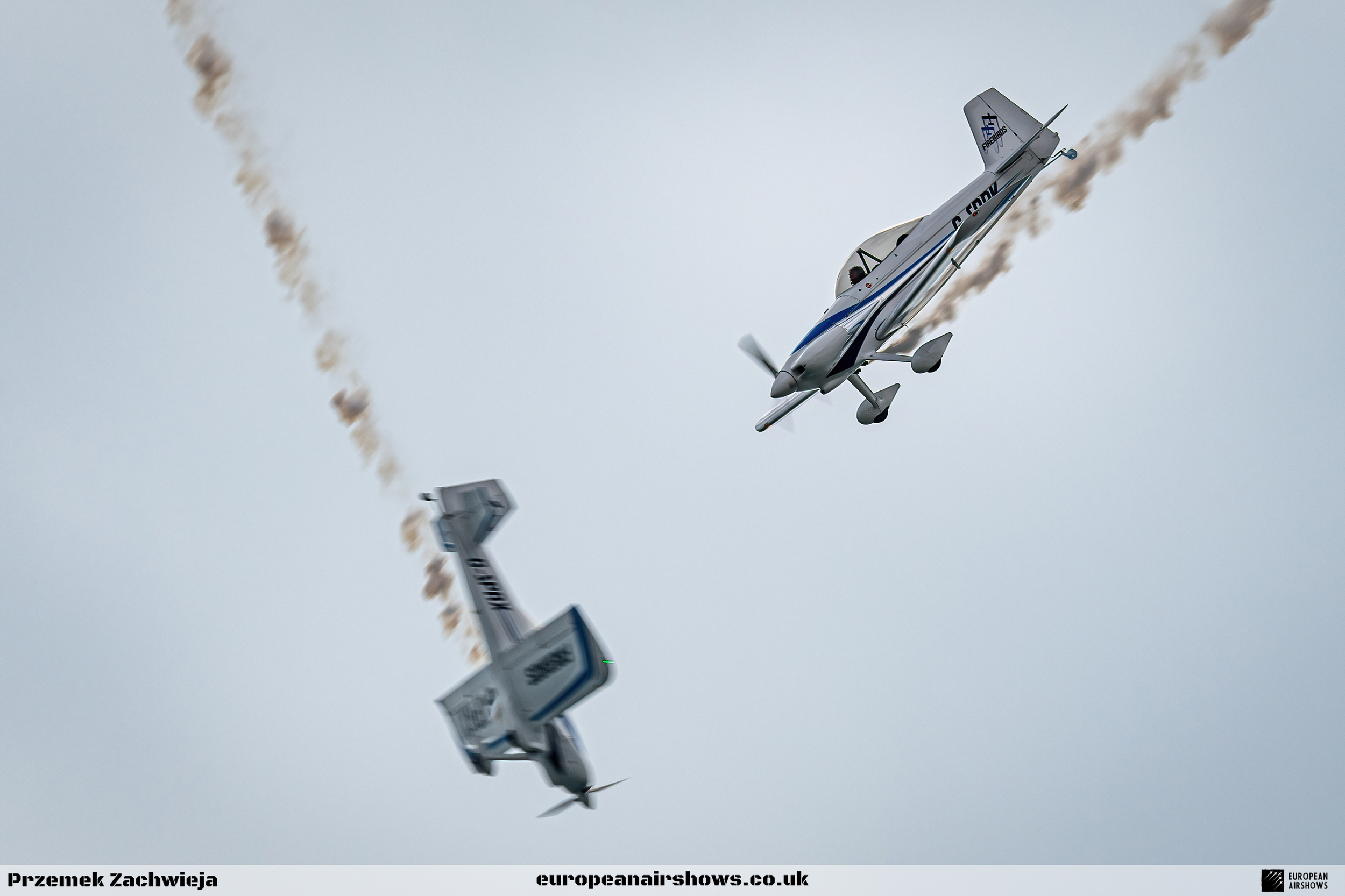
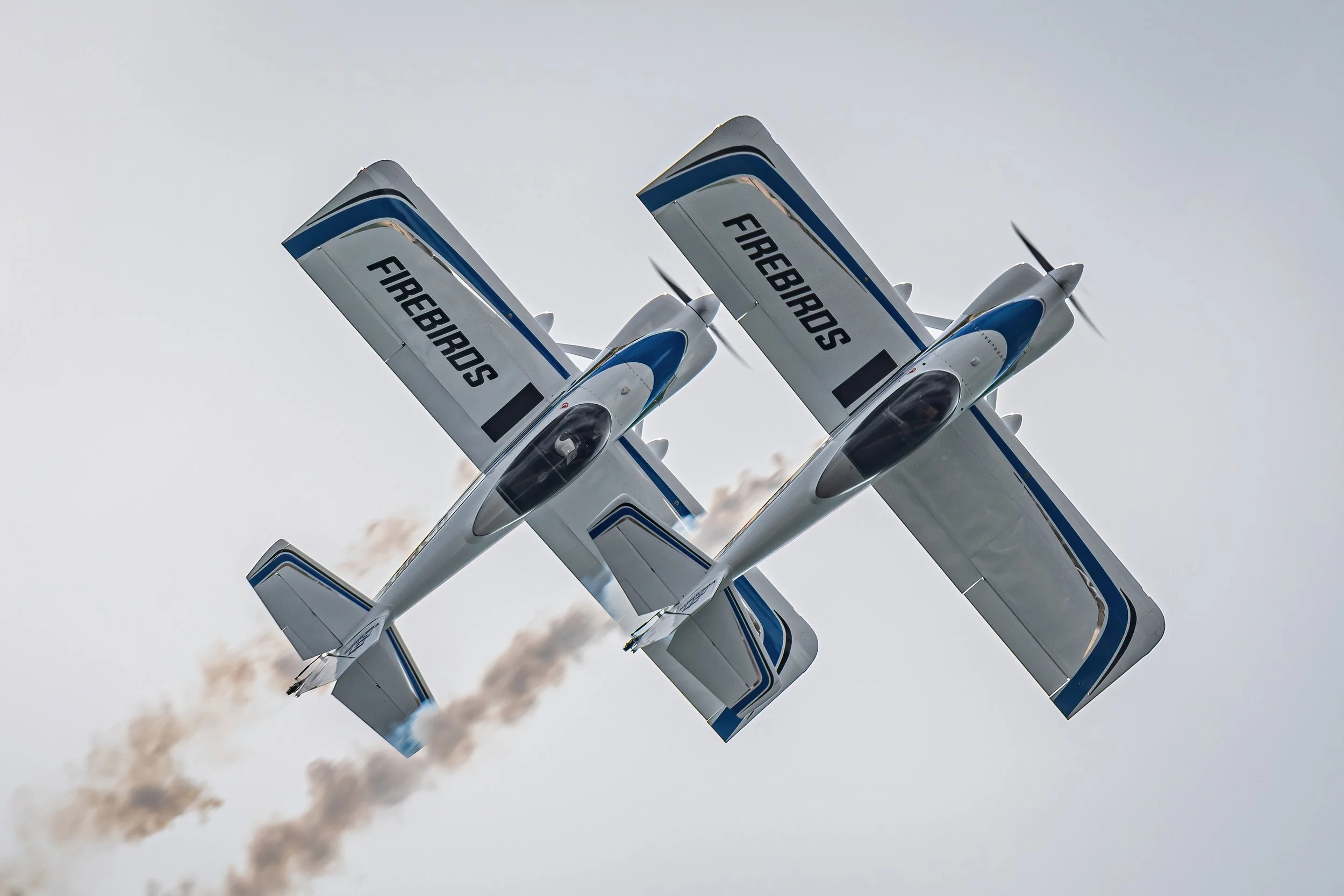
The Firebirds are a British civilian display team flying two Van's RV-4 kit-built aircraft. Their display is deliberately compact: two pilots, two light aeroplanes and a routine designed to remain readable from the crowdline without relying on the scale of a large formation. Close formation, synchronised figures, breaks, opposition work and individual aerobatics are combined into a flowing sequence that keeps both aircraft involved throughout the display.
The team's story began in 2015 under the name FireFlies. Andy Durston and Jon Gowdy formed the original act around G-SPRK and G-SPRX, exploiting the RV-4's blend of speed, agility and economical touring performance. The aeroplanes could travel between events under their own power, then deliver a lively display without the transport and engineering footprint required by heavier specialist aerobatic aircraft.
From FireFlies to Firebirds
In 2022 the team passed to Nigel Reid and John Dodd and adopted the Firebirds name. The change was more than a new title on an established pair of aircraft: it marked a new operating chapter while preserving the act's most recognisable ingredients. The two RV-4s, their white display finish, the illuminated dusk presentation and the wingtip pyrotechnics all continued to define the team in front of a new generation of spectators.
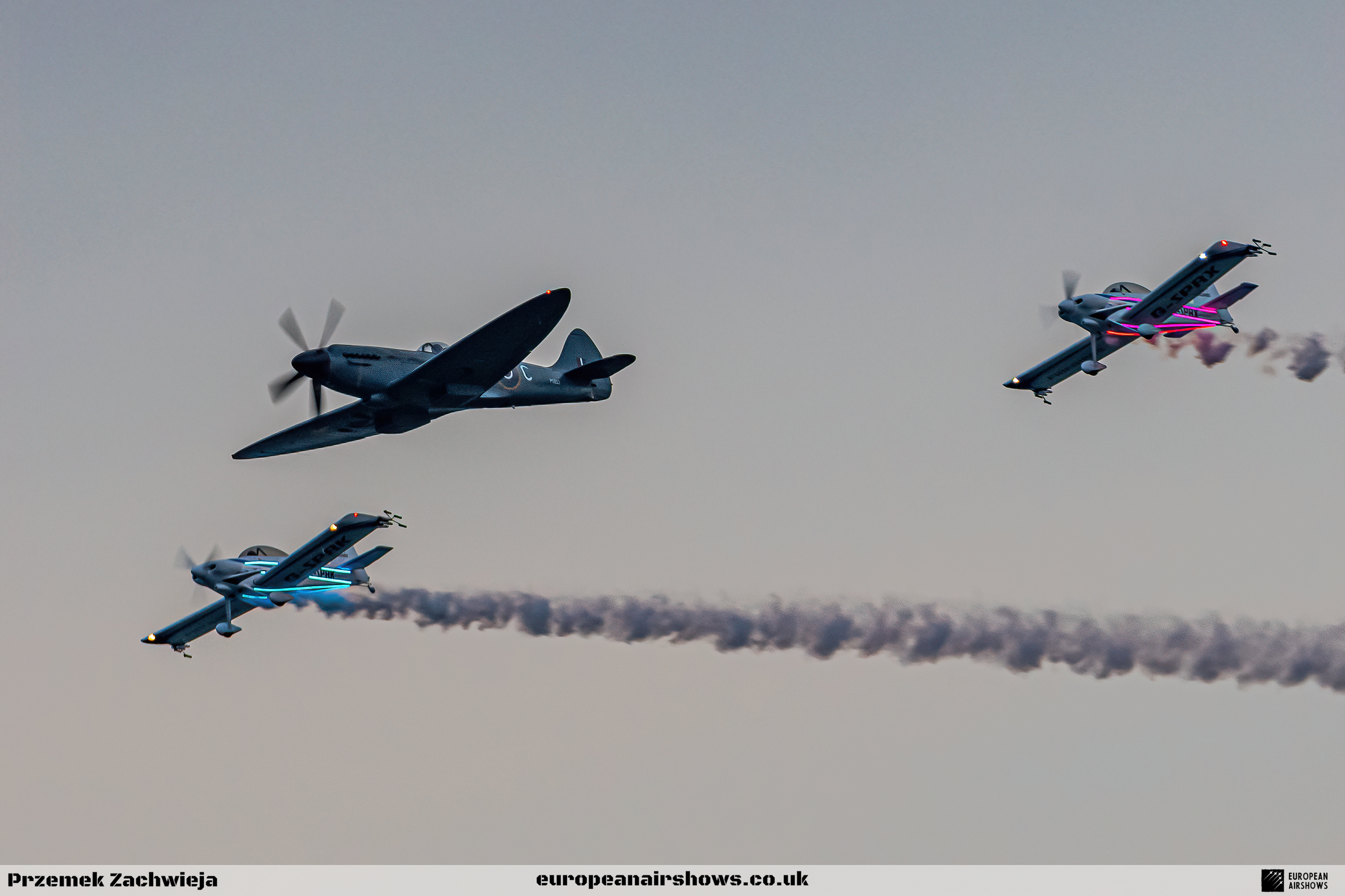
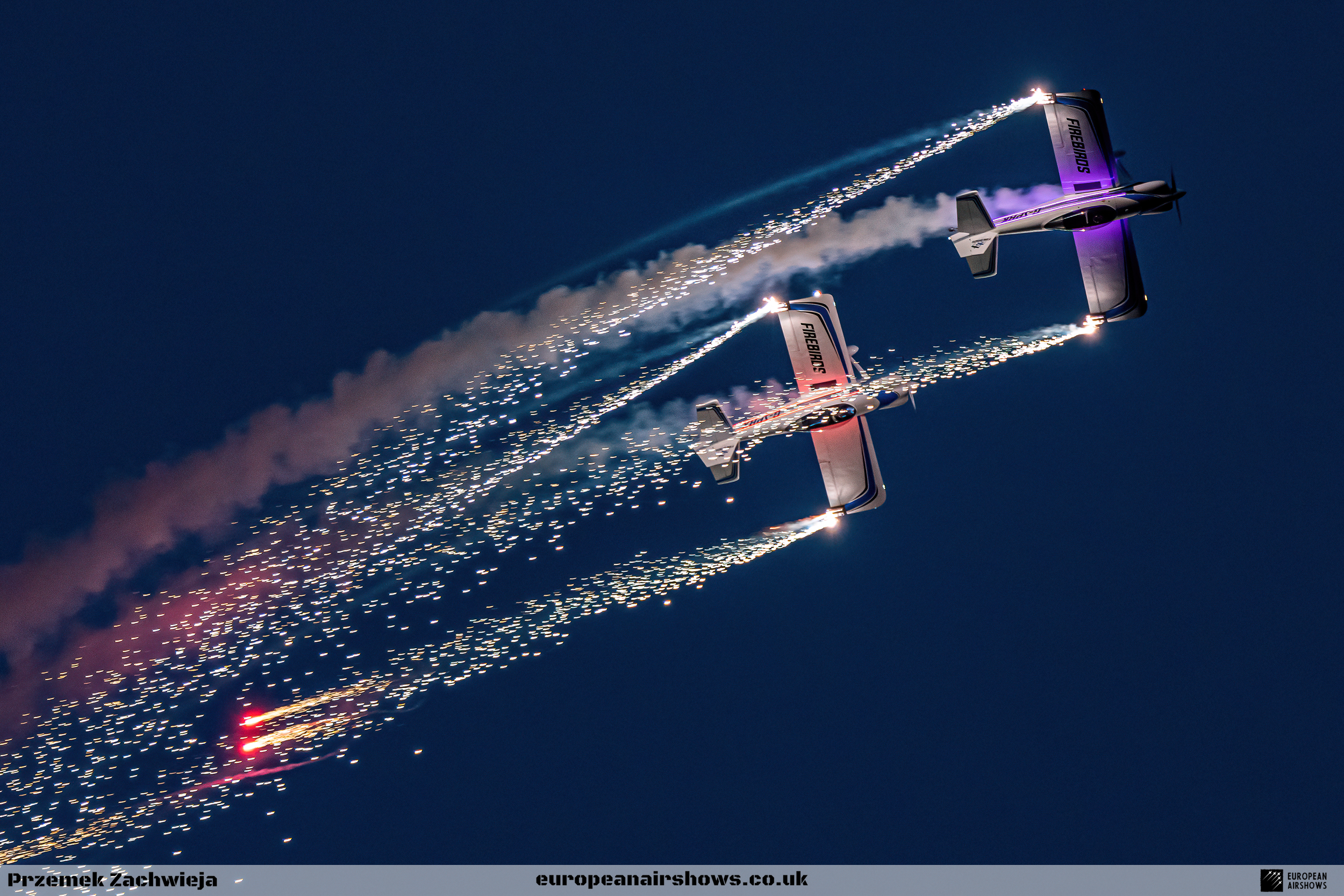
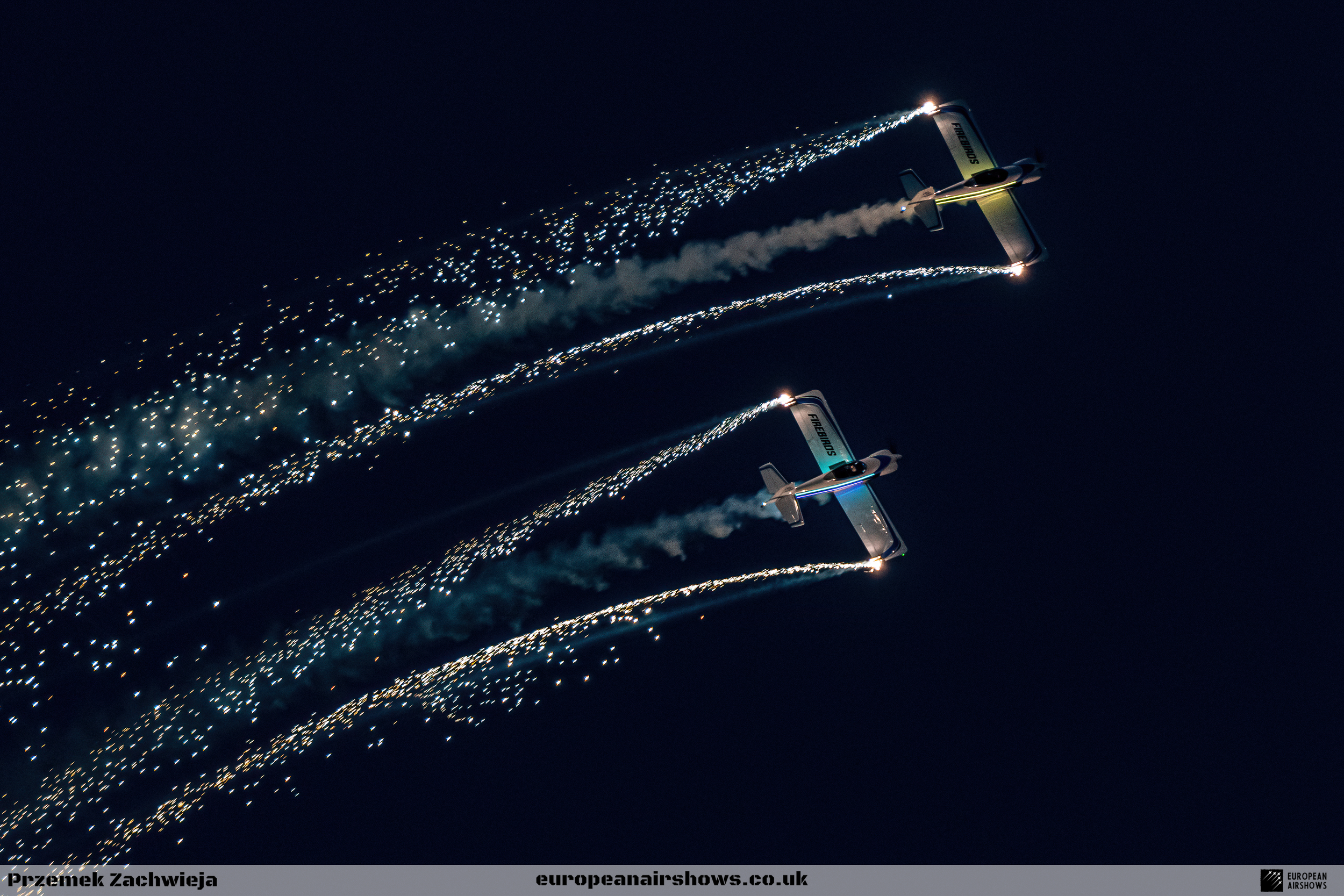
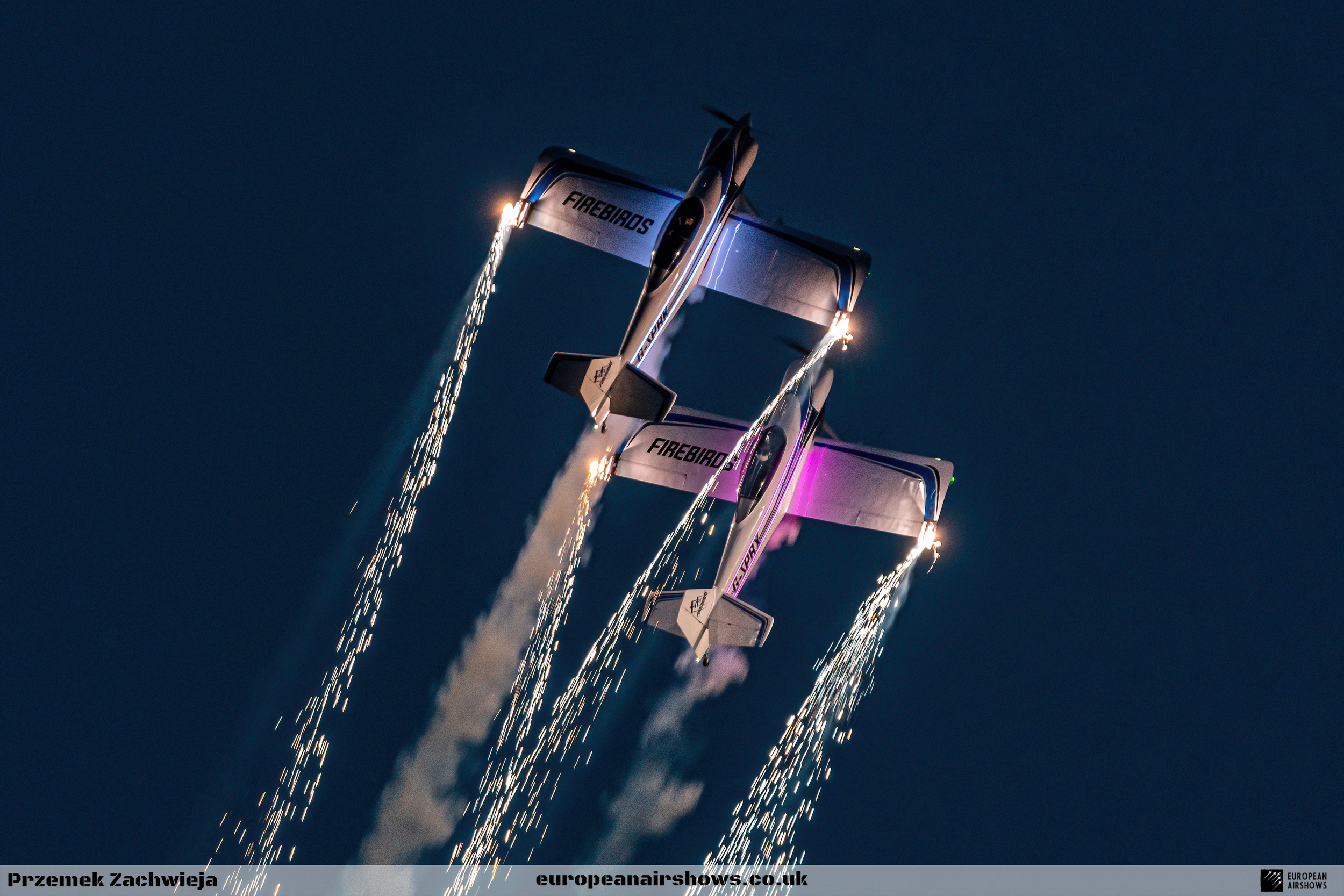
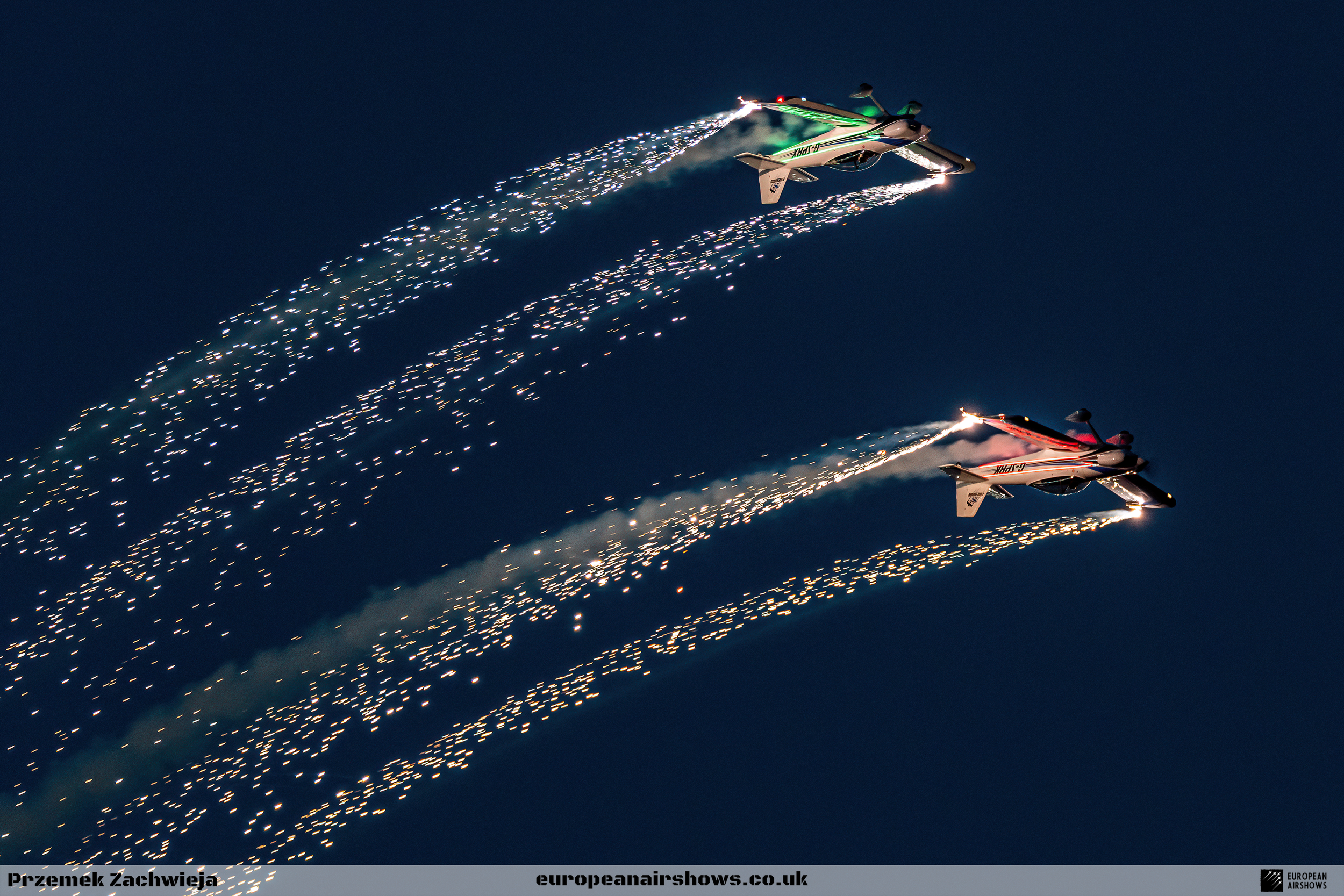
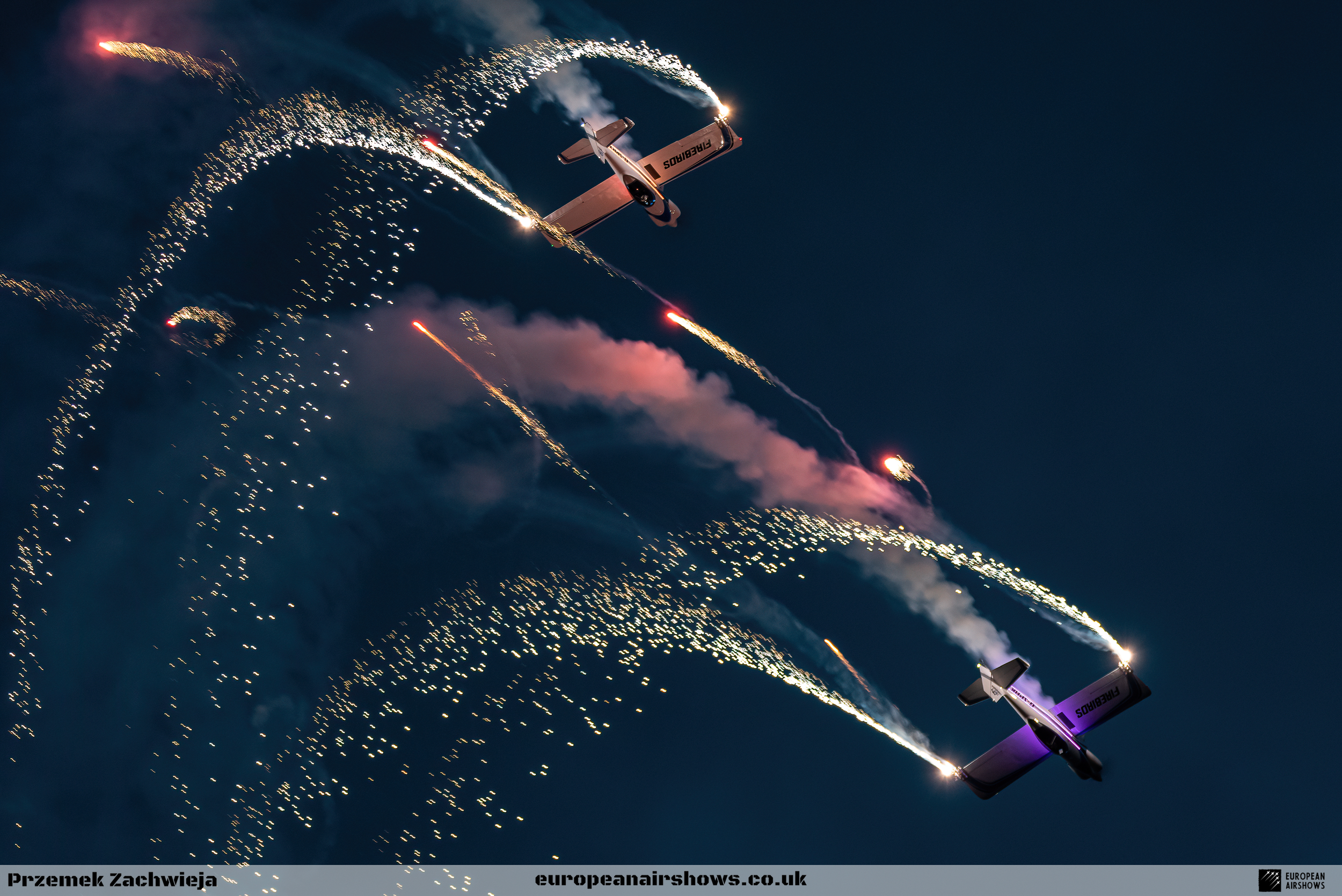
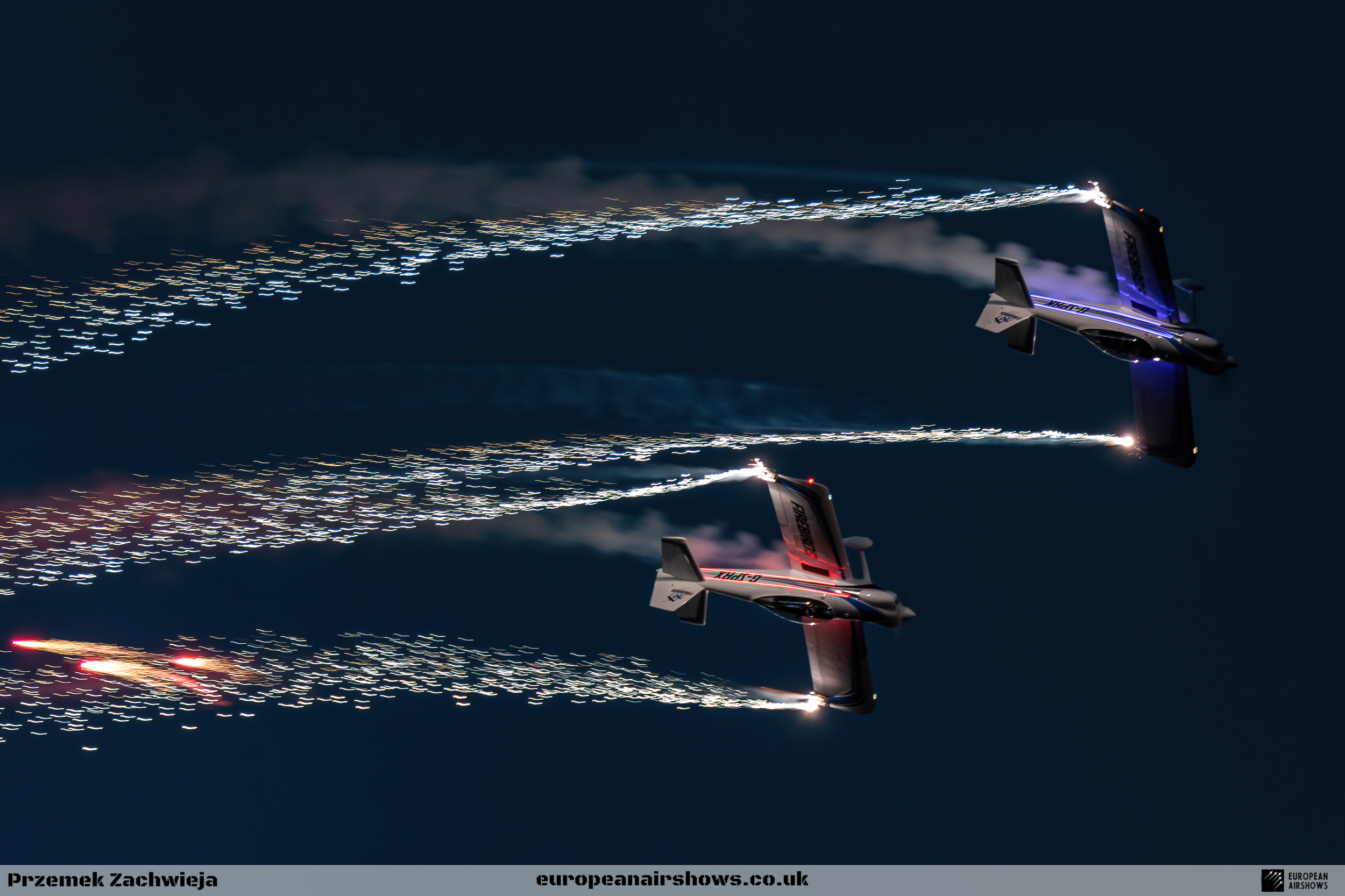
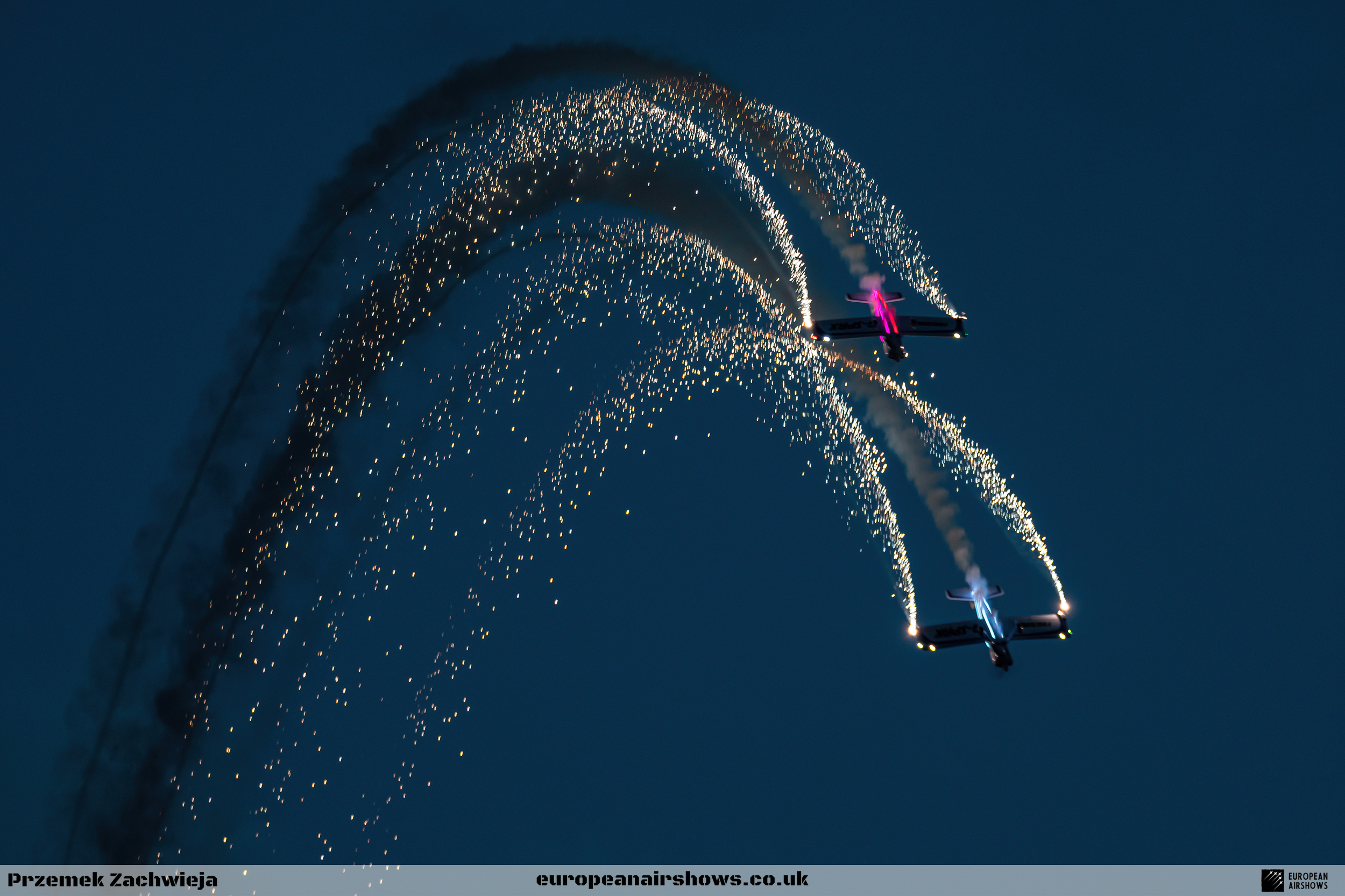
Reid and Dodd have since appeared at both large coastal festivals and smaller airfield shows. The pair are regularly programmed in ordinary daylight slots, but their strongest visual association remains with the evening airshow. At events able to support a twilight programme, the same formation becomes a moving light display, with LEDs outlining the aircraft and pyrotechnic effects drawing colour and sparks behind the wingtips.
An independent display operation
Unlike a military team, the Firebirds do not represent a squadron, service or national air arm. The aircraft are privately operated and the display must be planned around the practical realities of civilian touring: maintenance, weather, transit range, fuel, local approvals and the light level available at each venue. That independence gives the act flexibility, but it also means the routine cannot be treated as a fixed, identical show at every appearance.
The team remained visibly active through the 2024 and 2025 seasons and was again listed for British events in 2026. That continuity matters because the Firebirds now occupy a fairly specialised place in the UK display circuit: a team capable of presenting a conventional two-ship aerobatic routine in the afternoon and returning later with an entirely different visual identity as daylight fades.
The display
Formation aerobatics first. Light and fire when the sky is ready.
The Firebirds are not simply a pyrotechnic attraction. Their daytime routine has to work as a complete two-aircraft display in its own right; the twilight equipment then adds another visual layer rather than replacing the flying. Exact figures, display length and effects vary with the venue, weather, light level and permissions in force on the day.
Close-formation presentation
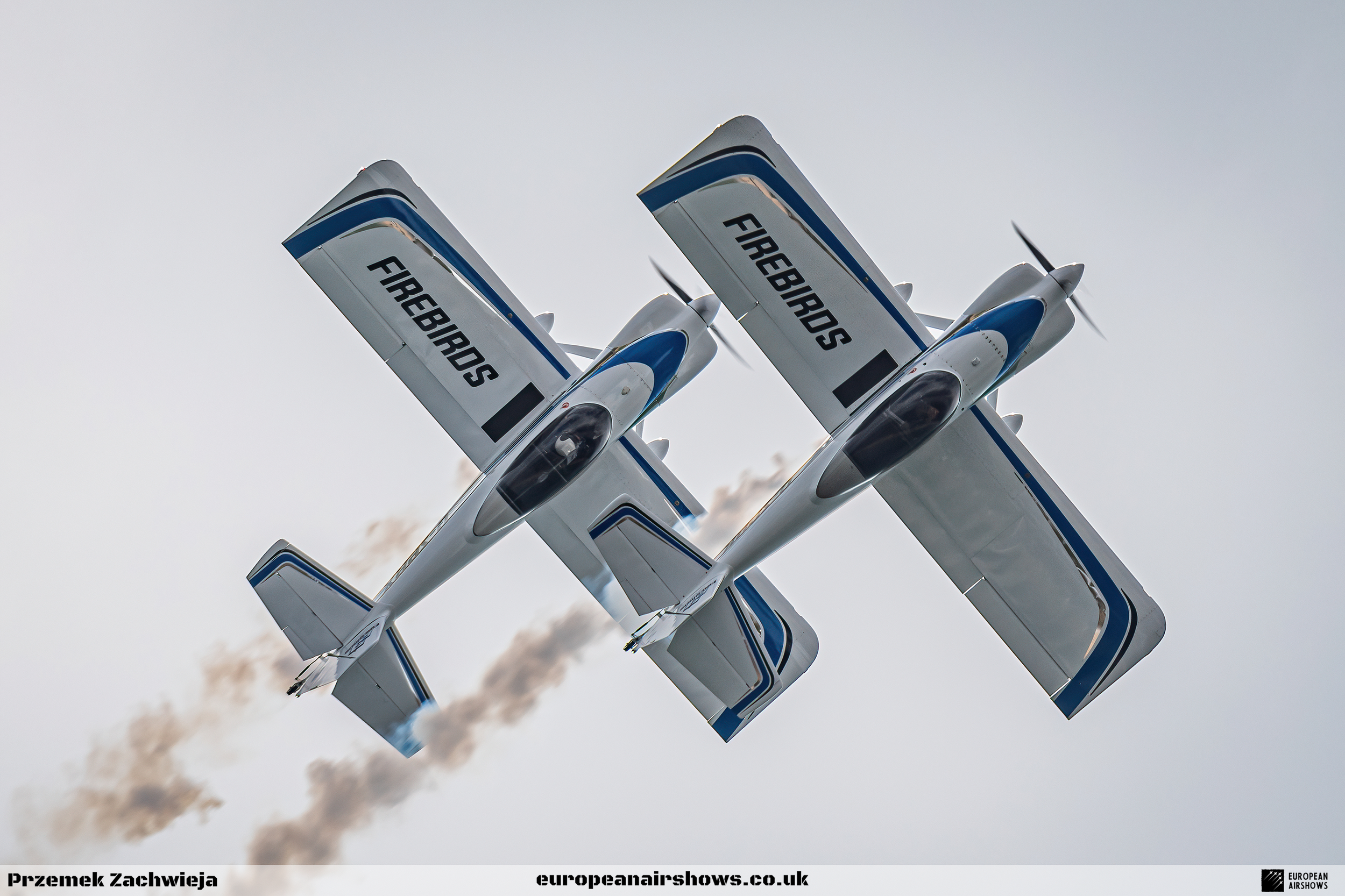
The pair enters and works the display line in compact formation, using the RV-4's small size and clean silhouette to make relative spacing easy for the crowd to read.
Synchronised aerobatics
Matched rolls, loops and reversals keep both aircraft moving as one visual unit before the sequence opens into more separated figures.
Breaks and opposition work
Formation breaks, crossing passes and opposing lines add pace and depth, turning a two-ship into a display that can fill a surprisingly large piece of sky.
Solo figures and rejoins
One aircraft can hold the crowd's attention while the other repositions, before closure speed and timing bring the pair back together for the next formation element.
LED twilight outline
As ambient light falls, multicoloured LEDs make the aircraft remain visible through rolls and turns, revealing flight paths that are less obvious in a normal daytime slot.
Wingtip pyrotechnics
Approved evening shows add streams of sparks, coloured effects and glowing trails. Some programmes have also used a crowd-facing heart finale, although the exact ending is not fixed for every event.
The aircraft
The Van's RV-4 combines a light airframe, tandem seating and useful speed in one of homebuilt aviation's defining designs.
An entirely new two-seat RV
Richard VanGrunsven developed the RV-4 after pilots of the successful single-seat RV-3 asked for a second seat. Although the earlier aircraft provided the design philosophy, the RV-4 was not simply a stretched RV-3. Carrying two people required a wider fuselage, more wing area, larger tail surfaces and revised landing gear. The prototype first flew on 21 August 1979 and established the tandem-seat formula that would later become one of the most recognisable parts of the Van's range.
Built for more than one job
The RV-4 is an all-metal, low-wing taildragger supplied in kit form for amateur construction. It was designed to combine cross-country speed, short-field usefulness and sport aerobatic handling rather than optimise itself for only one task. Van's published figures cover engines from 150 to 180 horsepower, with either fixed-pitch or constant-speed propellers, and show why the type remains attractive as both a touring aircraft and a display platform.
Why it works in a formation team
Tandem seating keeps the fuselage narrow and places the front-seat pilot on the centreline. The bubble canopy gives strong all-round visibility, while the compact airframe responds quickly without carrying the inertia of a larger warbird or high-powered competition monoplane. For formation flying, those qualities support precise station-keeping, clean rejoins and matched control inputs between two aircraft.
The Firebirds pair
The team is associated with G-SPRK, construction number 845, and G-SPRX, construction number 1622. Both aircraft were already central to the FireFlies identity before the 2022 change of ownership and name. Their similar white appearance gives the pair a coherent formation silhouette, while individual registration marks retain each aircraft's separate identity.
Display modifications
The Firebirds aircraft carry the equipment needed for the evening act, including external lighting and approved pyrotechnic installations. Those additions must be integrated without undermining the aircraft's normal flying qualities, structural limits or visibility to the pilots. They are display-equipped RV-4s, not a separate factory-built variant of the type.
Specifications need context
Every RV-4 is an amateur-built aircraft whose final engine, propeller, equipment fit, empty weight and operating limitations can differ. The specification sheet therefore uses Van's published reference figures for the model rather than pretending that every number applies identically to both Firebirds airframes in their current display configuration.
A legacy design after kit production
Van's ended new active kit production for the RV-4 after September 2025, while continuing replacement-parts and technical support. That decision makes the Firebirds pair more representative of an established legacy fleet: aircraft whose design is no longer in current kit production but which remain active, capable and highly visible in public flying.
The story so far
From a new British RV pair in 2015 to a familiar daylight and Night Air act.
21 August 1979
The RV-4 prototype flies
Richard VanGrunsven's new tandem two-seat design makes its first flight. The aircraft combines the handling philosophy of the RV-3 with a new wing, wider fuselage, larger tail and the capacity to carry a passenger.
2015
FireFlies are formed
Andy Durston and Jon Gowdy establish a British two-aircraft display team using G-SPRK and G-SPRX. The act is built around formation aerobatics and the ability to add pyrotechnic effects for evening shows.
2016
Night Air visibility grows
The FireFlies appear in prominent dusk programmes including Bournemouth, where illuminated aircraft and wingtip effects place the team within the developing British Night Air format.
2017-2021
UK and European appearances
The two RV-4s become regular visitors to airshows at home and on the continent. Appearances in Poland, including Leszno, demonstrate the touring advantage of a fast, self-deploying light-aircraft team.
2022
The Firebirds identity begins
Nigel Reid and John Dodd take over the aircraft and display operation. The team is renamed the Firebirds while retaining the established two-ship RV-4 format and its daylight and twilight capabilities.
August 2022
A new chapter at Clacton
The renamed team presents an evening routine with navigation lights, synchronised aerobatics and multiple pyrotechnic effects. A heart-shaped finale invites spectators to answer with their phone lights.
2023-2024
Day and night programmes continue
The Firebirds appear repeatedly at major coastal events, including Bournemouth, with both conventional daytime formation flying and evening pyrotechnic performances. Public event material identifies Nigel Reid and John Dodd as the team pilots.
2025
The daytime routine holds its own
Reviews from English Riviera, East Kirkby and other shows underline that the pair is not dependent on darkness: tight formation, synchronised figures and solo elements remain the core of the act before LEDs and pyrotechnics are added.
2026
An active British display team
The Firebirds are again included in British event programmes, with organisers distinguishing between ordinary daytime displays and designated evening pyro slots. The team therefore remains active more than a decade after the original FireFlies formation was created.
Identity & signature
The same two aeroplanes can read as a precise formation or a moving firework display.
FireFlies heritage, Firebirds ownership
The 2015 founding date belongs to the original FireFlies act created by Andy Durston and Jon Gowdy. The Firebirds name dates from the 2022 takeover by Nigel Reid and John Dodd. Treating those as two chapters of one continuing RV-4 display history is more accurate than either erasing the FireFlies years or pretending the present identity existed from the beginning.
Not the RAF or Polish Firebirds
This team is an independent British civilian operation. It is unrelated to the historic 56 Squadron Lightning formation known as the Firebirds in the 1960s and unrelated to Poland's three-aircraft Firebirds Aerobatic Team. The aircraft type, organisation and display style are entirely different.