Biało-Czerwone Iskry
TS-11 Iskra national aerobatic team of the Polish Air Force
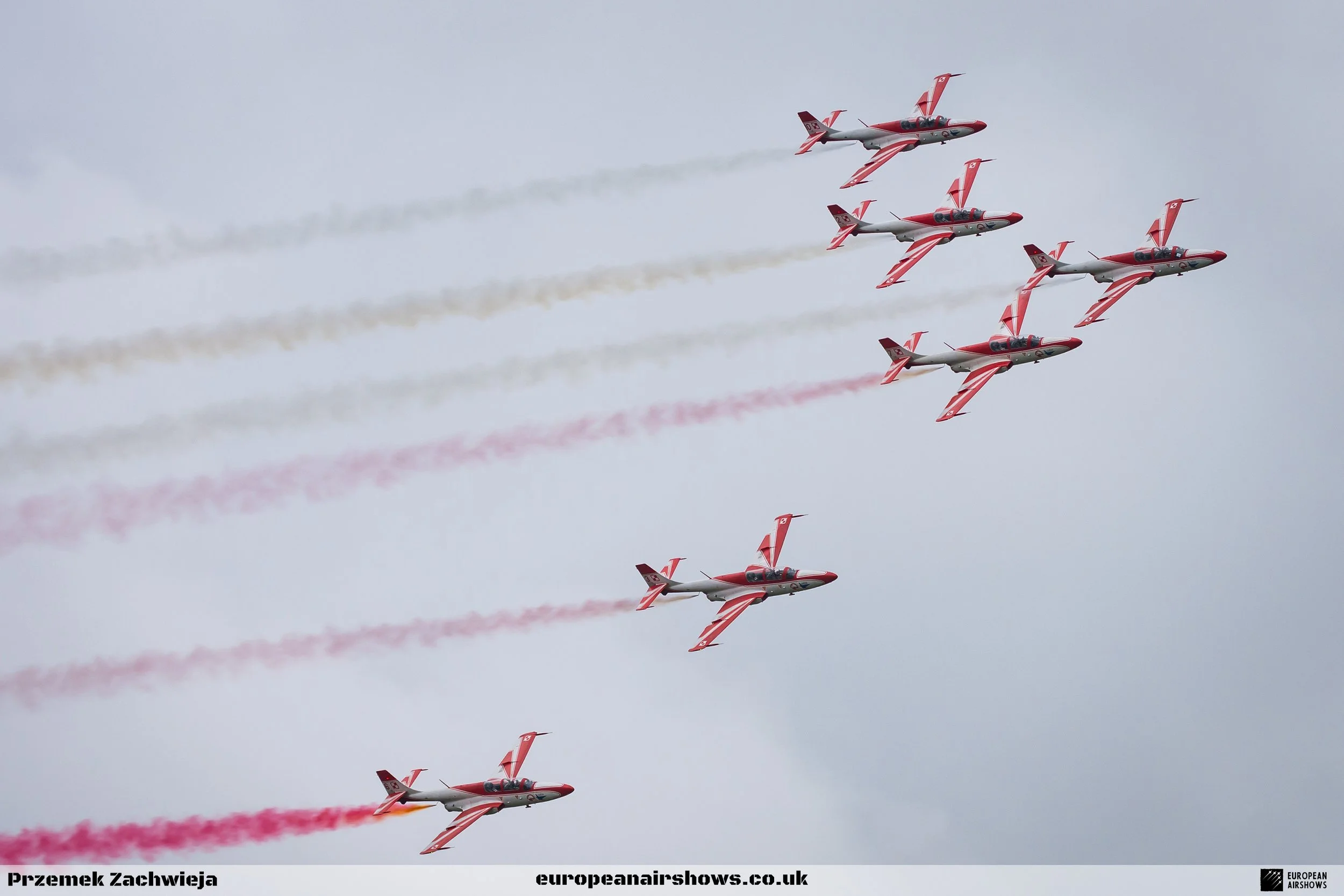
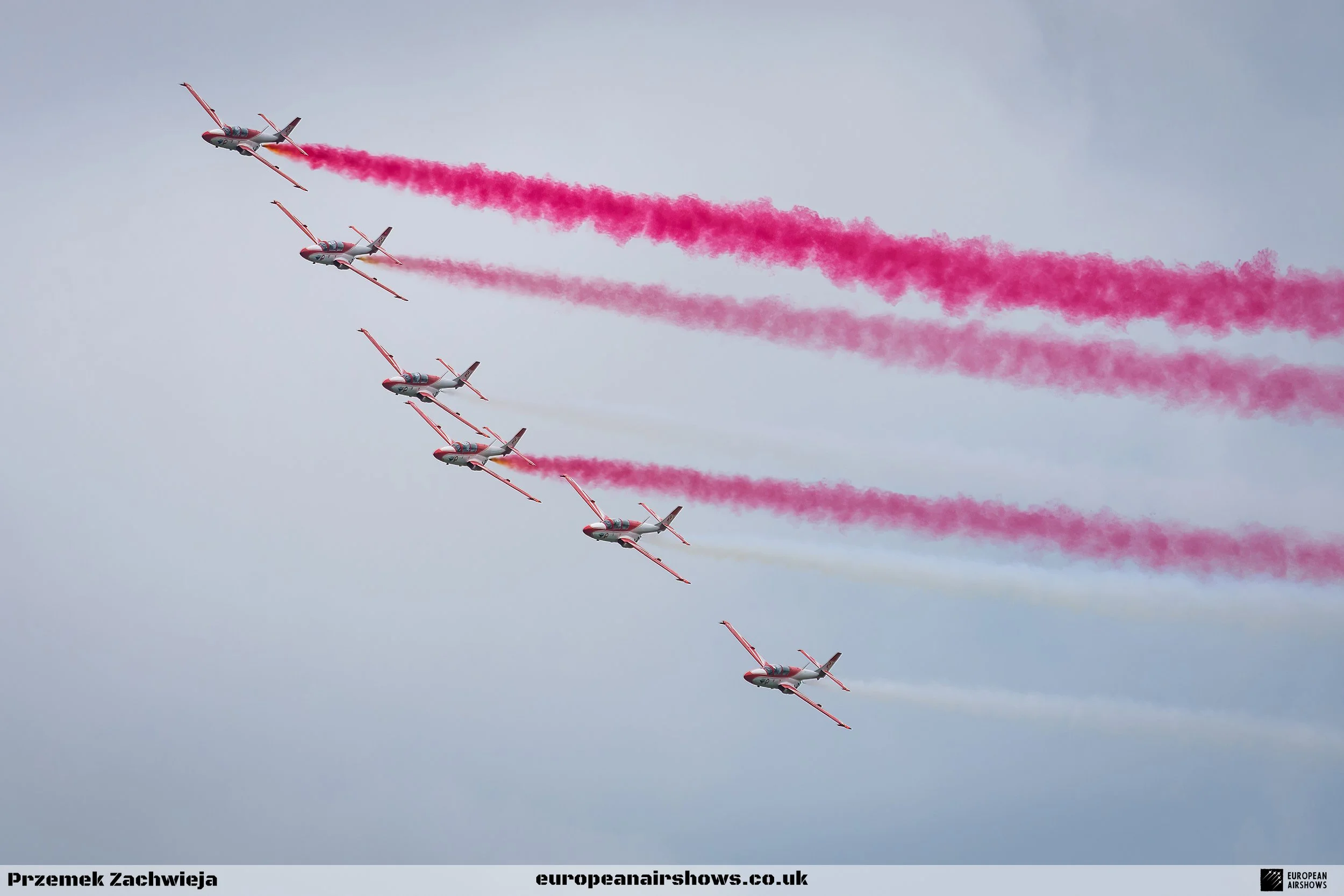
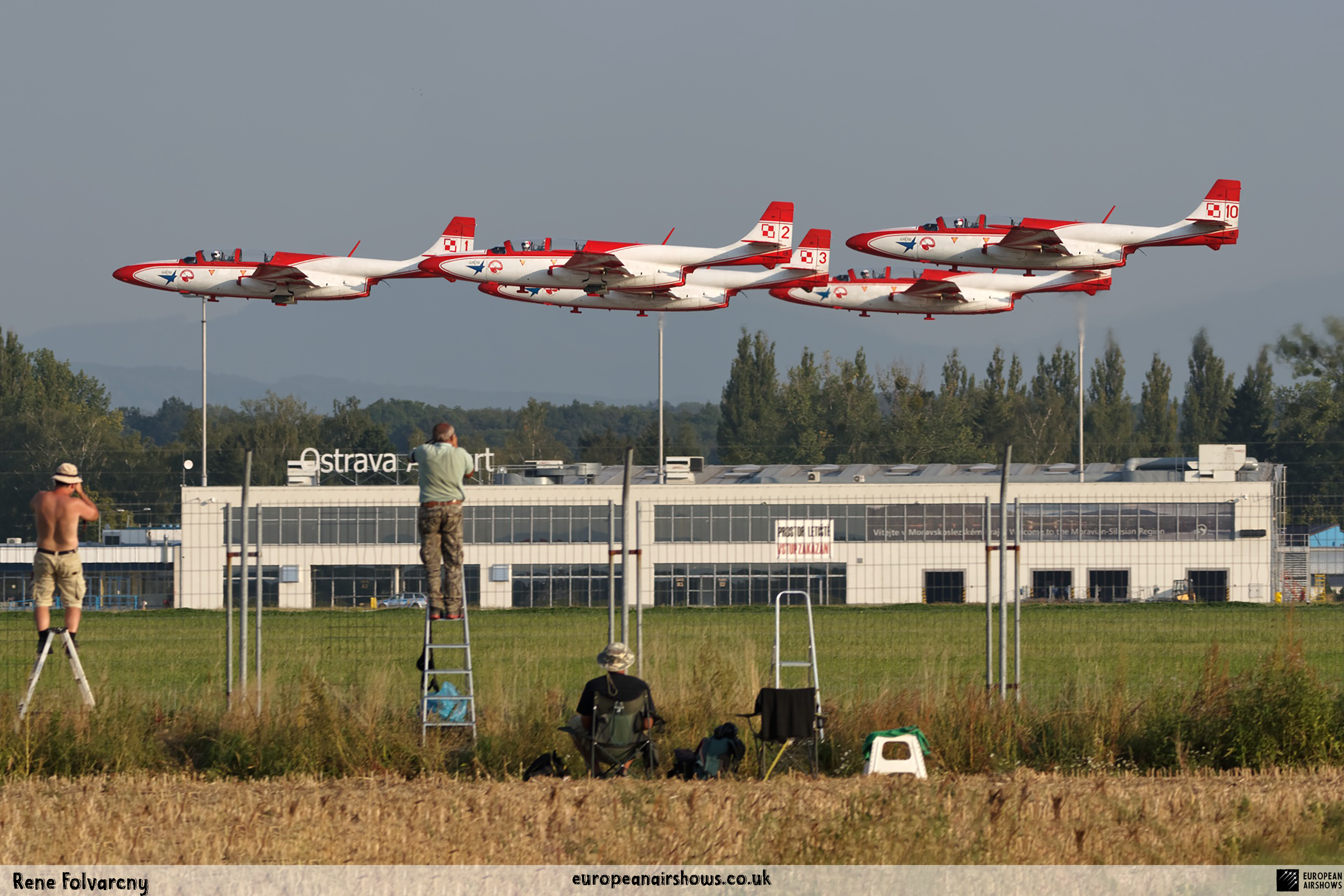
Biało-Czerwone Iskry — the White-Red Sparks — carried Poland's national colours through close jet formations, solo crossings and red-and-white smoke. The Dęblin team was the final chapter of a lineage that began with Rombik at Radom in 1969 and developed into a permanent, specially equipped Iskra formation during the 1990s.
- Lineage begins
- 1969
- Permanent Iskry team
- 1991
- Current name adopted
- 2000
- Display aircraft
- TS-11 Iskra MR
- Typical formation
- 6-7 aircraft
- Final military flight
- 27 July 2022
The team
Three related identities shaped into Poland's national jet team.
Rombik began the lineage at Radom
The story begins in 1969 with Rombik, a TS-11 formation created at the 60th Aviation Training Regiment in Radom. Its name referred to the small rhombus flown by four aircraft. Rombik established the link between Poland's indigenous jet trainer and military formation display flying, but it should not be presented as one continuously staffed permanent team operating unchanged for the next fifty years.
The modern permanent team emerged in 1991
Eight aircraft were selected in 1991 for the first permanent Air Force Aerobatic Team “Iskry”. At Radom they were modified for display work, given a distinctive red-and-white scheme and organised around a regular formation with solo elements. The first converted aircraft flew on 19 July 1991 and the new team debuted publicly at Poznań on 24 August.
Dęblin created the familiar Biało-Czerwone identity
On 17 June 2000 the surviving team aircraft transferred from Radom to the 58th Aviation Training Regiment at Dęblin. The formation was renamed Biało-Czerwone Iskry and later served through the 1st Air Training Centre and 41st Training Air Base. From Dęblin the team became one of the Polish Air Force's most visible public ambassadors.
Display flying sat beside instructional duties
The team's pilots came from military training aviation and retained their wider responsibilities as instructor aircrew. Engineers also supported normal TS-11 activity as the fleet contracted. The display was therefore not detached from Poland's pilot-training system: it used the same national aircraft, flying culture and technical knowledge that had trained generations of military pilots.
The display
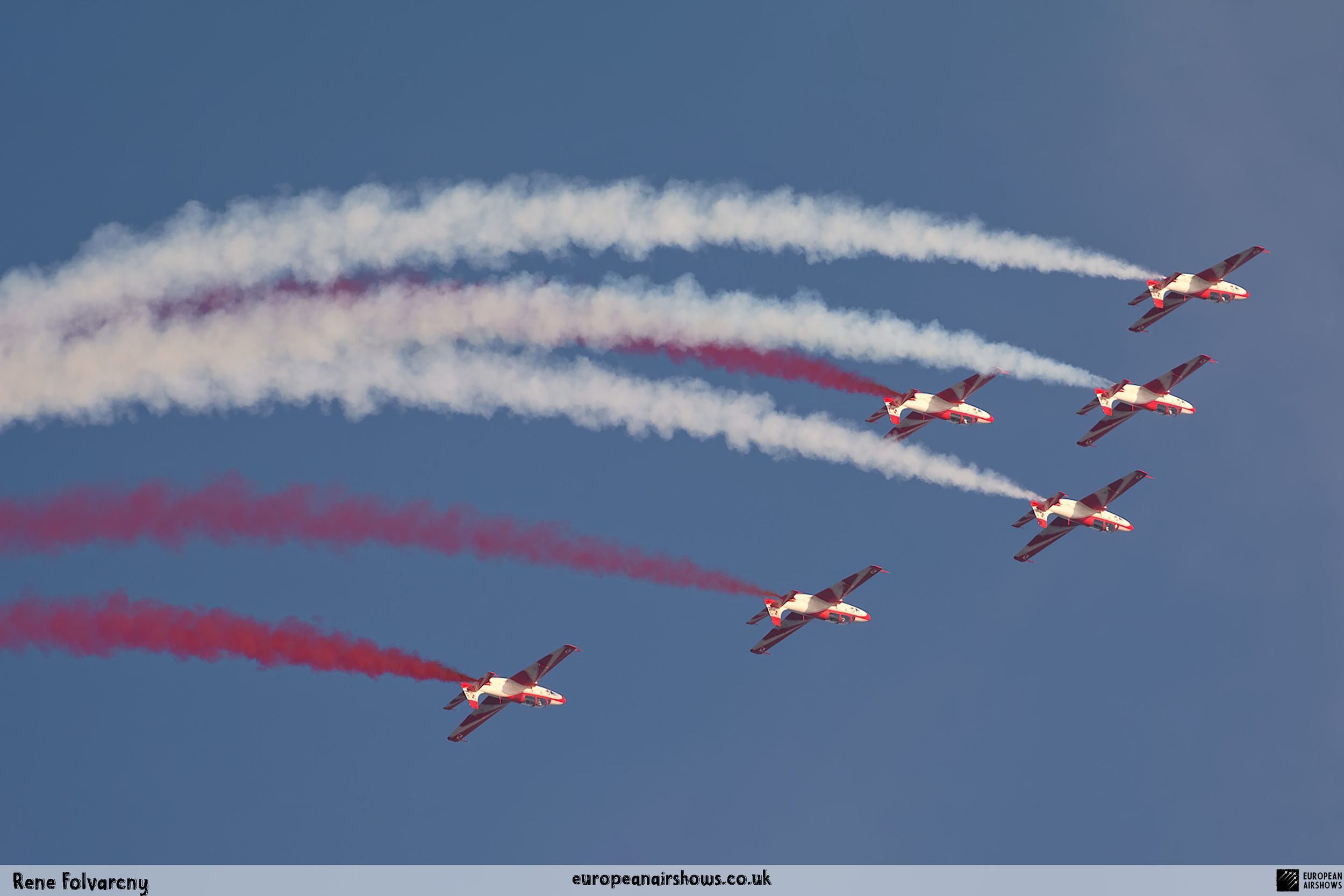
Broad formation shapes, contrasting solos and the Polish flag drawn in smoke.
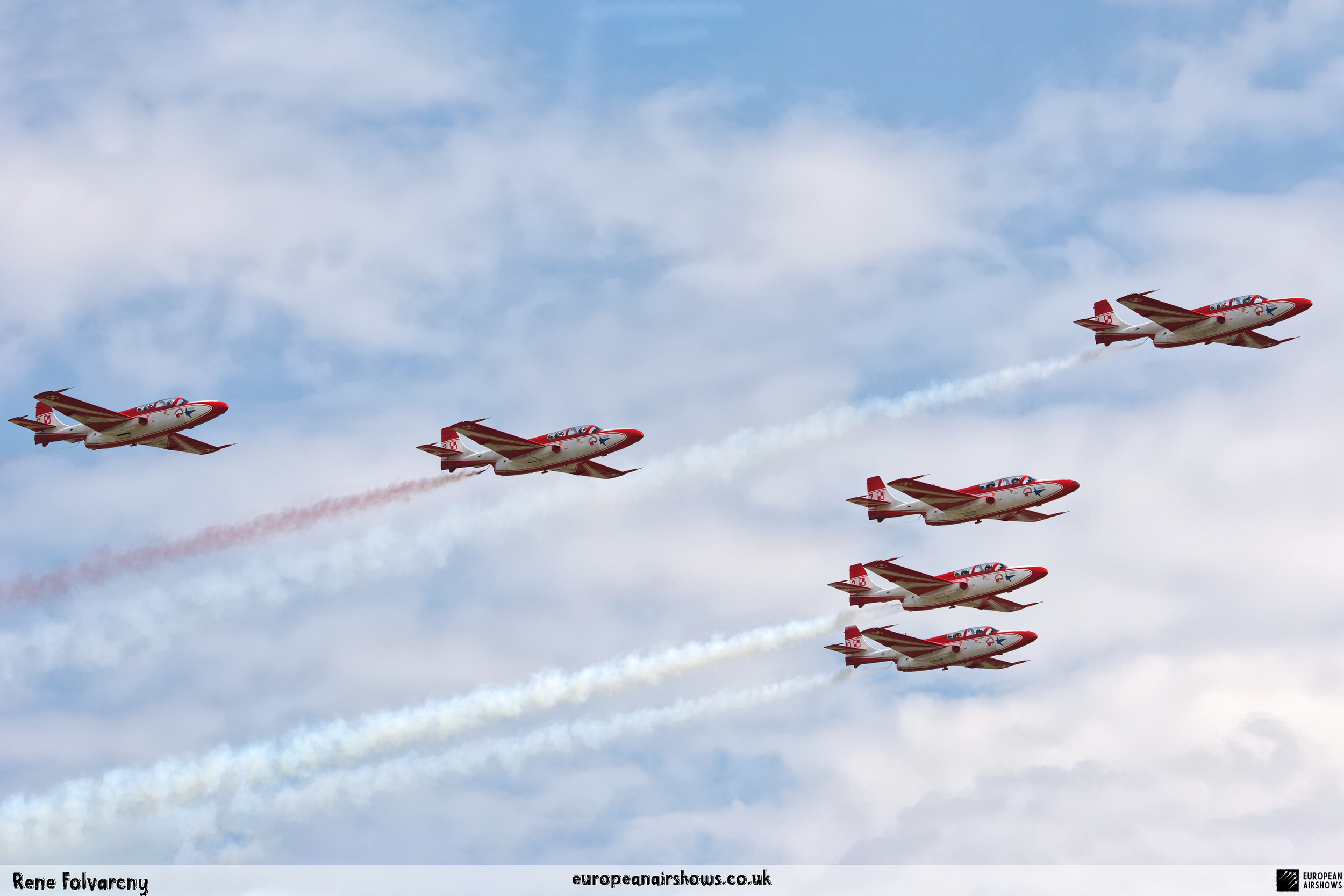
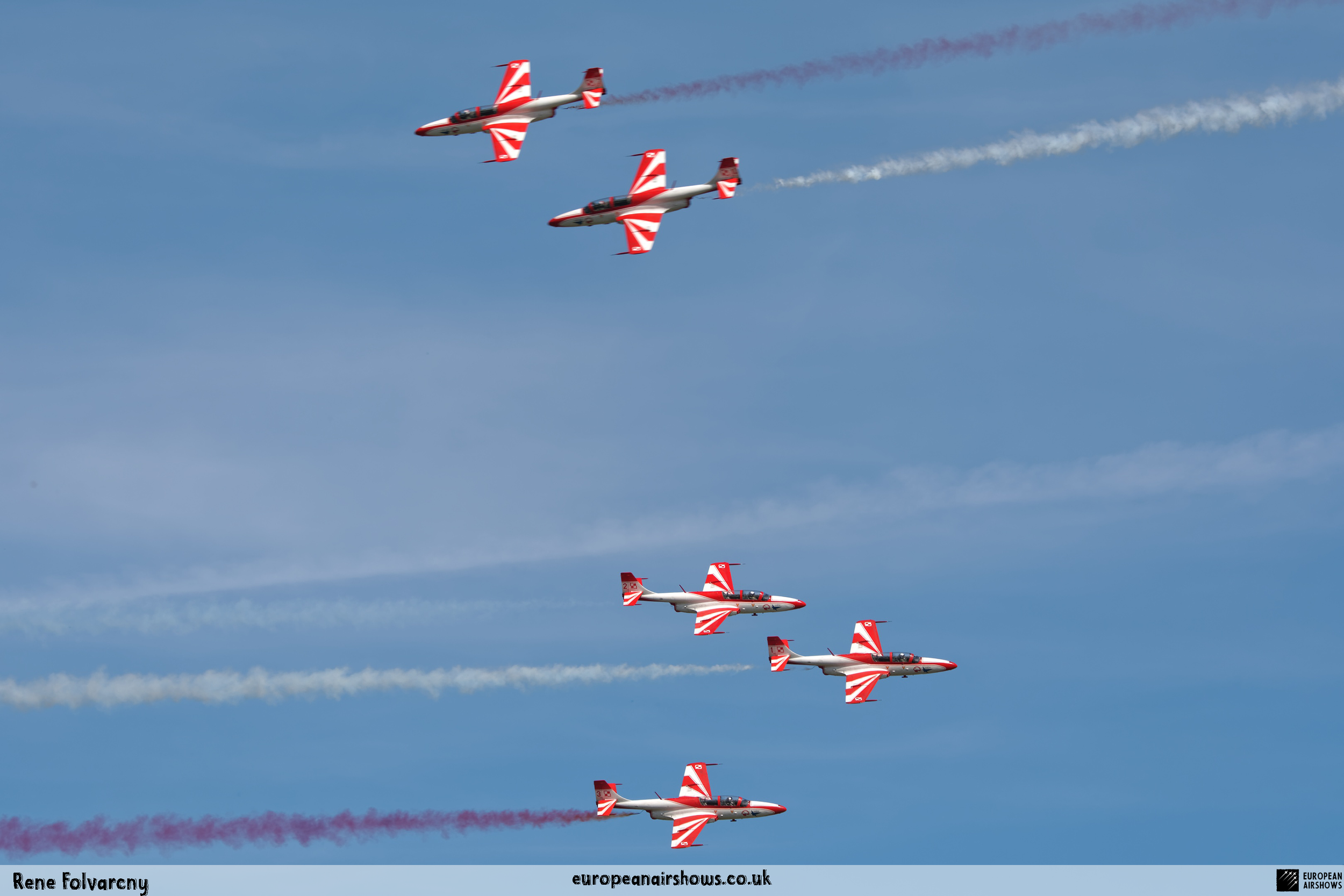
Biało-Czerwone Iskry used the modest speed and forgiving handling of the TS-11 to keep a multi-aircraft jet formation readable throughout the routine. The programme balanced collective aerobatics with solo or pair work, then reunited the aircraft for national-colour passes and a formal formation departure.
Formation opening
The team normally arrived as one unit, immediately establishing the leader, wing positions and broad red-and-white geometry before the first collective figure.
Collective loops and rolls
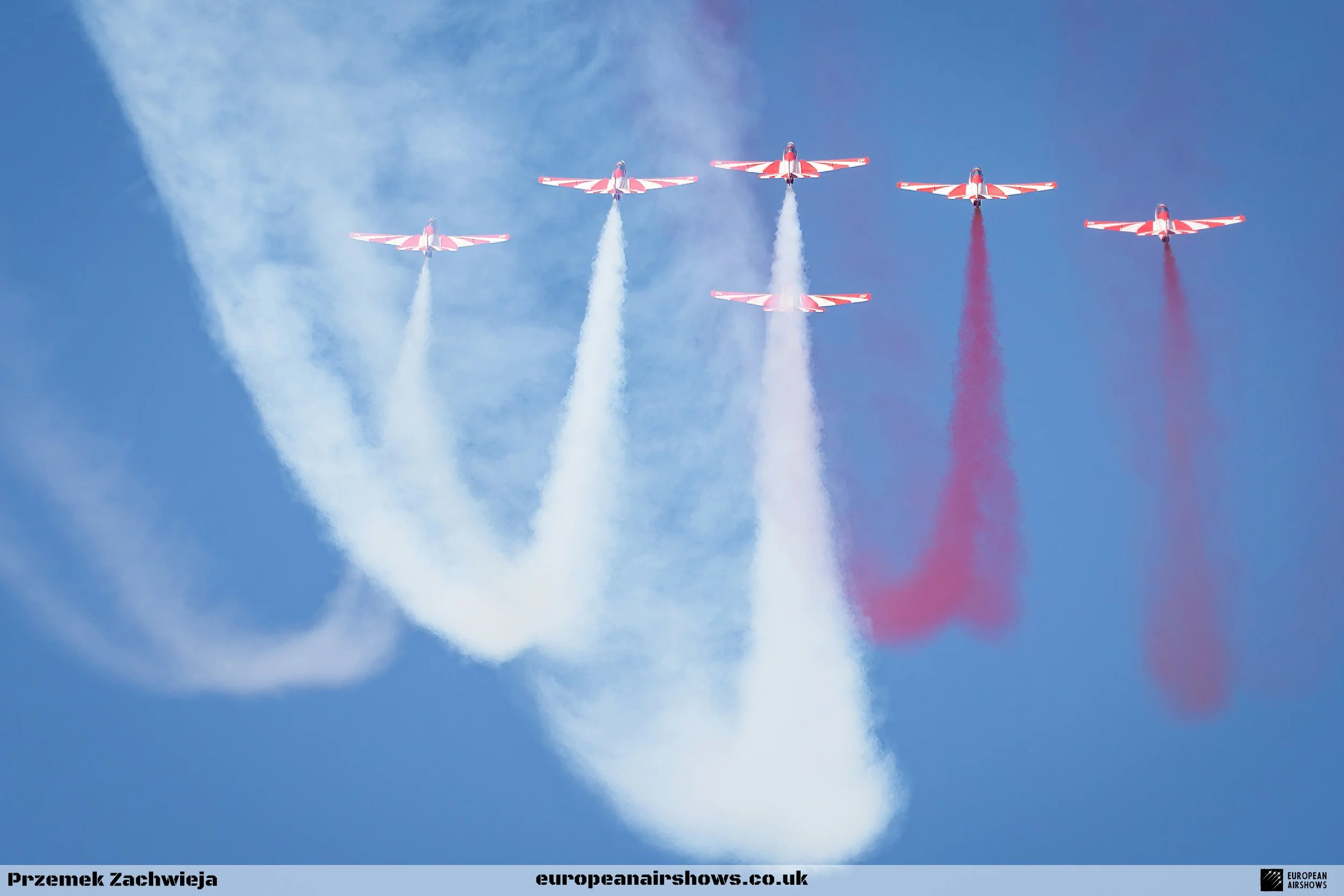
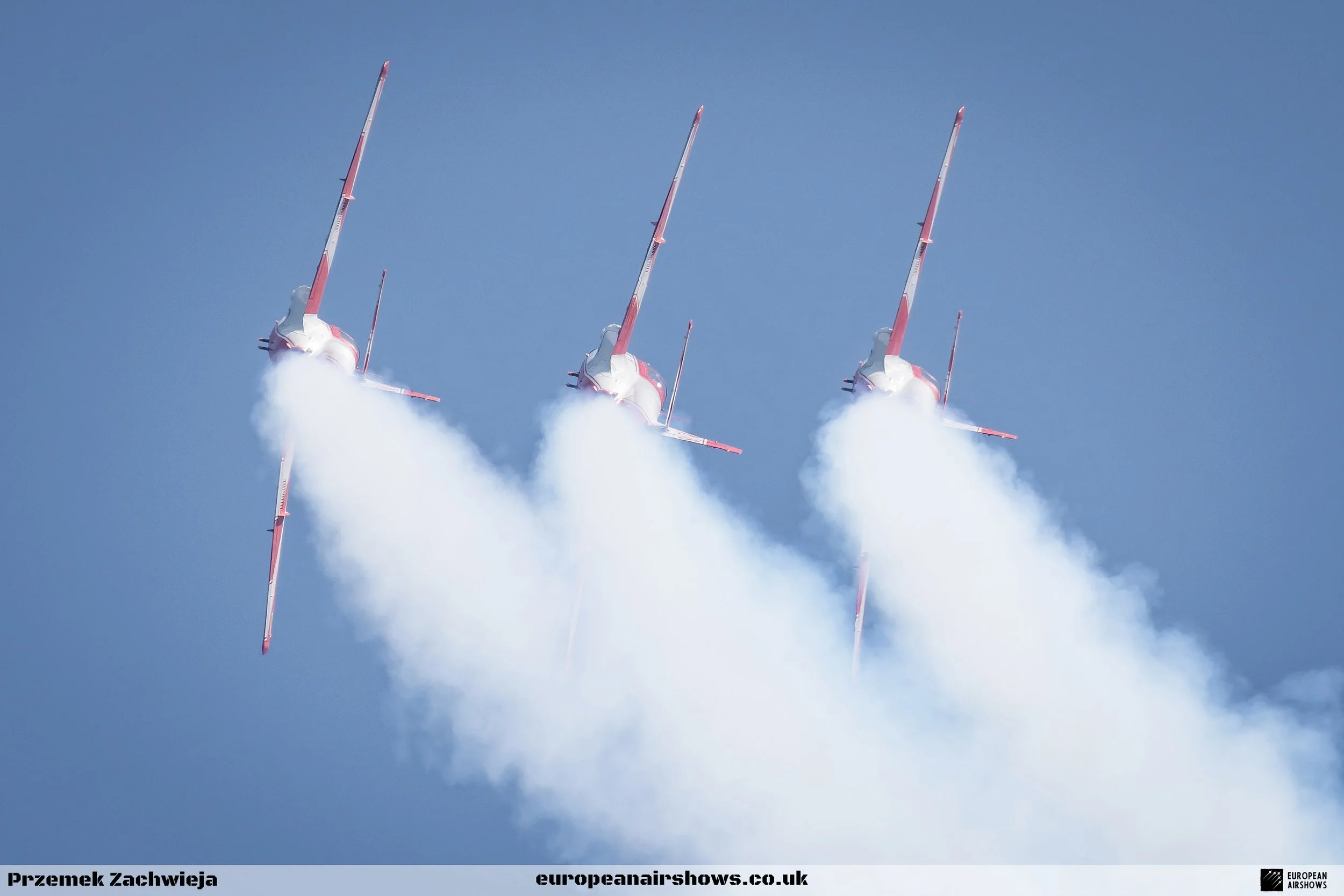
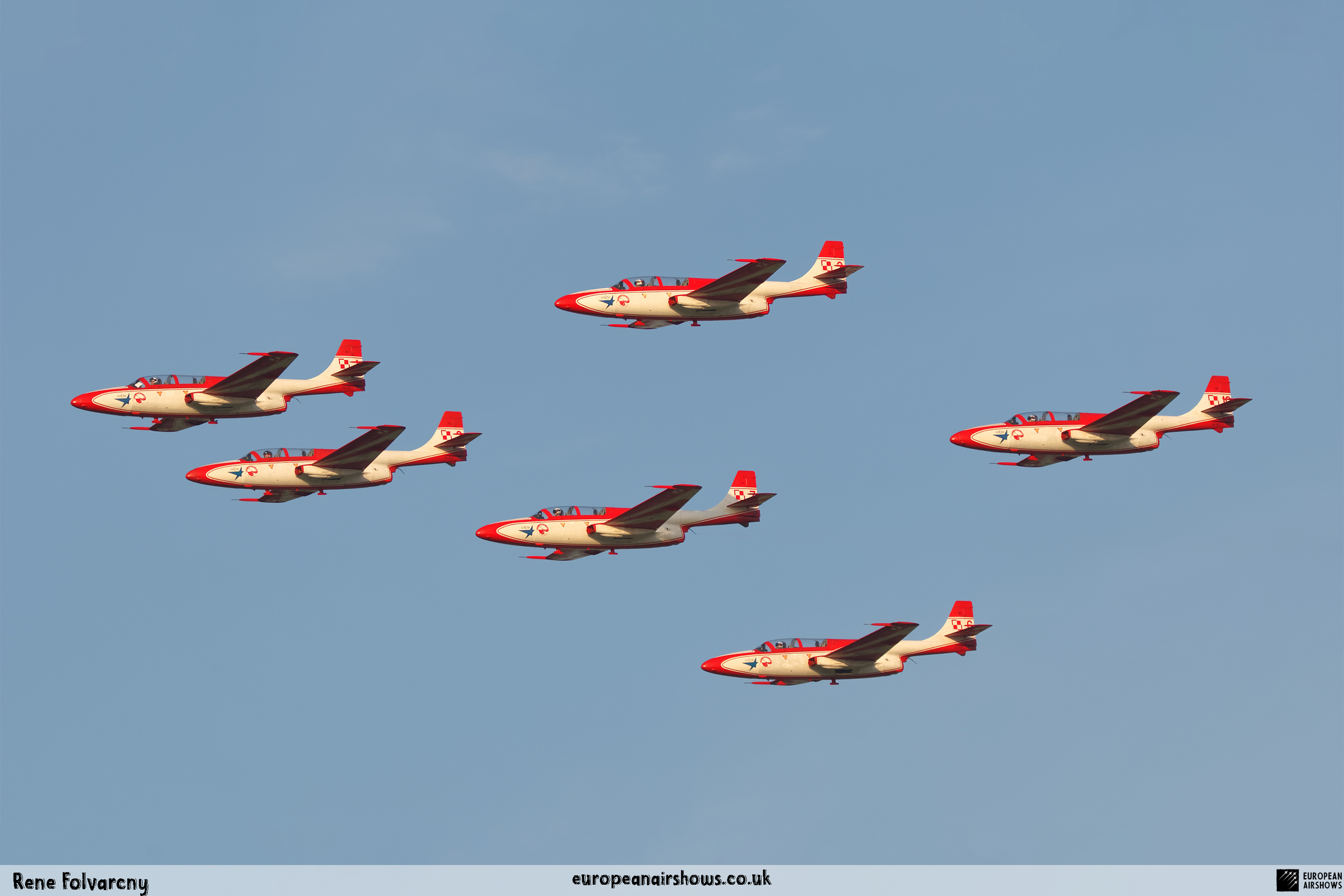
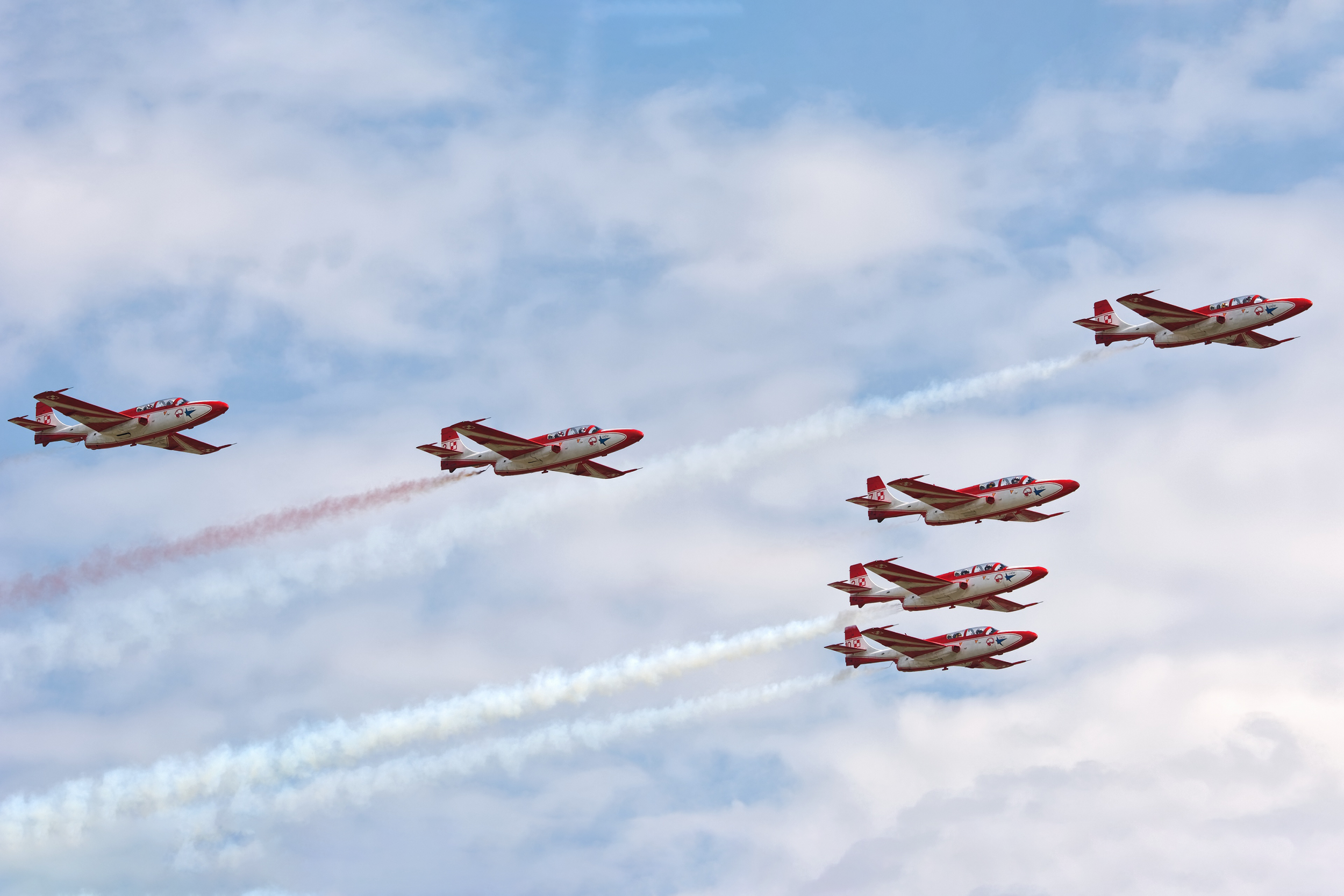
Six or seven Iskras could fly large looping and rolling figures as a single formation, relying on disciplined visual references rather than the raw performance of a modern fast jet.
Readable formation changes
Diamonds, arrows, lines and echelon-style shapes were selected for clarity from the ground, allowing spectators to see each aircraft move between positions.
Solo and opposition work
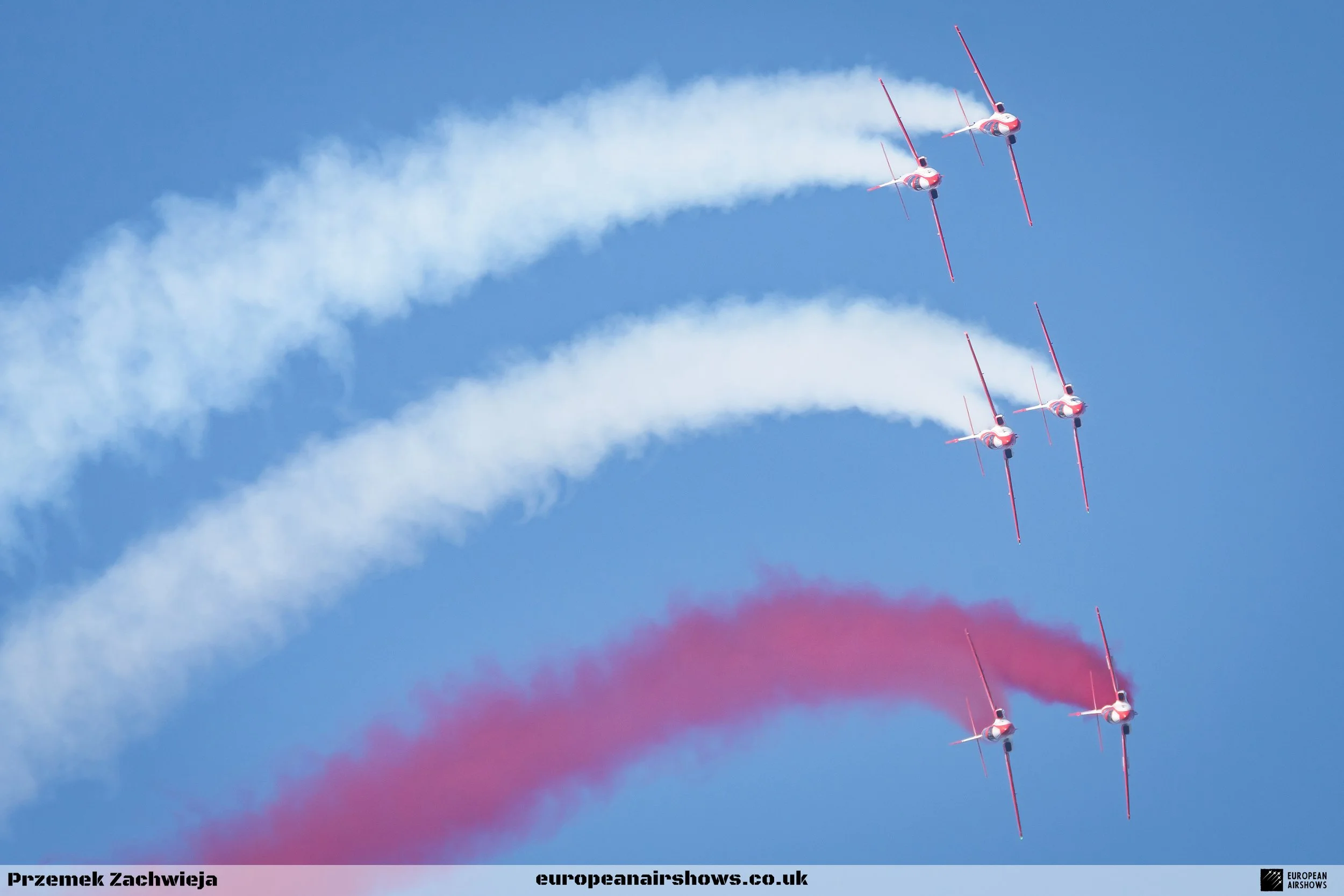
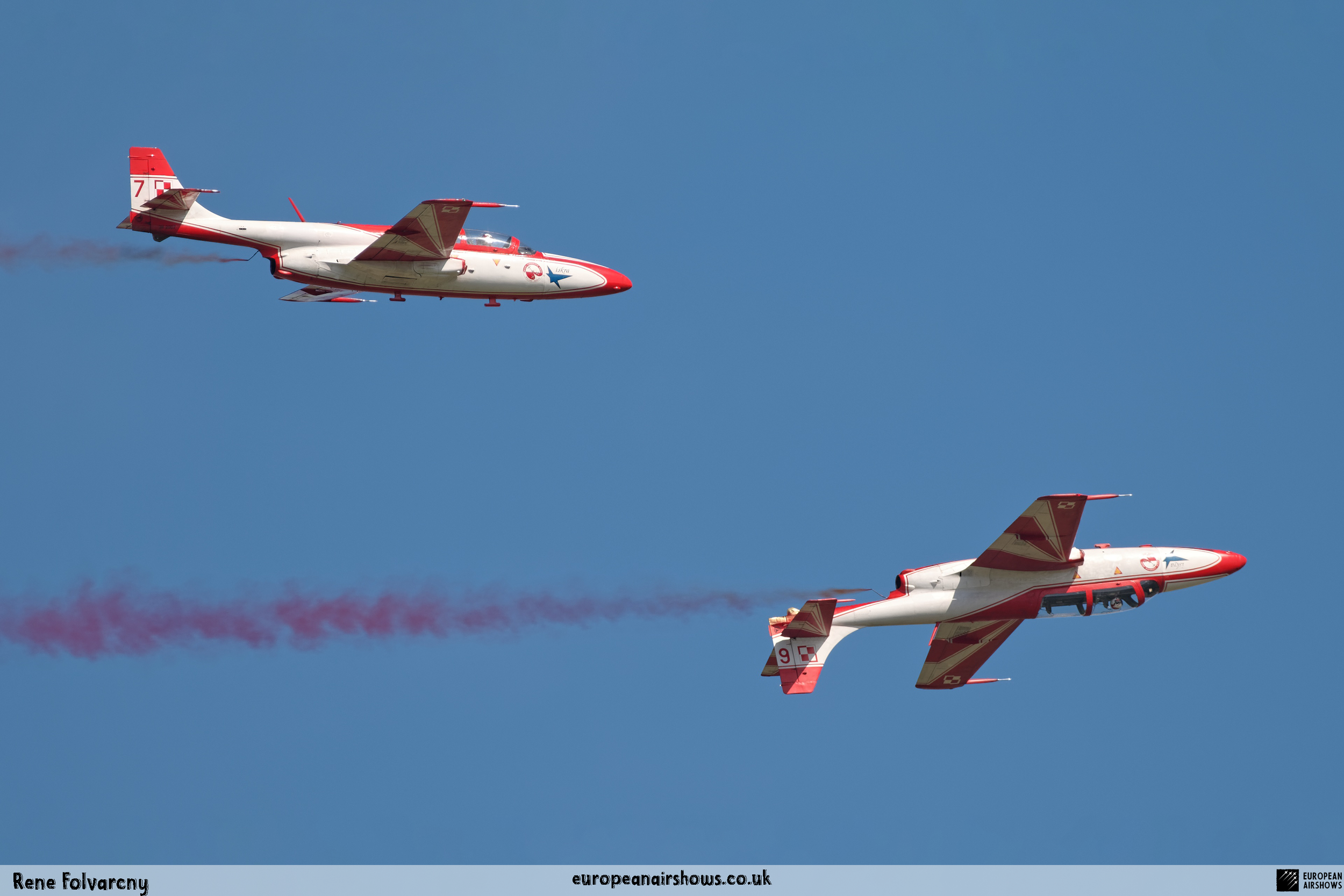
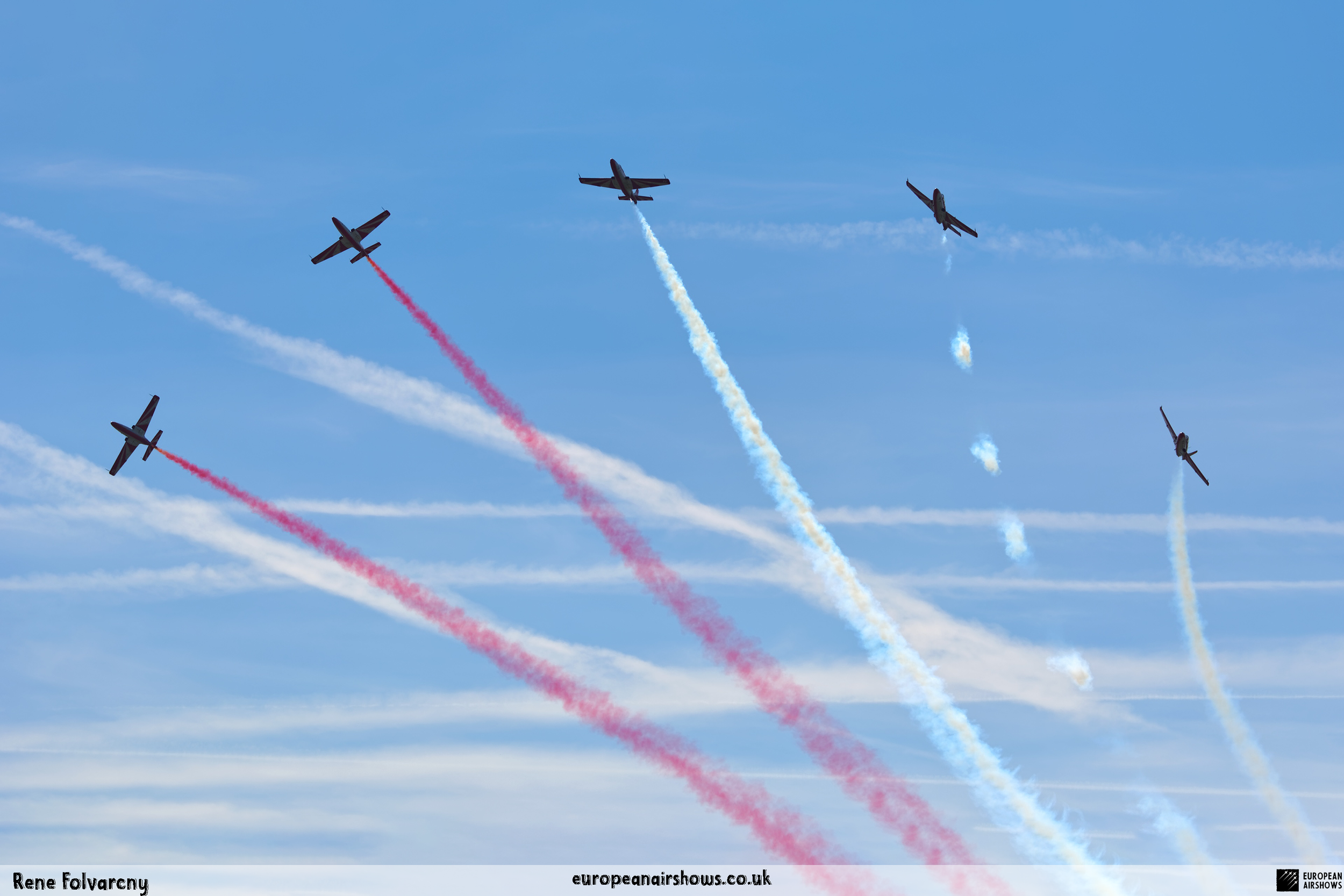
A solo or separated pair changed the pace with faster passes, rolls, opposing approaches and crossing figures while the main formation repositioned beyond the display line.
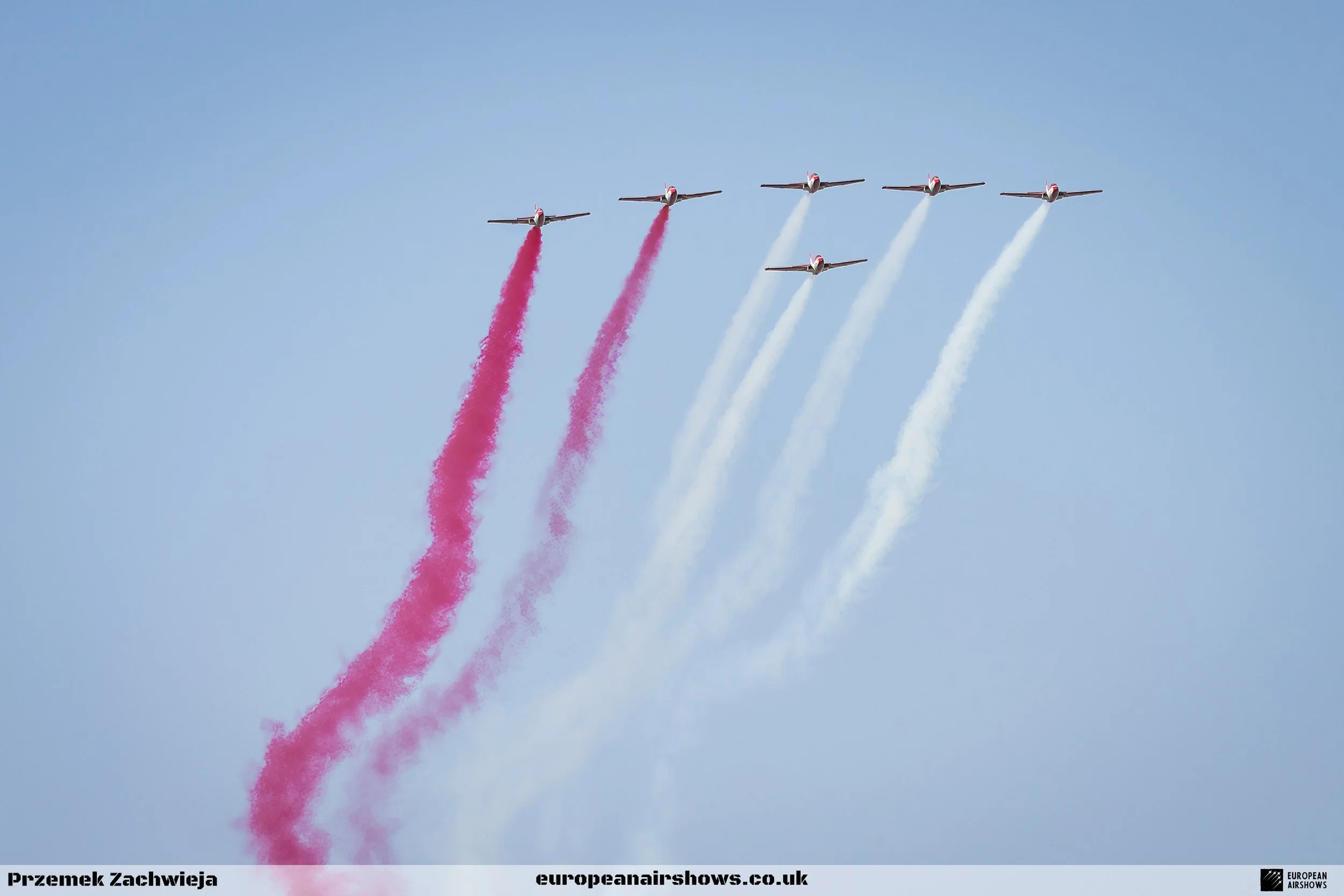
White-and-red smoke
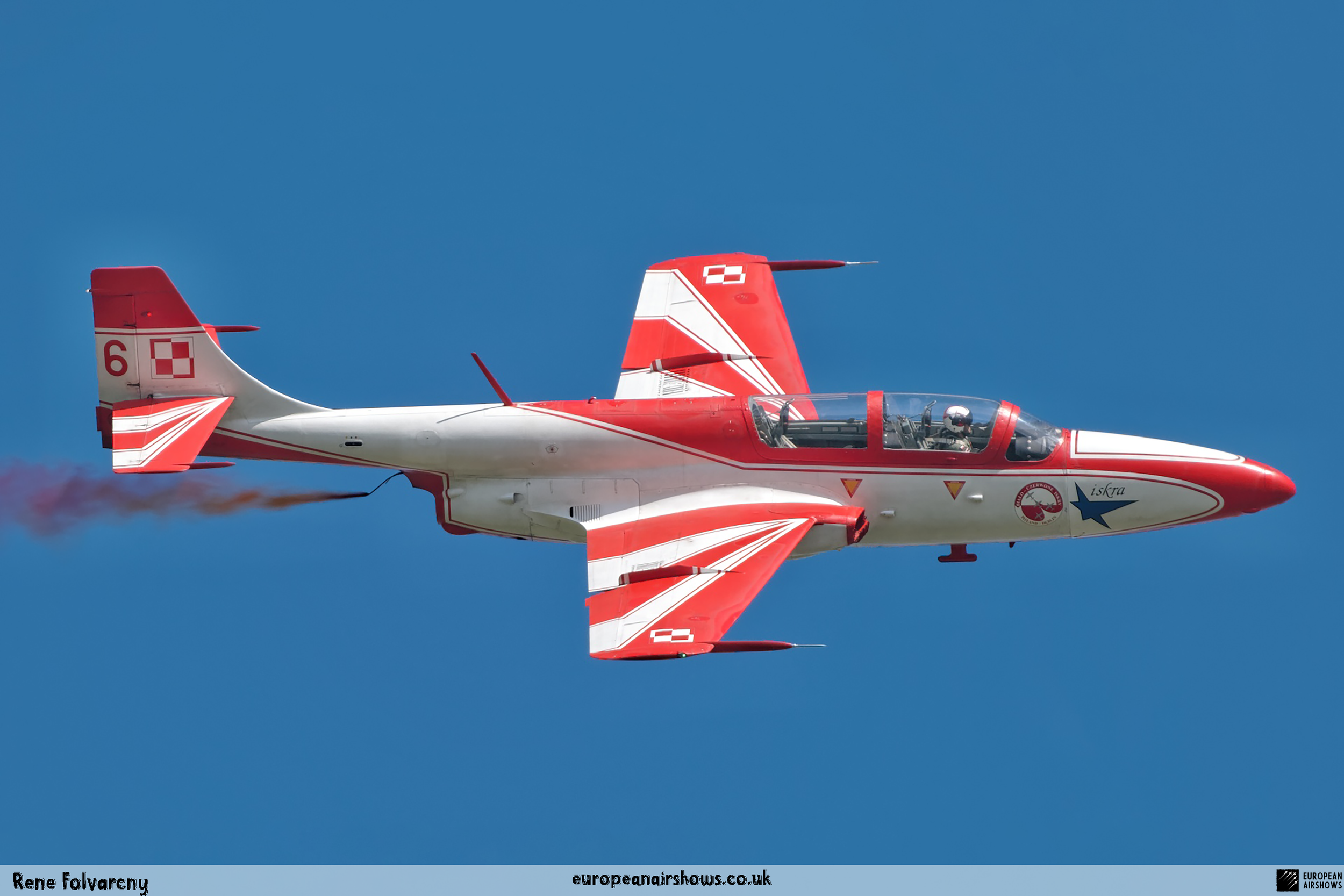
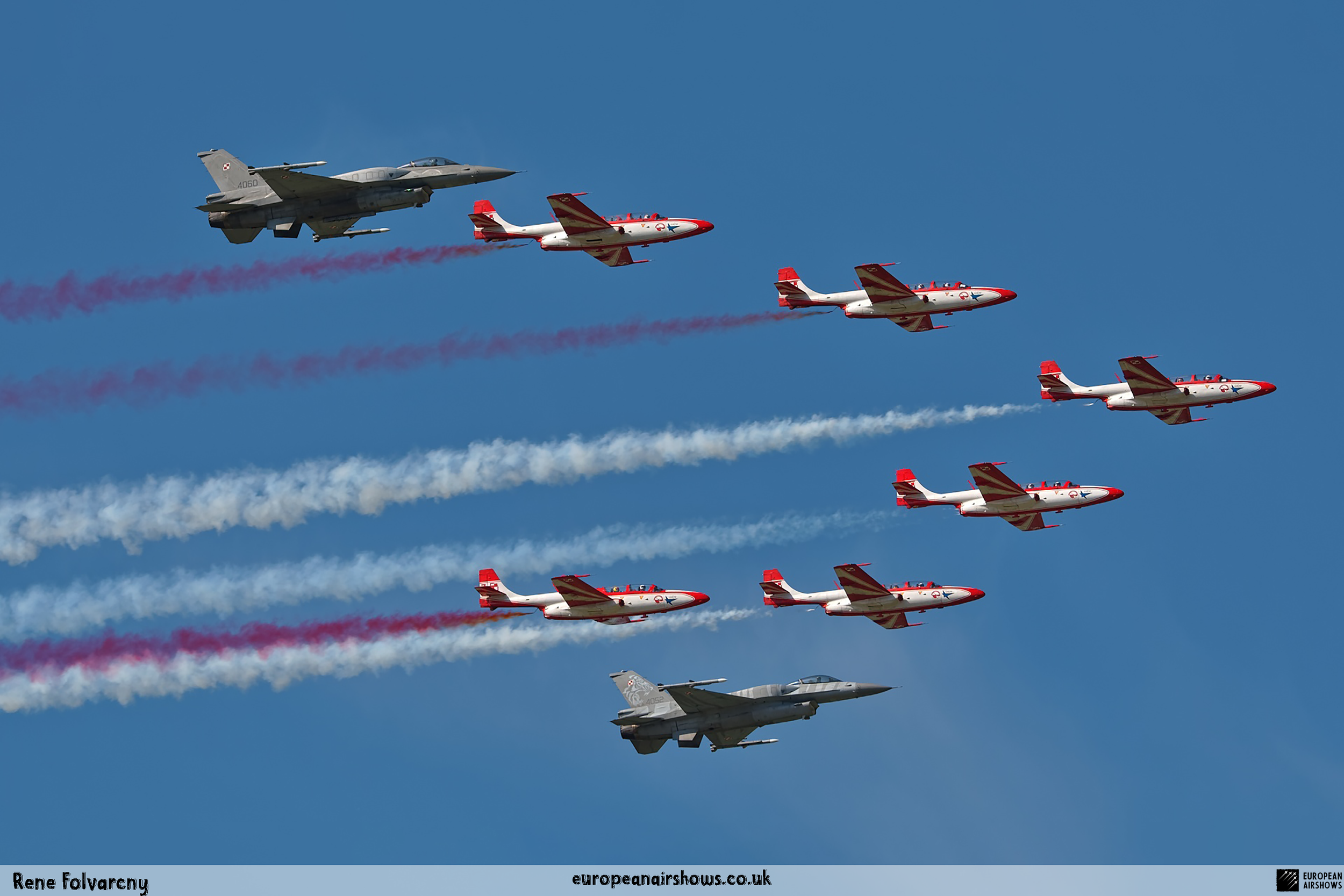
The converted aircraft carried a dedicated smoke system that made loops and breaks visible and allowed the team to reproduce the colours of the Polish flag across the sky.
Flexible team size
The choreography could be adapted to a smaller formation when serviceability or event requirements prevented the complete seven-aircraft line-up from appearing.
The aircraft
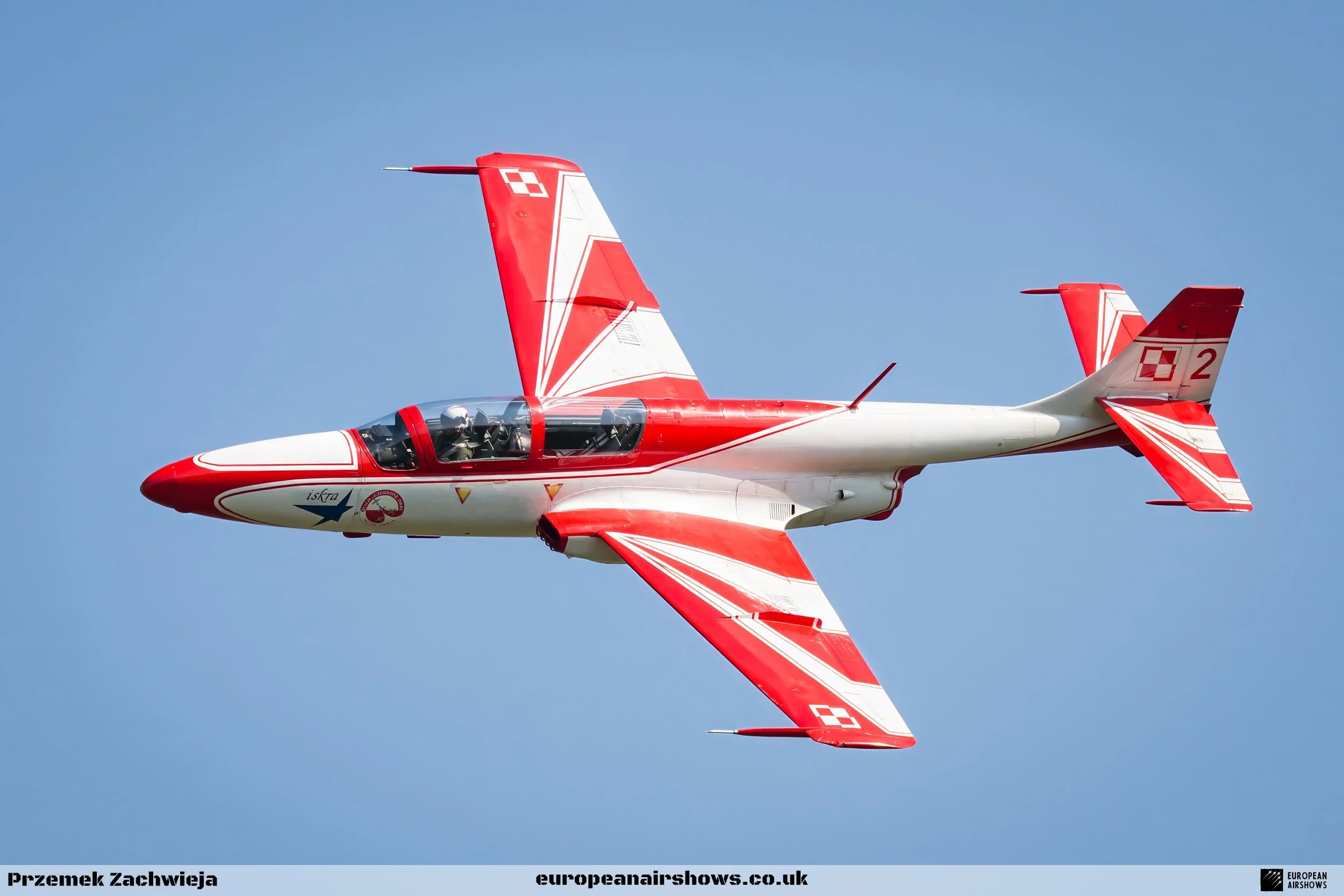
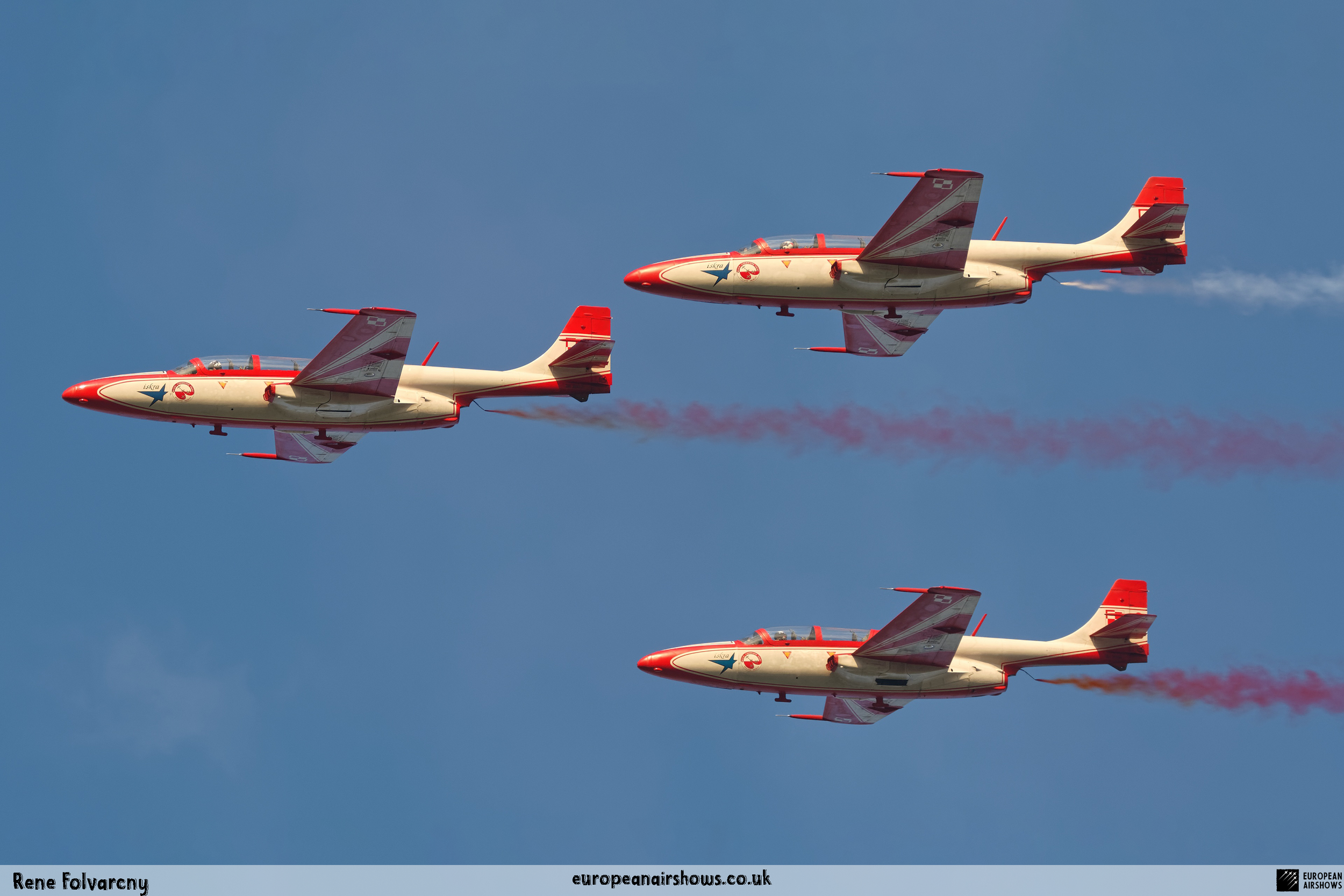
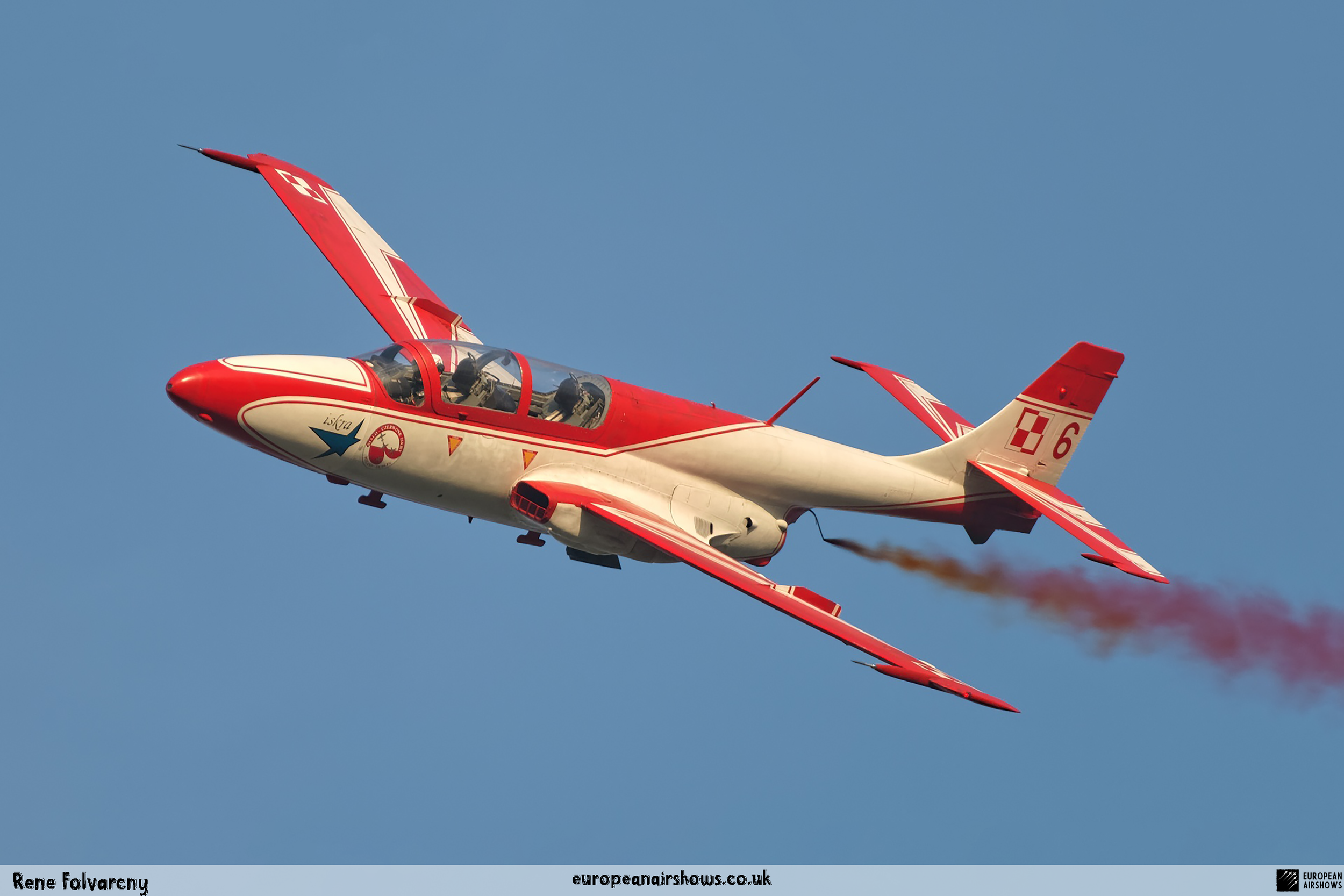
PZL TS-11 Iskra: Poland's first indigenous jet and the team's defining symbol.
Designed for Poland's own training system
The TS-11 was developed from 1958 by a design team led by Tadeusz Sołtyk. Its prototype first flew on 5 February 1960 and series production began at WSK PZL-Mielec in 1963. The aircraft entered Polish military service in 1964 and became the country's principal jet trainer, remaining part of the training system for more than half a century.
A compact two-seat military jet
Student and instructor sat in tandem beneath separate canopy sections. Straight wings, conventional controls and a single turbojet gave the aircraft predictable handling for advanced training while still allowing loops, rolls, close formation and weapons instruction. Later variants added improved avionics, reconnaissance equipment or greater external-store capability.
The MR was a display conversion, not a new production family
In 1991 selected existing Iskras were adapted for the permanent Iskry team. Work included removing the cannon and photo-gun, installing an RS-6106 radio and smoke-generating equipment, fitting the more powerful SO-3W engine and applying the dedicated national paint scheme. At least some aircraft later received further radio and navigation improvements during overhaul.
Why the Iskra worked in a large formation
Its performance sat below that of a supersonic fighter but above a piston or turboprop trainer. That balance kept the formation close to the airfield, gave wing pilots time to make precise corrections and allowed spectators to follow seven jets without the display disappearing into a wide airspace.
The type outlived its original replacement plans
Poland retained the Iskra after the Aero L-29 was selected as the common Warsaw Pact trainer, and later replacement programmes did not remove it quickly. The aircraft consequently trained several generations of pilots before the M-346 Bielik assumed the advanced jet-training role.
The story so far
From an occasional Radom rhombus to the final flight of Poland's military Iskras.
1958-1960
Poland develops its own jet trainer
Tadeusz Sołtyk's design team begins work on a national jet-training aircraft in 1958. The first TS-11 prototype flies on 5 February 1960, initially using a British Viper engine while Poland develops its own powerplant family.
1963-1964
Production and service entry
Series manufacture starts at Mielec in 1963 and the Iskra enters Polish military service in 1964. It becomes the central advanced jet trainer despite the Warsaw Pact's broader selection of the Aero L-29.
1969
Rombik begins the display lineage
A four-aircraft formation is created within the 60th Aviation Training Regiment at Radom. Named Rombik after its small rhombus shape, it introduces the Iskra as a Polish military display aircraft.
1991
A permanent Iskry team takes shape
Eight aircraft are selected and adapted at Radom for the first permanent Air Force Aerobatic Team “Iskry”. The first converted aircraft is test-flown on 19 July, followed by the team's public debut at Poznań on 24 August under Major Tomasz Radoliński.
1995
The Iskras reach the International Air Tattoo
The team appears at the International Air Tattoo in Britain, one of the high-profile overseas bookings that establishes the newly permanent red Iskra formation with European audiences.
1998
Fatal weather-reconnaissance accident
On 11 November a team Iskra crashes near Otwock while checking weather ahead of an Independence Day flypast over Warsaw. Major Tomasz Pajórek and Major Mariusz Oliwa are killed. The Radom team ceases operating after the tragedy.
2000
Transfer to Dęblin and the Biało-Czerwone name
On 17 June the team aircraft move to the 58th Aviation Training Regiment at Dęblin. The formation is re-established as Biało-Czerwone Iskry, creating the identity most familiar from the team's final two decades.
2000s-2010s
A mature Polish national display team
Six- and seven-aircraft displays appear at national ceremonies, Dęblin and Radom events and international airshows across Europe. The white-and-red aircraft and matching smoke become a recognisable visual symbol of Polish military aviation.
2020
The Iskra leaves the pilot-training syllabus
Poland formally ends military training on the TS-11 on 9 December. A small number of MR display aircraft remain airworthy so the team can complete selected ceremonial and public commitments.
2022
The final Polish Air Force Iskra flight
On 27 July three Biało-Czerwone Iskry aircraft fly at Dęblin with two M-346 Bieliks. Several passes and a final break close 58 years of Polish military Iskra operation and end the official team.
2024-2026
The aircraft returns through civilian preservation
The White-Red Wings Foundation expands civil TS-11 flying from Mielec and presents a separate three-aircraft formation at airshows. Seven former military-team airframes are transferred to the foundation in September 2025, giving the preservation project greater depth, but a full seven-ship successor is not yet the same organisation as the former Polish Air Force team.
Names & legacy
A military team has ended, but the Iskra remains alive in Polish skies.
Rombik, Iskry and Biało-Czerwone Iskry
These names represent successive phases of one display lineage rather than three unrelated teams. Rombik supplied the 1969 origin; the permanent Iskry formation and modified aircraft appeared in 1991; the Dęblin transfer in 2000 created Biało-Czerwone Iskry. Describing every year since 1969 as uninterrupted operation hides those important breaks and reorganisations.
The civilian Iskras are a continuation of heritage, not service
White-Red Wings Foundation aircraft preserve the type, display in formation and include former military examples and experienced Iskra personnel. They operate on the civil register from Mielec, however, and should be identified separately from the inactive Polish Air Force team even when they wear familiar national colours.
In remembrance: Tomasz Pajórek and Mariusz Oliwa
On 11 November 1998 an Iskra assigned to the Radom aerobatic team was lost near Otwock during a weather-reconnaissance flight ahead of the Independence Day flypast over Warsaw. Major Tomasz Pajórek and Major Mariusz Oliwa were killed. Their loss ended the Radom chapter of the team; the formation returned at Dęblin in 2000 under the Biało-Czerwone Iskry name.