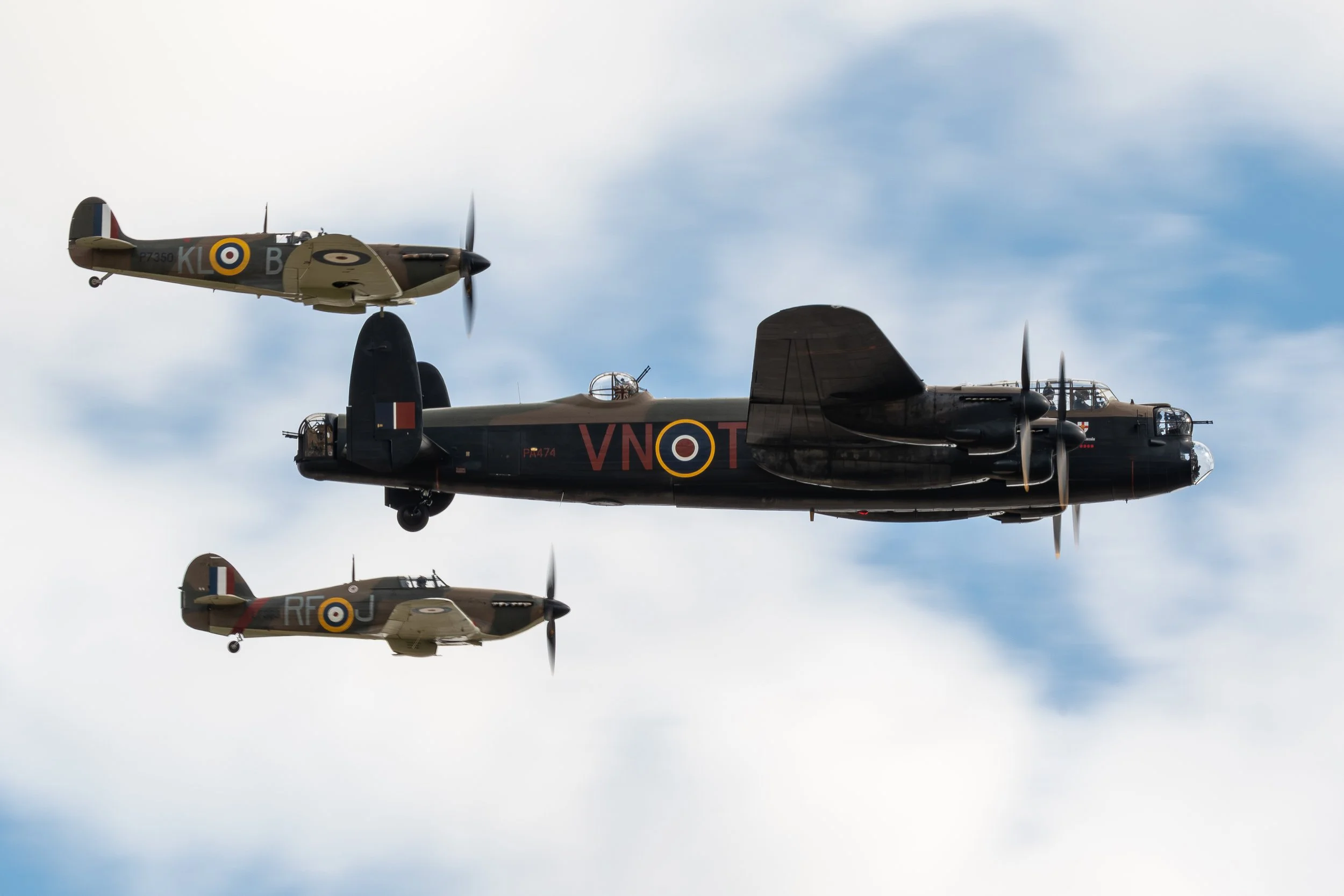
Battle of Britain Memorial Flight
The Royal Air Force's eleven-aircraft historic flight at RAF Coningsby
The Battle of Britain Memorial Flight keeps some of the RAF's most important surviving aircraft in airworthy condition as a living memorial. Its five Spitfires, two Hurricanes, Lancaster, Dakota and two Chipmunks connect wartime service, post-war aviation and the modern Royal Air Force through displays, state flypasts and commemorative flying.
- Inaugurated
- 11 July 1957
- Current collection
- 11 aircraft
- Spitfires
- 5 aircraft / 4 marks
- Hurricanes
- 2 Mk IIc aircraft
- Large aircraft
- Lancaster & Dakota
- Motto
- Lest We Forget
The Flight
A regular RAF unit maintaining a museum without walls.
A military unit, not a private warbird collection
BBMF is funded by the Ministry of Defence and operated as a regular Royal Air Force unit. Its aircraft remain on the military register and are flown by regular and reserve RAF aircrew. That status separates the Flight from civilian heritage operators: the aircraft are national assets maintained, tasked and operated inside the RAF's air-safety system.
The mission reaches beyond the Battle of Britain
The Flight began with Battle of Britain fighter types, but its official purpose is broader. It commemorates those who have fallen in service to the country, promotes the modern RAF and inspires future generations. The Lancaster and Dakota extend the story to Bomber Command, transport crews, airborne forces and the thousands of engineers, navigators, loadmasters and ground personnel whose work made wartime air operations possible.
Aircrew bring experience from today's RAF
A small permanent cadre is reinforced by volunteer aircrew serving at other RAF stations. Fighter pilots fly the Spitfires and Hurricanes, while crews with heavy multi-engine backgrounds operate the Dakota and Lancaster. Official 2026 information lists primary experience ranging from Typhoon and flying instruction to Atlas A400M and C-17 Globemaster operations.
Preservation controls the flying programme
These aircraft are not flown as if spare airframes were readily available. Each has annual flying-hour limits intended to preserve it for the long term. BBMF therefore links several flypasts into one sortie where possible, rests most of the collection during the winter maintenance season and sends at least one aircraft away for a deeper Major maintenance programme in a typical year.
Displays and flypasts
No single fixed routine: the aircraft package changes with the occasion.
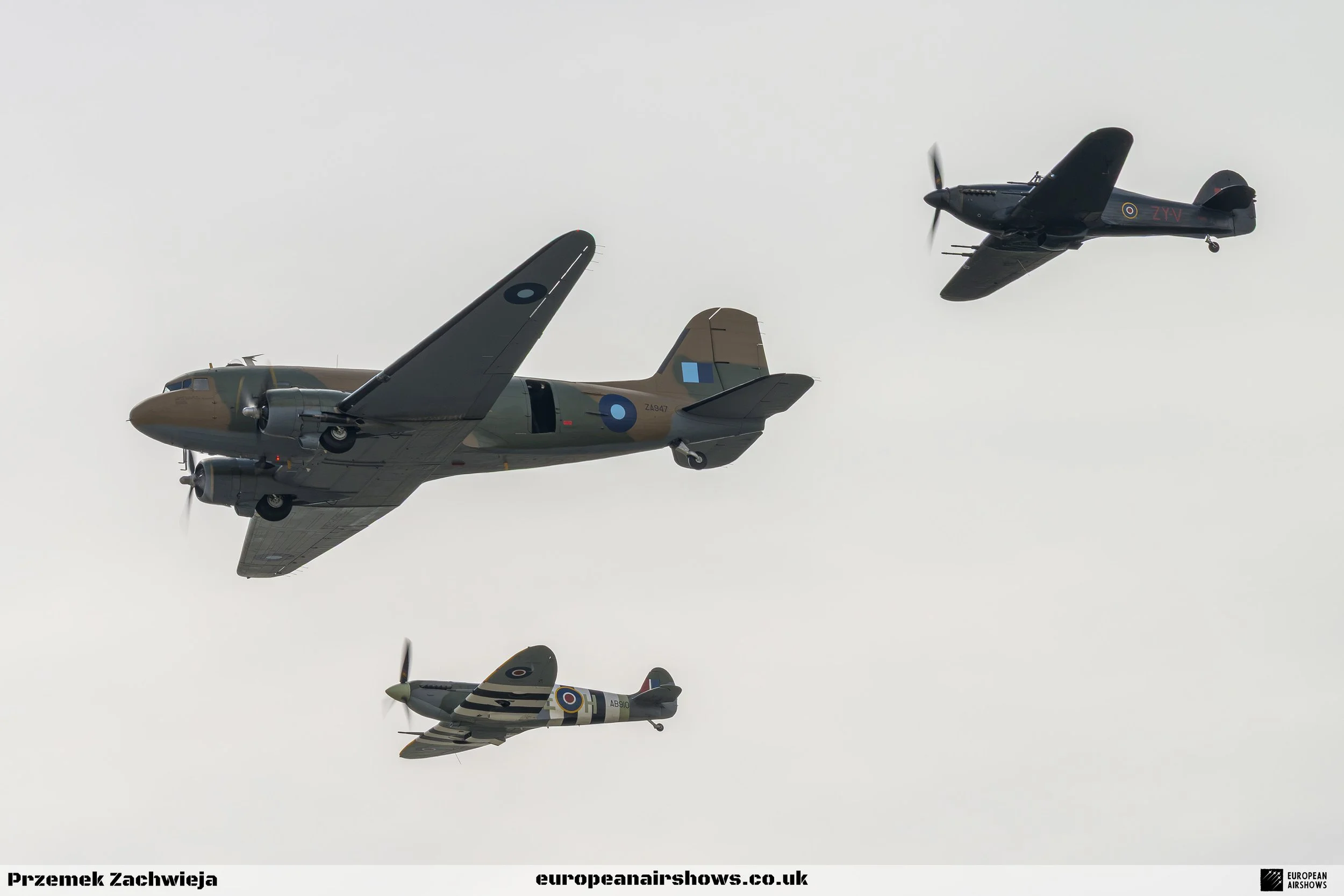
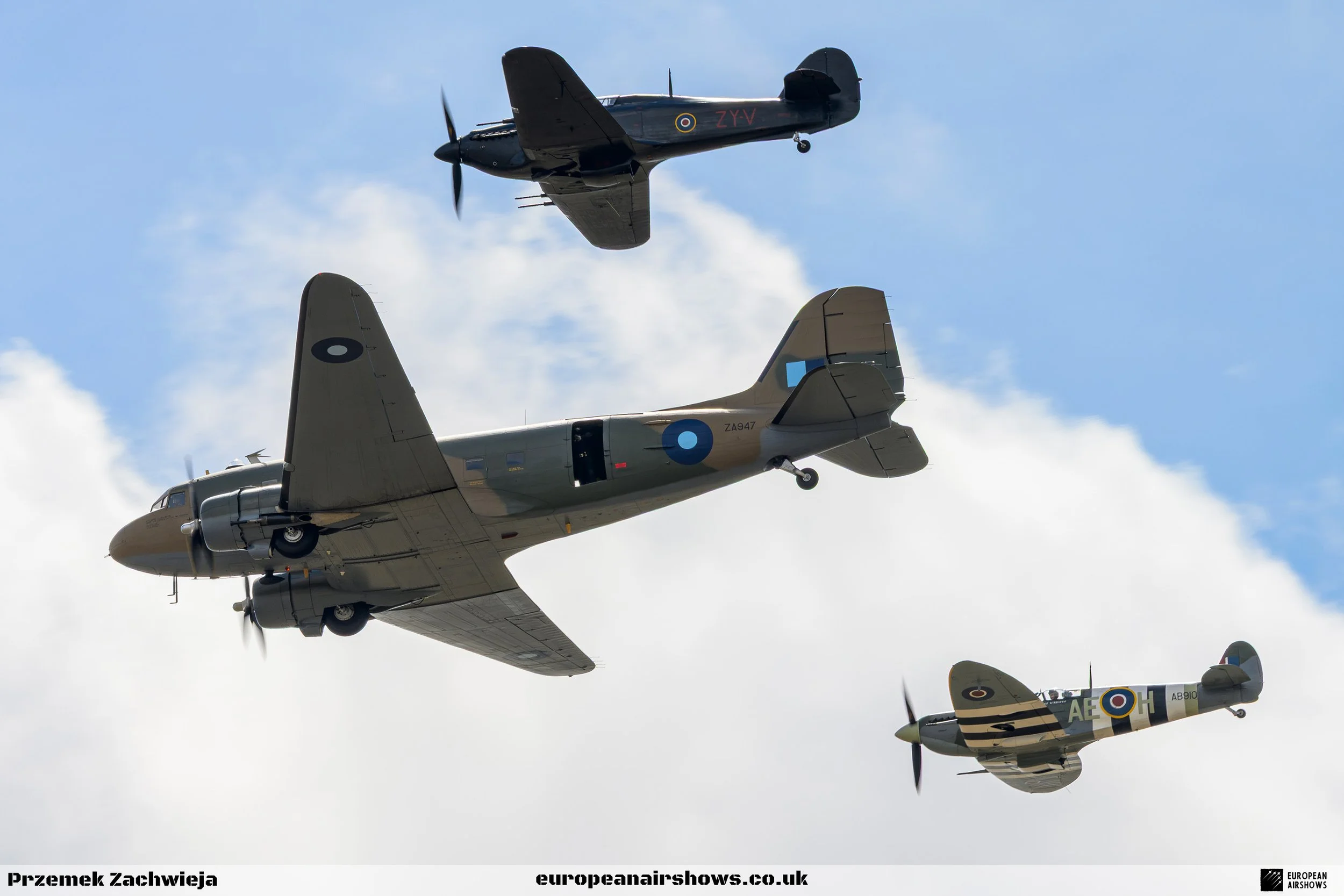
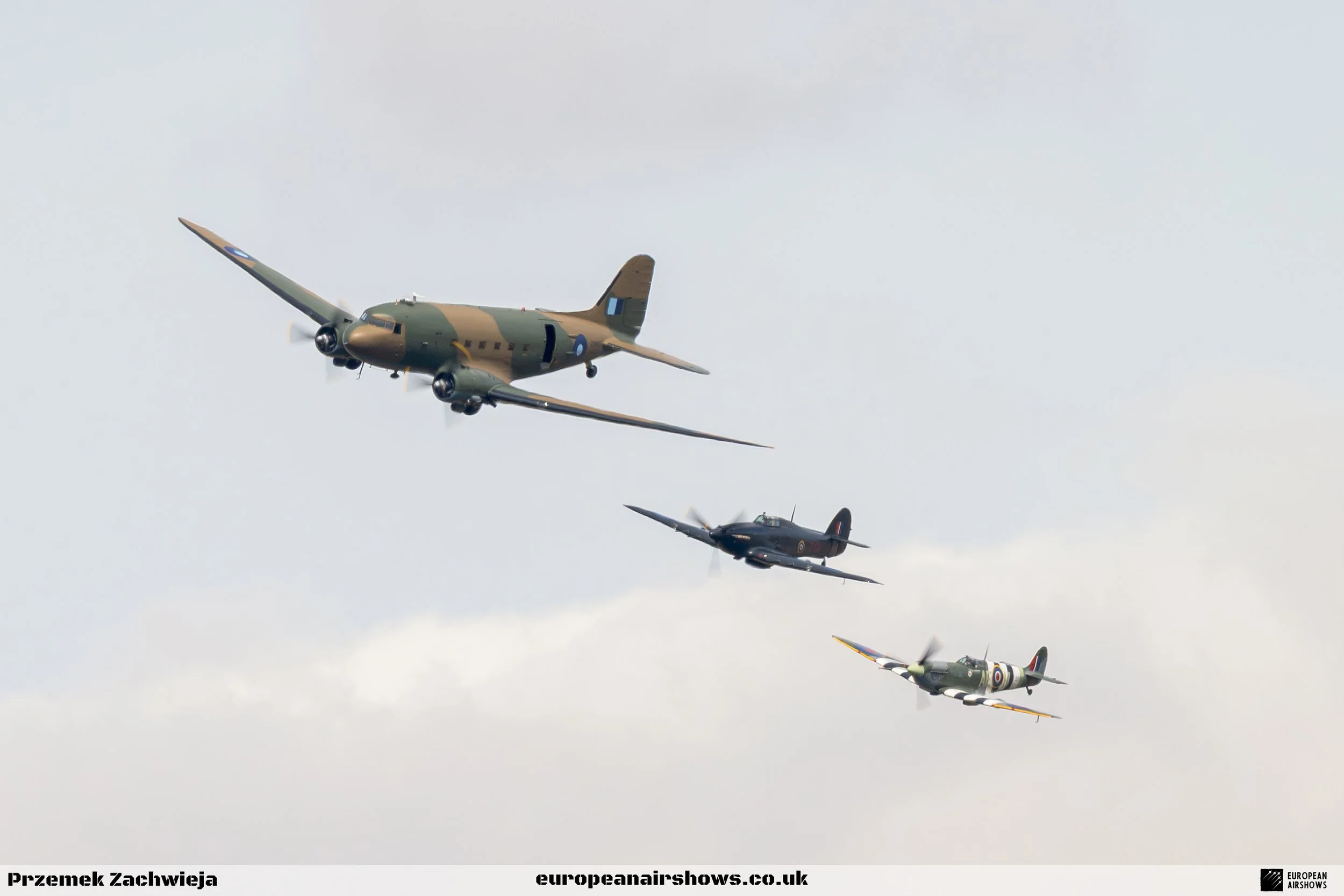
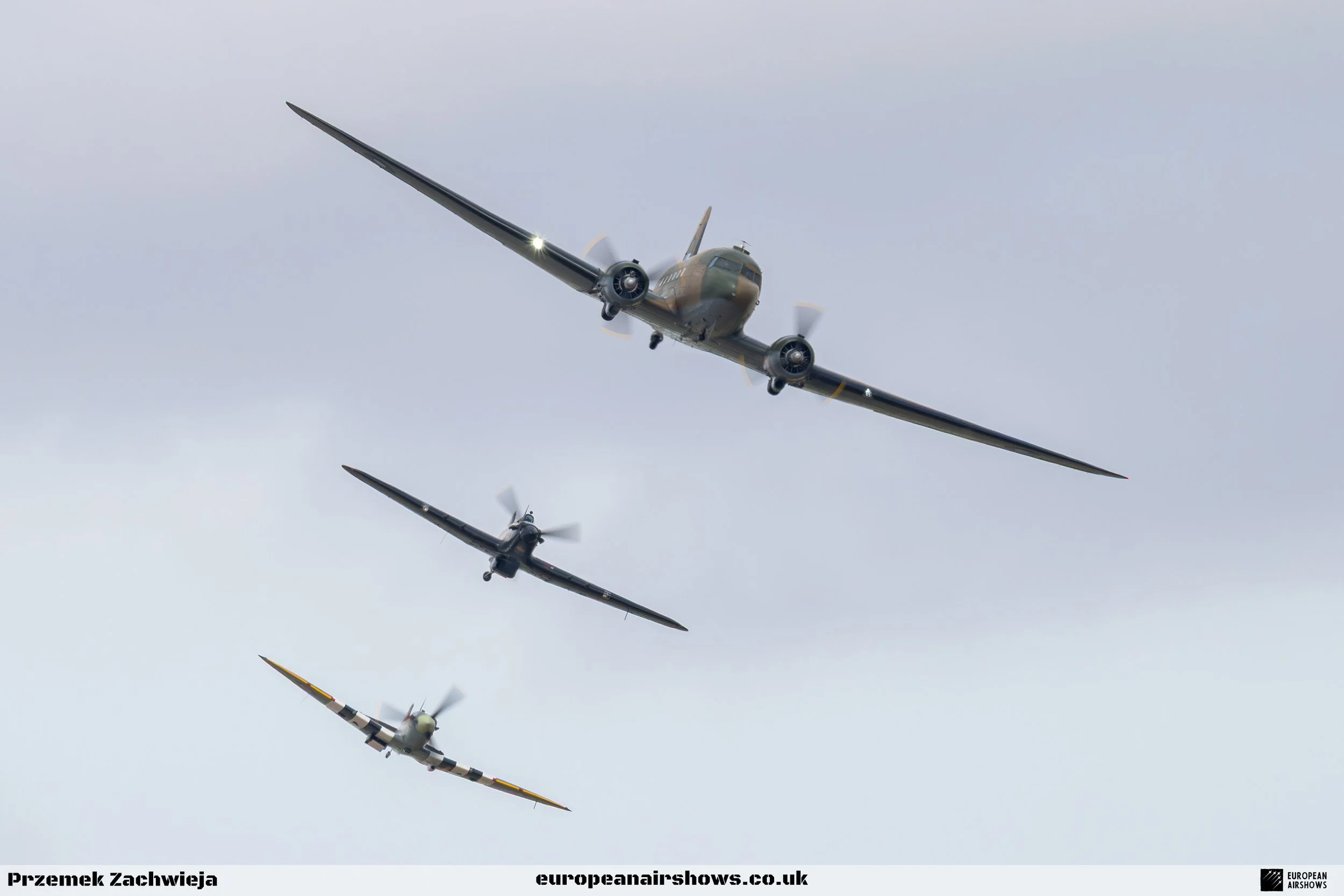
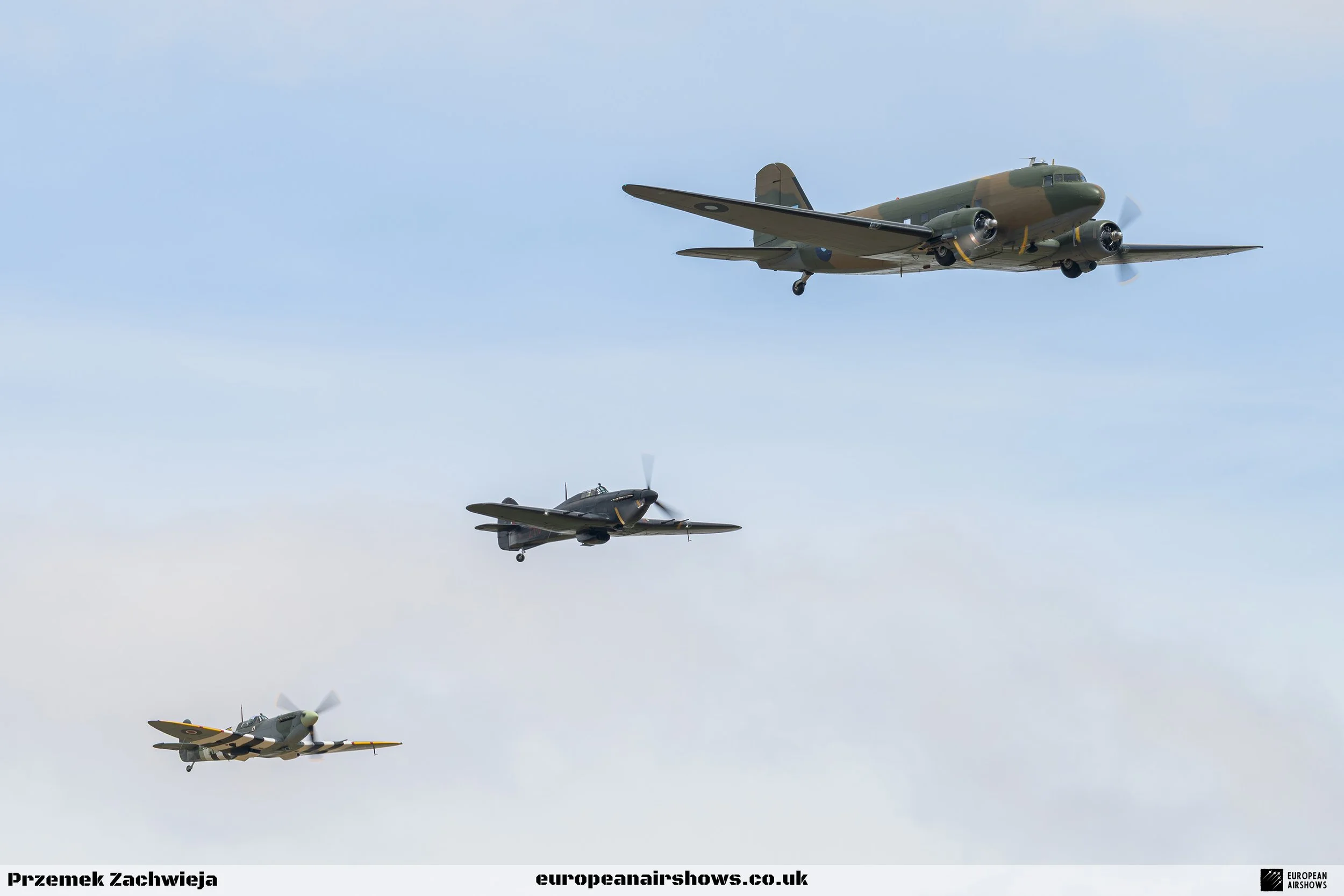
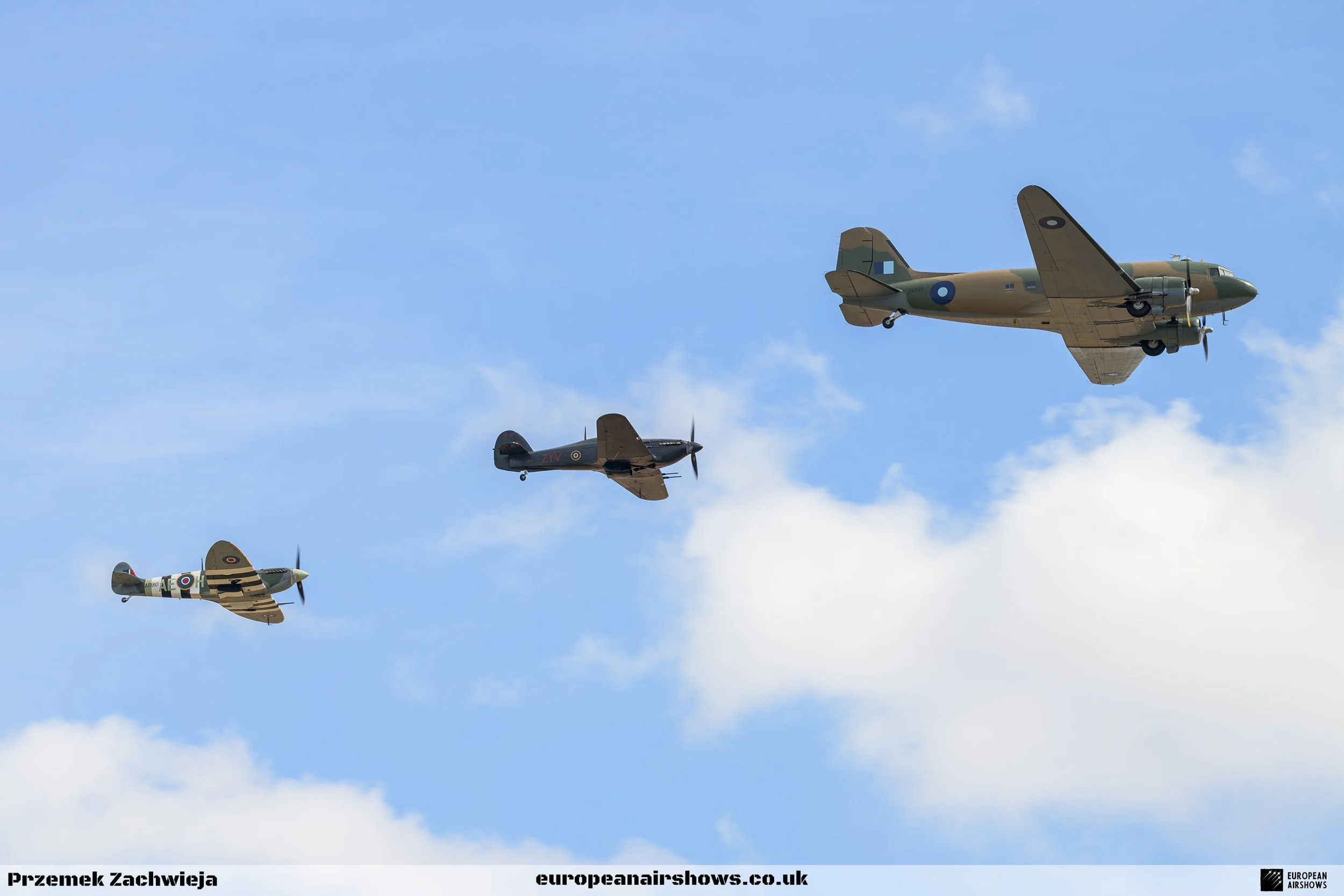
BBMF may provide one fighter for a village memorial, a Dakota display, a Lancaster with fighter escorts, or a large formation for a national event. The available aircraft, venue, weather, maintenance state and commemorative story determine what is flown.
Singleton fighter displays
A Spitfire or Hurricane can present flowing passes, climbing turns and reversals while remaining within conservative preservation limits.
Pairs and fighter tail-chases
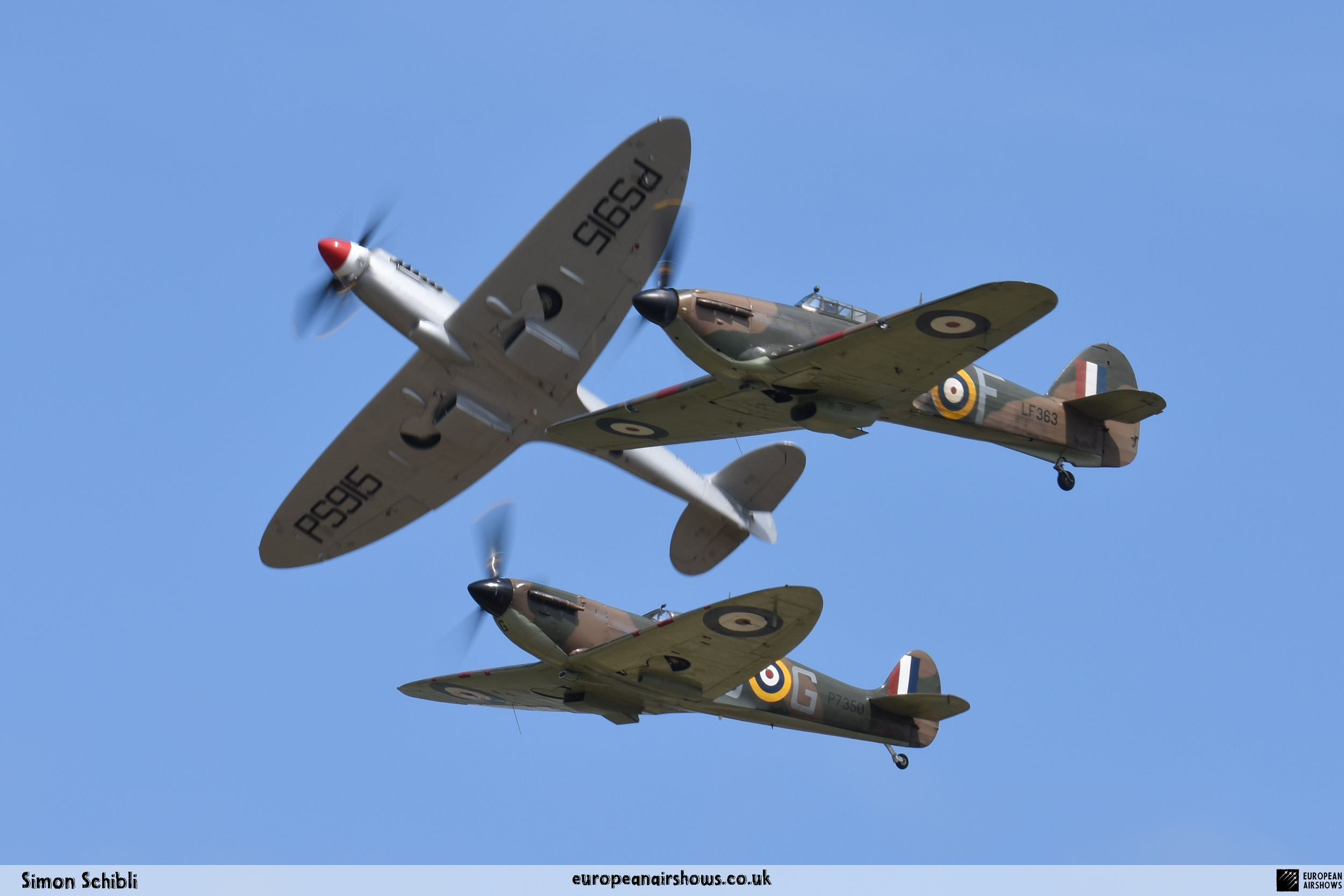
Two or more fighters may arrive in formation before separating into a sequence that contrasts the Spitfire marks or pairs a Spitfire with a Hurricane.
Lancaster formations
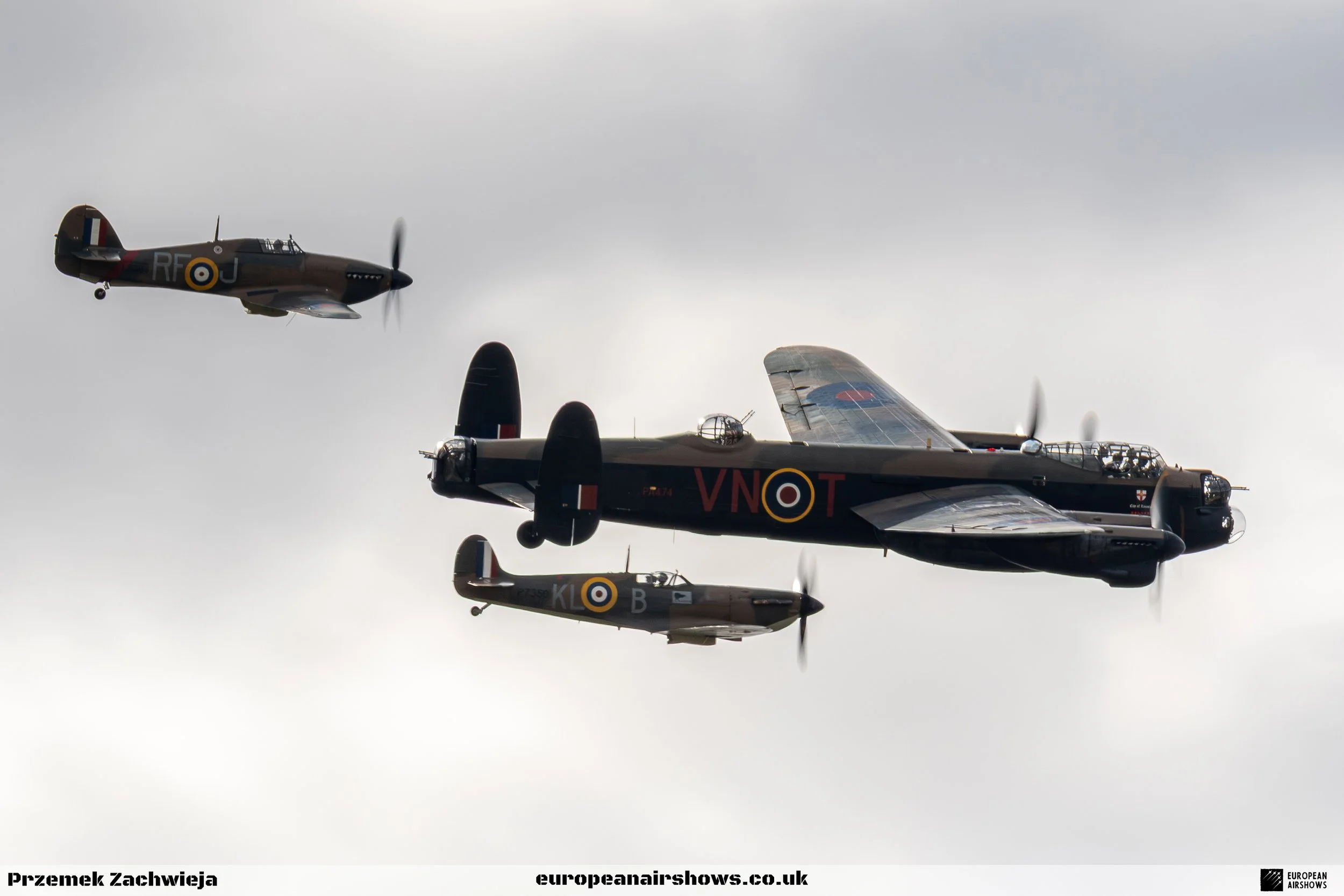
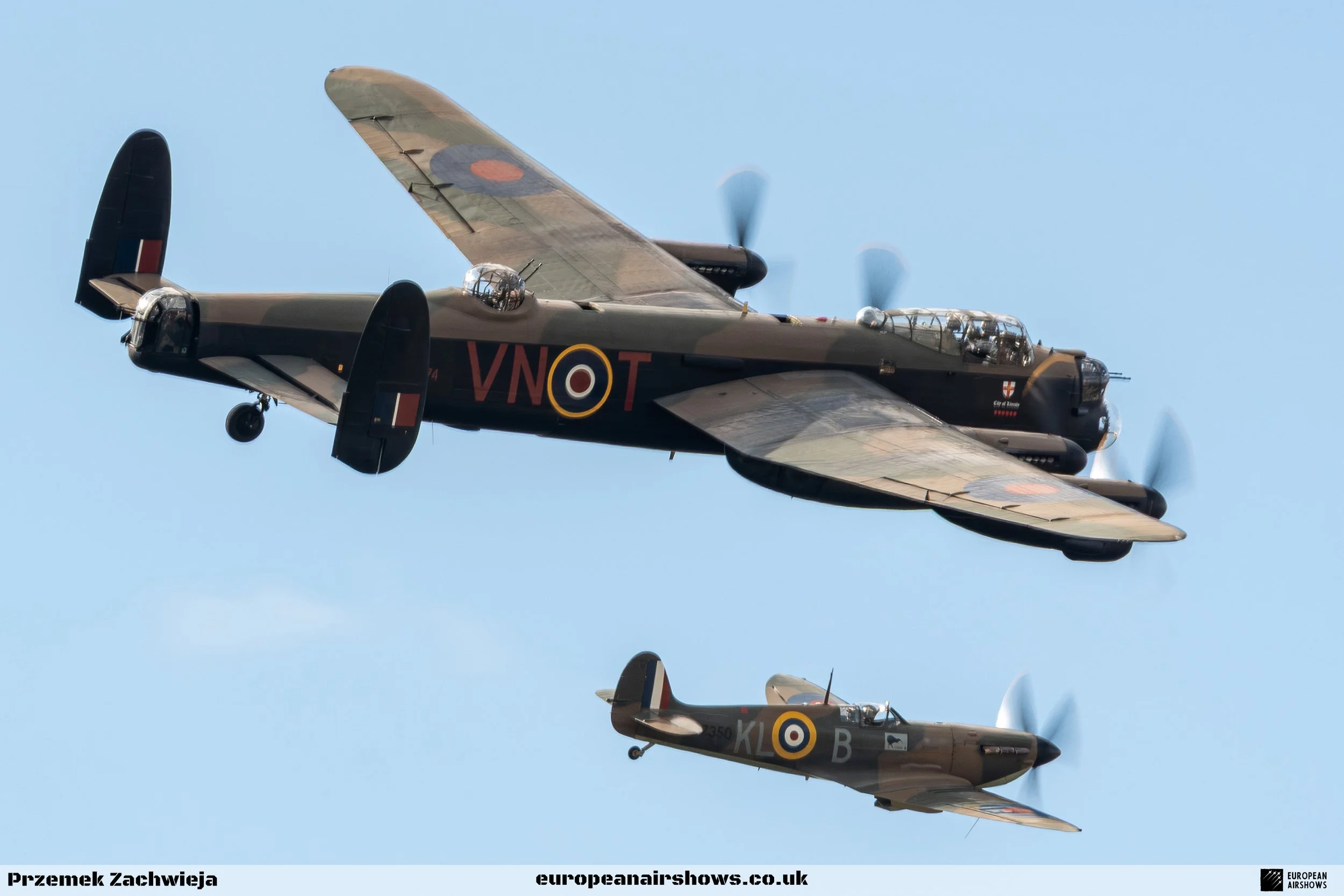
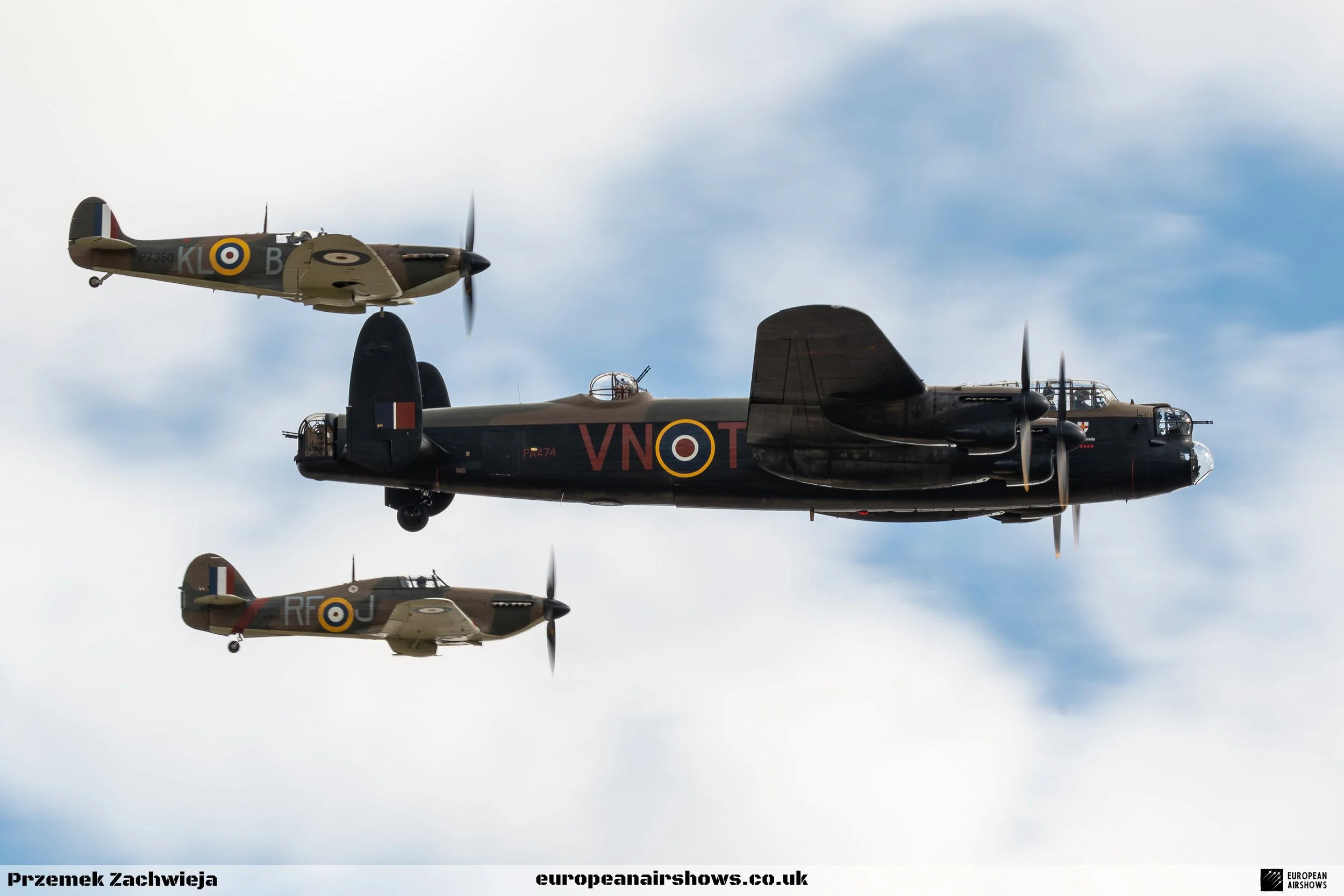
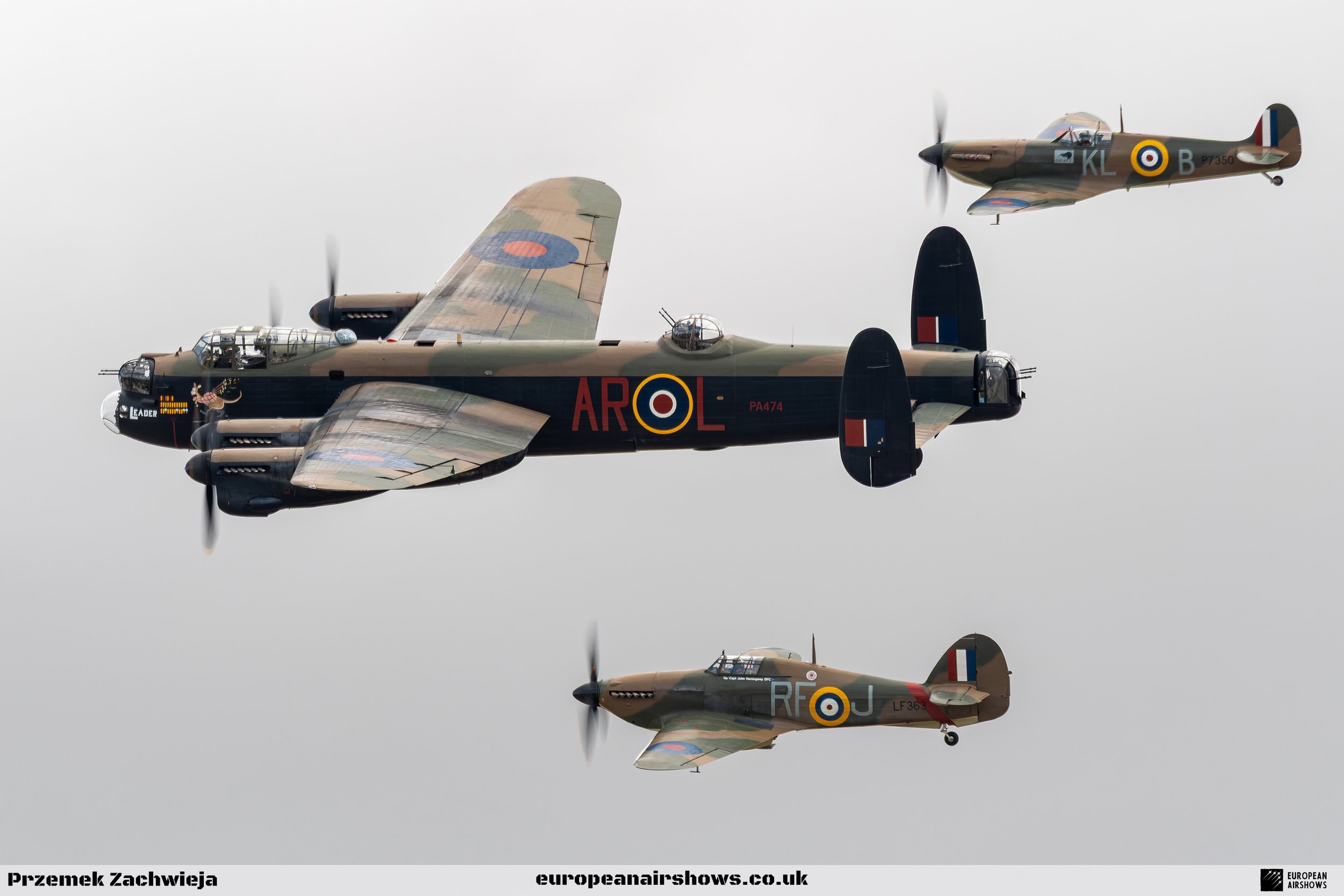
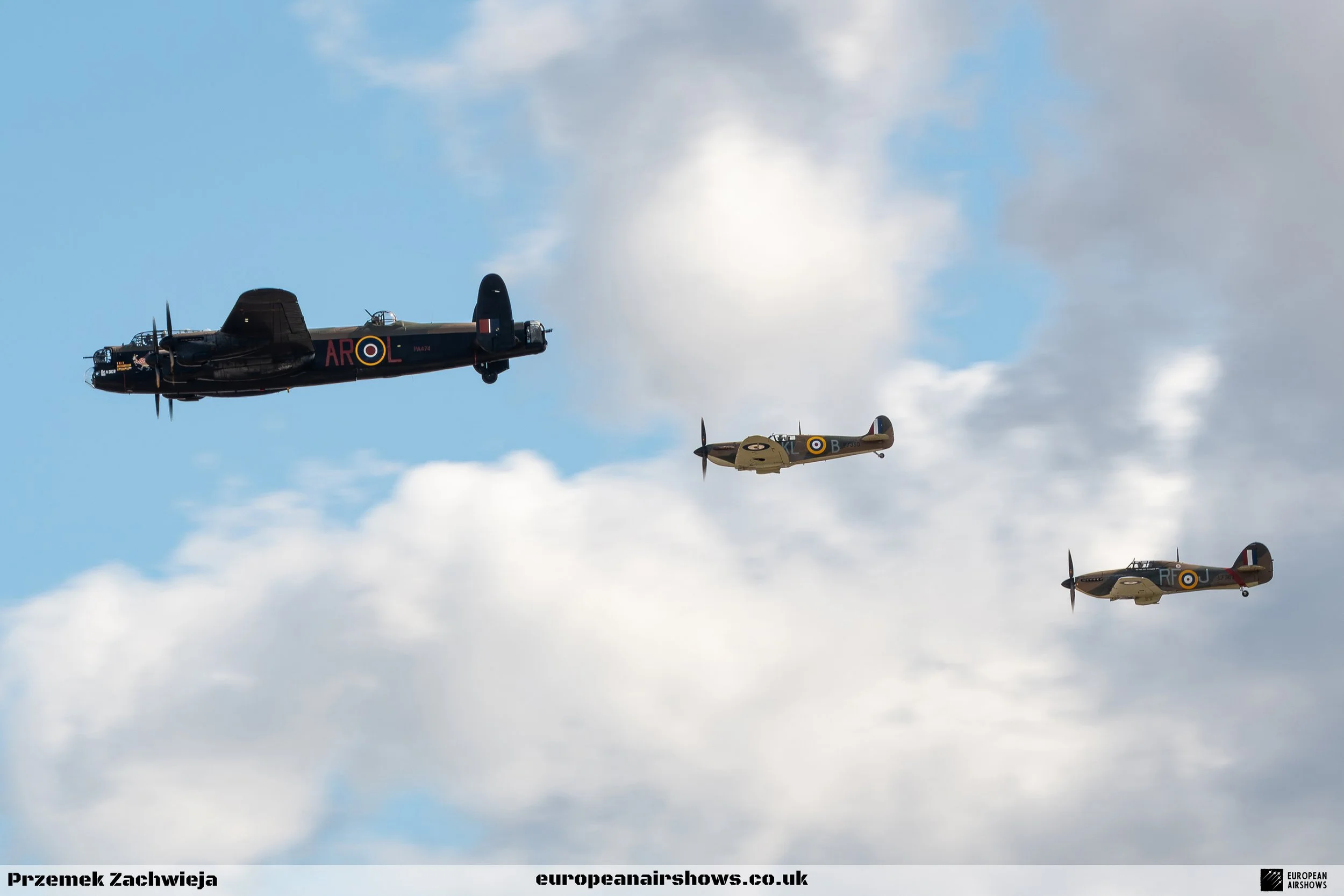
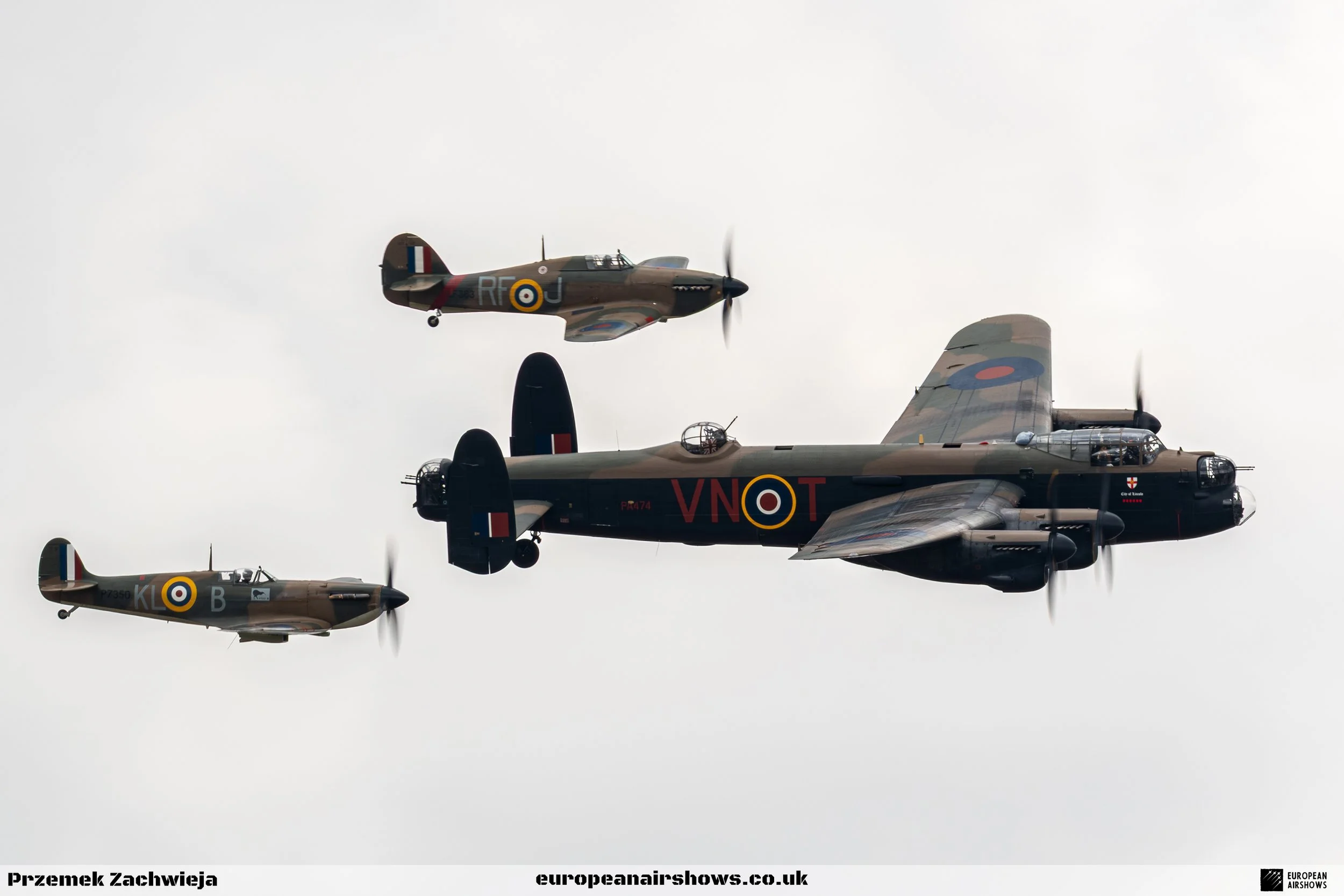
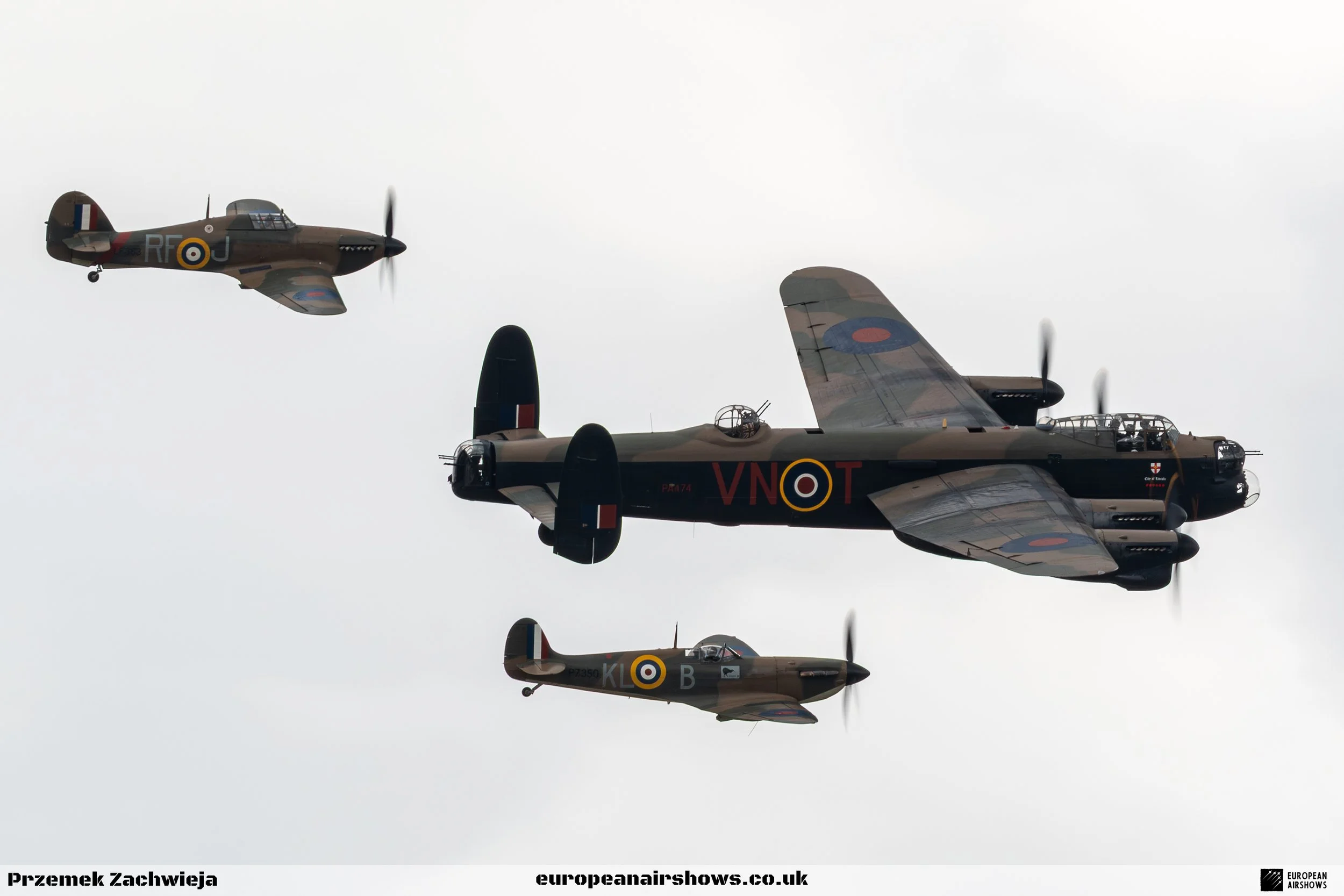
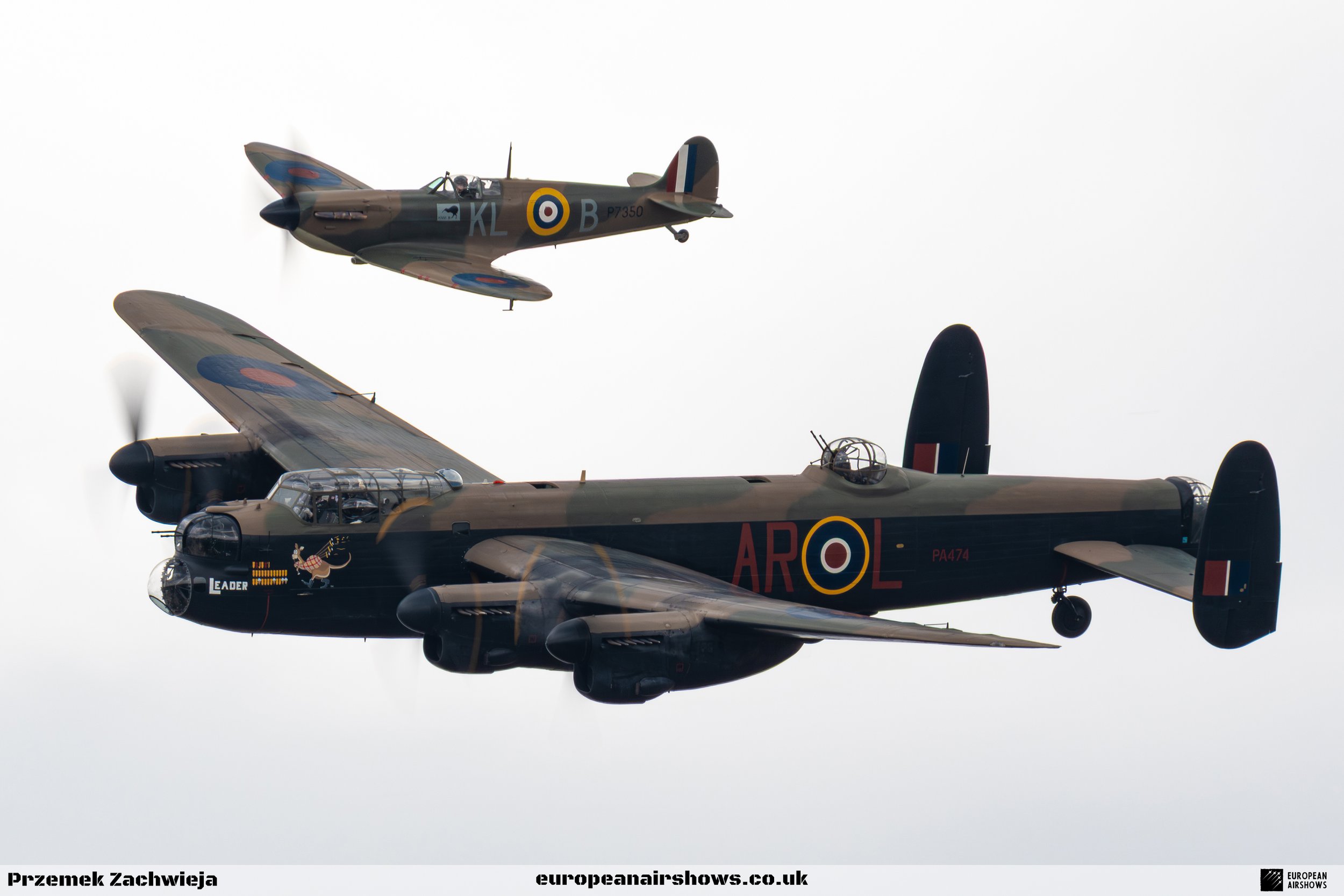
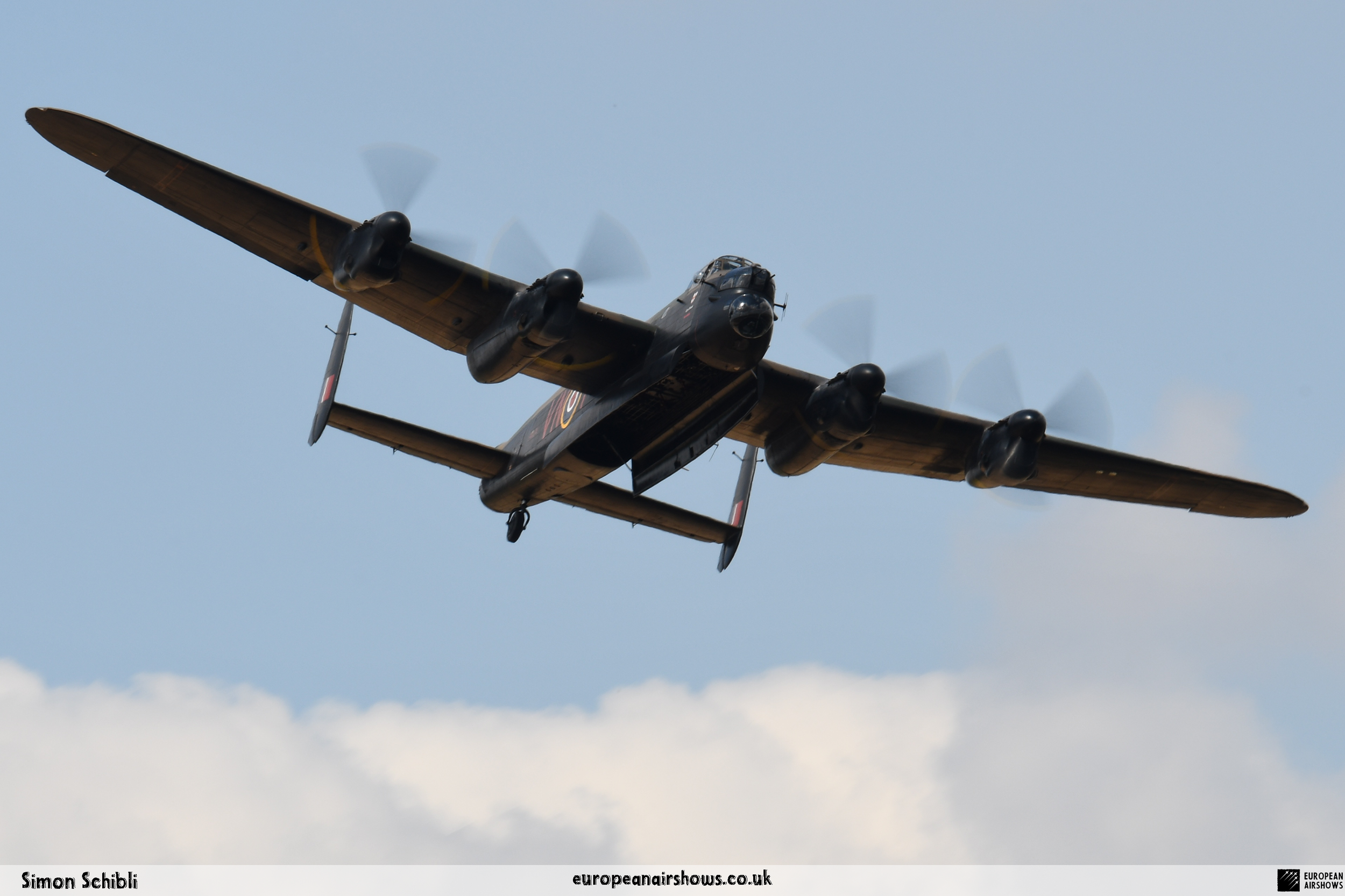
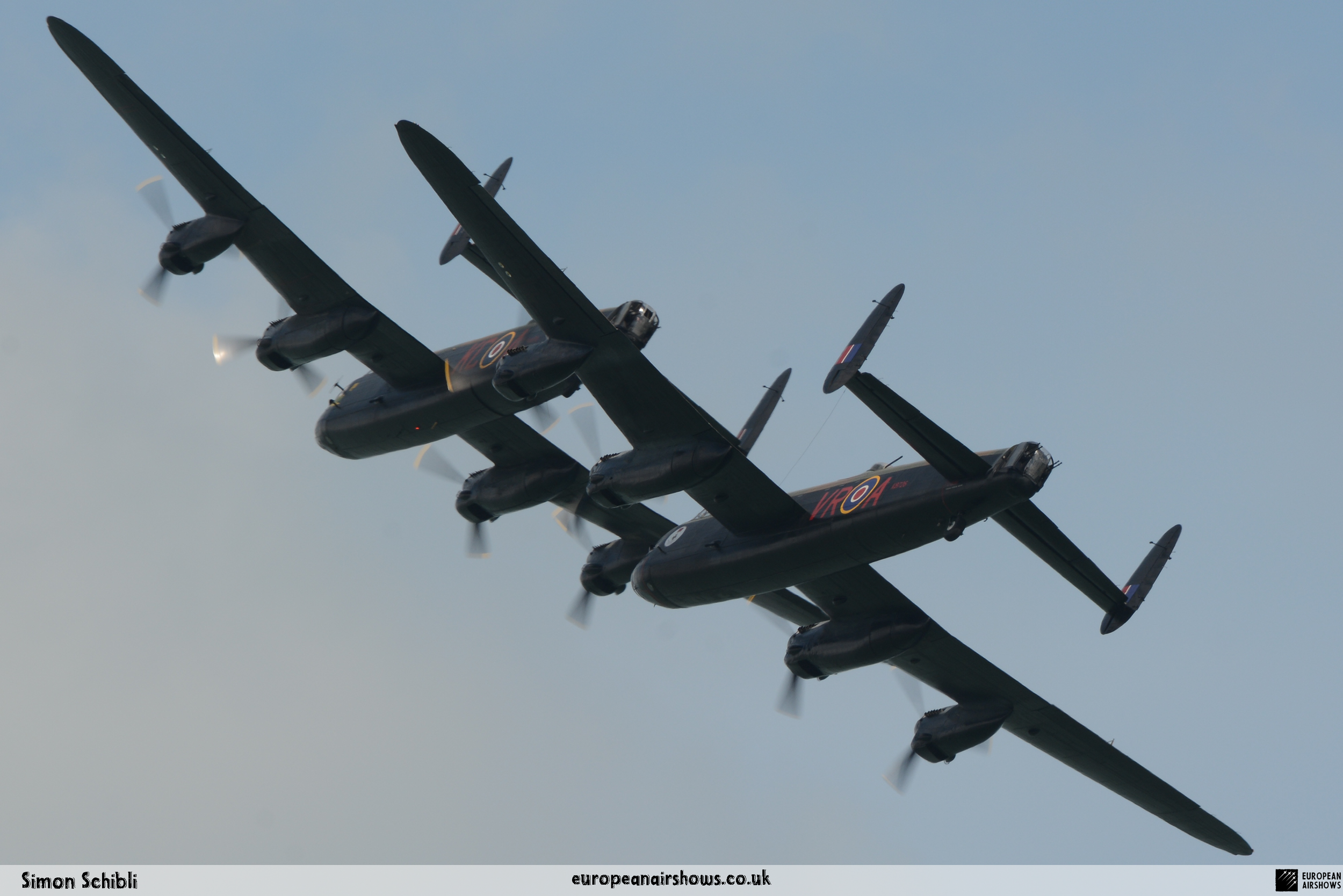
PA474 can fly alone or lead fighters in the signature sight most closely associated with BBMF, with the exact number and position changing between events.
Dakota display and training role
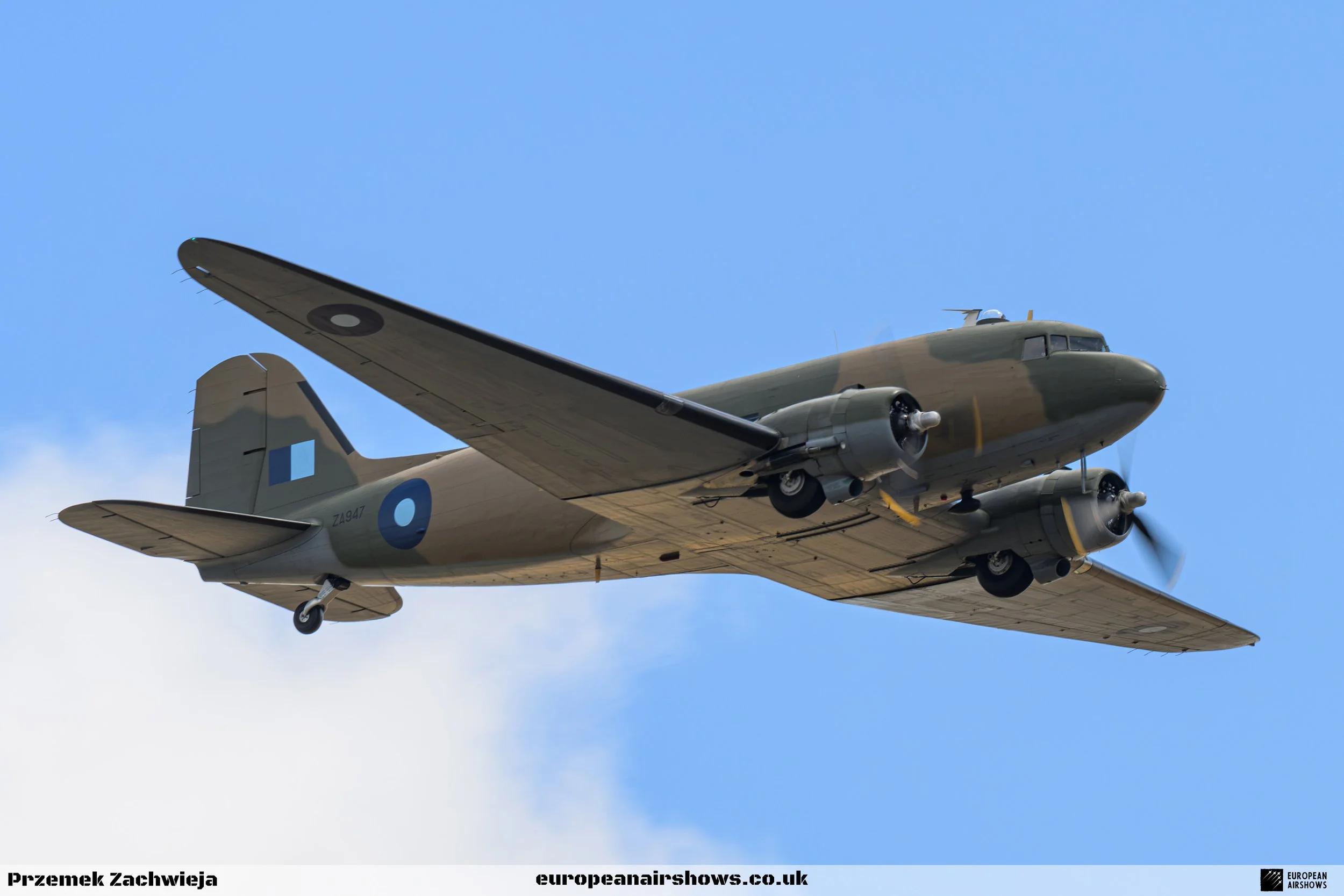
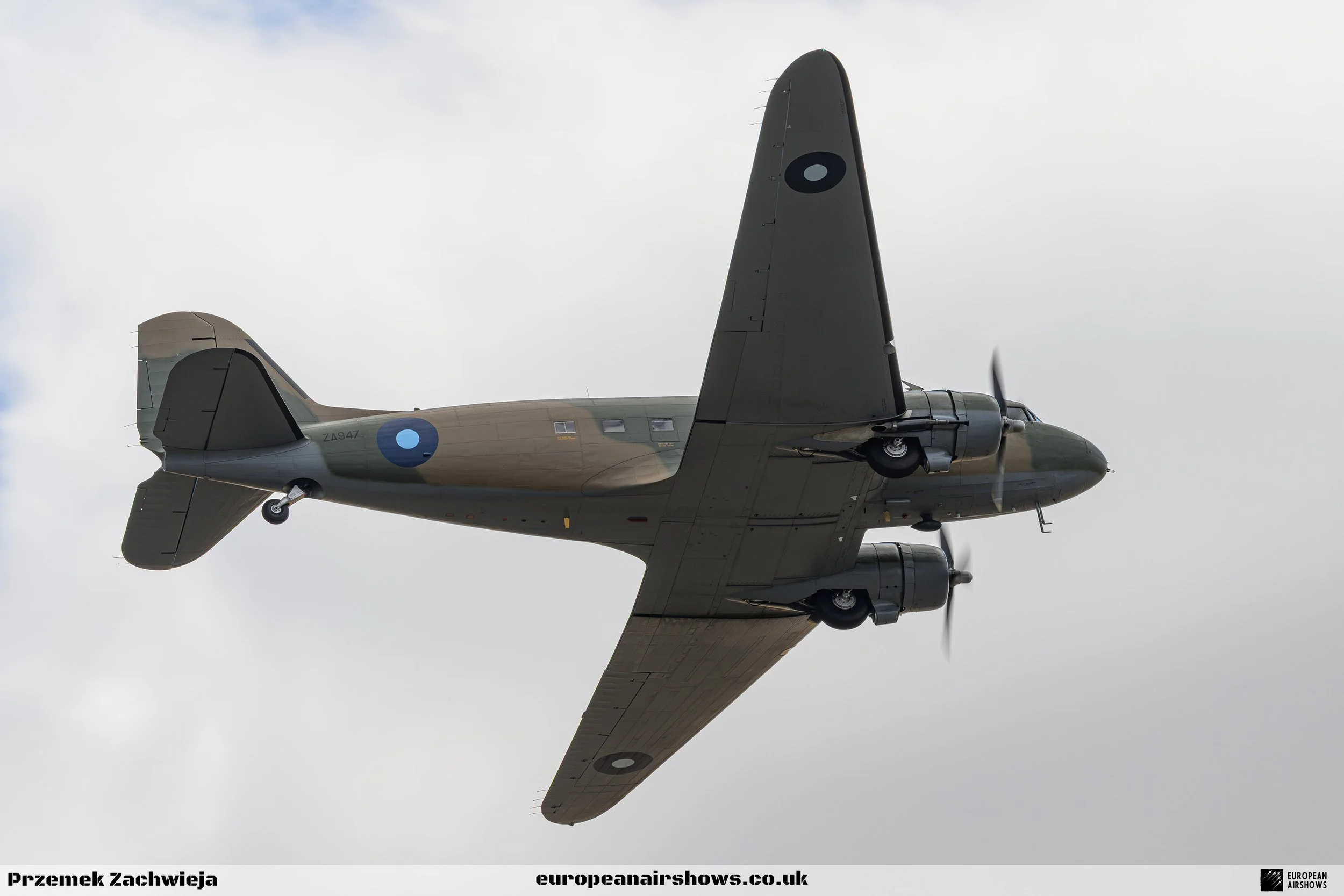
ZA947 is a display aircraft in its own right, but also develops and maintains the multi-engine tailwheel skills required before crews progress to the Lancaster.
Large named packages
Special programmes have included the four-aircraft “Trenchard” and seven-aircraft “Trenchard Plus” formations flown at RIAT in 2018 rather than one permanent standard formation.
State and commemorative tasking
Trooping the Colour, anniversaries, funerals, memorial services and small community events are as central to the mission as the major public airshow circuit.
The current collection
Eleven aircraft, each carrying a different part of the RAF story.
Avro Lancaster B.I
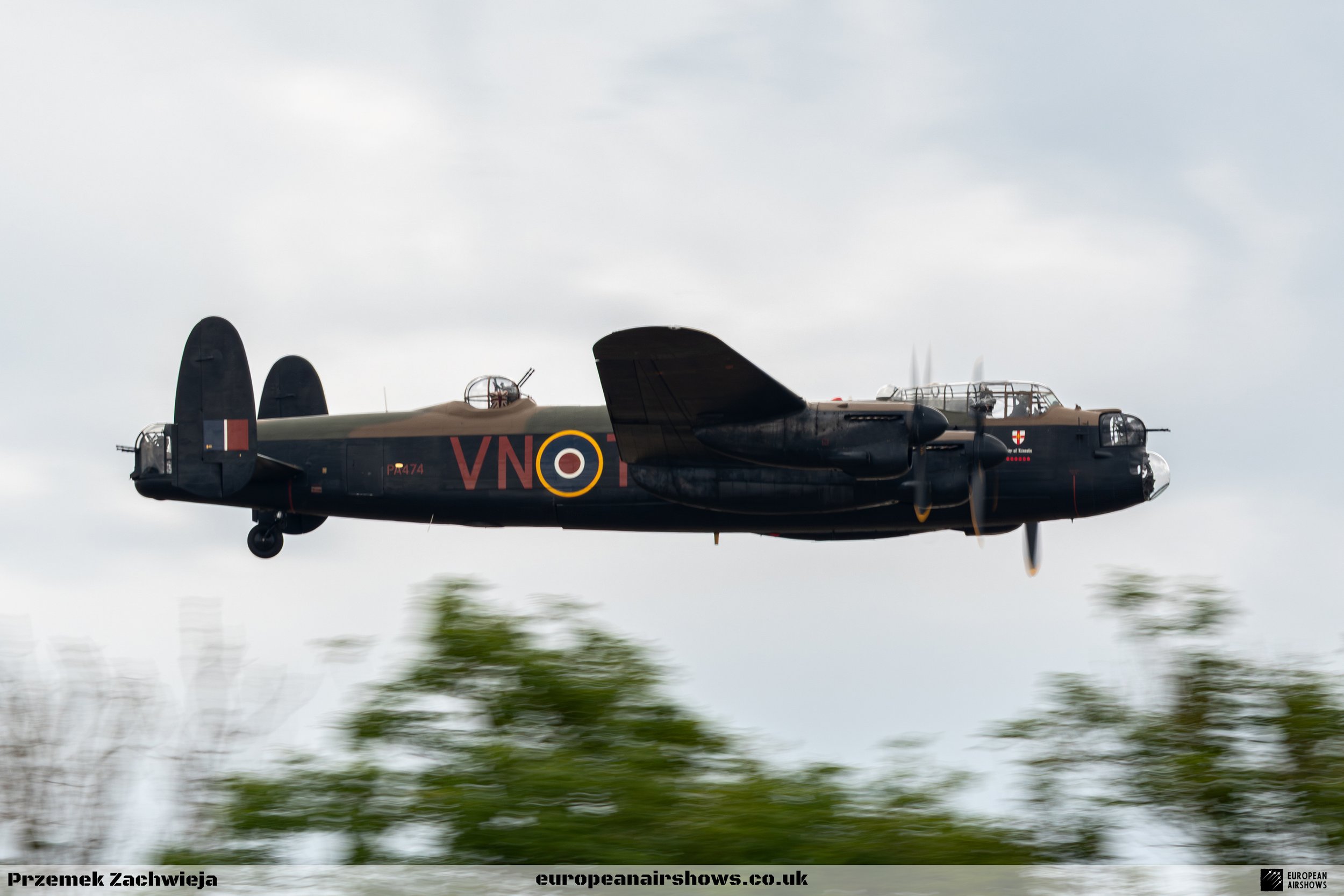
PA474Built just after VE Day, PA474 did not fly combat operations. Its remarkable post-war career included African photographic survey work, air-to-air-refuelling research and aerodynamic testing before it joined the Flight in 1973. It is one of only two airworthy Lancasters worldwide and the only one in Europe.
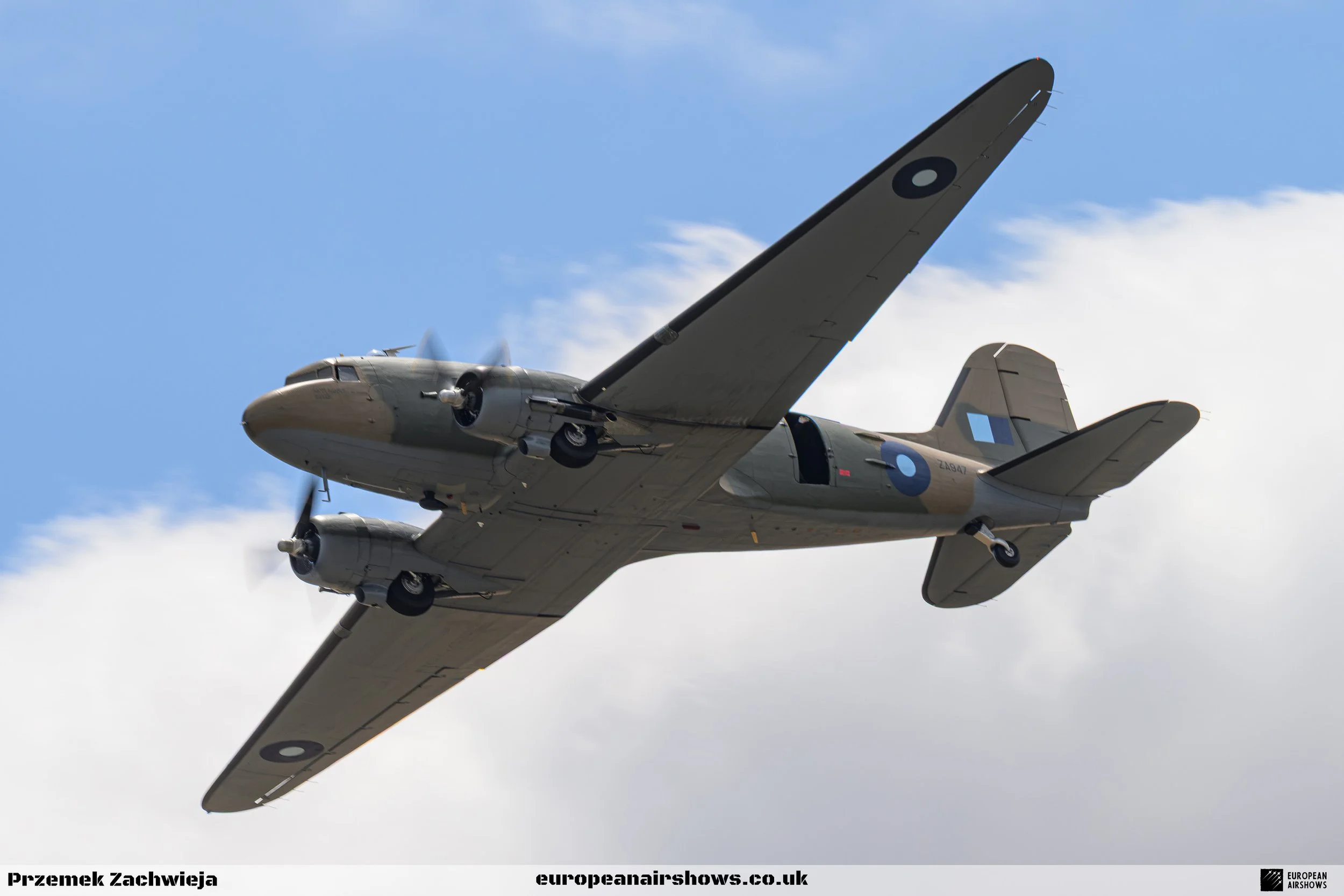
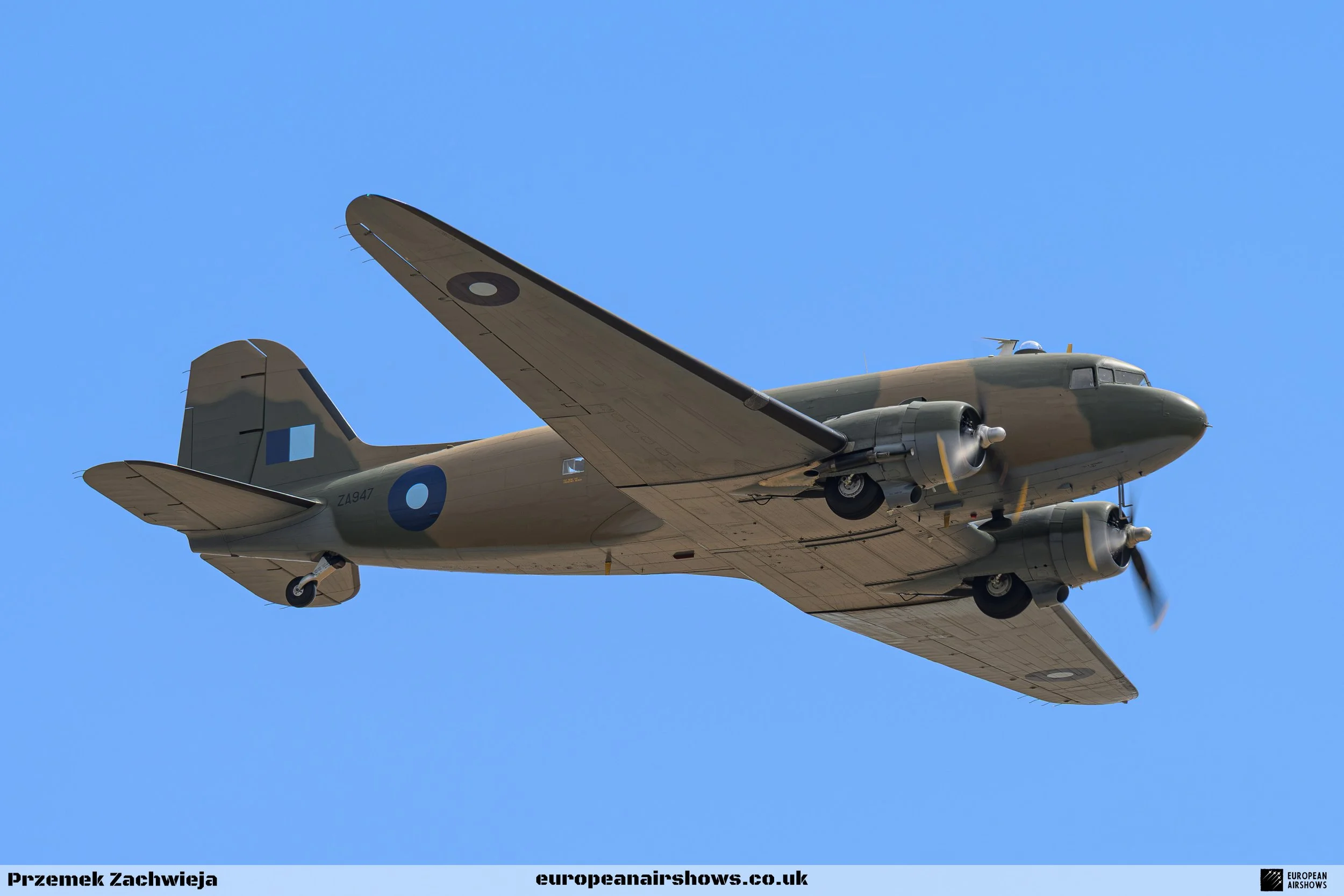
Douglas C-47A Dakota III
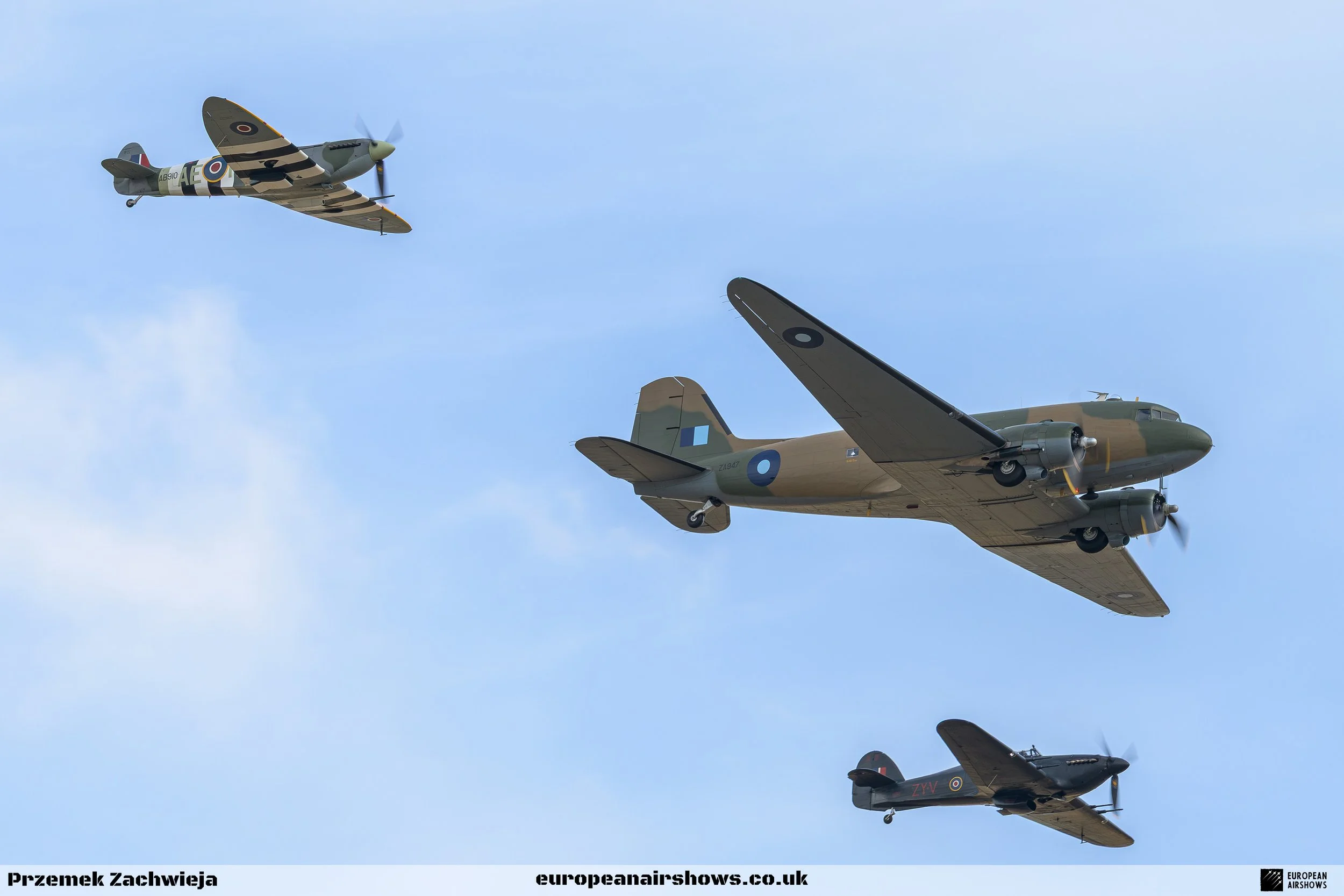
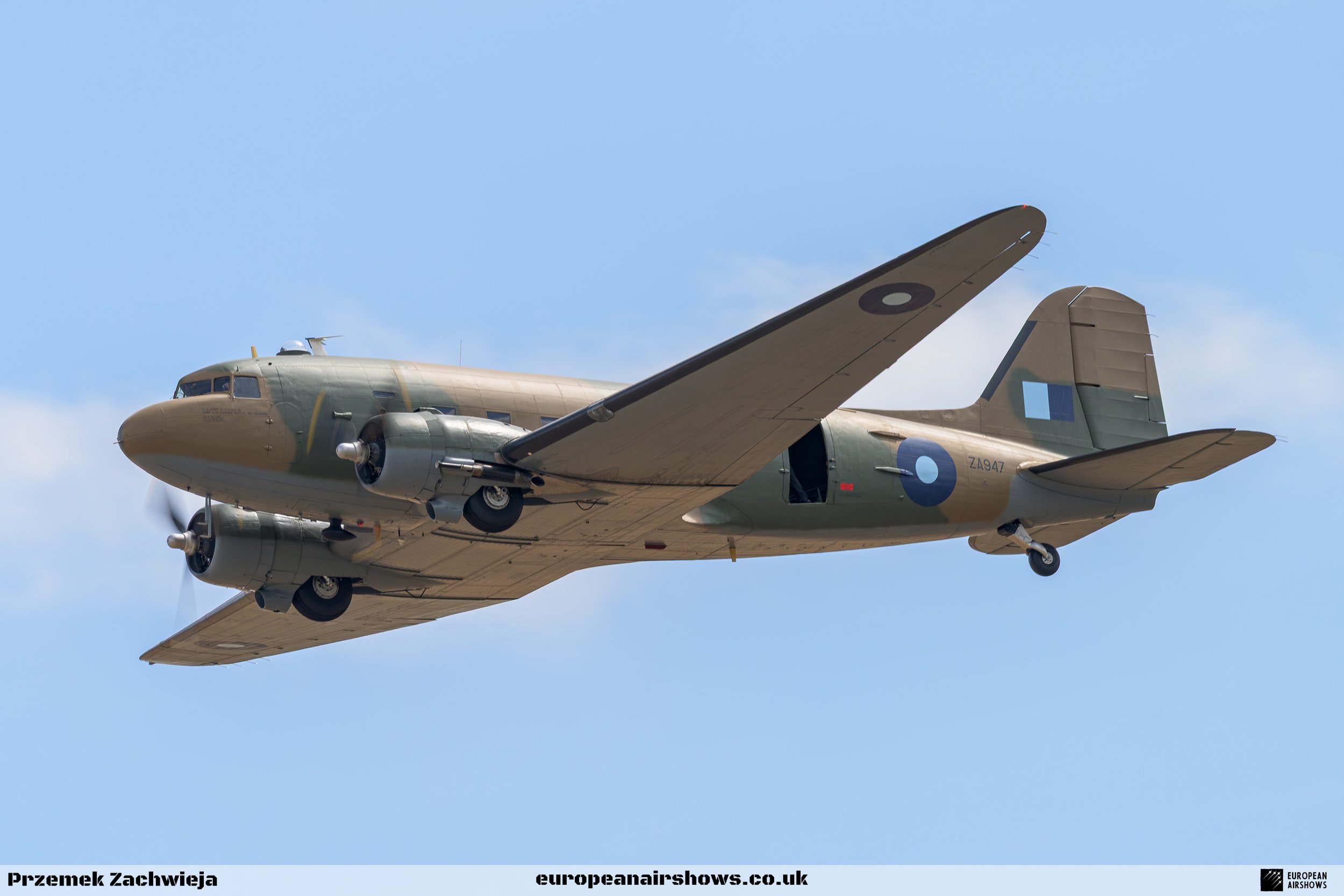
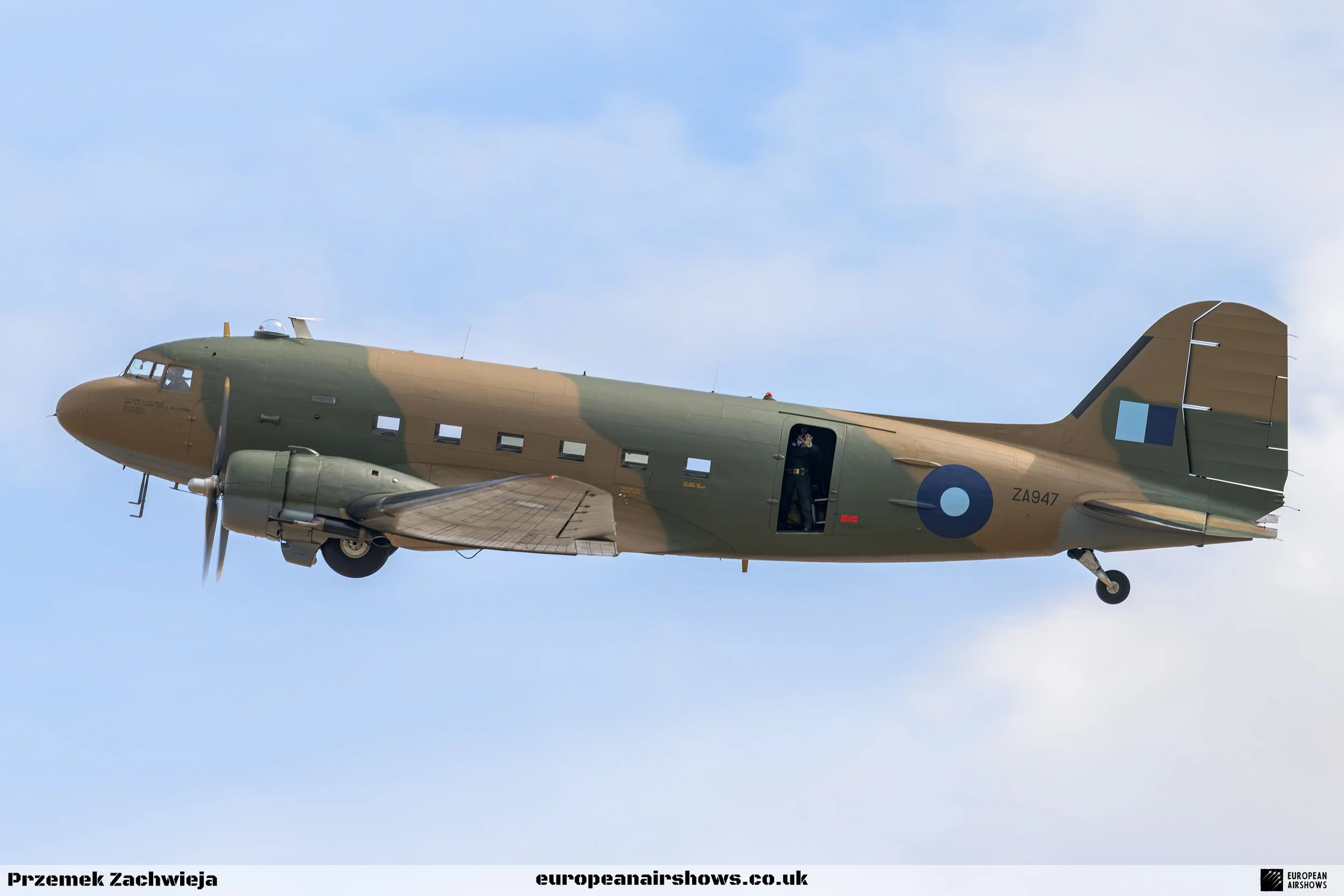
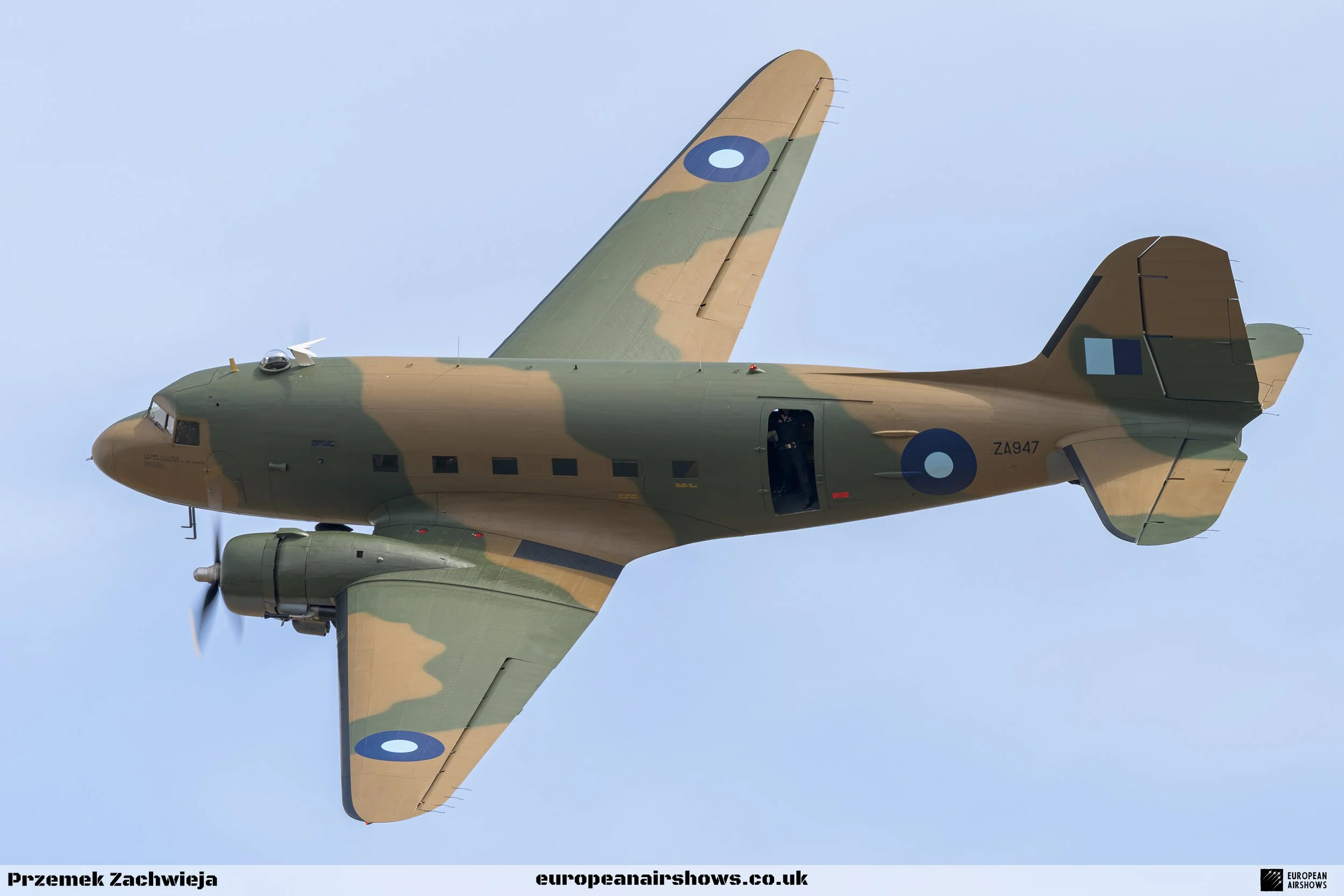
ZA947Built in 1942 and operated by the Royal Canadian Air Force in Canada during the war. Its D-Day and South East Asia markings commemorate other Dakota crews and aircraft; they are not ZA947's own wartime identity. The aircraft joined BBMF in 1993 after research service.
Spitfire Mk IIa
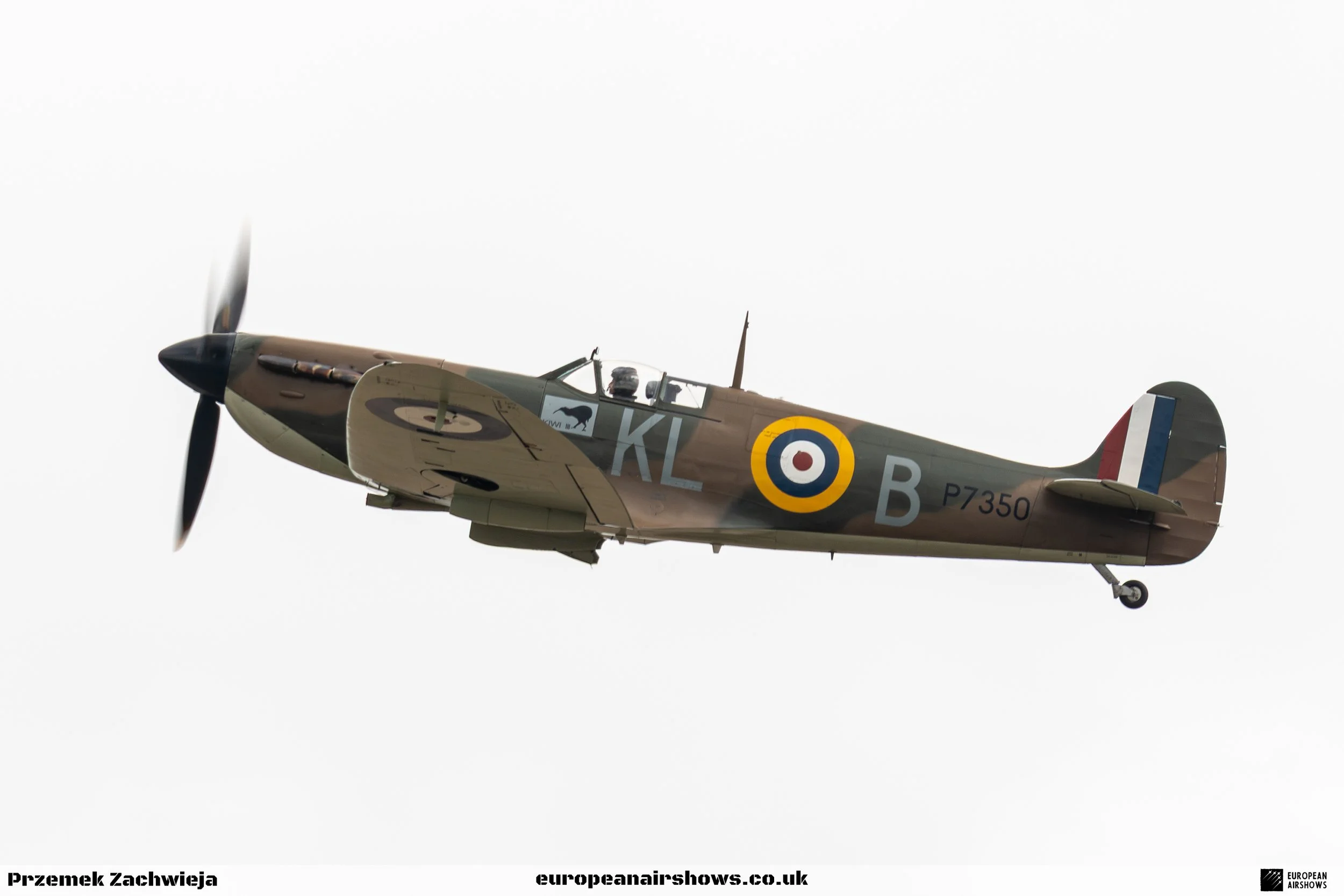
P7350A genuine Battle of Britain combat veteran. P7350 was damaged by a German fighter on 25 October 1940 while serving with 603 Squadron, force-landed and returned to service. Saved from scrapping, it was restored for the film Battle of Britain and joined the Flight in 1968.
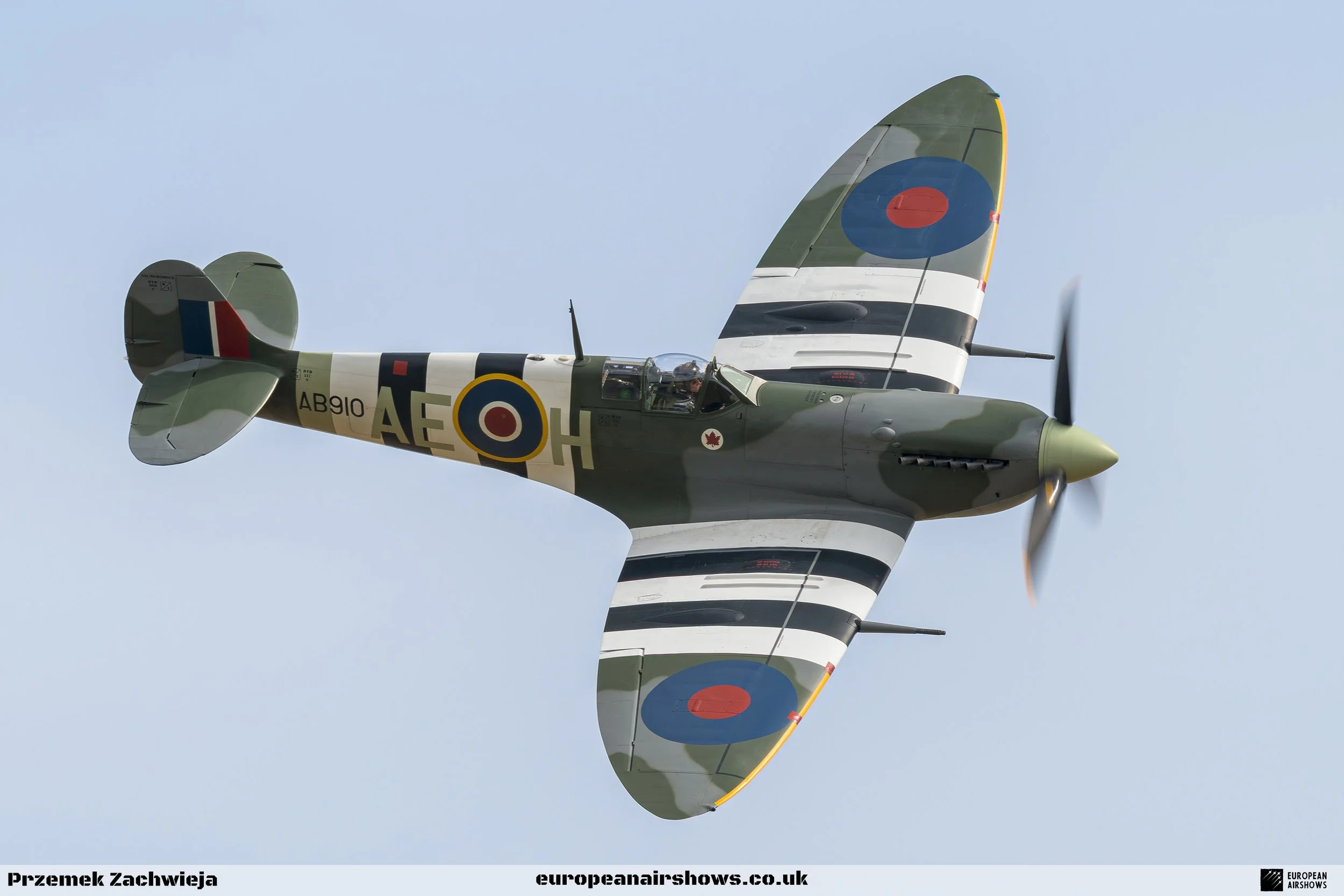
Spitfire Mk Vb
AB910AB910 flew 143 wartime operational sorties, including the Dieppe Raid and D-Day period operations. It later became an air racer and Vickers-Supermarine display aircraft before Jeffrey Quill delivered it to the RAF in 1965 on his final Spitfire flight.
Spitfire LF Mk XVIe
TE311Built after VE Day as a low-back, clipped-wing fighter, TE311 accumulated only about 30 hours before becoming a ground exhibit. It entered the BBMF collection in 2000 and returned to flight in October 2012 after a ten-year restoration by the Flight's engineers.
Spitfire PR Mk XIX
PM631One of the three reconnaissance Spitfires present when the Historic Aircraft Flight was inaugurated in 1957. PM631 became the sole Spitfire on strength between 1959 and 1965 and remains a direct physical link with the earliest years of the unit.
Spitfire PR Mk XIX
PS915Also present at the Flight's 1957 inauguration, PS915 represents the final, Griffon-powered reconnaissance development of the Spitfire. The aircraft has undergone an extended structural rebuild after cracking was traced to a misaligned Frame 5 mounting.
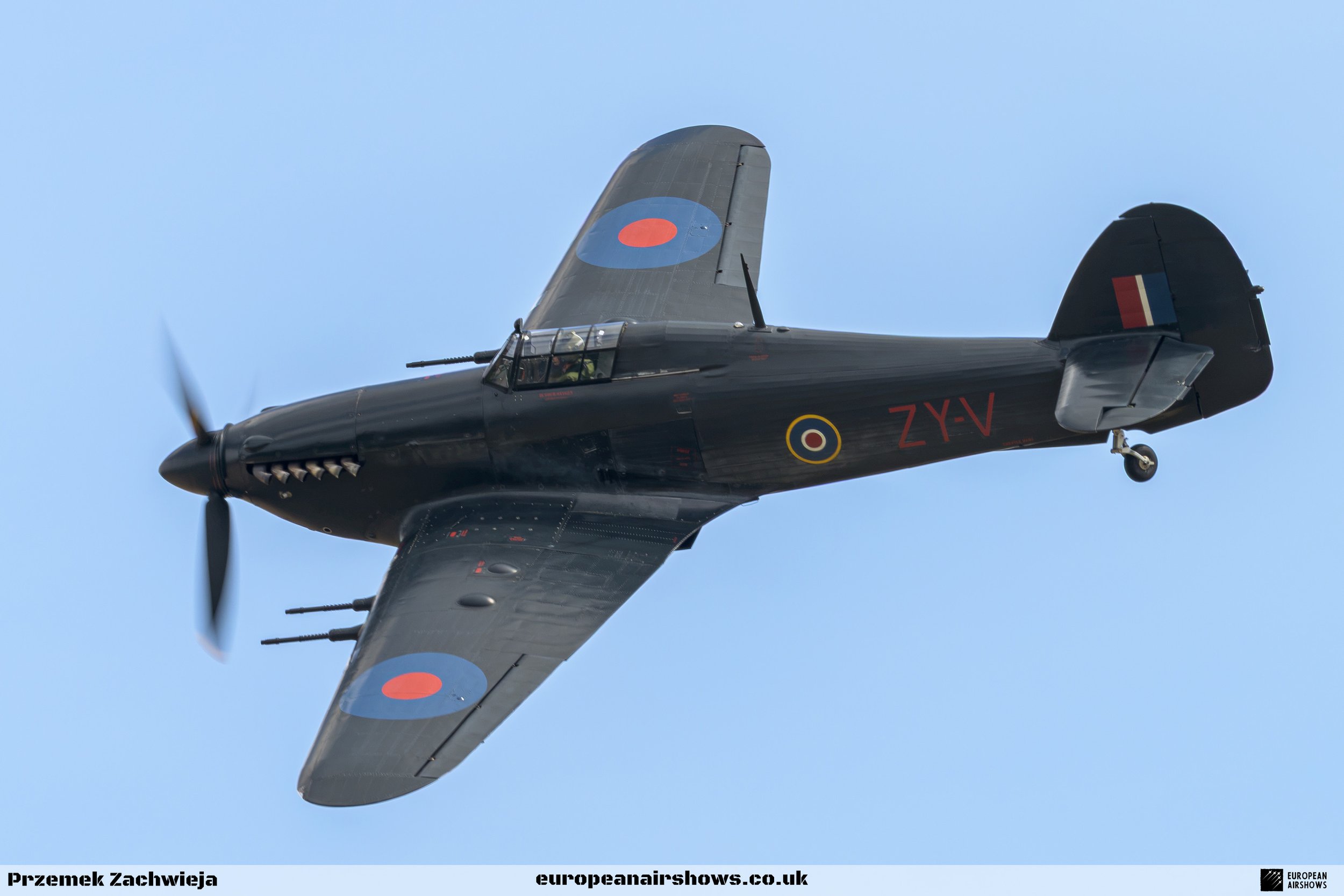
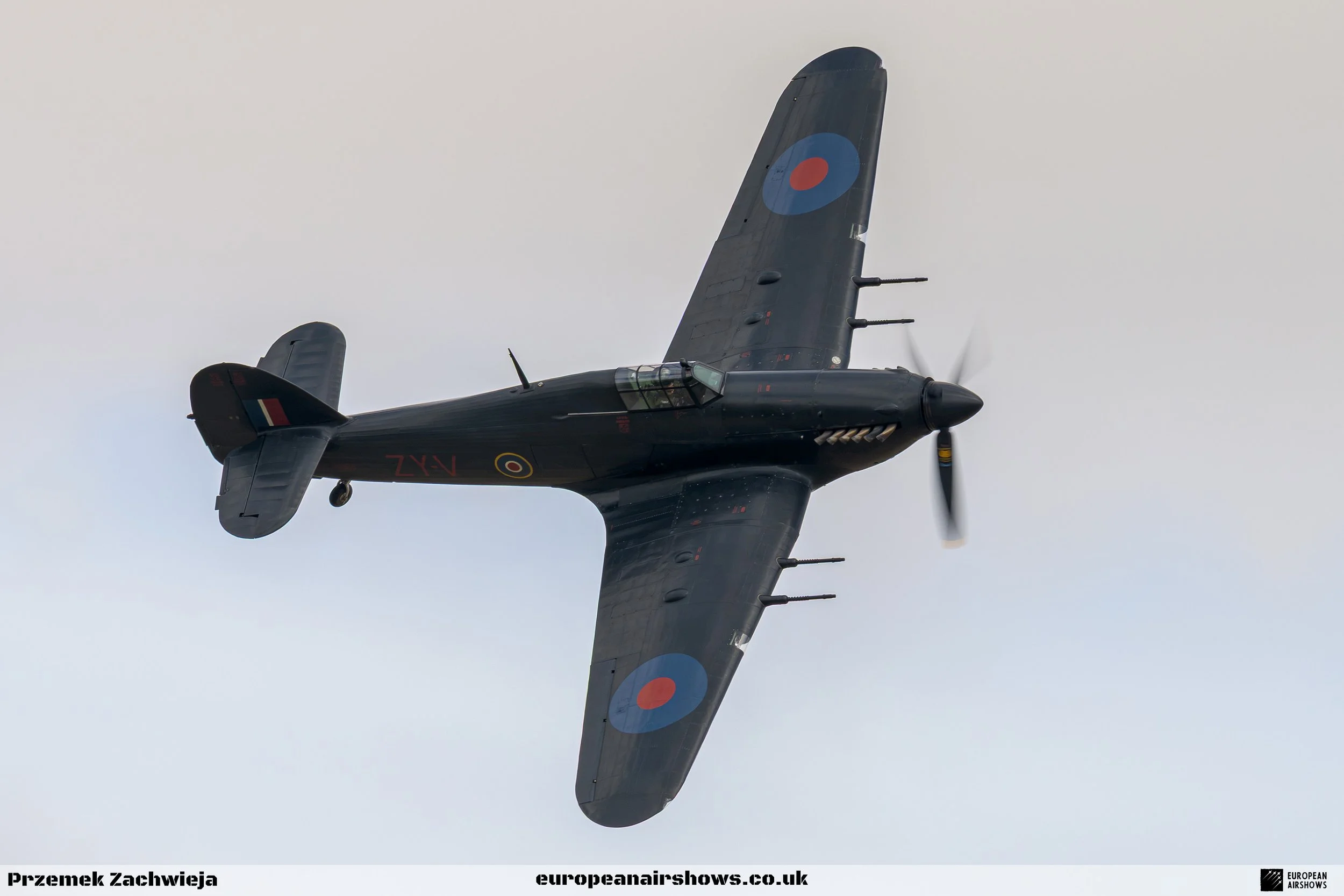
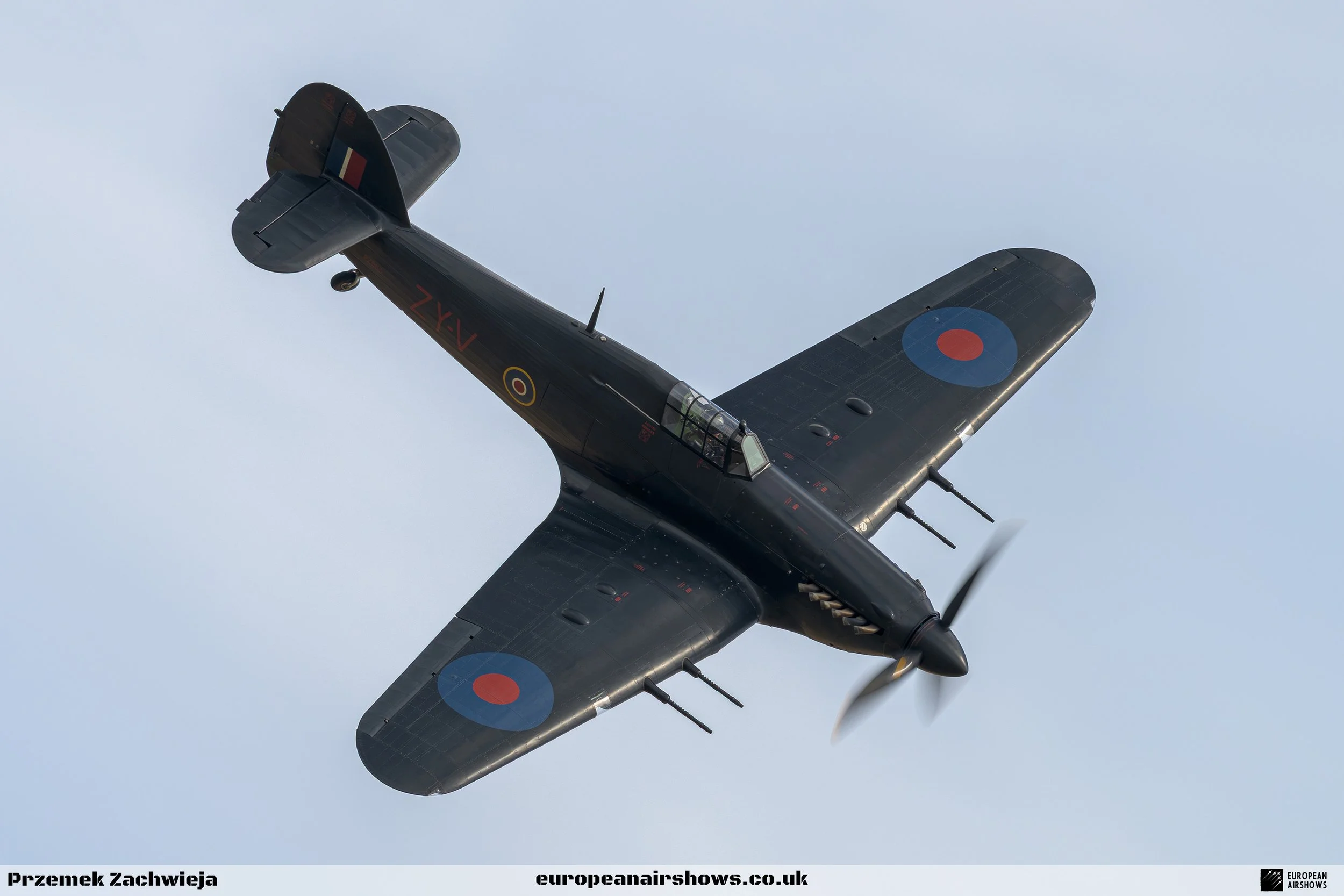
Hurricane Mk IIc
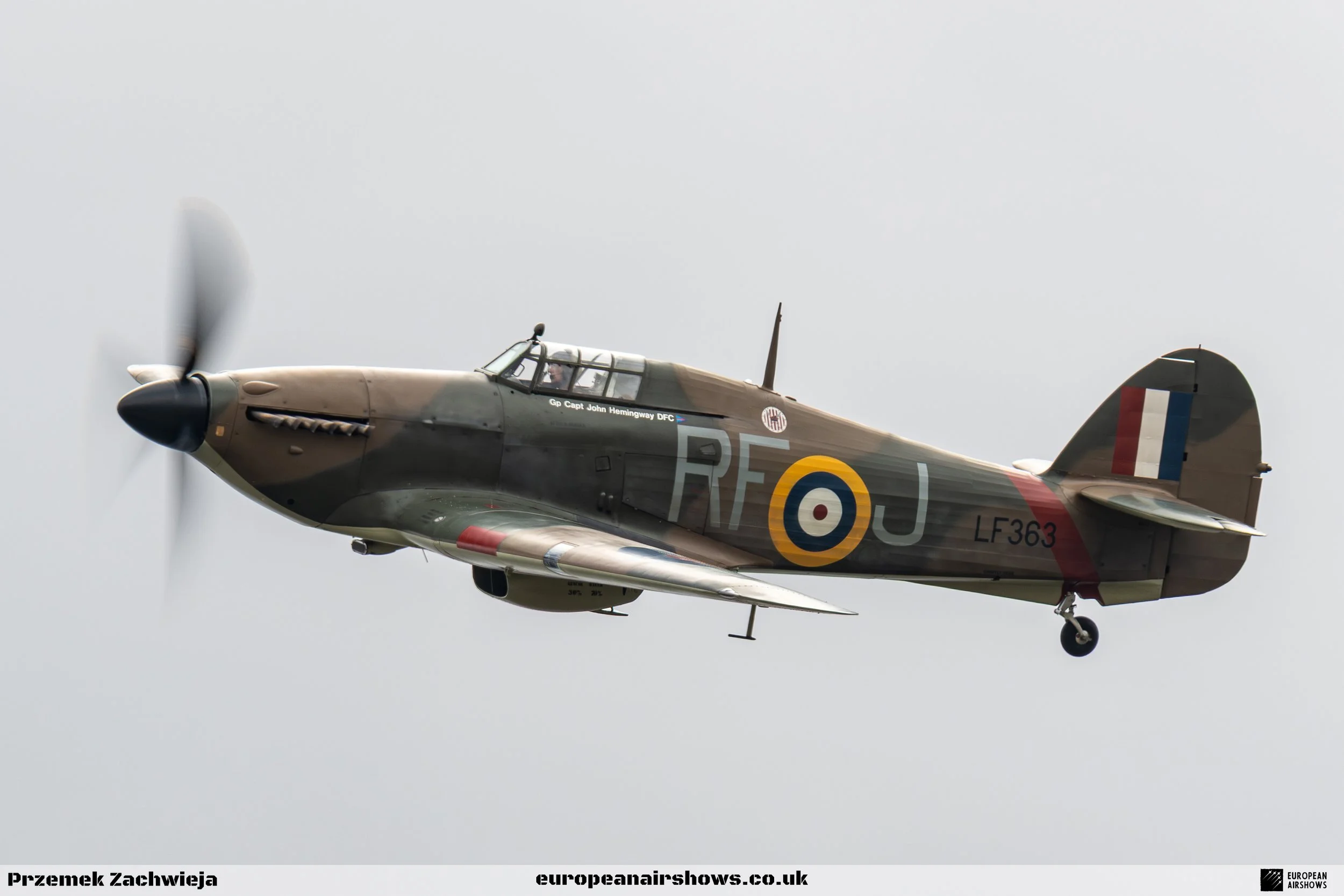
LF363Believed to be the last Hurricane to enter RAF service, LF363 flew wartime coastal-shipping protection, air-defence patrols and second-line duties. It became the sole Hurricane and a founding aircraft of the Historic Aircraft Flight in 1957.
Hurricane Mk IIc
PZ865The last of 14,533 Hurricanes built, PZ865 first flew in July 1944 carrying “The Last of the Many”. Hawker retained it as a company aircraft, racer, display machine and film aircraft until chief test pilot Duncan Simpson delivered it to the Flight in 1972.
Chipmunk T.10
WK518A training aircraft throughout its RAF career and the longest-serving of the two BBMF Chipmunks. It joined the Flight in April 1983 and remains a year-round conversion and currency aircraft for pilots moving towards the heavier historic tailwheel types.
Chipmunk T.10
WG486WG486's career included low-level reconnaissance and convoy escort in Cyprus during the EOKA emergency, followed by covert photographic reconnaissance work from RAF Gatow in divided Berlin. It joined BBMF in 1995.
The aircraft in depth
Five aircraft families spanning combat, reconnaissance, transport and training.
Lancaster PA474
Bomber Command memorial and post-war research aircraftBuilt too late for combat
PA474 left the Vickers-Armstrong factory at Broughton on 31 May 1945. It had been intended for the planned “Tiger Force” campaign against Japan, but the war ended before deployment. That makes the aircraft's own life very different from the wartime bomber identities it represents in BBMF service.
Photographic survey over Africa
Converted for photo reconnaissance, PA474 deployed to RAF Eastleigh in Kenya with 82 Squadron from 1949. Its cameras supported a vast mapping programme across Africa, producing survey material important to cartography and development.
A flying aerodynamics laboratory
After returning to Britain, PA474 was considered for pilotless air-to-air-refuelling trials and then used by the College of Aeronautics at Cranfield for laminar-flow and boundary-layer research. Experimental swept surfaces were mounted around the rear fuselage, making the Lancaster part of the development story of later aircraft.
Returned to bomber configuration
Personnel at RAF Waddington restored PA474 to flight from 1965, and it flew again in November 1967. It transferred to the Memorial Flight on 20 November 1973 and has since become its centrepiece. The aircraft is preserved through tightly controlled flying and periodic Major maintenance rather than being treated as a replica of one particular wartime Lancaster.
The five Spitfires
From the Battle of Britain to high-altitude photo reconnaissanceFour marks show how the design evolved
P7350 and AB910 represent the early and middle Merlin-powered fighter story. TE311 shows the late-war low-back, clipped-wing form optimised for low-altitude work, while PM631 and PS915 are unarmed PR Mk XIX reconnaissance aircraft powered by the larger Rolls-Royce Griffon.
P7350 and AB910 carry genuine combat histories
P7350 fought during the Battle of Britain and survived being shot down and force-landed. AB910 served with several British, American and Canadian-crewed squadrons, survived the Dieppe air battle, flew during the D-Day period and completed 143 operational sorties before moving to training duties.
The post-war aircraft are no less significant
TE311's importance lies partly in the ten-year engineering project that returned a long-static aircraft to flight. PM631 and PS915 connect today's Flight directly with its 1957 foundation and preserve the very different sound, speed and handling of the Griffon-powered reconnaissance Spitfire.
MK356 belongs in the history, not the current fleet
Spitfire LF Mk IXe MK356 had joined the BBMF in 1997 and was a genuine wartime aircraft. It was lost in the fatal accident of 25 May 2024. The current total is therefore five Spitfires, while MK356 remains an important part of the Flight's story and remembrance.
The Hurricane pair
The last to enter service and the last to leave the factoryTwo different “last” Hurricanes
LF363 is believed to have been the last Hurricane accepted into active RAF service. PZ865 was the final Hurricane manufactured anywhere. Both are Mk IIc aircraft, but their individual histories explain why the pair is far more than two interchangeable display fighters.
LF363 is a founding survivor
After wartime home-defence and coastal duties, LF363 became the last airworthy Hurricane retained by the RAF and joined the Historic Aircraft Flight in 1957. An engine failure near RAF Wittering in September 1991 caused a severe crash and fire, but the aircraft was rebuilt and returned to flight in 1998.
PZ865 was preserved by its manufacturer
Hawker kept “The Last of the Many” for 28 years, using it for company transport, racing, displays and filming. When the company collection faced grounding, chief test pilot Duncan Simpson ensured PZ865 was delivered to the Flight in March 1972 so it could remain airborne.
Dakota ZA947
Transport memorial, display aircraft and Lancaster training platformThe real aircraft did not take part in D-Day
ZA947 was built as a C-47A in California in 1942 and served with the Royal Canadian Air Force in Canada during the Second World War. It later joined Britain's Royal Aircraft Establishment and Defence Research Agency. Its earlier D-Day schemes commemorated 233 Squadron and other transport crews rather than reproducing ZA947's own wartime service.
Why a Dakota is essential to BBMF
The aircraft entered the Flight in March 1993. It provides a safer and more economical step for crews learning large multi-engine tailwheel operations before flying the Lancaster. It is also used for navigator, flight engineer and air loadmaster training and can operate through the winter when the Lancaster is normally grounded.
A display aircraft in its own right
The Dakota's broad wing, radial-engine sound and slow handling make it very different from the fighters. It can fly a solo display, join large BBMF formations and undertake historically appropriate parachute drops, as demonstrated during the D-Day 75 commemorations in 2019.
The Chipmunk pair
The smallest aircraft perform one of the Flight's most important jobsTailwheel training before the fighters
Modern RAF pilots normally arrive with extensive experience on nosewheel aircraft. The Chipmunks introduce the ground-handling, crosswind and landing characteristics of a tailwheel aeroplane before progression to the far more powerful and valuable Hurricanes and Spitfires.
Airborne simulation and forced-landing practice
The Chipmunk can reproduce key handling exercises at lower risk and cost. BBMF instructors use it for tailwheel conversion, continuation training and practice forced landings configured to imitate the limited time and rapid descent that would follow engine failure in a Spitfire.
WG486's unusual operational career
The pair is not simply made up of generic trainers. WG486 flew low-level reconnaissance and convoy escort in Cyprus during the EOKA emergency and later secret photographic missions from RAF Gatow around divided Berlin. WK518, by contrast, spent its career in the training system and has served with BBMF since 1983.
Avro Lancaster B.I
- Crew
- 7
- Length
- 21.11 m
- Wingspan
- 31.09 m
- Engines
- 4 × Rolls-Royce Merlin
- Typical max
- About 287 mph
Early Merlin Spitfires
- Aircraft
- P7350 / AB910
- Marks
- IIa / Vb
- Crew
- 1
- Wingspan
- About 11.23 m
- Role
- Day fighter
Spitfire LF Mk XVIe
- Aircraft
- TE311
- Crew
- 1
- Engine
- Packard Merlin 266
- Wing
- Clipped
- Fuselage
- Low-back
Spitfire PR Mk XIX
- Aircraft
- PM631 / PS915
- Crew
- 1
- Length
- About 9.96 m
- Engine
- Rolls-Royce Griffon
- Role
- Photo reconnaissance
Hurricane Mk IIc
- Aircraft
- LF363 / PZ865
- Length
- 9.84 m
- Wingspan
- 12.19 m
- Engine
- Rolls-Royce Merlin XX
- Wartime fit
- 4 × 20 mm cannon
C-47A Dakota III
- Aircraft
- ZA947
- Length
- 19.65 m
- Wingspan
- About 29 m
- Engines
- 2 × P&W R-1830
- BBMF role
- Display and training
Chipmunk T.10
- Aircraft
- WG486 / WK518
- Crew
- 2
- Length
- 7.75 m
- Wingspan
- 10.47 m
- Engine
- Gipsy Major 8
Preservation limits
- Season
- May–September
- Winter
- Deep maintenance
- Hours
- Strictly limited
- Major work
- Rotating programme
- Priority
- Long-term airworthiness
The story of the Flight
From four surviving fighters to an eleven-aircraft national collection.
1957
The RAF Historic Aircraft Flight is inaugurated
On 11 July at RAF Biggin Hill, Hurricane LF363 and Spitfire PR Mk XIXs PM631, PS853 and PS915 form the original Flight. The creation preserves piston fighters inside an RAF rapidly converting to jet aircraft.
1959–65
The collection contracts to two aircraft
For several years PM631 and LF363 are the Flight's only aircraft, making both direct survivors of its most vulnerable period and explaining their exceptional importance today.
1965
AB910 joins
Vickers-Supermarine presents the combat-veteran Spitfire Mk Vb to the RAF. Jeffrey Quill delivers it to Coltishall on 16 September during his final Spitfire flight.
1968
Battle of Britain veteran P7350 arrives
Restored to flight for the film Battle of Britain, P7350 is presented to the Flight on 5 November, introducing an aircraft that genuinely fought in the 1940 battle.
1969
The current title is adopted
After being known as the Historic Aircraft Flight and then the Battle of Britain Flight, the unit receives the Battle of Britain Memorial Flight name used today.
1972
The final Hurricane is secured
Hawker Siddeley chief test pilot Duncan Simpson delivers PZ865 to Coltishall on 29 March, ensuring that “The Last of the Many” remains a flying aircraft rather than becoming a static exhibit.
1973
Lancaster PA474 joins
After restoration and several years flying from RAF Waddington, PA474 transfers to the Memorial Flight on 20 November and transforms the unit from a fighter memorial into a wider representation of wartime RAF service.
1976
Permanent move to RAF Coningsby
On 1 March the Lancaster, three Spitfires and LF363 fly from Coltishall to their new Lincolnshire home. AB910 and PZ865 follow a few days later.
1983
Chipmunk training begins
WK518 and another Chipmunk are added to provide tailwheel training and liaison support. WG486 later replaces the second aircraft and joins the Flight in 1995.
1993
Dakota ZA947 enters service with BBMF
The former research aircraft is taken on charge in March. It becomes both an independent display aircraft and the essential multi-engine training step for future Lancaster crews.
2000–12
TE311 is returned to the air
Initially acquired as a source of components, the low-back Spitfire becomes the subject of a ten-year in-house restoration. Its October 2012 flight is one of BBMF engineering's greatest achievements.
2018
RIAT recognises the display
BBMF receives the King Hussein Memorial Sword for the best overall flying demonstration after presenting Trenchard, Trenchard Plus and the Lancaster–Tornado–F-35 “Gibson” heritage sequence.
2024
Loss of MK356 and a pause in flying
Spitfire LF Mk IXe MK356 crashes shortly after take-off from RAF Coningsby on 25 May, killing Squadron Leader Mark Long. The loss leads to an extended pause and a careful graduated return to flying.
2025–26
Recovery and continued renewal
PM631 and Dakota ZA947 return after major work, the Flight rebuilds its public programme, and AB910 flies again after an extended Major maintenance programme. The official collection now stands at eleven aircraft.
In remembrance
Squadron Leader Mark Long and Spitfire MK356.
Squadron Leader Mark Long was killed on 25 May 2024 when Spitfire LF Mk IXe MK356 crashed shortly after take-off from RAF Coningsby. He was an experienced Typhoon instructor, BBMF fighter pilot and the officer selected to take command of the Flight. The accident affected the entire BBMF community and led to a prolonged, safety-led recovery.
TE311 now carries a tribute on its starboard side: the code letters “L-NG”, arranged around the roundel to read LONG, together with Squadron Leader Long's name and pennant. It keeps his connection with the aircraft he flew most frequently visible whenever the Spitfire takes to the air.
Meaning and legacy
The aircraft matter because the people and their stories remain central.
Not every marking belongs to the airframe
Temporary identities allow one surviving aircraft to commemorate many squadrons, nationalities and individual crews. Good interpretation must always distinguish the actual serial's life from the story represented by its current paint.
Airworthiness is the preservation method
The purpose is not simply to keep old aircraft capable of flight today. Restricted hours, winter servicing, structural investigation and rotating Major maintenance are intended to leave the collection flyable for future generations.
Photo gallery
Battle of Britain Memorial Flight in the air.
Continue into the gallery for the Lancaster, Dakota, Spitfires, Hurricanes and Chipmunks flying as individual aircraft and in the many formations used by the Flight.