Aero SPARX
2 × Grob G109B · Smoke by day, light and pyrotechnics by night
A British two-aircraft team that turns the long-winged Grob G109B motor glider into a coordinated day and night spectacle. Guy Westgate and Rob Barsby combine formation flying with coloured smoke, dynamic LEDs and airborne pyrotechnics, with drones, lasers and ground effects added only when an event is built to support them.
- Established
- 2015
- Founder
- Guy Westgate
- Current pilots
- Guy Westgate and Rob Barsby
- Aircraft
- Grob G109B
- Formats
- Day, dusk and night
- Status
- Active international team
The team
Two pilots combining glider technique, display flying and large-scale show production.
AeroSPARX was established in 2015 by Guy Westgate, building on his earlier work with illuminated gliders and airborne pyrotechnics. Rob Barsby joined the display in 2017 and is now co-owner, creative director and team flight leader. Together they have developed the act from an unusual motor-glider formation into a production that can be integrated with music, ground fireworks, lasers, spotlights and drone swarms.
The team remains a British civilian operation based at Husbands Bosworth Airfield in Leicestershire. Its public flying formation is two aircraft. A wider operational pool and support organisation help sustain overseas work, but AeroSPARX should not be described as a four-aircraft display team.
Guy Westgate
Westgate is the founder and co-owner. AeroSPARX credits him as an eight-time British glider aerobatic champion, an Unlimited-level instructor and a three-time member of the British Aerobatic Team. His display work with gliders and motor gliders predates AeroSPARX, including the UK's first night-time pyrotechnic glider display in an S1 Swift in 2010. Away from the display circuit he is a British Airways Boeing 787 and 777 pilot.
Rob Barsby
Barsby began flying at 17 and progressed through instructing to become Chief Flying Instructor at The Gliding Centre, AeroSPARX's home airfield. His background also includes examining, coaching and Flying Display Director work. Within AeroSPARX he leads the flying formation and helps shape the creative and operational design of complex multimedia shows.
Active on the 2026 circuit
AeroSPARX continues to appear internationally. The official Baltic International Airshow programme presented the two Grobs as a headline night act at Riga's Spilve airfield on 27-28 June 2026, confirming both the team's active status and its continuing two-aircraft format.
The display
Graceful formation flying becomes a moving canvas after dark.
The Grob's modest power rewards careful energy management. AeroSPARX begins the more demanding manoeuvring with height in hand, then works progressively lower as the sequence moves into tailchases, orbits and close formation. Exact content, duration and effects are adapted to each display site.
Close formation
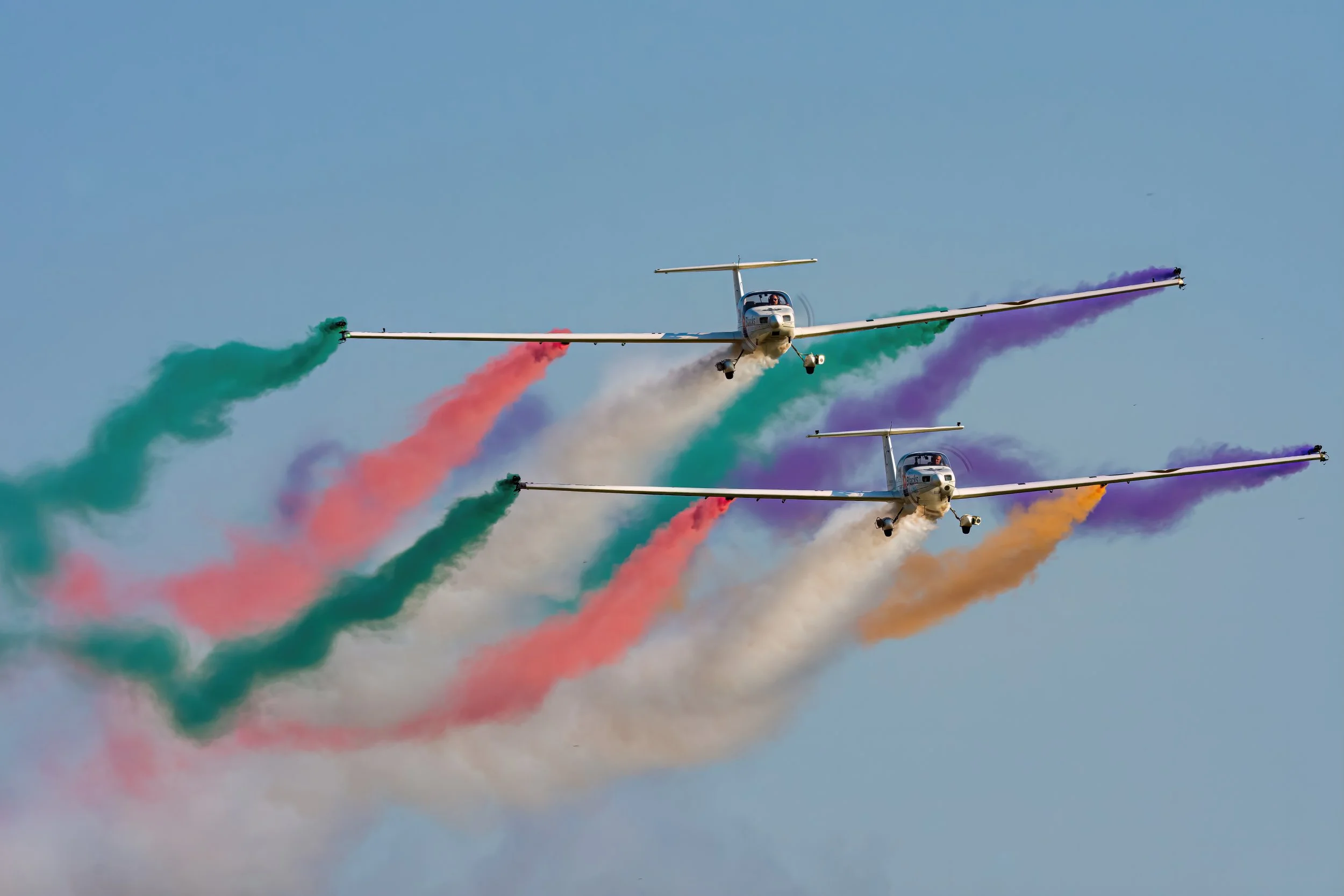
The two long-span motor gliders fly loops, sweeping turns and linked passes with their relative position kept clear to the crowd.
Split solos
The aircraft can separate into individual sequences or work opposite ends of the display area before rebuilding the formation.
Tailchase and orbit
A compact circular tailchase and lower formation orbits translate the Grob's smooth handling into continuous crowd-facing movement.
Daytime colour
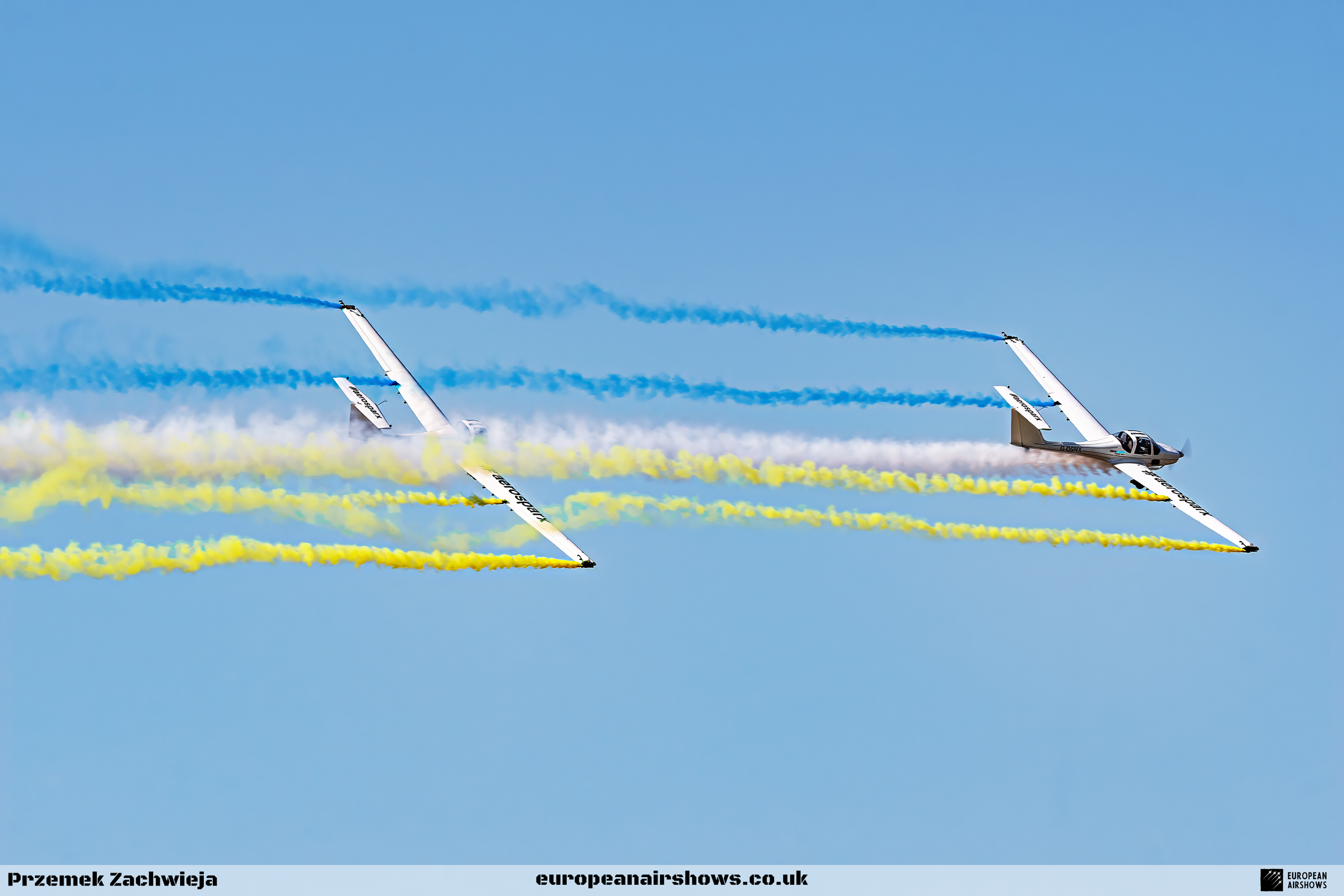
Coloured smoke traces the shape and spacing of the aircraft when ambient light makes the LED and pyrotechnic package unnecessary.
Night illumination
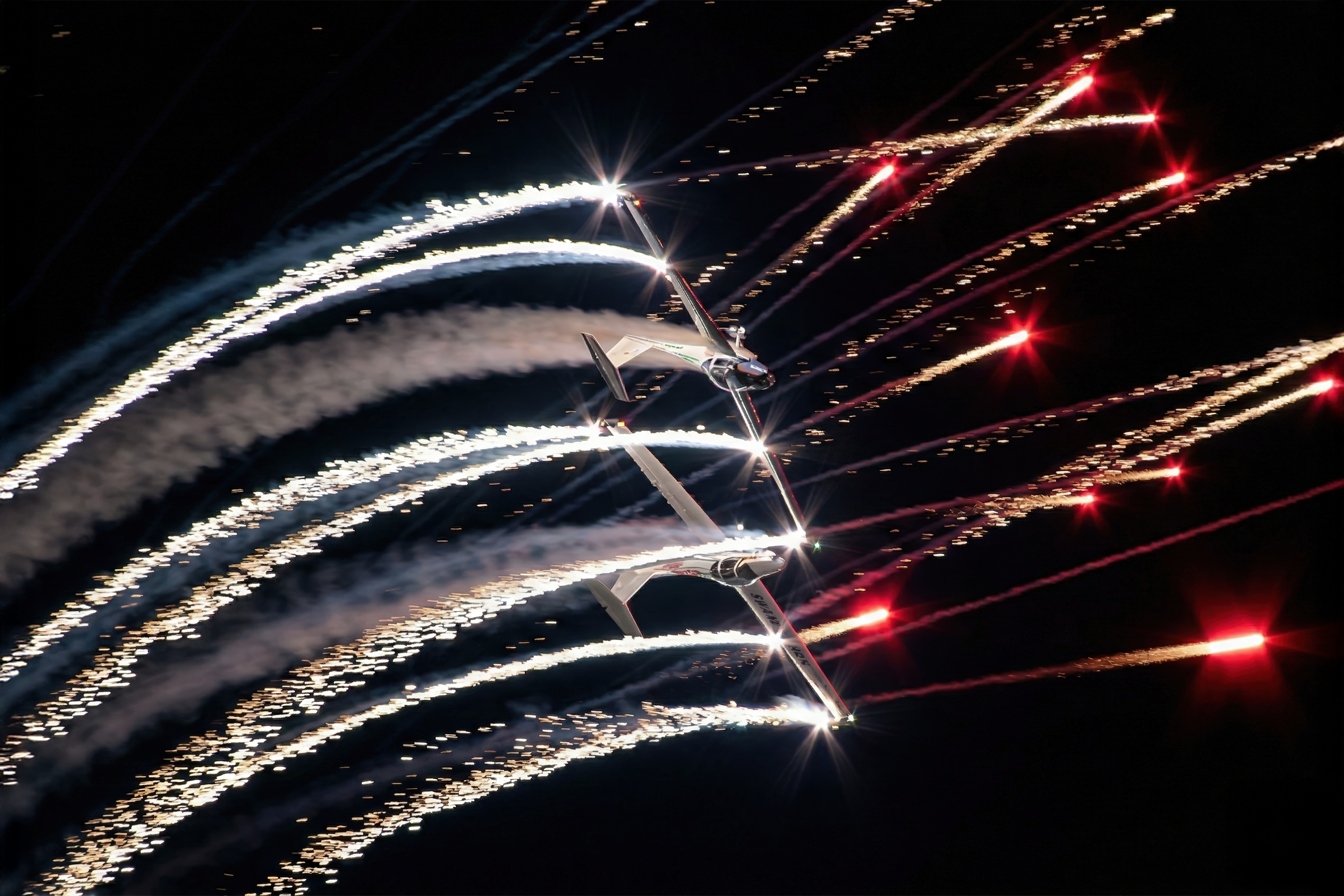
Each aircraft carries a team-published 1,884 dynamic LEDs, allowing colour patterns and outlines to change as the formation moves.
Airborne pyrotechnics
Effects can be carried at the wingtips, wheel fairings and trailing edges. The team quotes more than 3,000 individual pyrotechnic effects across its show system.
The aircraft
A German touring motor glider adapted into a distinctive display platform.
Grob G109B
The Grob G109 family first flew in 1980, with the improved G109B entering production in the mid-1980s. It is a two-seat, side-by-side touring motor glider built mainly from glass-reinforced plastic, with a fixed tailwheel undercarriage, detachable wings and a feathering variable-pitch propeller. With the engine shut down and the propeller feathered, it can soar as a conventional glider.
Why AeroSPARX uses it
A 17.4 m wingspan gives smoke, lights and pyrotechnics a large visual footprint. The efficient airframe provides useful endurance and a quiet, graceful presentation, while side-by-side seating and broad glazing offer good visibility. The trade-off is modest power, so the pilots manage height and speed carefully through the sequence.
From Vigilant trainer to display aircraft
The Royal Air Force used a military derivative of the G109B as the Vigilant T1 for Air Cadet training from 1991 until May 2018. AeroSPARX is not an RAF team and its aircraft should not automatically be labelled Vigilant T1s. They are civilian G109Bs fitted with the team's own smoke, LED and pyrotechnic equipment.
Standard data is not the display approval
The ordinary G109B flight manual available publicly states that aerobatic manoeuvres are prohibited. AeroSPARX publicly describes and performs a formation-aerobatic show using specially prepared aircraft under its operating approvals. The full aircraft-specific airworthiness basis is not set out in the public sources checked, so this profile does not invent structural changes, load limits or an approval category.
Two-aircraft display
The public routine is built around a pair of Grob G109Bs, not a four-ship formation.
1,884 LEDs per aircraft
The team's published dynamic lighting figure applies to each show aircraft.
3,000+ pyro effects
This is the team's quoted show-system figure, not a promise that every event uses the complete package.
Bespoke integration
Ground pyrotechnics, drones, lasers, spotlights and digital media are added through event-specific production planning.
The story so far
From a pioneering single-glider night show to aircraft flying inside a drone production.
2010
Guy Westgate's first night pyro display
Westgate presents the UK's first night-time pyrotechnic glider display in an S1 Swift, establishing techniques that later feed into AeroSPARX.
2012
London Paralympic opening
A pyrotechnic display flight over London expands the certification and operational experience behind large urban spectacle flying.
2015
AeroSPARX is established
Westgate creates the AeroSPARX Display Team around the Grob G109B and a dedicated day-and-night presentation.
2017
Rob Barsby joins
Barsby becomes the second pilot and later co-owner, creative director and flight leader of the developing two-aircraft formation.
2018-2019
International reach and drone authorisation
The team performs across Europe and further afield, while developing regulated operations with unmanned aircraft and show media.
From 2021
Lit drone swarms enter development
Work moves beyond filming drones towards choreographed swarms intended to share the same large-scale performance.
Dubai 2023
Two aircraft and 2,000 drones
The Dubai World Cup closing production combines AeroSPARX's two Grobs with a 2,000-drone swarm, fireworks, lighting and a 110 m screen in a ten-minute show.
2023-2025
Pyromusical and sporting-event productions
Airshow finales, Formula 1 appearances and international night events extend the act beyond the conventional flying-display format.
2026
The two-ship remains active
AeroSPARX continues its international programme, including the official two-Grob night appearance at Baltic International Airshow in Riga.
Identity & context
Four distinctions explain what AeroSPARX is and what each booking may include.
Civilian, not RAF
The G109B's Vigilant T1 history provides useful type context, but AeroSPARX is a private civilian team and its show aircraft are not an RAF display unit.
Two aircraft in the display
The public formation uses two Grobs. Support or reserve airframes do not turn the routine into a four-aircraft display.
Effects depend on the event
LEDs and airborne pyrotechnics define the night act, but drone swarms, lasers, ground fireworks and screens require a bespoke production package.
Aircraft-specific approval matters
Generic G109B specifications do not establish the configuration or permitted display envelope of AeroSPARX's modified aircraft.