Junkers Ju 52/3m
The corrugated tri-motor that built air bridges from the Spanish Civil War to Stalingrad—and kept flying worldwide for decades
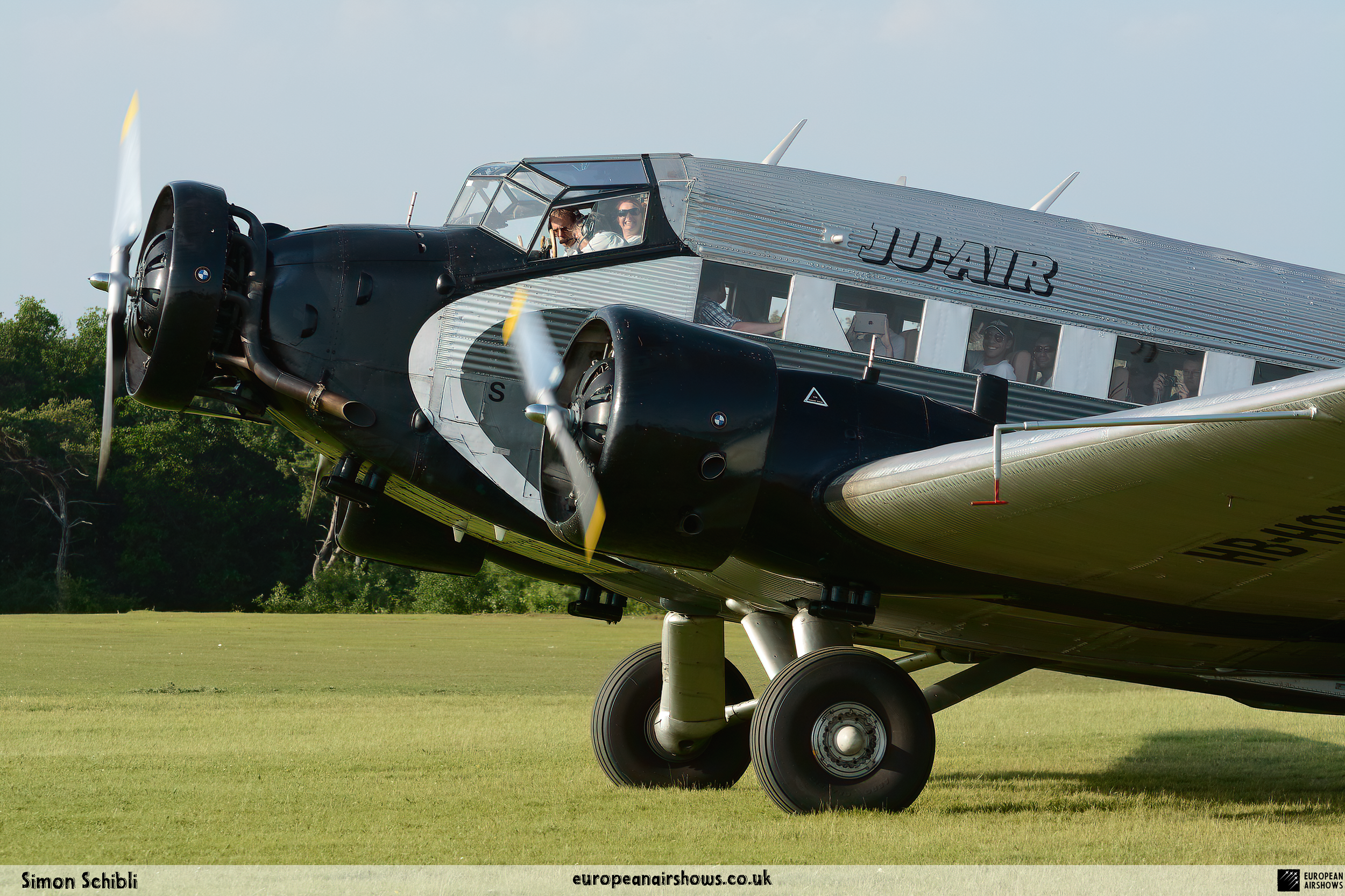
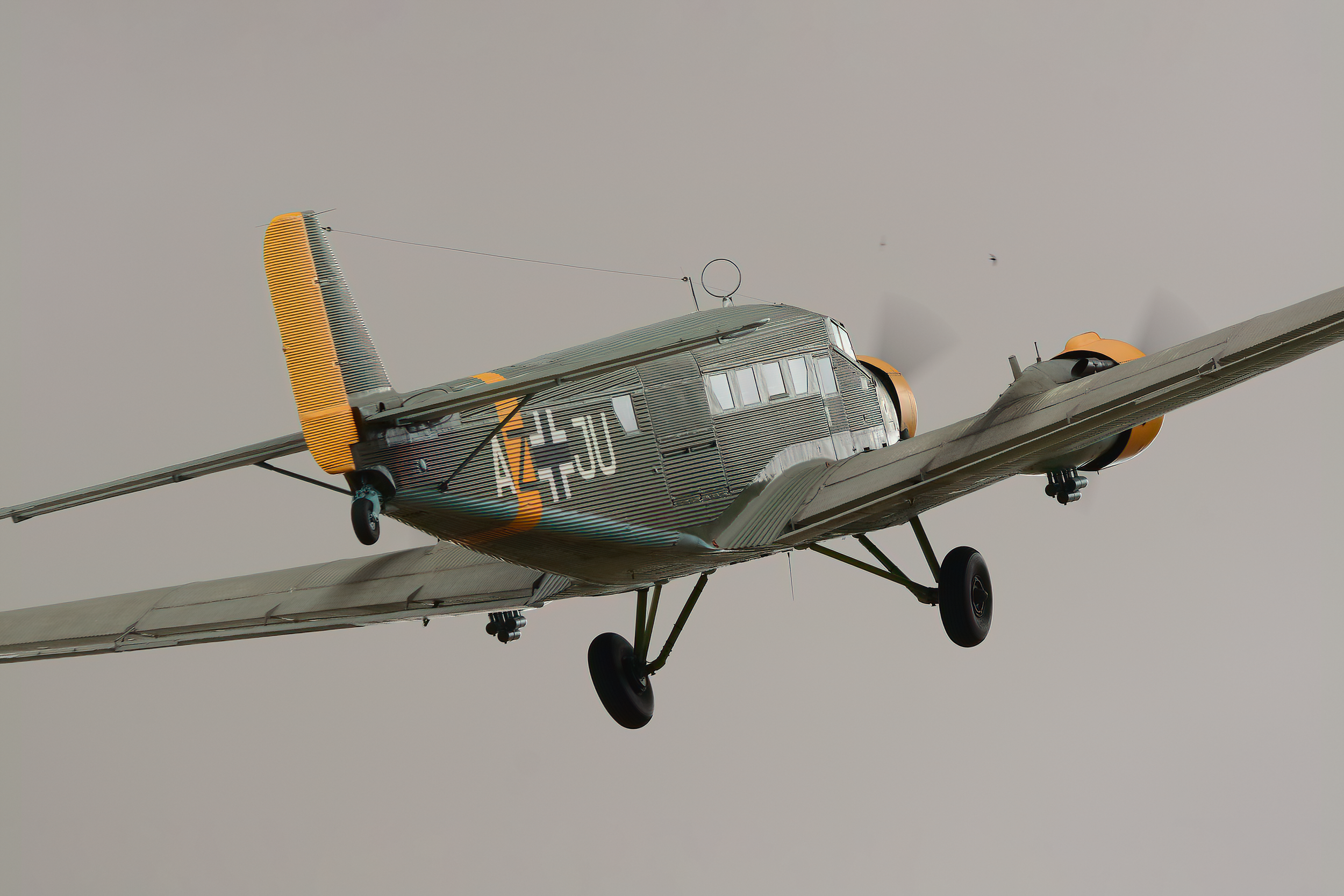
The Junkers Ju 52/3m—nicknamed Tante Ju (“Aunt Ju”) and often called “Iron Annie”—became one of aviation’s most recognisable workhorses. Conceived by Junkers under chief engineer Ernst Zindel, the aircraft evolved from the single-engine Ju 52/1m (first flown in 1930) into the definitive three-engined Ju 52/3m, which made its maiden flight on 7 March 1932. With its corrugated duralumin skin, full-span leading-edge slats and large flaps, the type offered rugged STOL performance that suited both civilian airlines and, later, demanding military roles.
Early service with Deutsche Luft Hansa proved the design’s economy and reliability on European routes. From 1936 the type also served in the Spanish Civil War, initially as a transport on the Morocco–Spain air bridge and, in early phases, as an improvised bomber. During the Second World War it became the Luftwaffe’s primary transport, delivering paratroops, towing gliders, and sustaining besieged forces from Norway and the Low Countries to the Eastern Front and North Africa.
Post-war, production continued as the French AAC.1 Toucan and Spanish CASA 352, with widespread civilian and military use. Switzerland’s air arm flew the Ju 52 until the mid-1980s, and several examples continued giving heritage flights into the 2010s—underscoring the design’s longevity.
Operational Chronicle
A detailed timeline of development, deployment, and distinguished service
Single-Engine Prototype
First flight of the Ju 52/1m on 13 October 1930 proved the rugged corrugated-skin airframe; development soon shifted to the more capable three-engined configuration for airline use.
Maiden Flight (Ju 52/3m)
On 7 March 1932 the tri-motor Ju 52/3m flew for the first time, initially with Pratt & Whitney radials before standardising on licence-built BMW 132 engines for German service.
Airline Mainstay
Deutsche Luft Hansa adopts the type widely on European routes. The Ju 52/3m’s low landing speeds and durability make it ideal for short, rough fields across the continent.
Spanish Civil War Air Bridge
The Ju 52/3m establishes the Morocco–Spain airlift, transporting troops and equipment for Nationalist forces; some airframes conduct early bombing missions before purpose-built bombers arrive.
Operation Weserübung
Ju 52s spearhead German airborne and air-landed operations in Norway and Denmark, moving troops and supplies onto captured airstrips and frozen lakes under harsh conditions.
Crete – Operation Mercury
Hundreds of Ju 52s drop Fallschirmjäger over Crete and conduct hazardous resupply flights; losses are heavy but the airborne operation succeeds after intense fighting.
Demyansk Airlift
The Luftwaffe mounts one of history’s first large-scale airlifts to sustain encircled troops near Demyansk, with Ju 52s flying in pulks to deliver essentials and evacuate wounded.
Stalingrad Airlift
Ju 52s form the backbone of the attempted resupply of Sixth Army at Stalingrad. Severe weather, Soviet opposition and inadequate capacity lead to crippling losses.
Post-War Production
France builds the AAC.1 Toucan (from 1945) and Spain the CASA 352 (to 1952). These aircraft serve in European colonies and with airlines worldwide.
Late Military Service & Heritage Flying
The Swiss Air Force retires its Ju 52s in the mid-1980s; civilian heritage groups continue sightseeing flights in Europe into the 2010s.
Combat Operations
Major campaigns where the Ju 52/3m proved decisive as a transport and airlift platform
Ju 52s flown by airline crews open the Morocco–Spain air bridge, transporting thousands of troops and tons of materiel—an early demonstration of strategic airlift.
Ju 52s deliver airborne and air-landed troops onto captured fields and frozen lakes, sustaining rapid advances over great distances and austere terrain.
Hundreds of transports drop paratroopers and tow gliders over Crete, then fly hazardous resupply. Losses are severe, but the island is captured after heavy fighting.
A pioneering large-scale airbridge sustains encircled German formations. Ju 52s fly in “pulks,” delivering supplies and evacuating casualties under fire and winter weather.
Despite massive effort, Ju 52 capacity, weather and Soviet opposition make the airlift untenable. Attrition is heavy and the operation ultimately fails.
From Tunisia to Sicily, Ju 52s move reinforcements and supplies to forward airfields and bridgeheads, often operating from short, rough strips under threat.
Service Record
Key milestones and statistics from the Ju 52’s long career
Technical Specifications
Essential details and characteristics of the Junkers Ju 52/3m
Development Story
From corrugated airliner to the Luftwaffe’s backbone transport
Origins and Design
Junkers developed the Ju 52 as a rugged, economical transport using the firm’s hallmark corrugated duralumin construction. The single-engine Ju 52/1m flew in 1930, but the tri-motor Ju 52/3m of 1932 provided the power and redundancy airlines wanted. Handley-Page-type leading-edge slats and generous flaps yielded excellent short-field handling and low landing speeds—ideal for rough or short strips.
Airline Service to Militarisation
Deutsche Luft Hansa rapidly adopted the Ju 52/3m across Europe. From 1936 the type saw combat in Spain, inaugurating a sustained airlift from Morocco. As Germany rearmed, the Luftwaffe standardised on BMW 132 engines and adapted the airframe for paratroop drops, glider towing, medical evacuation and general transport.
Wartime Evolution
The Ju 52/3m served in every theatre accessible to German forces: Norway and the Low Countries (1940), the Balkans and Crete (1941), North Africa and the Eastern Front. It pioneered large-scale airbridge logistics at Demyansk (1942) but suffered grievous attrition in the failed Stalingrad airlift (1942–43). Despite vulnerability to fighters and flak, crews prized its robustness and docile low-speed handling.
Post-War Production and Legacy
After 1945, France built the AAC.1 Toucan and Spain the CASA 352, extending the design’s career in colonial conflicts and civilian roles. Switzerland retained Ju 52s into the 1980s, and several aircraft later flew heritage passengers until stricter safety findings ended commercial operations in Europe after 2018. The Ju 52’s longevity reflects a design optimised for reliability, simplicity and STOL utility rather than speed.
Enduring Legacy
A global workhorse of air travel and airlift
The Junkers Ju 52/3m stands as one of the most storied transports in aviation. From its 7 March 1932 first flight and early airline service to its pivotal roles in Spain, Norway, Crete, Demyansk and Stalingrad, it defined airlift for an era. Post-war production in France and Spain and late service with Switzerland carried the type well into the 1980s. Corrugated skin and three radials became an icon—proof that reliability, short-field performance and simplicity can shape history as powerfully as speed or glamour.