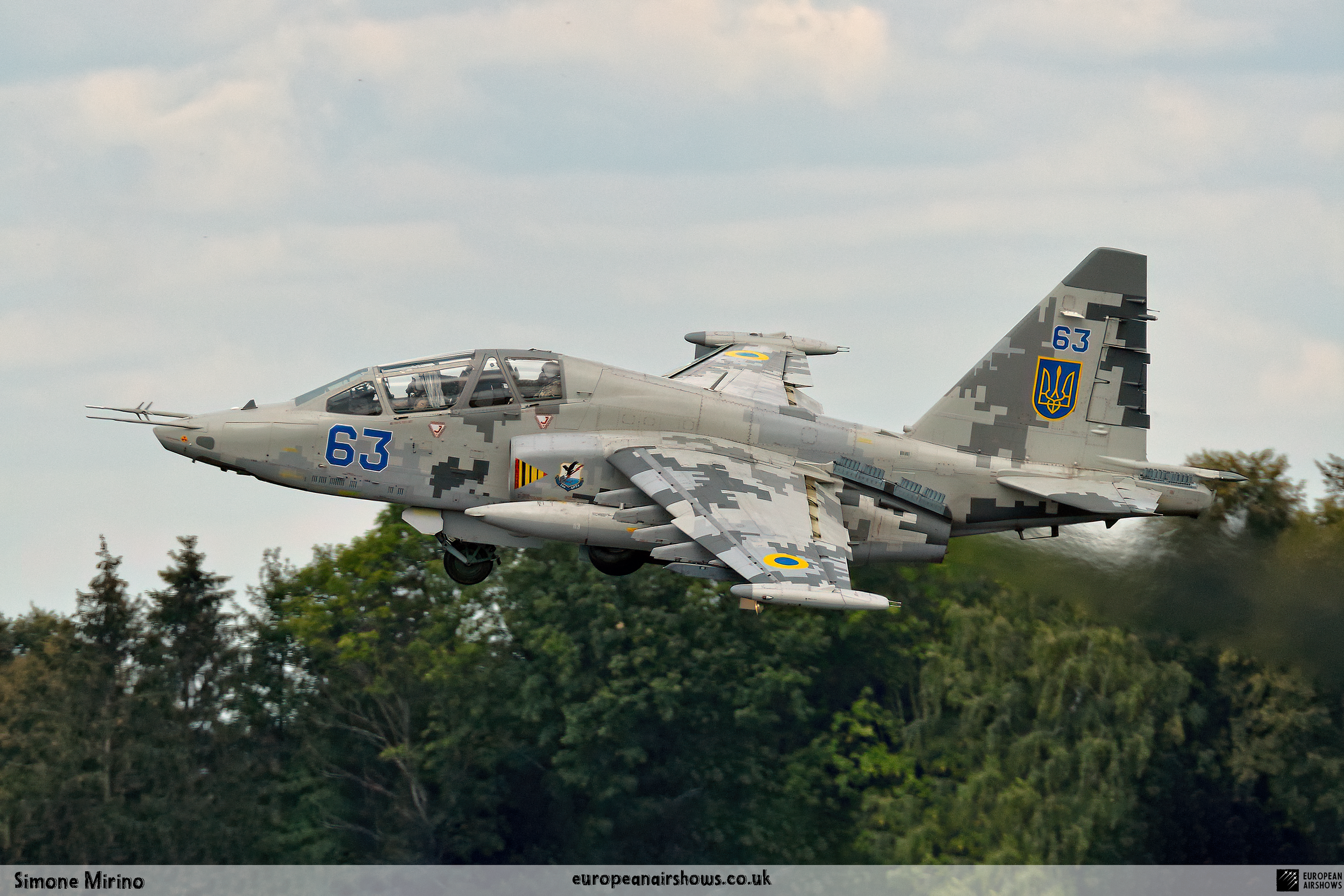
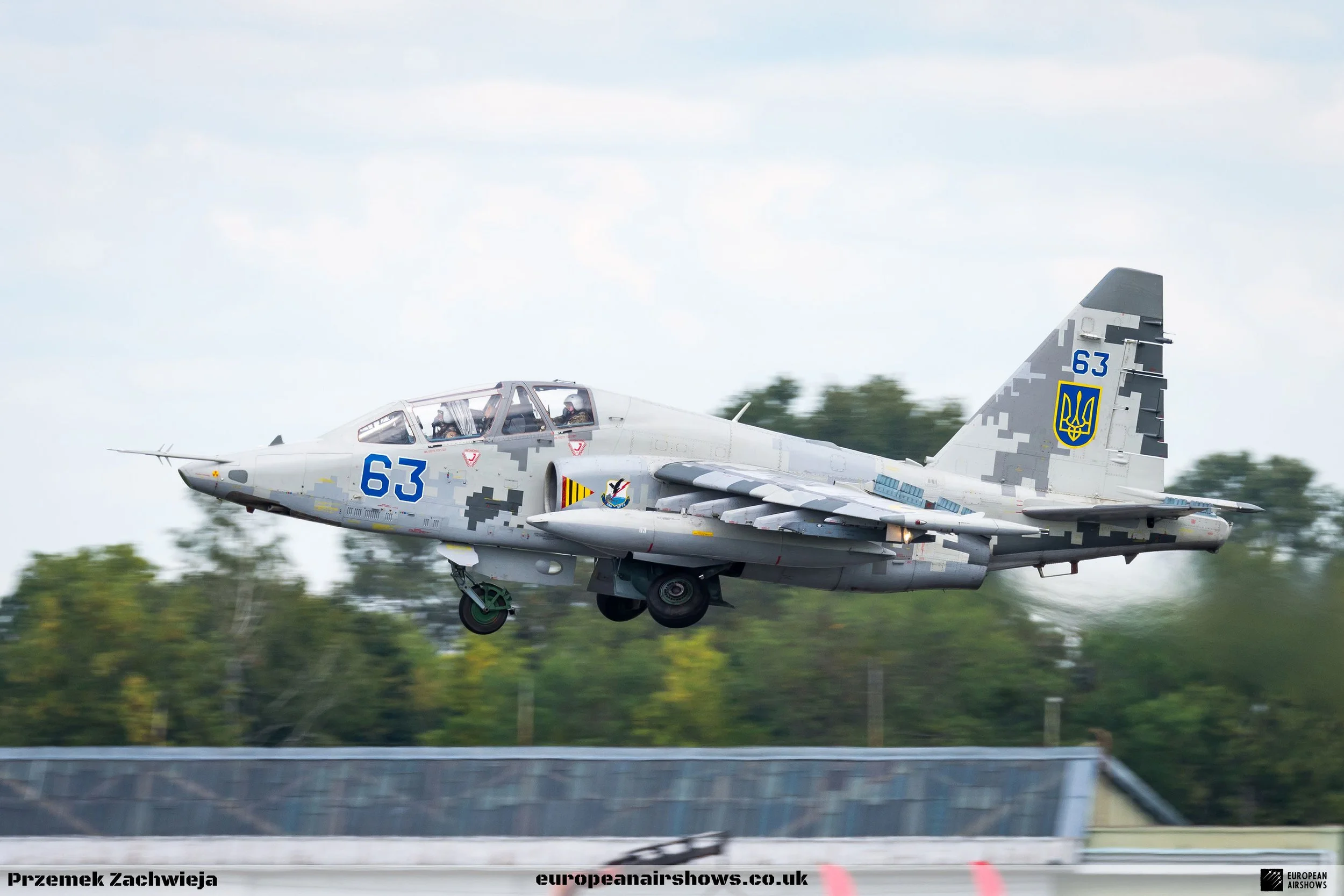
Sukhoi Su-25 “Grach” (Frogfoot)
The Soviet/Russian battlefield attack jet built for rugged close air support—tested in Afghanistan and still serving worldwide
The Sukhoi Su-25 was conceived in response to a late-1960s Soviet requirement for a simple, survivable close air support jet that could operate from austere strips close to the front. Developed as the Sukhoi “T-8,” the aircraft emphasised armour, redundancy and low-level handling over speed. The first prototype flew on 22 February 1975, and series production began in Tbilisi in 1978. By July 1981 the type had officially entered service, having already seen combat evaluation in Afghanistan.
The early Su-25s (with R-95Sh engines) quickly proved their worth in the mountains of Afghanistan, flying high sortie rates from rough strips, carrying guided and unguided ordnance, and surviving heavy small-arms and MANPADS fire thanks to extensive titanium armour and system duplication. Later improvements—most notably R-195 engines, updated nav/attack systems and post-Soviet modernisations (Su-25SM/SM3)—extended the design’s relevance into the 21st century across multiple operators.
More than 1,000 airframes were completed by factories in Georgia (Tbilisi) and Russia (Ulan-Ude). Trainer and specialised variants (Su-25UB/UBK, Su-25T/TM) added two-seat conversion, night/anti-armour capability and precision weapons integration, ensuring the “Grach” has remained one of the world’s most recognisable dedicated CAS platforms.
Operational Chronicle
Key milestones in design, production and combat use
Soviet CAS Requirement
The Soviet Air Force issues a specification for a new battlefield close-support aircraft; Sukhoi’s “T-8” concept is selected to proceed to prototypes after a design competition.
Prototype Construction
Work begins on T-8-1 and T-8-2. The first airframe is completed in May 1974 ahead of state trials.
Maiden Flight
On 22 February 1975, T-8-1 makes the first flight, launching a test programme that validates the Su-25’s low-level handling and weapons carriage.
Production Starts
Series production begins at Factory No.31 in Tbilisi, Georgian SSR; later production also occurs at Ulan-Ude.
Combat Debut in Afghanistan
Initial deployment to Afghanistan for combat evaluation; first operational sorties are flown in mid-1980 before full-scale use ramps up.
Service Introduction
Official introduction on 19 July 1981; the first Su-25 regiment forms at Sitalchay, Azerbaijan, and deploys a squadron to Shindand, Afghanistan.
Two-Seat Trainer
The Su-25UB two-seat trainer conducts its first flight on 12 August 1985, enabling conversion and weapons training with performance close to the single-seater.
Specialised Variants
Prototype Su-25T (anti-armour/precision) and Su-25BM (target-towing) fly, adding night/precision capability and support roles to the family.
Post-Soviet Combat Use
Su-25s see extensive use in the Chechen conflicts and other regional wars, validating the type’s durability under intense ground fire.
Over 1,000 Built
Combined output from Tbilisi and Ulan-Ude exceeds 1,000 airframes across single- and two-seat, specialised and export variants.
Modern Operations
Upgraded Su-25SM/SM3 aircraft are employed in modern conflicts and expeditionary operations; the type remains in front-line service with multiple air arms.
Combat Operations
Representative campaigns highlighting the Su-25’s battlefield role
The Su-25’s baptism of fire: high sortie rates from austere strips, heavy ordnance loads and significant combat resilience against MANPADS and AAA.
Extensive CAS and strike missions under intense ground fire; precision-capable variants and pods begin to appear operationally.
Both sides field Su-25s; operations underscore the type’s regional ubiquity and vulnerability in contested air defence environments.
Deployed for battlefield strike/CAS; upgraded Su-25SM/SM3 variants demonstrate modernised sensors, weapons and survivability kits.
Su-25s used by multiple sides in high-threat environments, reflecting the type’s continued front-line relevance and attrition in modern warfare.
Export Su-25K/UBK fleets see action with foreign operators, including combat employment and post-war transfers that kept airframes in service elsewhere.
Service Record
Production, entry-into-service and operational longevity
Technical Specifications
Essential details and characteristics of the Su-25 family
Development Story
From T-8 prototype to a durable frontline CAS workhorse
Origins and Design Competition
In 1969 the Soviet Air Force called for a battlefield attacker that could deliver weapons precisely at low altitude, operate from rough forward strips and be maintained by frontline crews. Sukhoi’s T-8, influenced by wartime Il-2/Il-10 experience and contemporary CAS thinking, beat rival proposals from Ilyushin, Mikoyan and Yakovlev. The first prototype, T-8-1, flew on 22 February 1975.
Production began in 1978 at Tbilisi, with early aircraft powered by R-95Sh engines and equipped for day CAS with a wide range of unguided and emerging guided munitions. Armour protection around the cockpit and vital systems, self-sealing tanks and twin-engine layout maximised survivability to small-arms and MANPADS threats.
Combat Maturation
Afghanistan shaped the Su-25’s tactics and upgrades: dust/FOD measures, flare usage, ballistic-computer refinements and improved maintainability were introduced. Later airframes gained R-195 engines and modernised radios/nav-attack. The two-seat Su-25UB (first flight 12 Aug 1985) enabled realistic conversion while retaining combat capability.
Upgrades and Specialised Versions
The Su-25T/TM prototypes pursued enhanced night/anti-armour capability with advanced sensors and precision weapons. Post-2000, Su-25SM/SM3 upgrades added digital avionics, new weapons integration and survivability suites, keeping the type operationally relevant for Russia and other users.
With more than a thousand produced and in service across several continents, the Su-25 remains a principal dedicated CAS platform—valued for robustness, simplicity and the ability to generate sorties from close to the fight.
Enduring Legacy
A global symbol of rugged close air support
The Su-25 proved that a survivable, maintainable attacker could deliver decisive effects from austere bases with minimal support. From its first flight on 22 February 1975 through continuous service today, the “Grach” has flown in conflicts from Afghanistan to Syria and Ukraine, and across African and Middle-Eastern theatres with export operators. More than a museum piece of Cold War design, it remains an active, evolving CAS workhorse.