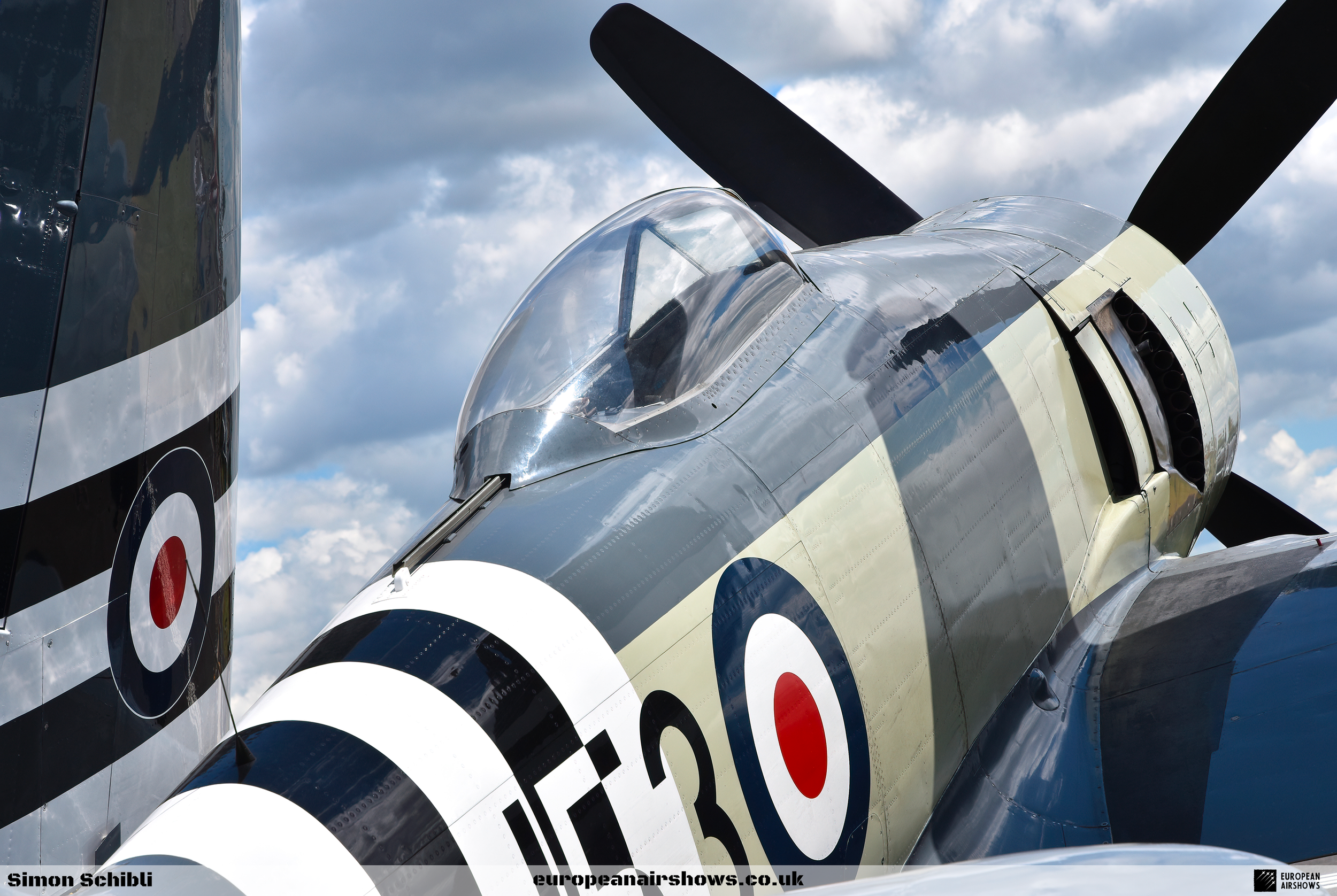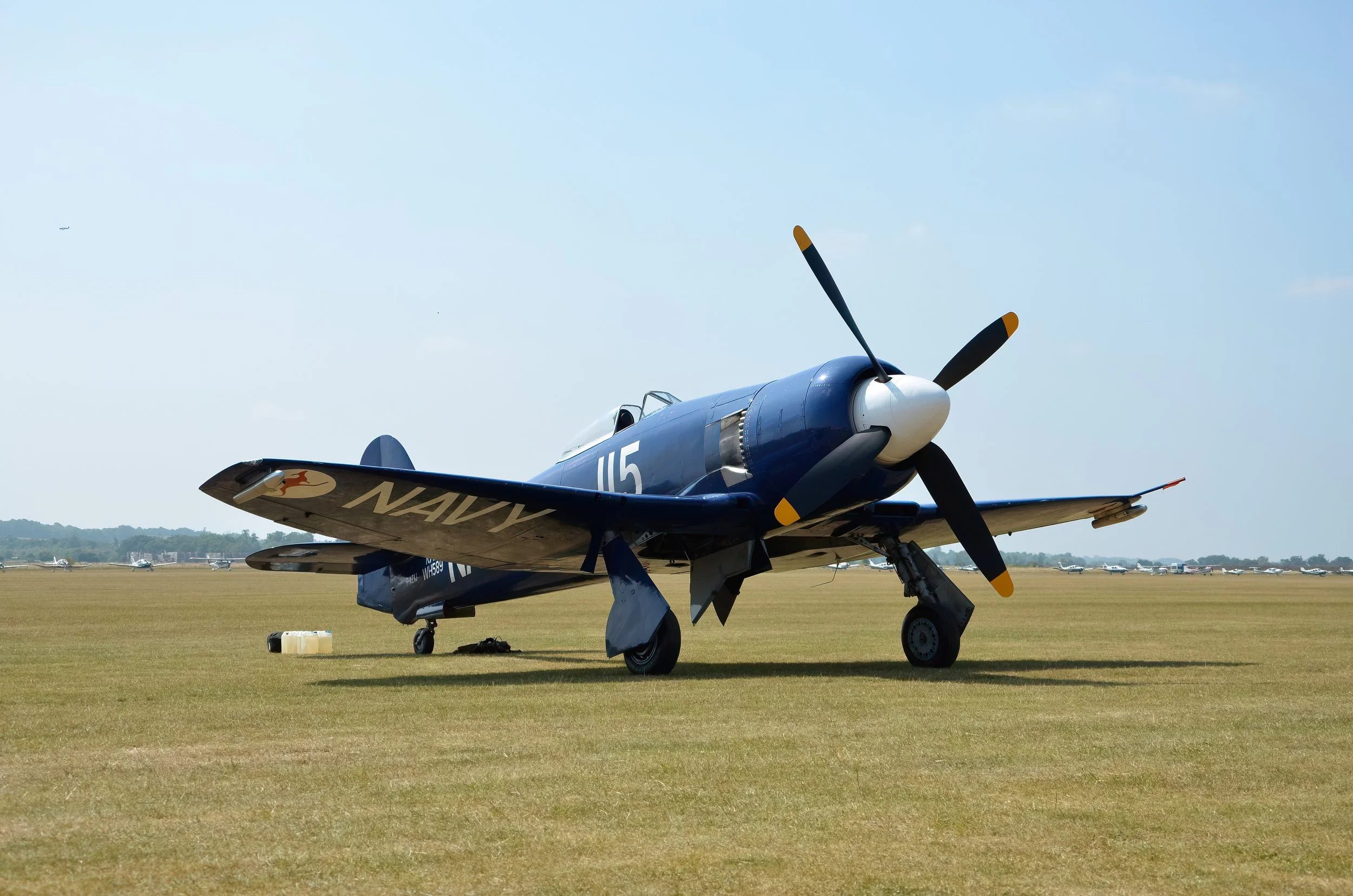
Hawker Sea Fury
Last and fastest piston fighter of the Fleet Air Arm — Centaurus-powered, carrier-proven, and still a legend of Korea and the Bay of Pigs
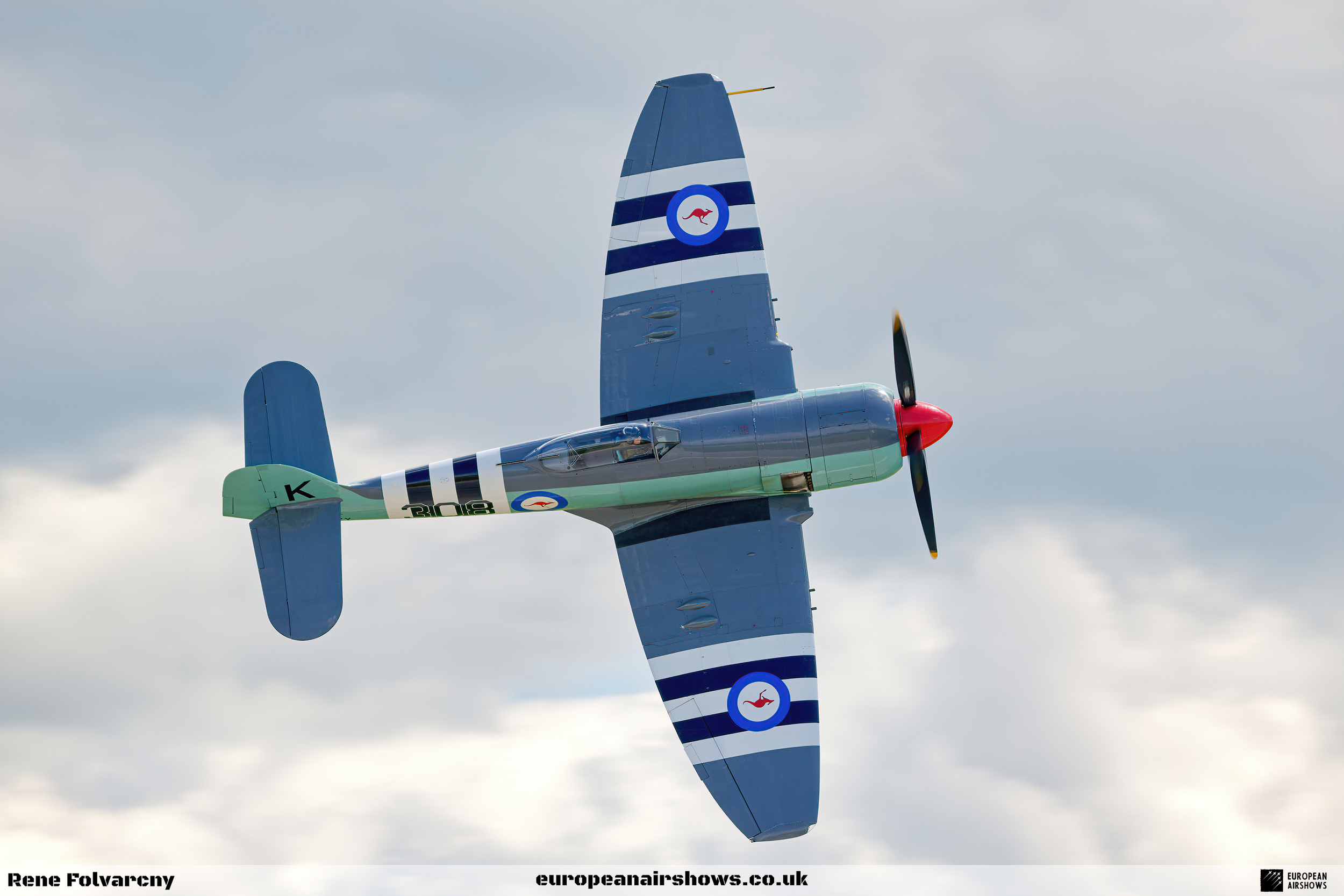
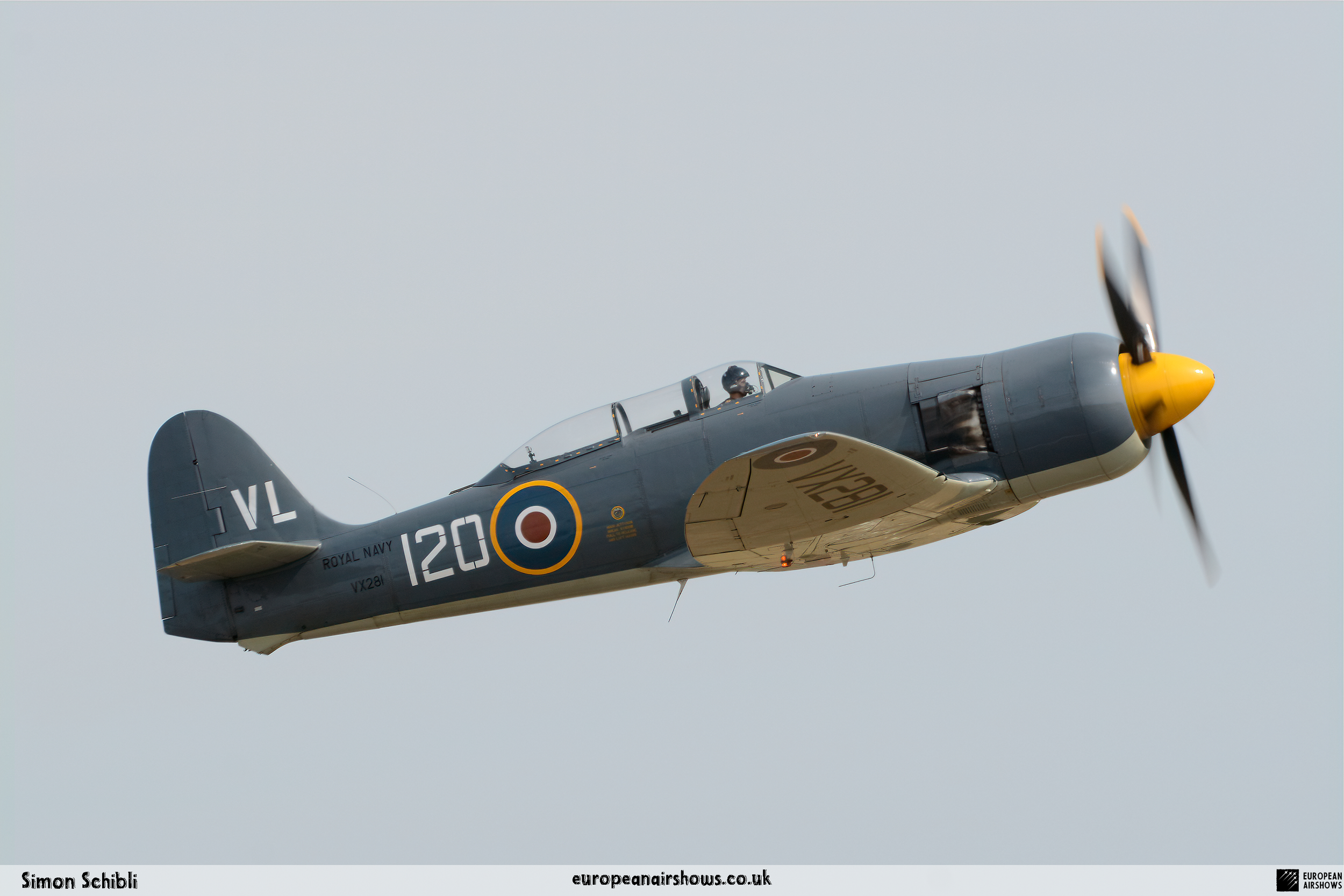
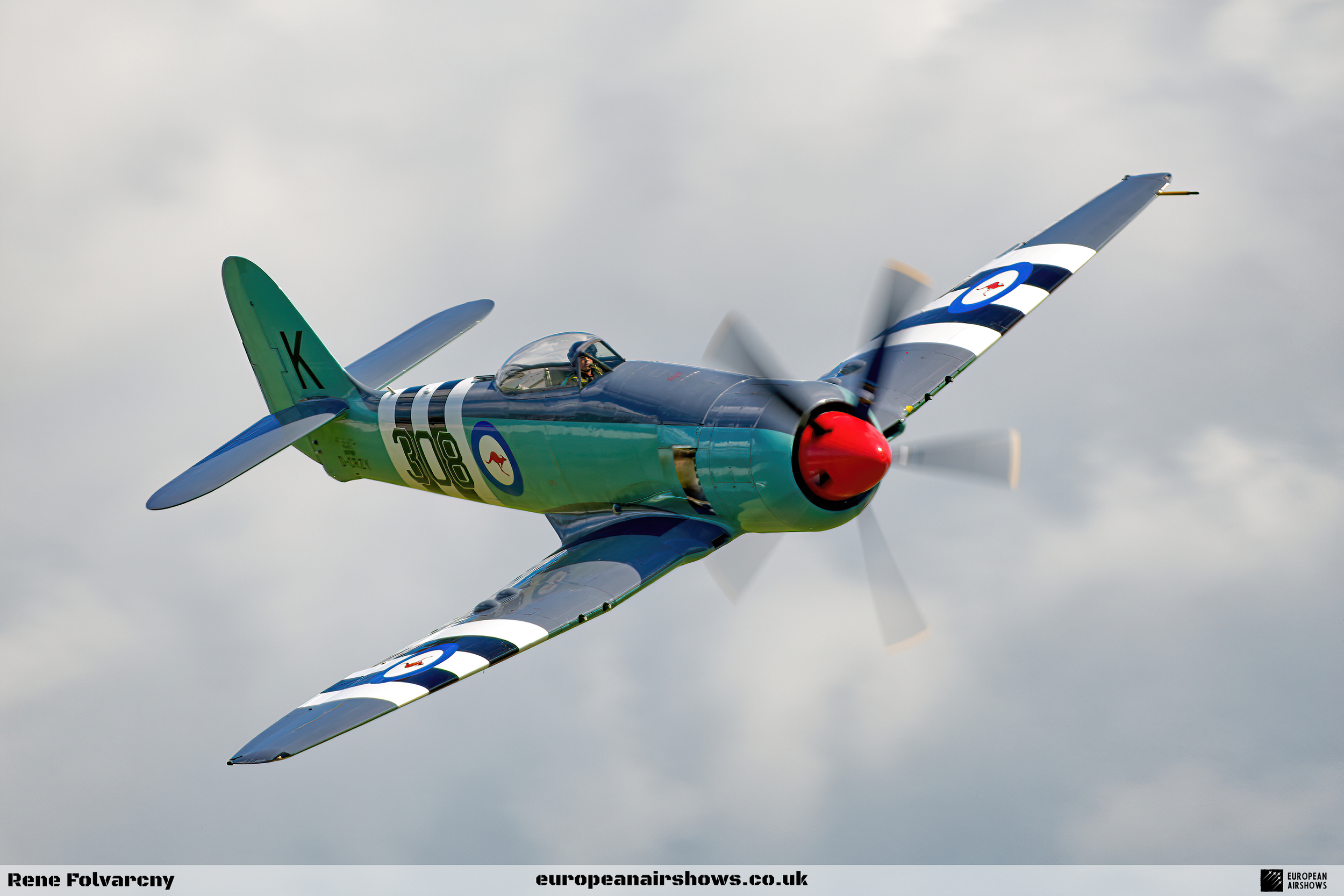
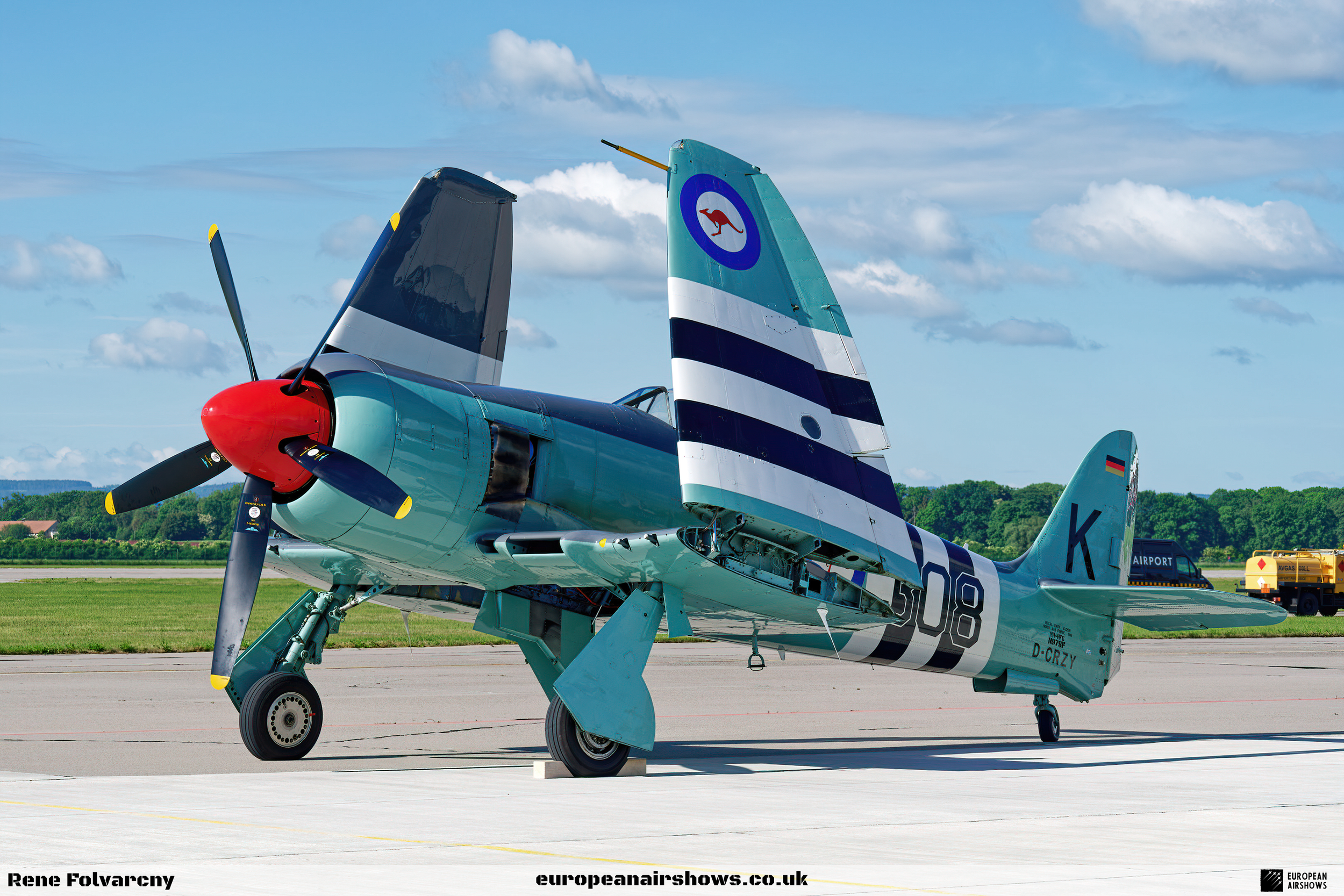
The Hawker Sea Fury was the Fleet Air Arm’s ultimate piston-engined fighter—born from wartime urgency but entering service in peacetime. First flown on 21 February 1945, the naval prototype evolved from the RAF’s Fury/Tempest line and introduced folding wings, an arrester hook and a powerful Bristol Centaurus sleeve-valve radial driving a five-blade propeller. Entering service in 1947 with the Royal Navy and Royal Canadian Navy, it became the RN’s last front-line prop fighter and one of the fastest ever to operate from carriers.
Designed under Air Ministry Specification F.2/43 and adapted for naval use, the Sea Fury combined modern handling with rugged carrier suitability. Its standard armament of four 20 mm Hispano Mk V cannon and provision for bombs or 3-inch rockets made it an effective fighter-bomber. The type served widely with Commonwealth and export users, seeing heavy action in the Korean War and later in Cuban service during the Bay of Pigs in 1961—one of the last times piston fighters decided events at sea.
In Fleet Air Arm use the Sea Fury rapidly ceded air-defence duties to jets, but as a strike and interdiction platform it excelled. Royal Australian Navy squadrons from HMAS Sydney alone flew 2,366 sorties in Korea, while Royal Navy units from HMS Theseus, Glory and Ocean maintained a relentless tempo in coastal attack and armed reconnaissance.
Operational Chronicle
A detailed timeline of development, deployment, and distinguished service
Design Formalised
Air Ministry Specification F.2/43 set the “Tempest Light Fighter” requirements; the Admiralty issued a parallel naval requirement that led to the Sea Fury concept.
Fury Prototypes Fly
Land-based Fury prototypes begin trials, closely linked to the naval programme and informing the structural and aerodynamic design of the Sea Fury.
Sea Fury Prototype First Flight
Naval prototype SR661 flies on 21 February 1945, powered by a Bristol Centaurus radial and fitted for carrier operations.
Carrier Trials
Deck landing and catapult tests validate the strengthened undercarriage, arrester gear and folding wings needed for routine carrier service.
Service Entry
Sea Fury enters front-line service with the Royal Navy and Royal Canadian Navy, initially in fighter roles before shifting towards fighter-bomber tasks.
Korean War Deployments
Sea Furies from HMS Theseus commence Korean operations; subsequent tours by HMS Glory, HMS Ocean and HMAS Sydney sustain day-to-day strike missions.
High-Tempo Carrier Strikes
Royal Australian Navy Sea Furies from HMAS Sydney fly 2,366 sorties; Royal Navy units conduct armed reconnaissance, rail interdiction and coastal attacks.
MiG-15 Shoot-down
On 9 August, 802 NAS Sea Furies from HMS Ocean engage MiG-15s; a MiG is shot down—one of the jet age’s rare prop-vs-jet victories.
RN Frontline Drawdown
Sea Fury leaves RN frontline service by 1953, remaining in second-line and RNVR use into the mid-1950s as jets assume air-defence roles.
Export Service
Sea Furies continue worldwide with Canada, Australia, the Netherlands, Pakistan, Iraq, Burma, Morocco and Cuba, often in fighter-bomber duties.
Bay of Pigs Combat
Cuban Air Force Sea Furies strike invasion shipping and help down B-26s during the Bay of Pigs—among the type’s final combat actions.
Combat Operations
Major campaigns where the Sea Fury distinguished itself in action
Sea Furies began RN combat operations from HMS Theseus, flying coastal interdiction, rail-cutting, CAS and armed reconnaissance in severe winter conditions.
Successive embarkations on HMS Glory kept pressure on North Korean logistics and coastal defences with daily Sea Fury strikes.
Four 802 NAS Sea Furies were bounced by MiG-15s; one MiG was shot down—an iconic prop-versus-jet victory credited to the formation.
Royal Australian Navy Sea Furies flew 2,366 sorties from Sydney, striking transport networks, escorting Fireflies and supporting ground forces.
Cuban Air Force Sea Furies attacked invasion shipping and helped to down B-26 Invaders—decisive actions in the failed amphibious assault.
Operated by the UK, Canada, Australia, the Netherlands, Pakistan, Iraq, Burma, Morocco and Cuba in fighter-bomber and maritime roles.
Service Record
Key milestones and statistics from the Sea Fury’s distinguished career
Technical Specifications
Essential details and characteristics of the Hawker Sea Fury
Development Story
From Tempest lineage to carrier fighter-bomber of the jet age
Origins and Requirements
Hawker’s answer to Specification F.2/43 was a lighter evolution of the Tempest family. The Admiralty’s parallel need for a navalised version saw the programmes converge: the RAF’s Fury informed structure and aerodynamics, while the Sea Fury added folding wings, catapult spools and an arrester hook for carrier use.
Prototype to Carrier
The first naval prototype flew on 21 February 1945. Trials proved the strength of the redesigned wing and undercarriage. Production aircraft settled on the Bristol Centaurus radial—reliable, powerful and well-suited to the corrosive, low-level maritime environment.
Into Service
Entering service in 1947, the Sea Fury quickly became the Fleet Air Arm’s principal piston fighter. Standard armament was four 20 mm Hispano Mk V cannon; hardpoints accepted bombs or 3-inch rockets, turning the aircraft into an agile strike platform just as jets took over interception duties.
War in the Jet Era
In Korea the Sea Fury’s role was coastal interdiction and battlefield air support from light fleet carriers—arduous flying in harsh winters and heavy seas. On 9 August 1952, 802 NAS pilots from HMS Ocean downed a MiG-15, a rare prop-vs-jet kill that cemented the type’s combat reputation. Commonwealth operations by the Royal Australian Navy added tremendous sortie counts and sustained pressure on enemy logistics.
Enduring Legacy
A pinnacle of British piston-fighter design
The Hawker Sea Fury proved that a refined piston fighter could remain lethal in the first jet war. From 1947 Fleet Air Arm service through high-tempo Korean operations and the 1961 Bay of Pigs, it combined rugged carrier design with exceptional handling and heavy armament. As the RN’s last front-line prop fighter, the Sea Fury closed the piston era with distinction and continues to fly at airshows worldwide—an enduring tribute to British engineering and the pilots who took it to sea.