
Swedish Air Force
100 Years
2026
A century of Swedish aviation at Malmen: pioneer aircraft, historic Saab jets, Gripens and an international salute, with remarkable highlights and a frustratingly distant display line.
Swedish Air Force 100 Years: magnificent, frustrating and not quite once-in-a-century
Malmen should have been the easiest airshow of 2026 to love, and much of it was. Sweden’s aviation pioneers, its most important trainers, a remarkable collection of airworthy Saab aircraft and some of Europe’s best display acts all gathered where Swedish military flying began. Yet there were also long periods when those aircraft seemed to be performing for somebody else. An extraordinarily distant fixed-wing display line and the absence of one grand parade by the modern Flygvapnet kept a hugely enjoyable centenary from becoming the once-in-a-century spectacle it could have been.
A century comes home to Malmen
There was no more appropriate place for the Swedish Air Force to celebrate its hundredth birthday. Flygvapnet became an independent service on 1 July 1926, but Malmen’s aviation story had already begun fourteen years earlier. In the summer of 1912, Carl Cederström—the famous “Flying Baron”—opened Sweden’s first flying school on the exercise ground here. Flygvapenmuseum even records the wonderfully Swedish possibility that Malmen’s supply of Cederström’s favourite punsch helped him choose the site.
Malmen became home to F 3 Östgöta Wing when the new Air Force was formed. F 3 remained until 1974 and flew everything from biplane trainers to supersonic fighters. Today the base is home to the headquarters of the Swedish Armed Forces Helicopter Wing, while Flygvapenmuseum sits beside the runway and Saab’s Linköping operation lies only a few kilometres away. At Malmen, history does not need to be brought in for an anniversary; it is already everywhere.
The public clearly understood the significance. Around 230,000 people attended over the weekend, with approximately 145,000 arriving on Saturday alone. Swedish families shared the base with enthusiasts from all over Europe and much further afield. As a public celebration of Flygvapnet, it was an enormous success.
As an airshow, it was more complicated. The variety was excellent, the historic content exceptional and the international support impressive. What never appeared was the one image the anniversary really needed: the modern Swedish Air Force filling its own sky.
An enormous crowd, and kindness under pressure
Saturday opened bright, sunny and bitterly chilly. Cloud arrived before much of the flying, although the temperature rose and some better light returned late in the day. Sunday did the reverse. It began beneath cloud but improved steadily, becoming warmer, sunnier and far kinder to photographers. It was the better day in almost every respect.
Saturday’s crowd put the infrastructure under immense strain. Food and toilet queues became enormous, public areas were packed and the wait for transport after the display was exceptionally long. The buses arrived and departed continuously; there were simply too many people trying to leave at once for even that stream of vehicles to make a quick impression.
What happened in the queue deserves to be remembered. Staff handed out free water to those waiting and gave free sweets to children. After a very long day, with thousands of people still ahead of them, it was a small gesture that felt genuinely wonderful.
The organisers also reacted overnight. On Sunday the buses began running shortly after 06:00, more capacity was available much earlier and the operation felt noticeably smoother. A smaller crowd certainly helped, but the difference showed that Saturday’s lessons had been acted upon immediately.
Photographers were looked after just as thoughtfully in the dedicated Spotters Area. It was huge, spacious and surprisingly uncrowded, with free jellies, sweets, water, ear plugs and other small giveaways. There was room to work and space to breathe—something rarely said about a major anniversary show. That excellent facility made the weekend’s biggest flaw all the more ironic.
The airshow taking place off to the right
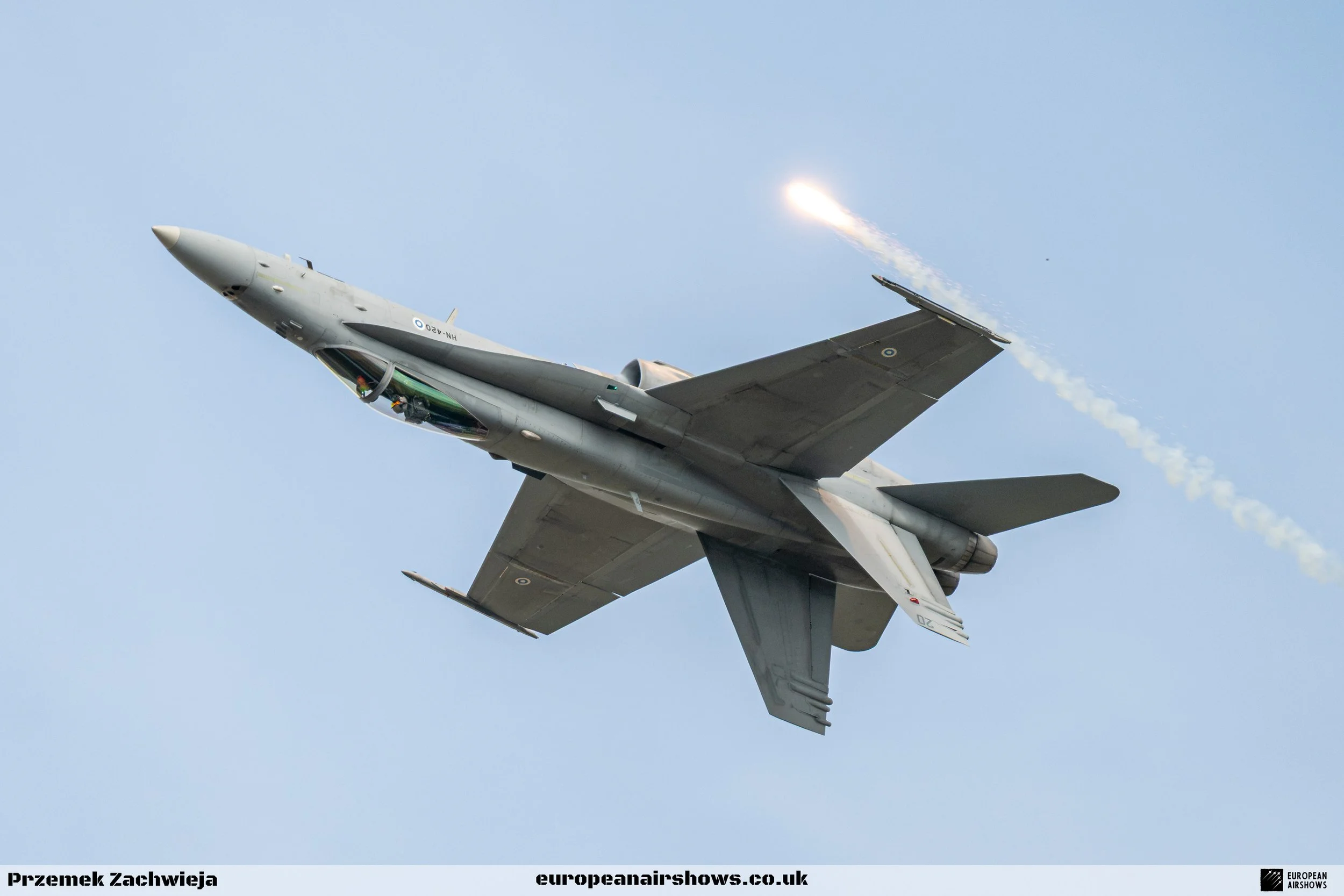
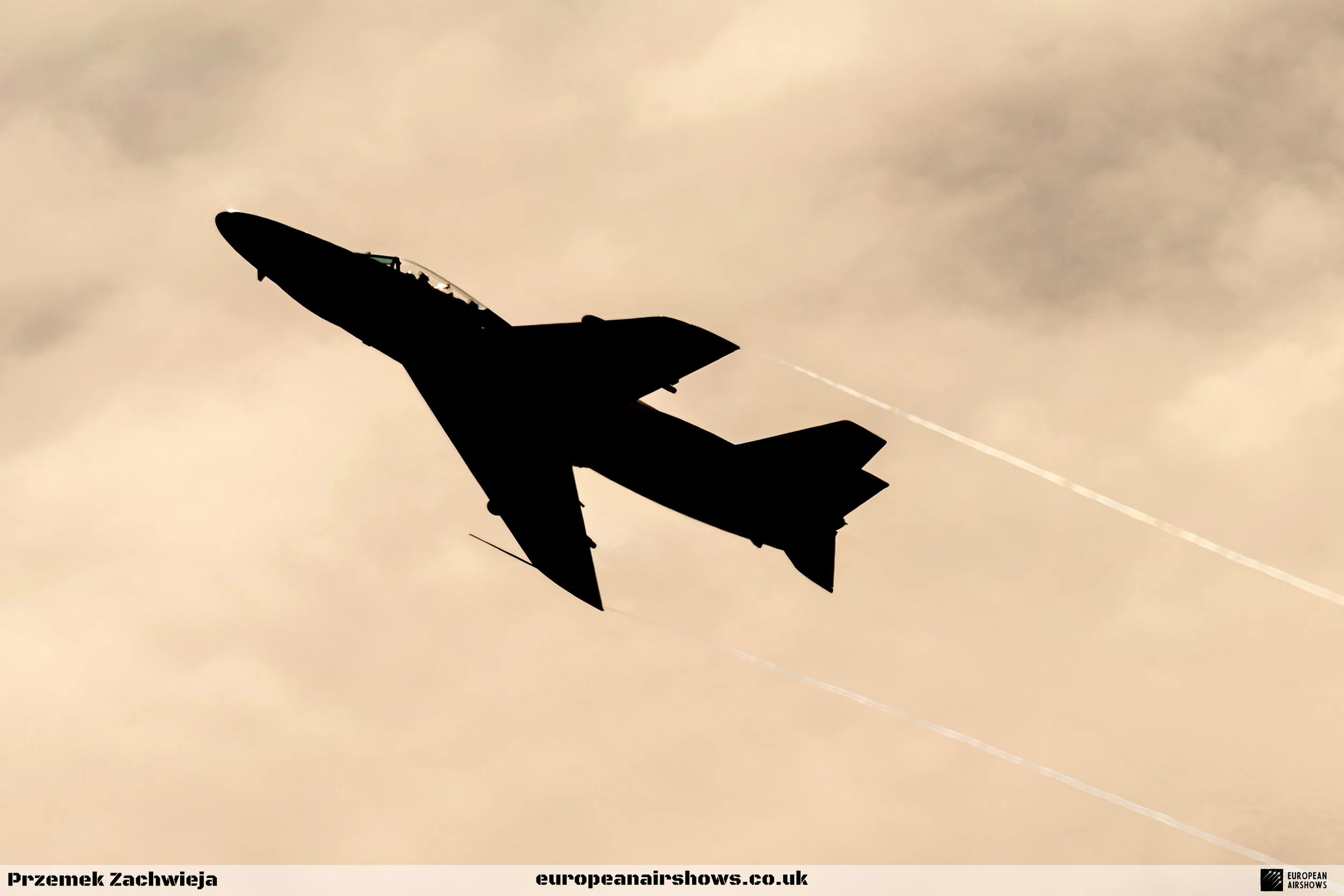
The main fixed-wing display area was not along the runway in front of the public. It sat completely to the right, far enough away that aircraft which should have dominated the sky became small shapes in the distance. This was not a minor complaint about lens length. Most of the fixed-wing programme was too remote for decent photographs, and during some displays many photographers did not bother raising their cameras at all.
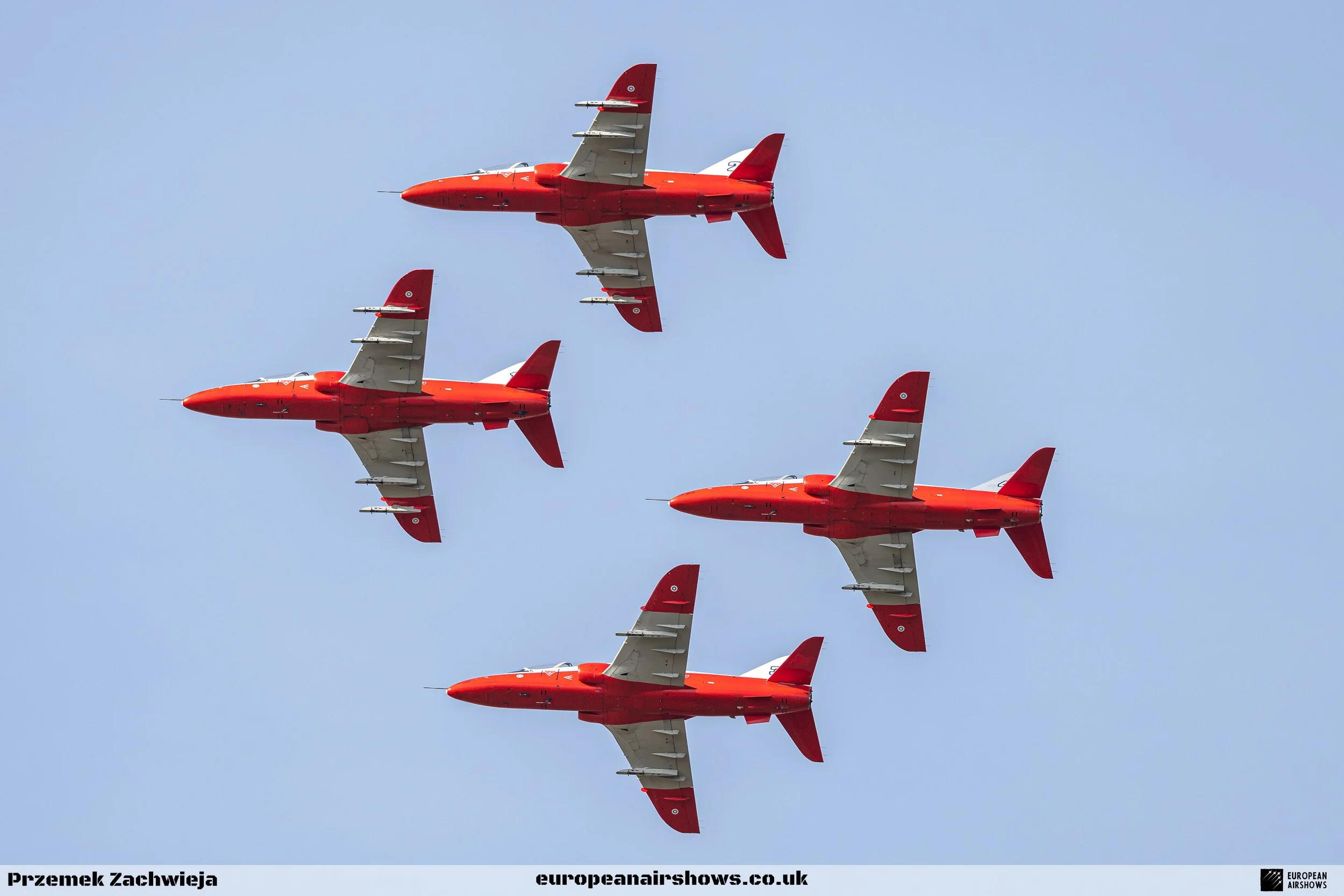
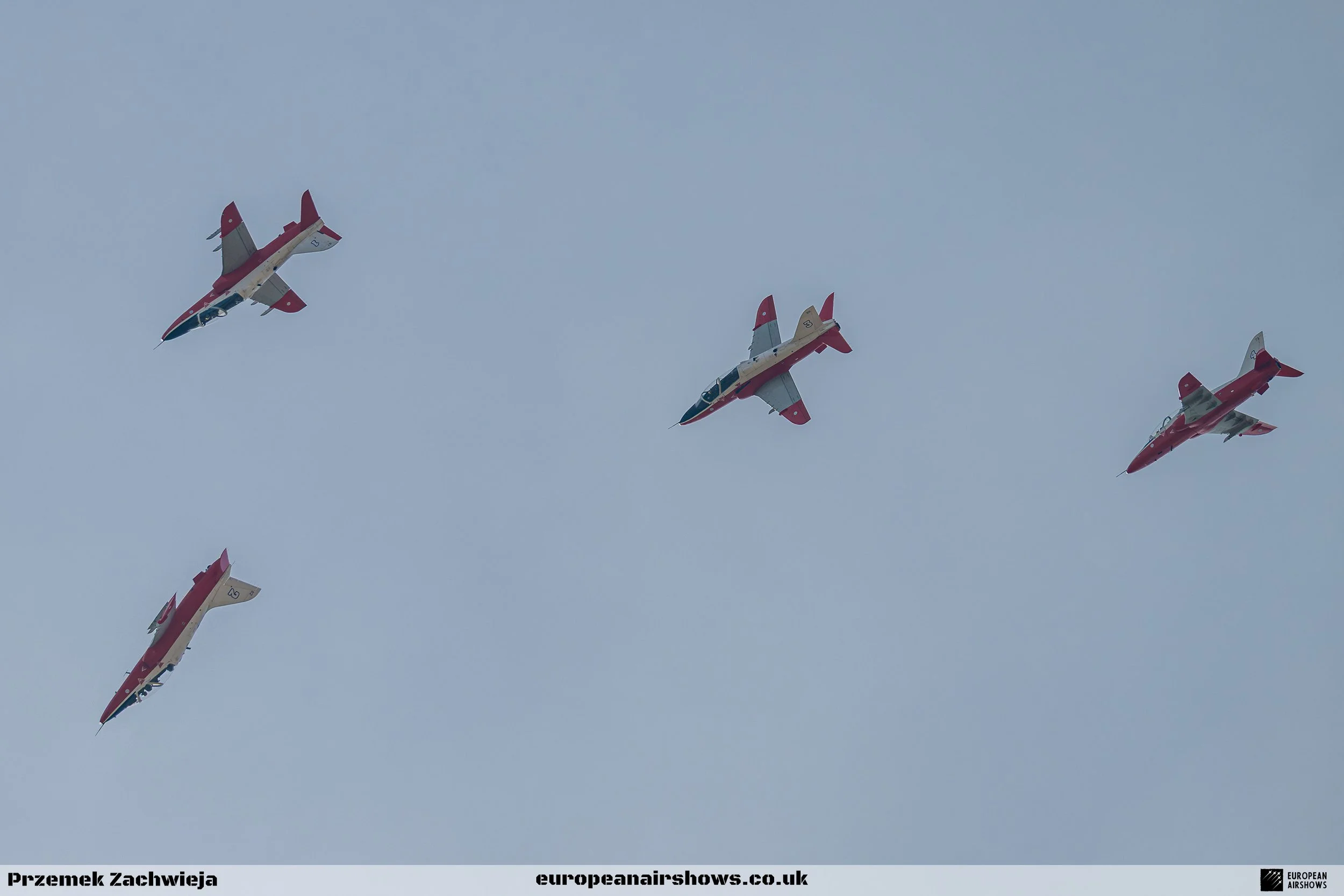
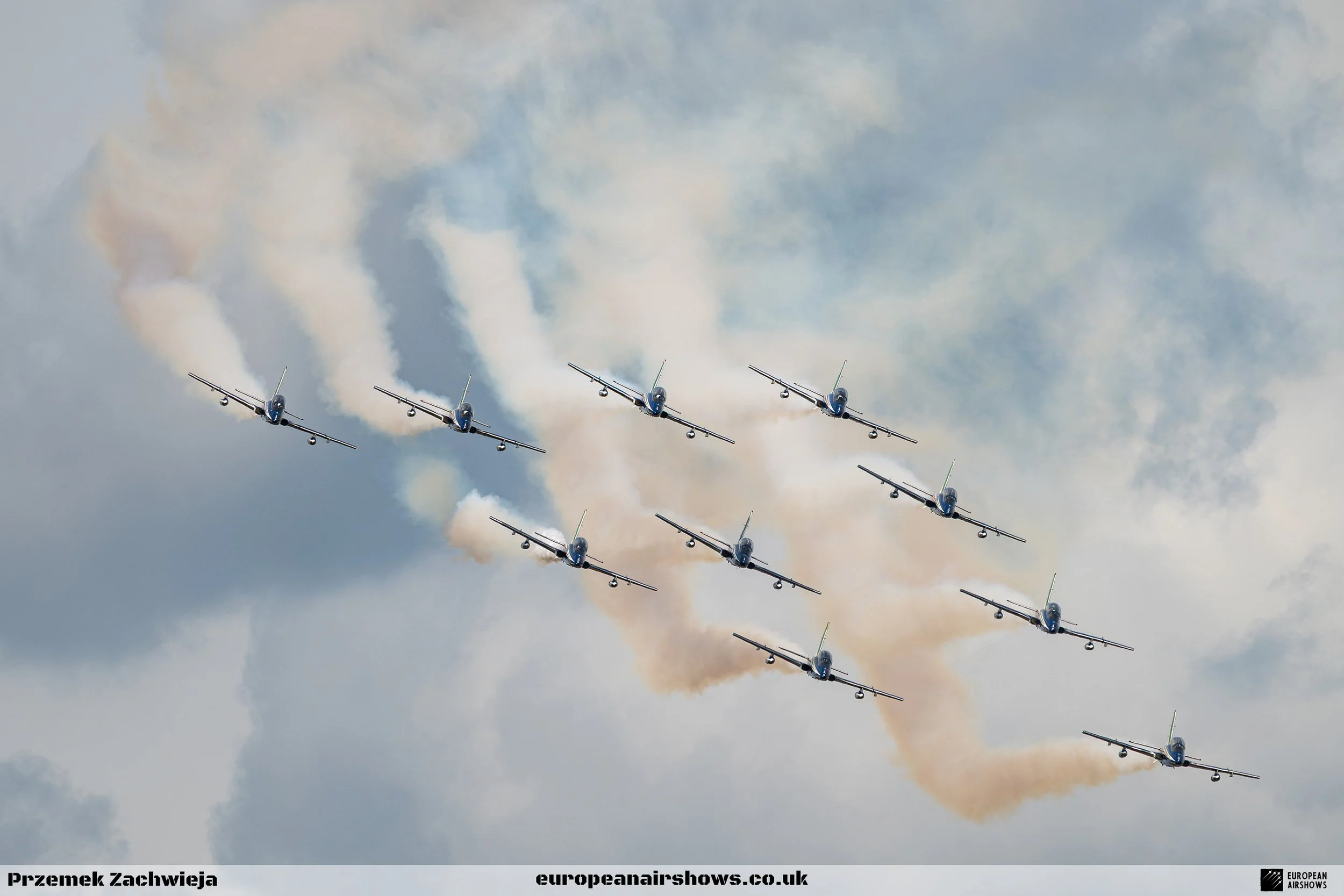
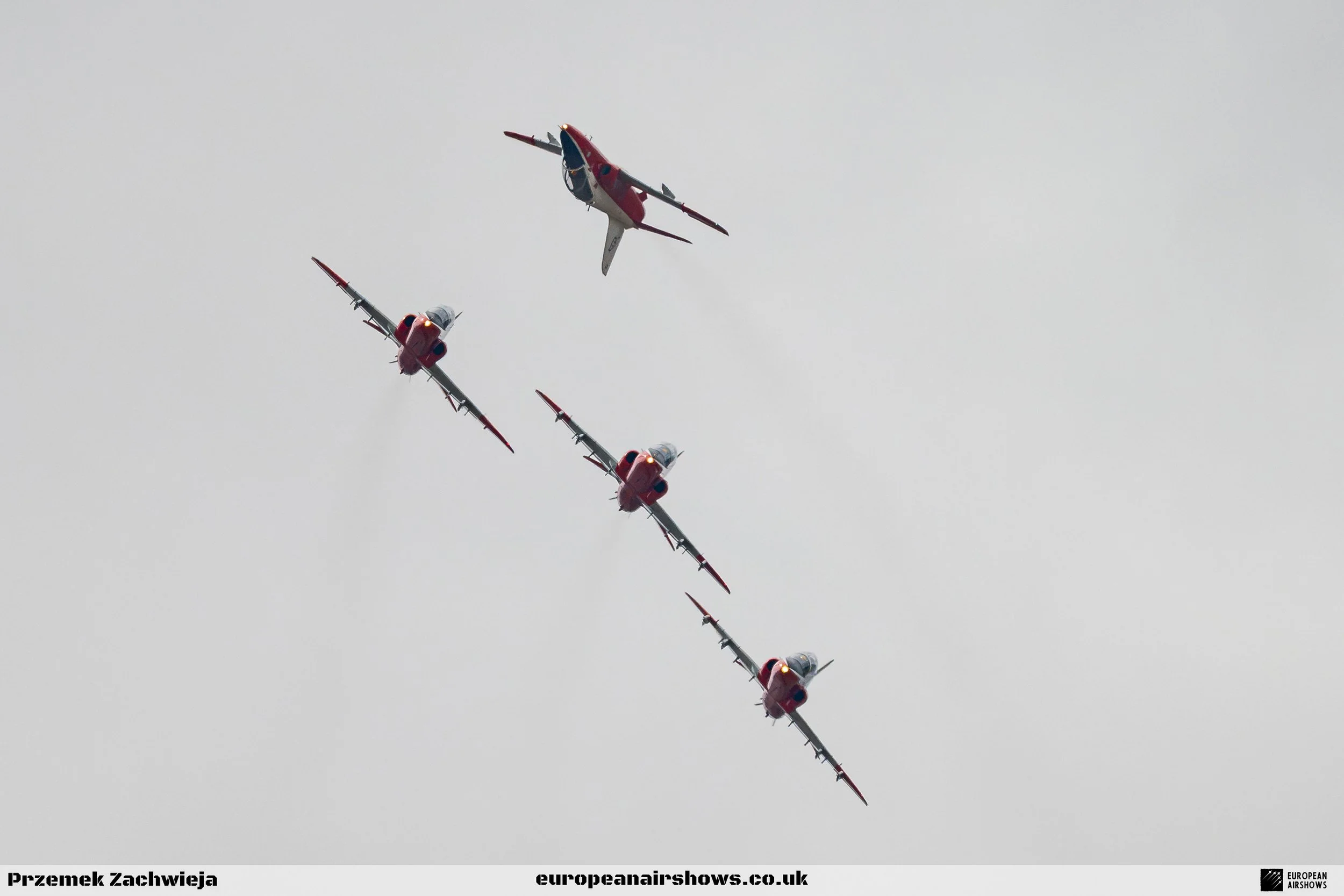
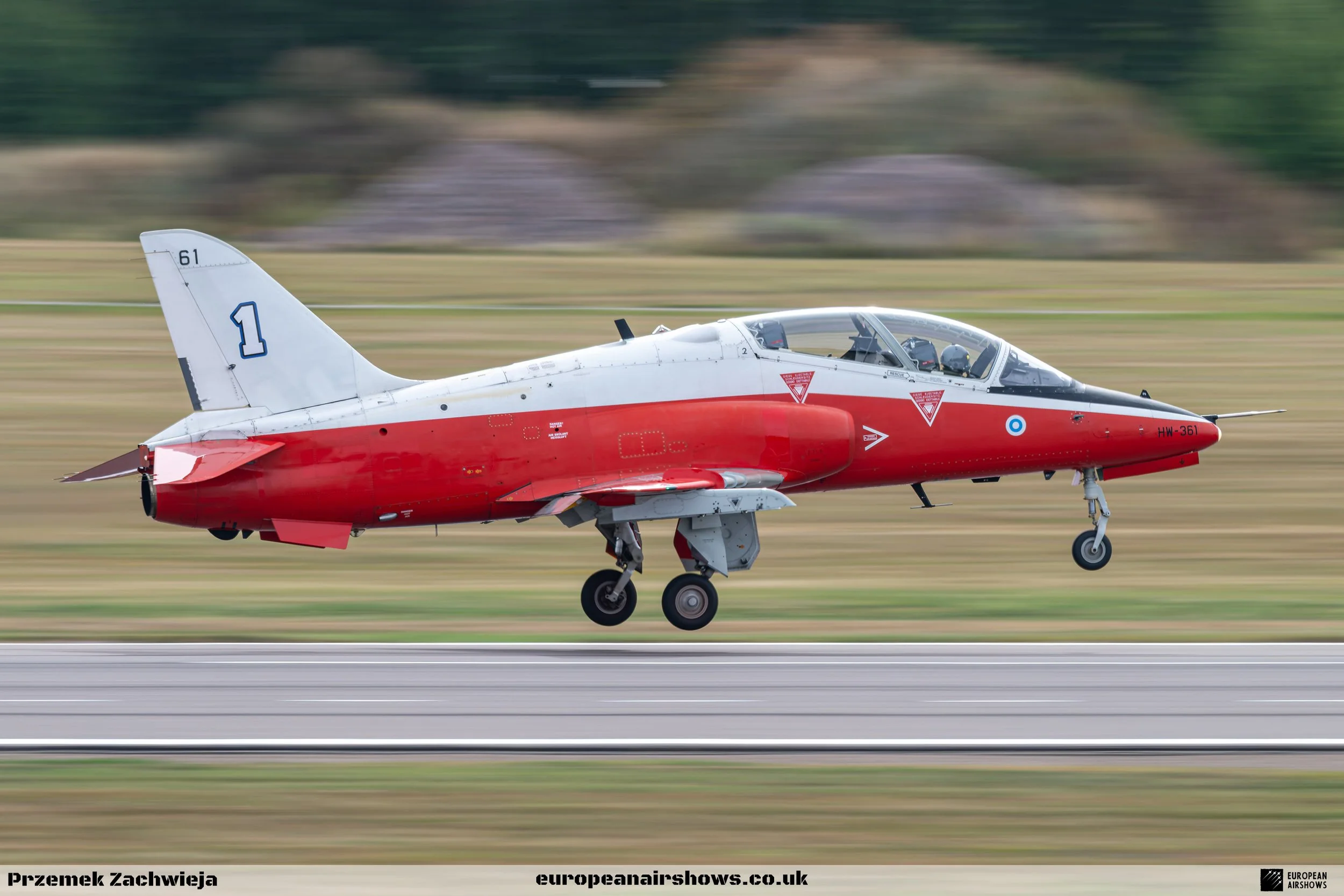
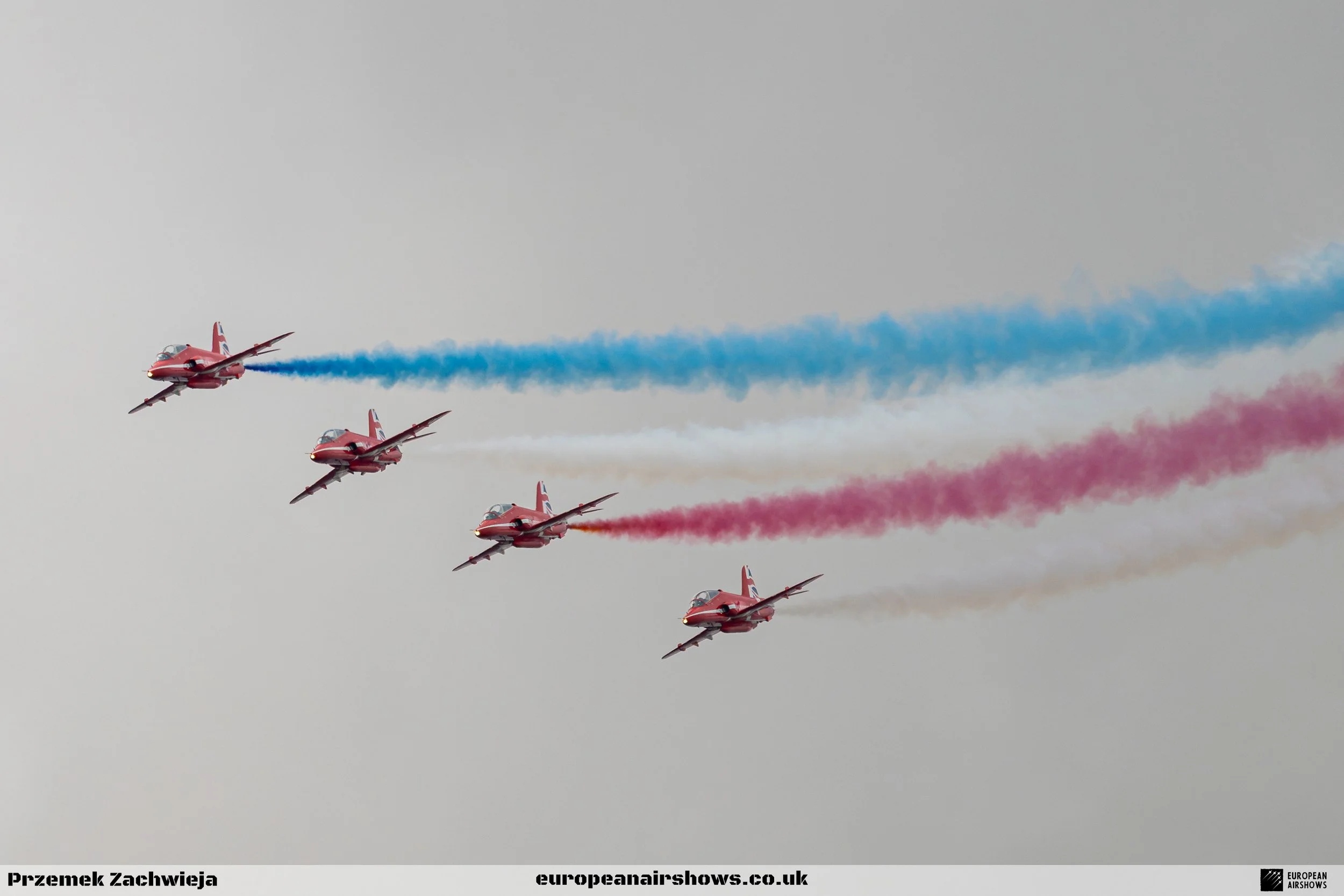
The Finnish Air Force Midnight Hawks suffered more than most. Their four white-and-red British Aerospace Hawk Mk 66s—low-hour aircraft acquired from the Swiss Air Force—flew a precise and attractive routine, but the team had perhaps the most distant display box of the weekend. Against the bright sky and sun, and without smoke to draw their path, even these colourful jets became very difficult to follow.
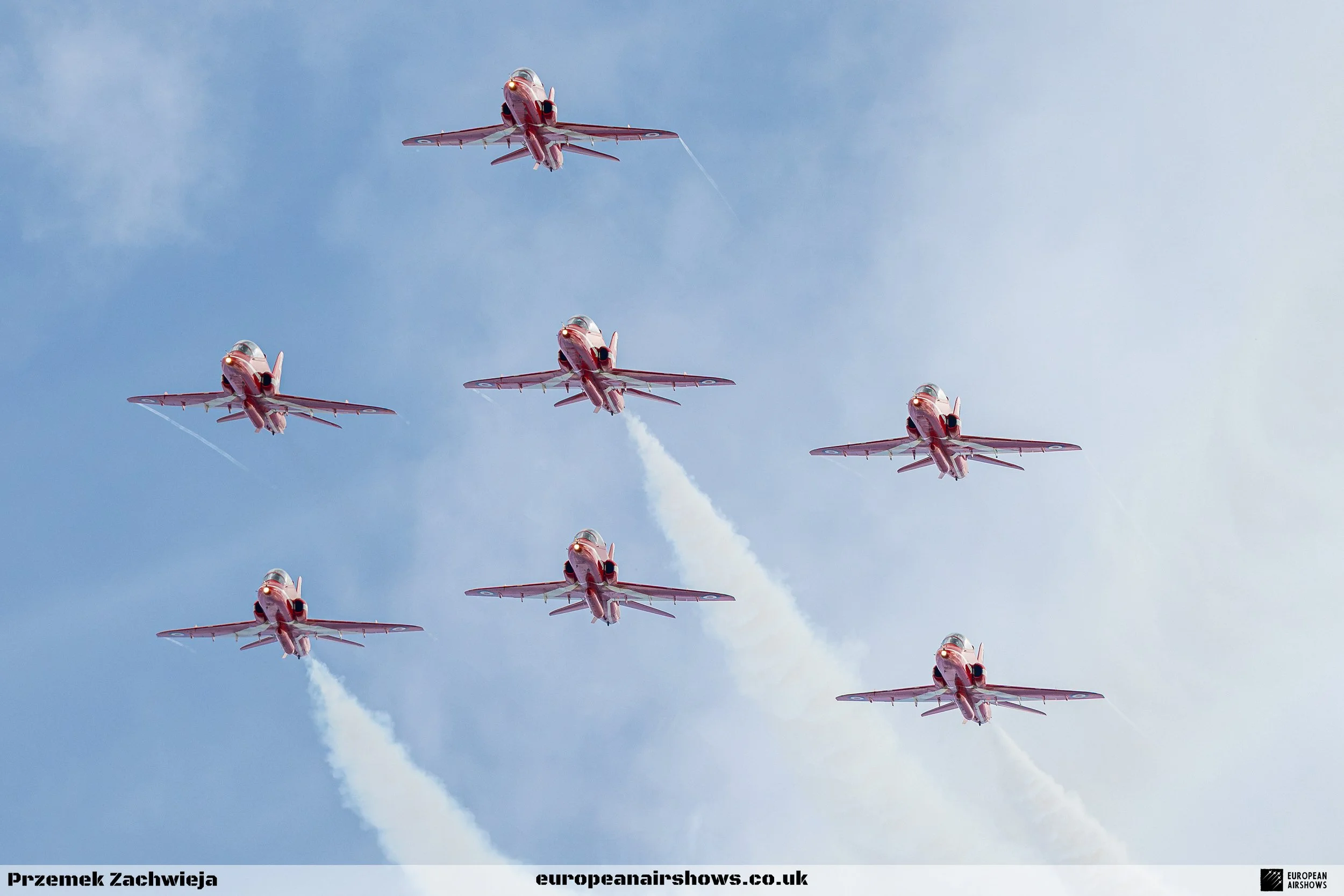
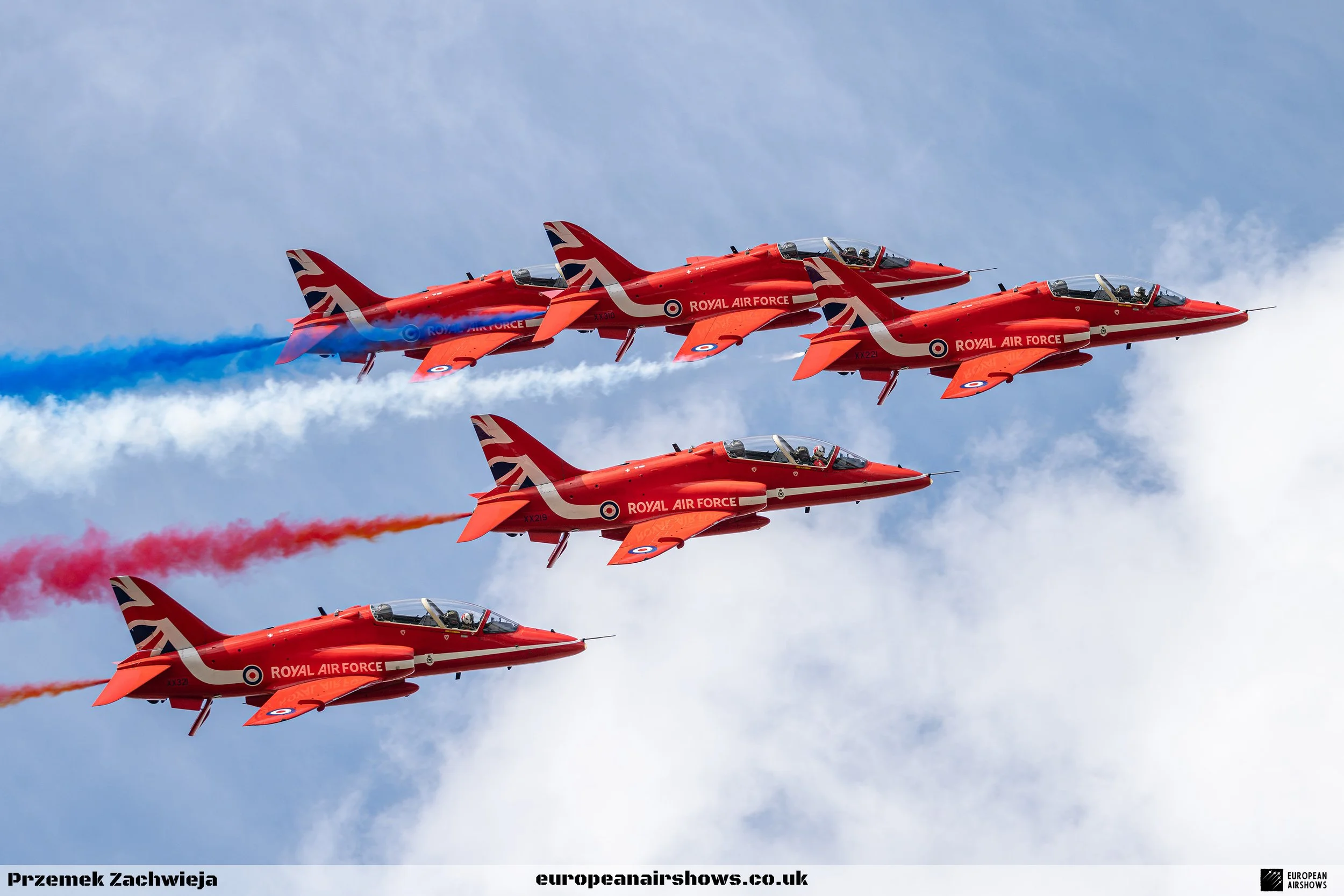
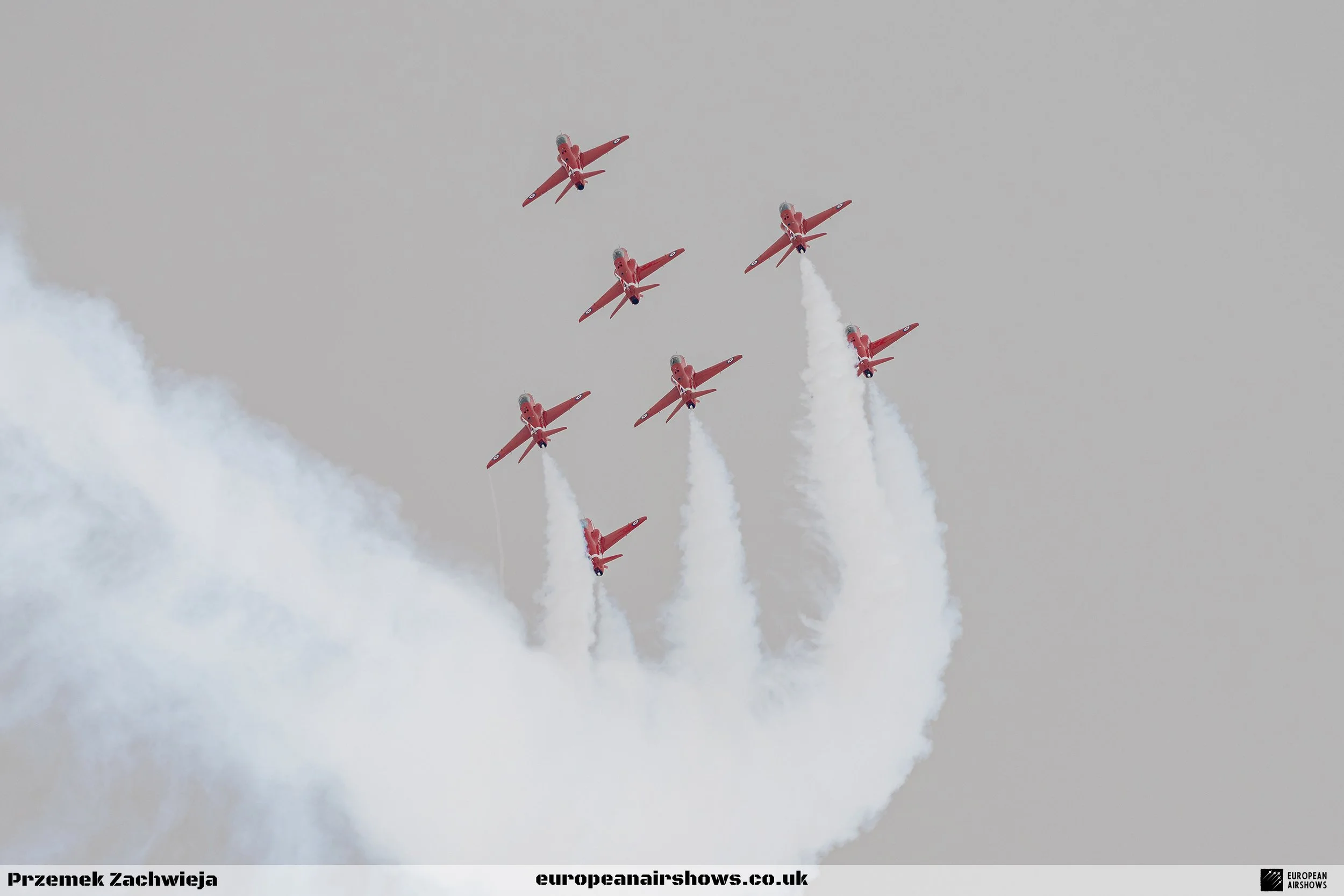
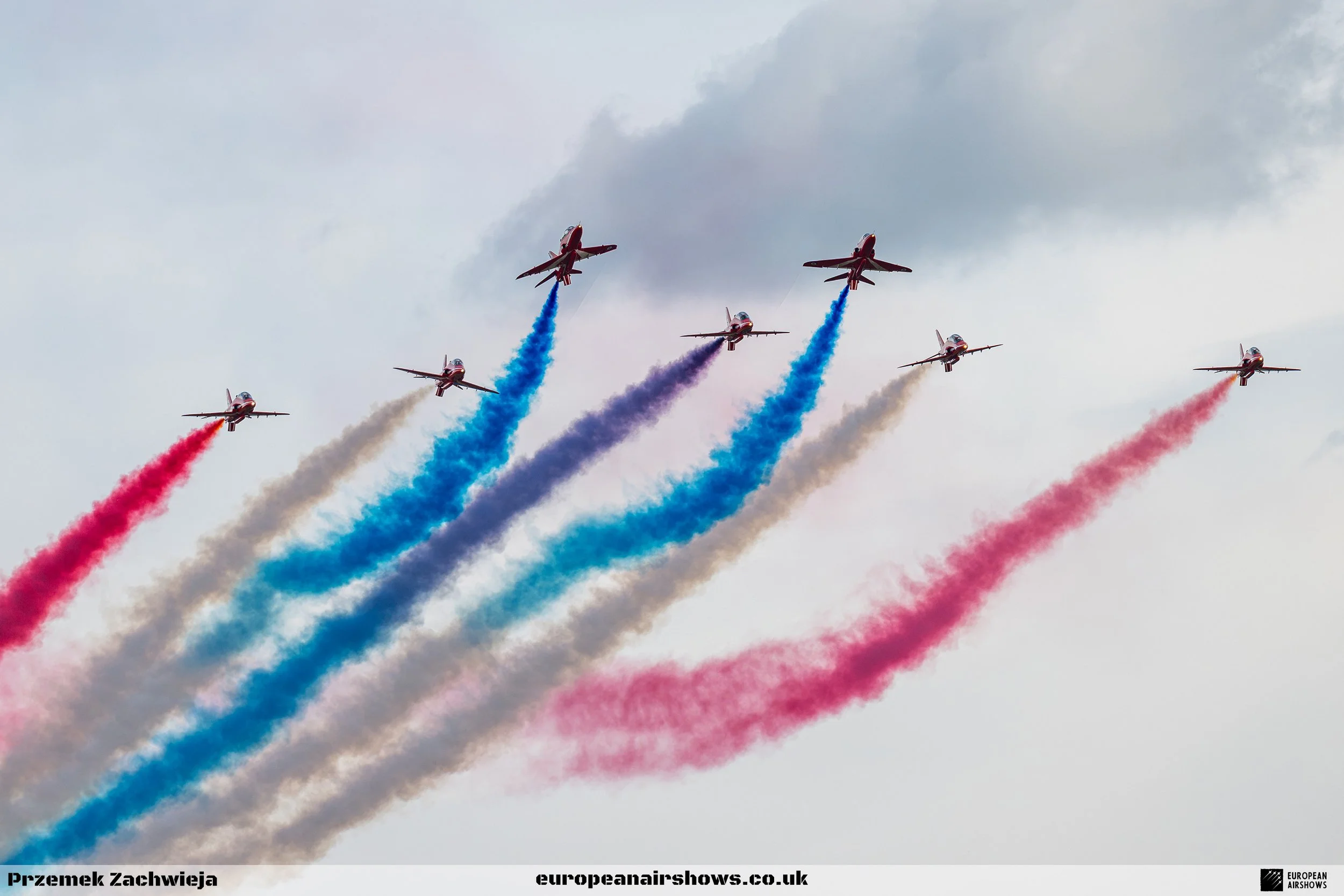
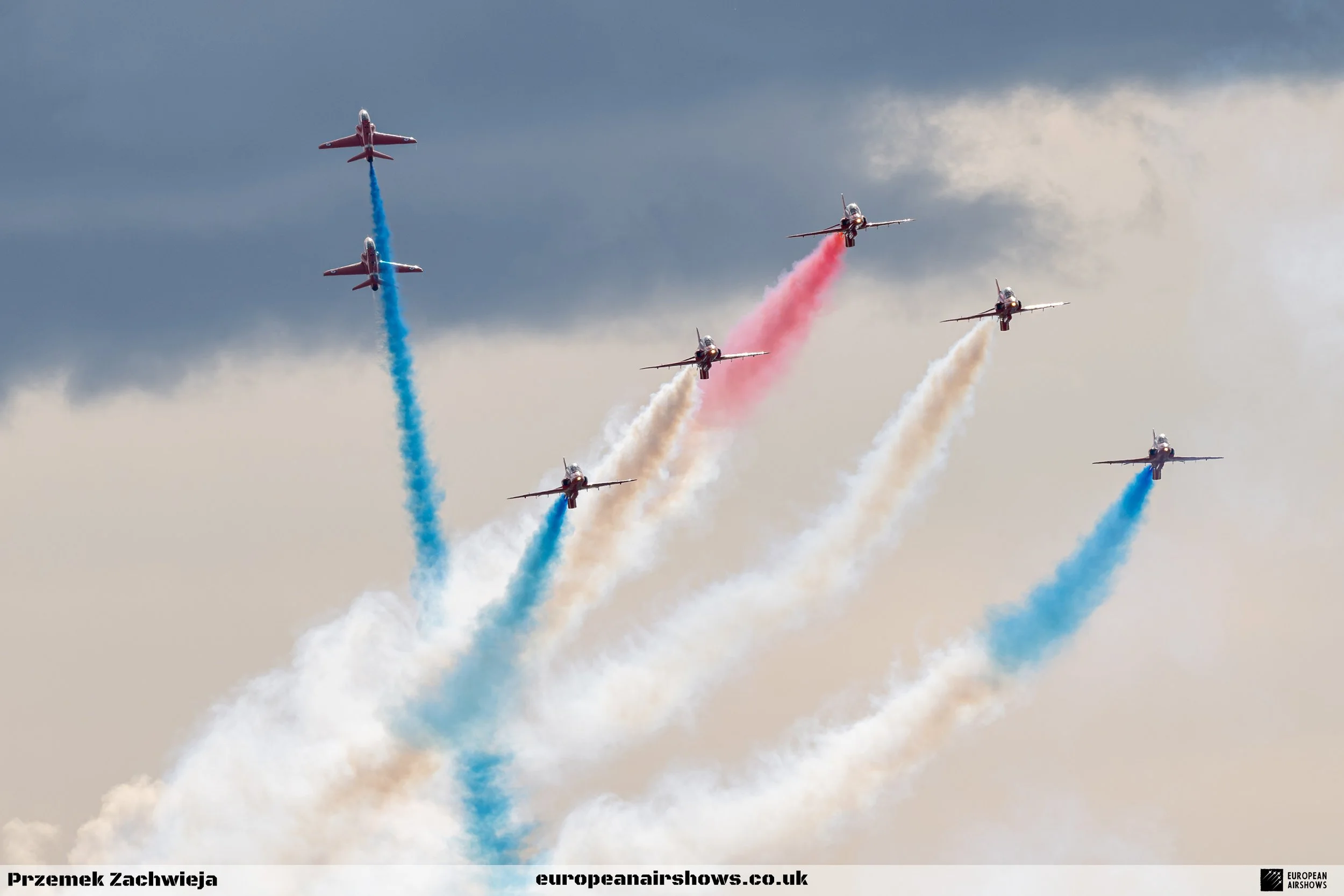
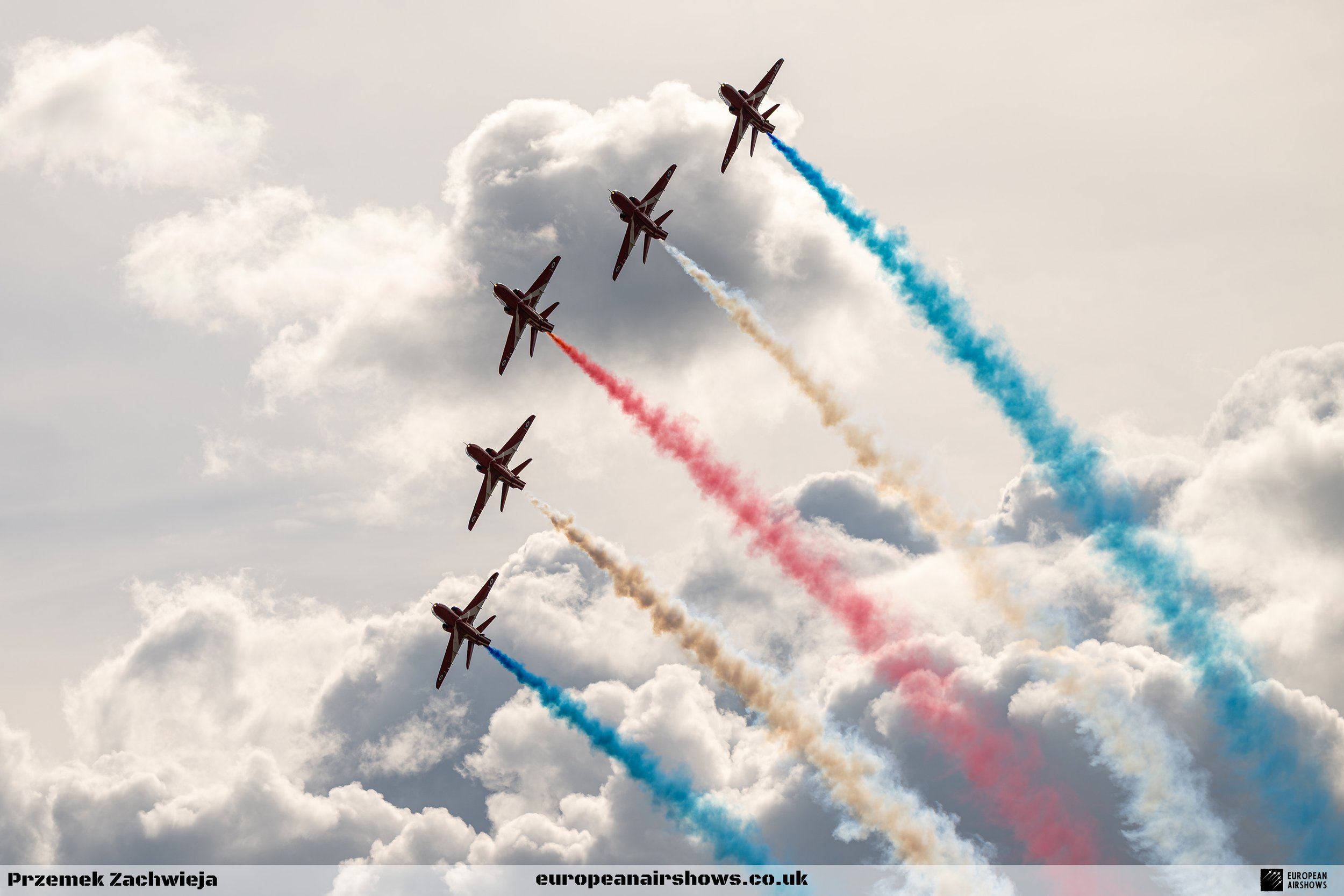
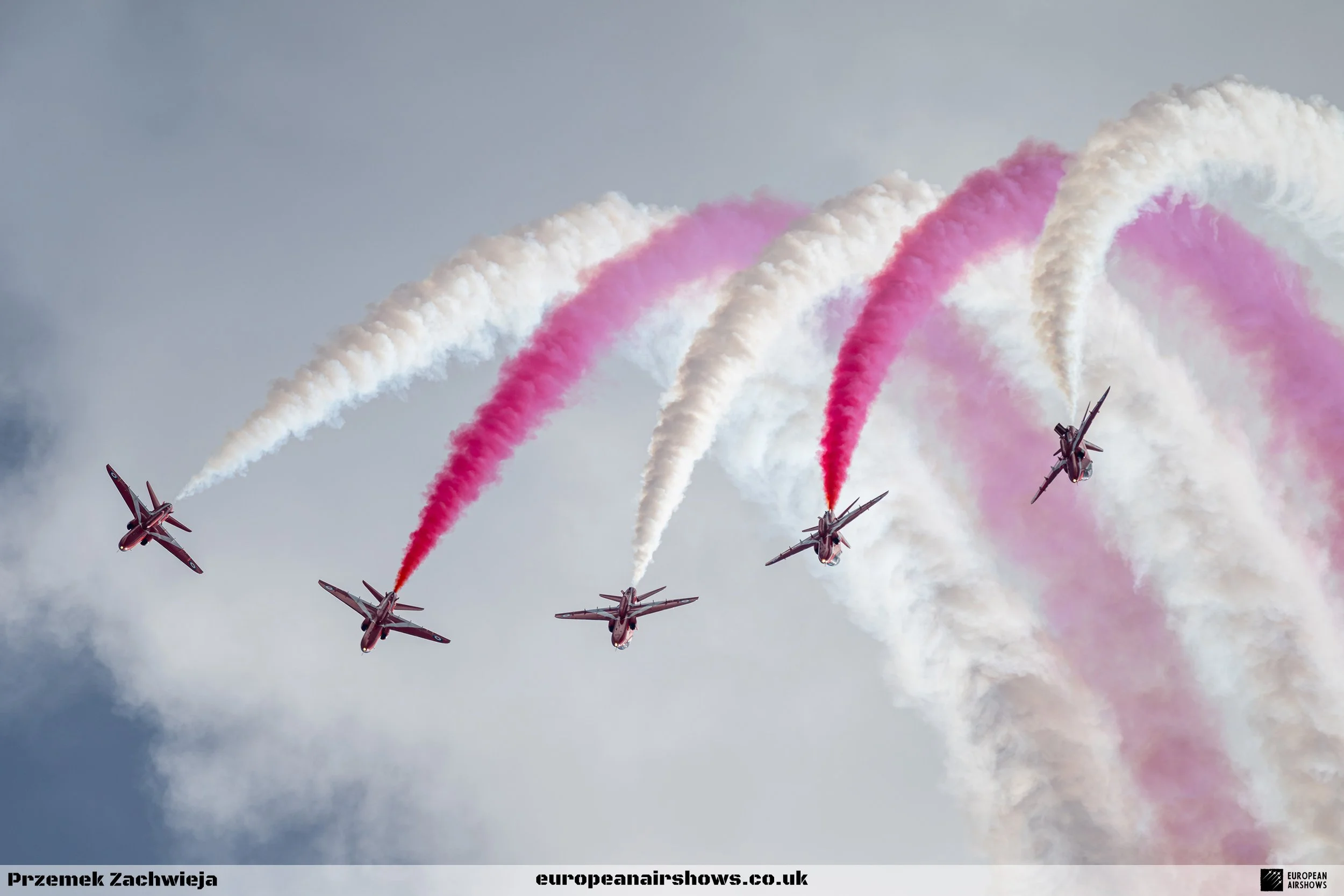
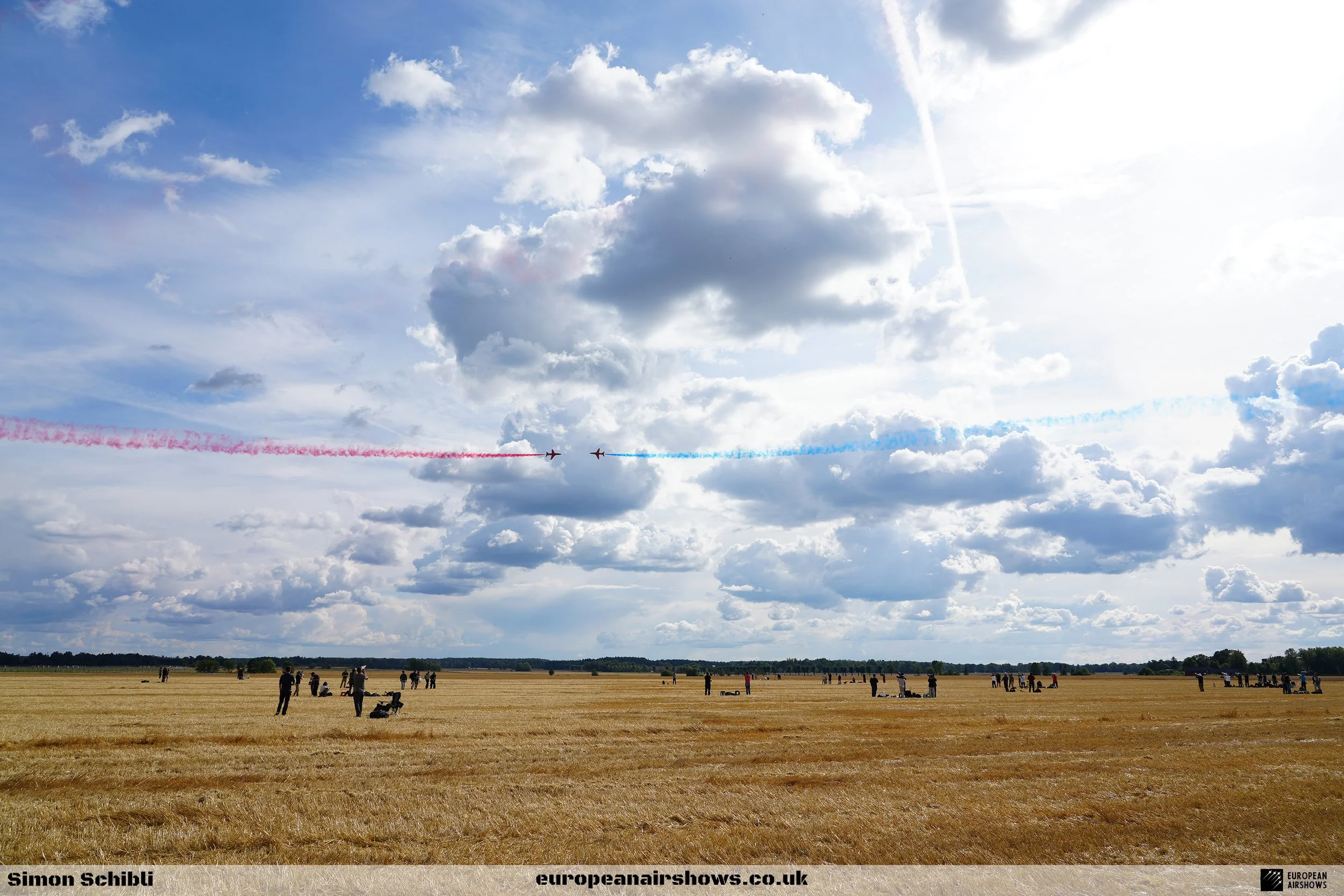
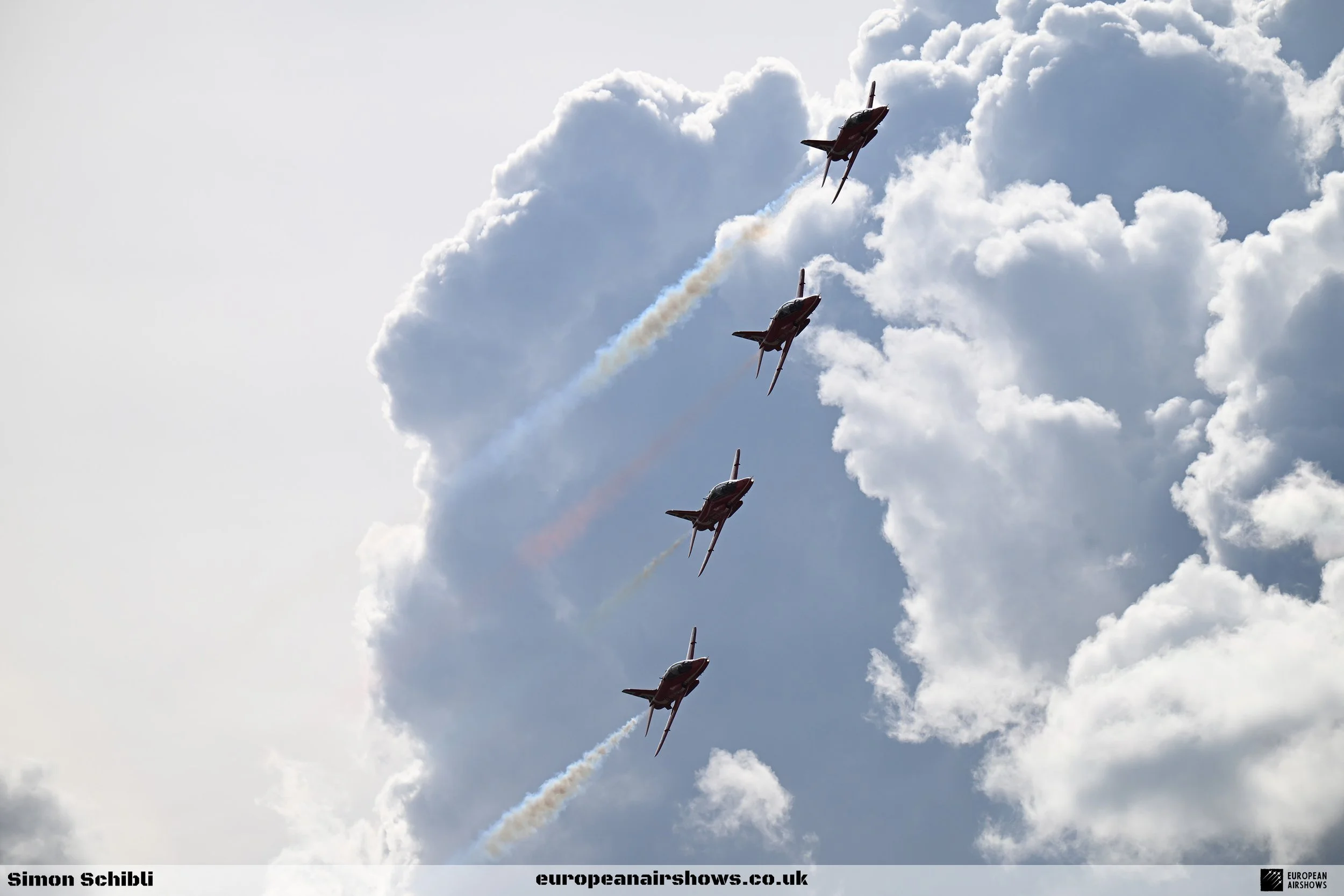
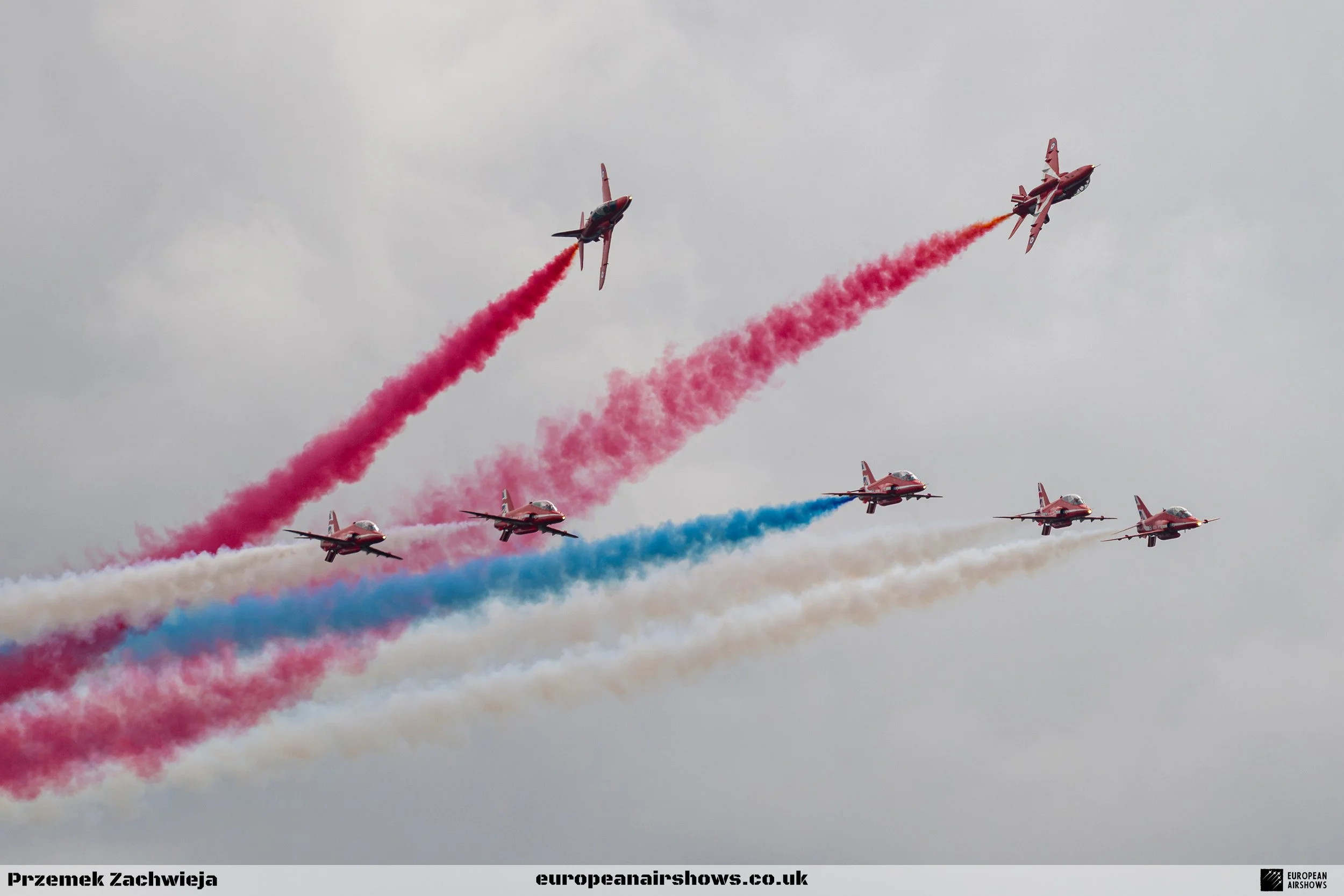
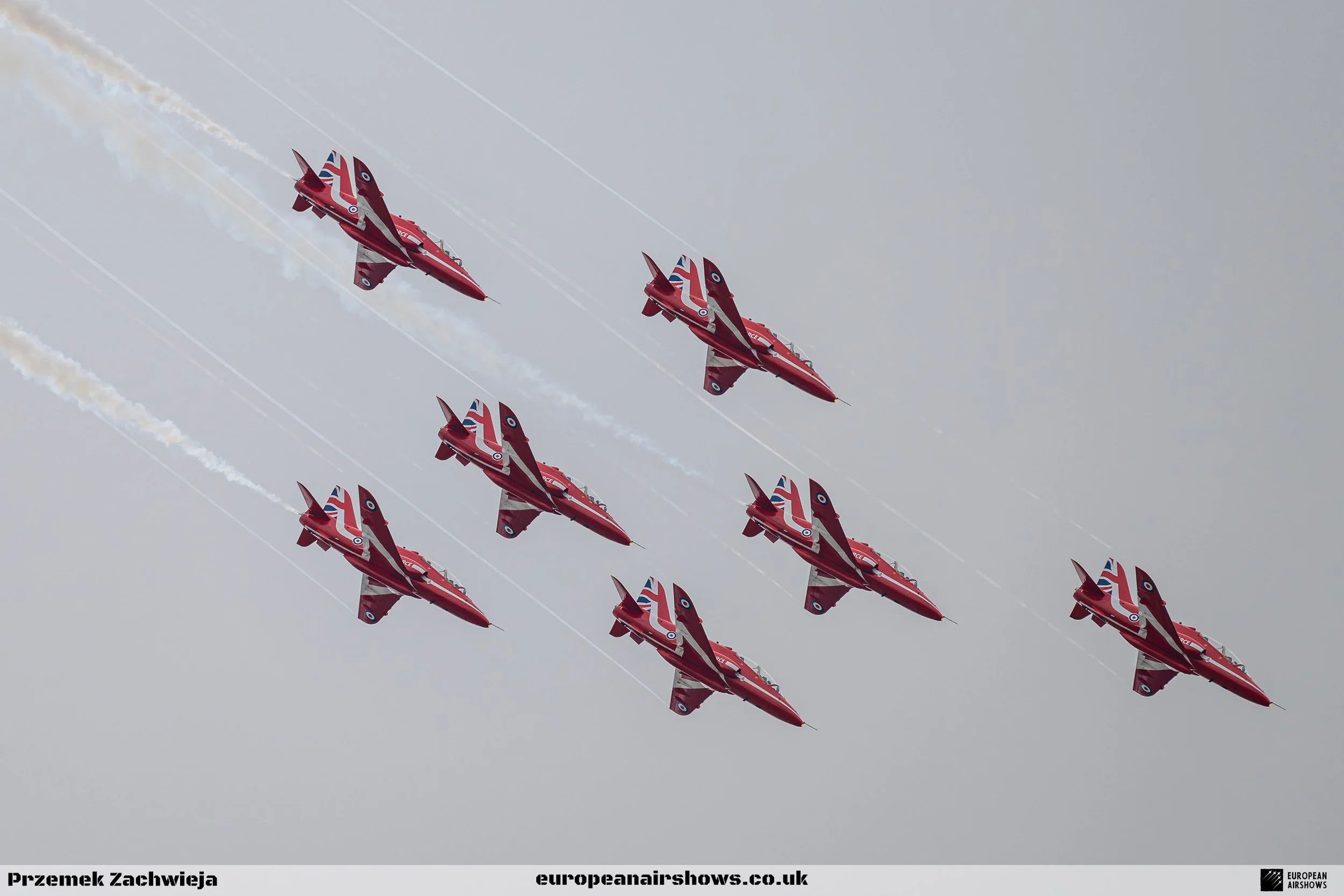
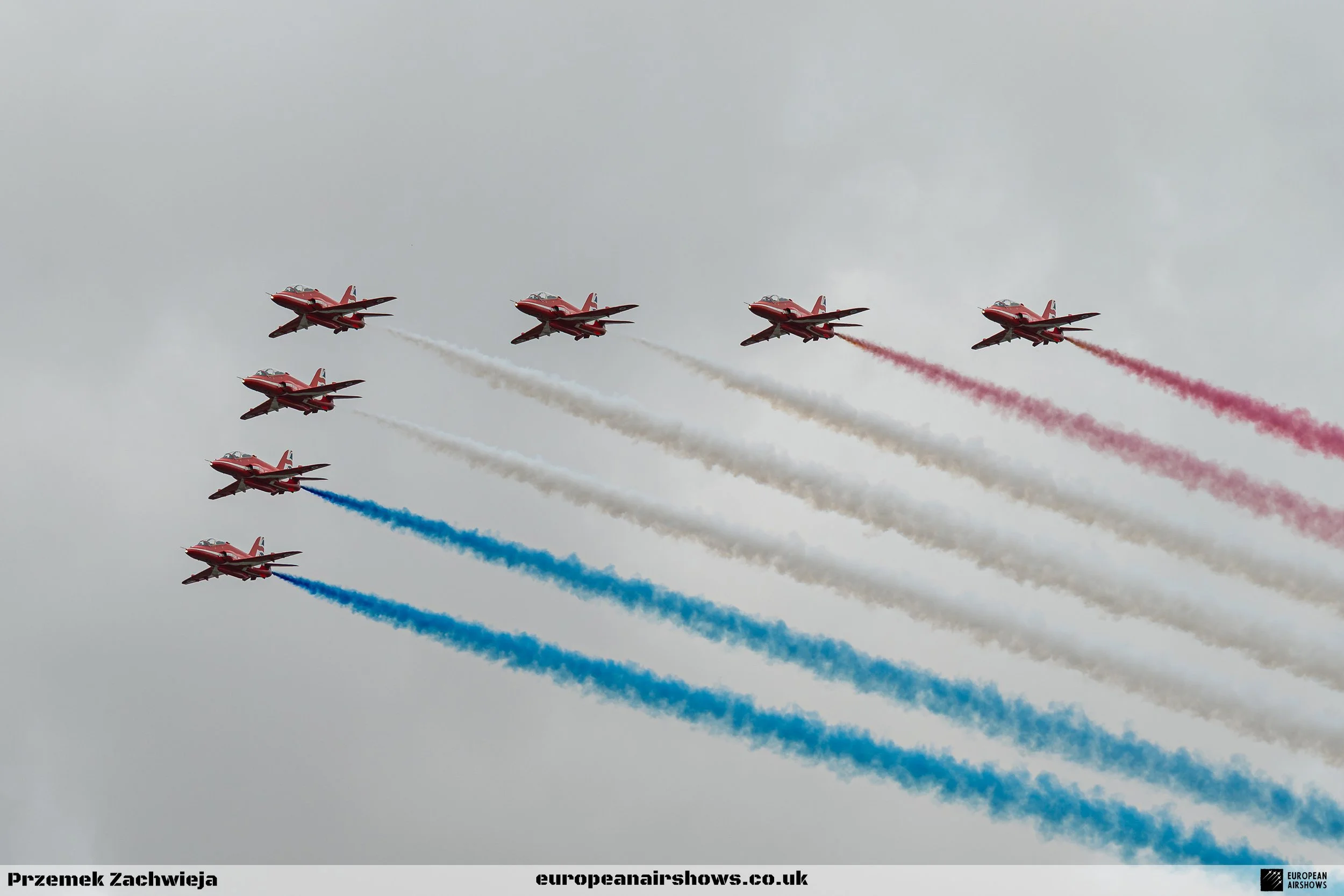
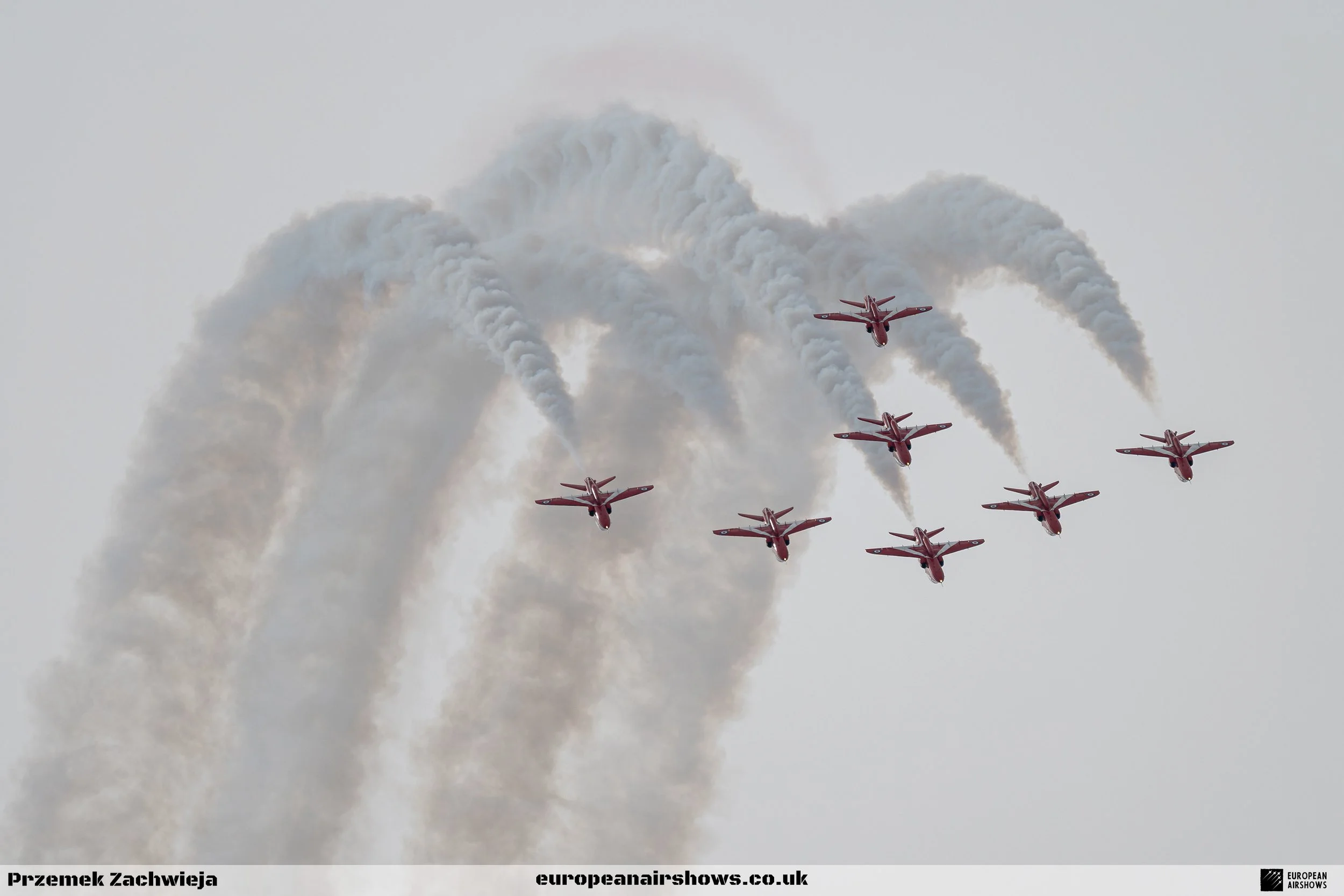
The RAF Red Arrows’ seven BAE Systems Hawk T1s gave the polished display expected of them, yet even they could not beat the geometry. The Synchro Pair went so low during the crossovers that, from the official spectator area, Reds 6 and 7 simply disappeared behind the trees at the crucial moment.
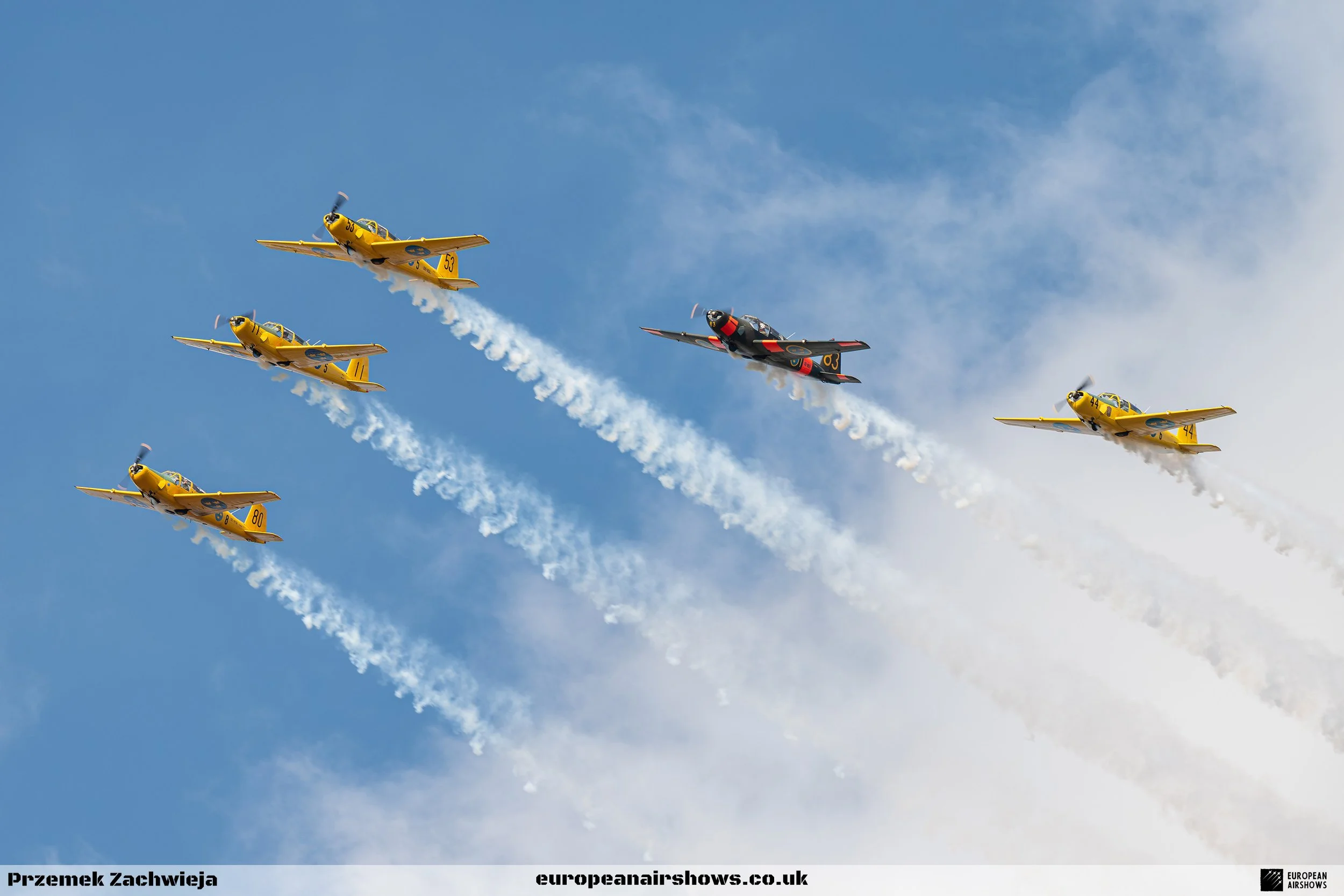
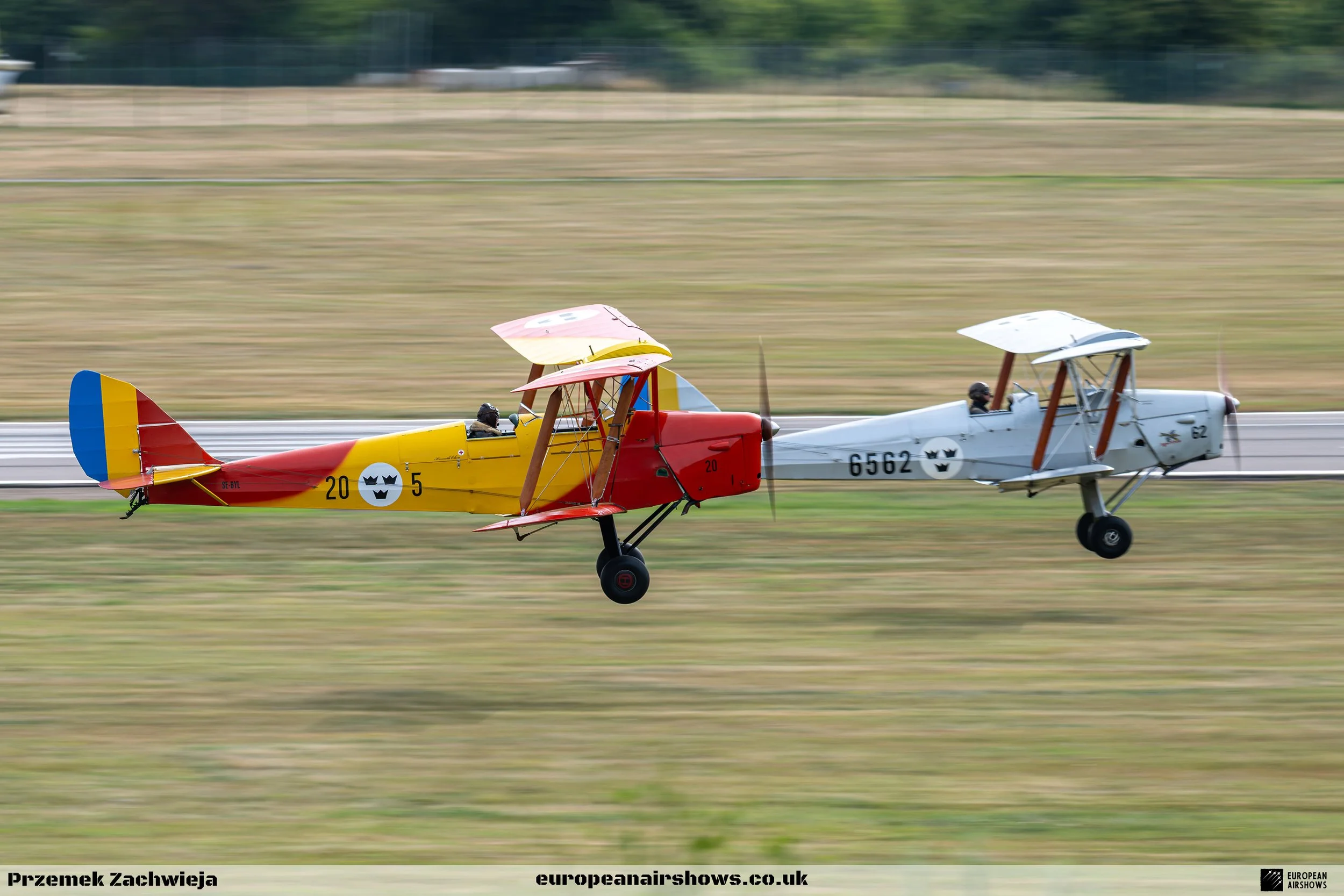
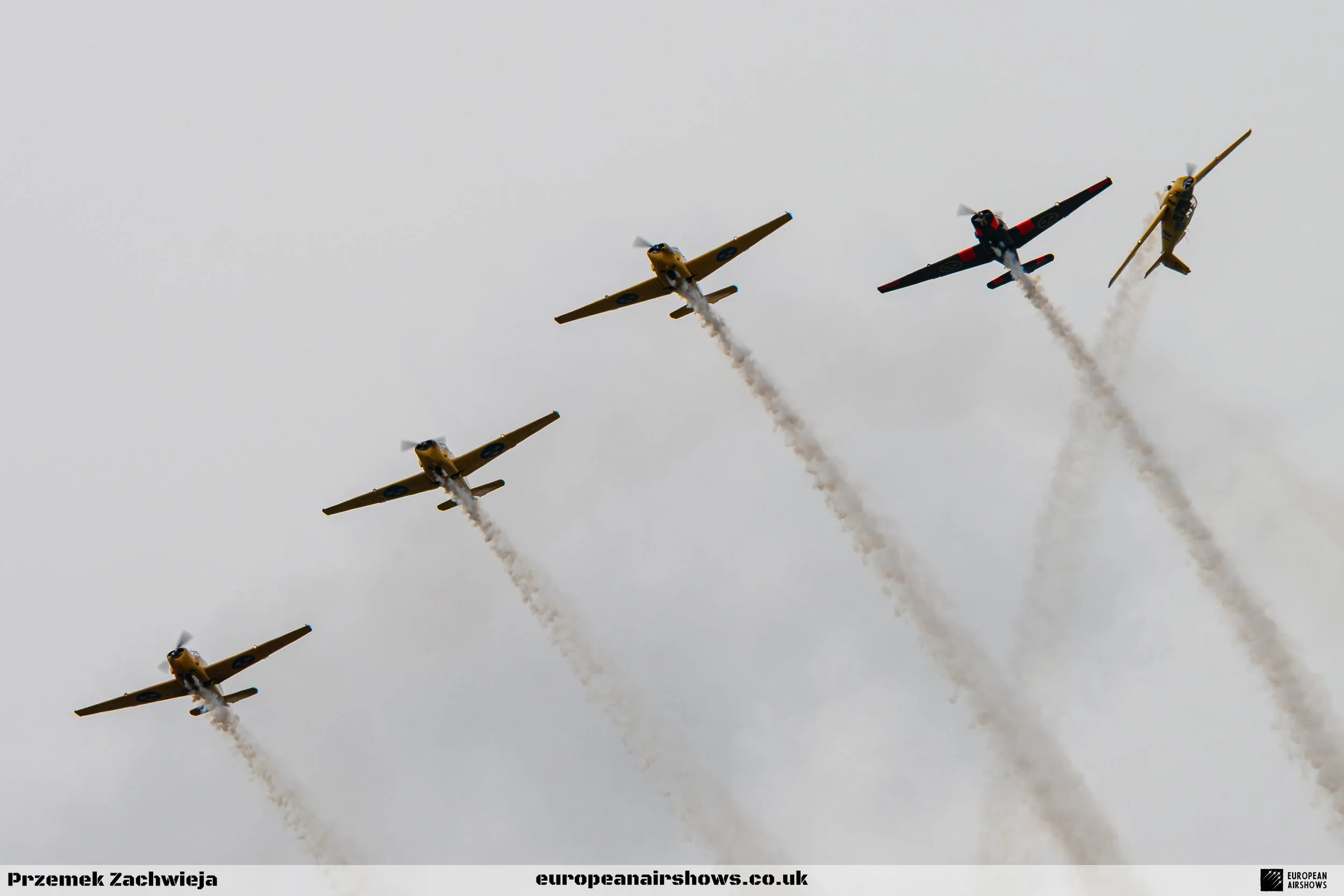
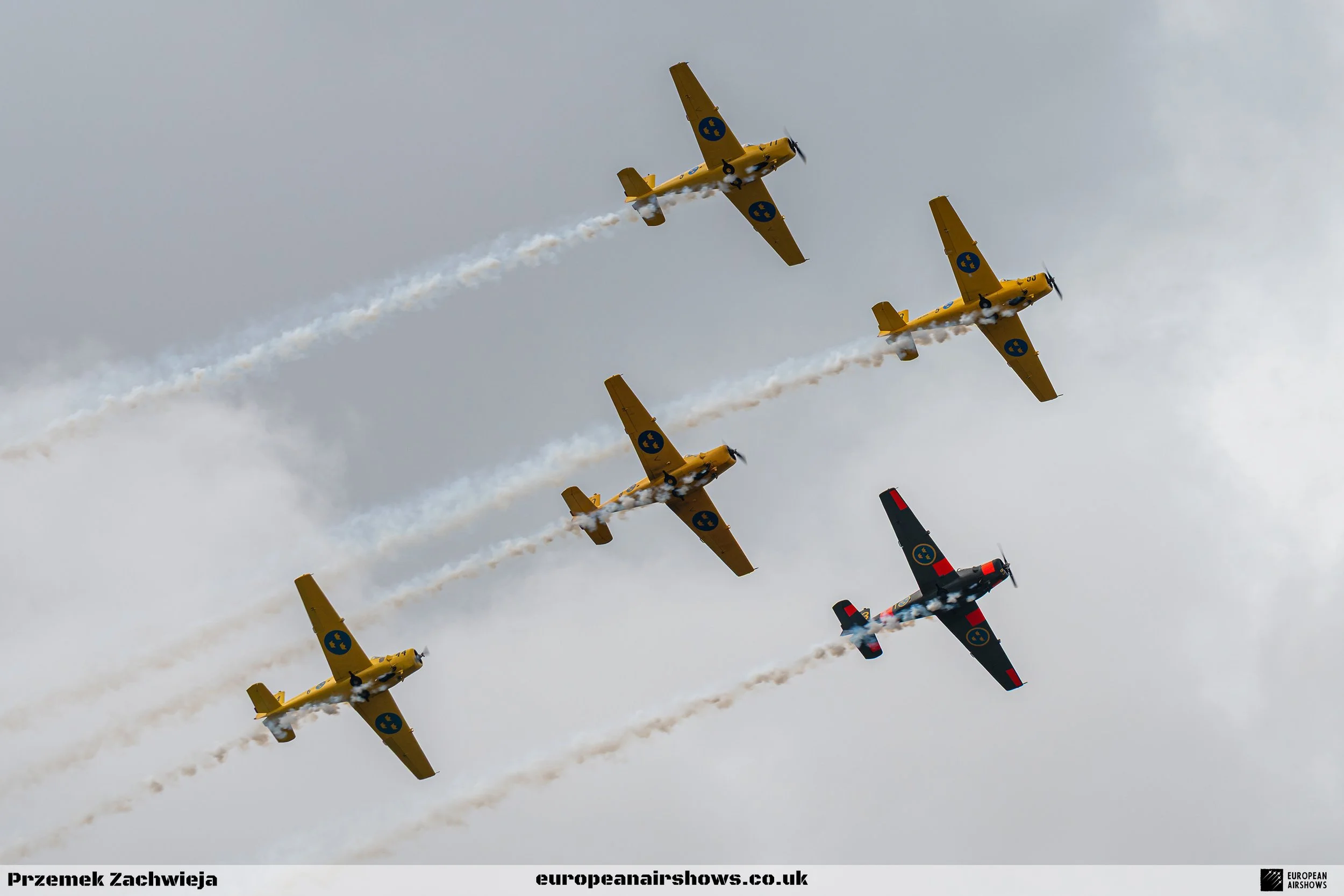
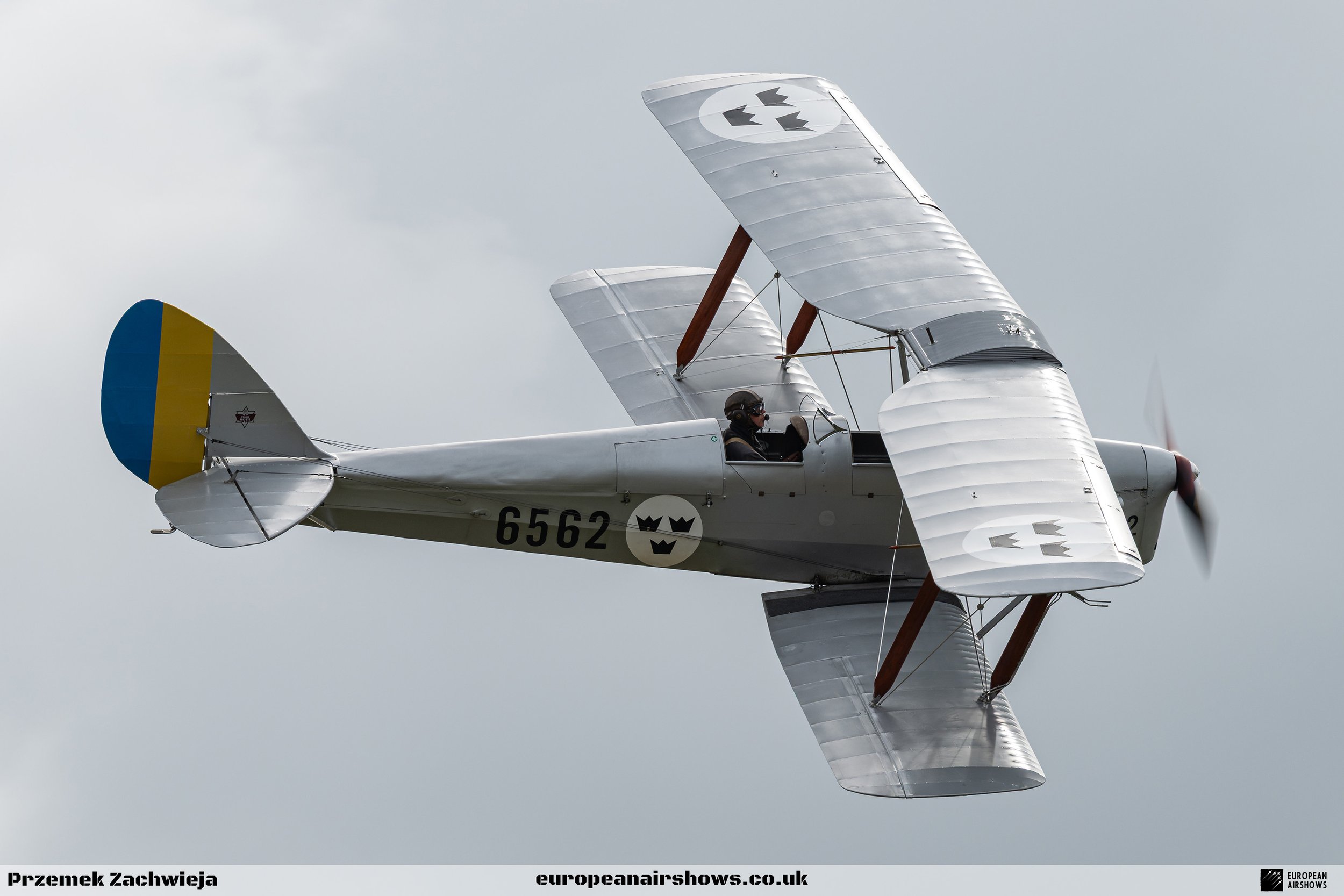
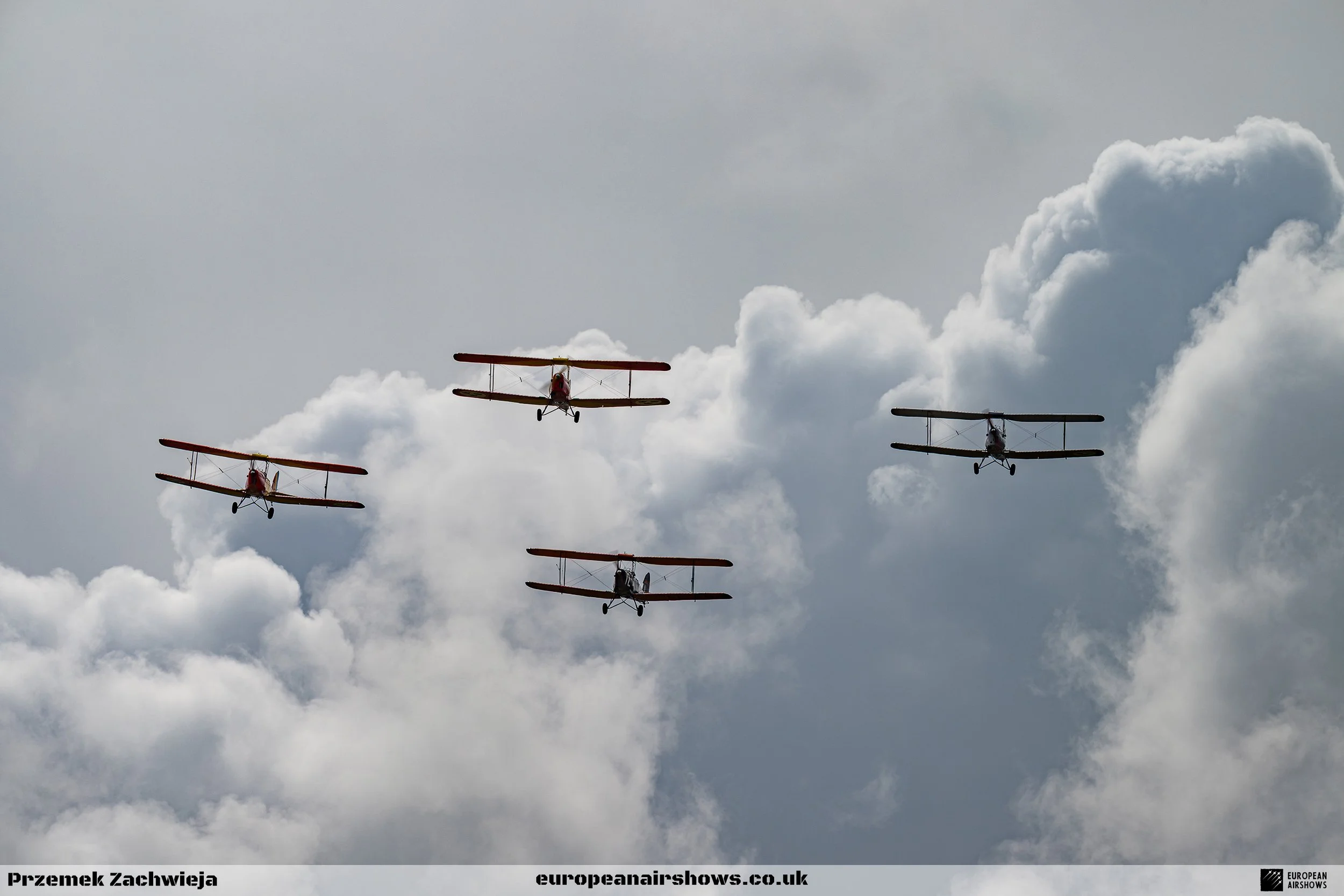
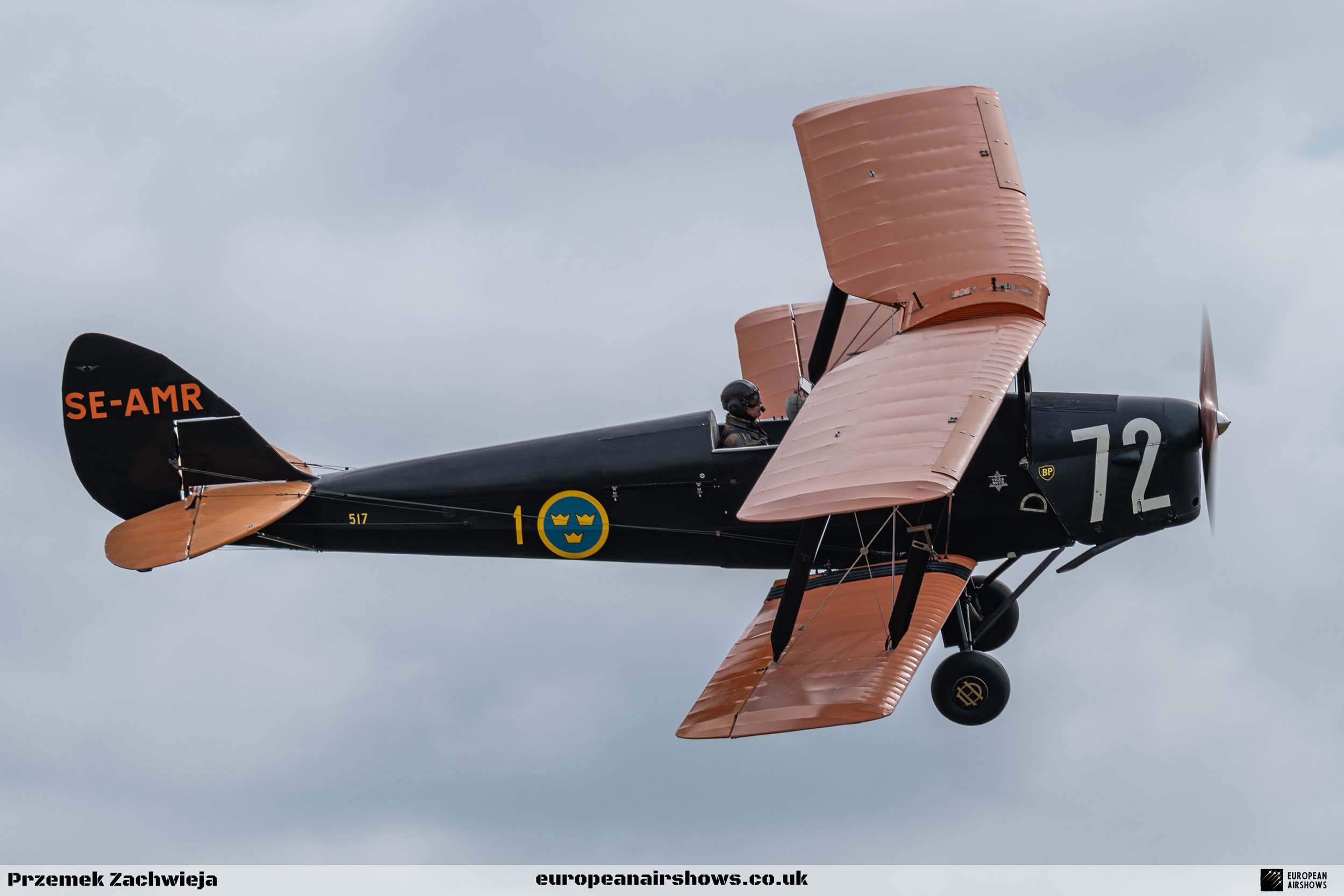
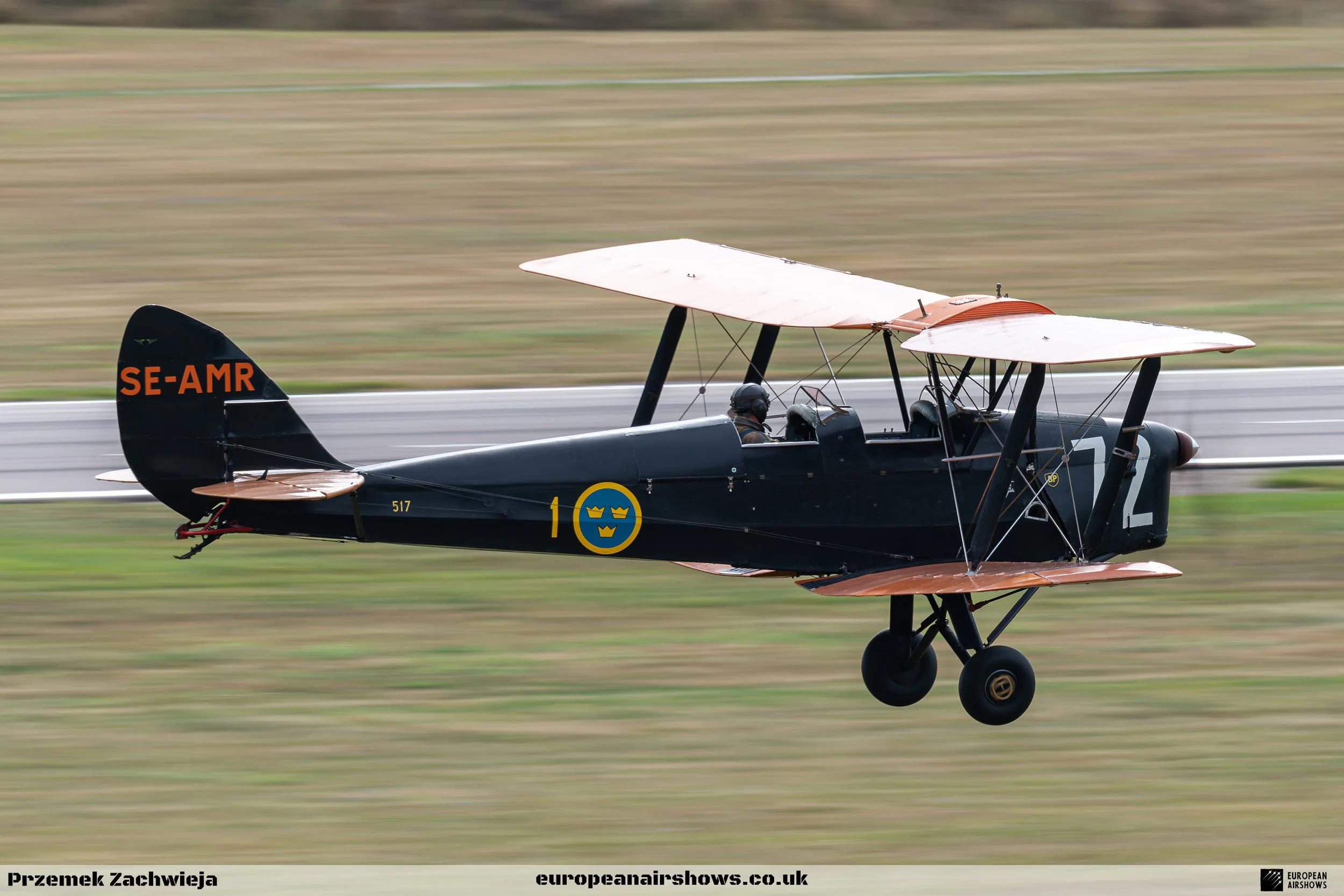
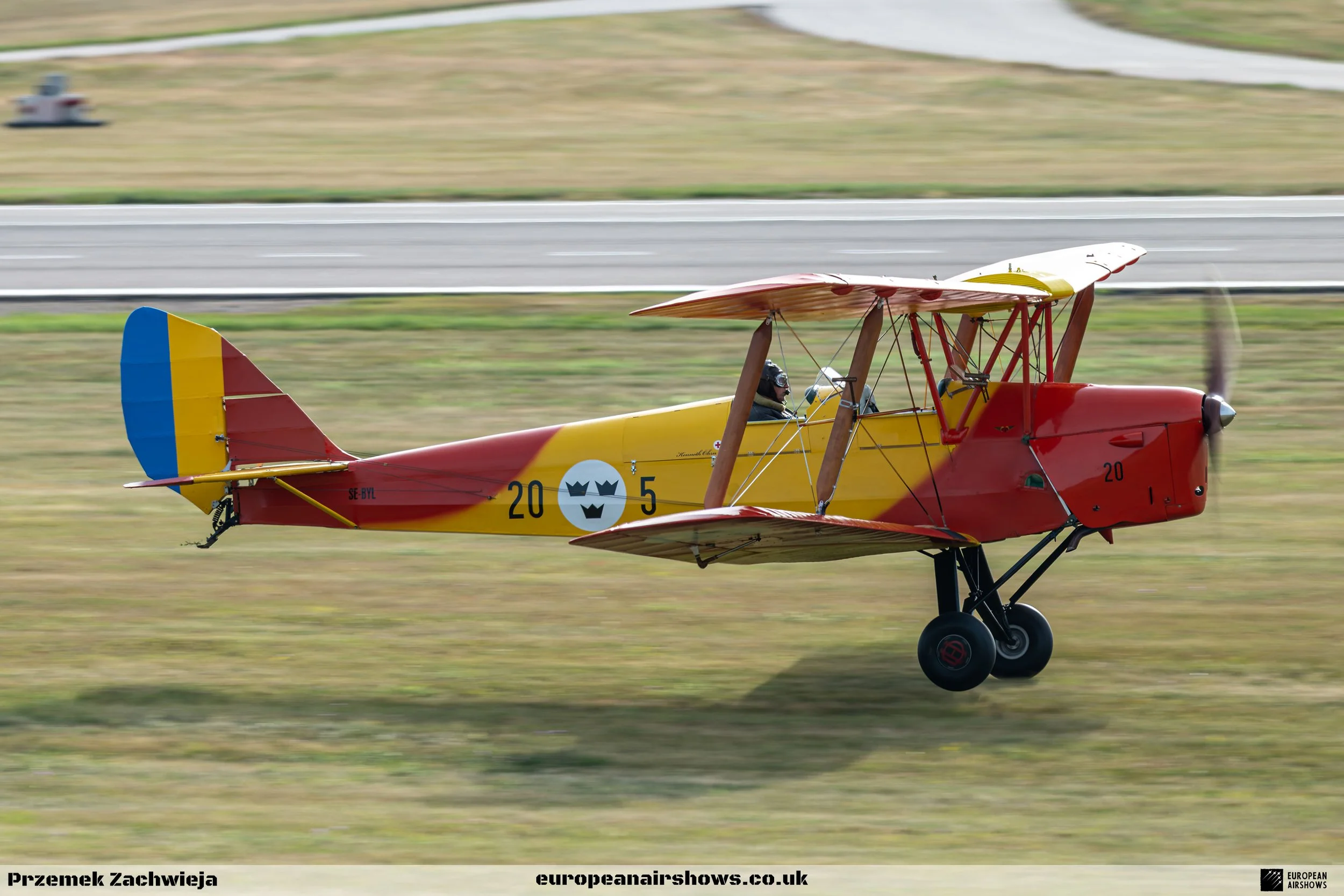
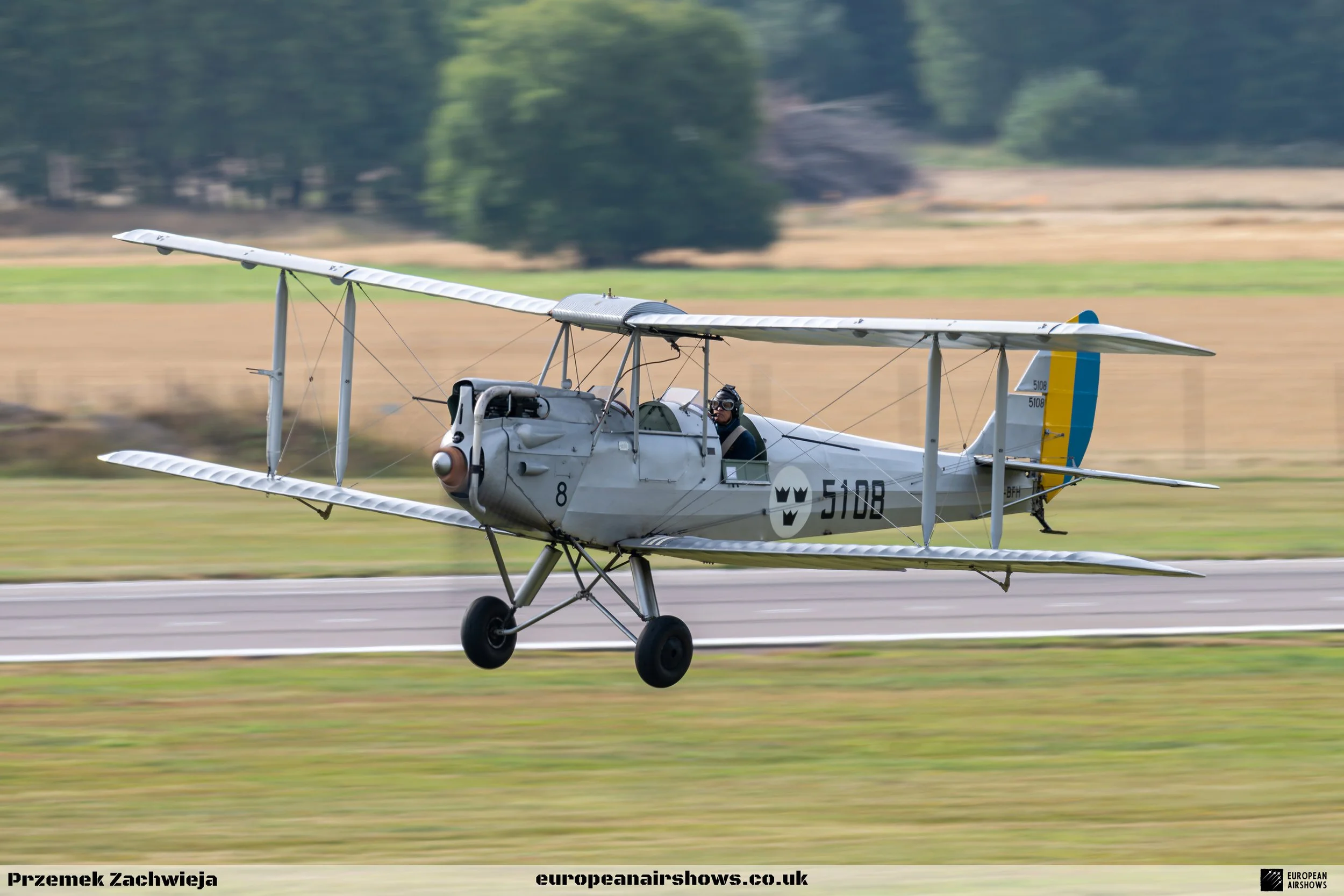
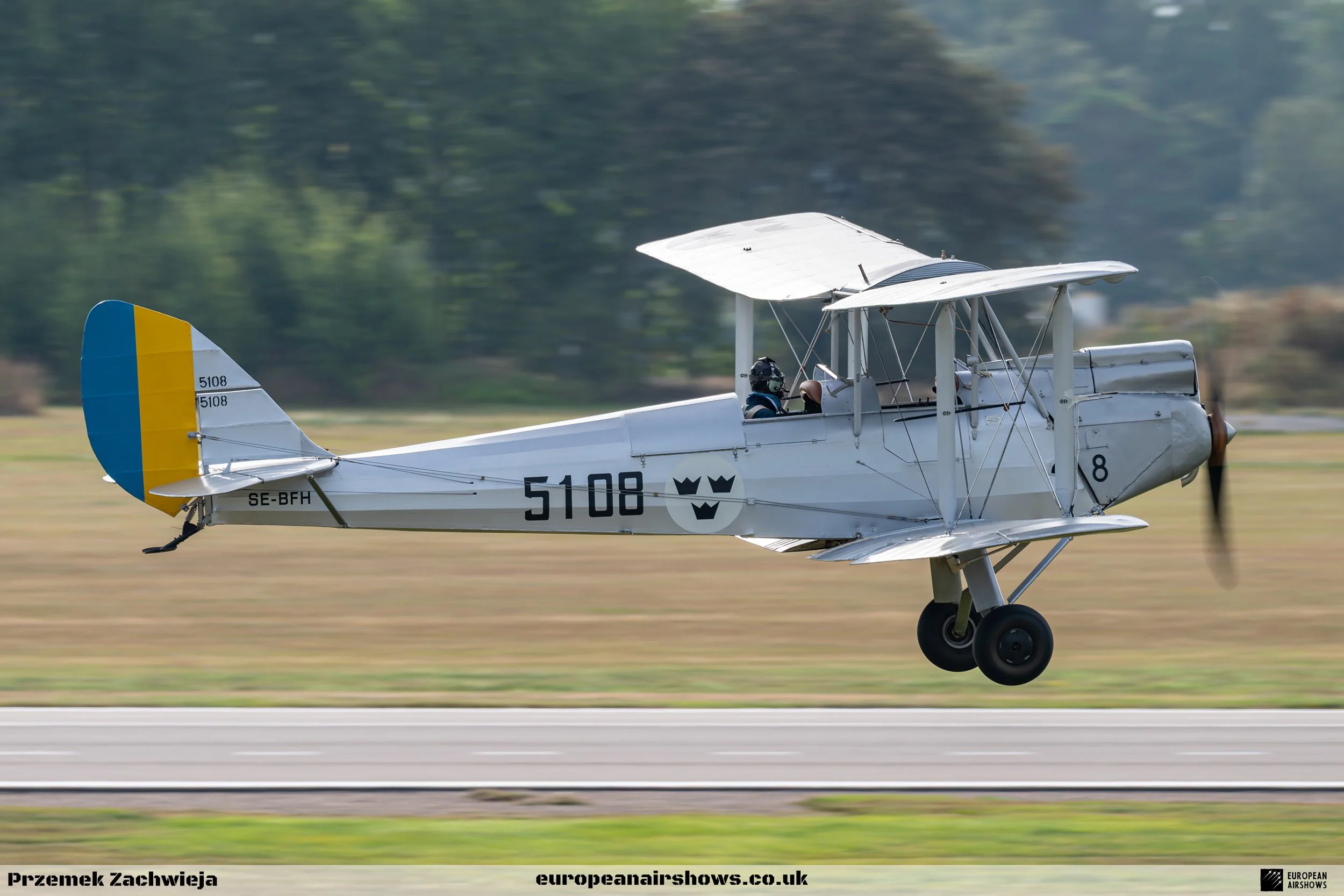
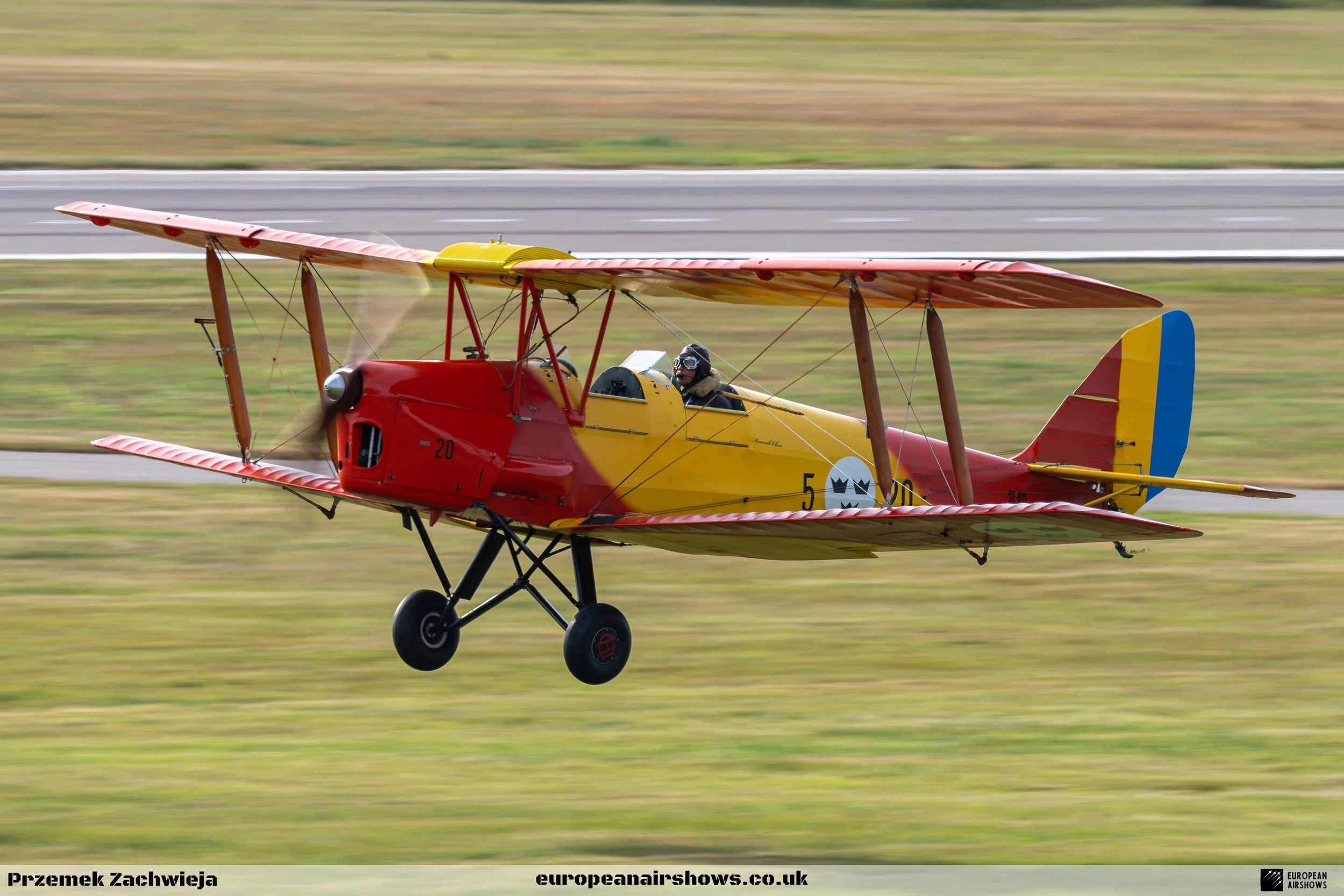
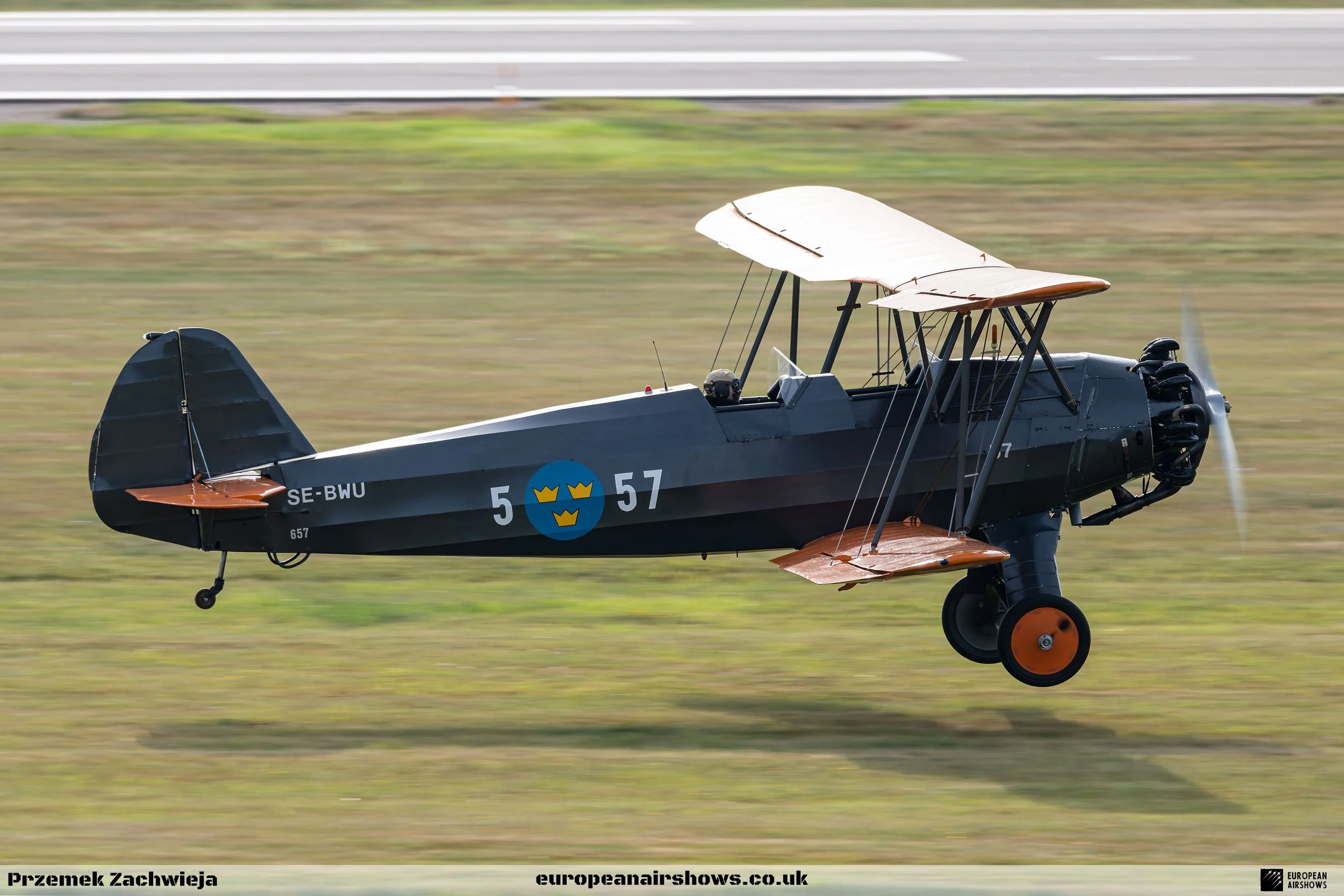
Helicopters generally used the runway axis directly in front of the crowd, as did a handful of slower fixed-wing aircraft. Each close pass showed what the rest of the airshow was missing. The best proof came from four de Havilland DH.82 Tiger Moths in Swedish SK 11 markings. They were neither fast nor loud, but for many people they became the highlight because they flew close enough to be watched, heard and photographed properly. There was something both delightful and slightly absurd about four fabric biplanes upstaging frontline fighters simply by performing where the audience could see them.
It was hardly surprising that many people tried to watch from outside the base, even though finding a usable position was not easy and police and military police were actively moving spectators on from some roadsides and fields. Inside the fence, the hospitality was excellent. Too often, the flying still appeared to be aimed somewhere else.
How Sweden learned to fly
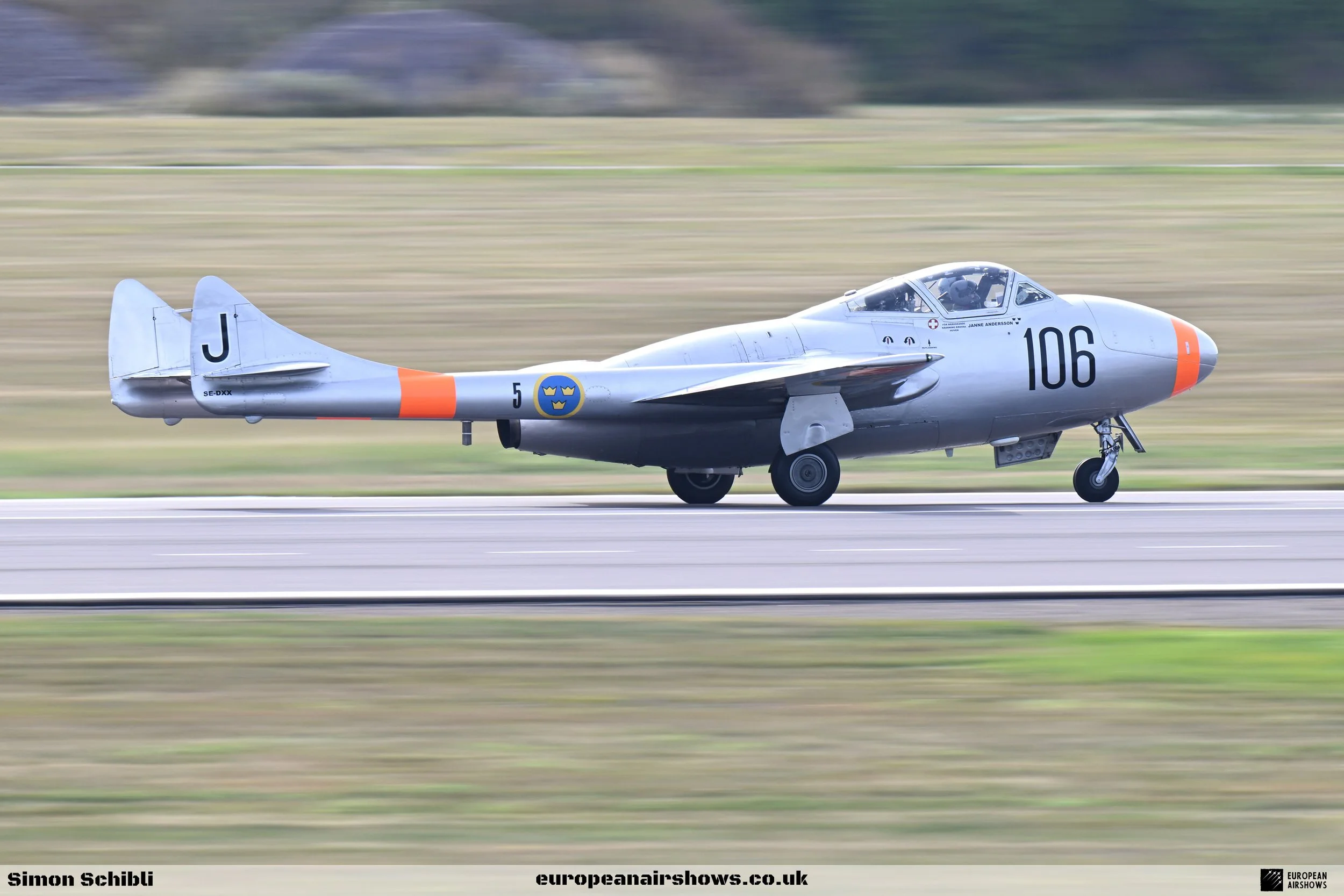
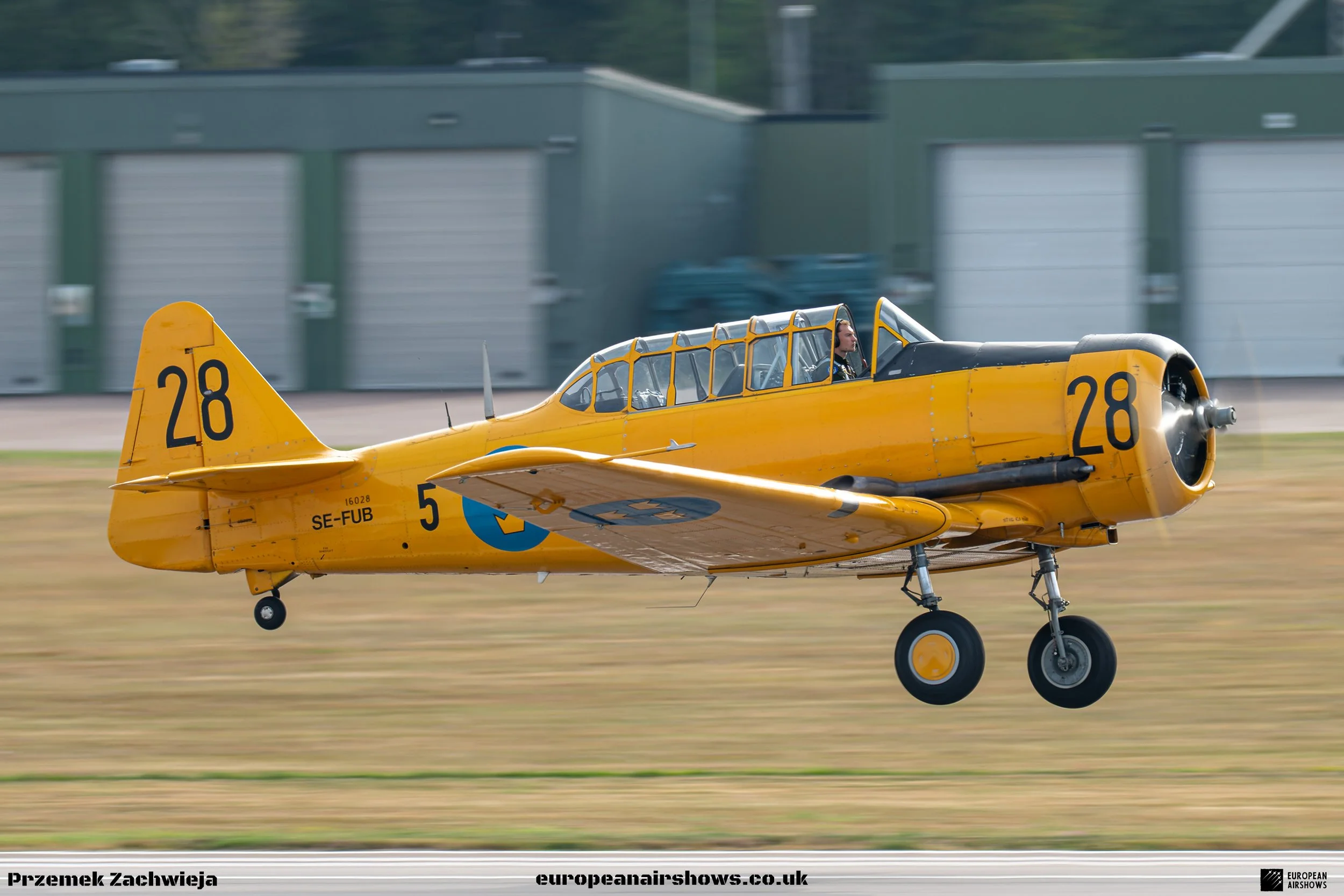
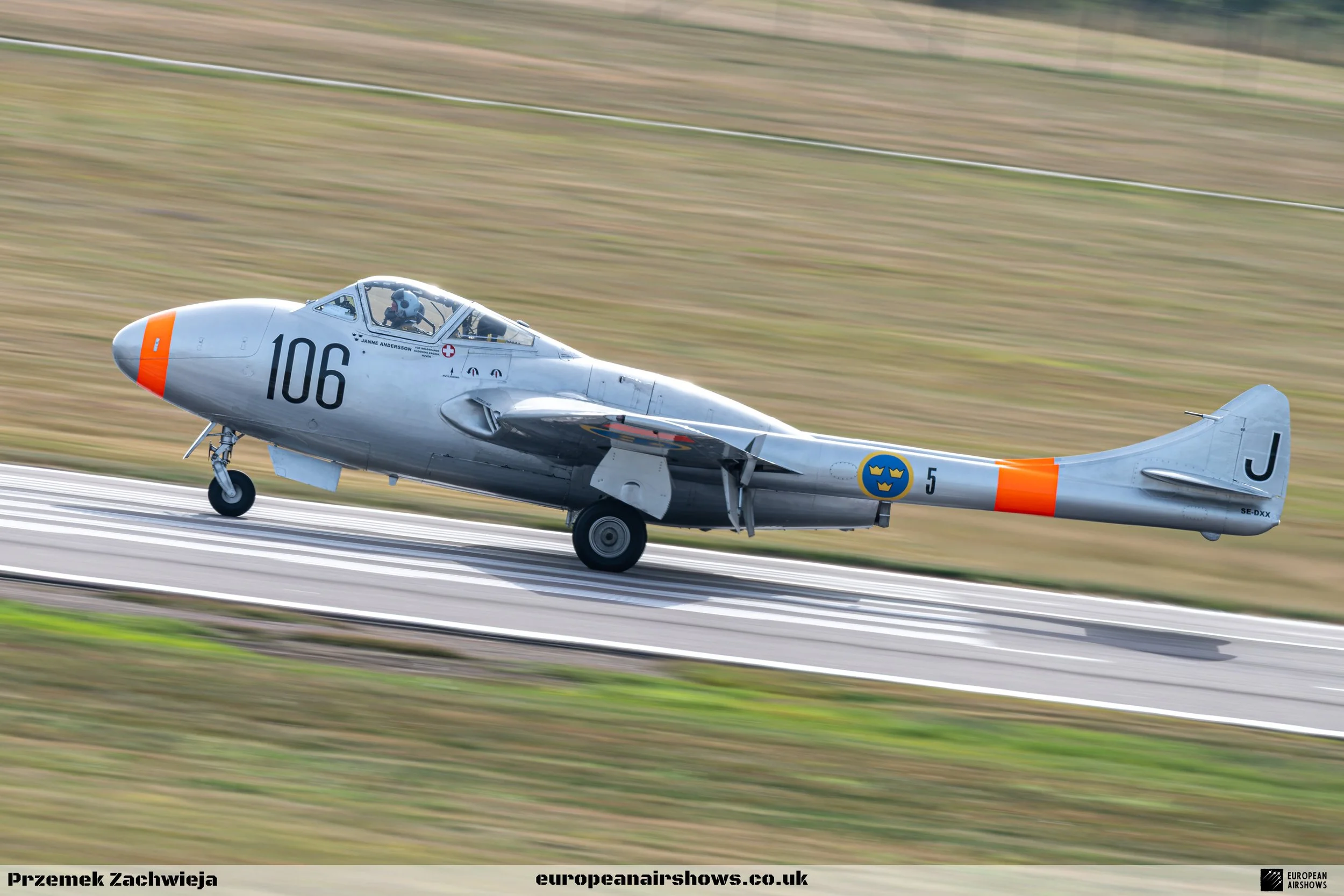
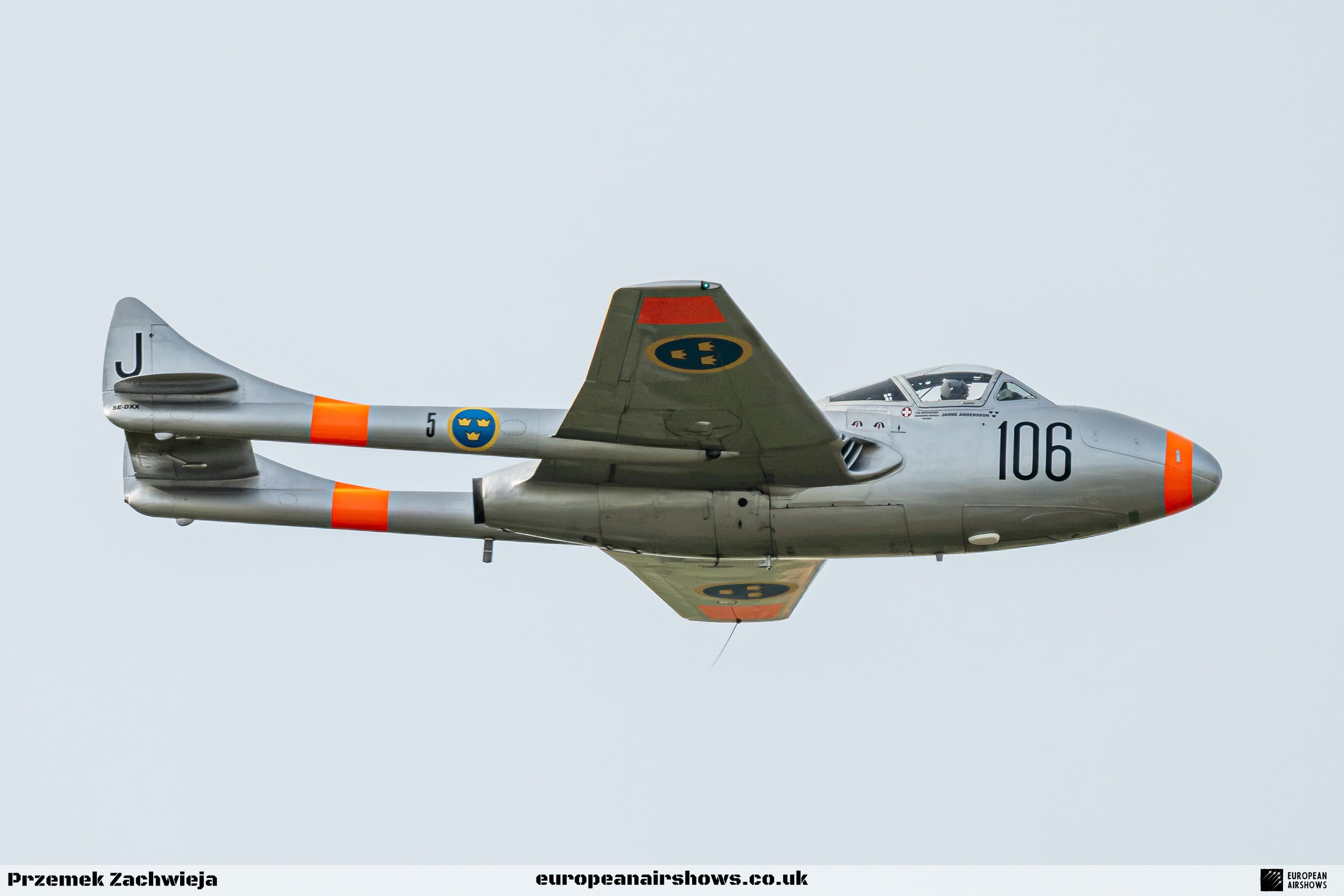
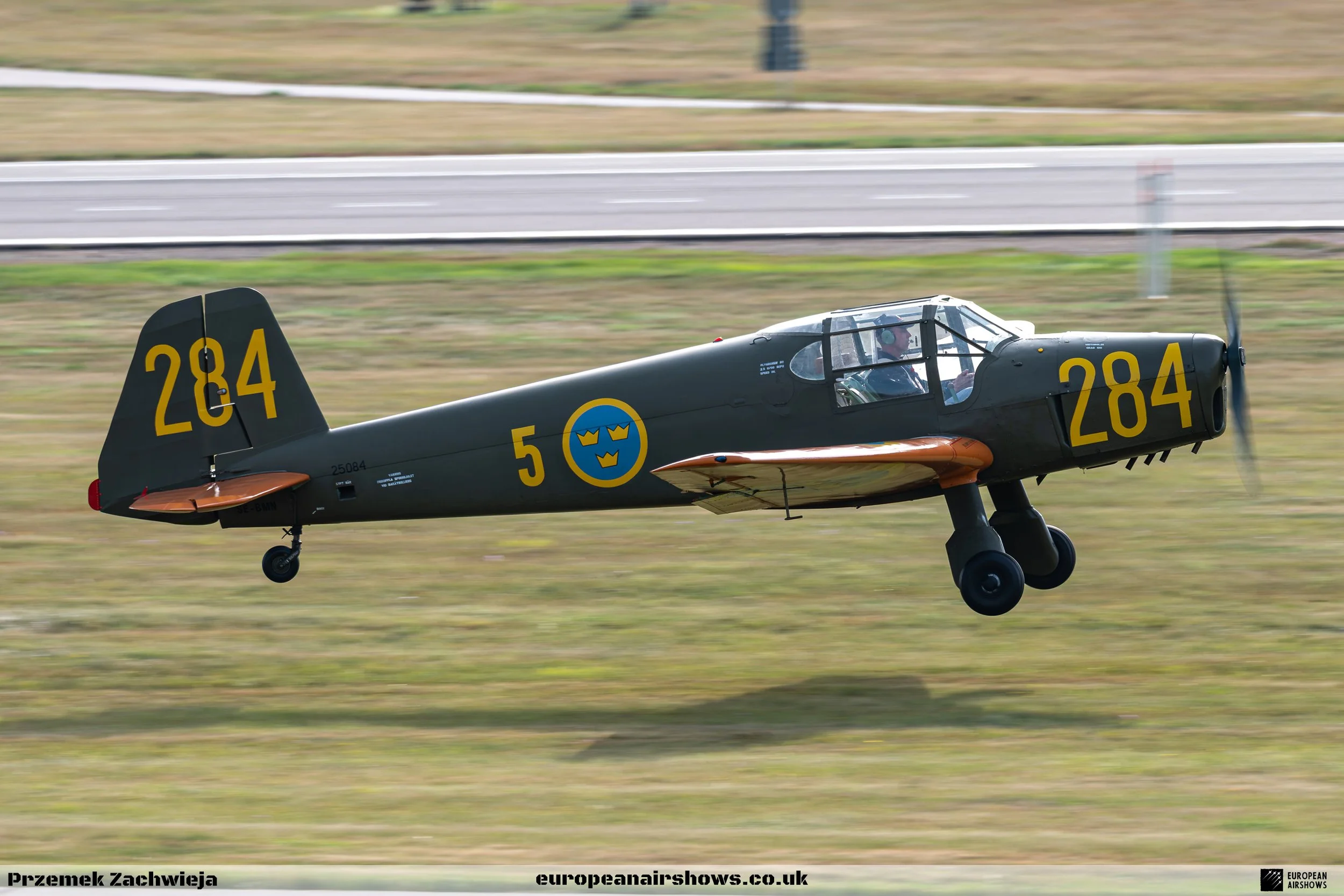
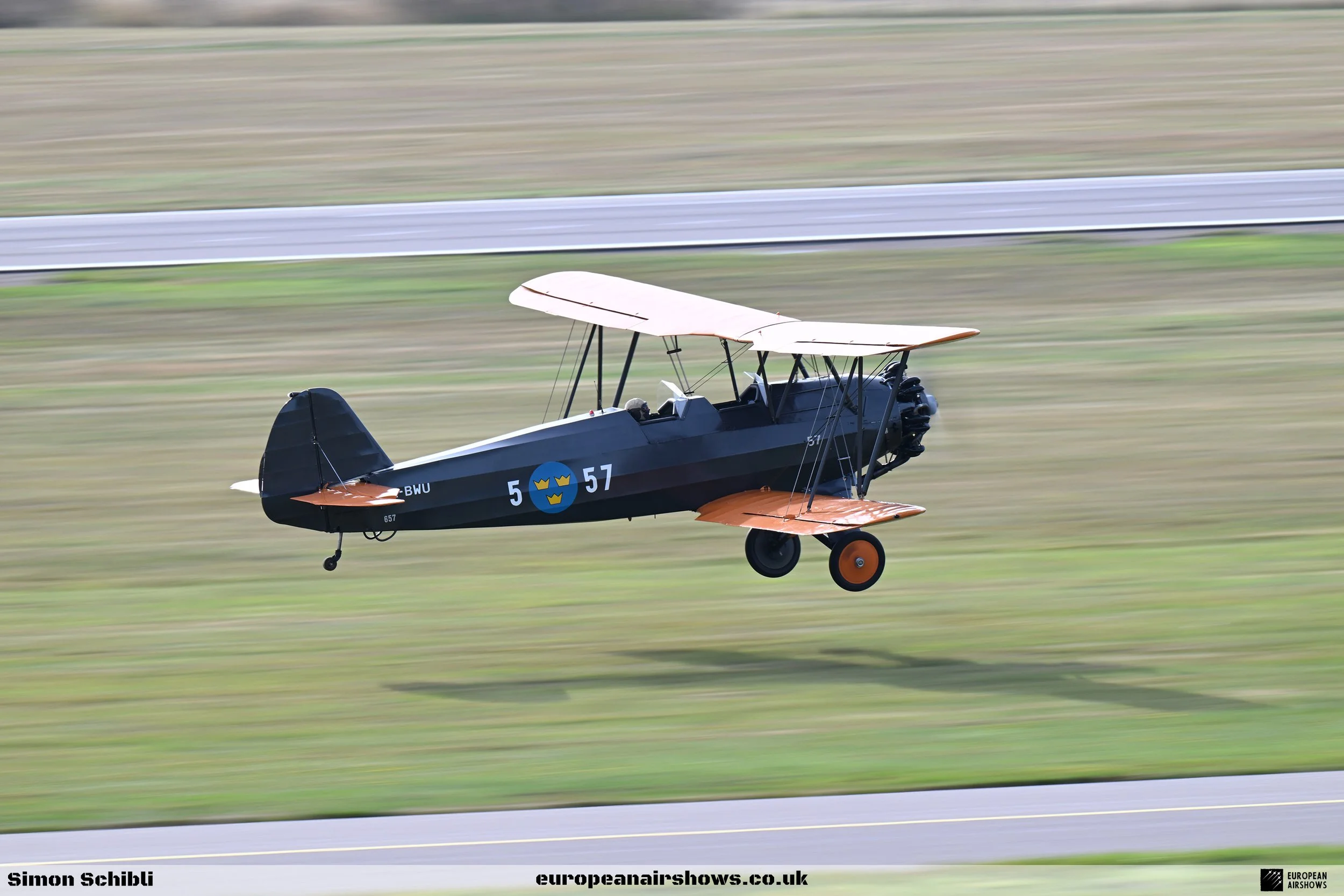
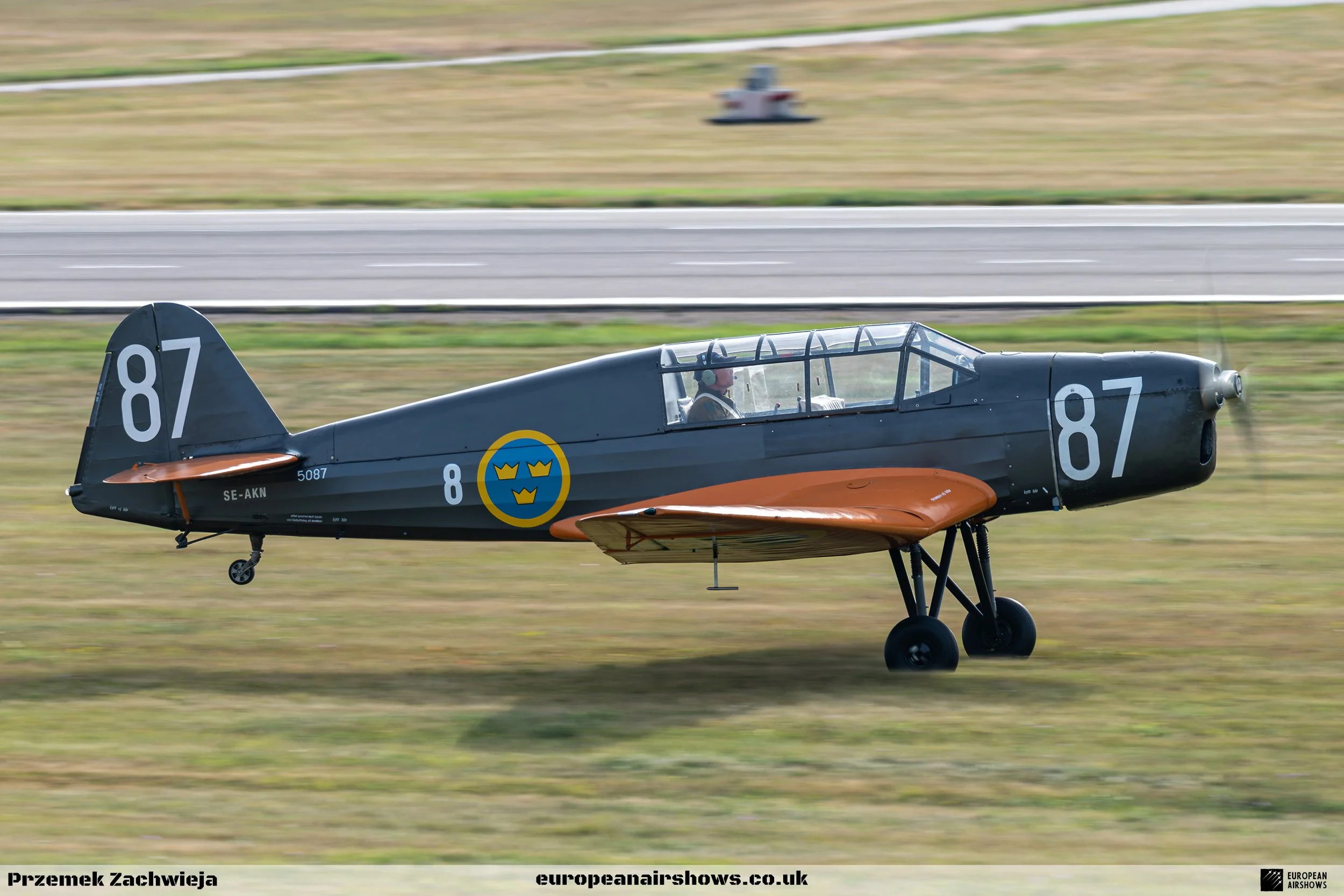
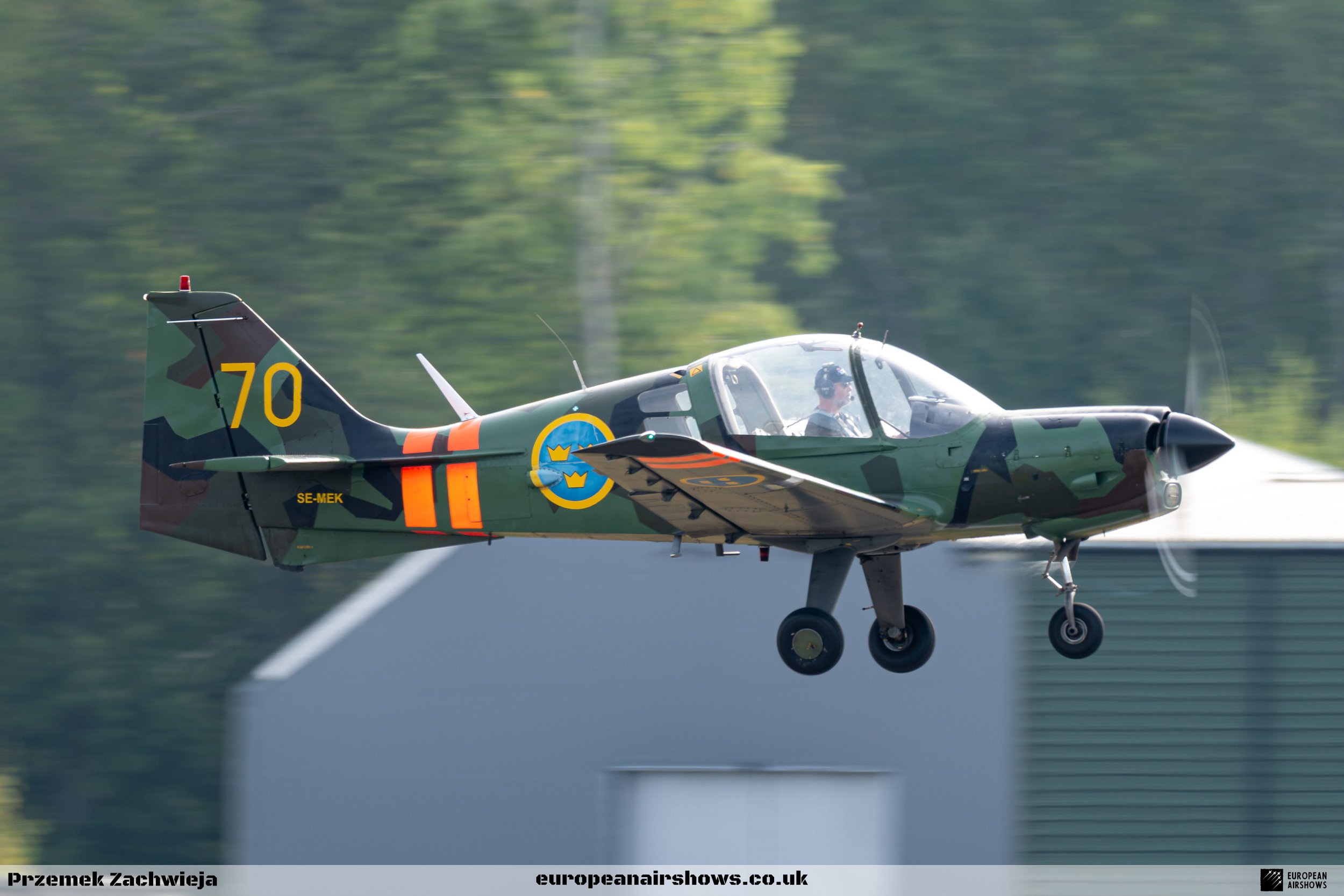
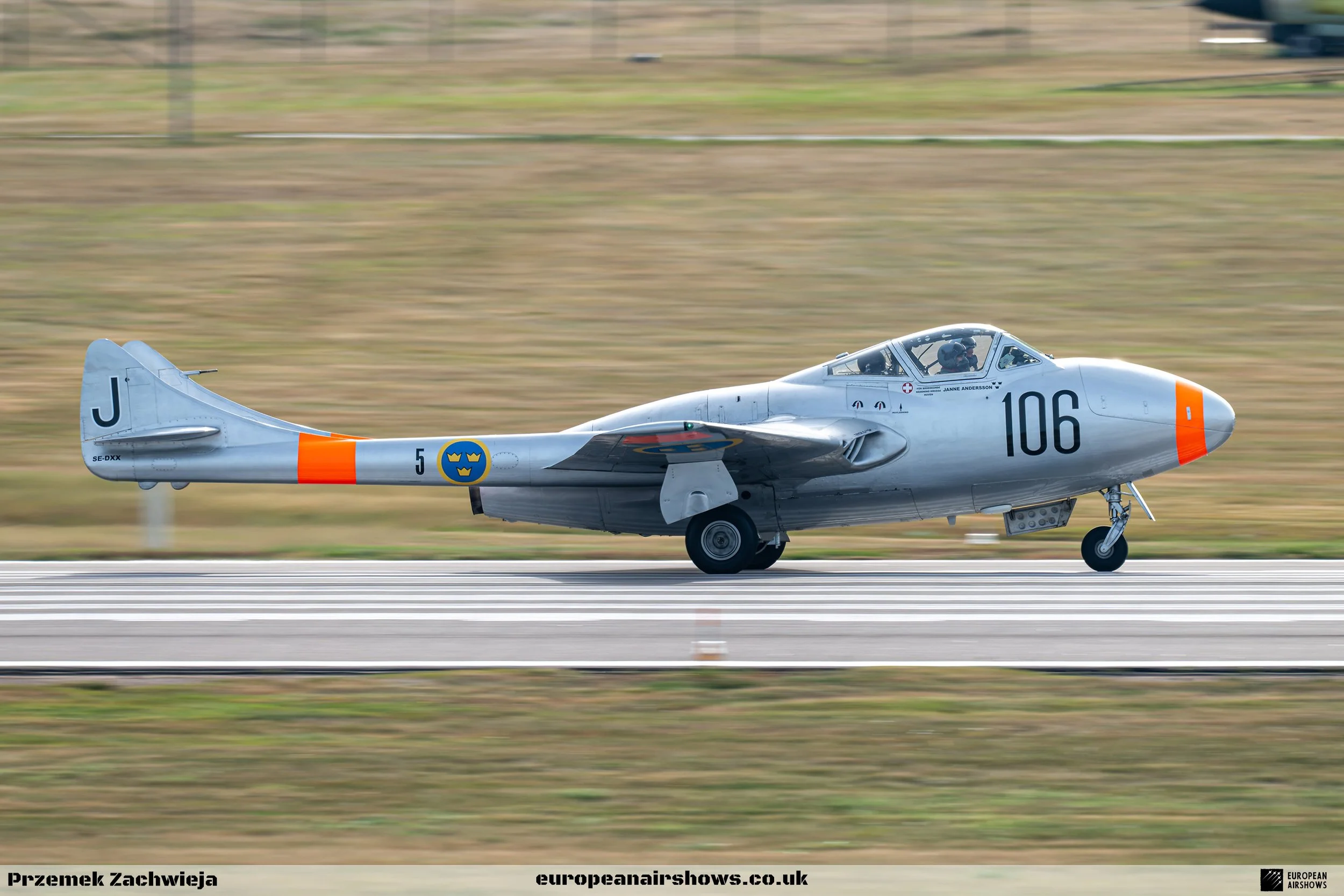
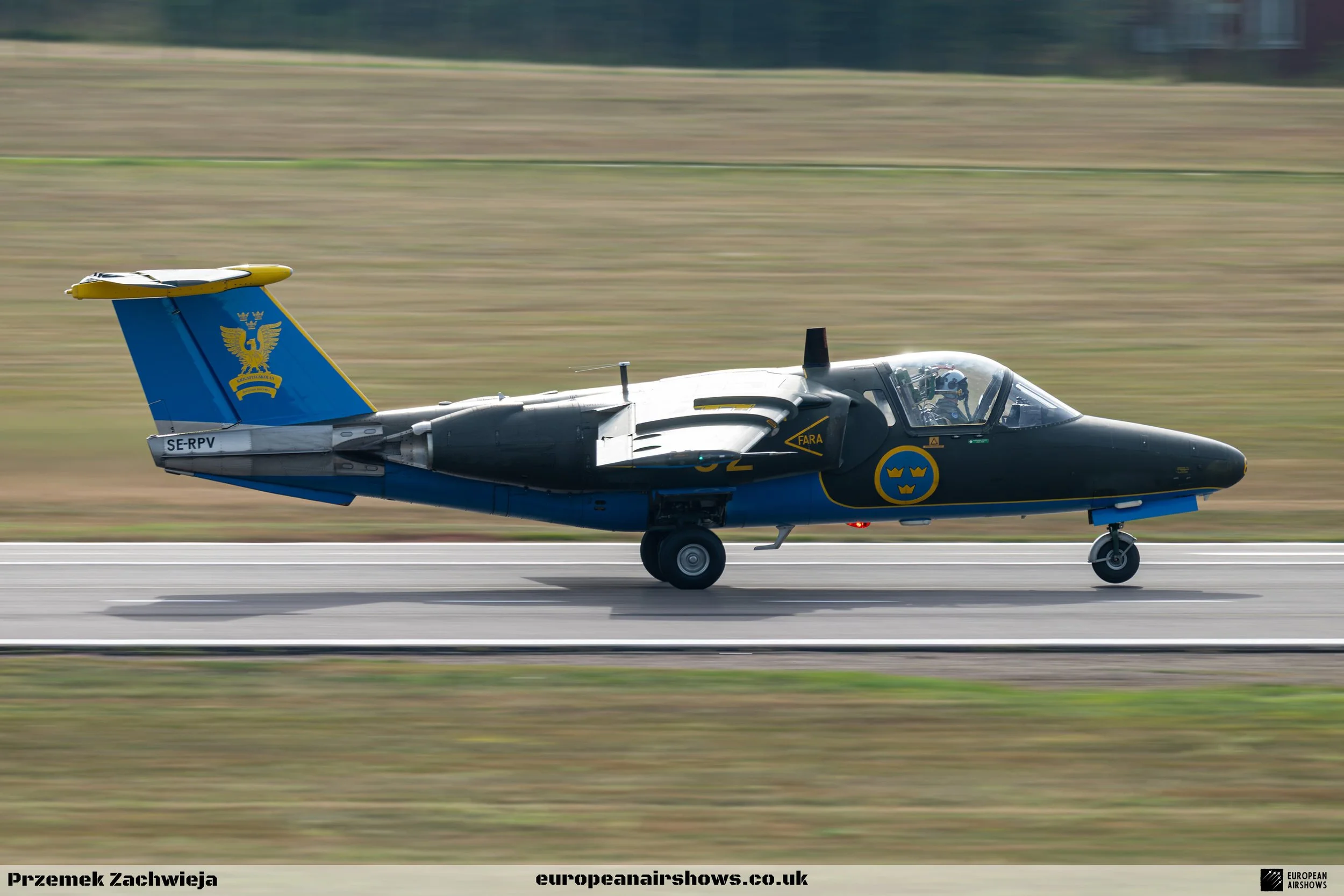
The historic trainer parade was a clever way to open the flying story, although “parade” is important: the aircraft passed in a procession rather than as one tight formation. To accommodate their very different speeds, they were organised into three groups. The first comprised the de Havilland DH.60T Moth Trainer (SK 9), de Havilland DH.82 Tiger Moth (SK 11), Focke-Wulf Fw 44J Stieglitz (SK 12), Klemm Kl 35 (SK 15) and Bücker Bü 181 Bestmann (SK 25). The second brought together the Grob G 120TP (SK 40), Saab 91 Safir (SK 50), Scottish Aviation Bulldog (SK 61) and Noorduyn AT-16 Harvard (SK 16). The de Havilland Vampire (SK 28) and Saab 105 (SK 60) formed the final, faster group.
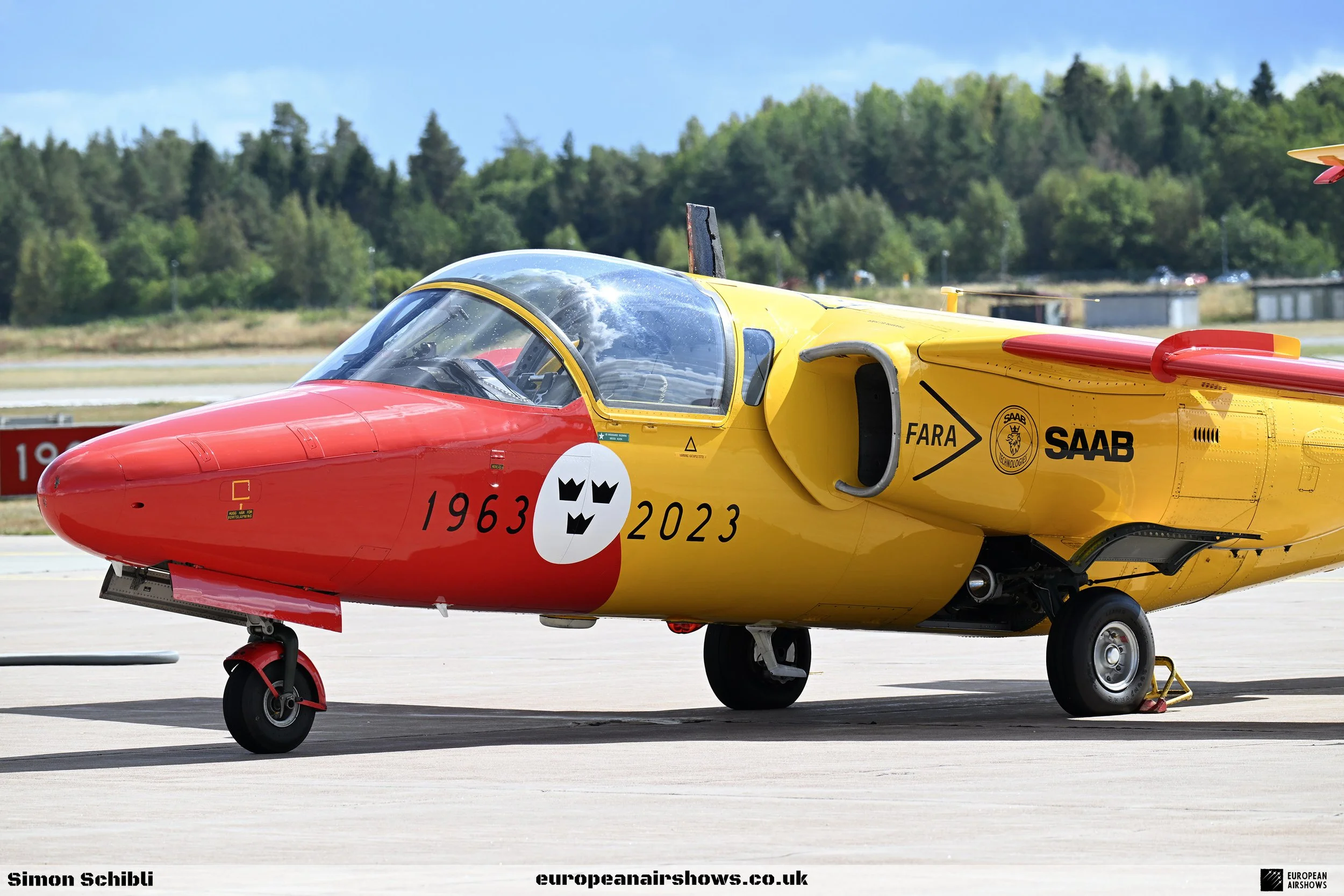
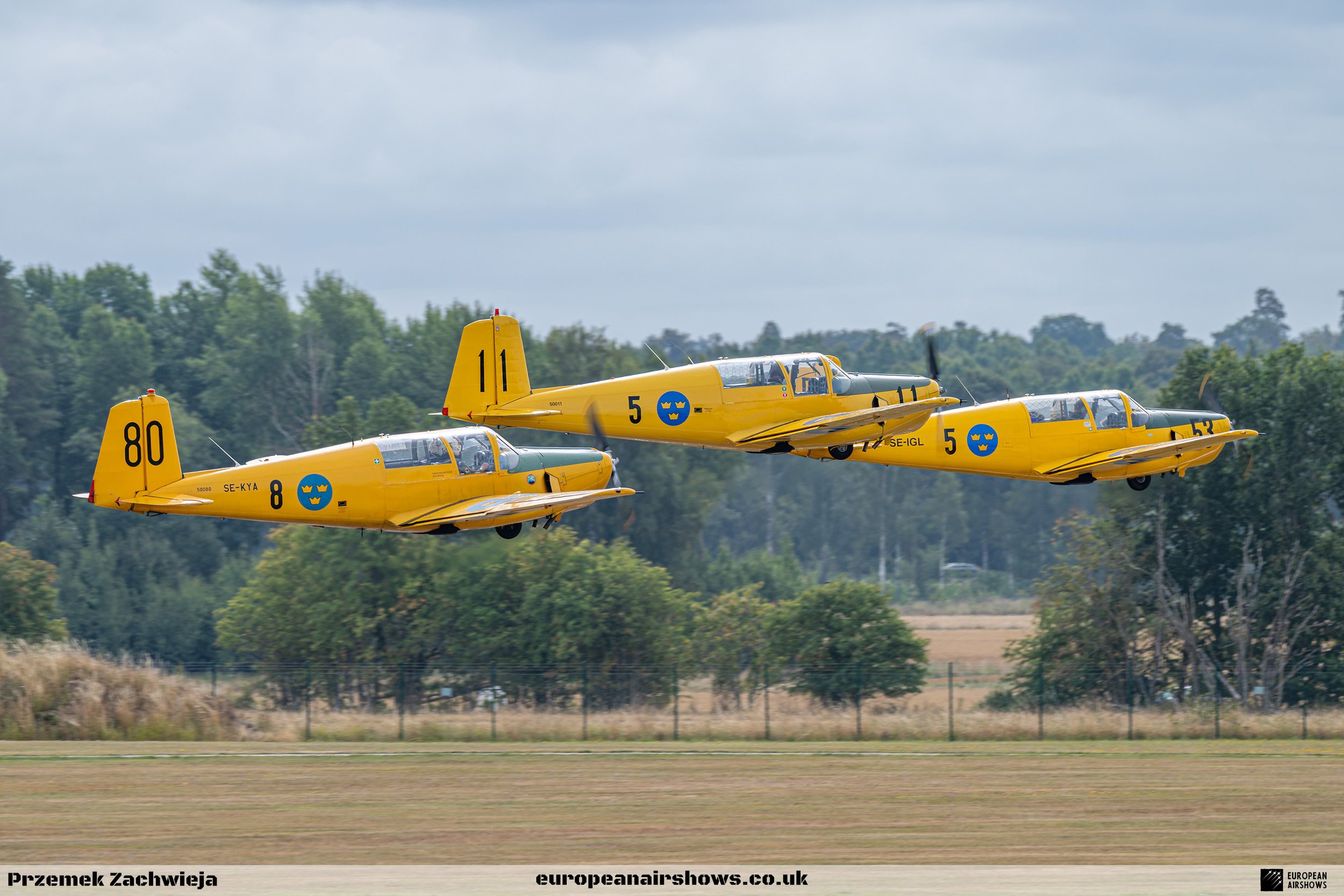
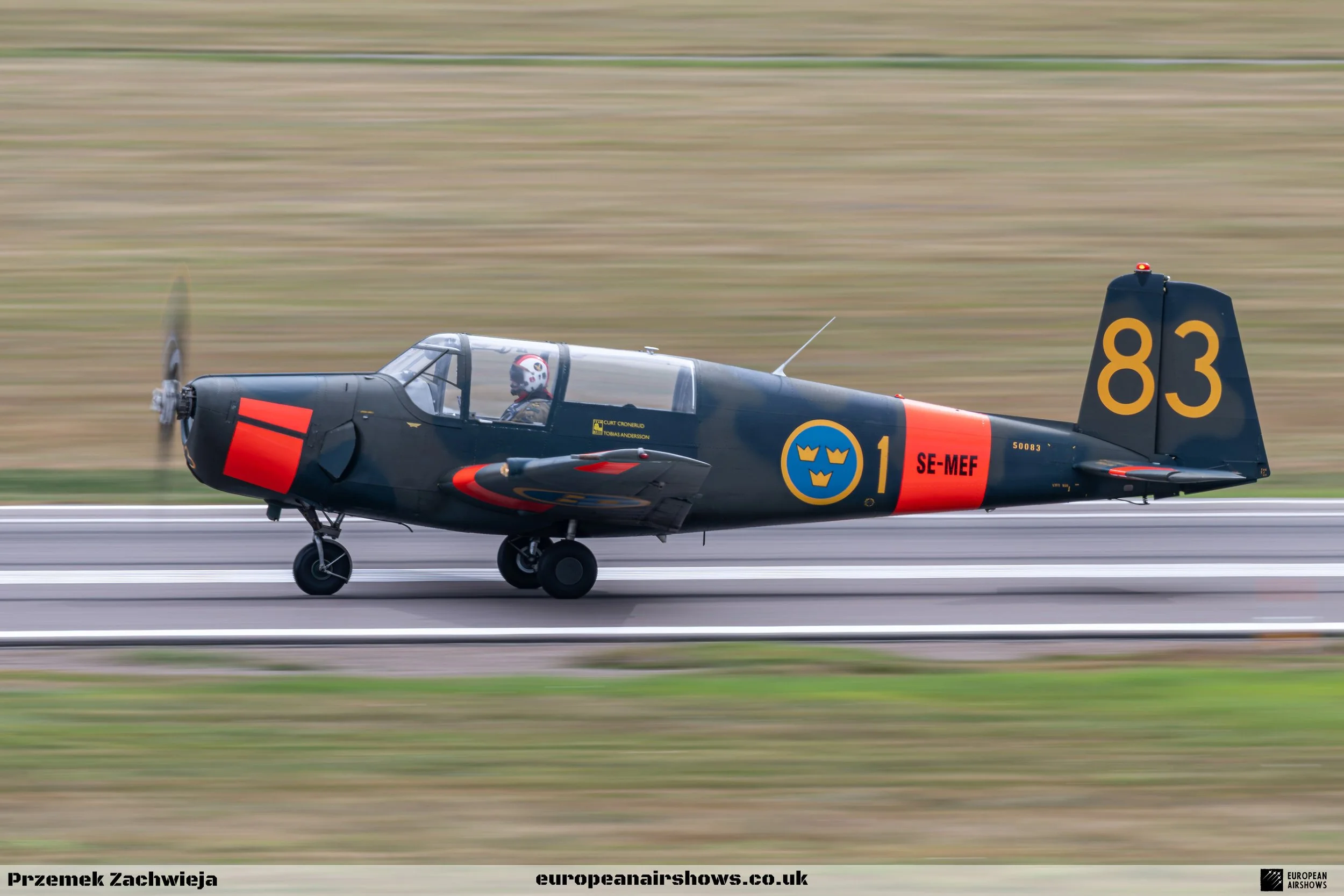
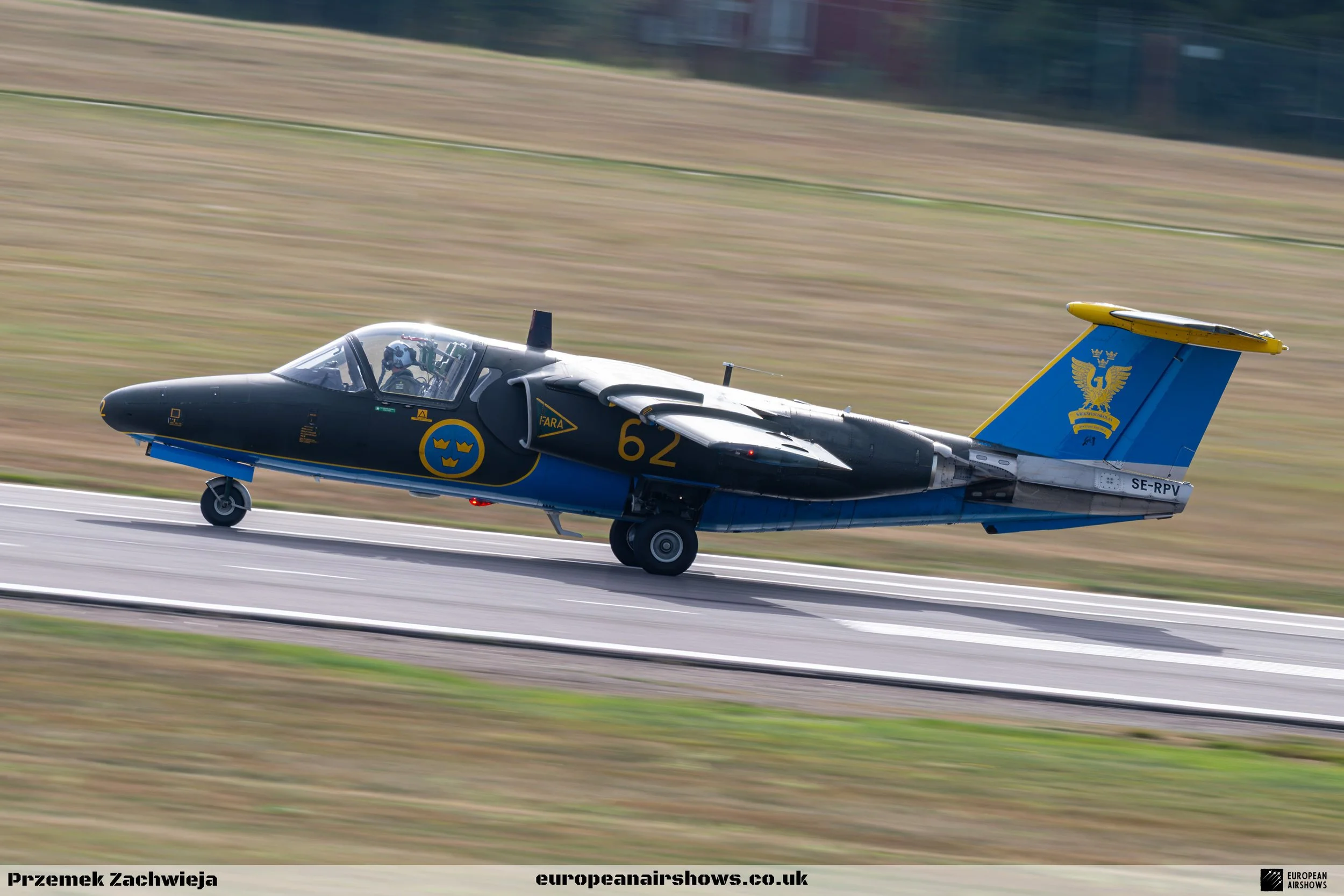
Many of those types were not merely Swedish trainers; they were Malmen aircraft. F 3 operated the SK 9, SK 11, SK 12, SK 16 and SK 50 here, and received the Vampire as its first jet fighter in 1950. Much later, the Flying School brought the SK 60 to Malmen. The little Saab trained Swedish military pilots for 57 years before retiring in 2024, leaving the SK 40 to begin the next chapter.
The Vampire’s only place in the programme was this opening trainer-era procession; it was not part of the later historic Saab jet formation. It completed its pass on Saturday, but its weekend ended dramatically during Sunday’s take-off roll when the canopy detached. The pilot aborted safely and the programme paused while debris was cleared from the runway. Understandably, the Vampire took no further part.
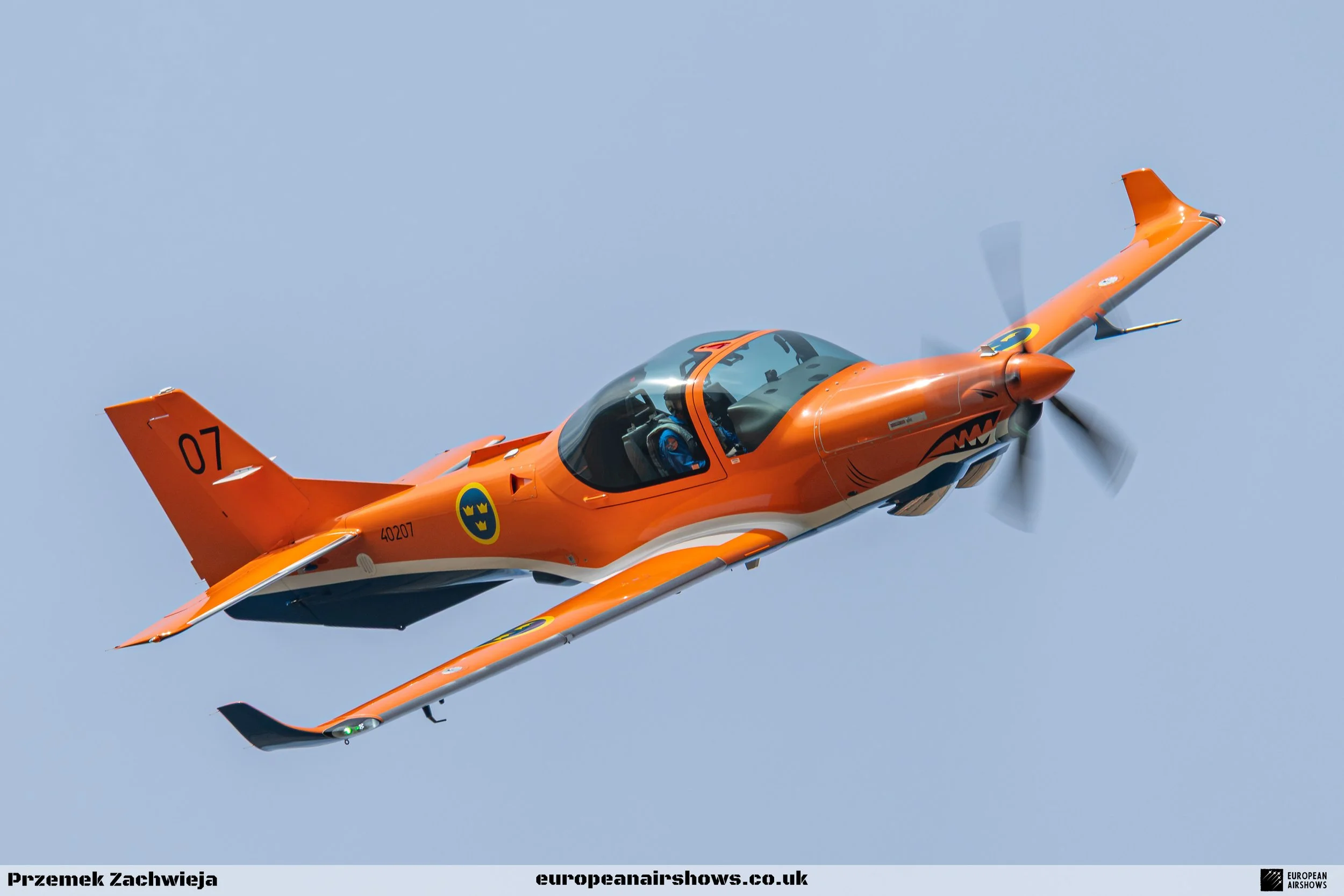
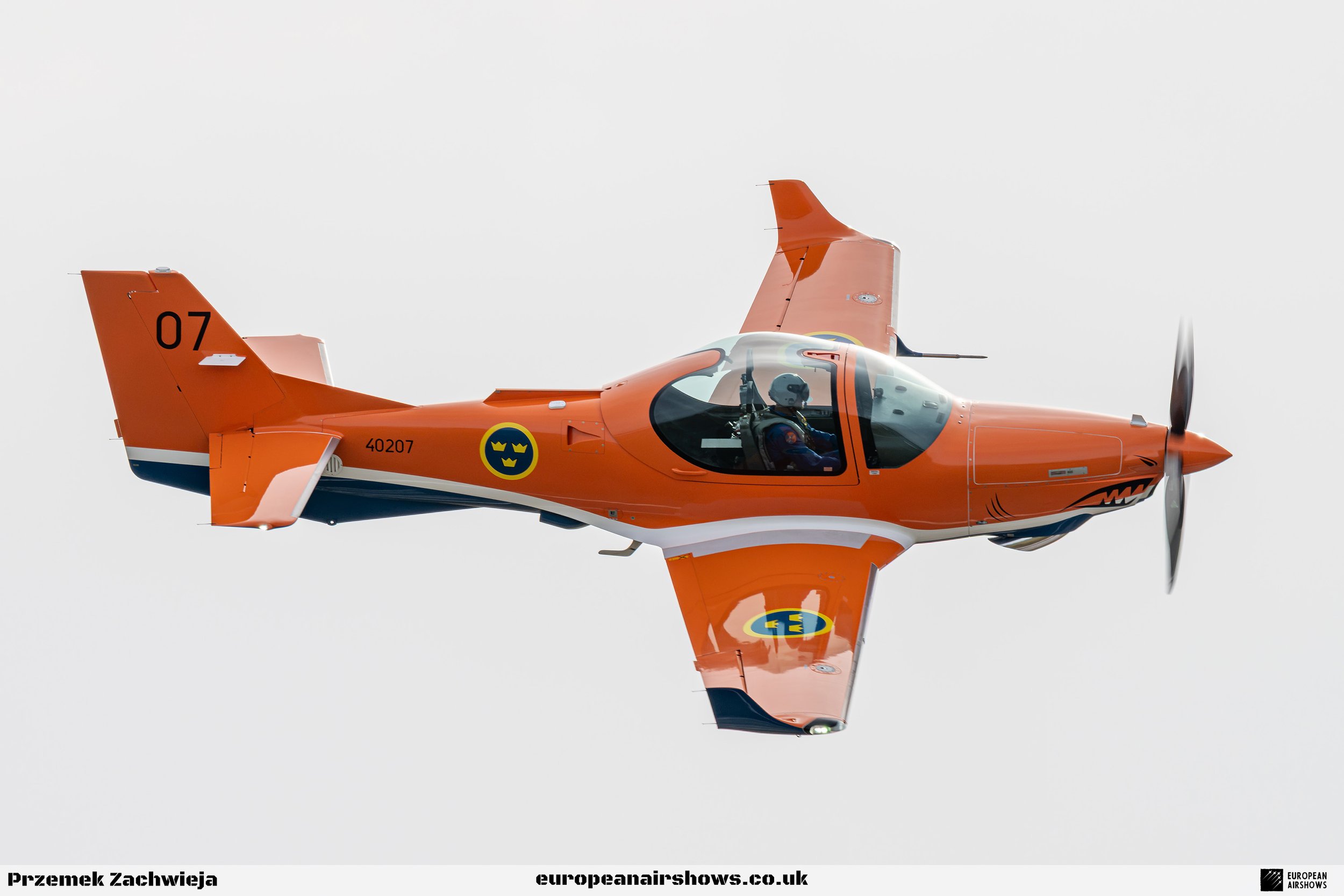
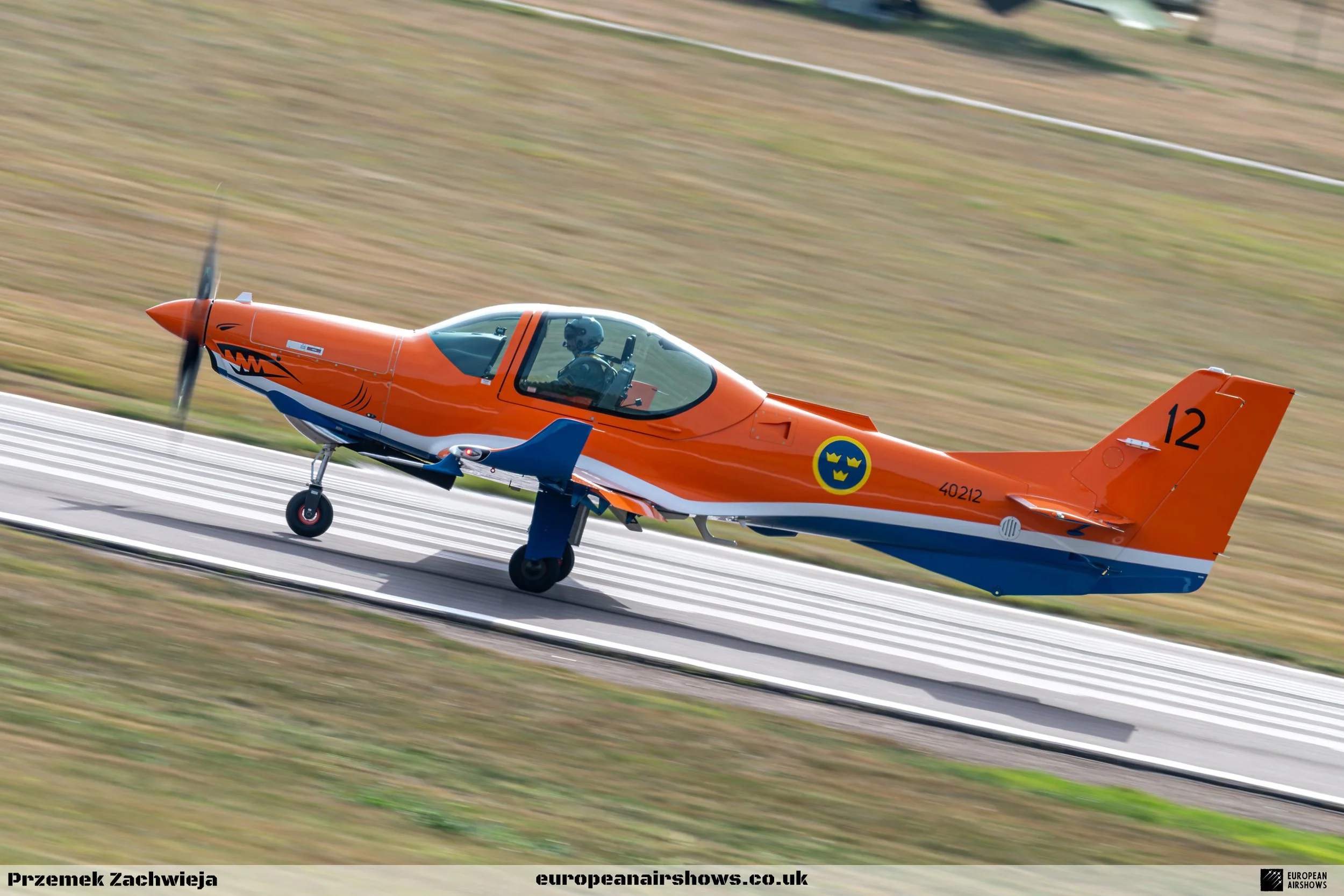
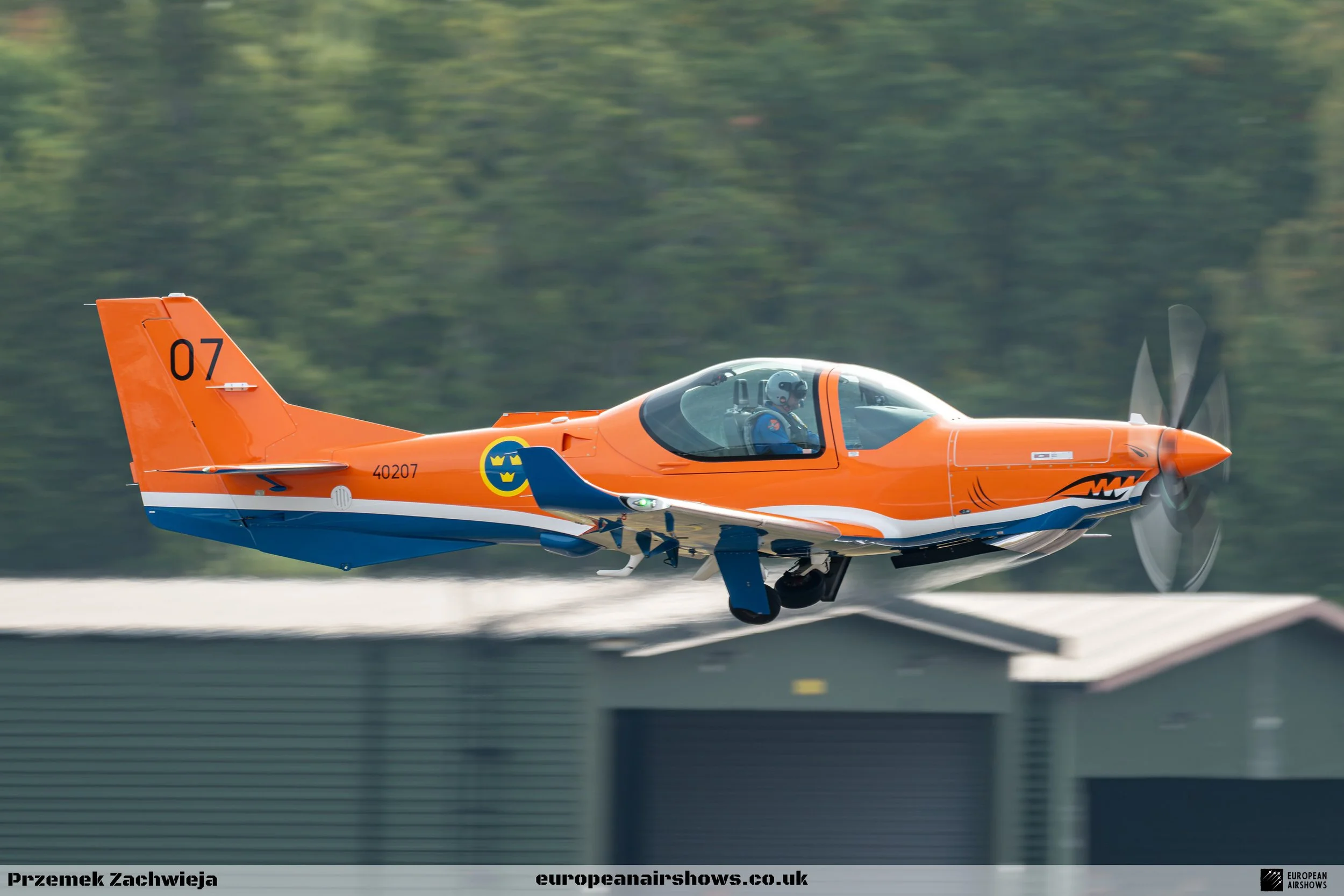
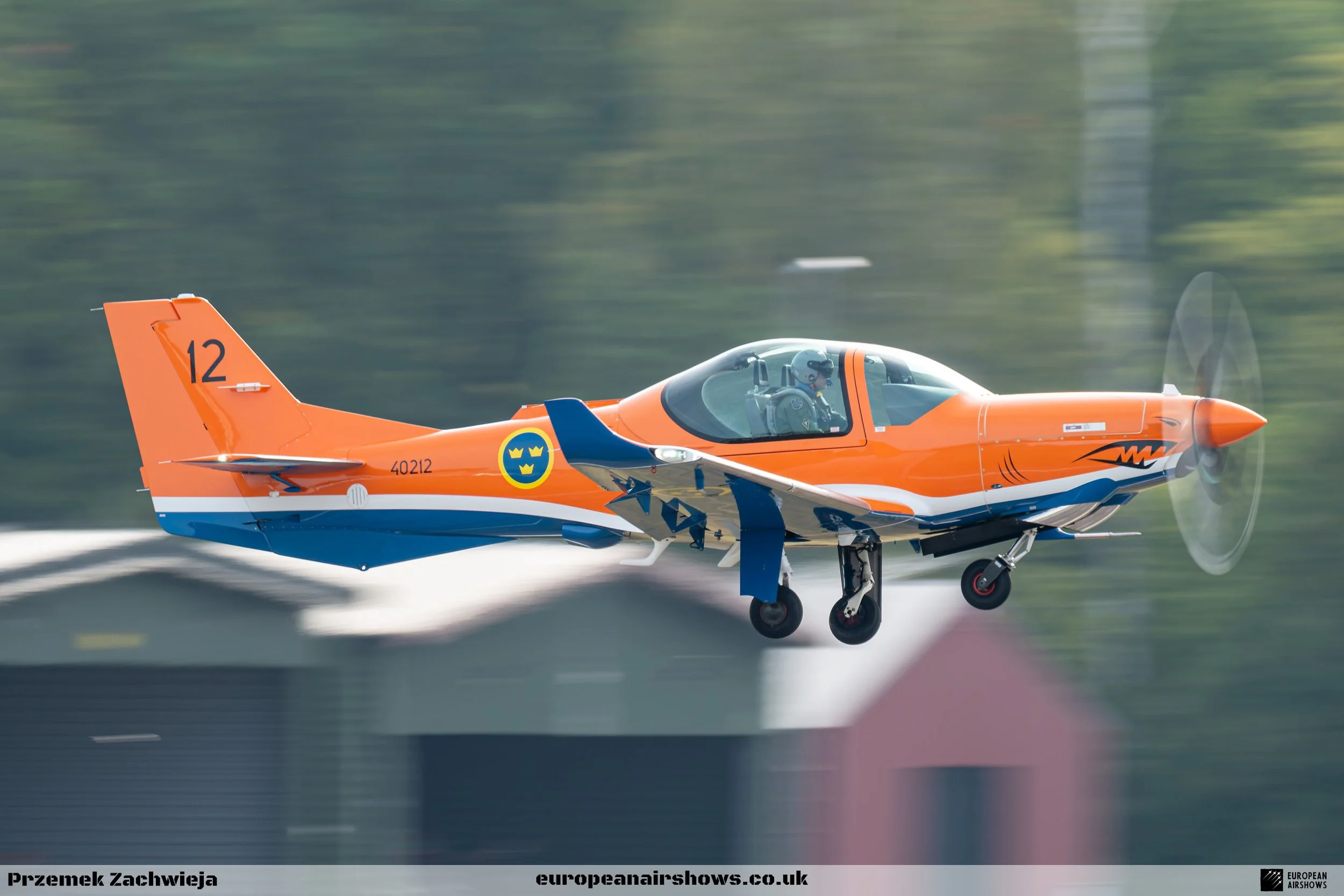
Several of the earlier trainers returned in a much better presentation. The SK 9, SK 12, SK 15 and SK 25 flew formation passes, low runs and individual aerobatics along the runway-facing axis. The four Tiger Moths gave the weekend’s crowd-winning close display, while the current Swedish Air Force’s Grob G 120TP gave a neat solo which showed far more agility than its basic-training job might suggest.
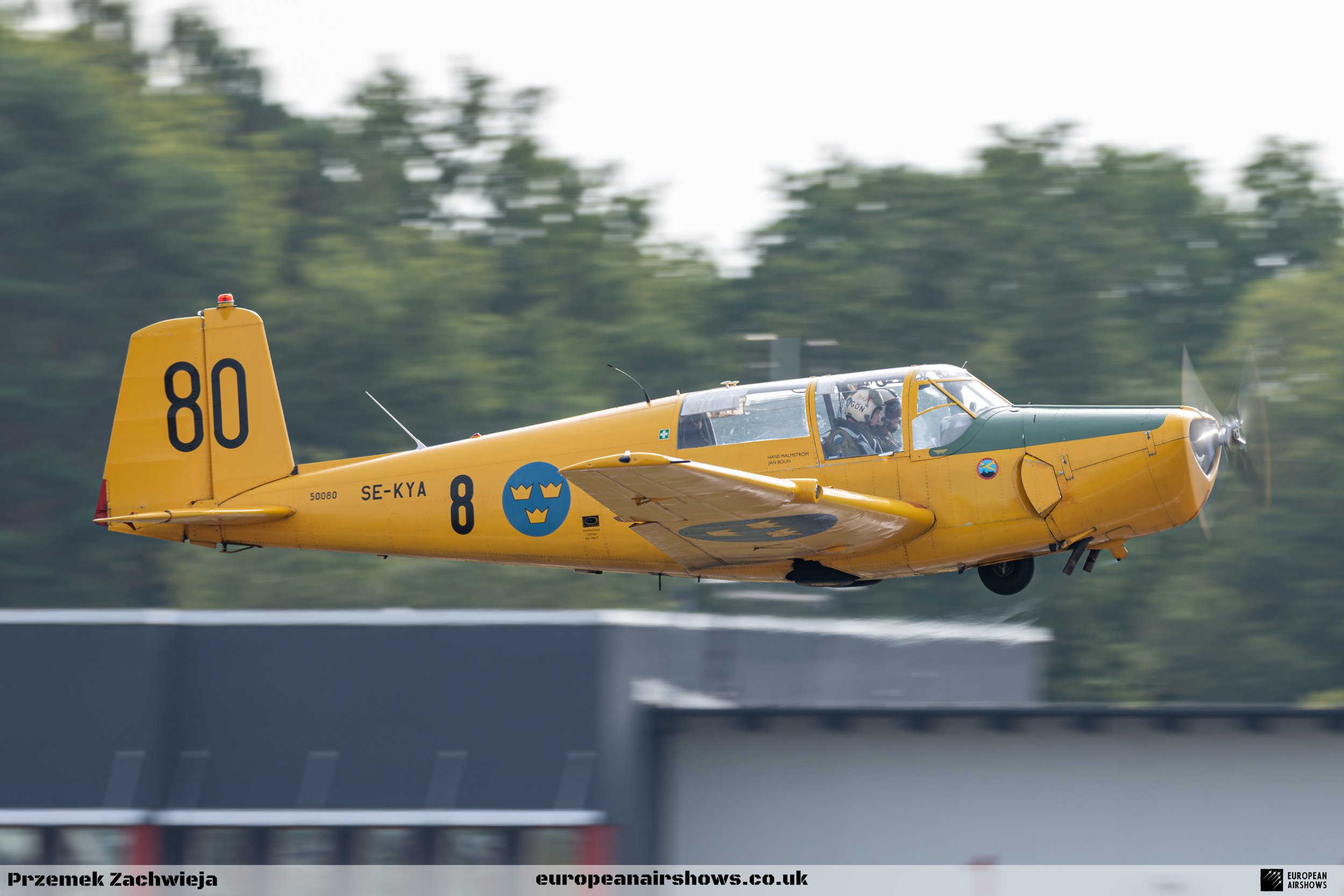
Team 50 carried that story into the Saab era with two Saab 91 Safirs, mixing beautifully tidy formation work with solo aerobatics. Designed and built in Linköping, used throughout the Swedish training system and once operated by F 3, the Safir could not have belonged more completely to either the anniversary or the airfield.
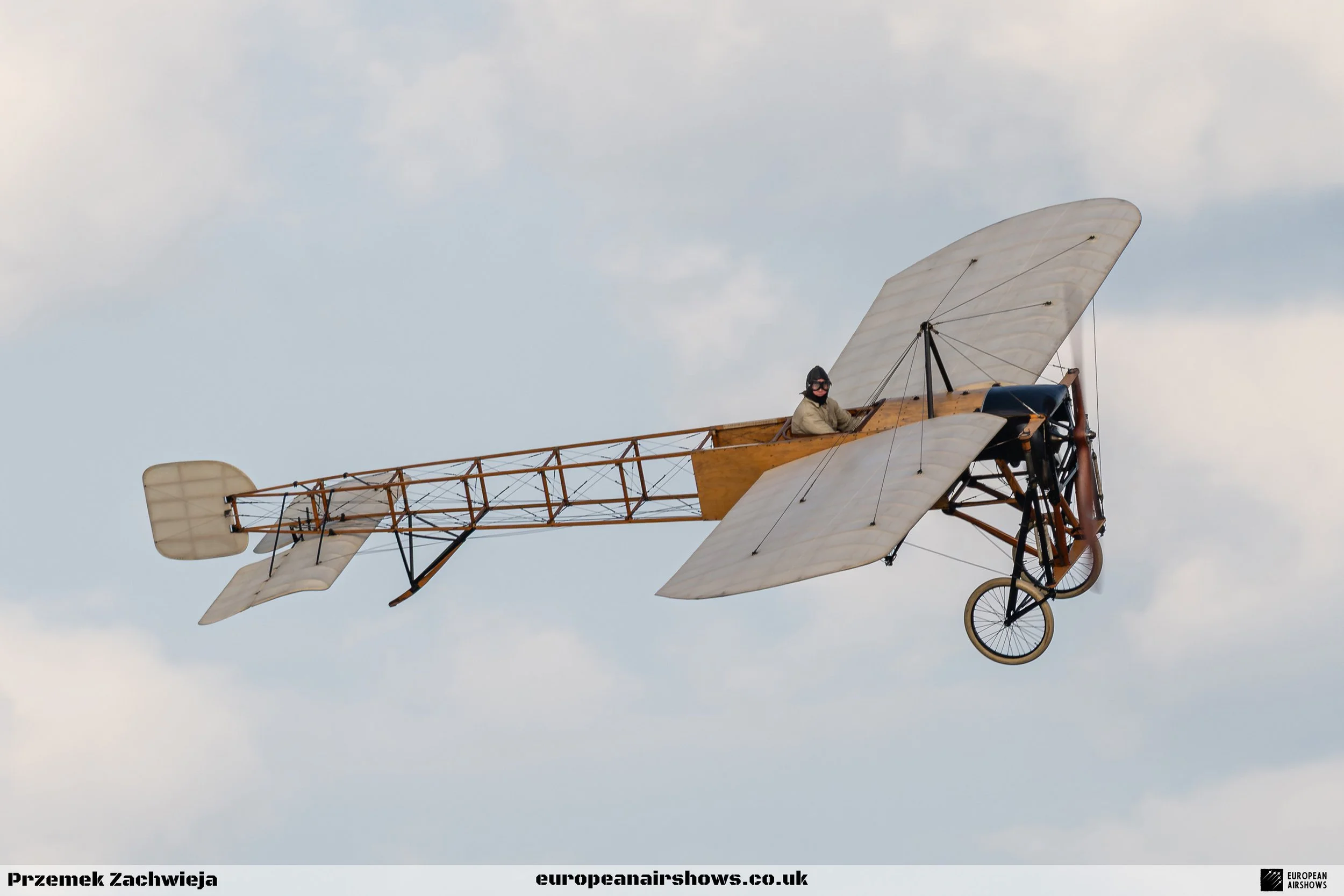
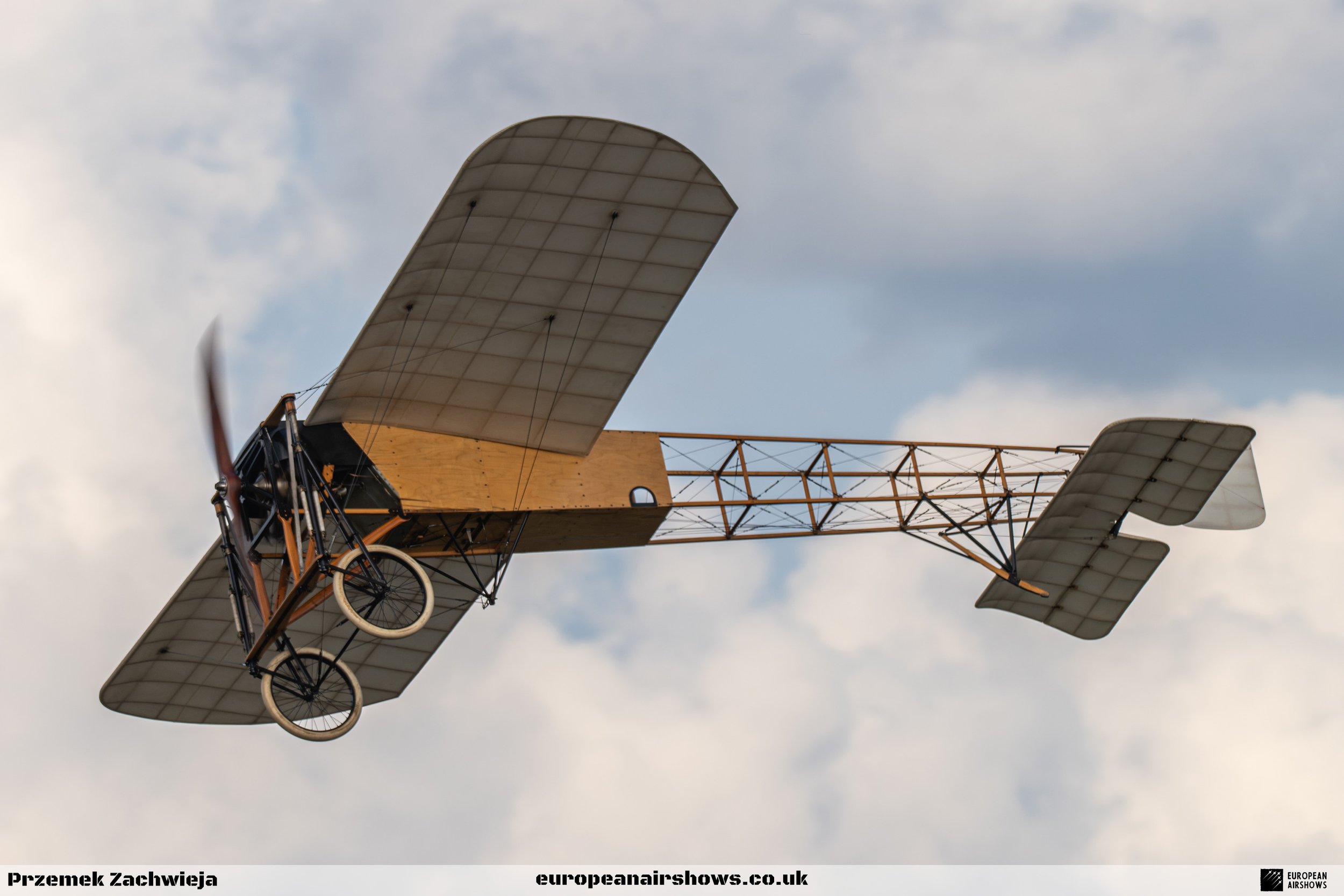
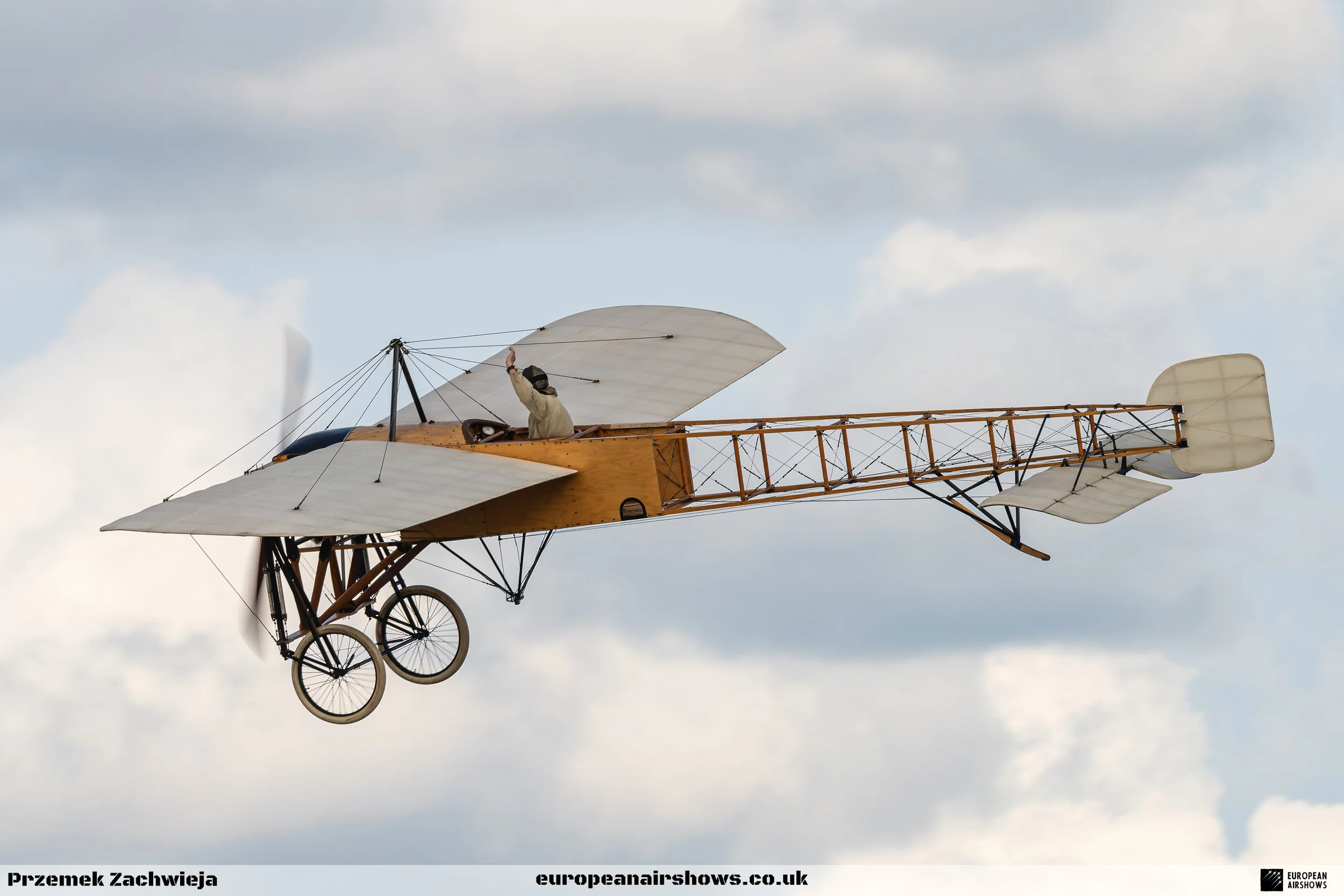
Then Mikael Carlson wound the clock all the way back. His Thulin A is a Swedish-built development of the Blériot XI, the pioneering monoplane in which Louis Blériot crossed the English Channel in 1909. Sweden used the type for training from 1913, and the connection with Malmen is direct: Cederström learned to fly in France on a Blériot before returning home to establish his school here.
Carlson’s aircraft is far more interesting than the word “replica” suggests. He owns and flies two original Swedish-built Thulin A airframes, powered by original rotary engines which he restored himself. One was discovered complete but dismantled in a barn in the late 1980s, flew again in 1991 and later recreated Blériot’s Channel crossing. Watching it above Malmen felt like seeing the airfield’s first chapter come back to life.
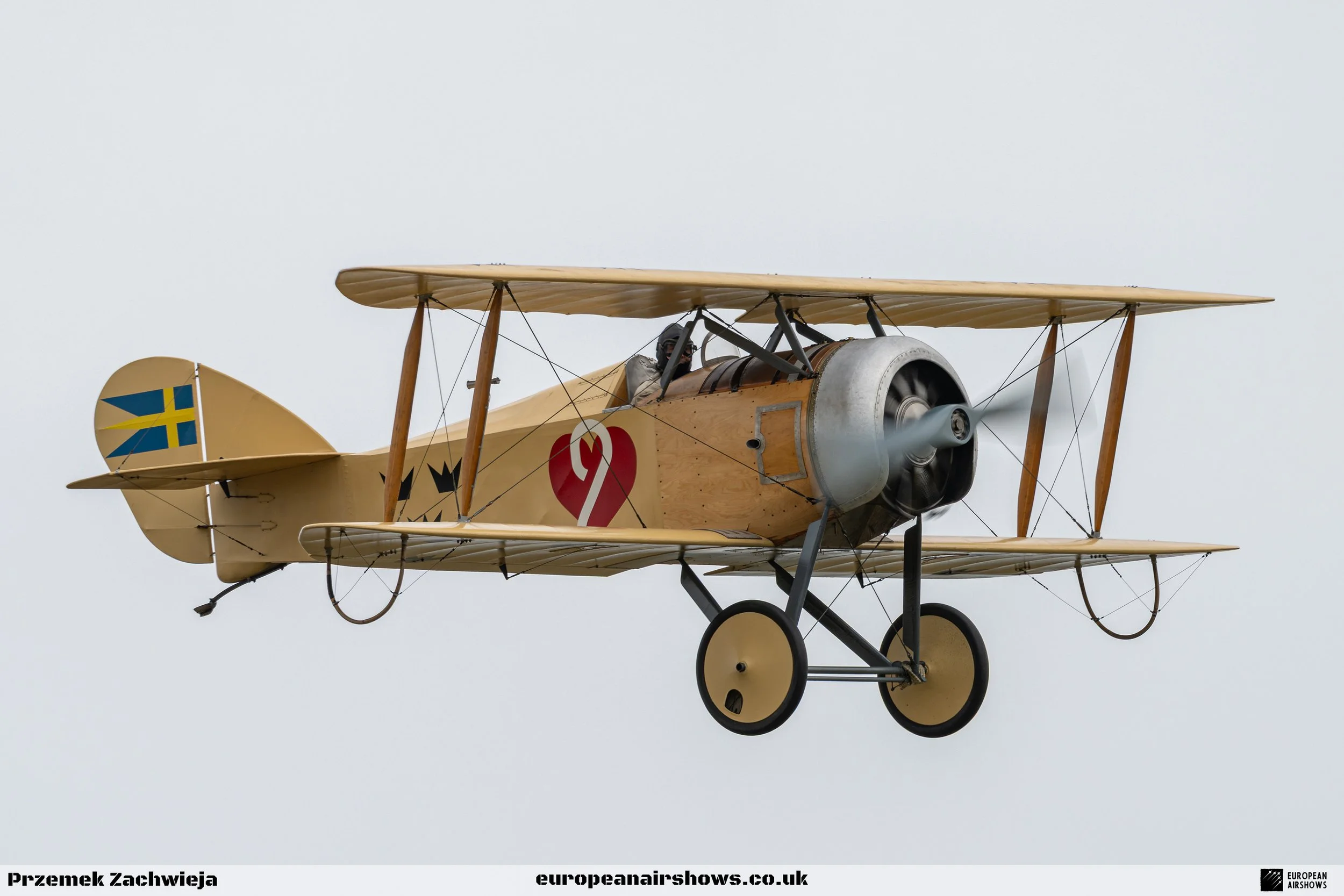
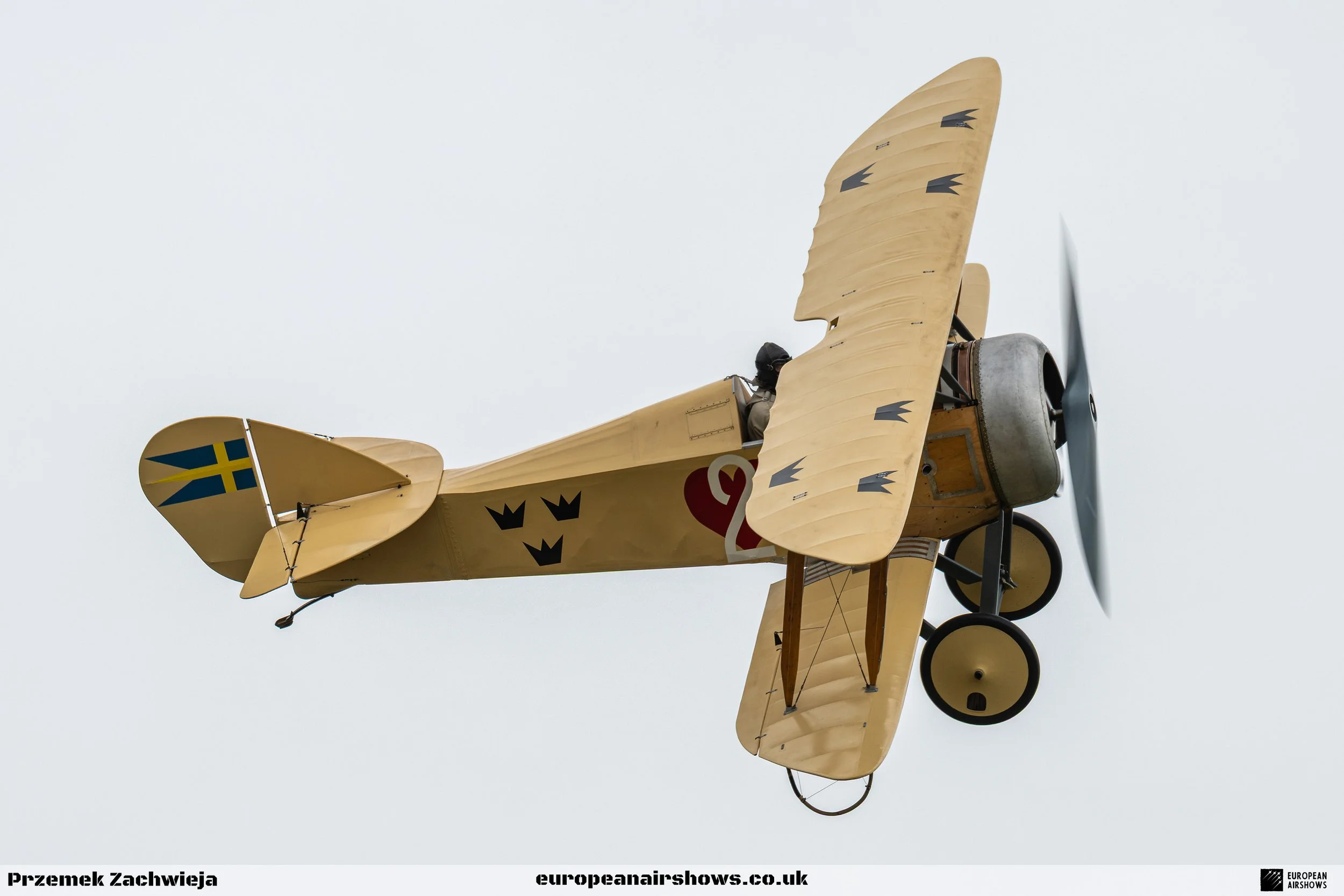
His FVM Ö 1 Tummelisa was more local still. Henrik Kjellson designed the tiny single-seat trainer for the Army Aviation Company after the First World War, and the originals were built in the workshops at Malmen. Its size inspired the name Tummeliten—Tom Thumb—but pilots changed it to Tummelisa, partly because of its habit of snap-rolling onto its back. Remarkably, the 28 originals completed fifteen years of training service without a fatal accident.
Carlson built his reproduction between 1982 and 1989, beginning by cutting down a tree on his family’s land. He worked from original drawings, measured the museum survivor and used an original engine and period parts wherever possible; even the turnbuckles were made by hand. Its close display was a moment possible only here: a Malmen-built design flying beside the museum which preserves the original.
Propellers, Spitfires and a darker Cold War story
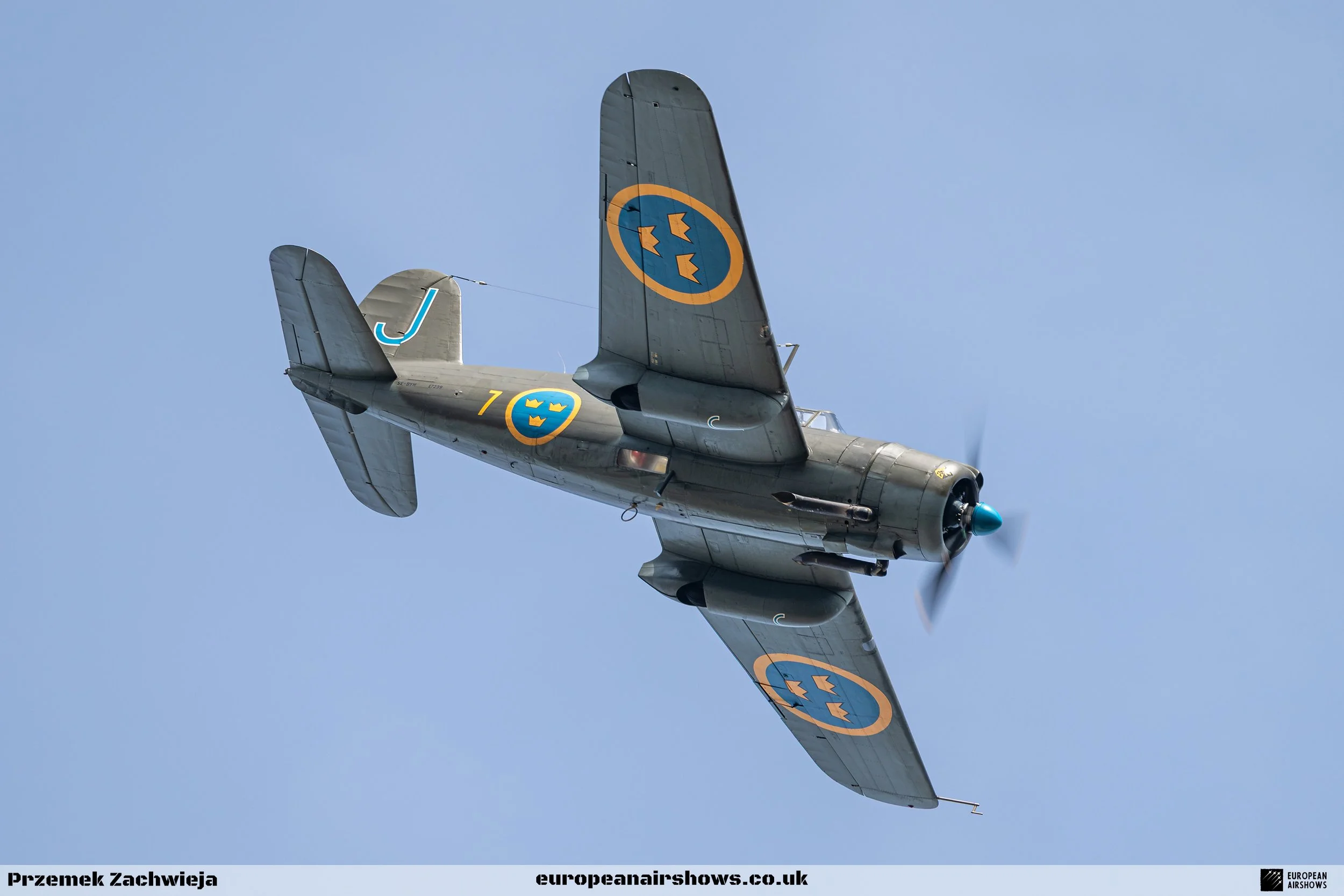
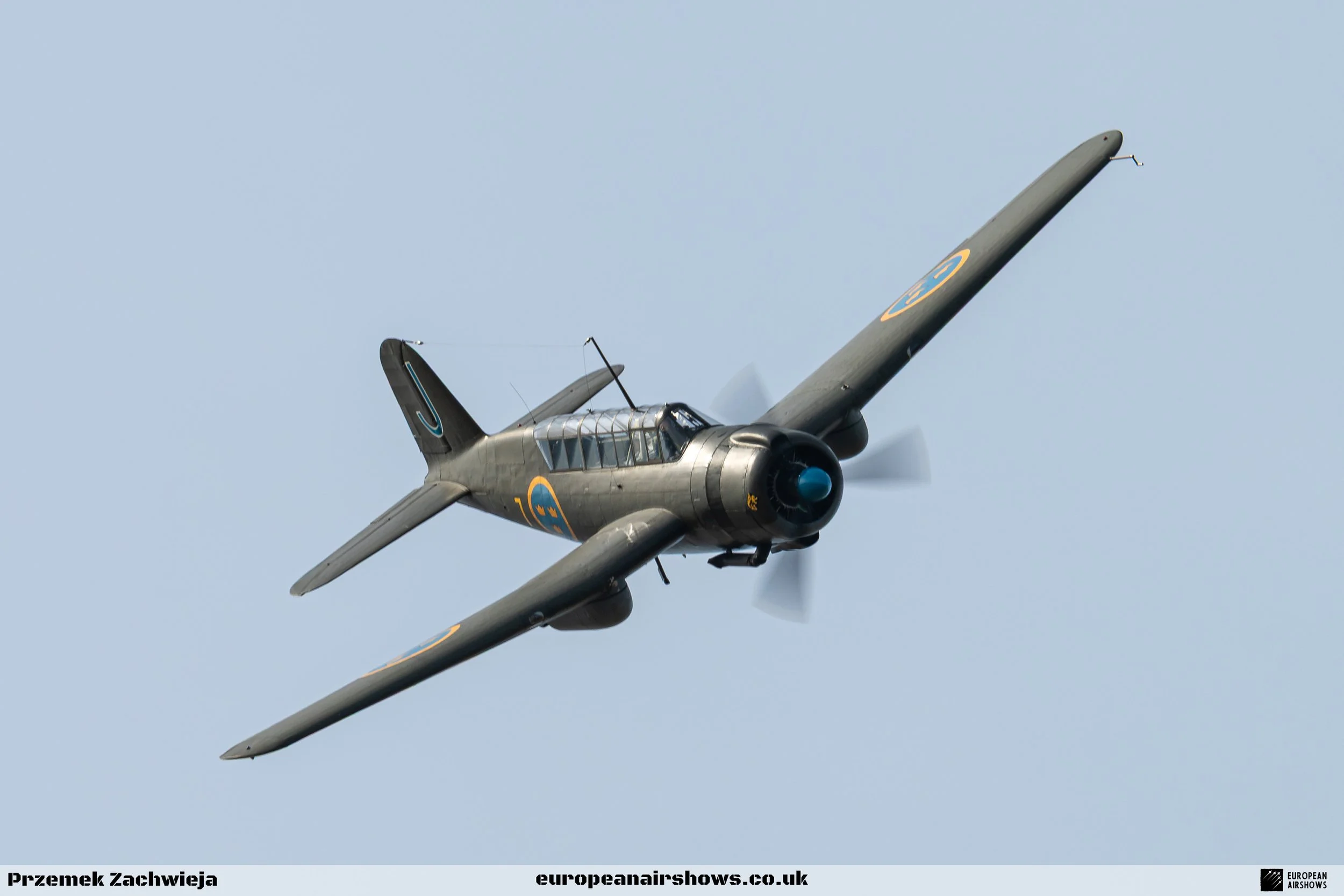
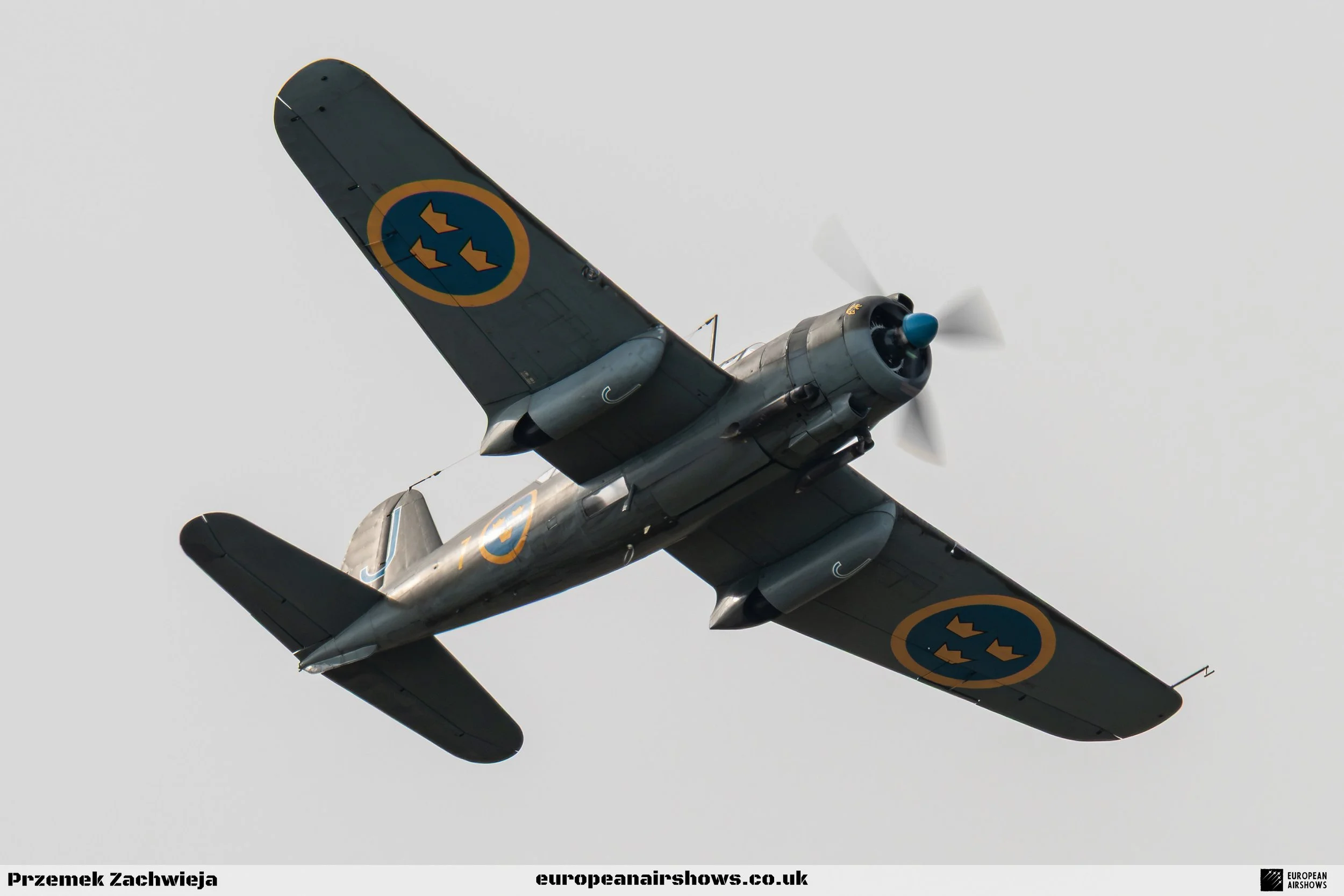
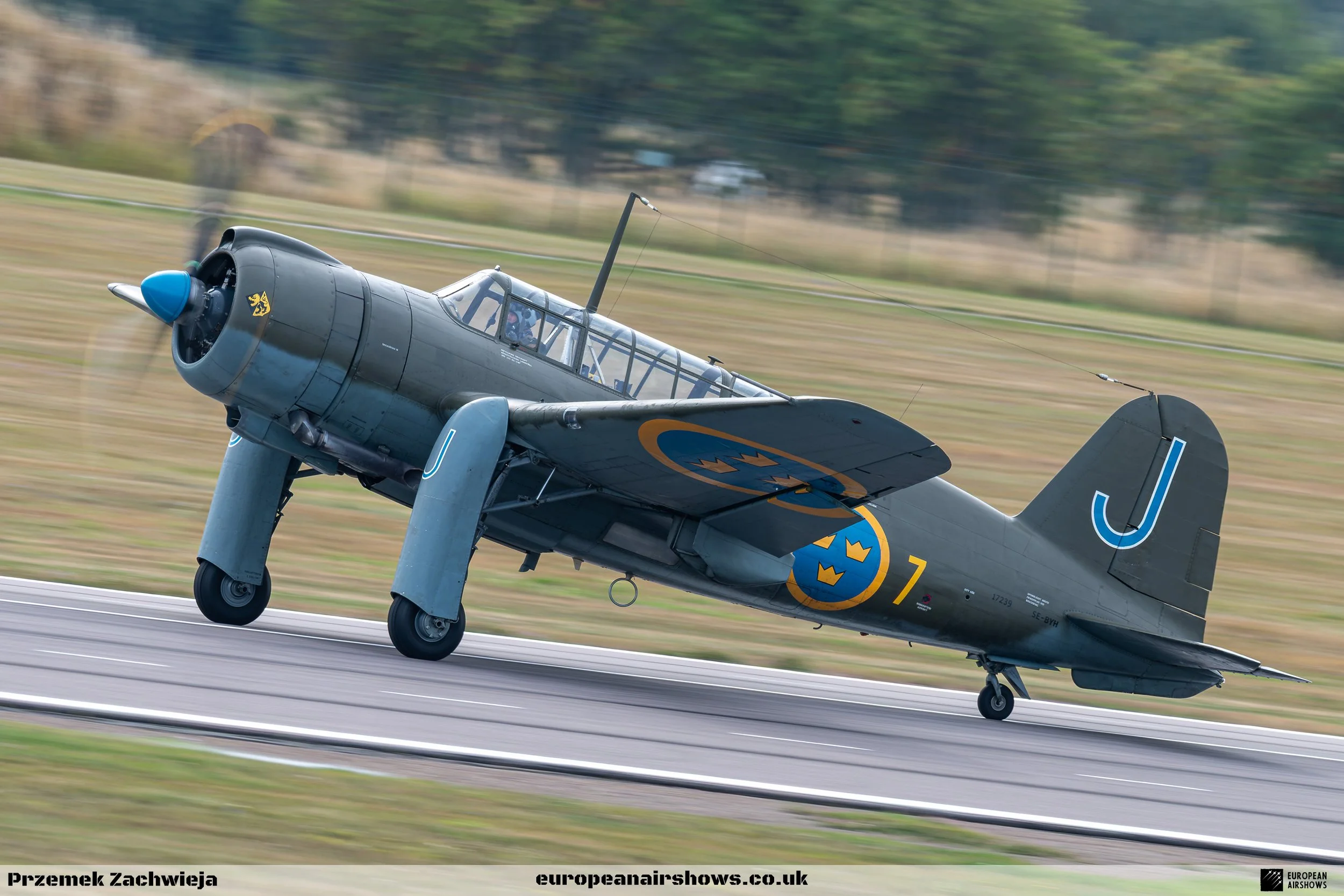
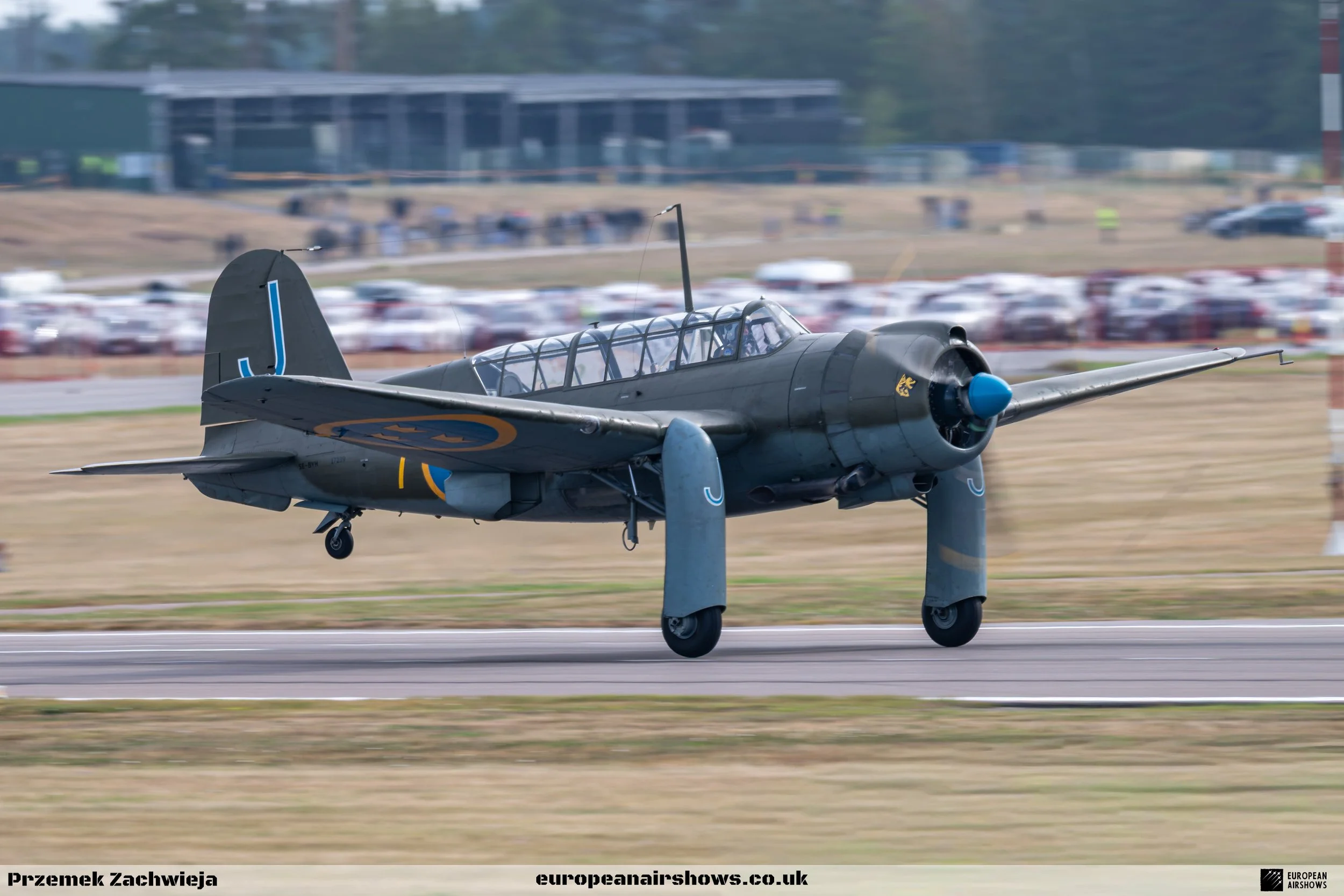
From those early machines, the Saab B 17A made the jump to a nation capable of designing and producing its own military aircraft. Saab’s first production aeroplane was developed in Linköping, while F 3 operated the S 17 reconnaissance version from Malmen. The airworthy aircraft belongs to Flygvapenmuseum but is now operated and displayed by Swedish Air Force Historic Flight, which took over its operation from Saab in winter 2024. Its solo caught many of us by surprise: much more aggressive than expected, full of energy and accompanied by the magnificent sound of its radial engine.
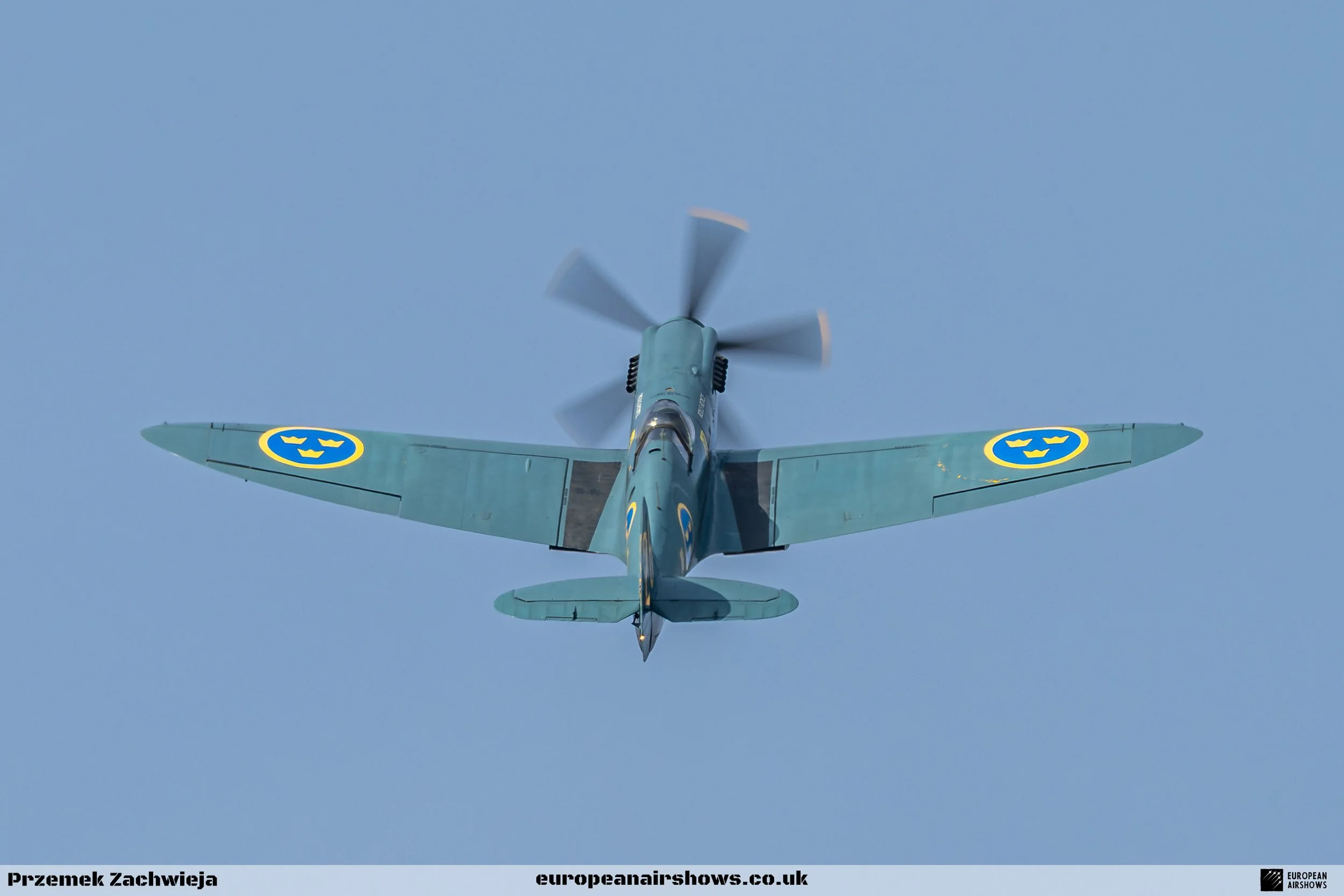
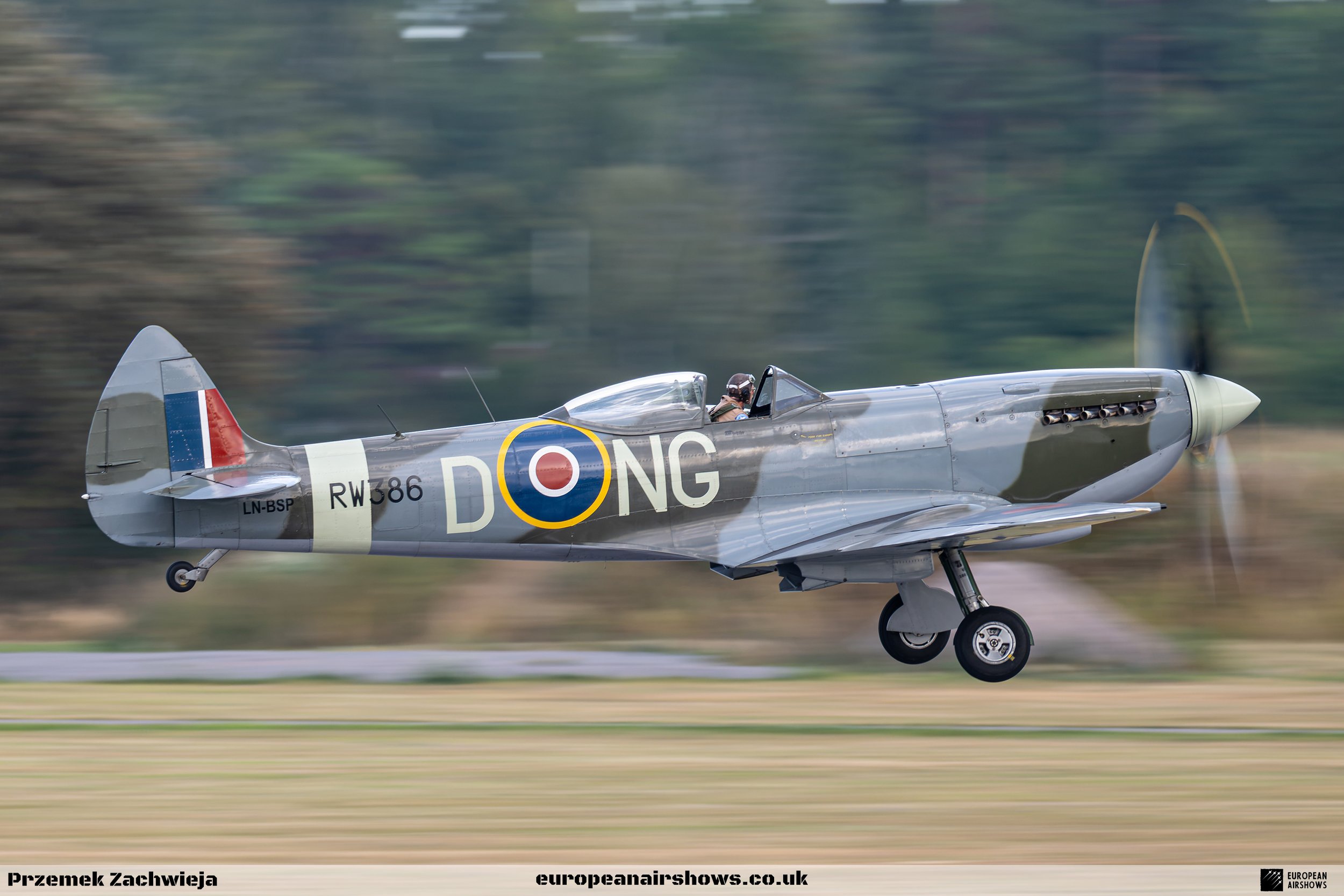
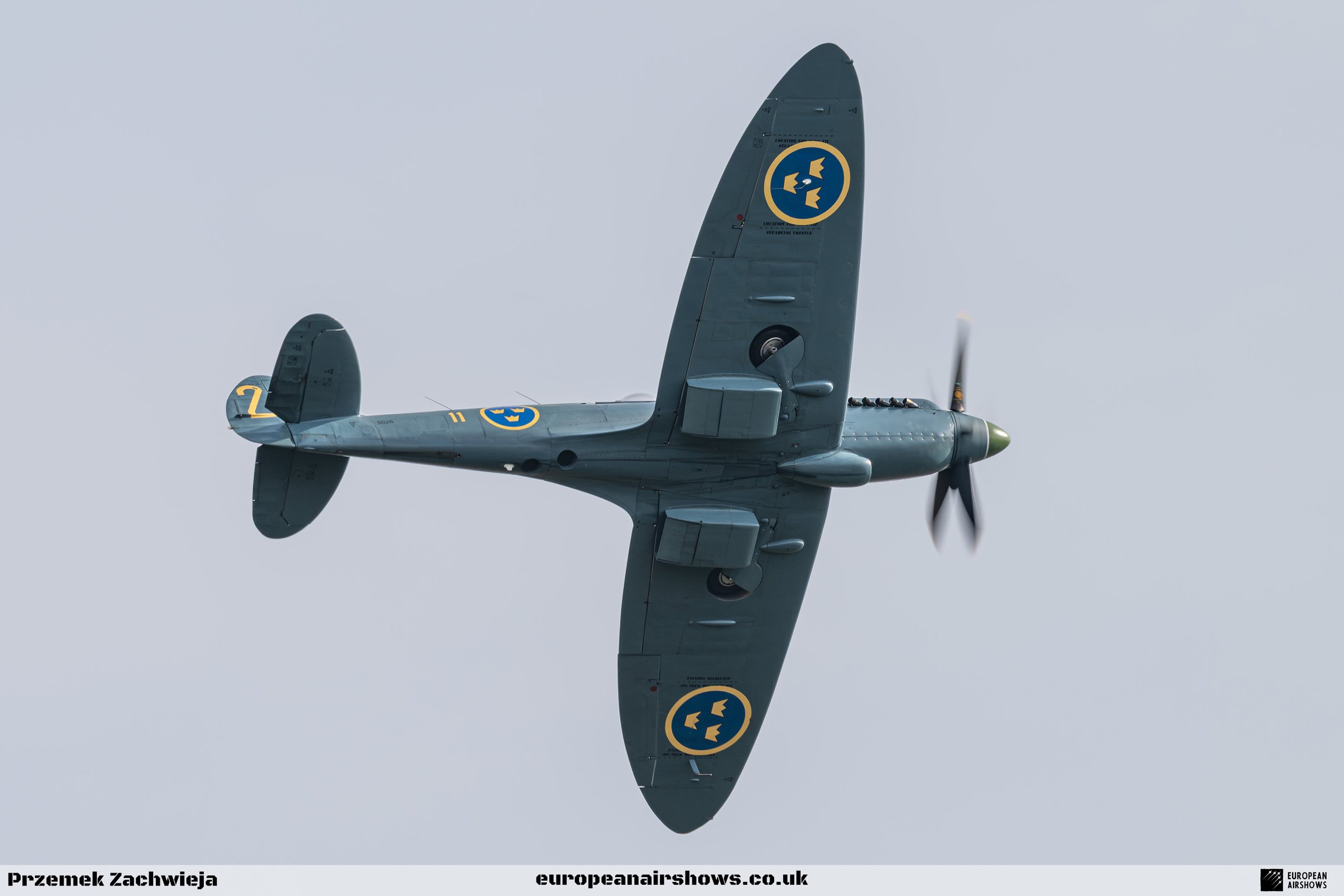
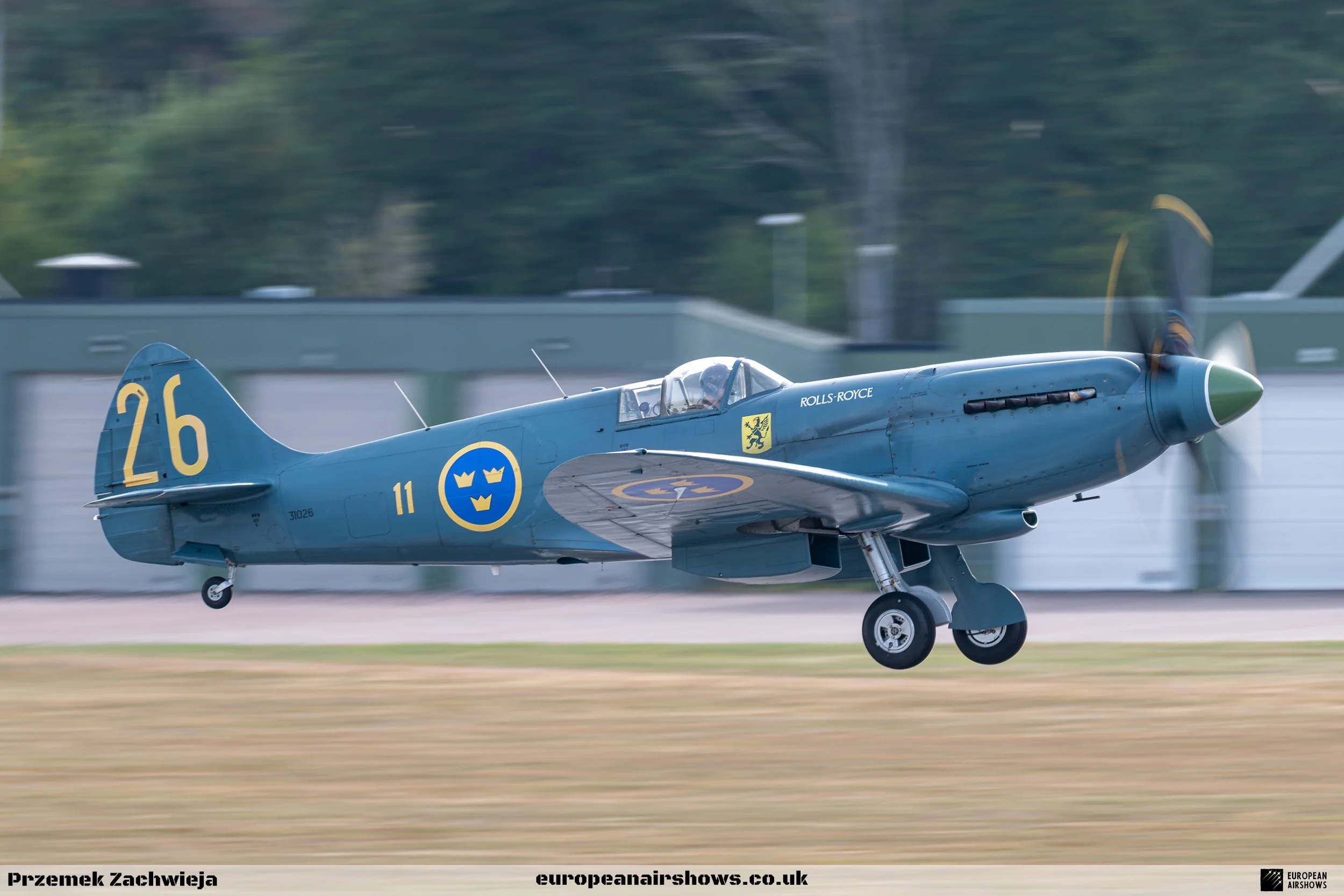
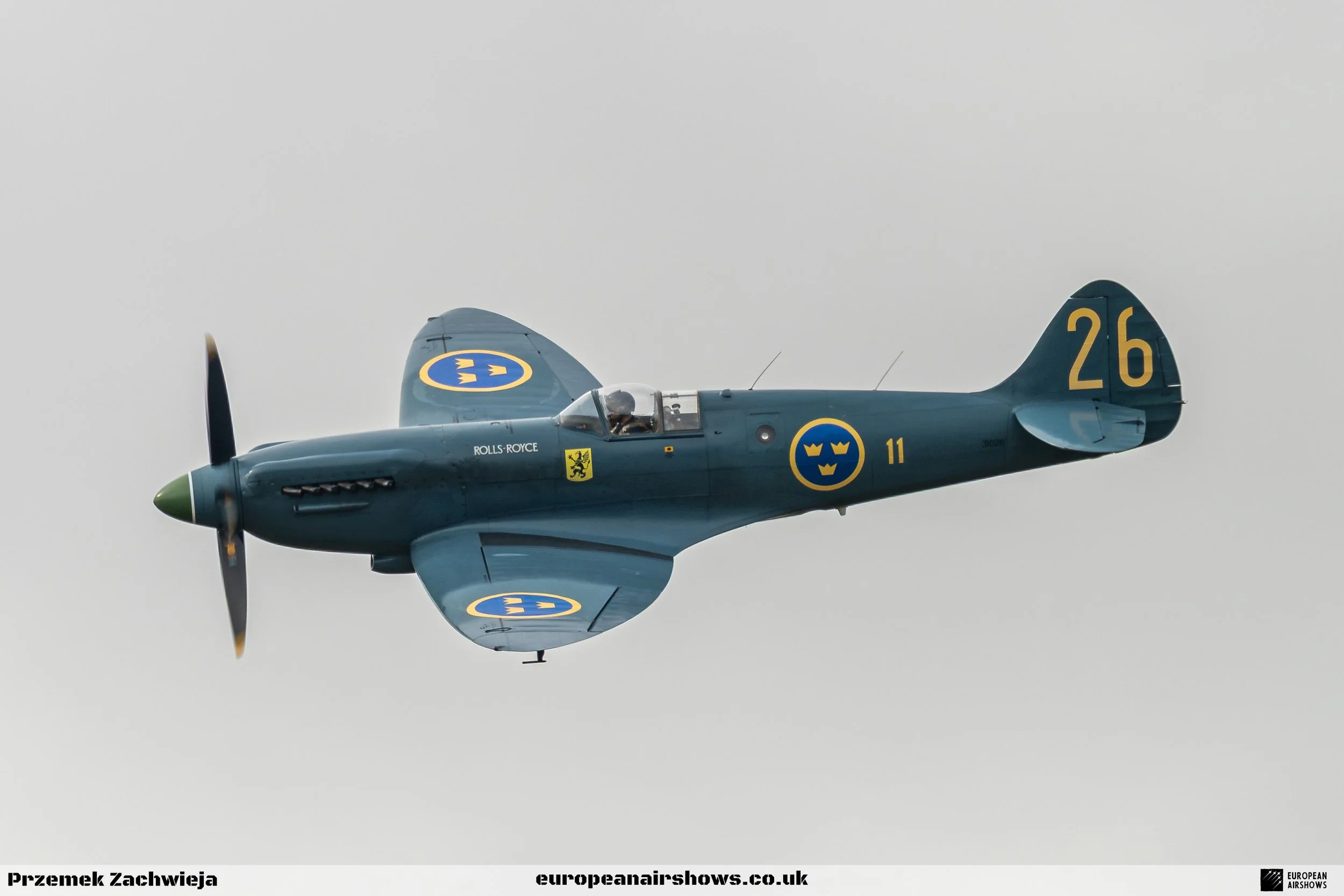
The Rolls-Royce Heritage Flight’s Supermarine Spitfire PR Mk XIX took the story into the early Cold War. Temporary Swedish-style markings allowed it to represent the S 31, the designation given to the 50 reconnaissance Spitfires acquired for F 11 at Nyköping from 1948 and used to photograph the Baltic region. No original Swedish S 31 survives intact, so the tribute was especially welcome. Its elegant solo also made one missed opportunity painfully obvious: beside a modern Gripen, it would have produced the centenary photograph of the weekend.
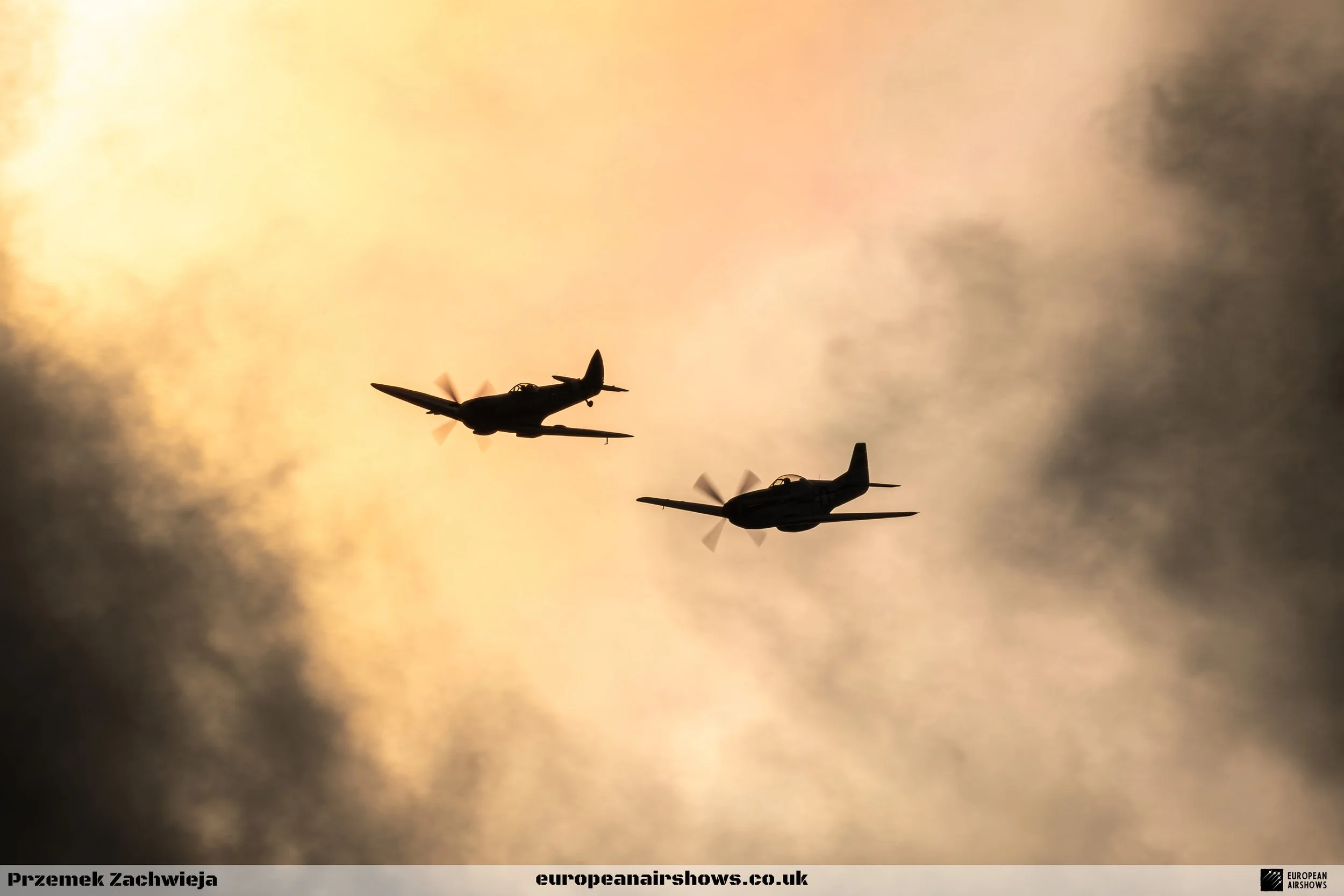
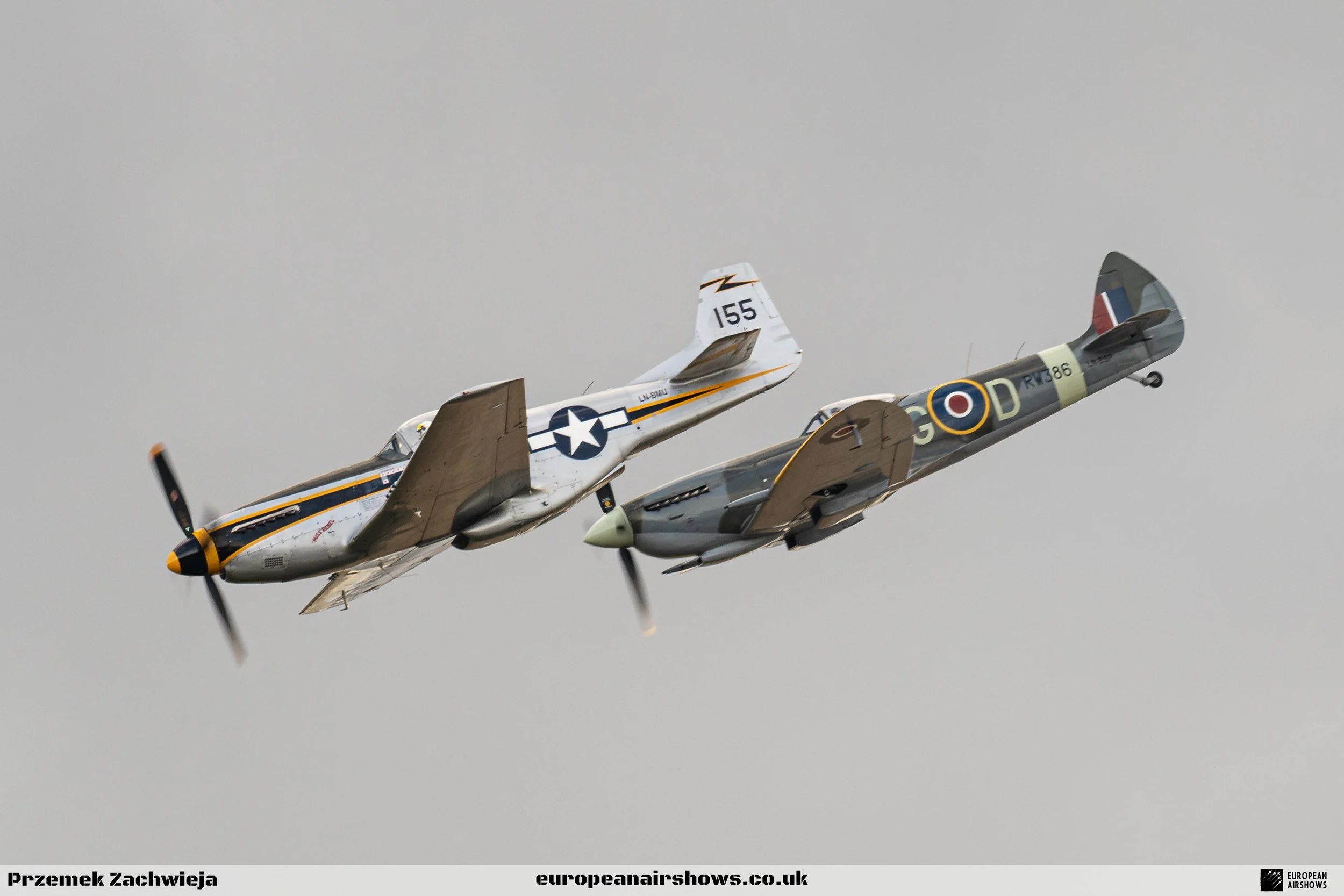
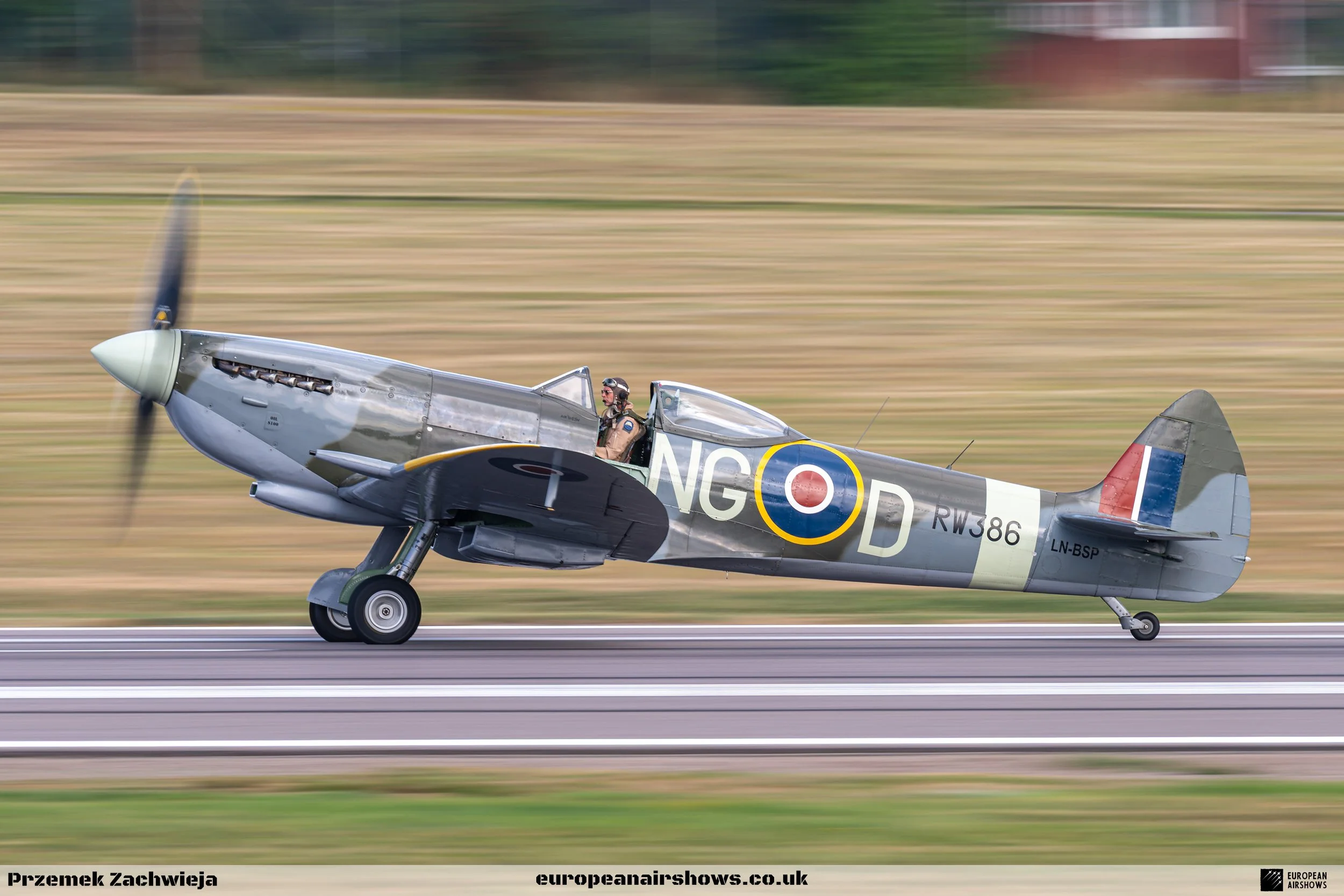
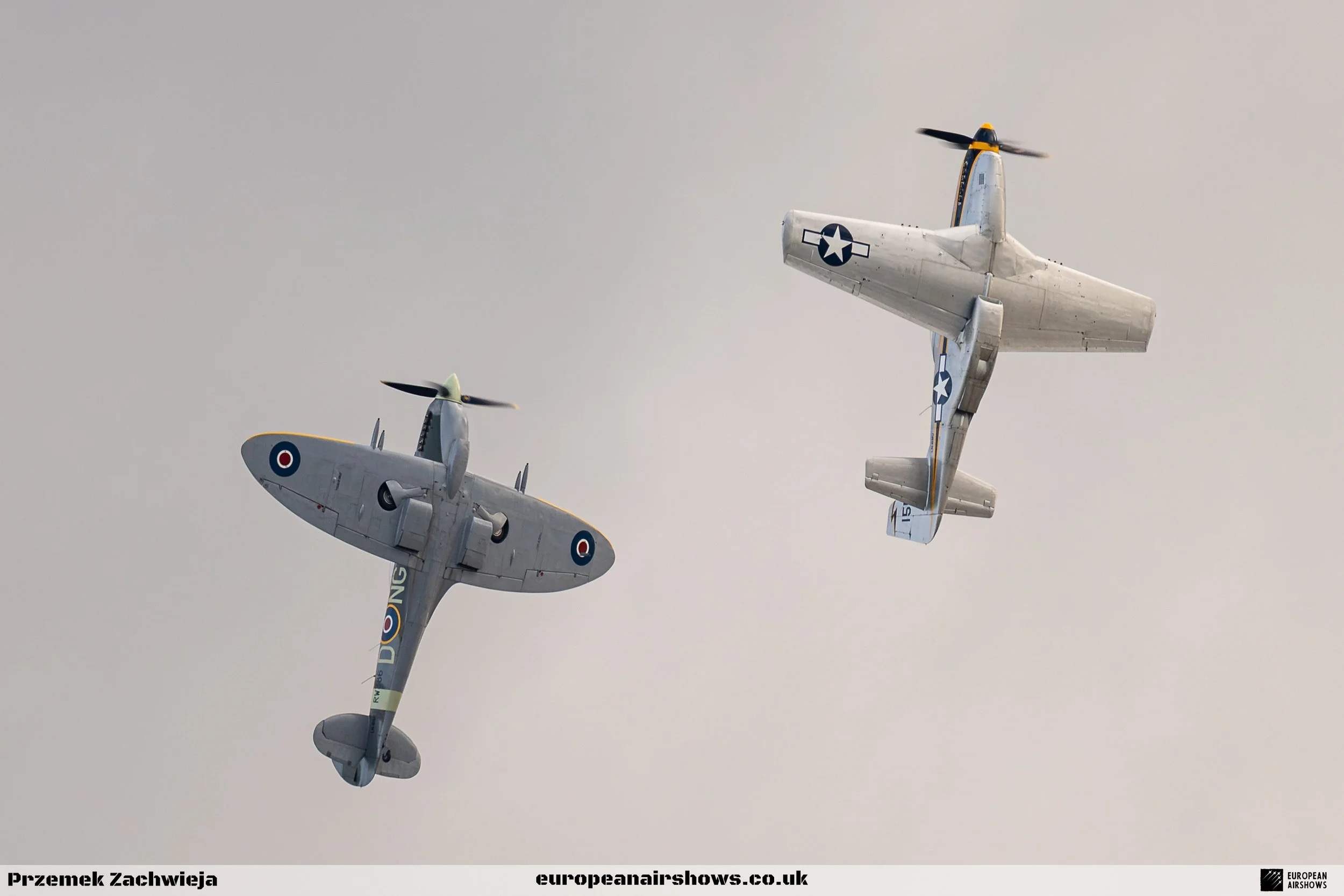
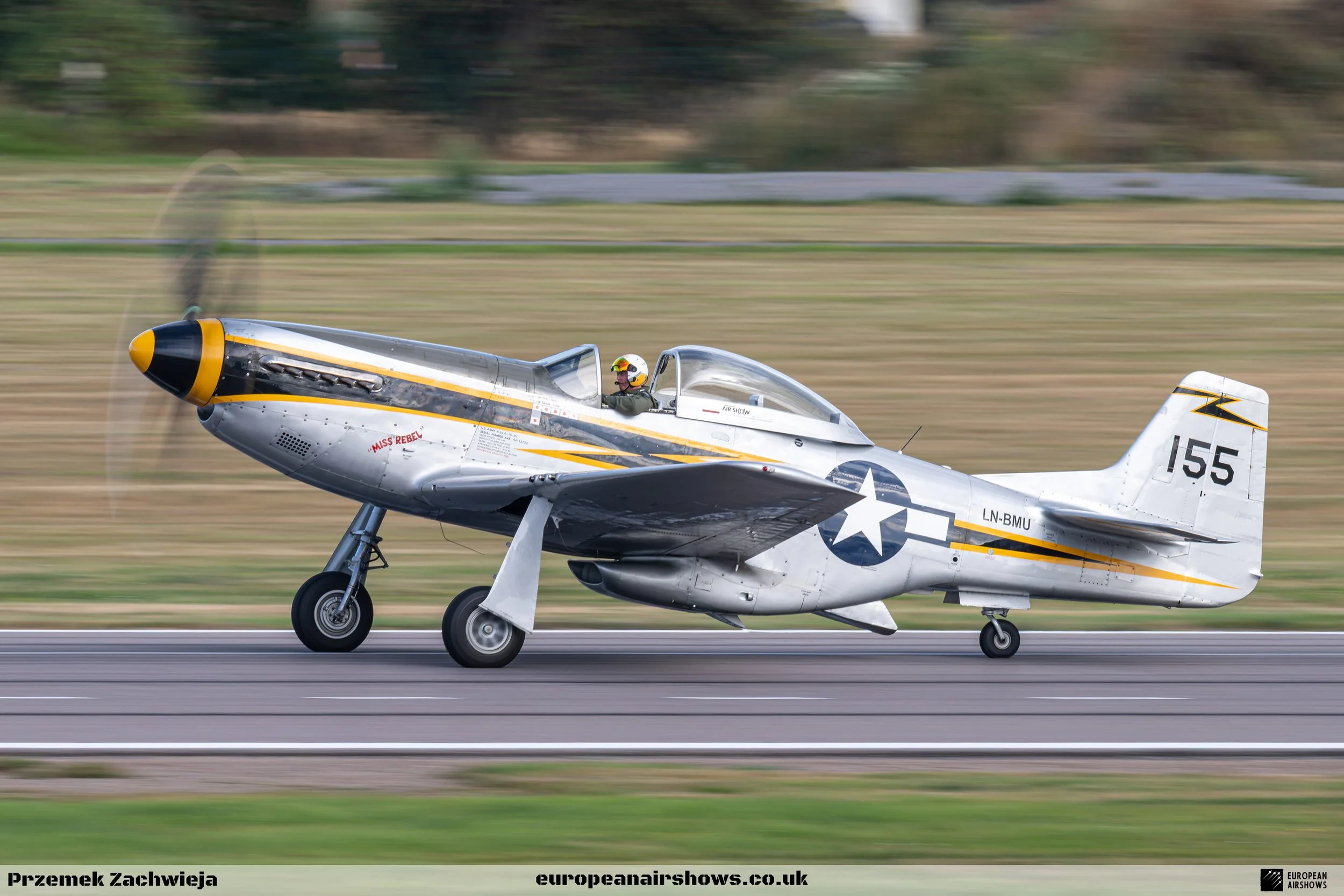
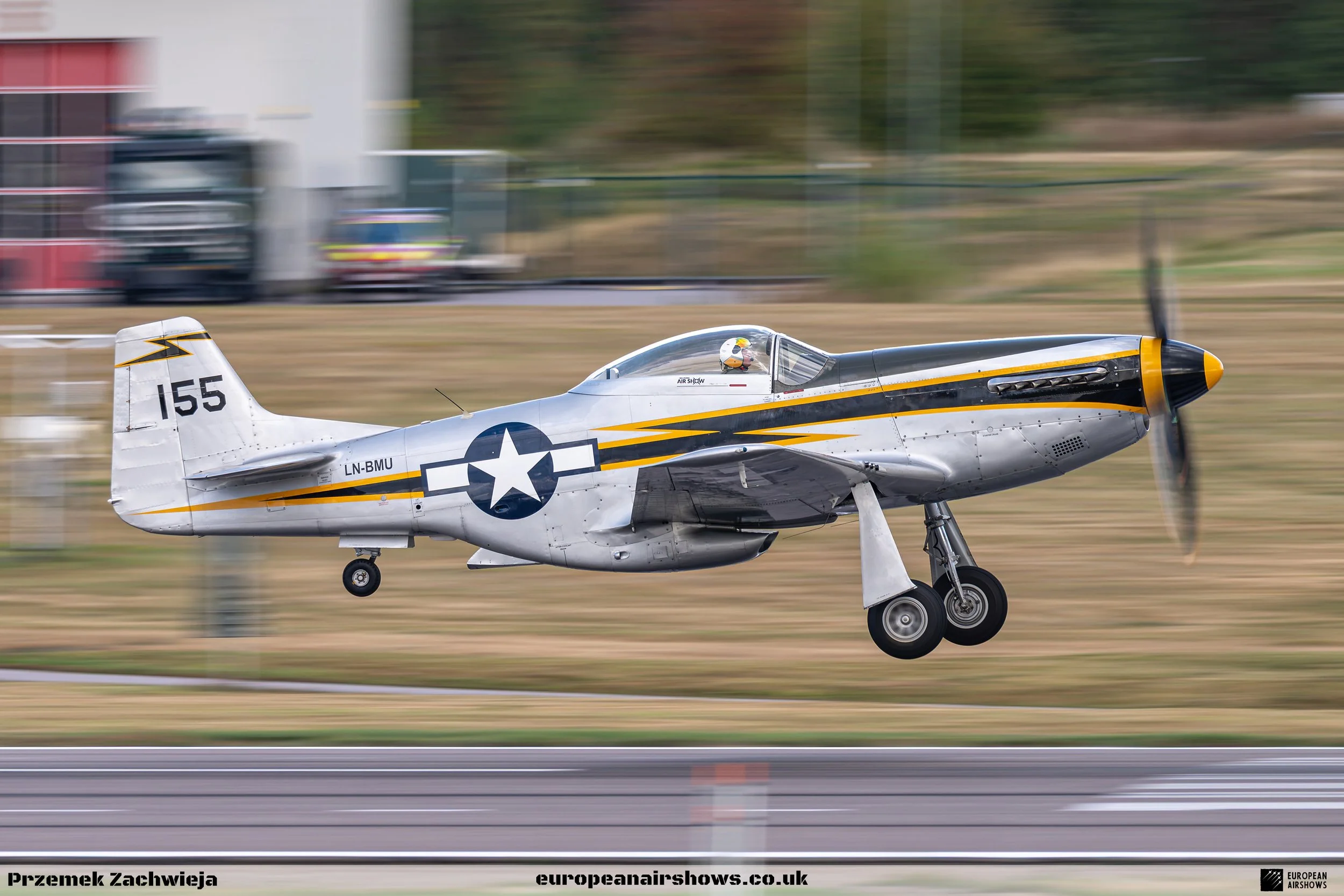
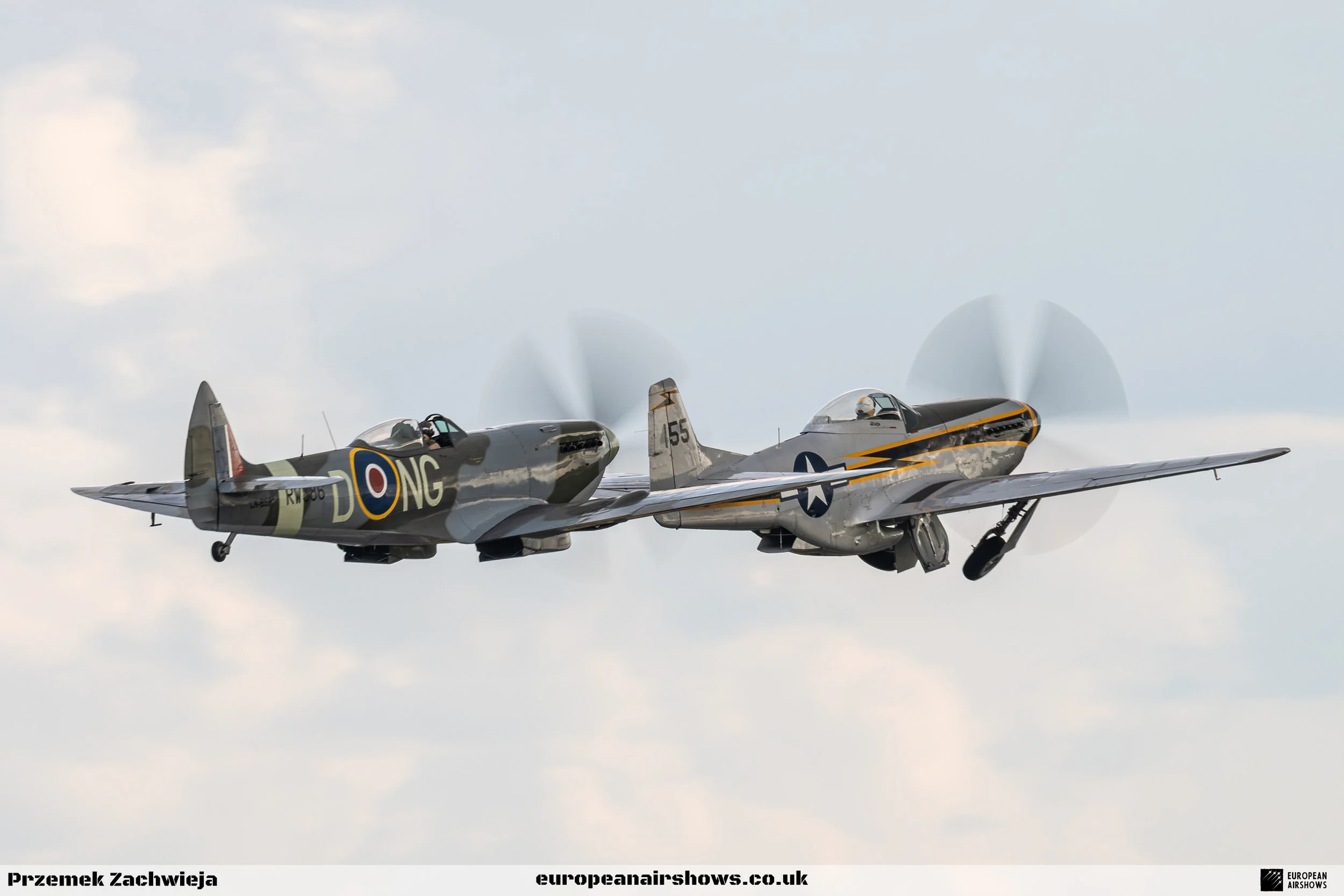
Biltema Airshow also paired its Vickers Supermarine Spitfire LF Mk XVIe with its Cavalier F-51D Mustang II for formation loops before both separated into solos. The Spitfire did not represent a Swedish fighter type, but the Cavalier recalled the P-51D, which Flygvapnet operated as the J 26. Alongside the S 31 tribute, the pair recalled the period when imported piston aircraft helped meet Sweden’s post-war fighter and reconnaissance needs as Saab developed its own jets.
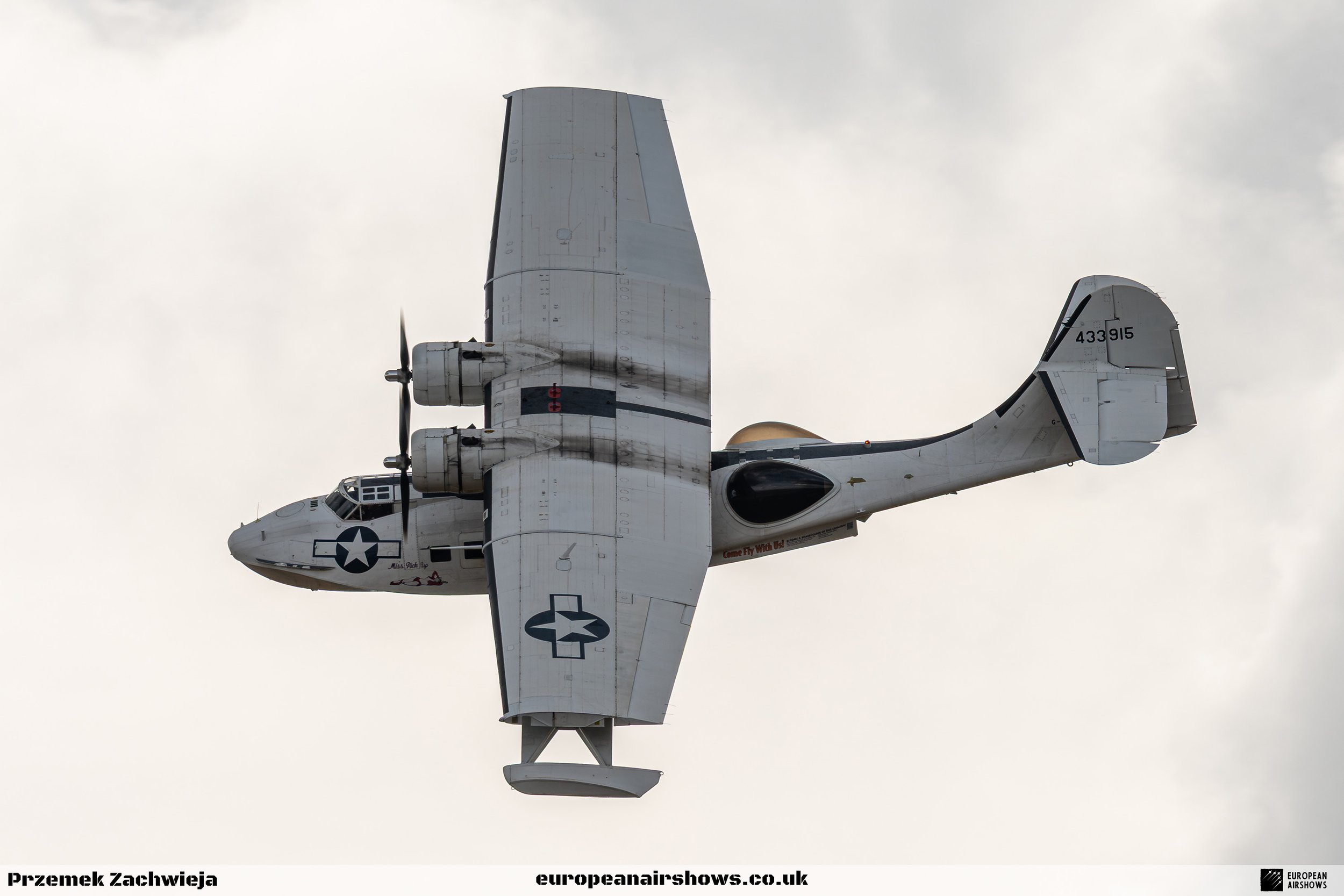
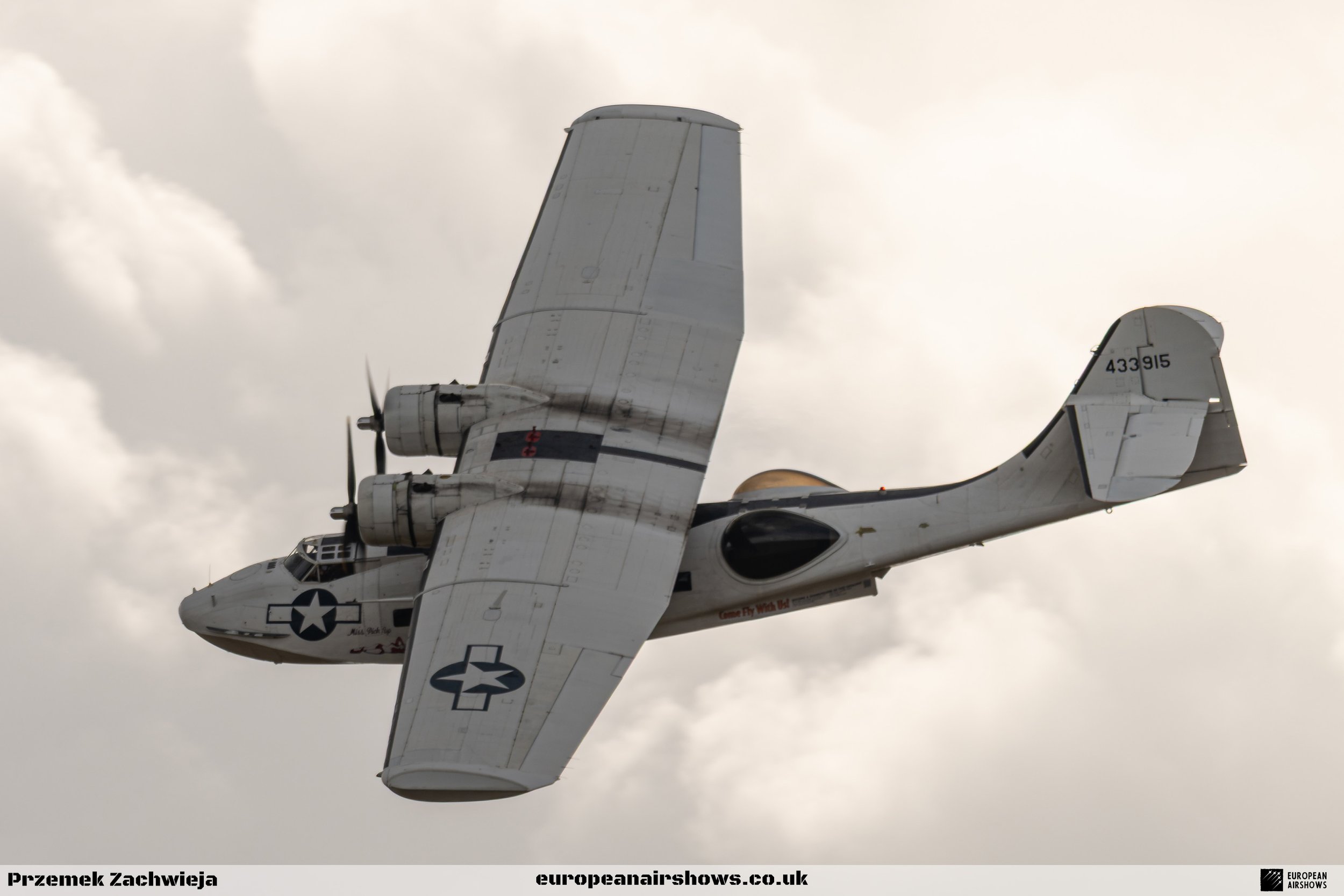
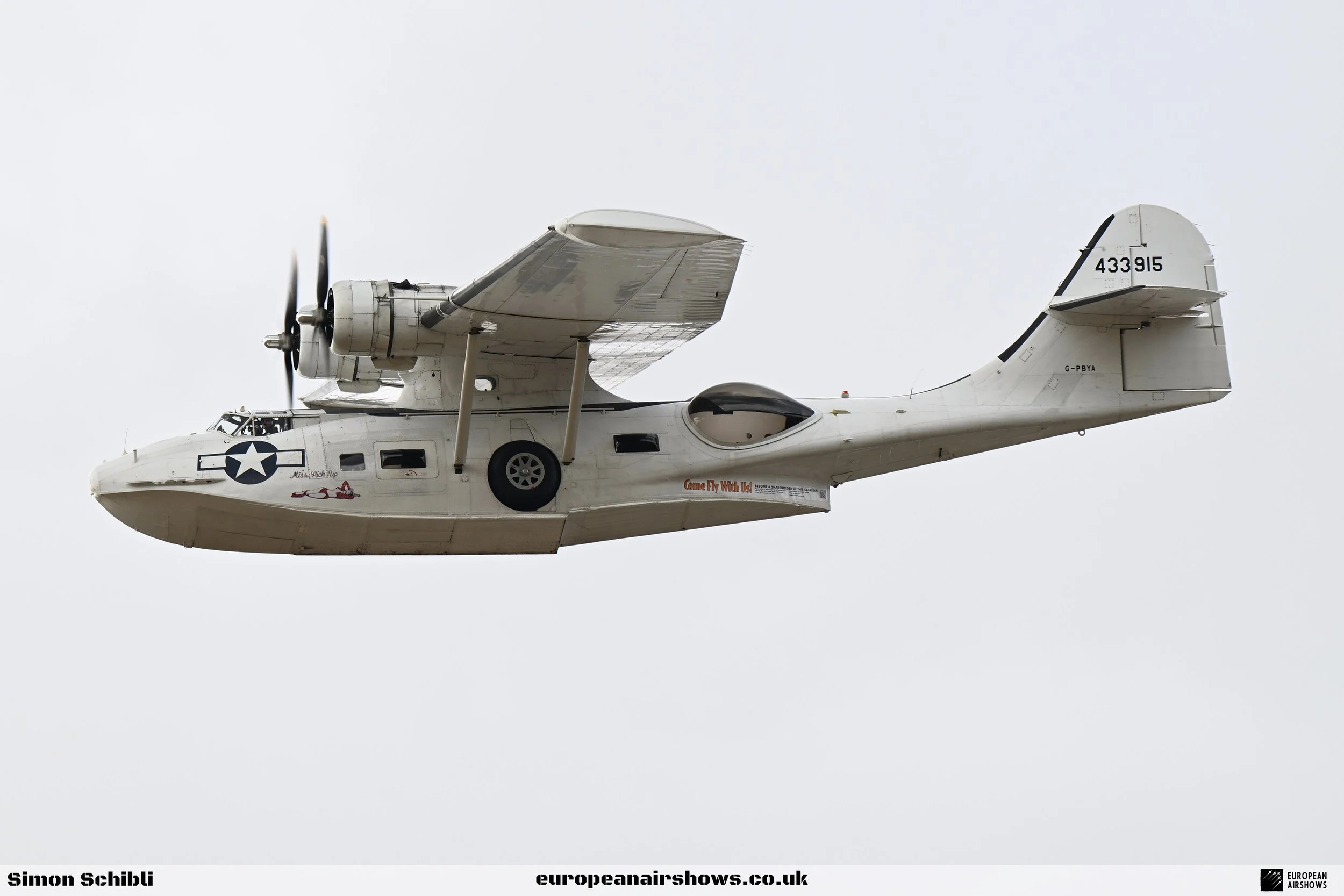
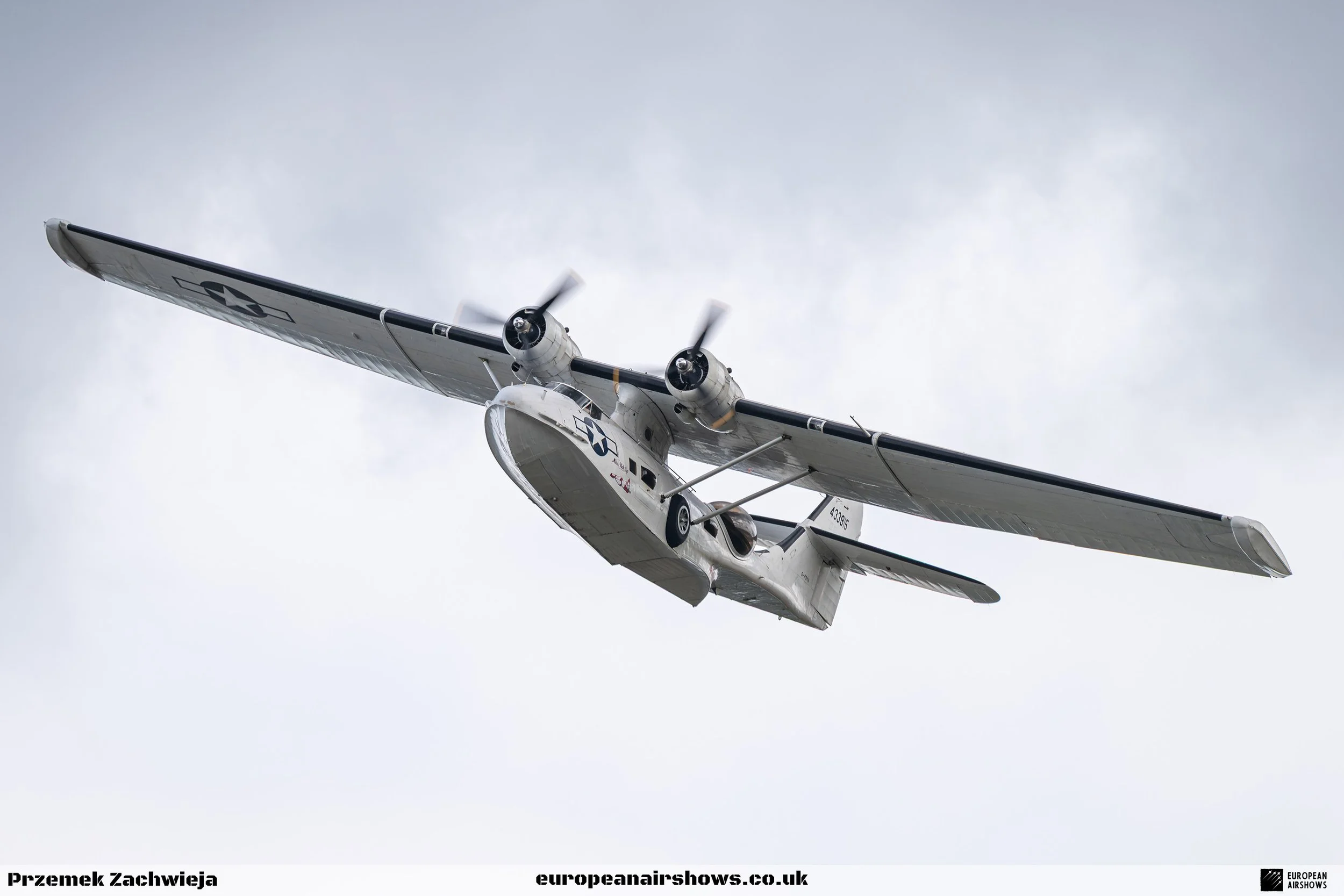
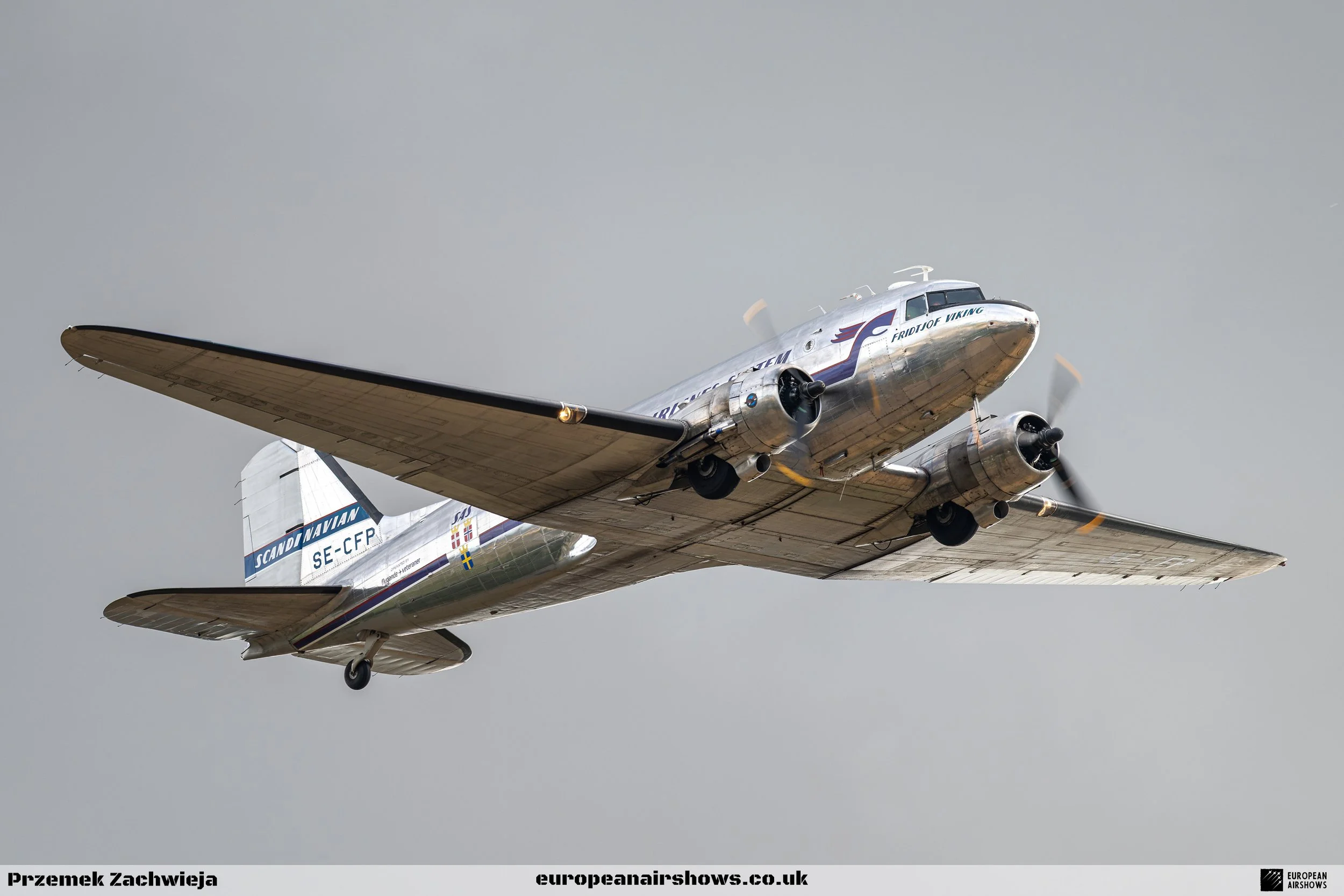
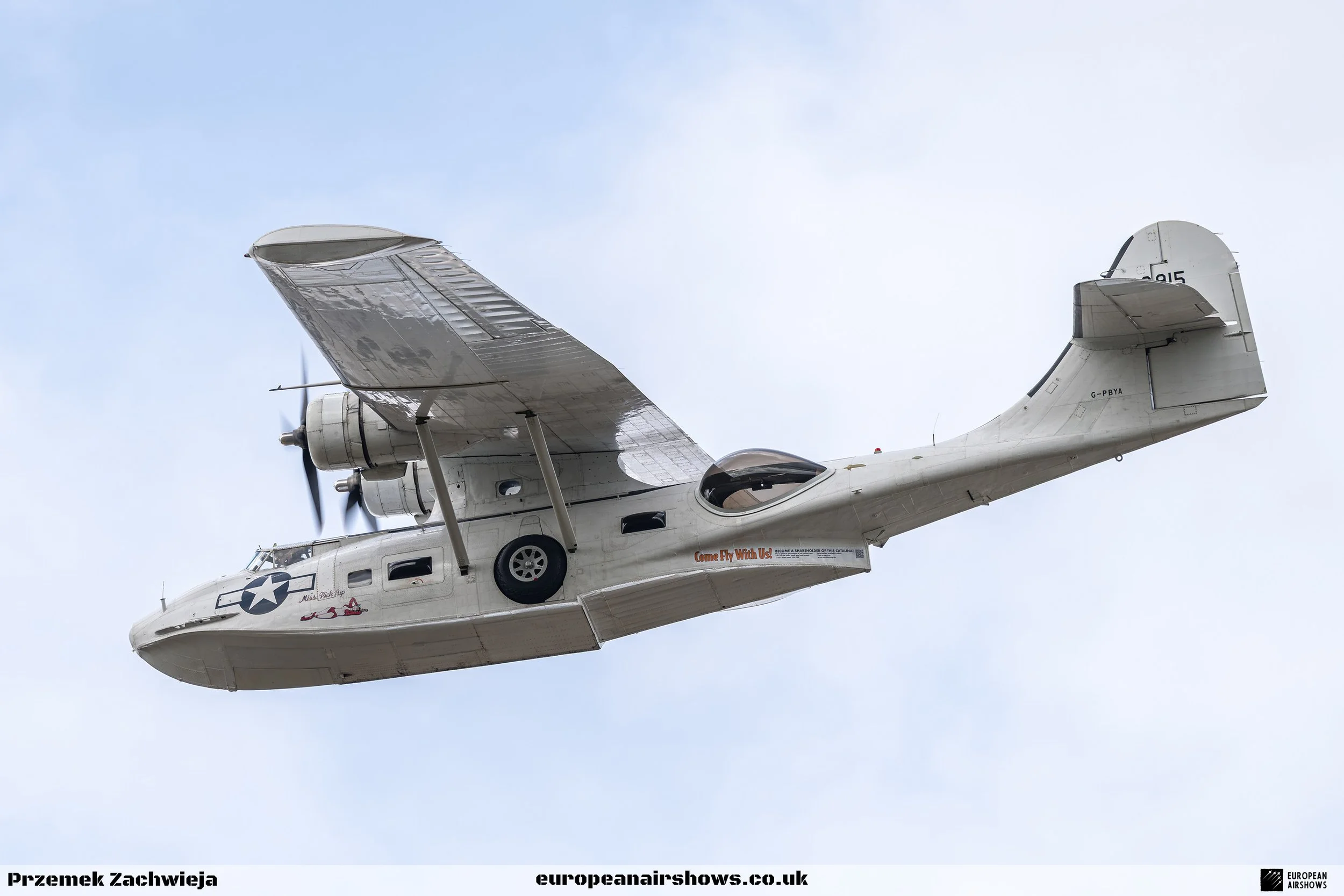
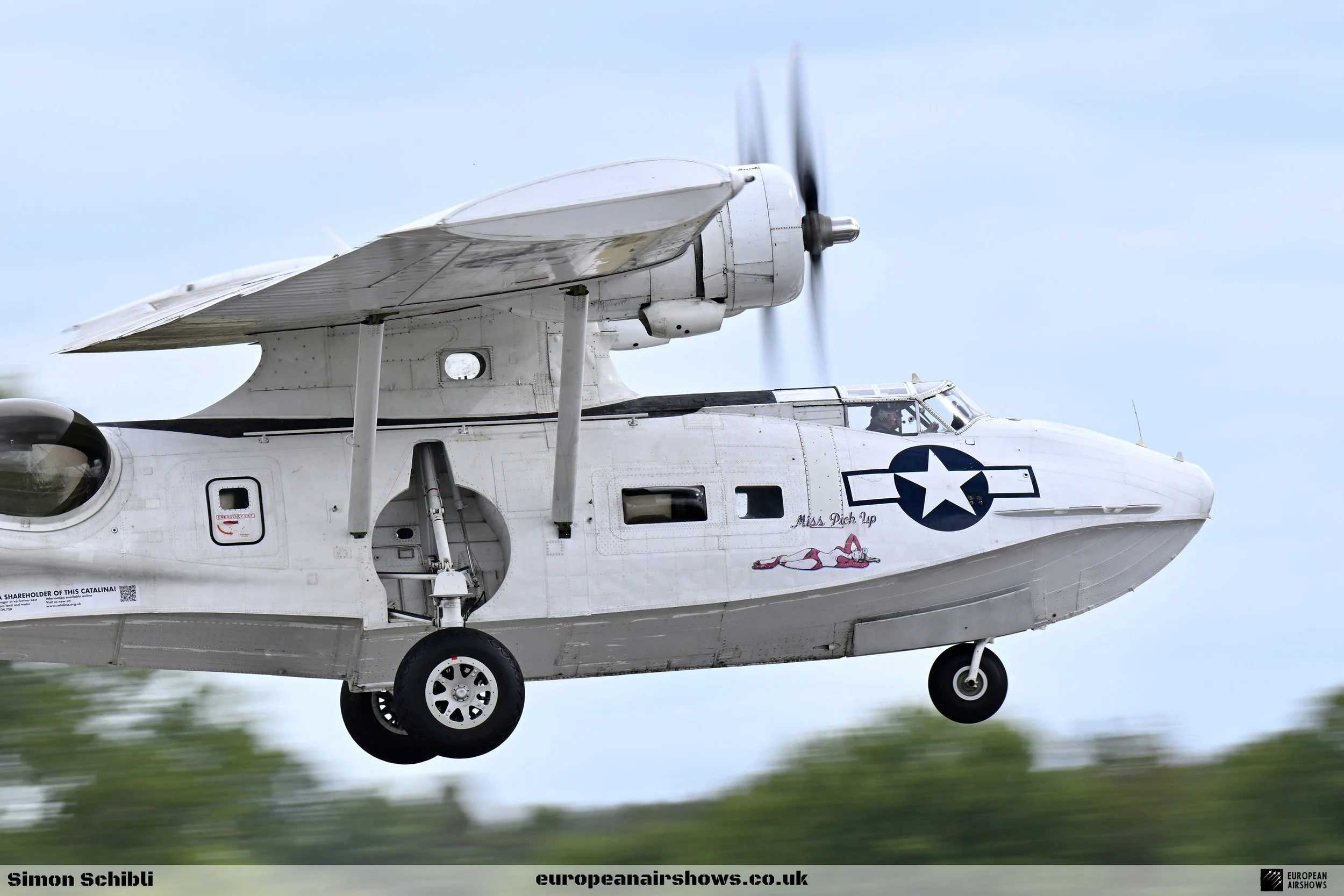
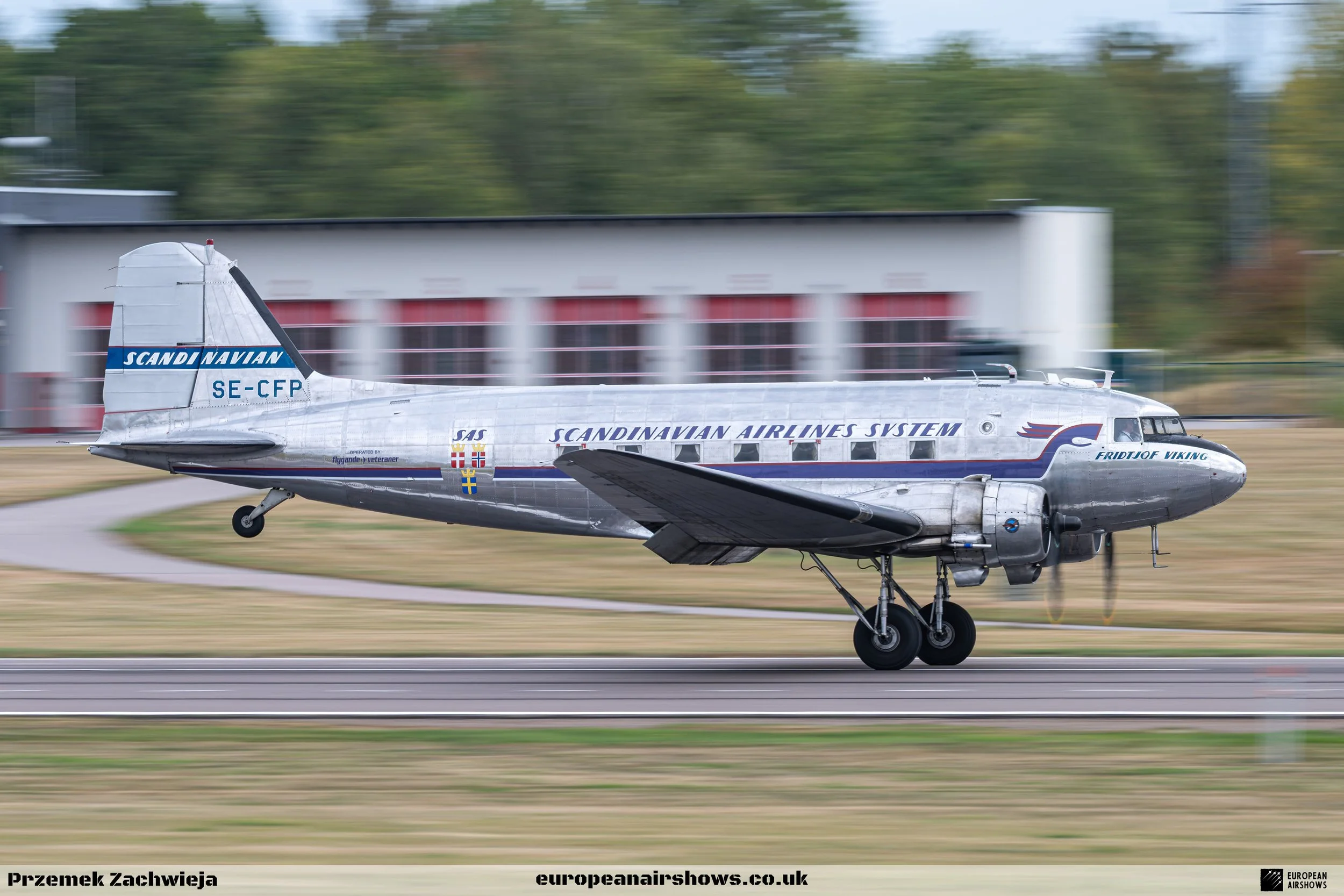
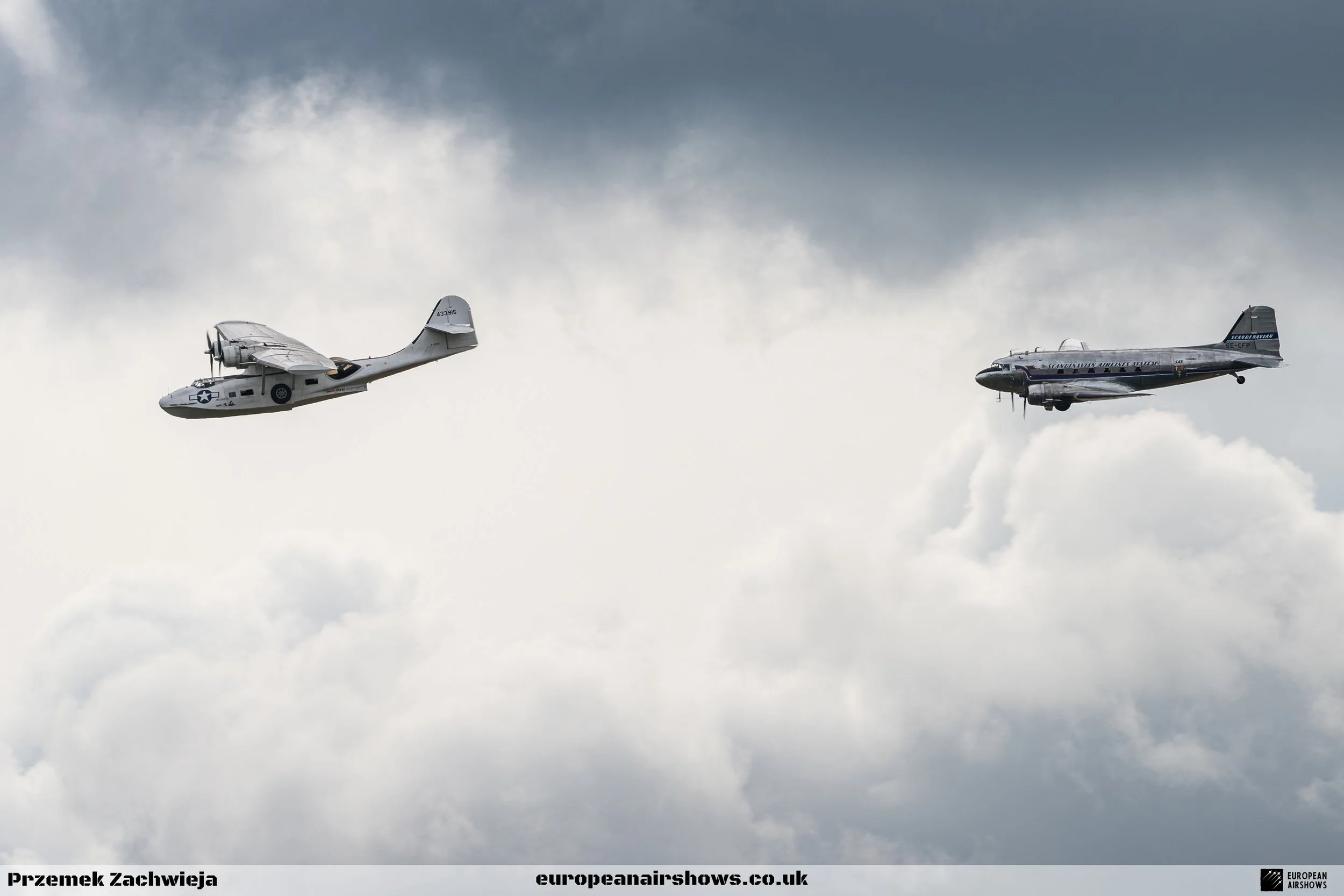
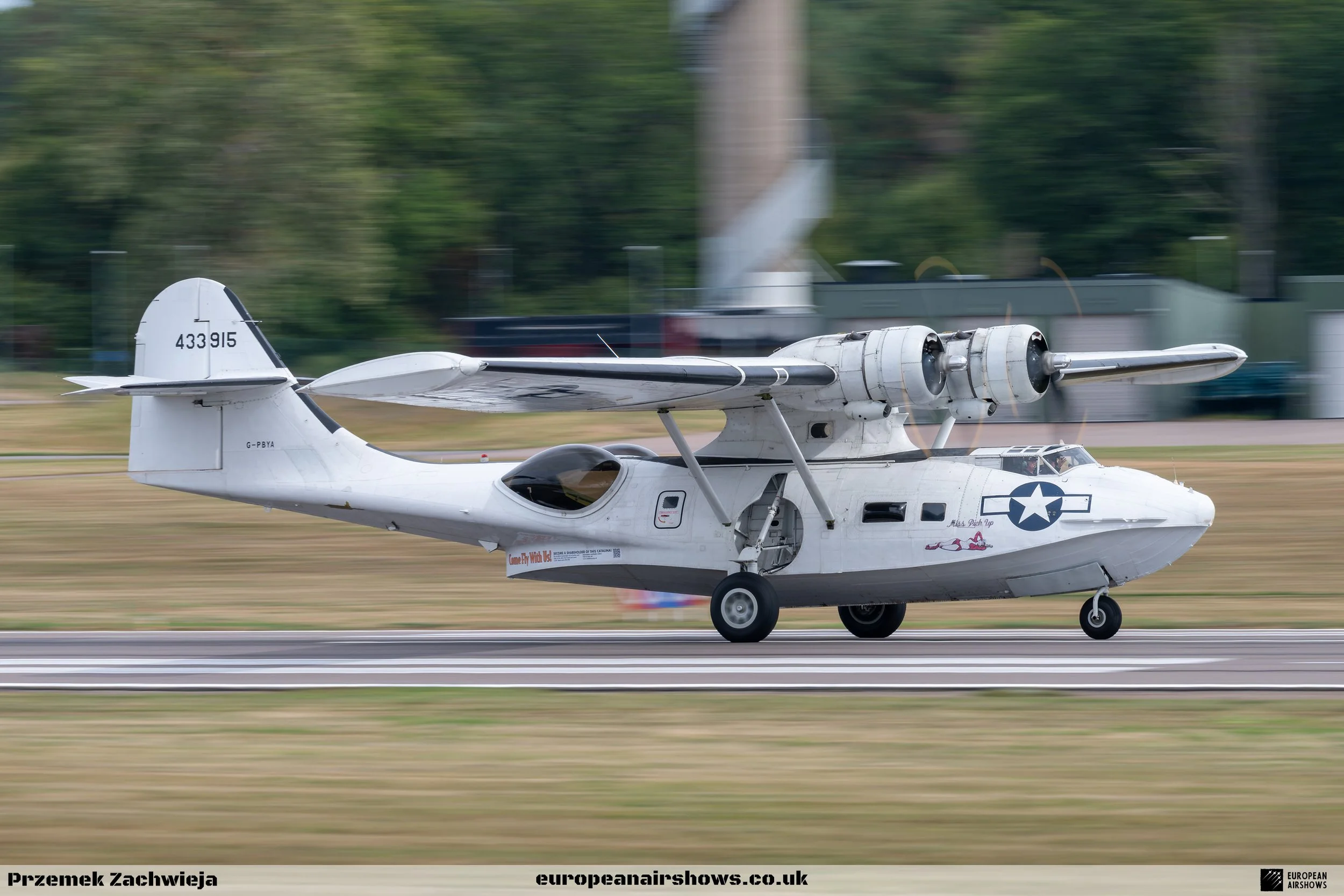
The Cold War story took a darker turn with another pairing. Plane Sailing Air Displays’ Canadian Vickers Canso A and Flygande Veteraner’s Douglas C-47A Skytrain “Daisy” made one formation pass and then displayed separately. Built in Canada in 1943, the Canso served on anti-submarine patrols, survey and rescue work, and later spent years fighting fires before beginning its British display career in 2004.
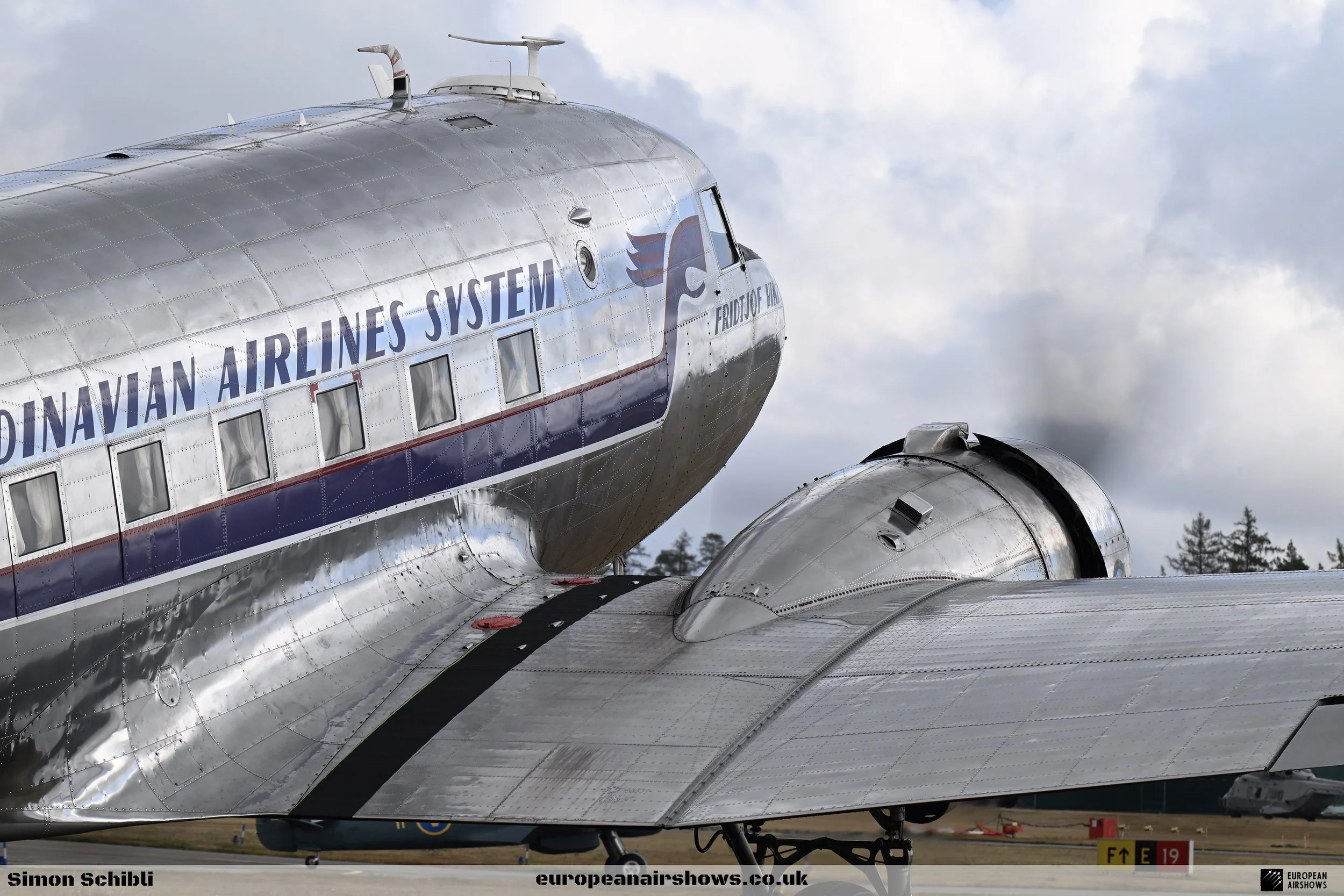
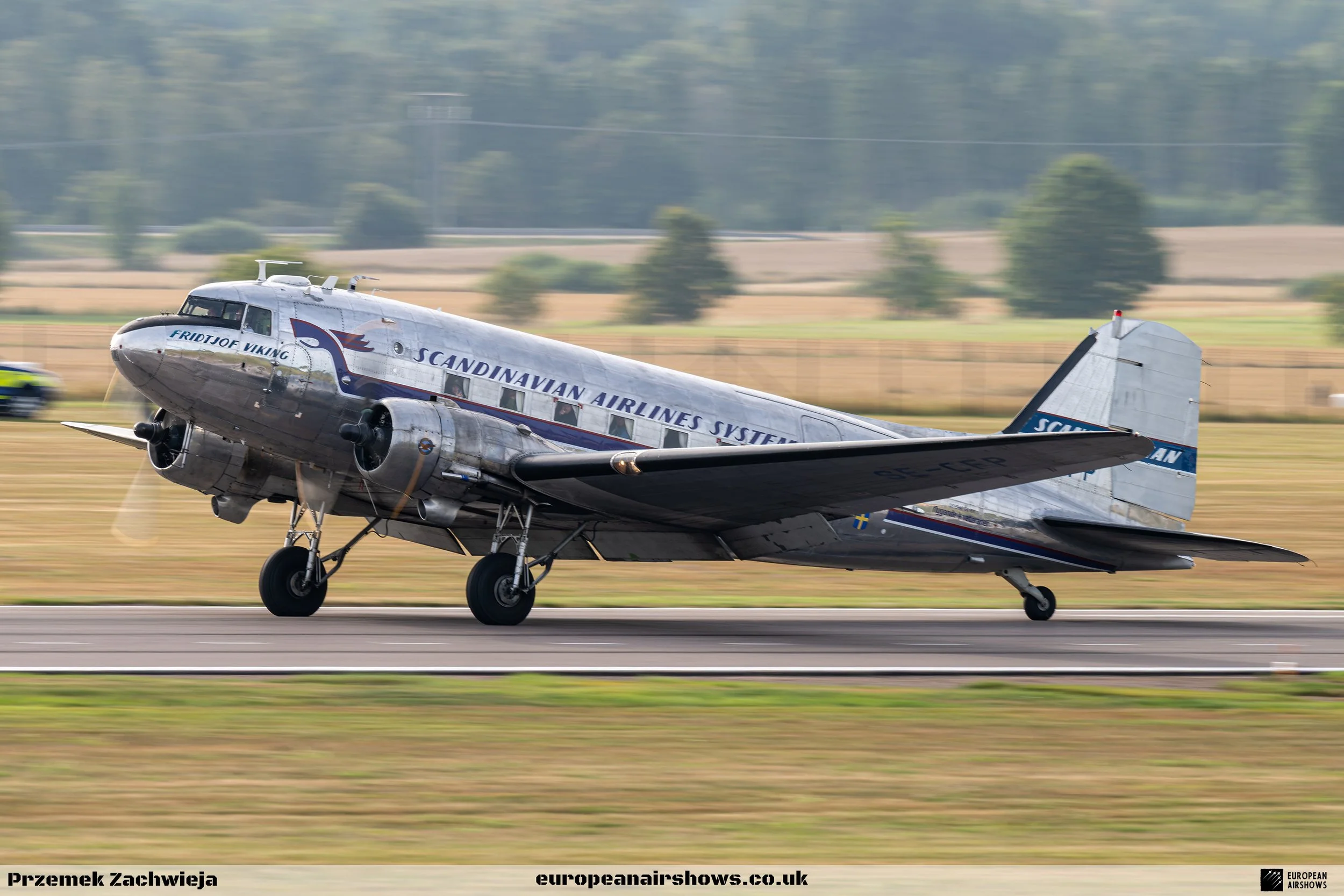
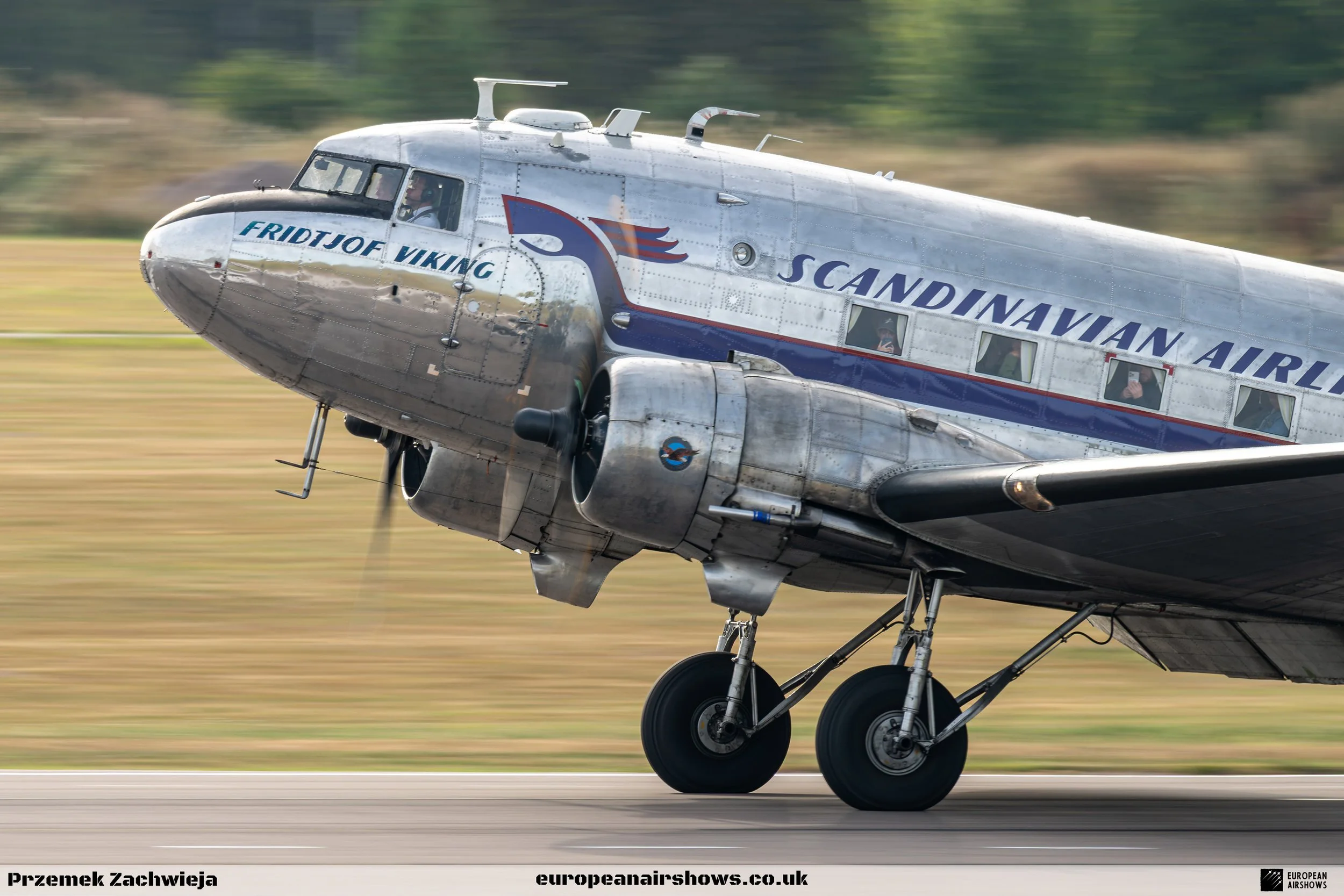
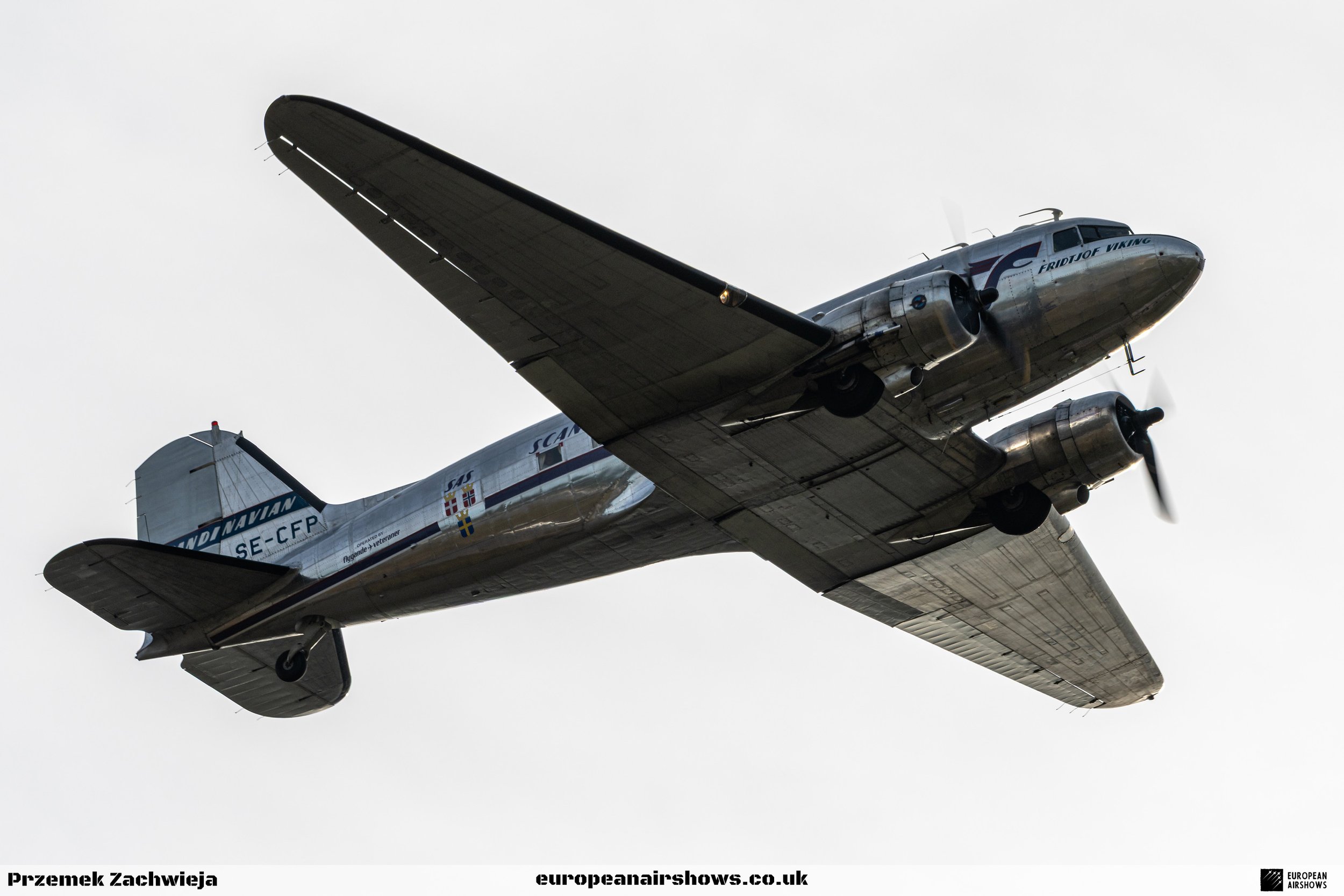
Daisy carried an even denser history. Built in 1943, the C-47 dropped paratroopers over Normandy on D-Day, later flew for Scandinavian airlines and joined the Swedish Air Force in 1960 as TP 79 number 79006. Today it flies with Flygande Veteraner. Few aircraft at Malmen had passed through so many chapters of European history.
Neither visitor was involved in the 1952 Catalina Affair, but together they represented its two Swedish aircraft types. A Flygvapnet TP 79 conducting signals-intelligence work over international waters in the Baltic was shot down by a Soviet MiG-15, killing all eight aboard. Three days later, a TP 47 Catalina searching for the missing crew was attacked and forced to land on the sea; its five crew members were rescued by a West German freighter.
The recovered DC-3 wreck sits inside Flygvapenmuseum. With a Catalina and Daisy in the air, and an aircraft from the MiG-15 family also flying, the centenary brought the central types from one of Flygvapnet’s most painful episodes together within sight of the wreck. That gave the following jet sequence far more meaning than a simple “MiG versus Sabre” set piece.
Sweden between East and West
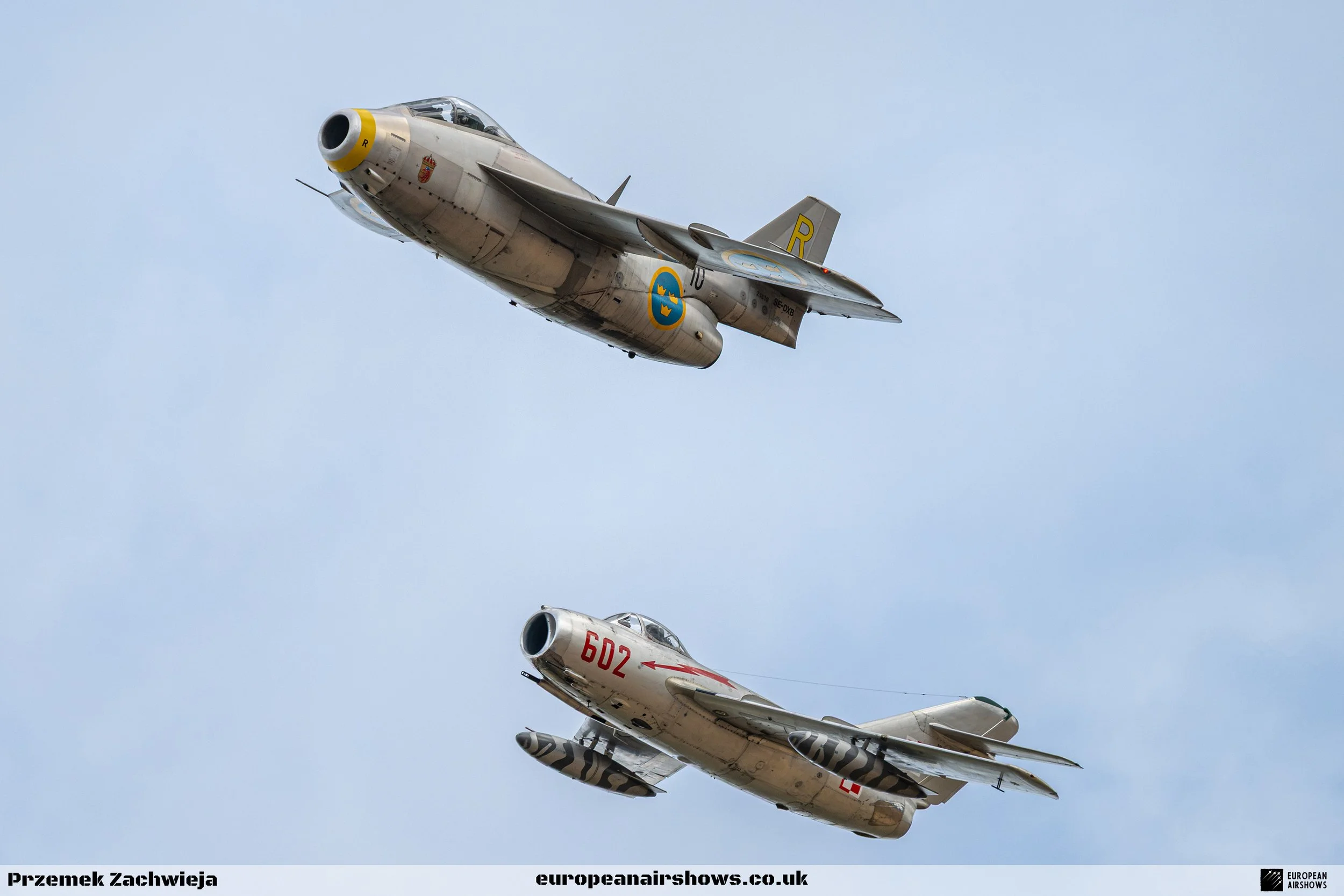
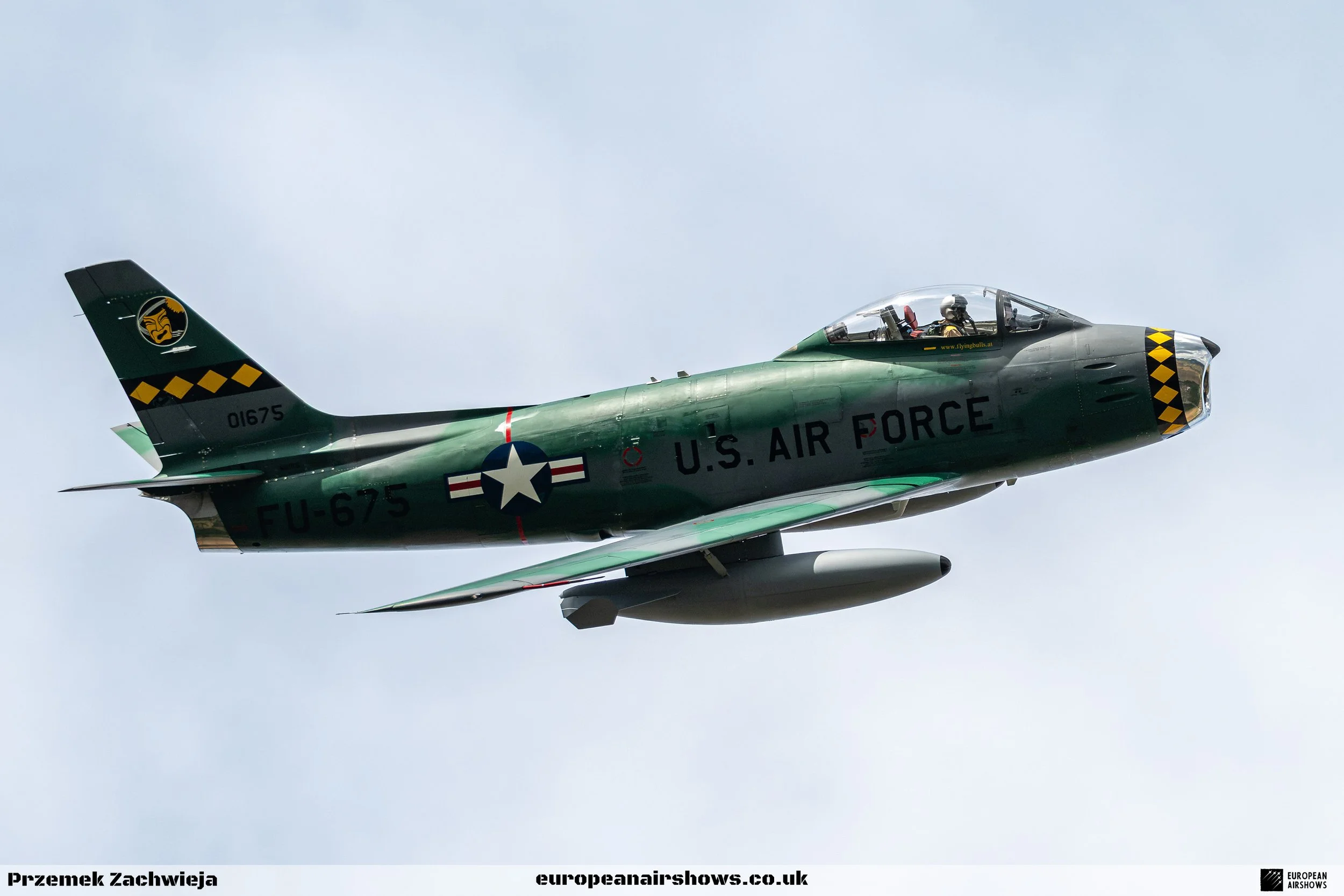
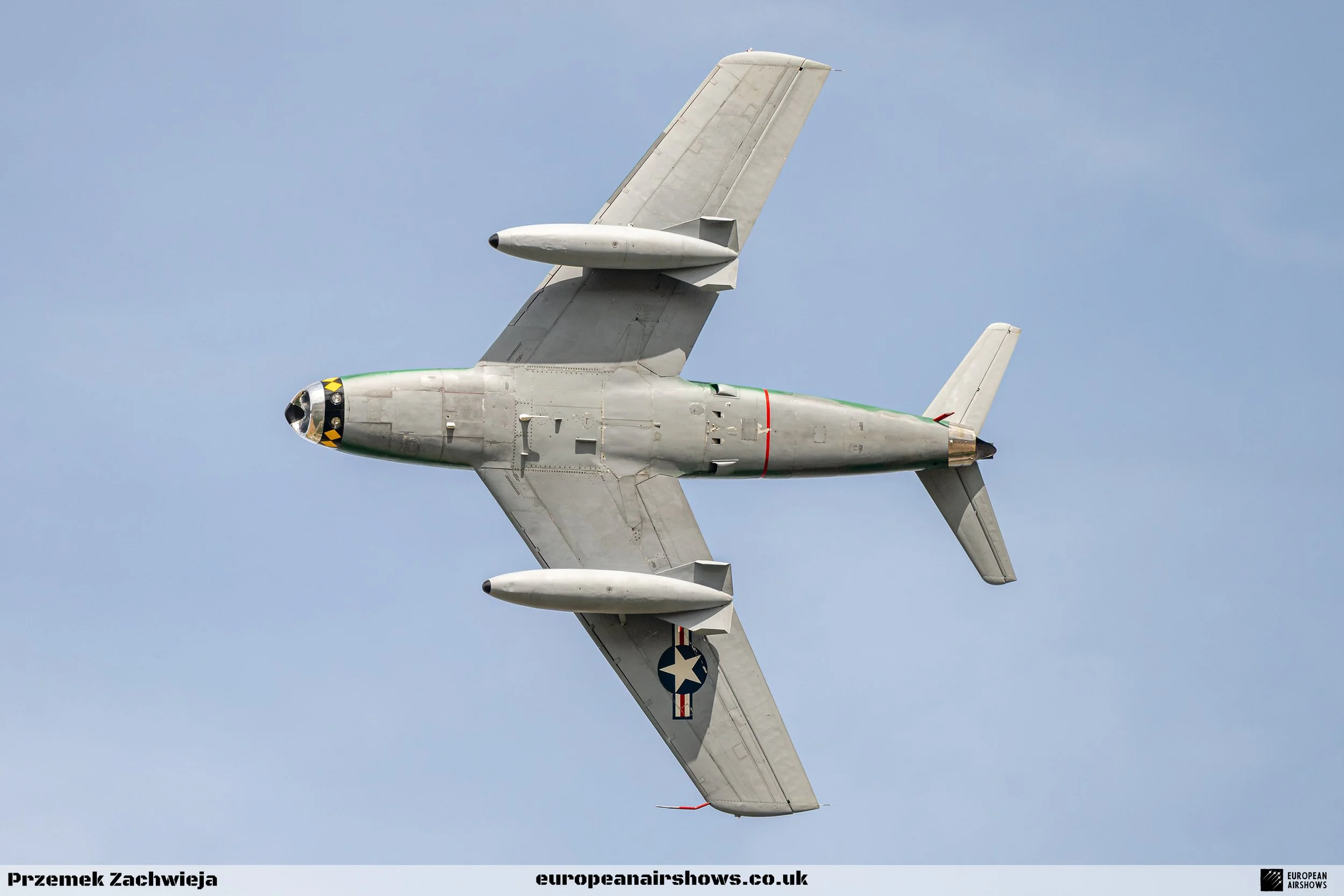
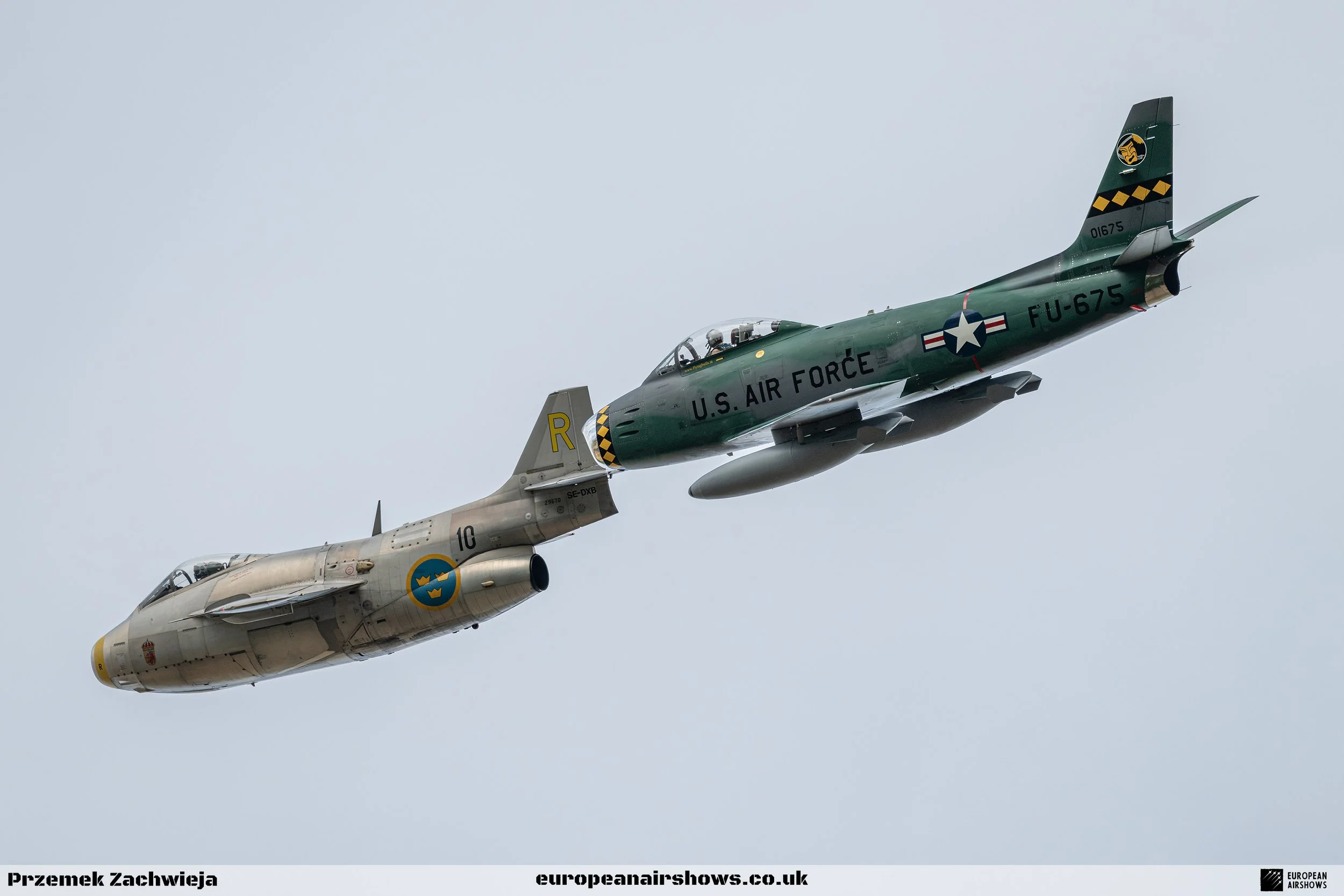
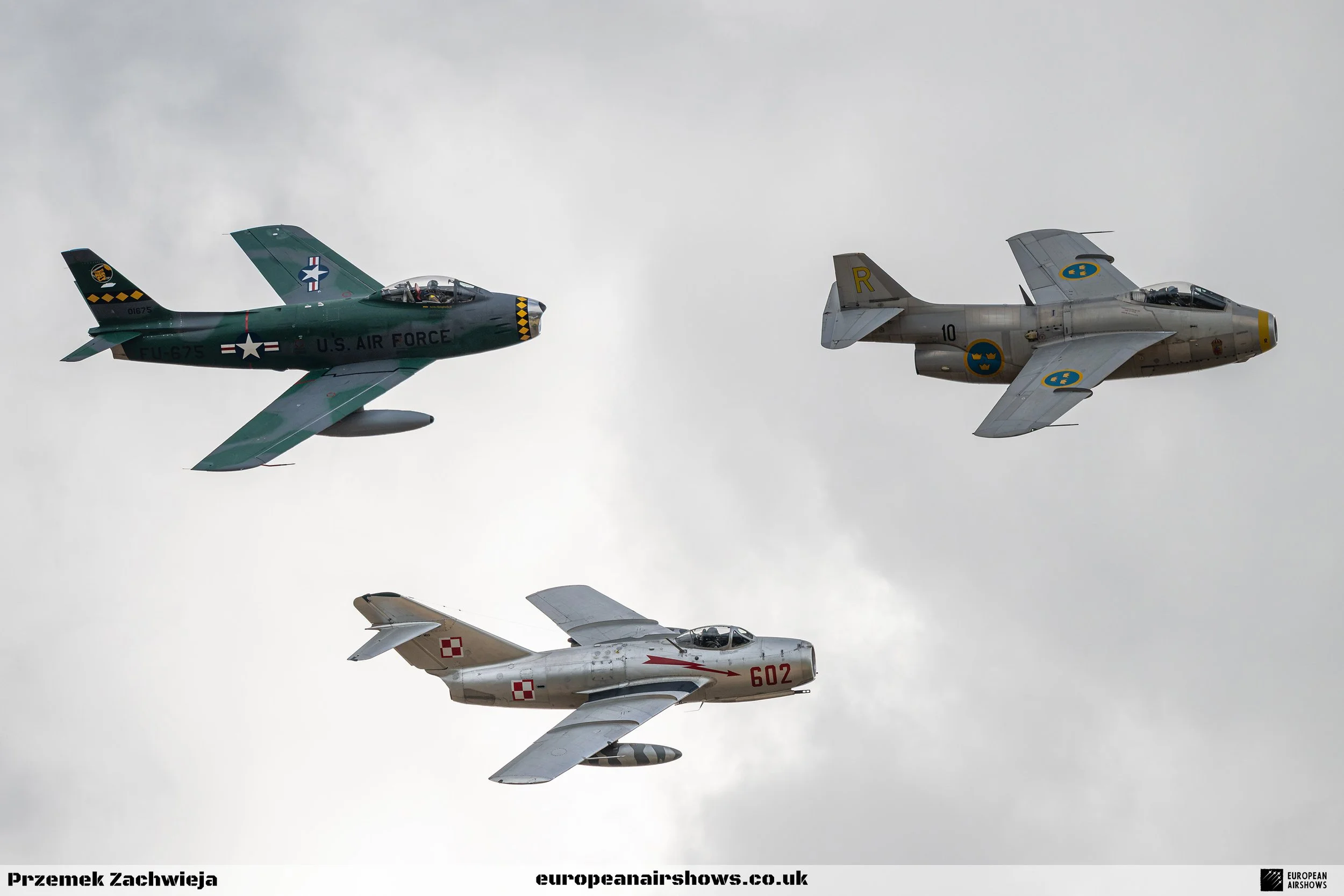
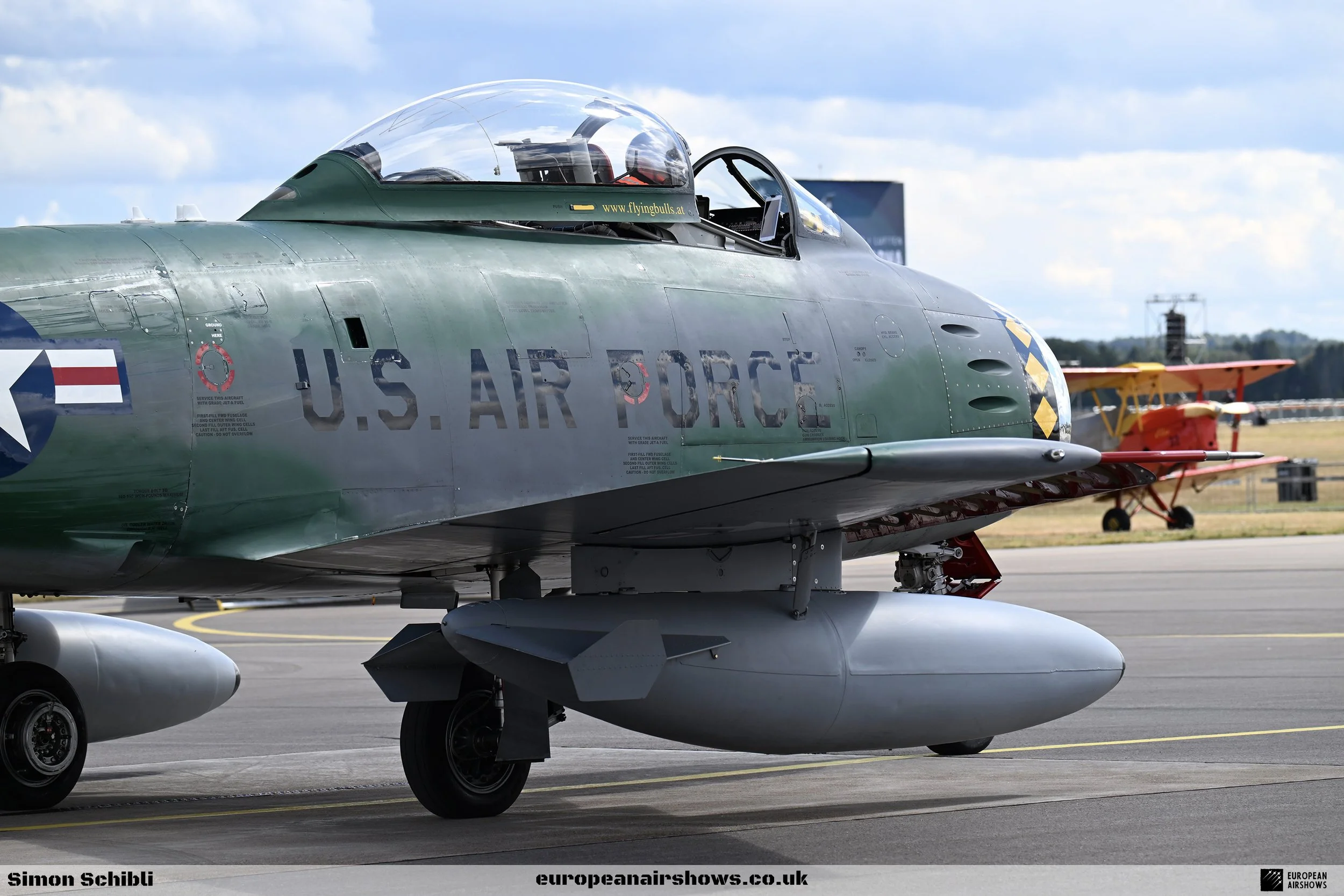
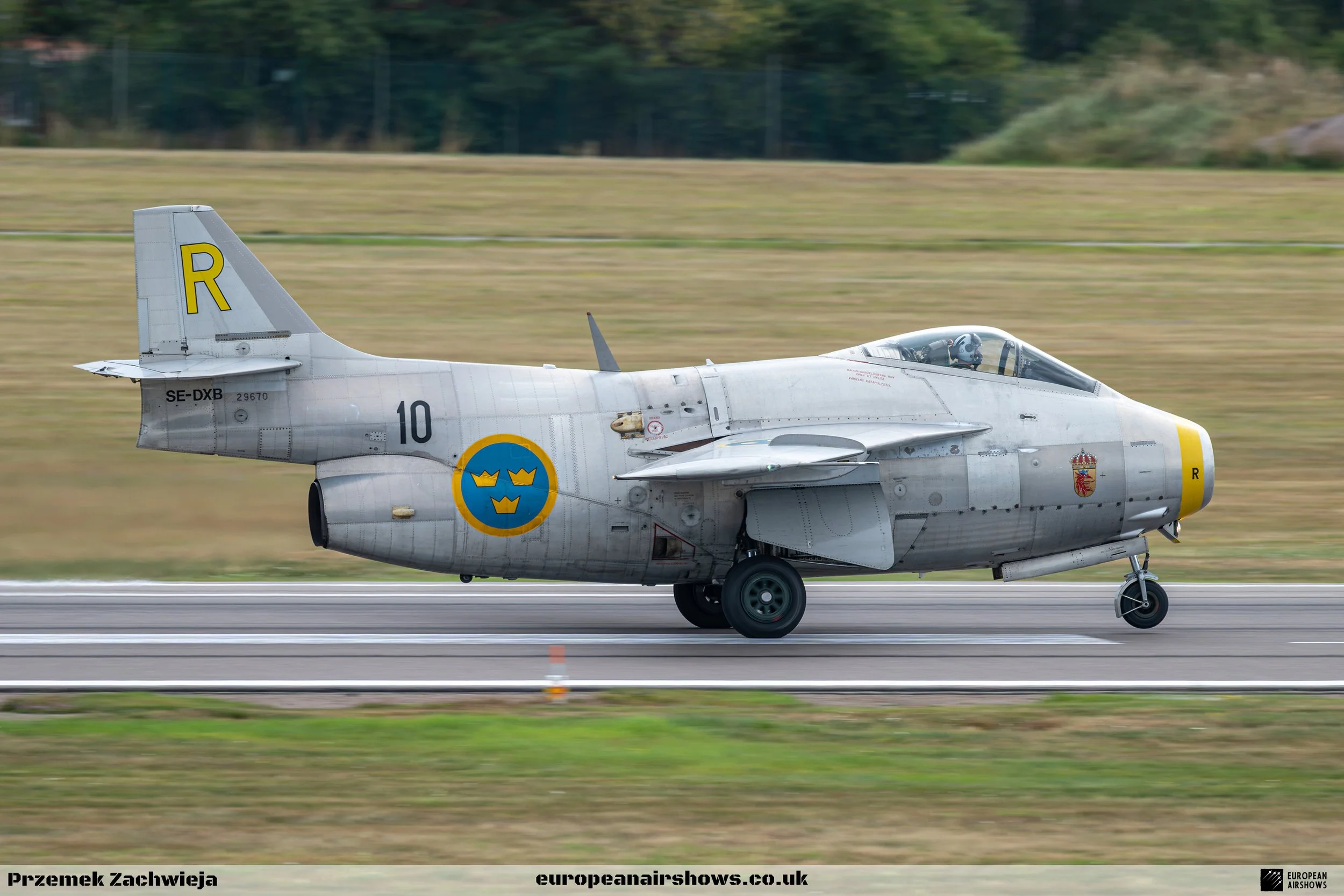
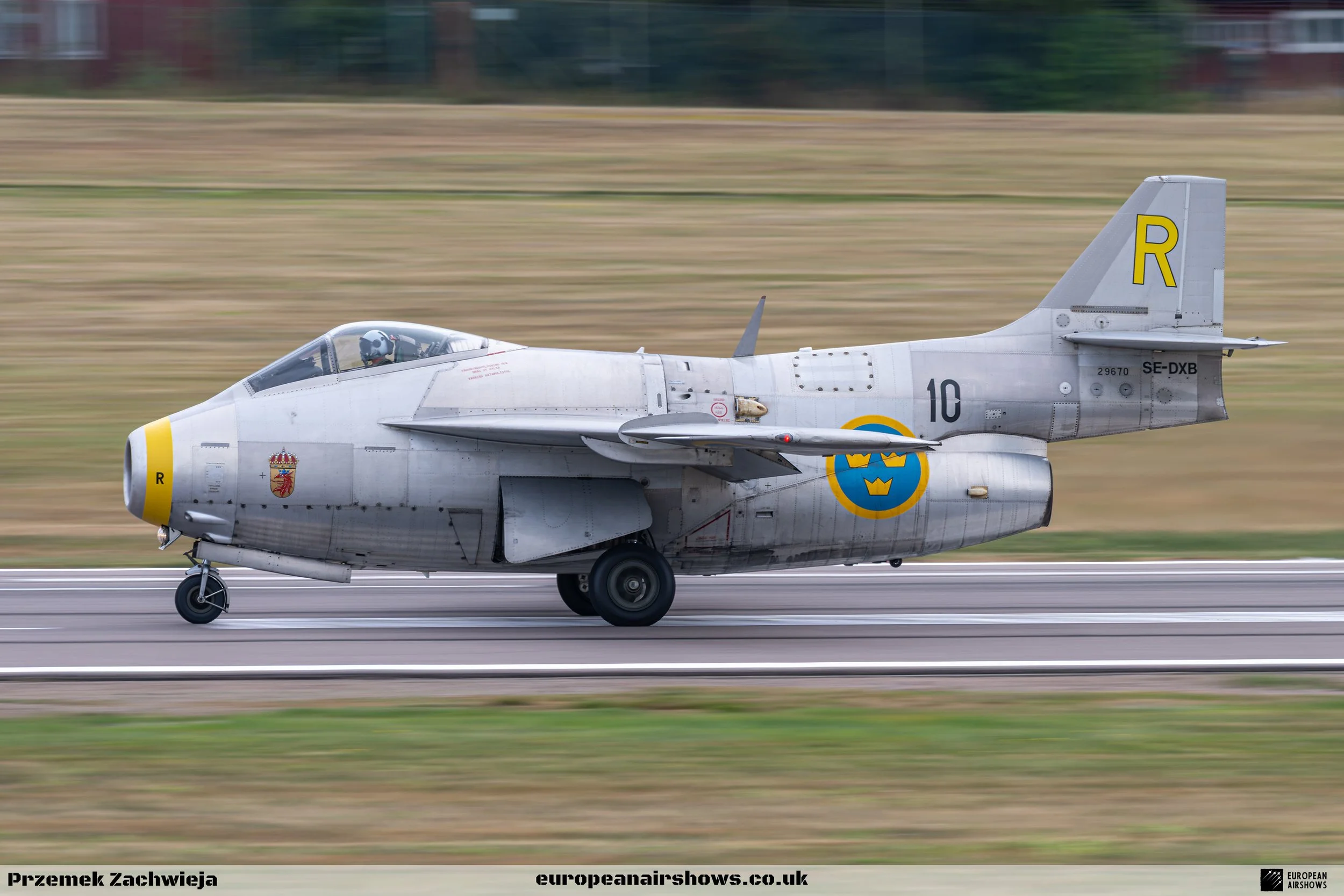
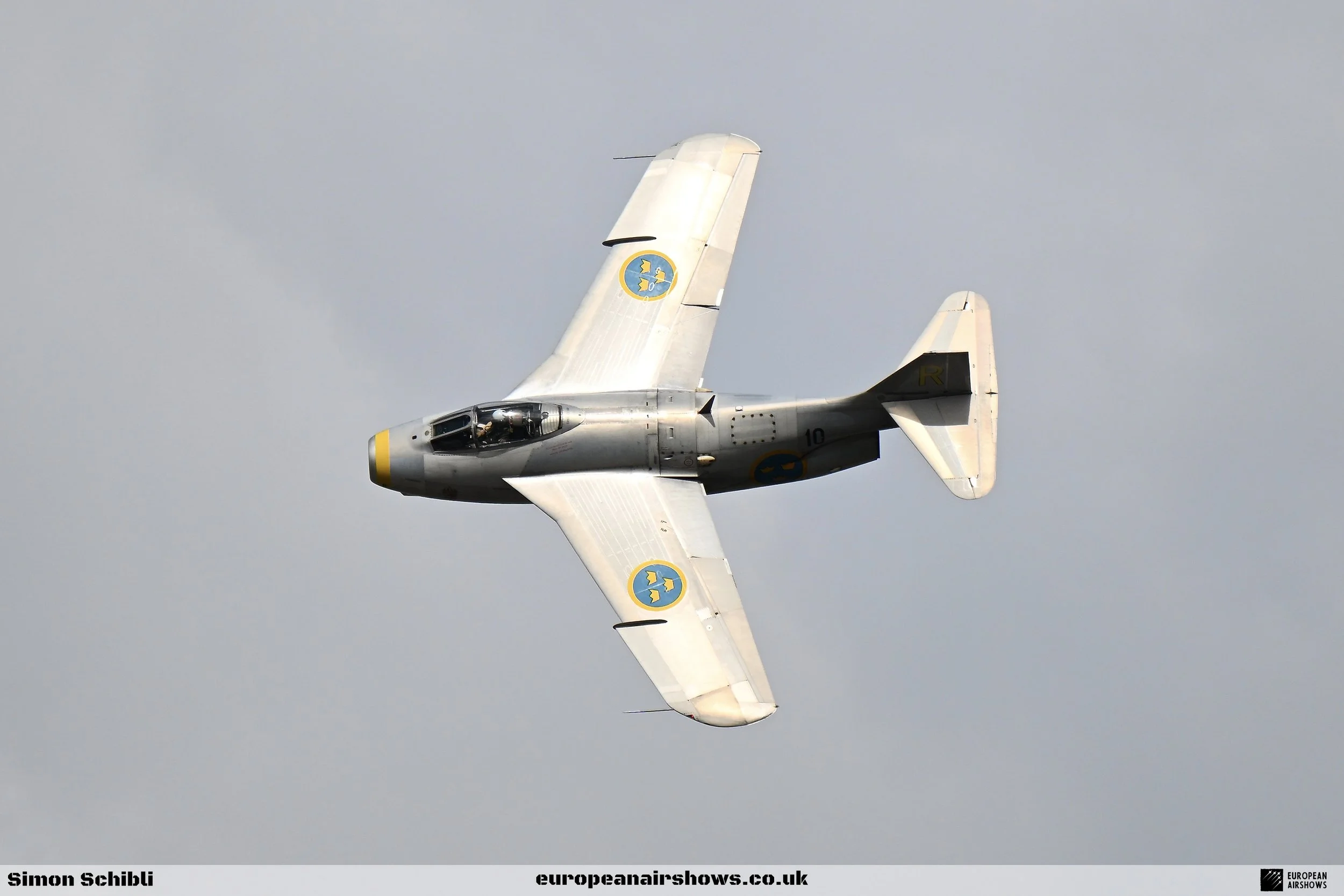
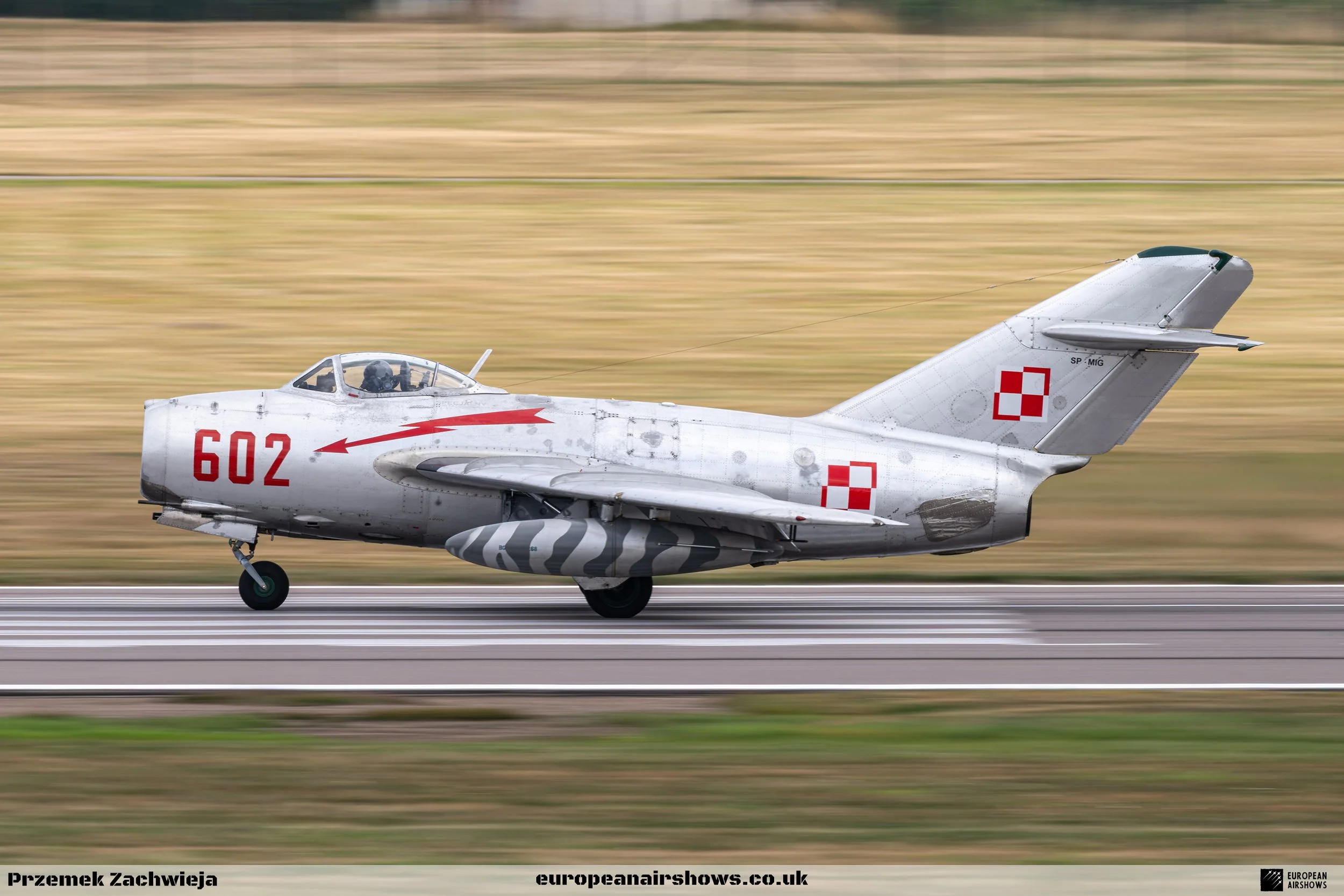
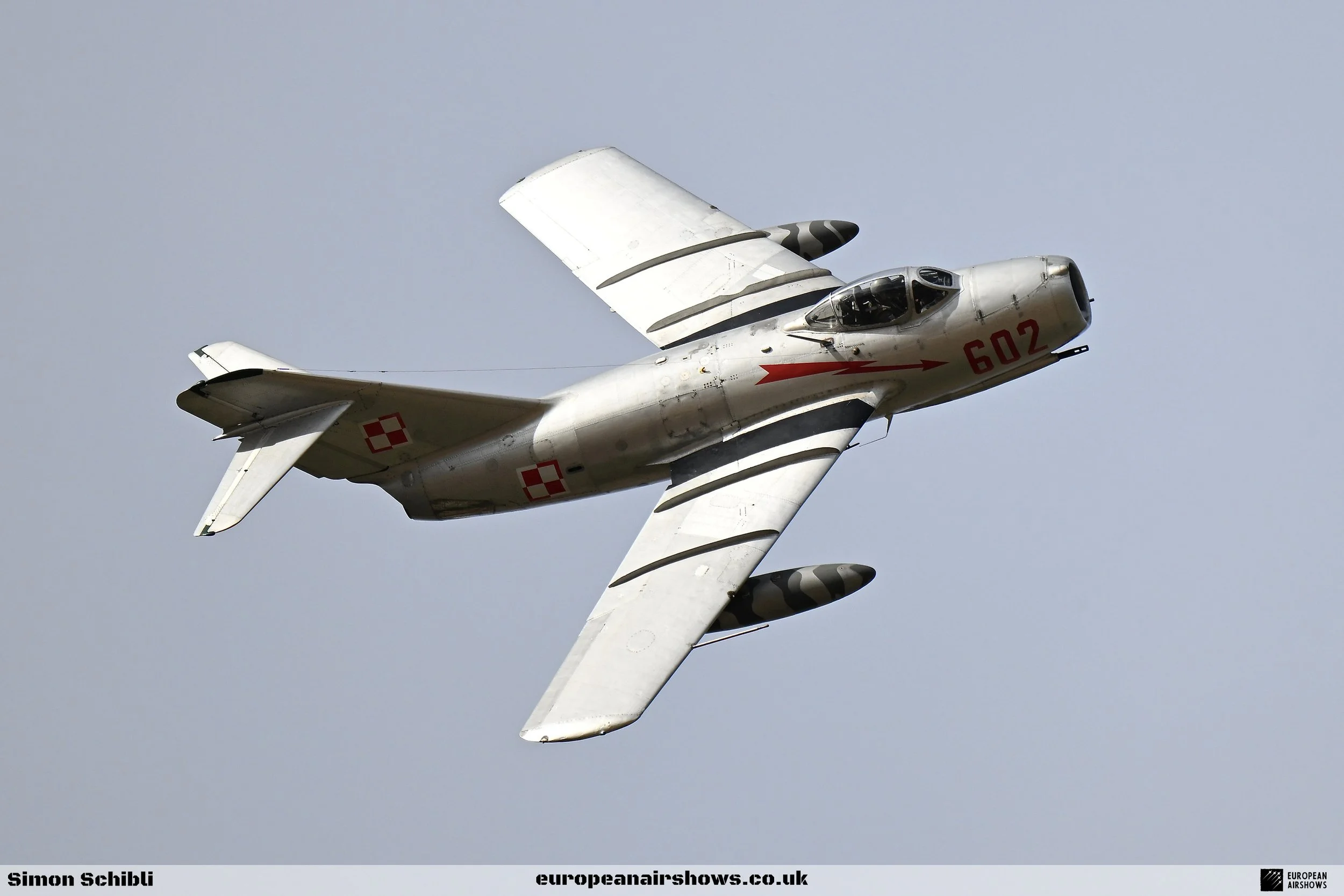
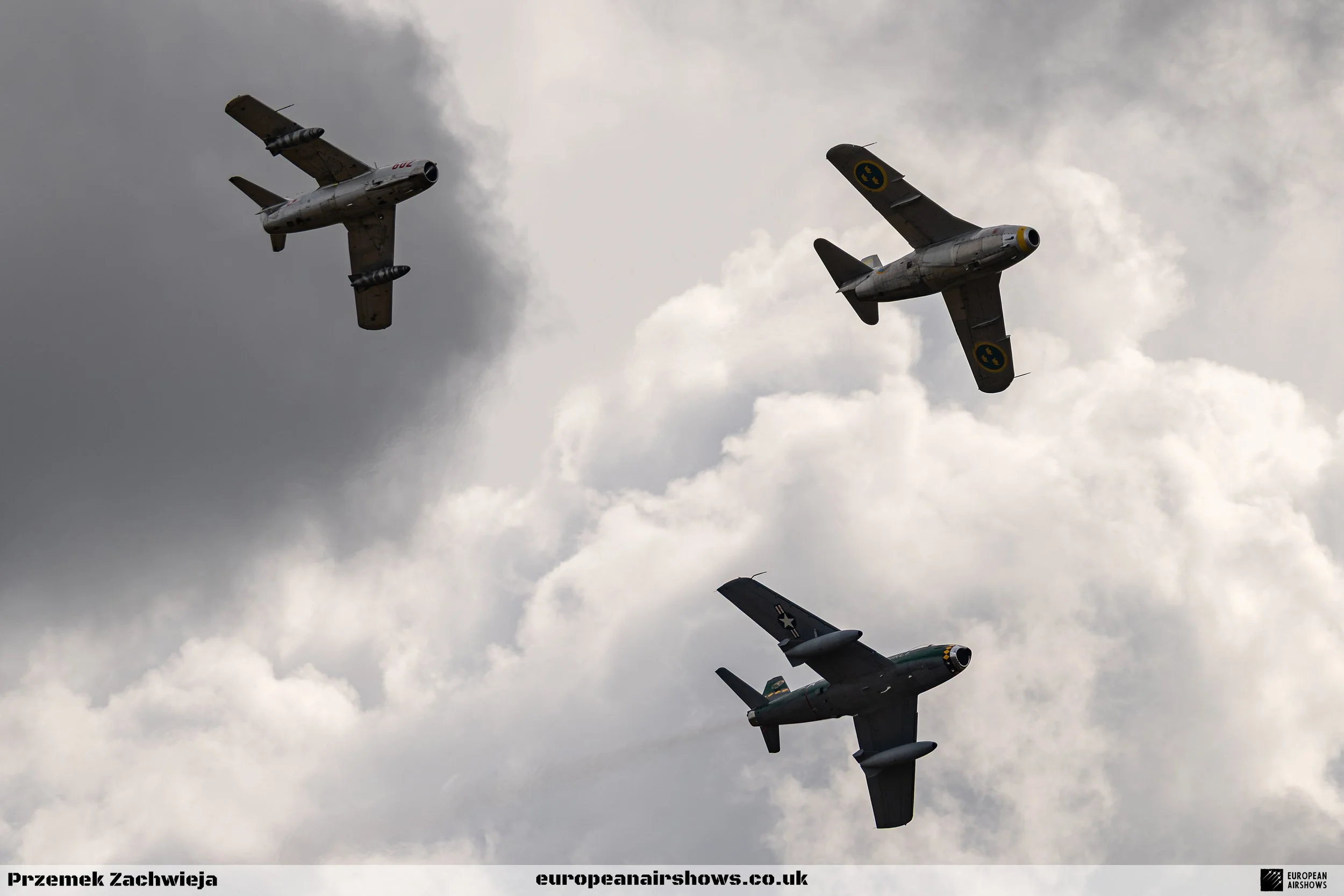
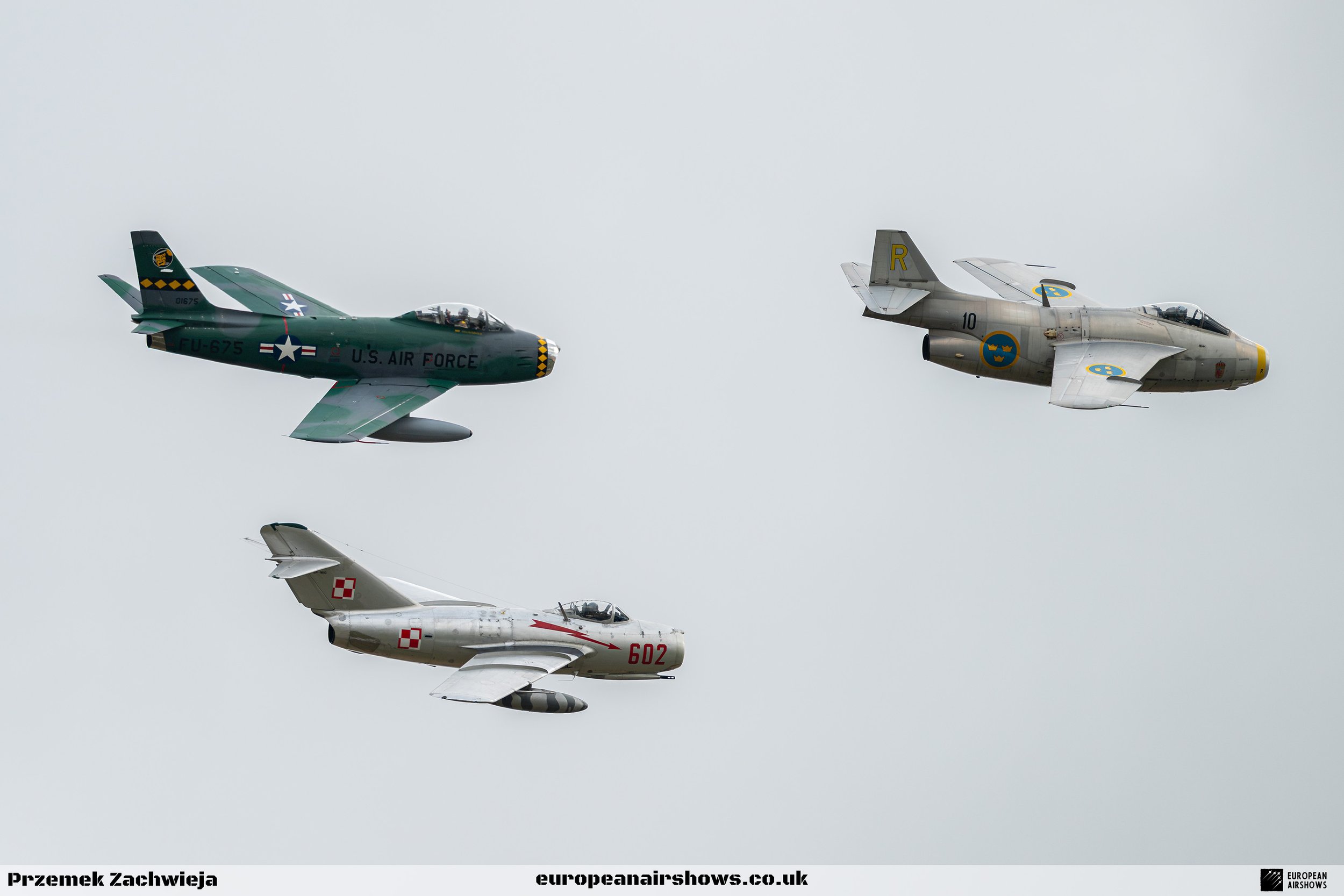
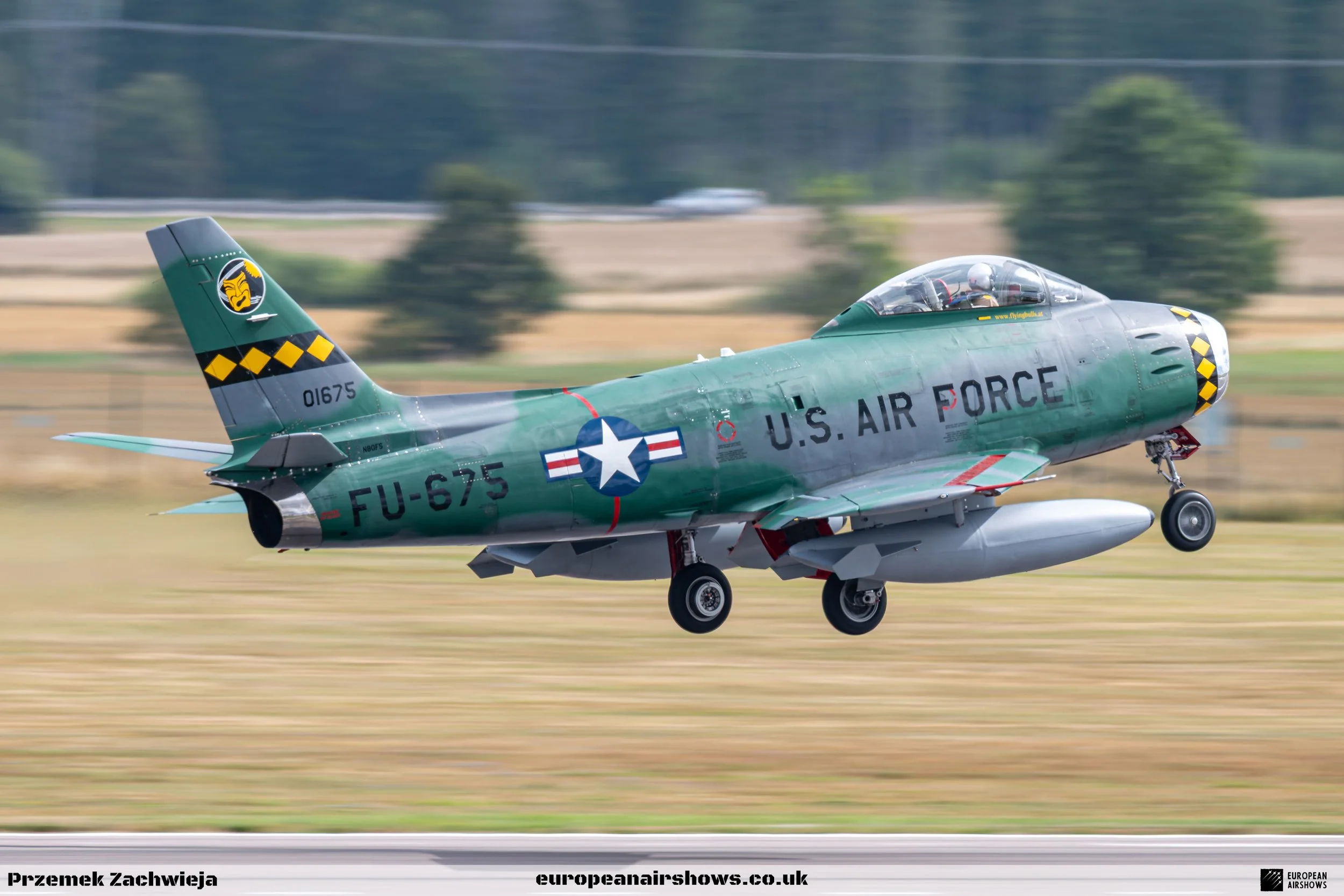
Listed simply as a MiG-15, the aircraft was actually Warsaw-based FUBAR Aviation’s Polish-built PZL-Mielec Lim-2—the licence-produced equivalent of the MiG-15bis. It joined The Flying Bulls’ Canadair CL-13B Sabre Mk.6 and Swedish Air Force Historic Flight’s Saab J 29F Tunnan for formation passes which placed Sweden’s first swept-wing fighter between its famous Eastern and Western contemporaries. The Flying Bulls’ machine is the final, Orenda-powered Sabre variant and the only Mk.6 currently flying in Europe, so this was a genuinely special trio rather than three convenient old jets.
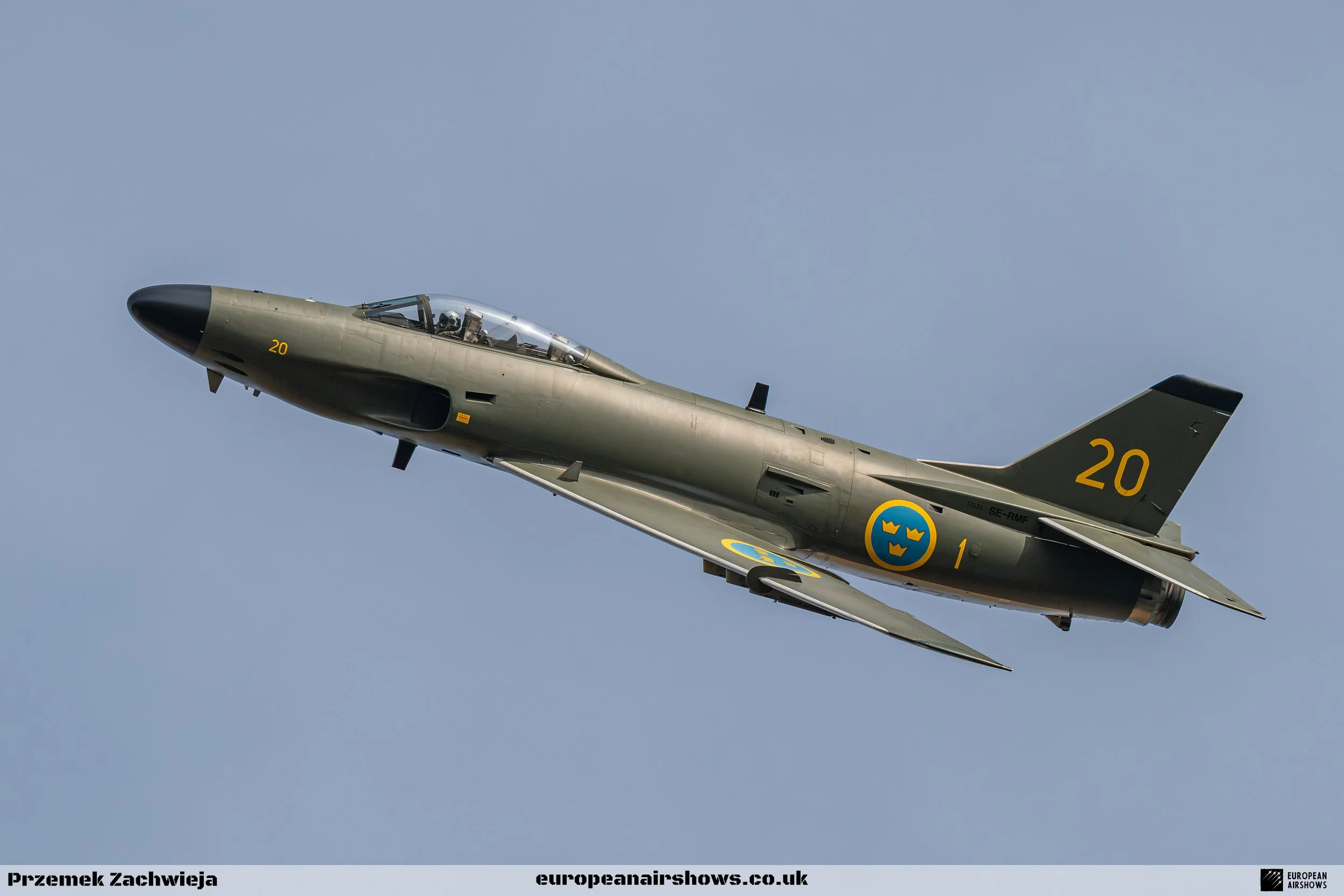
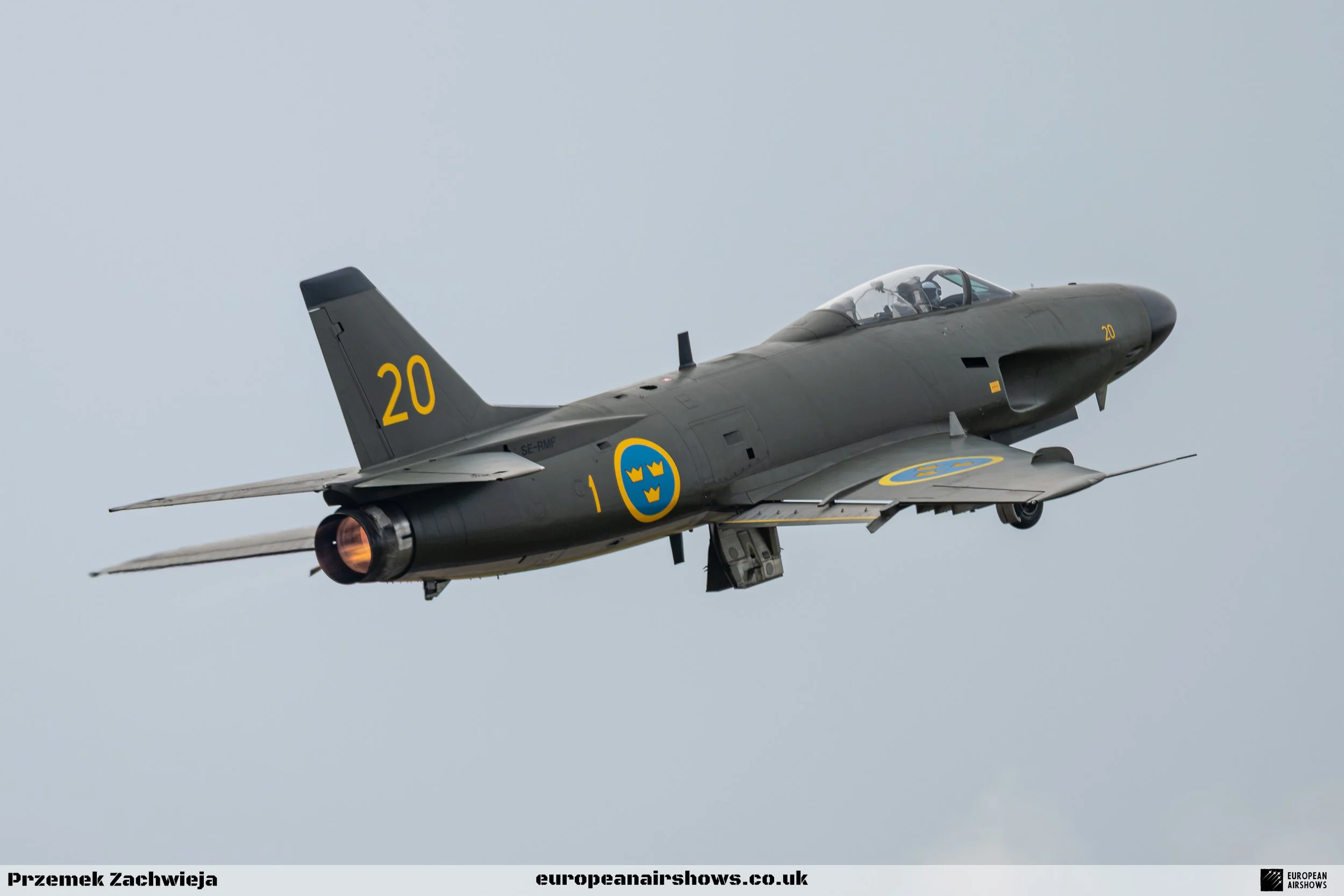
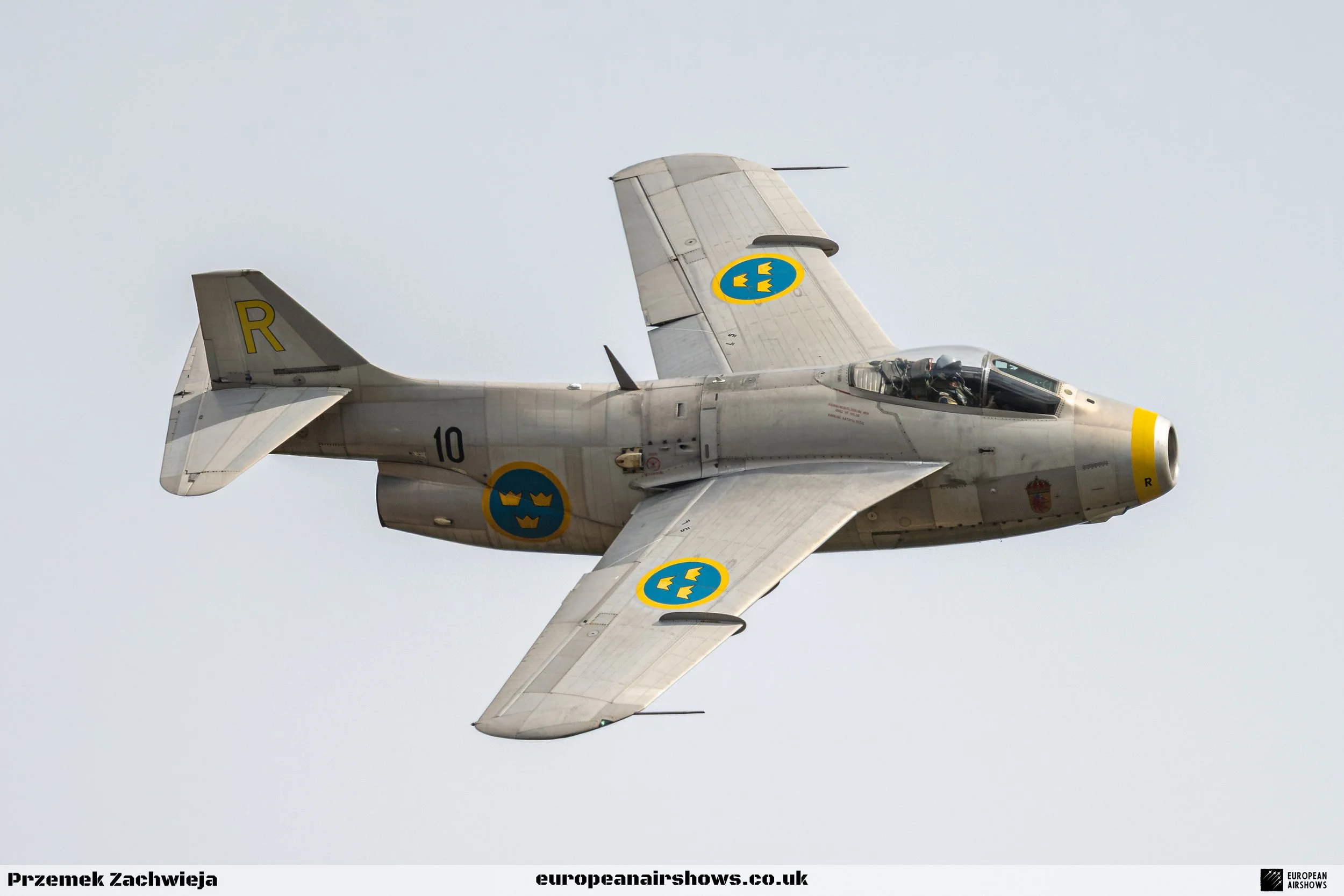
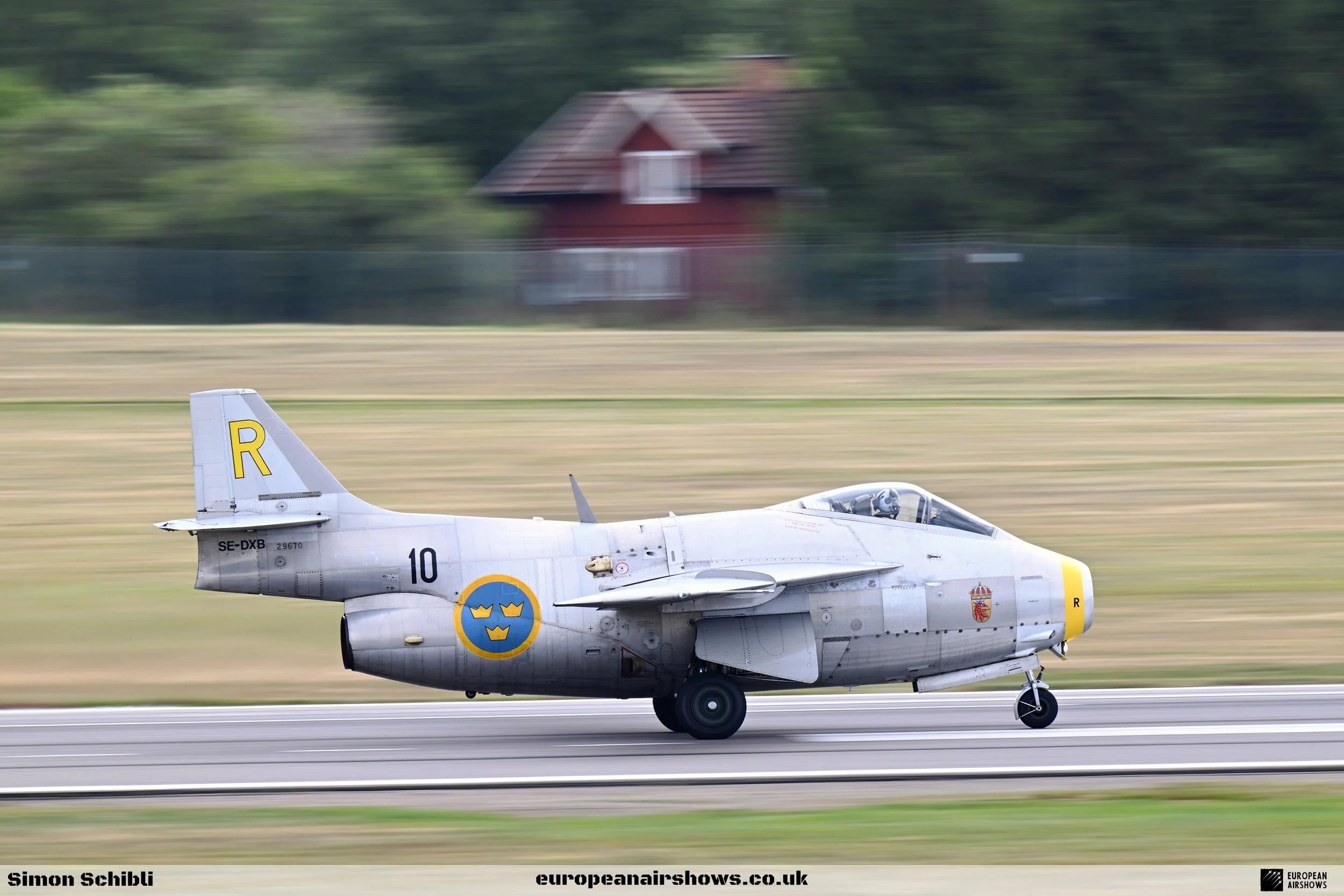
The Lim-2 and Sabre then broke into a simulated dogfight. It was a superb idea and one of the most historically intelligent items in the programme, but once again the distant display box stole much of the drama. The Tunnan returned for a solo, although oddly without the afterburner most people expected. Whatever the operational reason, it left the display missing the fiery punctuation normally associated with the J 29F.
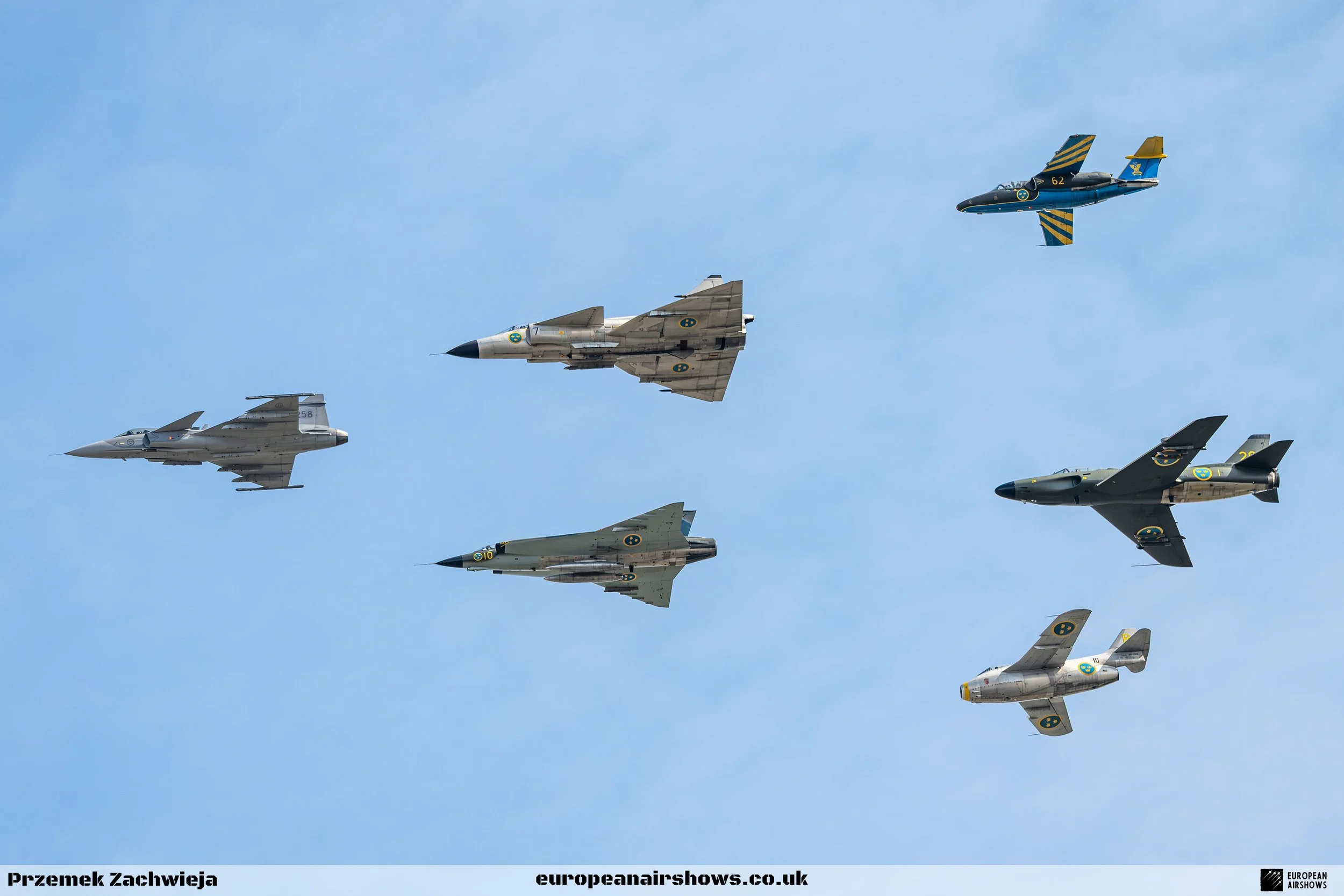
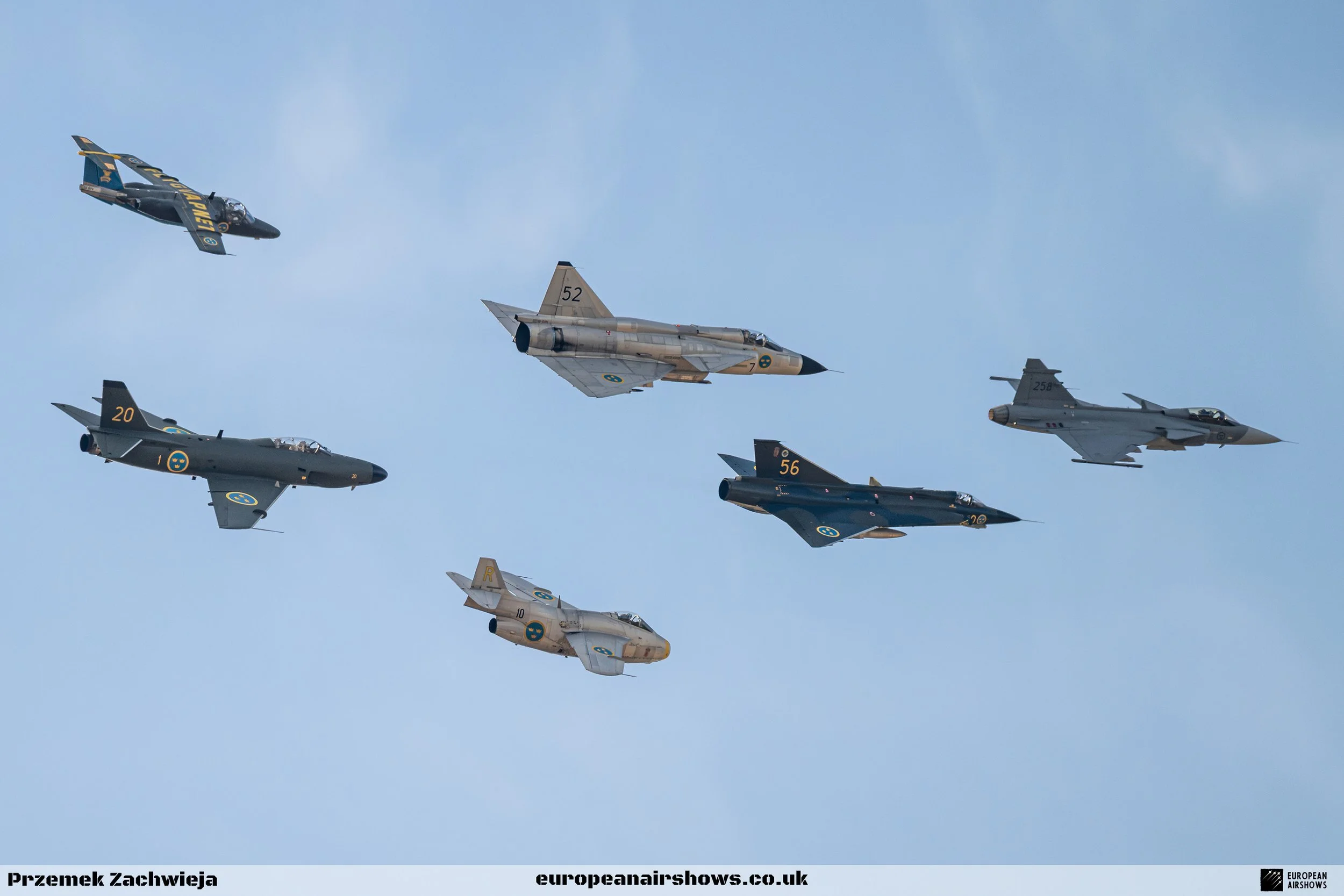
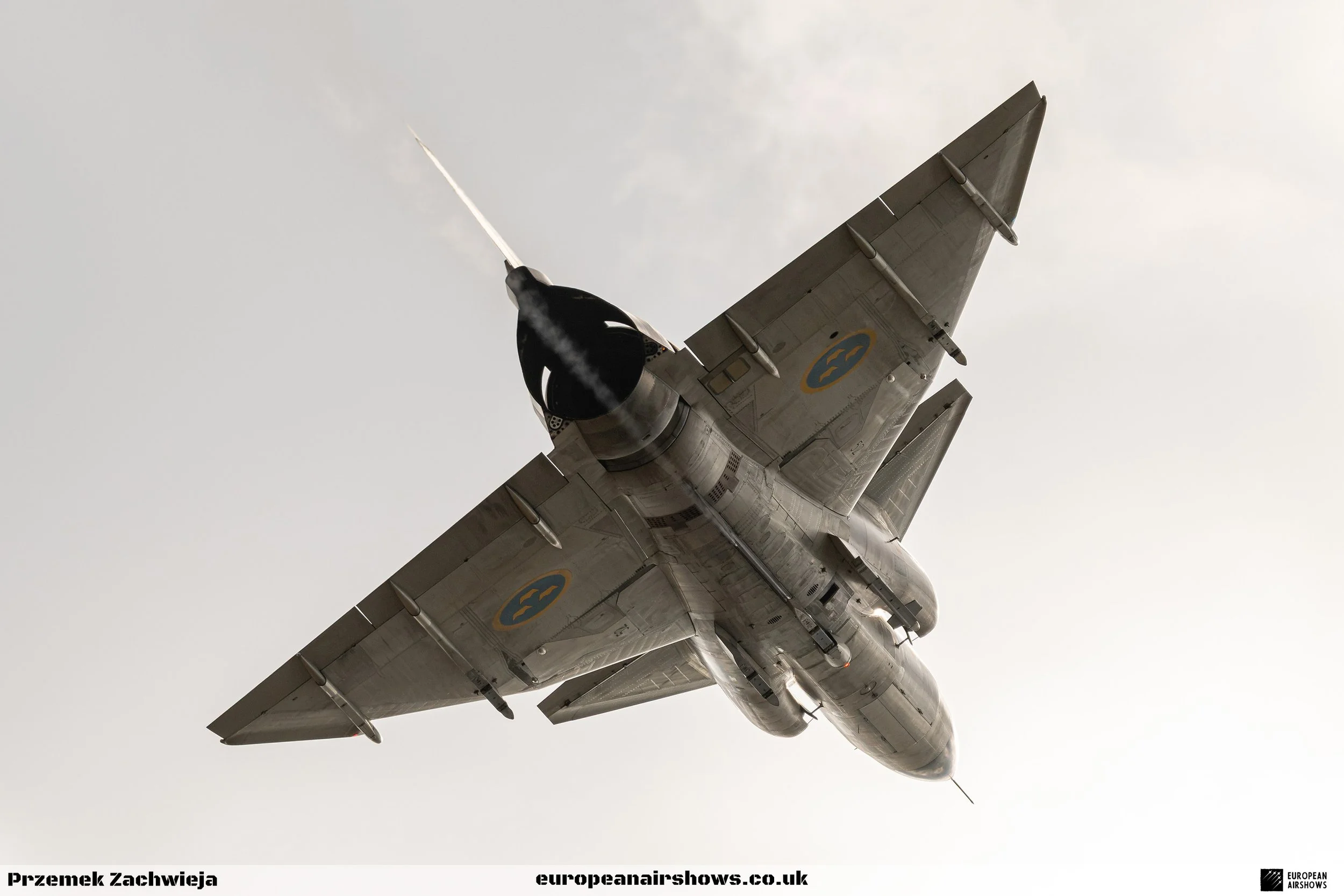
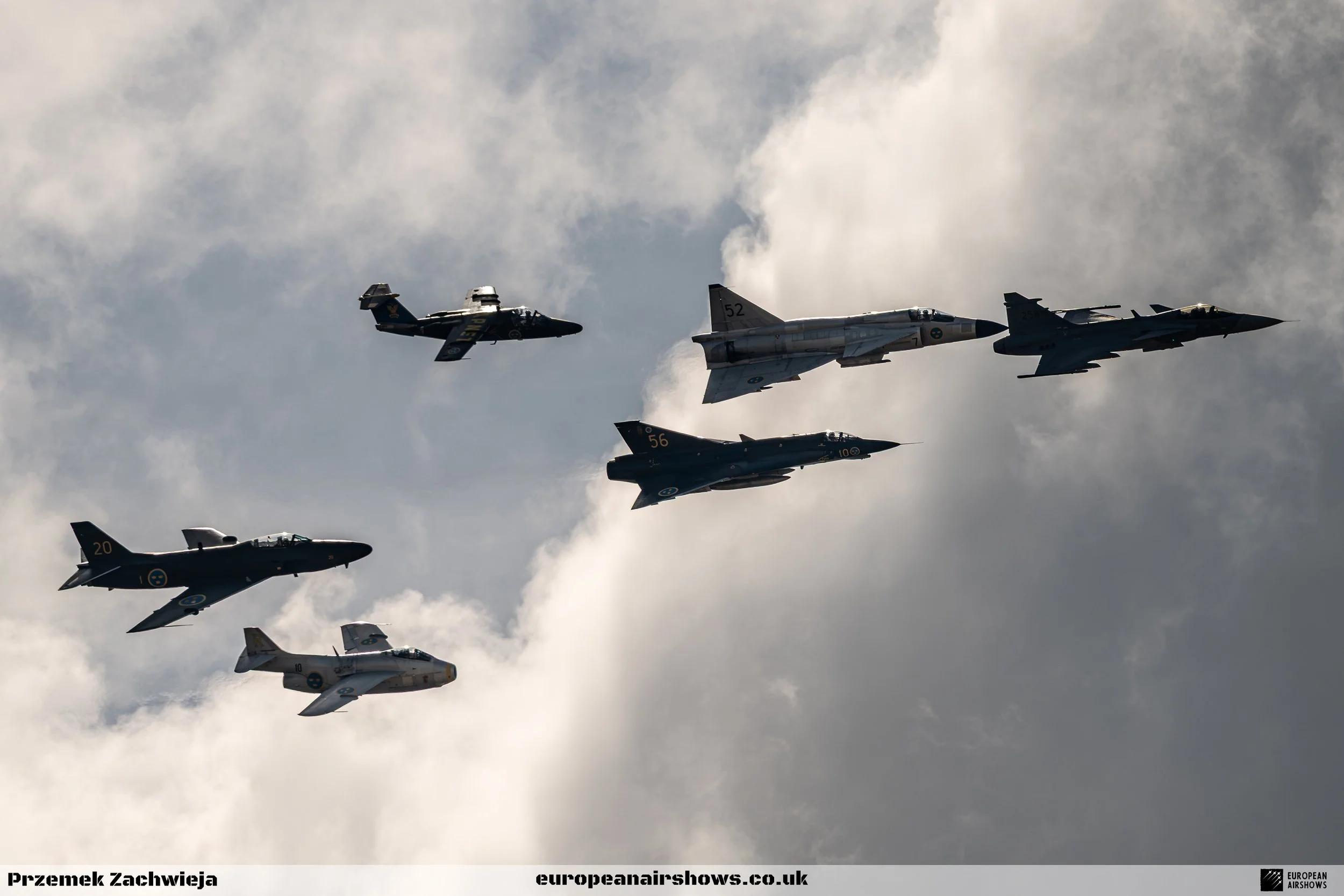
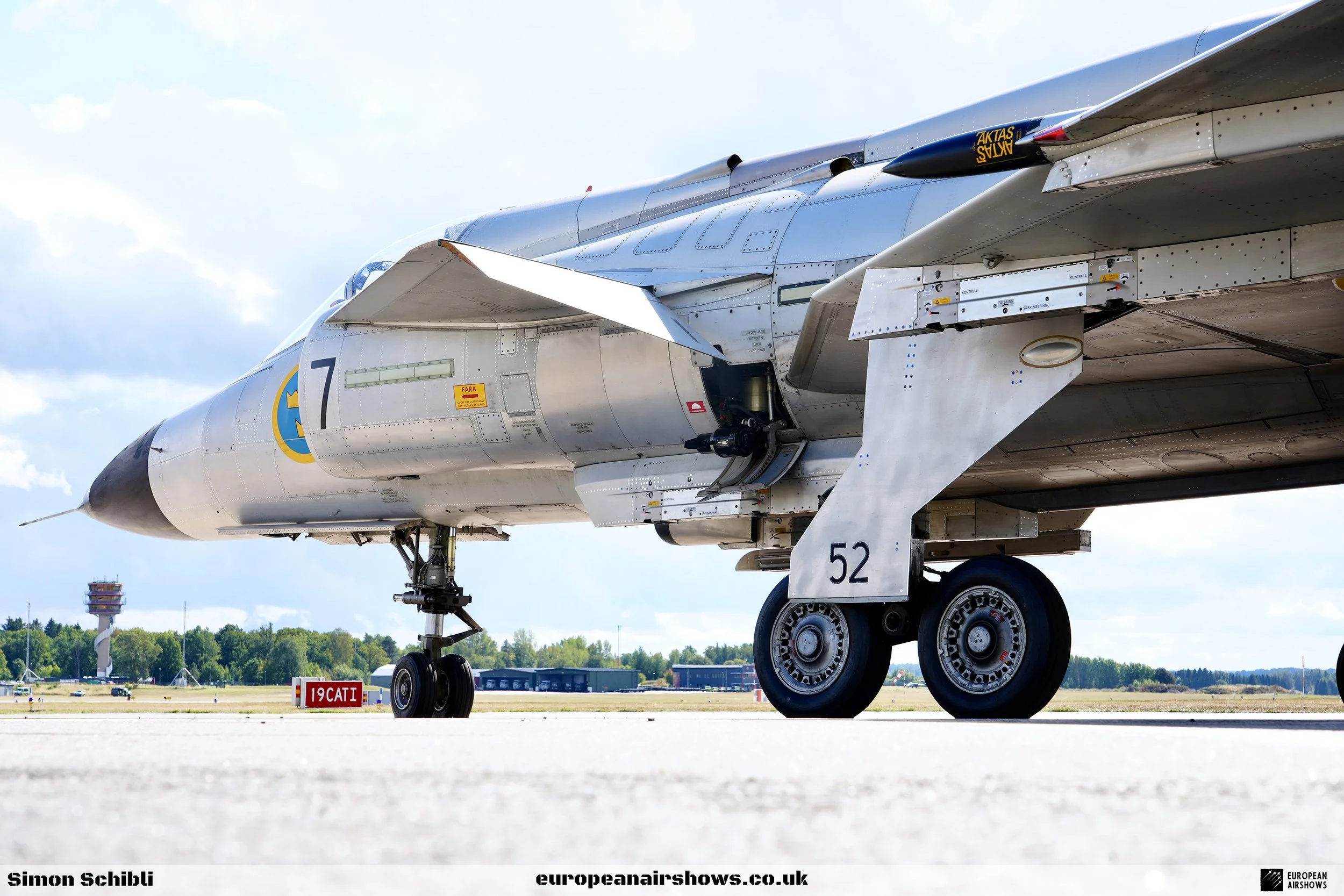
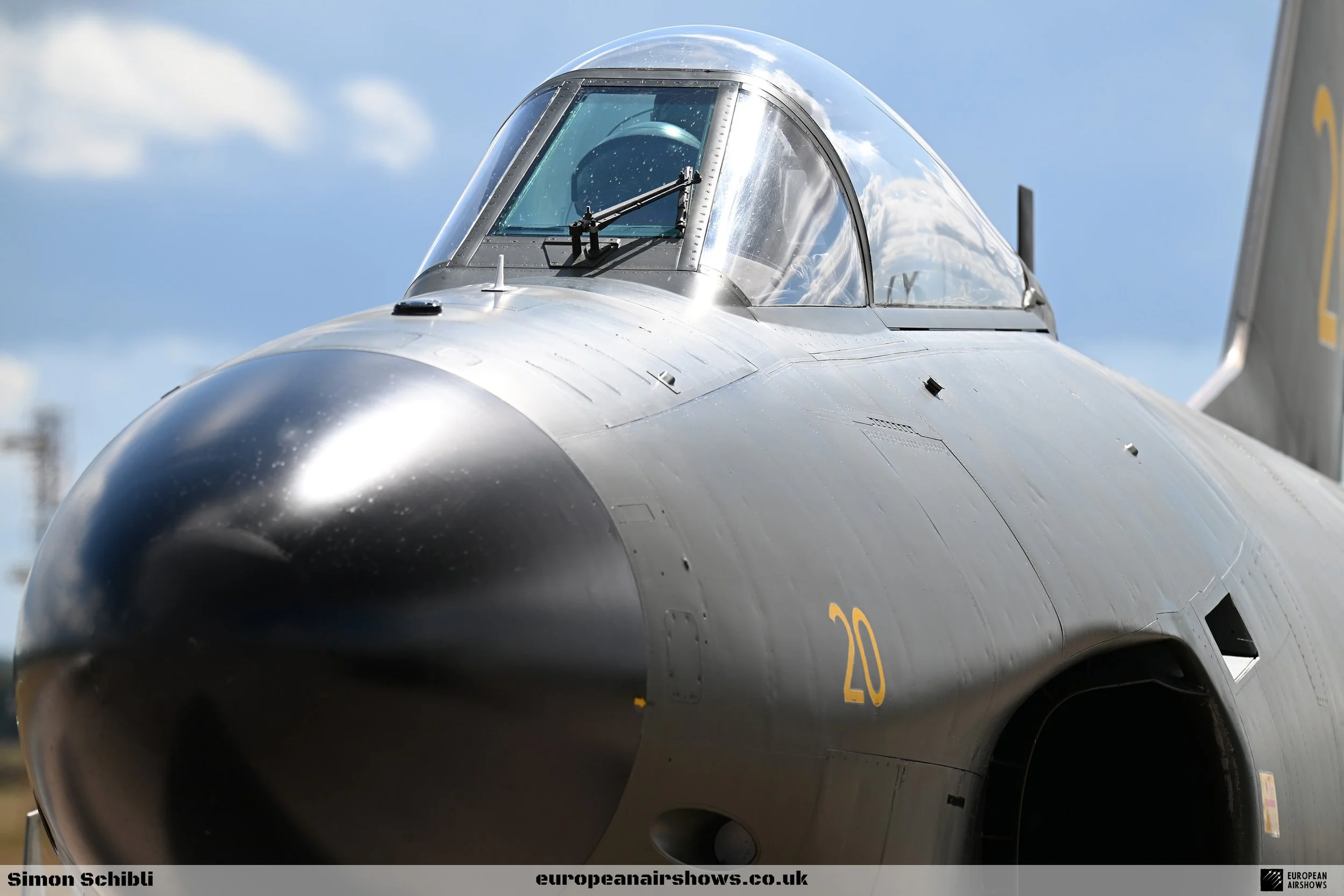
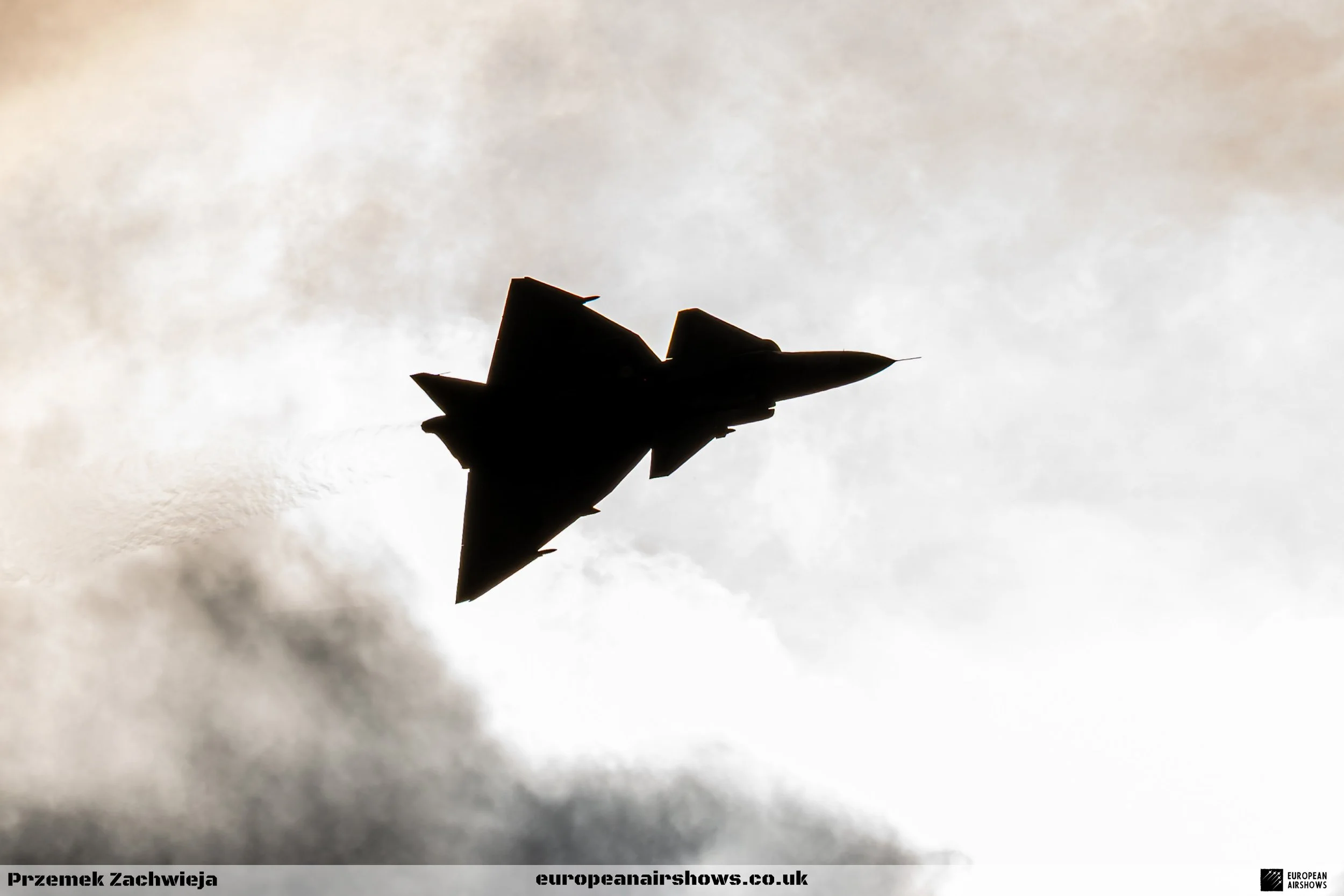
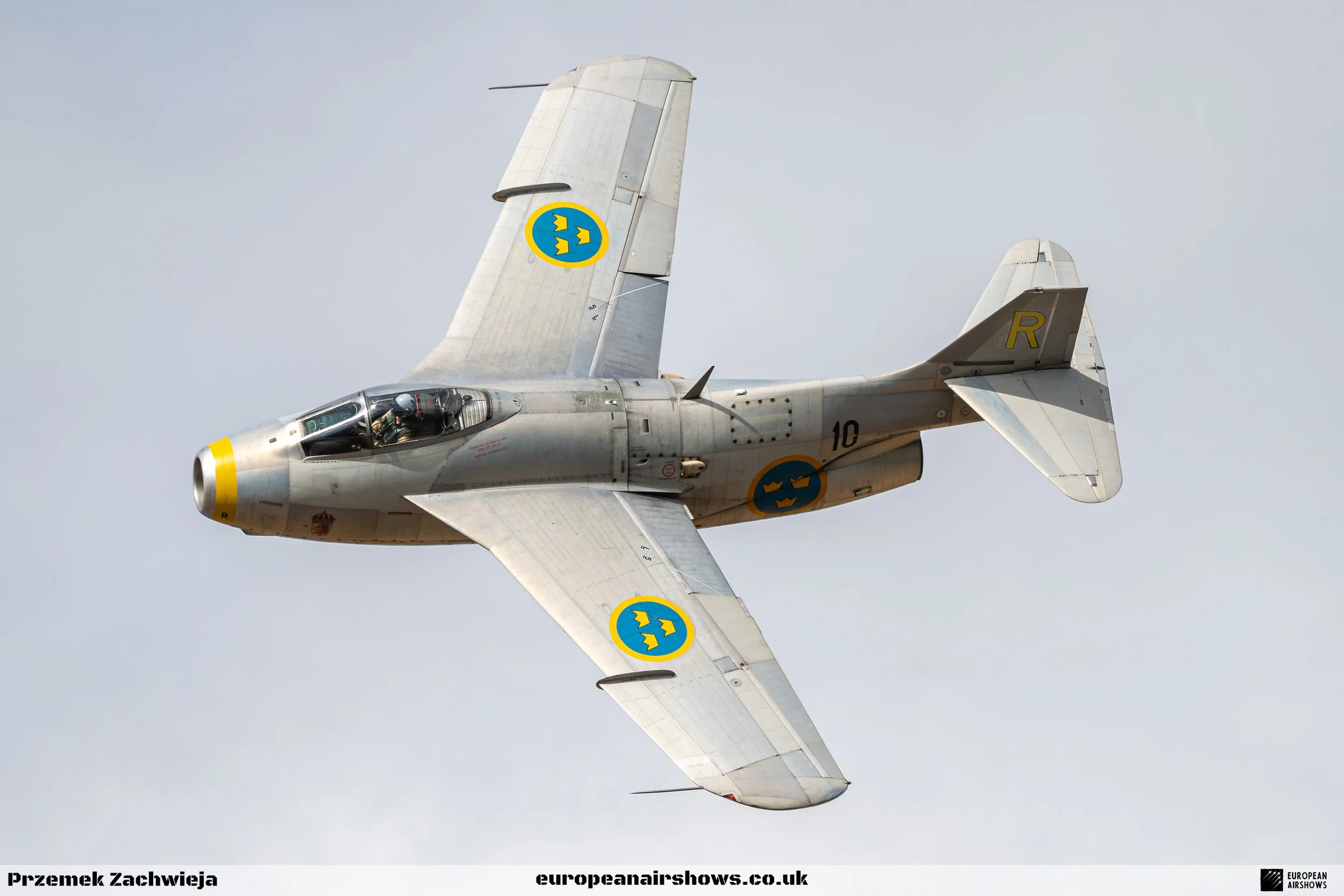
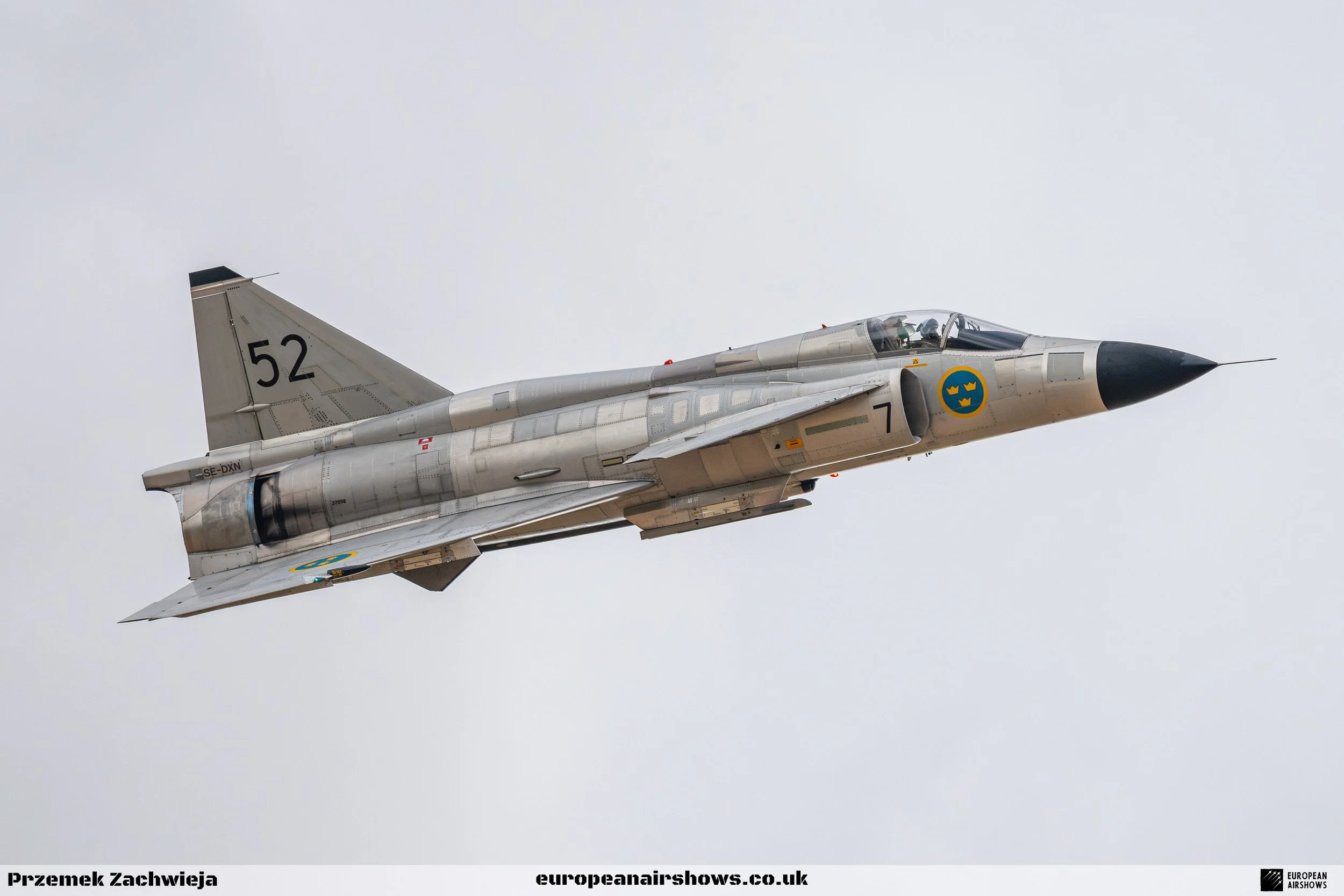
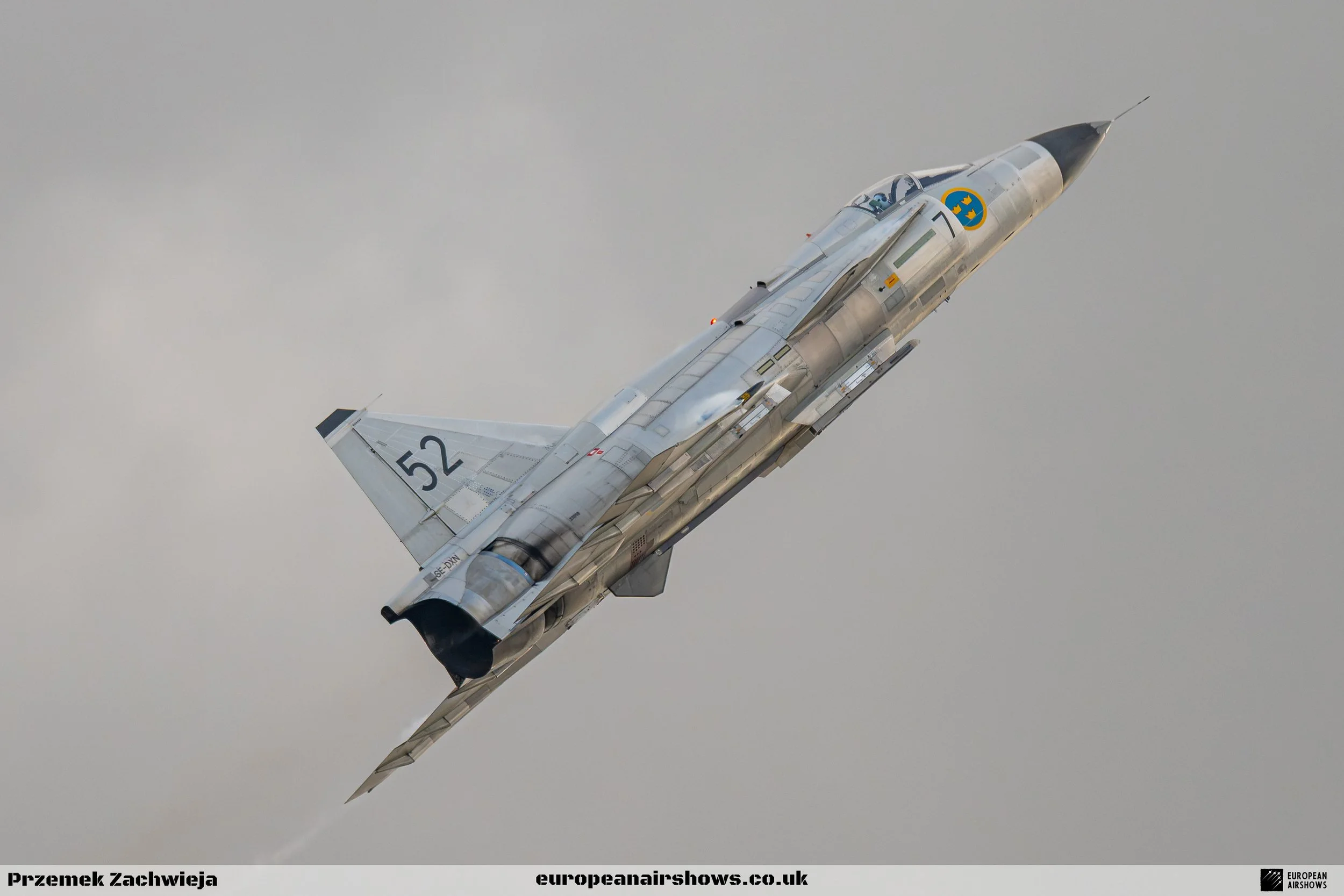
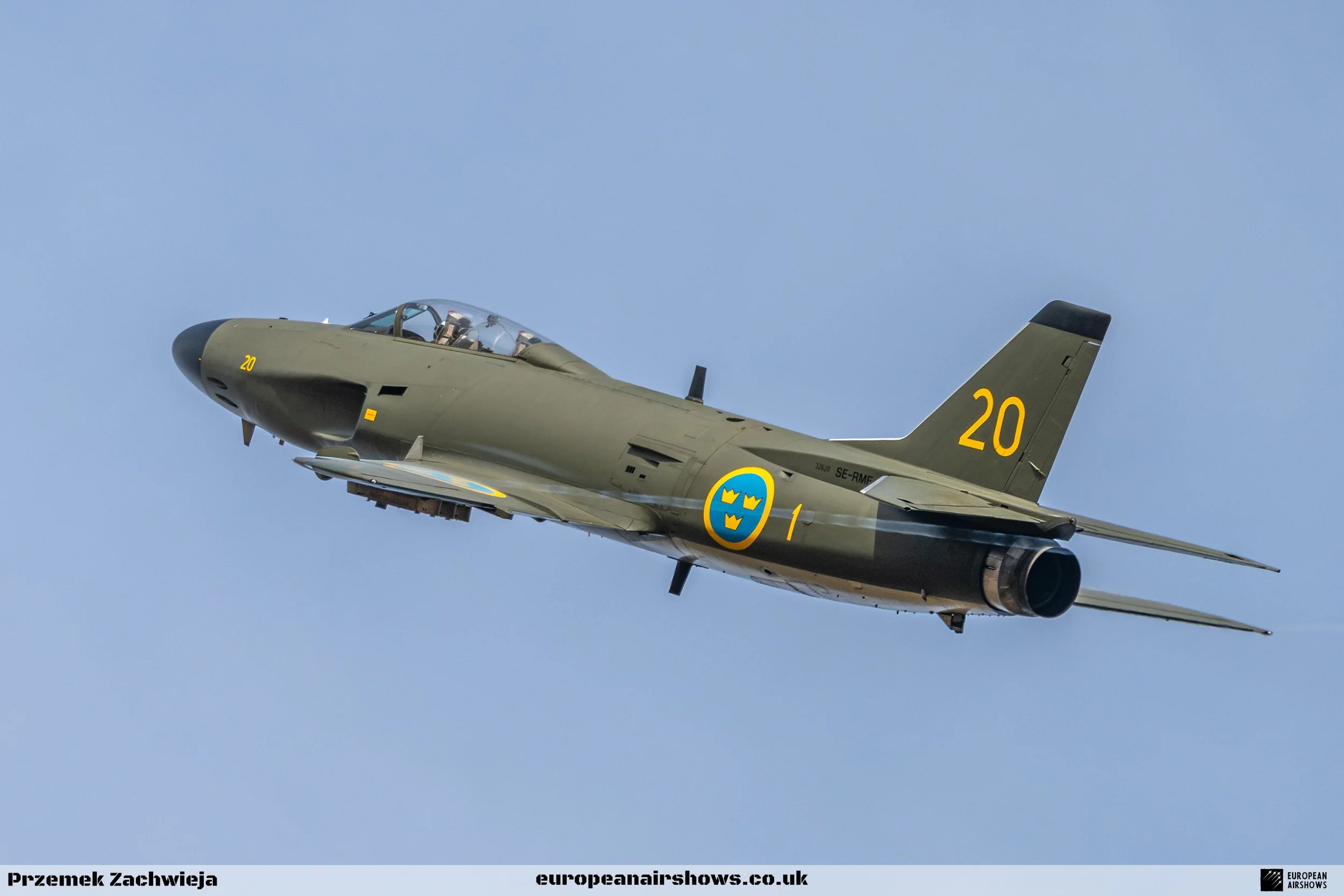
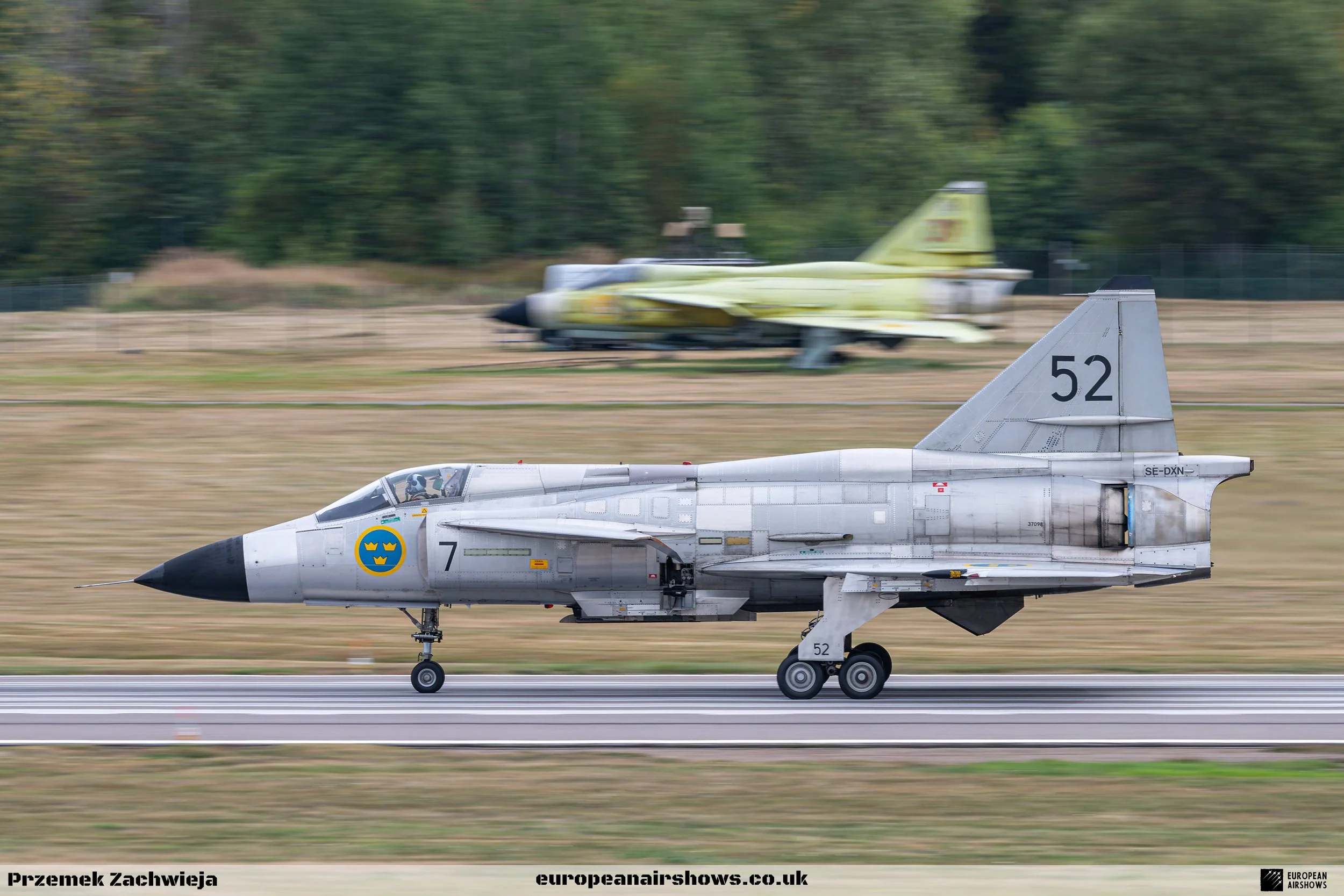
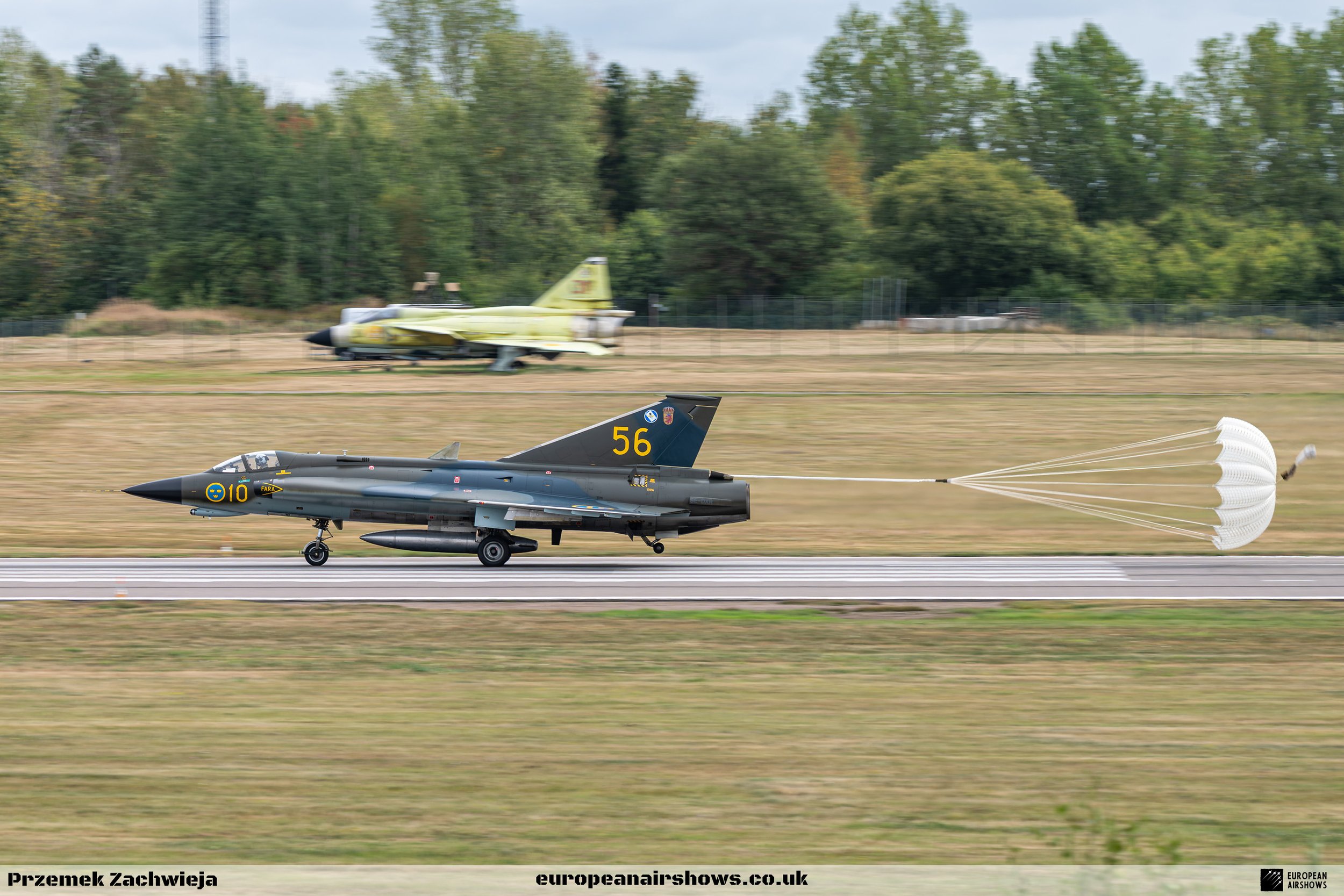
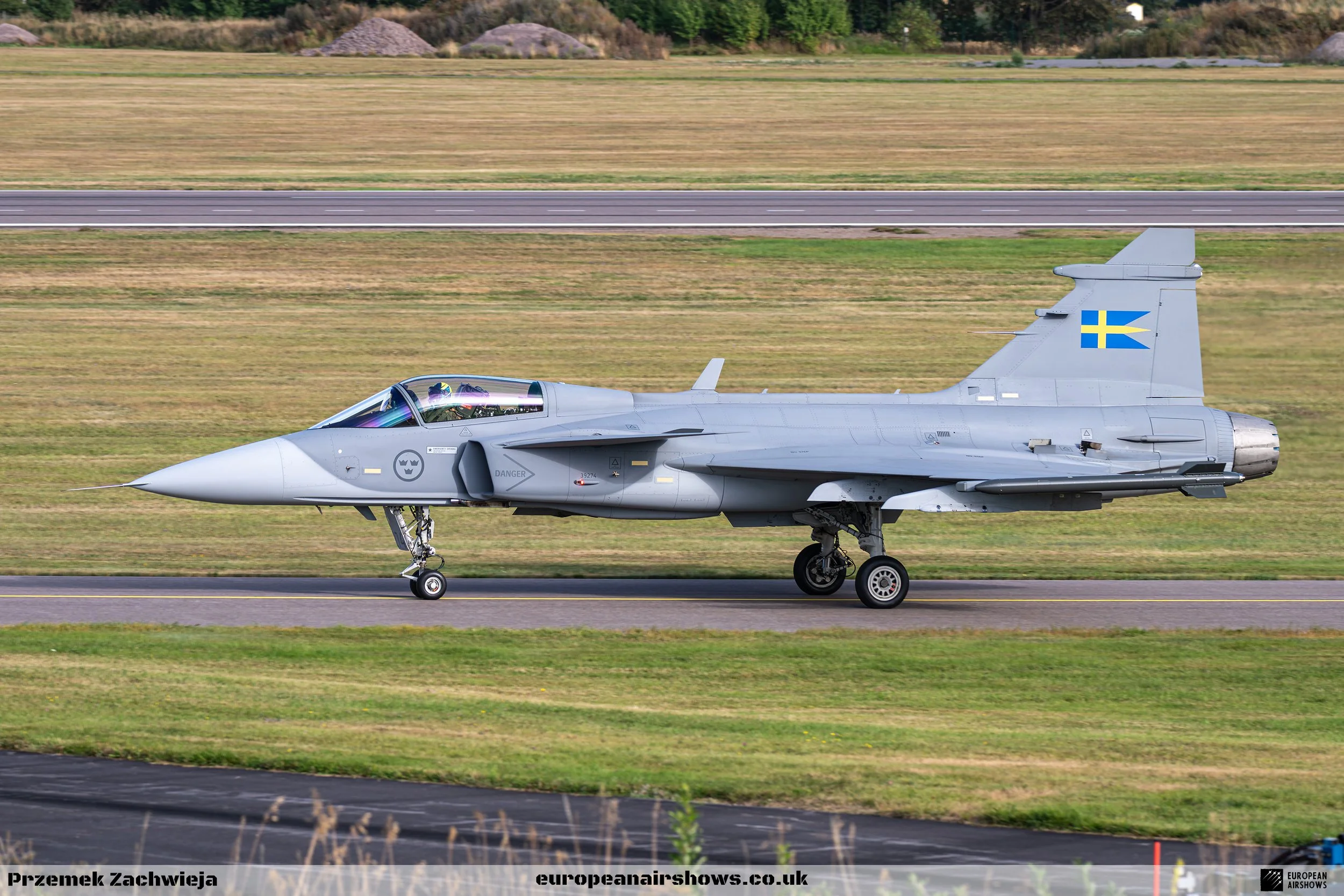
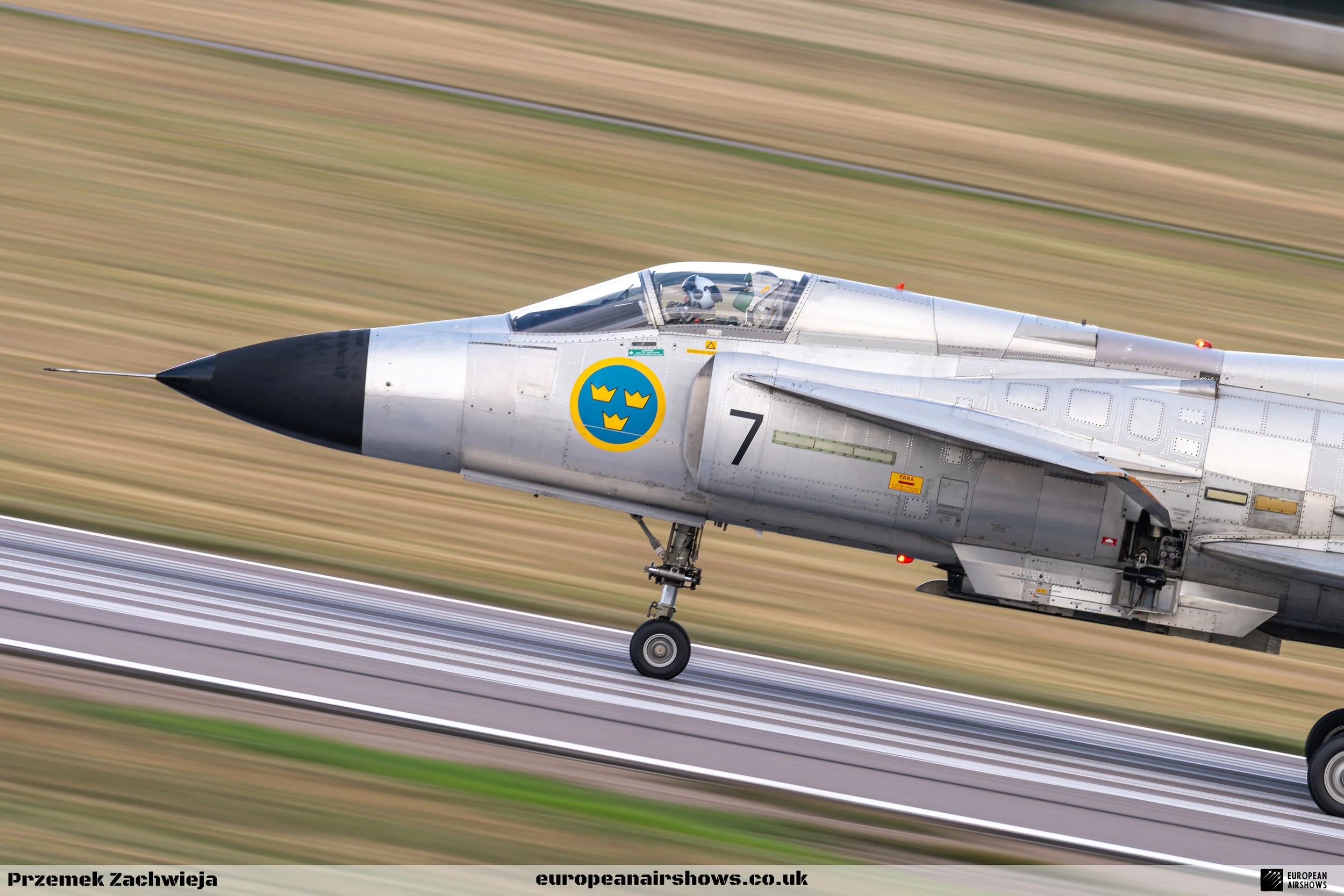
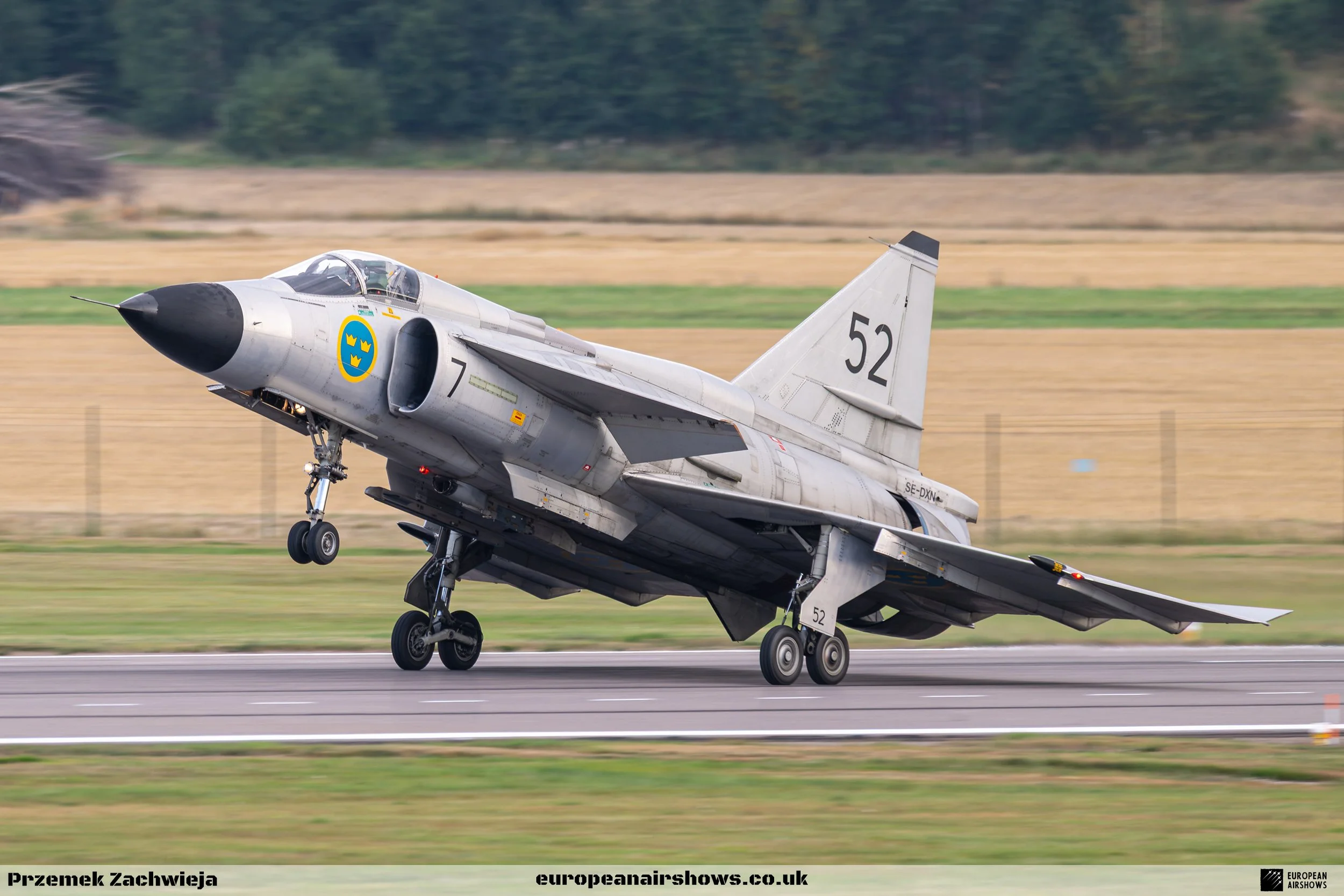
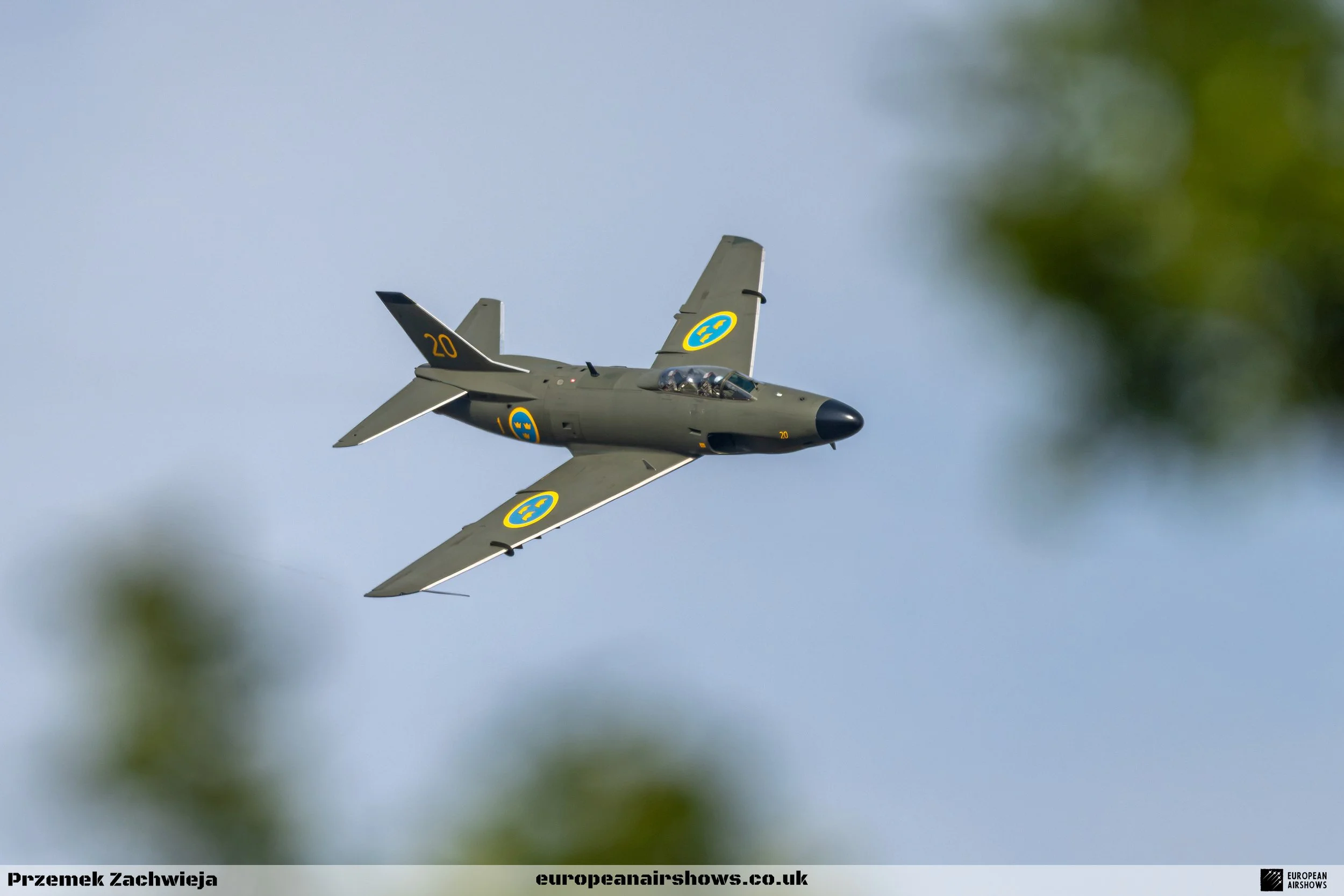
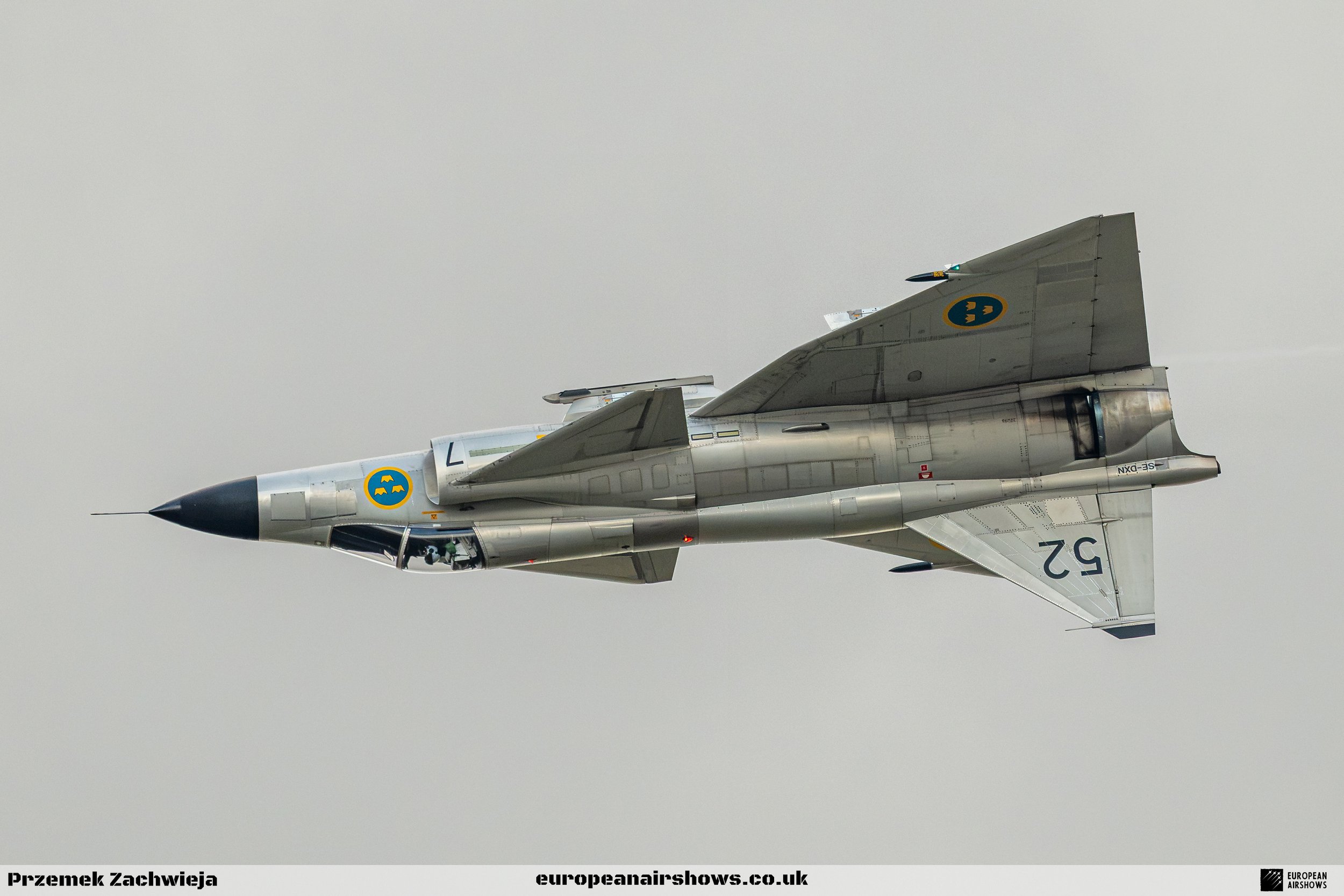
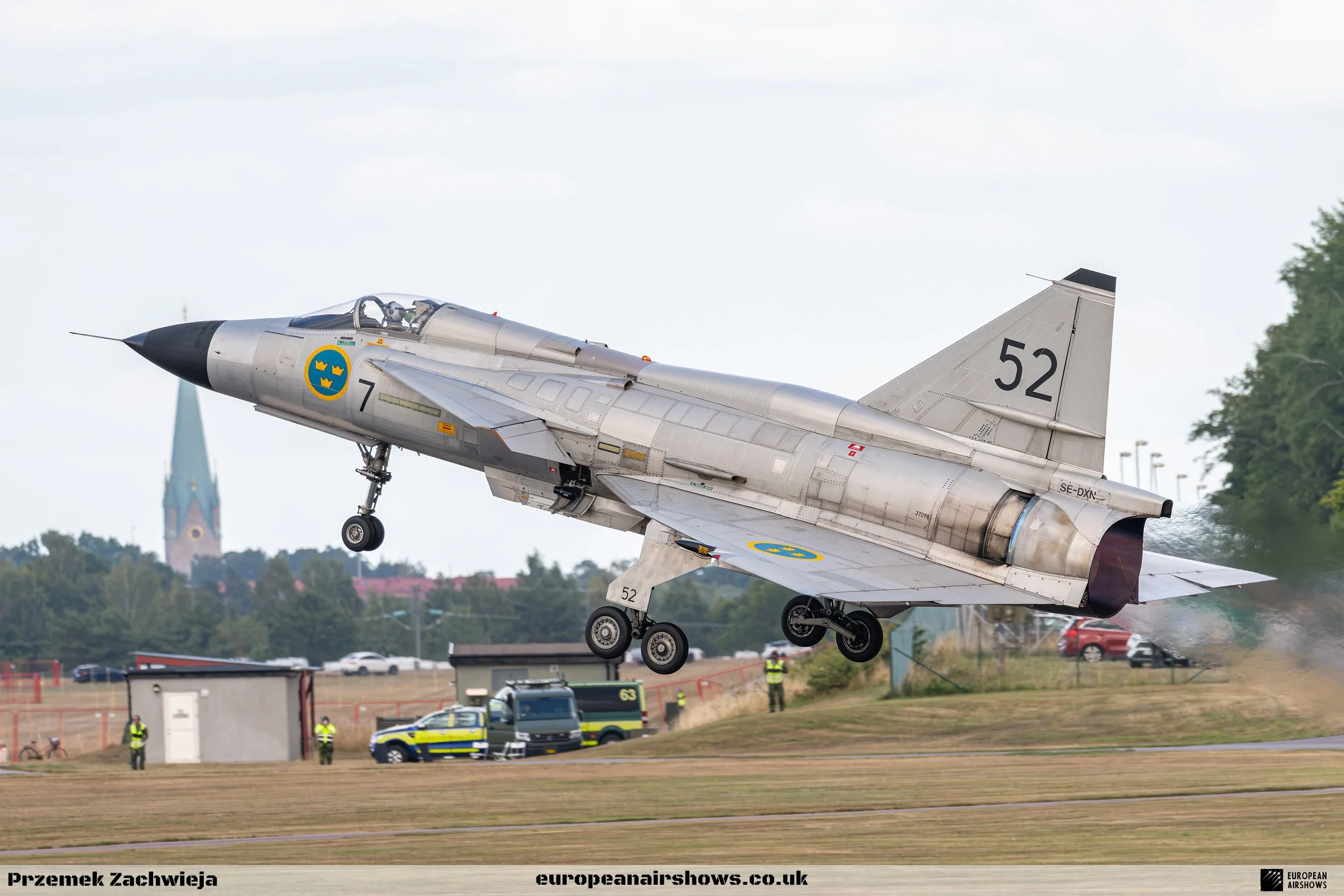
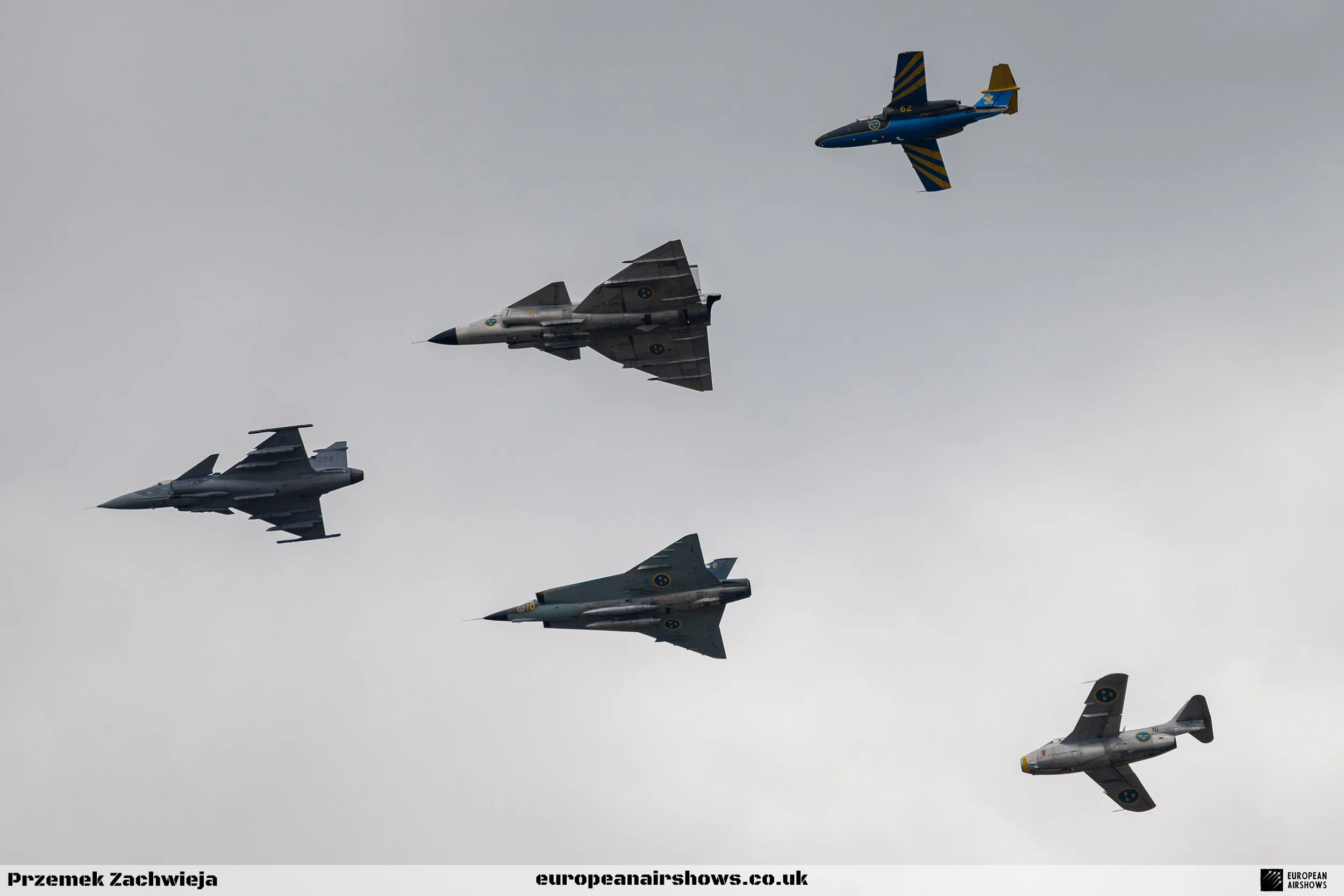
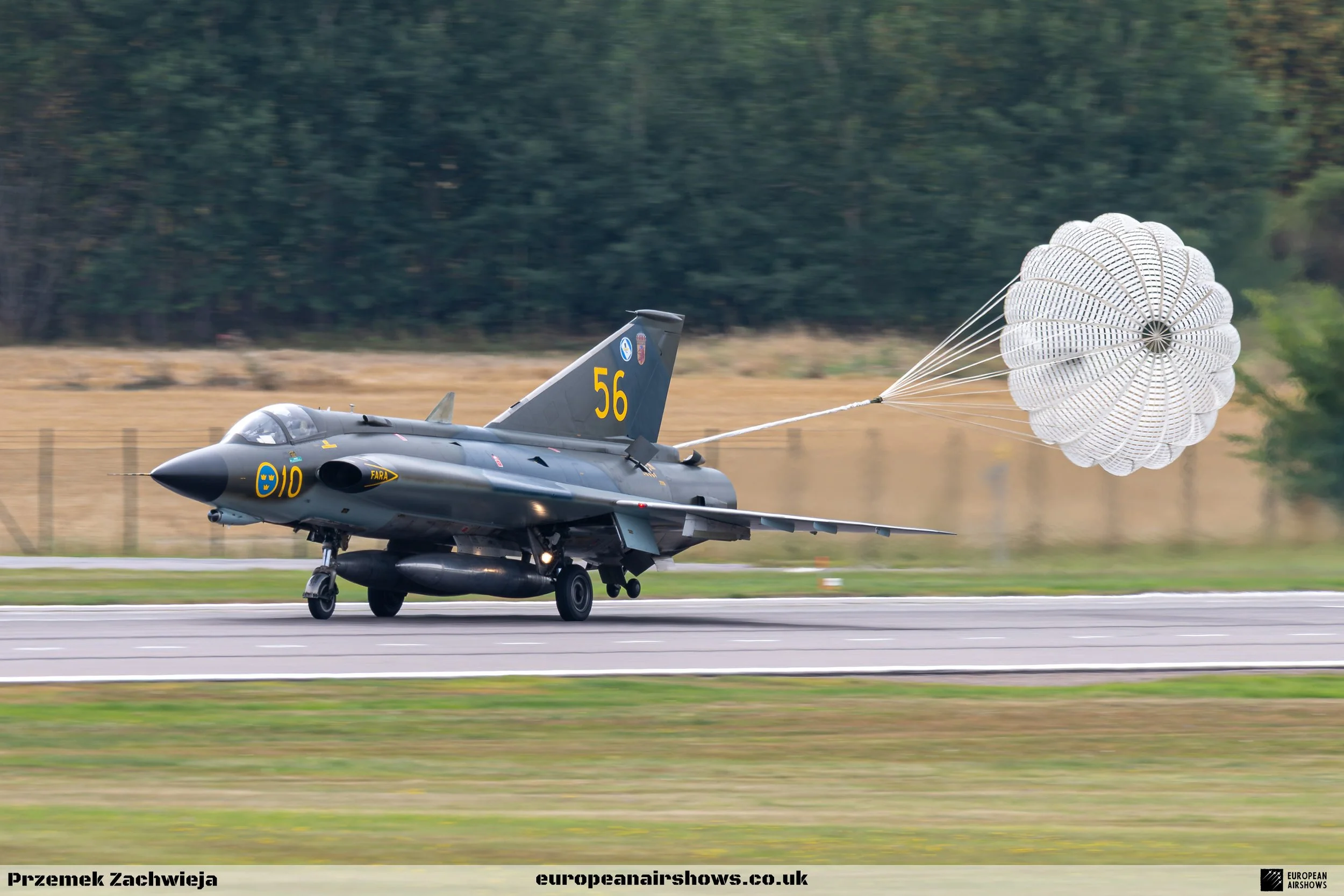
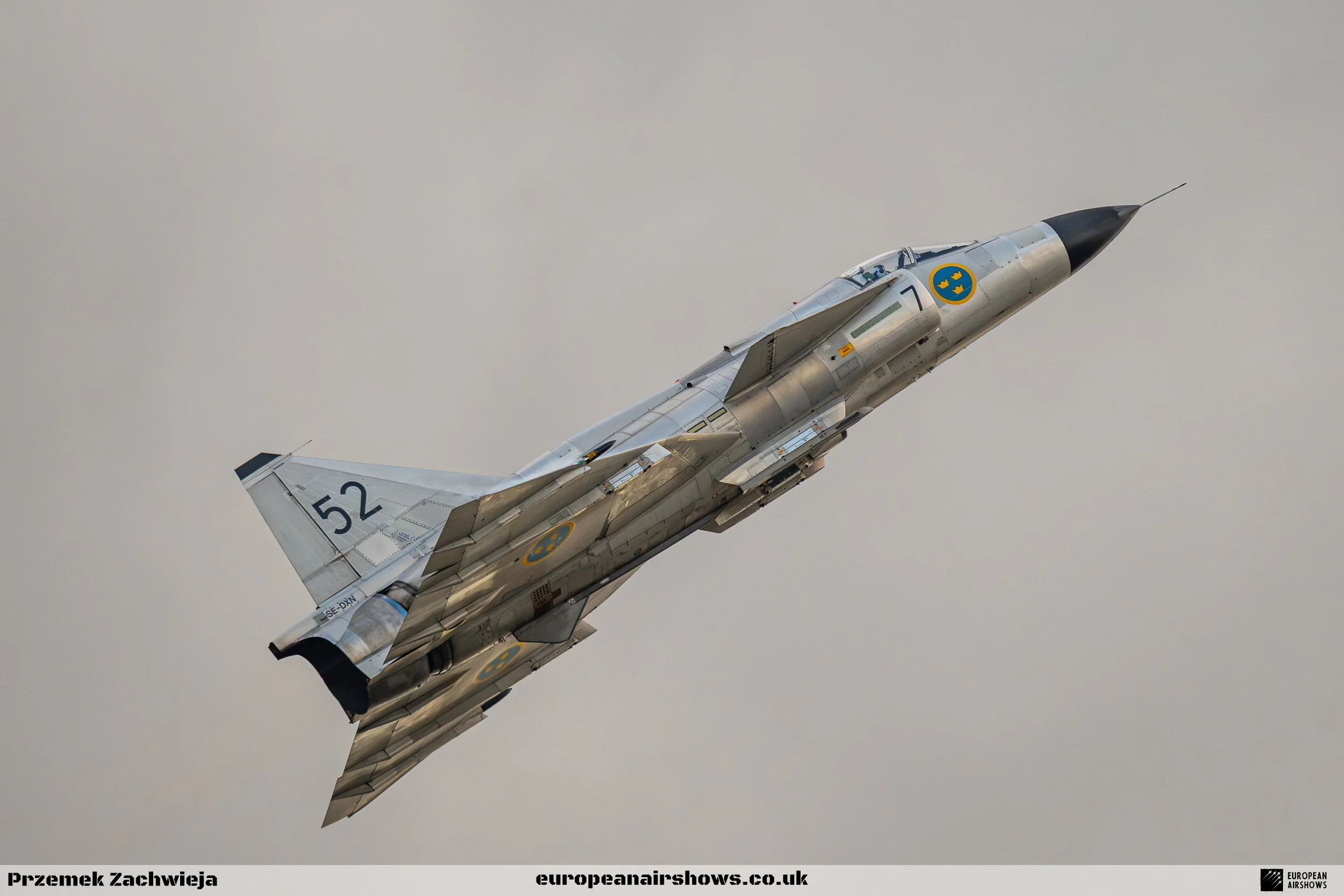
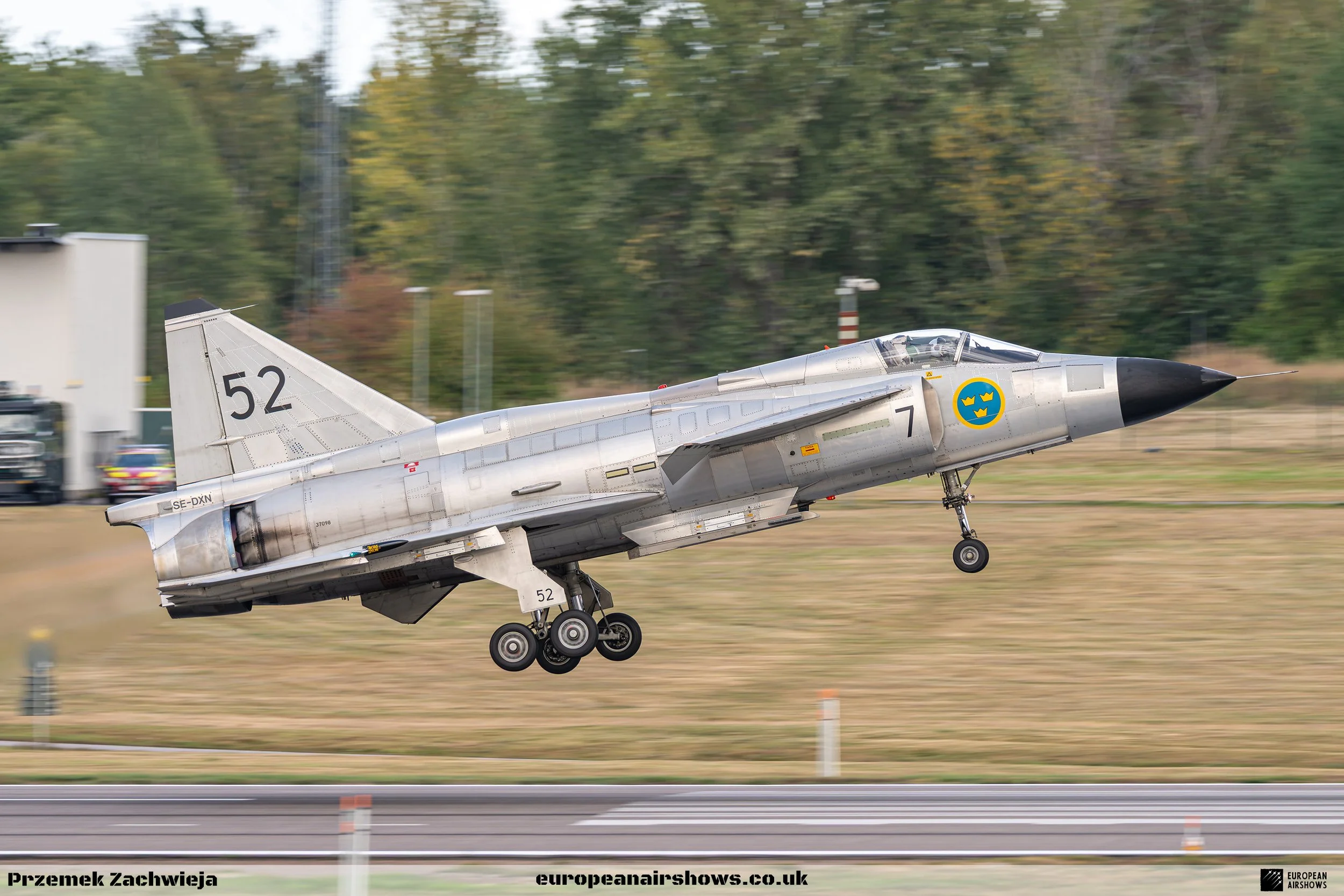
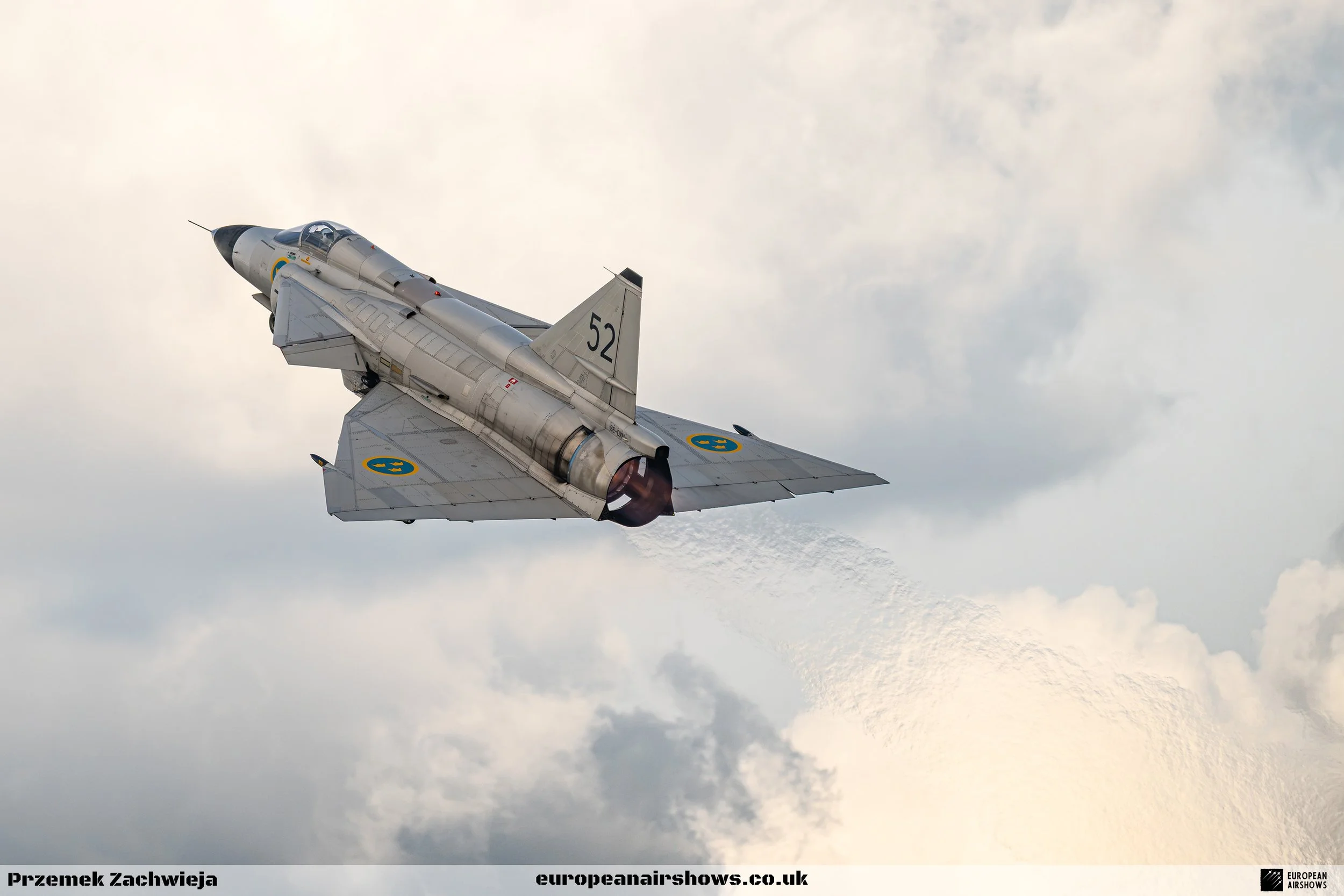
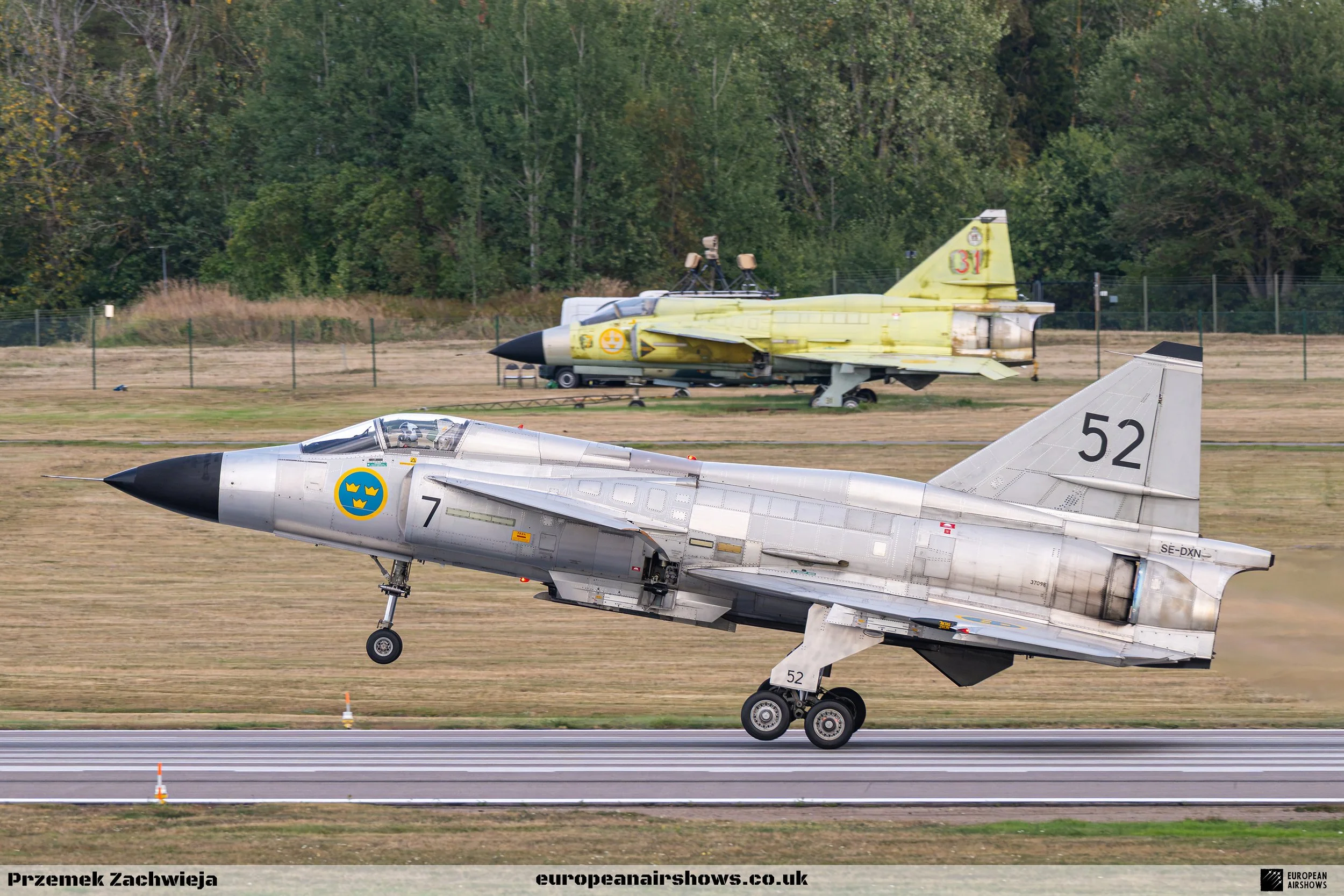
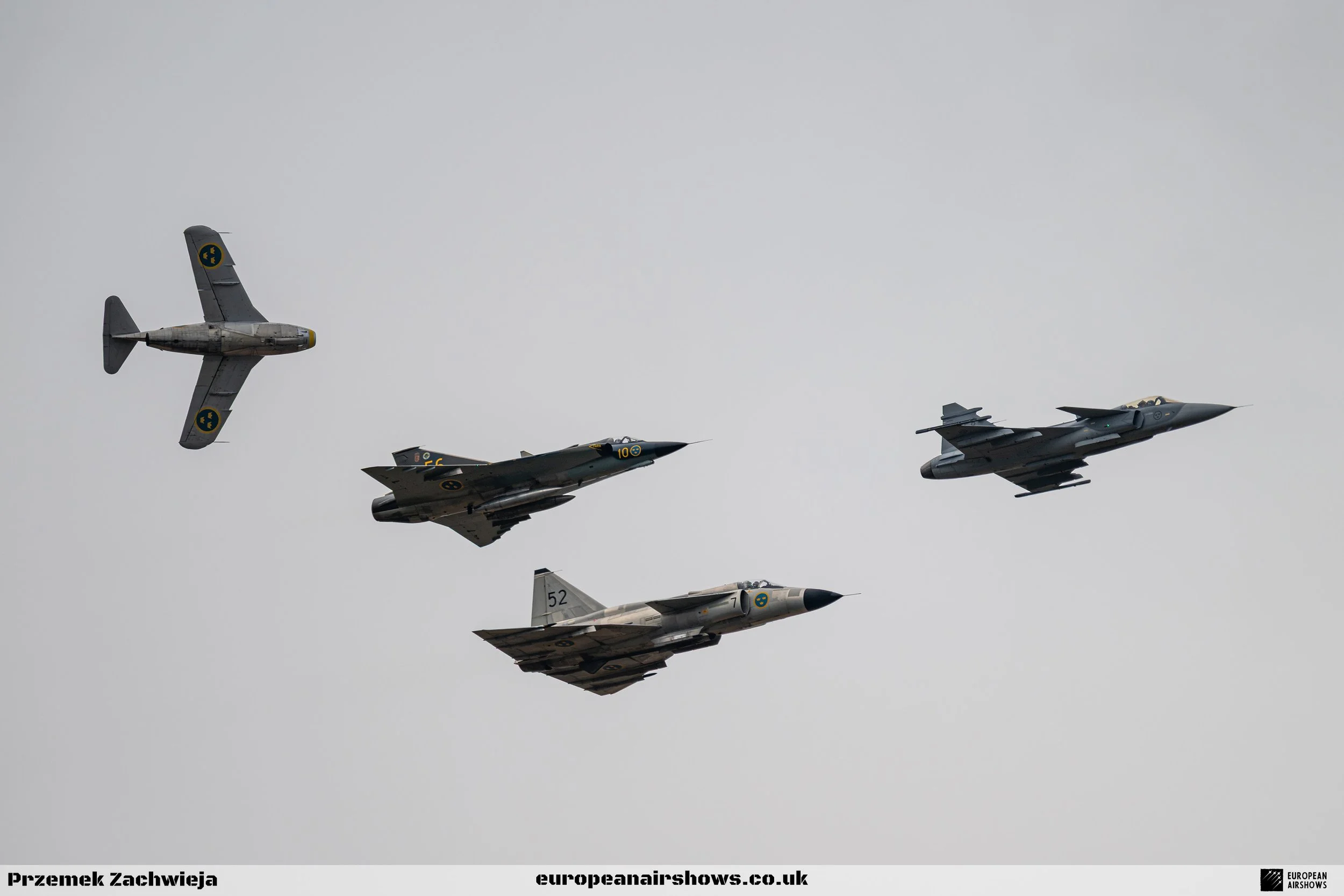
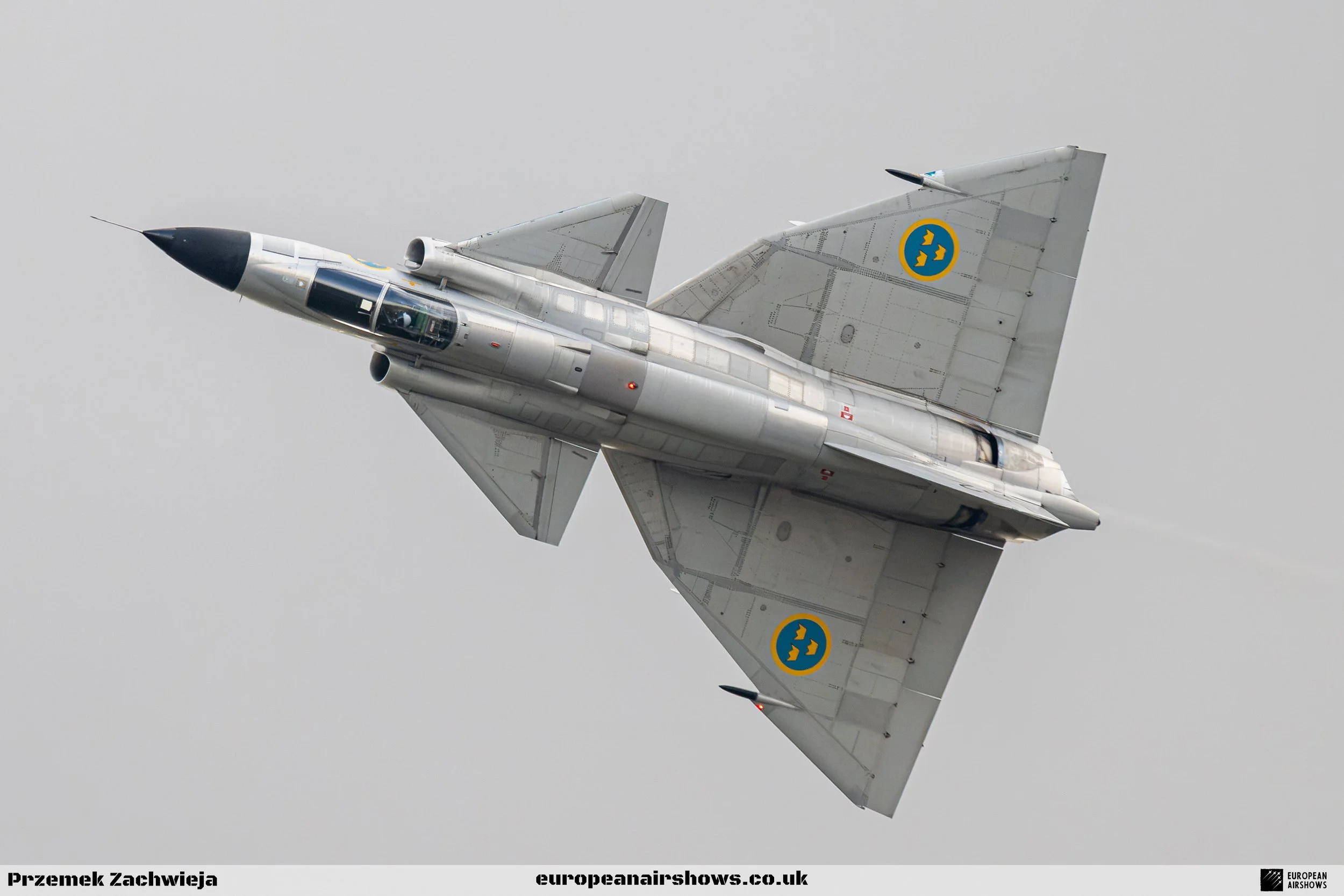
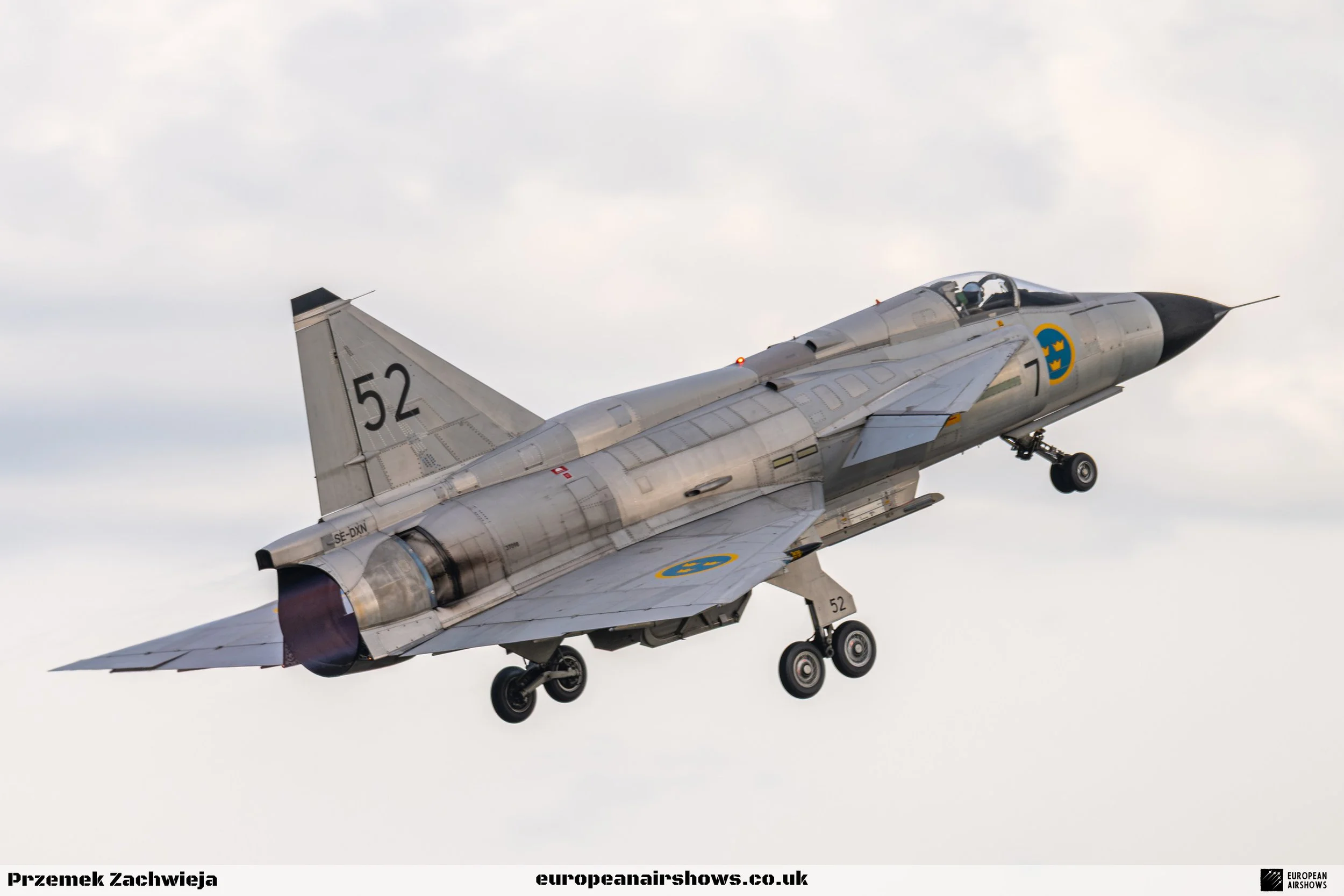
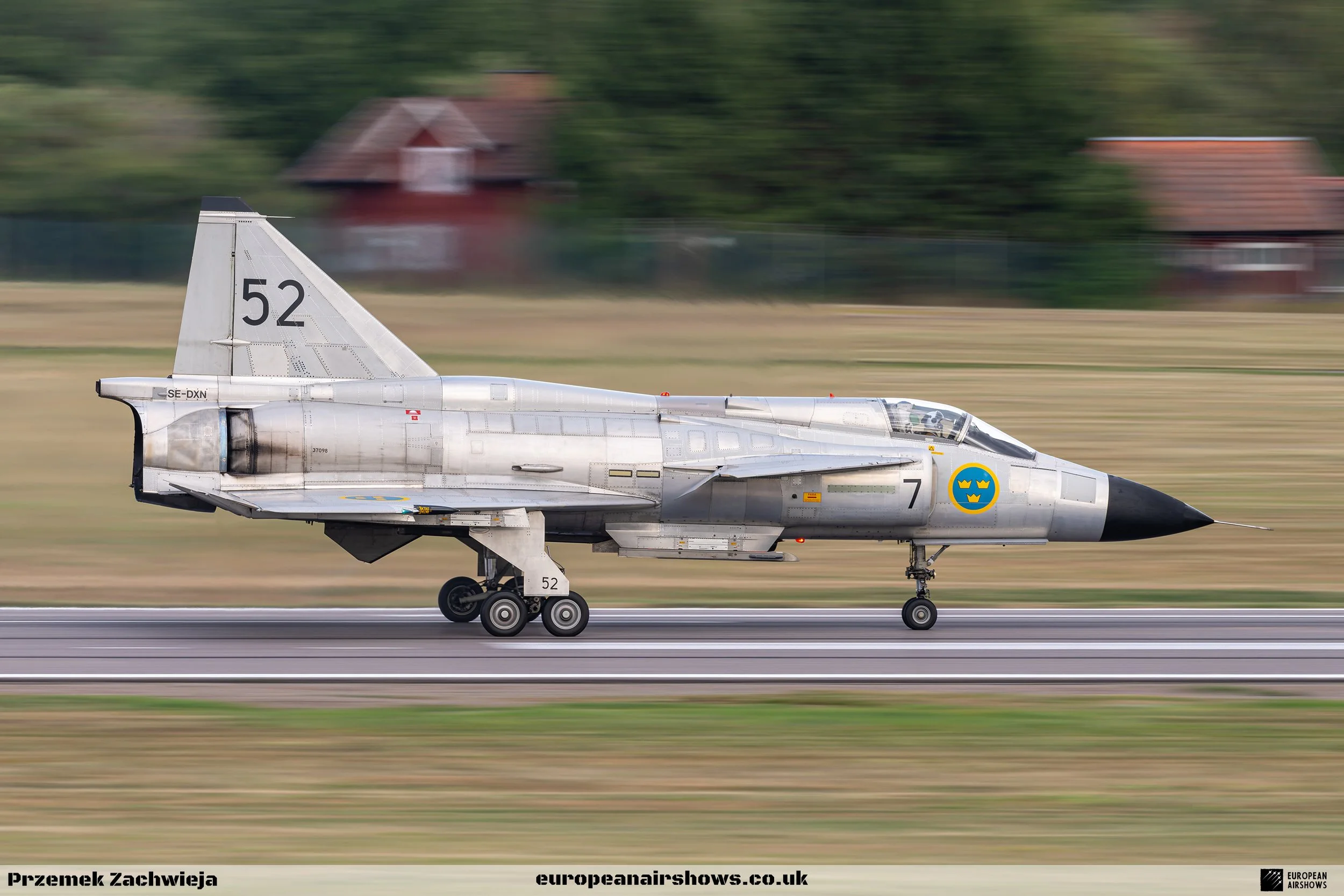
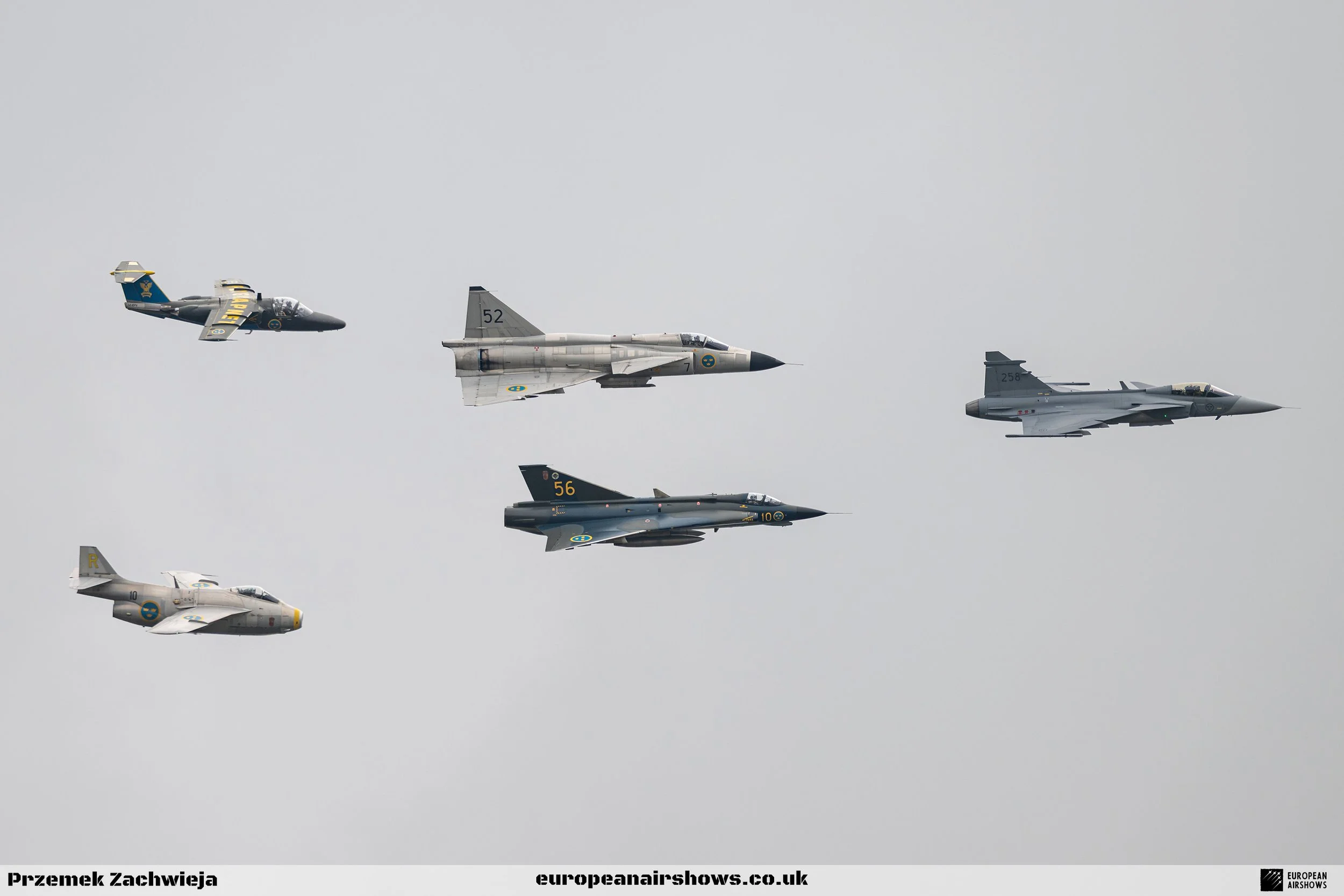
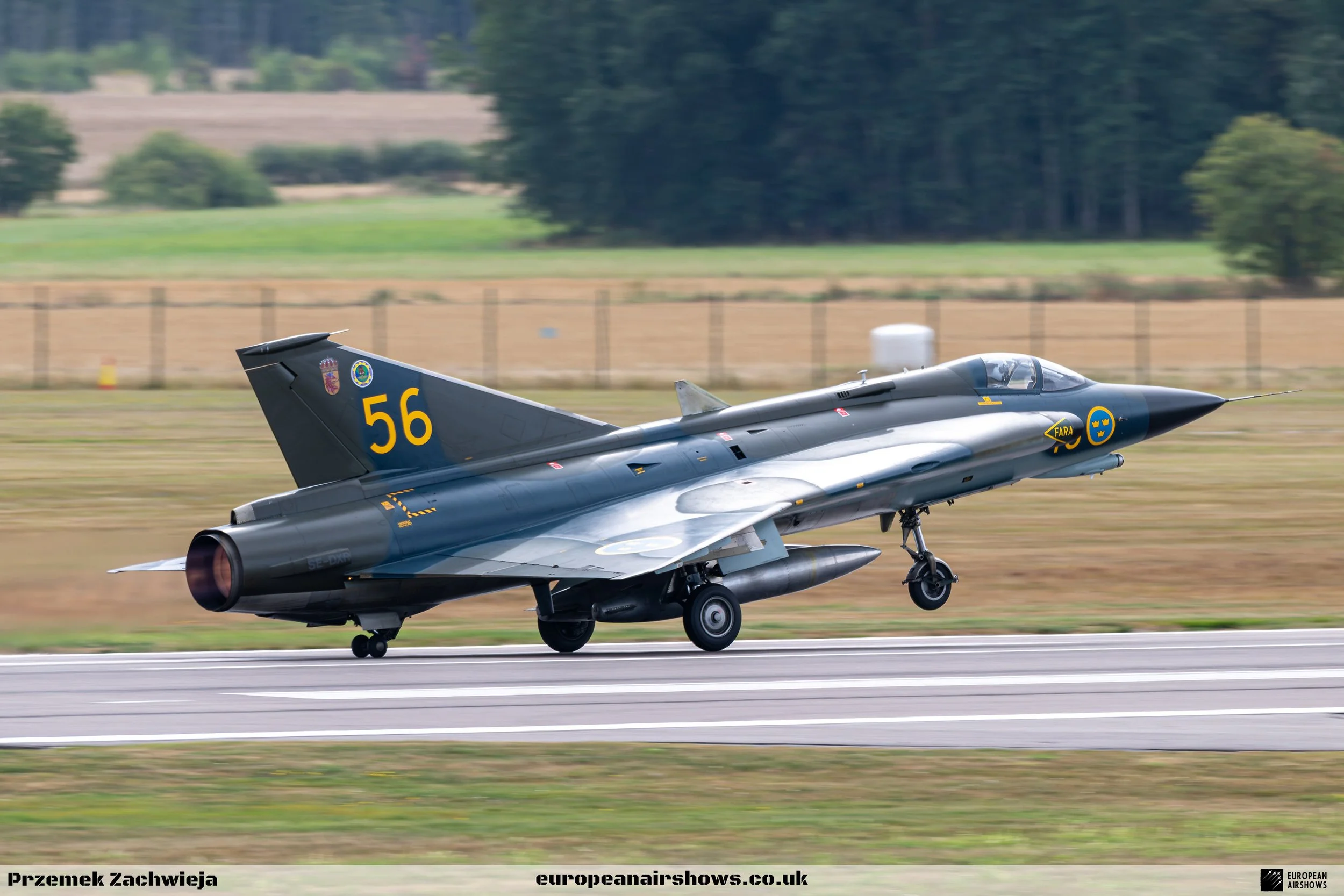
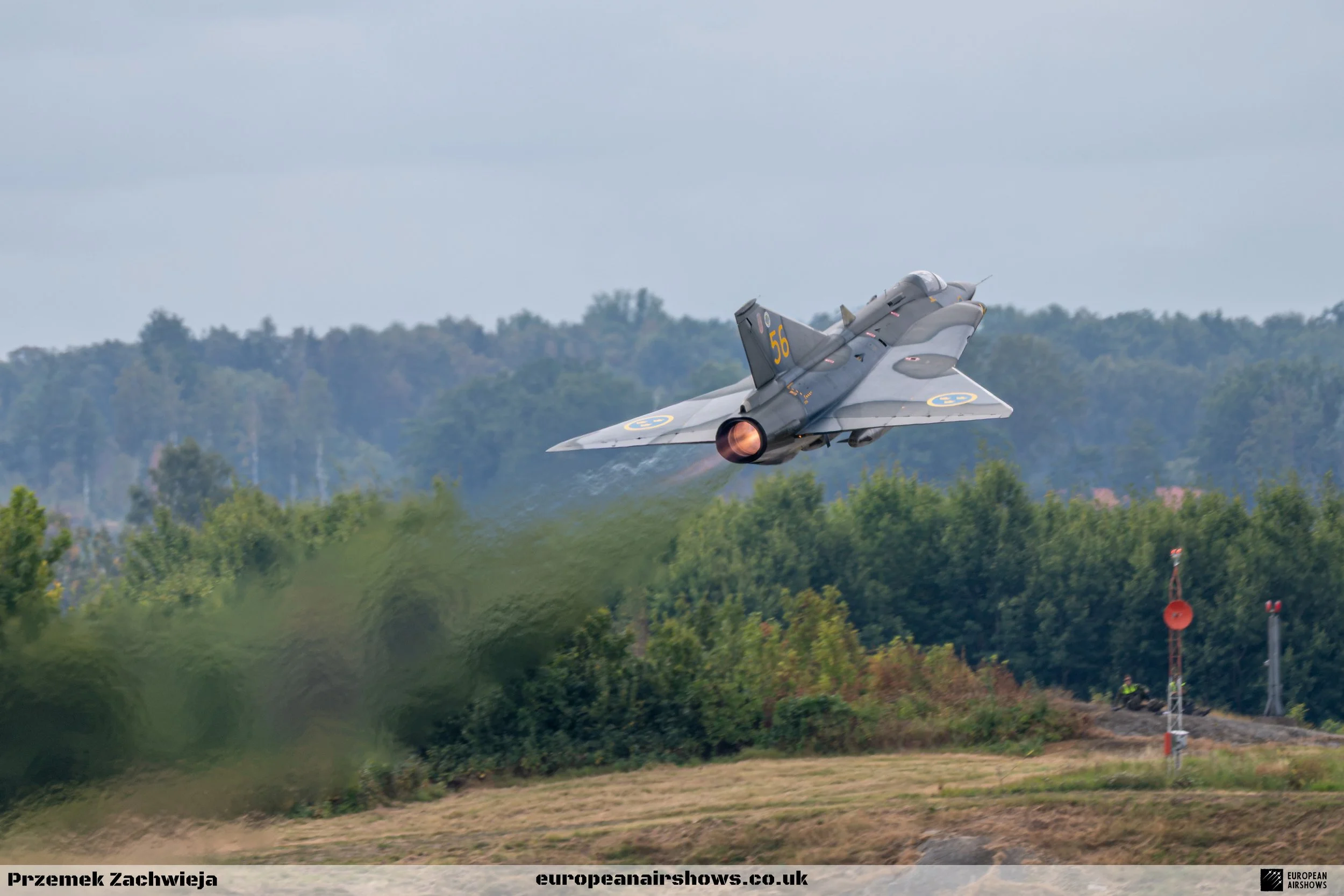
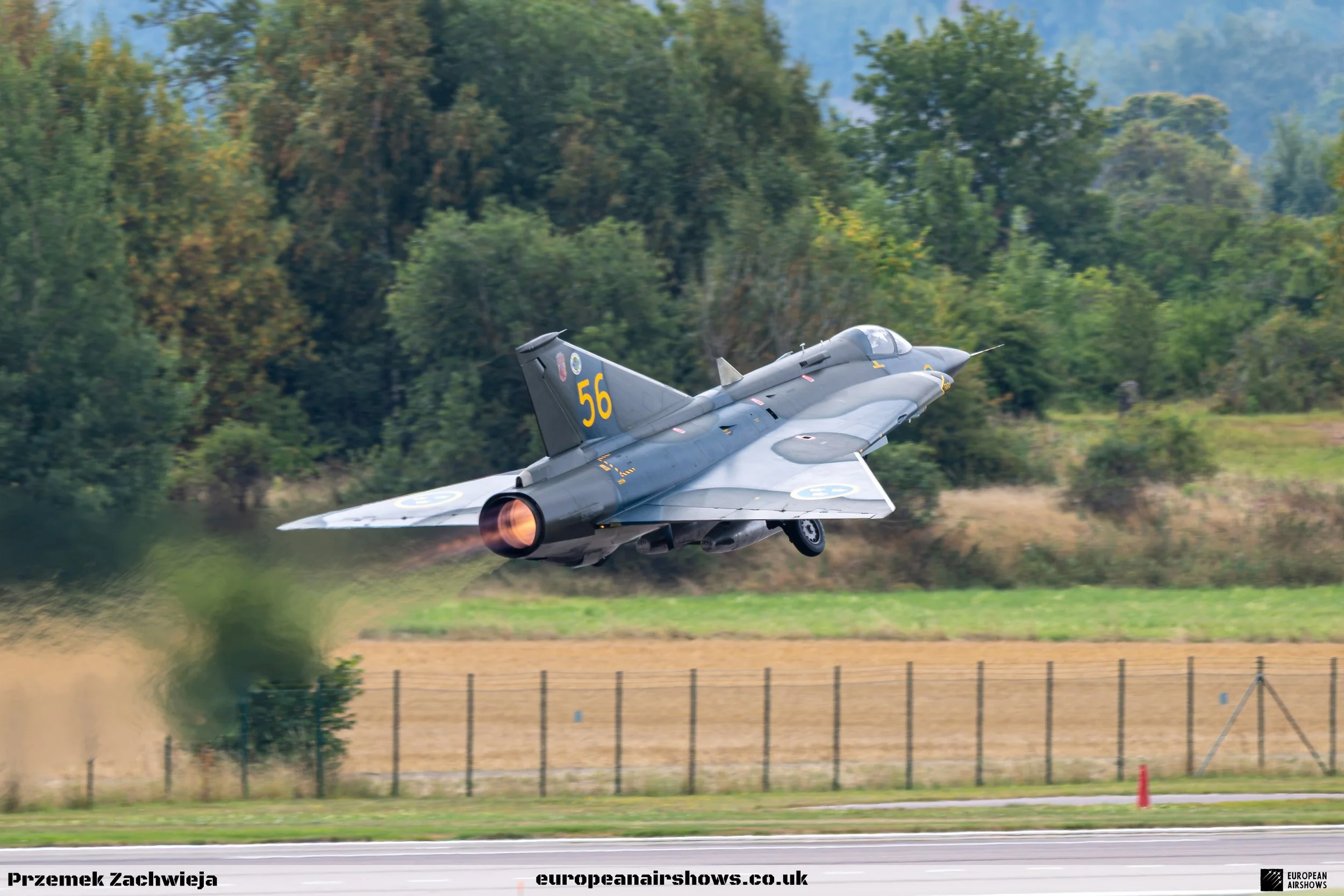
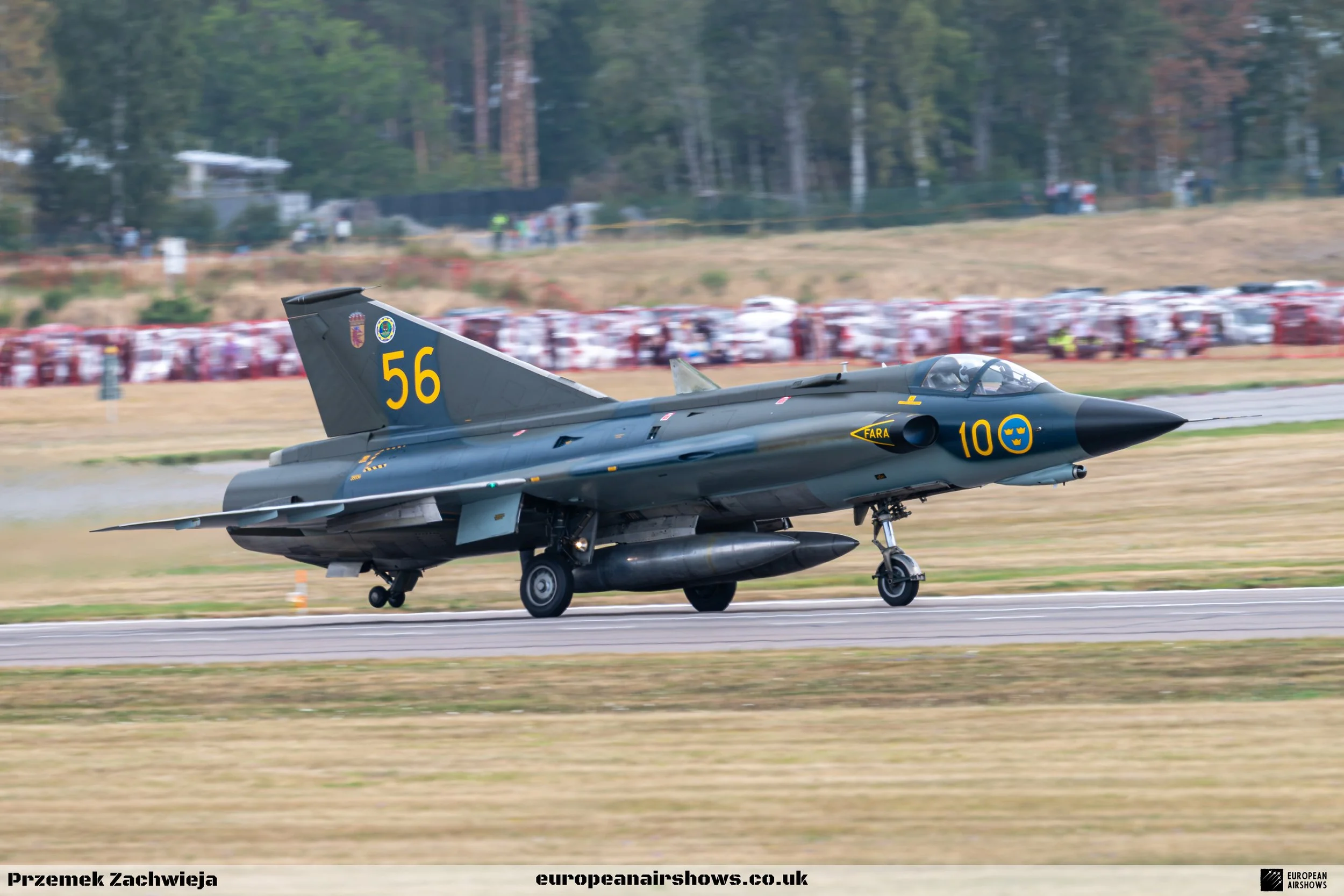
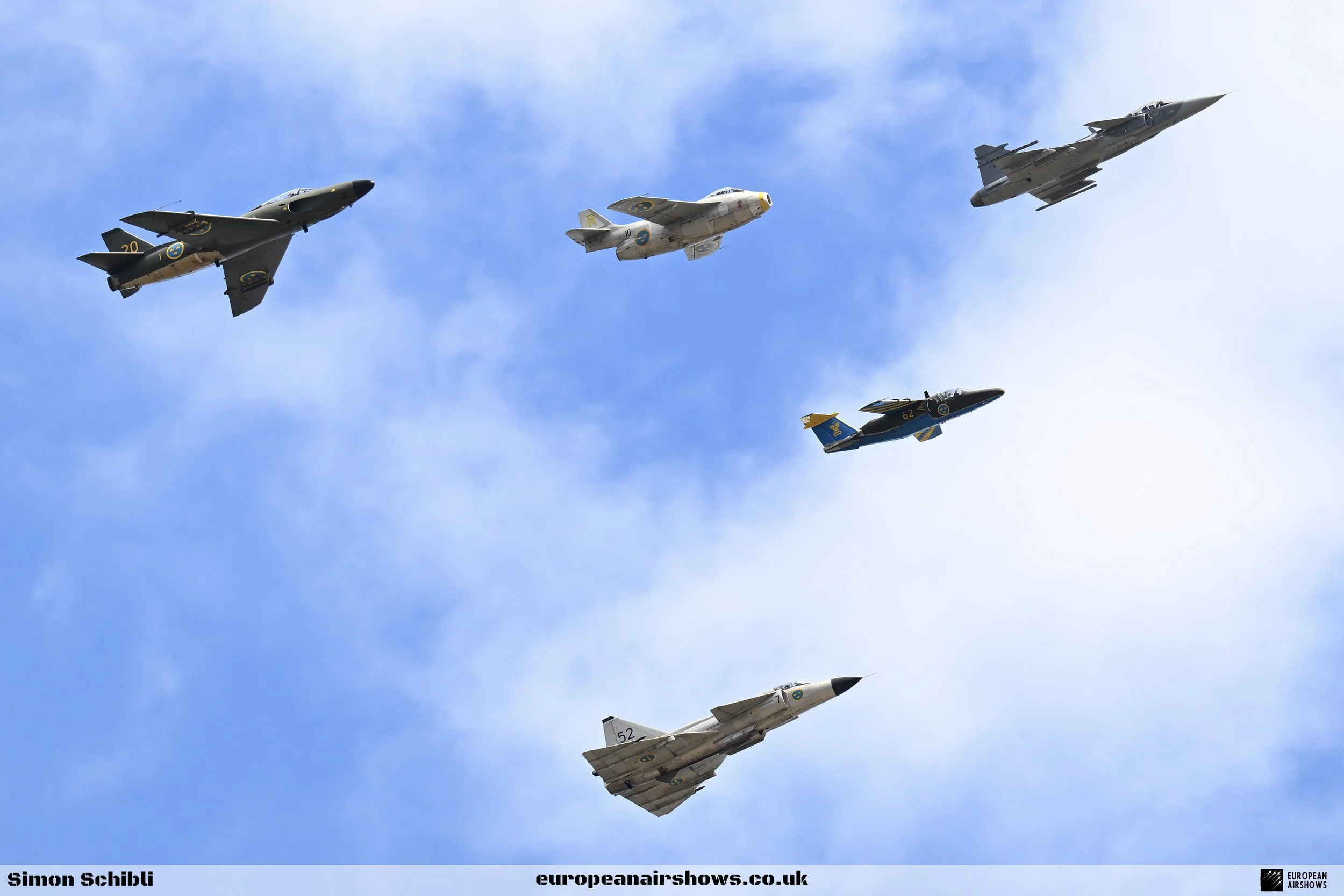
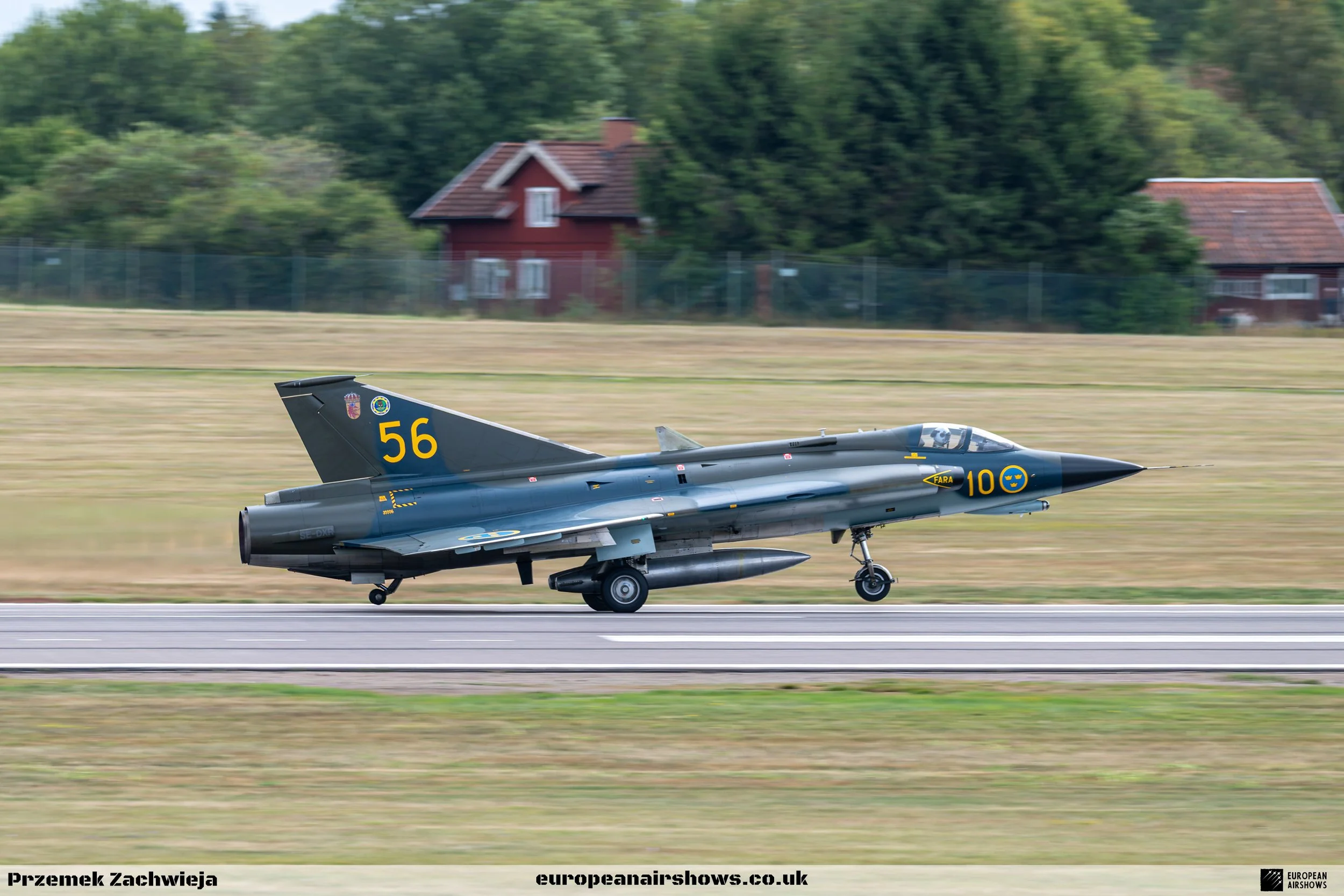
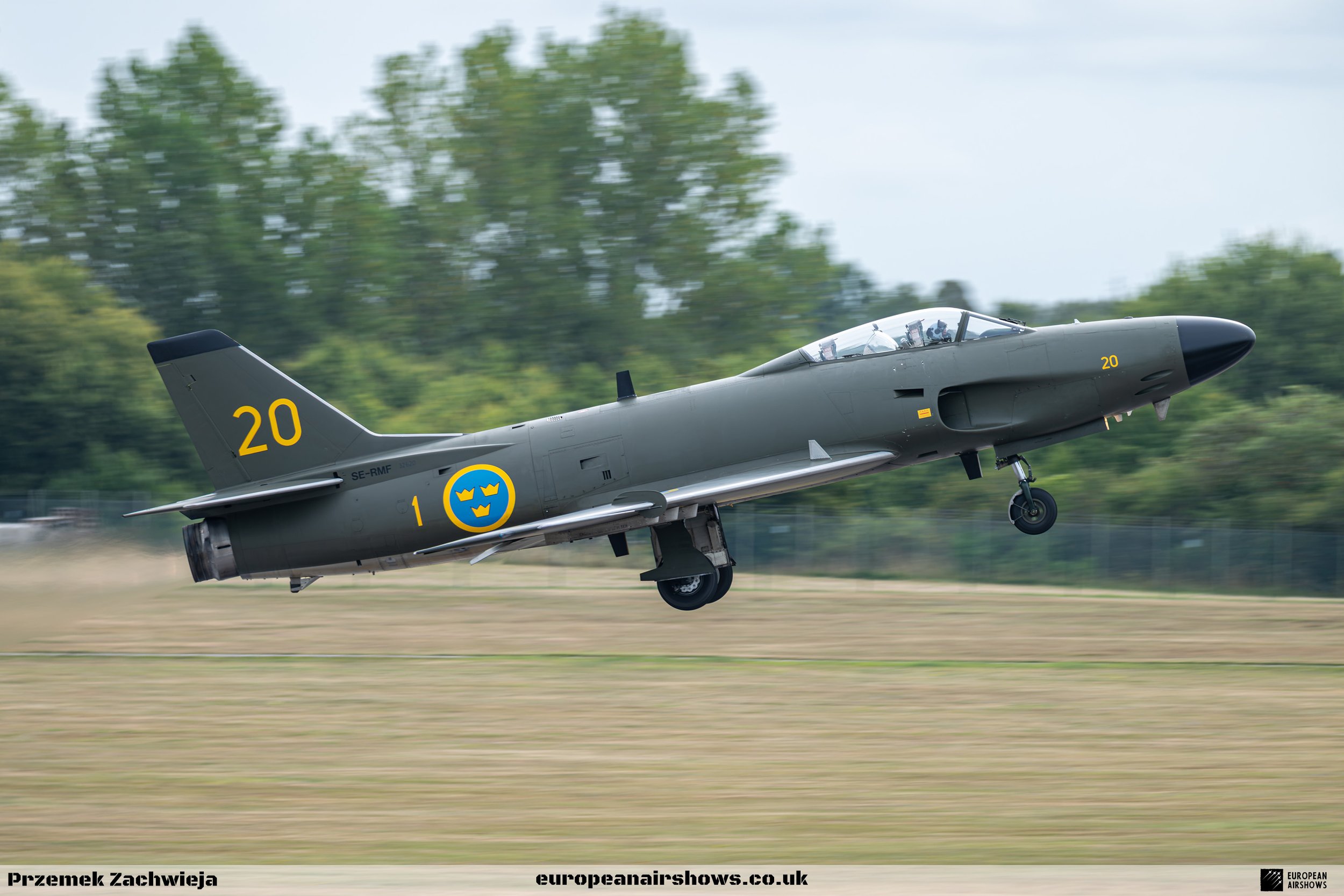
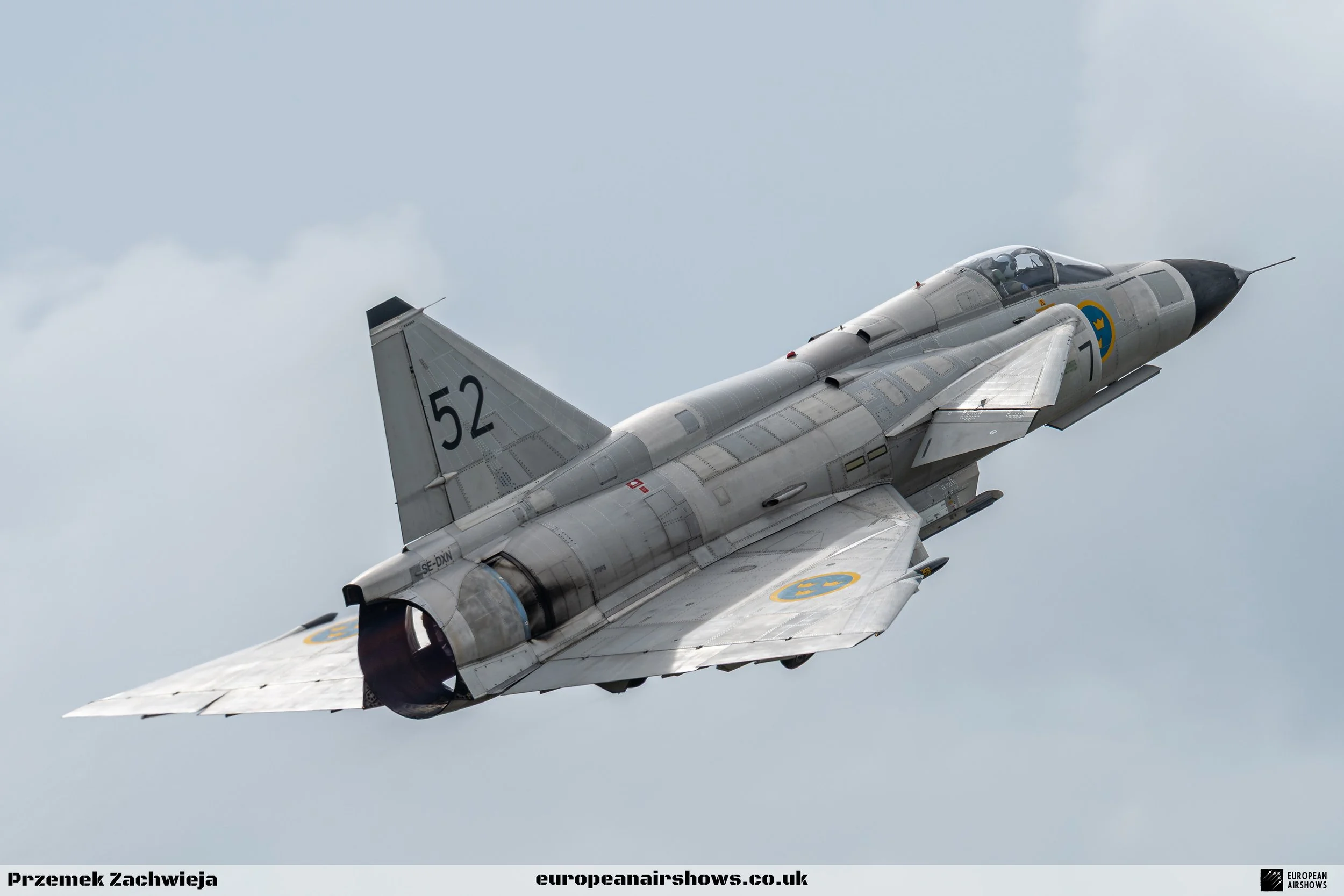
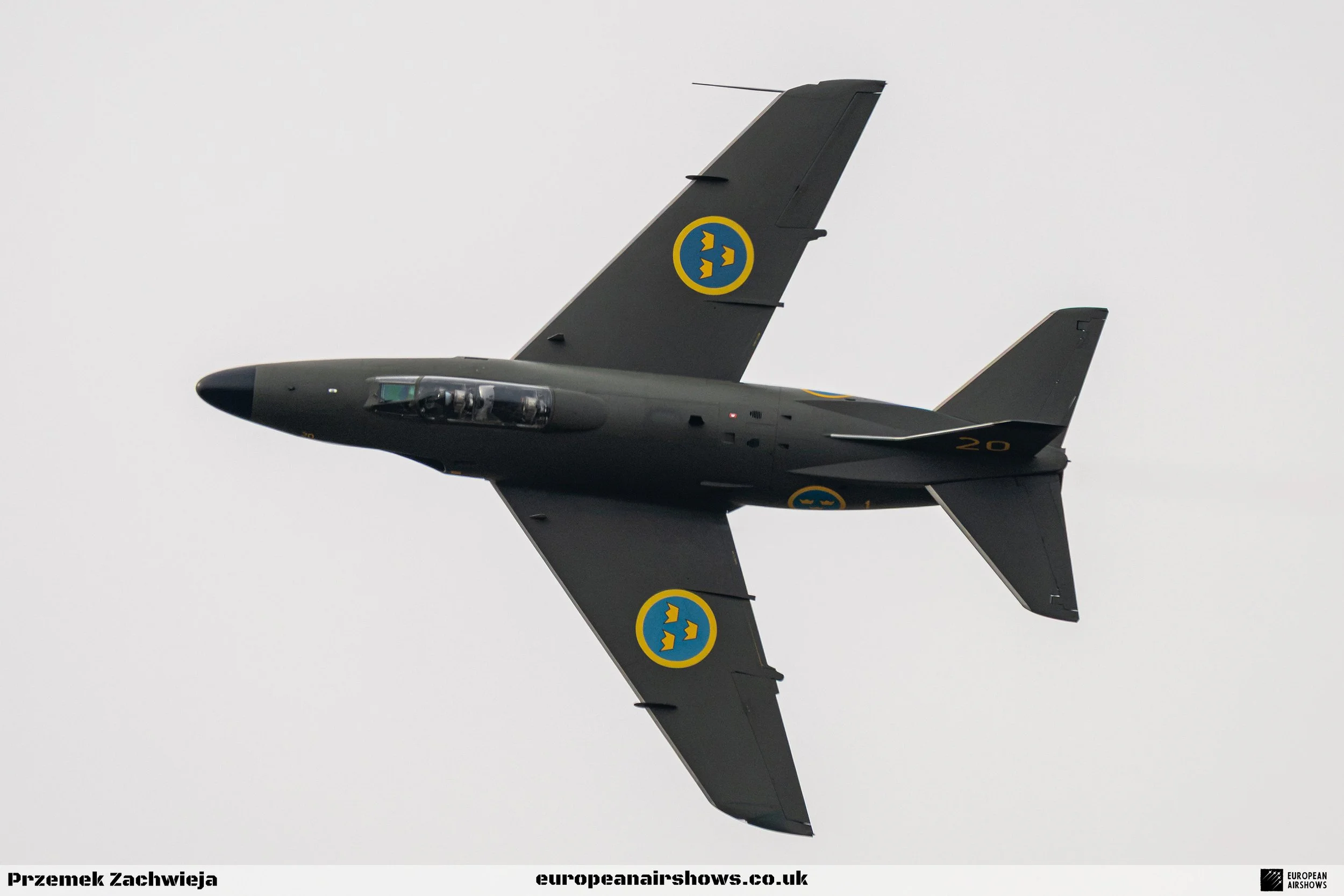
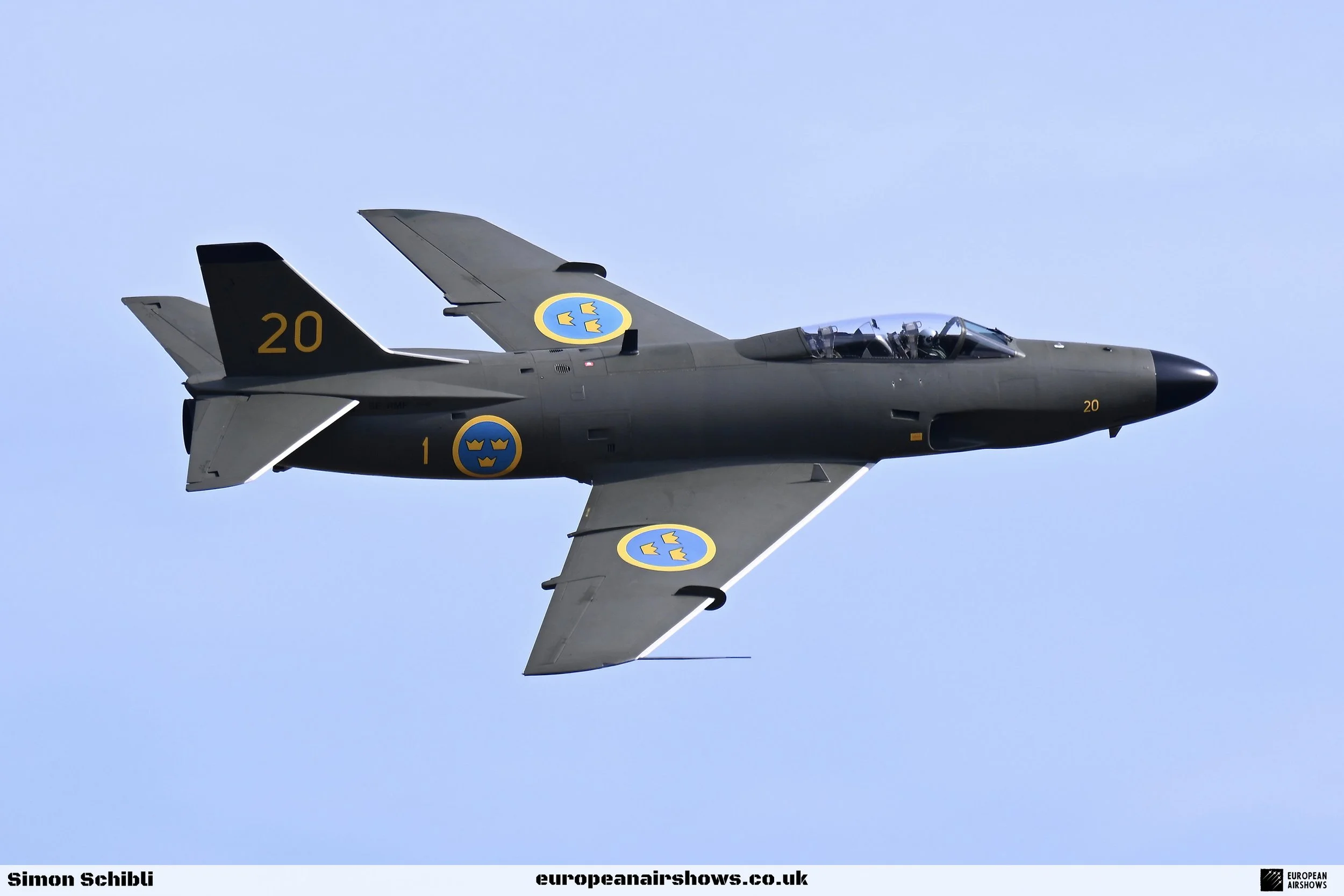
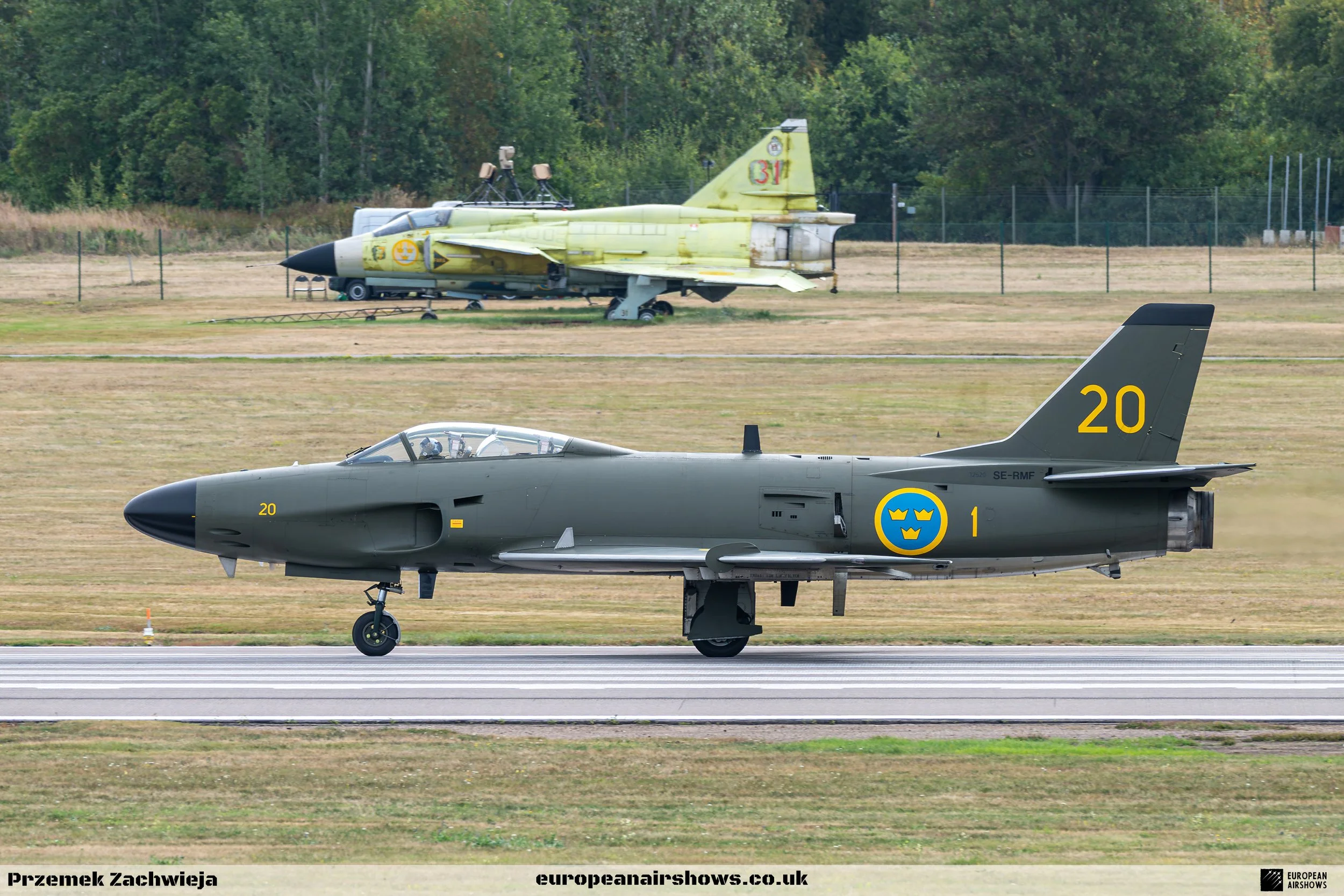
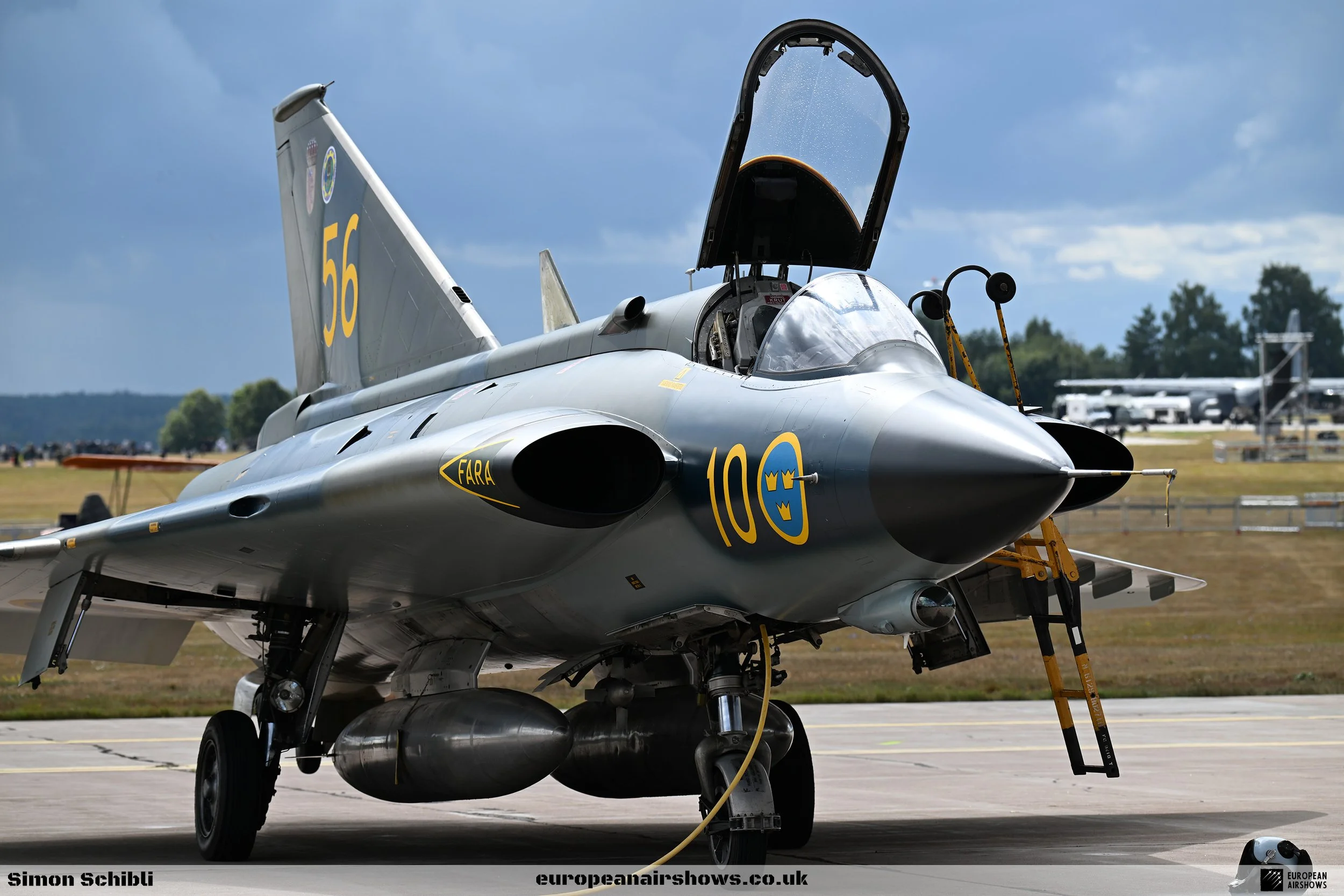
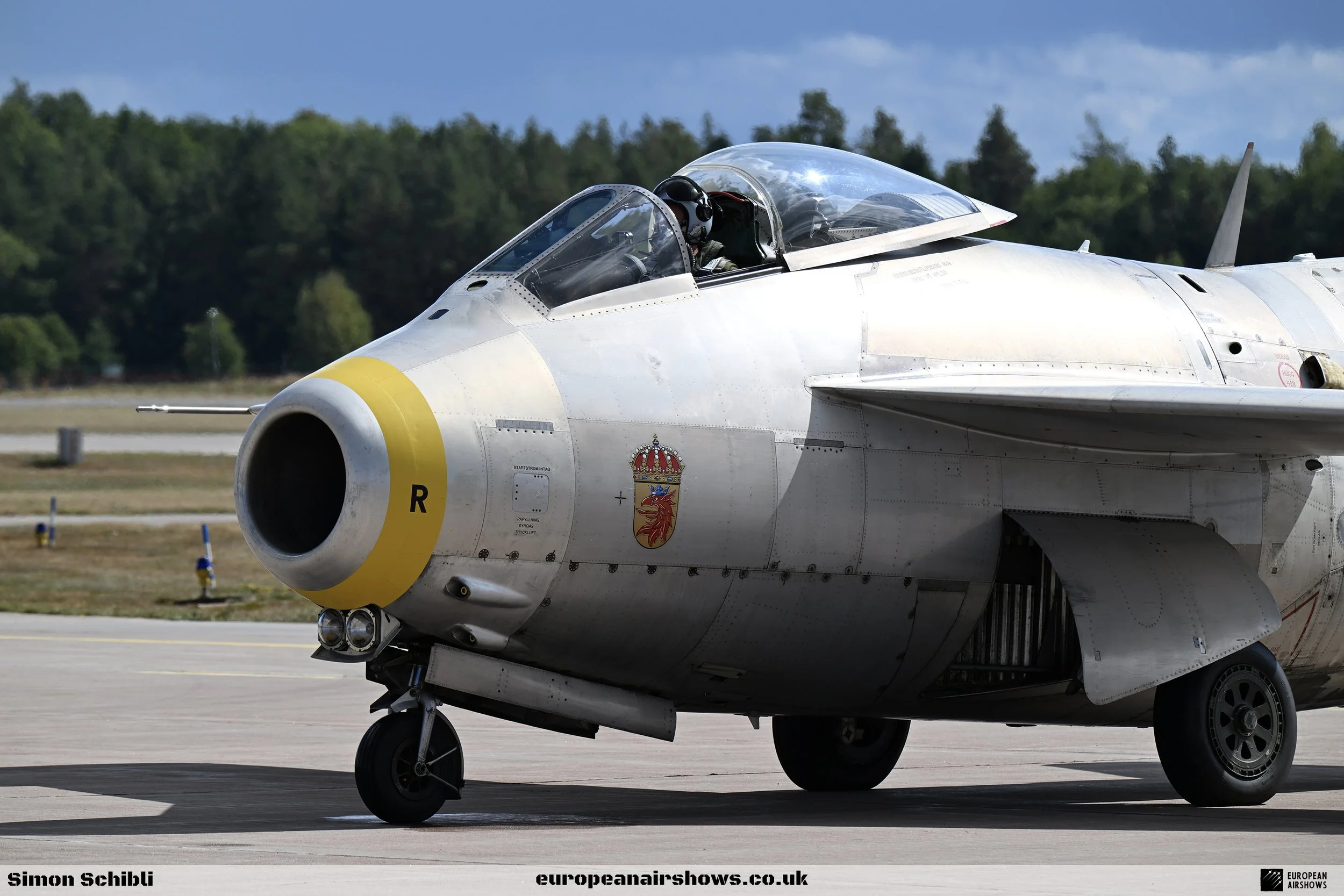
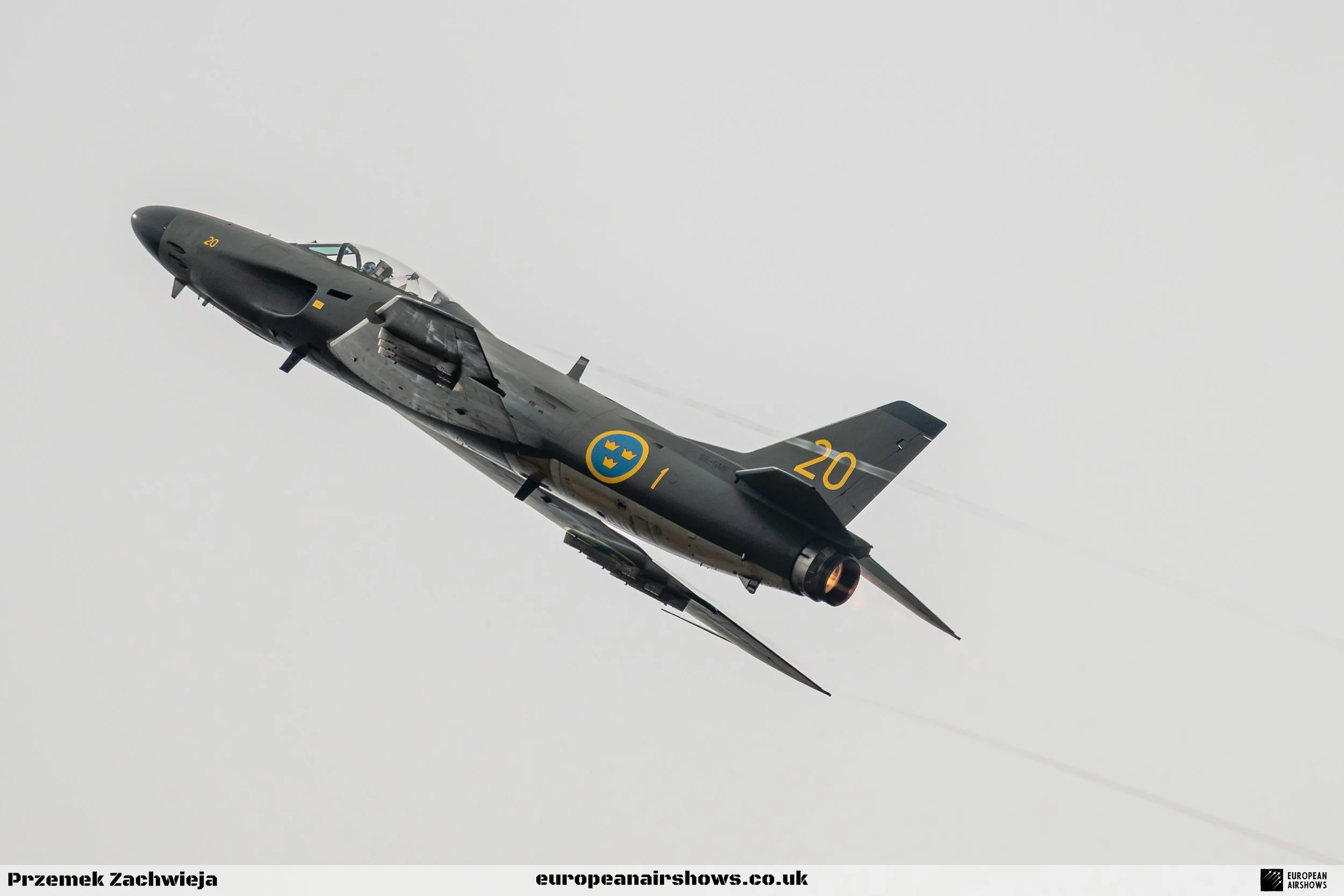
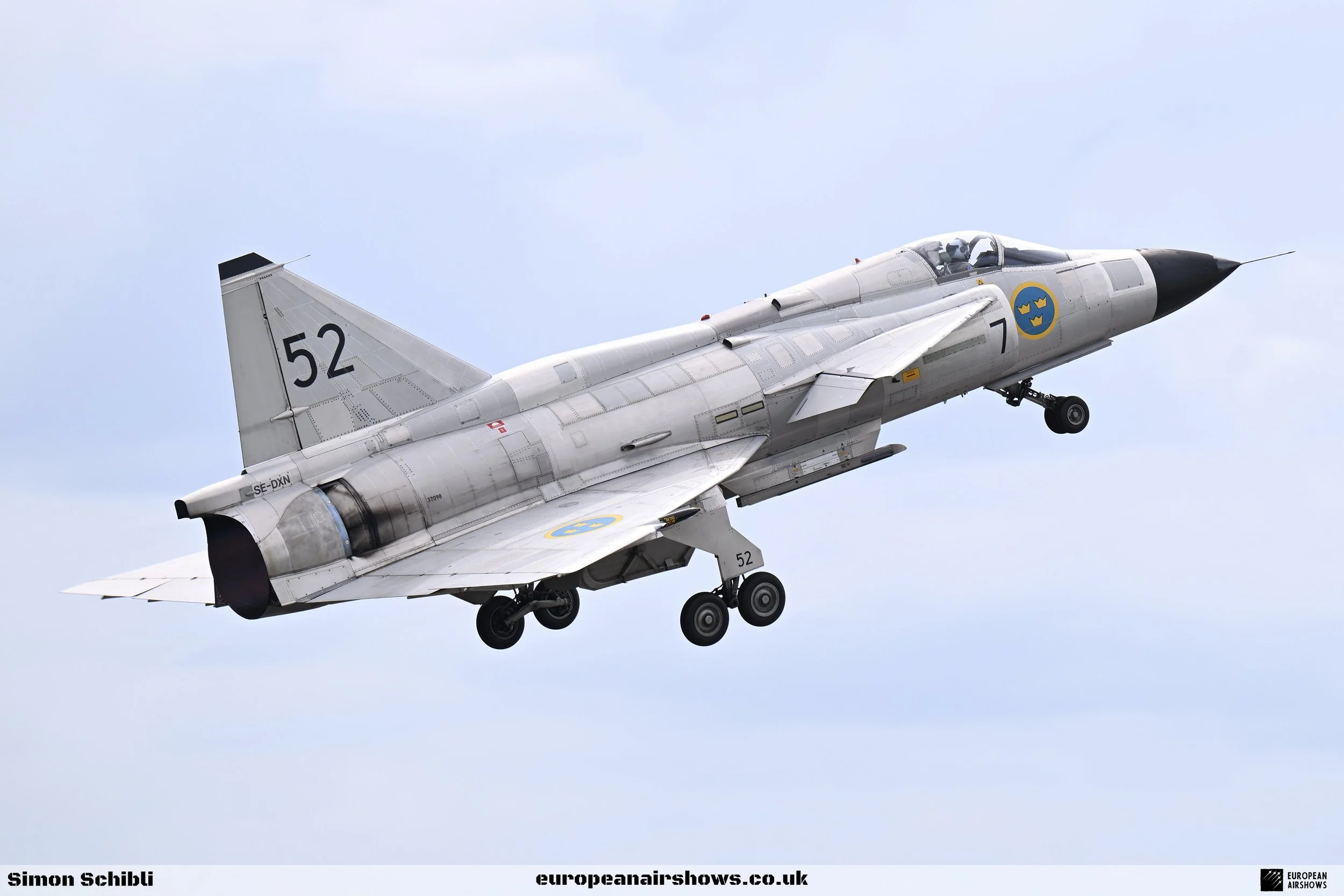
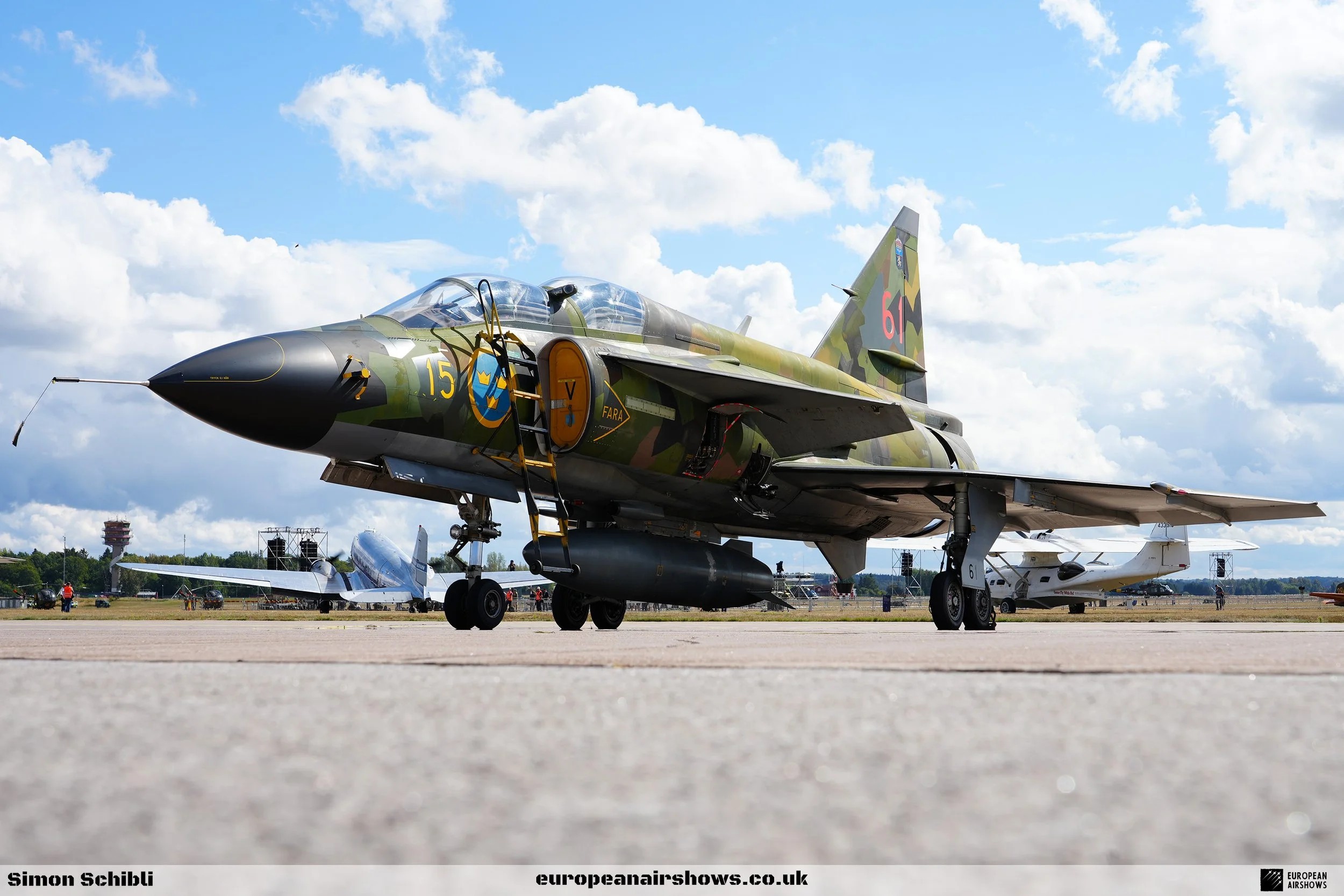
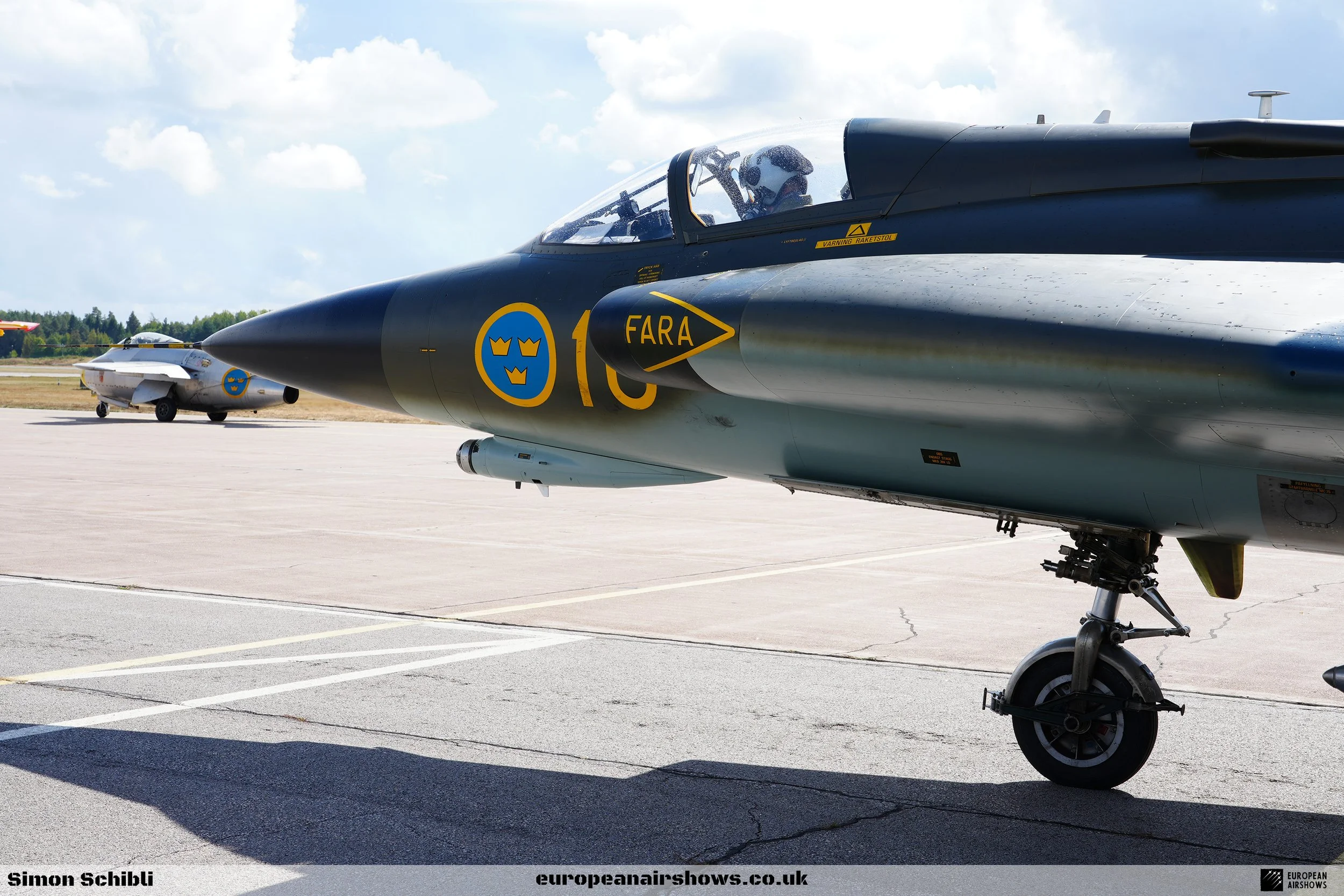
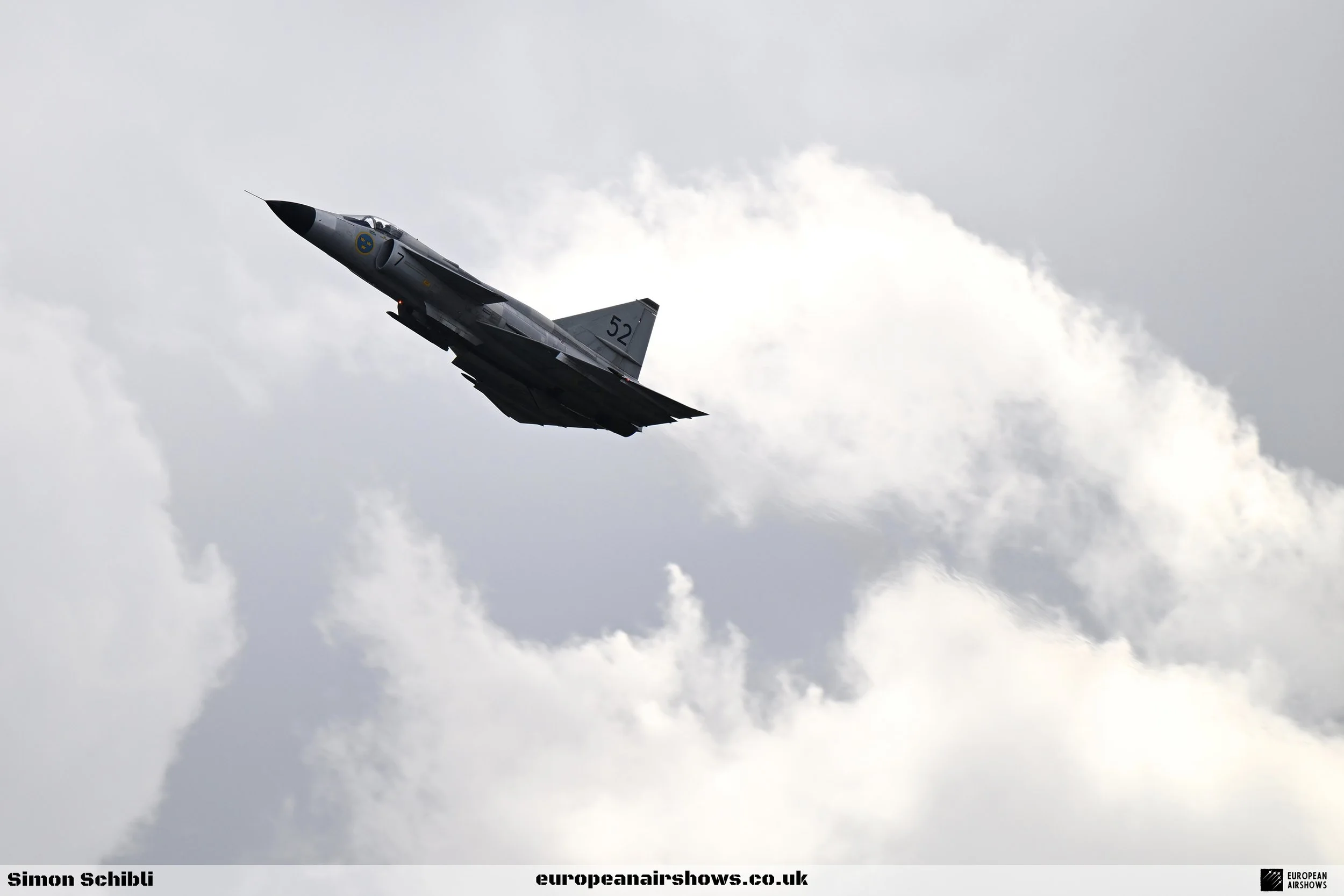
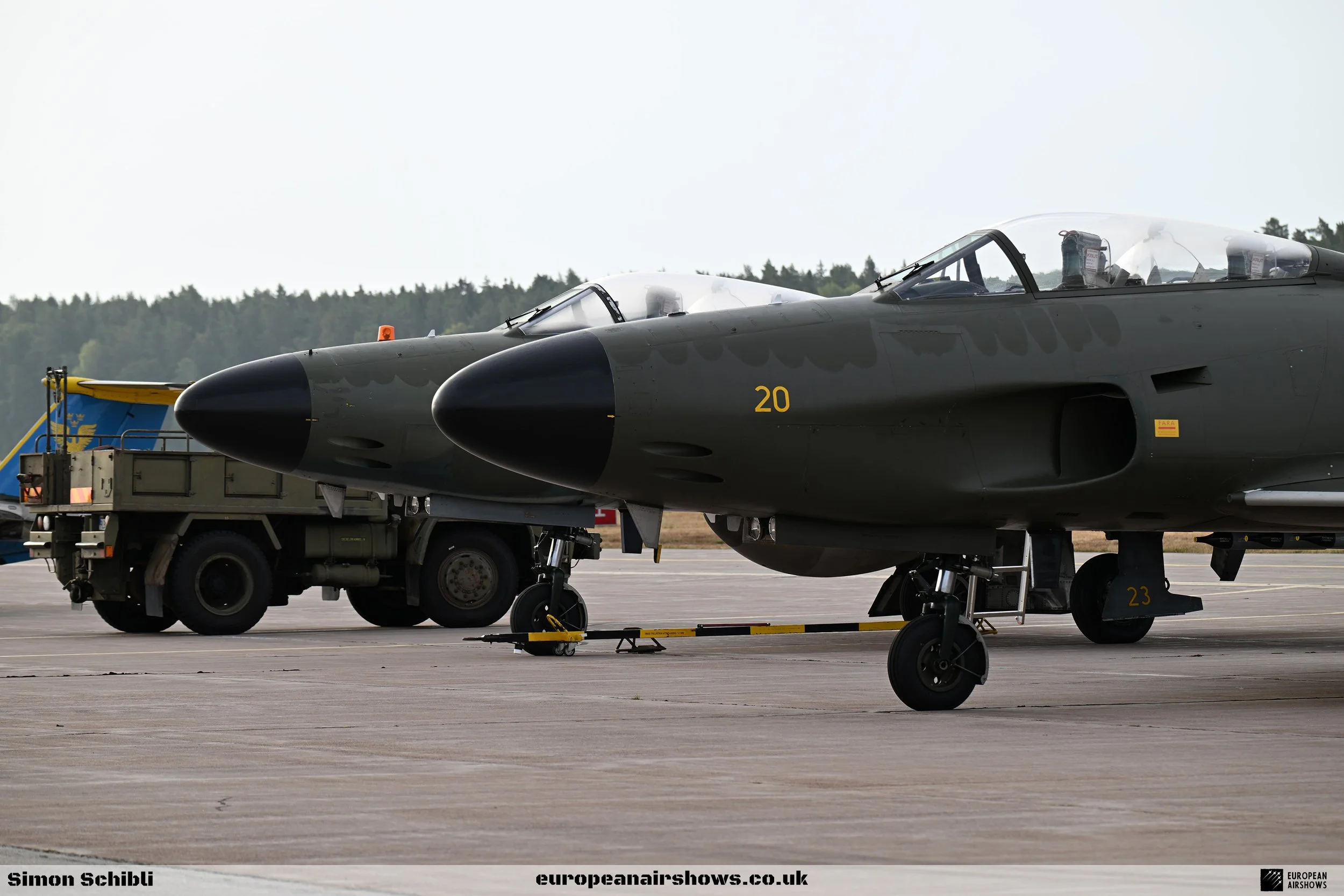
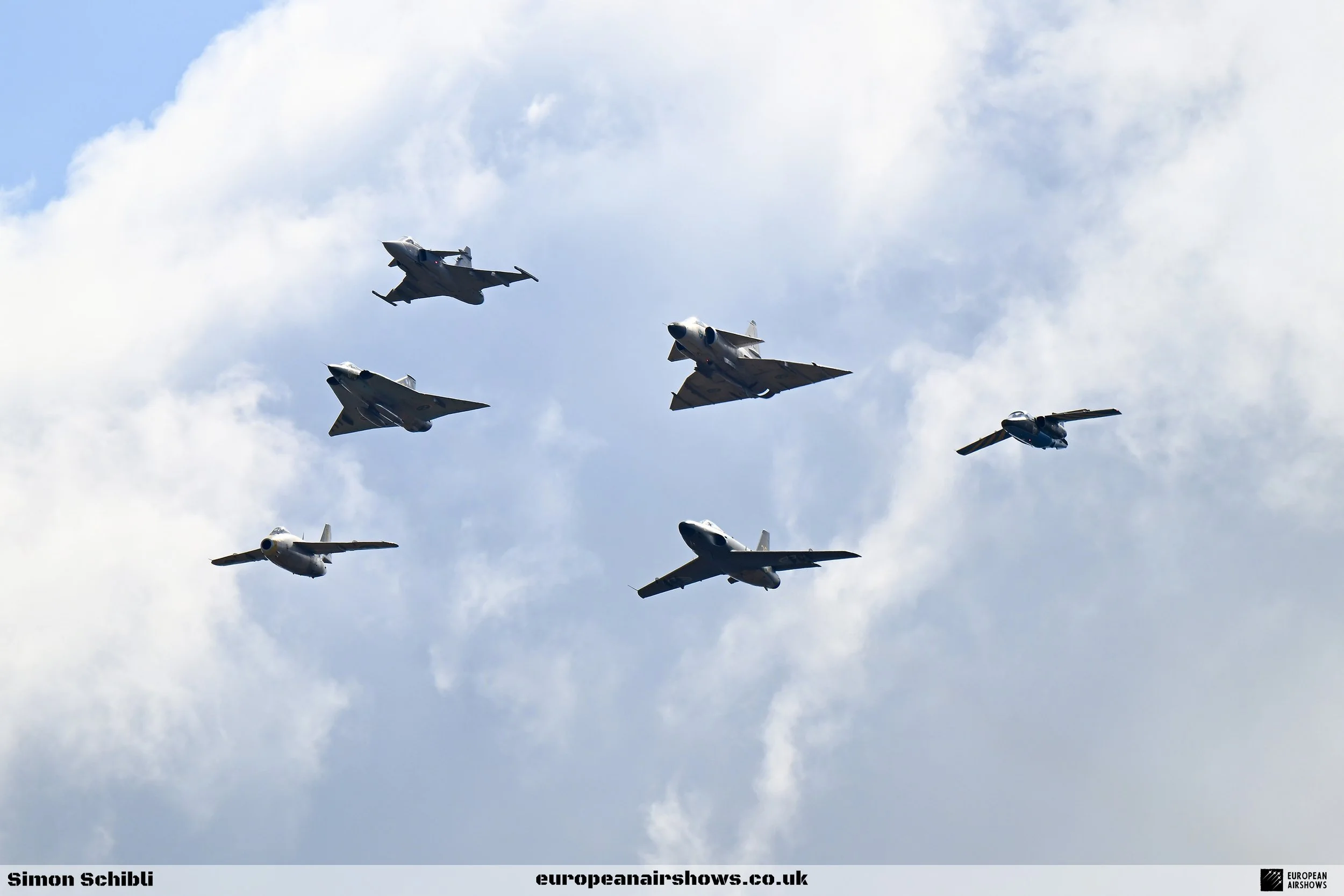
Swedish Air Force Historic Flight also supplied the backbone of the centenary’s defining heritage formation: J 29F Tunnan, J 32B Lansen, J 35J Draken, AJS 37 Viggen and SK 60, joined by a current JAS 39C Gripen. Saturday’s formation lacked the advertised Lansen. The aircraft had flown its own solo and was not cancelled, but the gap was obvious. On Sunday the J 32B joined and the six-stage Saab lineage finally looked complete.
The formation was also a compact history of Malmen. F 3 replaced its Vampires with the Tunnan in 1953 and introduced the Draken in 1965, while the Historic Flight’s Lansen fleet includes aircraft with histories at F 3 and Malmen’s flight-test establishment. Viggen and Gripen continued the Linköping design line; the SK 60 linked it to generations of pilots trained here.
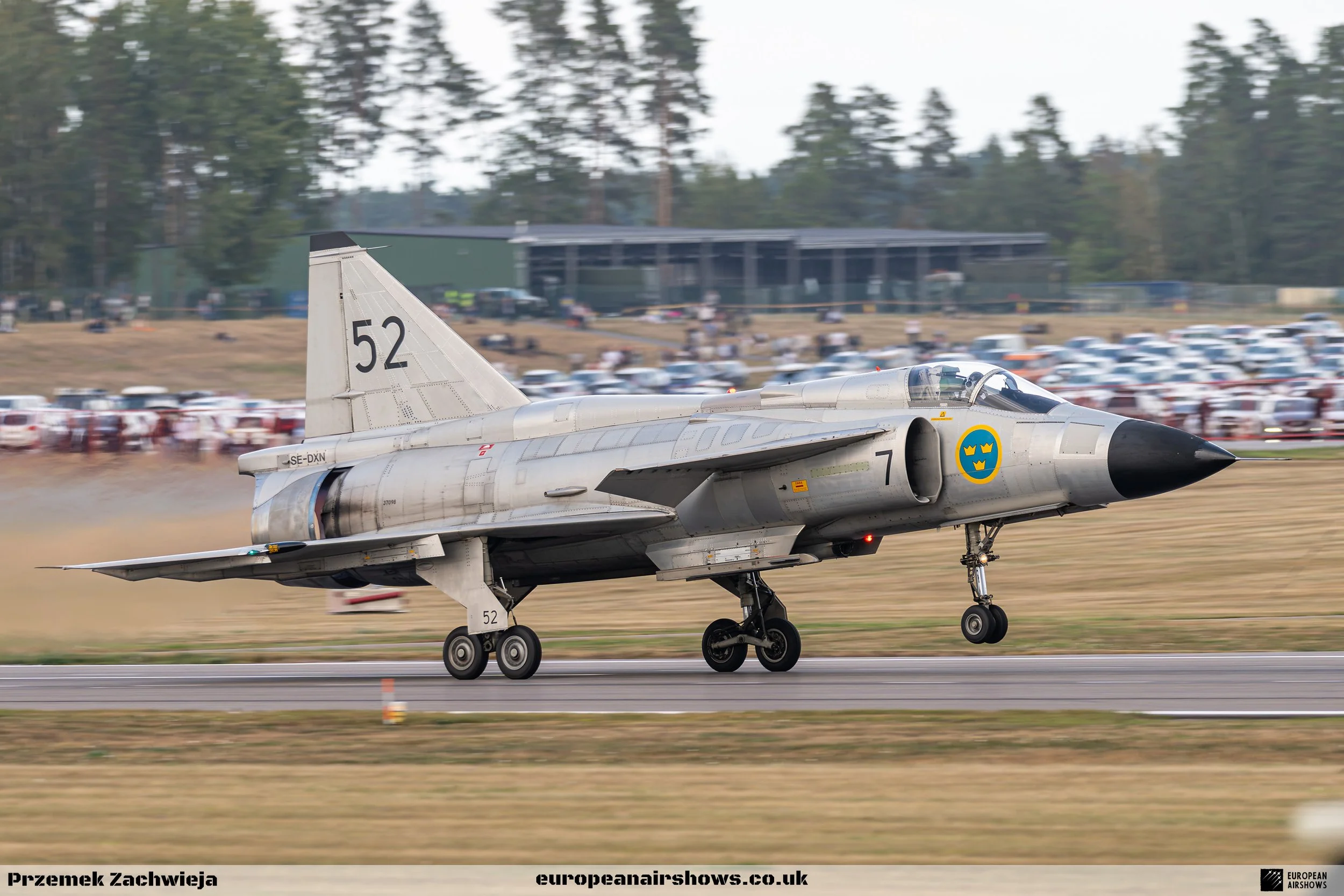
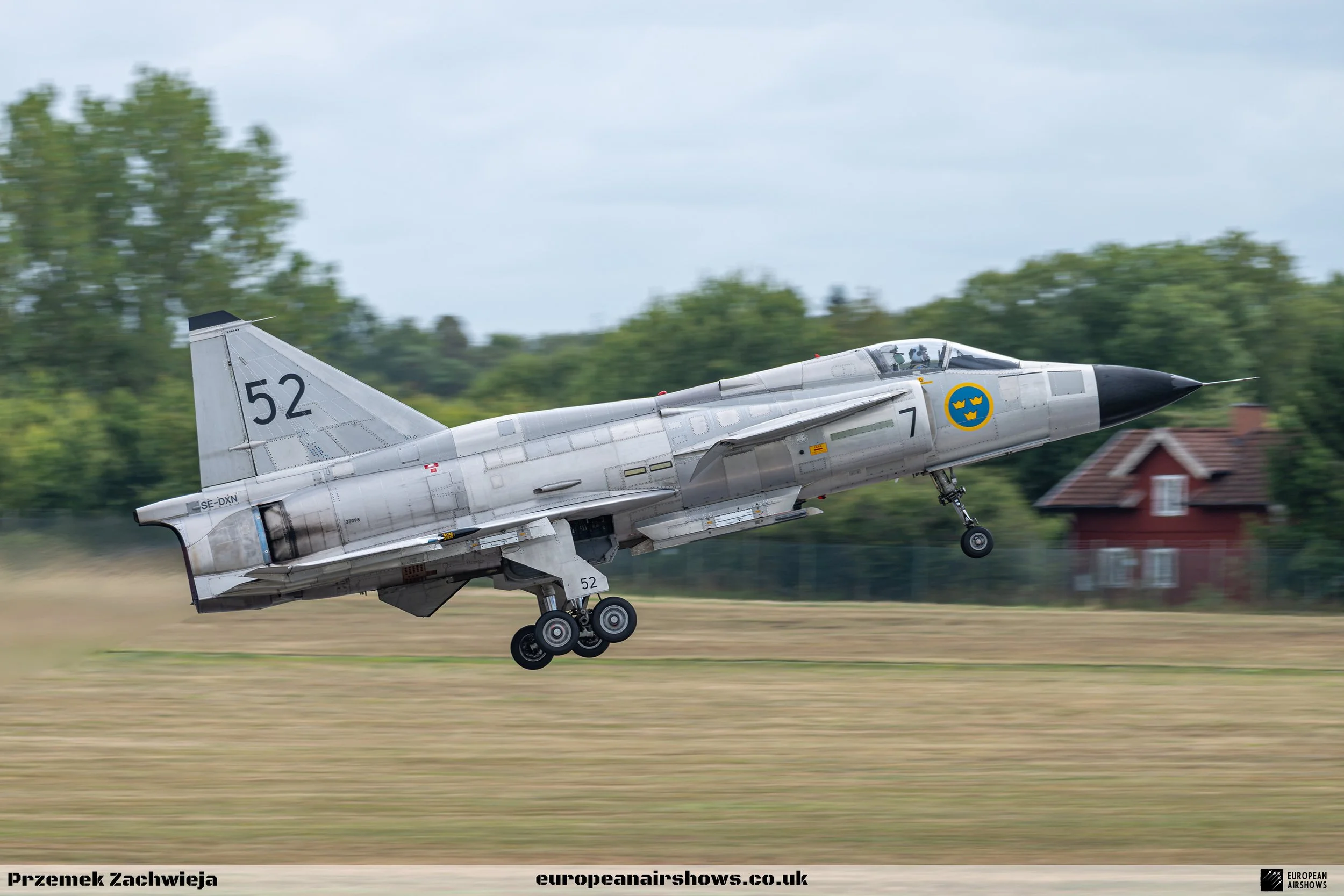
The individual solos gave those shapes their own personalities. The J 32B Lansen—nicknamed “Lansen Sport” in fighter form—was graceful but far more energetic than its size suggested. The AJS 37 Viggen was not quite as dynamic as we remembered from earlier seasons, yet it still produced the most Swedish piece of theatre in the show. It landed short, selected reverse thrust, slowed hard and then used that reverser to back up and turn before taking off in the opposite direction. A topside pass followed before landing. No amount of commentary about Sweden’s dispersed road-base doctrine could explain it as neatly as watching a Viggen reverse along Malmen’s runway.
Gripen carries almost everything
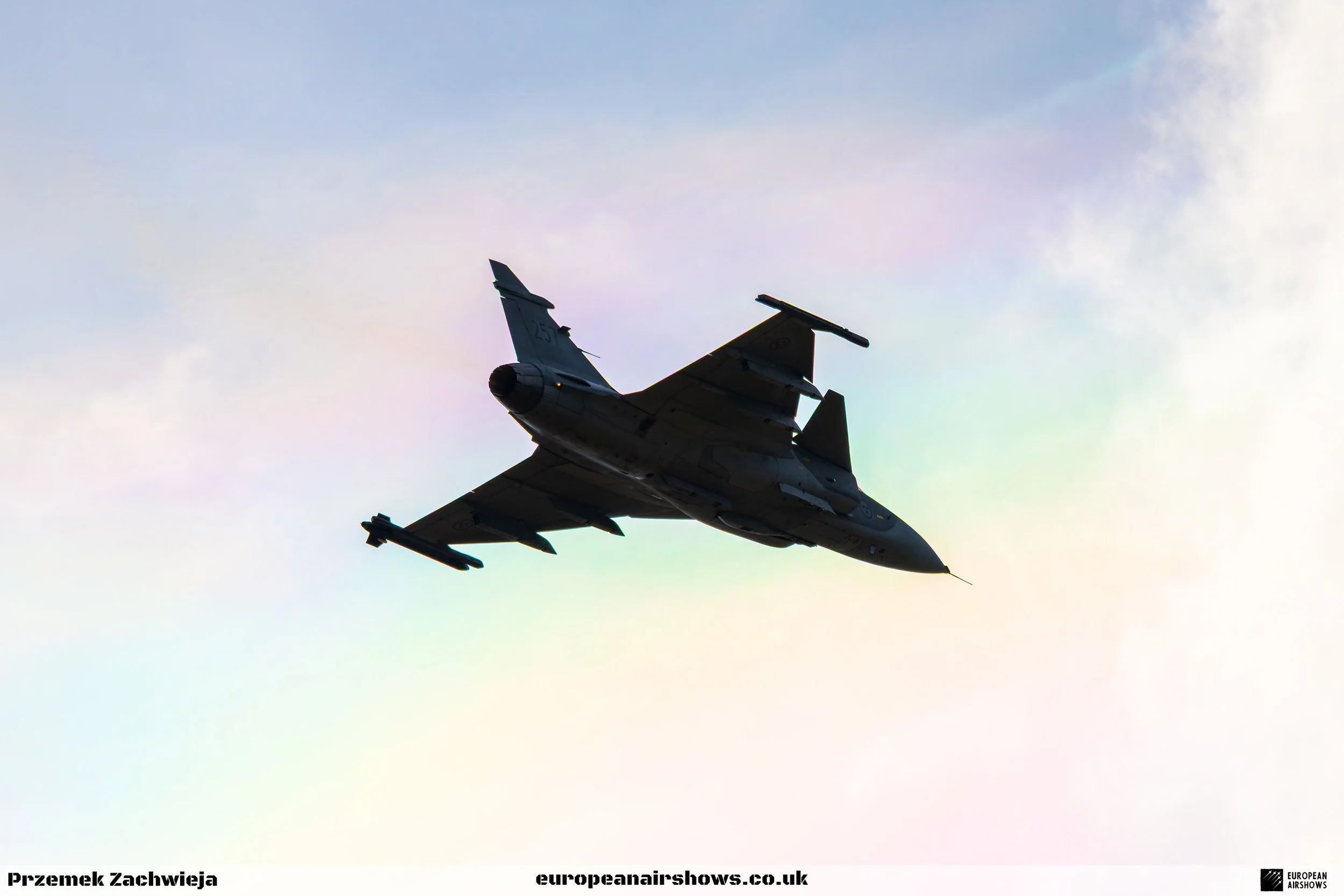
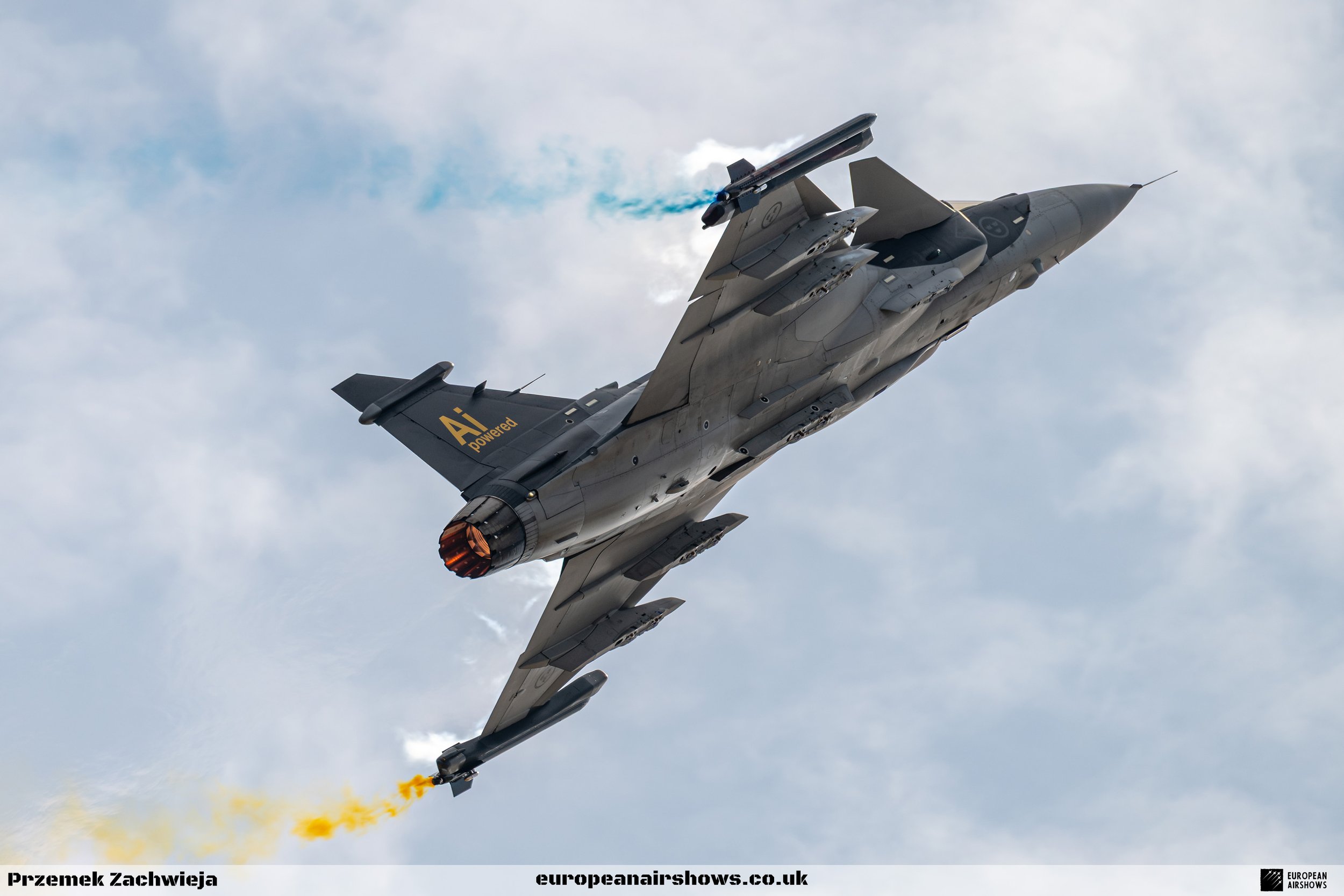
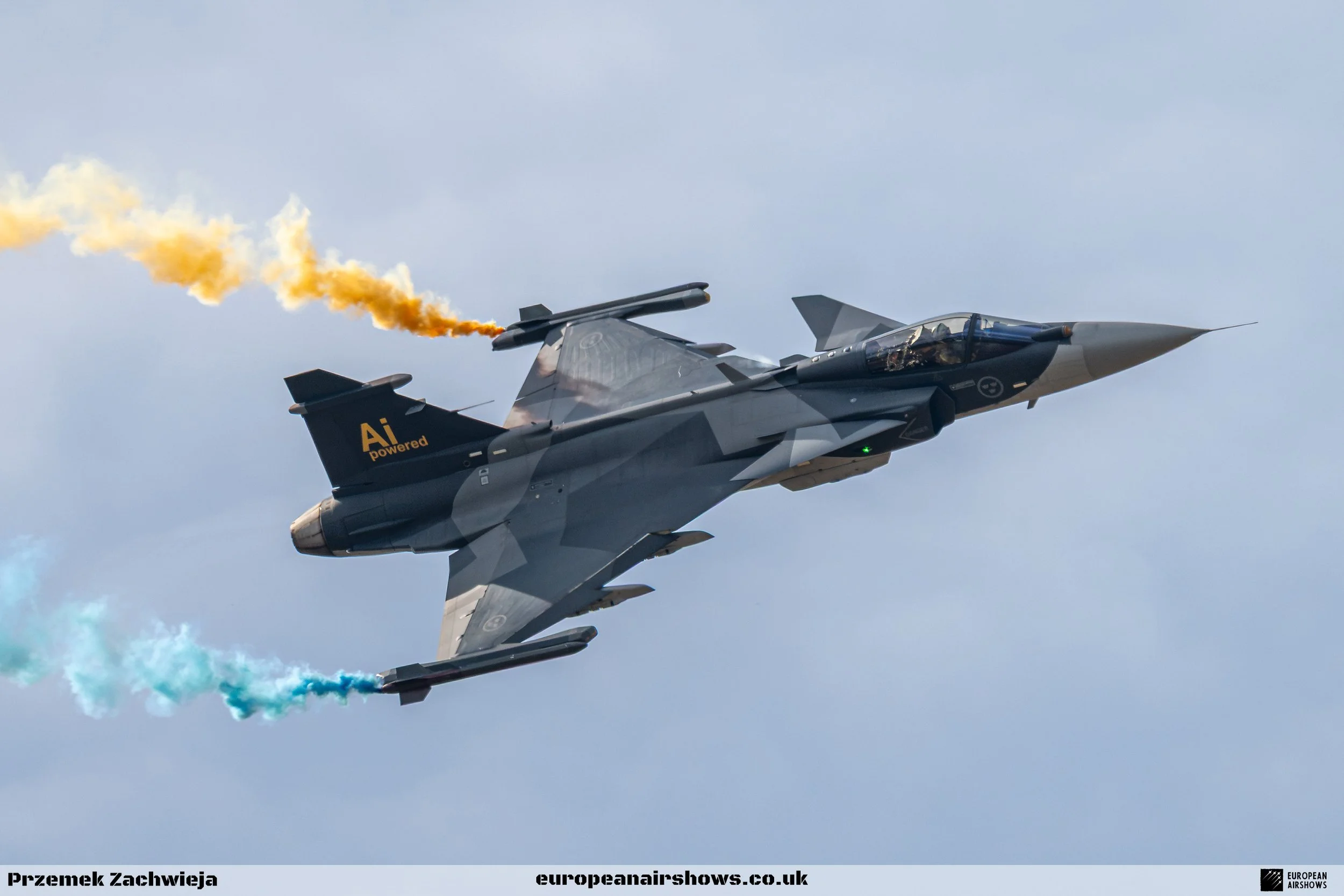
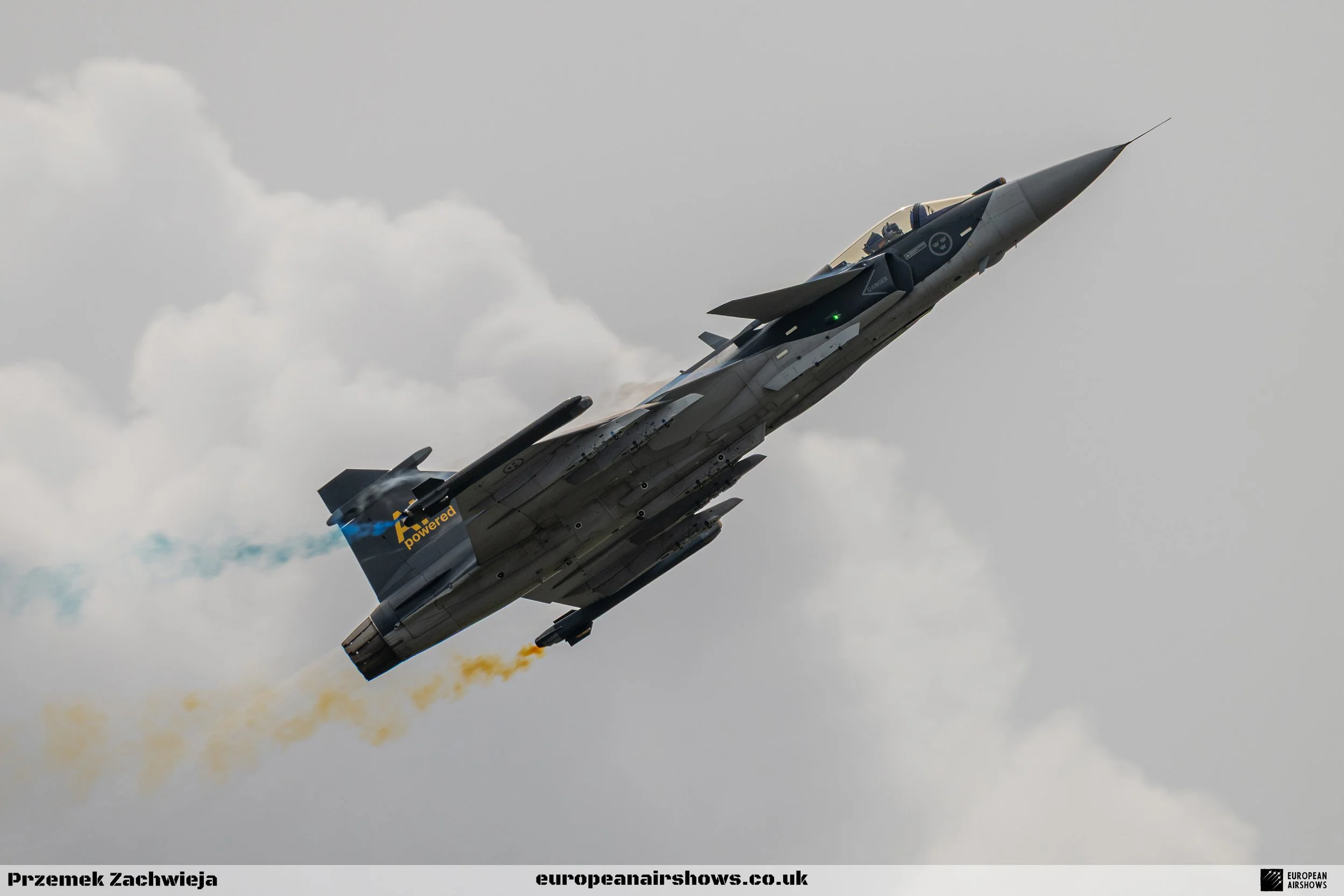
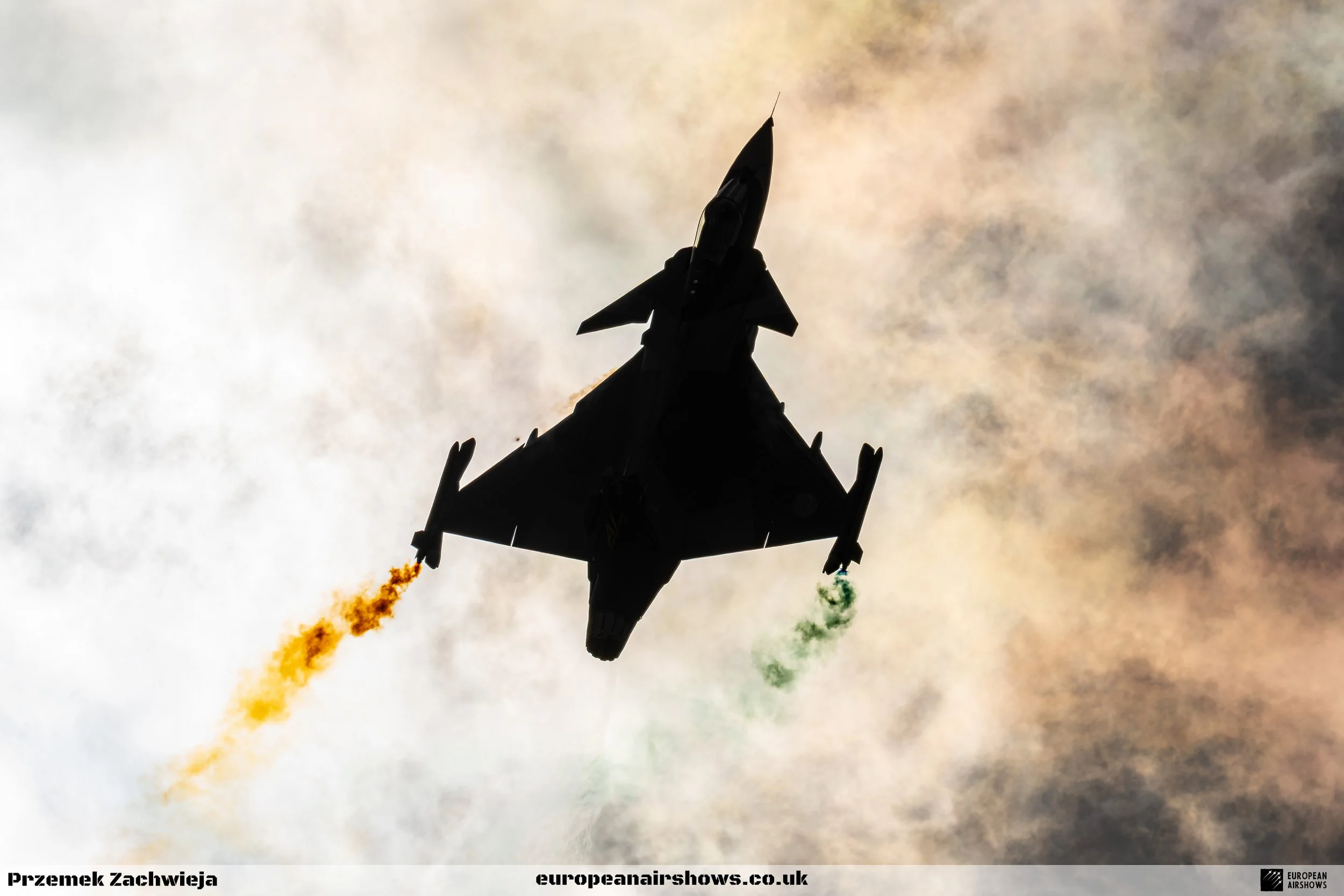
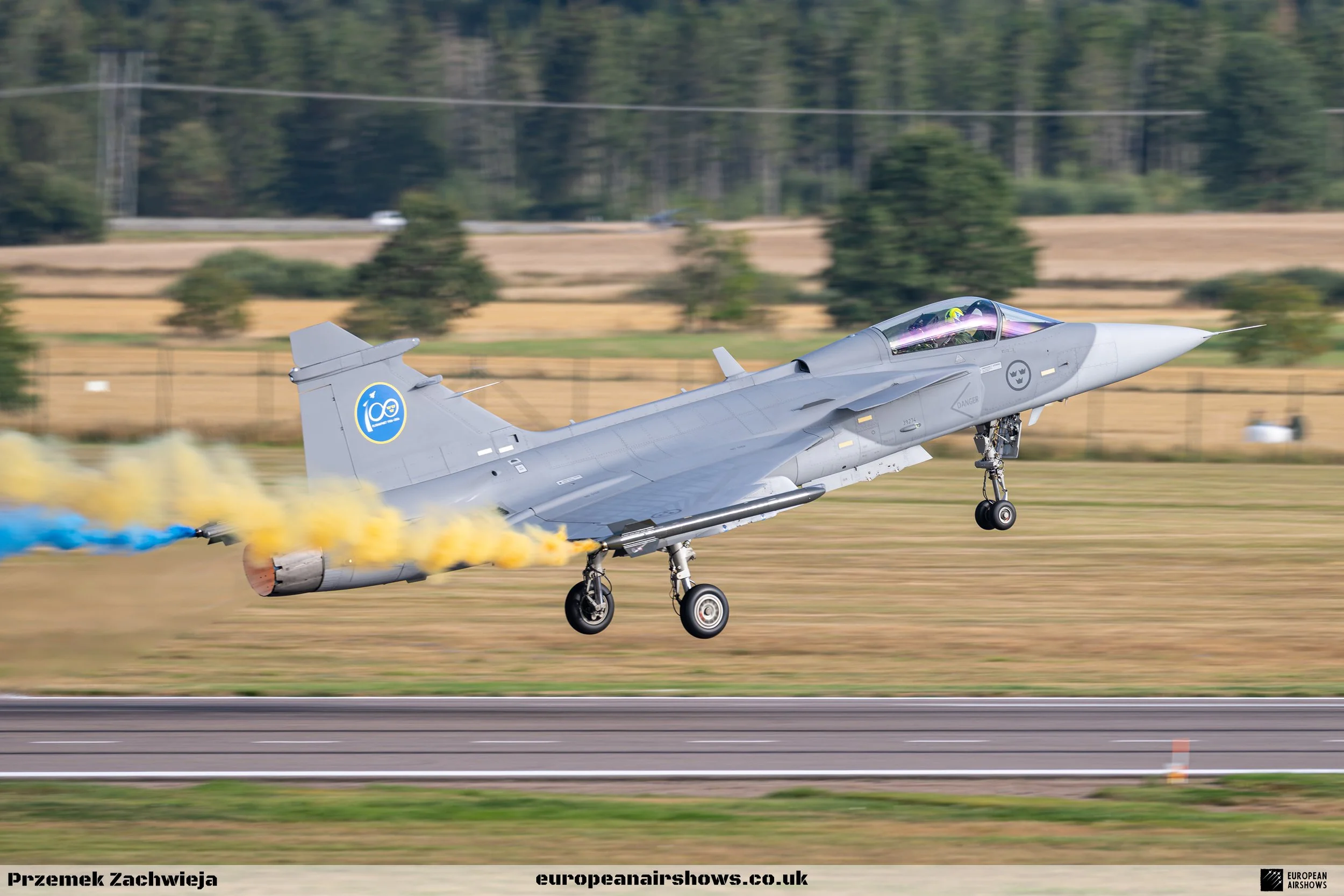
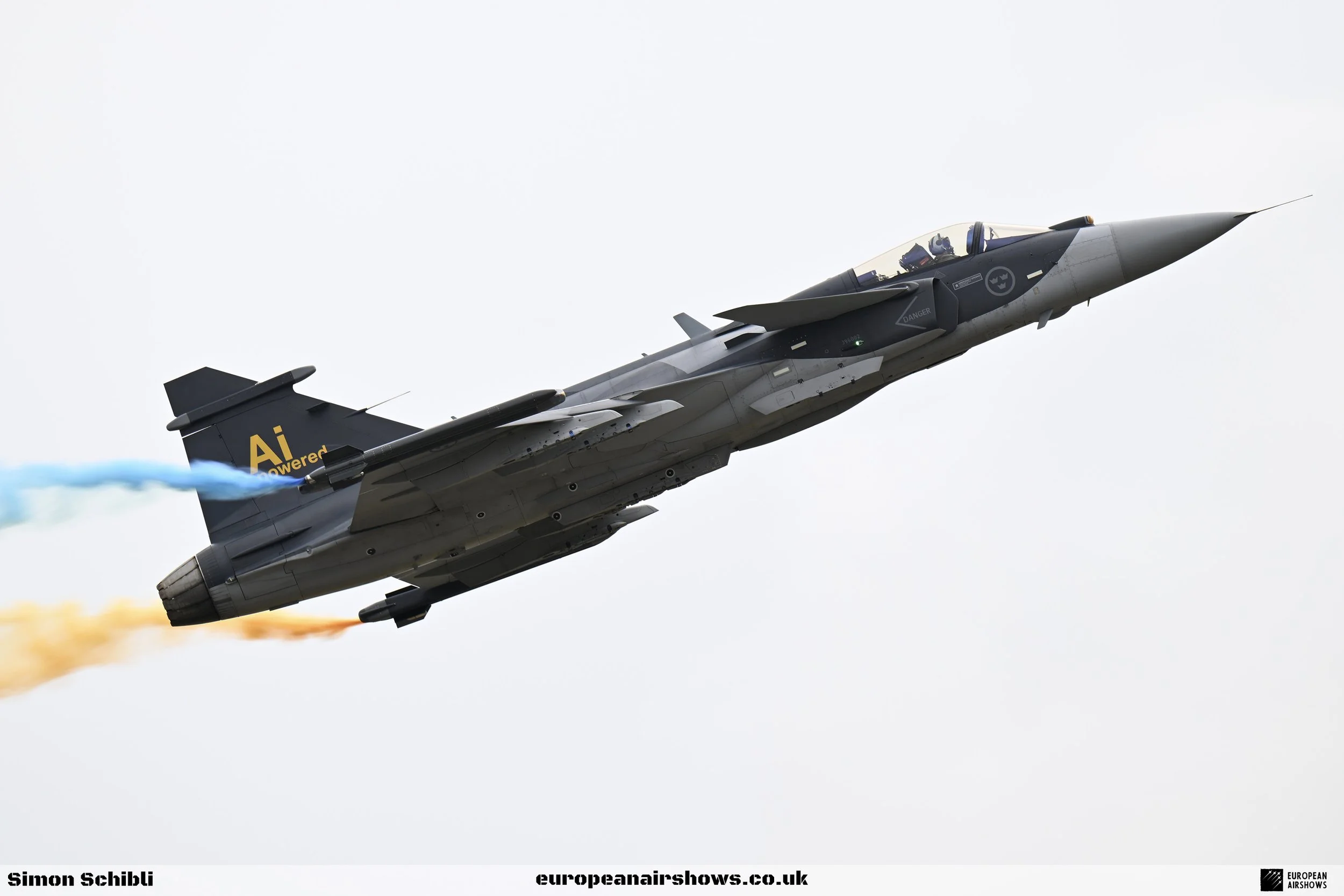
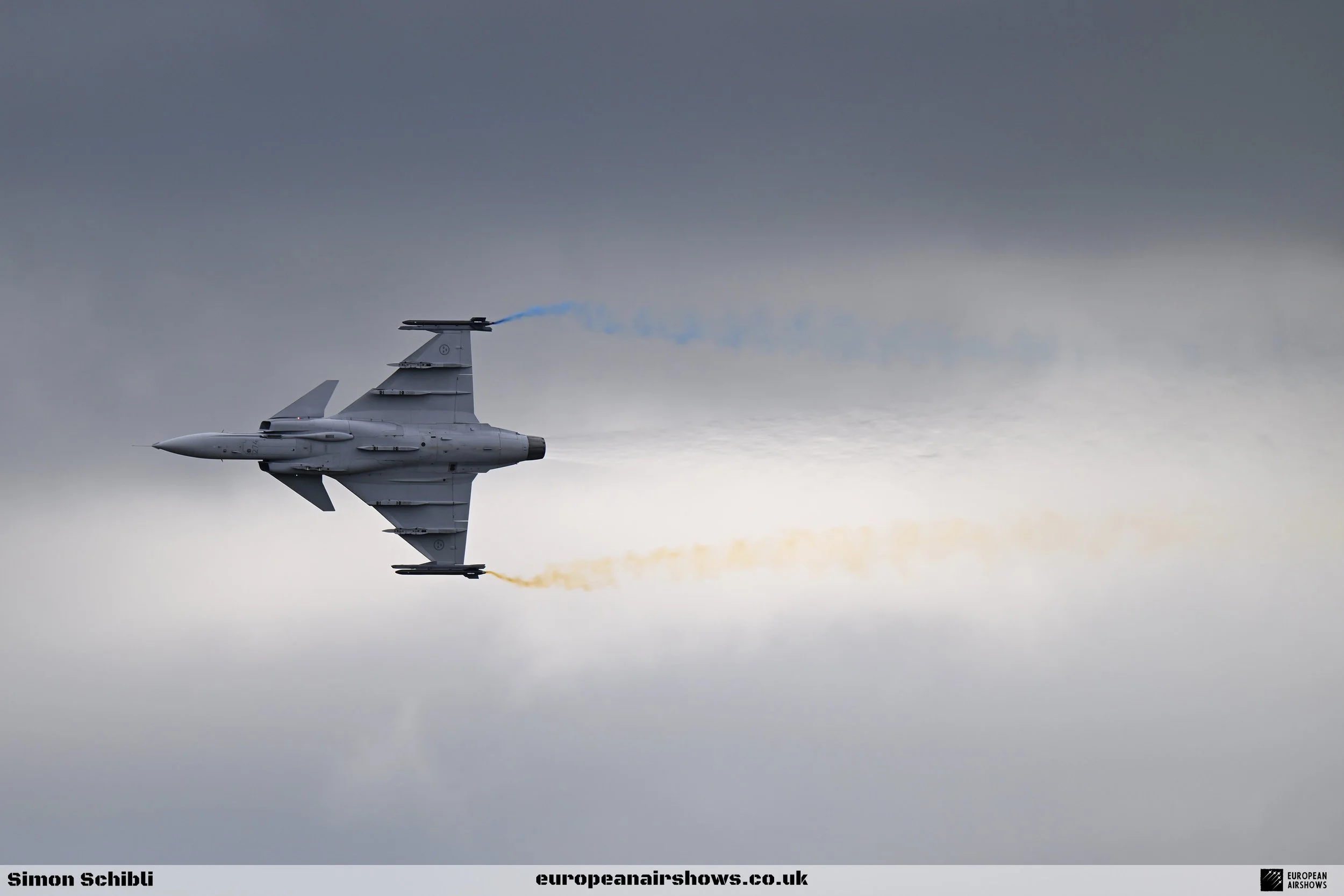
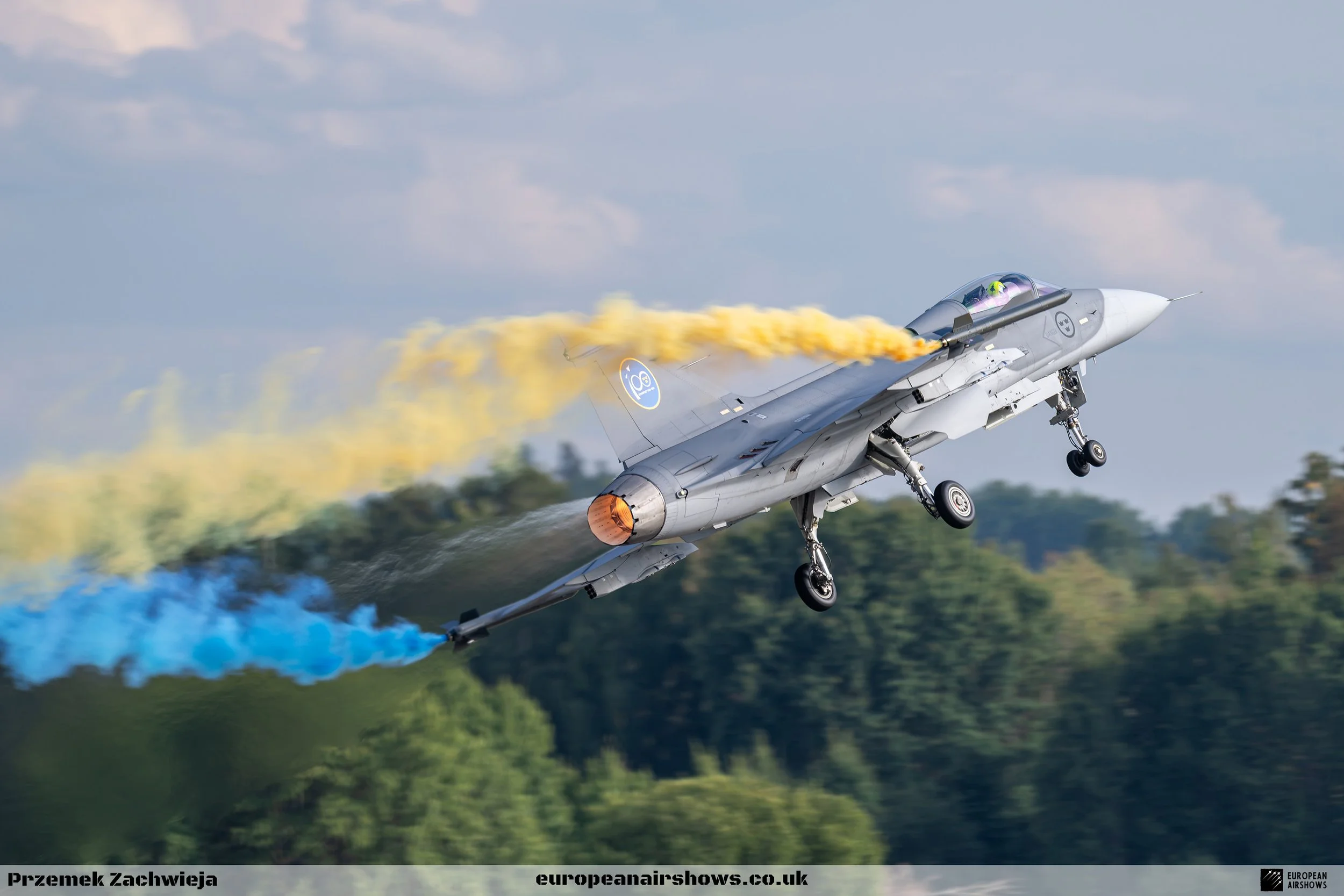
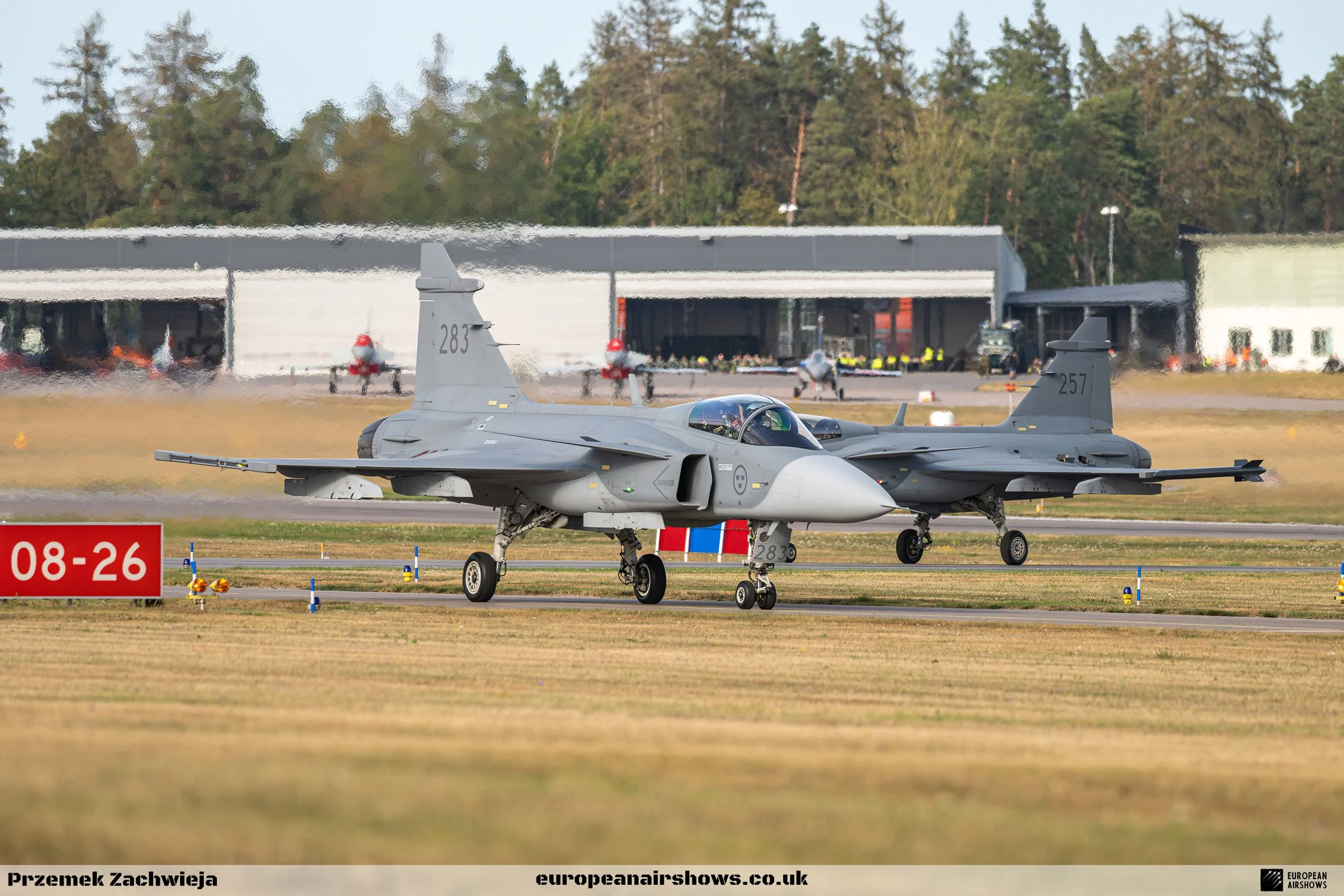
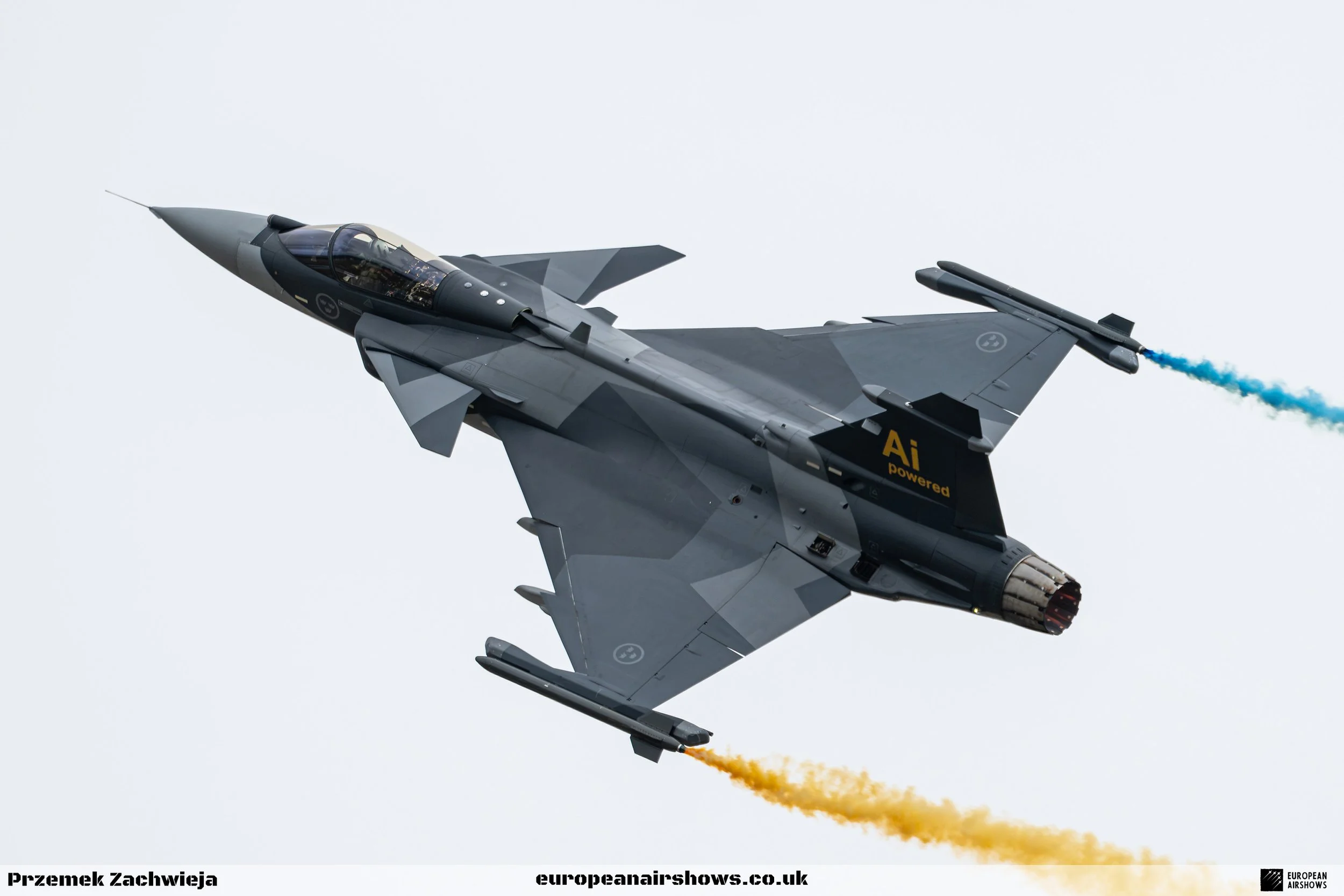
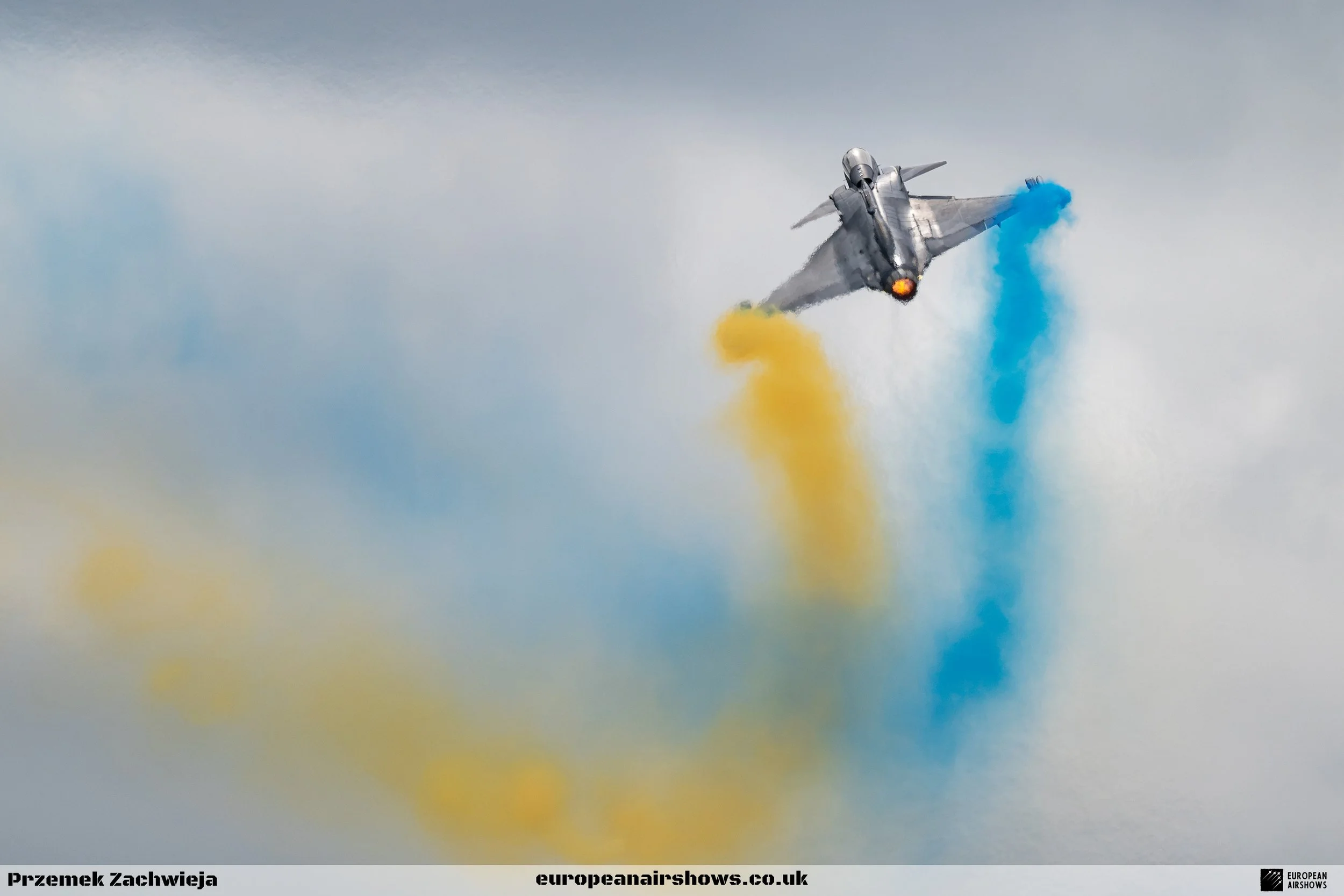
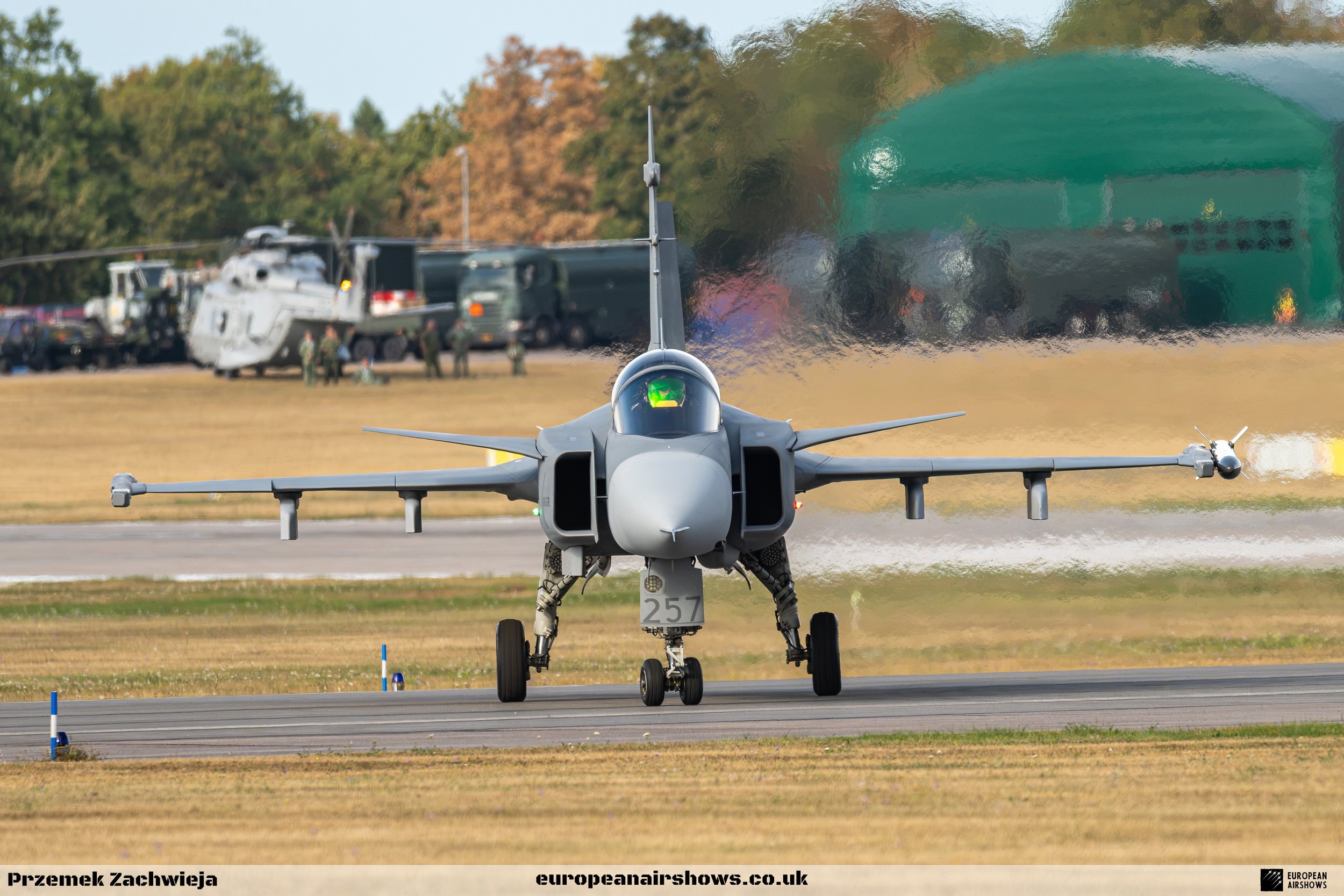
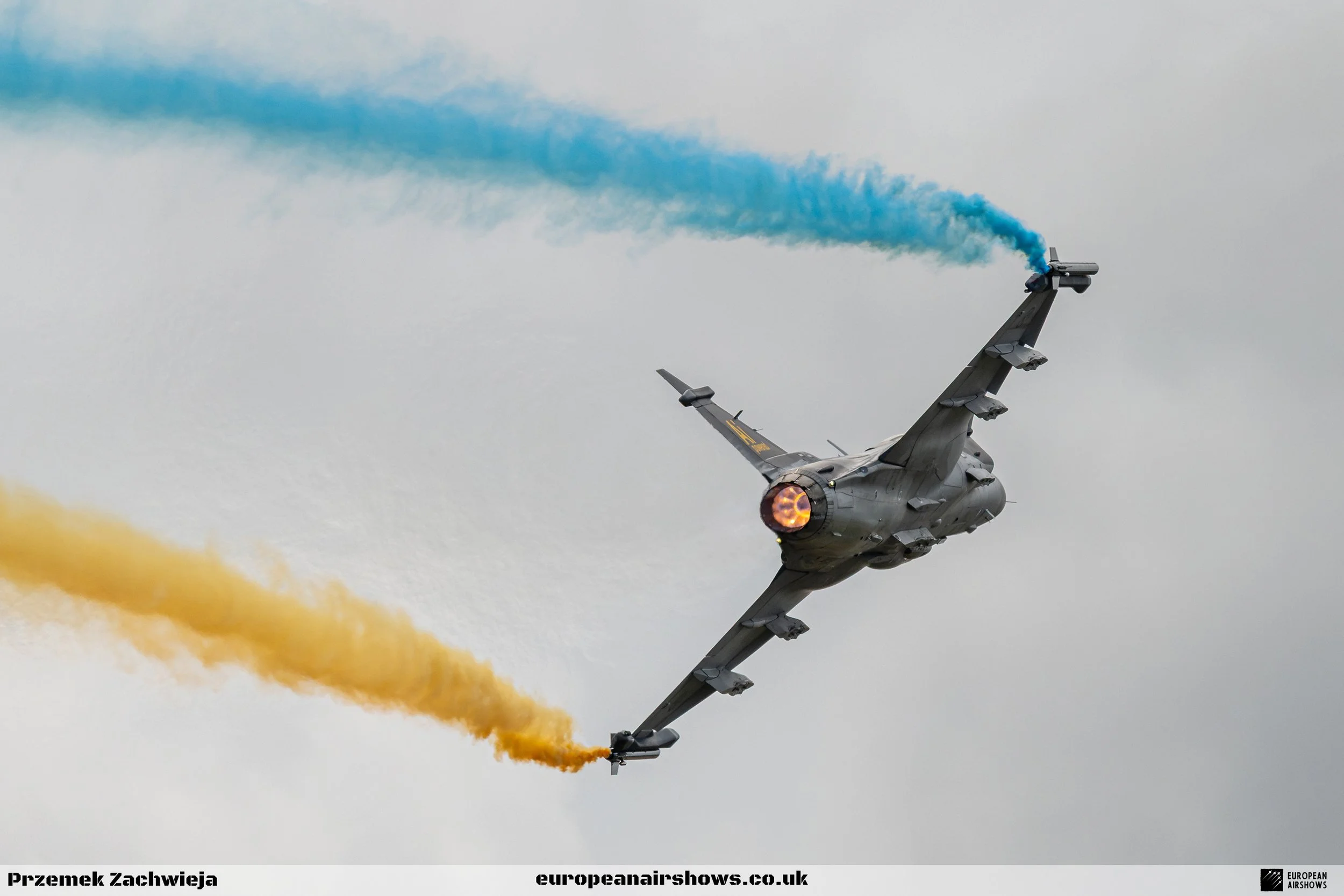
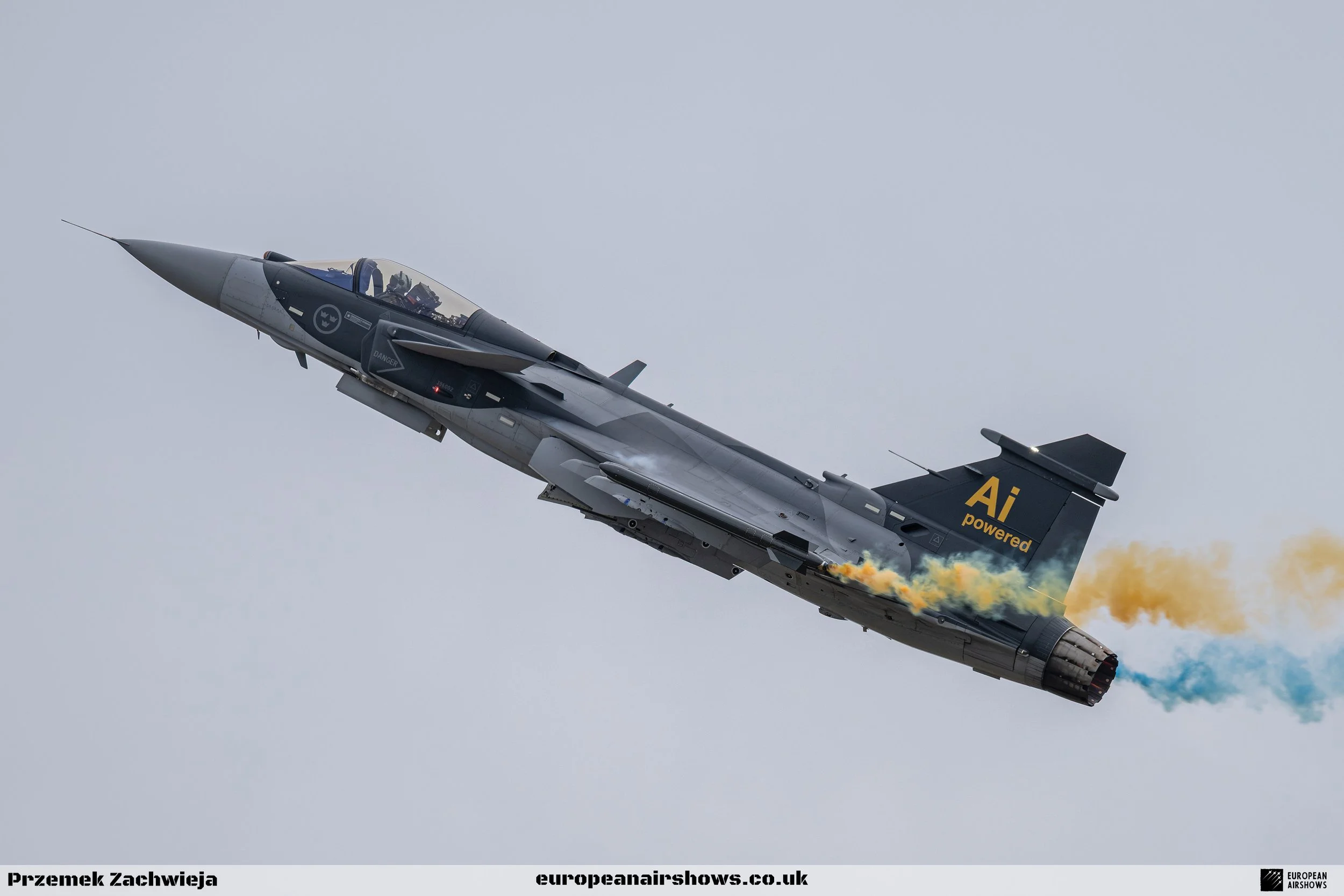
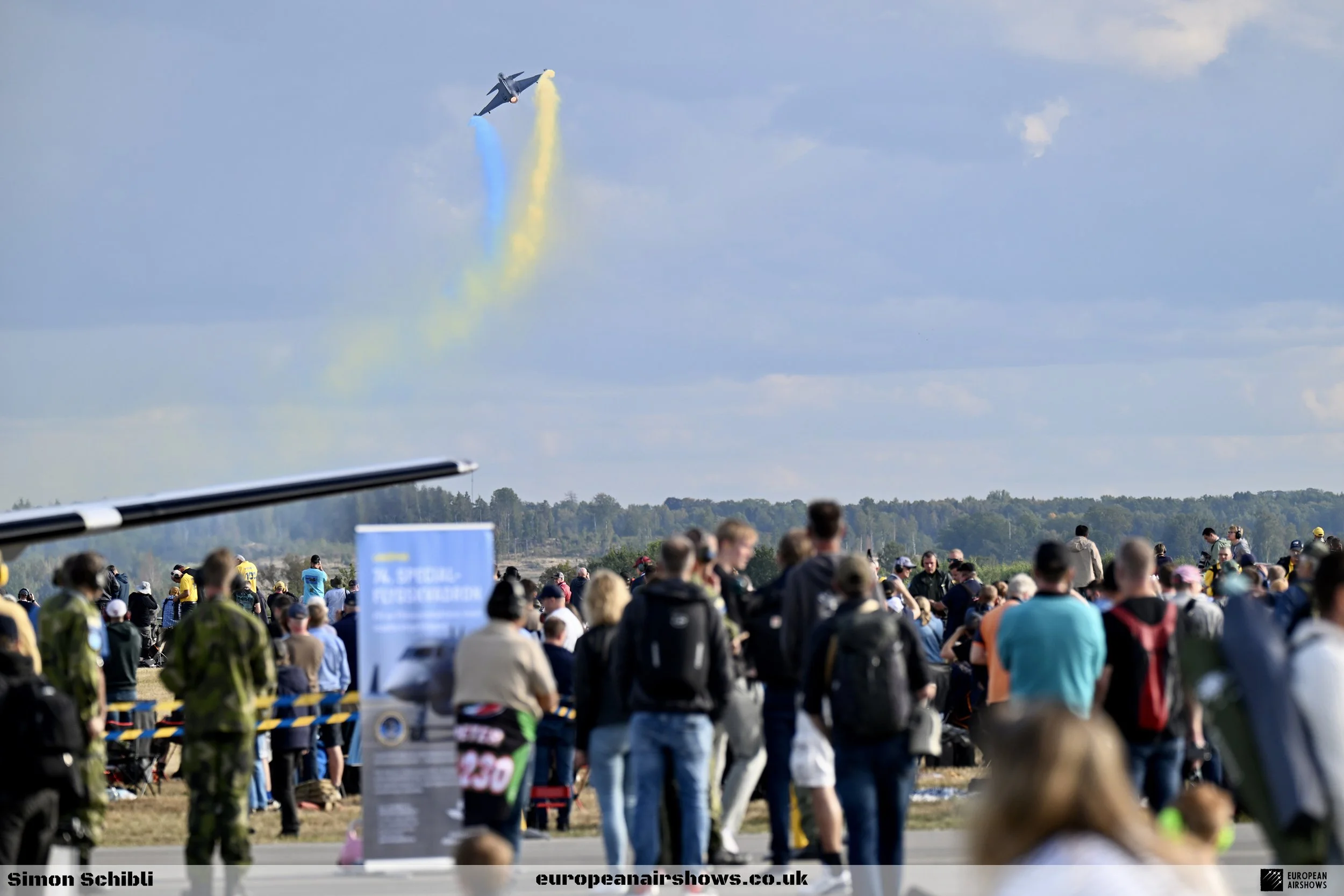
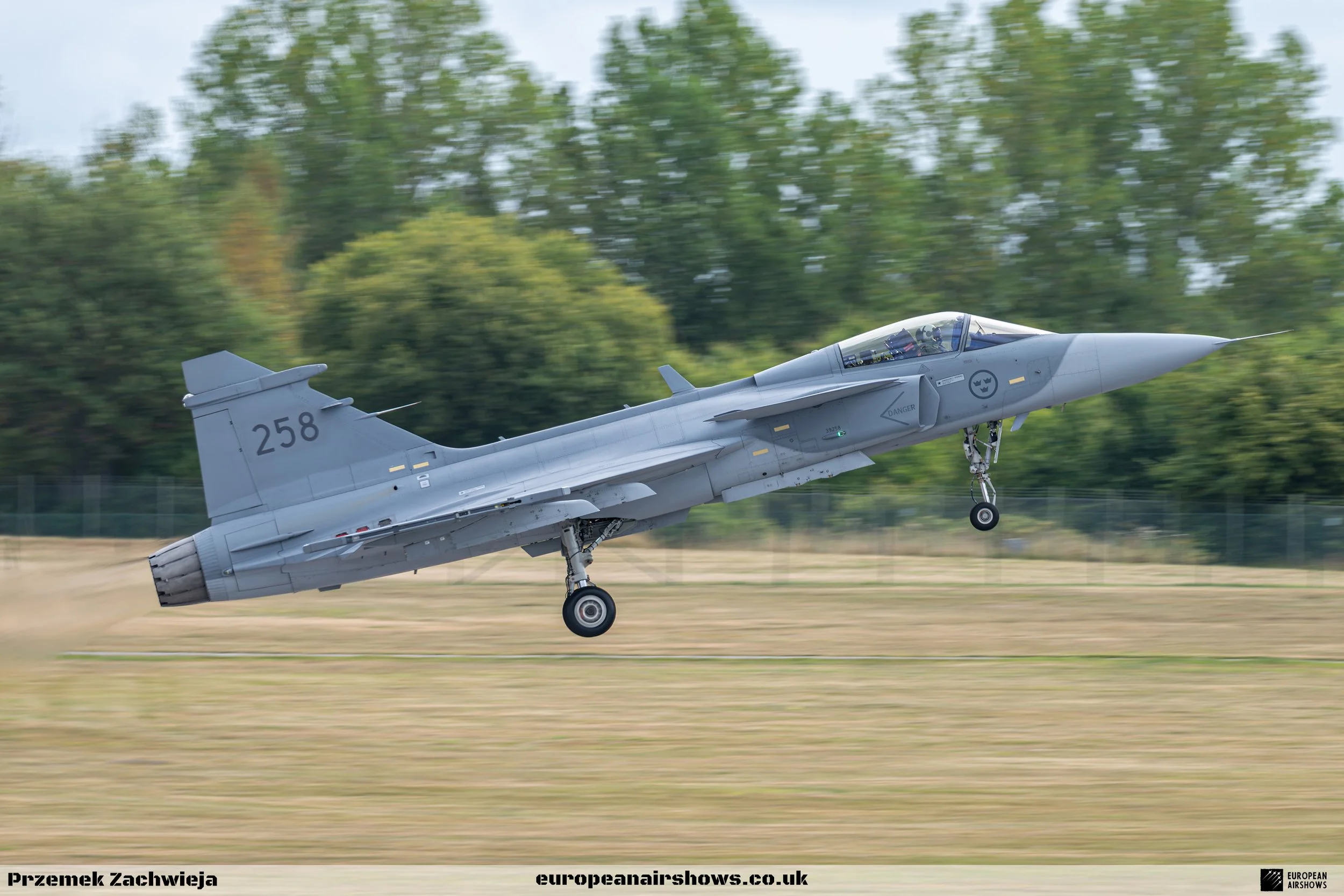
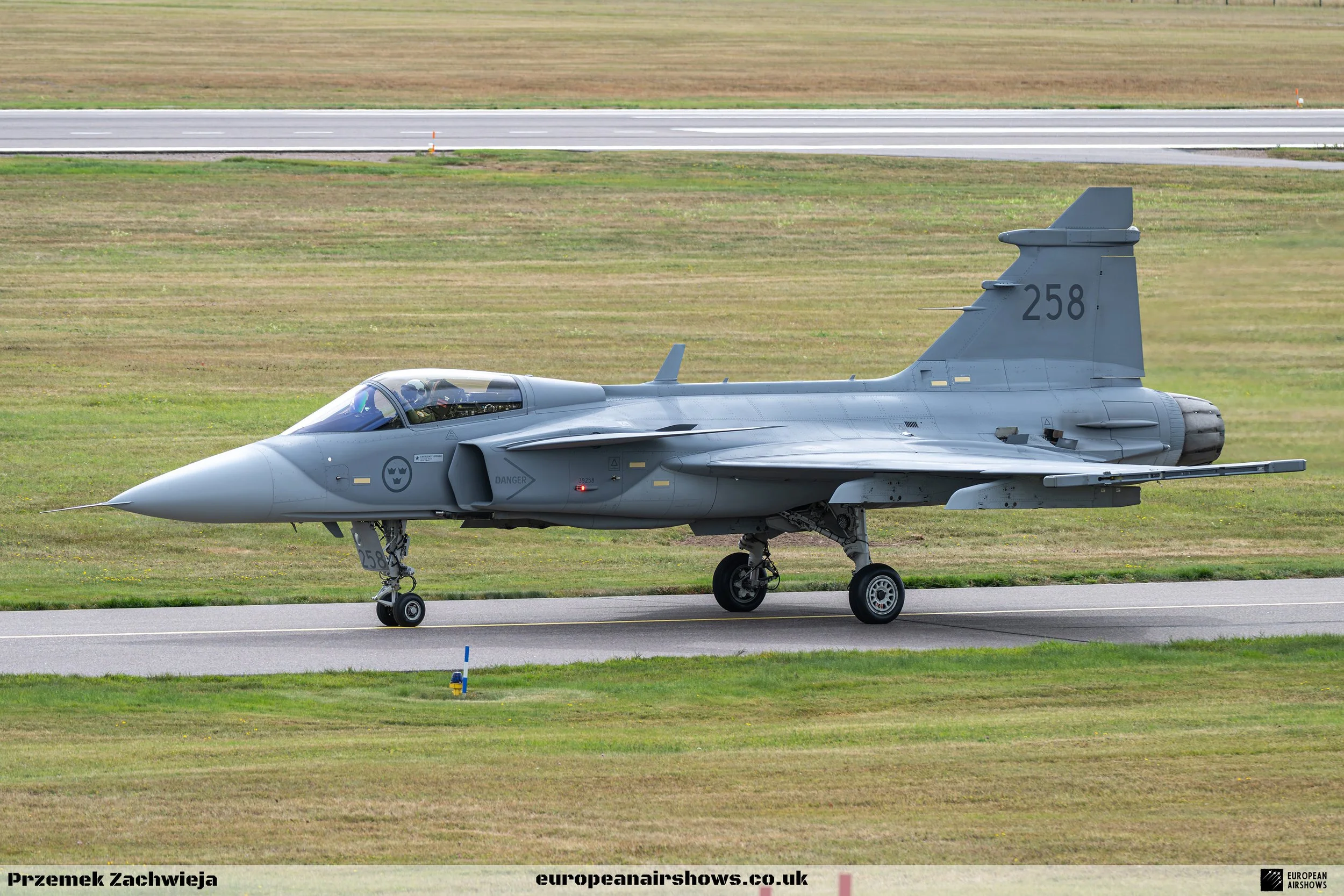
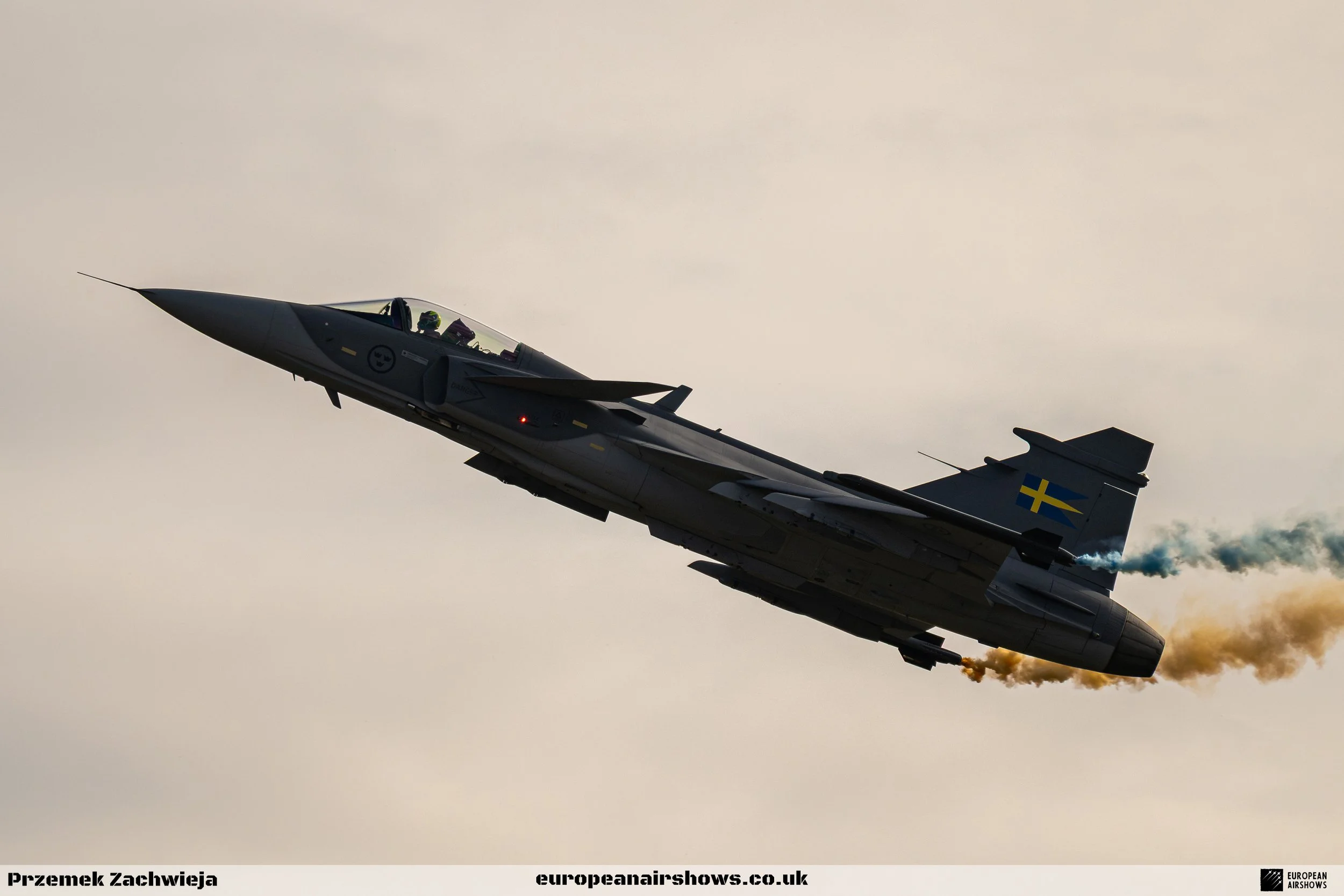
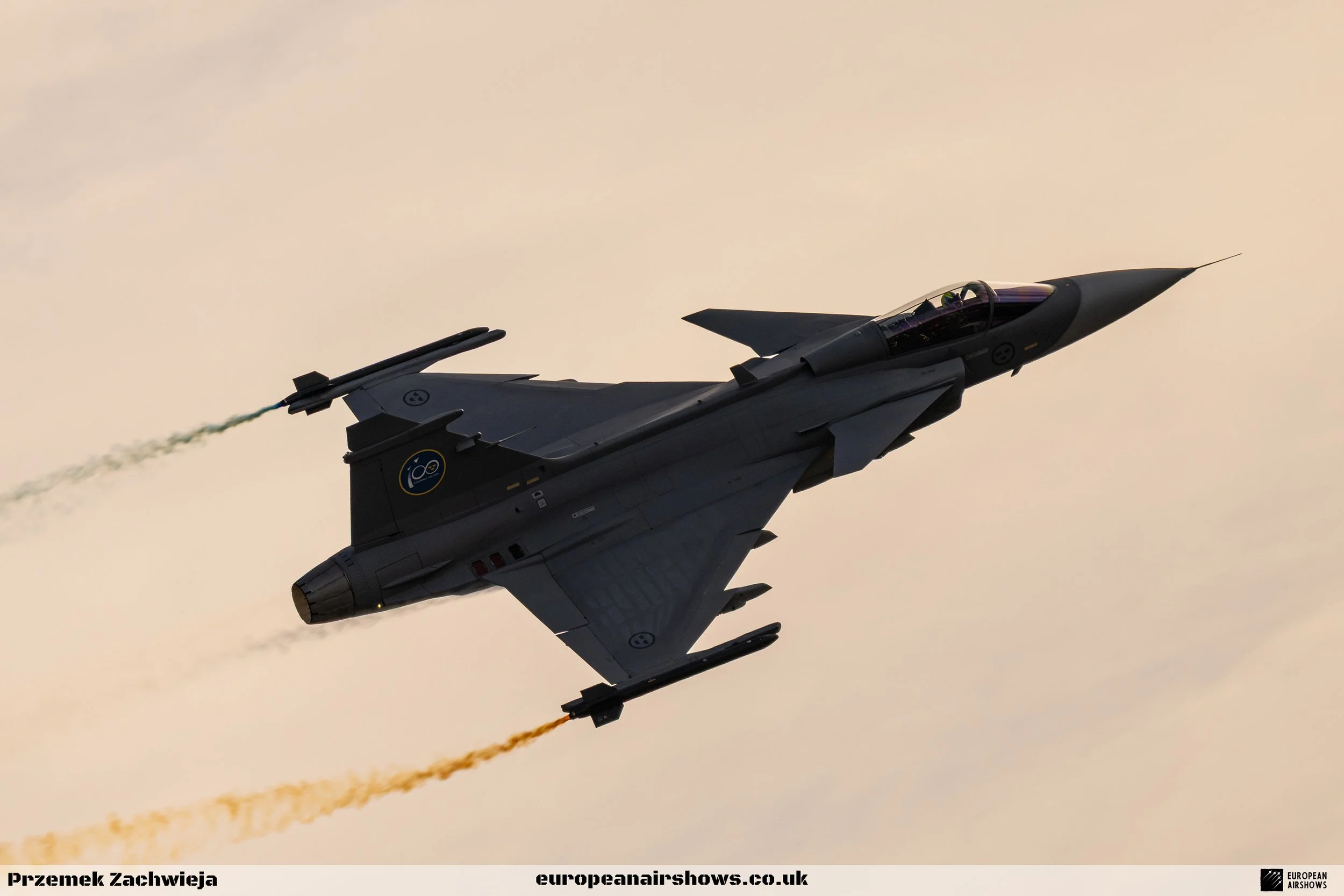
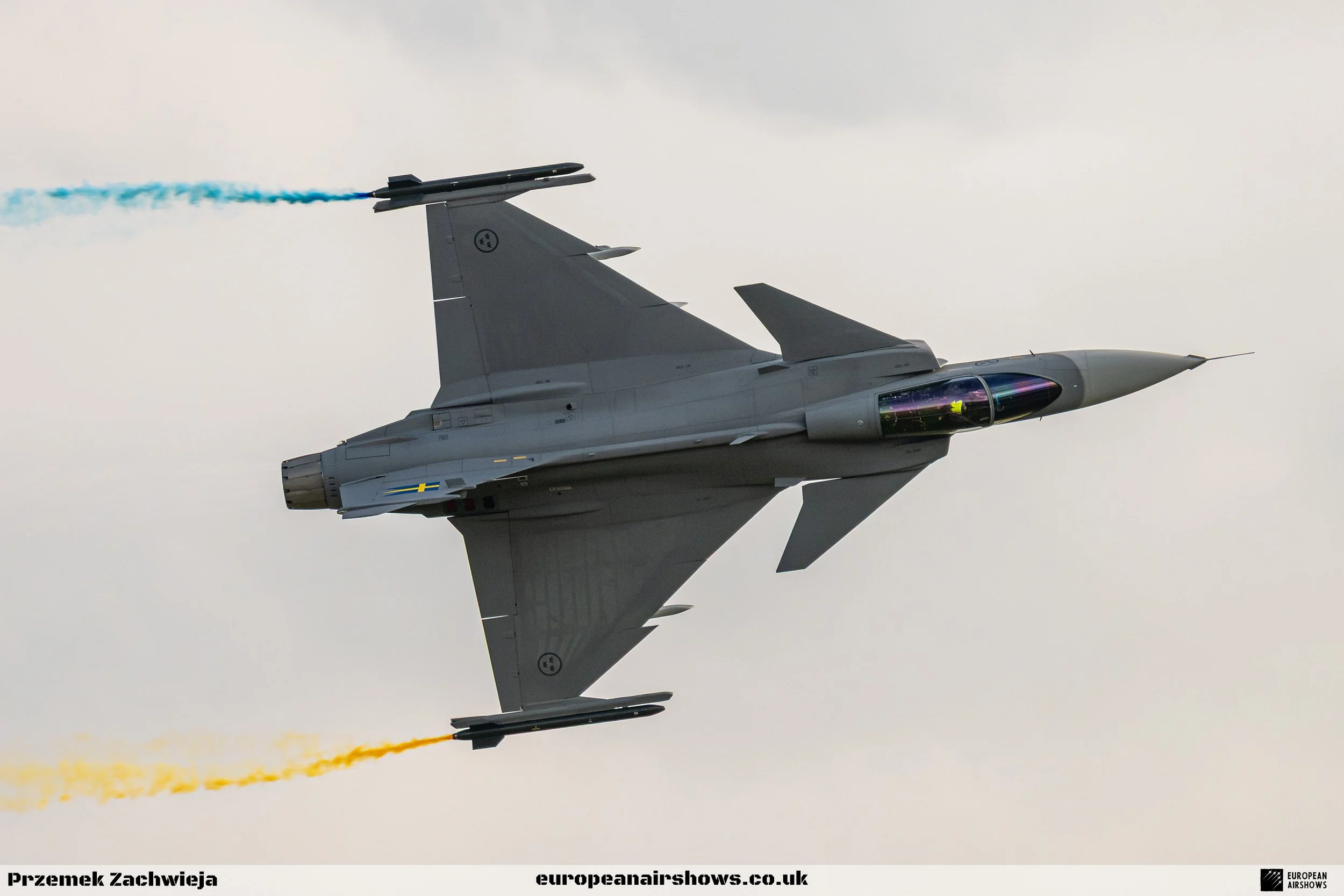
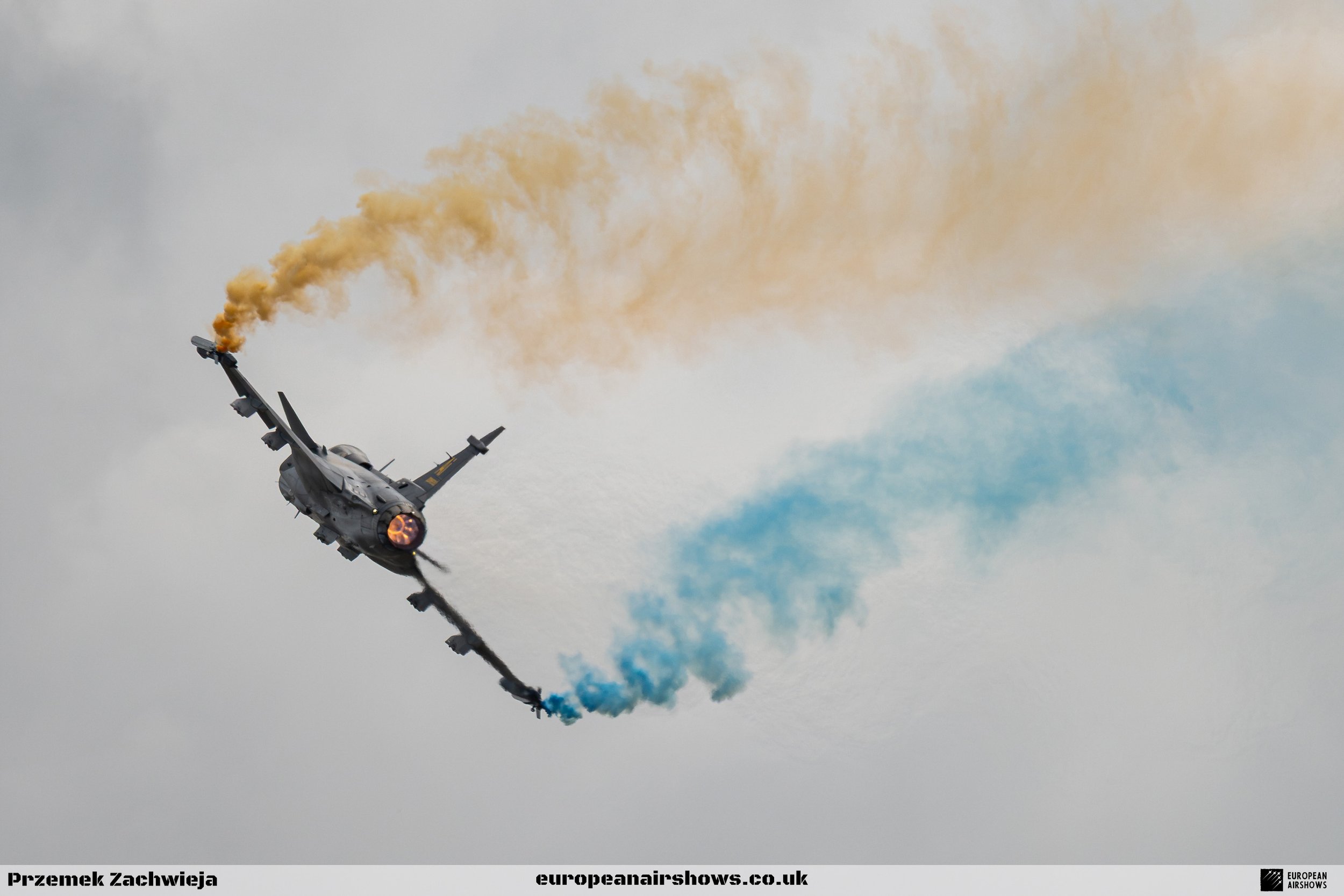
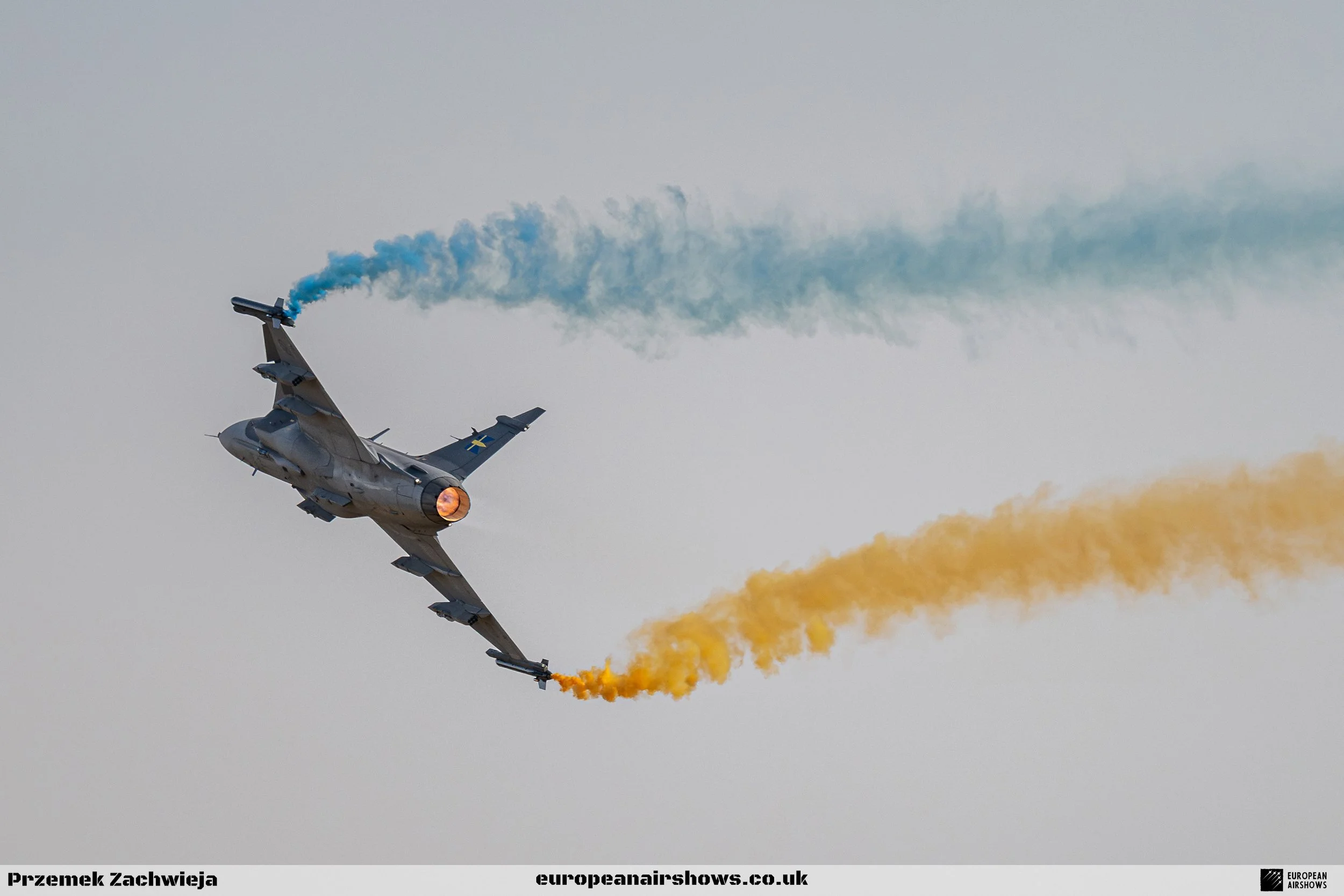
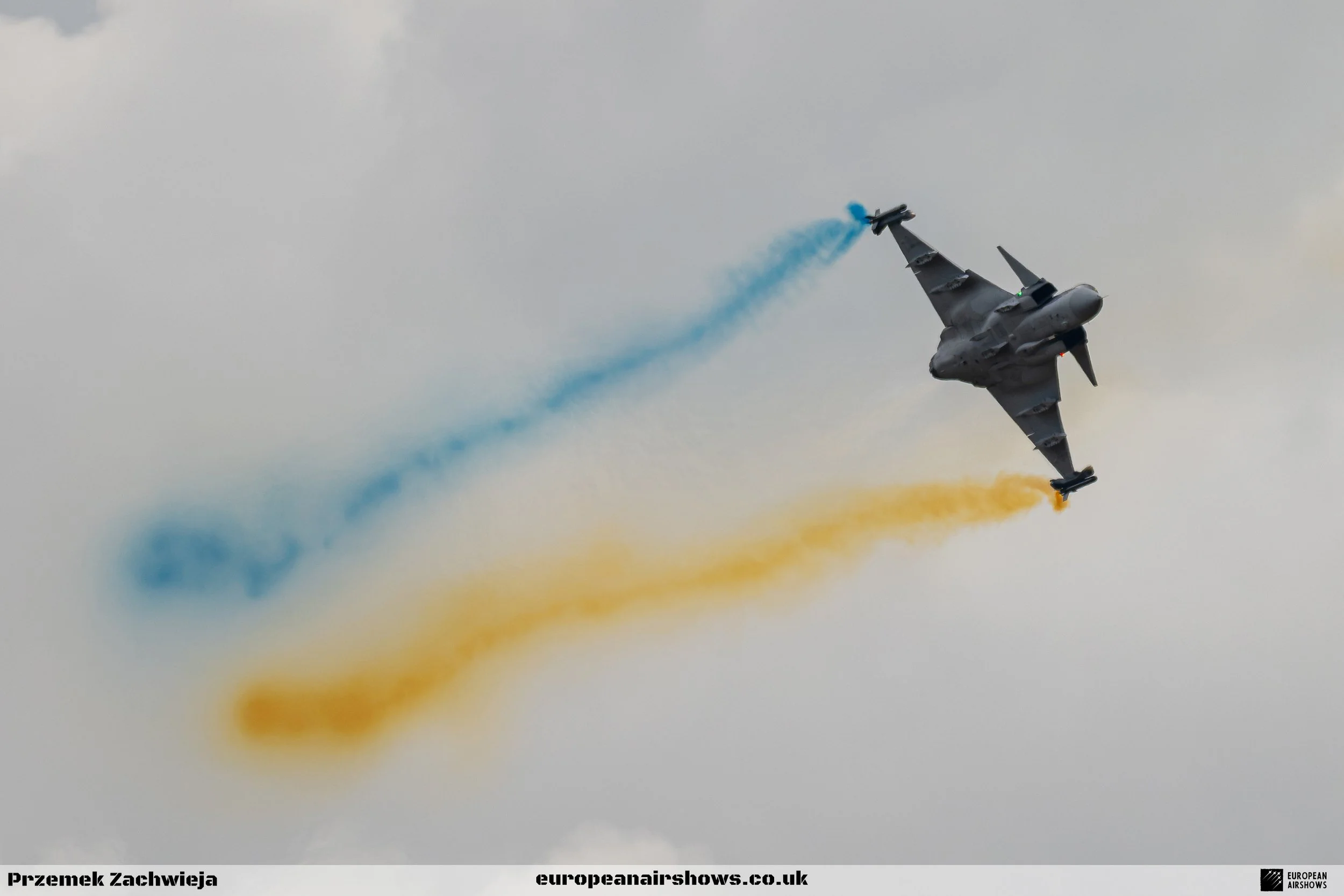
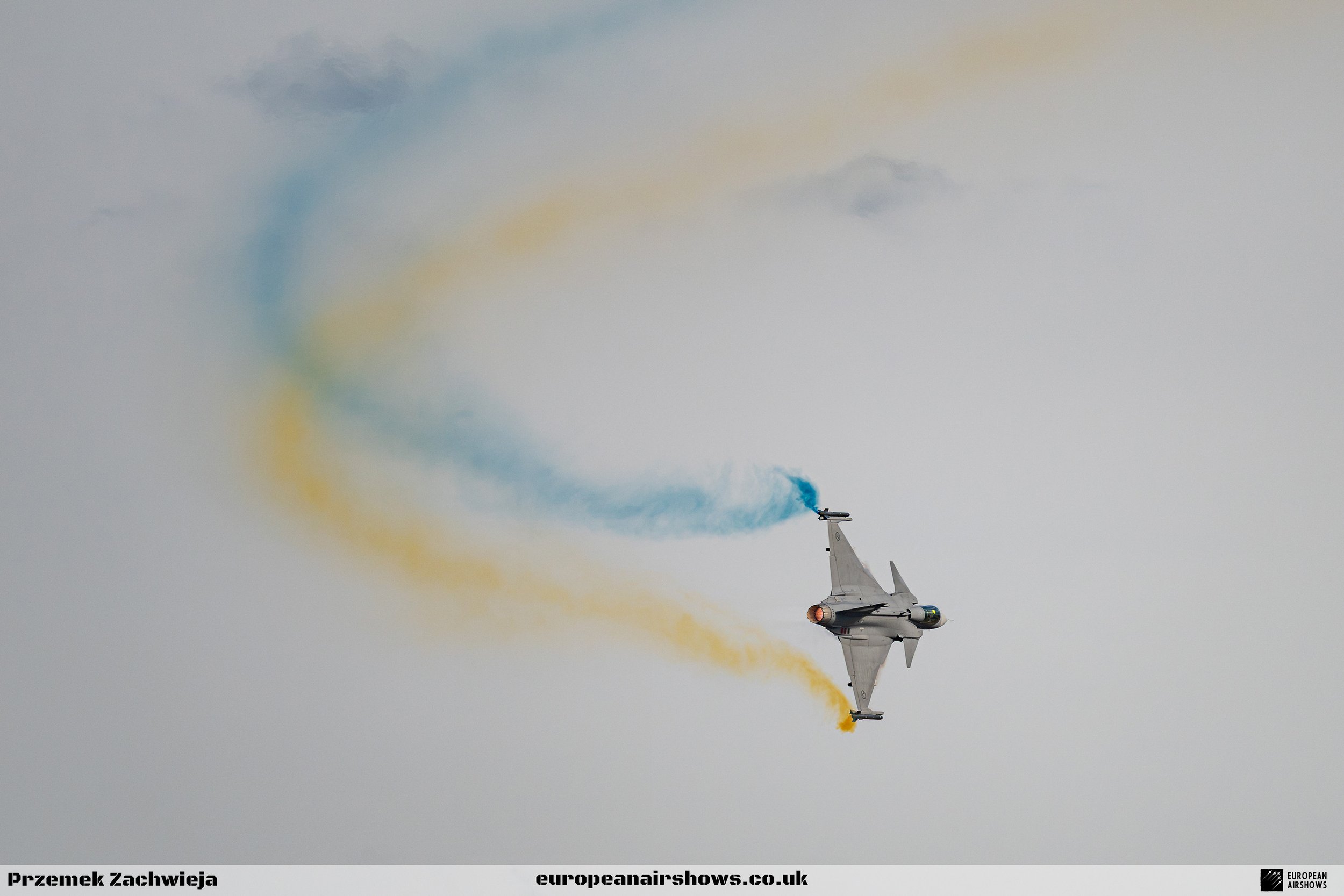
The lineage formation ended at Gripen C, but Saab’s JAS 39E Gripen demonstrator pushed the story forward. It was one of the strongest displays of the weekend: rapid reversals, high-angle-of-attack manoeuvres and the muscular performance expected from the larger E-model, all made unmistakably Swedish by blue-and-yellow smoke. The display had real identity. Only its position far off to the right prevented it from becoming one of those demonstrations which overwhelms an entire airfield.
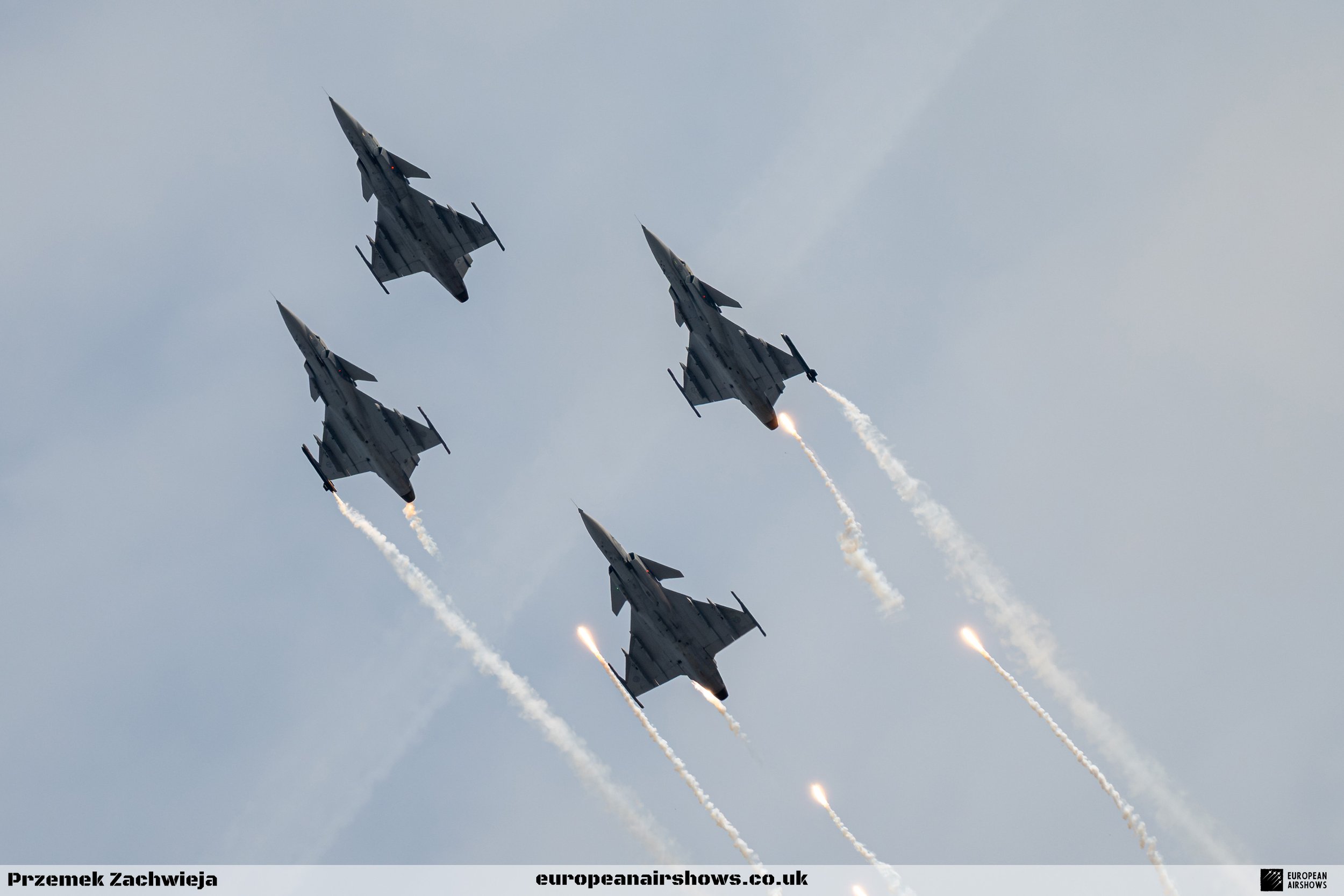
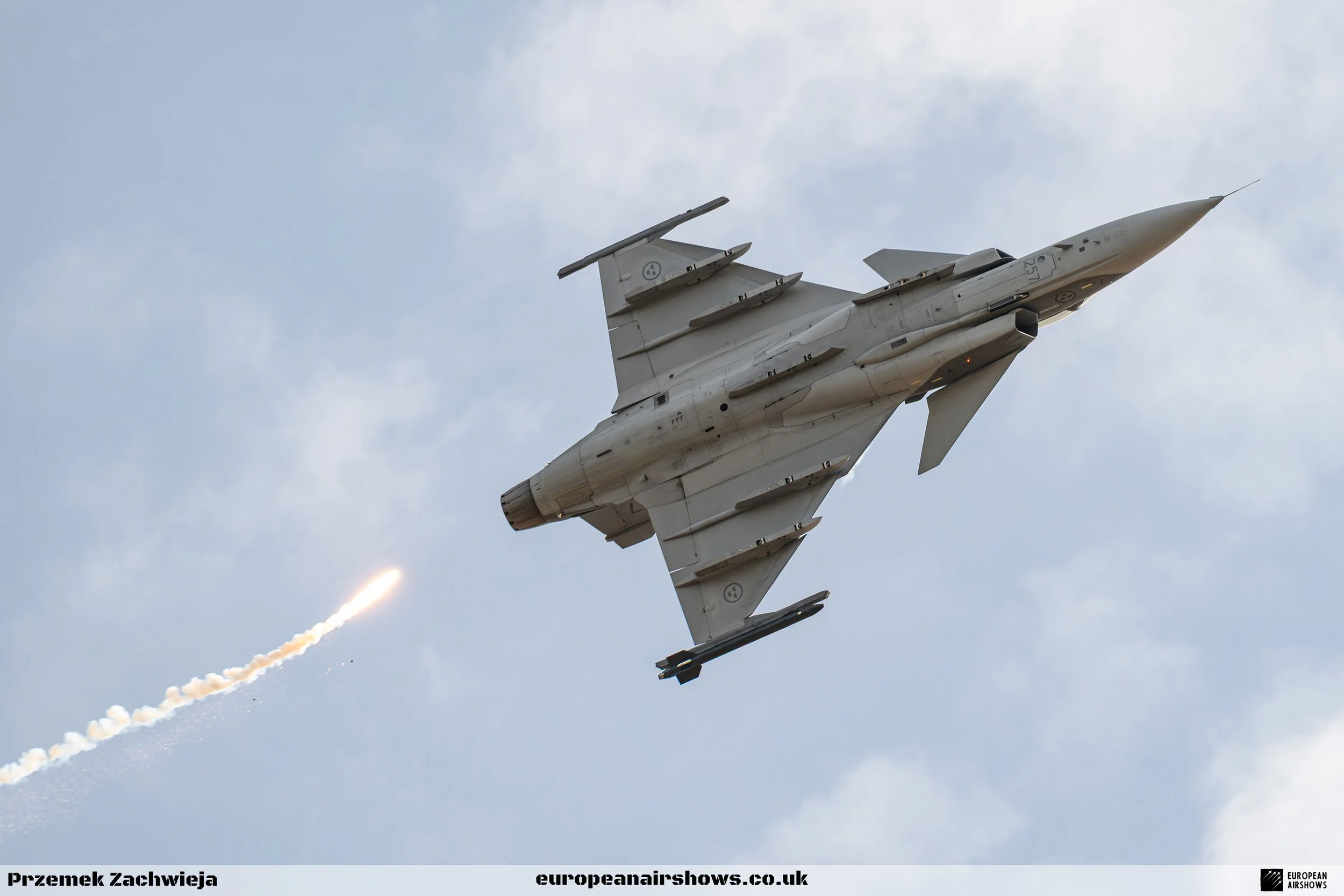
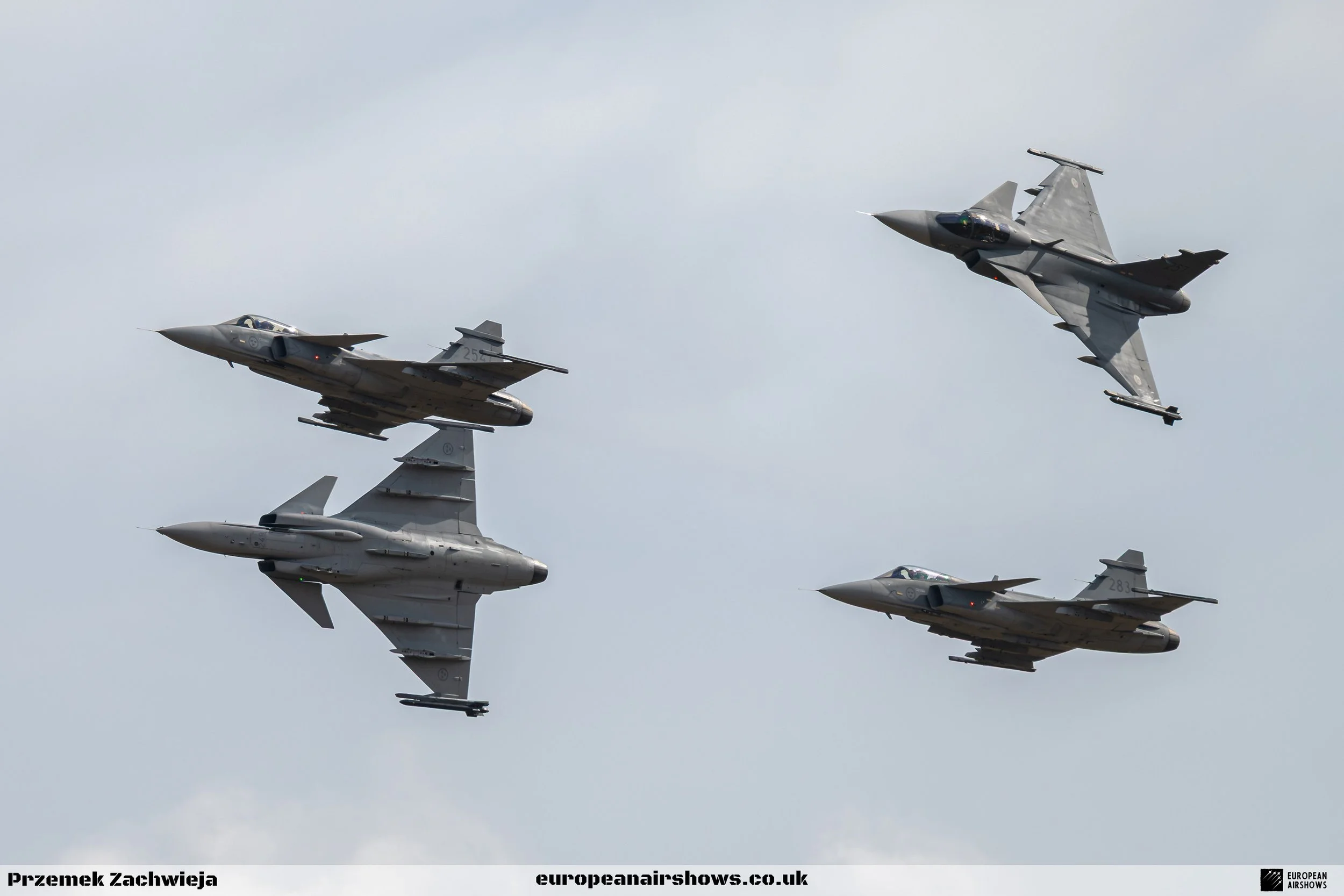
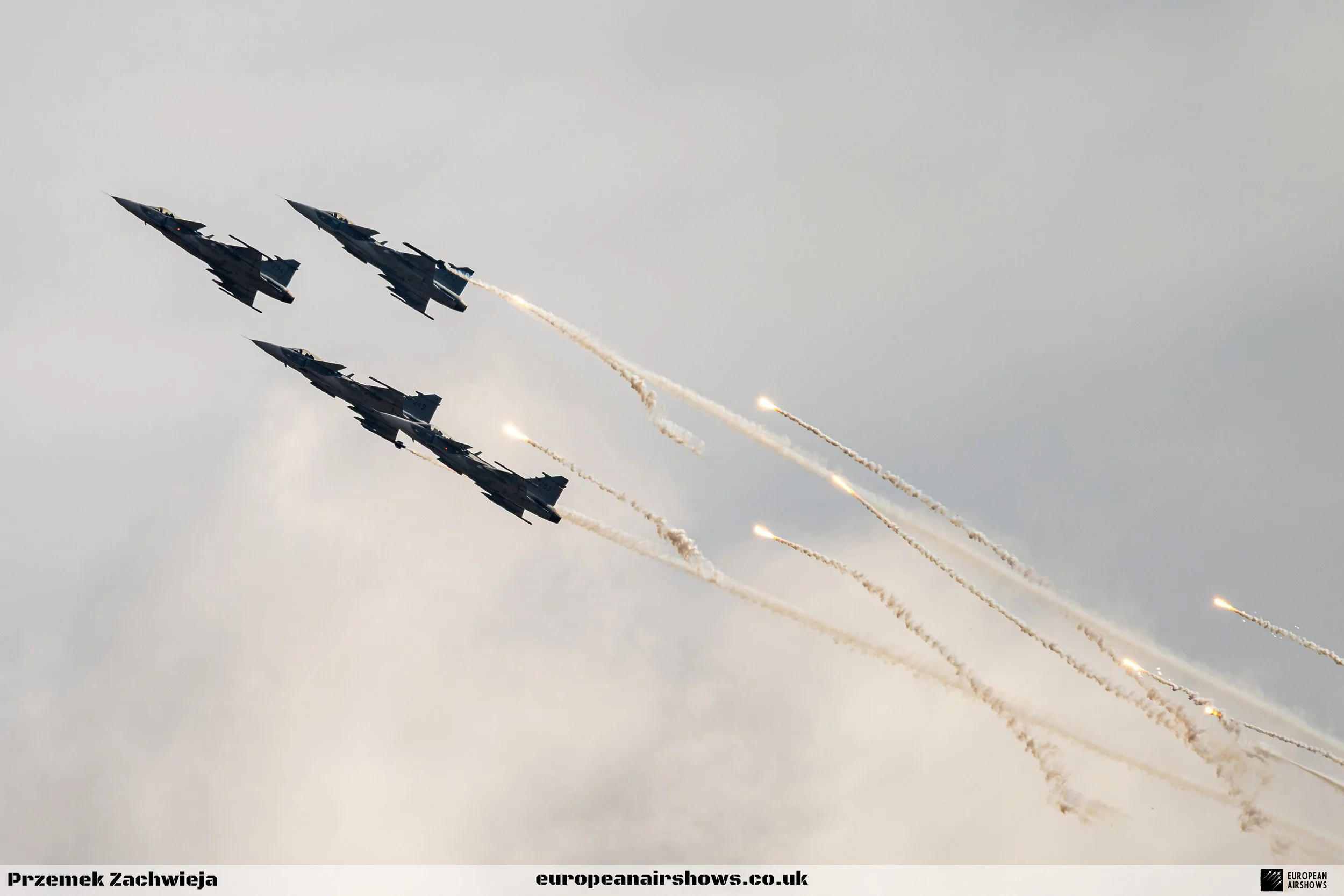
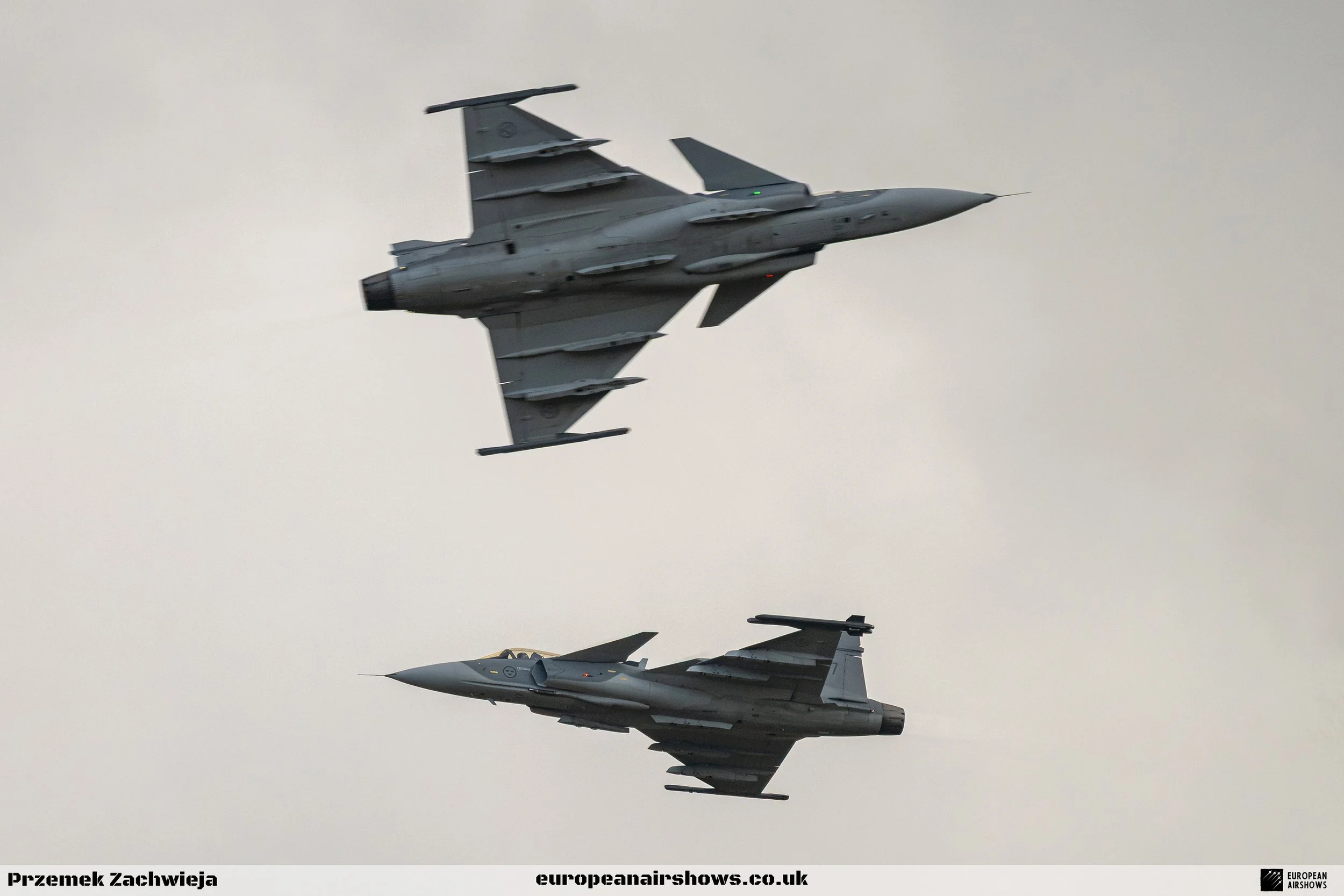
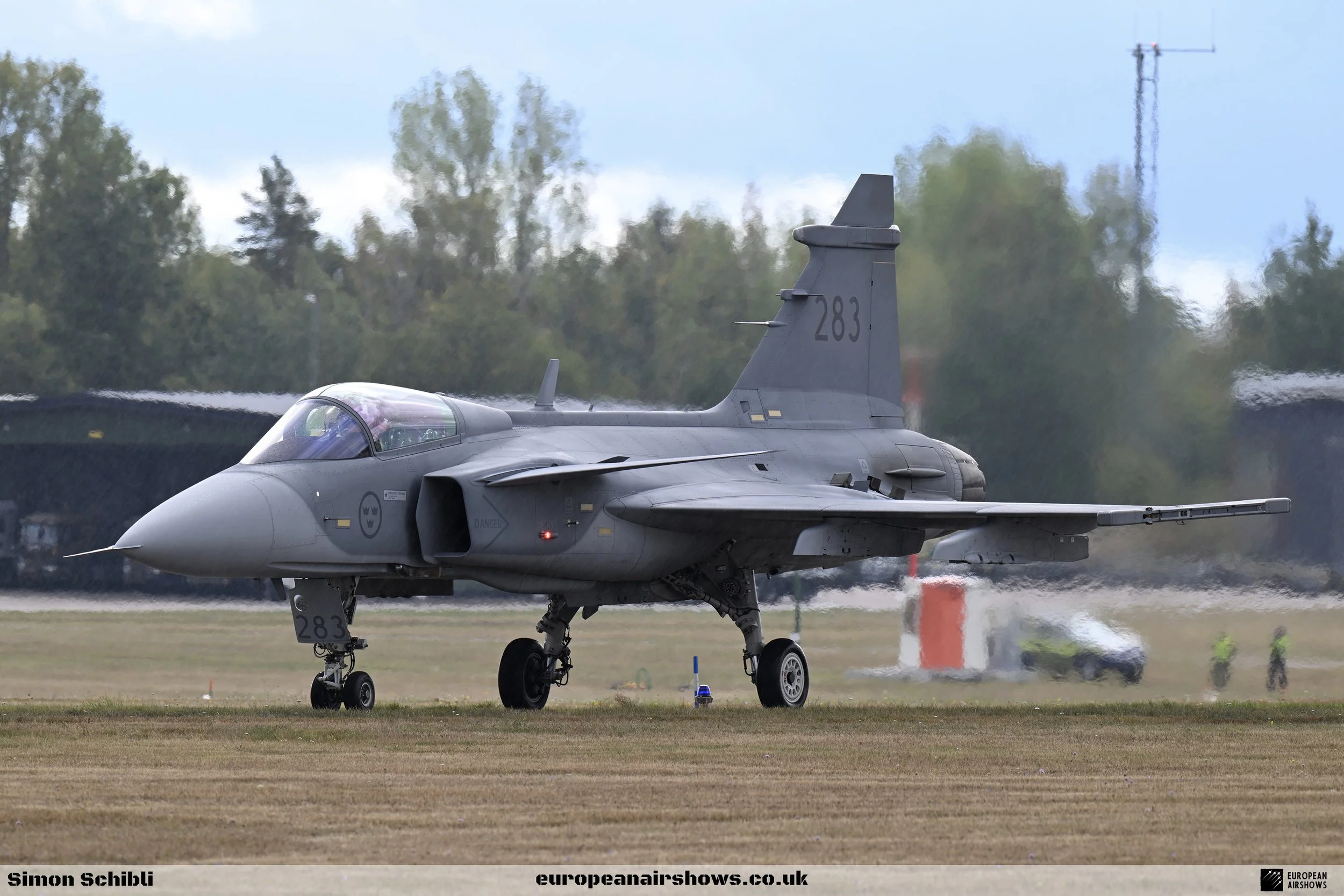
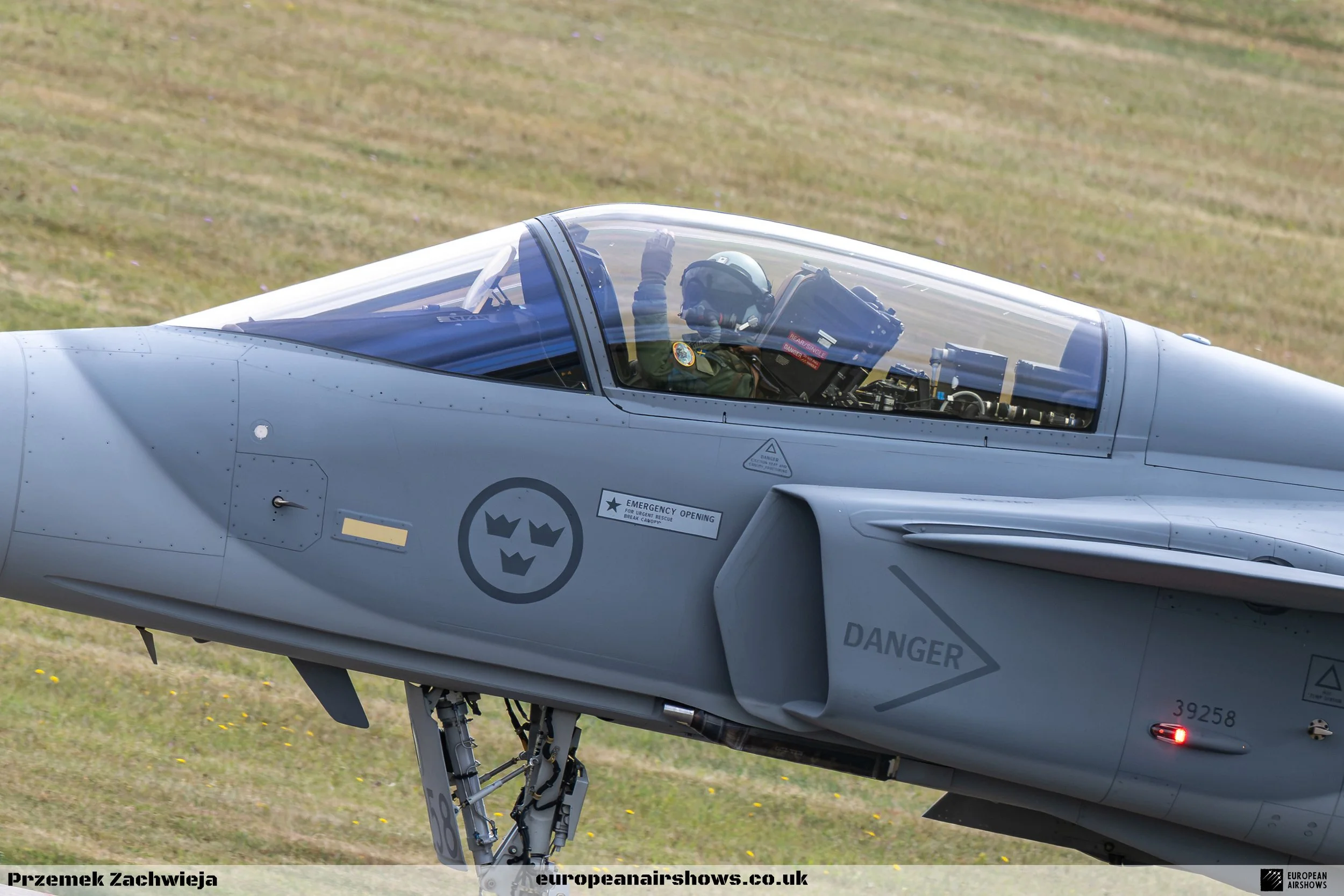
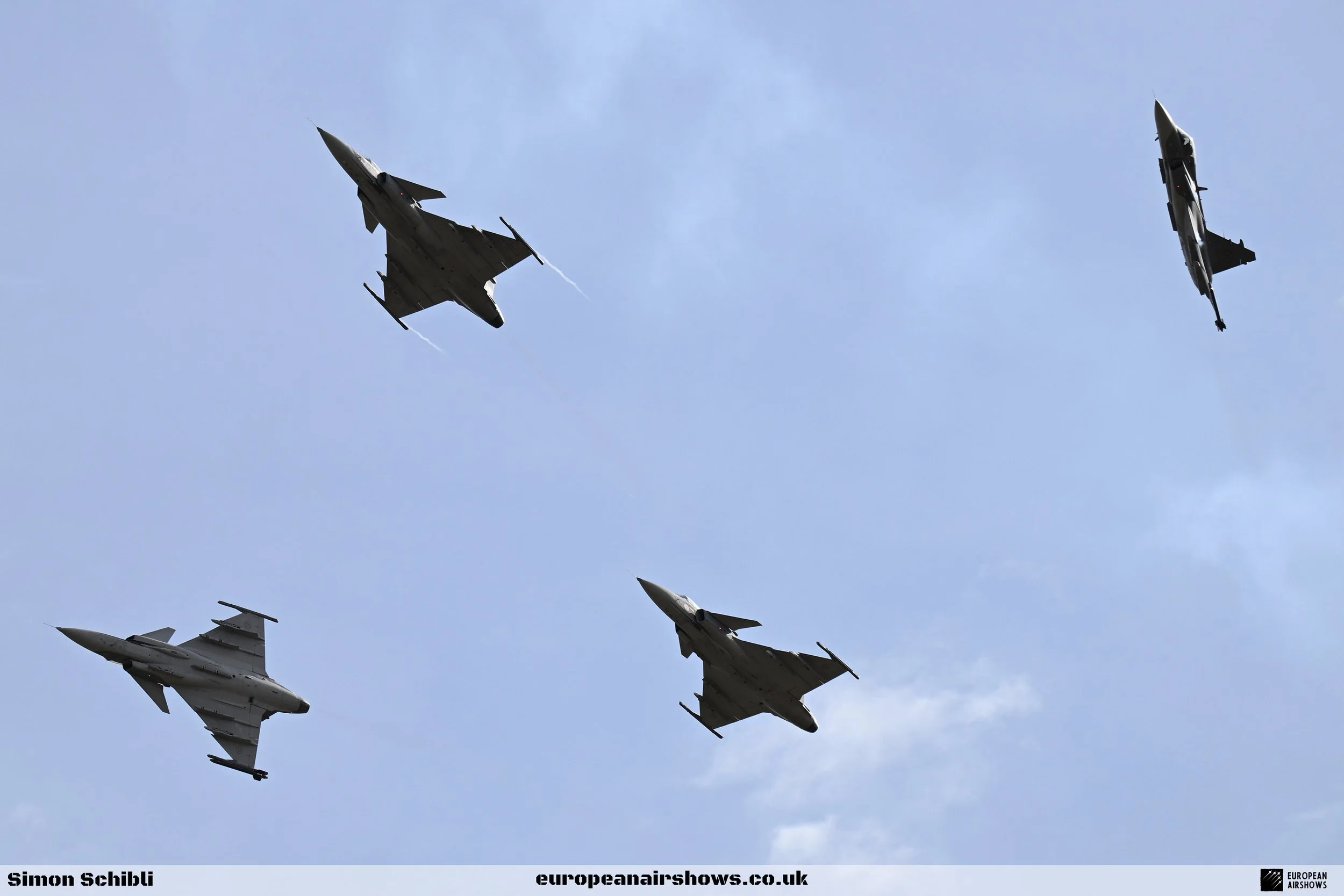
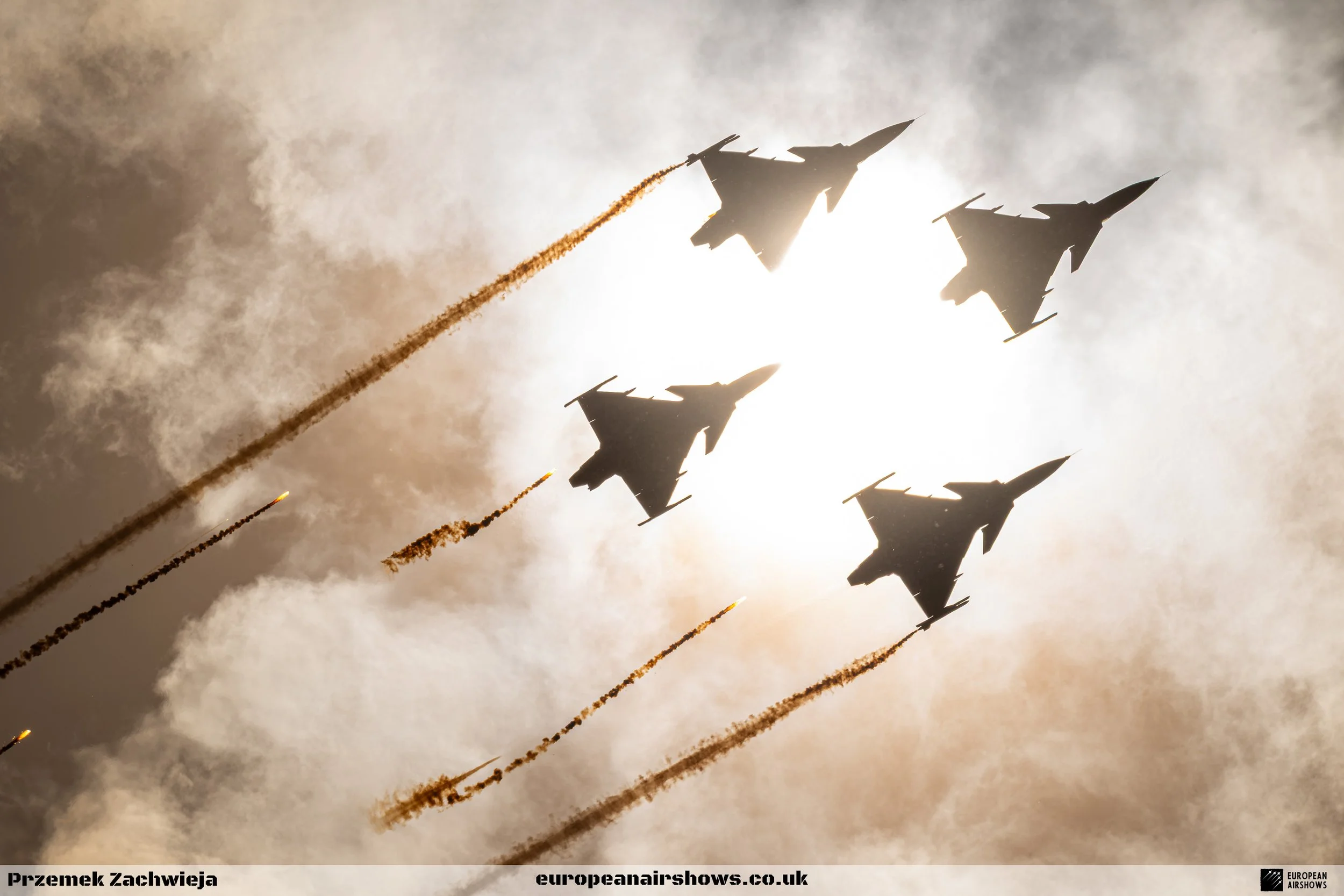
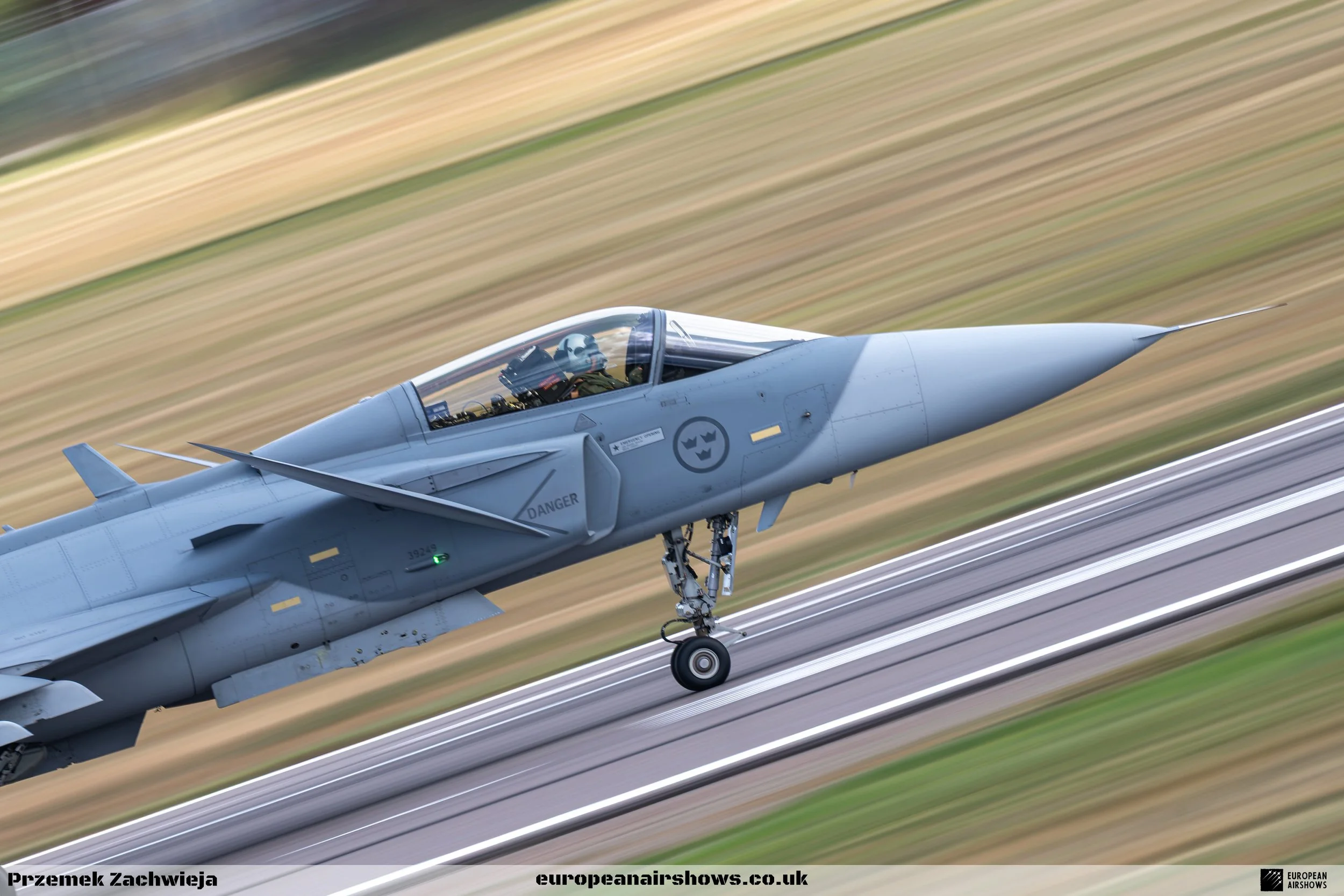
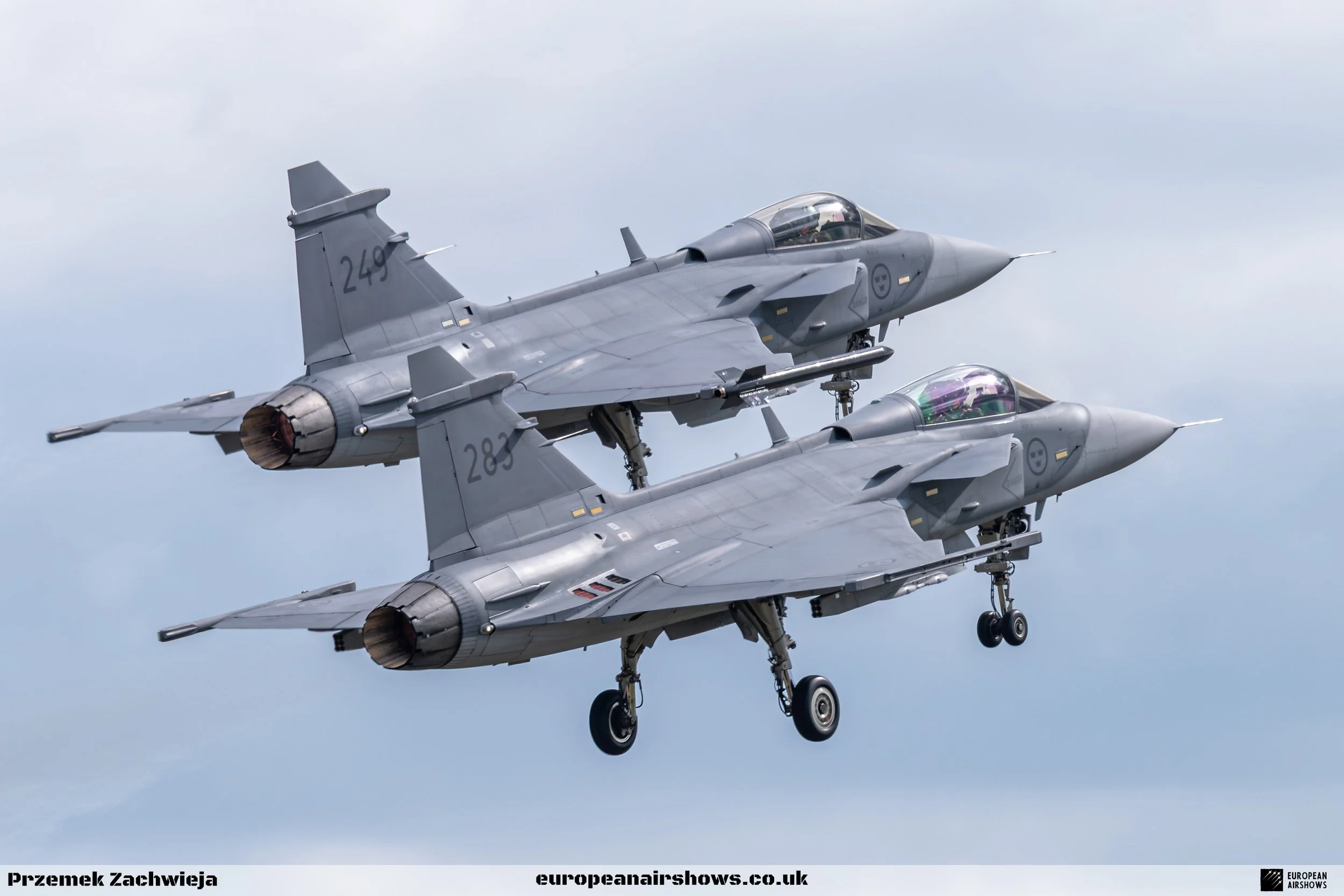
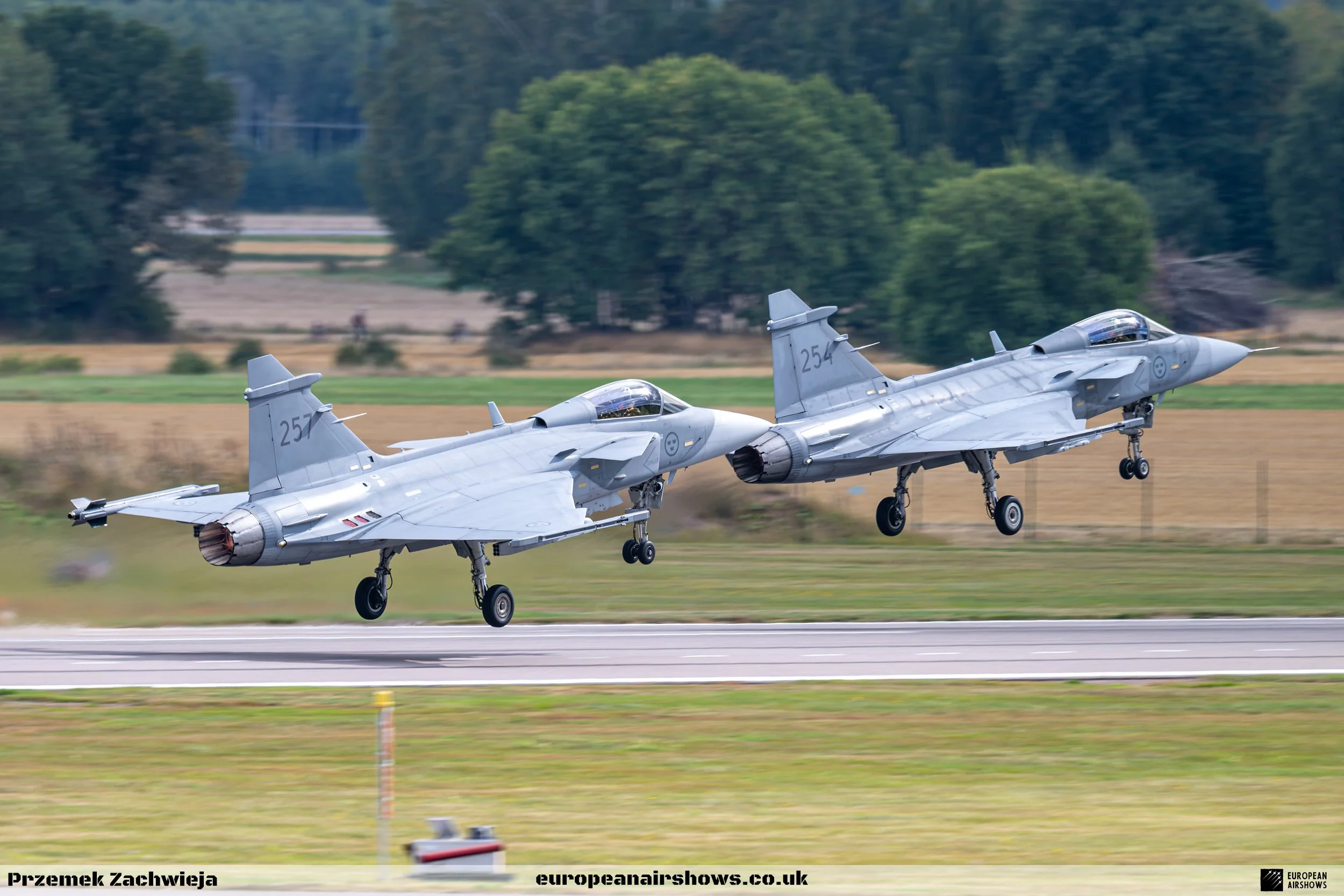
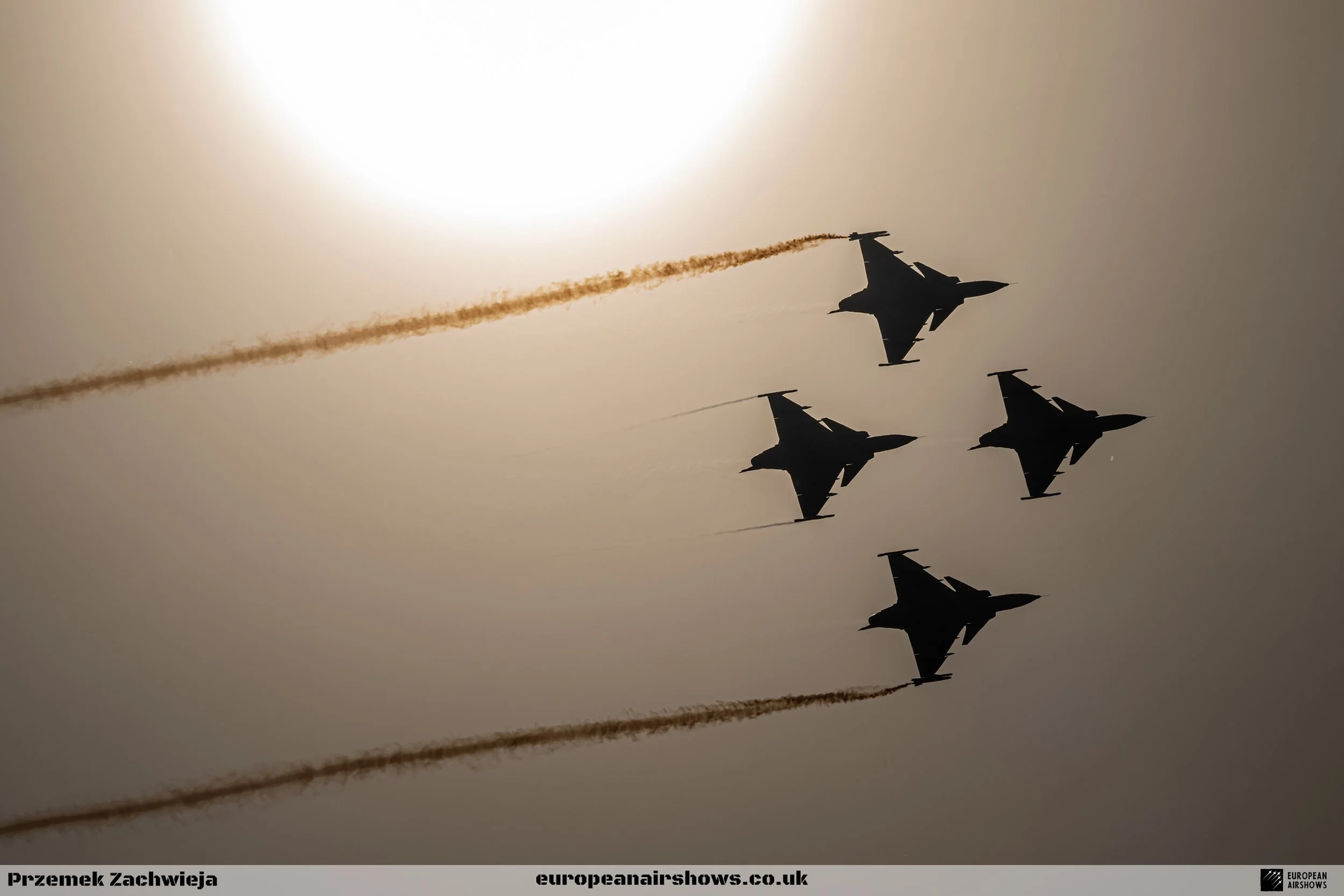
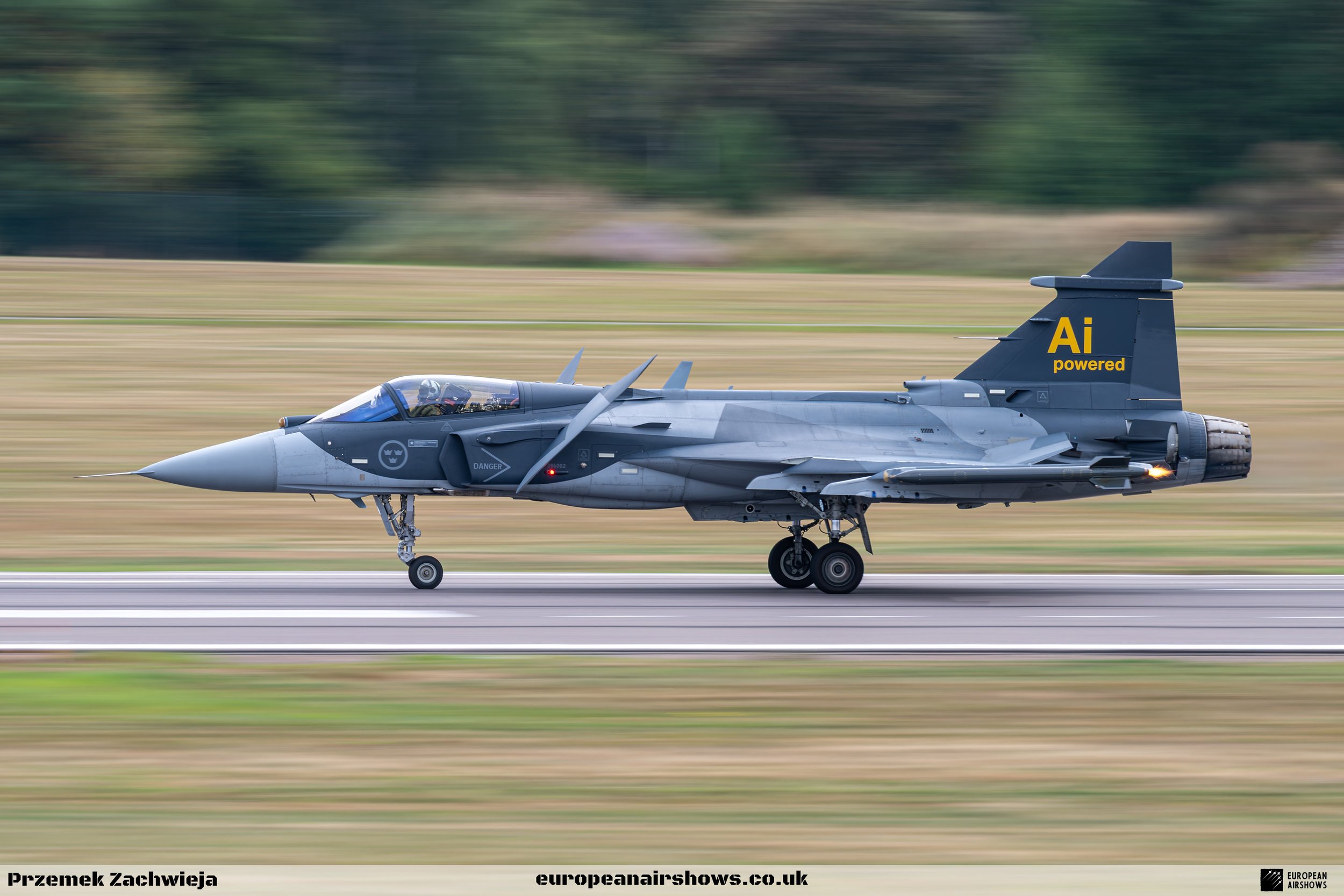
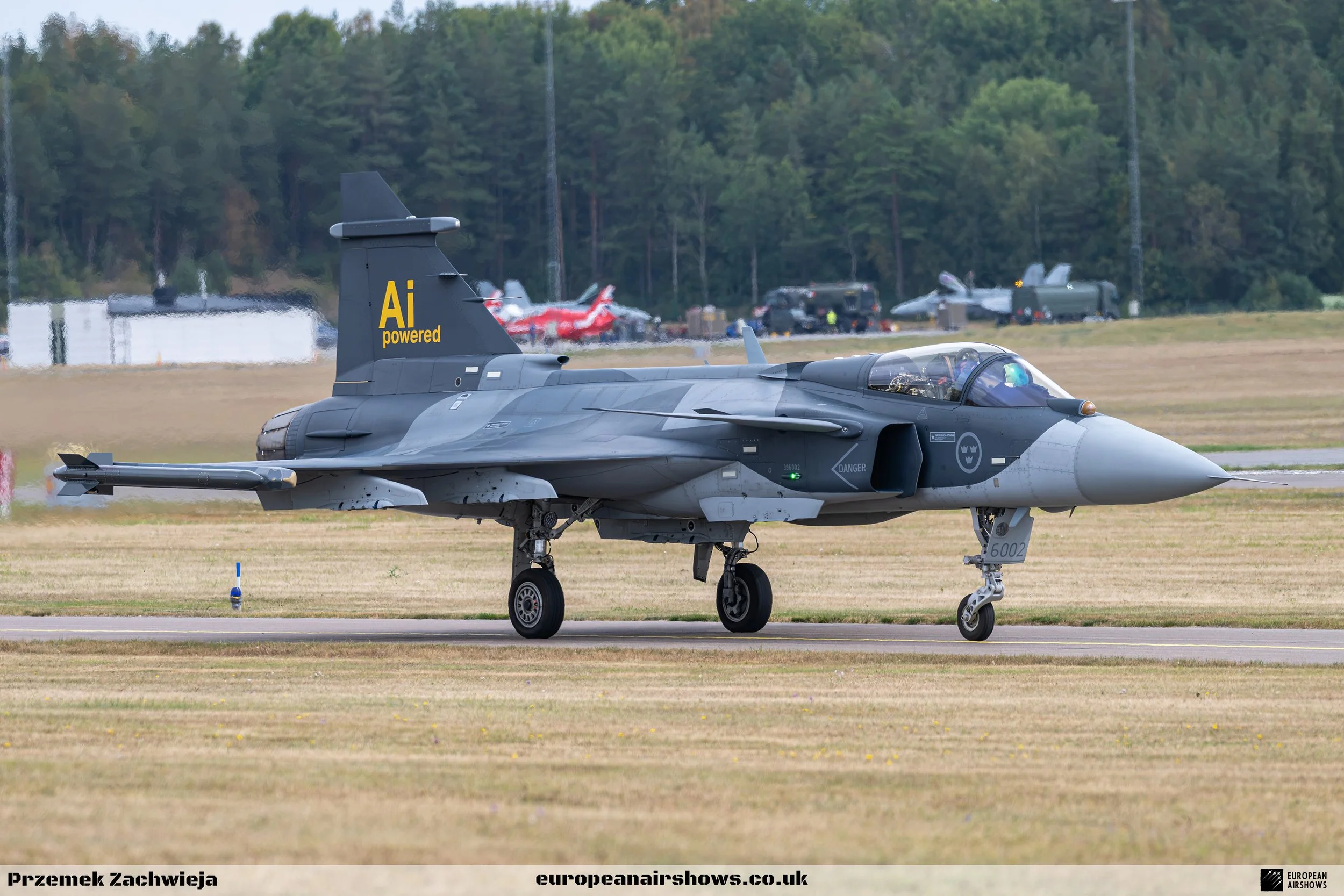
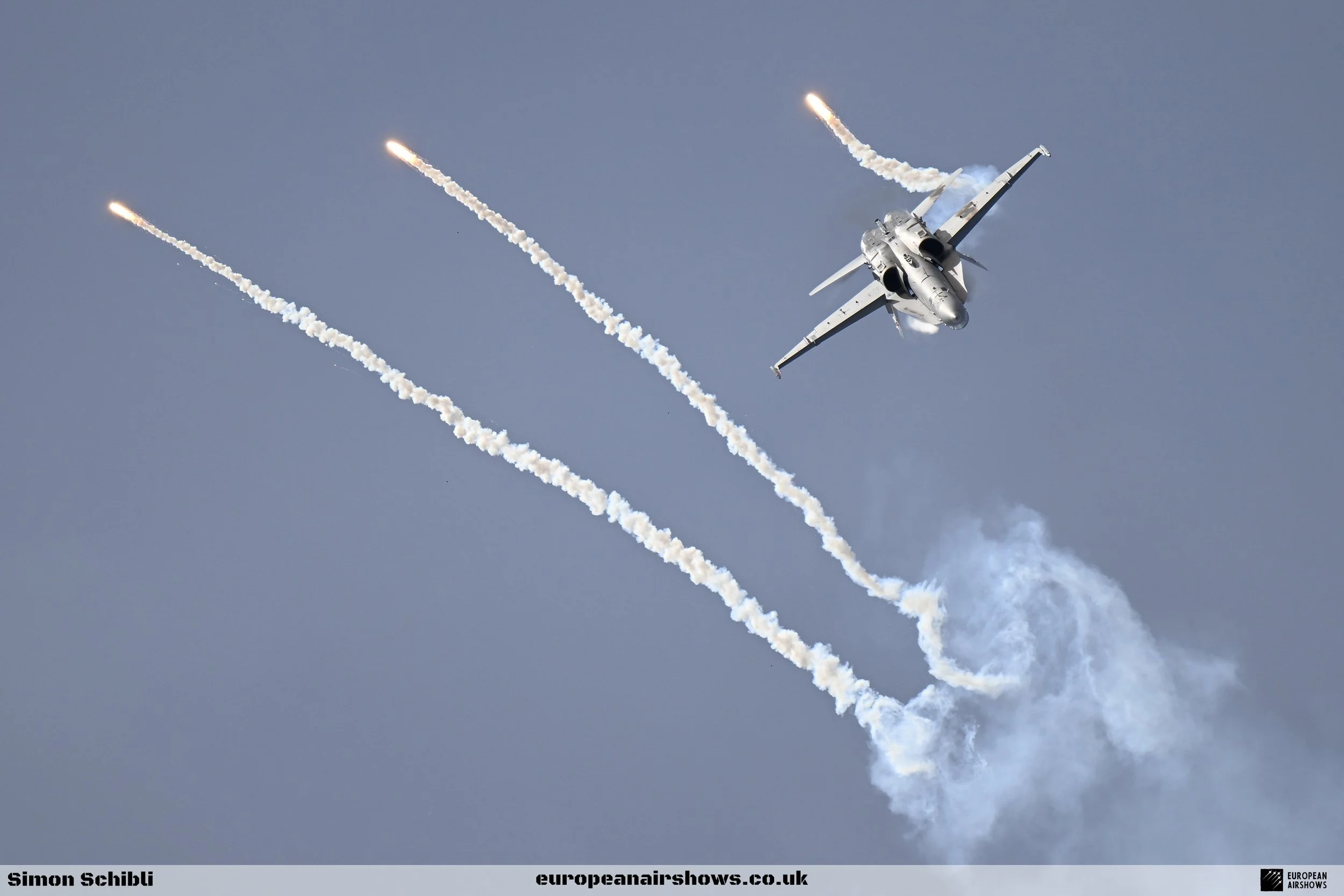
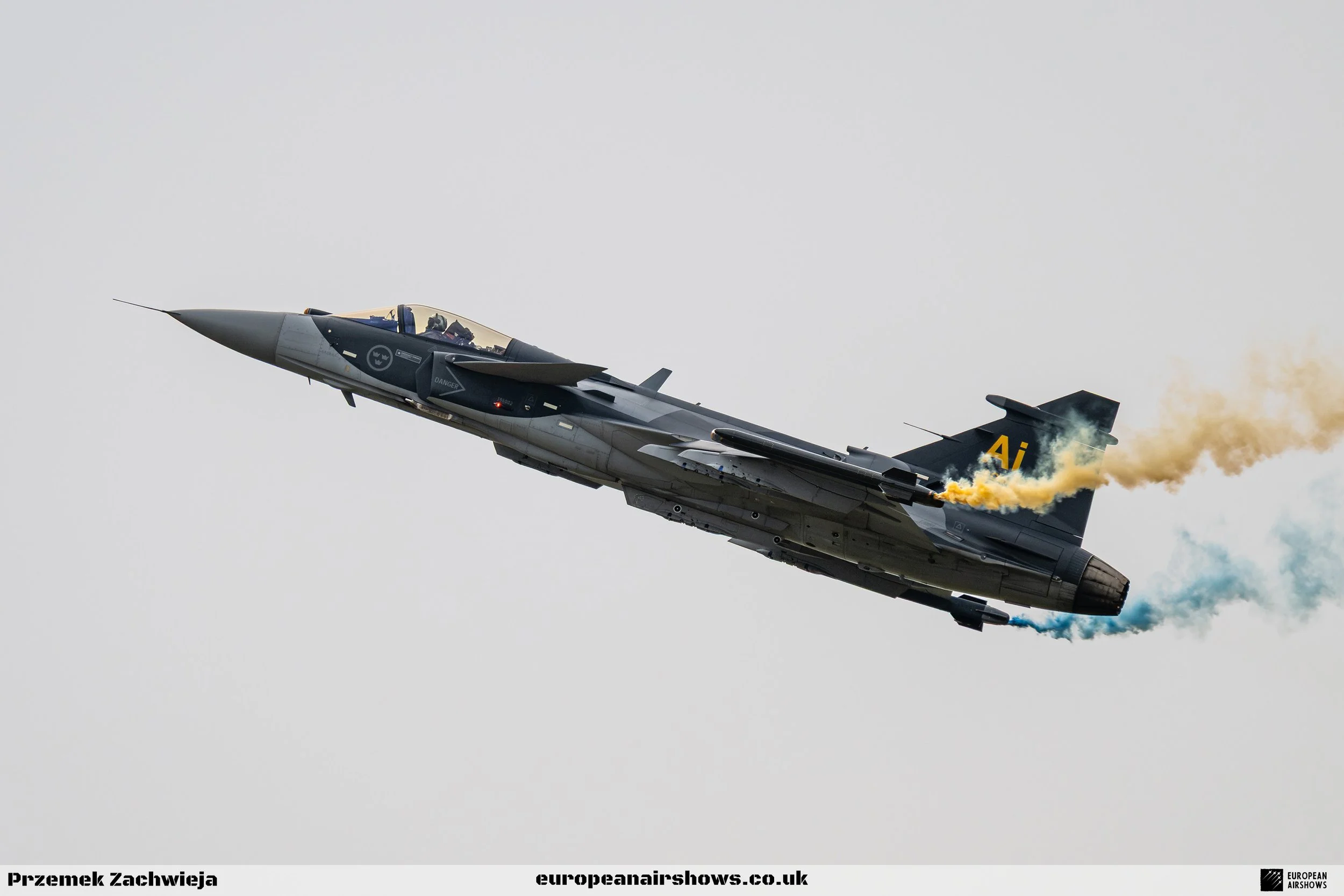
The E then handed the programme back to the JAS 39C already in Swedish Air Force service, and the C-model appeared in enough different roles to fill a small airshow by itself. The four-ship was the most elegant. It was pure formation flying, the aircraft repeatedly changing shape while holding beautifully consistent spacing. Each outside jet carried one smoke pod on its outboard wing, producing a balanced trail around the formation. Plenty of flares and a crisp break finished a display which did not need violent manoeuvring to be memorable.
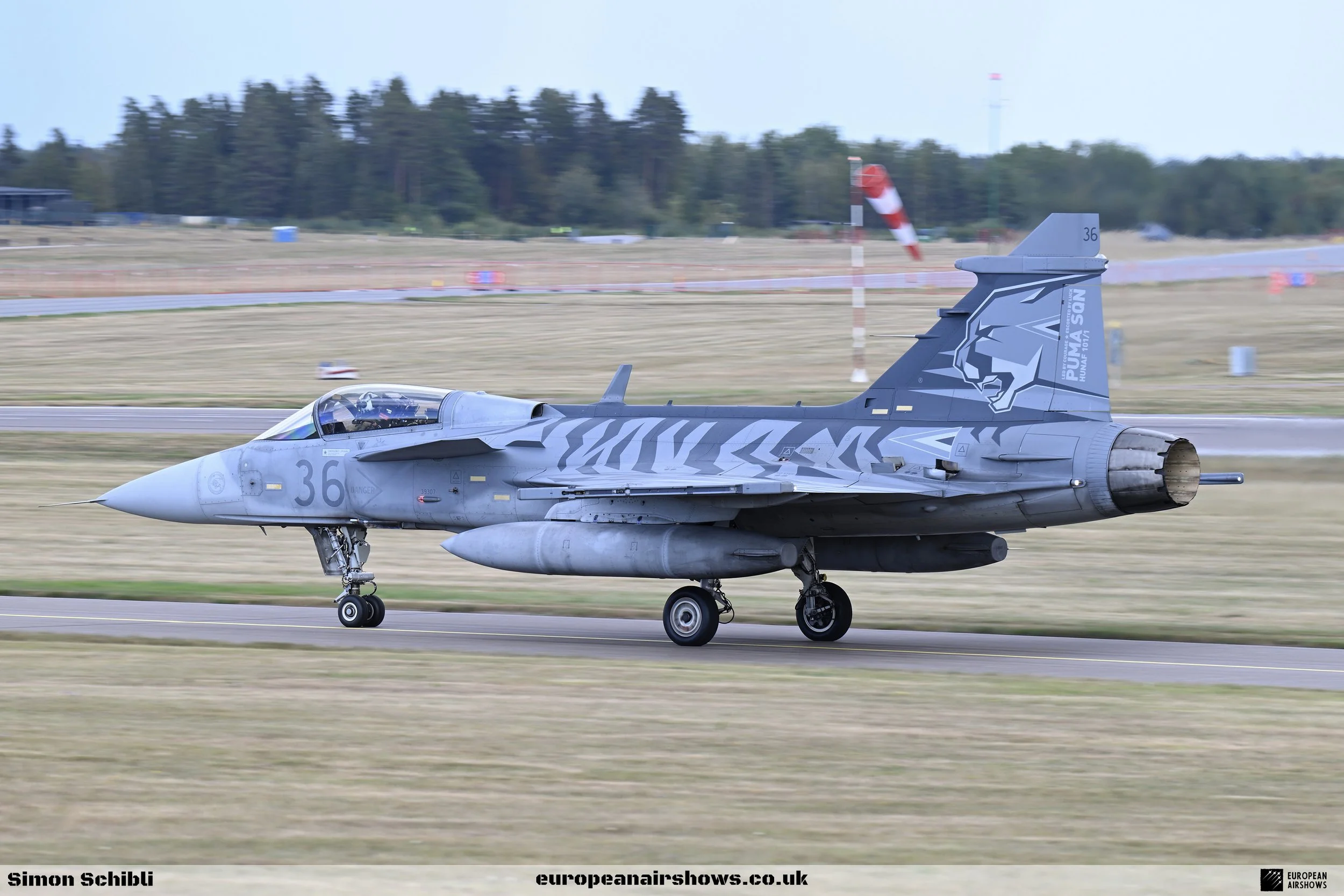
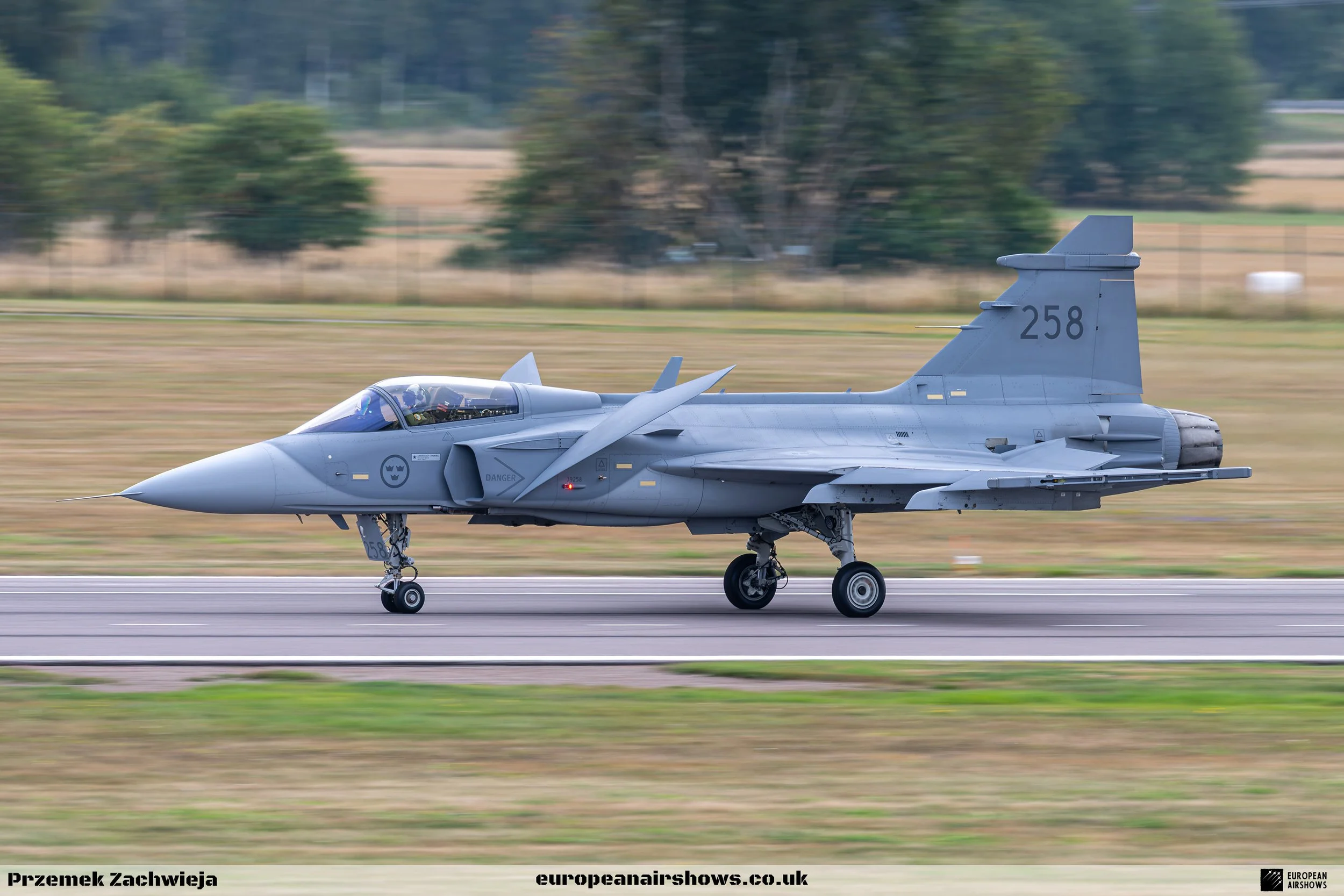
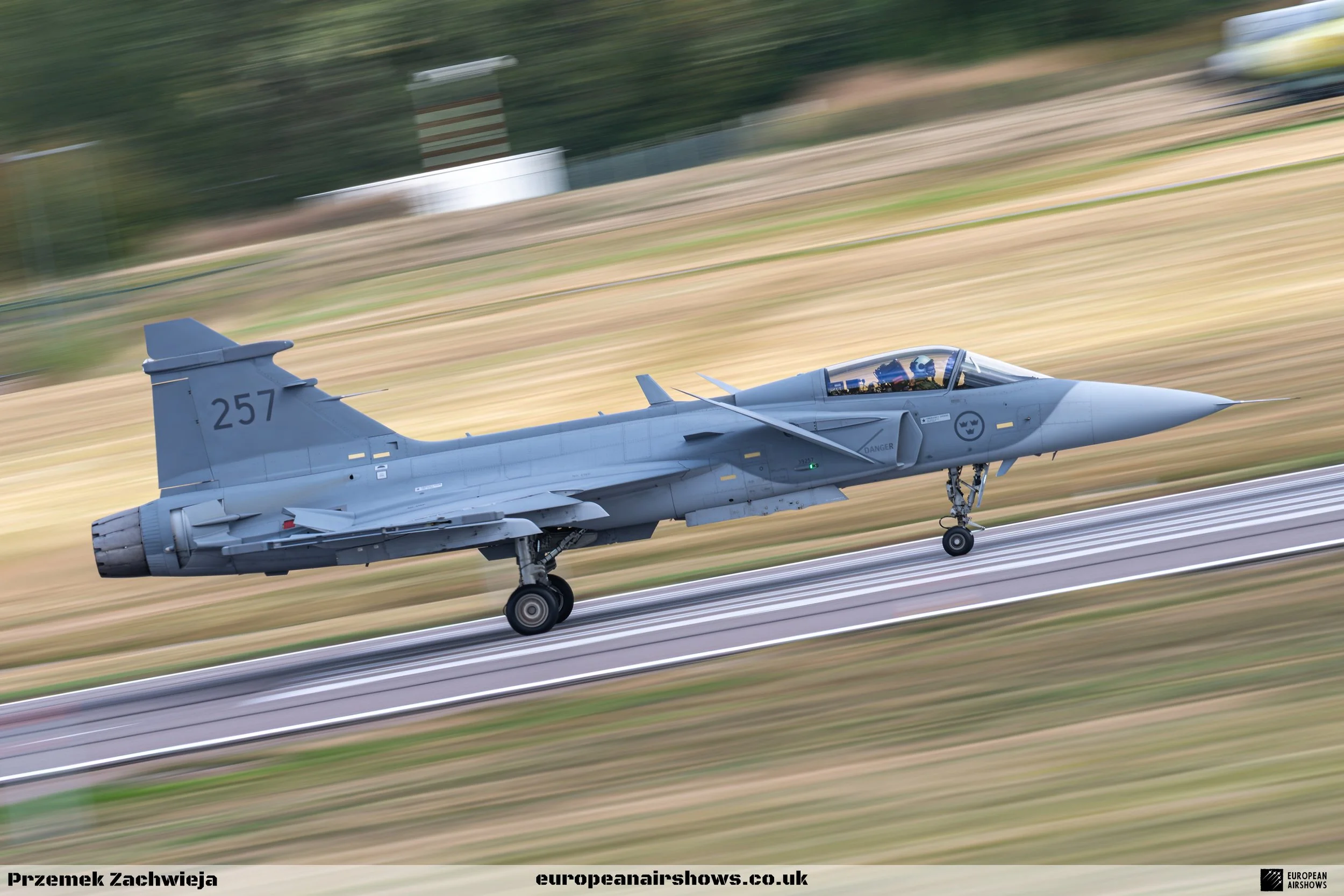
Two Gripen Cs returned for a tactical “dogfight”, using opposing passes, reversals and more flares, before the solo aircraft delivered the outright aggression. Fast, tight and energetic, it was the familiar Swedish Gripen display at its best, again helped by flares. Between the historic formation, four-ship, tactical pair and solo, Gripen was everywhere—and deservedly so. The problem was how much of the modern Air Force it was being asked to represent on its own.
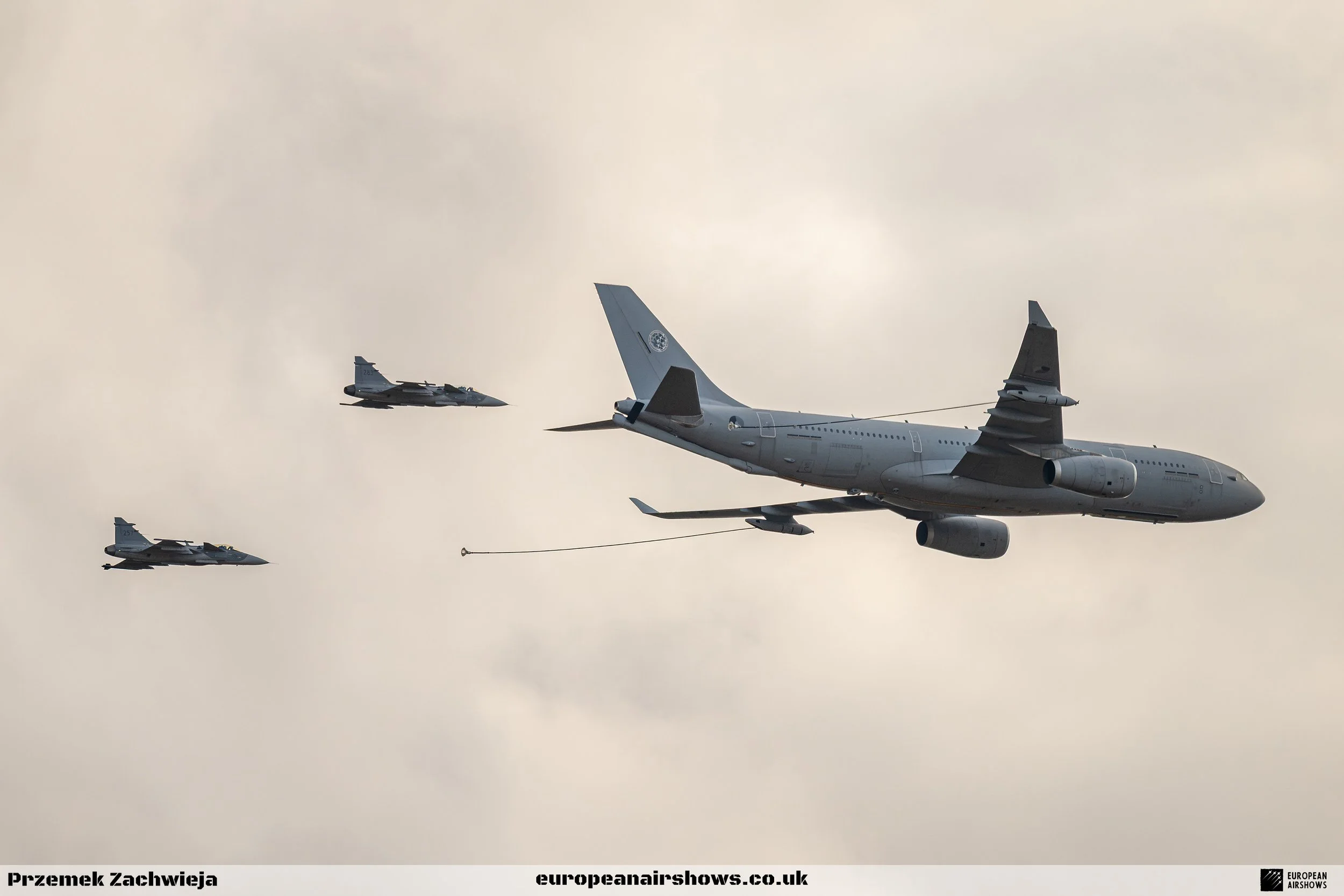
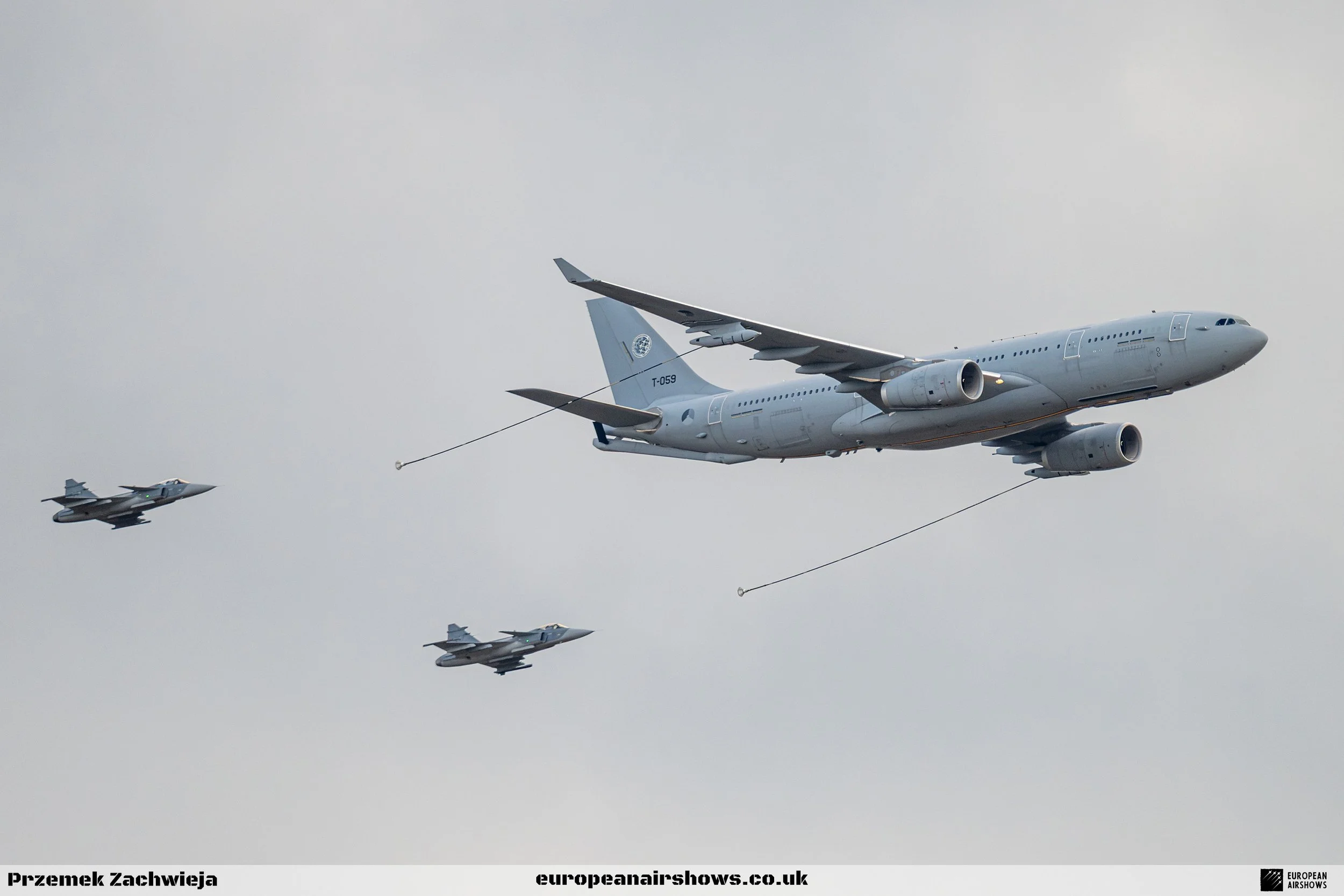
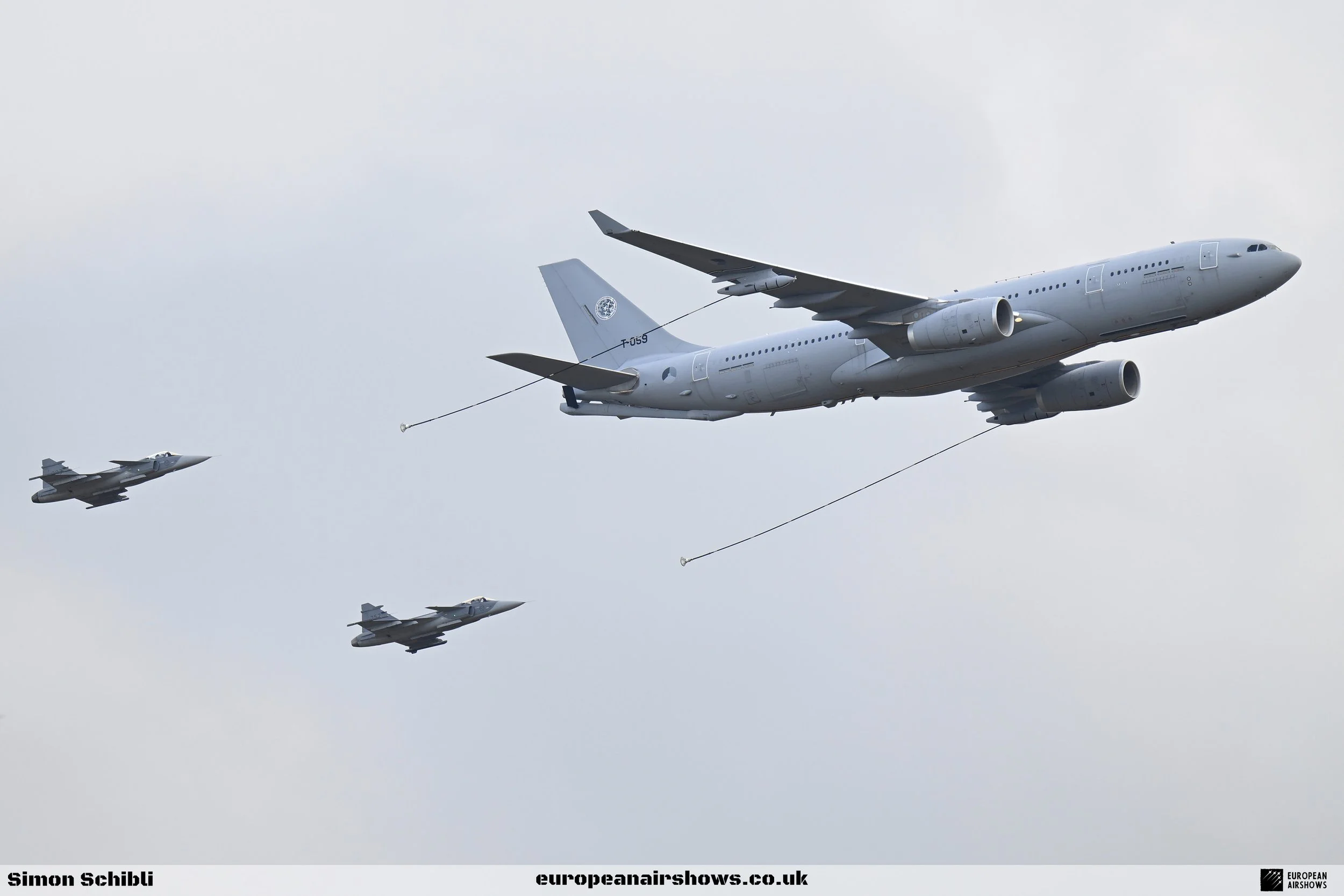
Two Gripens also escorted an Airbus A330 Multi Role Tanker Transport from NATO’s Multinational MRTT Unit for one pass. On Sunday the tanker came back alone along the runway. Sweden formally joined the multinational fleet in 2025, so this was not merely a visiting airliner-sized tanker; it represented an air-to-air refuelling and strategic transport capability now available to Flygvapnet through NATO.
The helicopters brought the show back in front of us
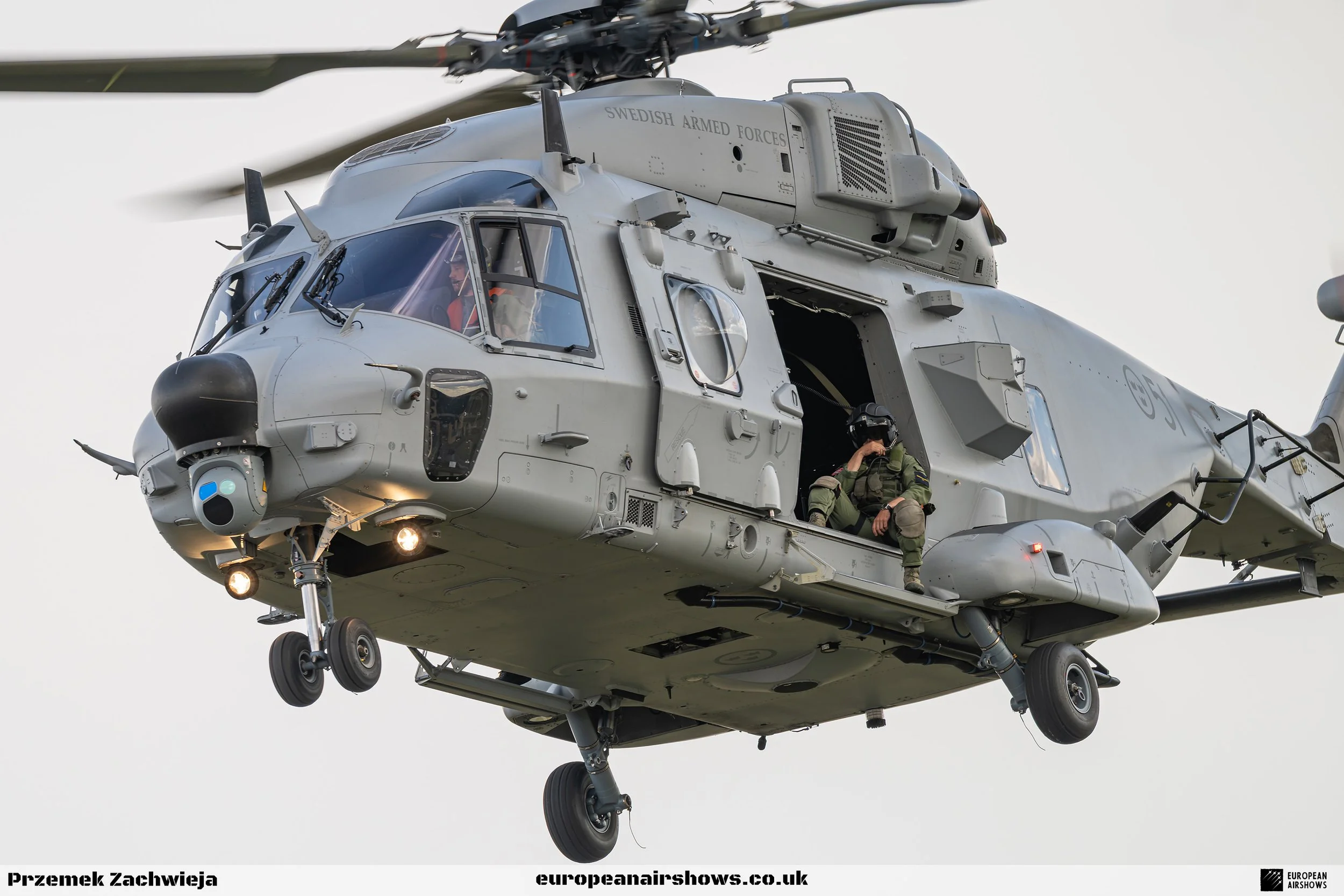
Whenever the fixed-wing programme felt detached, the helicopters returned the action to the runway and to Malmen itself. That was appropriate at the home of the Helicopter Wing headquarters.
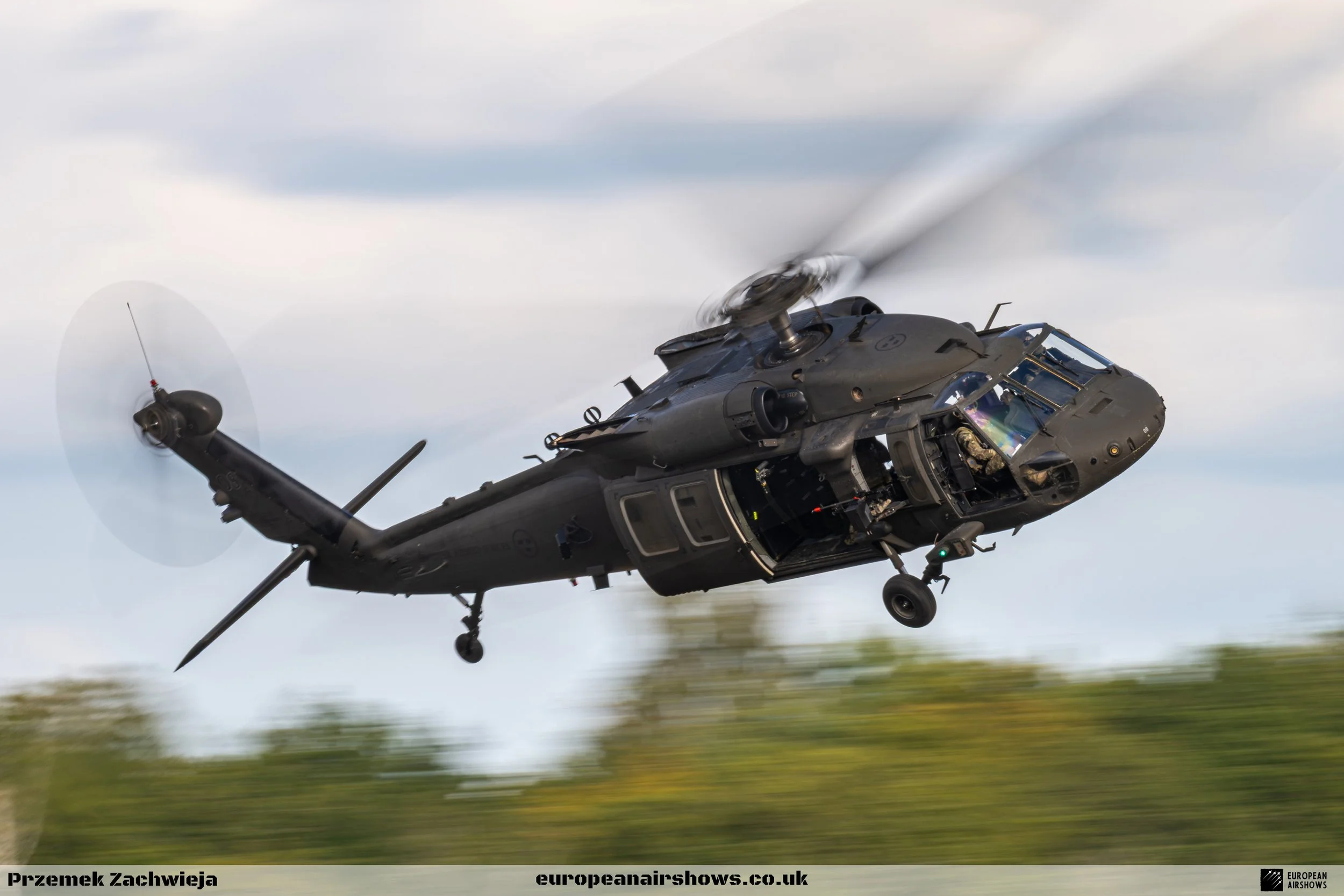
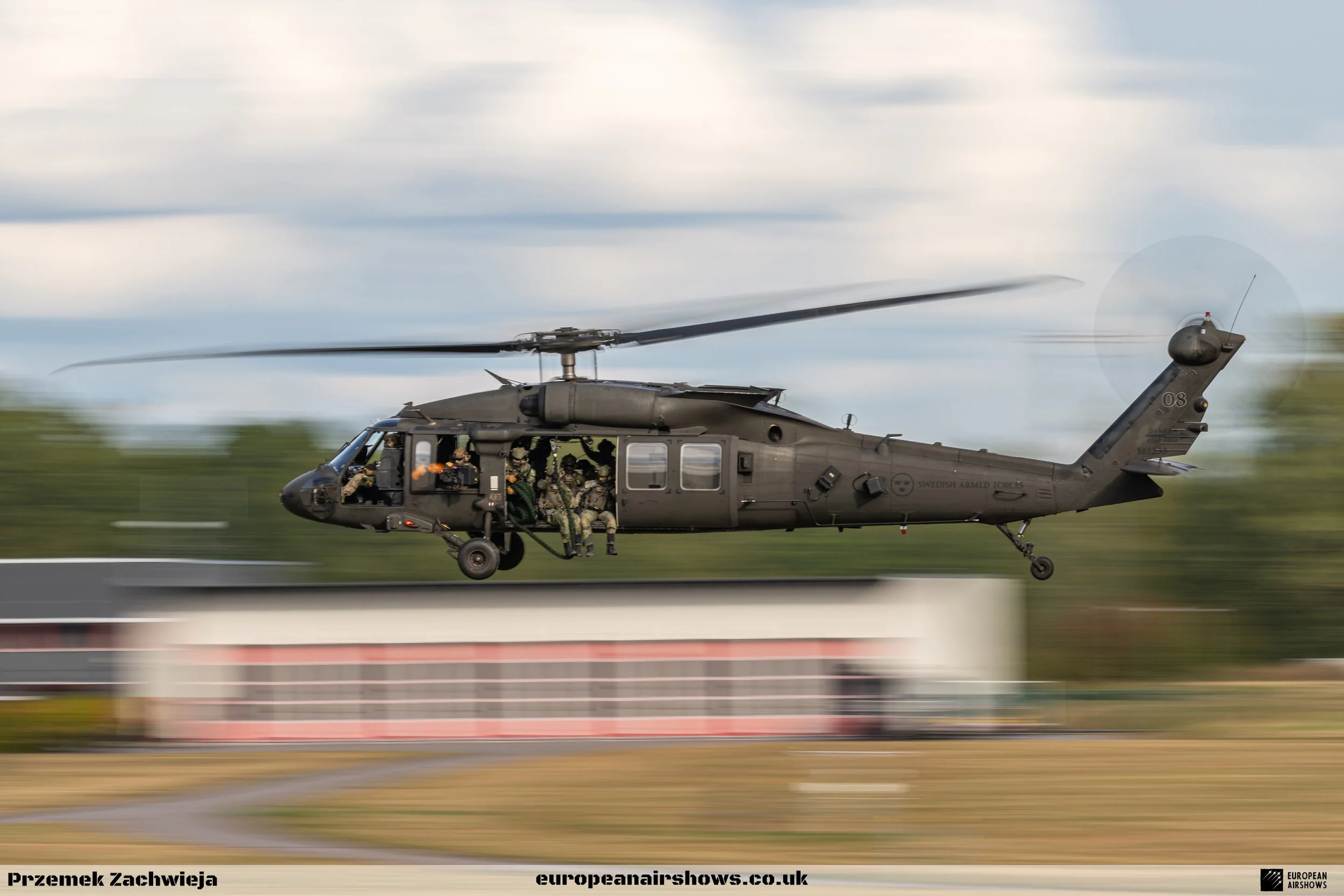
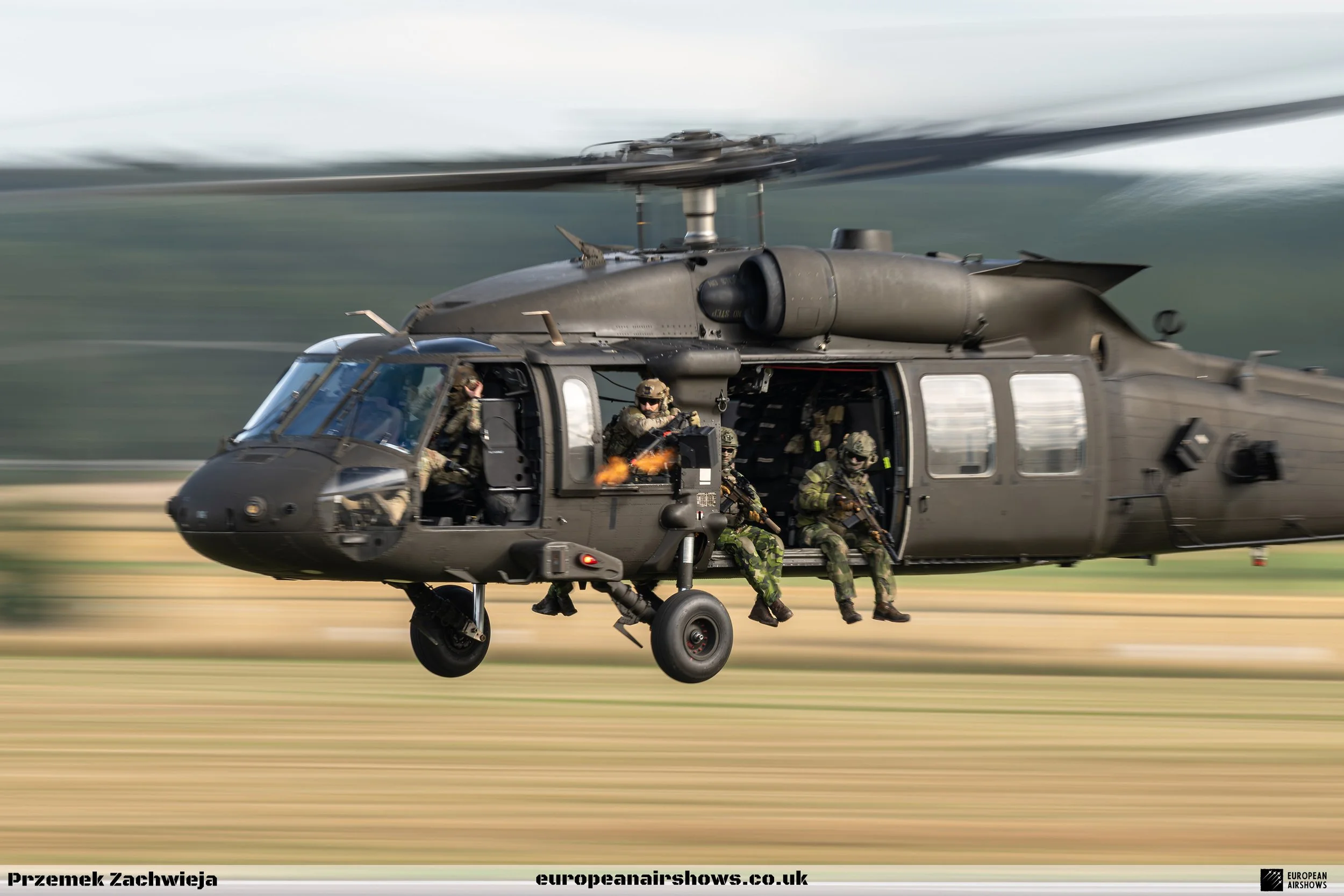
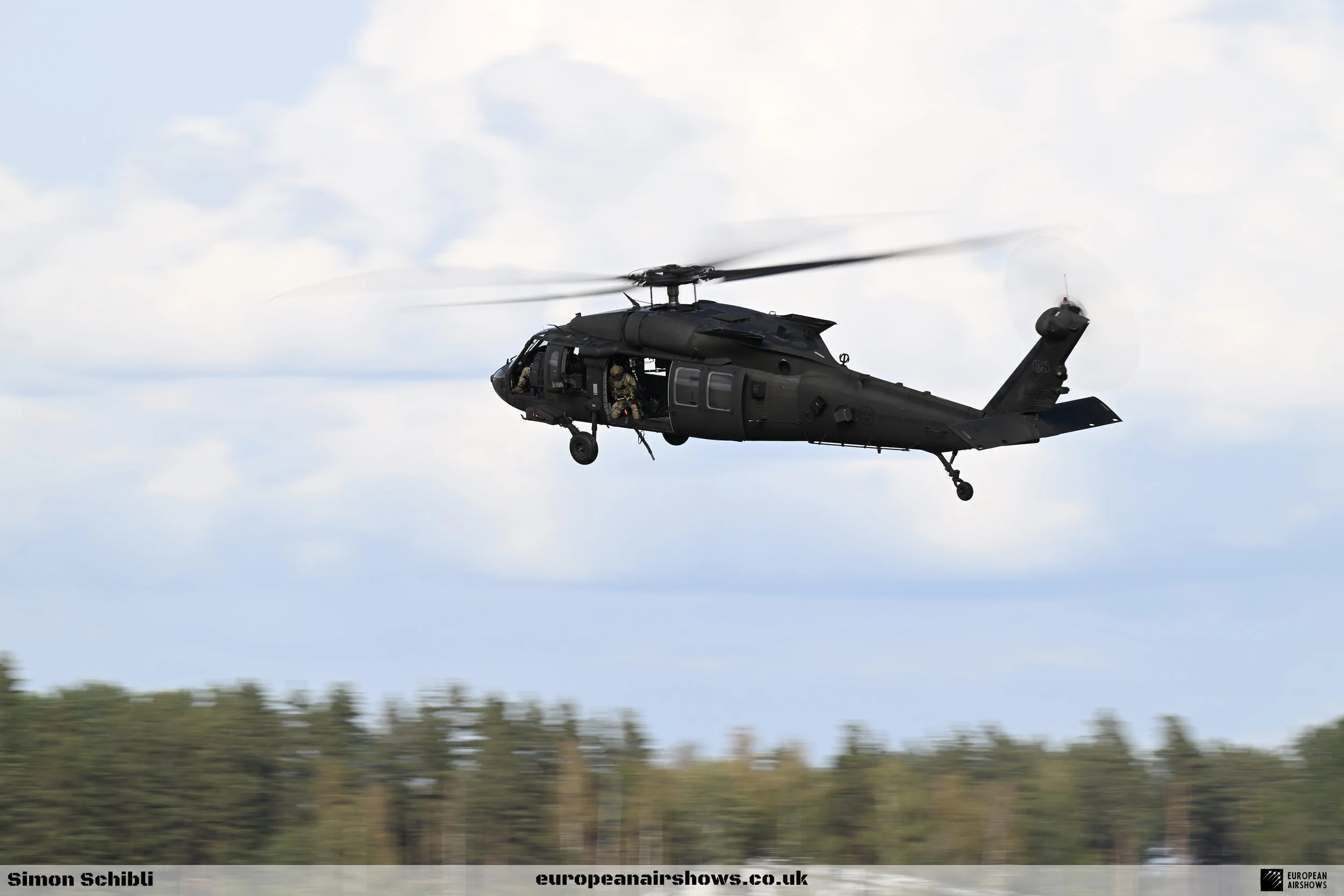
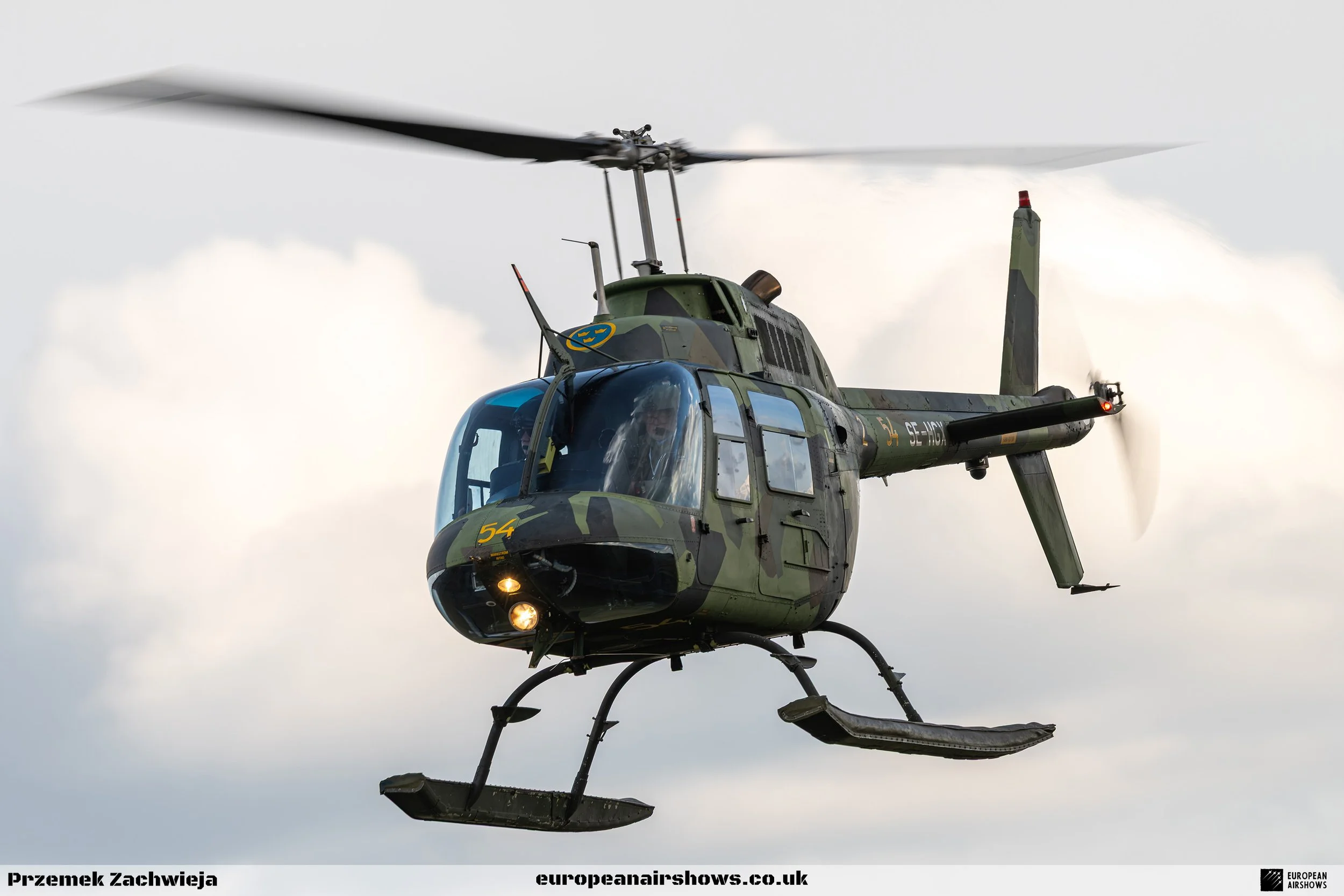
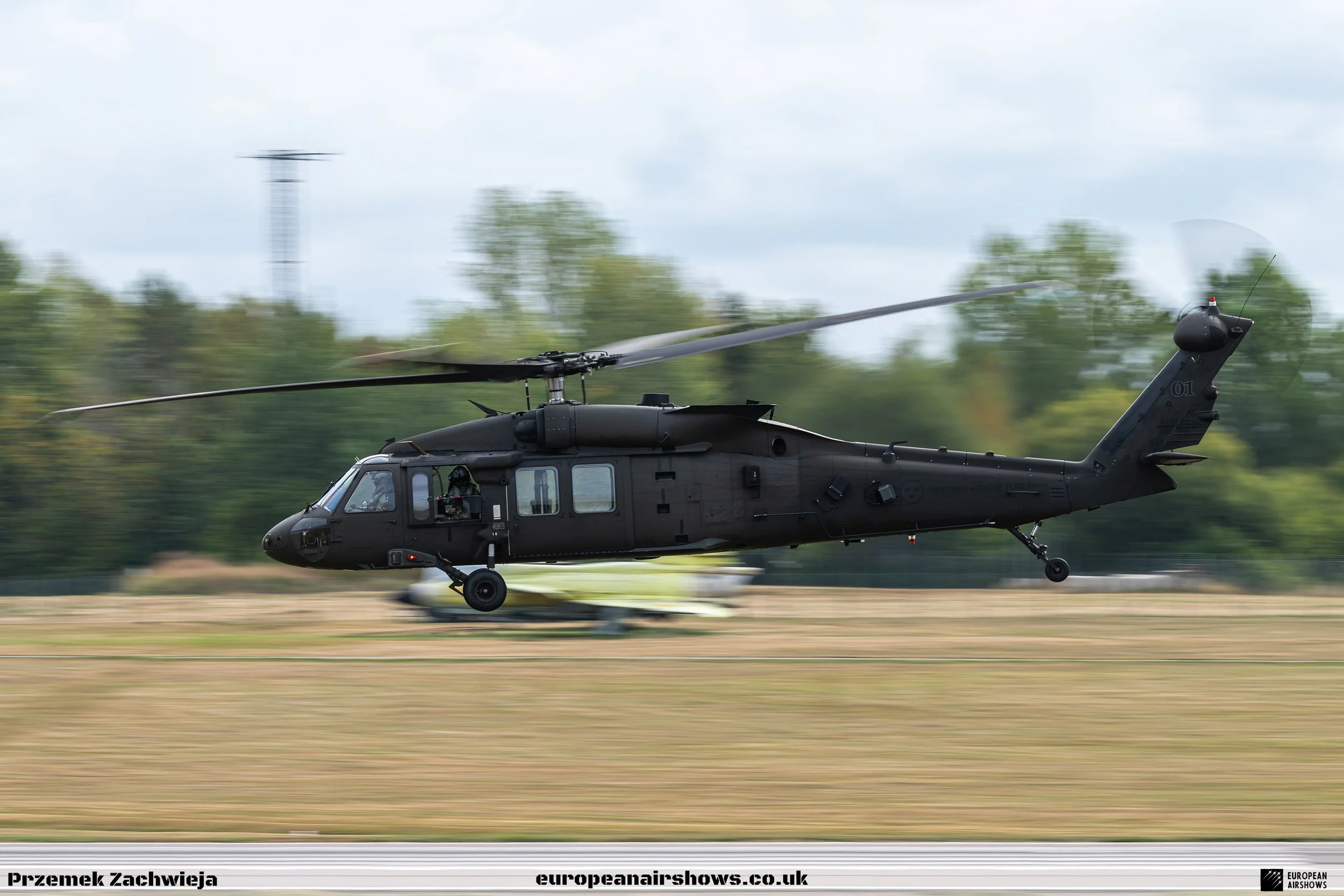
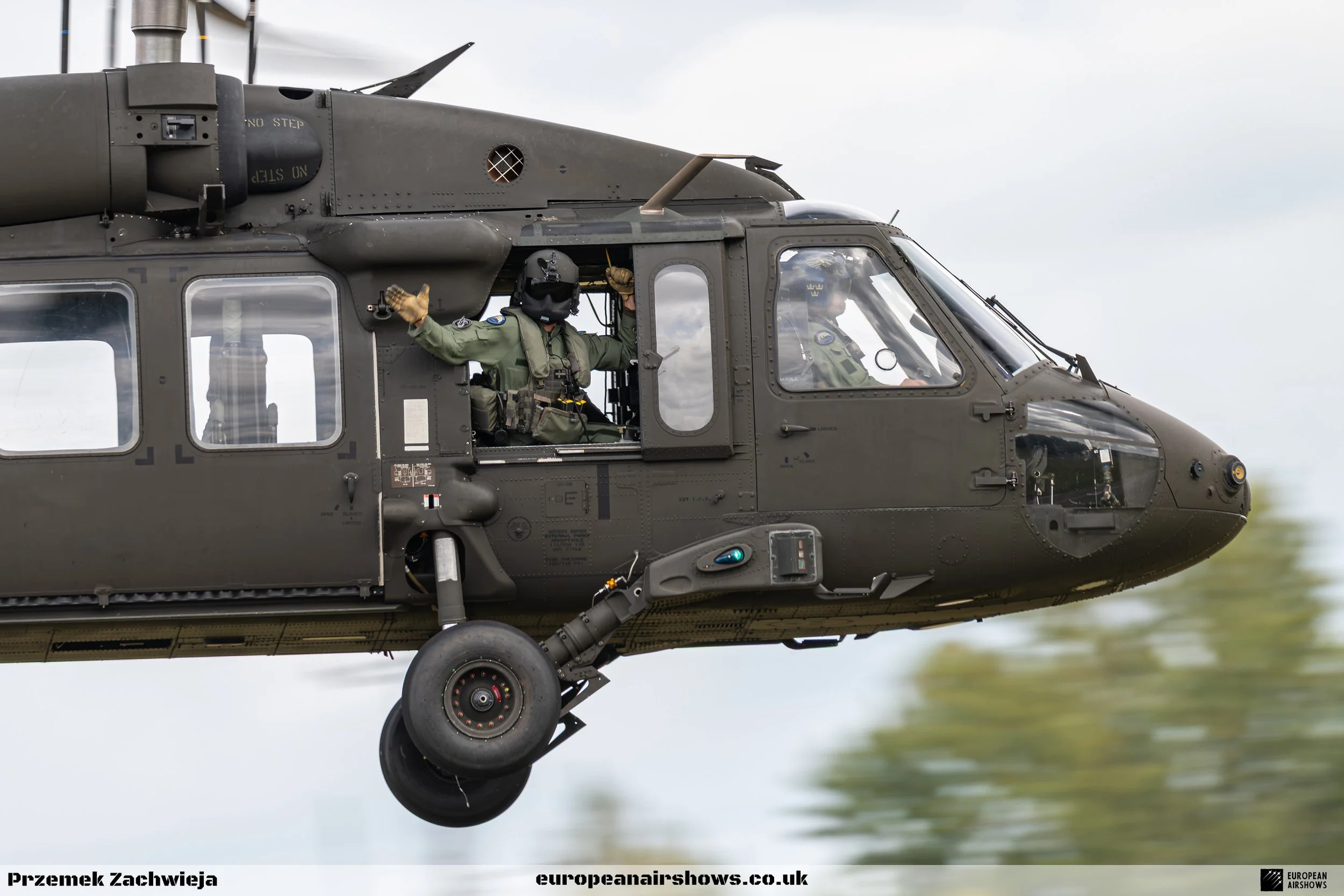
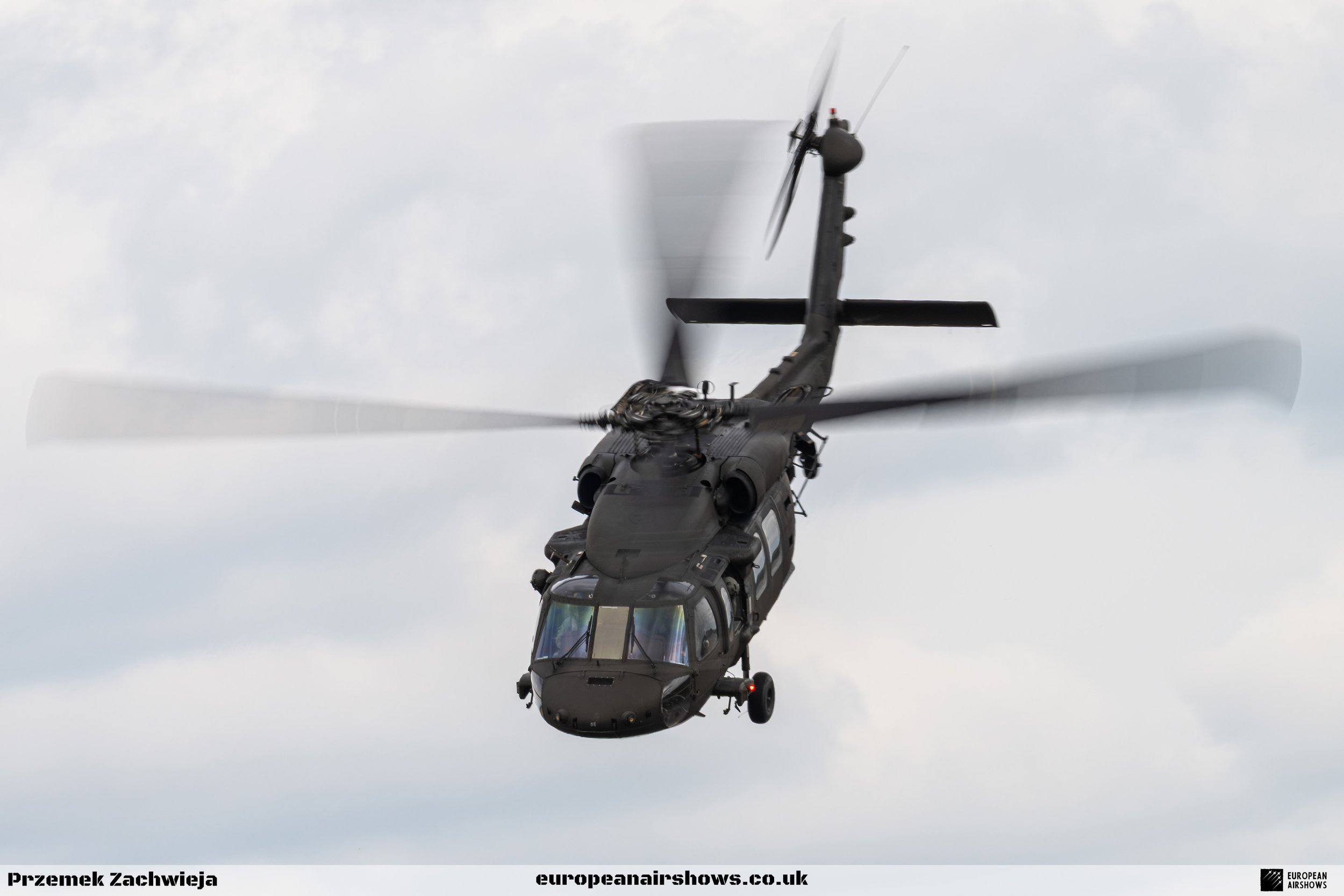
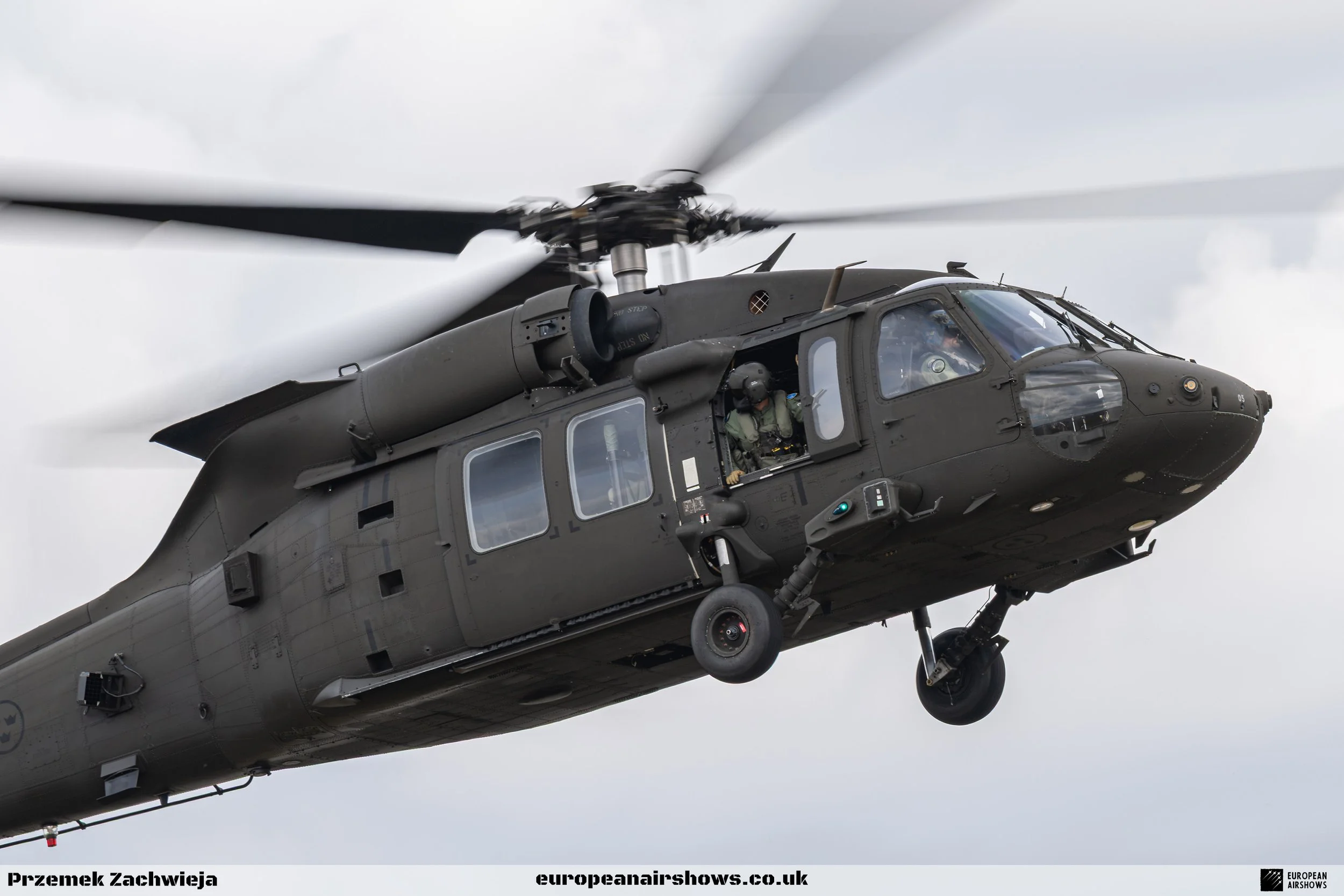
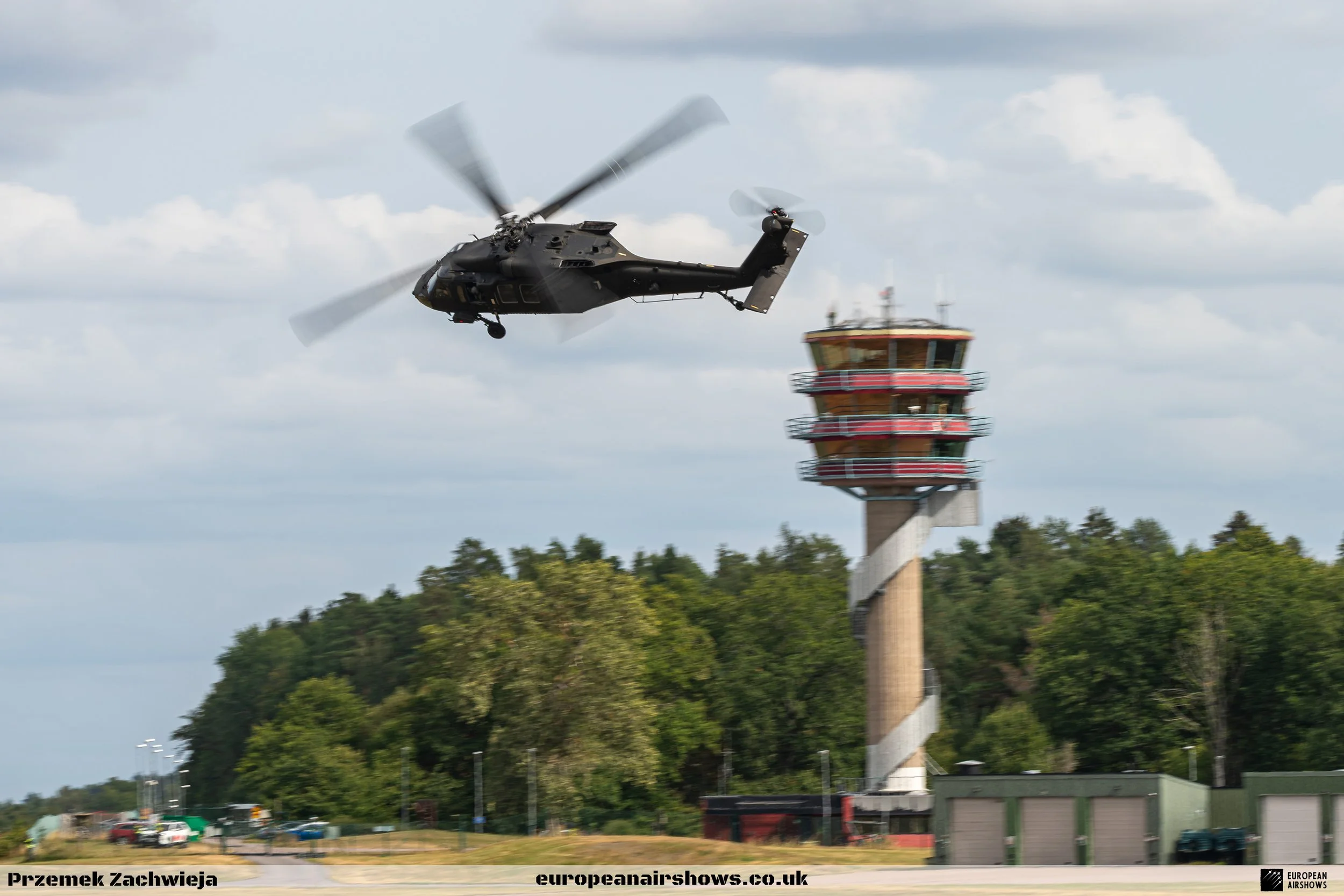
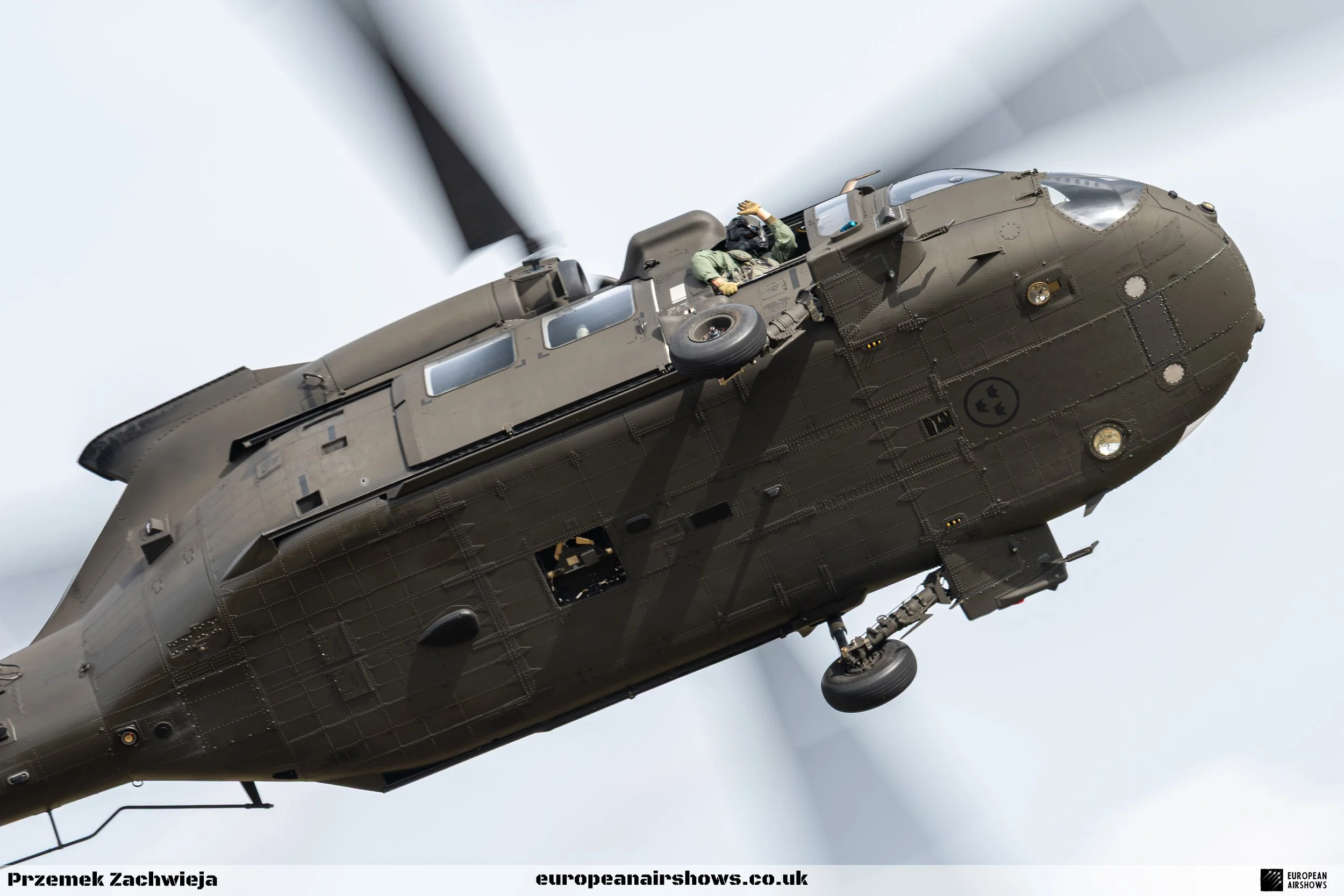
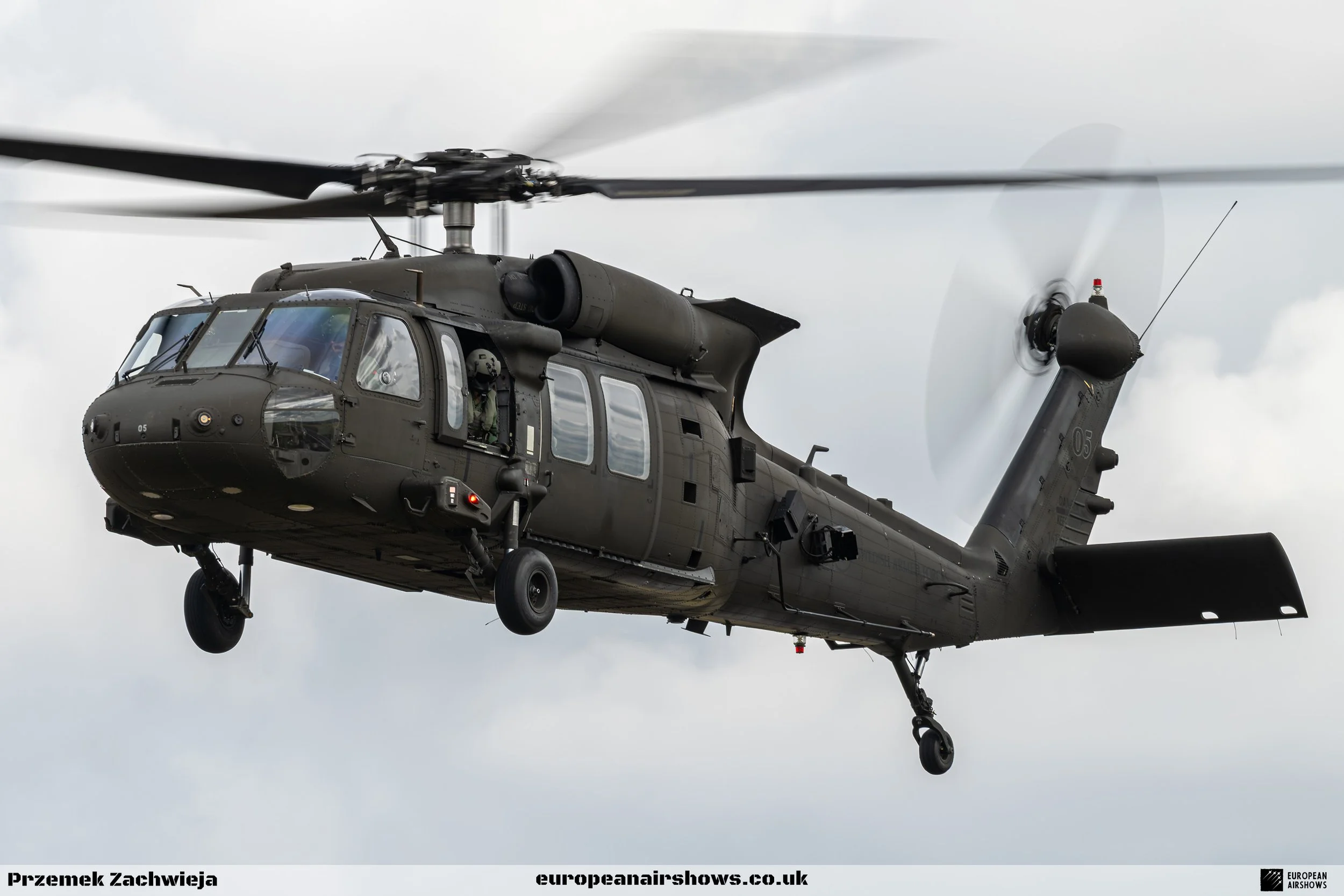
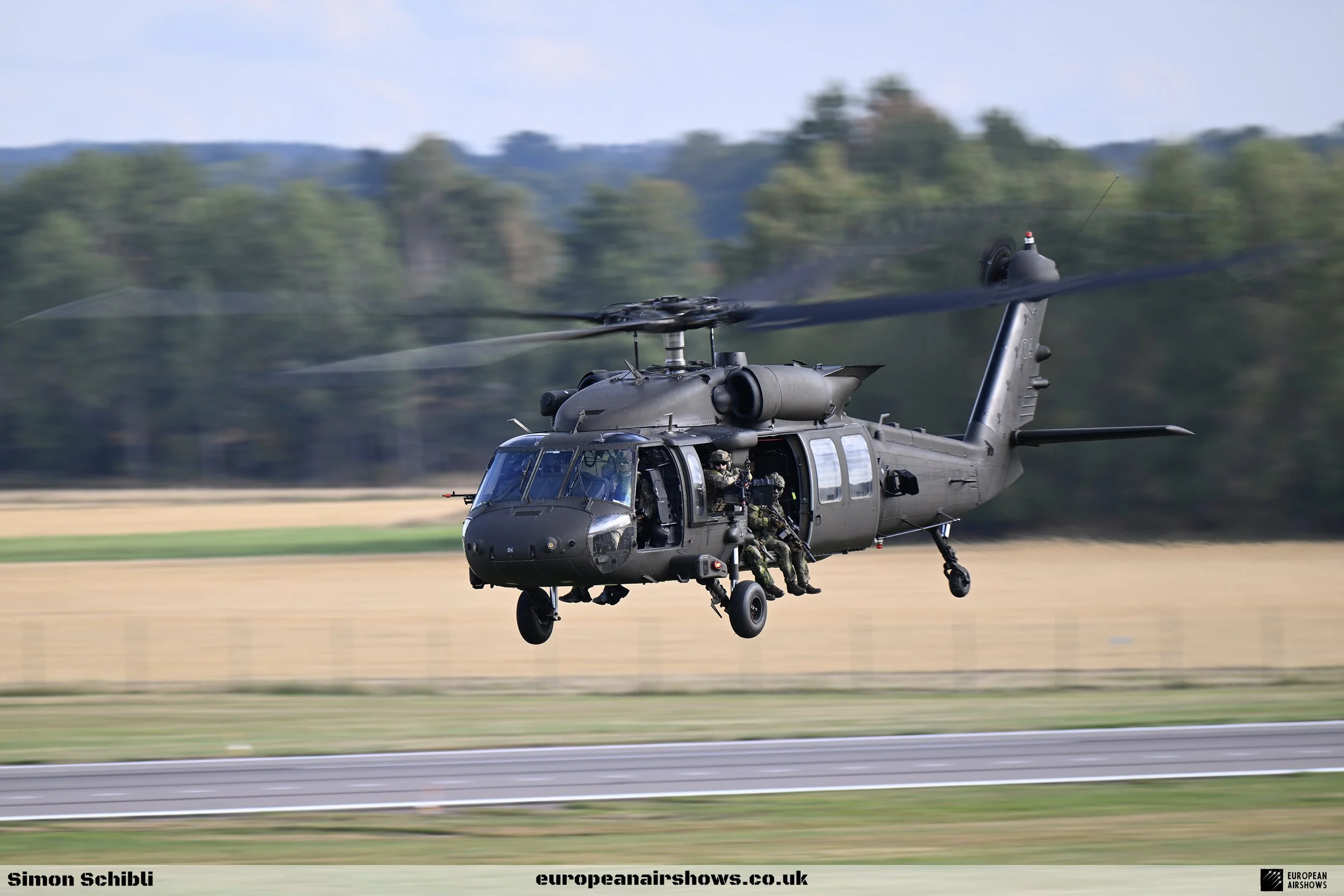
The Swedish Armed Forces’ Sikorsky UH-60M Black Hawk (HKP 16) flew a remarkably aggressive solo, with steep turns and rapid reversals close enough to feel the power rather than merely see it. For a display this forceful, the lack of flares felt like a missed final flourish. The type showed its operational side elsewhere, with door gunners firing blanks during the role demonstrations.
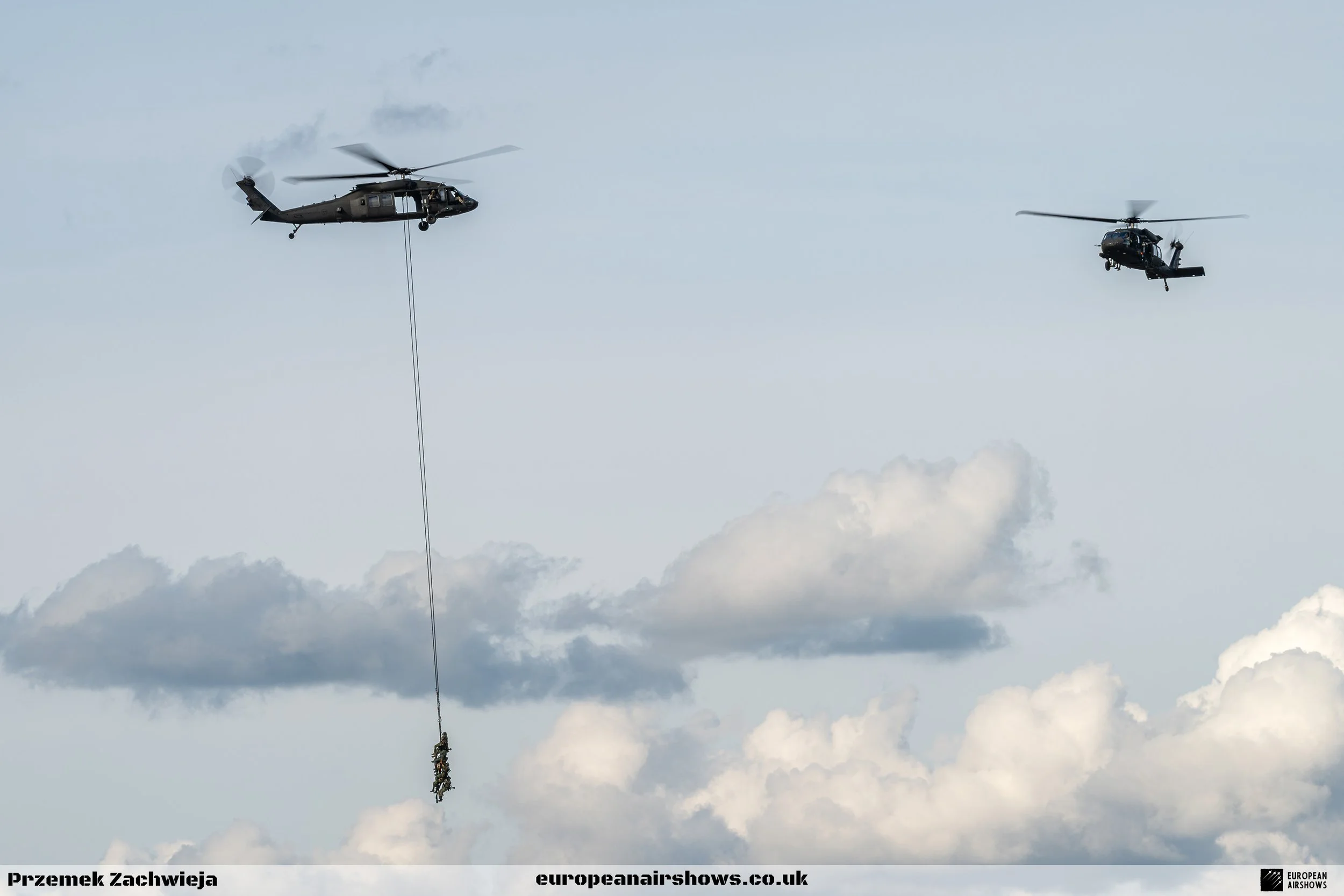
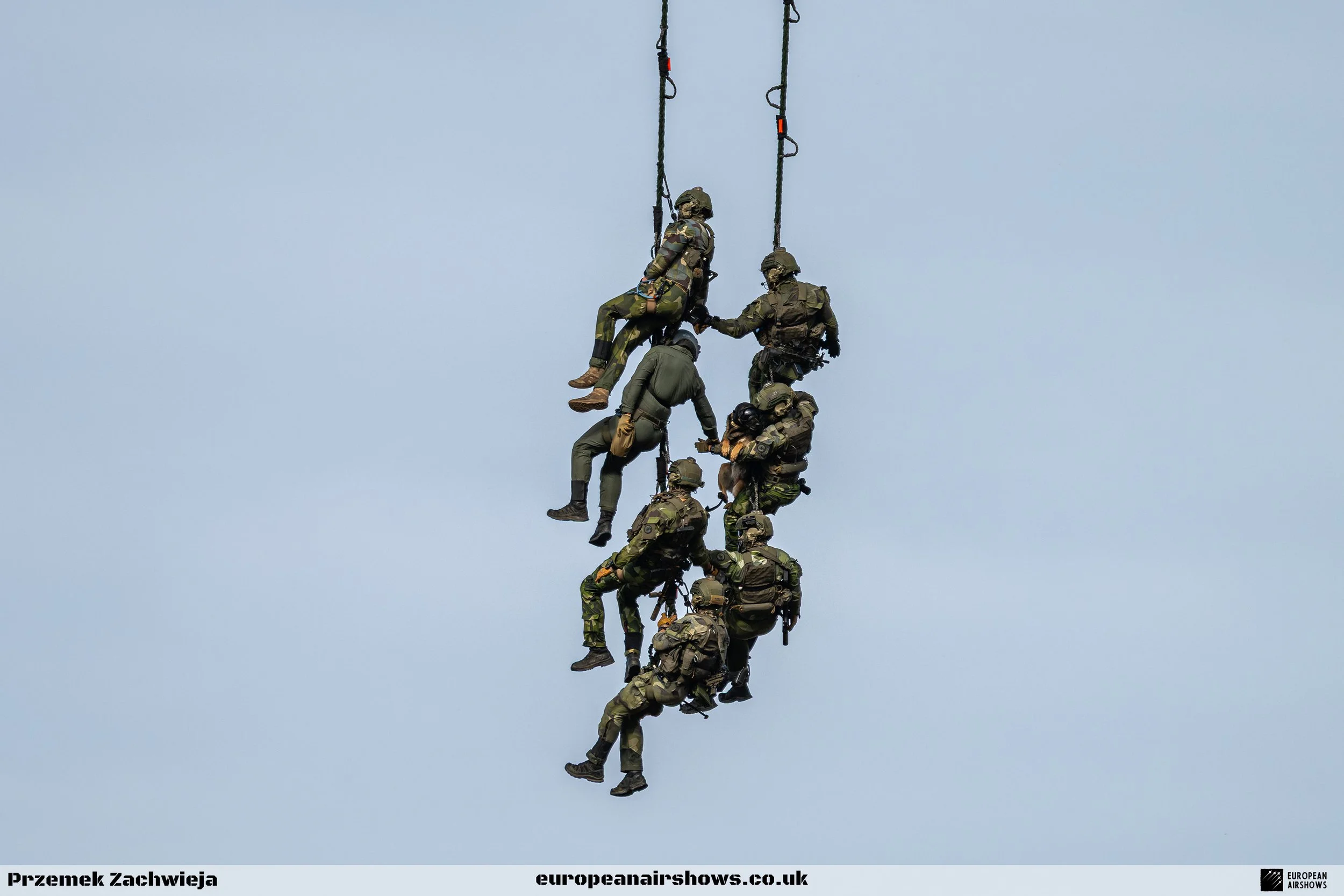
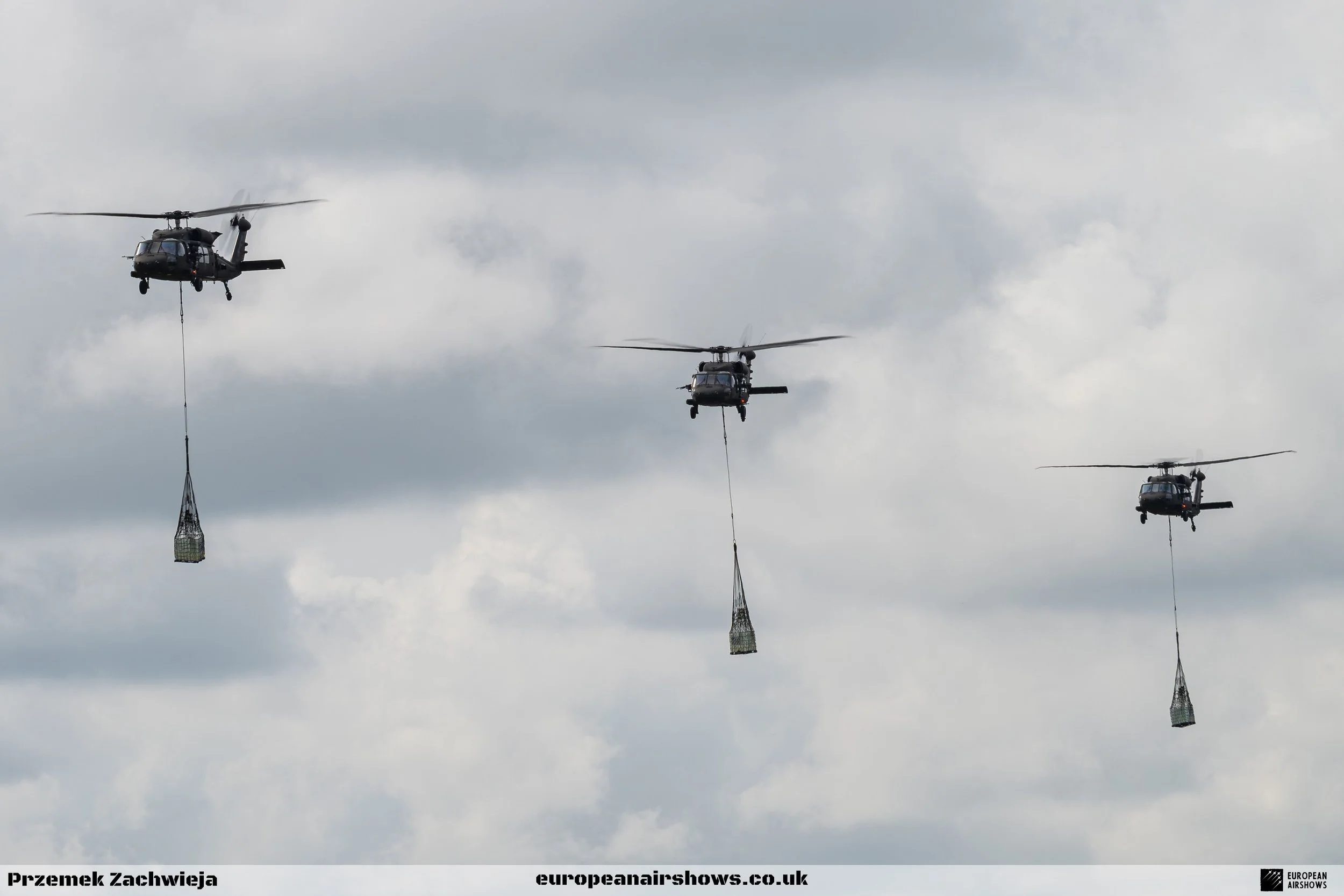
One tactical item used four Black Hawks: one covered the area while three arrived with underslung loads. A separate special-operations sequence used a pair. One helicopter provided cover while soldiers descended on ropes from the other; the aircraft then exchanged roles. Finally, every soldier attached to one long extraction rope and a Black Hawk lifted the group away beneath it. It was brief, easy to understand and exactly the kind of operational demonstration the modern programme needed more of.
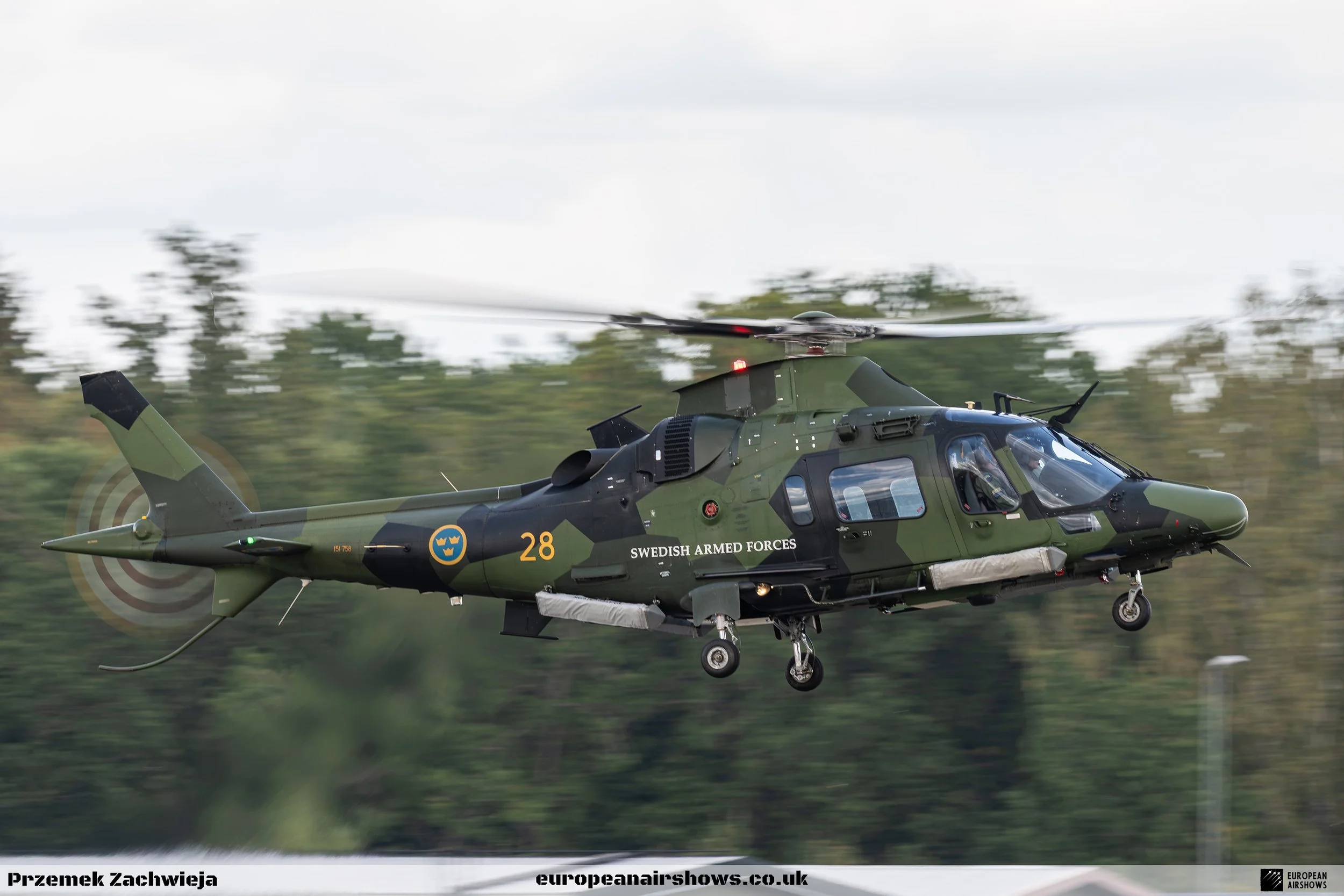
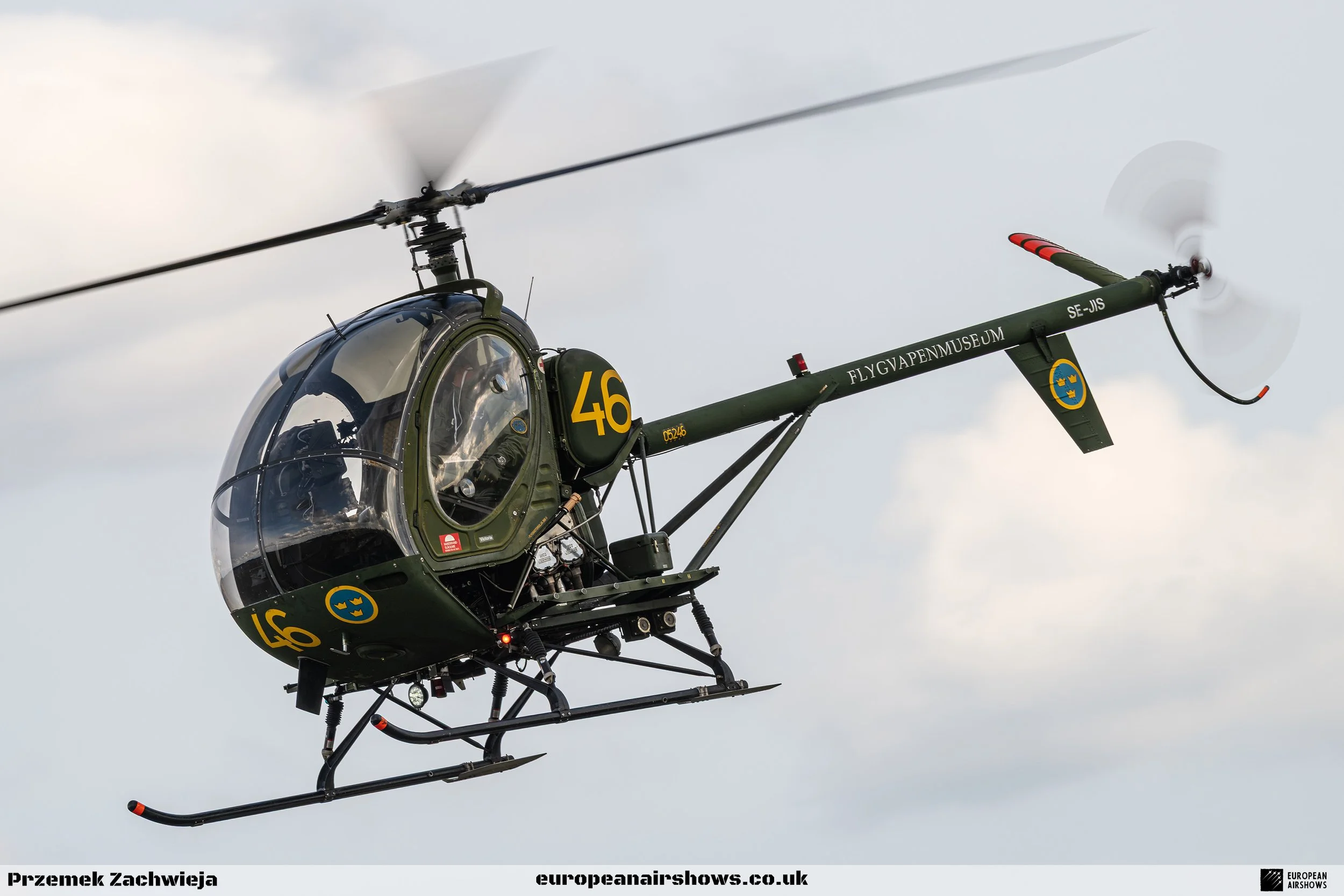
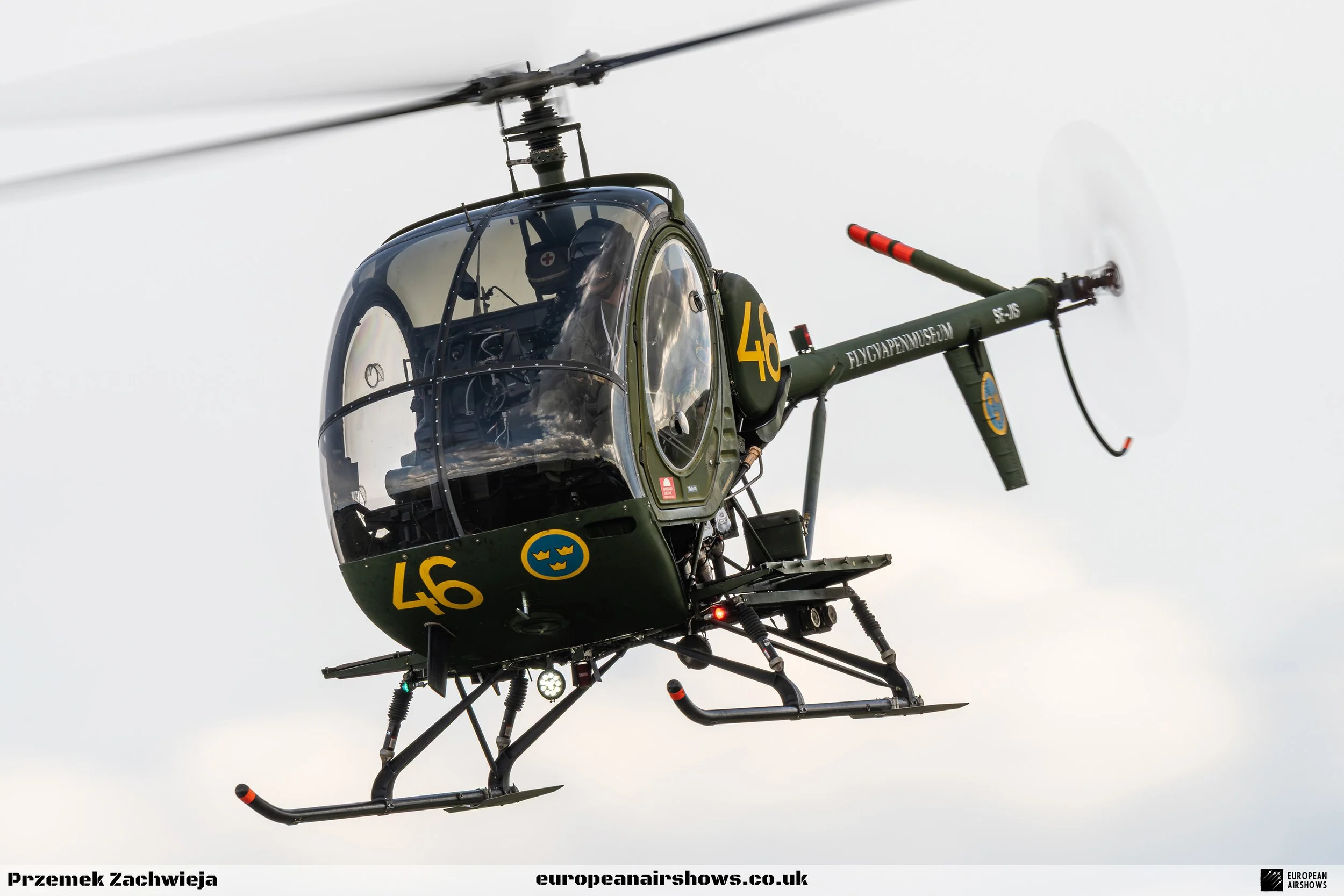
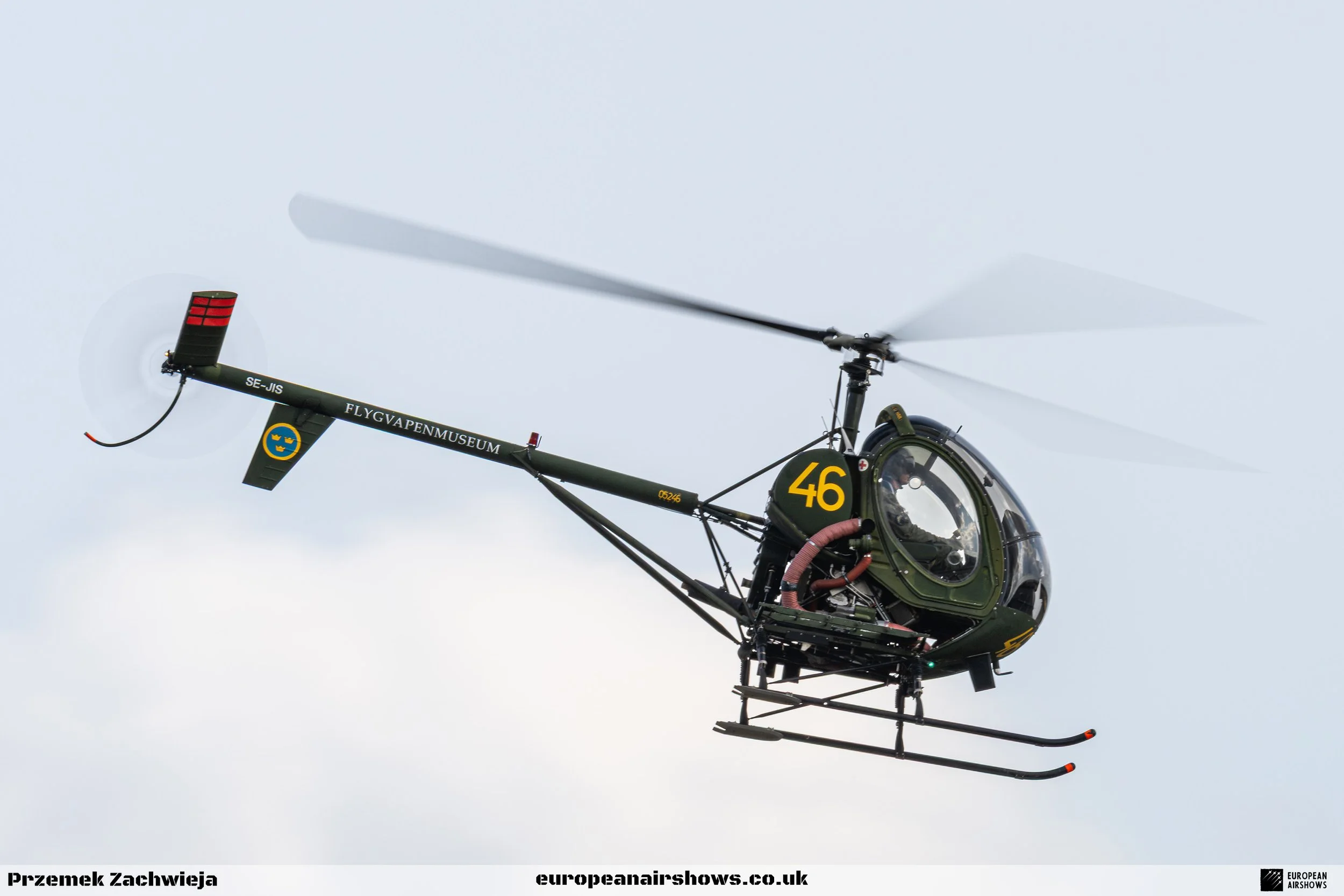
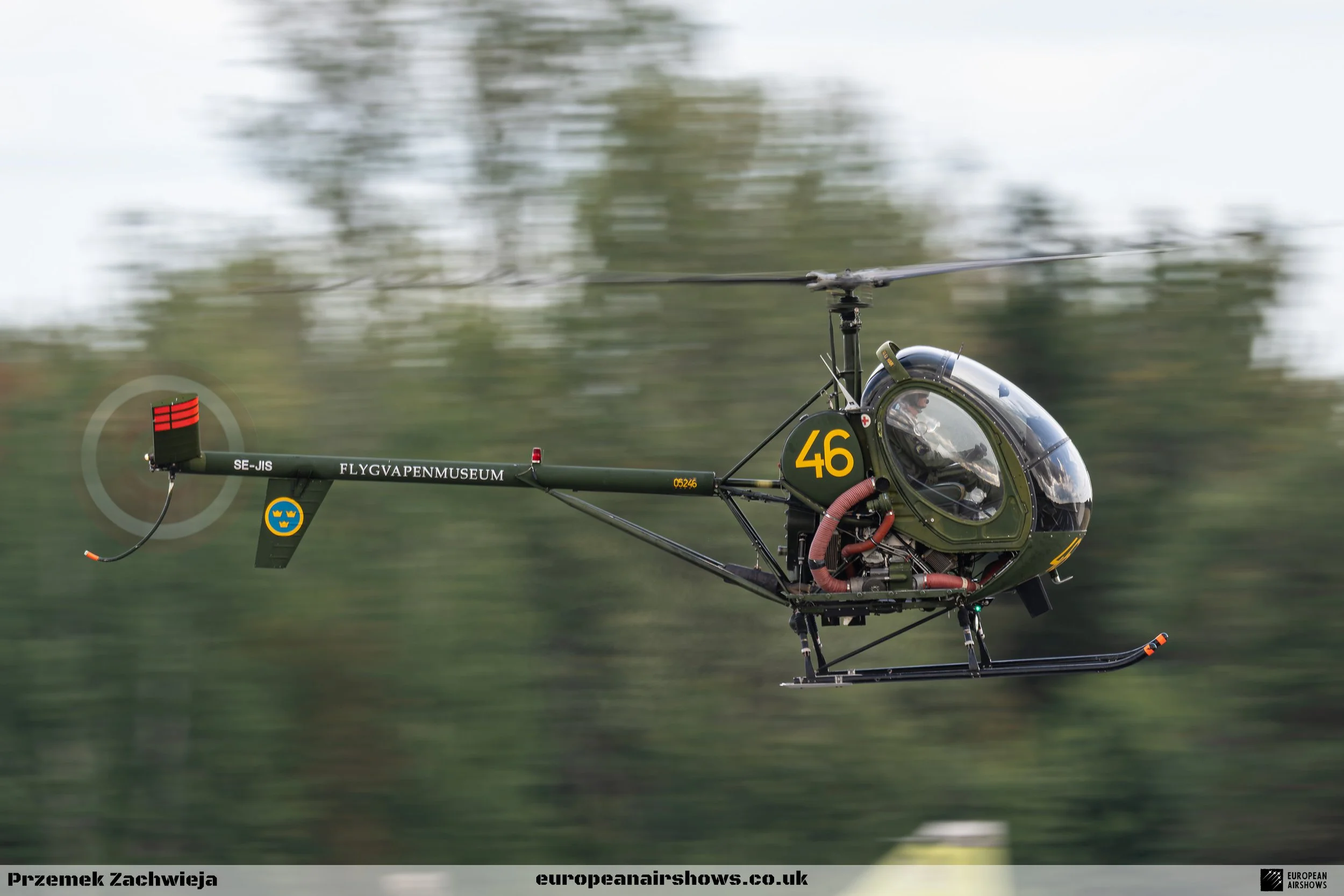
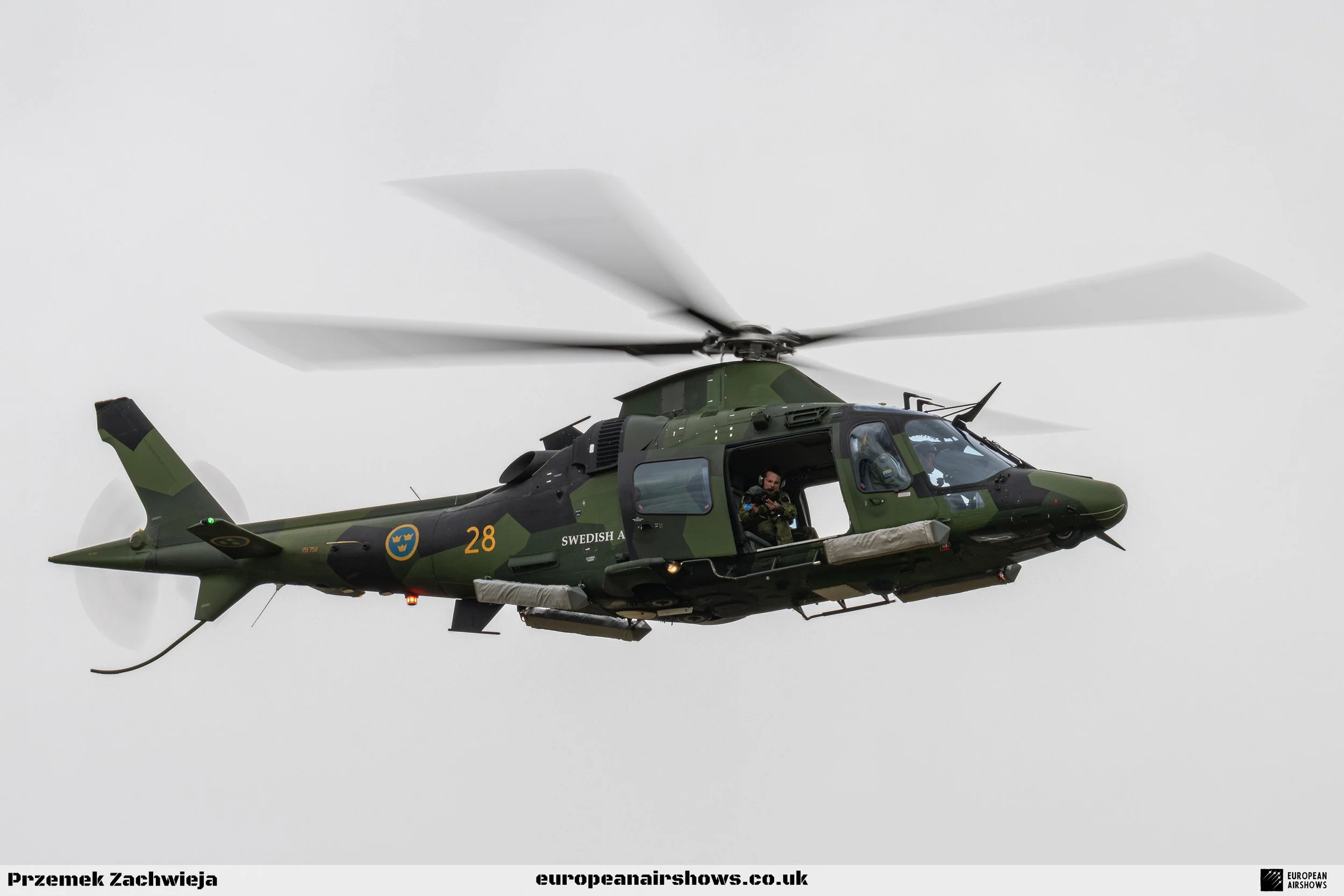
The reserve solo by the AgustaWestland A109LUH (HKP 15) was activated and flown, while two tiny Hughes 269C/Schweizer 300C helicopters in HKP 5B guise provided a charming contrast with the much larger modern machines. Once again, their close runway-axis presentation proved that size and speed mattered less than putting the aircraft in the right place.
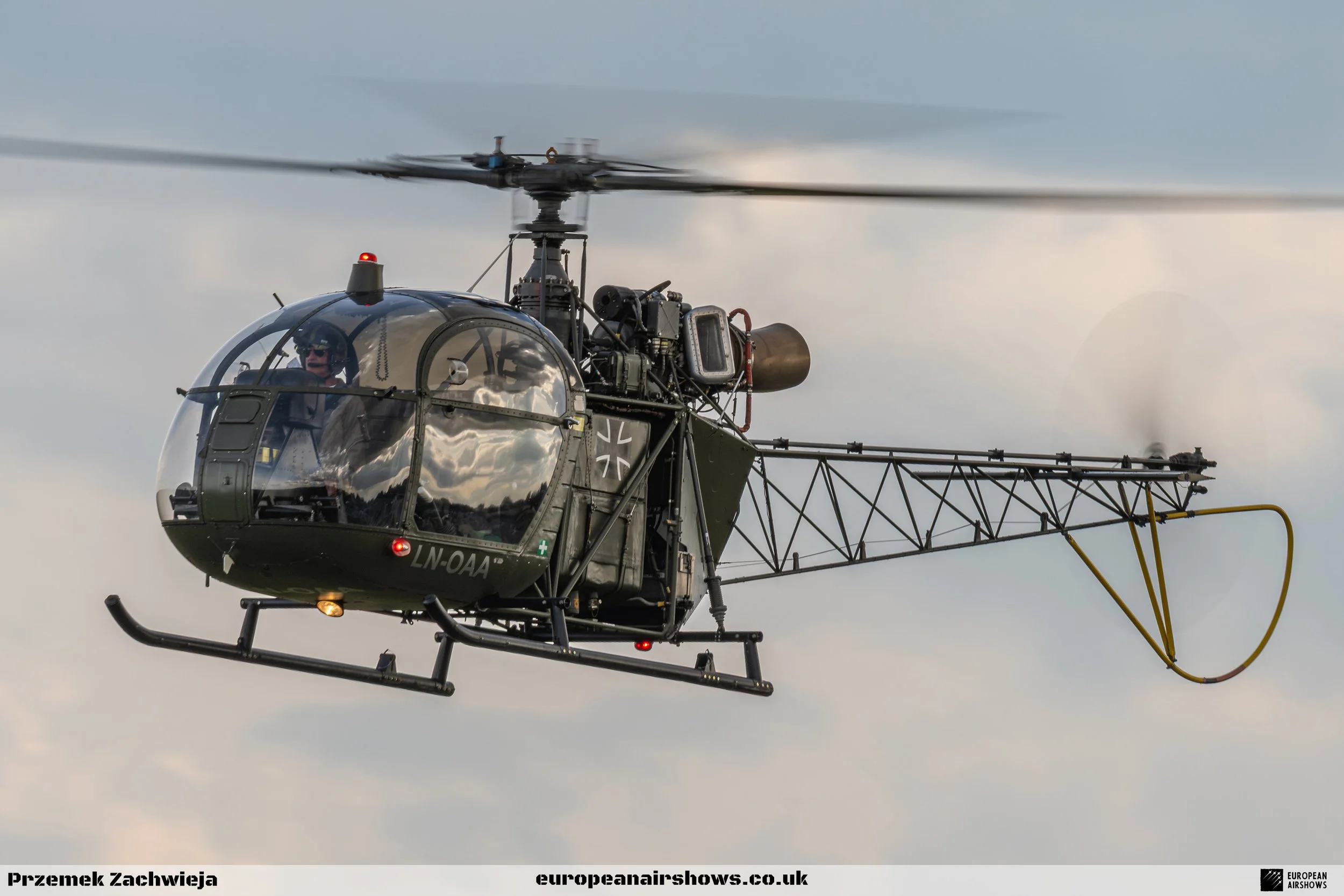
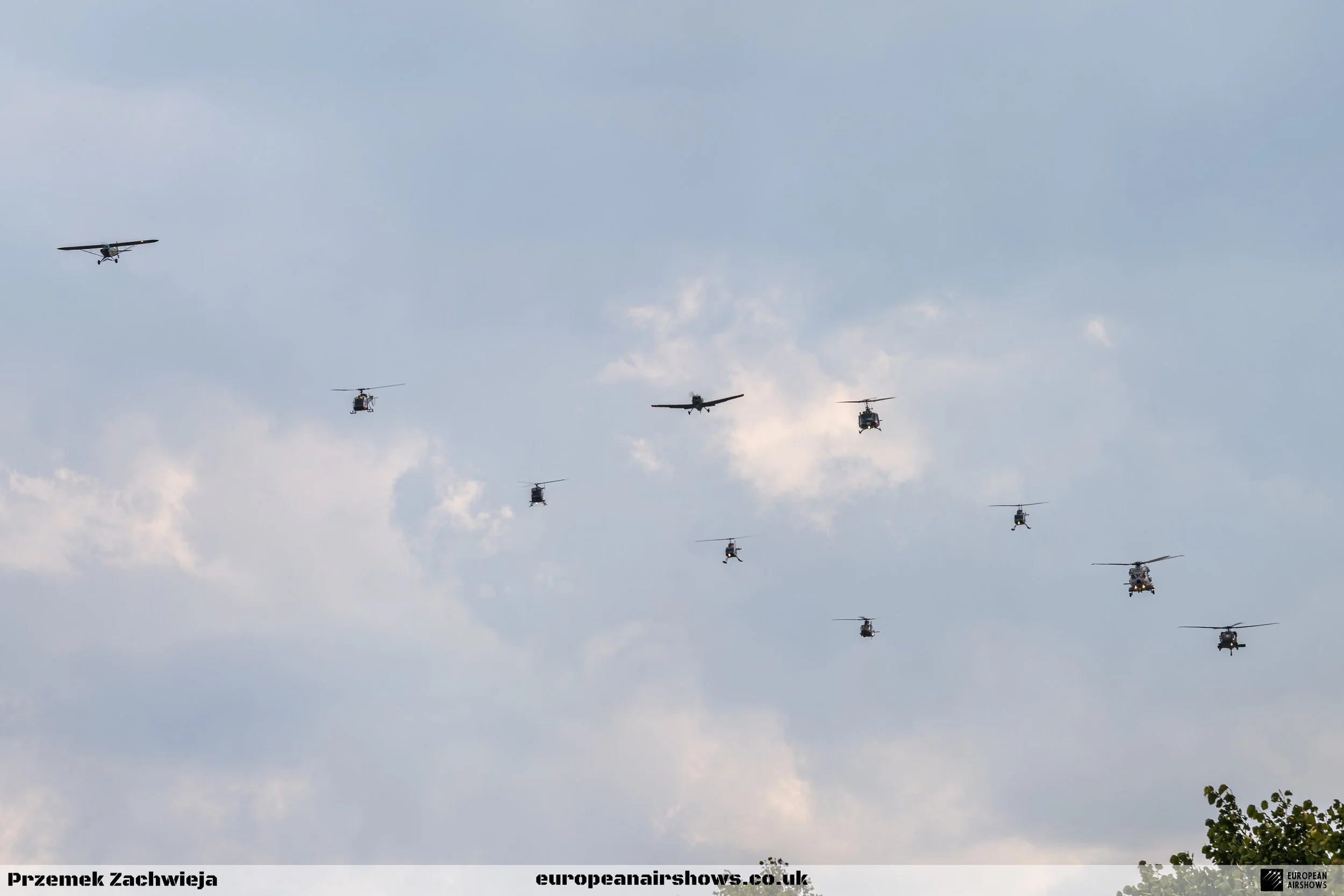
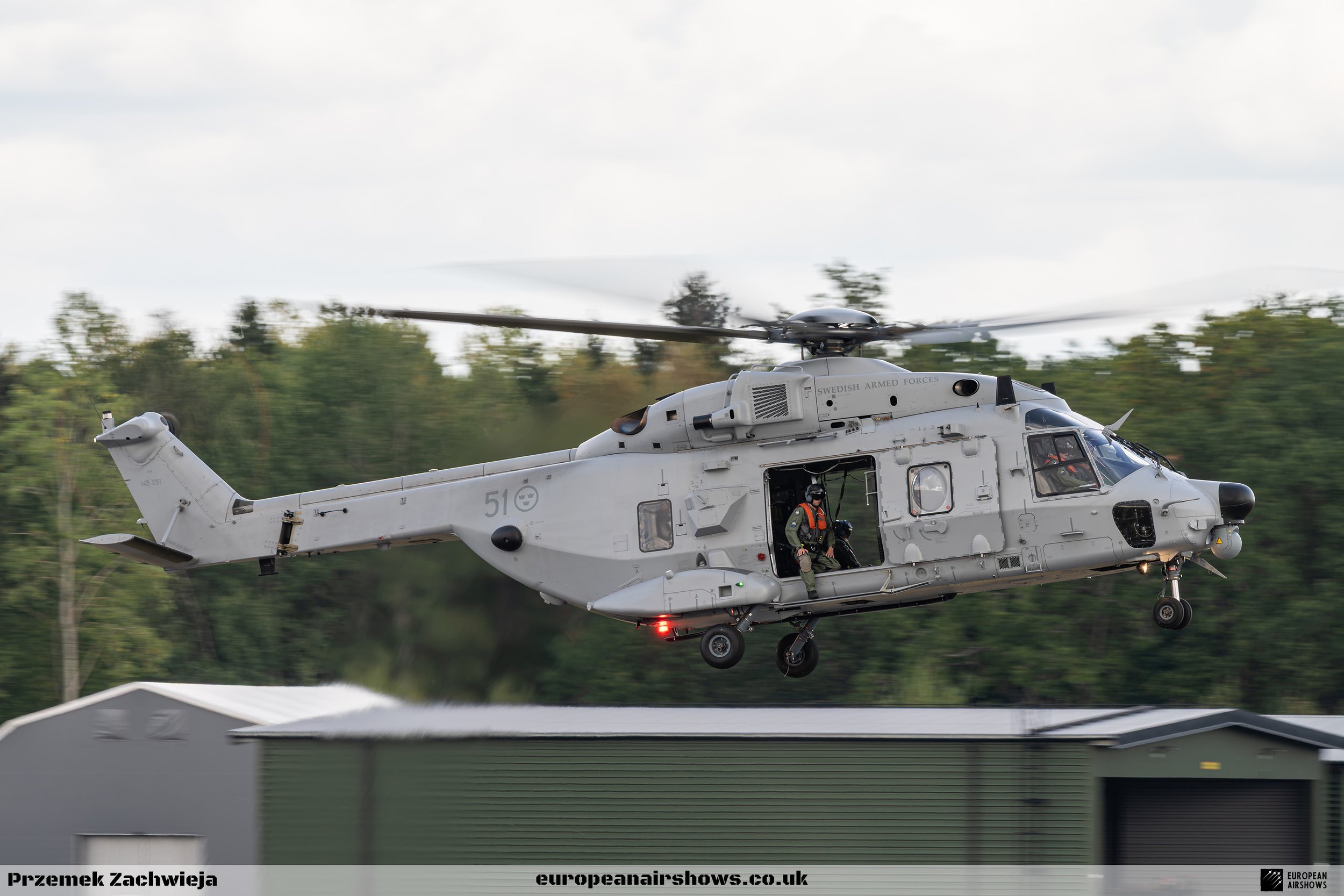
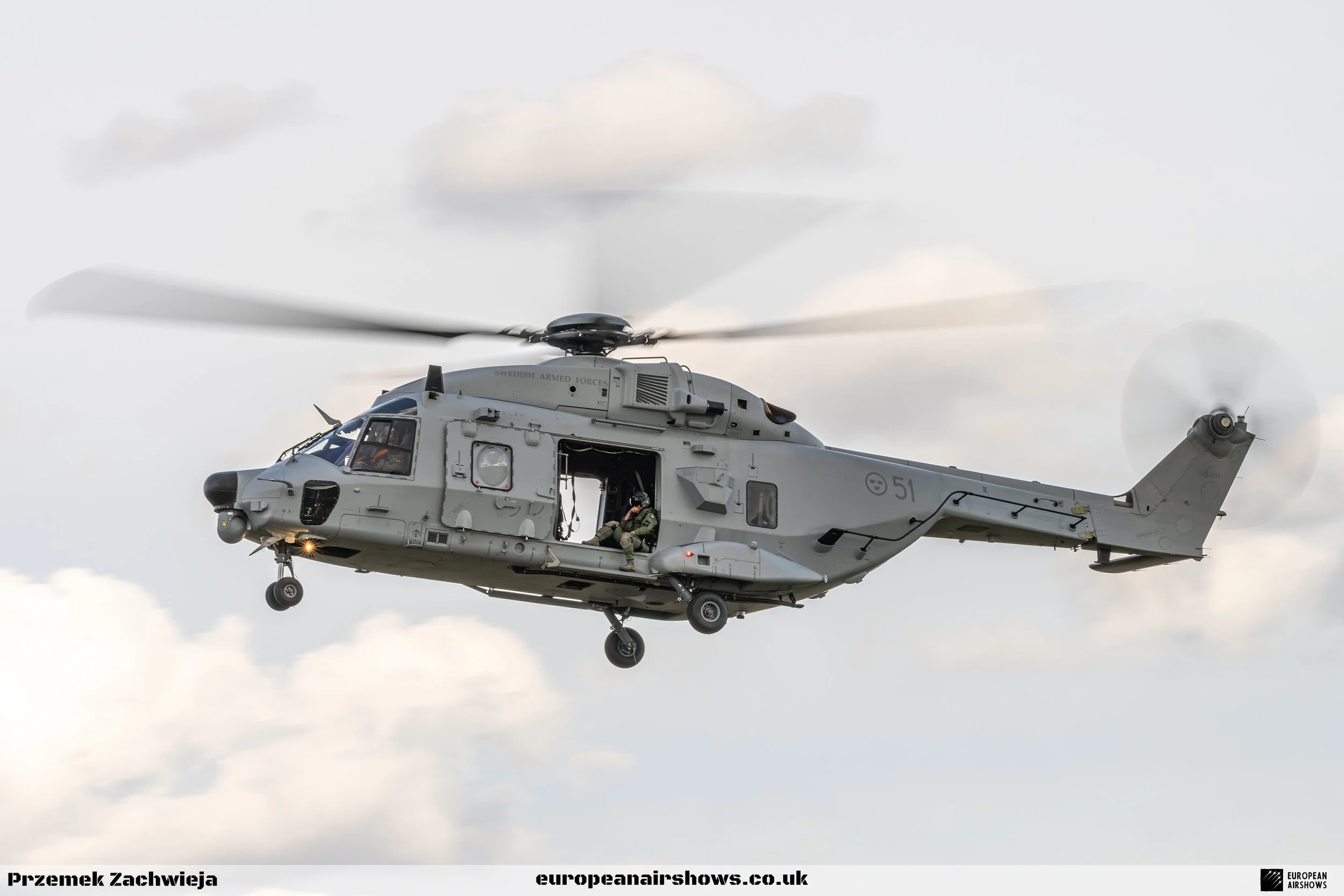
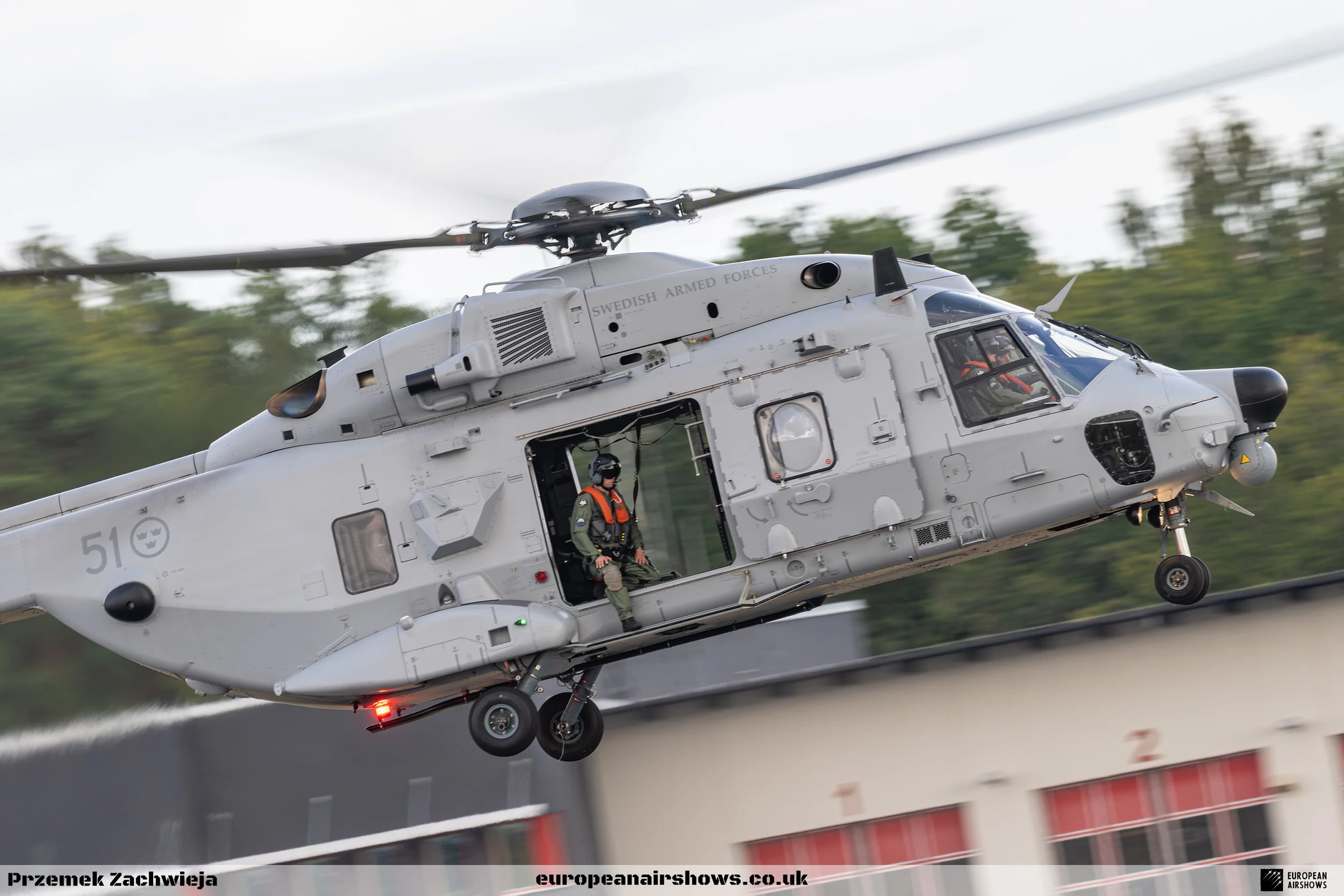
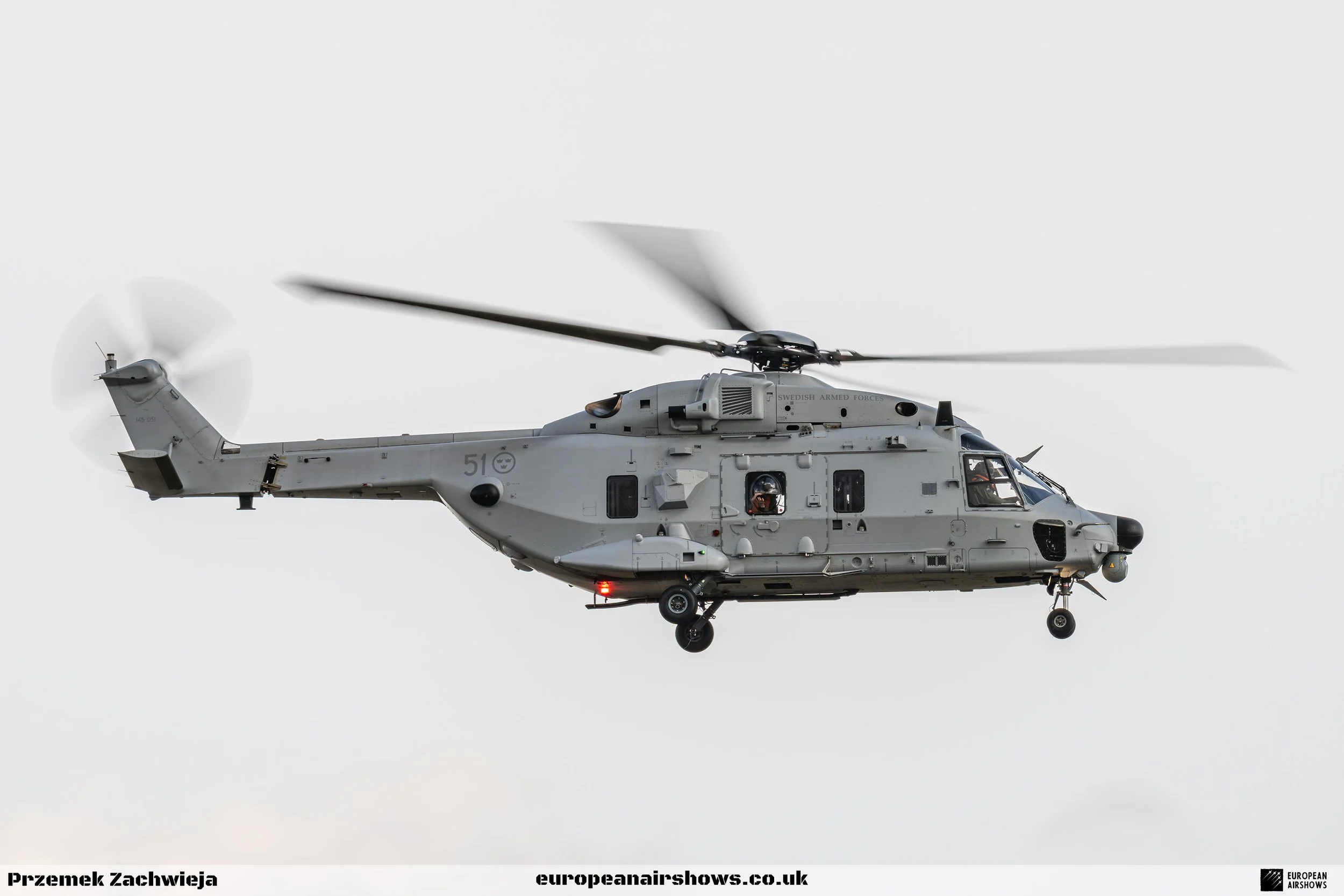
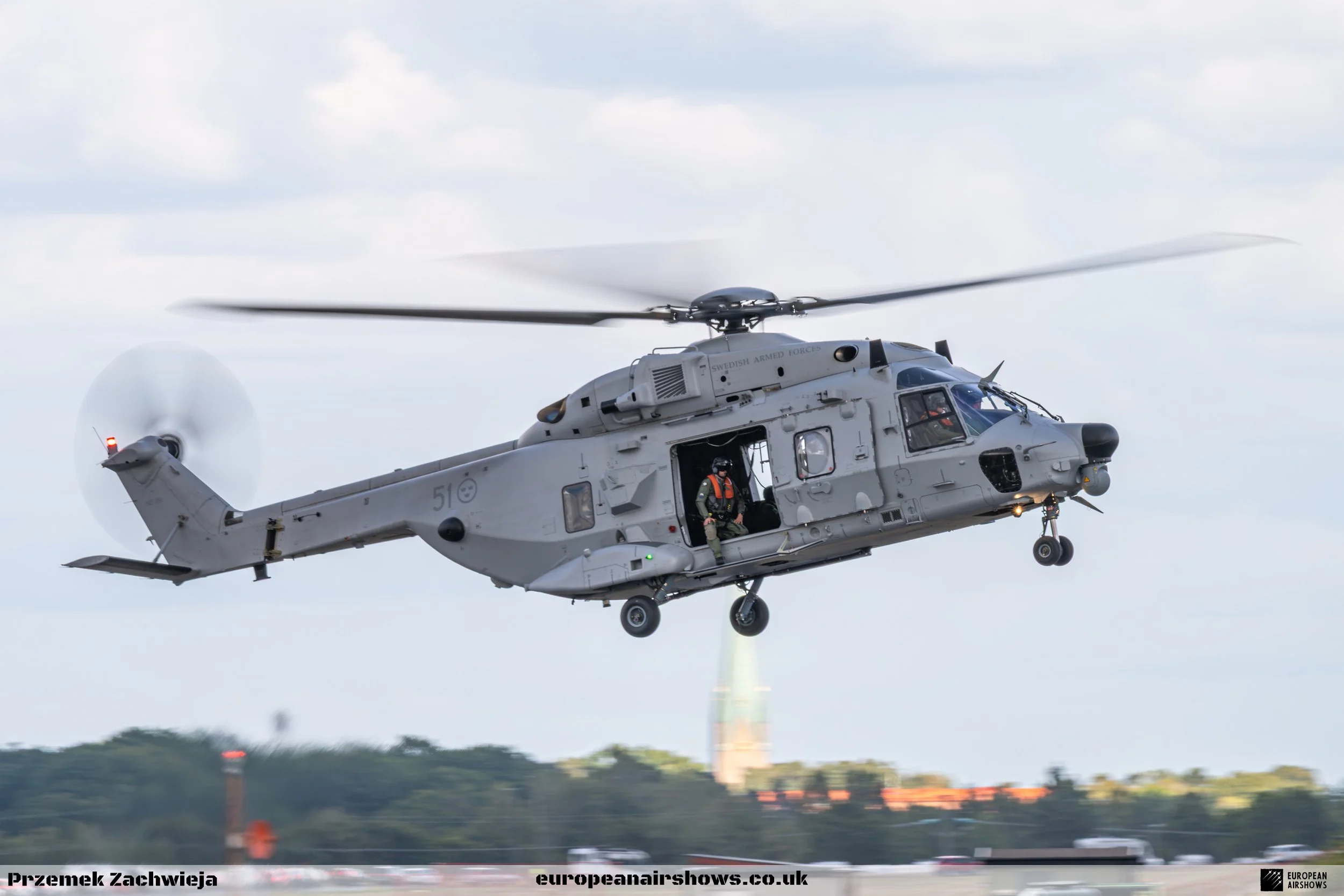
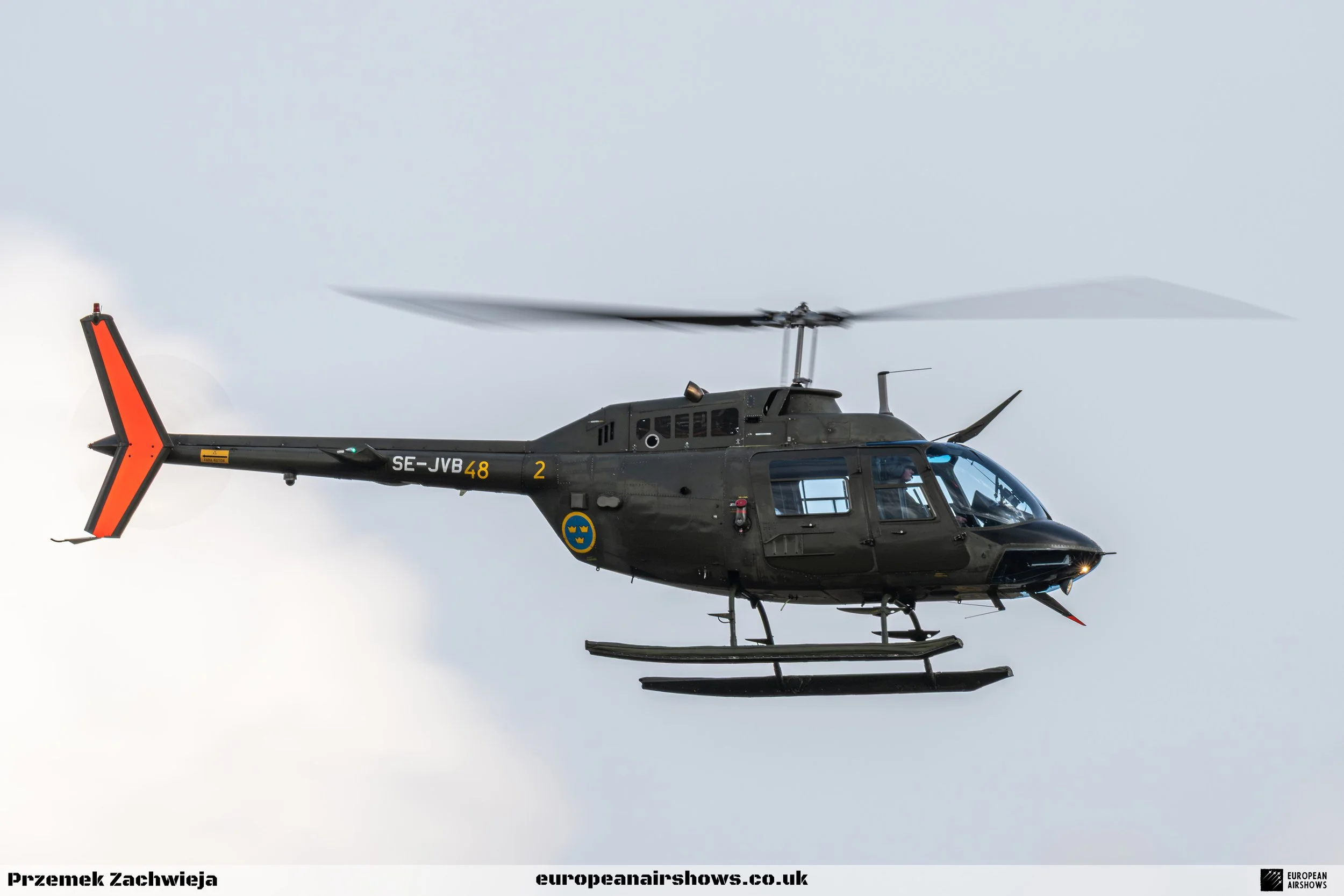
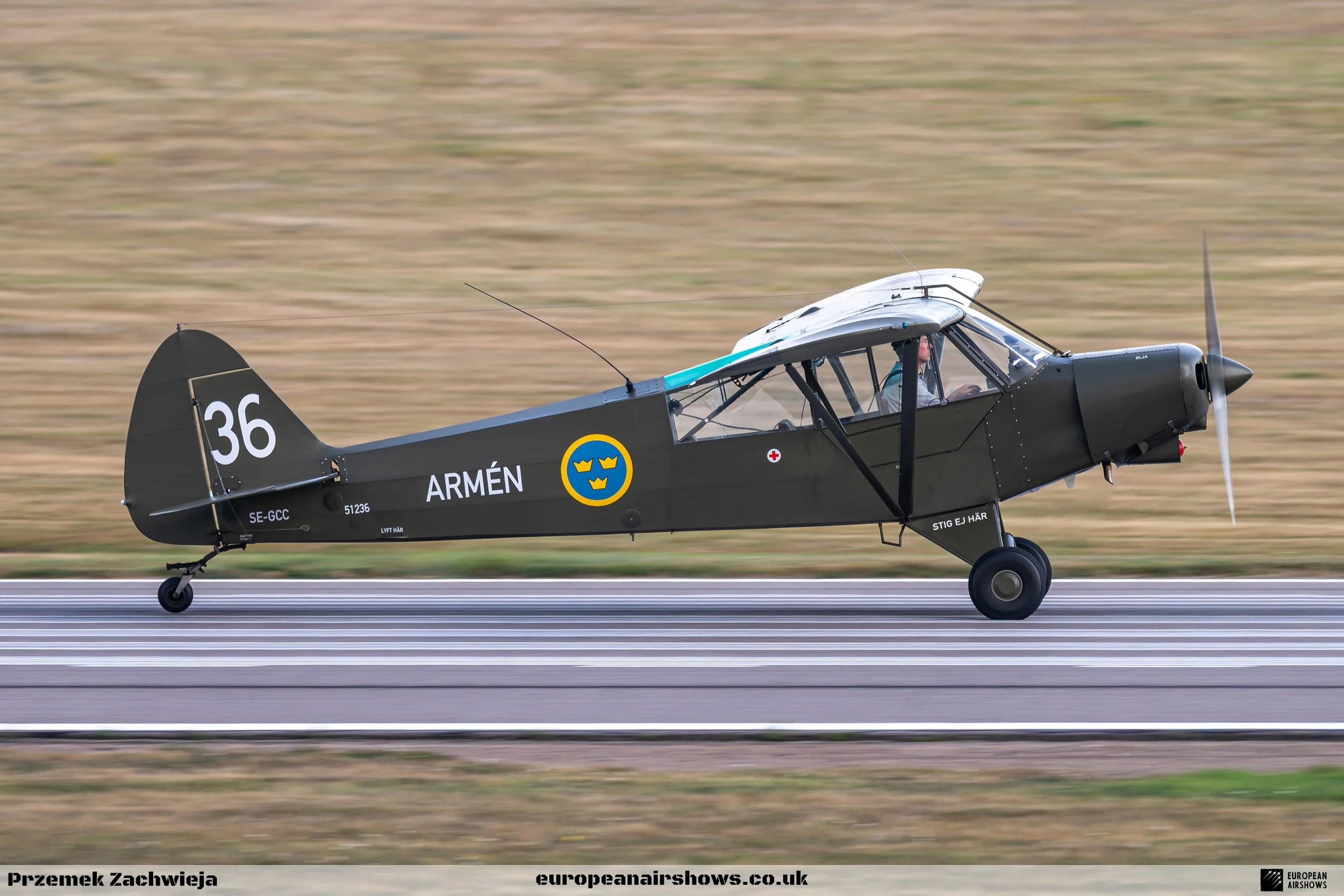
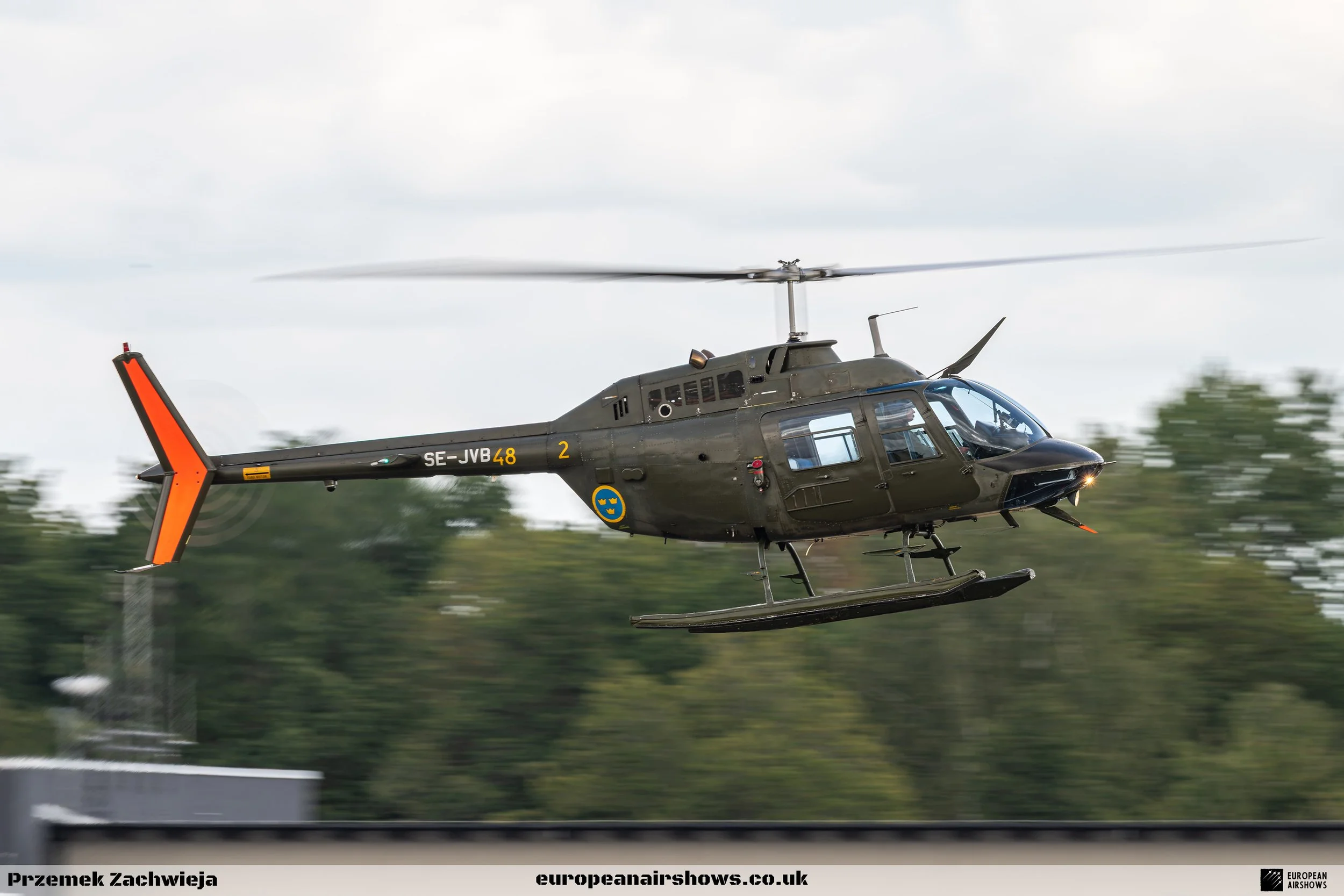
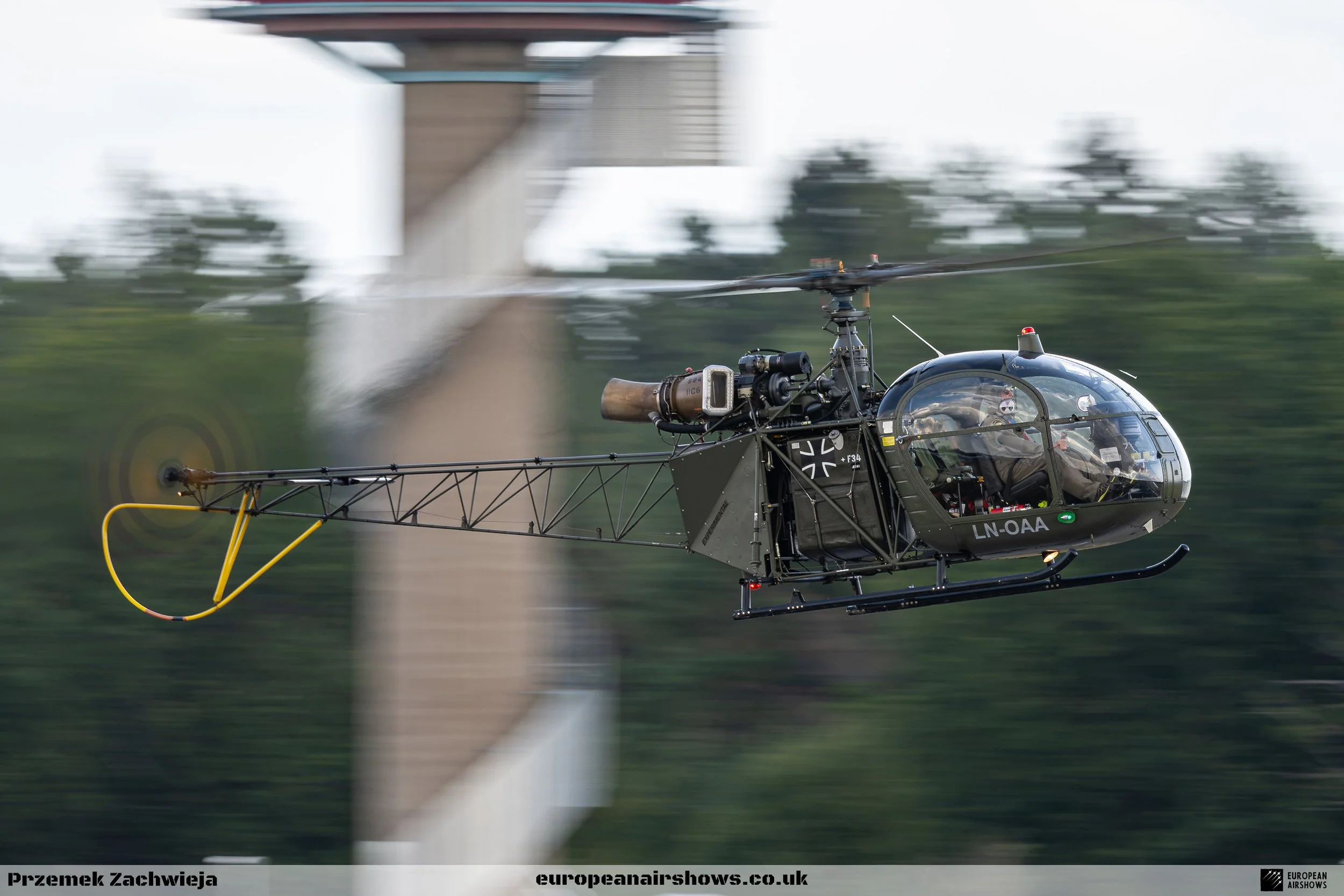
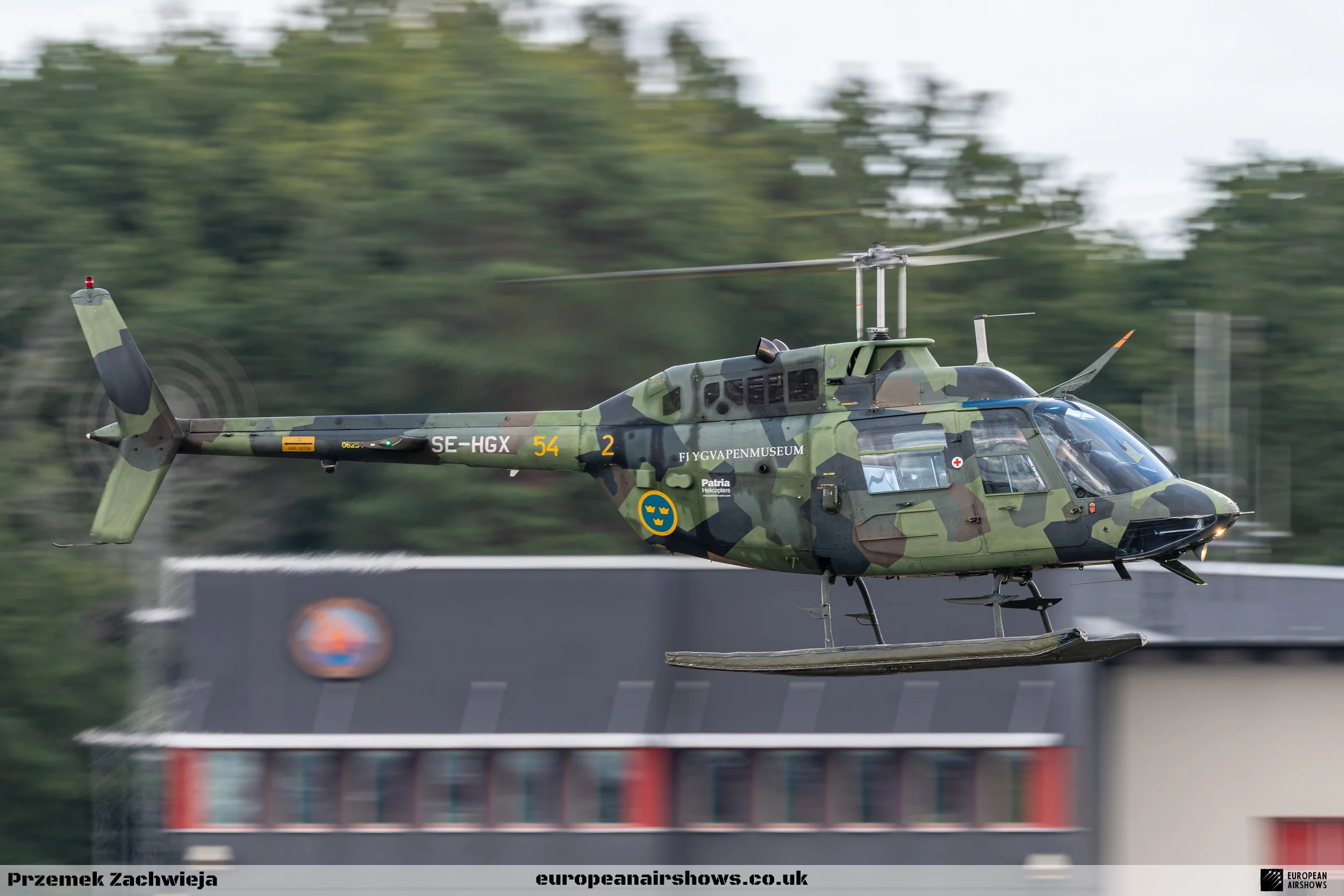
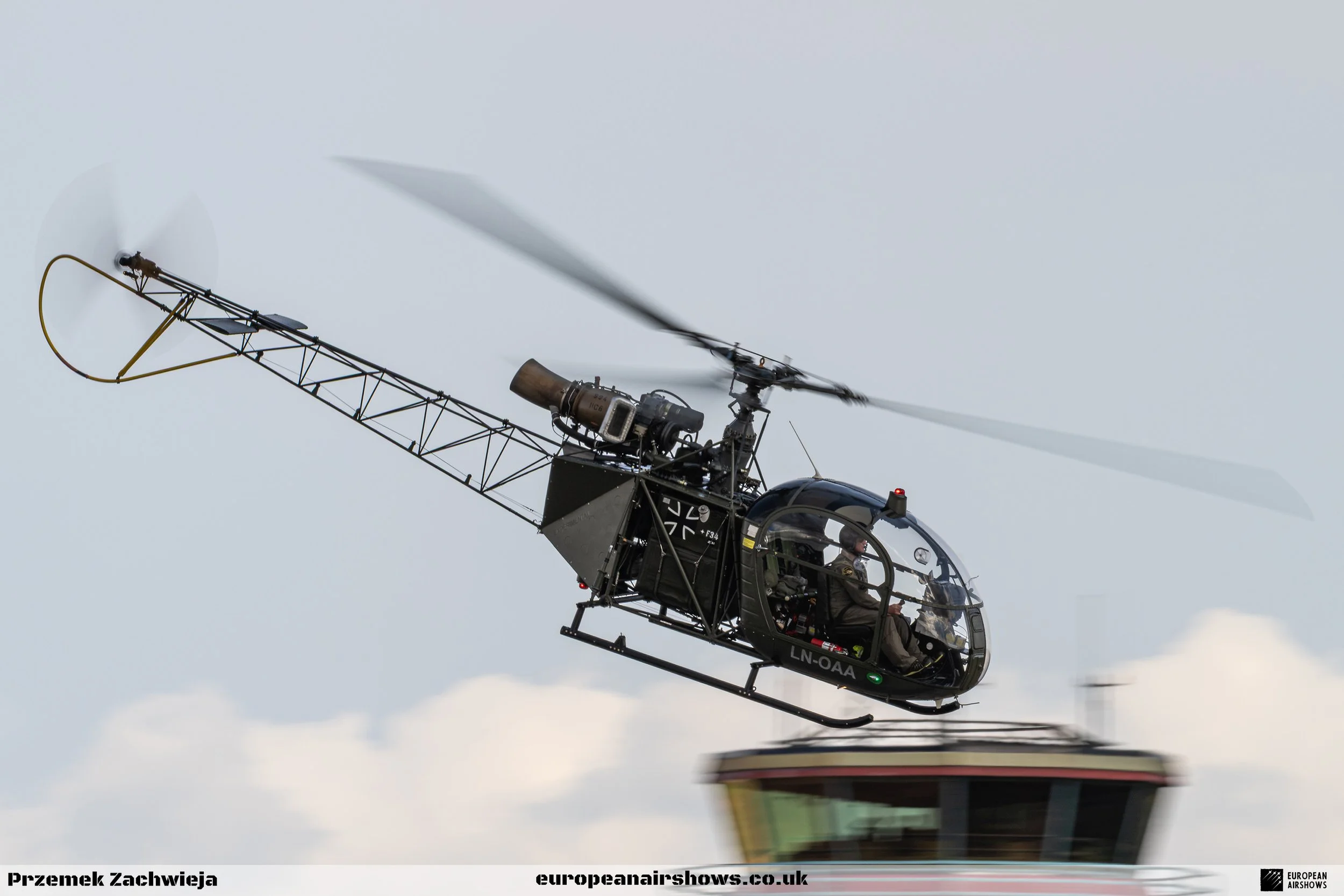
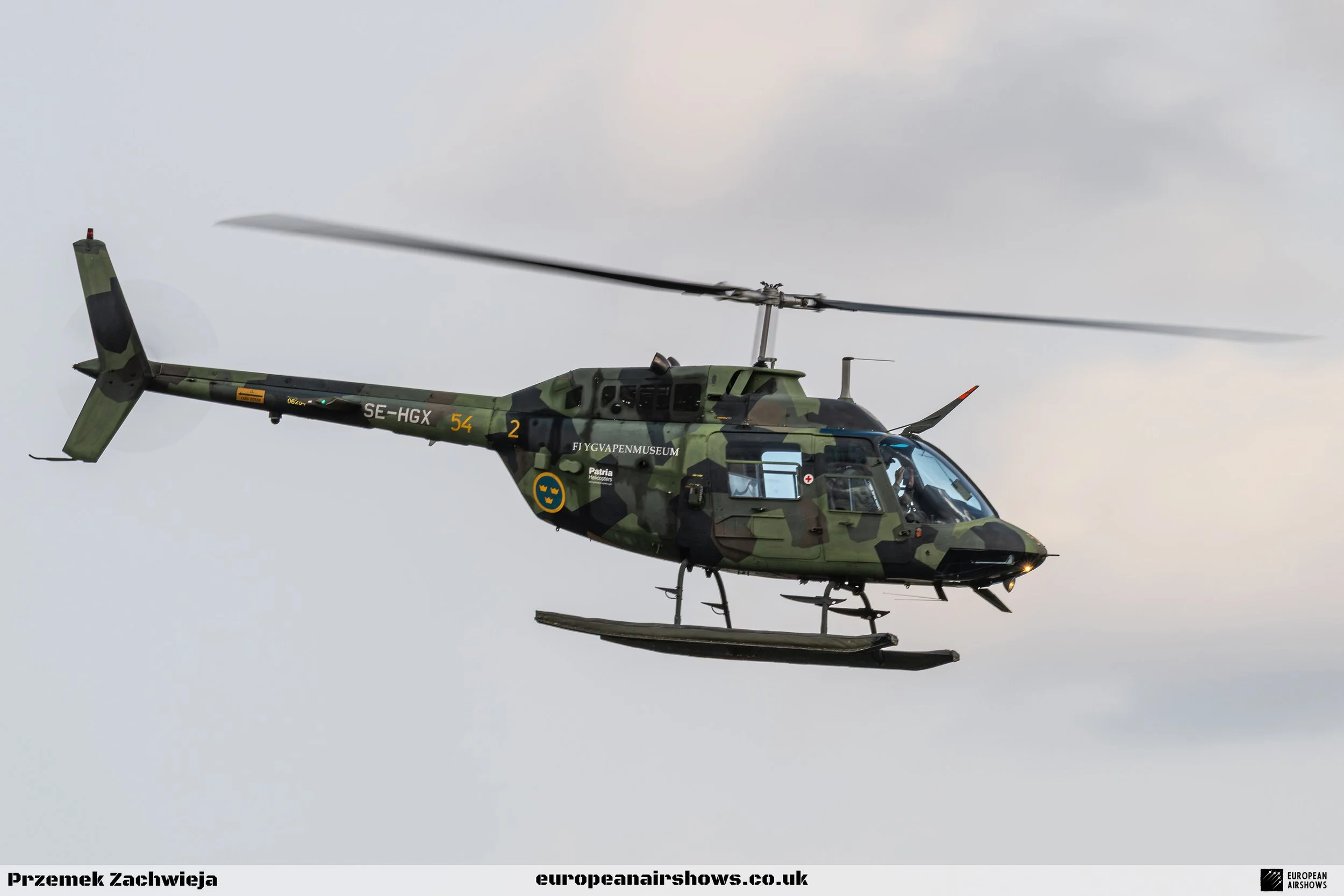
The historic Army Aviation parade was one of the best constructed sequences of the weekend. A Piper PA-18 Super Cub (Fpl 51) led the Scottish Aviation Bulldog (SK 61), Sud Aviation Alouette II (HKP 2), two HKP 5Bs, a pair of Agusta-Bell 206 JetRangers (HKP 6), and the current NHIndustries NH90 (HKP 14), A109LUH and UH-60M. They took off one after another, made individual parade passes along the runway, returned low and then taxied back in front of the crowd. It was simple, readable and far more satisfying than the first trainer procession because everyone could see the sequence unfold.
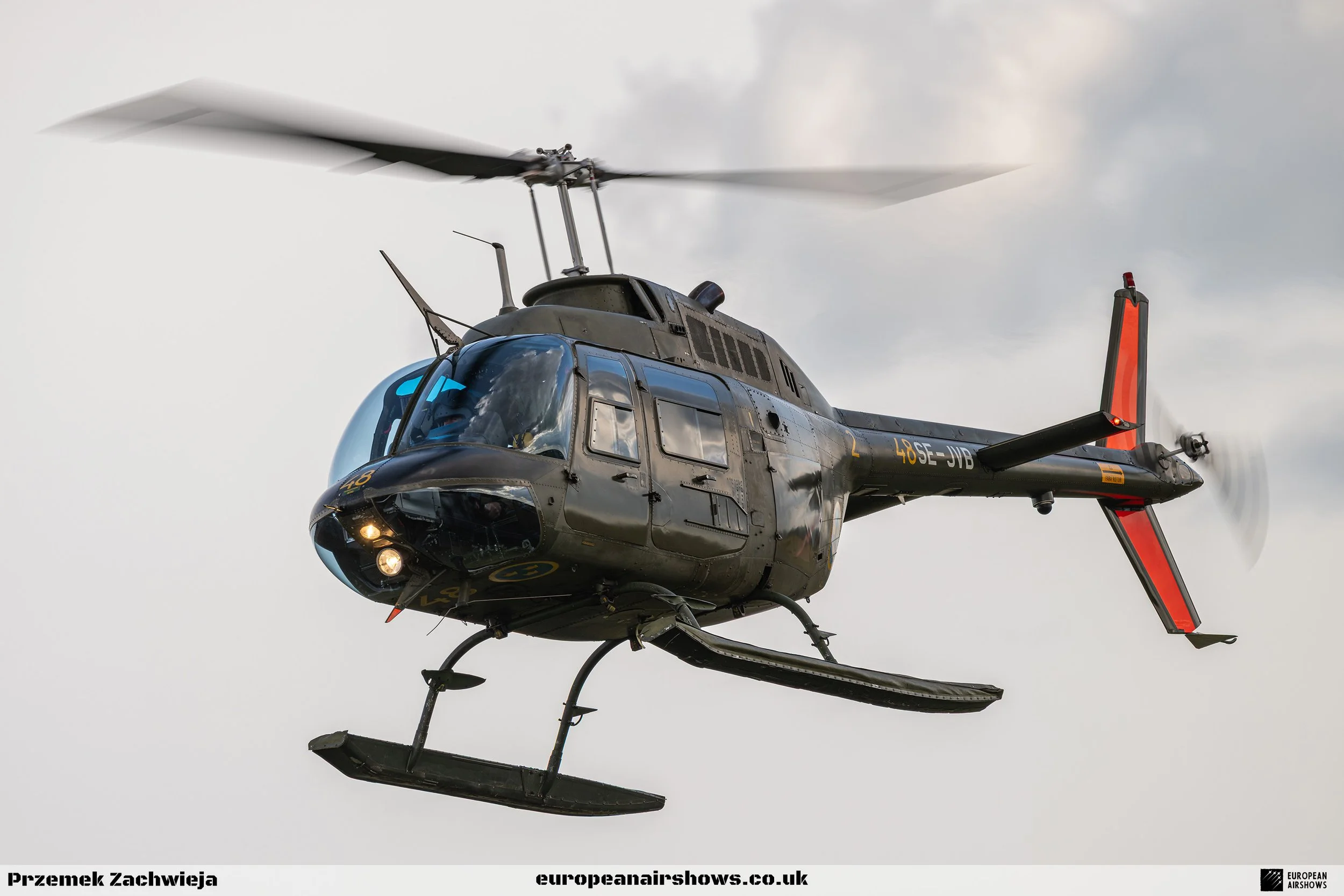
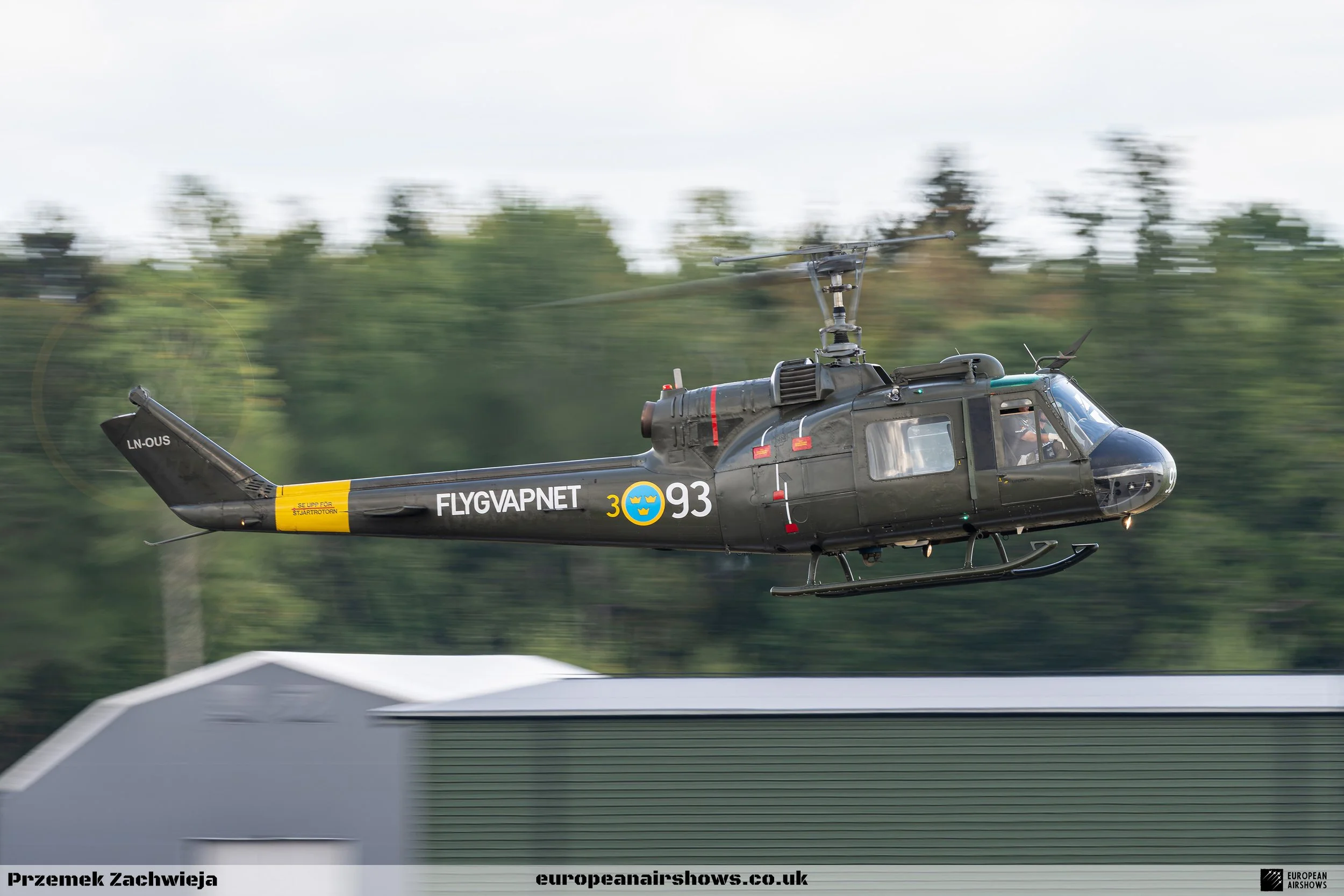
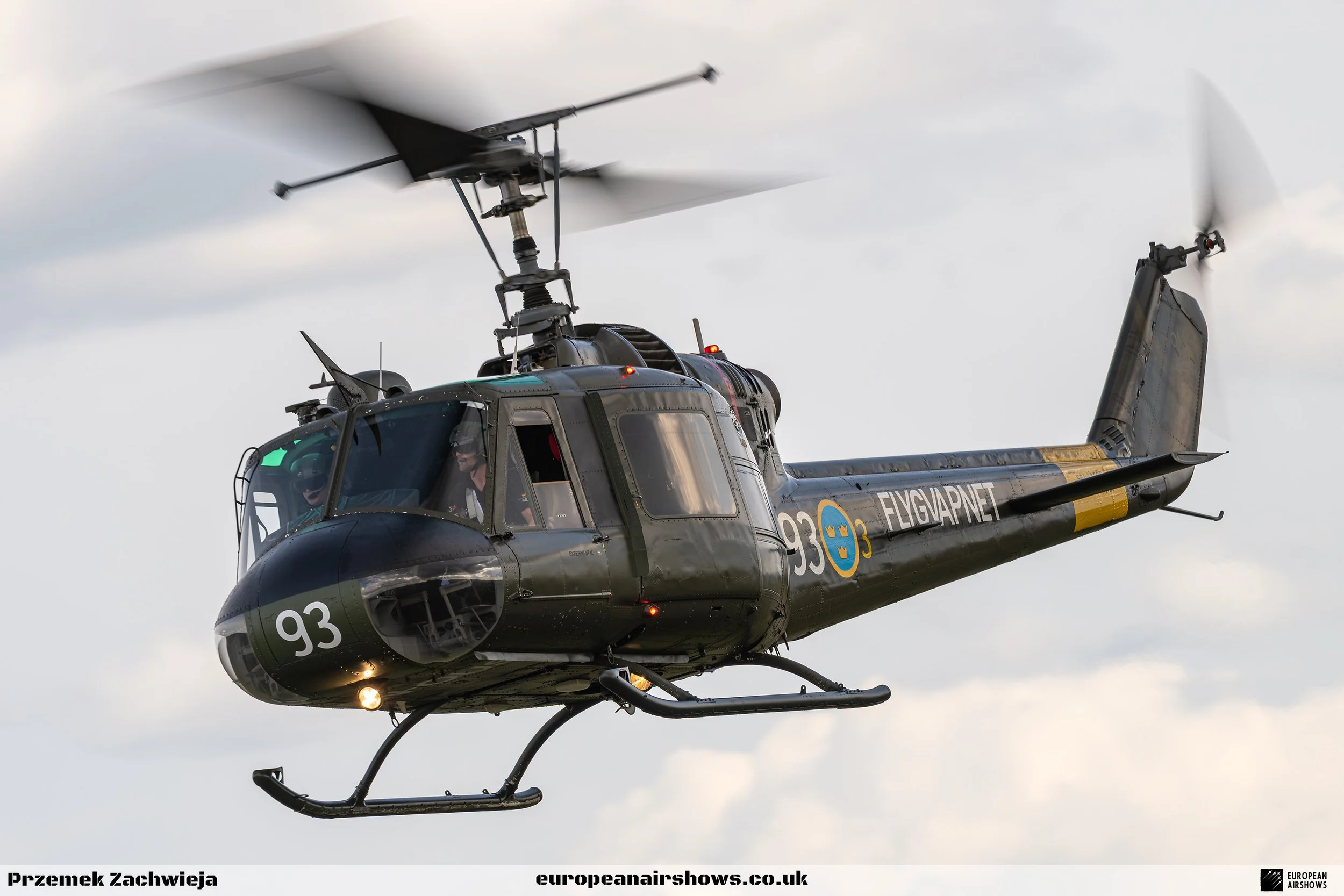
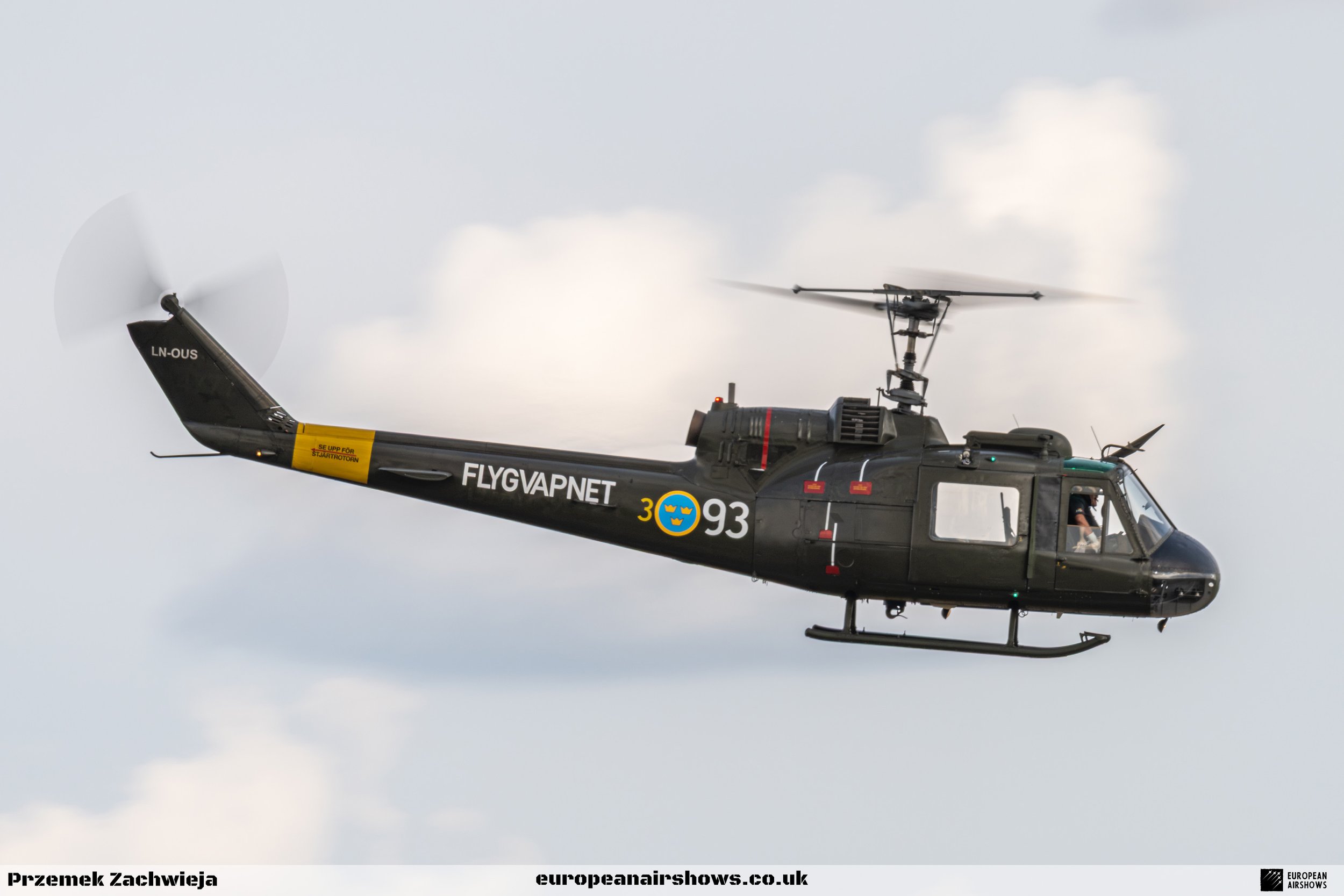
The HKP 3 position was represented by a privately operated, Norwegian-based Bell UH-1E Iroquois wearing temporary Swedish-style markings. It was not a genuine Swedish Agusta-Bell 204B, but it made a convincing Huey-family stand-in—and the choice had a direct Malmen link because F 3 once operated the HKP 3 here.
The MBB Bo 105 (HKP 9) remained on static display and did not fly. The advertised Kawasaki/Boeing-Vertol KV-107 Sea Knight (HKP 4) was absent, while the reserve firefighting sequence involving a Saab-operated Air Tractor and a Black Hawk with a Bambi Bucket was not required.
An international salute—and the future on the ground
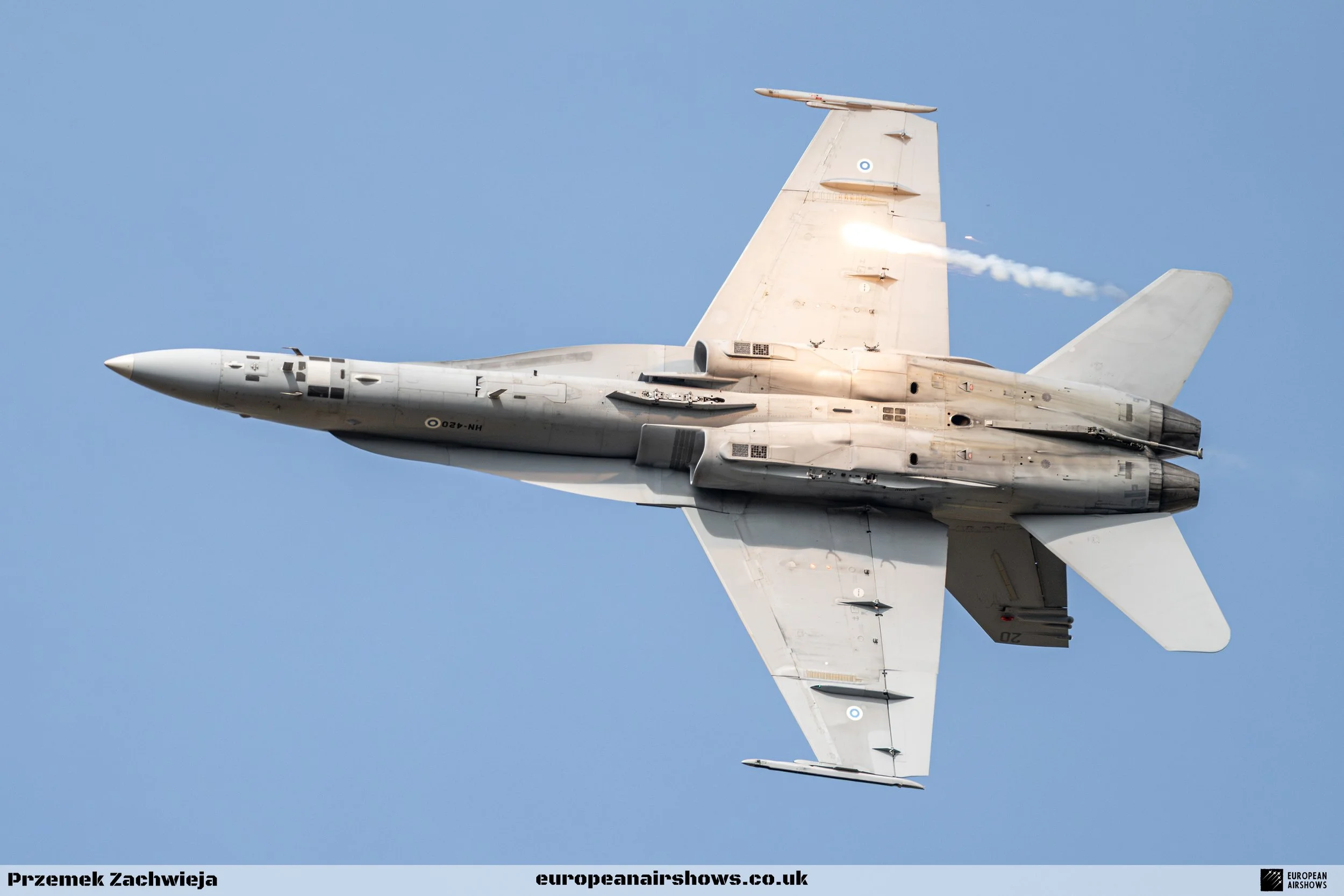
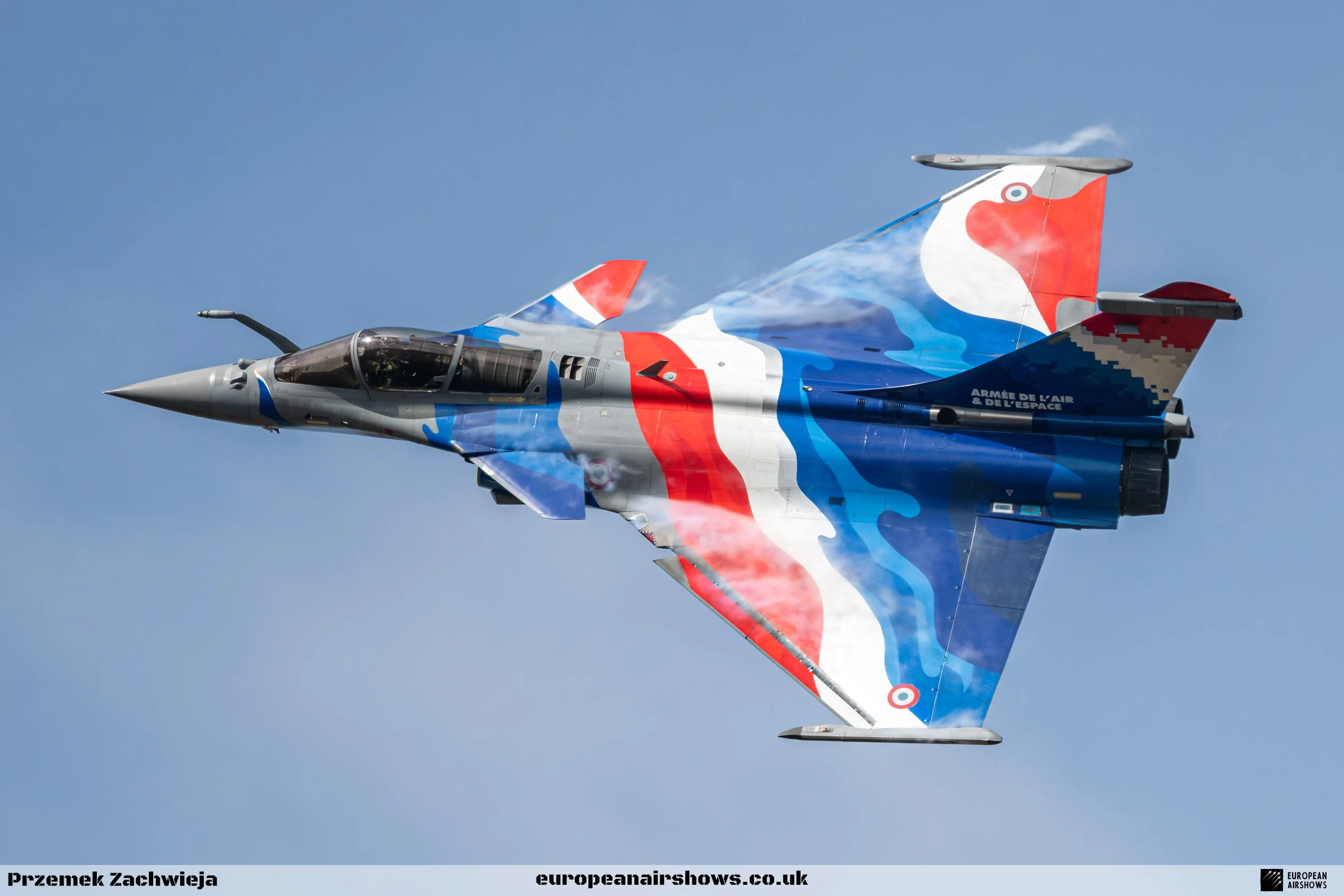
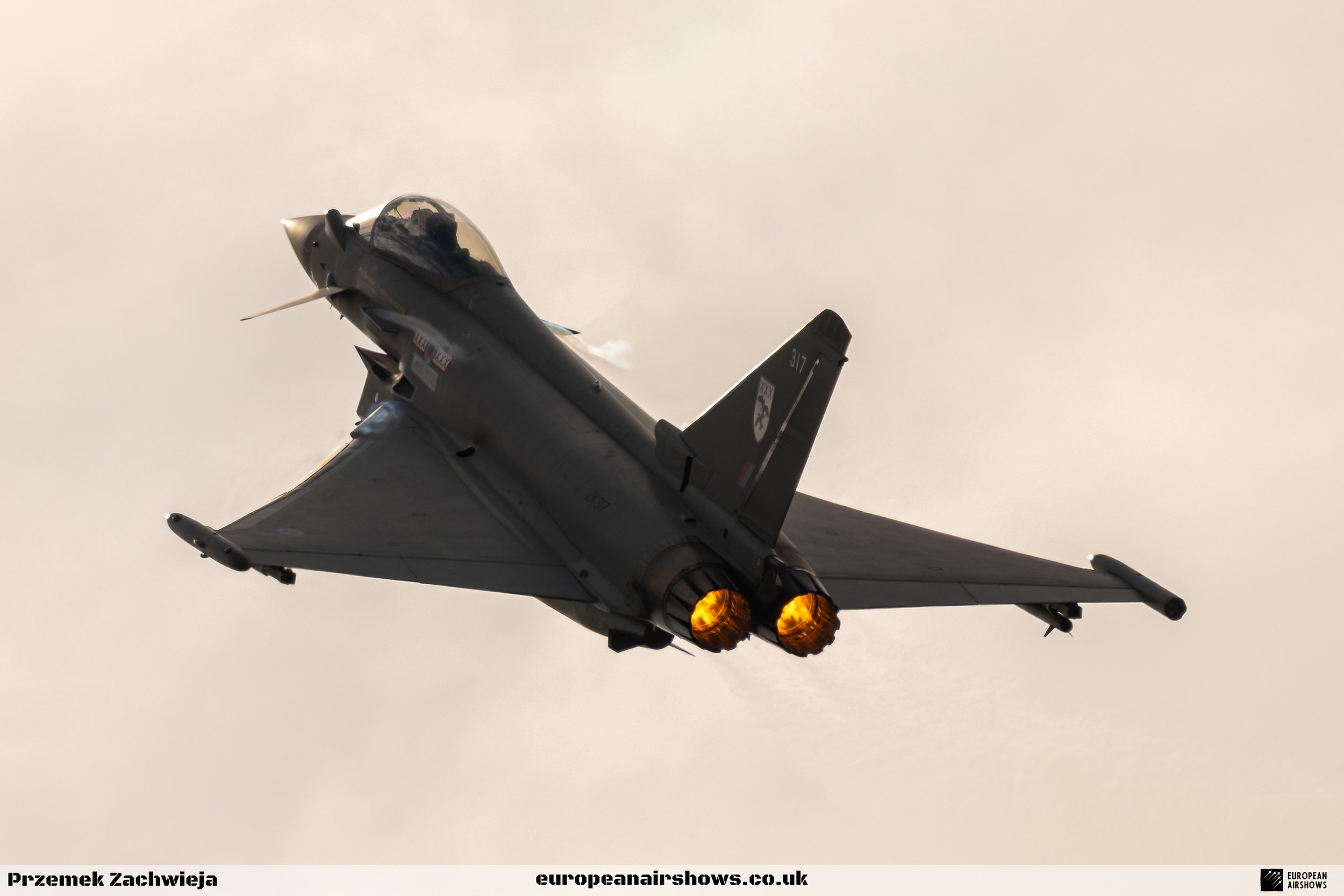
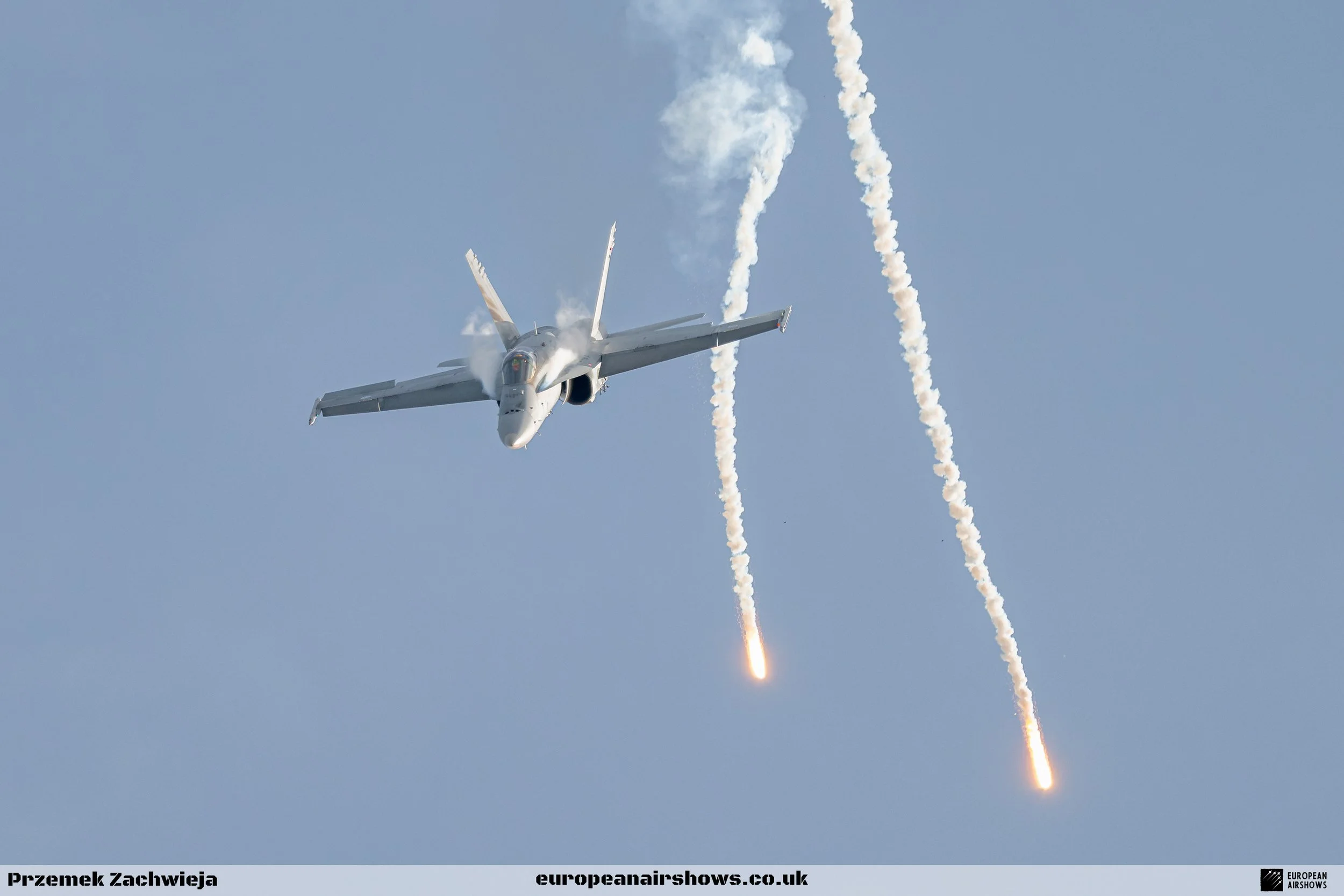
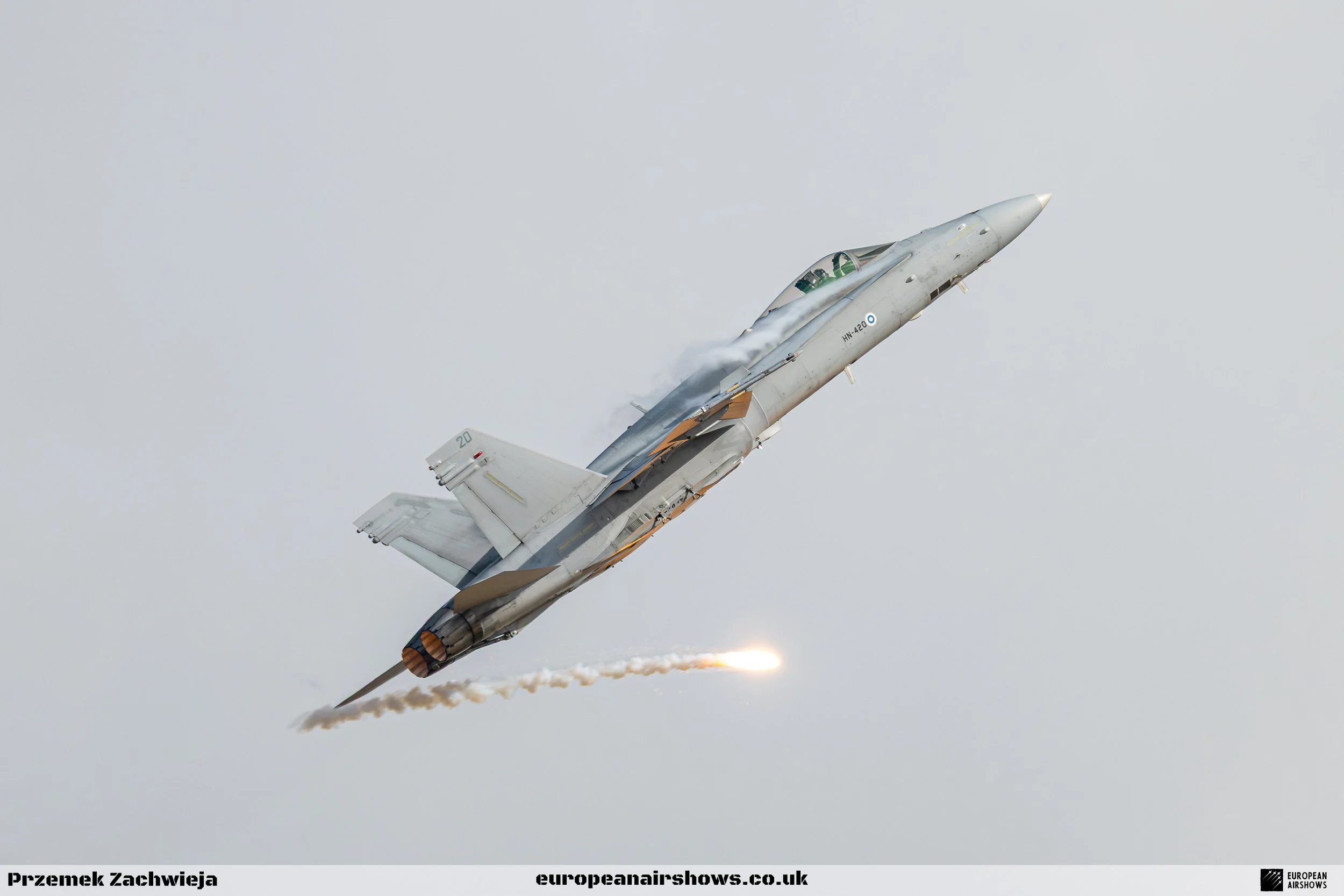
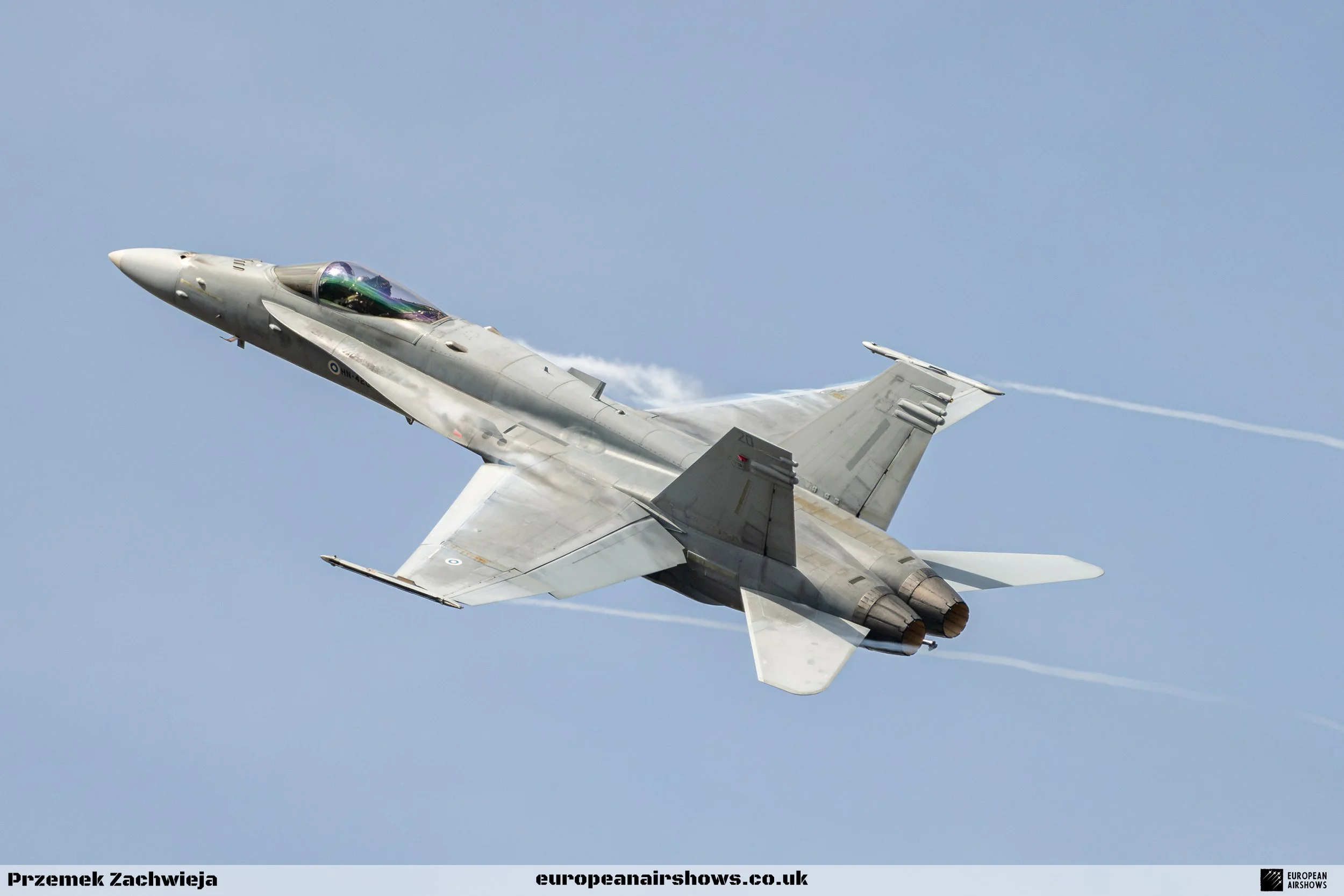
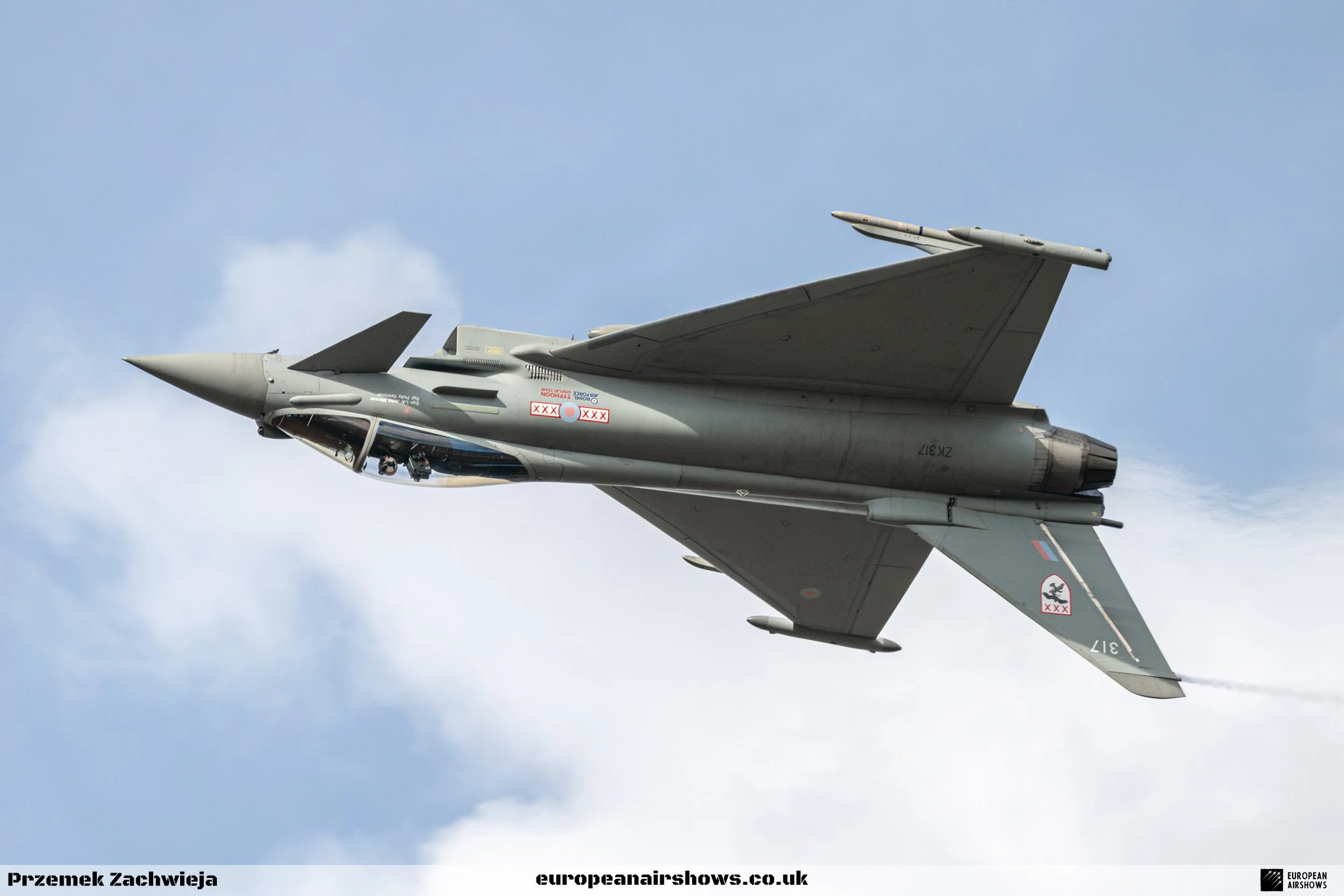
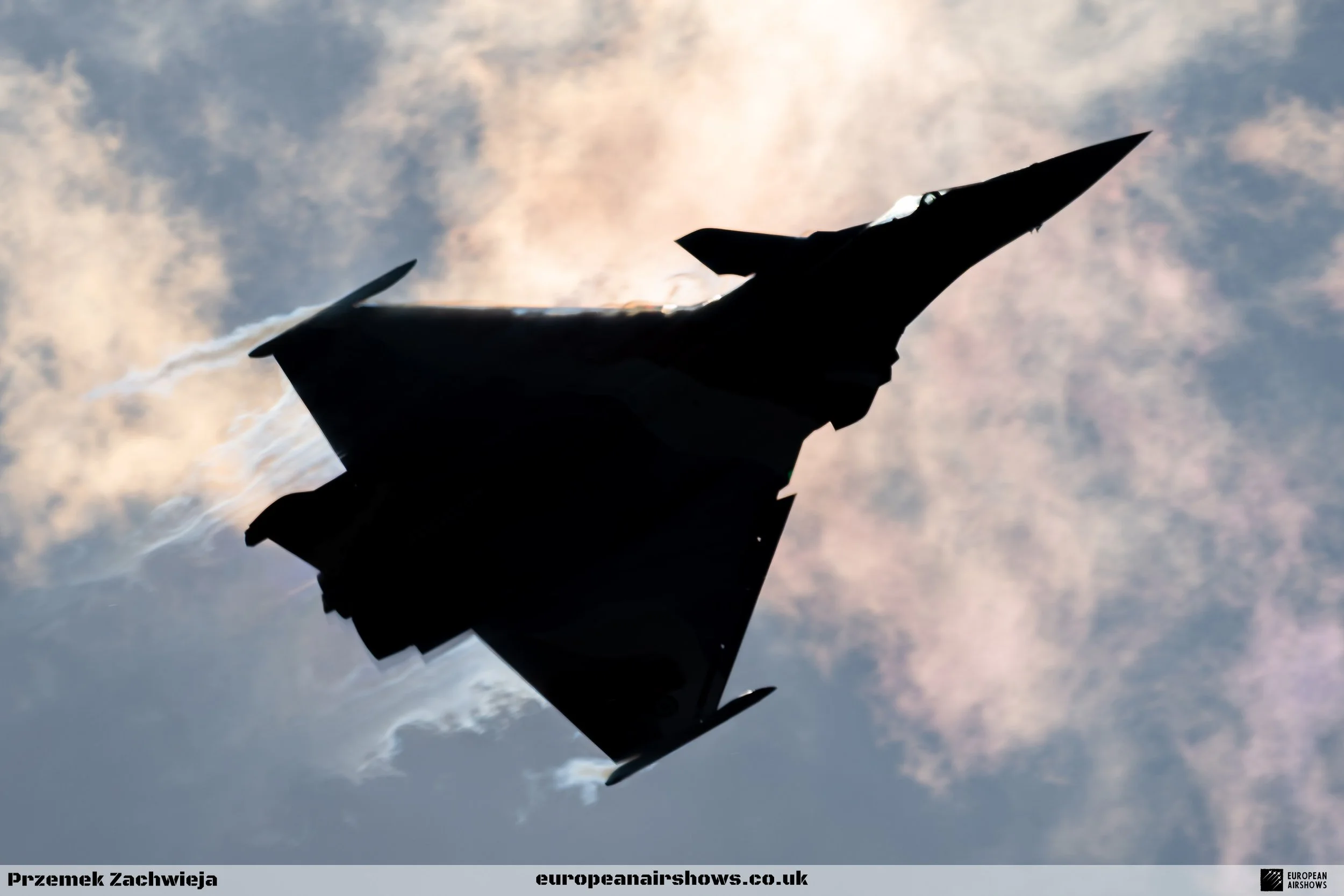
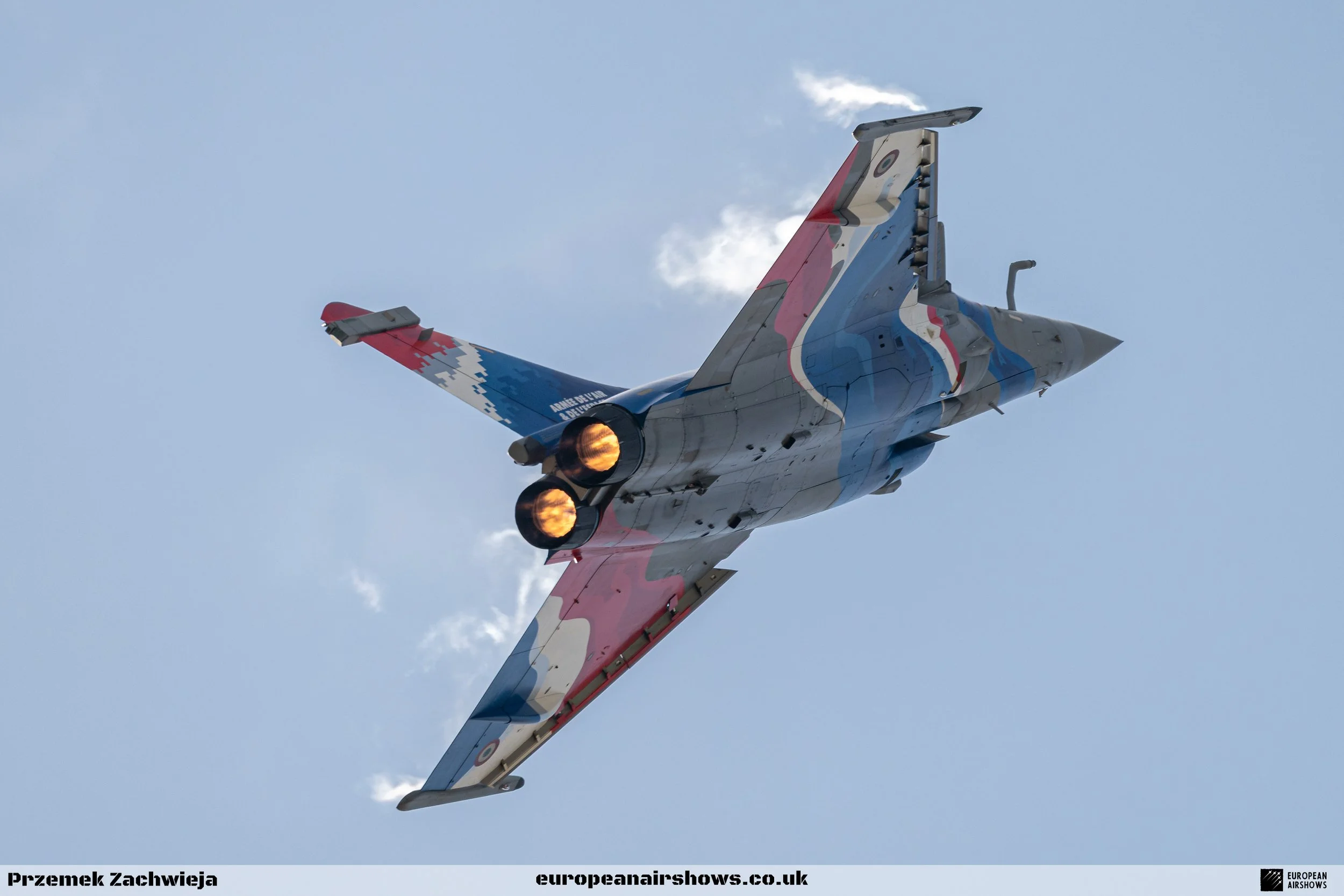
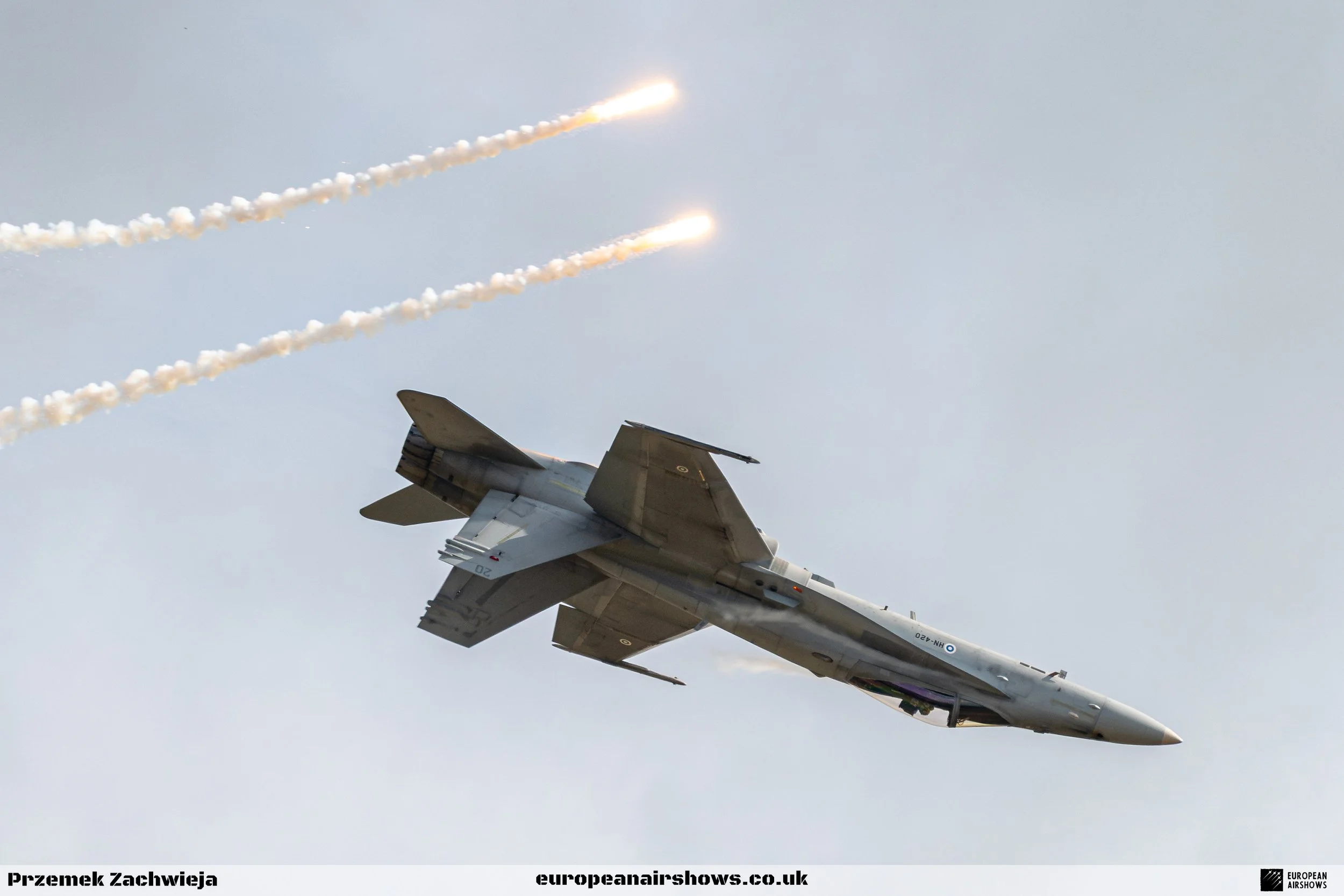
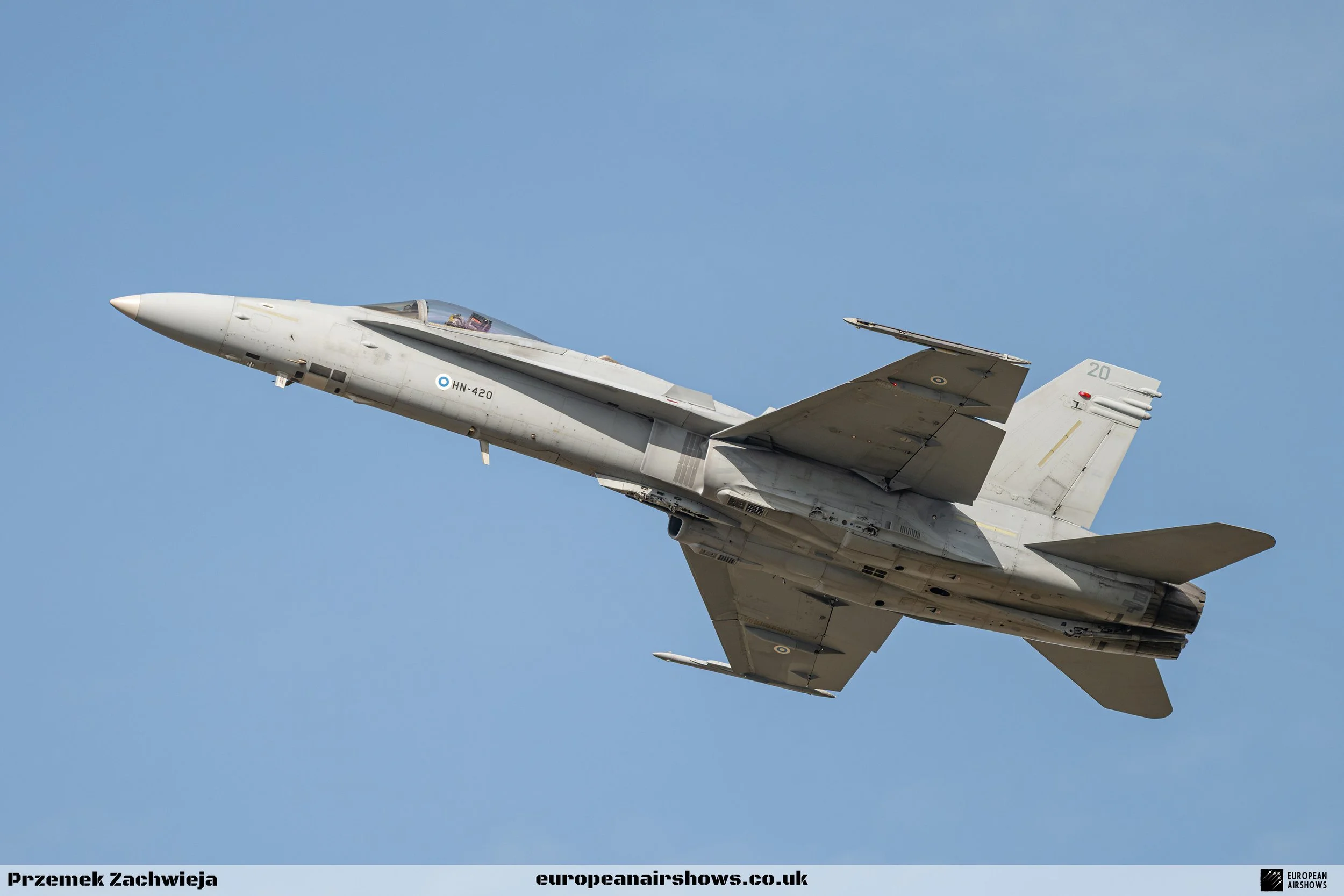
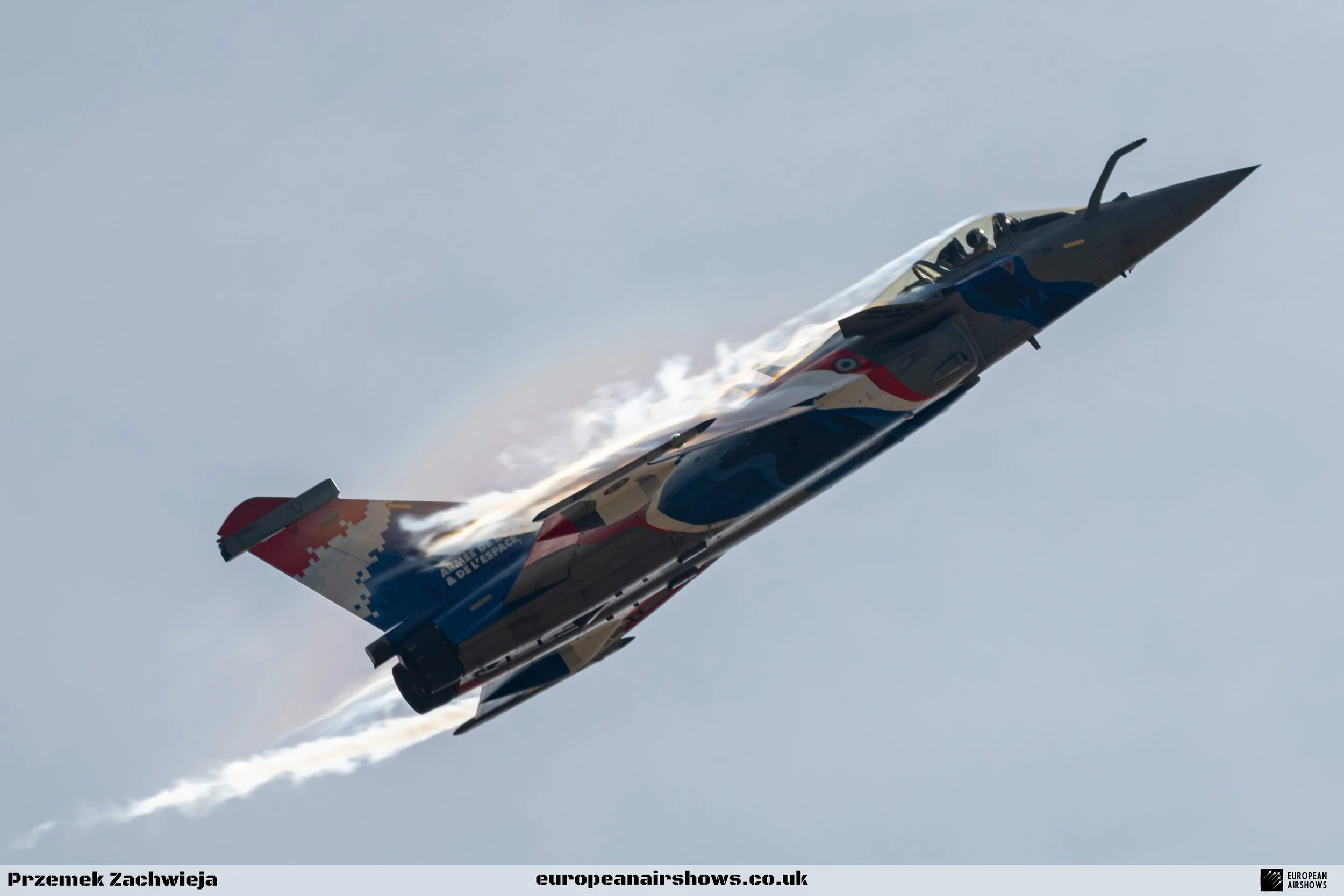
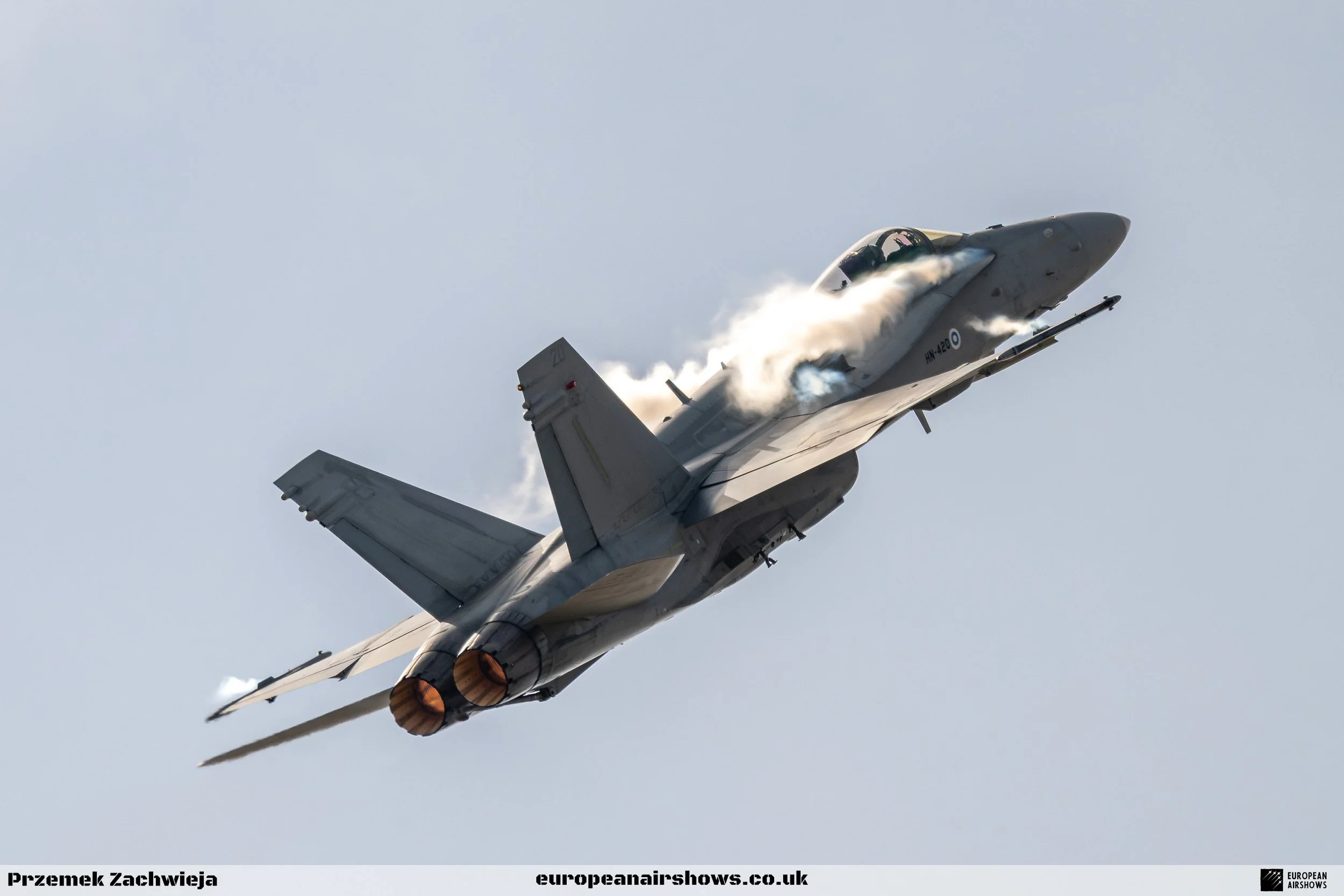
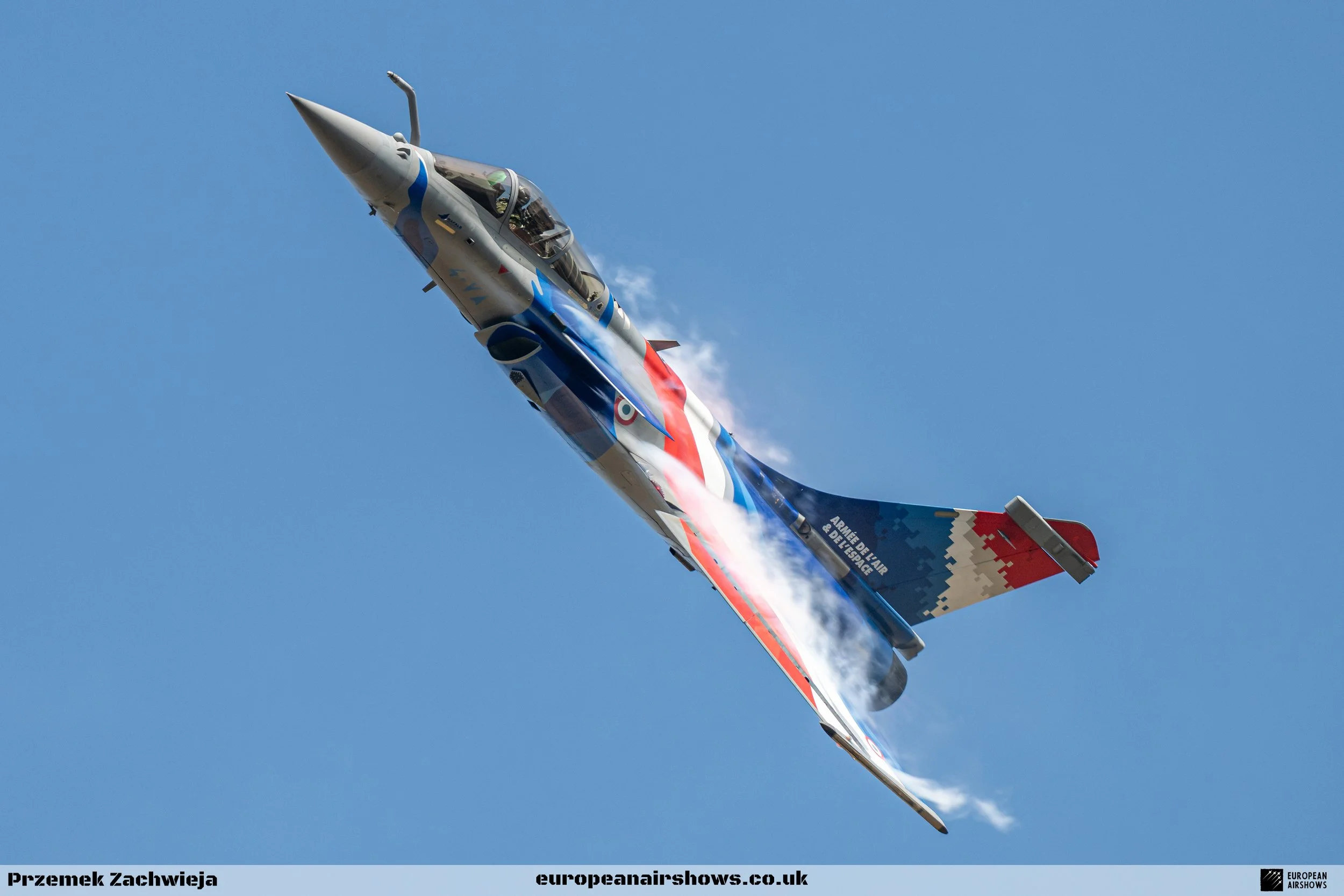
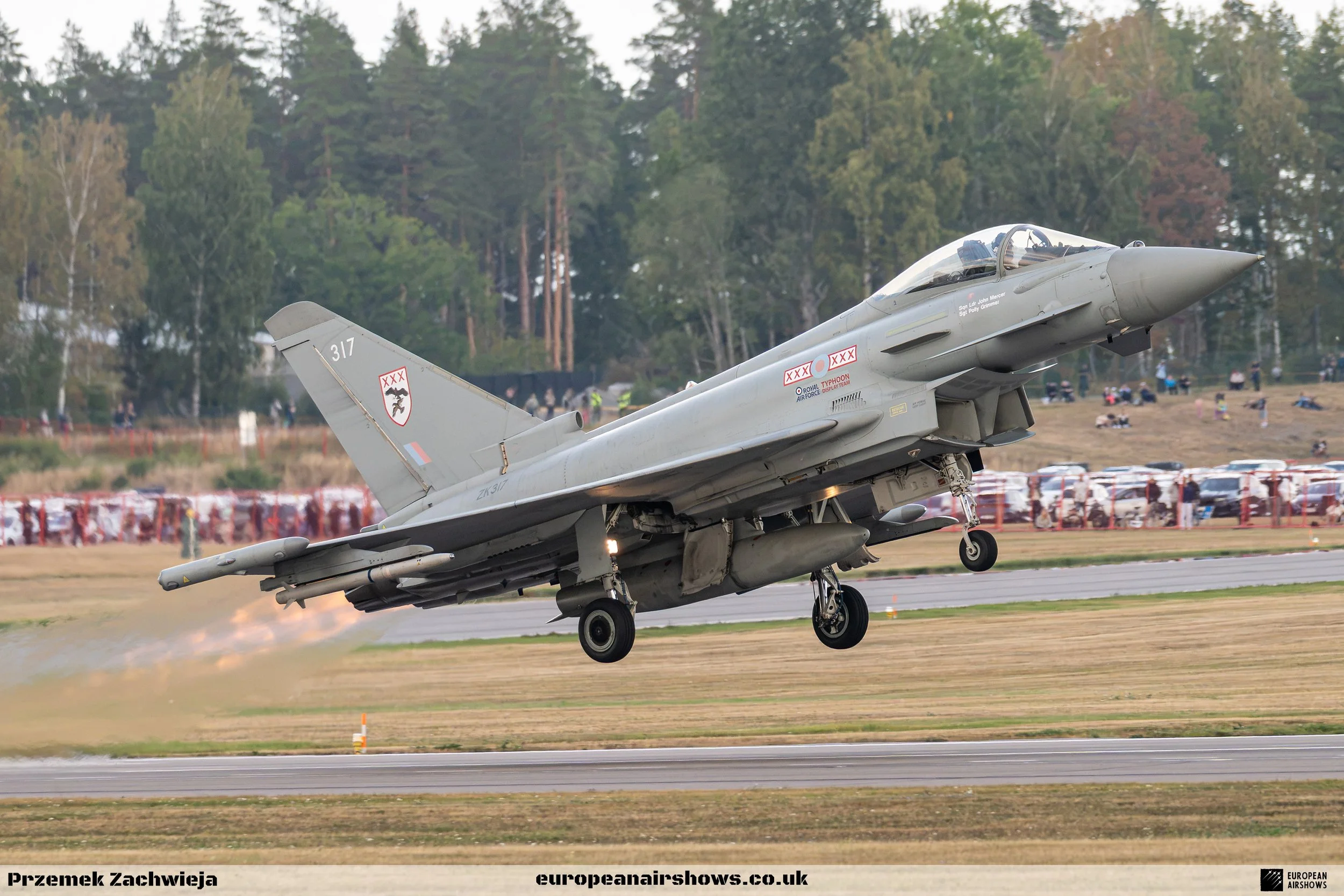
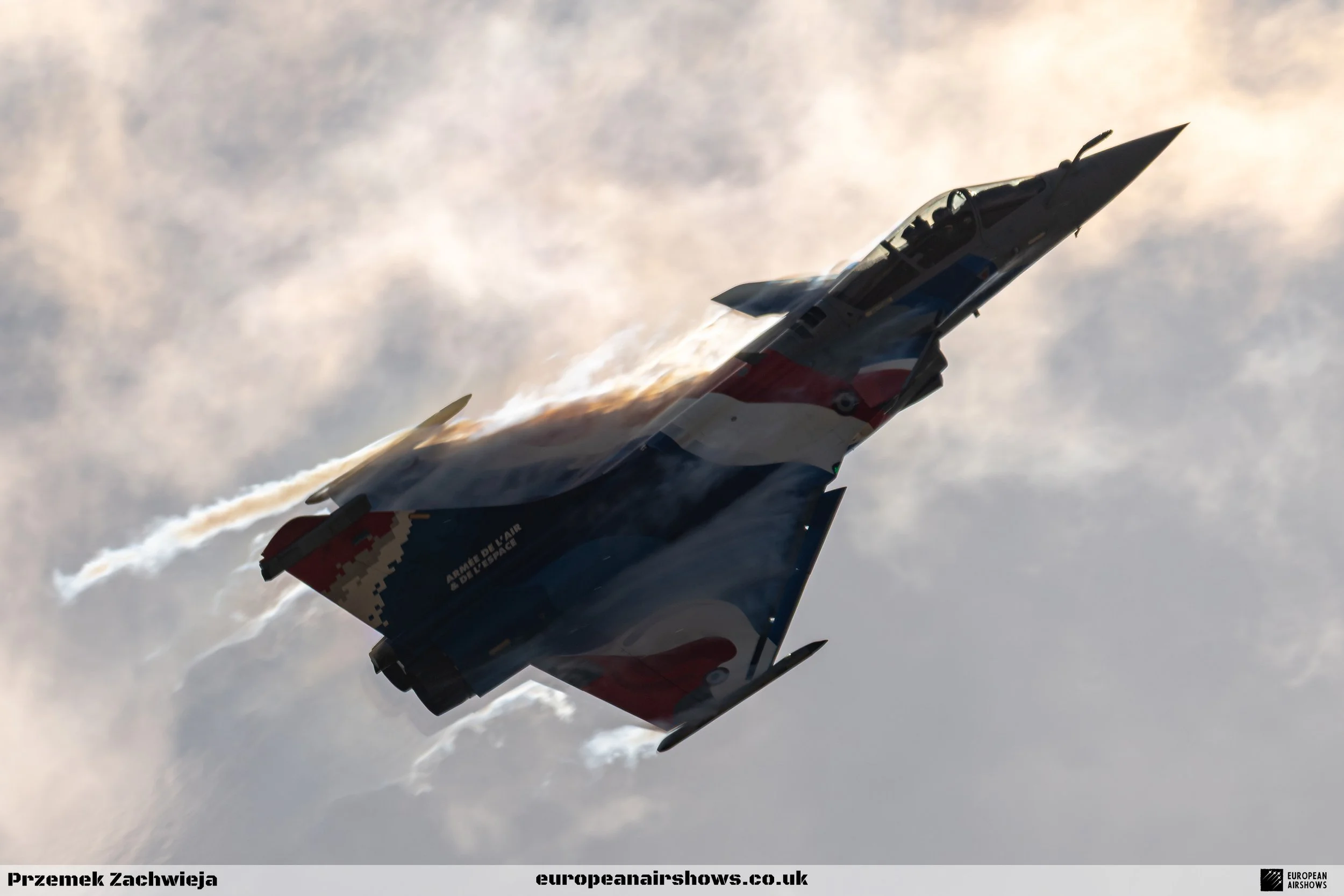
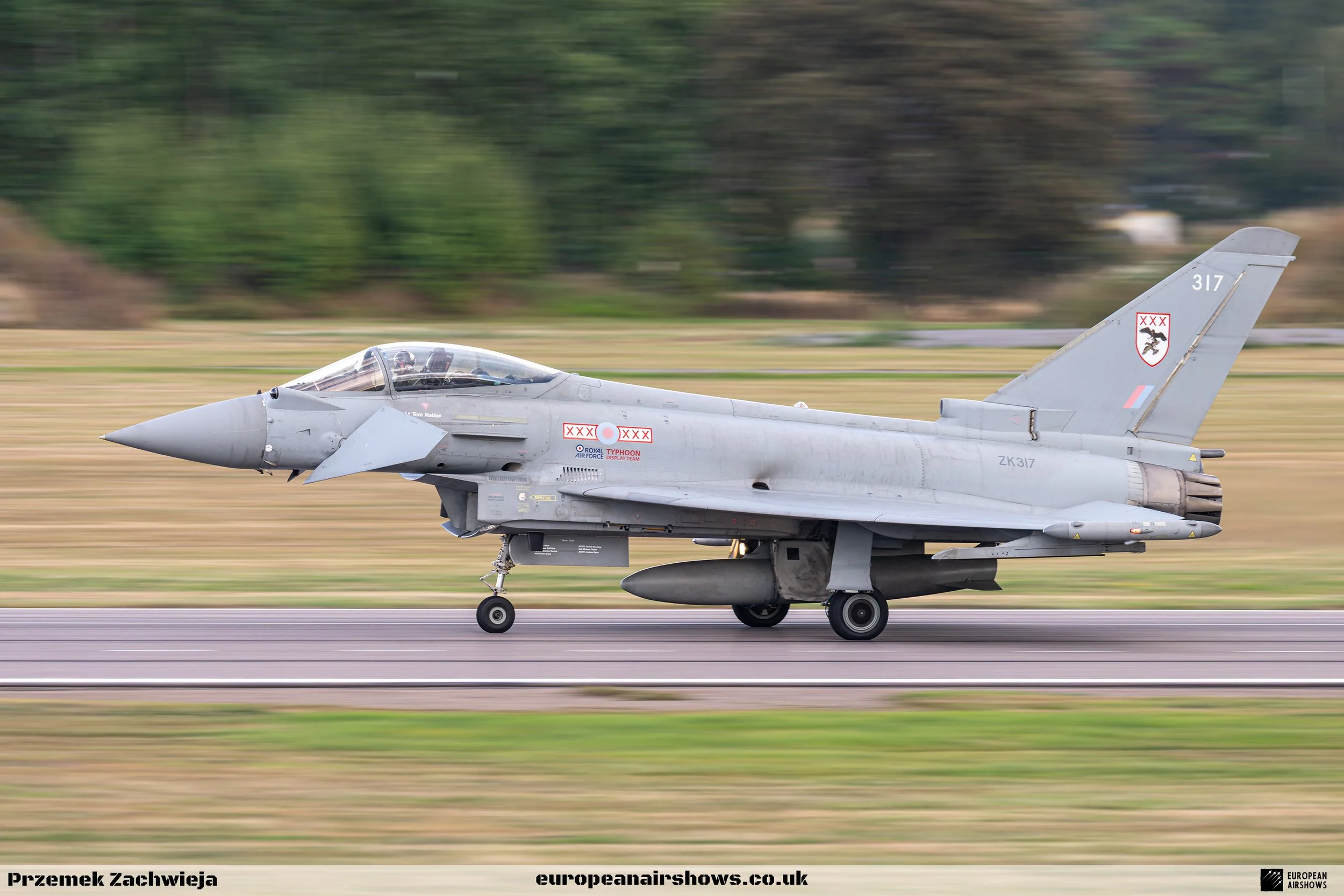
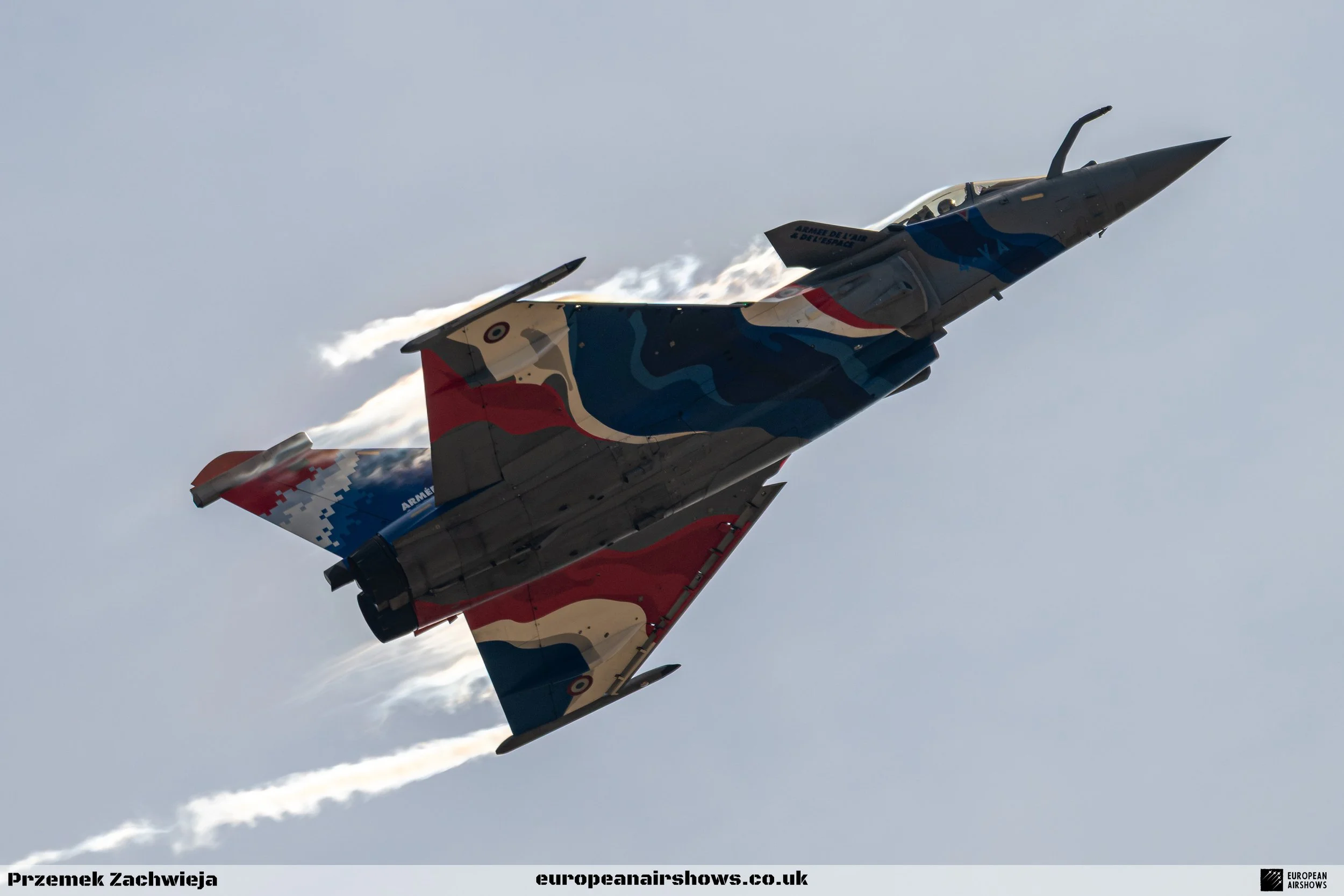
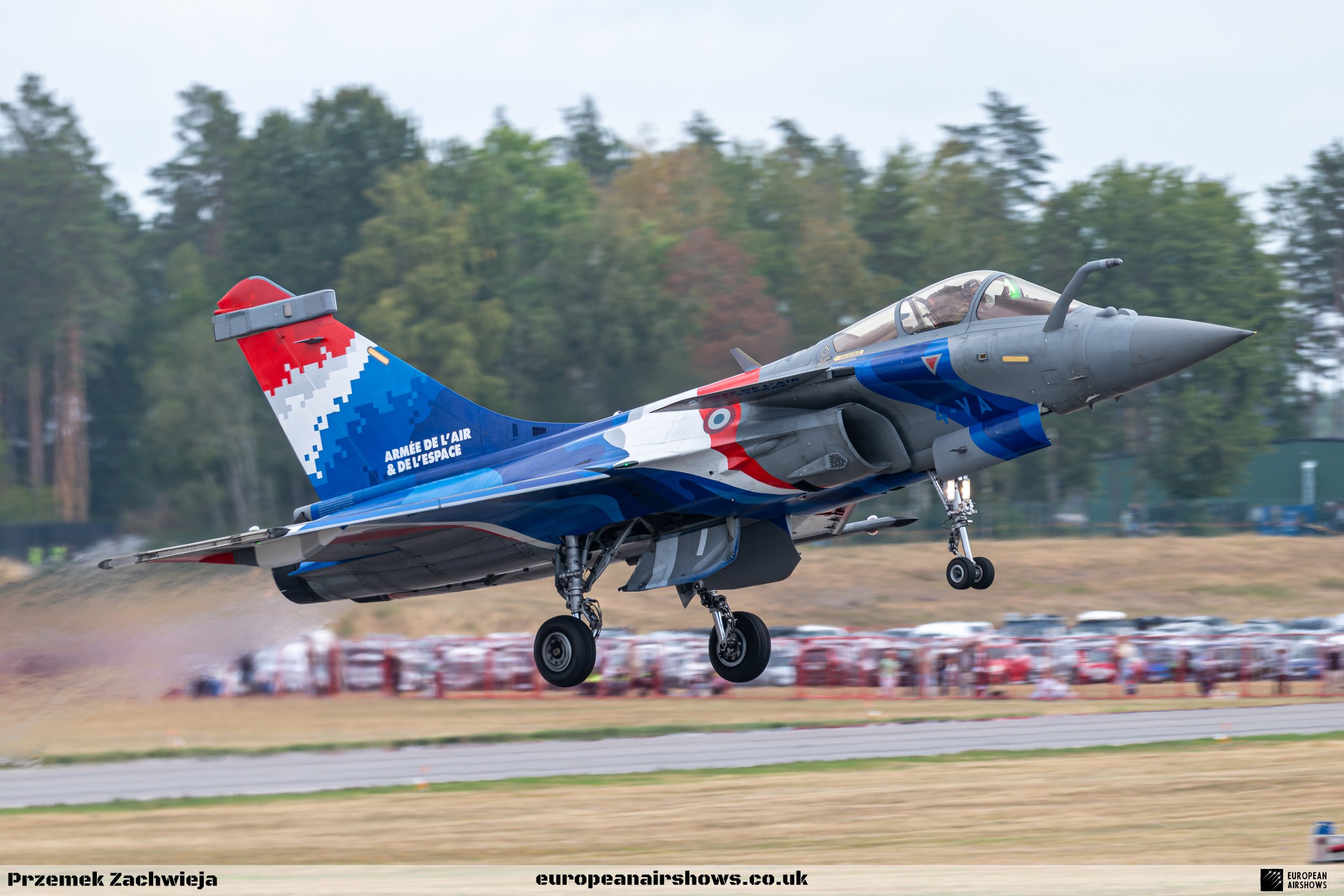
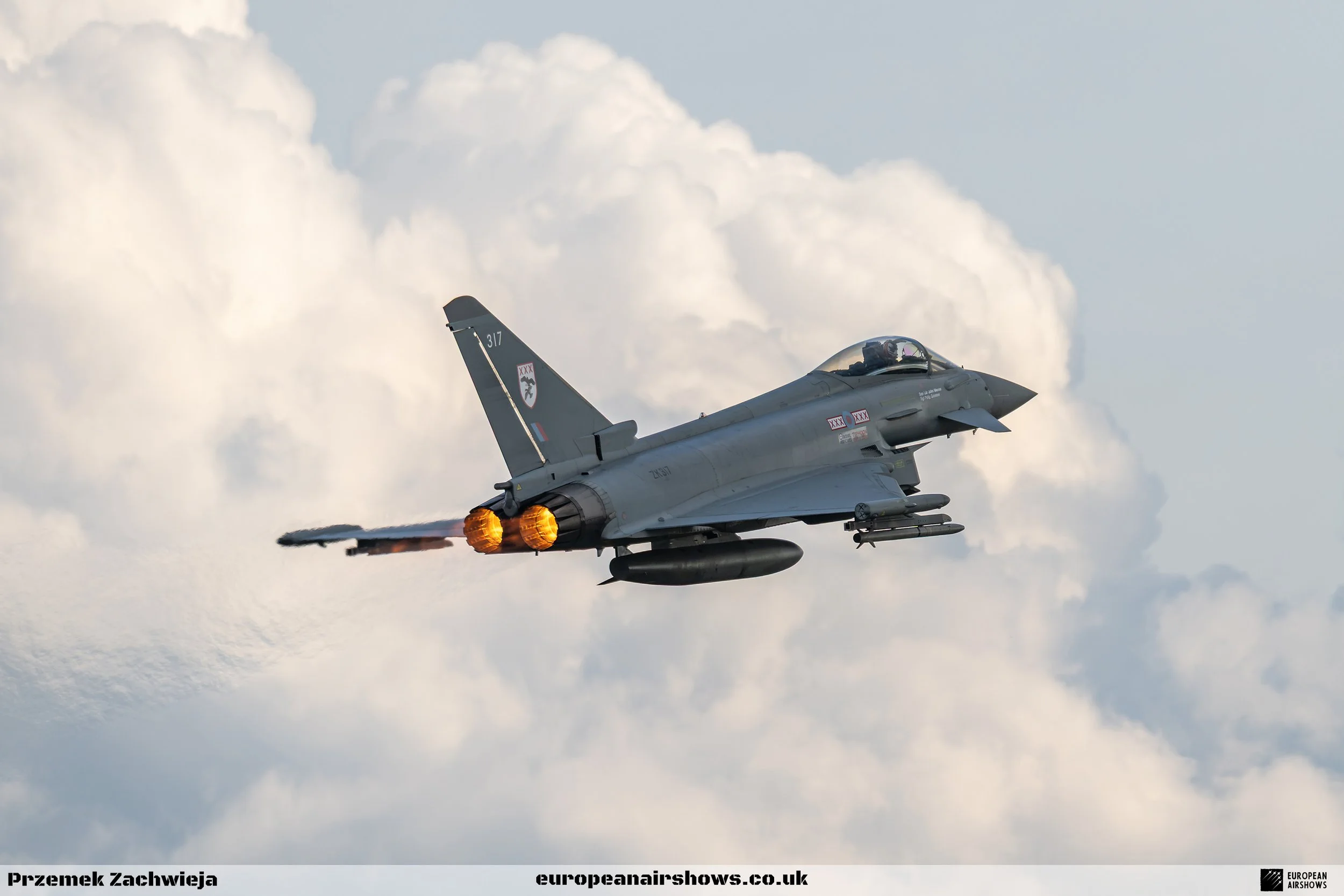
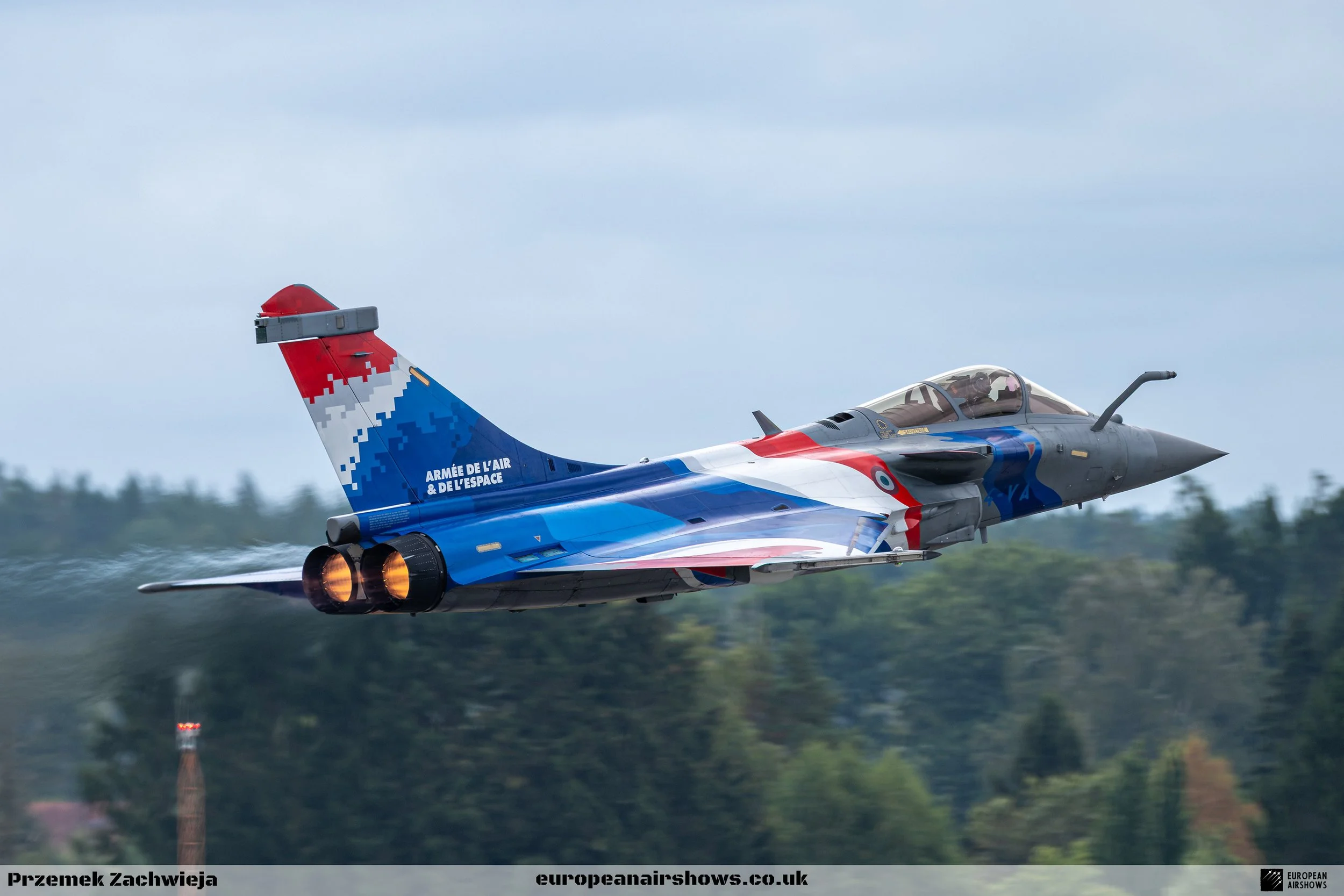
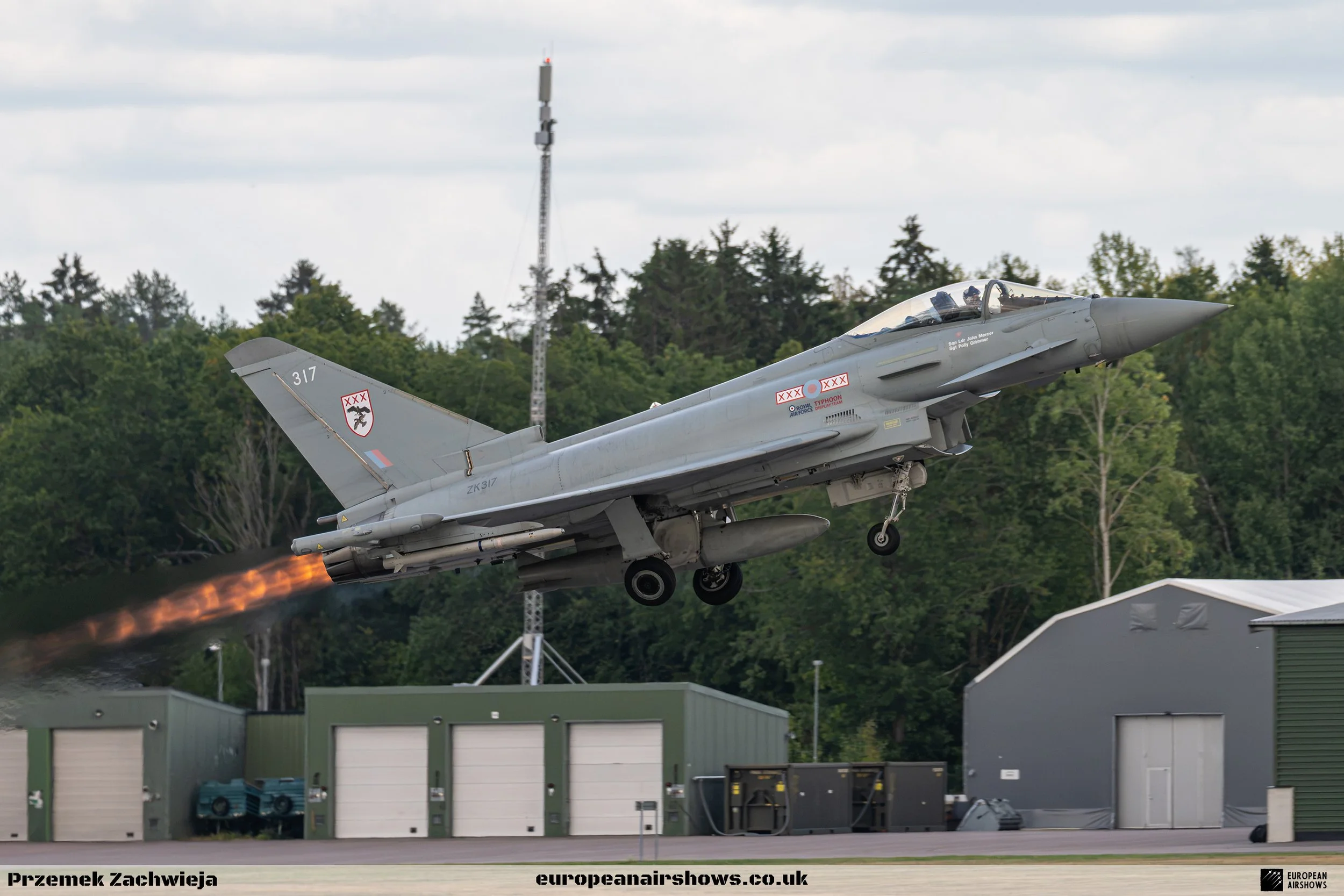
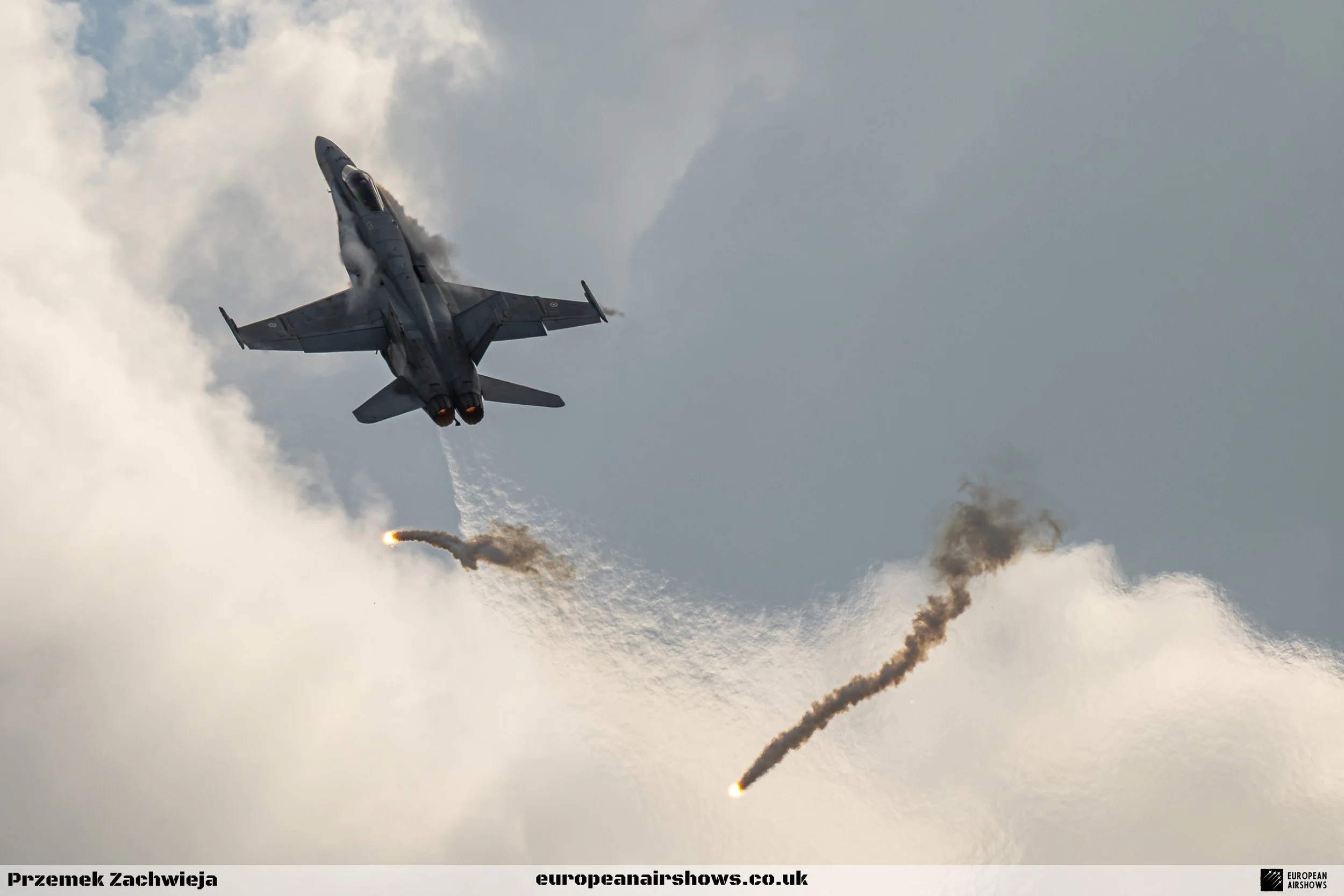
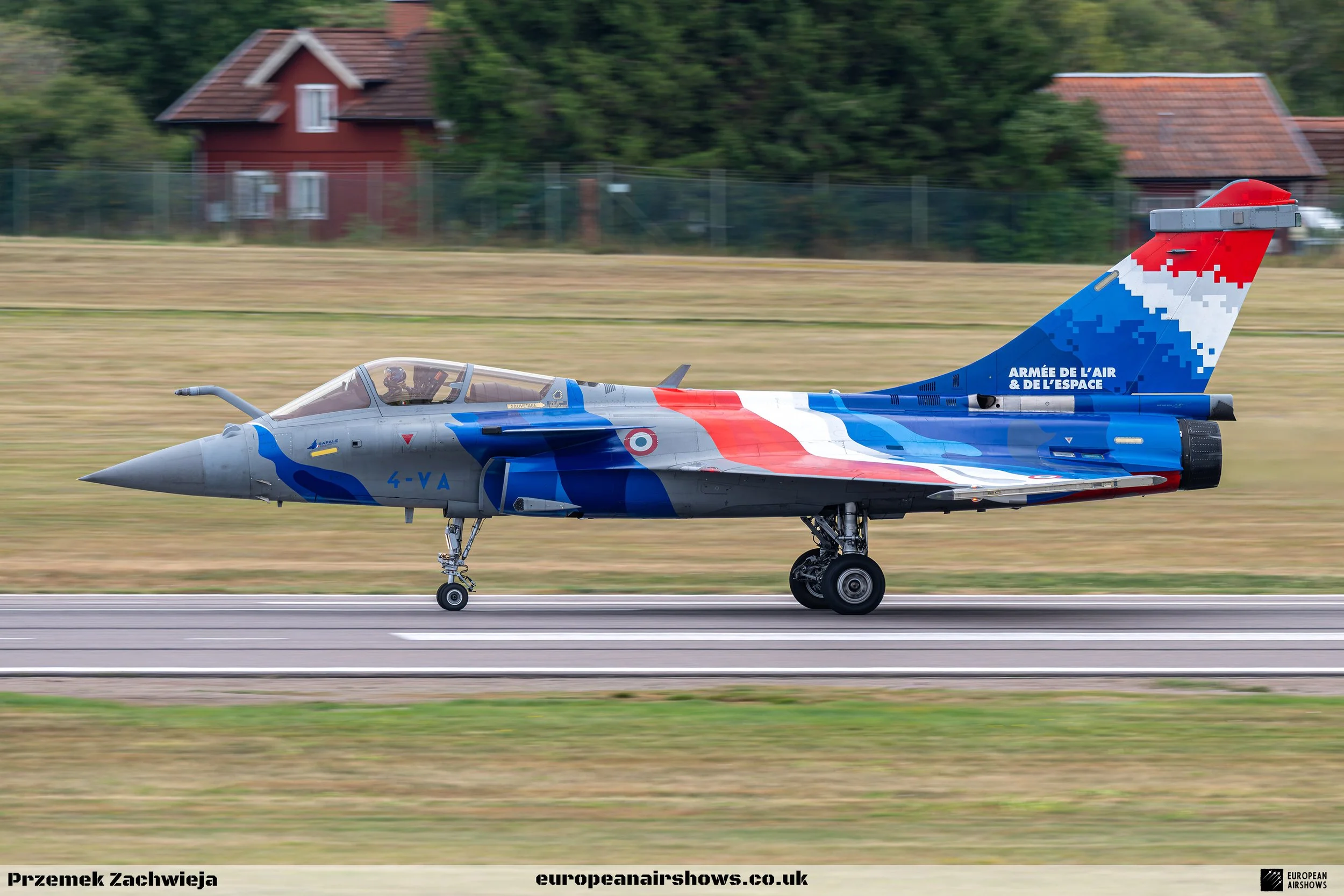
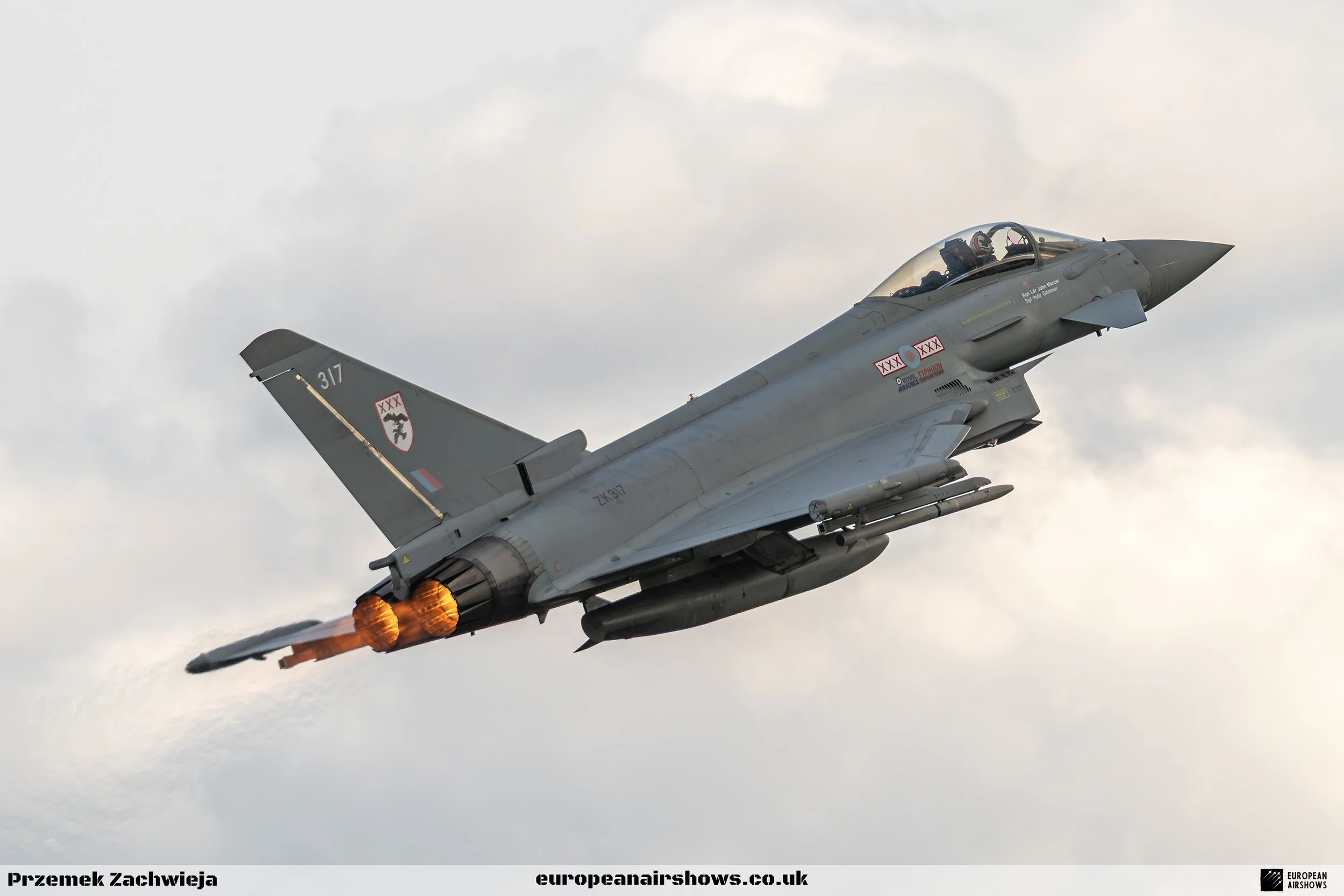
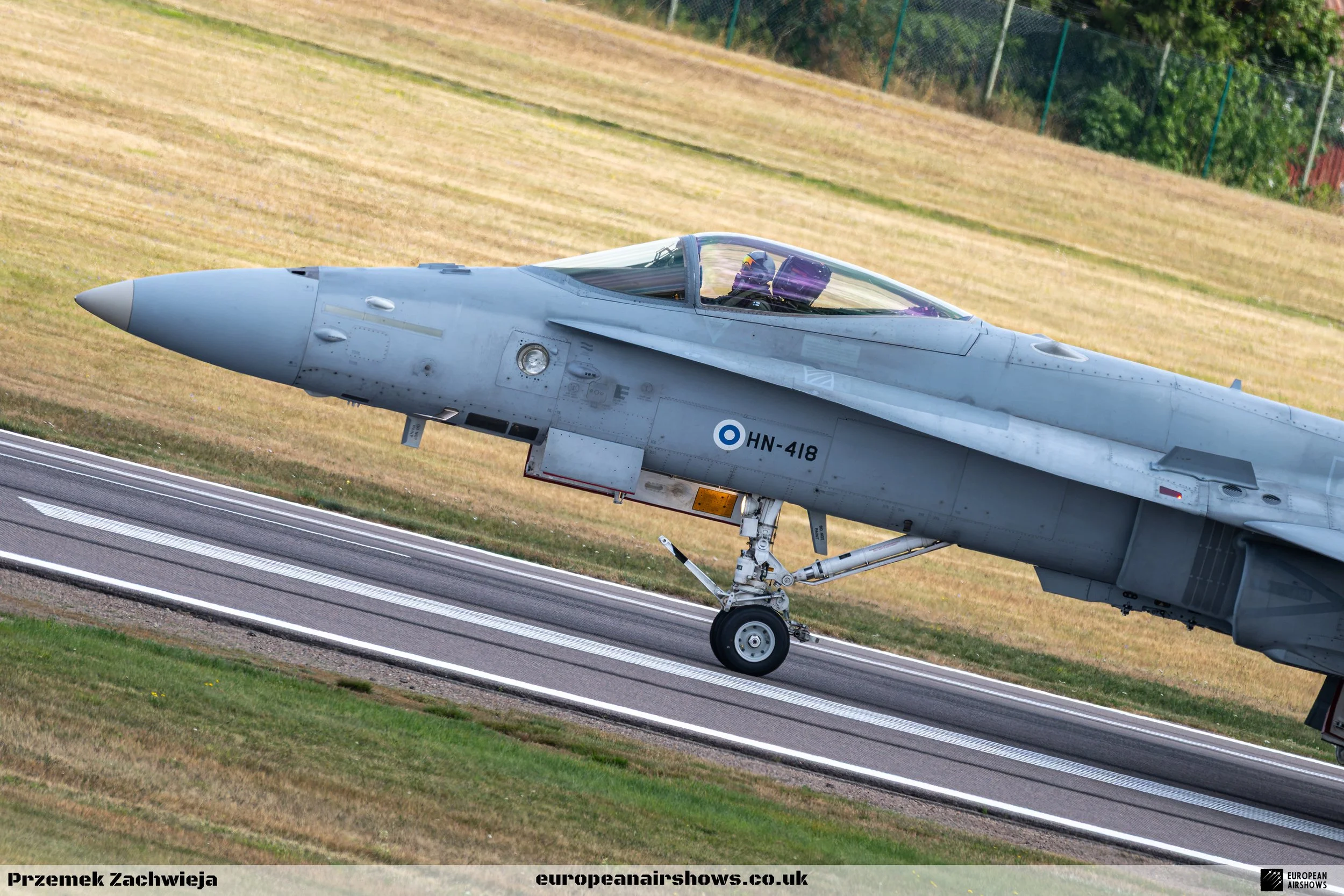
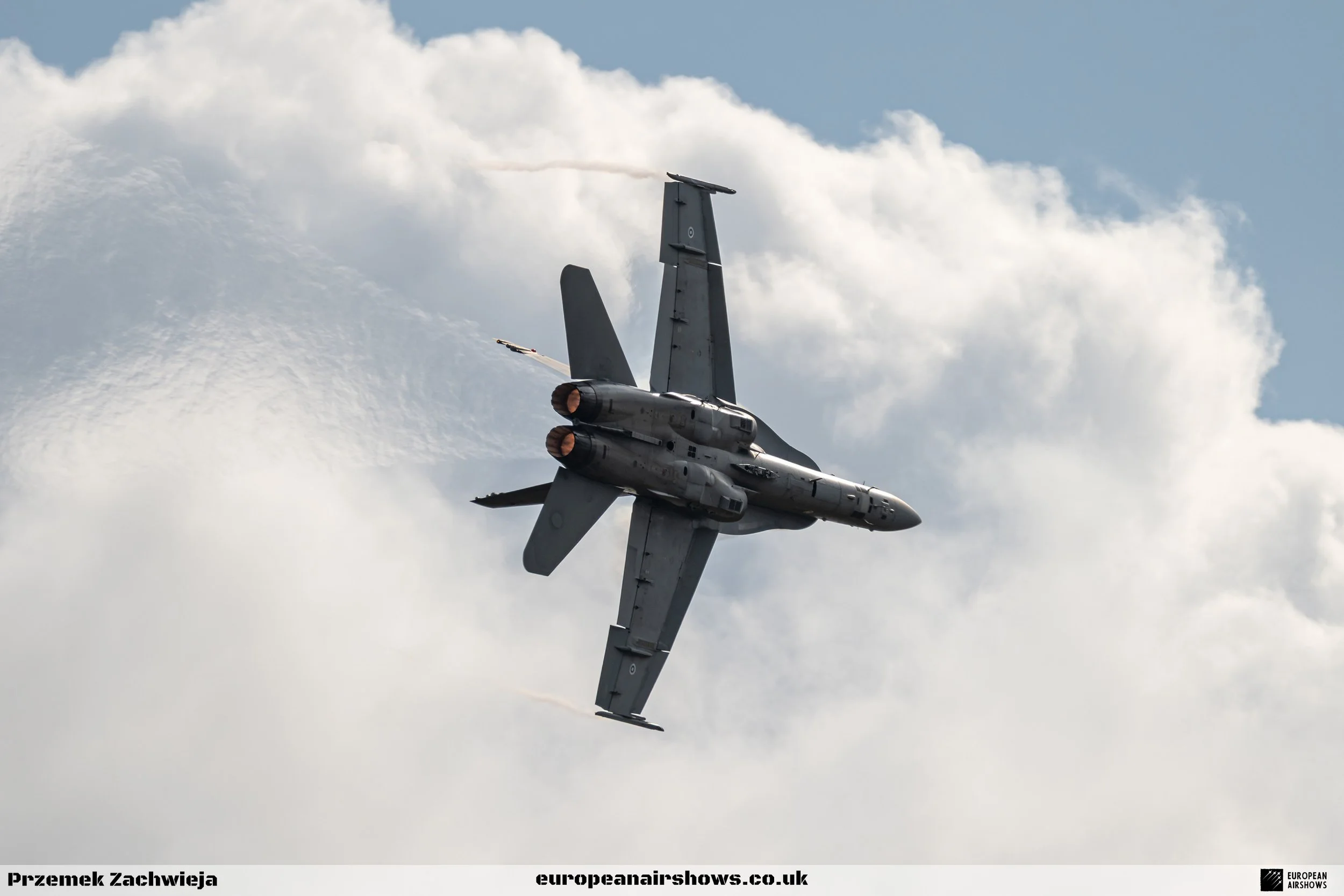
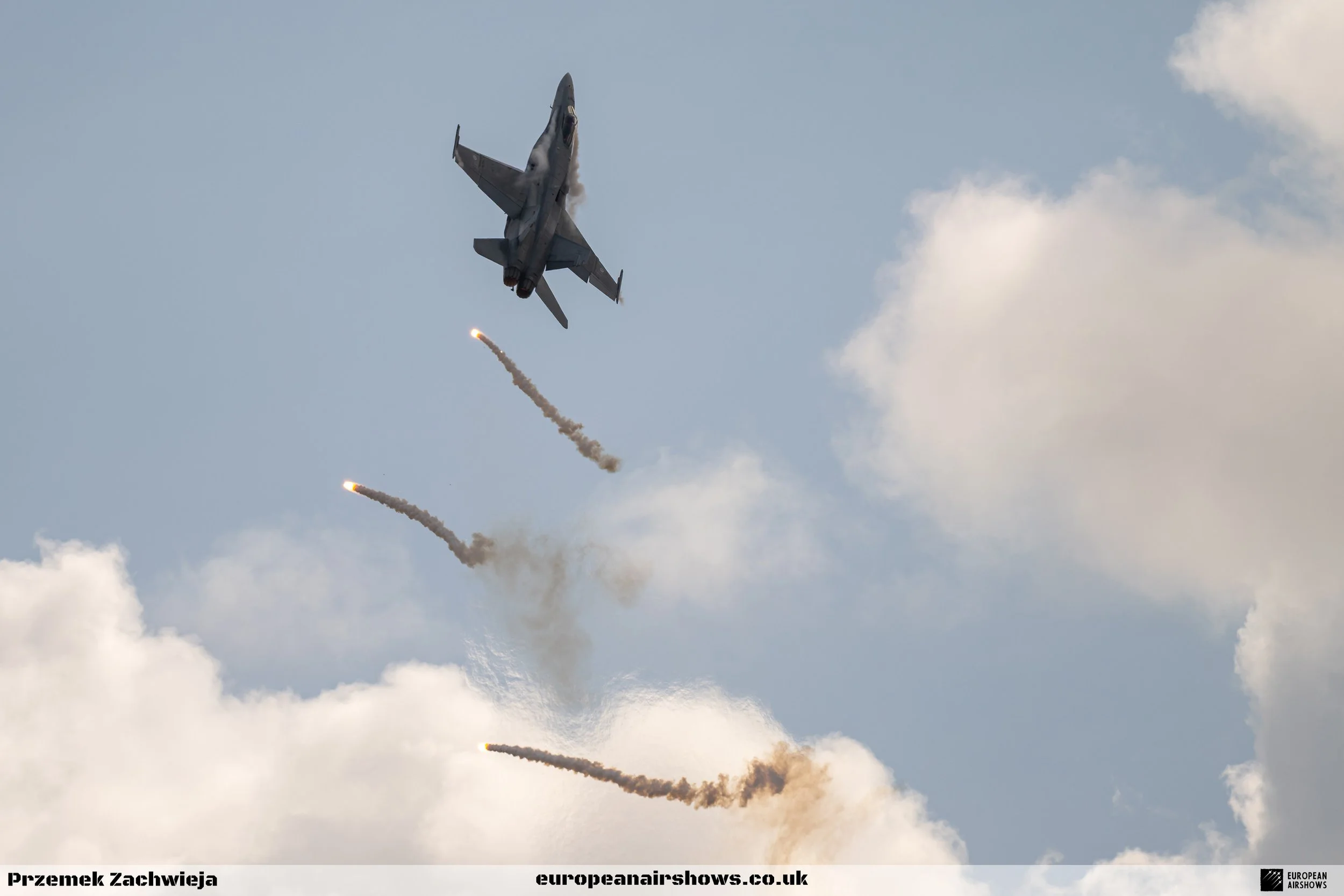
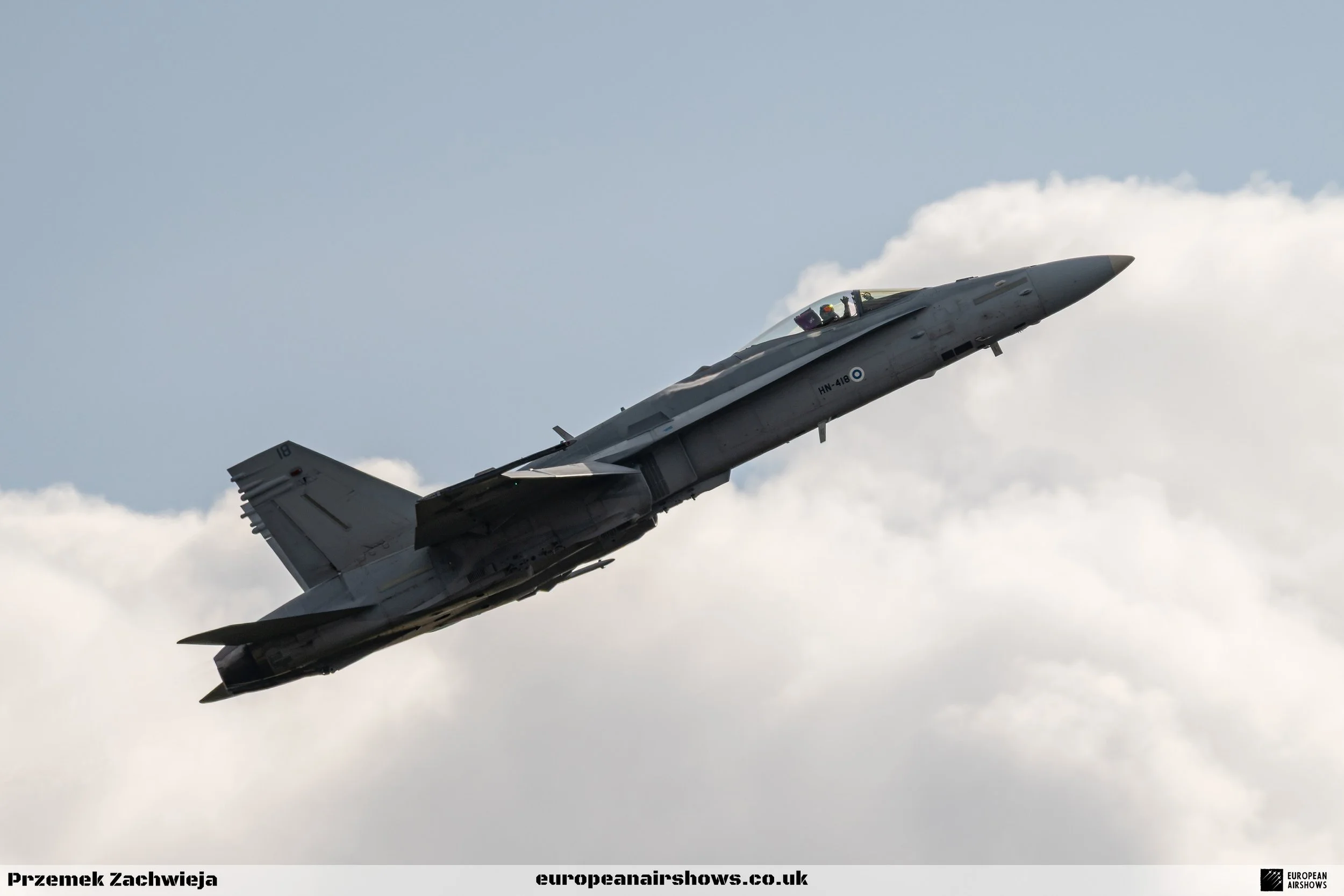
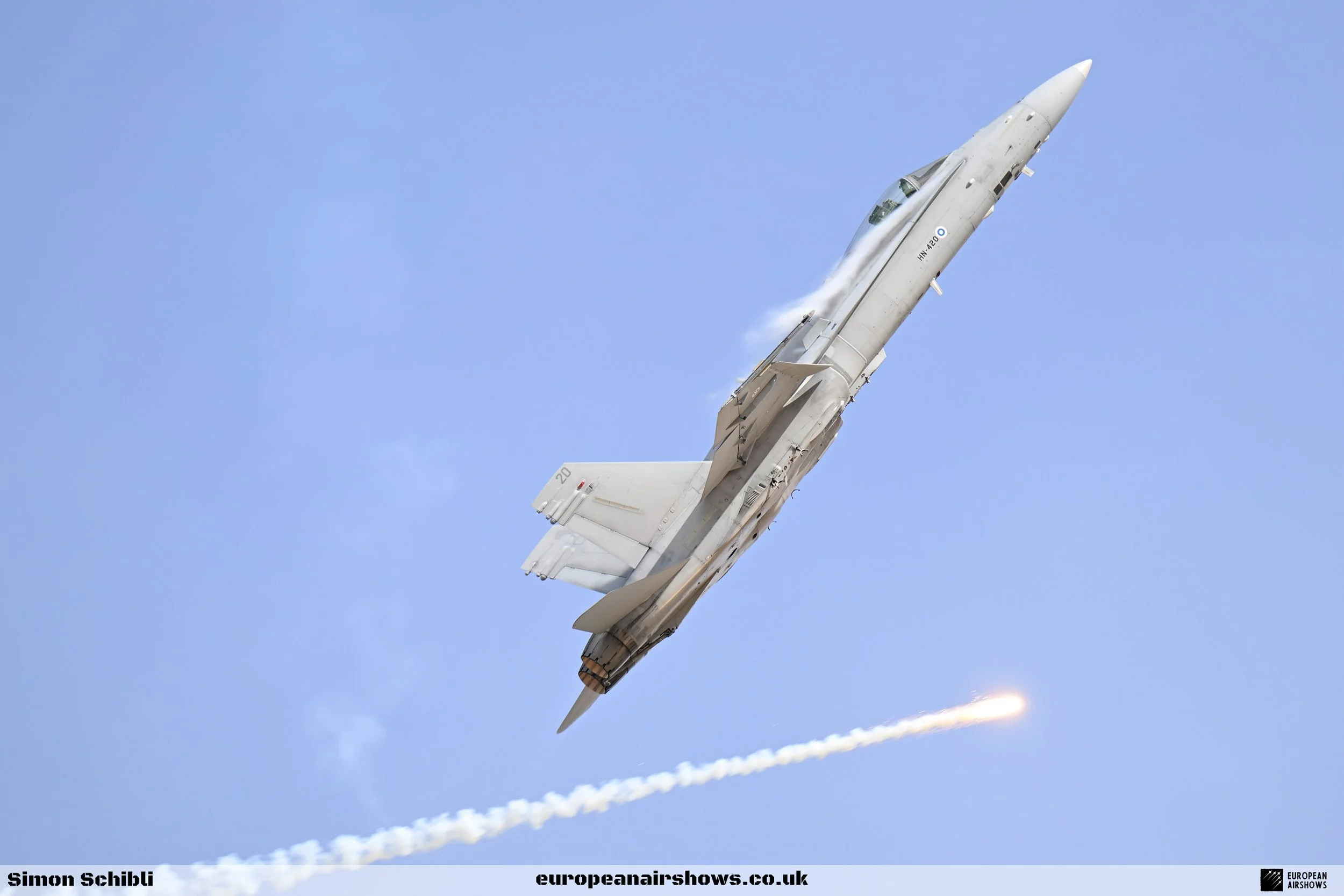
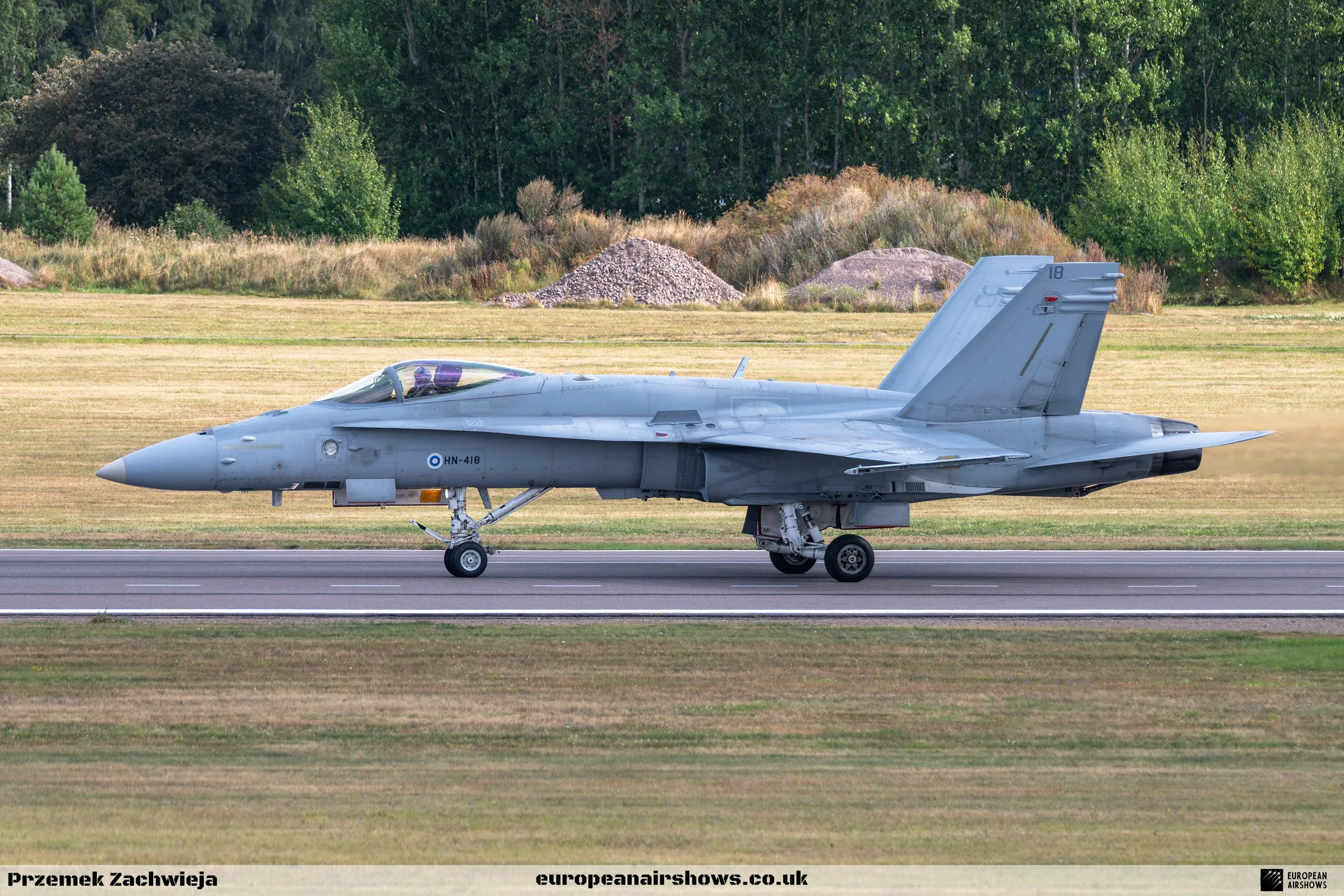
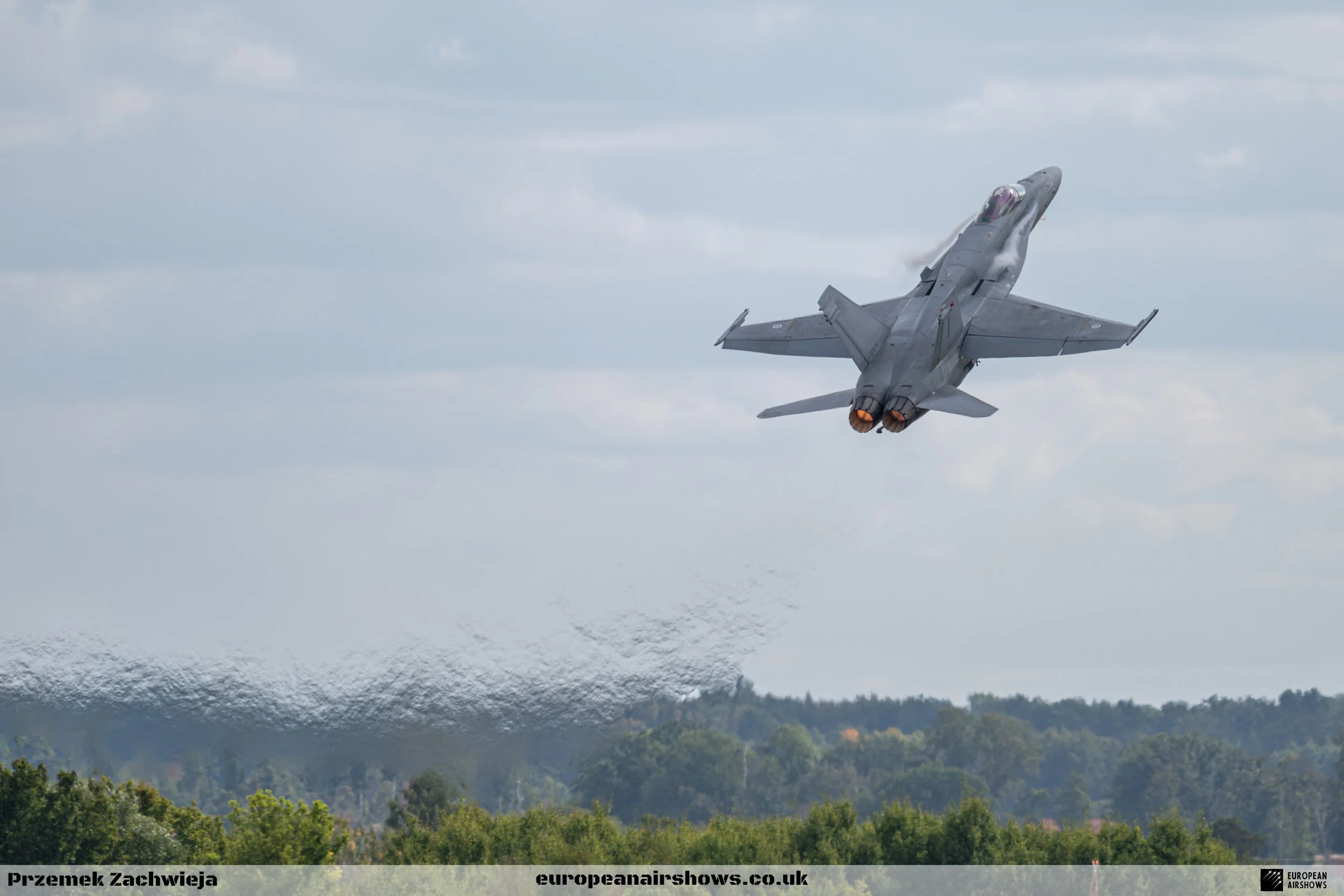
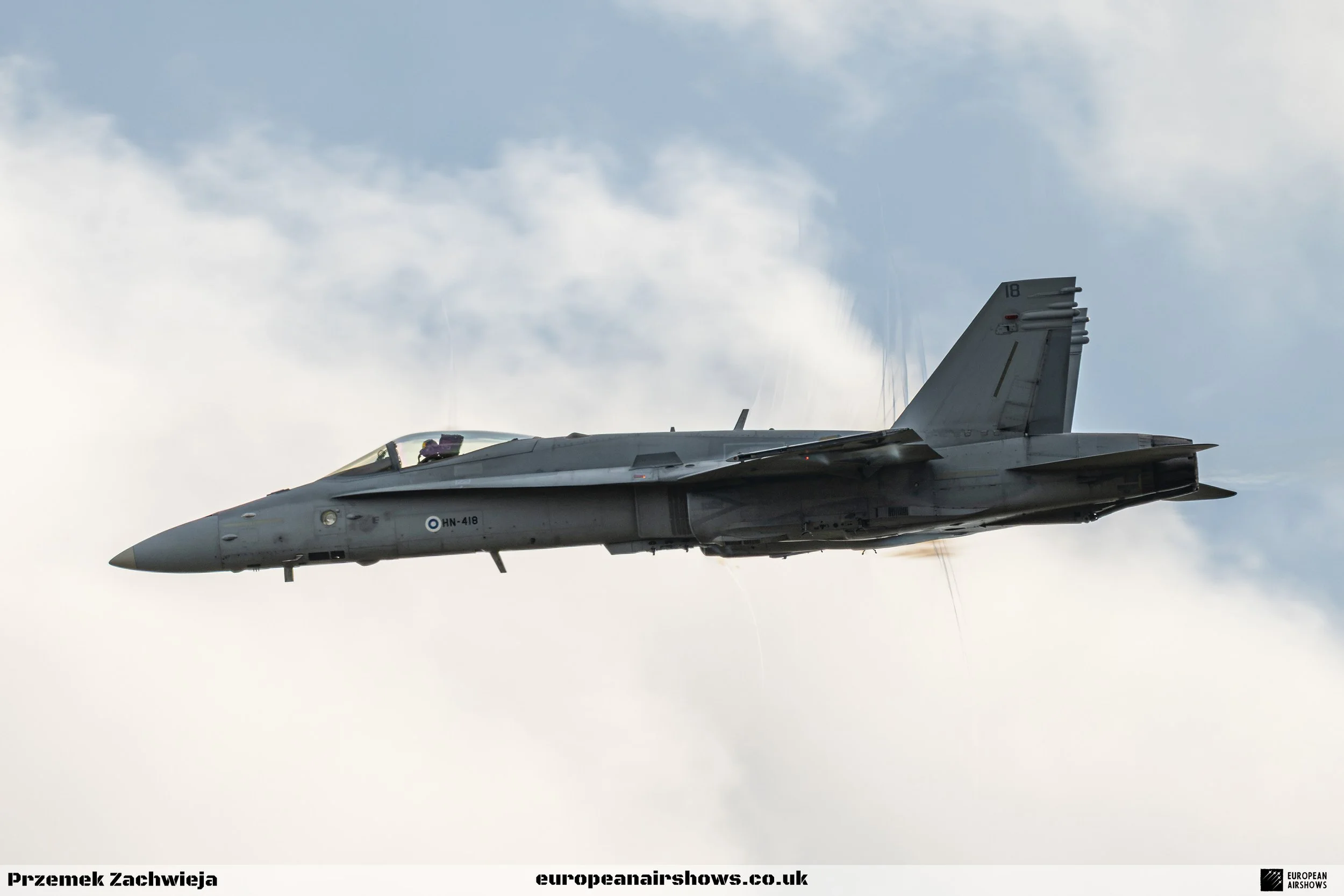
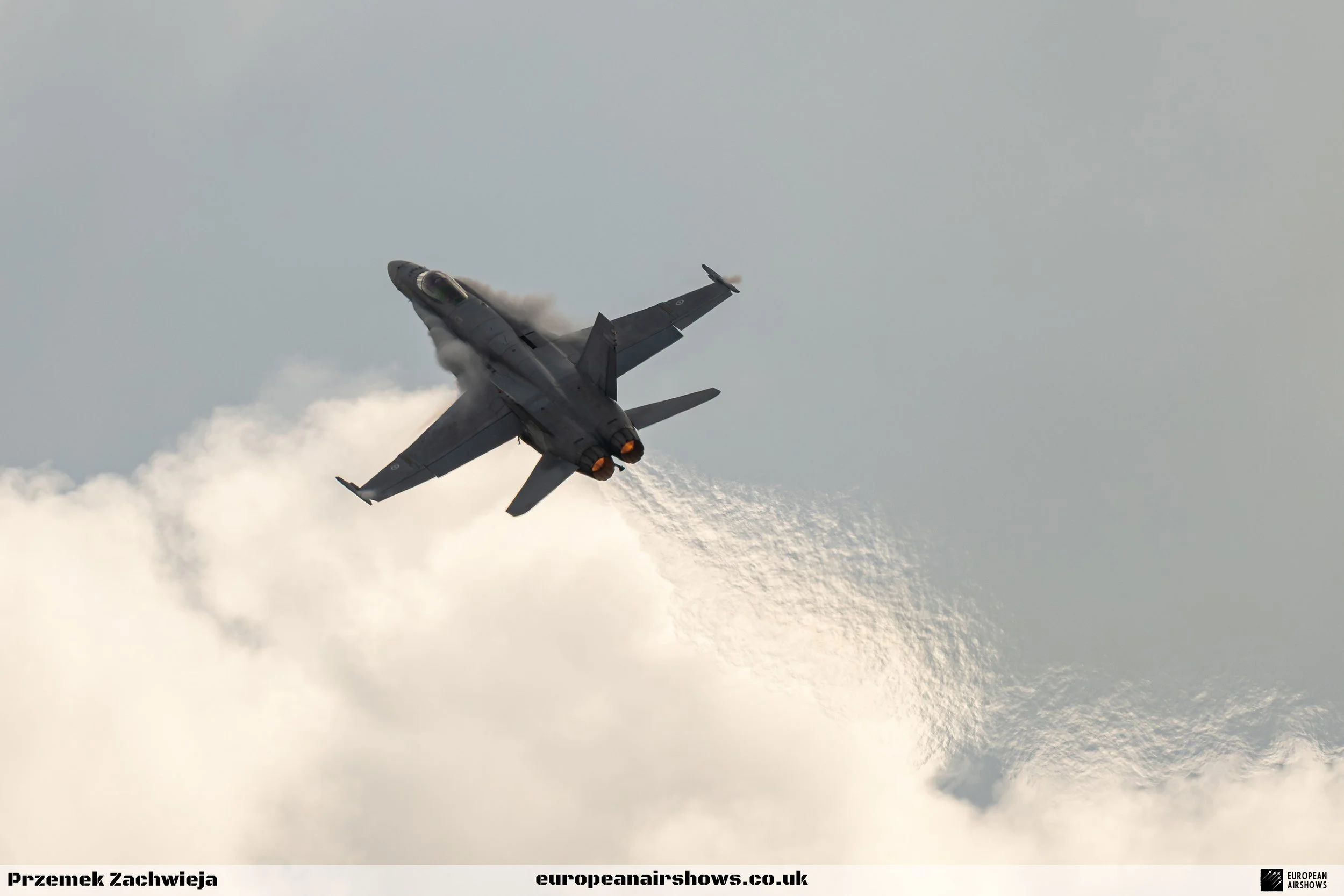
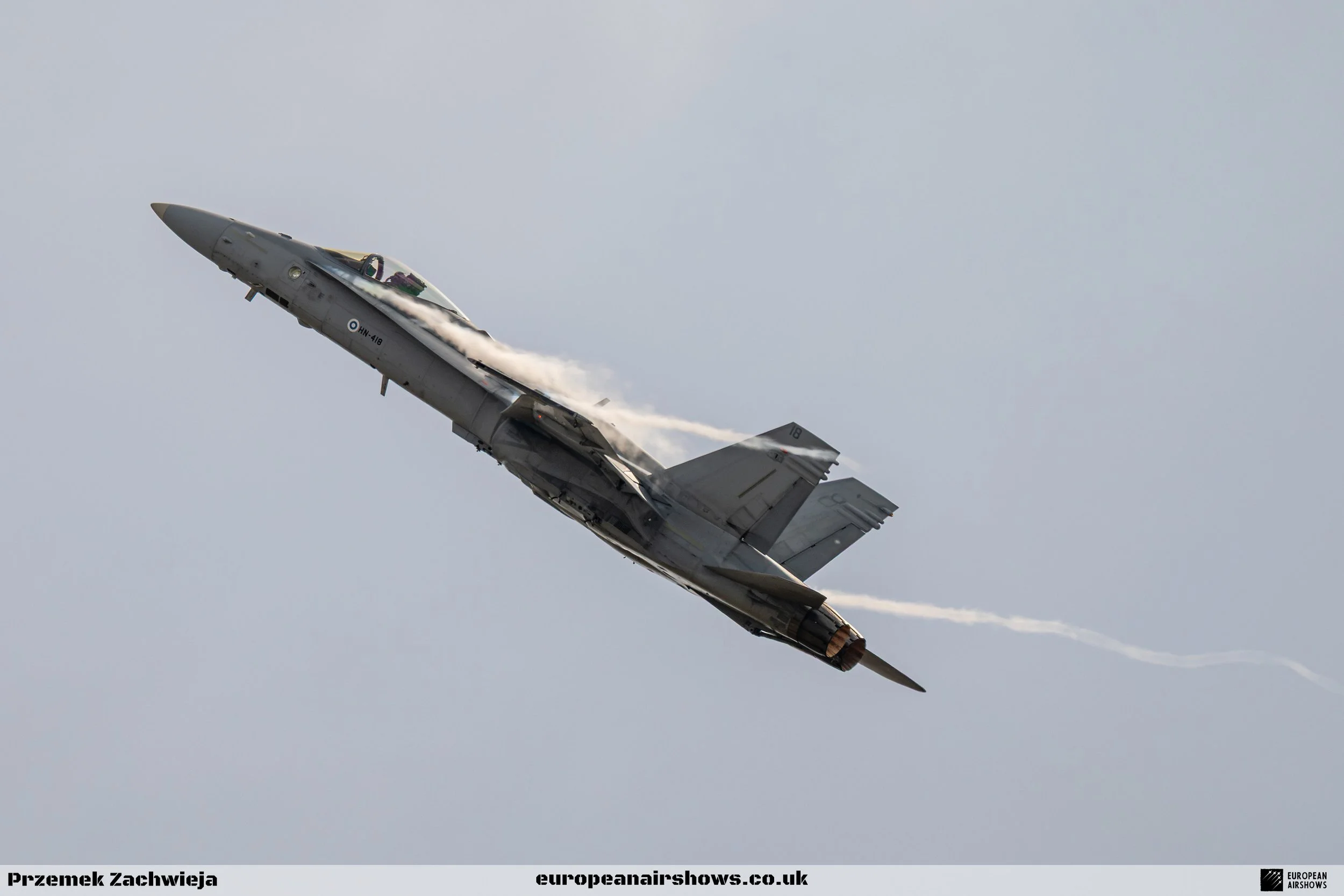
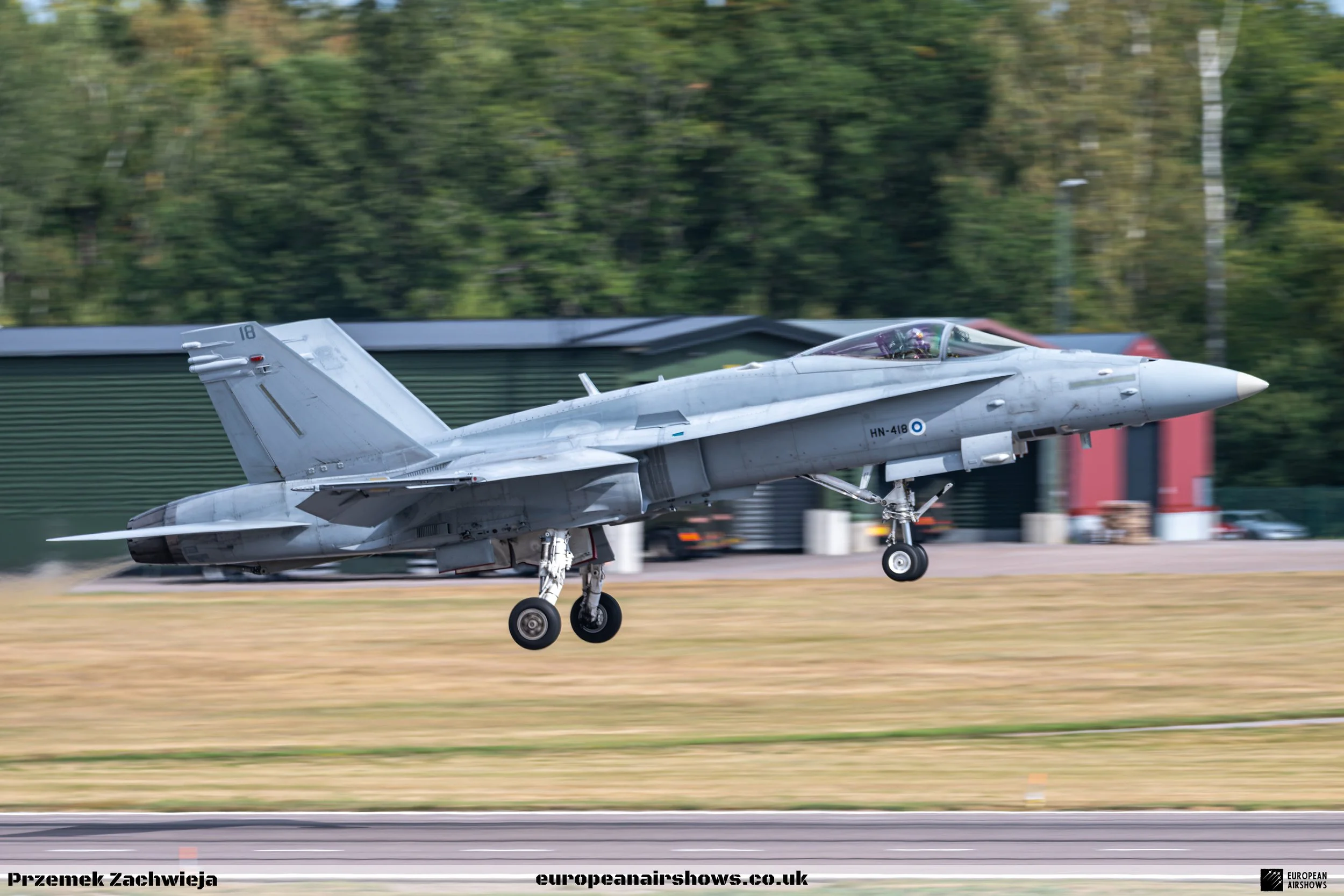
The international contribution gave the centenary genuine European scale. The Finnish Air Force’s McDonnell Douglas F/A-18C Hornet was one of the weekend’s best fast jets: aggressive, loaded with flares and apparently unwilling to run out of energy. The French Air and Space Force’s Dassault Rafale C Solo Display and the RAF Typhoon Display Team’s Eurofighter Typhoon FGR4 were similarly forceful, although the Rafale lost a great deal to the remote display box.
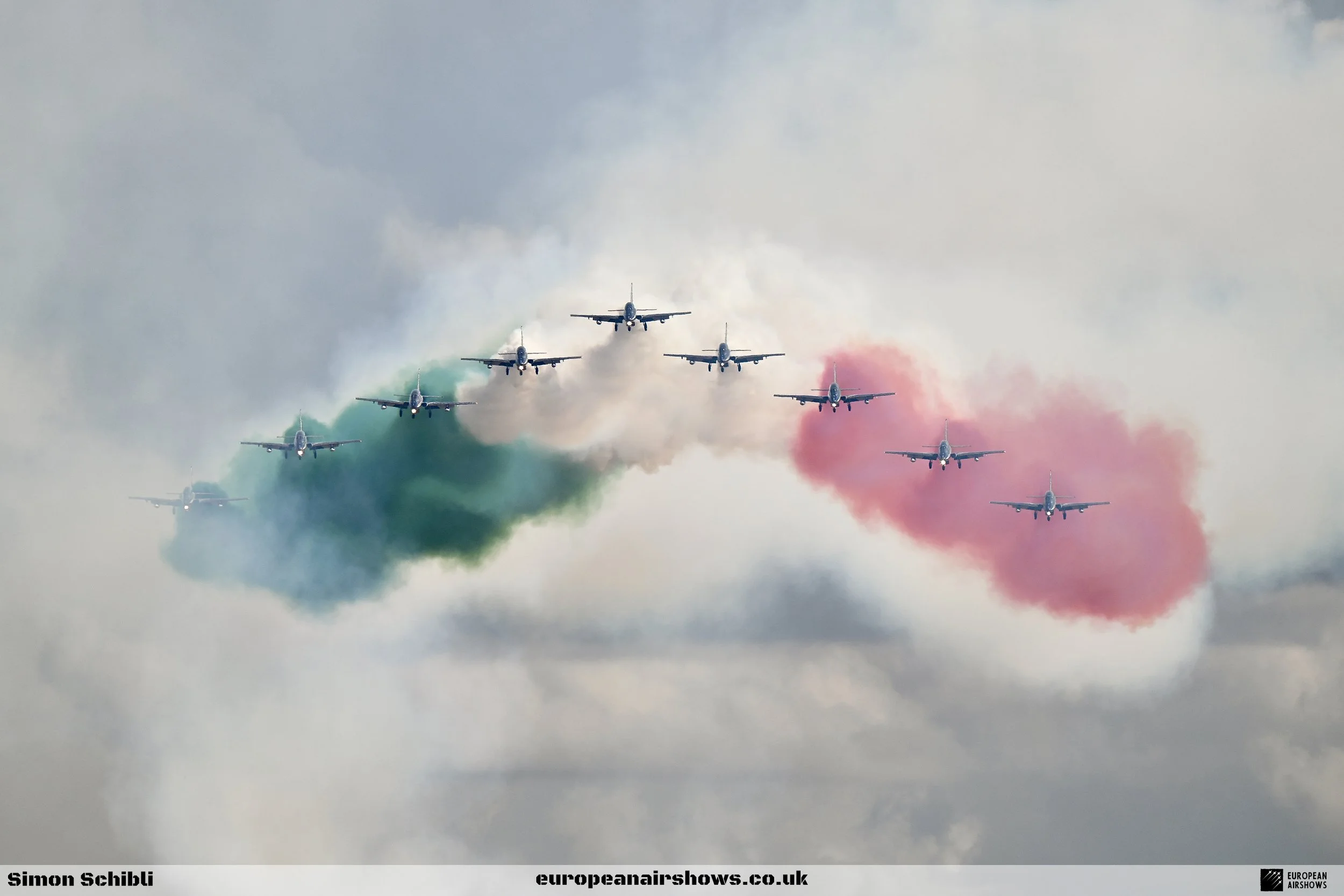
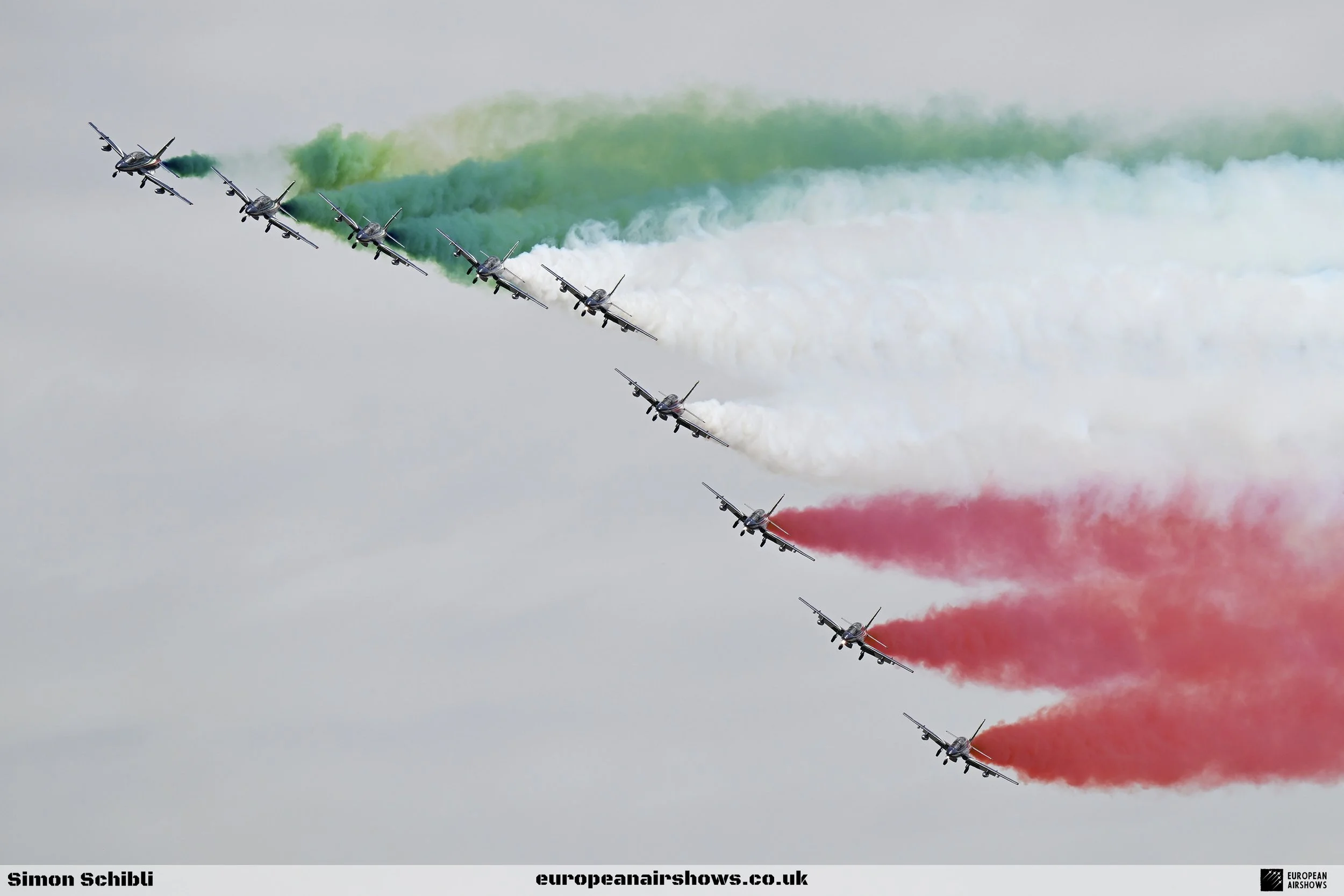
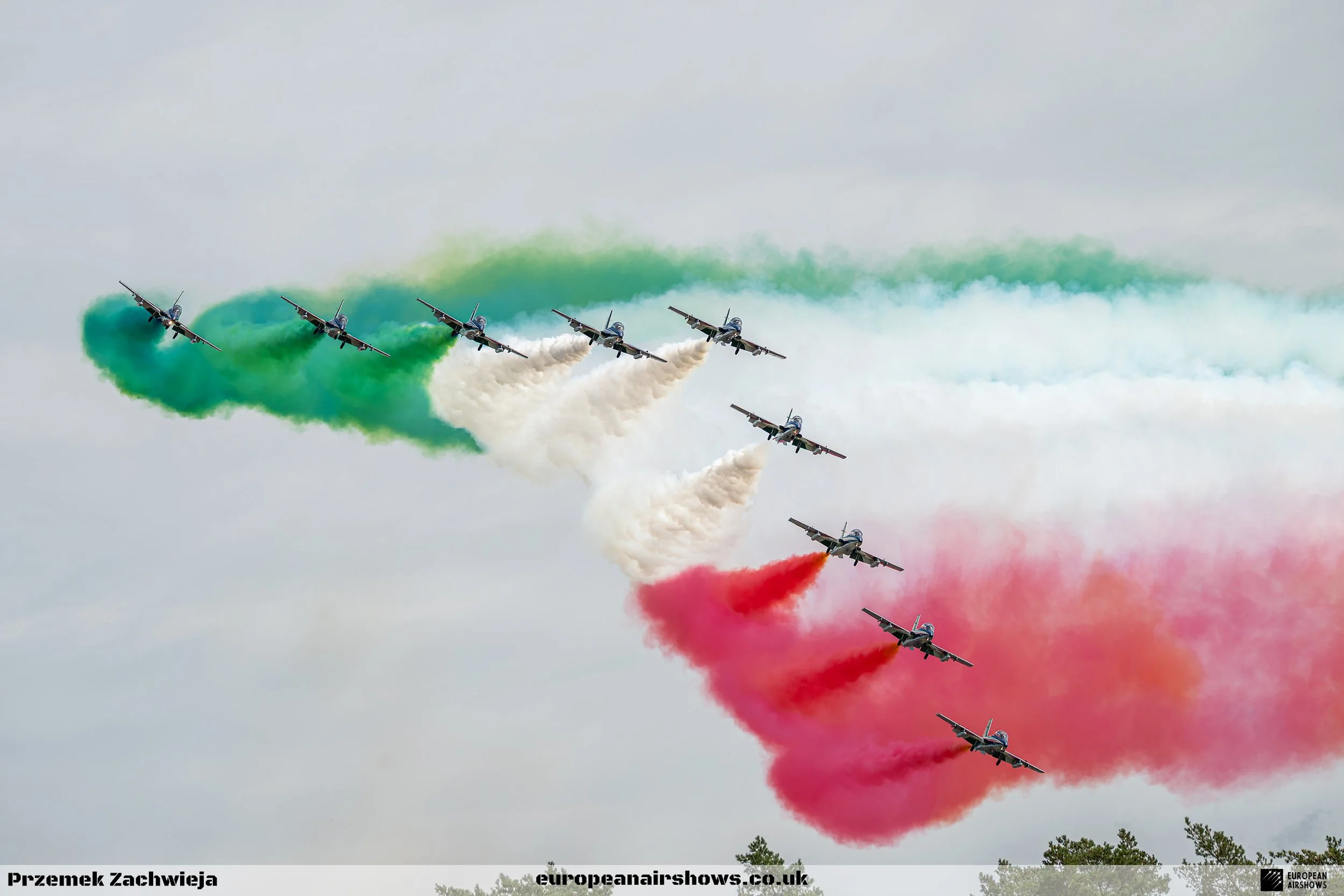
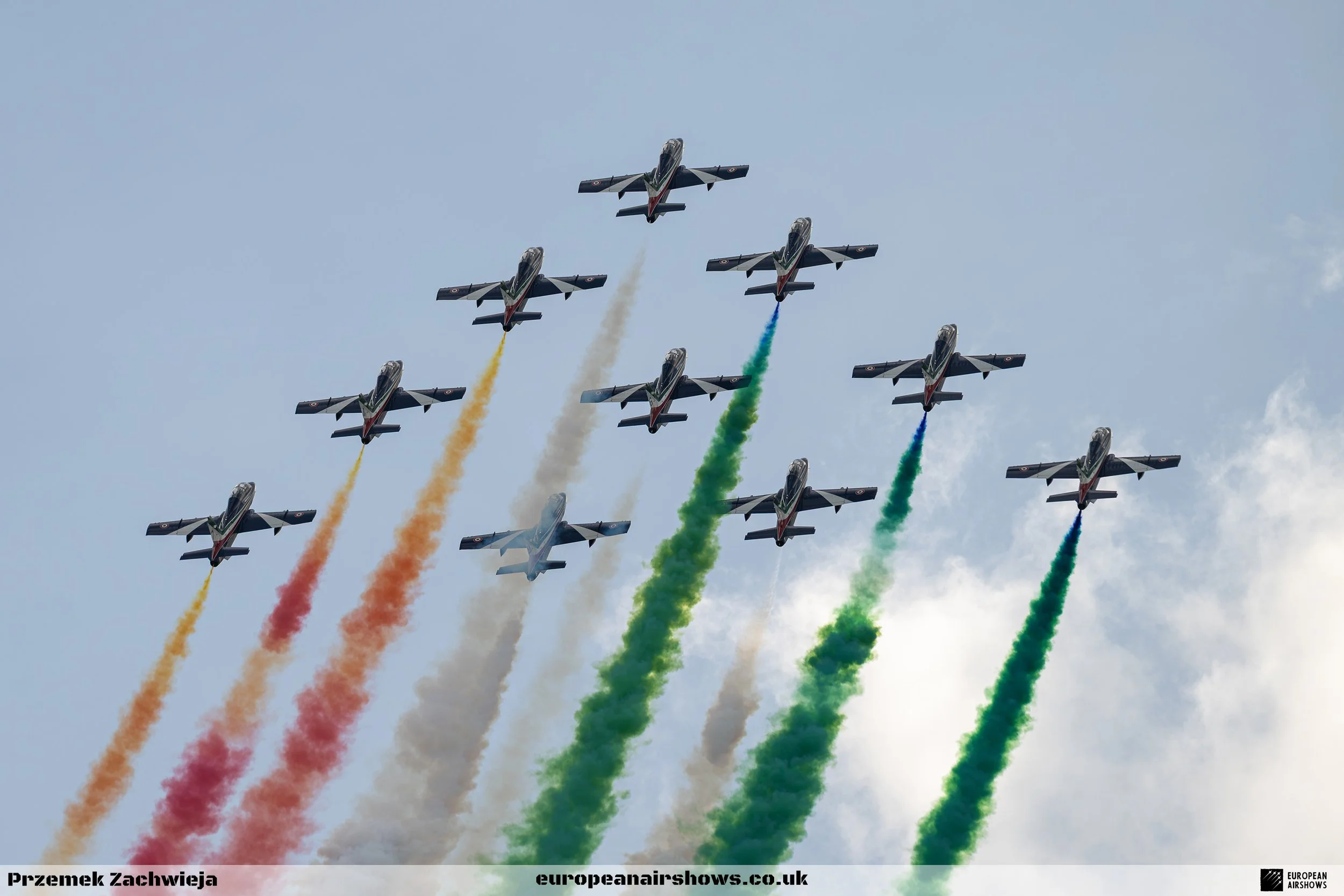
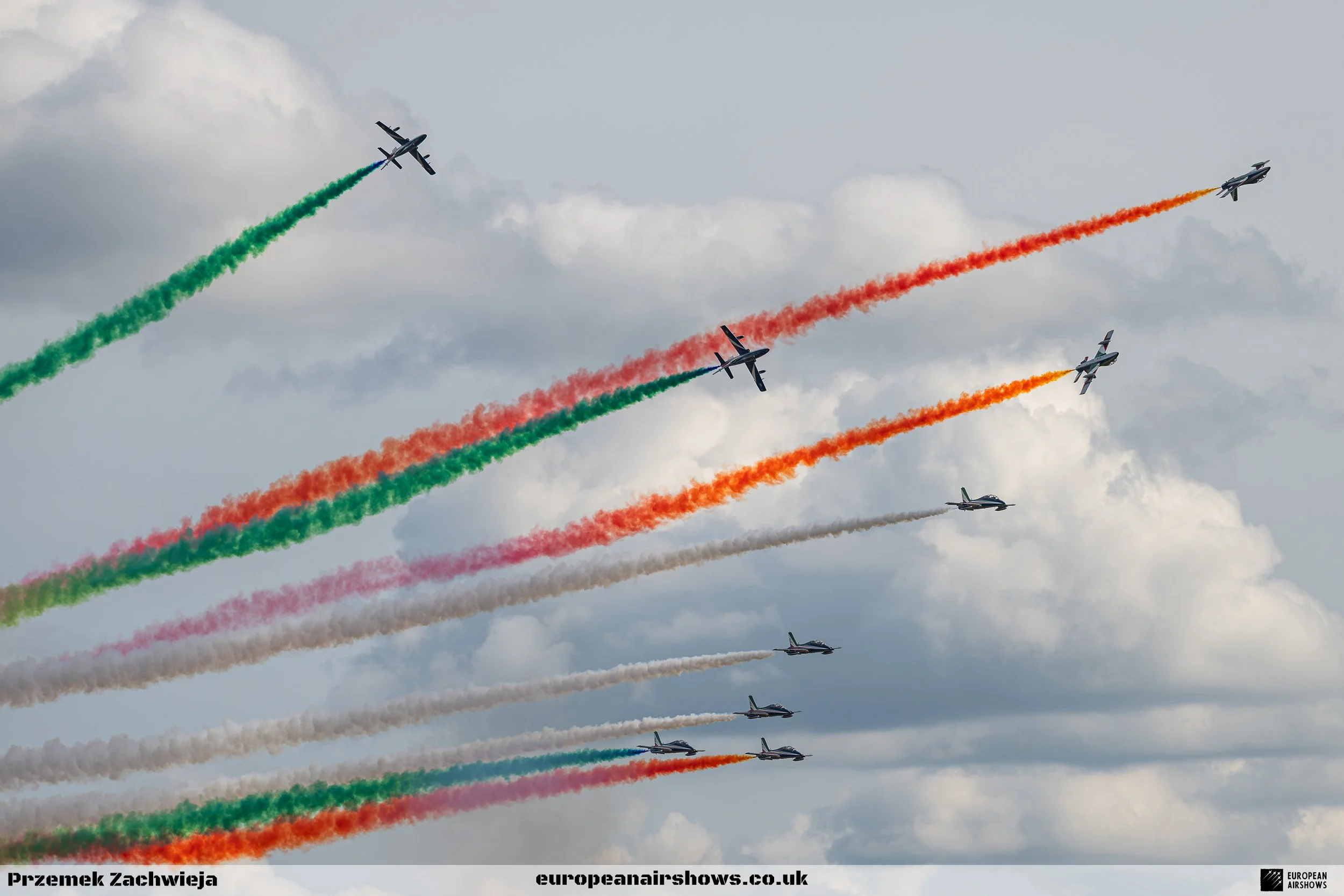
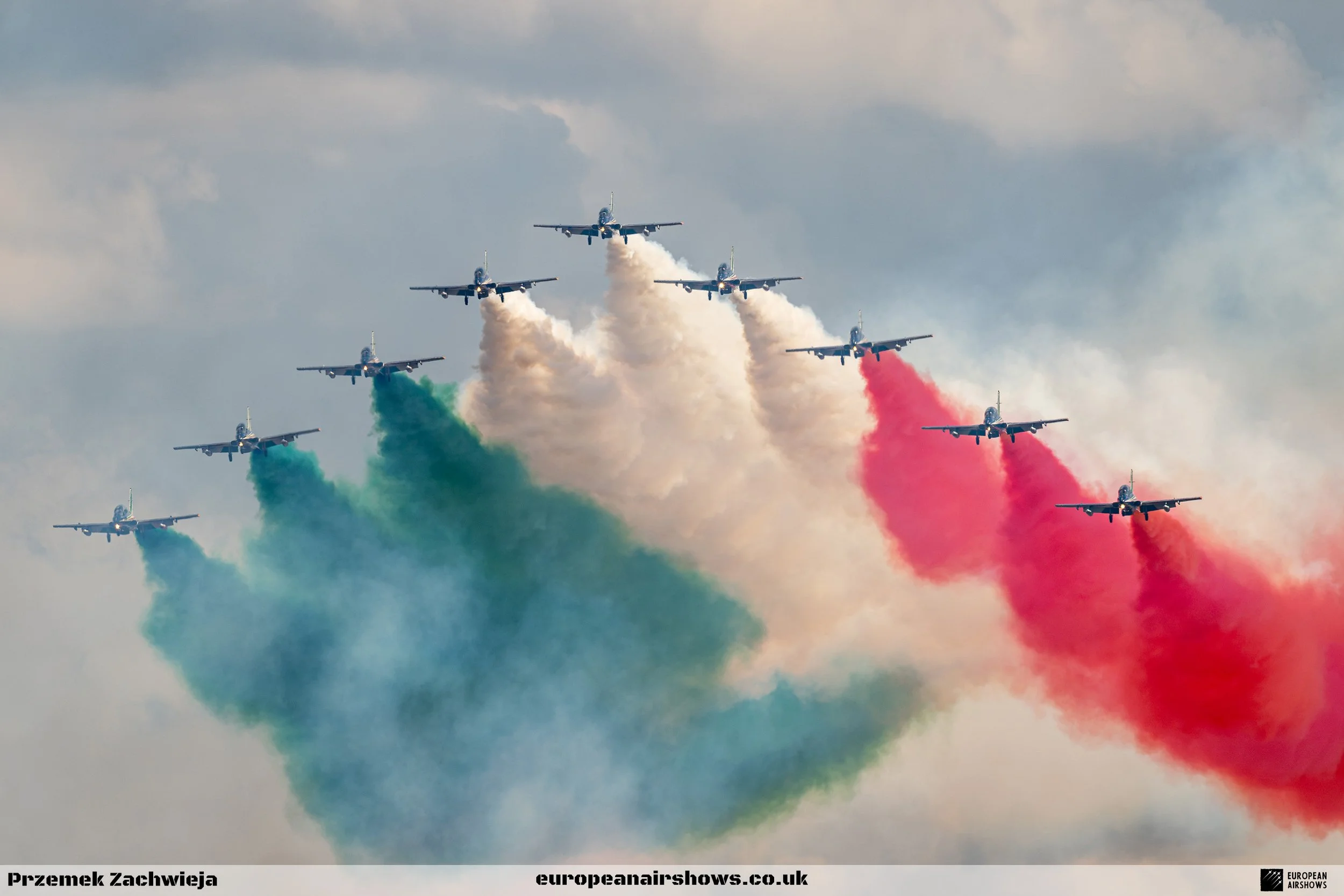
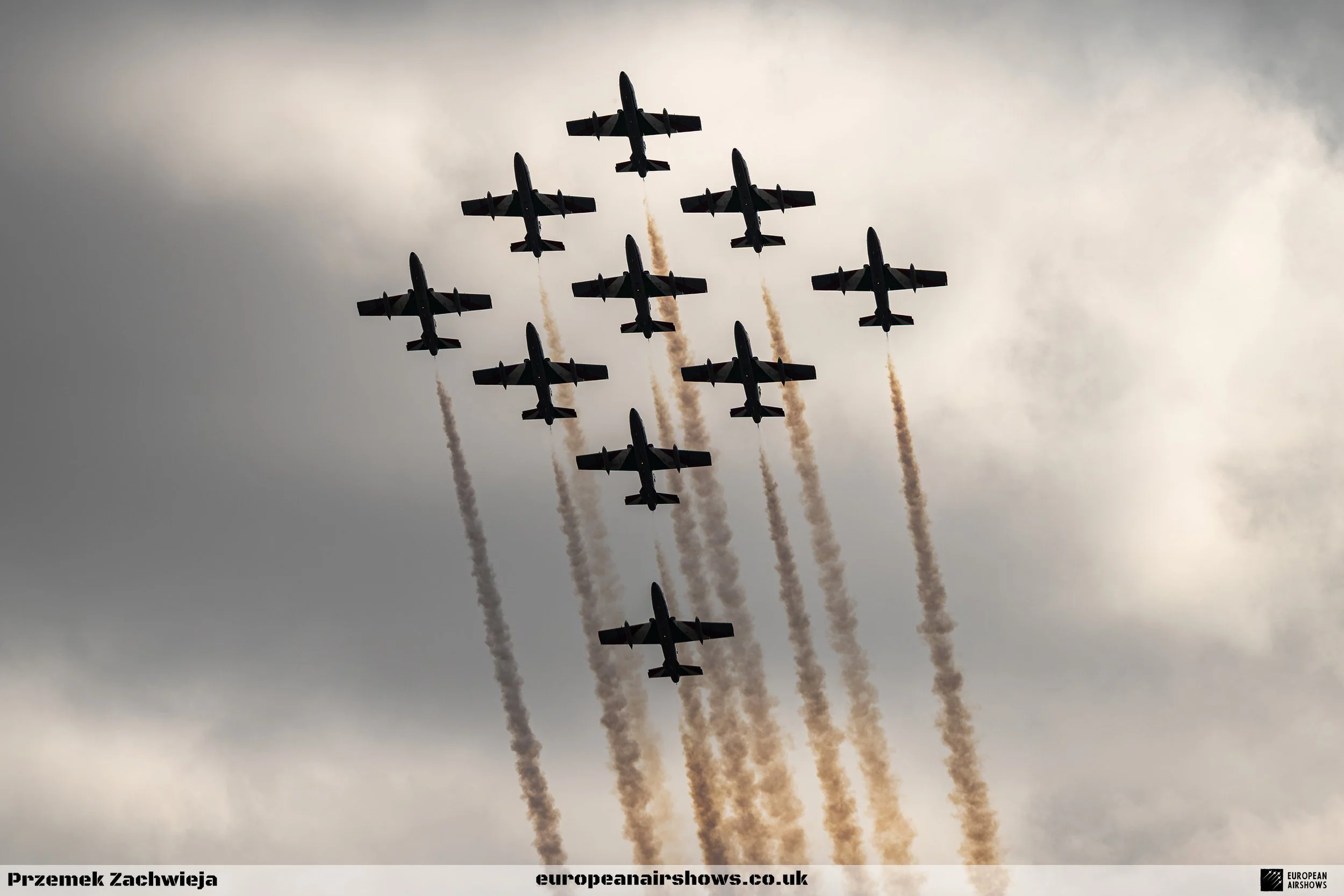
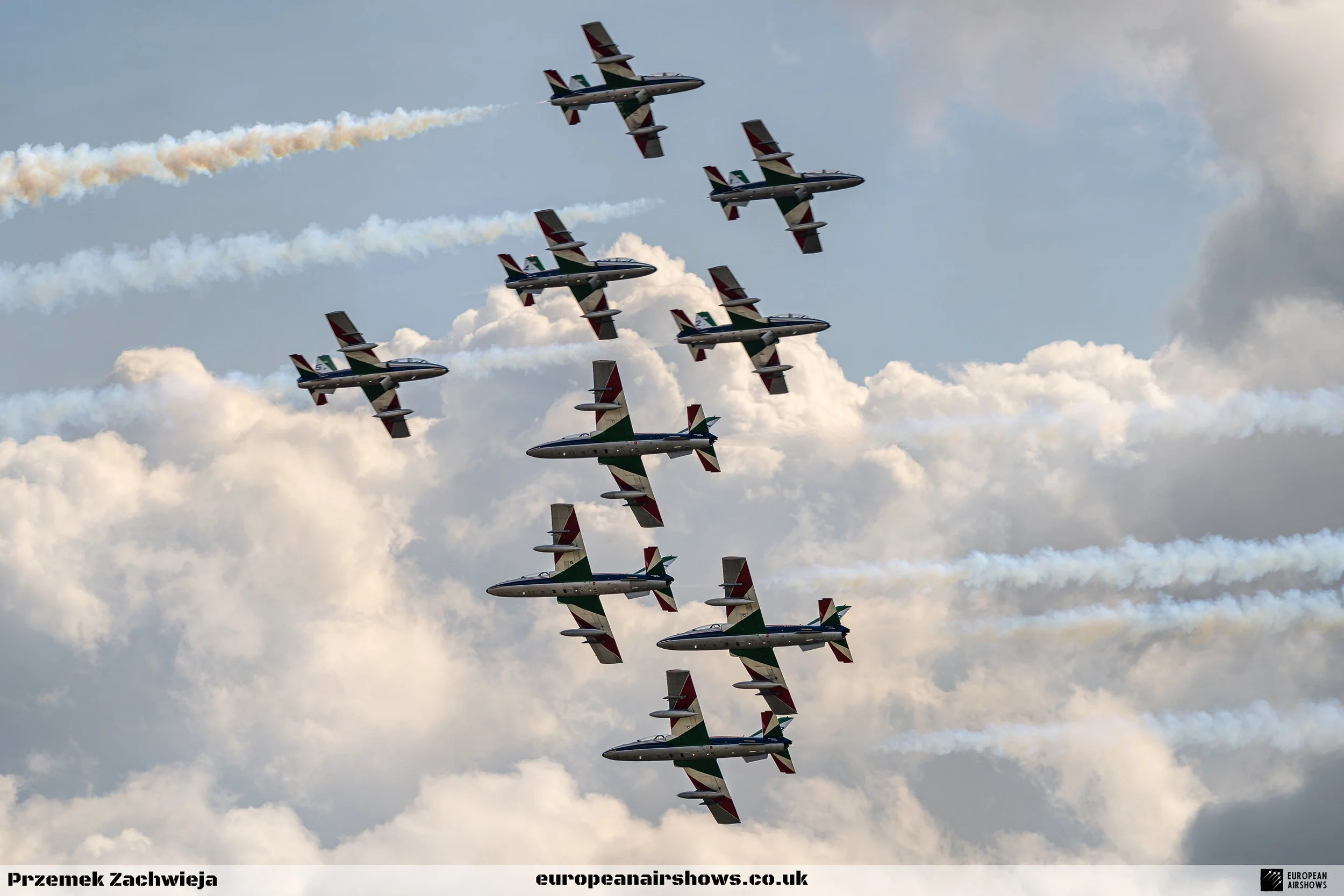
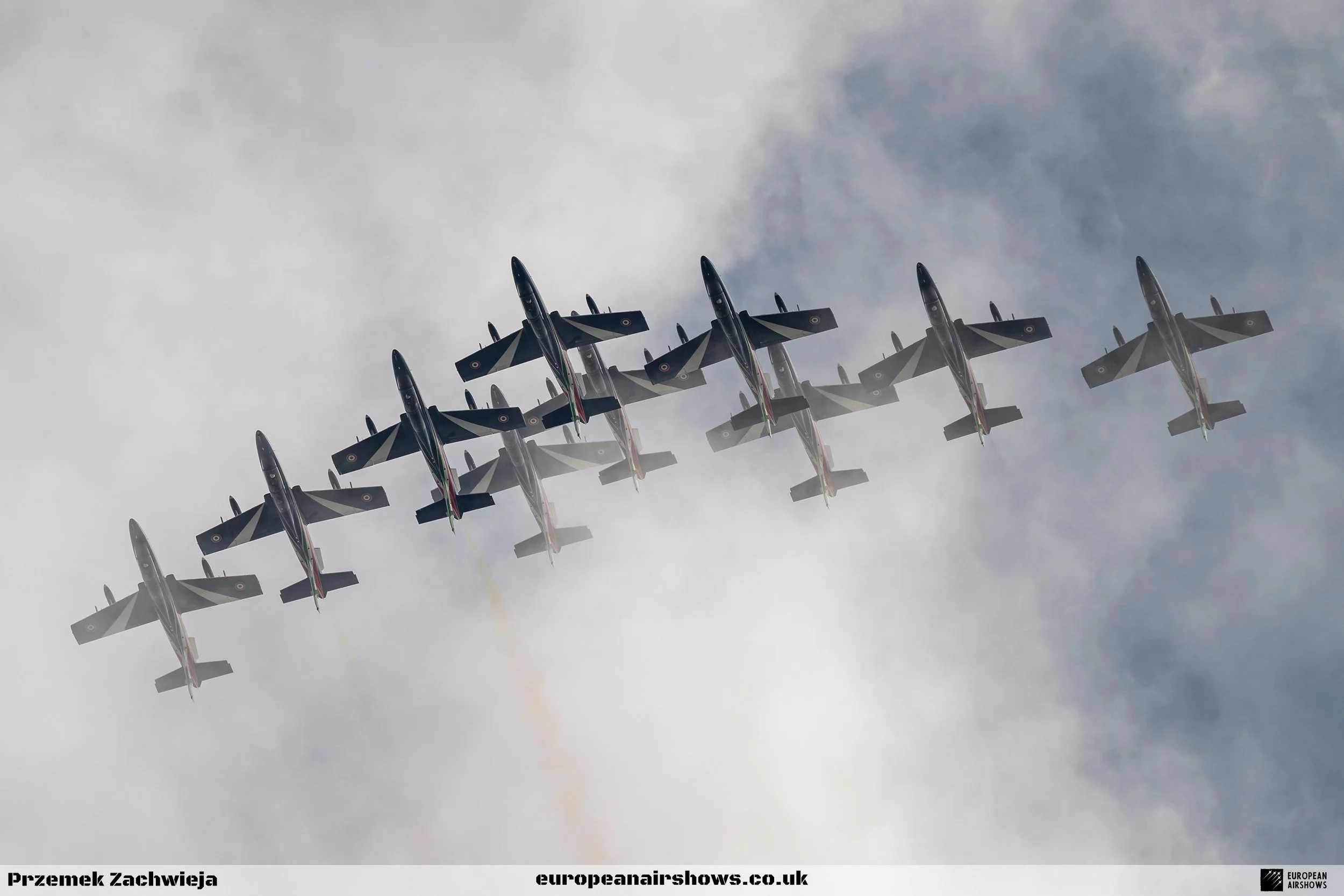
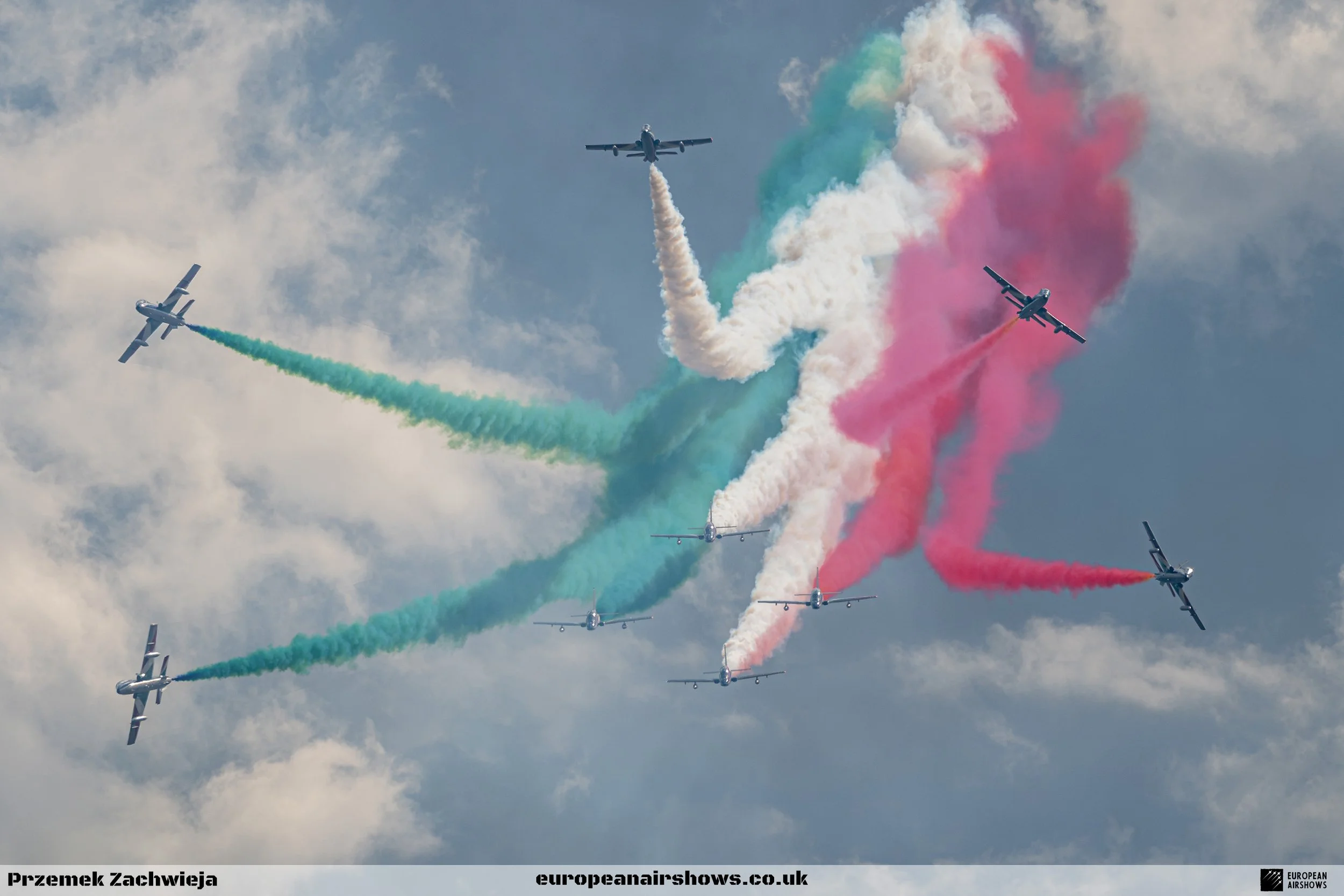
Italy’s 313° Gruppo Addestramento Acrobatico—the Frecce Tricolori—was as beautiful and polished as ever with its Aermacchi MB-339PANs. The Red Arrows were characteristically excellent despite losing their lowest crossovers behind the trees, while the Midnight Hawks deserved more from both the light and the display position. Together these visitors felt less like a random collection of headline acts and more like a salute from Sweden’s European and NATO partners.
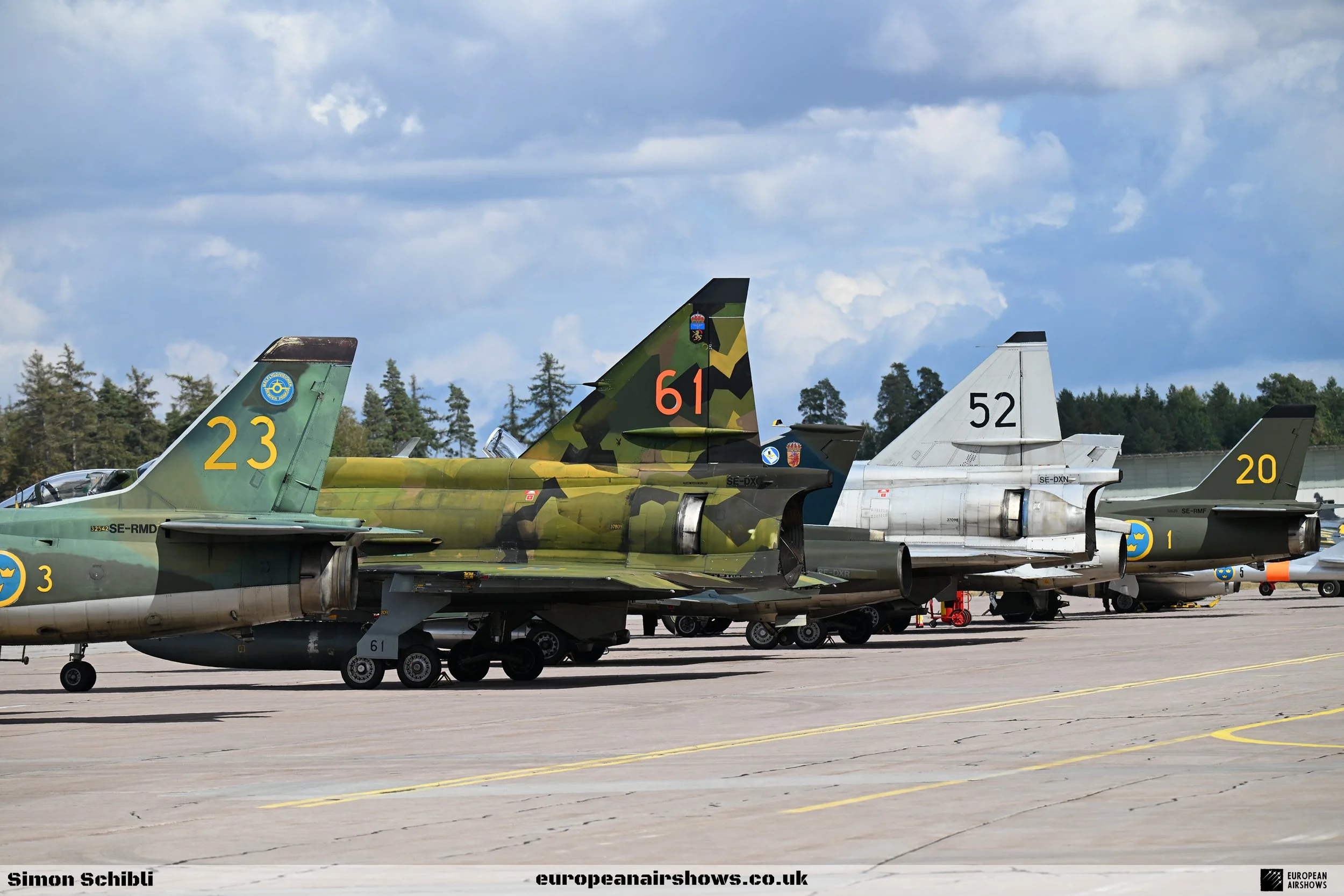
The static park was extensive, so this can only be a selection. Its Swedish core included a Lockheed C-130H Hercules (TP 84) from F 7’s 73rd Transport Aviation Squadron, a Flygskolan Grob G 120TP, a Helicopter Wing A109LUH, an FMV flight-test Gripen and the North American/Rockwell Sabreliner 40A (TP 86). The latter spent decades with Malmen’s flight-test establishment, including work on Gripen’s electronic-warfare system. Svenskt Ambulansflyg’s Pilatus PC-24 “Vinga” and the Swedish Coast Guard’s Bombardier DHC-8-311Q MSA widened the display beyond Flygvapnet.
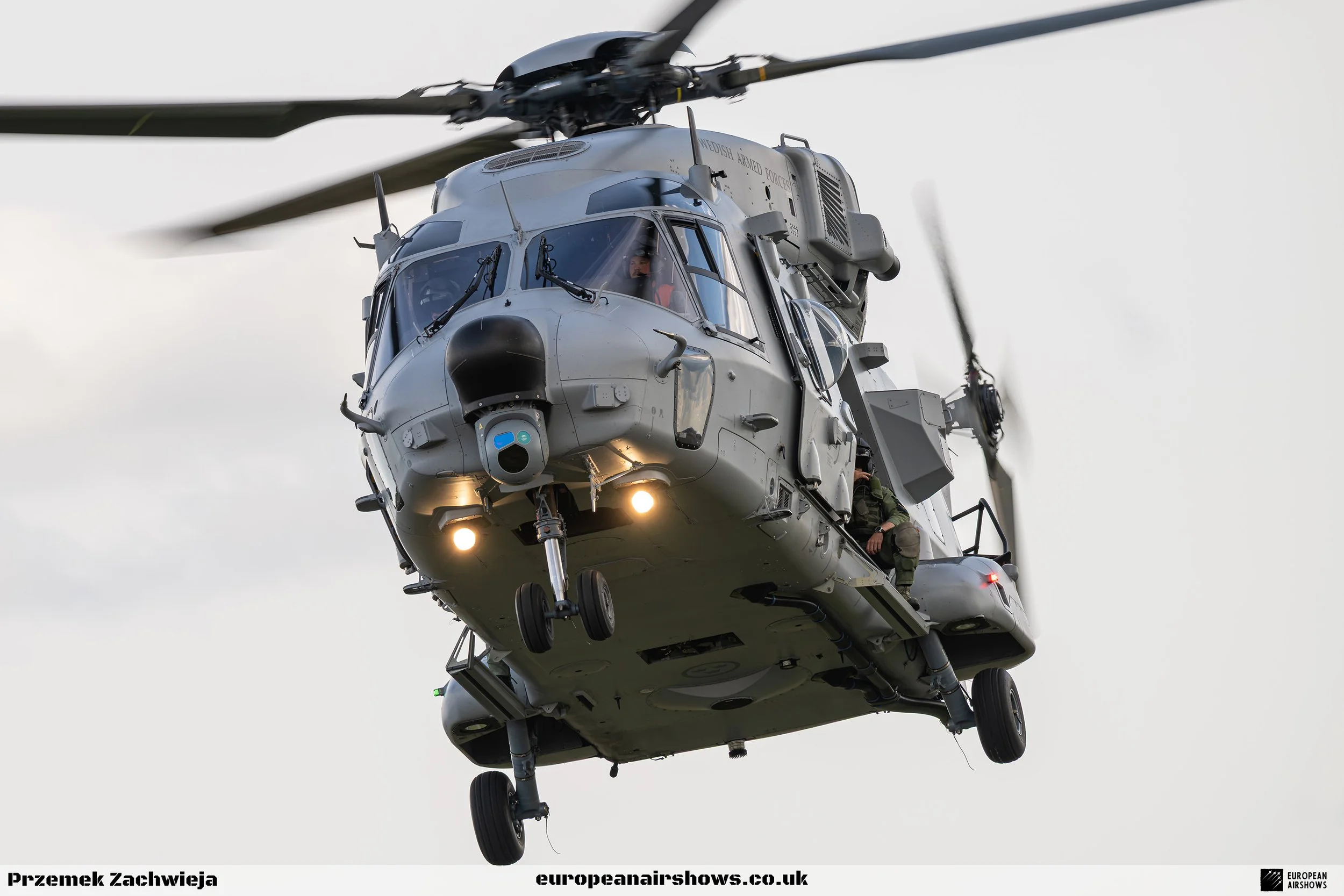
Among many more foreign aircraft were two Royal Netherlands Air Force Lockheed Martin F-35As and an NH90 NFH from the Netherlands Defence Helicopter Command’s 860 Squadron, a Belgian Air Component F-16BM Fighting Falcon and a two-seat Dassault Rafale B from ETR 3/4 “Aquitaine” supporting the French display. The Luftwaffe sent a Eurofighter, an Airbus AS532U2 Cougar, a Sikorsky CH-53GS and an Airbus A400M with a special 70 Years Luftwaffe tail. A Czech Air Force JAS 39C from 211th Tactical Squadron showed Gripen in another NATO air arm, accompanied by a 212th Tactical Squadron Aero L-159A ALCA. The Heavy Airlift Wing’s Boeing C-17A Globemaster III and a 102nd Rescue Squadron/106th Rescue Wing HC-130J Combat King II from the New York Air National Guard added to the international contingent. Sweden participates in the Strategic Airlift Capability programme which operates the C-17s, while the American rescue aircraft provided another example of allied support.
The Portuguese Air Force Embraer KC-390 Millennium from Esquadra 506 “Rinocerontes” was particularly relevant. Sweden ordered four C-390s in 2025 to replace the TP 84, so the Portuguese aircraft was less a foreign visitor than a preview of Flygvapnet’s next transport.
Saab supplied the most talked-about future exhibit. A Gripen E stood beside the full-scale A3-001 uncrewed combat-aircraft concept—the machine most people around the fence immediately called a “loyal wingman”. It was a concept model rather than an operational aircraft, but the proposed direction was clear: crewed and uncrewed platforms cooperating on missions such as electronic warfare and suppression of enemy air defences. Publicly unveiled at Malmen, A3 made “Future” more than a slogan.
The formation which never came
That look into the future made the missing present even harder to ignore. The historic programme carefully led the audience from Blériot and Tummelisa through trainers, piston aircraft and six generations of Swedish jets. The operational Air Force of 2026 never received an equivalent moment.
Gripen and Black Hawk flew repeatedly and between them carried almost the entire modern Swedish programme. For a normal airshow that would have been a strong contribution. For the hundredth anniversary of Flygvapnet, it was very disappointing. A single parade bringing together Gripen C and E, the TP 84, SK 40 and the current helicopter fleet—ideally with another operational type such as the S 100D Argus—would have given the weekend the scale it lacked. It did not need aerobatics. One carefully timed pass down Malmen’s runway could have shown the fighter, transport, training, surveillance and rotary-wing arms of the service in seconds.
Flygvapnet had already proved this was possible during its centenary flypast over Stockholm on 1 July, when 54 aircraft and helicopters took part. The absence of anything comparable at the main public celebration was therefore more than a minor programming omission. This was the one weekend when the entire current Air Force should have been visible.
There were smaller missed opportunities too. The Swedish-marked S 31 Spitfire beside Gripen was the most obvious. The Canso, Daisy and Lim-2 could have created a powerful Catalina Affair sequence, while Safir, SK 60 and SK 40 would have put three generations of pilot training into one photograph. Almost every ingredient was already at Malmen. They were simply never combined.
Verdict
Sunday was the better day. It became warmer and sunnier, the base felt less crowded, the strengthened transport operation ran more smoothly, the J 32B Lansen completed the historic jet formation and the NATO A330 added its solo pass. The only important flying loss was the Vampire. Saturday brought the extraordinary crowd, but also more cloud, harder logistics and the incomplete Saab formation.
Across both days, there was still a great deal to love. Mikael Carlson’s pioneer aircraft, four close-flying Tiger Moths, the unexpectedly energetic Saab B 17A, the Swedish S 31 tribute, the Canso and Daisy, the Lim-2/Sabre/Tunnan trio, the complete Saab jet lineage, Gripens, Black Hawks and a powerful international cast produced moments worthy of the centenary. On the ground, Gripen E and the Saab A3 ensured that the story did not stop in 2026.
The organisers deserve real credit too: for a superbly spacious Spotters Area and its free jellies, sweets, water and ear plugs; for keeping buses moving against an almost impossible Saturday crowd; for handing water to people and sweets to children in that enormous queue; and for making Sunday noticeably better. This was an organisation trying very hard to look after numbers beyond almost any airshow infrastructure’s comfortable limit.
But the fixed-wing display line damaged too much of the flying. When photographers at a show of this quality repeatedly leave their cameras lowered, while spectators are moved on from awkward off-base locations after going there simply to find a usable view, something fundamental has gone wrong with the presentation.
Malmen was a very good airshow and an extraordinary national celebration. It remembered Sweden’s aviation past brilliantly and offered a fascinating glimpse of its future. What it never quite gave us was the whole Swedish Air Force of today, together and directly in front of the people who had come to celebrate it. That missing image is why a magnificent weekend stopped just short of greatness.
More airshow reviews
Read more reports, photography and first-hand coverage from airshows across Europe.