
Shuttleworth
Summer Air Show
2026
Ten Spitfires over Old Warden, a newly restored Polish Lim-5 and AR501 glowing in sunset light made Shuttleworth’s 2026 Summer Air Show a landmark celebration of the Spitfire at 90.
The largest Spitfire gathering yet seen at Old Warden, a Polish Lim-5 lighting its afterburner over the grass runway and a sunset finale from AR501 made Shuttleworth’s Summer Air Show a fitting 90th-anniversary celebration.
There are few places where a Supermarine Spitfire can share the sky with a Sopwith Camel, an afterburning Cold War fighter can thunder past a grass runway and a delicate 1920s sports aeroplane can be called upon to rescue an evening display from the wind. Old Warden managed all three during a remarkable Summer Air Show celebrating 90 years since the Spitfire’s first flight.
The day began under an almost completely cloudless sky and in serious heat. It was the sort of morning when shade became valuable property and the Swiss Garden seemed even more inviting than usual. Cloud began to develop shortly before flying started, although the afternoon remained bright, warm and frequently sunny. The greater concern was the wind. It became increasingly gusty as the day progressed and would eventually remove several of the Shuttleworth Collection’s lightest and oldest aeroplanes from the programme.
With the first main display not beginning until 2pm, there was ample time to explore. A vintage vehicle parade made its way around the aerodrome, historic buses offered rides and the Collection’s hangars were naturally busy. Shuttleworth House was unfortunately closed for a private event, but the Swiss Garden remained open and provided a welcome escape from the heat.
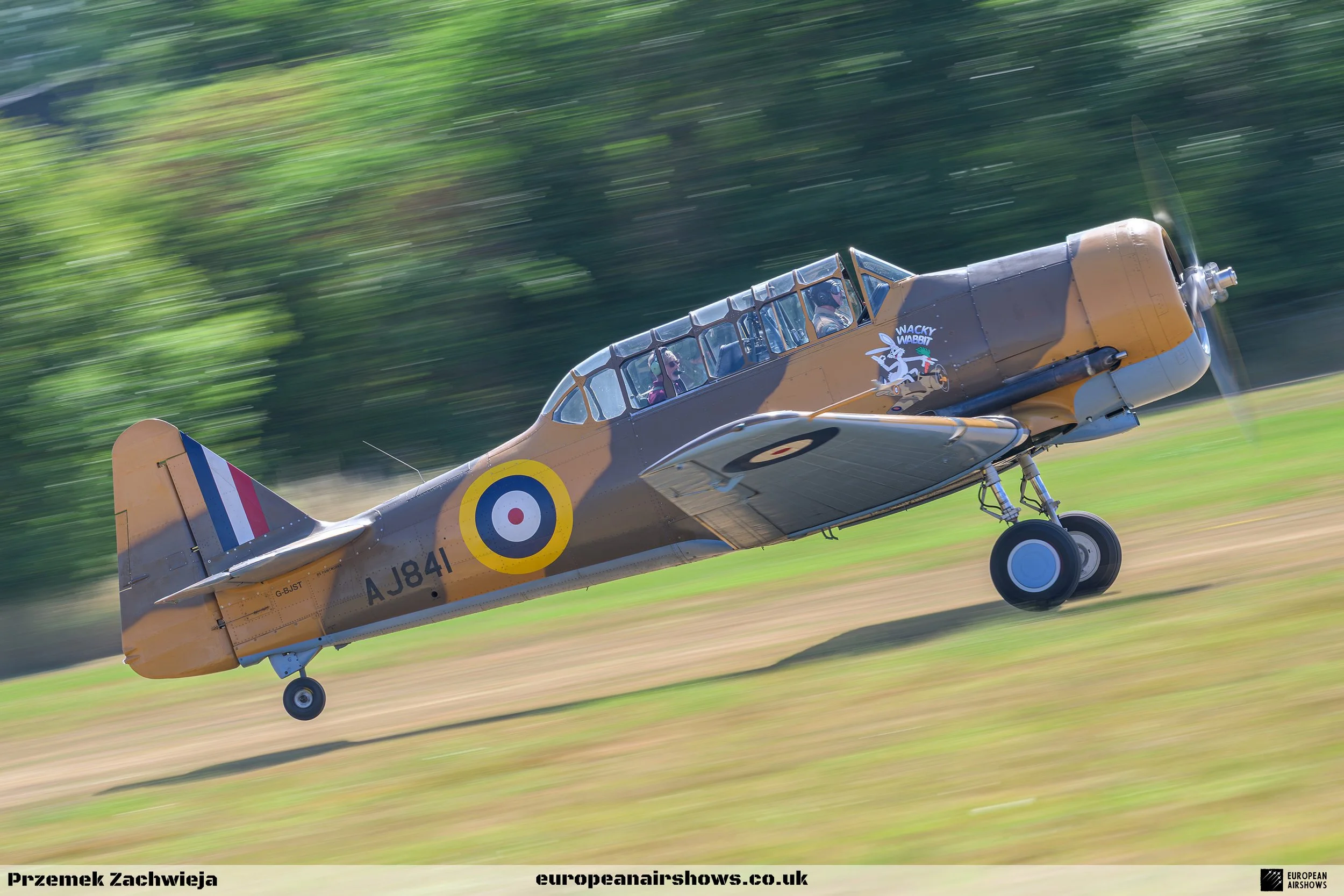
The flightline was rarely quiet. Arrivals, positioning flights and rehearsals provided almost continuous movement, while pleasure flying was available in Tiger Moths and the North American Harvard Wacky Wabbit. Add the trade stalls, catering and the distinctive soundtrack of engines being prepared around a living grass aerodrome, and the comparatively late display start never felt like a long wait.
That is part of Old Warden’s appeal. It does not feel like an airshow site temporarily assembled for one weekend. It feels like an active piece of aviation history into which an airshow has been inserted.
Ninety years of the Spitfire
Prototype Spitfire K5054 first flew from Eastleigh on 5th March 1936, piloted by Vickers’ chief test pilot Captain Joseph ‘Mutt’ Summers. The Type 300 combined R.J. Mitchell’s experience with high-speed Supermarine seaplanes, a Rolls-Royce Merlin and the now-famous elliptical wing. Within months, the Air Ministry had ordered 310 aircraft. Mitchell died in June 1937, but development continued under Joseph Smith and ultimately produced a family of fighters and reconnaissance aircraft which remained in RAF service well into the post-war era. BAE Systems’ Spitfire history records the development from K5054 through to production.
Shuttleworth’s ambition for the anniversary was to assemble one example of every Spitfire mark currently airworthy in the United Kingdom. Even with two significant cancellations, the show presented Mk I, V, VIII, IX, PR XI, FR XIV, XVI and PR XIX variants in the flying programme. The absent advertised representatives were the Mk II and the naval Seafire F.XVII, while a further Mk IX appeared on static display. It was not simply a line of similar-looking fighters: the gathering demonstrated how the Spitfire evolved from a relatively light Merlin-powered interceptor into a more powerful Griffon-engined fighter and a specialised, unarmed photographic reconnaissance platform.
The line-up also looked beyond the RAF. Two of the participating aircraft carried USAAF identities, while the static display included one of the most historically fascinating Spitfires in existence.
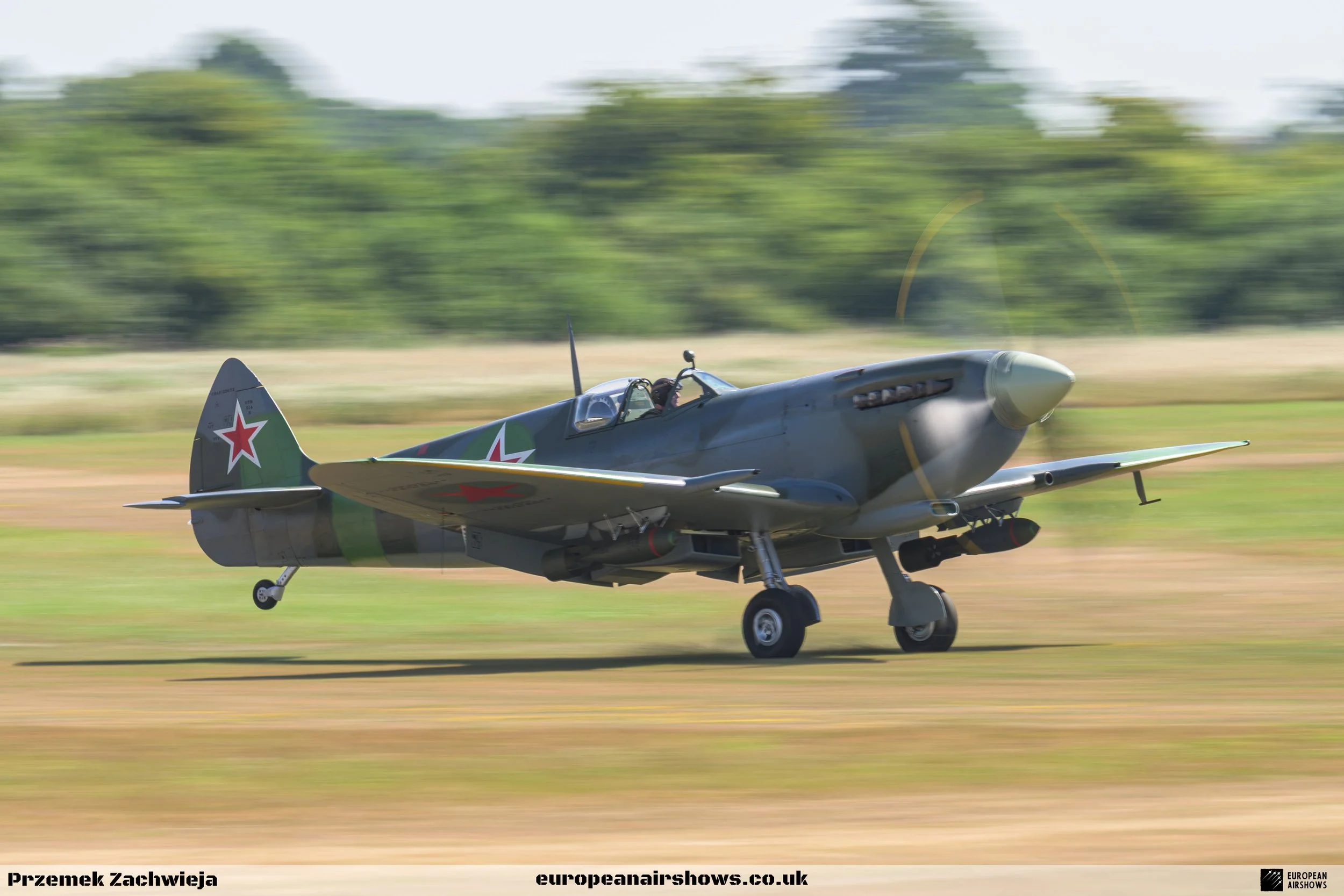
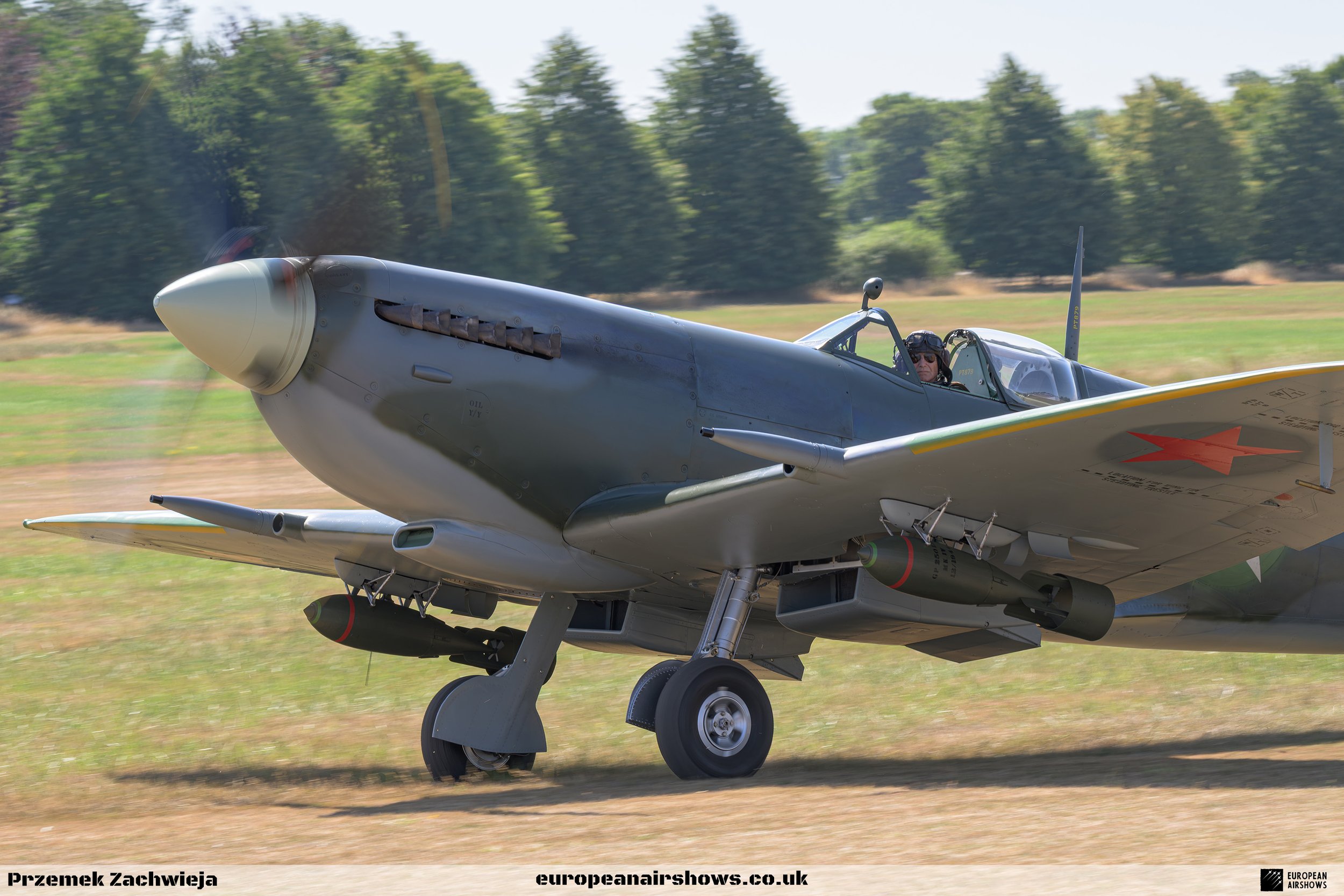
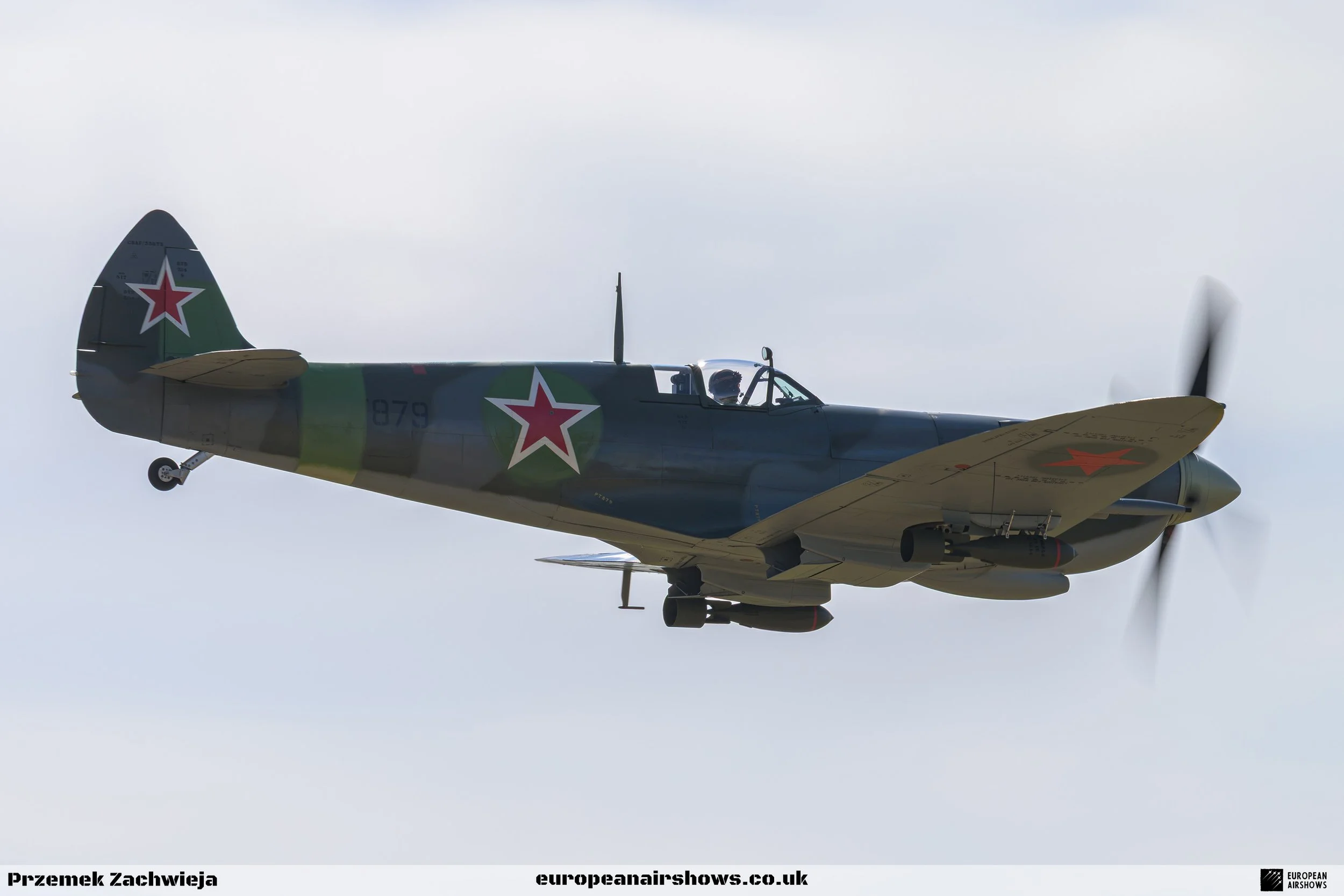
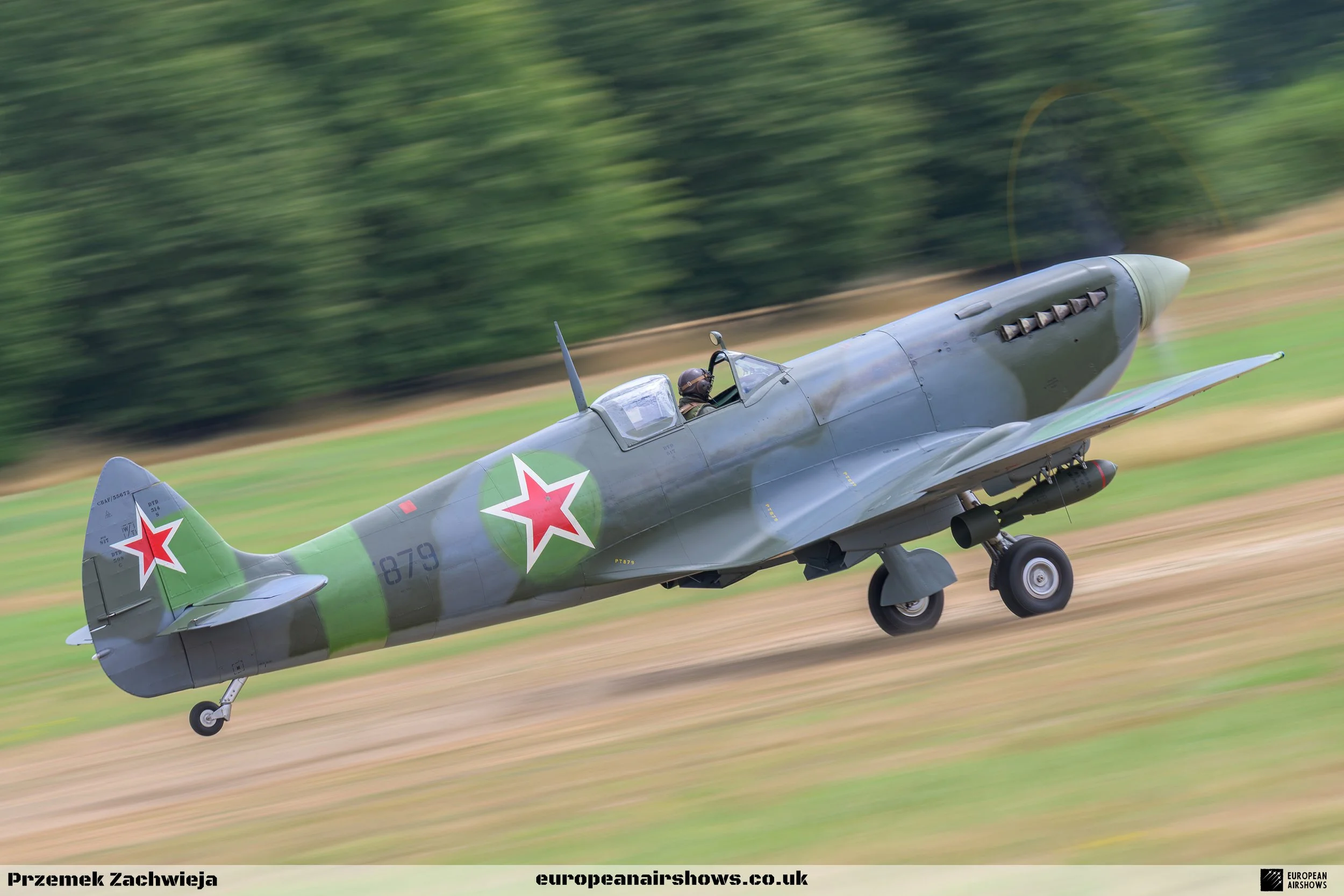
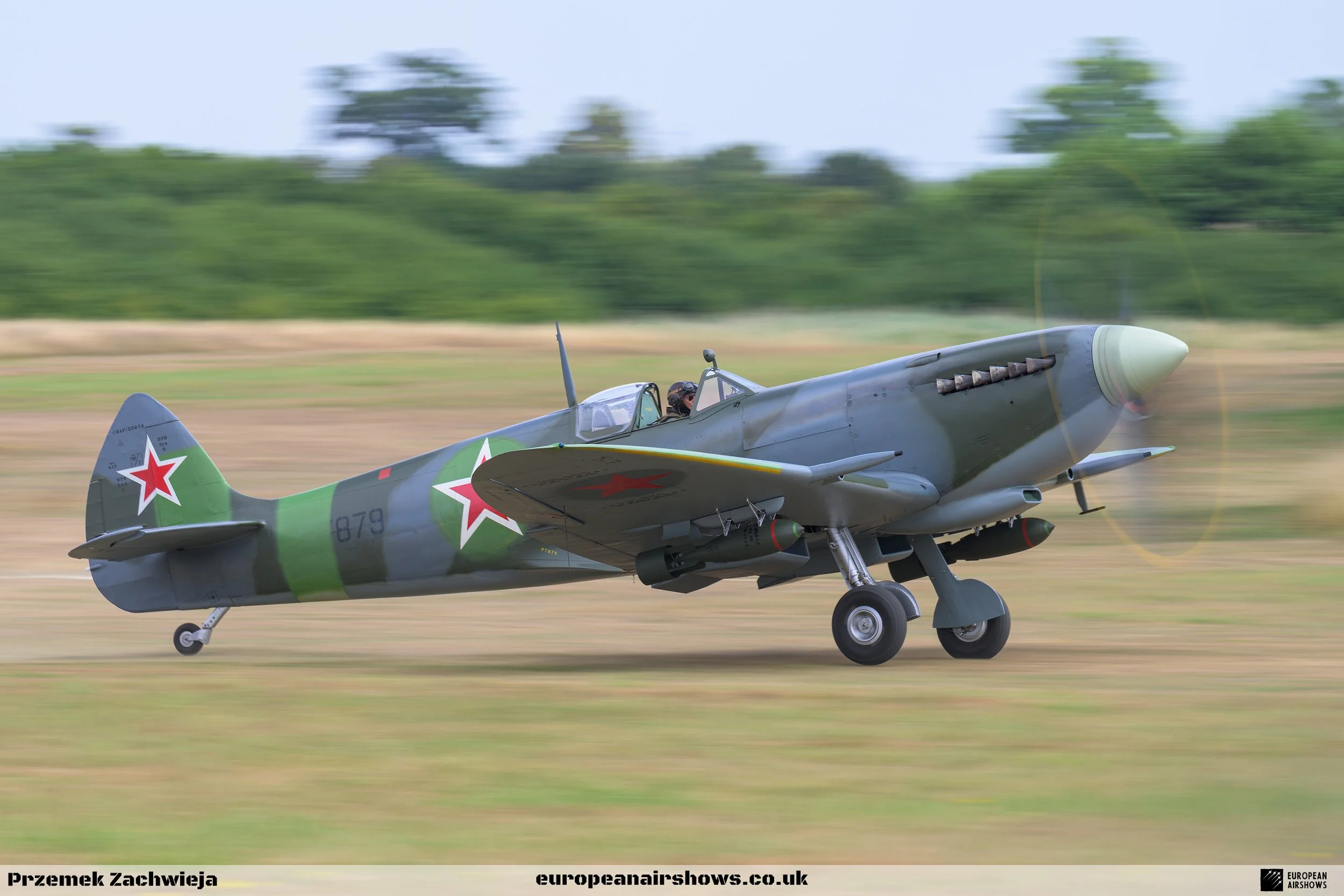
Hangar 11’s Mk IX PT879, known as the ‘Russian Spitfire’, was impossible to overlook. In addition to its Soviet markings, it carried inert replica 250lb bombs beneath its wings, presenting a configuration rarely associated with preserved Spitfires in Britain.
PT879 was delivered through the Lend-Lease programme to Murmansk in October 1944 and served with the Soviet 2nd Squadron, 767th Fighter Aviation Regiment. It was damaged during a training collision in May 1945 and remained in Russia until being recovered in 1997. Following restoration, it flew again in October 2020 and is believed to be the only airworthy Spitfire with genuine Soviet wartime service. It represents one of 1,328 Spitfires supplied to the Soviet Union. Hangar 11’s aircraft history tells a restoration story every bit as extraordinary as the aeroplane’s operational career.
PT879 was not scheduled to display and departed before the main flying programme, but that did at least allow spectators to see and hear the aircraft in action rather than only view it behind the crowdline.
From the Camel to the Spitfire
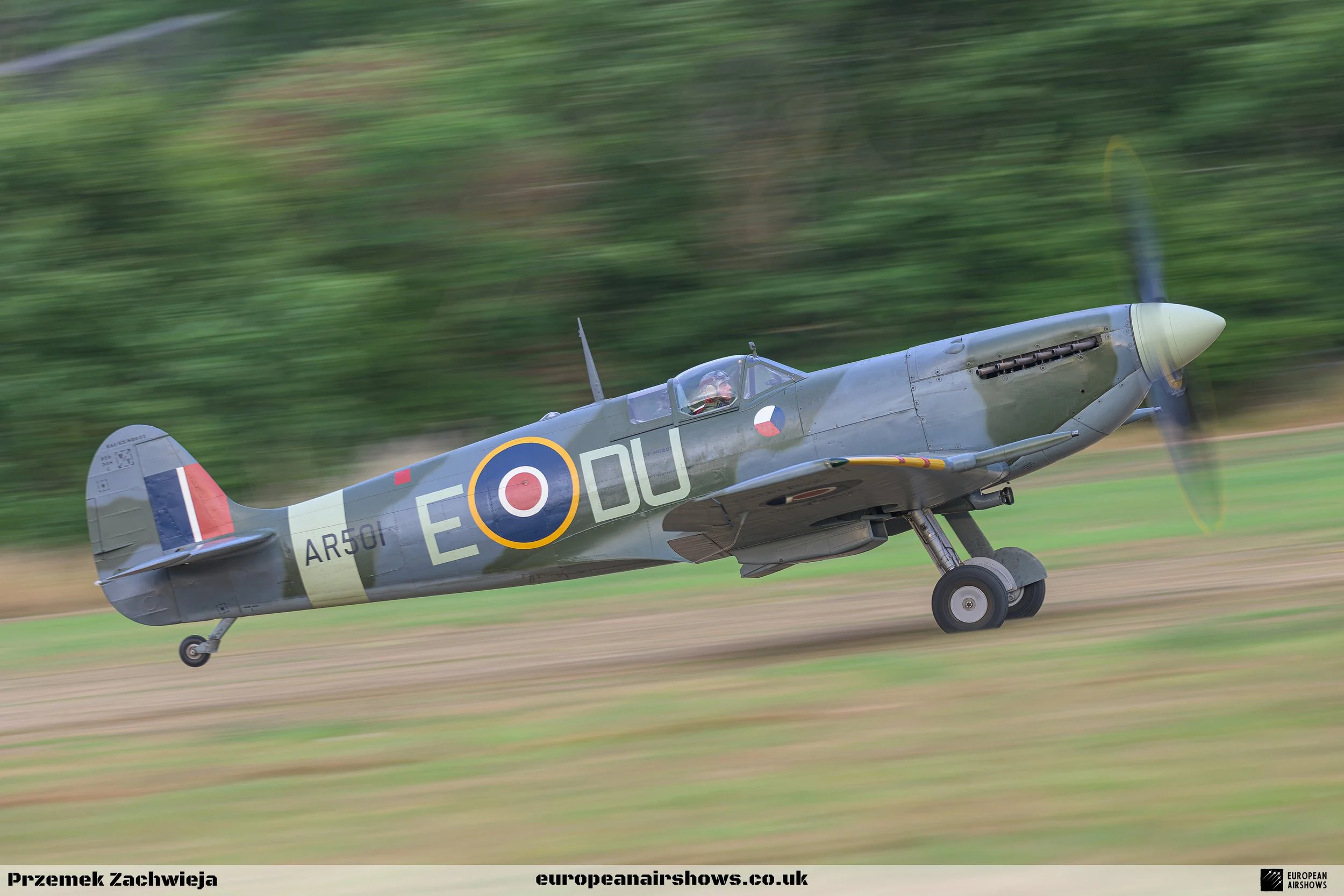
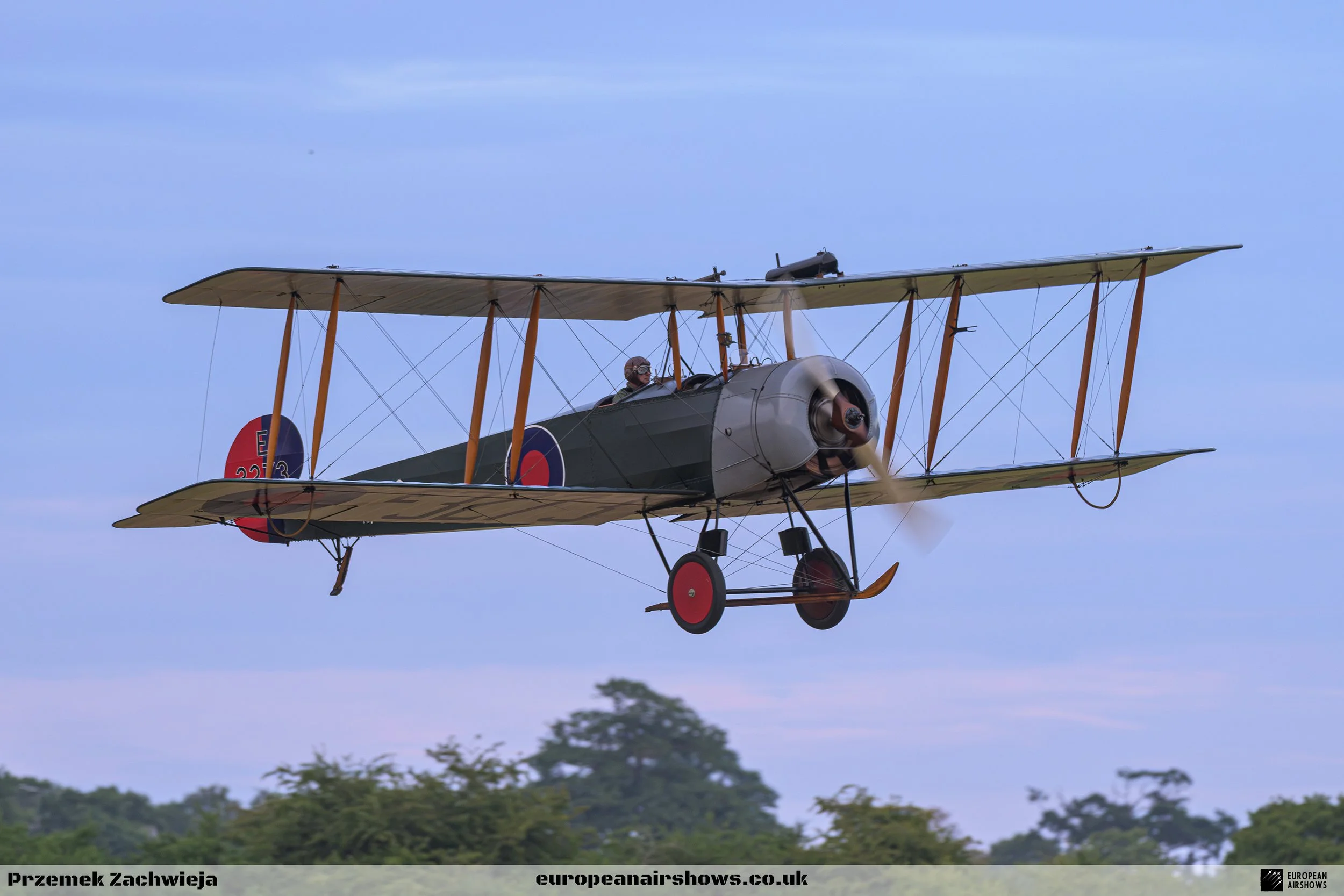
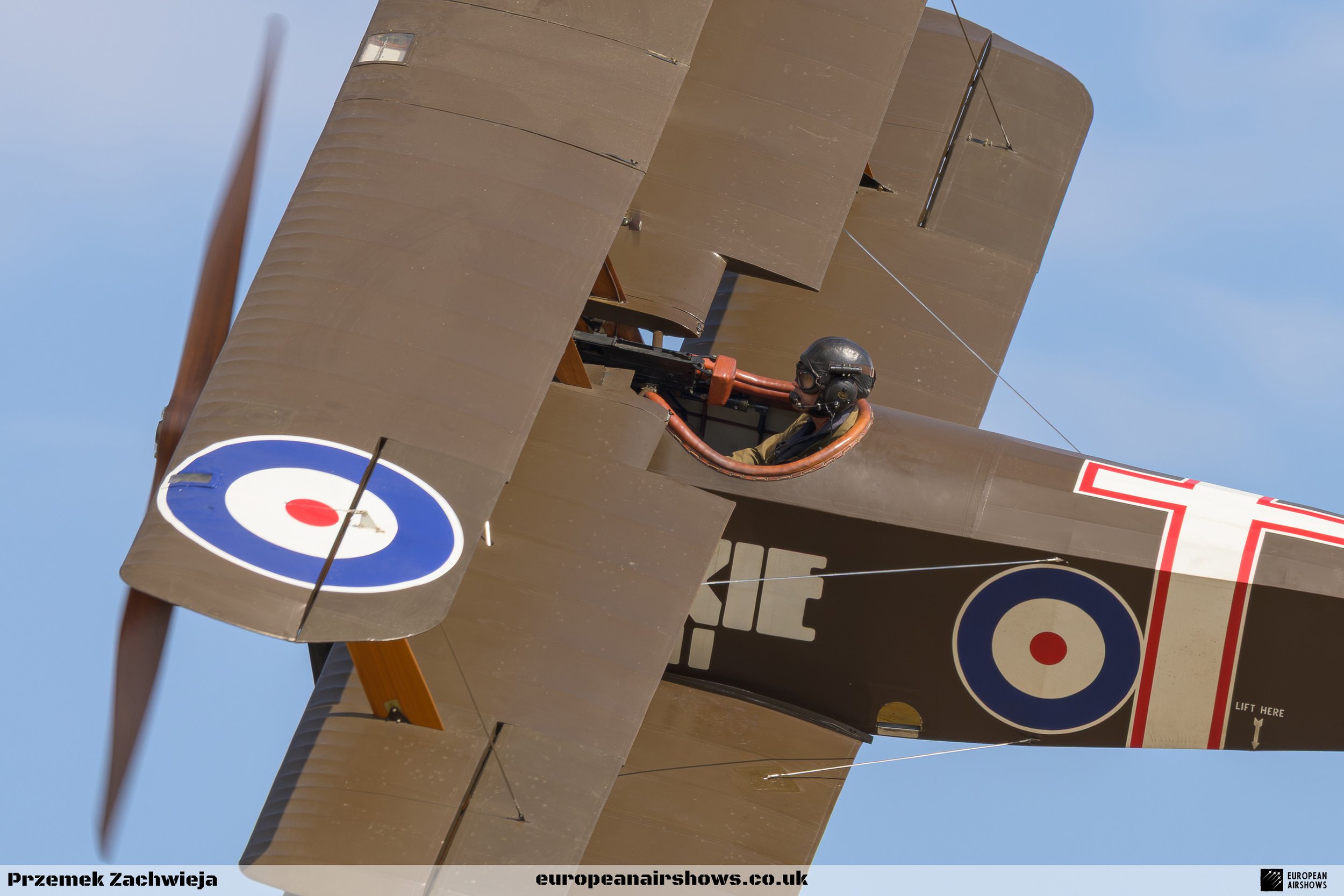
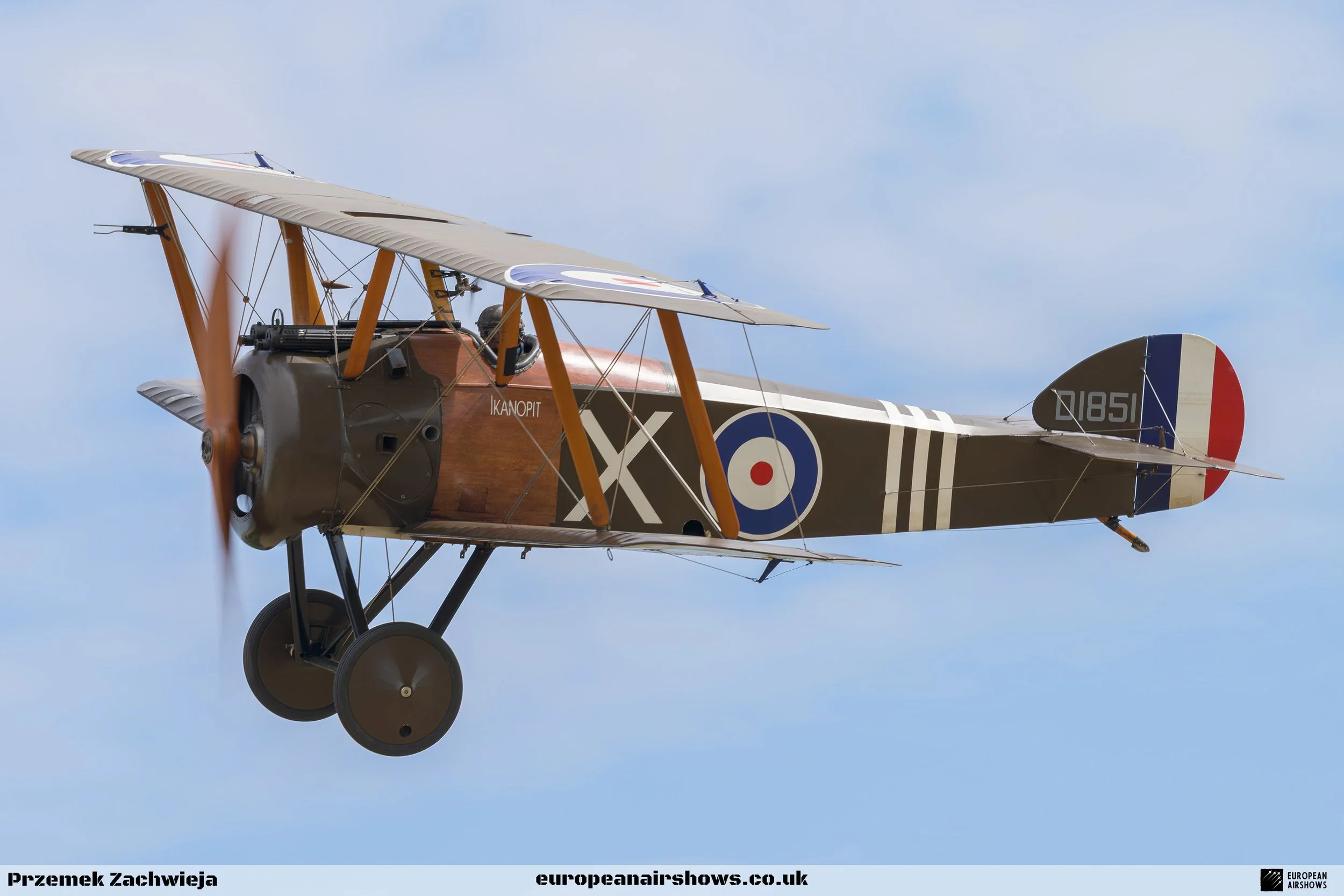
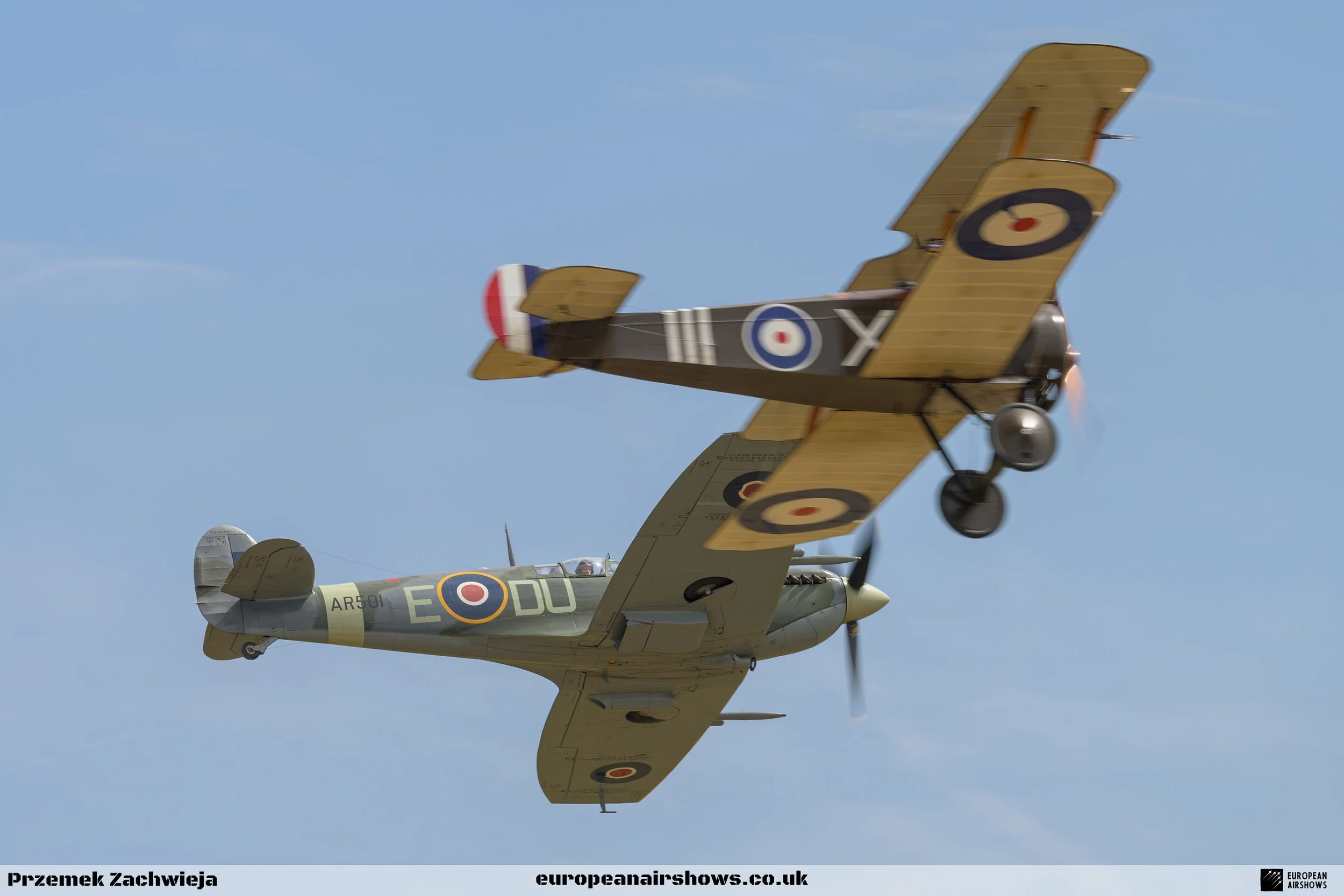
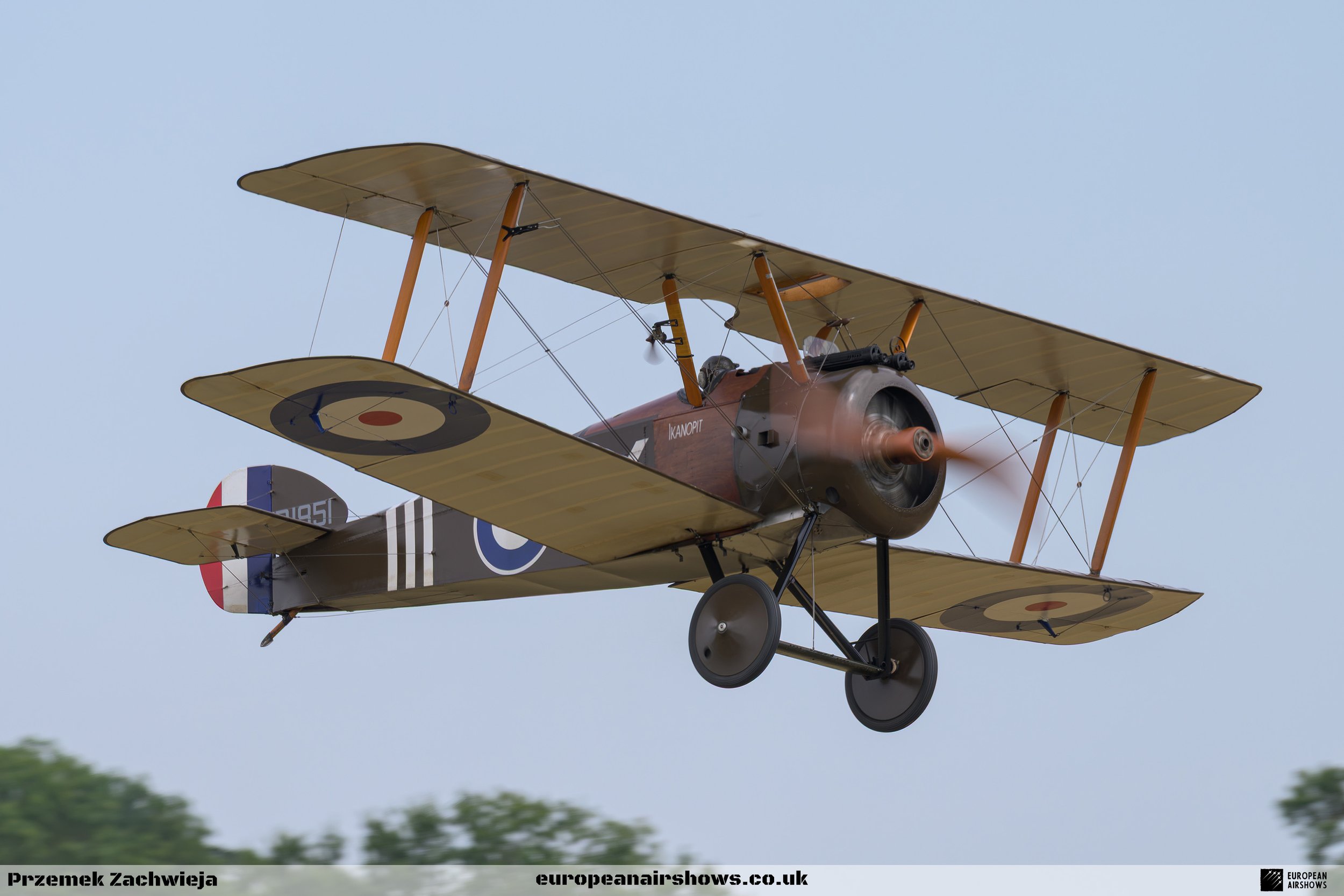
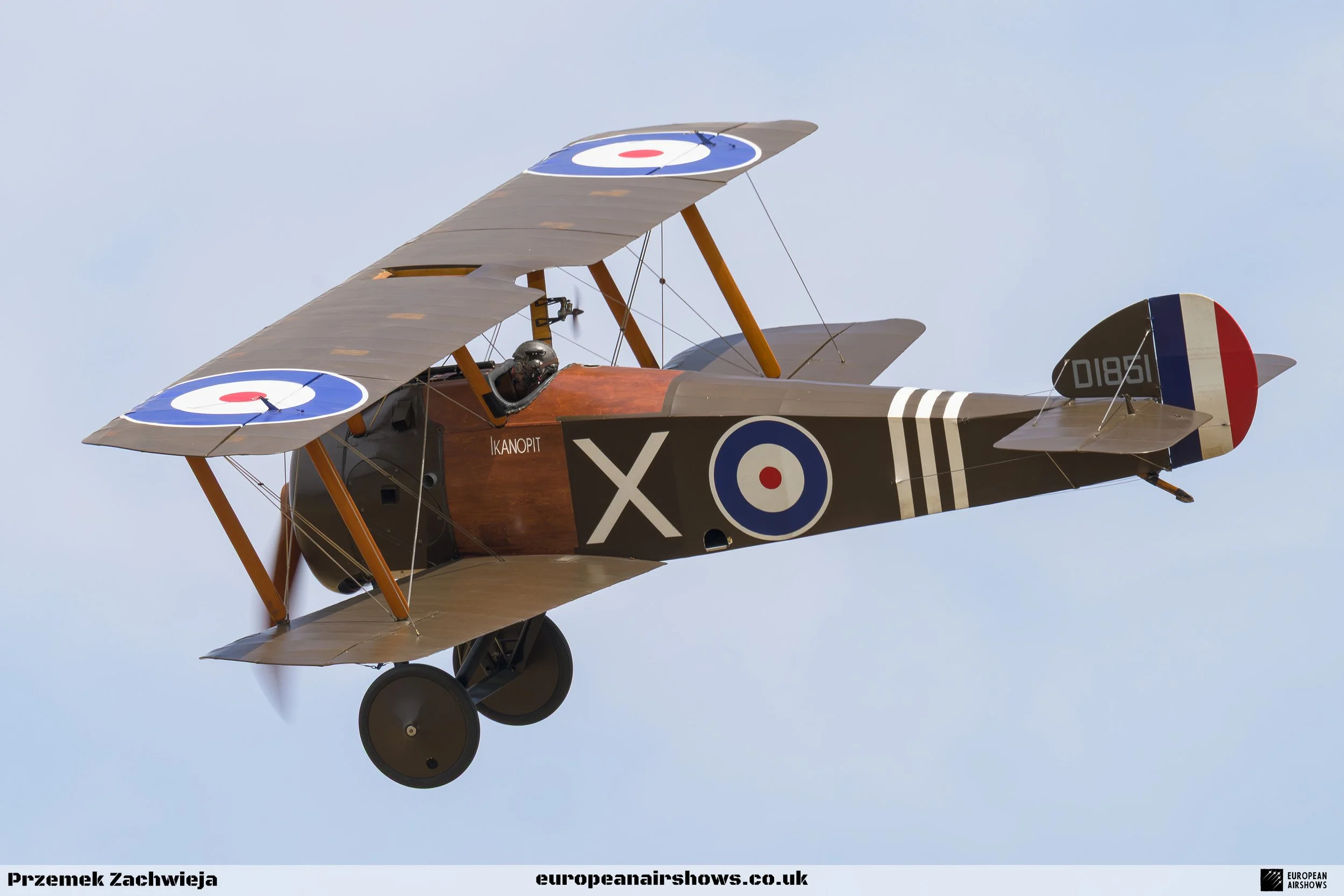
At precisely 2pm, Shuttleworth’s Spitfire LF Mk Vc AR501 opened the flying in company with the Collection’s Sopwith F.1 Camel reproduction. It was an inspired way to begin.
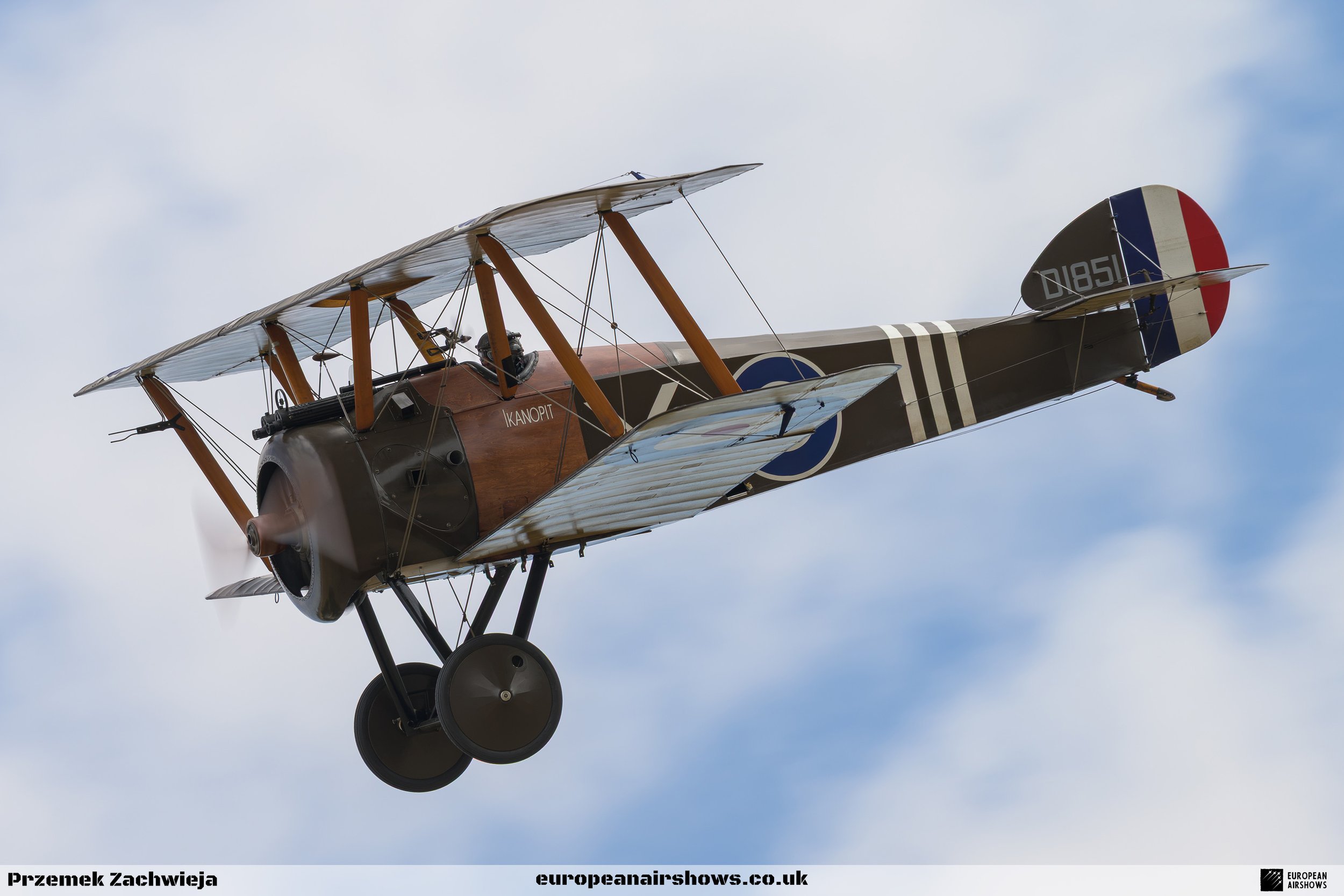
Separated by little more than two decades, the Camel and Spitfire belonged to entirely different generations of fighter design. One was a rotary-engined, open-cockpit biplane whose handling could punish the unwary; the other was a streamlined monoplane with retractable undercarriage, enclosed cockpit and more than ten times the power.
The Spitfire pilot repeatedly worked to pass the much slower Camel at show centre, giving photographers the rare opportunity to place First and Second World War fighters in the same frame. The speed difference made the formation anything but straightforward, but that was precisely what made it interesting. It was not an immaculate close formation; it was a moving comparison between two eras.
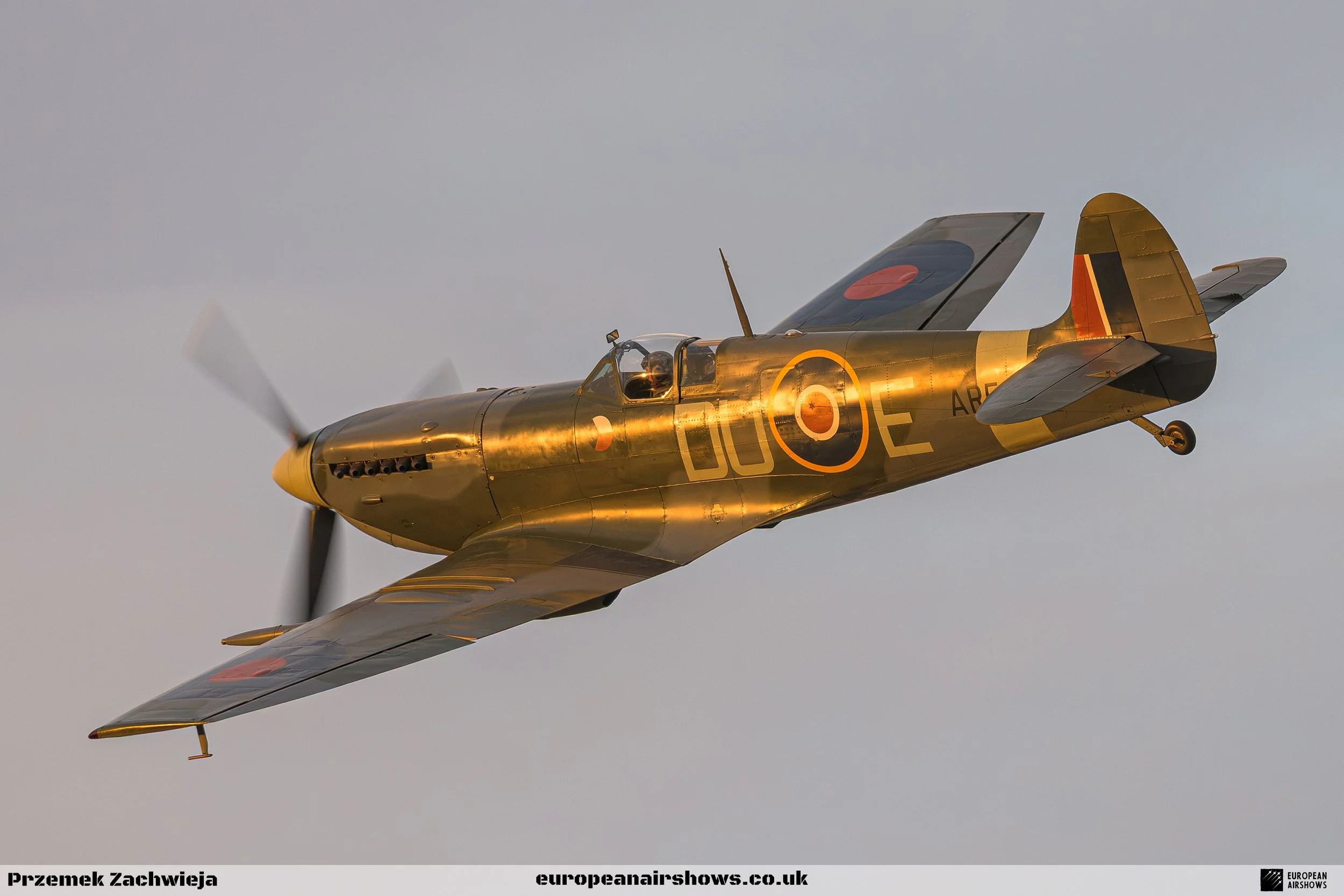
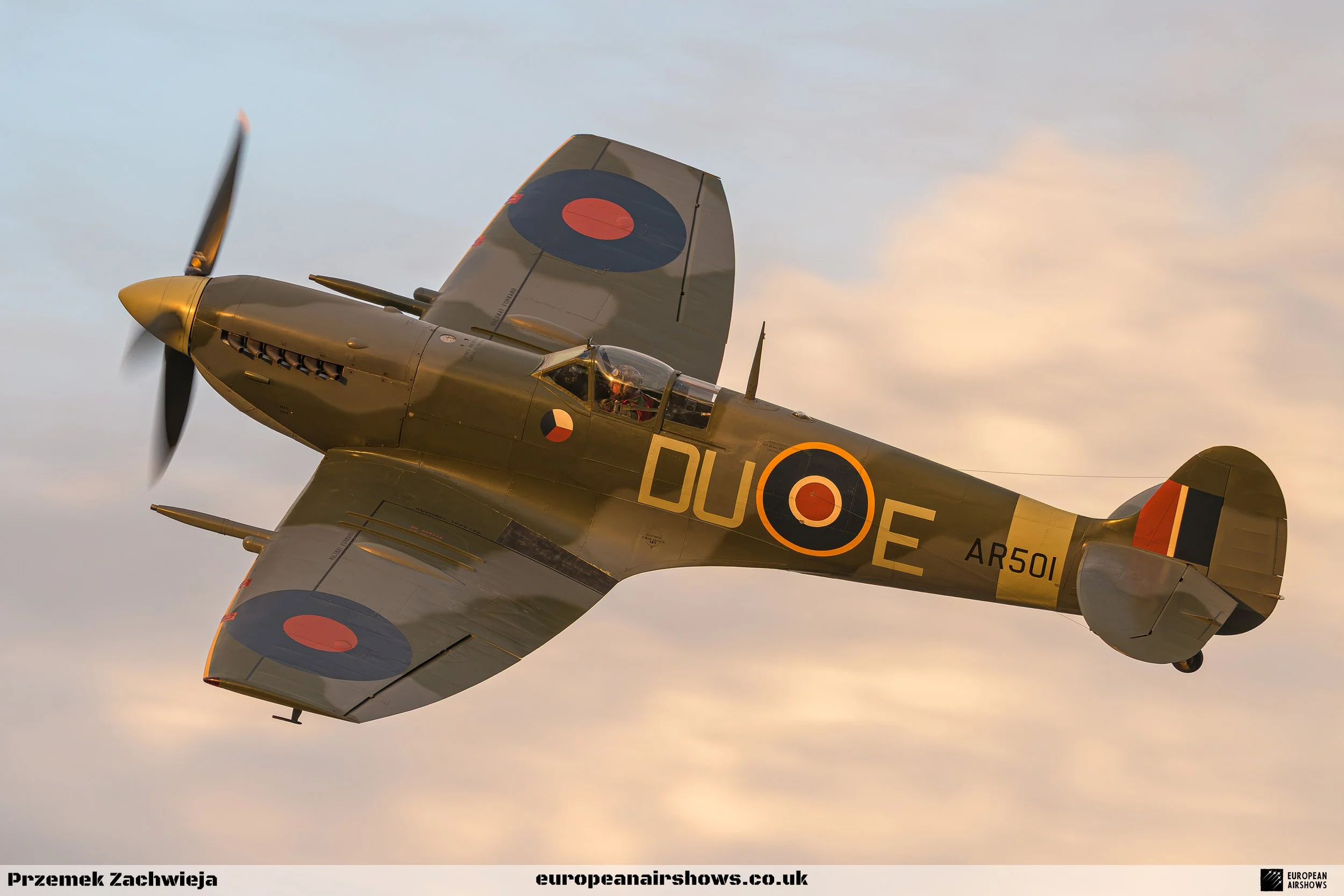
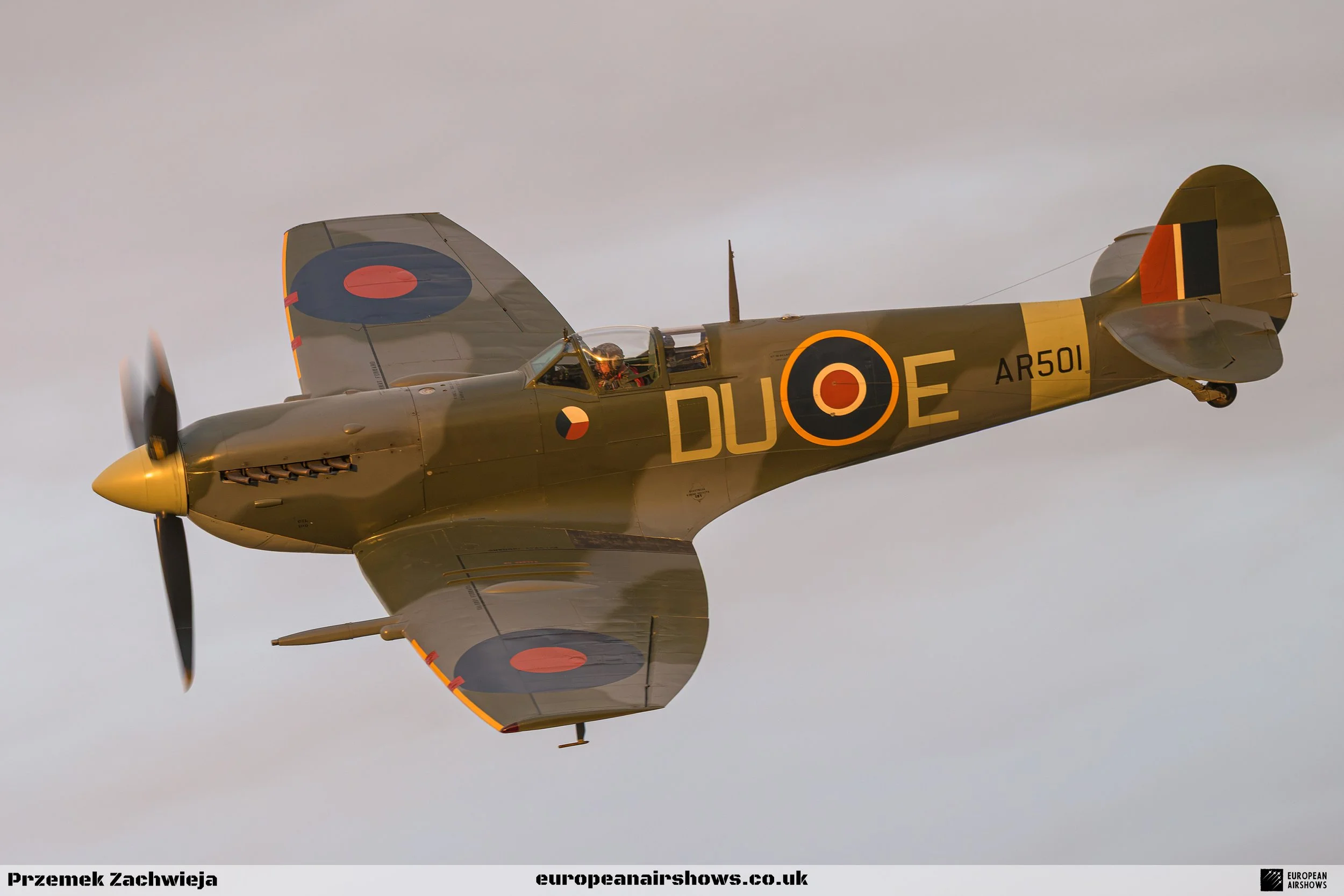
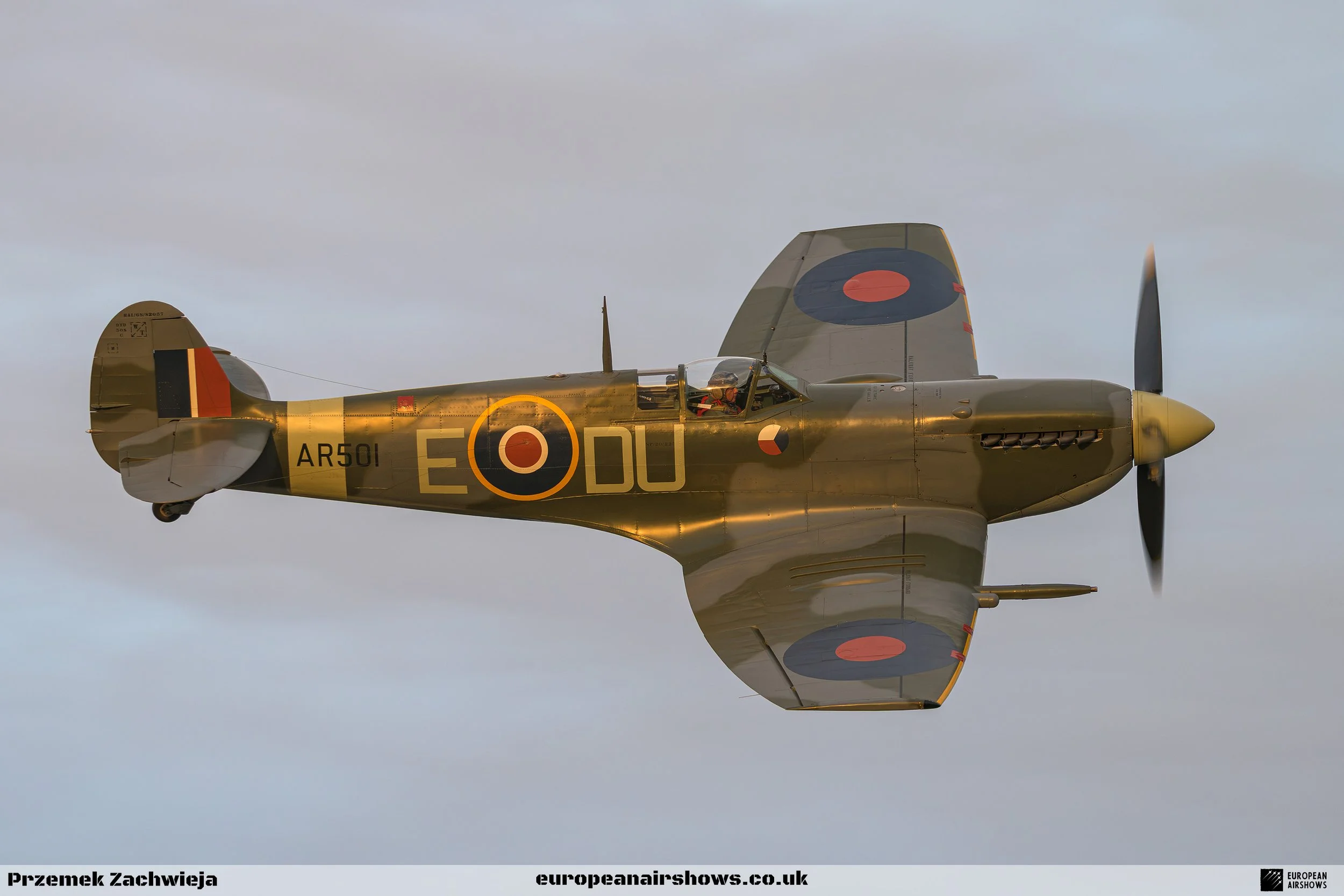
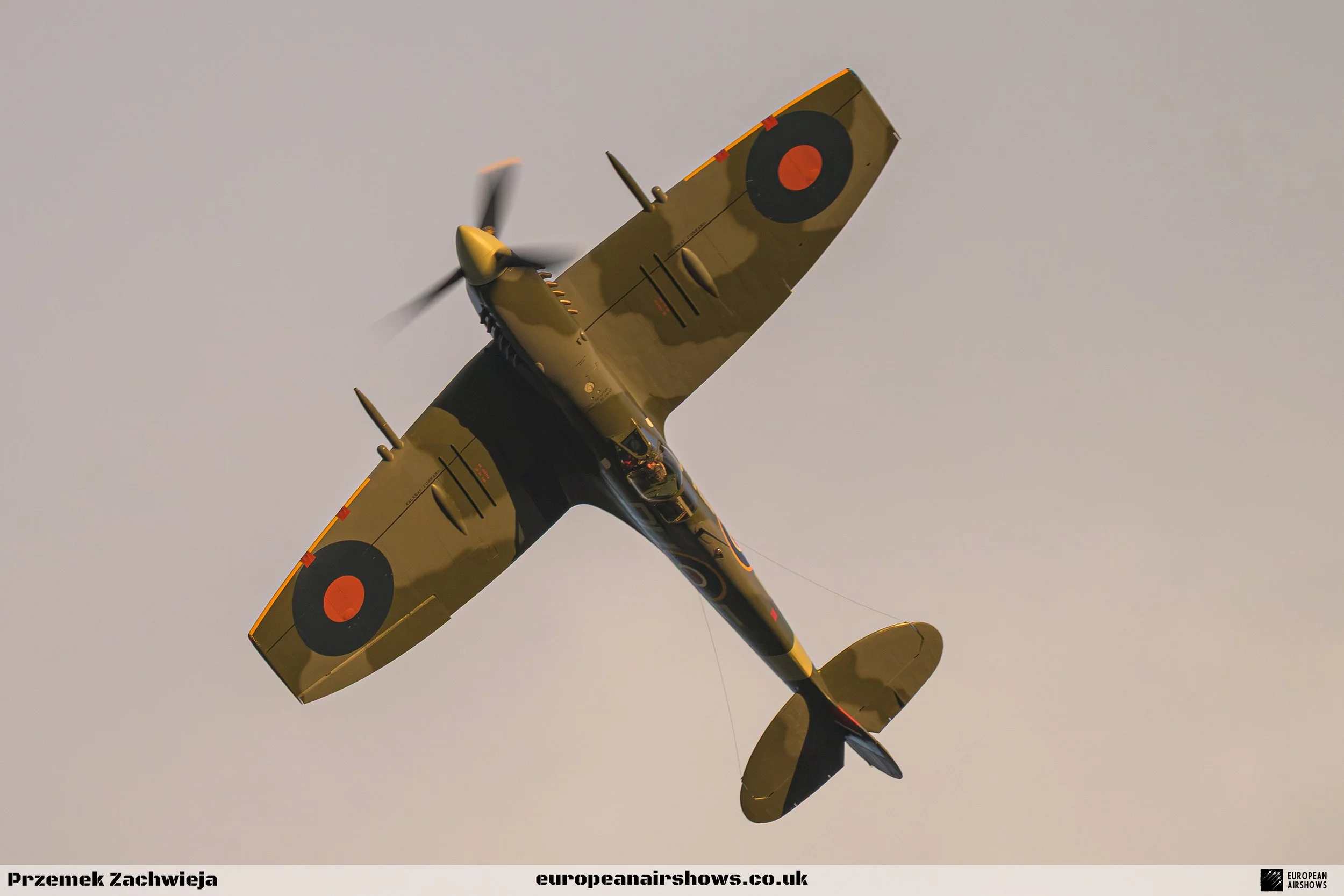
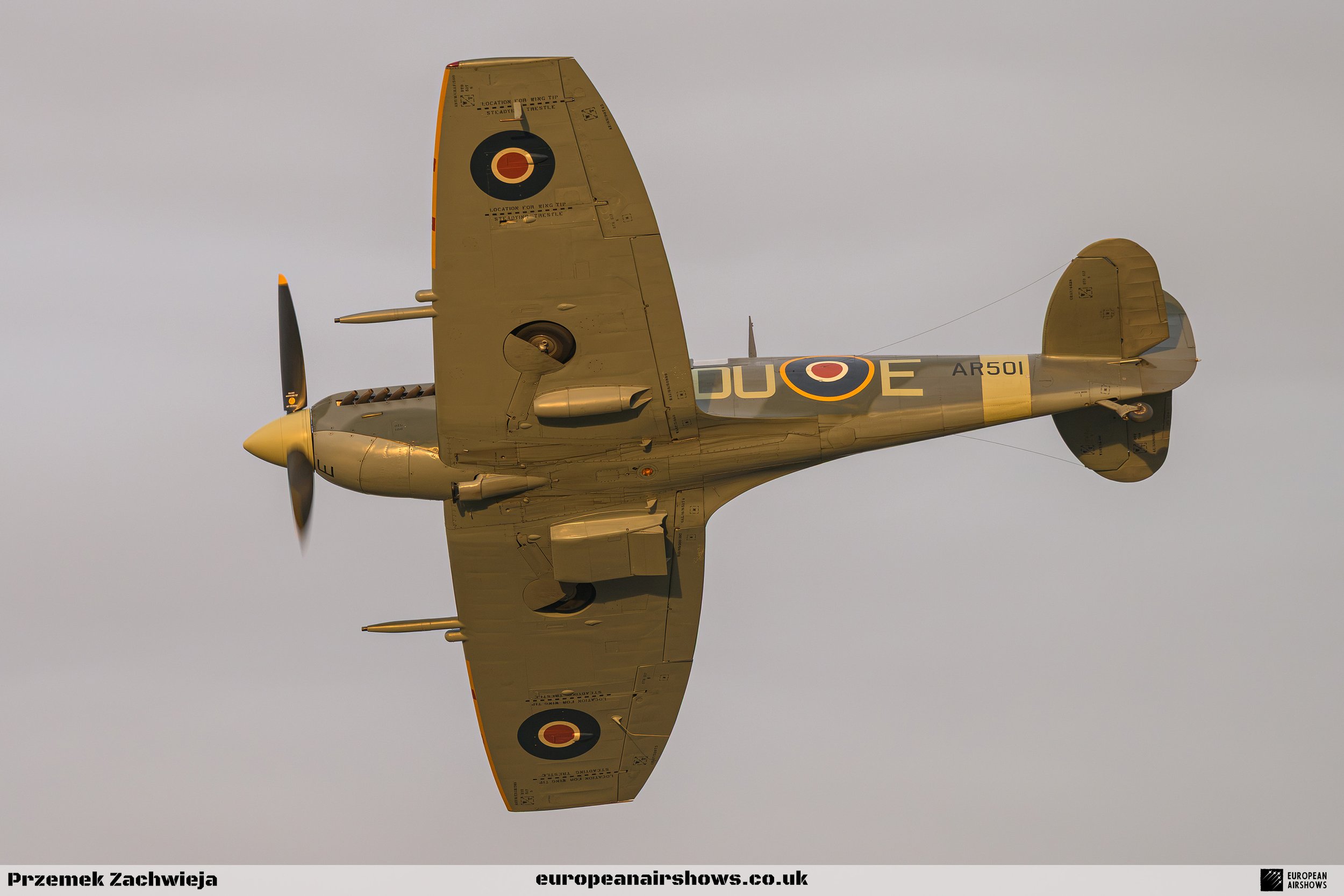
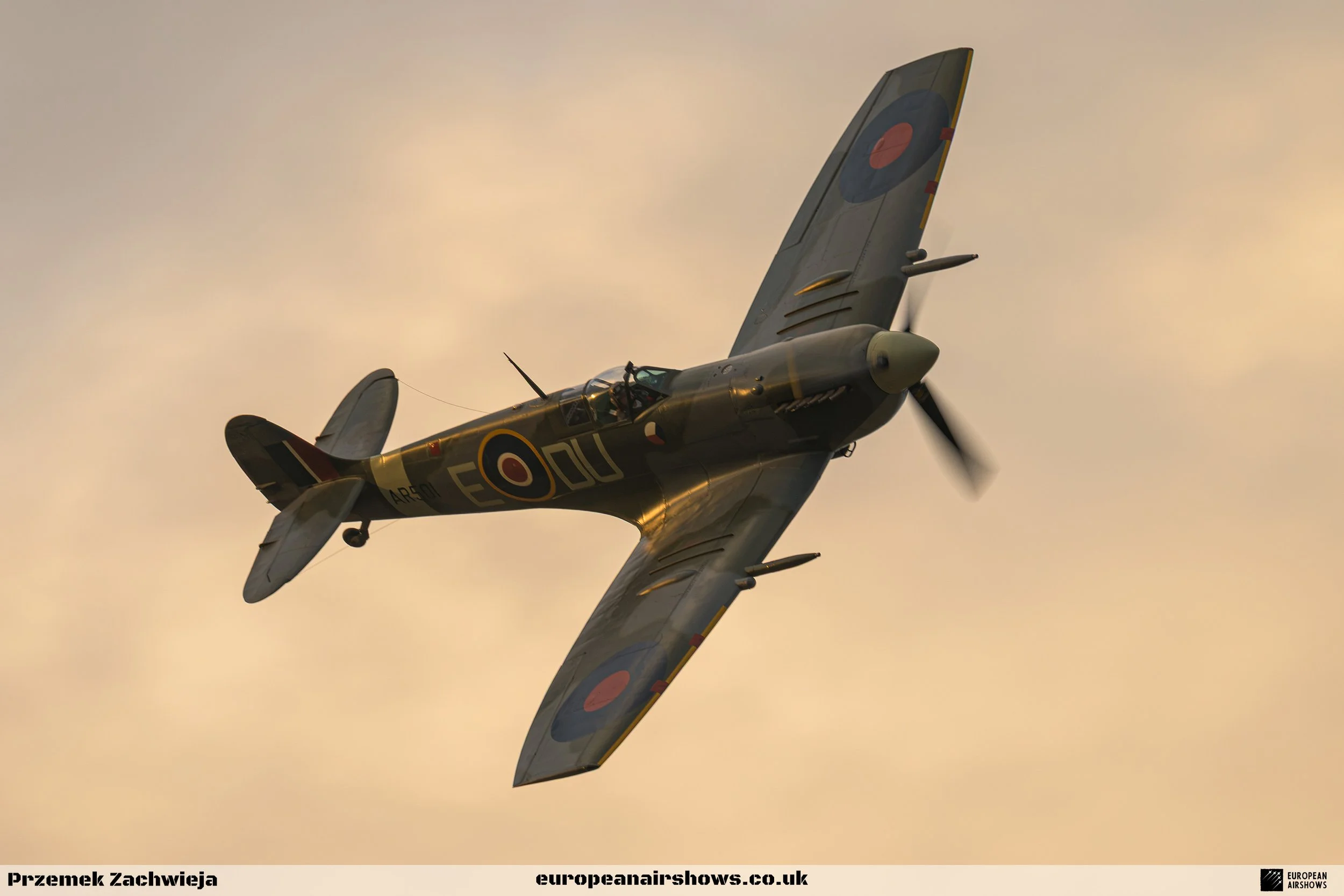
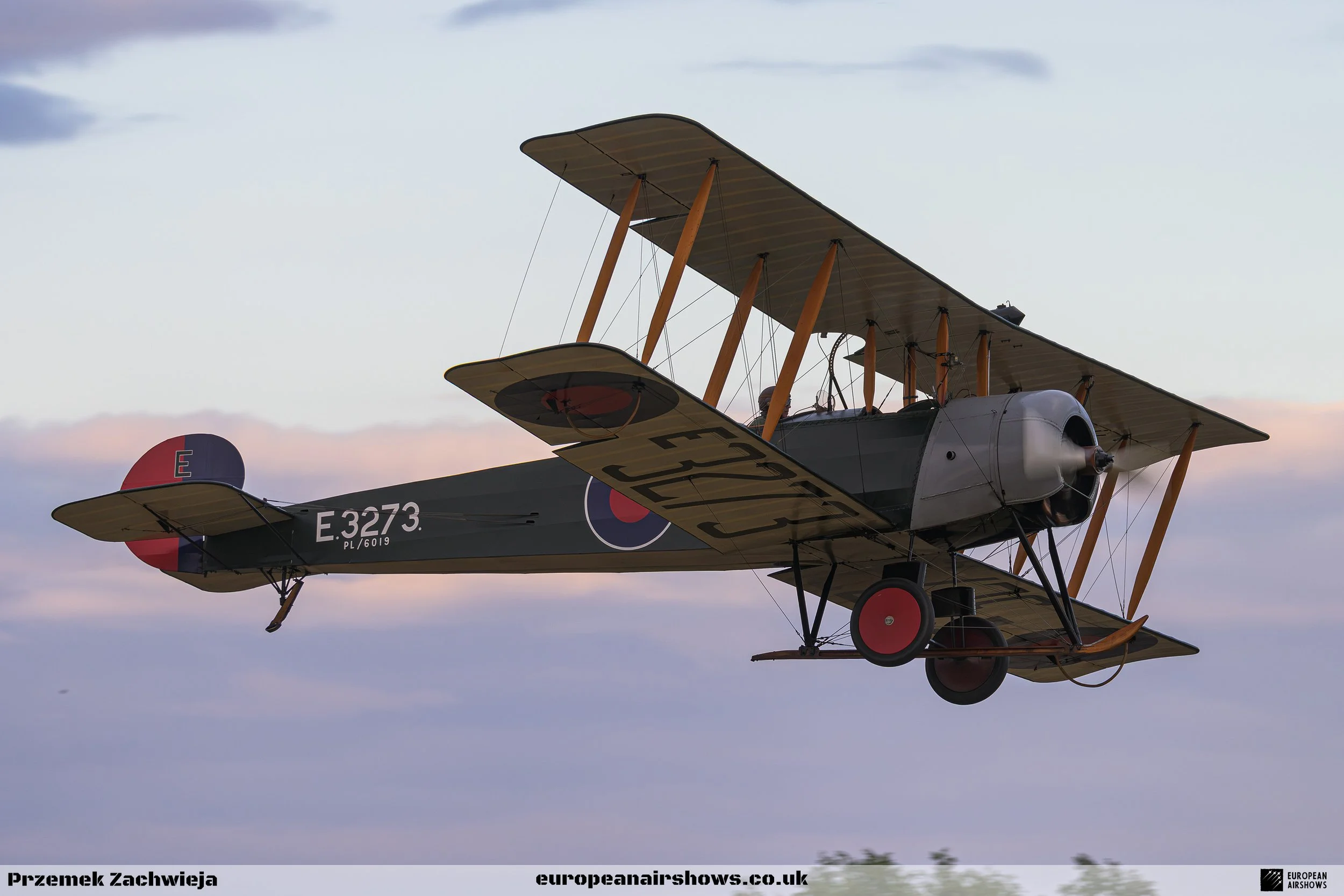
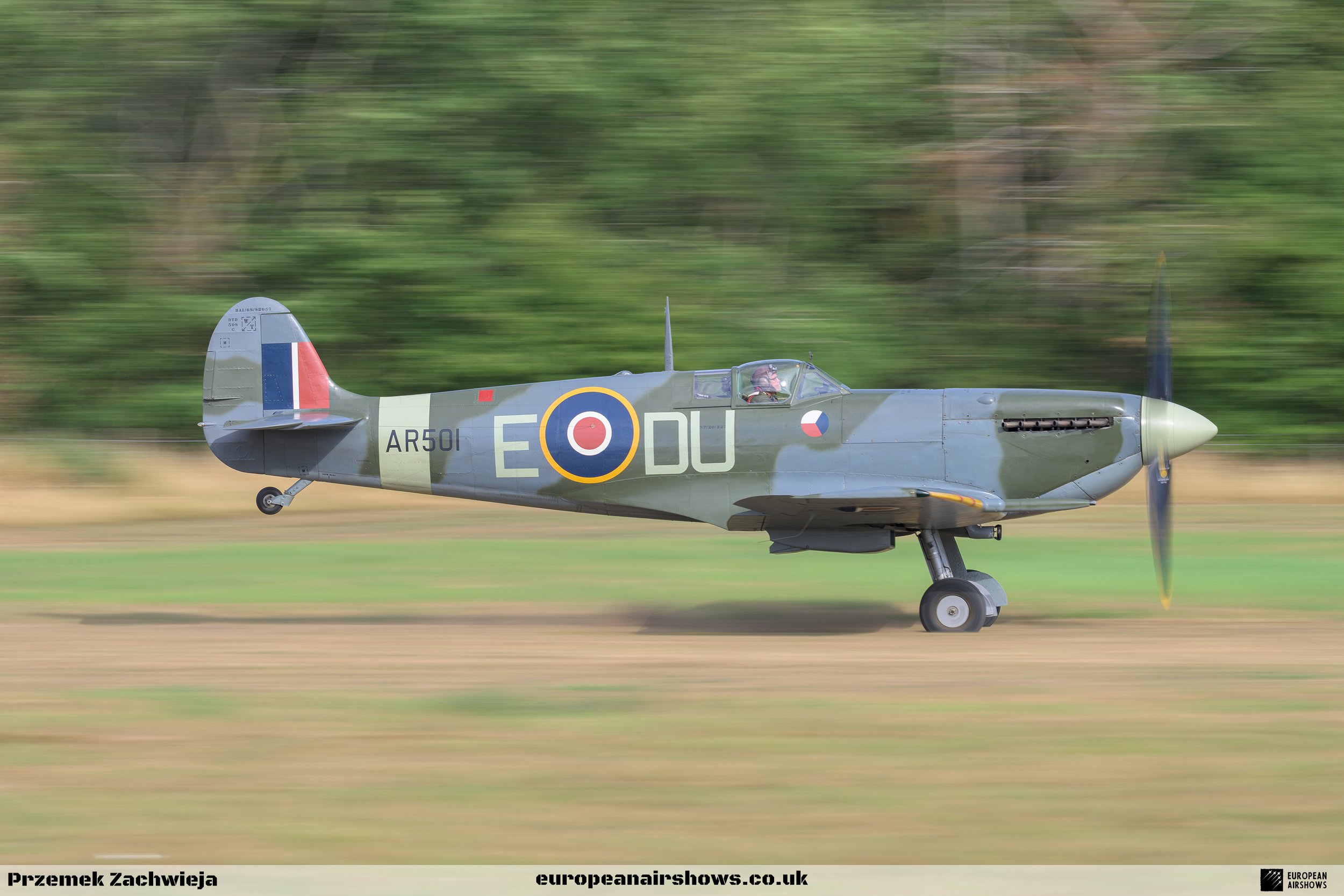
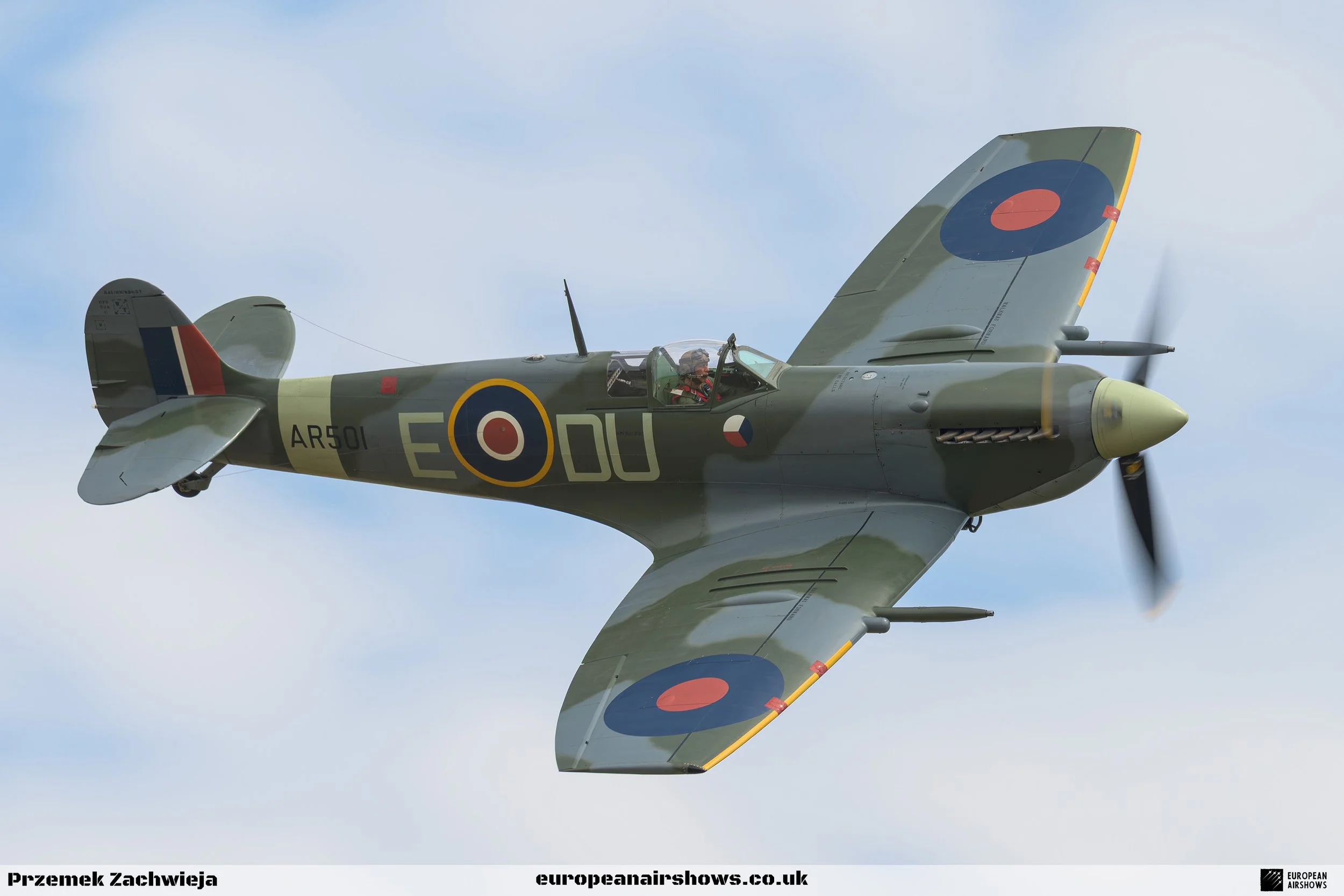
AR501 would become the thread running through the entire day. Built by Westland, the aircraft served with Nos 310 and 312 Czech Squadrons and was among the fighters which escorted USAAF bombers, including Memphis Belle. It joined the Shuttleworth Collection in 1961 and has therefore spent considerably longer at Old Warden than it ever did in military service. Shuttleworth’s history of AR501 explains its Czech connection and long preservation career.
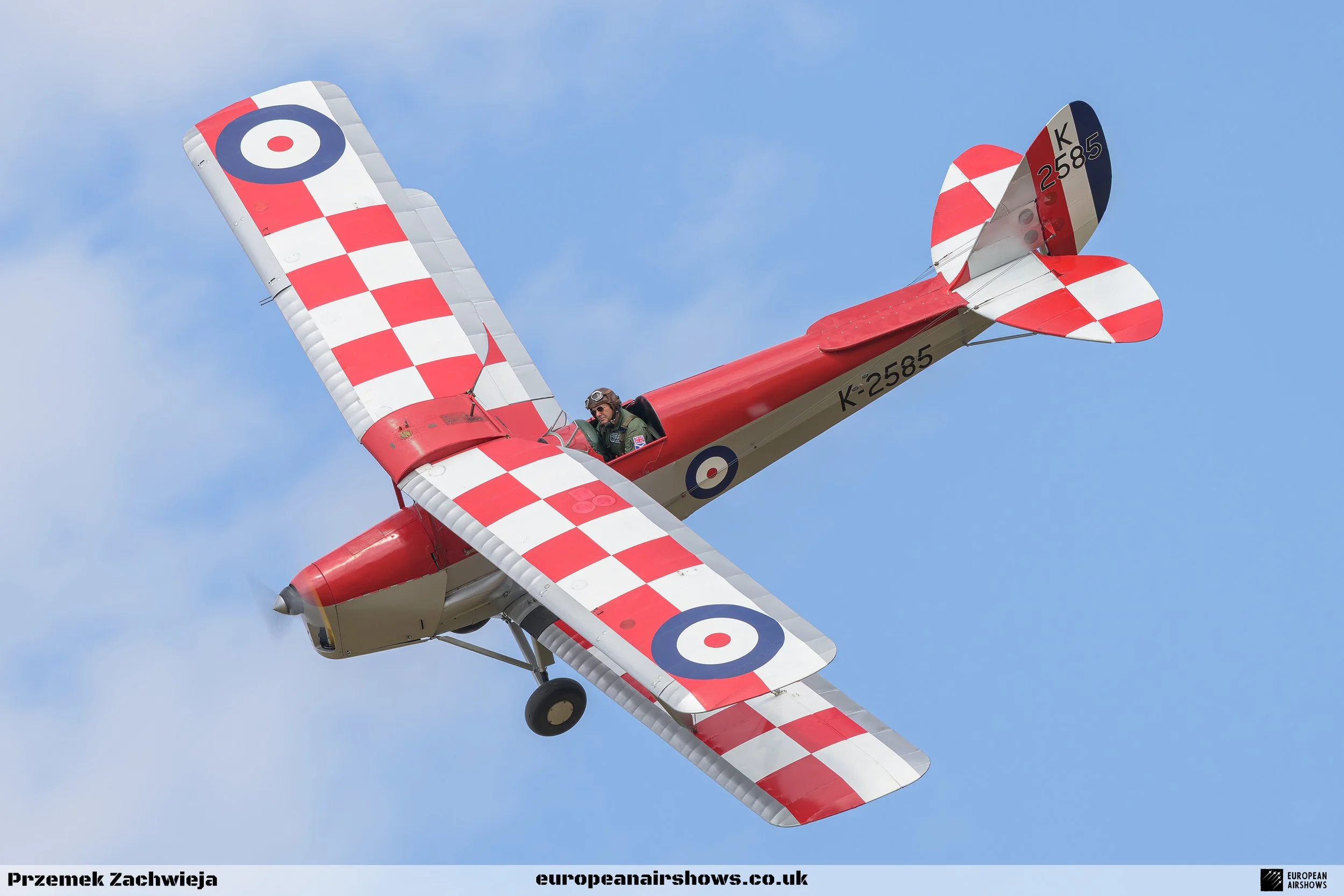
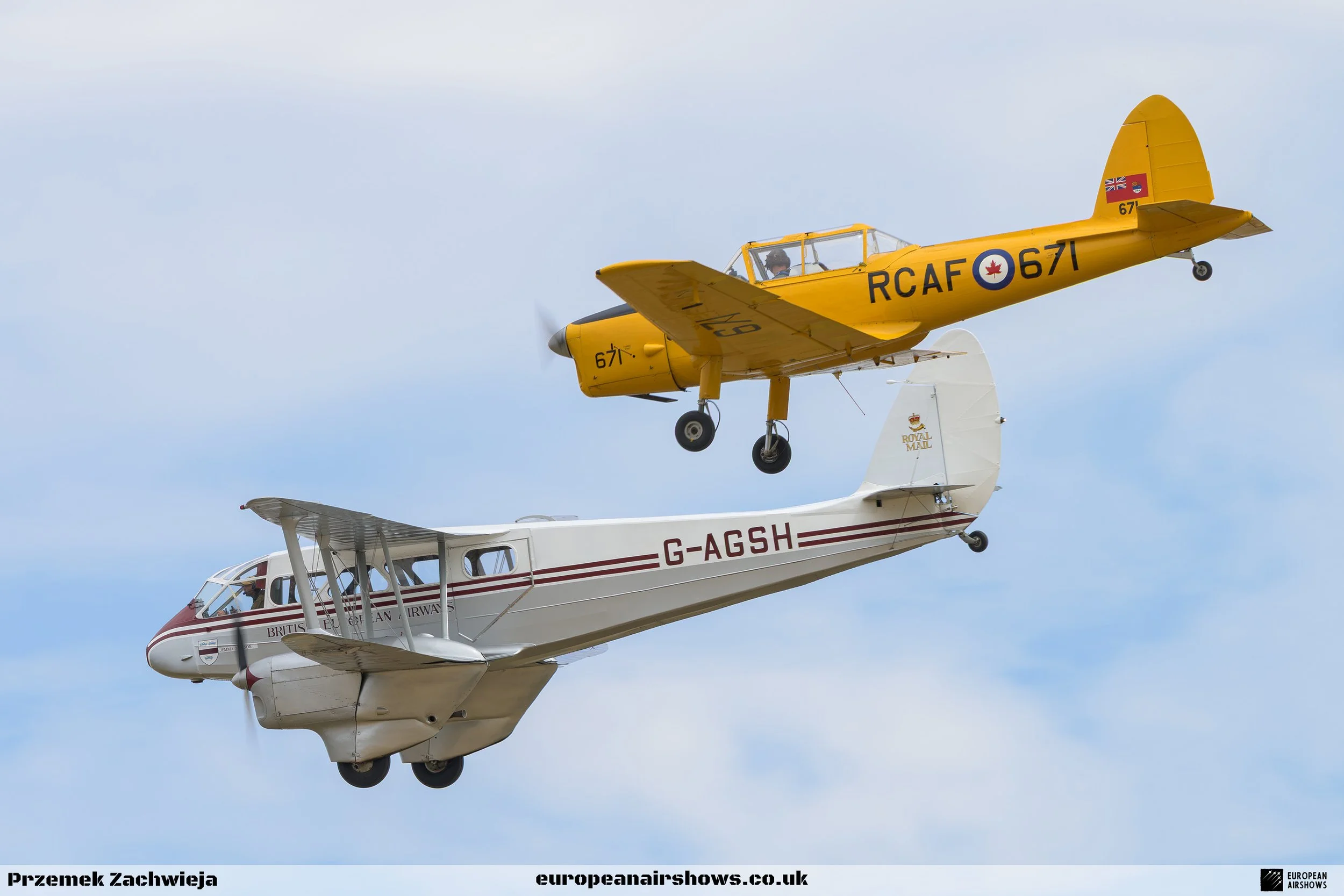
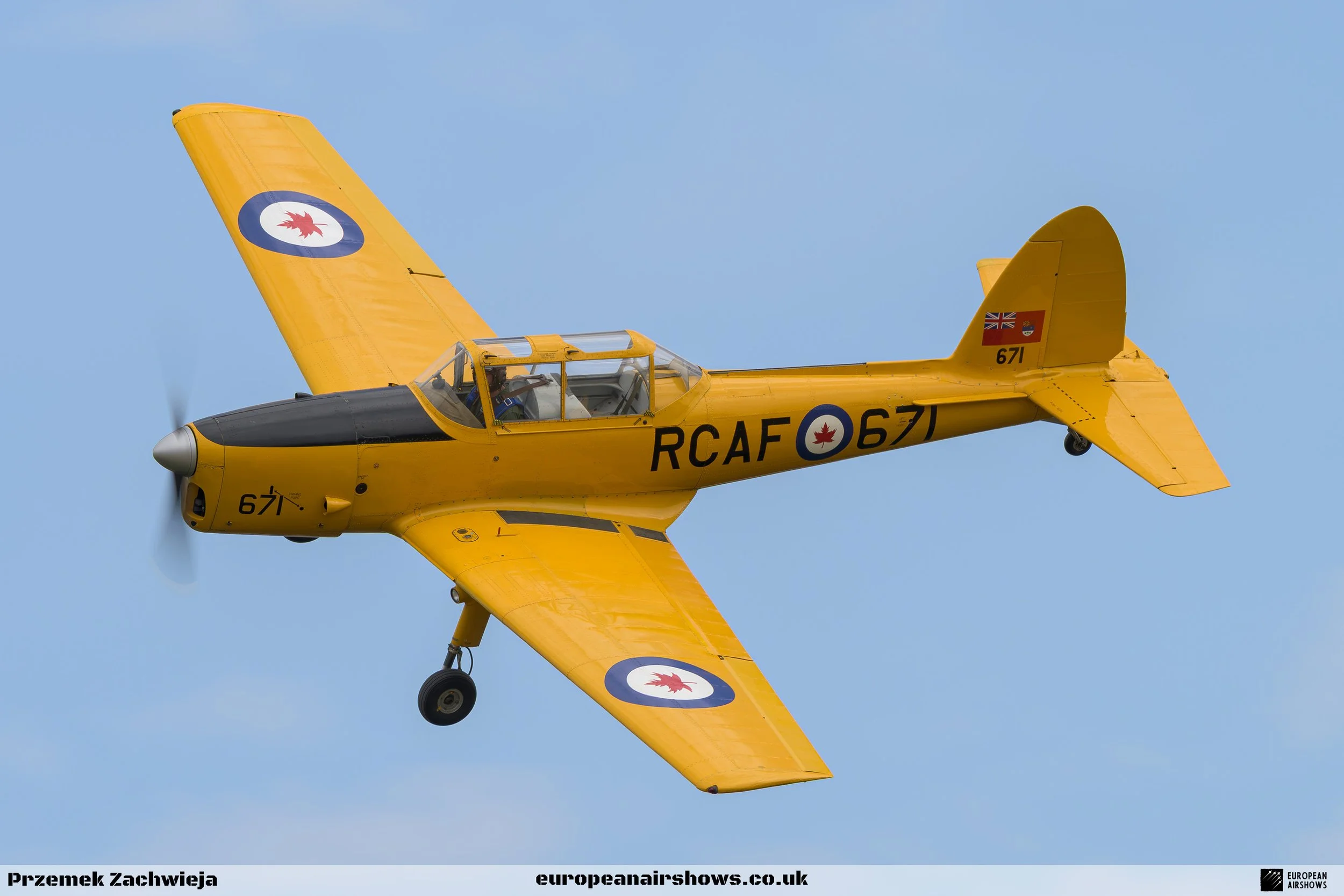
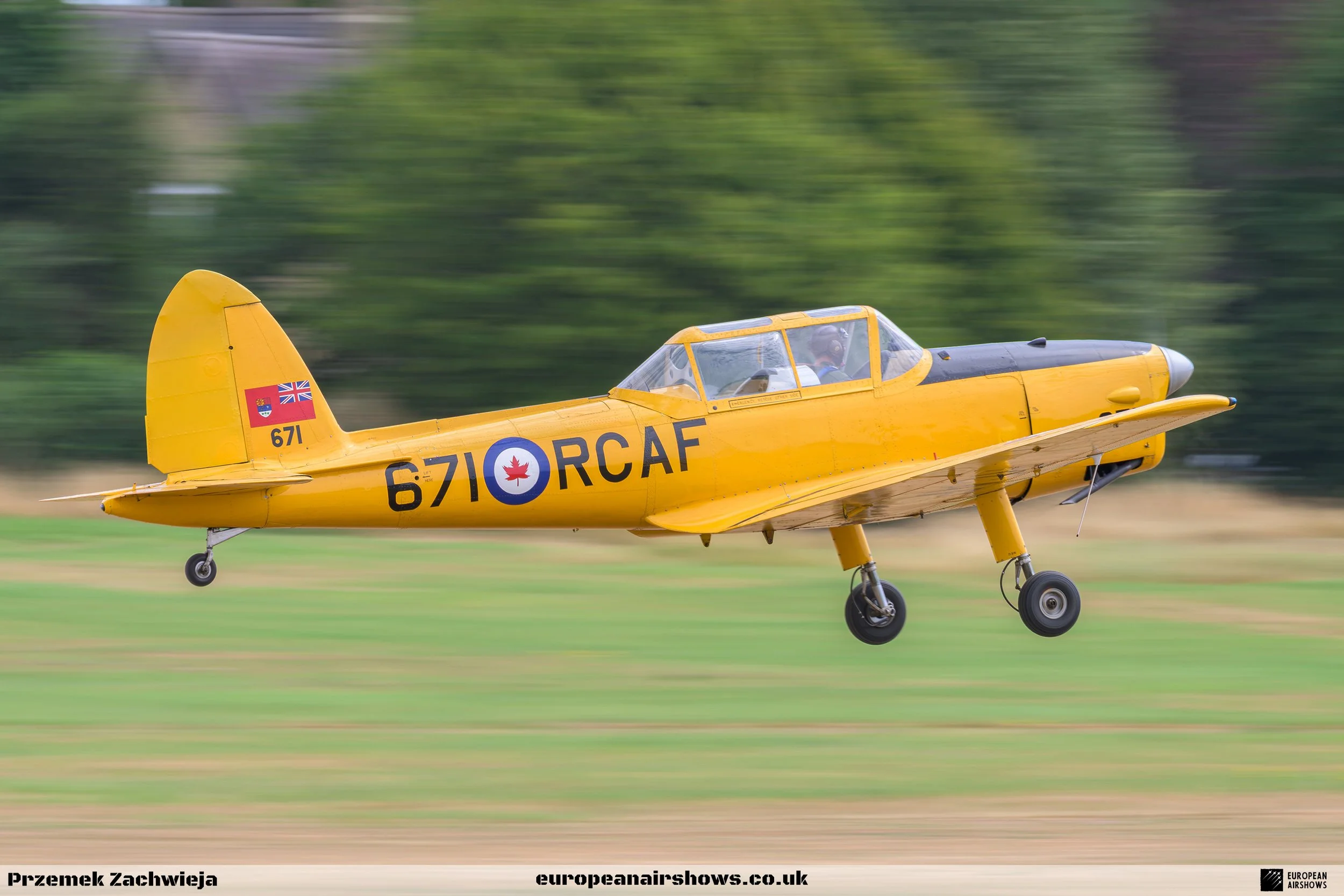
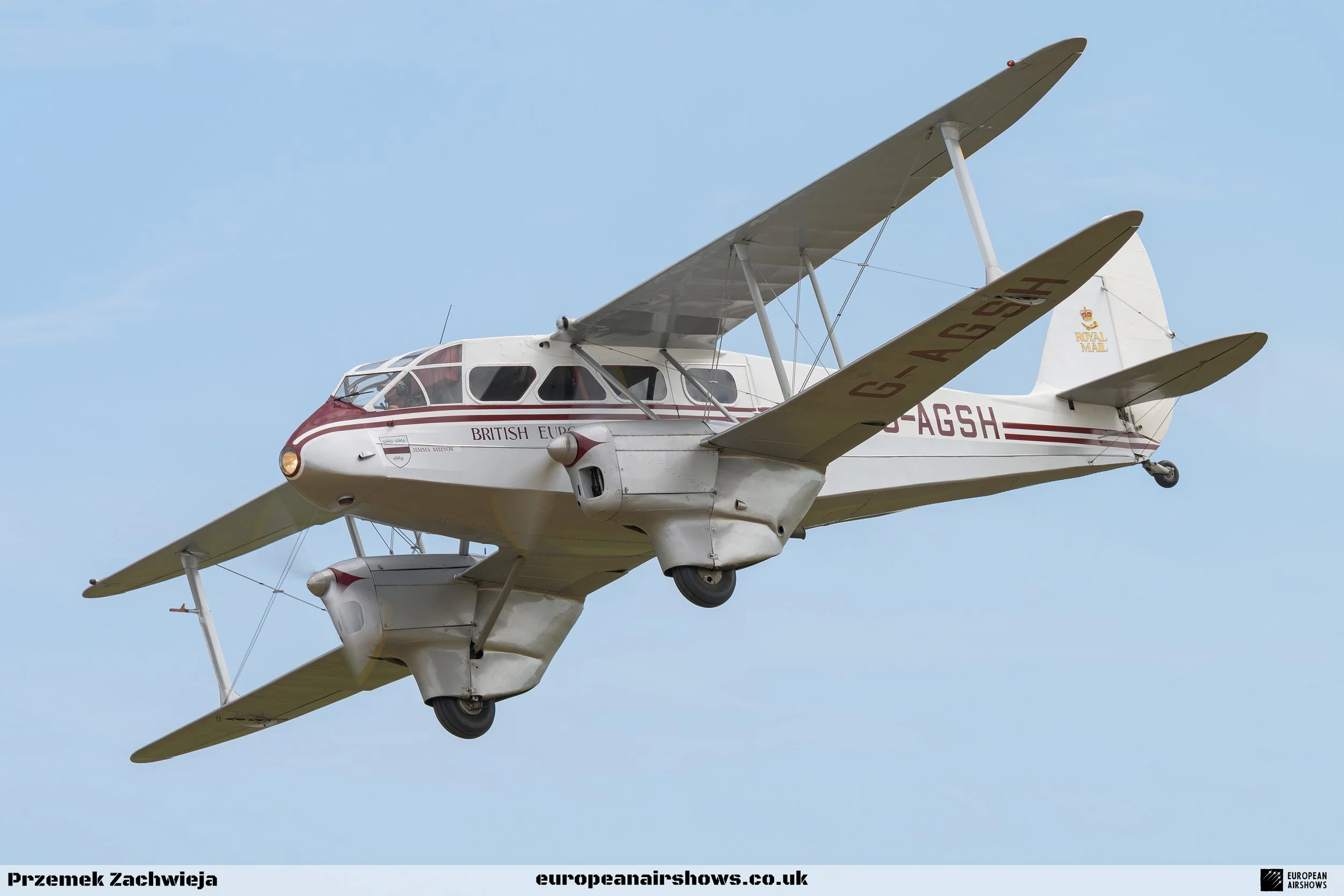
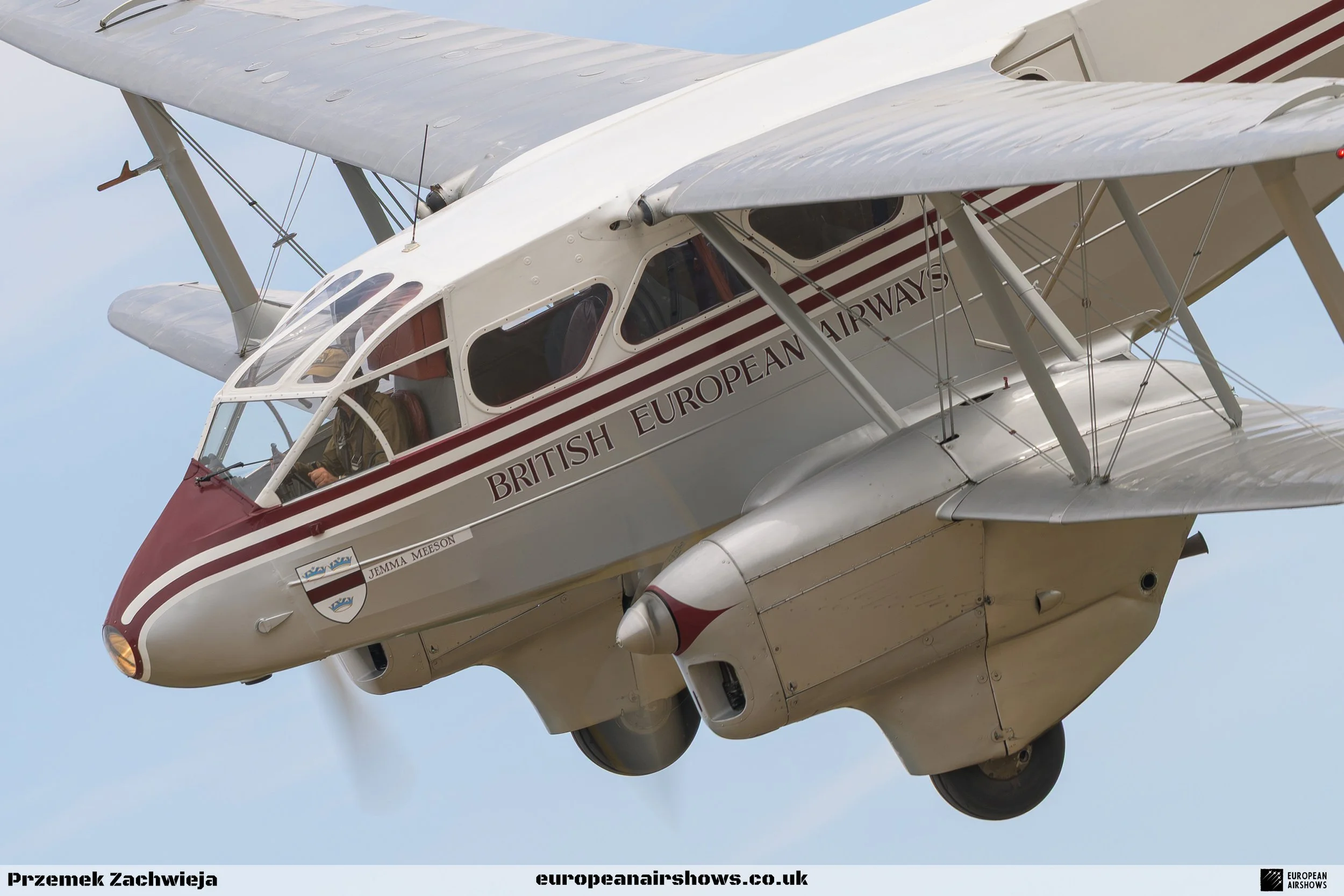
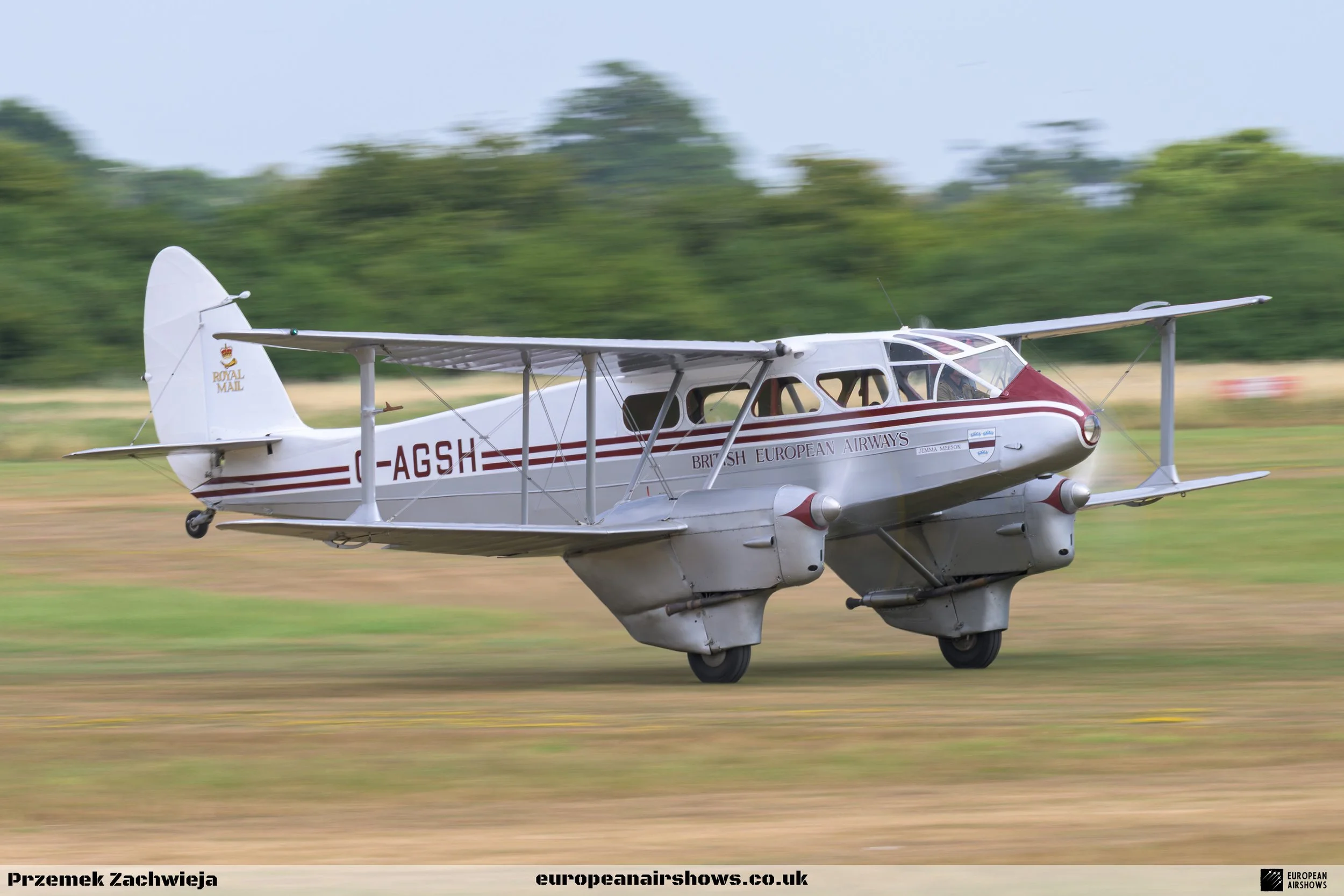
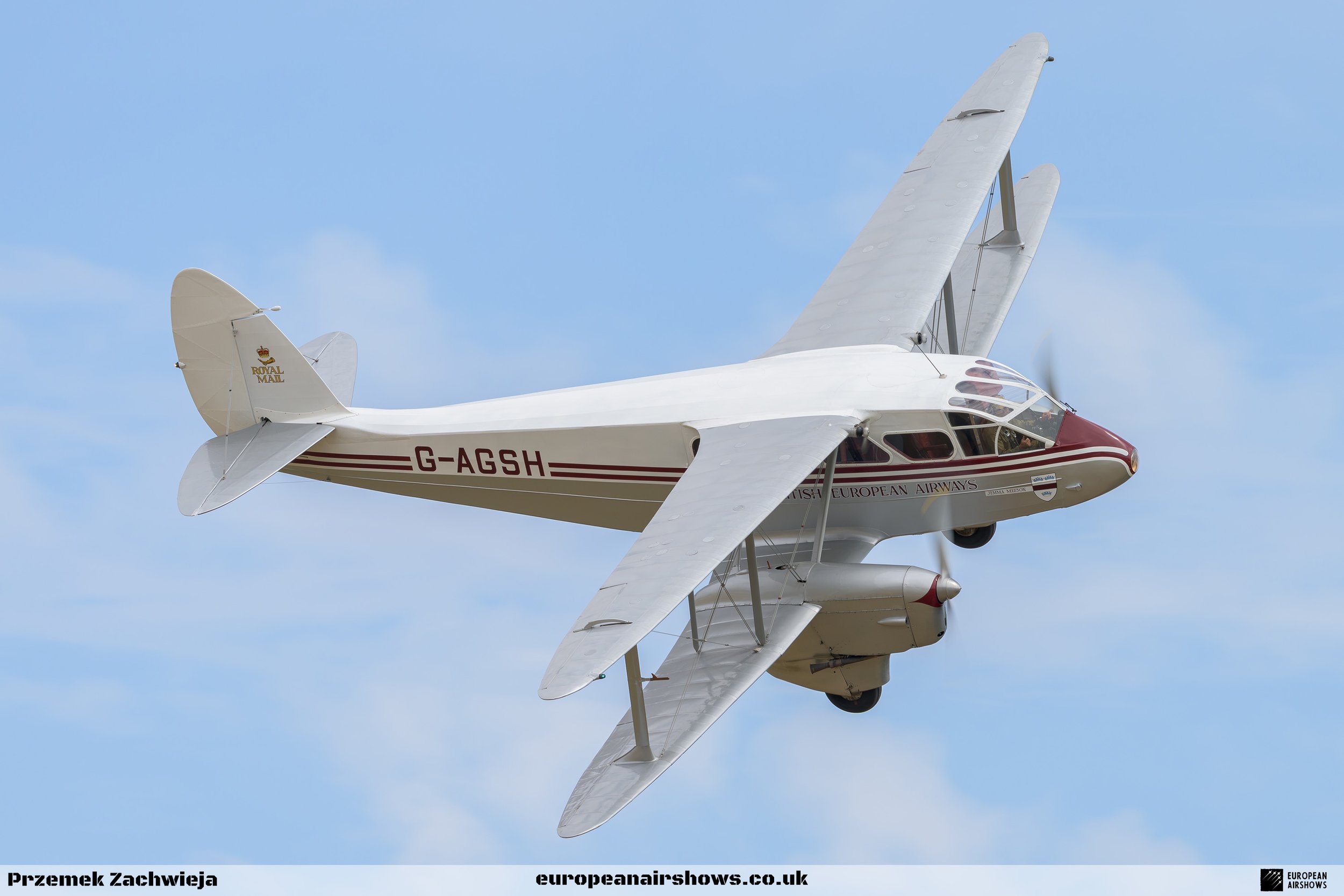
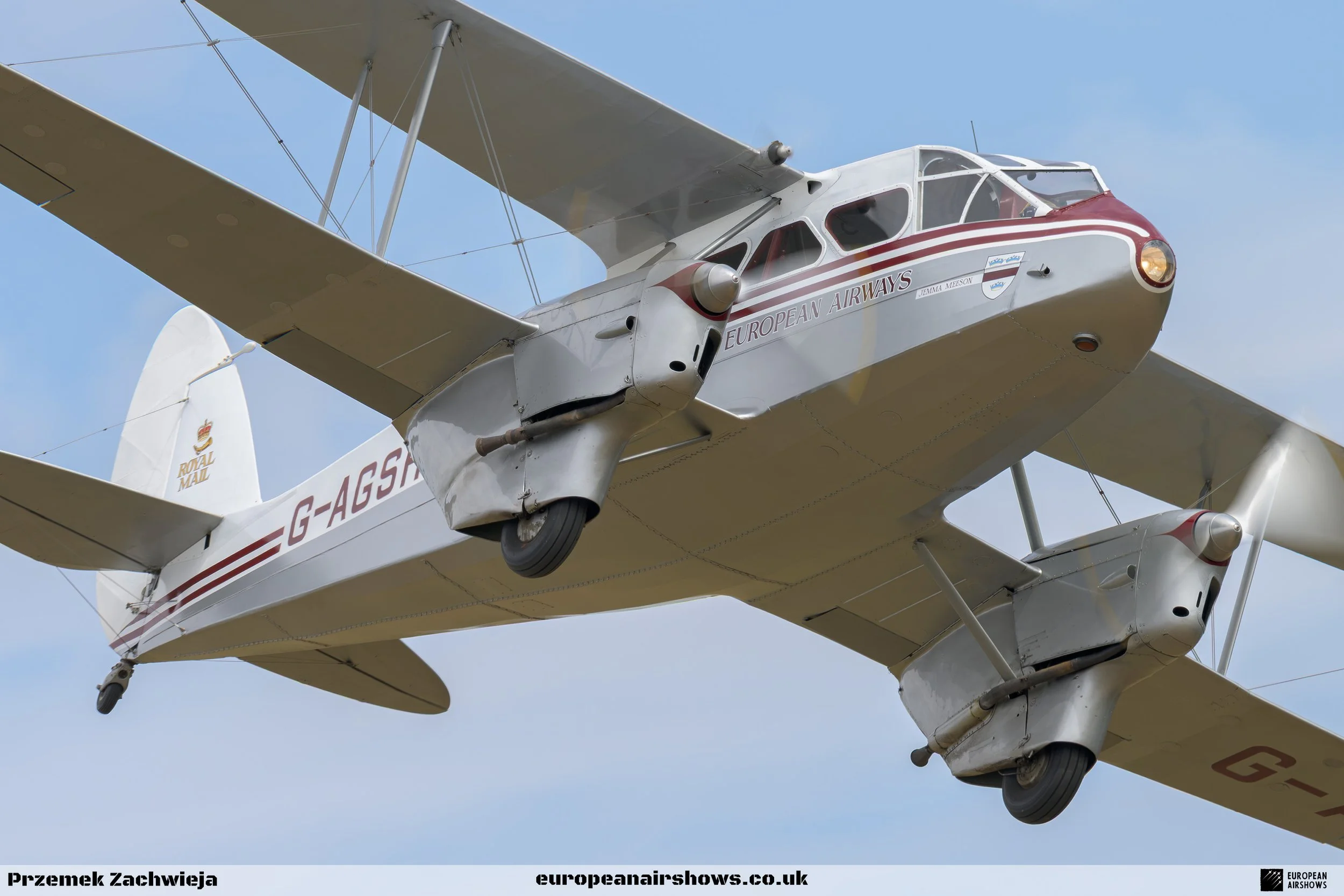
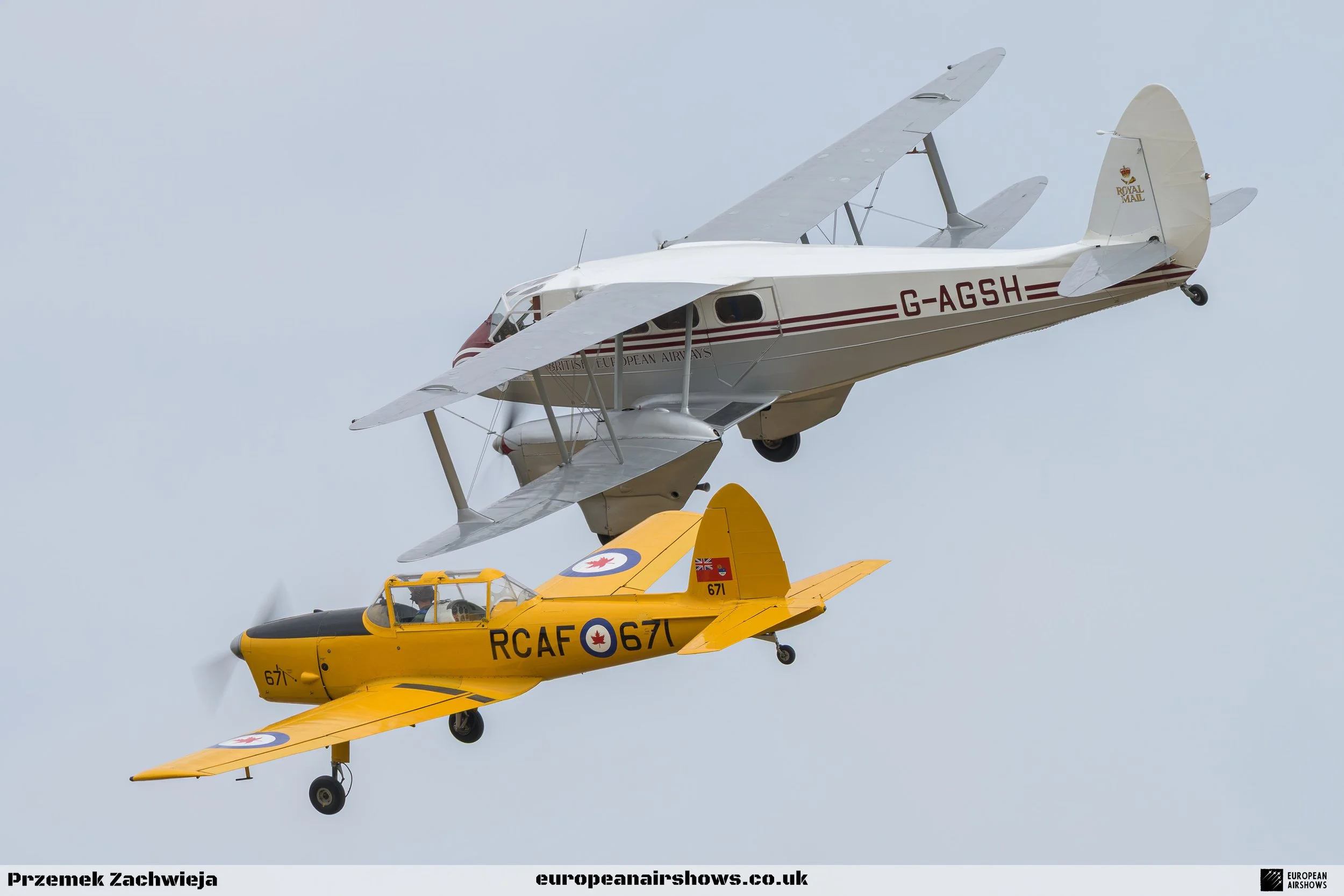
A very different de Havilland pairing followed. Philip Meeson’s elegant DH.89A Dragon Rapide G-AGSH arrived alongside the Shuttleworth Collection’s DHC-1 Chipmunk T.22. After two formation passes, the pair separated for individual displays.
The Rapide brought the grace of a pre-war airliner, though G-AGSH was actually built during 1945 as a military Dominie before being civilianised and used by British European Airways on Scottish routes. Its relatively sedate passes allowed the polished lines of the twin-engined biplane to be appreciated before the Chipmunk took over with a far more aerobatic routine.
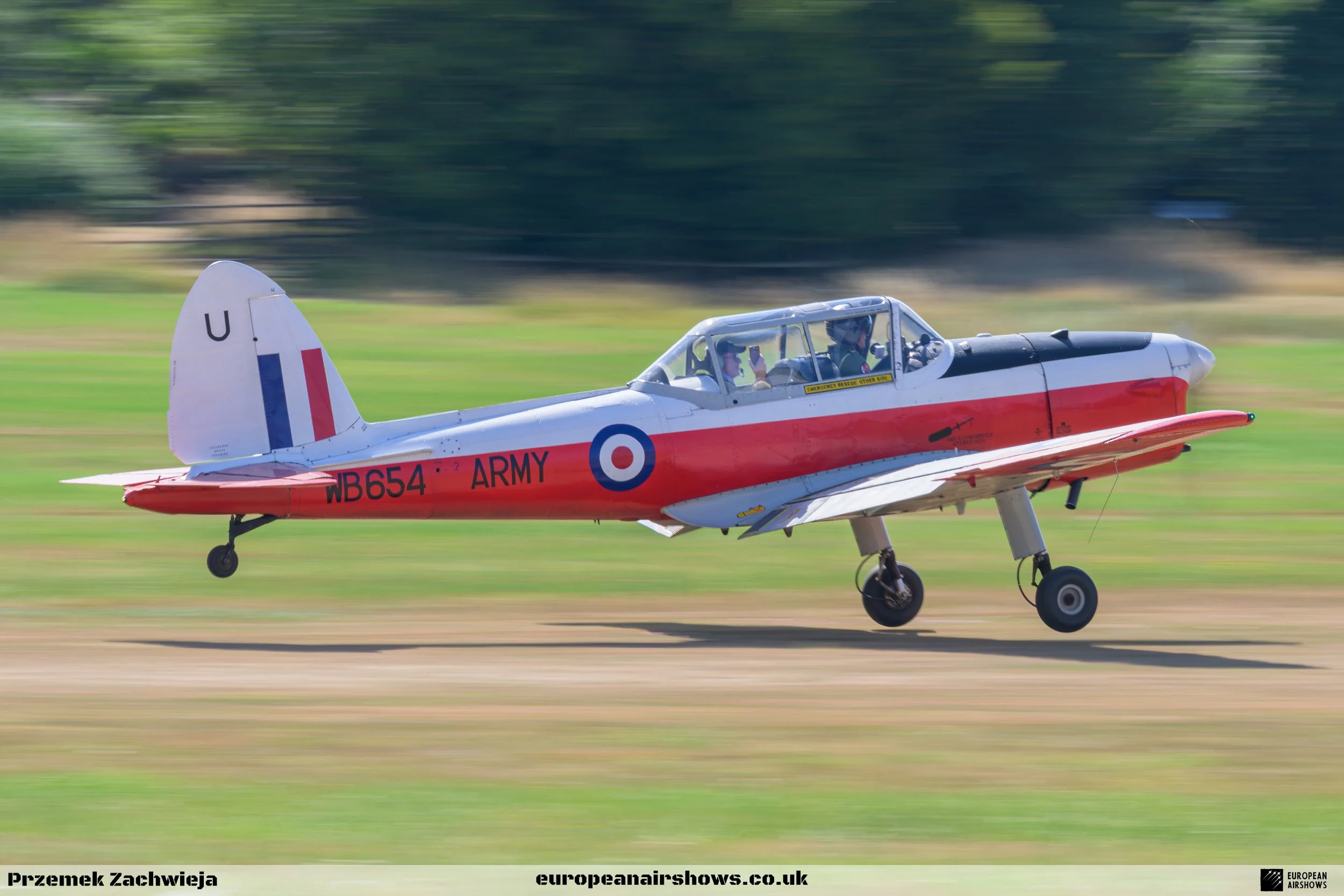
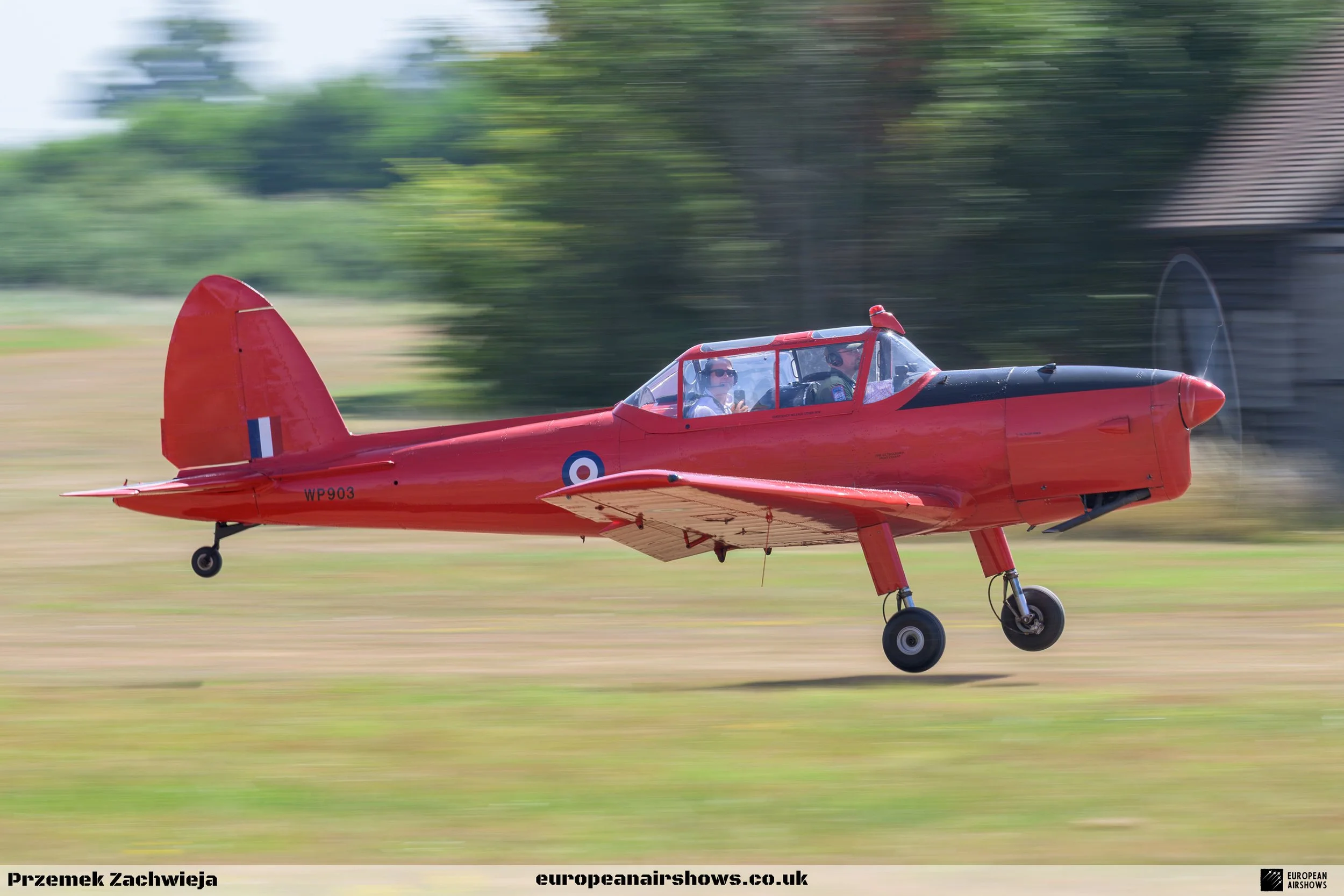
The Chipmunk was celebrating an anniversary of its own. The Canadian-designed trainer first flew on 22nd May 1946, making 2026 its 80th anniversary year. Designed as the replacement for the Tiger Moth, it became an important RAF elementary trainer and remains associated with the Battle of Britain Memorial Flight, which has used Chipmunks for continuation and tailwheel training. The RAF Museum records the prototype’s 1946 first flight and the type’s subsequent RAF career.
It was a clever pairing: the Dragon Rapide represented the de Havilland company’s pre-war success, while the Chipmunk showed where elementary training moved after the Spitfire era.
A rare Soviet survivor
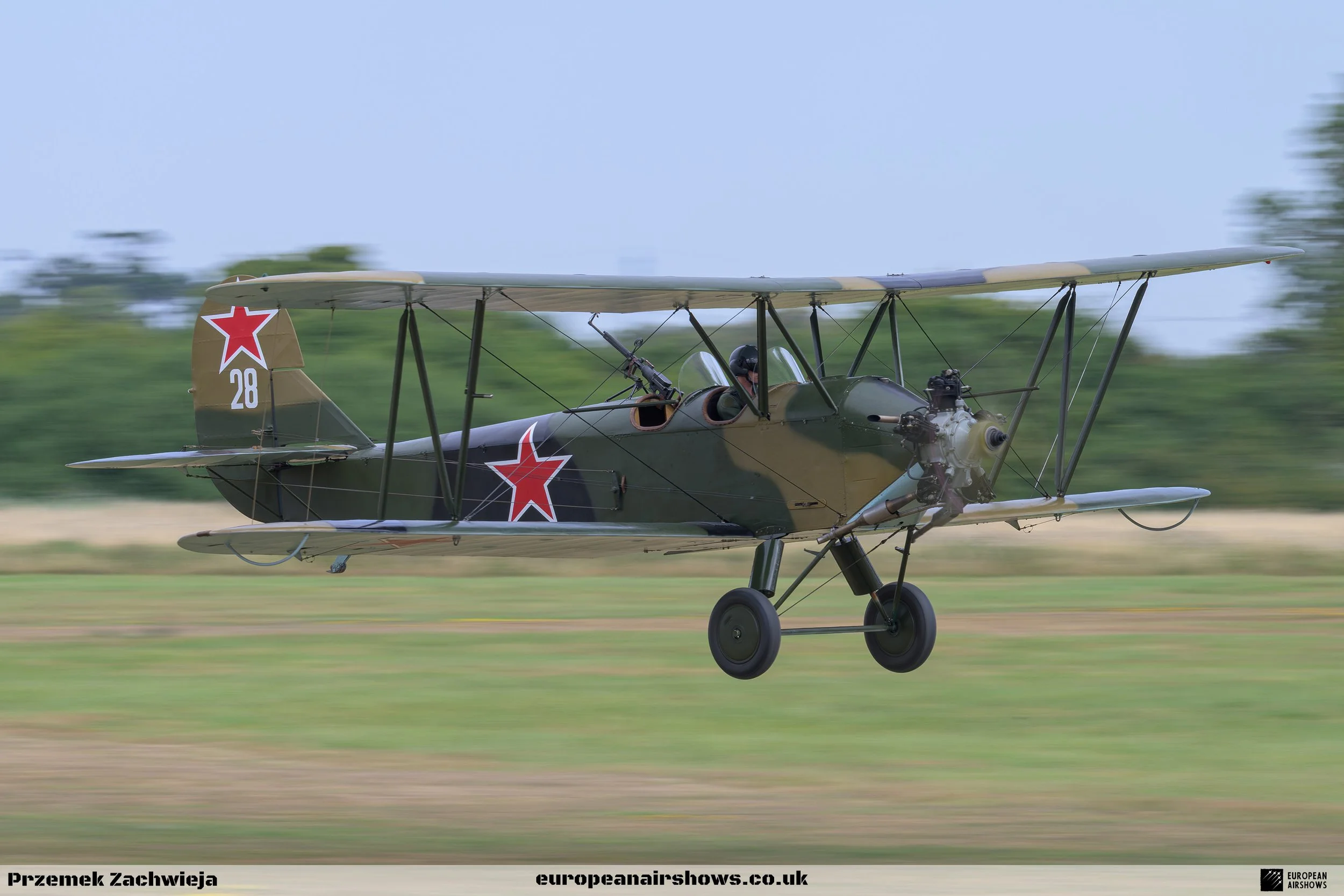
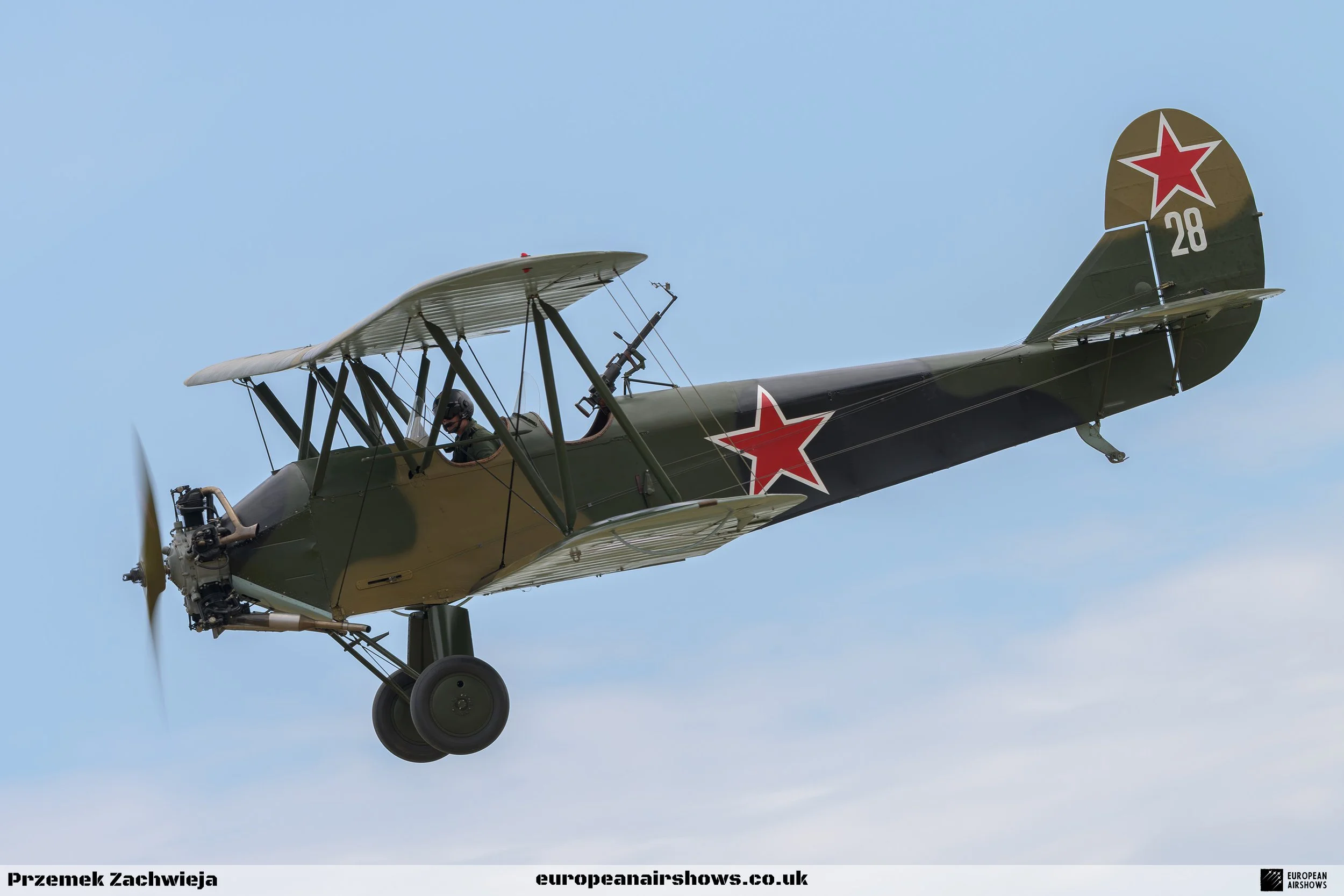
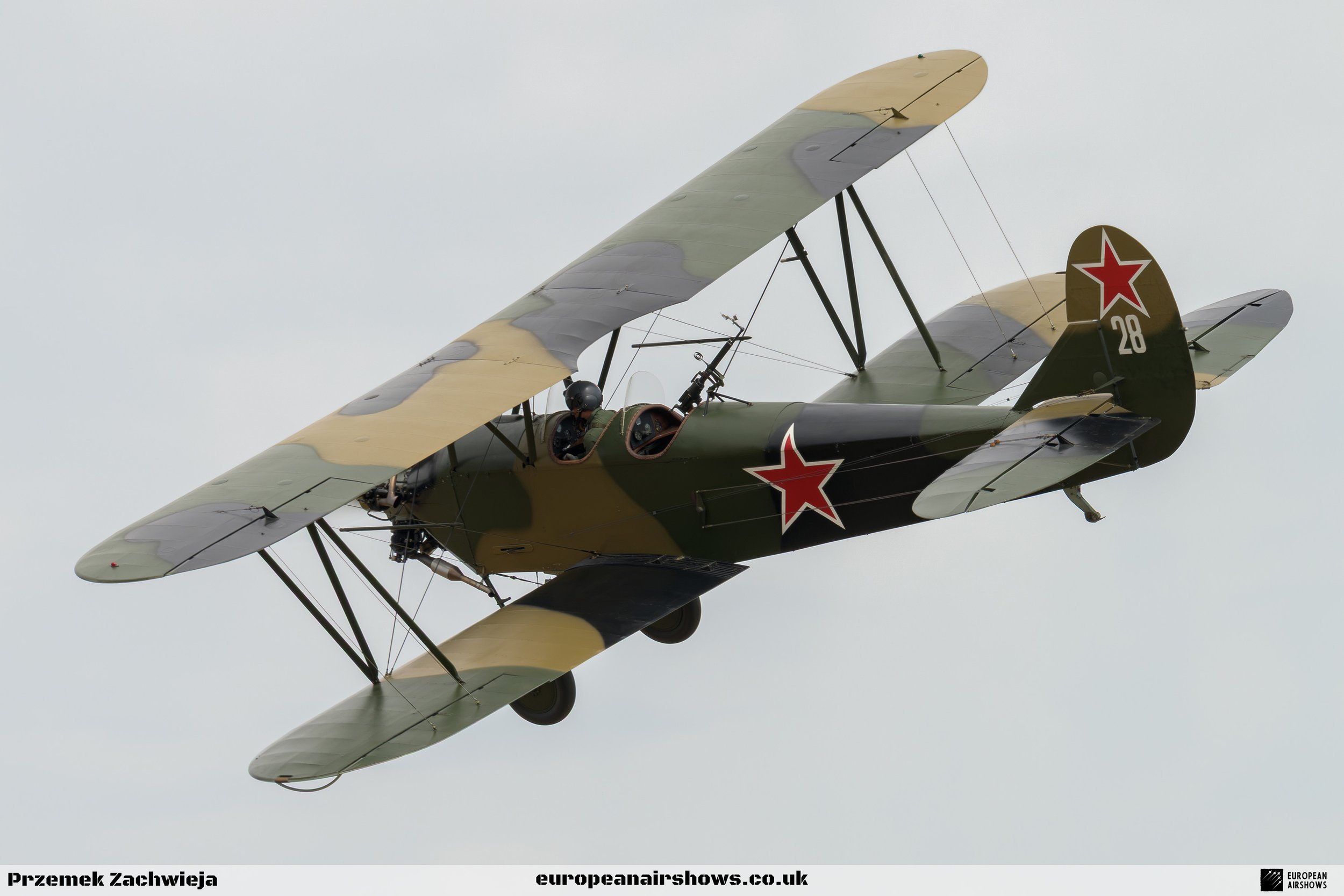
The Shuttleworth Collection’s Polikarpov Po-2 then brought a completely different sound to Old Warden. Its five-cylinder Shvetsov radial does not produce the smooth rumble of a larger radial engine. Instead, it clatters and clicks its way around the circuit, sounding almost agricultural—which is oddly appropriate for an aircraft nicknamed Kukuruznik, or ‘corn cutter’.
Approximately 33,000 U-2s and Po-2s were produced, making it one of the most numerous aircraft in history. Yet airworthy examples are now extremely scarce. Designed as a simple Soviet trainer, it was also used for liaison, ambulance, artillery observation and night harassment duties. Its quiet, low-level night attacks became particularly famous through the female aircrews of the 588th Night Bomber Regiment.
Shuttleworth’s example was built in the Soviet Union in 1944 and transferred to Yugoslavia in 1946. It later worked as a glider tug and parachute trainer before eventually reaching the Collection and returning to flight in 2011. Its slow, curving display provided a welcome change of pace and a reminder that the Soviet aviation story represented by PT879 was far broader than Lend-Lease fighters. Shuttleworth’s Po-2 history documents its journey from Yugoslavia to Old Warden.
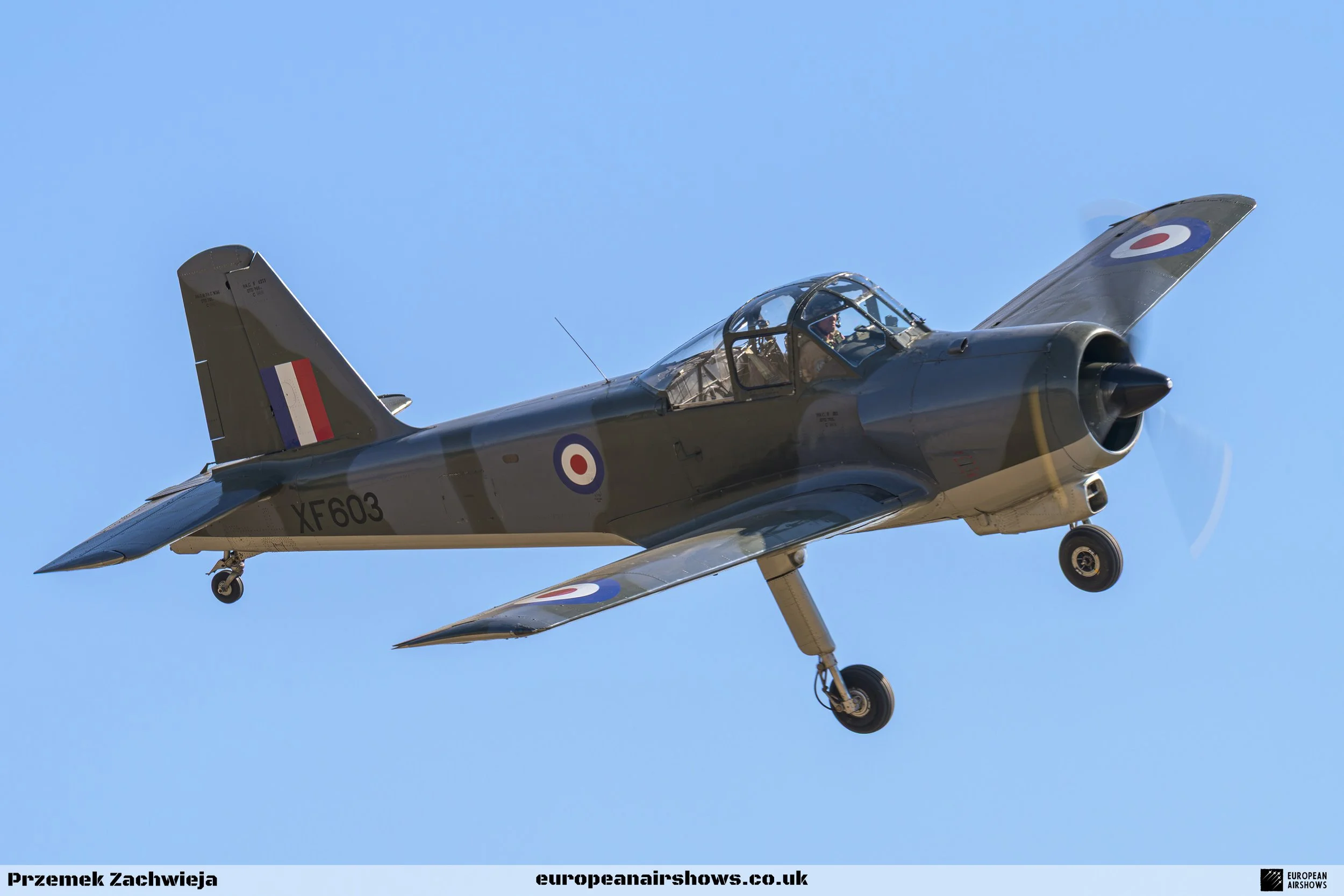
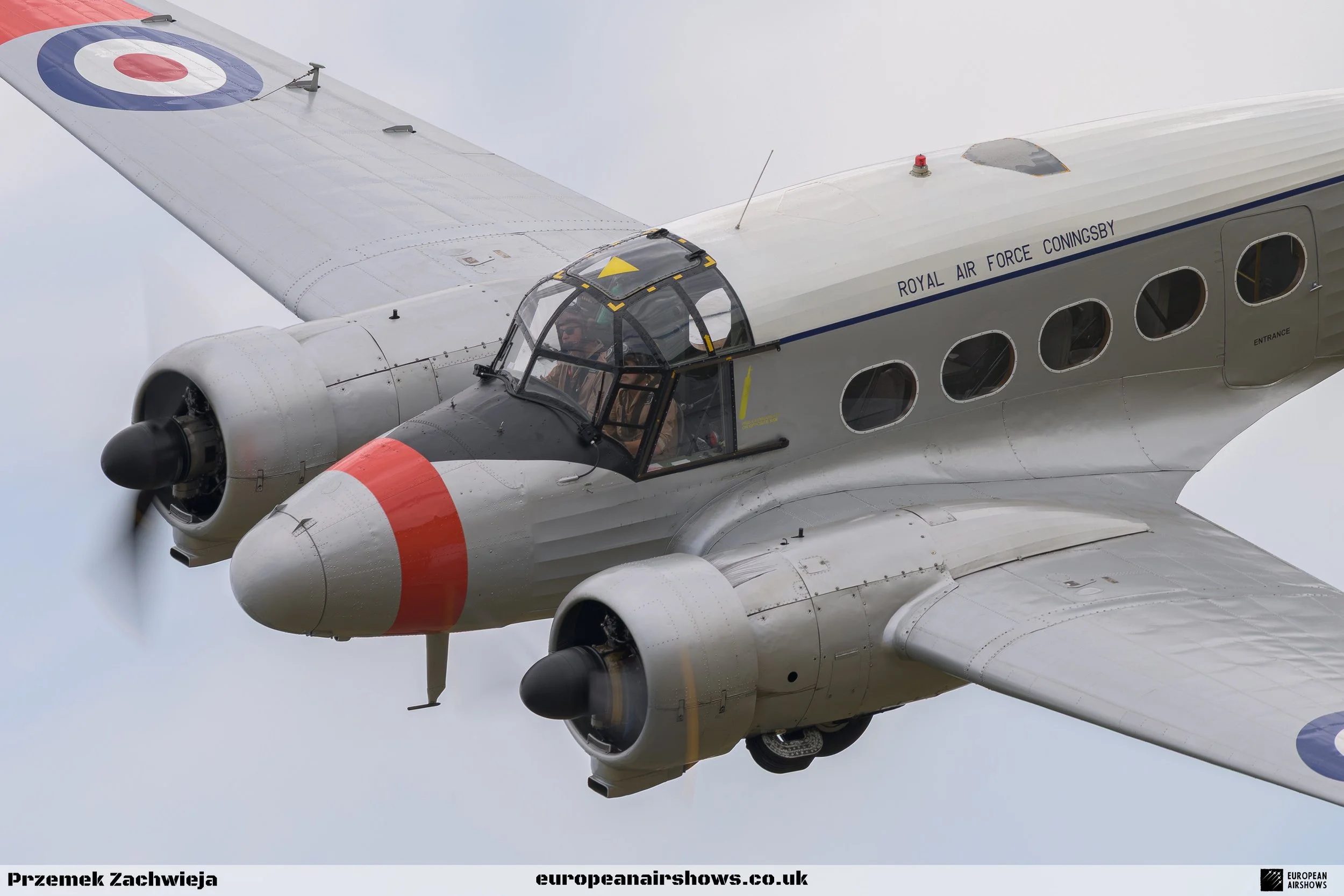
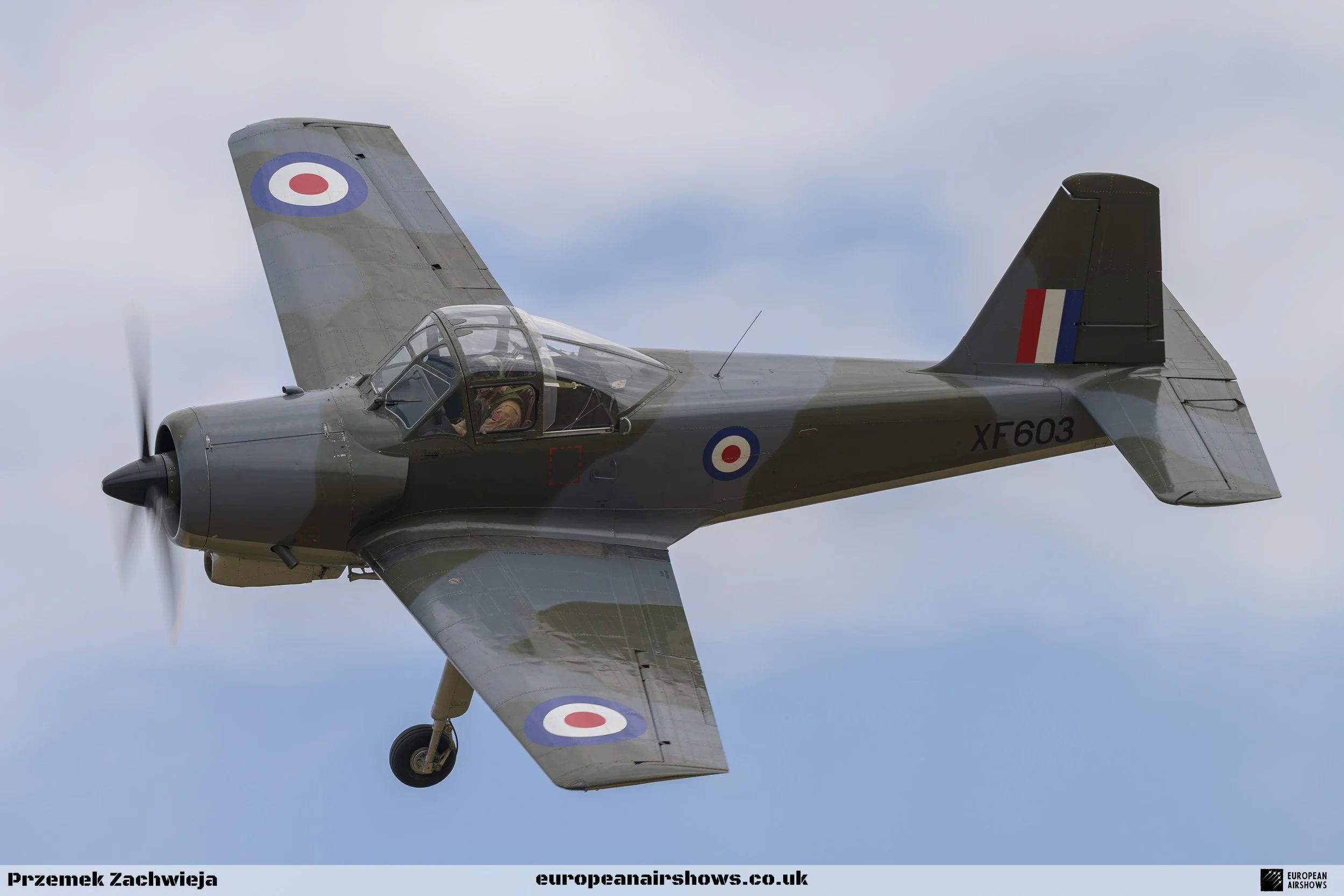
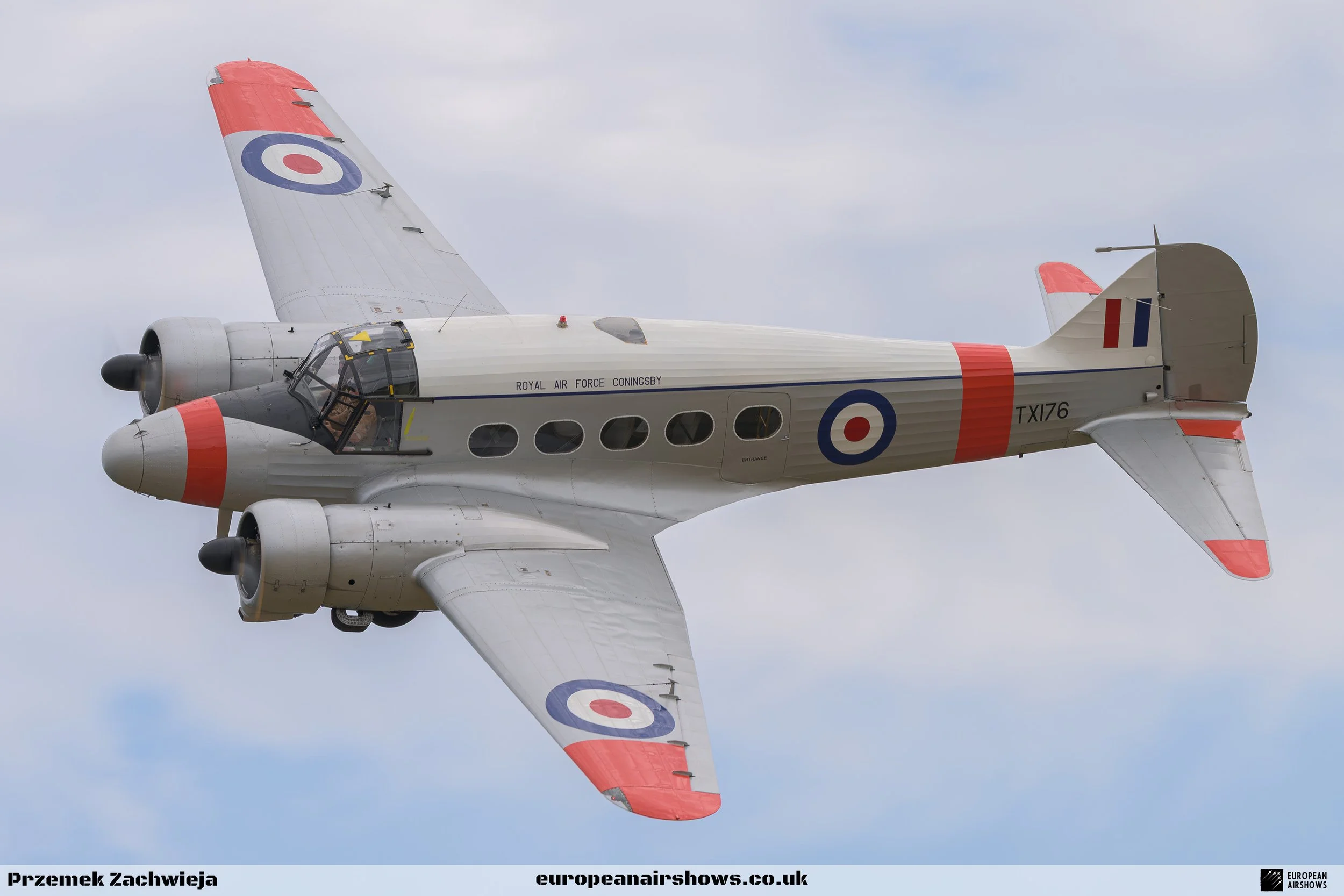
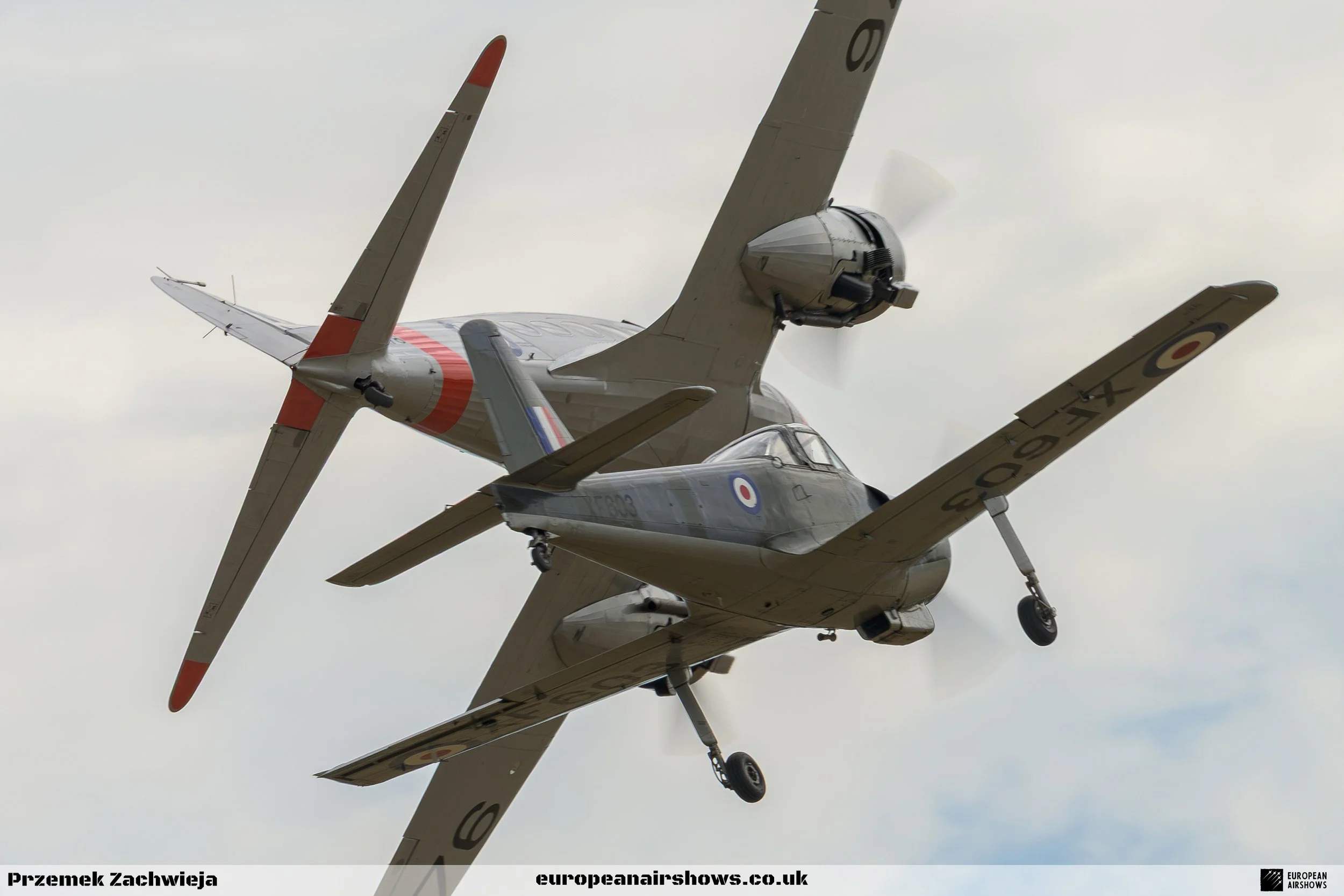
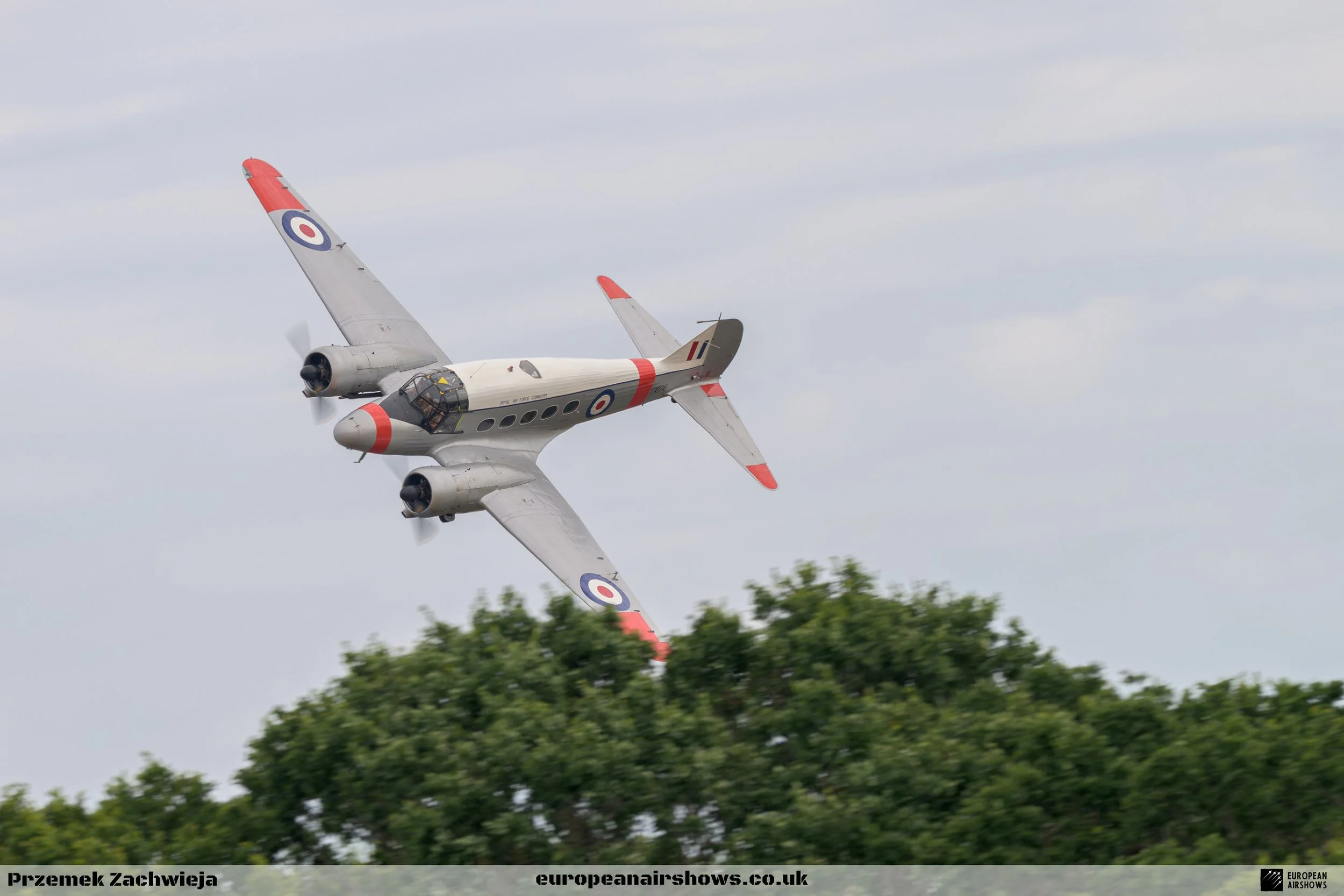
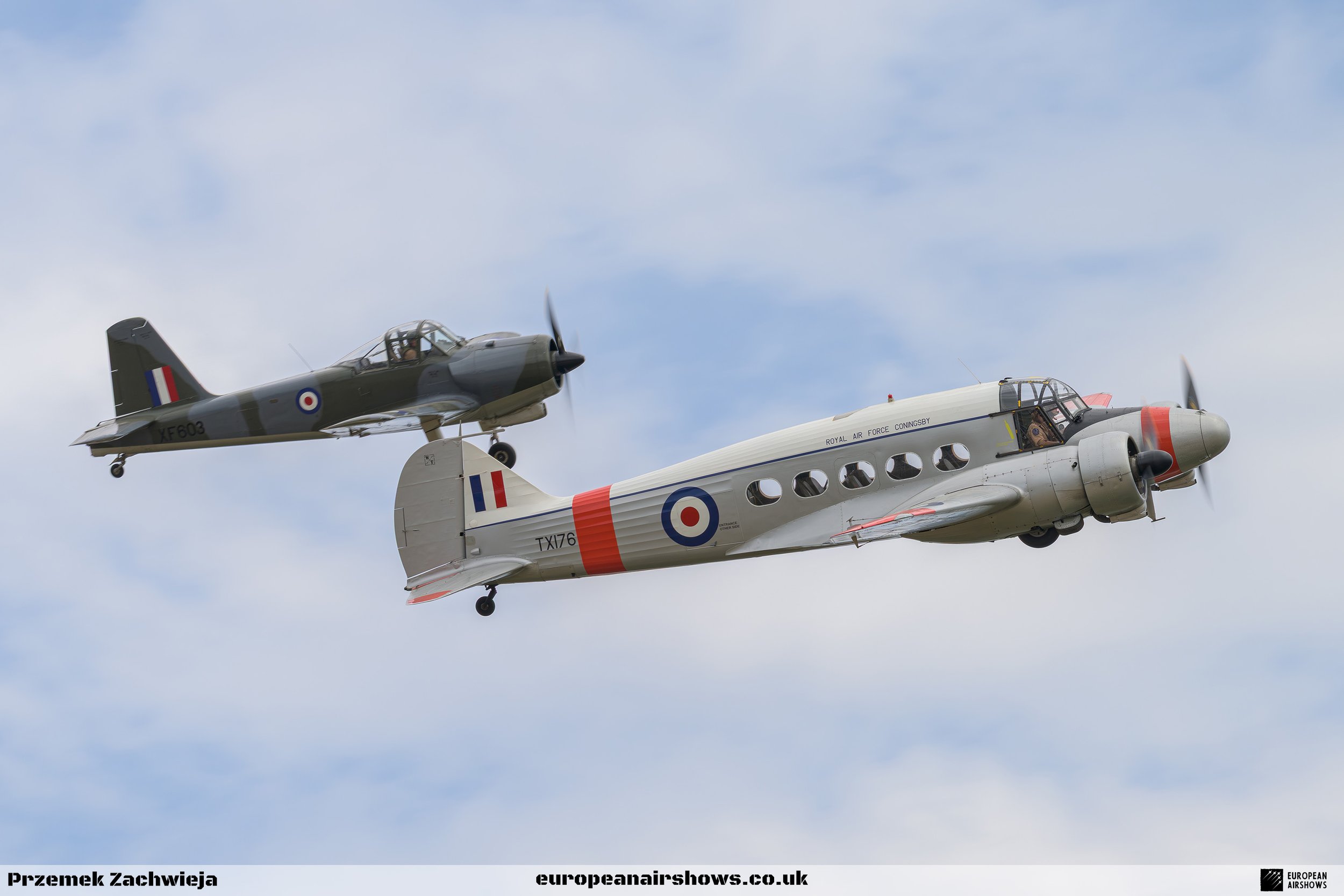
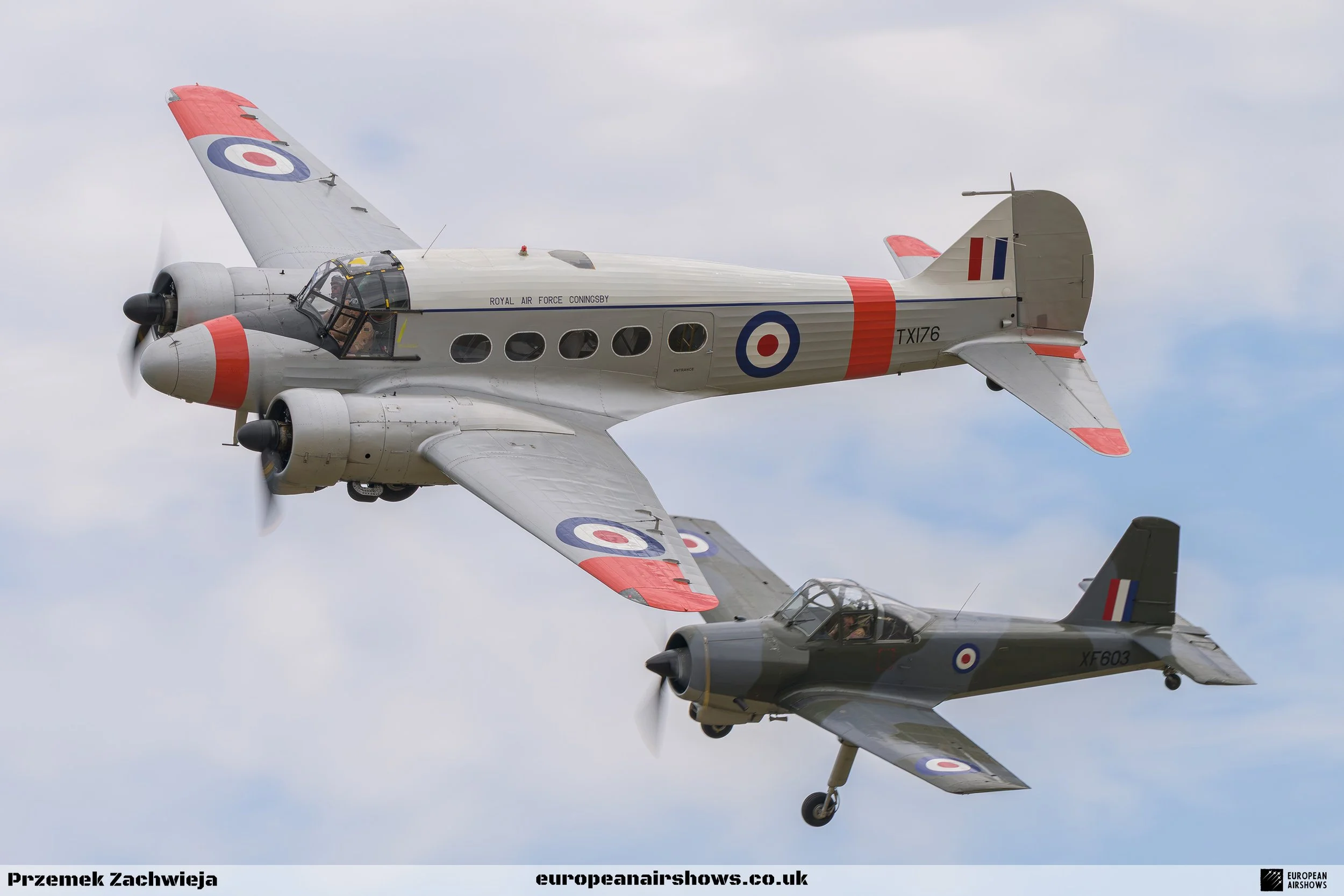
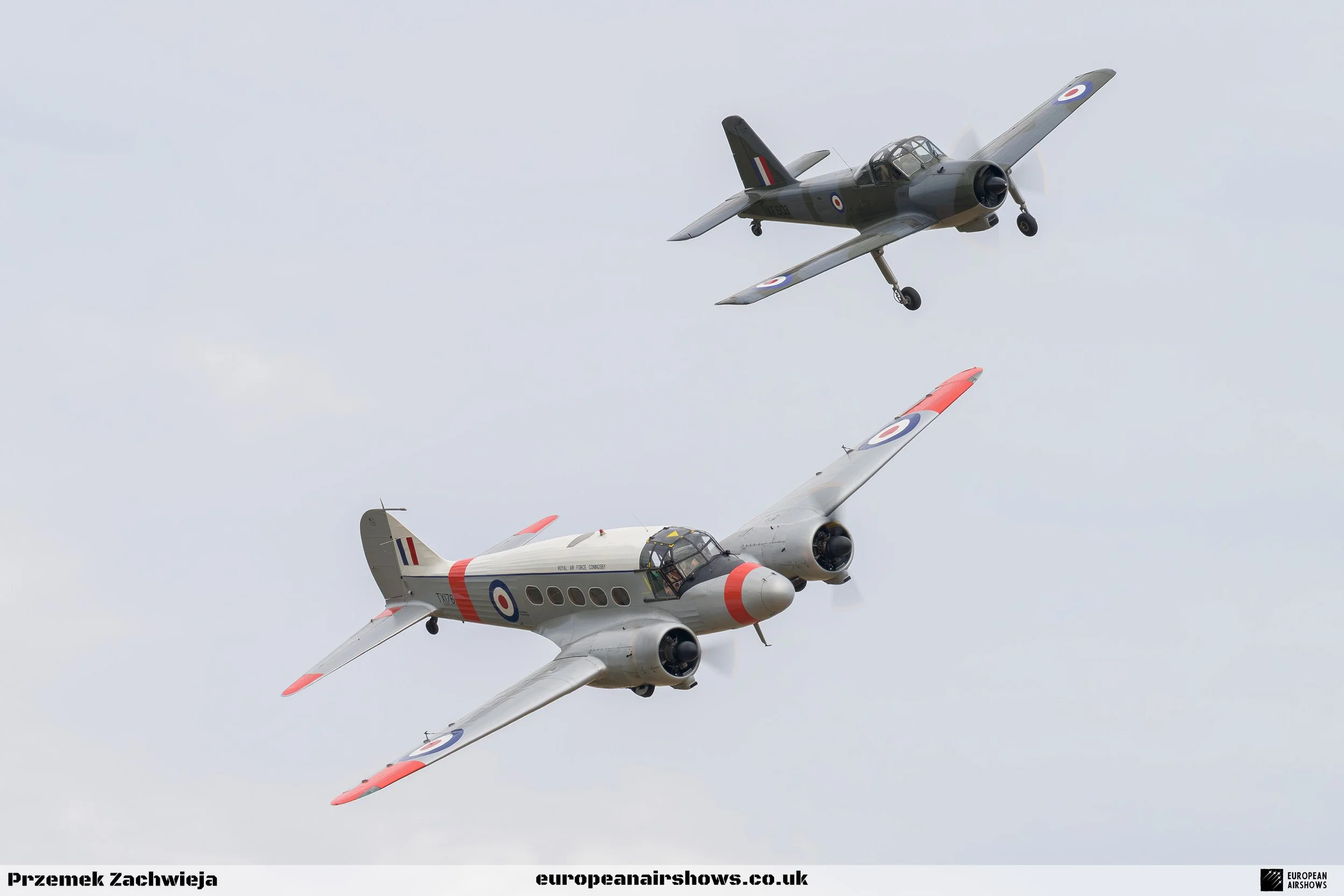
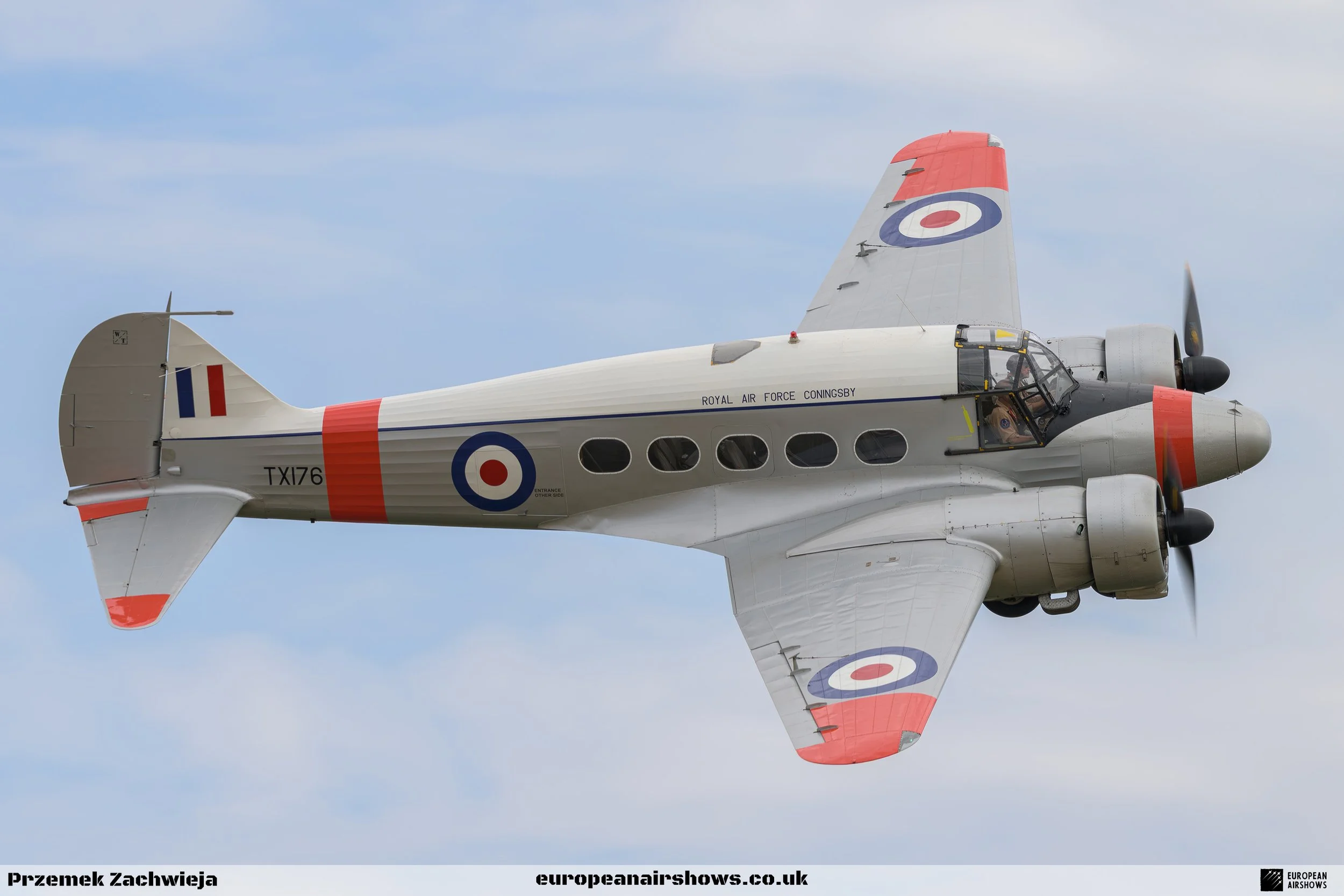
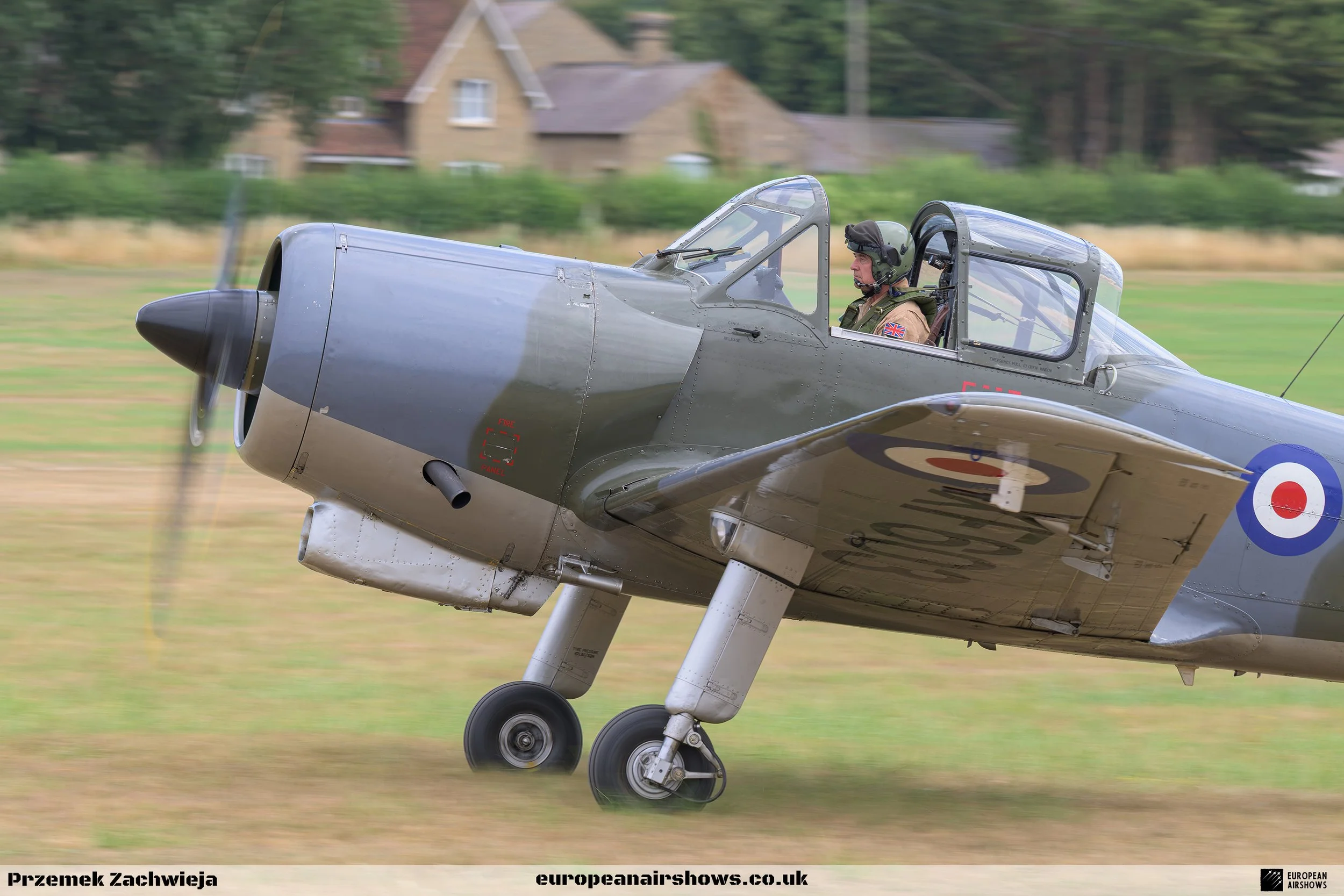
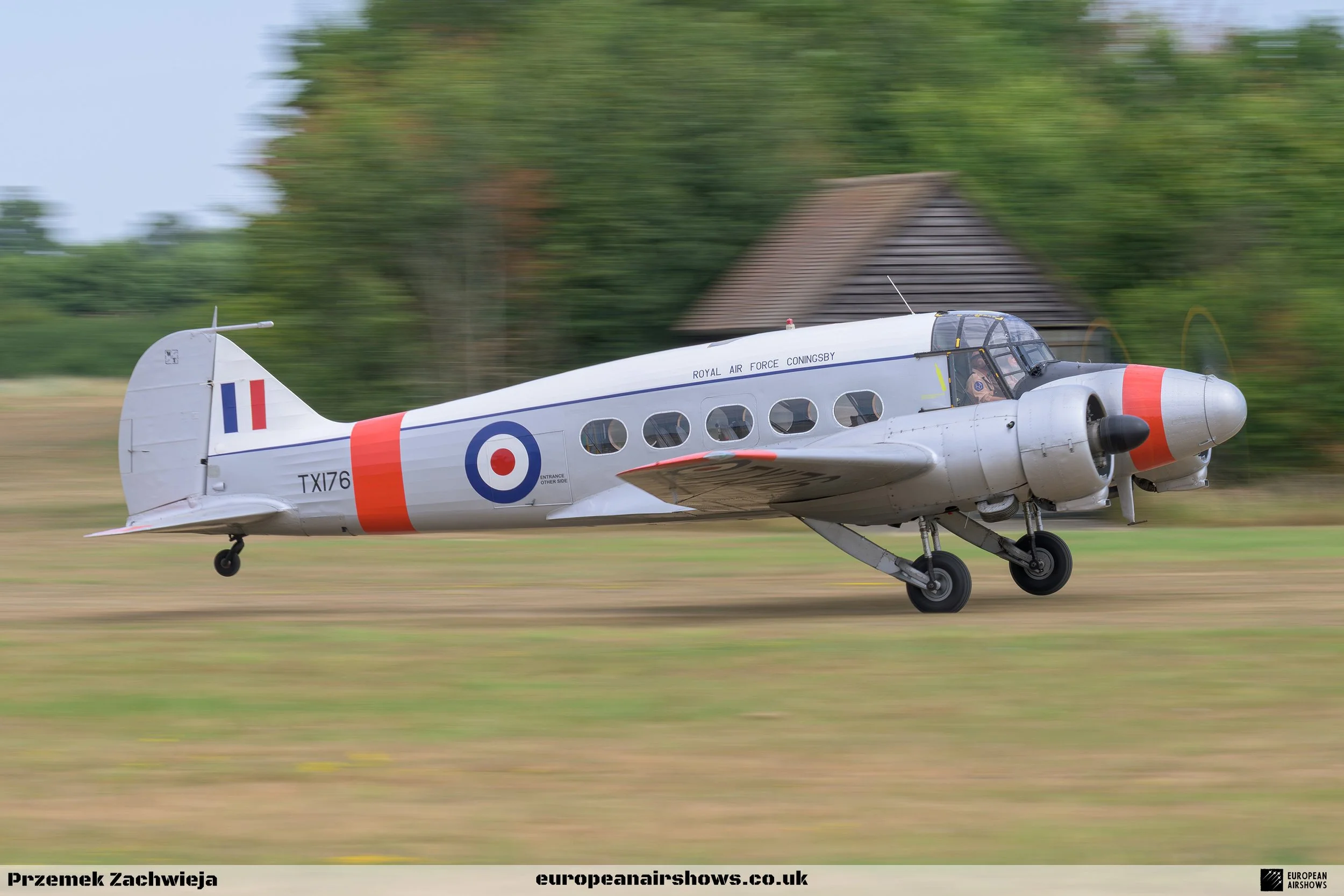
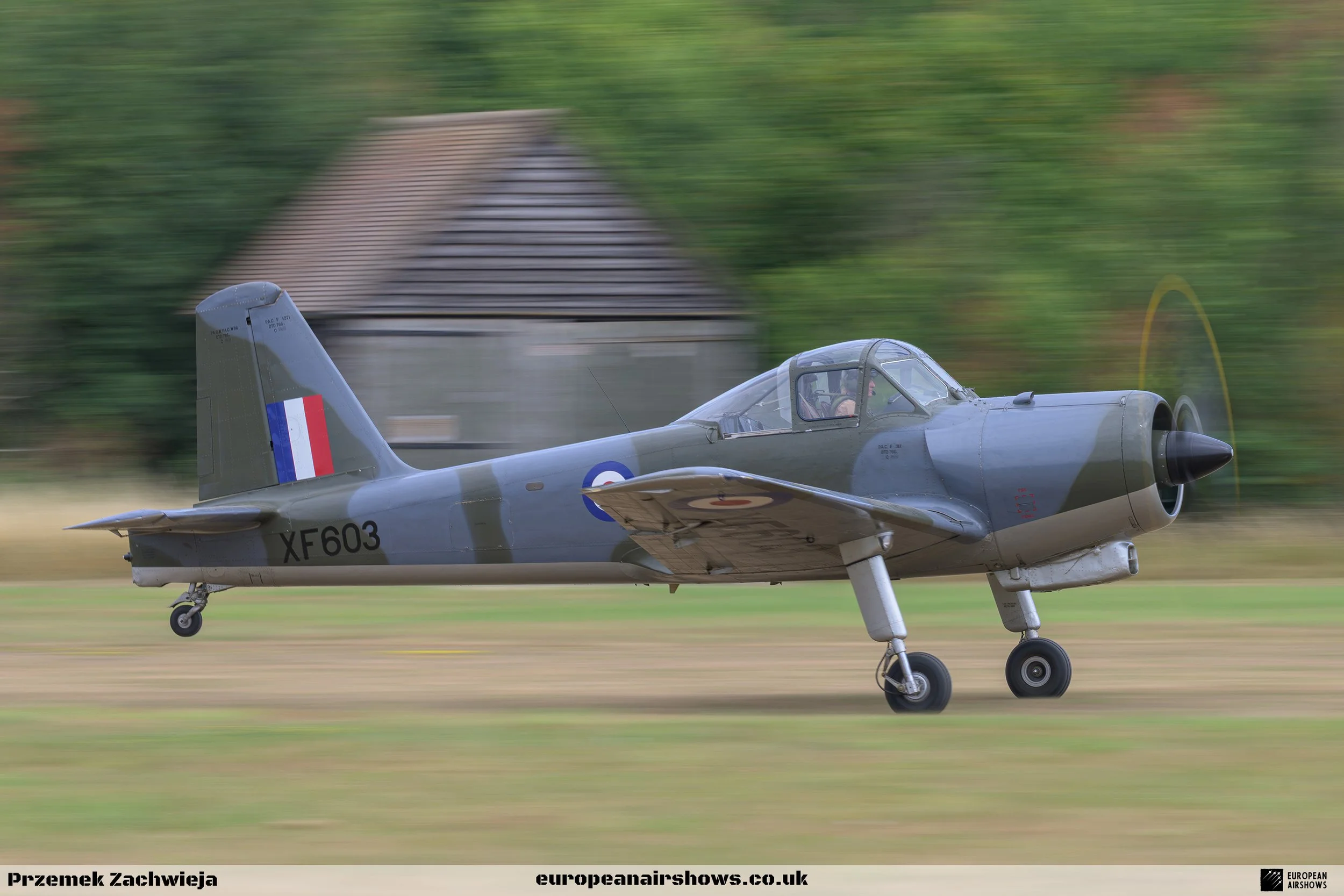
Post-war training was represented by the Avro C.19 Anson and Percival P.56 Provost T.1. The two arrived together and completed three formation passes before separating for solo demonstrations.
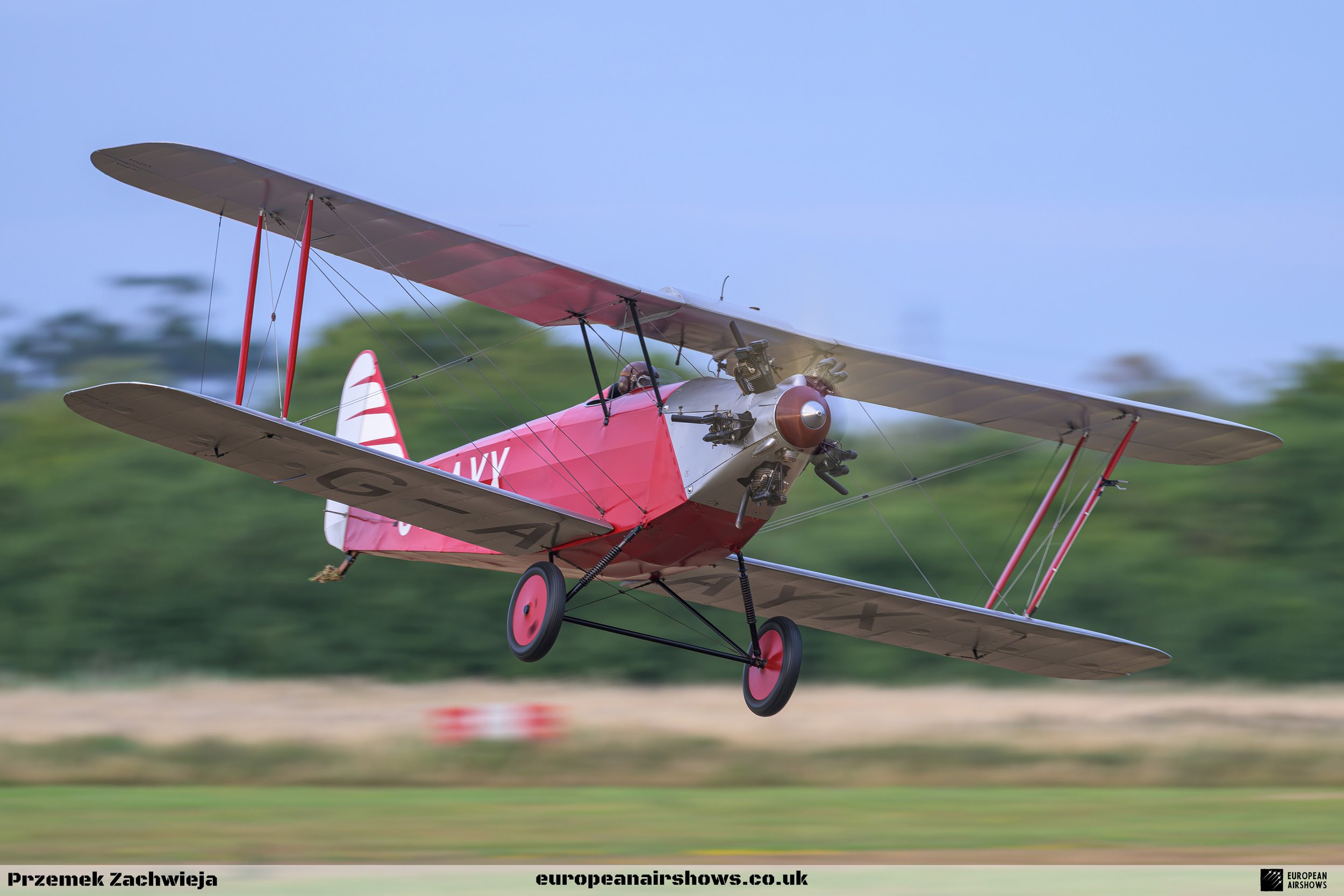
The Anson’s display was appropriately stately. The type began life before the Second World War as a maritime reconnaissance aircraft but became one of the Commonwealth Air Training Plan’s essential multi-engined trainers. More than 11,000 Ansons were built in Britain and Canada. Shuttleworth’s G-AHKX is the only Avro XIX/C.19 currently airworthy and joined the Collection from BAE Systems in 2022. Its official Collection history is particularly interesting, as it was retained for many years as a company communications aircraft.
The Provost offered a much more energetic contrast. As the RAF’s last major piston-engined basic trainer, it sat immediately before the Jet Provost in Britain’s training lineage. Its aerobatic demonstration showed why the RAF wanted a trainer which could better prepare students for the heavier controls and higher performance of post-war operational aircraft.
Merlin against Merlin
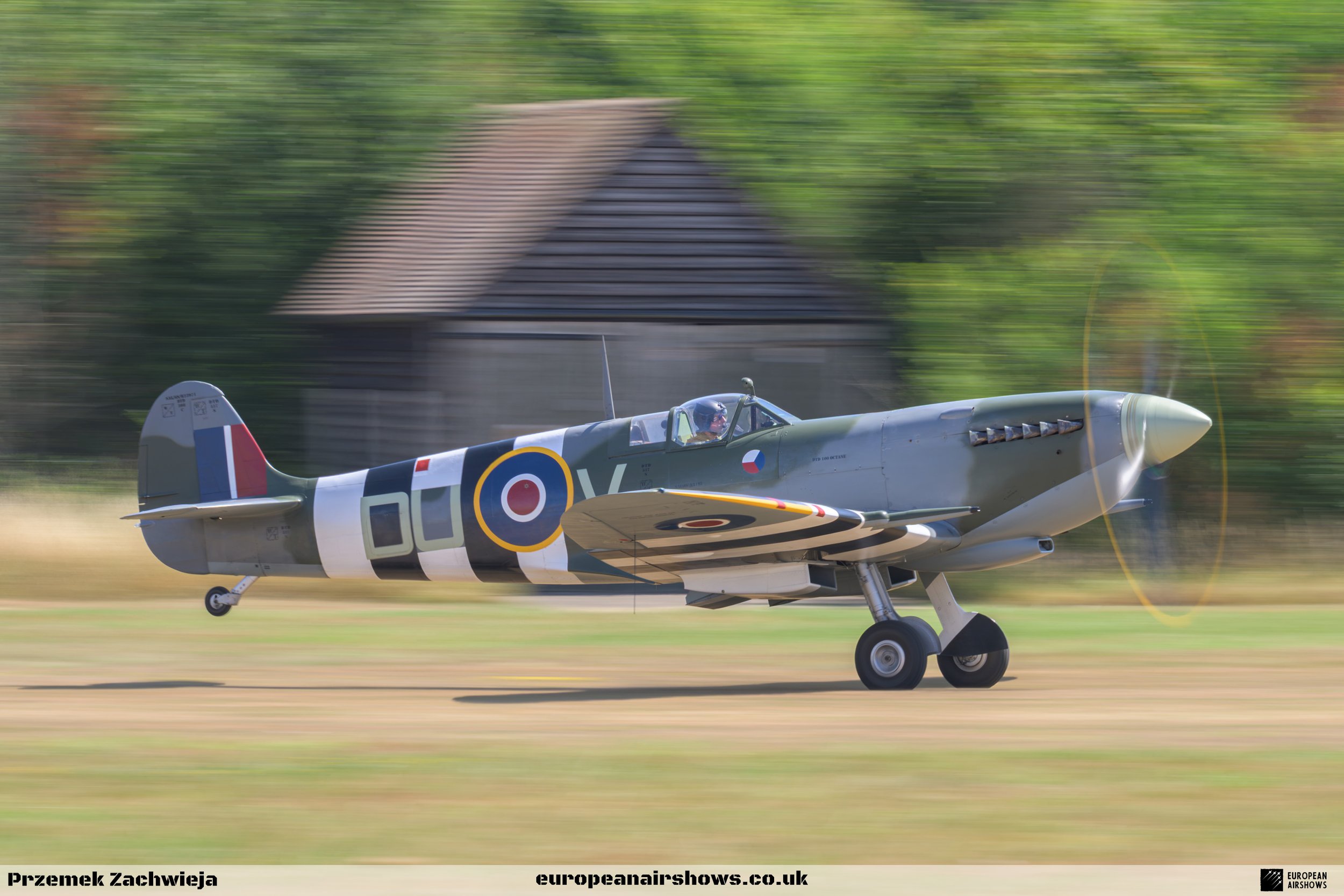
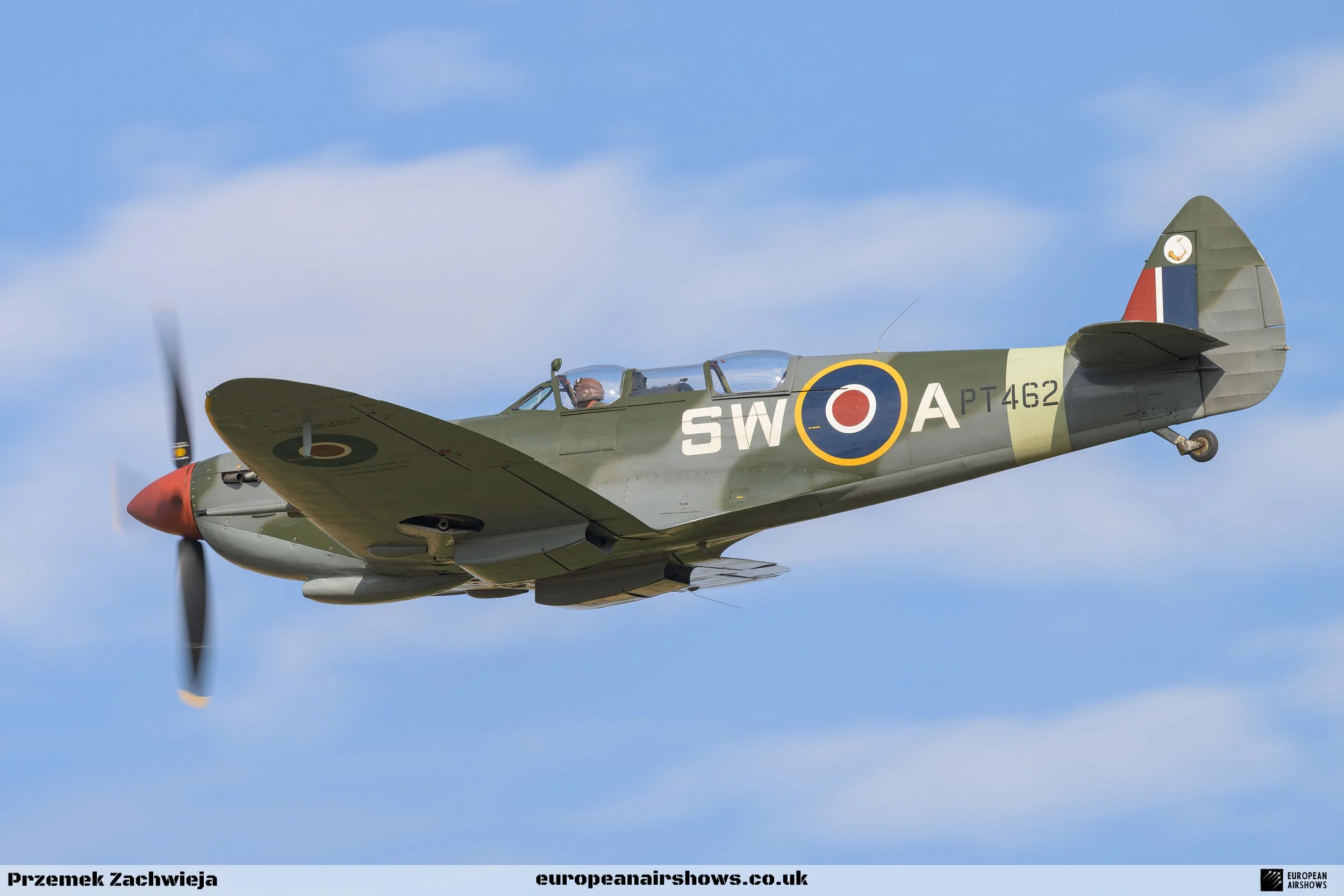
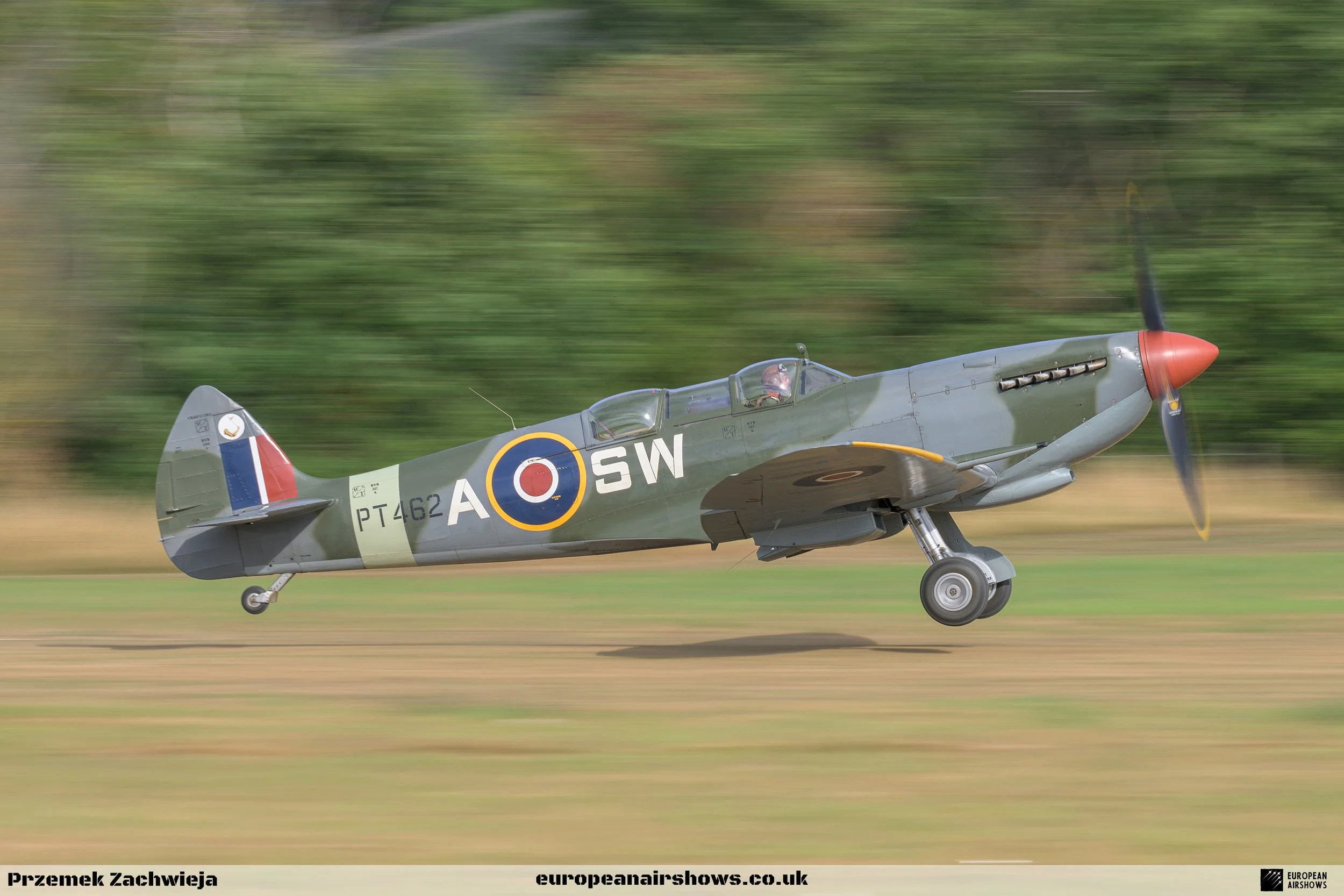
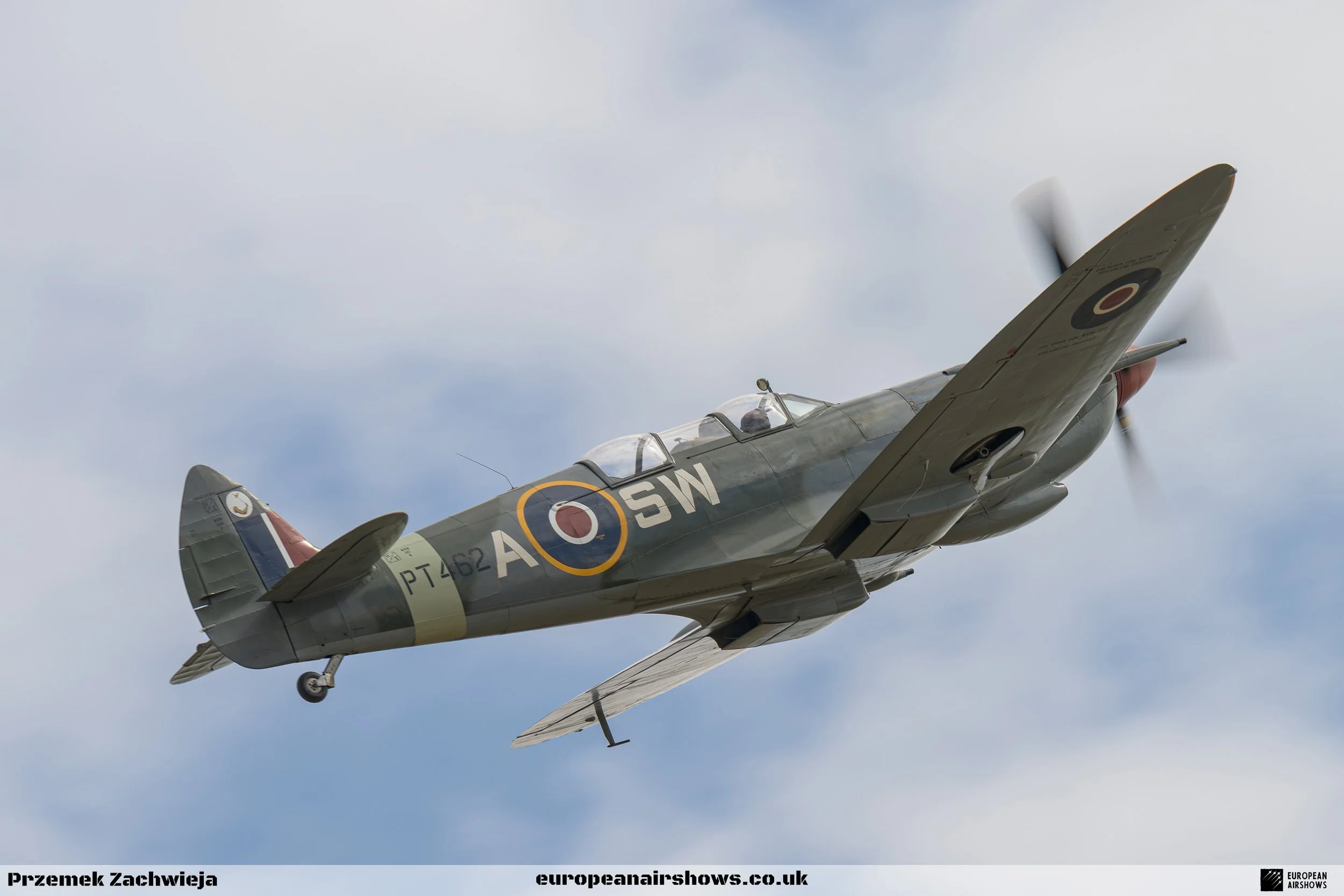
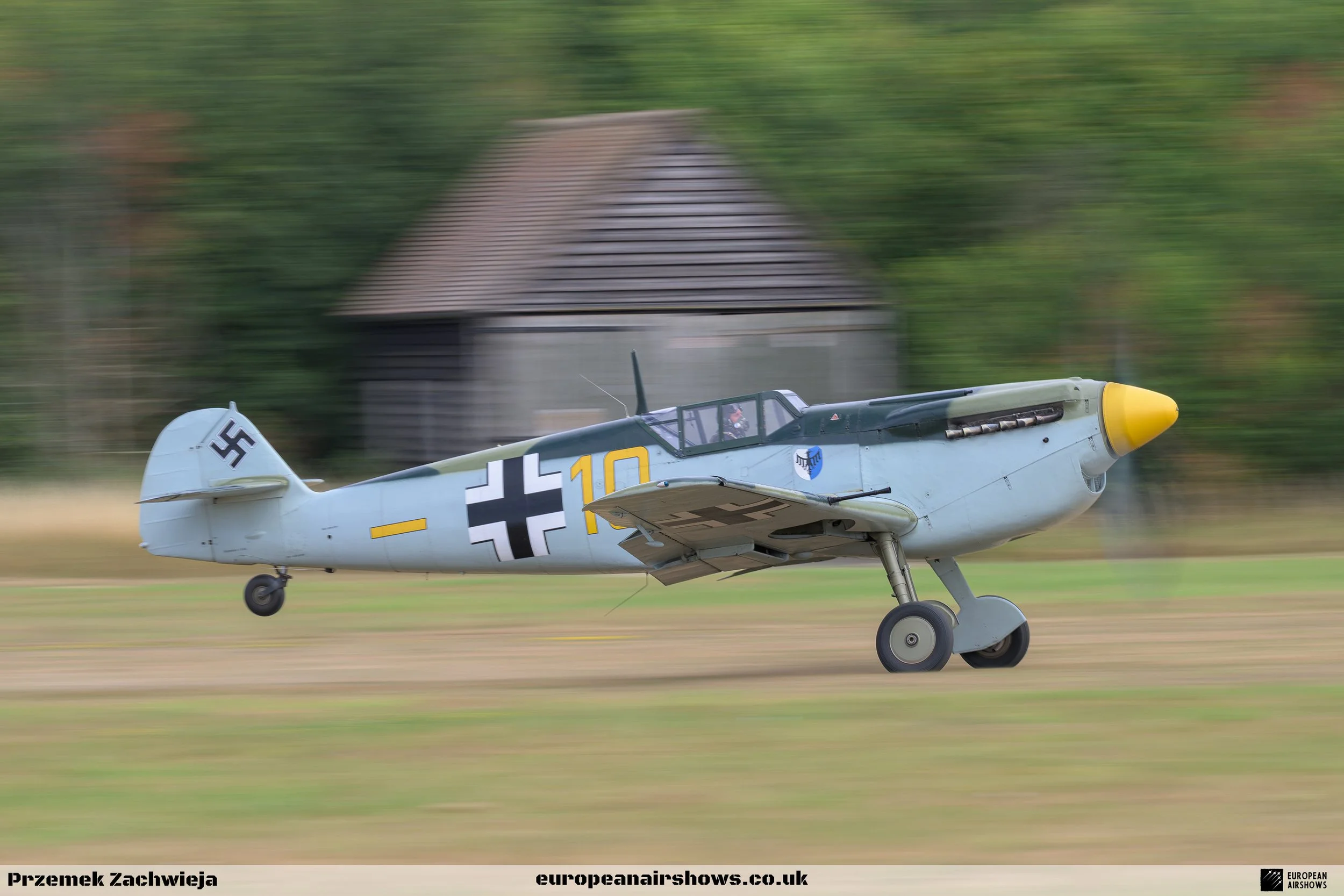
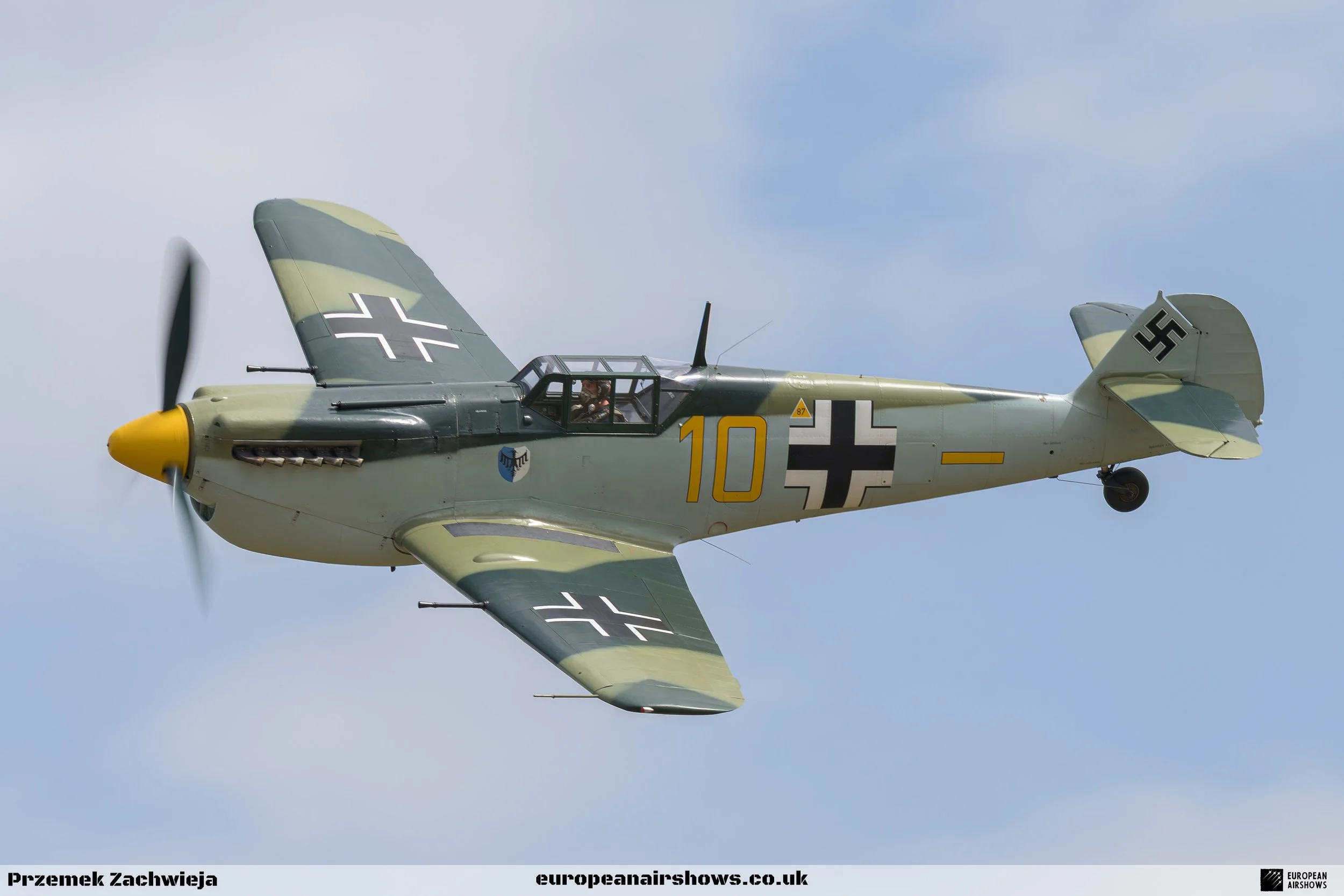
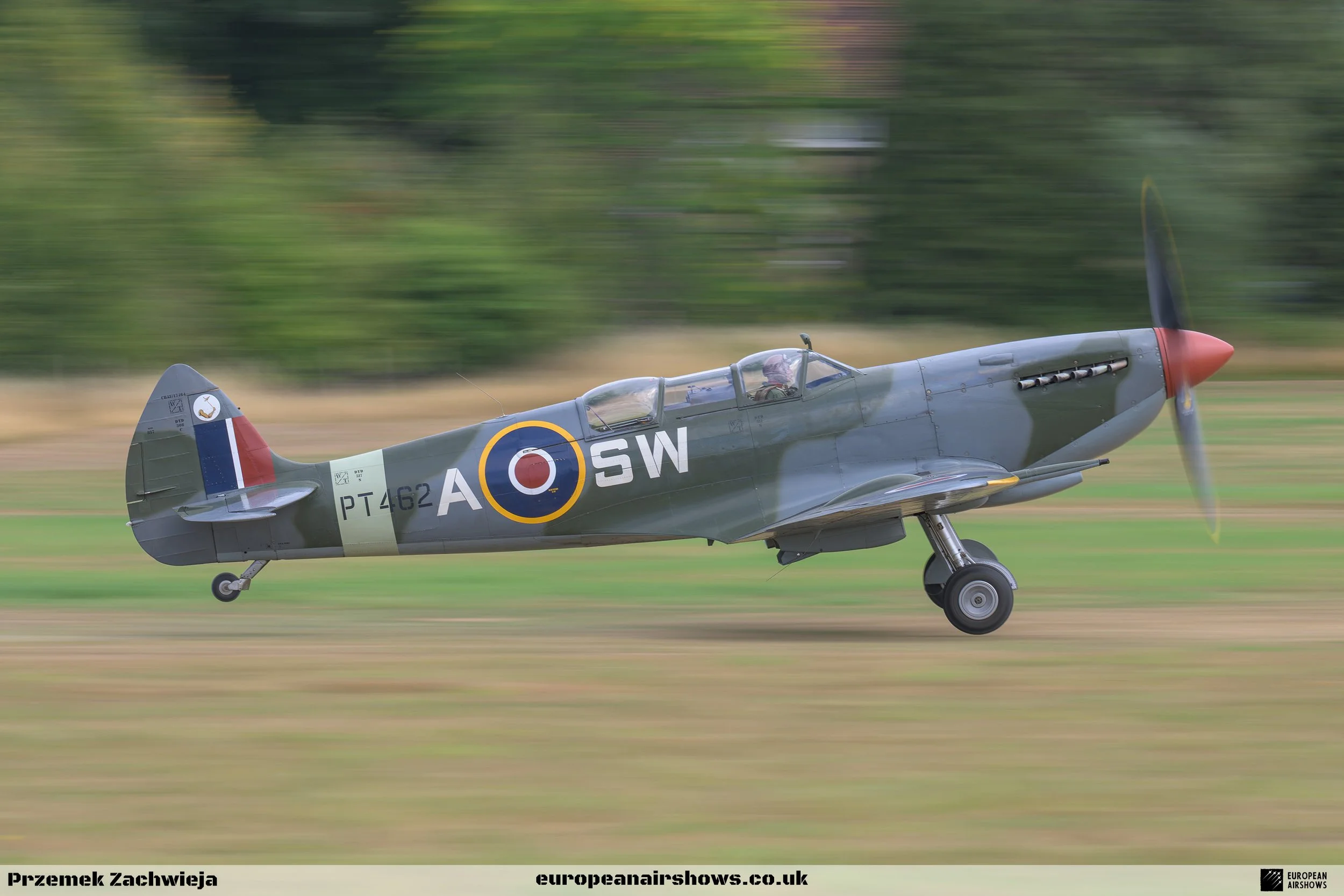
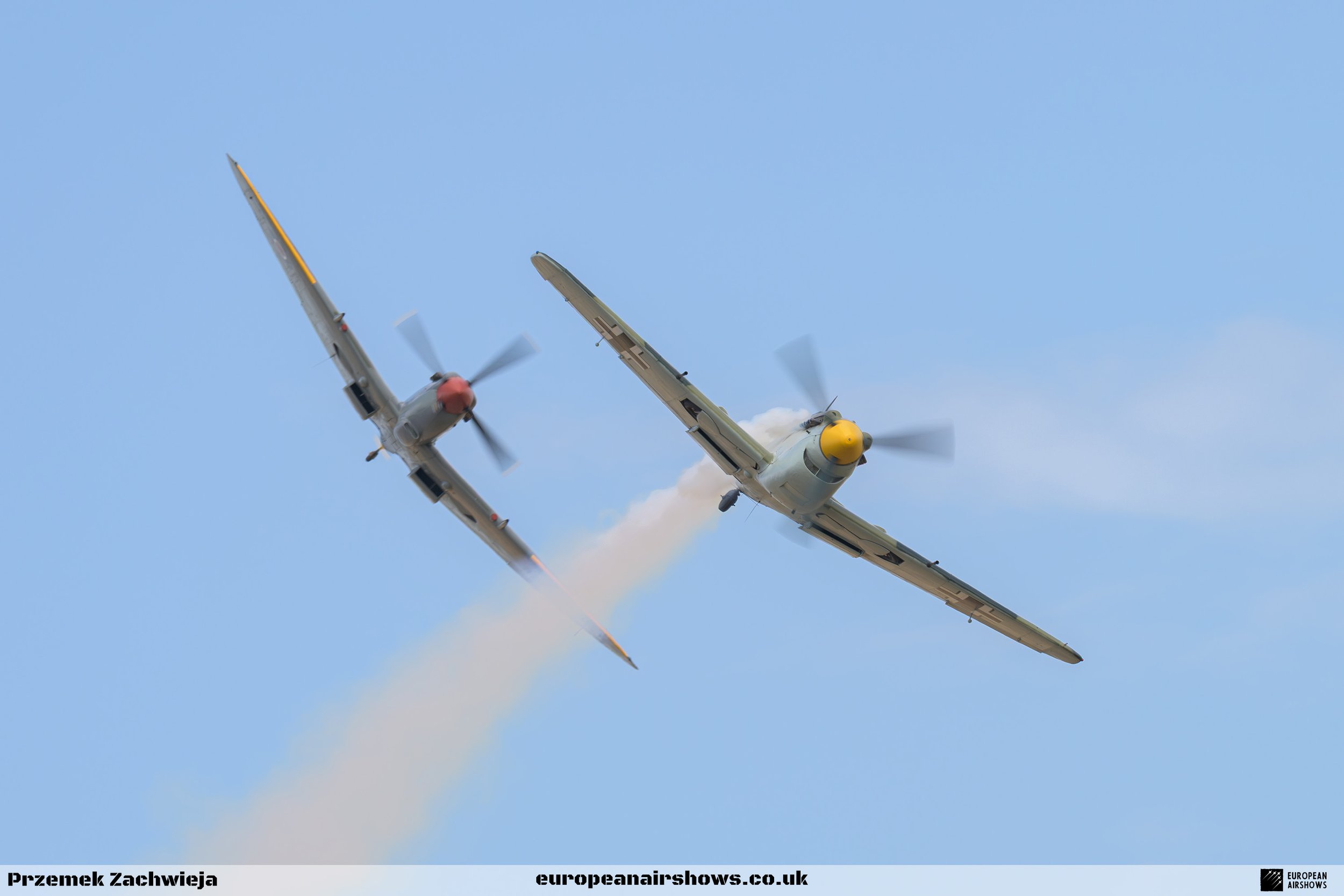
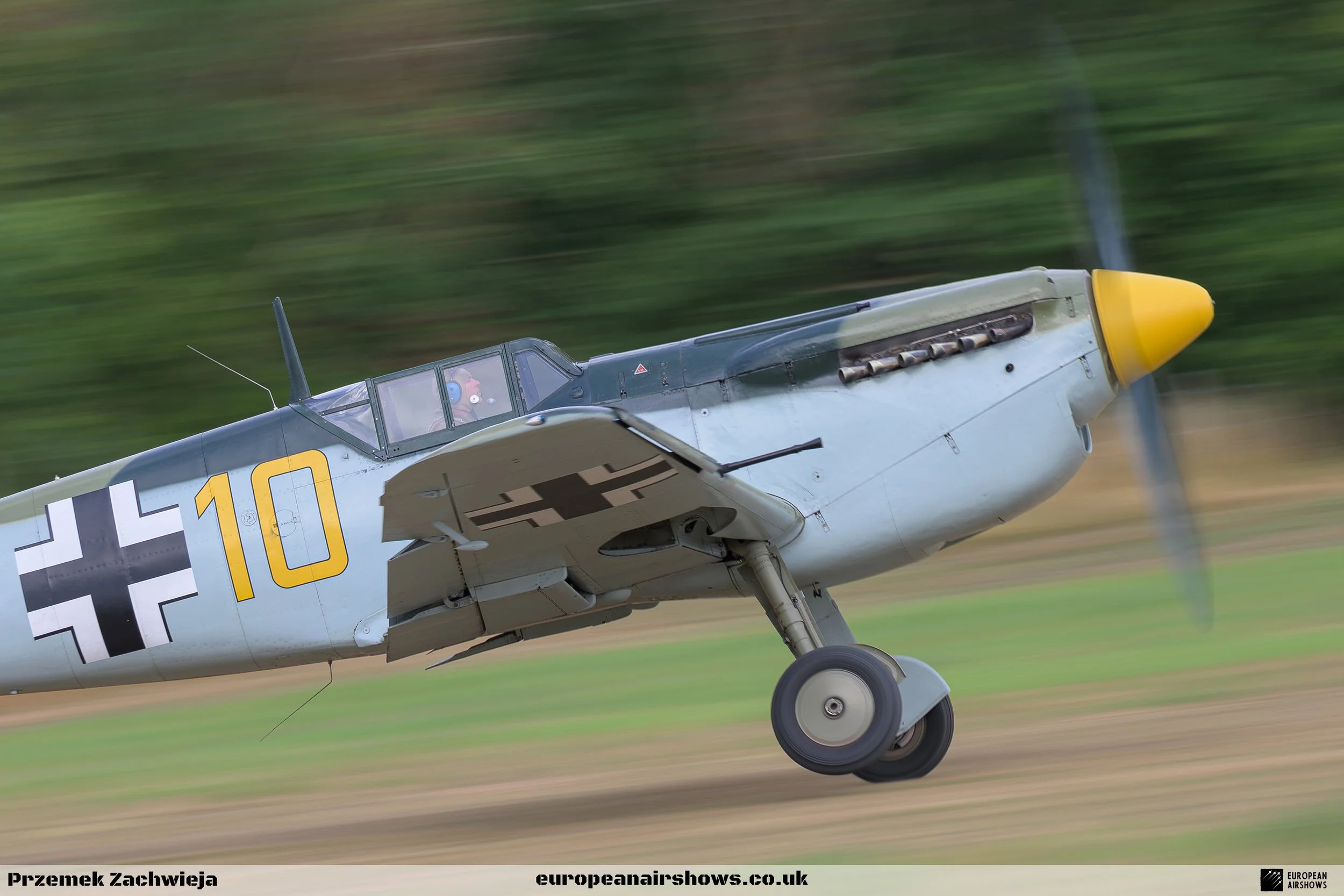
Aircraft Restoration Company’s two-seat Spitfire IX PT462 then appeared with the company’s Hispano HA-1112-M1L Buchón ‘Yellow 10’. The Buchón naturally adopted its familiar role as a Messerschmitt Bf 109 stand-in for a tail chase—and, in keeping with British airshow tradition, it lost.
There was an enjoyable mechanical irony to the encounter. The Buchón was developed in Spain from the Bf 109G but, when suitable German Daimler-Benz engines were unavailable, later examples received Rolls-Royce Merlin 500s. The result was a fighter derived from the Spitfire’s most famous enemy but powered by a close relative of the Spitfire’s own engine.
‘Yellow 10’ was built in 1959 and came to Britain for the 1969 film Battle of Britain. Its film career has continued through productions including Valkyrie and Dunkirk. Aircraft Restoration Company’s Buchón history provides more detail on its Spanish and cinematic careers.
PT462 also has an international story. It left Castle Bromwich during July 1944 as a single-seat HF Mk IXe, subsequently serving in the Mediterranean and with the South African Air Force. It was converted into a two-seat Spitfire during the 1980s and is now operated from Duxford by Aircraft Restoration Company.
The tail chase was necessarily theatrical, but it gave the crowd what it wanted: sweeping topside passes, repeated reversals and the familiar visual contest between elliptical and angular wings.
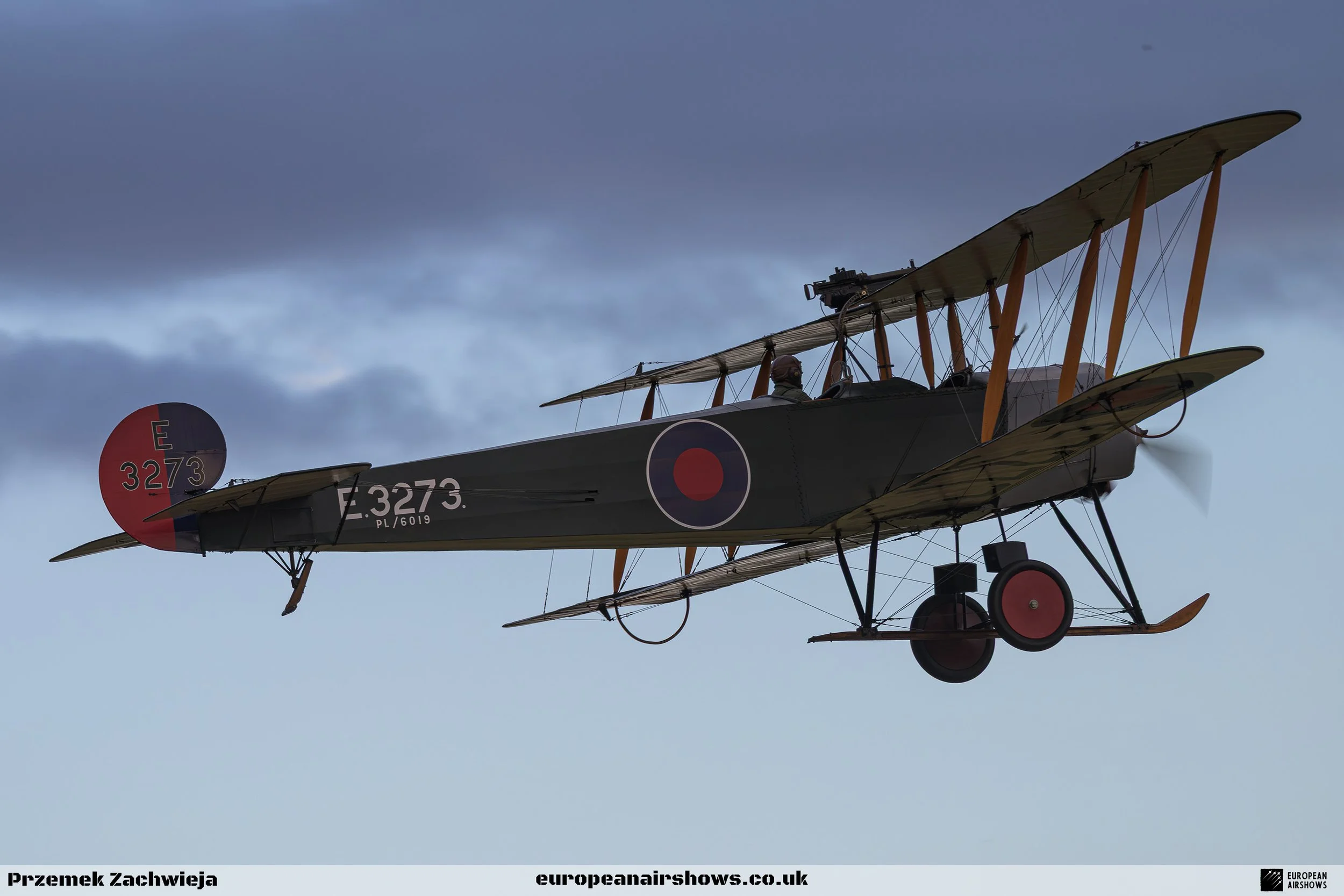
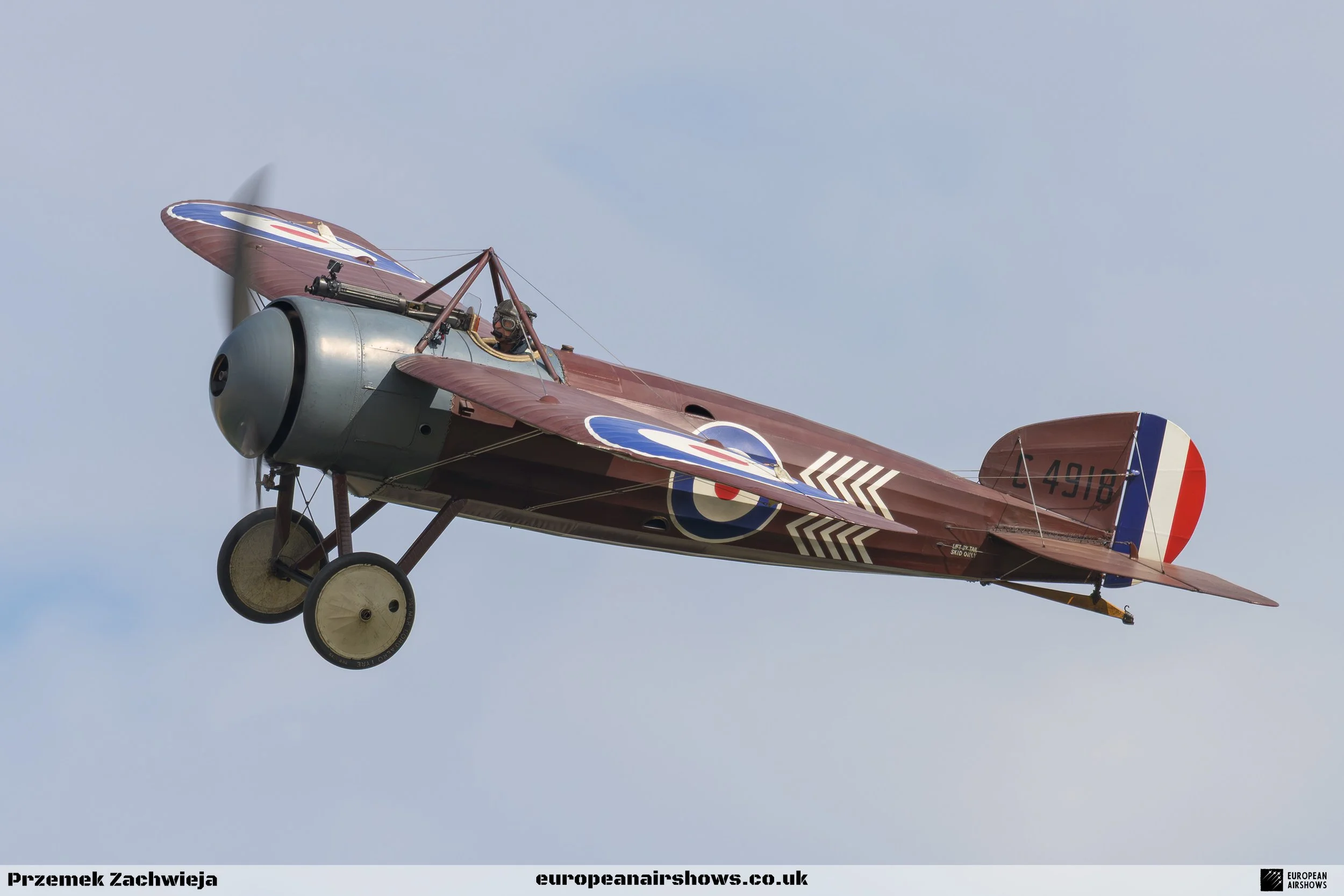
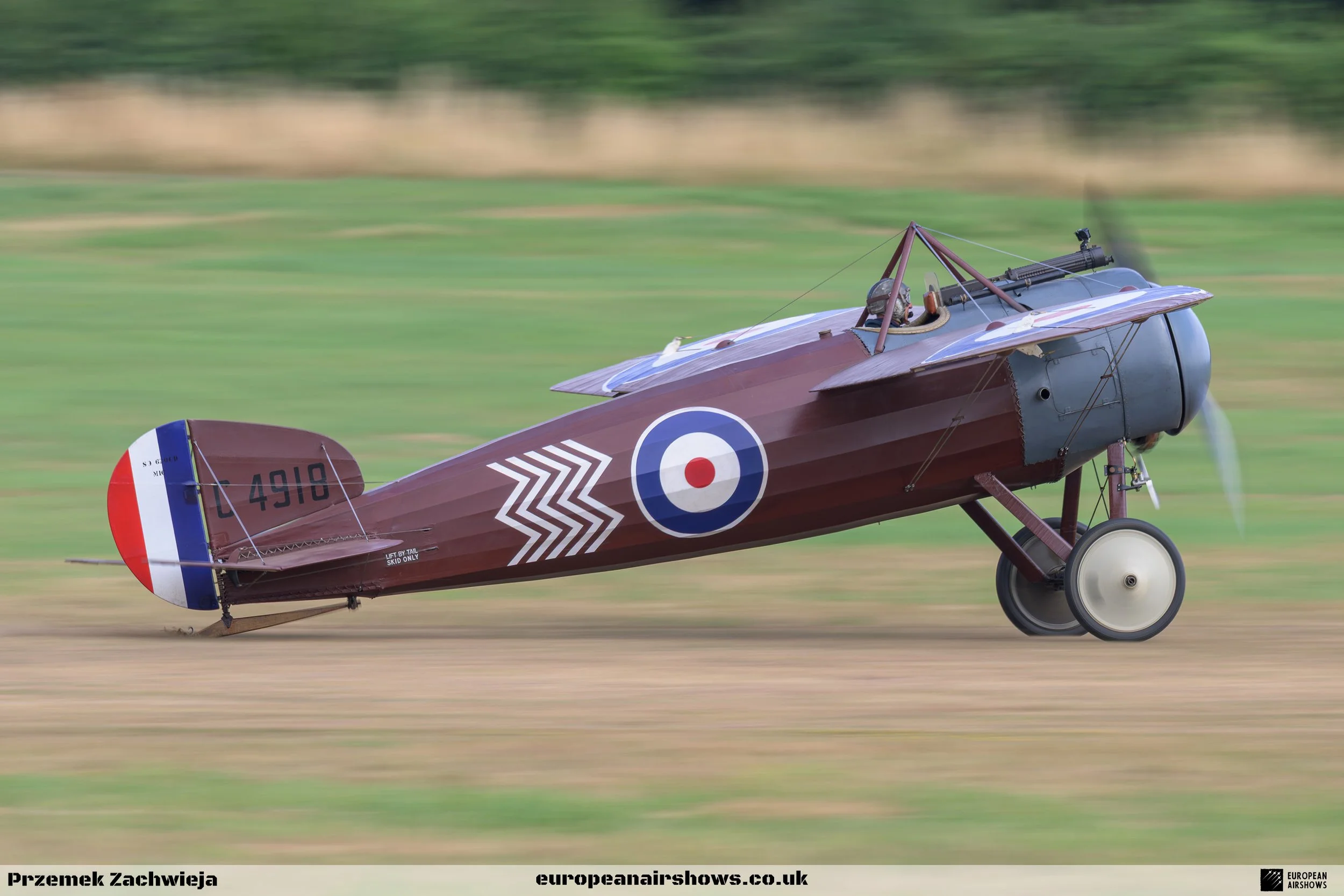
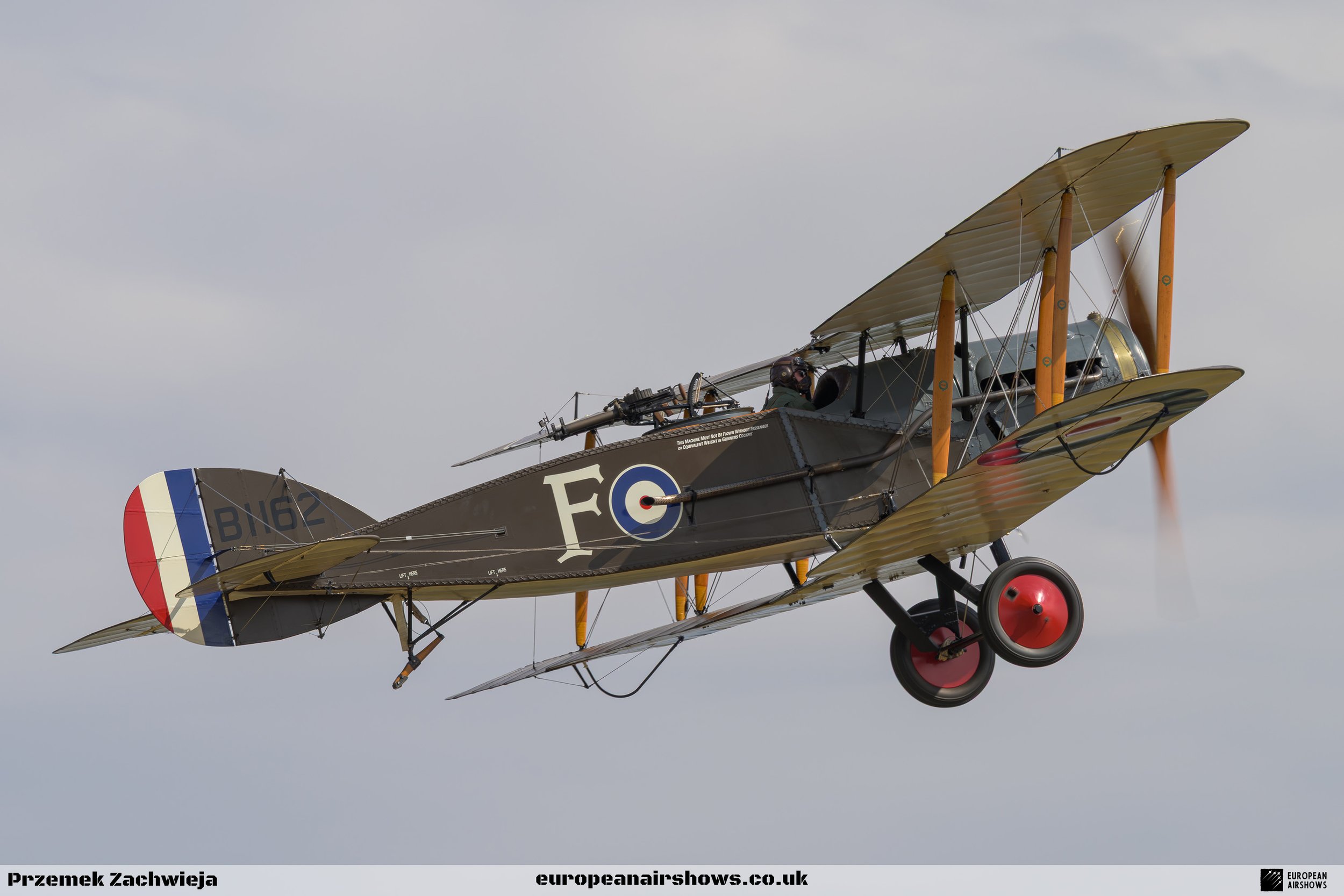
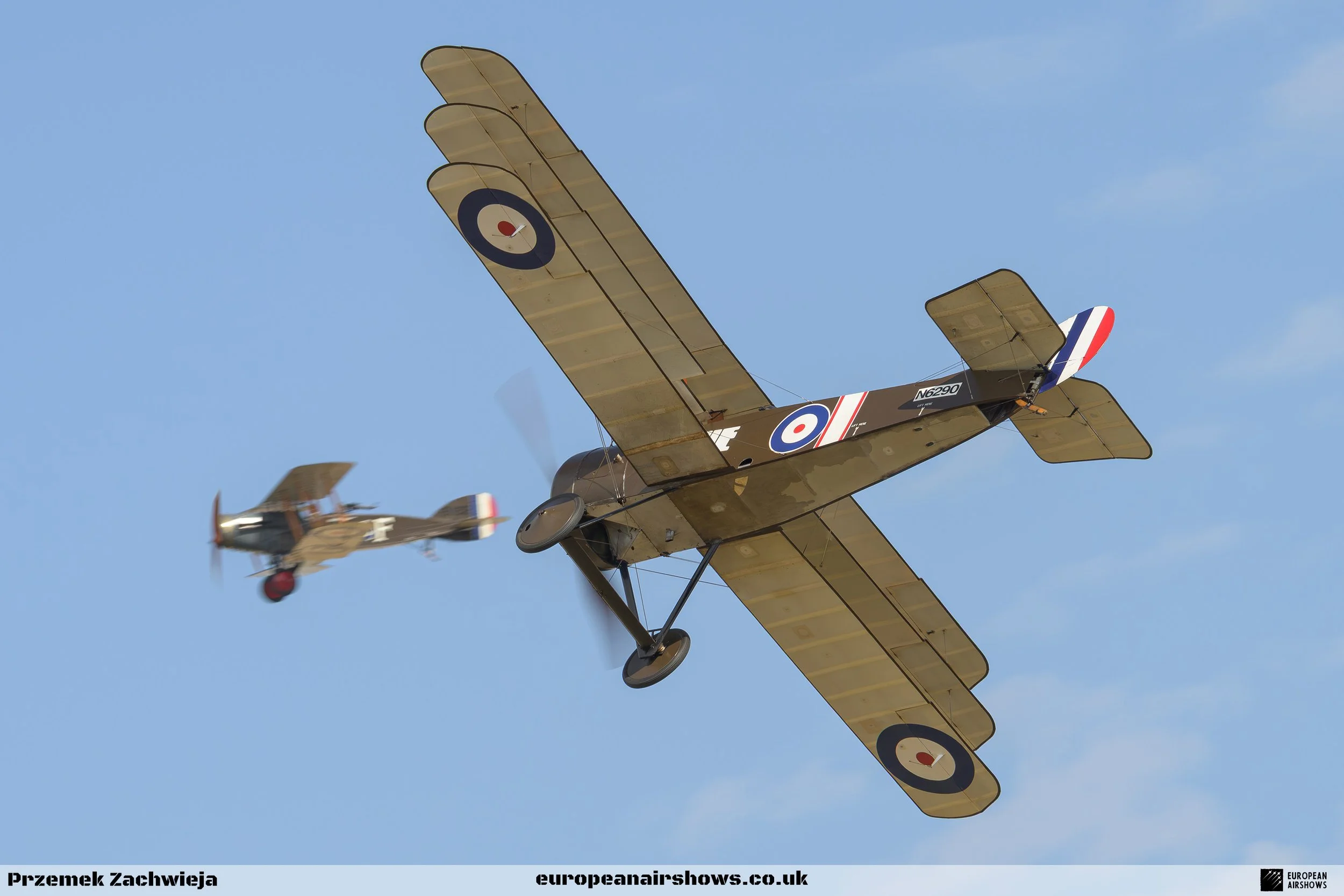
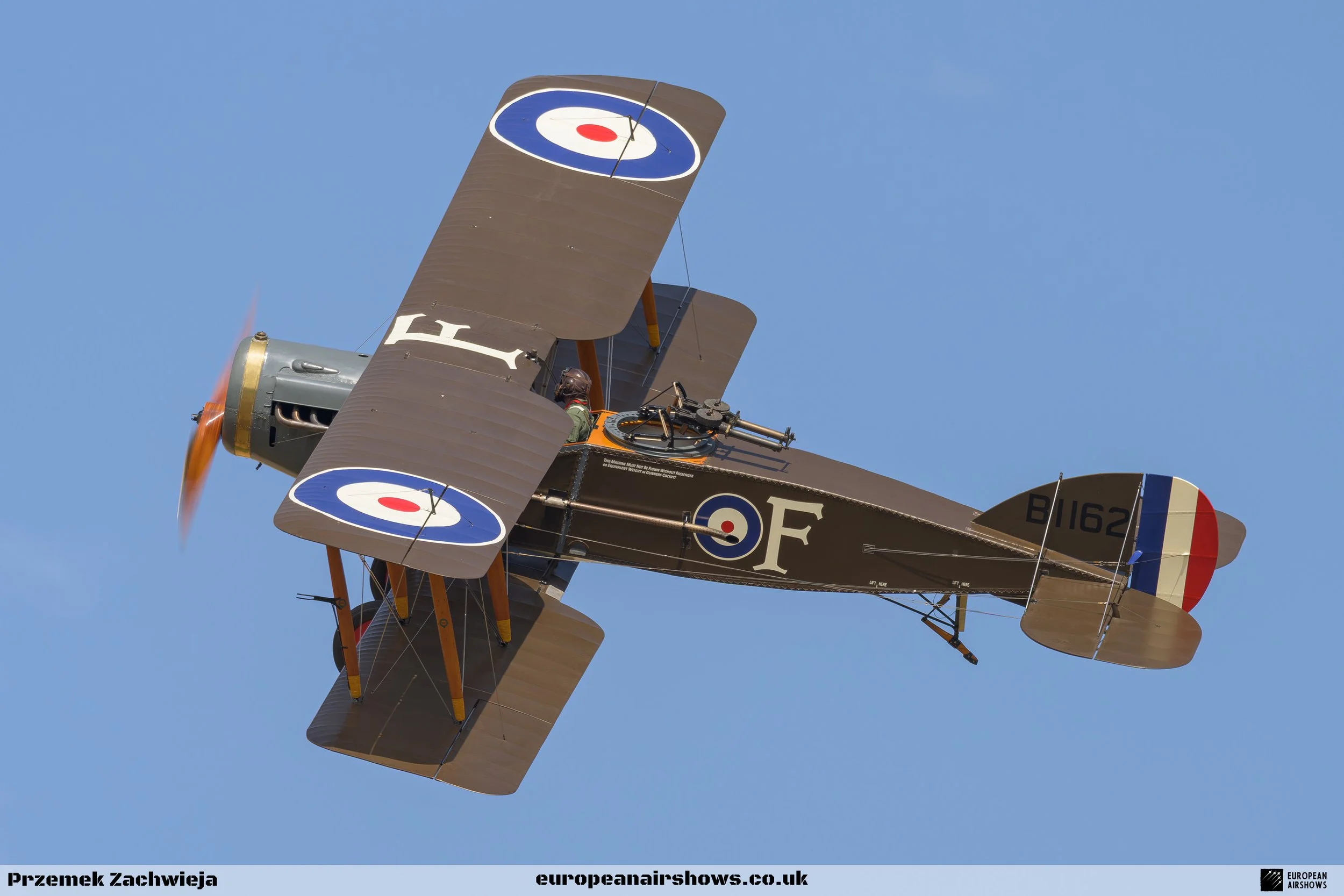
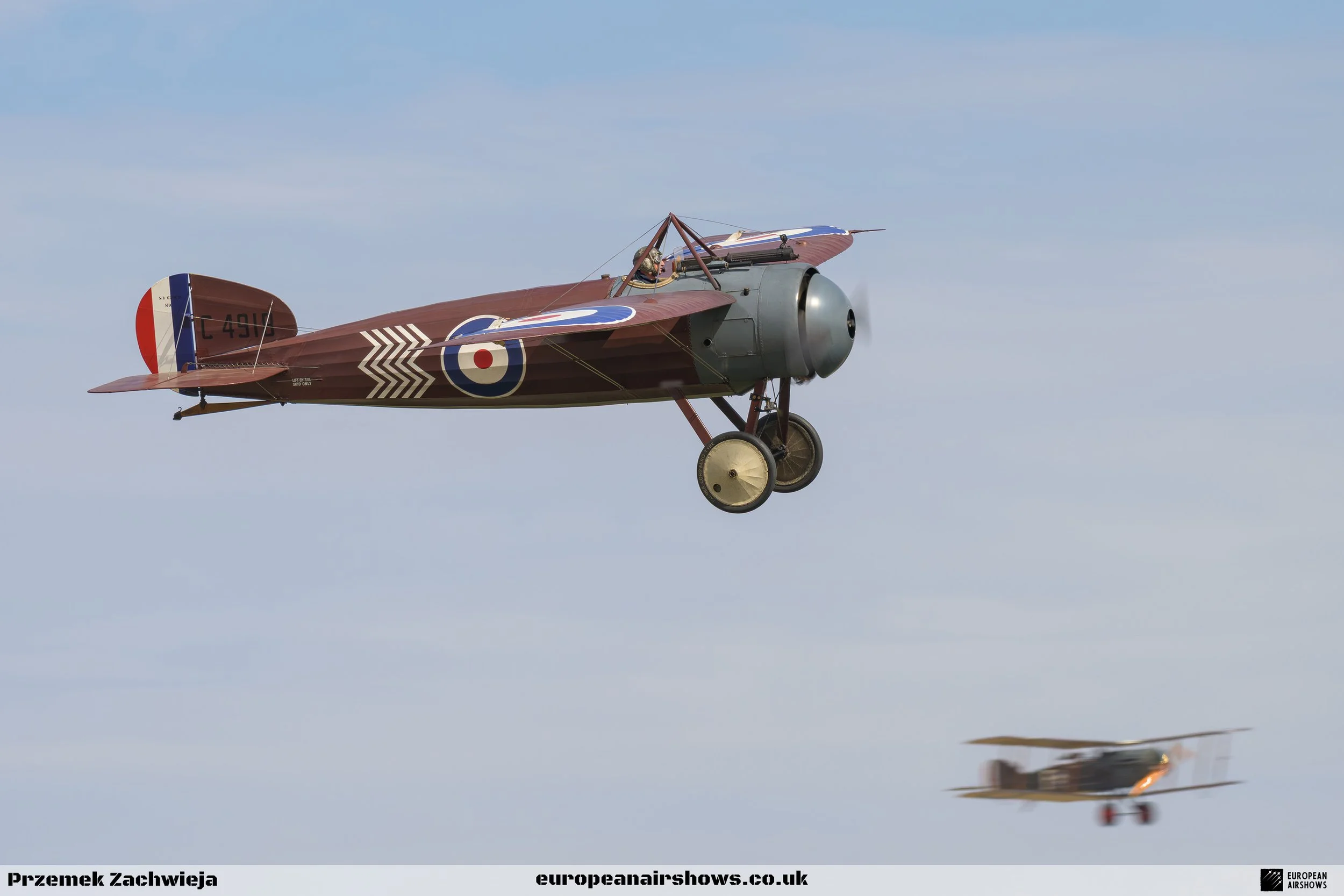
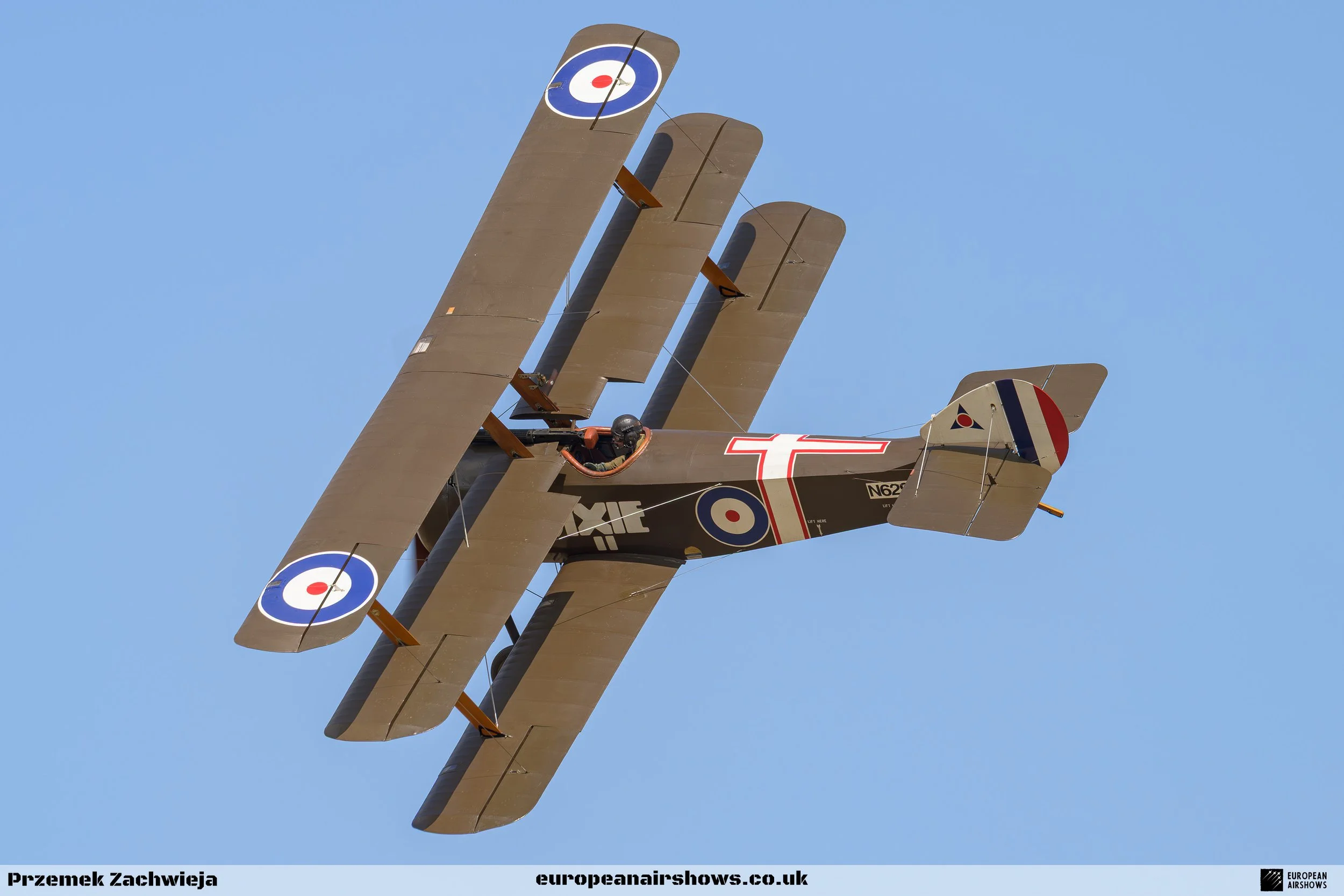
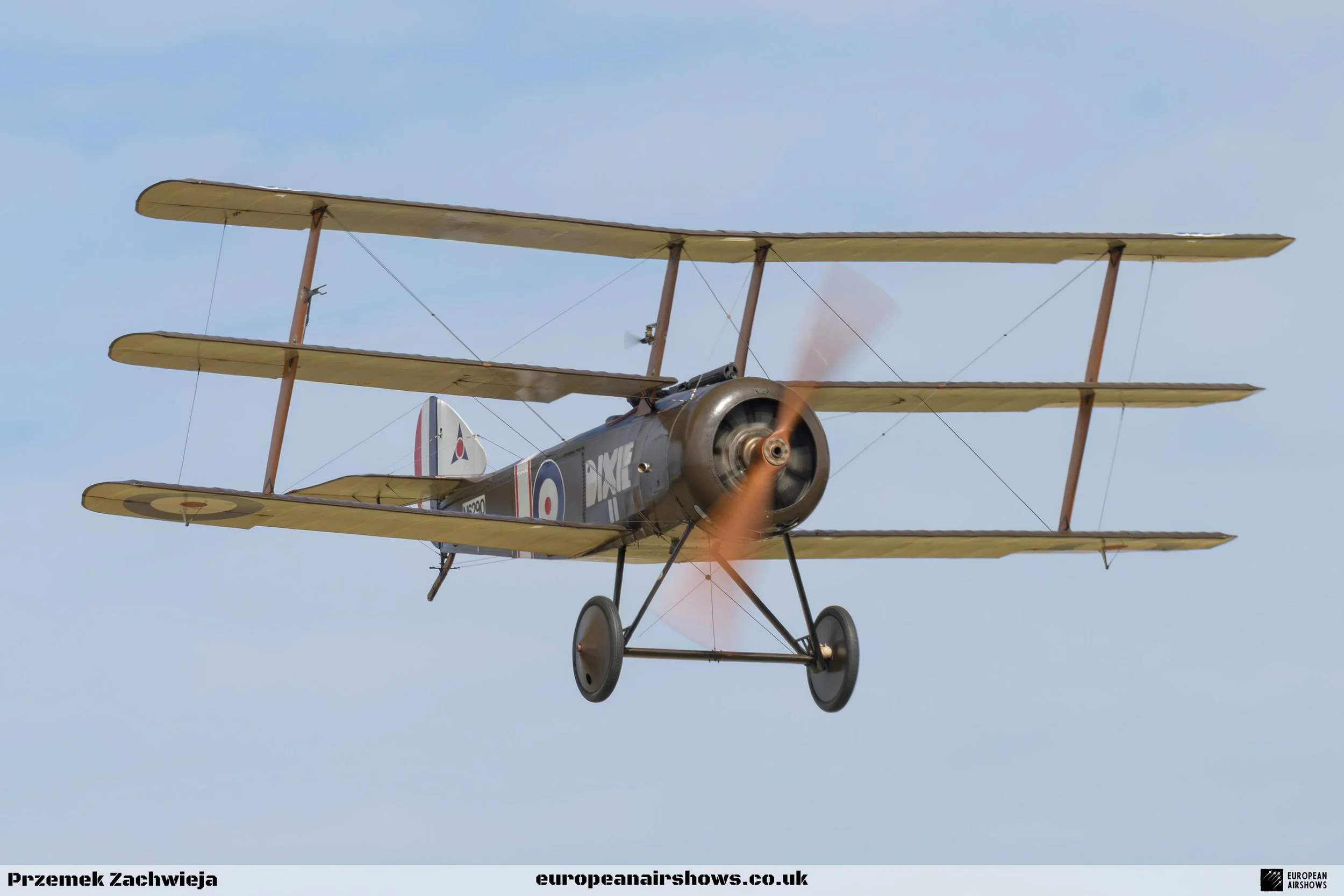
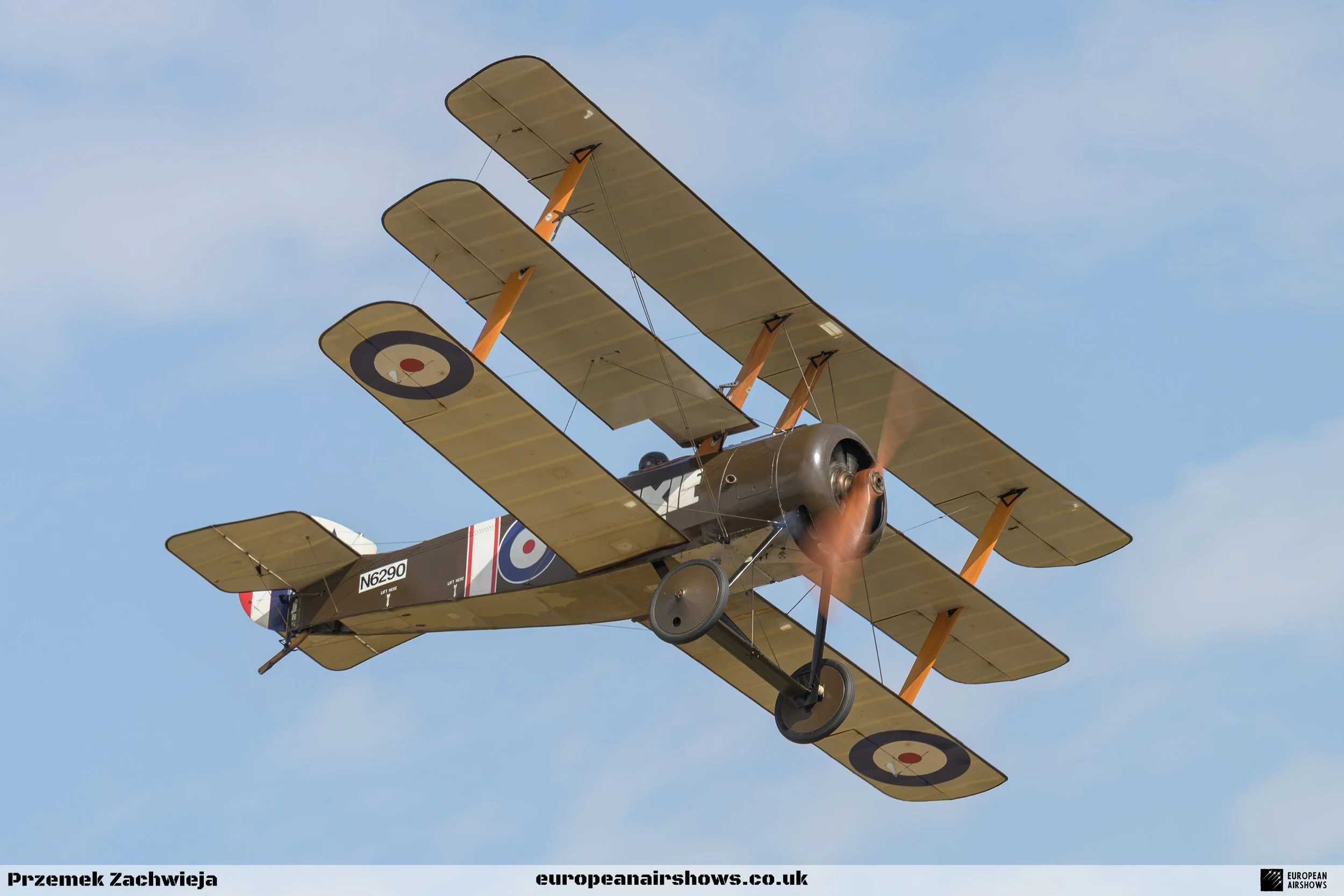
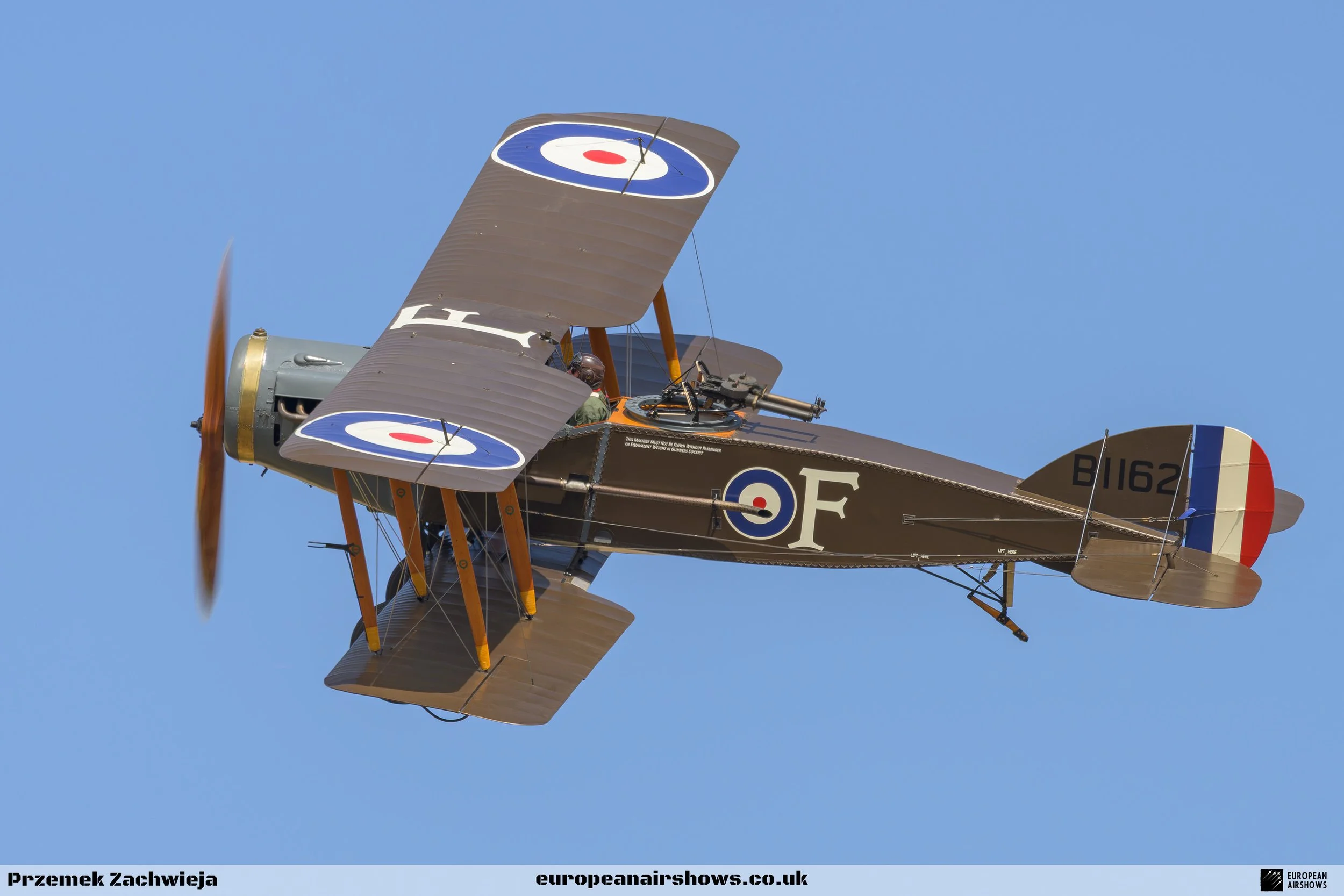
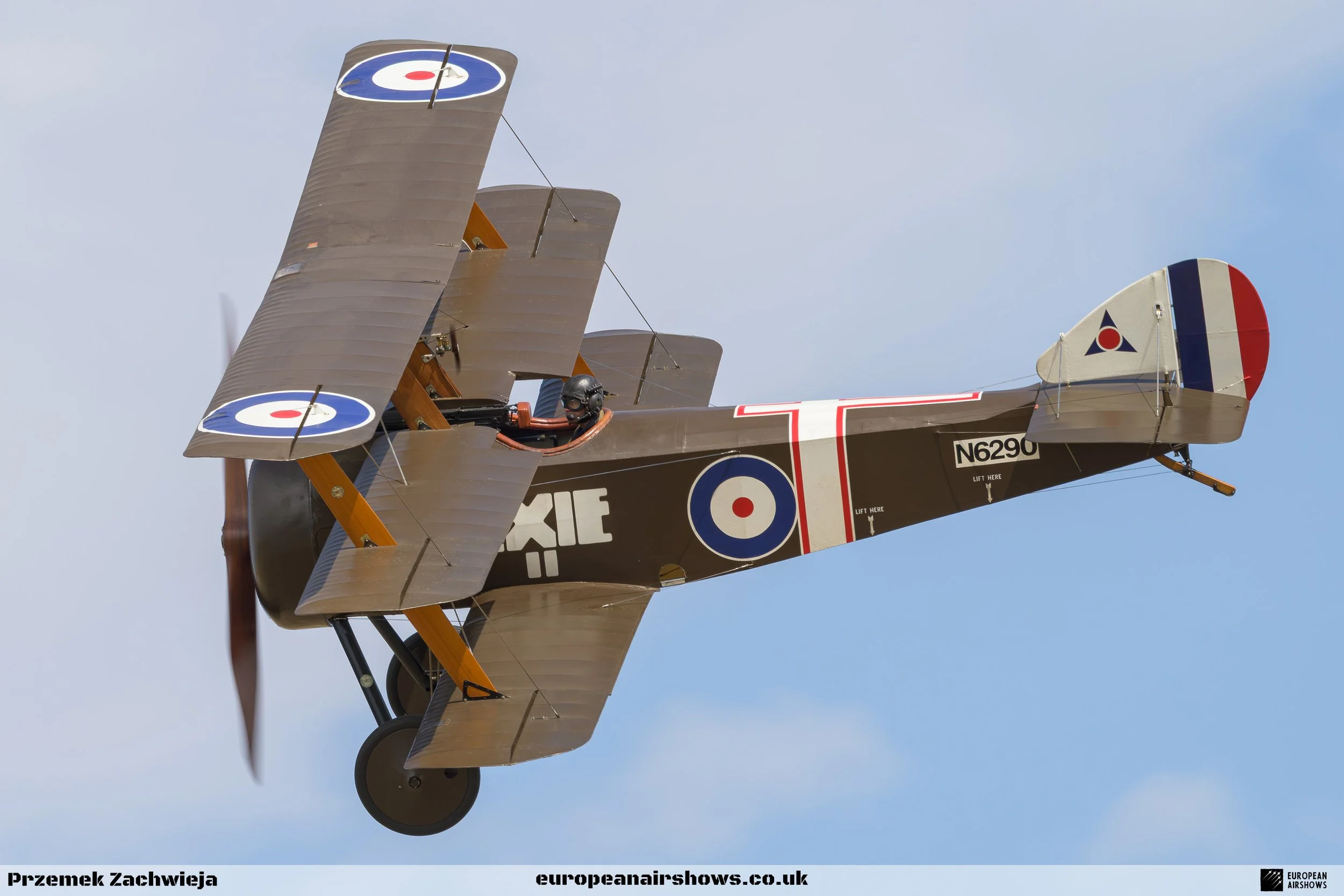
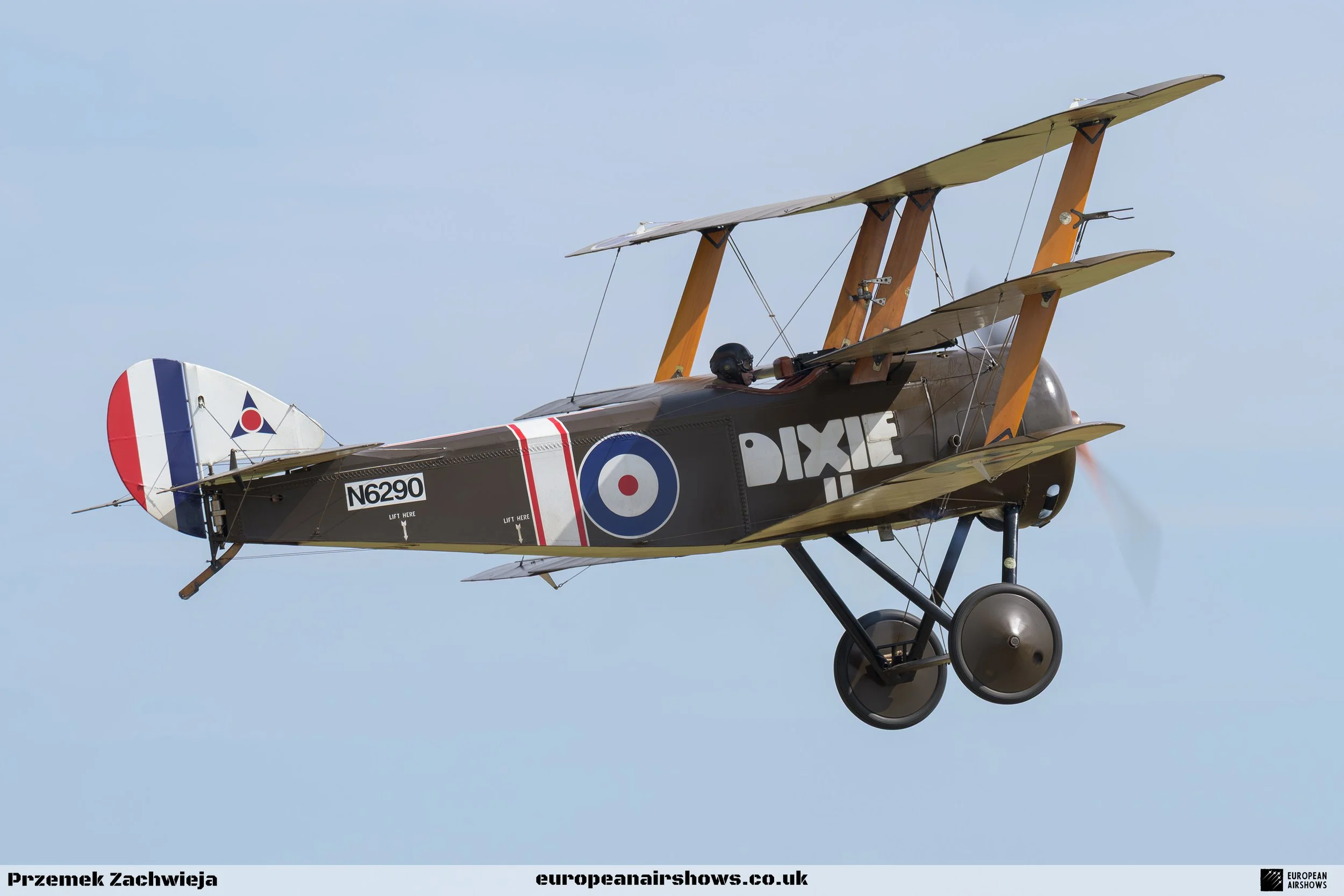
The programme then stepped back to the First World War with three Shuttleworth machines: the original Bristol F.2B Fighter D8096, a Sopwith Triplane reproduction and the Collection’s Bristol M.1C monoplane reproduction.
Although officially designated a reconnaissance aircraft, the Bristol Fighter possessed enough performance to be flown aggressively and became highly effective when treated as a fighter rather than a defensive observation machine. D8096 was completed too late for combat during the First World War but later served in Turkey. It is now one of only a tiny number of original Bristol Fighters still flying and the sole airworthy example in Europe. Shuttleworth’s Bristol Fighter page traces its remarkable survival.
Alongside the nimble Sopwith Triplane and streamlined Bristol monoplane, it formed another useful chapter in the show’s broader fighter-development story. Long before the Spitfire, designers were already experimenting with visibility, speed, manoeuvrability and the advantages—or disadvantages—of multiple wings.
The men who would fly Spitfires
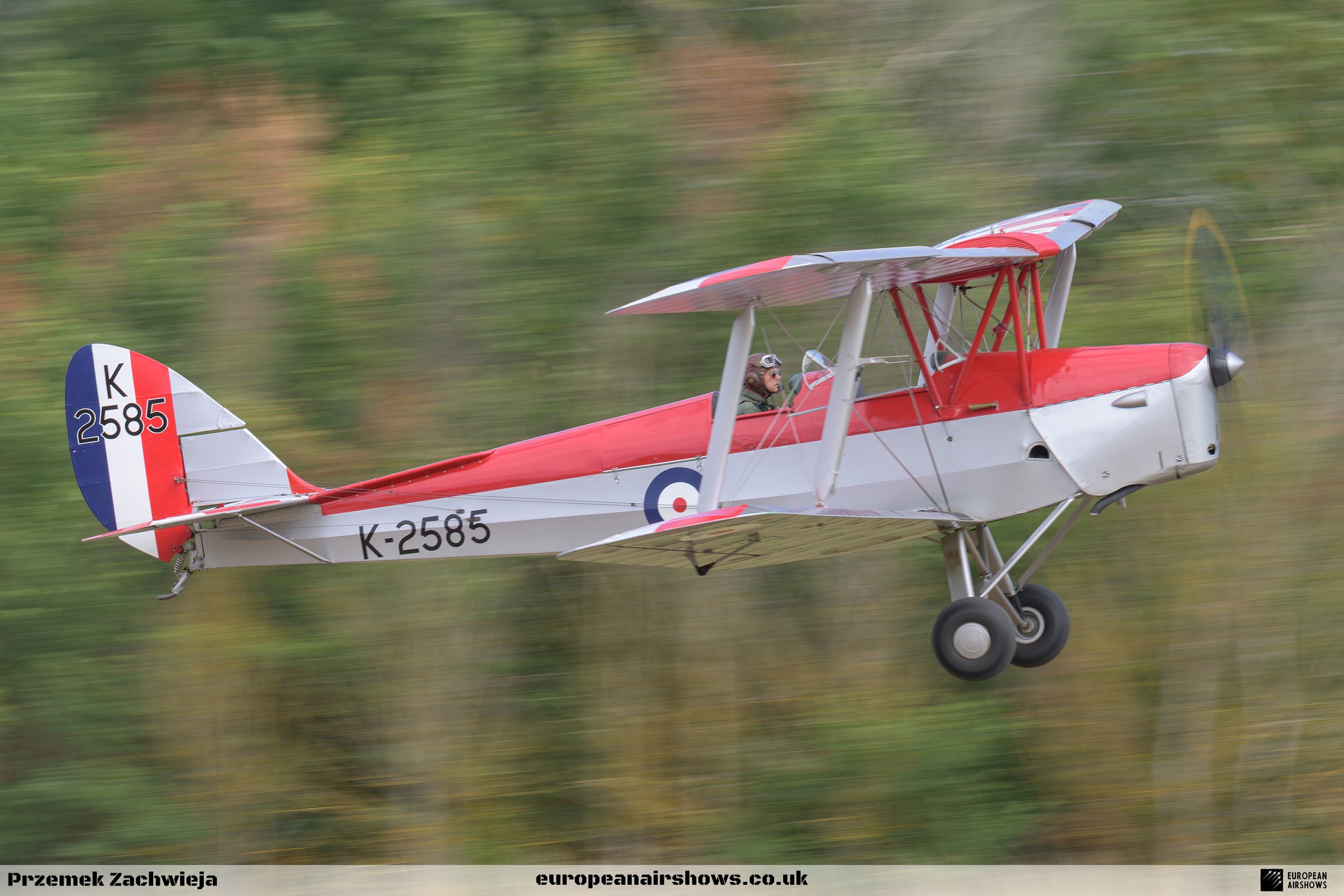
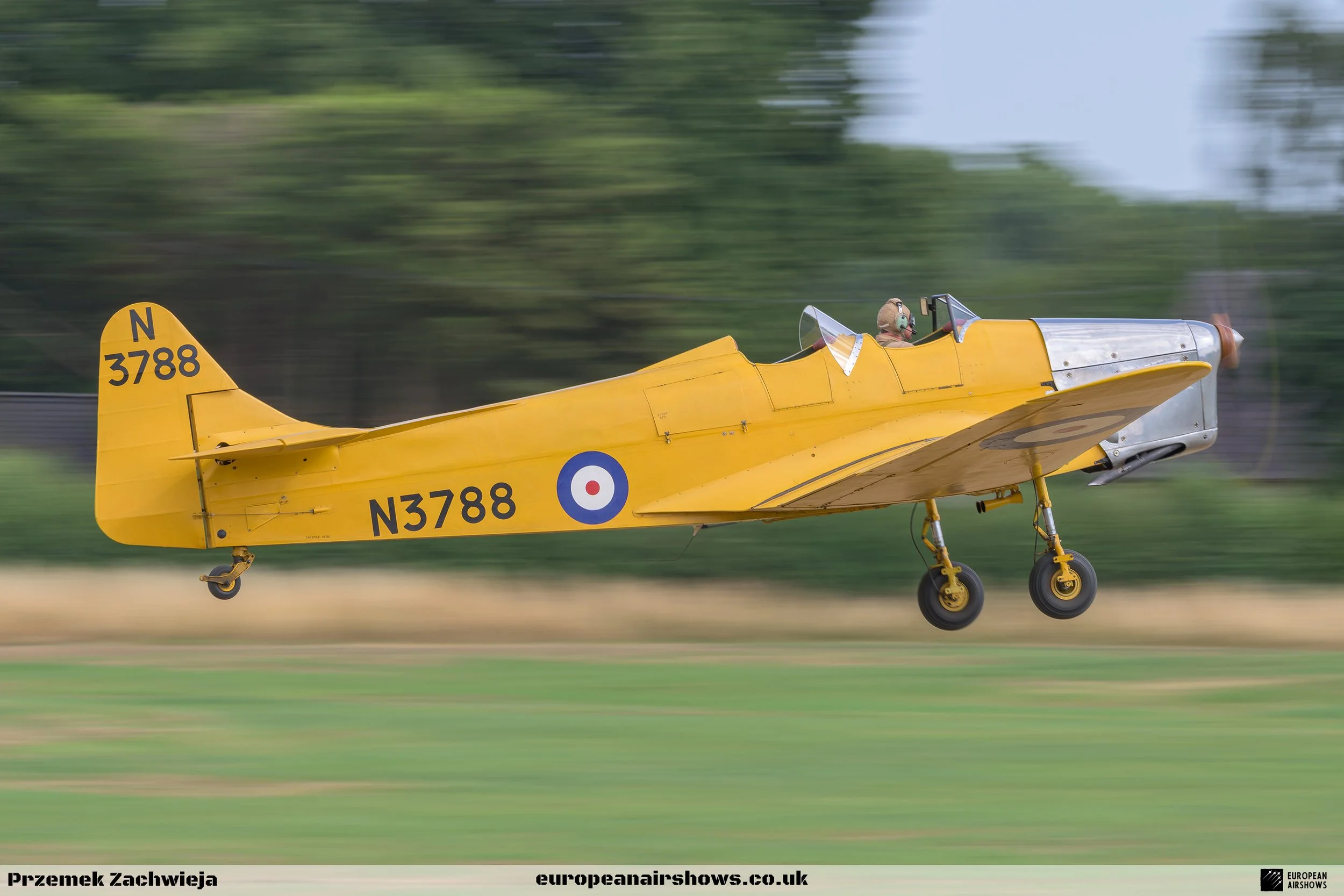
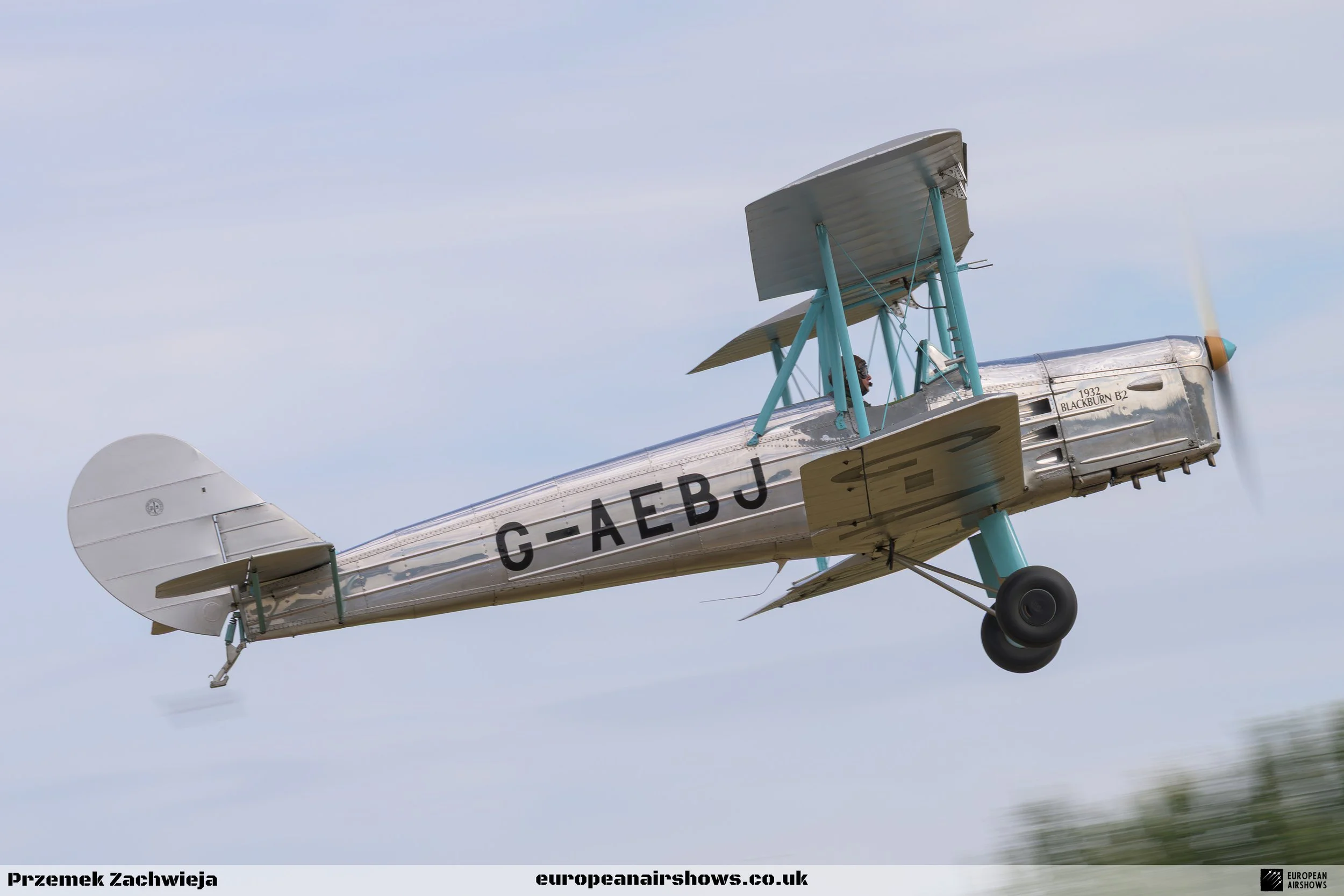
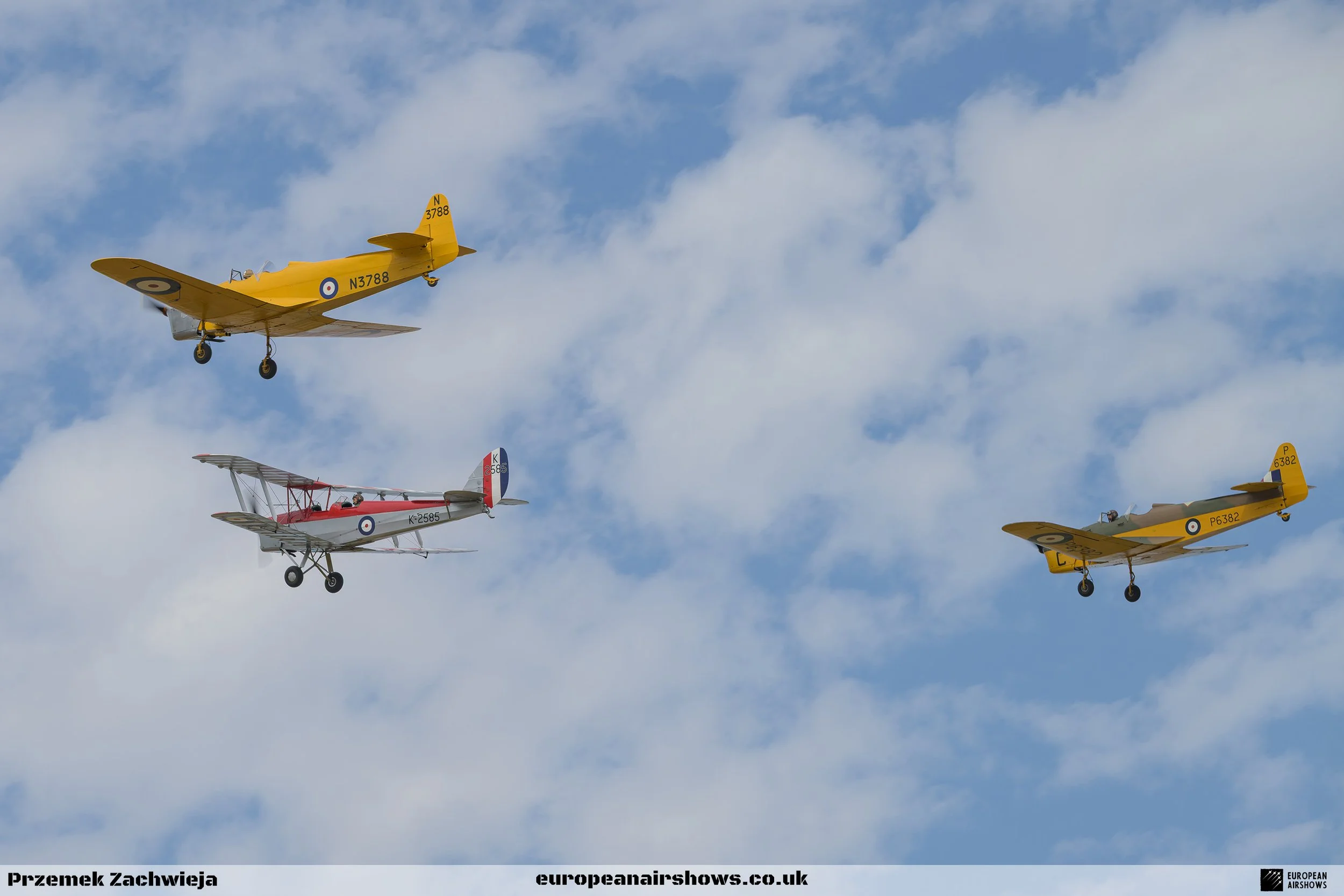
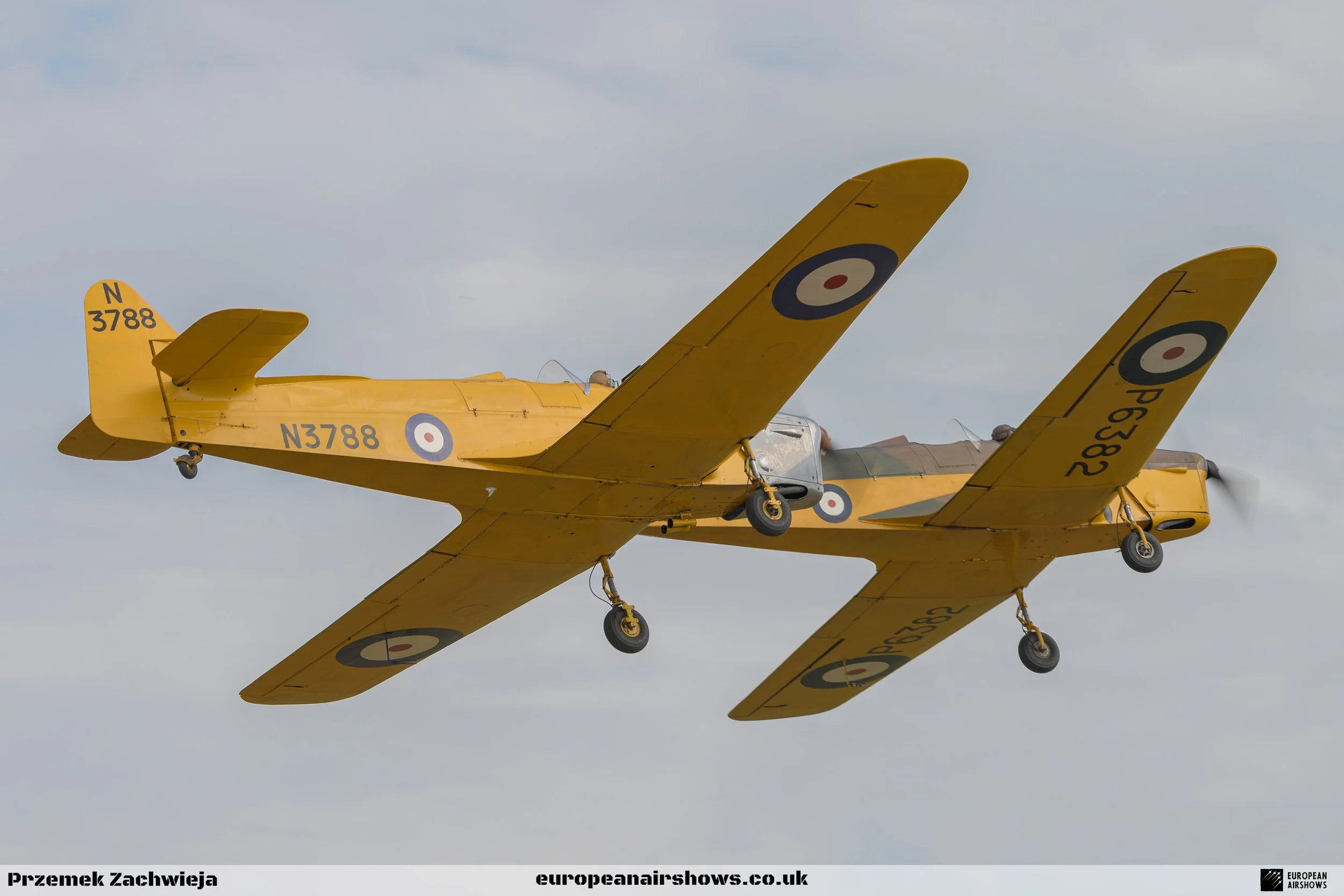
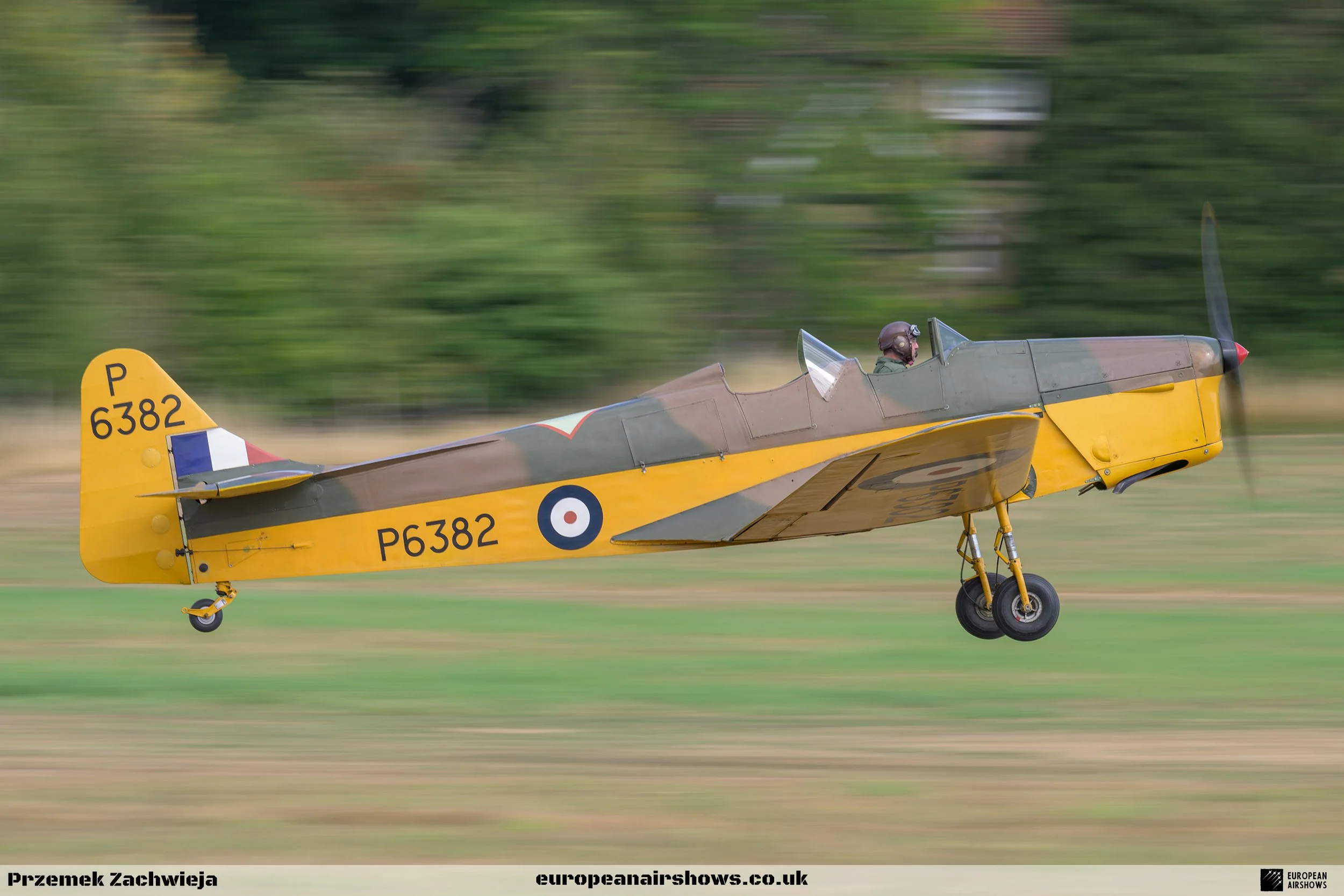
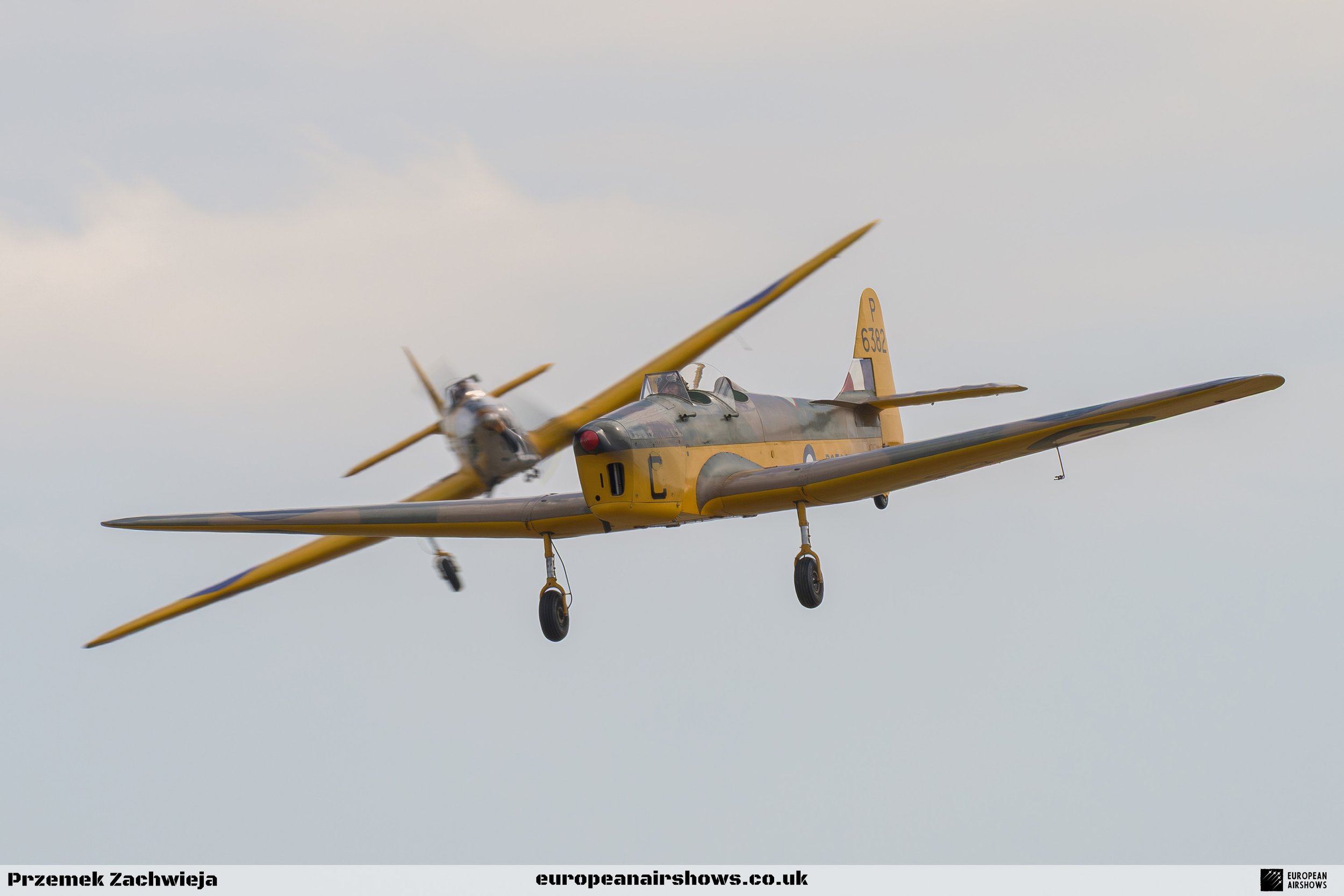
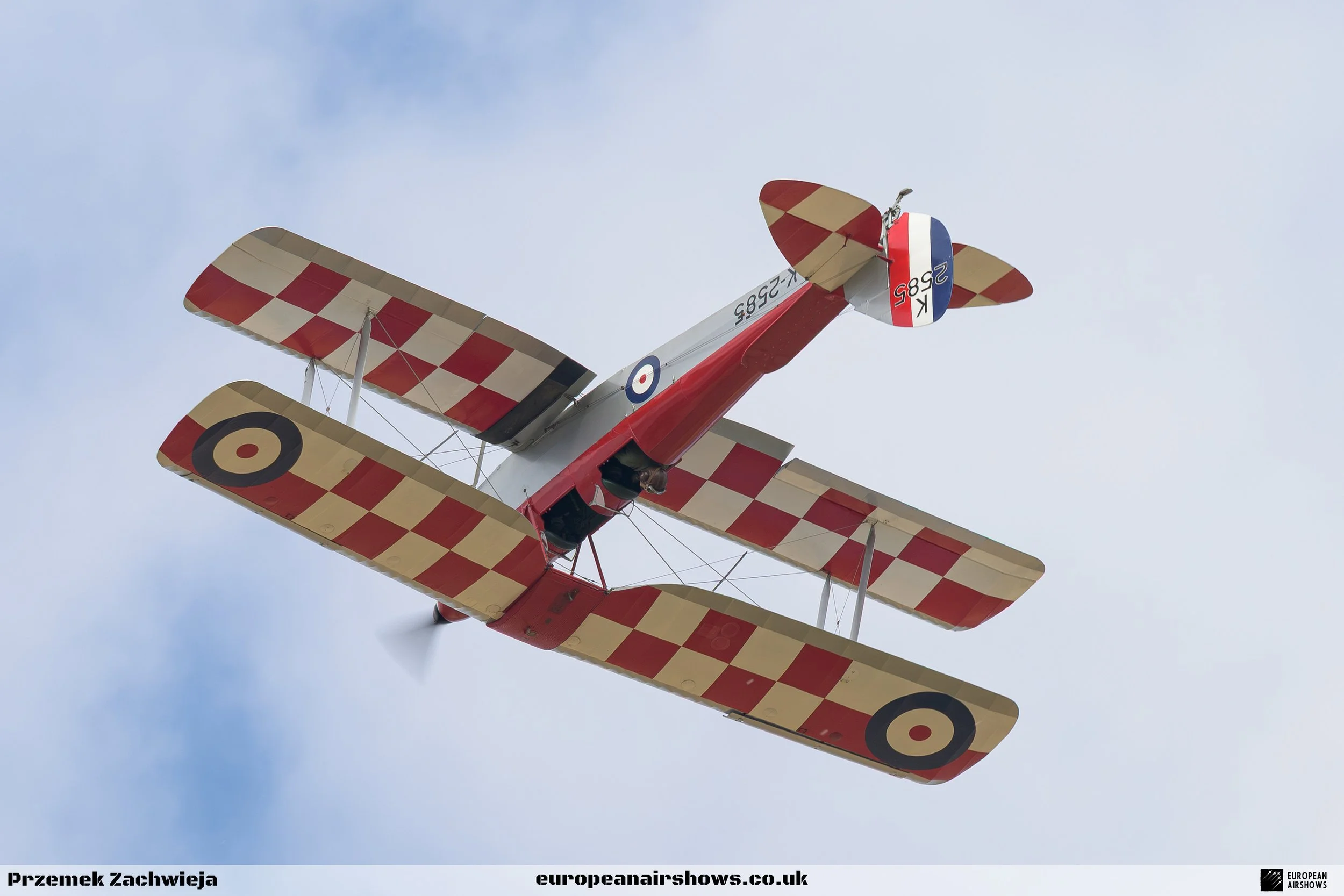
The most direct link between the wider Collection and the anniversary theme came from the pre-war trainers. David Bramwell’s Miles M.14 Hawk Trainer III/Magister joined Shuttleworth’s Miles M.14A Magister, Blackburn B-2 and de Havilland Tiger Moth in a complex sequence of formations, low passes and individual aerobatics.
These were the machines at the beginning of the training pipeline which supplied pilots to Britain’s wartime fighter squadrons.
The Tiger Moth provided elementary instruction to a huge proportion of wartime RAF and Commonwealth pilots. The Magister was the RAF’s first purpose-designed monoplane trainer, giving pupils valuable experience of a more modern layout before progressing towards types such as the Hurricane and Spitfire. The much rarer Blackburn B-2 was used by civil flying schools and at No.4 Elementary Flying Training School at Brough. Together, they represented the unglamorous but essential first stage behind every operational fighter pilot.
The B-2 initially remained high above the formation and then delivered a spirited aerobatic display. The Tiger Moth dramatically separated from the three-ship group, leaving the two Magisters to continue their passes while the Blackburn worked overhead.
The Tiger Moth’s eventual solo was close to perfect. It was accurately positioned, beautifully smooth and made full use of the Old Warden backdrop. Nothing was hurried or exaggerated; every change of direction flowed into the next. On a day dominated by Spitfires, it was a reminder that the road to a fighter cockpit usually began at a considerably slower speed.
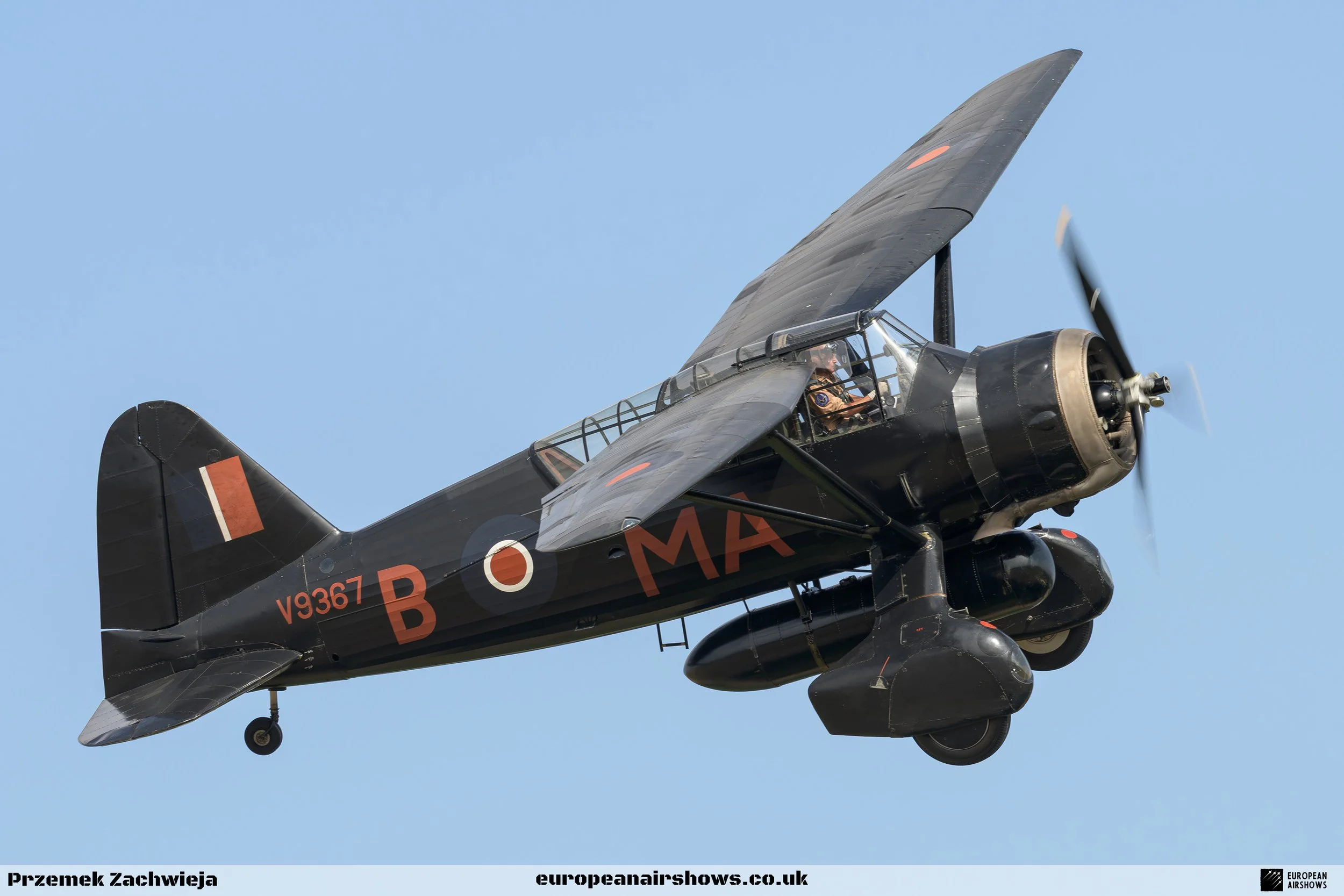
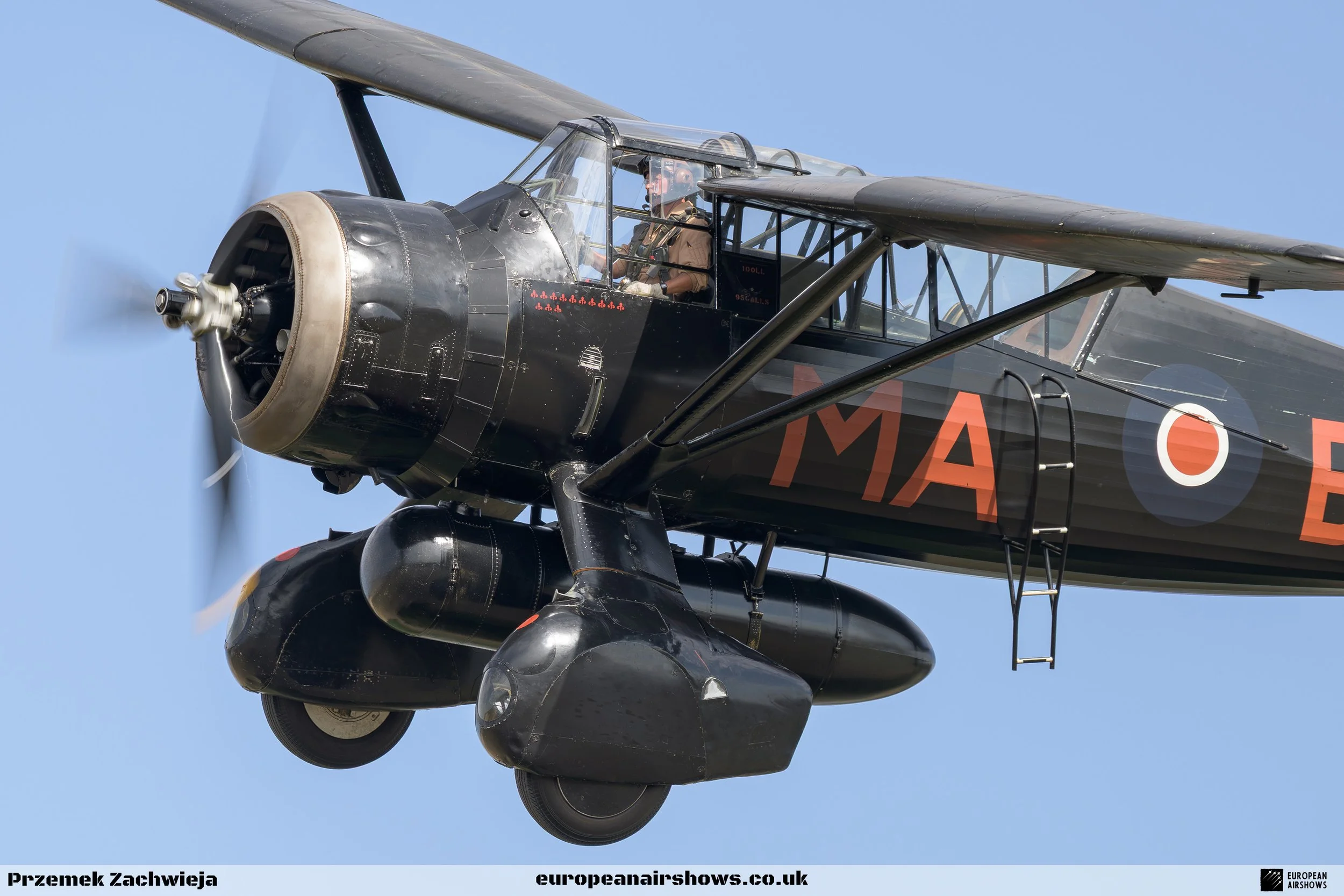
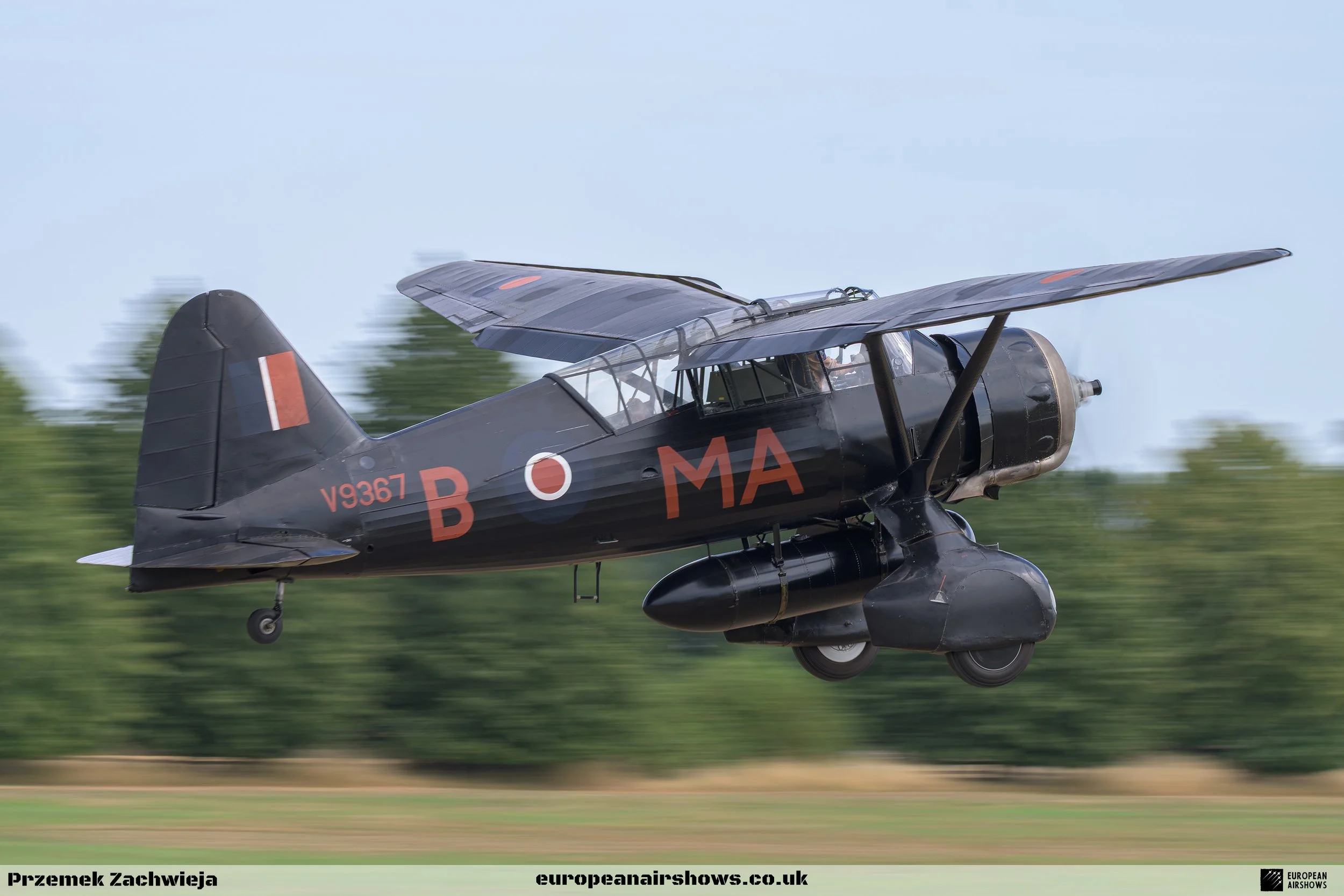
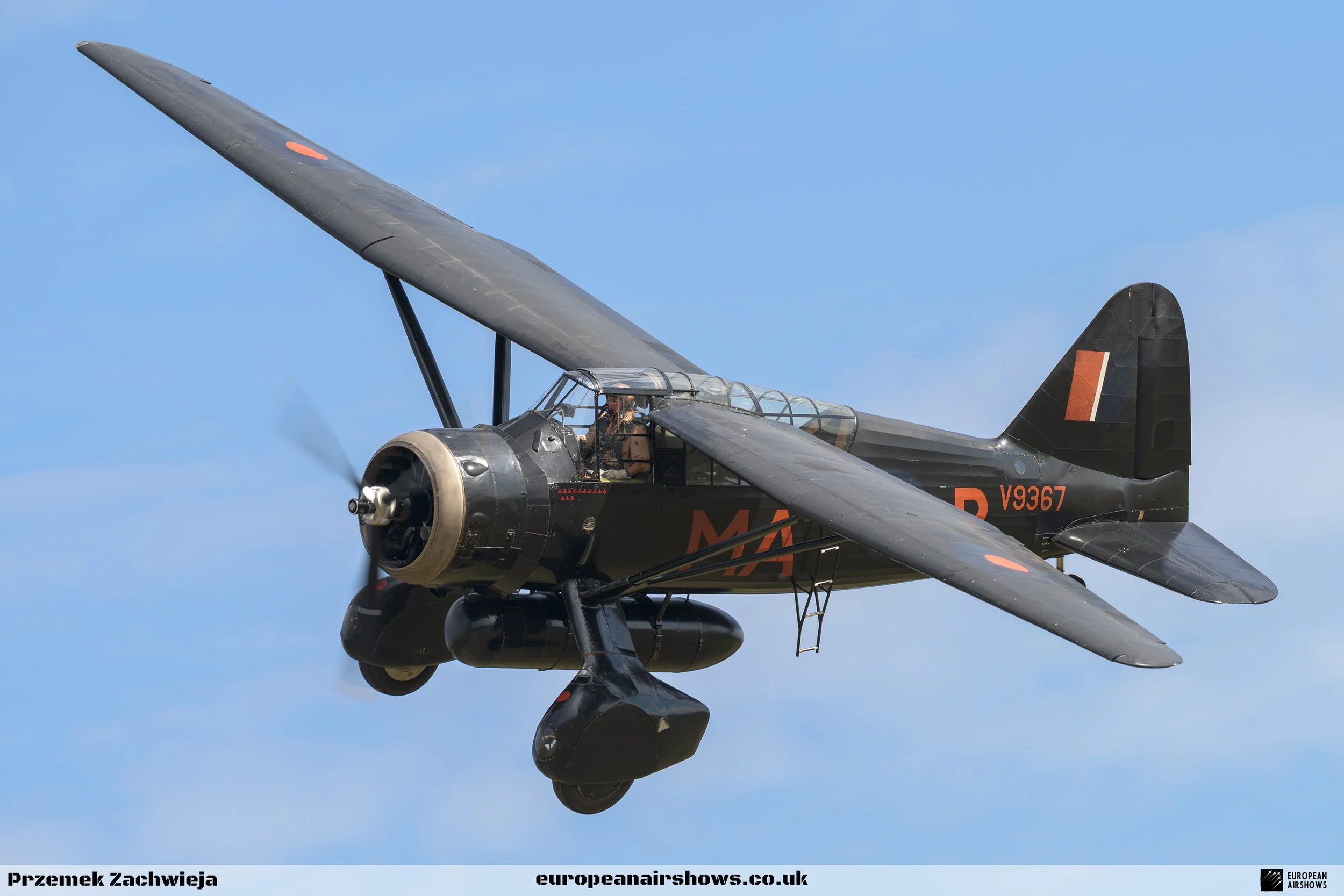
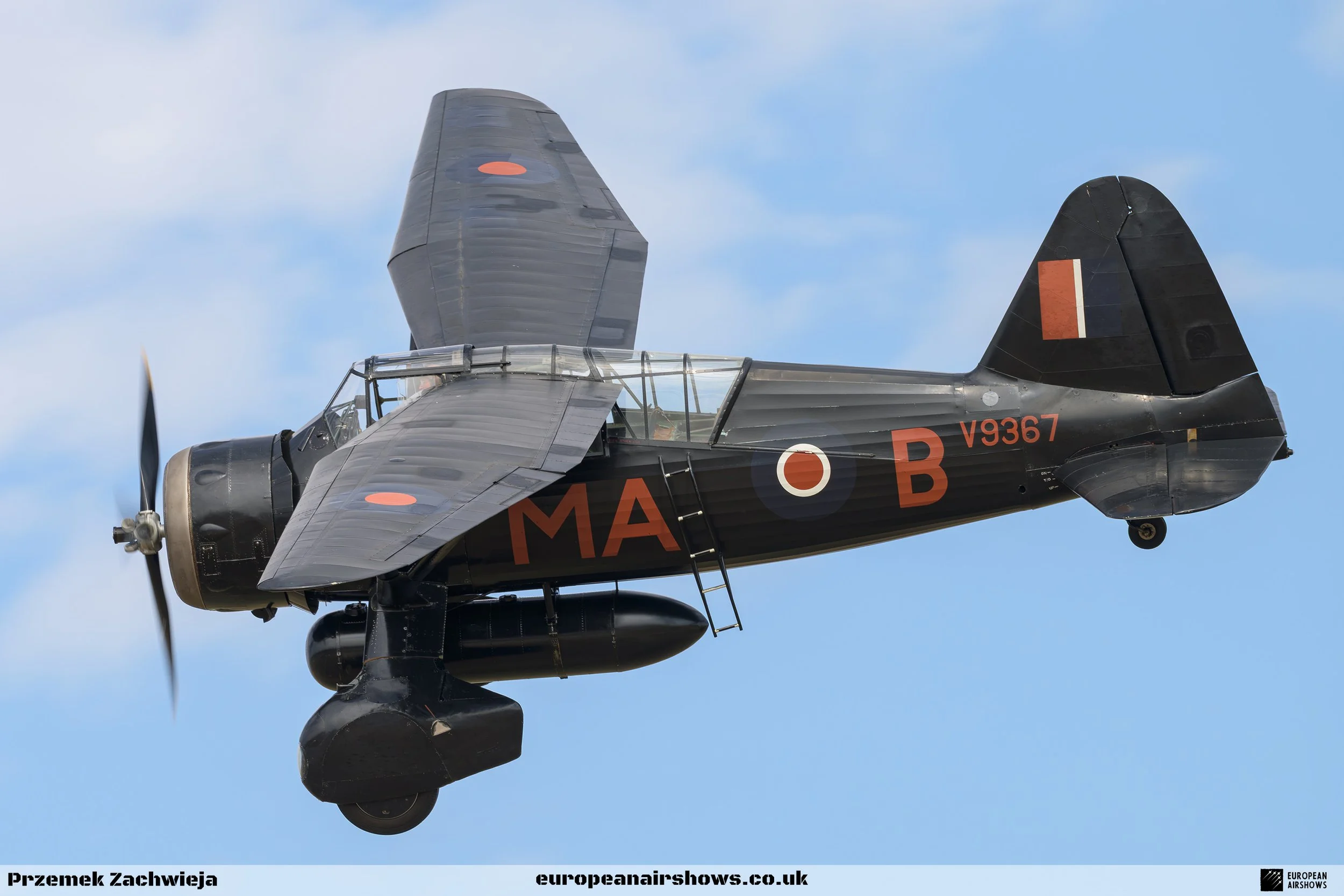
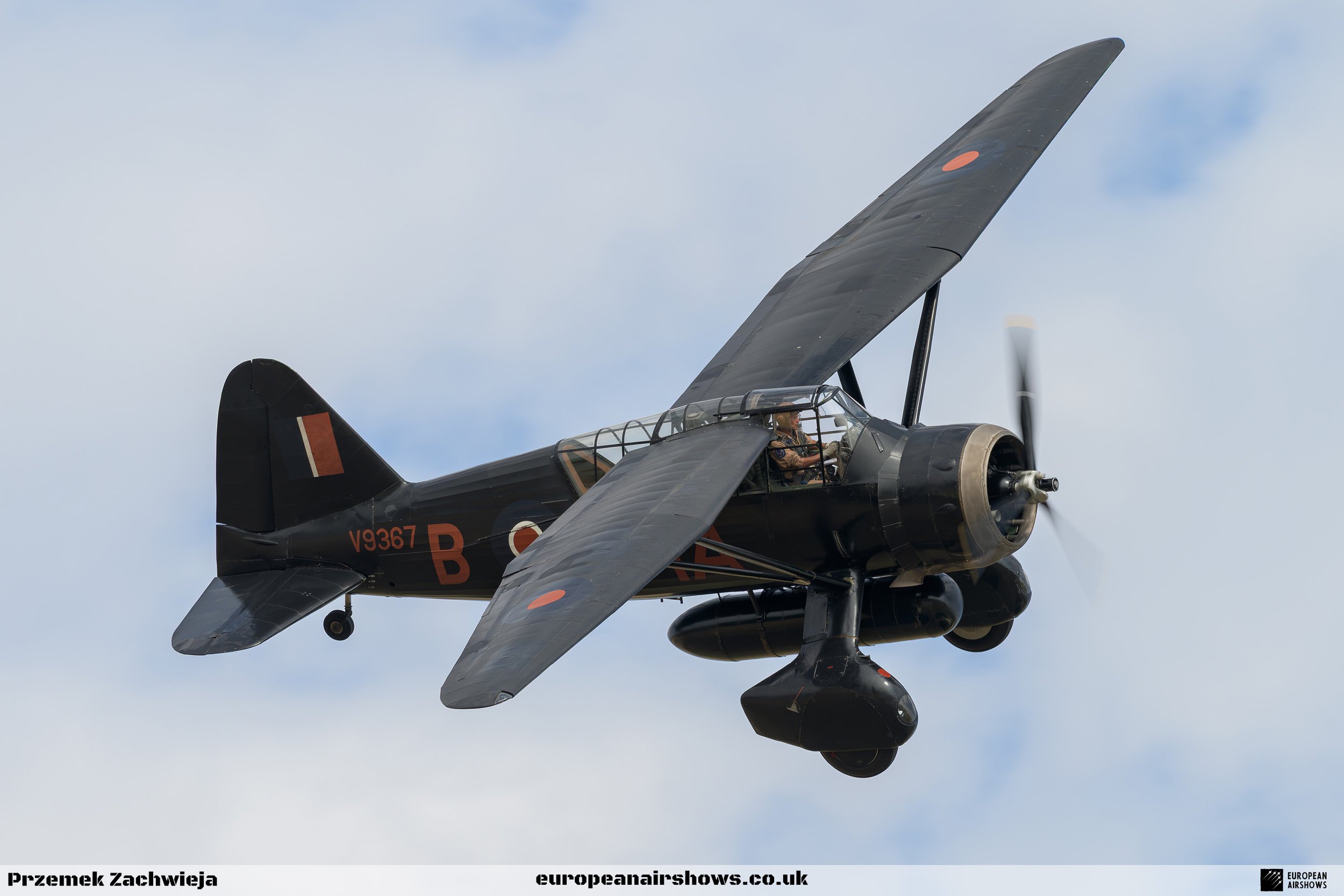
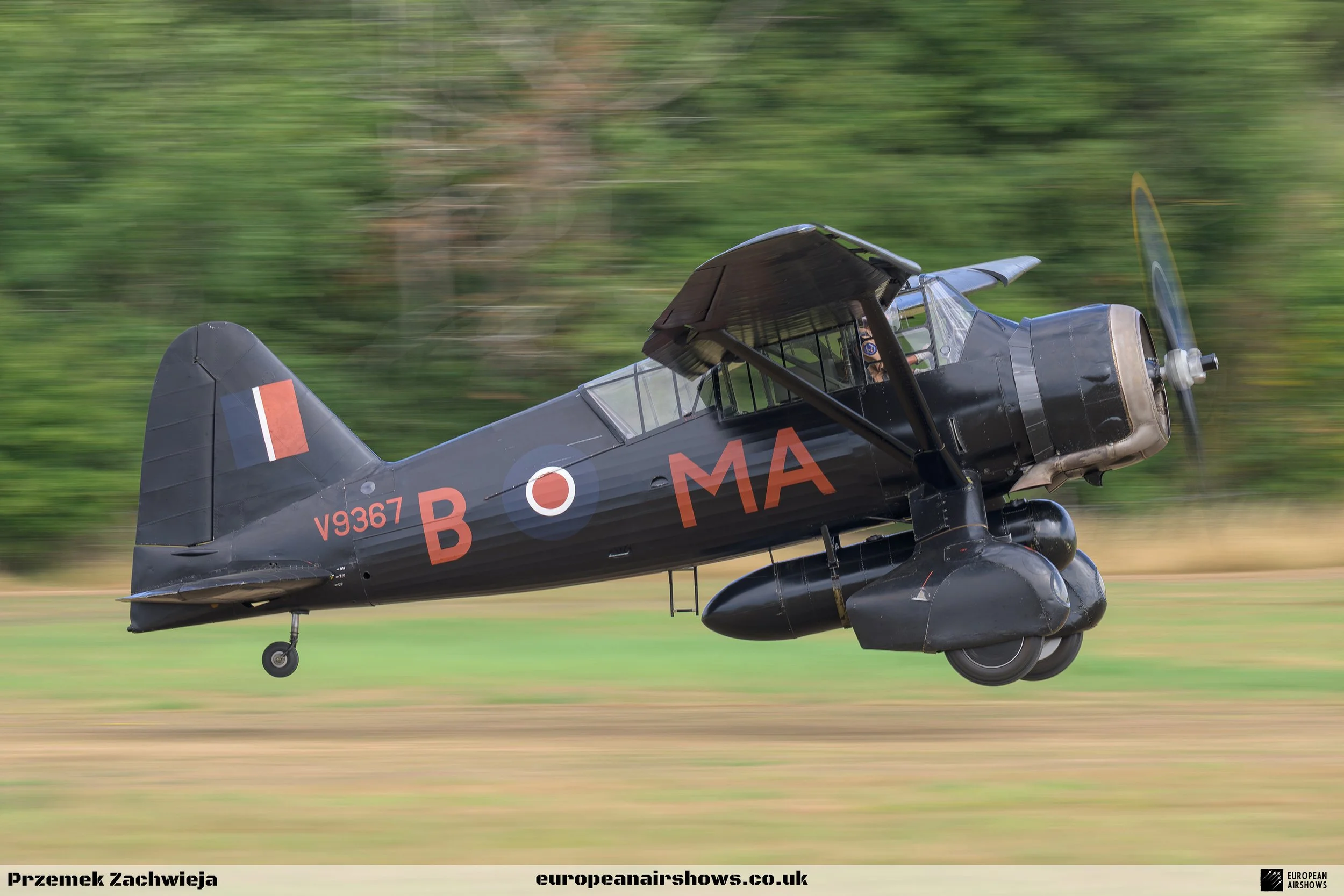
The Westland Lysander Mk IIIA followed with a series of low topside passes. Like the Spitfire, the Lysander first flew in 1936, but the two could hardly have approached military aviation from more different directions.
The Lysander was designed for army co-operation, with exceptional low-speed handling and the ability to use small, improvised landing grounds. It became best known for clandestine flights into occupied Europe, delivering agents and collecting personnel for the Special Operations Executive.
Shuttleworth’s aircraft is V9552, a Canadian-built Lysander which served as a target tug. It now wears the identity of V9367 ‘MA-B’, representing a No.161 Squadron special-duties aircraft. Its broad wing and large automatic slats allowed the pilot to turn tightly in front of the crowd, offering repeated views of a shape which remains unique among wartime aircraft. The Collection’s Lysander history explains both its Canadian service and current presentation.
Racers and test pilots
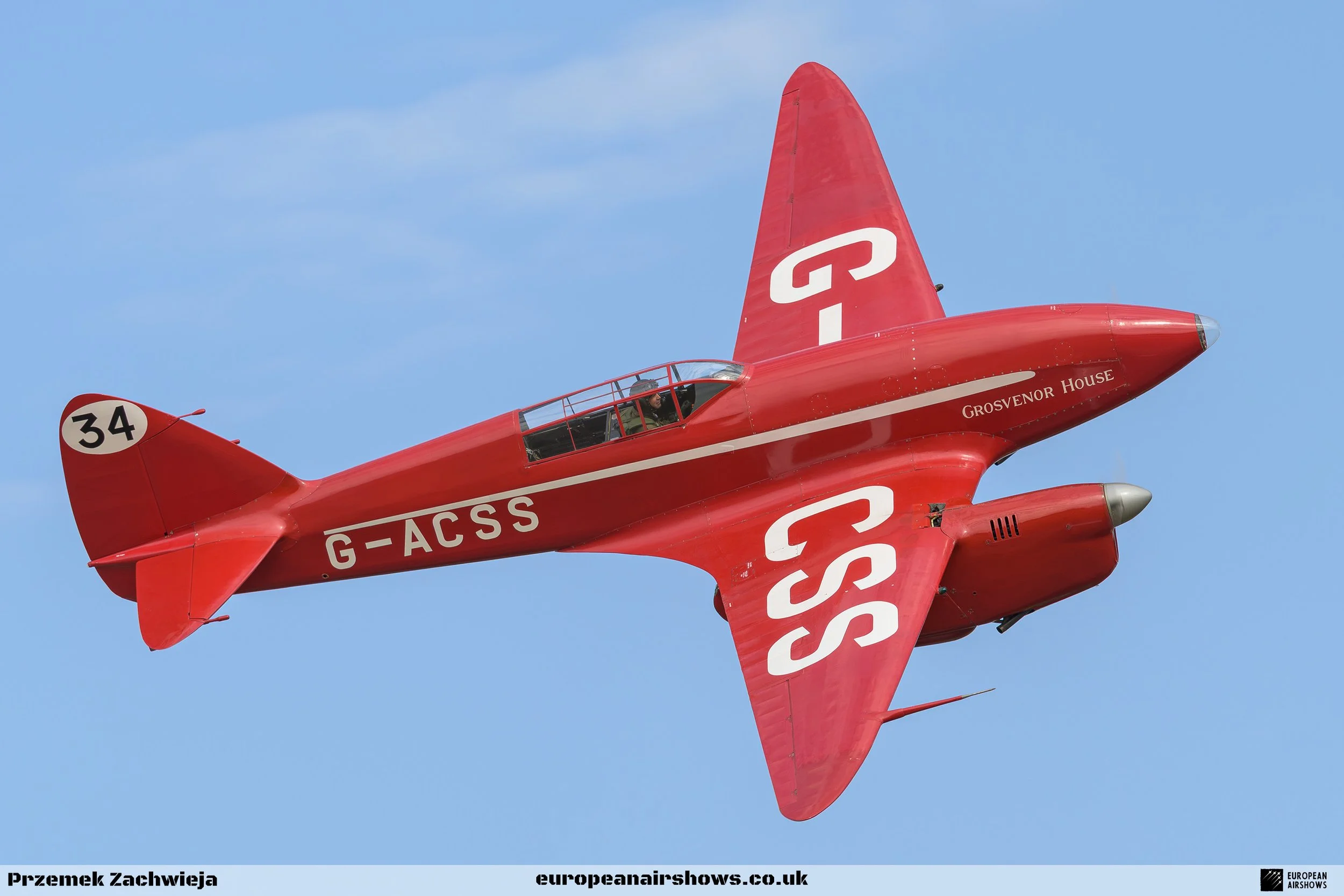
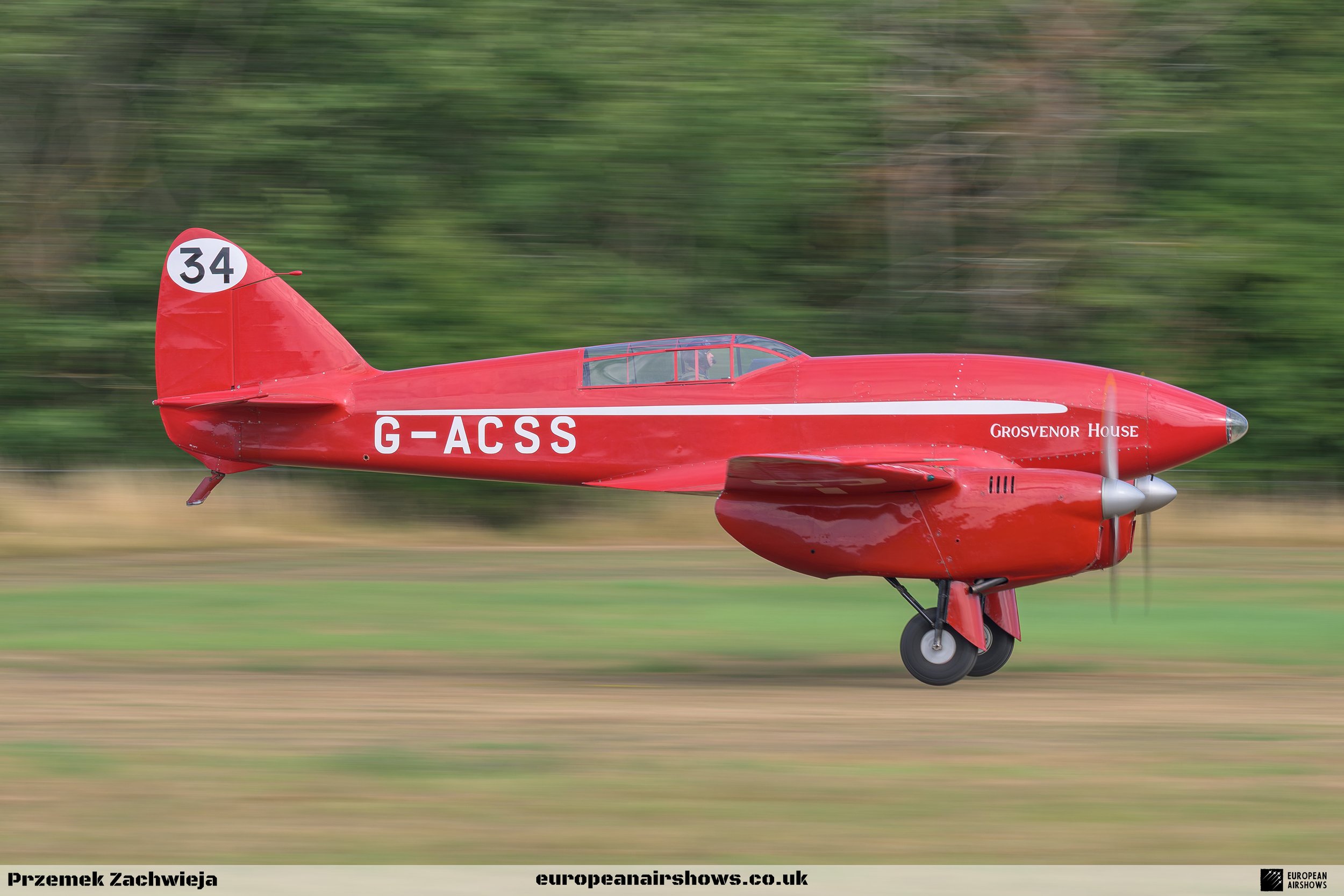
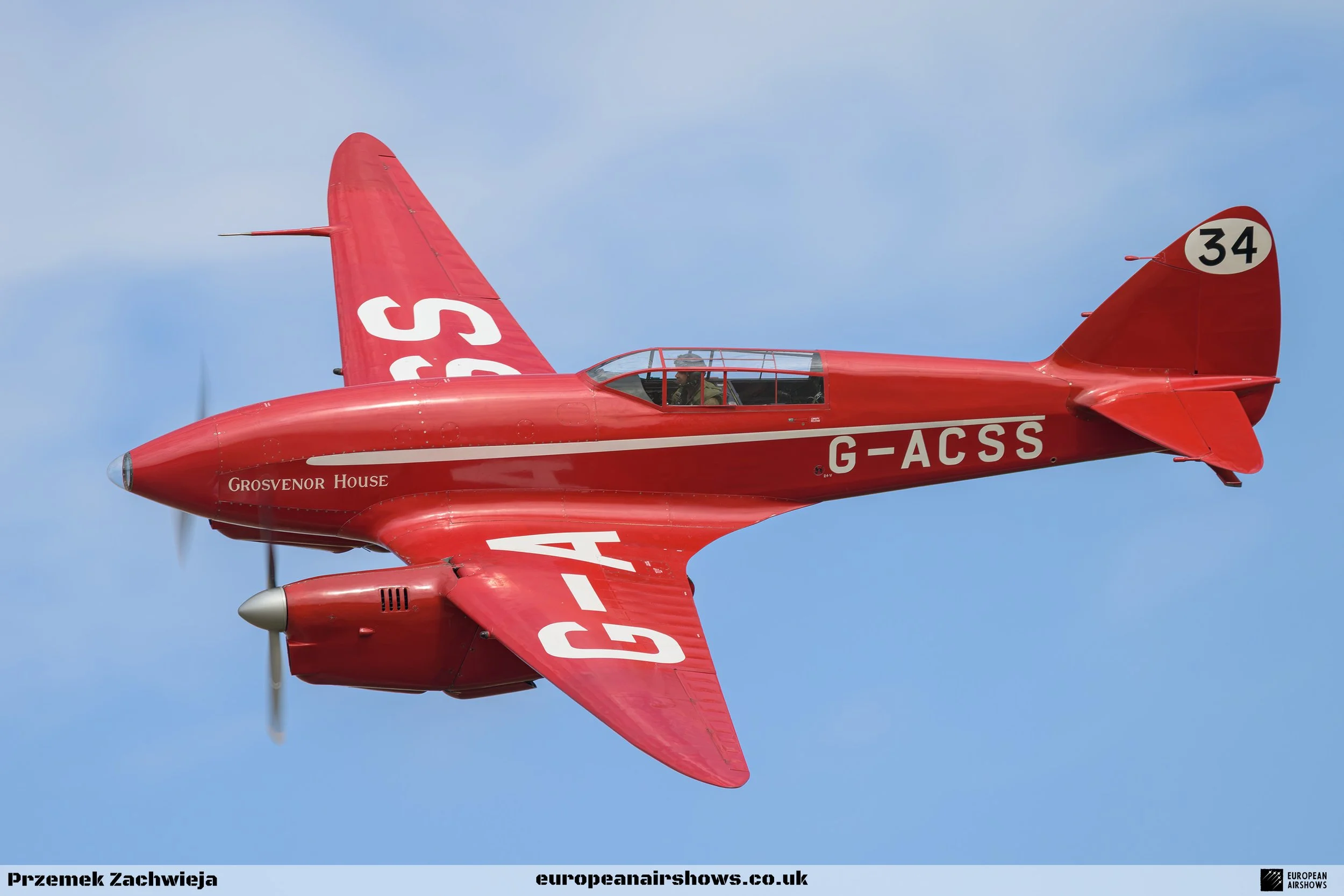
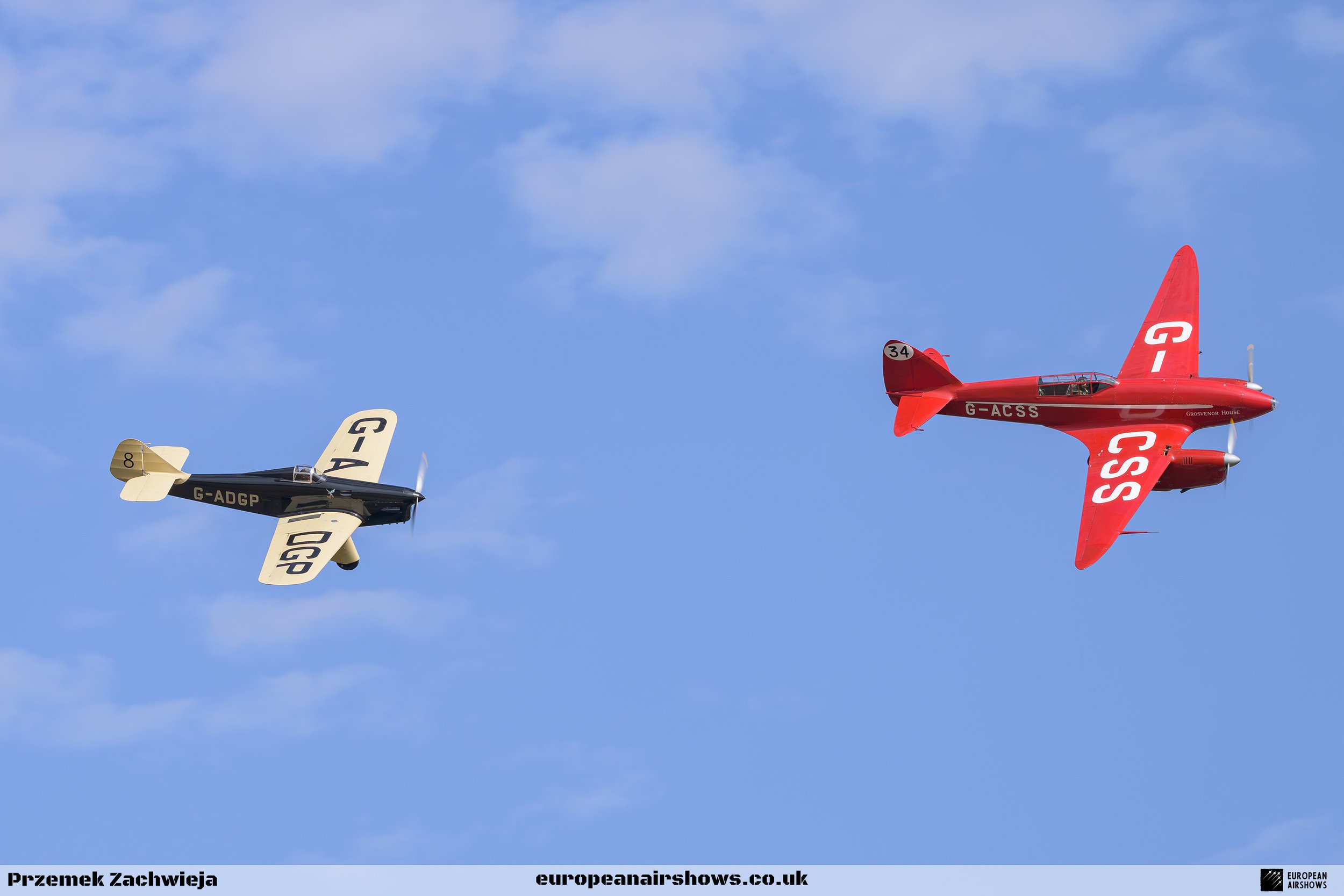
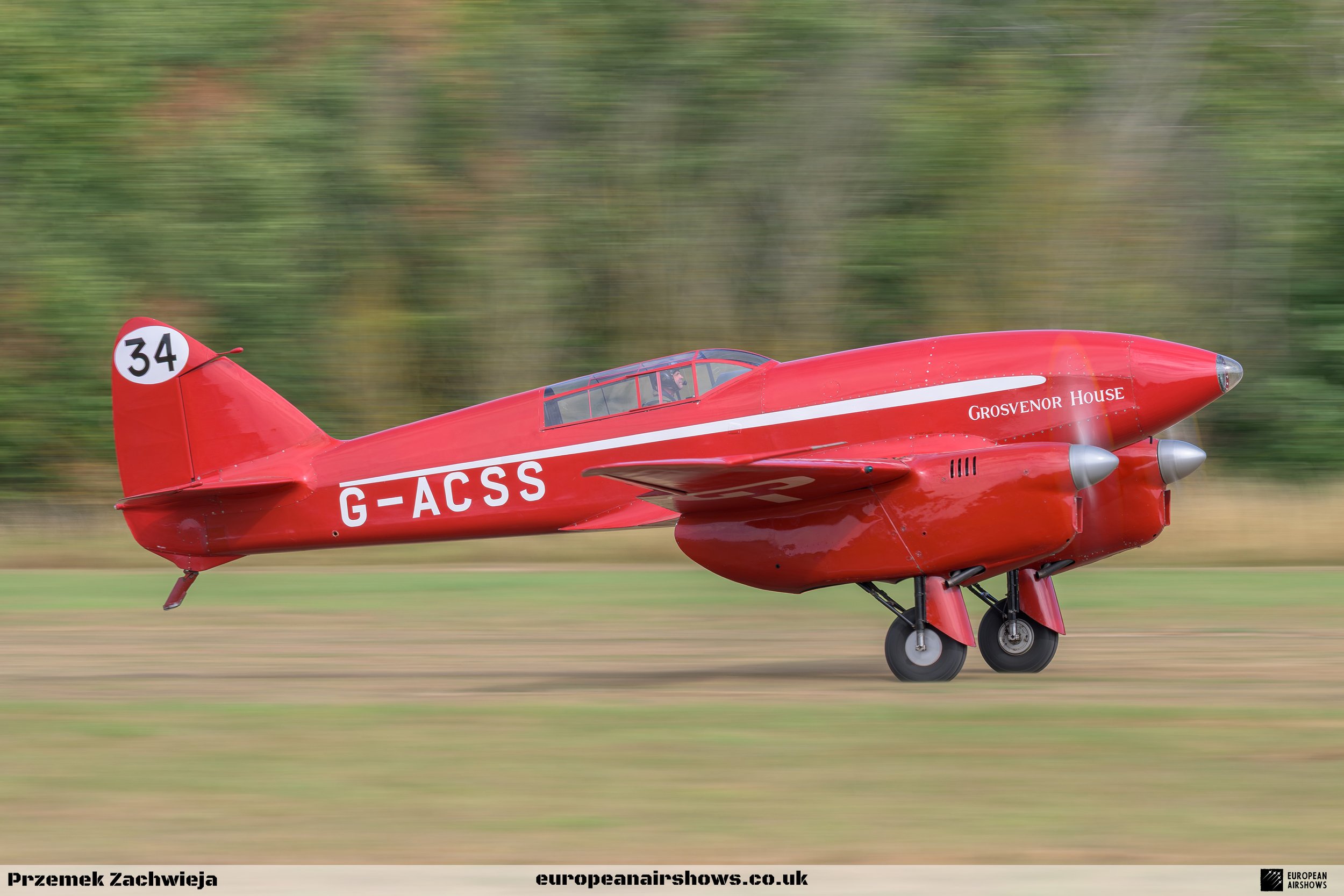
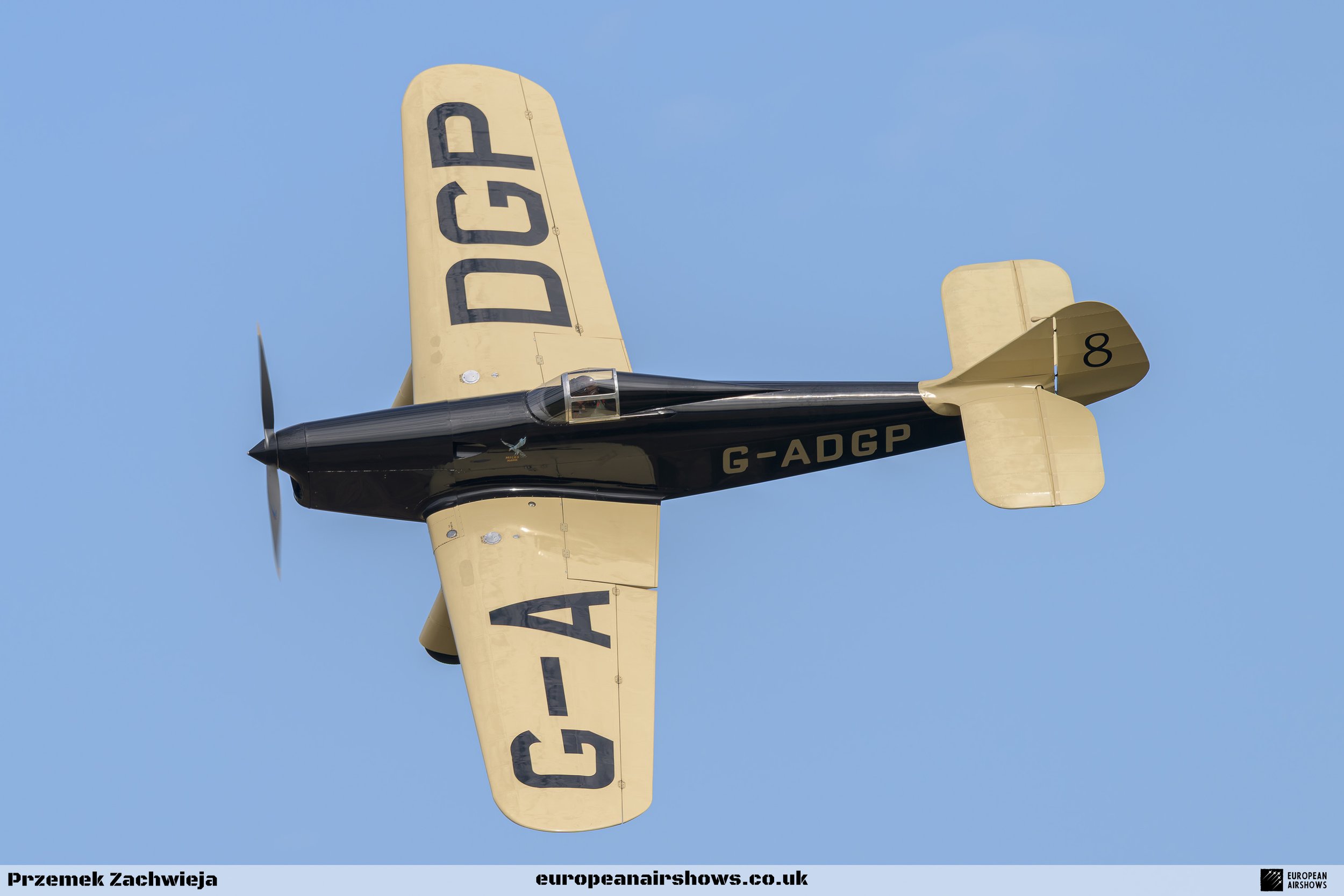
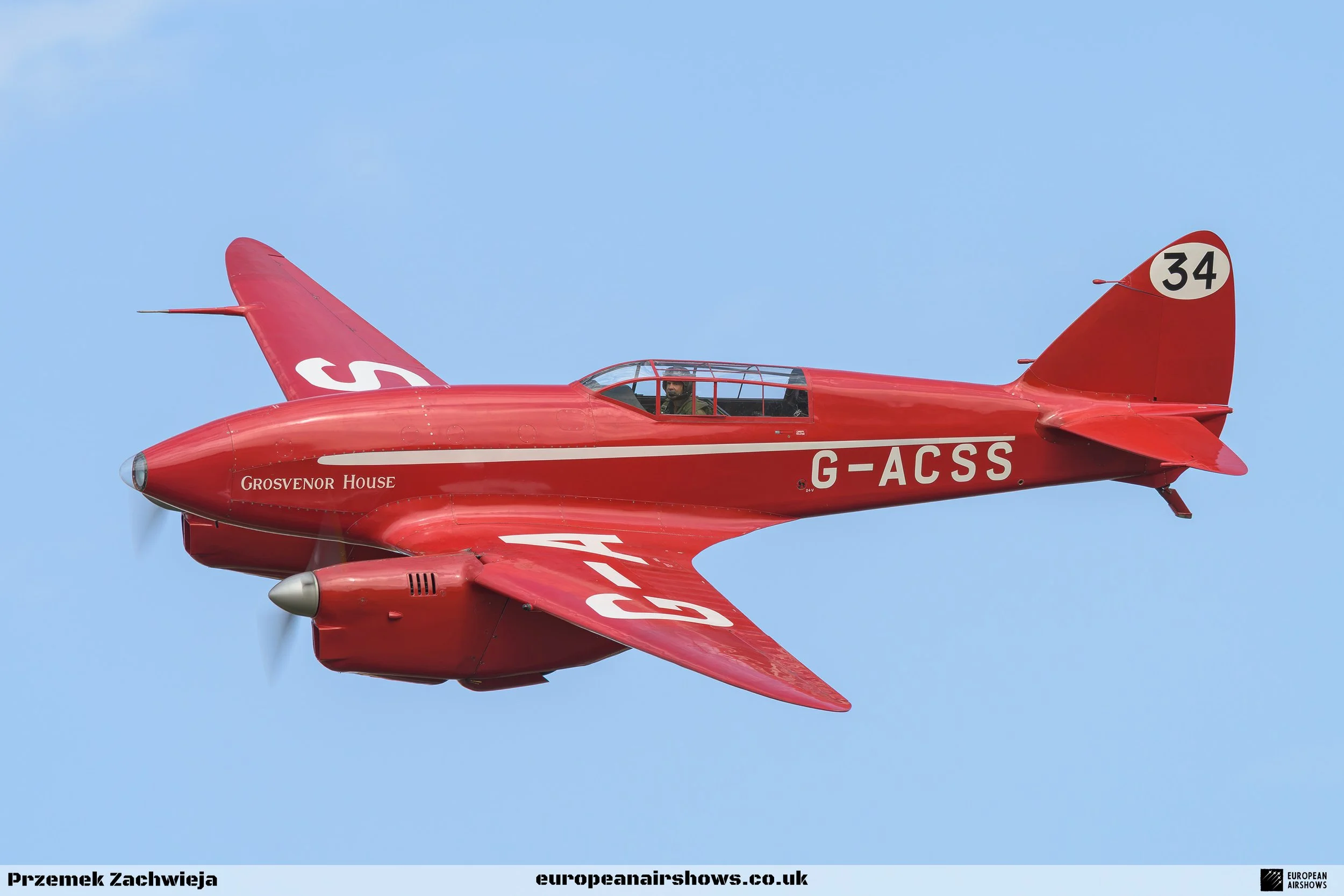
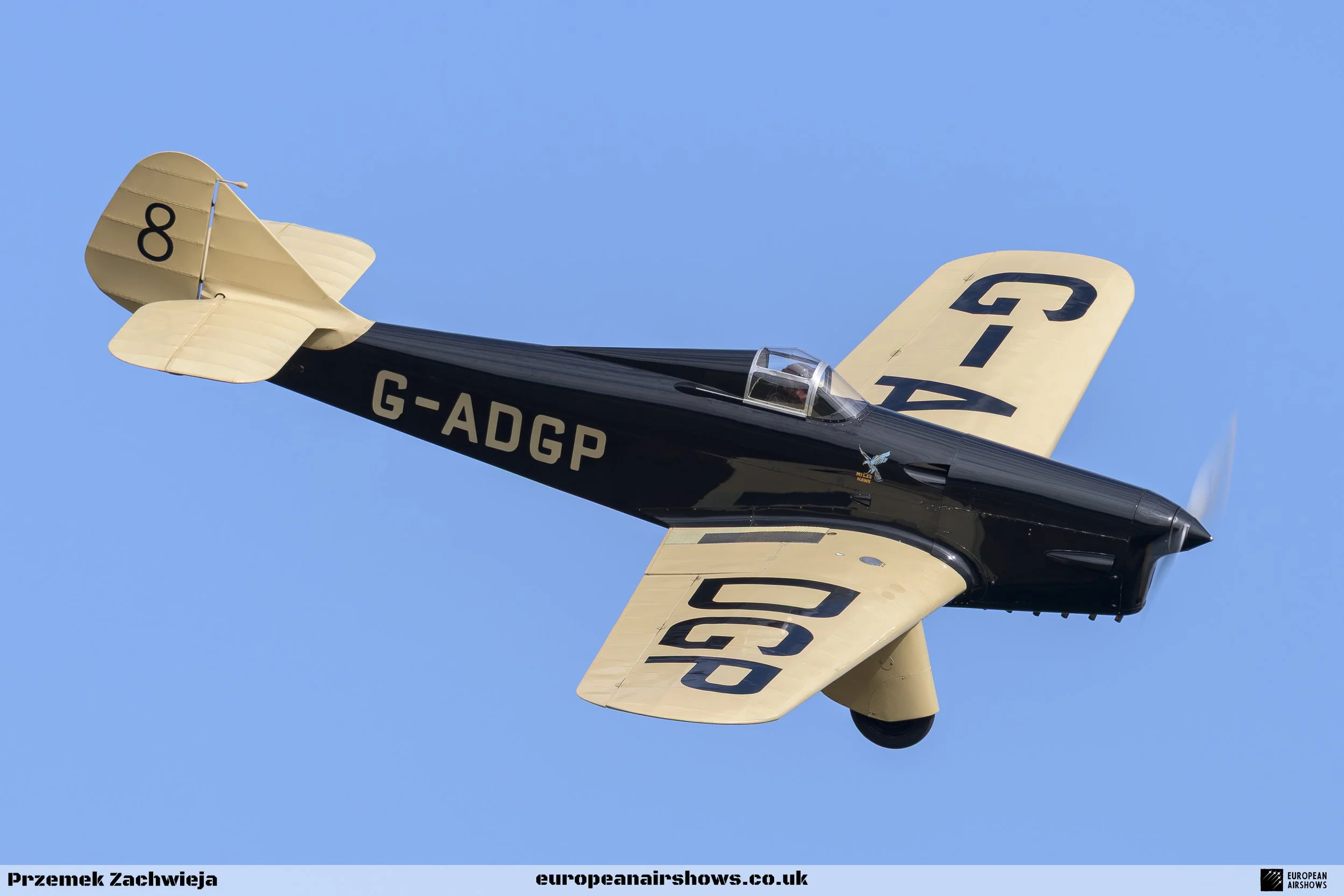
The afternoon’s racing pair brought together the Miles M.2L Hawk Speed Six and de Havilland DH.88 Comet Grosvenor House. They completed five formation passes before breaking into individual demonstrations.
Only three Speed Sixes were built, and Shuttleworth’s G-ADGP is the sole survivor. It was commissioned for the 1935 King’s Cup Air Race and retains its original de Havilland Gipsy Six engine. Small, neat and wonderfully proportioned, it looked entirely at home carving around Old Warden.
The DH.88 came from a different level of ambition. Grosvenor House was created for the 1934 MacRobertson Air Race from England to Australia and won the speed section in 70 hours and 54 minutes, flown by C.W.A. Scott and Tom Campbell Black. It is the only original DH.88 still flying. Shuttleworth’s Comet history records one of the great long-distance flights of the inter-war period.
Their relevance to the Spitfire story was not about direct service. Instead, they represented the intense pre-war search for speed, range and reduced drag which formed the background to K5054’s development. The sound and visual impact may have been smaller than the fighters still to come, but the formation of two irreplaceable 1930s racers was among the afternoon’s most elegant sights.
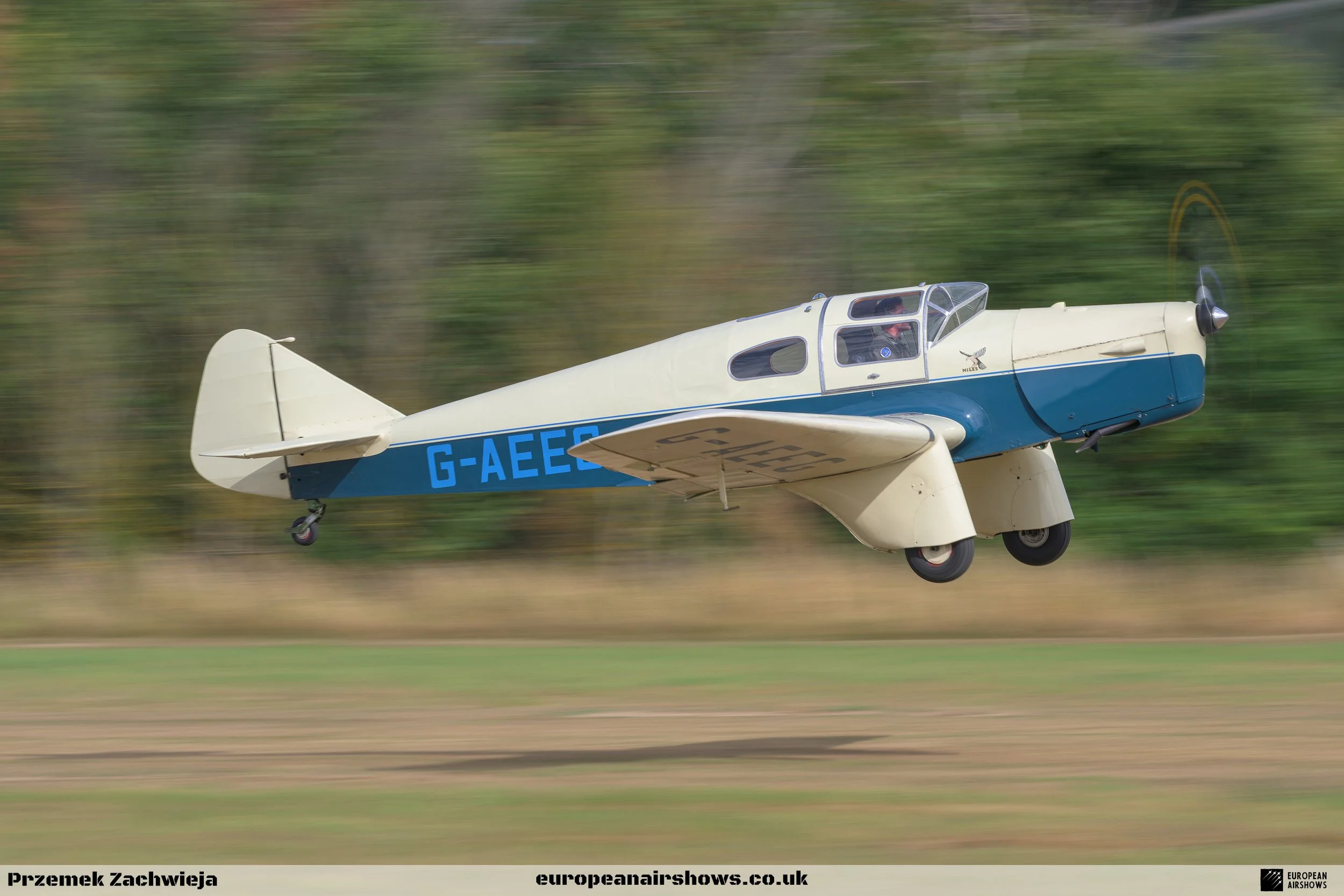
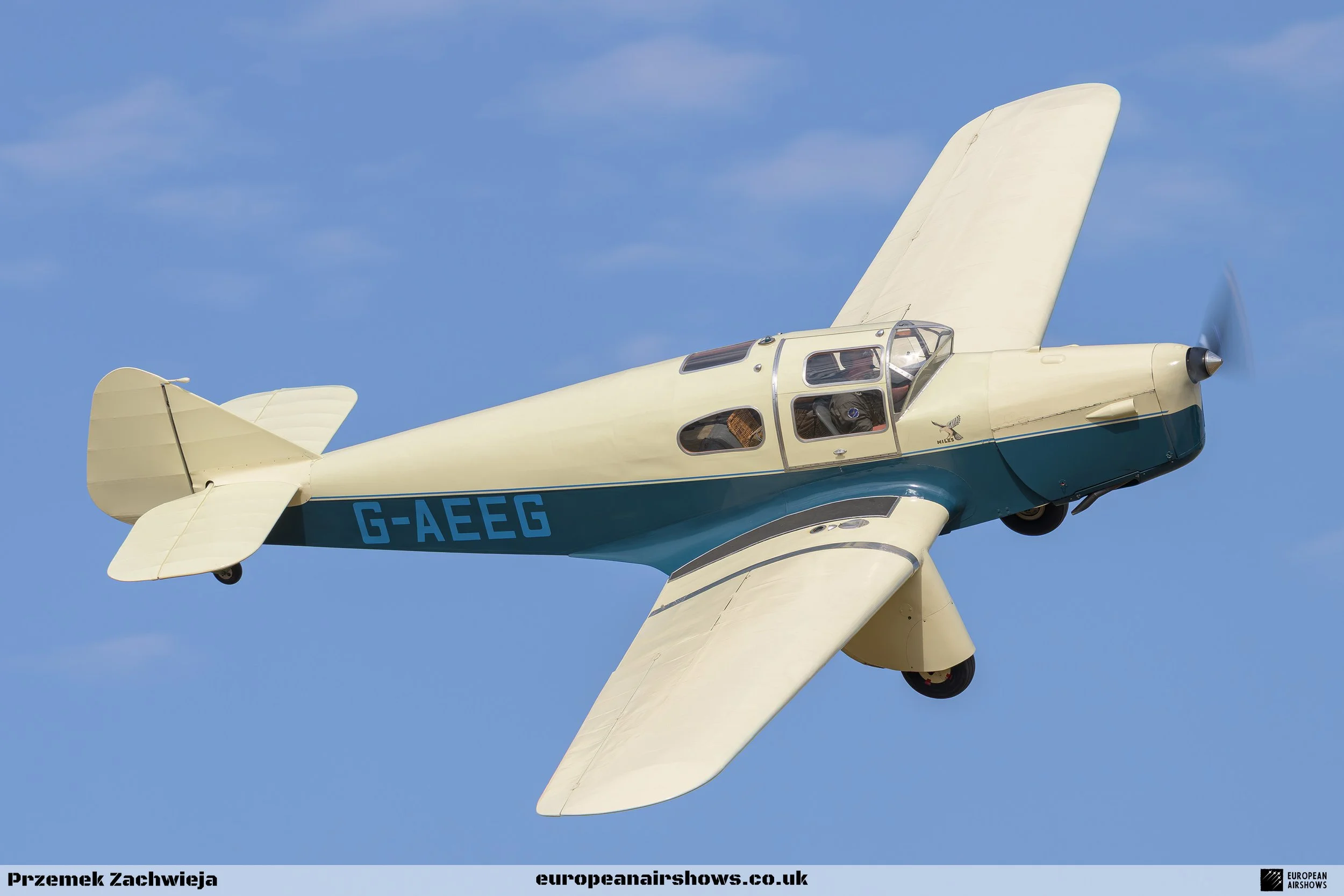
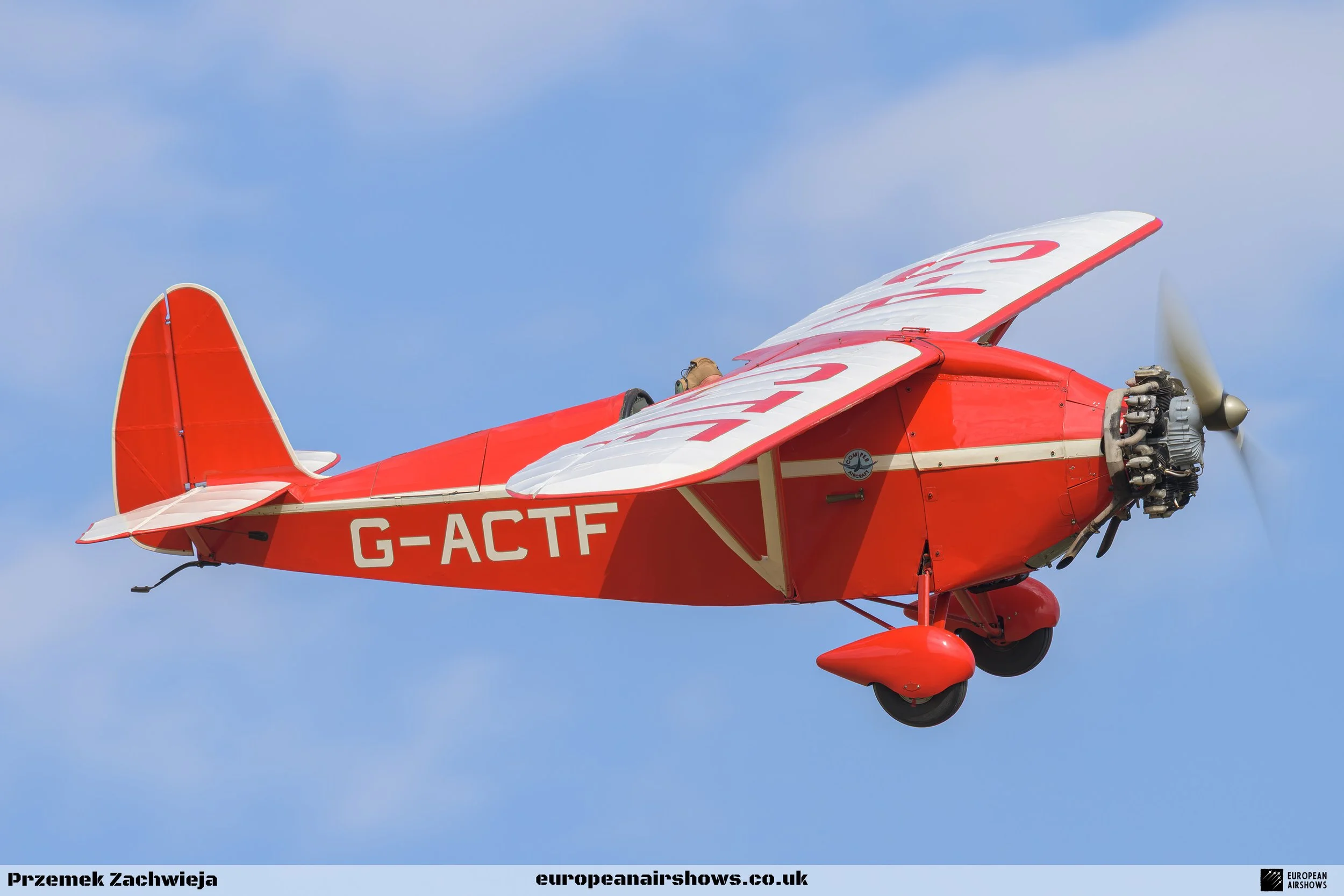
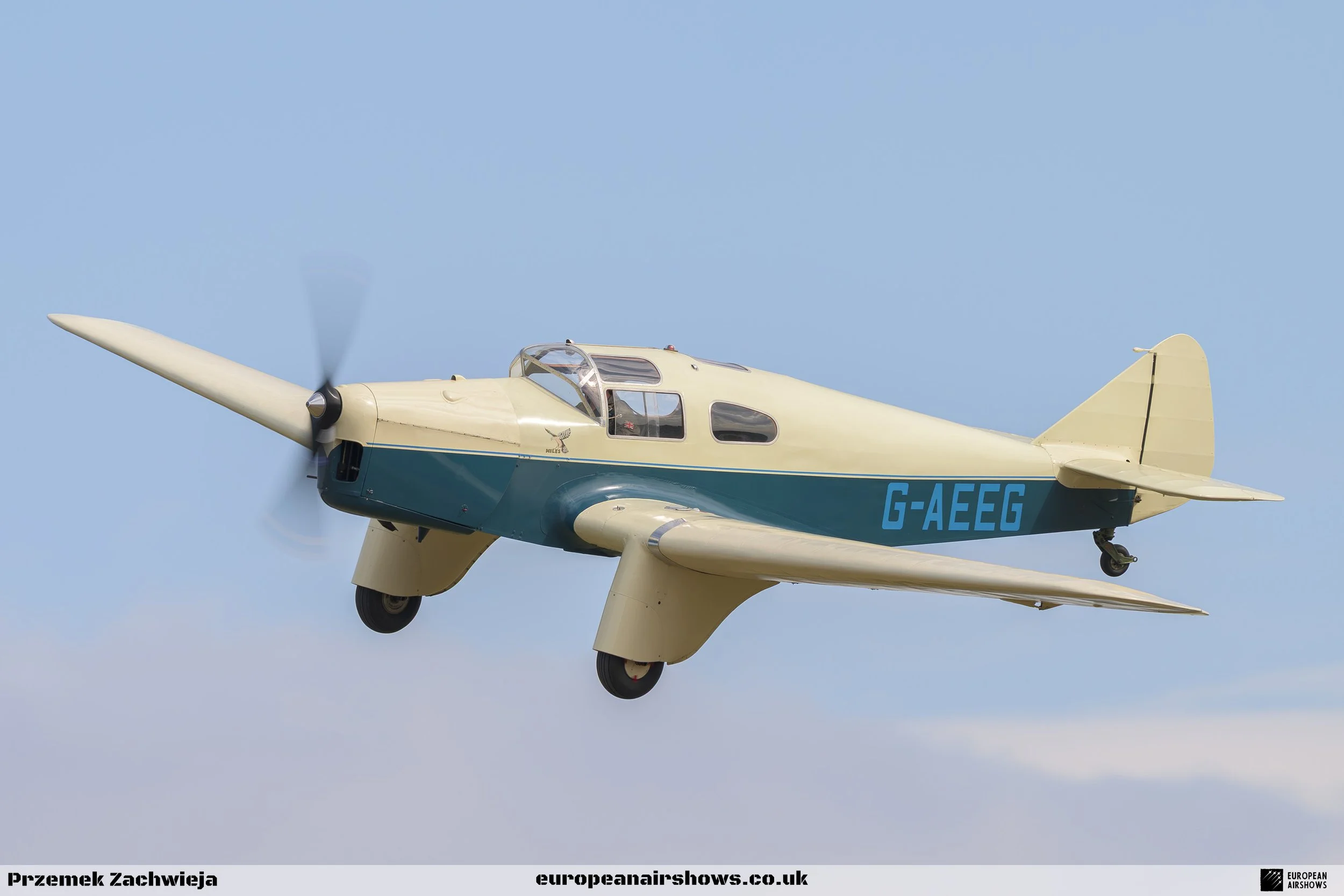
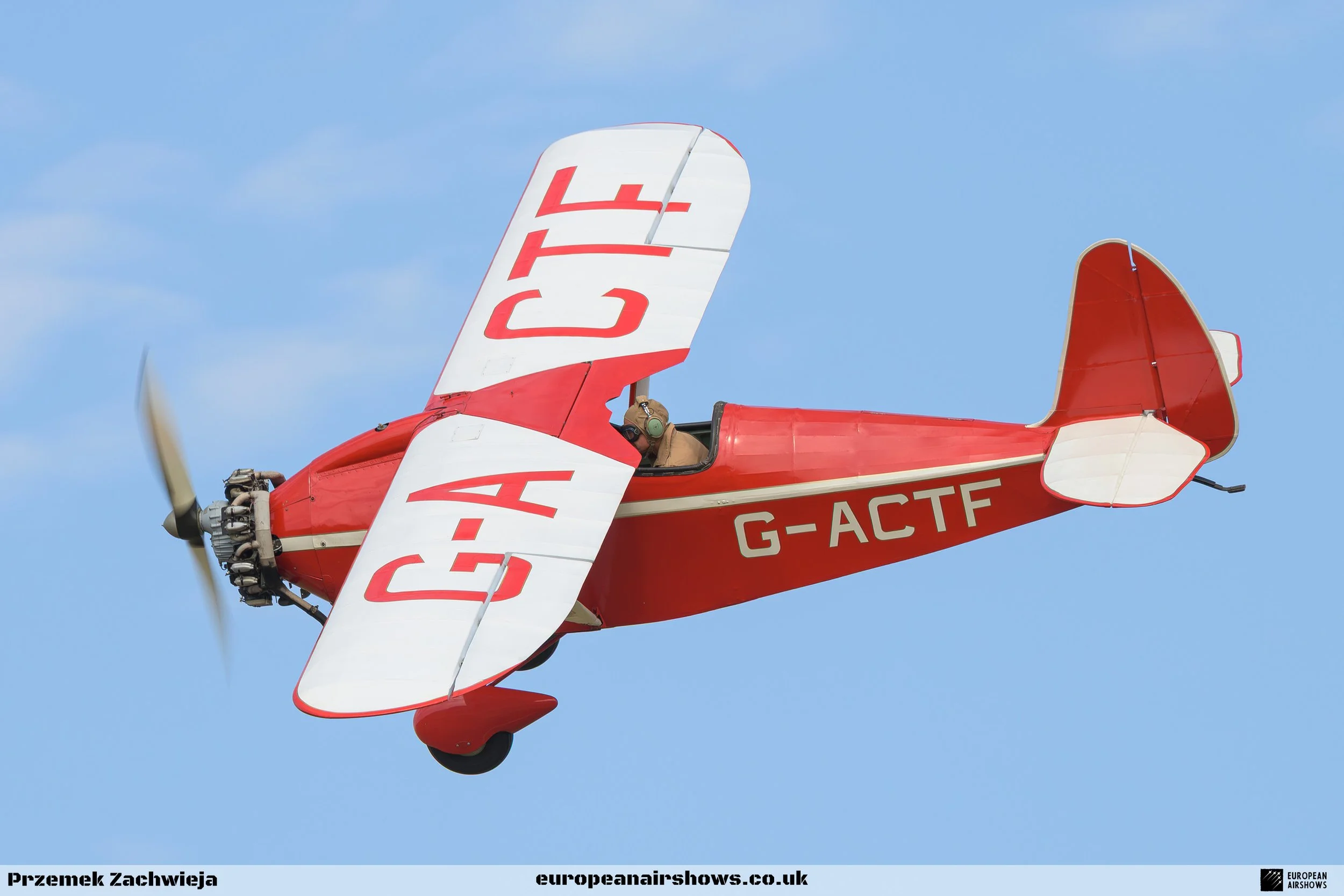
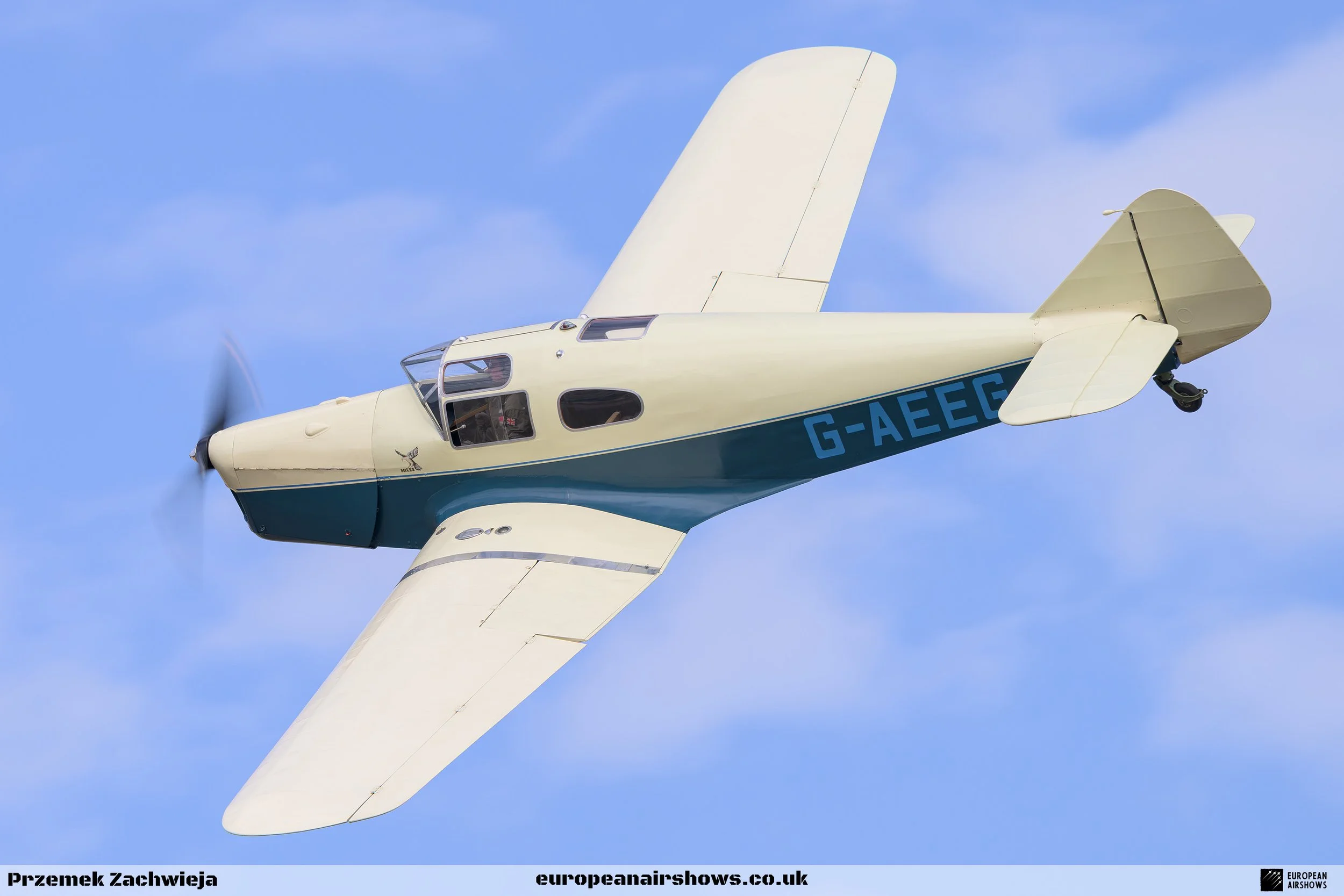
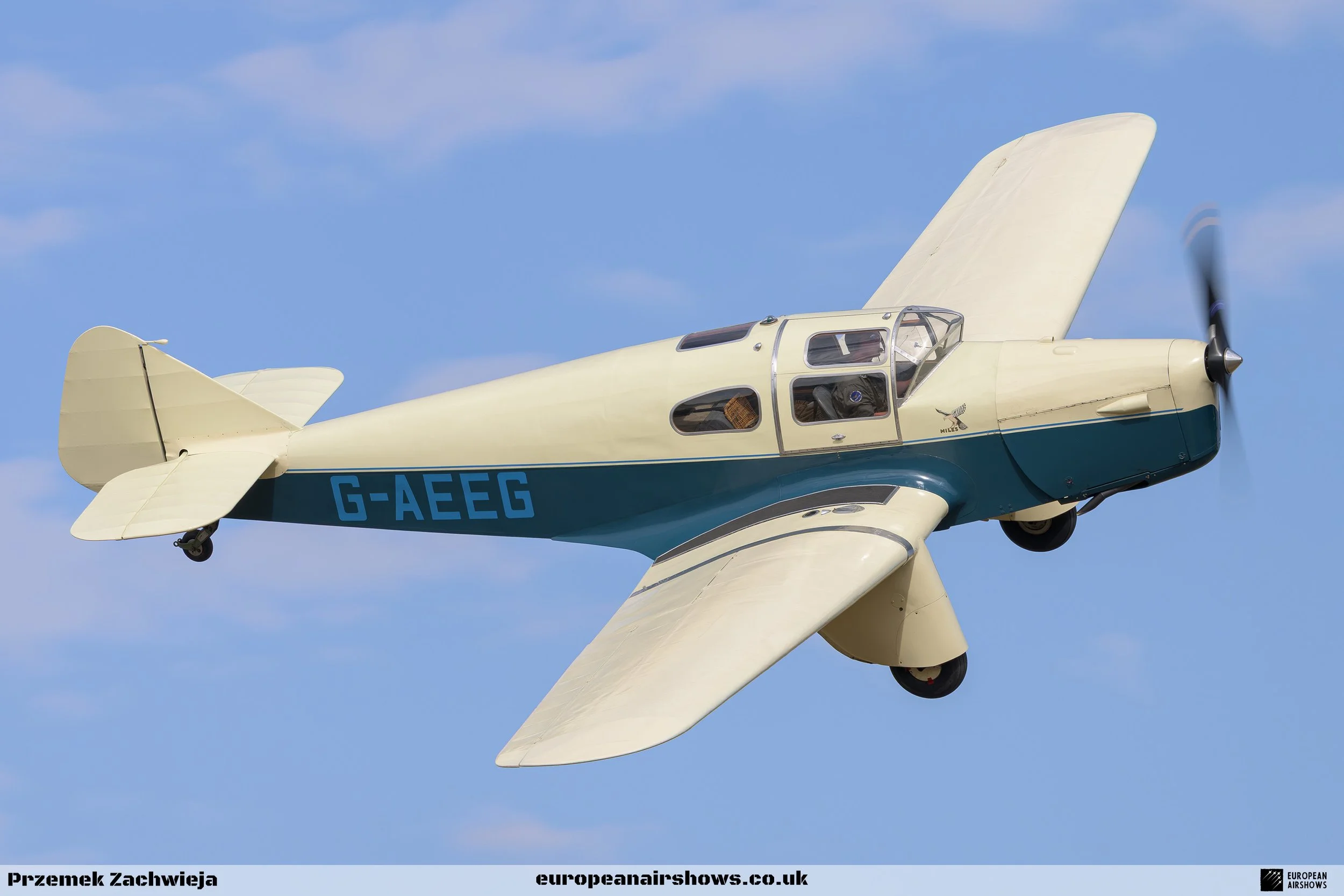
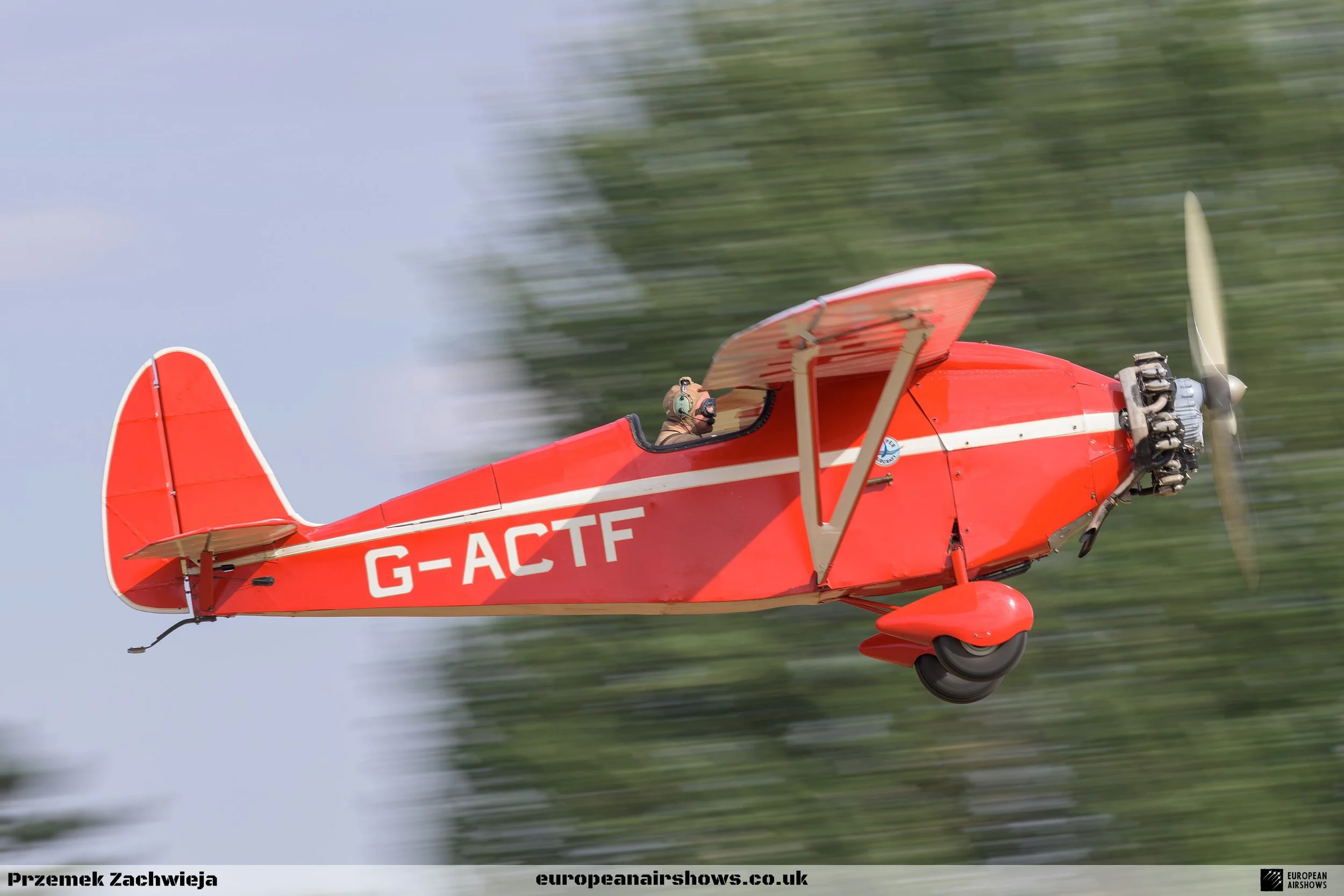
The next pairing provided an even more precise connection to Spitfire history. The Comper CLA.7 Swift and Shipping & Airlines’ Miles M.3A Falcon Major did not fly in formation, instead alternating a series of very low and close passes as the afternoon sun moved into an ideal position.
Alex Henshaw owned and raced a Comper Swift early in his career, winning the Siddeley Trophy during the 1933 King’s Cup meeting. He later became chief production test pilot at Castle Bromwich and is estimated to have flown around ten per cent of all Spitfires and Seafires built. The RAF Museum’s Comper Swift history links the tiny racer directly to Henshaw’s later test-flying career.
The Miles Falcon connection is to the Spitfire’s very first flight. Jeffrey Quill flew Mutt Summers from Martlesham Heath to Eastleigh in a Vickers-owned Miles Falcon on 5th March 1936 so that Summers could fly K5054. The aircraft at Old Warden was not that same Falcon, but it was the same type and provided a wonderfully obscure link to the anniversary.
Shipping & Airlines’ G-AEEG was built in 1936 and is the only M.3A Falcon Major remaining in Britain. Its low passes were among the afternoon’s most photogenic moments, the warm light highlighting its polished inter-war lines.
The road to the Spitfire
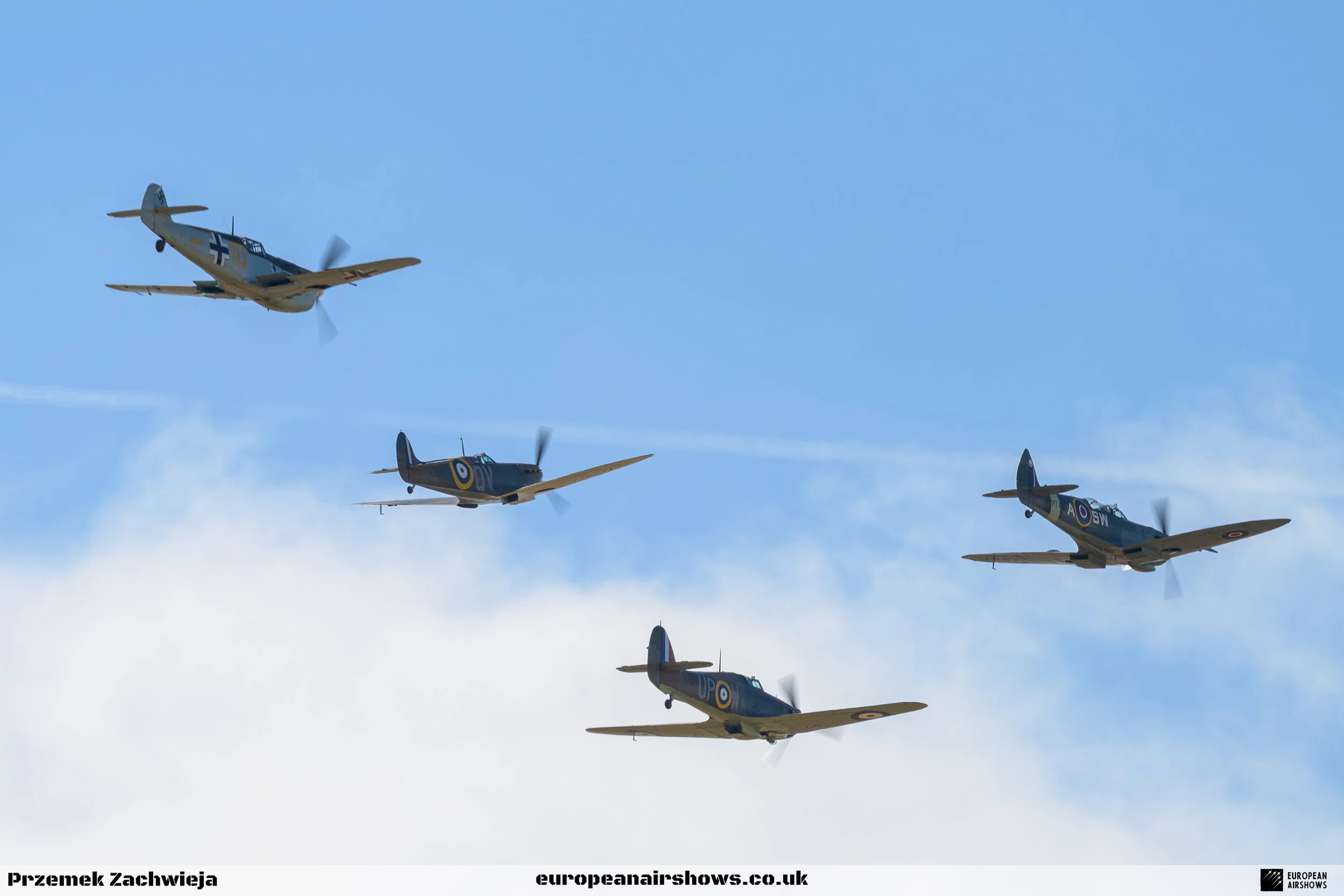
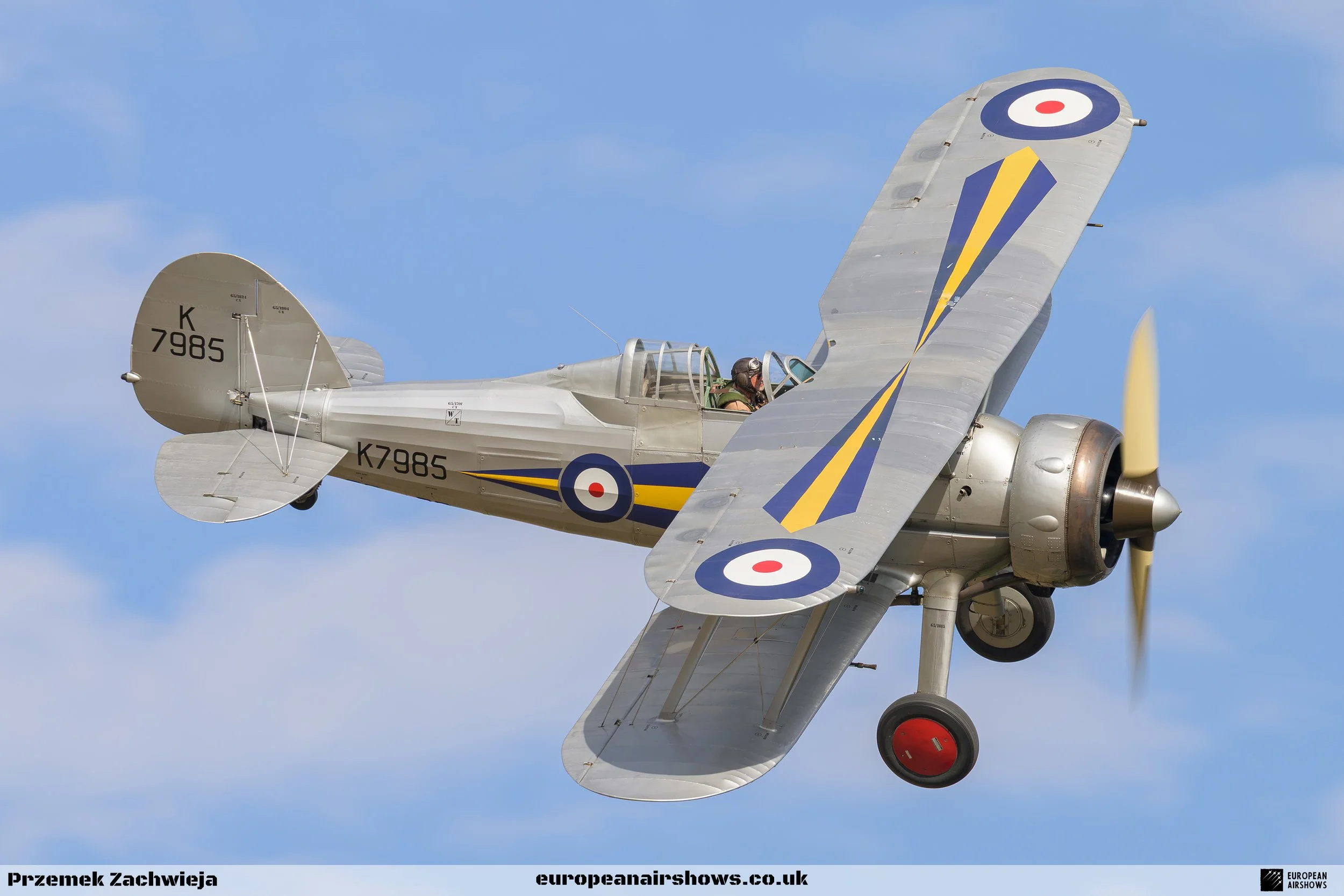
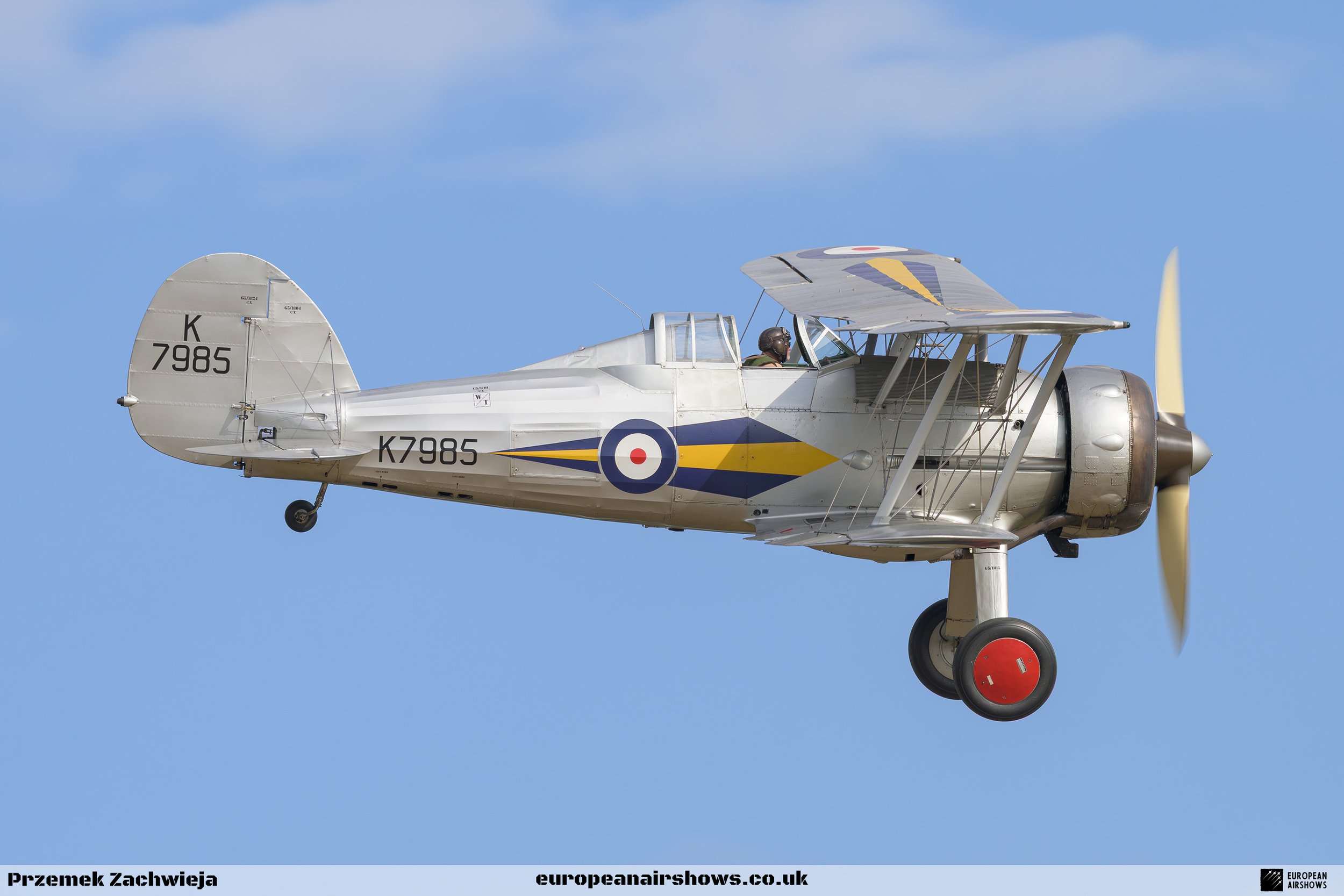
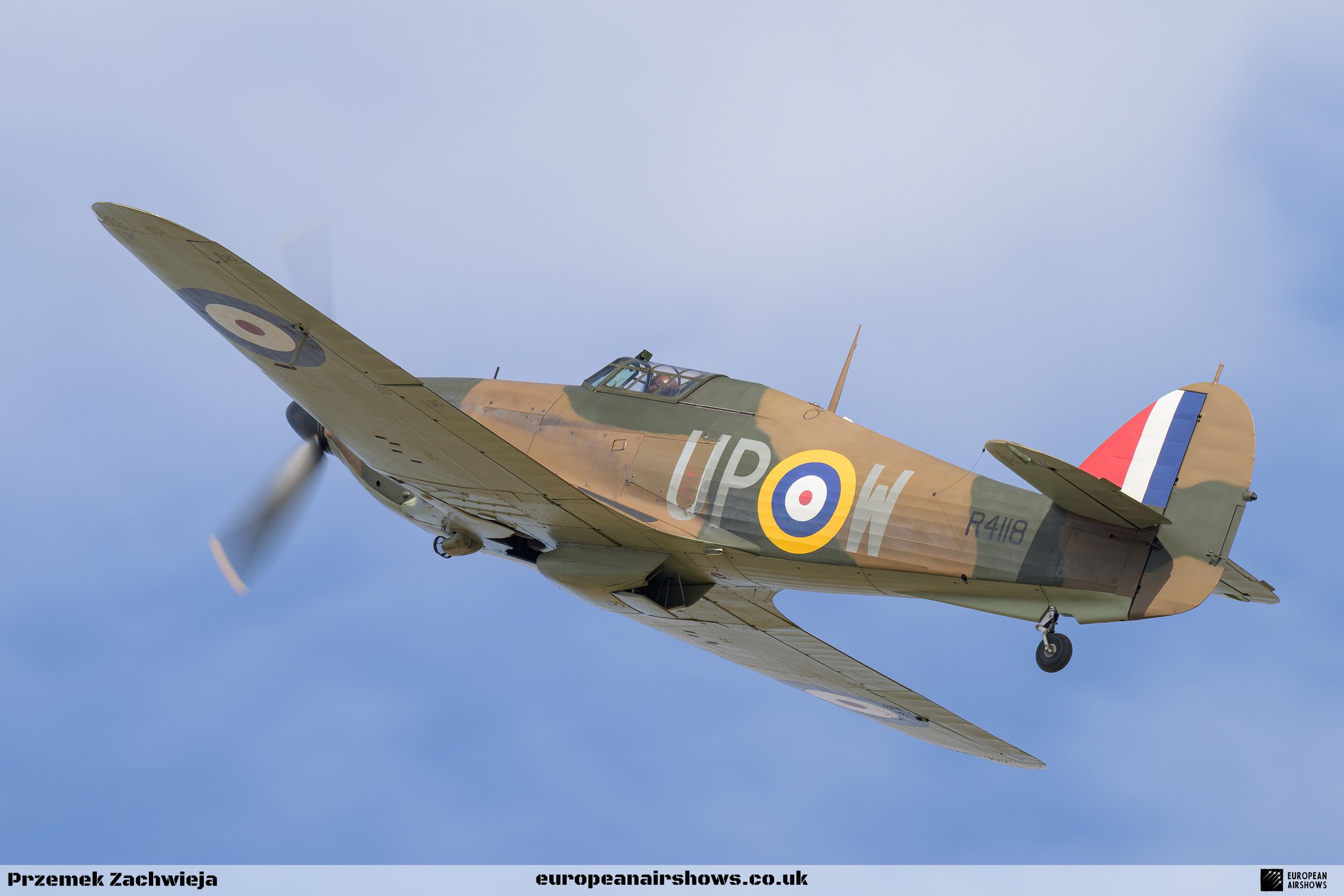
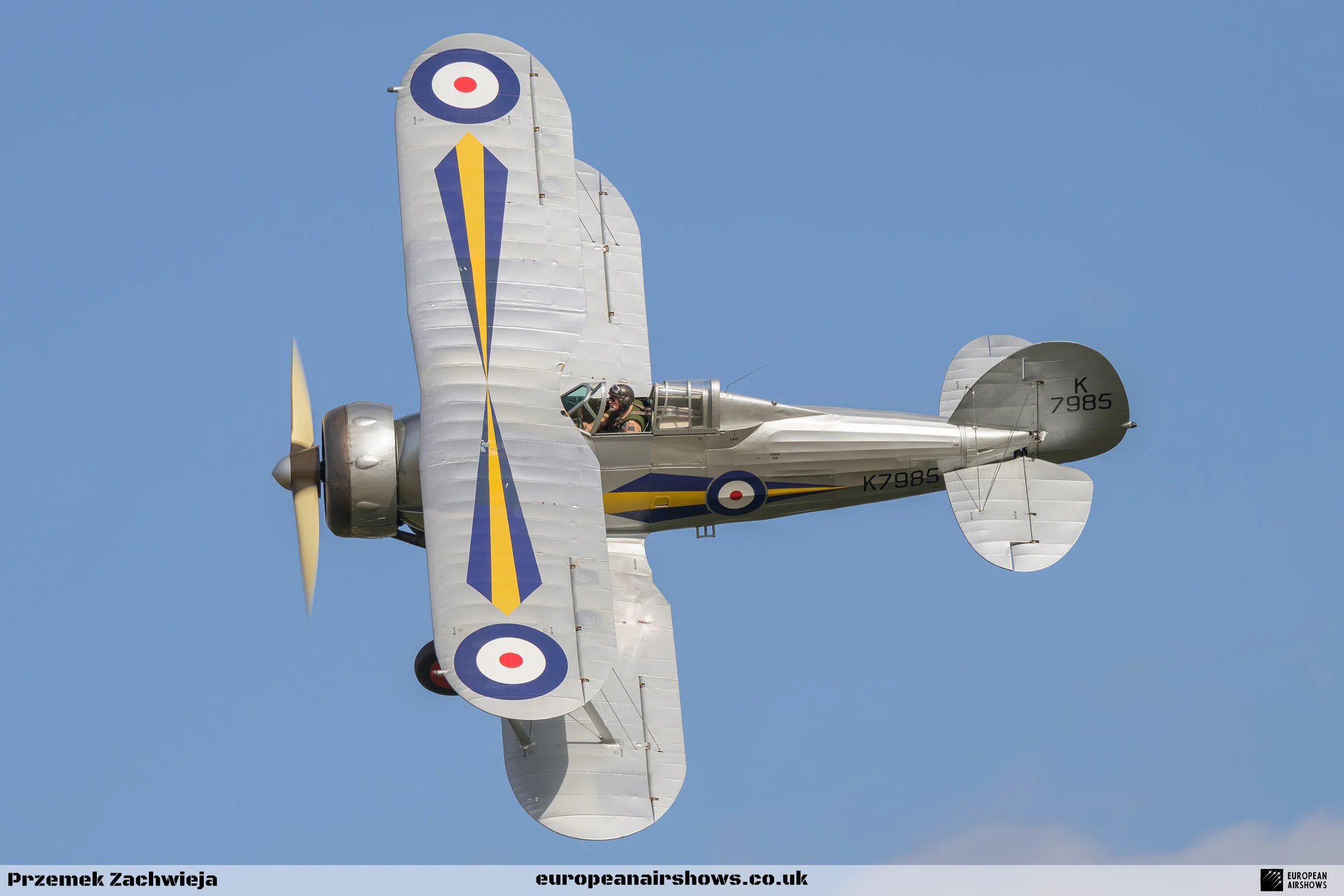
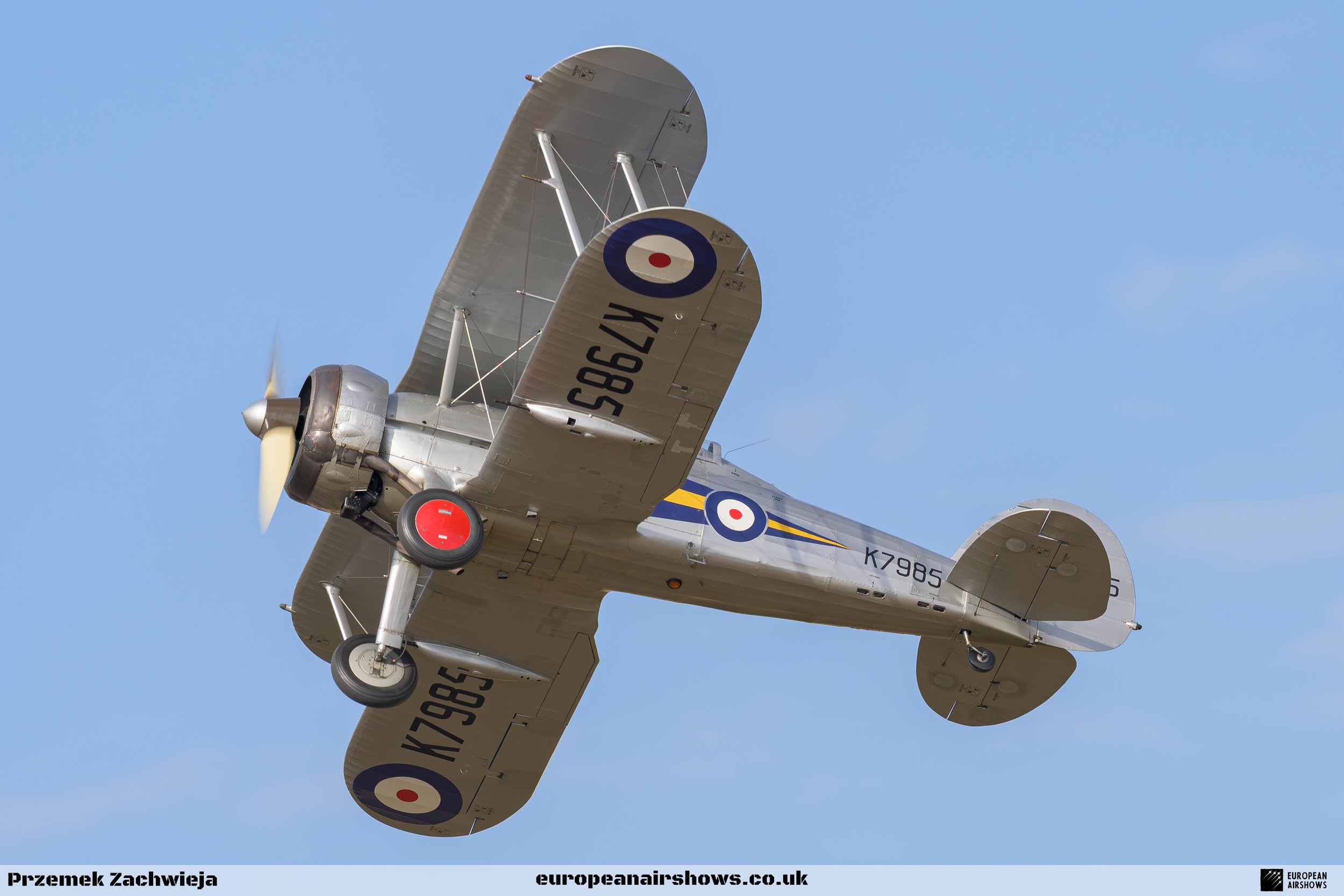
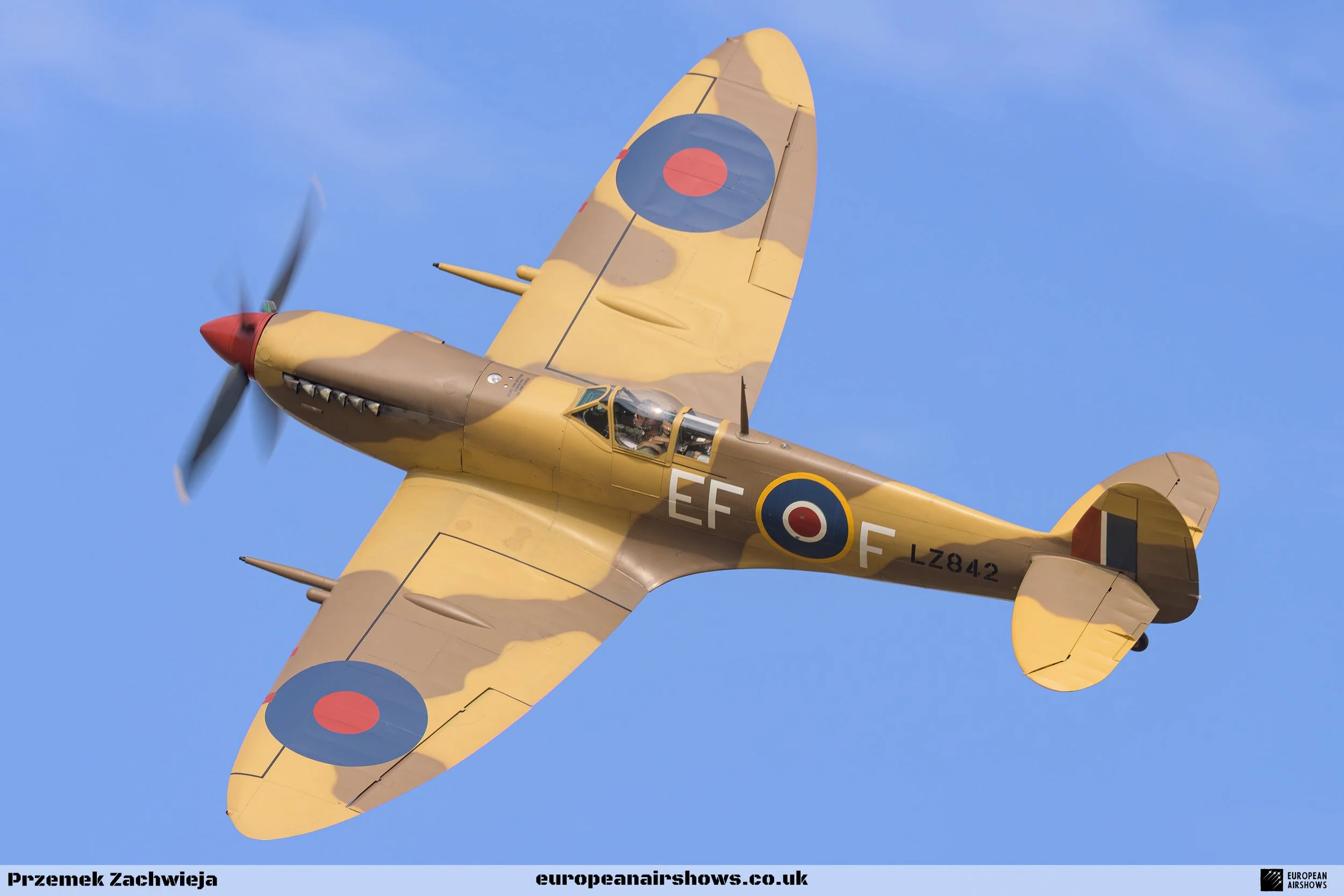
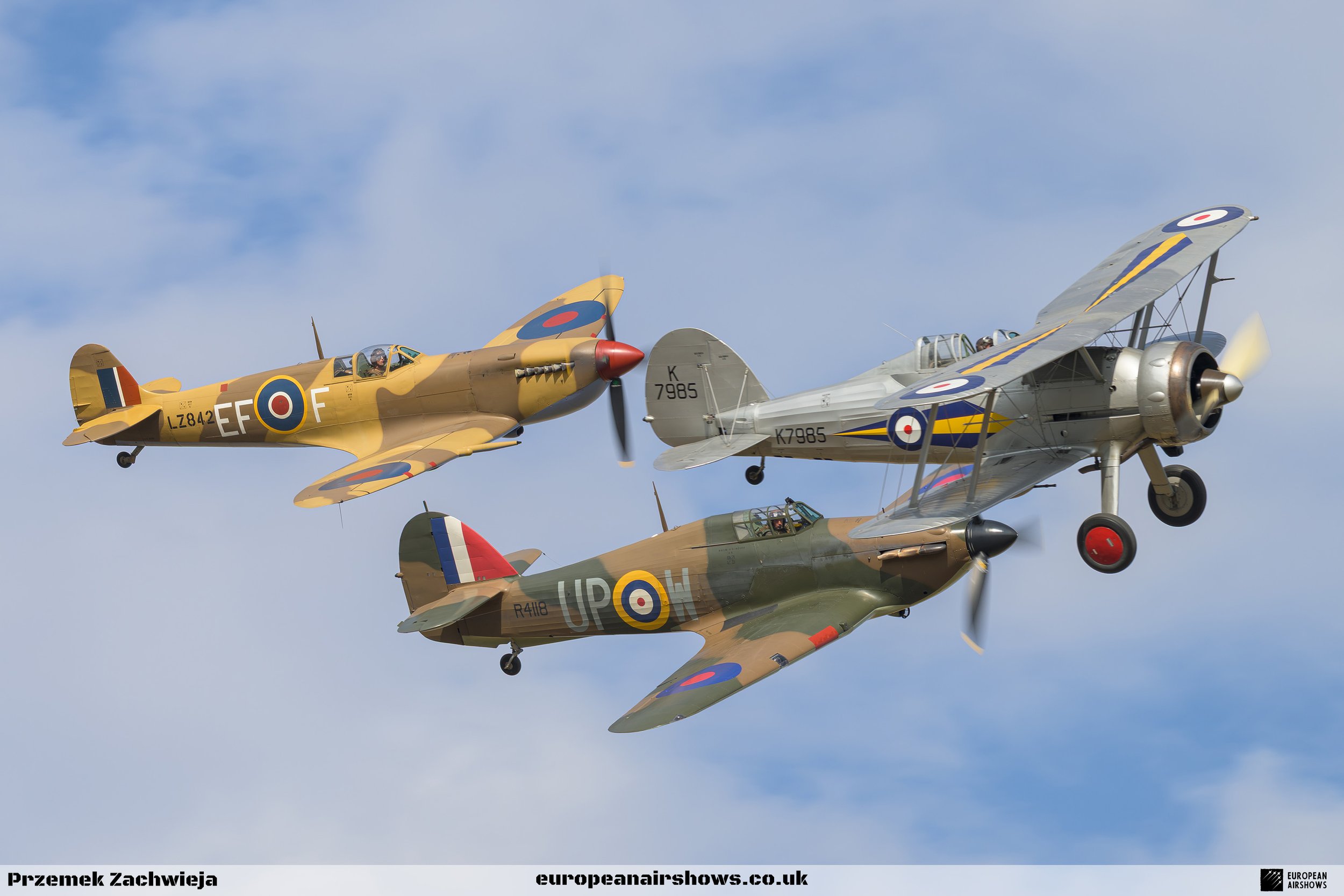
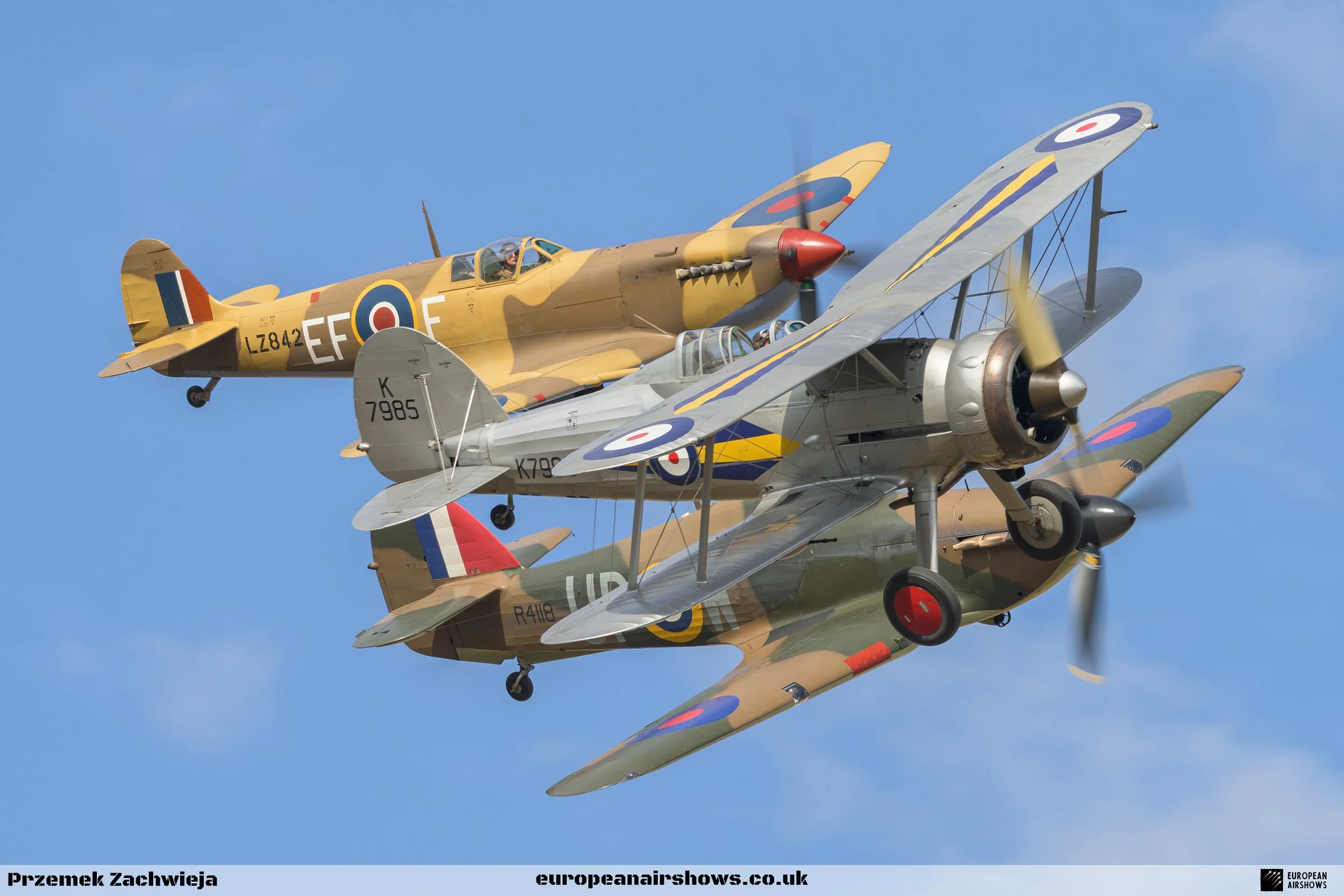
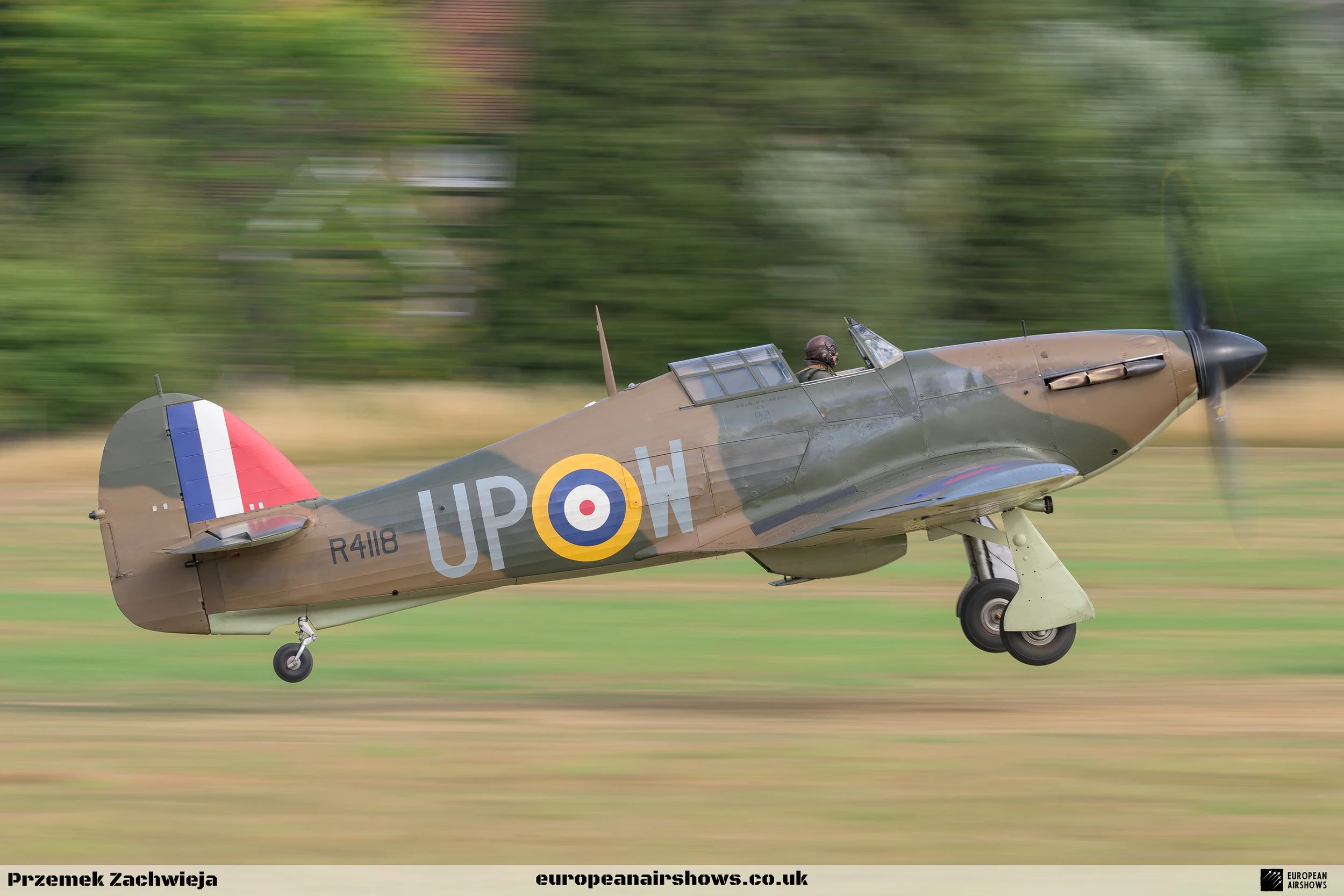
The final act before the massed Spitfire sequence traced RAF fighter development through the Gloster Gladiator, Hawker Hurricane and Supermarine Spitfire IX LZ842.
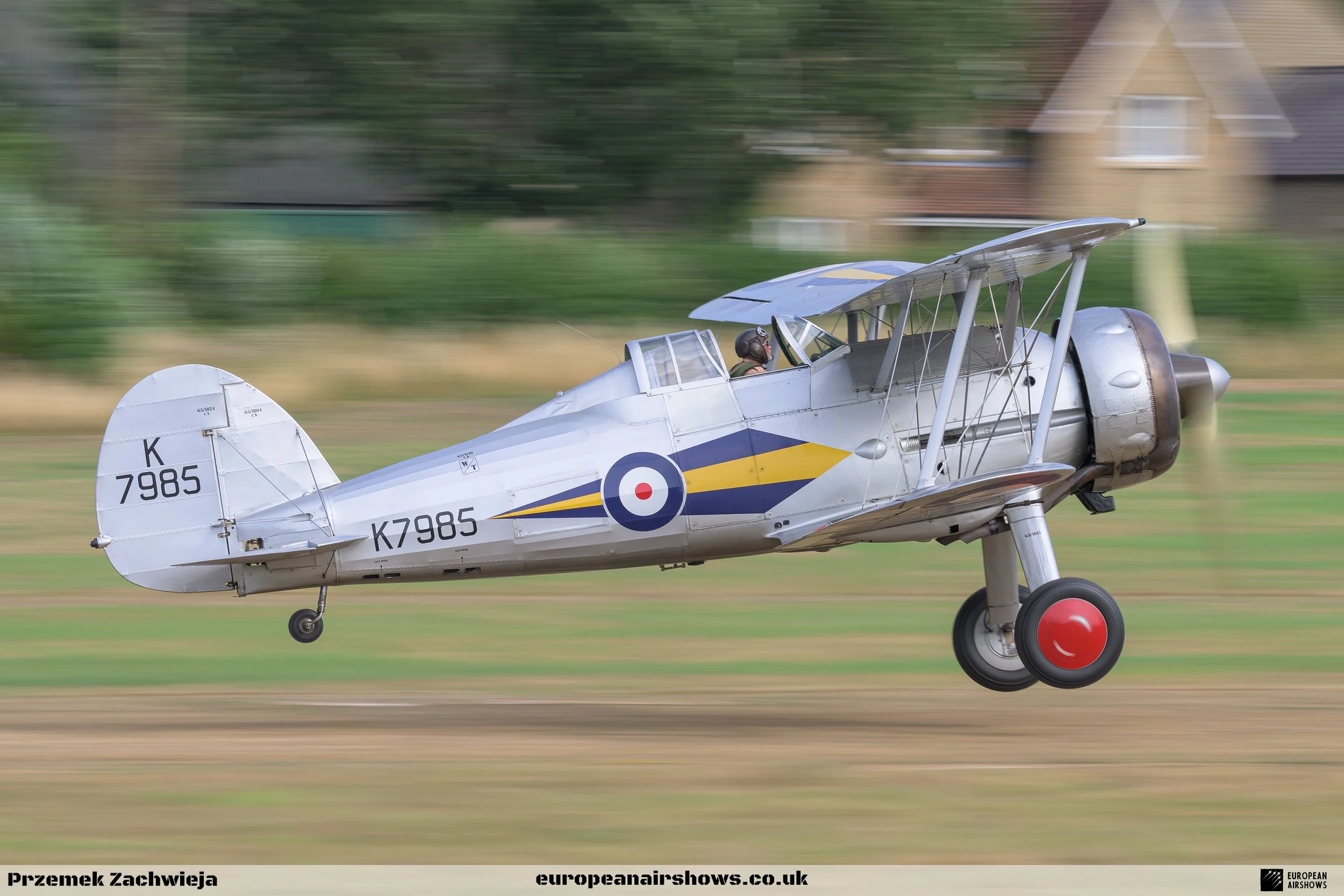
The three arrived together before separating into solos in historical order. Shuttleworth’s Gladiator led, representing the final generation of RAF biplane fighters. It was the service’s first enclosed-cockpit fighter but was already approaching obsolescence when it entered service, overtaken by the rapid arrival of the Hurricane and Spitfire.
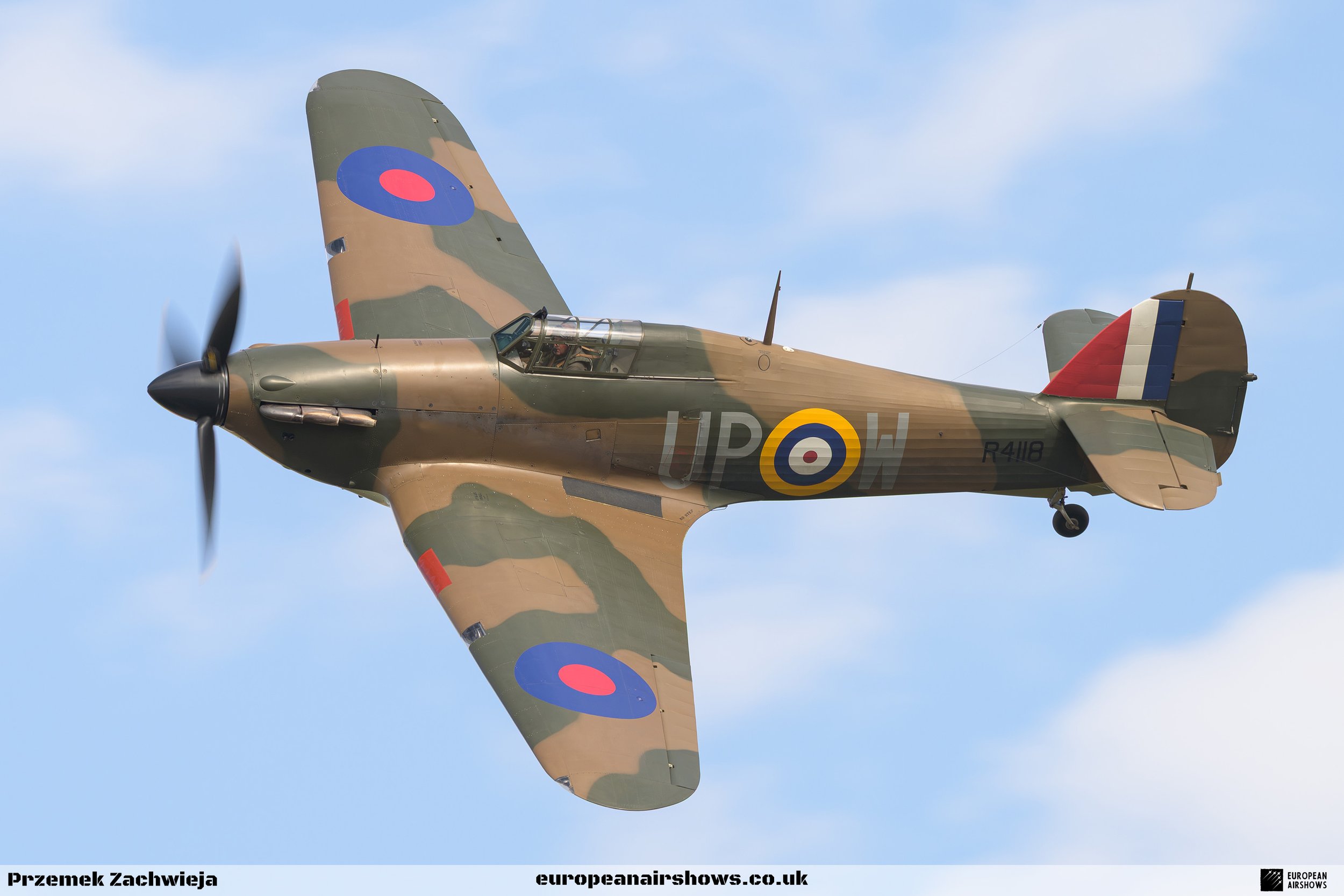
Hurricane Heritage’s R4118 came next. It is not merely an aircraft painted to represent the Battle of Britain: it is a genuine veteran. Delivered to No.605 Squadron on 17th August 1940, it completed 49 operational sorties from Croydon and was credited with five enemy aircraft destroyed or damaged. It was itself damaged during combat on 22nd October before being repaired. Hurricane Heritage’s detailed history makes R4118 one of the most important airworthy Hurricanes in existence.
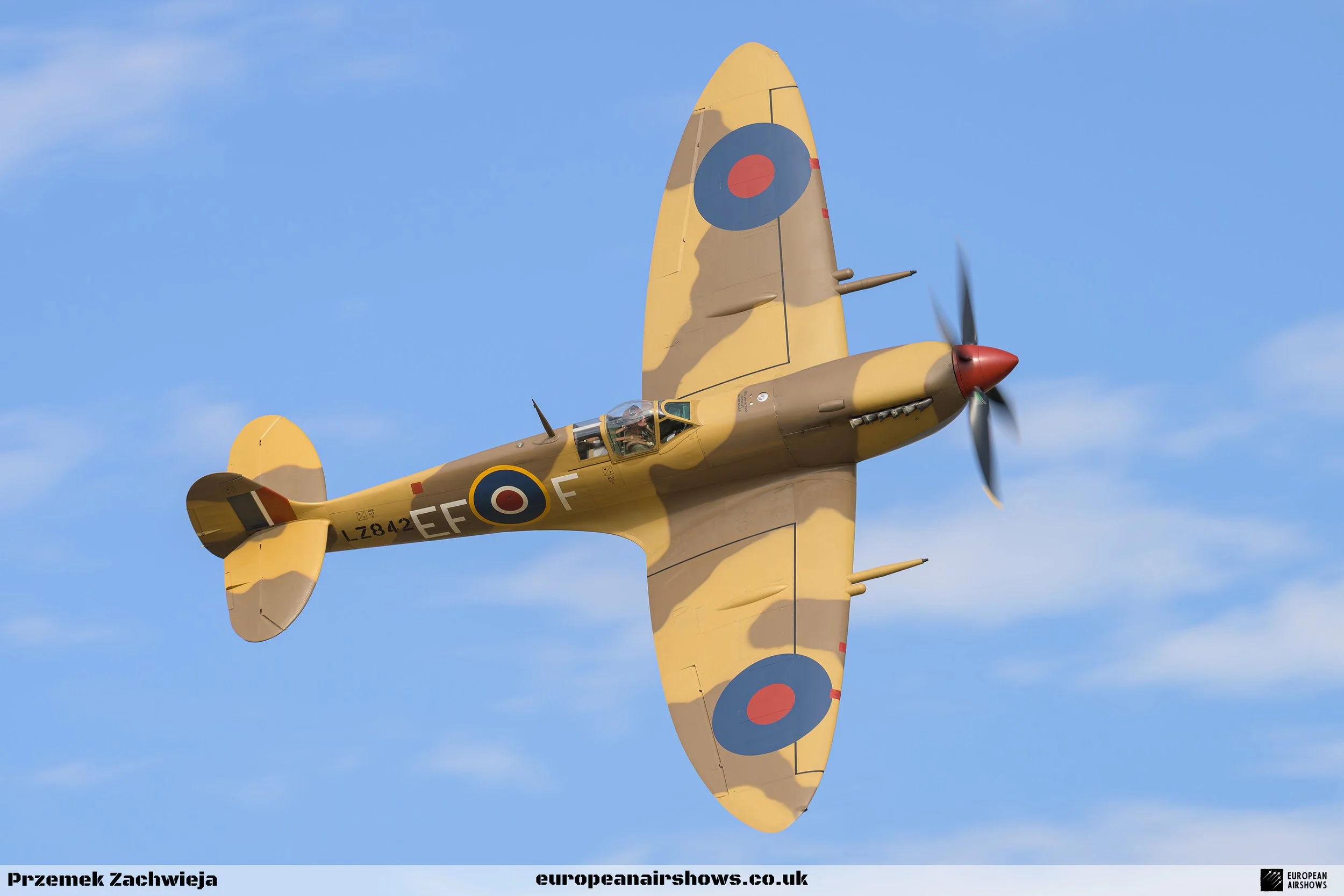
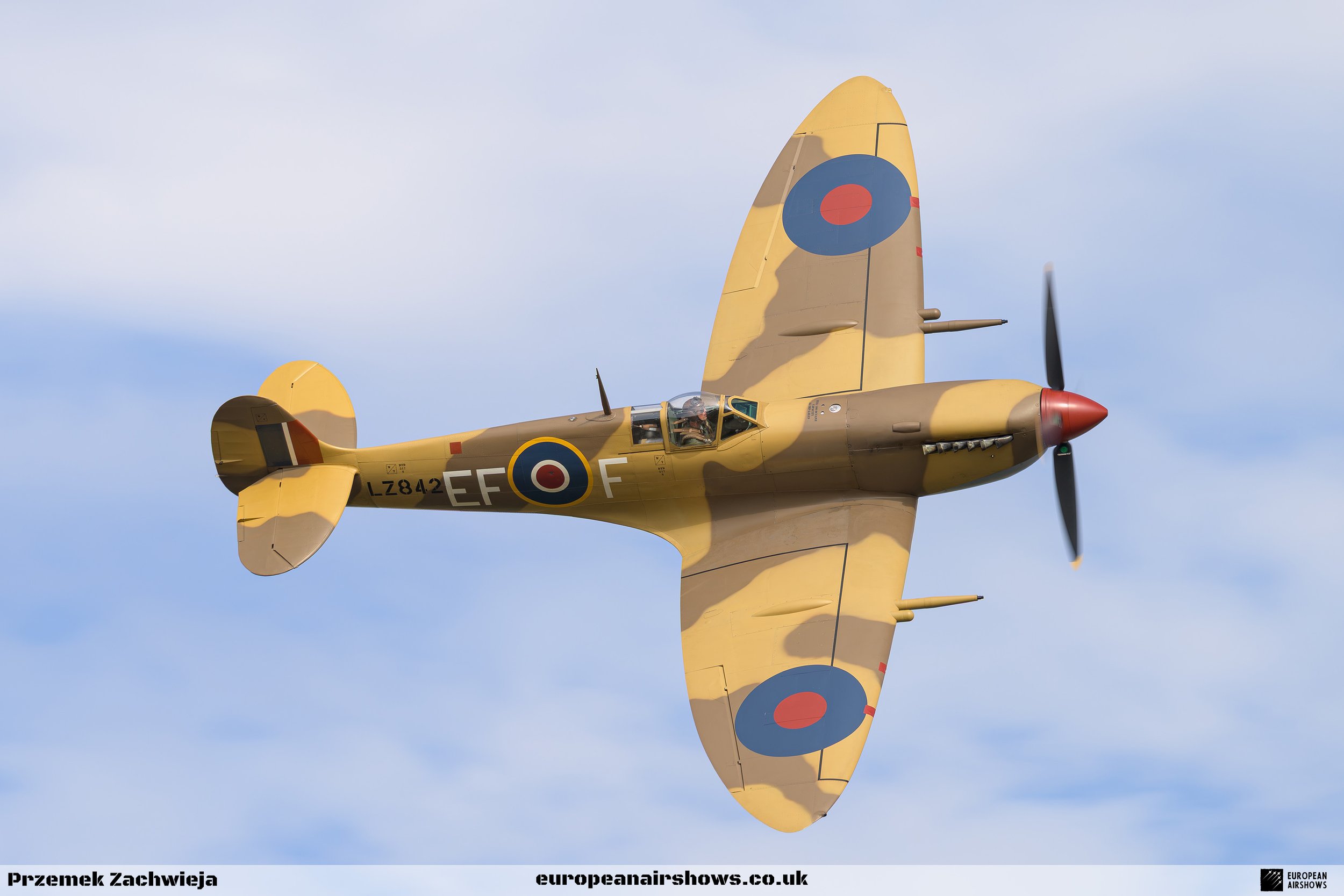
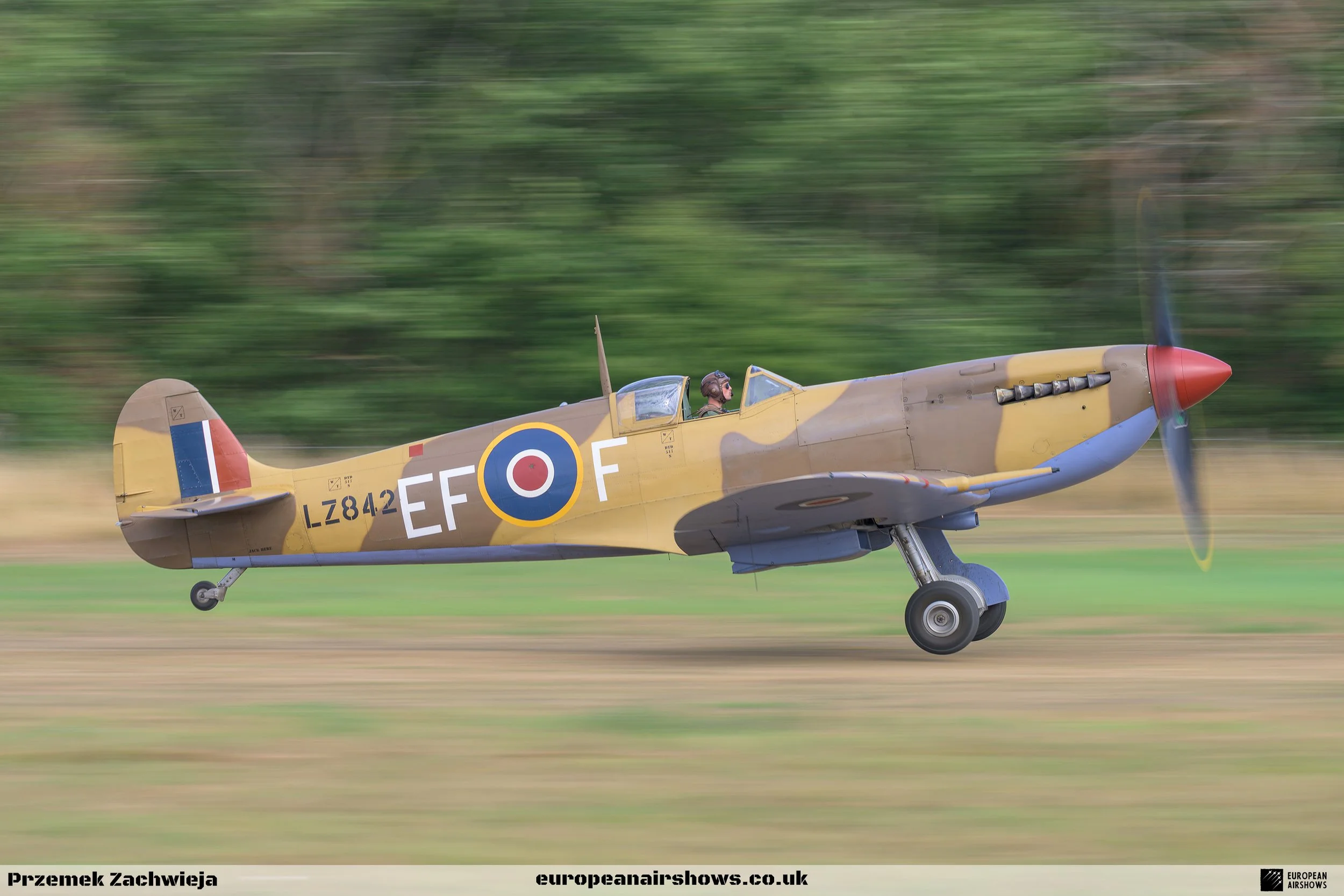
Mark Bennett’s Spitfire Mk IX LZ842 completed the sequence. Built at Castle Bromwich in 1943, it served with No.93 Squadron in Malta and Sicily before passing through No.253 Squadron, the Free French No.327 Squadron and eventually the South African Air Force. Its display benefited from some of the best light of the afternoon, adding another distinctive operational history to an already international gathering.
Three aircraft in one formation demonstrated the pace of change better than a lengthy commentary ever could: the Gladiator’s fixed undercarriage and biplane wings, the Hurricane’s comparatively conservative monoplane structure and the Spitfire’s increasingly refined high-performance design.
Ten Spitfires over Old Warden
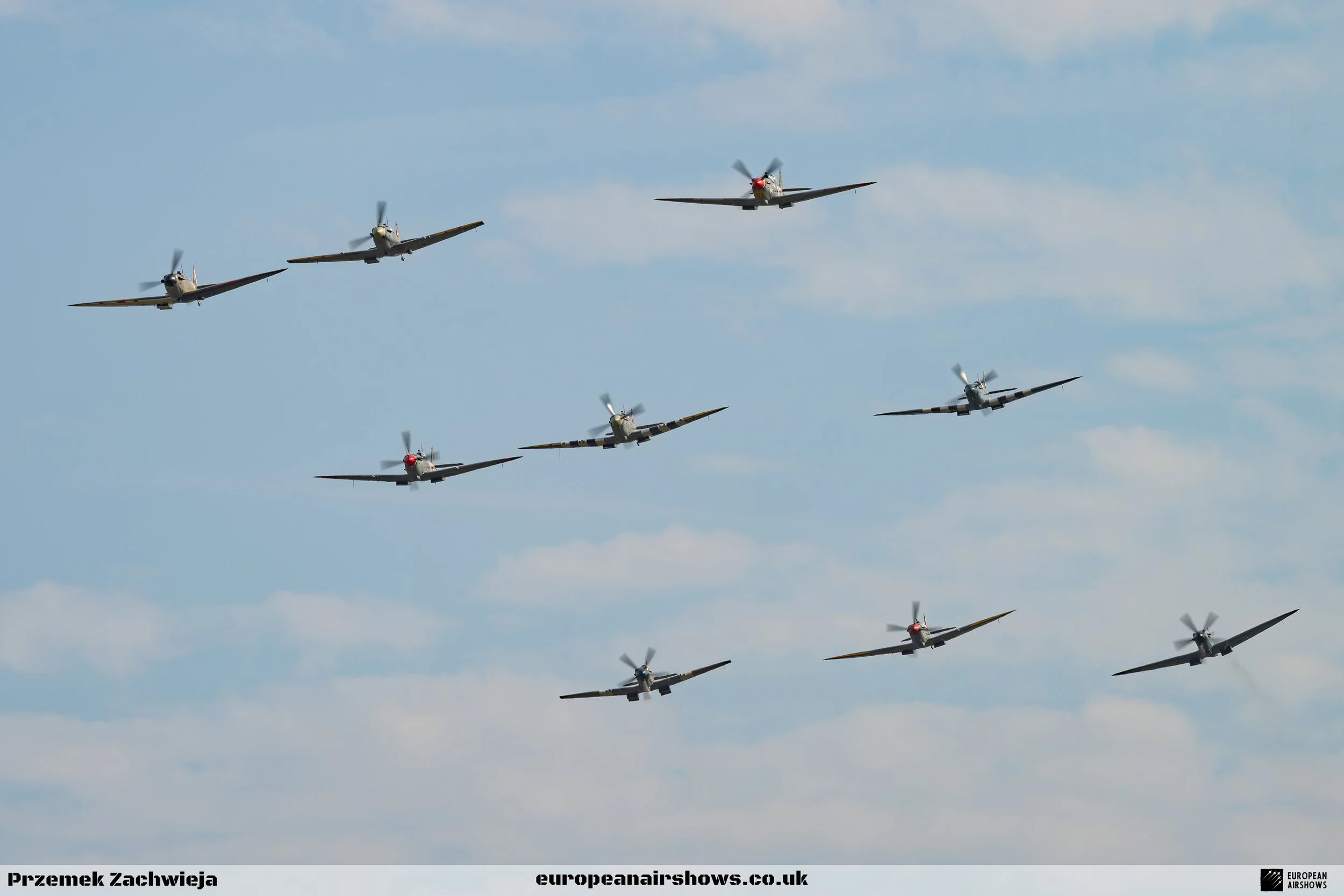
Soon the sound of ten Merlin and Griffon engines starting around the aerodrome took over. This was the moment most spectators had travelled to see.
The anniversary finale brought together:
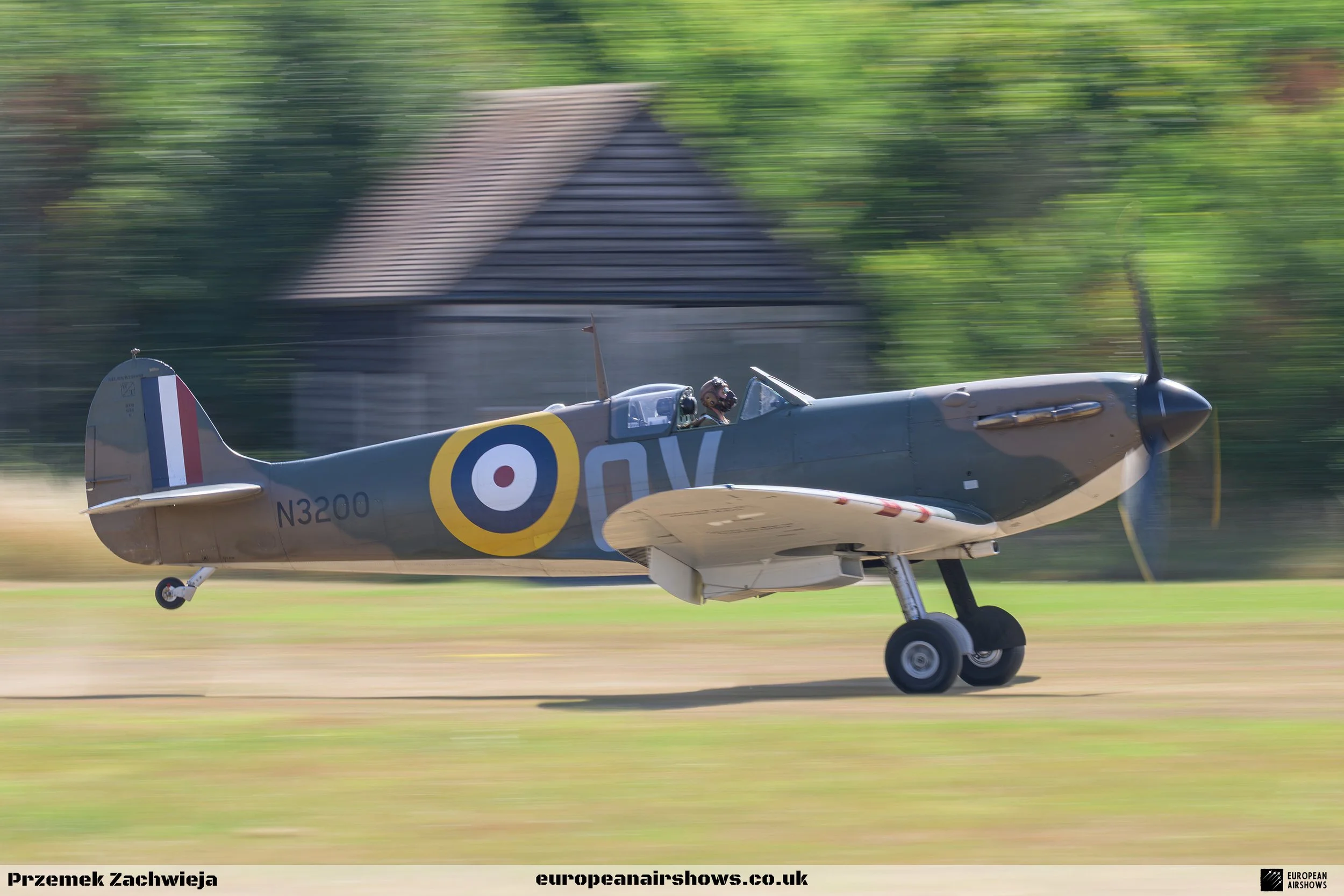
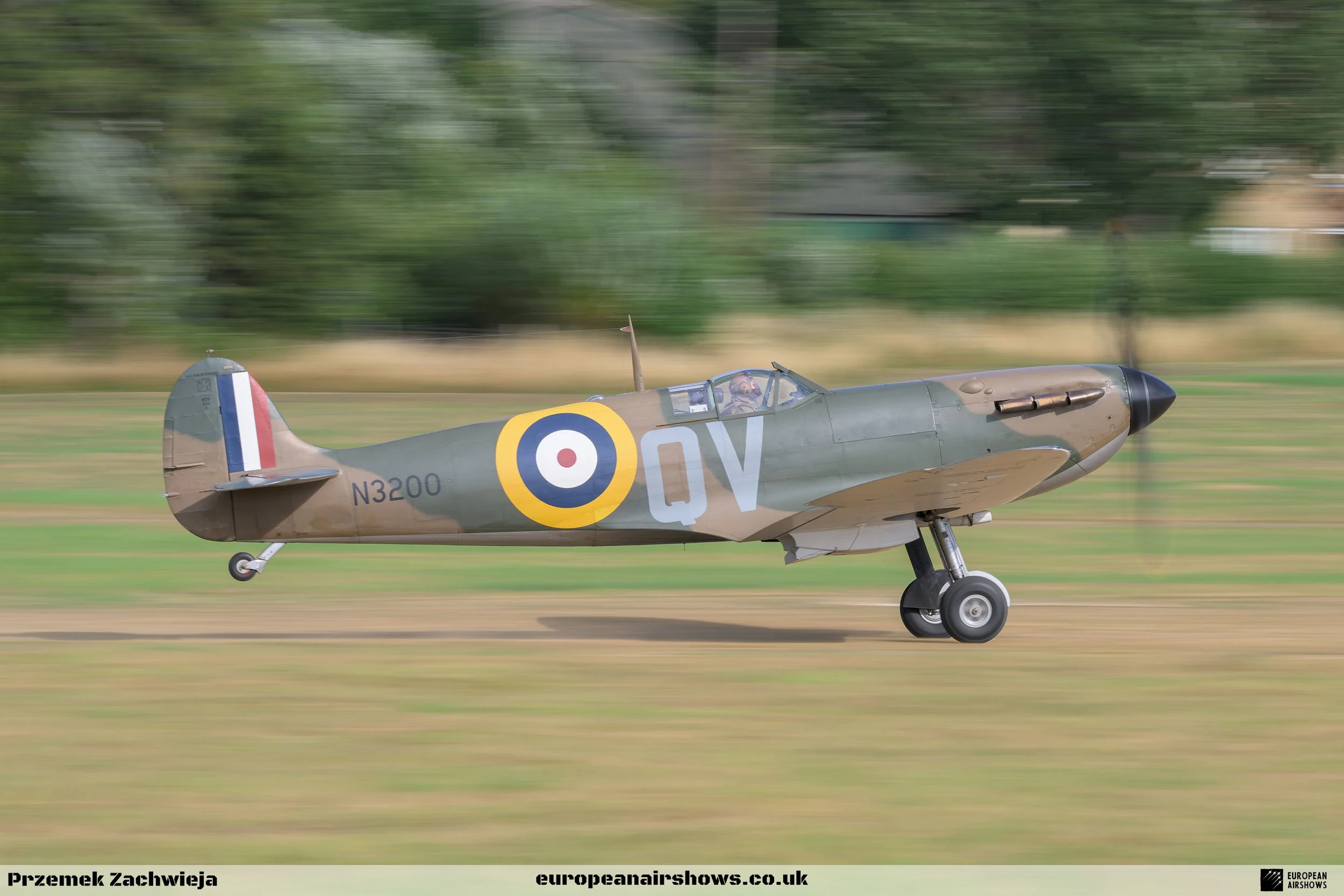
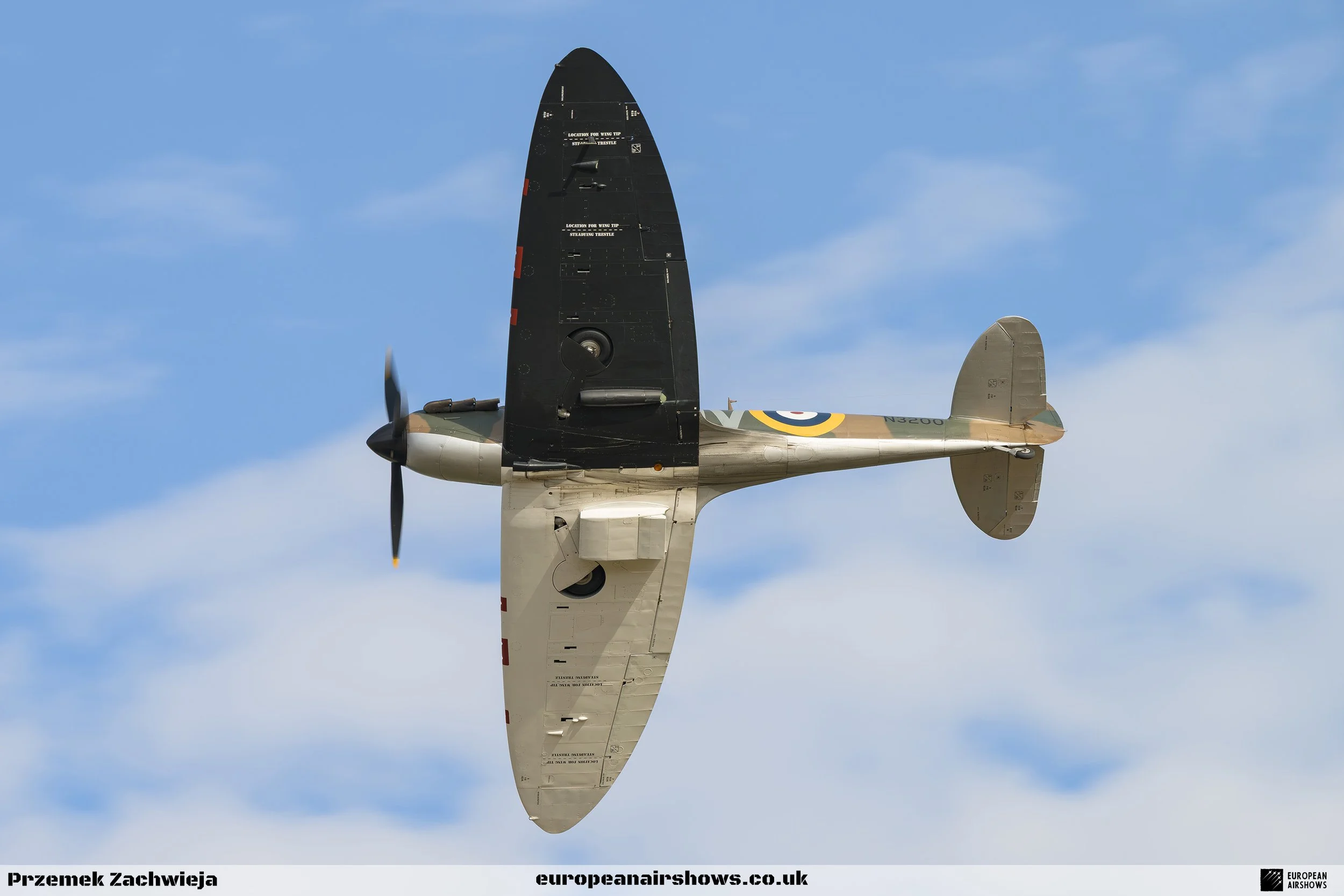
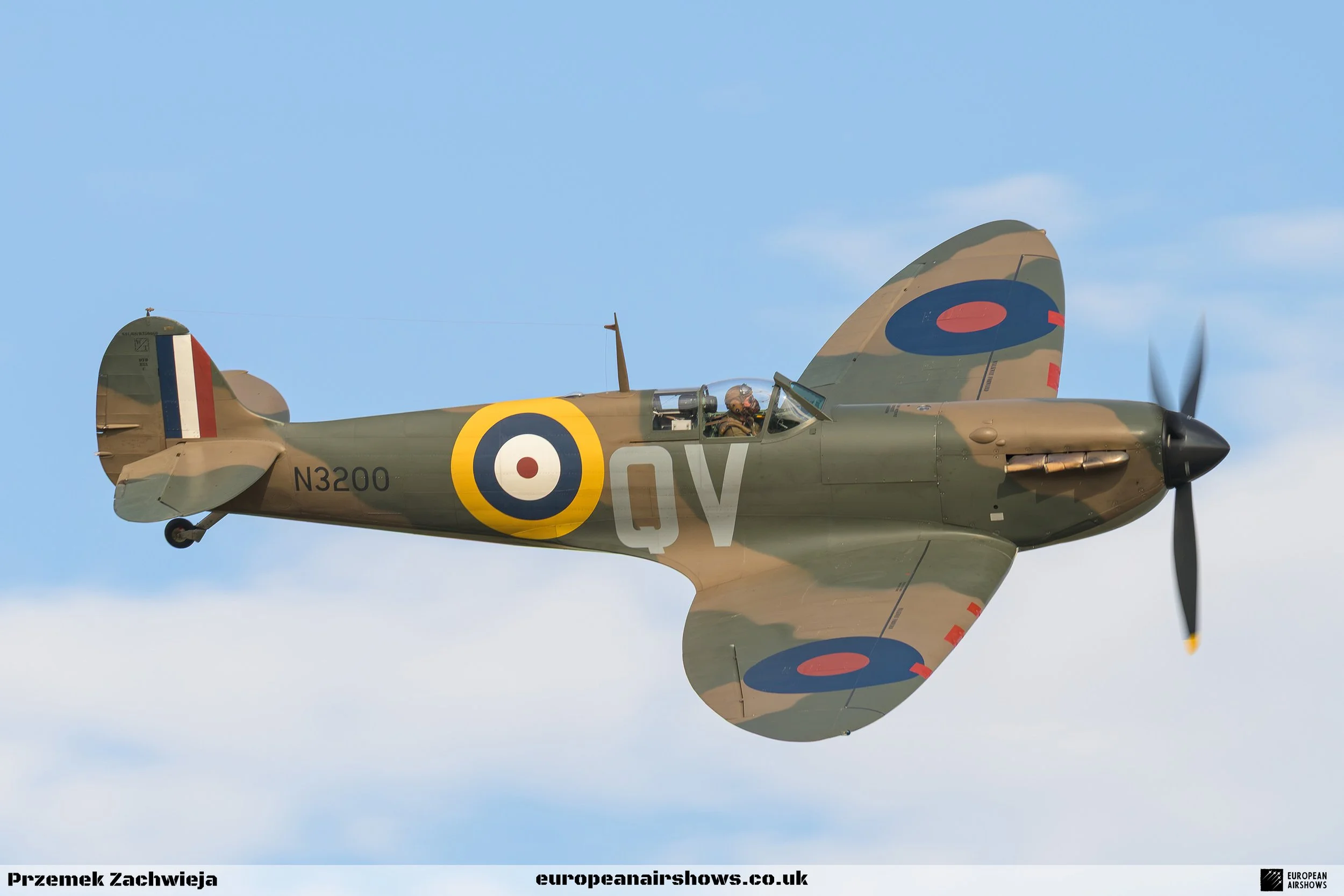
- Imperial War Museums’ Mk Ia N3200
- Shuttleworth’s LF Mk Vc AR501
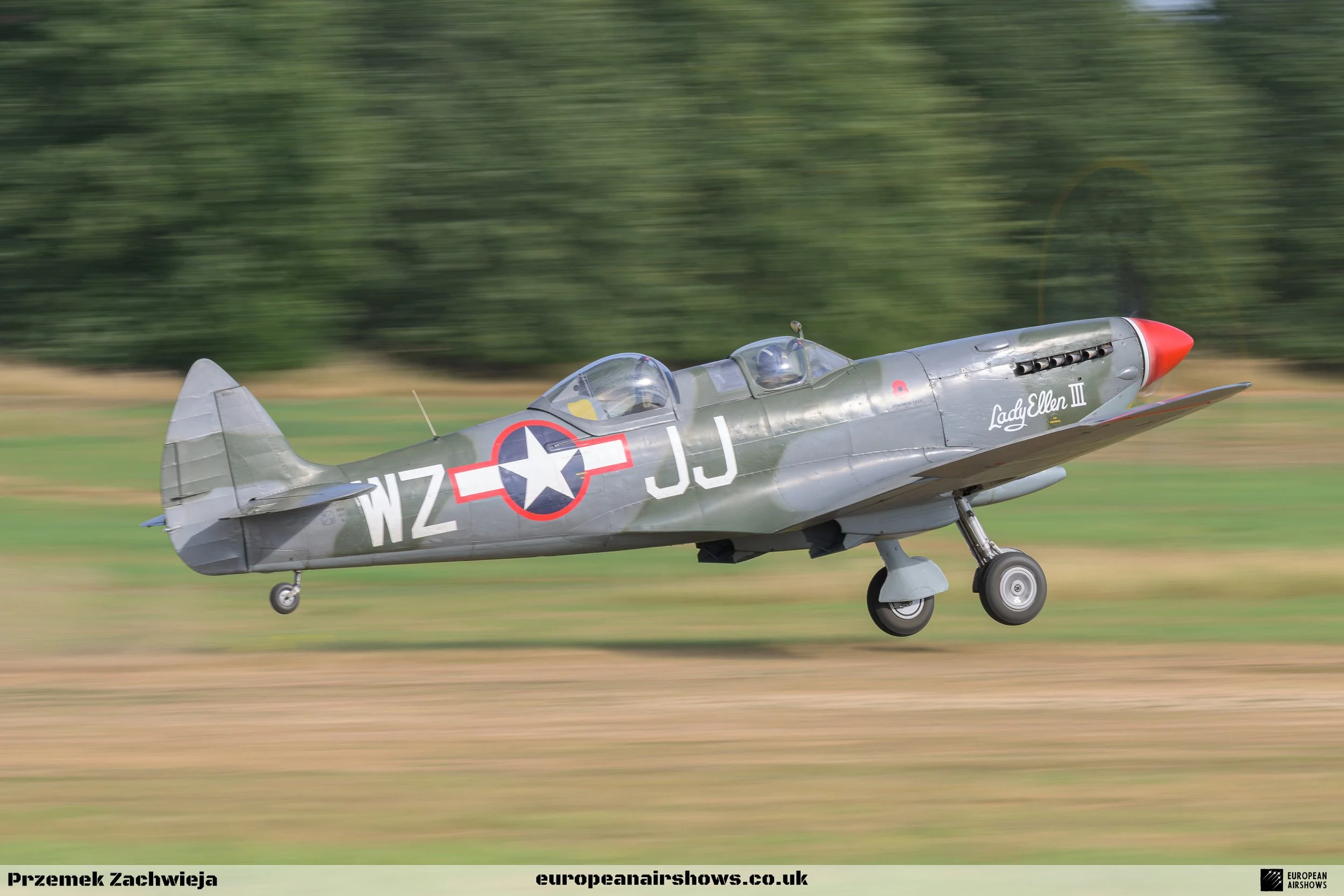
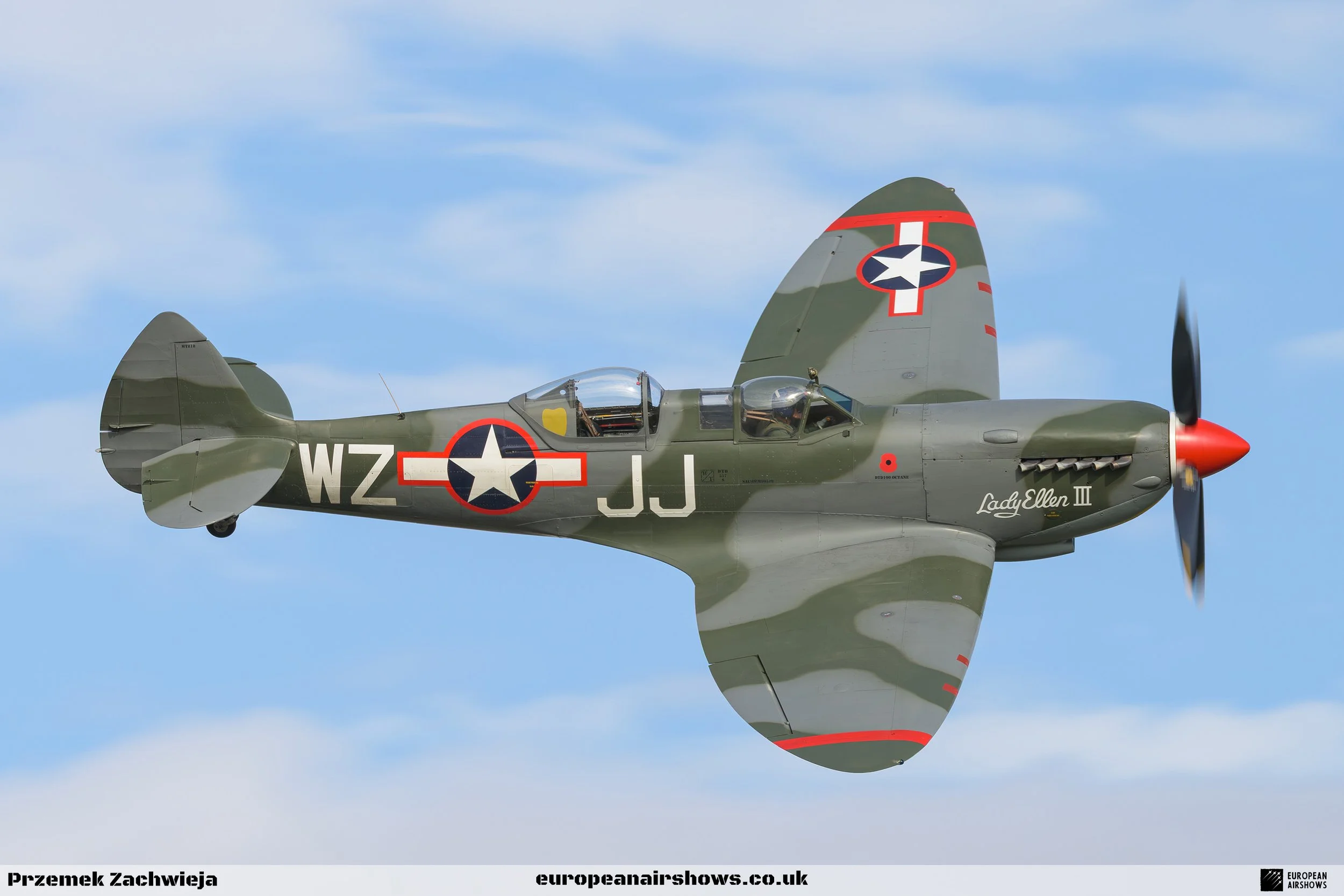
- Warbird Experiences’ Mk VIII two-seater MT818 Lady Ellen III
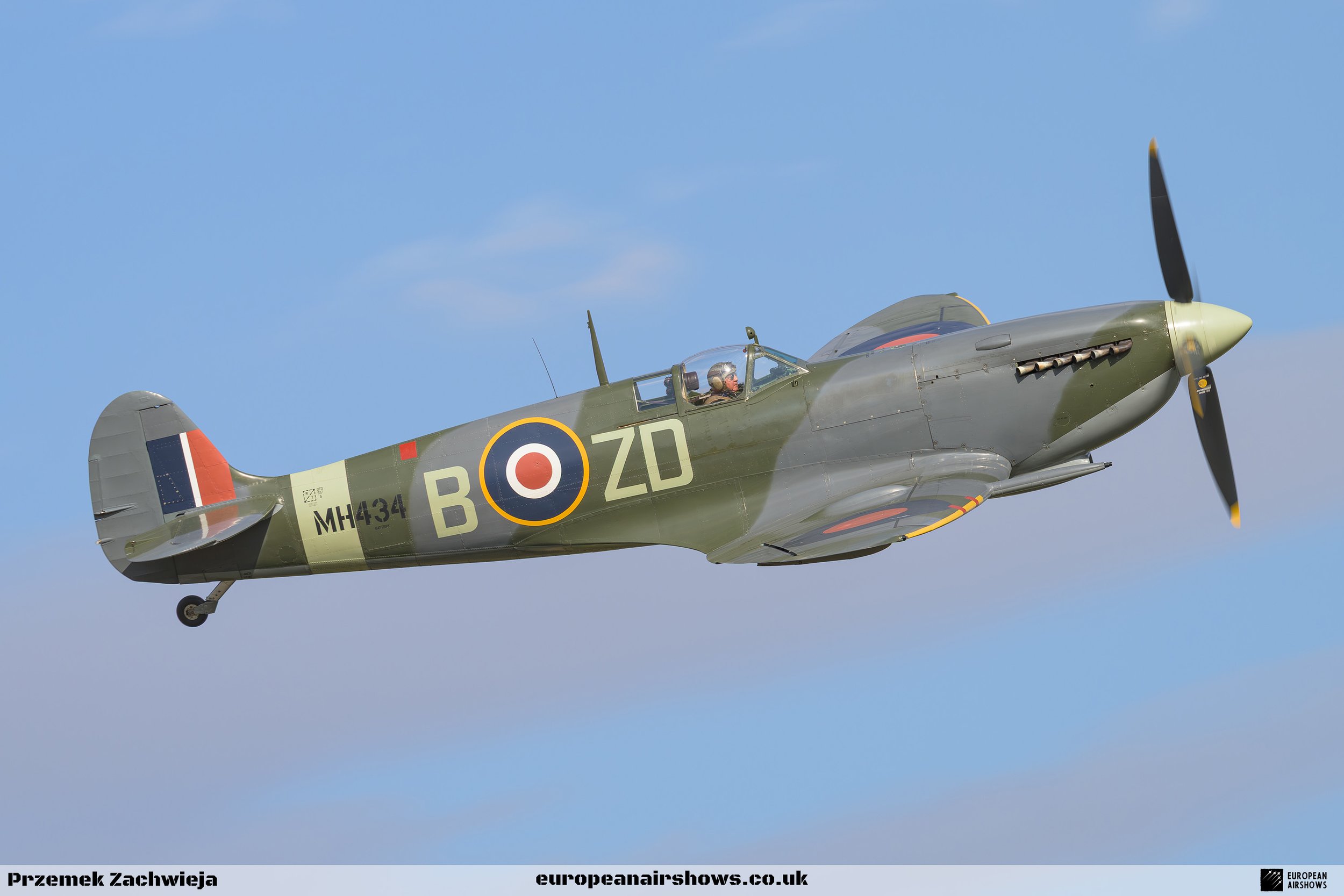
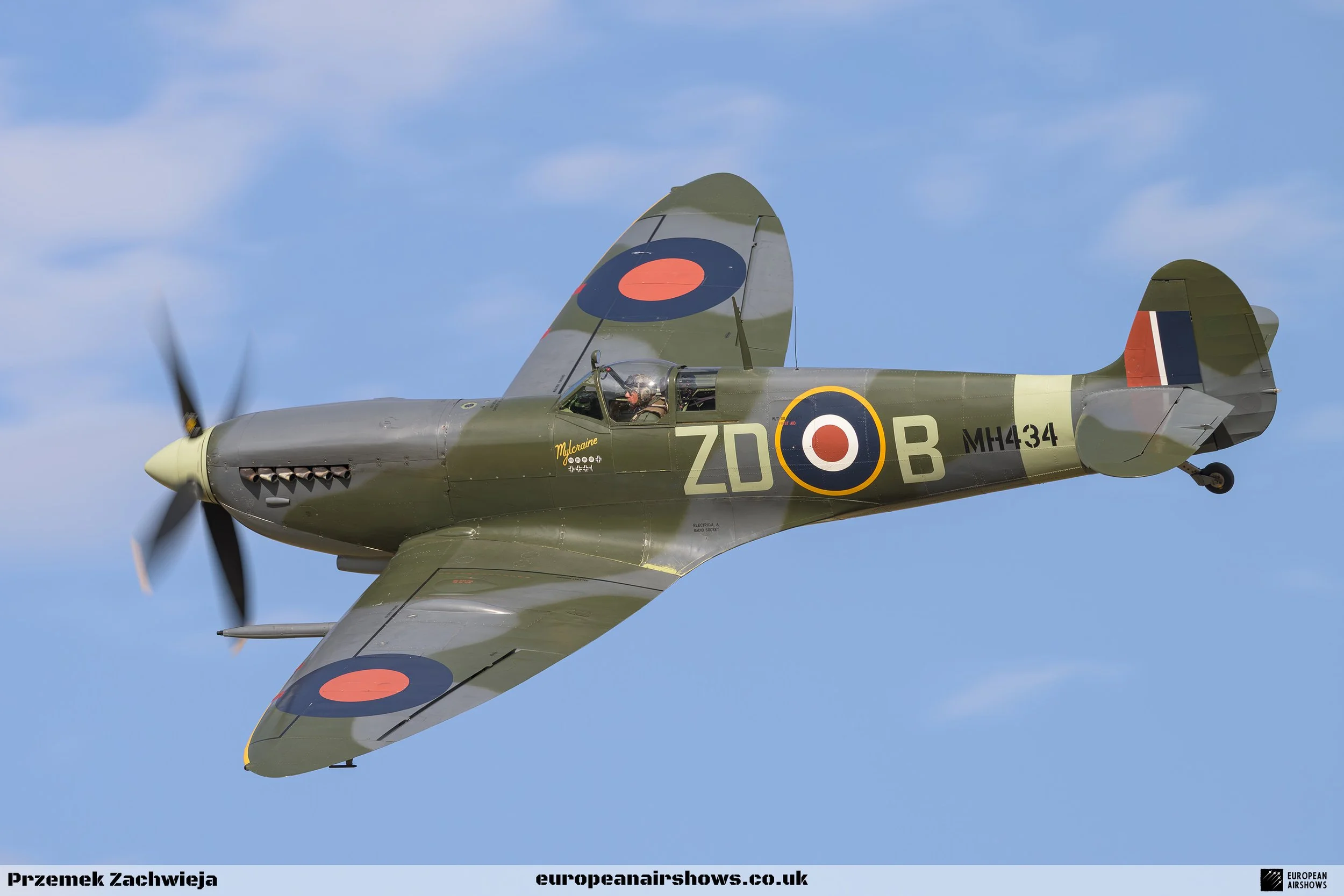
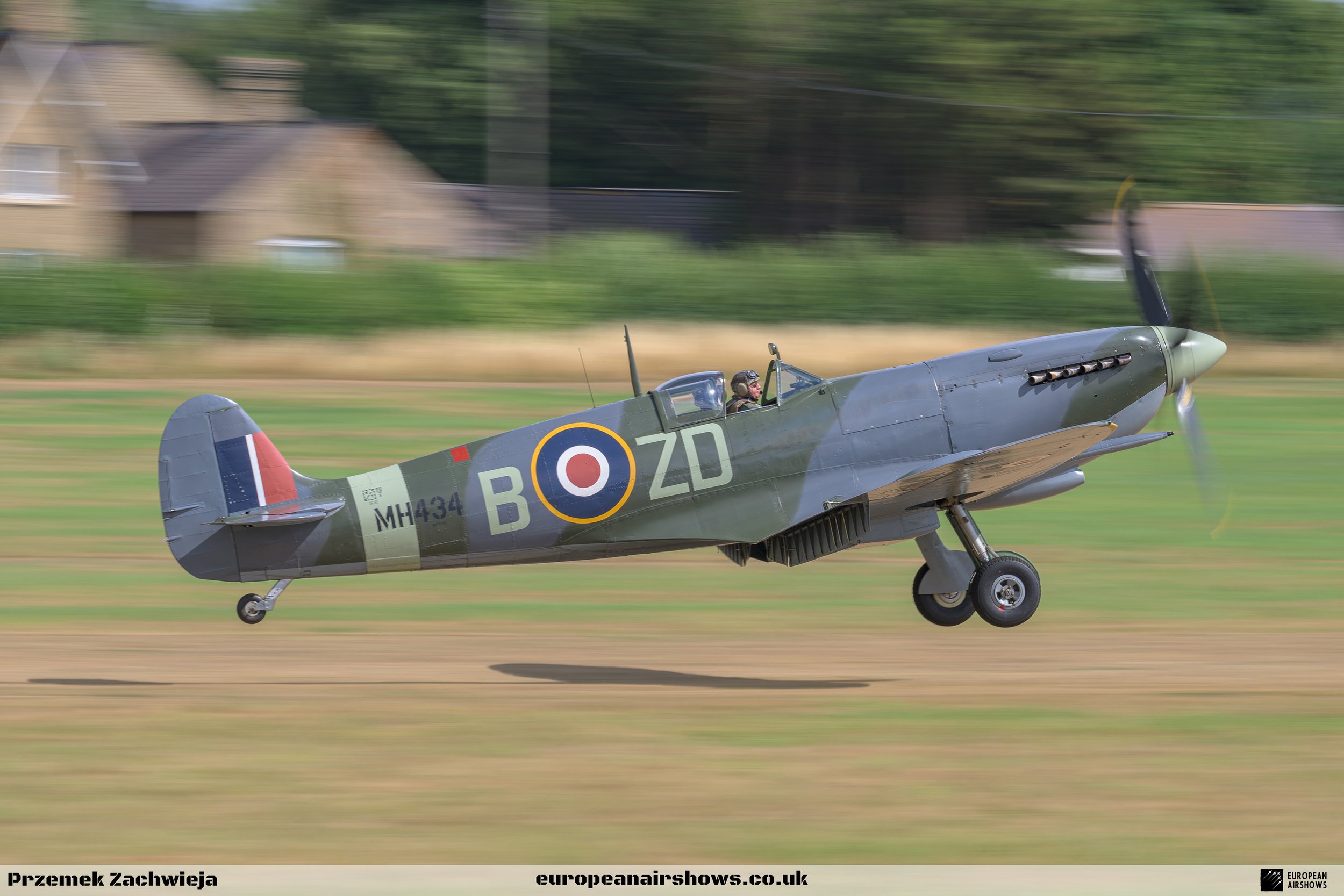
- Old Flying Machine Company’s Mk IXb MH434
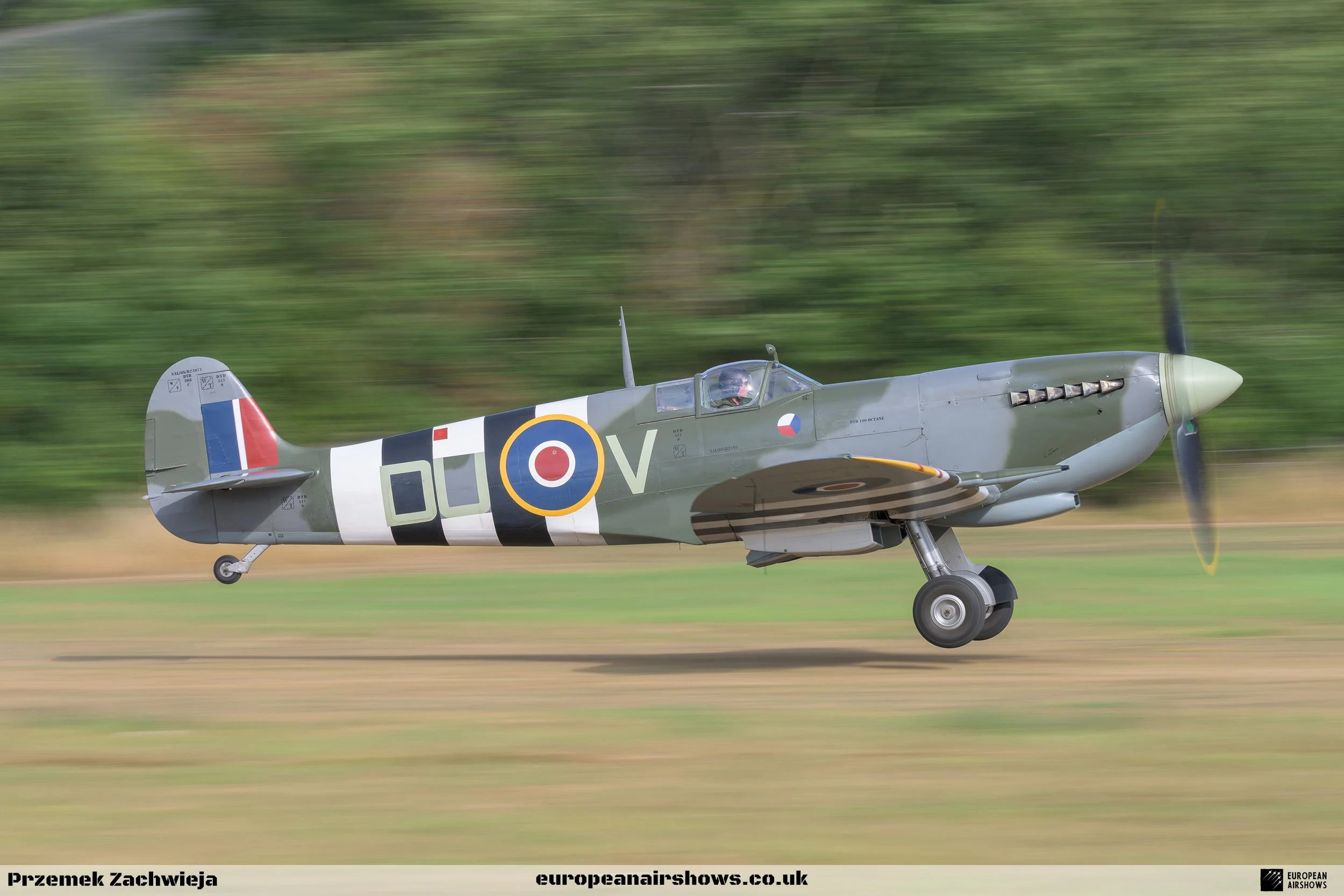
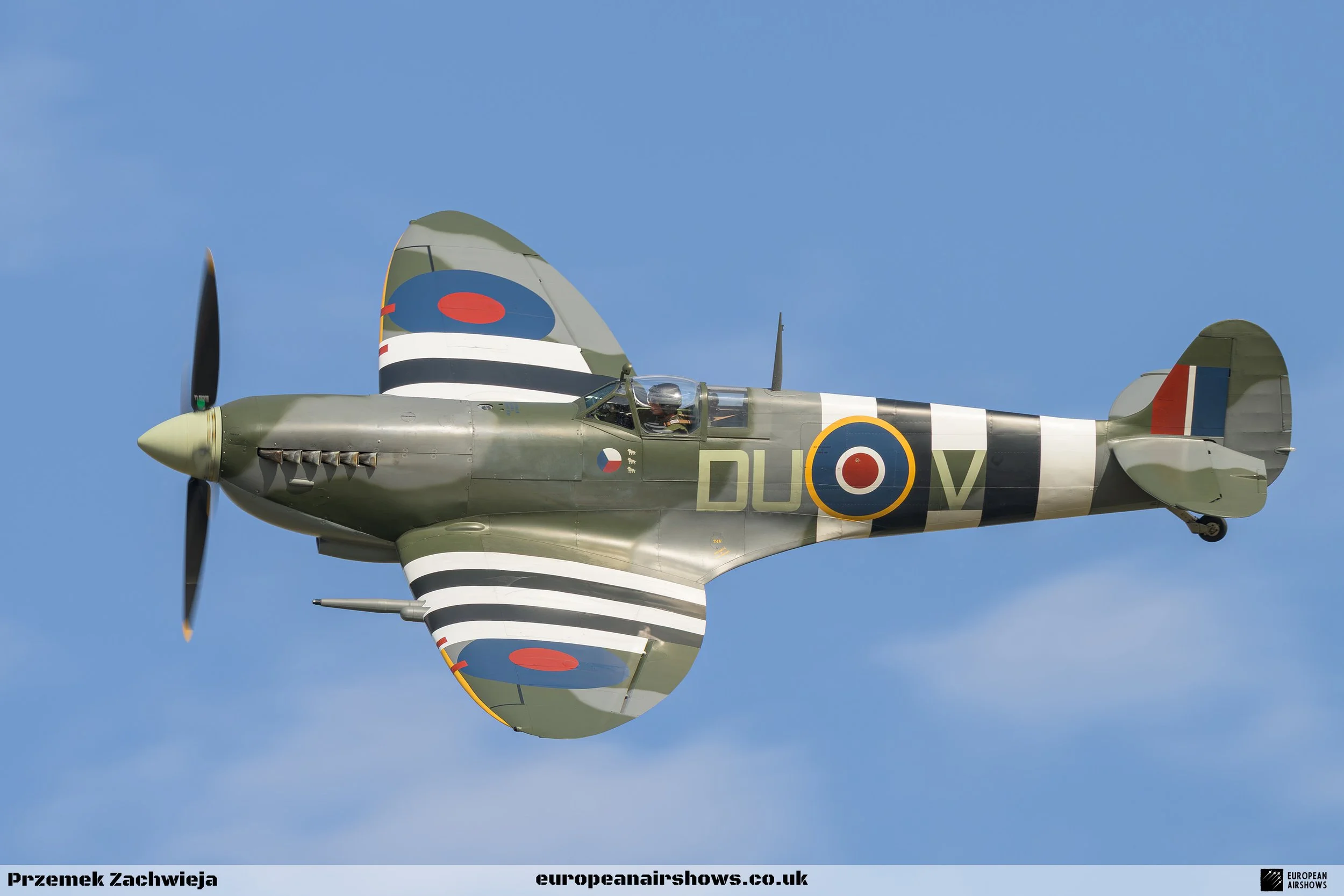
- Lilham Aviation’s Mk IXc MK912, the Normandy Spitfire
- Aircraft Restoration Company’s two-seat Mk IX PT462
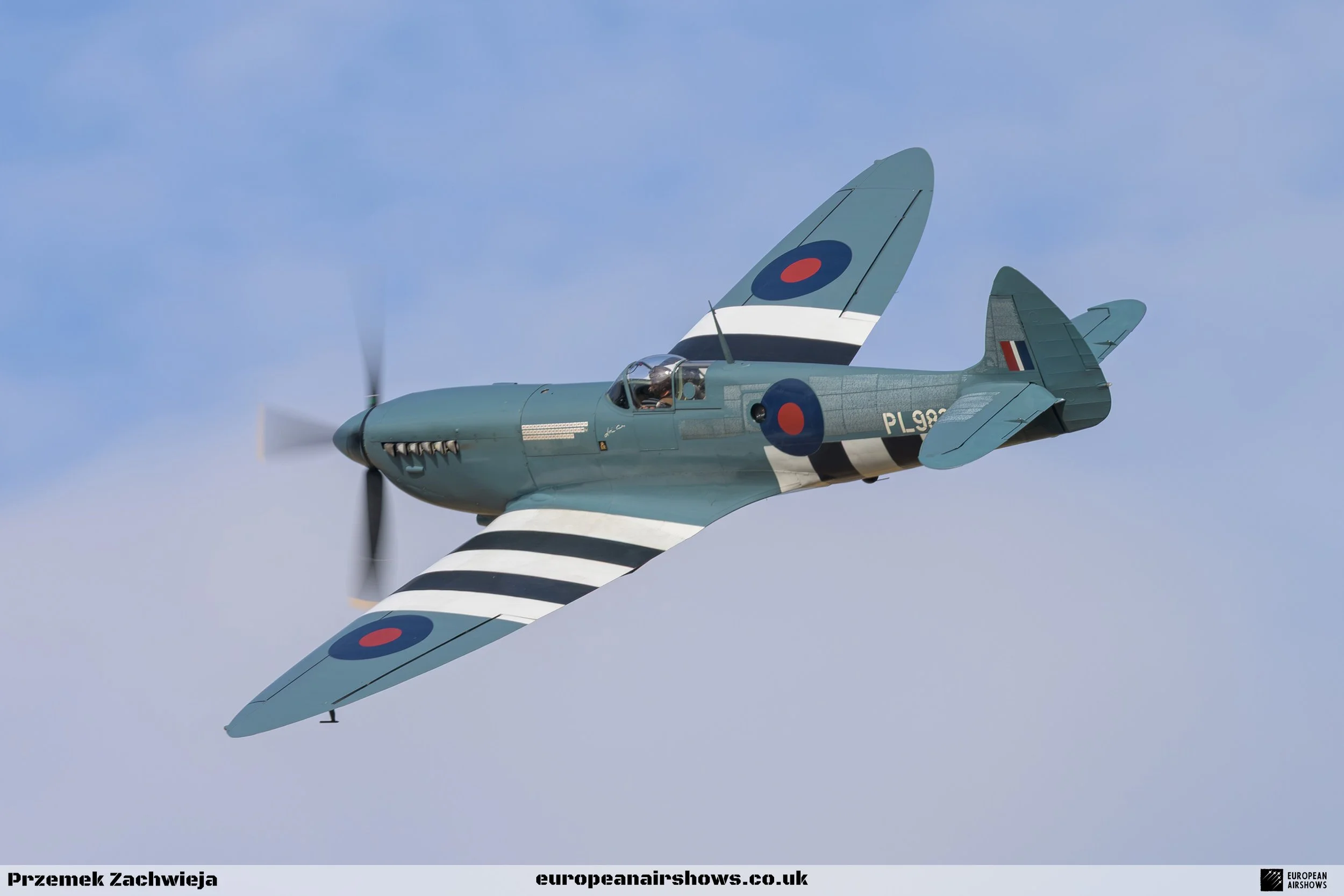
- Aircraft Restoration Company’s PR Mk XI PL983
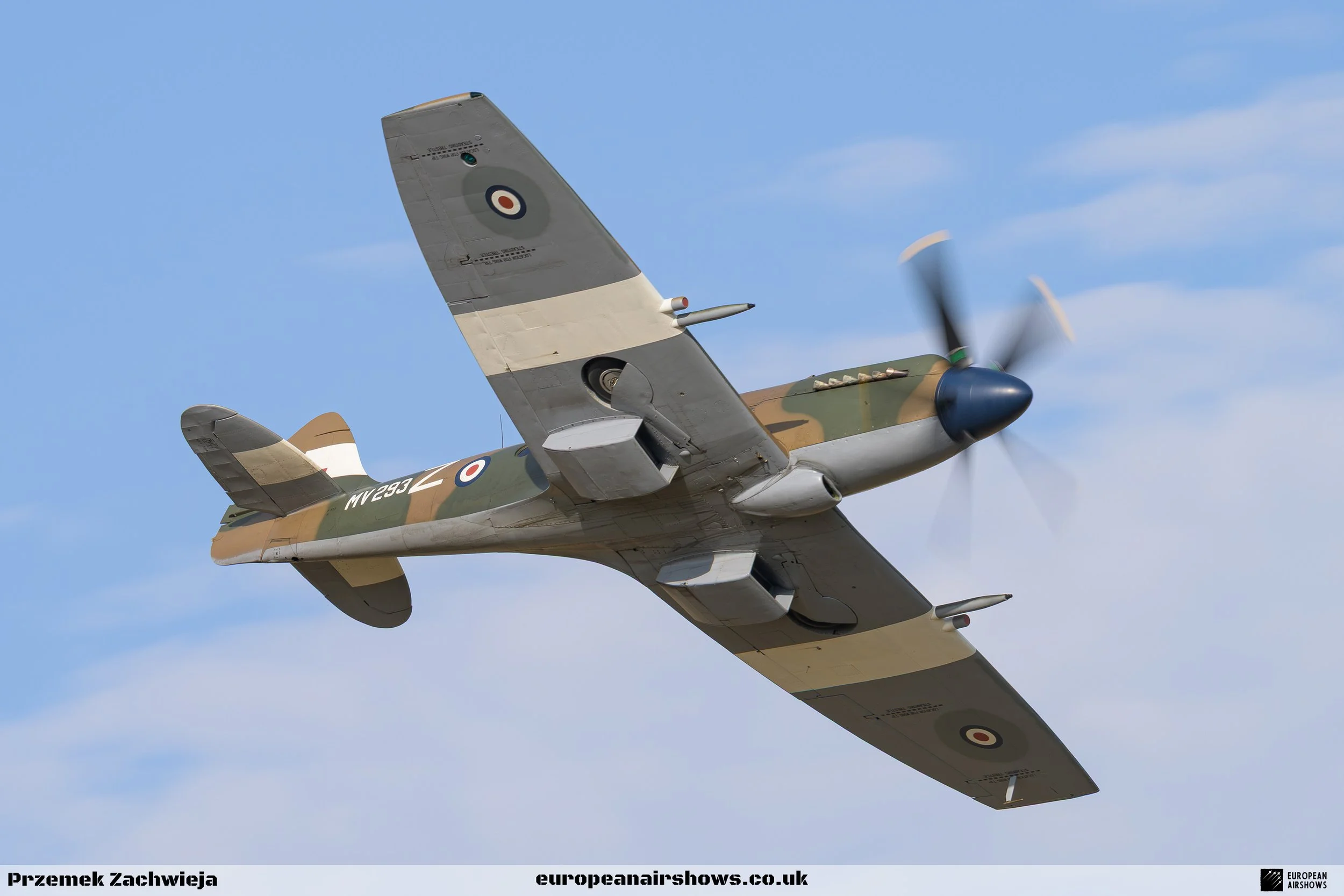
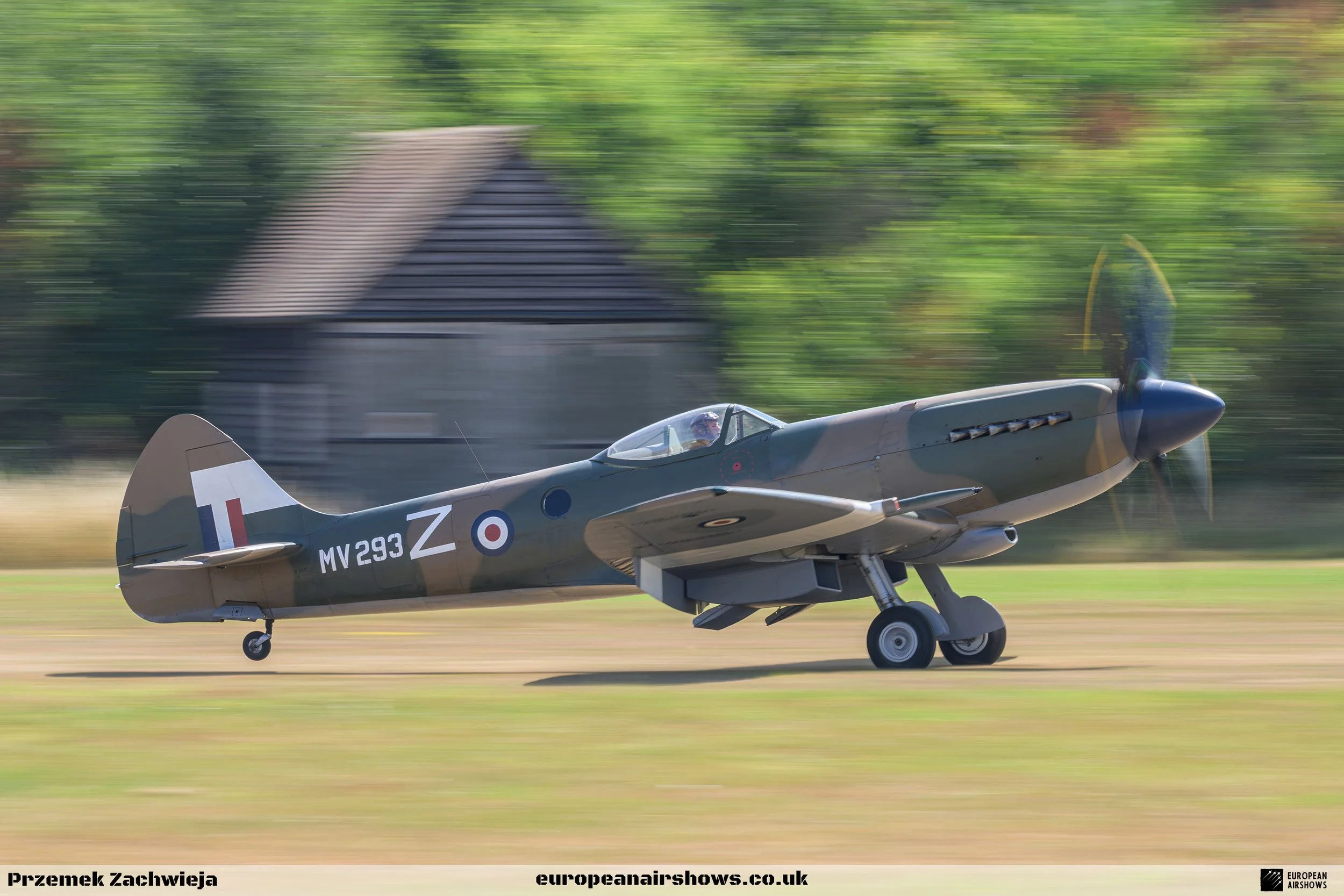
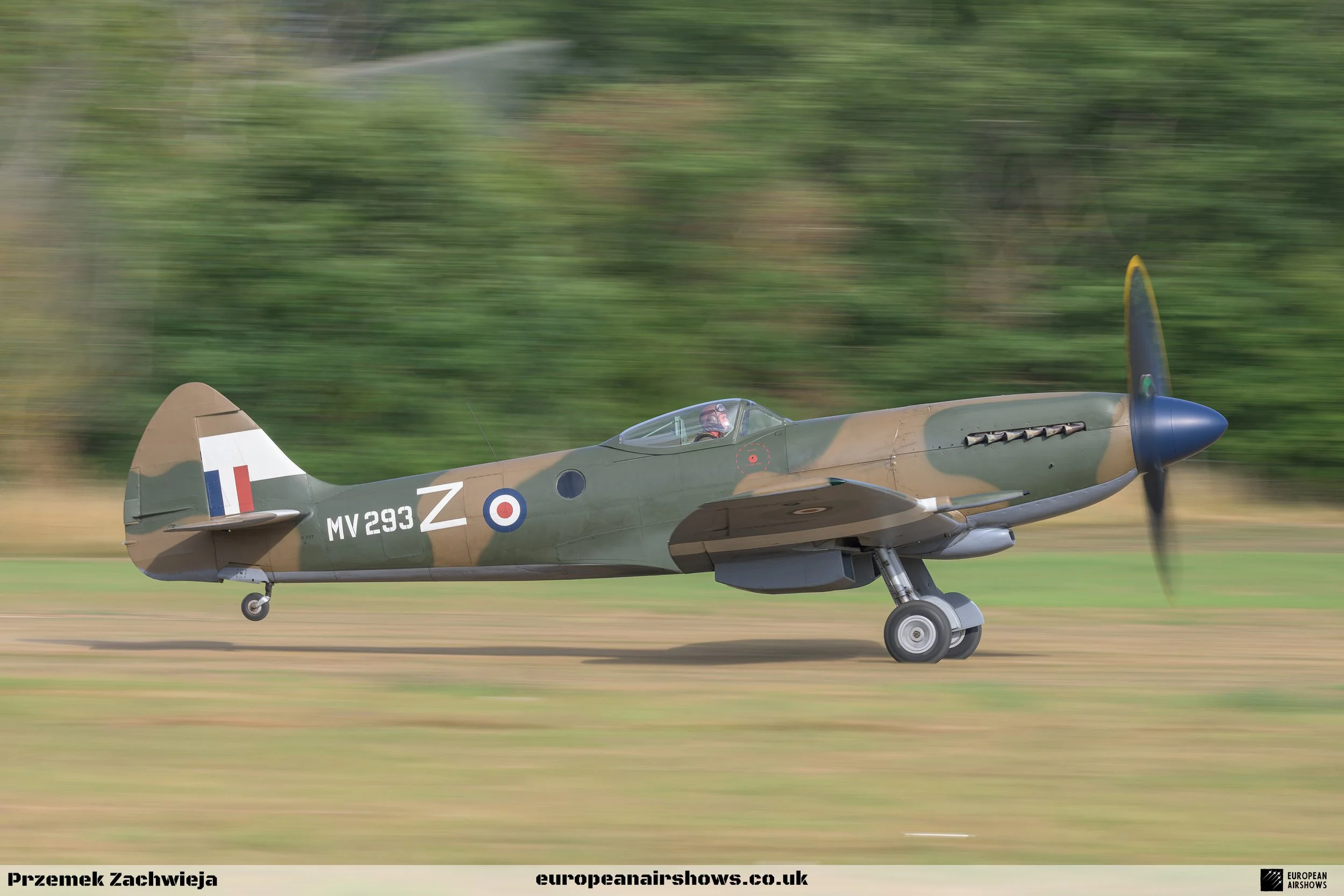
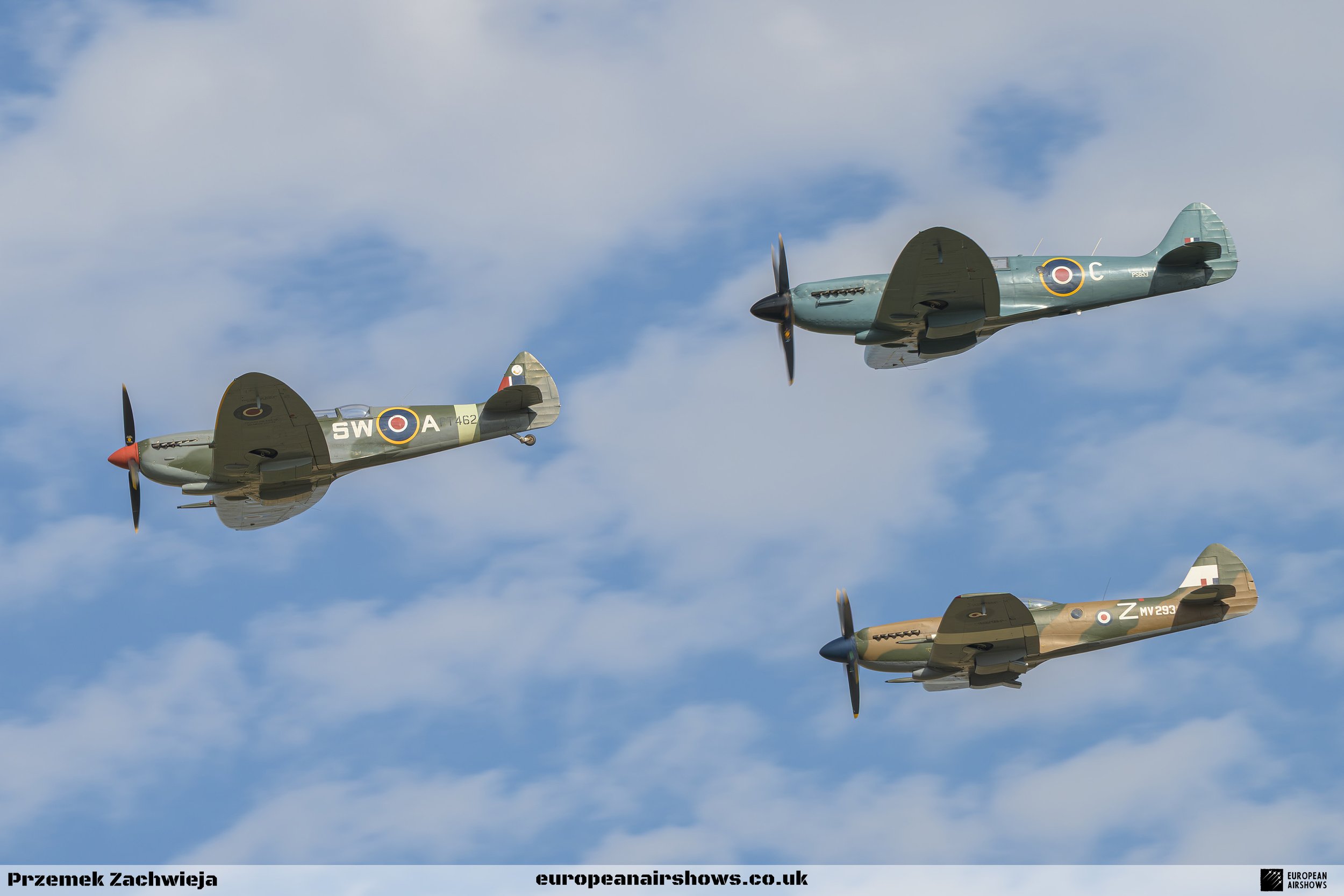
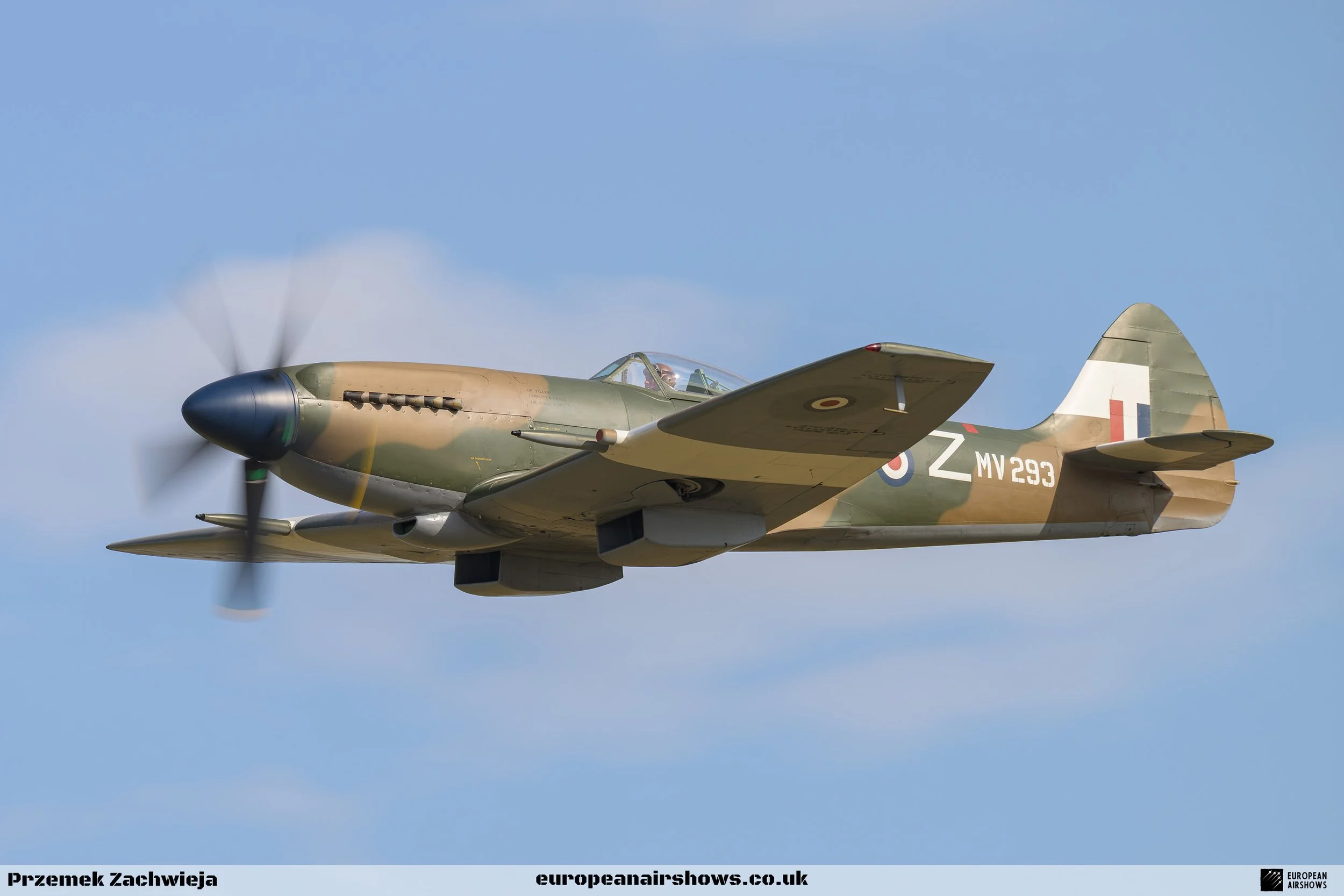
- Fighter Aviation Engineering’s FR Mk XIV MV293
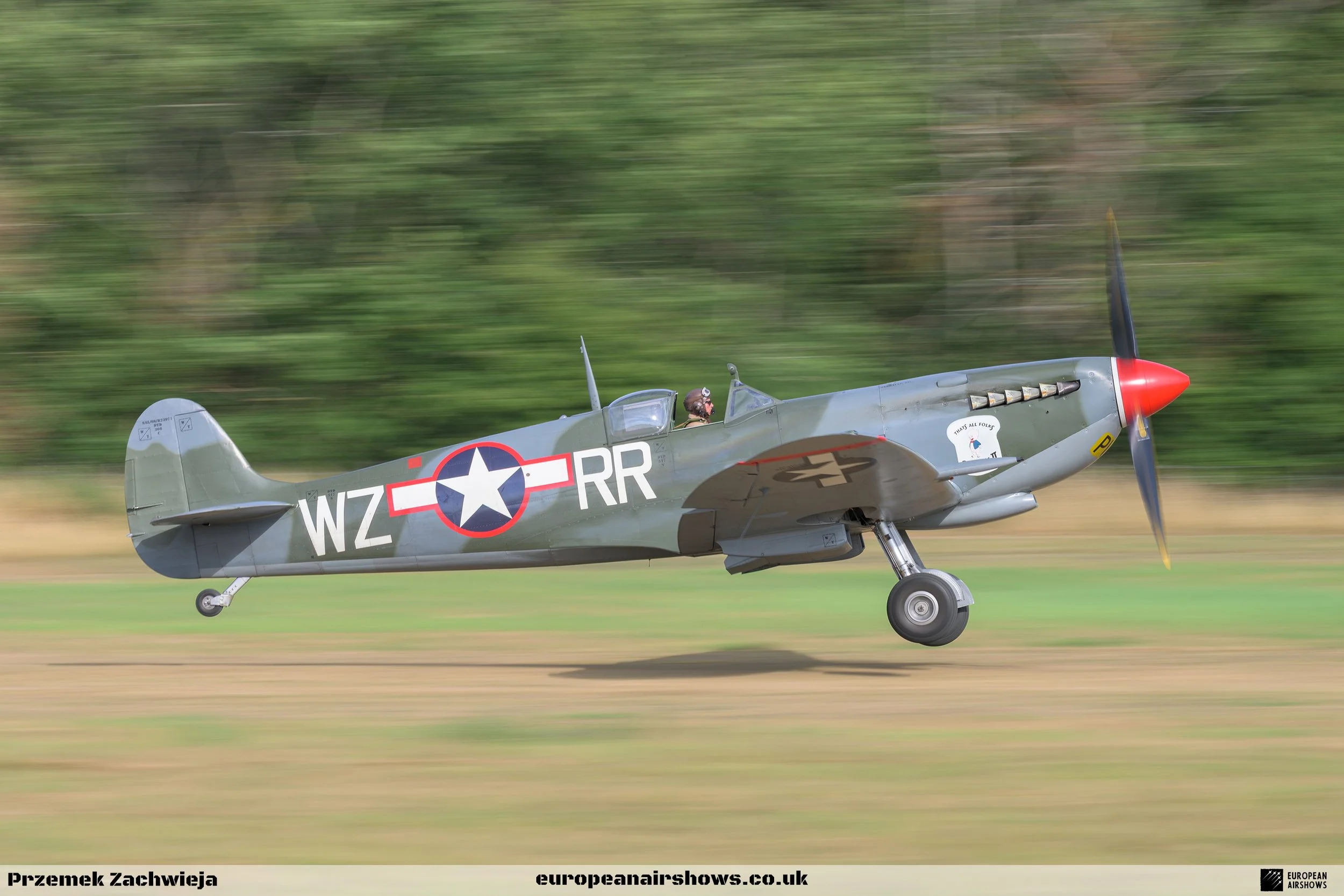
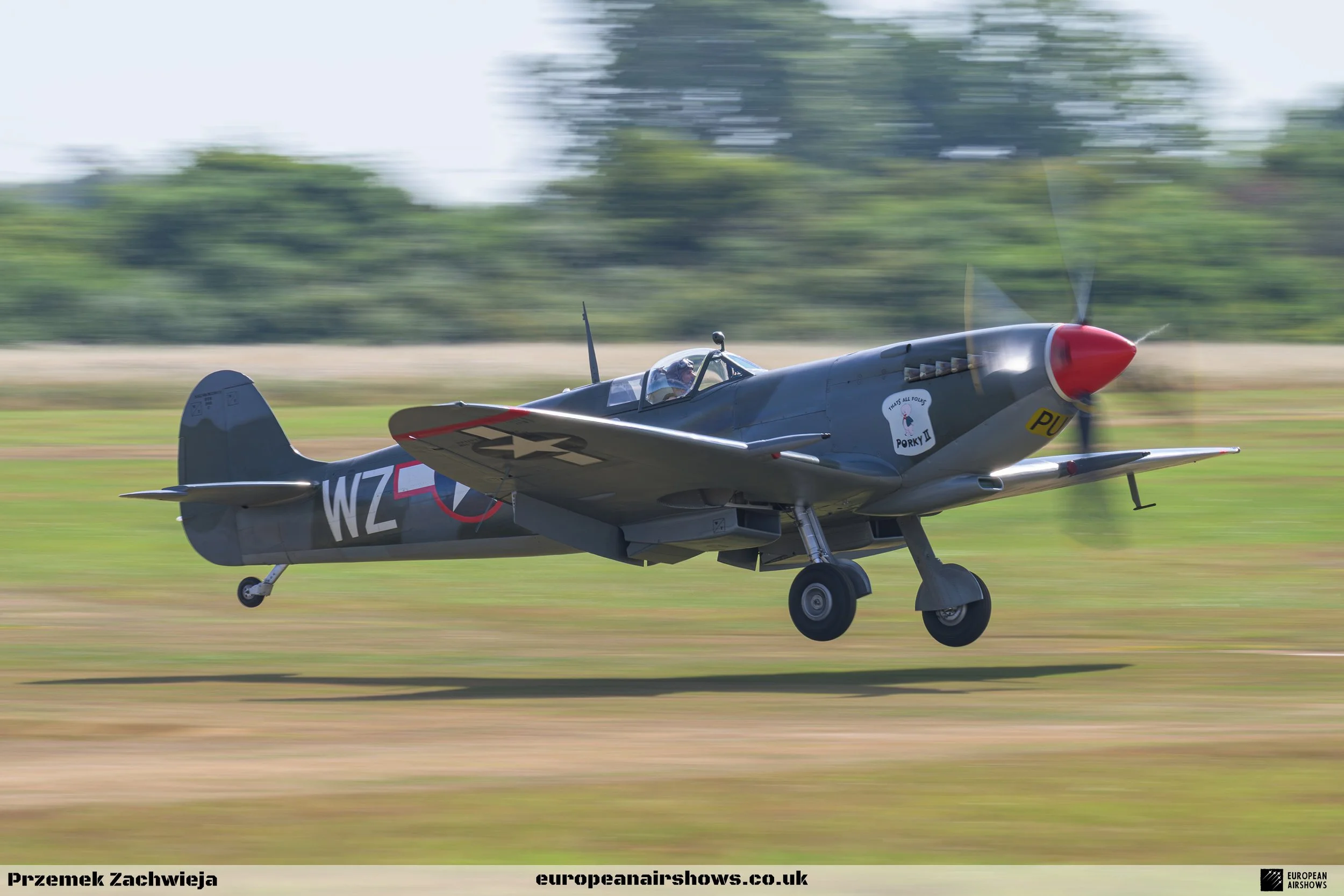
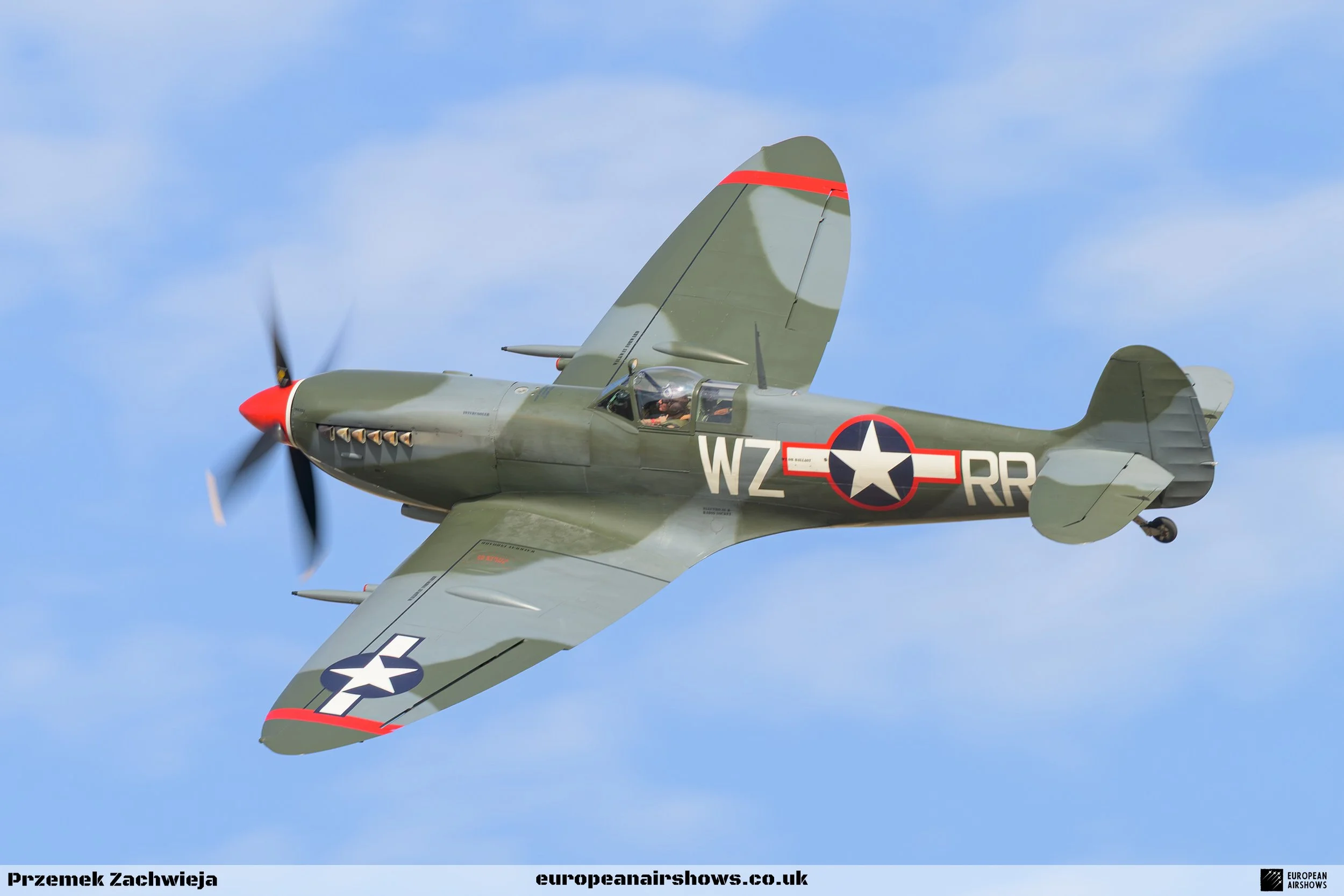
- the Suffolk Spitfire RW382, an original Mk XVI airframe now presented in the USAAF Porky II identity
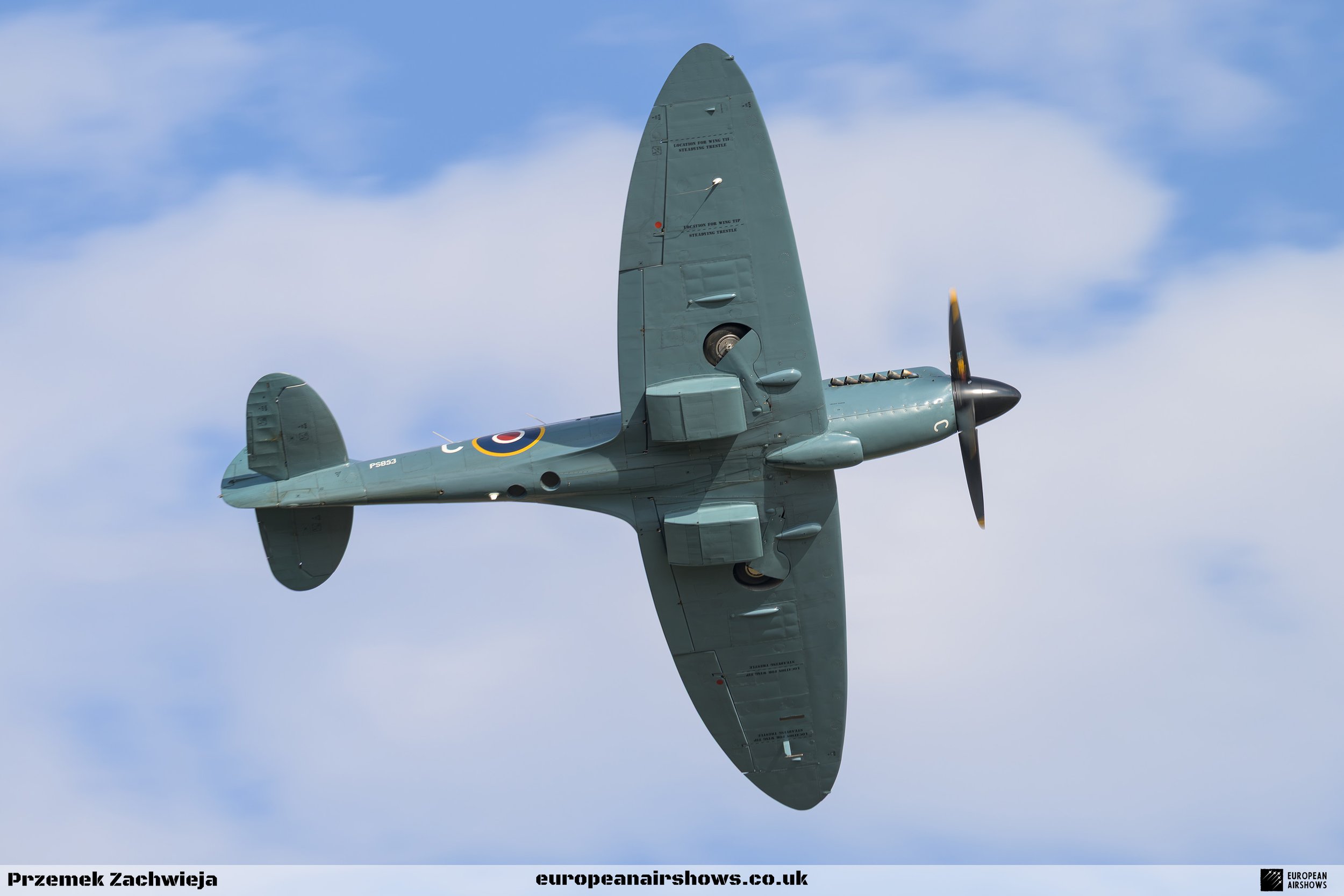
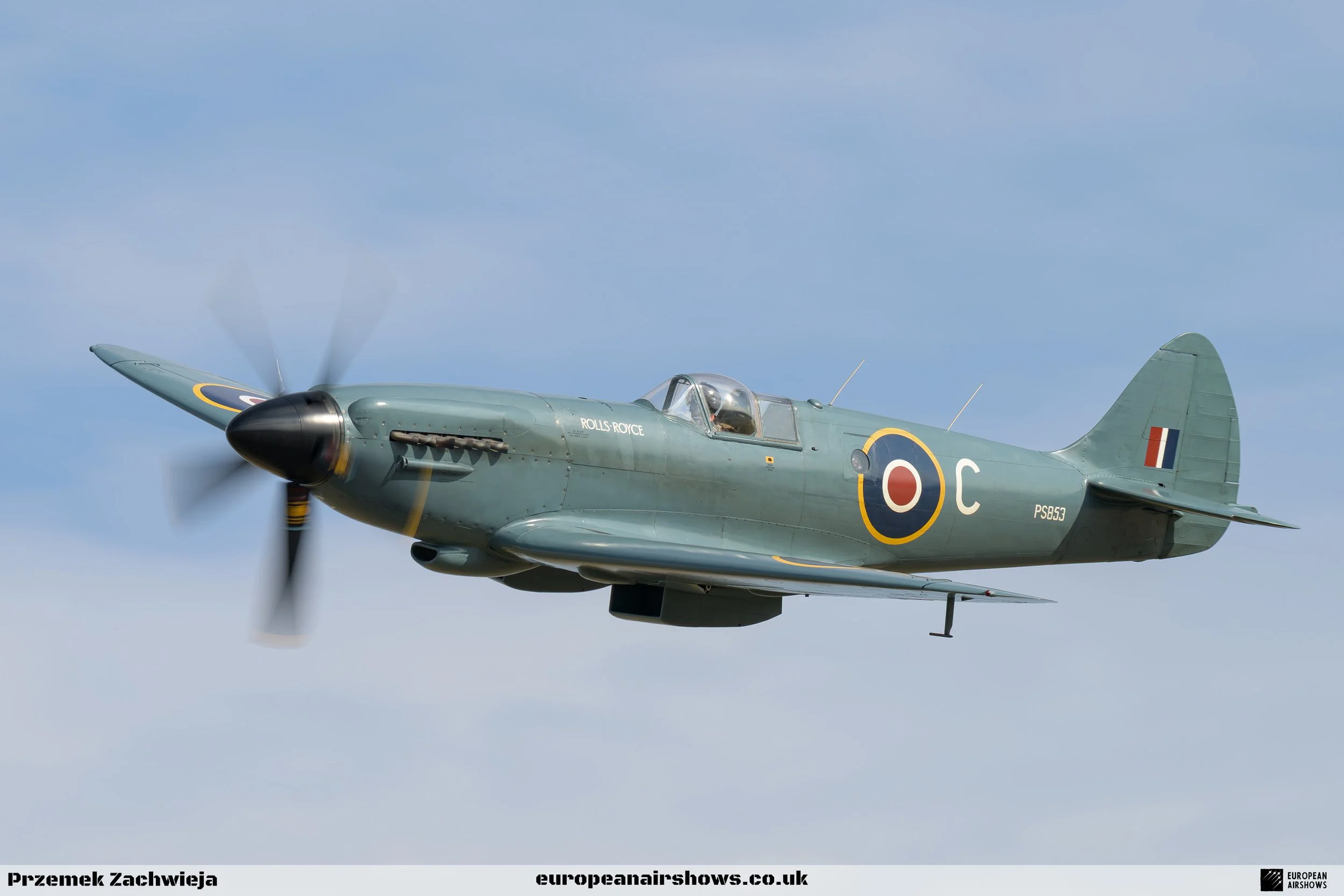
- Rolls-Royce Heritage Flight’s PR Mk XIX PS853
Together with LZ842, eleven different Spitfires participated in the day’s formal flying displays. PT879’s earlier departure increased the number seen in the air during the day to twelve.
The individual histories were exceptional. N3200 flew its only wartime combat operation over Dunkirk on 26th May 1940, belly-landing near Sangatte after being hit. It remained buried in the sand until its remains were recovered in 1986.
MT818 is the sole survivor of the original Vickers two-seat Spitfire trainer programme and now wears the colourful USAAF-inspired Lady Ellen III scheme. MH434 was air-tested by Alex Henshaw, flew operationally with No.222 Squadron and later became one of the world’s most recognisable film and display Spitfires. MK912 served with No.312 Czech Squadron and landed at advanced airfield B2 near Bazenville on 10th June 1944, making it one of the first Allied fighters to operate from Normandy after D-Day.
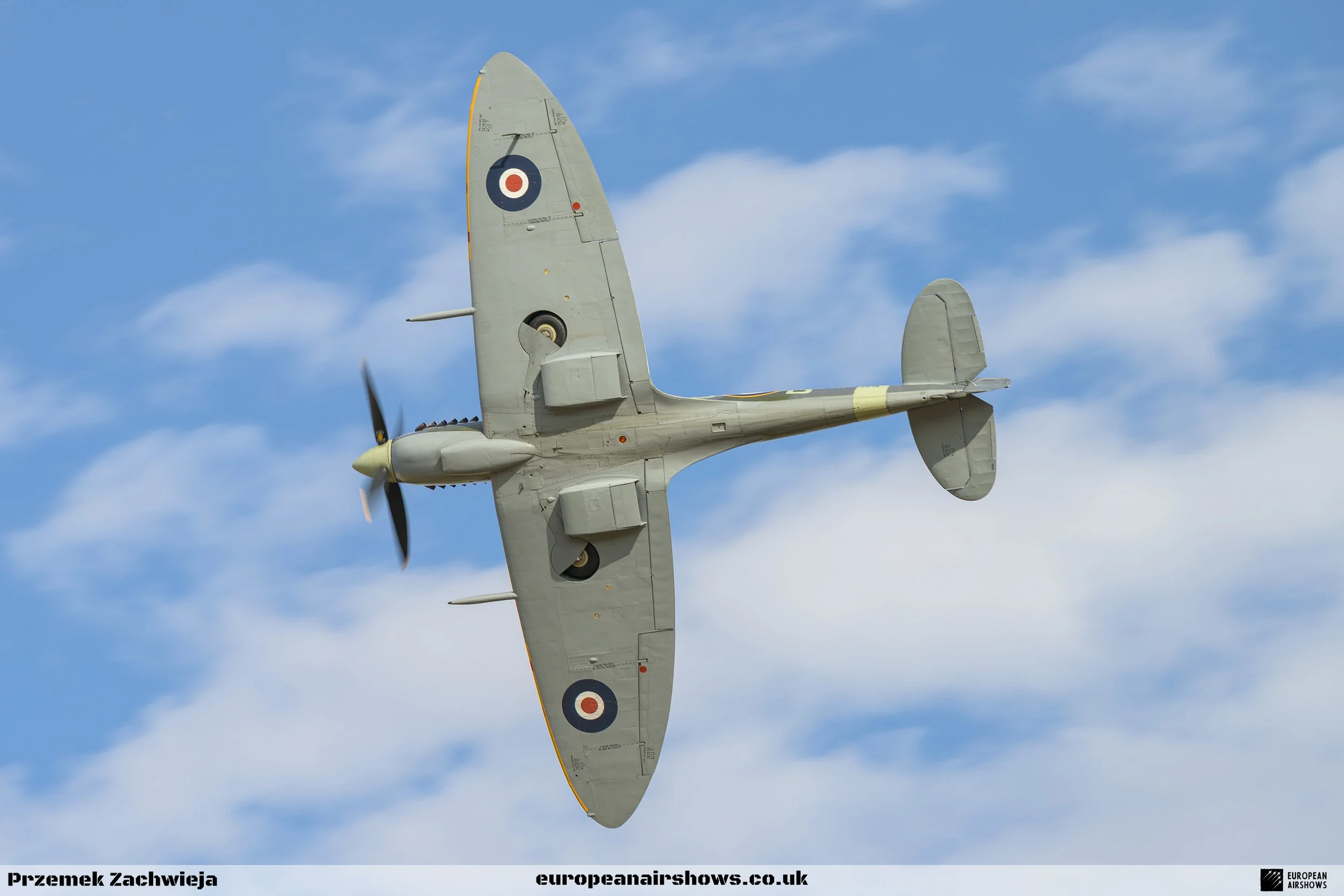
The two blue reconnaissance aircraft demonstrated another side of the design. PL983 is an unarmed PR Mk XI, equipped to carry additional fuel and cameras deep into enemy territory. PS853 is a Griffon-powered PR Mk XIX which completed wartime sorties with No.16 Squadron and became one of the original aircraft of the RAF’s Historic Aircraft Flight in 1957. Its participation had looked uncertain following technical trouble at Farnborough the previous day, making its eventual arrival particularly welcome.
MV293 represented the late Griffon fighter family in post-war Royal Indian Air Force markings, while the Suffolk Spitfire and Lady Ellen III provided two striking USAAF identities. Alongside PT879’s genuine Soviet story, they ensured that the anniversary looked beyond the familiar image of RAF camouflage and roundels.
MH434 performed the ‘joker’ routine while the other nine aircraft assembled. Few Spitfires could have been more appropriate for that role. Its long association with display flying, particularly through the late Ray Hanna, has made its flowing solo style almost a genre of its own.
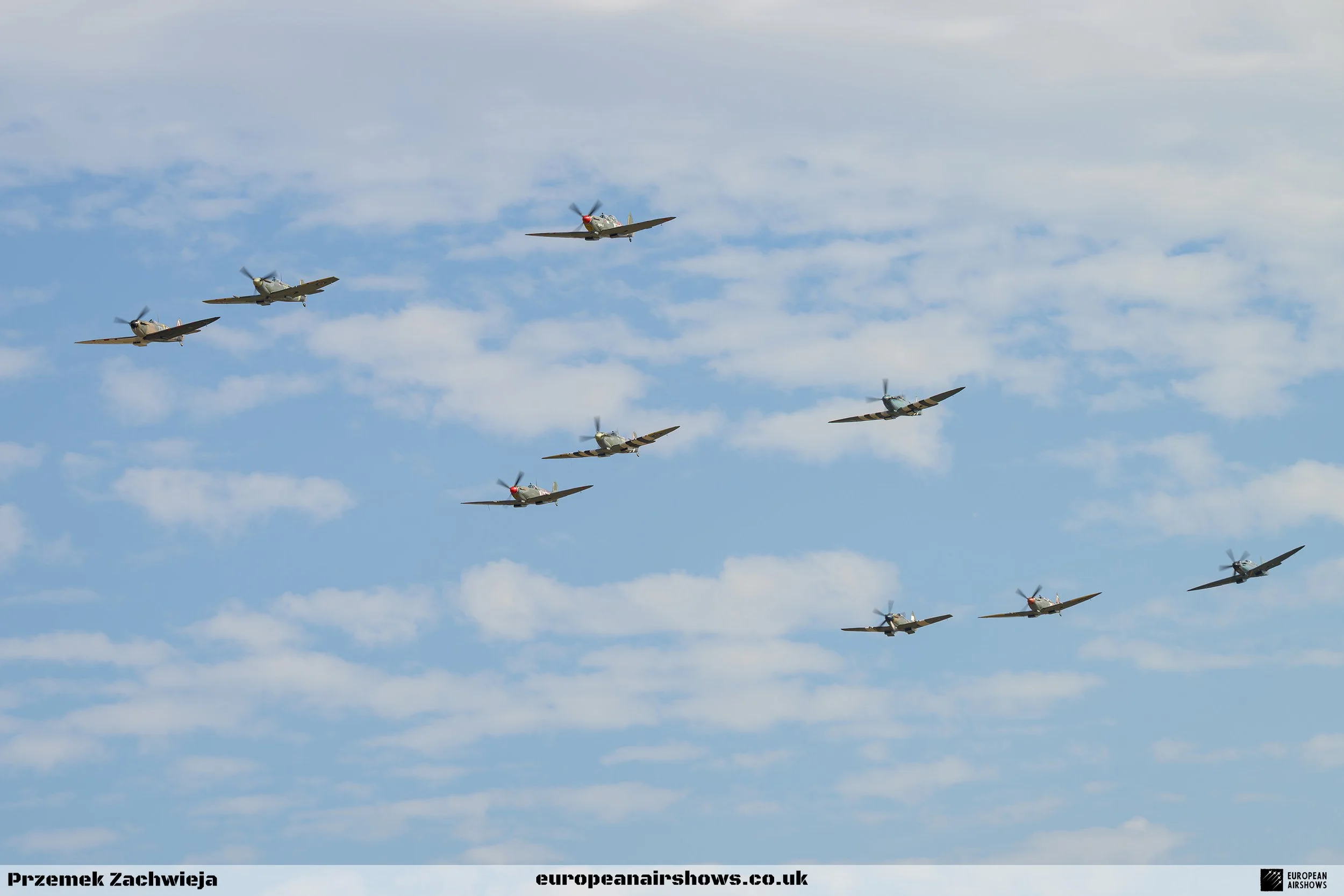
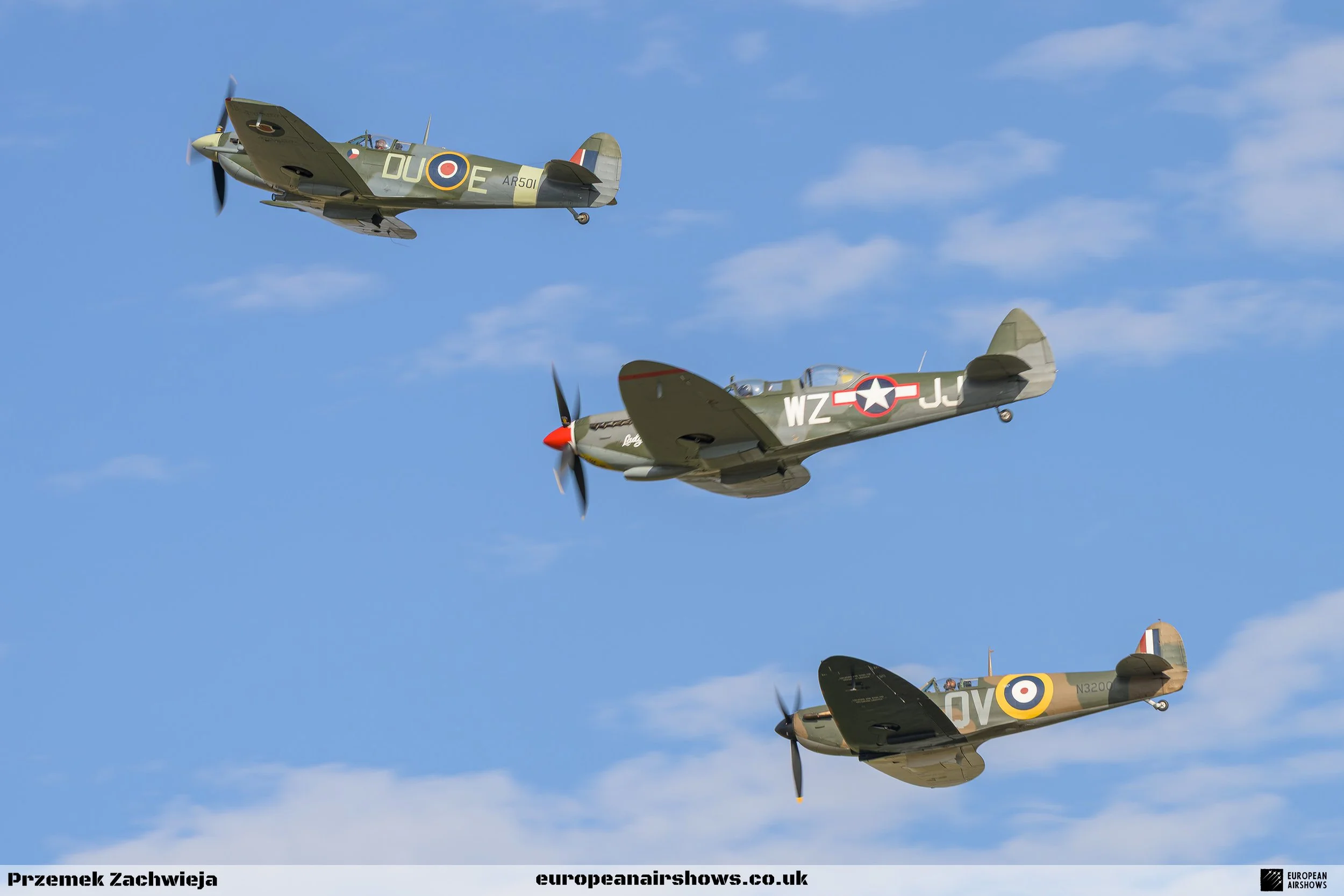
With the nine assembled, the formation completed two passes over Old Warden. It was the largest gathering of Spitfires yet seen at the aerodrome and, fortunately, the late-afternoon sun was almost perfectly positioned. The aircraft were fully illuminated against a darker background, making the different camouflage schemes, wing shapes, canopies and reconnaissance finishes immediately apparent.
After the formation passes, the nine divided into three groups of three for a succession of tail chases. This was far more satisfying than watching the entire formation make one pass and depart. It brought the aircraft lower and closer, allowed individual machines to be identified and filled the sky with overlapping Merlin and Griffon sound.
The gathering did not quite meet the original ambition of every available mark. BBMF Mk IIa P7350 was unable to depart RAF Coningsby because the wind was outside operating limits, while Navy Wings’ Seafire F.XVII SX336 withdrew with a technical problem. Nevertheless, the surviving sequence still told the Spitfire’s development story with a breadth Old Warden had never previously hosted.
Clouds, fire and a Polish MiG
By the time the evening display began, the weather had changed considerably. The intense heat remained, but the sun behind the crowd had disappeared beneath a thick bank of dark cloud around half an hour before the first evening act. The loss of direct light was unfortunate, particularly after such a bright day, although patches of blue and layered cloud produced an attractive backdrop. Towards the far left and right of the display area, the edges of the cloud gradually picked up orange sunset colour.
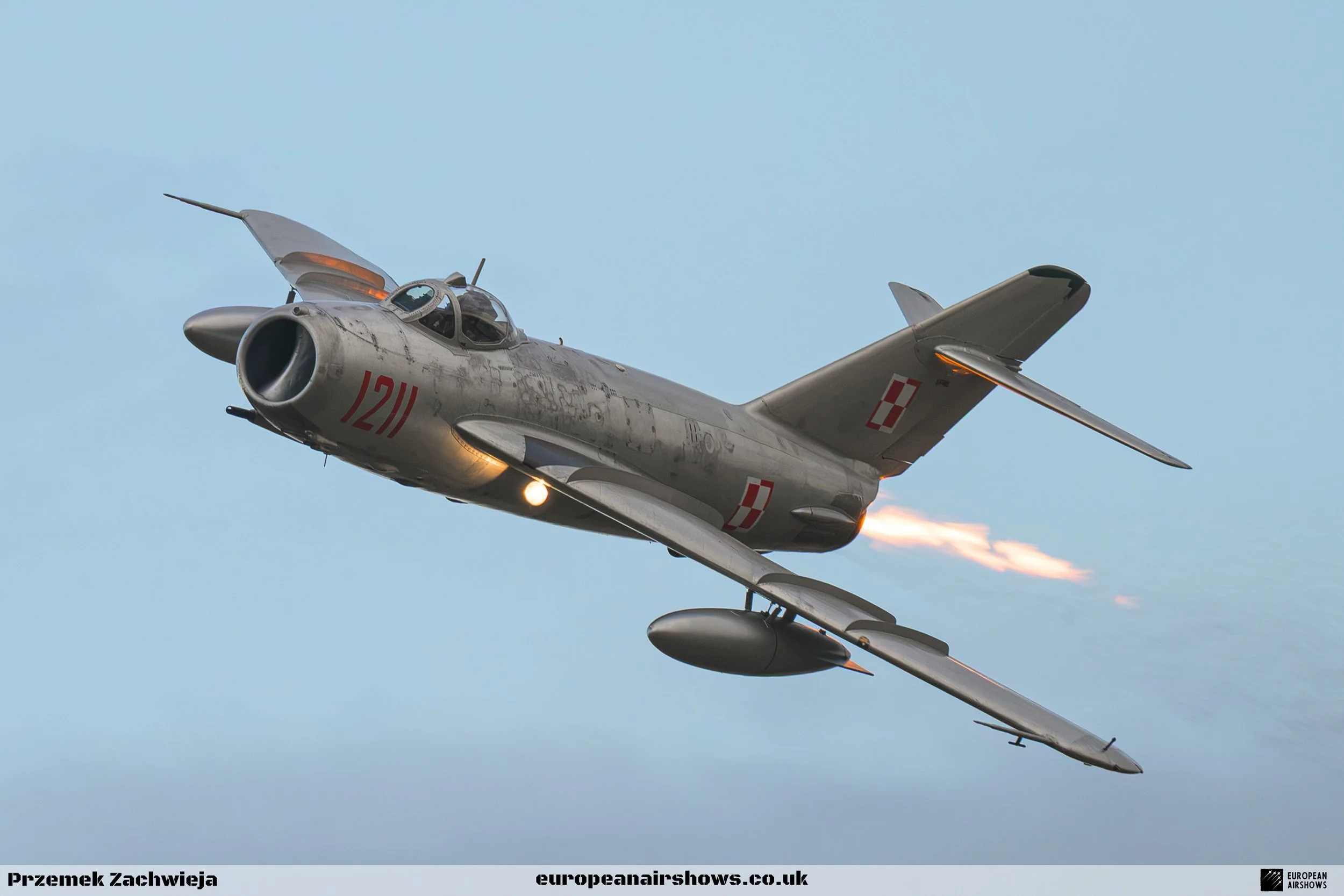
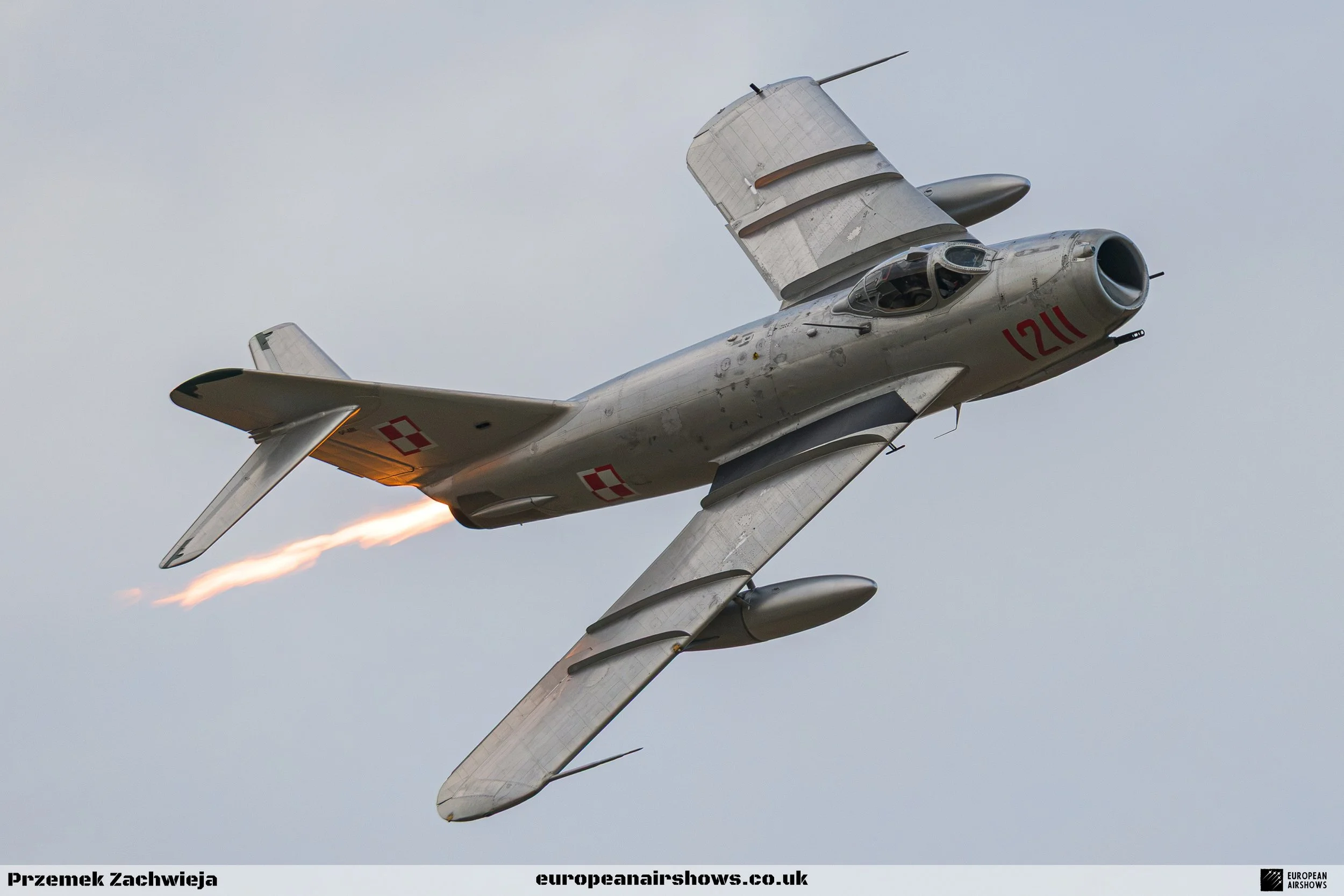
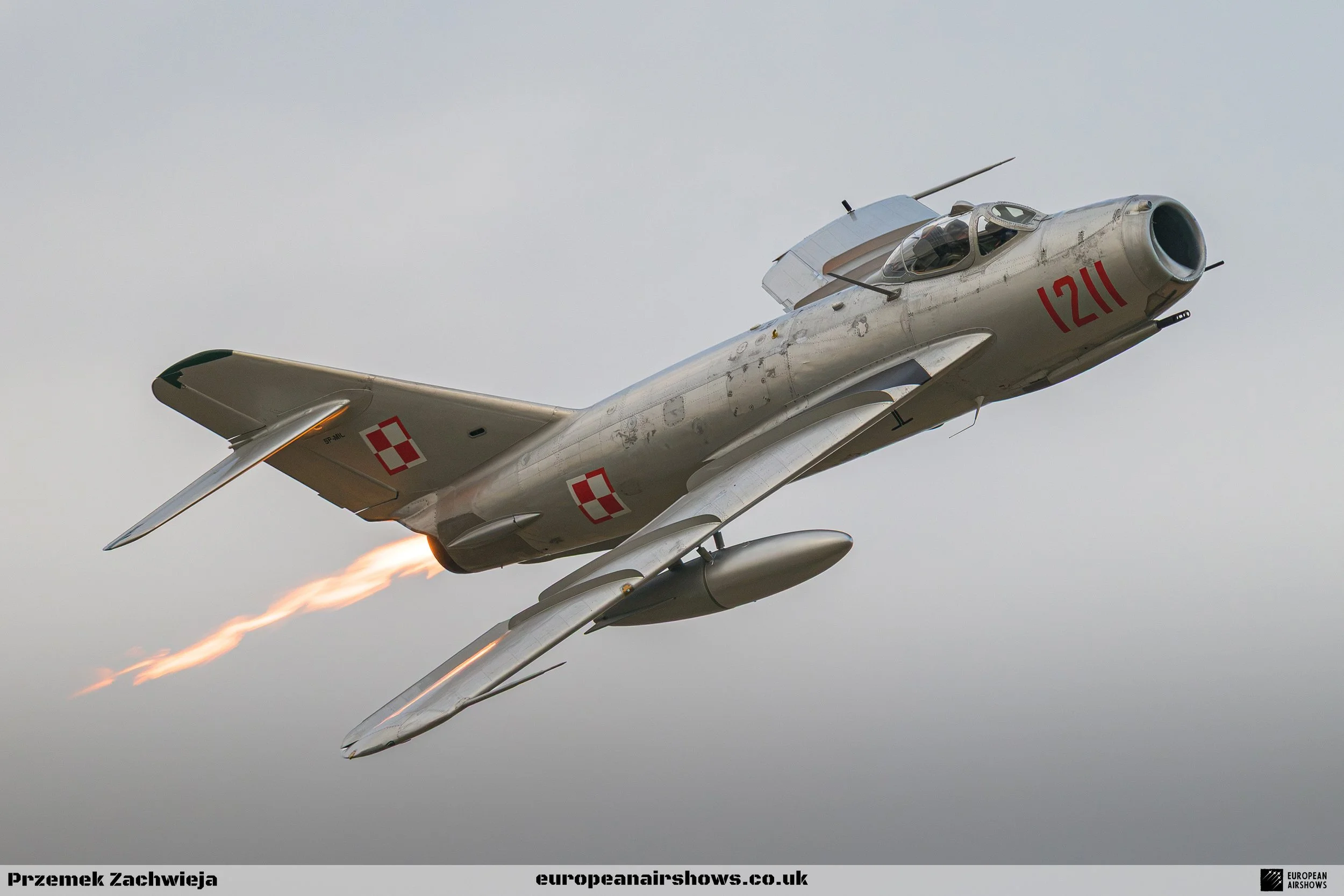
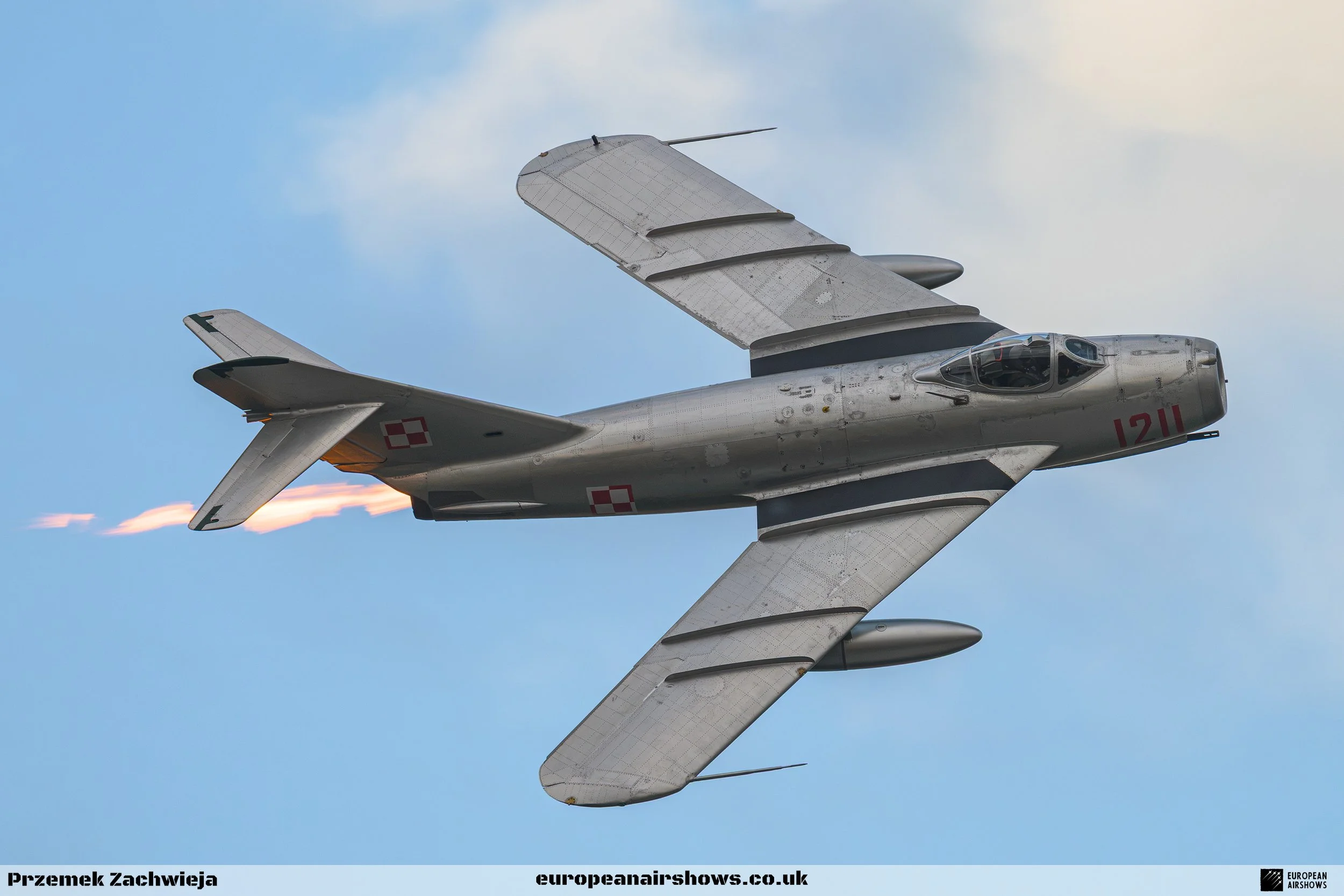
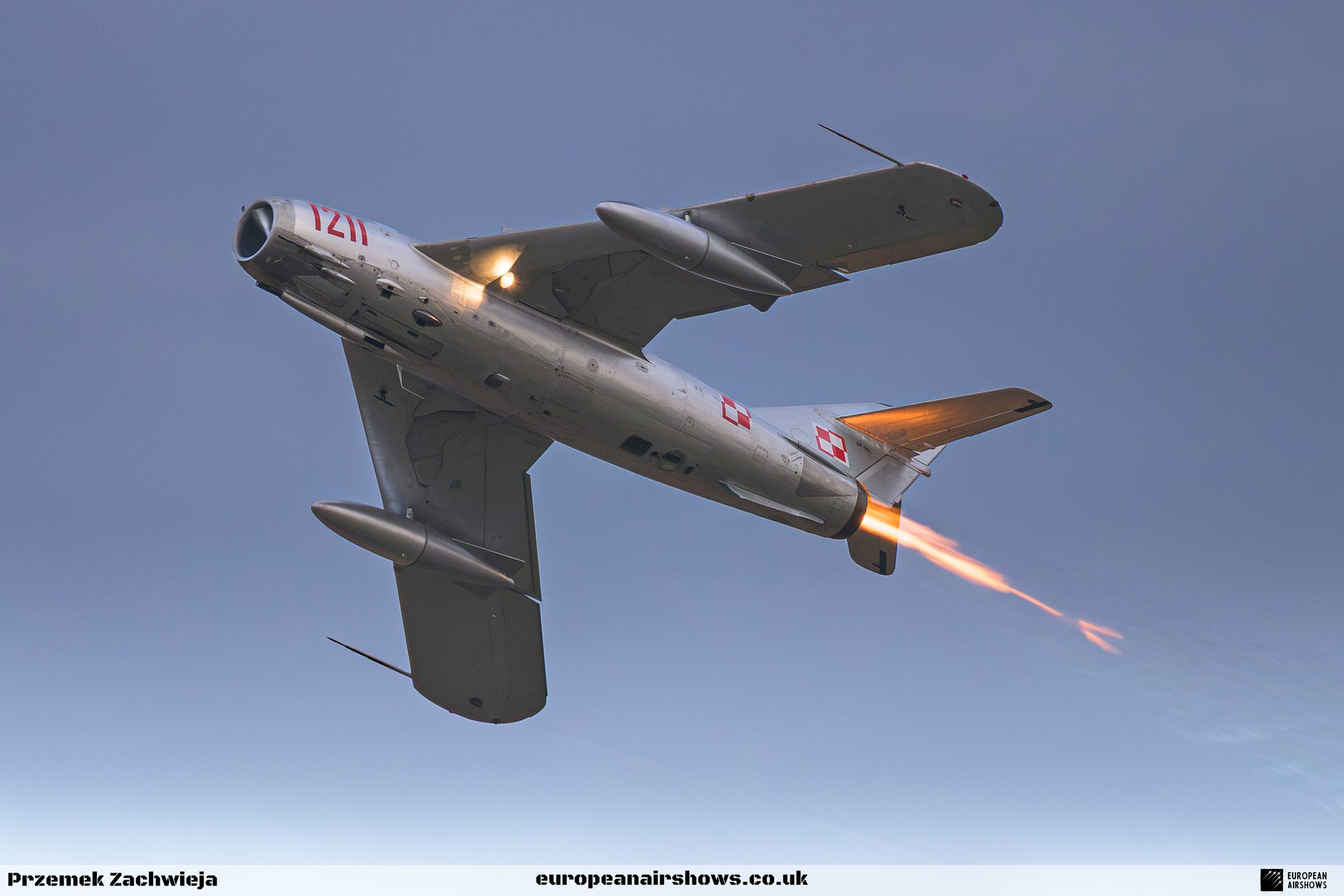
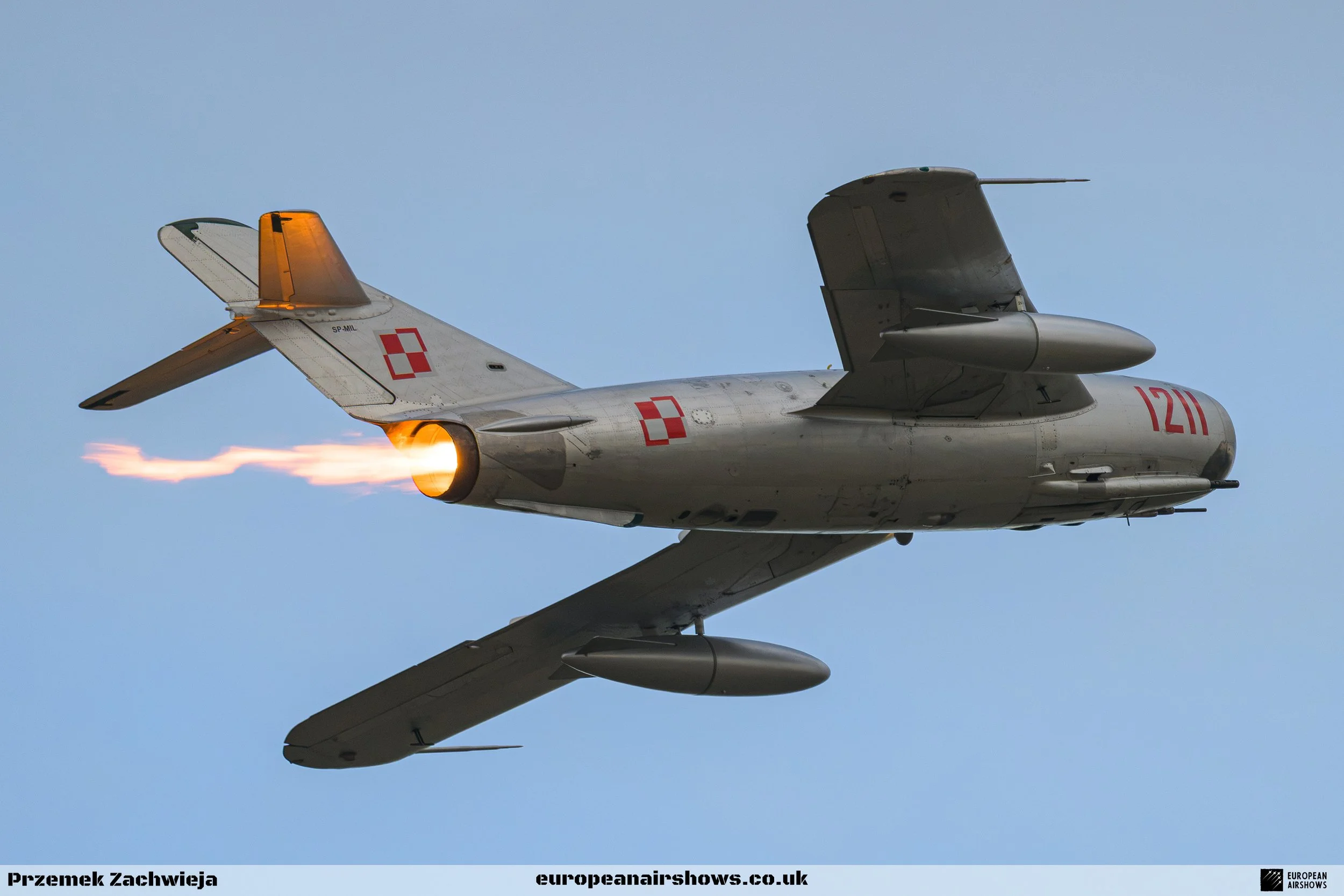
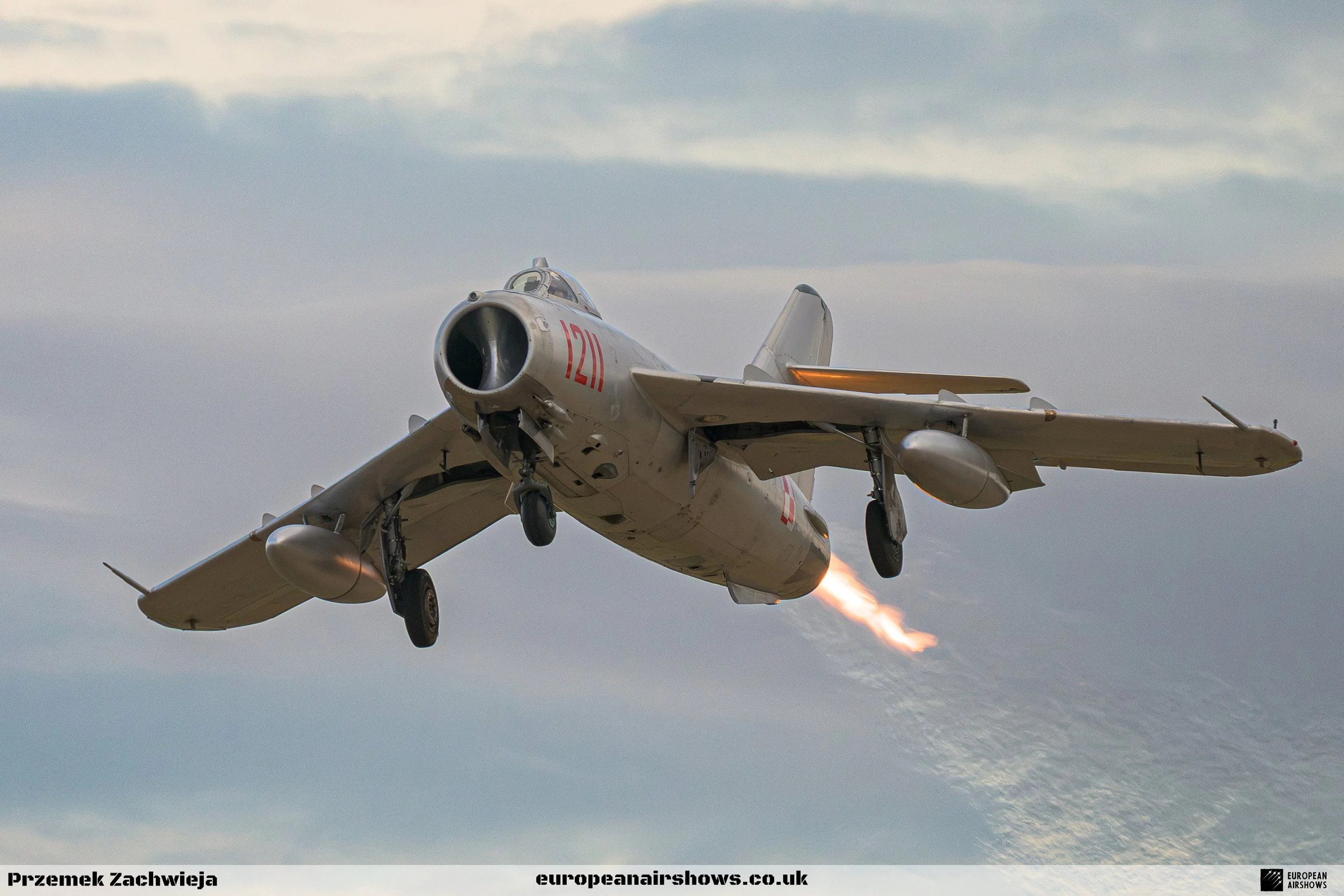
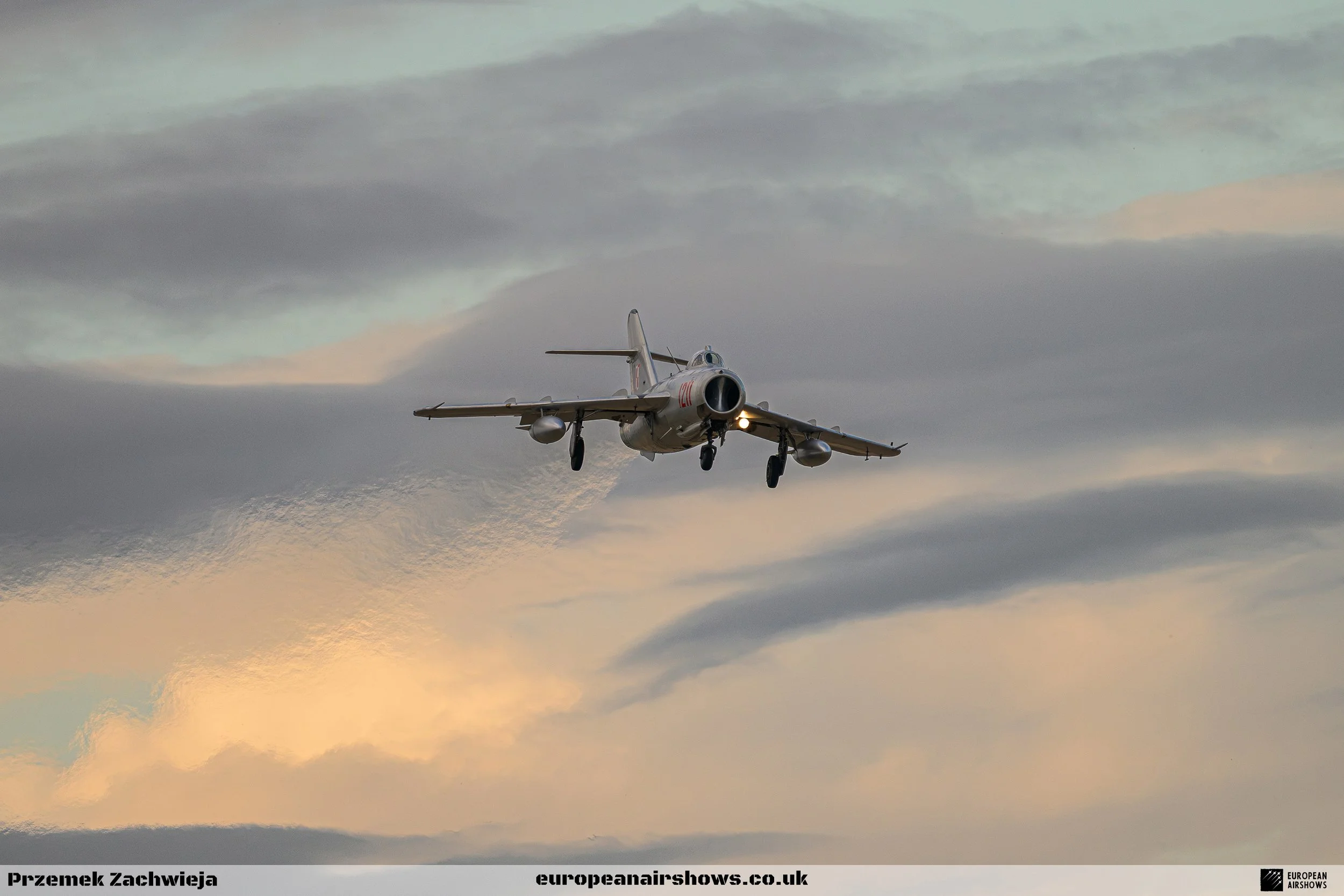
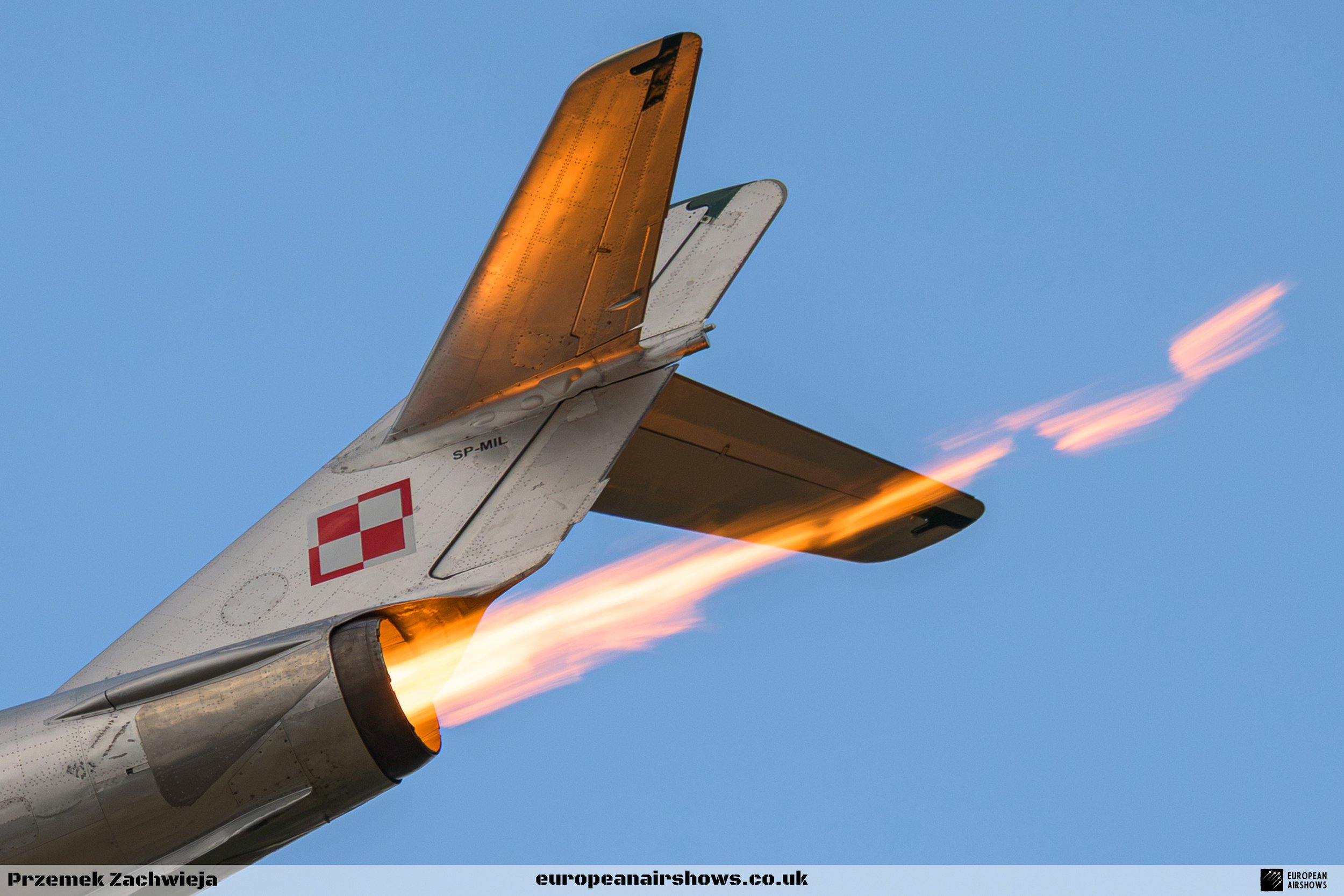
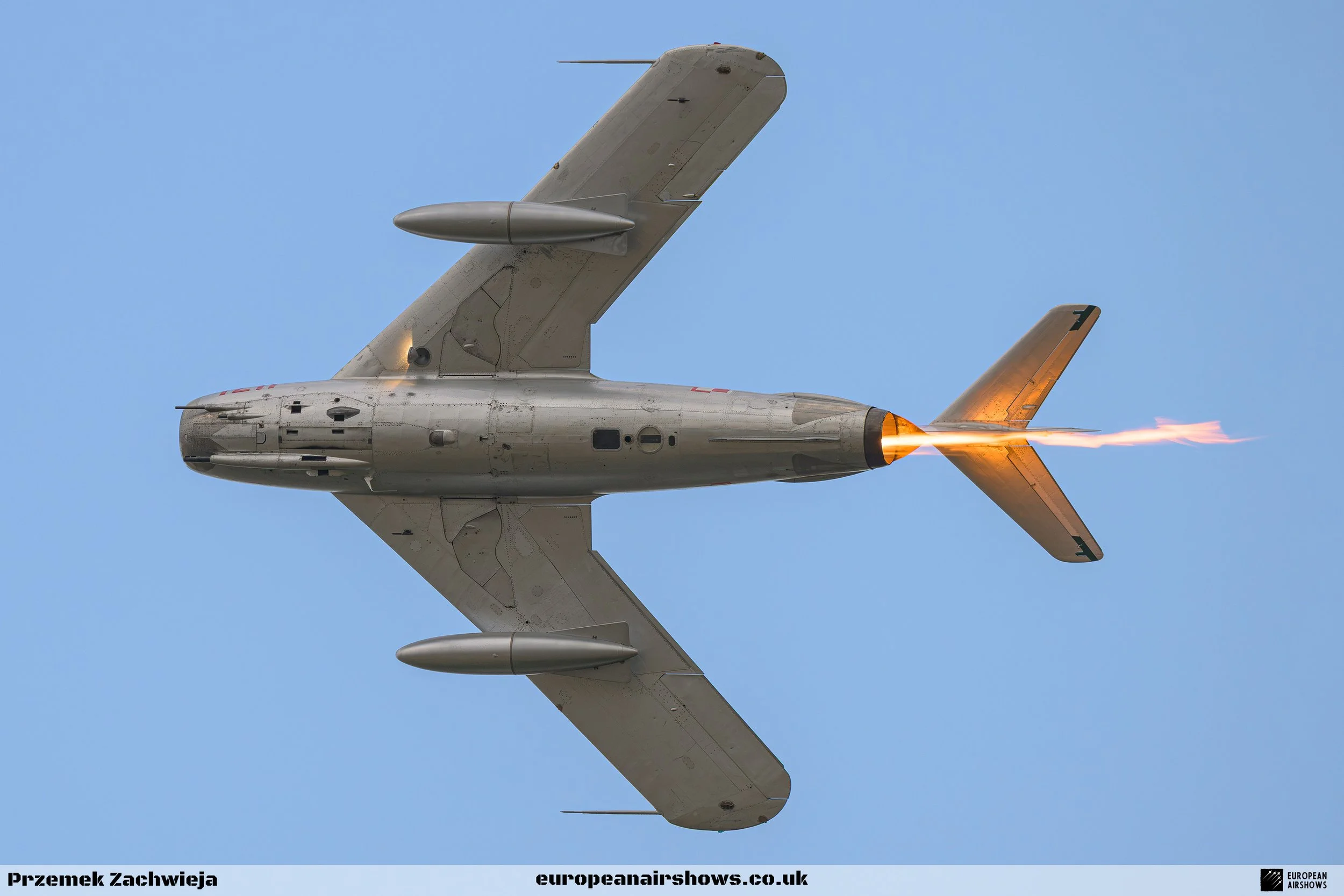
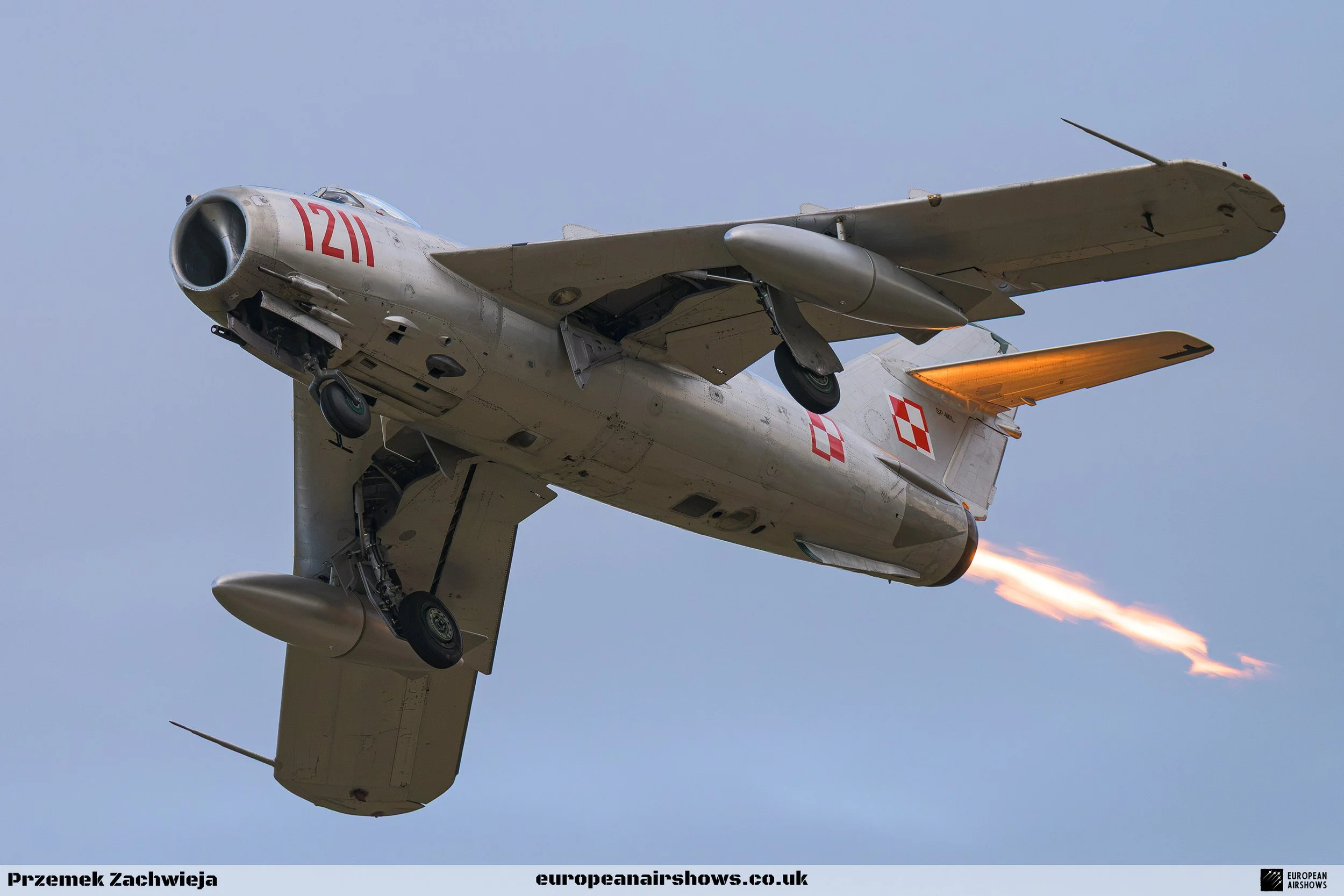
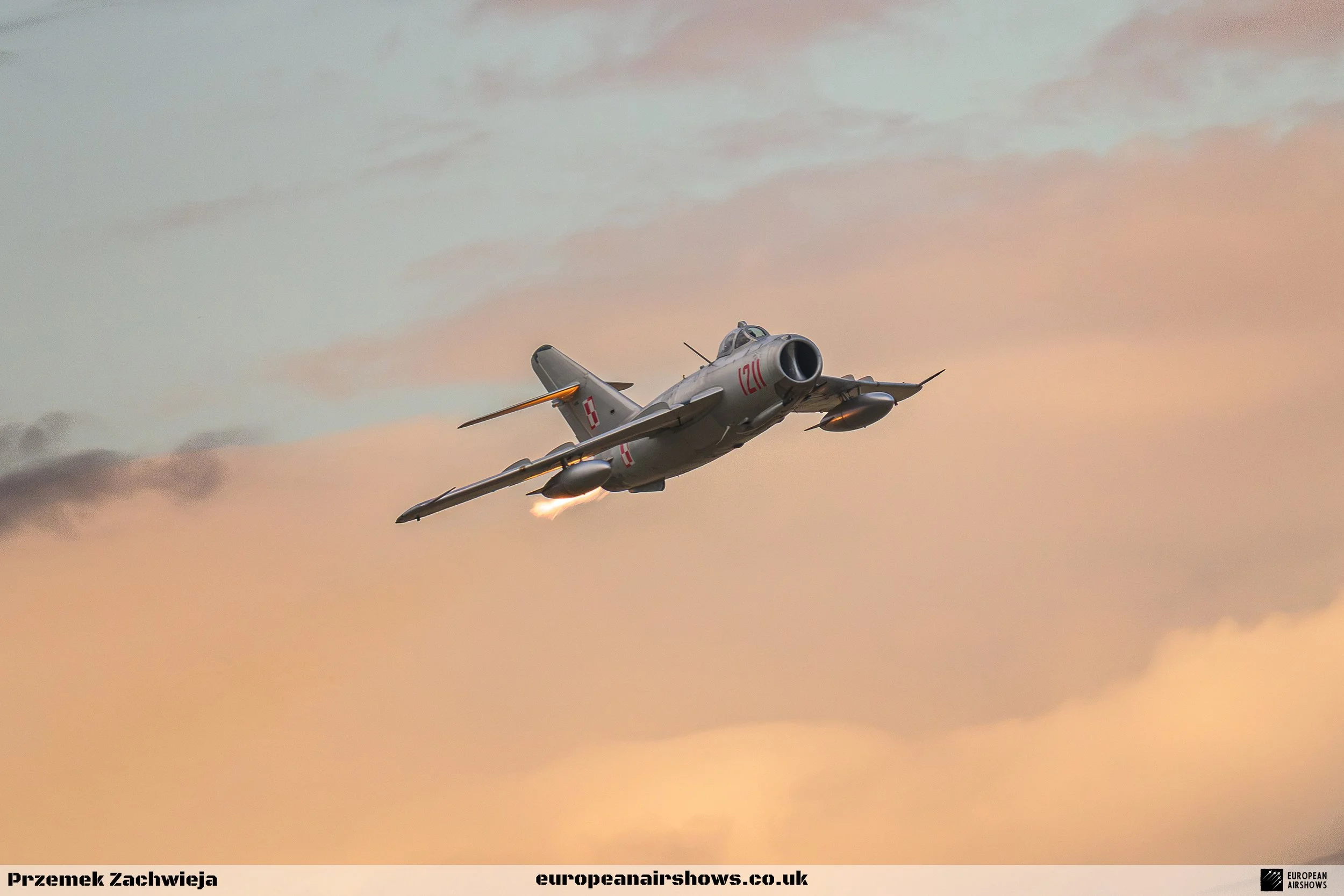
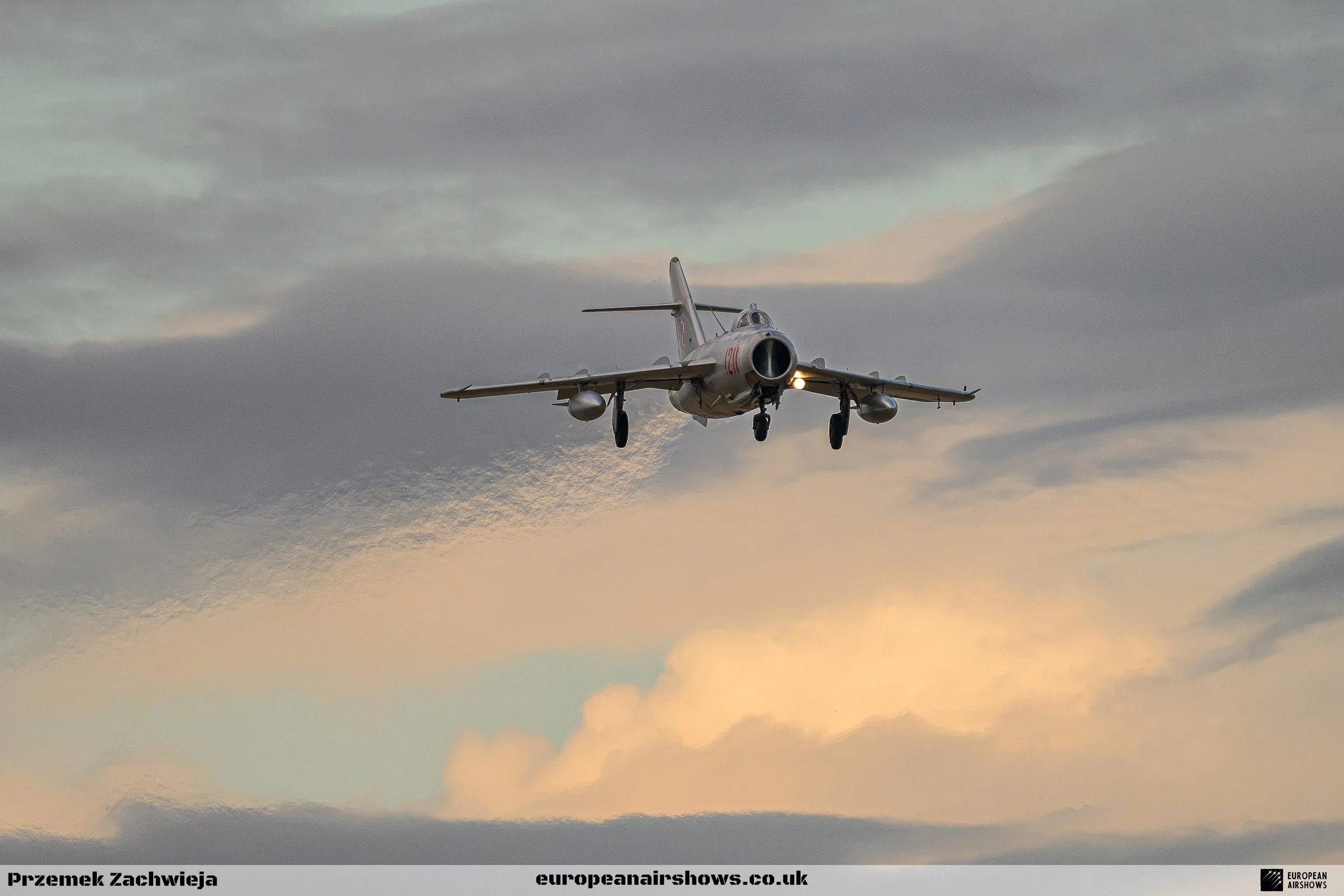
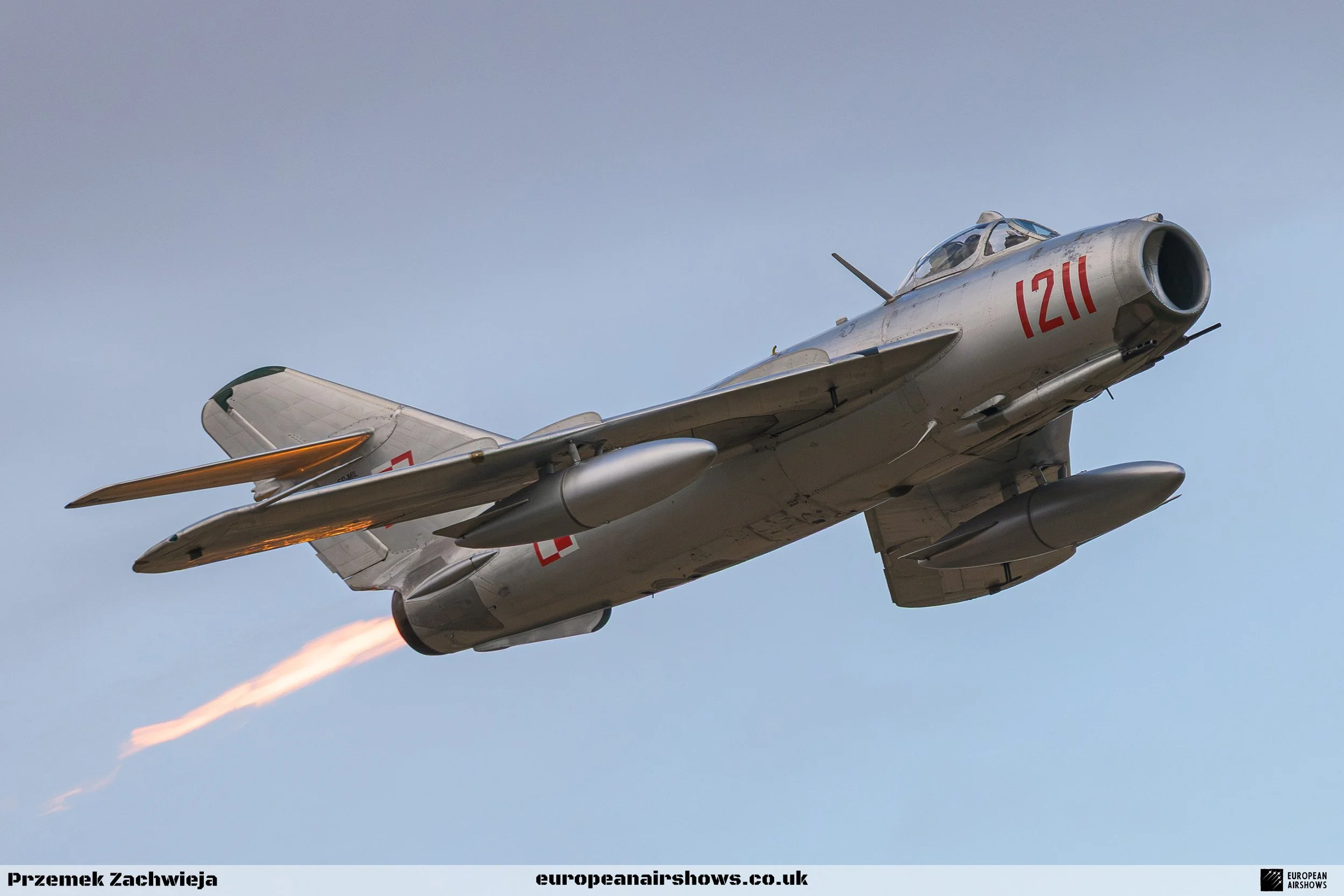
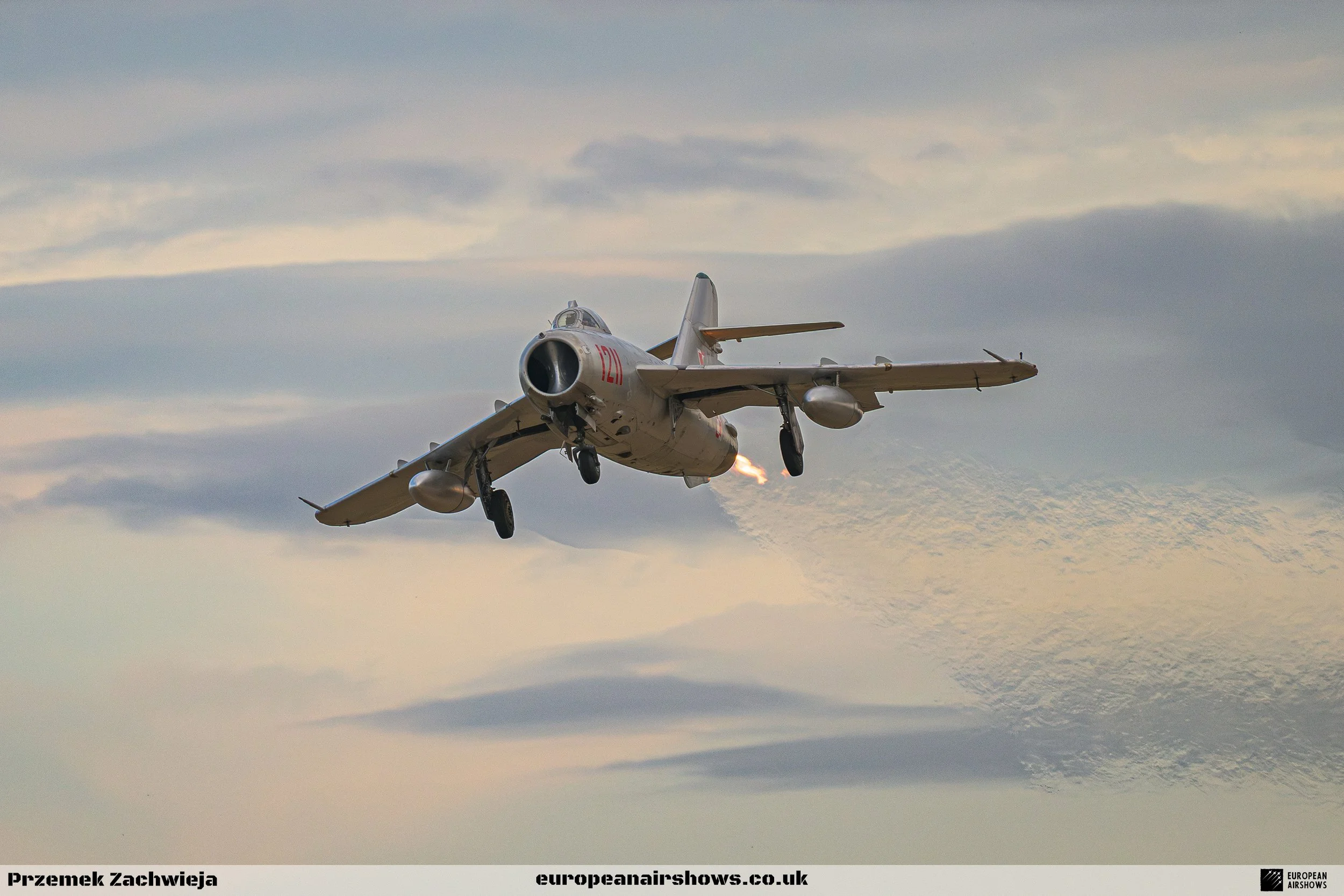
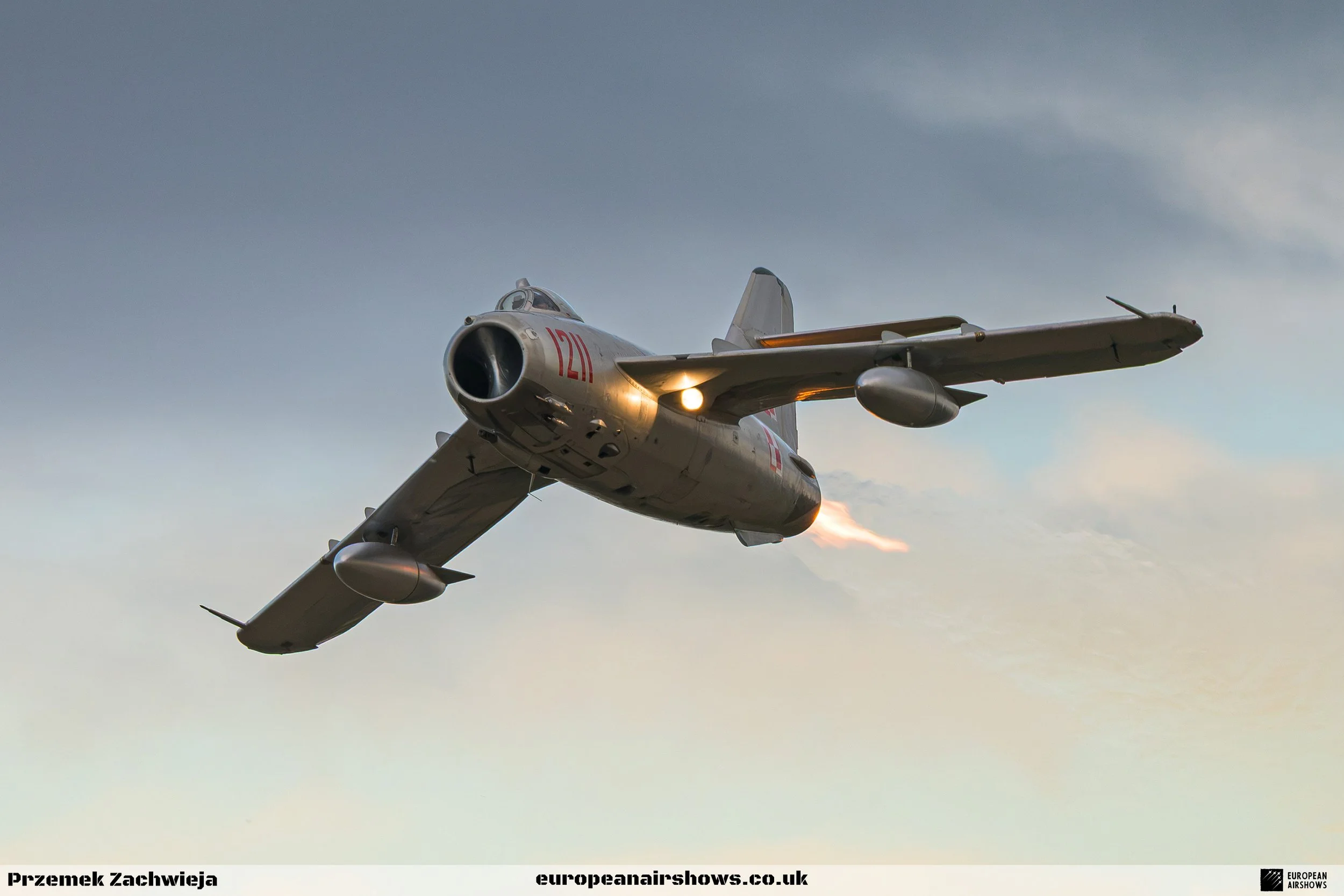
Into those darker conditions came FUBAR Aviation’s PZL-Mielec Lim-5—Poland’s licence-built version of the MiG-17F.
Flown by Bartosz Maciejczyk, the Lim-5 did not need an aerobatic routine. Fast, sweeping topside passes and steep repositioning turns were enough, particularly at Old Warden where the display line brings aircraft unusually close to the audience.
The Lim-5 had only returned to flight in April 2026 following a lengthy restoration. Polish factories produced 477 examples between 1956 and 1960, but airworthy single-seat MiG-17s are now exceptionally rare in Europe. The aircraft wears Polish military number 1211 and the civil registration SP-MIL. Its return-to-flight story makes its British appearances during 2026 all the more notable.
There was also a neat historical link to the afternoon. Polish pilots had been among the Spitfire’s most distinguished wartime operators; little more than a decade later, a very different Polish state was manufacturing Soviet-designed jet fighters. The Lim-5 therefore represented not just a leap in speed, but a complete shift in Europe’s political and military landscape.
The missing sunlight meant the aircraft never received the golden illumination many had hoped for. The compensation was that its afterburner appeared even brighter, producing a vivid carrot-shaped flame during each acceleration. Maciejczyk kept the display low, close and well positioned. It was loud without becoming repetitive and aggressive without relying on aerobatics. Few British venues could present a MiG-17 quite like this.
A modern echo of the Spitfire
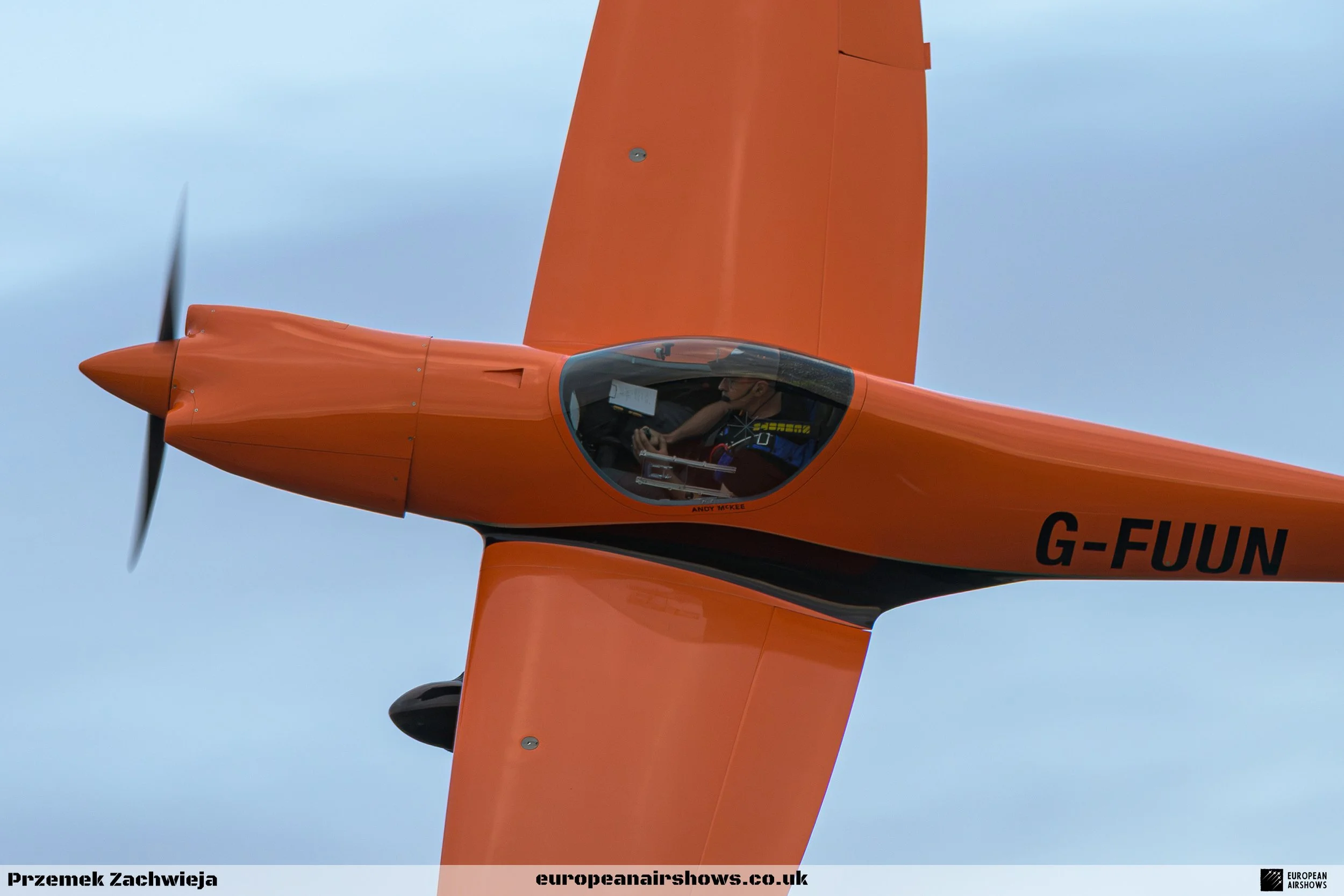
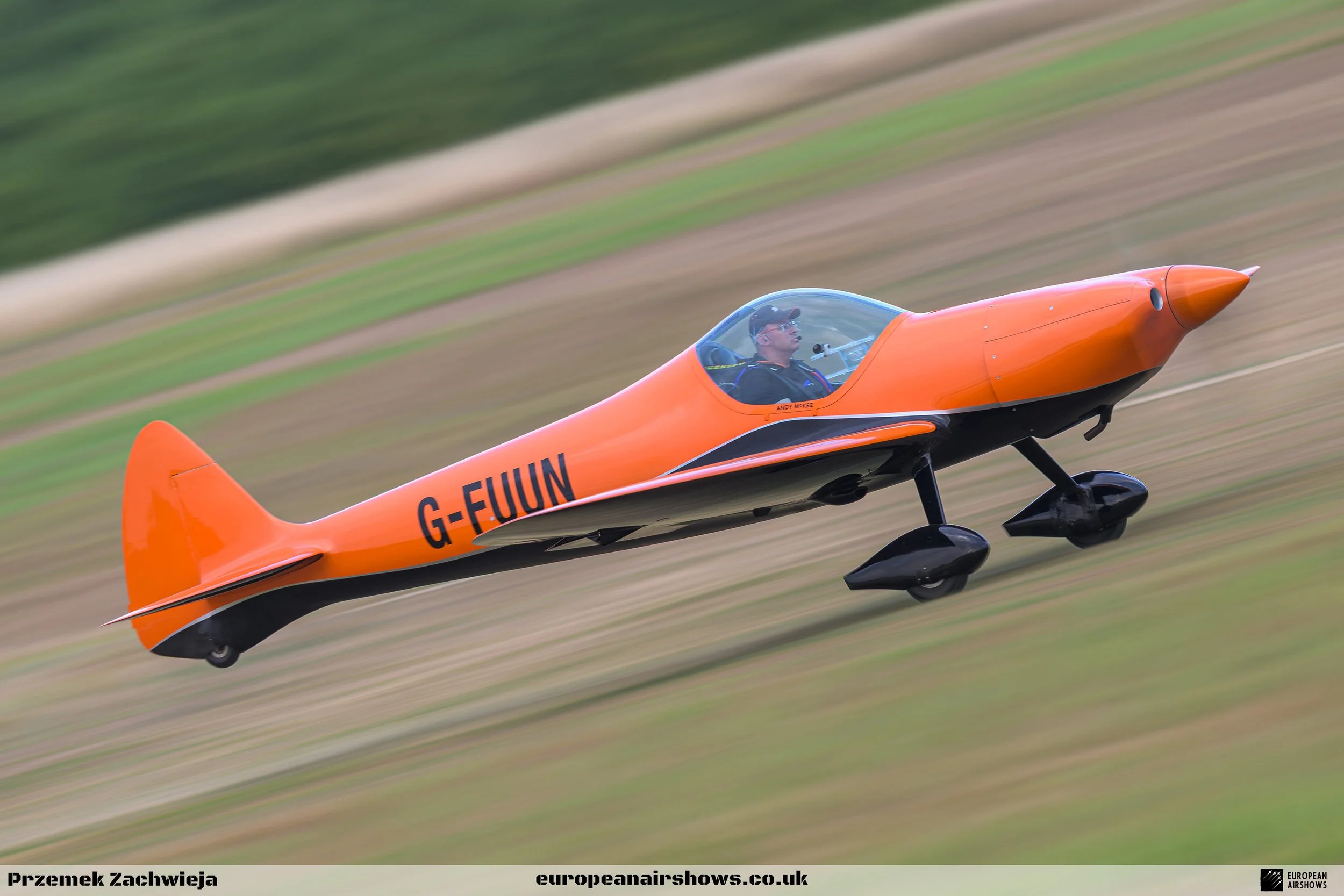
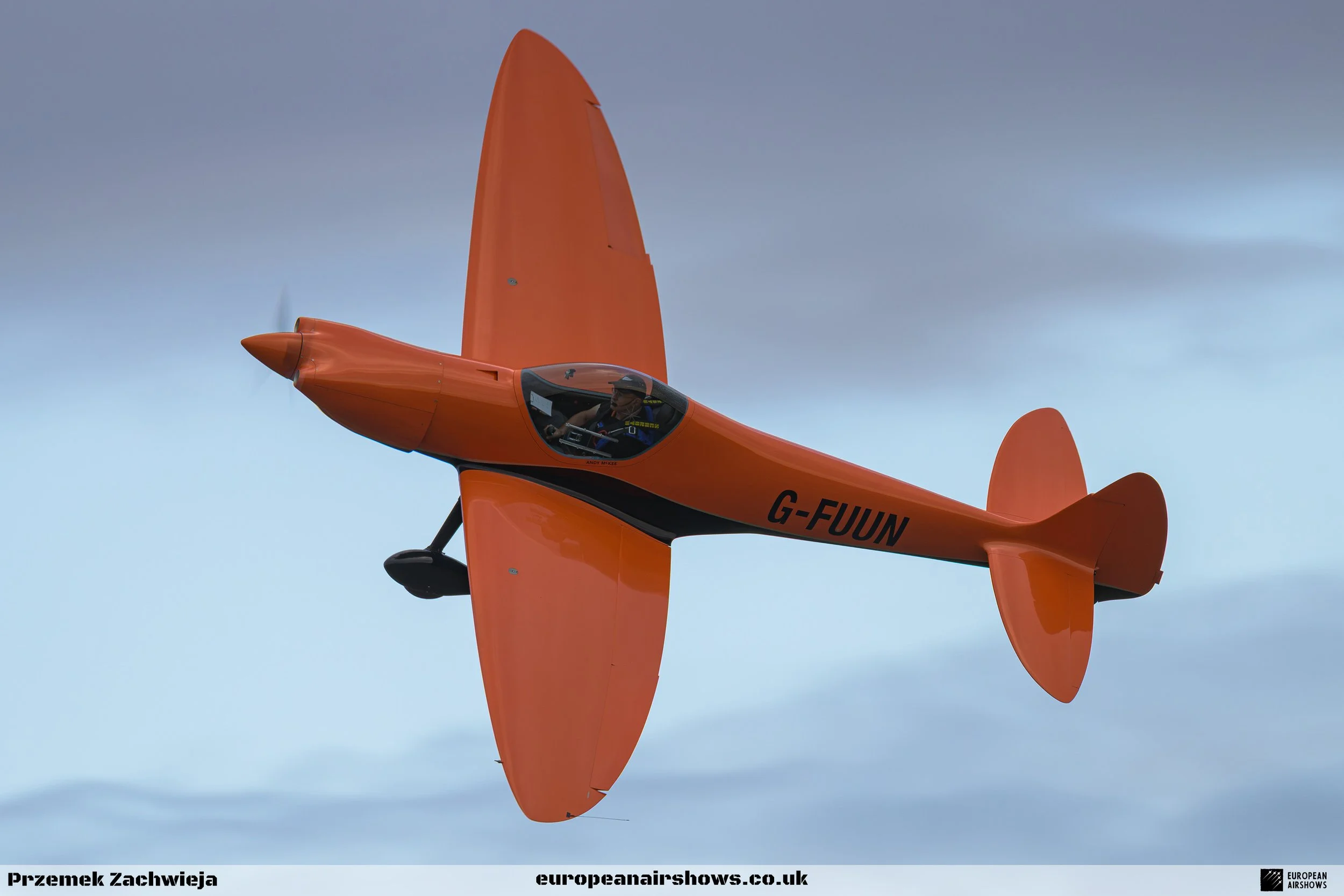
Andy McKee followed in the Silence SA180 Twister. At first glance it was a surprising choice to place after an afterburning jet, but it quickly established its own presence through close topside passes and energetic positioning.
The Twister’s Spitfire connection is immediately visible. Its elliptical wing and tail deliberately echo Mitchell’s fighter, although the aircraft itself is a thoroughly modern composite design. The manufacturer openly acknowledges the Spitfire as an inspiration for the Twister’s planform. Silence Aircraft’s description explains both the aerodynamic reasoning and the construction behind the resemblance.
This was McKee’s first public display, adding extra significance for the Old Warden team as he is also an engineer at Shuttleworth. The routine was non-aerobatic but never felt passive. Firmly banked passes repeatedly displayed the elliptical planform and demonstrated that a visual link to the Spitfire could be explored without another Merlin engine.
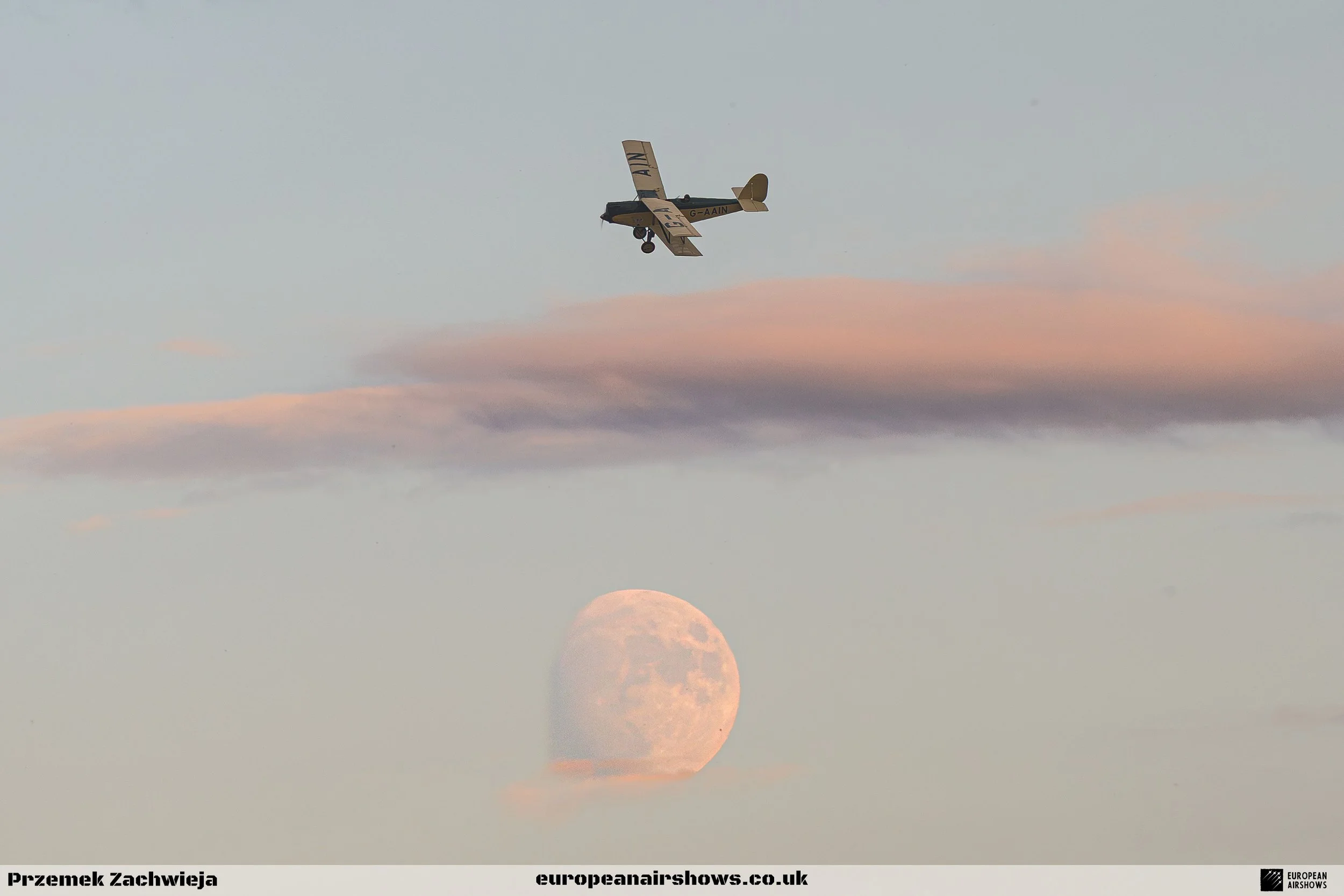
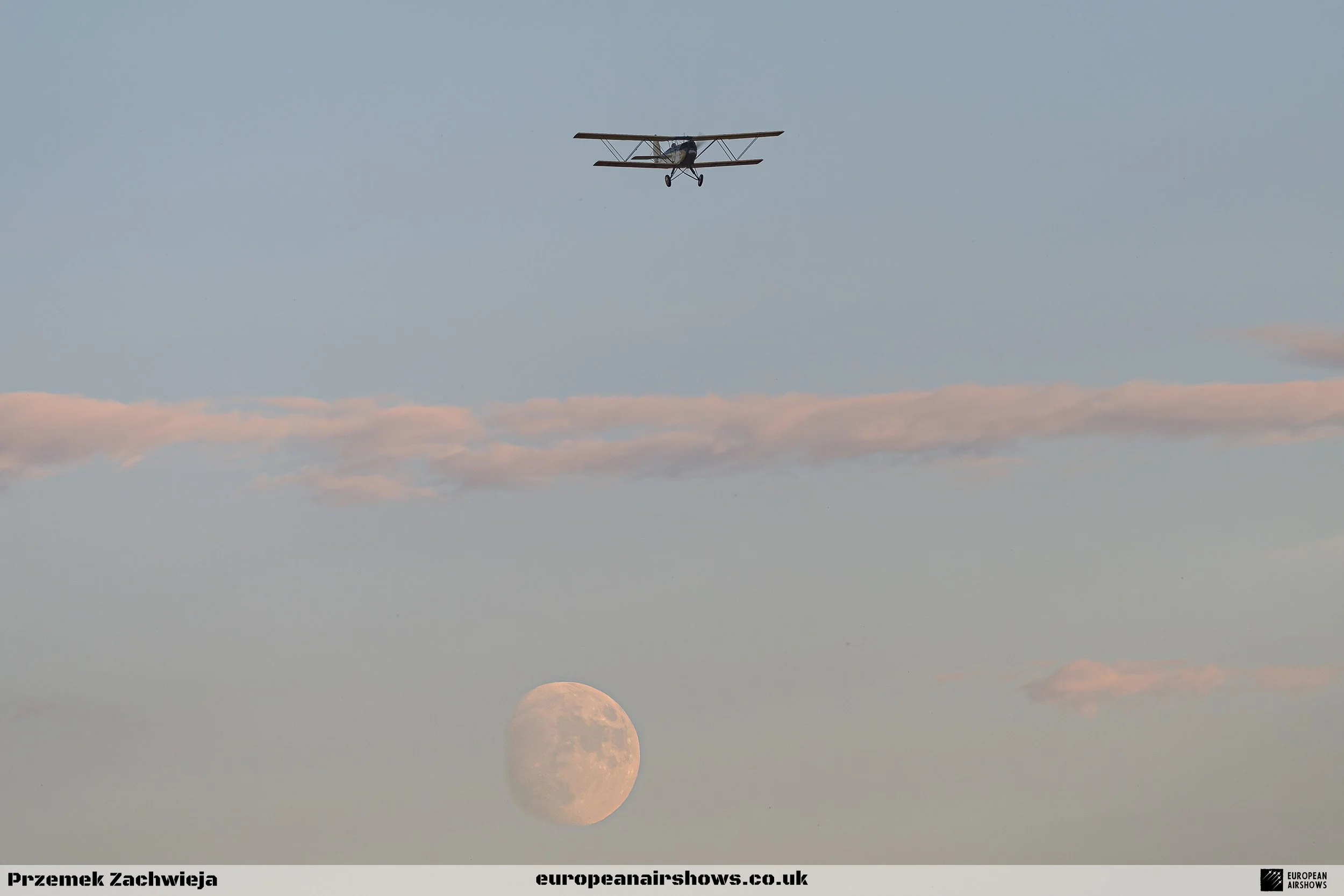
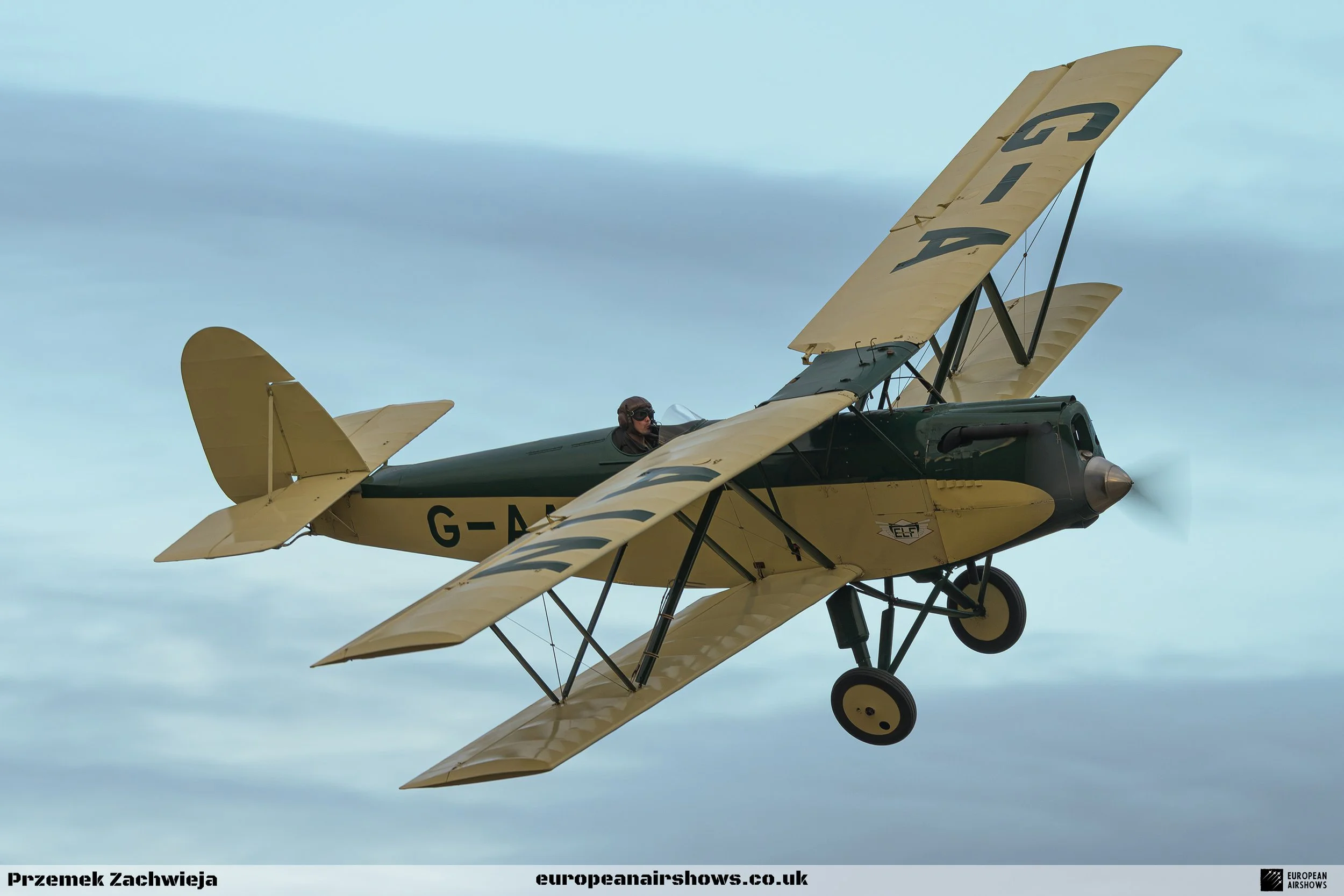
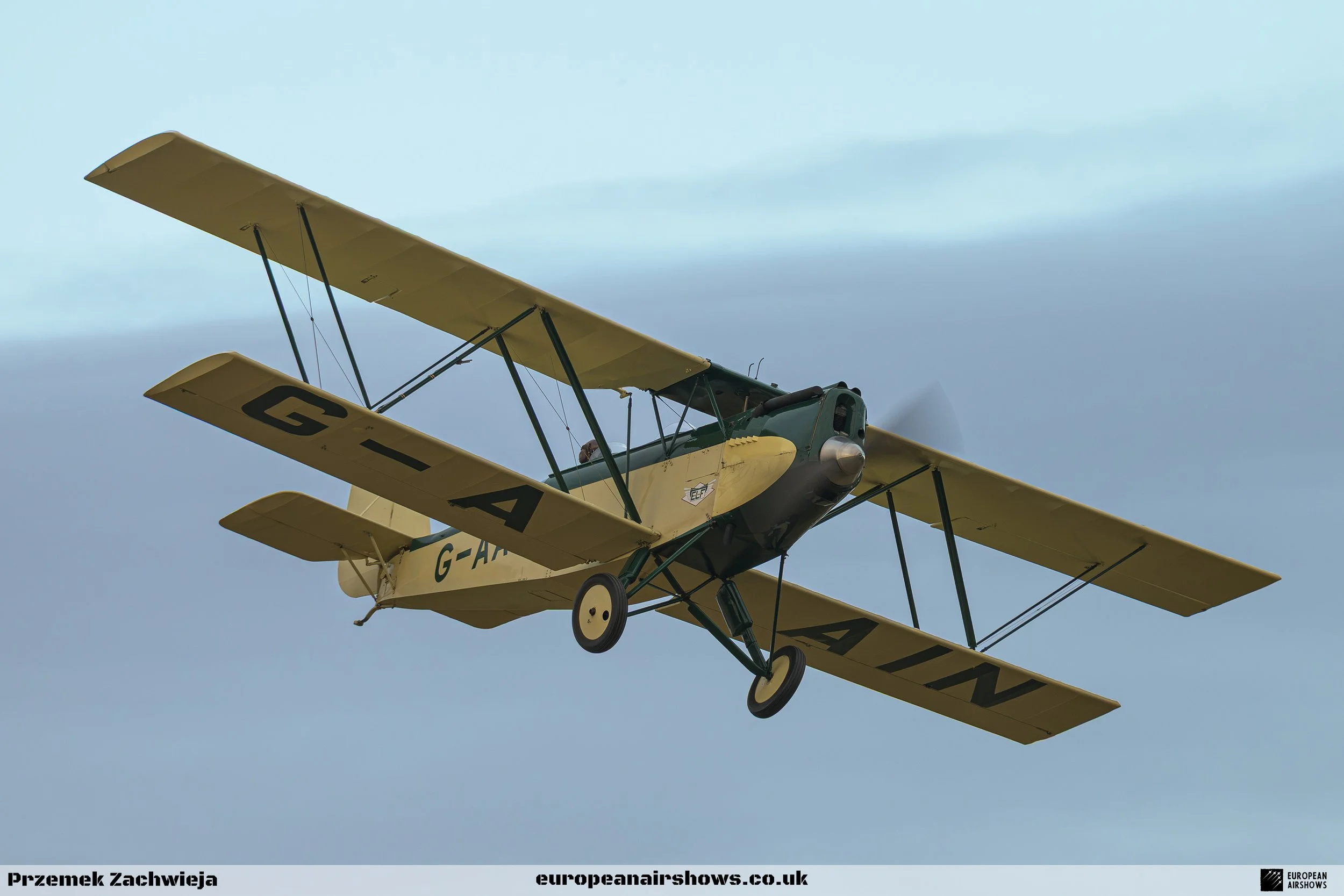
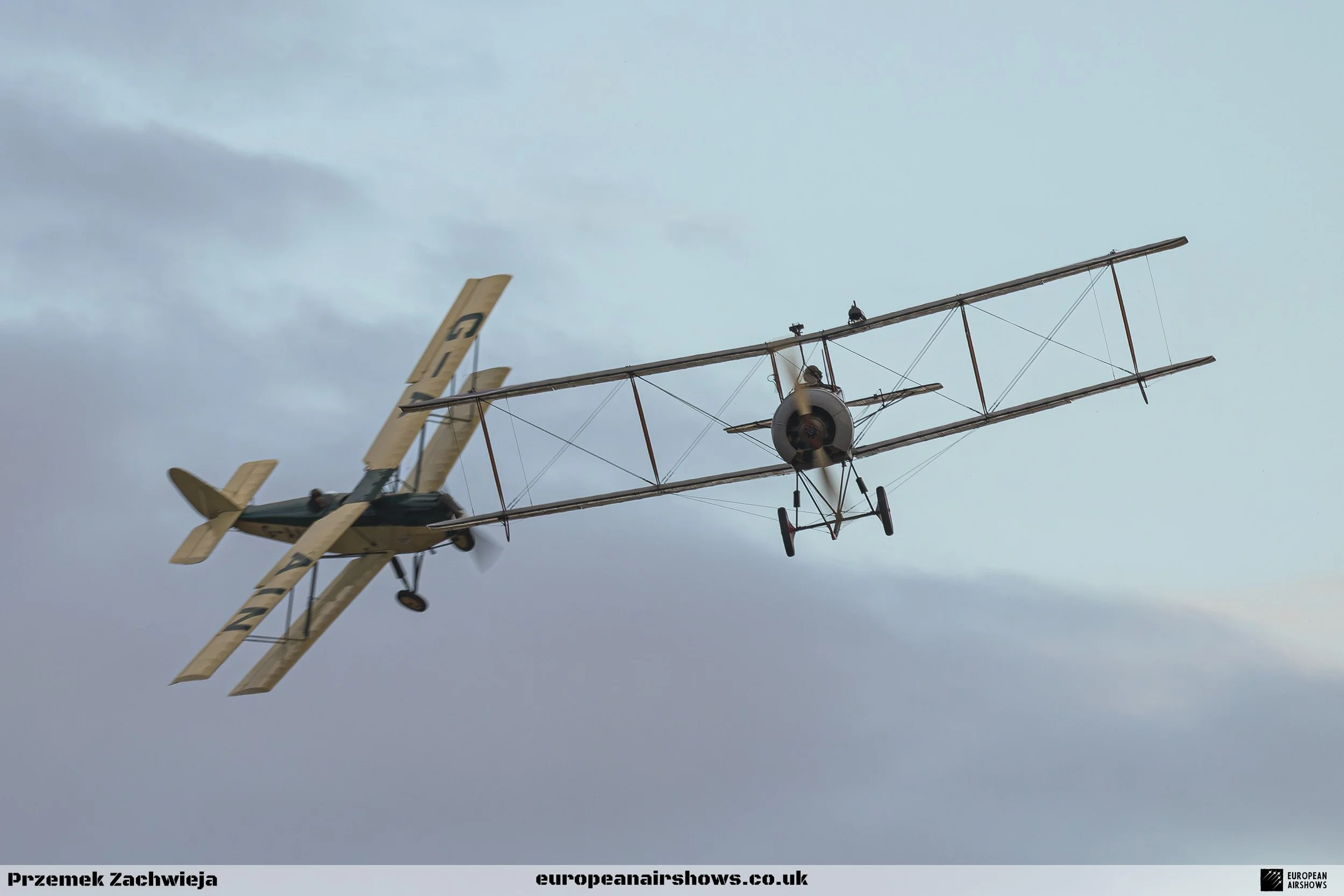
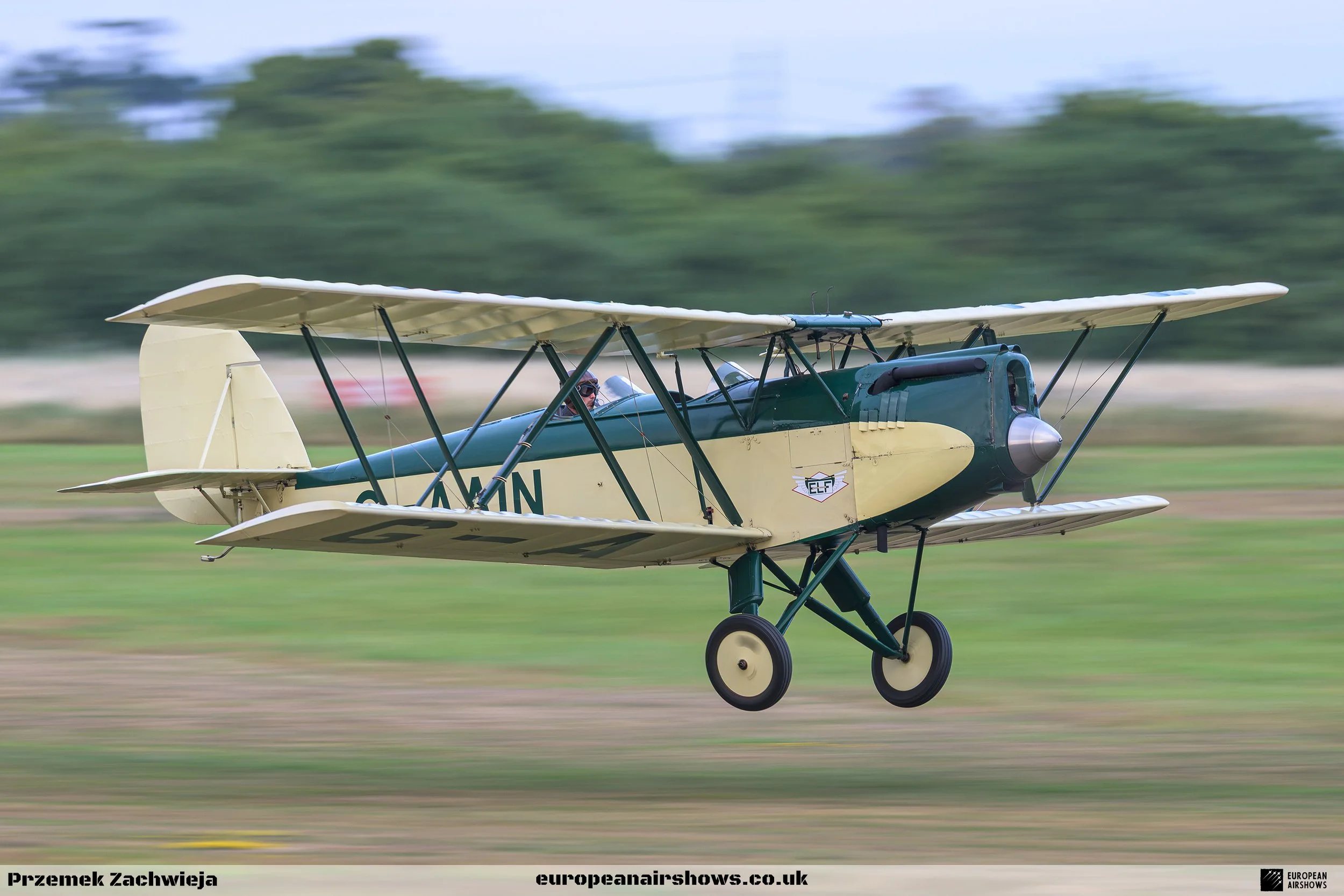
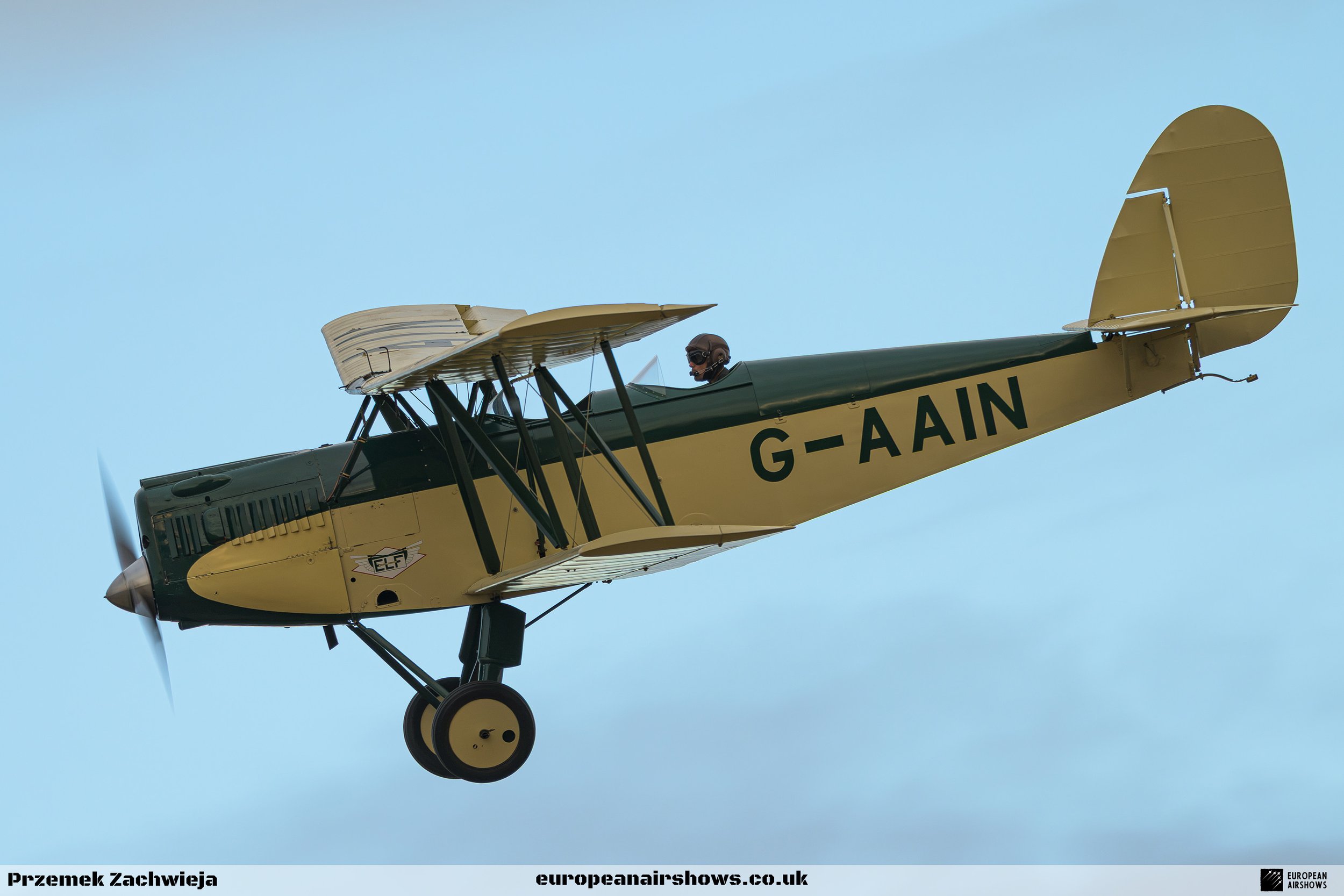
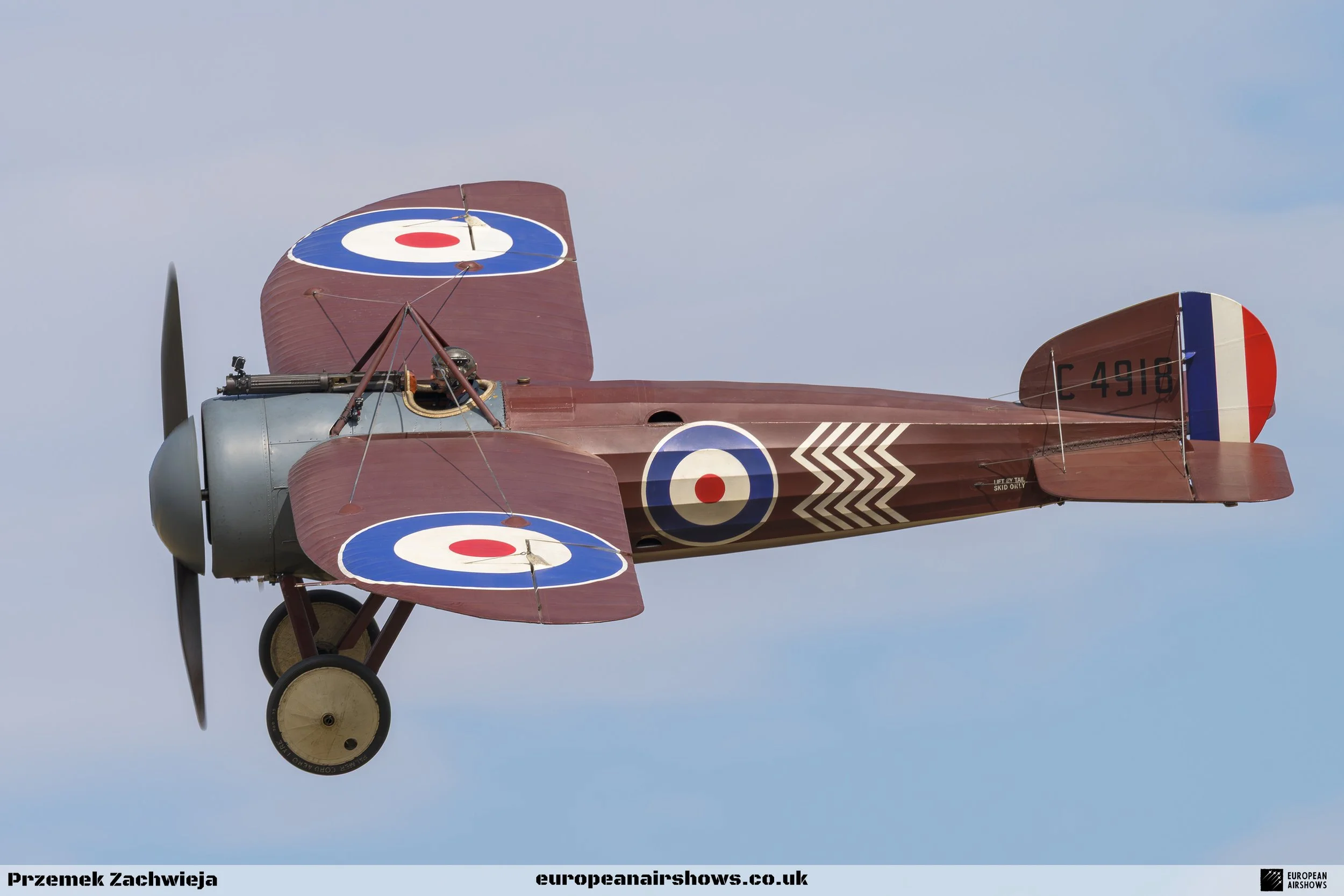
The Parnall Elf and Avro 504K then returned the evening to the Collection’s earliest decades.
Only three Elfs were constructed, and Shuttleworth’s G-AAIN is the sole survivor. Its graceful passes were followed by the 1918 Avro 504K, a type which became one of the most important trainers of the First World War and immediate post-war period. More than 10,000 Avro 504s were produced, teaching an earlier generation of pilots many of the same basic skills later pupils would learn in Tiger Moths and Magisters.
Both aircraft benefited from unhurried presentations with plenty of topside visibility. Against the textured evening cloud, their wire-braced structures looked particularly delicate.
When the wind takes control
The increasing breeze ultimately prevented the planned Edwardian finale. The English Electric Wren and the Collection’s oldest aircraft could not safely operate in the gusty conditions, forcing the organisers to implement their reserve programme.
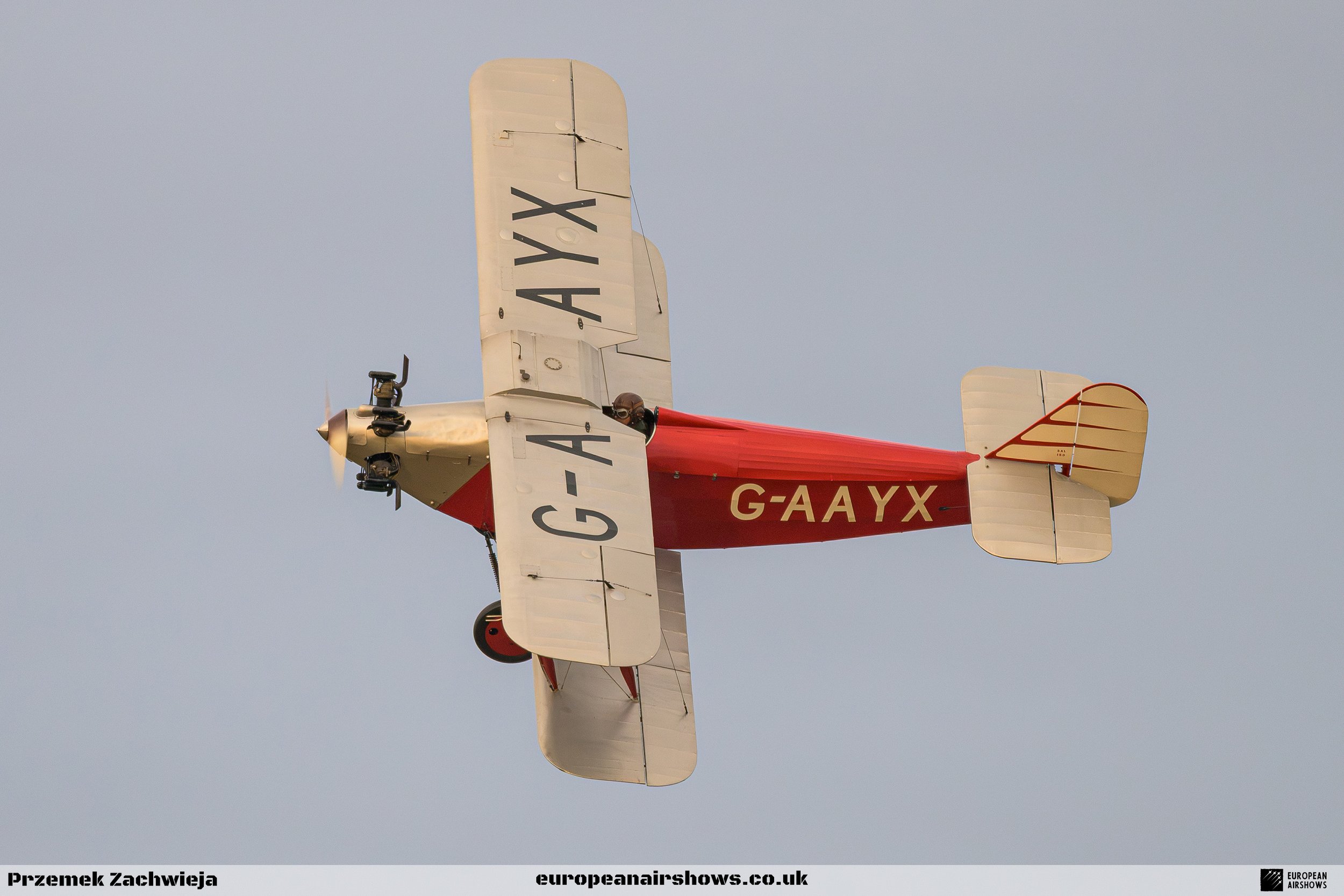
The intended substitutes were the Desoutter I and Southern Martlet, but the Desoutter also had to withdraw as the gusts continued. That left the Southern Martlet to face conditions which had already defeated several larger-looking aircraft.
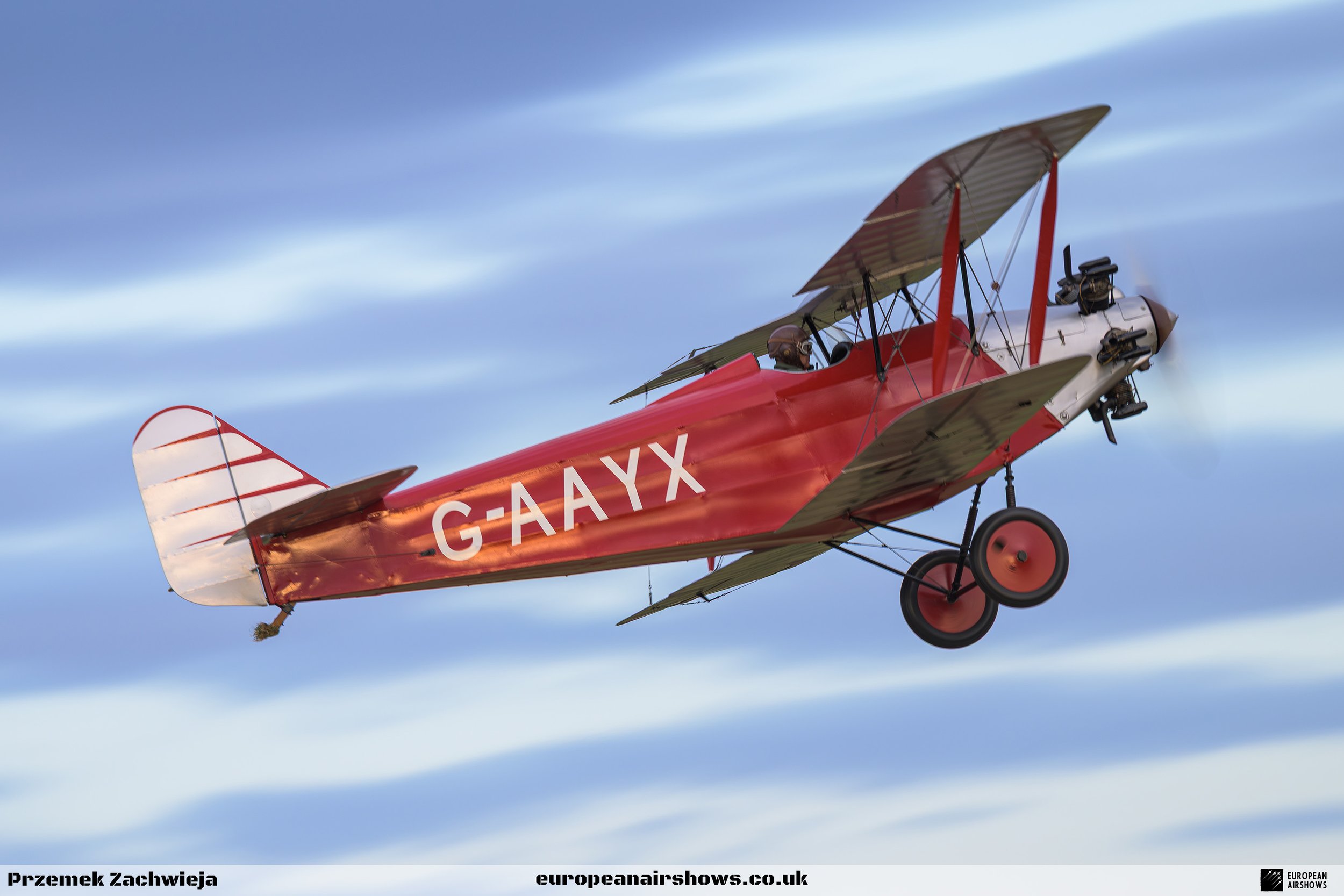
The Martlet was surprisingly effective. Designed by F.G. Miles and first flown in 1929, it was the first aeroplane to carry the Miles name and is now the sole survivor of six built. That provides another subtle connection to the Spitfire theme: the company Miles helped establish later produced the Magister trainers which prepared wartime pilots for faster monoplanes.
The little Martlet looked nimble rather than vulnerable, turning tightly within the Old Warden boundary and presenting its broad yellow wings repeatedly. A small opening in the cloud allowed a trace of evening sunlight to reach the aircraft, giving one of the gentlest displays of the day an unexpectedly attractive setting. Shuttleworth’s Martlet history details its racing and personal-aircraft origins.
Several advertised participants had already been removed by the weather. The Fauvel AV.36 flying-wing glider and Slingsby T.6 Kirby Kite were unable to fly, as were the Blackburn Type D, Blériot XI, Bristol Boxkite reproduction and 1910 Deperdussin. The English Electric Wren and Desoutter joined them as the evening progressed.
The Sopwith Pup was also absent, although no reason was announced. AeroSuperBatics had originally been expected with two wingwalking Stearmans. Only one aircraft arrived and a solo appearance was discussed, but it eventually departed without displaying. The most conspicuous visiting-aircraft loss was 2Excel Aviation’s spray-equipped Boeing 727-200 G-OSRA, withdrawn with a technical problem.
It was a sizeable cancellation list, but it would be unreasonable to criticise the Collection for protecting unique and often irreplaceable aircraft when the wind moved beyond acceptable limits. More importantly, the display team did not simply leave a hole in the evening programme. The reserve plan was adapted repeatedly, and the Southern Martlet gave the crowd something which few other airshows could offer.
The Spitfire’s final word
It was left to AR501 to close the Summer Air Show, taking off for its third display of the day.
The choice could hardly have been more fitting. The Shuttleworth Spitfire had opened the programme beside the Camel, joined the mass formation and now returned alone to complete the anniversary celebration.
Just as the aircraft began its display, the sun finally emerged beneath the cloud. After disappearing for the Lim-5 and much of the evening sequence, it illuminated AR501 in rich sunset light. Every bank exposed the wing and fuselage to the glow, while the darker cloud behind gave the aircraft extraordinary definition.
The routine did not need formation numbers or elaborate staging. It was simply a beautifully flown Spitfire solo at Old Warden, with the light arriving at exactly the right moment. If the weather had spent much of the evening testing the organisers, it offered an impressive apology at the finish.
The Summer Air Show had its frustrations. The loss of the Seafire, Mk II Spitfire and Boeing 727 removed three important elements, the wind denied the audience the traditional Edwardian flying and the closure of Shuttleworth House reduced the ground attractions slightly. The evening sunlight also vanished at precisely the moment many photographers wanted it most.
Yet none of those issues defined the day.
Instead, the 2026 Summer Air Show will be remembered for the largest Spitfire gathering Old Warden has hosted, the remarkable variety of marks and operators, a Soviet veteran carrying replica bombs, a rare Polish Lim-5 lighting its afterburner over a grass aerodrome and a programme which linked the Spitfire to trainers, racers, test pilots and designers rather than simply surrounding it with more warbirds.
Most of all, it demonstrated why Old Warden remains different. Here the history did not sit in isolated categories. A Camel could fly with a Spitfire, the Falcon could tell part of K5054’s first-flight story, the Magister could represent the pilots who later flew fighters and a modern Twister could reinterpret Mitchell’s elliptical wing in composite materials.
Ninety years after K5054 first left Eastleigh’s runway, the Spitfire understandably dominated the day. But it was the company it kept—and the stories connecting that company—which turned a large anniversary gathering into one of Shuttleworth’s landmark airshows.
More airshow reviews
Read more reports, photography and first-hand coverage from airshows across Europe.