
IWM Duxford
Summer Air Show
2026
A unique B-17 and KC-135R formation, international debuts, the newly restored Lim-5 and a ferocious Bearcat finale made Duxford’s 2026 Summer Air Show one of its strongest in years.
A unique Boeing B-17G Flying Fortress and KC-135R Stratotanker formation, Patrulla Quijote’s UK debut, the newly restored Lim-5 and a four-aircraft Flying Bulls formation gave Duxford a weekend packed with rare combinations and standout displays.
The Imperial War Museum Duxford Summer Air Show moved to the weekend of 4–5 July for 2026, marking 250 years since American Independence with a flying programme built largely around American aviation and the long relationship between Duxford, East Anglia and the United States military.
It was a theme that suited Duxford particularly well. The airfield became home to the United States Army Air Forces’ 78th Fighter Group during the Second World War, while East Anglia remains closely associated with American air power to this day. The programme covered everything from First World War replicas and Second World War fighters to Vietnam-era forward air control aircraft and the modern-day Boeing KC-135R Stratotanker.
There was plenty to do on the ground before the flying displays began. The free flightline walk gave visitors the opportunity to get close to many of the participating aircraft during the morning, while the museum hangars, trade stands, live entertainment, re-enactors and other attractions made it easy to fill the hours before the main display.
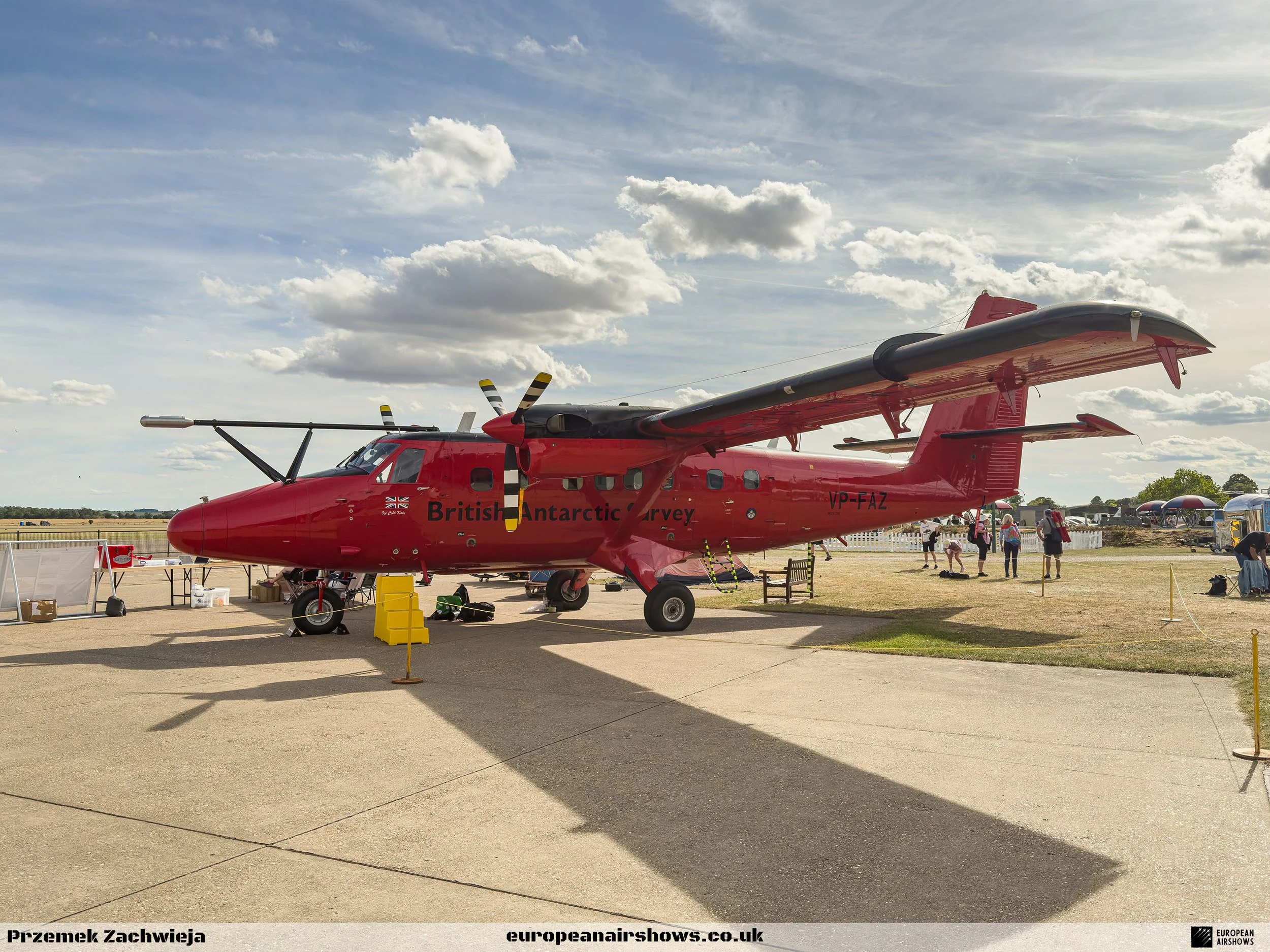
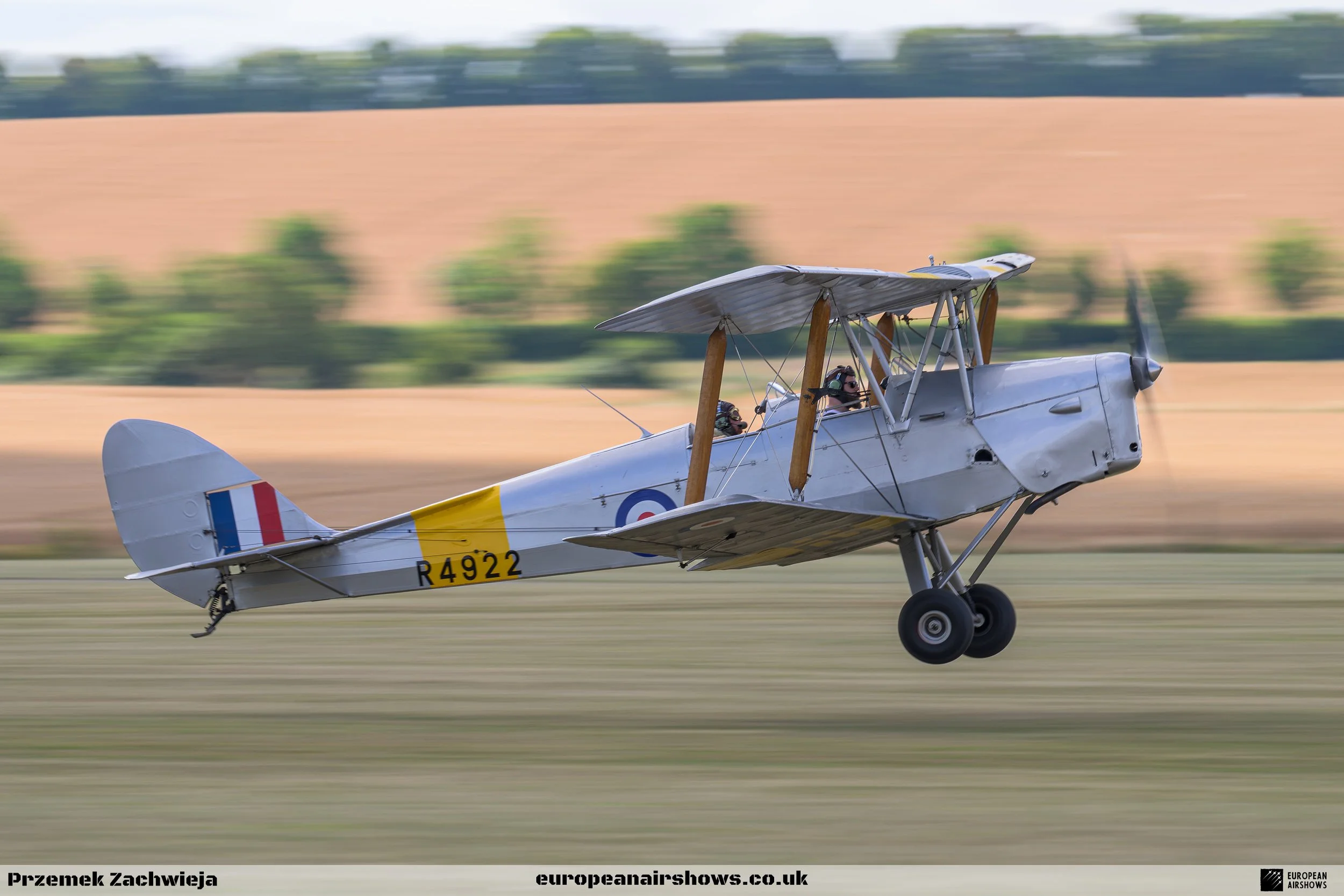
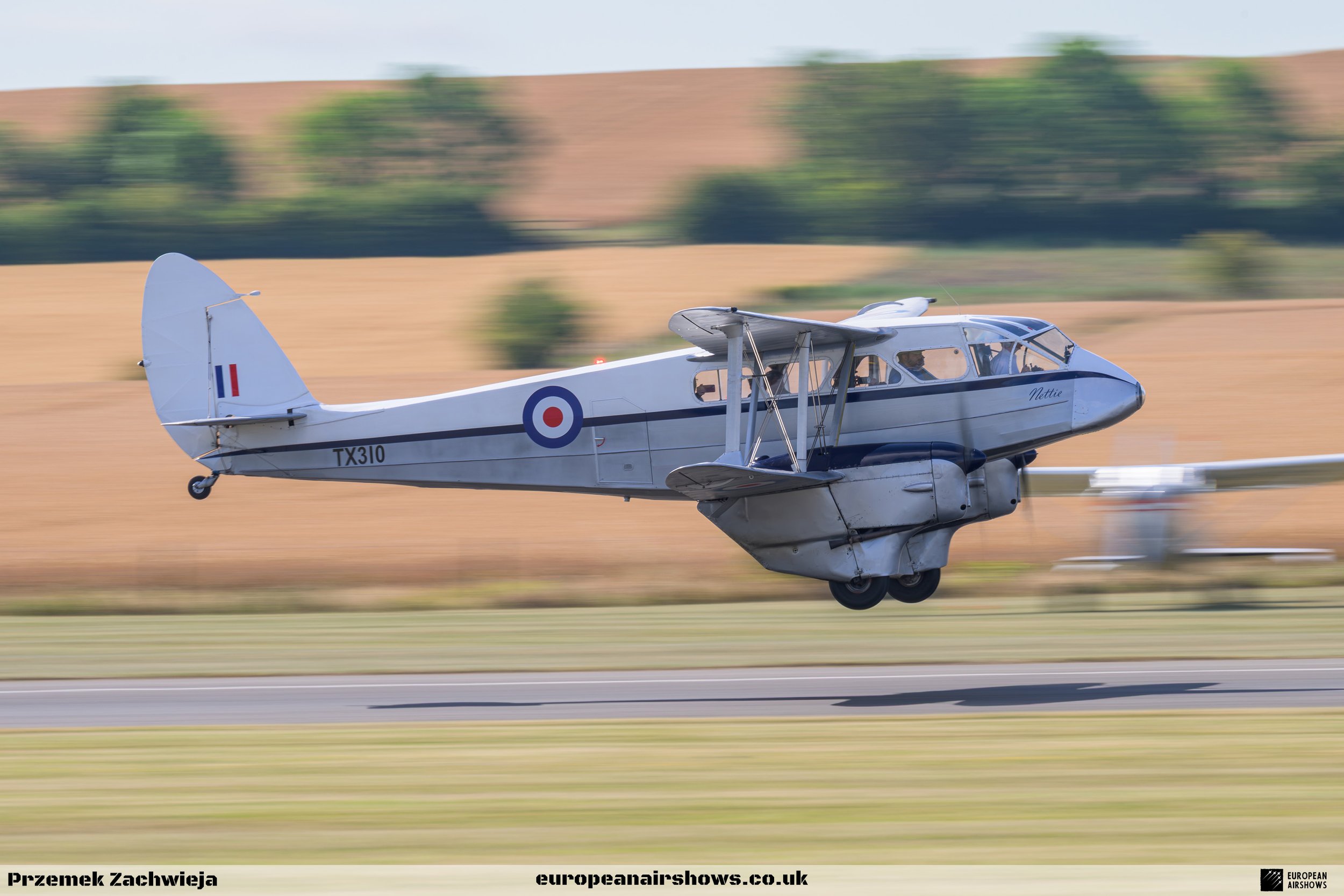
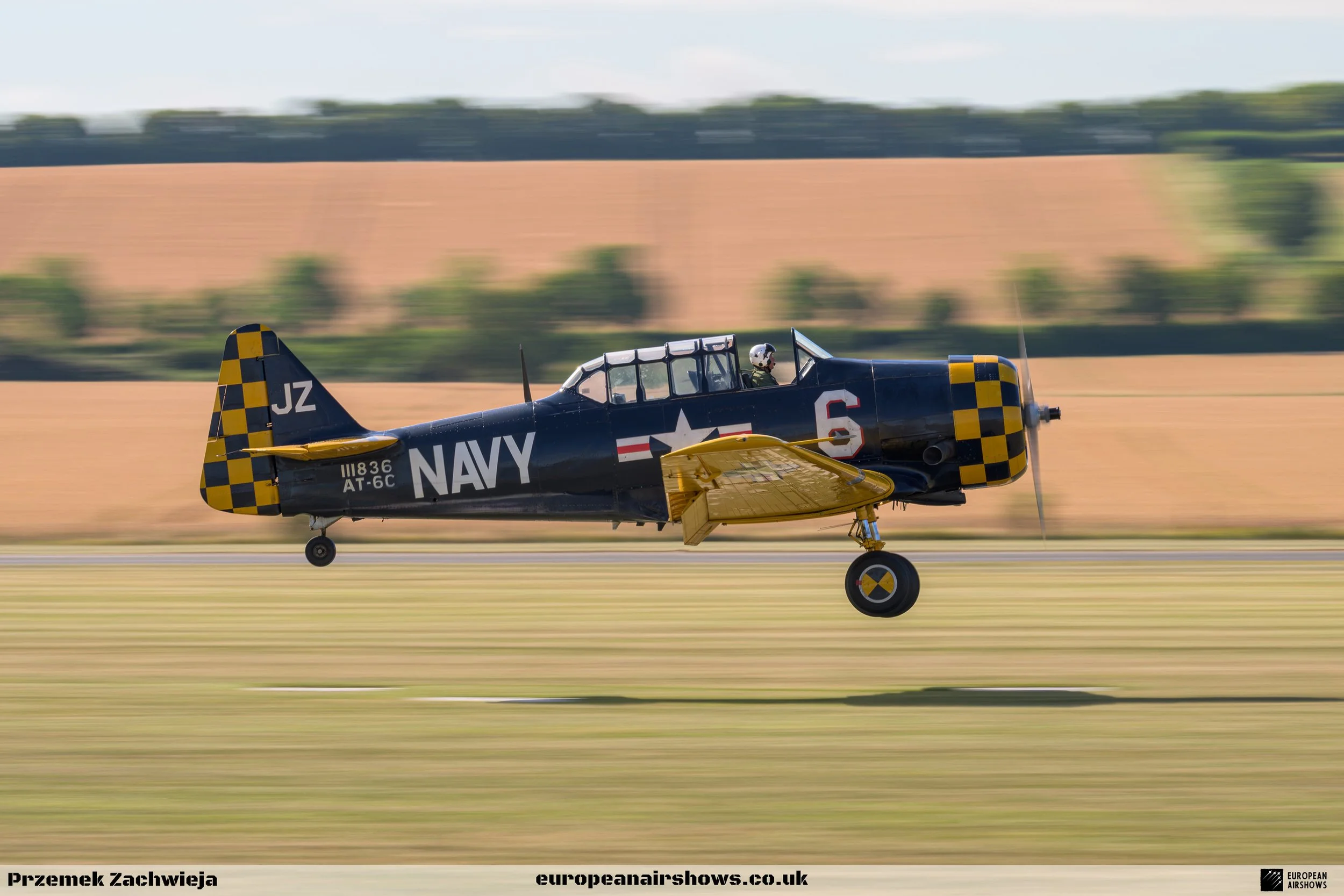
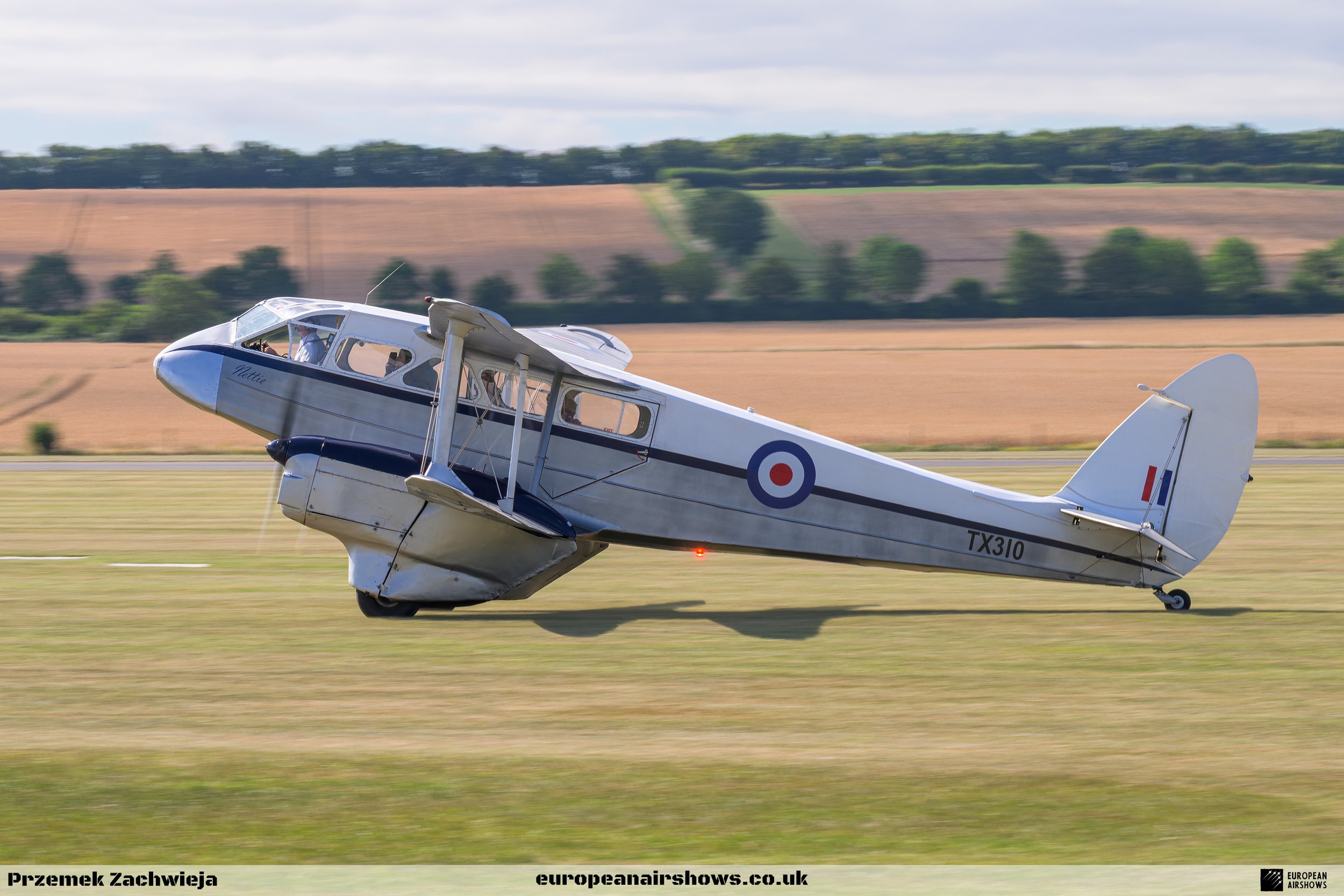
Classic Wings’ pleasure flights were extremely busy on both days. The North American Harvard, de Havilland DH.82A Tiger Moth and de Havilland DH.89A Dragon Rapide seemed to be operating almost constantly, providing their own stream of movements while the display aircraft were being prepared.
The event was also exceptionally well organised. The shuttle buses were so frequent that there was hardly any queueing, and several departed before they were even full. Transport can become one of the most frustrating parts of a major airshow, but Duxford’s system worked extremely well throughout the weekend.
Saturday began with bright sunshine before cloud gradually rolled in during the morning. The sun returned shortly before the flying started at around 1pm, but although there were plenty of areas of blue sky, it seemed to disappear behind the clouds whenever many of the aircraft reached the display line.
Sunday started much cloudier, with very little sunshine during the morning. It was less windy than Saturday and already felt very warm. Conditions improved considerably midway through the flying display as the cloud began to break, leaving plenty of sunshine and turning the second half of the afternoon into a proper scorcher.
The programme suffered two notable withdrawals in the days before the event. The Czech-based Heli Czech Cobra Demo Team’s Bell AH-1S Cobra was unable to attend, while The Flying Bulls’ Grumman F8F-2 Bearcat N68RW was also cancelled. The Flying Bulls Bearcat should not be confused with The Fighter Collection’s Grumman F8F-2P Bearcat G-RUMM, which did fly and eventually closed the show on both days.
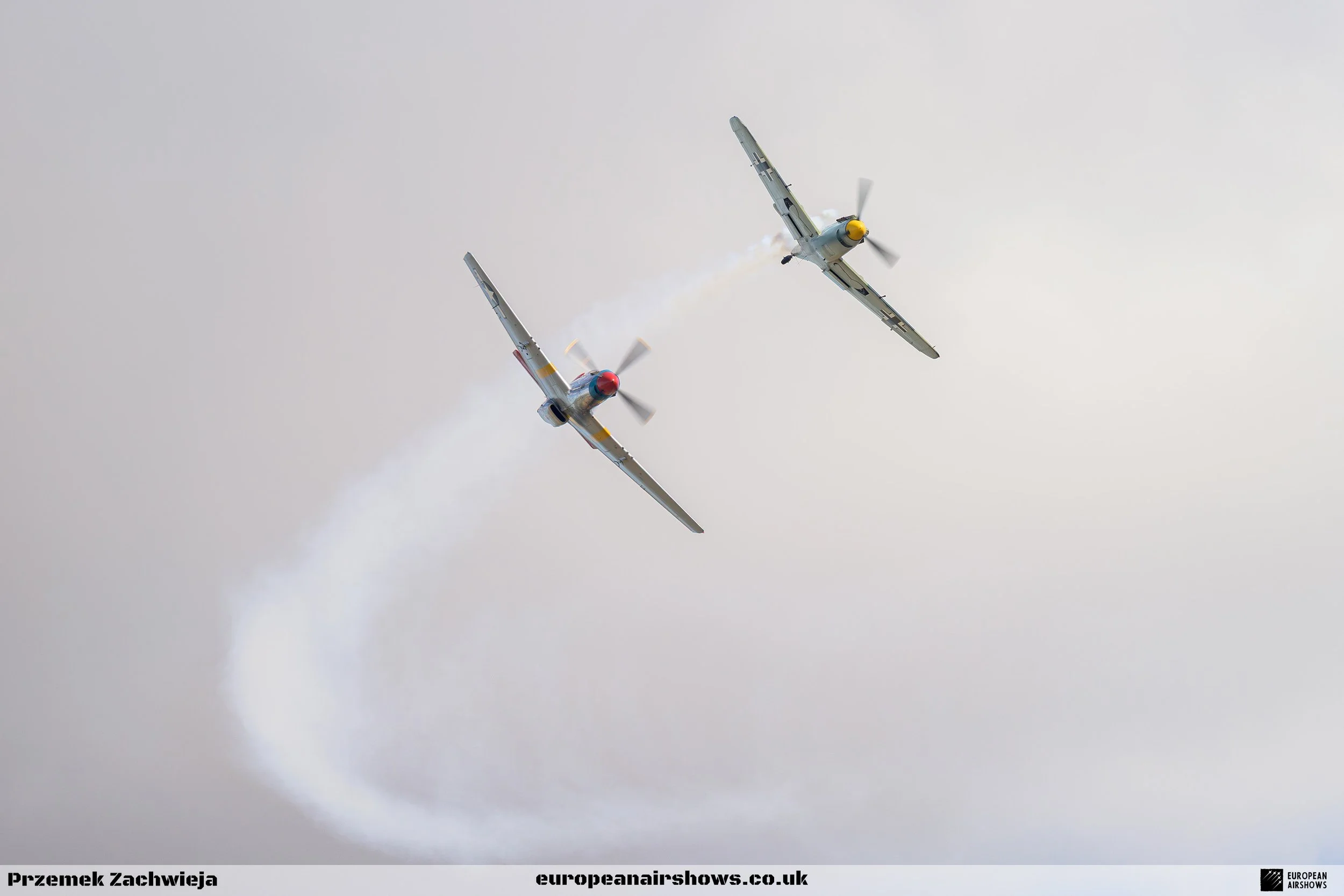
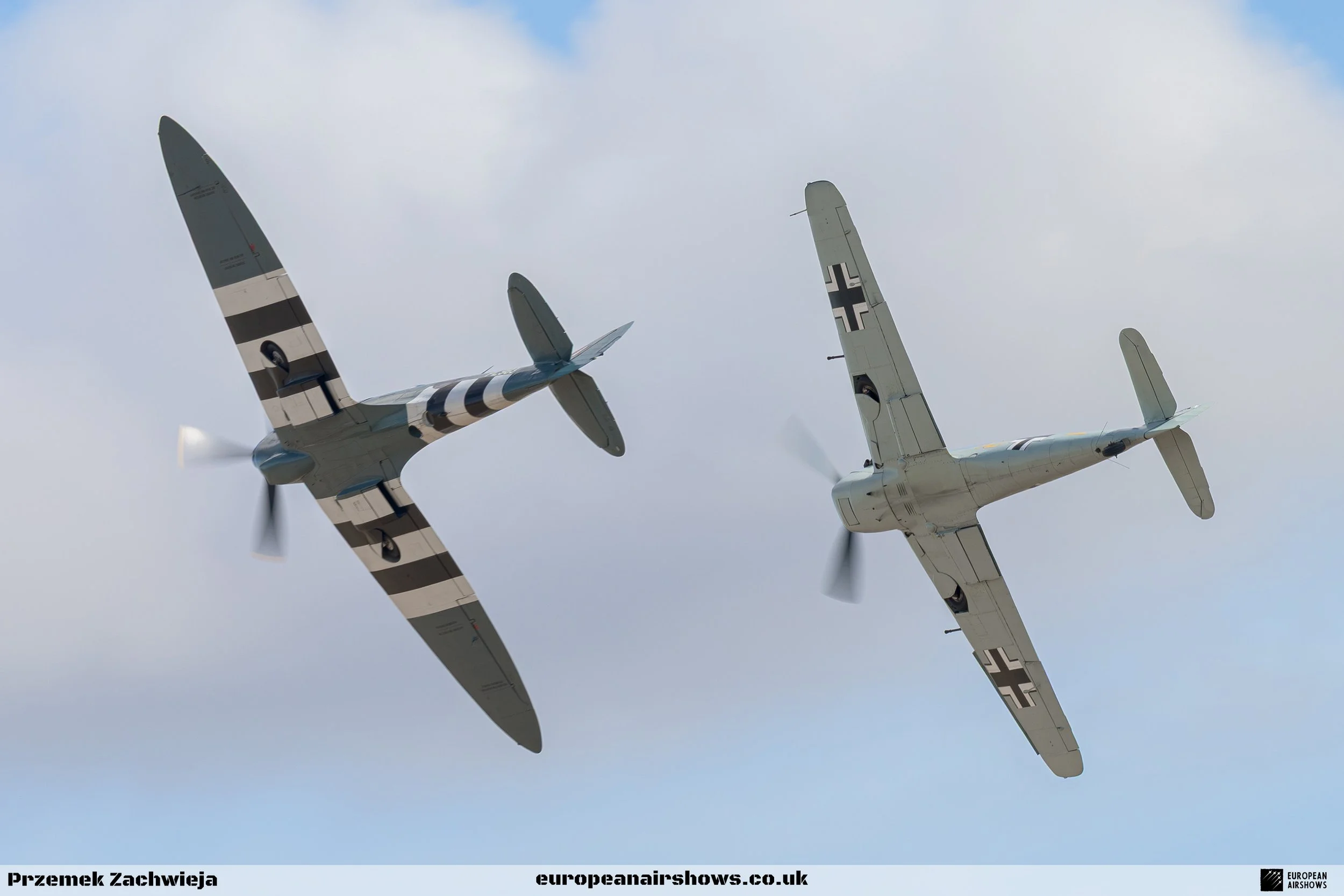
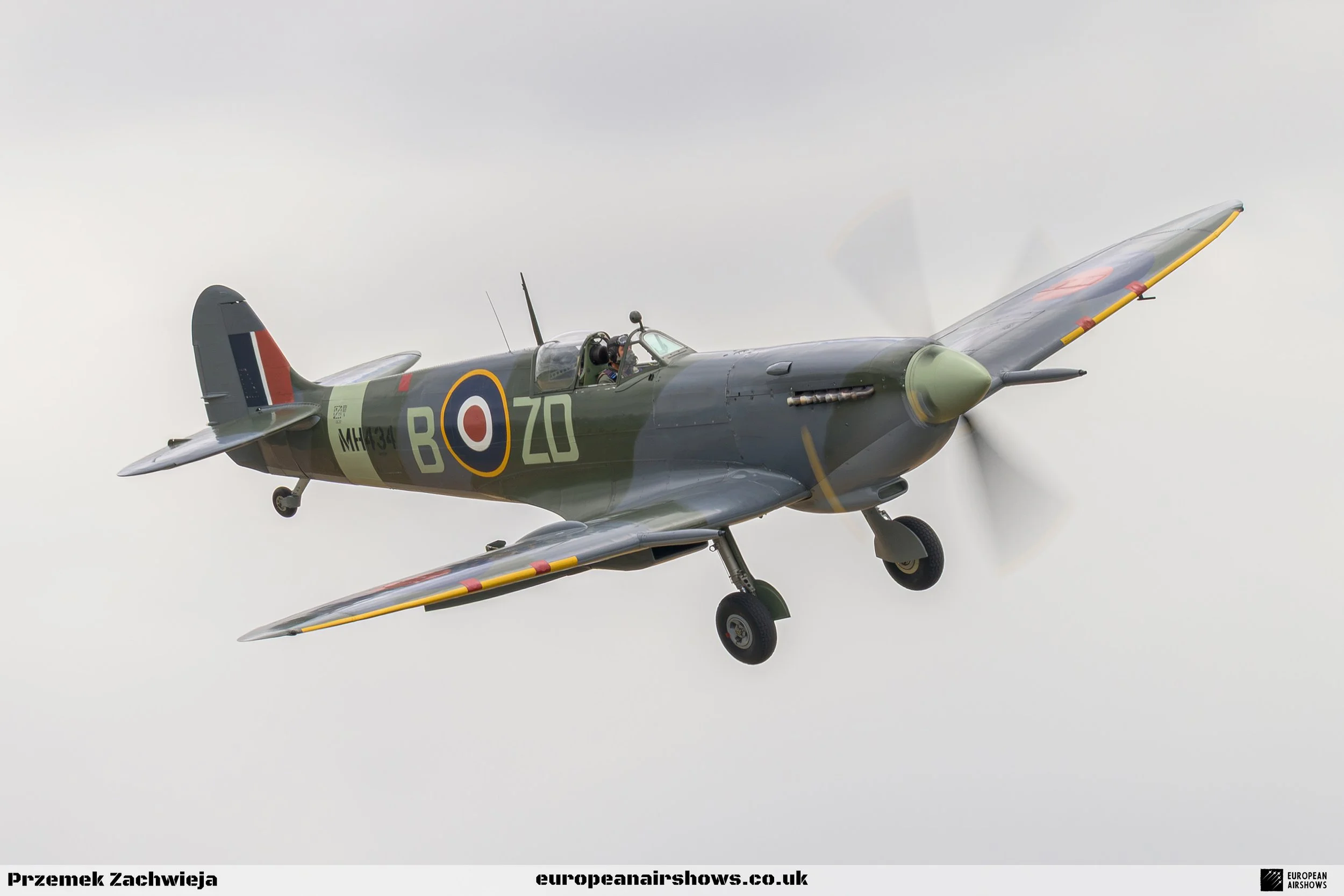
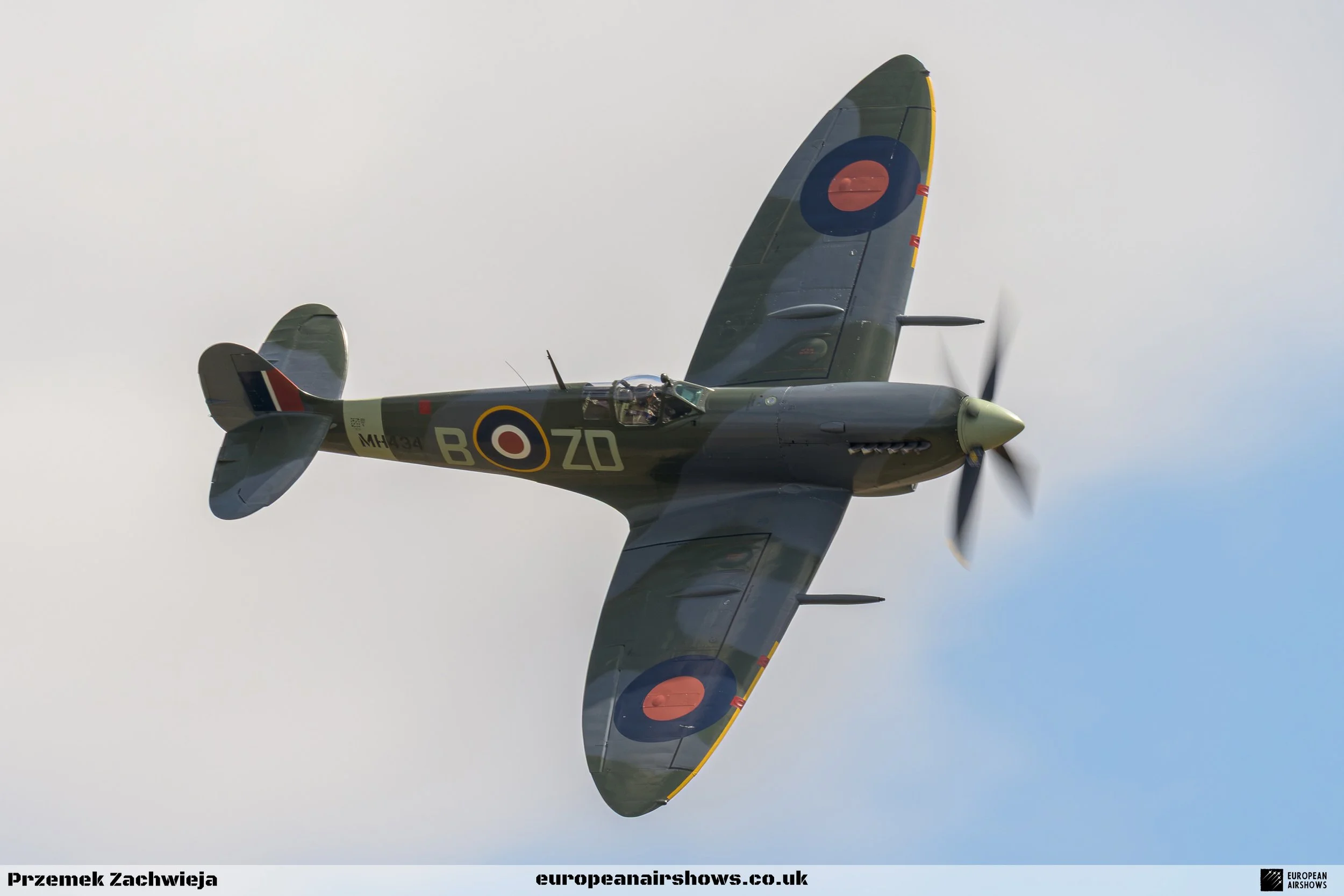
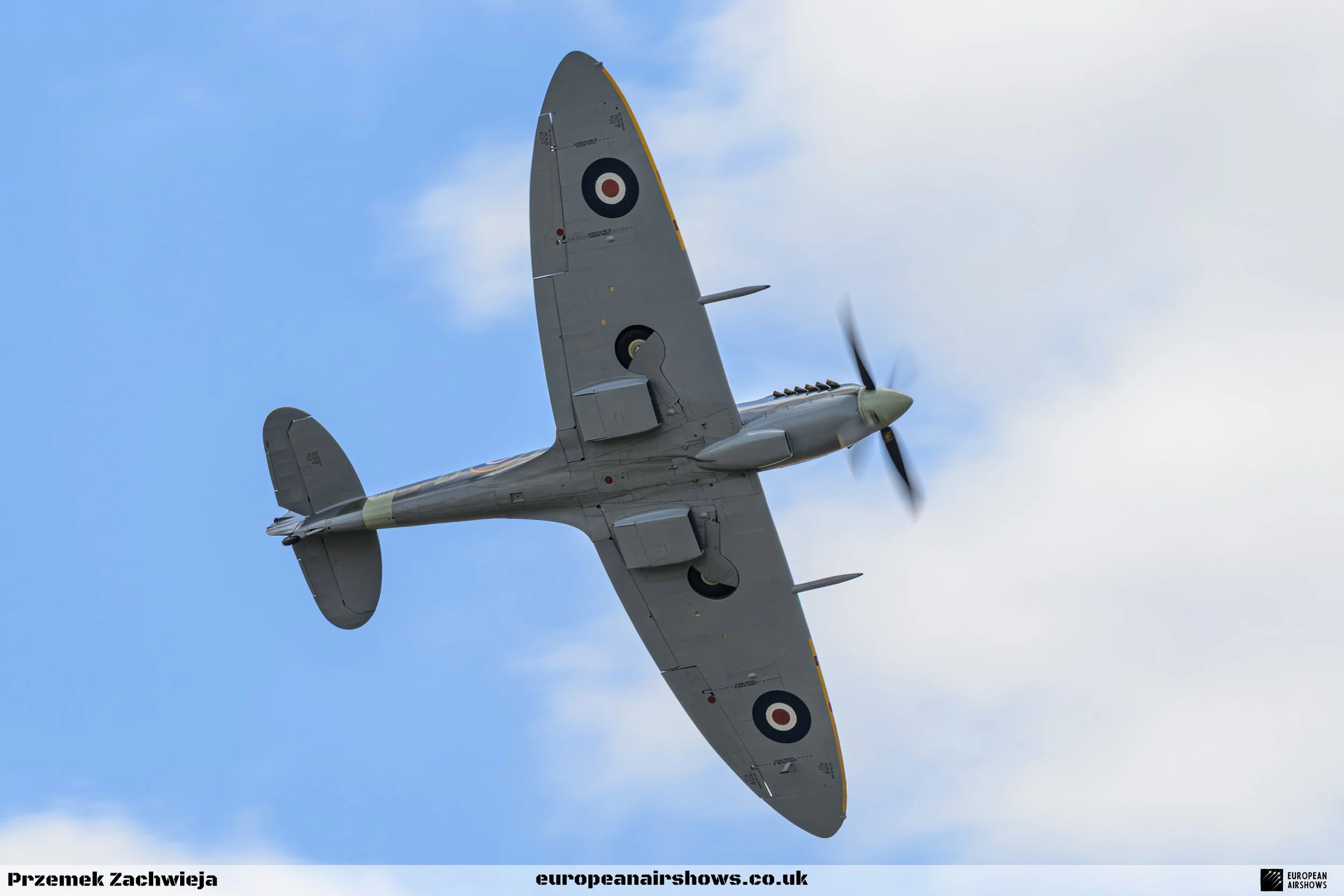
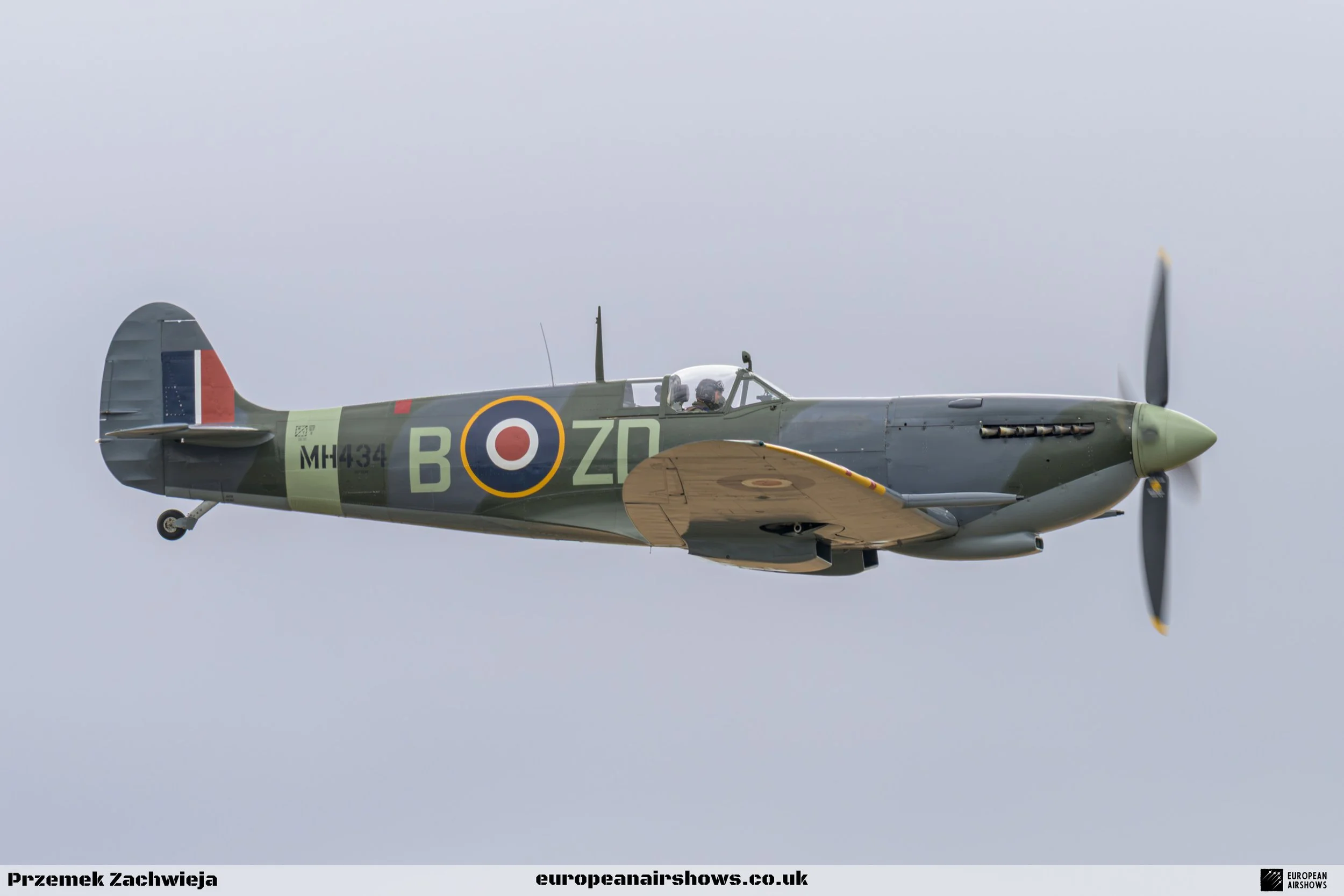
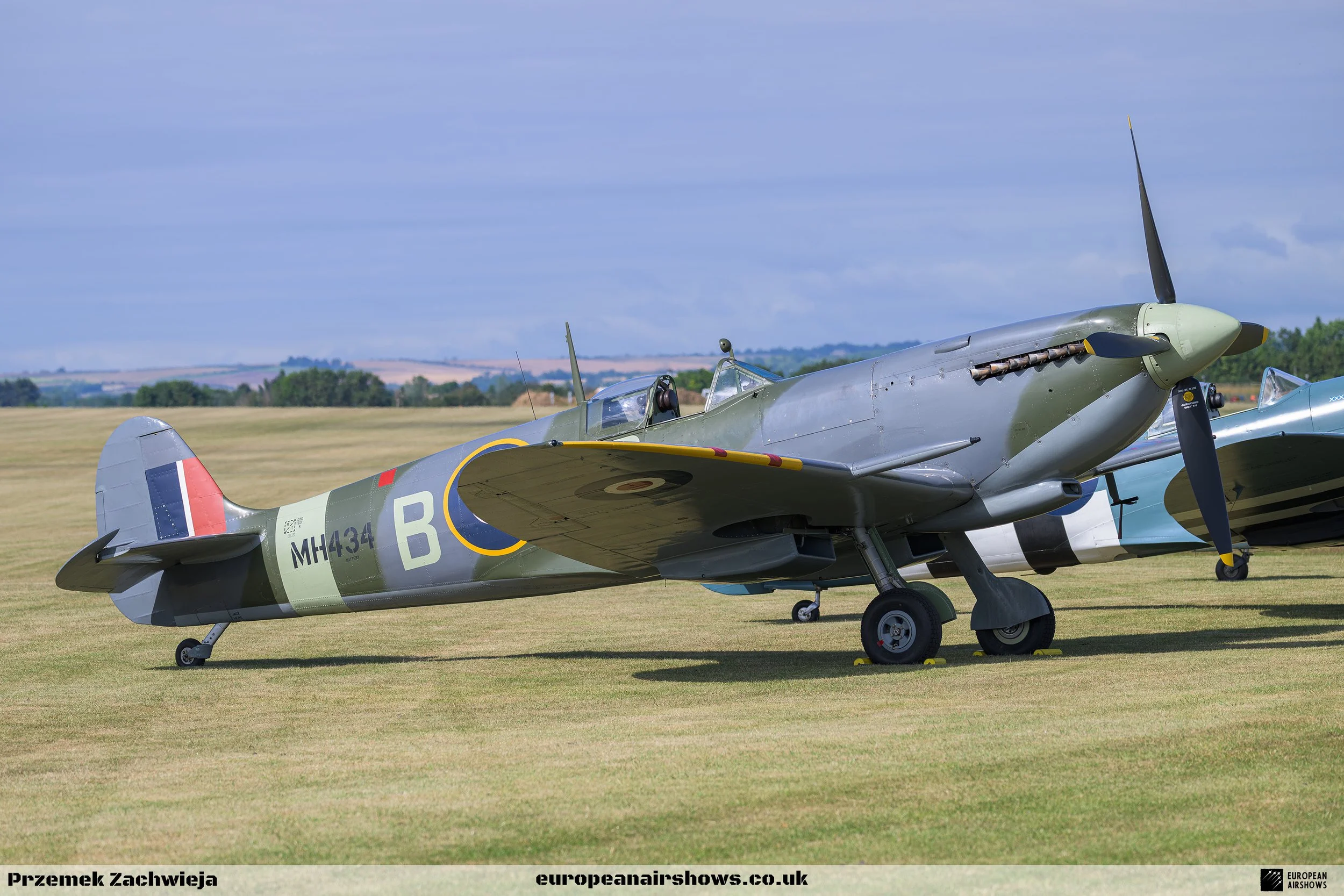
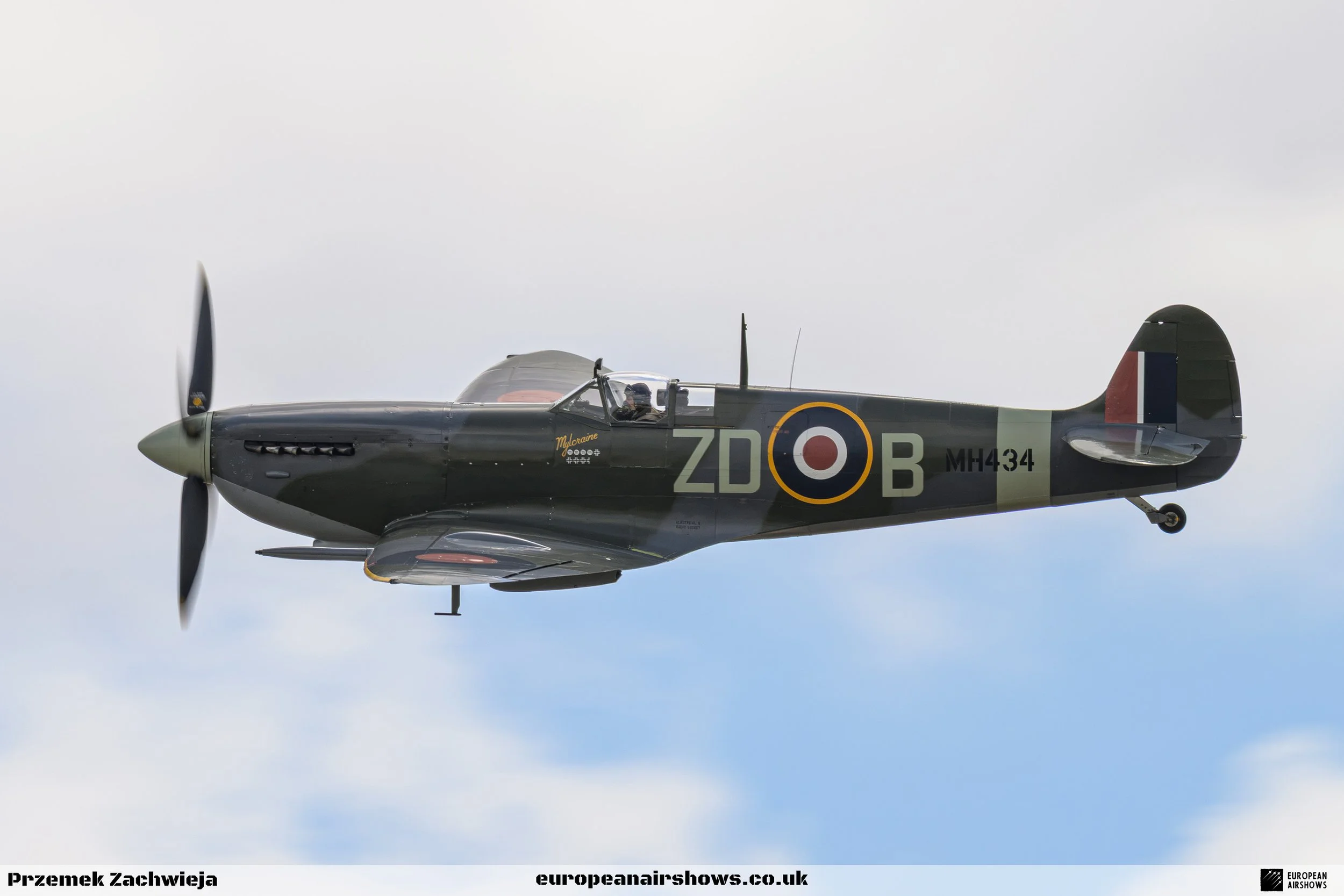
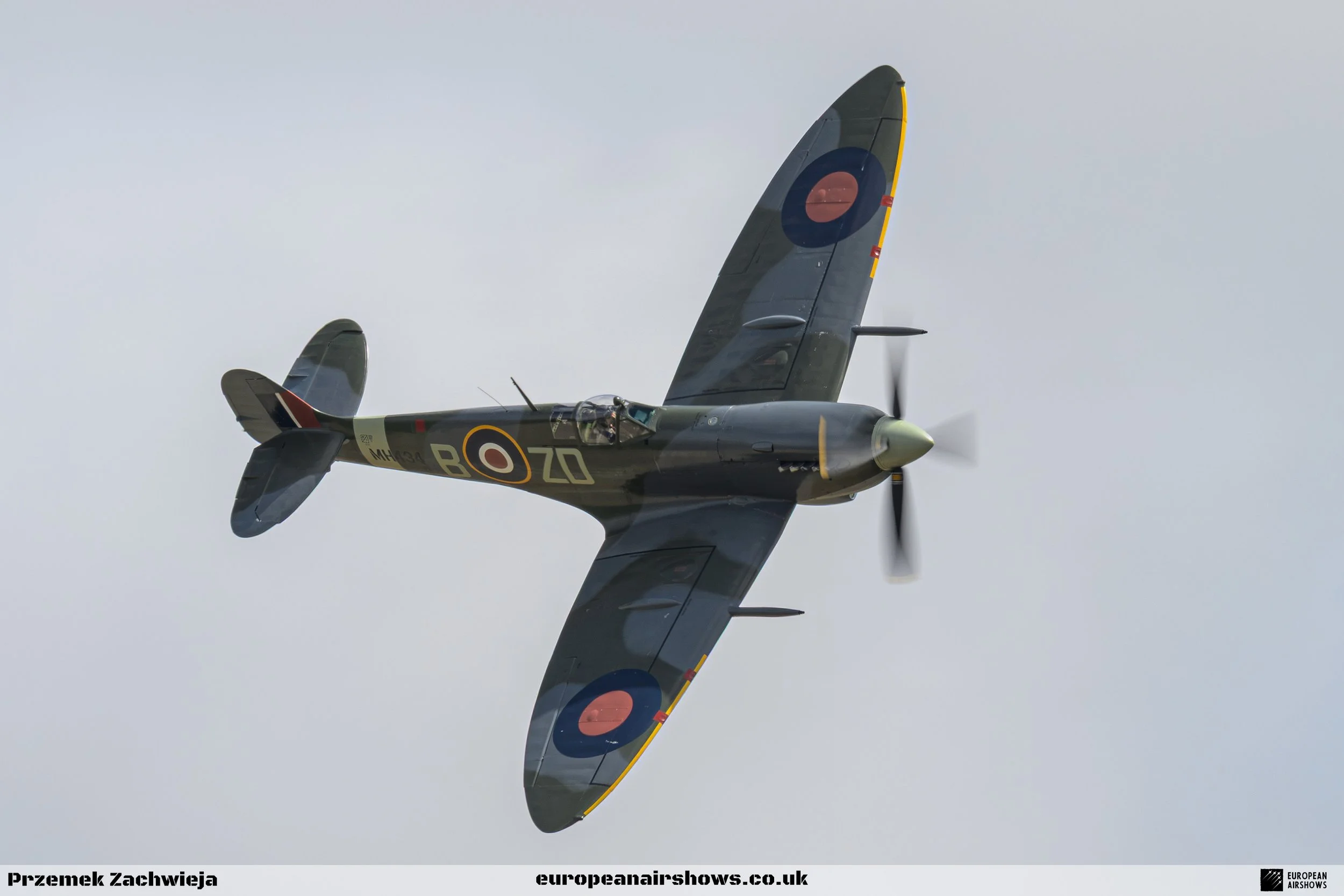
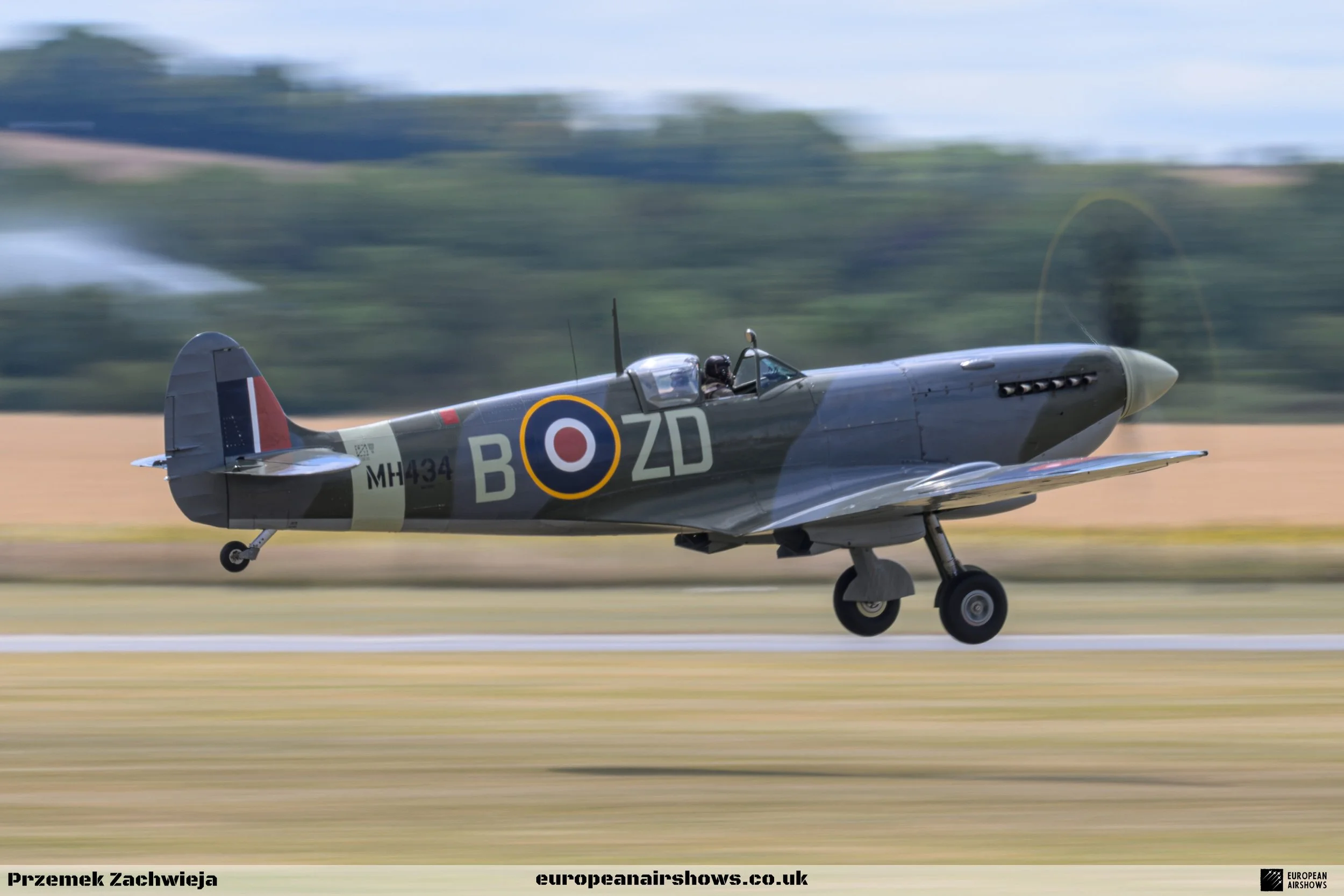
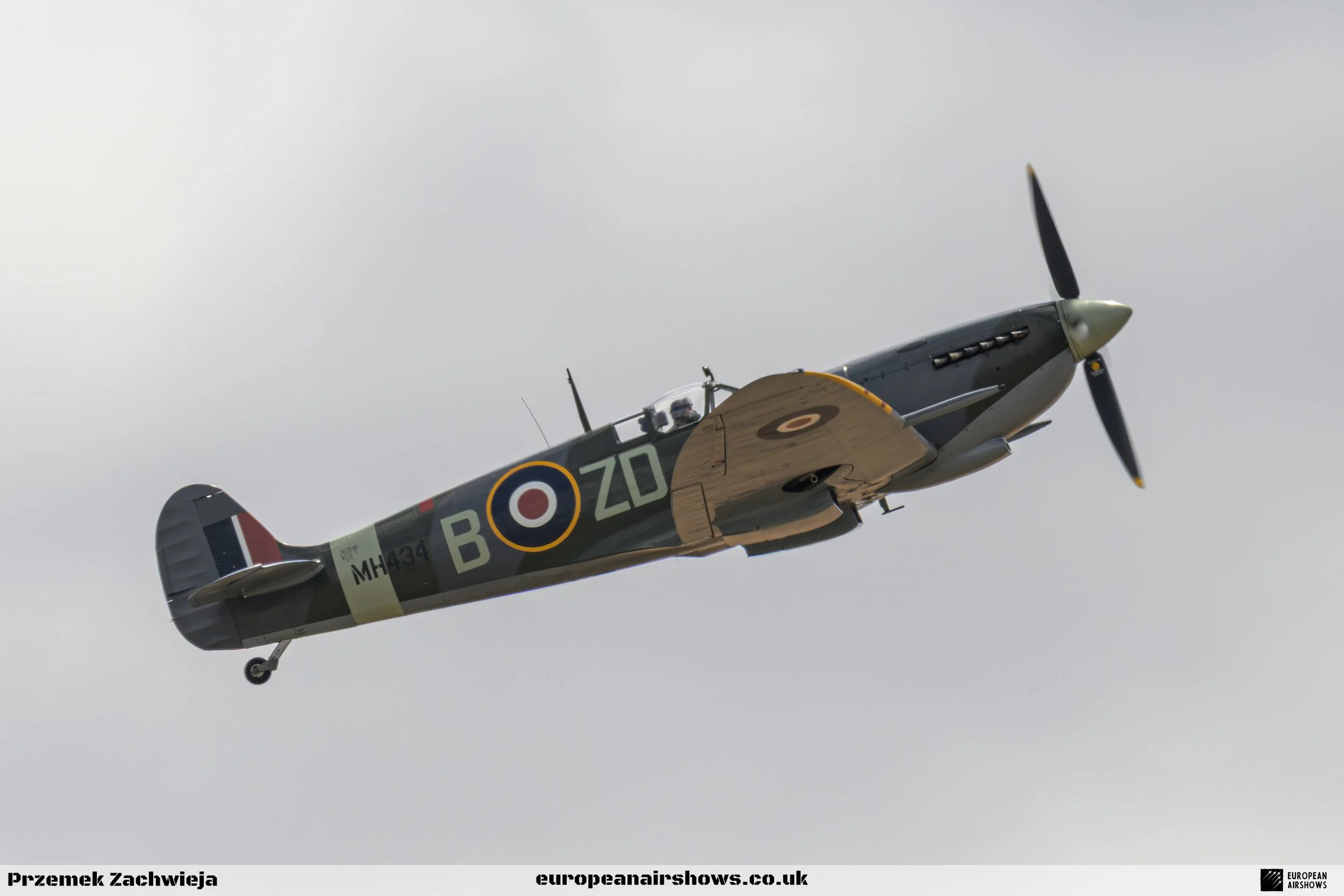
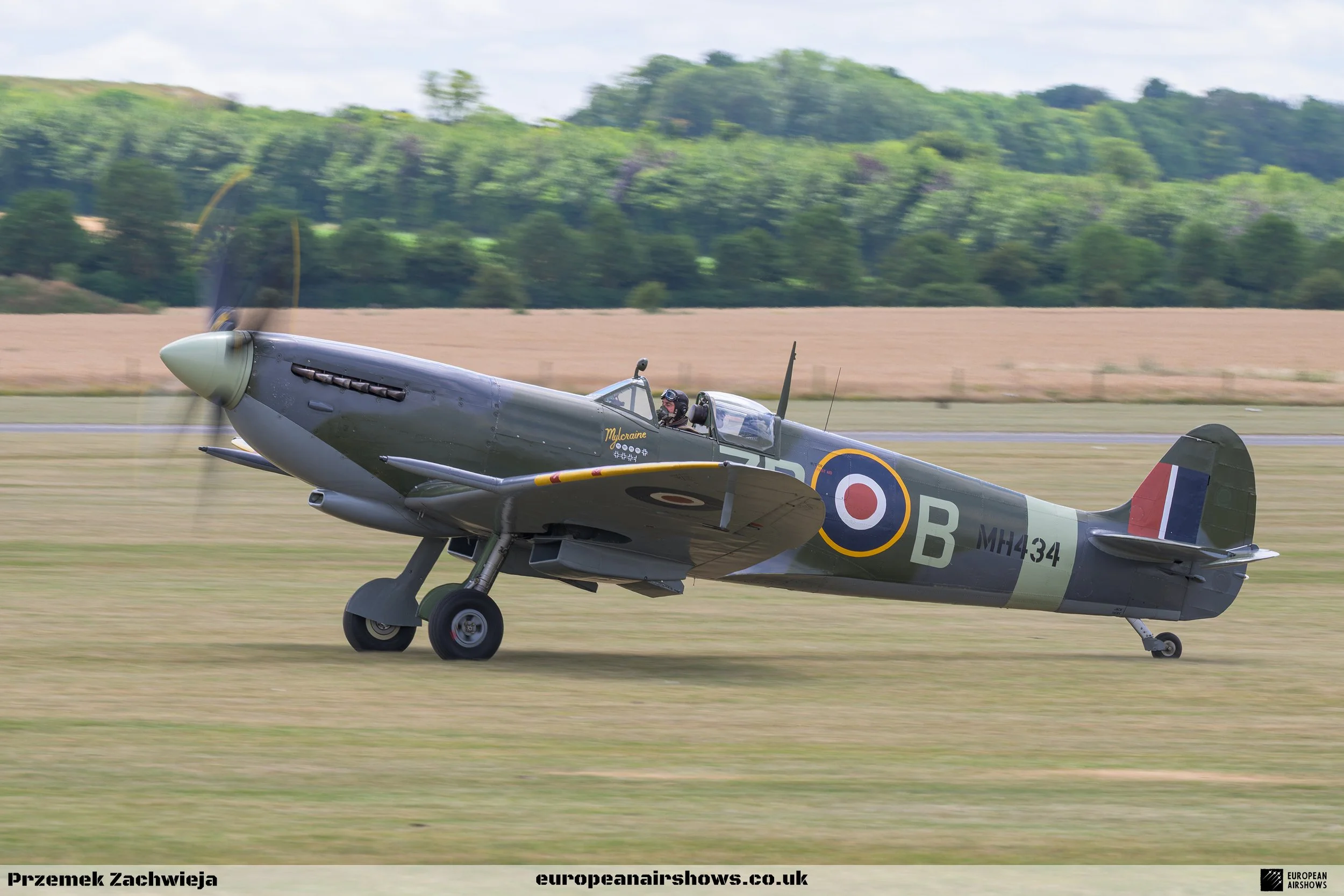
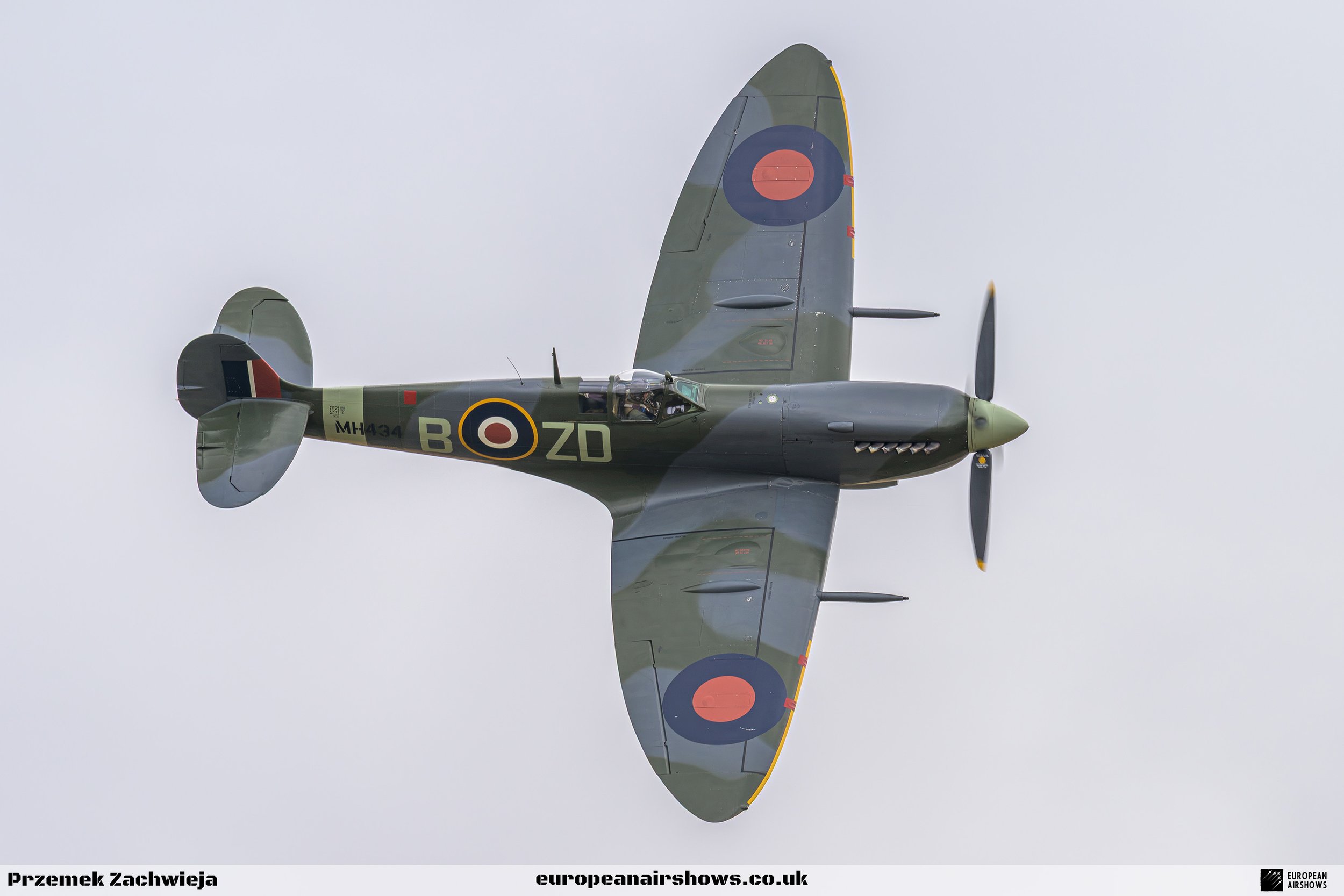
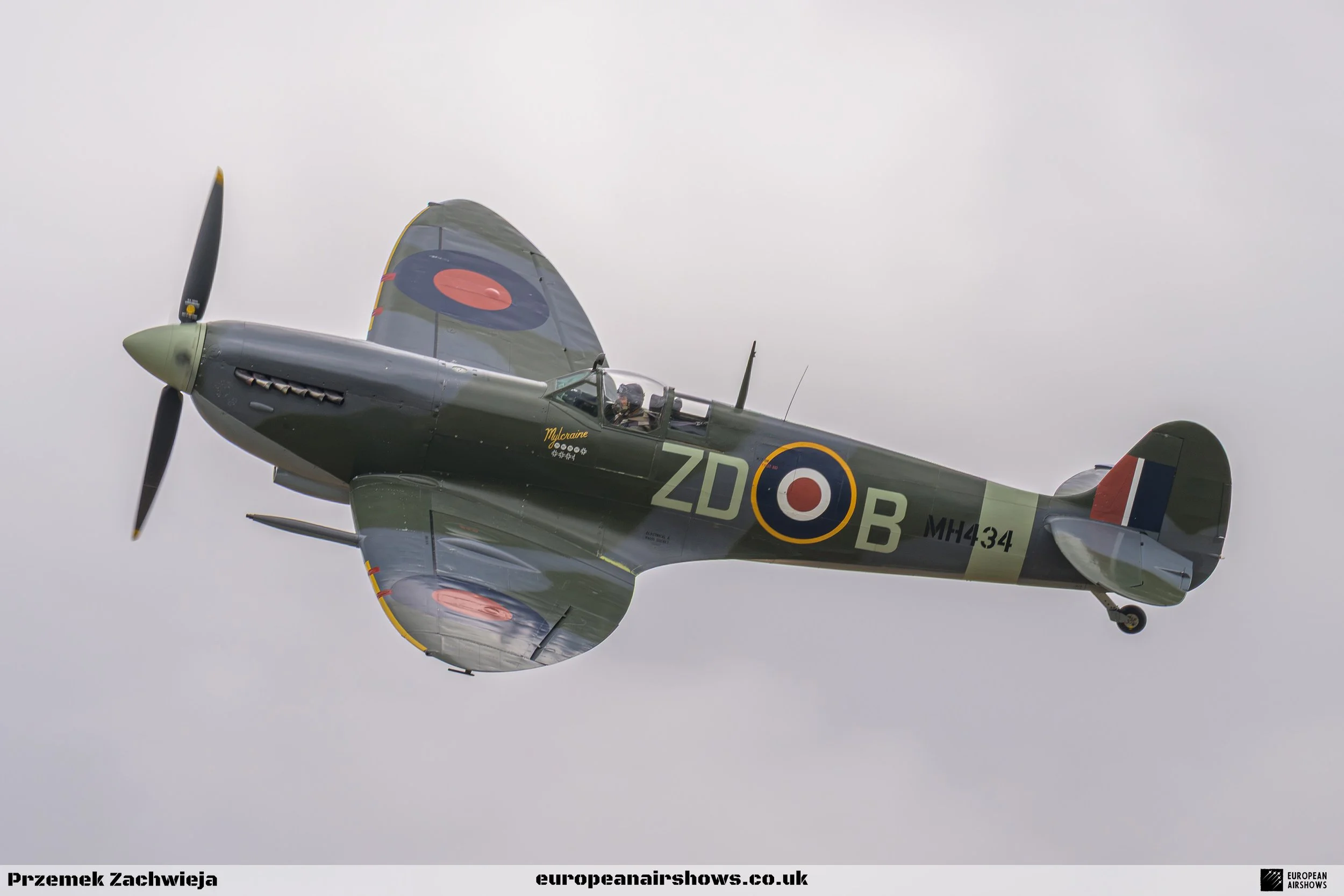
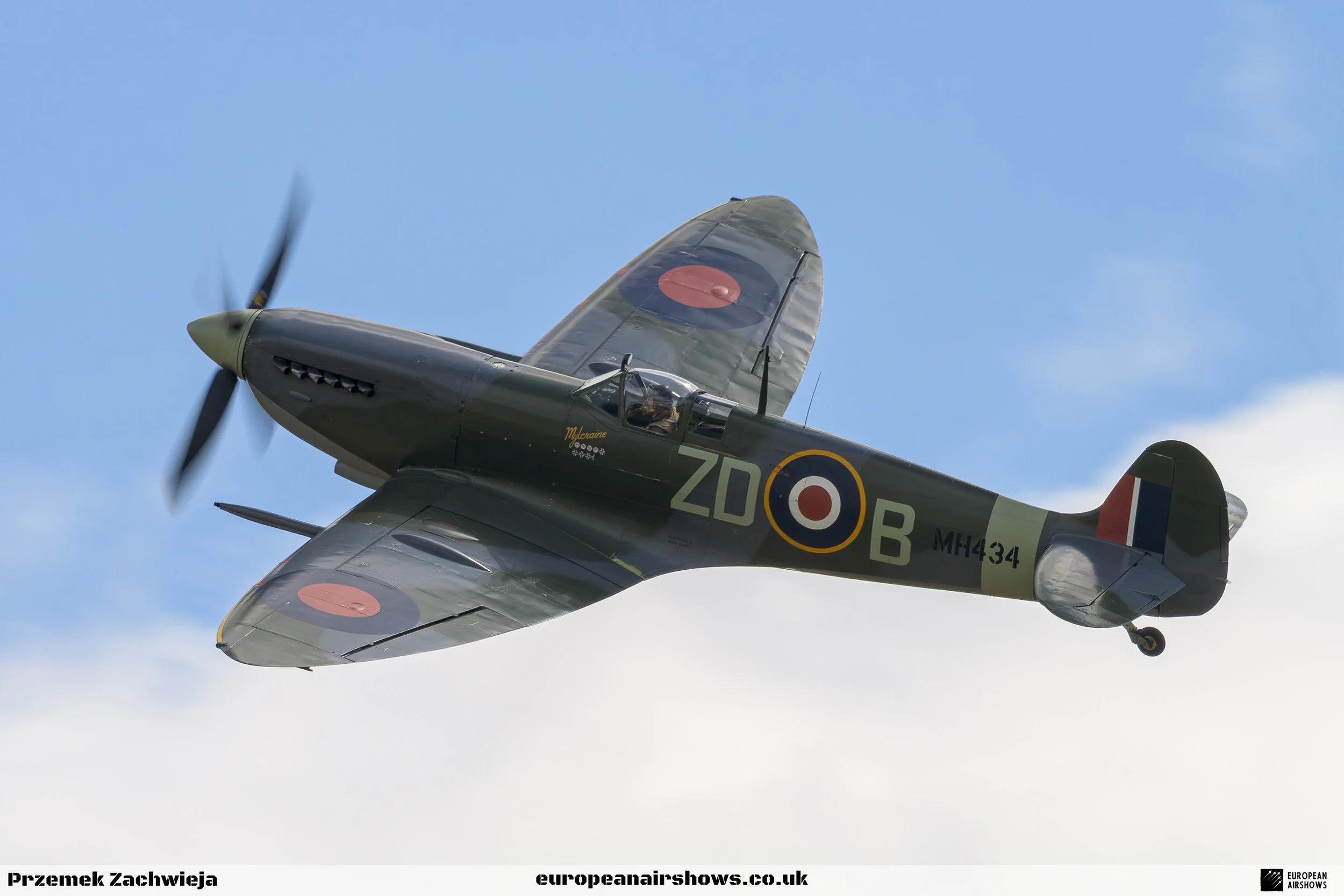
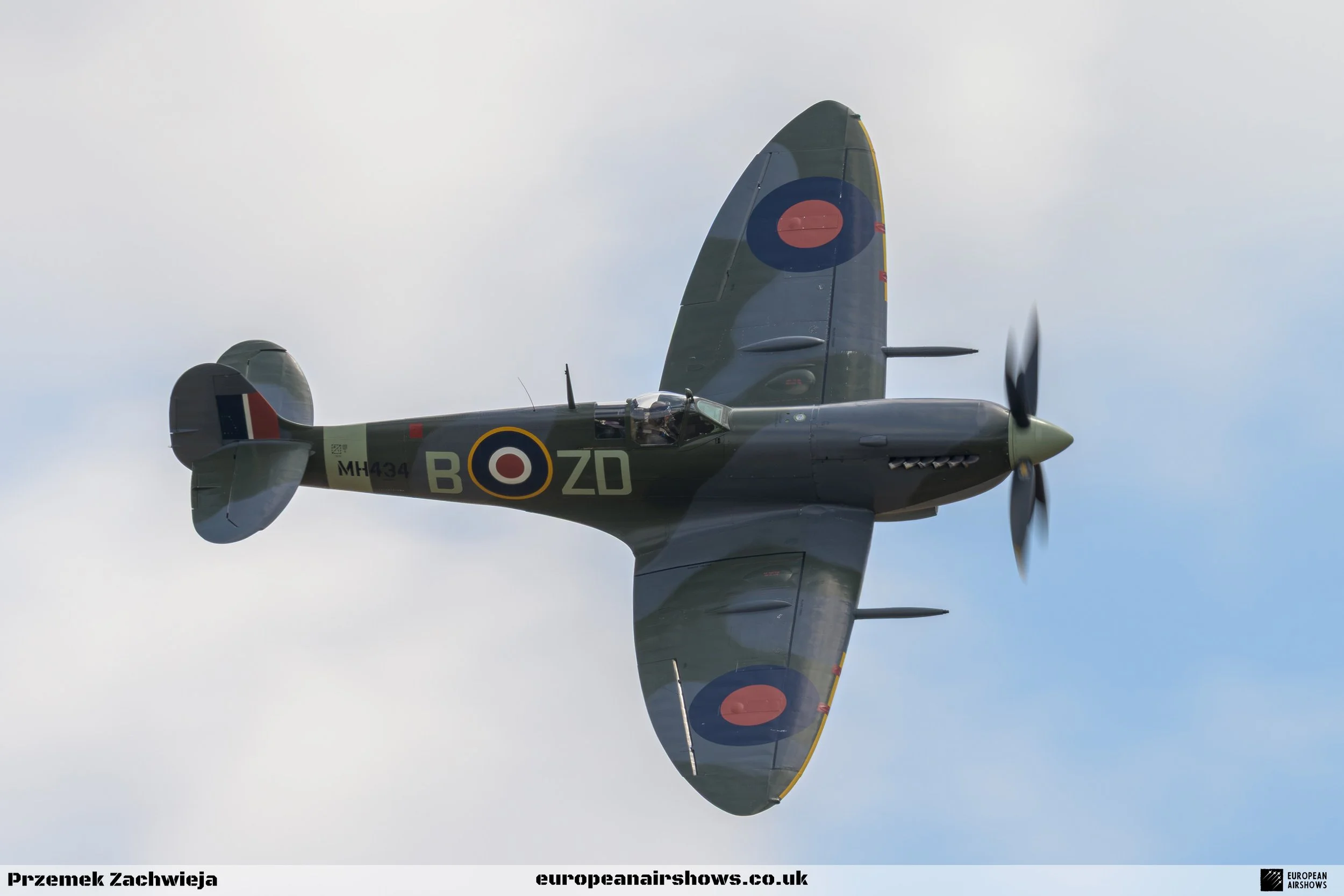
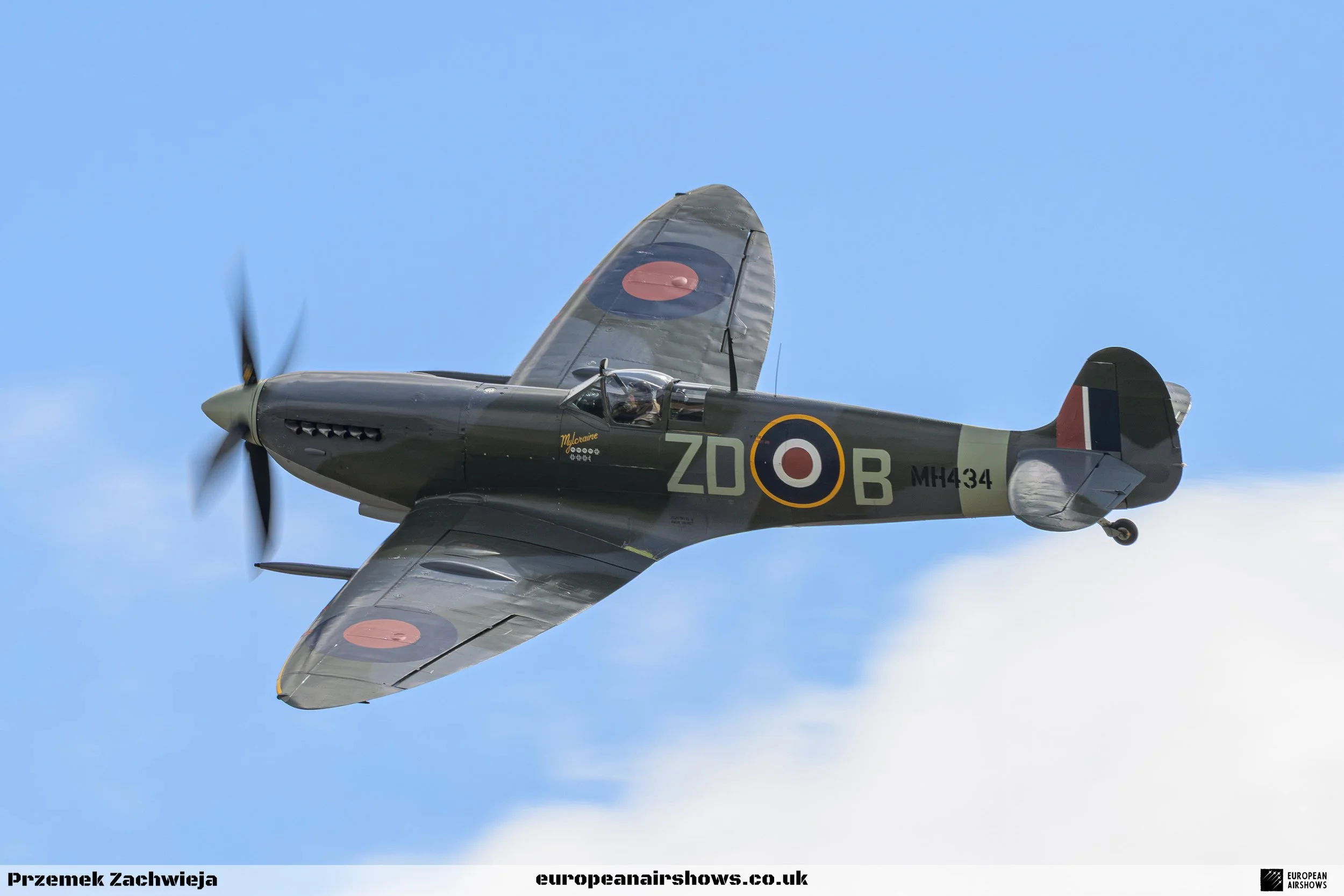
The flying programme began at around 1pm on both days with a solo display from the Old Flying Machine Company’s Supermarine Spitfire LF Mk IXb MH434 flown by Paul Bonhomme.
MH434 had not appeared on the flying list, making it a very late and welcome addition. Bonhomme flew a smooth and graceful routine, although much of the display was positioned a long way from the crowd. It was still a pleasant way to open the afternoon, particularly with one of the most famous surviving Spitfires.
Saturday’s opening section continued with one of the weekend’s most significant moments, a special United States heritage presentation titled “United States of America: Yesterday and Today.”
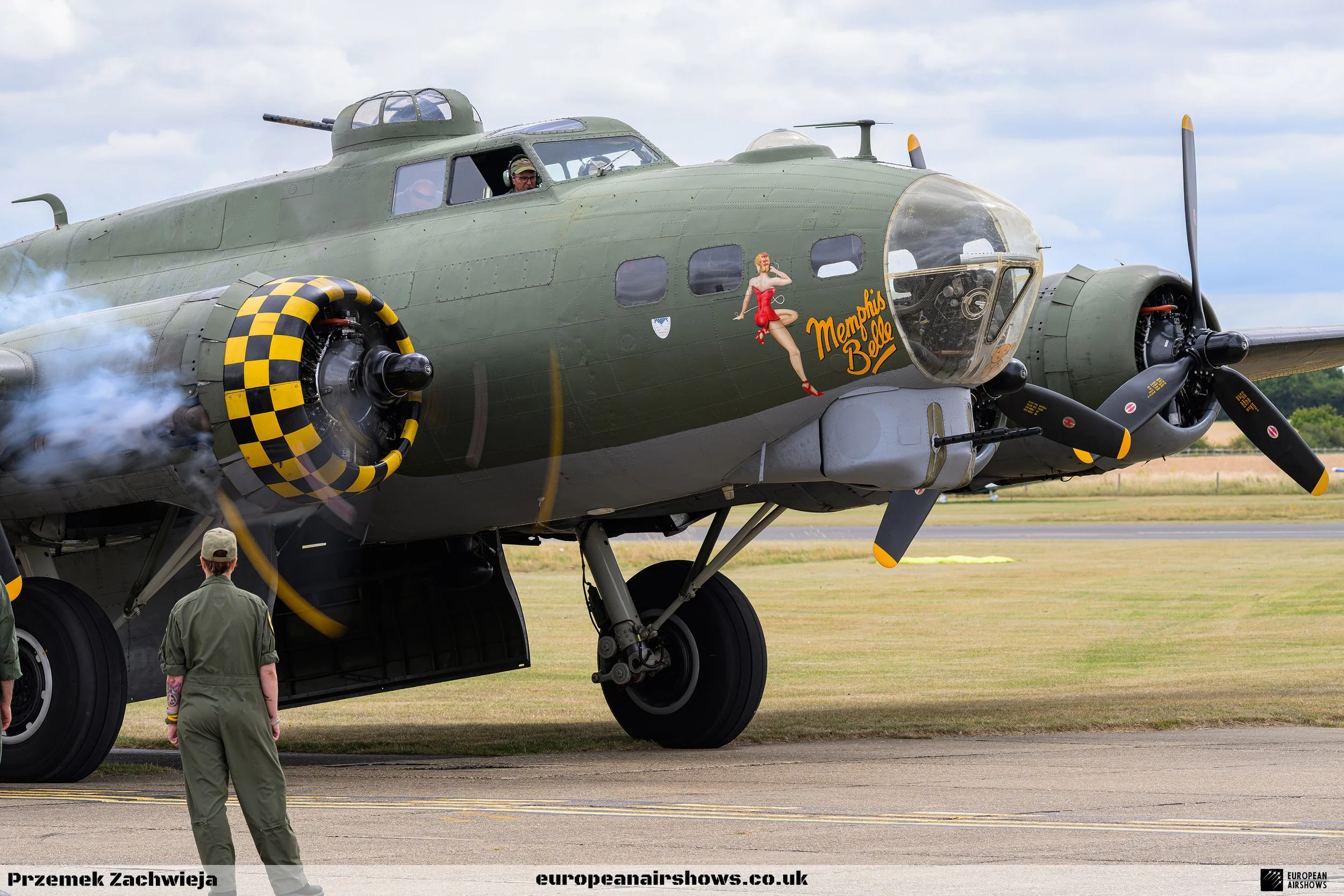
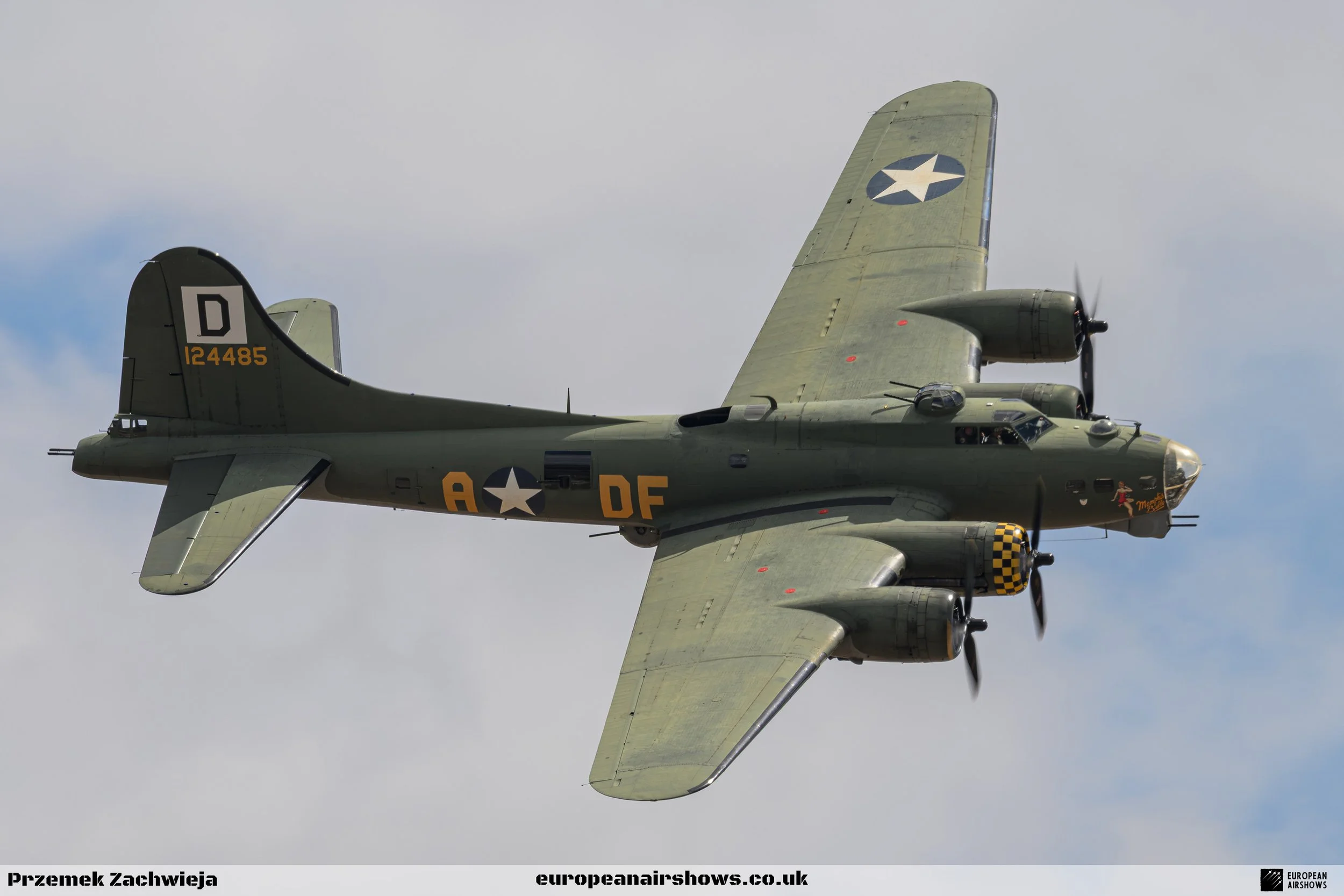
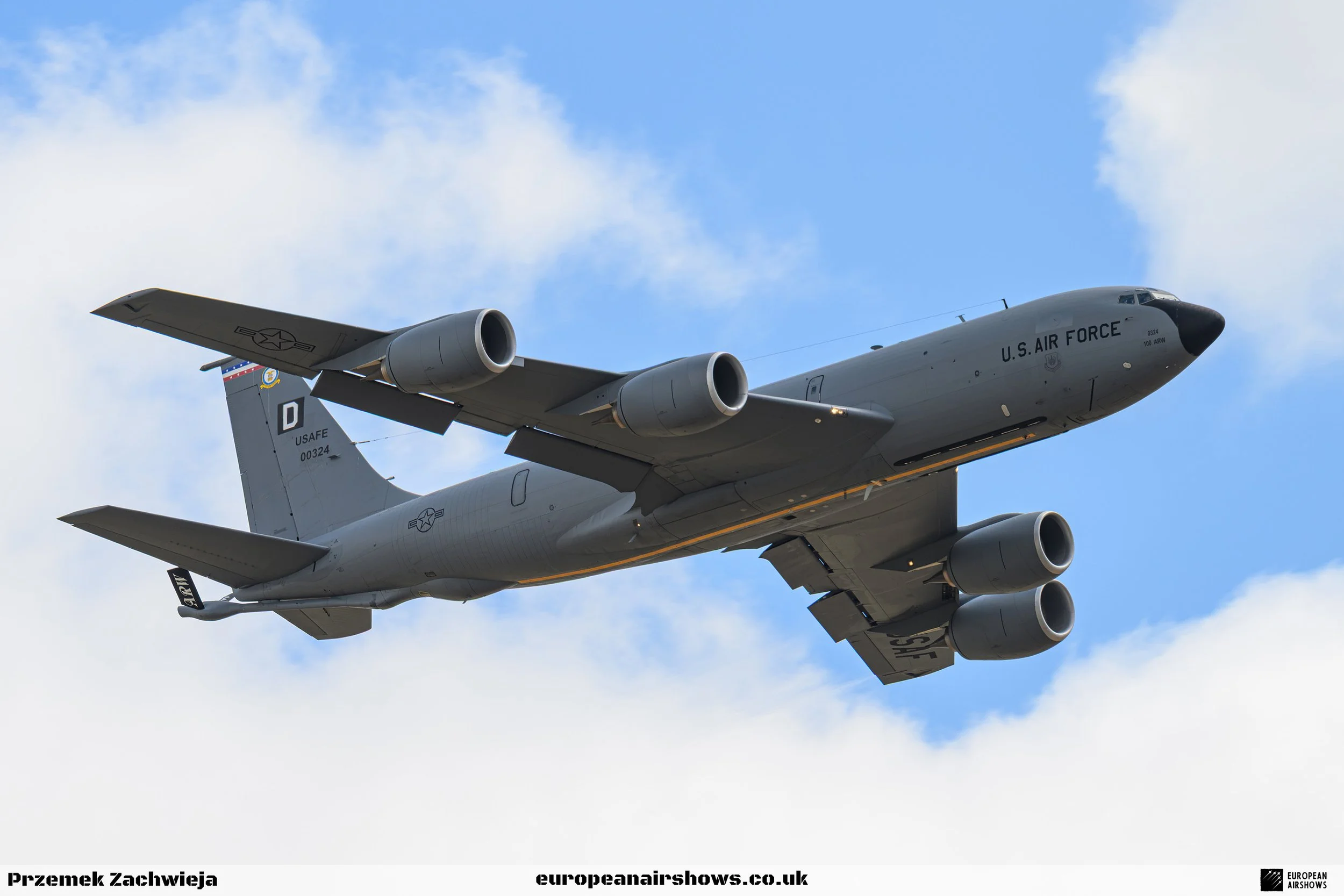
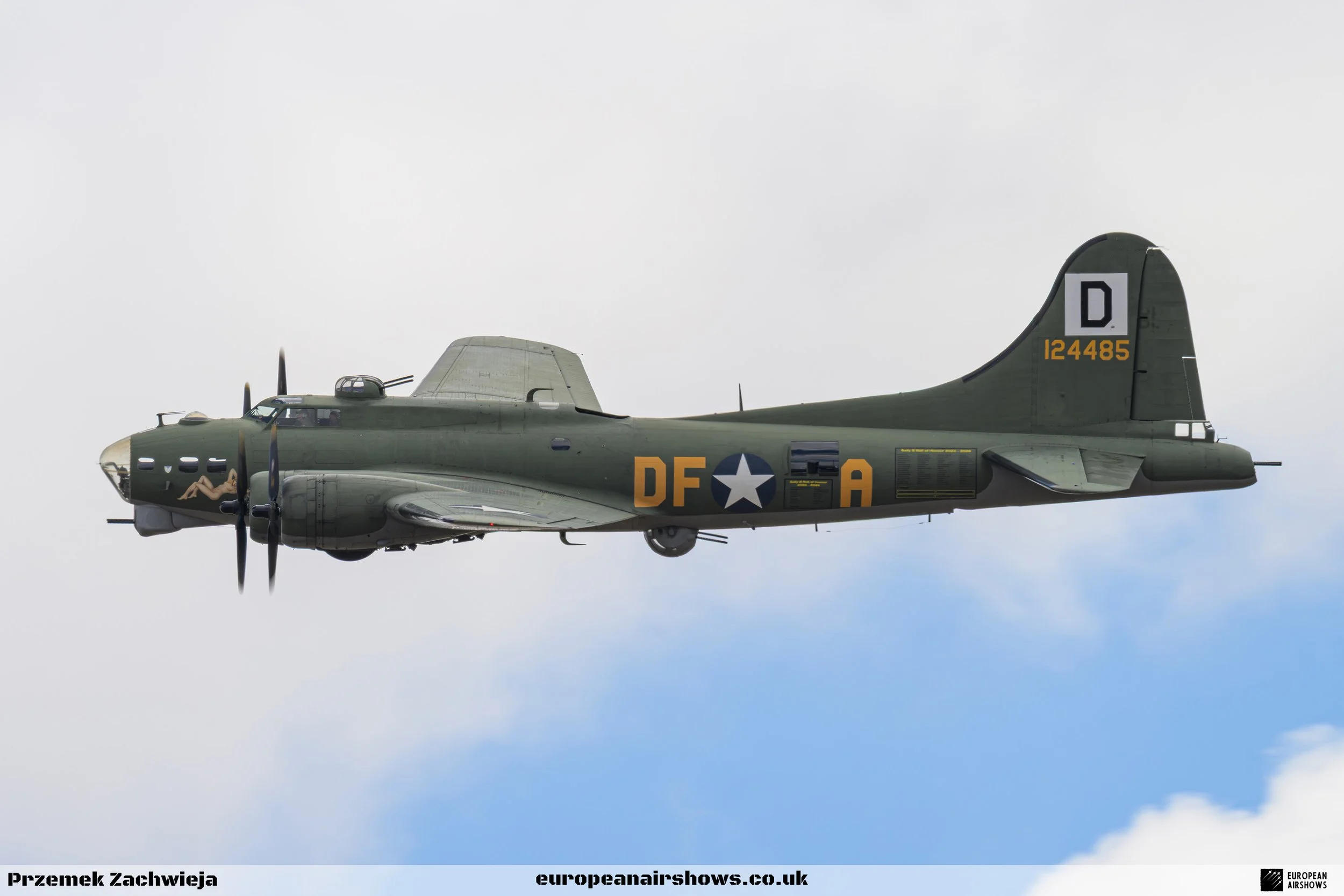
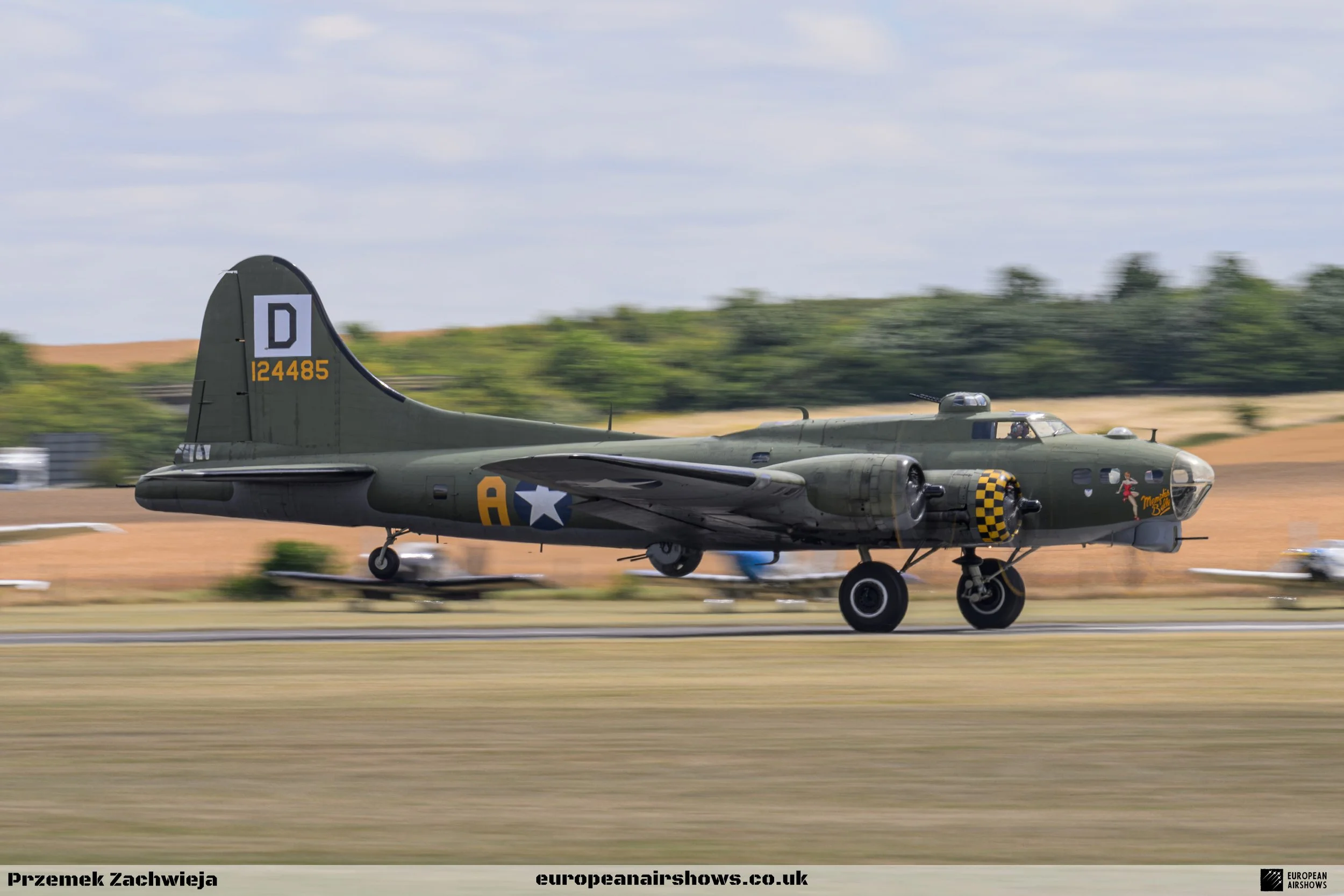
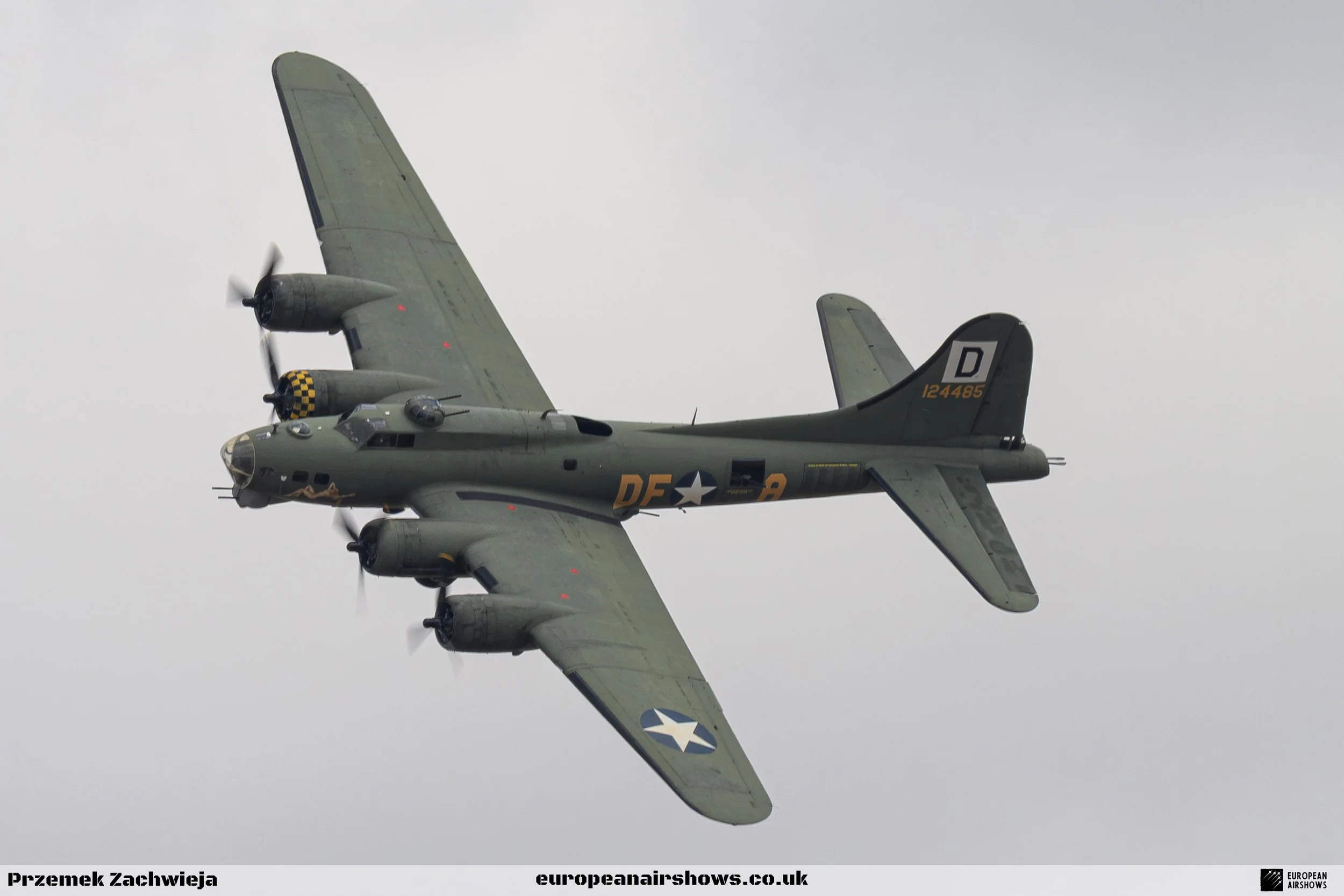
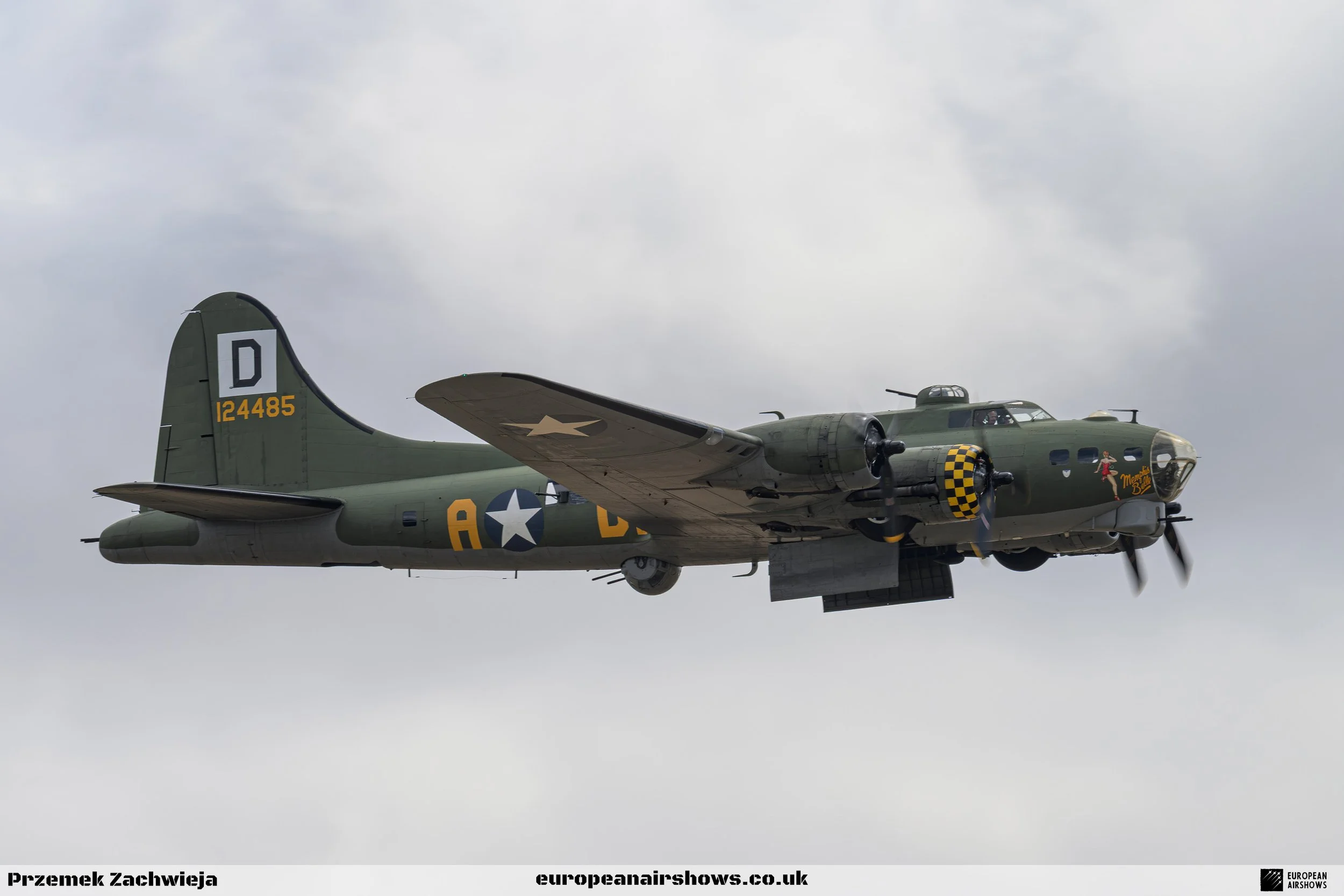
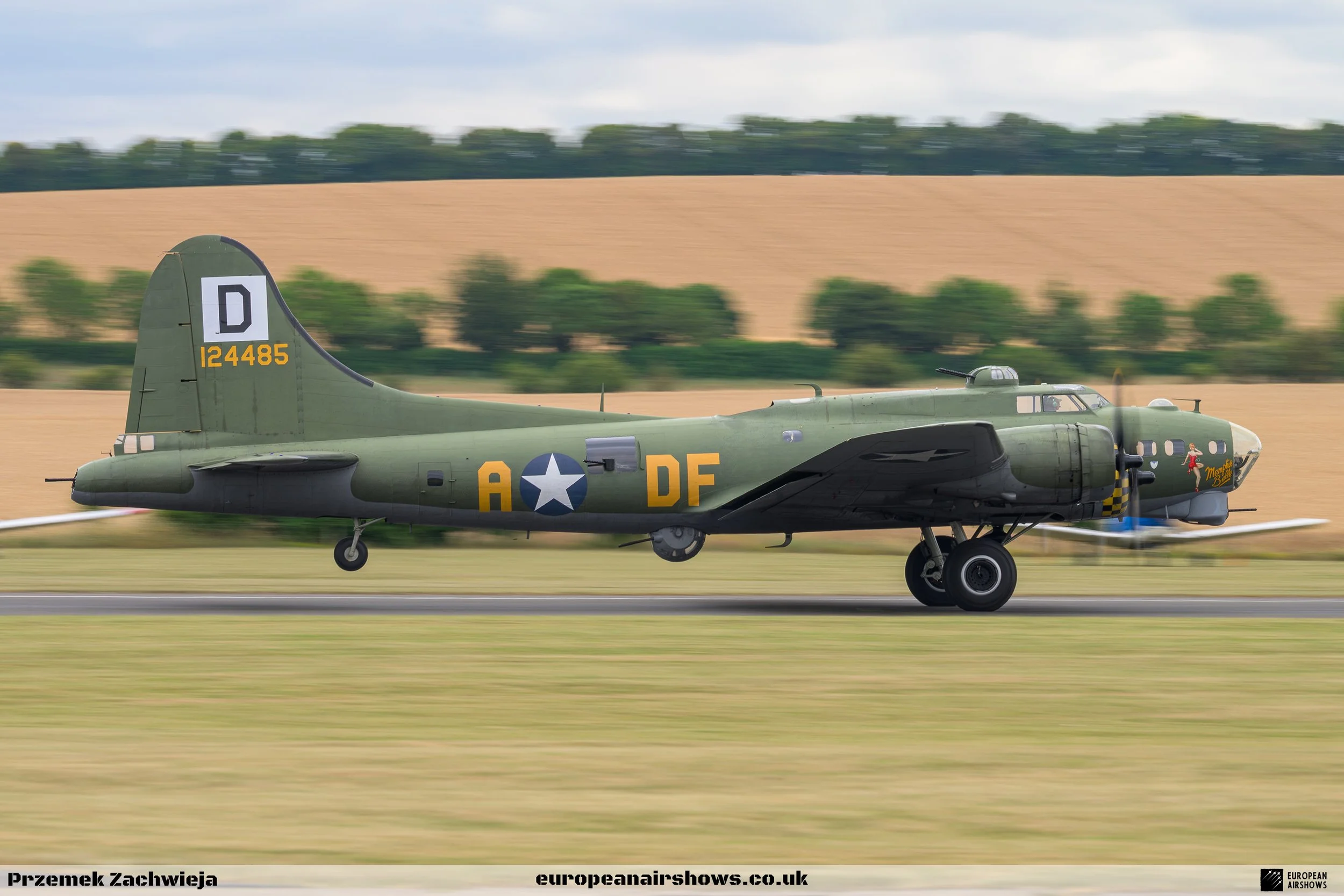
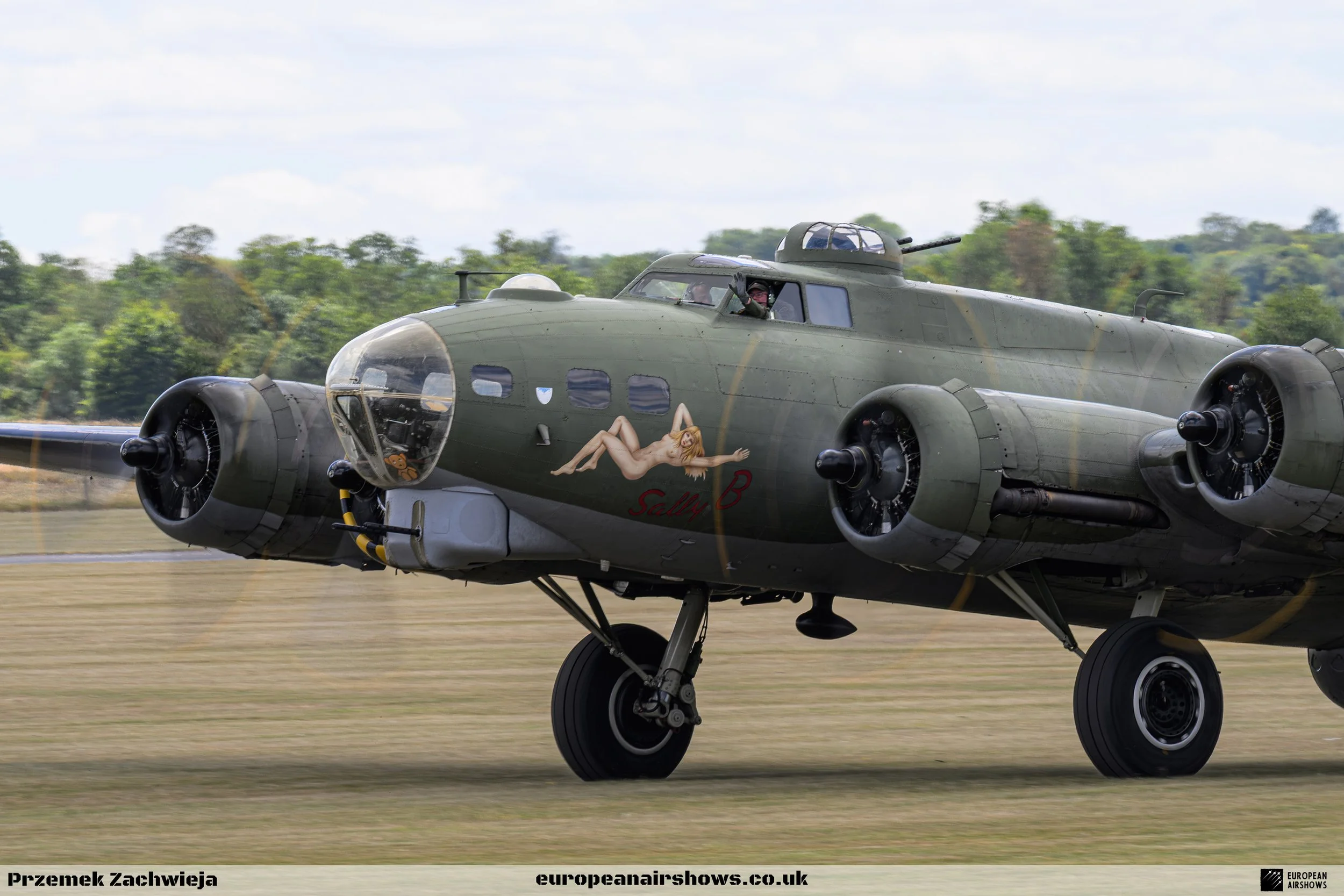
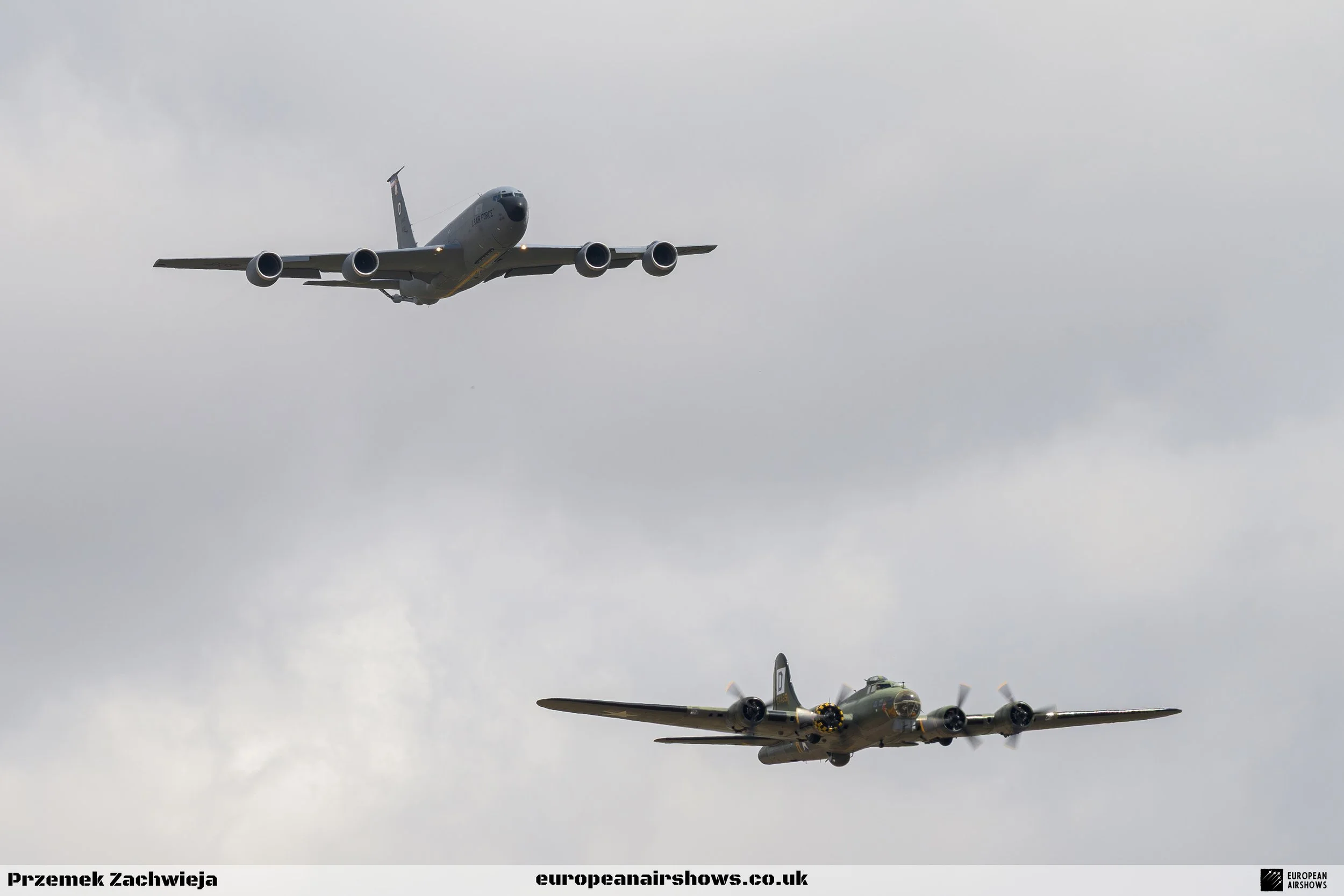
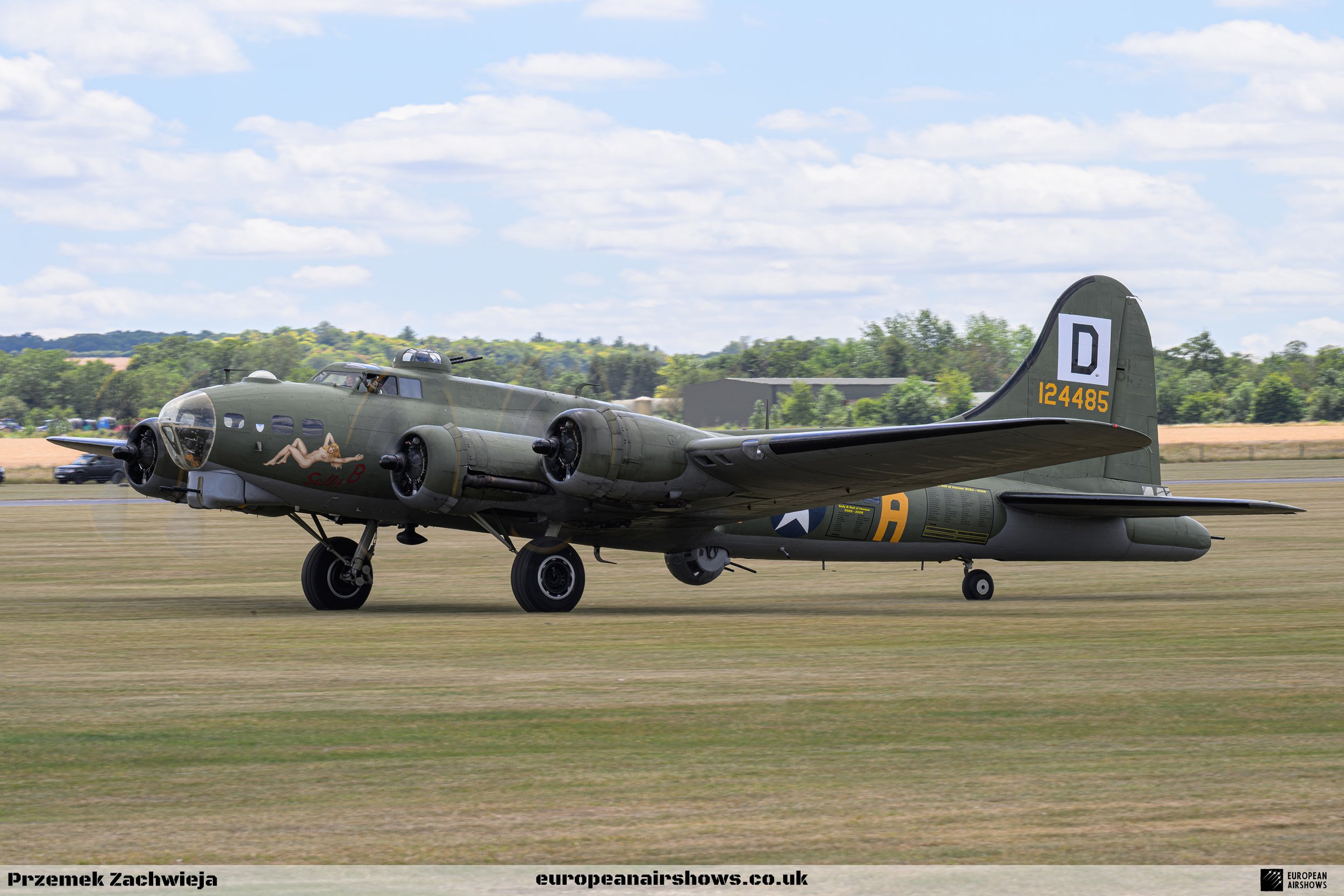
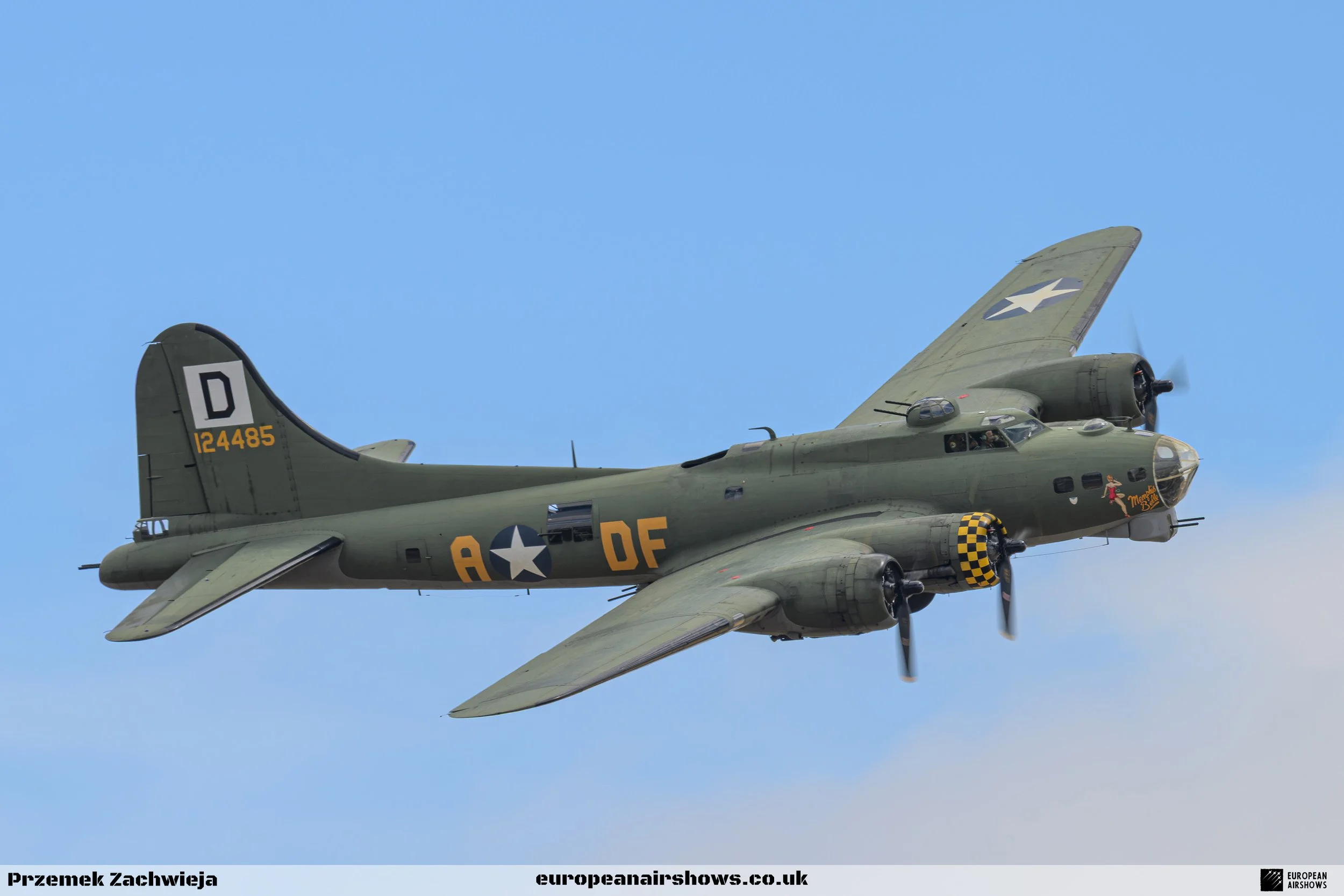
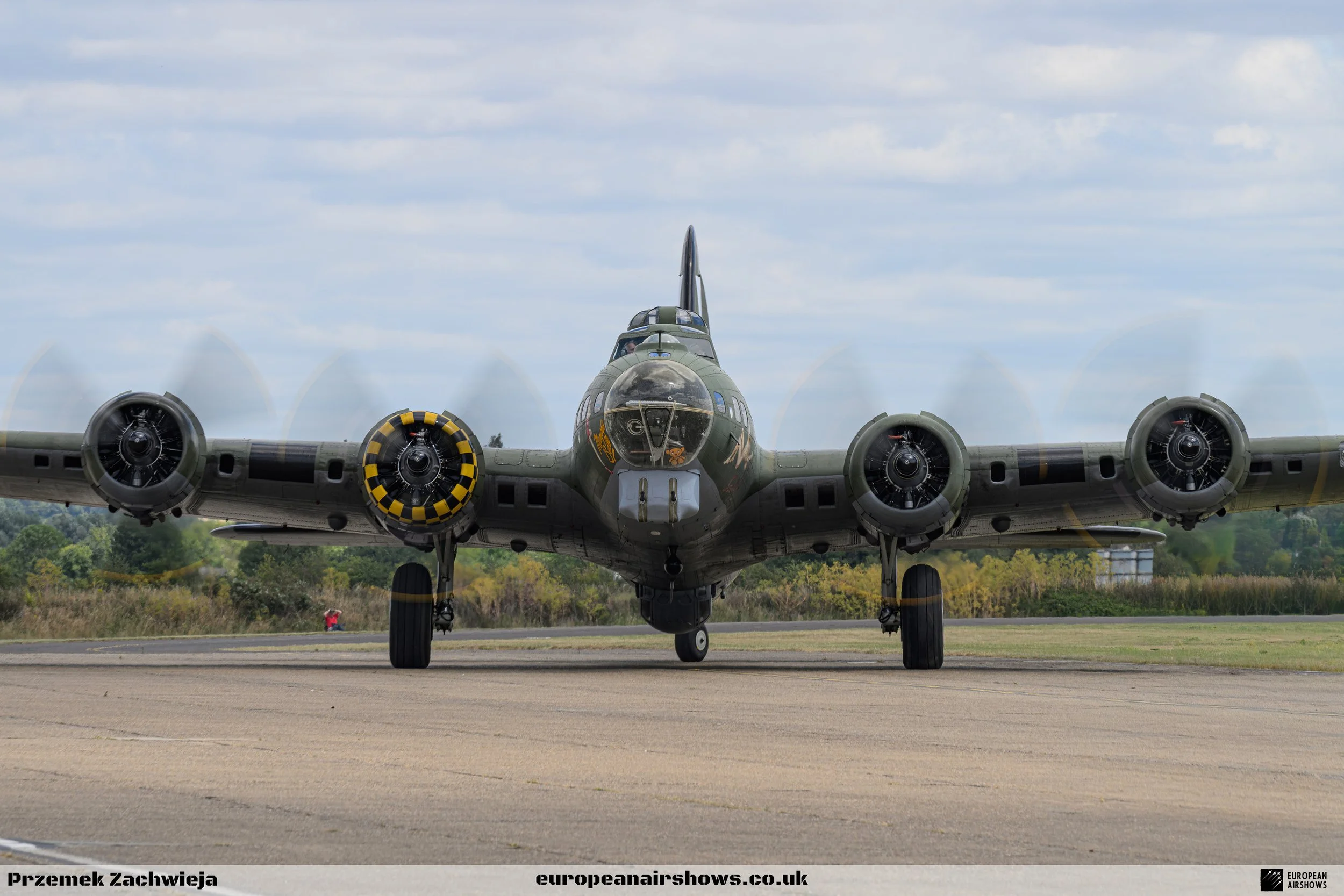
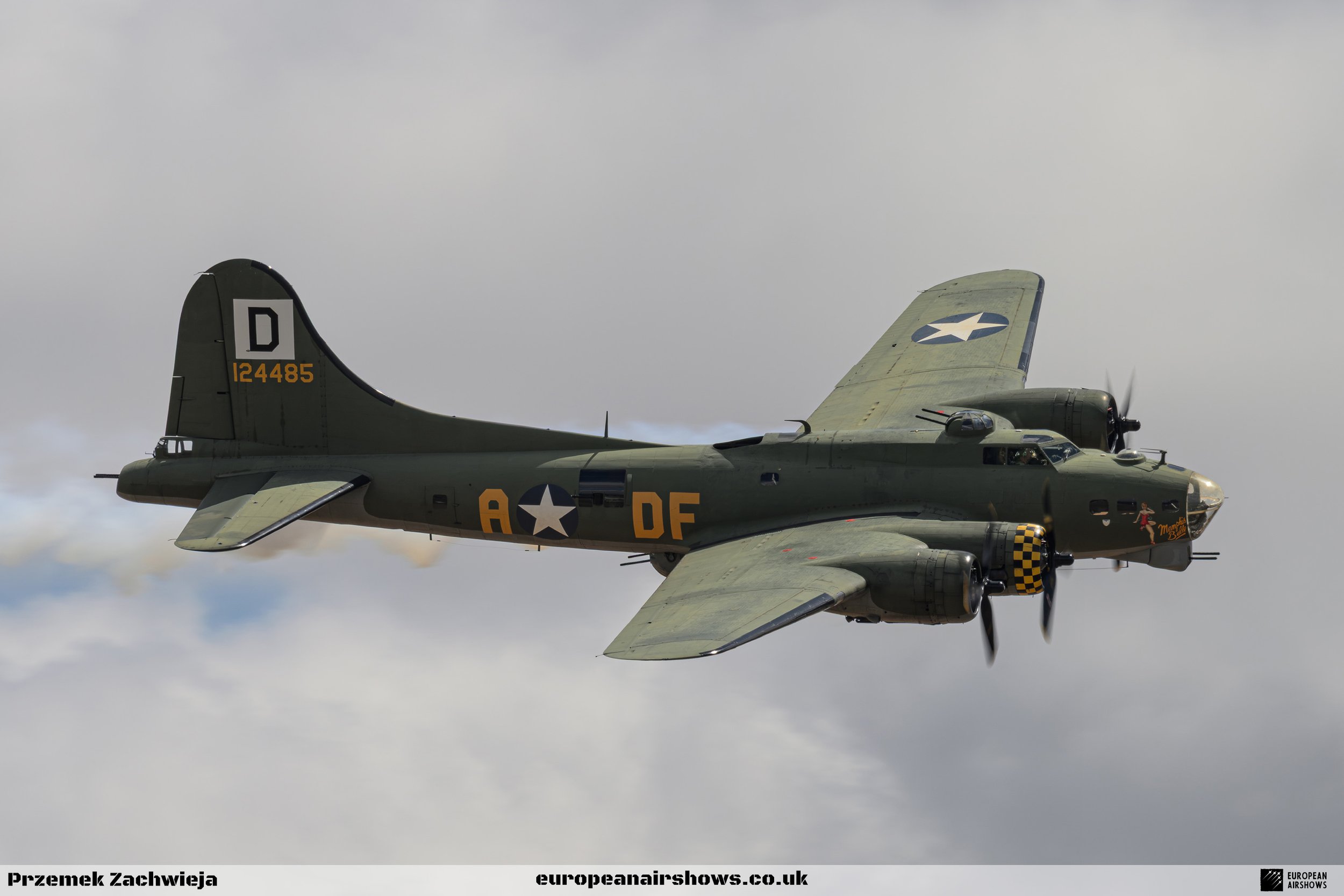
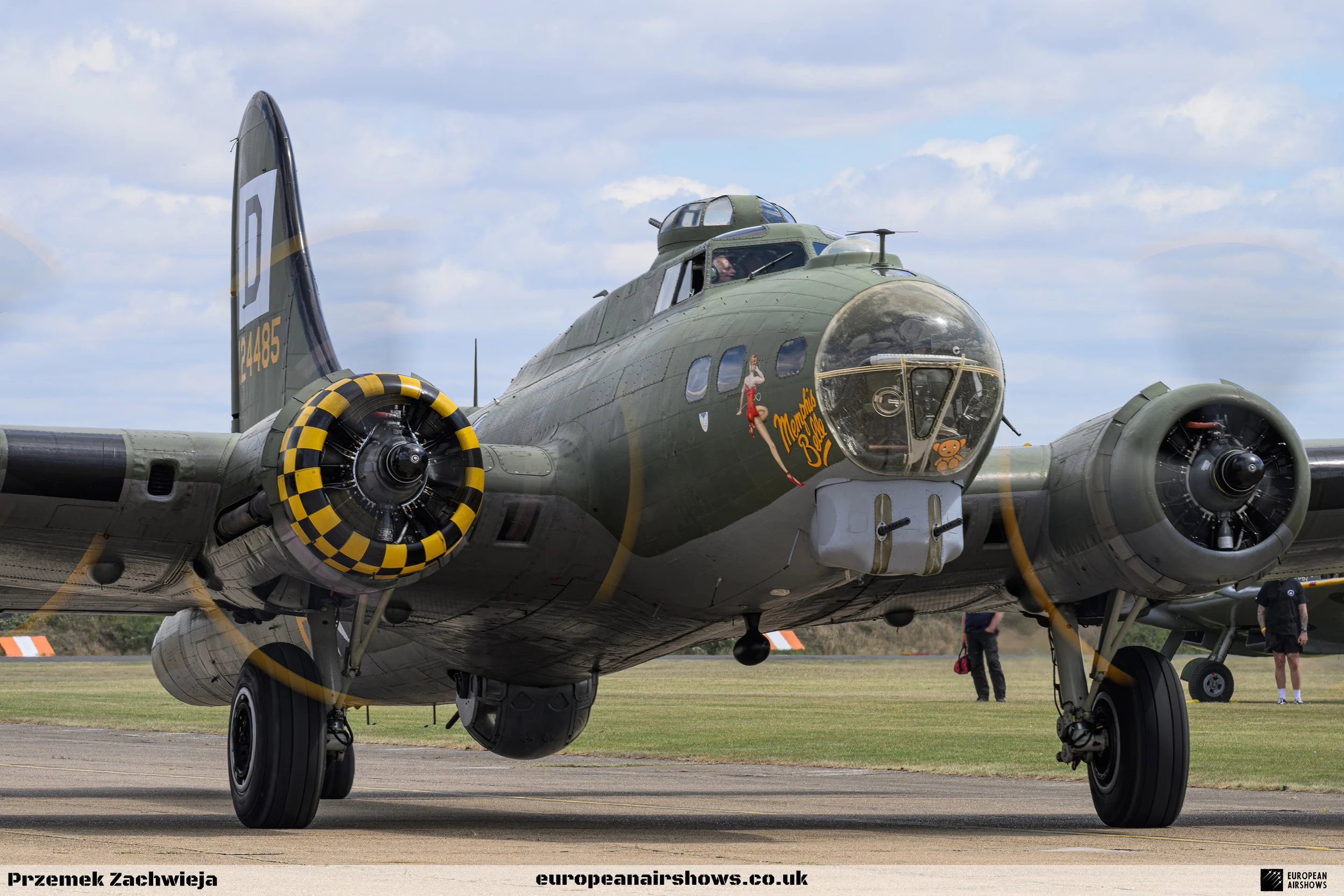
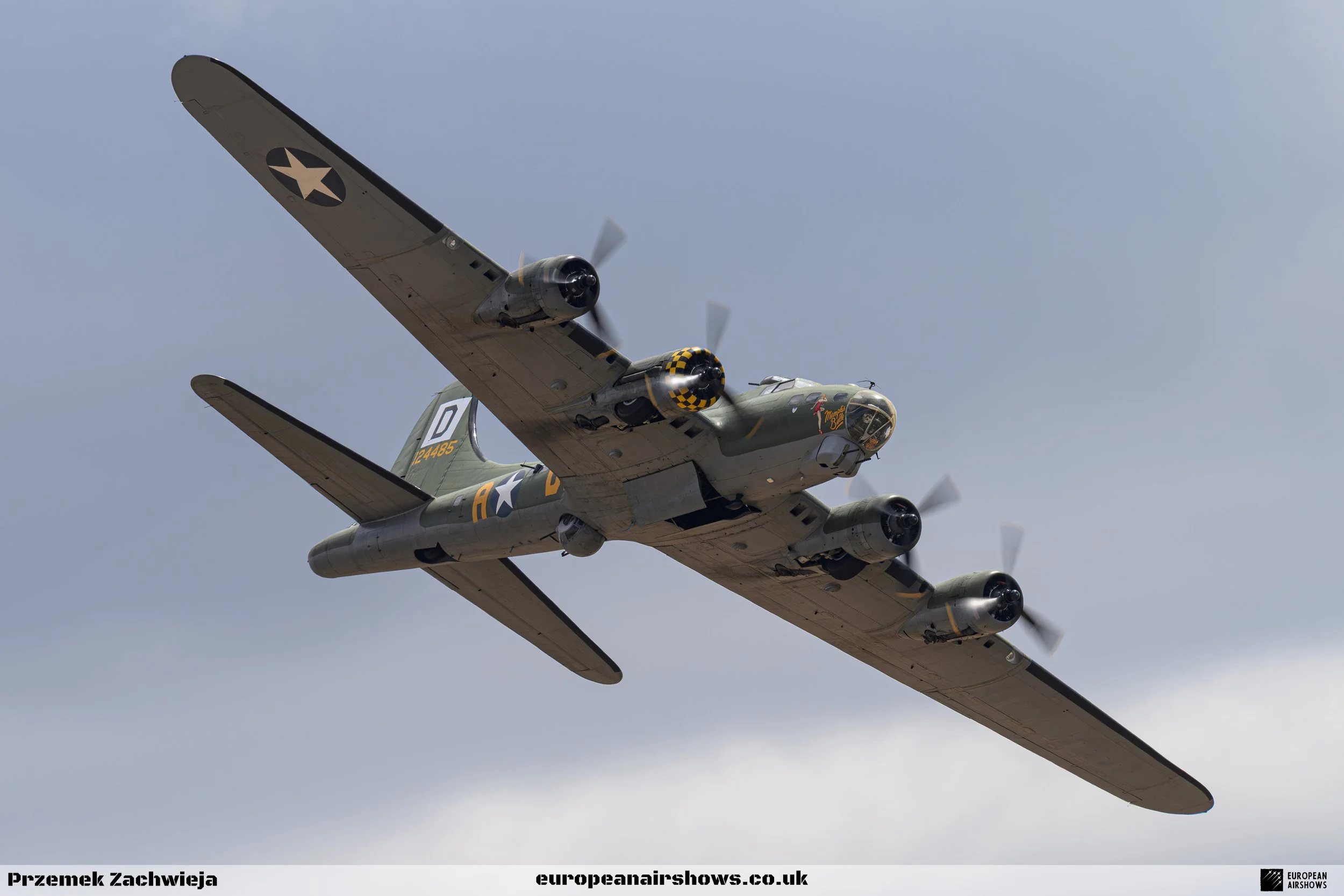
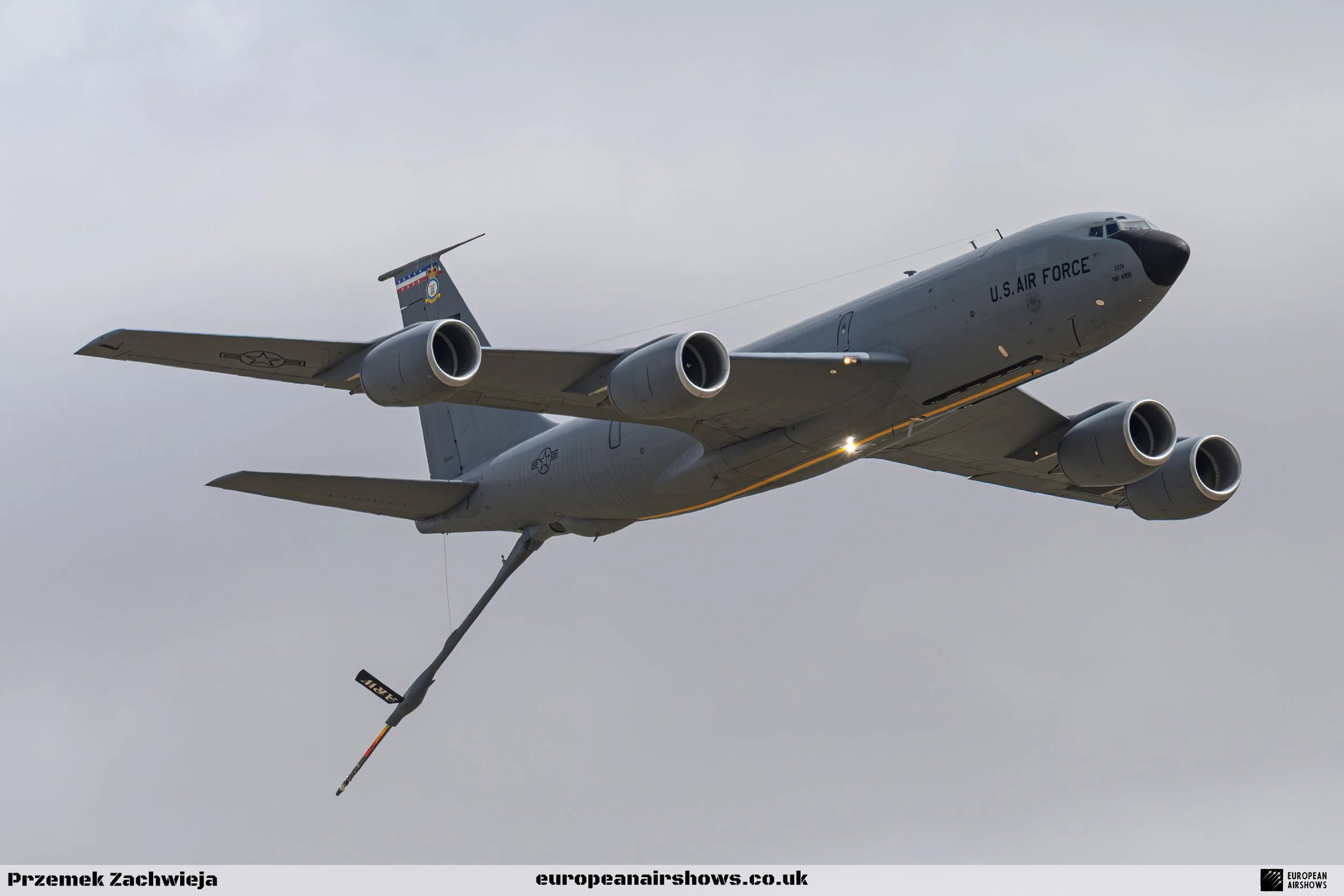
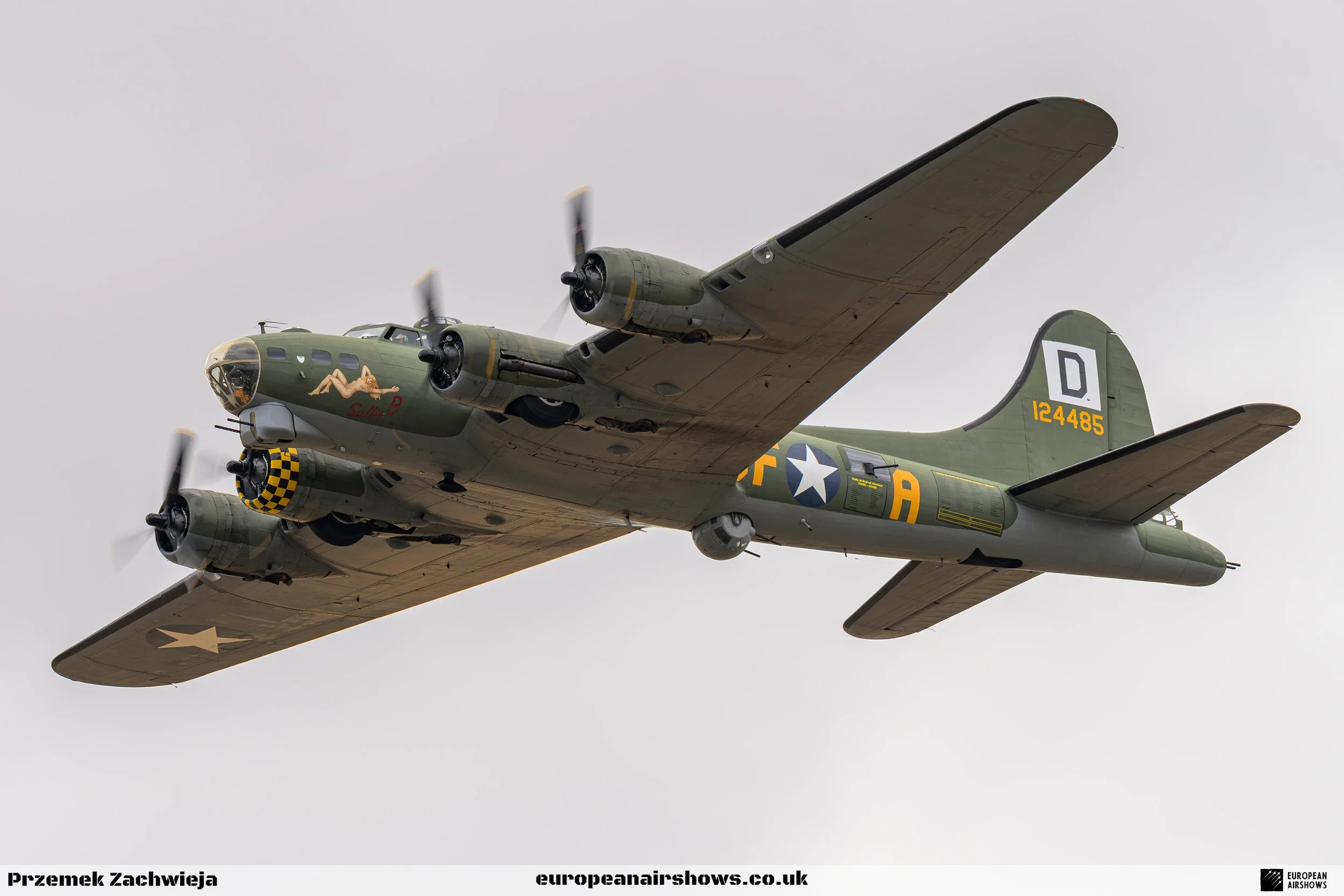
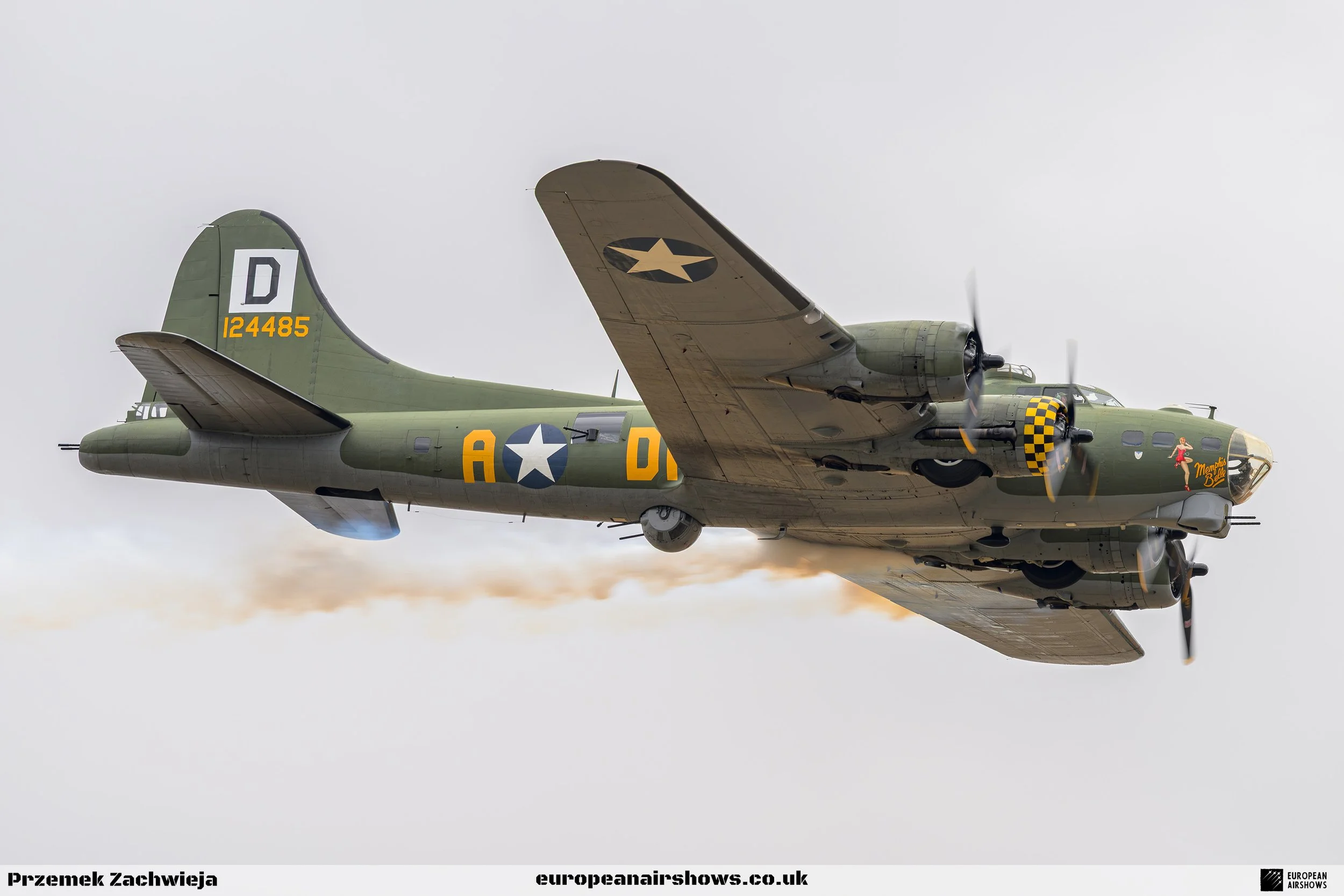
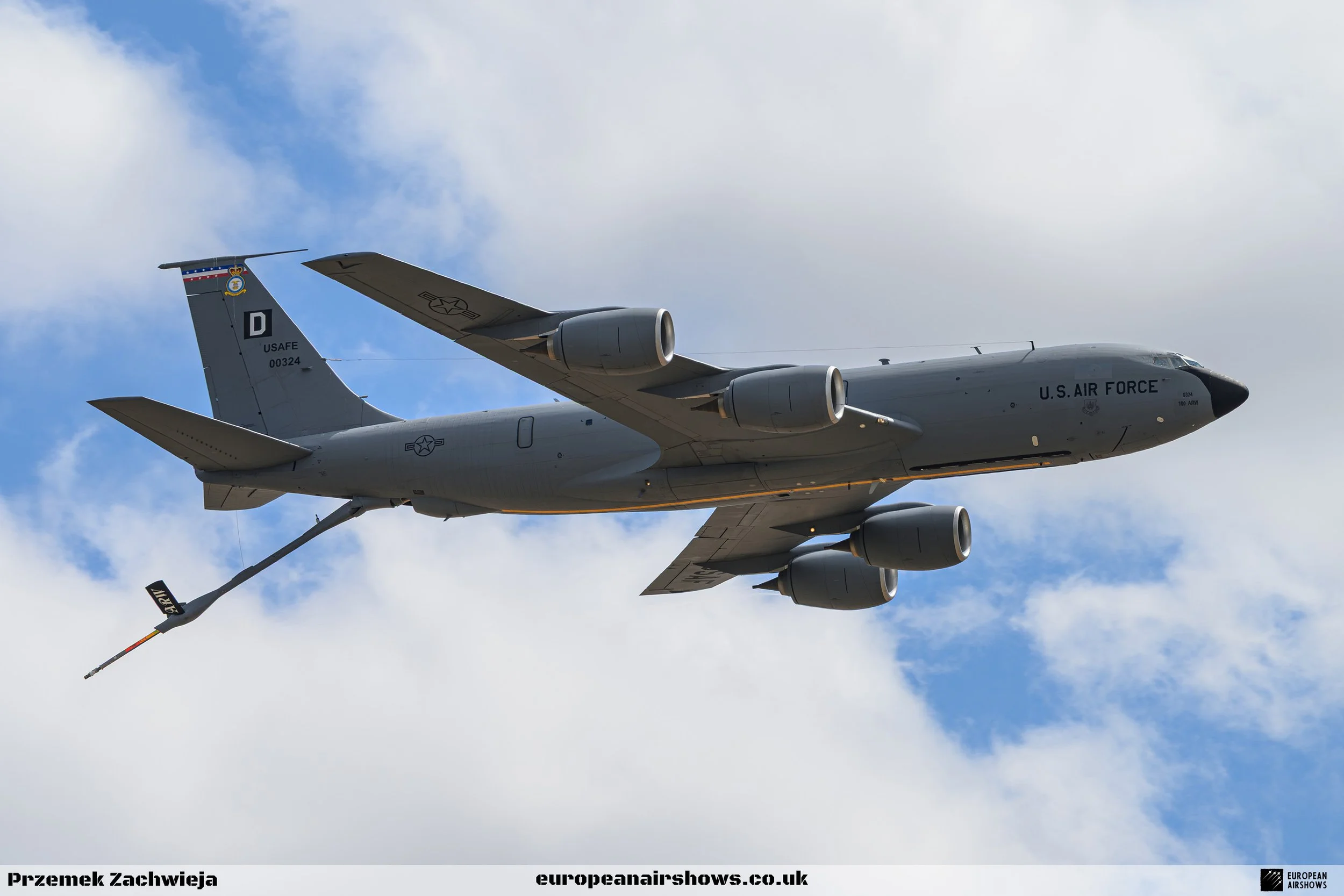
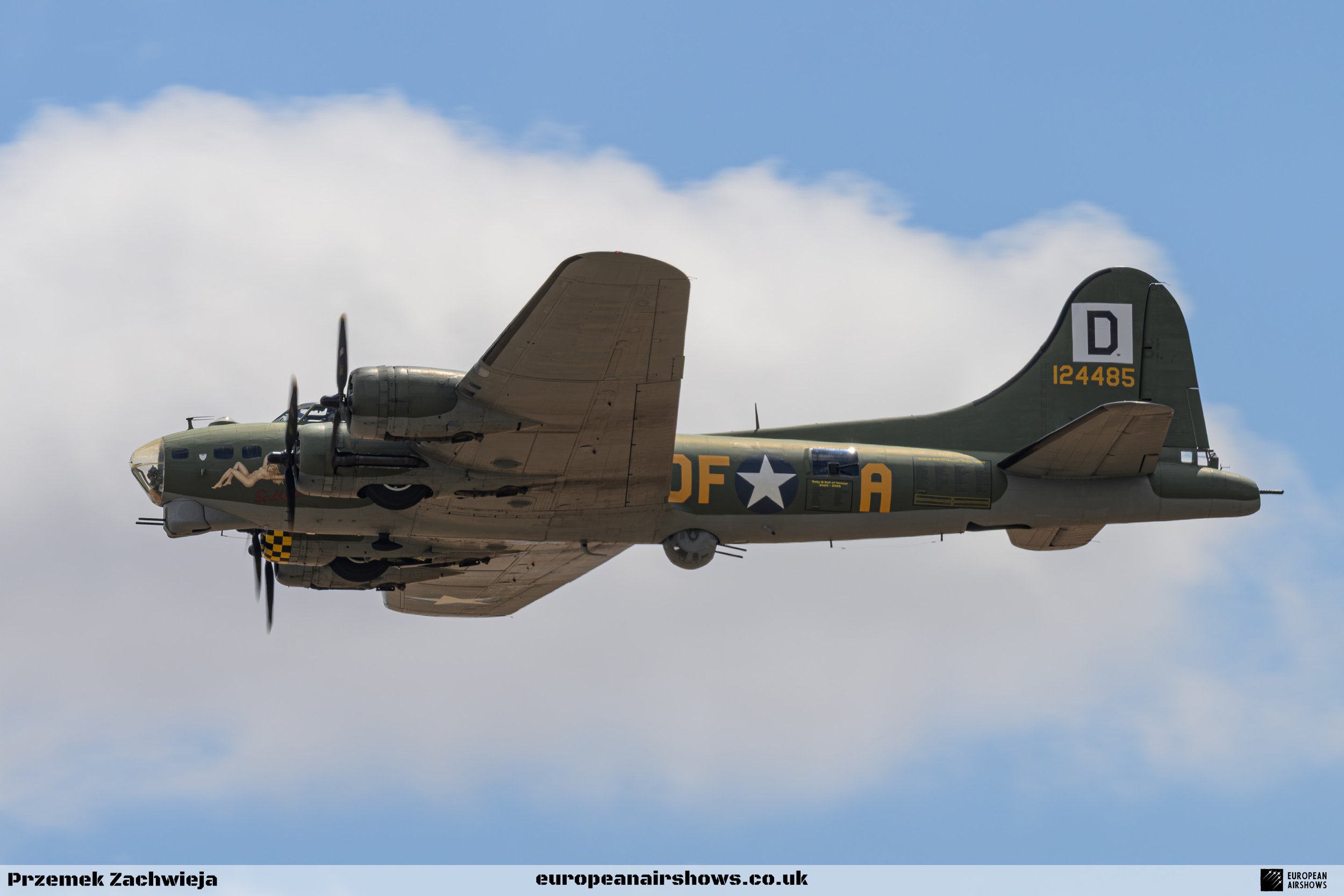
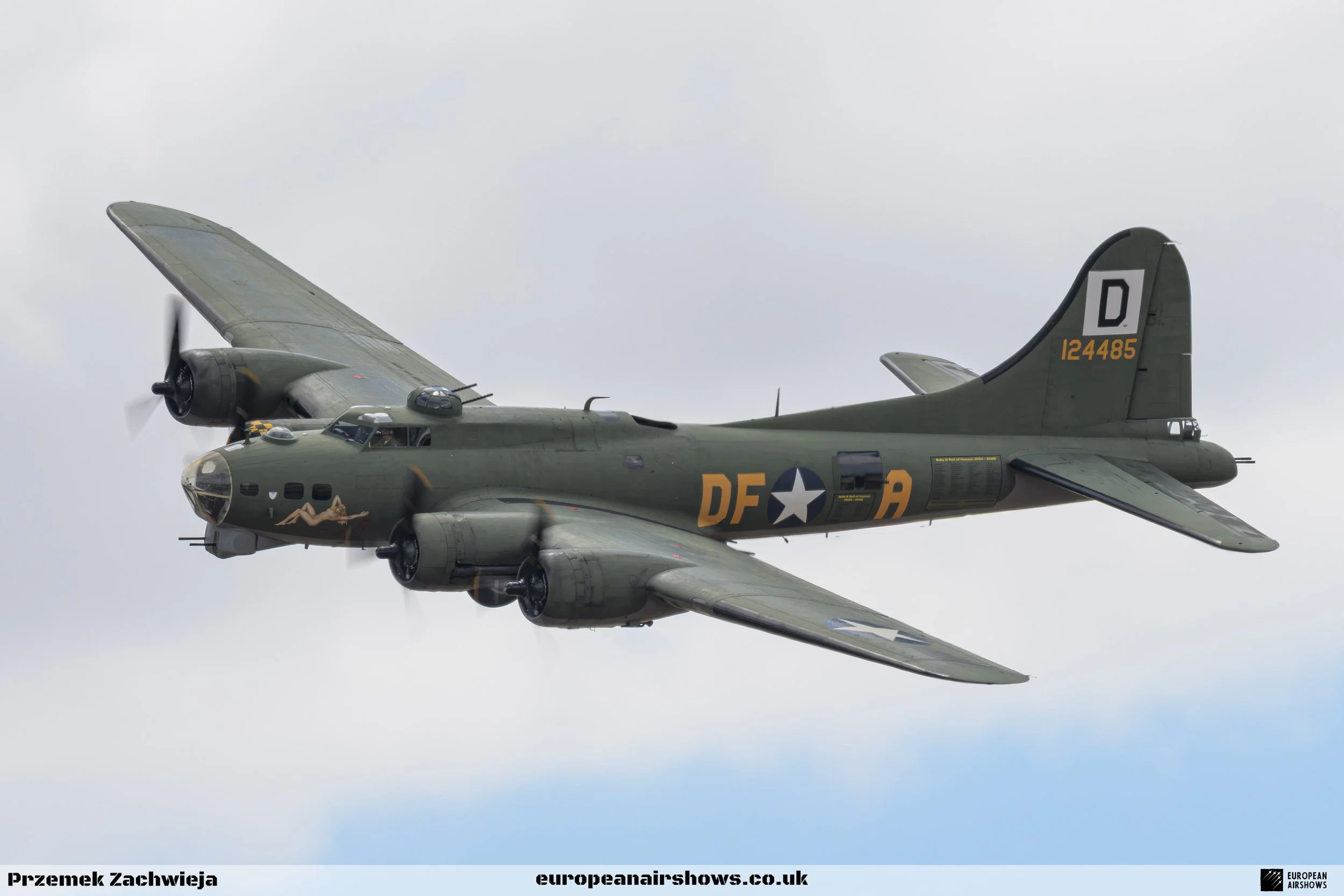
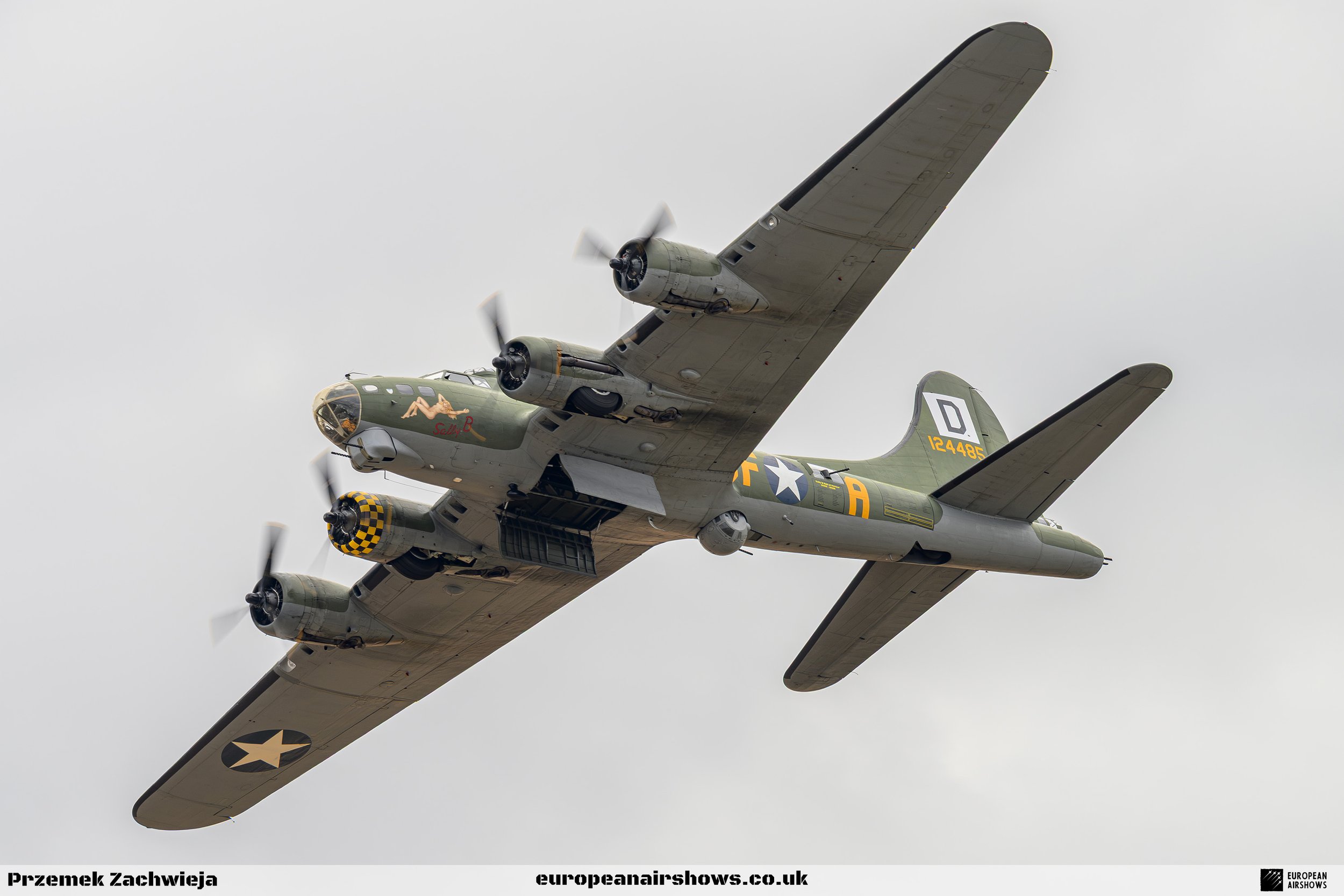
The Boeing B-17G Flying Fortress G-BEDF Sally B appeared alongside a United States Air Force Boeing KC-135R Stratotanker from the 100th Air Refueling Wing and 351st Air Refueling Squadron at RAF Mildenhall.
For the weekend, Sally B received a temporary white Square D marking on its tail. The letter D inside a square was the identification marking of the 100th Bombardment Group, better known as the Bloody Hundredth, which operated Boeing B-17 Flying Fortresses from RAF Thorpe Abbotts in Norfolk during the Second World War.
USAAF bomber groups used geometric tail markings to help identify their aircraft. For the 100th Bomb Group, that marking was the letter D inside a square. The modern 100th Air Refueling Wing continues to carry the Square D on its KC-135s in recognition of that heritage.
The 100th Air Refueling Wing is the only United States air-refuelling wing permanently based in Europe, making the formation more than a simple pairing of an old and modern aircraft. It directly linked the wartime Flying Fortress history of the Bloody Hundredth with its present-day air-refuelling role at RAF Mildenhall.
Sally B and the KC-135R approached in a loose formation for a single pass, creating a unique sight over Duxford. It was a well-executed formation that allowed the crowd to compare two completely different generations of large American military aircraft.
Sally B then separated and continued into its own solo display, flown by Peter Kuypers and Paul Szluha. The KC-135R later returned for a solo flypast with its refuelling boom lowered, which added considerably to the appearance of the tanker.
The temporary Square D made a surprisingly large difference to Sally B’s familiar colour scheme. The aircraft has carried the 1989 movie version of the Memphis Belle markings for decades, together with its own Sally B nose art and chequered engine cowling. The addition of the Square D gave the aircraft a completely different appearance for the weekend and linked it directly to the KC-135 operating alongside it.
It was reportedly the most noticeable temporary change to Sally B’s markings since 1996, when the DF-A codes, nose art and chequered cowling were temporarily removed for the filming of the television series Over Here.
On Sunday, Sally B returned without the KC-135R and performed a conventional solo display. Europe’s only airworthy B-17 remains one of Duxford’s most important aircraft, and even without the unique Saturday formation, the sight and sound of its four Wright R-1820 Cyclone radial engines remained one of the weekend’s highlights.
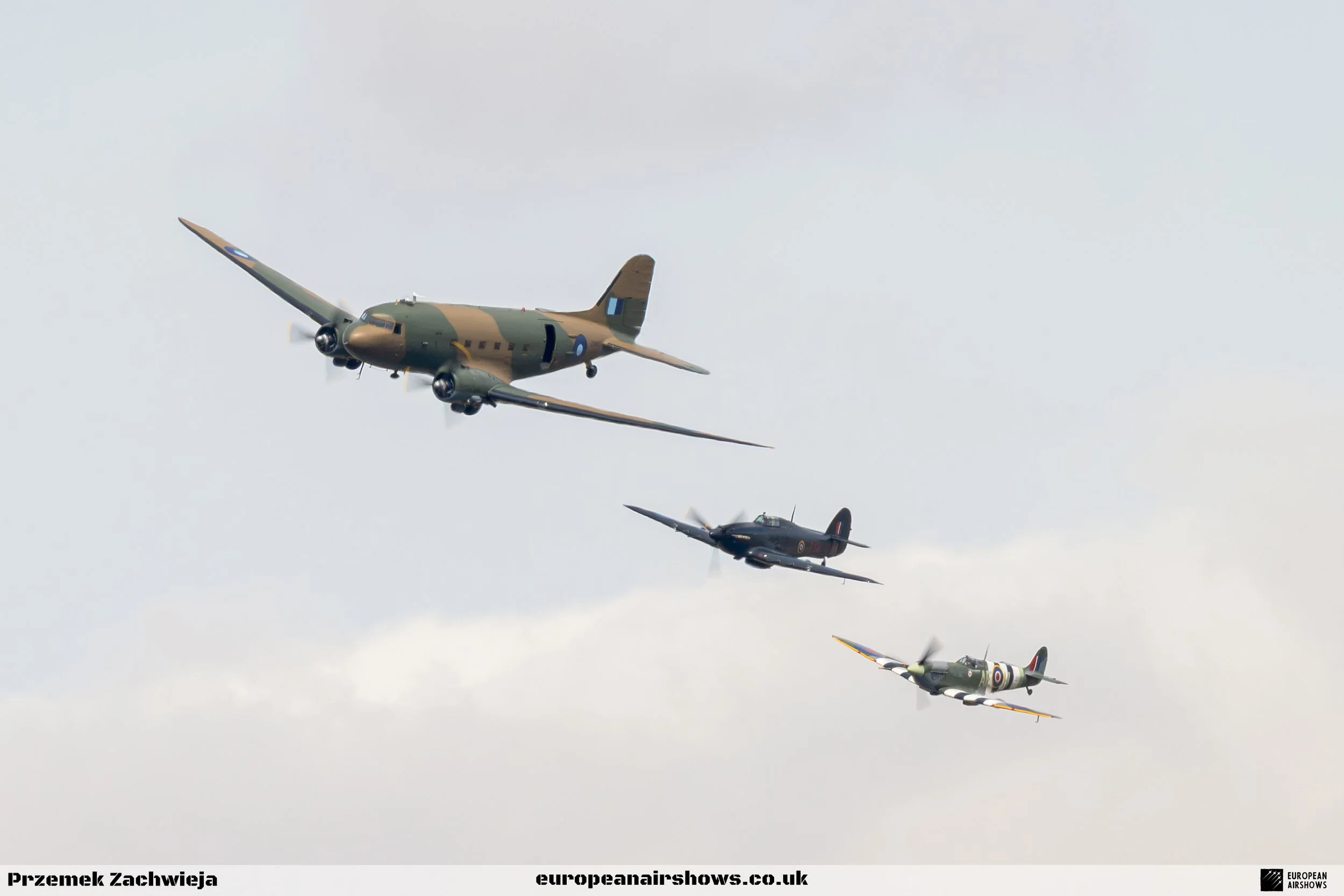
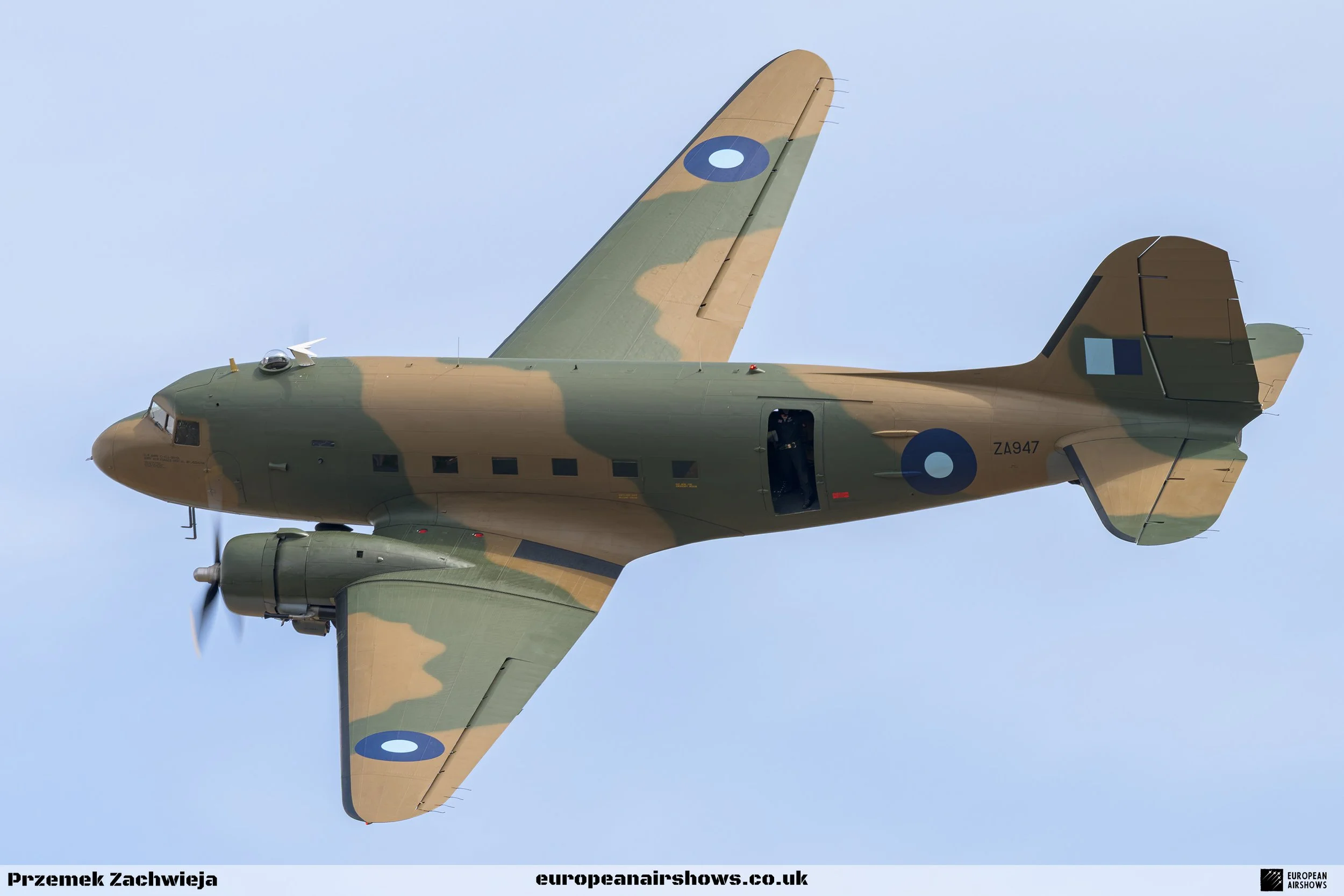
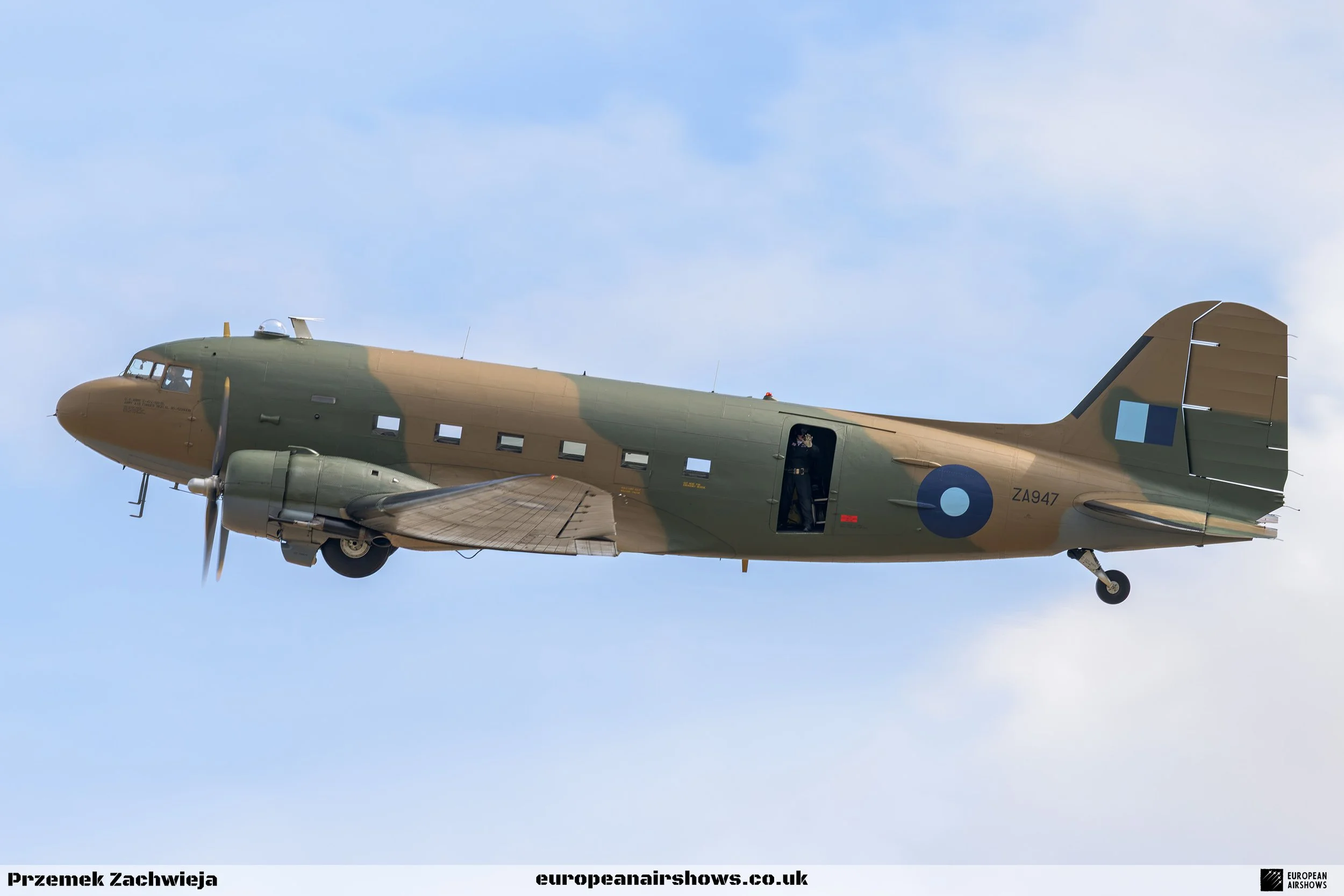
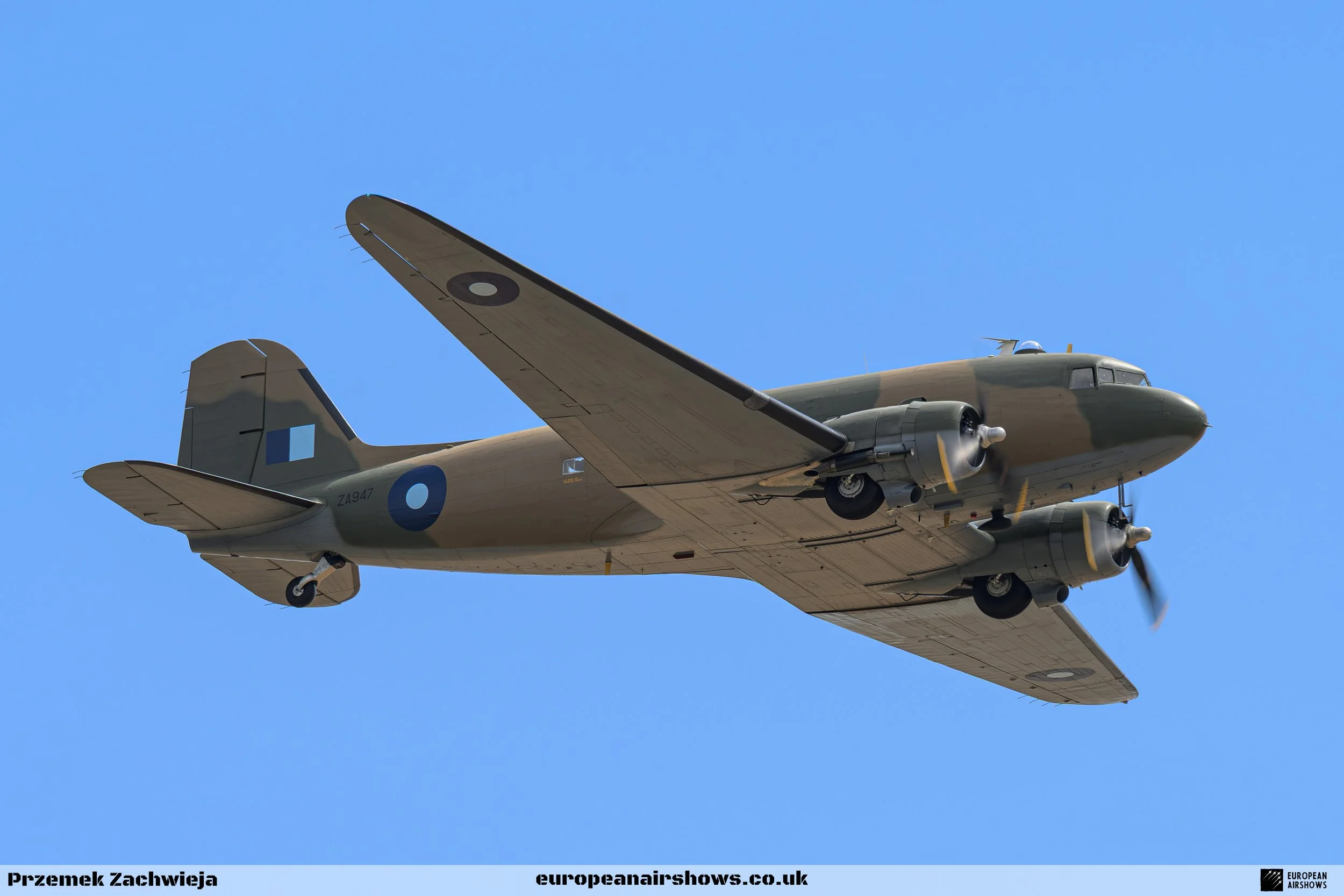
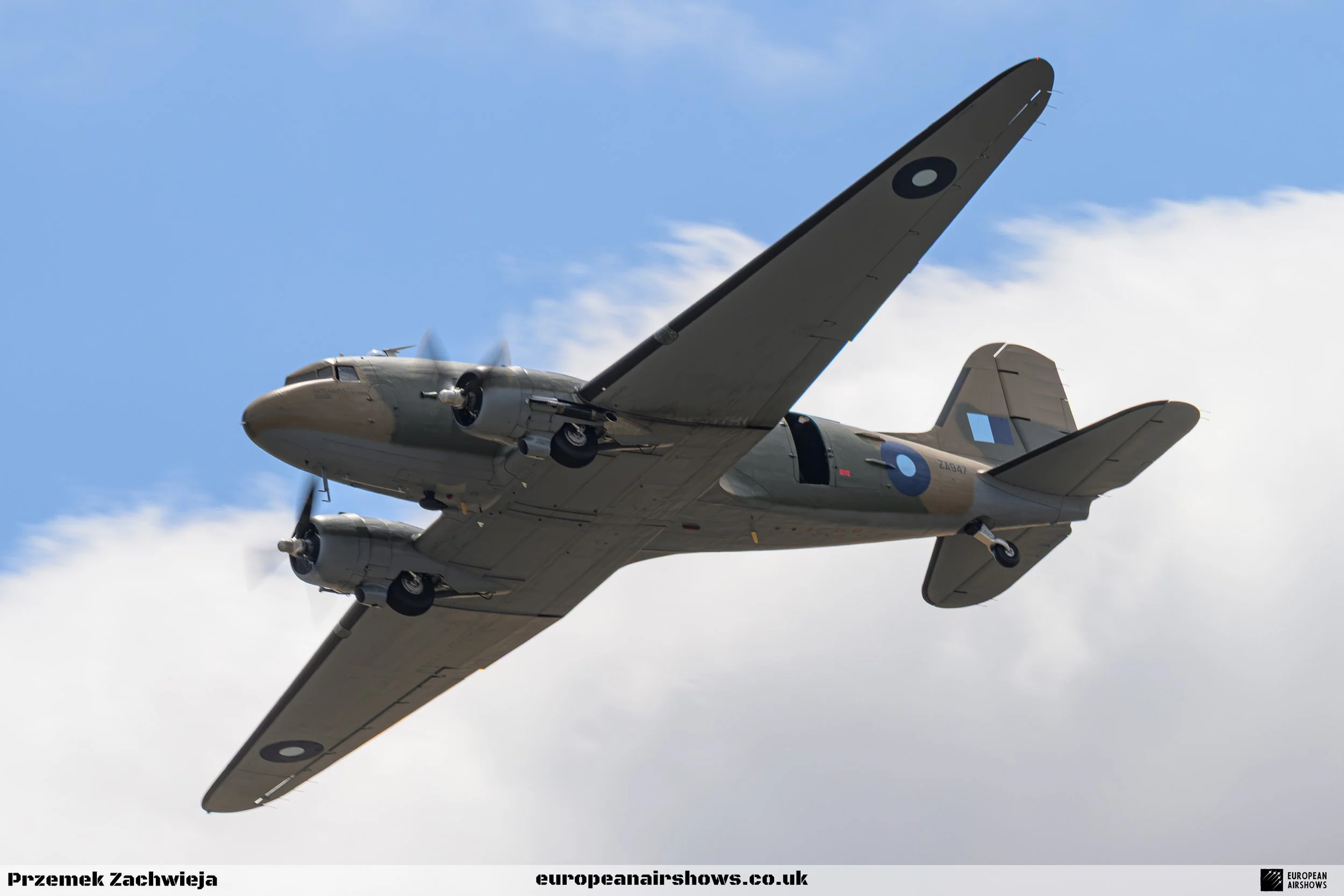
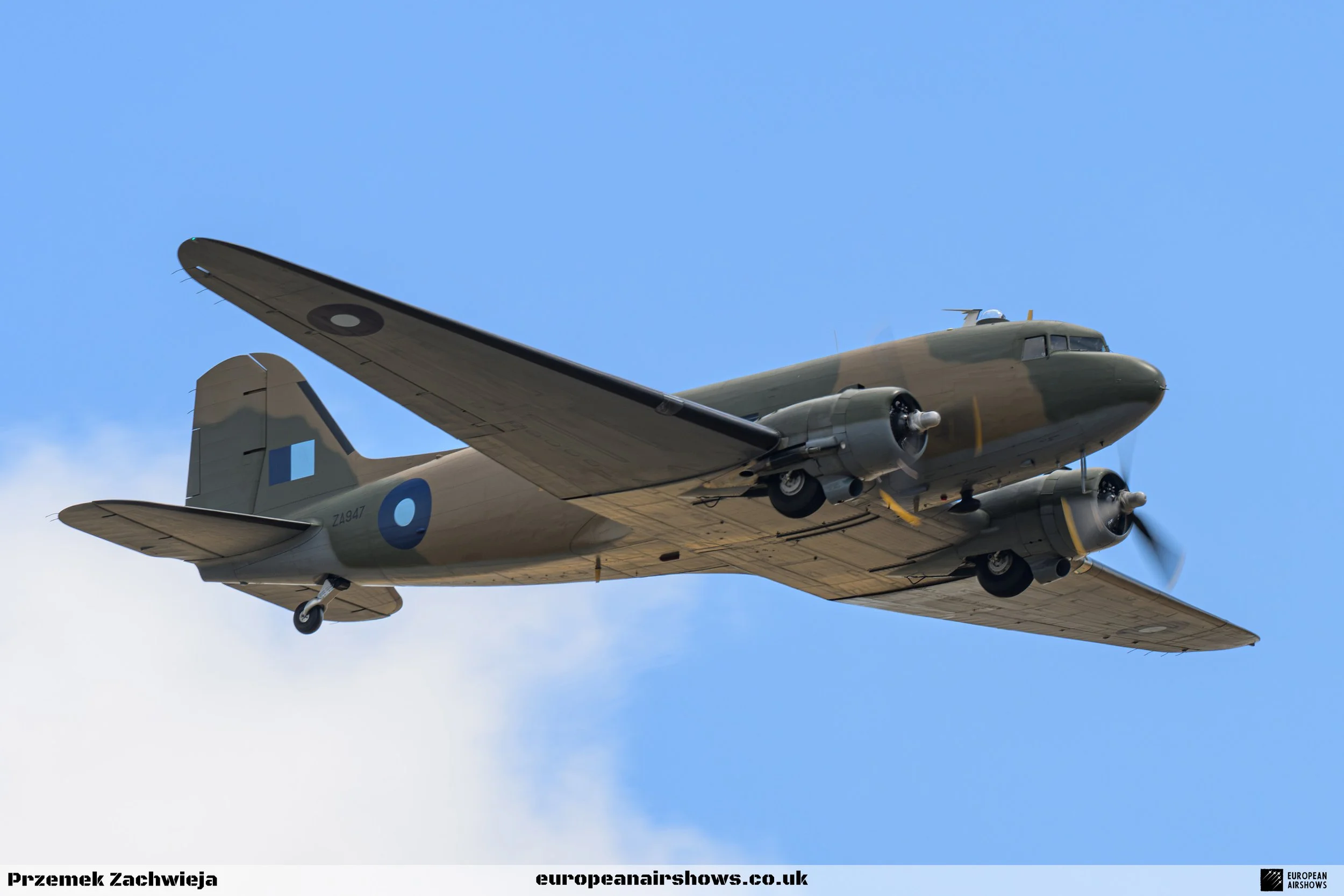
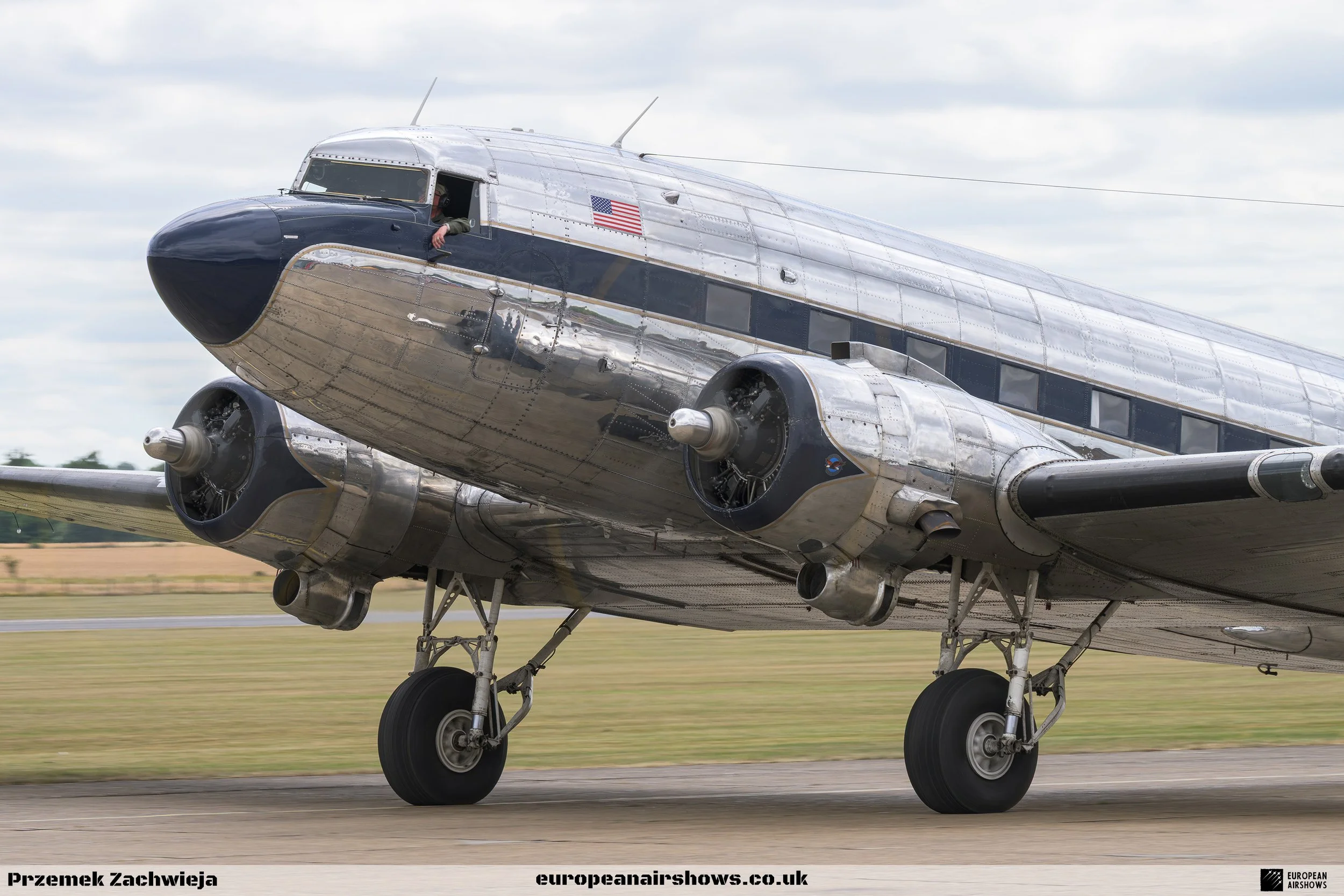
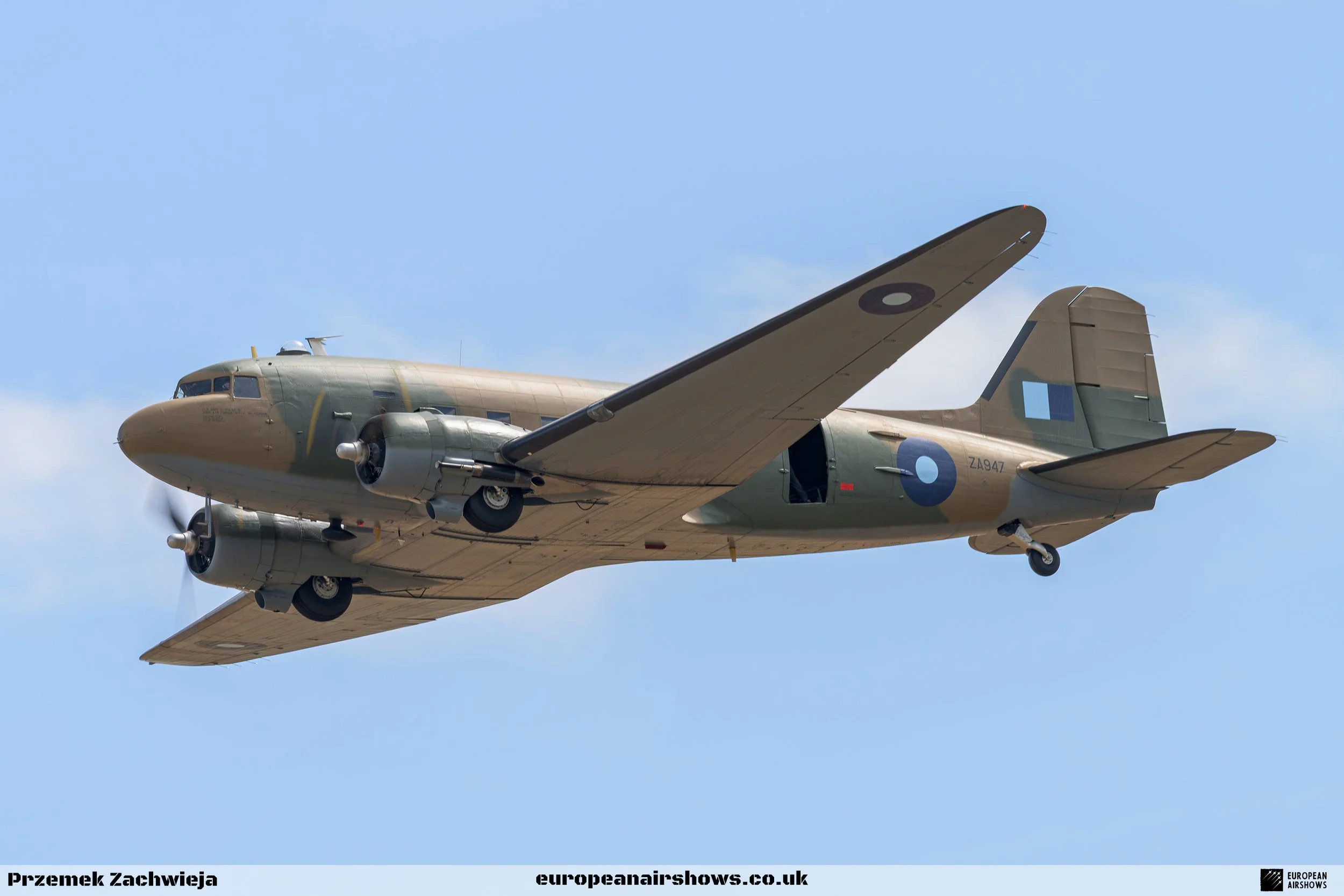
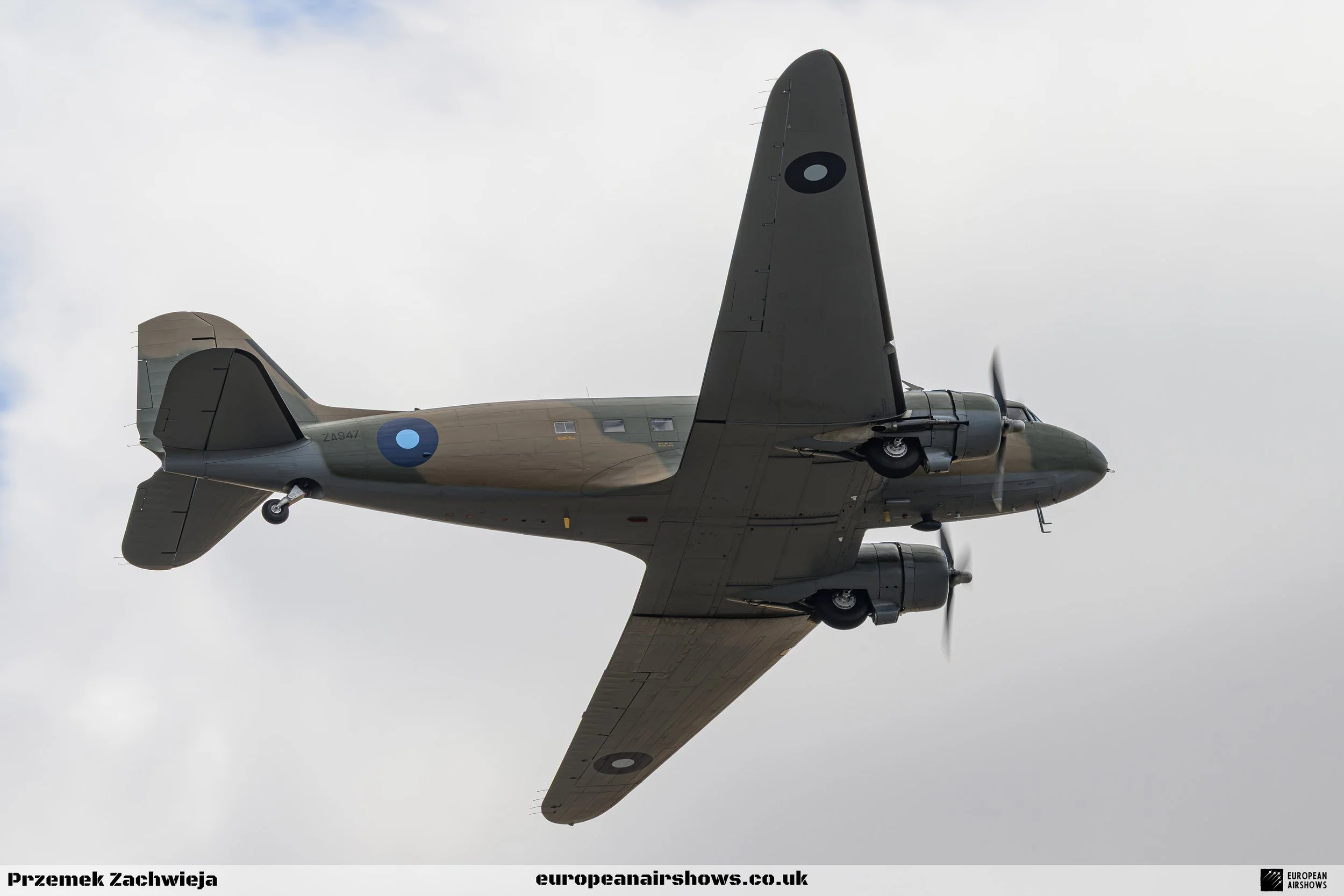
The Royal Air Force Battle of Britain Memorial Flight contributed its Douglas C-47A Dakota Mk III ZA947 on both days.
Saturday’s solo display was a fairly typical modern BBMF Dakota routine. The aircraft remained high and relatively flat, with no real topside passes for photographers. Nevertheless, it was still good to see and hear the Dakota, particularly when it arrived from behind the crowd and later departed directly overhead.
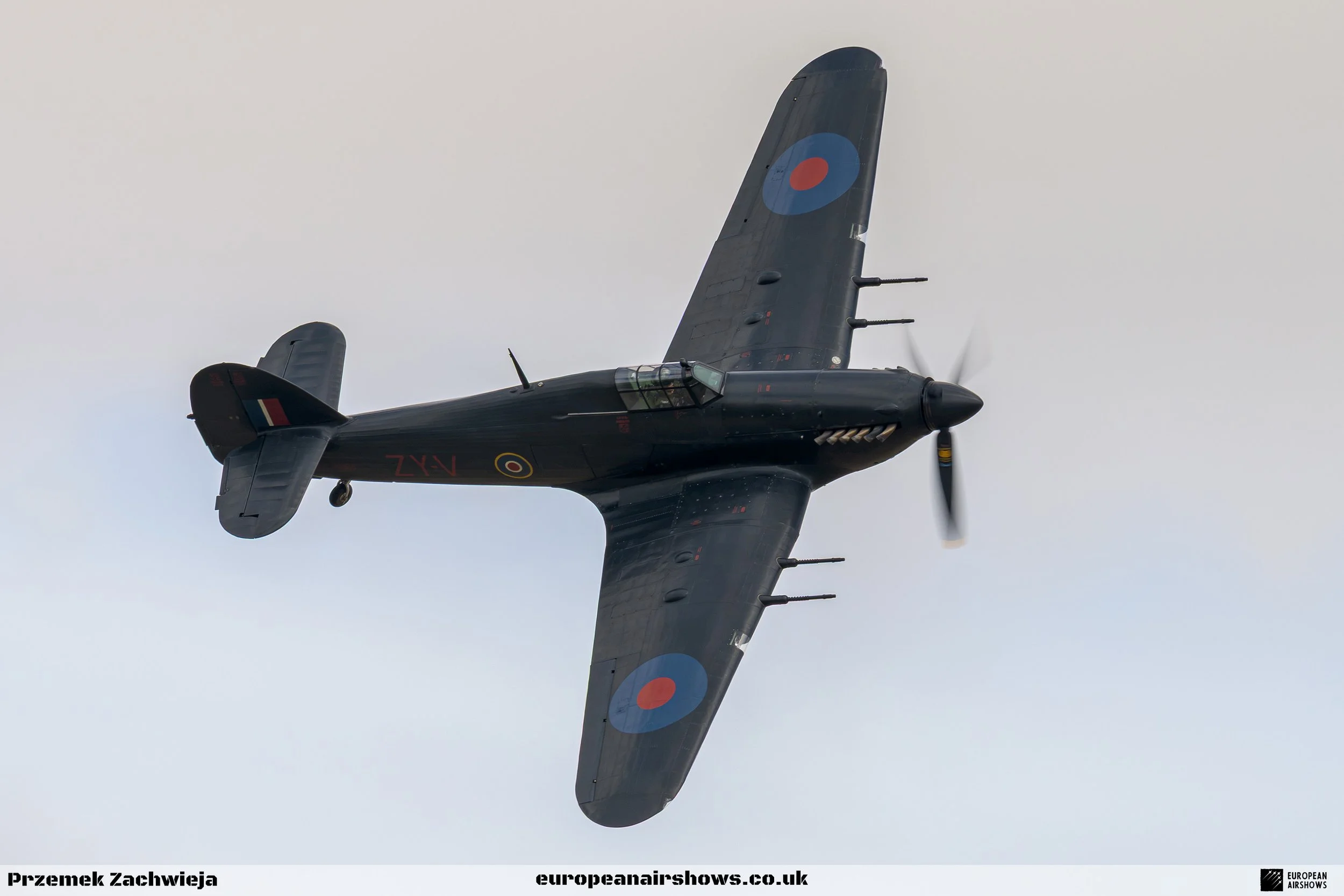
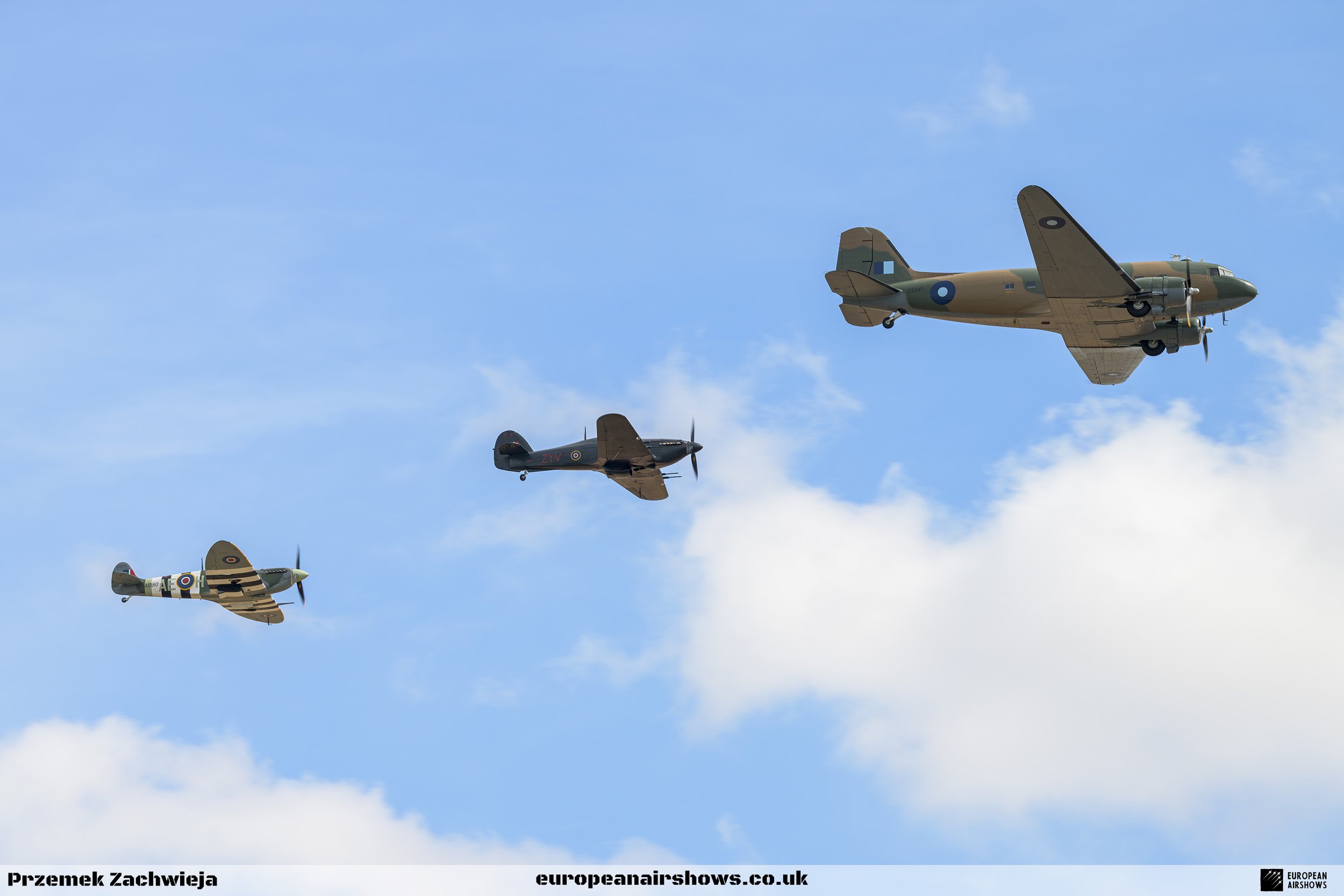
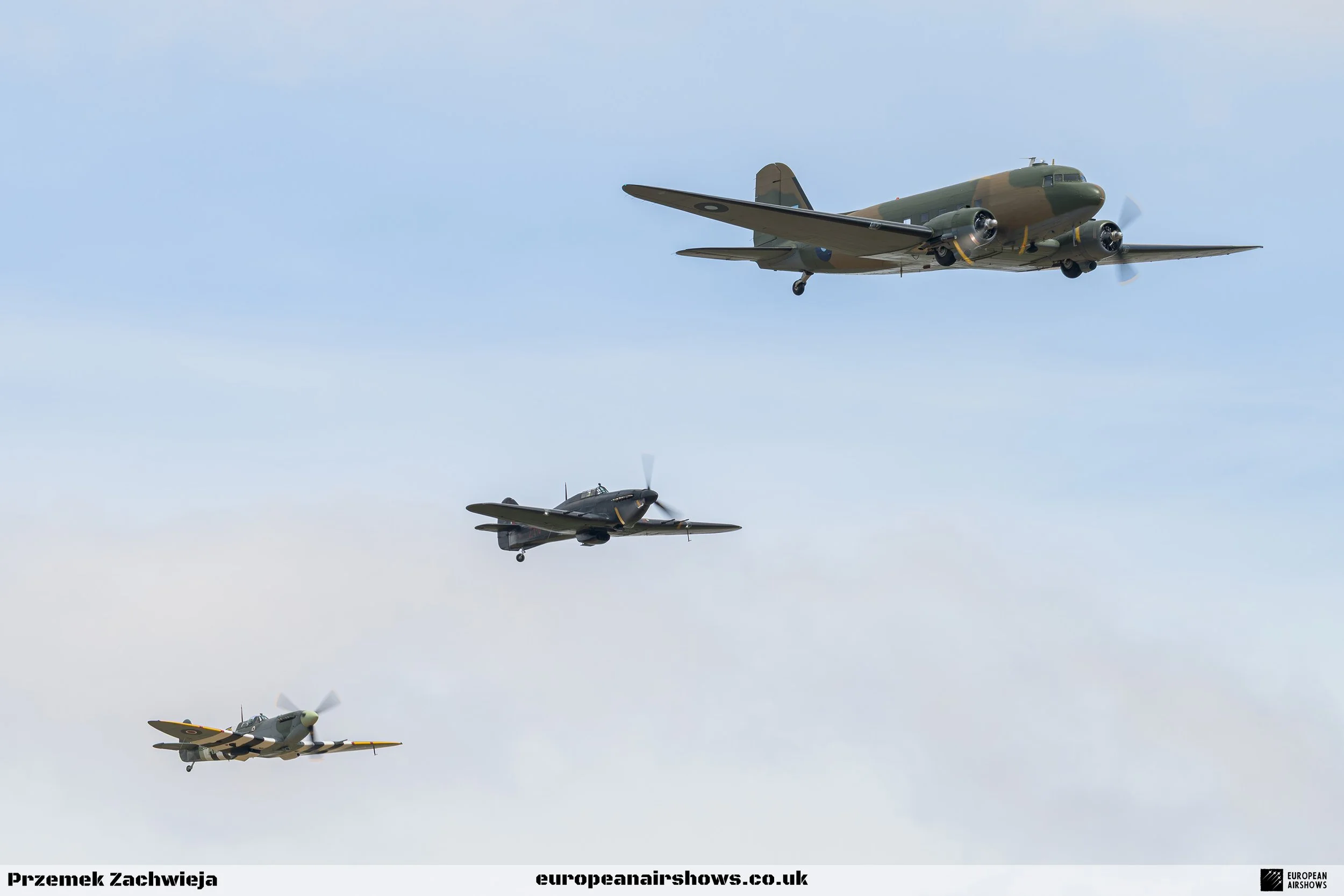
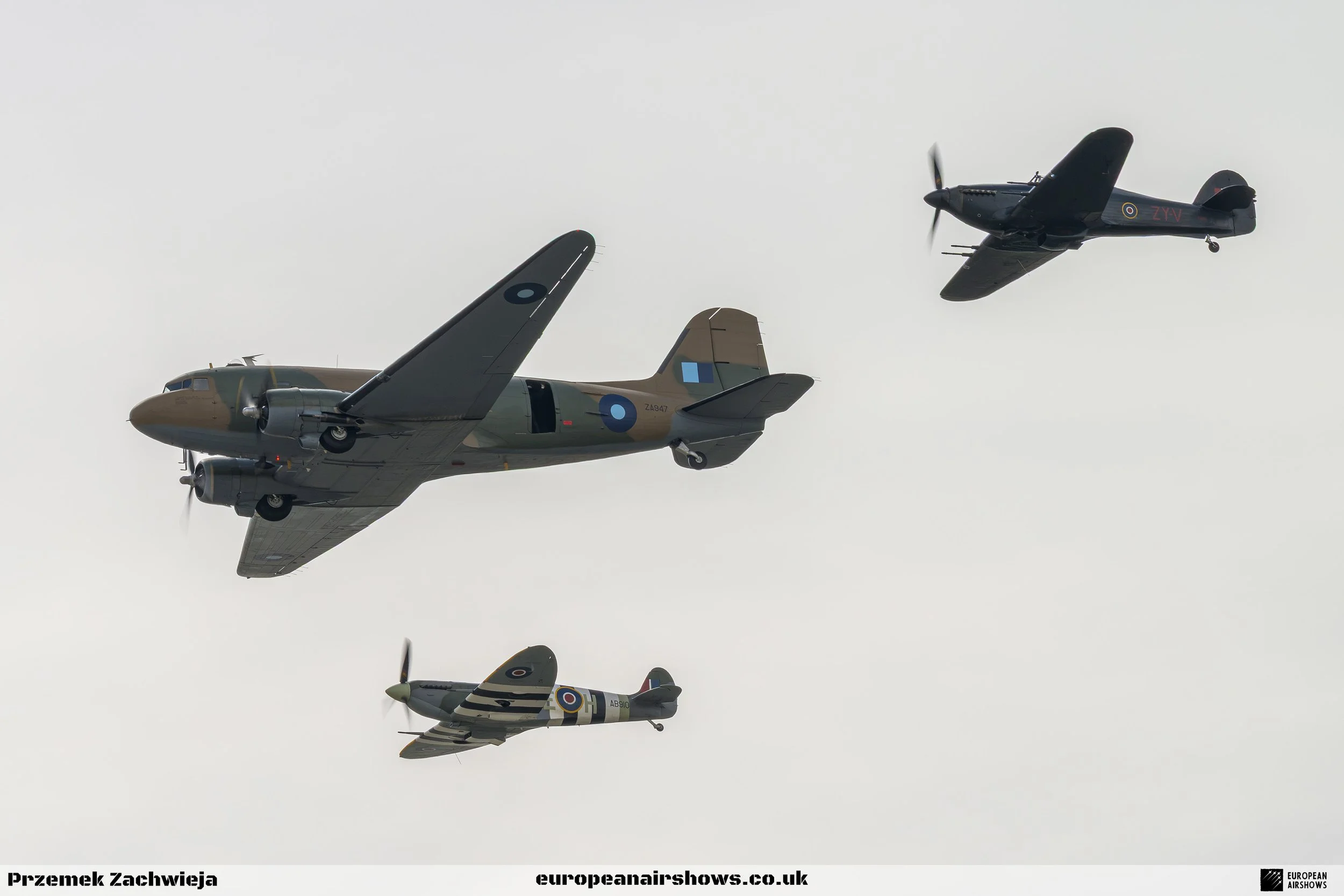
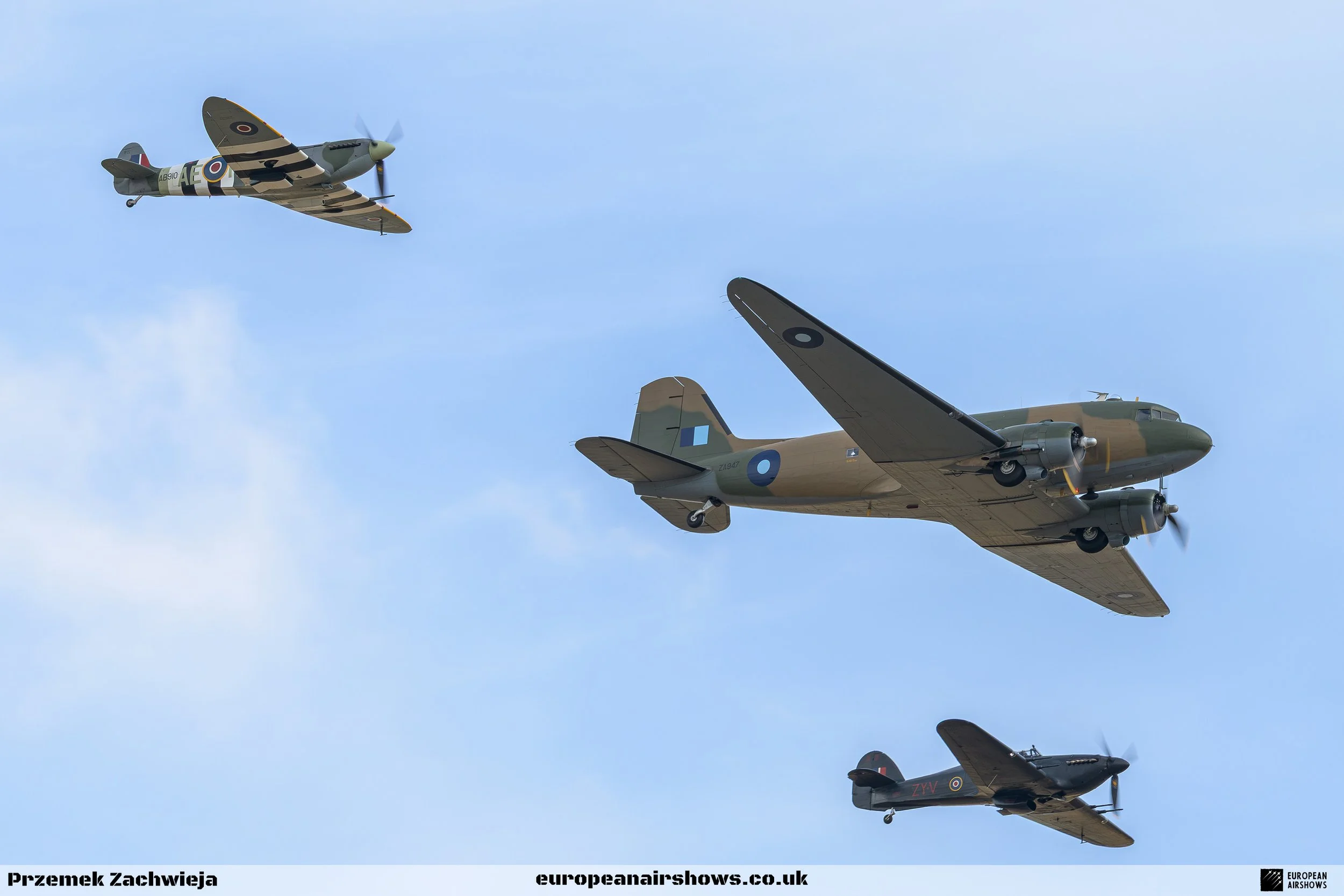
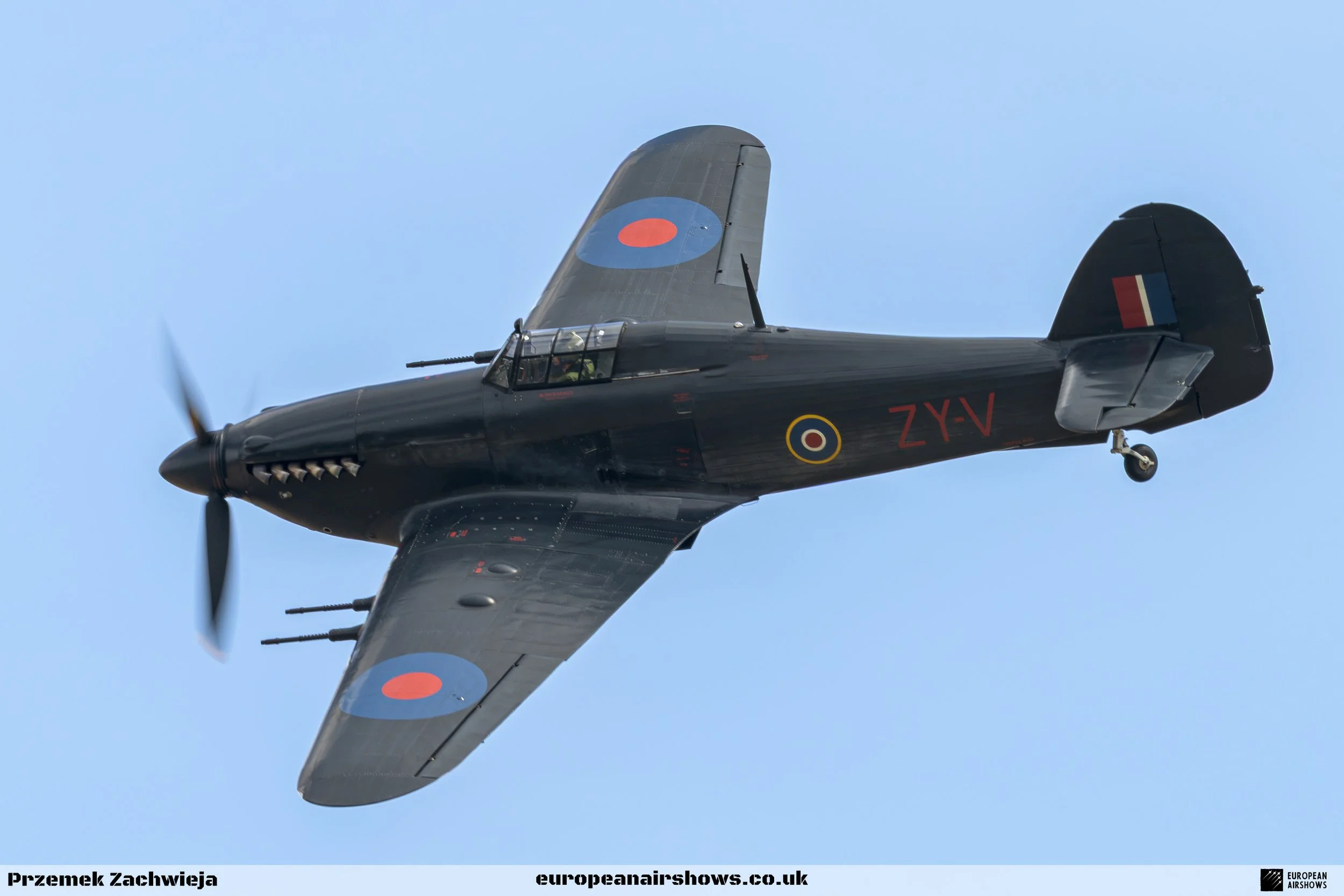
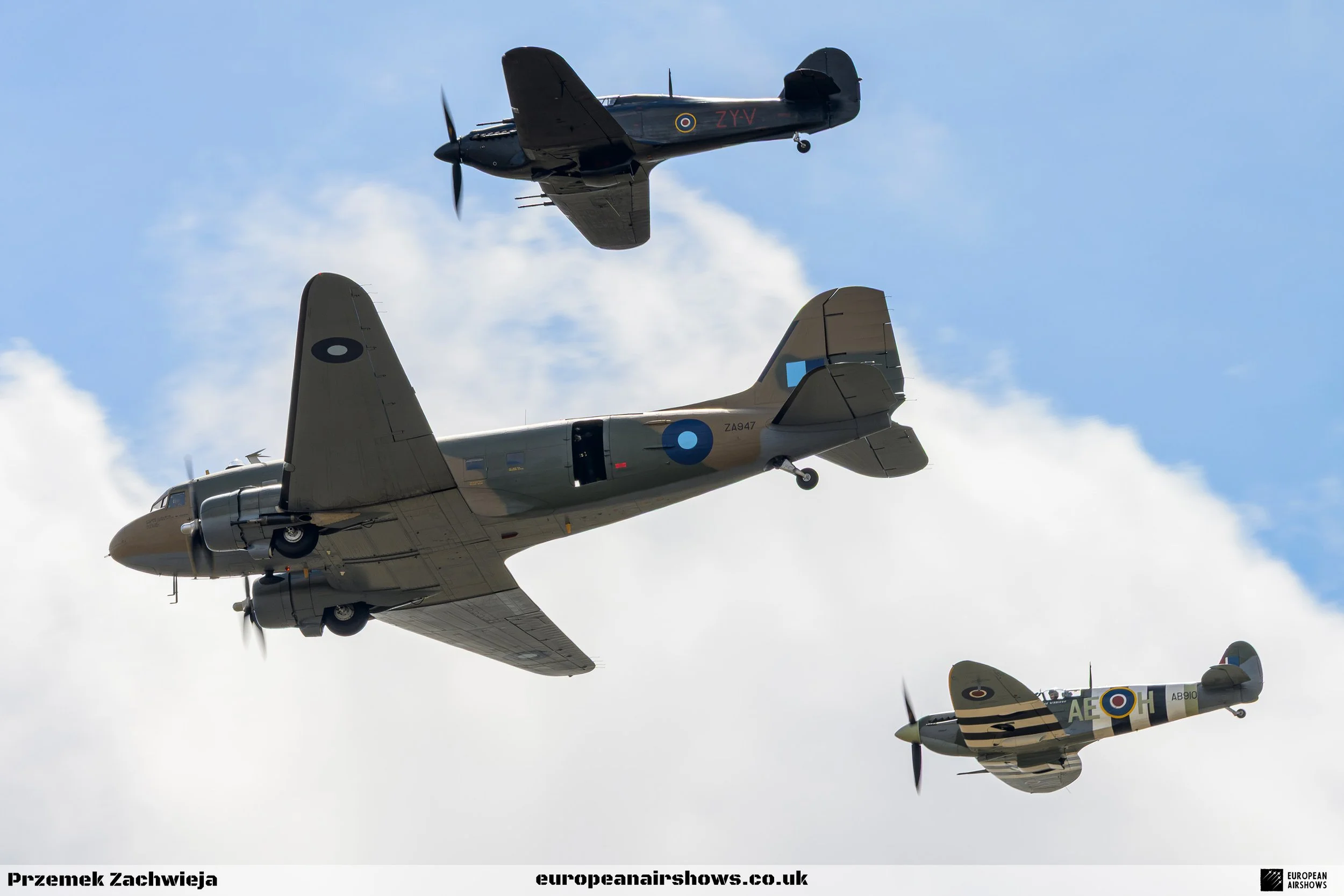
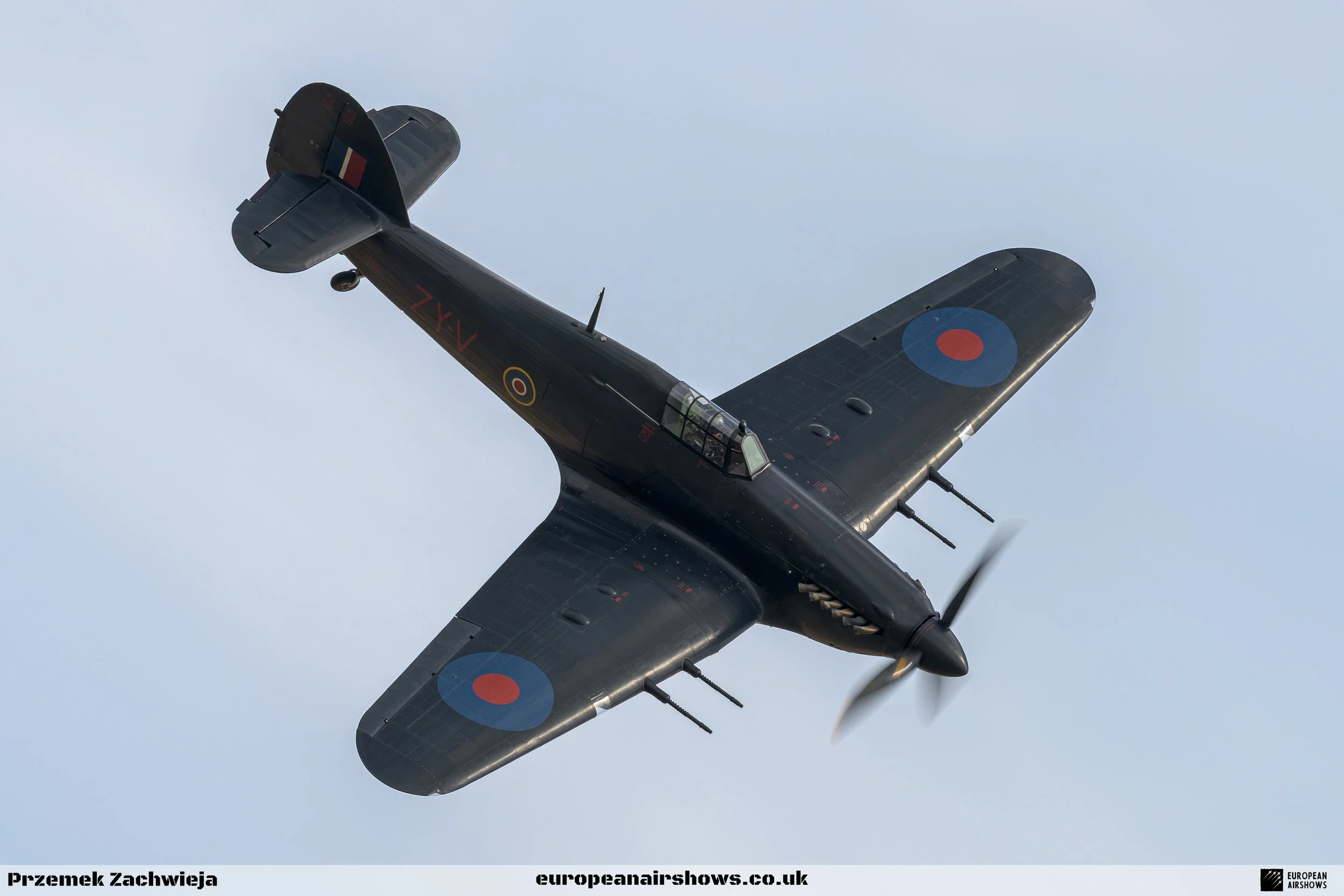
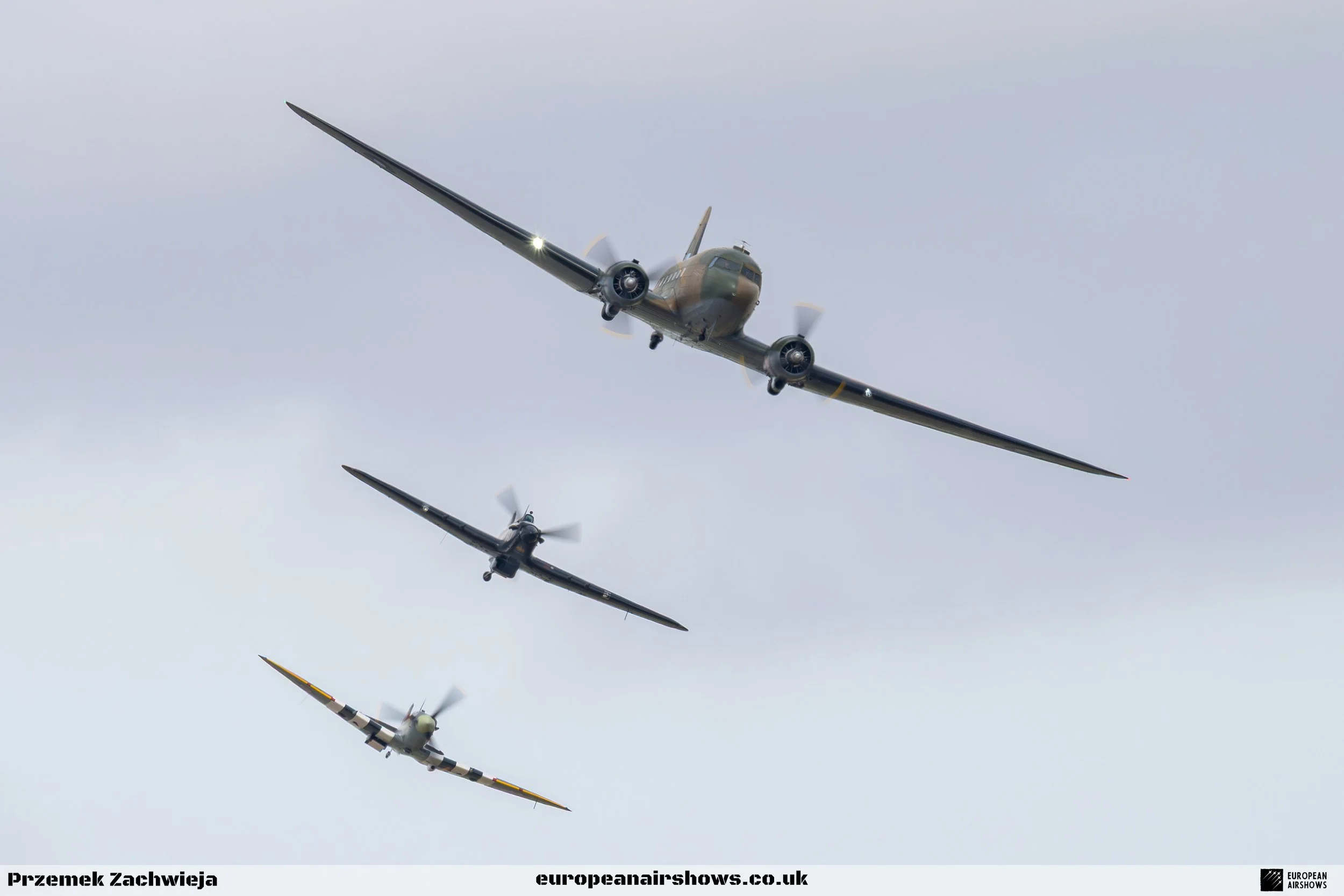
Sunday’s display was considerably stronger. ZA947 was joined by a BBMF Supermarine Spitfire and Hawker Hurricane, creating one of the most enjoyable BBMF sequences seen at Duxford for some time.
The three aircraft arrived in formation and completed several passes together before separating. The Dakota continued with its own flypasts while the Spitfire and Hurricane moved into a tail chase. The fighters then rejoined the Dakota for several more passes in a stepped formation, positioned behind and below the transport.
The final break was particularly well executed. The Spitfire and Hurricane broke away while the Dakota continued directly overheads. It was a major improvement over Saturday’s distant Dakota solo.
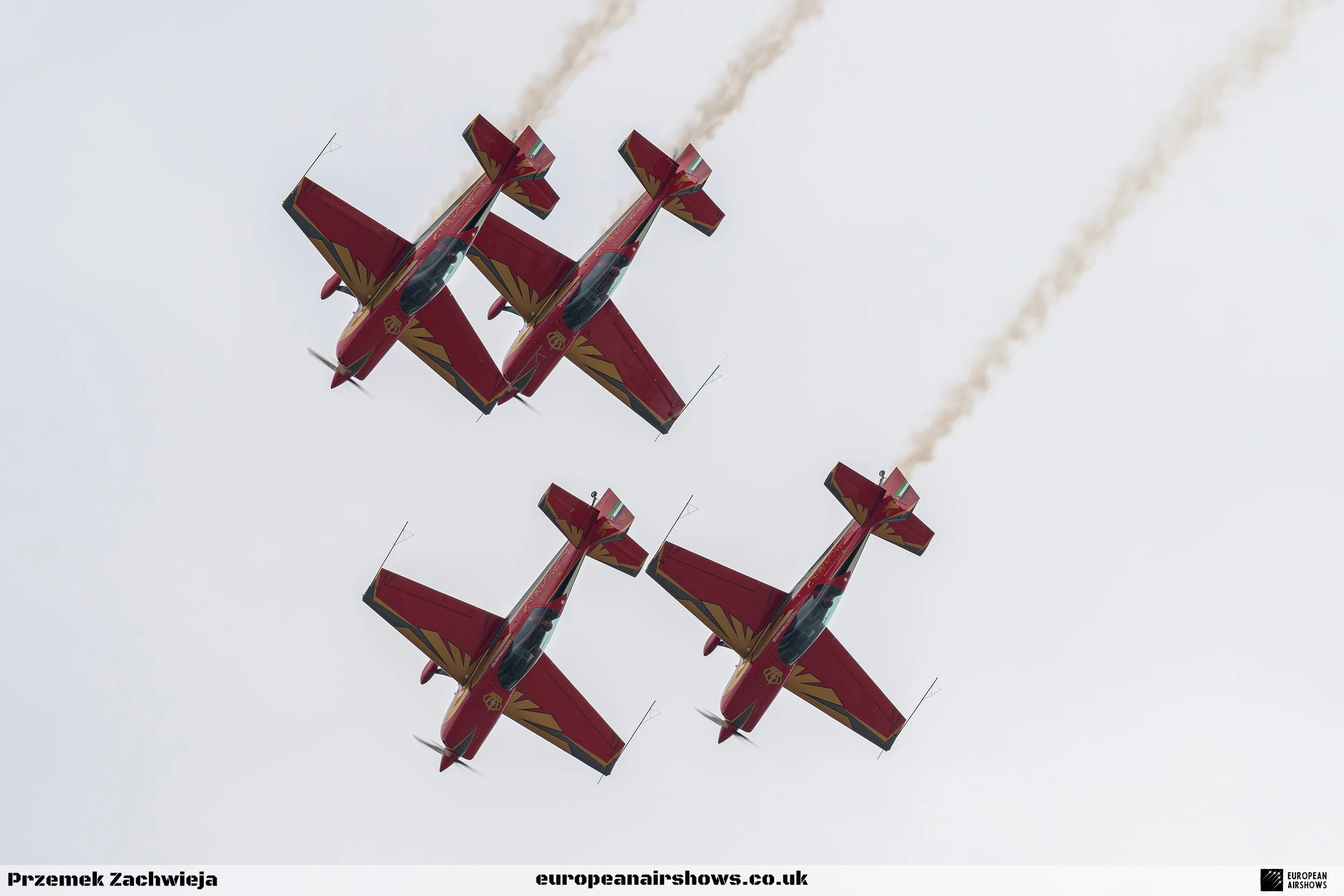
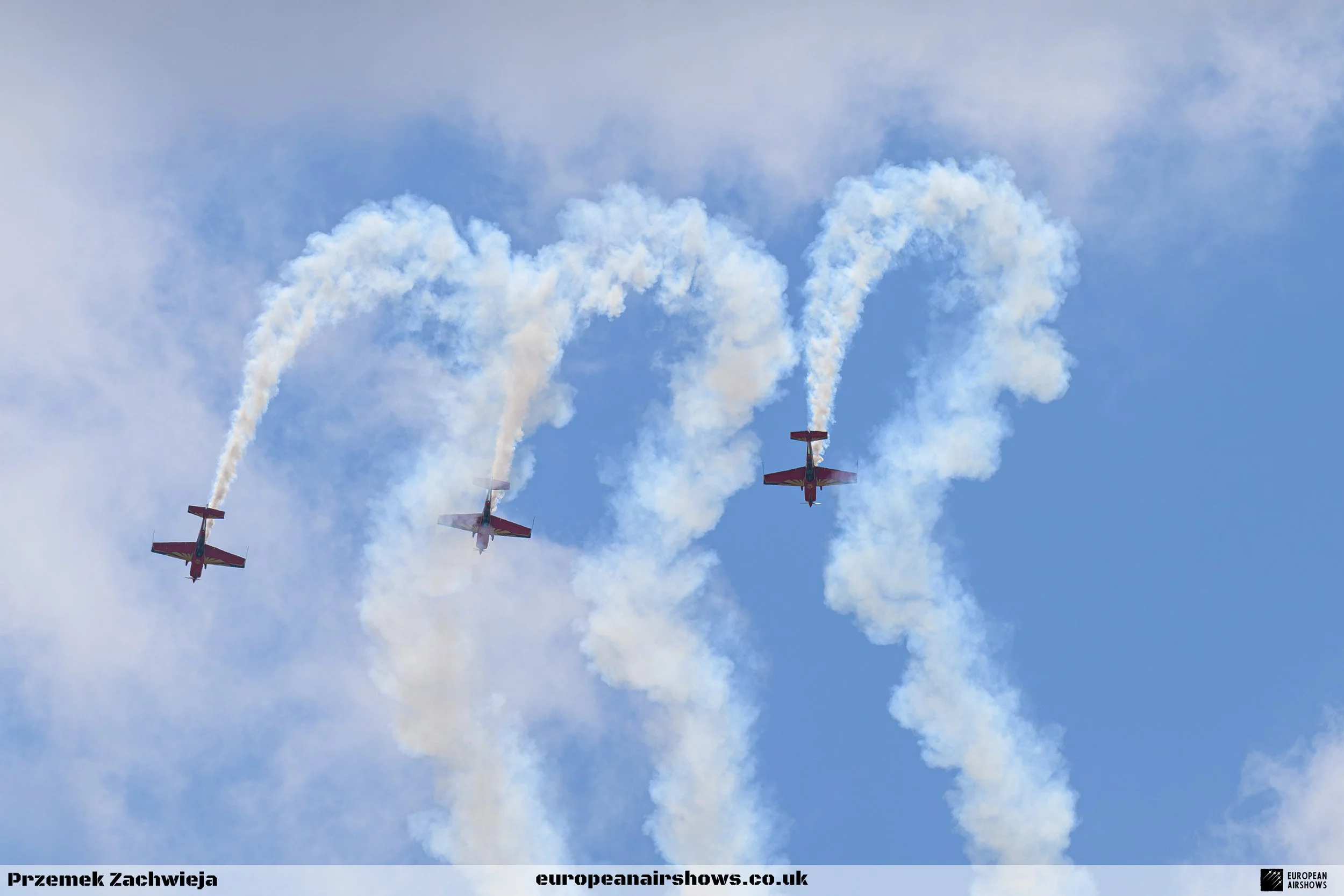
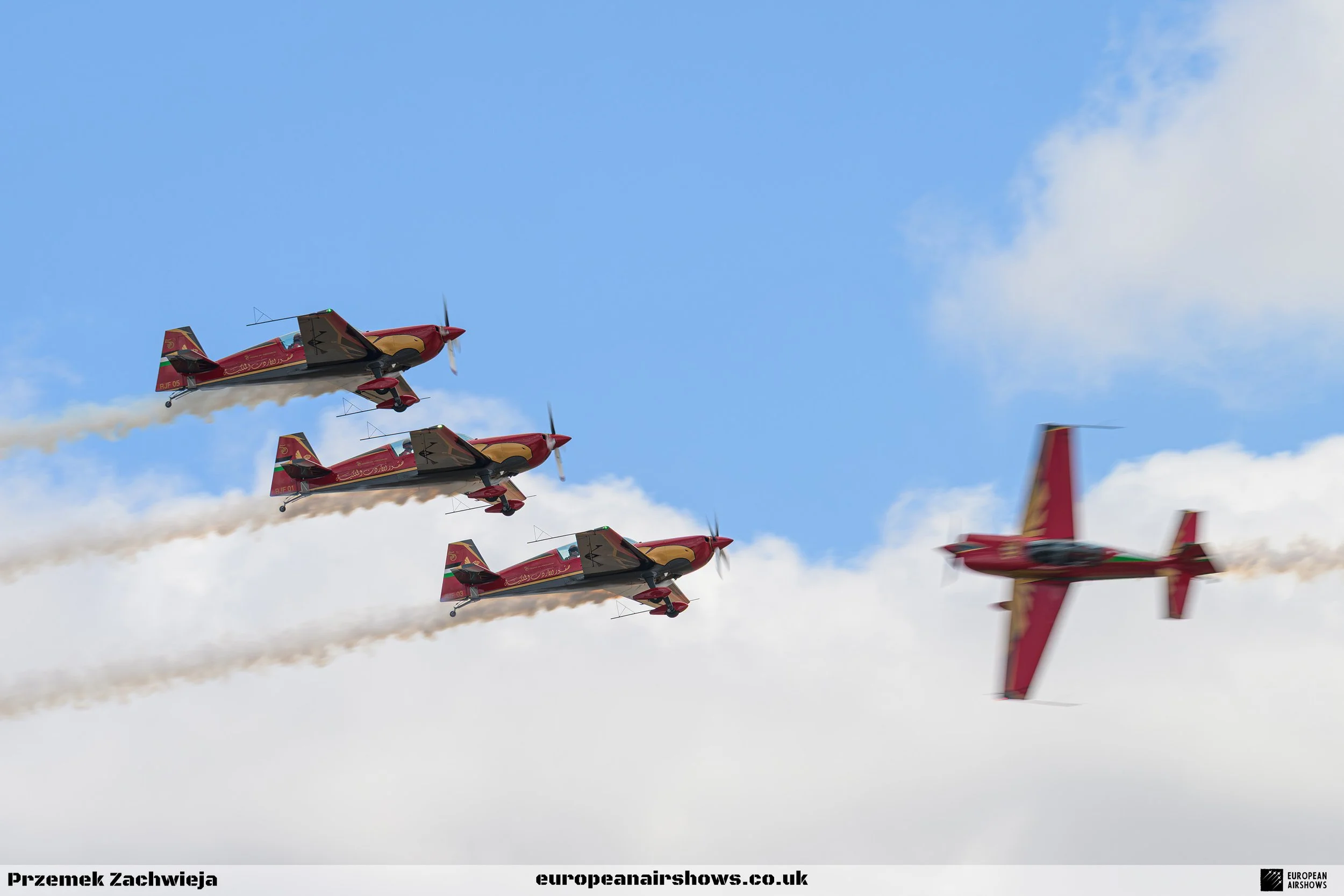
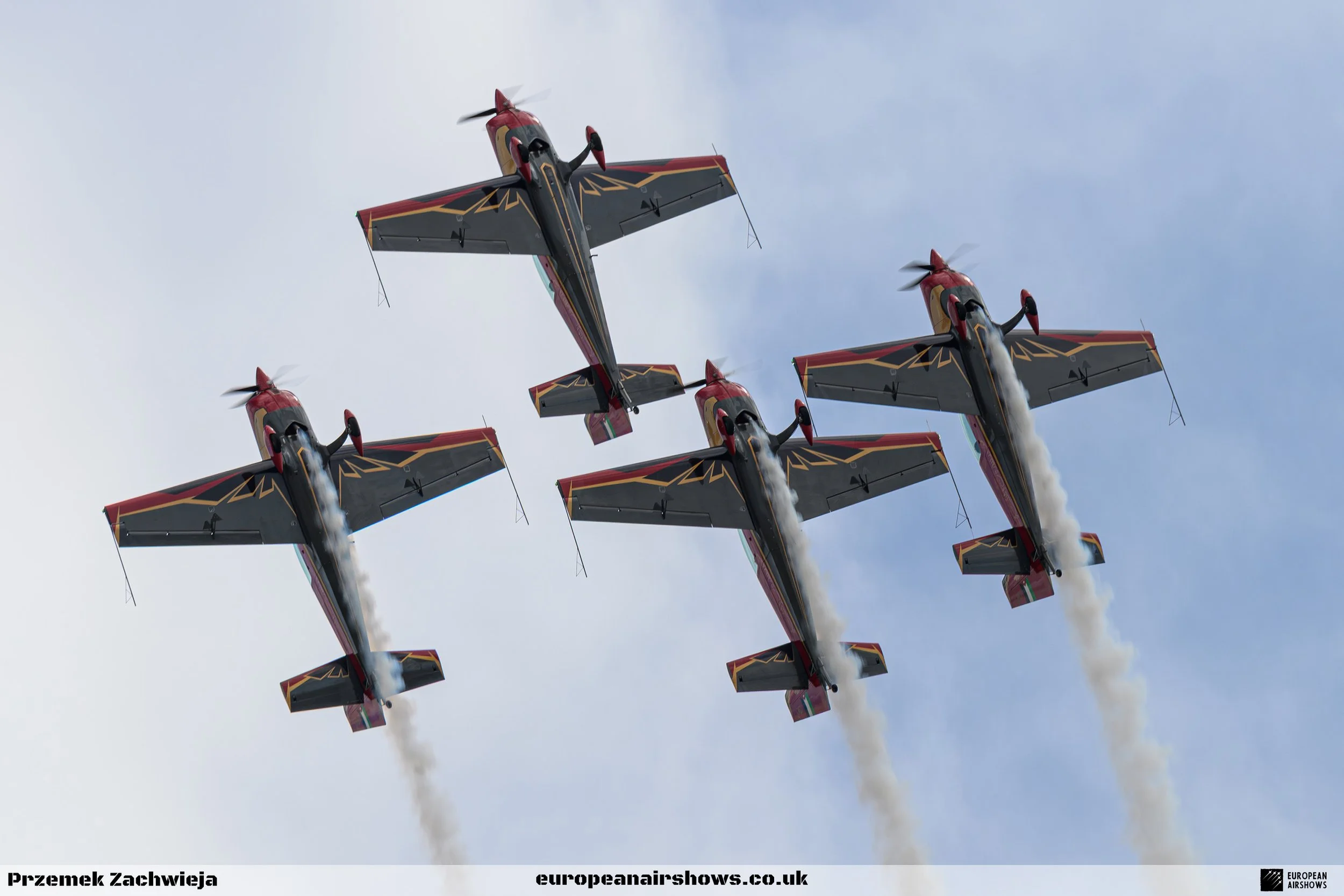
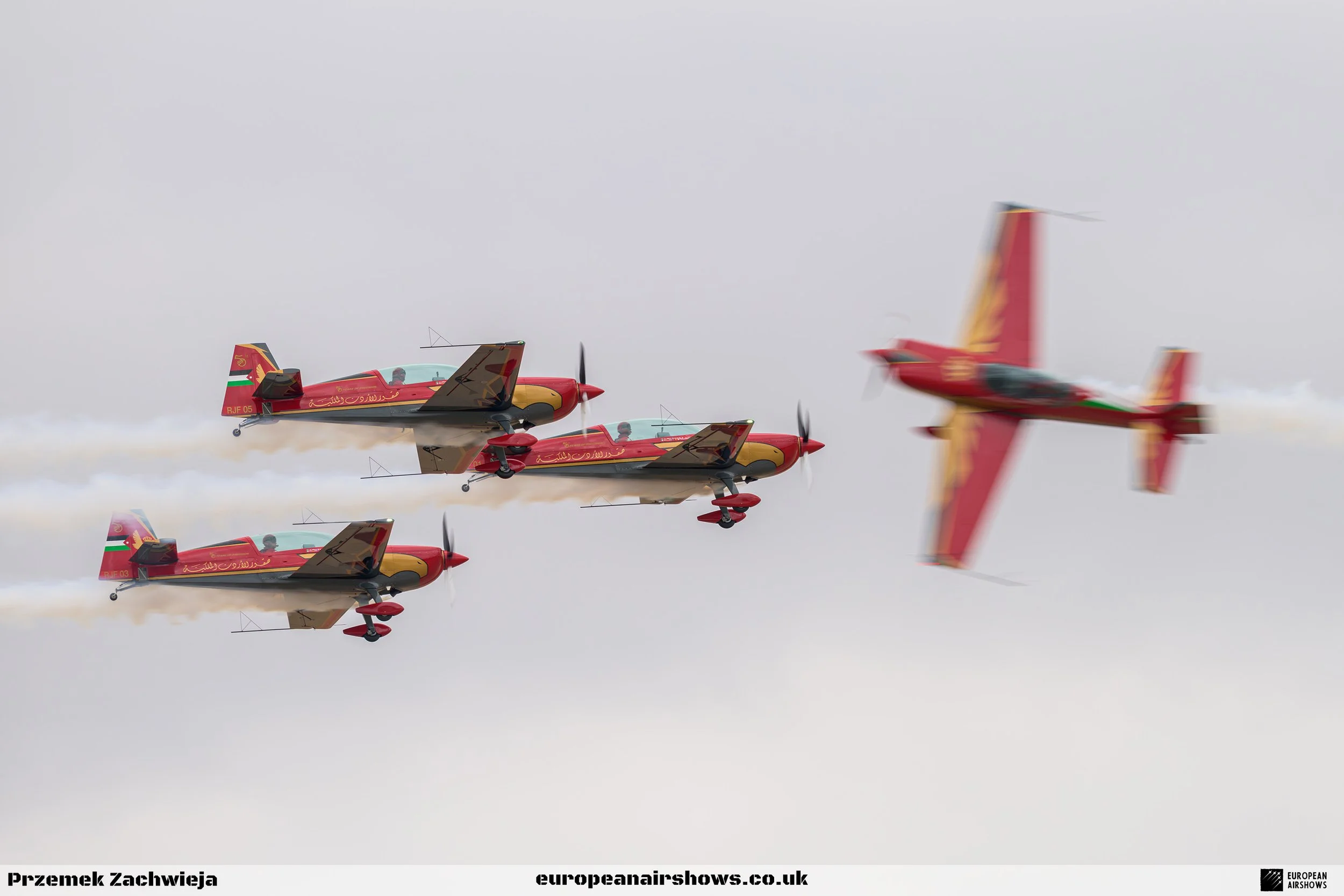
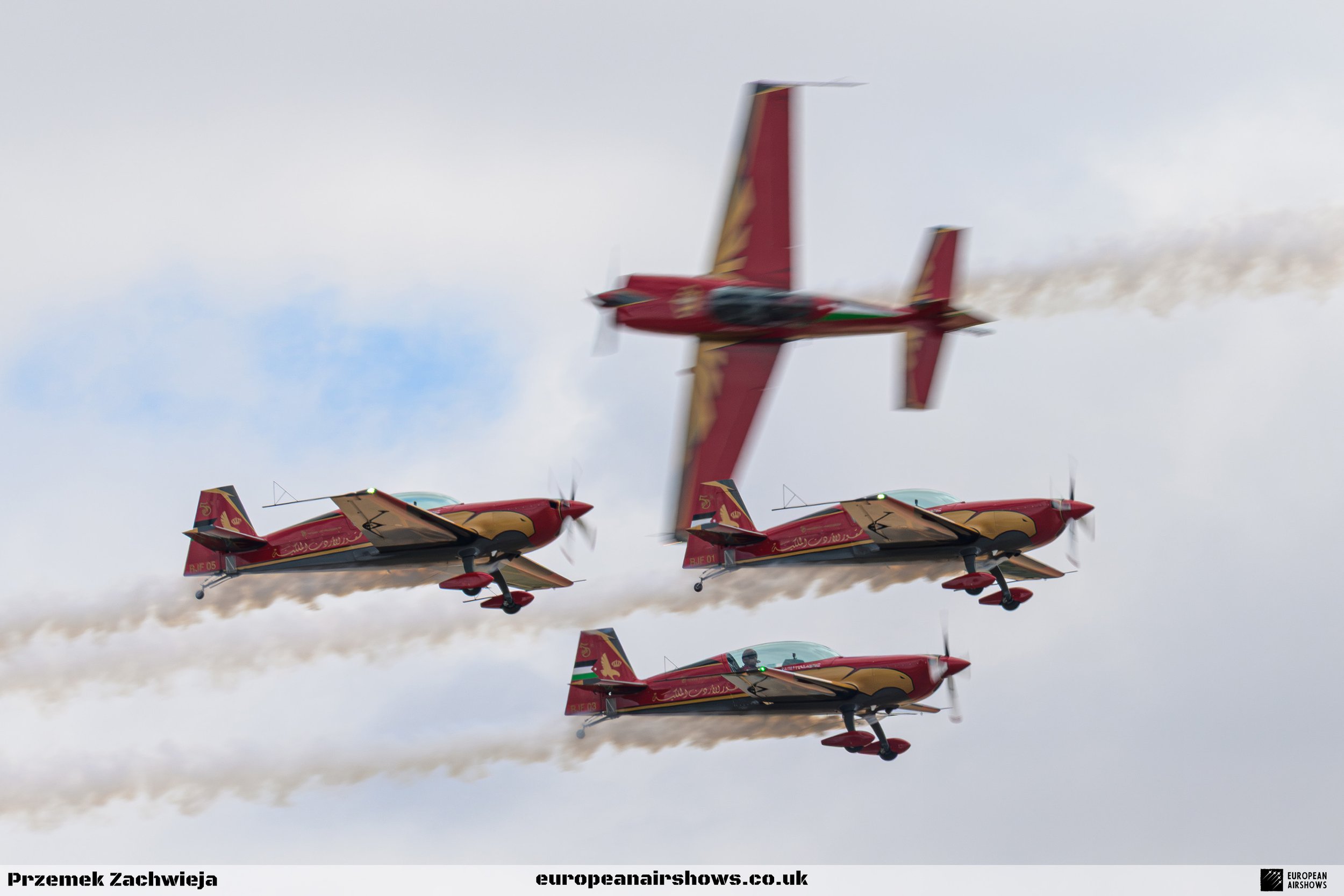
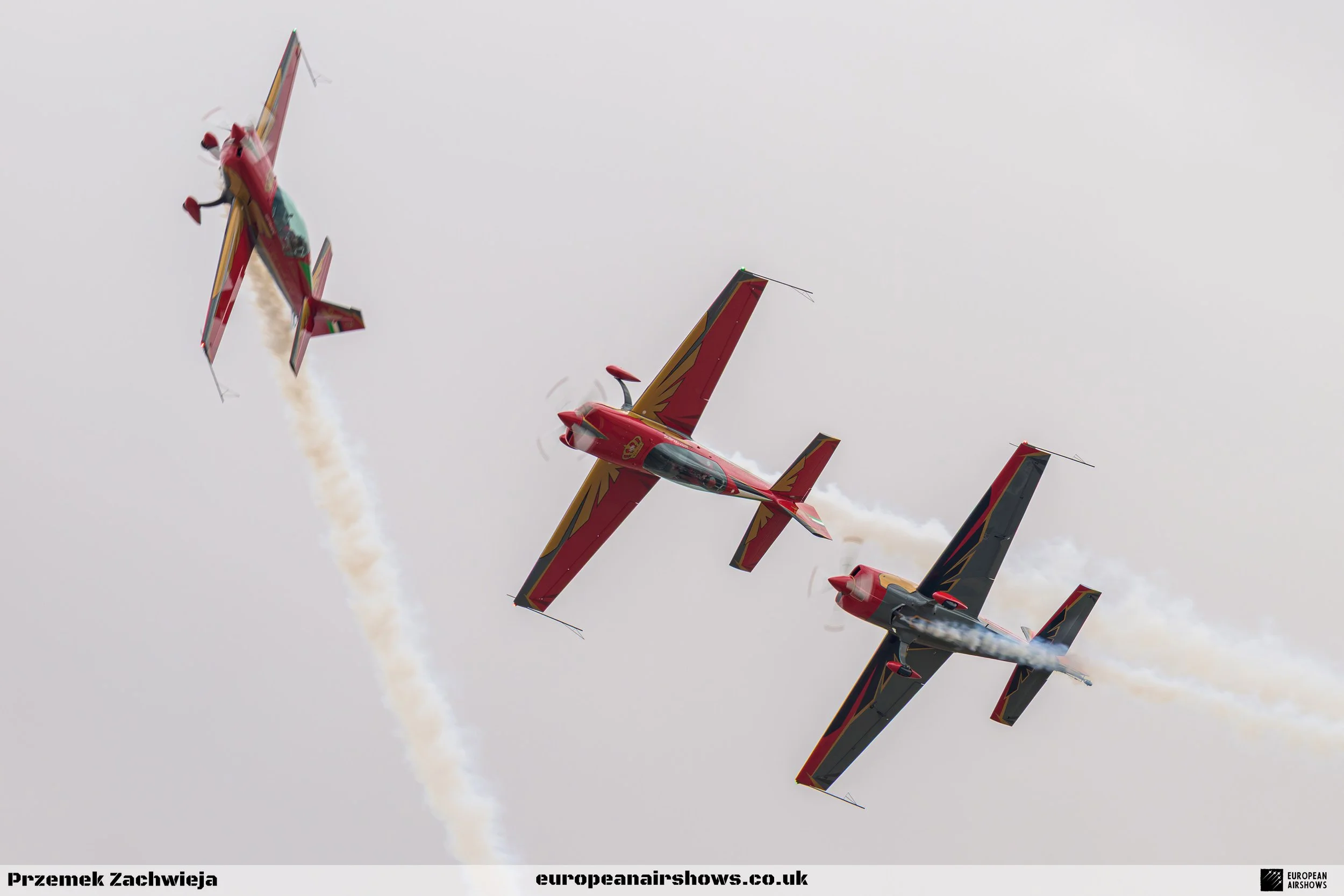
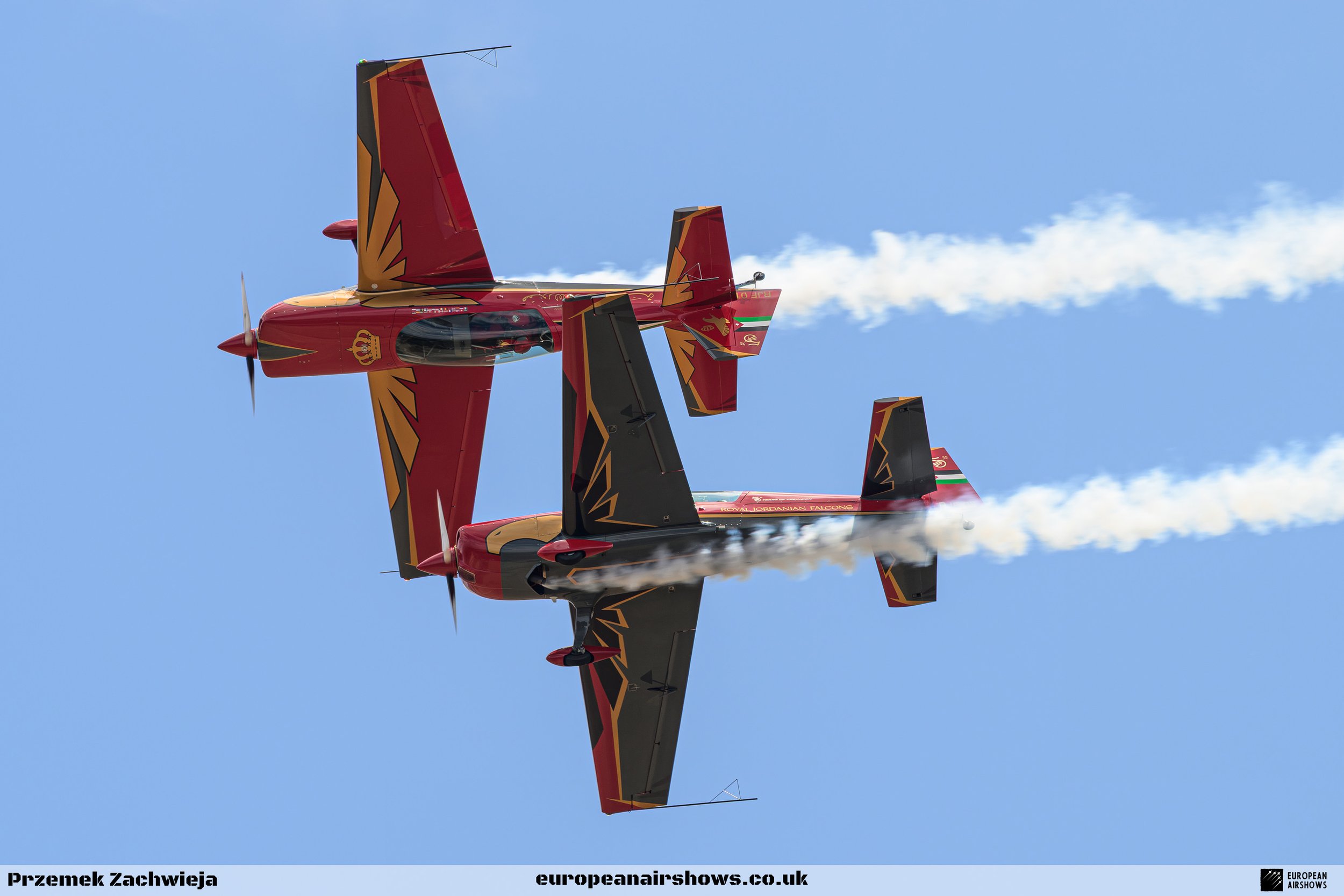
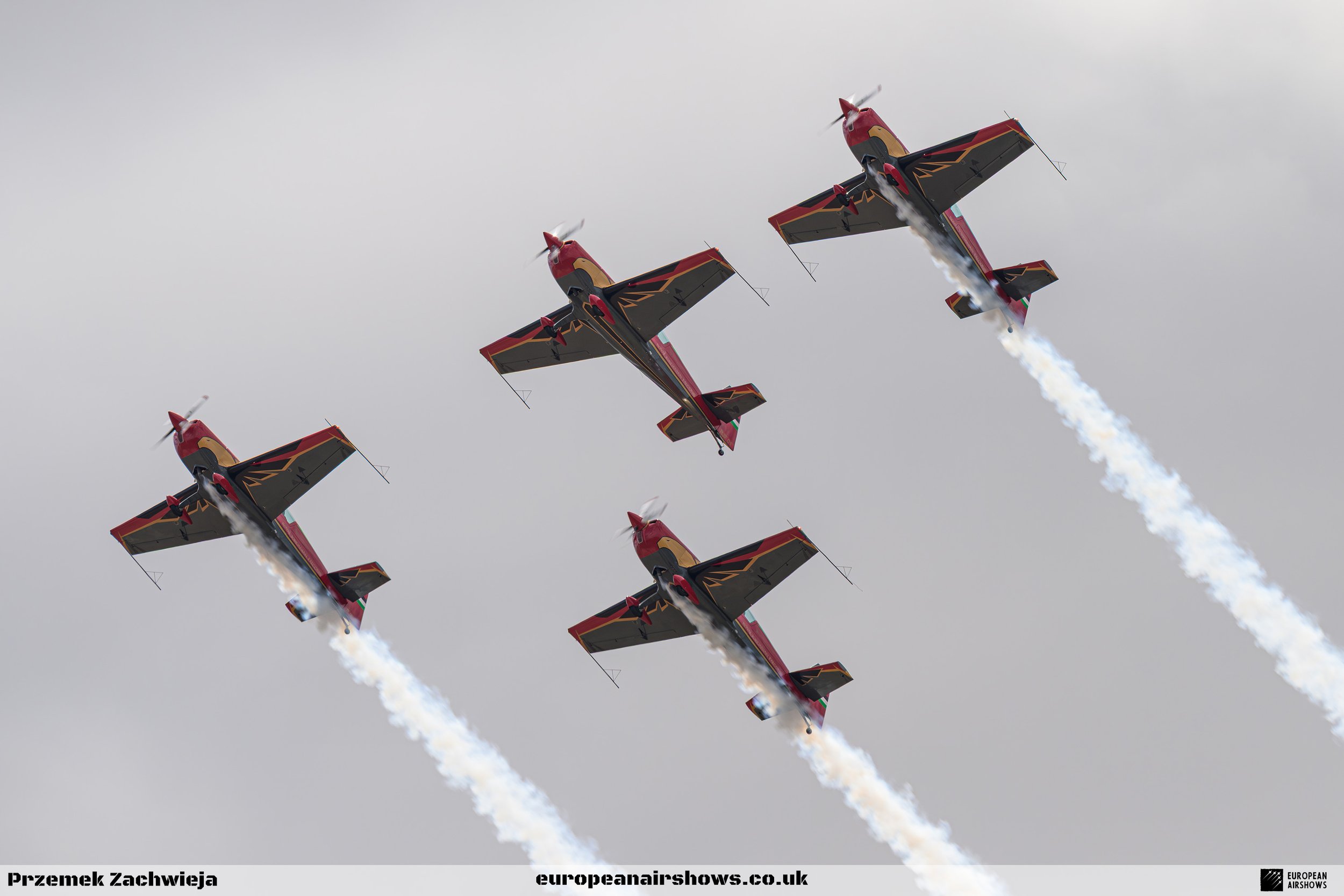
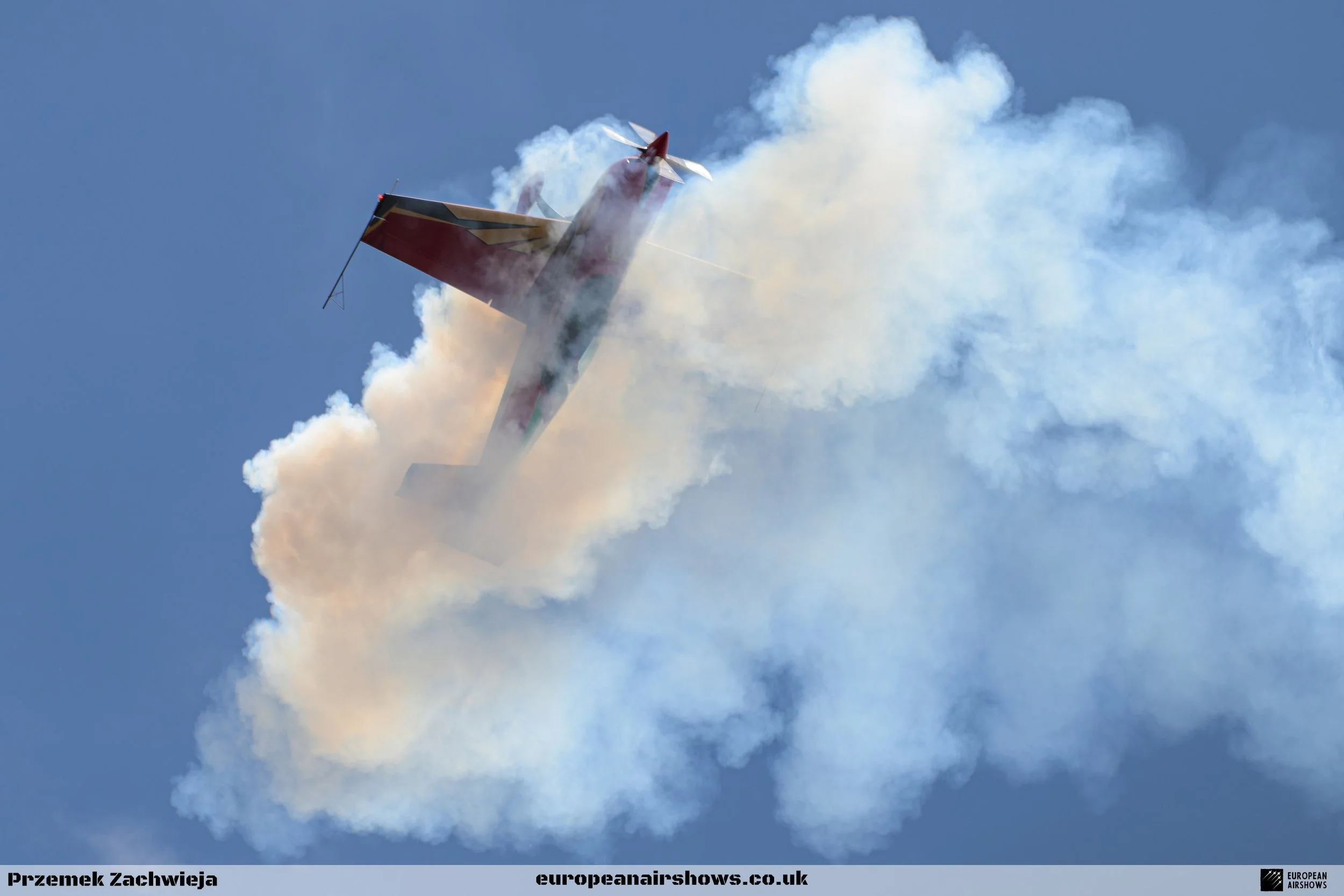
One of the most welcome international additions was the Royal Jordanian Falcons, making their Duxford debut during the team’s 50th-anniversary season.
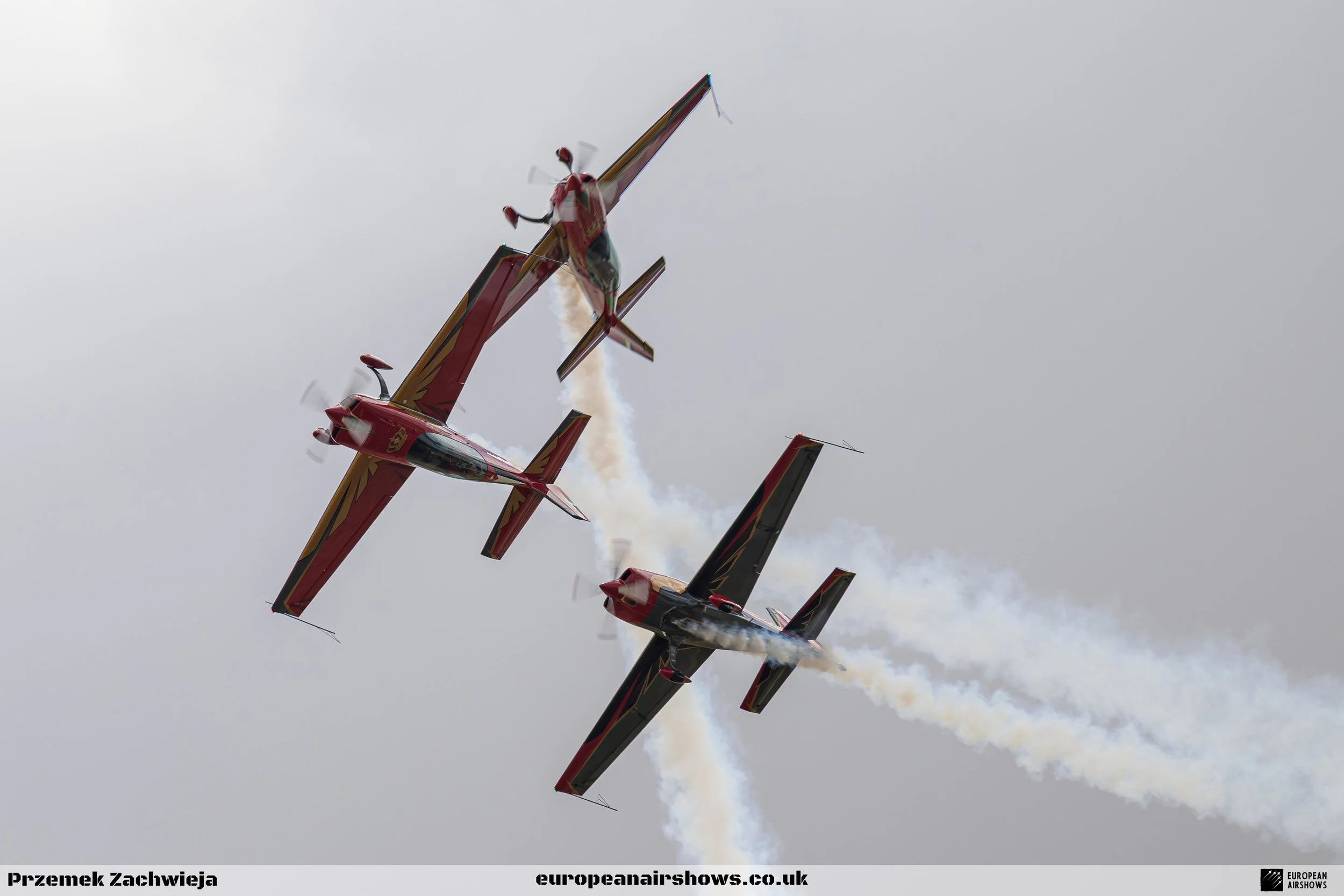
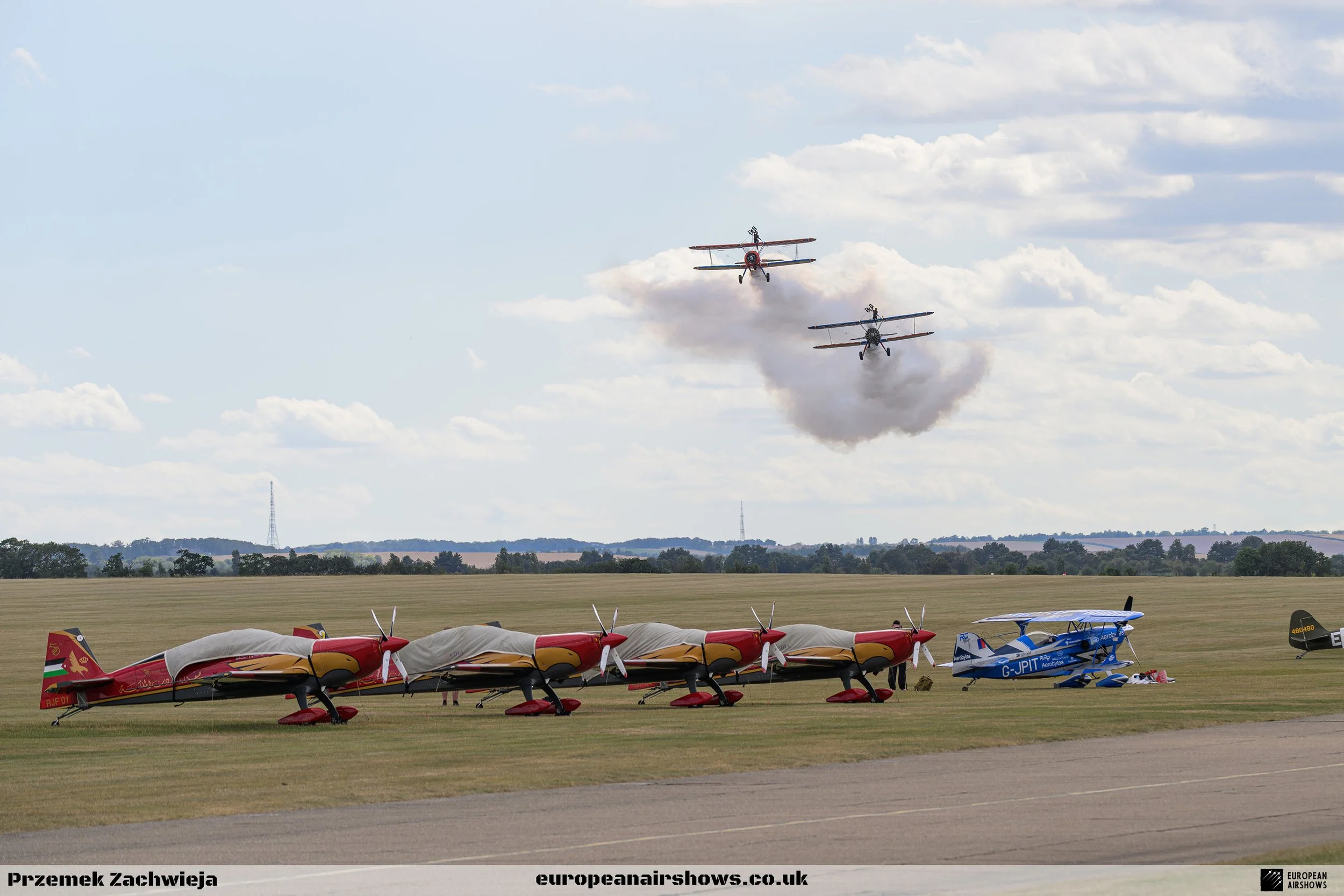
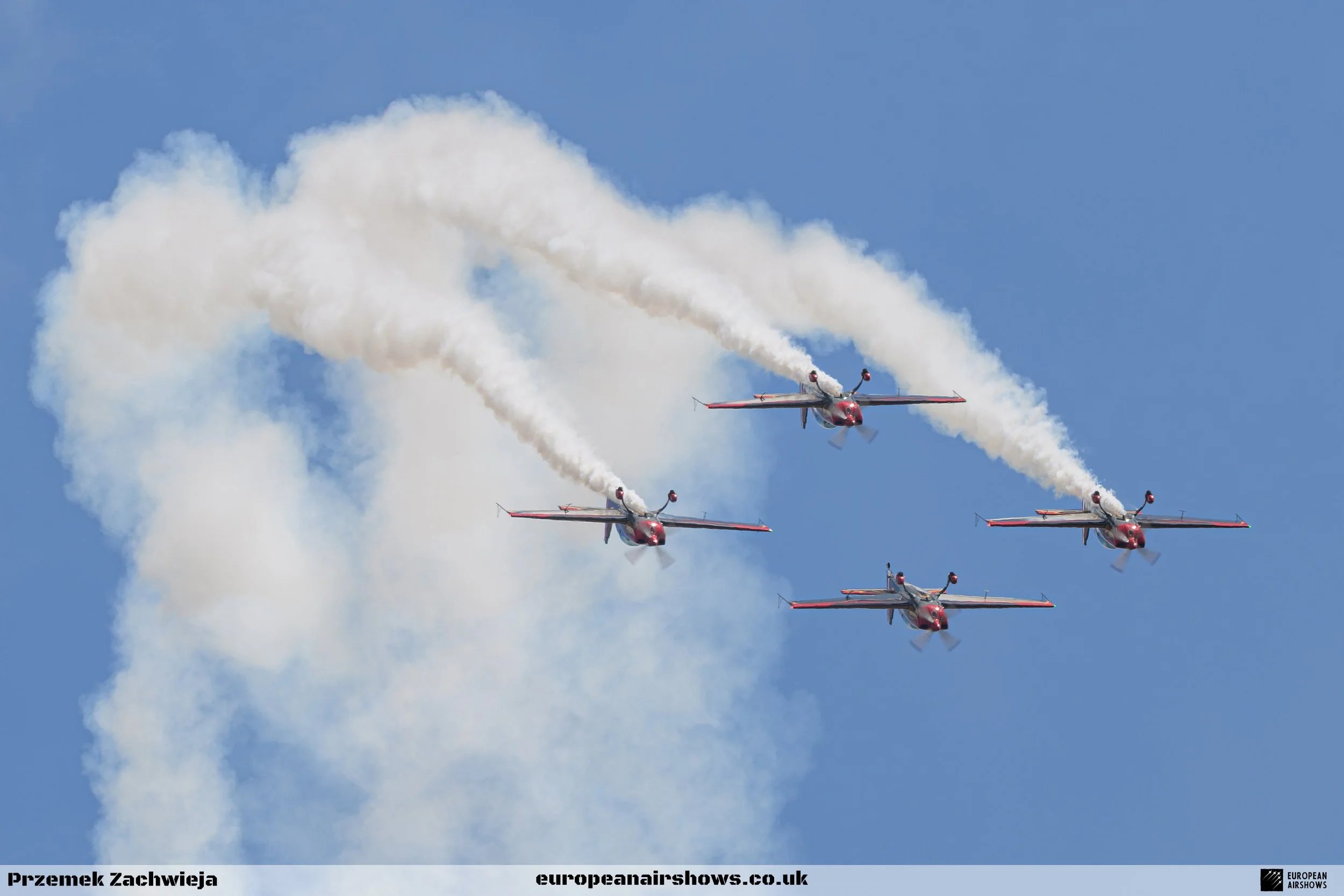
The team appeared with four Extra 330LX aerobatic aircraft flown by Royal Jordanian Air Force pilots Jamil Zayyad, Ahmad Al Qudah, Mohammad Qoul and Sharif Hatouq.
Although the Royal Jordanian Falcons are based at King Hussein International Airport in Aqaba and represent the country internationally, the pilots are drawn from the Royal Jordanian Air Force.
As always, the display was exceptionally precise. Tight formation aerobatics were mixed with solo and opposition manoeuvres, while the team’s red, white, black and gold aircraft remained beautifully positioned throughout.
Duxford’s wide display line suited the routine extremely well. There are faster and louder acts on the European airshow circuit, but very few display teams fly with the consistency and precision of the Royal Jordanian Falcons. Their Duxford debut was long overdue and was one of the most polished performances of the weekend.
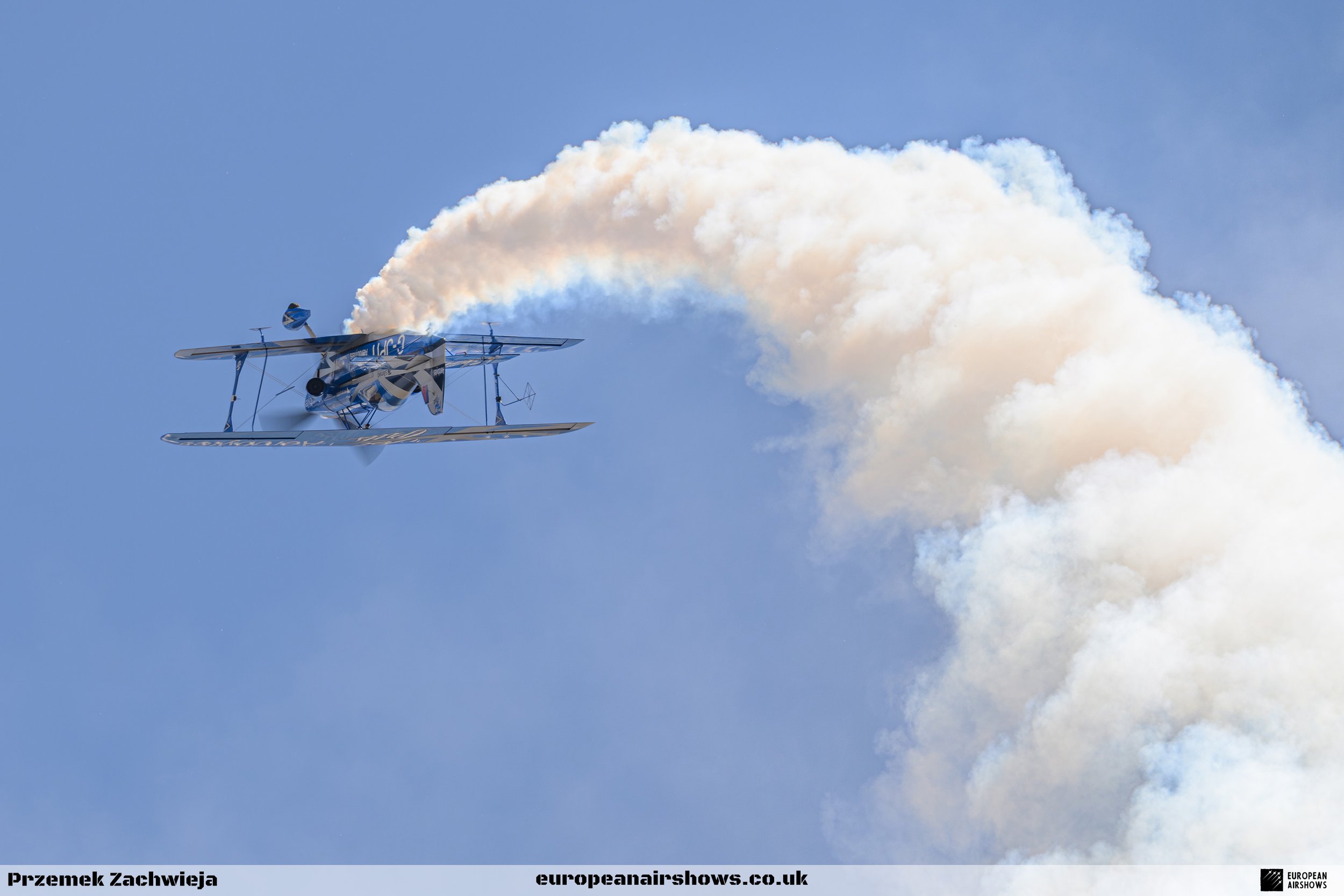
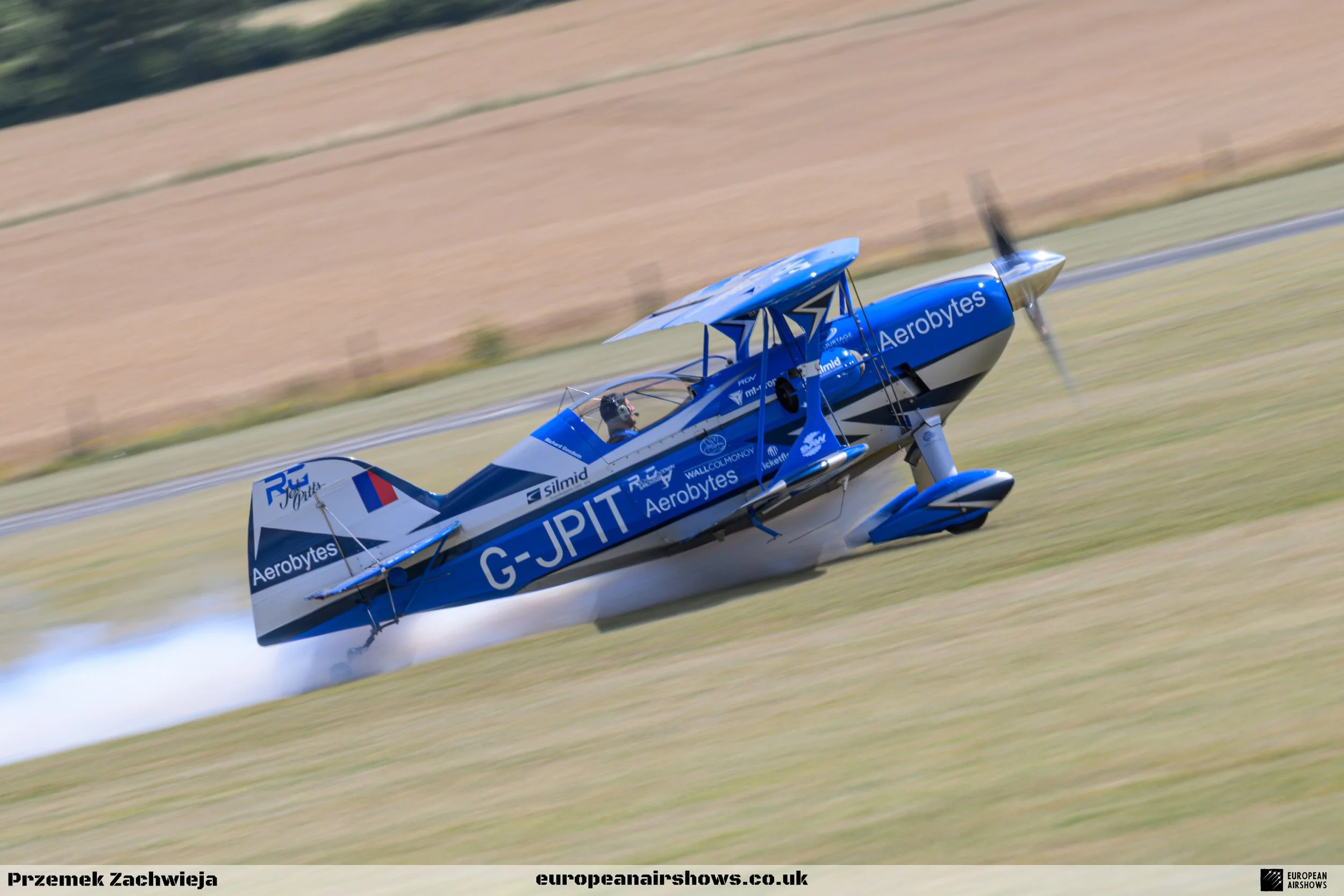
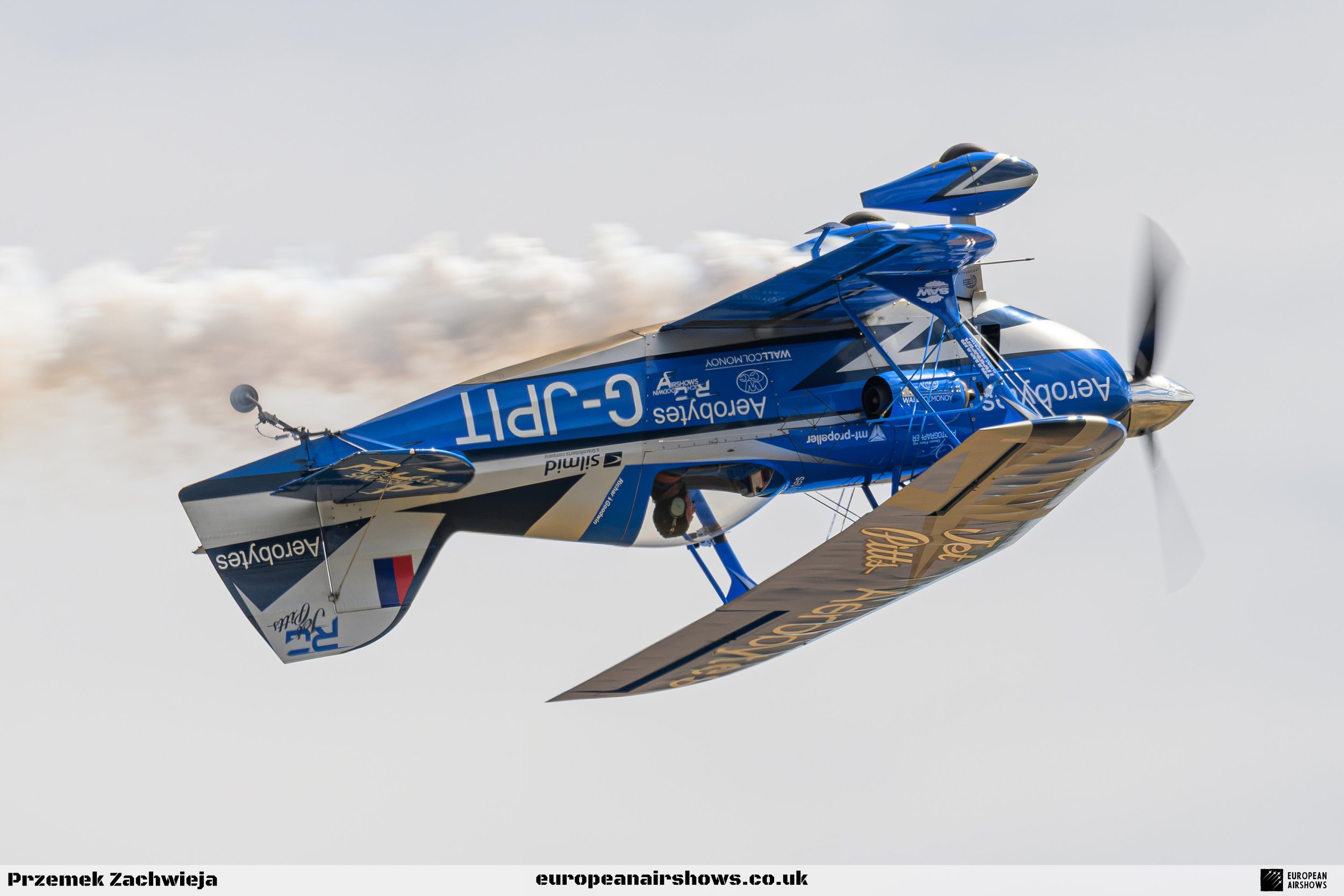
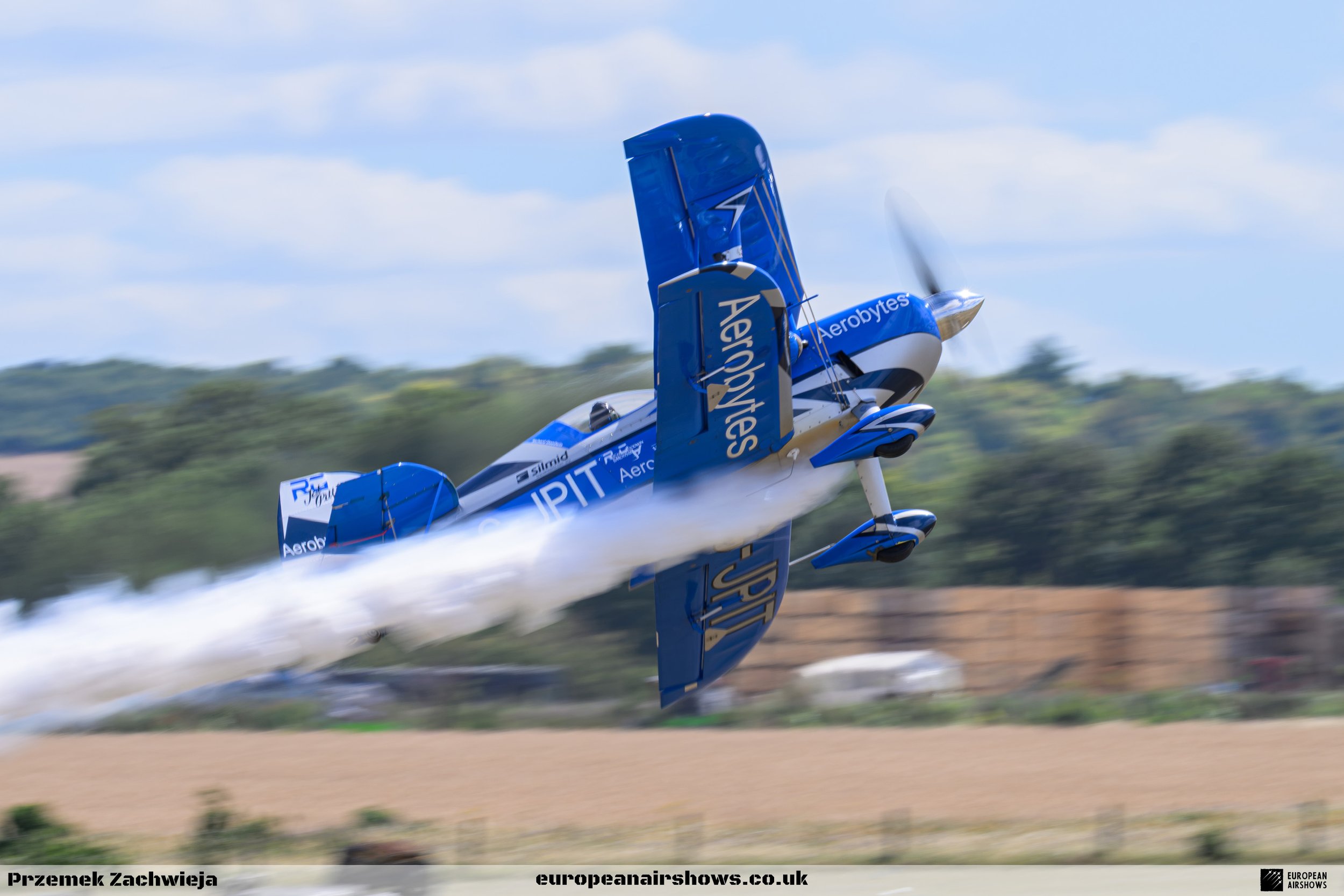
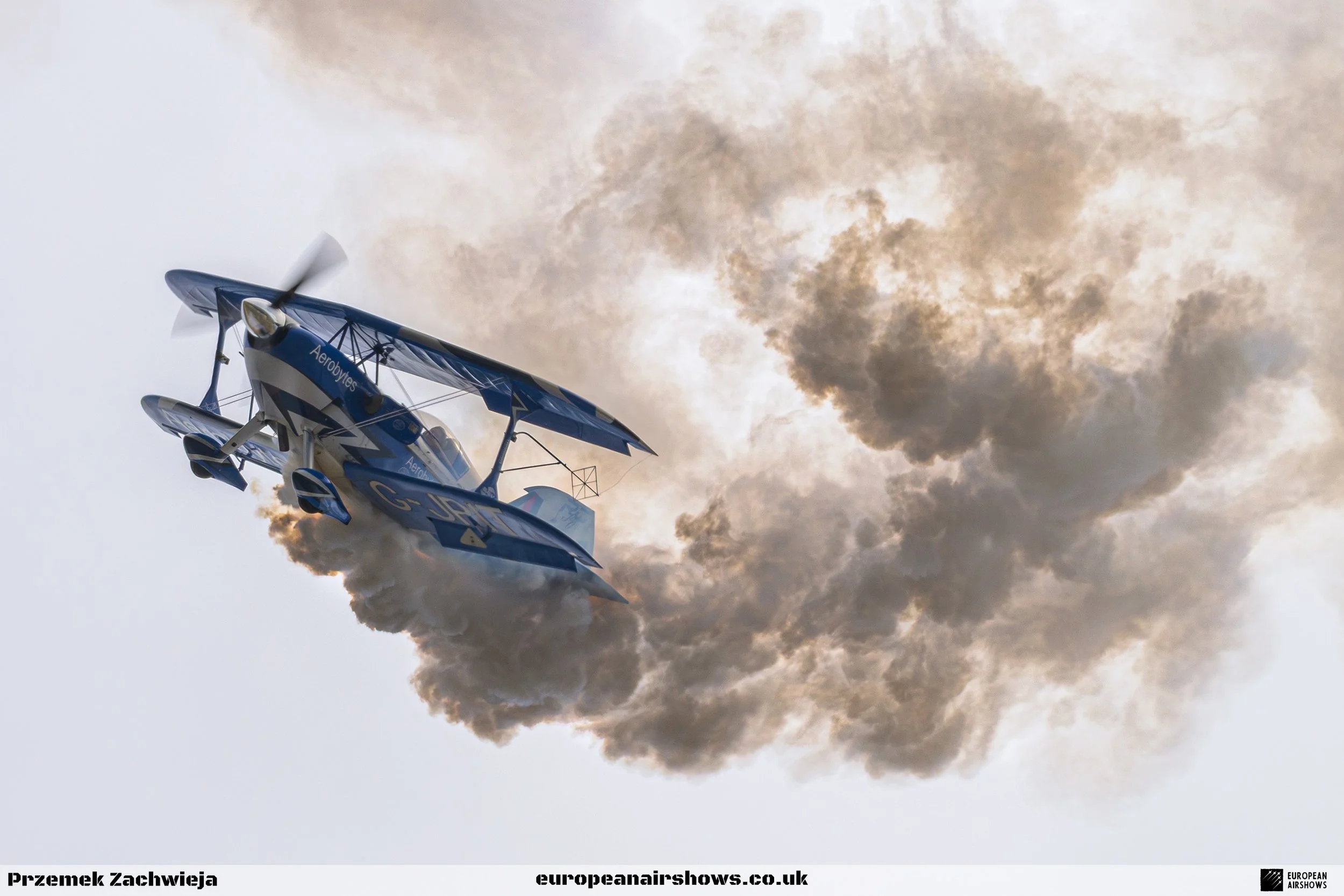
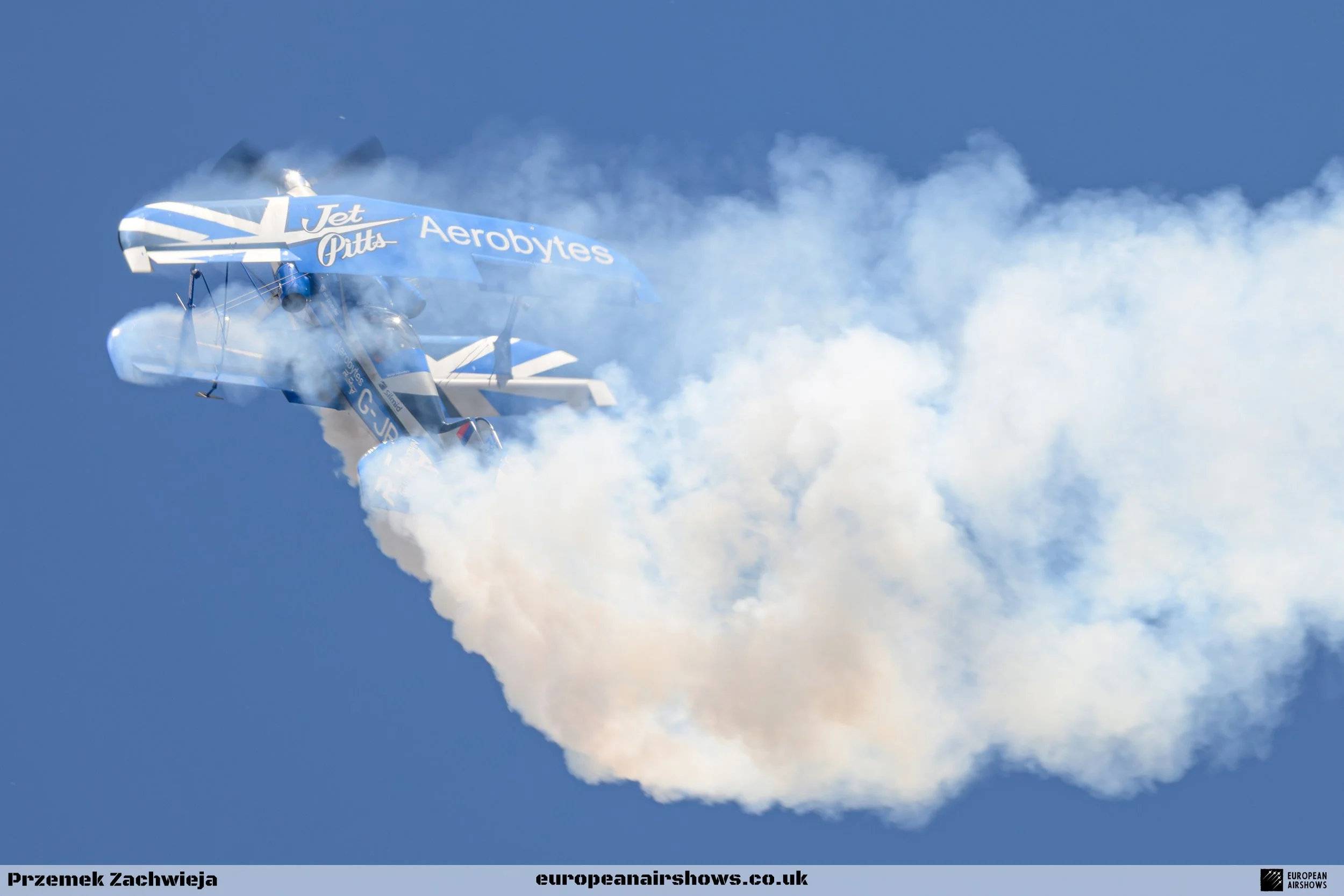
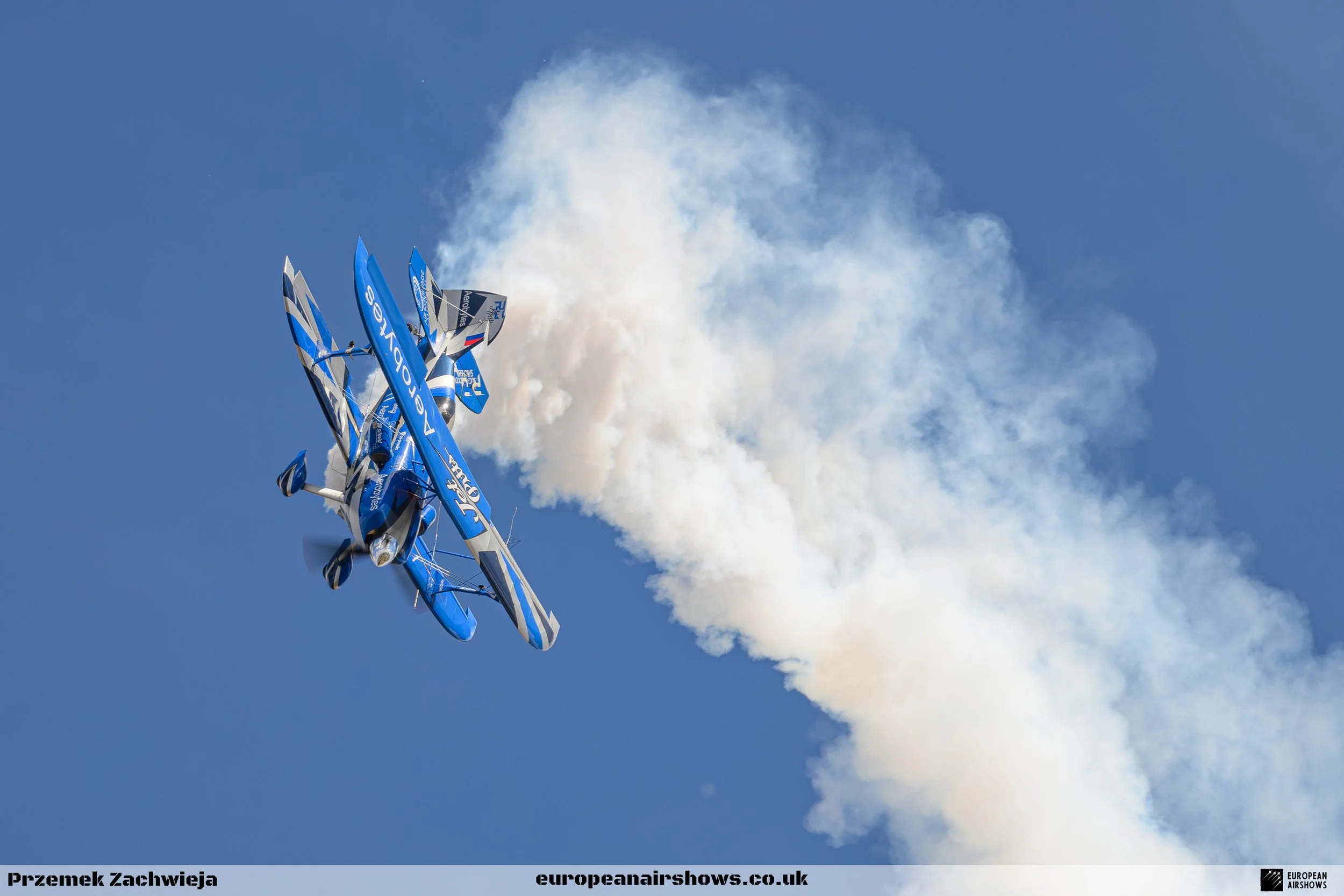
Another late addition was Rich Goodwin in his heavily modified Pitts S-2S Special G-JPIT, better known as the Jet Pitts.
The aircraft combines the highly modified Pitts airframe with two jet turbines, adding additional thrust and jet noise to Goodwin’s already aggressive style of aerobatics.
G-JPIT is no stranger to Duxford, but the display remains completely different from anything else currently seen on the UK circuit. Goodwin used the aircraft’s extremely high roll rate, rapid direction changes and jet-assisted vertical performance to full effect.
It was another near-perfect routine and a very useful late addition following the withdrawal of the Cobra Demo Team.
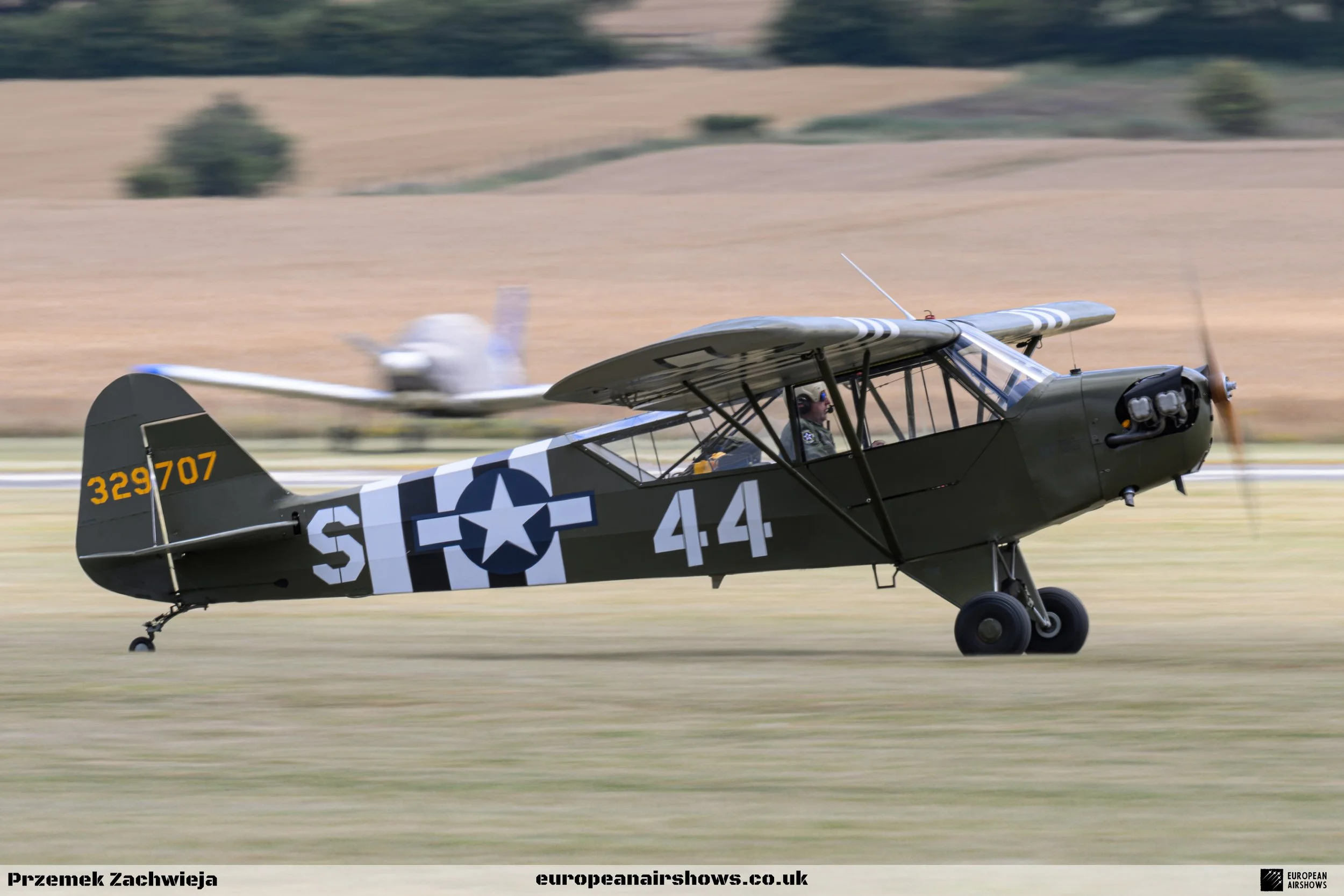
A significant section of the programme was built around the Vietnam War, with a particular focus on observation, forward air control and aircraft associated with the conflict.
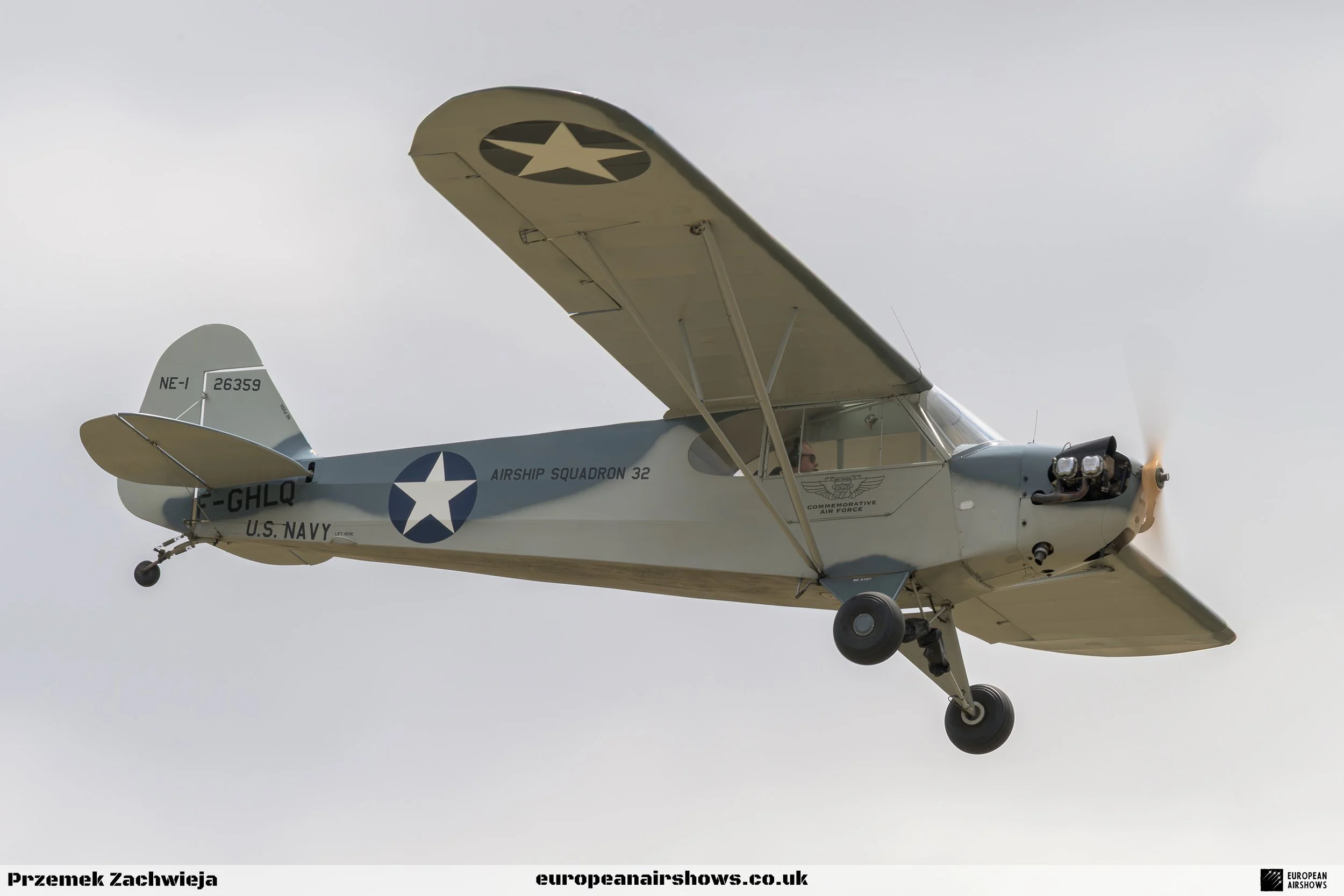
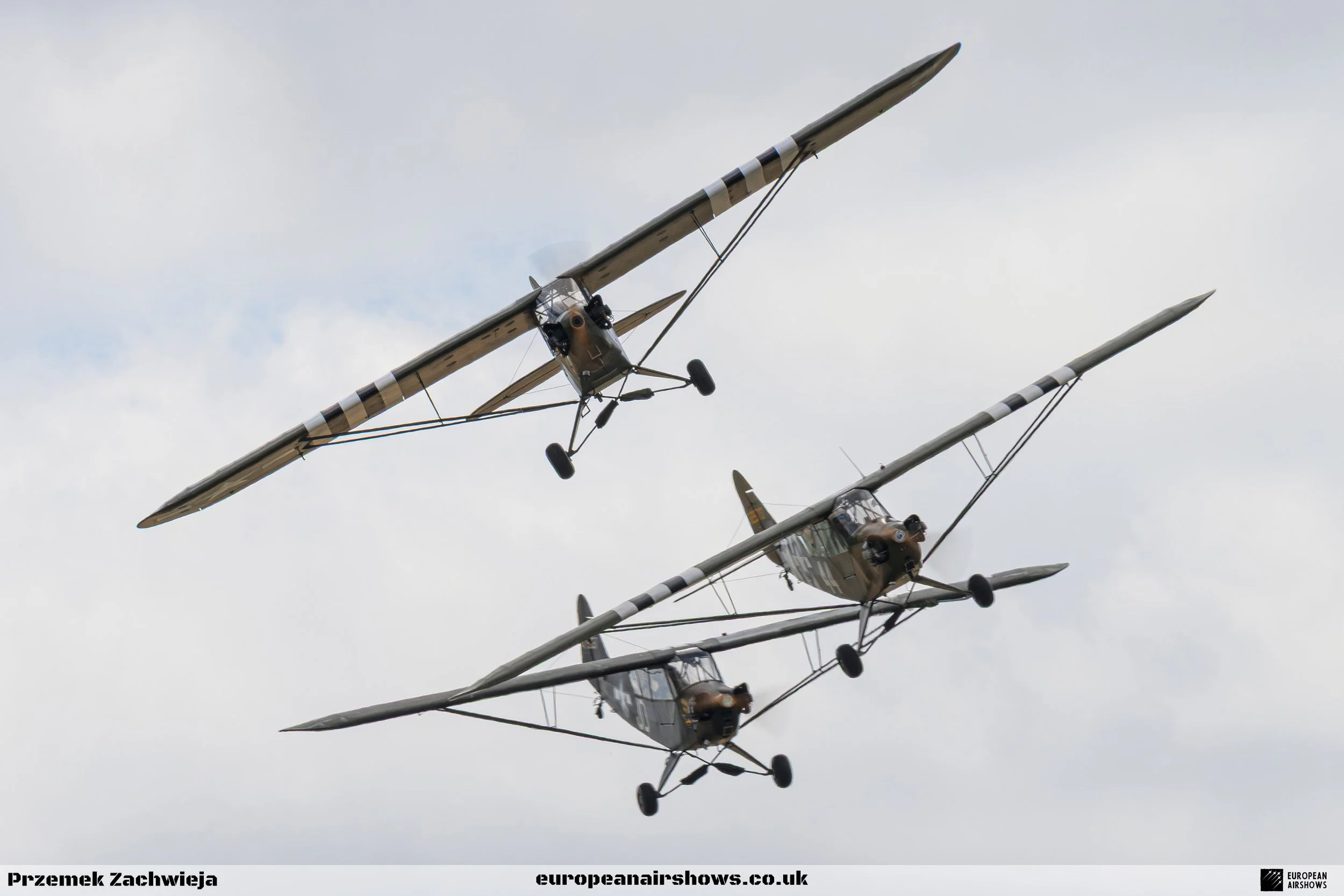
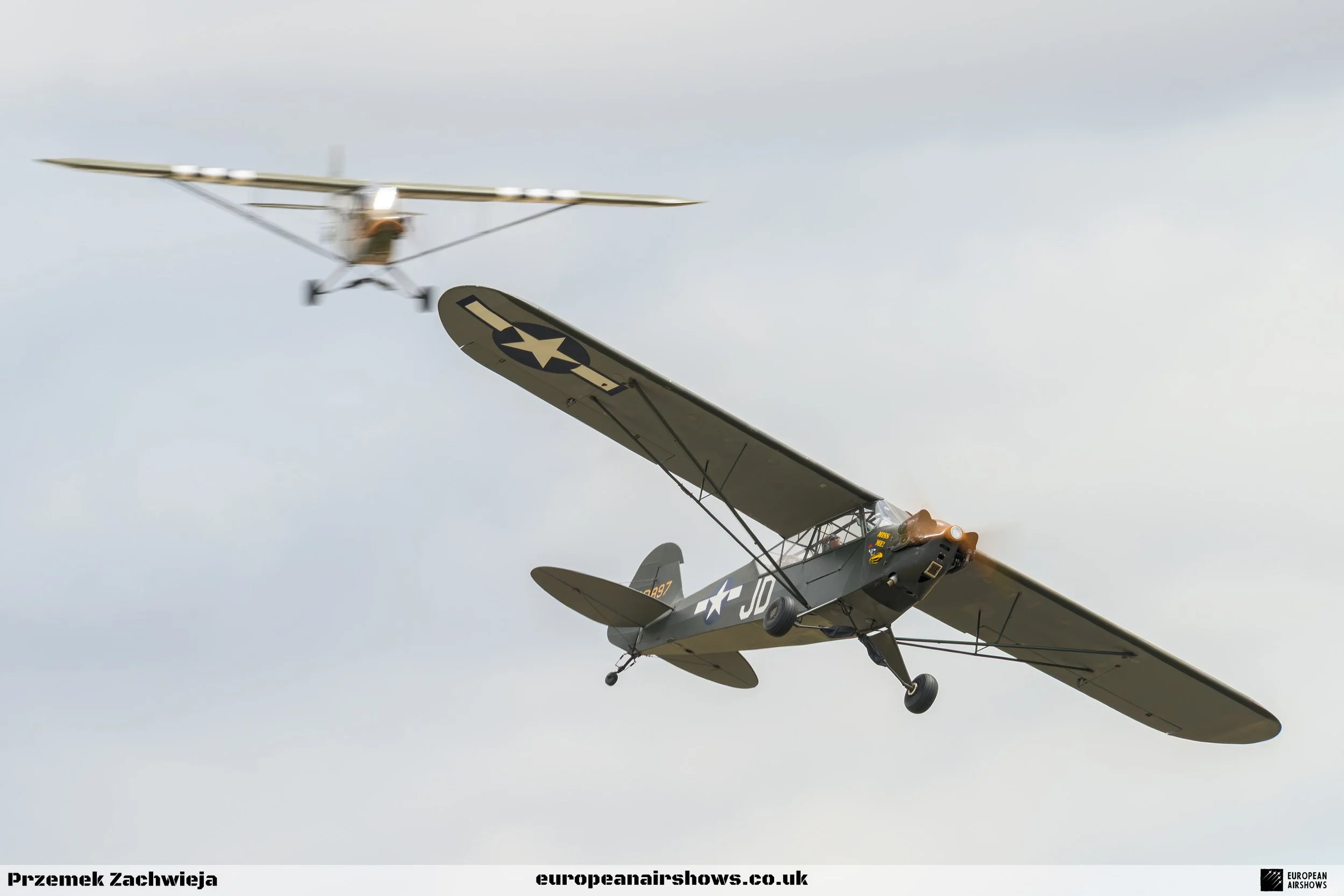
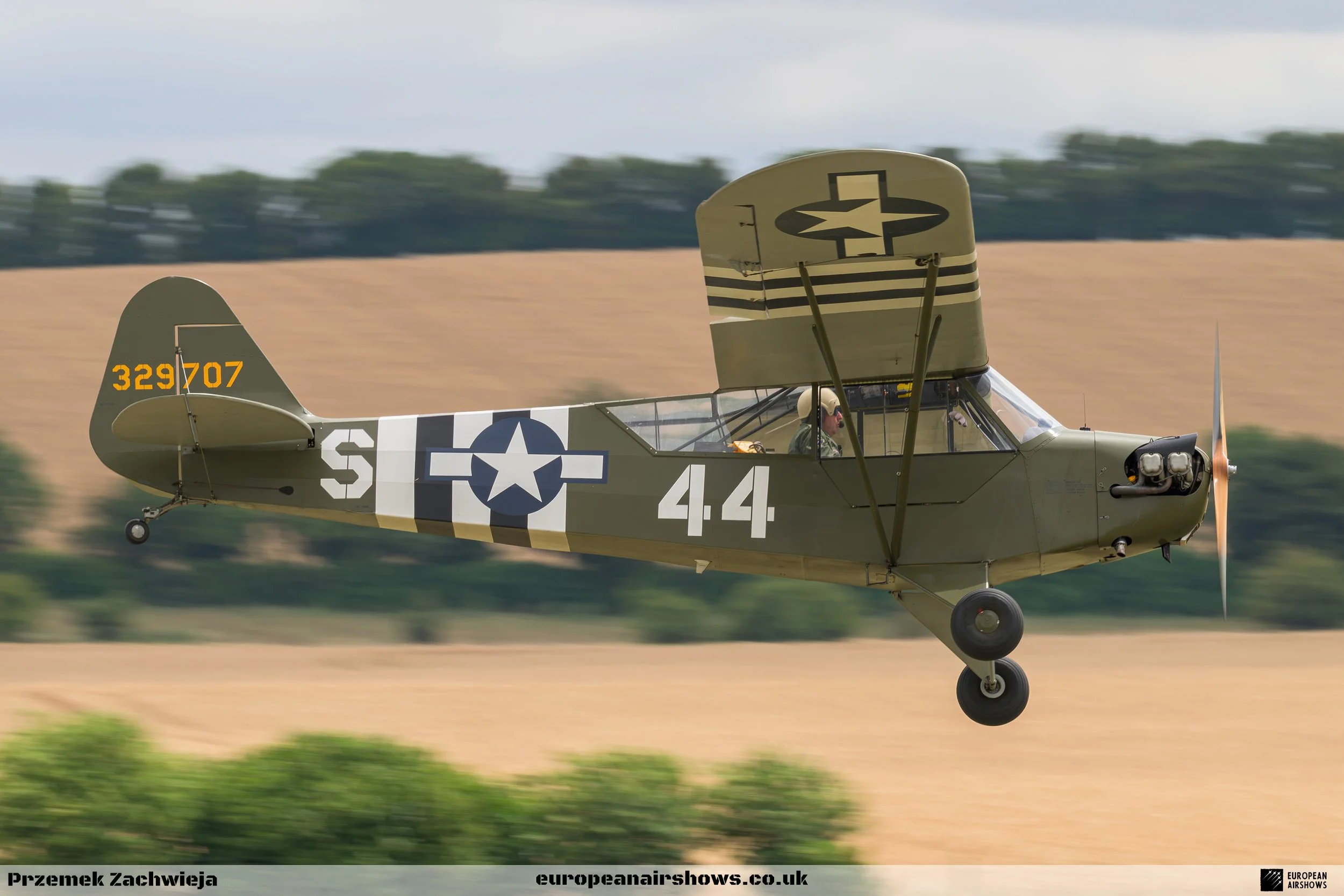
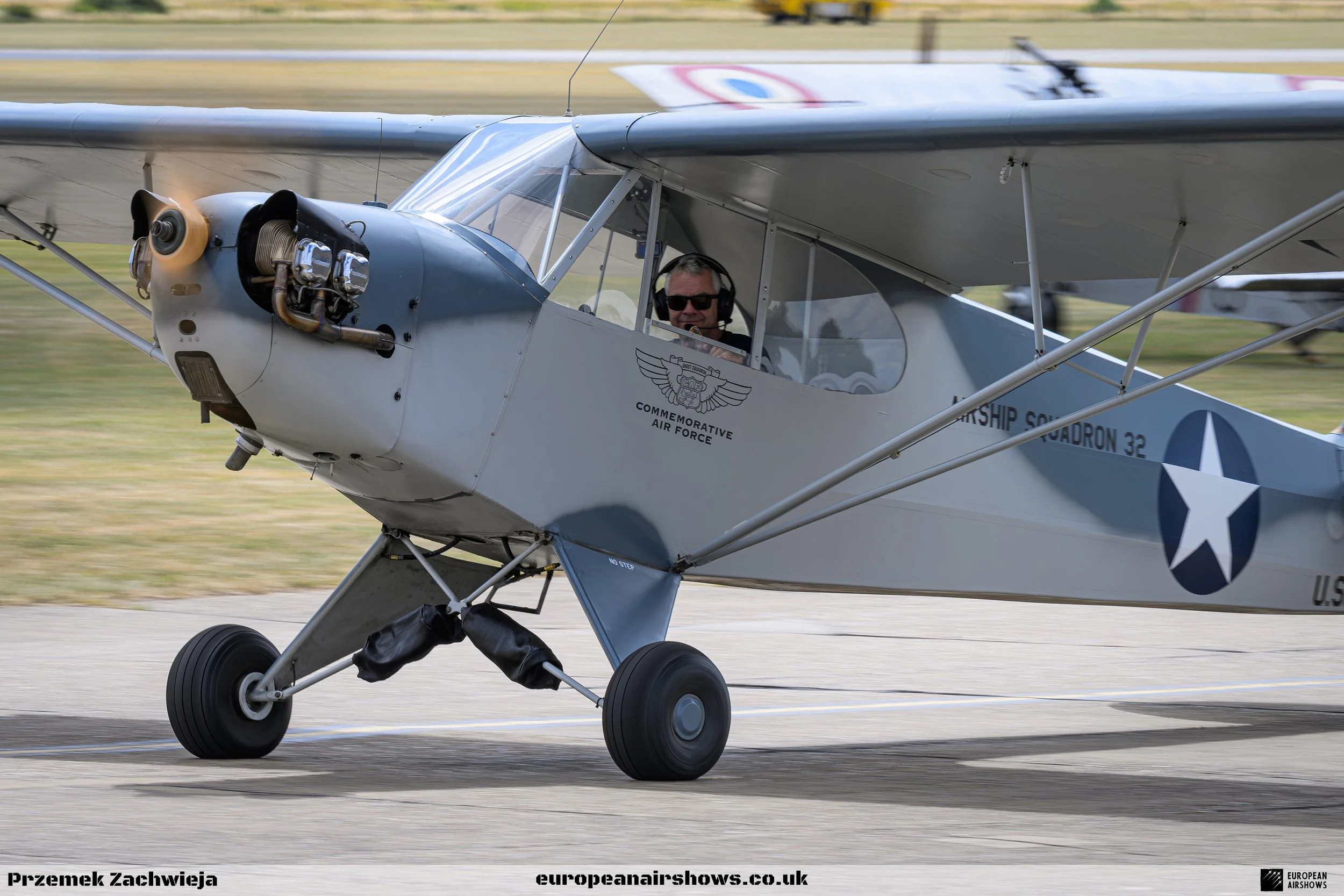
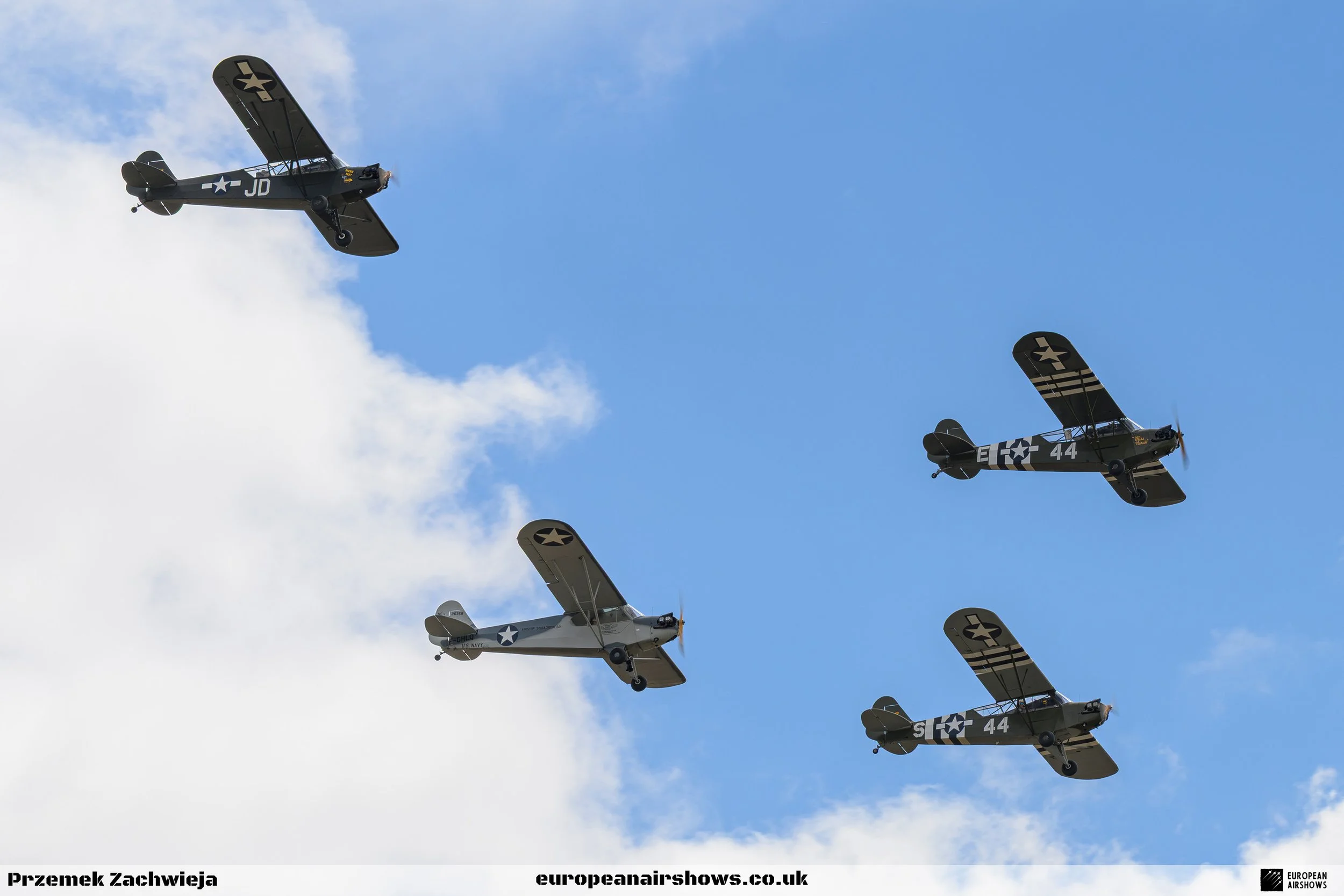
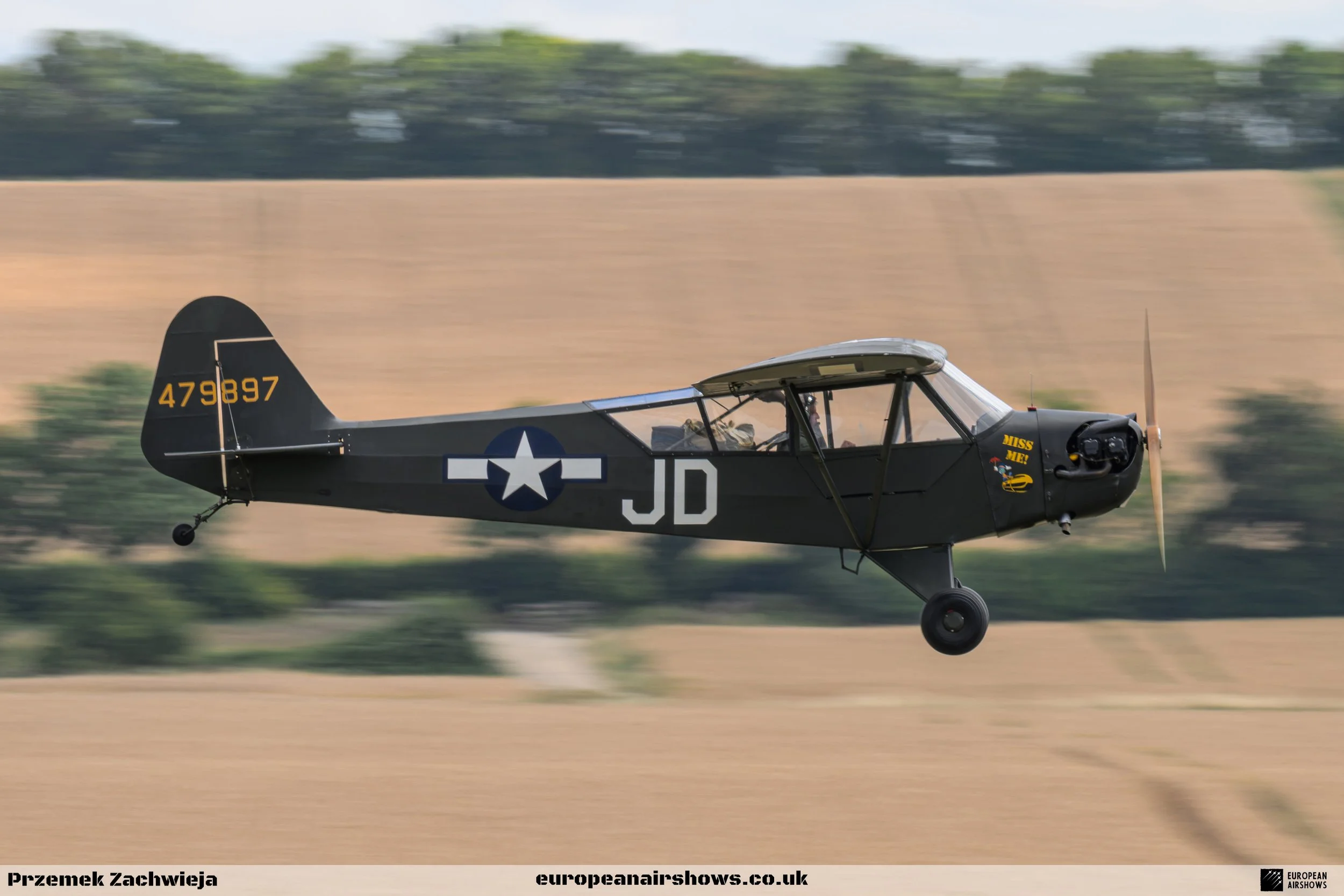
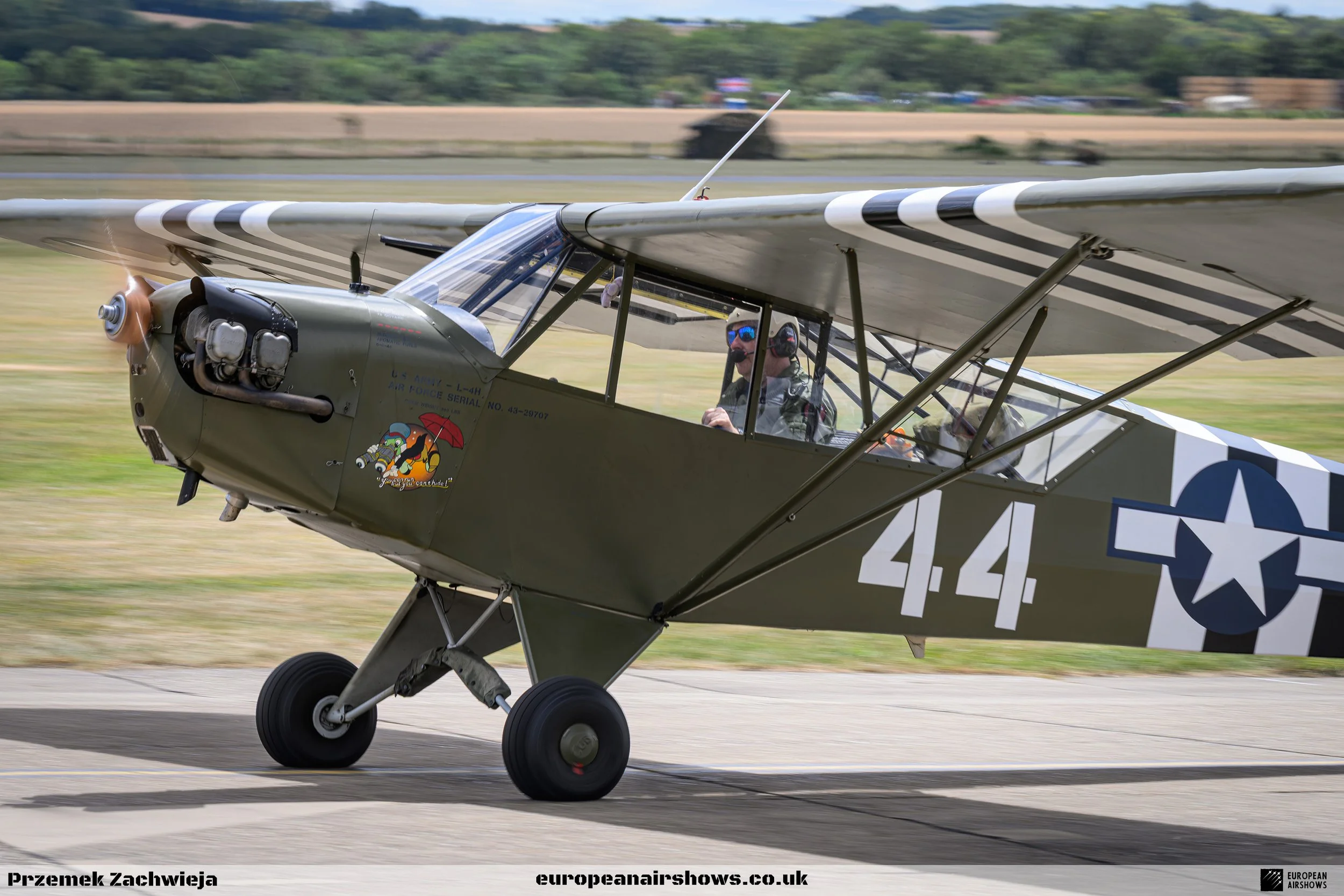
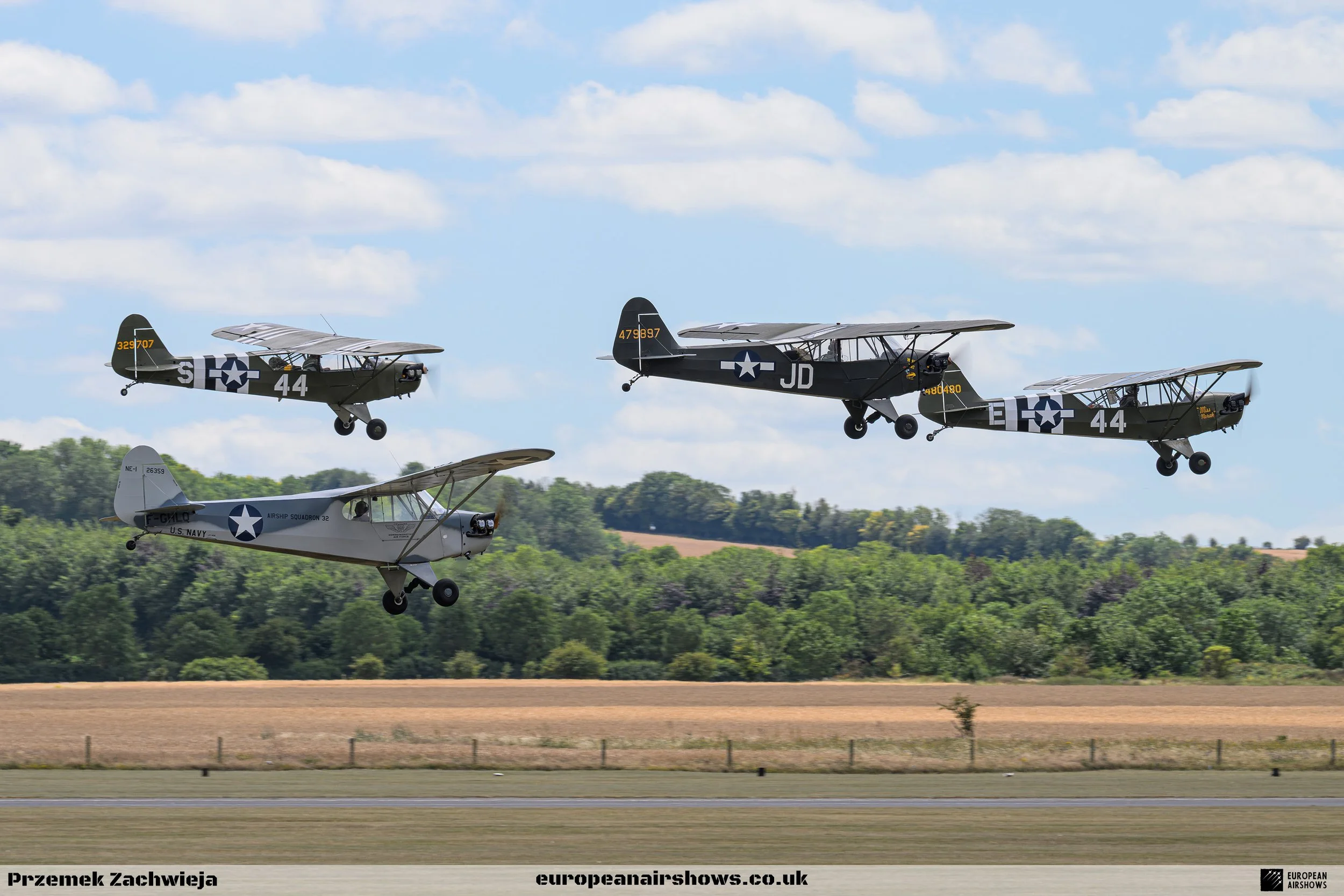
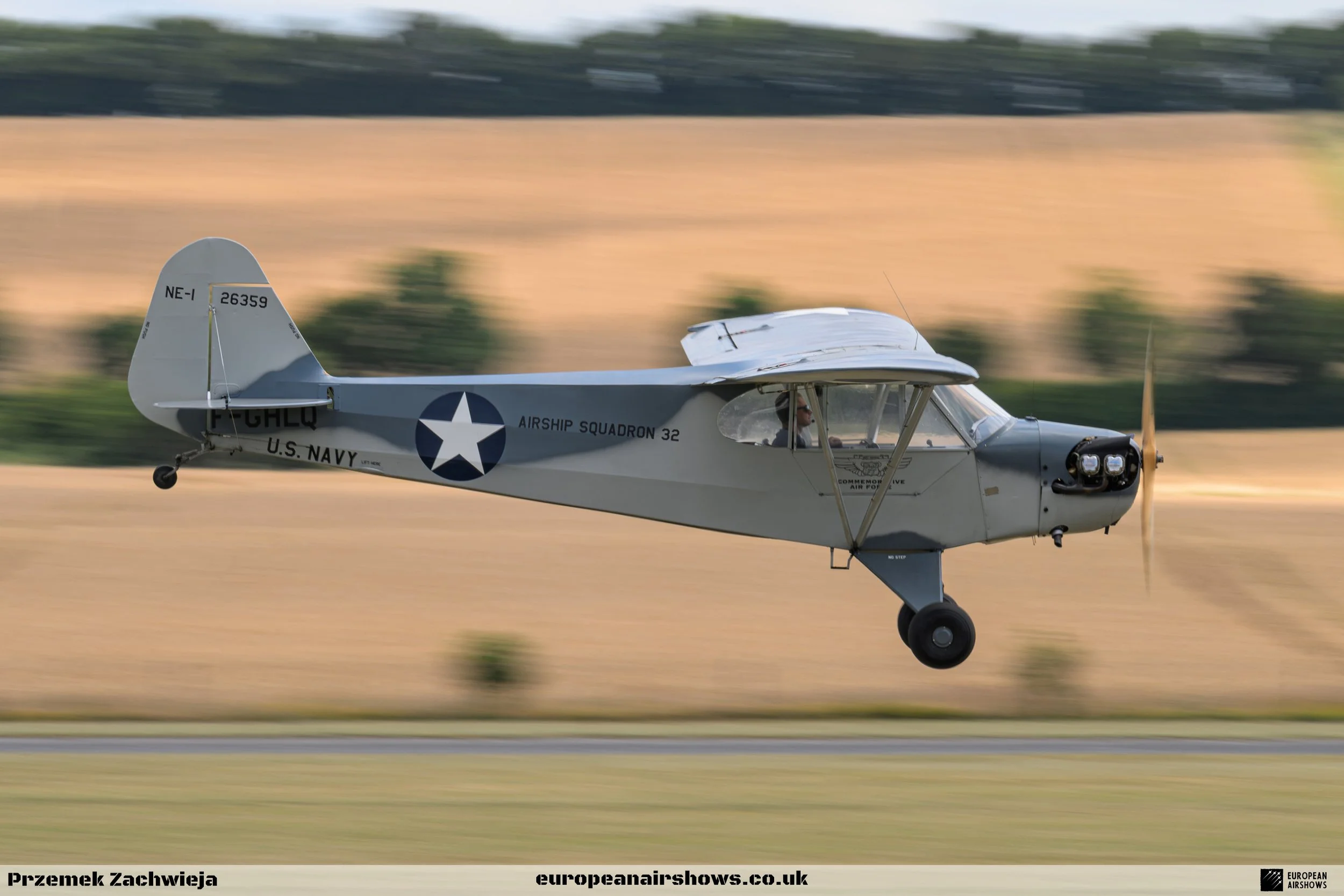
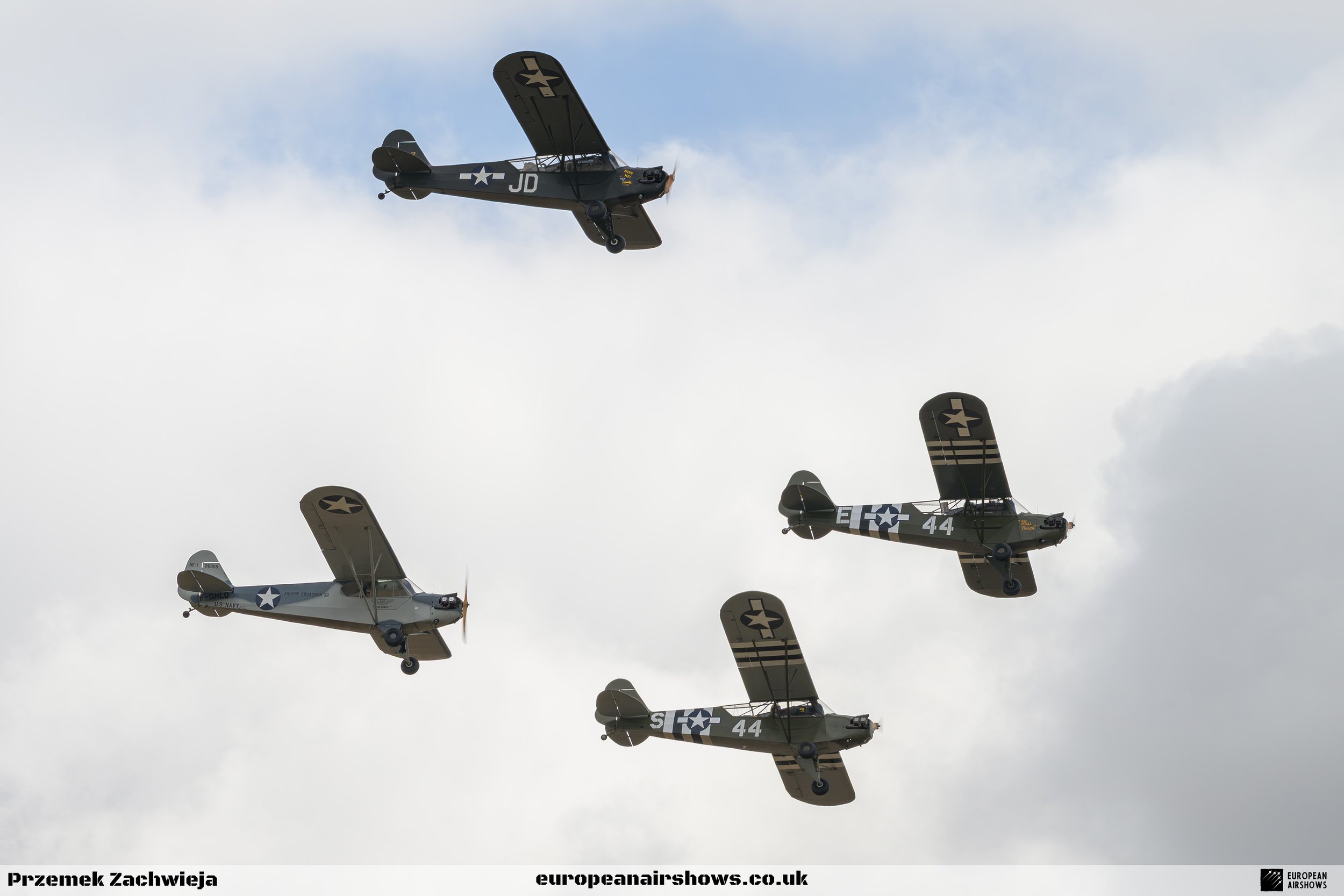
The sequence began with three Piper L-4 Grasshoppers accompanied by the Commemorative Air Force French Wing’s Piper NE-1, known as The Little Blue Cloud.
The four aircraft were flown by Anthony Bendowski, Tom Turner, Phil Hardisty and Jean-Yves Cercy. The French NE-1 was undertaking a short UK airshow tour and was one of the more unusual visitors in the Duxford programme.
It was a lovely formation display supported by well-timed ground pyrotechnics, although the aircraft remained extremely distant for much of the routine.
The scenario itself was slightly unusual. The commentary explained that the Cubs were representing Cessna O-1 Bird Dogs, which were widely used for observation and forward air control during the Vietnam War.
The Piper aircraft were therefore being used as visual stand-ins for an entirely different type. It was a strange decision, particularly at an airfield with such a knowledgeable aviation audience, but the four small aircraft still produced an enjoyable display.
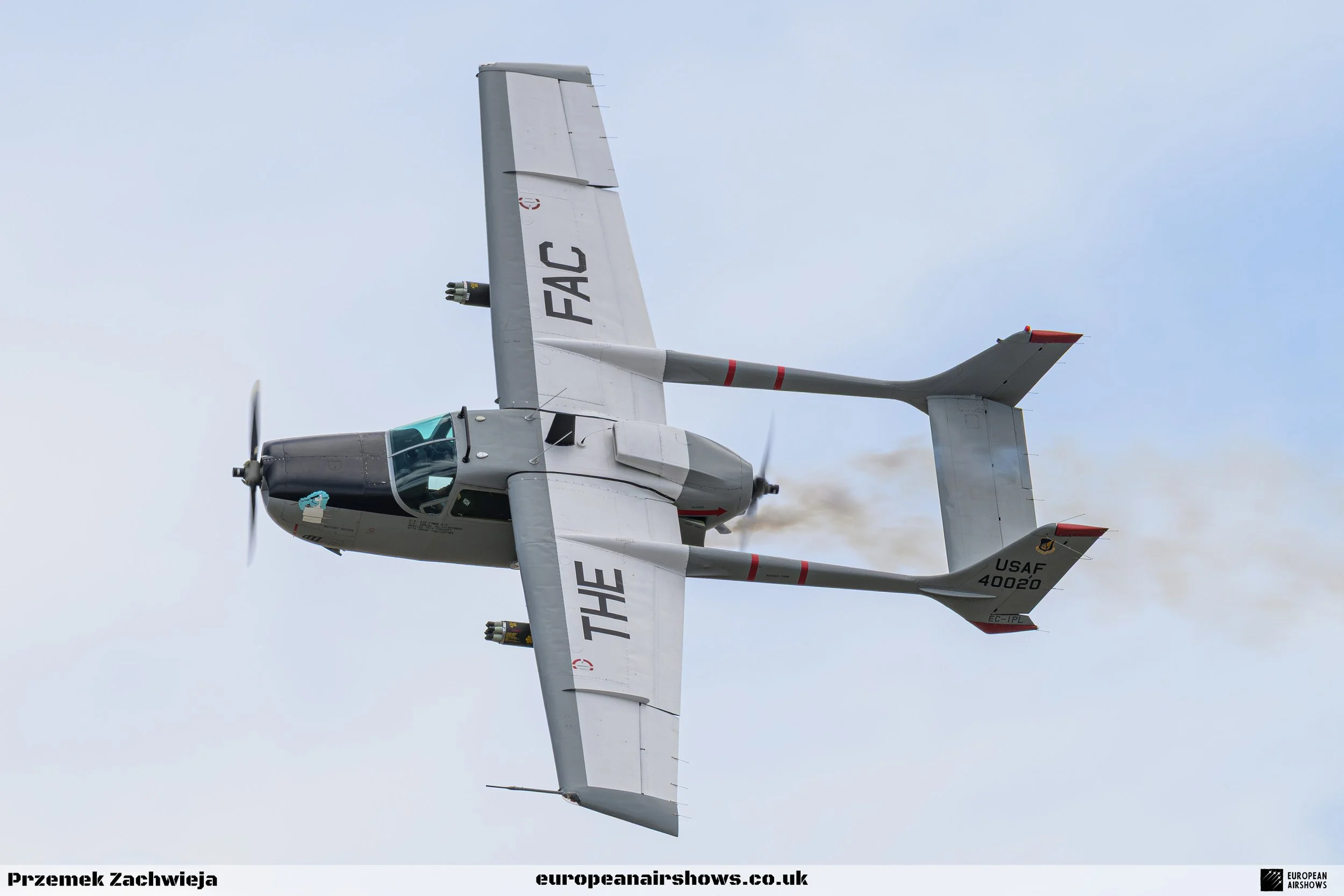
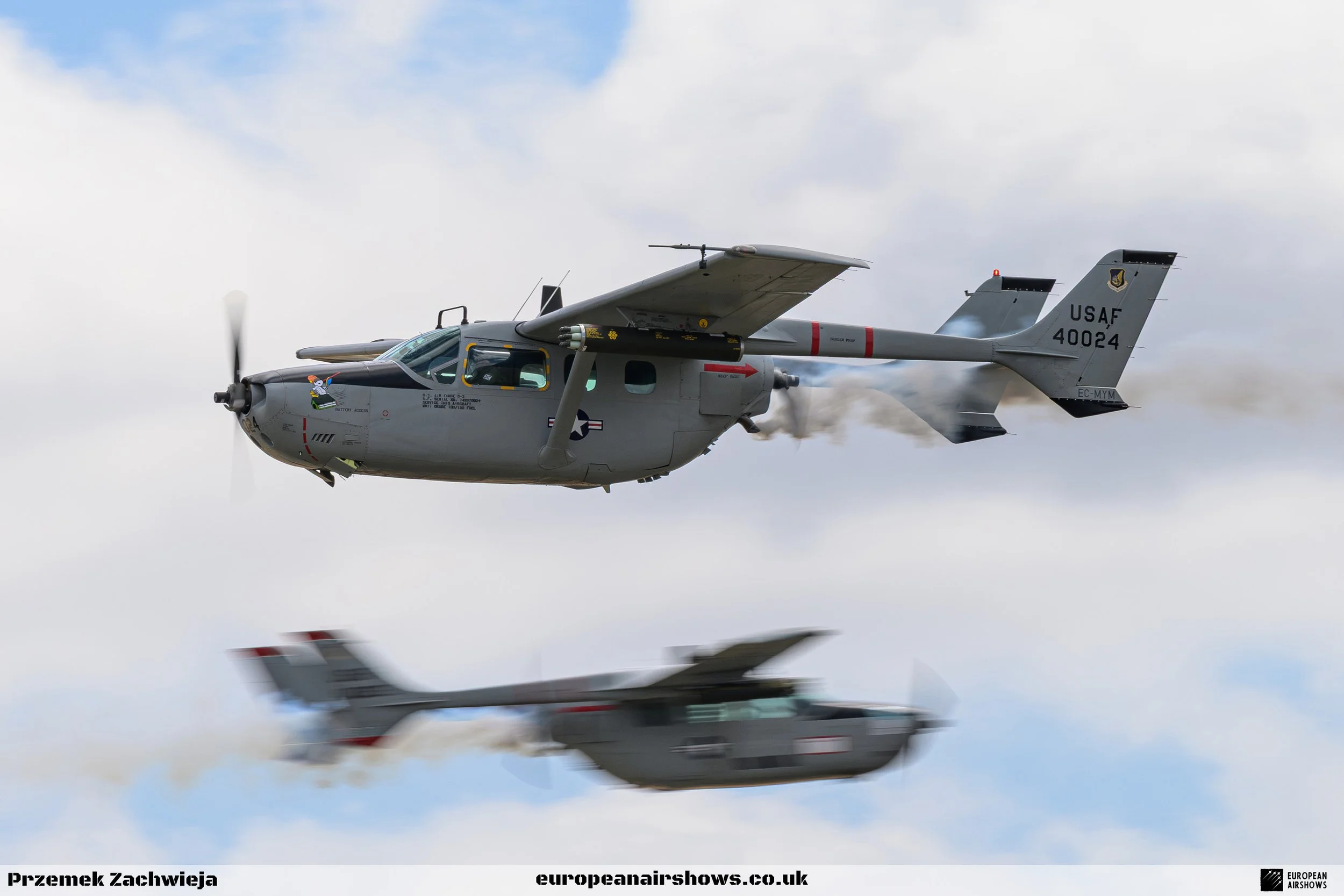
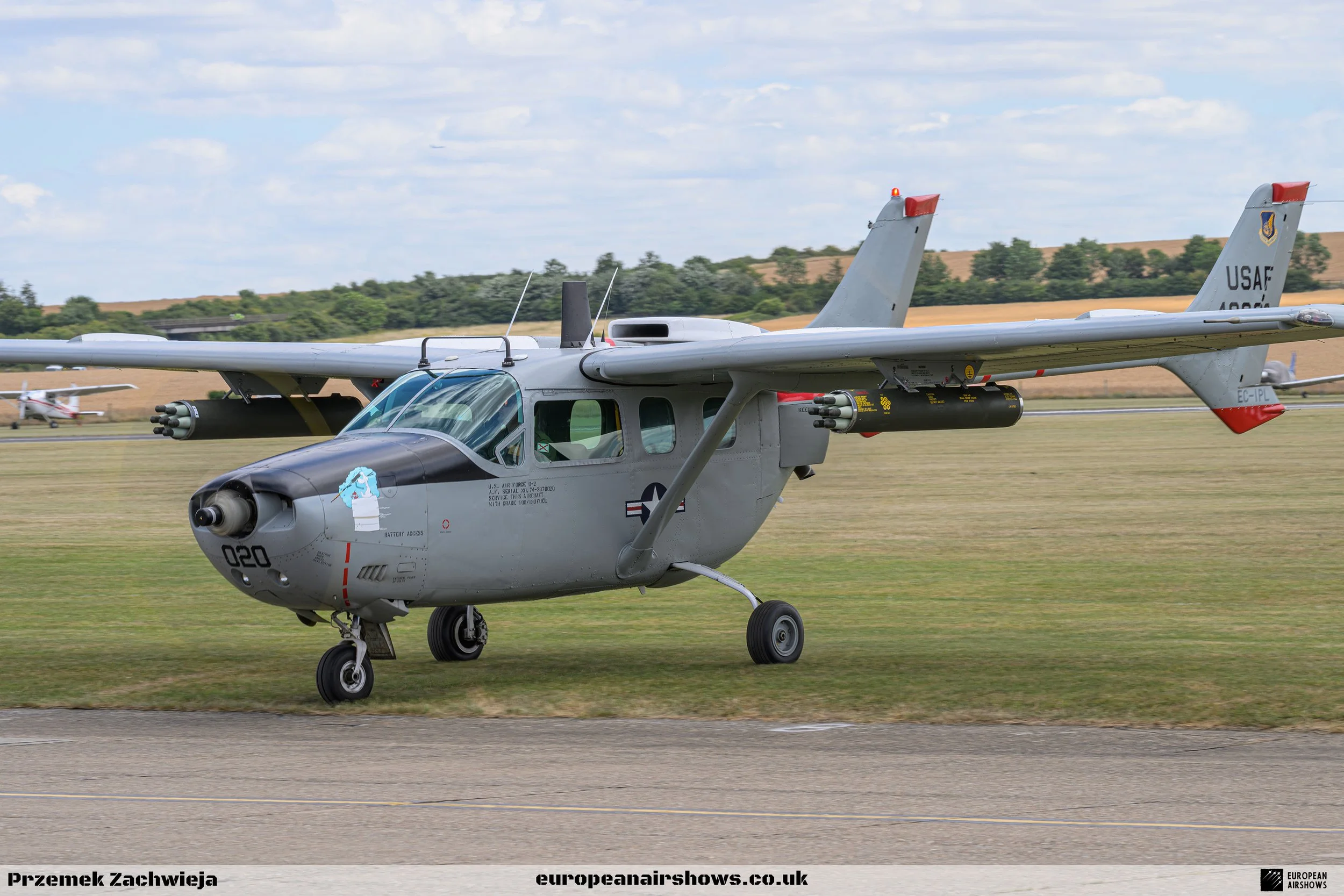
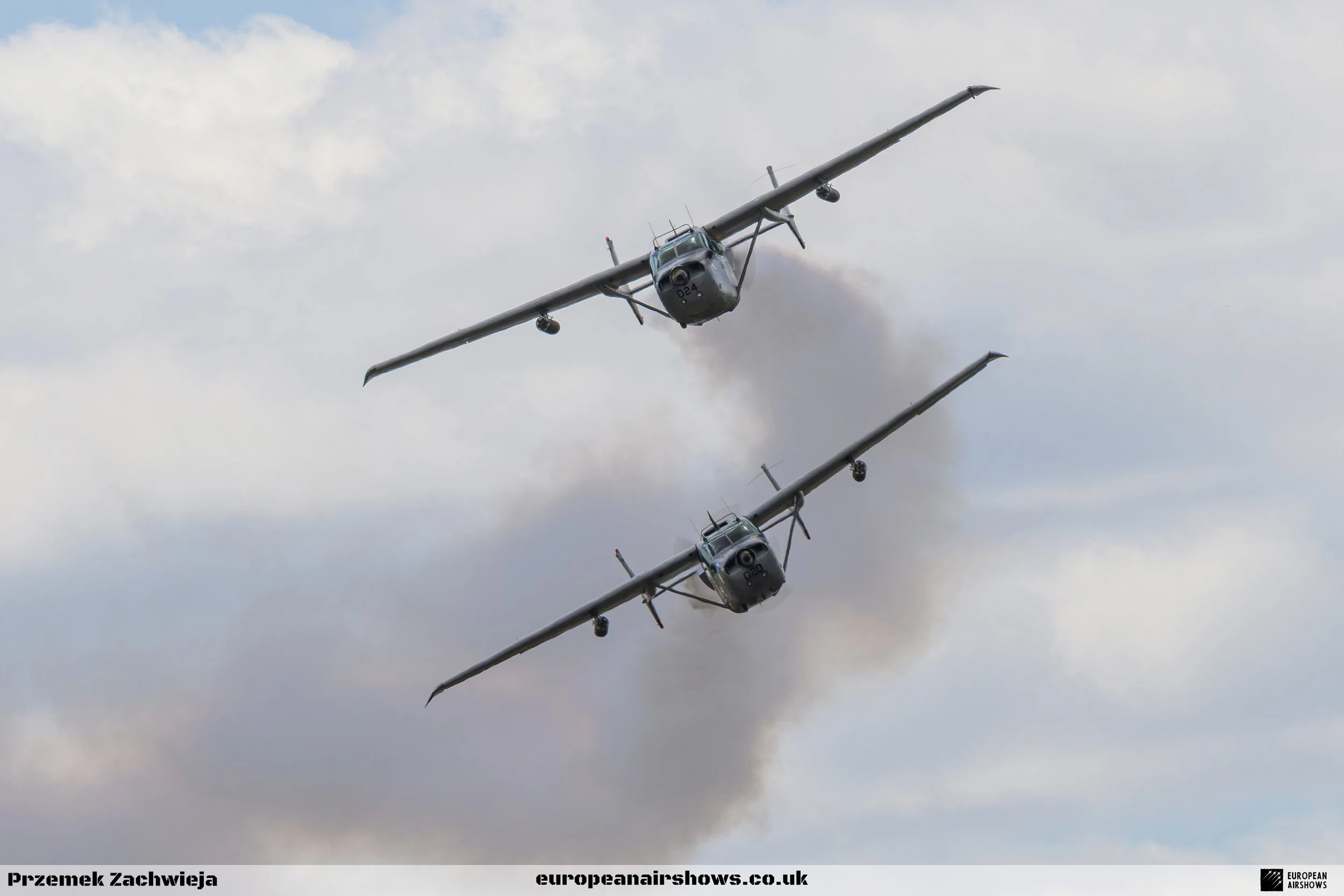
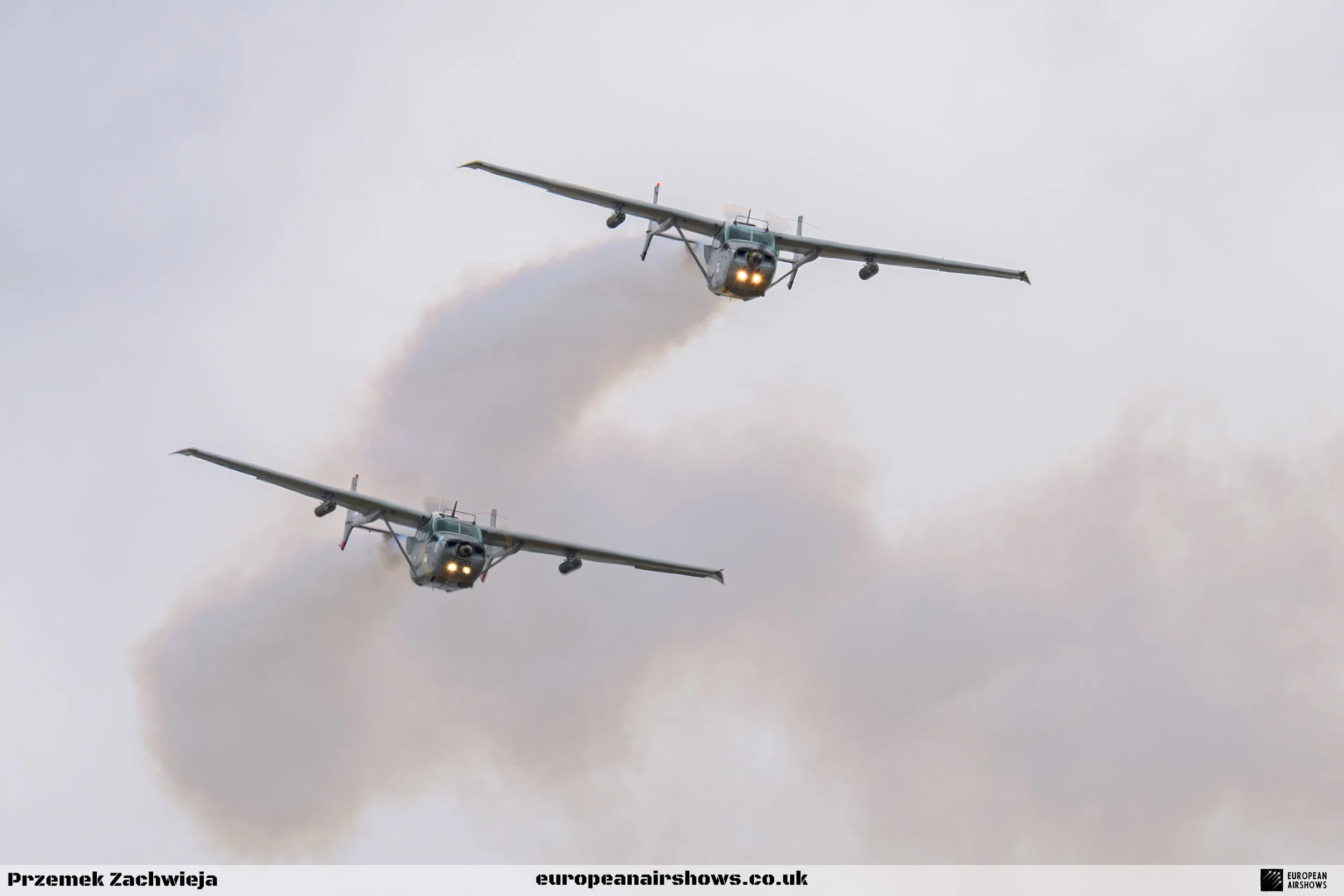
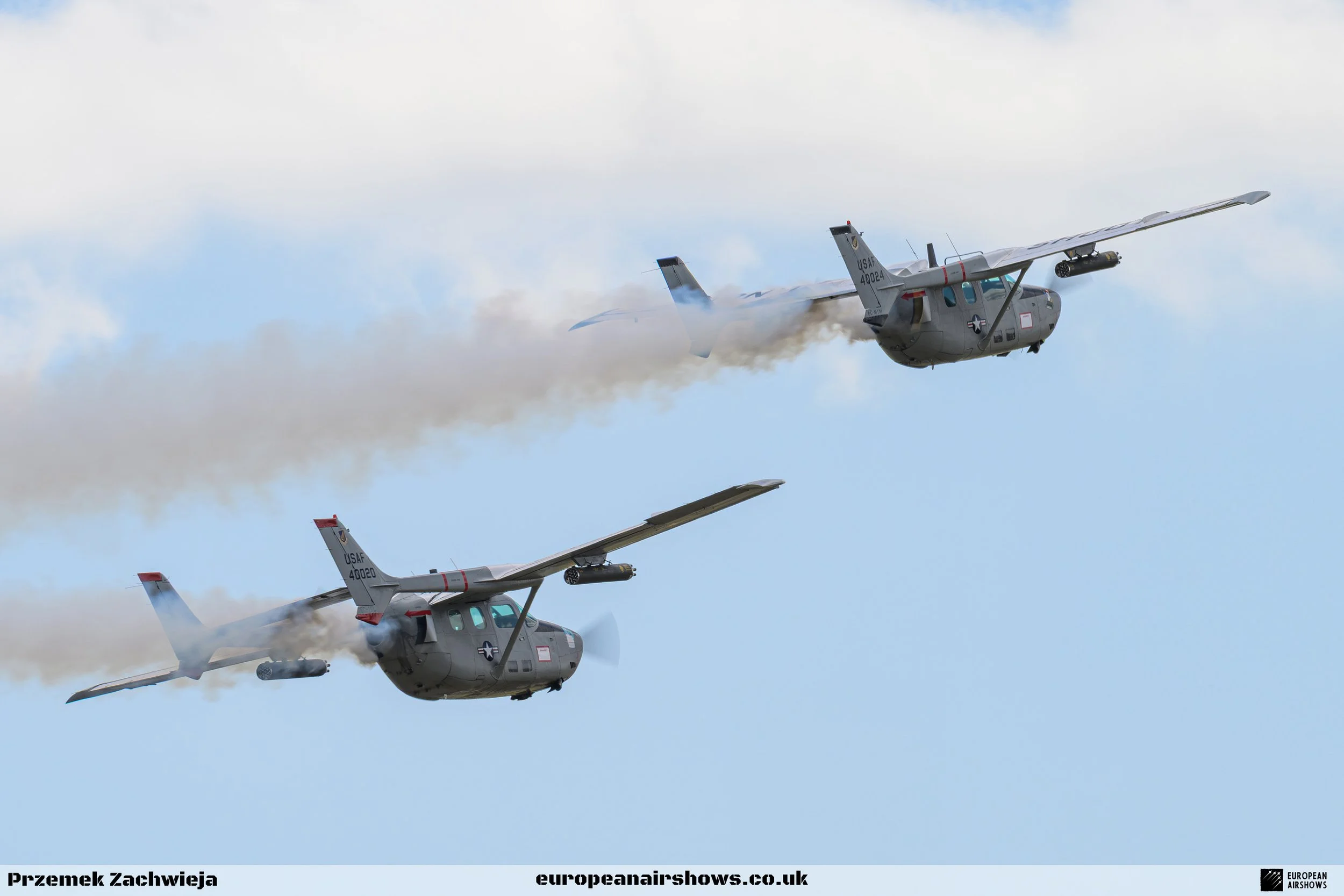
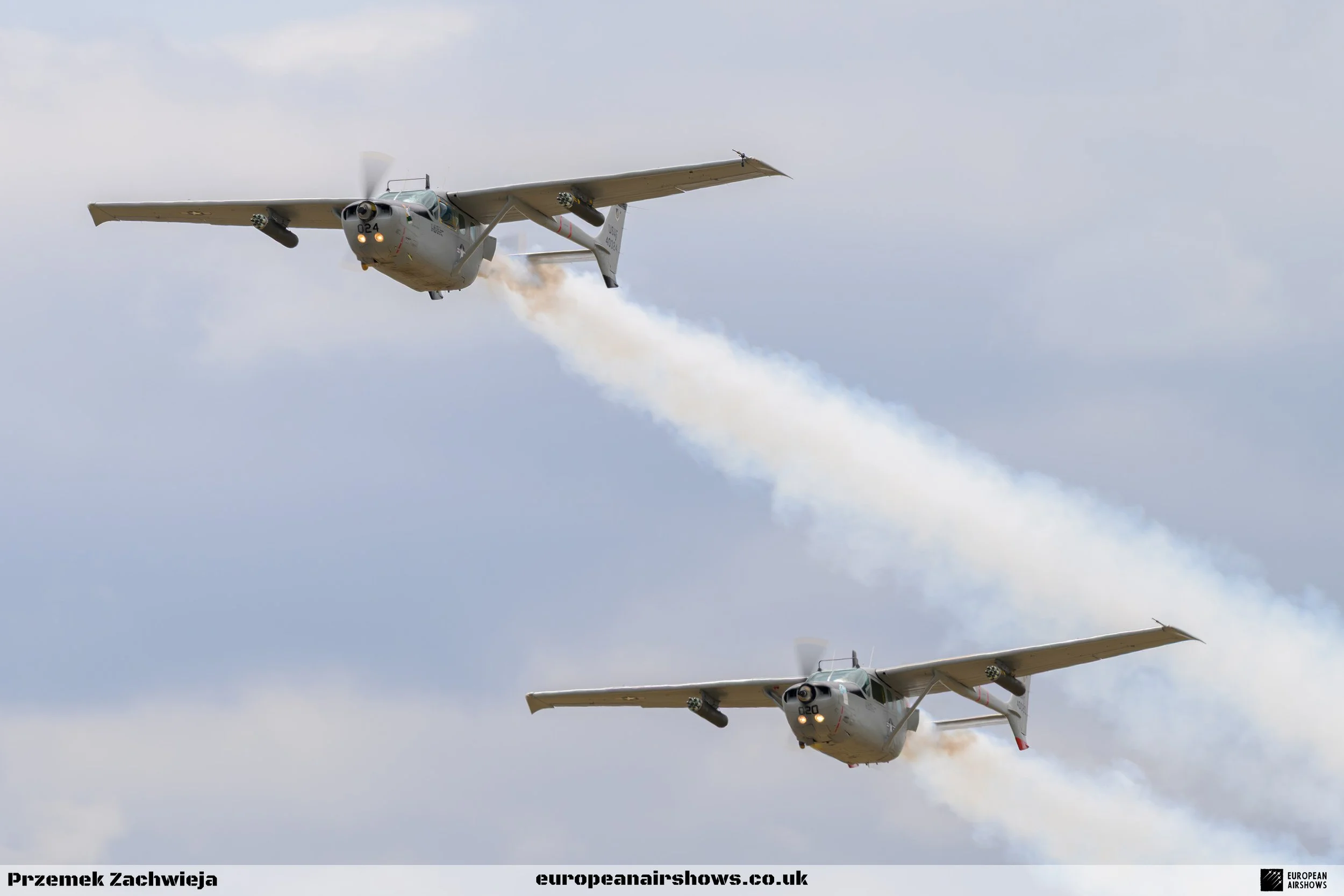
The Vietnam sequence continued with the UK display debut of Spain’s Patrulla Quijote, operated by the Fundación Aeronáutica Antonio Quintana.
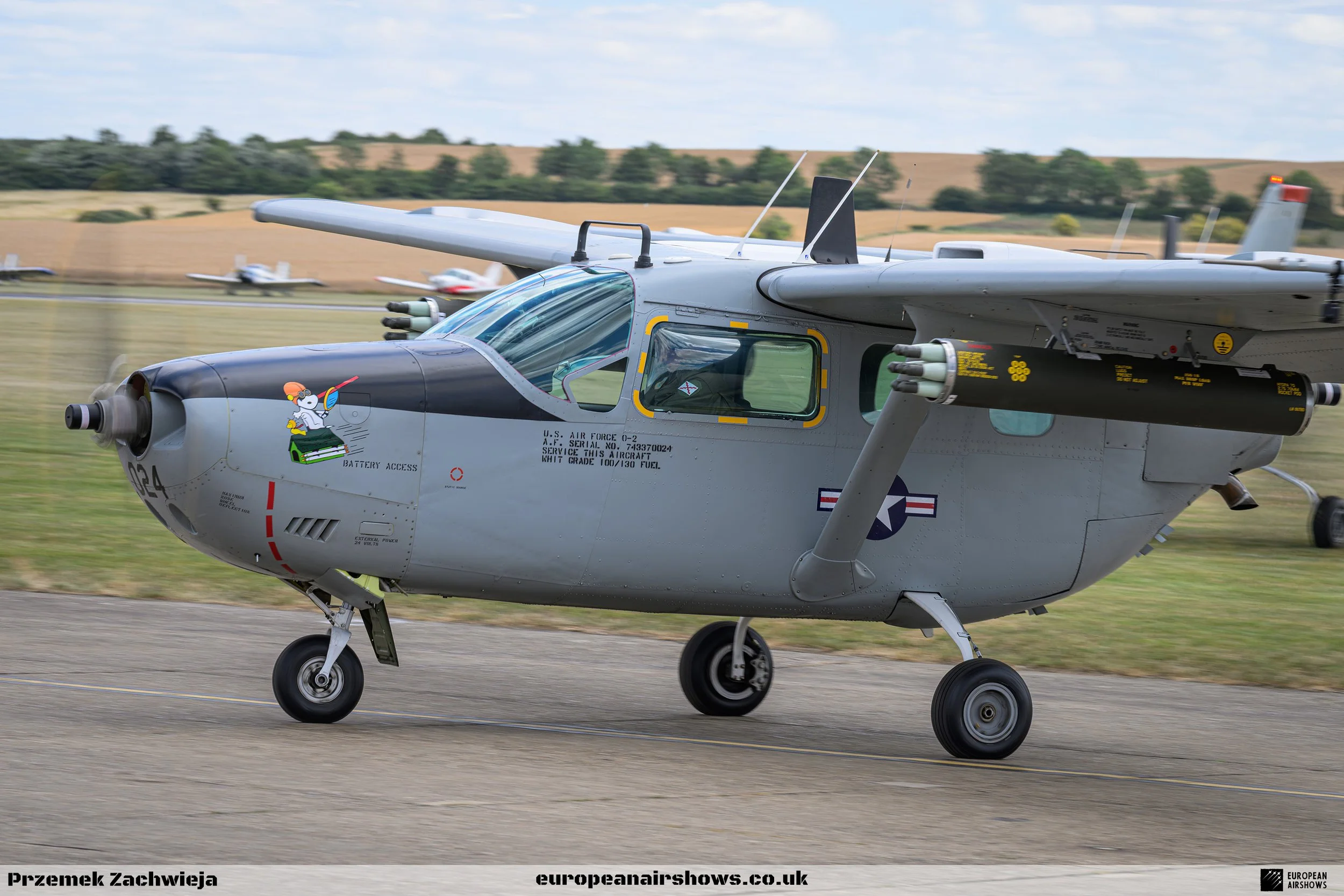
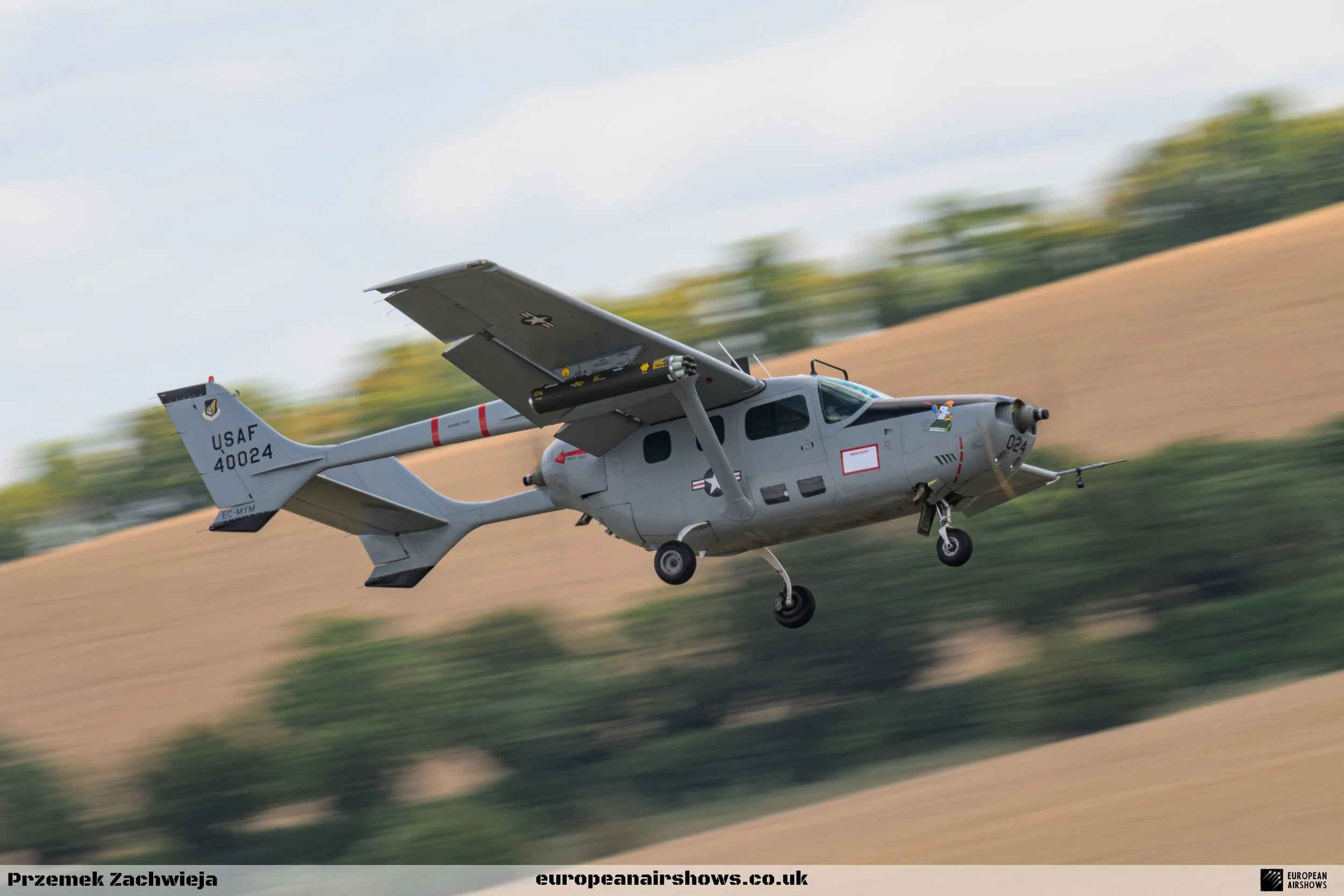
The team flies two former Portuguese Air Force Reims-Cessna FTB337G Super Skymasters. The aircraft have been restored and presented to resemble United States Air Force Cessna O-2A Skymasters used during the Vietnam War.
Although they remain Reims-Cessna FTB337Gs rather than genuine military O-2As, the Vietnam-era presentation is extremely effective.
The display was flown by a father-and-son pairing and brought something completely new to the UK airshow circuit. The formations were occasionally fairly loose, but this allowed each aircraft to complete broad topside passes, opposition runs and synchronised breaks.
Both aircraft were fitted with white smoke systems, making the display easy to follow across Duxford’s large display area. Their unusual tractor-and-pusher engine arrangement also produced one of the most distinctive sounds of the weekend.
Patrulla Quijote’s debut was a lovely display and hopefully will not remain a one-off UK appearance.
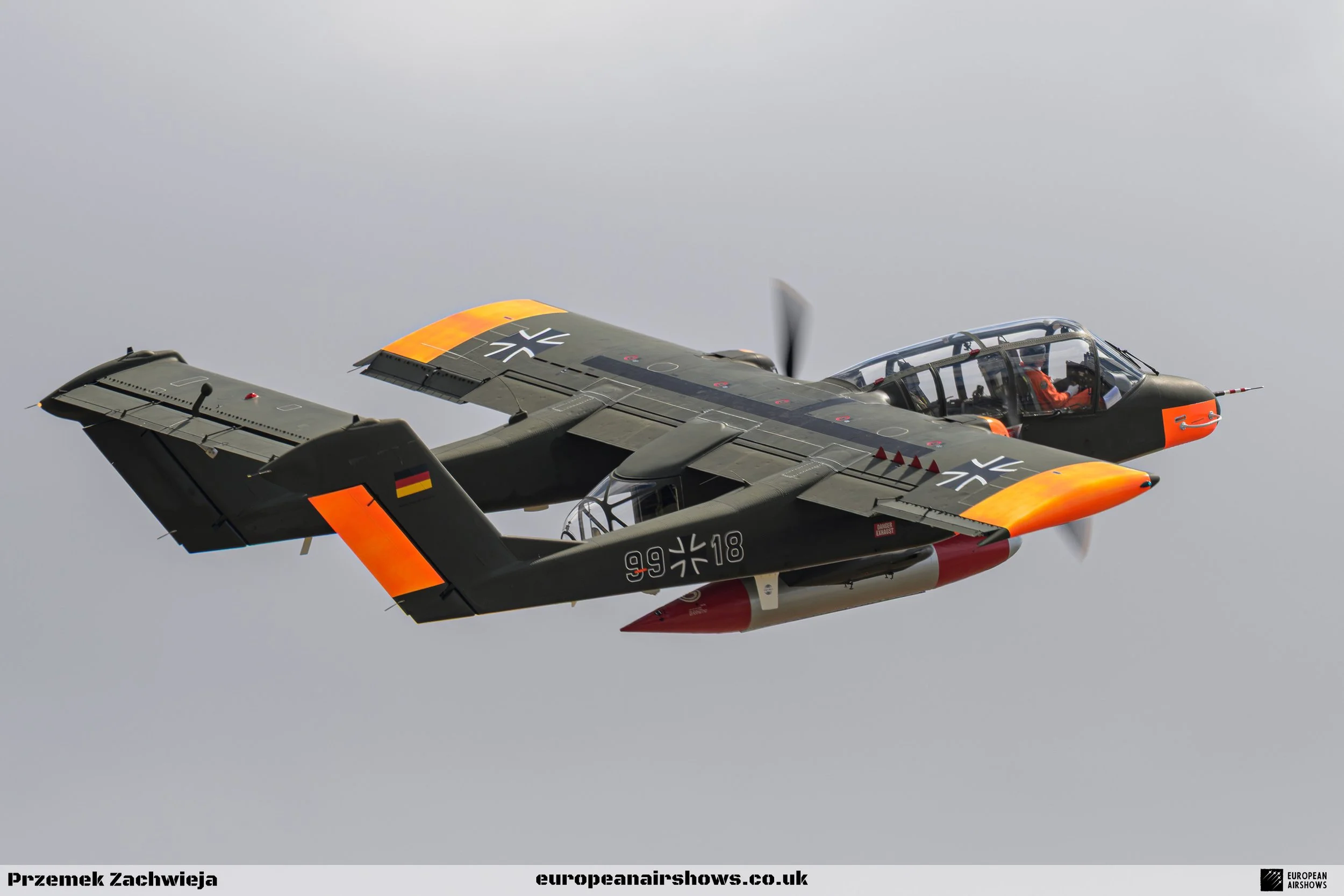
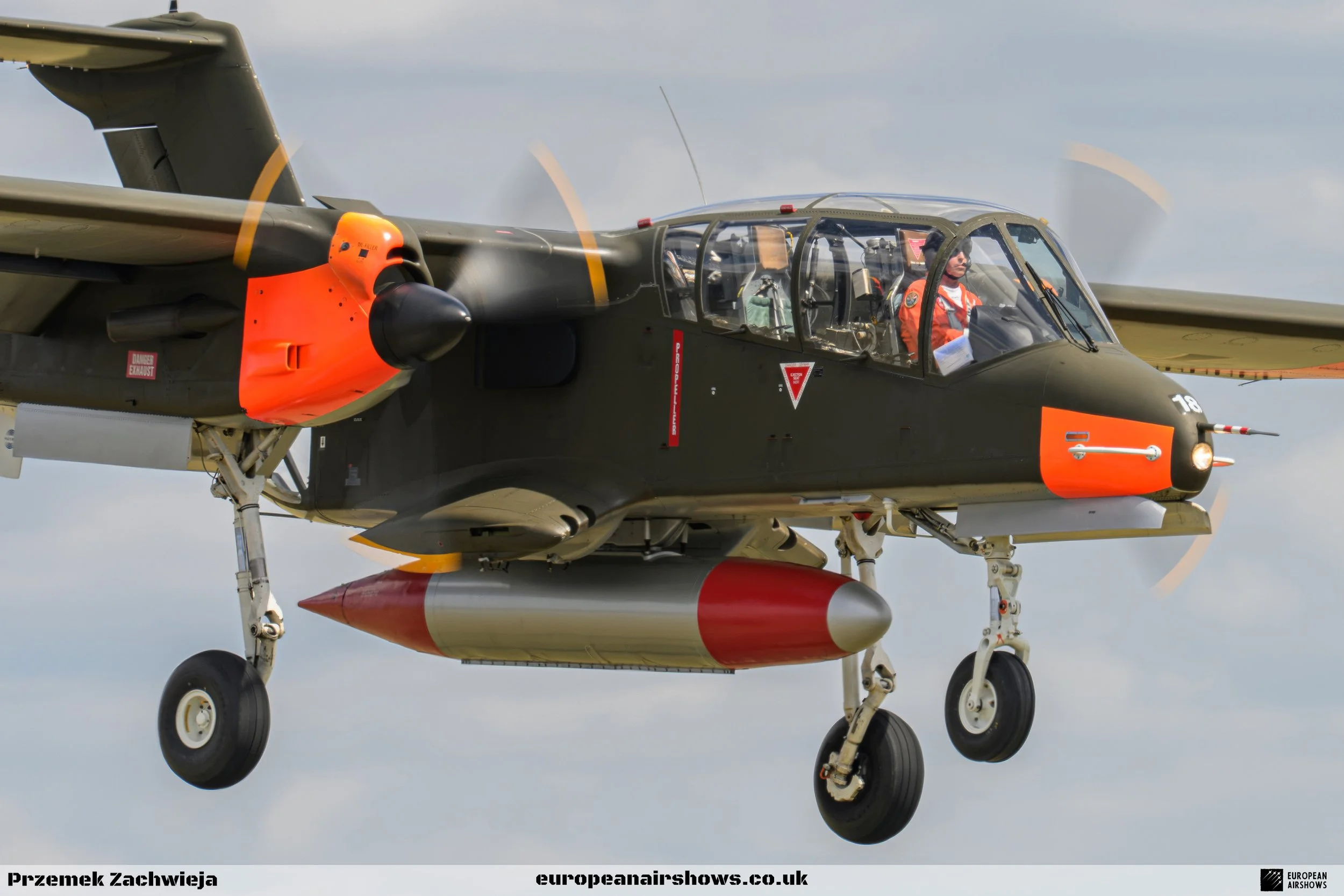
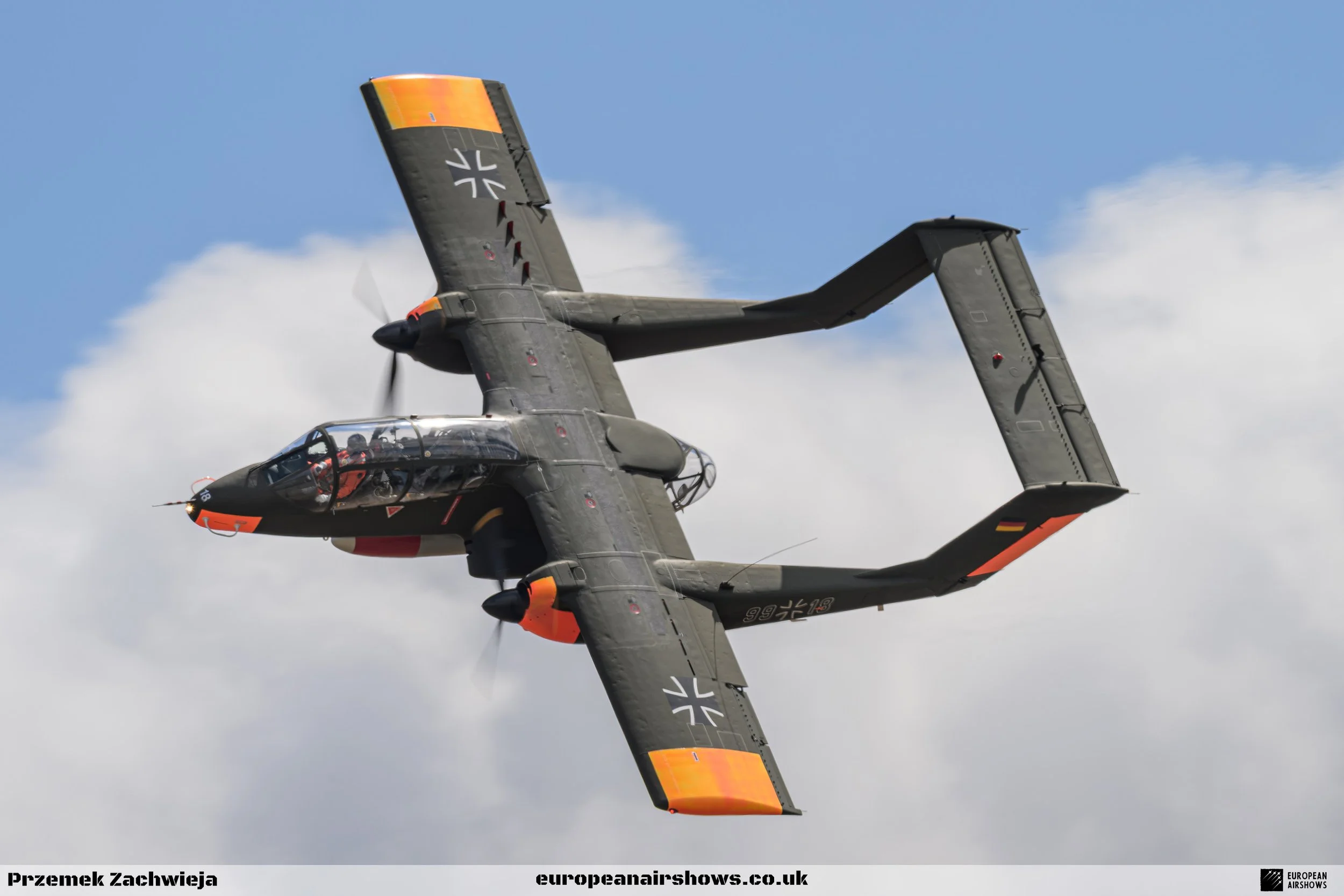
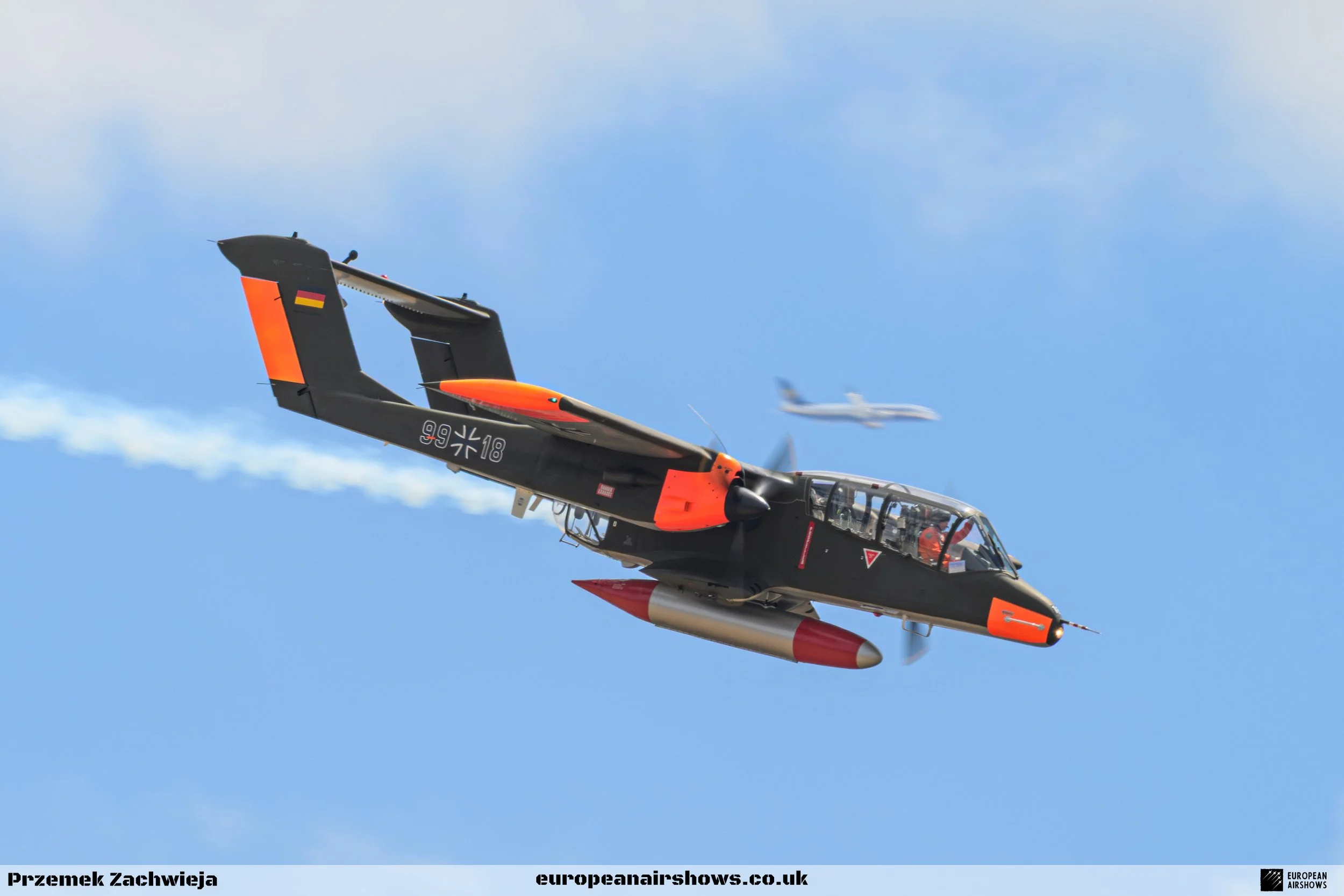
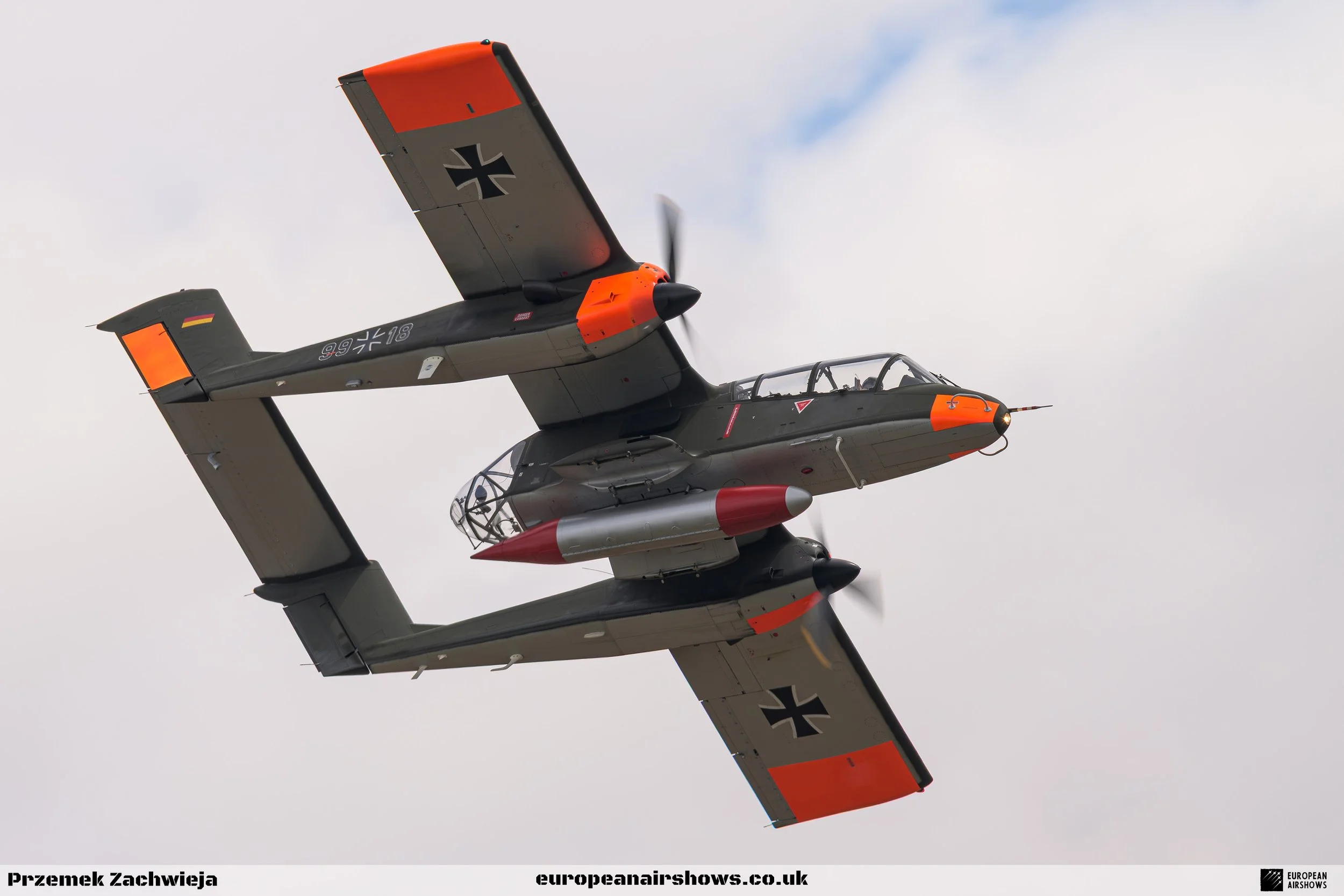
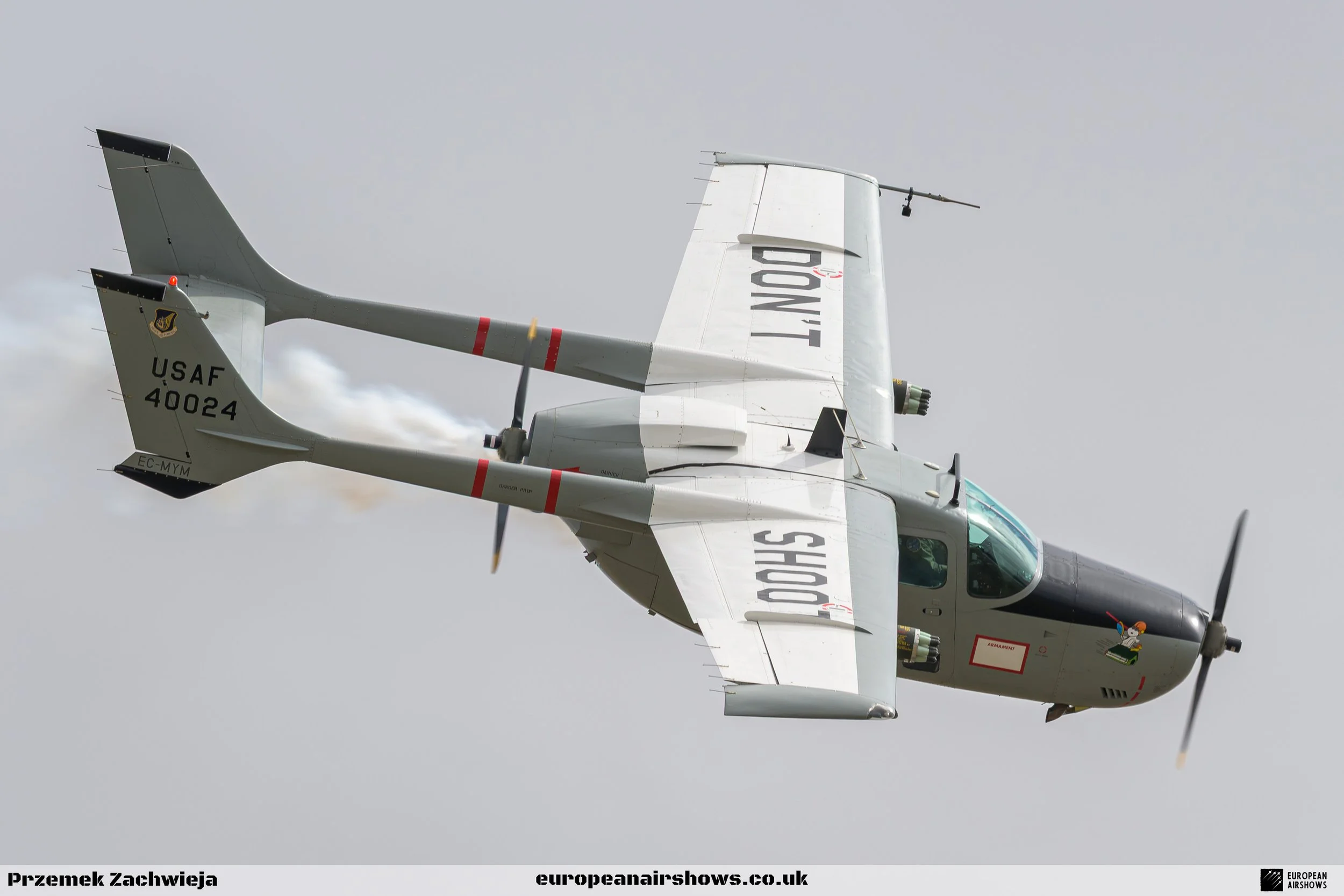
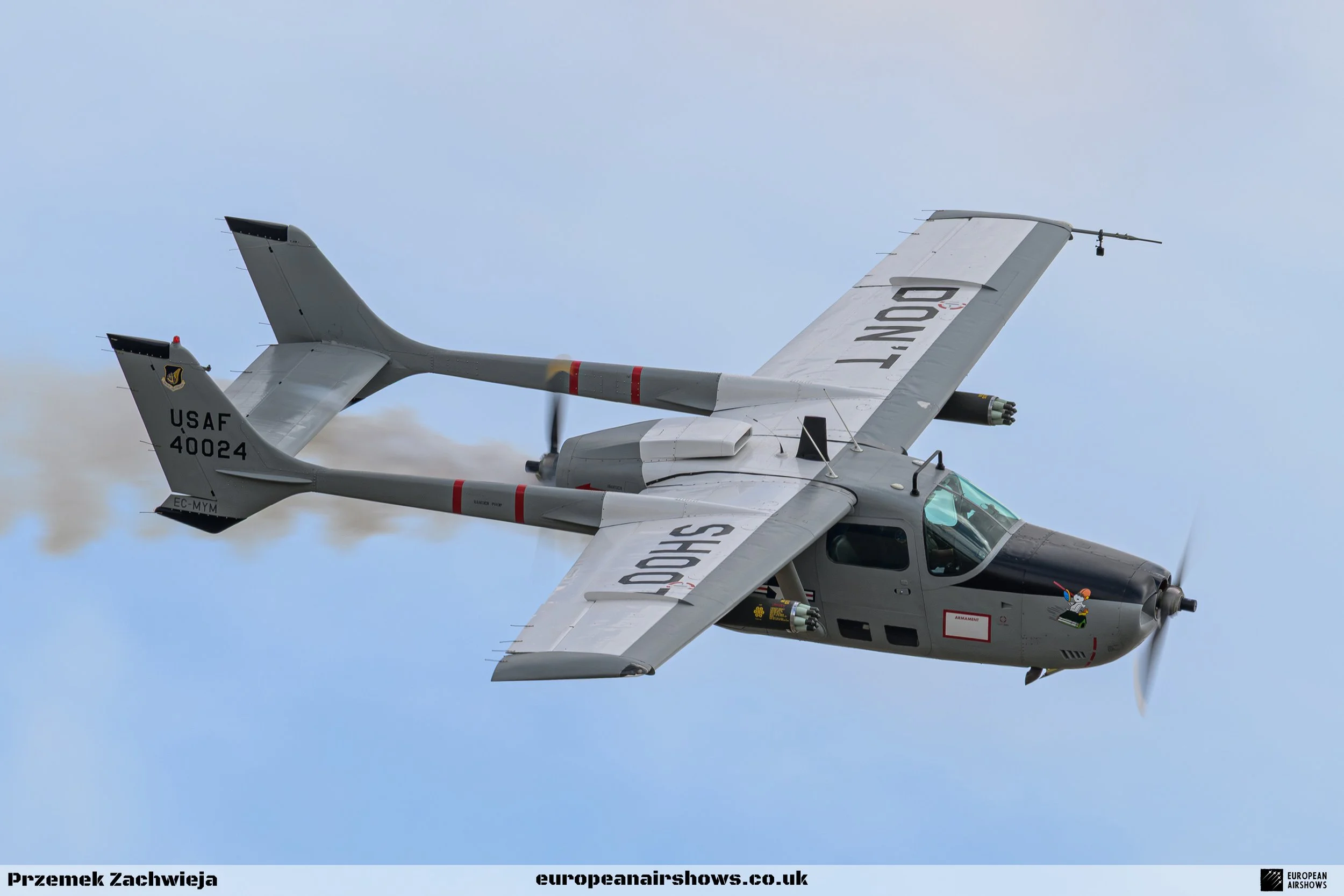
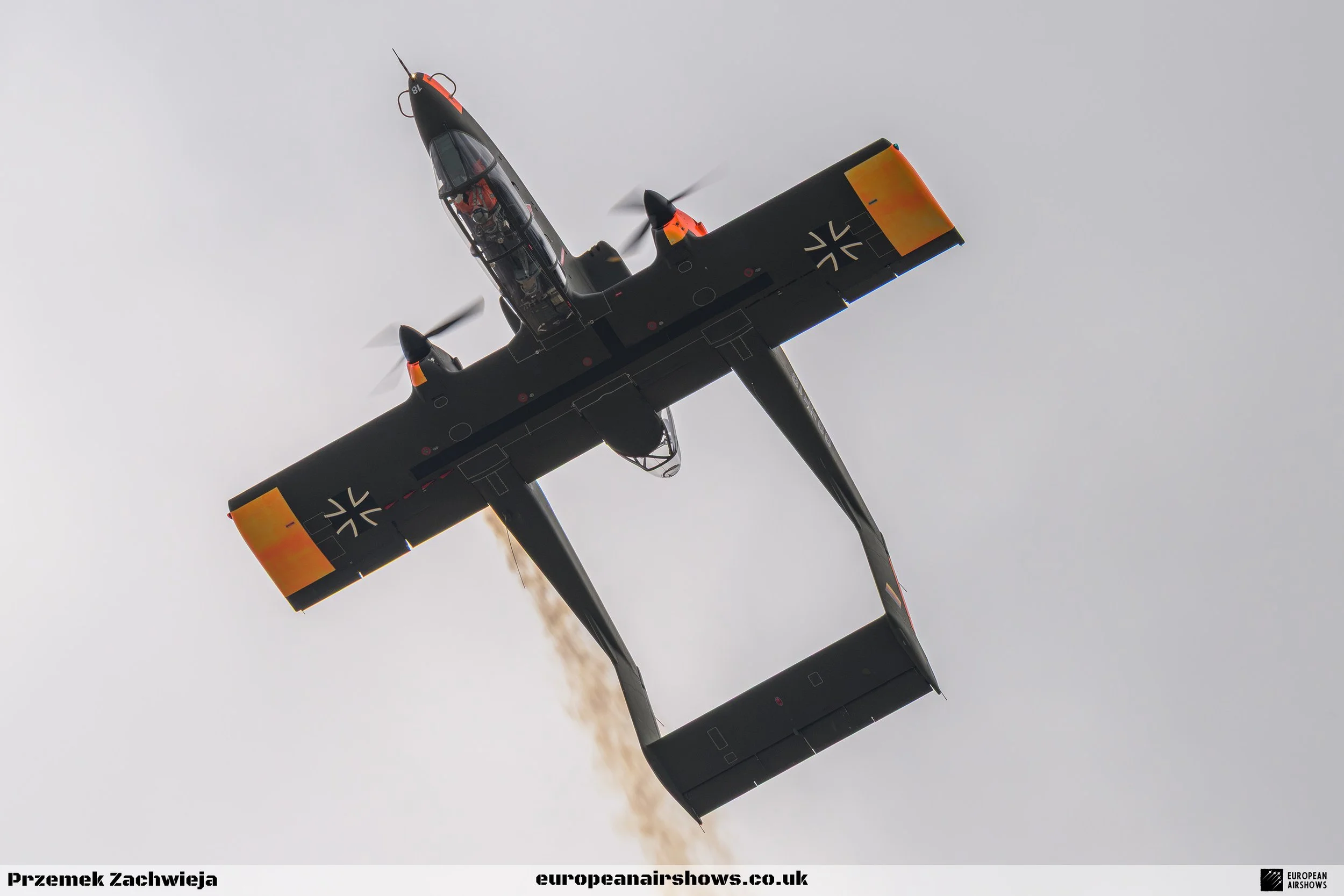
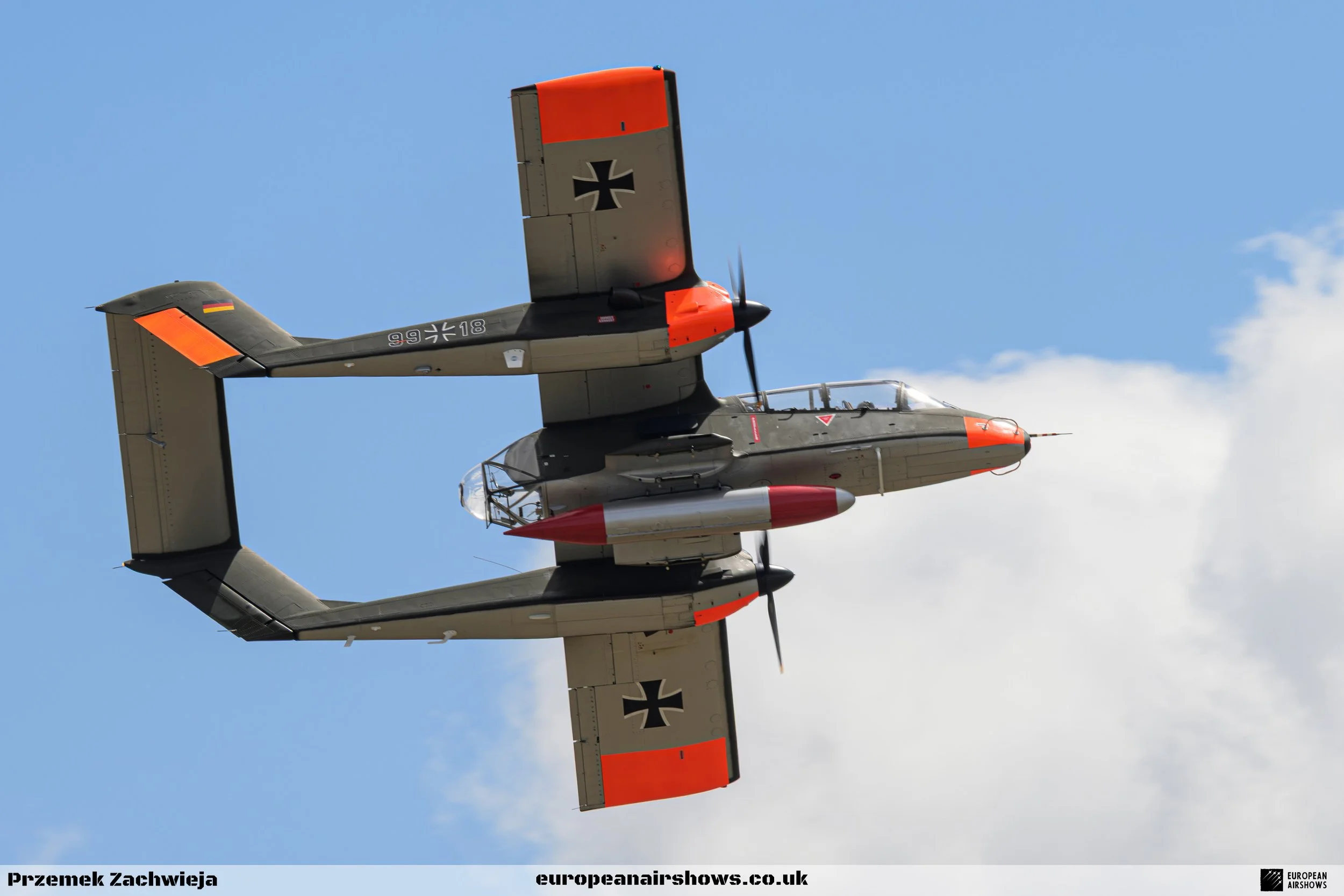
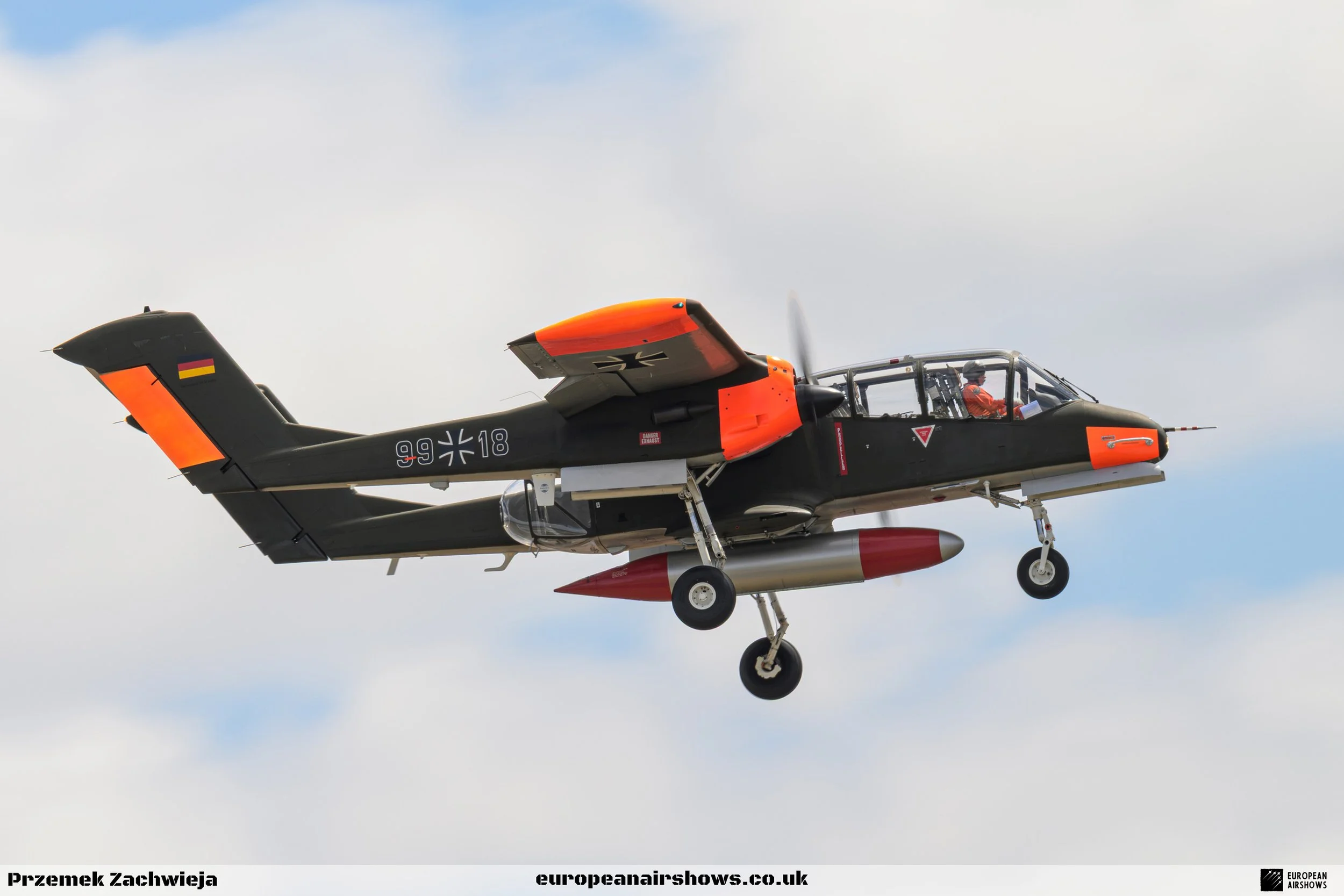
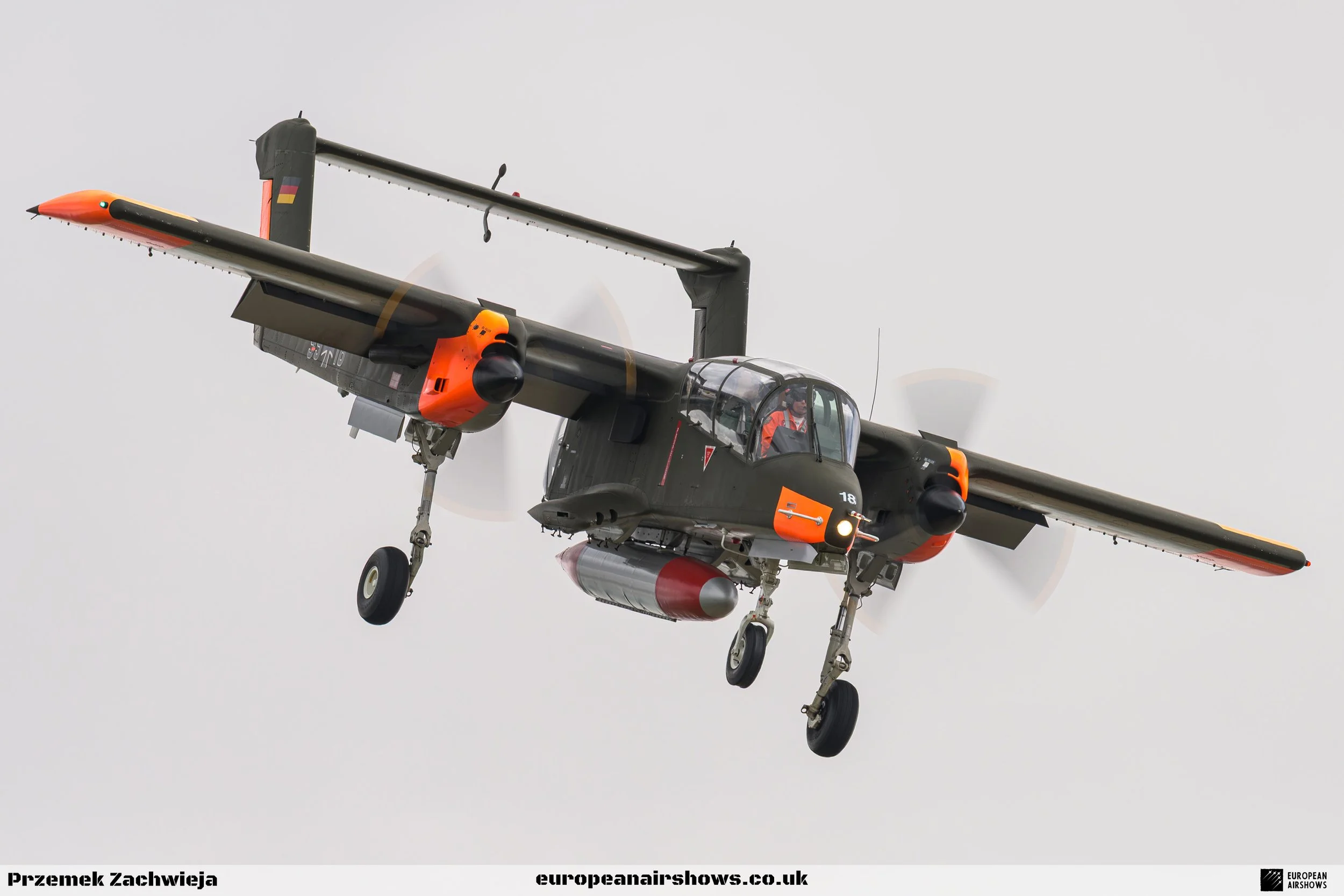
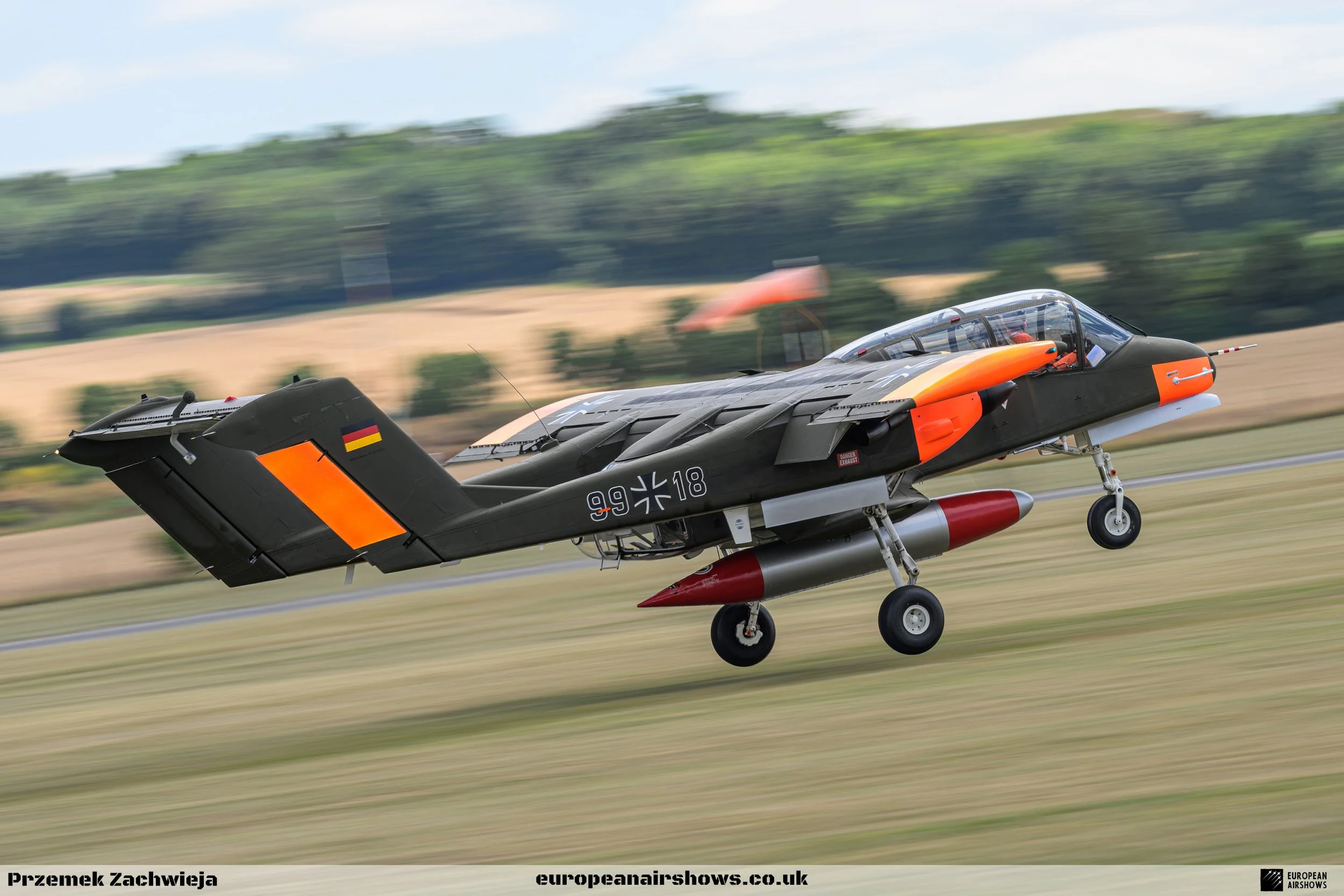
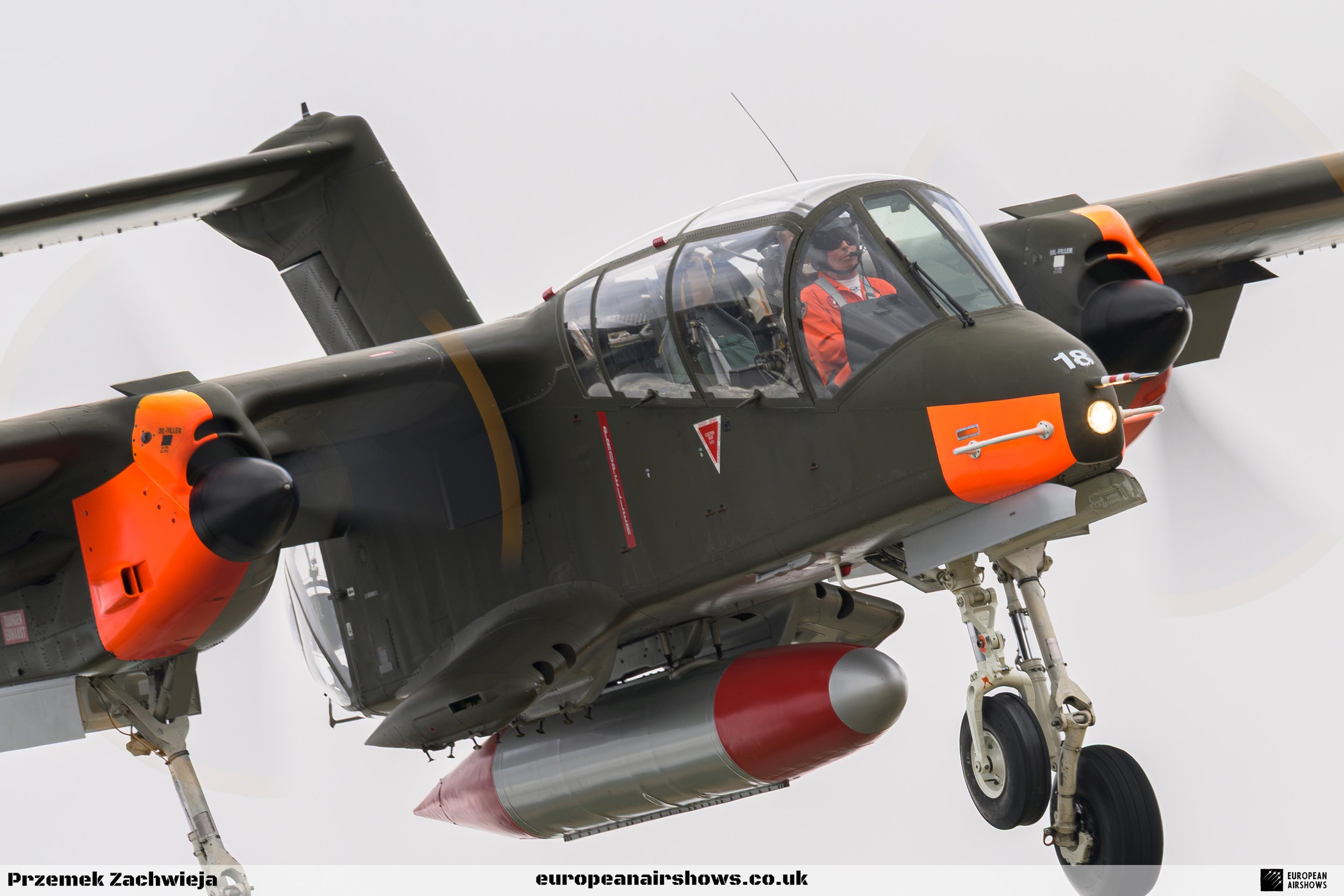
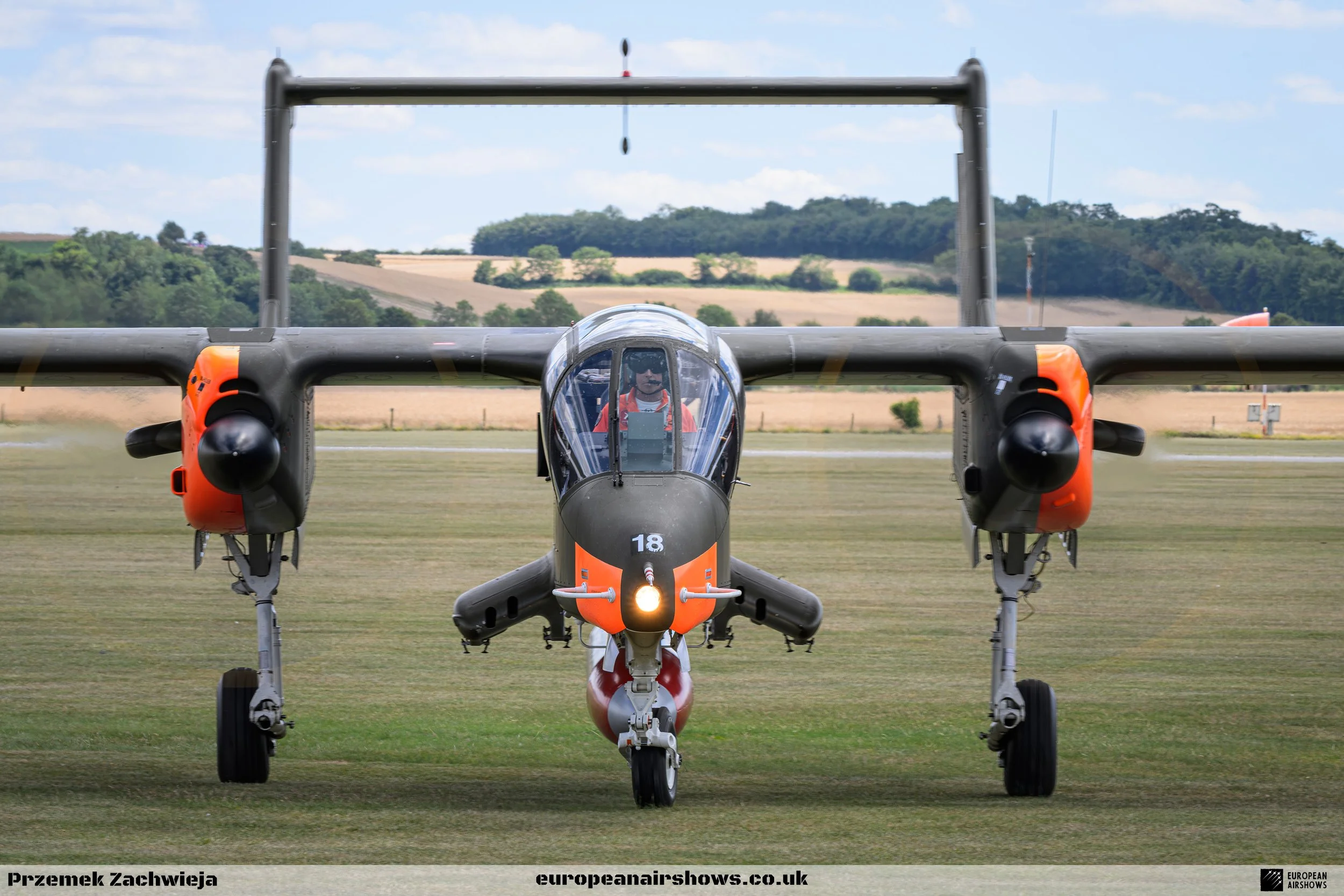
The forward air control sequence then moved to the North American Rockwell OV-10B Bronco, carrying its former West German Luftwaffe identity 99+18.
Operated by the Belgian-based Bronco Demo Team and flown by Tony de Bruyn, the aircraft was originally used by West Germany as a target tug rather than as a combat aircraft.
It nevertheless retains the distinctive twin-boom shape, excellent visibility and remarkable low-speed handling that made the wider Bronco family so successful in observation, forward air control and light attack roles.
Tony de Bruyn once again delivered one of the most energetic displays of the weekend. Steep wingovers, tight turns, rapid reversals and excellent use of the Bronco’s large wing gave the aircraft an almost helicopter-like quality at times.
The Bronco has become a familiar visitor to British airshows, but the display never feels routine. It remains noisy, distinctive and highly photogenic, particularly when flown as aggressively as it was at Duxford.
The standout aircraft of the Vietnam sequence was not American but represented the type of fighter American aircrew encountered over Southeast Asia.
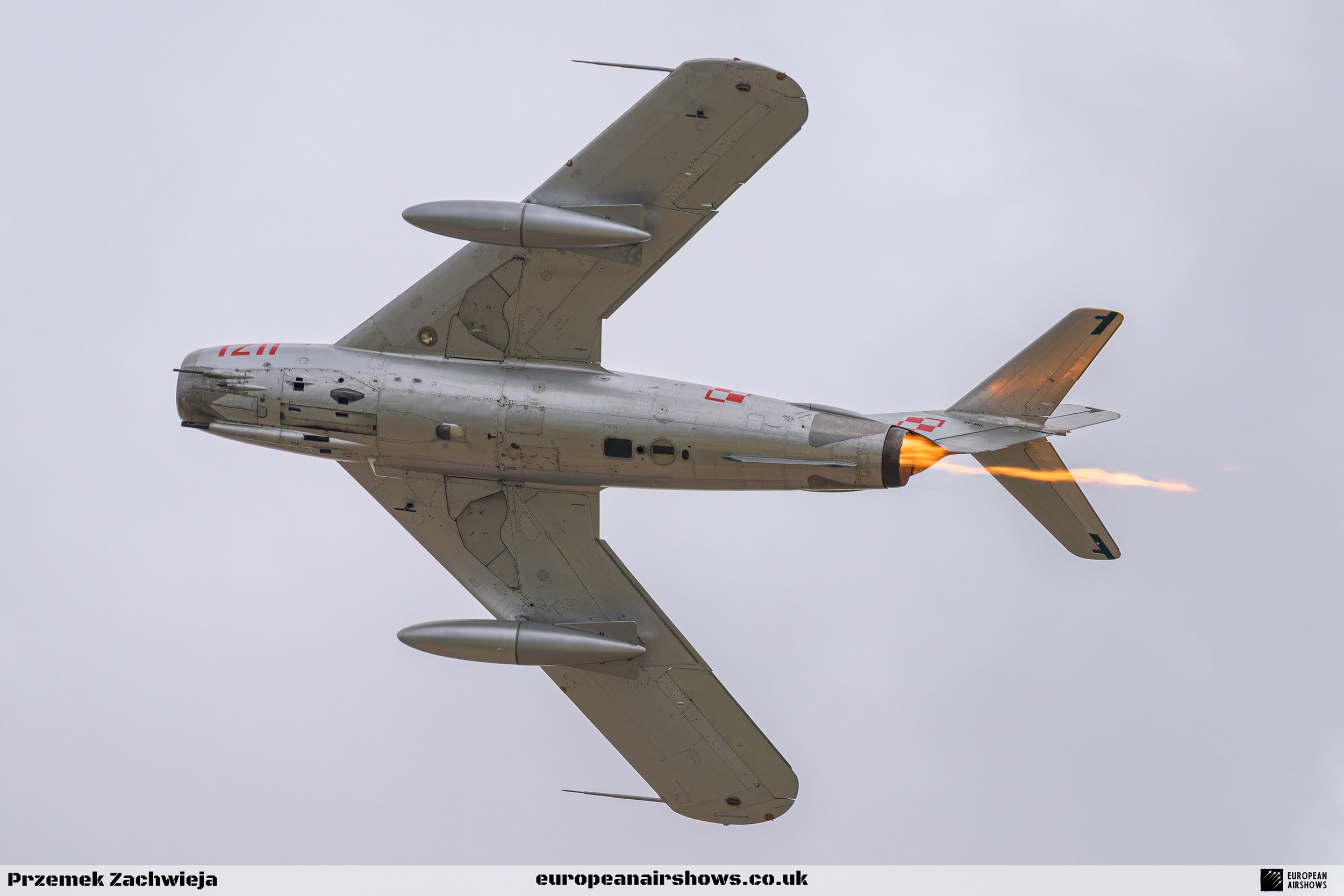
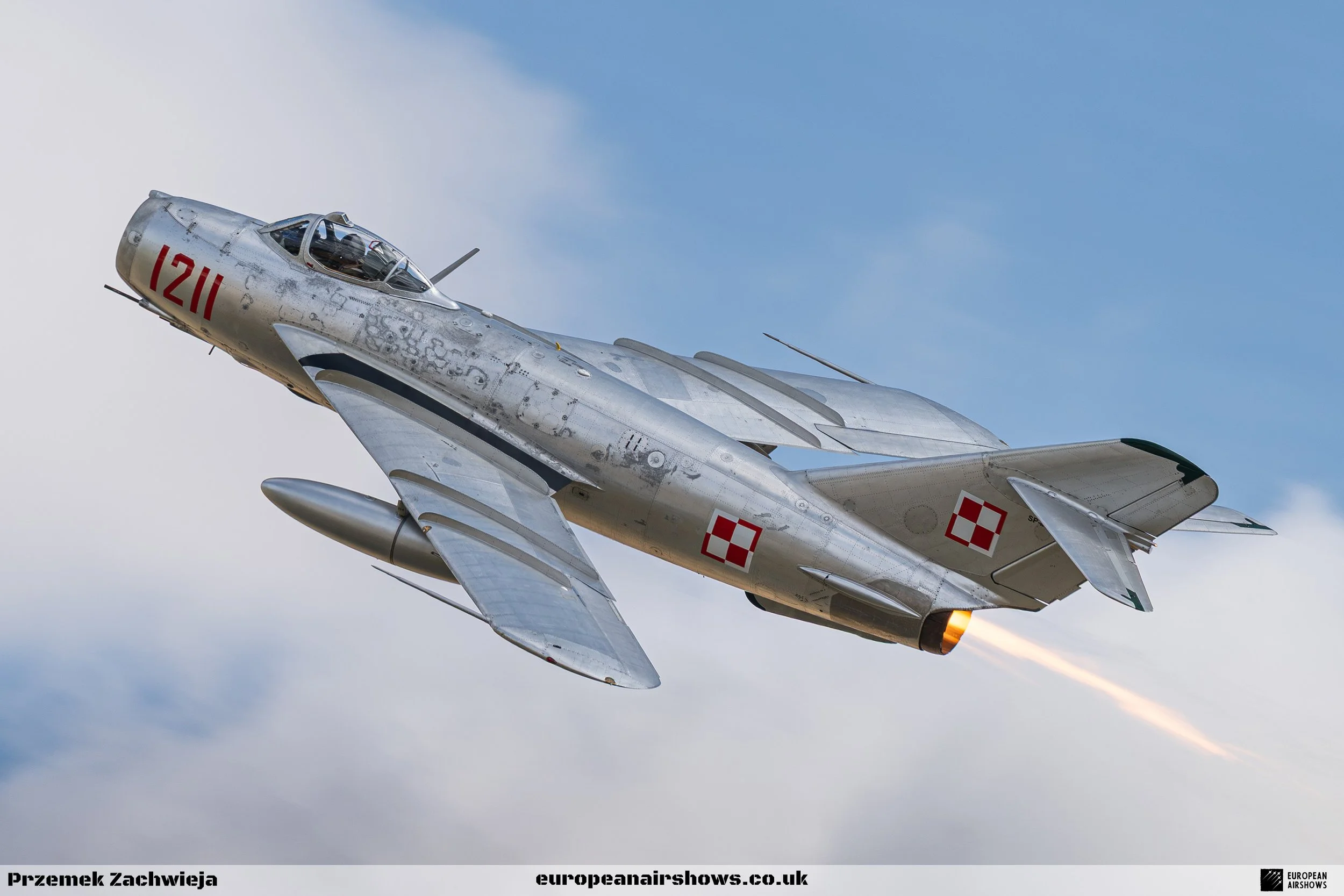
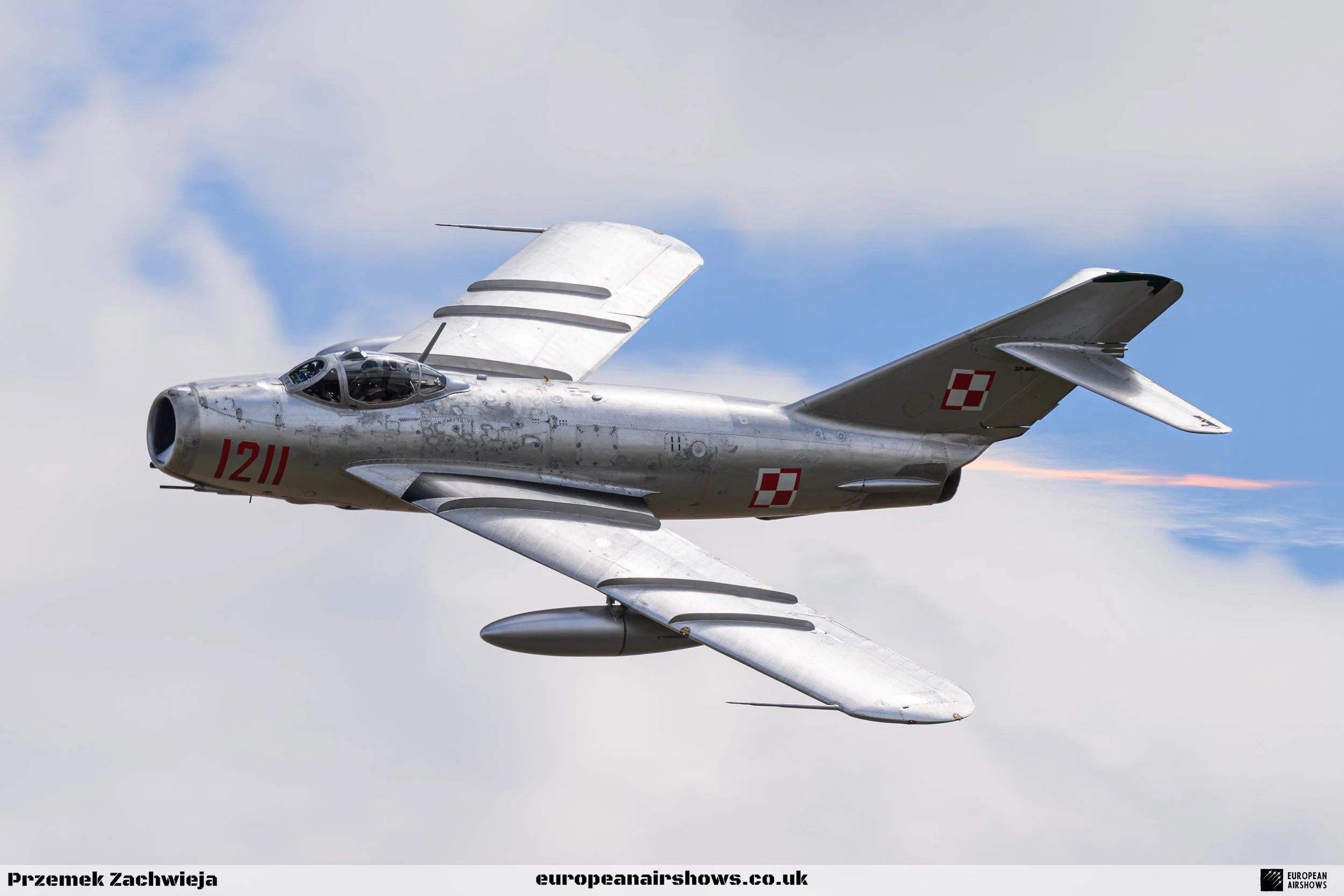
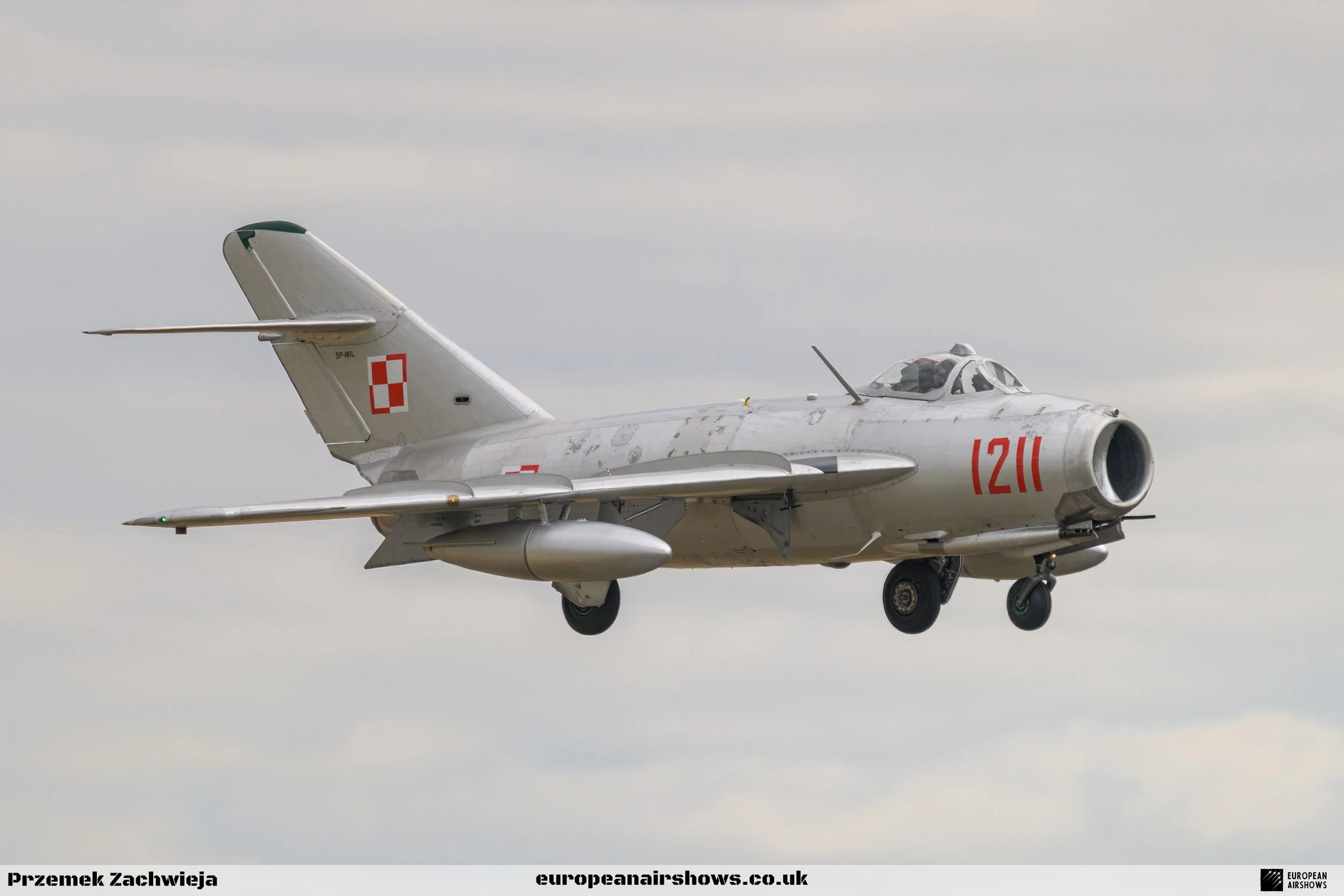
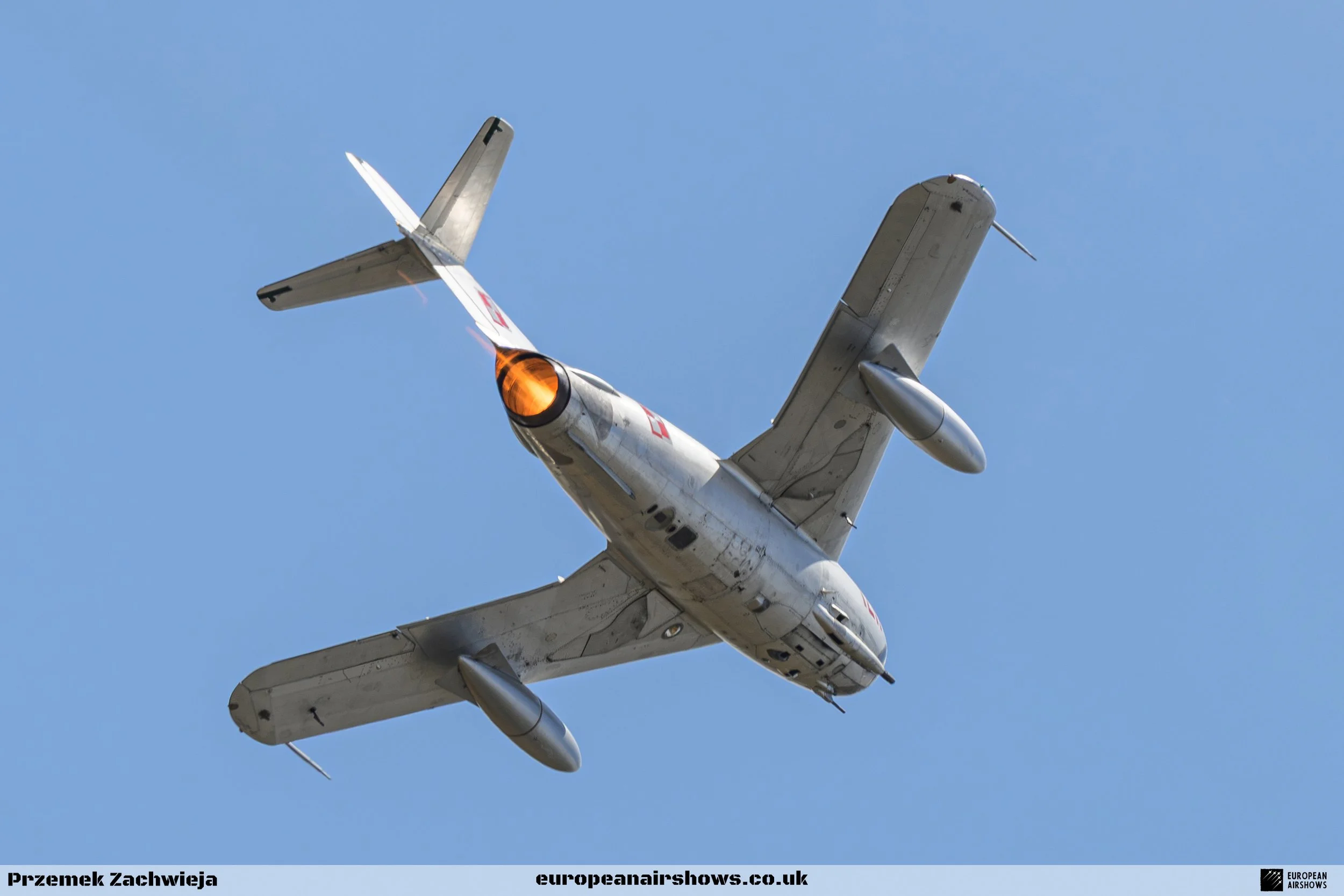
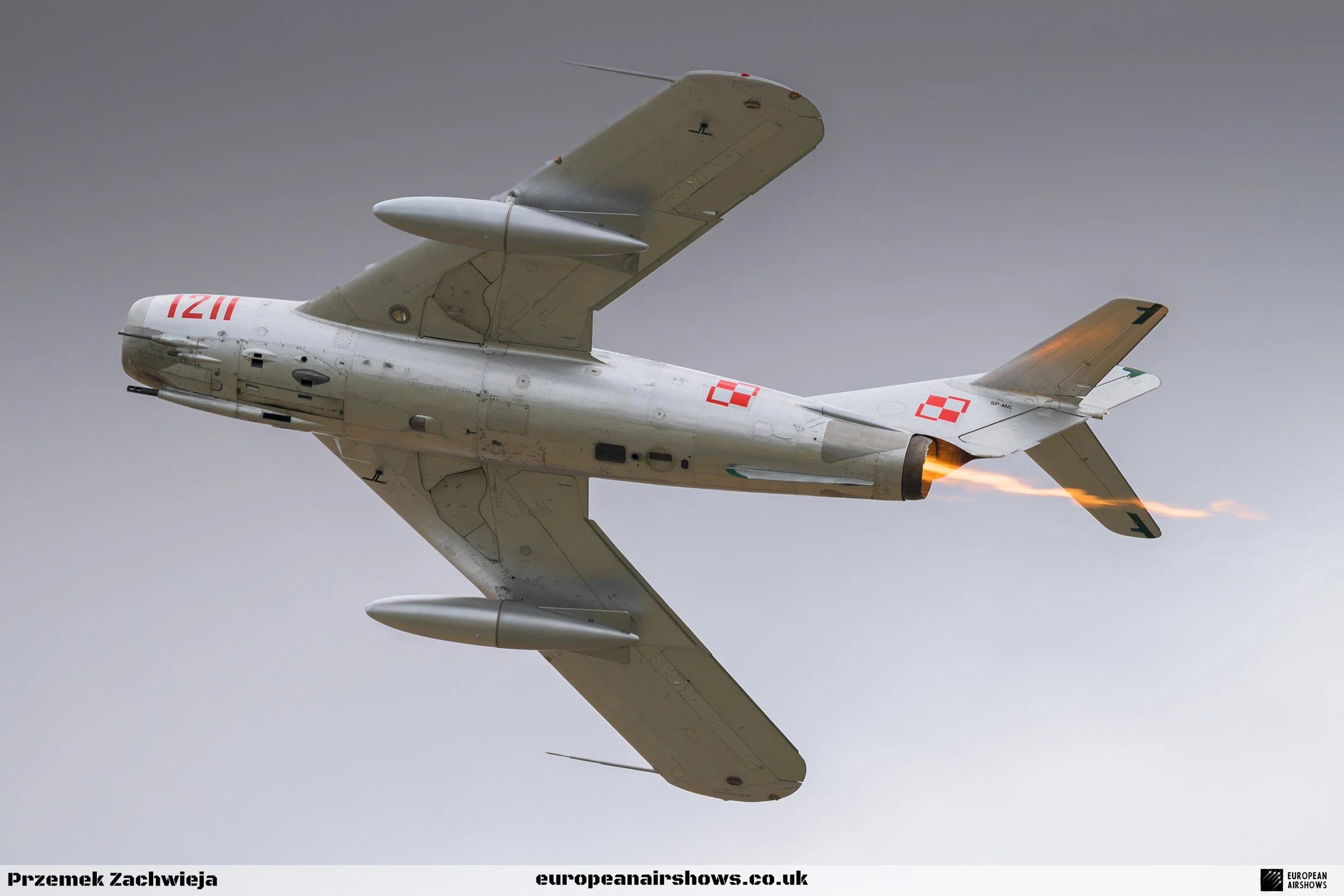
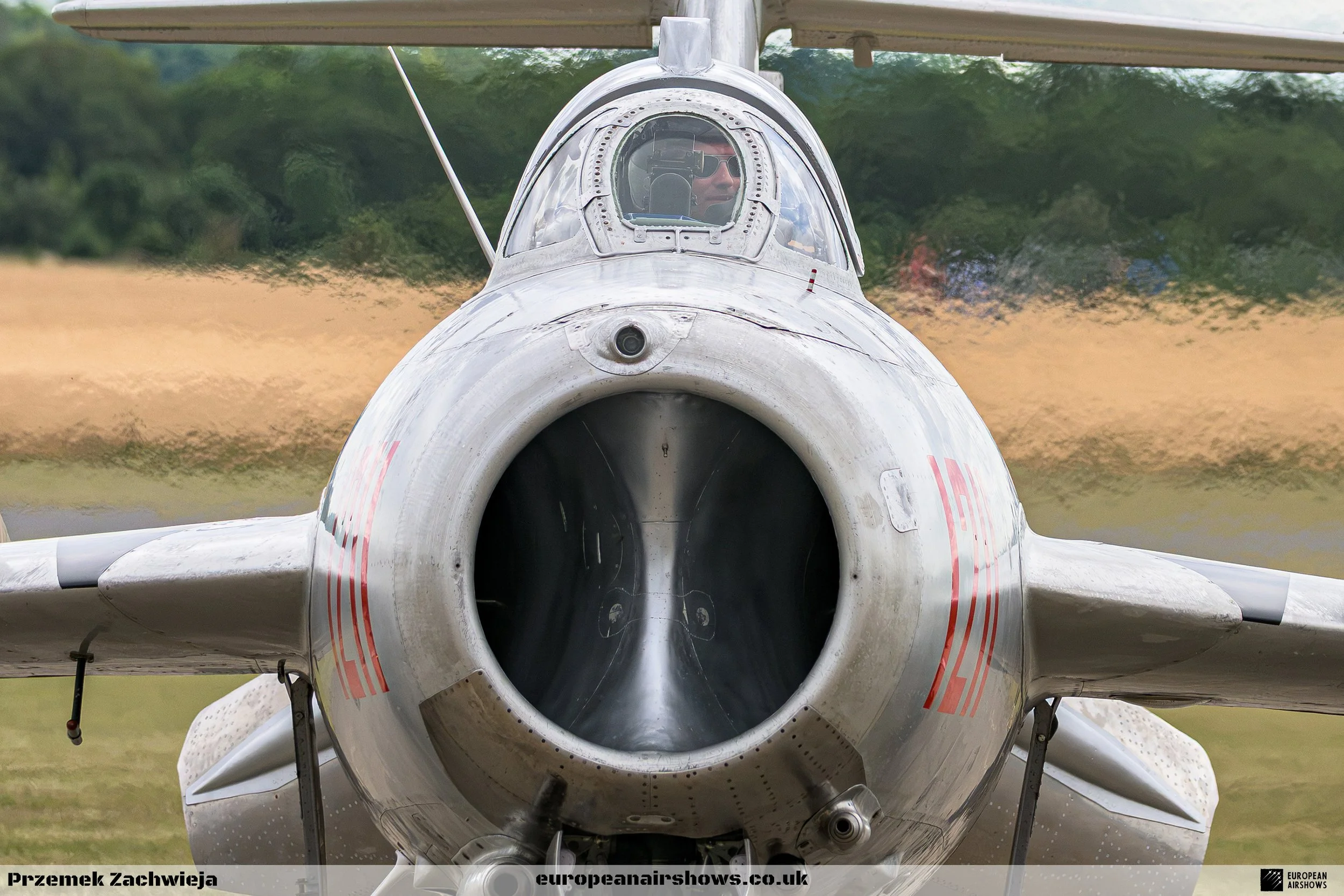
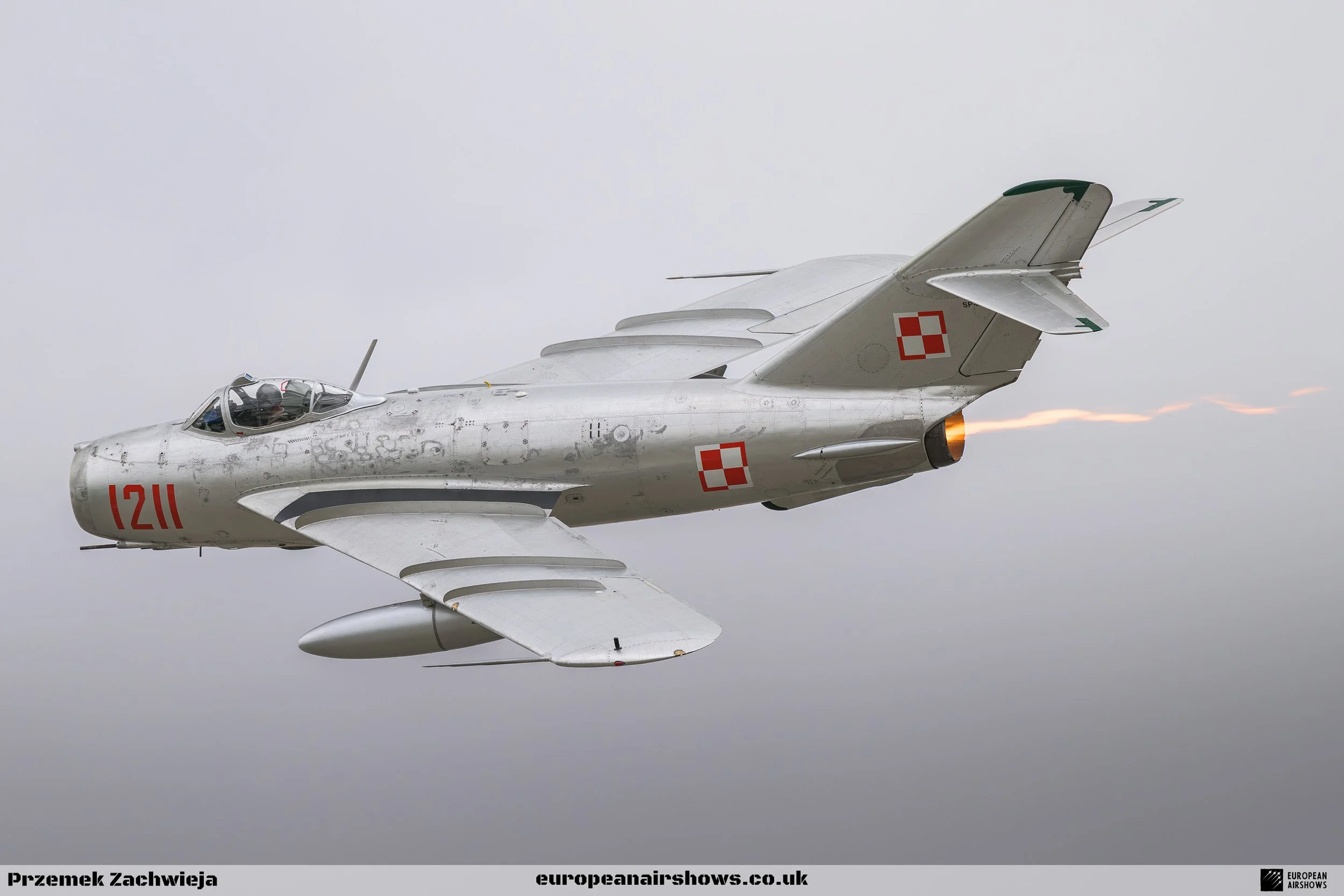
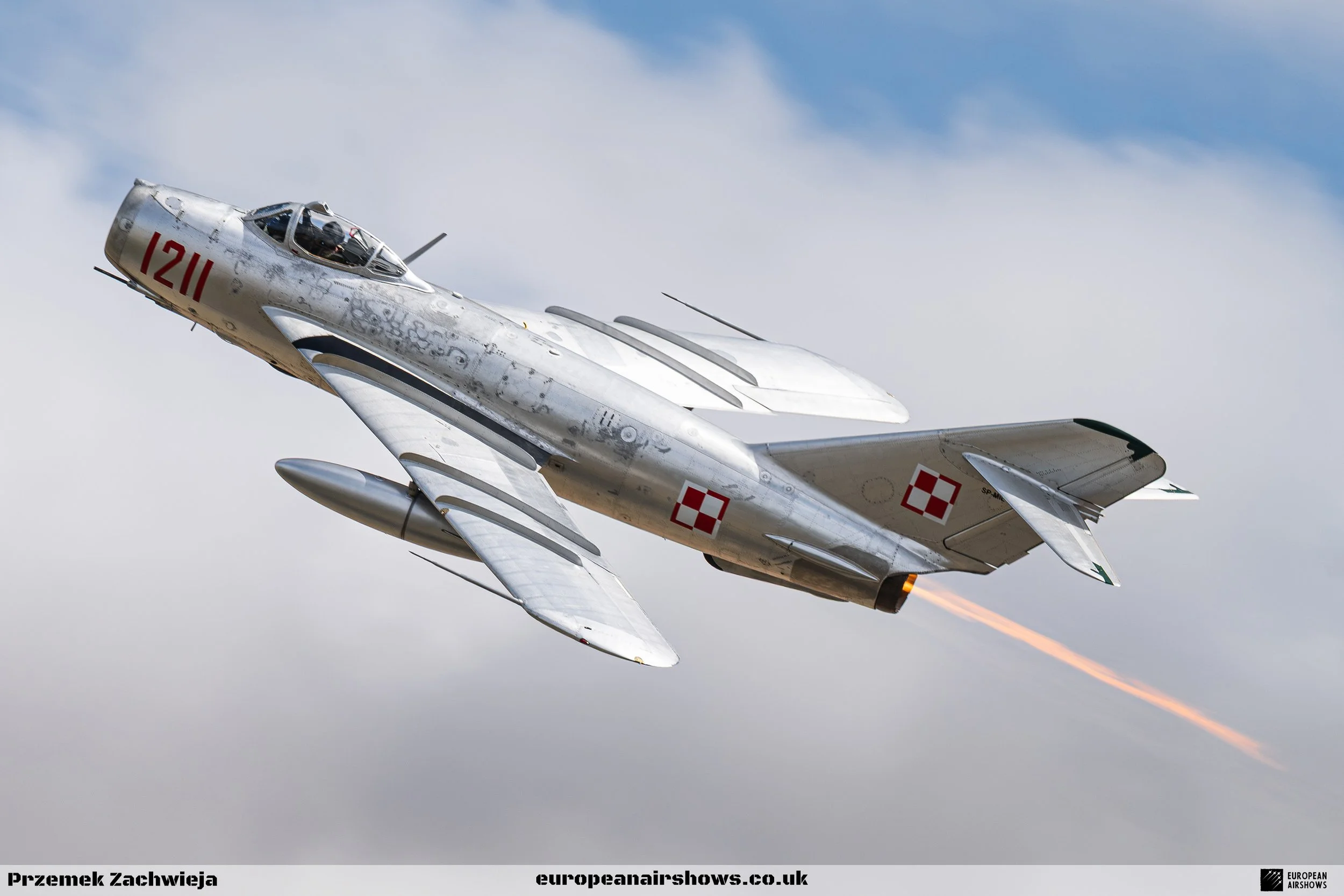
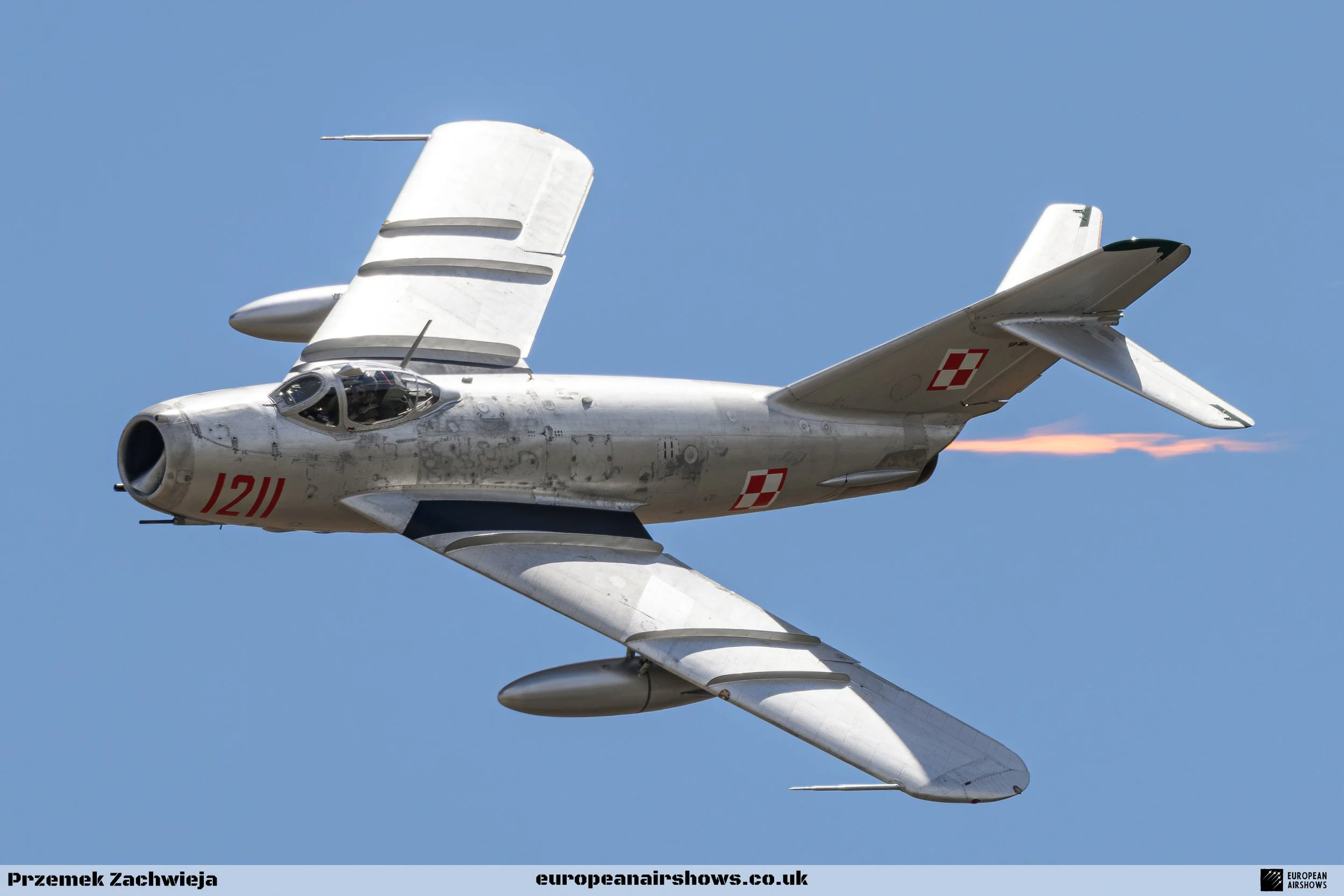
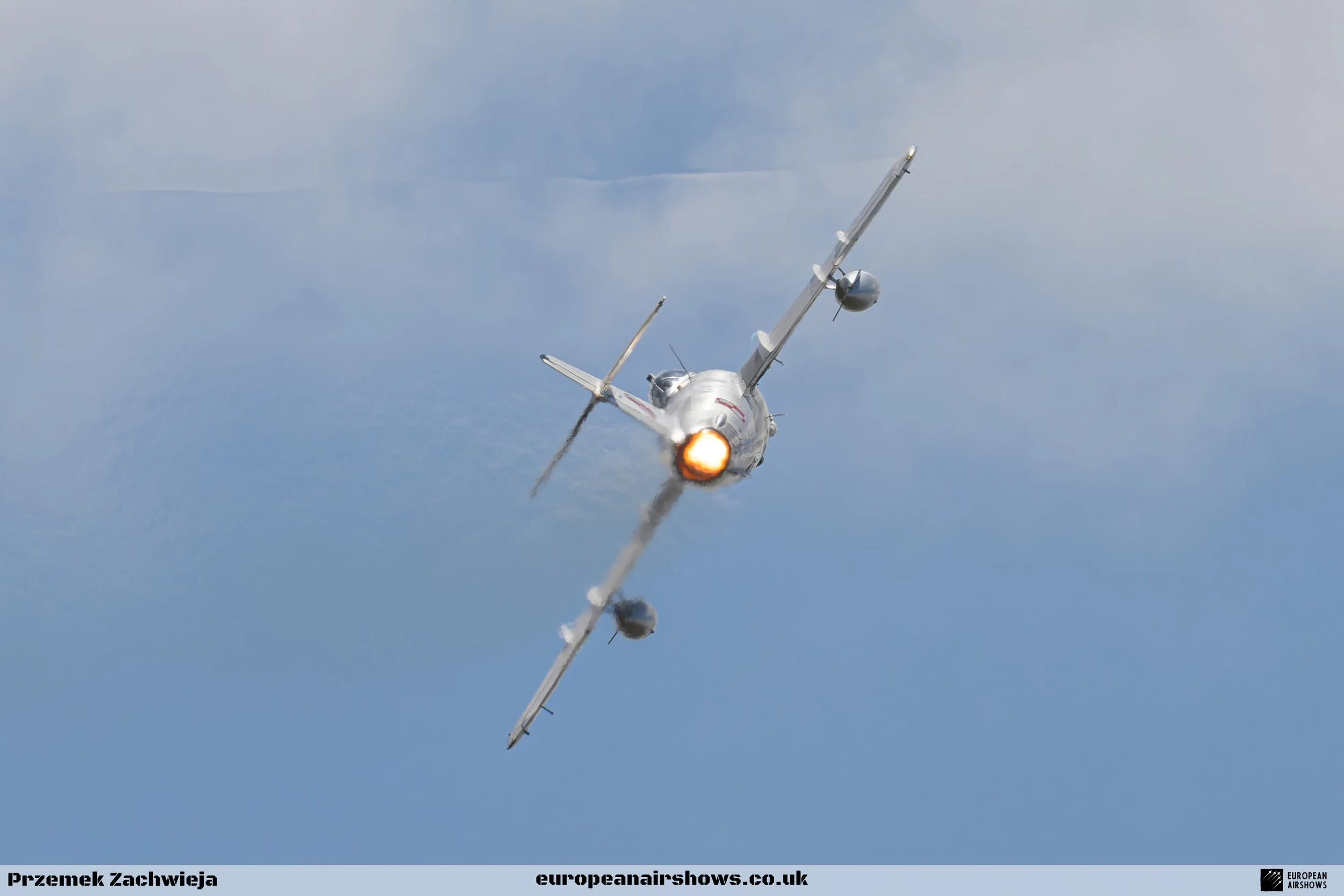
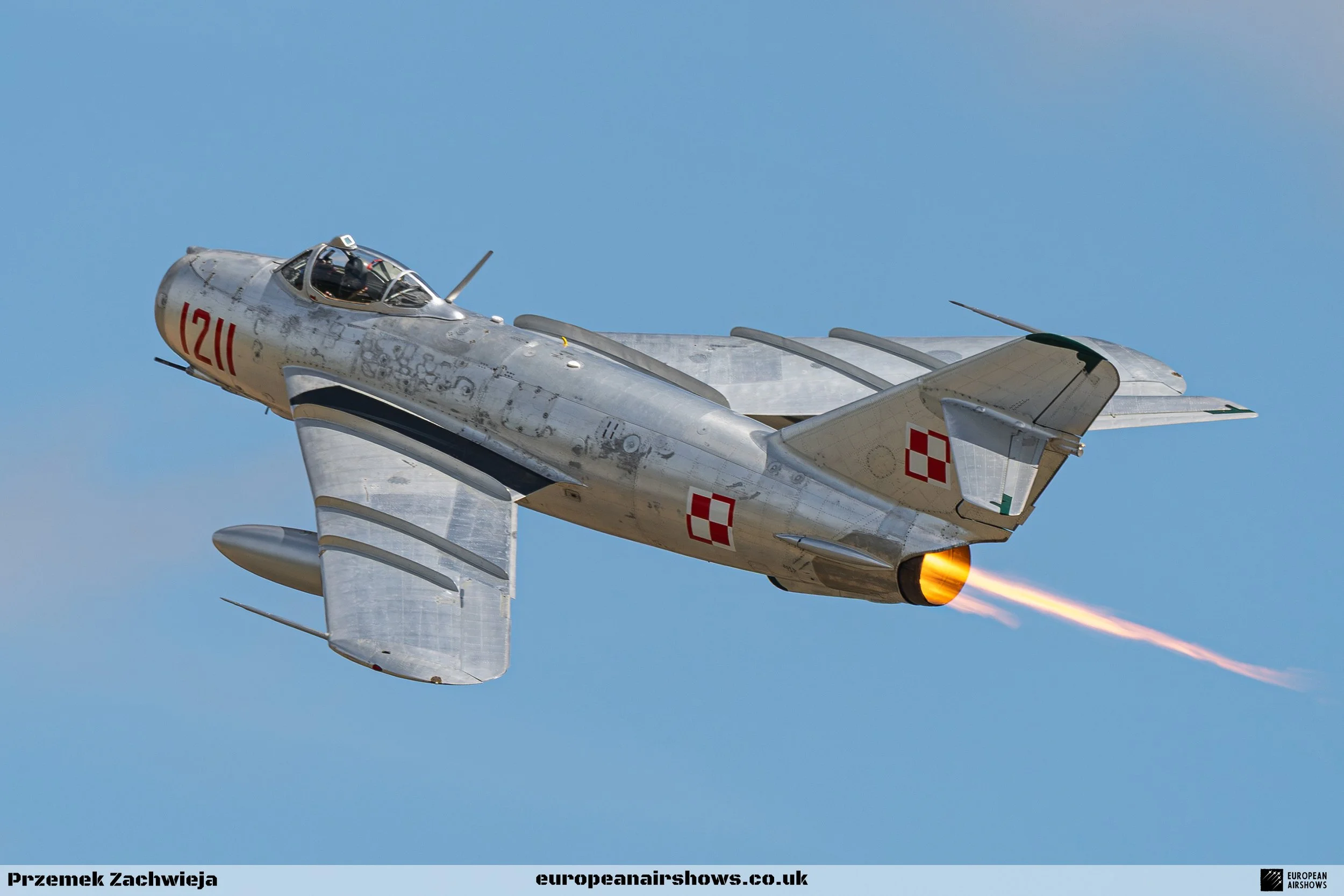
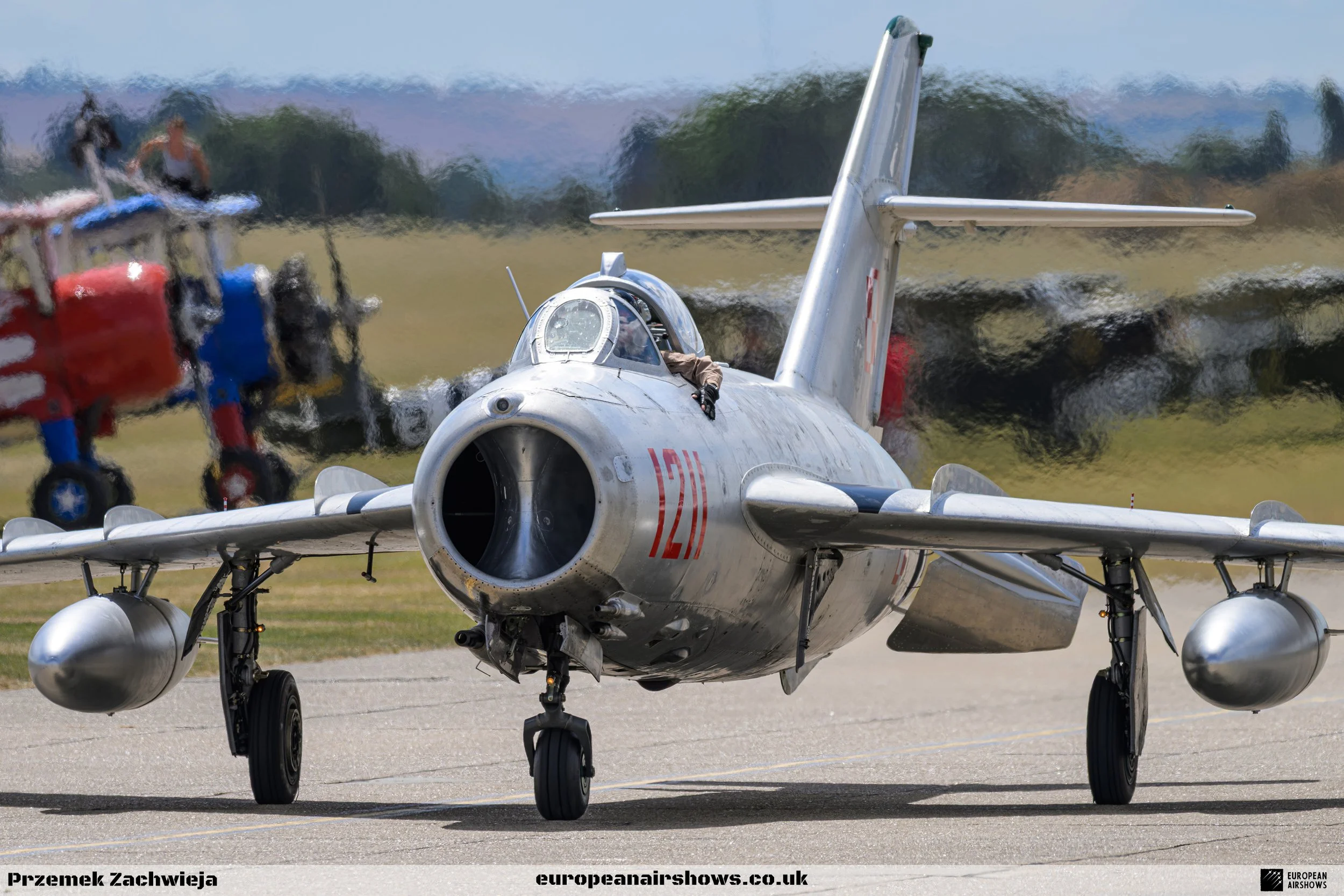
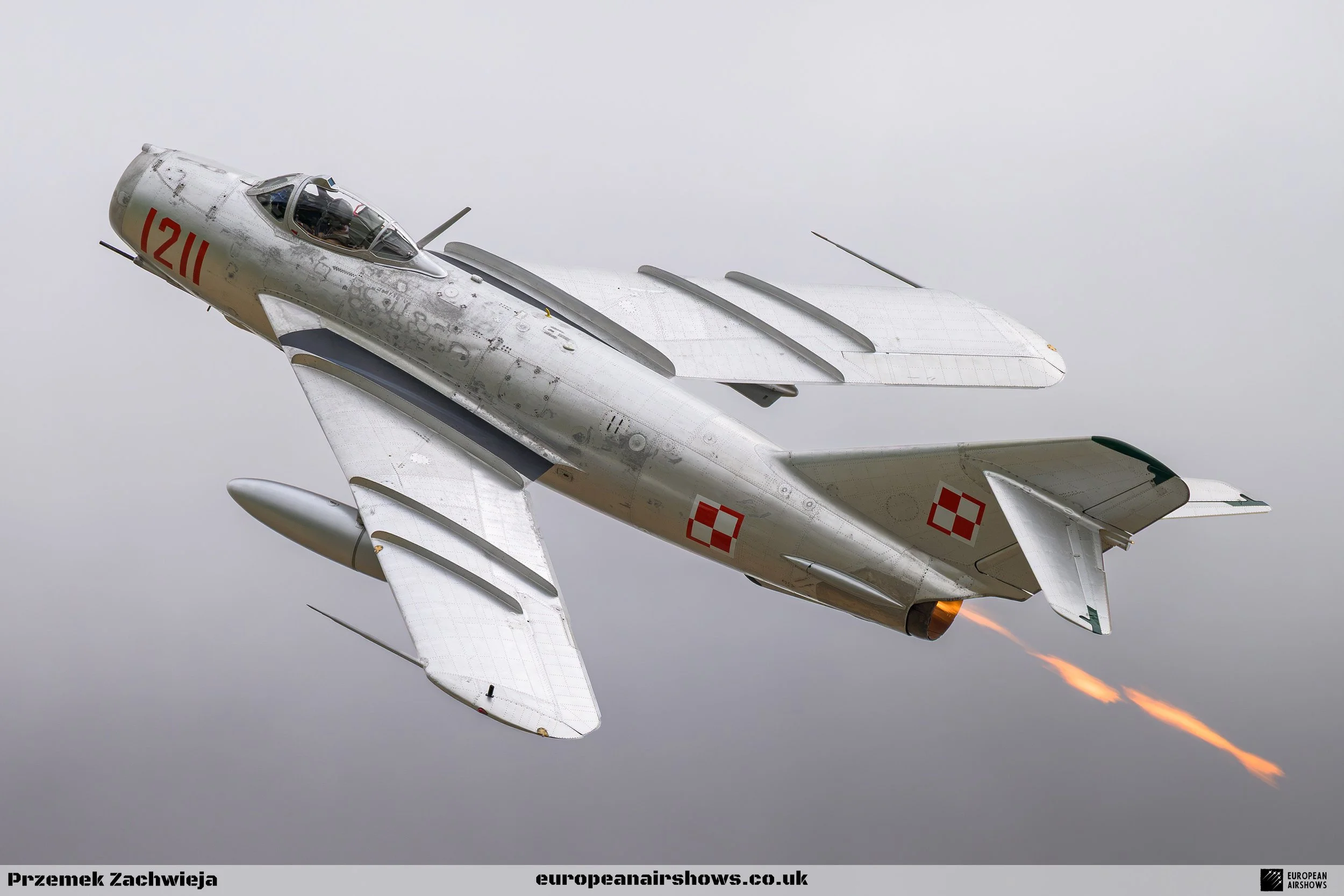
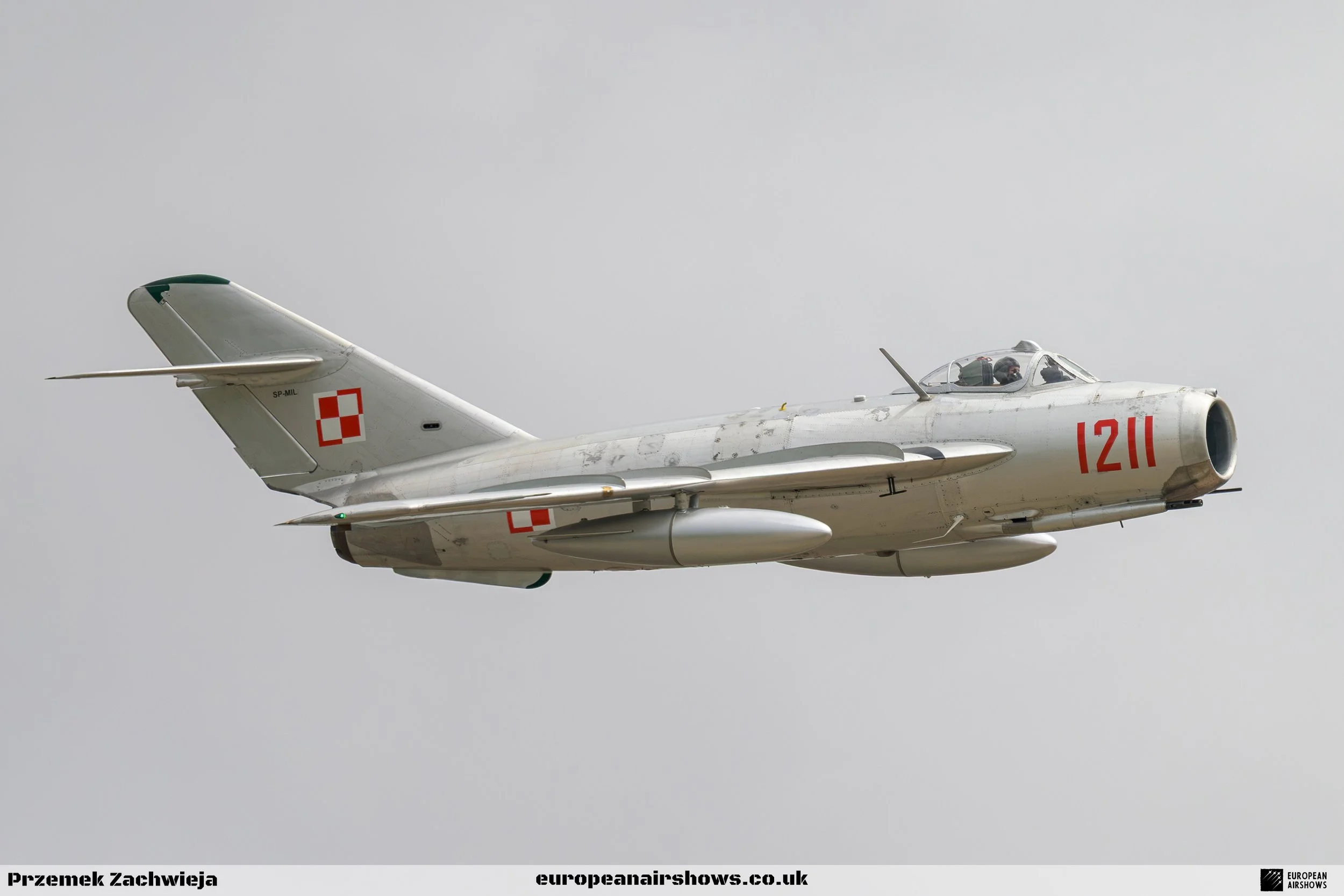
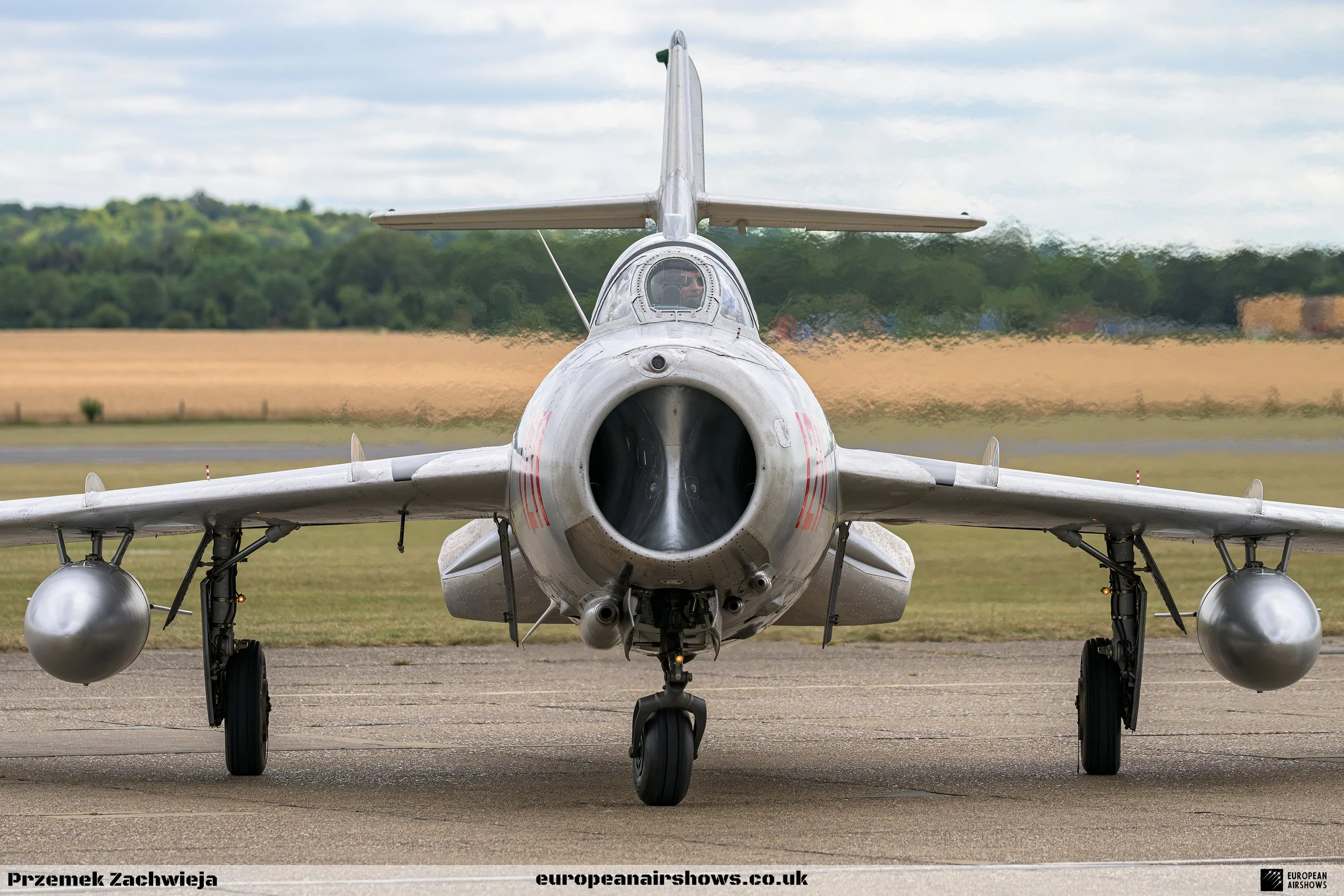
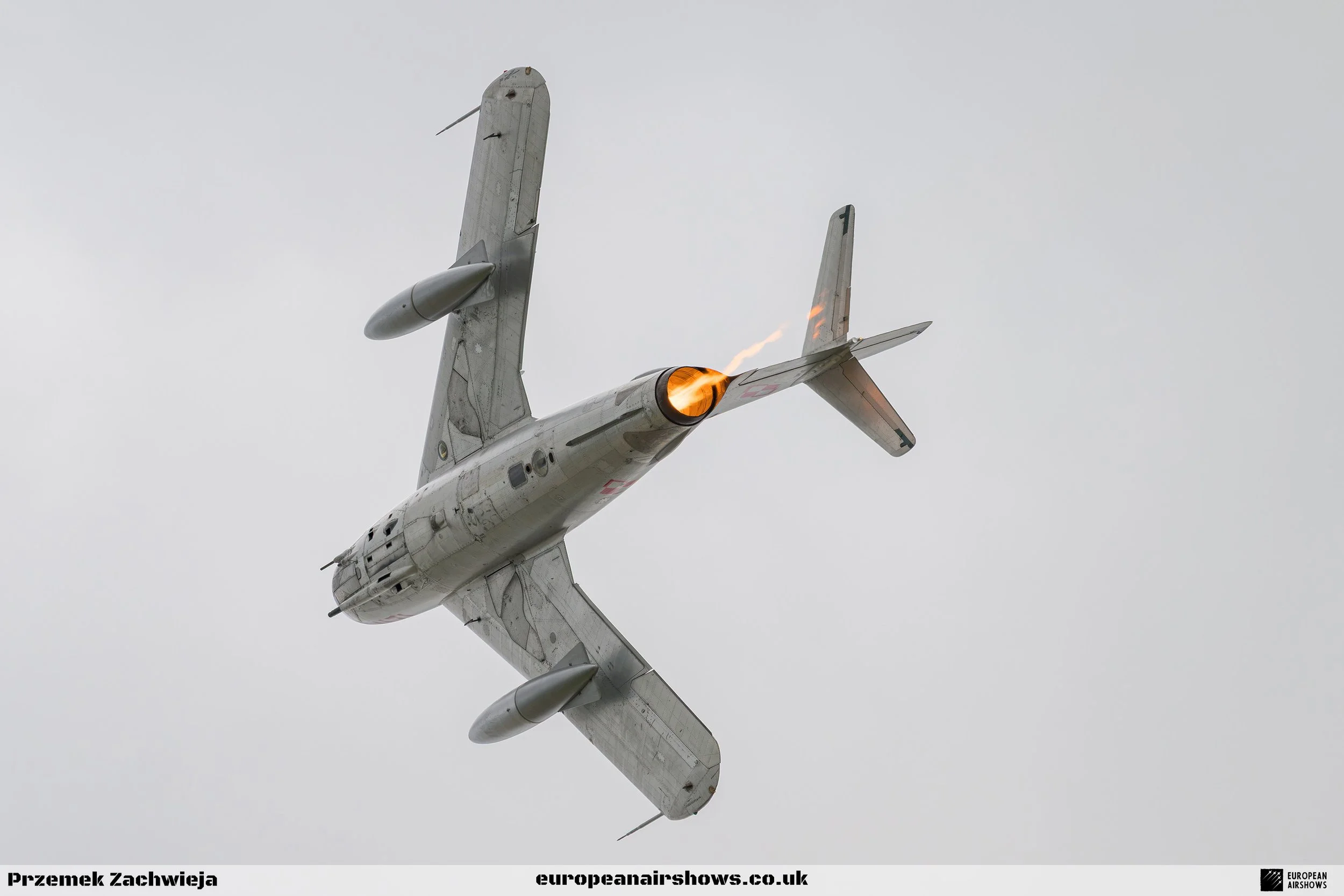
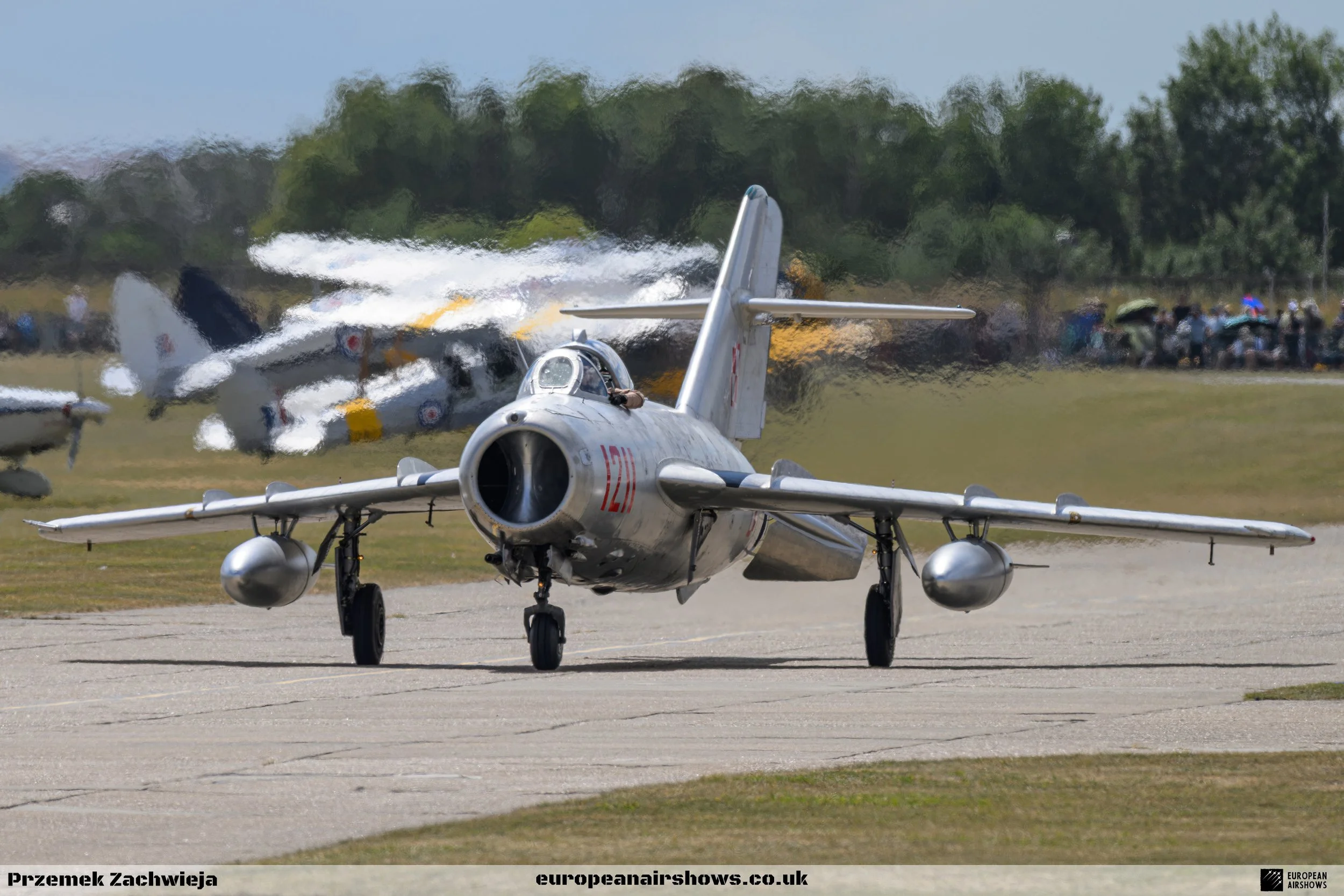
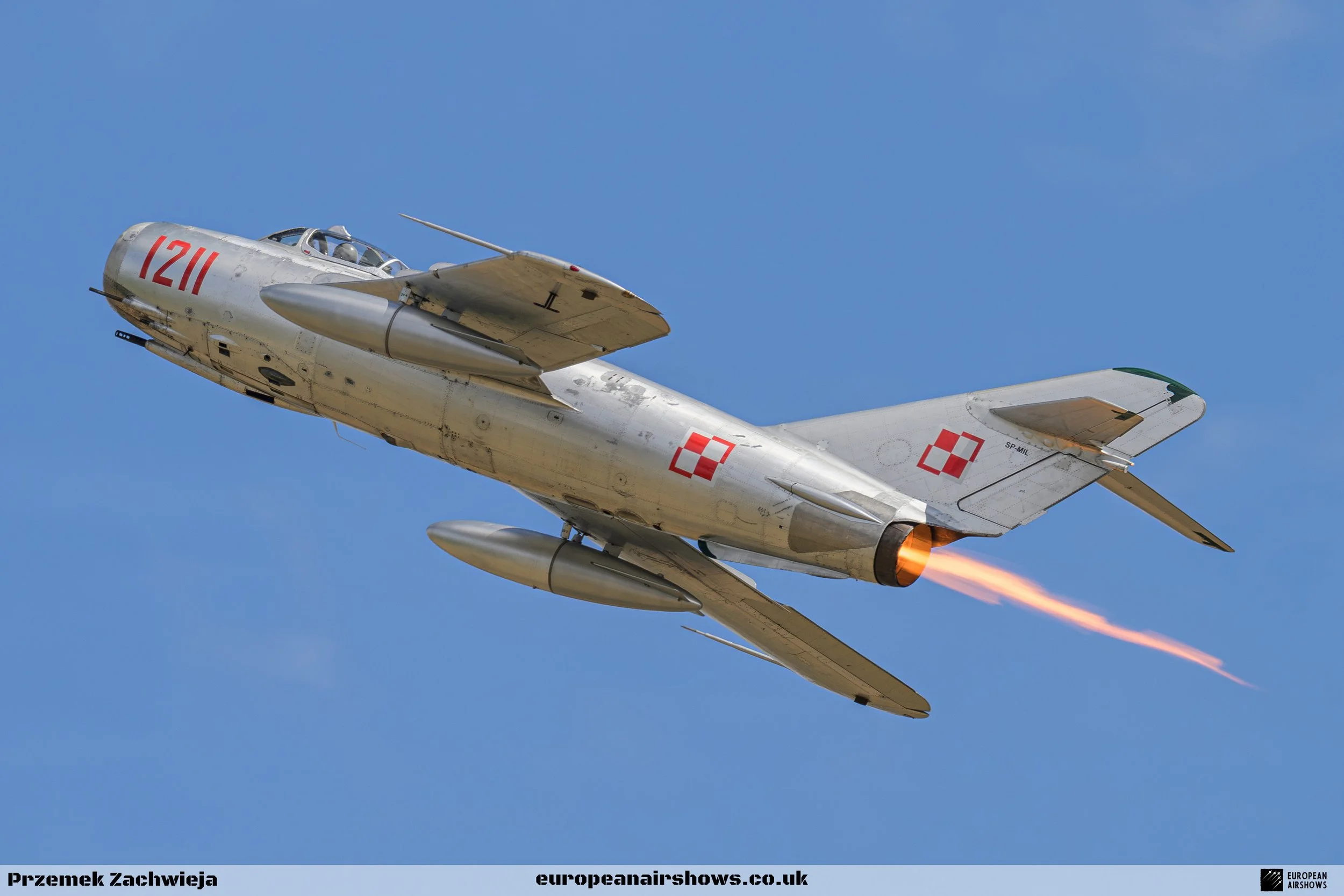
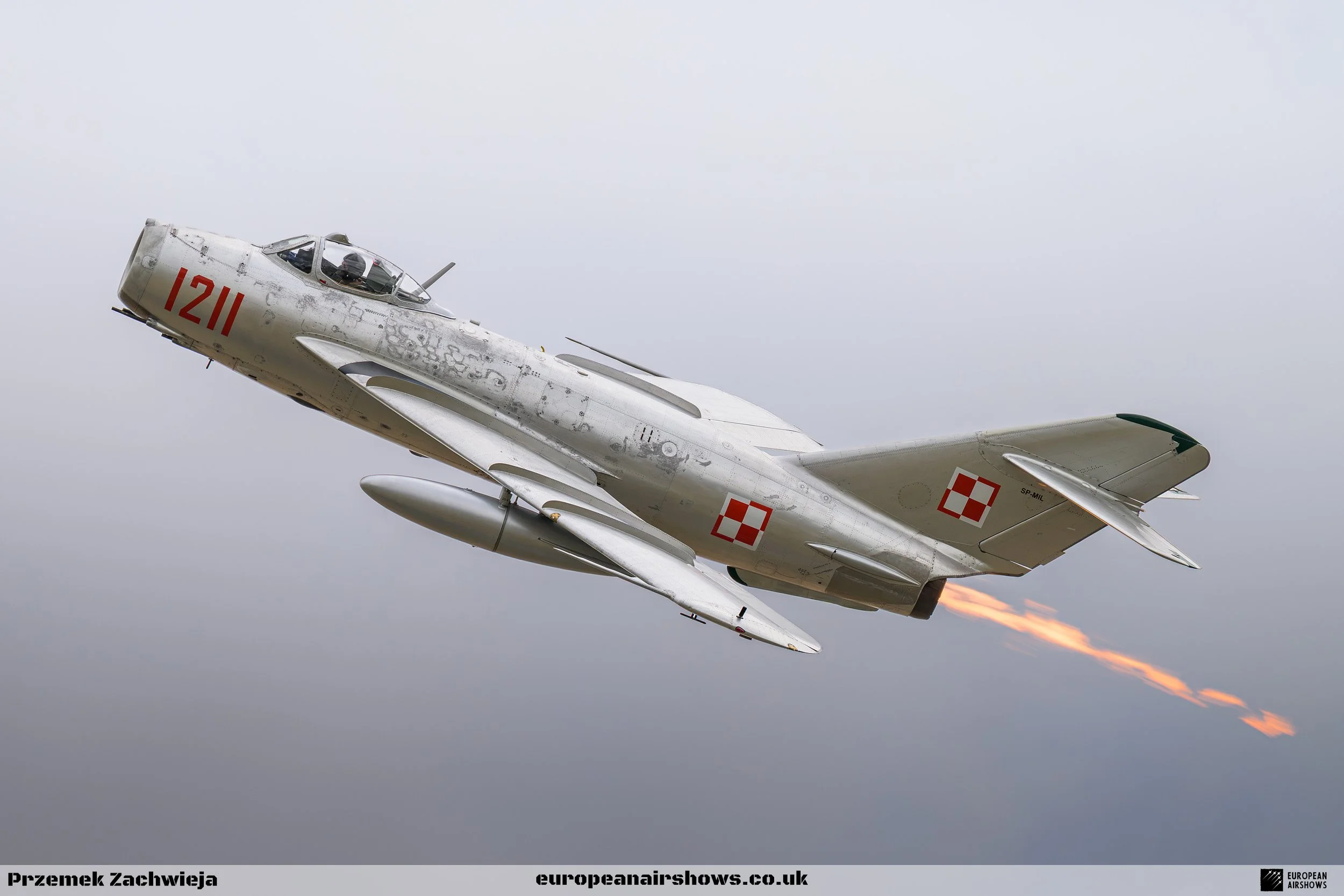
FUBAR Aviation’s PZL-Mielec Lim-5 1211, is a Polish-built version of the Mikoyan-Gurevich MiG-17F.
The aircraft was making only its second UK appearance following its return to flight earlier in 2026. It had completed its first post-restoration flight only a few months before Duxford.
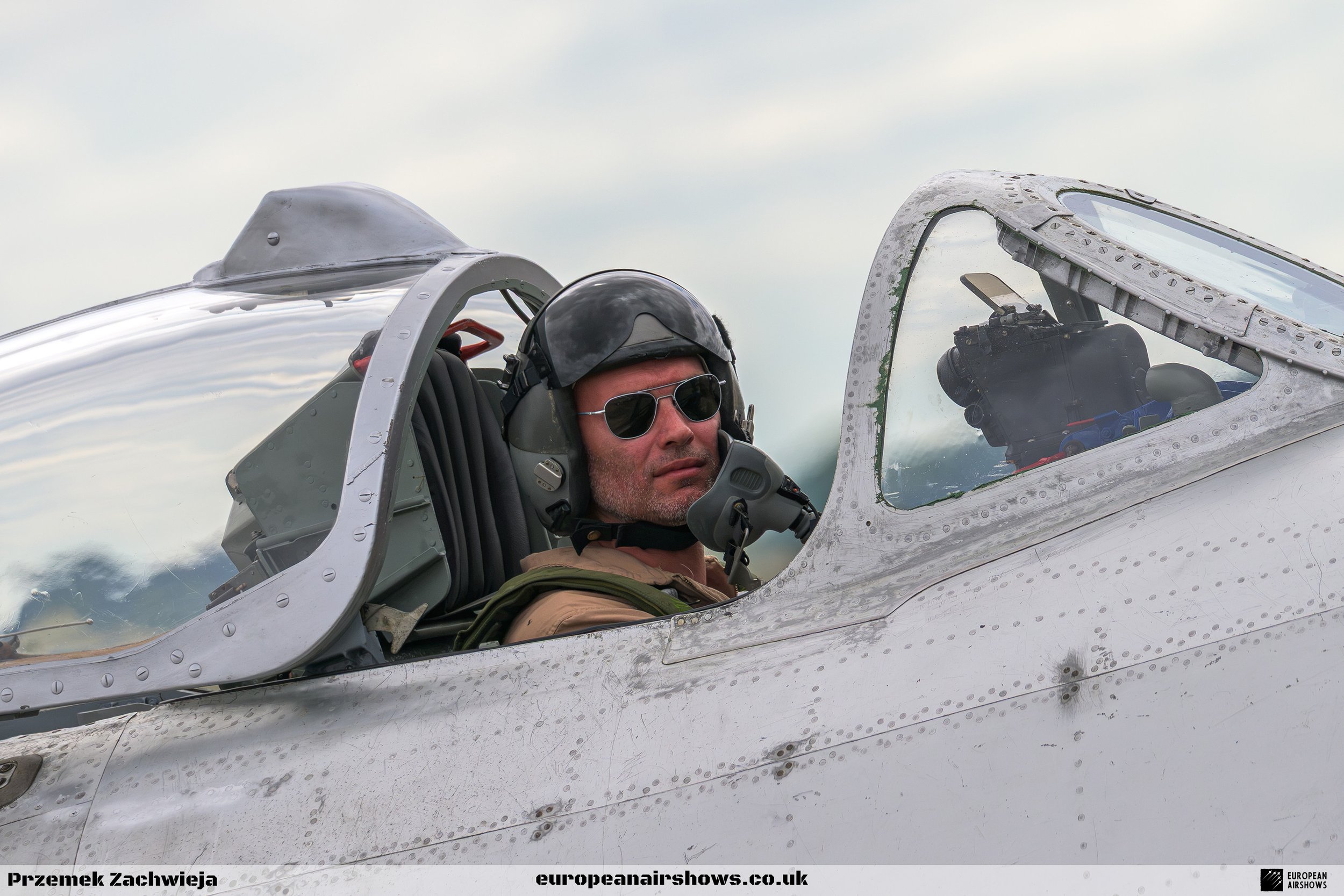
UK rules restrict civilian-operated swept-wing ex-military jets such as the Lim-5 to non-aerobatic displays, but that worked in its favour. Mateusz Strama filled the routine with low, fast flypasts, steep and surprisingly tight turns, and plenty of excellent topside passes, making it one of the best displays of the weekend for photographers.
The repeated use of the afterburner was particularly memorable. The Lim-5’s narrow and concentrated reheat plume glowed behind the aircraft almost like a candle, producing a sight completely different from the much broader flames associated with modern fighters.
The display proved that aircraft do not need to perform endless loops or remain miles from the crowd to be exciting.
It was one of the finest displays of the weekend and an excellent addition to the UK airshow scene.
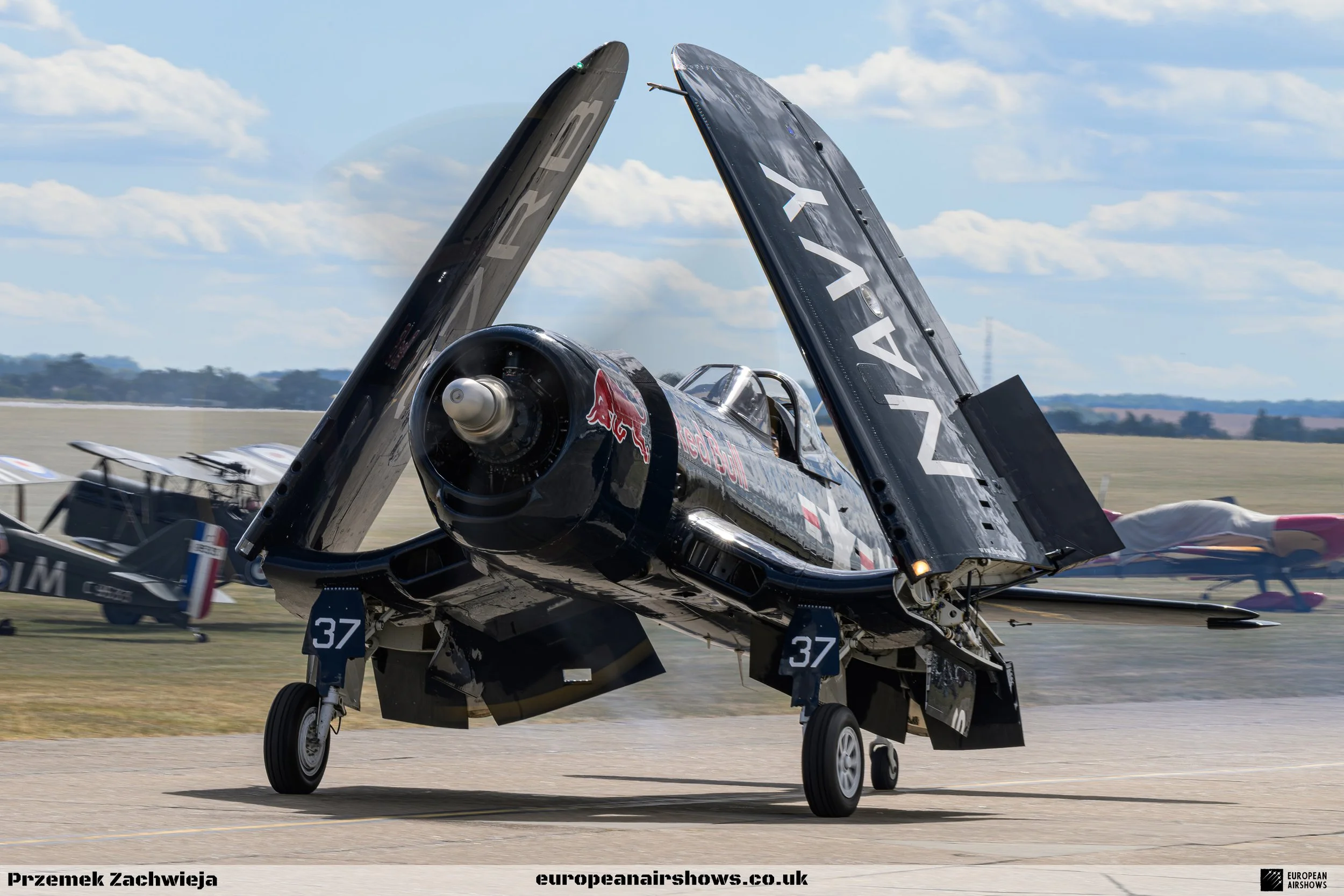
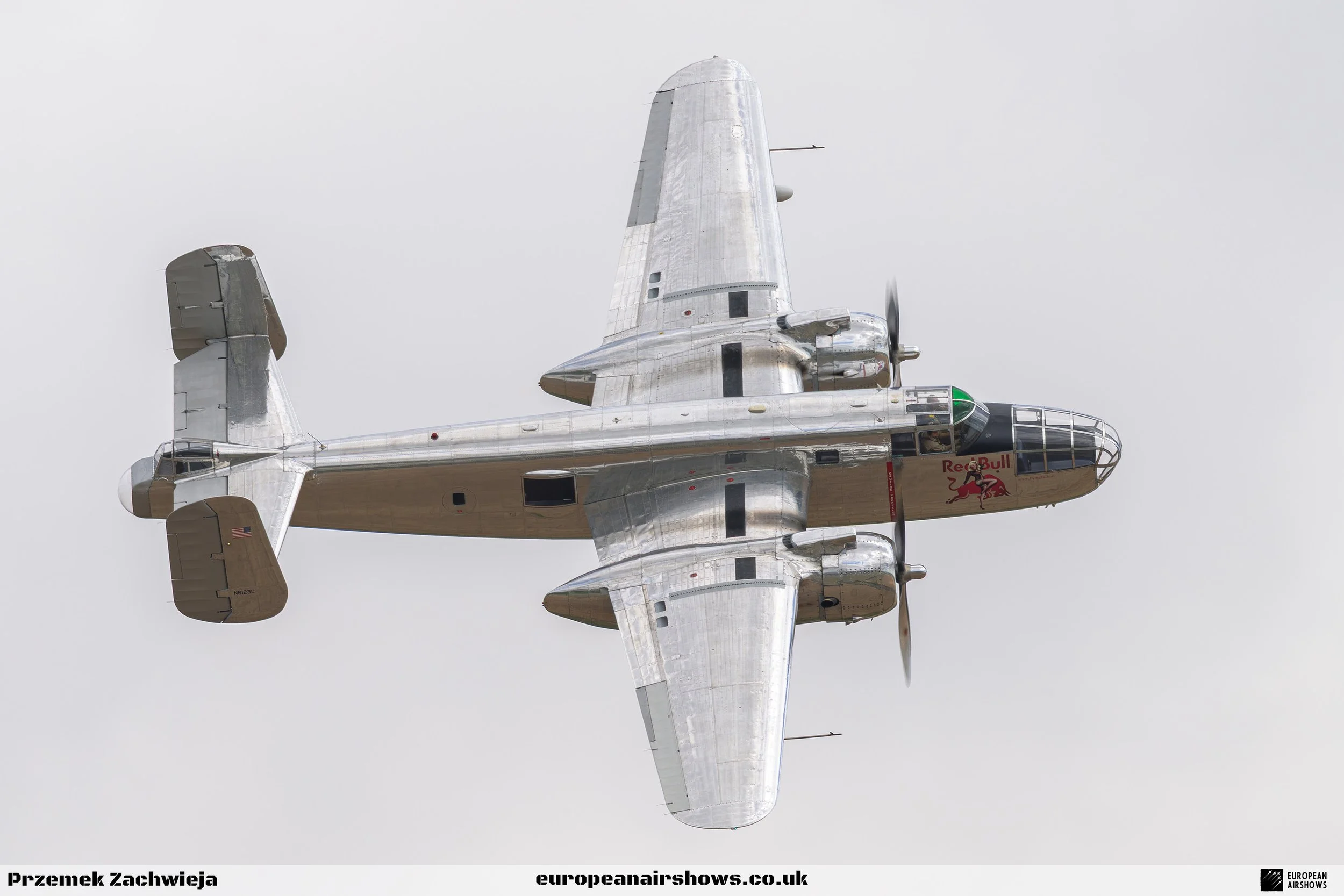
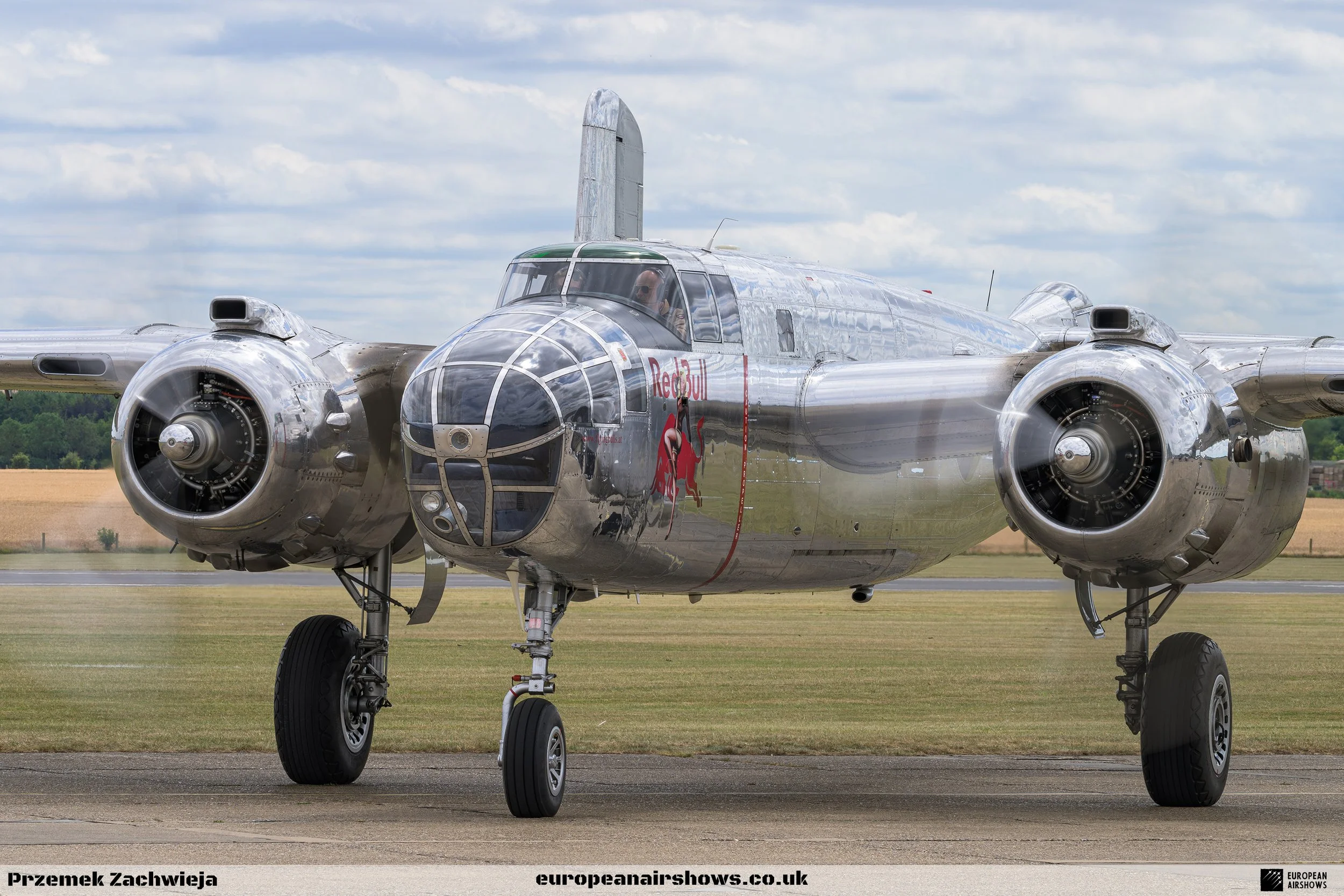
The arrival of four aircraft from the Austrian-based Flying Bulls was another major highlight.
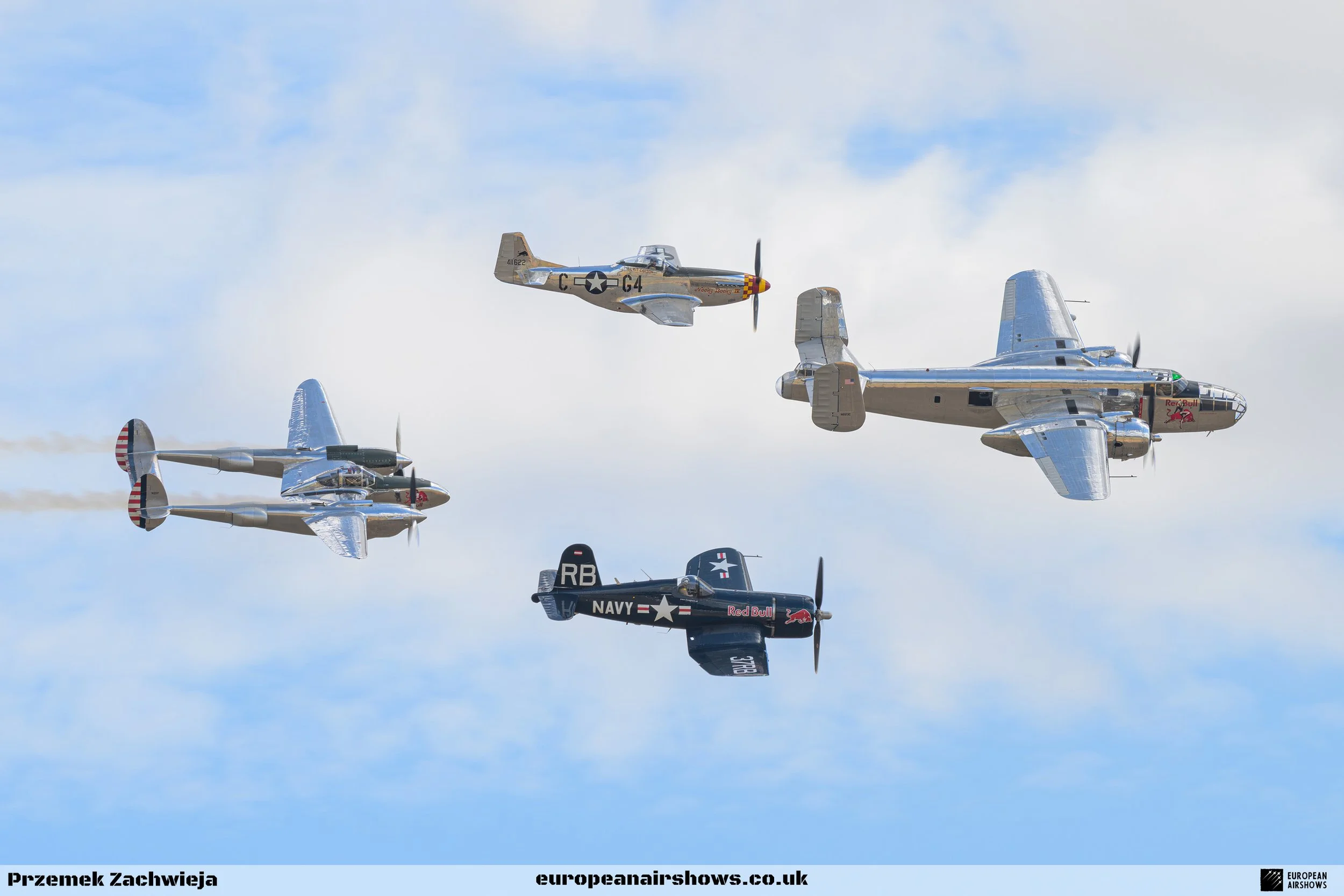
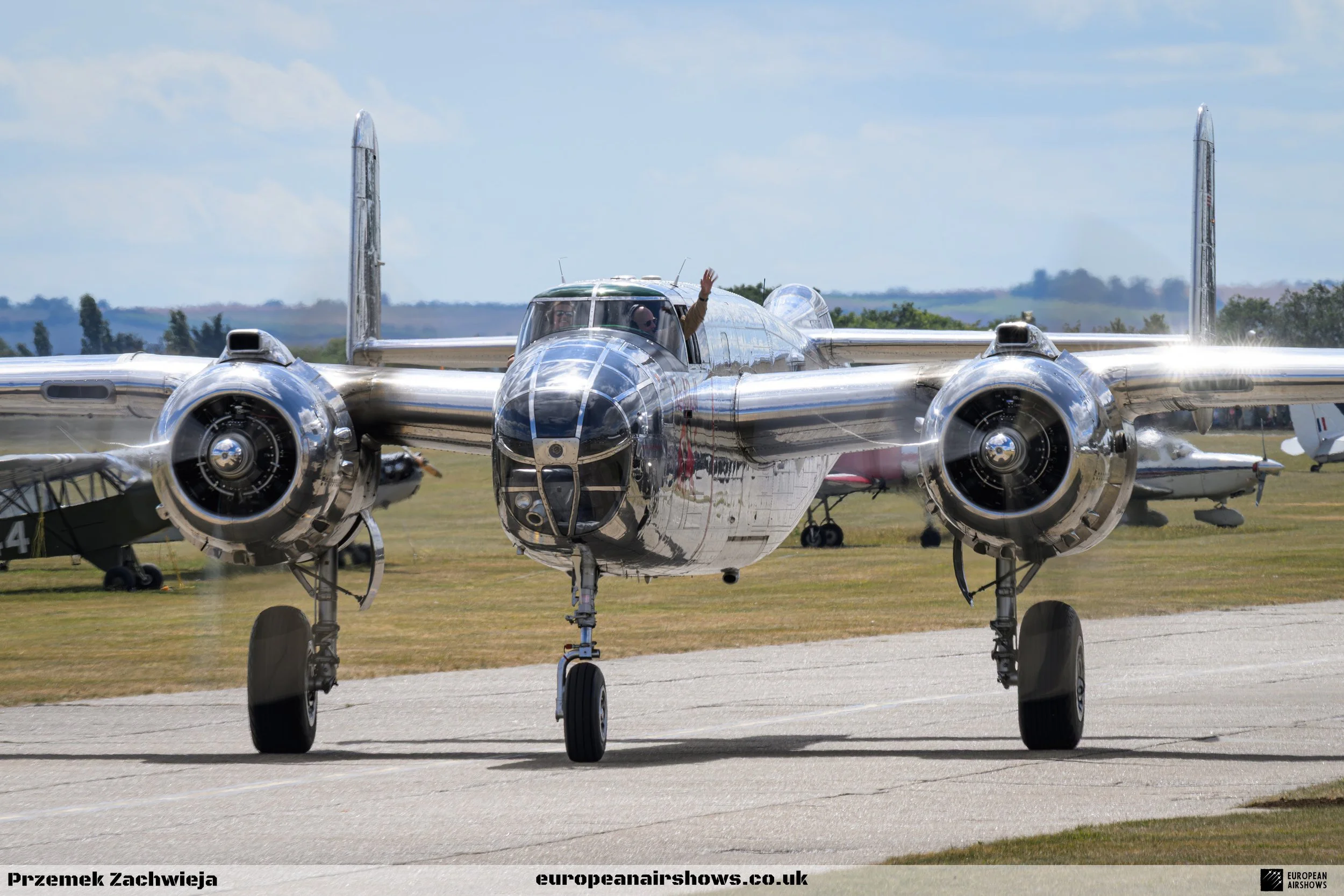
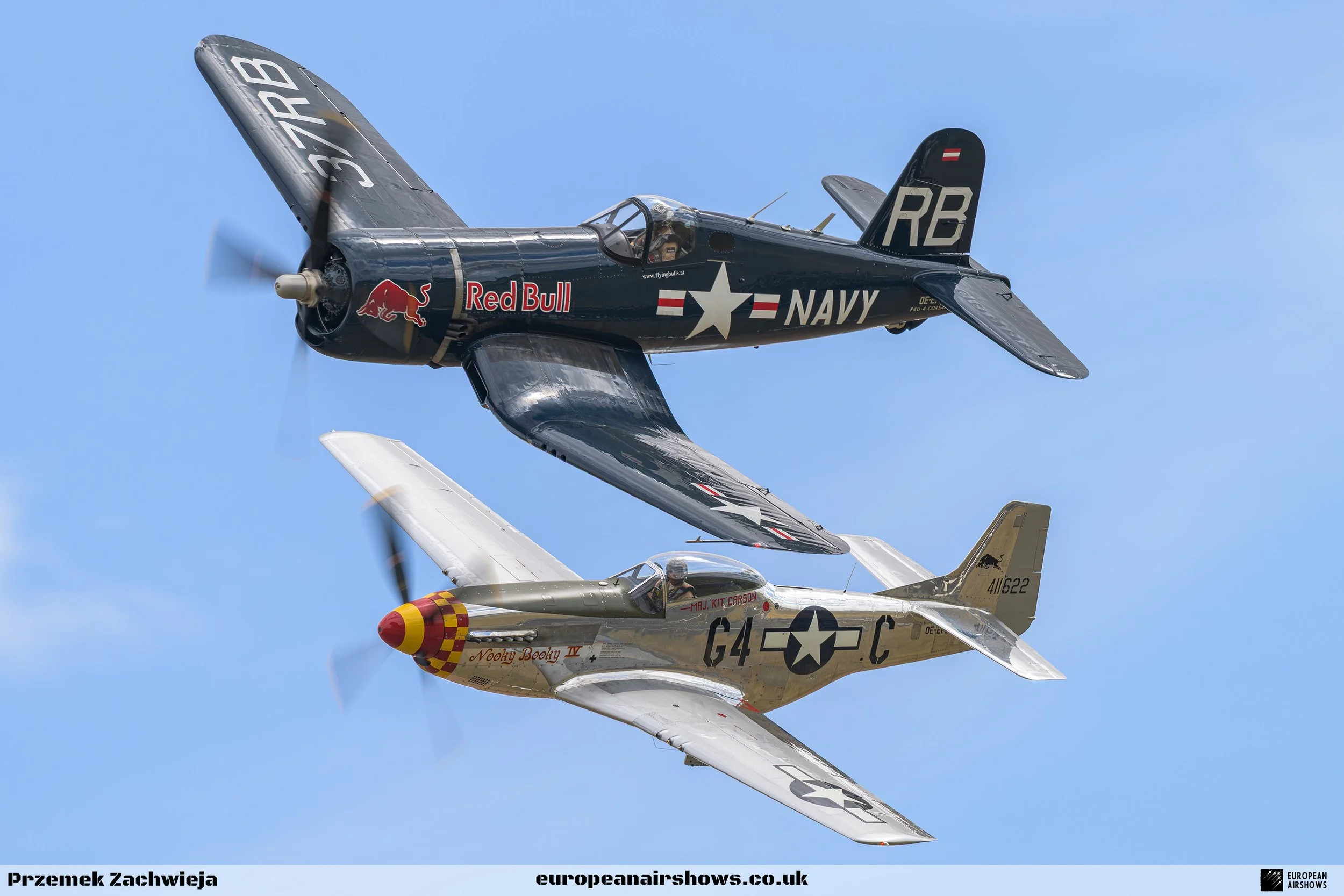
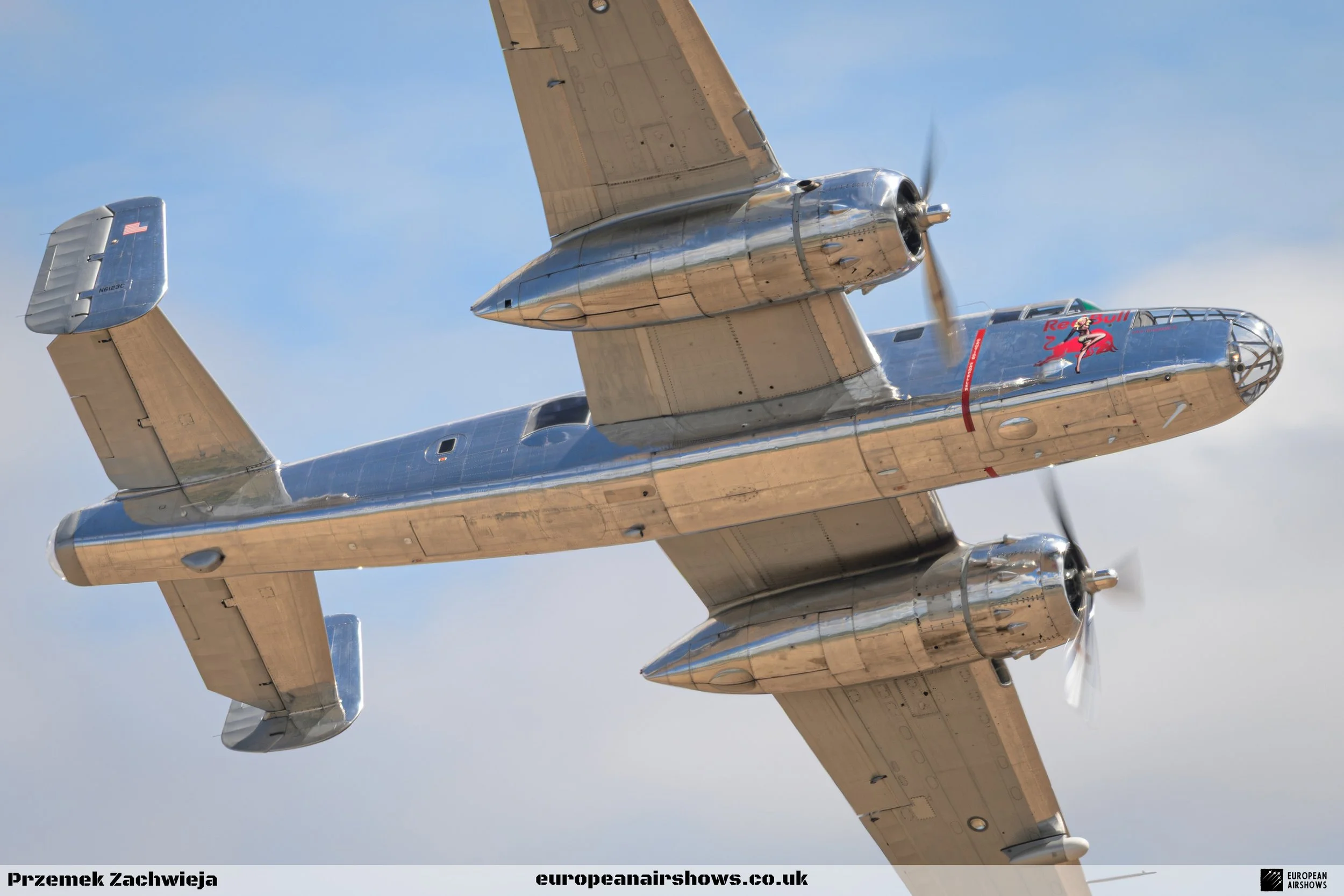
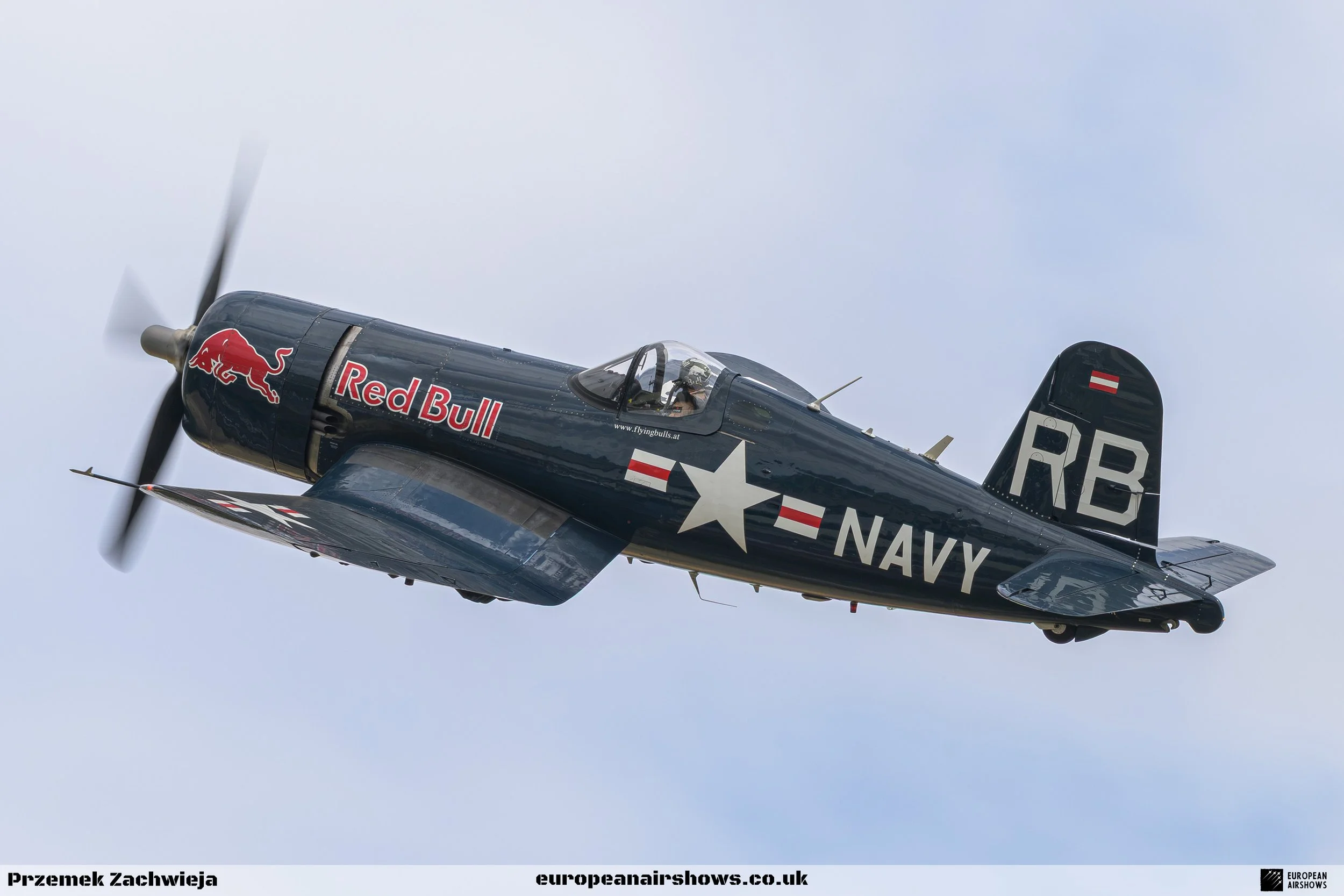
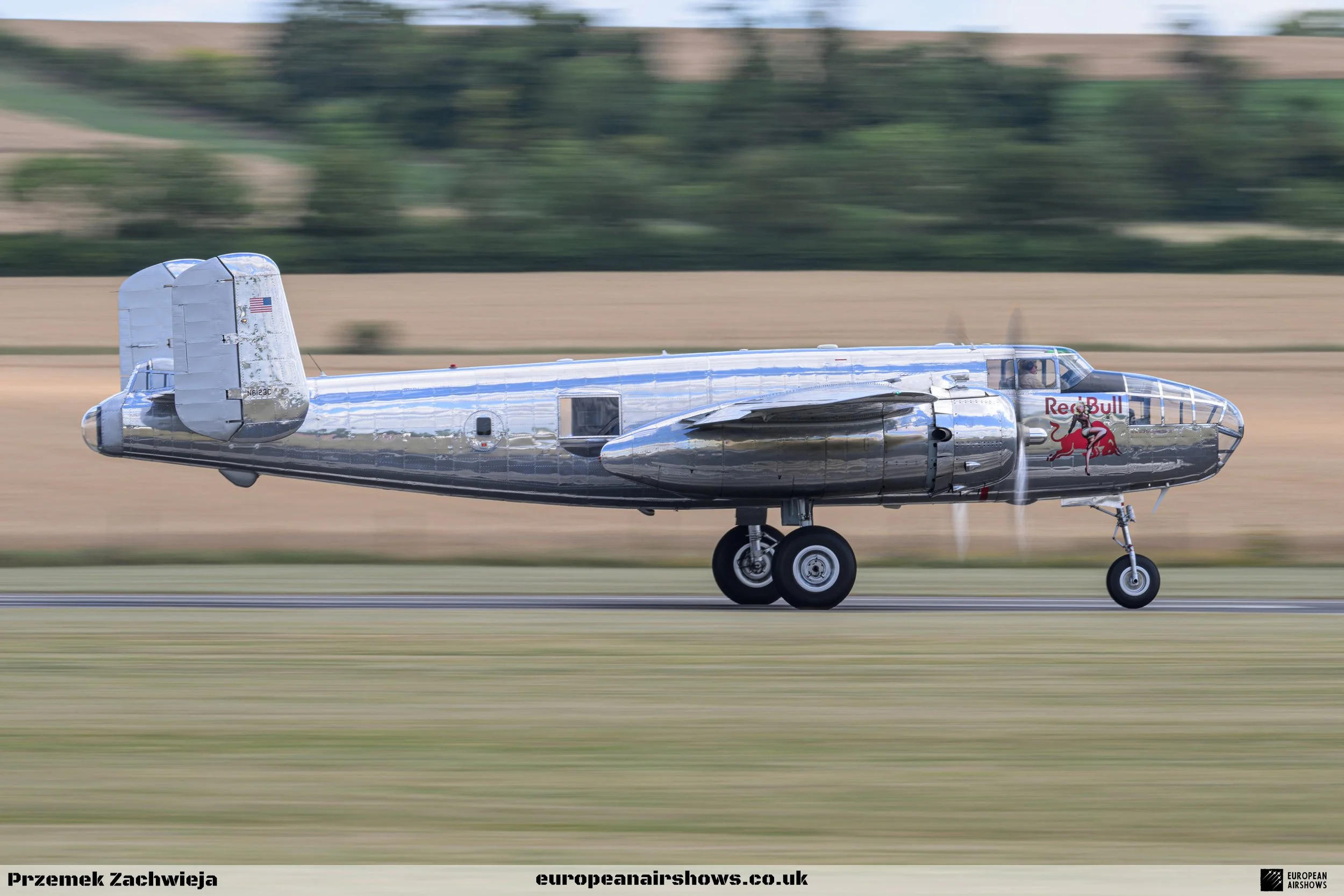
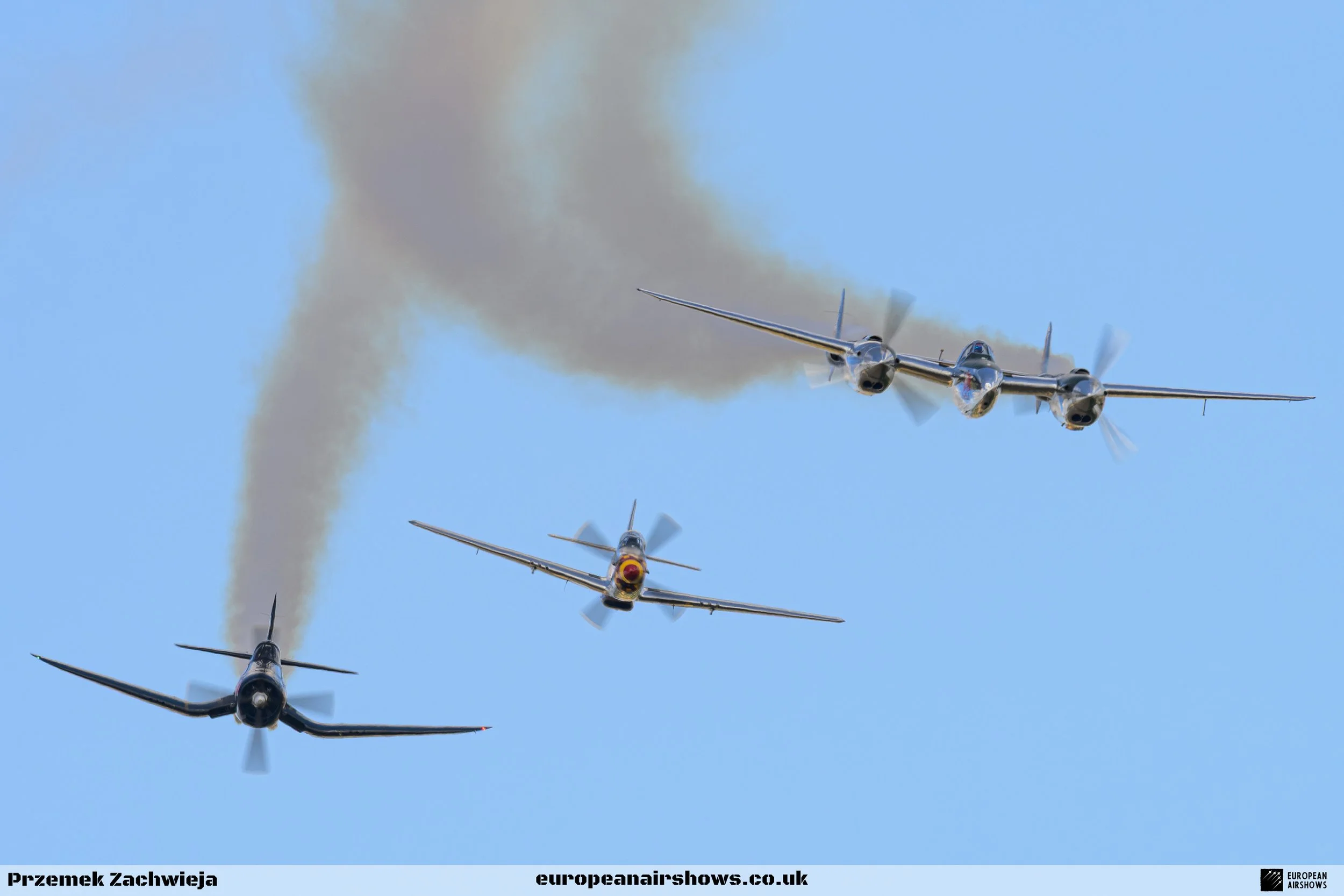
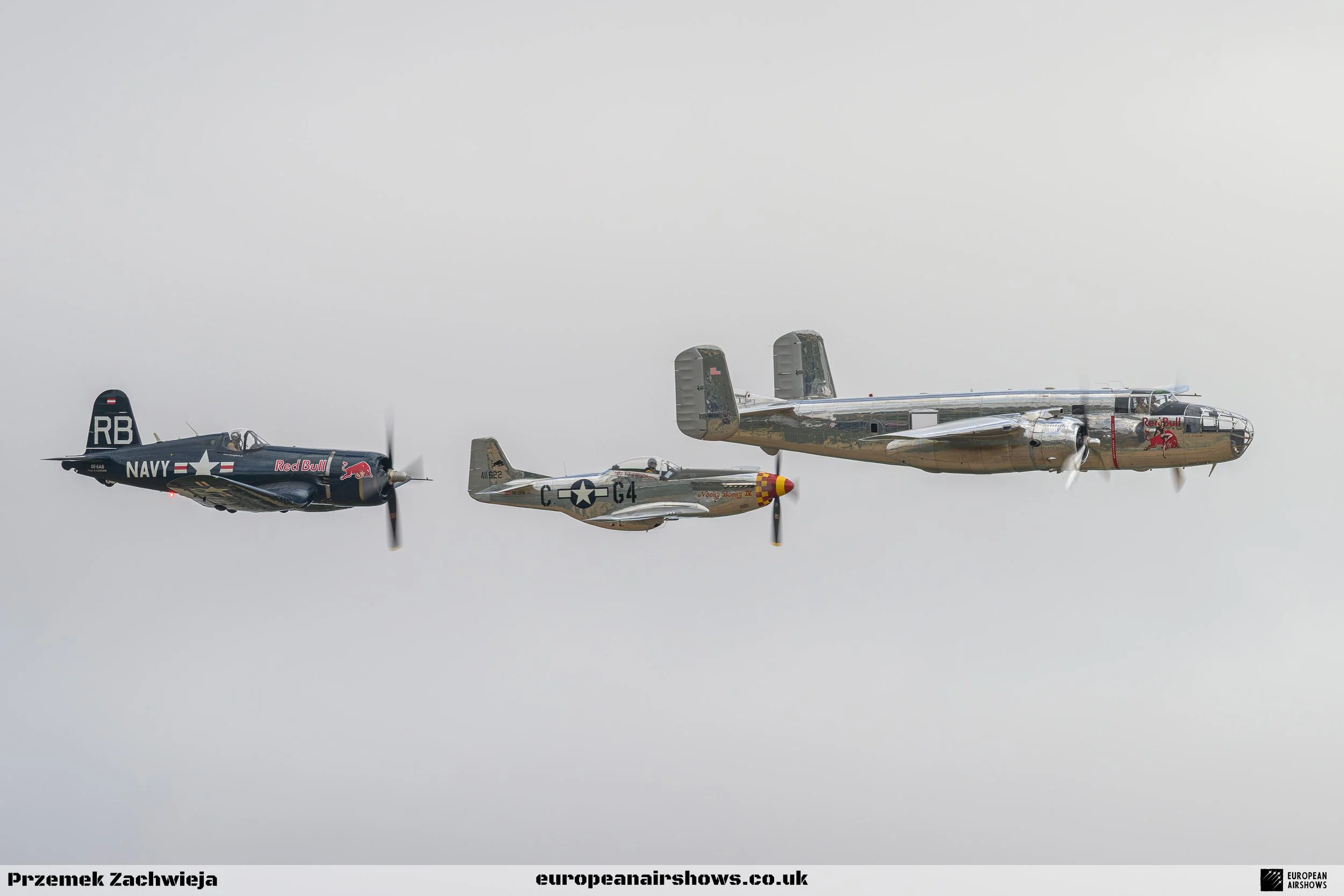
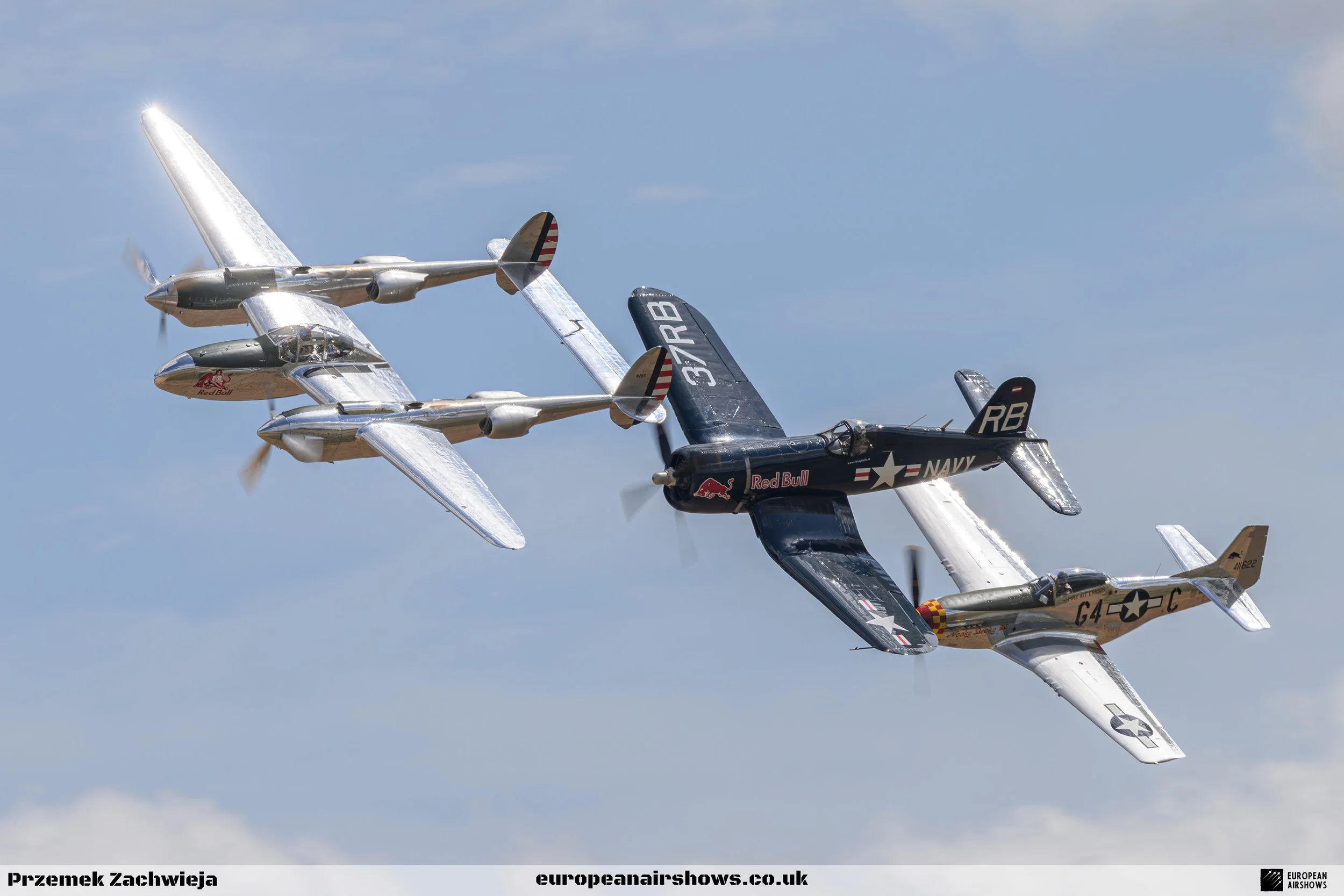
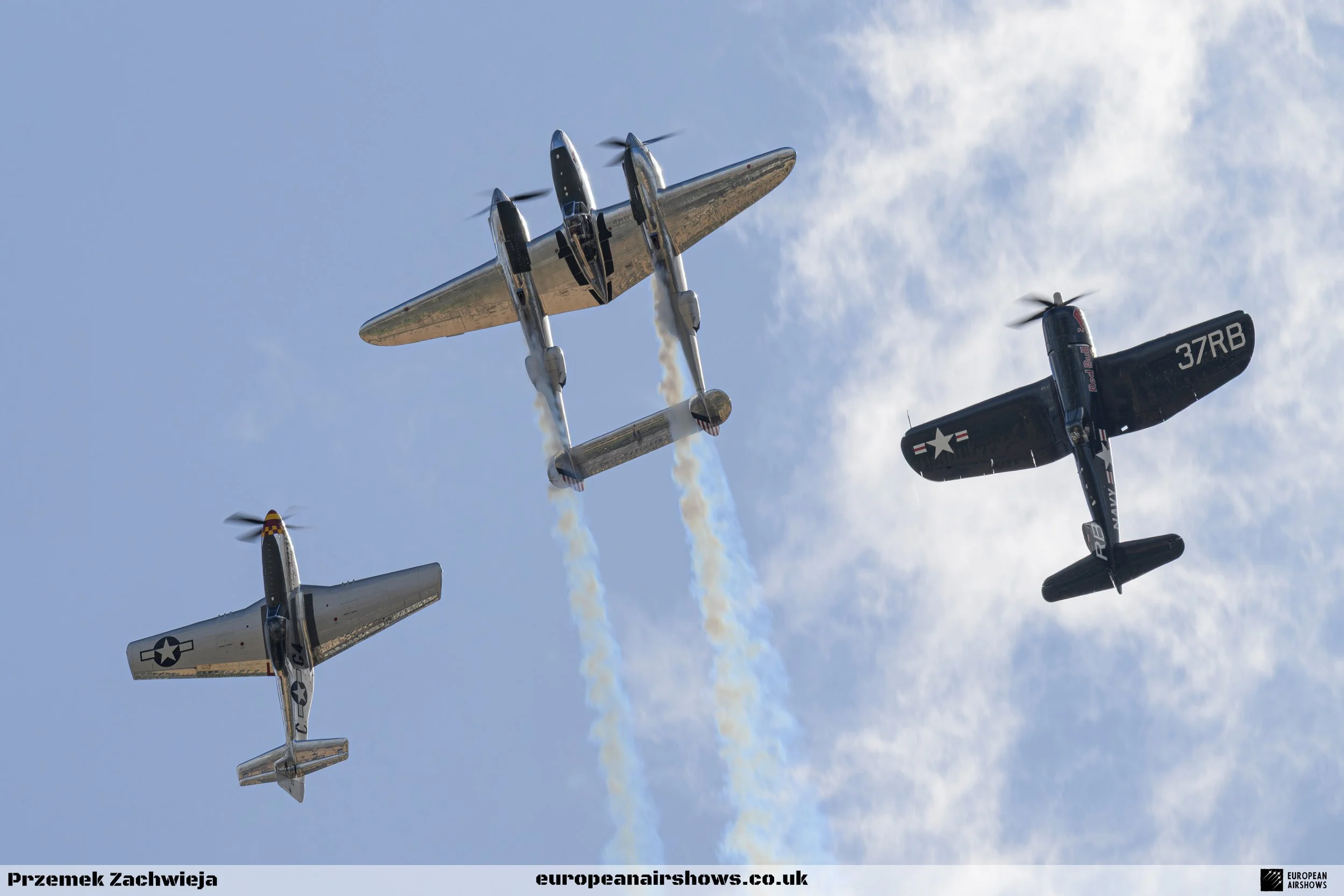
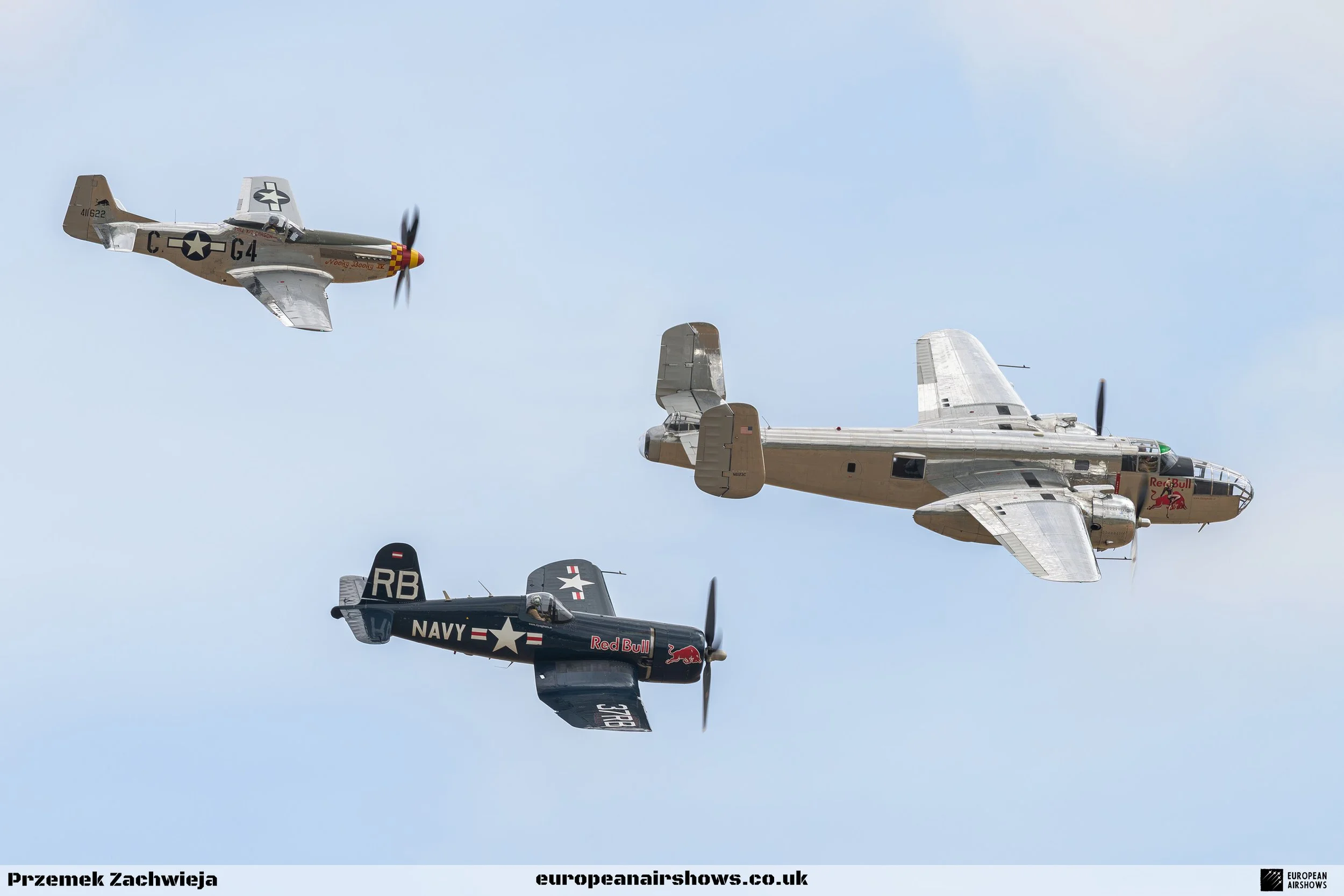
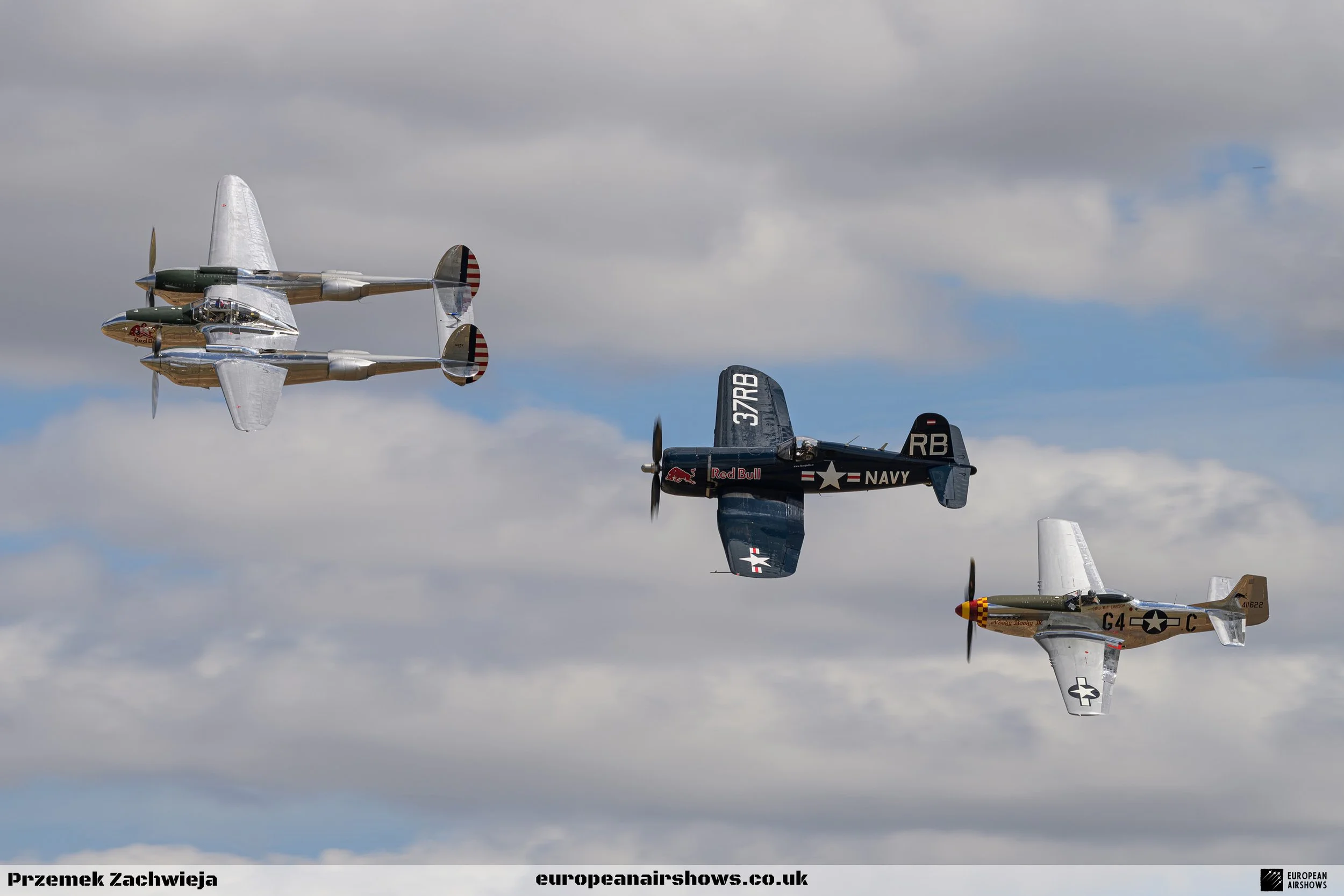
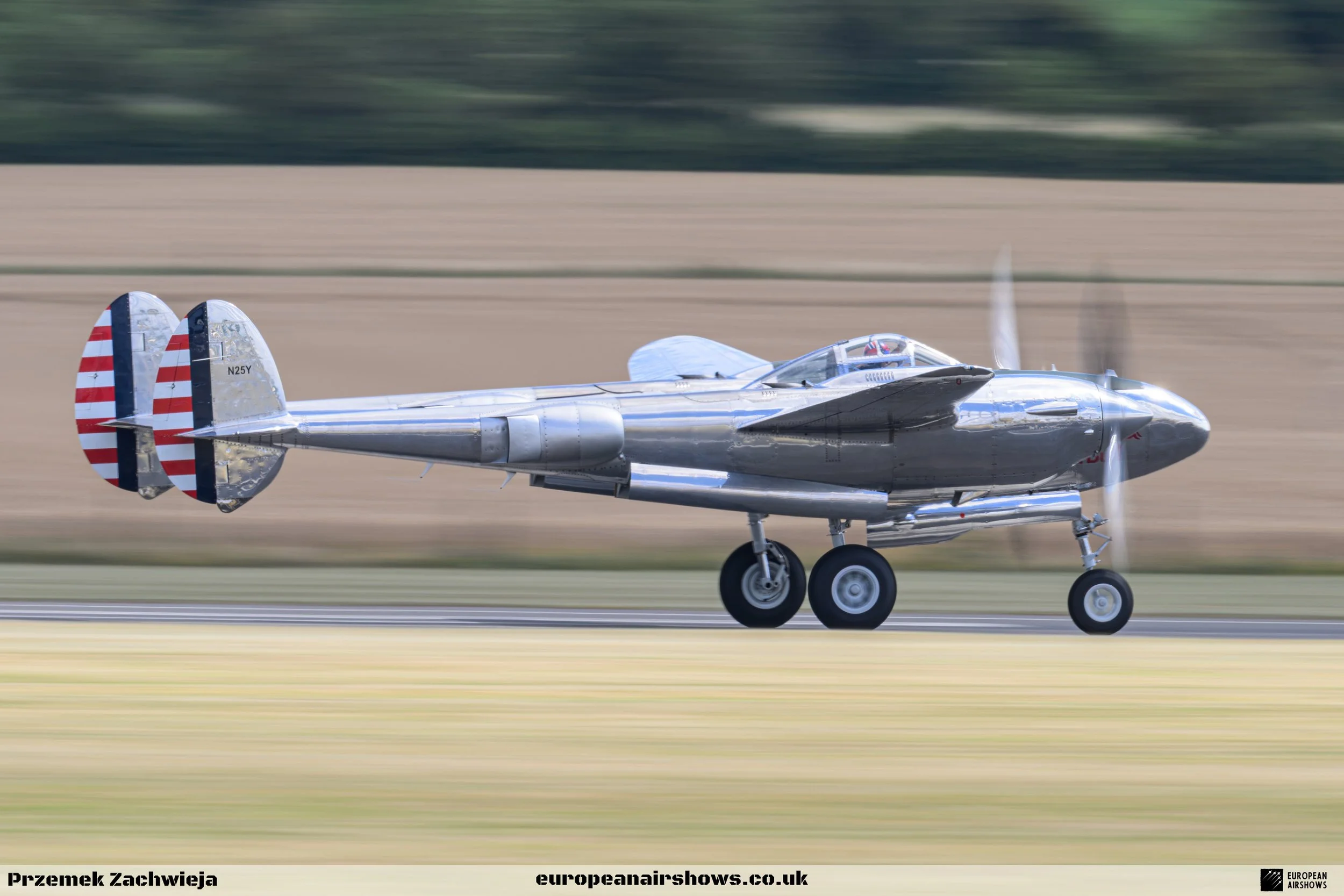
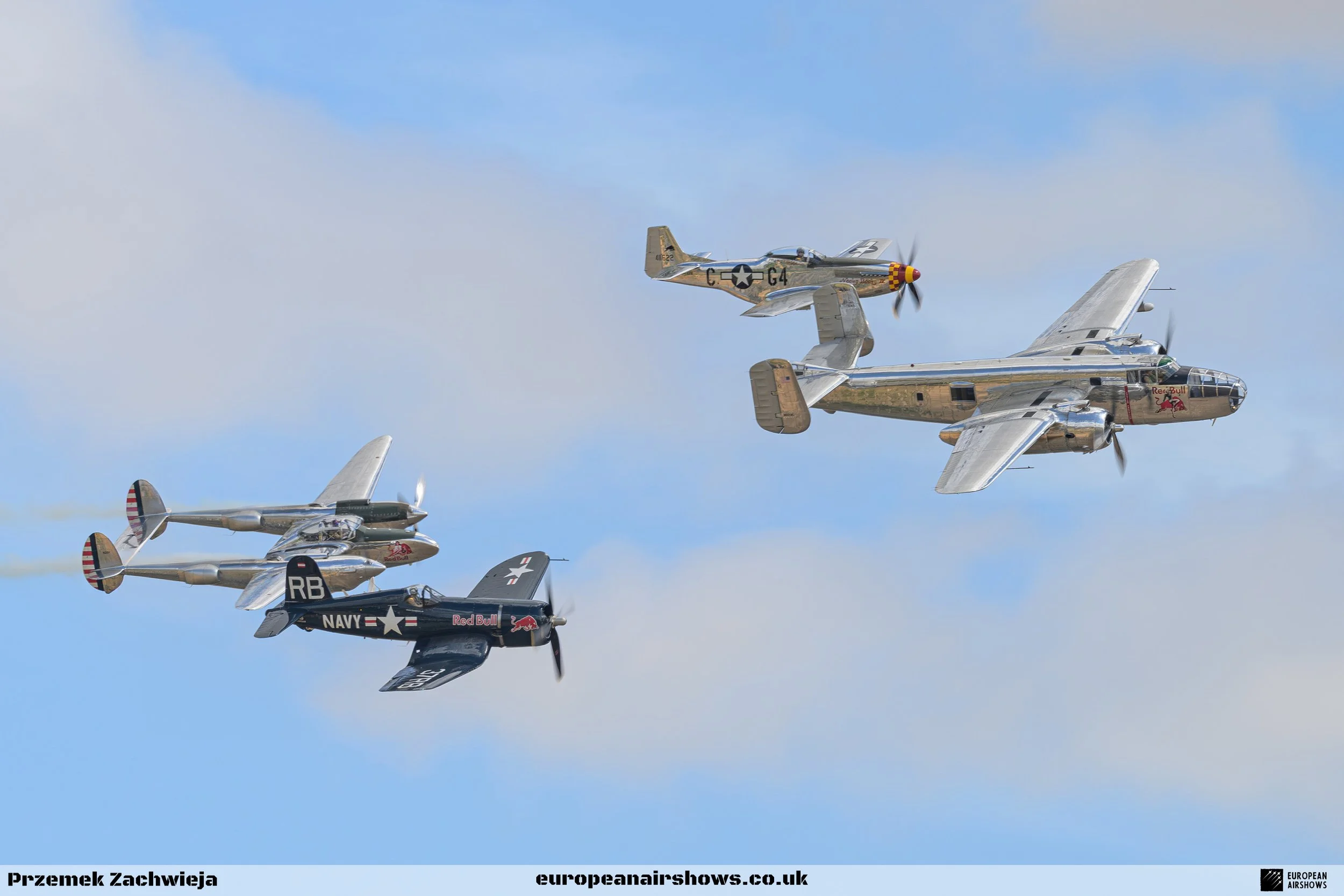
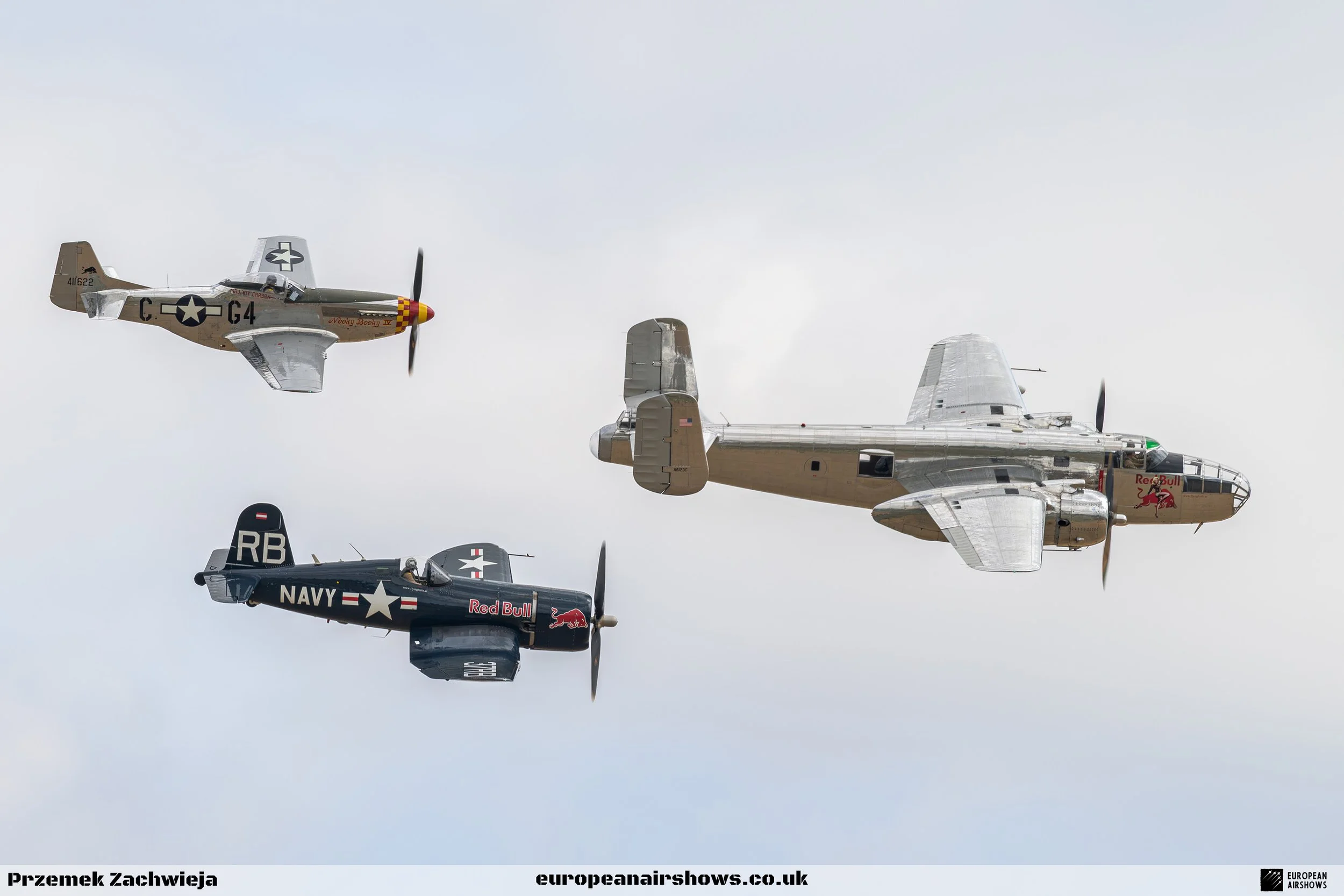
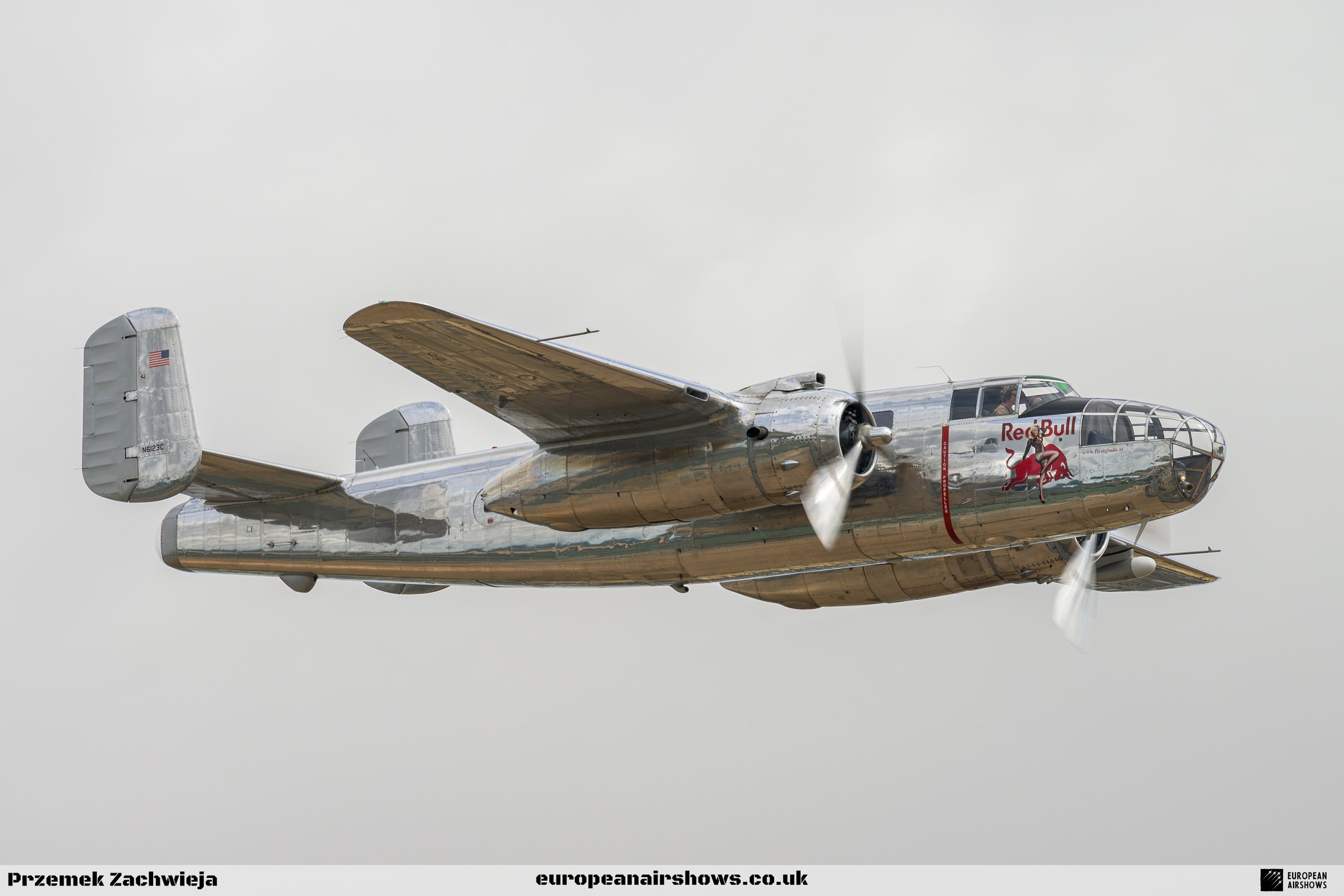
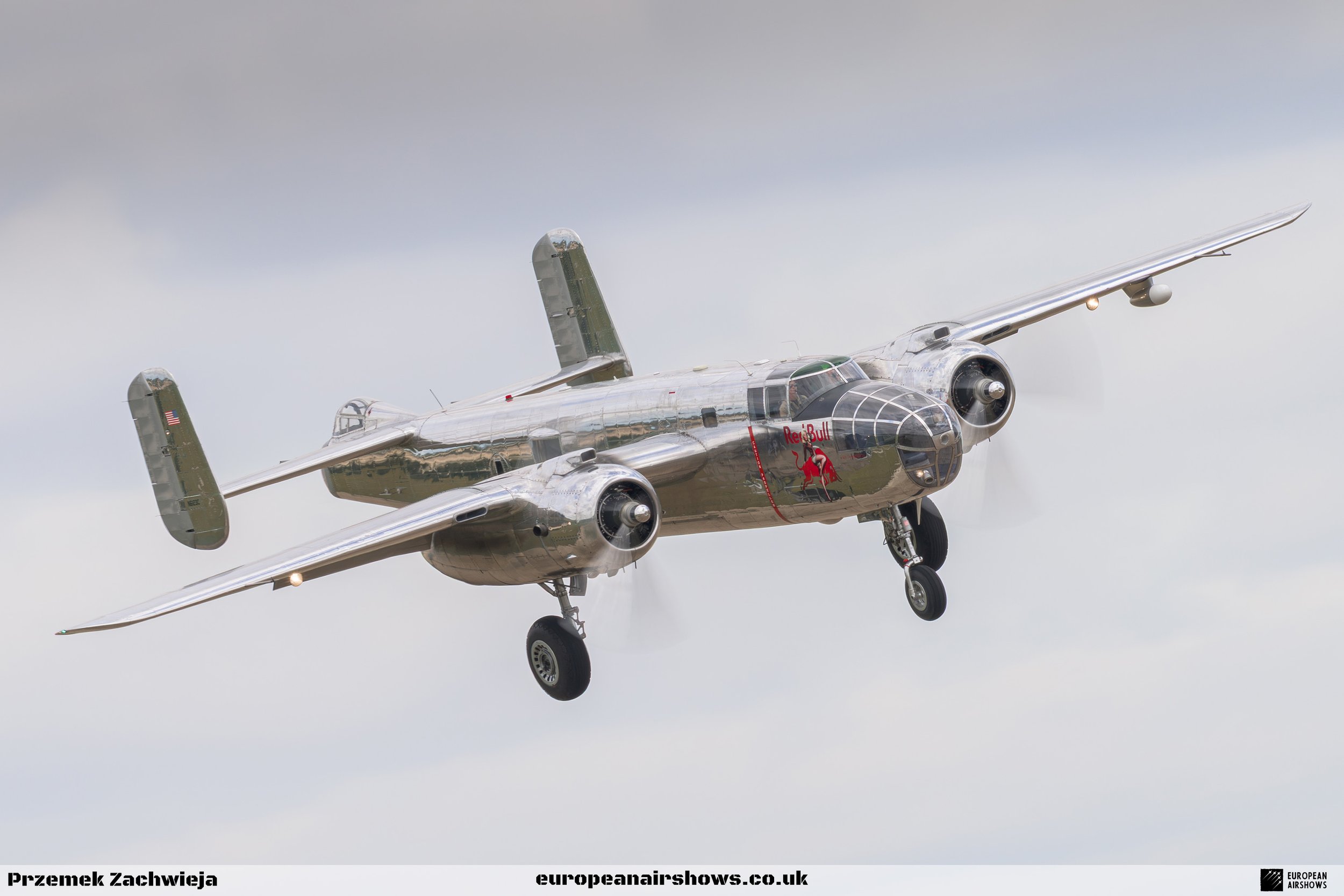
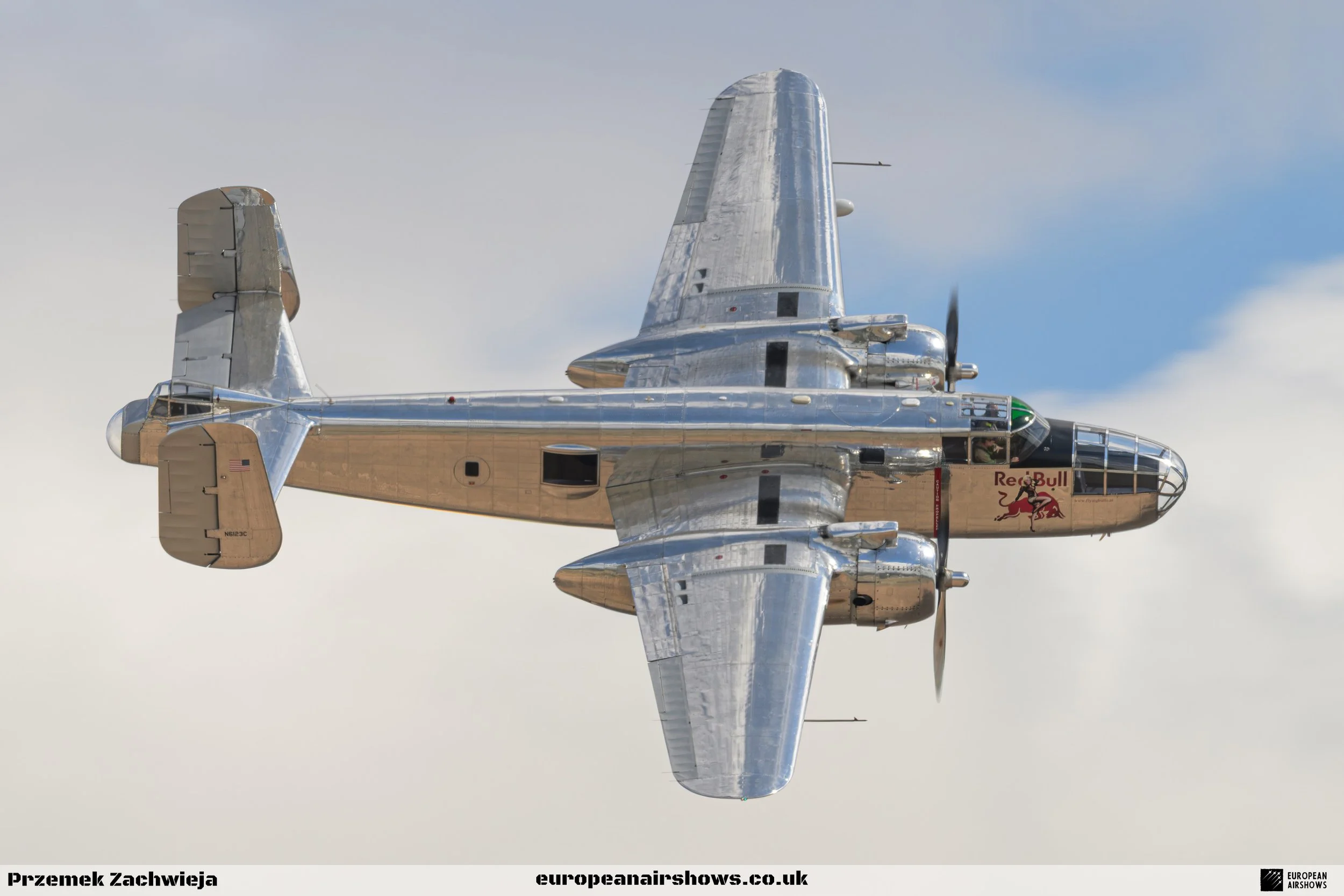
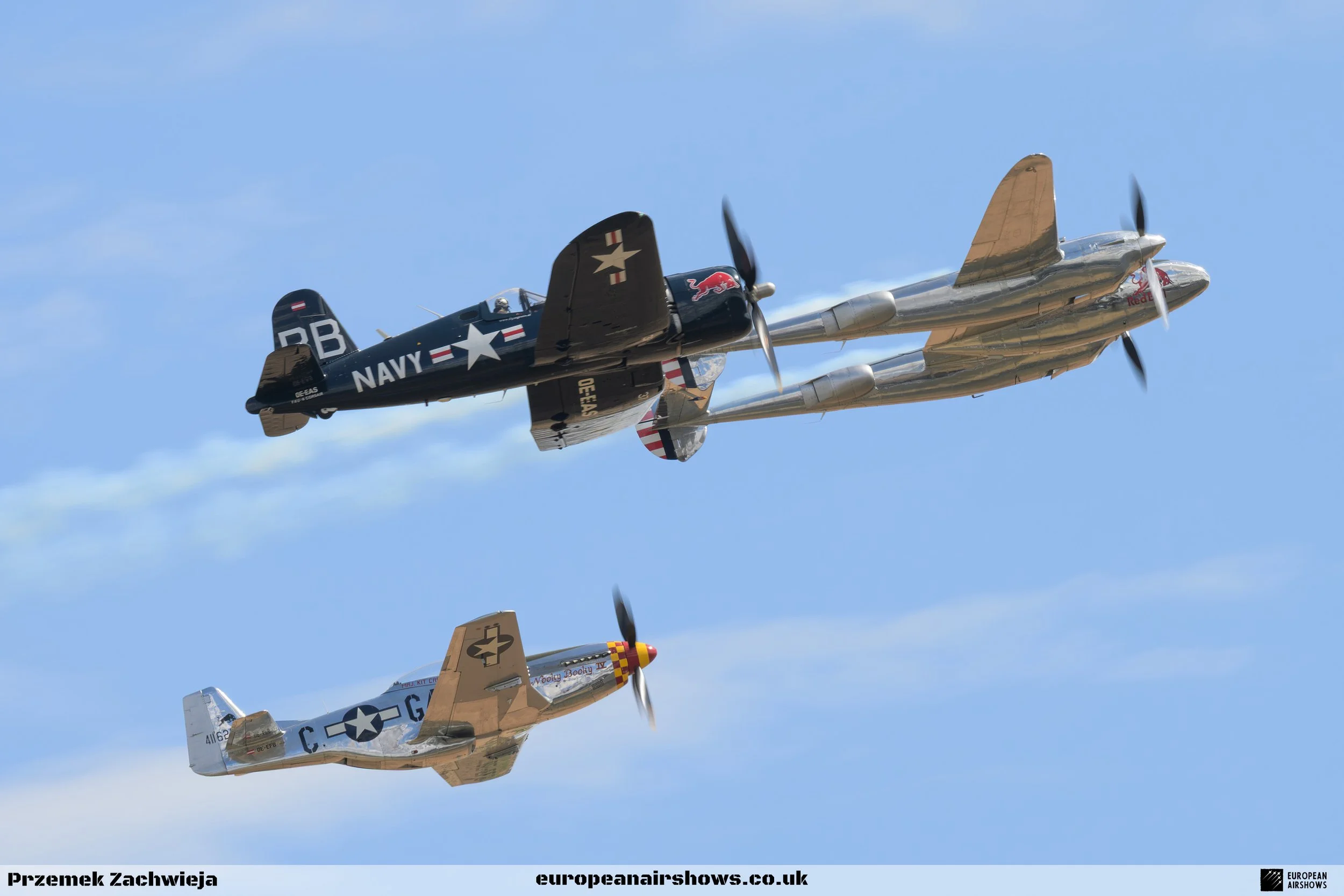
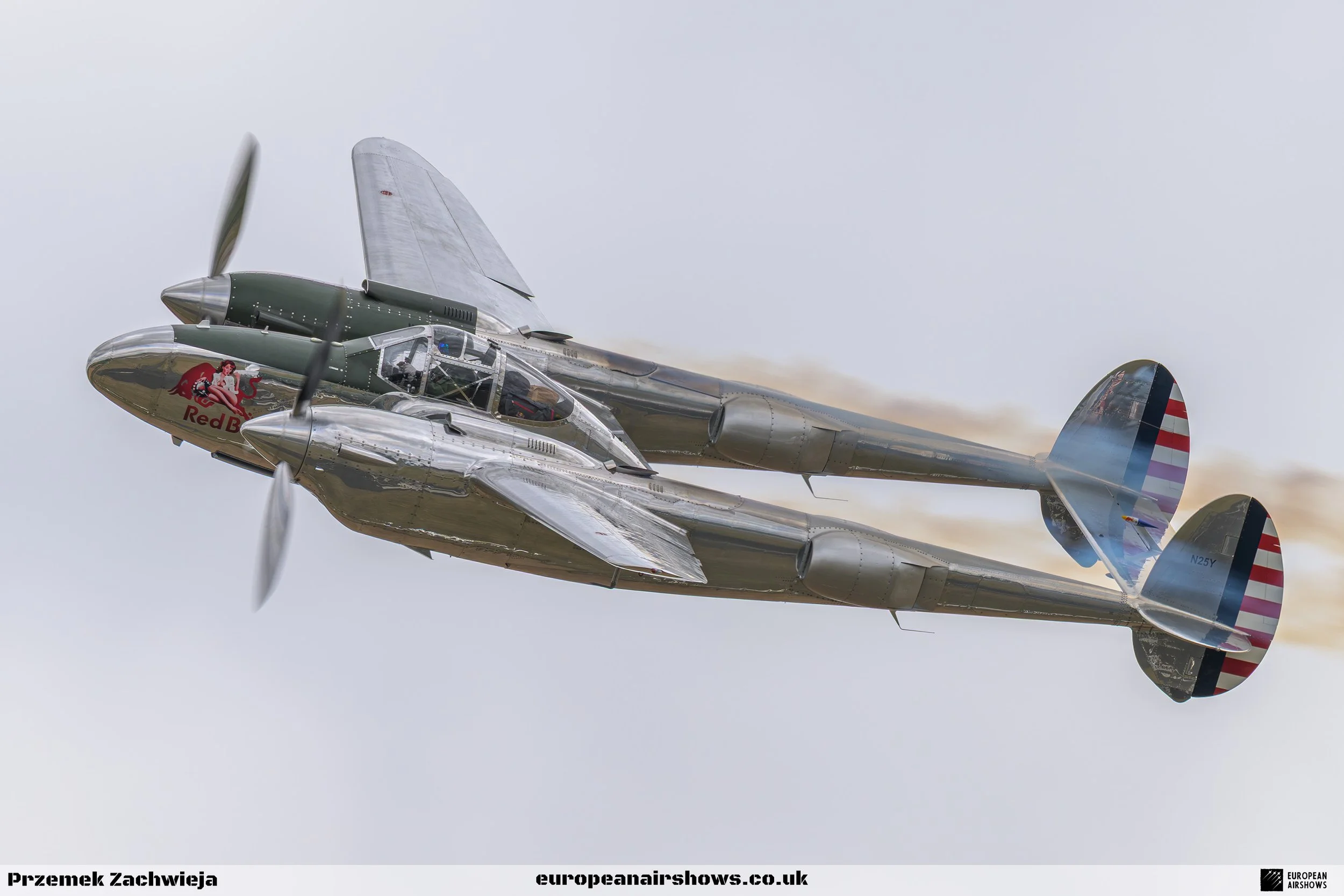
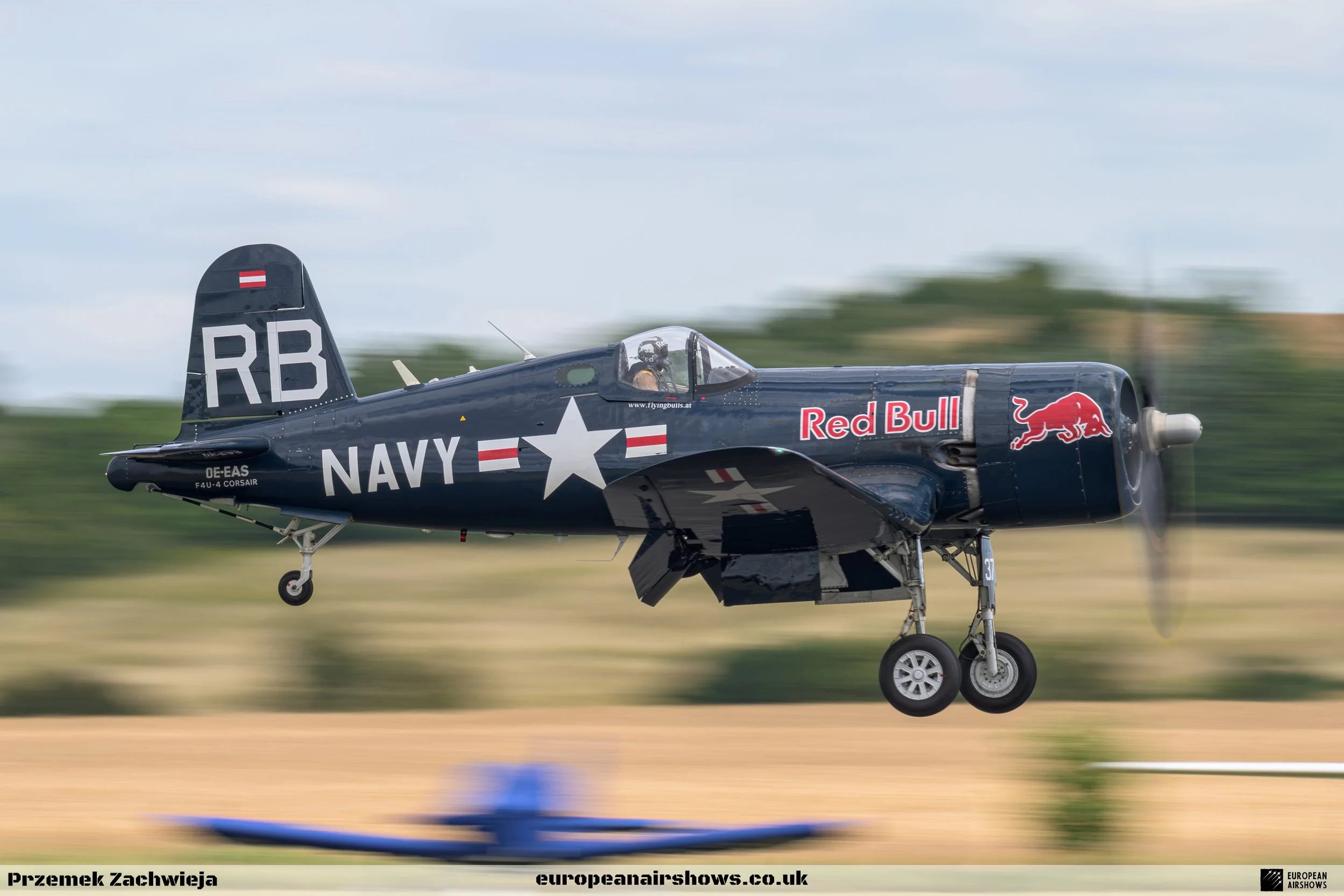
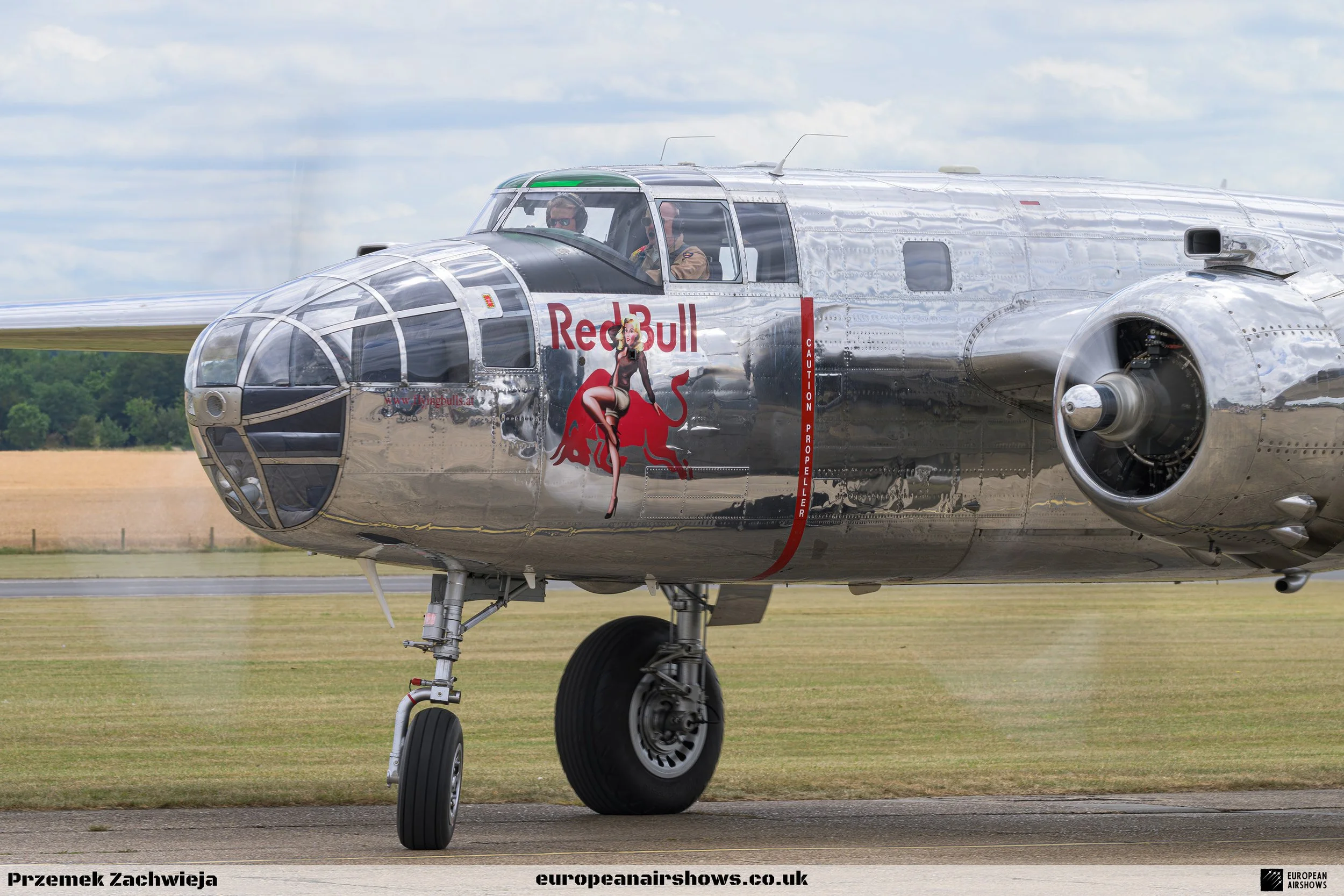
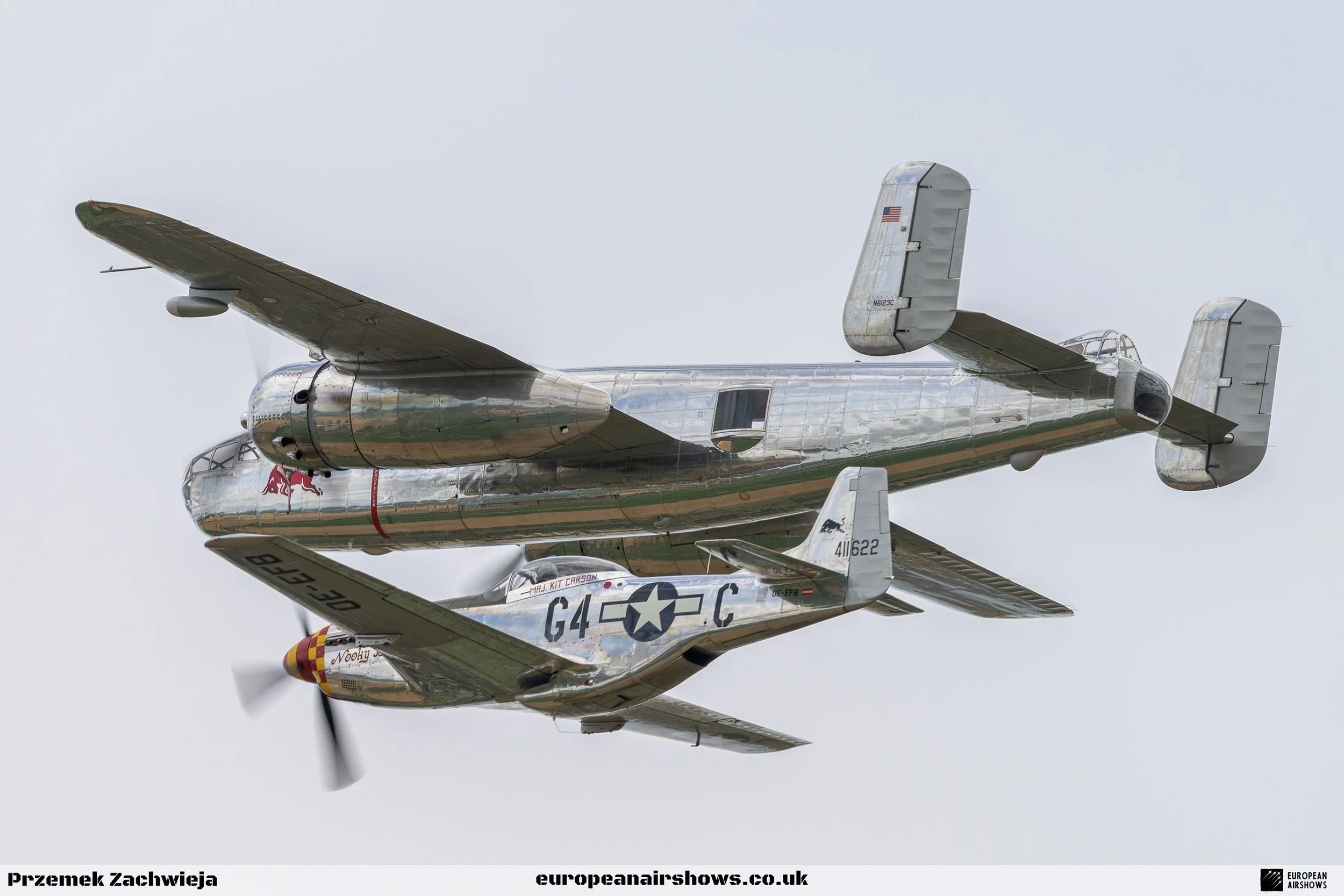
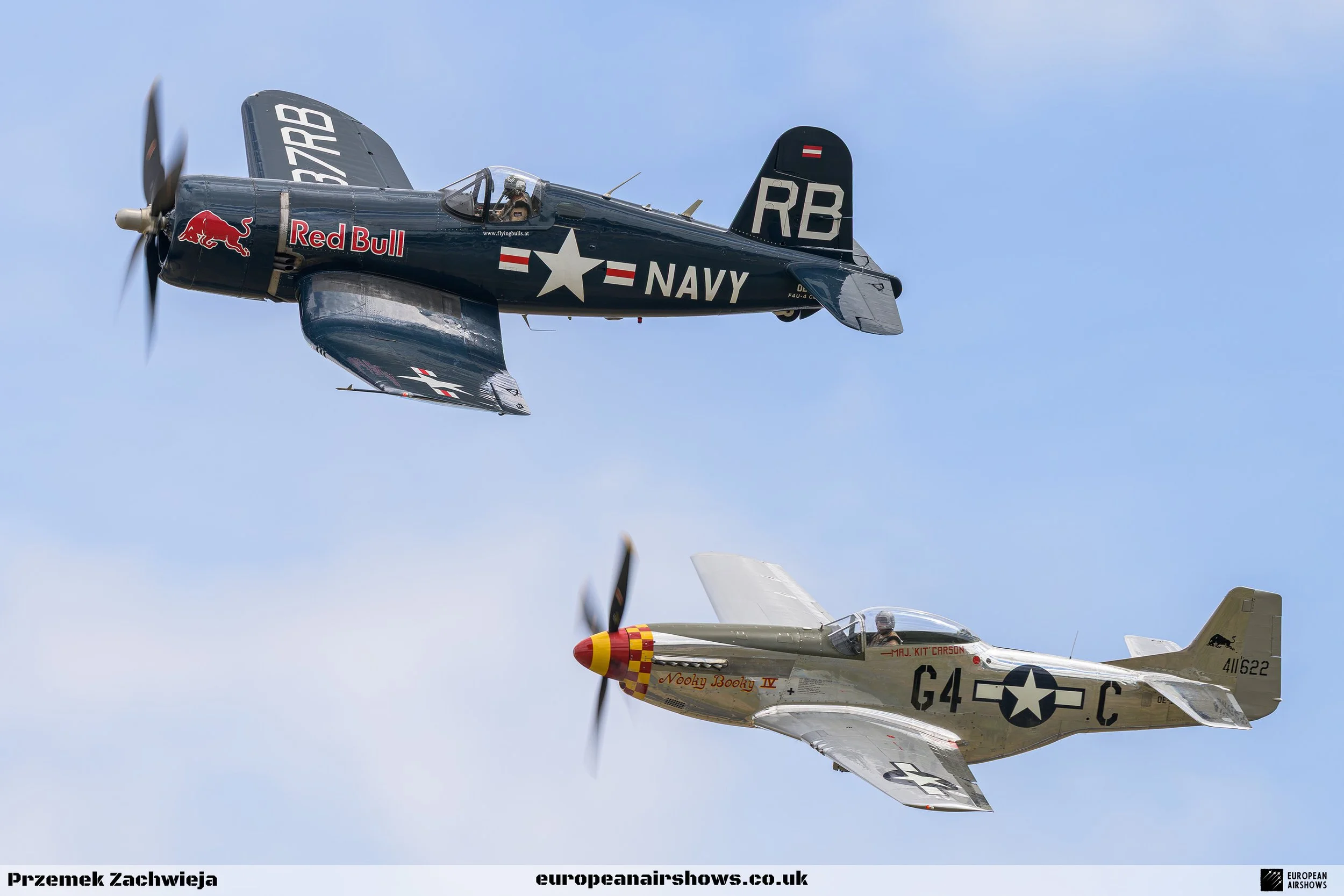
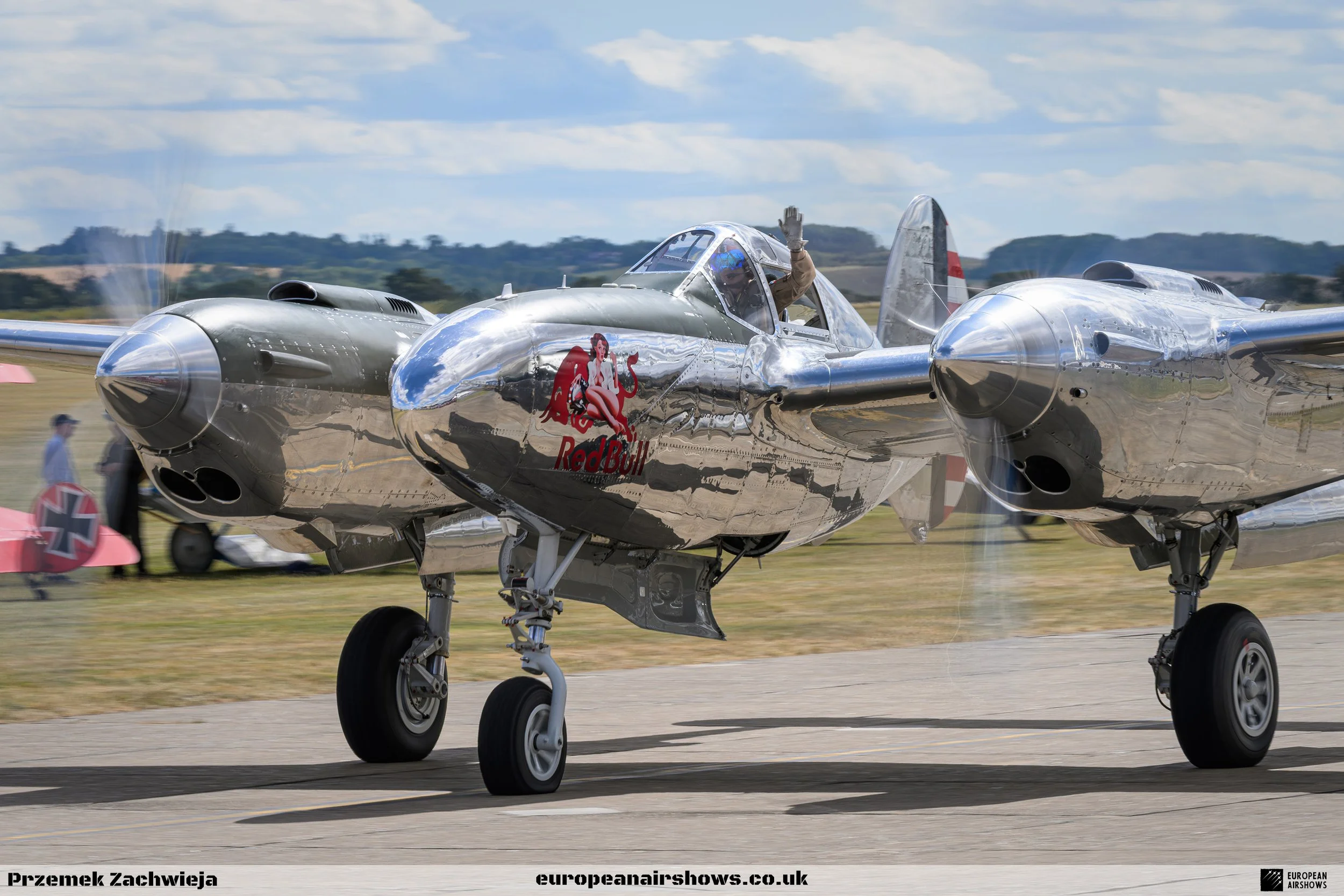
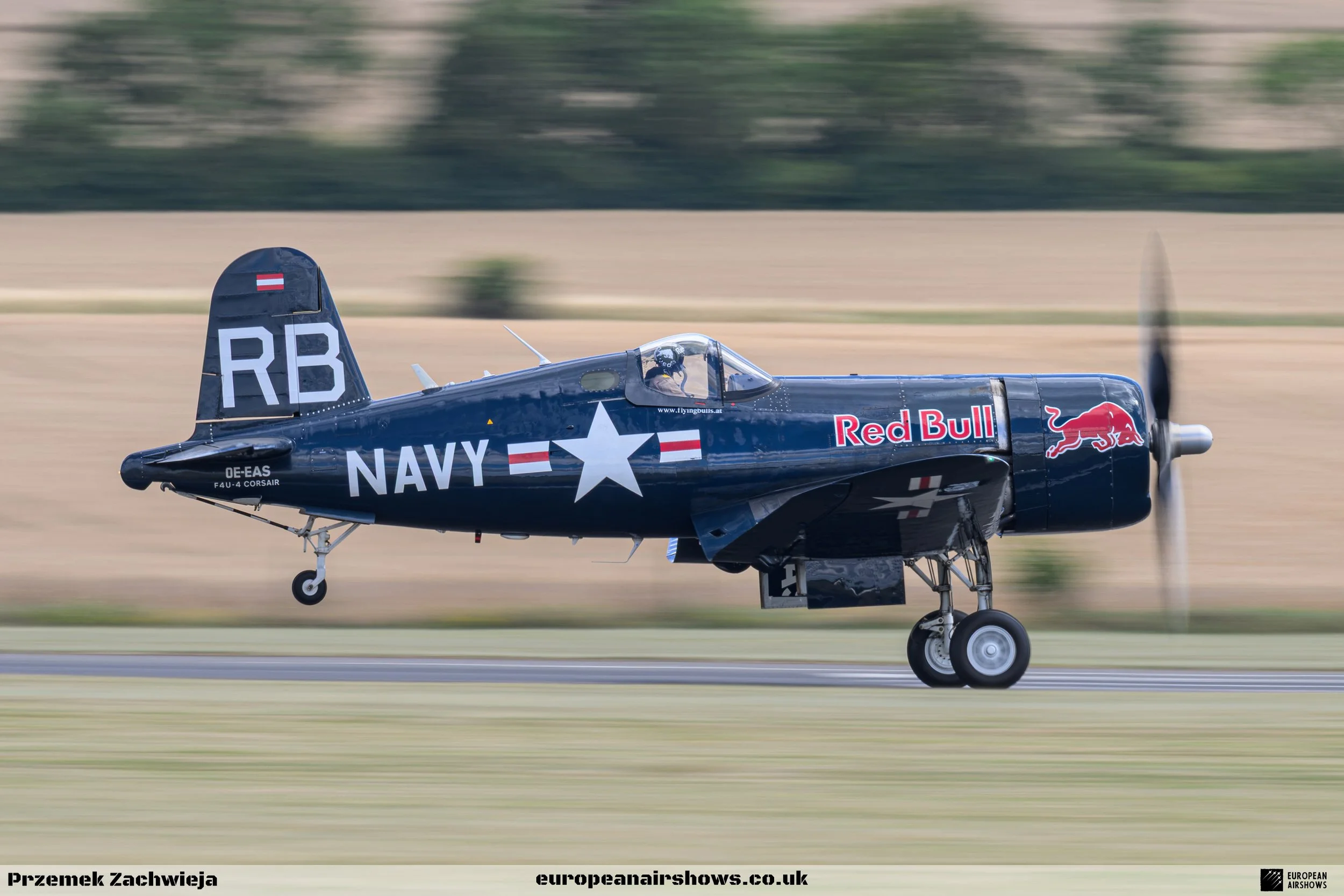
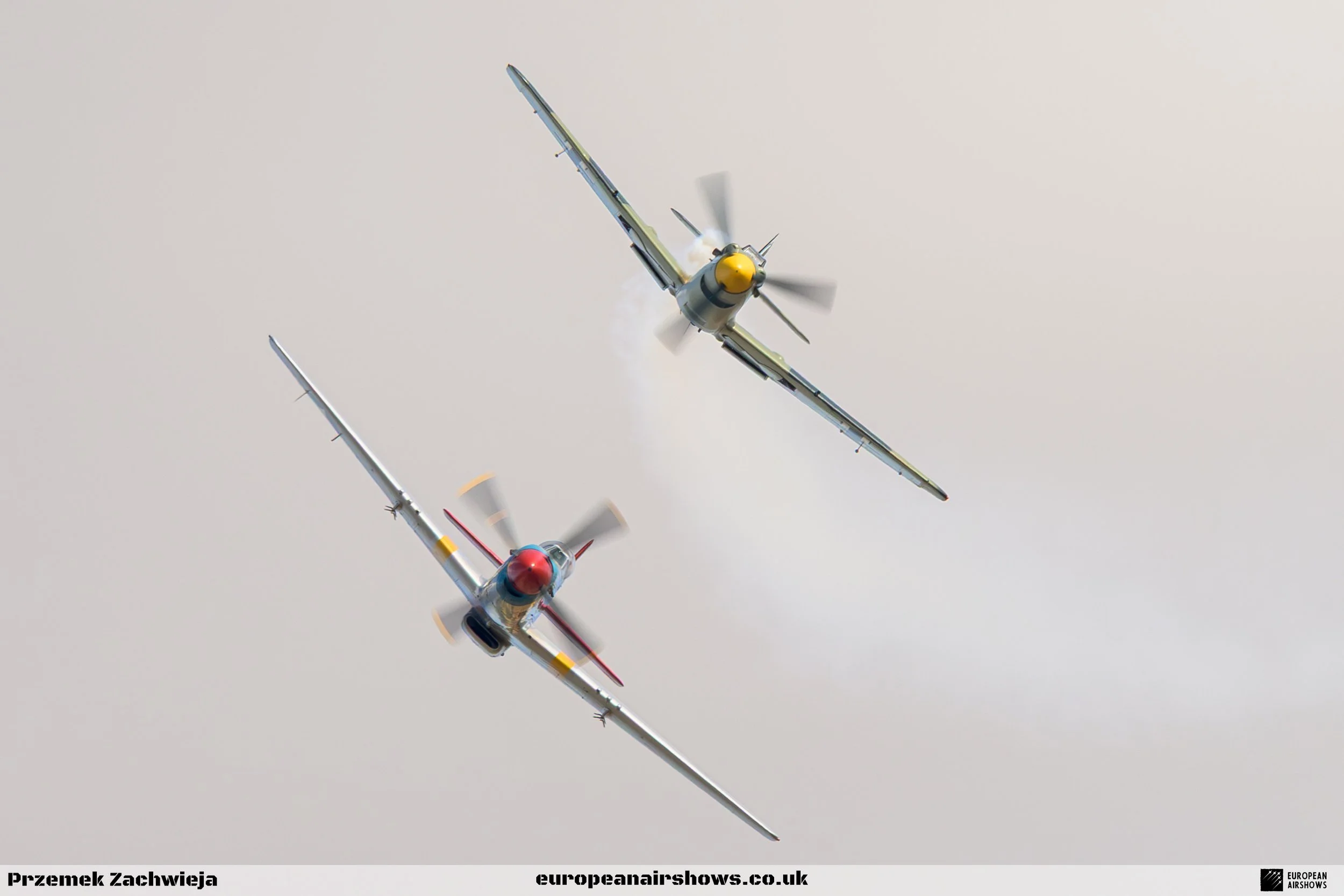
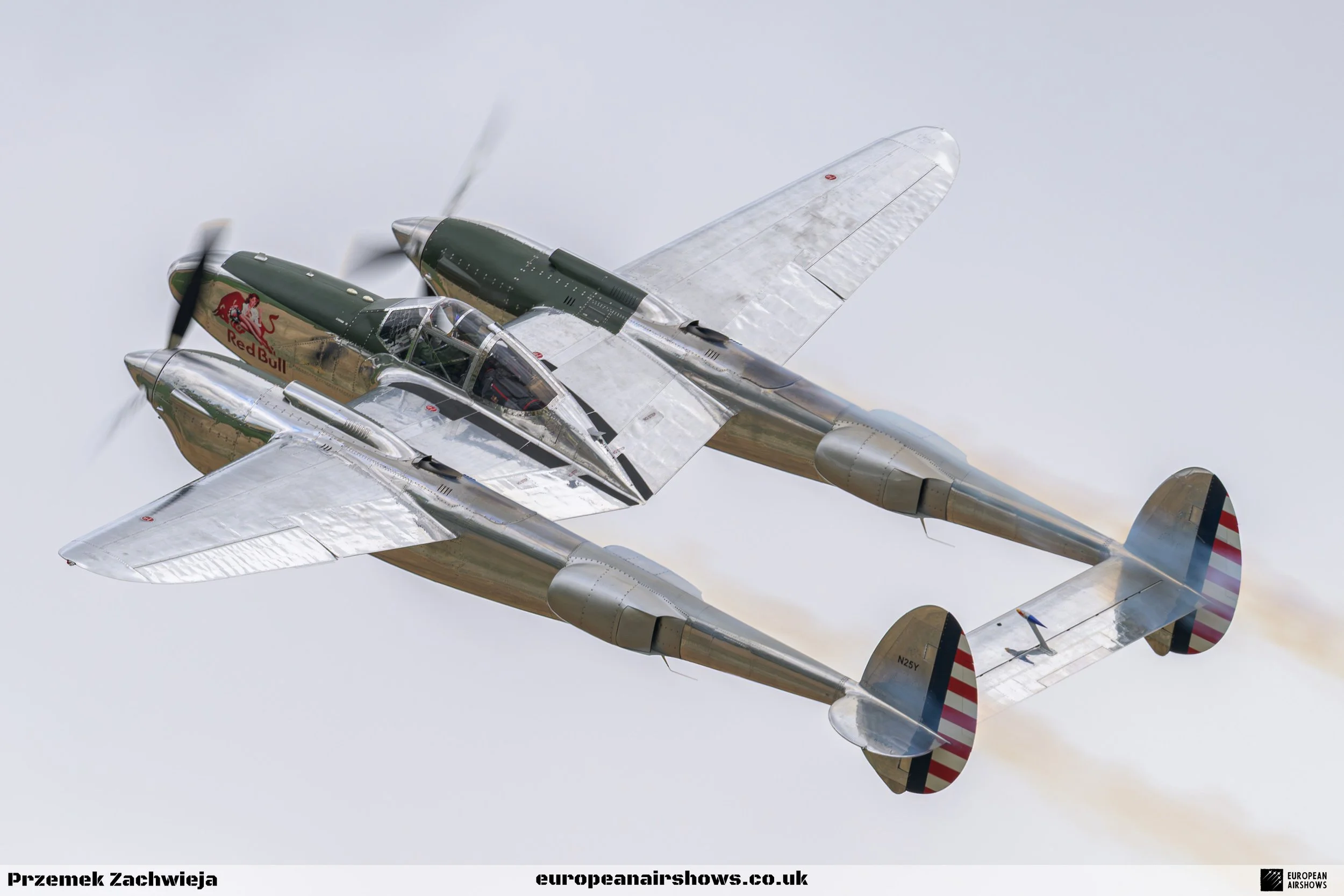
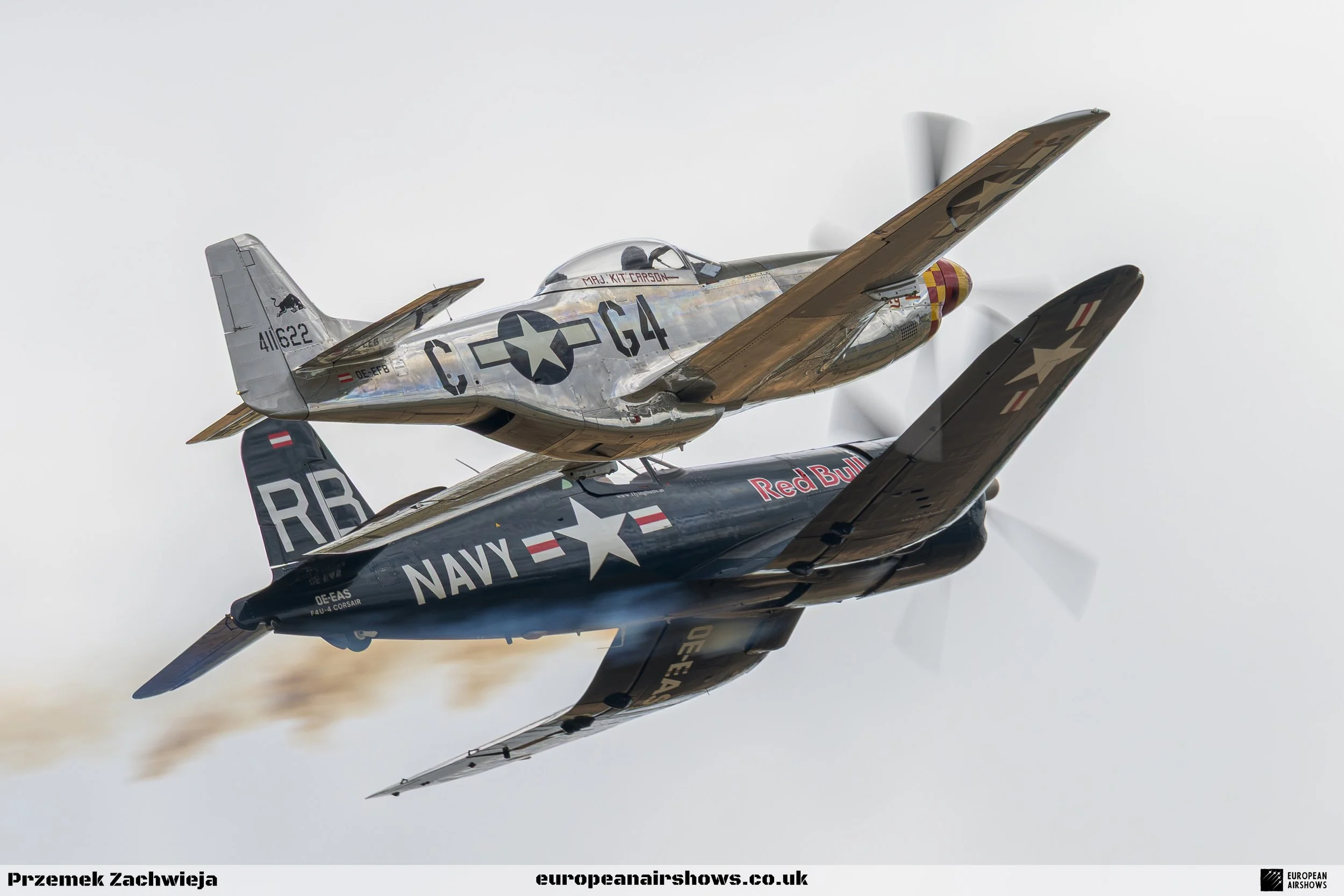
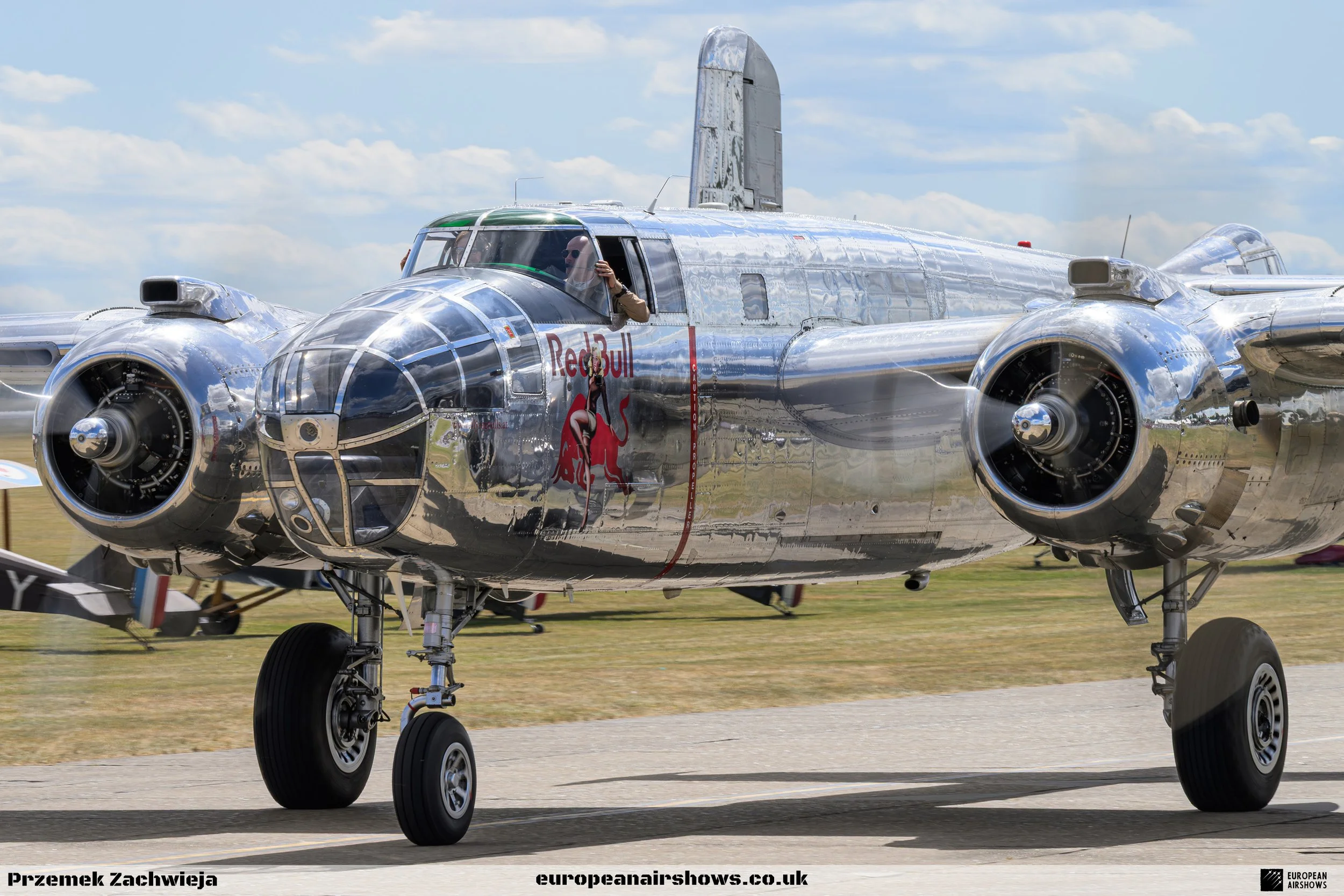
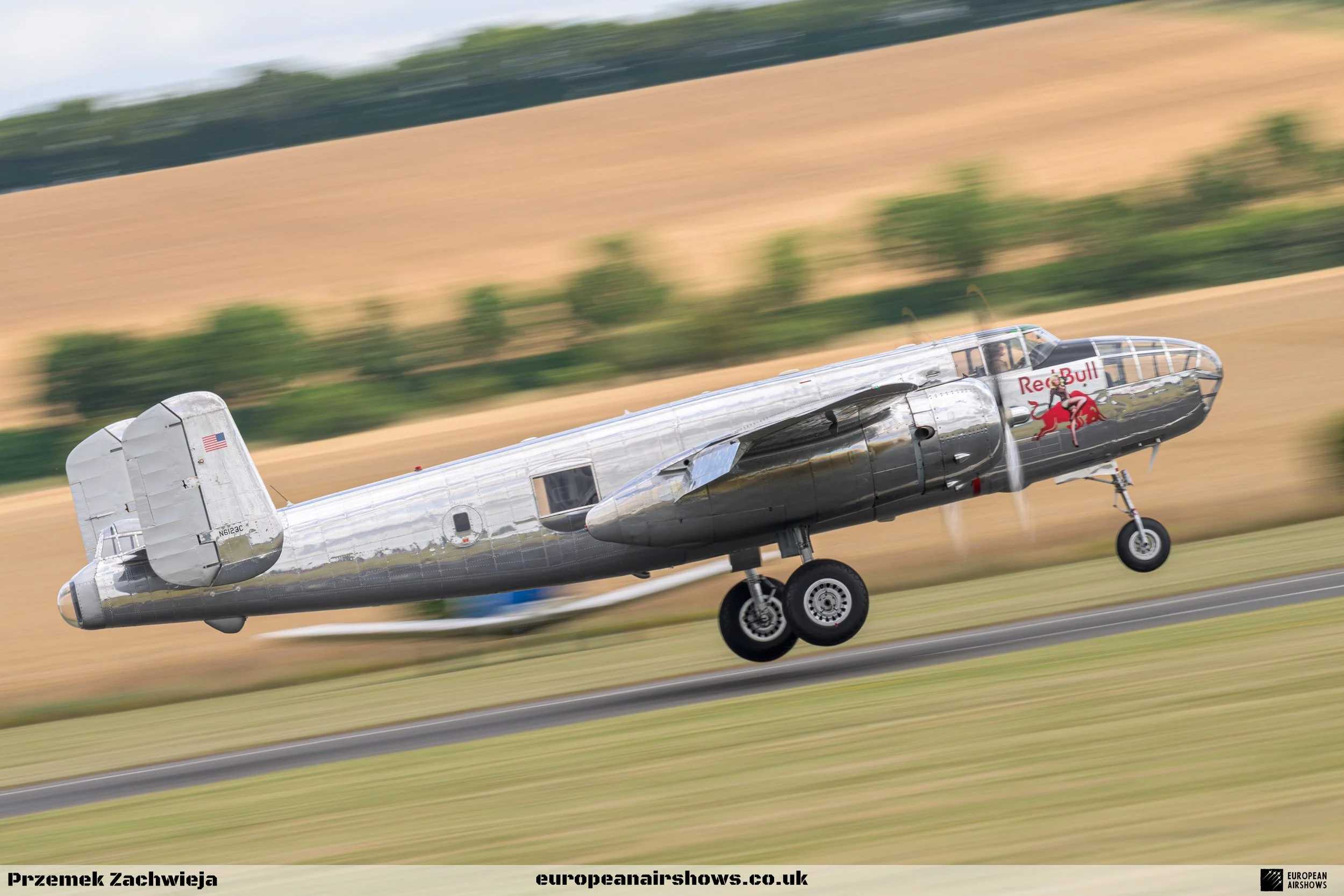
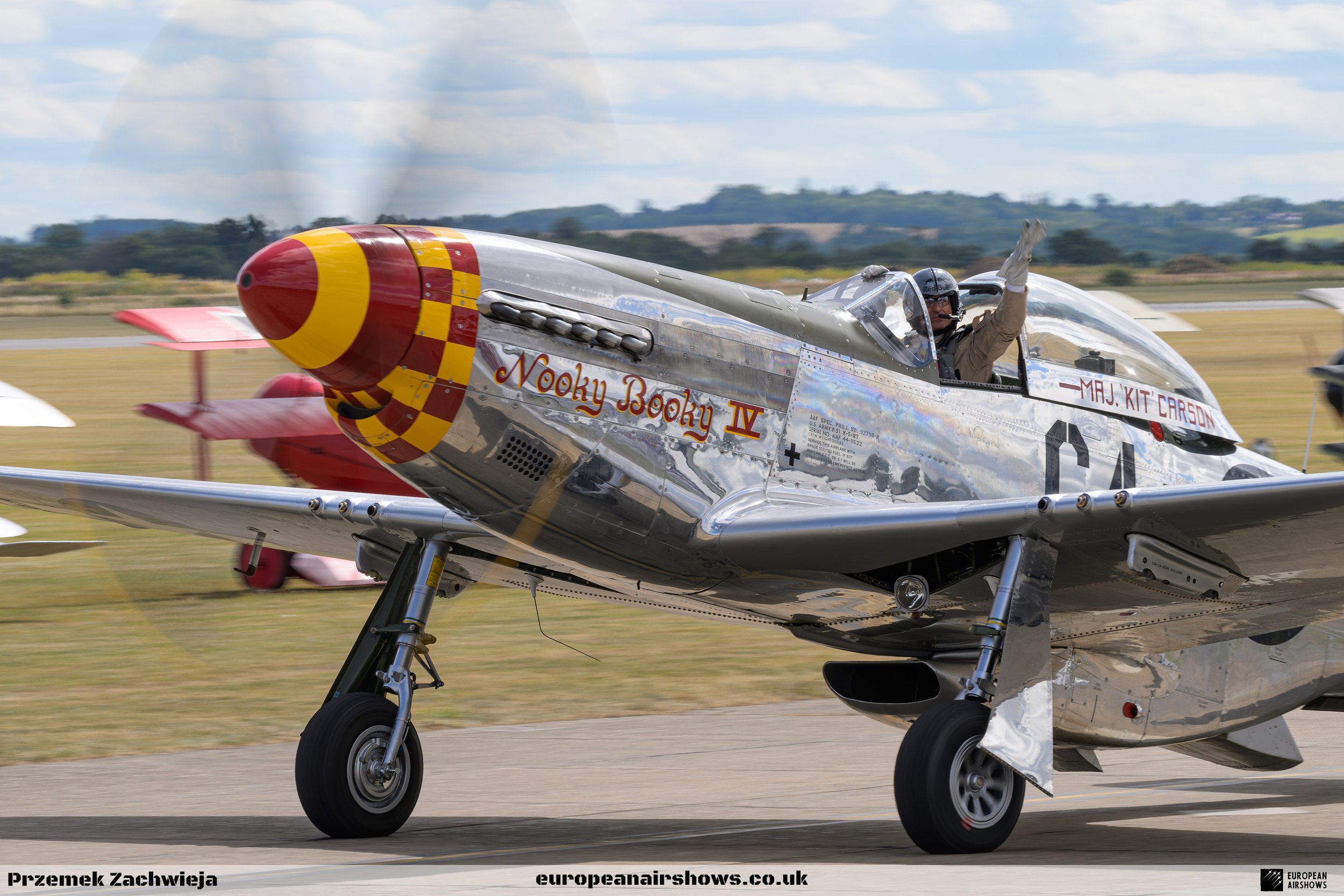
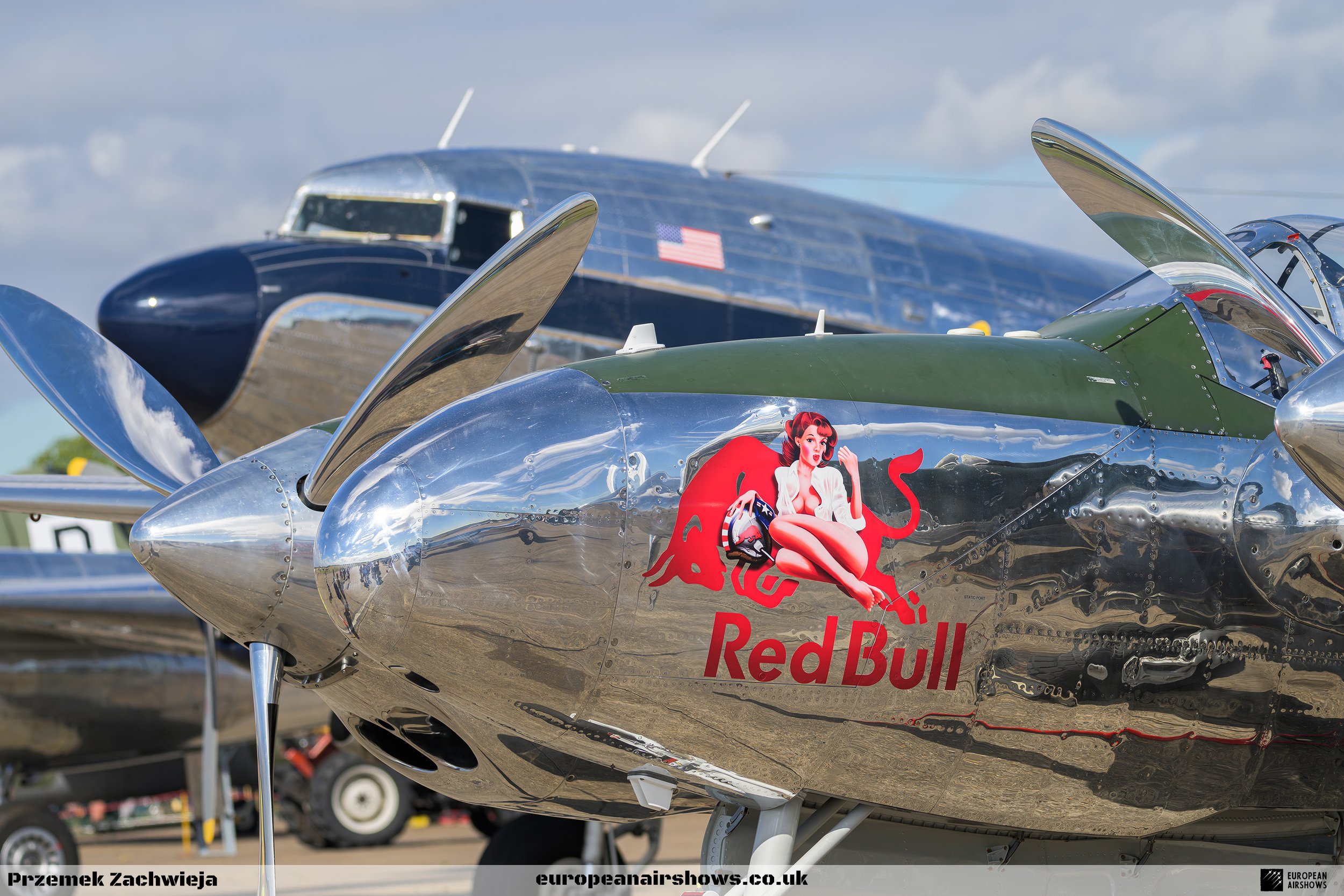
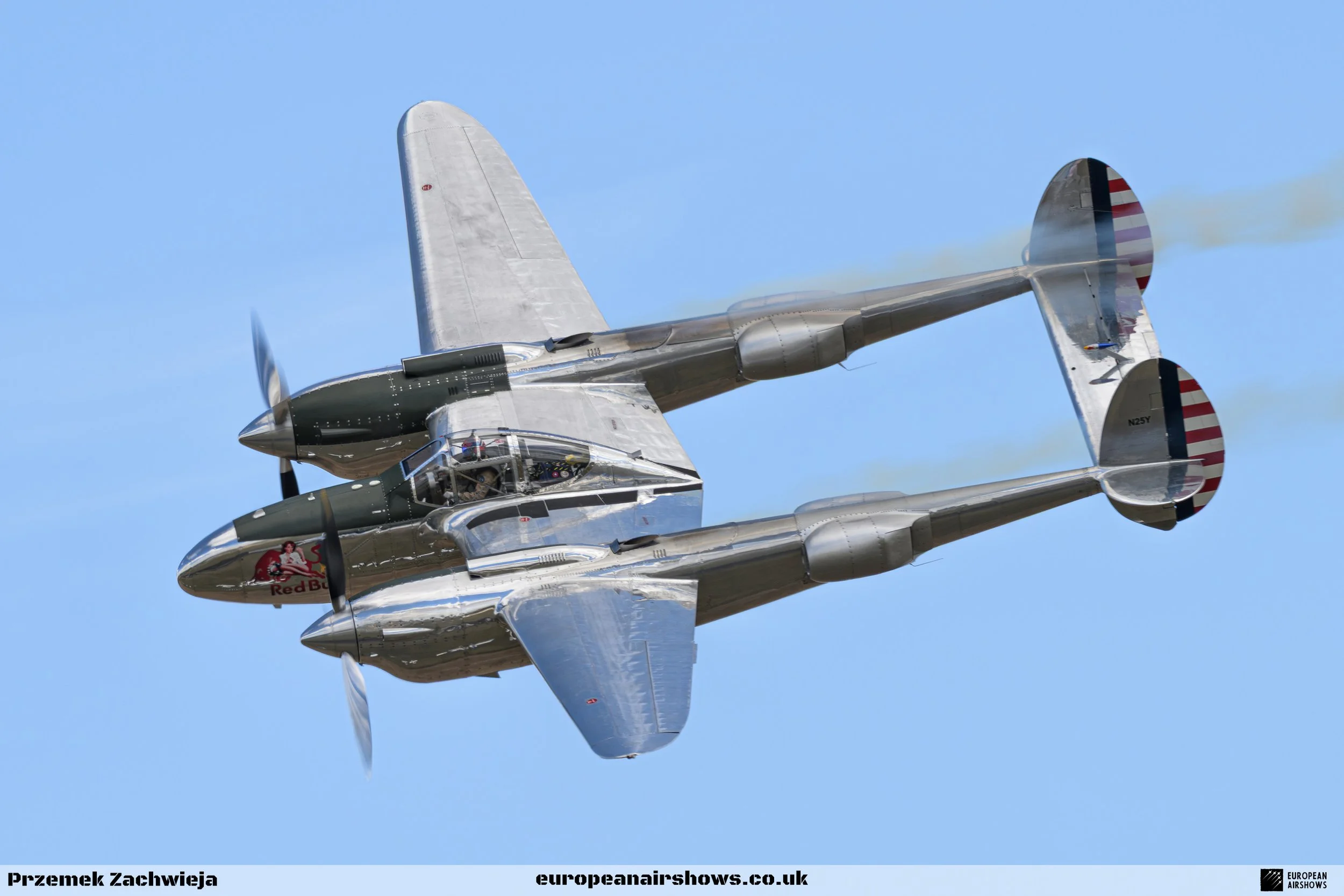
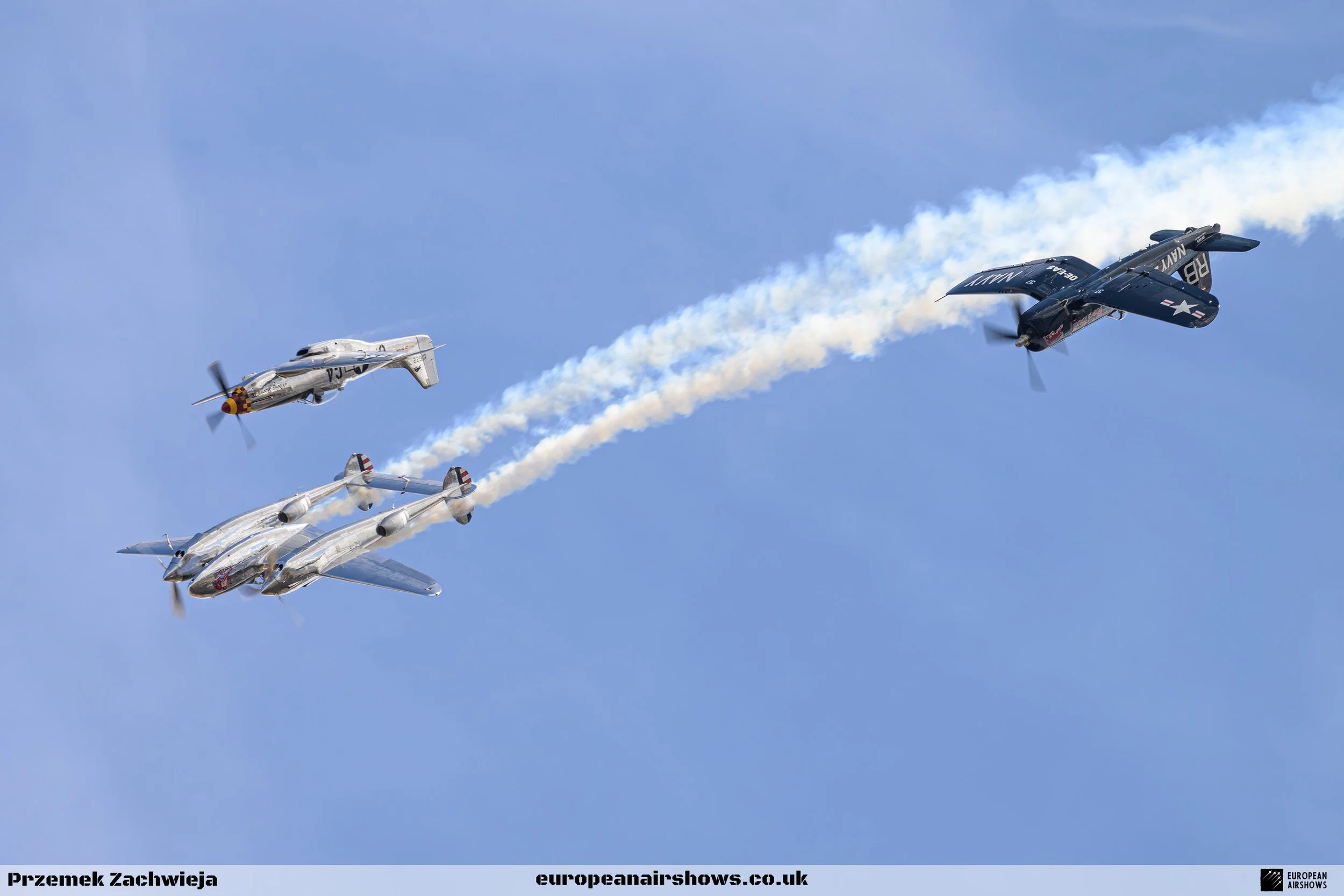
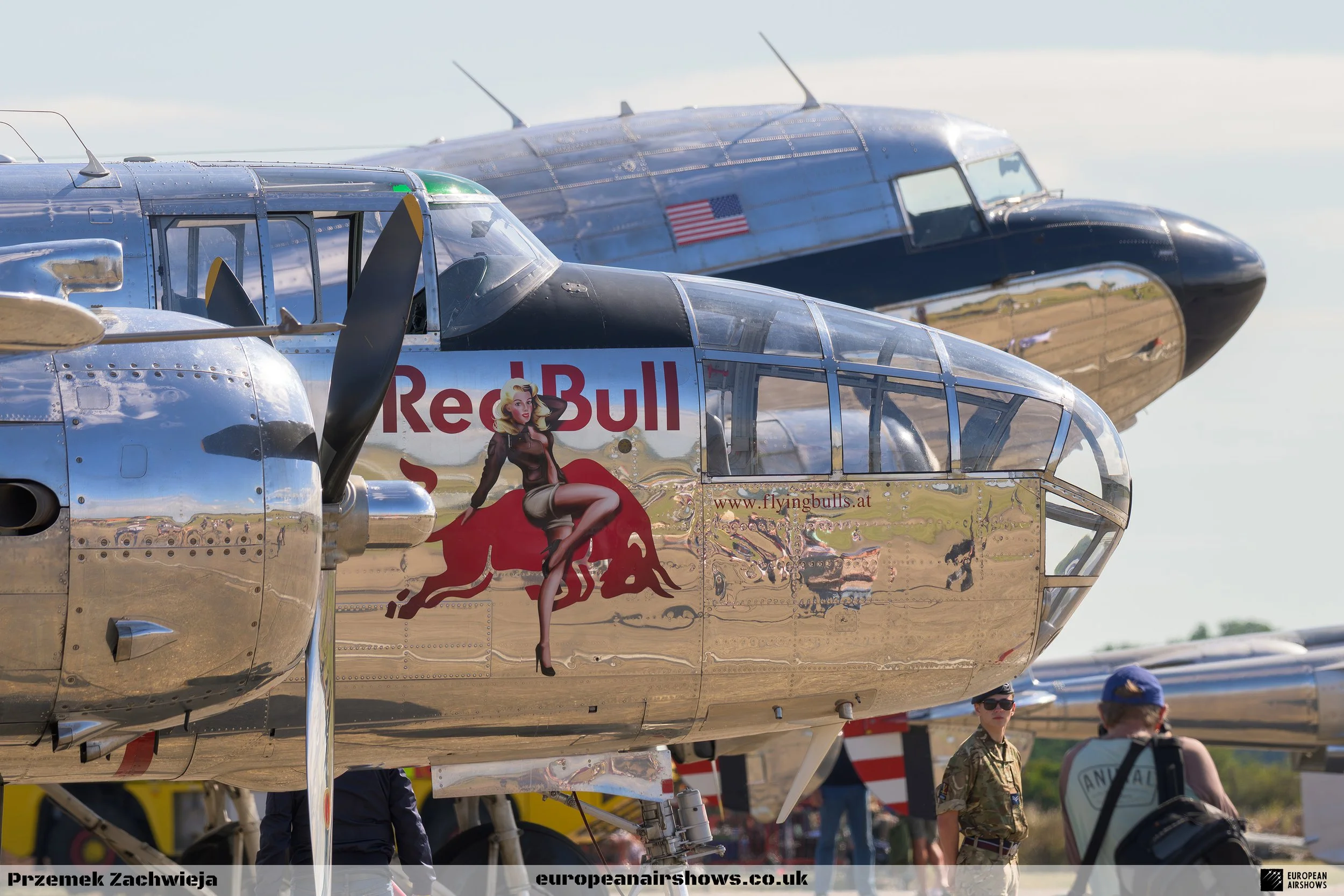
Saturday’s formation brought together the North American B-25J Mitchell, the Chance Vought F4U-4 Corsair, the North American P-51D Mustang "Nooky Booky IV" and the Lockheed P-38 Lightning N25Y.
The B-25J Mitchell was flown by Frederic Handelmann and Ciara McGurk, the Corsair by Miguel Hochleitner, the Mustang by Eric Goujon and the P-38 Lightning by Eskil Amdal.
All four aircraft are operated by The Flying Bulls from Salzburg and are among the most immaculate warbirds currently flying in Europe.
The formation began with several four-aircraft passes before the B-25 separated for a surprisingly energetic solo display. Despite its size, the Mitchell was banked steeply and repeatedly presented its topside to the crowd, providing far more than a few flat bomber passes.
The three fighters then returned for the strongest section of the sequence. Formation aerobatics, changing formations and flowing tail chases were followed by a superb final pass in a tight stepped formation, with the polished topsides of the aircraft fully exposed to the crowd.
It was an extremely well-constructed display. Each aircraft was given its own moment while still remaining part of a complete and coordinated routine.
The full four-aircraft formation appeared only on Saturday. The P-38 Lightning had to begin its transatlantic journey towards EAA AirVenture Oshkosh earlier than originally planned because of the available weather window.
The P-38 Lightning departed Duxford shortly before Sunday’s flying display and made a single flypast over the airfield as a final farewell before beginning the first stage of its westbound journey.
The B-25, Corsair and Mustang continued with a reduced three-aircraft display on Sunday, but the missing P-38 was inevitably noticeable. Saturday’s complete formation was one of the strongest warbird displays seen at Duxford in recent years.
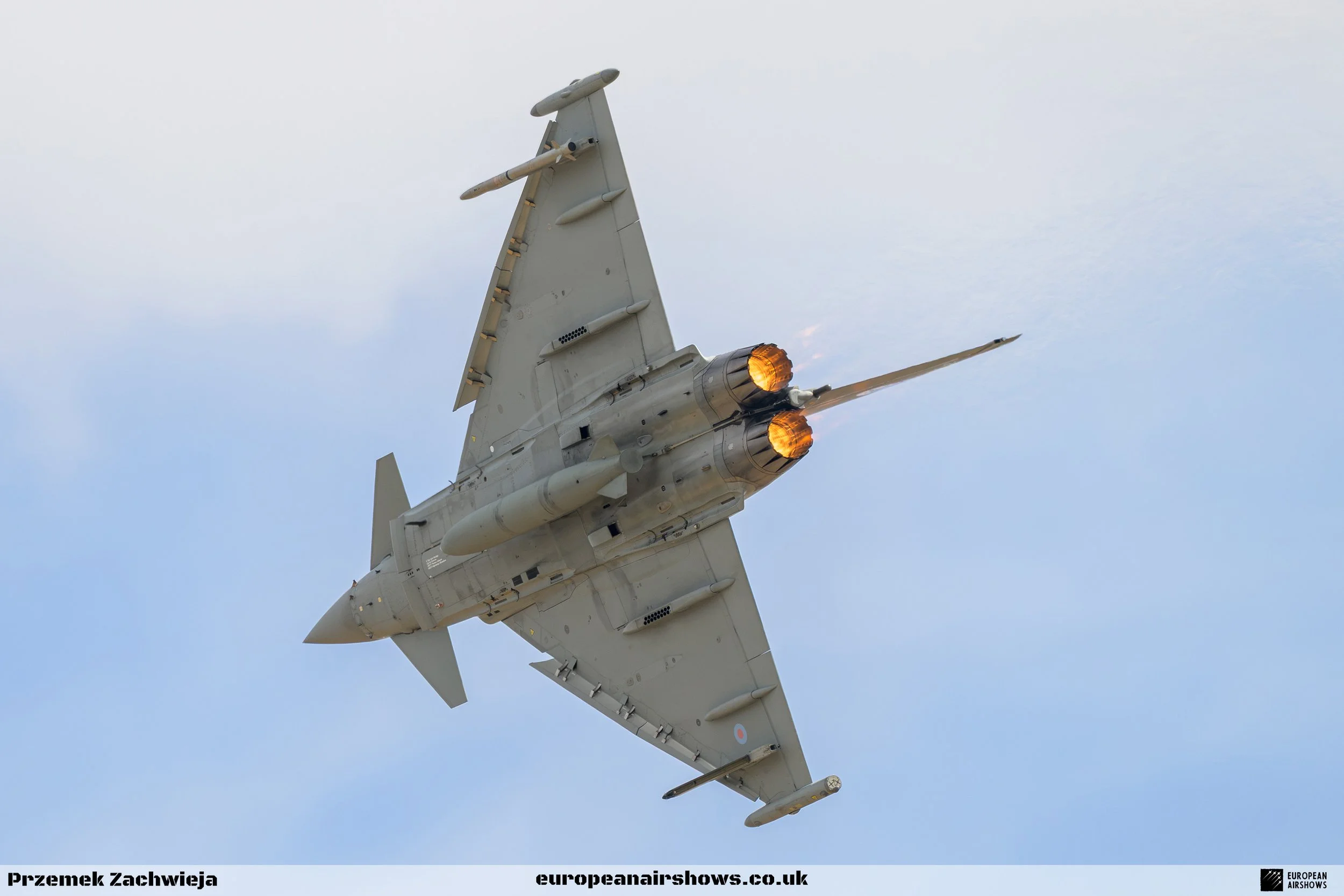
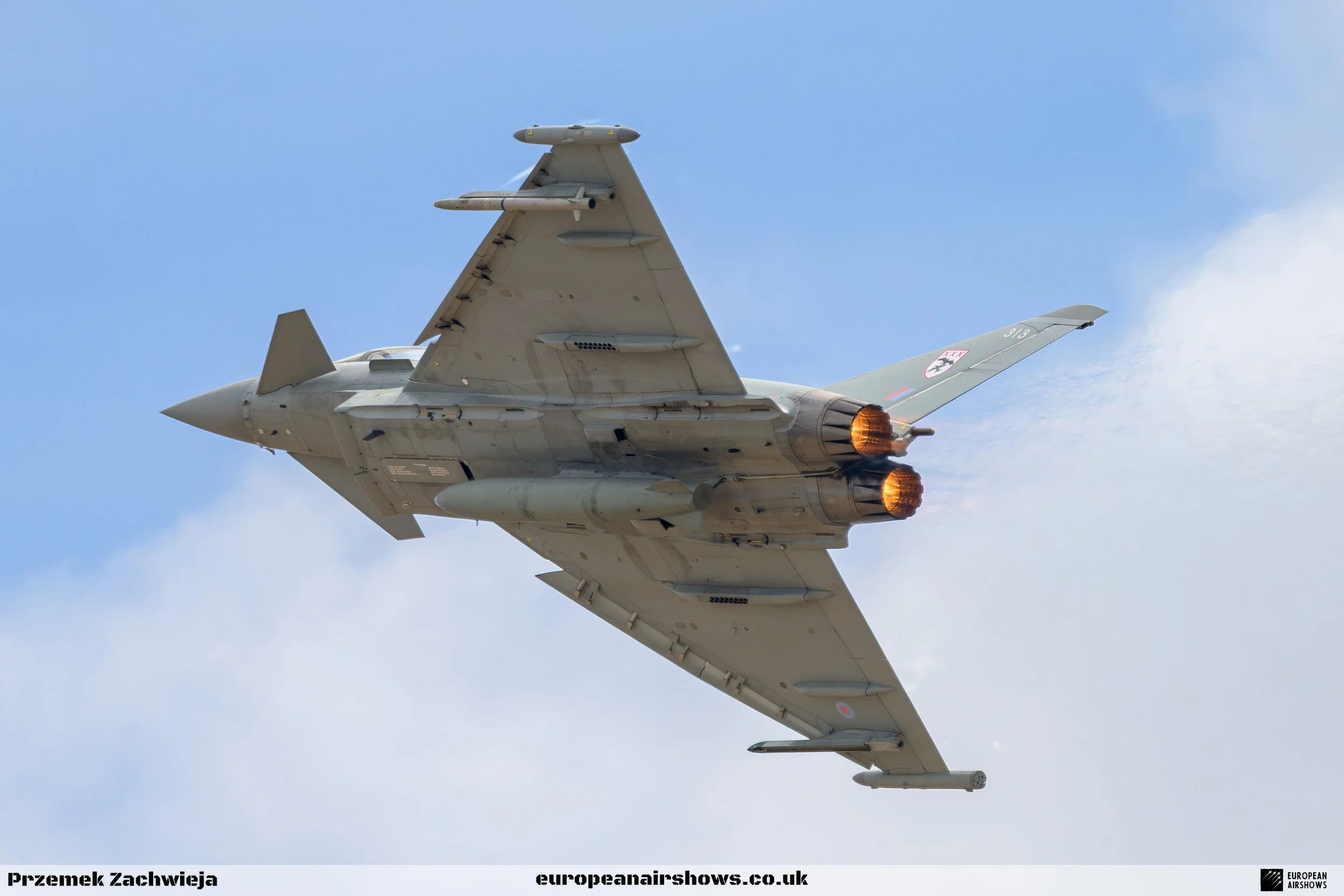
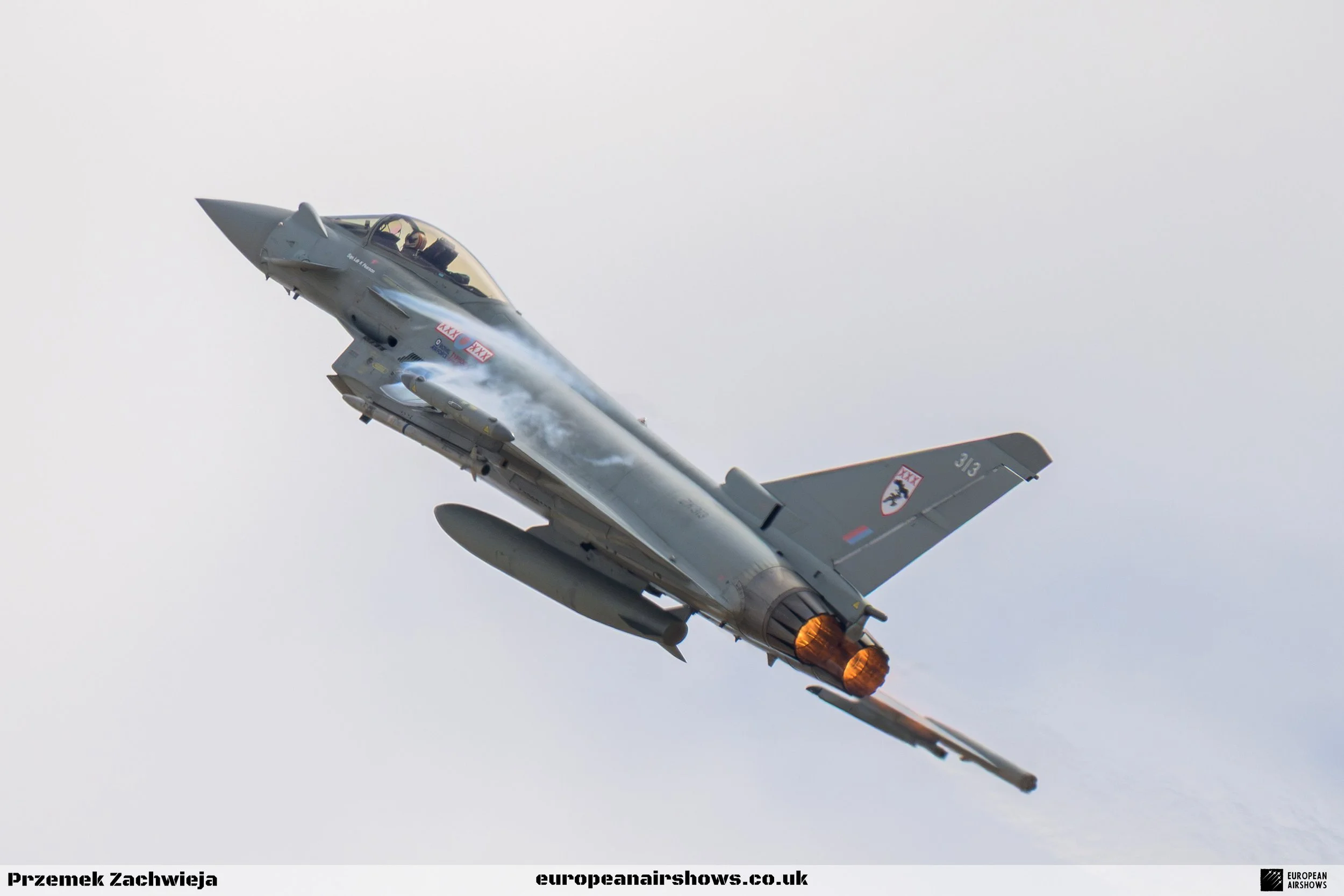
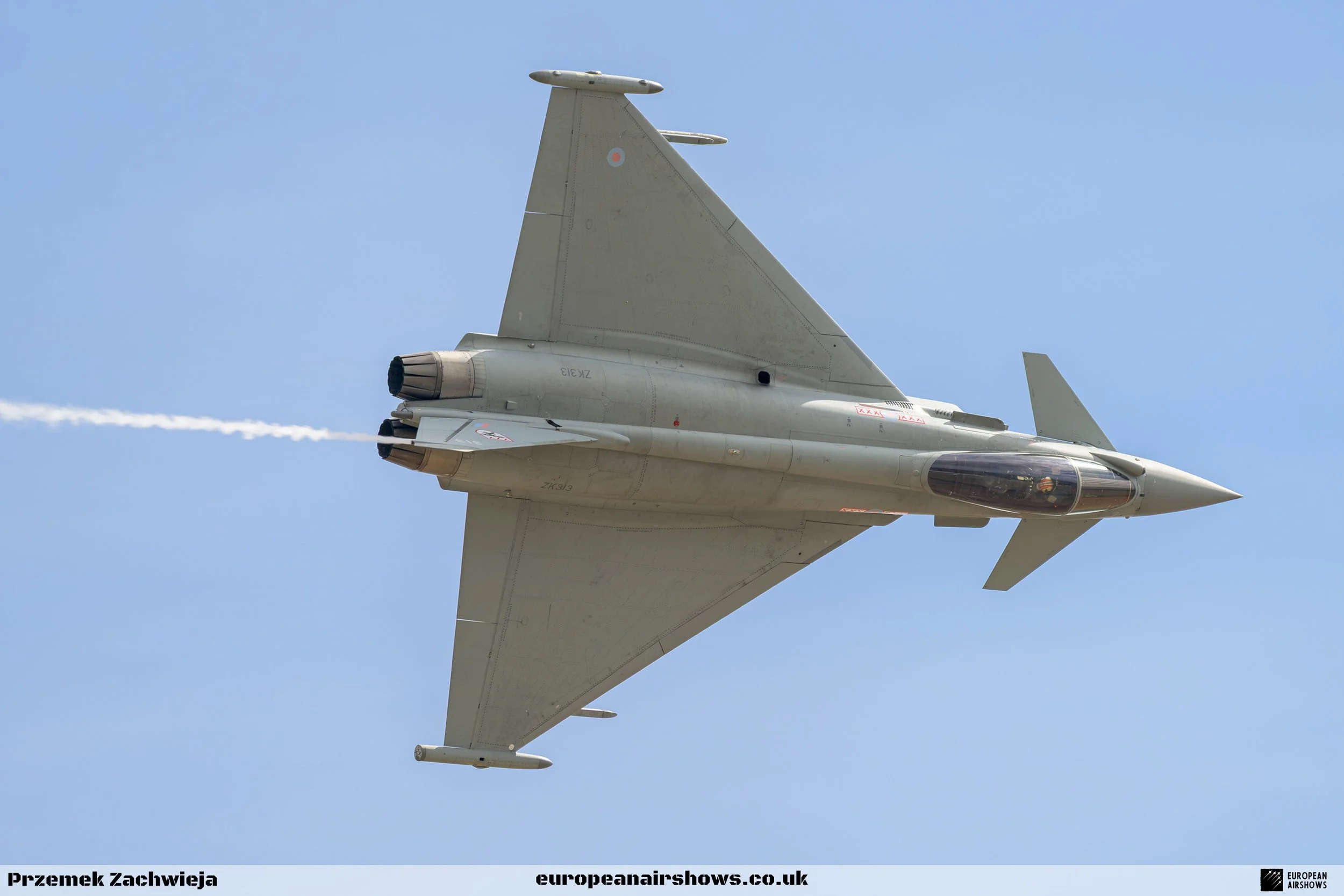
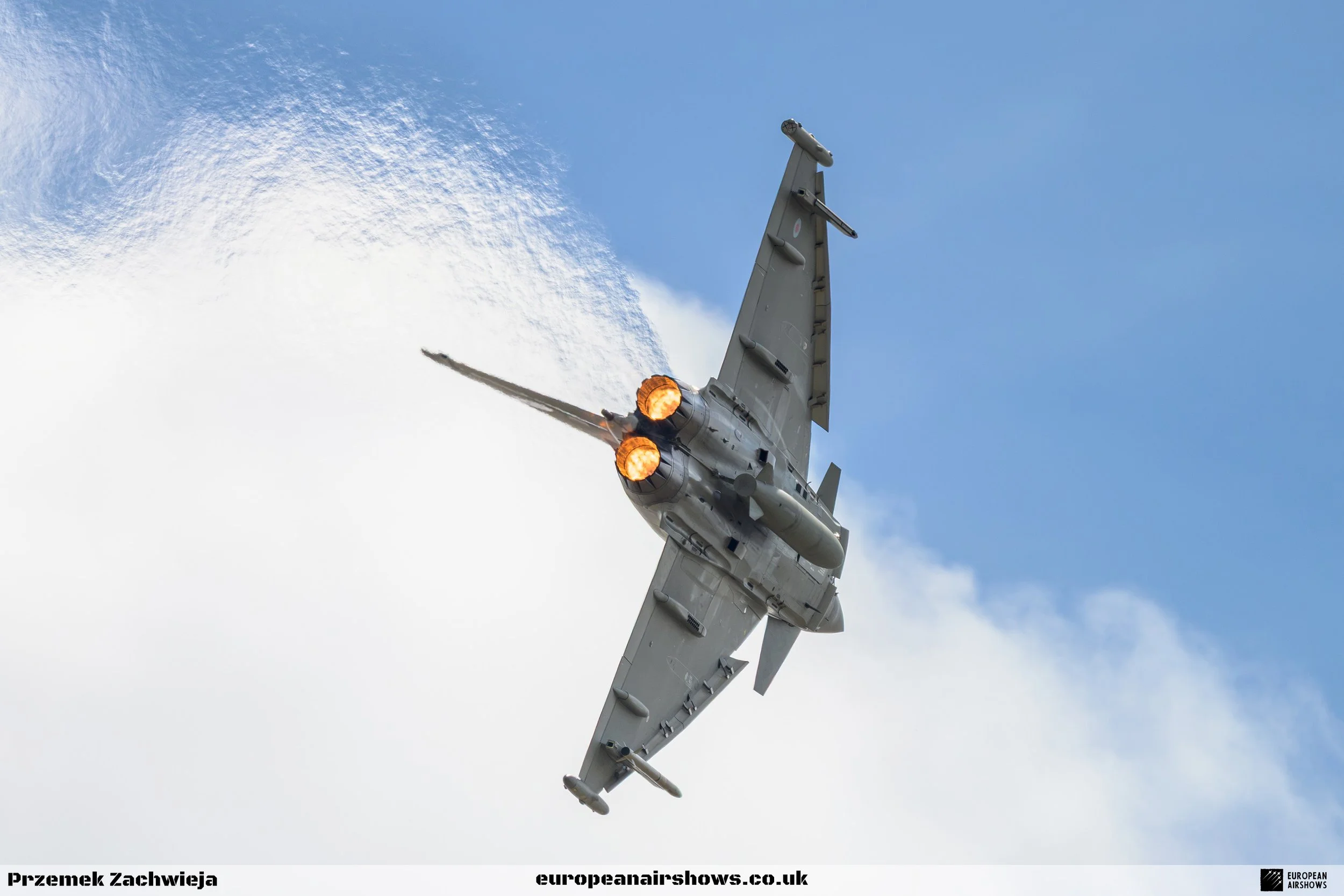
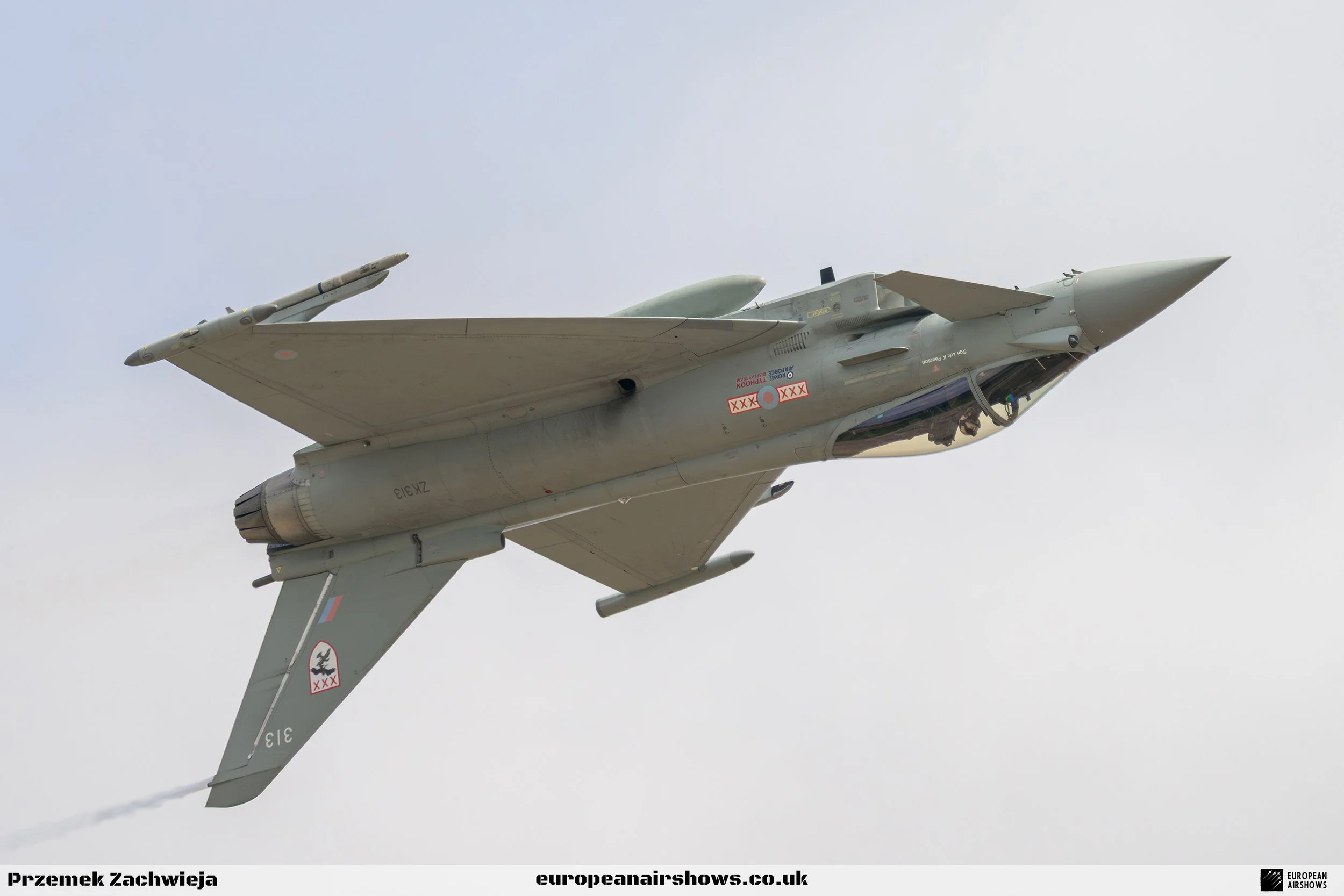
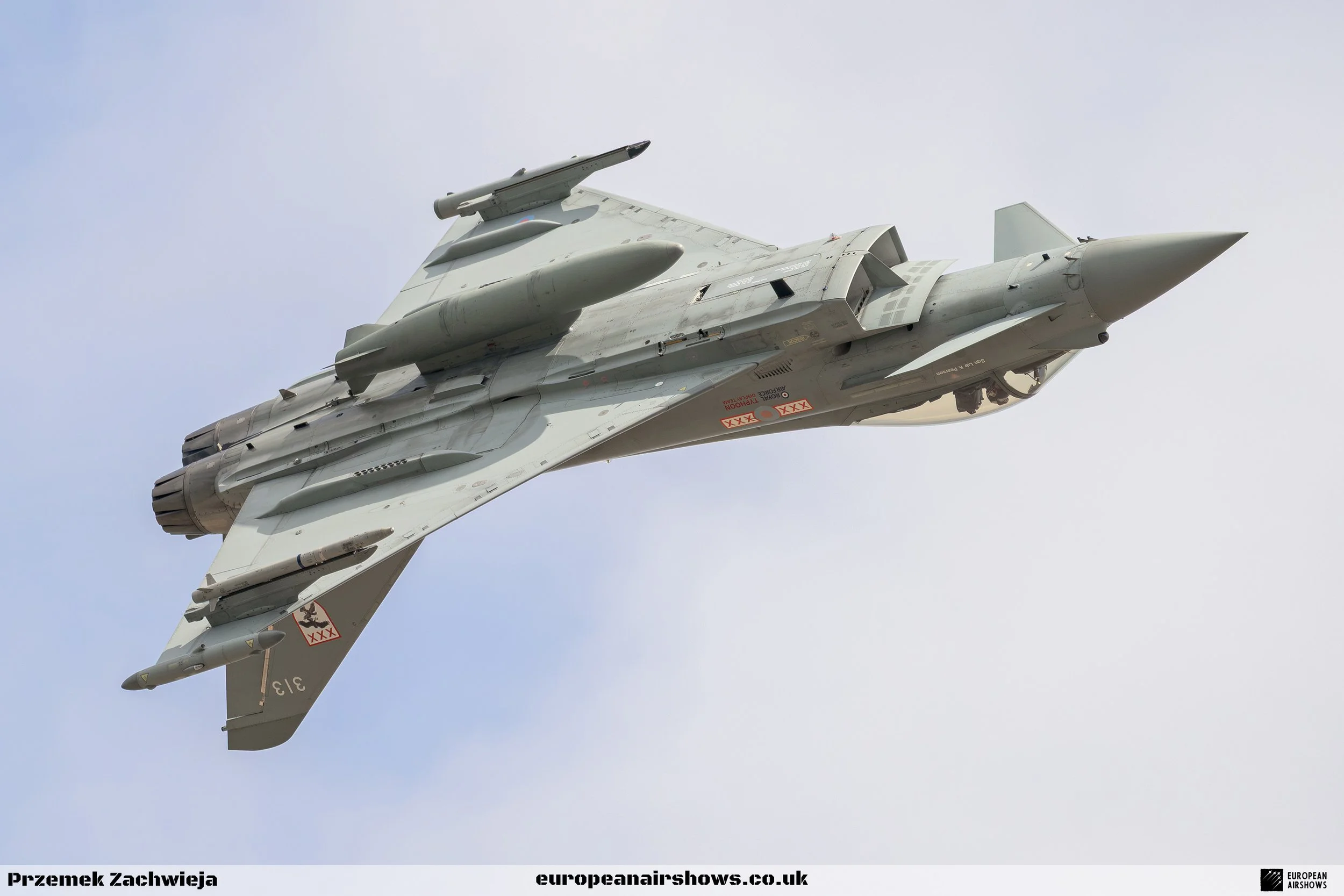
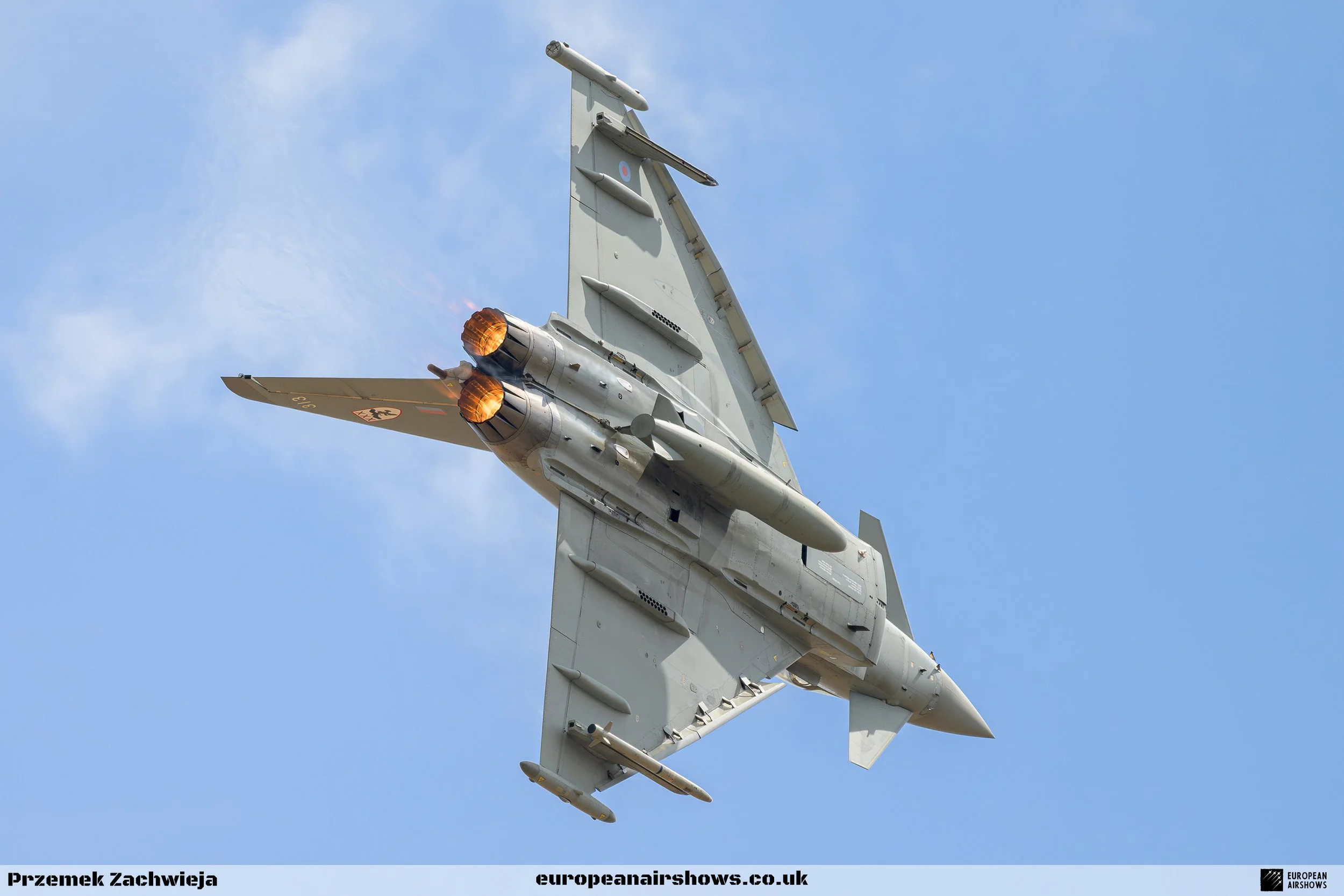
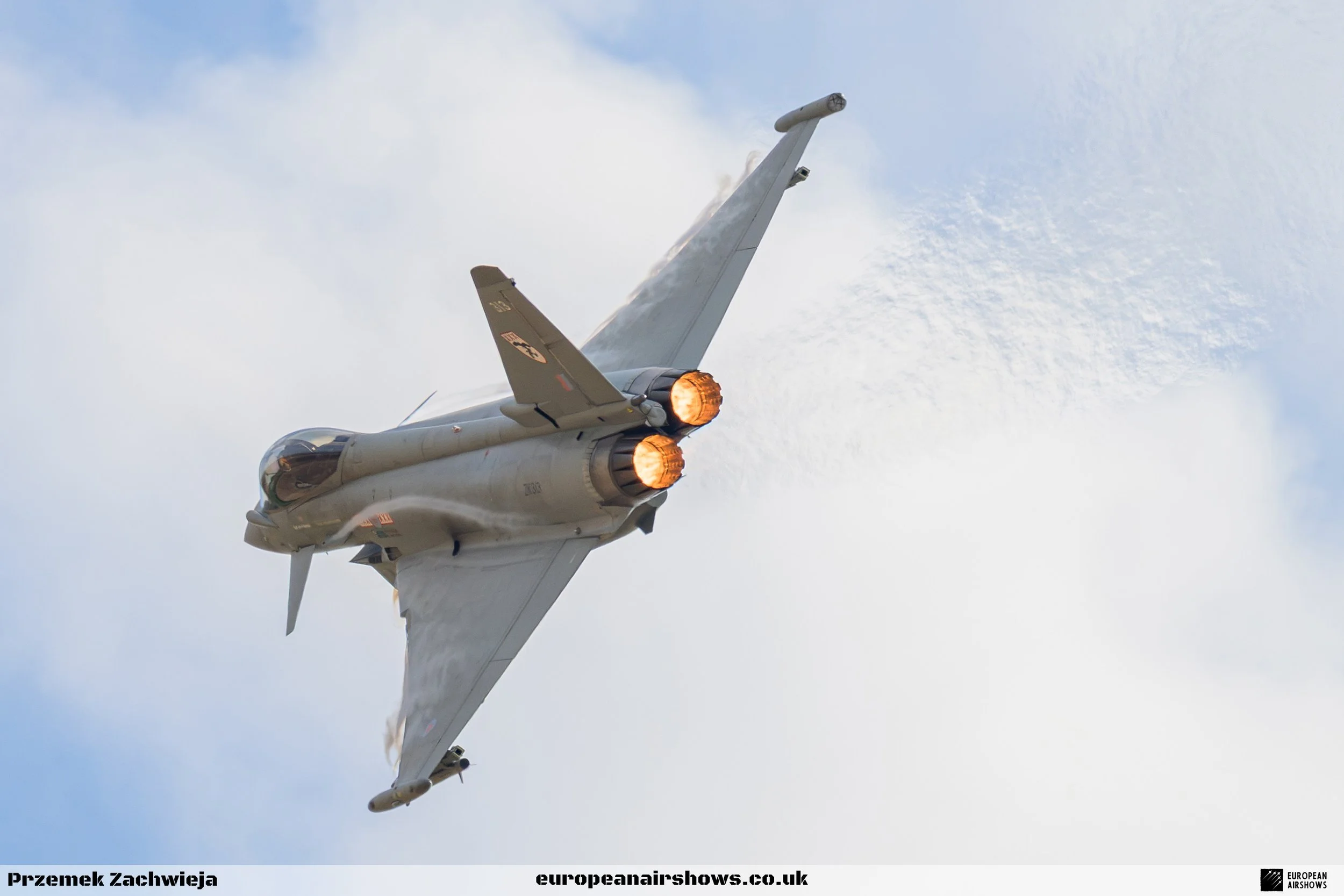
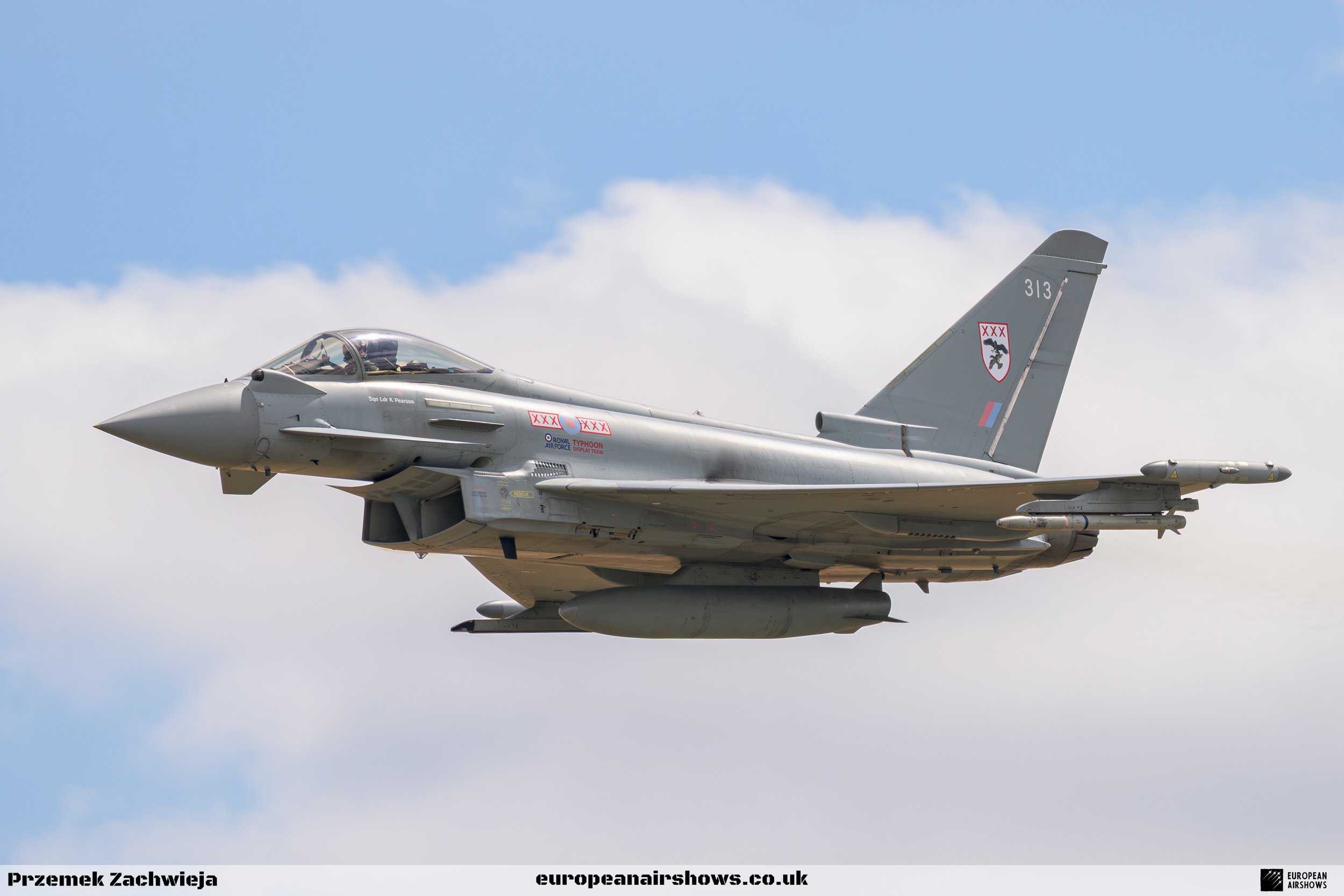
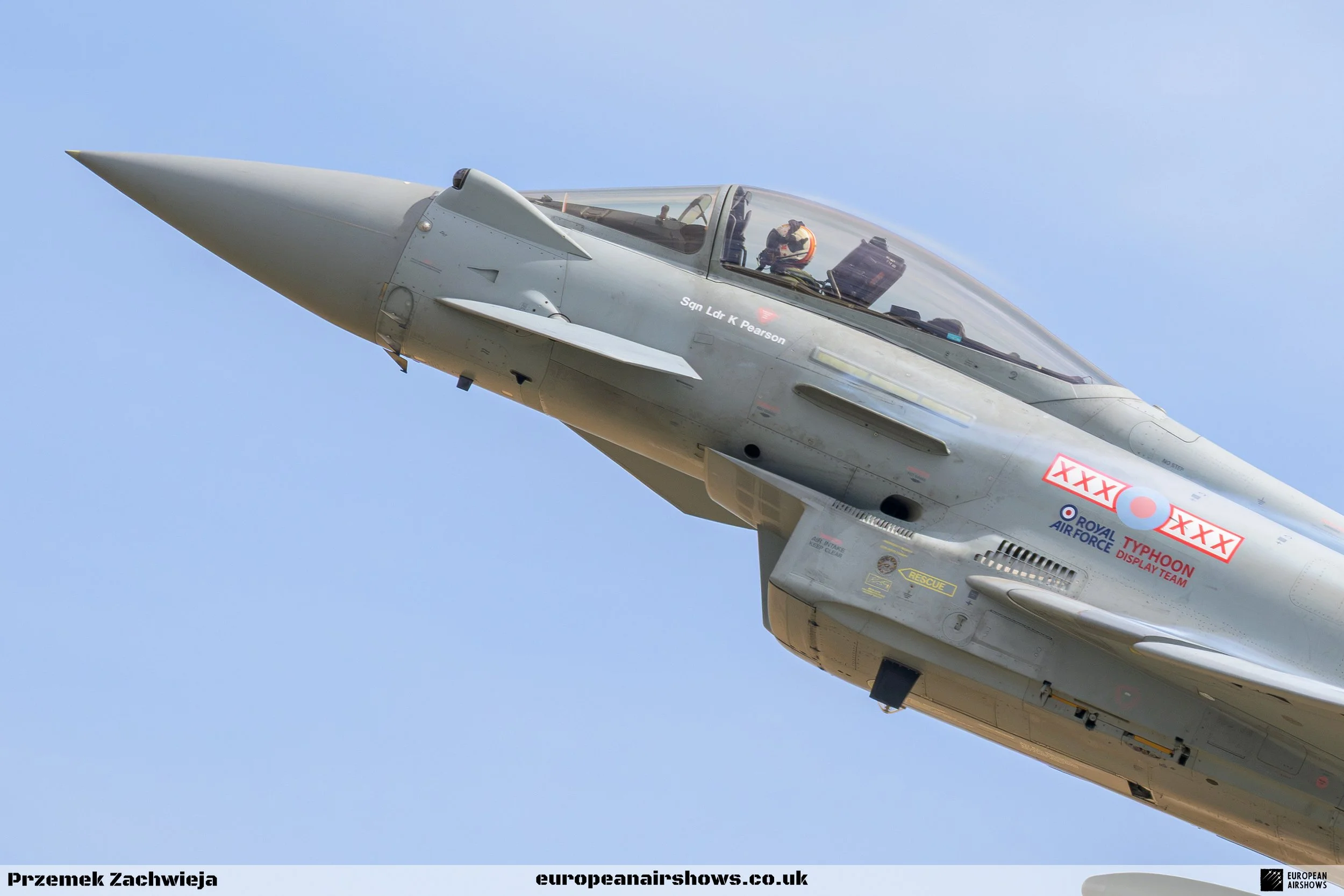
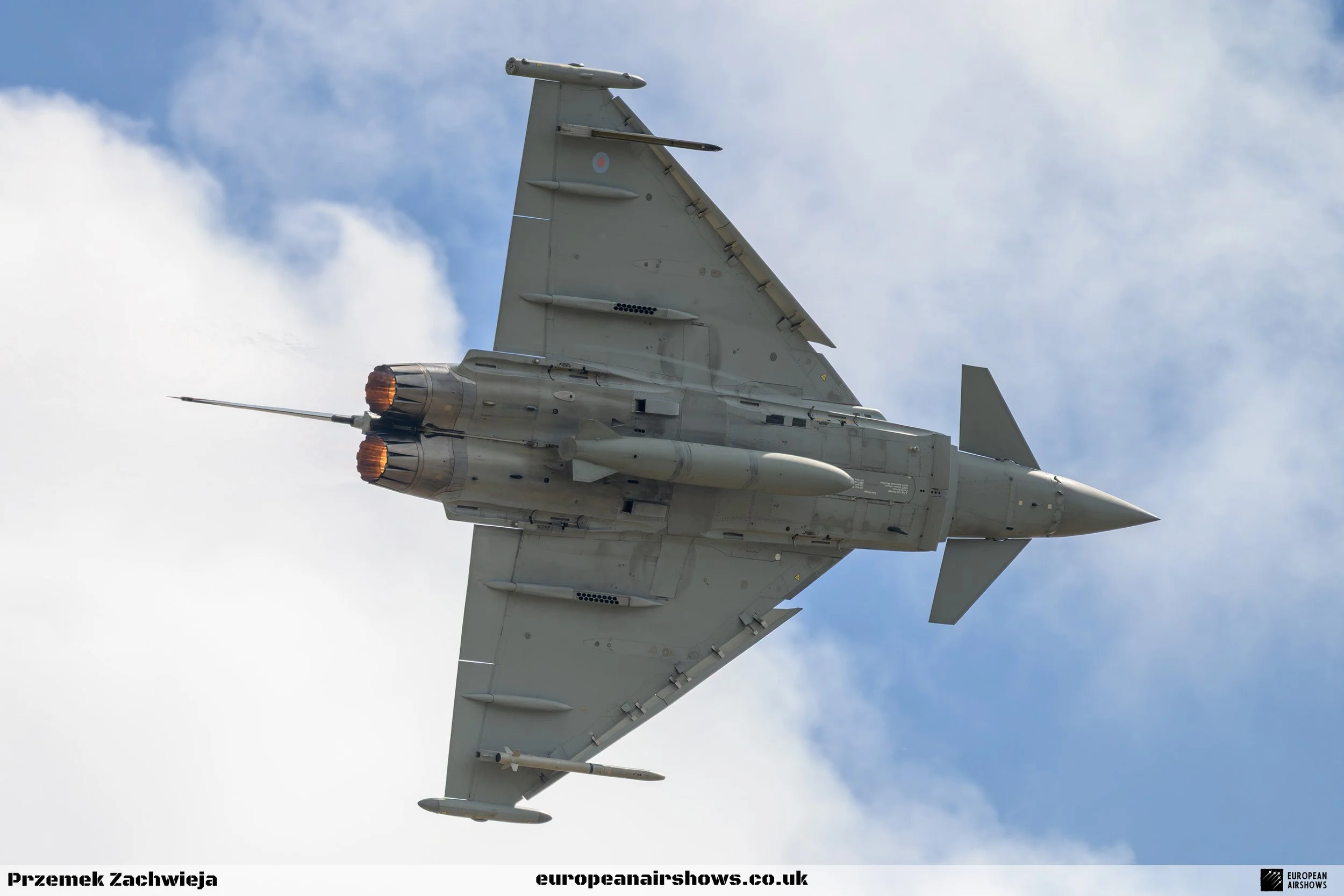
The Royal Air Force Typhoon Display Team represented modern combat aviation with a Eurofighter Typhoon FGR4 from No. 29 Squadron at RAF Coningsby.
The 2026 display was flown by Flight Lieutenant Tom Nation.
Saturday’s appearance ended almost immediately. After completing a single pass, the aircraft developed an avionics issue and Nation was forced to abandon the display and return directly to RAF Coningsby.
It was clearly disappointing for the crowd, but aircraft faults are an unavoidable part of military aviation.
Sunday was a completely different story. Nation returned and delivered the full display routine, producing one of the loudest and most aggressive displays of the weekend.
The humid conditions created bursts of condensation over the wings during the harder manoeuvres, while the rapid transitions, afterburner climbs and high-energy passes gave the programme the modern combat aircraft display it needed.
After Saturday’s frustration, Sunday’s full display was worth the wait.
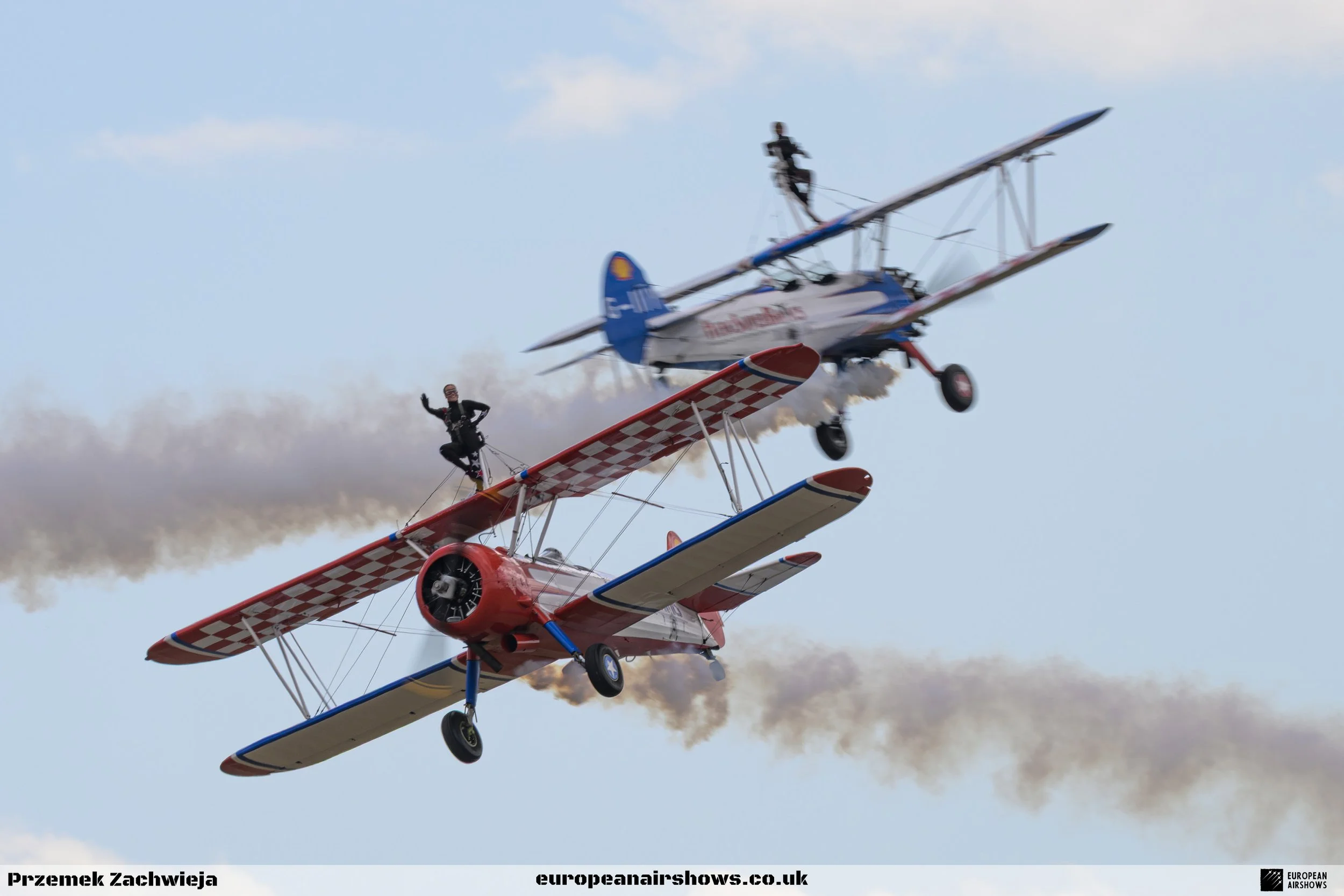
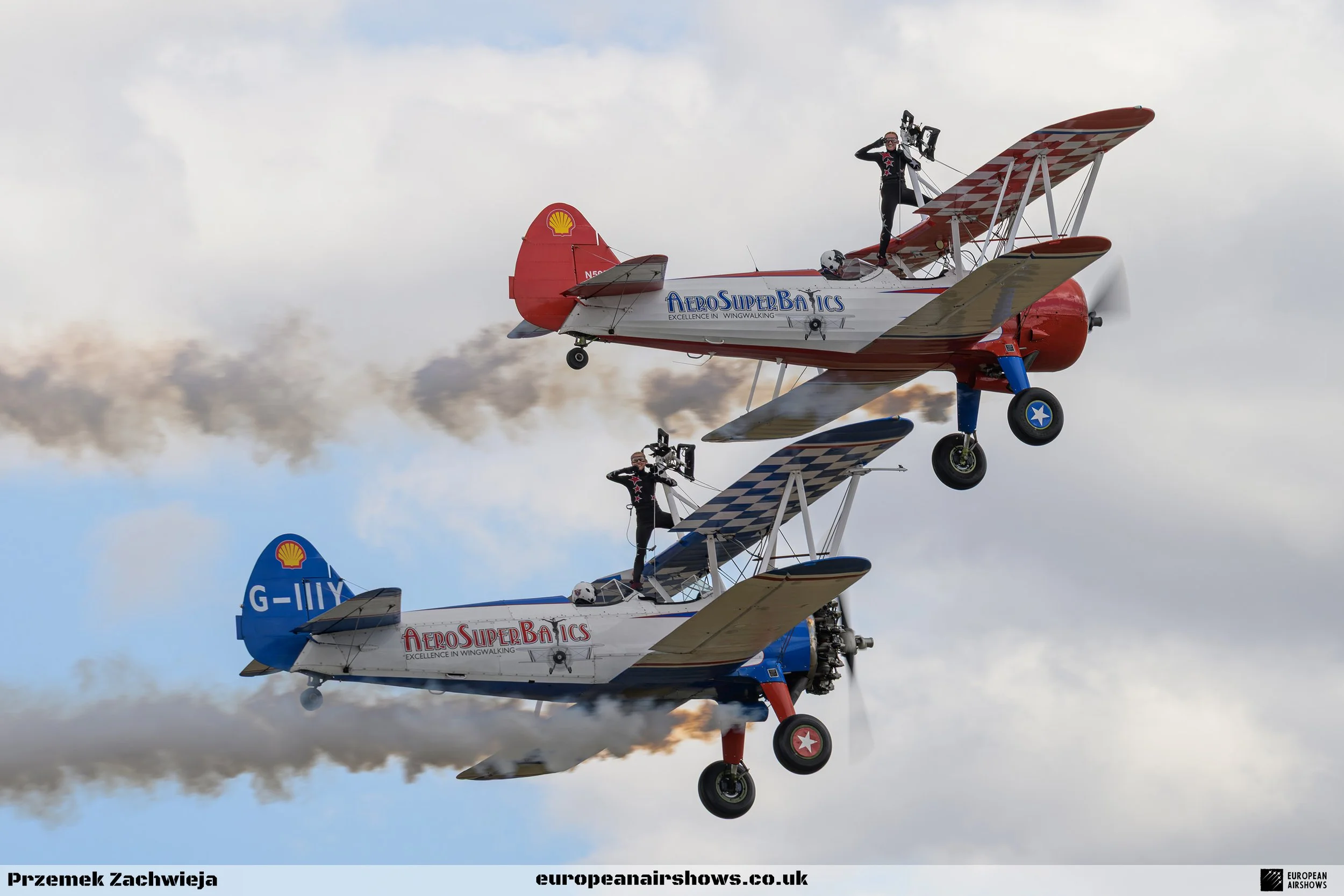
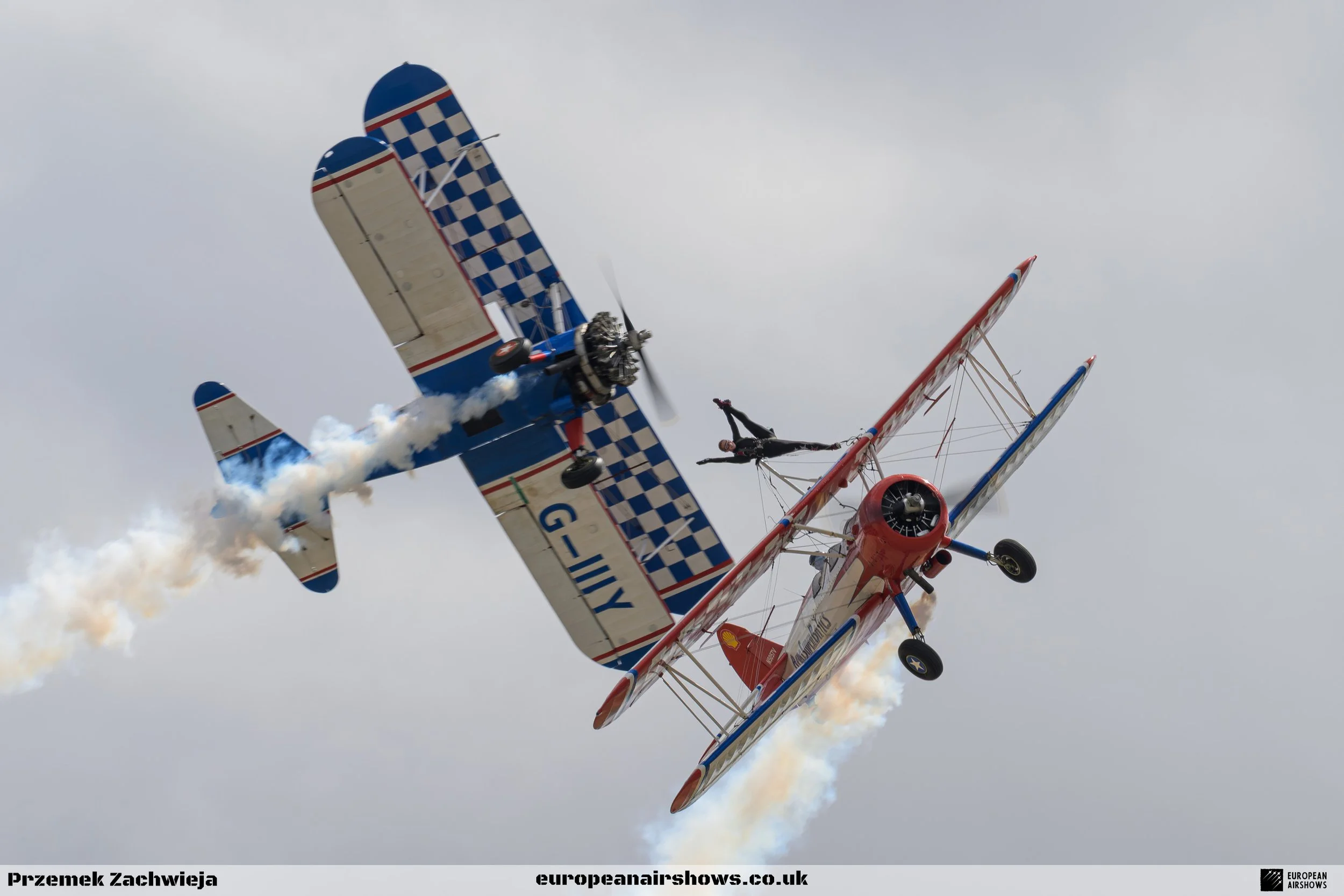
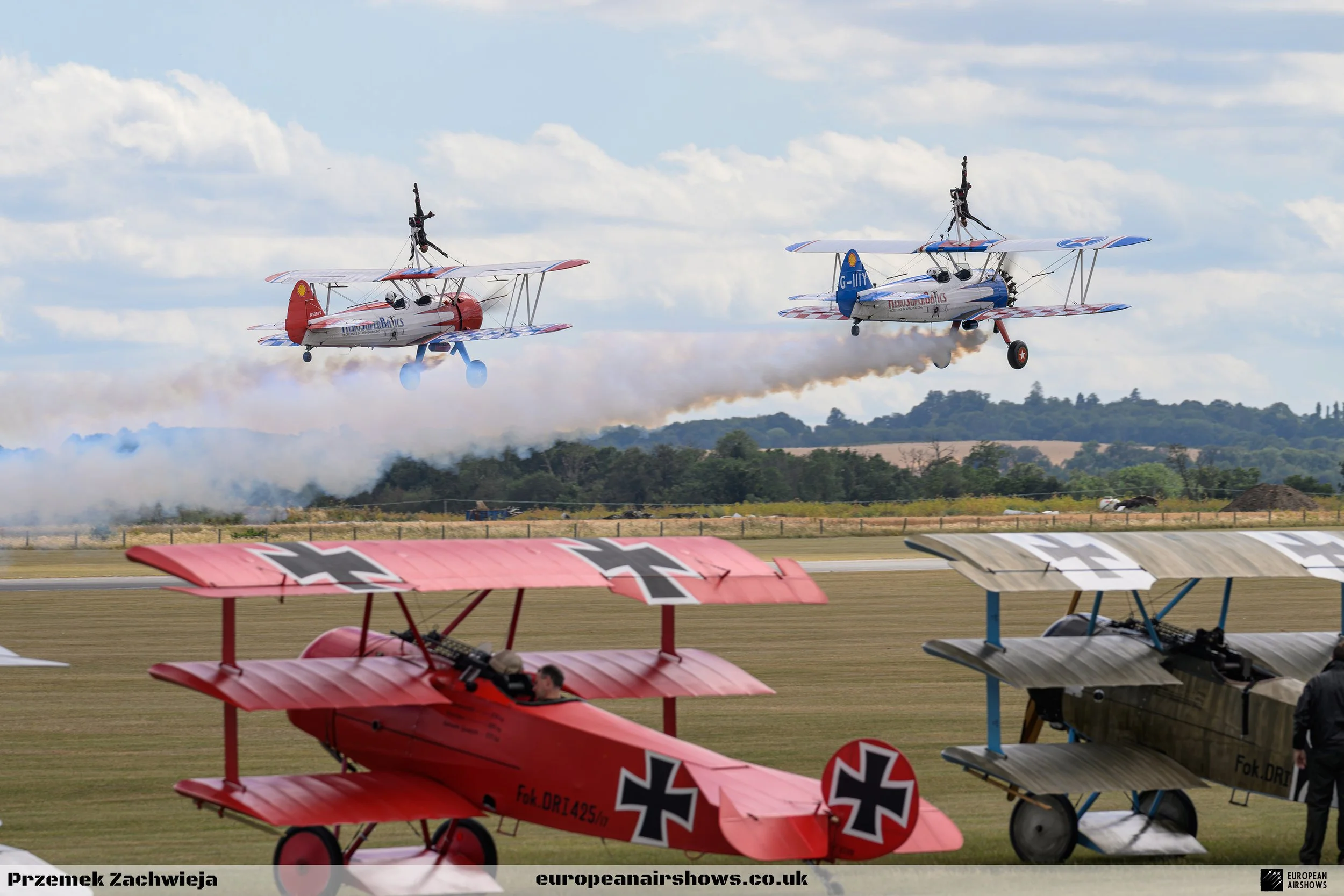
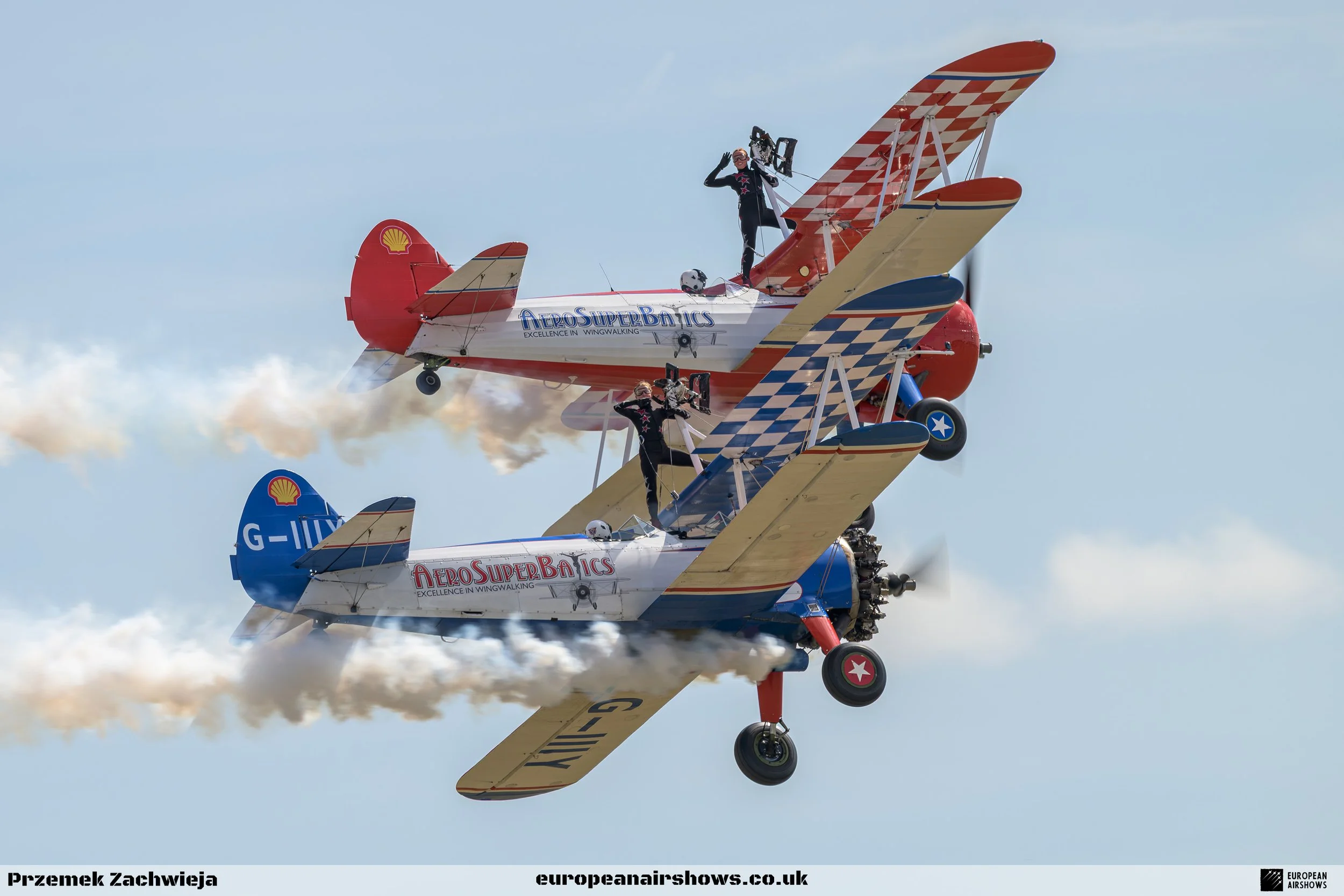
The AeroSuperBatics WingWalkers delivered another familiar but consistently entertaining display with two modified Boeing-Stearman biplanes.
The aircraft were flown by Dave Barrell and Brian Cornes, with Kirsten Pobjoy and Emma Broadbent performing on the upper wings.
The team’s Stearmans use uprated Pratt & Whitney R-985 Junior Wasp radial engines, giving them considerably more power and performance than standard examples.
The routine included formation aerobatics, barrel rolls and opposition manoeuvres. The sight of both wingwalkers standing above the aircraft while the pilots flew formation aerobatics remains impressive, even for regular airshow visitors.
The display was well positioned and beautifully flown on both days.
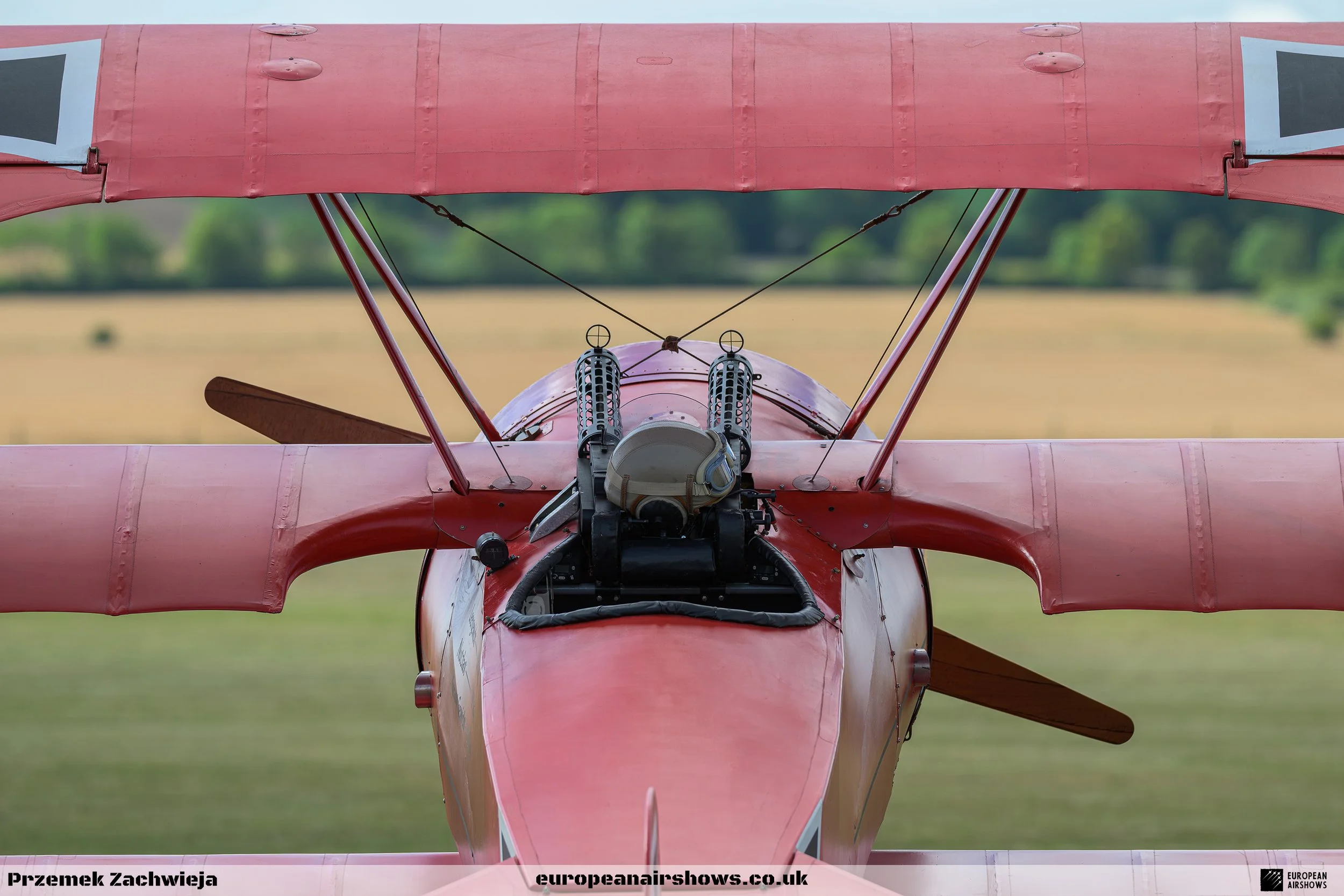
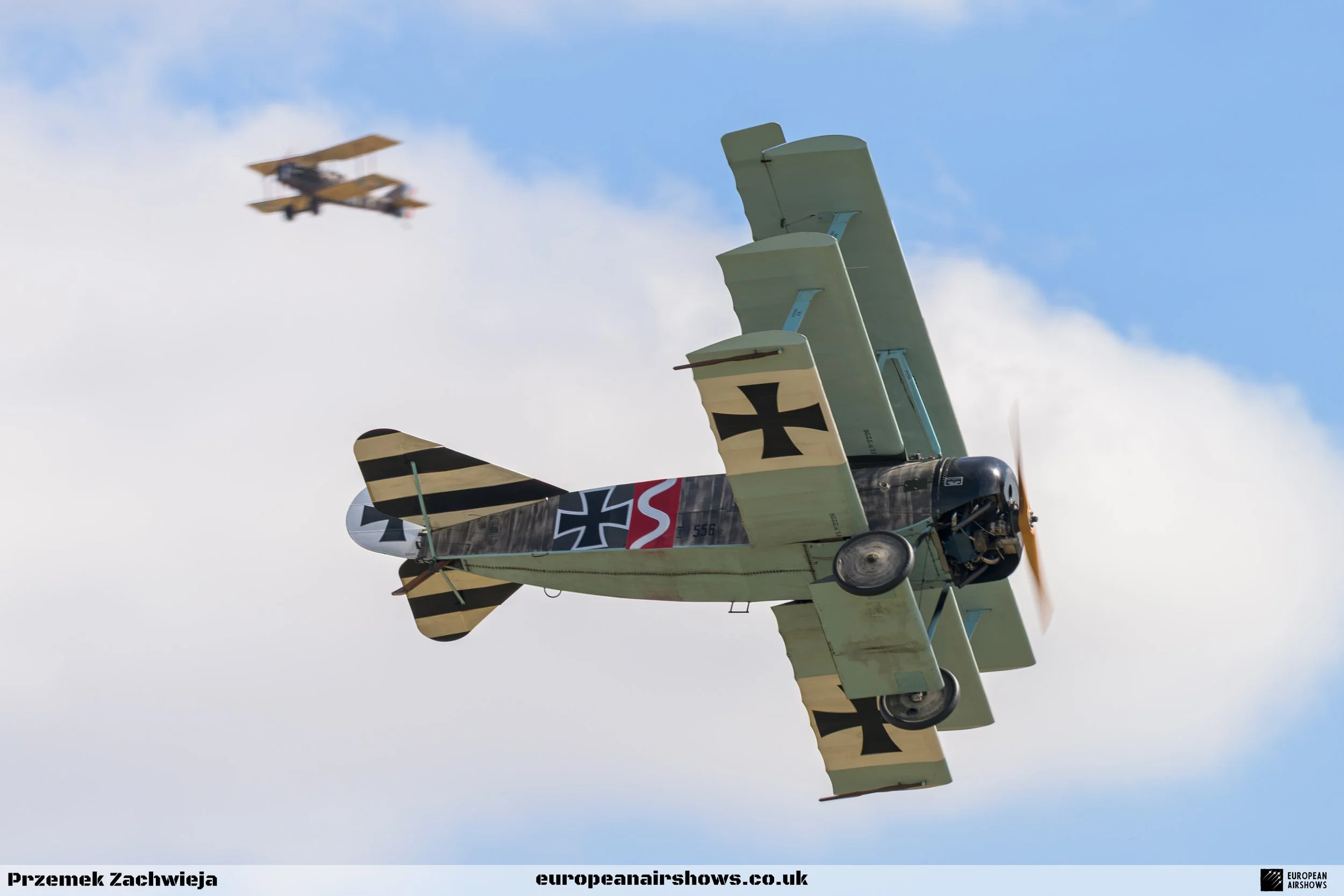
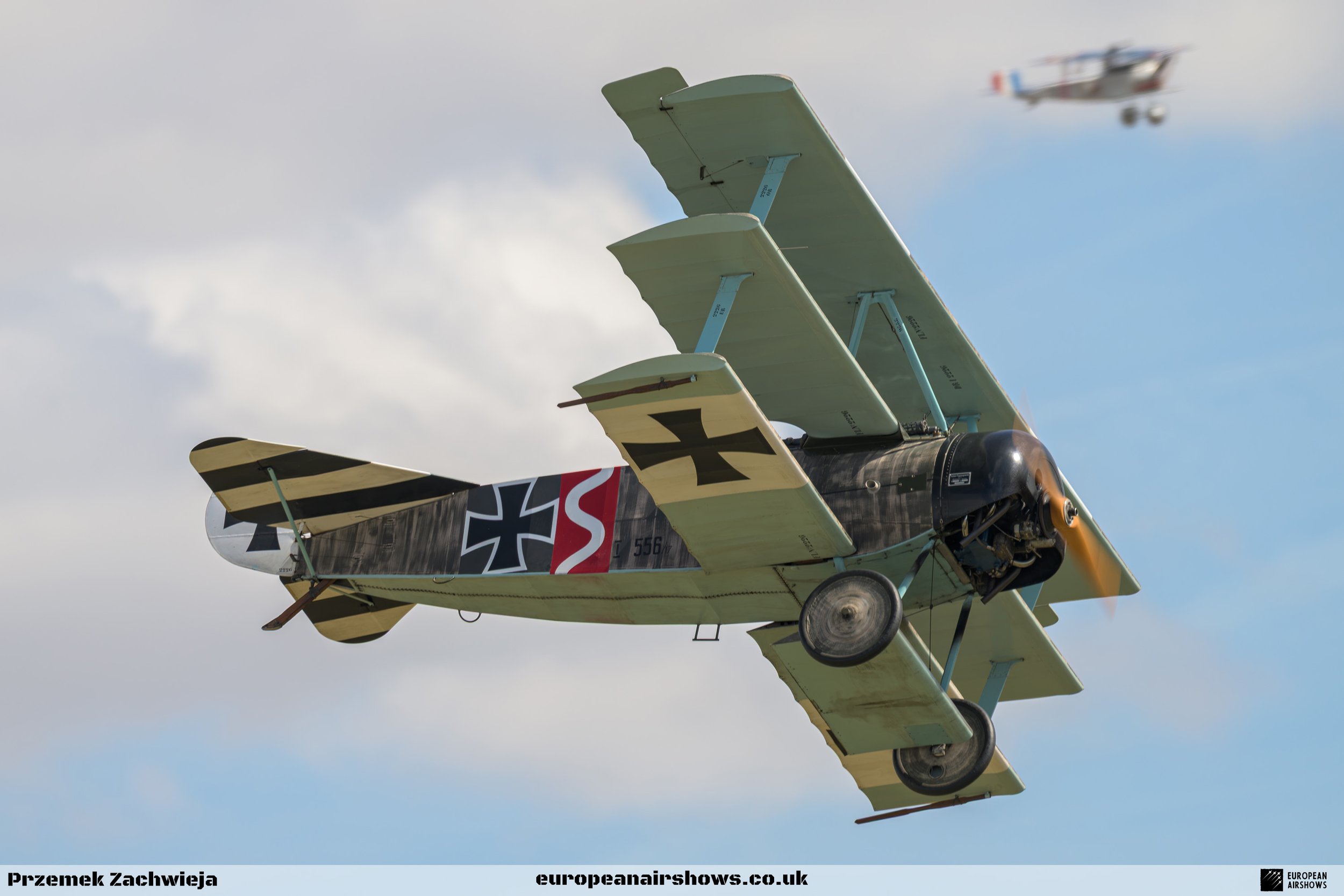
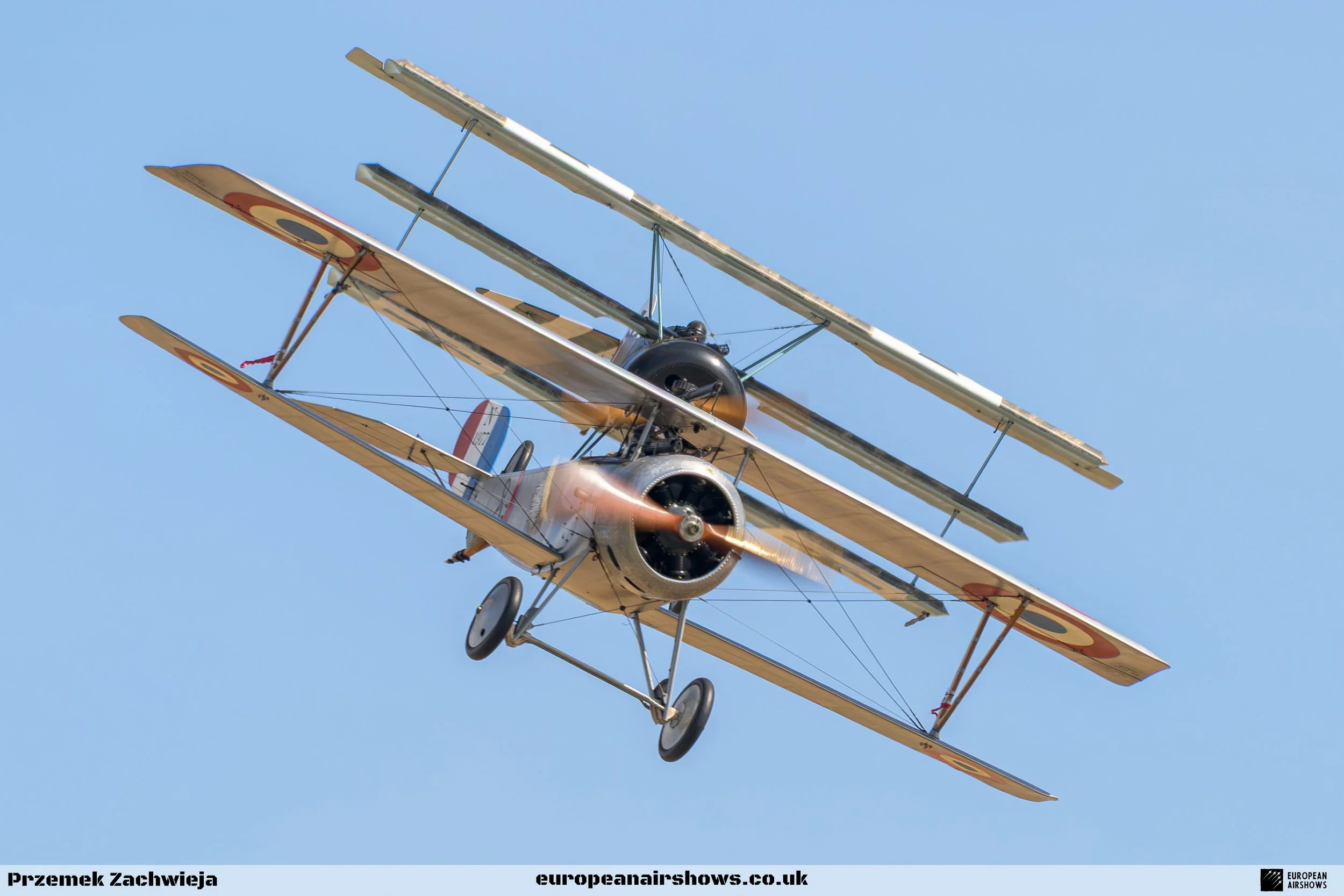
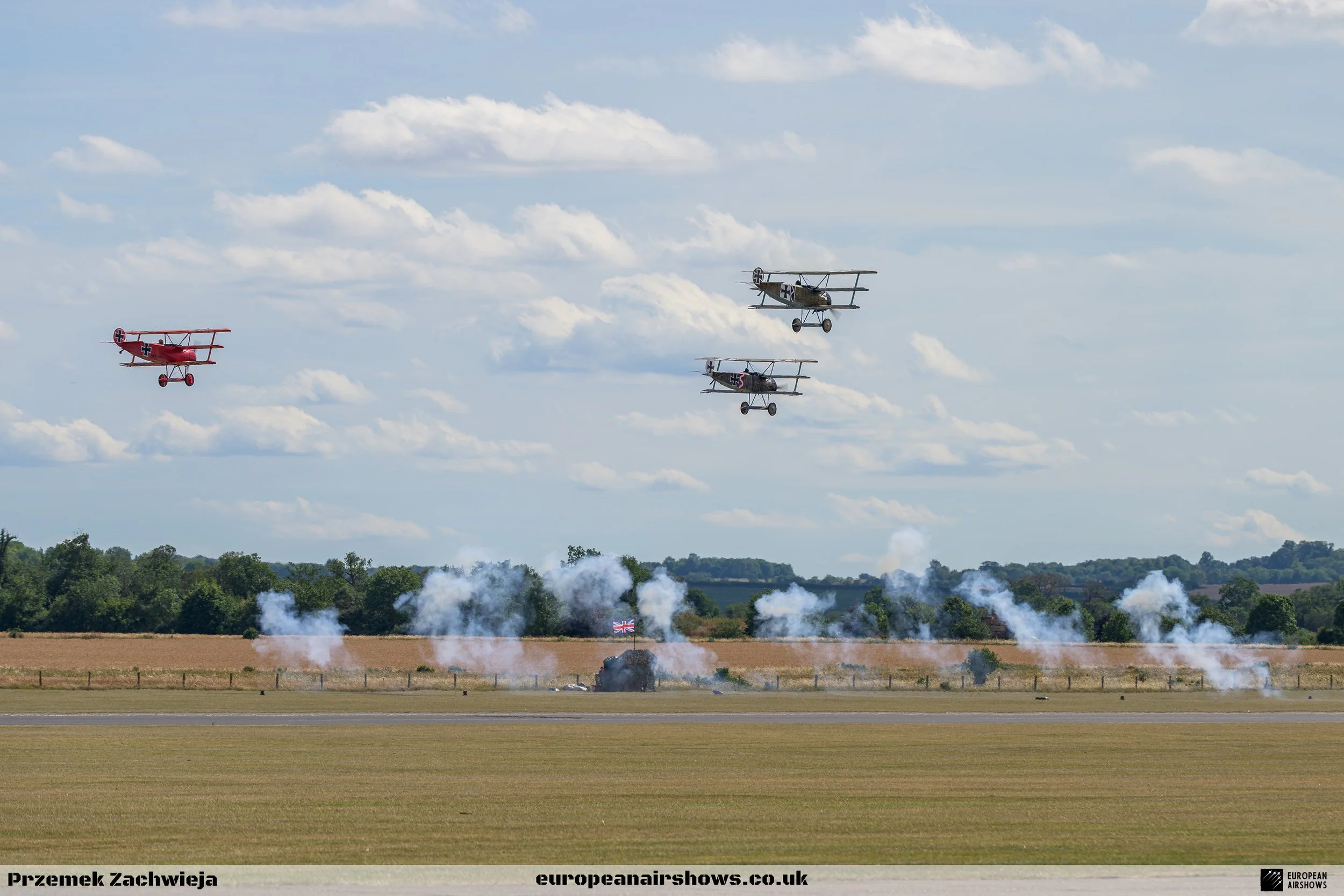
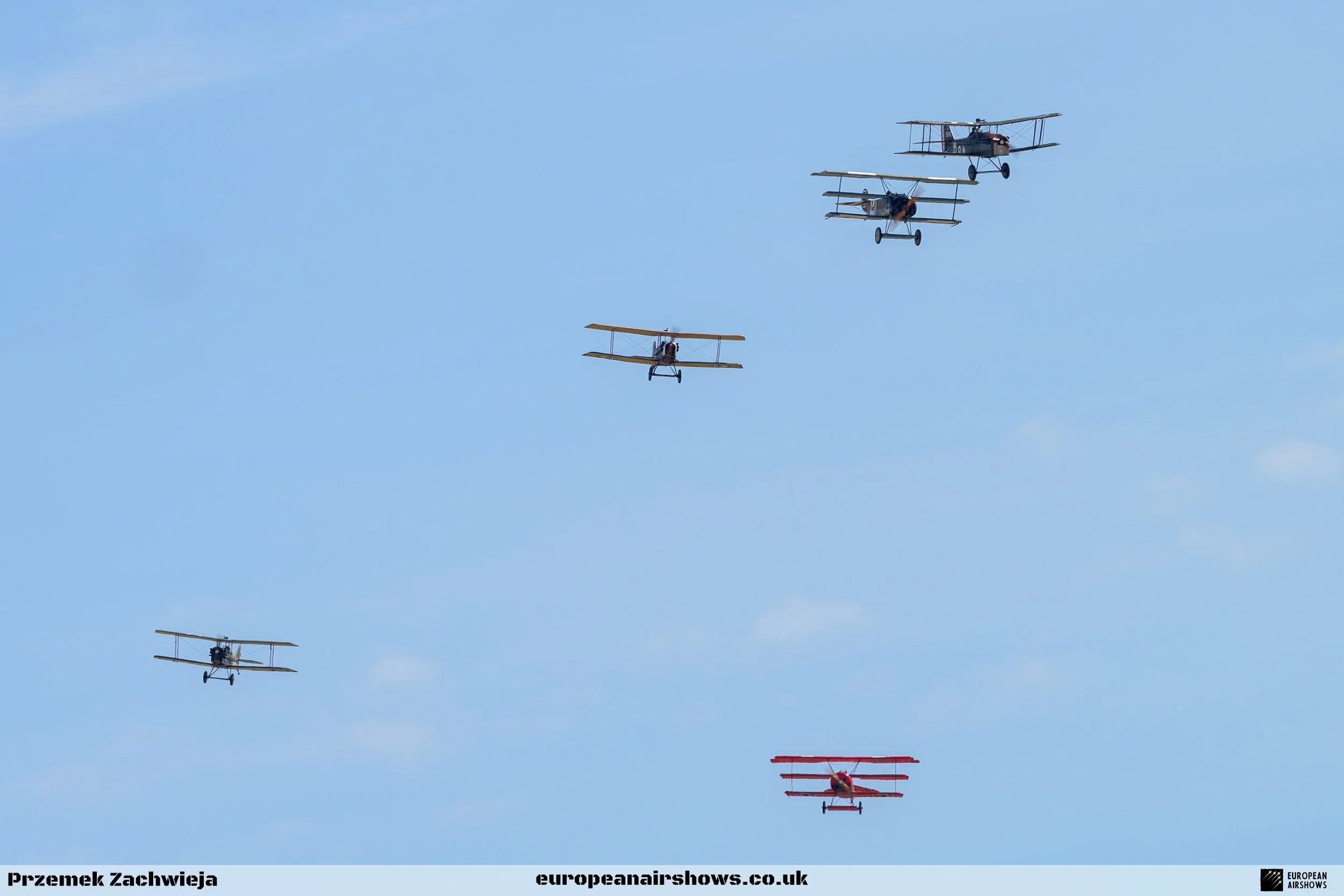
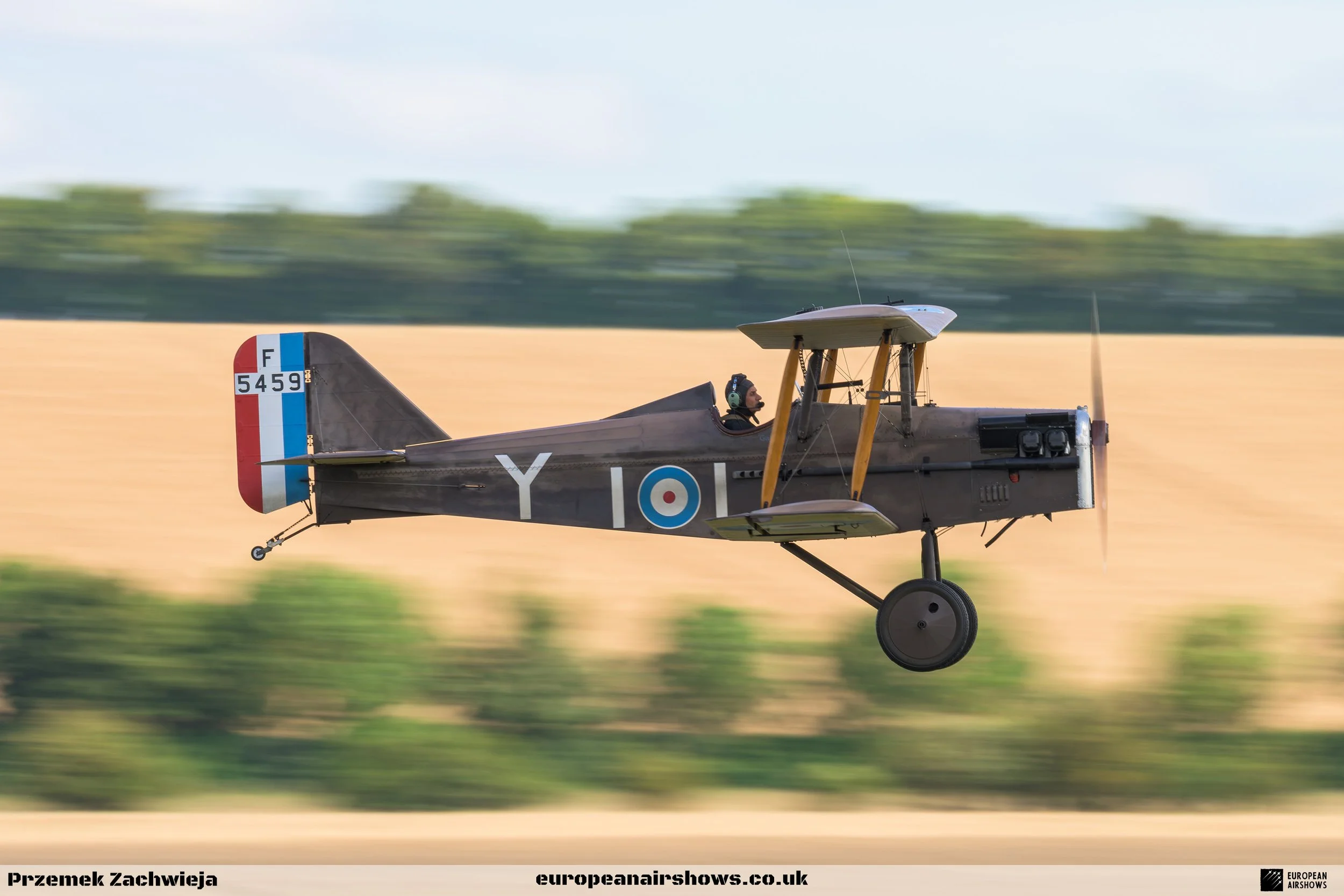
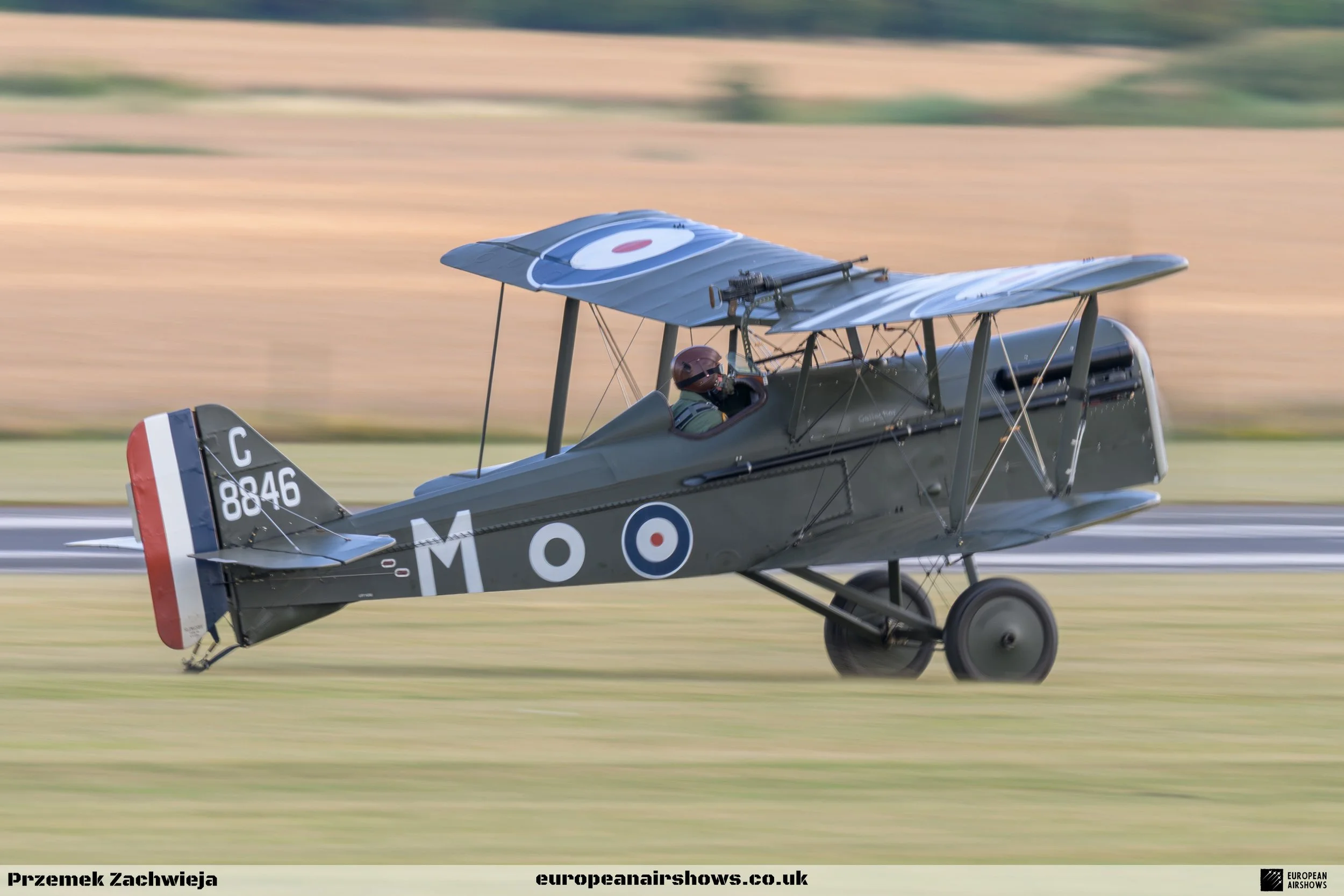
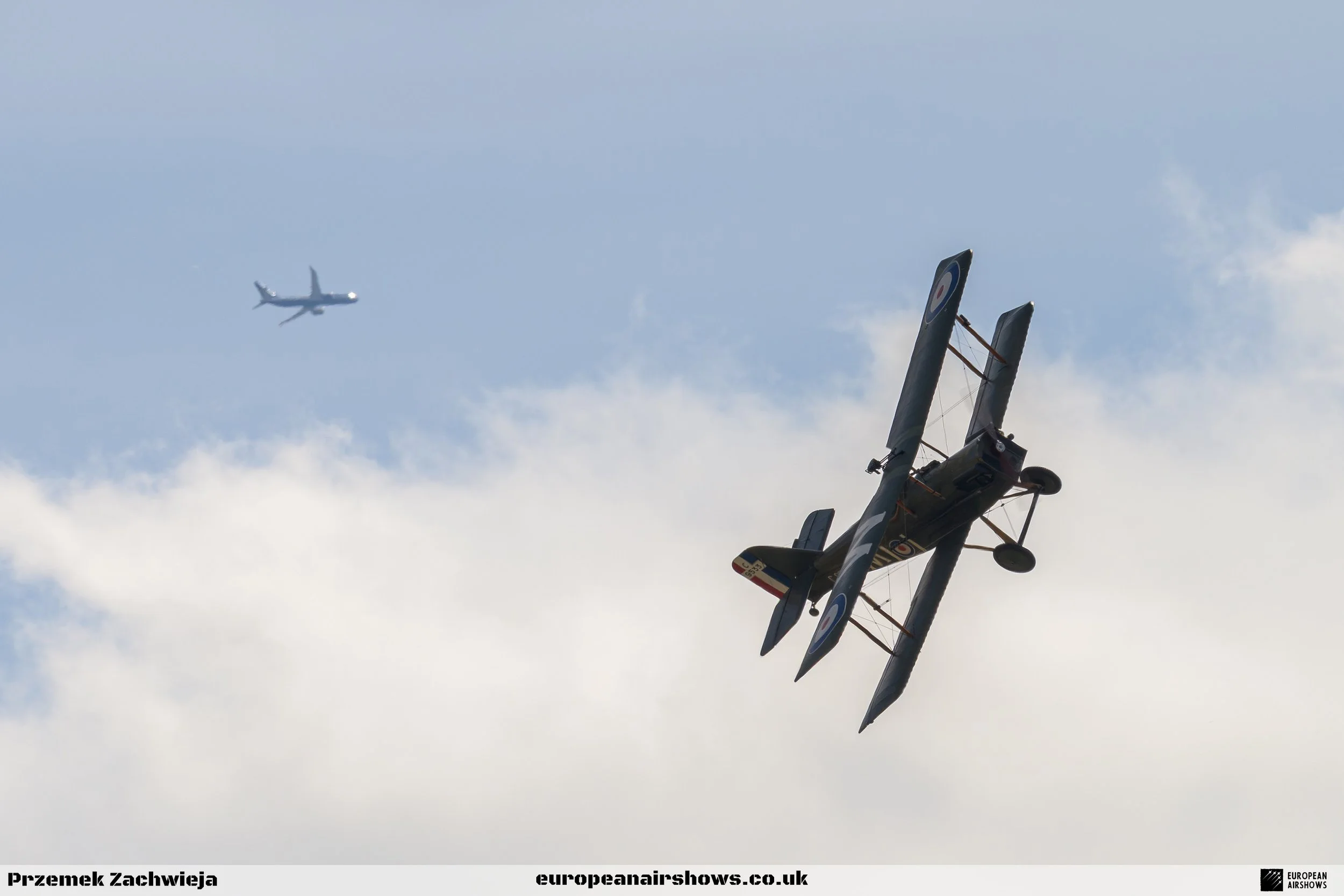
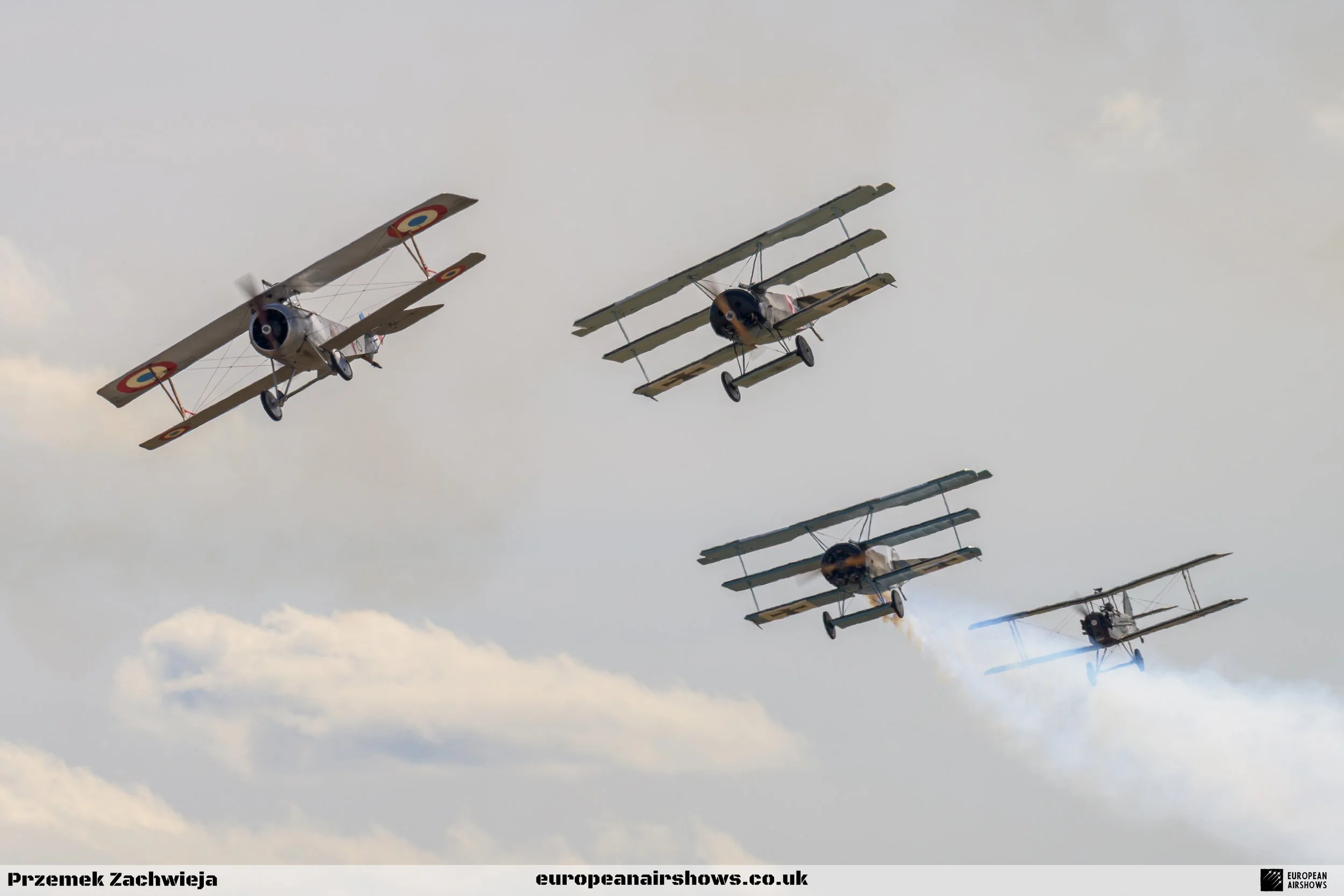
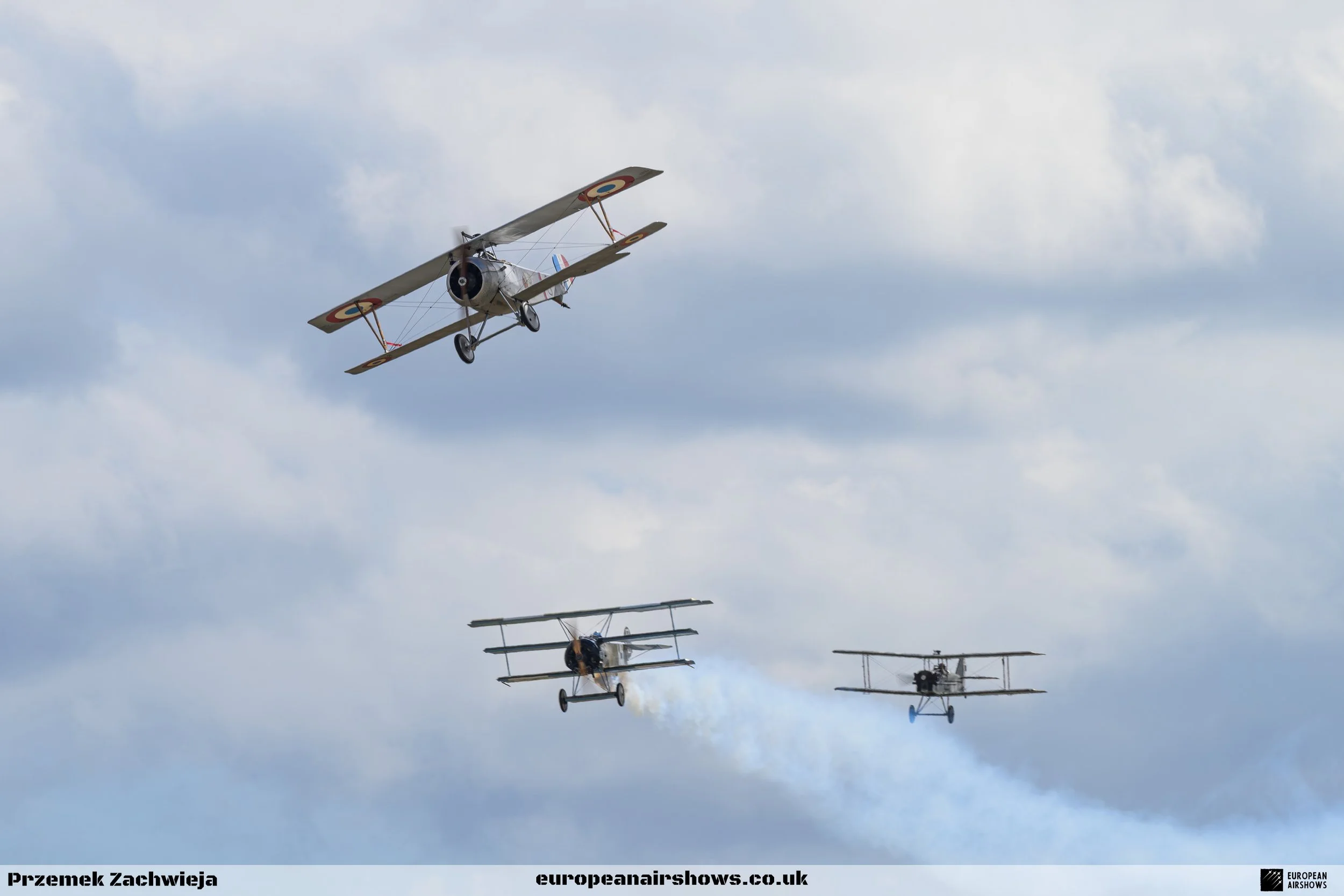
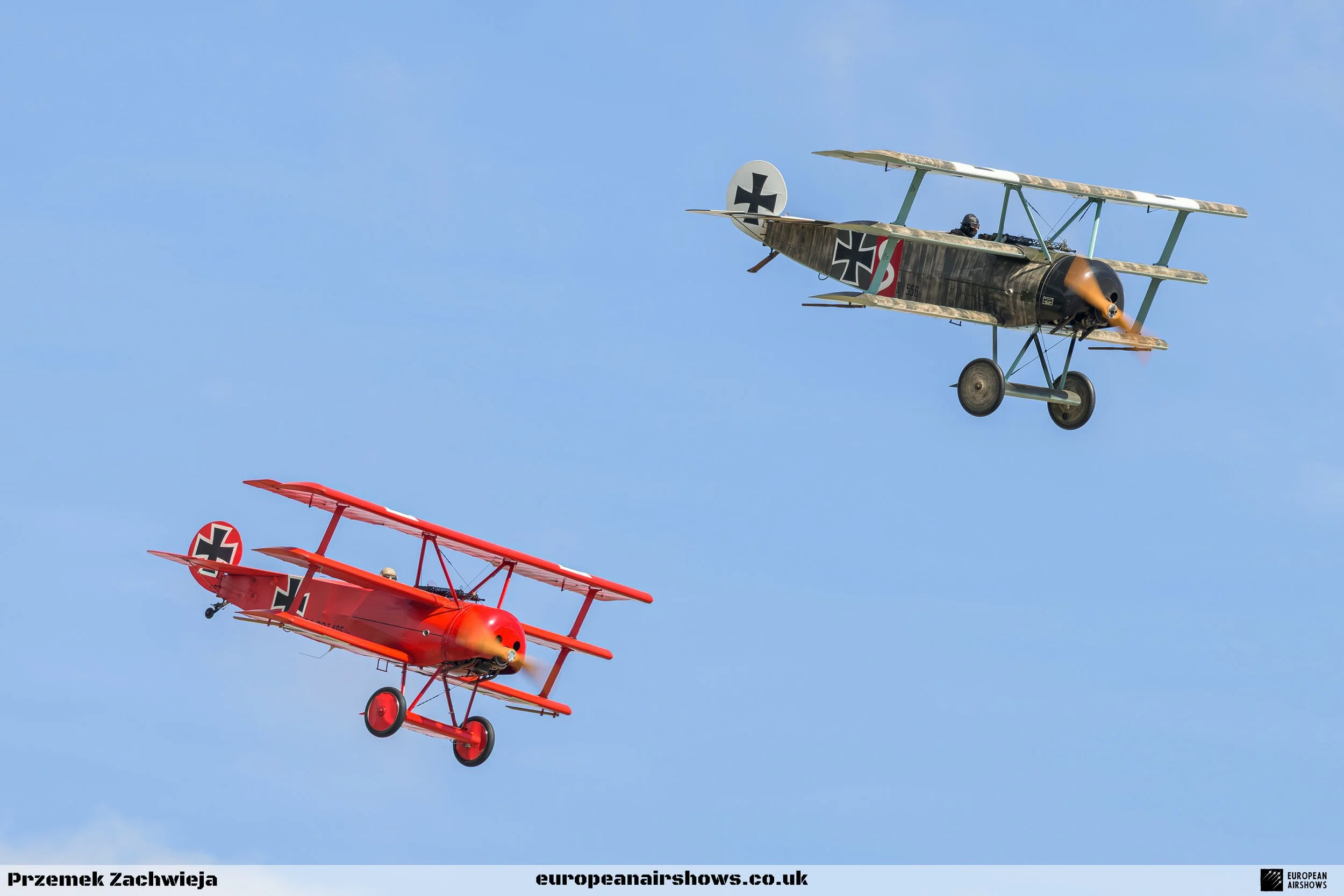
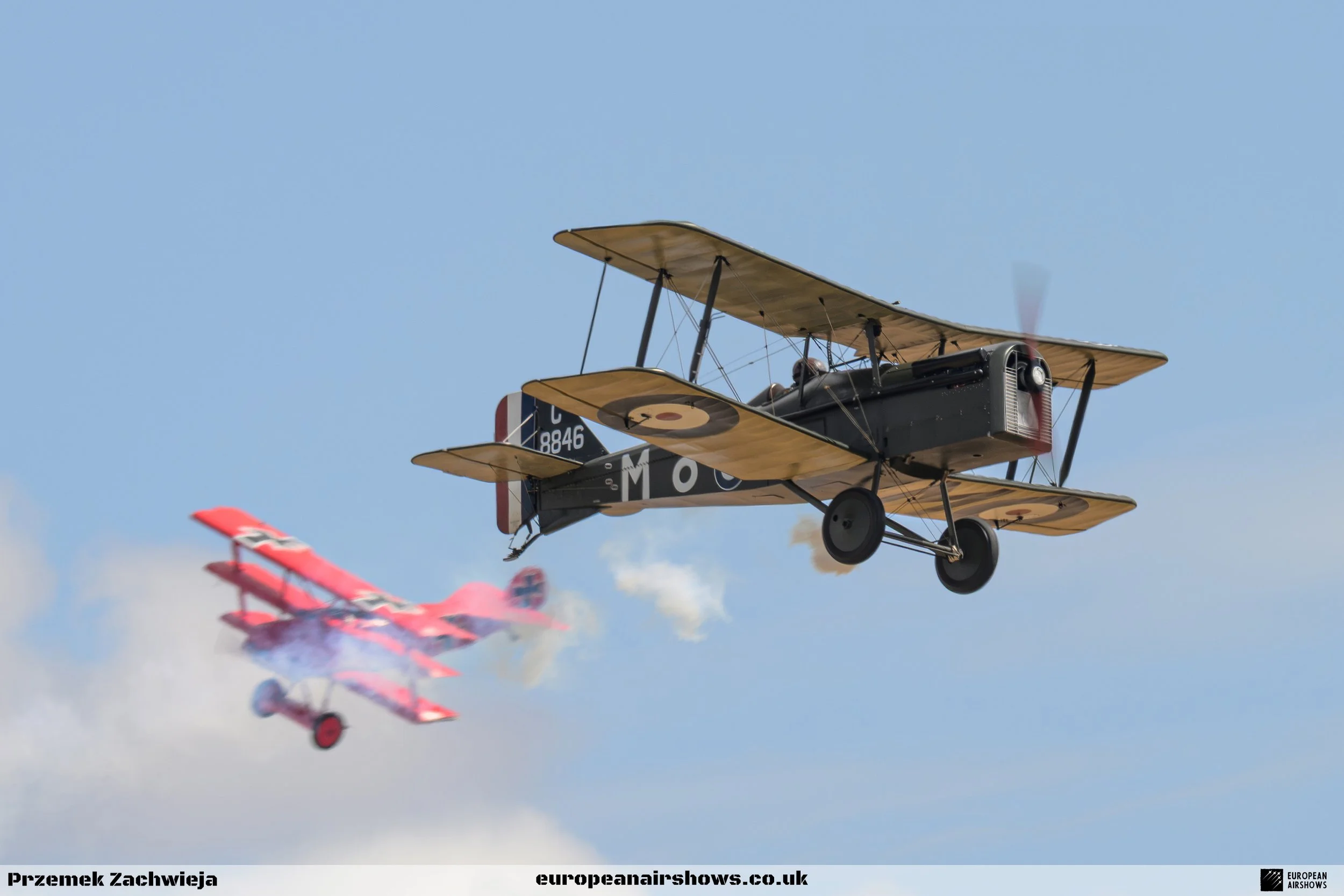
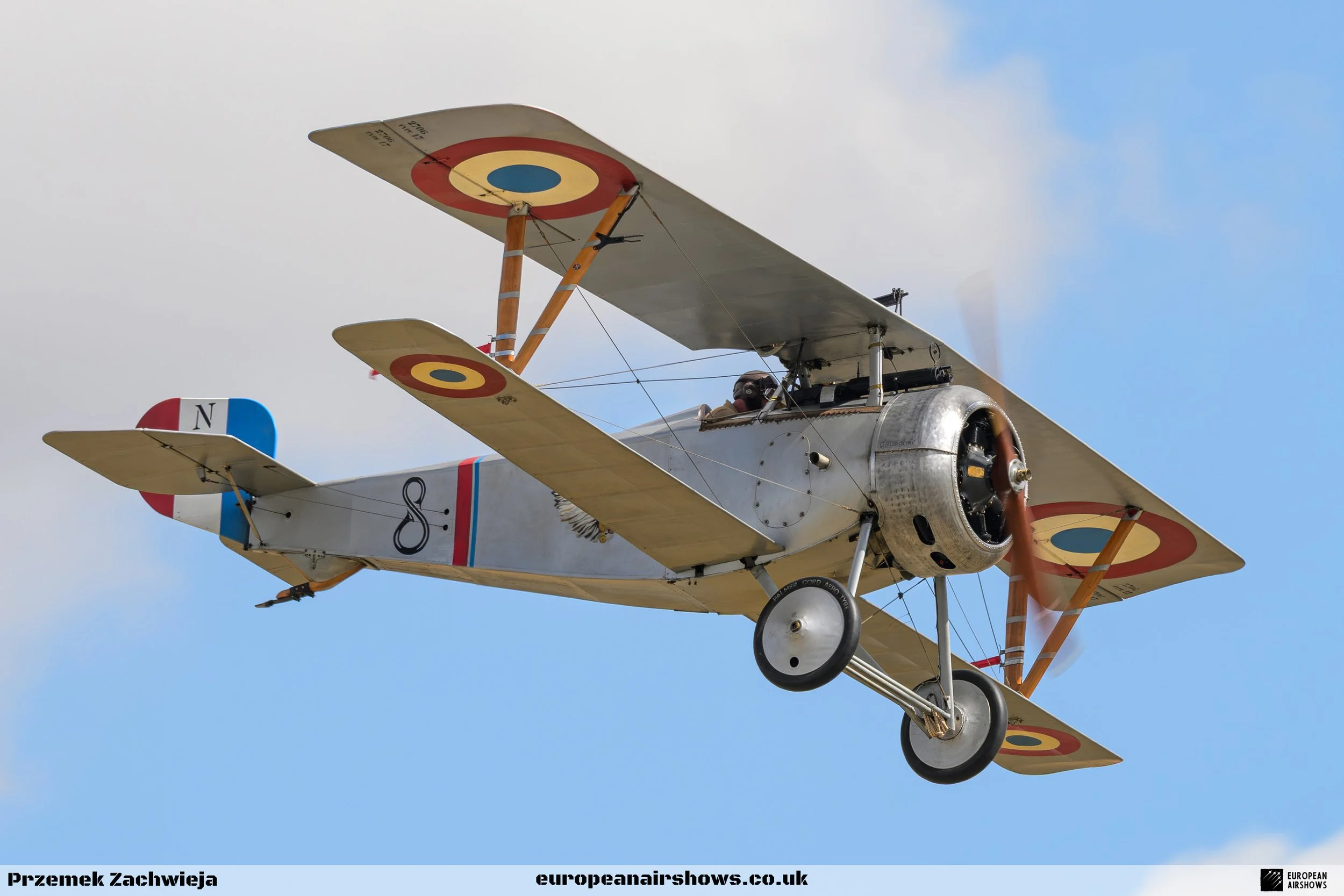
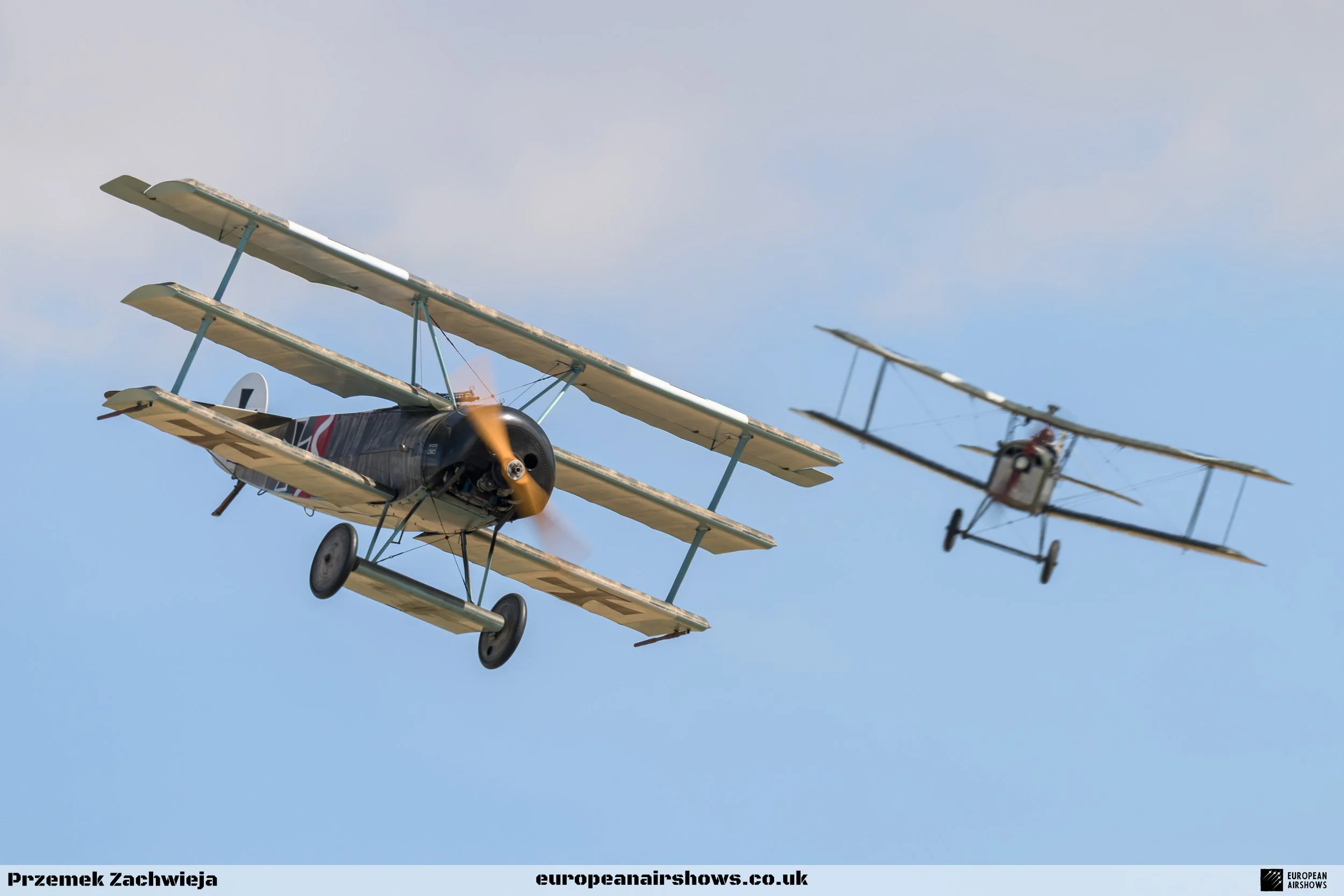
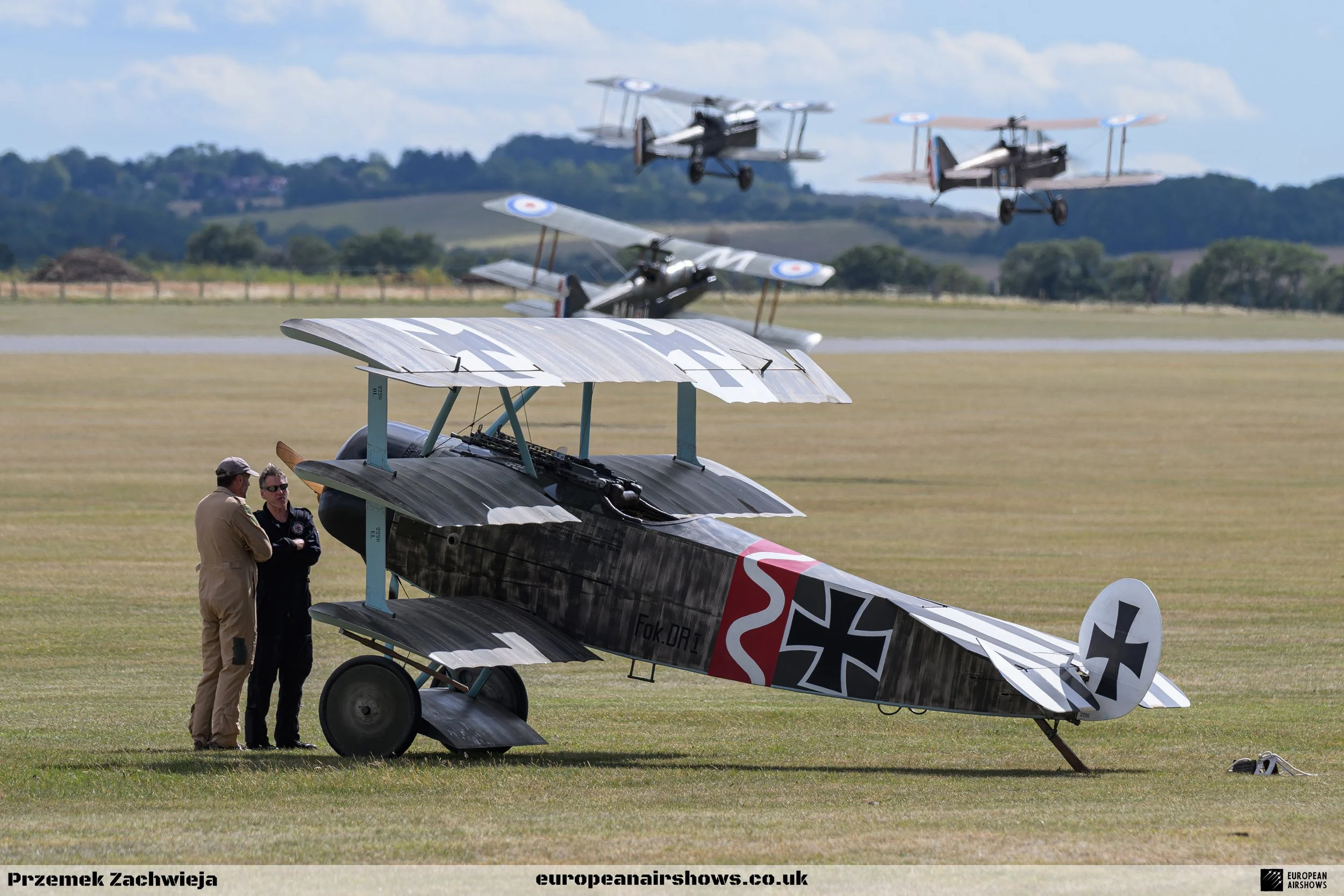
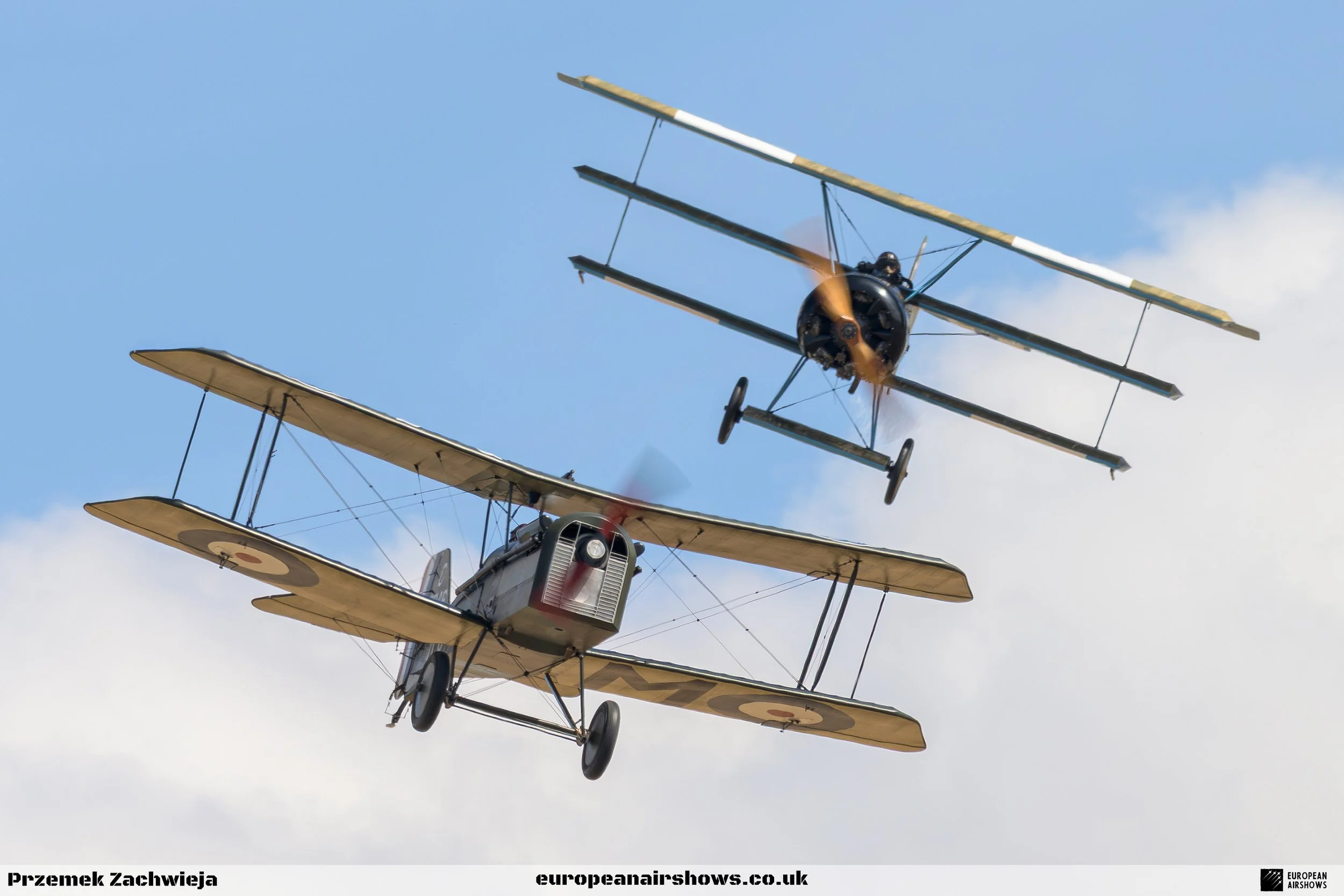
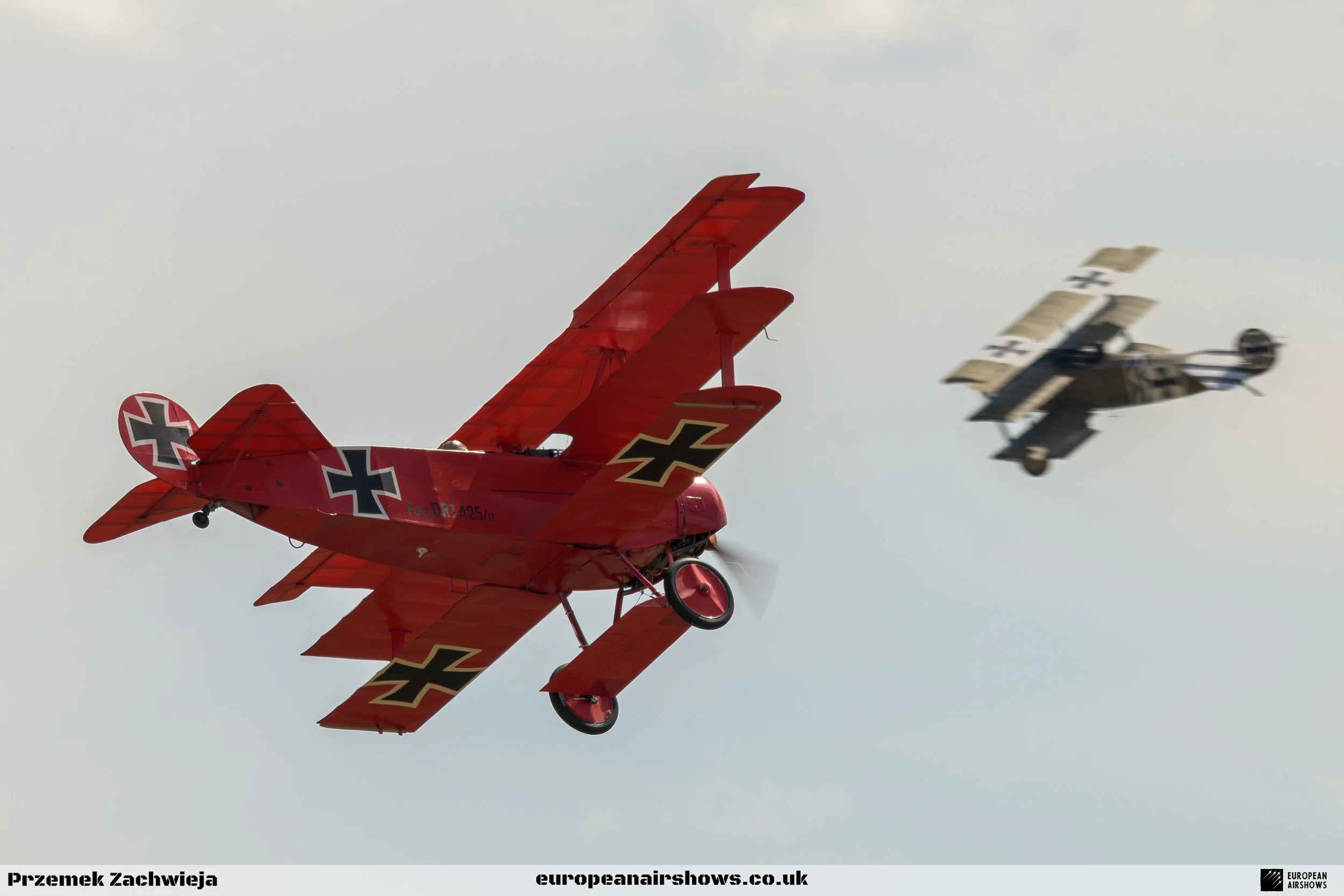
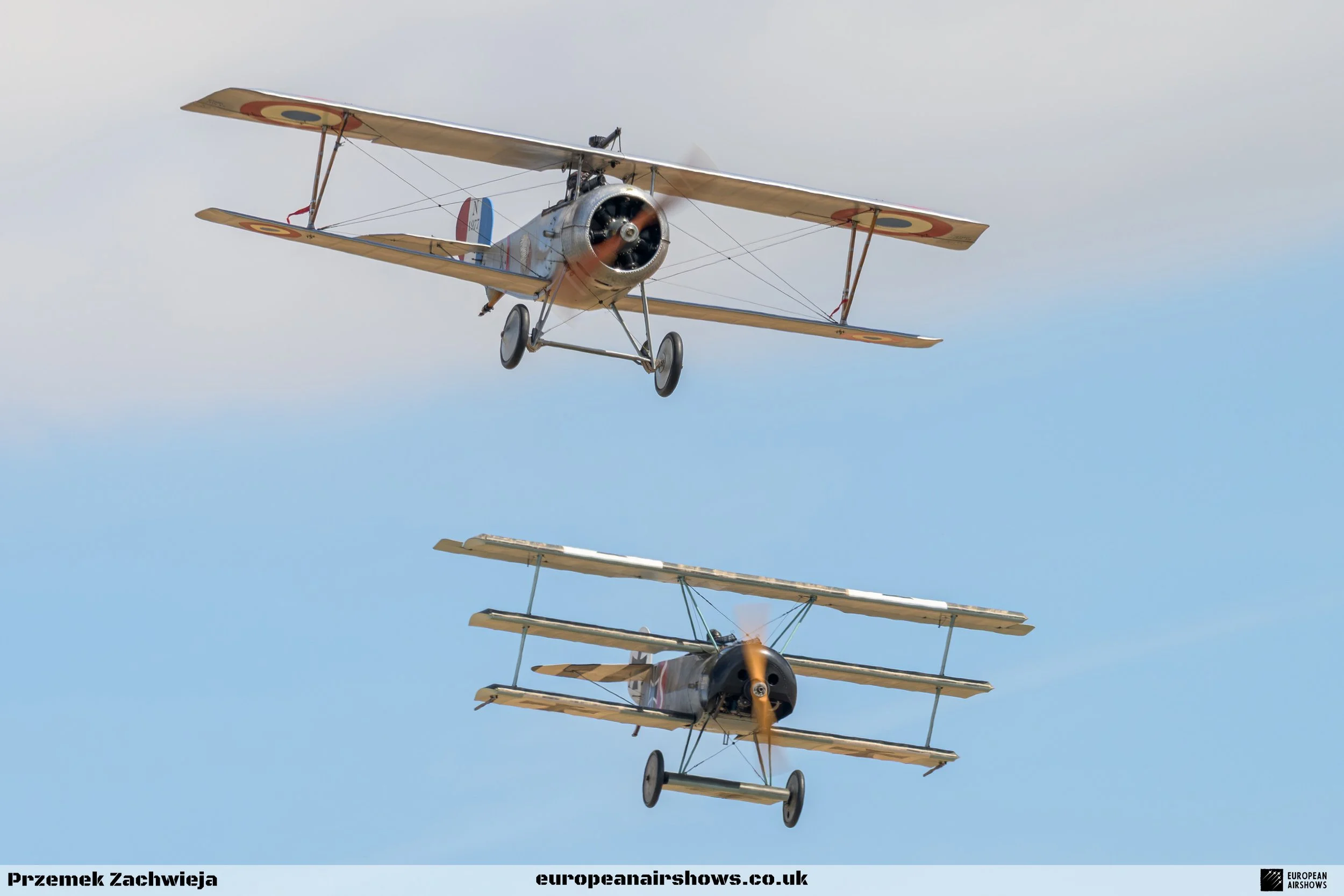
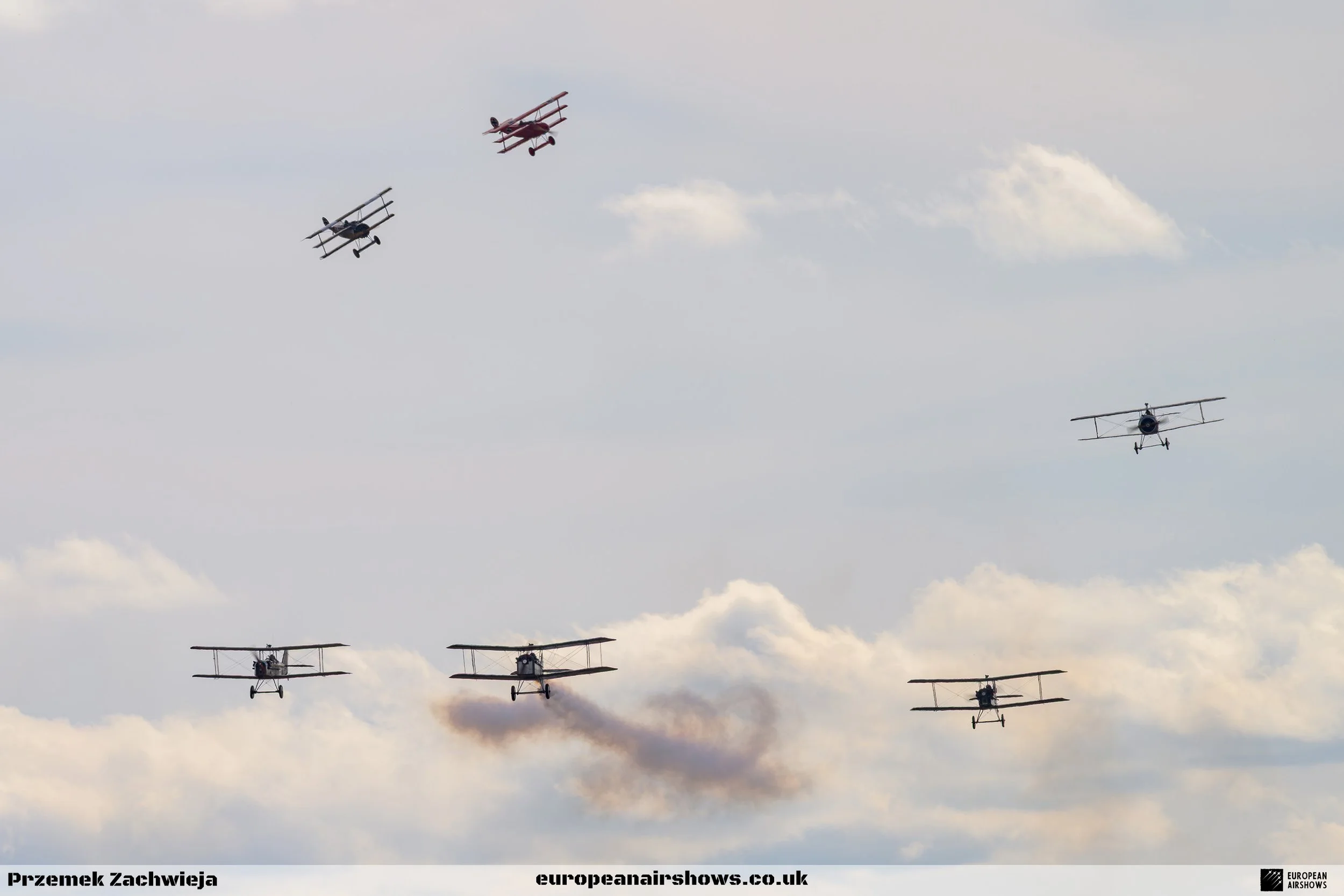
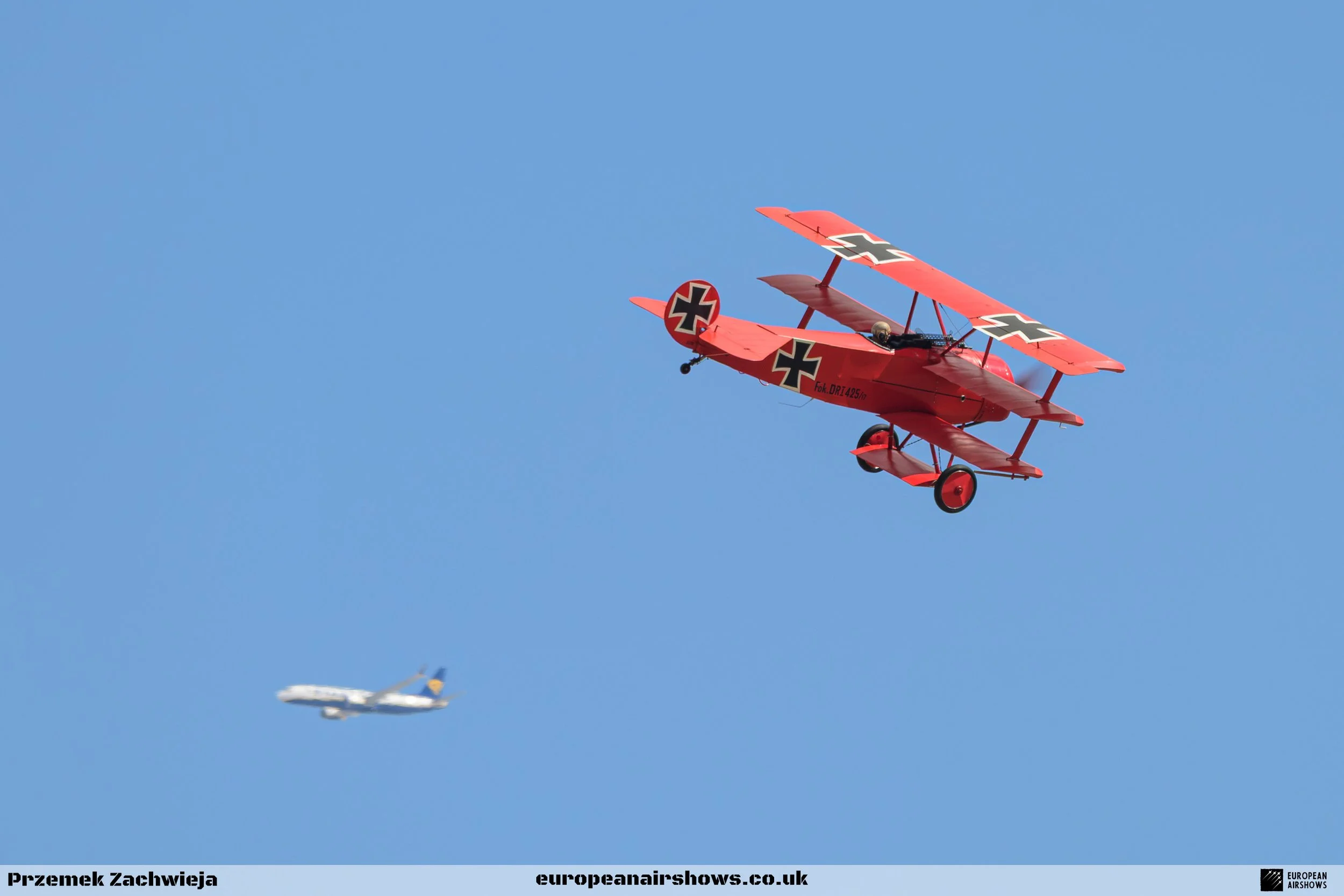
The Great War Display Team represented the First World War with a staged dogfight involving replica Allied and German fighters.
At full strength on Sunday, the display involved three Fokker Dr.I triplane replicas, one Nieuport 17 replica and three Royal Aircraft Factory S.E.5a replicas.
One of the Fokker Dr.Is developed an engine problem on Saturday and remained on the ground, reducing the opening day’s display to six aircraft. All seven aircraft took part on Sunday.
The routine was supported by ground pyrotechnics and built around a constant series of individual engagements rather than a simple formation flypast.
Aircraft crossed at different heights, broke into smaller groups and repeatedly re-entered the fight, creating action across a large section of the display area.
The Great War Display Team once again produced a convincing and entertaining portrayal of First World War air combat, with Sunday’s full seven-aircraft display providing the stronger of the two performances.
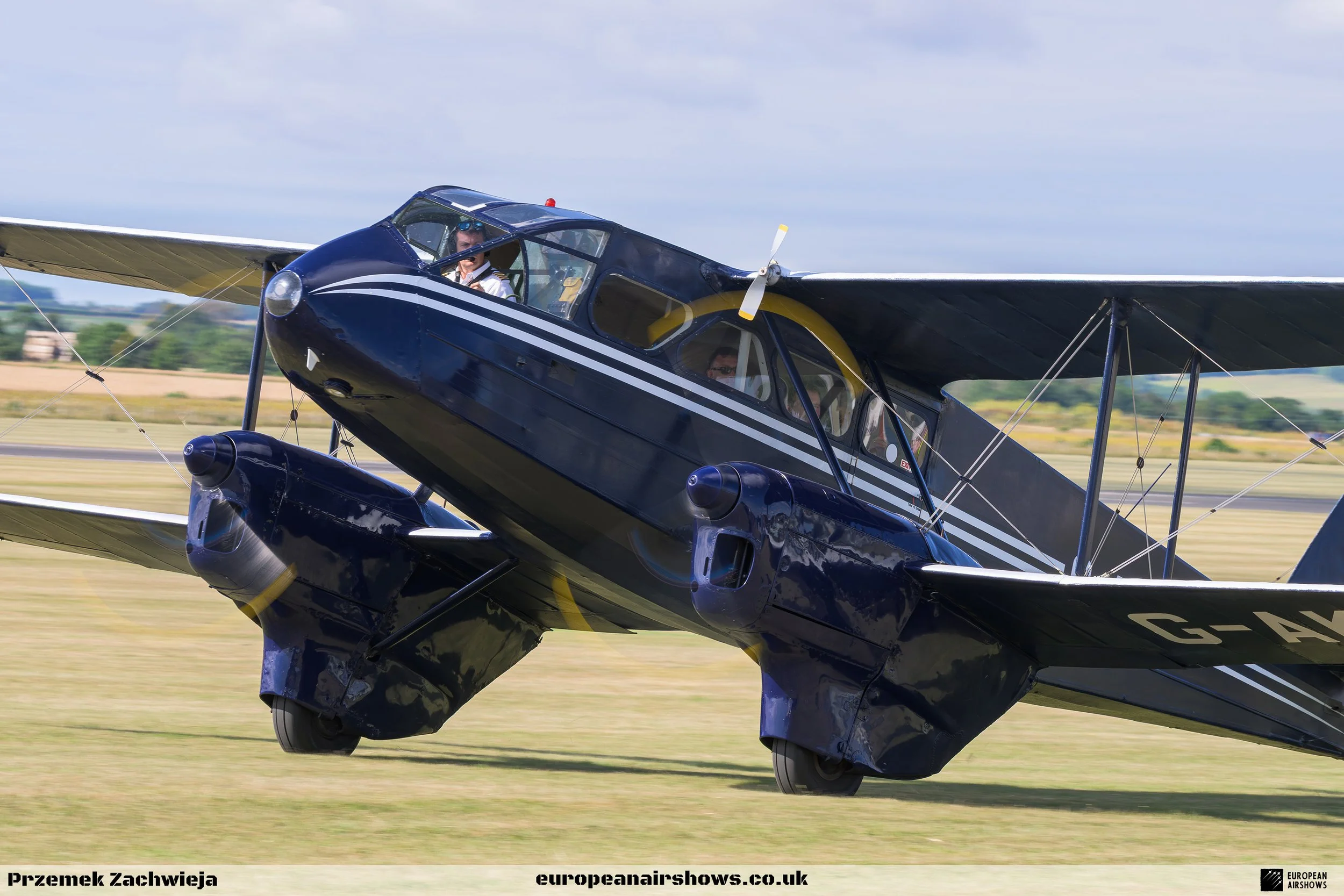
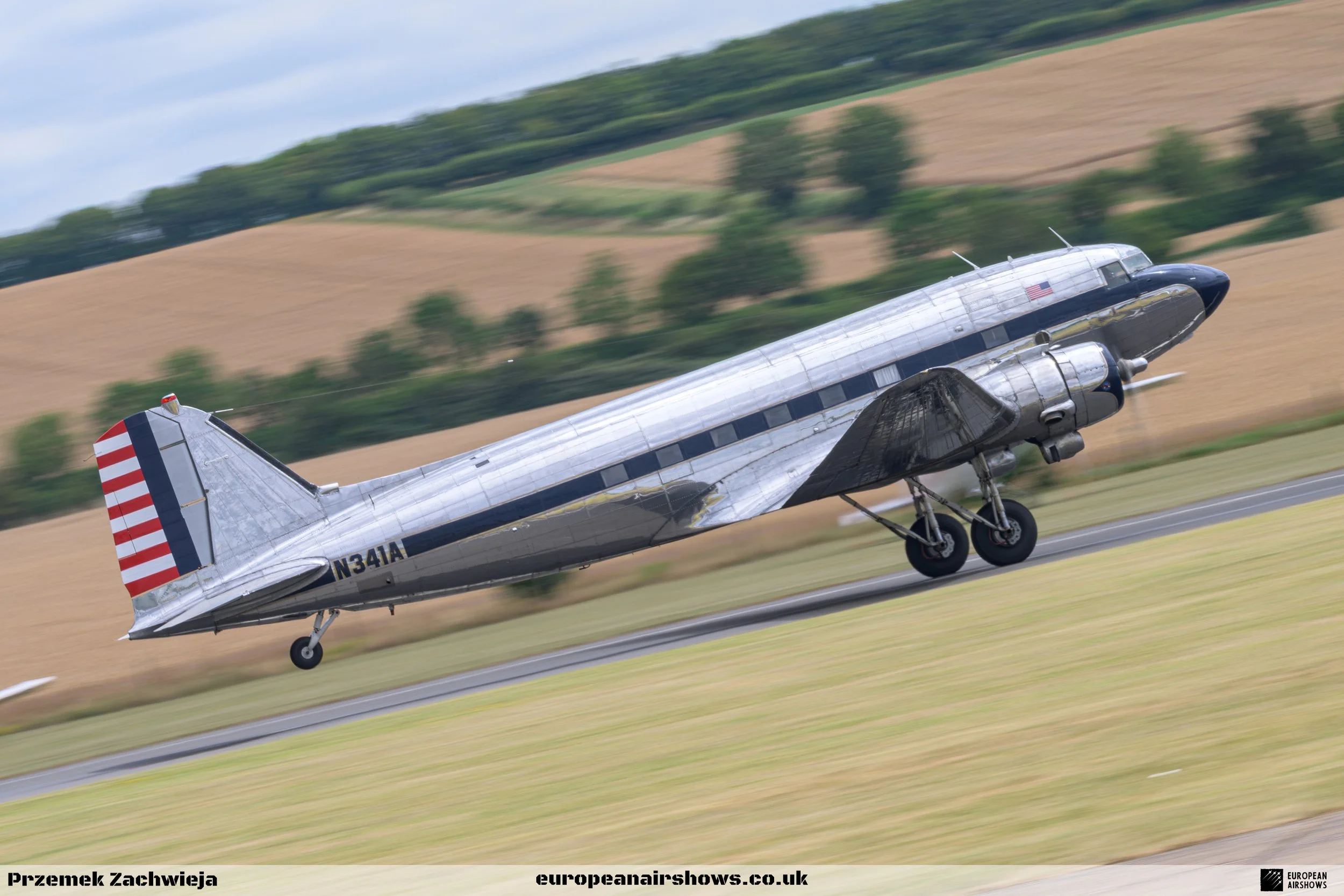
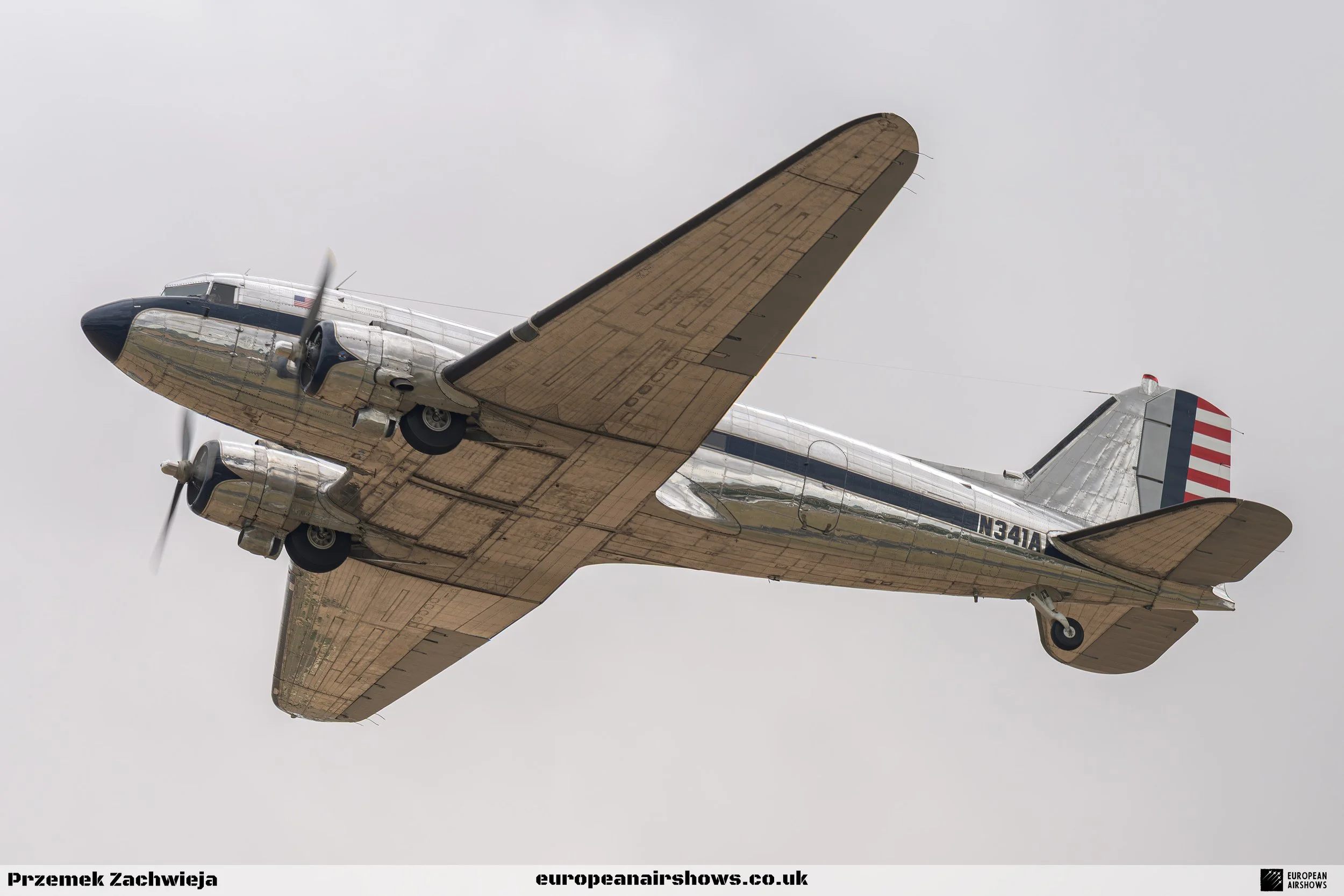
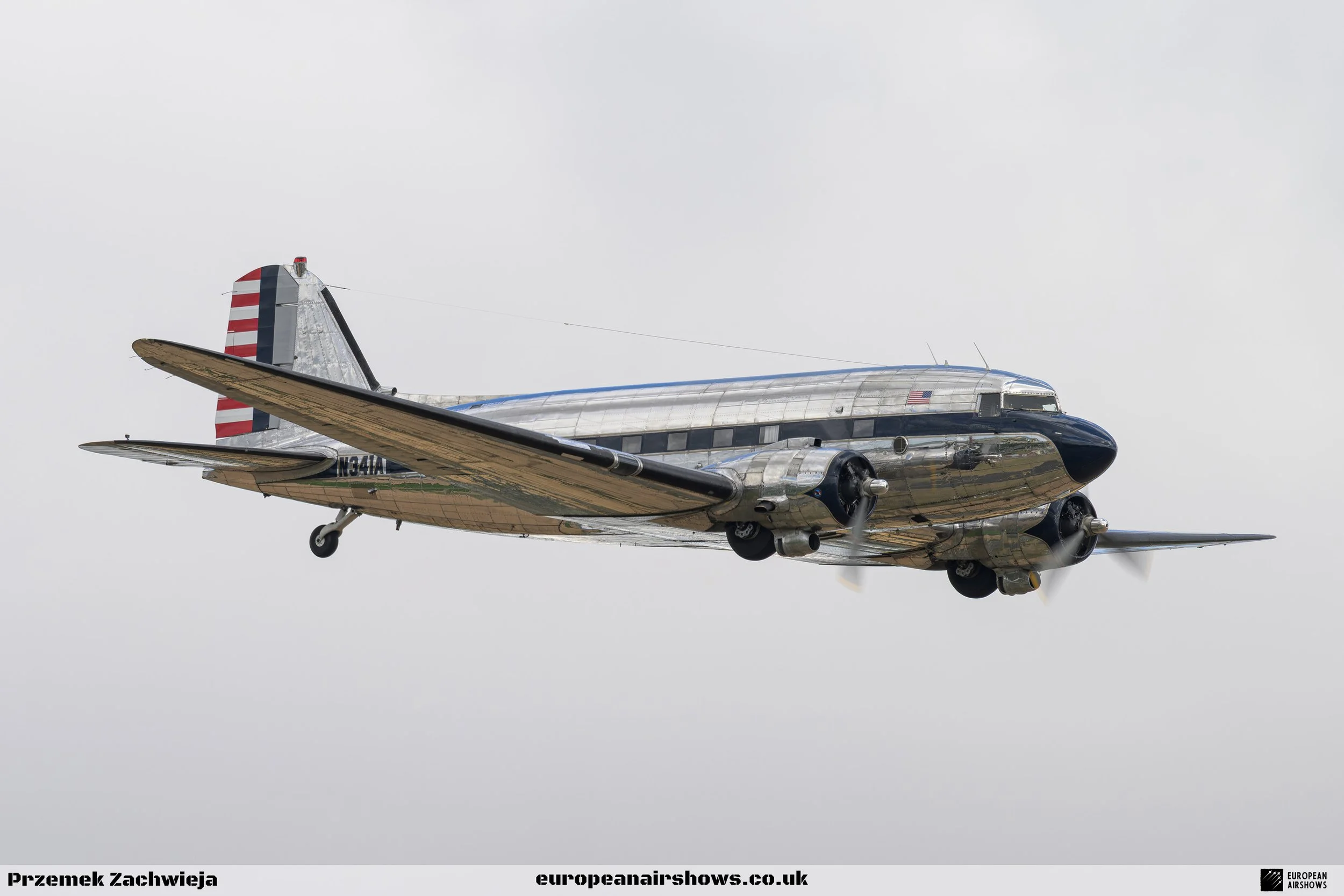
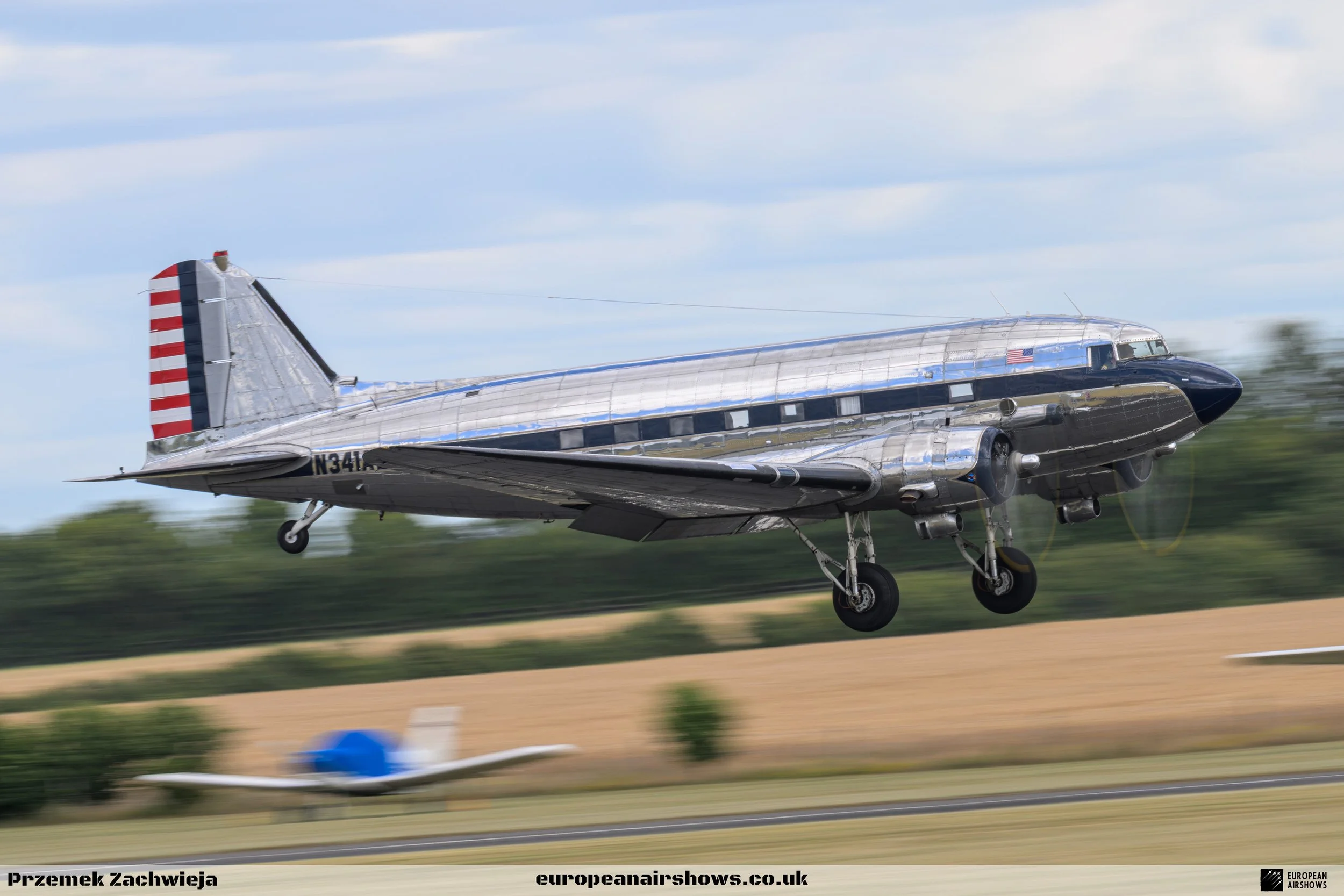
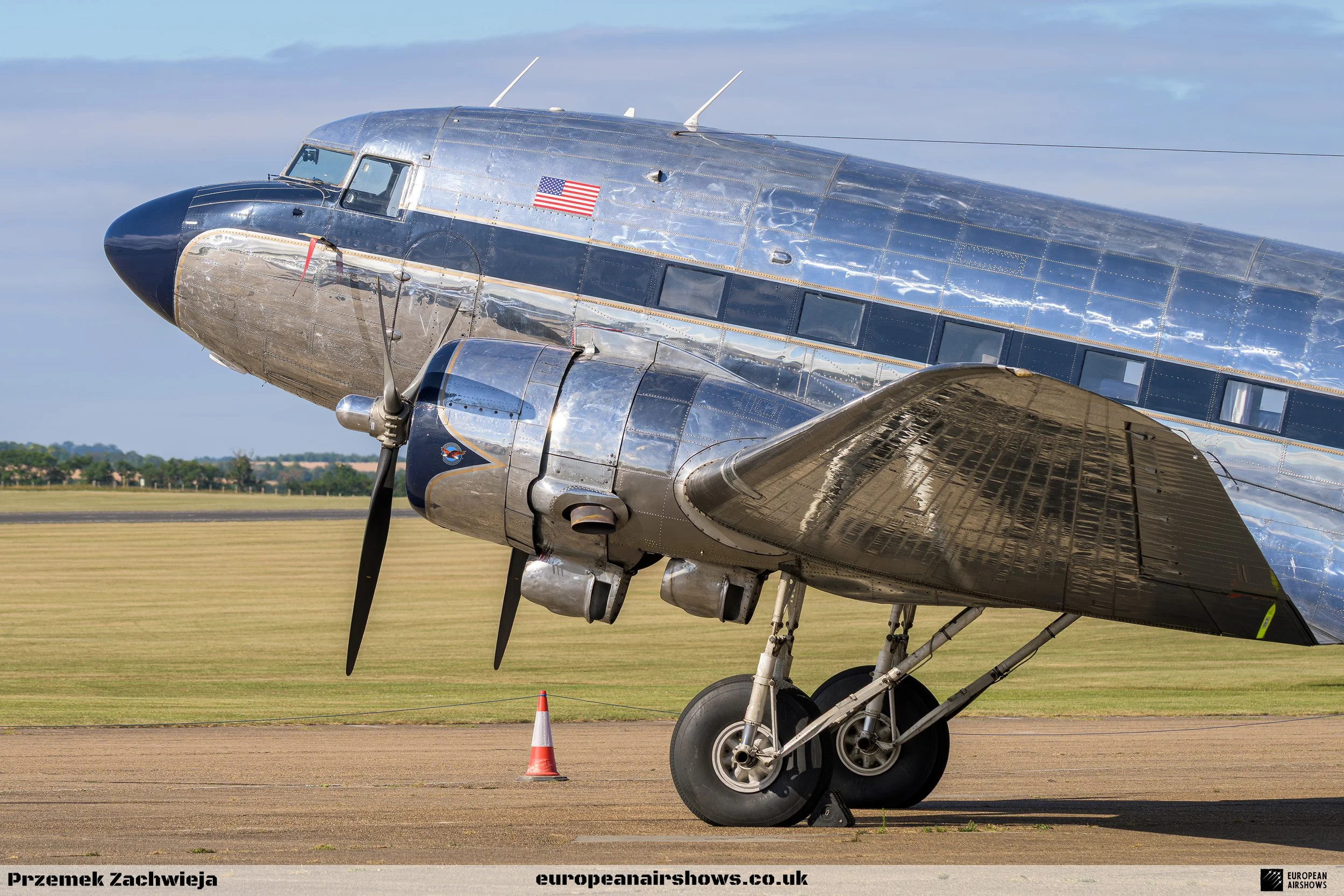
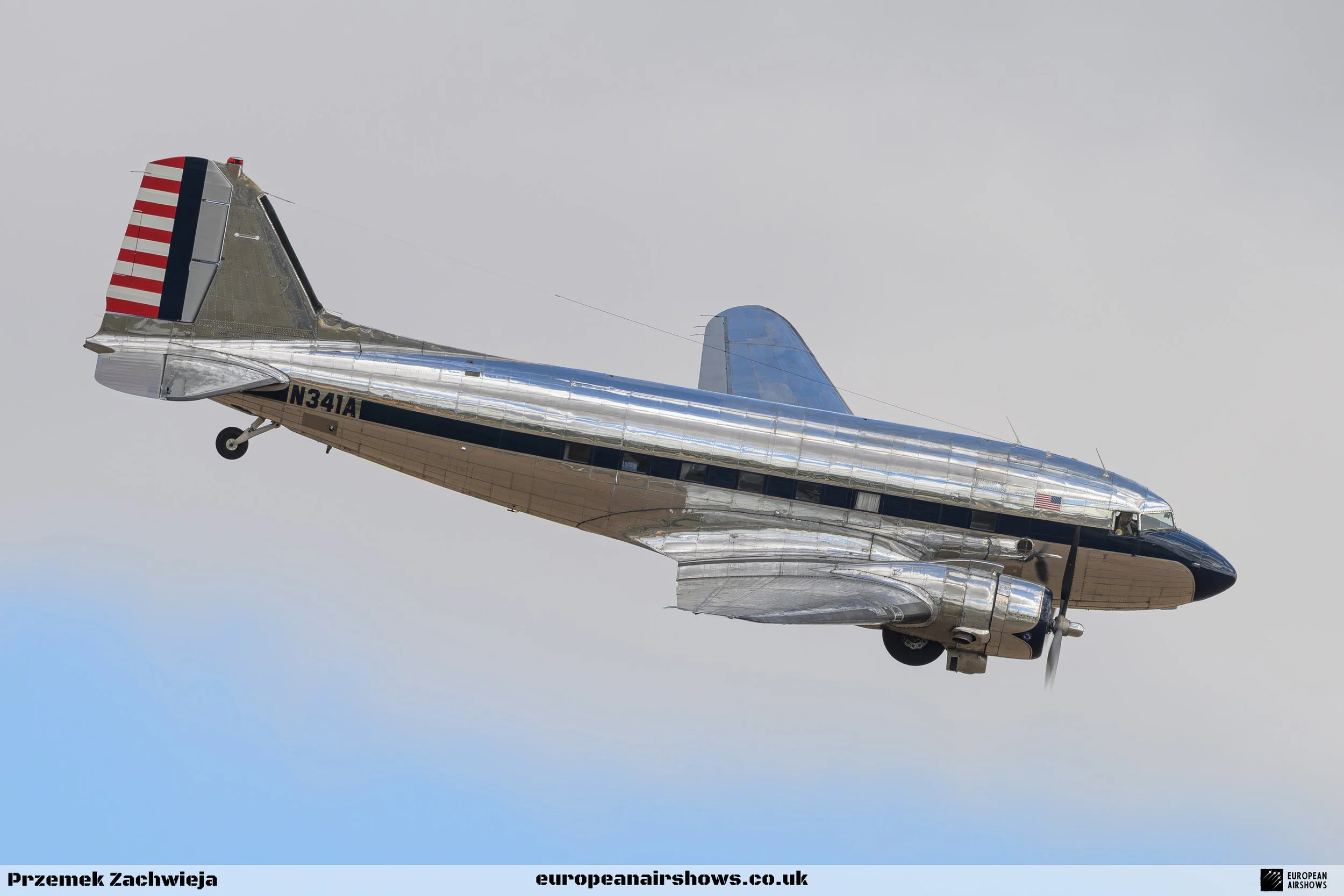
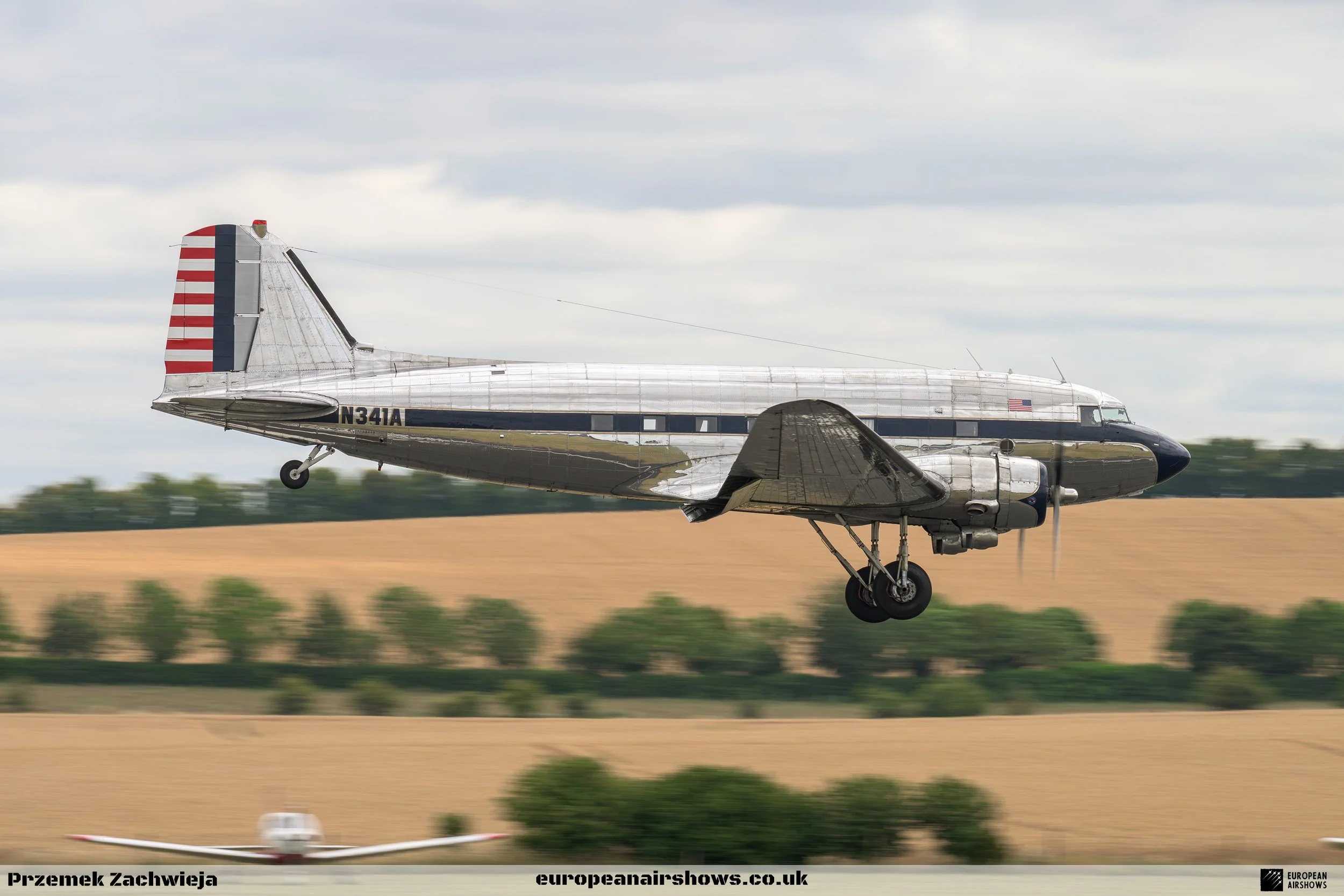
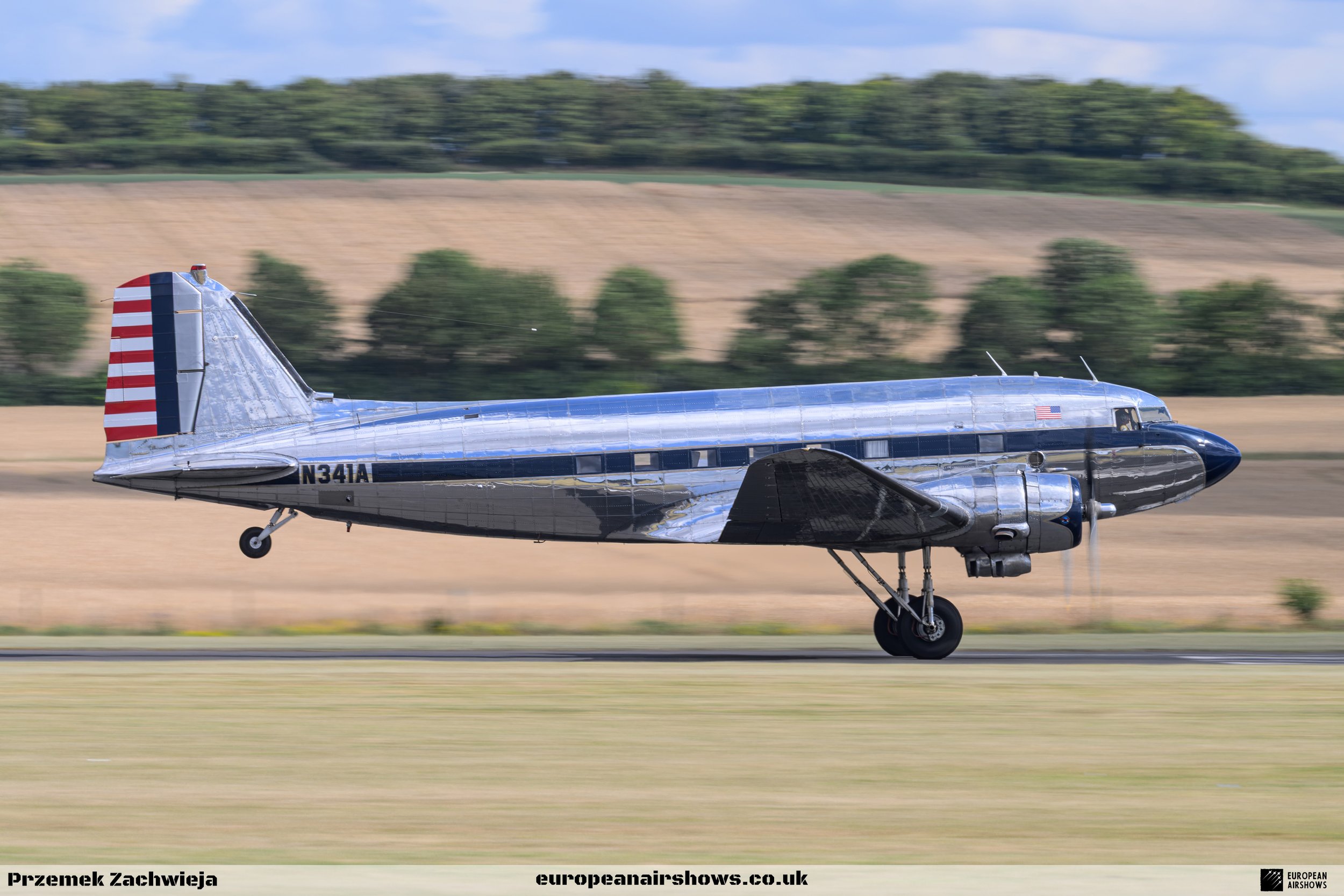
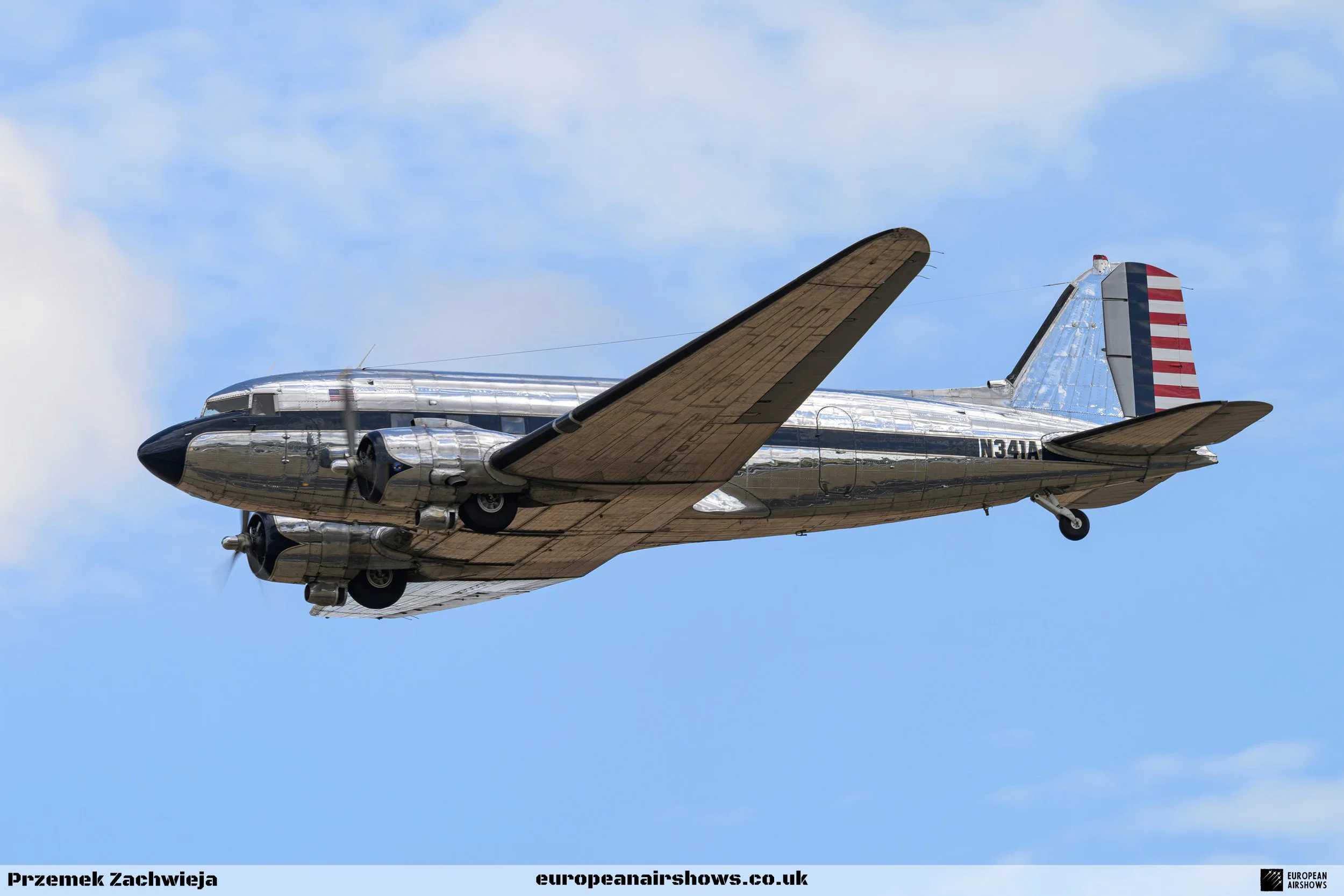
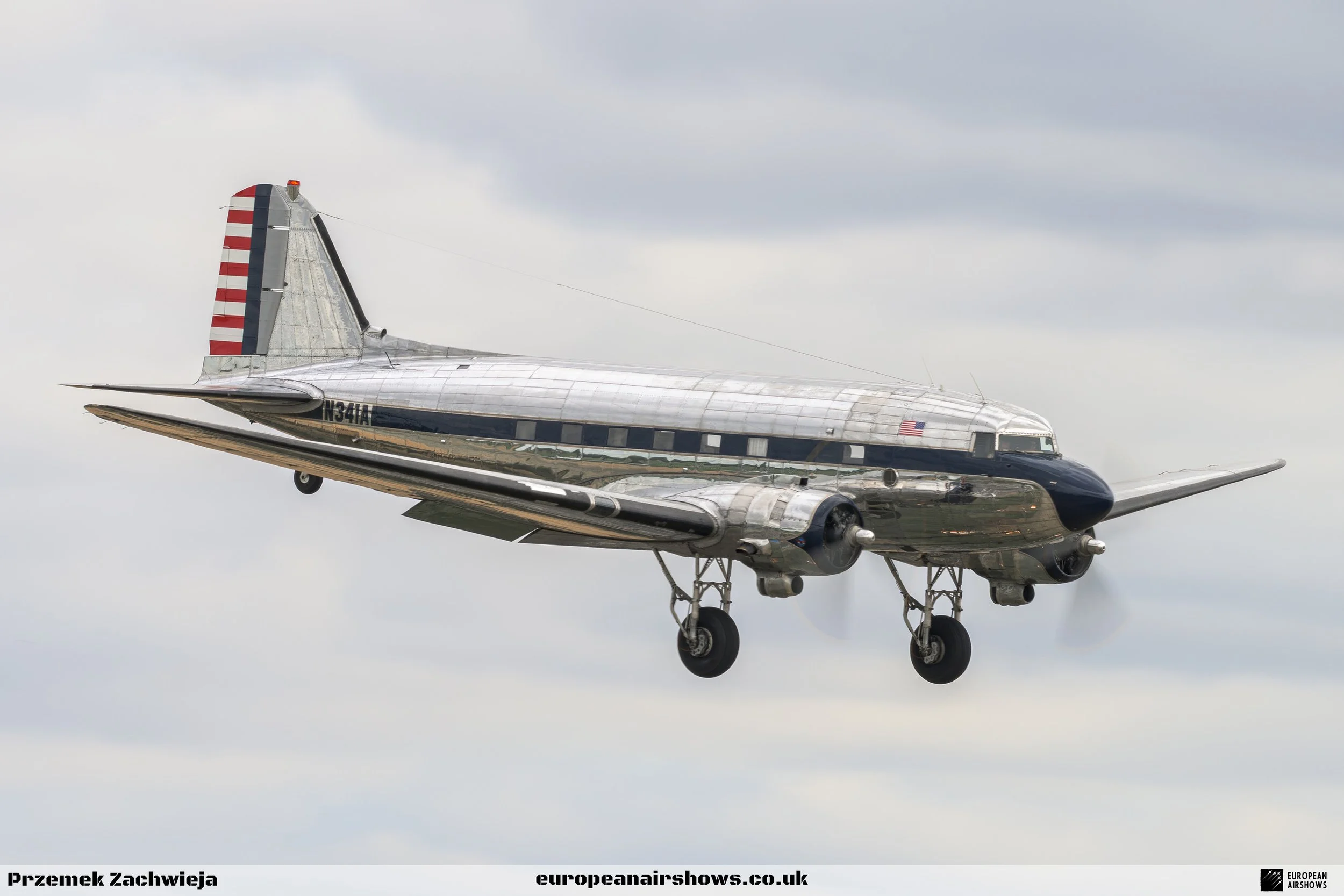
One of the weekend’s most historically important appearances came from Douglas C-41A N341A Hap-Penstance, owned by Richard Martin.
The C-41A was commissioned by the United States Army in 1938 and delivered in 1939 as a specially configured VIP and executive transport for Major General Henry “Hap” Arnold.
Arnold had been taught to fly by the Wright brothers and later became commanding general of the United States Army Air Forces. The aircraft was used to transport senior military figures, including the United States Secretary of War.
Its modifications included executive seating, sleeping berths and facilities for preparing food.
Only one Douglas C-41A was ever built. A related Douglas C-41 also survives in the United States, but N341A remains unique in its specific configuration.
After taking part in the 2019 D-Day commemorations, the aircraft remained in Britain and underwent extensive work. It completed its first flight since 2019 on 20 May 2026, flying from Coventry to its new home at Wolverhampton Halfpenny Green Airport.
Duxford provided the aircraft’s first full UK airshow display following that return to flight.
The display was flown by Andrew Dixon and Peter Kuypers, with Kuypers already extremely familiar with Duxford through his position as Sally B’s chief pilot and display captain.
It was a lovely display. Hap-Penstance was presented through a series of well-positioned banking passes that showed its polished finish and elegant pre-war lines.
In a show filled with Spitfires, Mustangs and other familiar warbirds, the unique C-41A was one of the genuinely rare aircraft and one that many spectators were seeing in the air for the first time.
The closing section began with a theatrical combat sequence involving three Duxford-based inline-engined fighters.
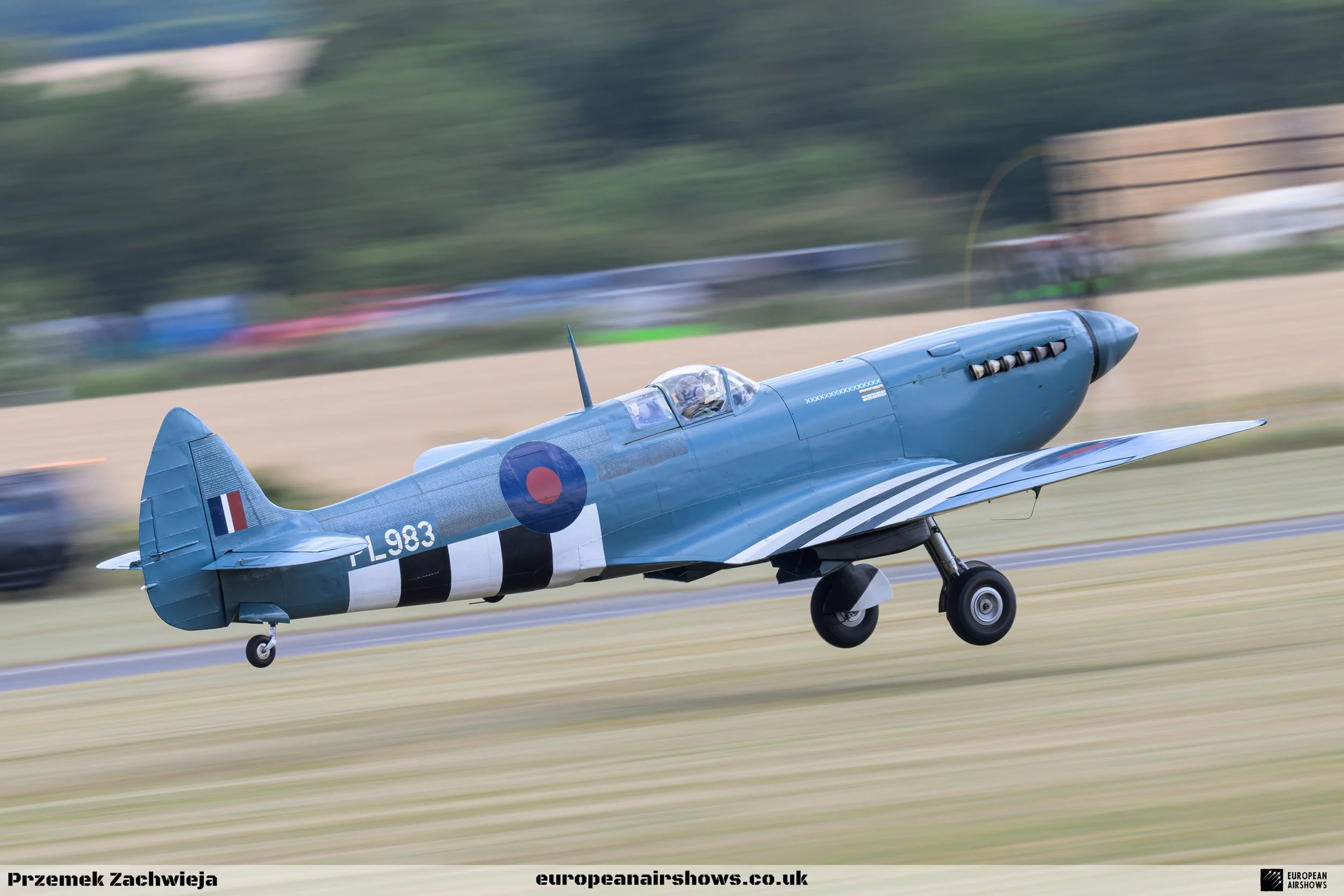
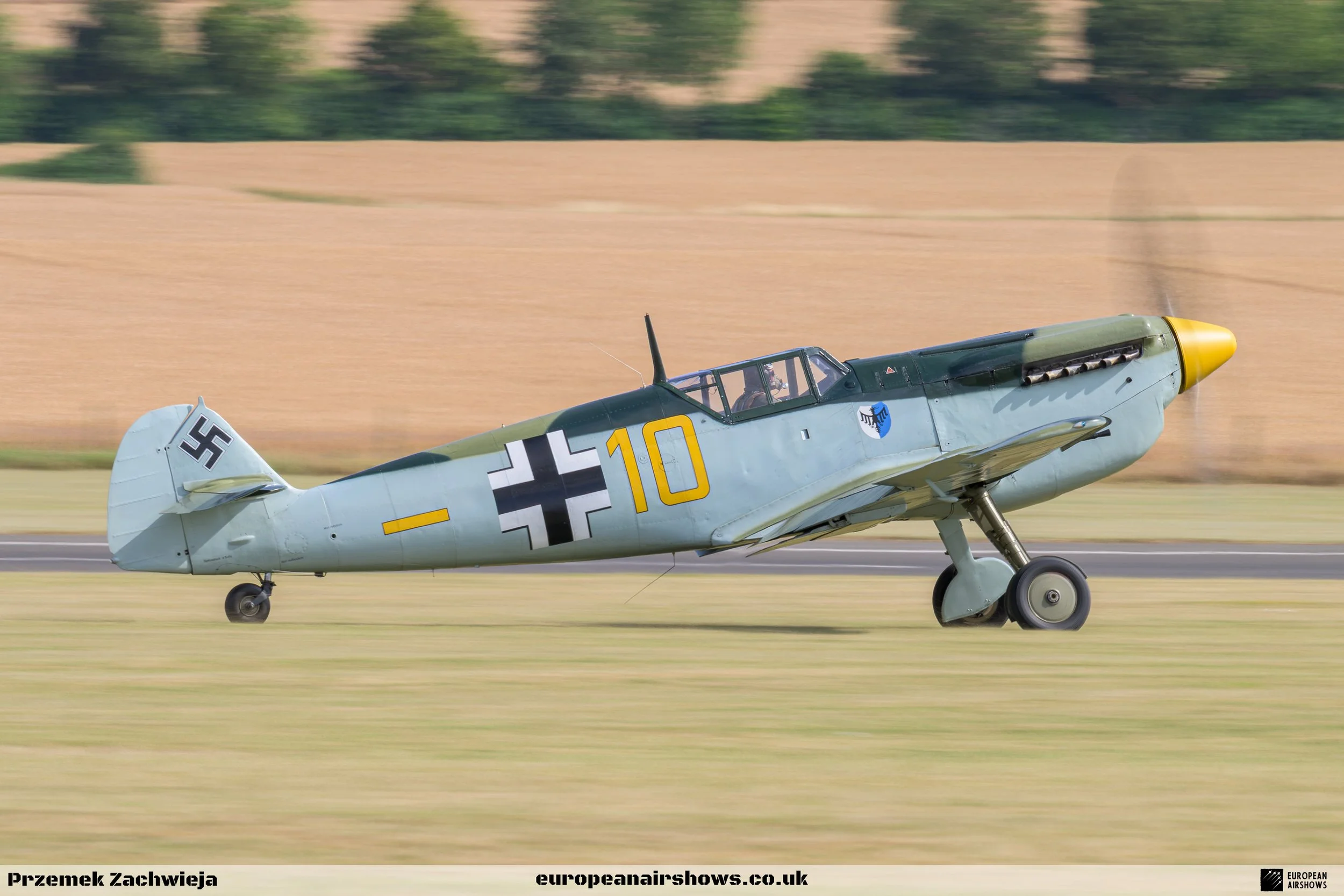
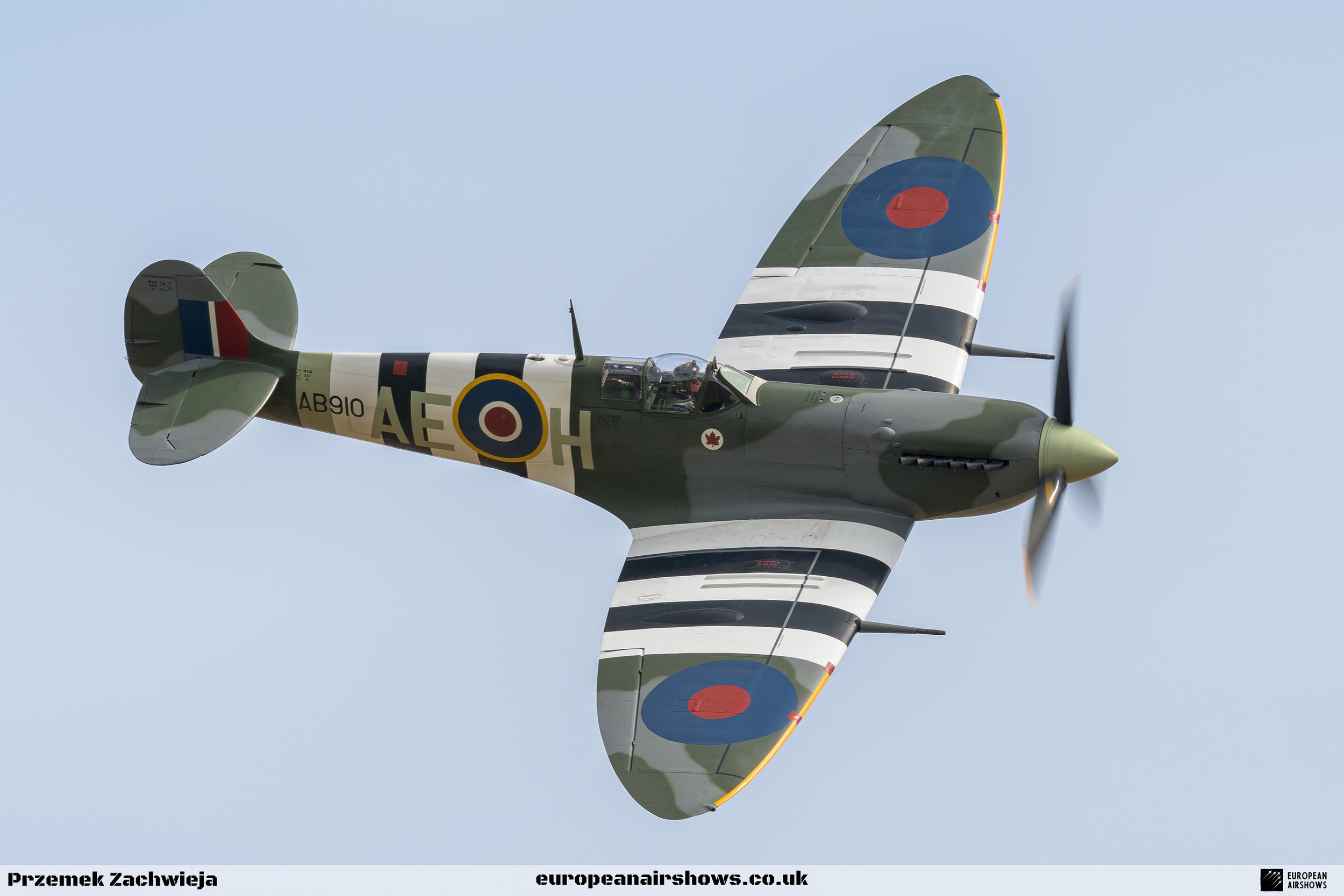
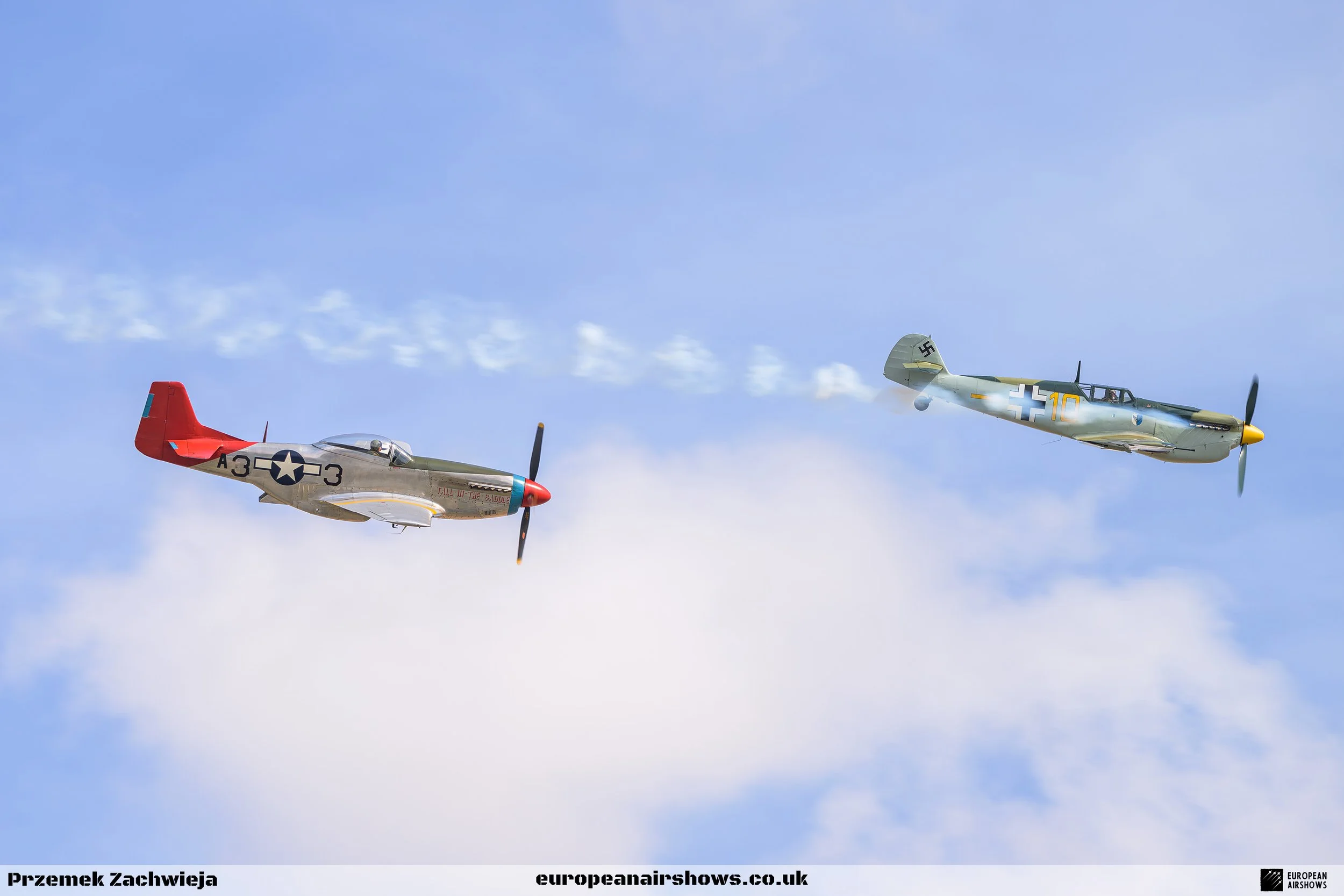
Stu Goldspink flew the Aircraft Restoration Company’s Supermarine Spitfire PR Mk XI PL983.
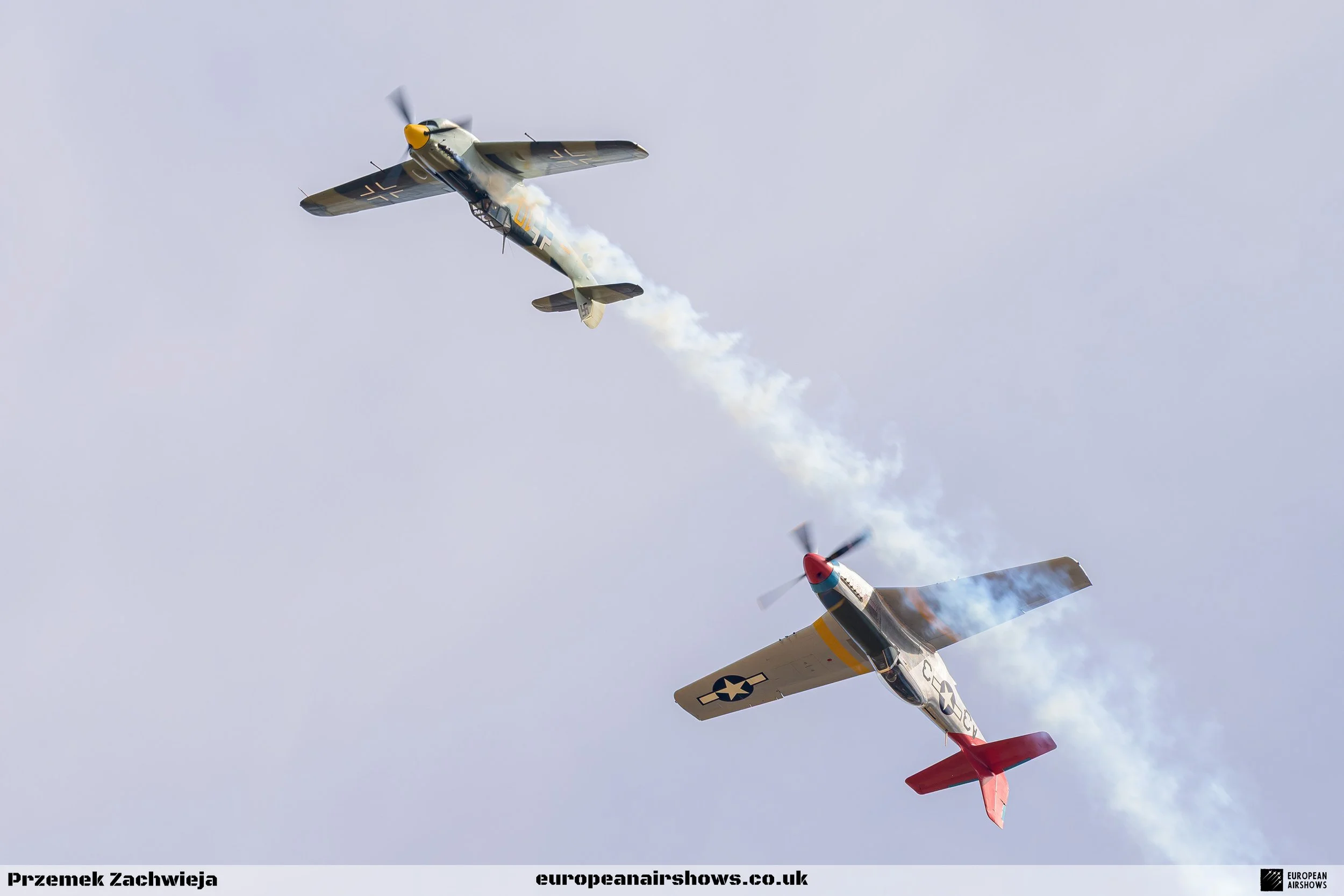
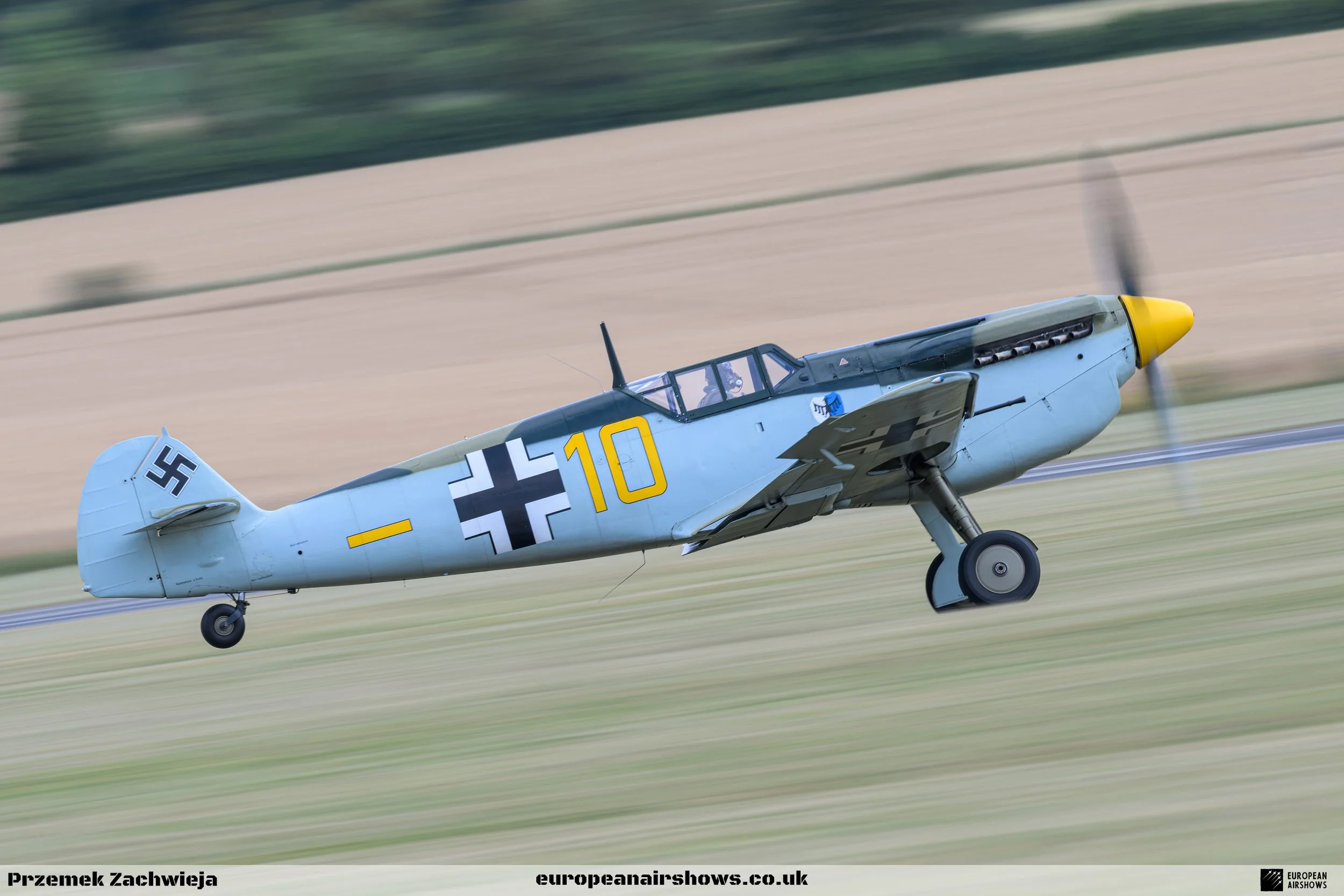
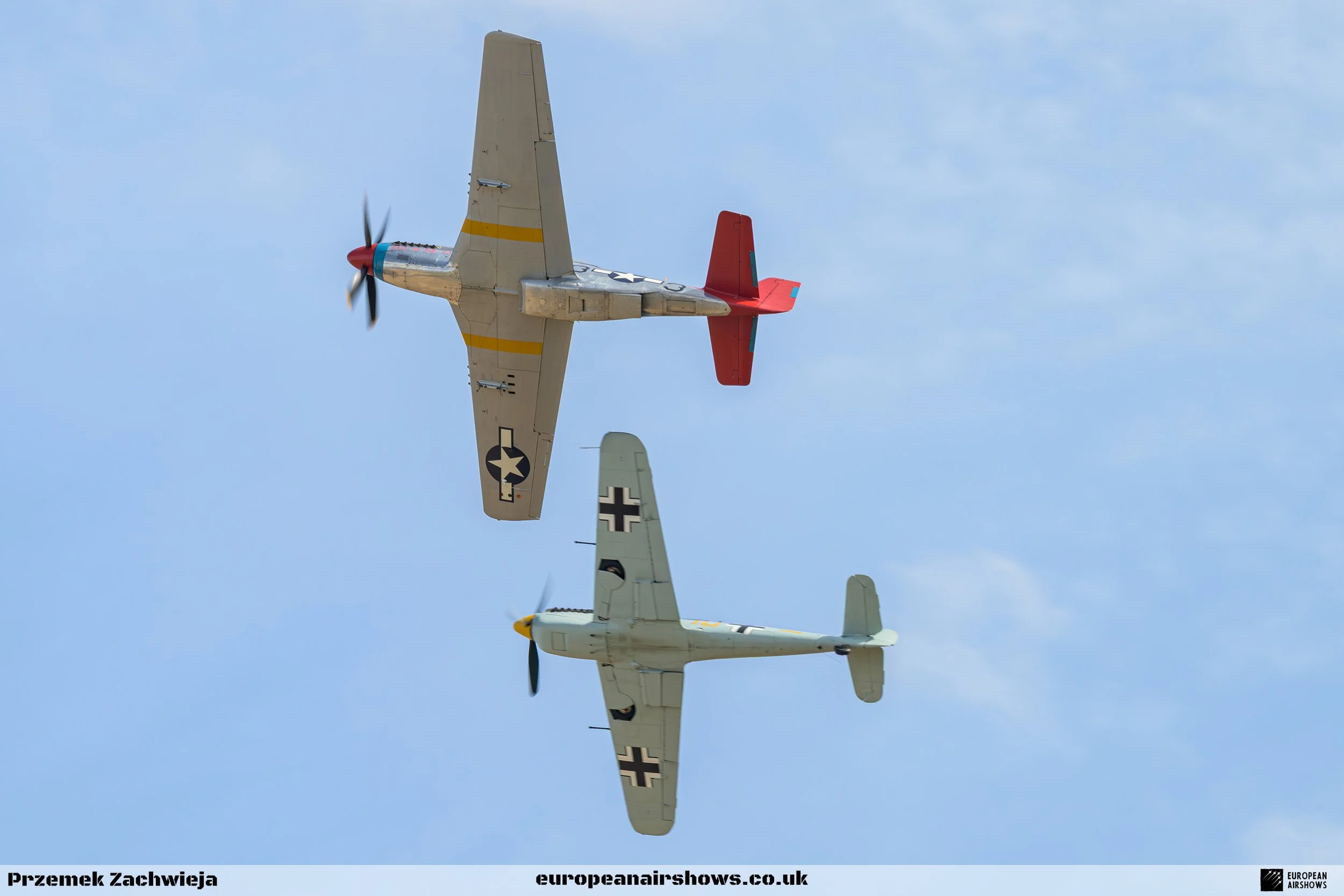
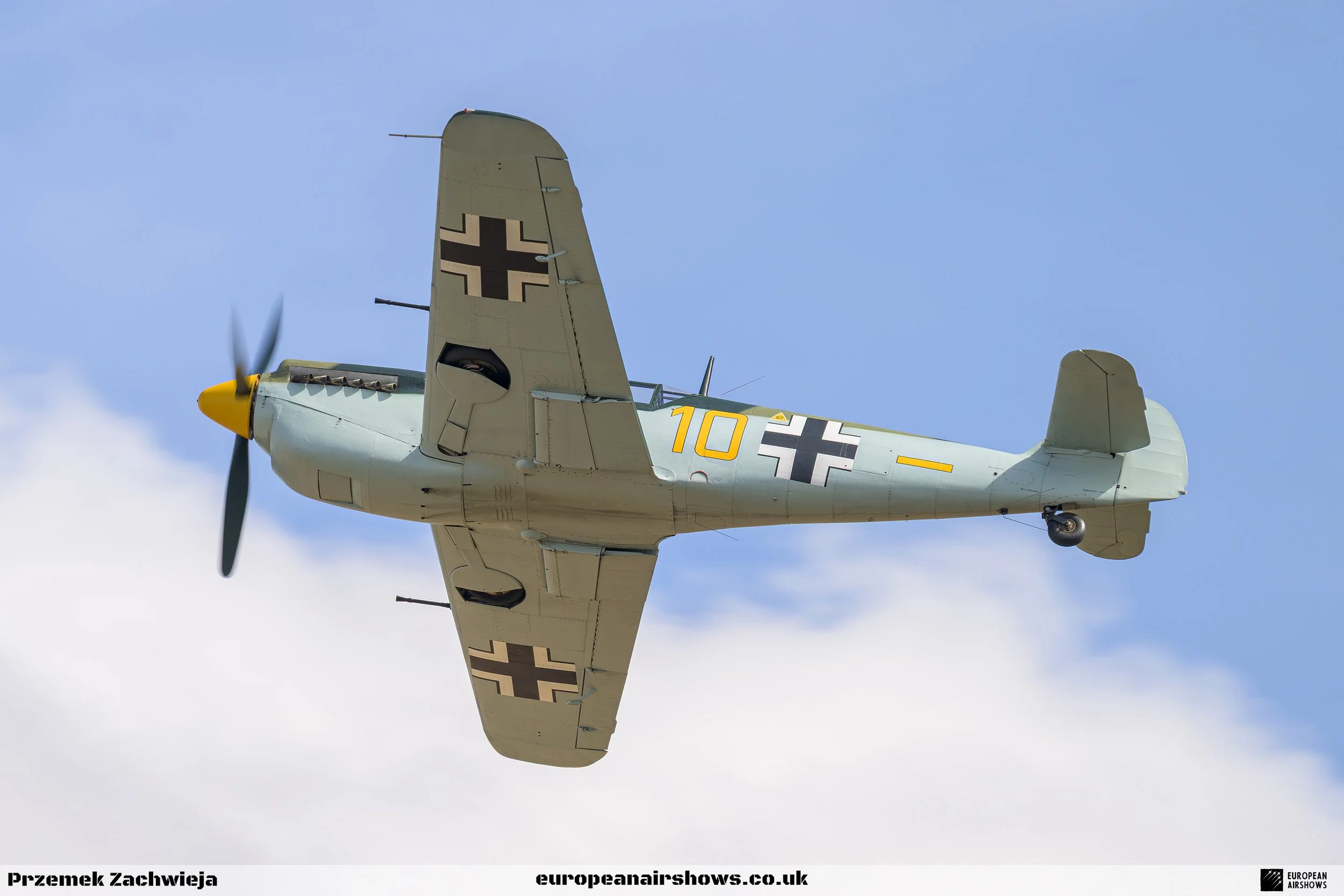
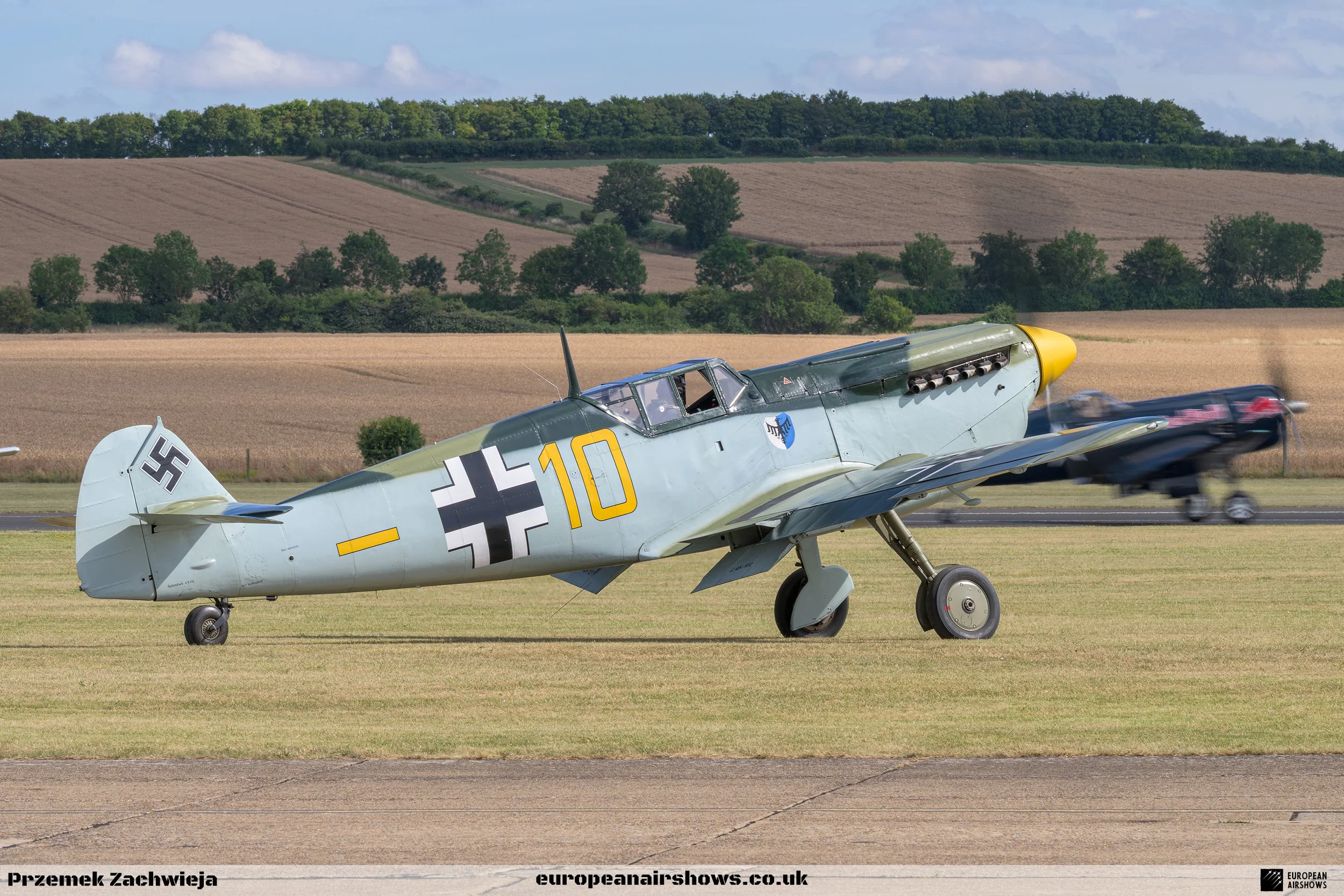
The unarmed photographic-reconnaissance Spitfire was intercepted by the Aircraft Restoration Company’s Hispano Aviación HA-1112-M1L Buchón Yellow 10, flown by Jon Gowdy.
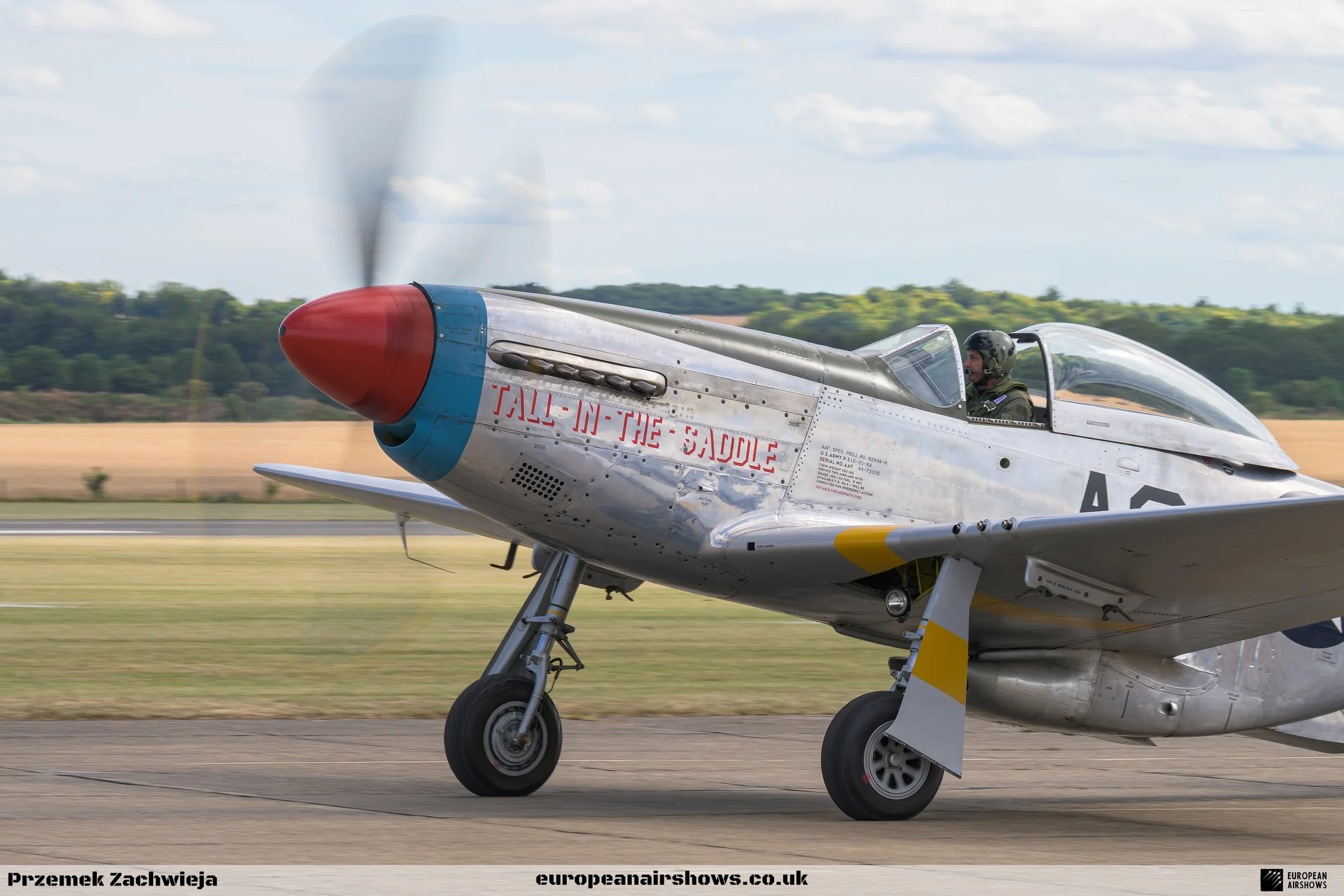
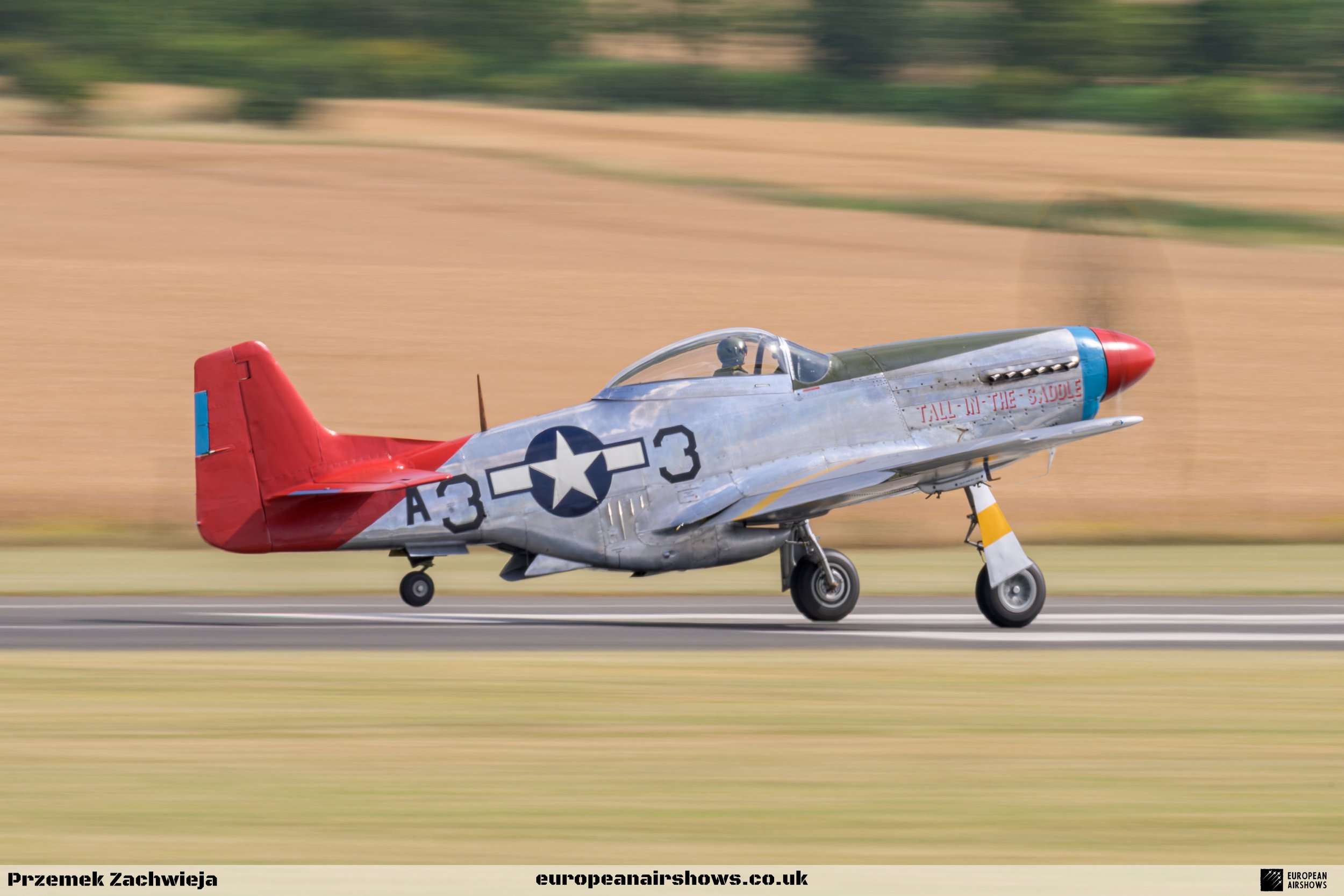
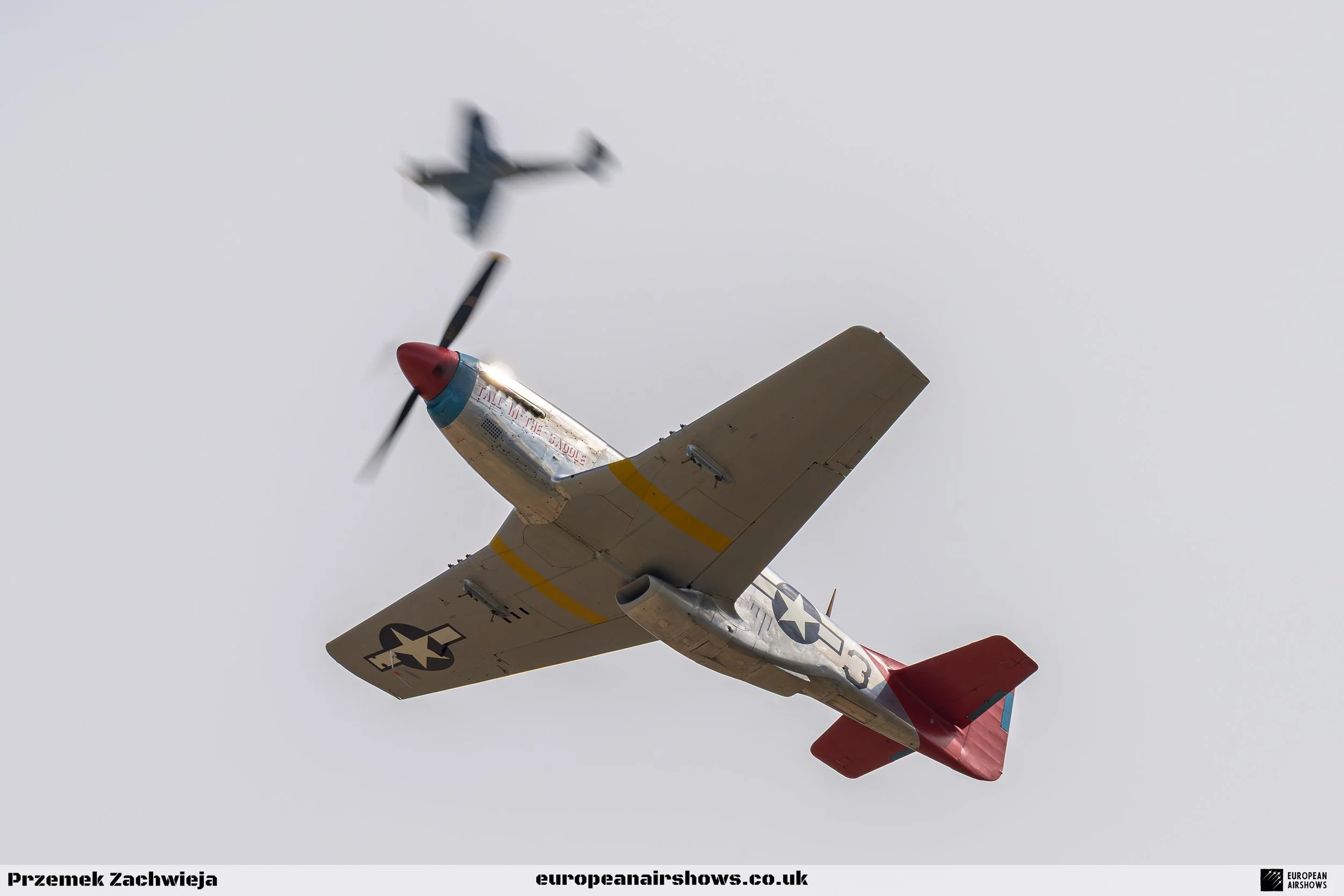
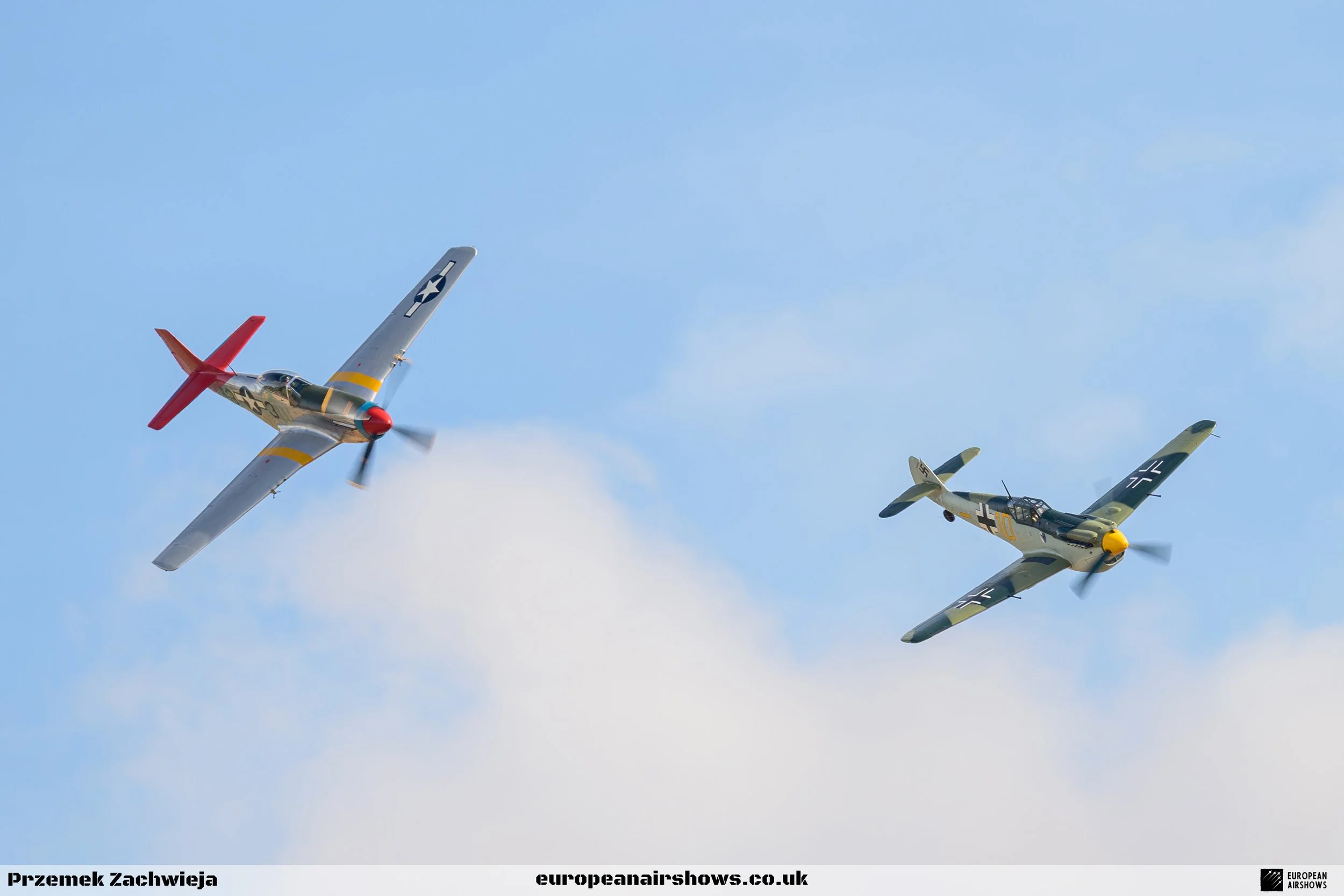
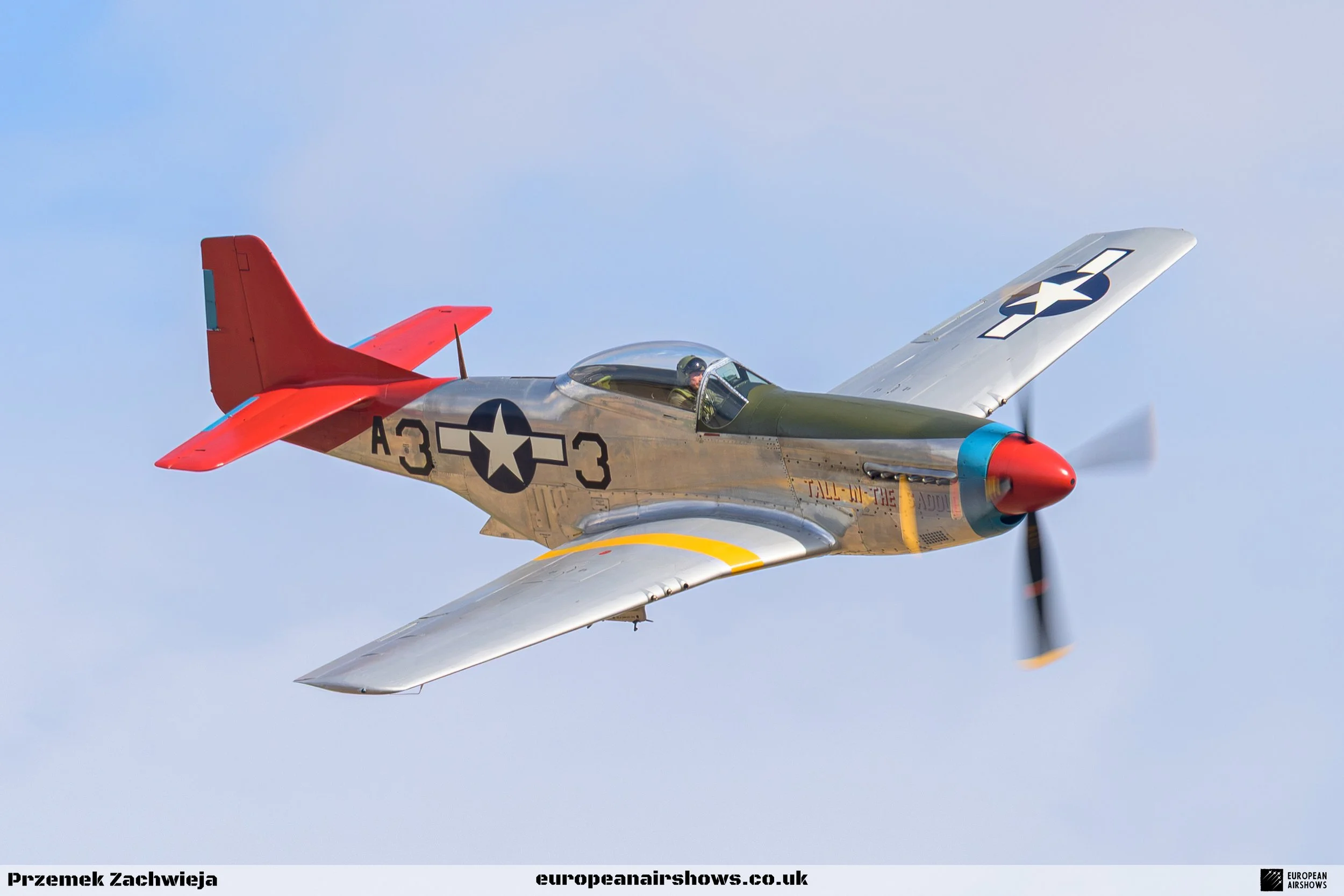
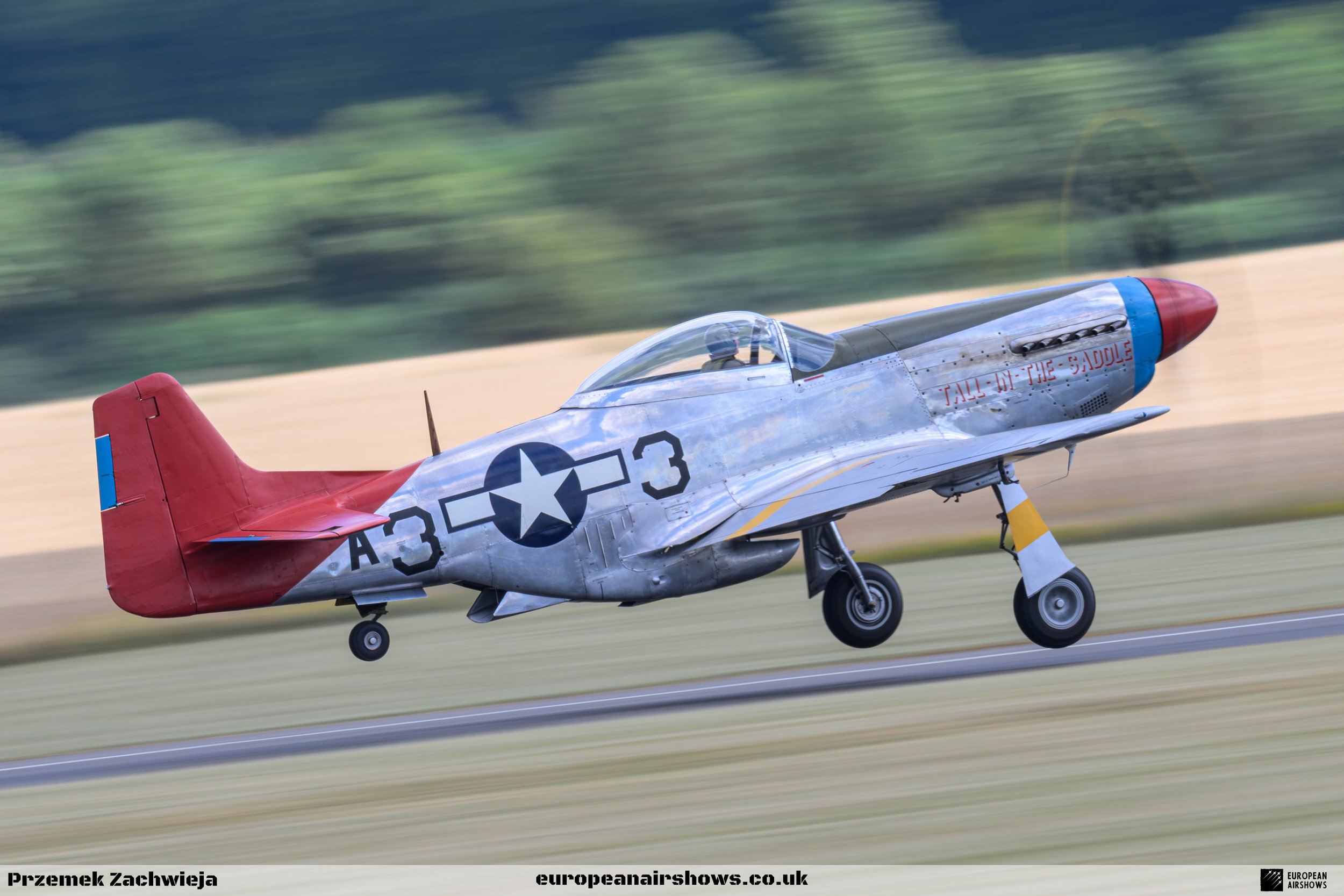
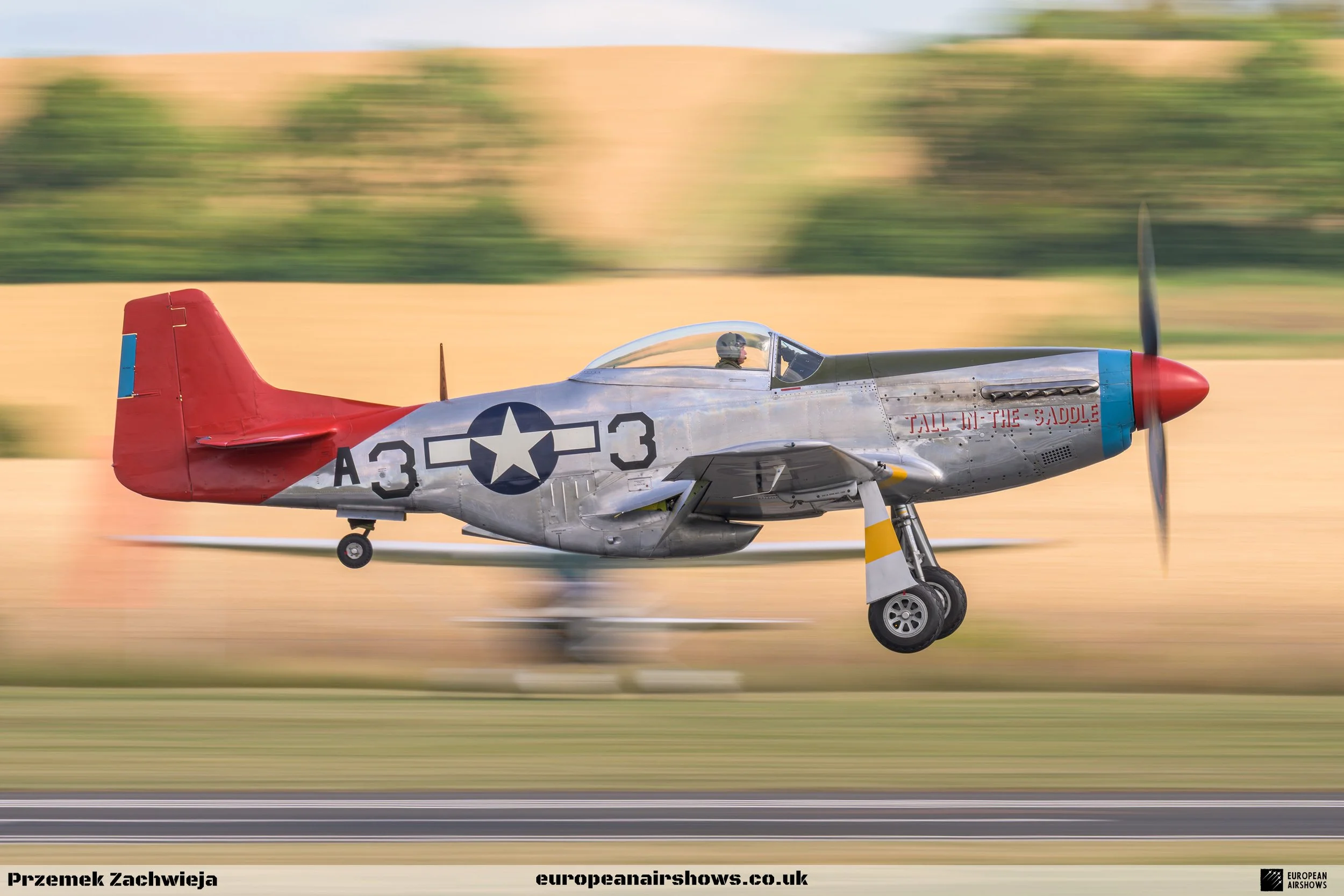
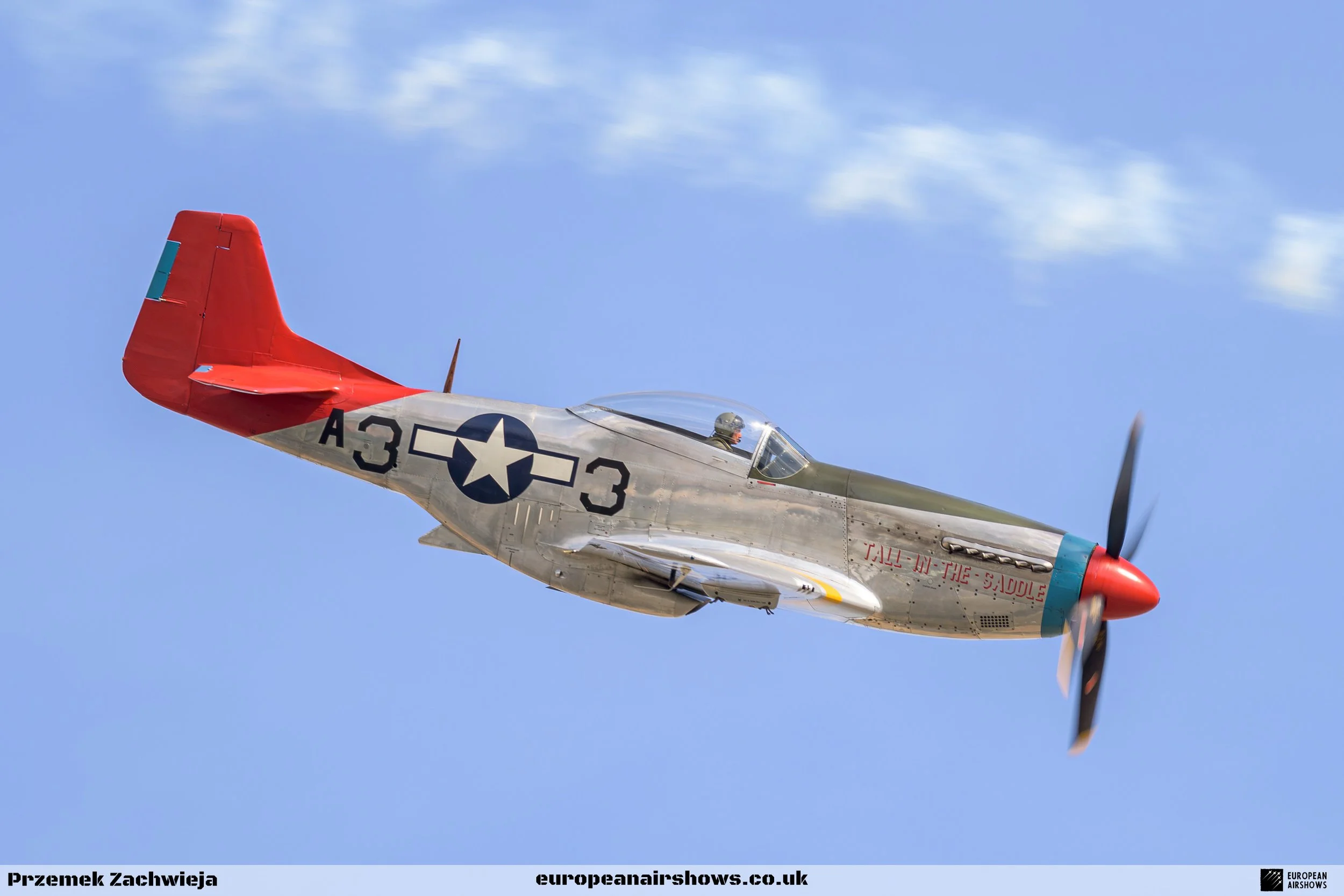
After chasing the Spitfire, the Buchón found itself confronted by the Aircraft Restoration Company’s newly acquired North American P-51D Mustang "Tall in the Saddle", flown by Paul Bonhomme.
The Mustang arrived with a very fast pass before turning the tables and pursuing the Buchón.
Officially, the Mustang chased the Buchón away. Visually, however, the scenario played like a complete shoot-down, with the Spanish-built fighter becoming the final victim after first attacking the reconnaissance Spitfire.
The sequence was extremely well executed. Each aircraft entered at exactly the right moment, the story remained easy to follow and the passes were flown close enough to give the crowd clear views of the changing engagement.
The Fighter Aviation Engineering-operated Commonwealth Aircraft Corporation CA-18 Mustang Mk 21 G-JERK Jersey Jerk had been expected to join the sequence on Sunday but did not arrive, leaving the same three-aircraft scenario on both days.
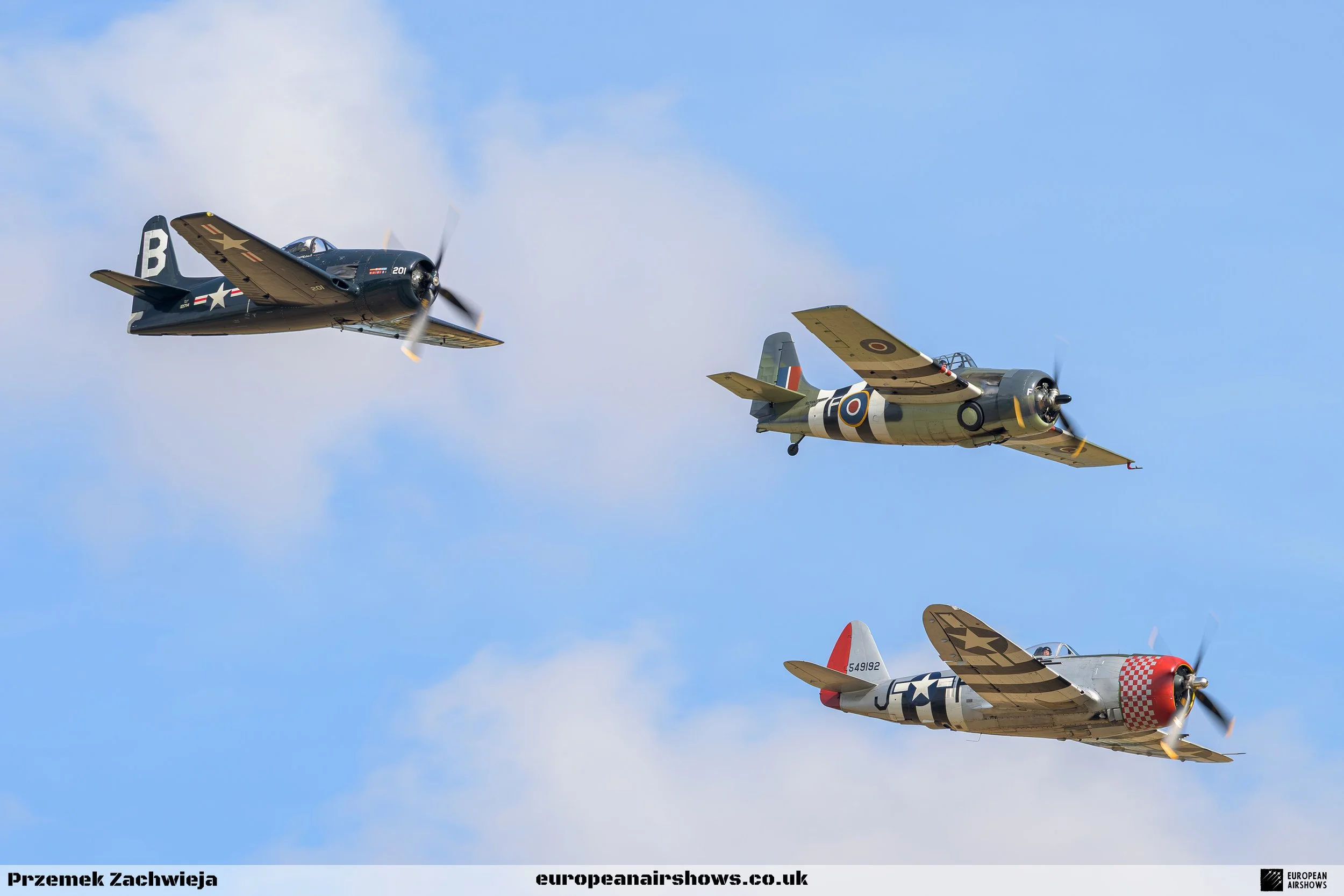
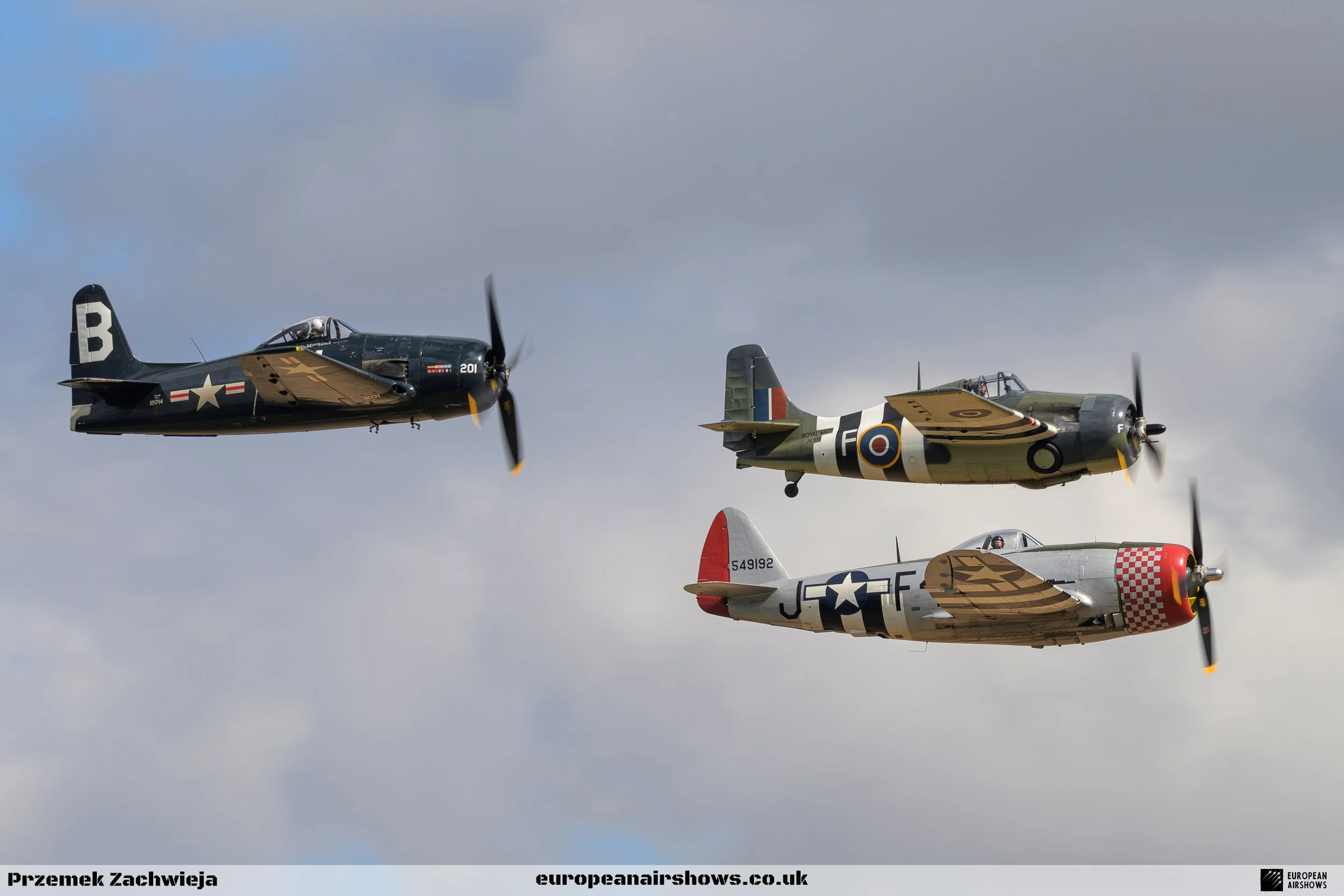
The final act brought together three powerful American radial-engined fighters.
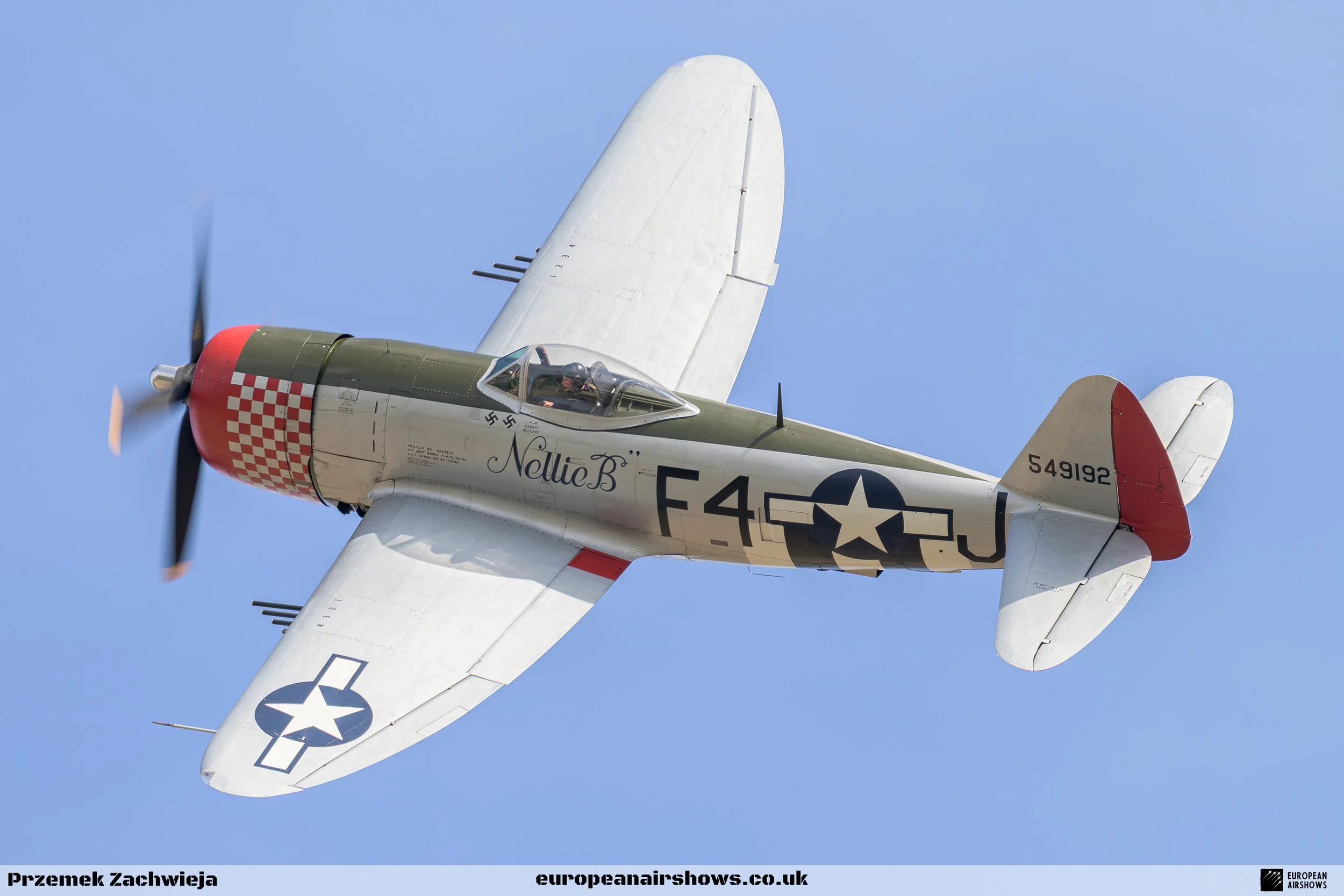
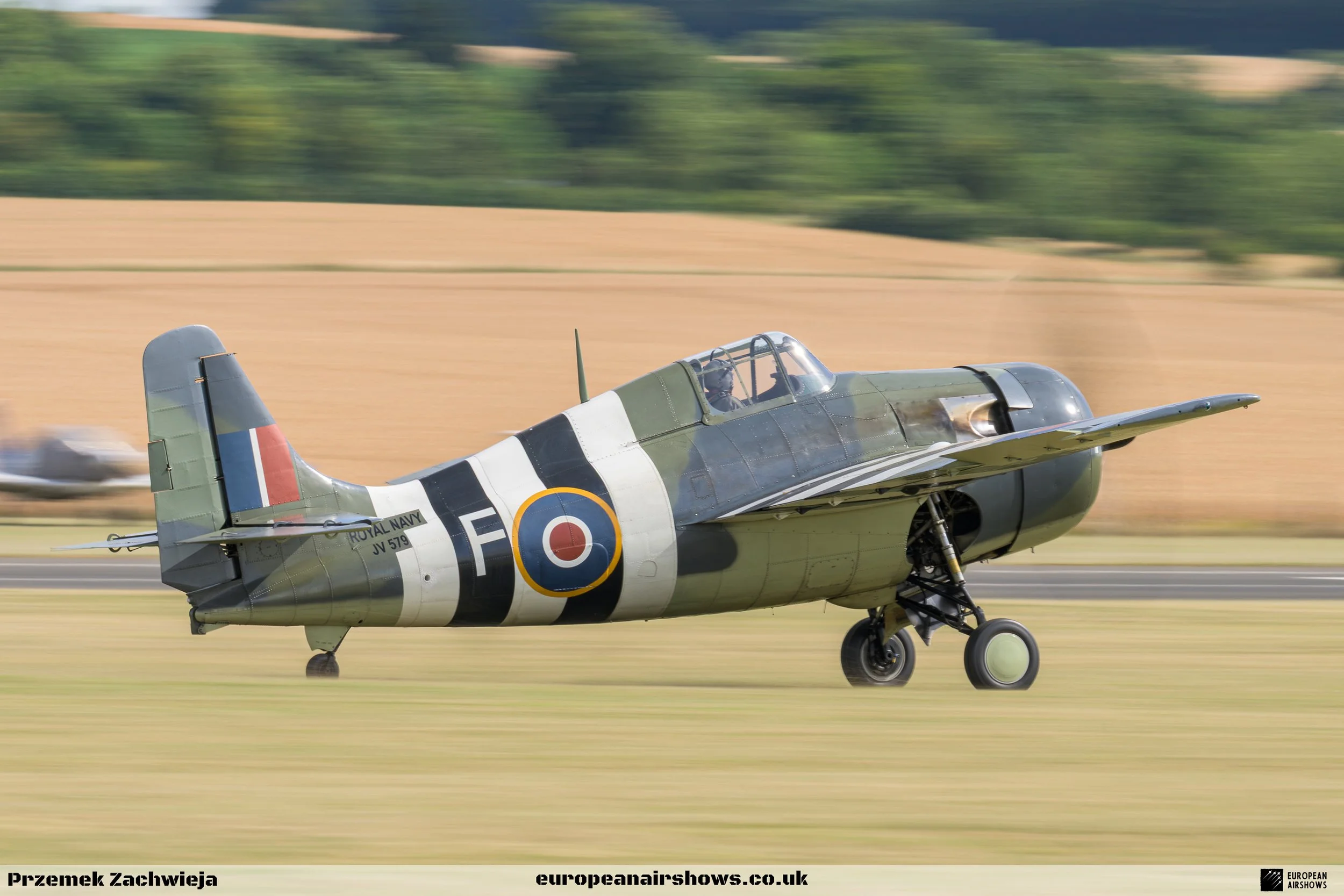
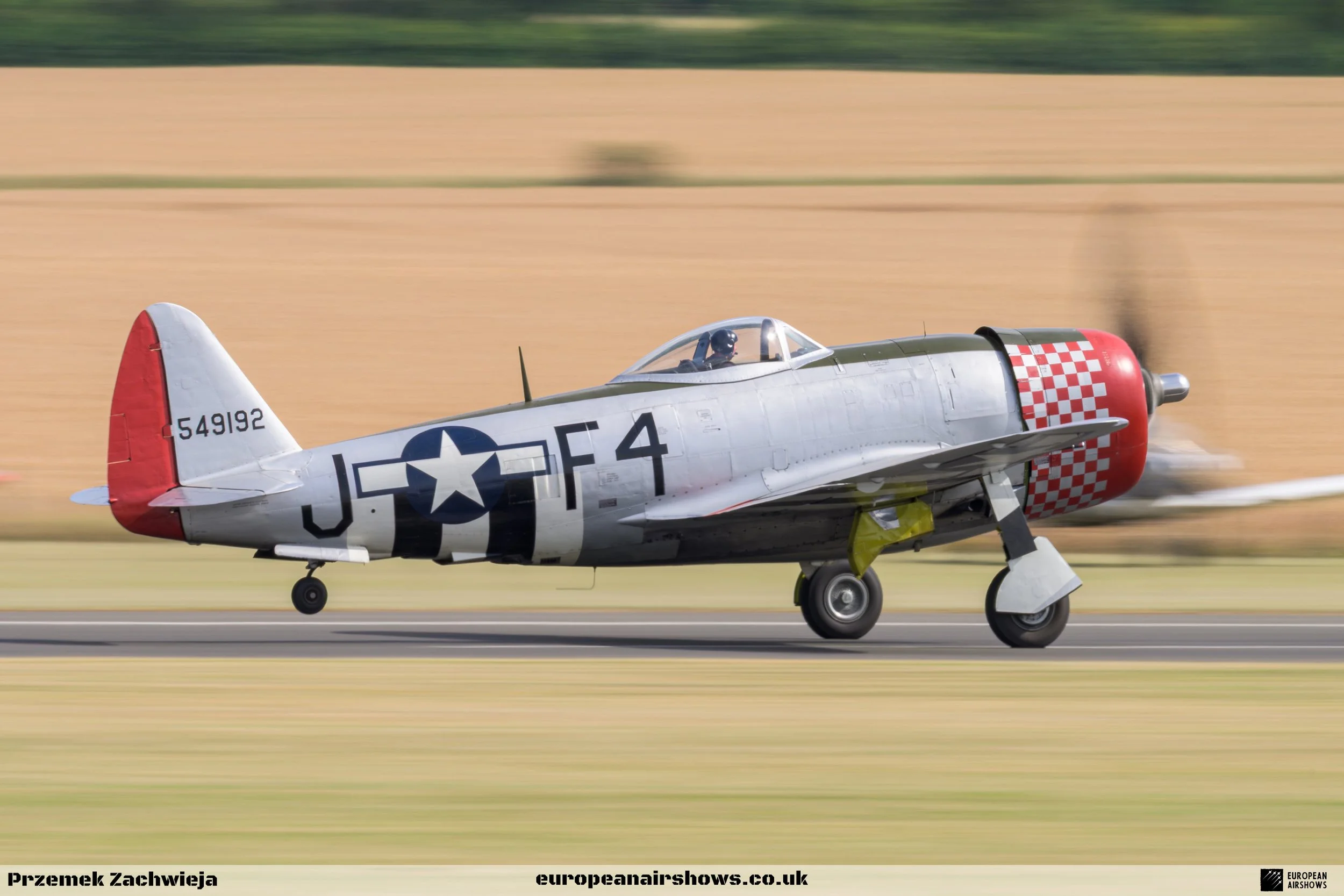
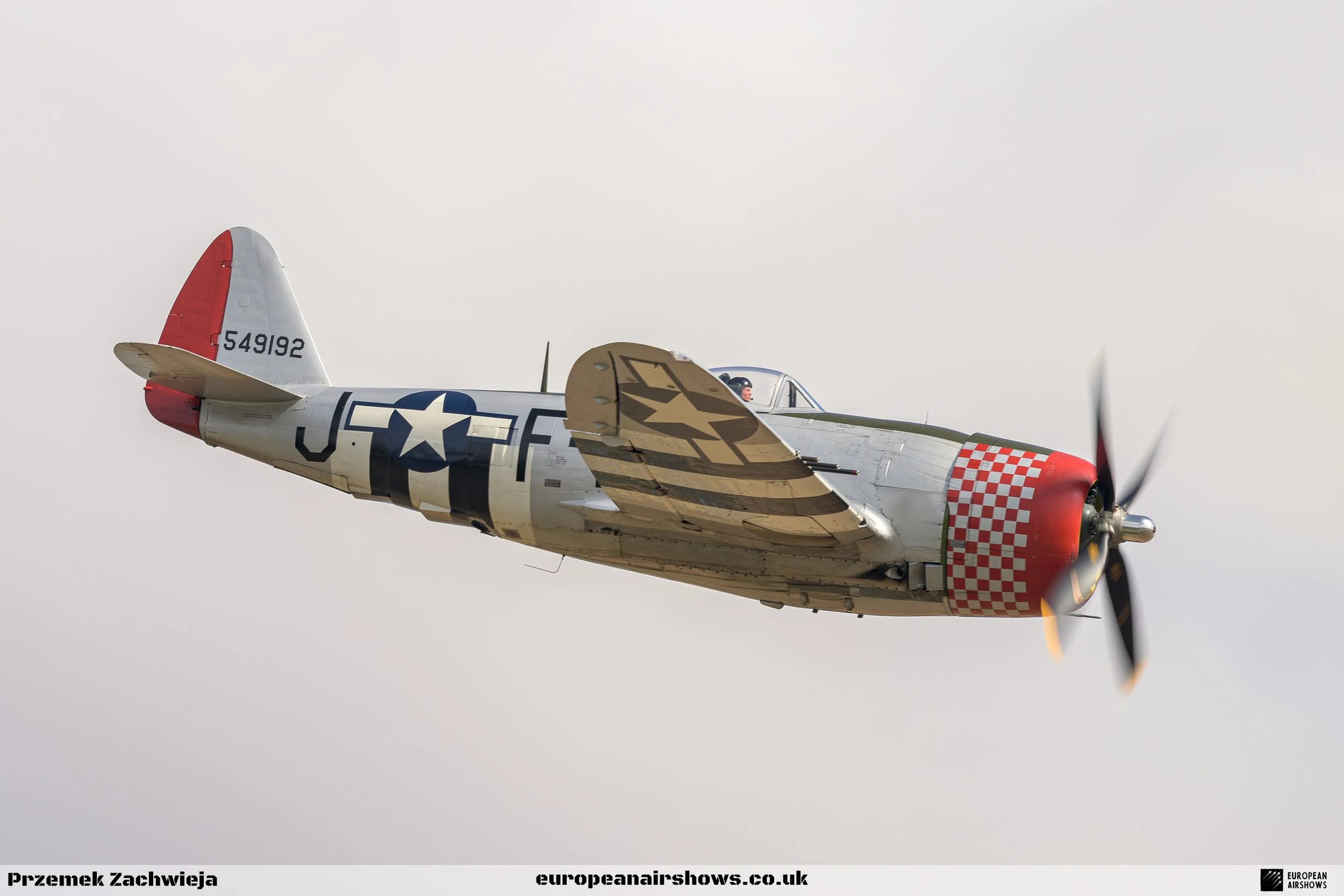
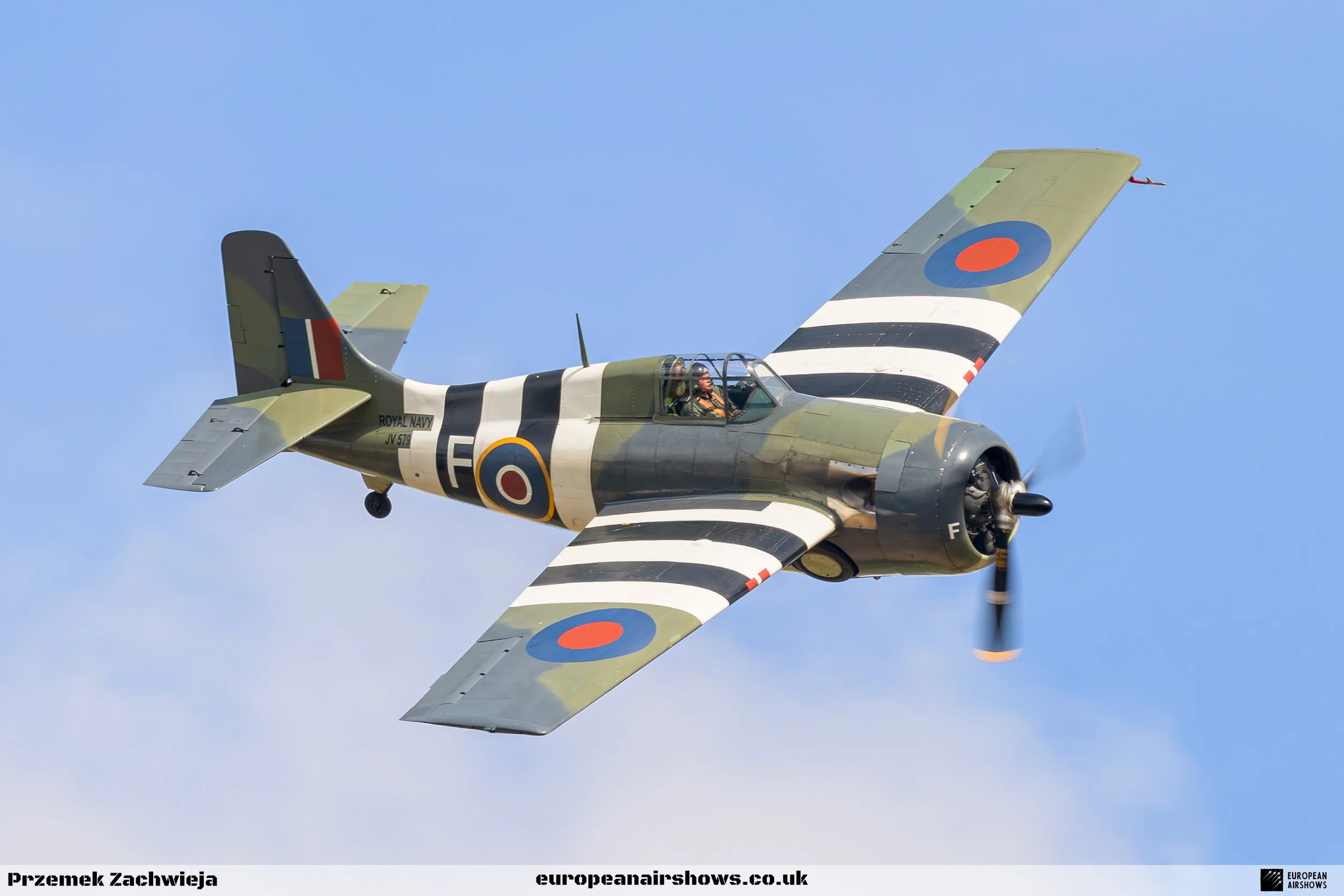
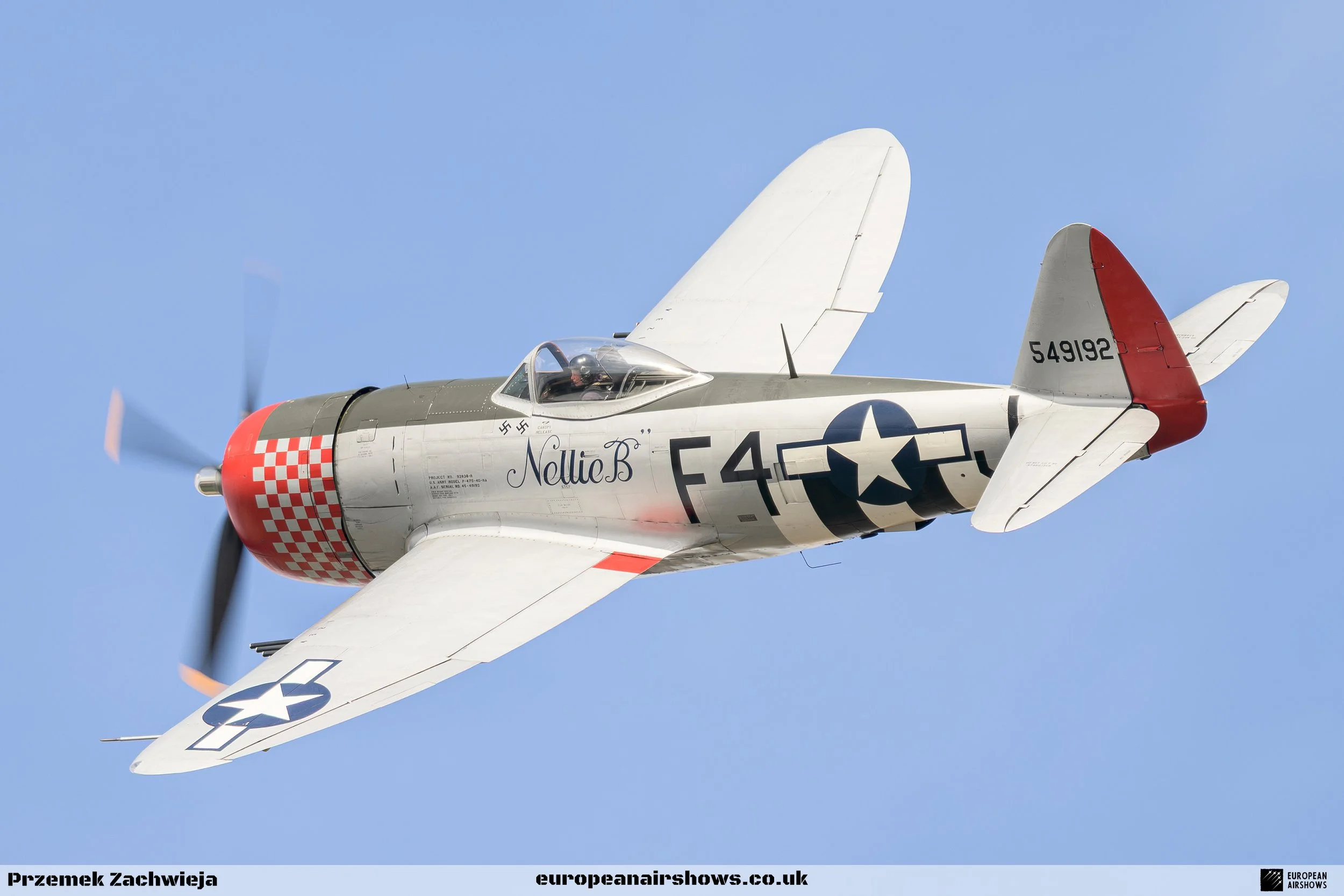
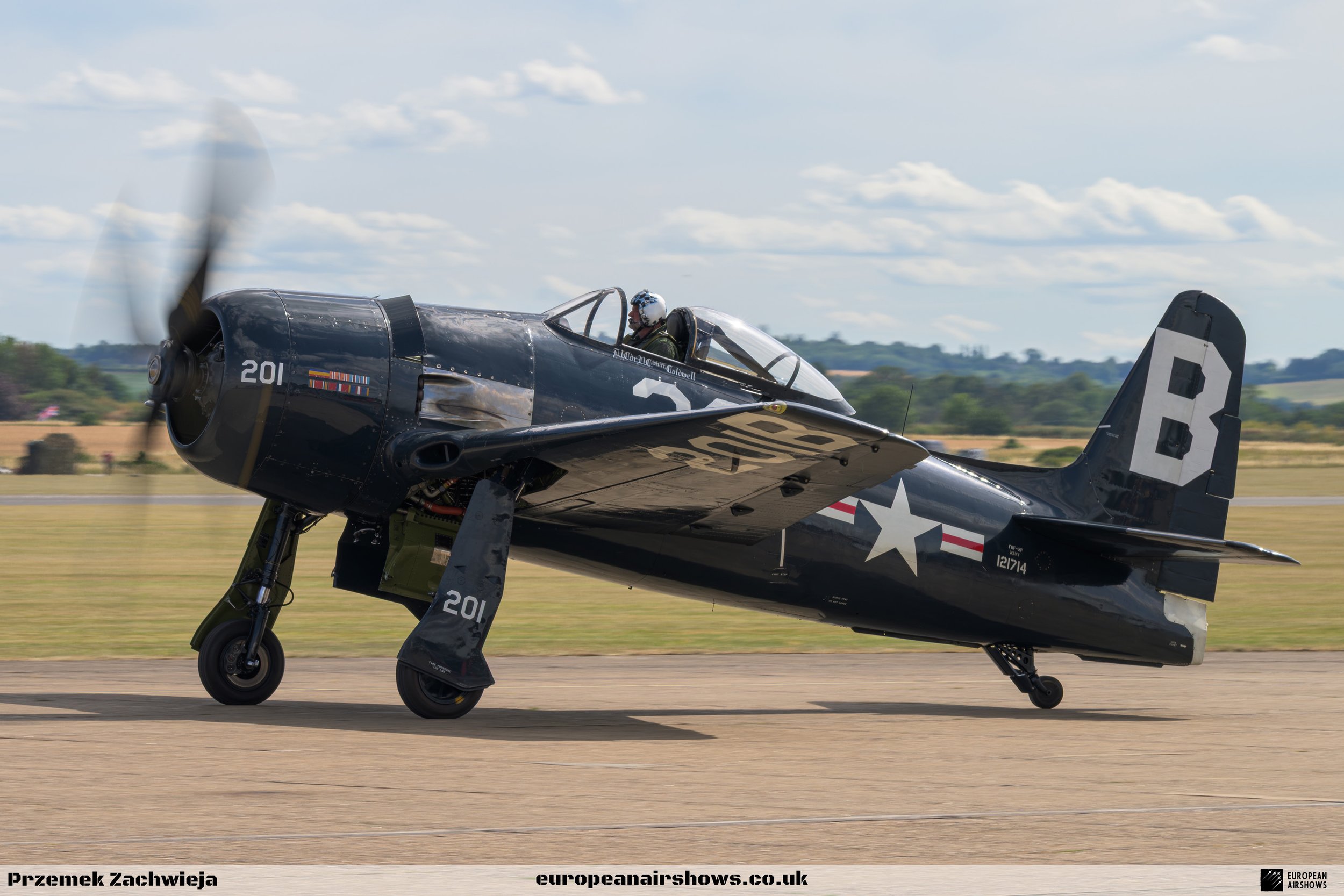
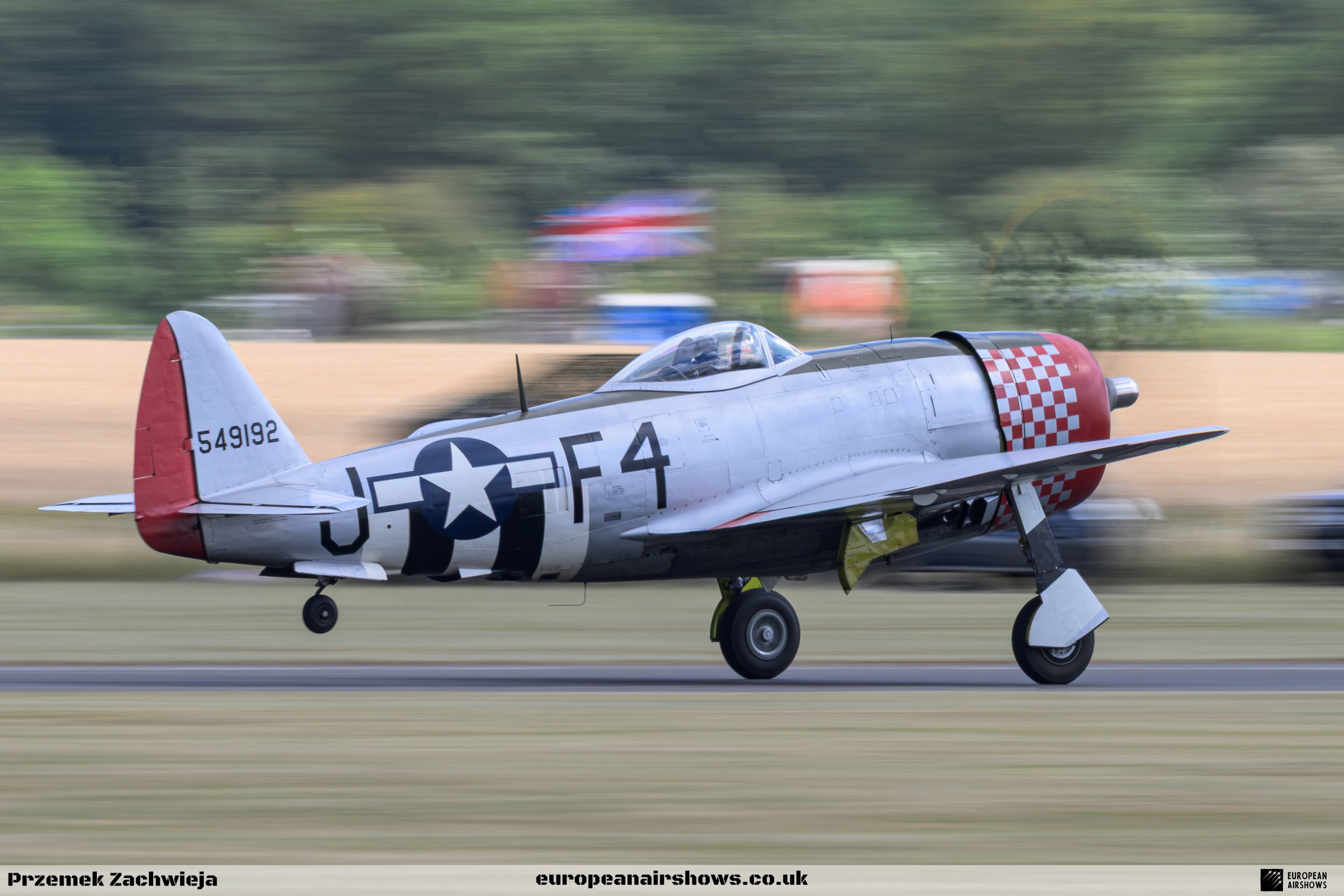
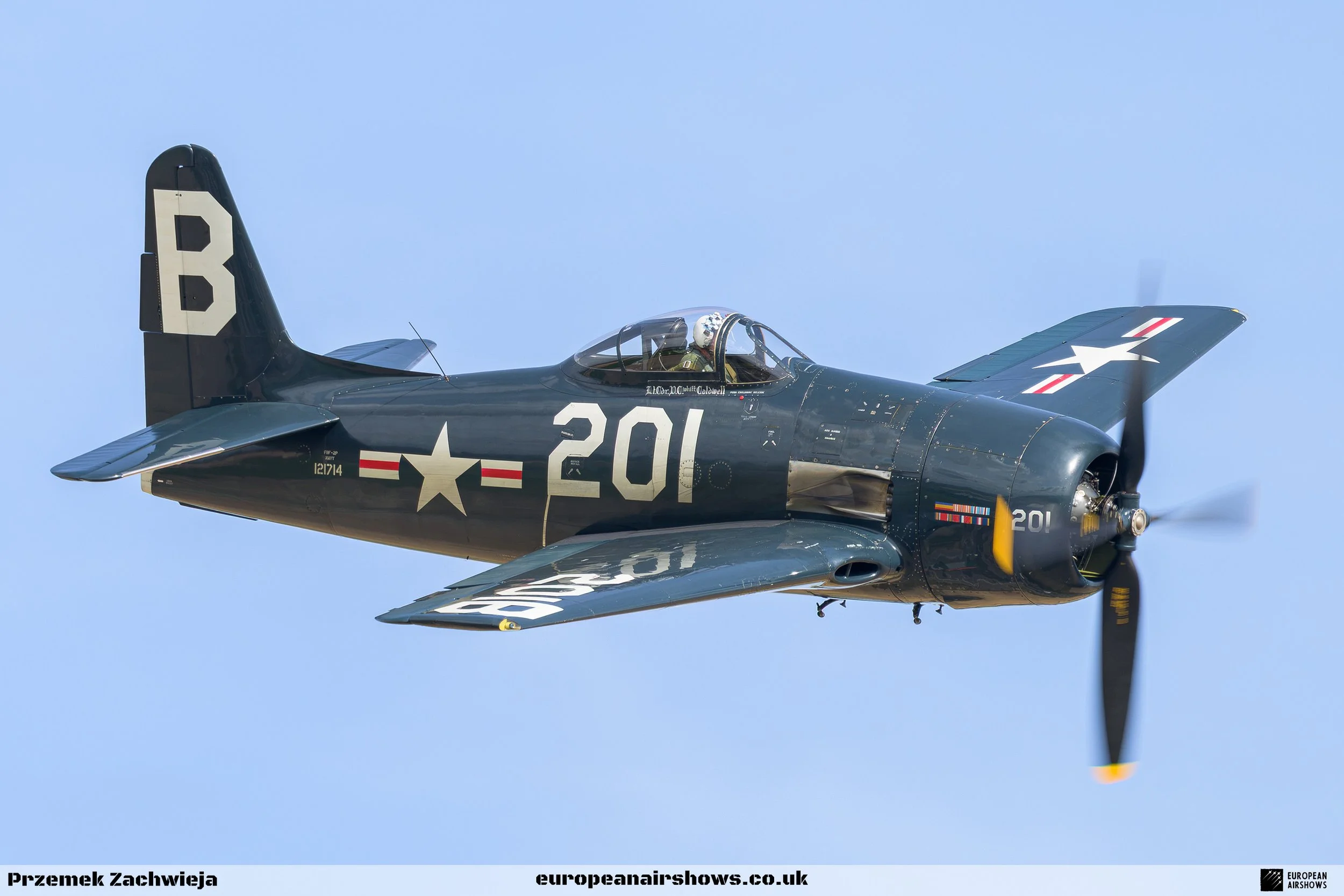
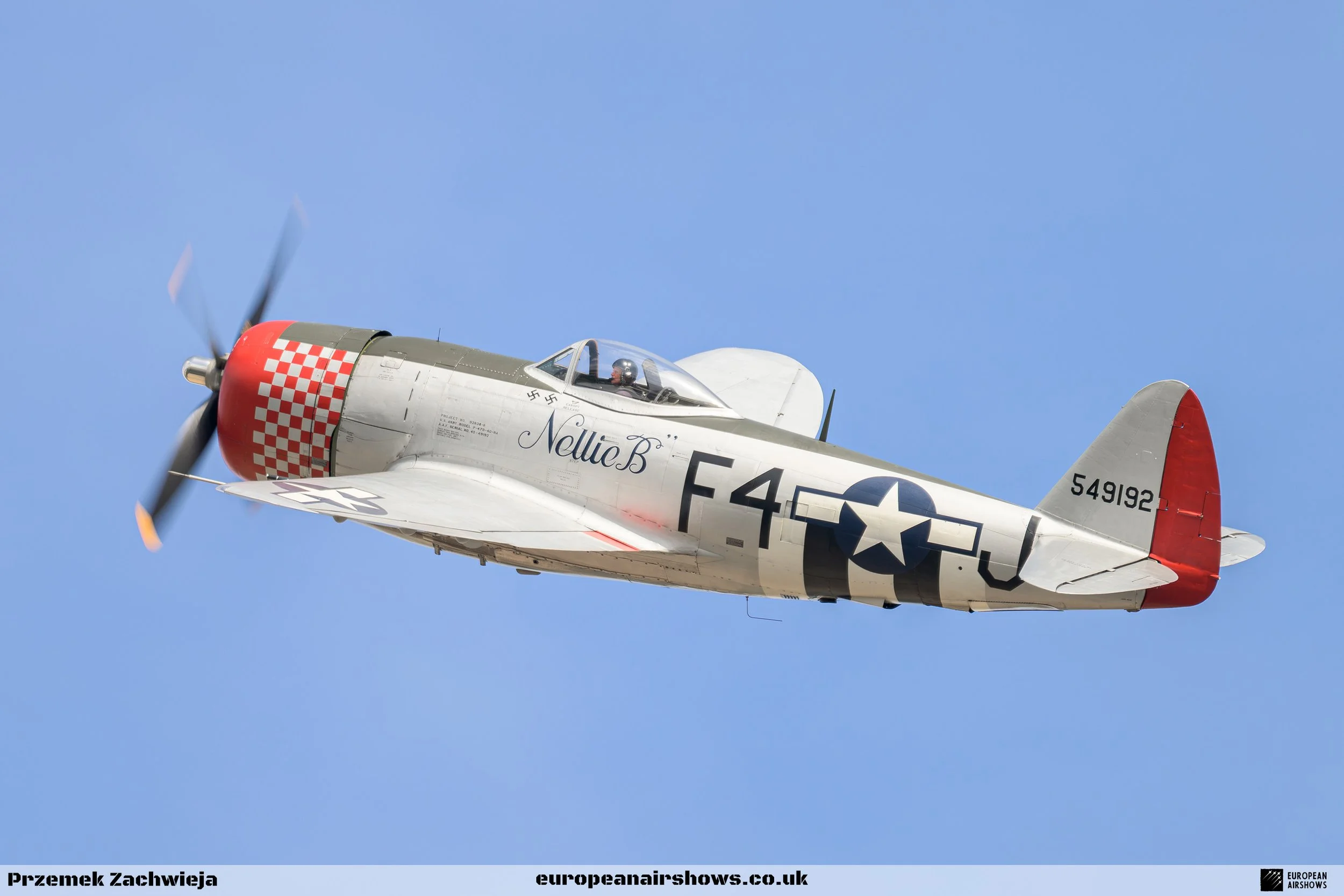
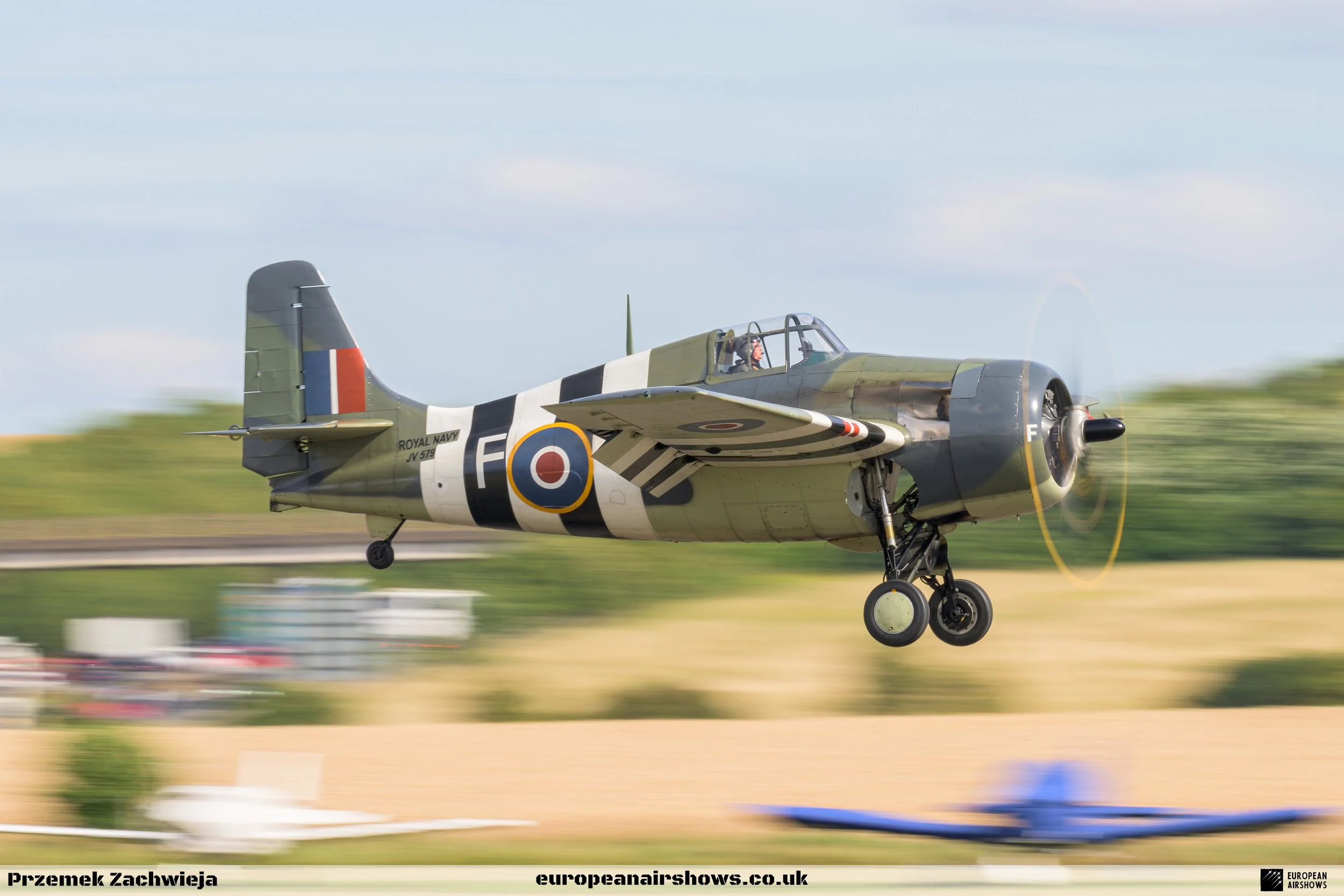
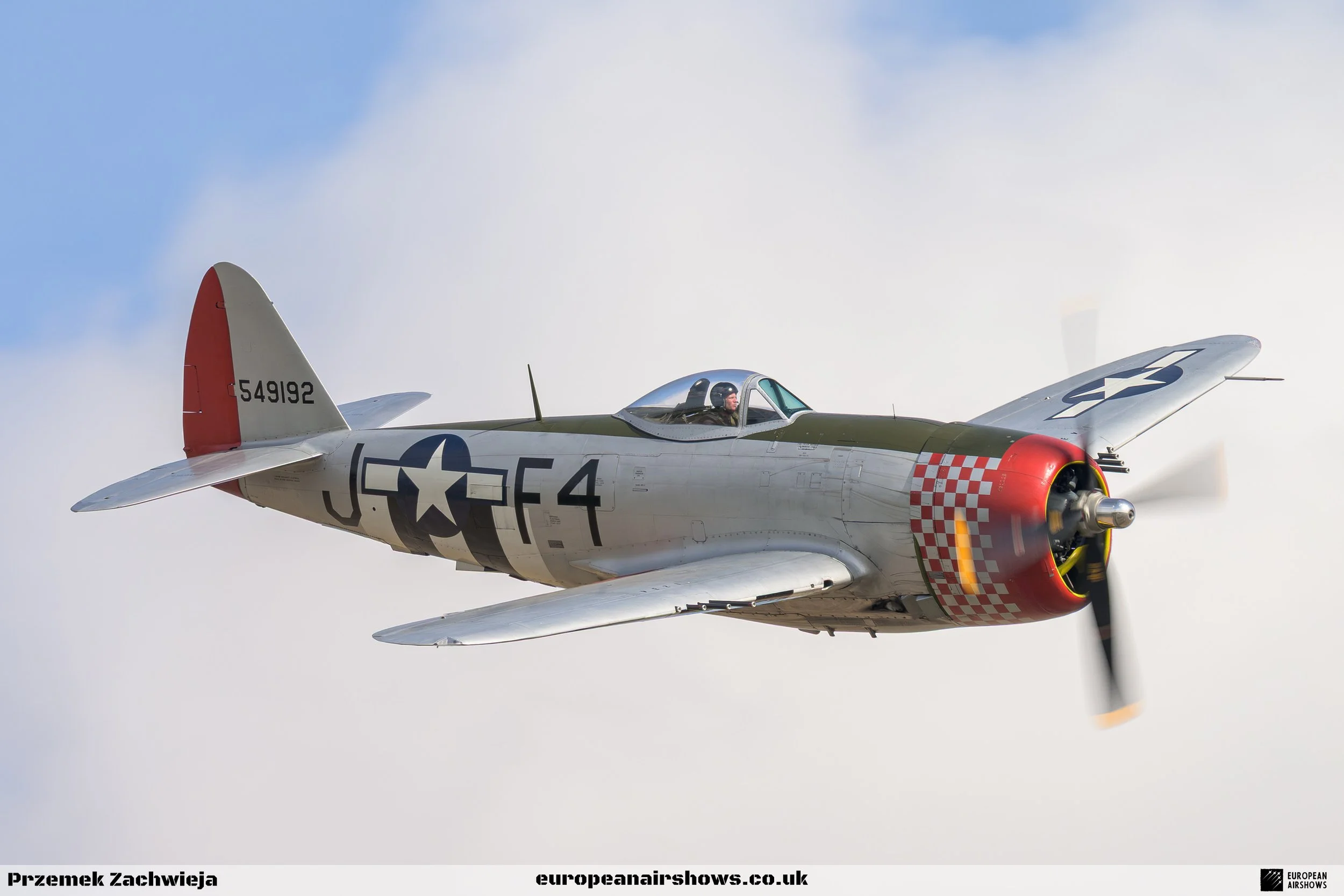
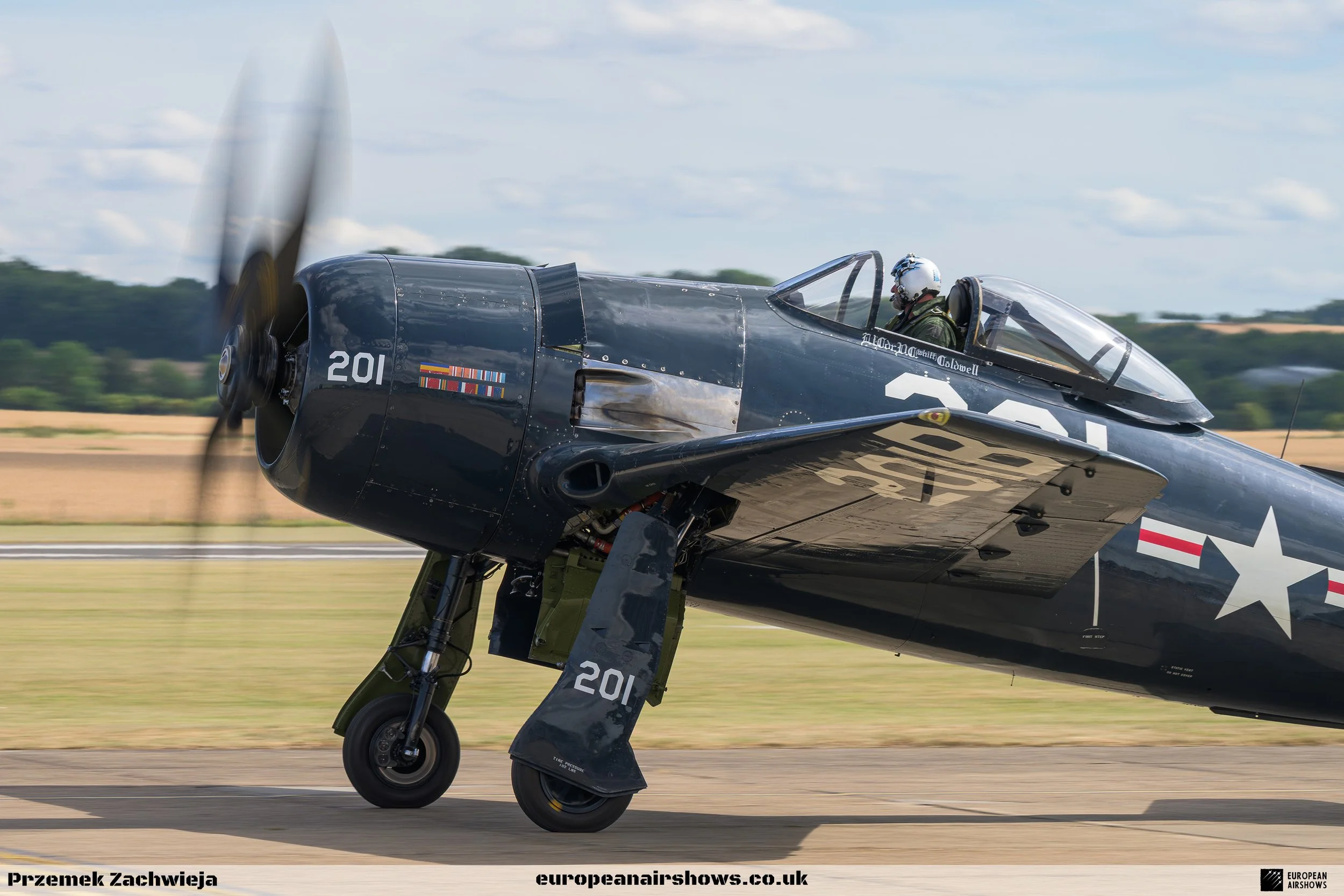
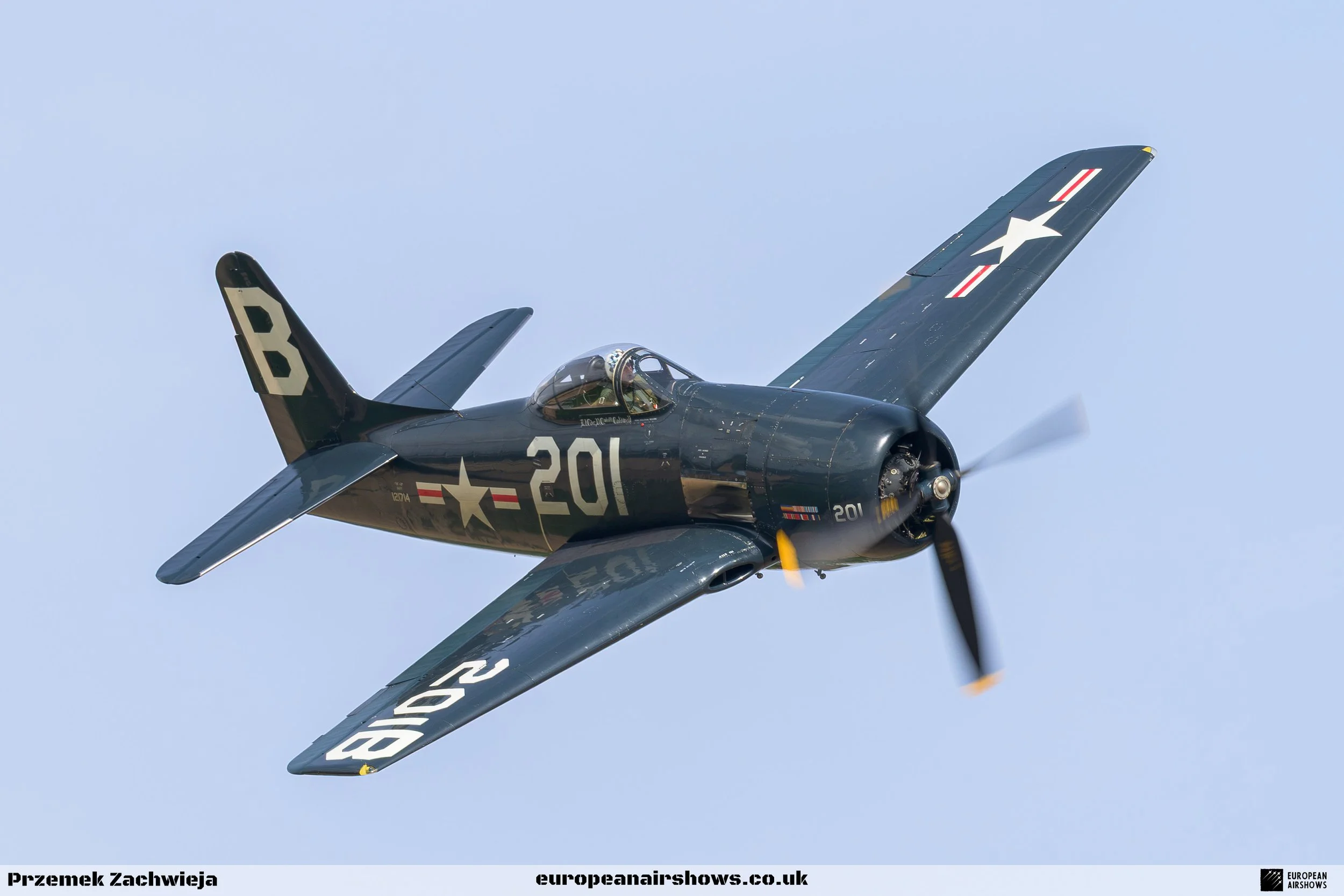
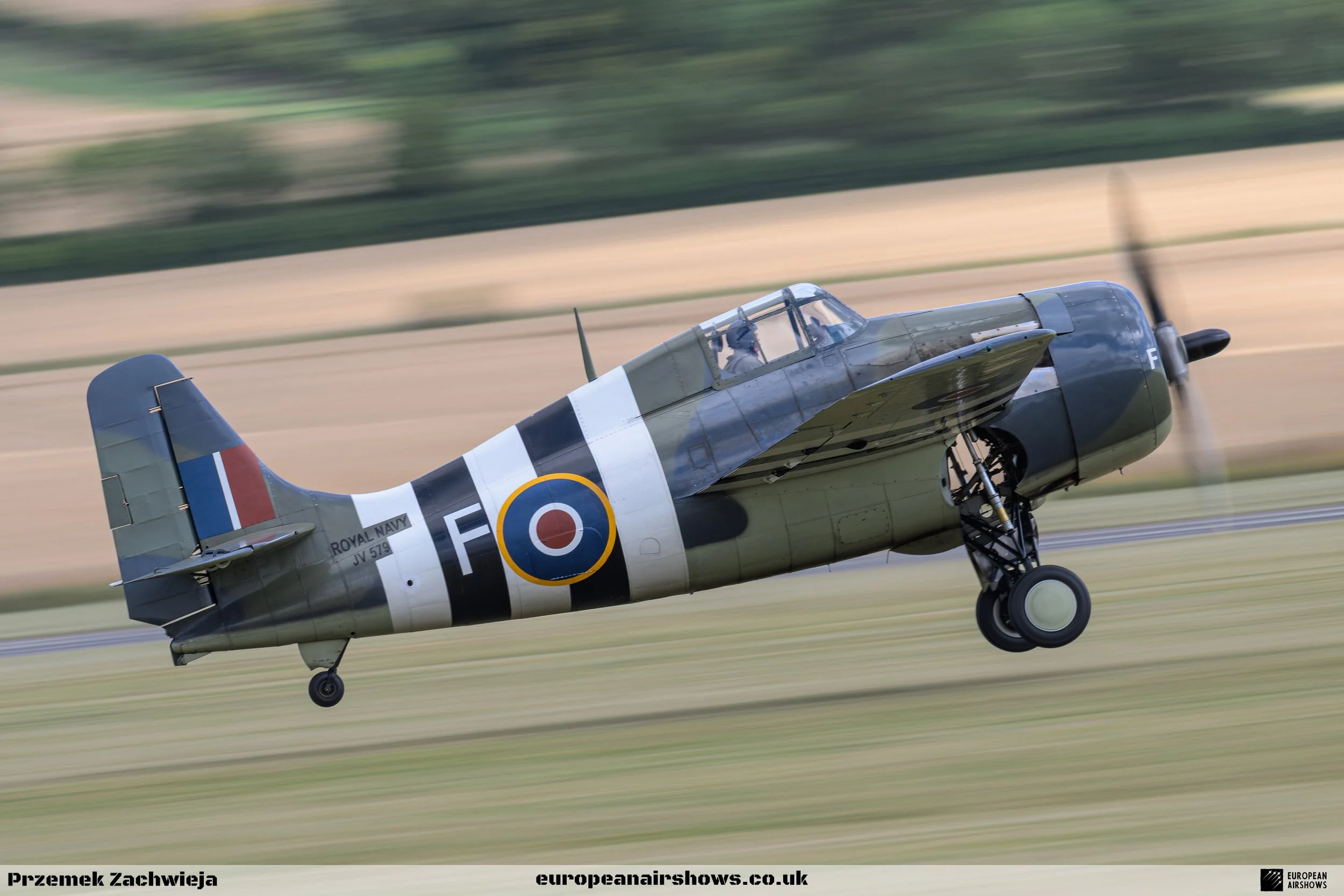
The Fighter Collection’s Grumman FM-2 Wildcat flown by Rolf Meum, Fighter Aviation Engineering’s Republic P-47D Thunderbolt "Nellie" flown by Dave Puleston, and The Fighter Collection’s Grumman F8F-2P Bearcat flown by Nick Grey.
The three aircraft completed a single formation pass before separating for individual displays.
Rolf Meum opened the sequence with the Wildcat. The smallest and oldest-looking of the three fighters, the FM-2 was flown through a well-balanced routine that showed its compact shape and surprisingly lively handling.
Dave Puleston followed in the enormous P-47D Thunderbolt Nellie. The Thunderbolt has tremendous presence in the air, with the sound of its Pratt & Whitney R-2800 radial engine and the sheer size of the aircraft making even a straightforward pass look impressive.
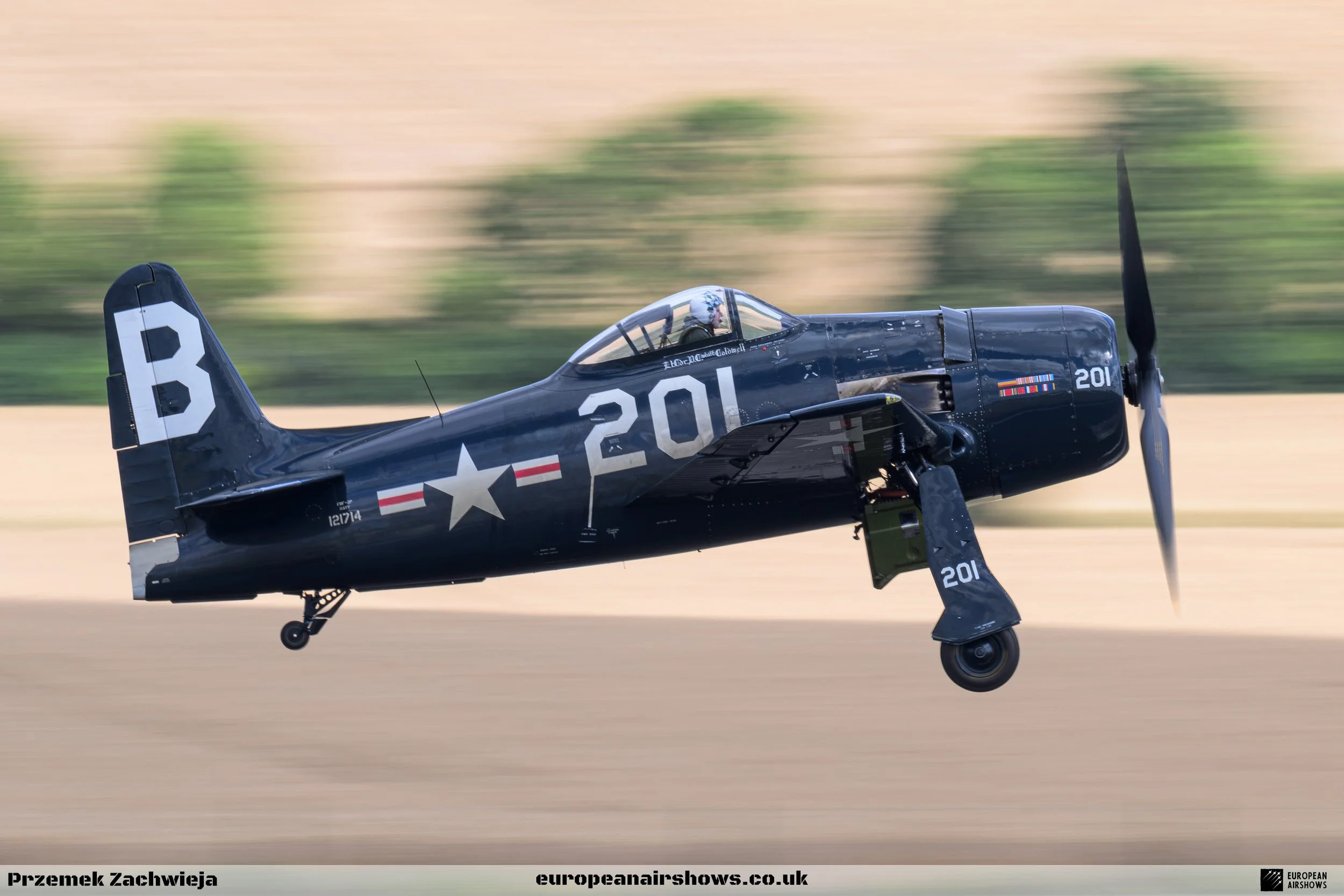
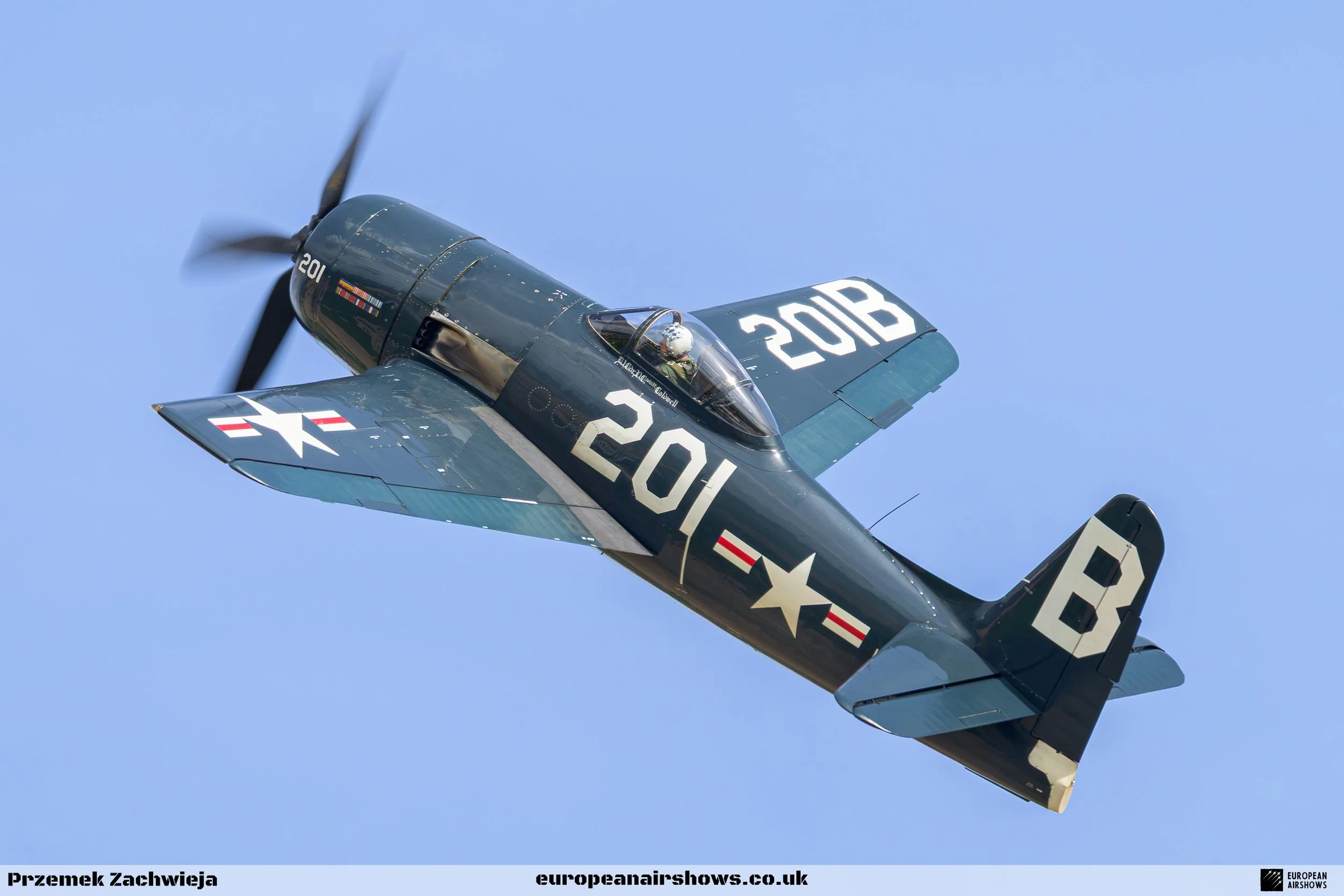
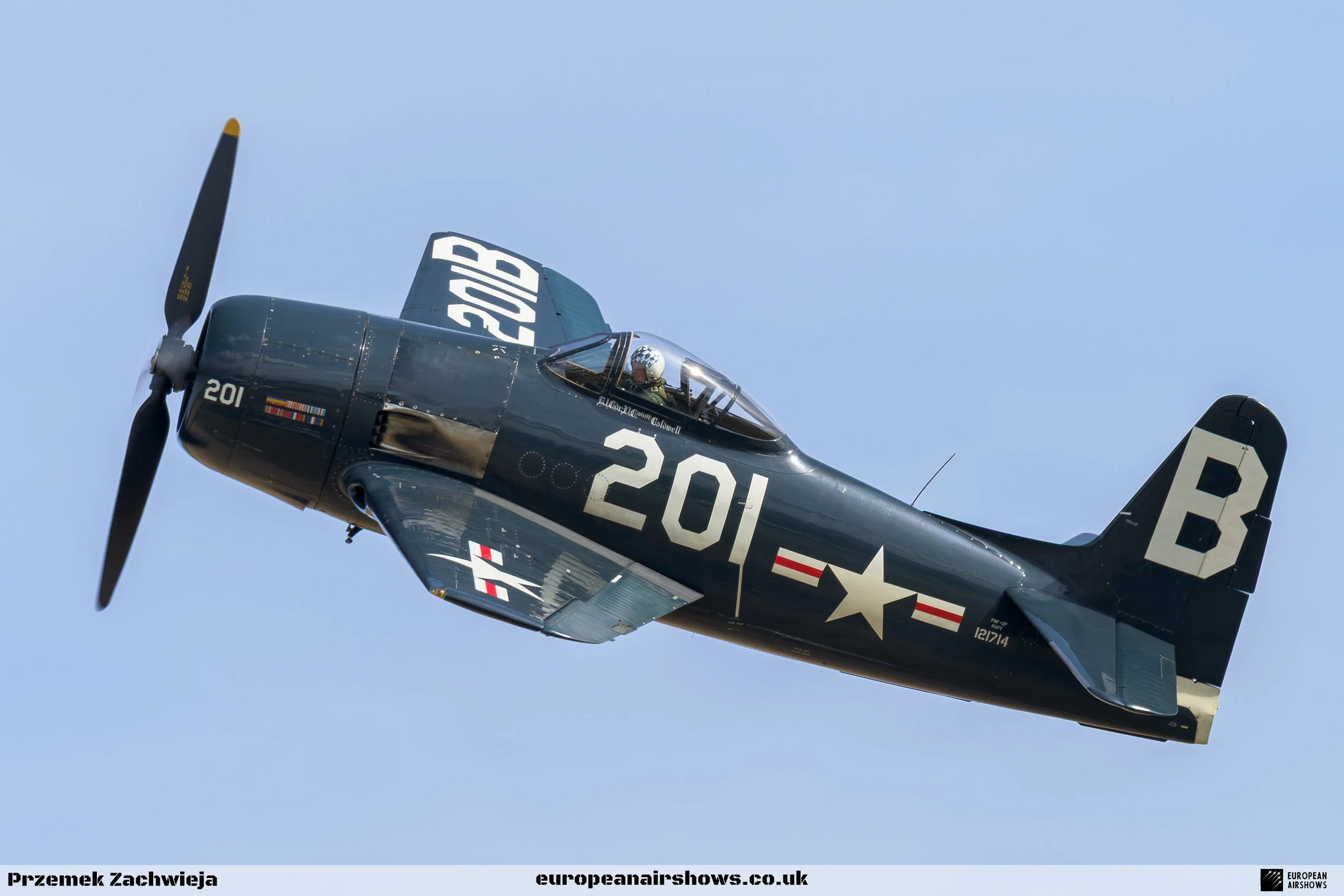
The honour of closing the show went to Nick Grey in the Grumman F8F-2P Bearcat.
Grey flew the aircraft in the uncompromising style long associated with The Fighter Collection’s classic Flying Legends finales.
The Bearcat was extraordinarily fast, tightly positioned and constantly changing direction. Its remarkable power-to-weight ratio was obvious in every climb, while the banking passes allowed the crowd to see the aircraft’s broad wings and enormous radial engine from almost every angle.
It felt like the return of a proper Flying Legends Joker display. After the Wildcat and Thunderbolt had gradually increased the pace, the Bearcat delivered the explosive finish the show needed.
Holding an American-themed Summer Air Show only three weeks before Duxford’s annual American Flying Day was an interesting decision.
However, the Summer Air Show offered far more than a predictable collection of Mustangs and Spitfires.
The unique Boeing B-17G Flying Fortress and KC-135R Stratotanker formation, Patrulla Quijote’s UK debut, the newly restored Lim-5, the unique Douglas C-41A, the full Flying Bulls formation and the powerful radial-fighter finale gave the weekend real depth.
There were some frustrations. Several displays were flown too far away, the sun repeatedly disappeared at the wrong moments, the Flying Bulls Bearcat and Heli Czech Cobra were missed, and the Typhoon’s Saturday display ended after only a single pass.
Nevertheless, the event remained exceptionally strong.
The organisation was excellent, the shuttle transport worked smoothly, there was plenty to do on the ground and the flying programme contained several aircraft and combinations that had never previously been seen in Britain.
Sunday probably offered the more complete overall programme thanks to the full Typhoon display, the stronger Battle of Britain Memorial Flight sequence, all seven Great War Display Team aircraft and the improving weather.
Saturday, however, had the irreplaceable advantage of the complete four-aircraft Flying Bulls routine and the unique Boeing B-17G and KC-135R heritage formation.
Taken across the full weekend, Duxford Summer Air Show 2026 was one of the strongest editions of the event in recent years.
It featured rare aircraft, international debuts, imaginative formations and a closing sequence that felt much closer to the Duxford displays of old.
Most importantly, it proved that a varied programme does not need to rely on one headline act.
From the four small Piper aircraft and the unique pre-war Douglas transport to the glow of the Lim-5’s afterburner and Nick Grey’s ferocious Bearcat finale, there was interest throughout the afternoon.
More airshow reviews
Read more reports, photography and first-hand coverage from airshows across Europe.