
Fingal Rush
Air Display
2026
P-51D Mustang Marinell, five passes from Aer Lingus' historic Iolar, a Coast Guard winching demonstration and two very different Raven teams shaped the 2026 Fingal Rush Air Display.
Wartime P-51D Mustang Marinell opened the flying, Rescue 116 demonstrated winching, two unrelated Raven teams appeared back to back and Aer Lingus' historic Iolar made five precious passes over North Beach.
Rush is often described as Bray's smaller sister show. The comparison is unavoidable, particularly when the two displays occupy the same weekend and share a sizeable part of their flying programme, but it can also be misleading. Rush is smaller than Bray, certainly, yet it is not a small event. The crowds still fill the town, the seafront becomes the focus of a full Bank Holiday festival and the flying includes several of the leading acts seen at the larger show the previous afternoon.
What Rush does not have is much of Bray's commercial spectacle. There are no airliner flypasts, no long procession of flying-school aircraft and usually less participation from the Irish Air Corps. In their place comes a stronger showing from the civilian side of Irish aviation. That distinction is valuable. Rush works best when it is allowed to be its own airshow, rather than an abbreviated second day of Bray.
The display has grown considerably without losing that compact character. In 2017, the aerial part of the Rush Harbour Festival occupied roughly one hour, with Team Raven, Richard Goodwin and a parachute drop among the attractions. Nearly a decade later, several of the same names remain, but the event has a longer programme, a larger audience and a much more obvious place in the Irish display calendar.
The most important change for 2026 was the move of the flying display from Rush Harbour to North Beach. Fingal County Council promoted the beach as a natural amphitheatre, and in practice the new location did provide a broader crowd line and brought much of the flying noticeably closer than in previous years. It was a good move and one the organisers should retain.
The beach itself remained quite sparse. Apart from the parachute landing area, there was little on the sand to detain spectators before the flying began. The food traders, stalls and other festival activities were spread around Rush, with much of the activity still concentrated near the harbour. That made the event feel dispersed rather than contained within a conventional airshow site, although there was no shortage of places to eat or things to browse elsewhere in town.
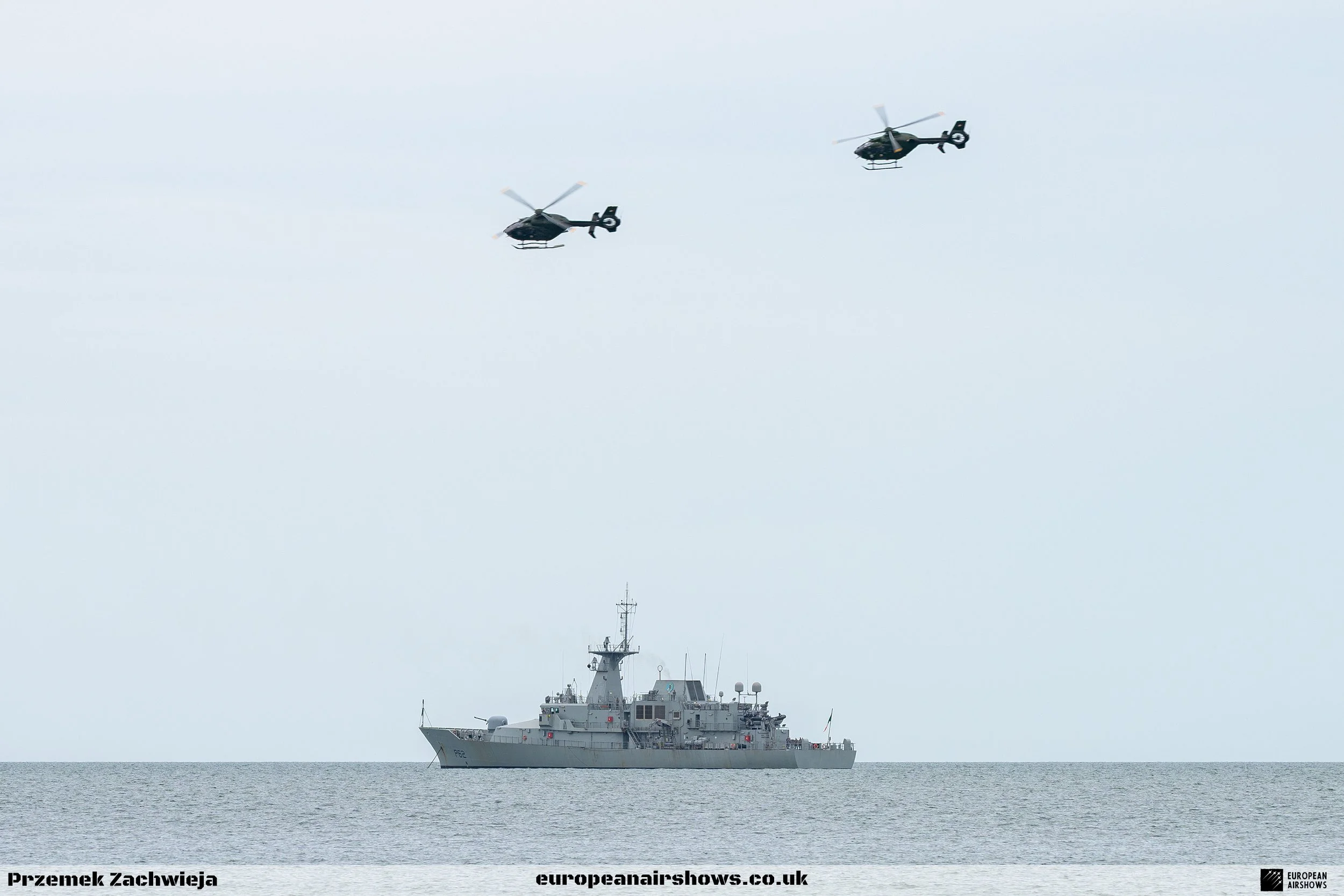
Rush was extremely busy by mid-afternoon, if not quite overwhelmed in the way Bray had been the day before. Offshore, the 90-metre Samuel Beckett-class patrol vessel LÉ James Joyce provided the same distinctive maritime backdrop it had at Bray. Regular traffic climbing from and descending towards Dublin Airport added an almost continuous stream of airliners above the gathering crowd.
The weather was less inviting than Saturday's. A largely unbroken sheet of pale grey and white cloud removed almost all chance of sunlit photography, while a slightly stronger breeze made the later part of the afternoon feel cool. At least the rain held off until the airshow was finished. Given the timing of the downpour, that counted as a small victory.
Three canopies over North Beach
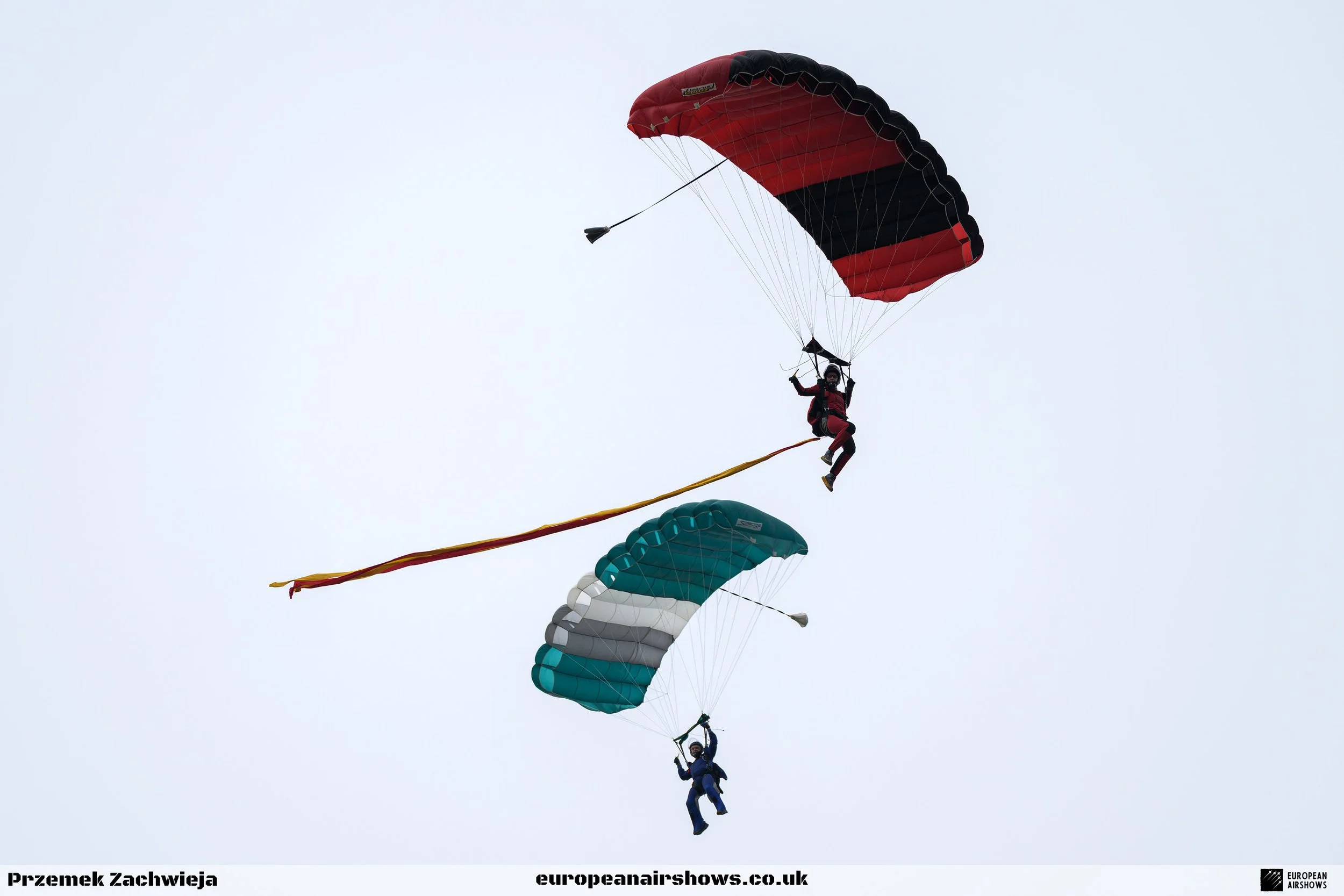
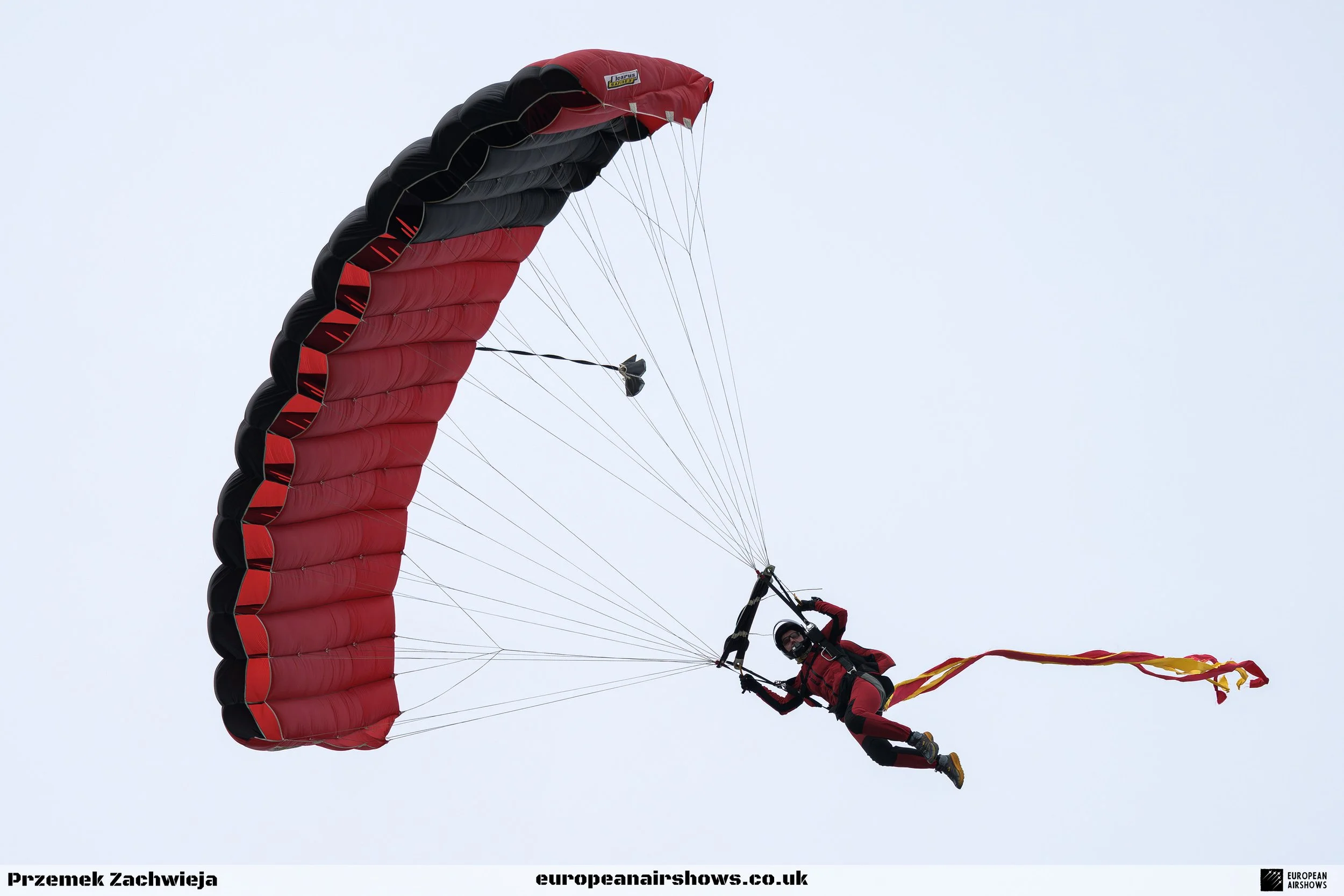
The first aerial activity came shortly before 15:00 when three members of the Irish Parachute Club appeared above North Beach. The club was founded in 1956, making the display particularly appropriate in its 70th anniversary year. Its history stretches back to former wartime paratrooper Freddie Bond and early jumping at Weston, long before the club established its present home at Clonbullogue.
Against the uniform cloud, the three canopies were not especially easy to pick out at first. Once lower, however, the jump gave spectators all along the beach a simple and effective opening. Each parachutist landed in the marked area on the sand, the only part of North Beach reserved for an attraction rather than spectators.
It was a modest beginning, but an airshow crowd responds well to something happening directly in front of it. With all three jumpers safely down, attention moved offshore for the start of the powered display.
Marinell opens the flying
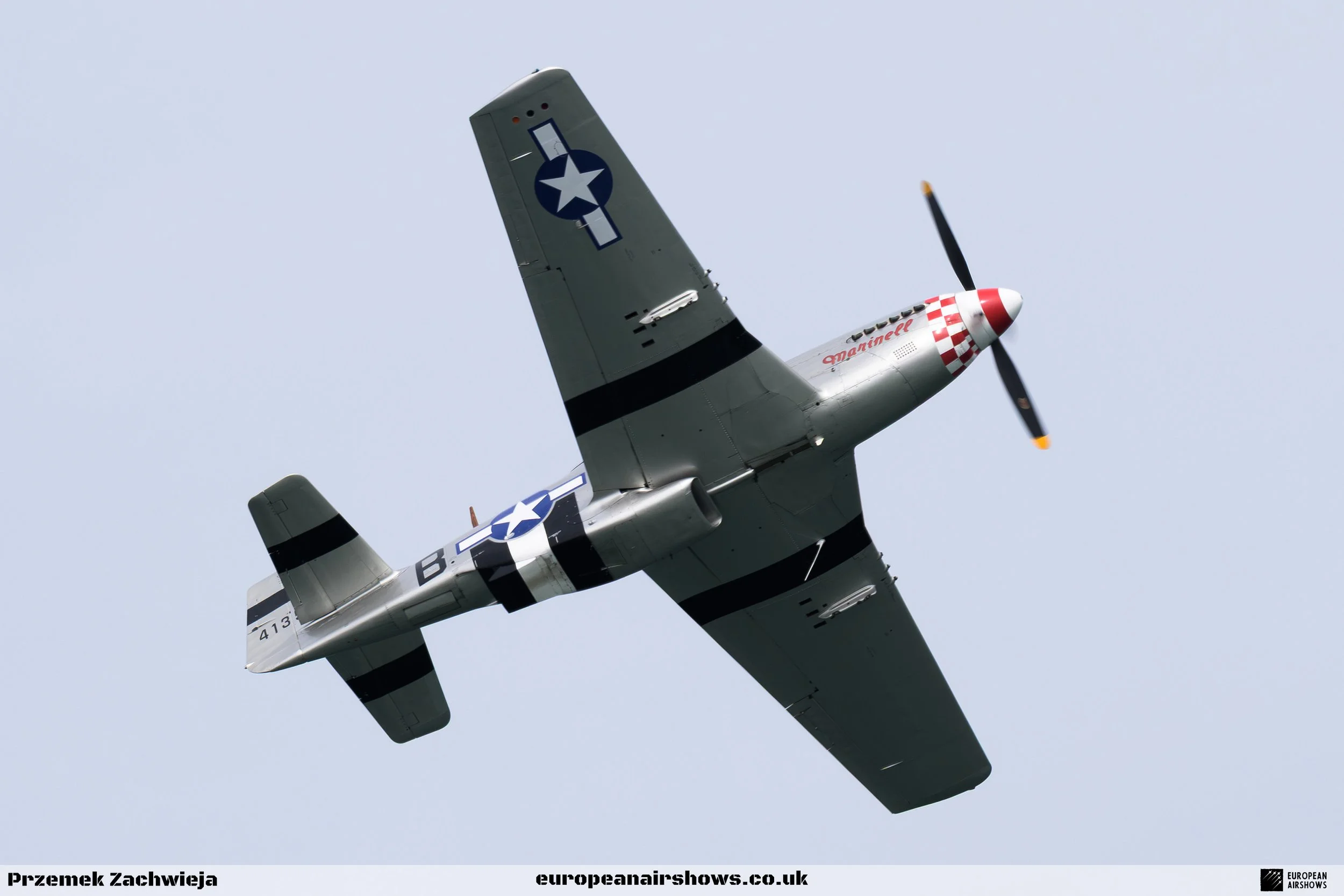
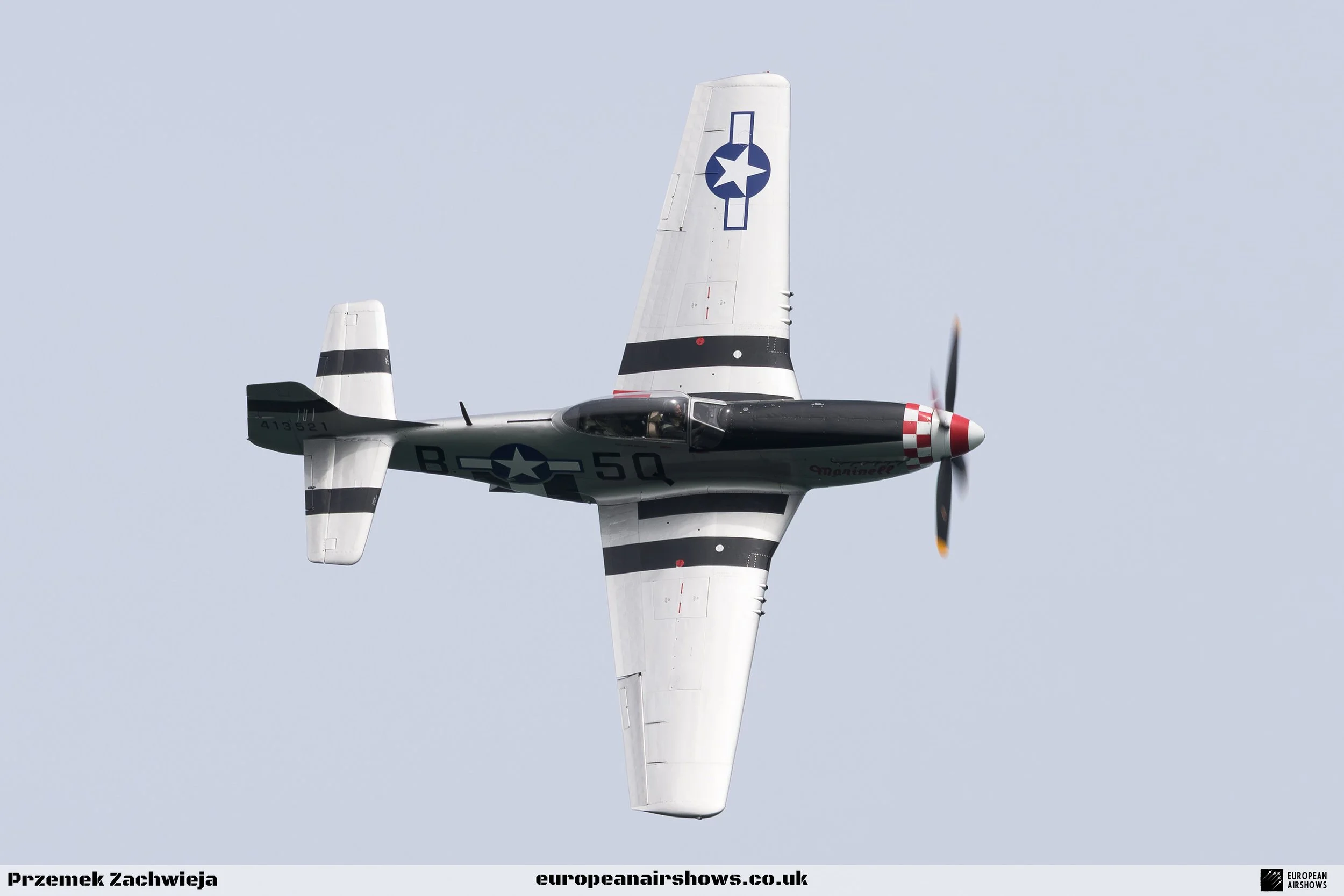
There are few better ways to begin an airshow than with a Merlin engine, and just after 15:00 Isabel Rutland brought the North American P-51D Mustang Marinell into view.
This was not simply a Mustang wearing a convincing set of wartime markings. Marinell is a genuine combat veteran, USAAF serial 44-13521, which served with the 504th Fighter Squadron of the 339th Fighter Group from Fowlmere in 1944. Flown by Captain Bradley Stevens, it was credited with four aerial victories before being shot down over northern France on 13th August 1944. The wreck was recovered many years later and Maurice Hammond completed an exacting four-year restoration in 2008. The Imperial War Museums' American Air Museum records its arrival in England on 6th June 1944, a date which gives some sense of how quickly it was sent into combat.
At Rush, the first pass immediately justified the Mustang's position at the head of the programme. The V-1650 Merlin has a sound which carries far beyond the display line, yet from North Beach it had real physical presence. Rutland's display was smooth, restrained where it needed to be and fast enough to show why the Mustang remains one of the defining fighters of the Second World War.
It was also quite different from the routine flown at Bray the previous day. Rush's shorter display area left little room to finish a pass, establish separation and return with the upper surfaces presented towards the crowd. Instead, much of the routine was built around continuous reversals. The Mustang repeatedly arrived already committed to a turn or curved away with its underside towards the beach.
For the general spectator this still delivered speed, noise and a famous silhouette. For photographers it was frustrating. There was not one proper topside pass, and the best opportunities often showed more of the radiator intake than the wing markings. That was not a criticism of Rutland's flying. She had adapted the display to a confined site, and trying to force the wider Bray sequence into Rush would have made little sense. It did, however, expose the central limitation of North Beach. The viewing is closer, but the usable display box remains too short to present a fast aircraft at its best.
Even with that reservation, Marinell was a magnificent opening act. The sight and sound of a wartime Mustang over the Irish coast gave the show an immediate sense of occasion.
Rescue 116 demonstrates the winch
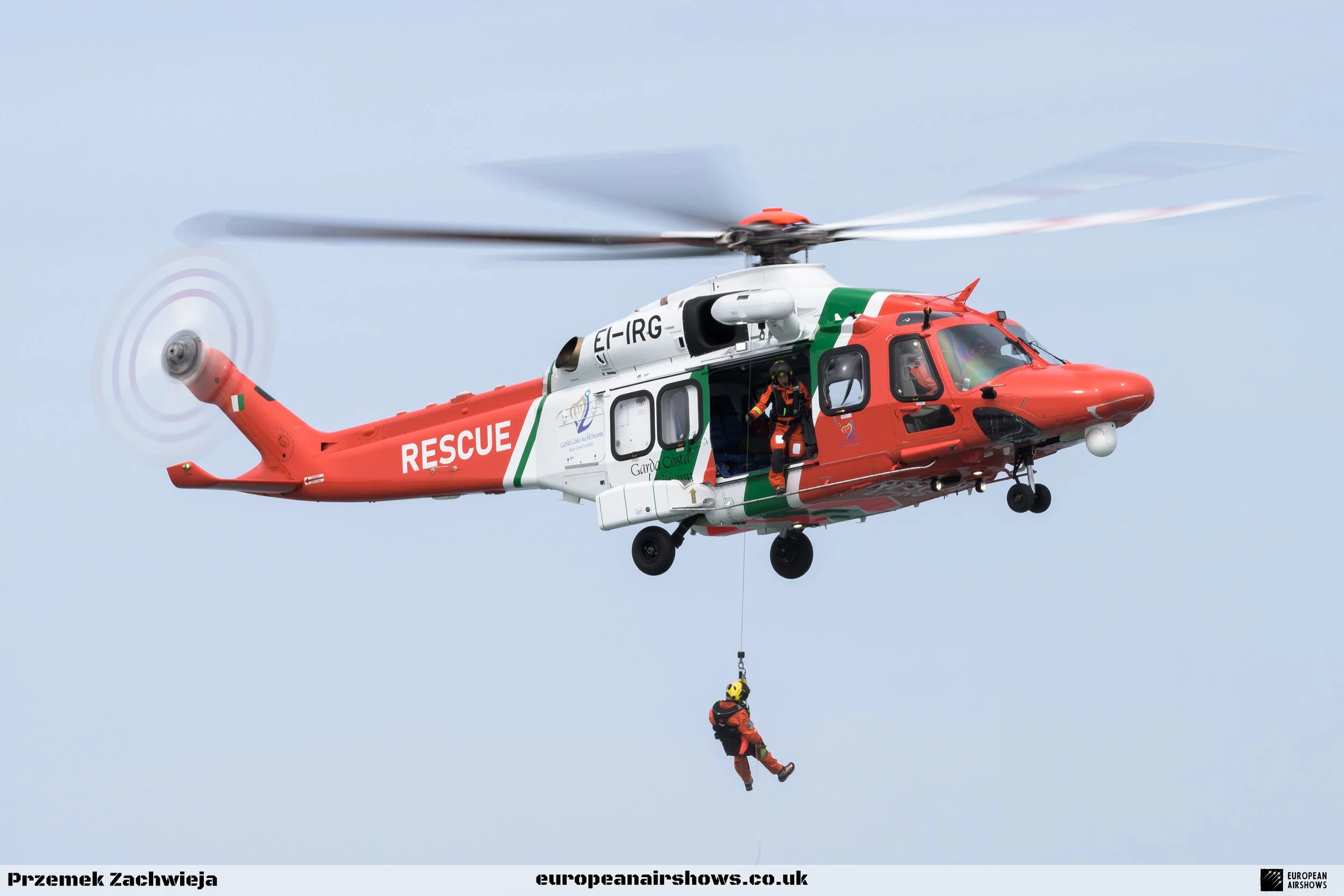
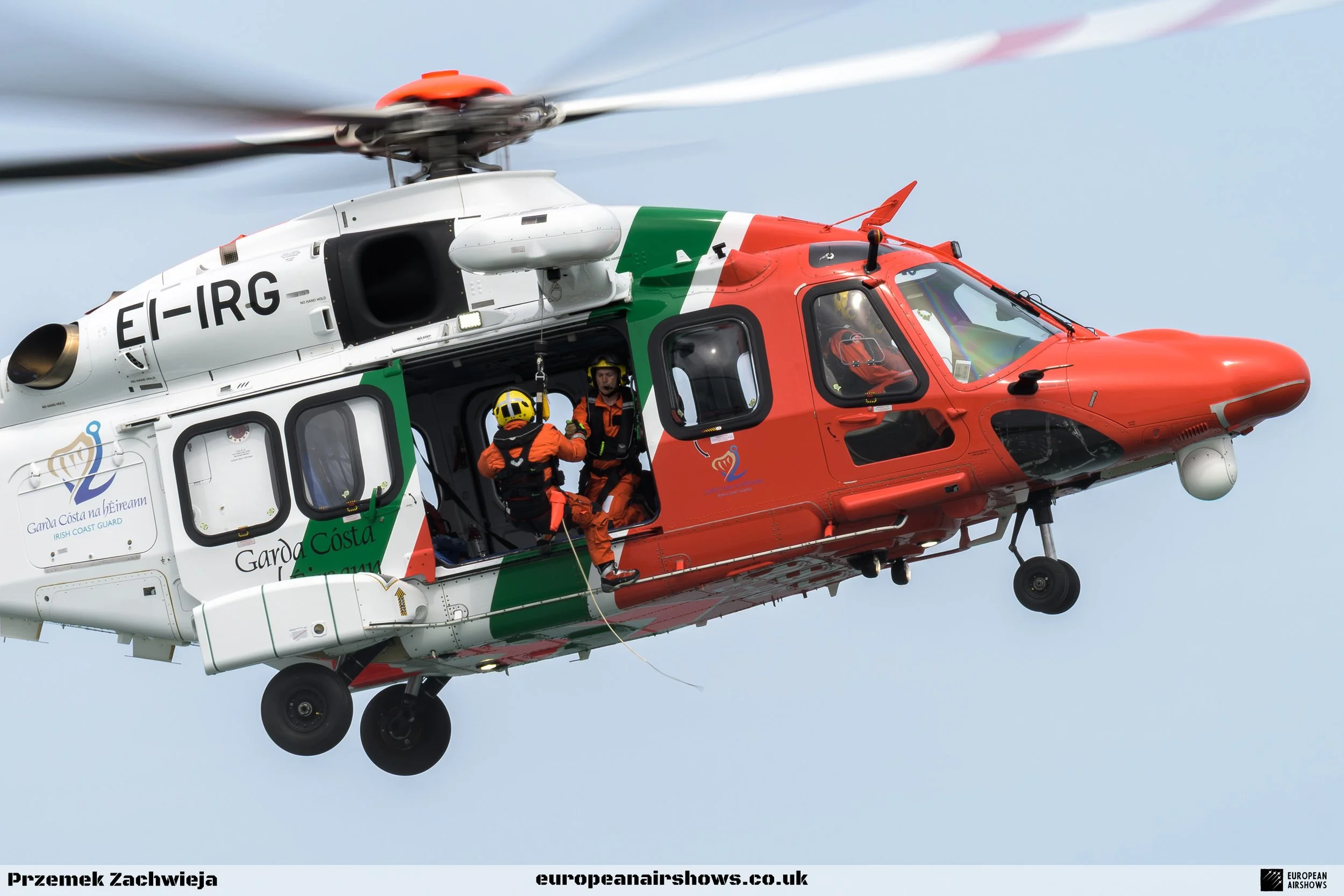
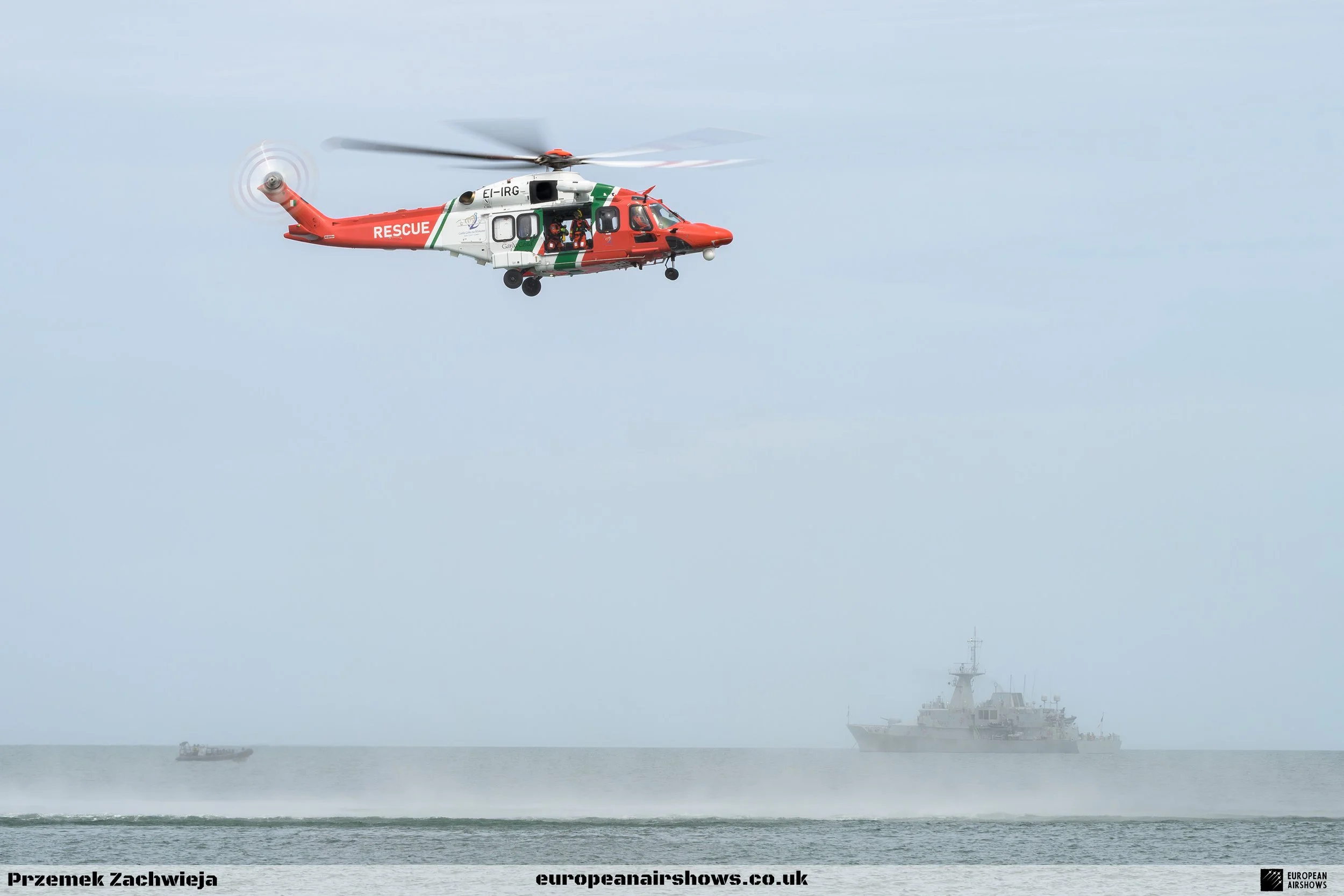
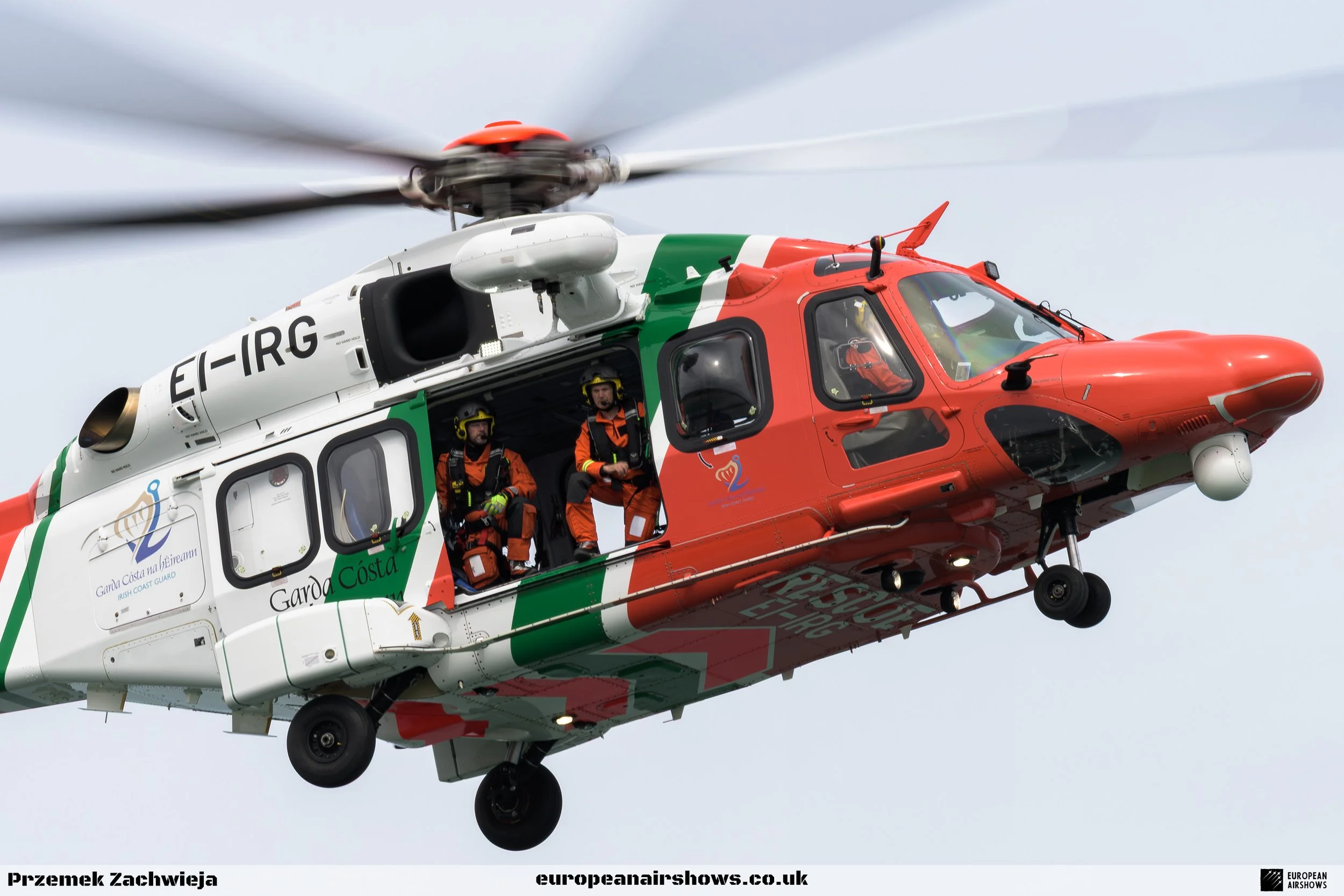
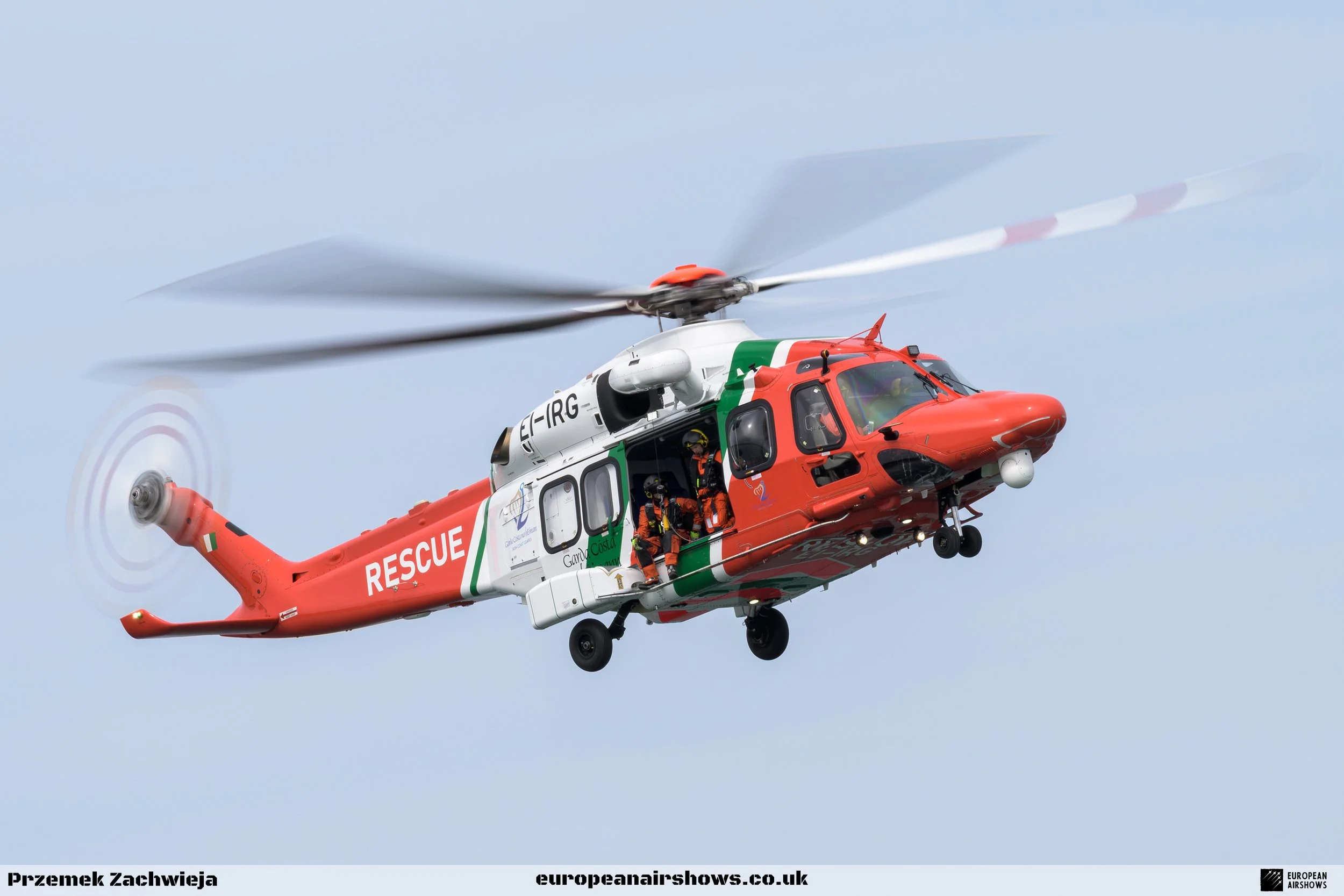
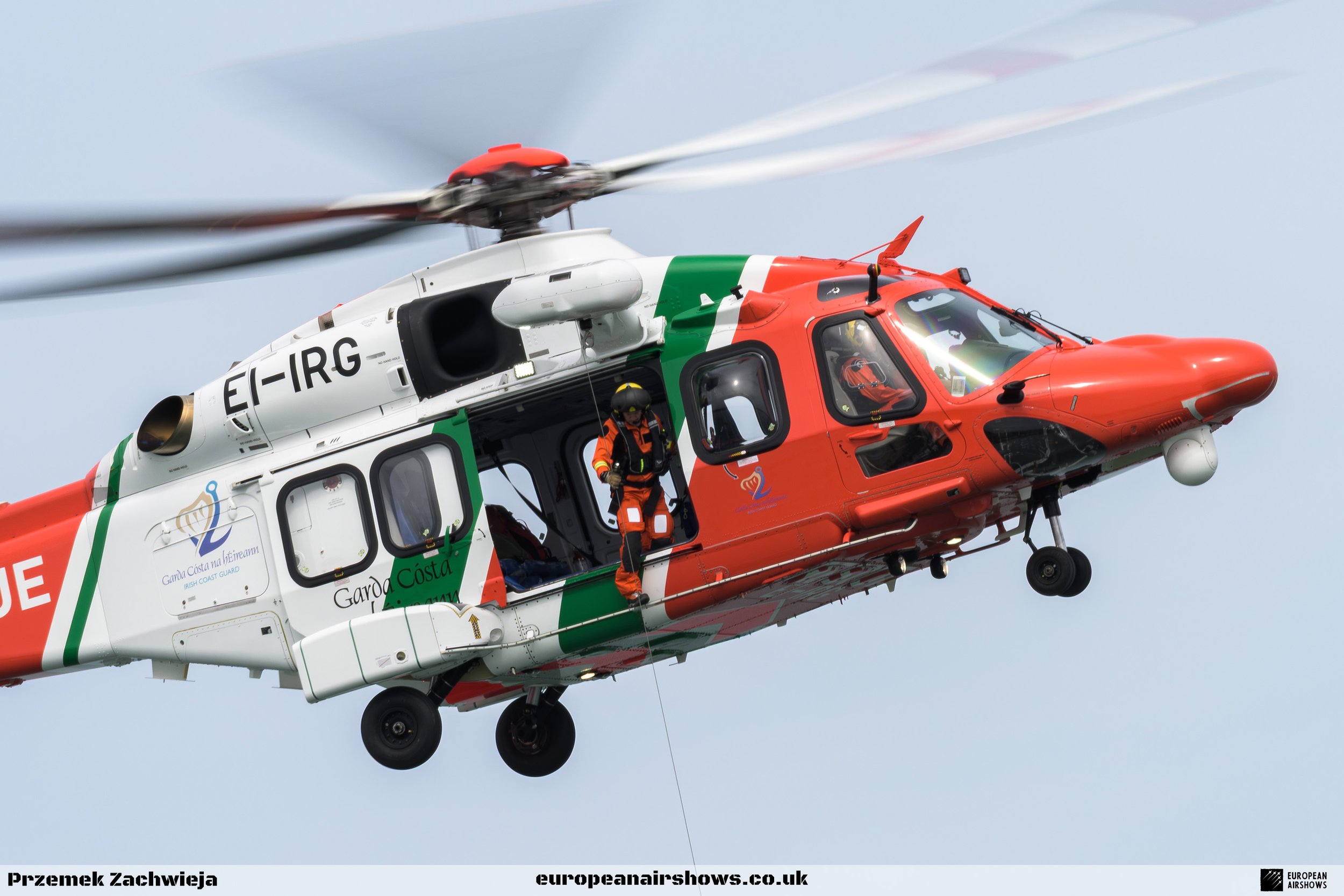
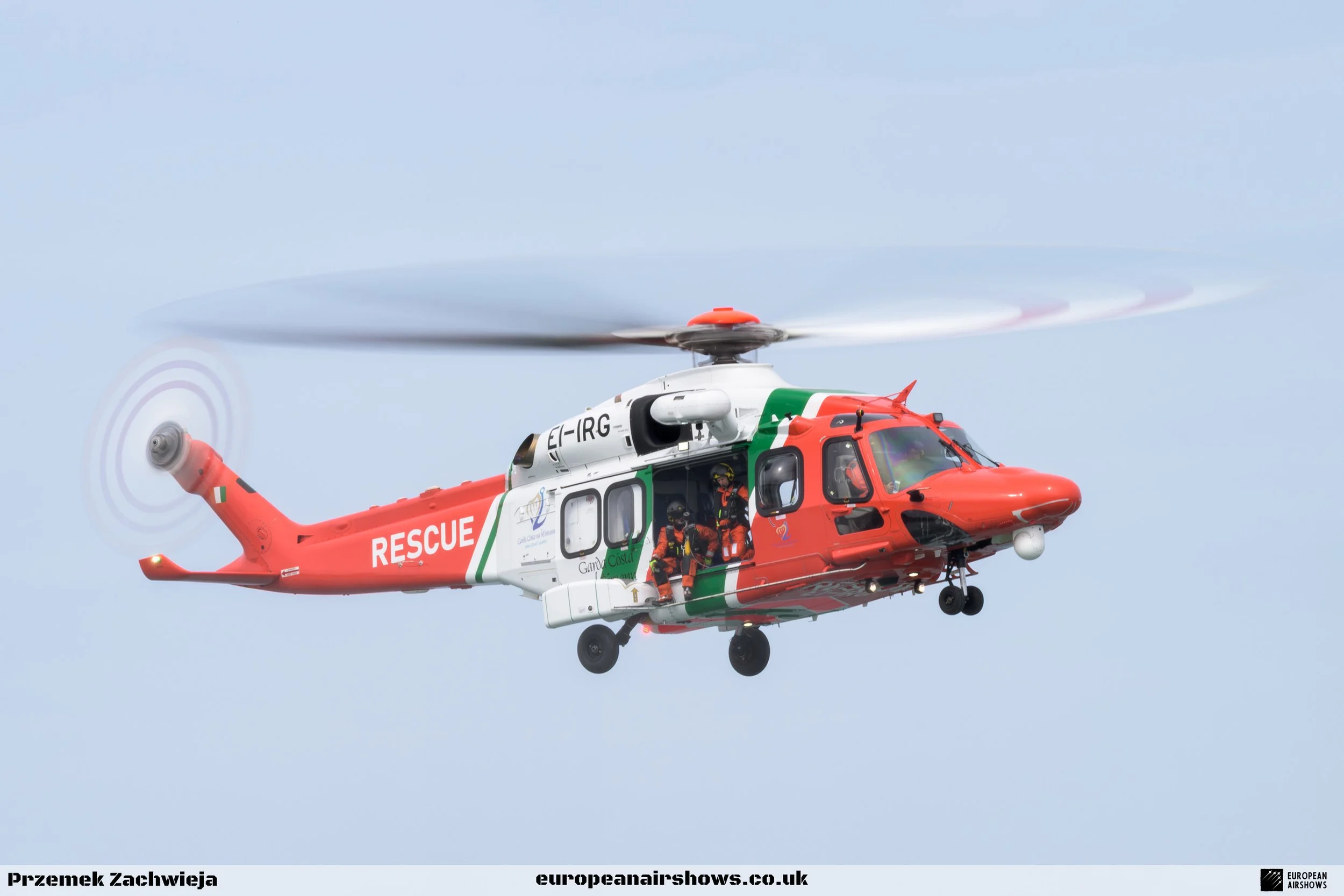
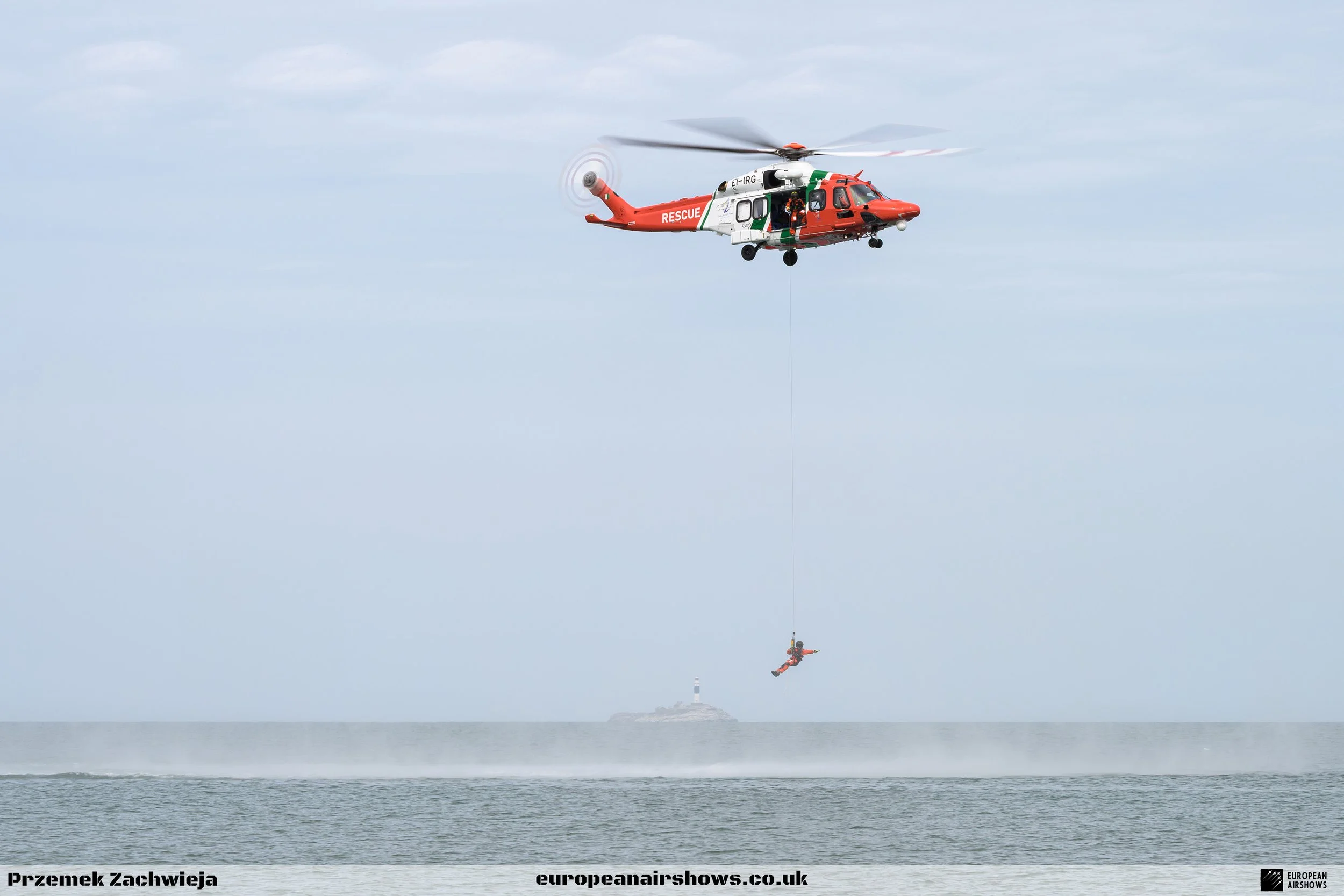
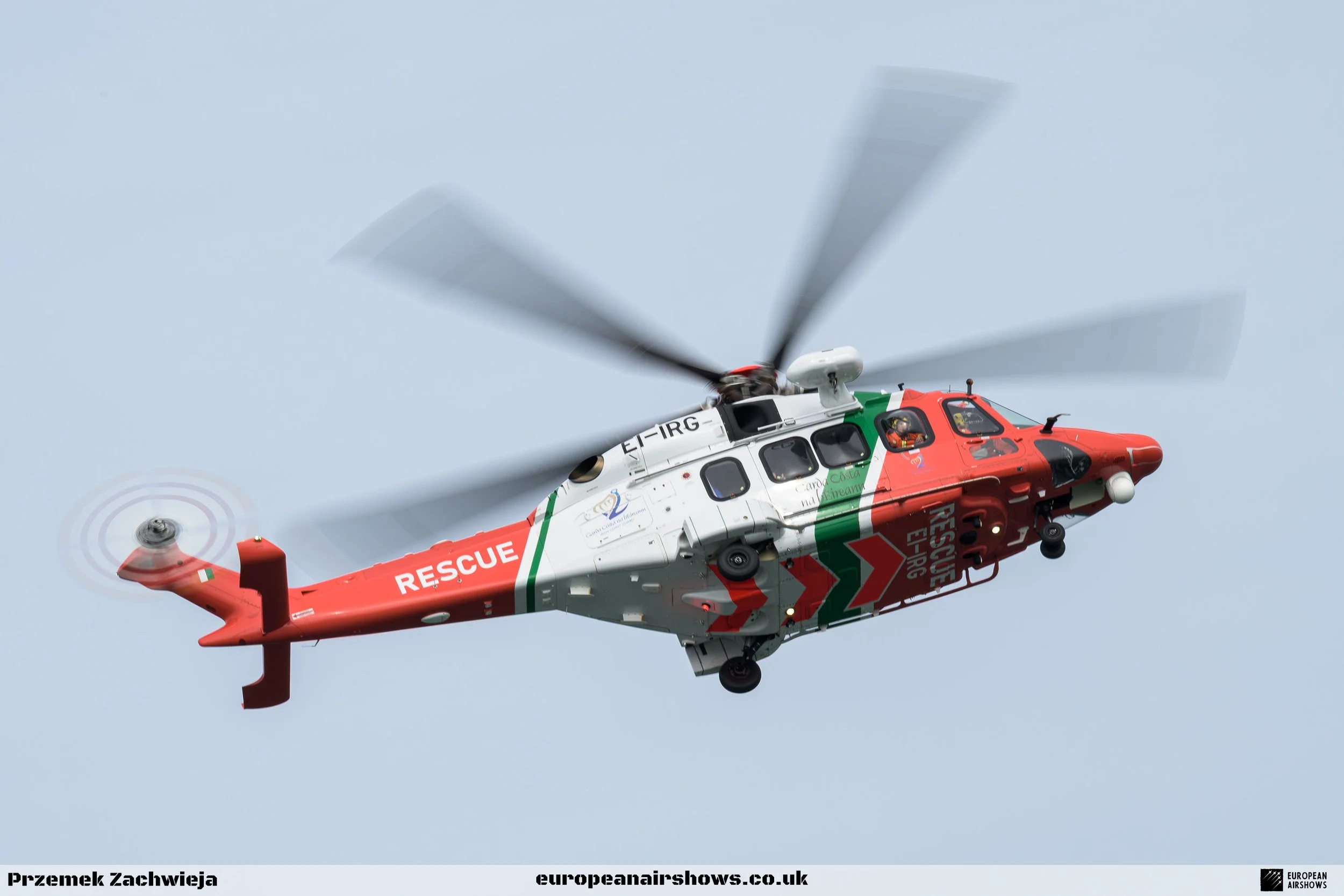
The Irish Coast Guard followed with one of the new Leonardo AW189 search and rescue helicopters operated by Bristow Ireland. Although it has sometimes been confused with the smaller AW169, the aircraft now carrying the familiar Rescue 116 callsign from Weston is the much larger AW189.
The new generation of Irish Coast Guard aviation has been introduced under a ten-year contract which provides six specialist AW189 helicopters at bases around the country, supported by King Air fixed-wing aircraft. The change is far more significant than a simple replacement of one helicopter type with another. It brings new aircraft, new operating bases and a revised national search and rescue system.
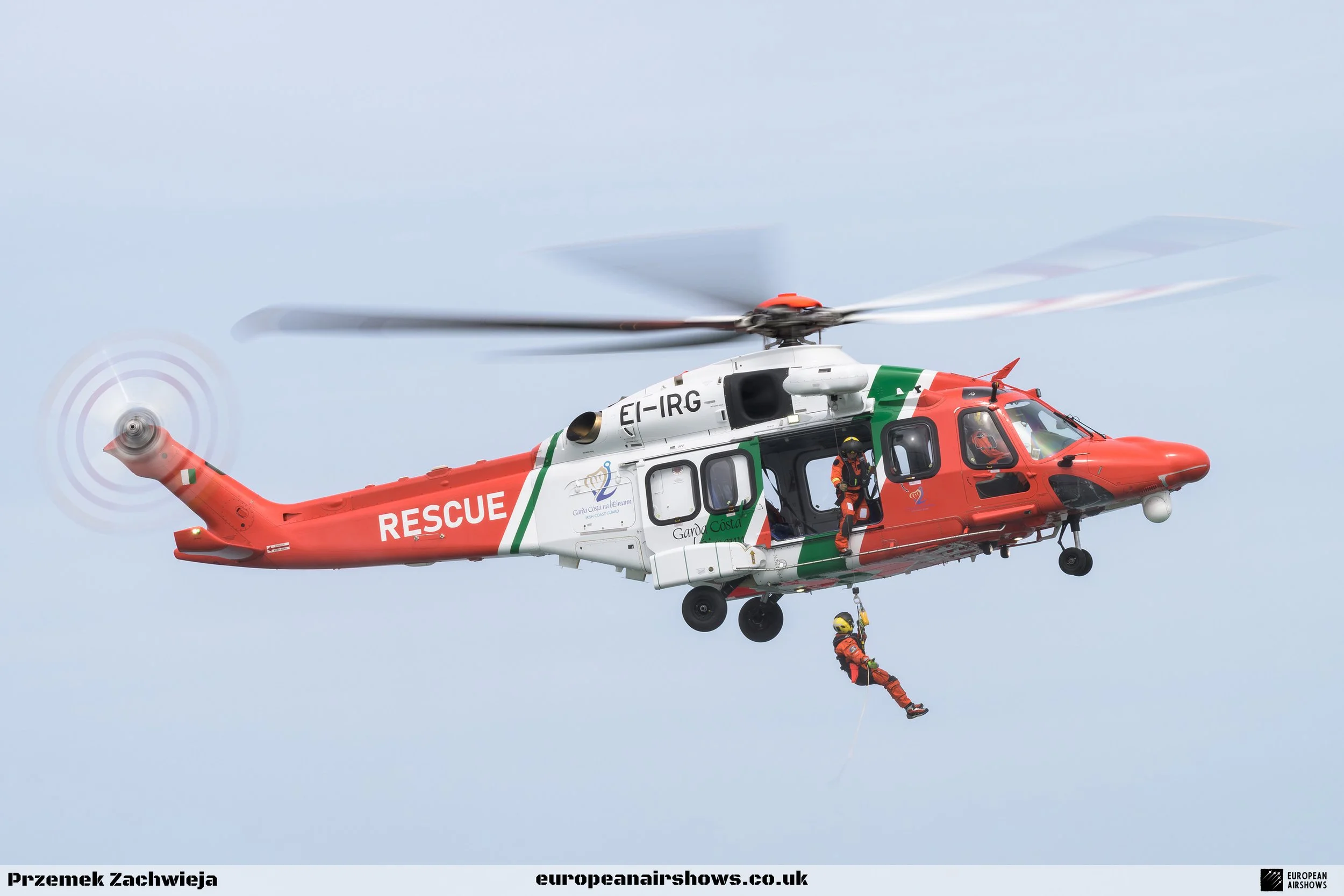
At Bray, Rescue 116 had given a useful handling demonstration. Rush received something more operationally representative. After several passes and steep turns, the crew established a hover offshore and carried out a winching demonstration. The aircraft remained remarkably stable as the sequence unfolded, allowing the crowd to see the part of the rescue operation that is normally encountered only in news footage or during a real emergency.
It was one of the afternoon's most worthwhile additions. Helicopter displays are sometimes judged only by how dramatically the aircraft can be thrown around, but the AW189's purpose is what makes it interesting. At Rush, the crew showed both the machine's agility and the precision demanded when lives depend on holding an exact position above the sea.
The last and youngest Strikemaster
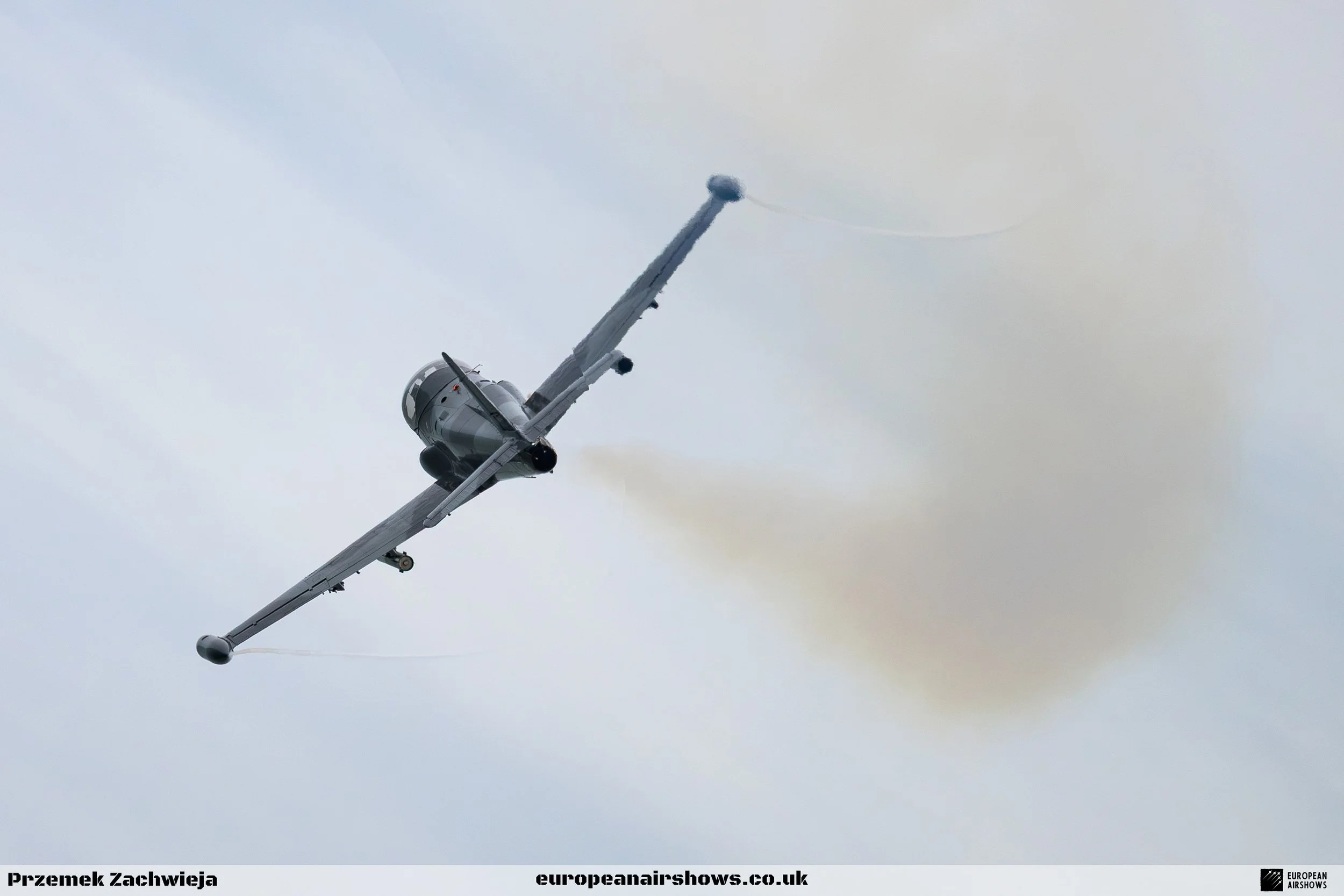
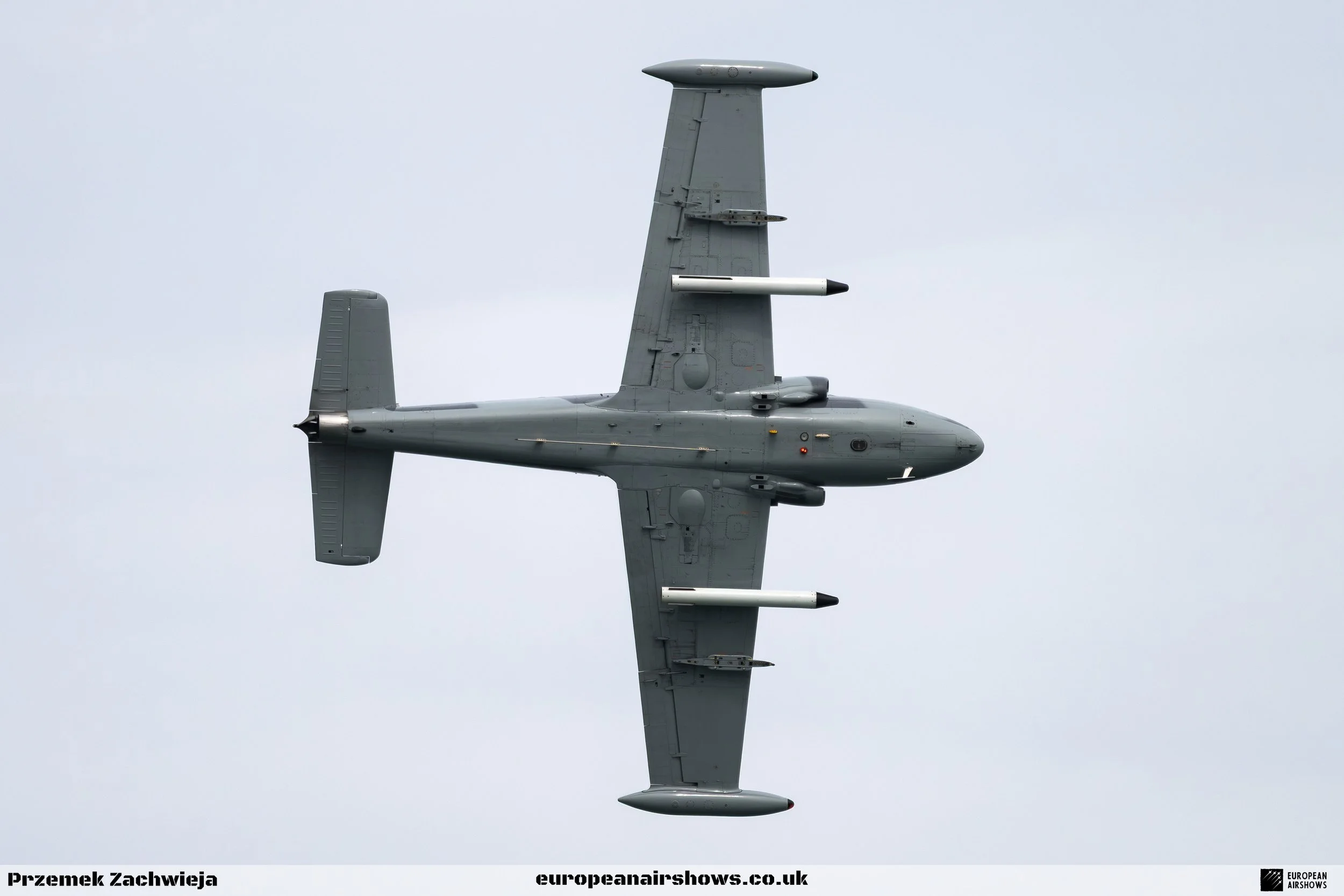
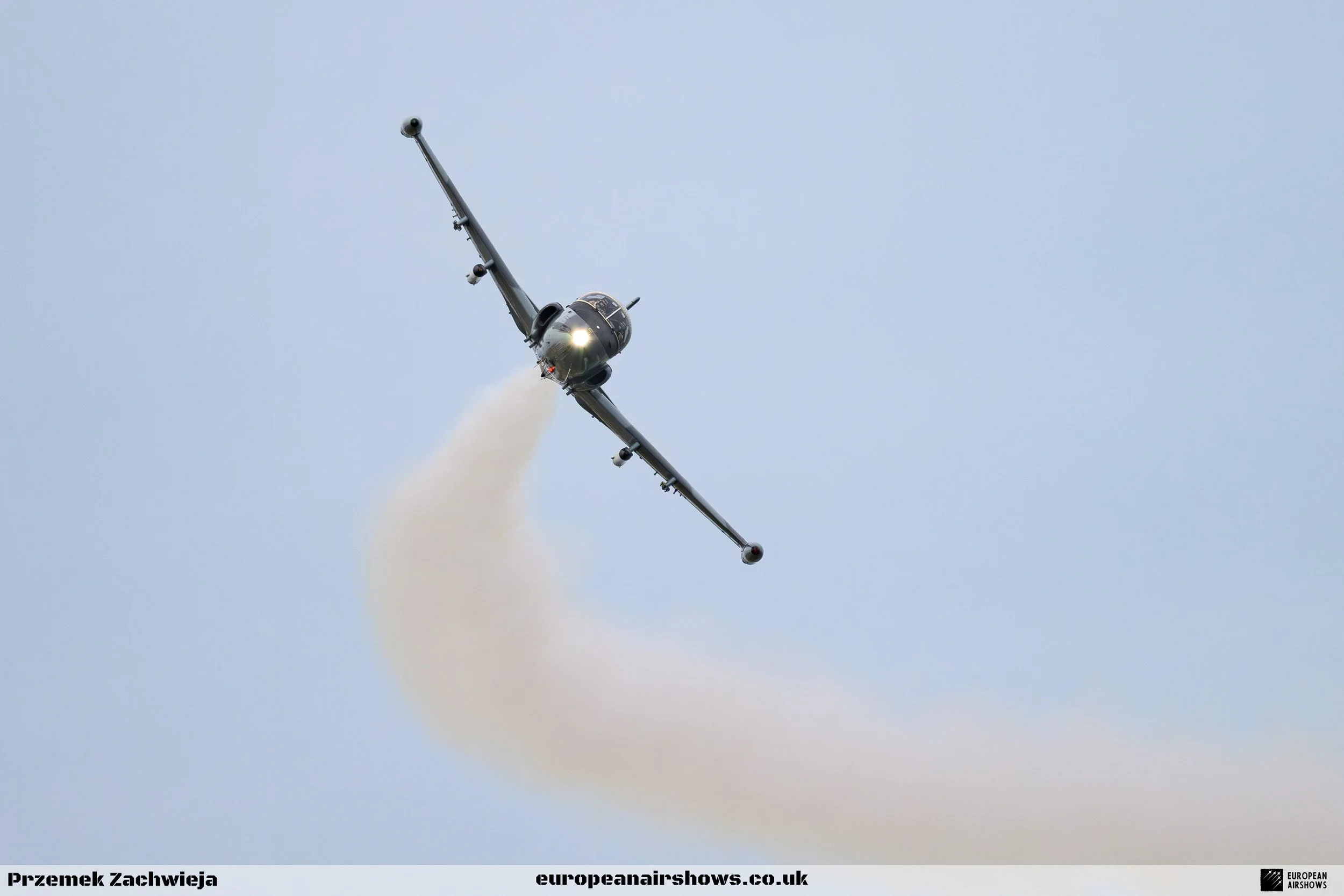
The arrival of G-SOAF brought a very different sound to North Beach. The BAC 167 Strikemaster Mk.82A wears the grey training scheme of the Royal Air Force of Oman and carries its former Omani serial, 425. It is also a particularly important survivor, because it was the youngest Strikemaster ever constructed and the final example of the type to be completed.
Its history is more unusual than that description suggests. The aircraft was assembled in 1986 using components left from a Sudanese order that had been blocked by an arms embargo. Oman required a replacement aircraft, so the available parts were used to produce 425, which was delivered to the Sultanate that summer. It served with No. 1 Squadron of the Royal Air Force of Oman at Masirah, was retired from flying in 1999 and subsequently used for technical training at Seeb.
North Wales Military Aviation Services acquired the aircraft in late 2004. It was shipped to Britain in January 2005 and returned to the air after a restoration lasting only six months. It later became a founder member of Team Viper and is now presented as the Strikemaster solo, a welcome return to a type which was once a much more familiar sight on the British and Irish display circuit.
Developed from the Jet Provost trainer, the Strikemaster combined a relatively uncomplicated airframe with a more powerful Rolls-Royce Viper engine and a genuine light-attack capability. That military purpose remains visible in its reinforced structure, underwing hardpoints and purposeful cockpit line. It is not an especially large jet, which makes the volume and sharpness of its engine note all the more surprising.
The Rush display was fully aerobatic, with loops, rolls and energetic reversals linked by a dense trail of white smoke. It was beautifully flown and kept the aircraft in front of the crowd for most of the sequence. The clean grey finish also suited the flat light better than many darker schemes would have done.
Once again, the geometry of the site worked against photographers. Every turn had to begin quickly, and the Strikemaster was usually already showing its underside as it came back towards the display line. There was no clean topside pass at all. A slightly longer run beyond either end of the beach would have allowed a much more varied presentation, but within the available space the pilot had few options.
The aircraft itself was one of the stars of the afternoon. G-SOAF combines rarity, an unusually late construction story and the character of a first-generation jet trainer. Rush gave it plenty of time in front of the crowd, even if it could not give it the space needed for the most photogenic routine.
Two teams called Raven
The next part of the programme produced a pleasing oddity. Rush saw two completely unrelated teams called Raven, and they appeared one immediately after the other.
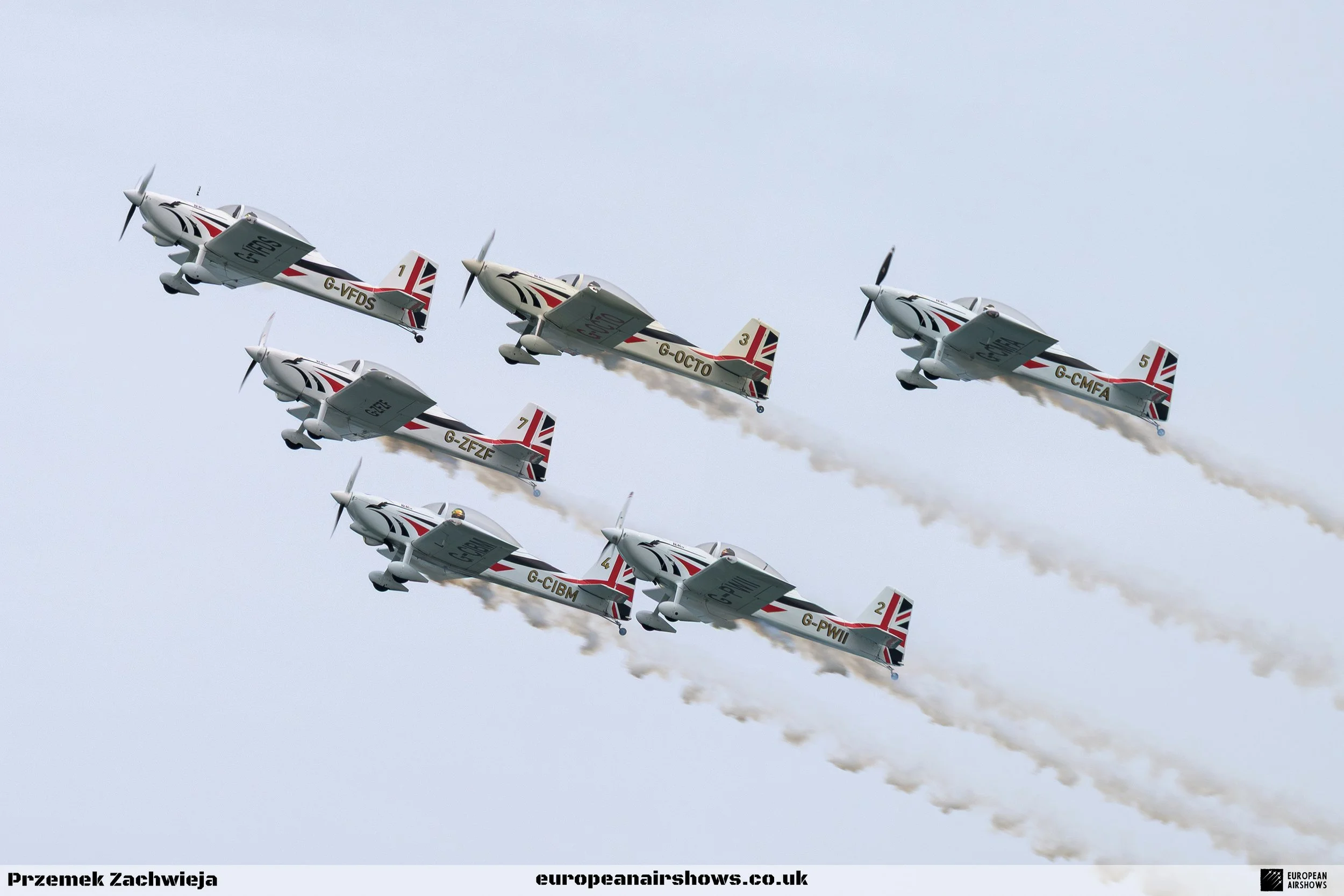
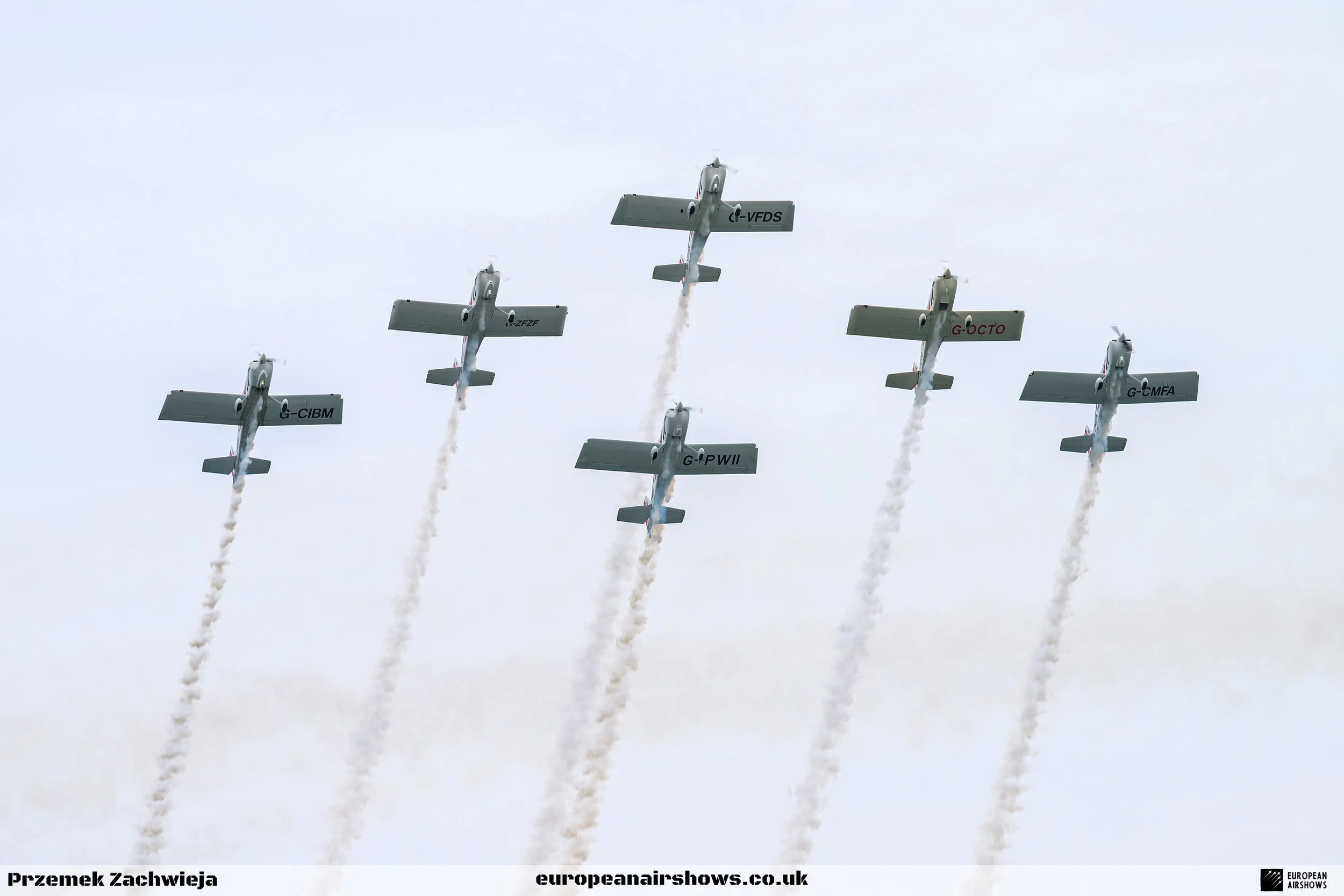
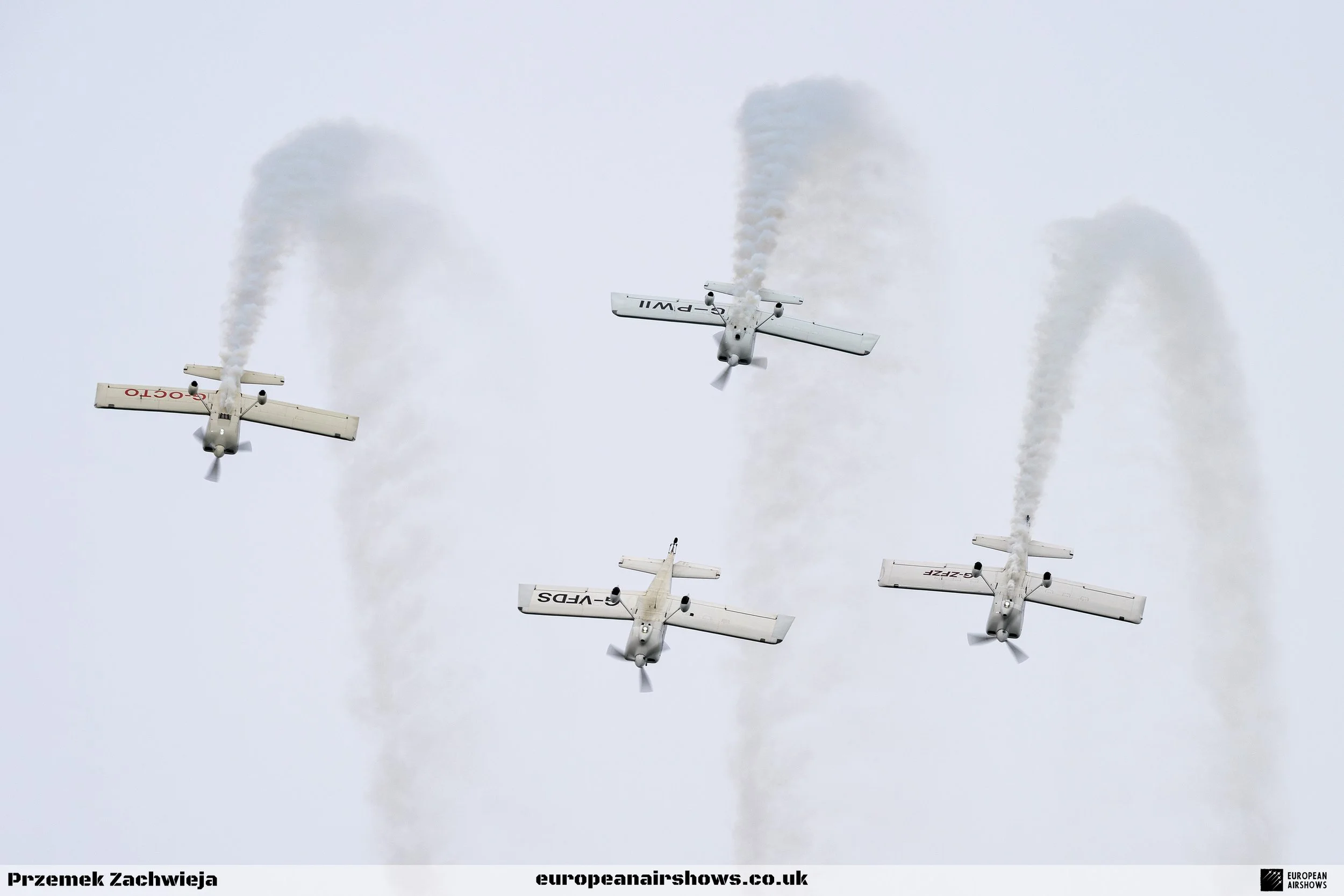
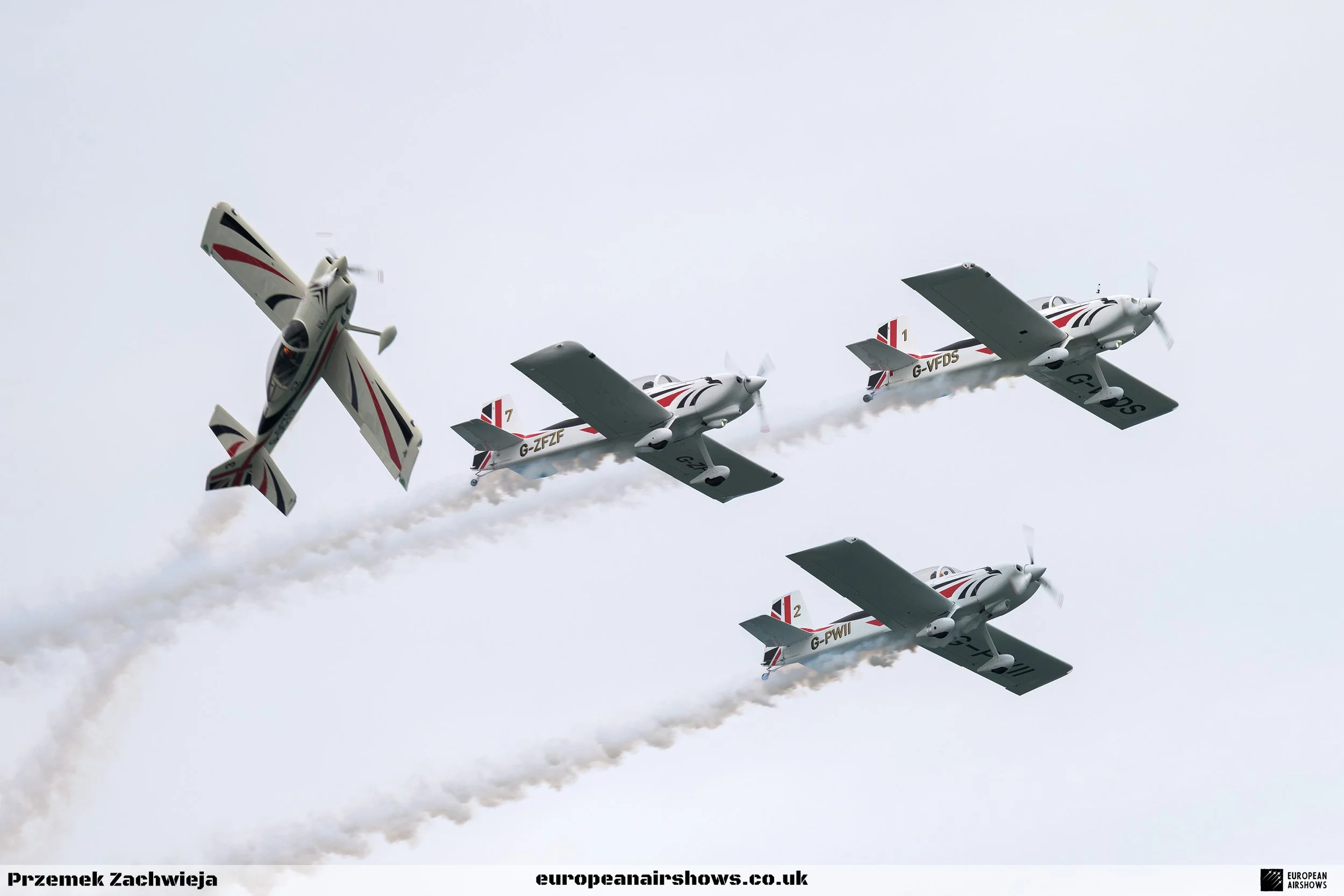
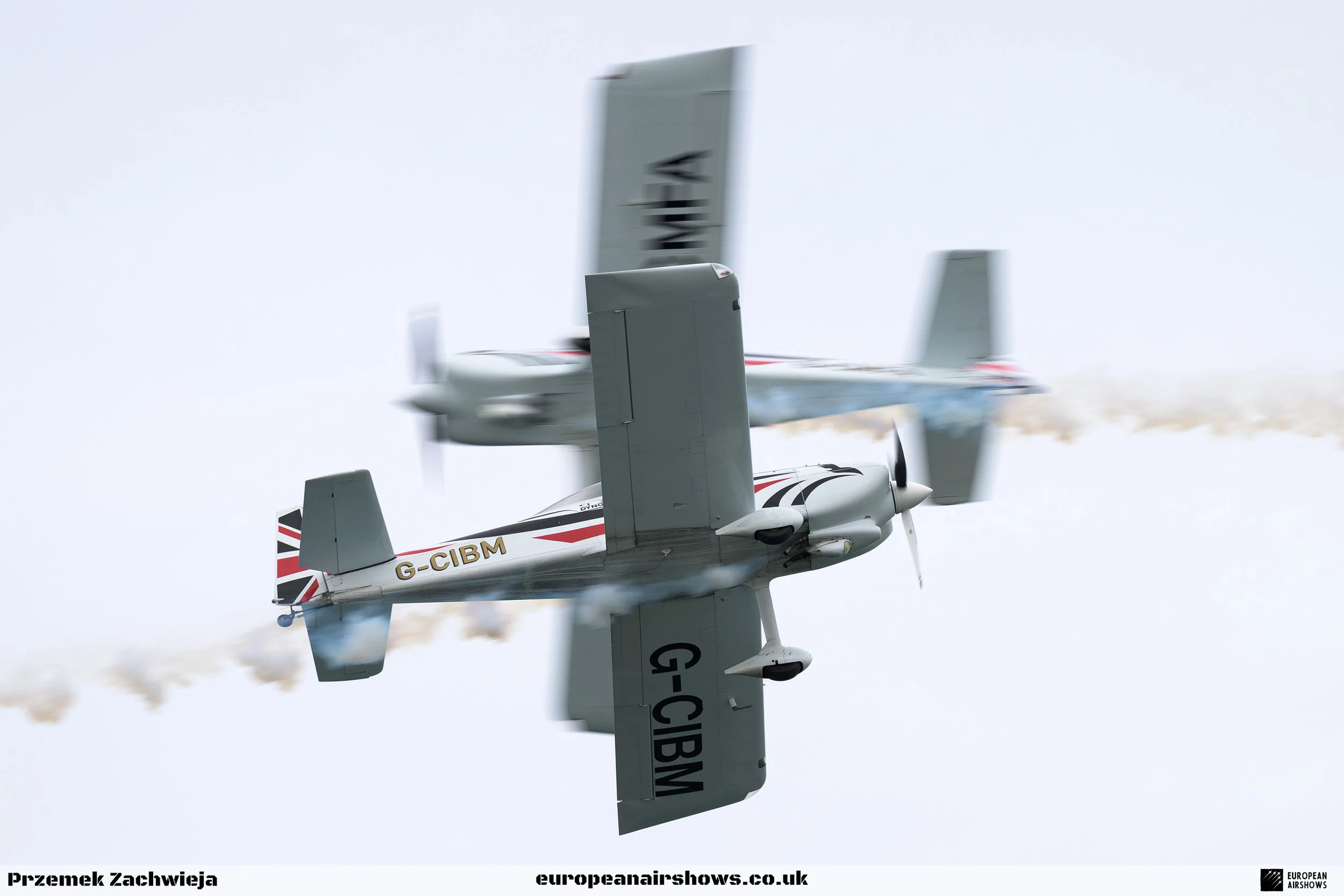
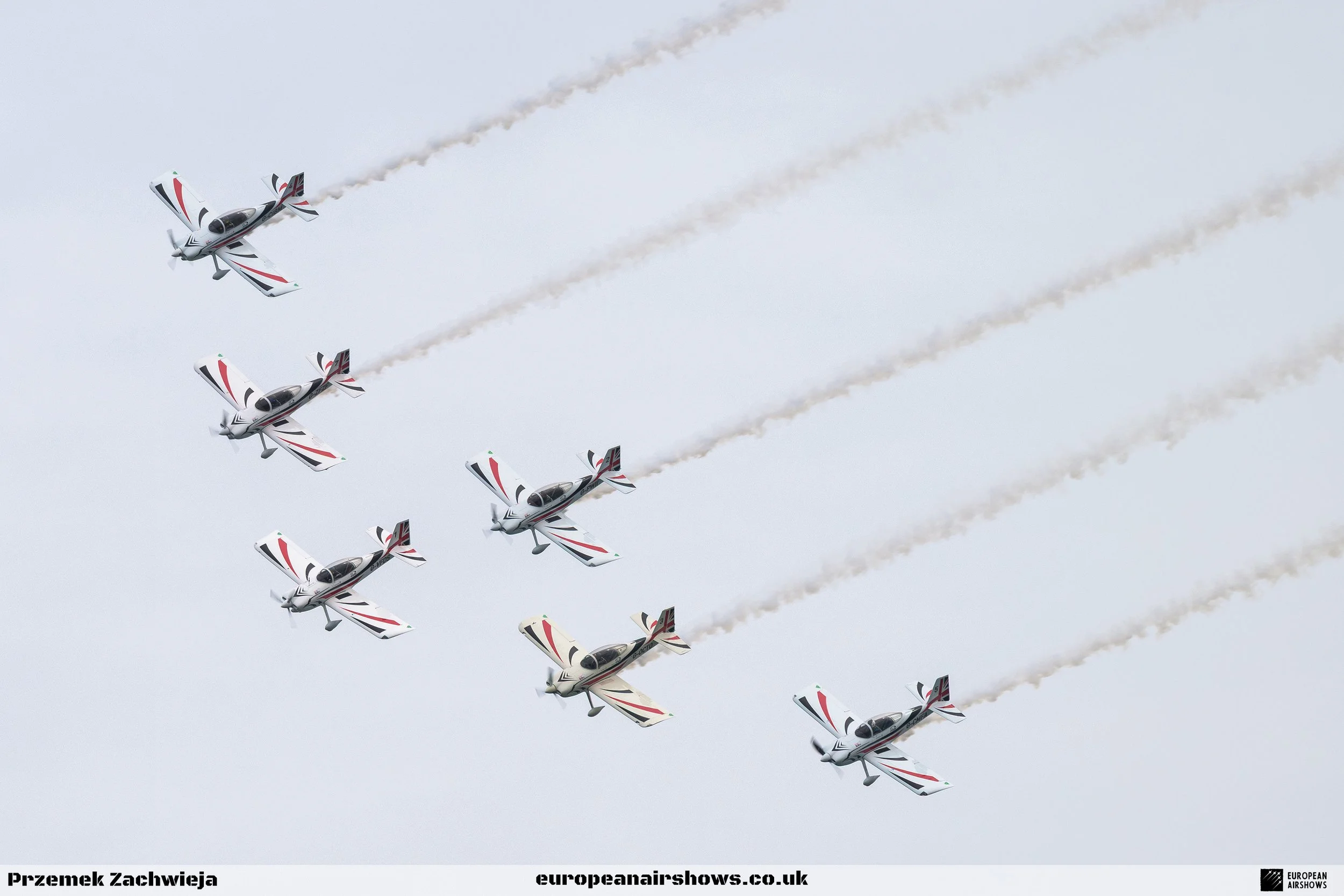
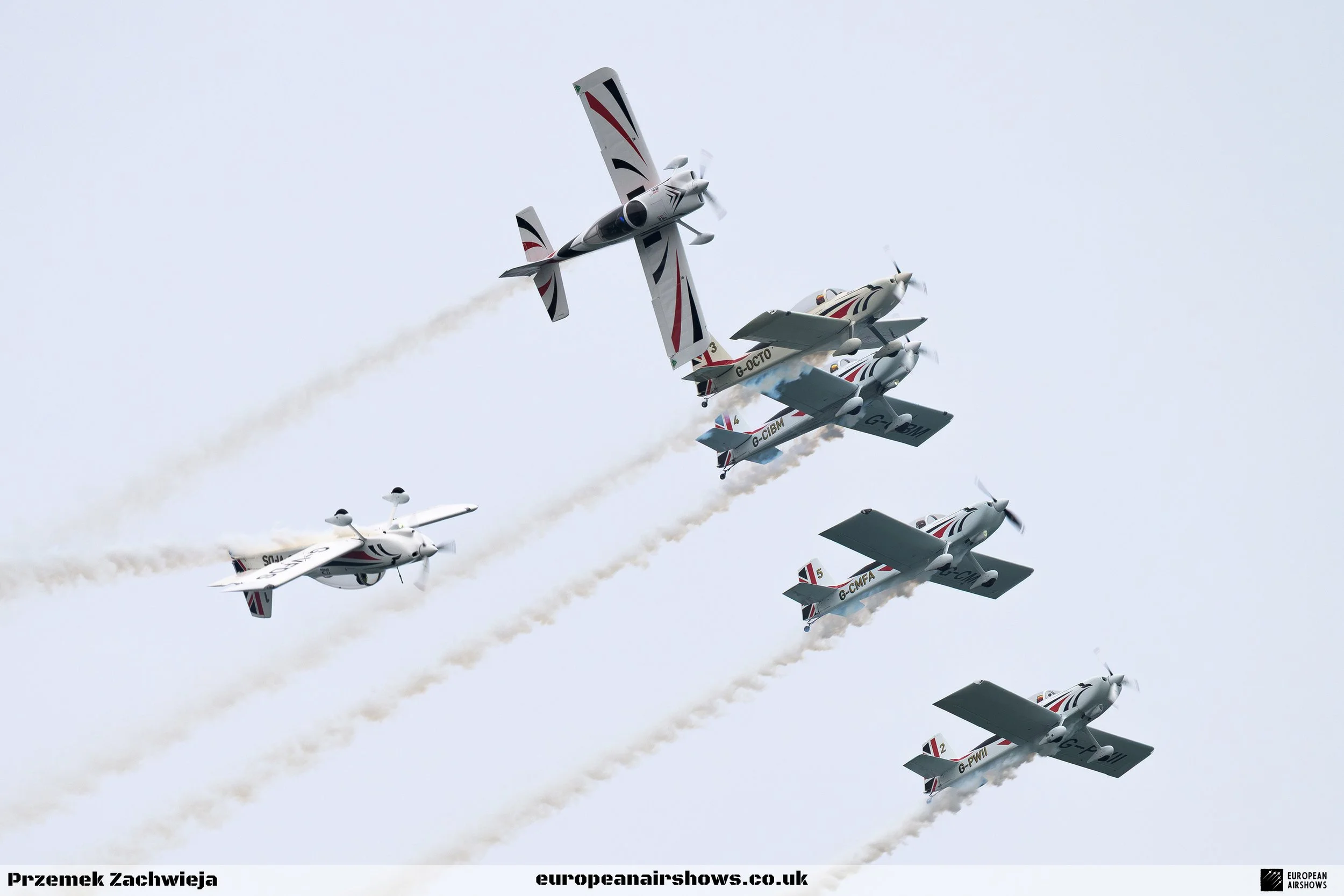
The first was the familiar civilian Team Raven, flying six Van's RV-8s. Formed in 2014, the self-funded team has become one of the largest civilian formation aerobatic teams in the world. Few visiting display teams have built a stronger relationship with Irish audiences. Its aircraft have crossed the Irish Sea repeatedly for Bray, Rush and other events, and the sight of six RVs entering in close formation now feels almost like part of the local airshow season.
The RV-8 is exceptionally well suited to Rush. It is quick enough to give formation passes real energy, but compact and agile enough to reverse within the available display area. The team could therefore keep the flying close without making the routine feel compressed. Formation loops and rolls were mixed with breaks, rejoins and opposition elements, all flown with the polish expected from such an experienced group.
Their revised red, white and blue colour scheme gave the formation a fresh appearance for 2026, although the underlying display remained reassuringly familiar. Team Raven did not need to overwhelm the site. Six well-flown aircraft, tight spacing and a routine designed around continuity were more effective than outright speed would have been.
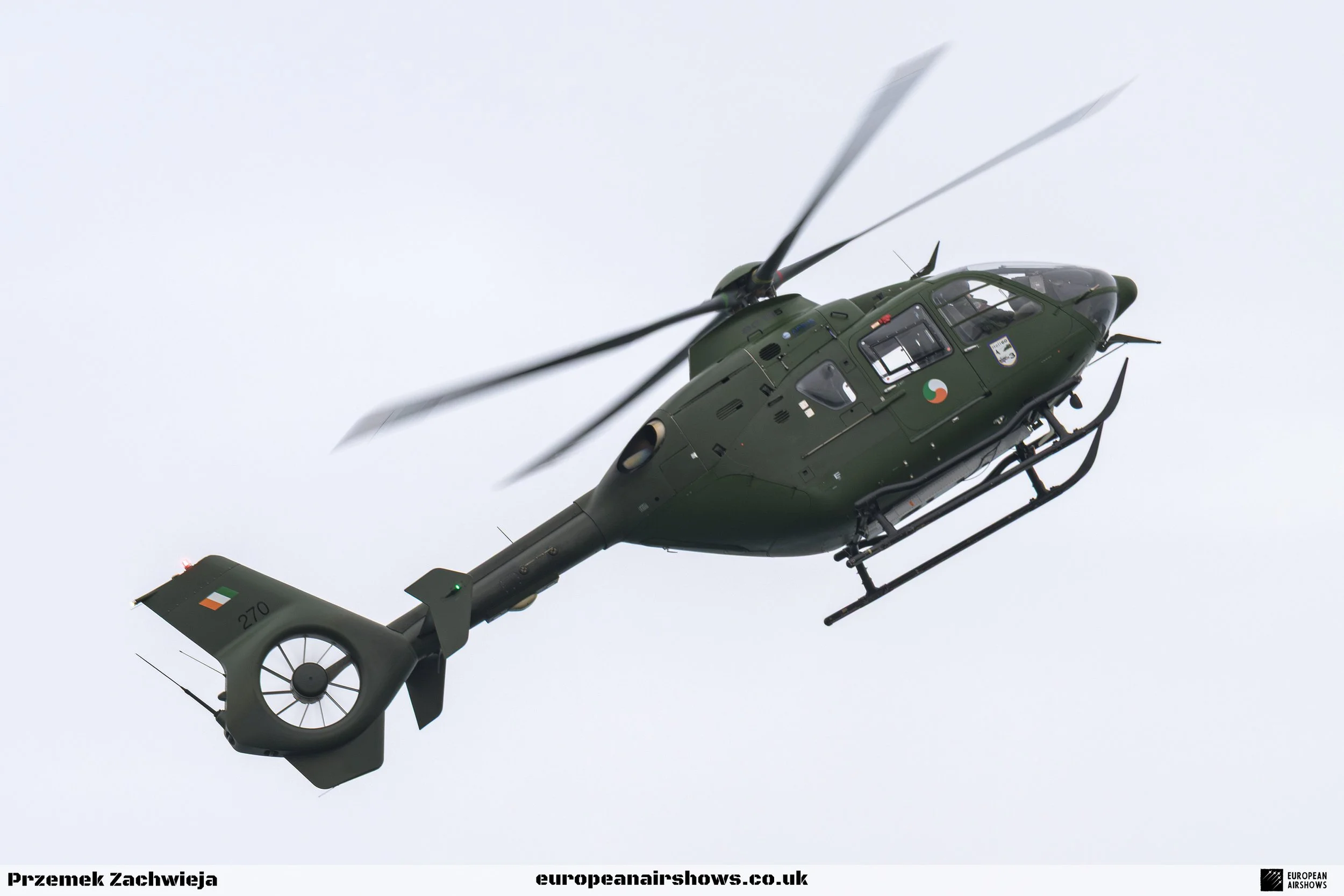
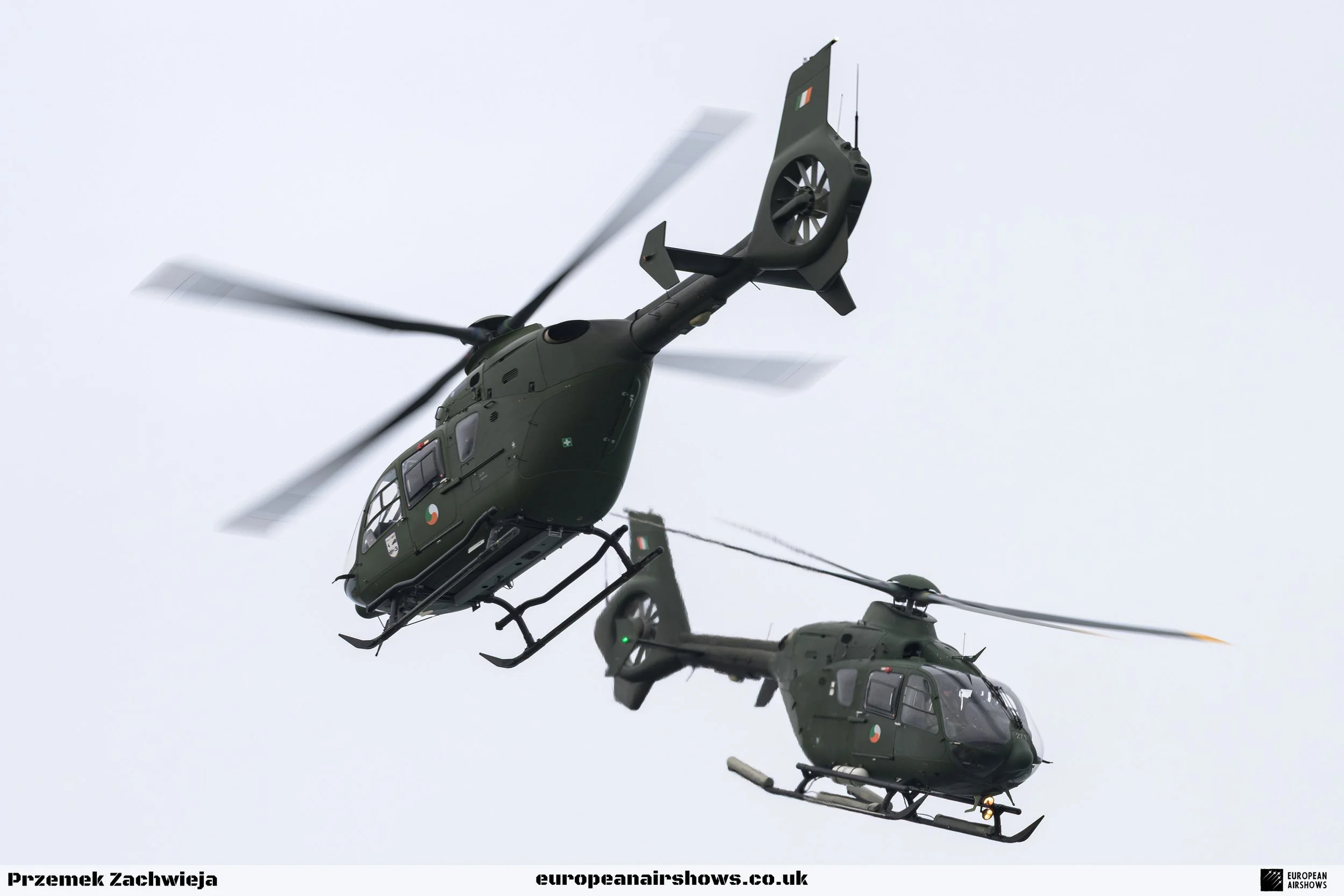
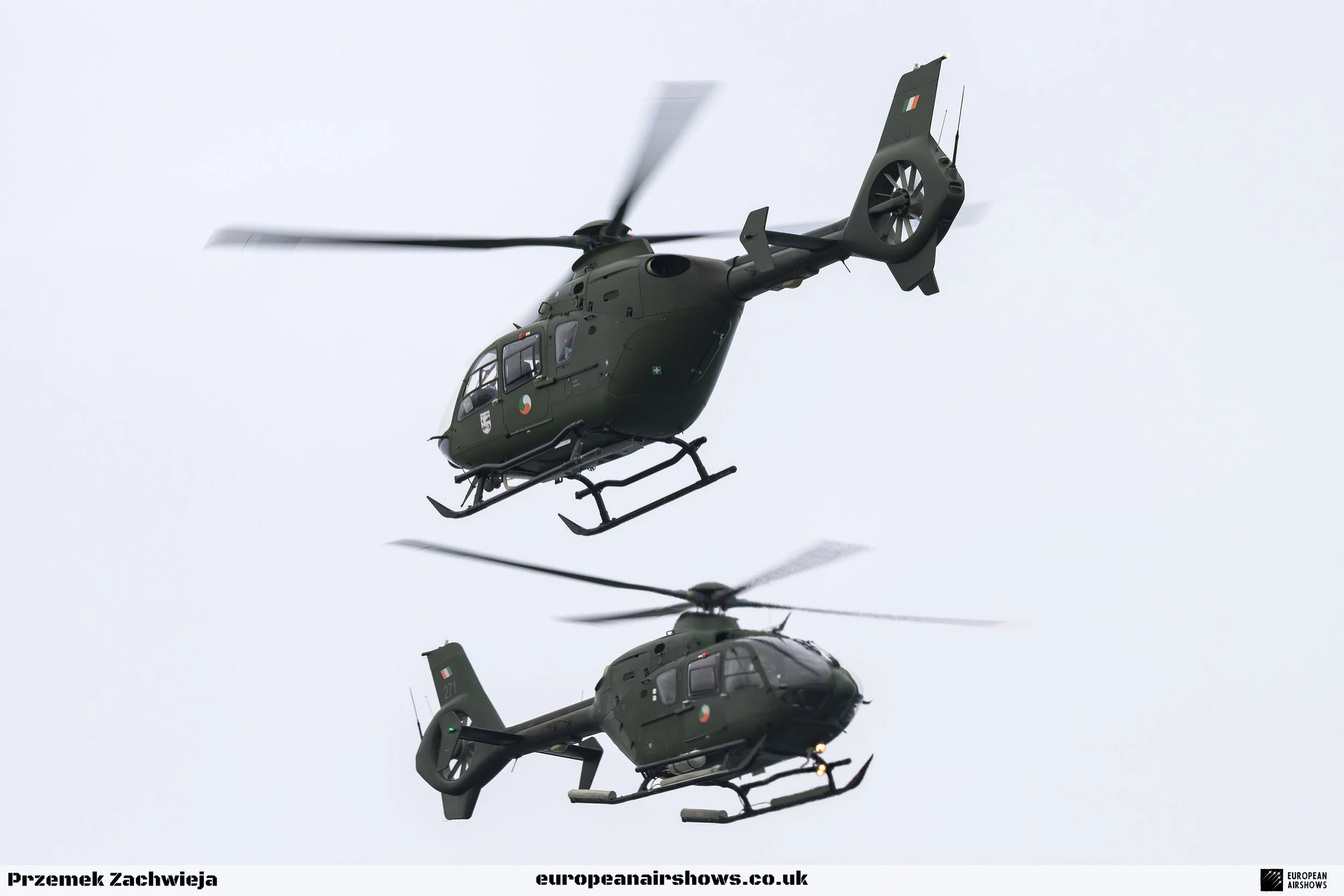
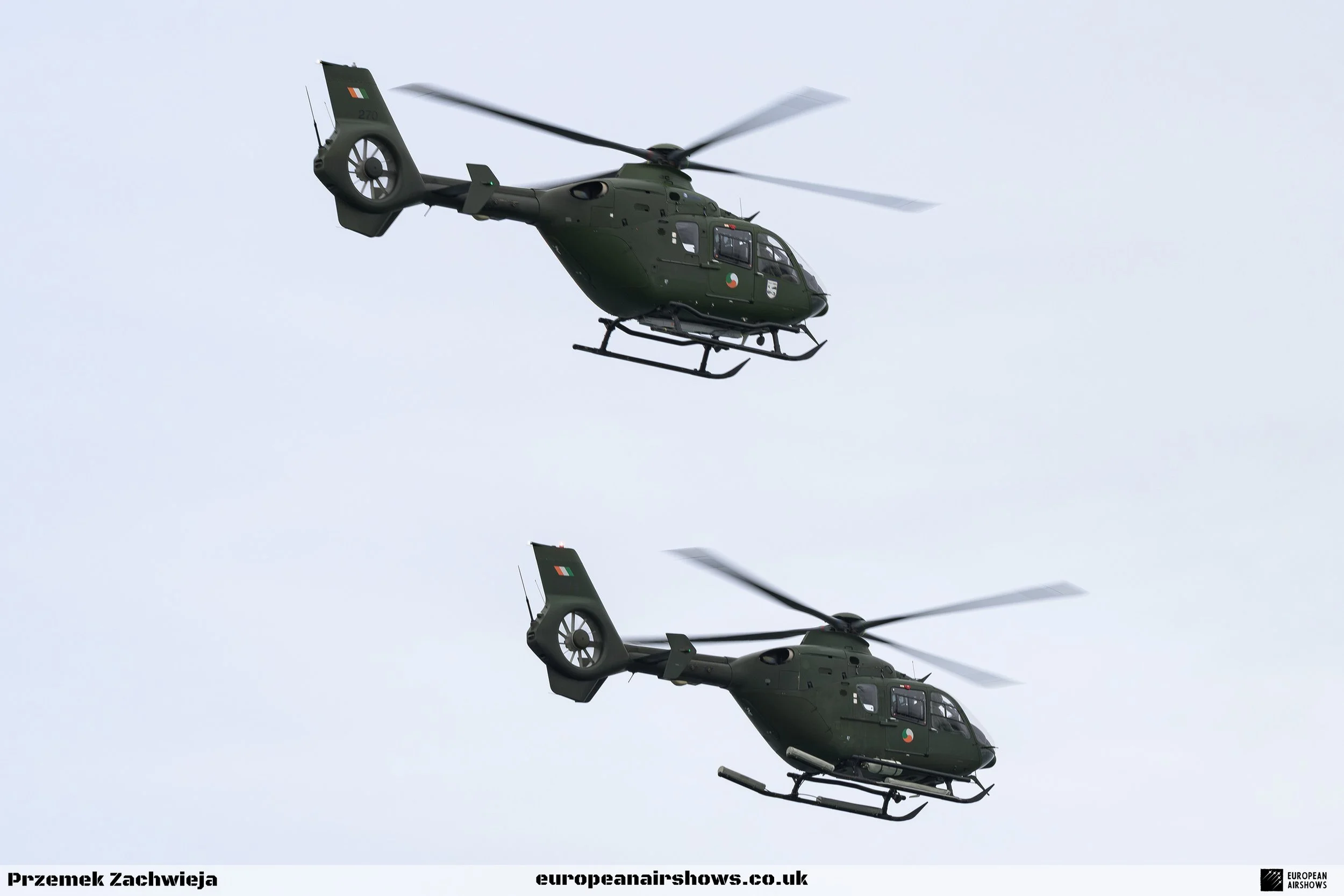
As the civilian Ravens cleared, the Irish Air Corps arrived with its own Raven formation. The service has a history of creating temporary display teams for particular seasons or anniversaries. Team Wolf paired the AW139 and EC135, while Team Shadow placed three PC-12NGs into formation. For 2026, Raven brought together the Air Corps' two EC135 P2 helicopters, serials 270 and 271.
The pair made an excellent crowd-rear arrival, a device that immediately drew attention away from the departing RV-8s and towards the new act. What followed was far more than two operational helicopters making parallel passes. The routine had clearly been designed as a proper two-ship display, with close formation work, synchronised turns and carefully timed opposition passes.
Helicopter formation displays are difficult to make visually coherent. They can quickly become a succession of hovers and distant repositioning manoeuvres. Raven avoided that. One aircraft was rarely left waiting while the other completed a figure, and the changes between close formation and opposition work were handled with confidence. For a team scheduled to make only two public appearances, at Bray and Rush, the routine looked remarkably mature.
There was also an unavoidable sense of farewell. The two EC135s were delivered in 2005 and are approaching the end of their Air Corps careers. Ireland has ordered four Airbus H145M helicopters, with deliveries due to begin in the first quarter of 2027. If this was the last season in which the EC135 pair appeared before the public, Team Raven was an imaginative way to mark it.
The back-to-back sequence of the two Ravens was one of the strongest sections of the show. The civilian team demonstrated why it is so dependable, while the Air Corps produced something genuinely new and distinctly Irish.
Wingwalking through its own smoke
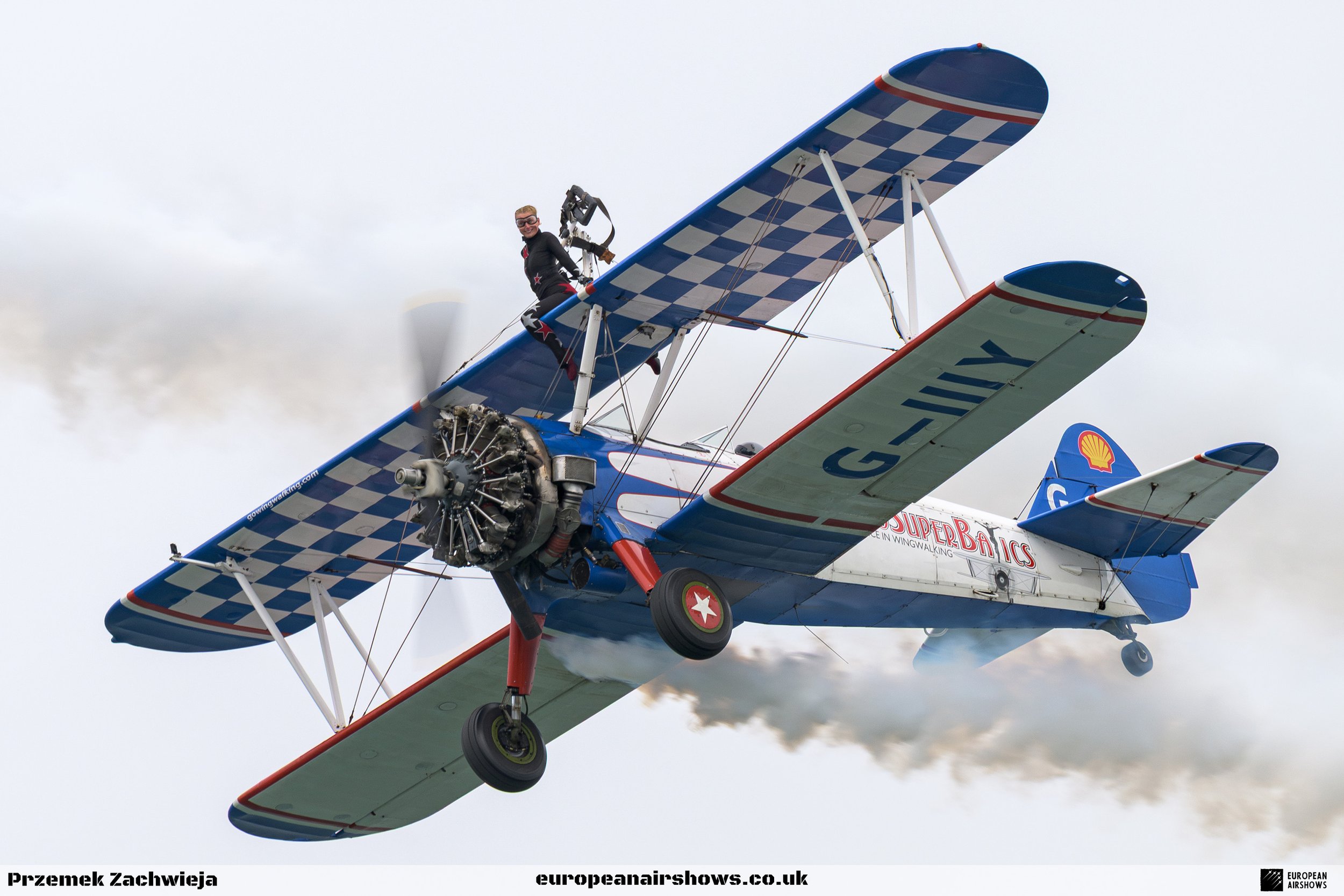
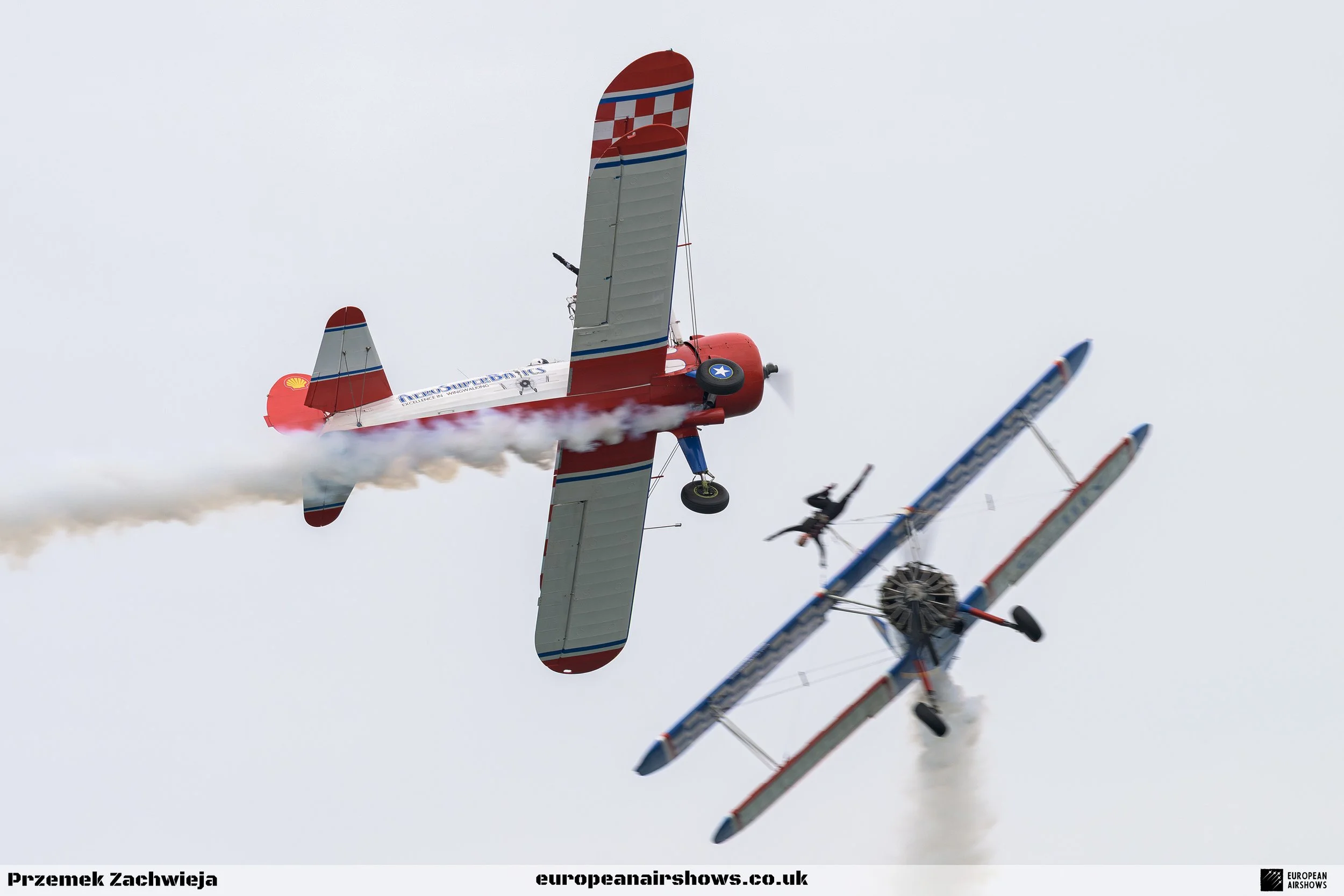
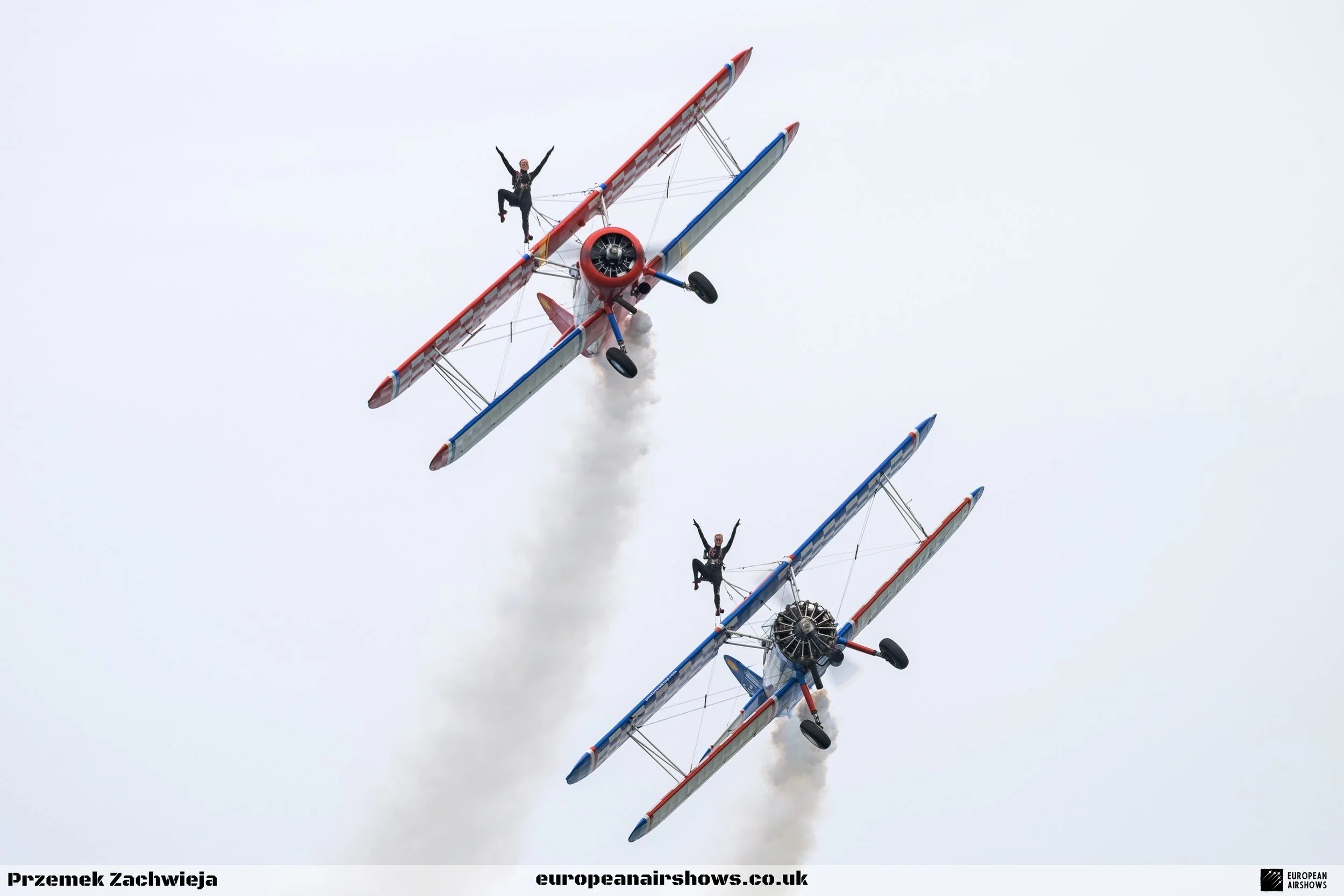
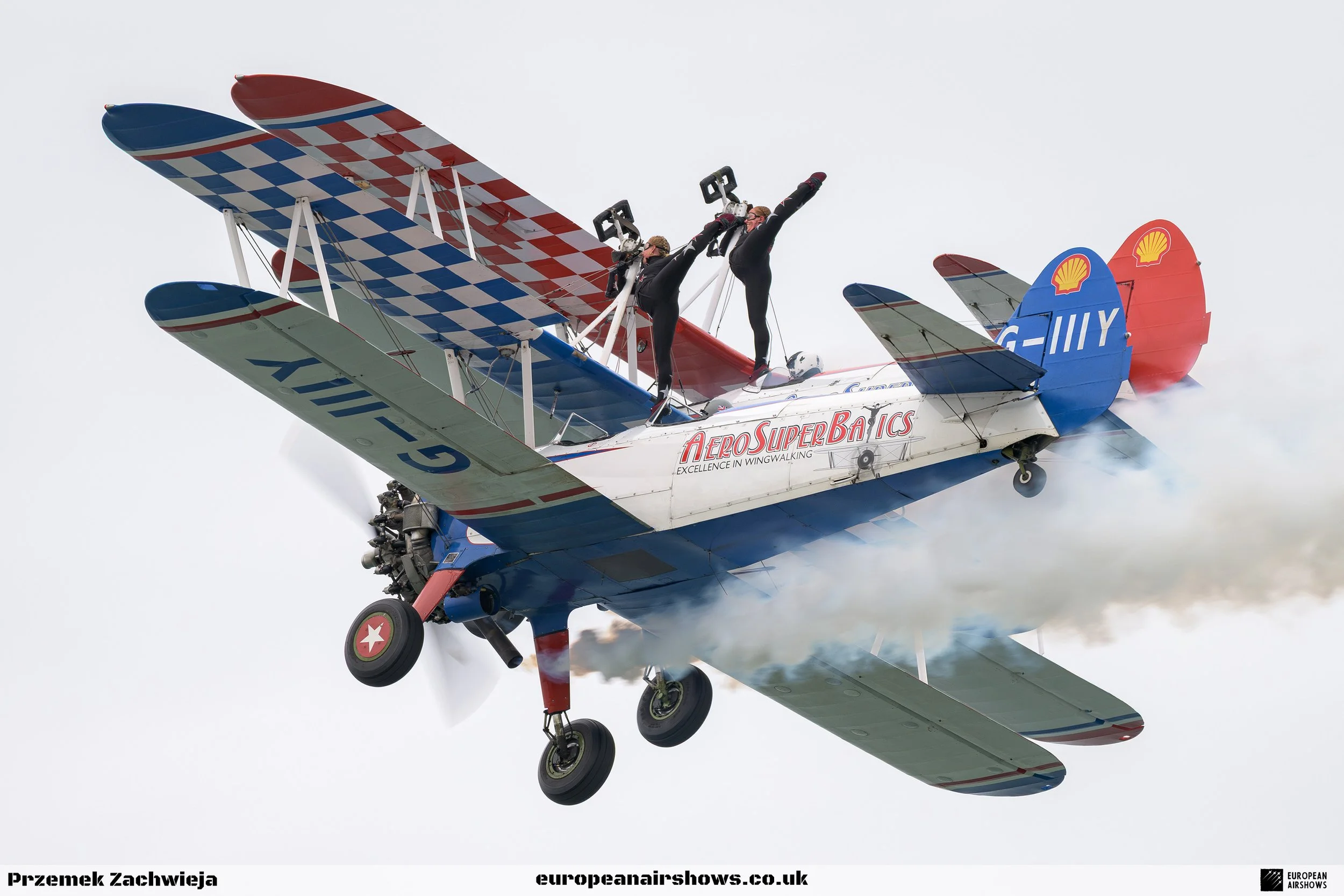
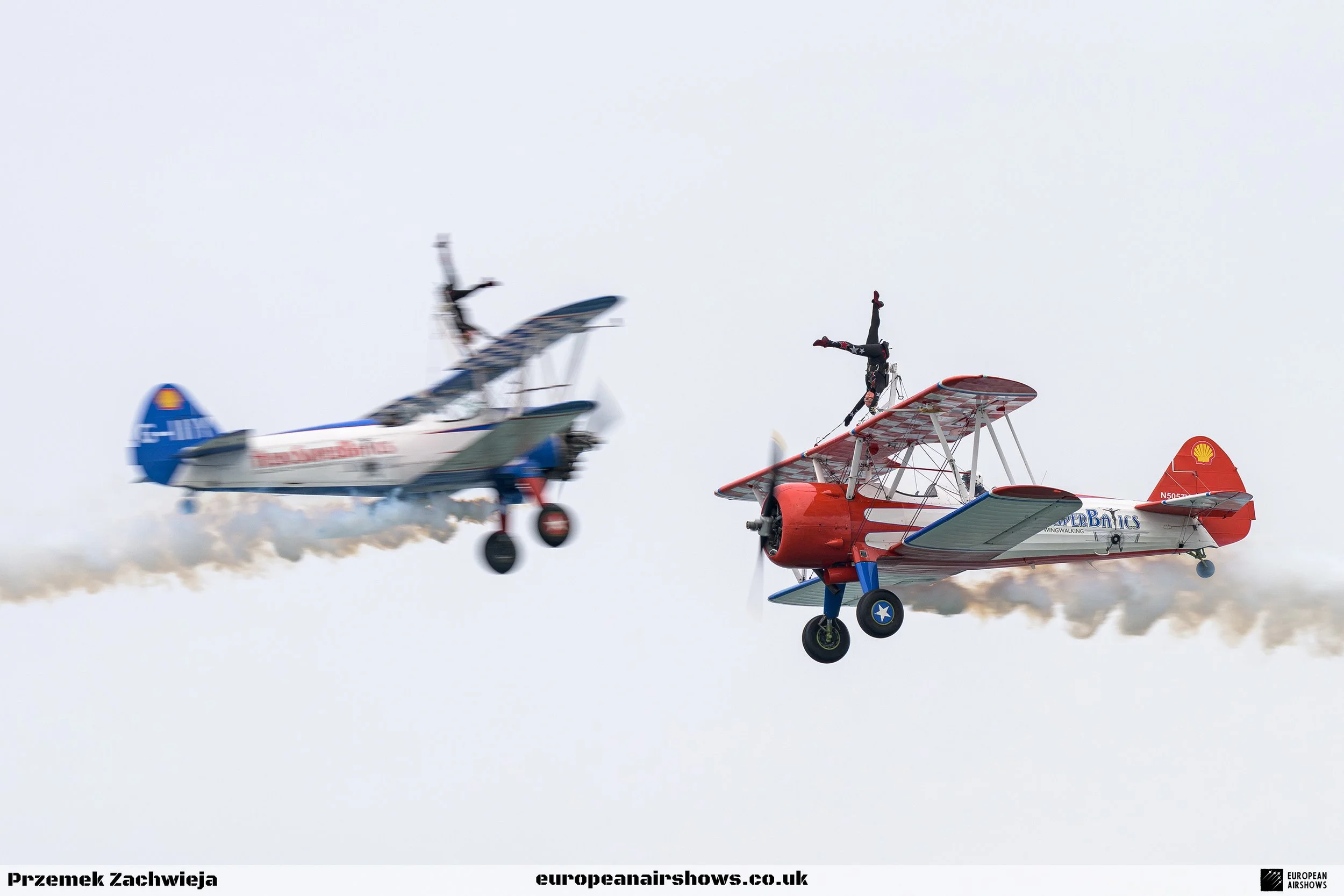
AeroSuperBatics then brought two Boeing Stearman biplanes into the display. The team has been presenting wingwalking since 1984 and now describes itself as the world's only formation wingwalking team. Its modified Super Stearmans use 450 hp Pratt & Whitney radial engines and carry their performers on rigid posts above the upper wings.
The visual ingredients are difficult to beat: two brightly coloured biplanes, radial-engine noise, close formation aerobatics and two wingwalkers moving between poses as the aircraft loop and roll. The Rush routine delivered all of them. The pilots kept the pair well matched, while the wingwalkers remained the obvious focus rather than becoming tiny figures on distant aircraft.
Unfortunately, the smoke became almost as prominent as the aeroplanes. The breeze was neither aligned well enough nor strong enough to clear it away from the crowd line. Each pass added another white layer between the beach and the display, and at several points the Stearmans disappeared into the haze they had created only seconds earlier.
This was especially punishing for photography. Autofocus systems found the smoke rather than the aircraft, contrast collapsed and otherwise well-positioned passes emerged as pale shapes against a white background. The same problem had affected the team's Bray display, but the shorter Rush box caused the aircraft to return through the contaminated air more frequently. The flying remained impressive. Seeing it clearly was the difficulty.
Five passes from Iolar
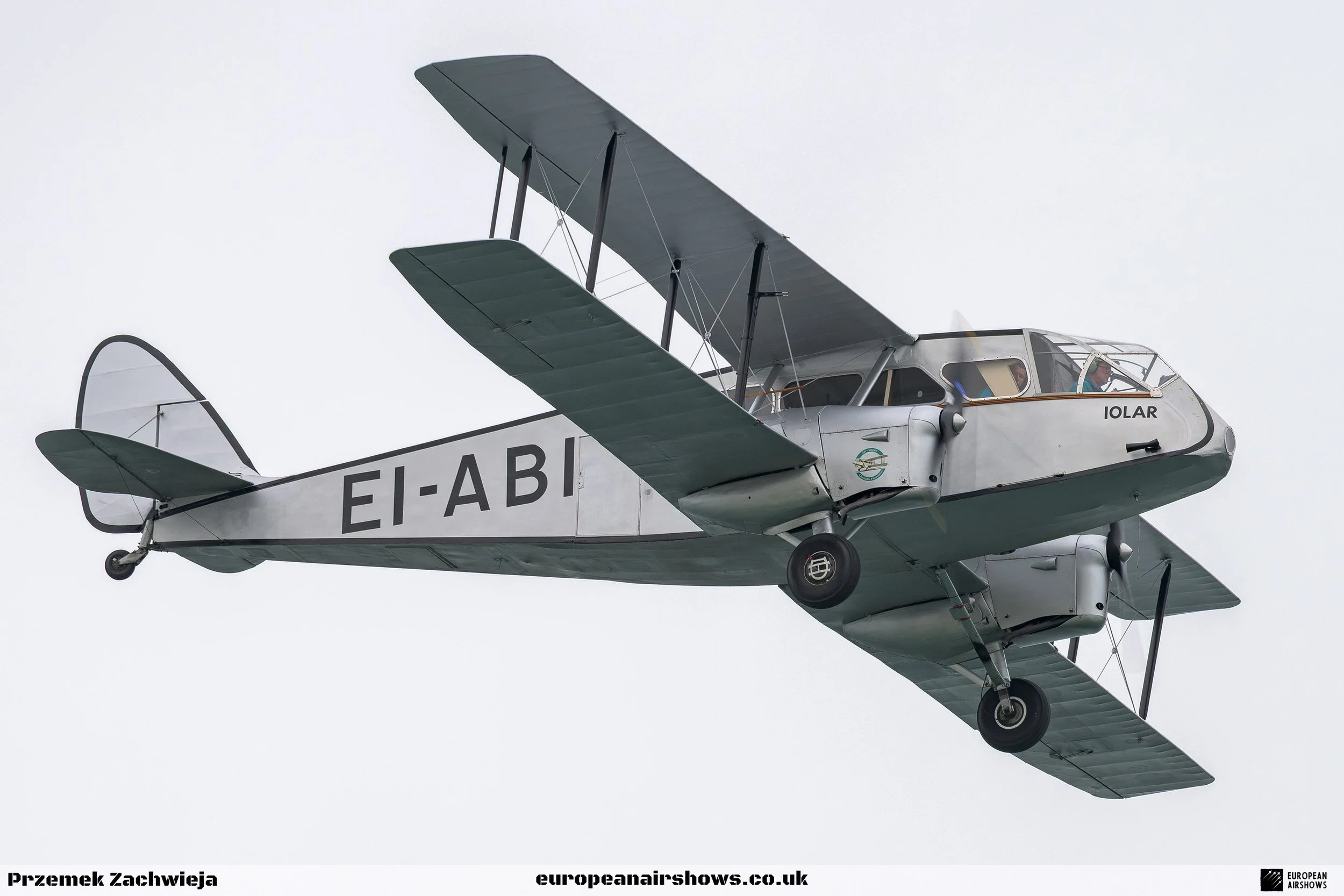
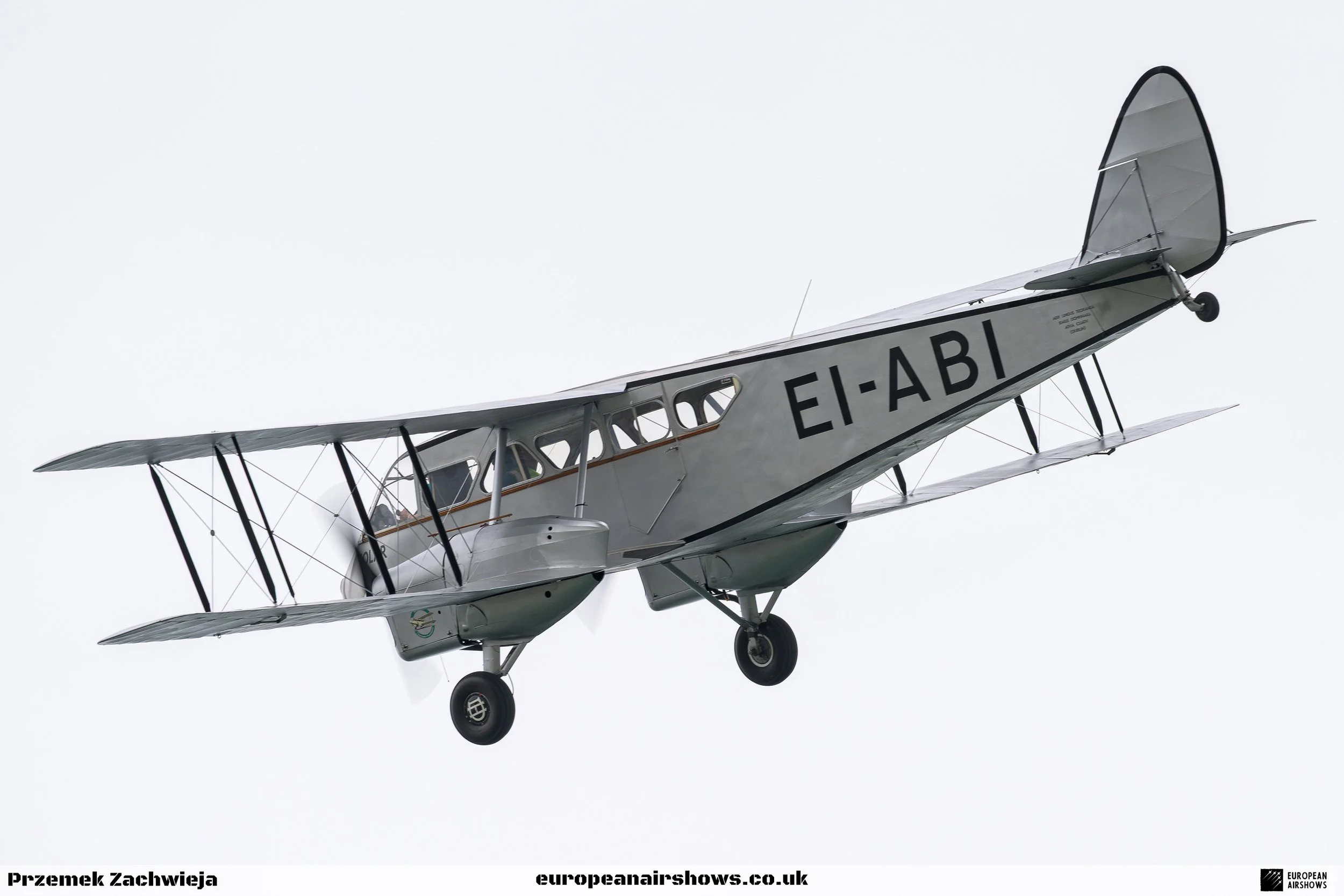
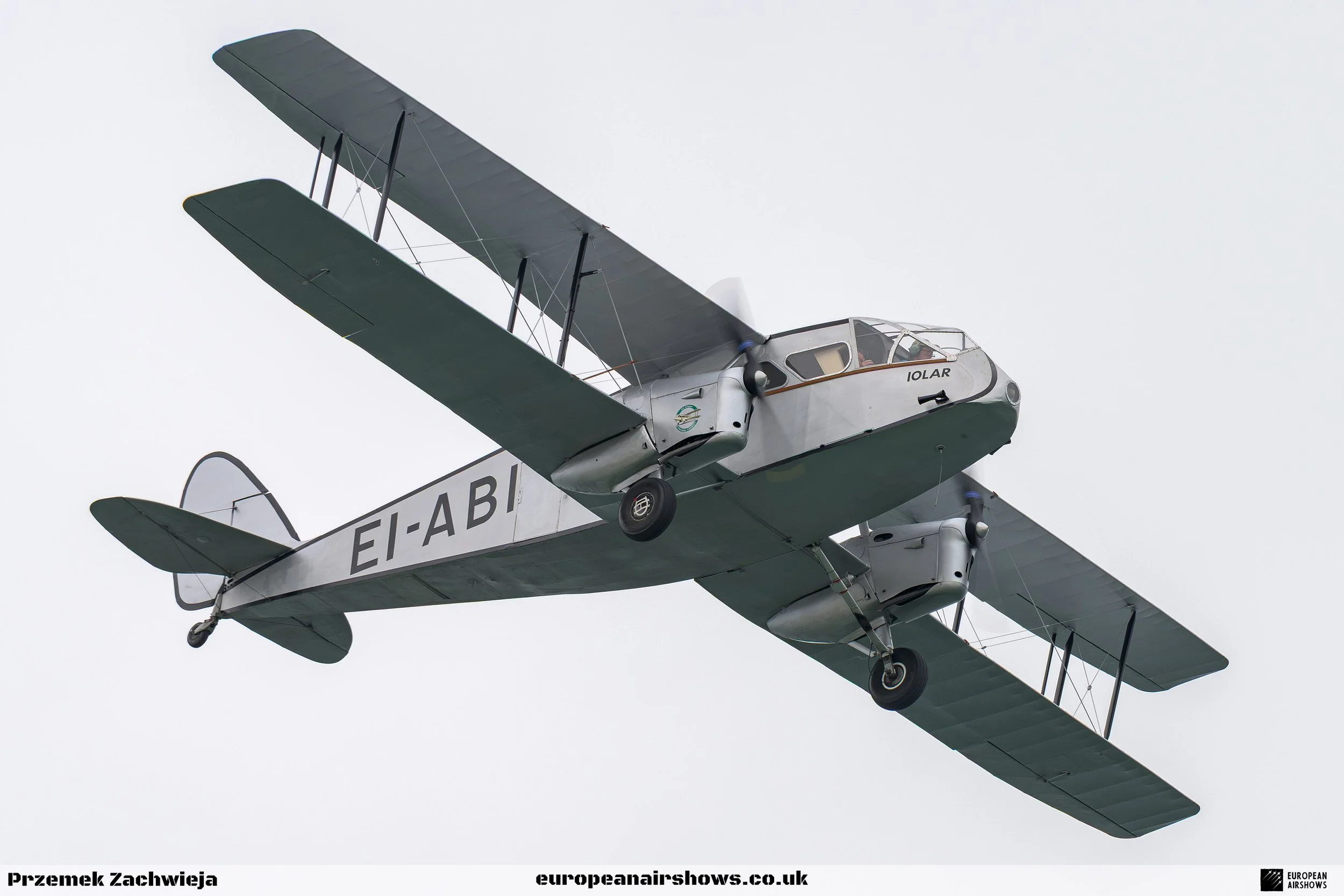
The most historically resonant aircraft of the weekend came next. Aer Lingus' de Havilland DH.84 Dragon EI-ABI, Iolar, made five graceful passes along North Beach as part of the airline's 90th anniversary celebrations.
The story of this aircraft is often shortened until it becomes misleading. EI-ABI is commonly called a replica of the original Iolar. It is more accurately a genuine 1936-built sister aircraft restored to represent it. The original EI-ABI operated Aer Lingus' first service on 27th May 1936, flying five passengers and a bundle of newspapers from Baldonnel to Bristol Whitchurch. It was sold in 1938 and was later lost during the Second World War.
The Dragon seen at Rush was built in the same year. Aer Lingus acquired it in 1967 and restored it in the identity of the original aircraft. It returned to flight for the airline's 50th anniversary in 1986 and has since appeared only at widely spaced commemorative occasions. Aer Lingus itself describes EI-ABI as the original aircraft's surviving sister. The name Iolar is the Irish word for eagle, a link that survives in the airline's identity nine decades later.
Before this year, the aircraft had last flown in 2016 for the Aer Lingus 80th anniversary. Its return in 2026 followed a four-month programme at Midland Aviation in Abbeyshrule which included structural and cosmetic work, top overhauls of both engines and specialist carpentry. On 27th May it recreated the historic route, flying from Weston to Bristol exactly 90 years after the airline's first service.
That history made the Rush appearance much more than a collection of slow flypasts. The DH.84 belongs to the era when Aer Lingus could begin operations with one aeroplane, one route and only five passengers on its first service. Its wooden structure, narrow fuselage and pair of compact de Havilland Gipsy Major engines look almost impossibly delicate beside the jets that now pass over Rush on their way to Dublin.
Saturday at Bray had brought the newest aircraft in the Aer Lingus fleet, the Airbus A321XLR. Sunday brought the oldest. The contrast gave the weekend a satisfying shape, even if it occurred across two separate airshows rather than within one programme.
Rush also received the more generous appearance. Bray had only two passes, whereas North Beach saw five. Each was flown at a slightly different height or angle, giving the crowd time to appreciate the Dragon's slim planform and the gentle cadence of its engines. It was not a display in the aerobatic sense, and it did not need to be. Rarity supplied the drama.
Aer Lingus has not announced how often Iolar will fly after the anniversary season. The ten-year gap between its 2016 and 2026 appearances suggests nobody should assume there will be another opportunity soon. It may return to long-term display, and if its next major outing is reserved for the centenary, Rush could have witnessed one of its last public flights for a decade. That remains speculation, but it made all five passes feel precious.
Garda helicopter handling
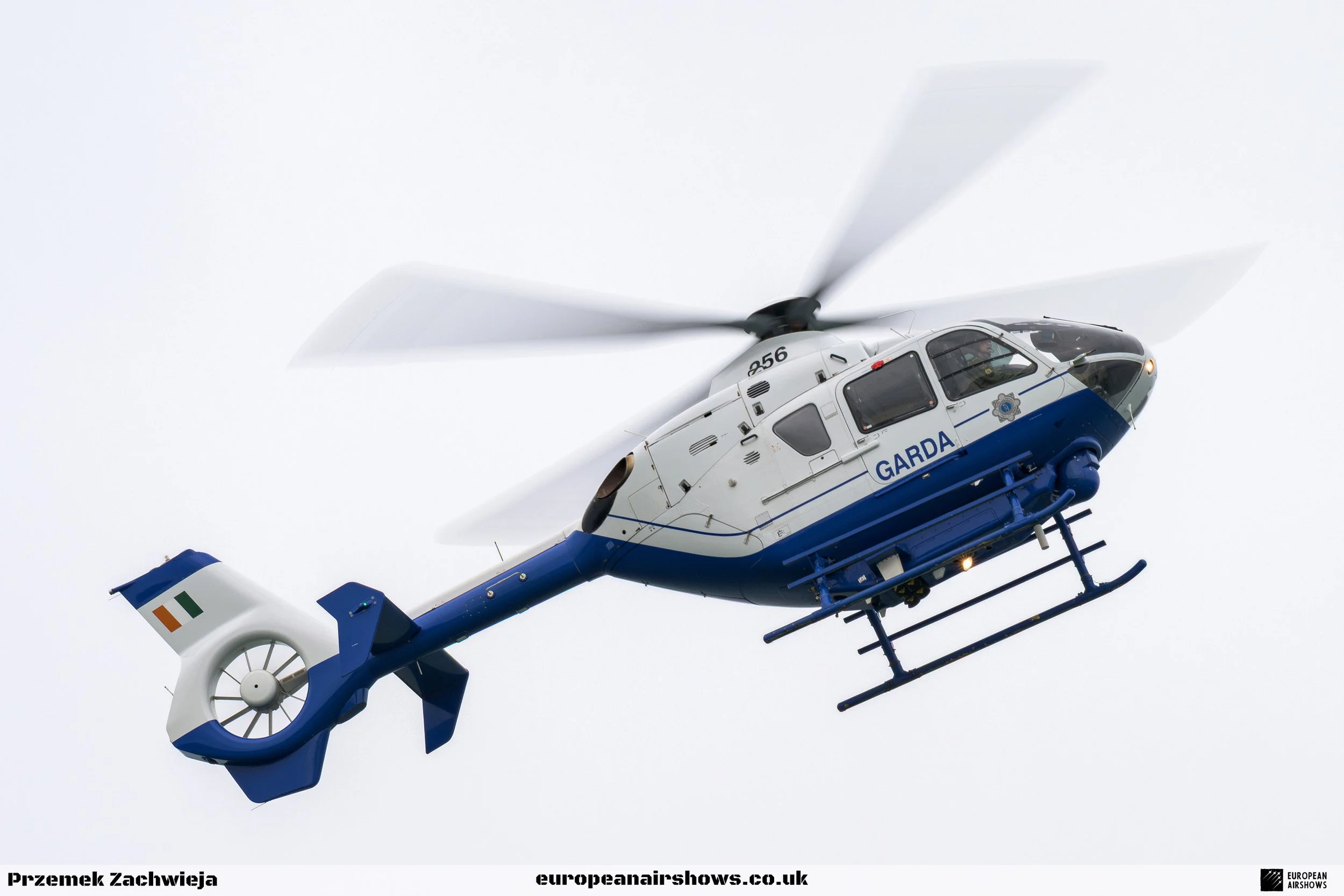
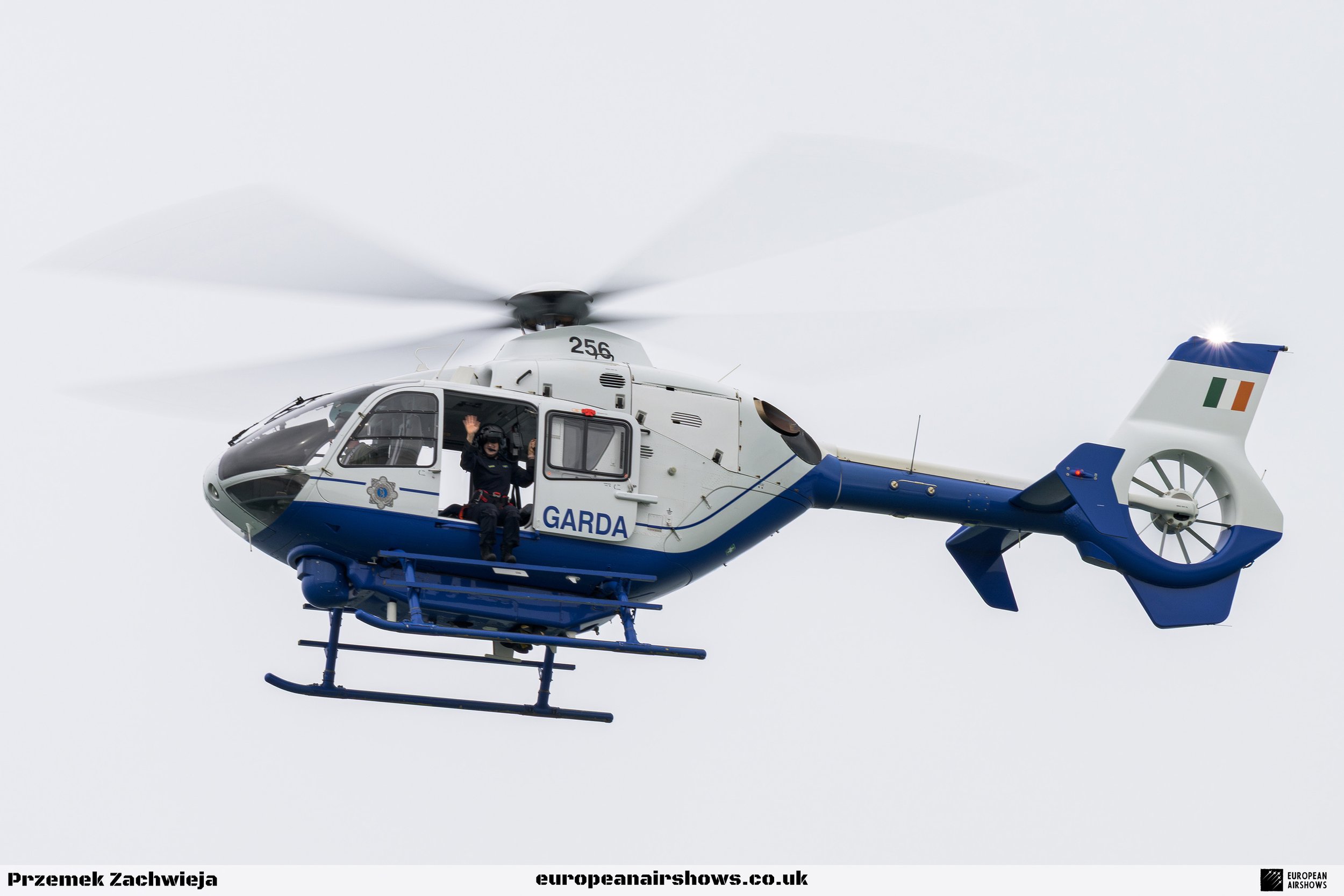
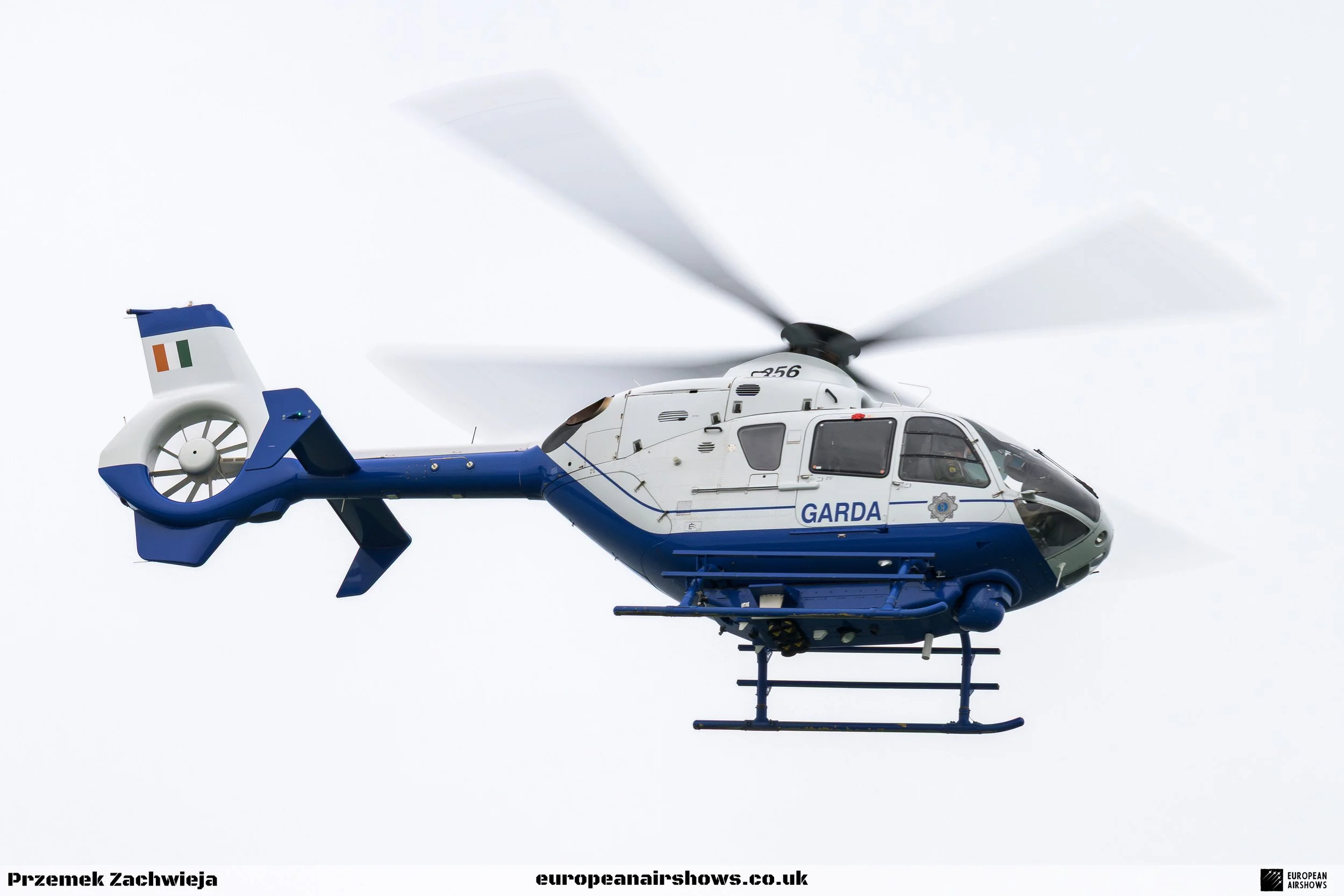
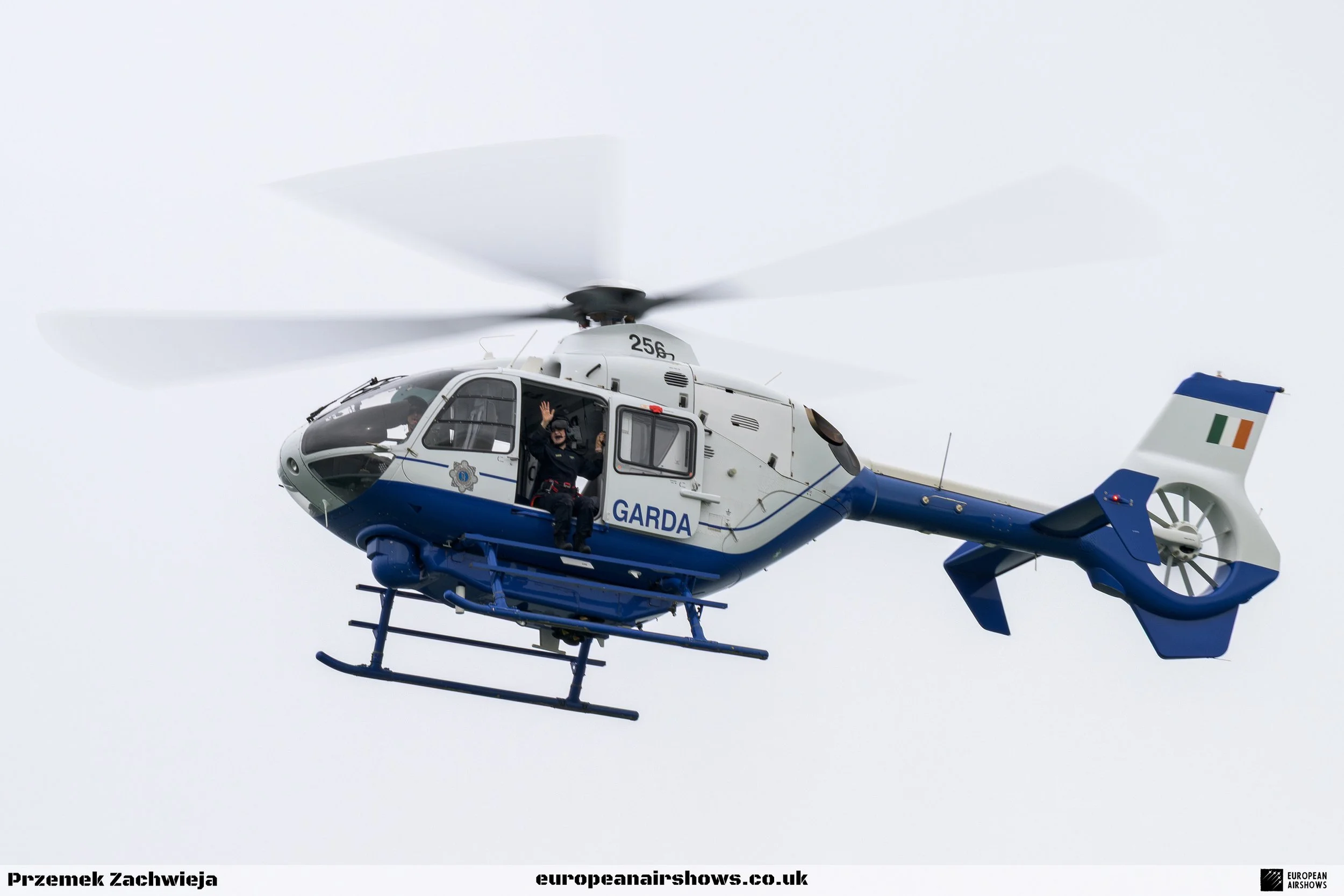
The Garda Air Support Unit's EC135 followed with one of the afternoon's most energetic demonstrations. This was an operational police helicopter rather than an aircraft maintained for airshow work, yet the crew produced a confident sequence of sharp turns, steep climbing manoeuvres and controlled hovers.
The Air Support Unit is a joint operation. Irish Air Corps personnel fly and maintain the helicopters while Garda observers operate the police systems and direct the aircraft during missions. That partnership gives the EC135 a familiar military precision, but its purpose is very different from the Air Corps pair seen earlier.
At Rush, the crew used the small box well. Rapid reversals kept the helicopter close and showed how quickly it can change direction during a search or pursuit. The police siren, heard from the aircraft during the routine, was an entertaining touch which immediately identified the machine for younger spectators without turning the demonstration into theatre.
This appearance also carried farewell significance. Two Airbus H145 helicopters were ordered to replace the unit's ageing EC135s. The first replacement, EI-OSS, had suffered delays in Britain, but in July Gardaí said it was expected in Ireland during the third quarter of 2026, with the second due in the fourth quarter. The existing EC135s entered service in 2001 and 2007, so their public career was plainly nearing its end.
That made the Rush handling demonstration more important than it might have appeared in the programme. It was probably one of the last chances to see a Garda EC135 flown this dynamically in public, and the crew gave the type a suitably lively send-off.
Two very different aerobatic biplanes
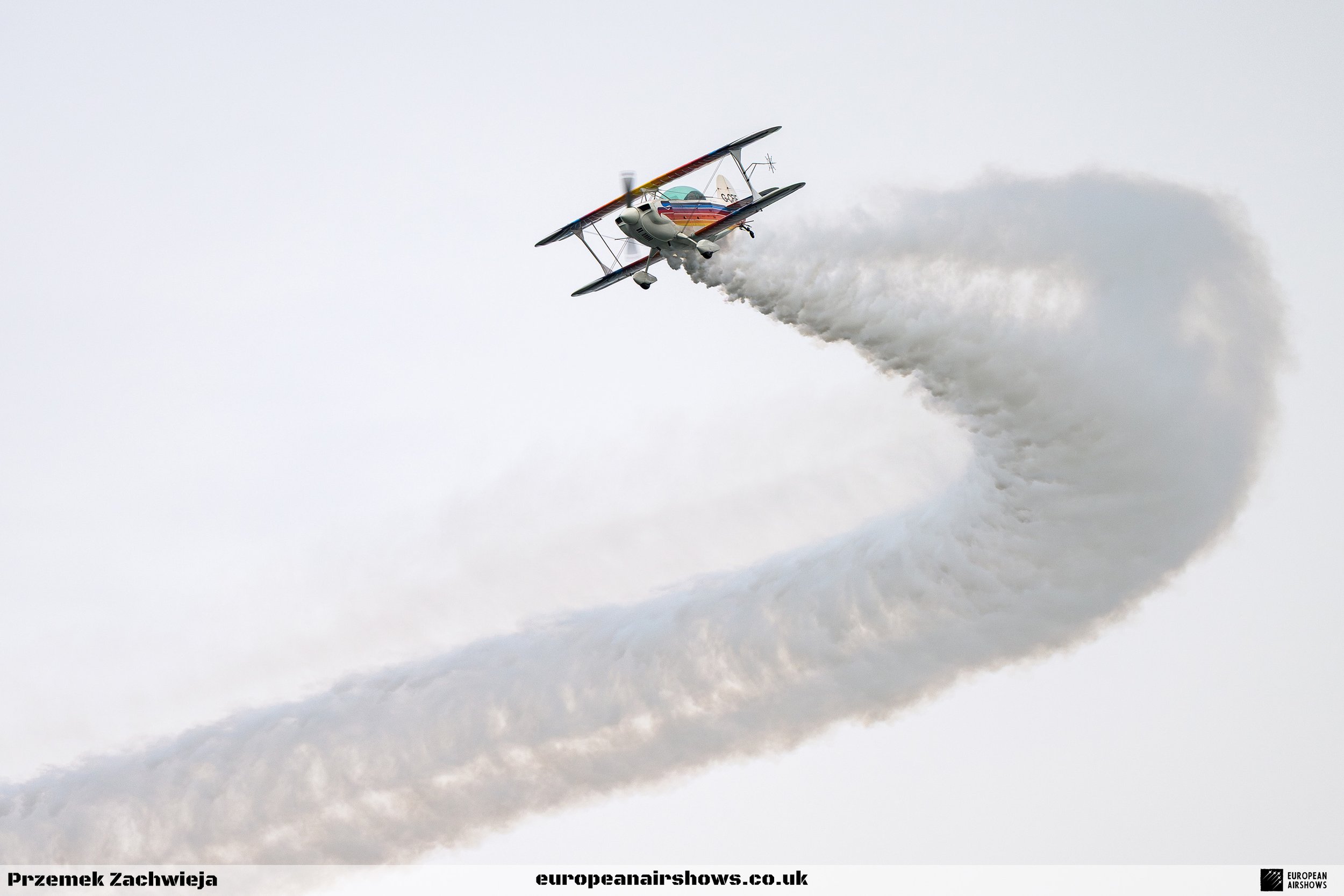
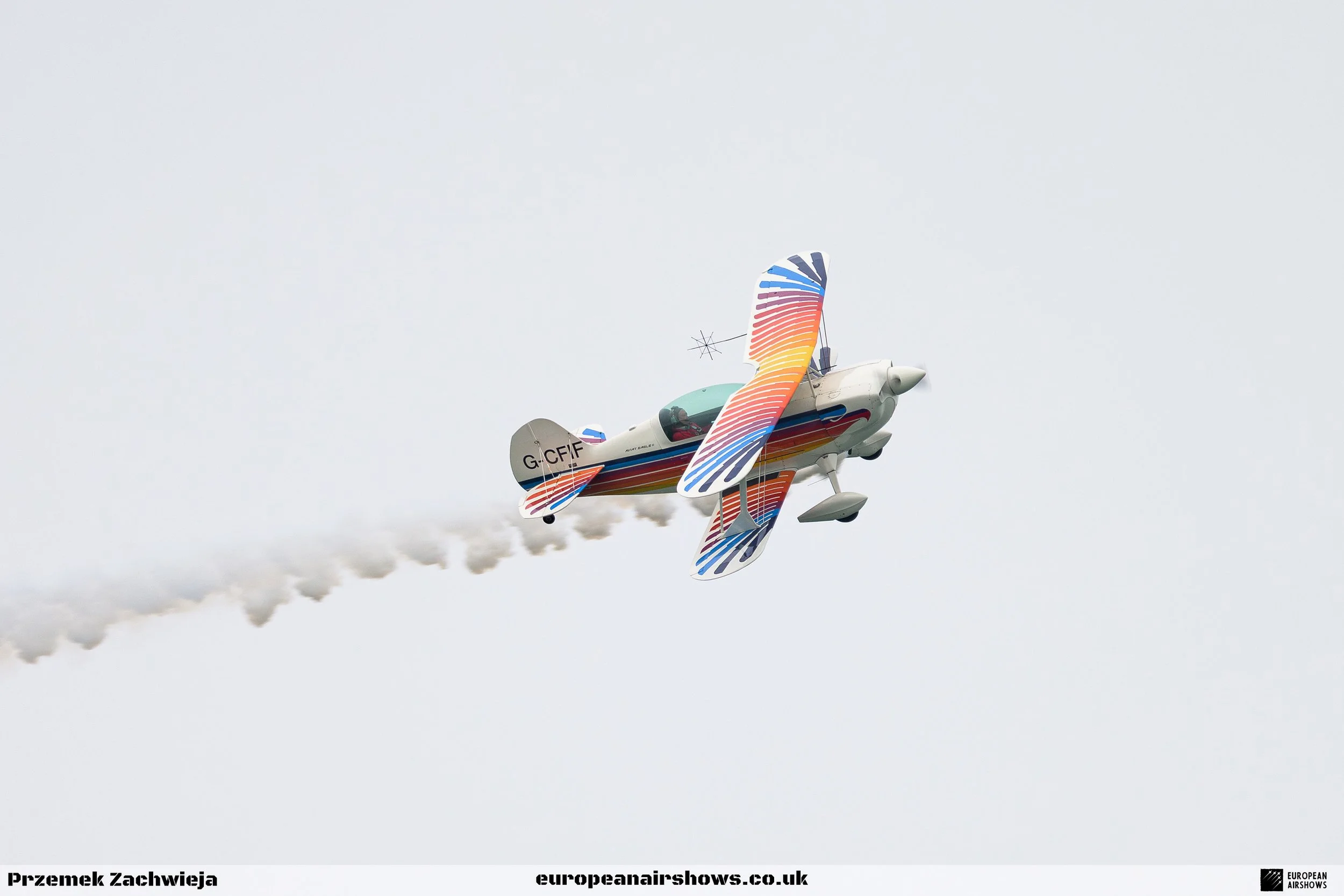
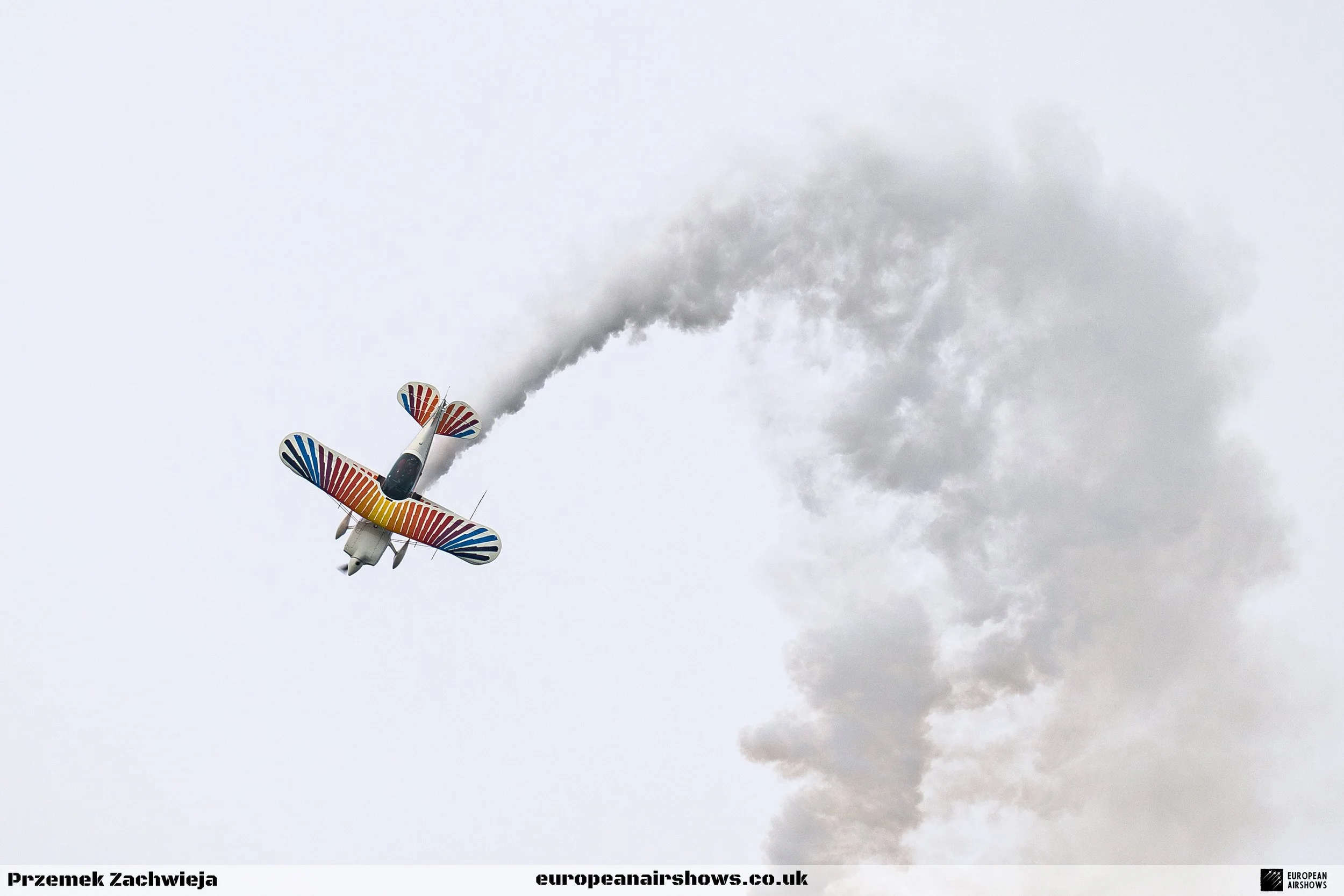
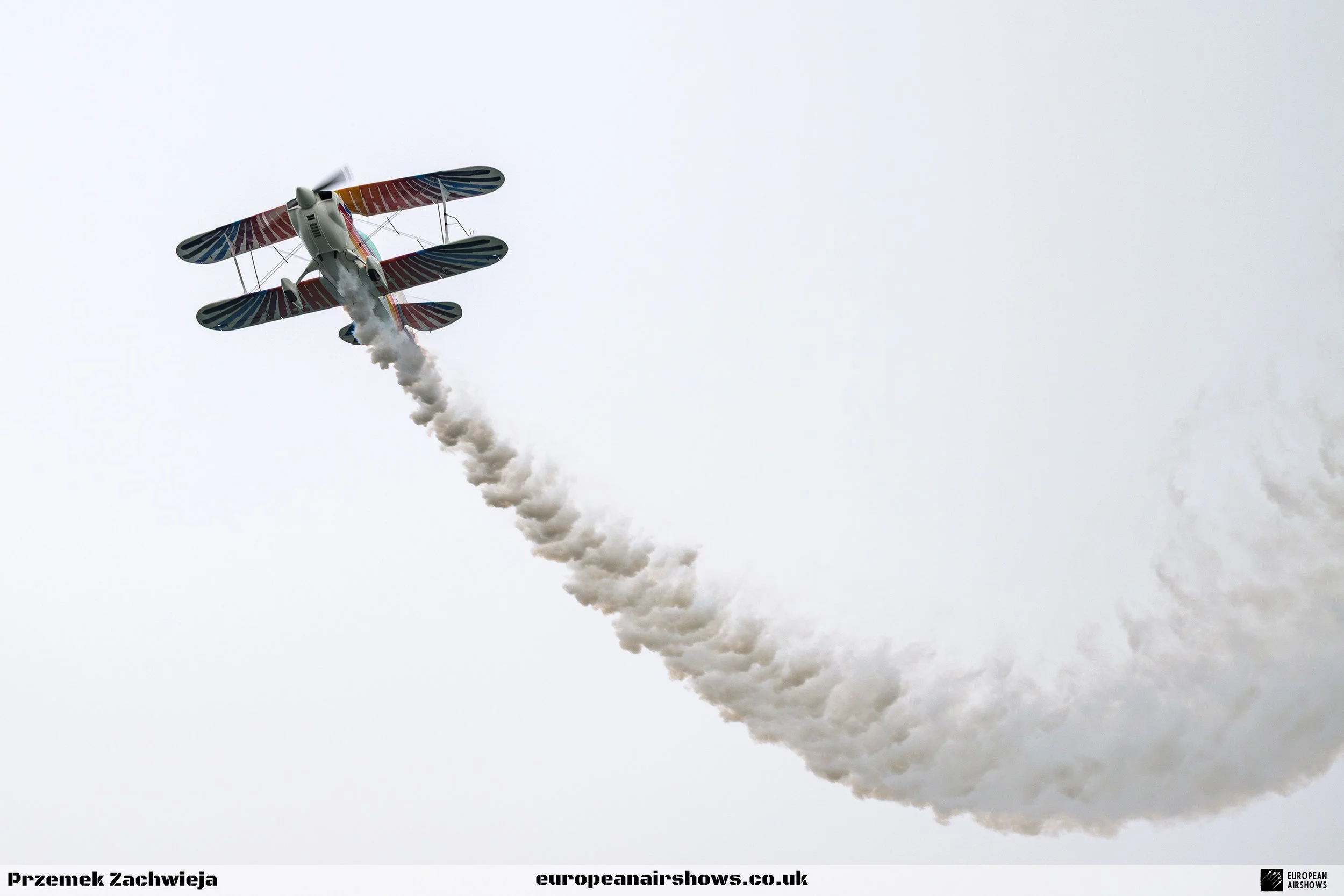
Andrew Fenton's Christen Eagle II G-CFIF began the final portion of the display. The Eagle was conceived by Frank Christensen during the 1970s as a high-quality kit-built aerobatic aircraft, combining competition capability with the finish and visual appeal of a show aeroplane. G-CFIF has become a familiar Irish performer, its colourful scheme and smoke system making it easy to recognise.
Fenton's display favoured graceful, traditional aerobatics. Loops, rolls and flowing changes of direction were flown cleanly, without trying to make the Eagle behave like an unlimited freestyle machine. There is nothing wrong with that approach. A measured biplane routine can provide useful contrast after a succession of formation and helicopter acts.
The problem was presentation. The entire display appeared unusually high and far offshore. Even the slower figures lacked the visual presence they should have had, and the aircraft often looked small against the grey cloud. This was not a complaint that the routine needed to be more extreme. It simply needed to be closer.
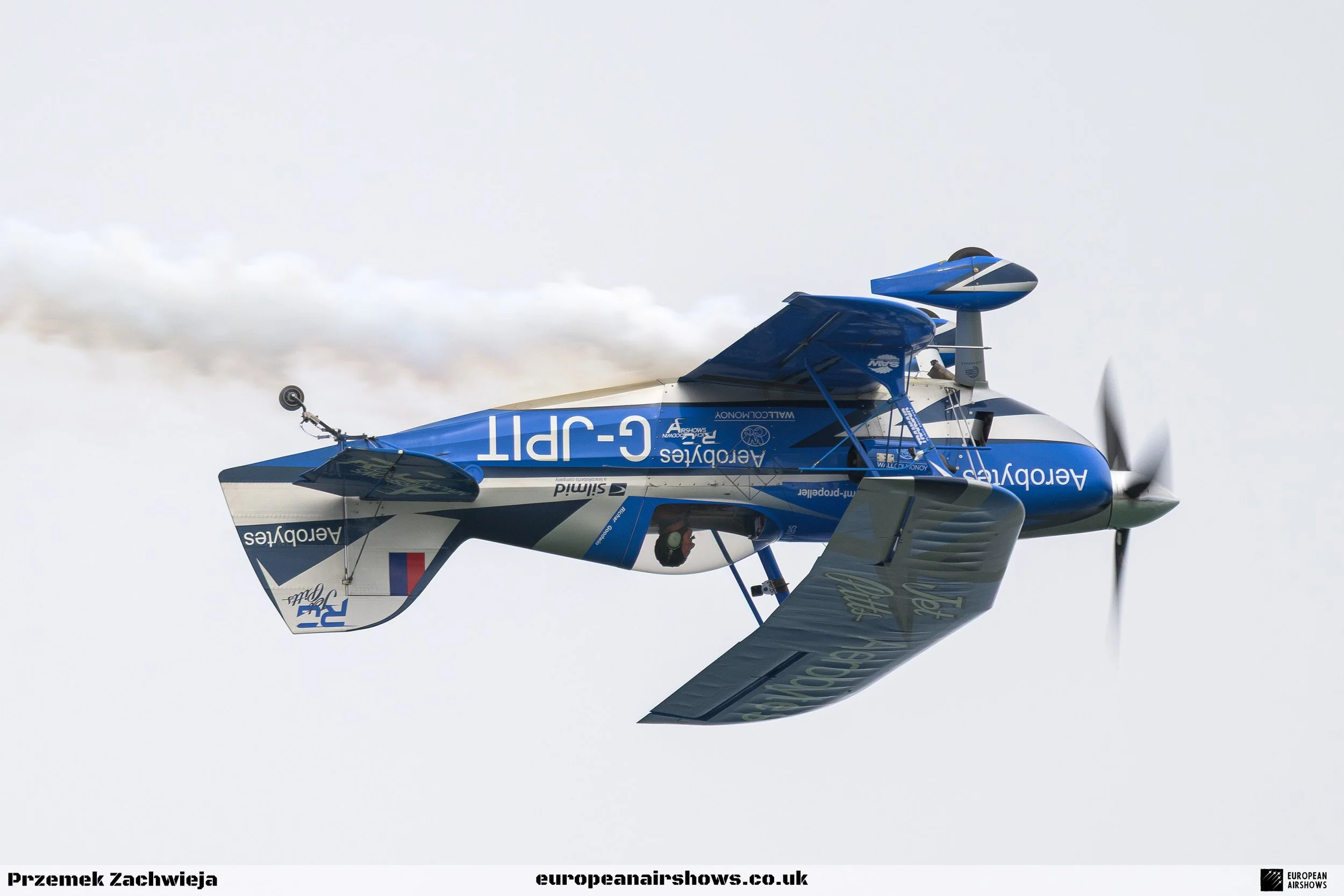
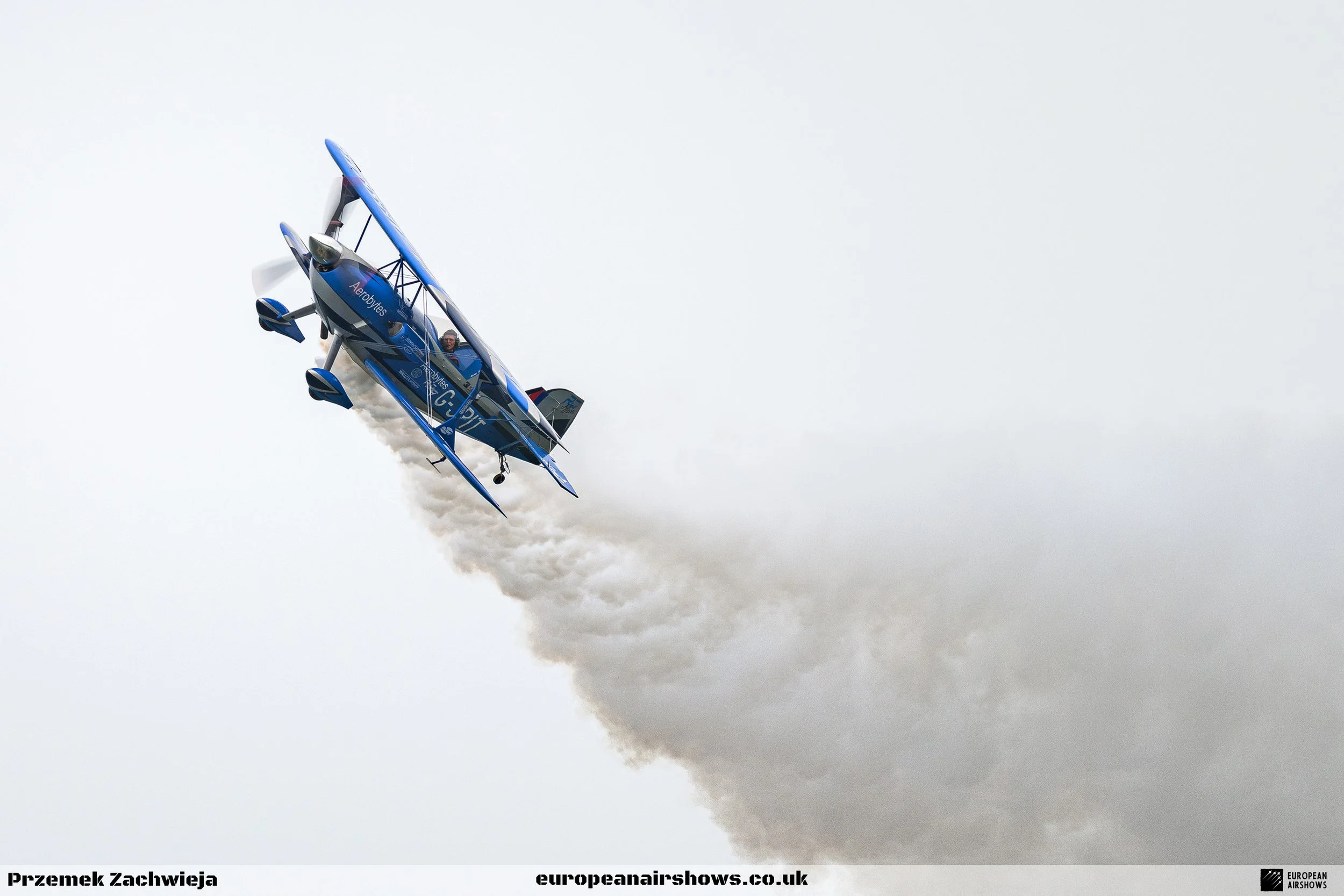
That became impossible to ignore when Richard Goodwin arrived immediately afterwards in G-JPIT, the Jet Pitts. Both are small aerobatic biplanes operating in the same limited display area, yet Goodwin filled that area in a way the Christen Eagle had not.
G-JPIT began life as a heavily modified Pitts S-2S, but very little about it is conventional. Goodwin spent four years building the aircraft with new wings and enlarged ailerons. The 8.5-litre Lycoming piston engine is supplemented by two AMT Lynx turbojets mounted beneath the fuselage. According to Goodwin's own technical description, the jets add a combined 700 lb of thrust and take the aircraft's total claimed thrust above its flying weight.
The result is one of the most distinctive solo displays currently seen in Britain and Ireland. Goodwin can sustain exceptionally steep climbs, hang the aircraft at high angle of attack and tumble through figures that seem to consume almost no horizontal space. The two jet exhausts add their own sound beneath the dominant piston-engine note, while the smoke traces every abrupt change of direction.
Rush has seen Goodwin many times, but familiarity has done little to weaken the effect. His display was aggressive without becoming untidy and close without feeling forced into the beach. It was exactly the kind of act that suits this site.
The wind again interfered with the view. Heavy smoke drifted slowly towards the crowd and remained over the display line, at times making photography nearly impossible. Goodwin would vanish into his own previous figures before reappearing through a grey-white curtain. It was frustrating, but unlike the earlier Christen Eagle display there was never any doubt that the aircraft itself was using the available space to the full.
The Jet Pitts brought the flying to a suitably energetic conclusion. Few displays make a small aeroplane appear so large, and fewer still can combine the familiarity of a Pitts with something as improbable as two working jet engines.
The missing aircraft
The published programme was not especially deep, so the unexplained absence of several advertised acts had a disproportionate effect on the afternoon.
The Irish Defence Forces Black Knights Parachute Team did not appear. Gerry Humphreys and his Van's RV-7 EI-HUM, the Flying Cow, were also absent. Most significantly, neither element of the Irish Historic Flight Foundation contribution arrived. Its de Havilland Chipmunks and the Reims Cessna FR172 had both been advertised as separate items.
Withdrawals happen at every airshow. Aircraft become unserviceable, pilots become unavailable and operational requirements rightly take priority. The criticism is not that an advertised act failed to fly. It is that the changes were not communicated. The official Rush line-up continued to list all of the missing participants, and there was no clear cancellation announcement before the display.
That was particularly disappointing because Bray had publicly acknowledged the withdrawal of the Irish Historic Flight Foundation from its own programme. Rush spectators deserved the same information. Someone travelling specifically to see the Chipmunks, or to watch Humphreys' highly individual RV-7 routine, could reasonably have waited all afternoon without knowing the aircraft were not coming.
In a much larger programme, four missing entries might be absorbed without fundamentally changing the pace. At Rush they represented a sizeable portion of the advertised flying. The Irish Parachute Club still opened the show, but it did not replace the distinctive military identity of the Black Knights. The loss of the Historic Flight also removed precisely the kind of slower, locally relevant flying that suits North Beach.
Better communication would not have restored the aircraft, but it would have treated the audience fairly and allowed the remaining programme to be judged on what it actually contained.
Verdict
Moving the Rush Air Display to North Beach was the correct decision. The crowd line is better, the flying feels closer and the beach provides a clearer focus than the old harbour arrangement. Rush looked and felt more like an established airshow in 2026, even with the festival activity spread through the town rather than concentrated behind the spectators.
The new location does not solve every problem. For fast aircraft, the display area remains restrictive. Both Marinell and the Strikemaster had to turn back so quickly that their routines produced almost no topside photography. Their pilots flew attractive and safe displays, but the geometry repeatedly presented the underside of each aircraft to the crowd. For an enthusiast with a camera, those were two of the most anticipated acts and two of the most frustrating.
Smaller aircraft and helicopters were far more at home. Team Raven's RV-8s, the Irish Air Corps EC135 pair, the Garda helicopter and the Jet Pitts could all reverse quickly enough to keep their displays compact. The Coast Guard winching demonstration was arguably better suited to Rush than a conventional sequence of high-speed passes would have been. Iolar's five gentle flypasts also proved that an act does not need speed or violent aerobatics to hold the beach.
That suggests a clear direction for the event. Rush should lean into compact formation teams, Irish civilian performers, helicopters, parachuting, search and rescue demonstrations and historic aircraft capable of close, unhurried passes. It does not need to imitate Bray. Its value lies in offering a second, more intimate show with a stronger local character.
As a photographic event, 2026 was difficult. Flat white cloud removed the light, the breeze carried smoke across the crowd and the small box compromised the two fastest solo displays. The high and distant Christen Eagle routine added another disappointment. The constant movement of Dublin Airport traffic helped fill the gaps, but enthusiasts did not receive the variety of angles or conditions they would have hoped for.
For the wider public, the calculation was different. Rush offered a free afternoon of flying, a rare wartime Mustang, a vintage Aer Lingus airliner, three contrasting helicopter demonstrations, two formation teams called Raven, wingwalkers and one of the most unusual aerobatic biplanes in Europe. The town was busy, the rain stayed away until the end and LÉ James Joyce completed an unmistakably Irish coastal setting.
The unannounced withdrawals need to be handled better, and the organisers should be realistic about which aircraft can be displayed effectively within the North Beach box. Those are meaningful criticisms, particularly when the published line-up is already thin. They do not erase the importance of the event.
Rush is fundamentally a community airshow for the general public rather than an enthusiast-led photographic gathering. That is not a weakness. Ireland has very few opportunities to place aviation in front of a mass audience, and it is encouraging to see Rush continue, change location and develop its own identity. The best moments of 2026 came whenever the show stopped trying to be a smaller Bray and embraced the displays that genuinely belonged over North Beach.
More airshow reviews
Read more reports, photography and first-hand coverage from airshows across Europe.