
Bray
Air Display
2026
The rare de Havilland DH.84 Dragon Iolar, North American P-51D-5-NA Mustang Marinell and a major Irish Air Corps contribution shaped Bray Air Display's 2026 return.
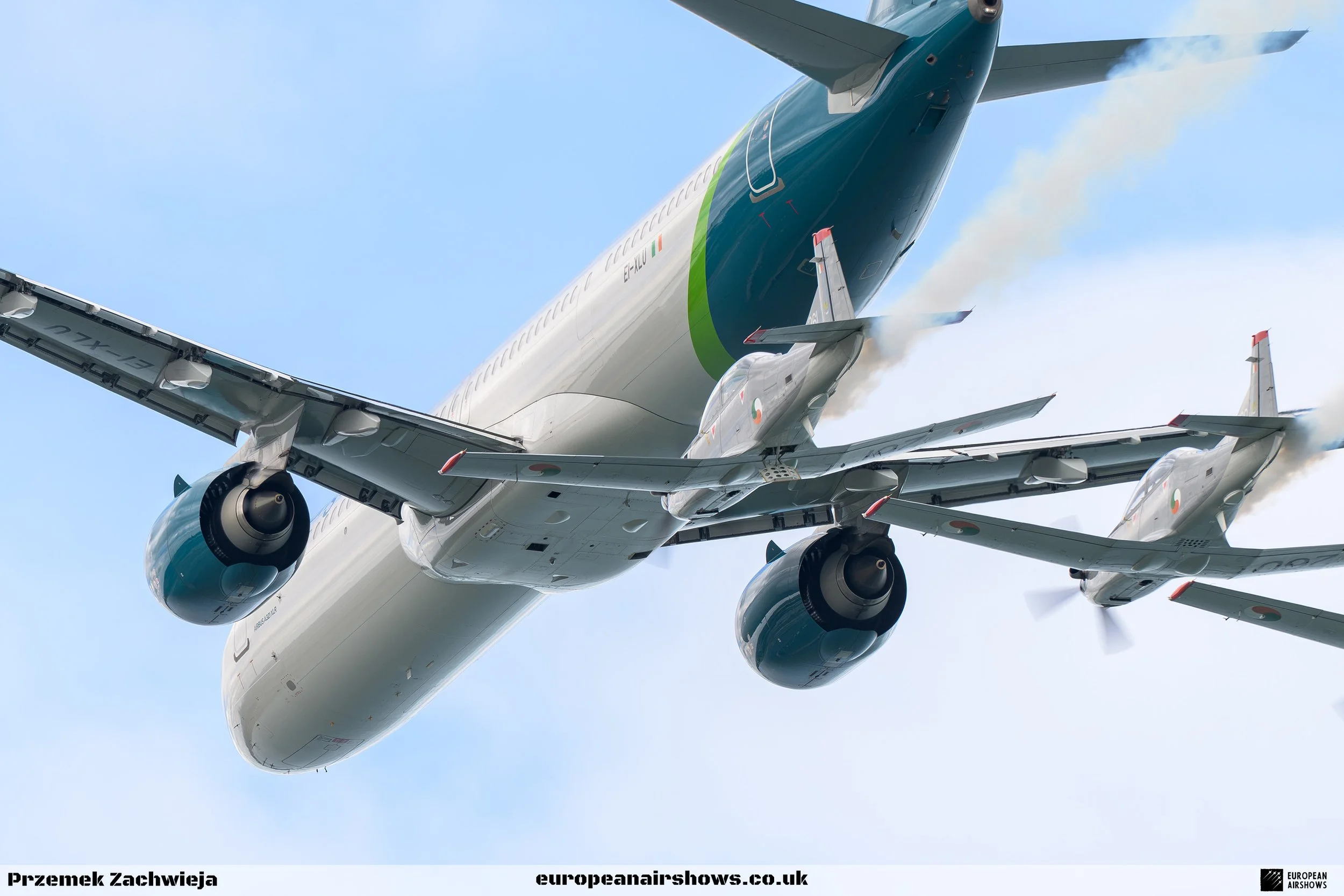
Aer Lingus linked its newest Airbus A321-253NY A321XLR EI-XLR with the historic de Havilland DH.84 Dragon Iolar, North American P-51D-5-NA Mustang Marinell swept along the shoreline and the Irish Air Corps delivered an unusually strong finale at Ireland's largest air display.
Bray Air Display returned to the County Wicklow coast on Saturday 1 August for its 19th edition. The morning began in strong sunshine, but by the time the main flying display was under way, broken cloud had moved across the bay and much of the useful light had gone. It remained warm and dry, which counts as a respectable result for an Irish summer, although a stiff onshore wind affected several displays and later made the smoke rather troublesome for photographers.
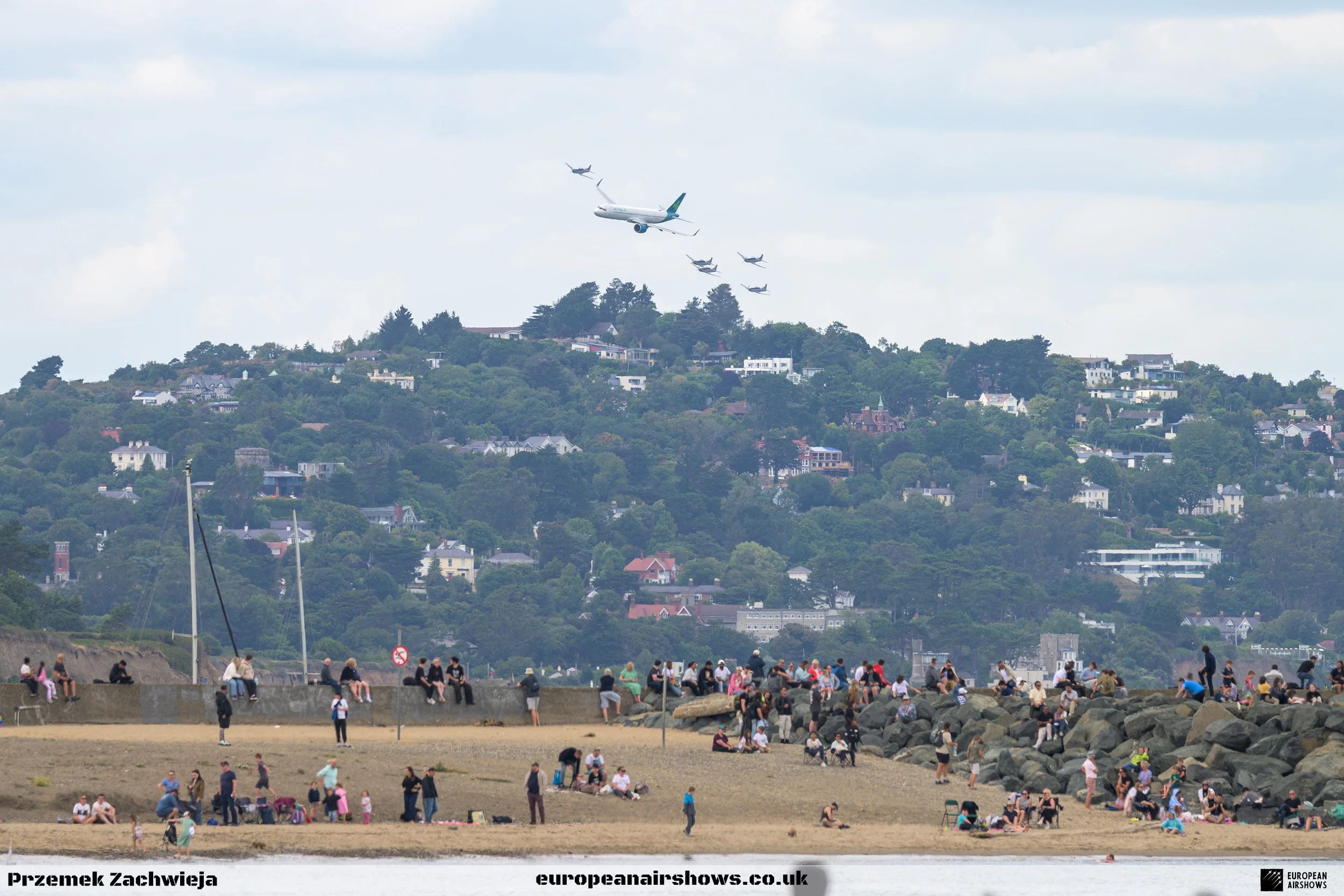
The weather did little to discourage the public. Tens of thousands once again filled Bray, occupying the long Victorian promenade, the beach and every available viewpoint around the town. That support is not difficult to understand. The show is free, Bray is within easy reach of Dublin, the DART station is only a short walk from the seafront and Bray Head gives the event one of the most attractive backdrops of any coastal airshow.
Bray is also Ireland's largest air display and, together with the Fingal Rush Air Show on the following day, one of only two full public airshows on the island in 2026. That makes it an important event, but it also creates a problem. Almost every aircraft and act in the 2026 flying programme had appeared at Bray only twelve months earlier. The only aircraft not seen there in 2025 were the Aer Lingus Airbus A321XLR, the de Havilland DH.84 Dragon EI-ABI Iolar and Stellaer 212's Pilatus PC-12 NGX. AeroSuperBatics Wingwalkers, the Black Knights, North American P-51D-5-NA Mustang Marinell, Emerald Airlines, both Irish Coast Guard aircraft, the National Flight Centre Pilot Academy, Richard Goodwin, the BAC 167 Strikemaster Mk.82A, Team Raven and the Irish Air Corps aircraft were all returning.
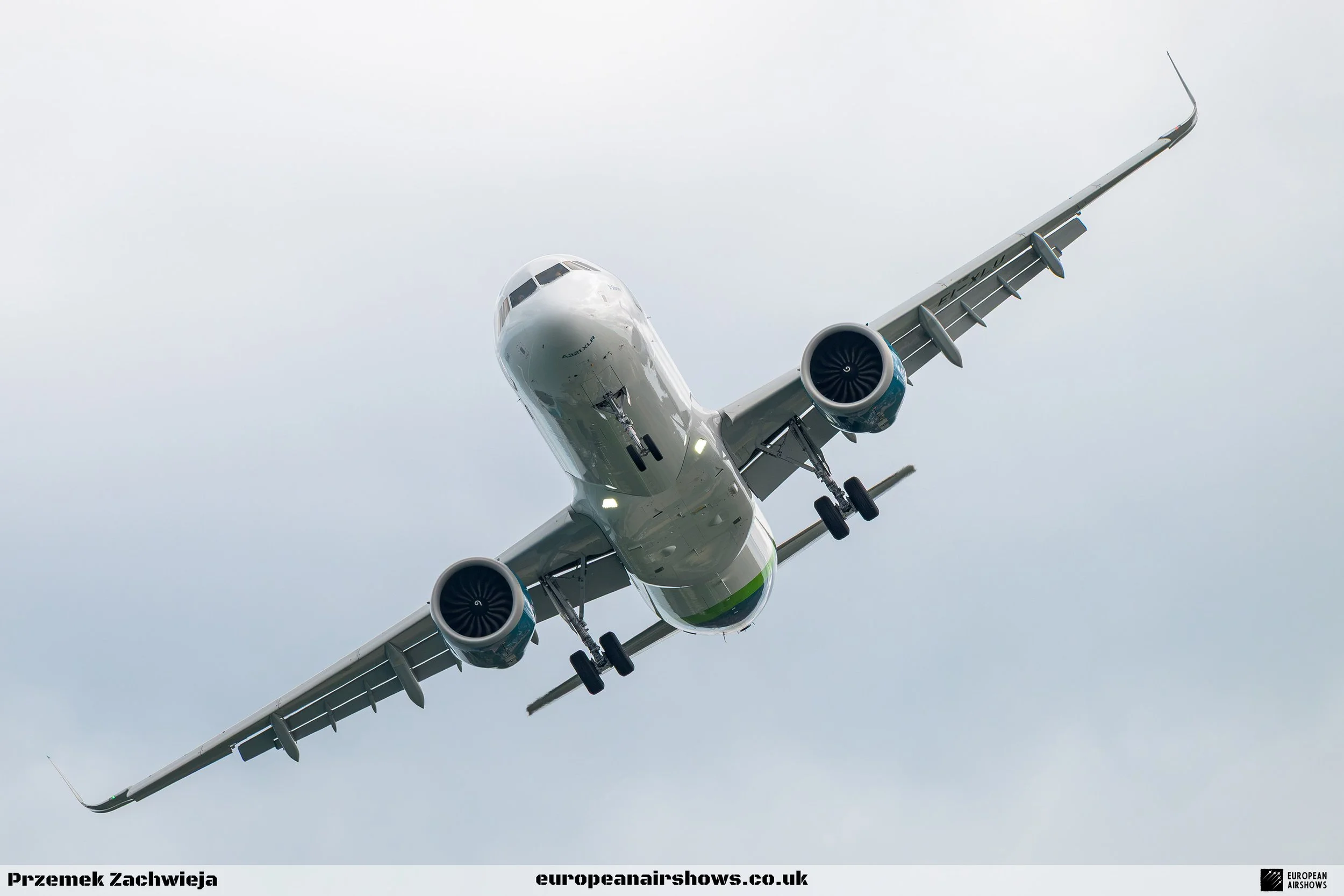
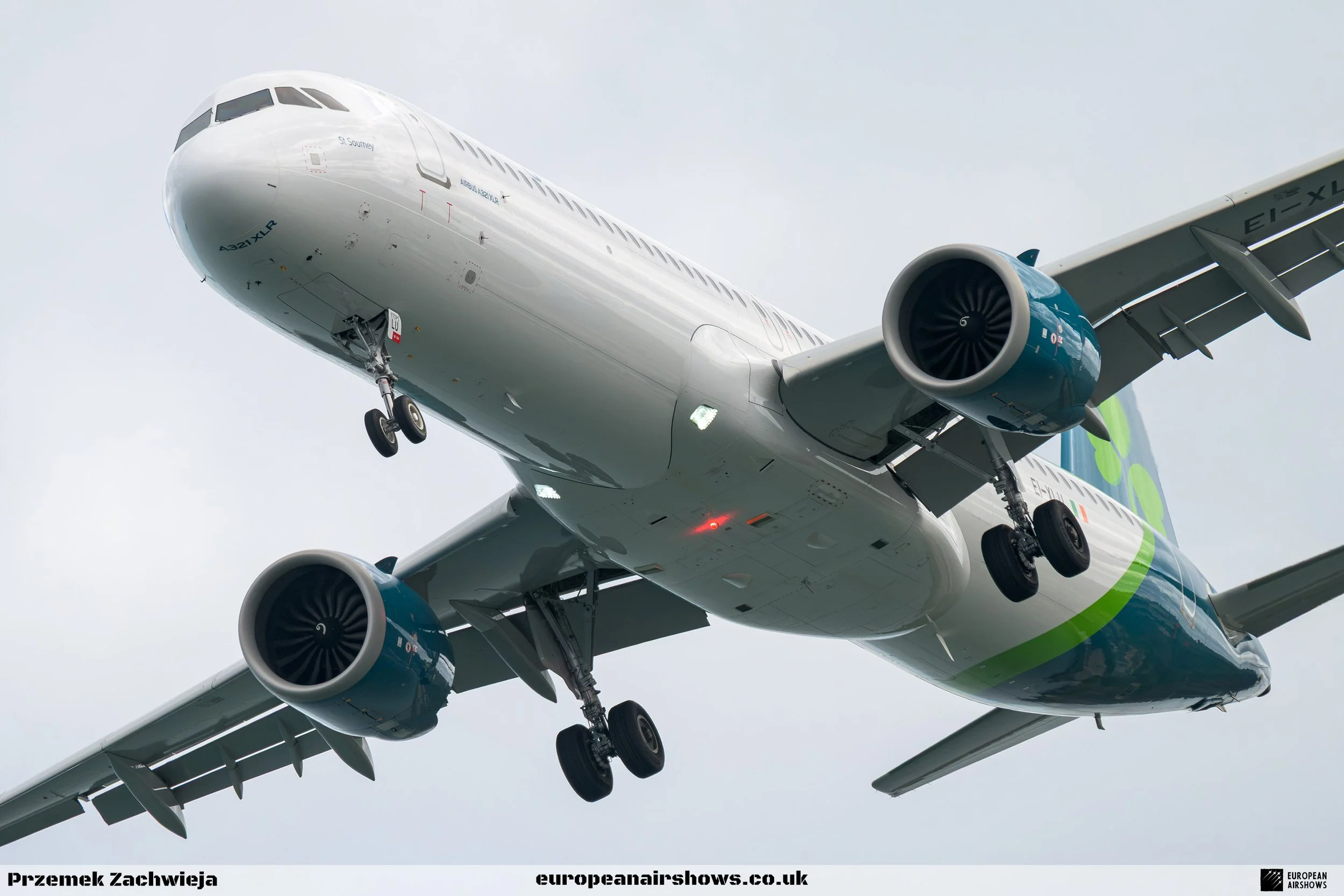
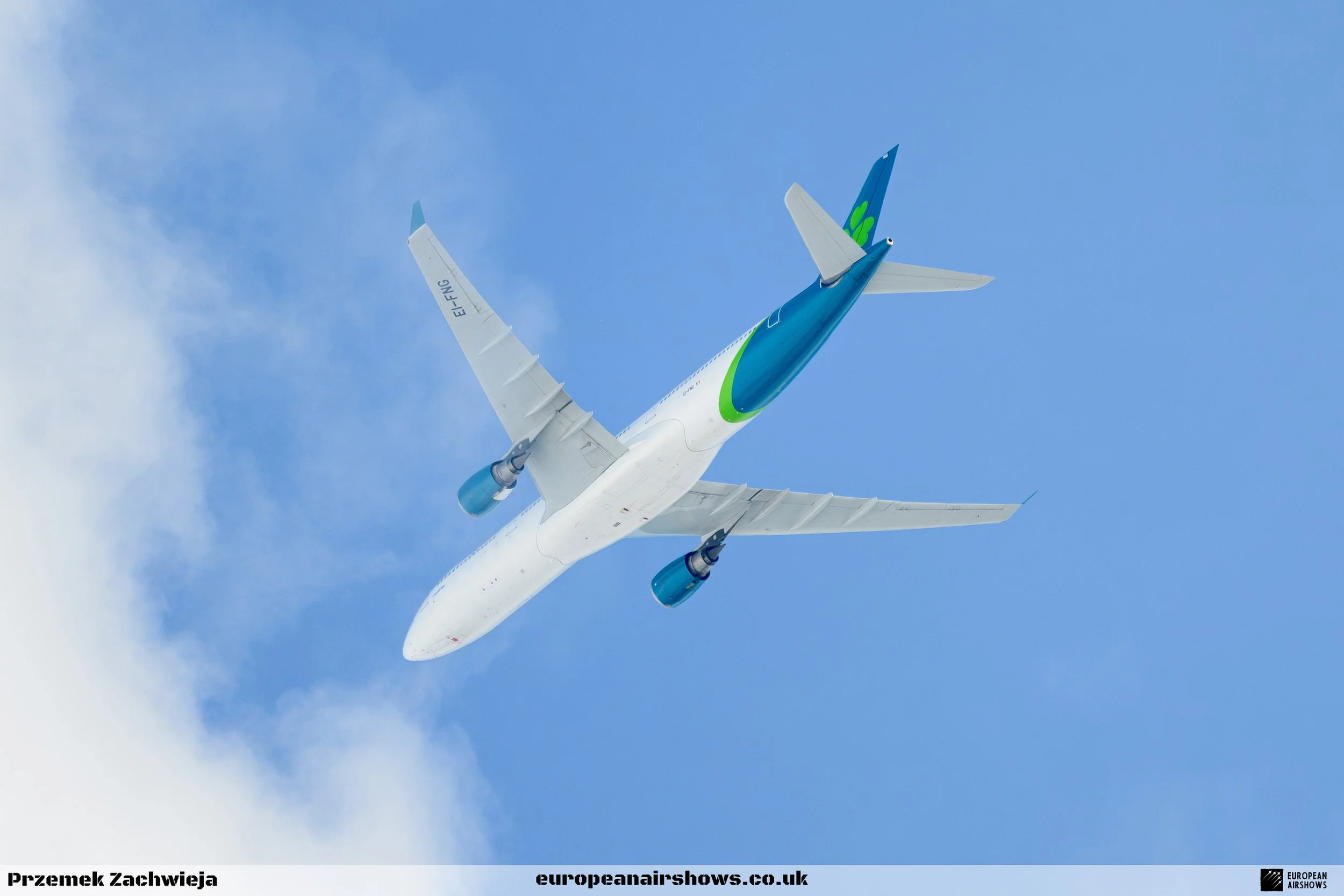
The headline Airbus was technically new to Bray, but it was not a dramatically different sight. The 2025 display used EI-LRC, an Airbus A321-253NX A321neo, while 2026 brought the longer-range A321-253NY A321XLR EI-XLR. The XLR has a permanent Rear Centre Tank, a higher maximum take-off weight, reinforced main and nose landing gear and a revised inboard flap system, extending its range to 4,700 nautical miles. Externally, however, the two versions are extremely similar. Most spectators without an enthusiast's eye would simply have seen another Aer Lingus A321. The XLR's formation with five Irish Air Corps Pilatus PC-9Ms was genuinely special, as was the temporary two-aircraft Eurocopter EC135 P2+ display later in the afternoon, but these were imaginative new presentations of a largely familiar programme. There is nothing wrong with welcoming returning performers, particularly when several are among the best on the circuit. Too much repetition, however, eventually removes the sense of occasion. This is especially noticeable at Bray because the show has proved what it can achieve. In 2016, the same coastline hosted the Red Arrows, Frecce Tricolori, Patrouille Tranchant and the Swedish Air Force Historic Flight's Viggen and Draken. The Spanish Air Force Hornet and Patrouille Tranchant followed in 2017.
Nobody can reasonably expect a 2016-scale programme every summer. Military teams have operational commitments, budgets are tighter and moving aircraft across the Irish Sea adds cost and complexity. Even so, there must be a middle ground between an exceptional international line-up and a programme that changes only around its edges. Bray has also contracted from two days to one in recent years. For an event beside the capital, with excellent transport links, several useful operating airfields and a proven mass audience, it is difficult to escape the feeling that a great deal of potential is not being used.
That criticism should not obscure what Bray continues to do well. It remains the best public opportunity to see a broad cross-section of Irish aviation in one afternoon. In 2026 that included the newest Aer Lingus technology, the airline's oldest surviving historic aircraft, the Irish Coast Guard's current aviation fleet, Garda aviation and an unusually large contribution from the Irish Air Corps. The final programme also ran without a flying cancellation, something particularly welcome at an event which has suffered some heavily reduced line-ups in the past.
A busy seafront before the flying
Ground attractions opened at noon and ensured that the promenade was already busy well before the first aircraft arrived. The Seafront Funfair returned alongside the Food and Craft Village, while the Irish Defence Forces hosted a static display and information area. The Future of Flight Tech Zone, presented with the Drone Innovation Partnership, built on its 2025 debut with live drone demonstrations, virtual reality activities and displays explaining how remotely piloted aircraft are already being used in practical work.
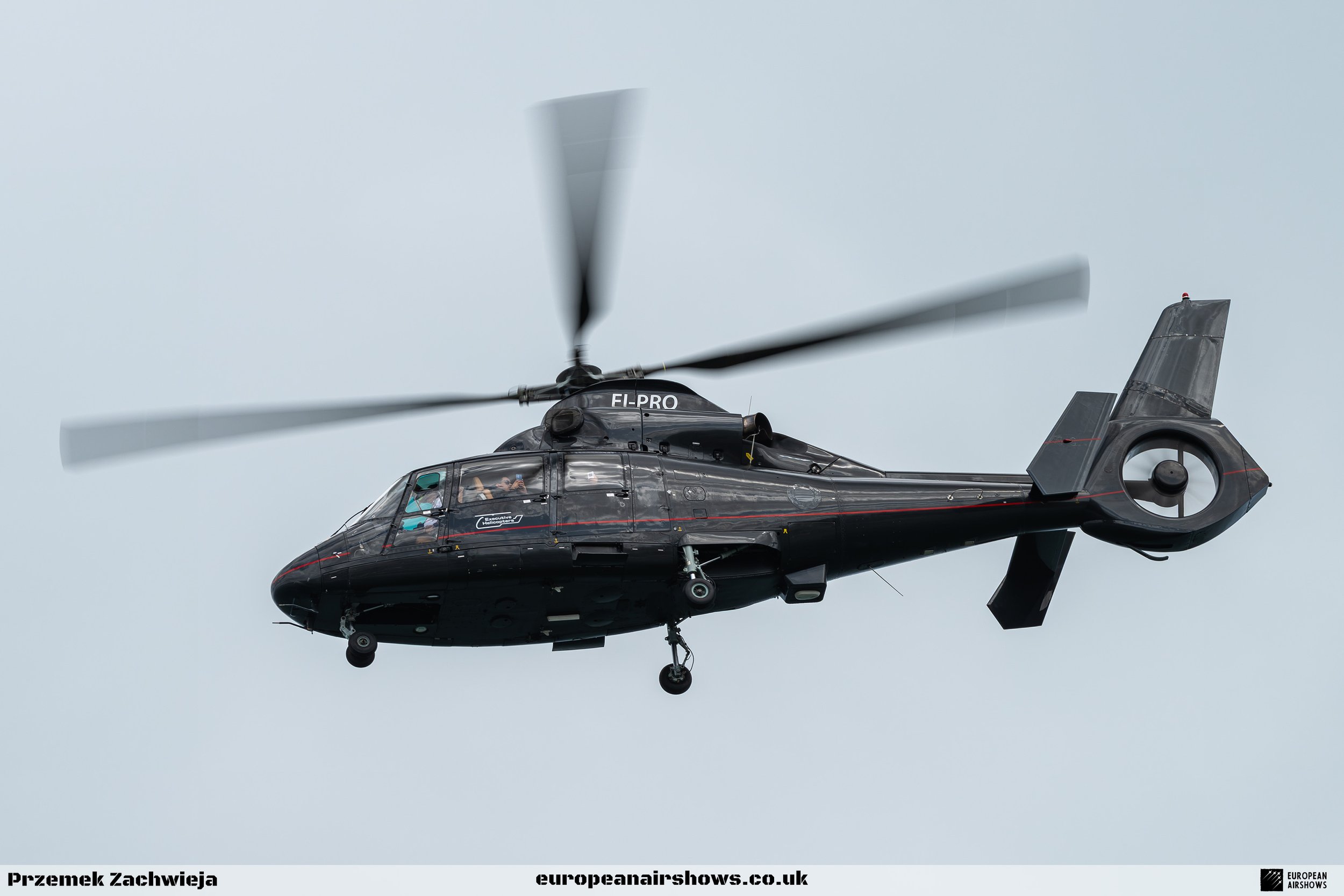
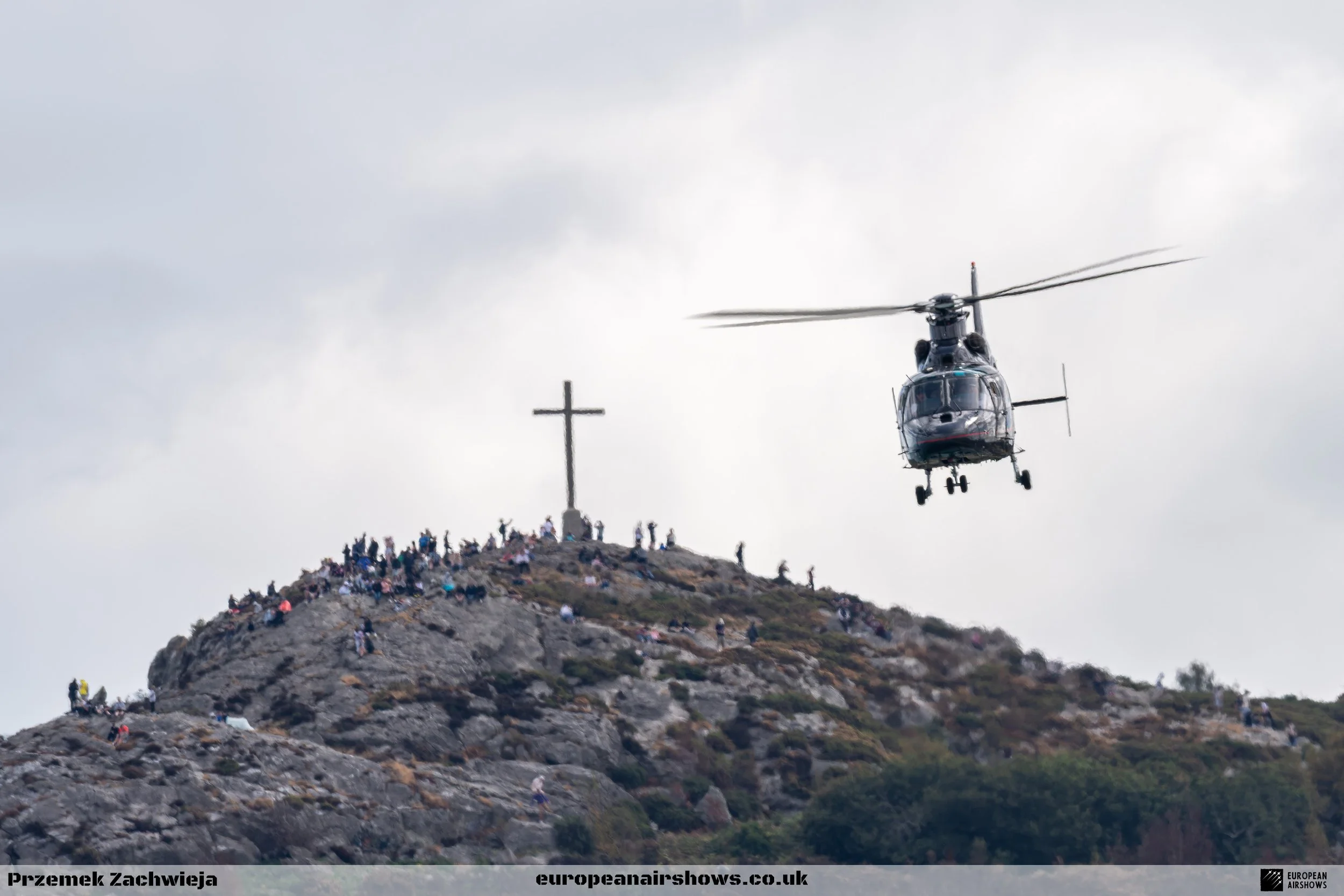
Helicopter pleasure flights were again among the most popular attractions. Executive Helicopters' Airbus Helicopters AS365N2 Dauphin seemed barely to stop all afternoon as it carried passengers along the coast and around Bray Head. Its size, twin engines and eight-passenger cabin make the Dauphin well suited to this sort of high-volume pleasure-flying operation.
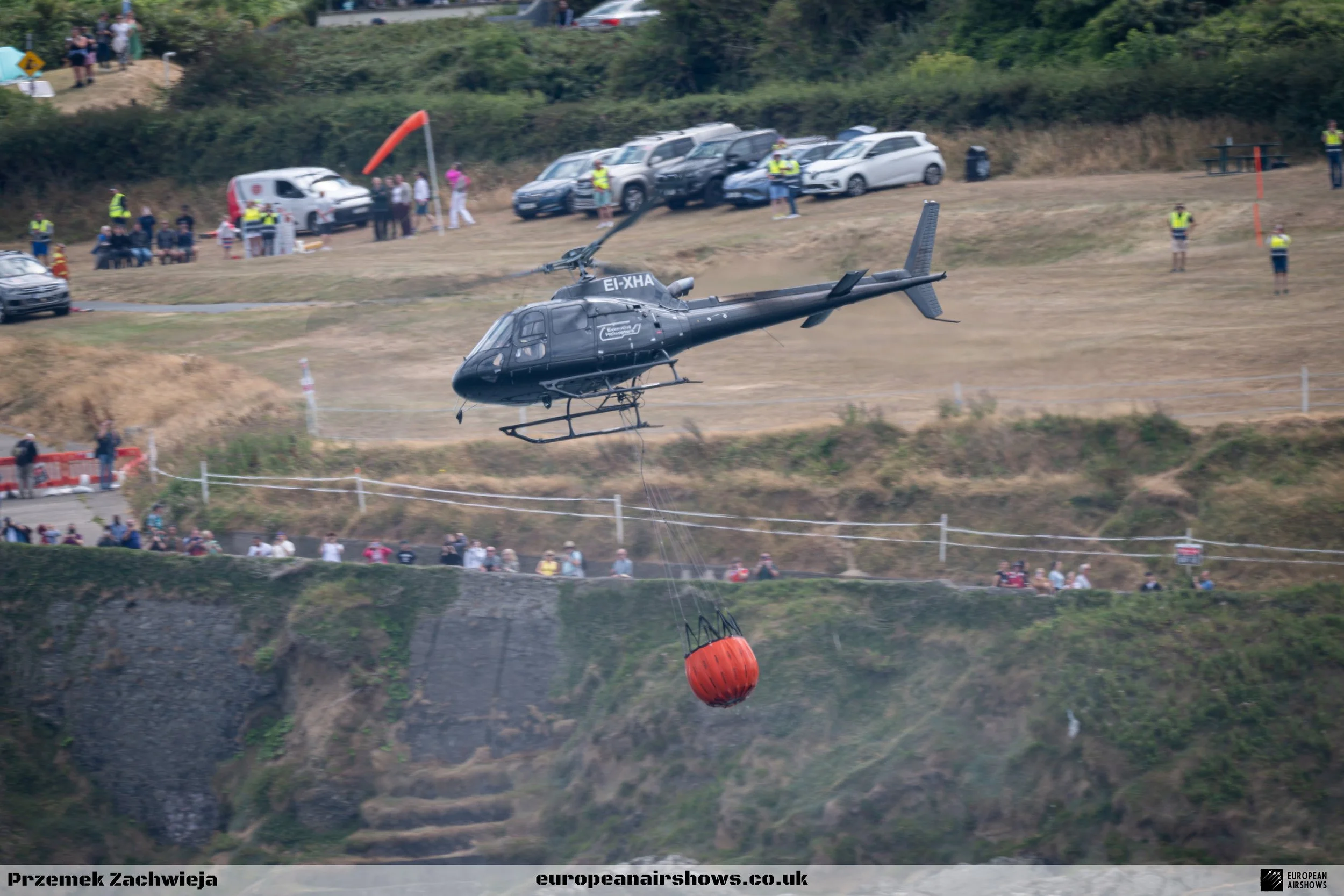
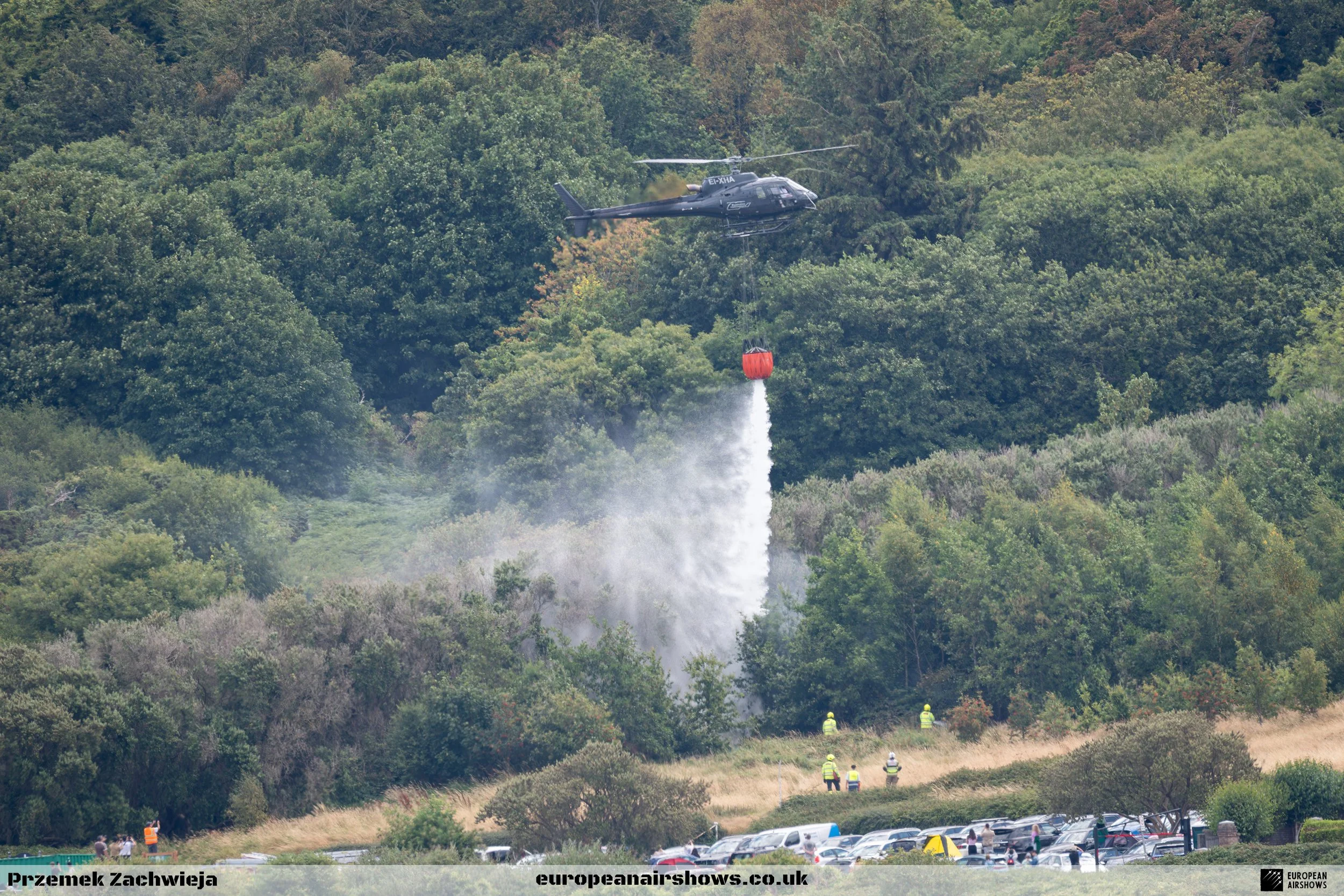
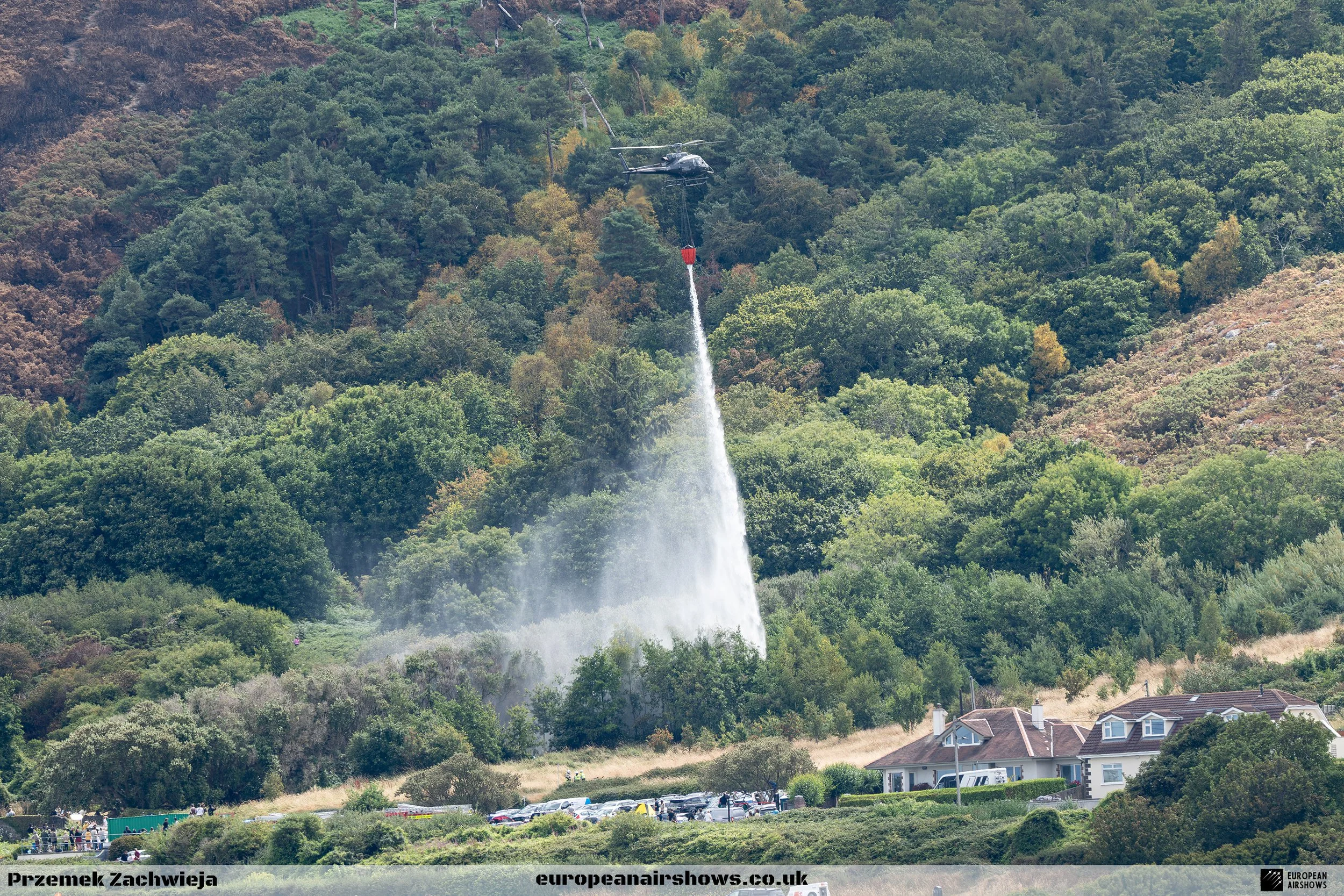
The most unusual helicopter activity was not part of the programme. A small fire developed in the wooded area close to the helicopter landing site, bringing Executive Helicopters' Airbus Helicopters H125 into action with a Bambi Bucket. The aircraft made repeated water drops while the pleasure flights continued nearby. This was genuine firefighting rather than a demonstration, as the operator itself described it in a post from the event. It offered spectators a rare close view of aerial firefighting technique, although the speed and repetition of the drops were a reminder that the crew were dealing with a real incident rather than providing entertainment.
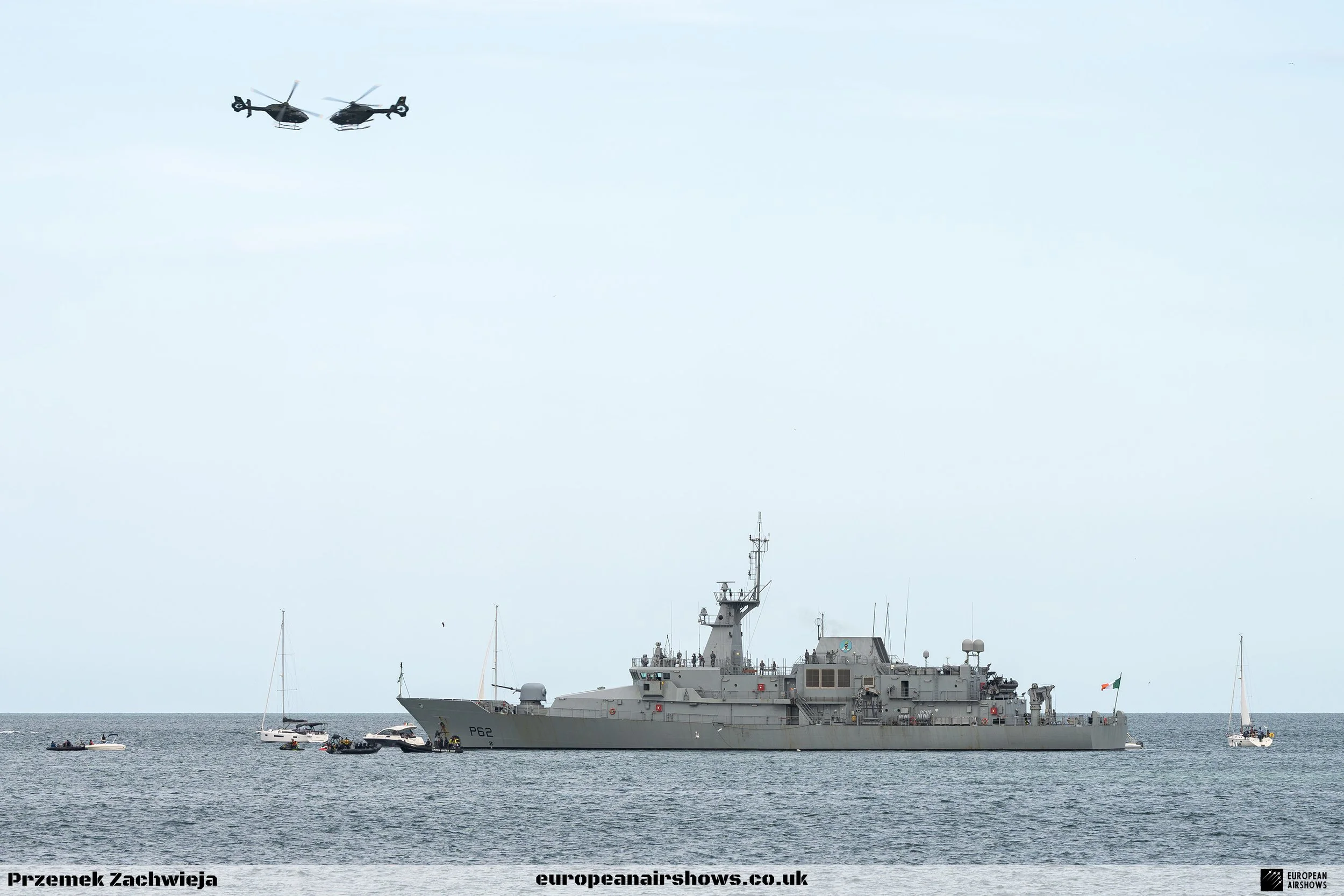
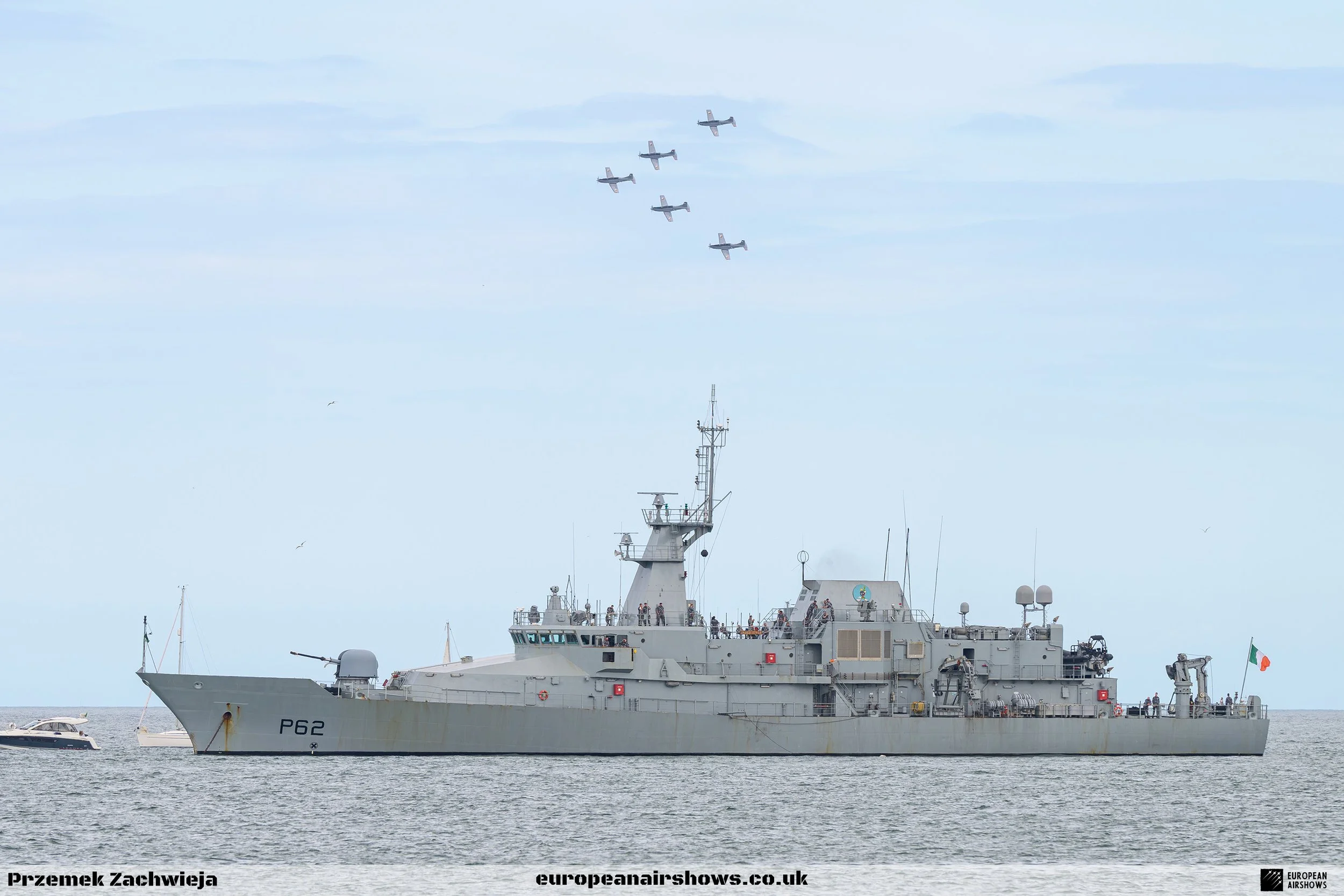
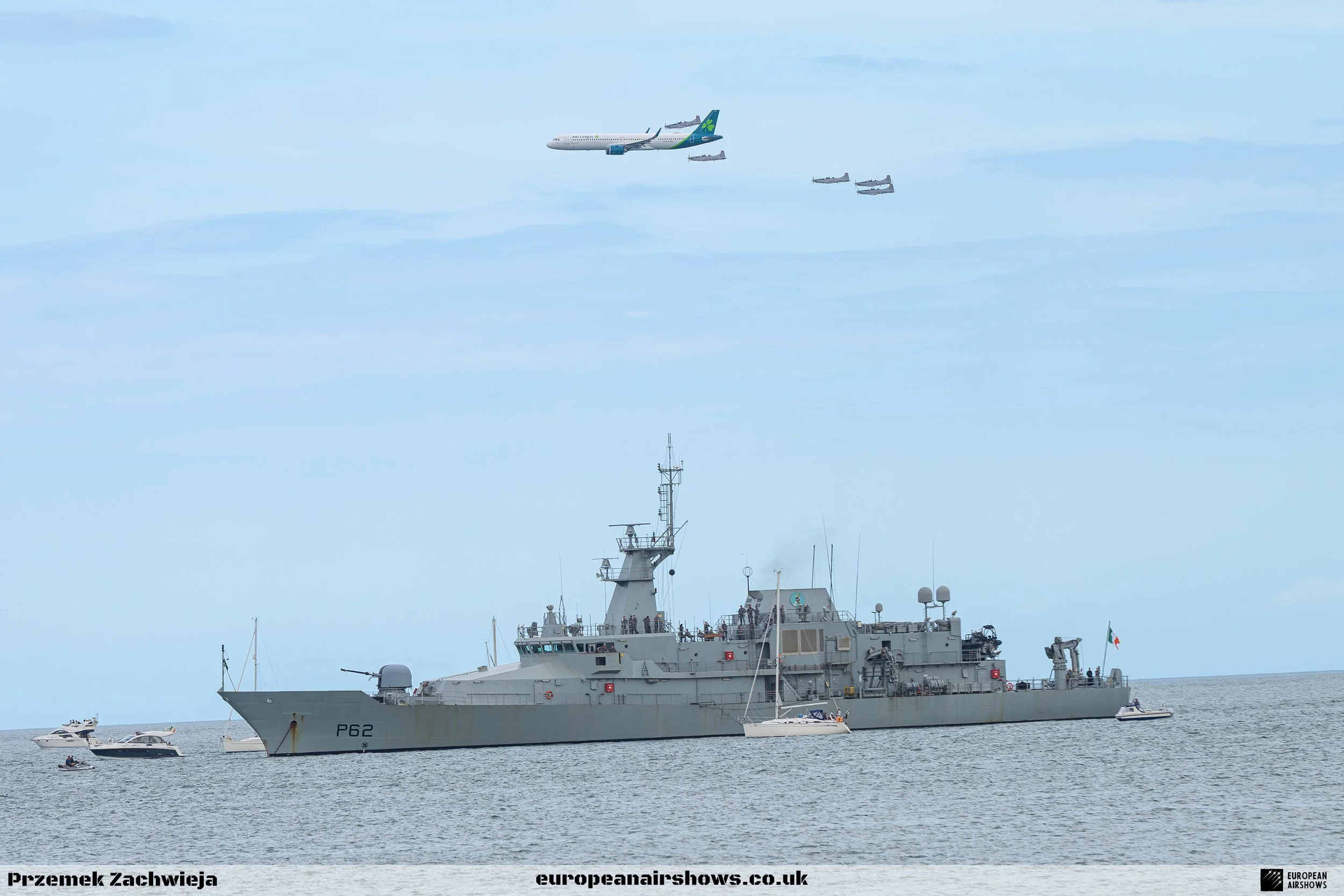
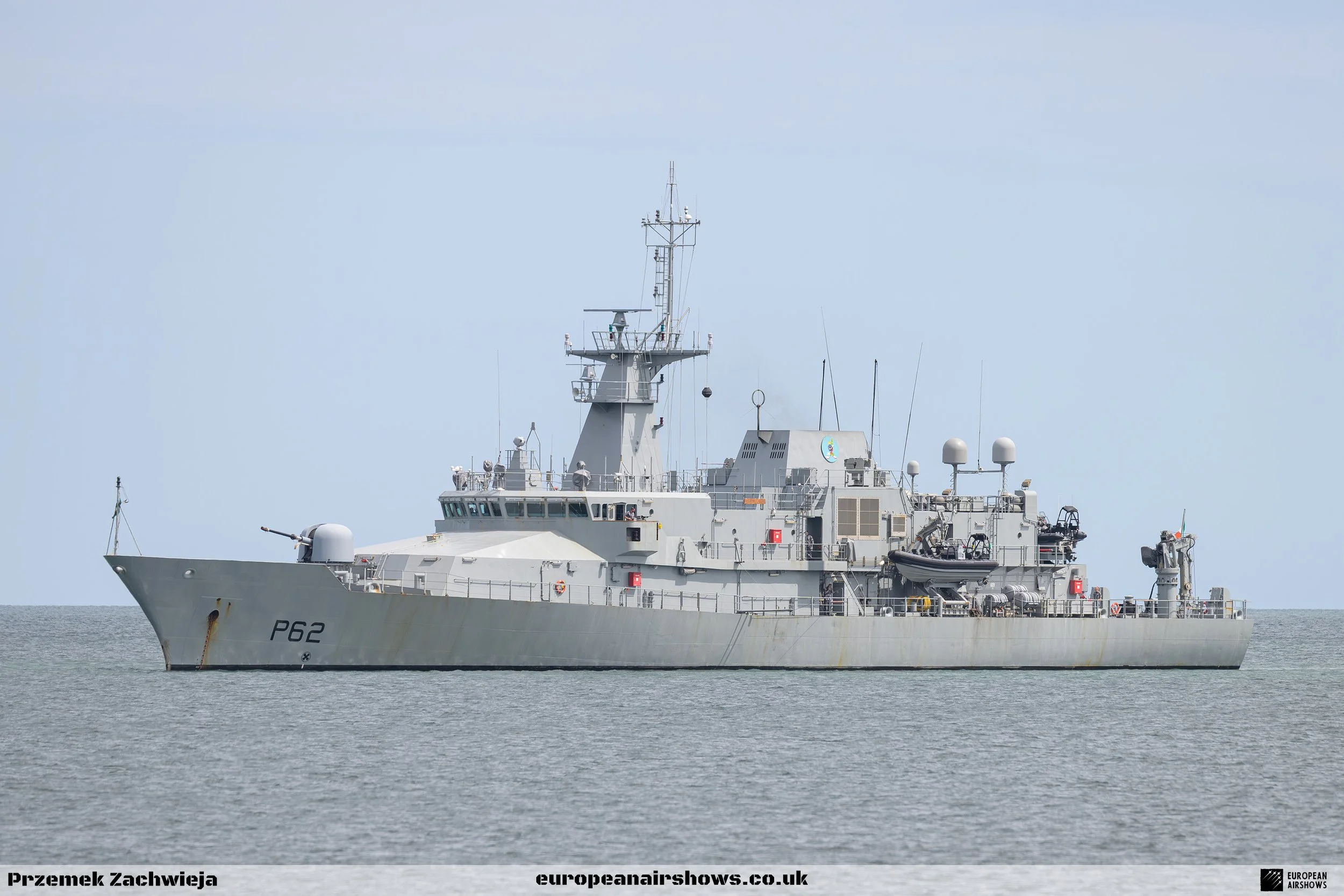
Offshore, the Irish Naval Service provided an imposing reference point in the shape of LÉ James Joyce. The 90-metre offshore patrol vessel was commissioned in 2015 and normally undertakes maritime security and defence patrols around the Irish coast. Its operational history also includes a 2016 Mediterranean deployment during which the crew rescued 2,491 people. Anchored beyond the display line, the ship gave the afternoon a distinctly Irish maritime setting.
The Black Knights open the afternoon
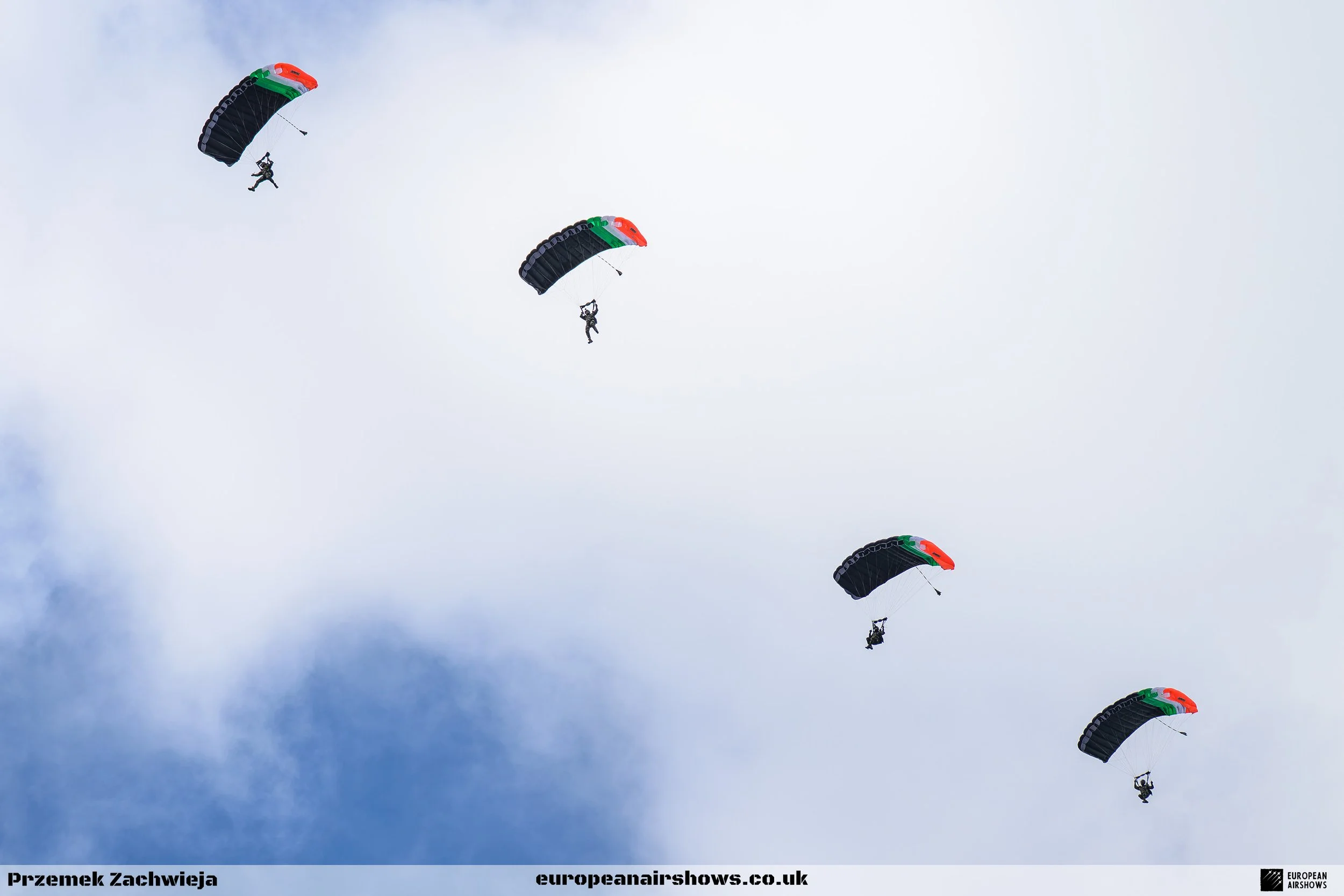
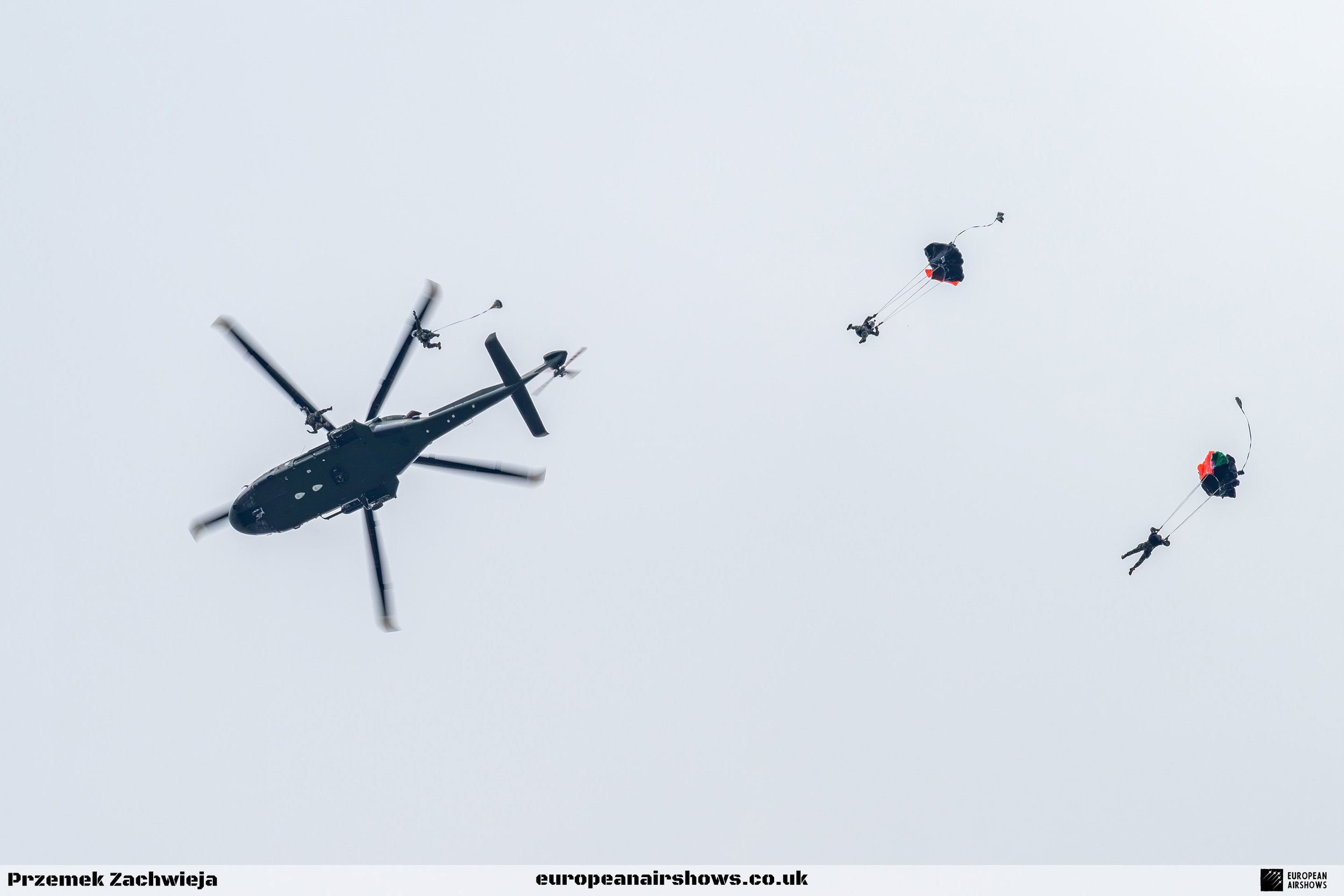
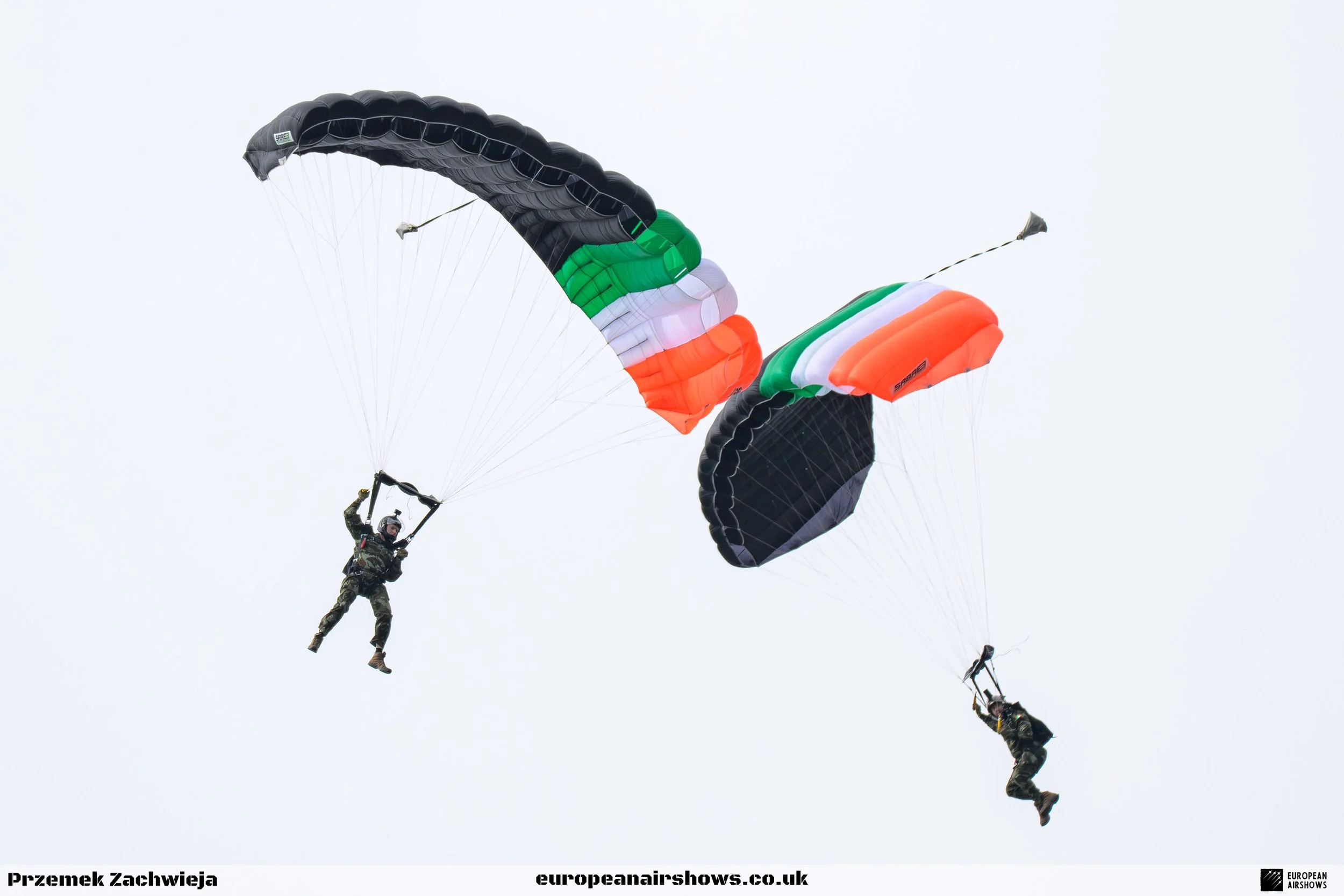
Although the advertised air display began at 15:00, the first aerial activity came around half an hour earlier. An Irish Air Corps AgustaWestland AW139 appeared with four members of the Defence Forces Black Knights Parachute Display Team, who exited above the bay before steering towards the beach.
The Black Knights are not a recently assembled airshow act. Defence Forces parachuting records describe a team that has carried out hundreds of public displays since the early 1970s, with its instructors and jumpmasters performing alongside their normal military duties. At Bray, a black canopy carrying a large Irish tricolour was particularly easy to follow against the remaining bright sky. All four parachutists landed on the beach to a loud reception from the crowd, providing an effective prologue rather than simply filling time before the flying programme.
Aer Lingus opens with old and new
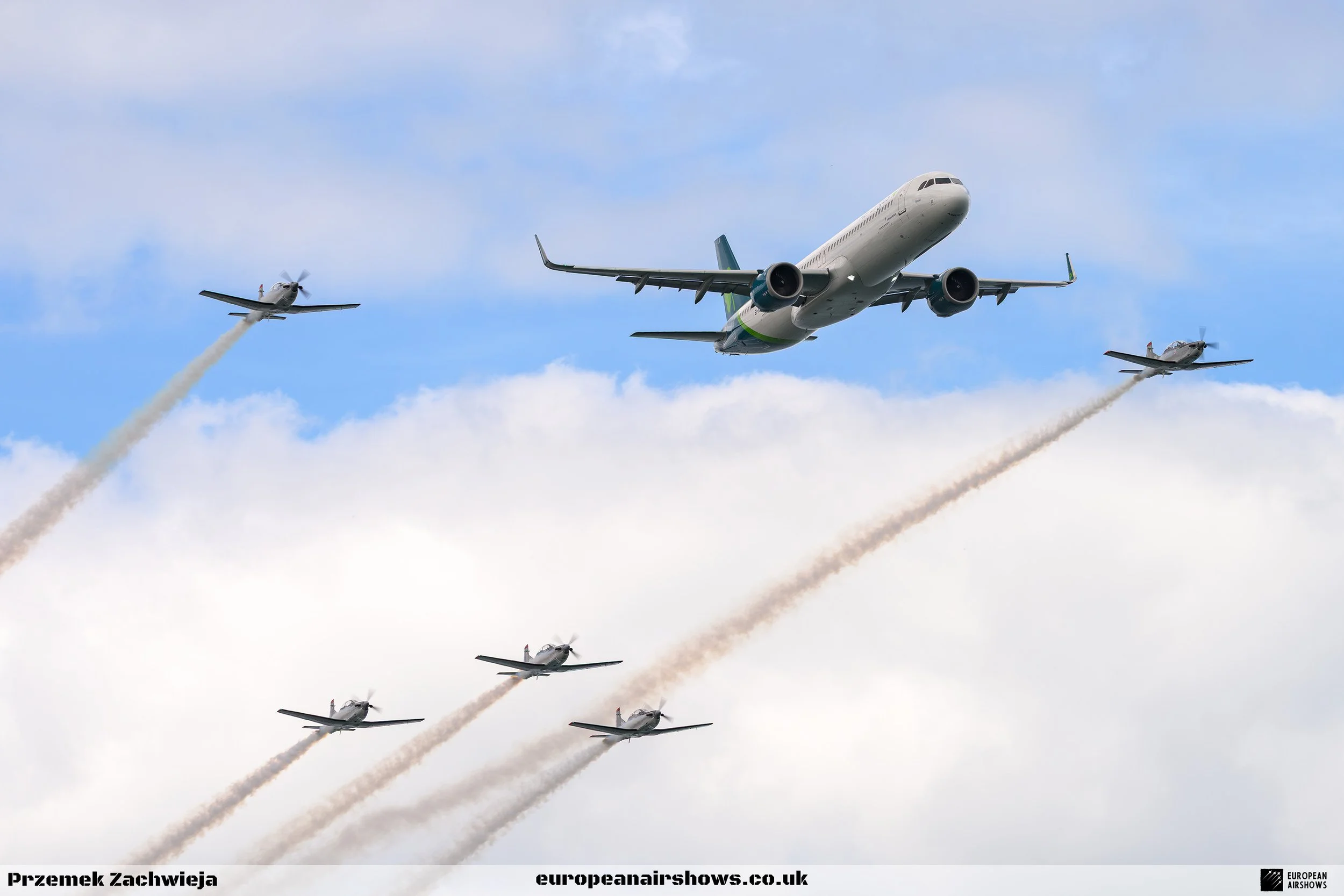
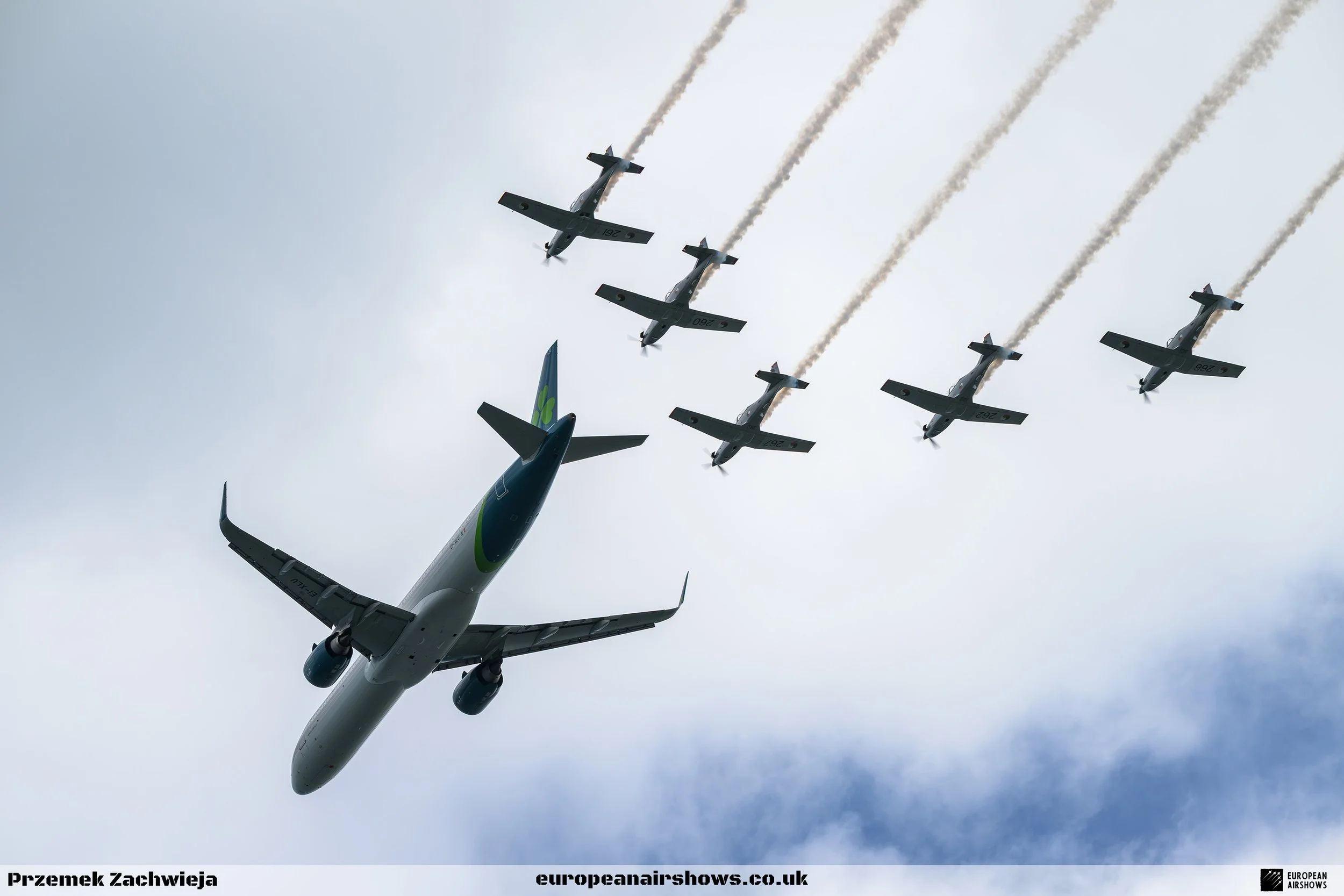
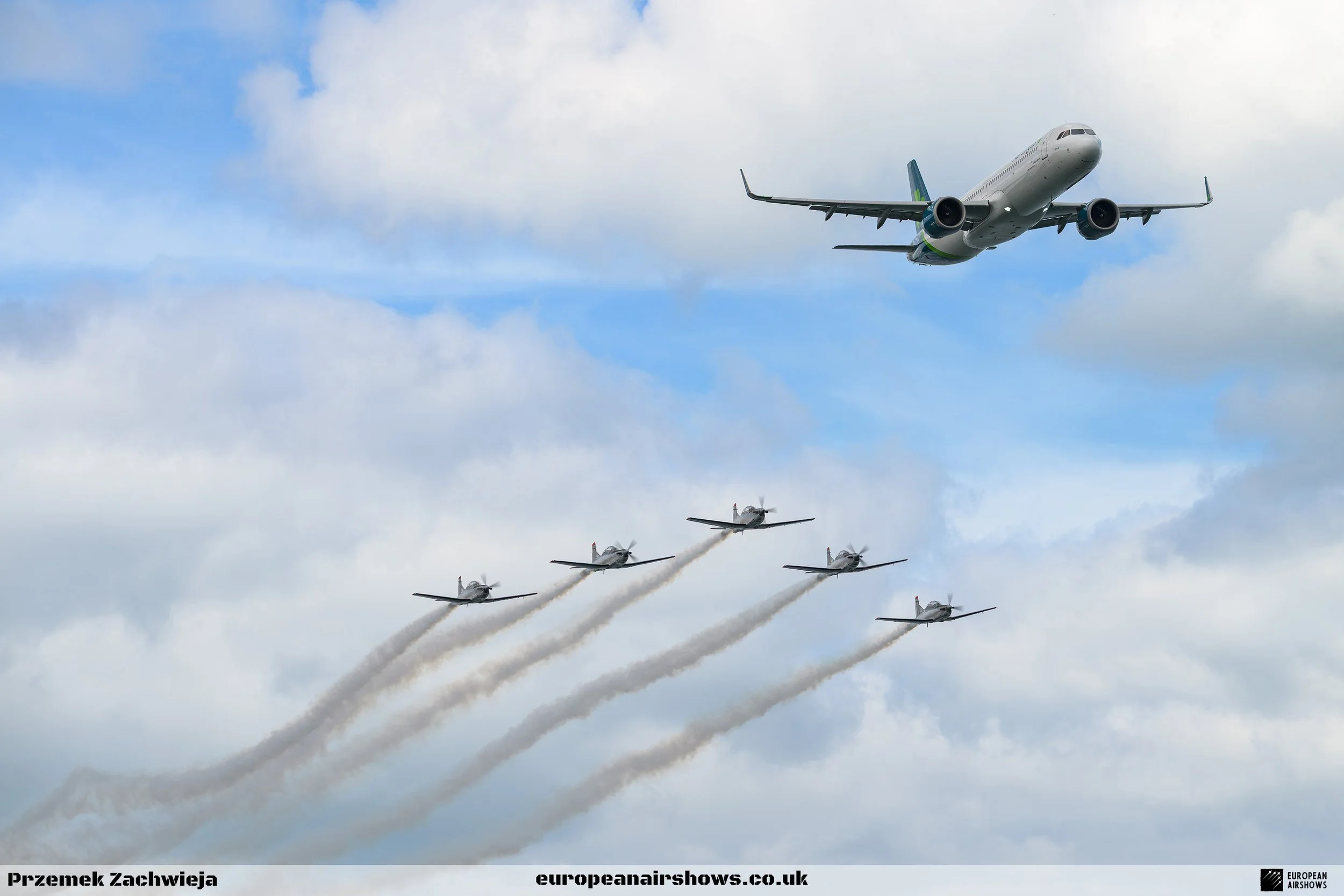
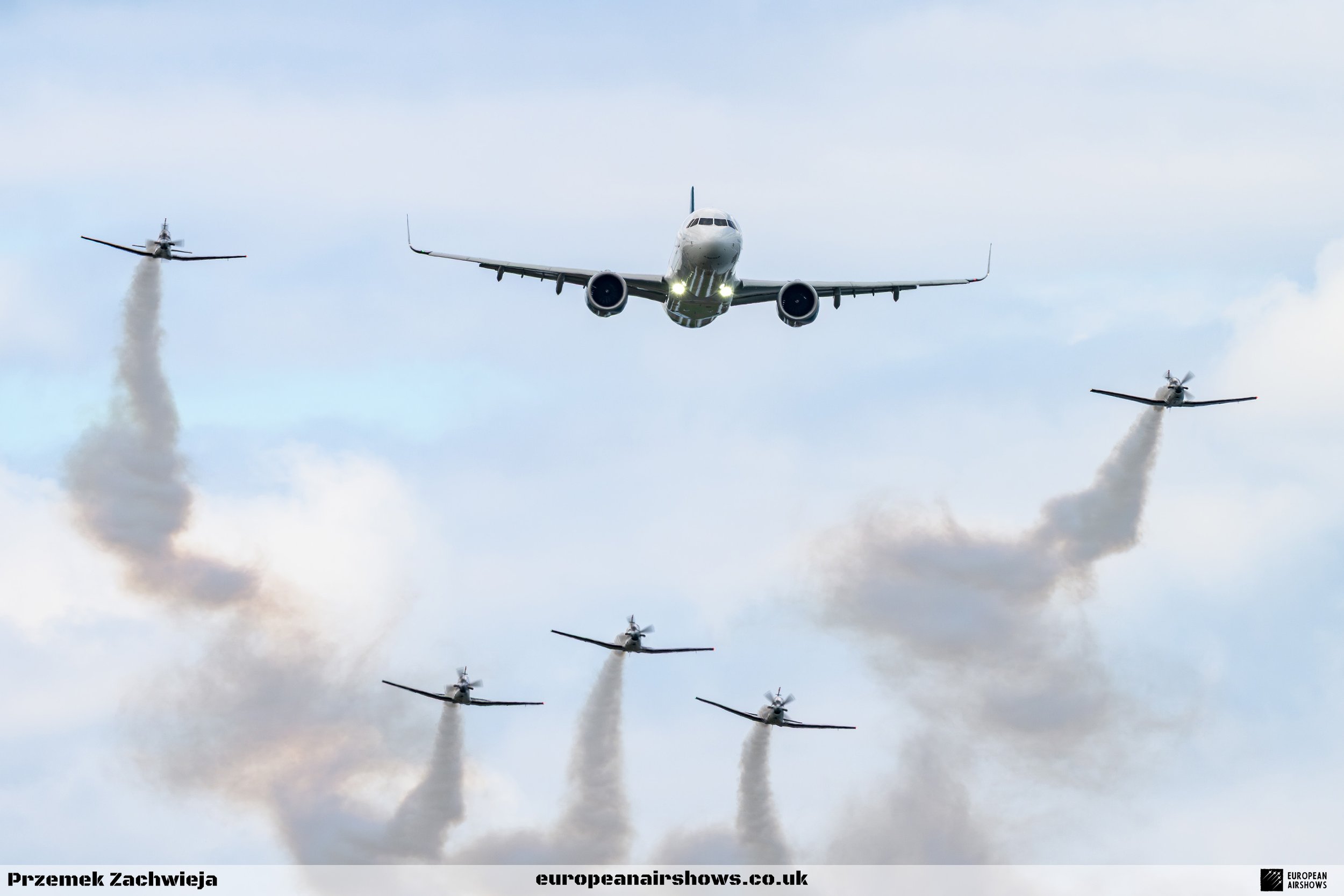
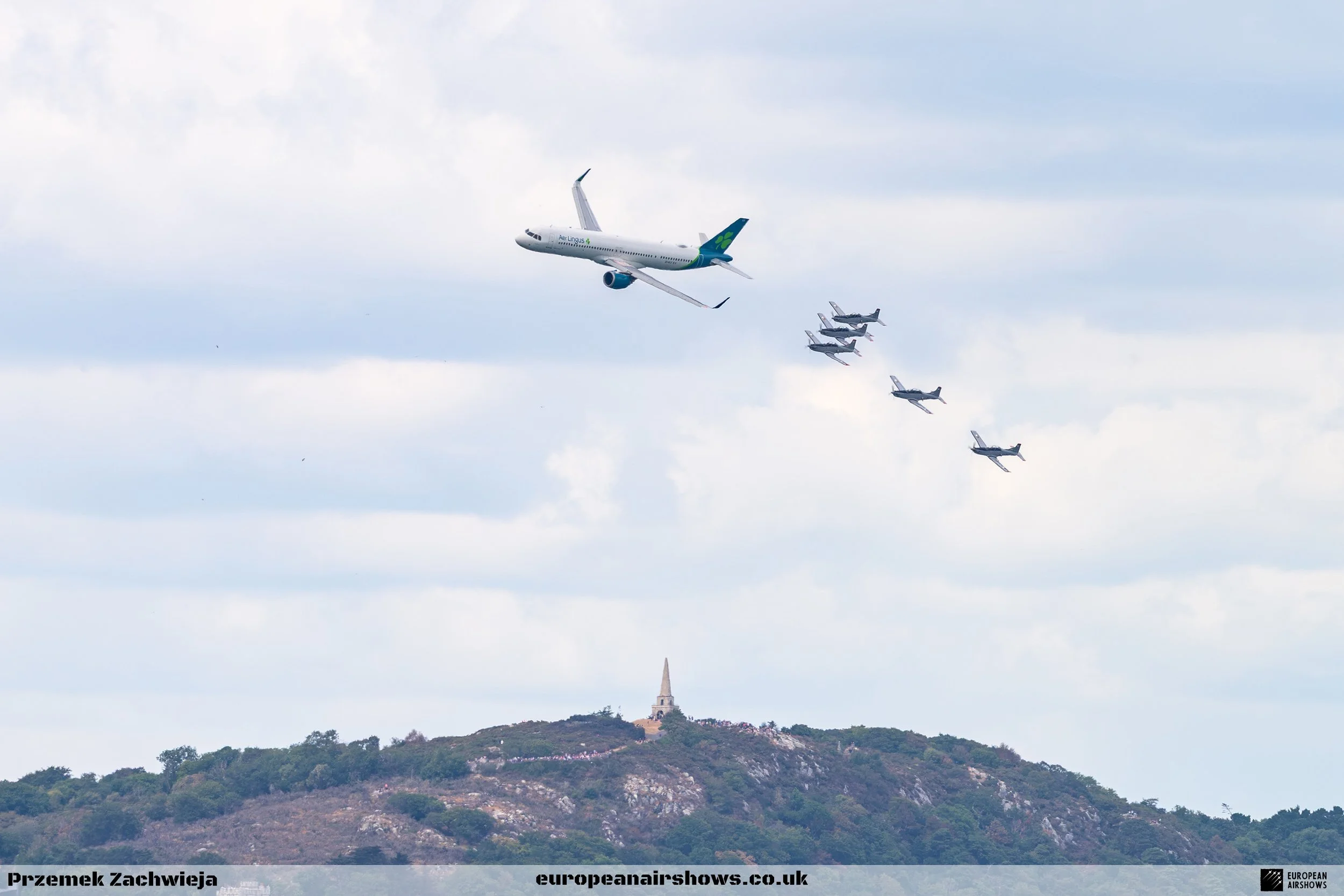
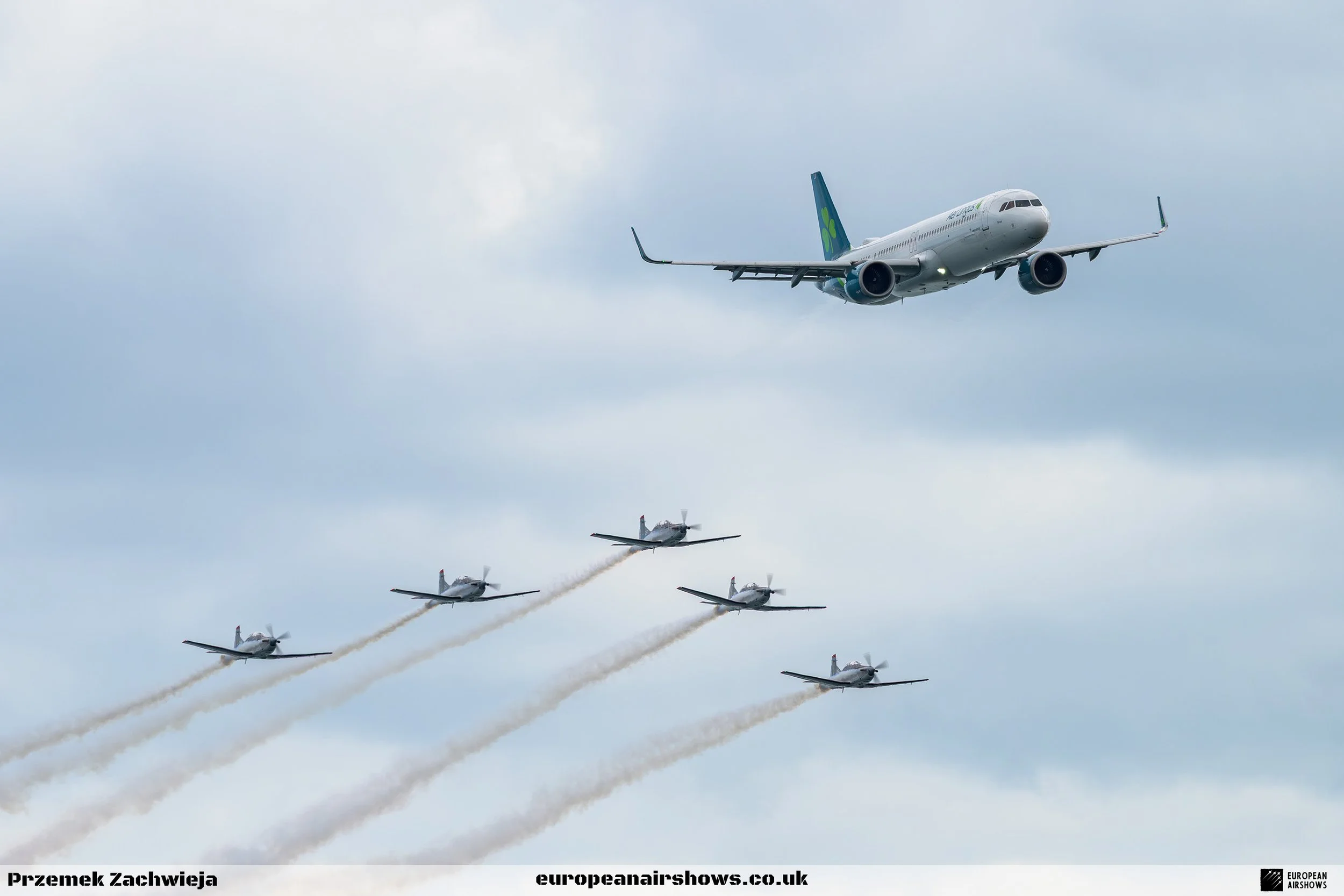
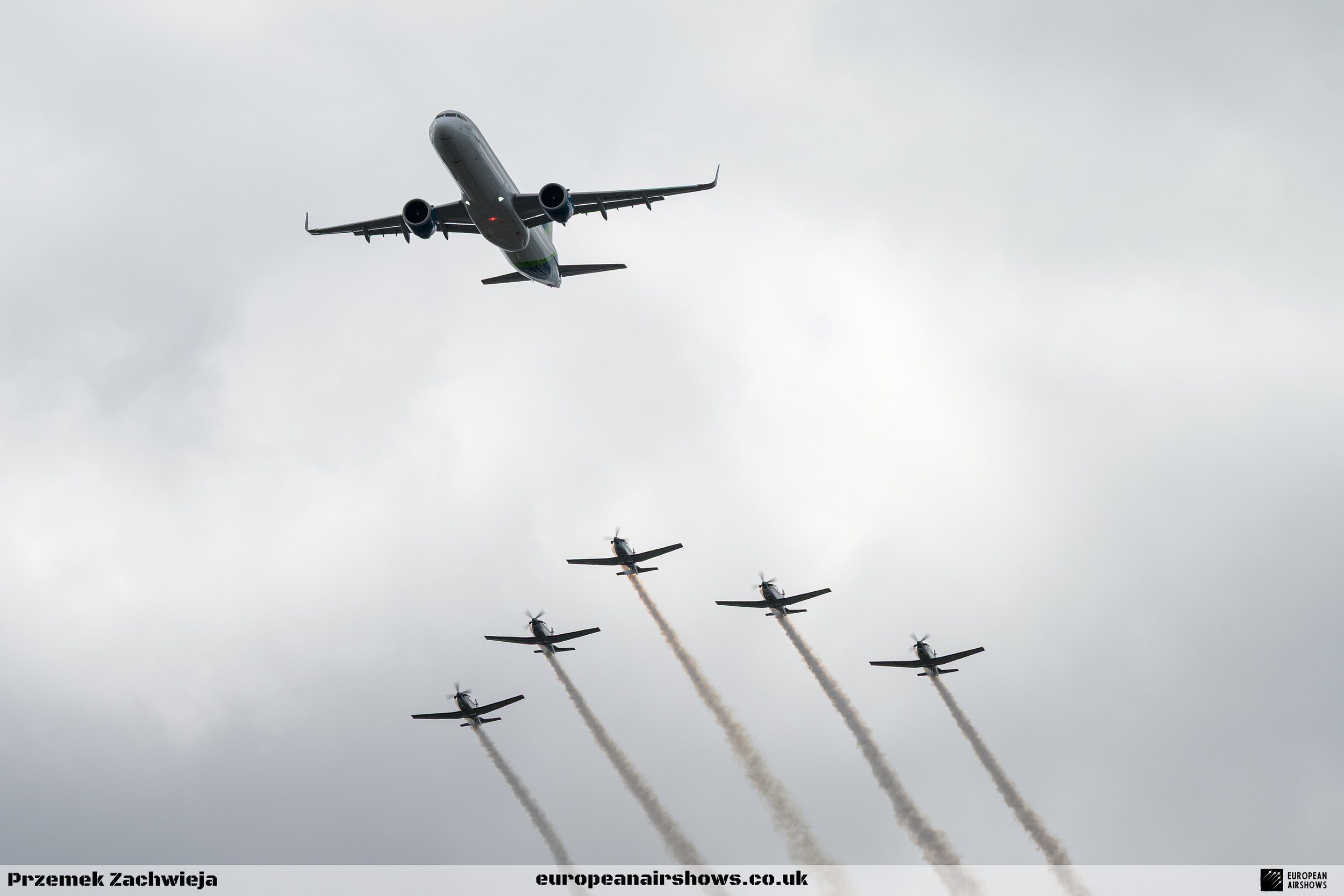
At exactly 15:00, the main display began with the largest formation of the day. Aer Lingus Airbus A321 XLR arrived from behind the crowd with five Irish Air Corps Pilatus PC-9Ms around it. Airliner flypasts are a Bray tradition, but the first view of the long, narrow-body Airbus surrounded by turboprop trainers still made a strong opening image.
Aer Lingus became only the second airline in the world to receive the A321XLR when its first example arrived in December 2024. The airline's aircraft seat 184 passengers and the type's range of up to 4,700 nautical miles allows routes that would previously have required a larger wide-body. In other words, this was not simply the latest variation of a familiar A321. It represents a major part of Aer Lingus' future transatlantic fleet strategy.
The formation made several passes while the PC-9Ms changed position around the airliner. That movement made the sequence much more interesting than a single straight flypast and showed the care needed to integrate aircraft with very different size, speed and handling characteristics. The event commentary identified the Airbus crew as Captains Dara Gunning, Colin Gunning and Barry McCoy, with brothers Dara and Colin among the airline's senior training pilots.
Once the PC-9Ms separated, the A321XLR continued alone. A slower pass in landing configuration gave the crowd time to appreciate the aircraft's proportions, followed by a simulated go-around as the crew applied power, cleaned up the configuration and climbed away. It was a confident and well-paced opening, aimed squarely at the general public but sufficiently unusual to hold the attention of enthusiasts as well.
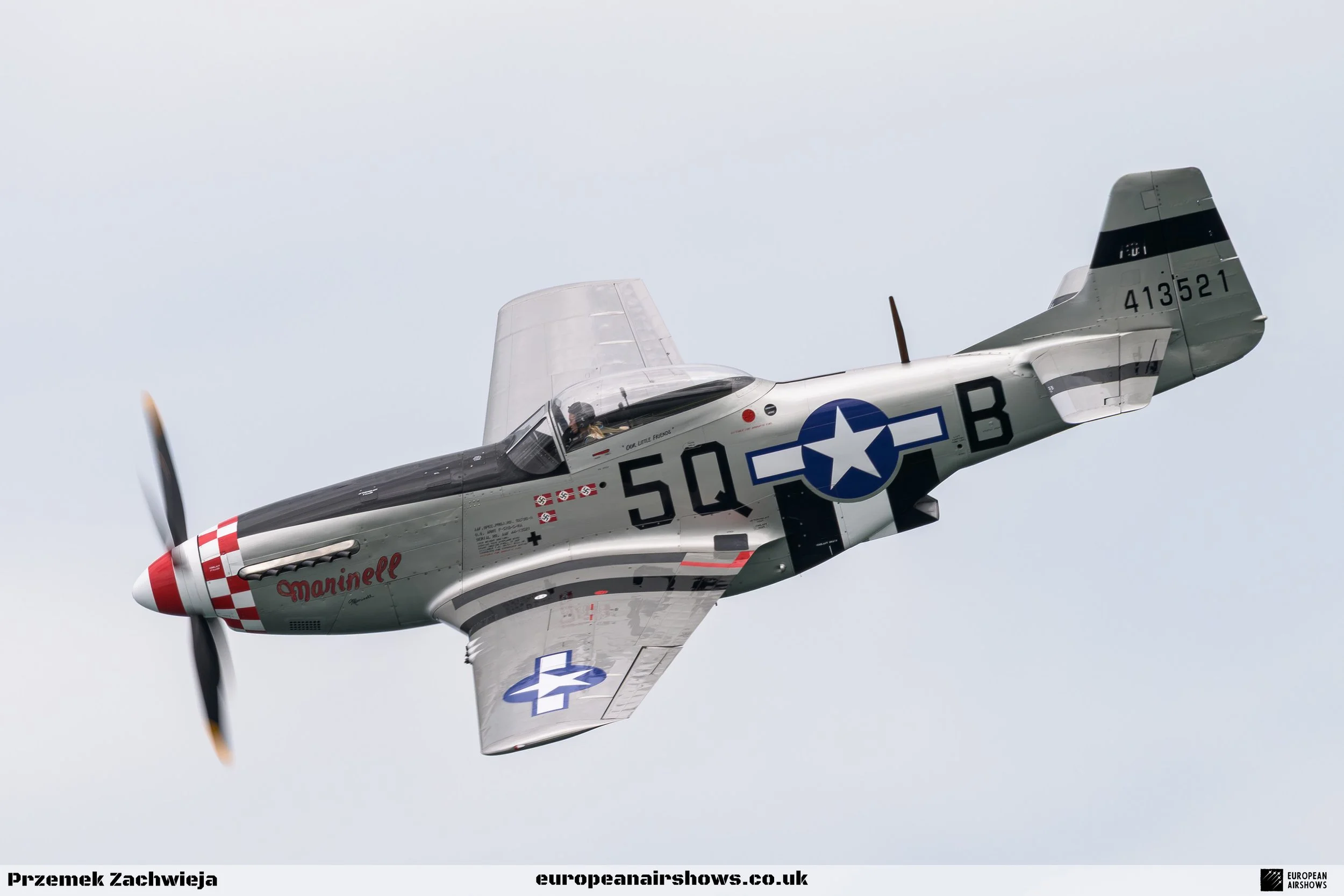
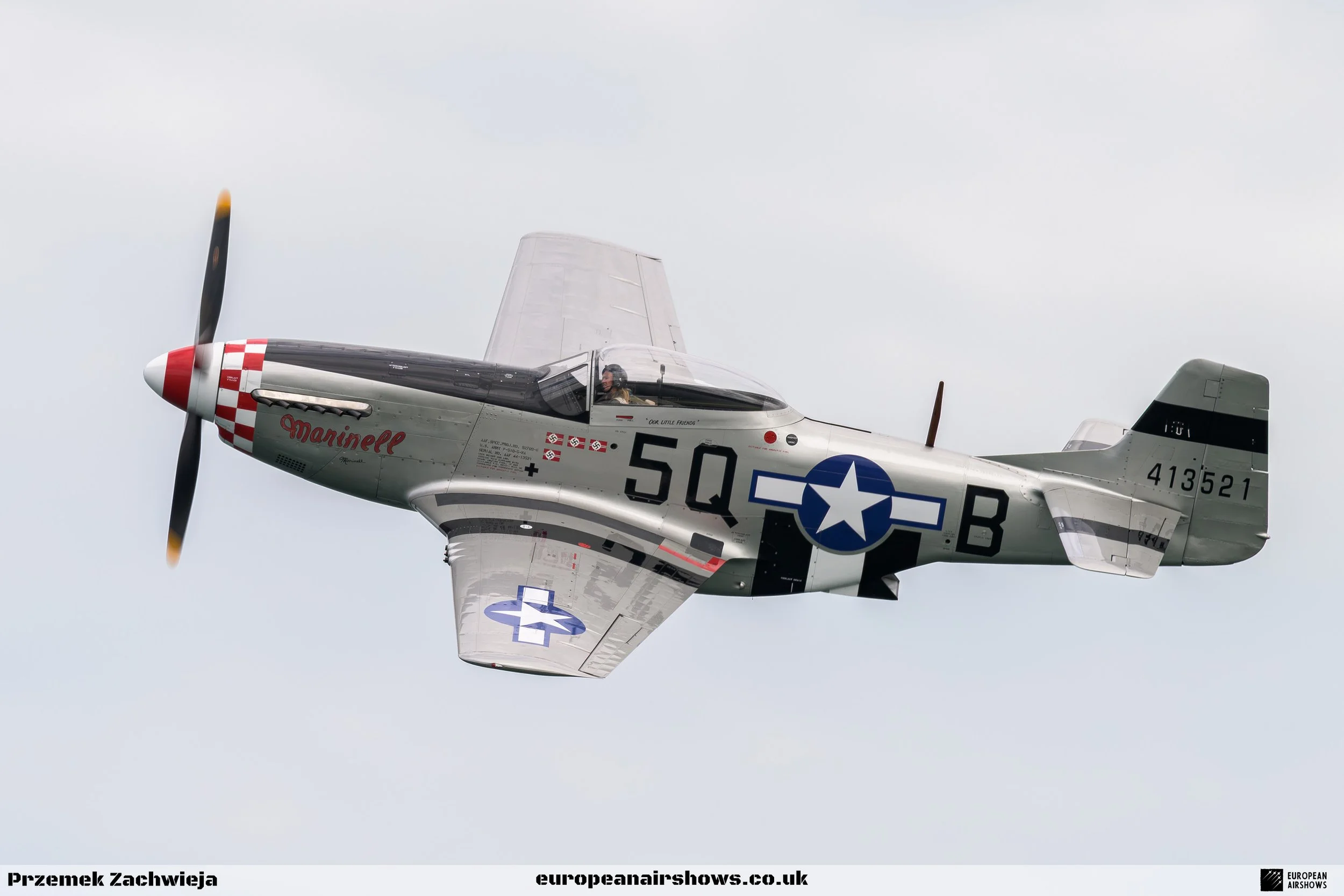
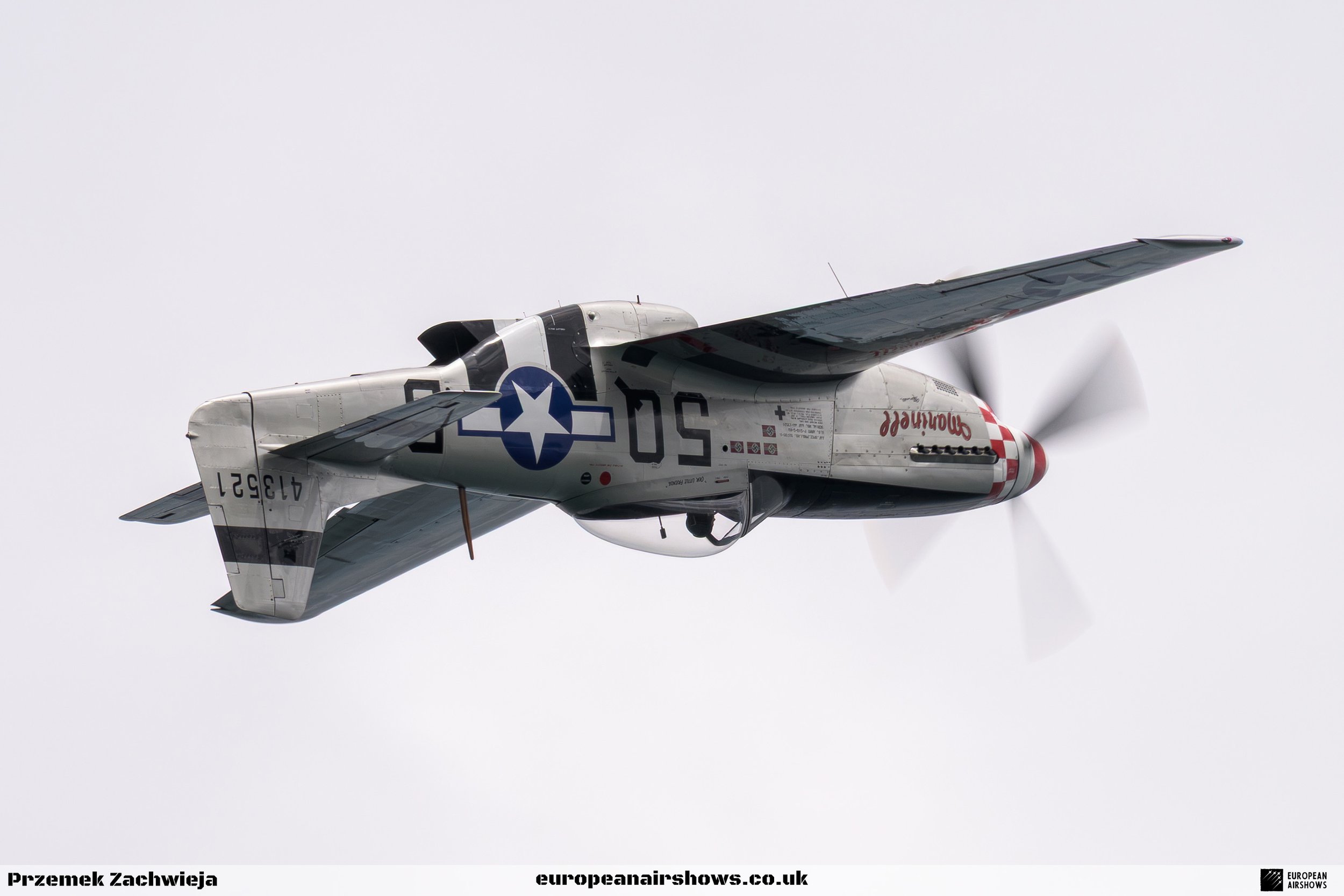
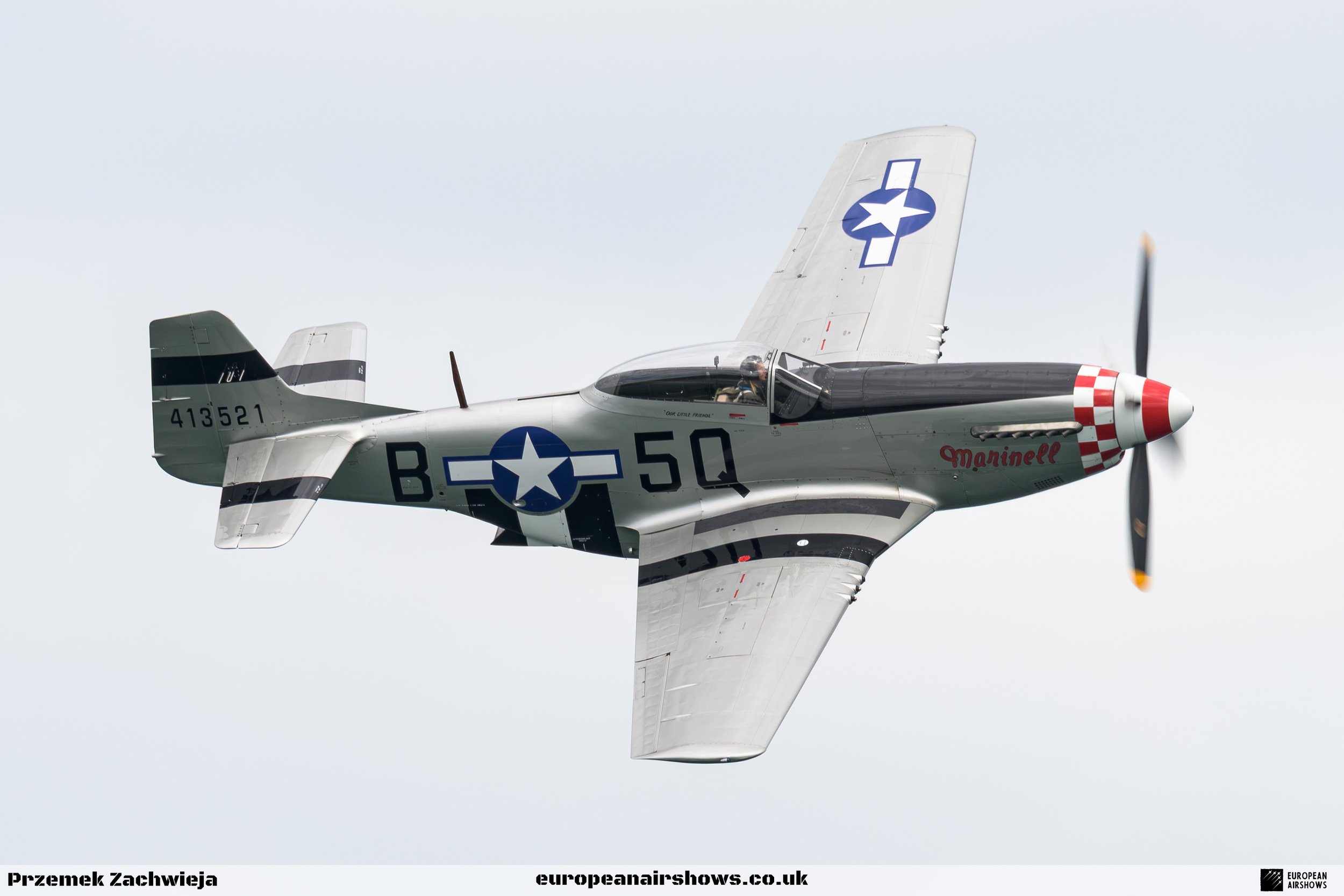
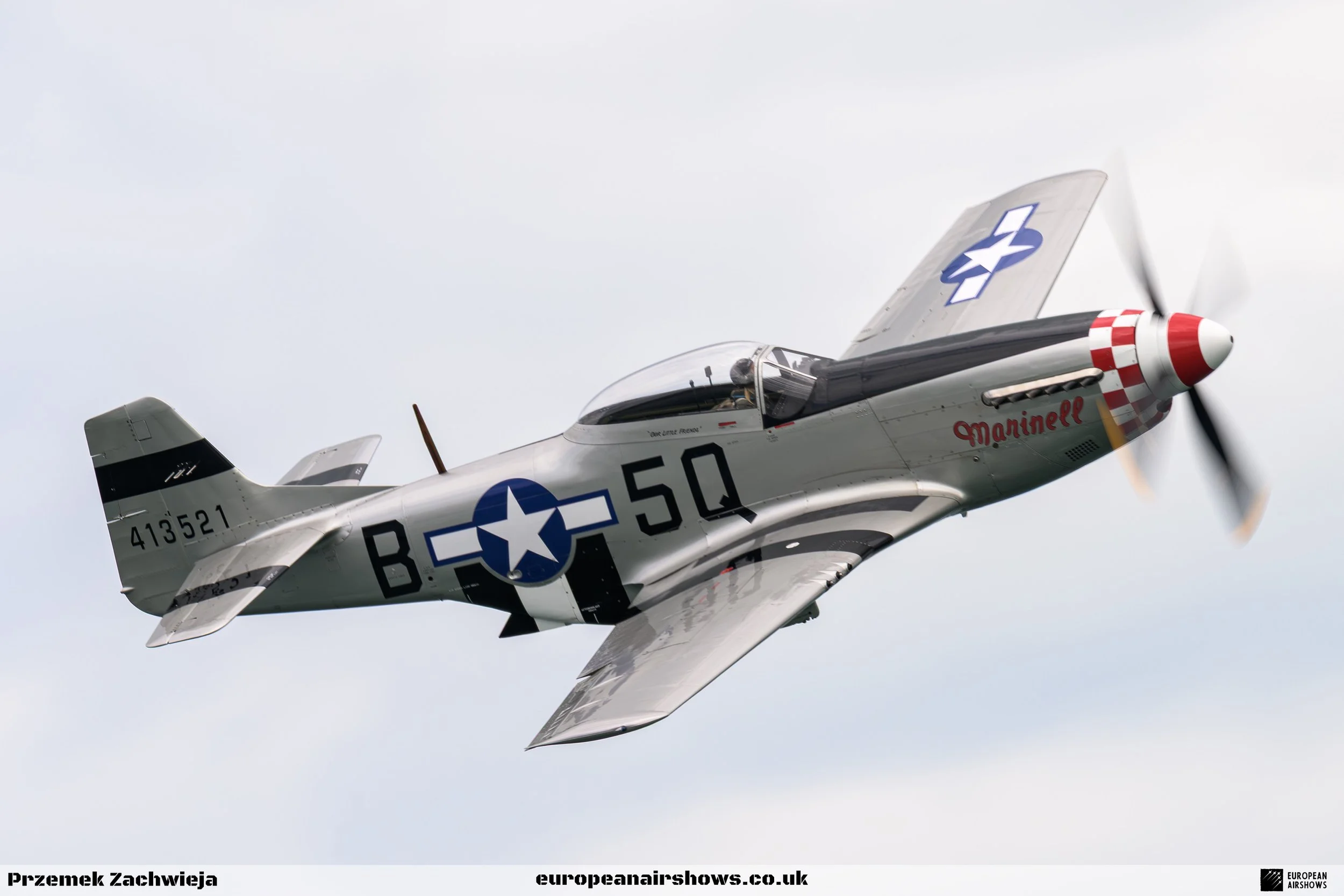
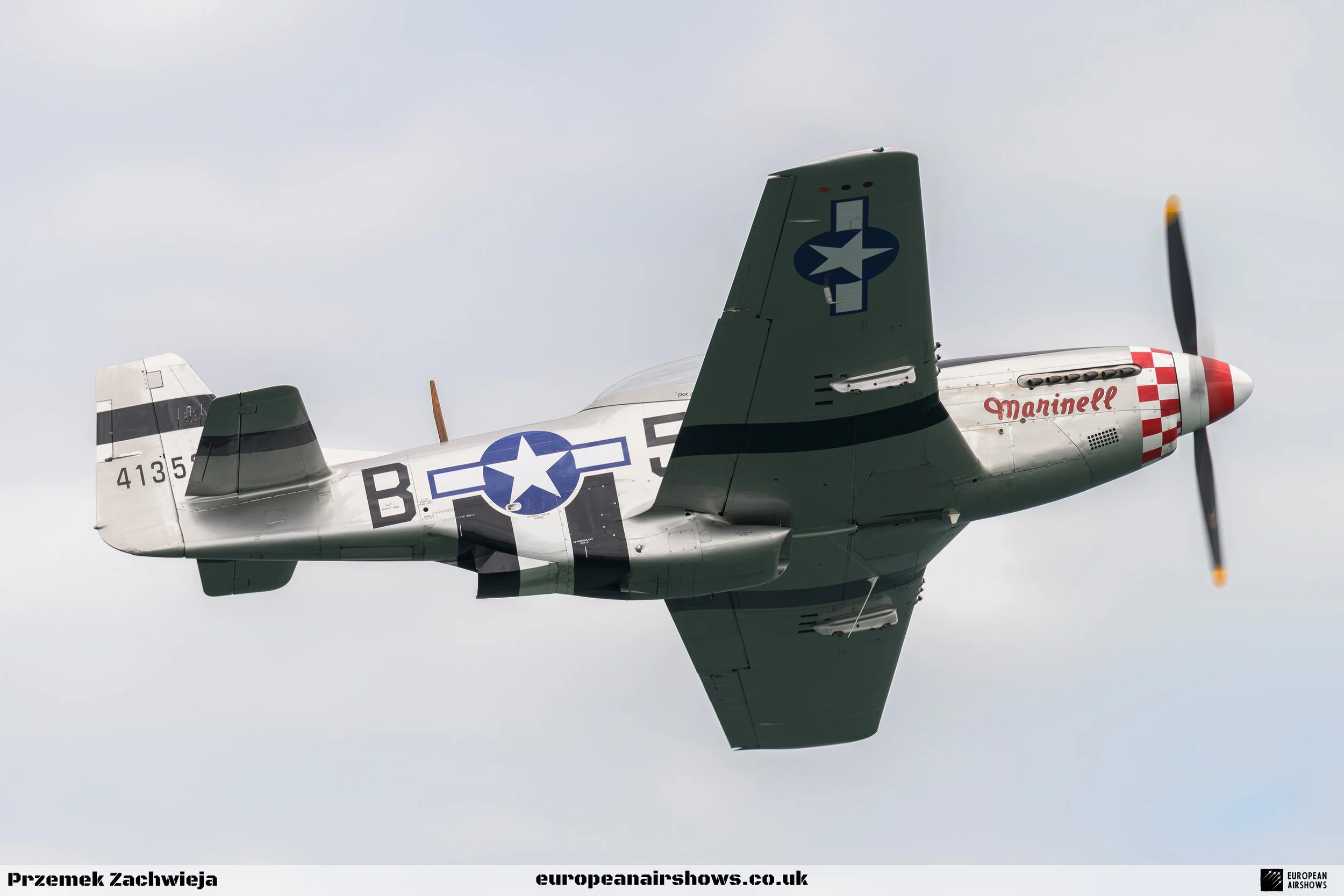
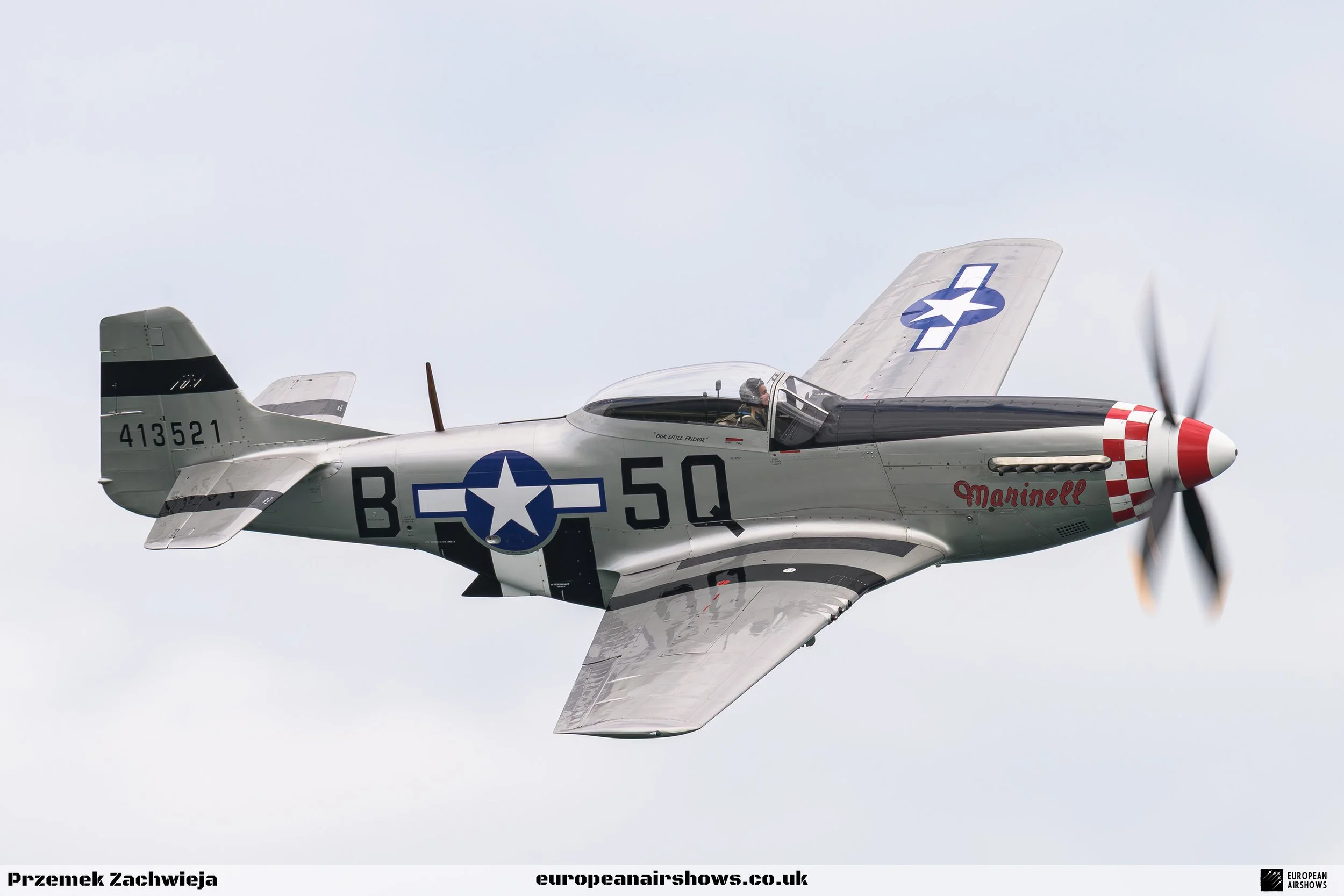
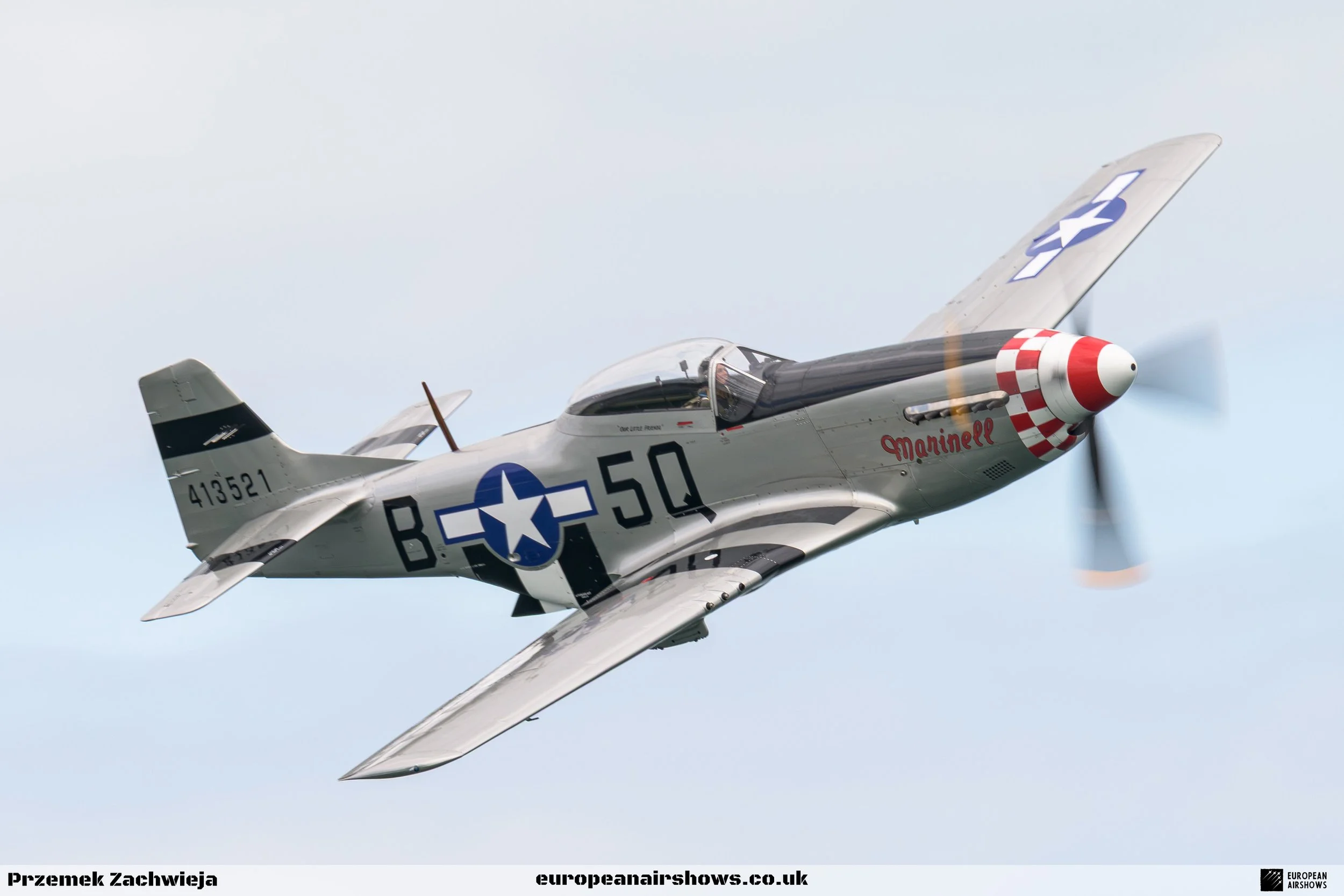
The modern airliner was followed by a far older piece of transatlantic history. North American P-51D-5-NA Mustang Marinell returned to Bray with owner and pilot Isabel Rutland. This is not a Mustang wearing an invented set of wartime colours. Built in 1944 as USAAF serial 44-13521, Marinell served with the 504th Fighter Squadron of the 339th Fighter Group at Fowlmere. Captain Bradley Stevens named it after a woman he had met in the United States, and the aircraft was credited with four aerial victories before being shot down over France on 13 August 1944. Its remains were recovered decades later and a painstaking restoration culminated in a first flight in 2008.
Rutland presented the Mustang exactly as a seaside crowd wants to see one. The passes were low, close and regularly banked towards the shore, offering repeated topside views of the wings and their black and white identification markings. The display was smooth rather than unnecessarily aggressive, but it never drifted away from the audience. In difficult light it produced some of the best photographic opportunities of the whole afternoon and was one of the day's clear highlights.
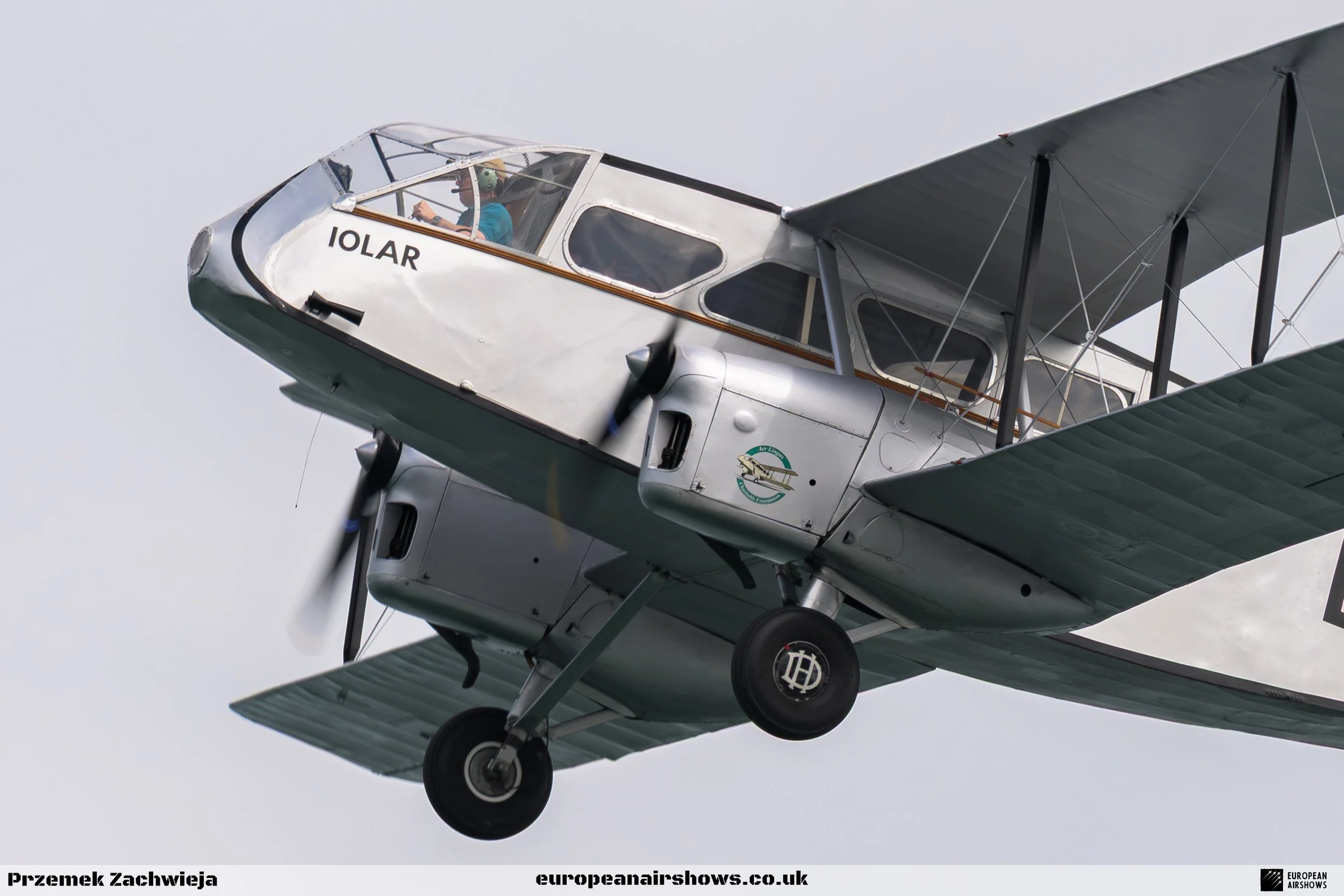
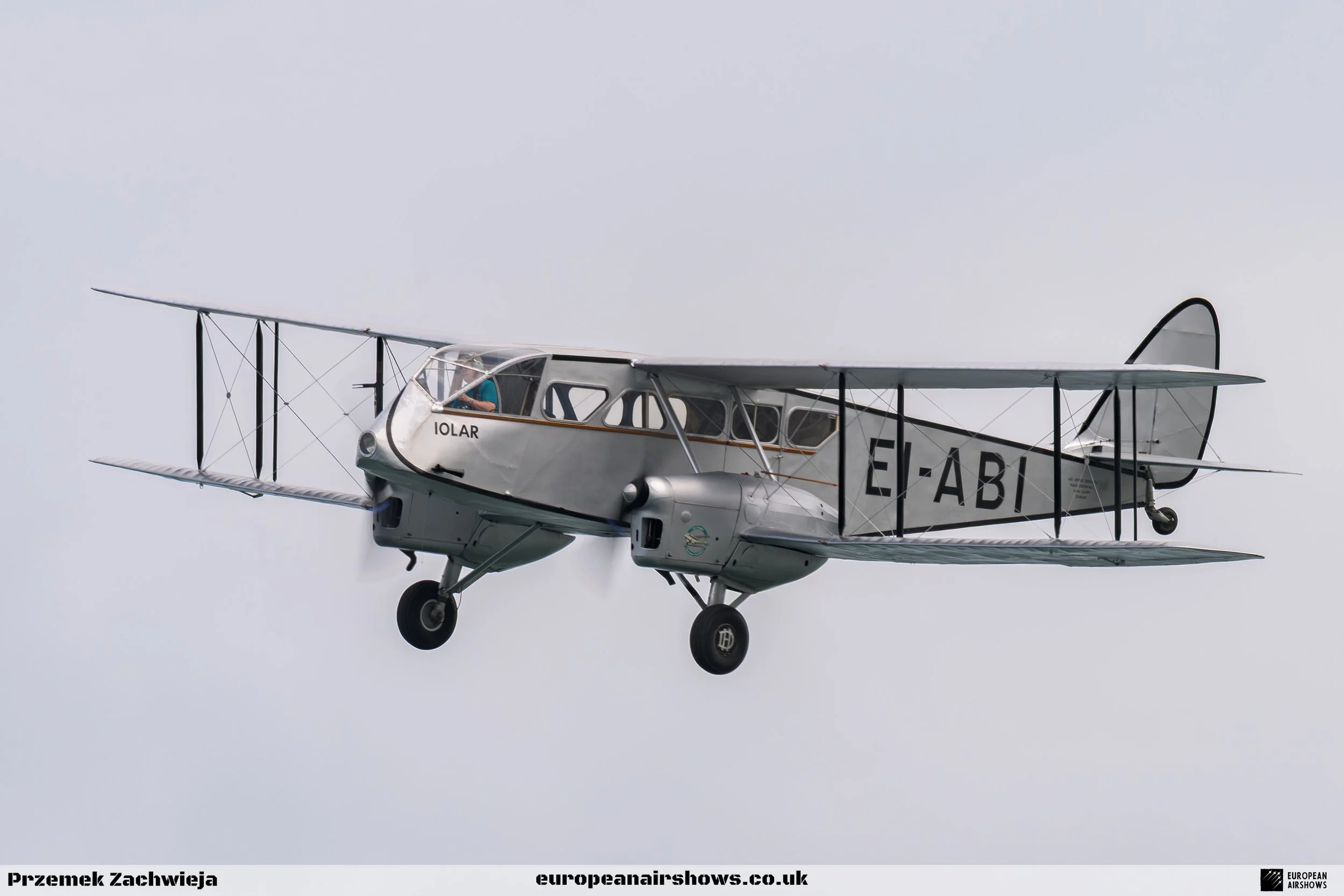
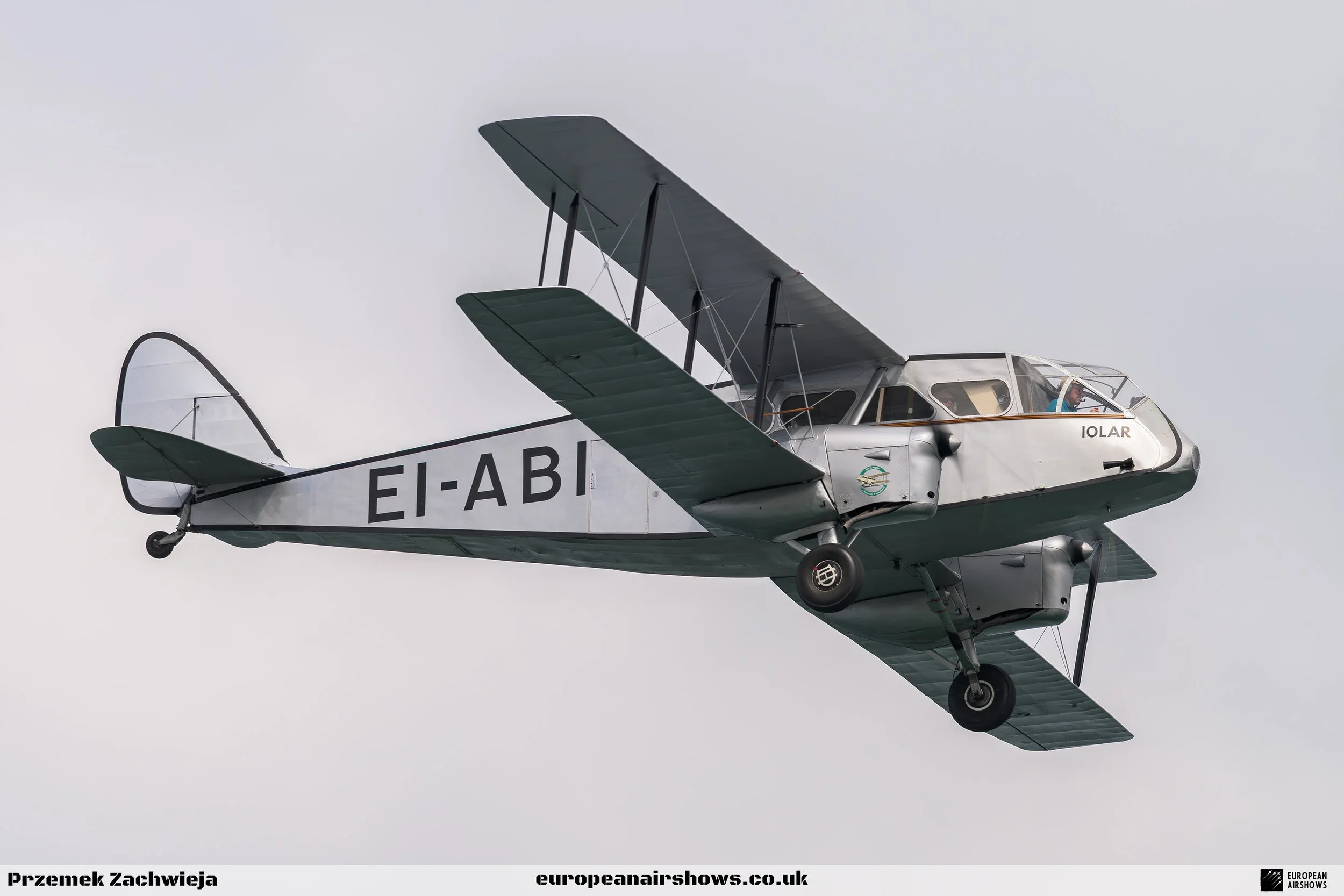
Aer Lingus then returned, this time with the oldest aircraft associated with the airline. The de Havilland DH.84 Dragon EI-ABI Iolar had already made aviation news in May by recreating Aer Lingus' first service from Dublin to Bristol for the airline's 90th anniversary. Its appearance at Bray linked the A321XLR opener directly with the beginnings of Irish commercial aviation.
Iolar is often described as a replica, but that does not quite explain the aircraft. The original EI-ABI was sold in 1938 and disappeared off the English coast during the Second World War. The aeroplane flying today is a genuine sister DH.84, also built in 1936, which Aer Lingus acquired in 1967 and later restored in the identity and colours of its first aircraft. It is therefore a historic airframe in its own right, not a modern reproduction.
On 27 May 1936, the original Iolar left Baldonnel for Bristol with five passengers and a bundle of Irish Times newspapers. Ninety years later, the surviving sister aircraft repeated the journey after a four-month restoration at Abbeyshrule which included engine overhauls, structural inspections and specialist carpentry. Before that work, its previous flight had been in 2016, marking the airline's 80th anniversary.
Bray received only two passes, but more would almost have felt greedy. The Dragon's wooden structure, fabric covering and leisurely speed belong to a completely different age from the A321XLR seen less than an hour earlier. Given that EI-ABI spent a decade out of the air before its 2026 restoration, every public flight is precious. If it now returns to long-term display, it may be some years before Irish audiences see it airborne again.
Familiar visitors and operational aircraft
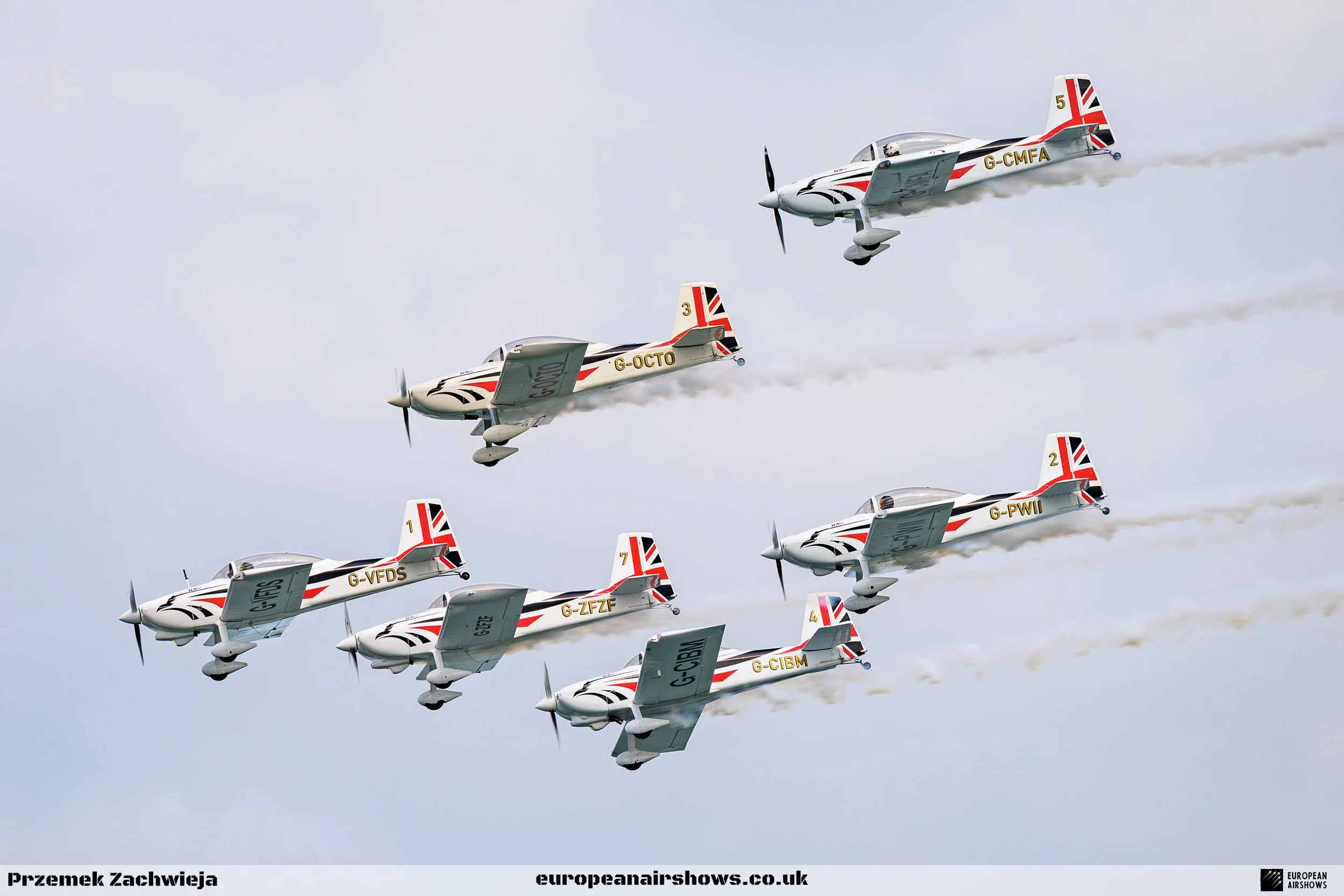
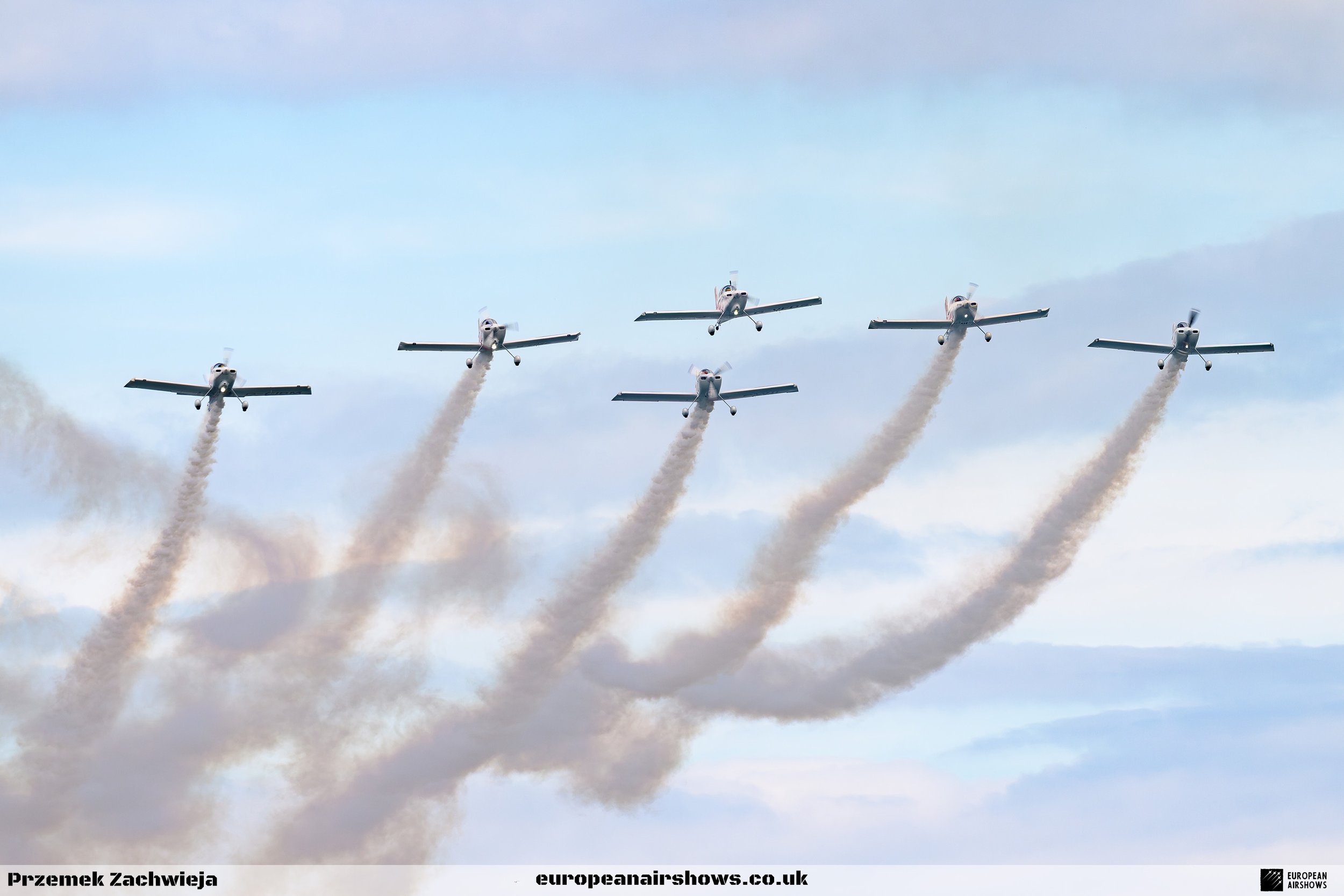
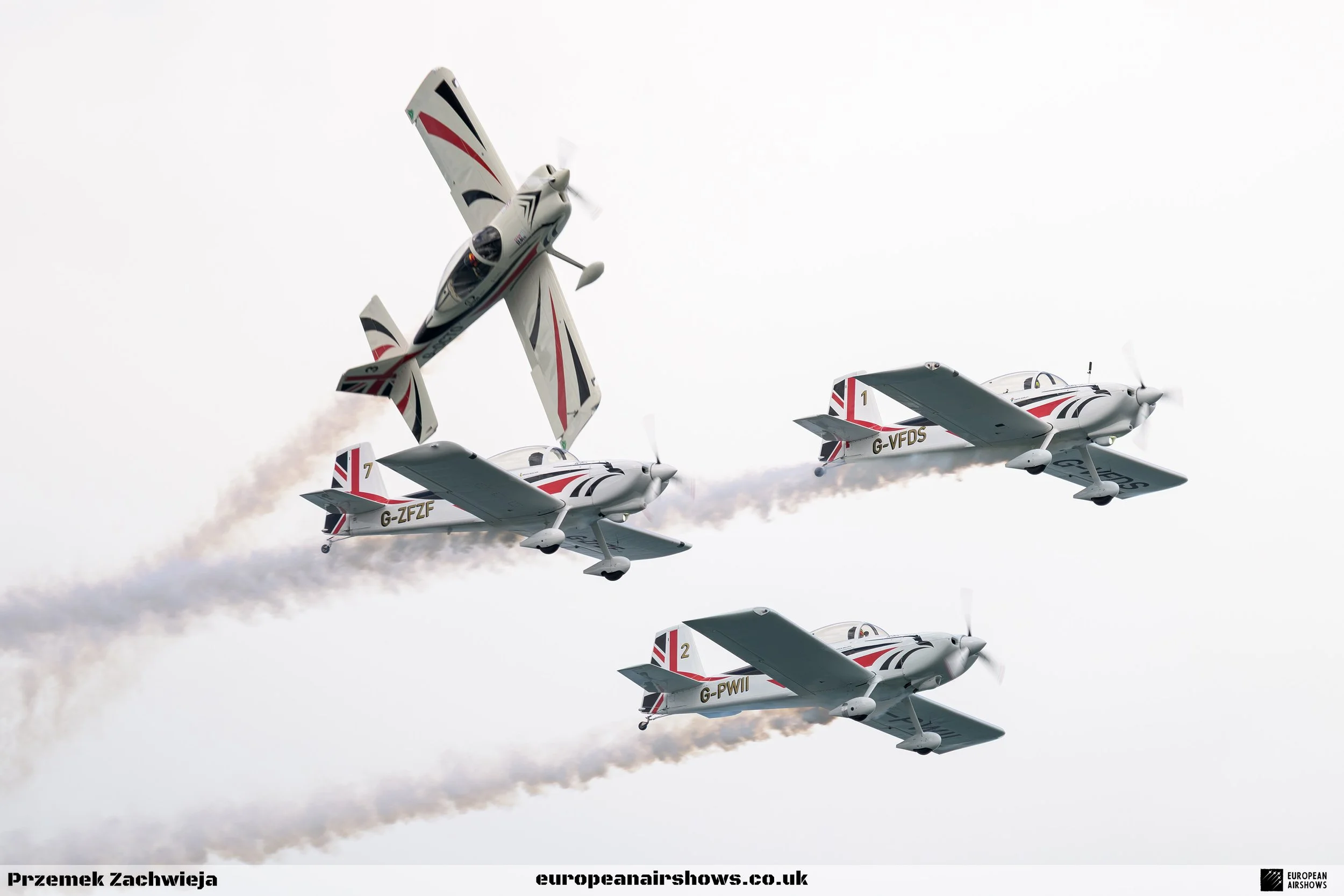
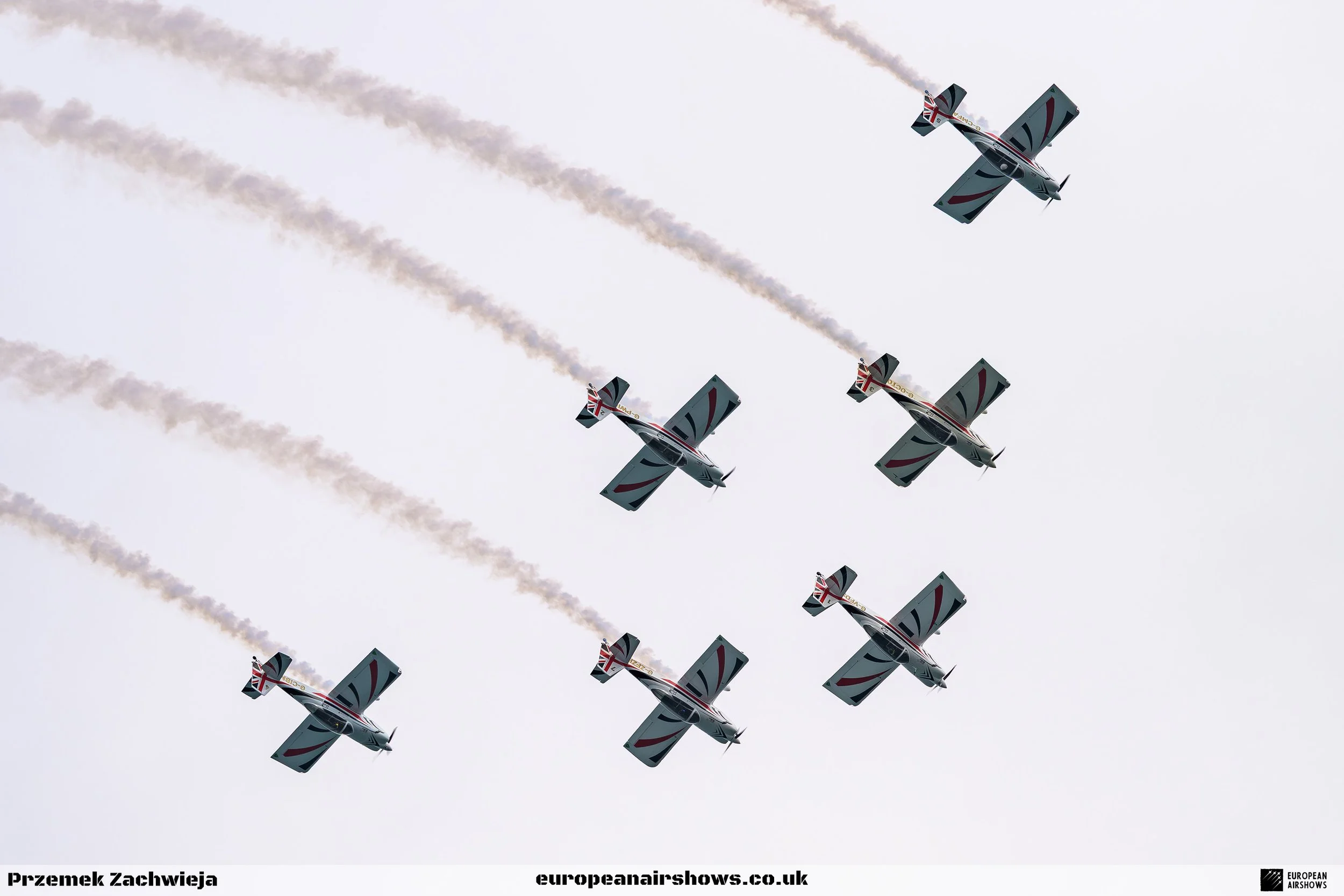
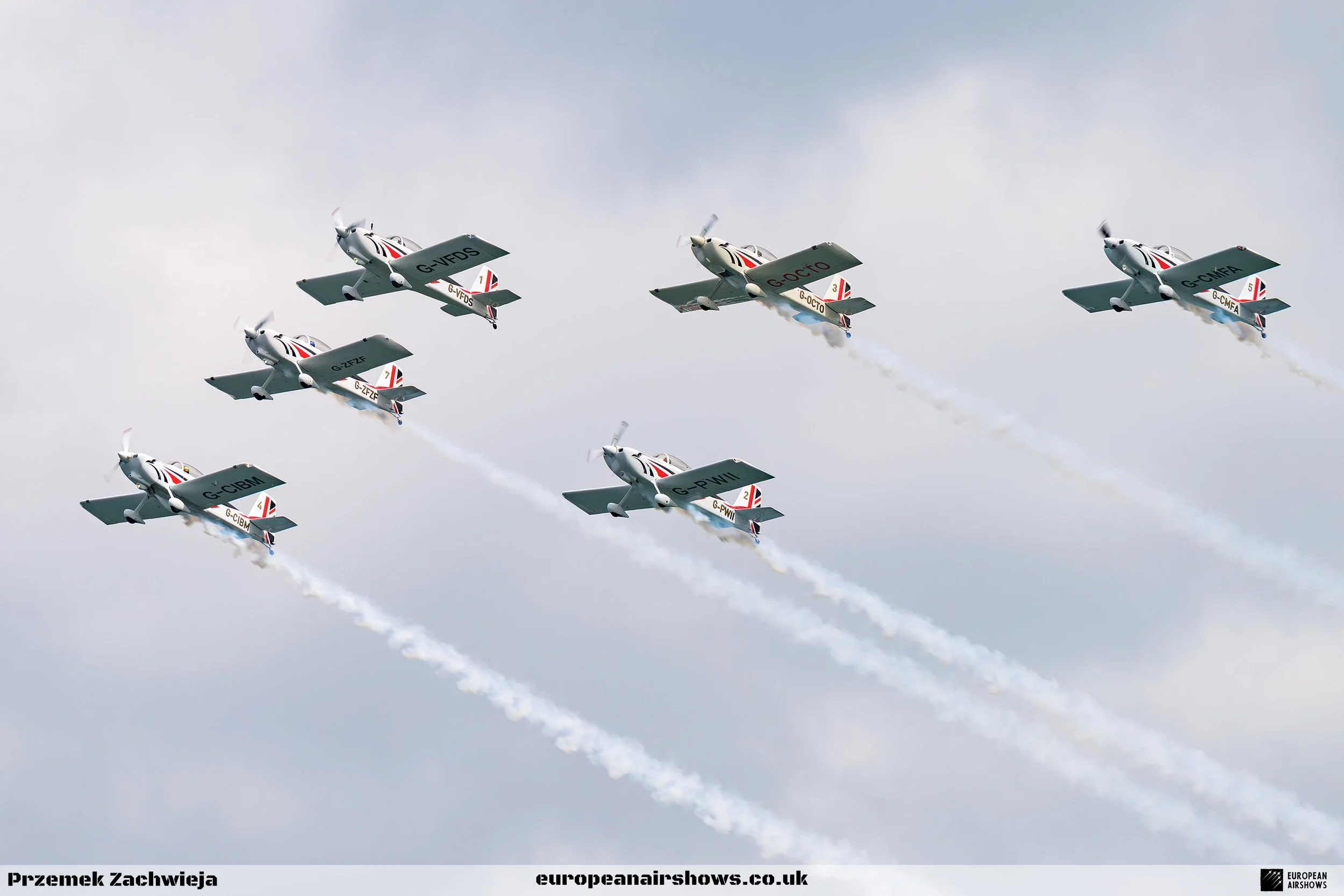
The first of two unrelated teams to use the name Raven followed Iolar. Team Raven arrived with six Van's RV-8s, making its first Irish appearance in the revised livery introduced for the 2026 season. Formed in 2014, the self-funded British team has become one of Bray's most regular overseas visitors and can be traced on the programme as far back as 2016.
Six aircraft give Team Raven enough mass to create convincing formation shapes, but the compact RV-8 also allows the pilots to keep the routine close. The main formation repeatedly divided into smaller elements, ensuring there was usually another pass developing while the leading aircraft repositioned. It was polished and familiar, perhaps too familiar for regular Bray visitors, but the new colours refreshed the team's appearance and the flying remained precise.
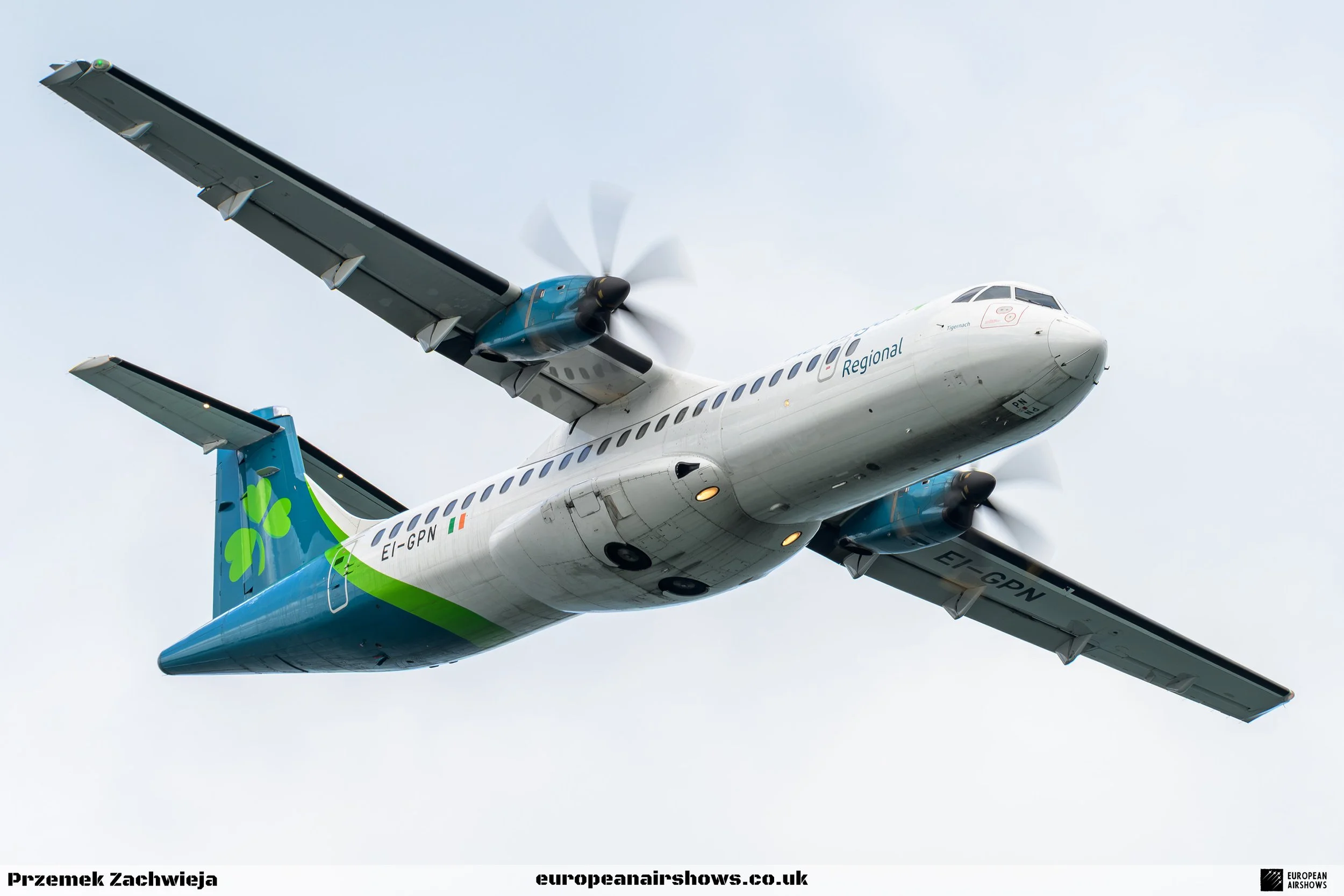
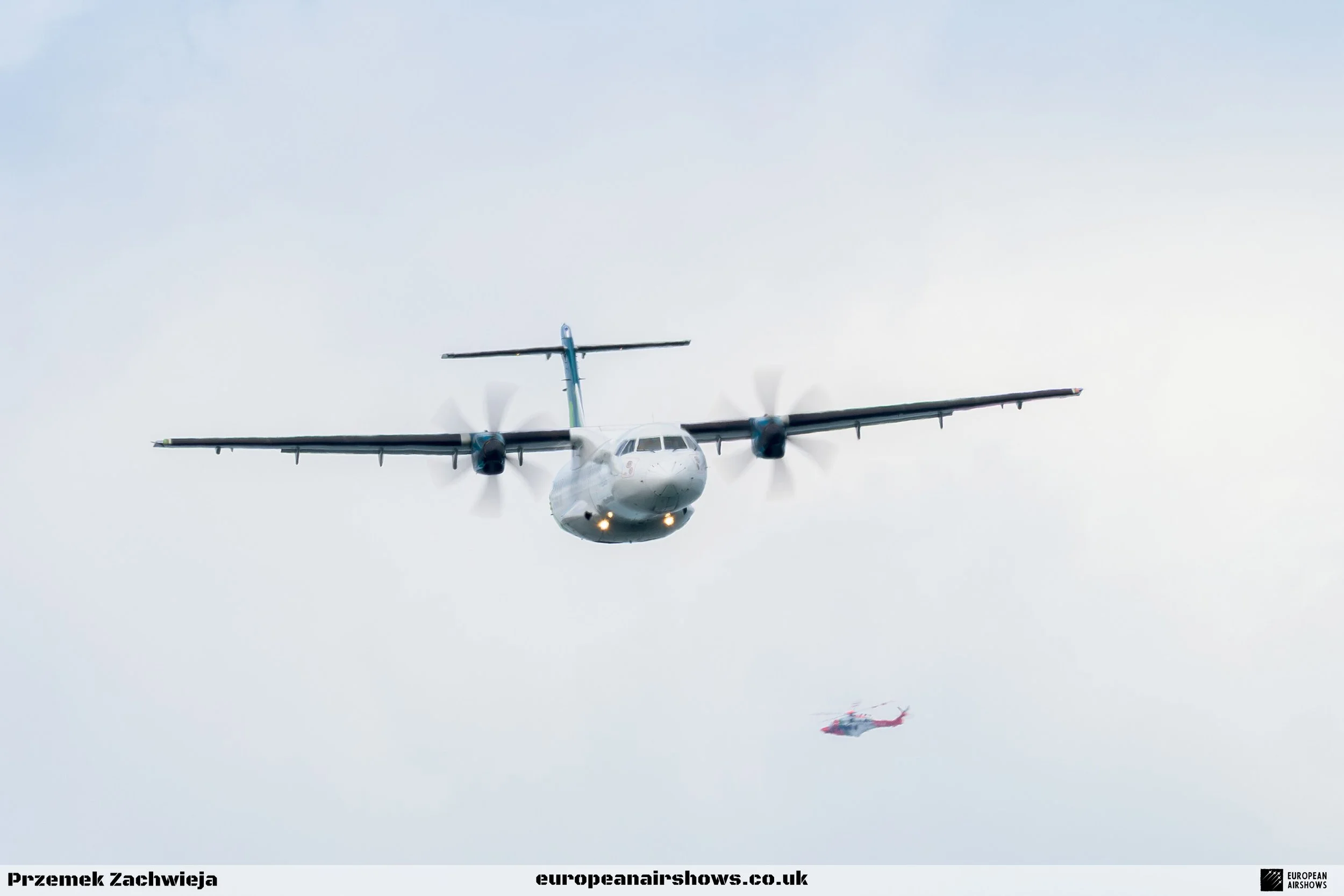
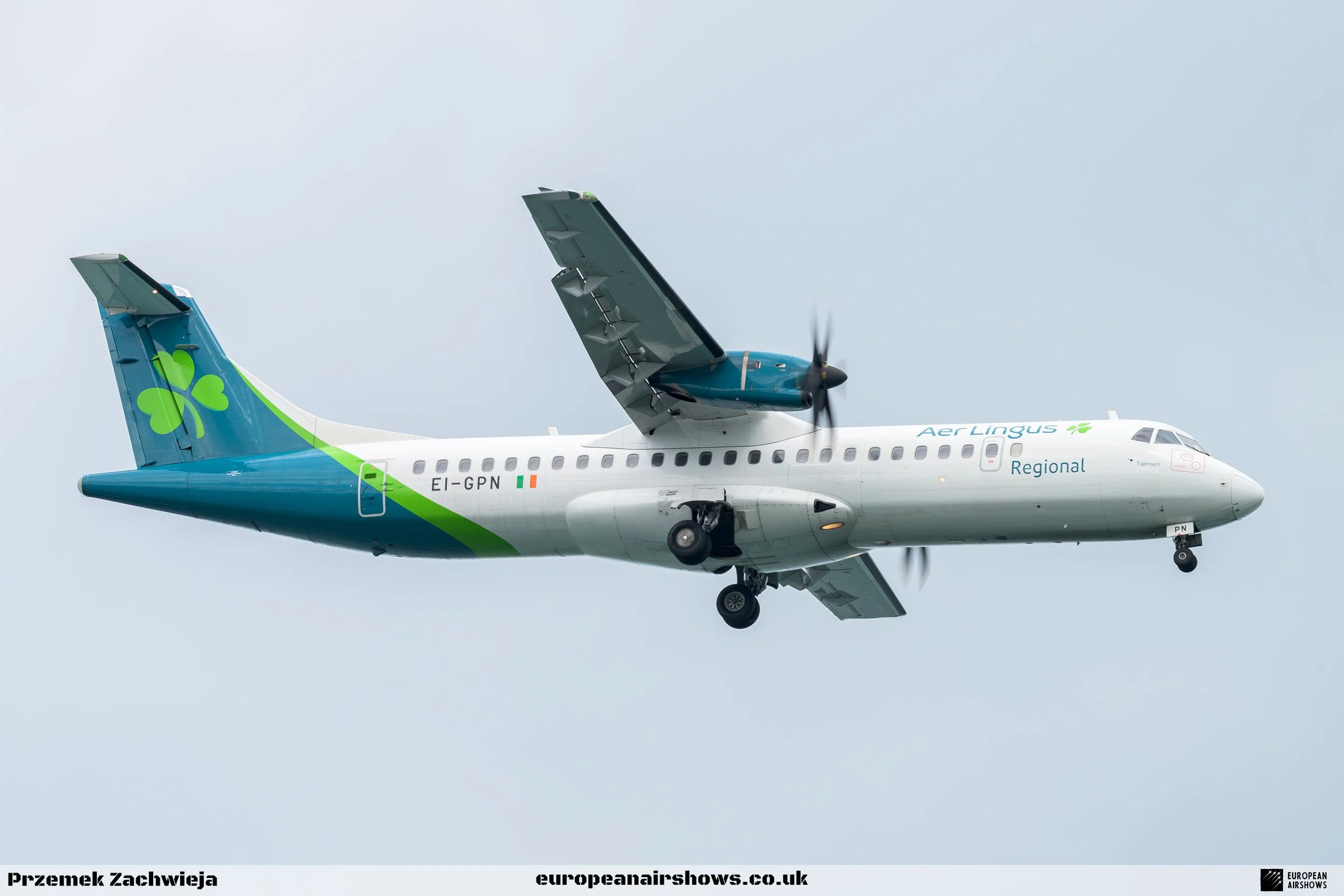
Emerald Airlines' ATR 72-600 brought the programme back to Irish commercial aviation. Emerald operates the Aer Lingus Regional franchise, with the high-wing, twin-turboprop ATR forming the backbone of its short-haul fleet. Regional airliners are a rare sight in flying displays and an ATR is particularly unusual, which gives this contribution more value than its straightforward passes might suggest.
The display was naturally restrained, but the aircraft's comparatively low speed and large six-bladed propellers made it easy to follow along the seafront. For most Irish spectators, Bray is the only realistic opportunity to watch an Aer Lingus Regional aircraft presented as part of an airshow rather than glimpsed during a normal arrival or departure. It is a simple item, yet one worth retaining.
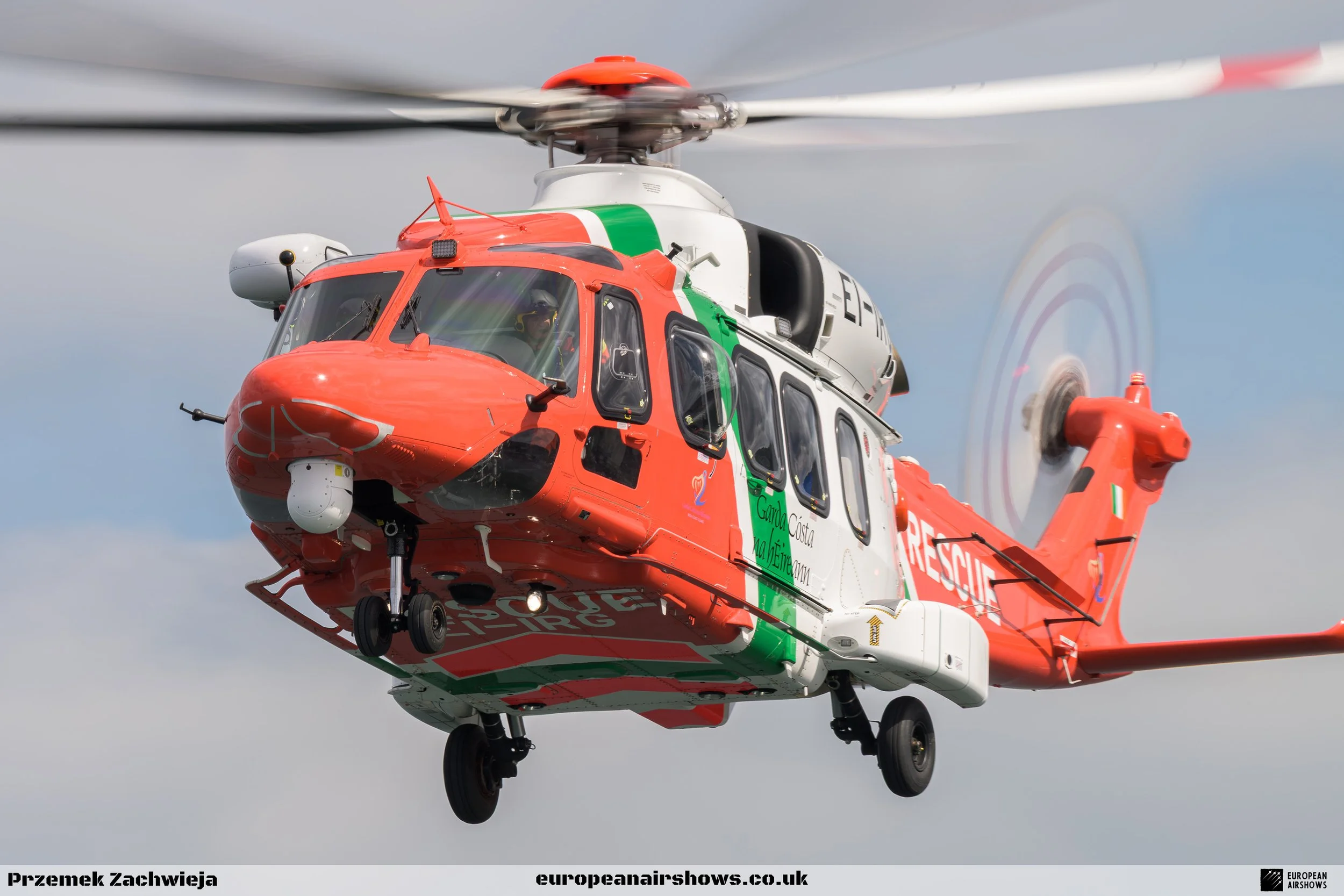
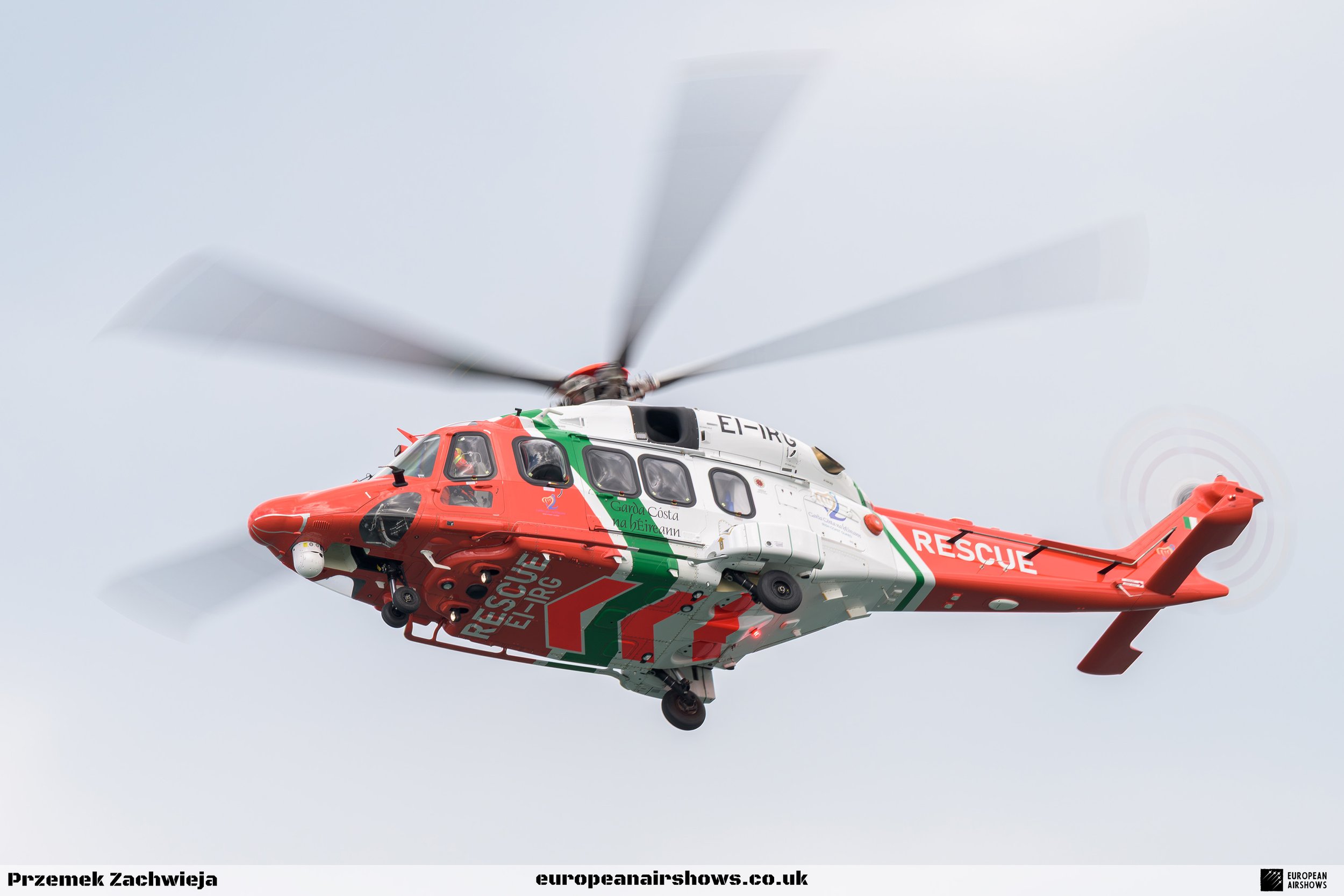
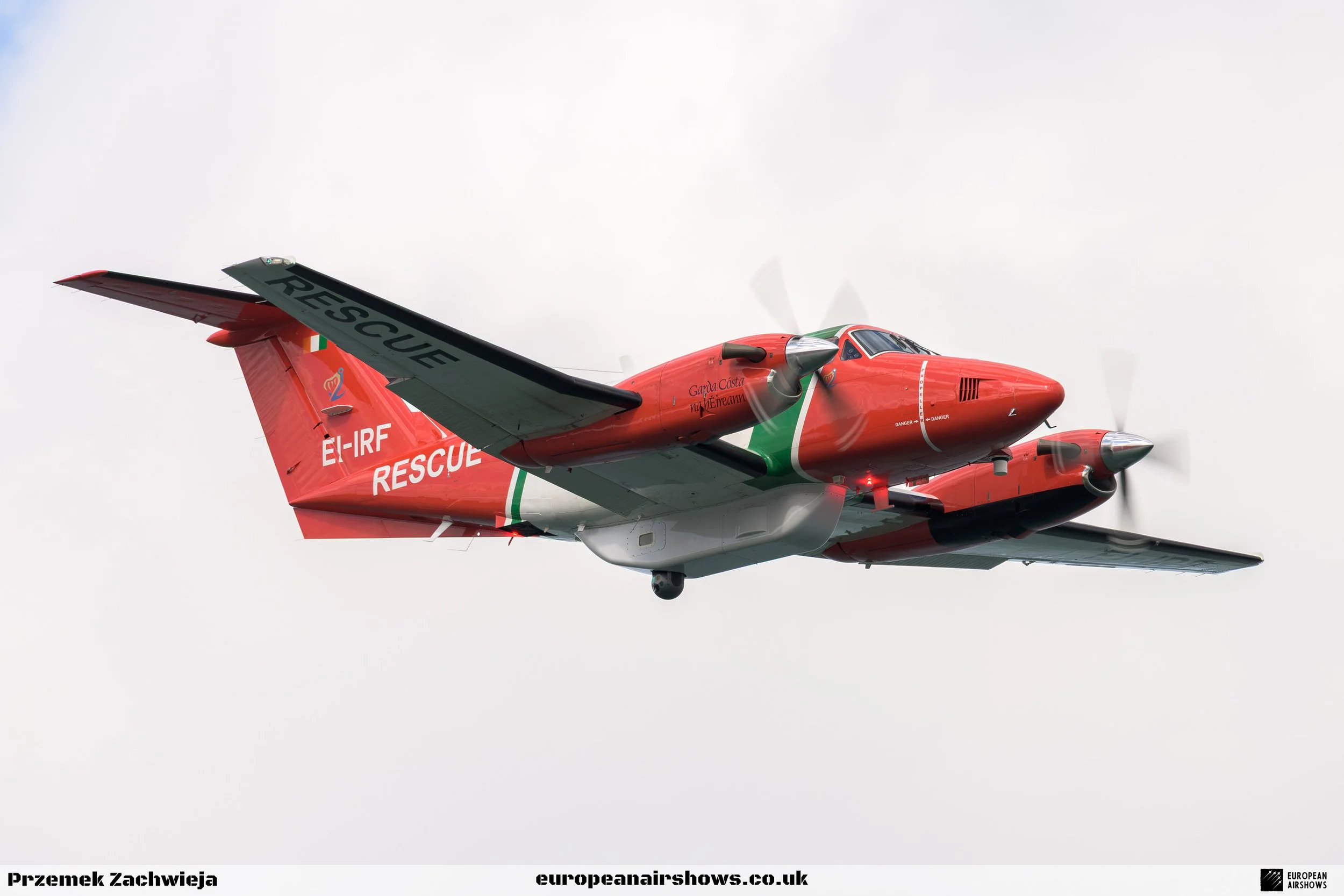
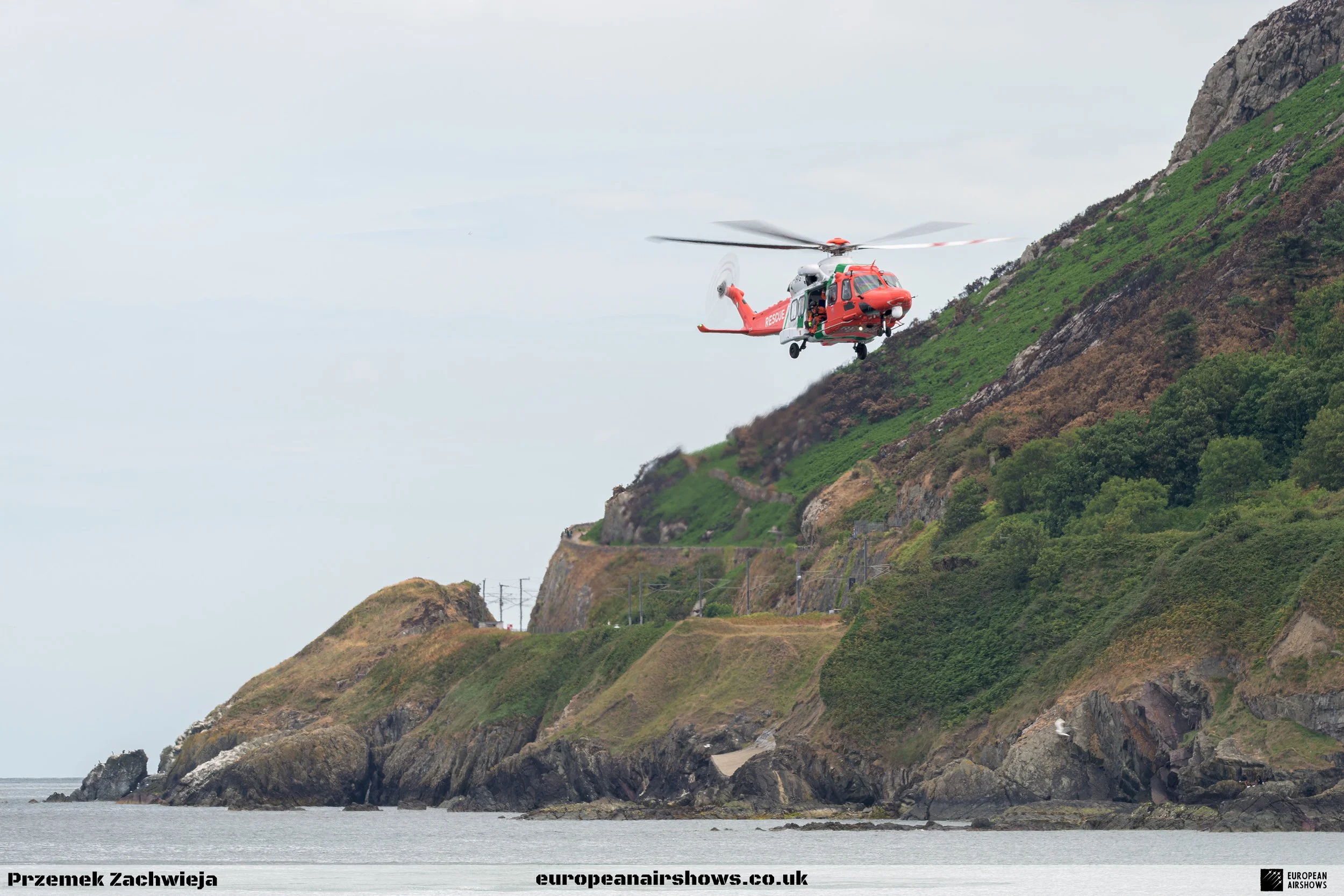
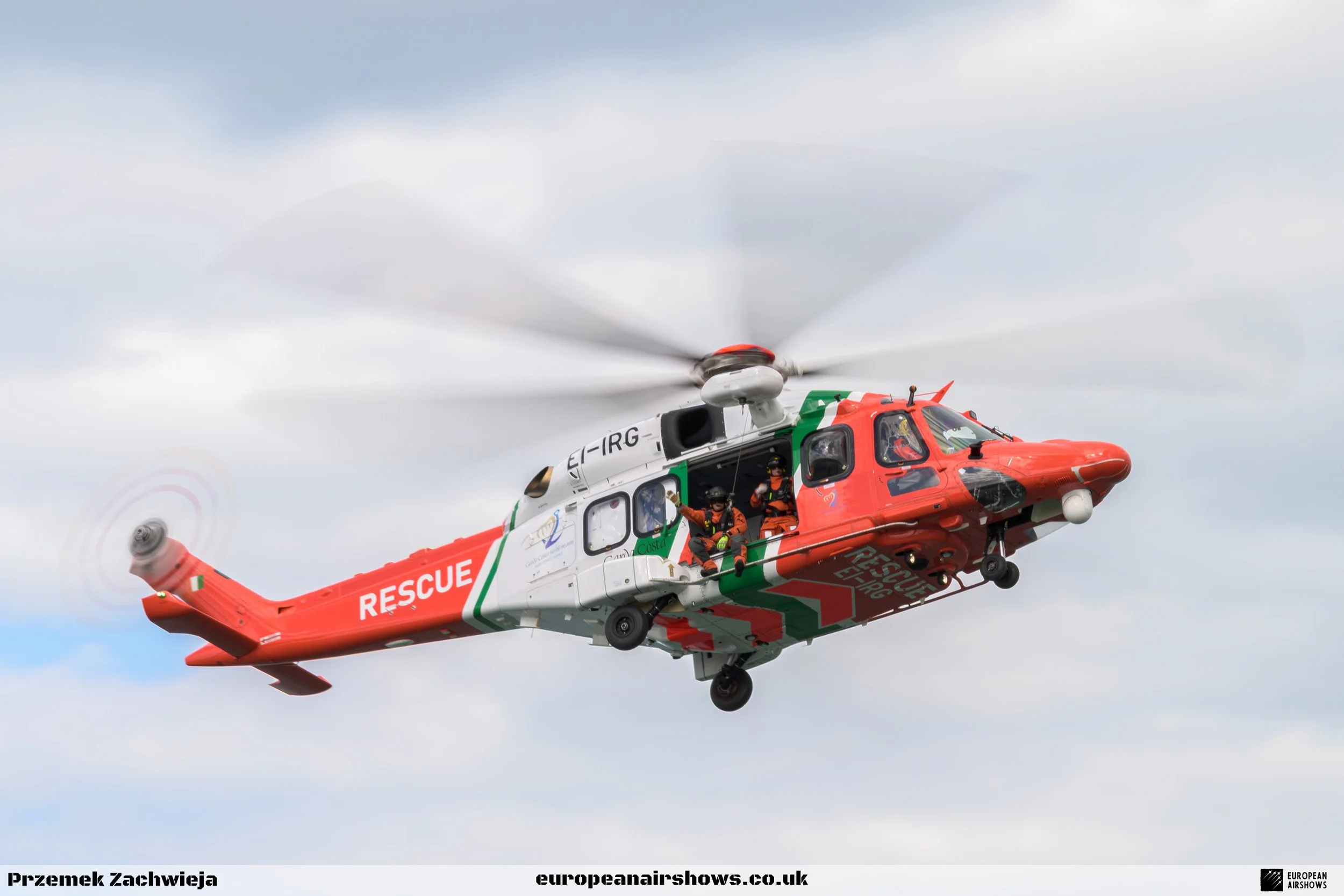
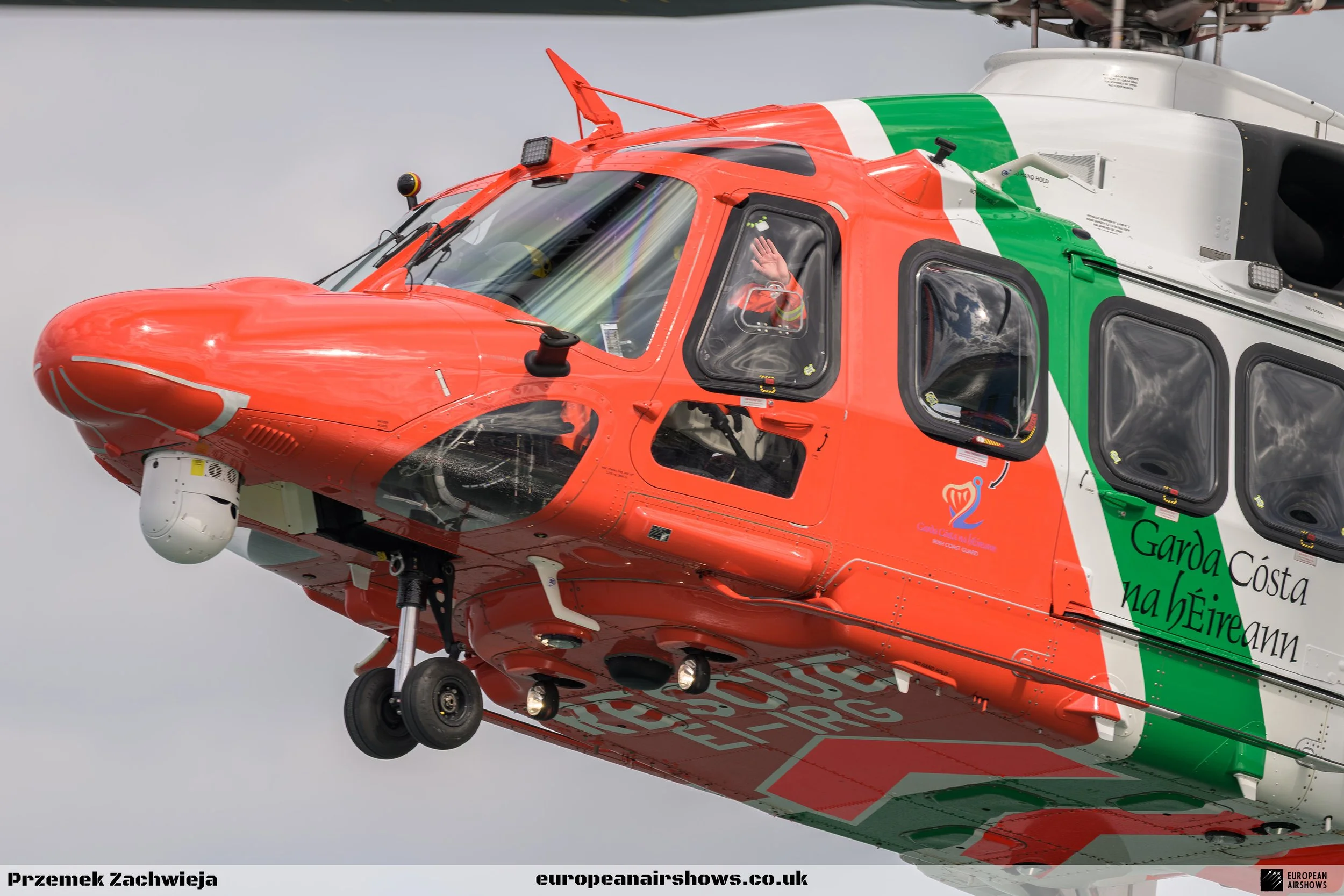
The Irish Coast Guard contribution remained operationally important, but neither aircraft was new to Bray. Both the Leonardo AW189 and the Beechcraft B200 King Air had already performed at the 2025 display, during the transition to the Coast Guard's new national aviation service. Operated by Bristow Ireland, that service now uses six Leonardo AW189 helicopters at Sligo, Shannon, Waterford and Weston, supported by two Beechcraft B200 King Airs at Shannon. The fixed-wing element is new to the Coast Guard's wider operations and provides long-range search coordination, top-cover communications, environmental monitoring and the ability to deploy life rafts. Seeing both types together remained valuable, but this was a return rather than a Bray debut.
The Leonardo AW189 appeared first with a handling demonstration that showed its speed and manoeuvrability without pretending the large search and rescue helicopter was an aerobatic machine. A winching sequence or simulated rescue would have added purpose and given the public a clearer view of how the aircraft earns its keep, but another close look at the Coast Guard's current helicopter was welcome.
The B200 followed with three level passes. Two were much too far offshore to make a strong impression, and a slower pass in landing configuration would have added some variety. It was one of several displays during the afternoon in which the audience saw more underside than topside. That said, these were operational crews presenting an aircraft whose real job is search, communications and surveillance, not display flying. Its inclusion mattered even if the presentation could have been stronger.
Strikemaster, PC-12 and the next generation
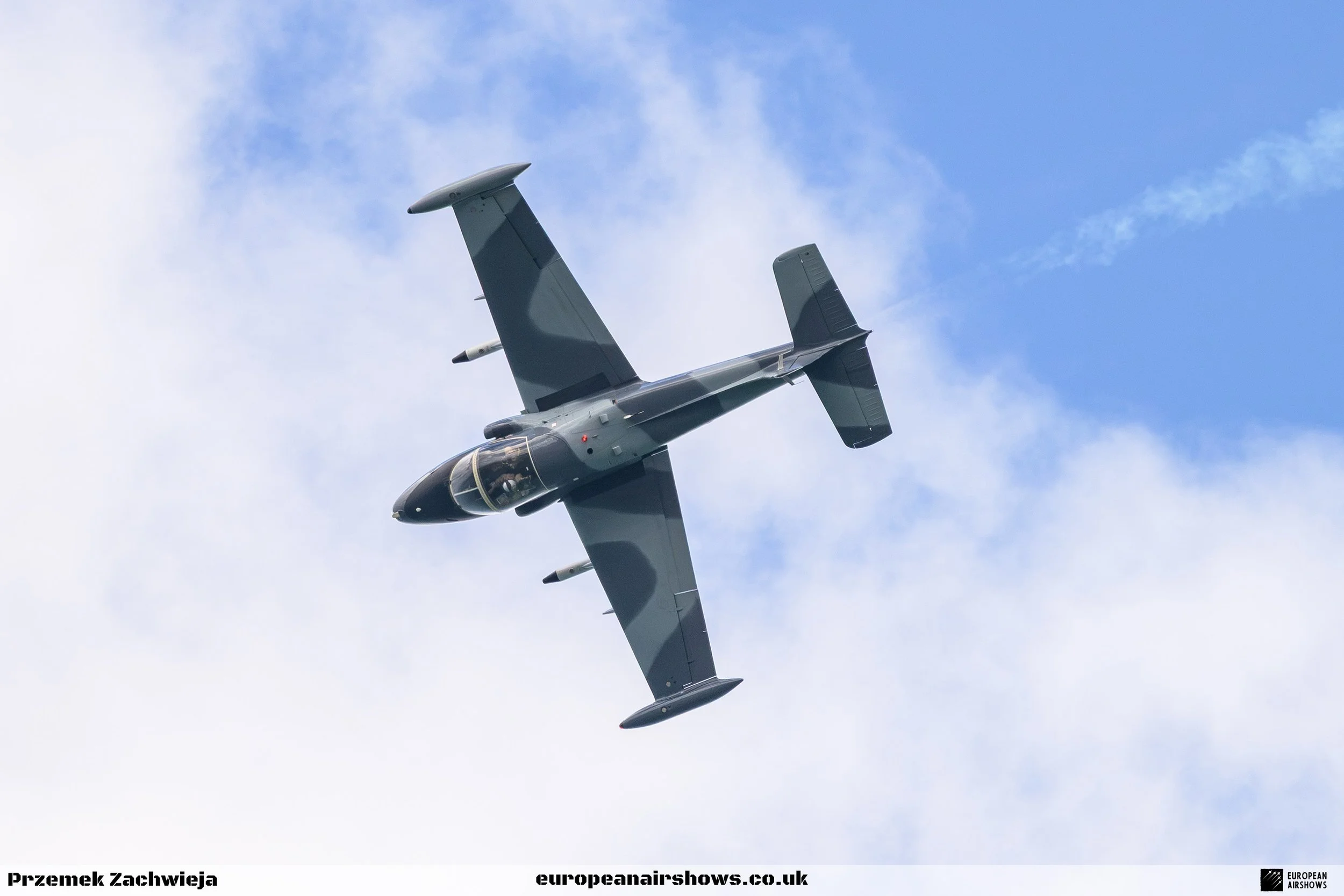
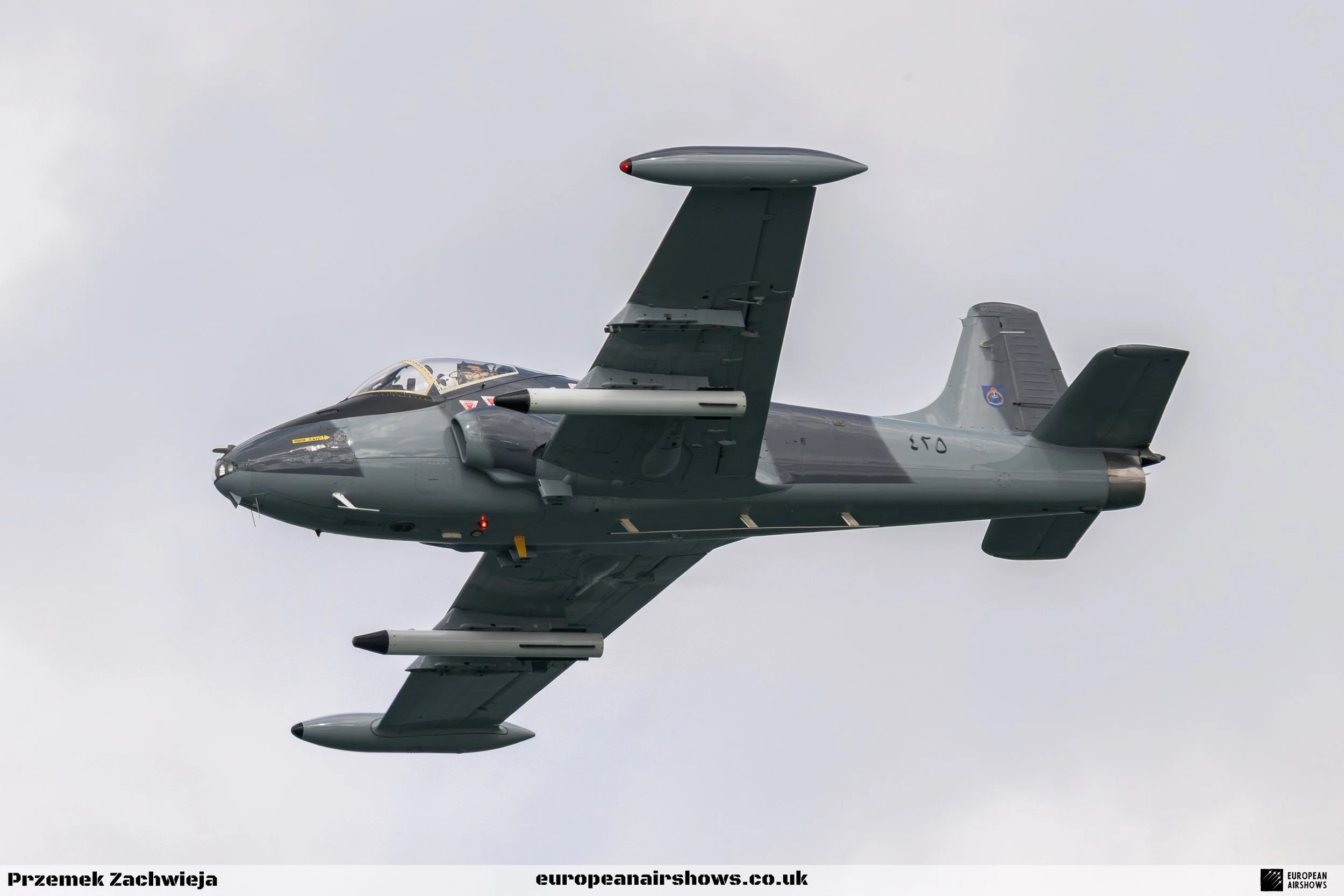
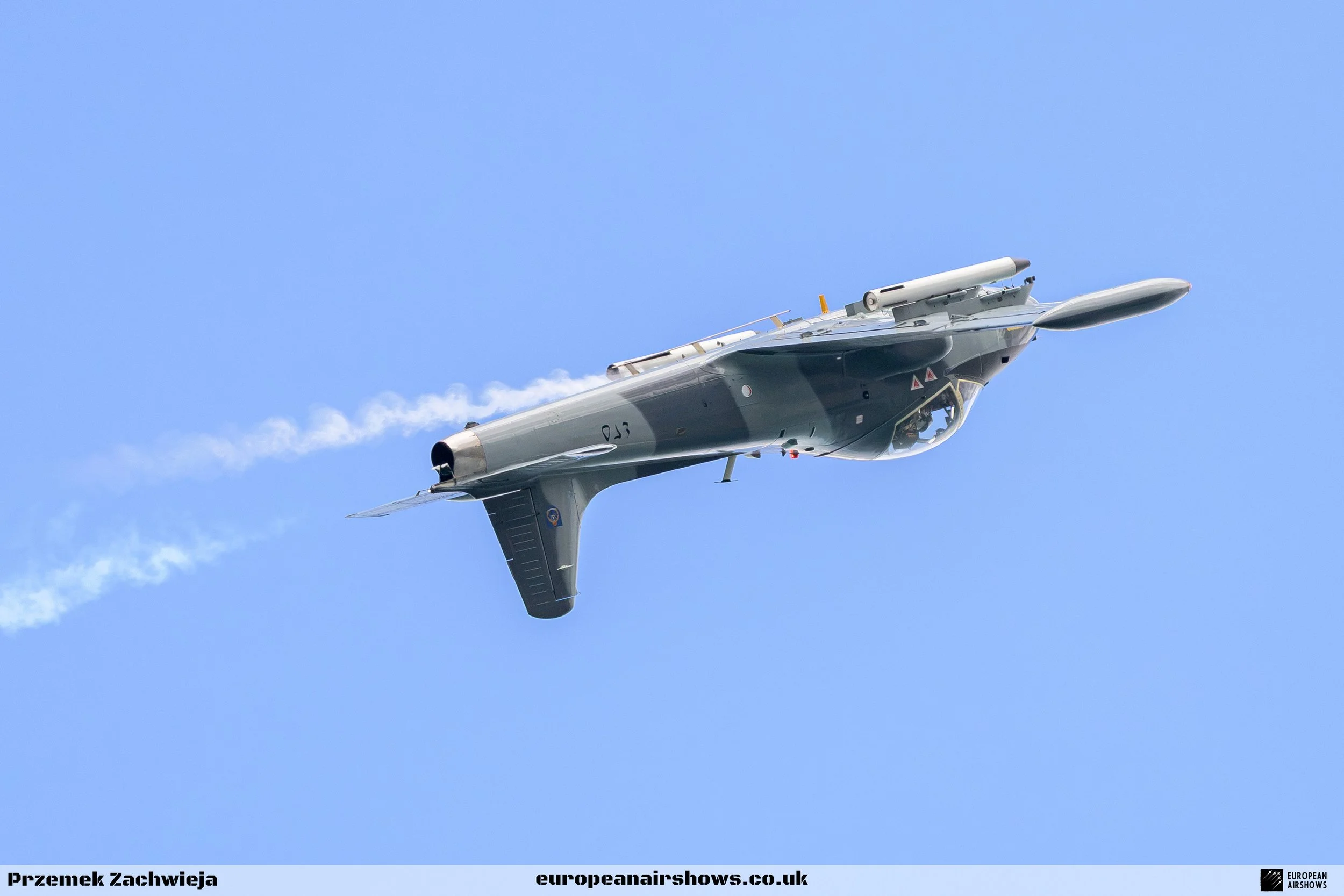
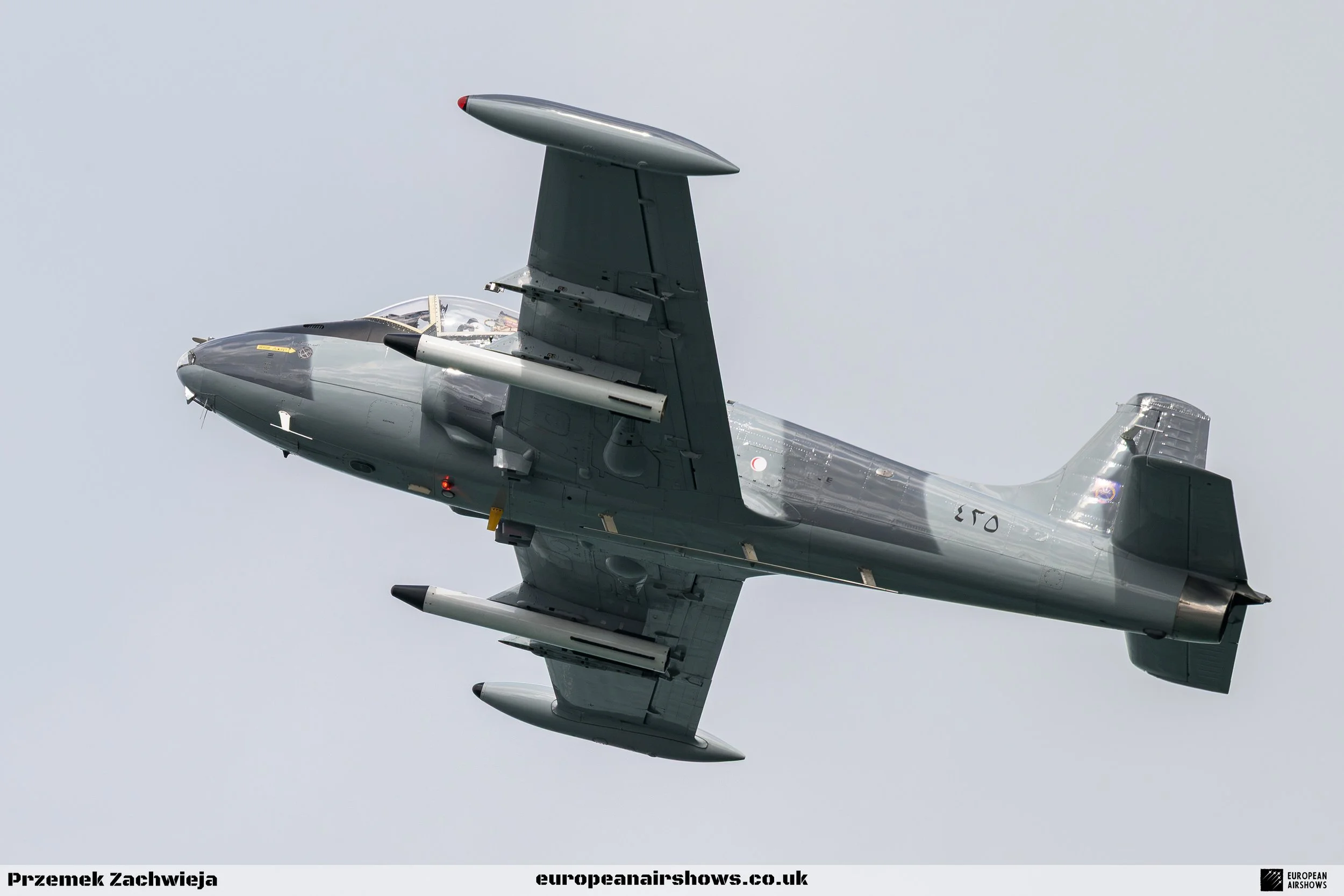
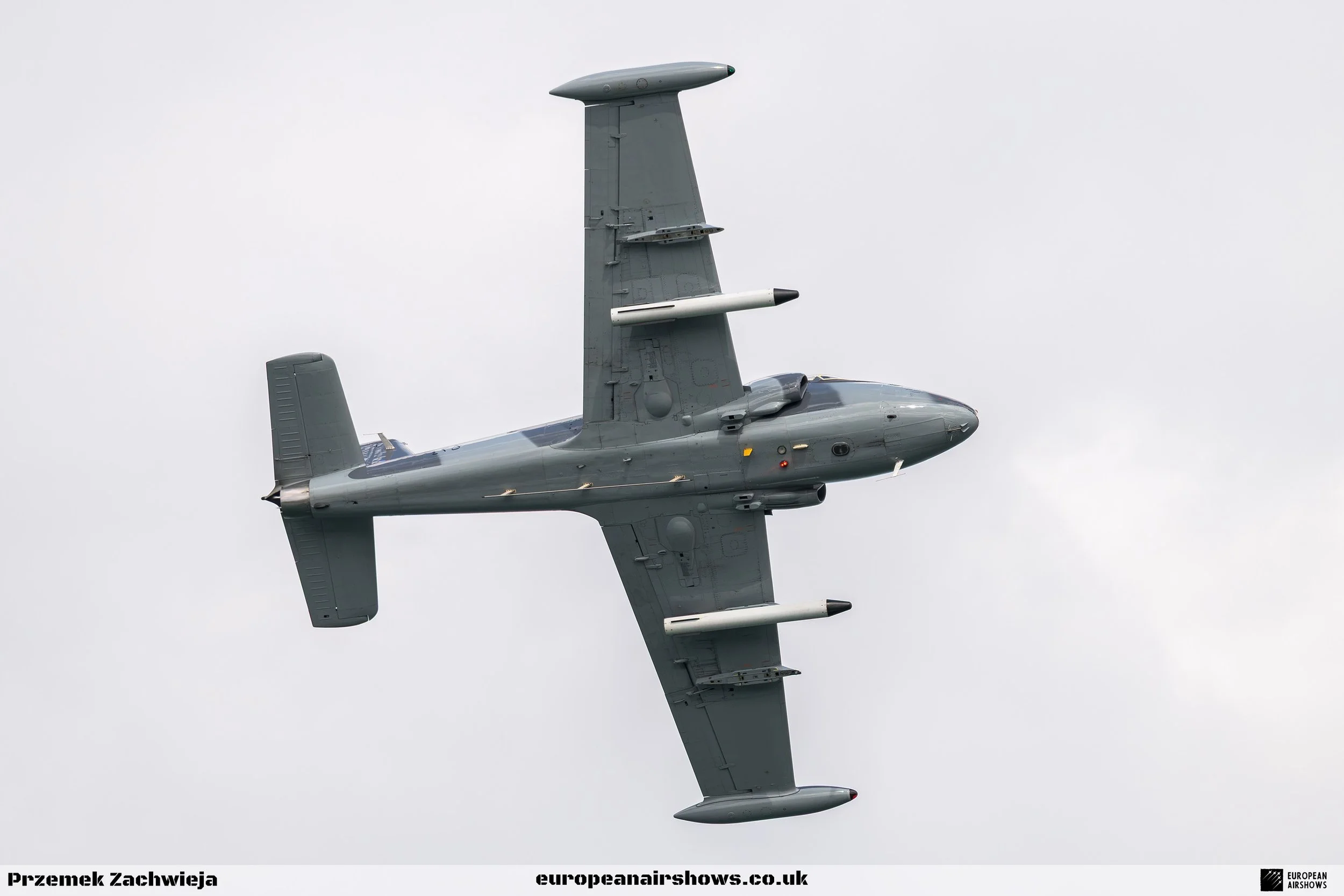
The first classic jet of the afternoon was BAC 167 Strikemaster Mk.82A G-SOAF in its grey Royal Air Force of Oman training scheme and former military identity 425. The Strikemaster began as an armed development of the Jet Provost T.5, combining the training role with wing hardpoints, internal guns and the ability to operate as a light attack aircraft. The type saw combat with several overseas air forces, including Oman, Ecuador and South Yemen.
G-SOAF has a particularly unusual history. It was assembled in 1986 from components held after an embargoed Sudanese order, following an Omani request for a replacement aircraft. That made 425 the final and youngest Strikemaster built. It served with No. 1 Squadron at RAFO Masirah until the Omani fleet was retired in 1999, then became a technical training airframe. North Wales Military Aviation Services acquired it in 2004, shipped it to Britain and returned it to flight only six months later. The aircraft subsequently became one of the founding members of the four-ship Team Viper in 2009.
At Bray, the Strikemaster flew a complete aerobatic sequence with white smoke, its Rolls-Royce Viper turbojet supplying the sharp, hard-edged sound that the programme had so far lacked. Loops, rolls and steep reversals kept the energy up and the routine was flown with obvious accuracy. From a spectator's perspective it was an attractive display of a rare surviving jet.
For photographers, however, it was less satisfying. The sequence produced almost no proper topside view, leaving a succession of underside or relatively flat angles. That did not make the flying poor, but it did make the presentation feel less generous than the Mustang routine which had worked much harder with the shoreline. With light already deteriorating, one well-placed topside pass would have transformed the photographic result.
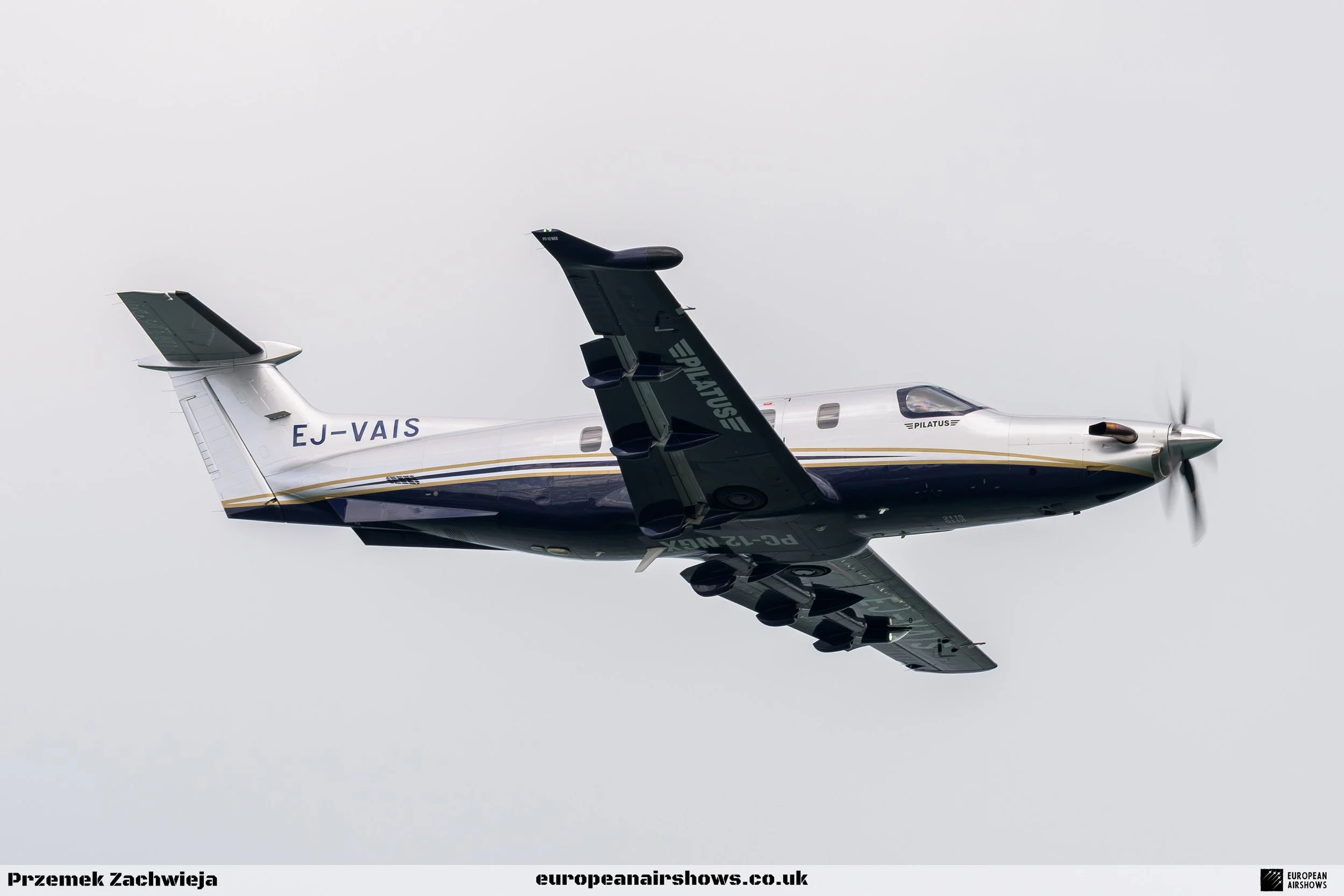
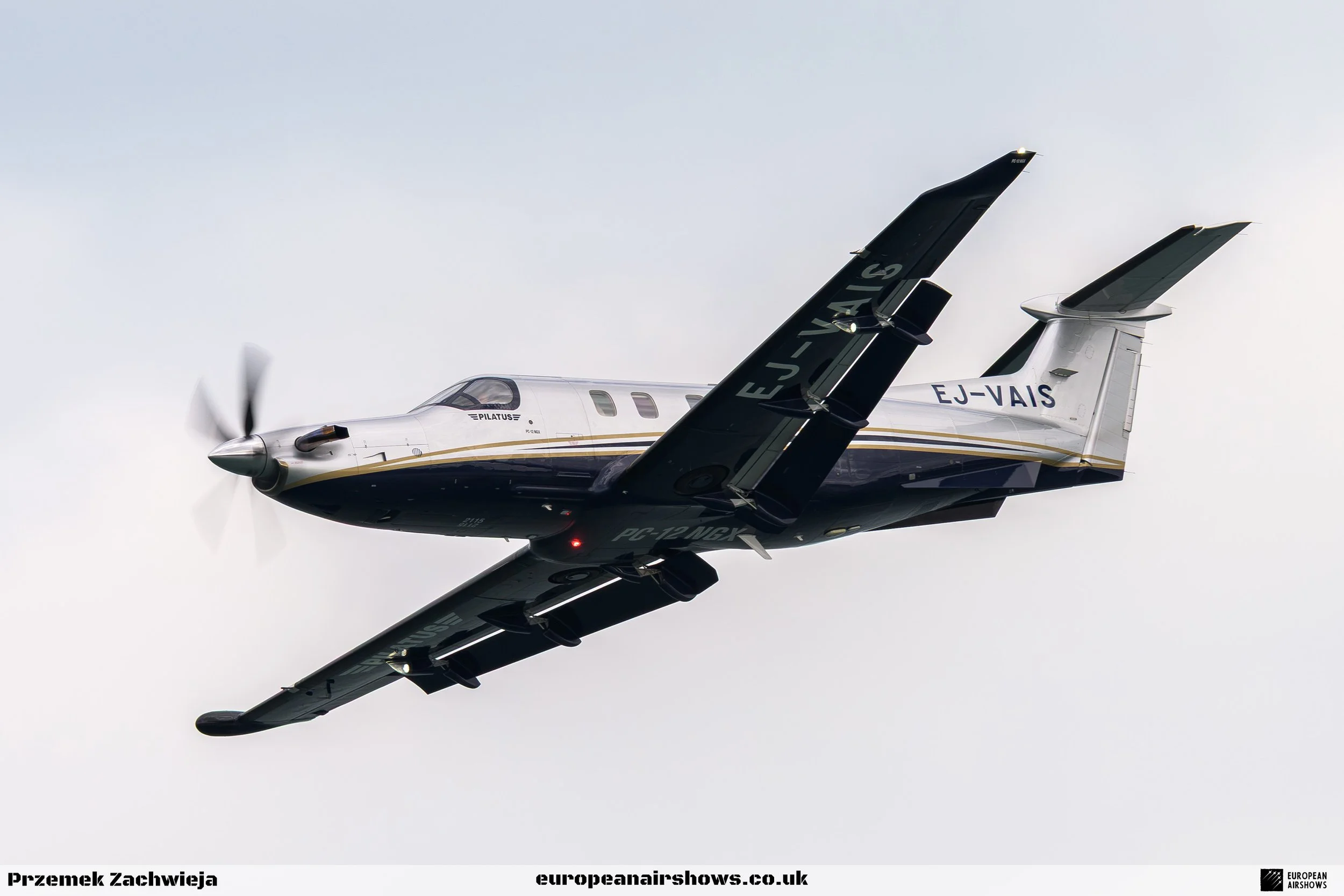
Stellaer 212 then brought Pilatus PC-12 NGX EJ-VAIS from the company's Dublin Weston base. Stellaer is a private charter operator rather than a conventional airline, and the PC-12 is a single-engine turboprop rather than a jet. Its appeal lies in combining a comfortable executive cabin with the ability to use shorter runways and carry out a broad range of missions.
The crew used configuration changes to demonstrate the PC-12's speed range. An initial pass with partial flap was followed by a very slow full-flap pass, then a cleaner and faster run before a final high-speed pass. It was a sensible way to present a working business aircraft, but most of the passes remained distant and the banking tended to be away from the crowd. As with the Coast Guard King Air, the crew were not specialist display pilots, although a slightly closer line and one bank towards the promenade would have made the sequence much easier to appreciate.
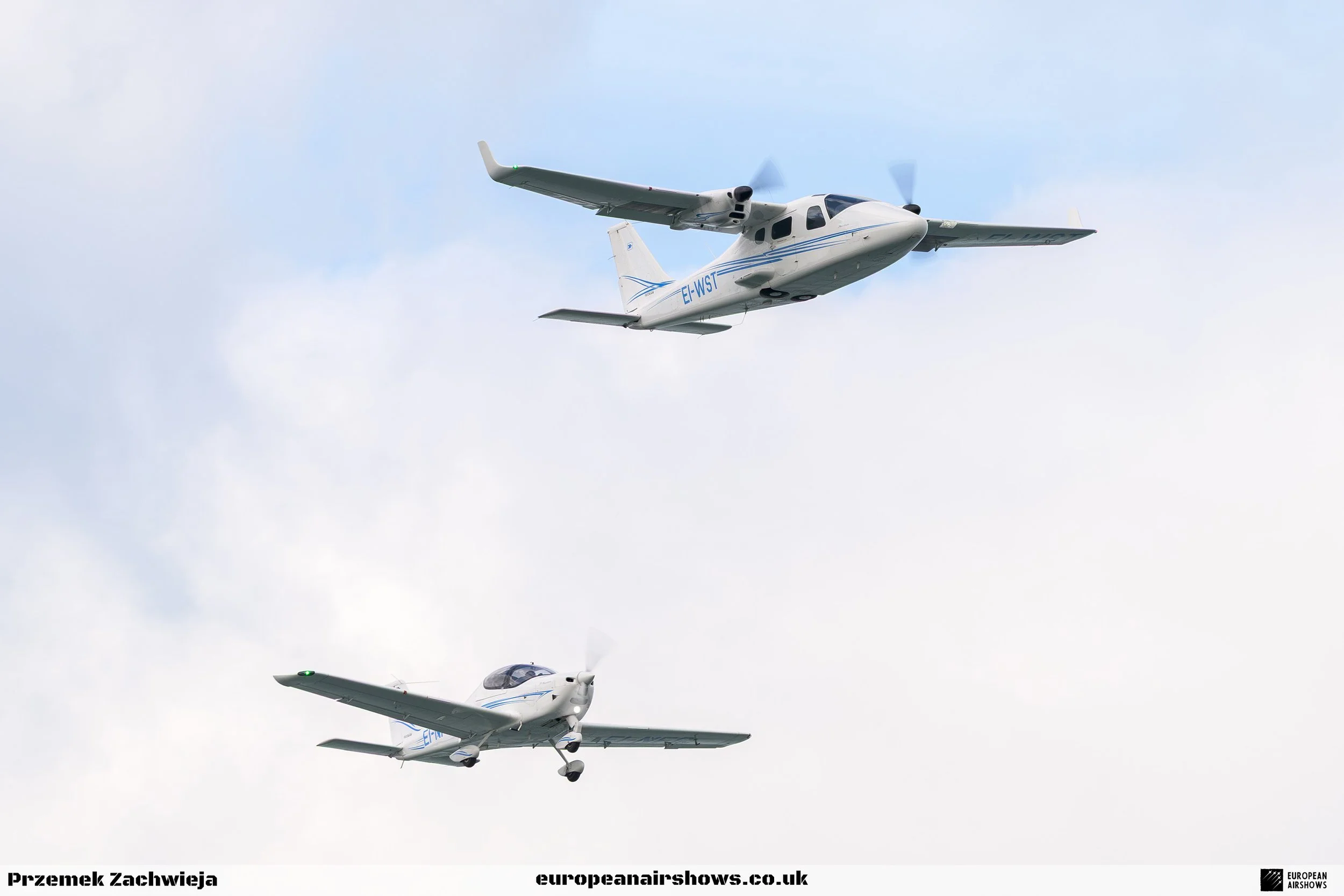
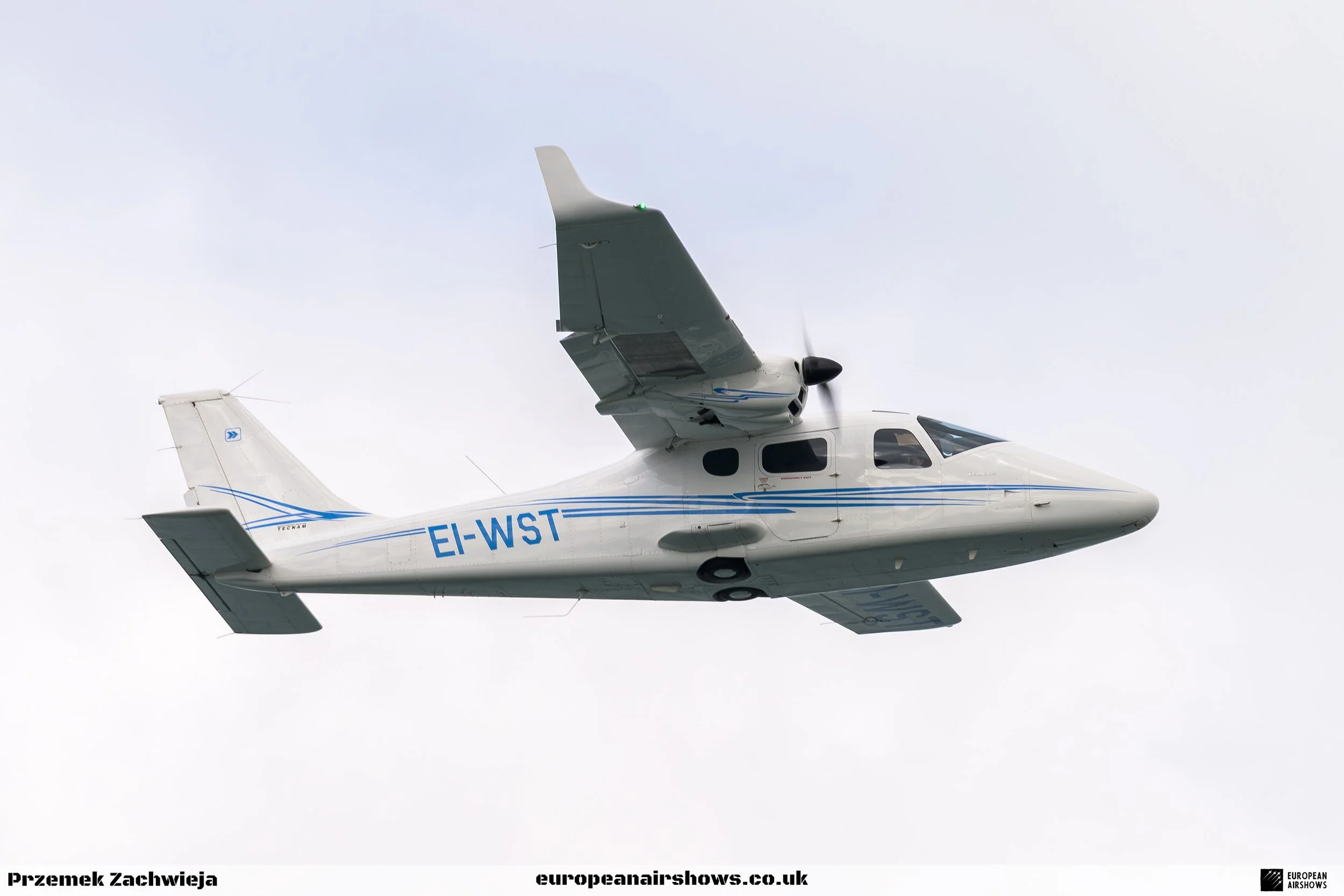
The National Flight Centre Pilot Academy provided a look at the aircraft now used to train the next generation of airline pilots. One twin-engine Tecnam P2006T MkII EI-WST flew alongside one single-engine Tecnam P-Mentor EI-HLF, and the two aircraft made two formation flypasts.
The combination neatly represented two stages of modern commercial training. The two-seat Tecnam P-Mentor is fully equipped for instrument flight training, while the four-seat Tecnam P2006T MkII adds multi-engine experience, retractable landing gear and a Garmin G1000 NXi flight deck. National Flight Centre selected both types for its fleet renewal programme at Weston, replacing older training aircraft with a common Tecnam family. The passes were not dramatic, but they gave the programme a useful educational link between the Future of Flight displays on the ground and the professional cockpits represented in the air.
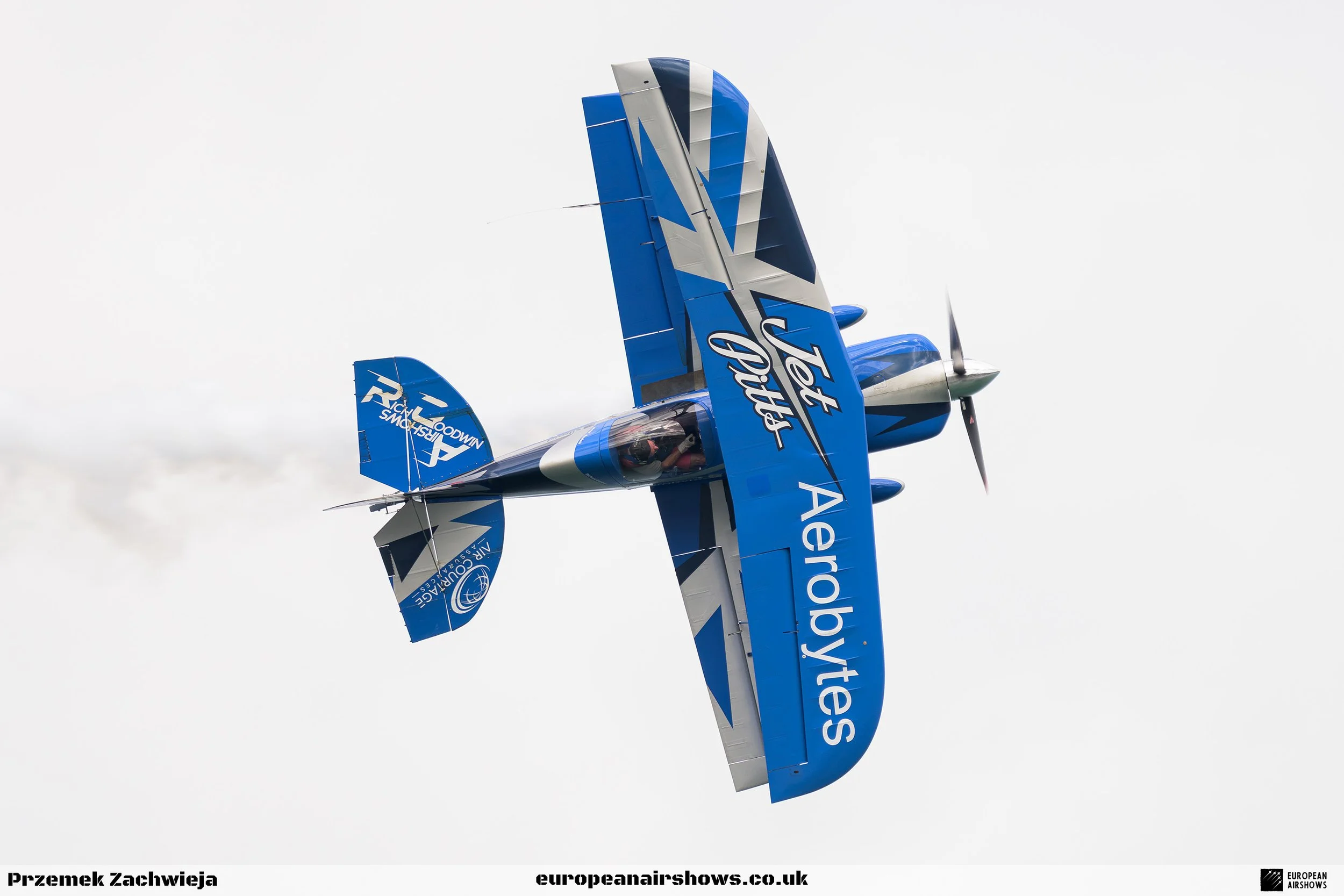
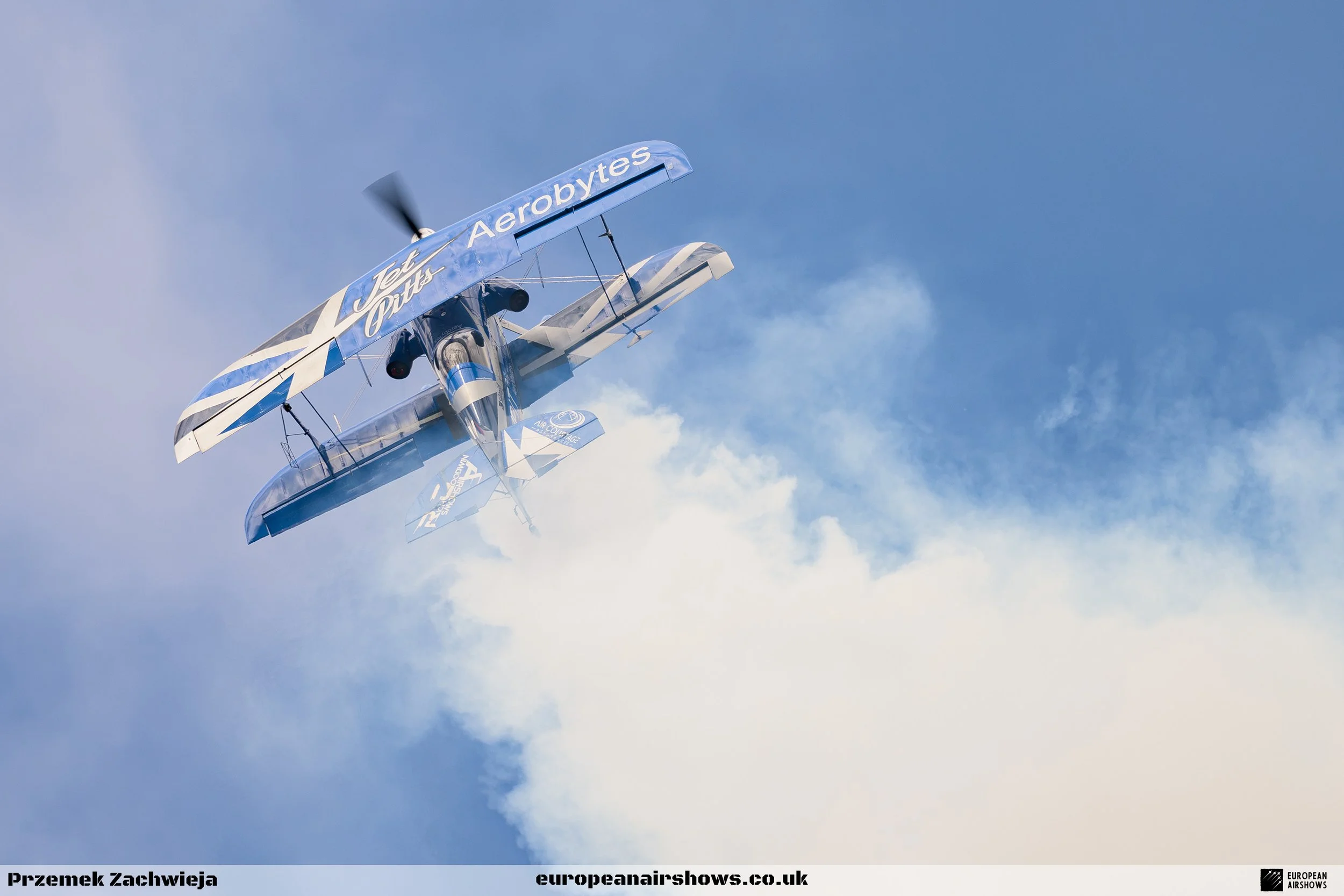
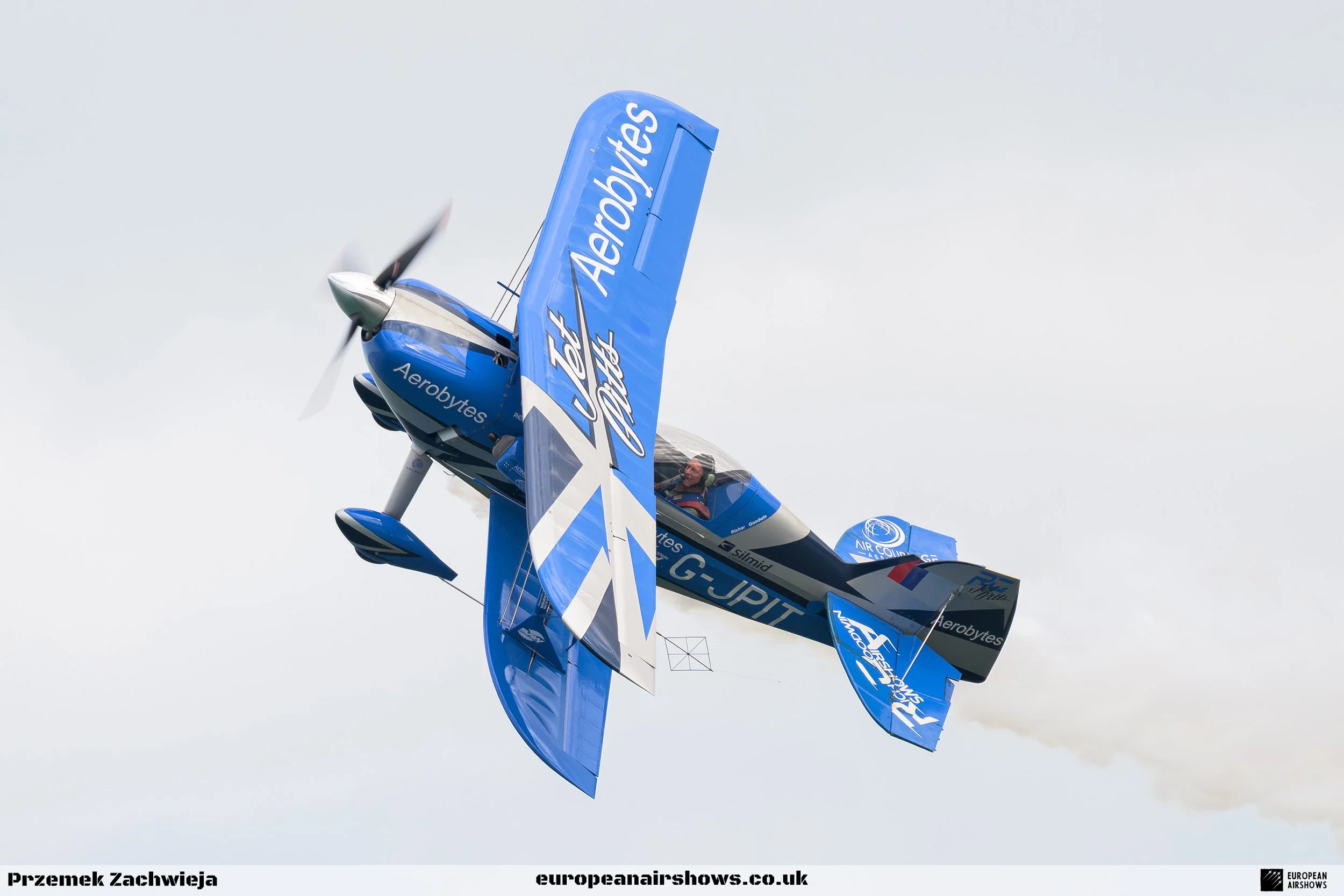
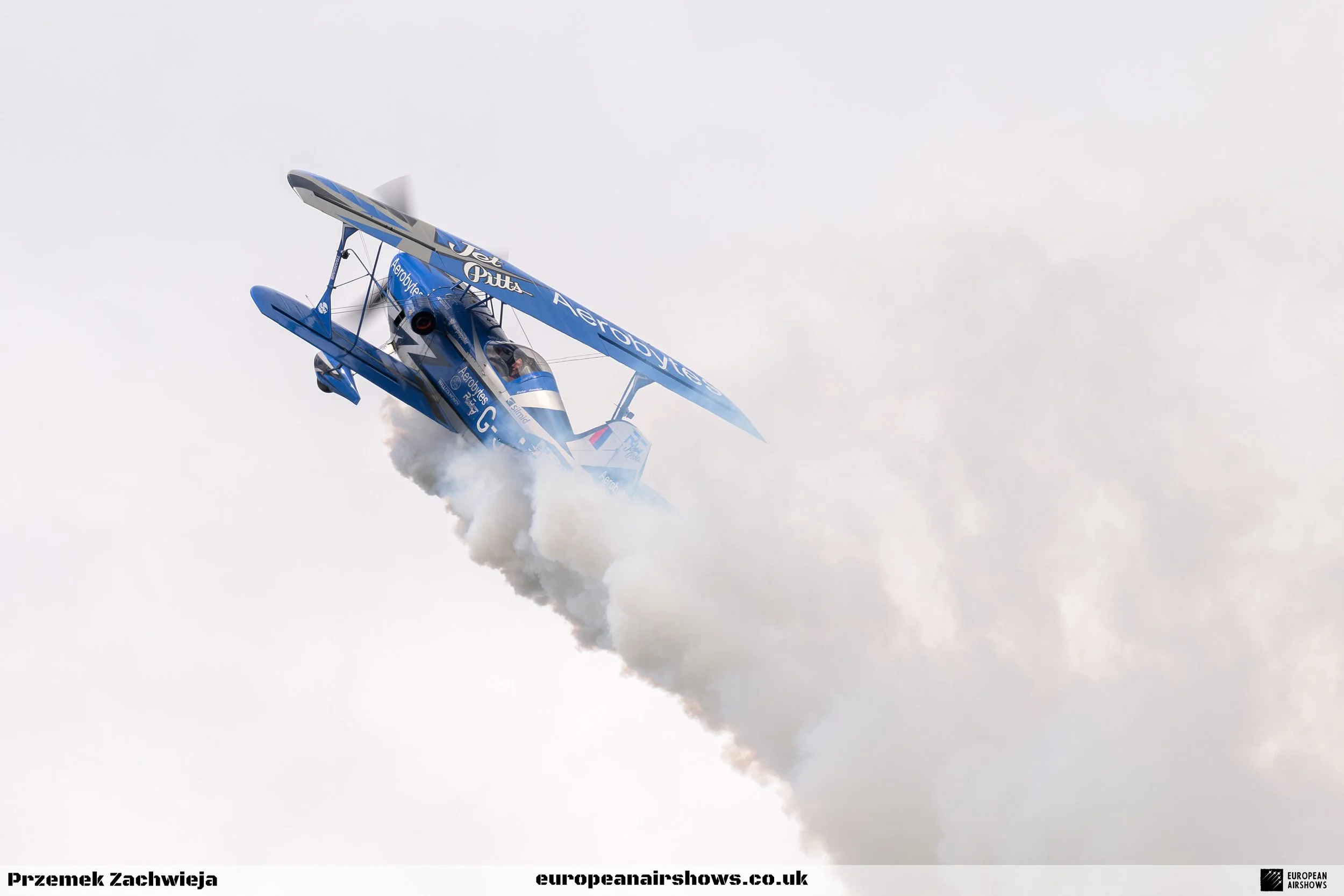
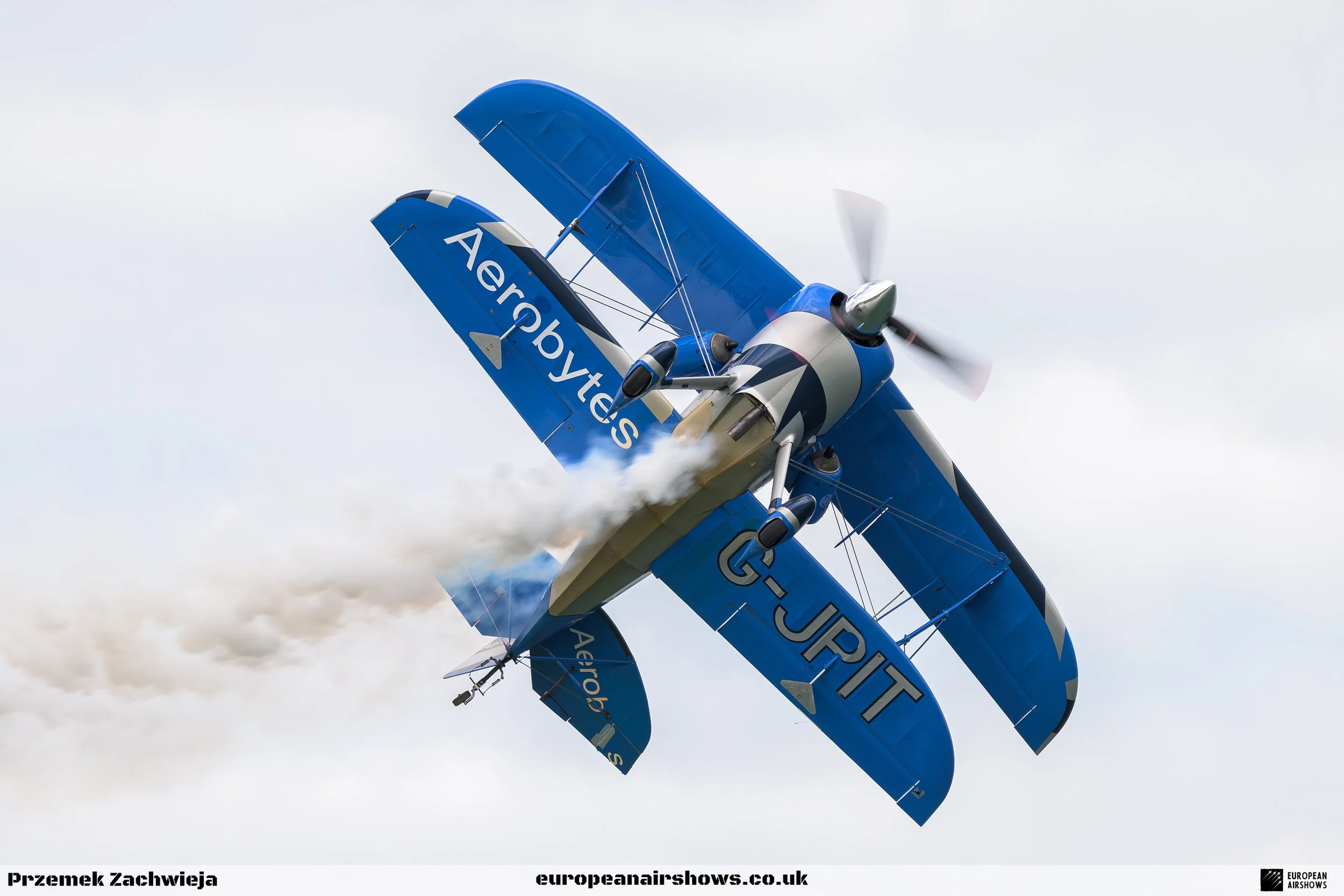
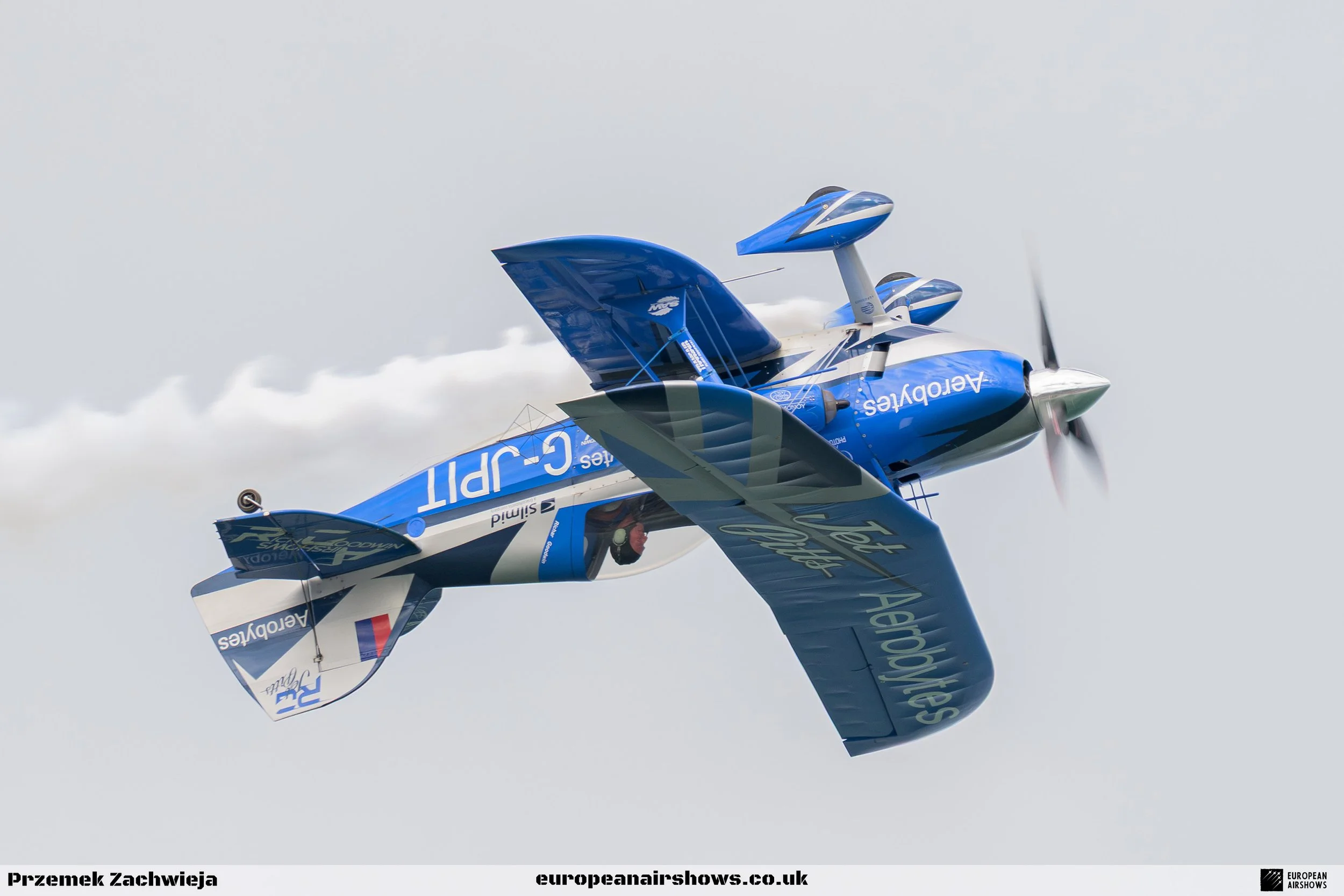
There was nothing restrained about Richard Goodwin's arrival in the Pitts S-2S-derived Jet Pitts G-JPIT. The aircraft is not a standard Pitts S-2 with two engines casually attached. It was built from scratch over four years around a Pitts S-2S-style fuselage, with a unique wing, larger ailerons and two AMT Lynx turbojets supplementing its 8.5-litre Lycoming piston engine. The combined installation produces around 1,700 lb of thrust in an aircraft weighing roughly 1,550 lb.
Goodwin exploited that performance with the familiar mixture of extremely rapid rolls, vertical climbing, high-alpha manoeuvres and abrupt changes of direction. The two small jets add a distinctive whistle to the piston engine's harsher note, while generous smoke makes even the quickest figures readable from the ground. G-JPIT has become a common sight on the British and Irish circuit, but it still looks and sounds unlike anything else. The display was aggressive, loud and unapologetically entertaining.
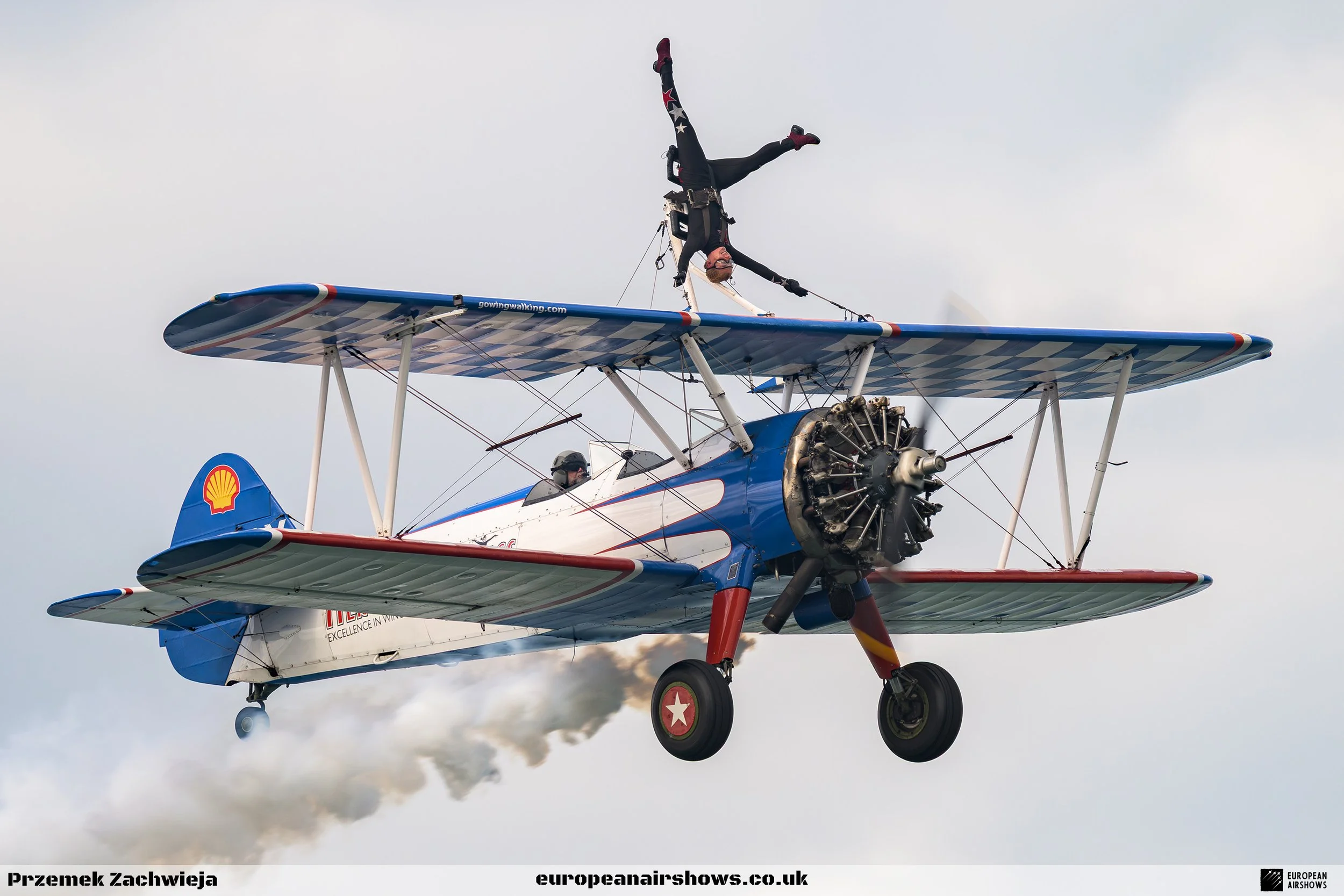
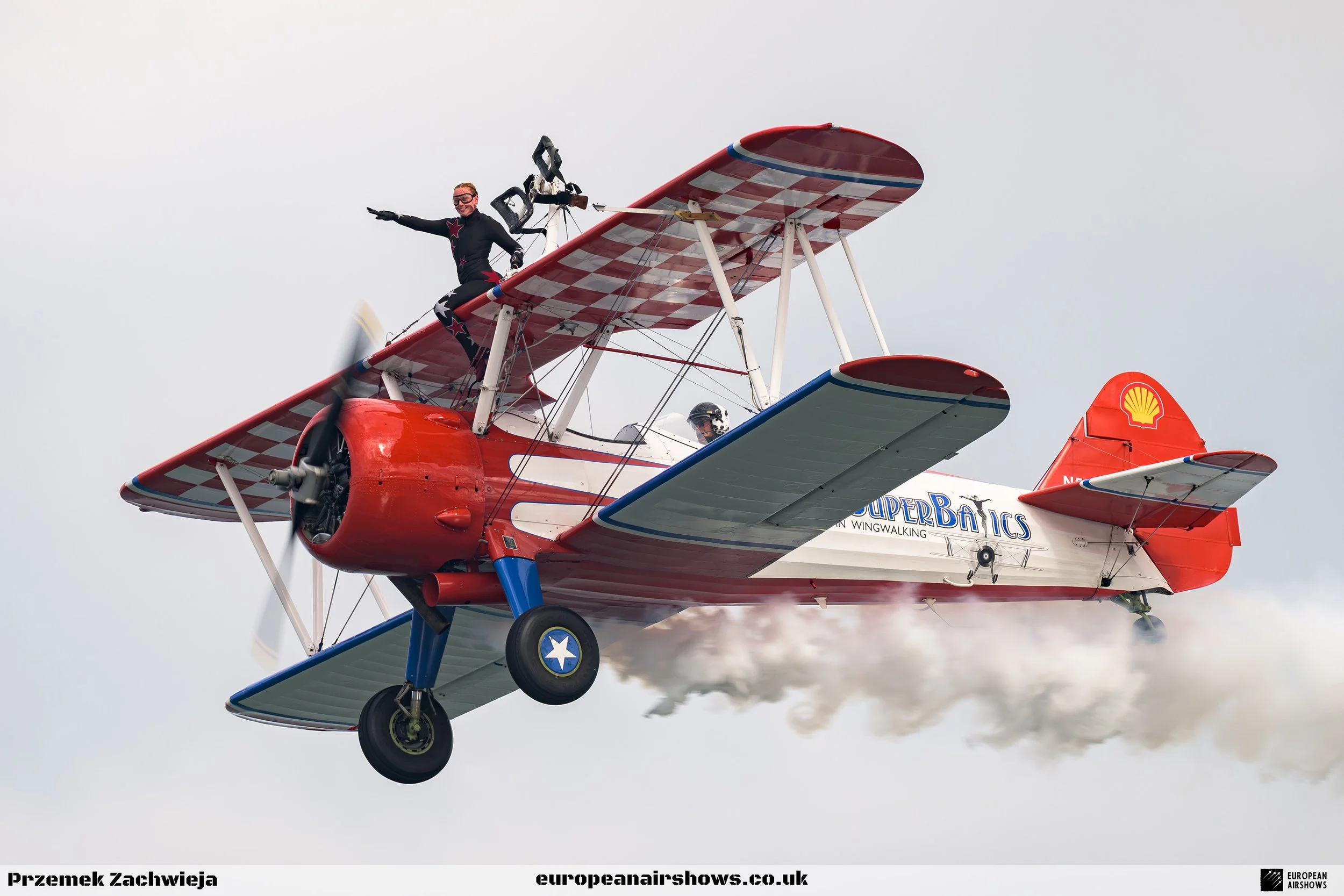
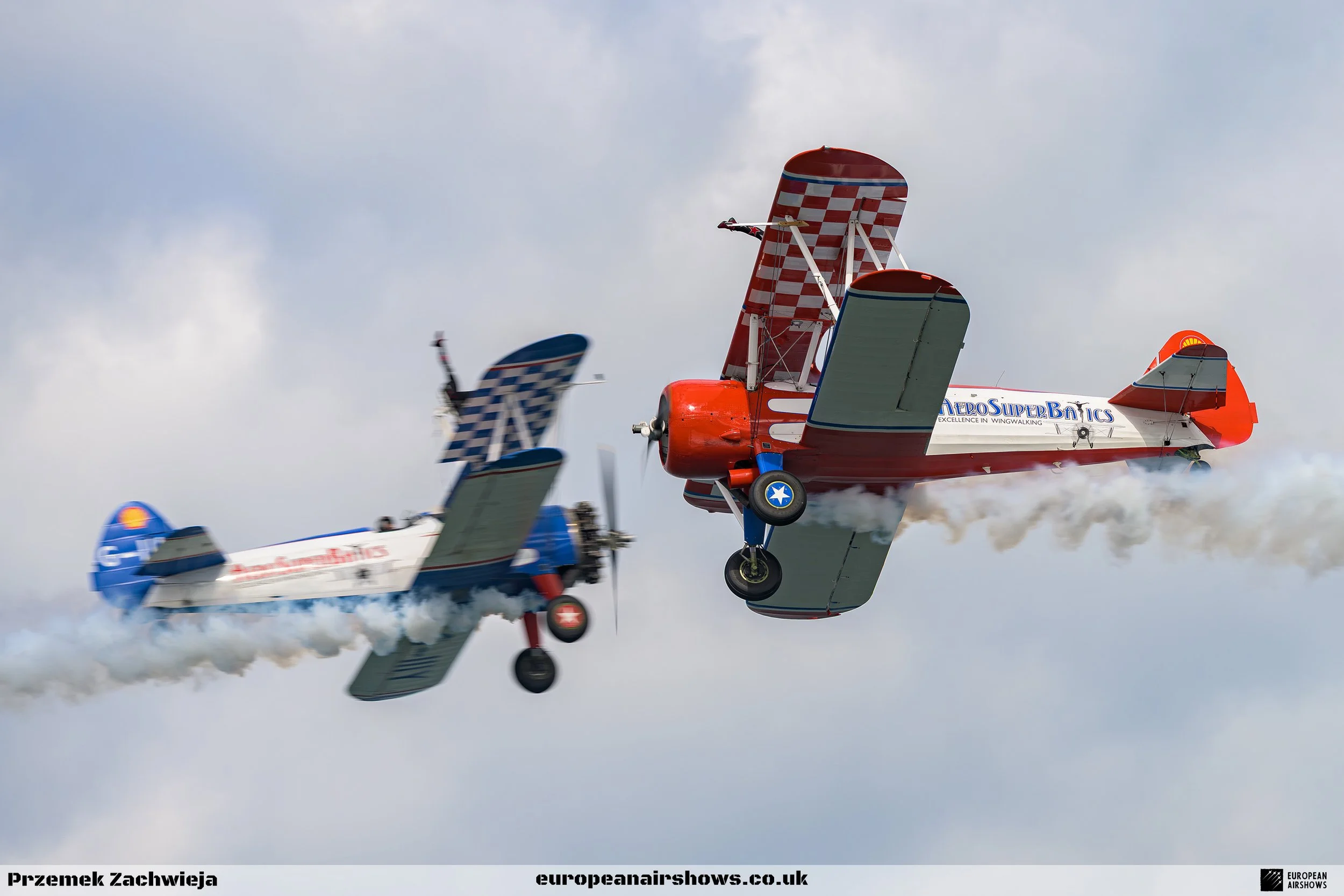
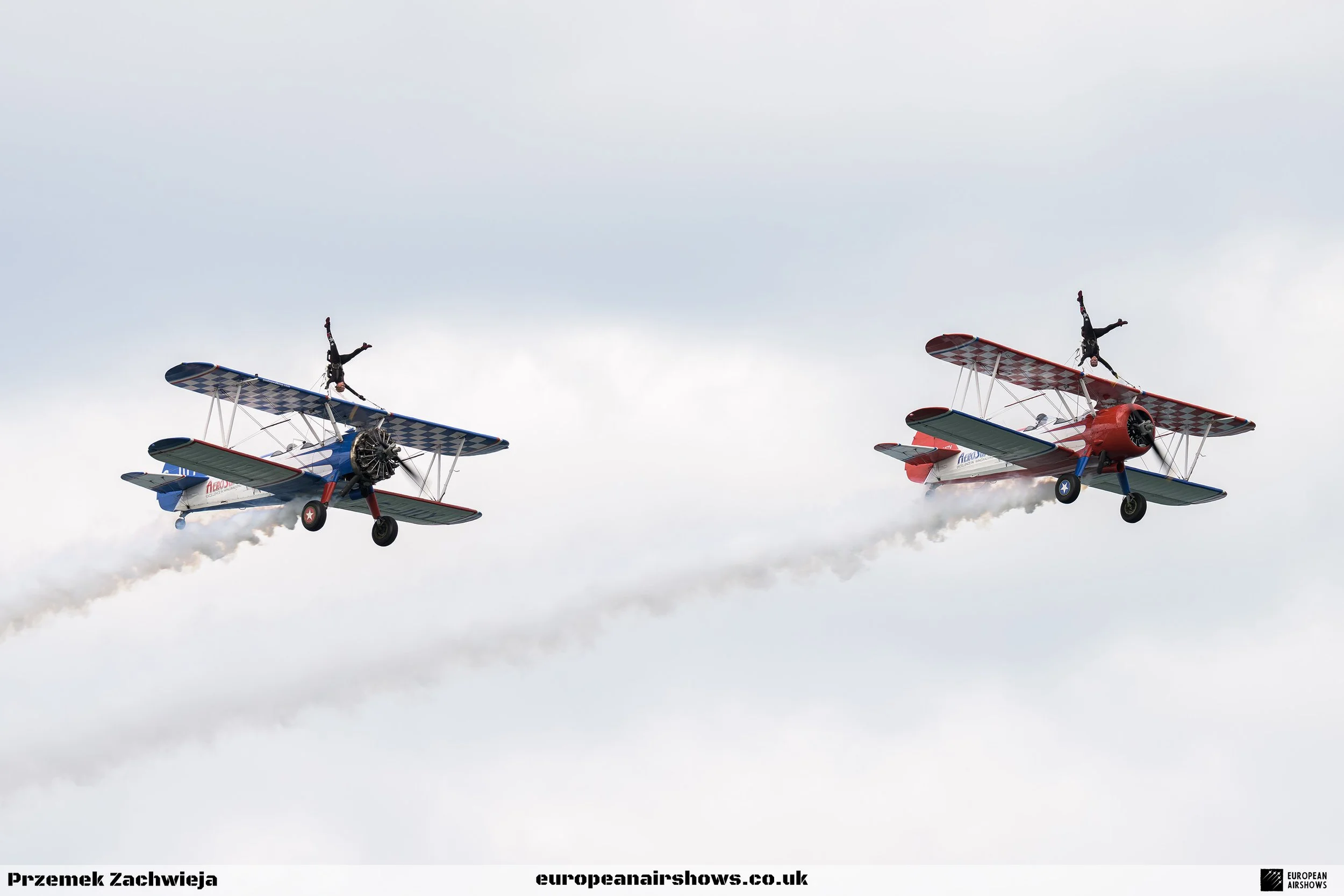
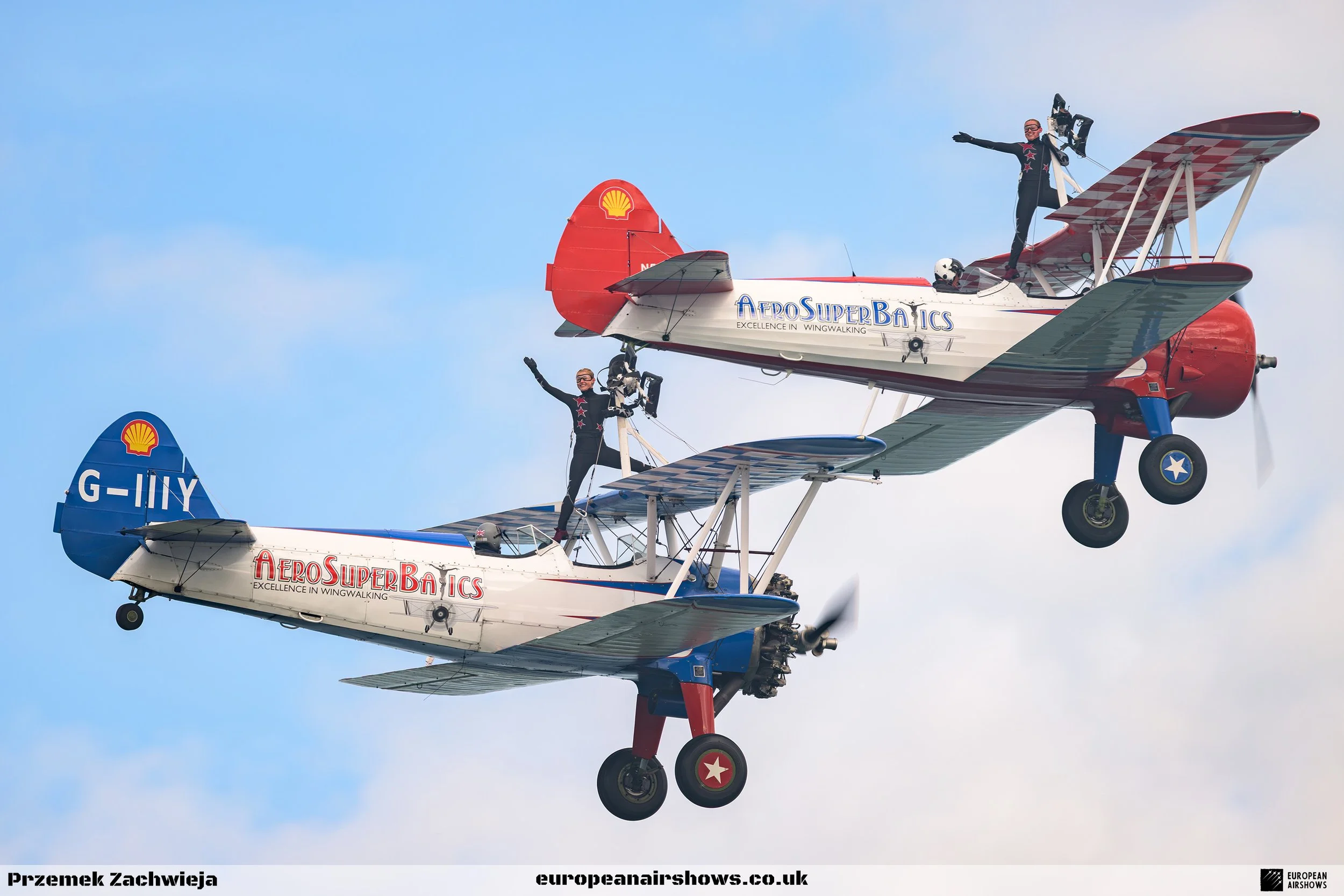
AeroSuperBatics Wingwalkers followed with Boeing A75N1 Stearmans G-IIIY and N5057V, both converted to 450 hp Super Stearman standard. The team remains the world's only formation aerobatic wingwalking act, and the sight of two performers standing on the upper wings while the aircraft loop and roll remains effective with a family audience.
The wind worked against the photographers on this occasion. Thick smoke was blown back towards the promenade and repeatedly wrapped around the aeroplanes, sometimes hiding both aircraft just as the formation reached the best part of a pass. It created atmosphere for the wider crowd but made clean images difficult. The pilots and wingwalkers nevertheless completed an energetic routine of formation aerobatics, opposition work and individual passes without allowing the onshore wind to pull the display apart.
An Irish Air Corps finale
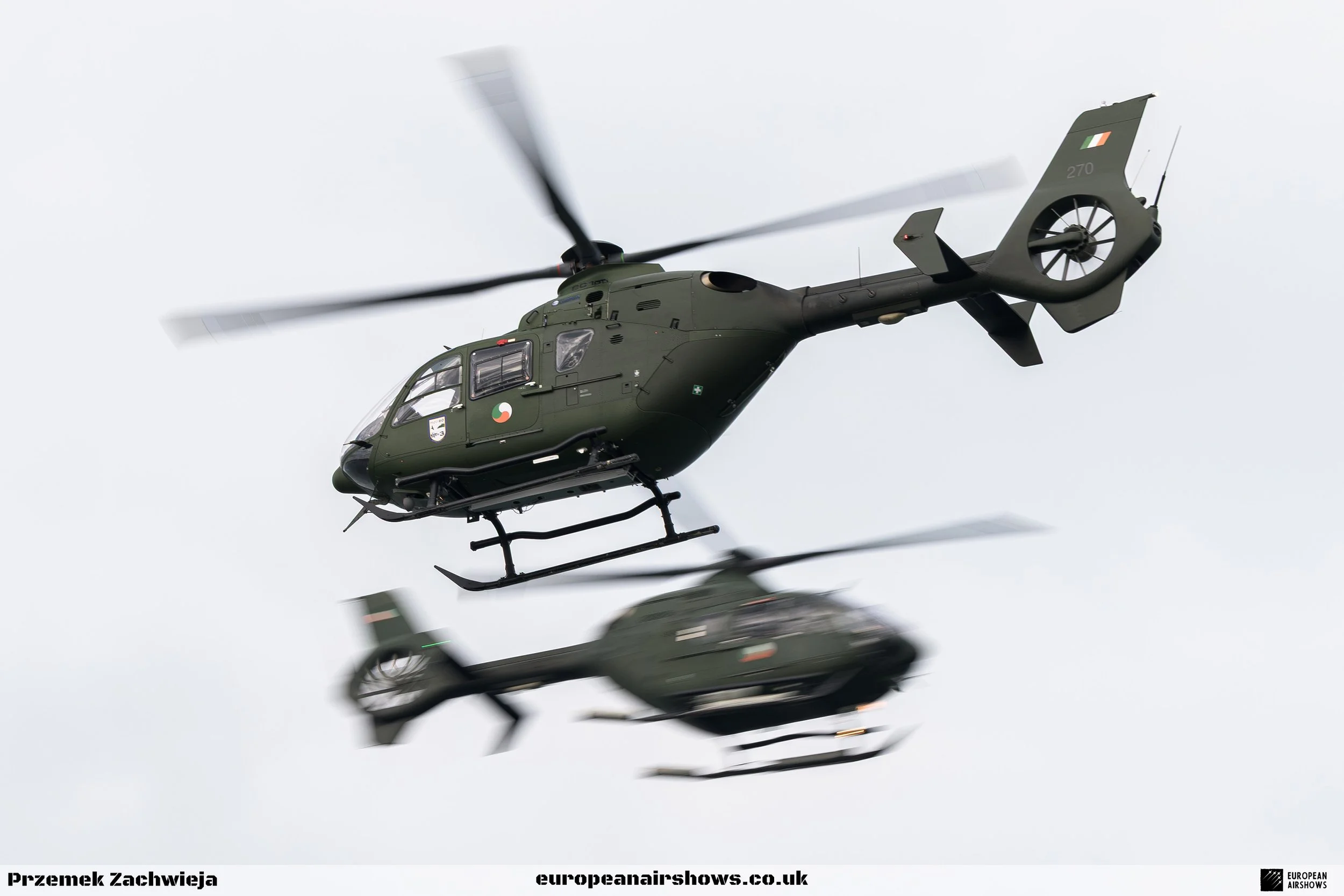
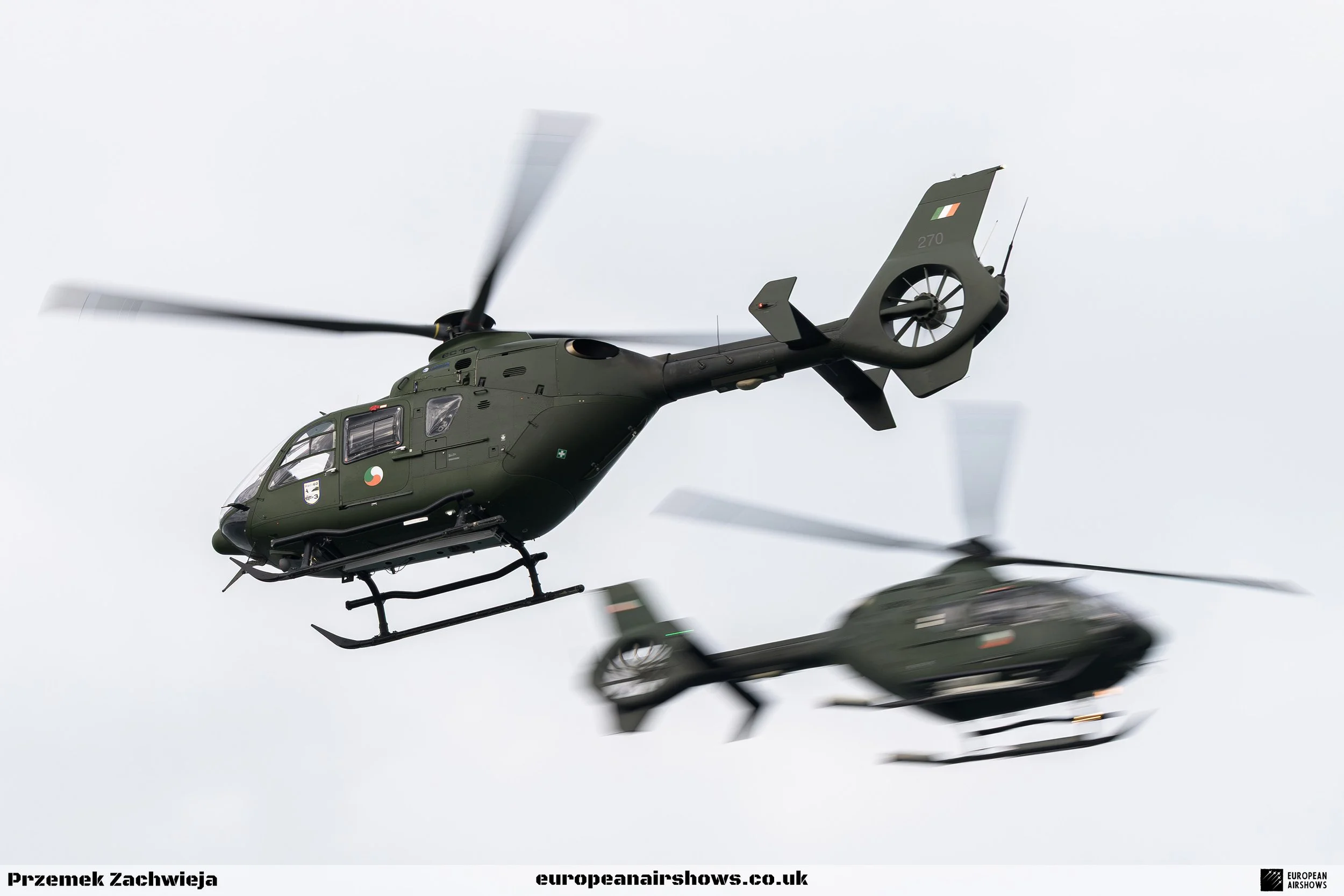
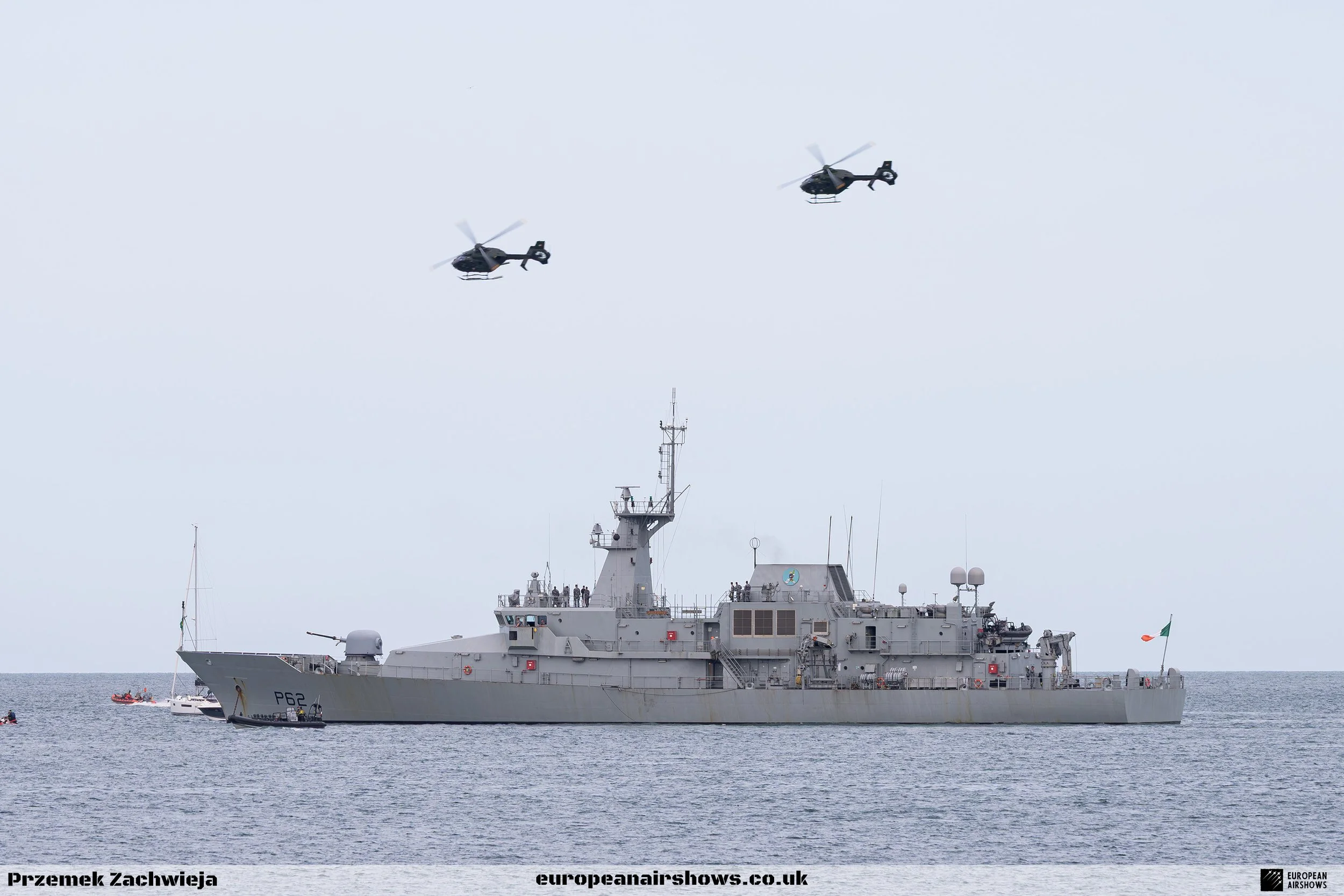
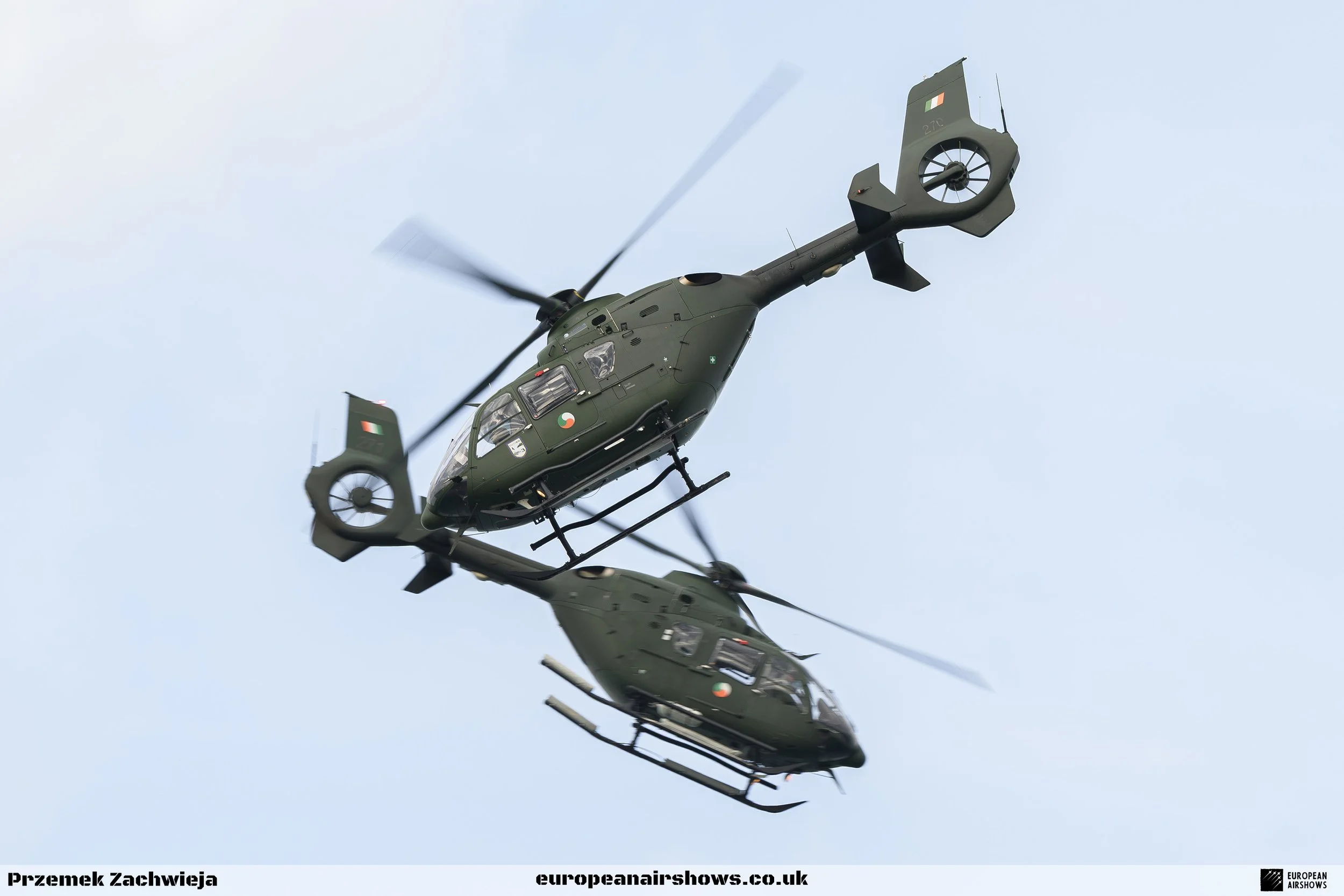
The closing section belonged almost entirely to Irish state operators, beginning with the second Team Raven of the afternoon. This Raven had no connection with the British Van's RV-8 formation. It was a temporary Irish Air Corps identity created for a pair of Eurocopter EC135 P2+ helicopters, following the service's occasional tradition of forming short-lived teams such as the Pilatus PC-12 Team Shadow and helicopter-based Team Wolf.
The two EC135s arrived from behind the crowd and immediately made better use of the display area than many expected. The routine was carefully choreographed, with close formation passes, rapid reversals and well-timed opposition crossings. Helicopter pairs displays are uncommon, and the small EC135s looked particularly agile against the shoreline. The siren-free precision of the Air Corps pair also provided an interesting contrast with the police demonstration that followed later.
What made the appearance more important was its timing. The two Irish Air Corps Eurocopter EC135 P2+ helicopters entered service in 2005 and are approaching retirement. Ireland has ordered four Airbus Helicopters H145Ms to expand the Air Corps' light helicopter capability, with the first deliveries due in 2027. Unless plans change, 2026 was therefore likely to be the EC135 pair's final appearance at Bray.
For a team assembled to make only two public appearances, the routine was remarkably mature. Nothing looked improvised and the opposition passes in particular demanded accurate timing from crews whose normal work centres on training, transport and support tasks. It was one of the most interesting Irish contributions of the day and a fitting public farewell to the type.
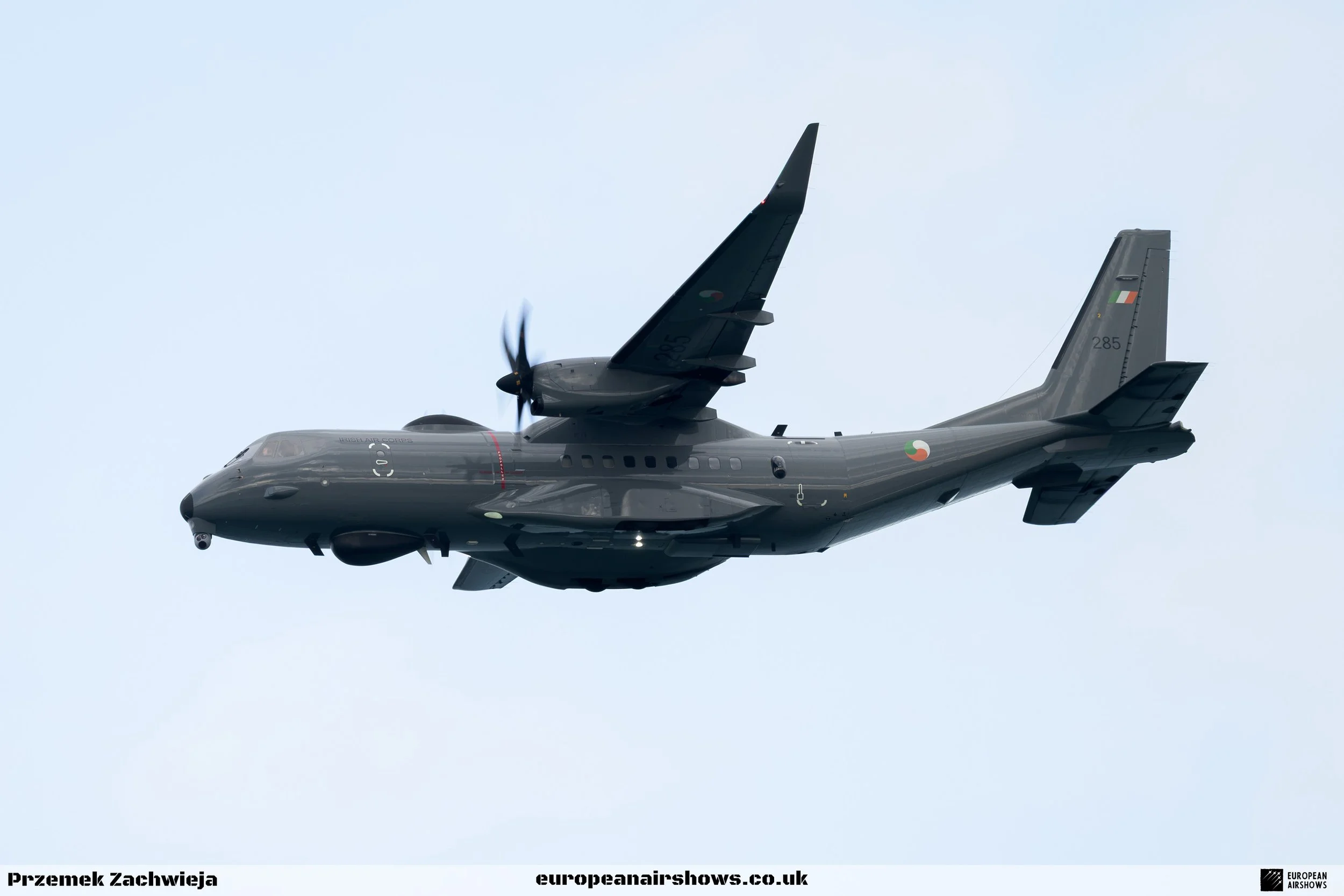
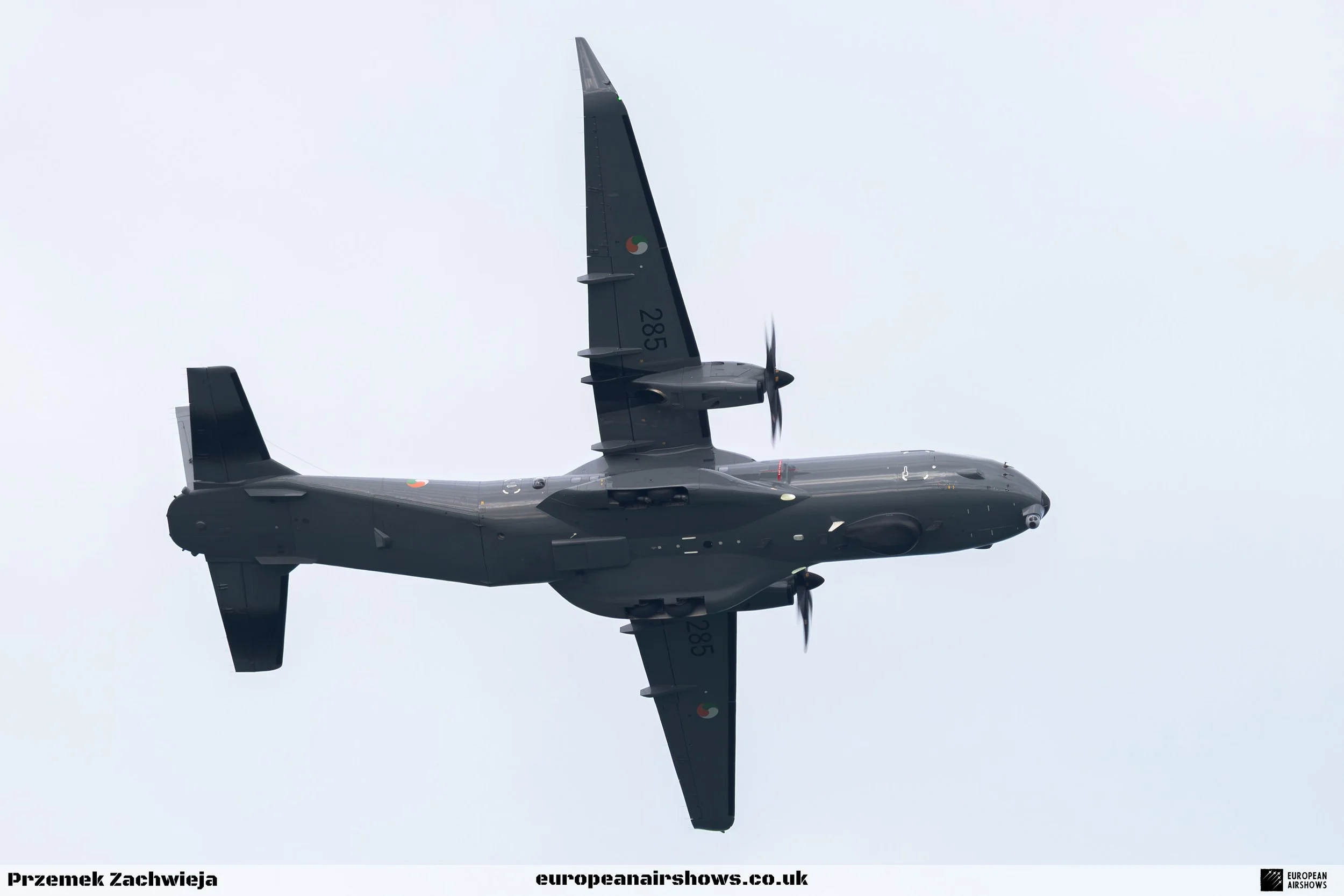
The Irish Air Corps Airbus C295W Maritime Surveillance Aircraft followed, reportedly fitting its Bray passes around an operational patrol. The C295W entered Irish service in 2023 as the replacement for the veteran CASA CN235 and brought a major improvement in radar, electro-optical surveillance and mission processing. Its work includes fisheries monitoring, pollution detection, search and rescue support and maritime security across a huge area of the Atlantic.
Operational relevance could not compensate for display distance. Every pass was far offshore, to the point that the aircraft was difficult to hear and offered little sense of its size. It was admirable that a working maritime aircraft could be included on its way home, but visually this was the weakest contribution of the afternoon. A single closer pass would have communicated far more to the public than several remote ones.
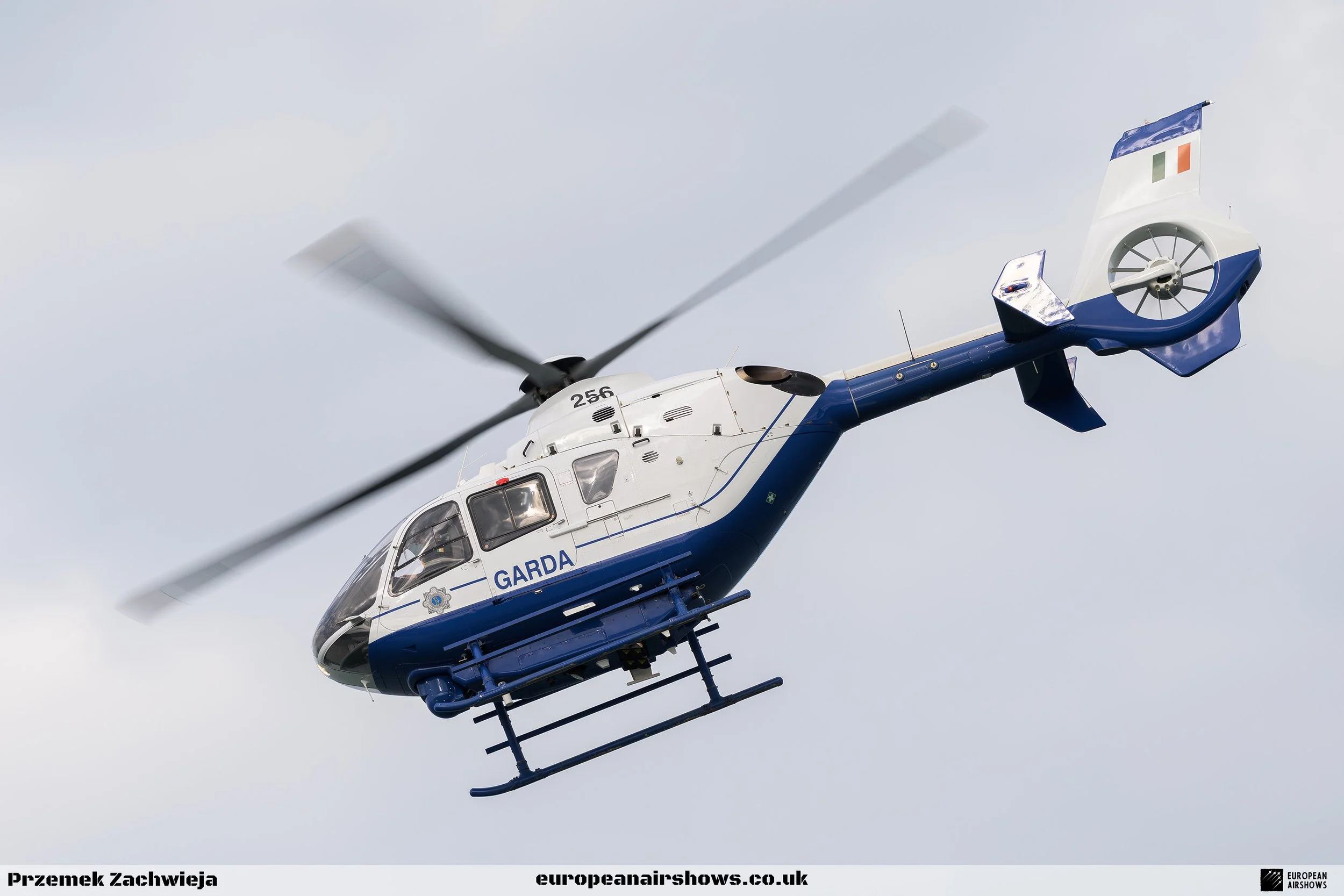
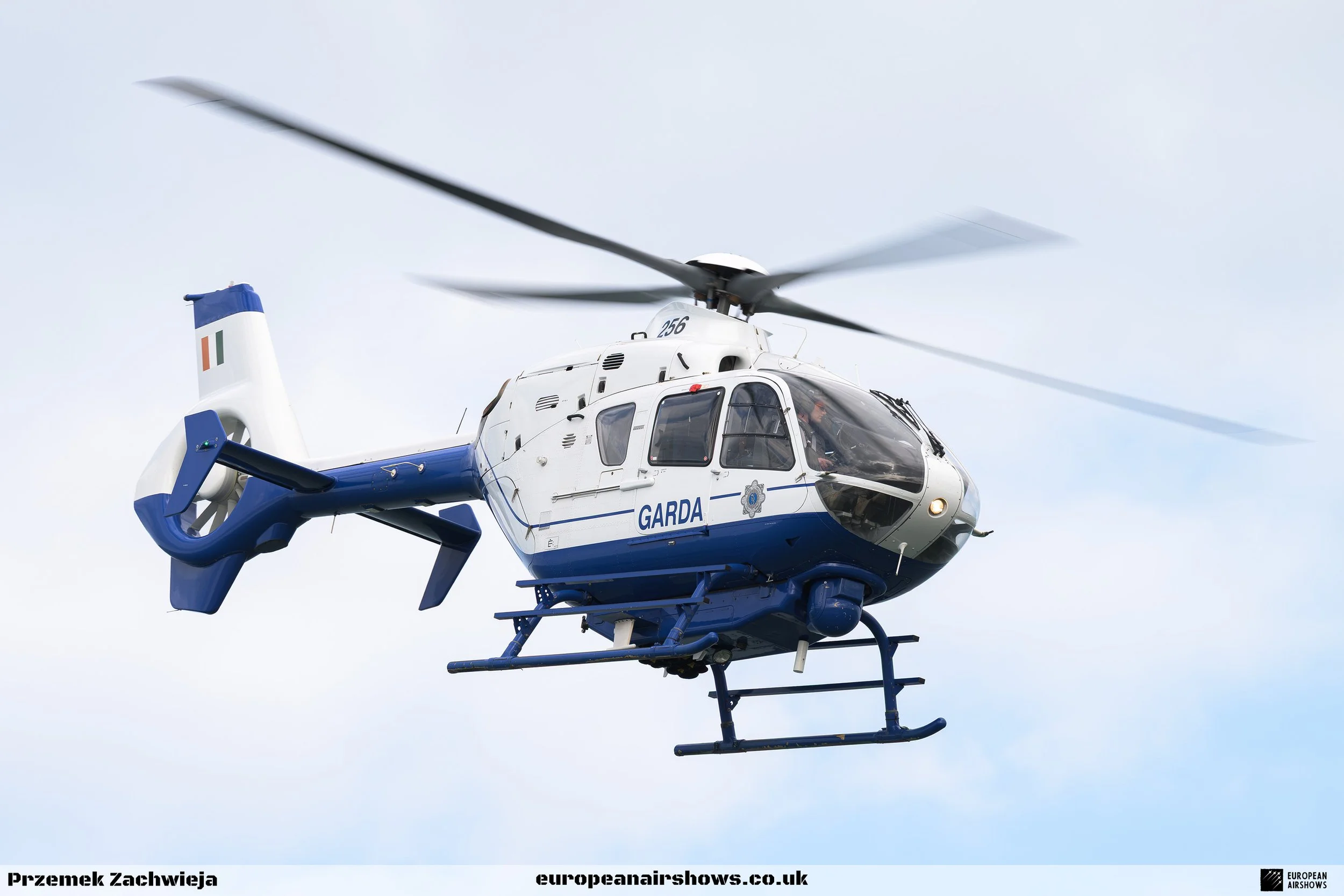
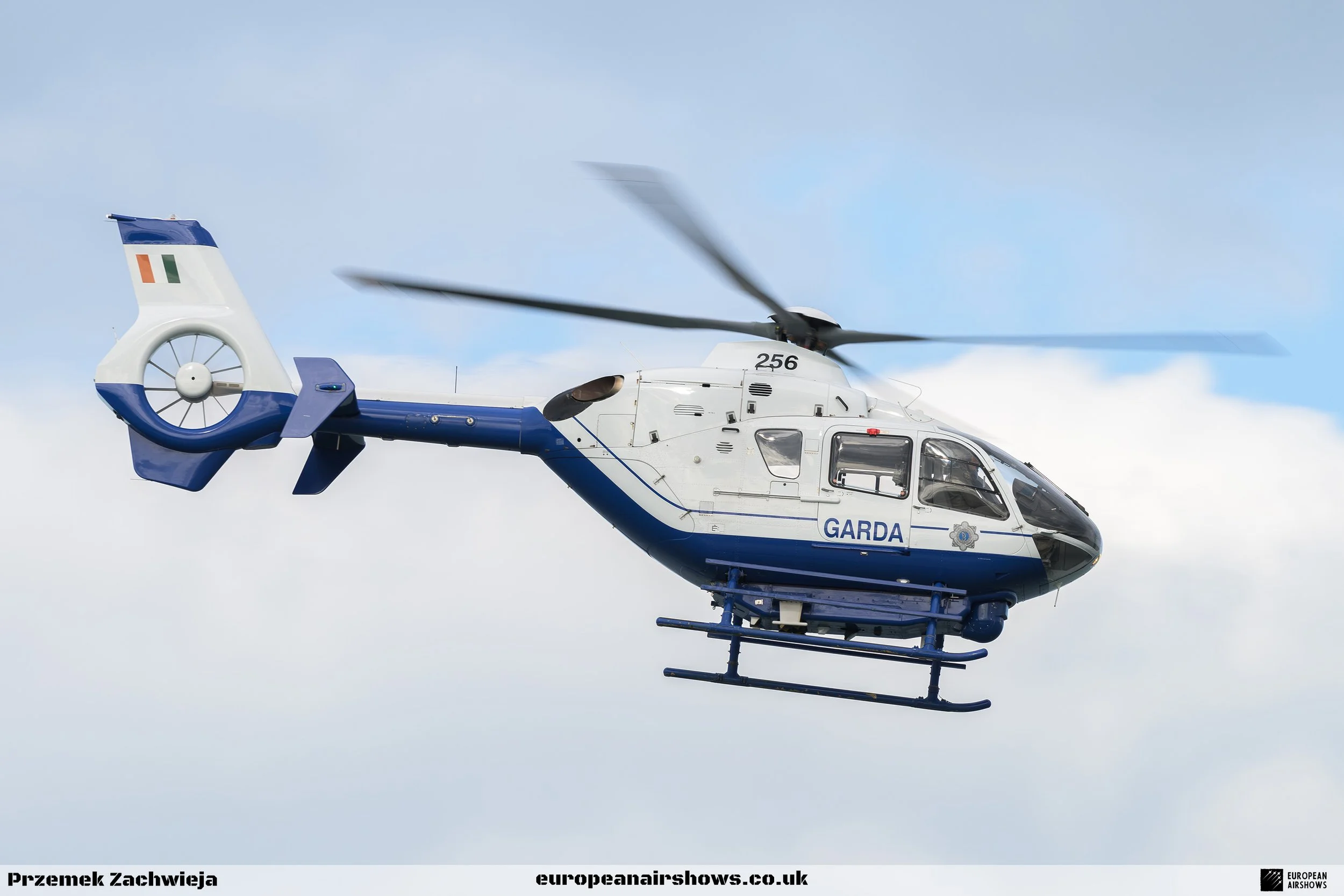
The Garda Air Support Unit's Eurocopter EC135 T1, serial 256, was much more assertive. Flown by Irish Air Corps pilots with Garda observers during normal operations, the helicopter is usually seen orbiting over incidents rather than performing for a crowd. At Bray it delivered a surprisingly dynamic handling demonstration with sharp turns, climbs, quick stops and hovers, all accompanied at intervals by its police siren.
This appearance also carried the feel of a farewell. The Garda fleet comprises Eurocopter EC135 T1 serial 256 and Eurocopter EC135 T2+ serial 272, both due to be replaced by Airbus Helicopters H145s. As of July, Garda expected the first new helicopter in late 2026's third quarter and the second in the final quarter. That makes another full Bray display by serial 256 unlikely. If this was its last, it left with one of the most entertaining operational demonstrations of the show.
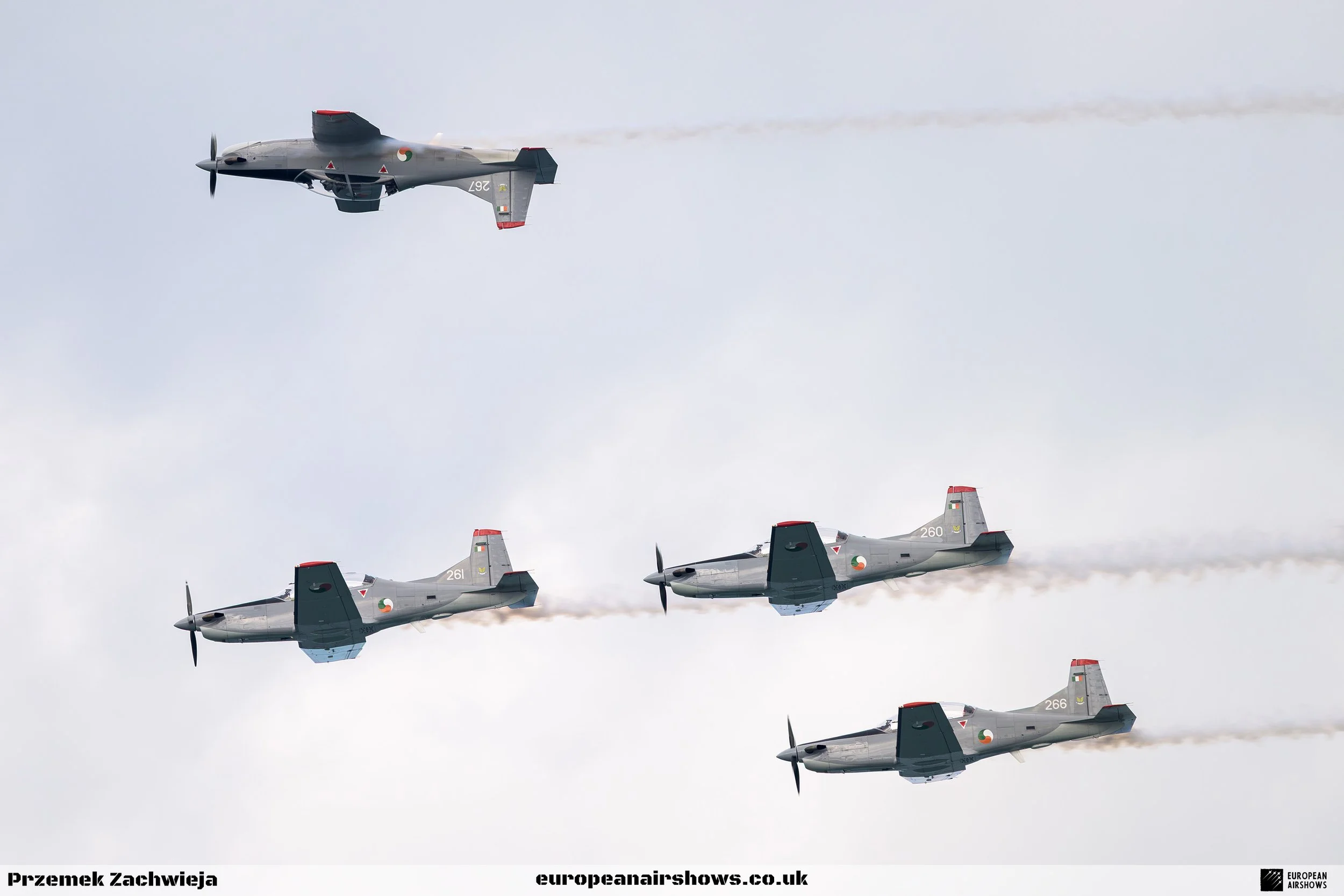
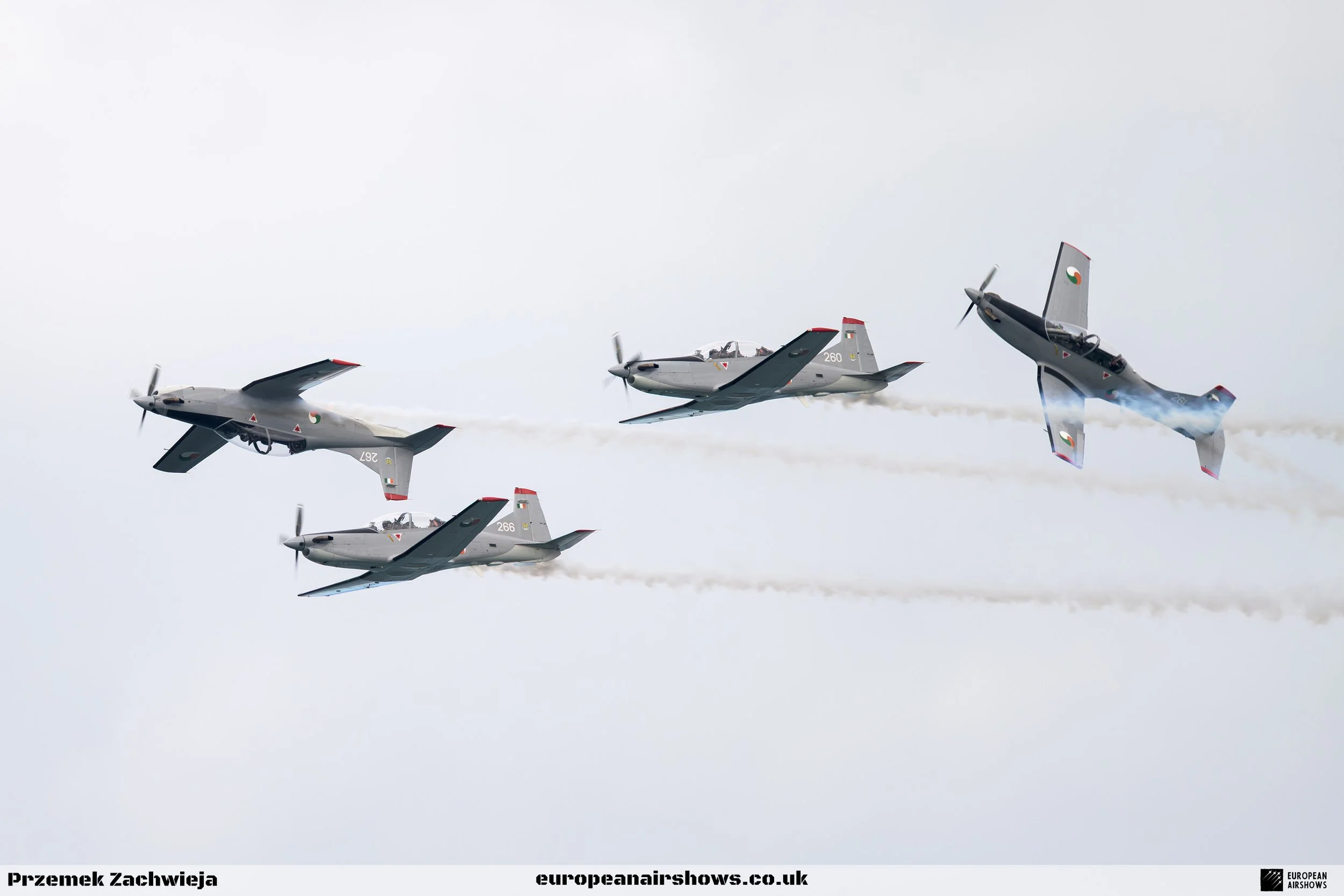
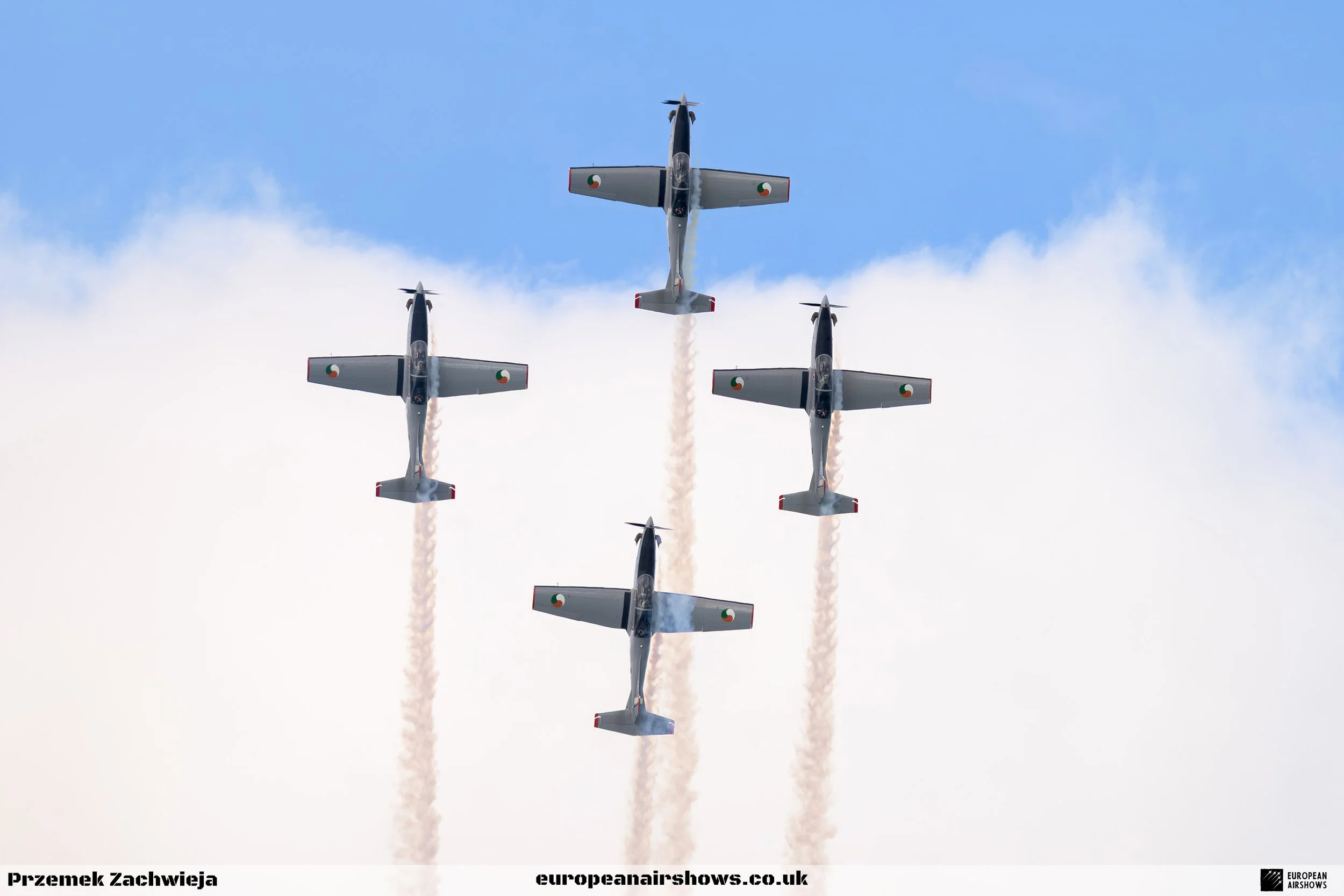
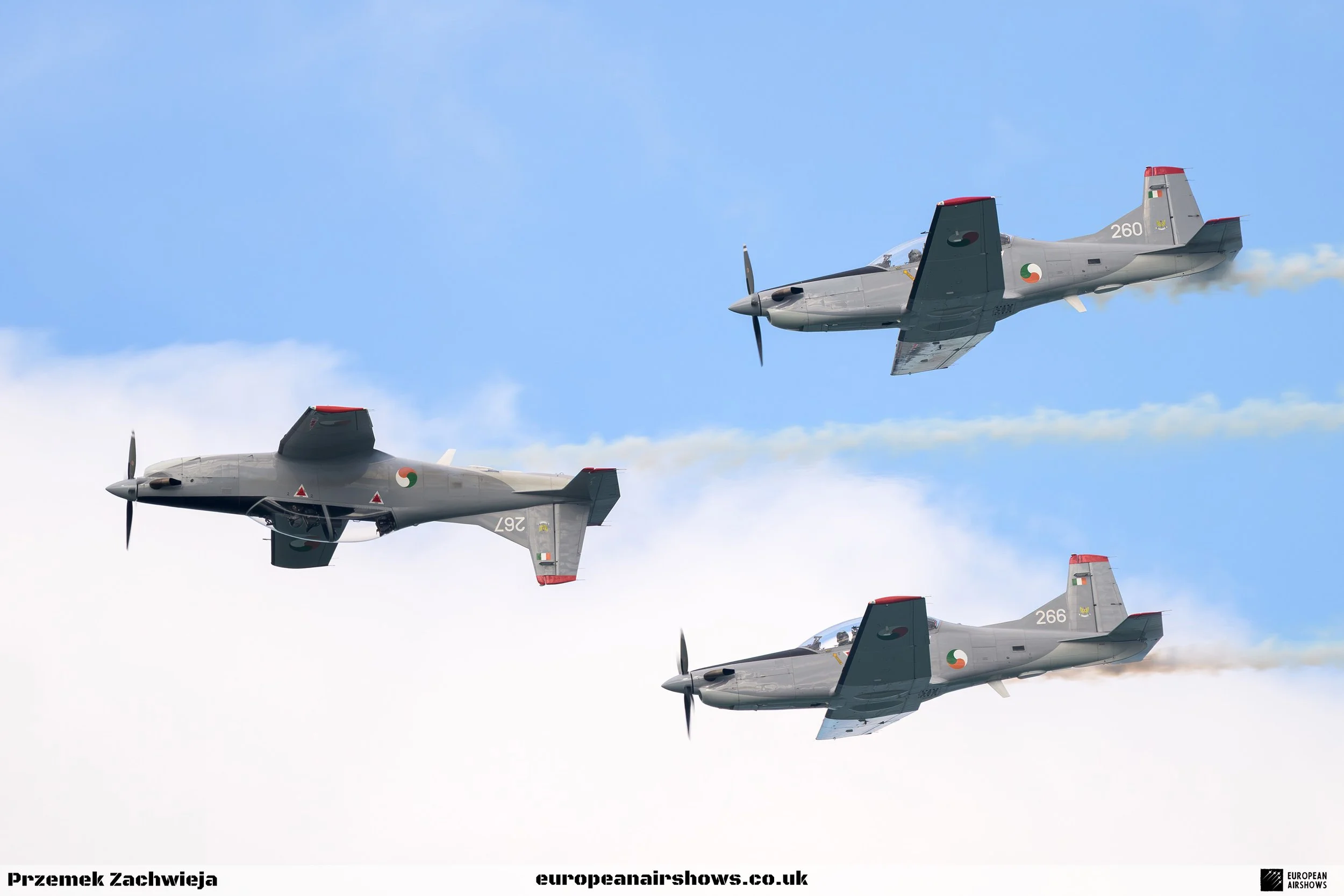
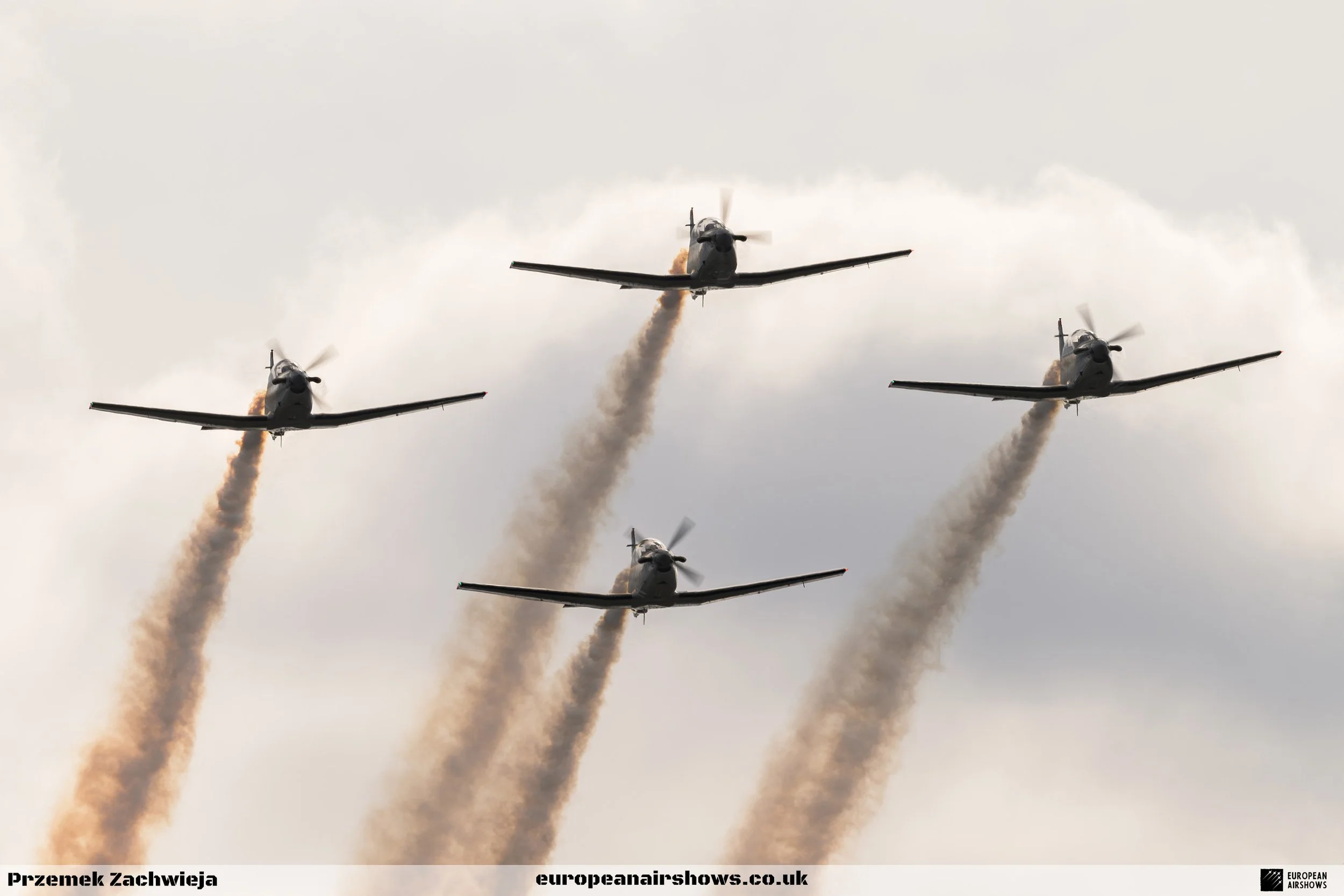
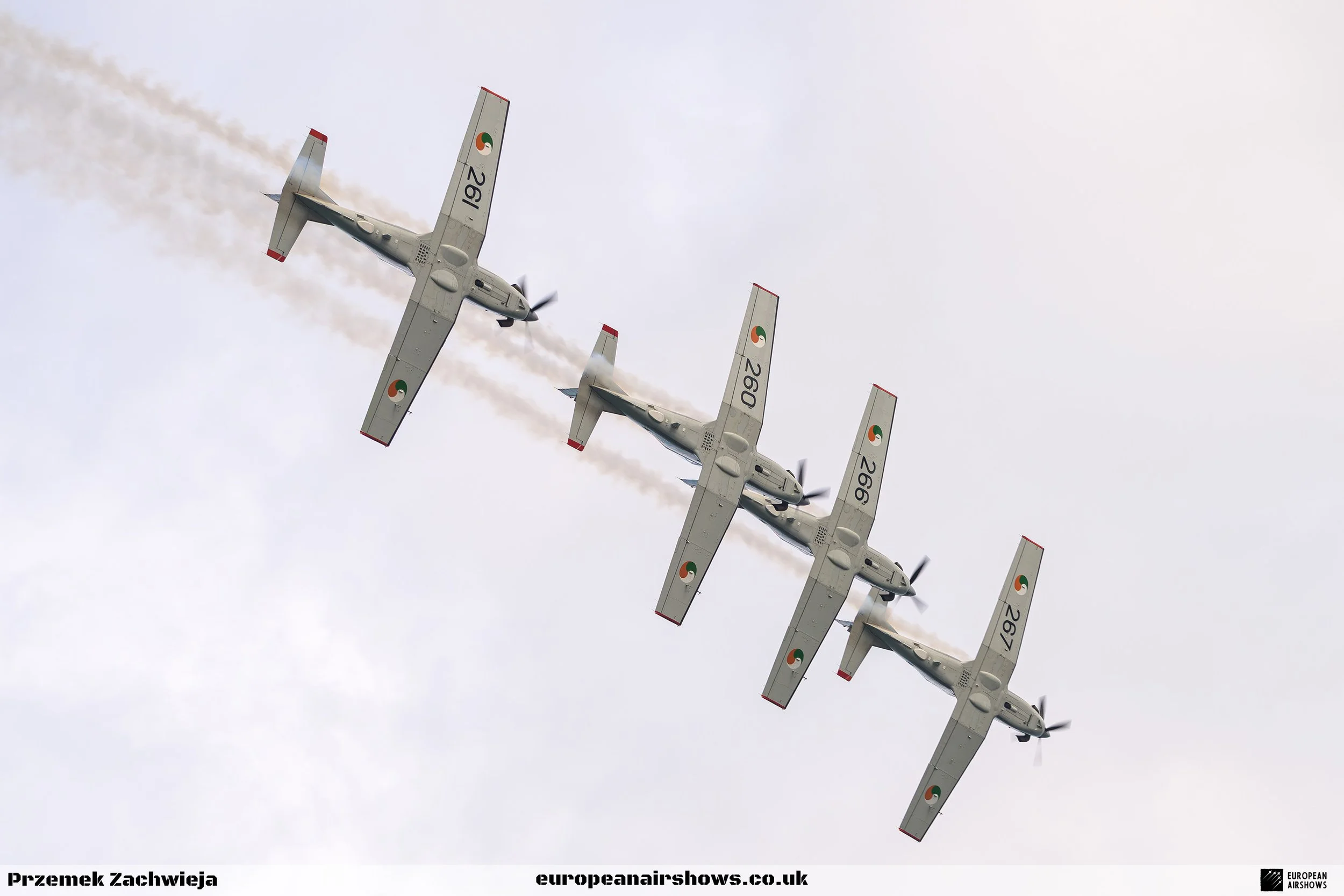
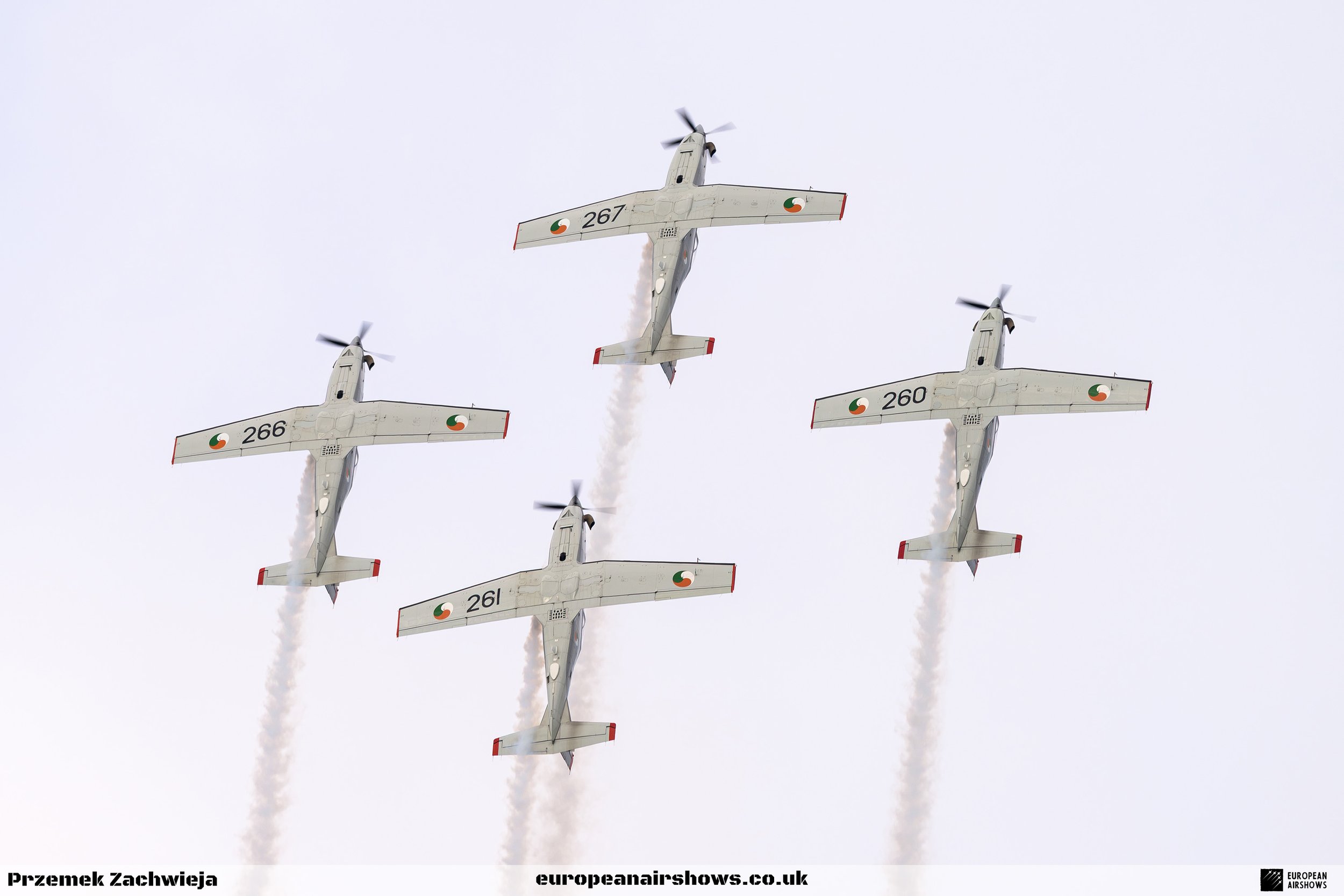
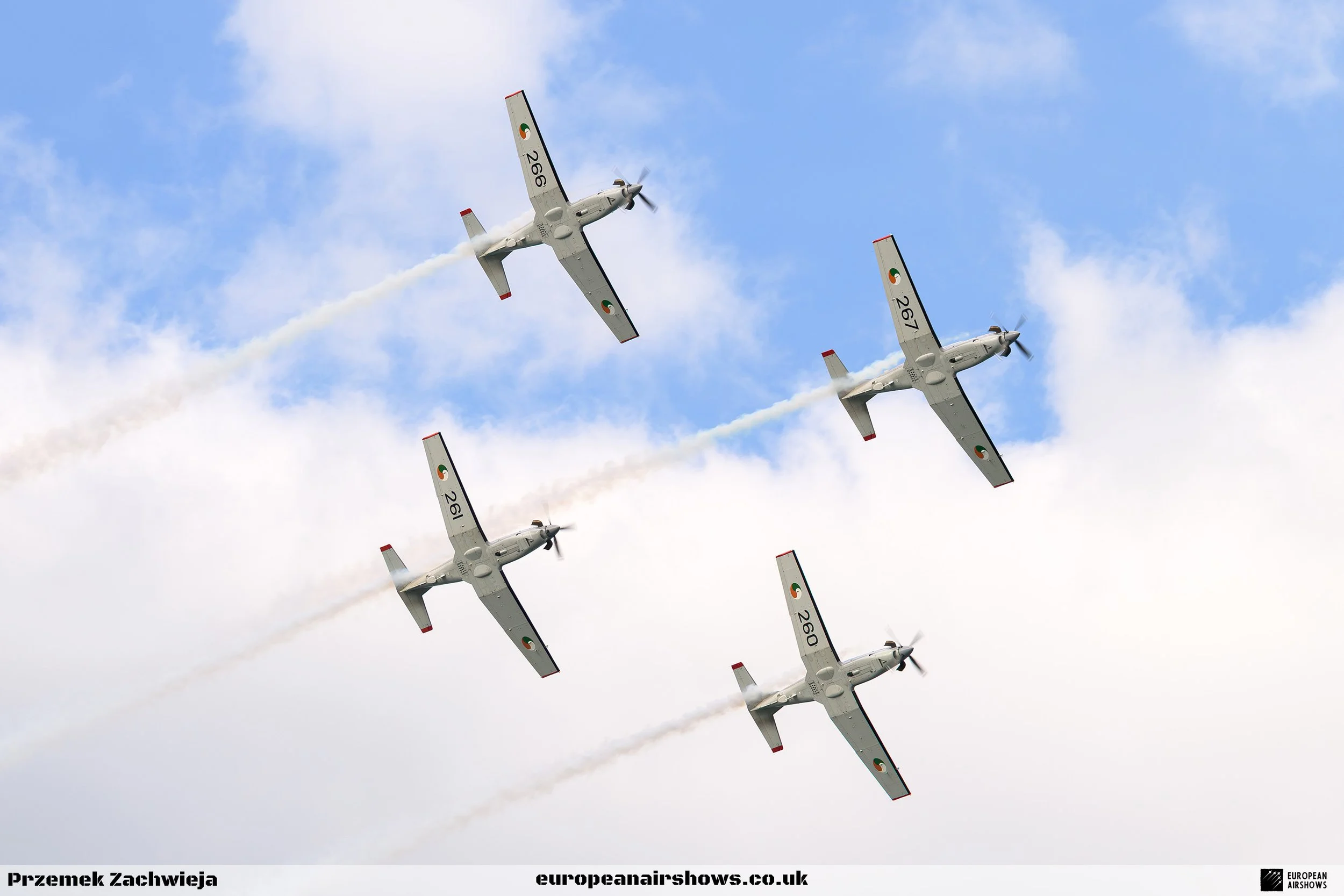
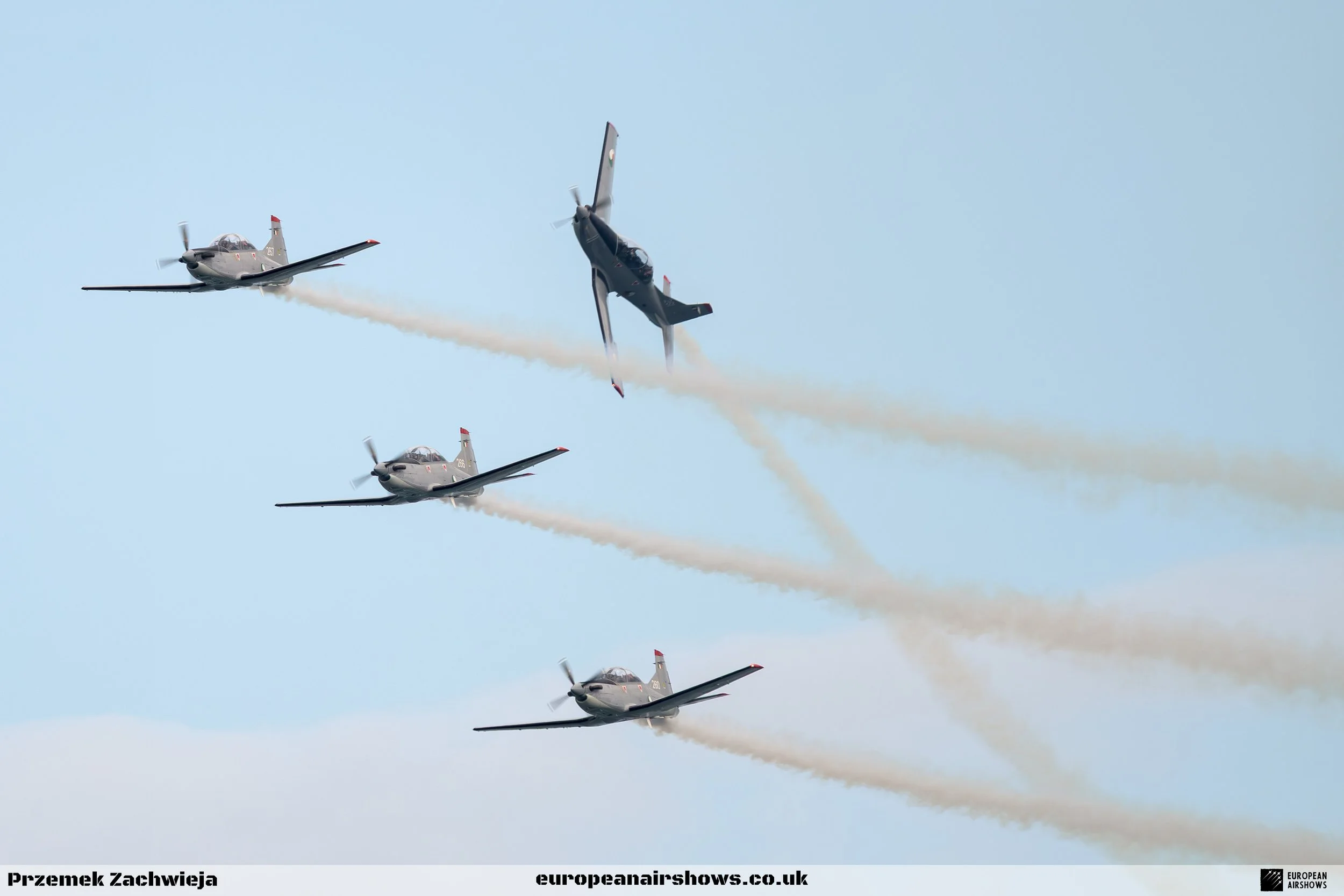
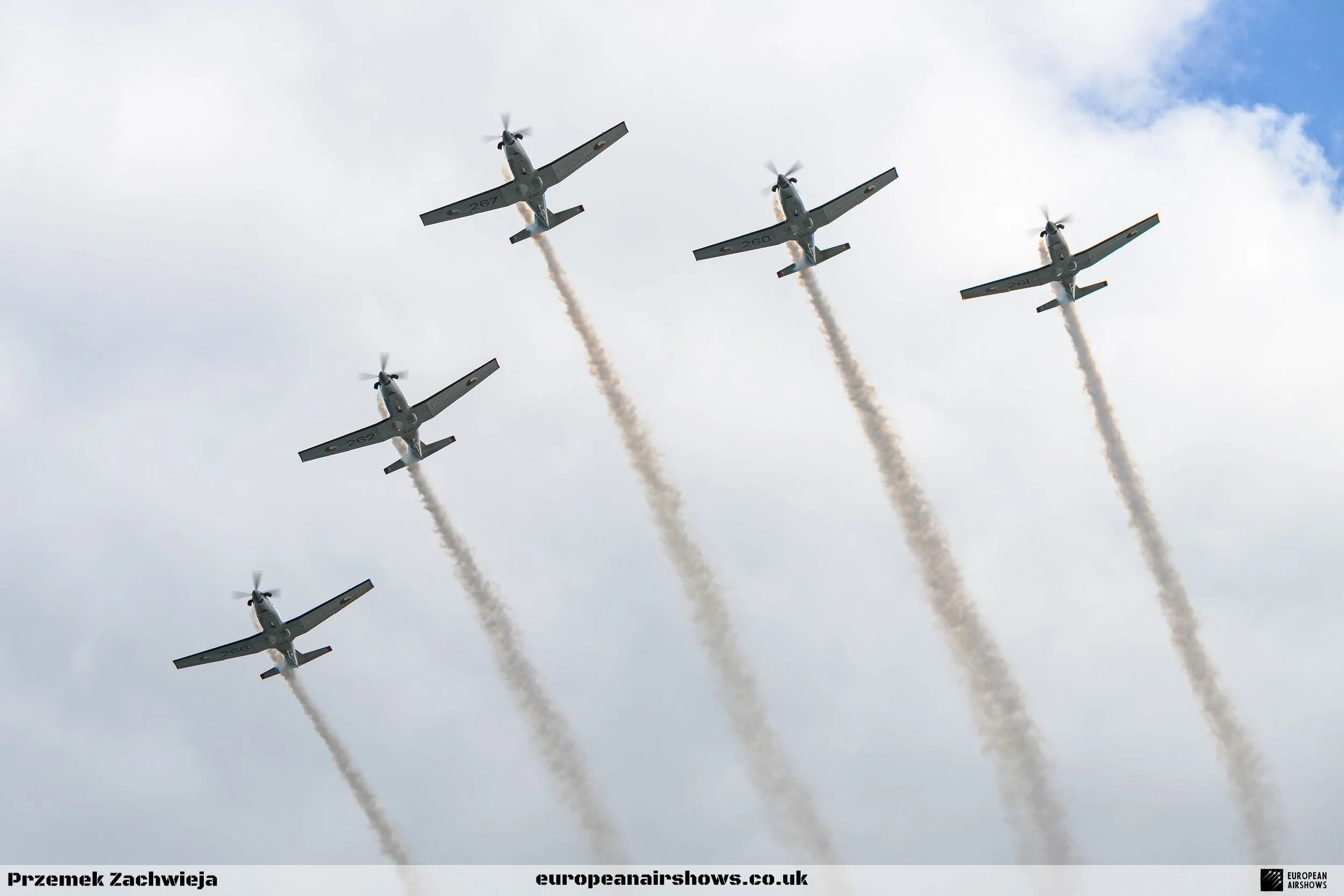
The four Pilatus PC-9Ms of the Silver Swallows brought the flying to a close. The name first became famous on the Irish Air Corps' silver Fouga Magisters, with the original team developing in the 1980s and ending when the Fouga left service. It was formally revived in 2022 for a new four-ship formation drawn from the Flying Training School at Casement Aerodrome.
That background matters because the Silver Swallows are not a permanently detached display unit. Their pilots are instructors and the aircraft remain part of the normal training fleet. Full public displays are therefore rare, with Bray usually offering the best chance to see the complete routine in Ireland.
The team made a crowd-rear arrival before settling into a sequence based almost entirely on formation flying. Loops, curved passes and changes of formation were flown with the four PC-9Ms held neatly together, white smoke tracing the geometry against the broken cloud. There was only one major break at the conclusion; until then, the display relied on precision and shape rather than constant splitting and rejoining.
That restraint suited the team. The PC-9M is fast enough to carry momentum through a large loop, but compact enough for the whole formation to remain easy to follow from the promenade. The flying was elegant, disciplined and professional, giving Bray a proper national finale rather than simply the last item on the list.
Verdict
Bray Air Display 2026 was a good airshow assembled from too many familiar ingredients. The North American P-51D-5-NA Mustang Marinell and the exceptionally rare de Havilland DH.84 Dragon Iolar gave the afternoon genuine historic weight, although Marinell was another return and Iolar was one of only three aircraft not seen at Bray in 2025. The Coast Guard's returning Leonardo AW189 and Beechcraft B200 King Air kept the programme operationally relevant, while the two Eurocopter EC135 displays carried added significance as the type approaches retirement from both Air Corps and Garda service. The Silver Swallows were again excellent, and the Irish Air Corps went well beyond what might reasonably be expected from a small service with a busy operational fleet.
From a photographic point of view, the afternoon was frustrating. The best sunlight disappeared as the programme developed, while too many aircraft remained distant, presented flat or banked away from the shore. Marinell proved that Bray's display line can produce excellent topside opportunities when the routine is positioned with the audience in mind. Several later acts would have benefited from the same consideration.
The larger concern is the direction of the event. Bray's organisers cannot control military availability, technical serviceability or the economics of bringing overseas acts to Ireland. They can, however, decide how ambitious the programme should be. The answer cannot be to rely indefinitely on the same civilian performers and ask the Irish Air Corps to manufacture most of the novelty from a limited fleet.
Bray does not need the Frecce Tricolori or a front-line fighter every year. It does need one or two genuinely fresh acts, whether that means a new European formation team, a different historic jet, an unfamiliar warbird or a more imaginative mixed formation. Regular spectators need a reason to return beyond knowing that there are almost no alternatives. Enthusiast interest is already showing signs of fatigue, and the wider public will eventually notice if each programme begins to feel like the previous one.
Even with those reservations, there was much to enjoy in 2026. The crowds were enormous, the atmosphere remained friendly, the weather stayed dry and the final flying programme ran intact. Bray Seafront remains a beautiful place to watch aircraft, and the event still provides access to Irish aviation that is almost impossible to find elsewhere. That is precisely why the show deserves greater ambition. Its potential is not theoretical. Bray demonstrated it a decade ago, and all the ingredients to do so again are still there.
More airshow reviews
Read more reports, photography and first-hand coverage from airshows across Europe.