The Classic Formation
Douglas DC-3 and three Beechcraft Model 18s · Four-ship historic formation
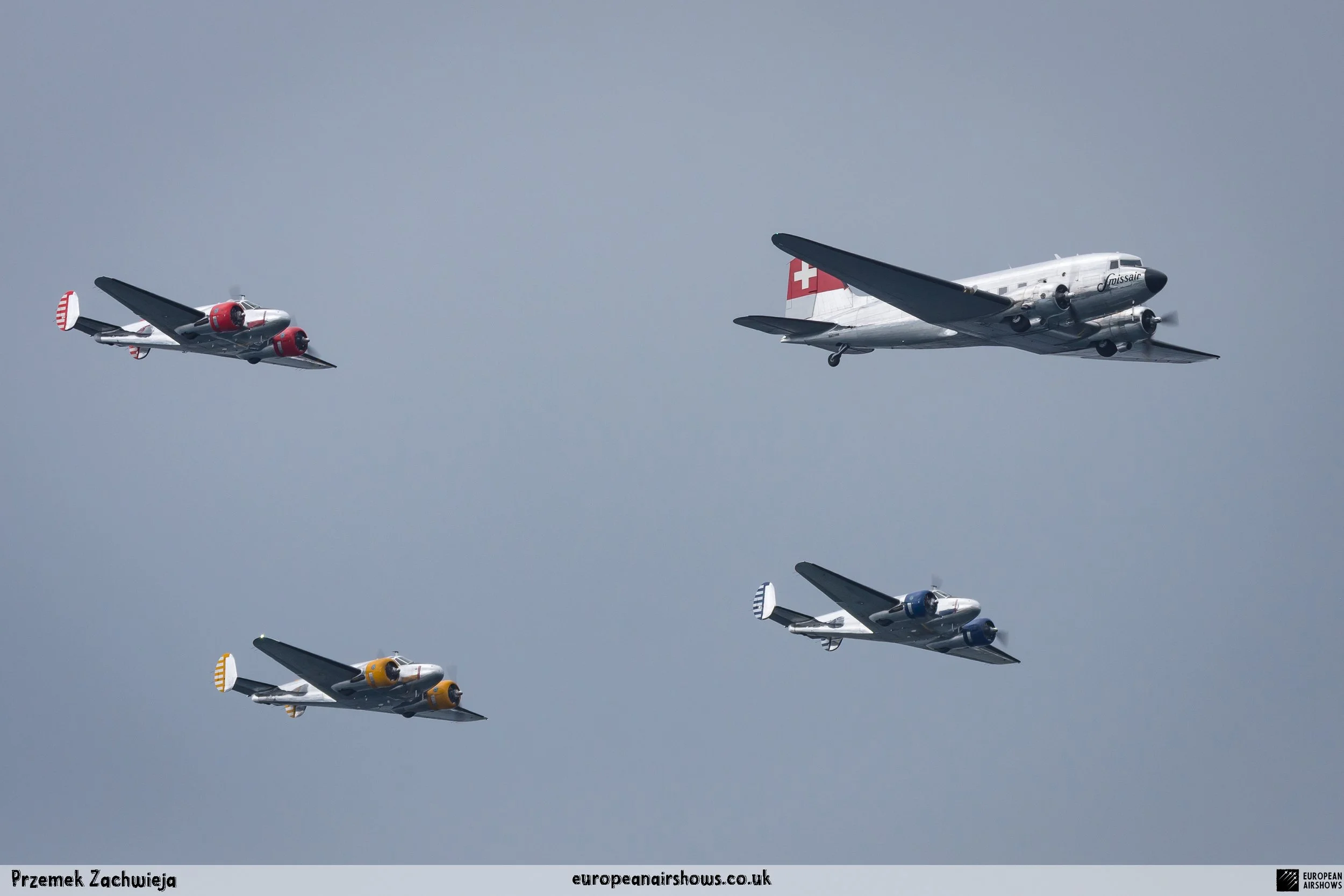
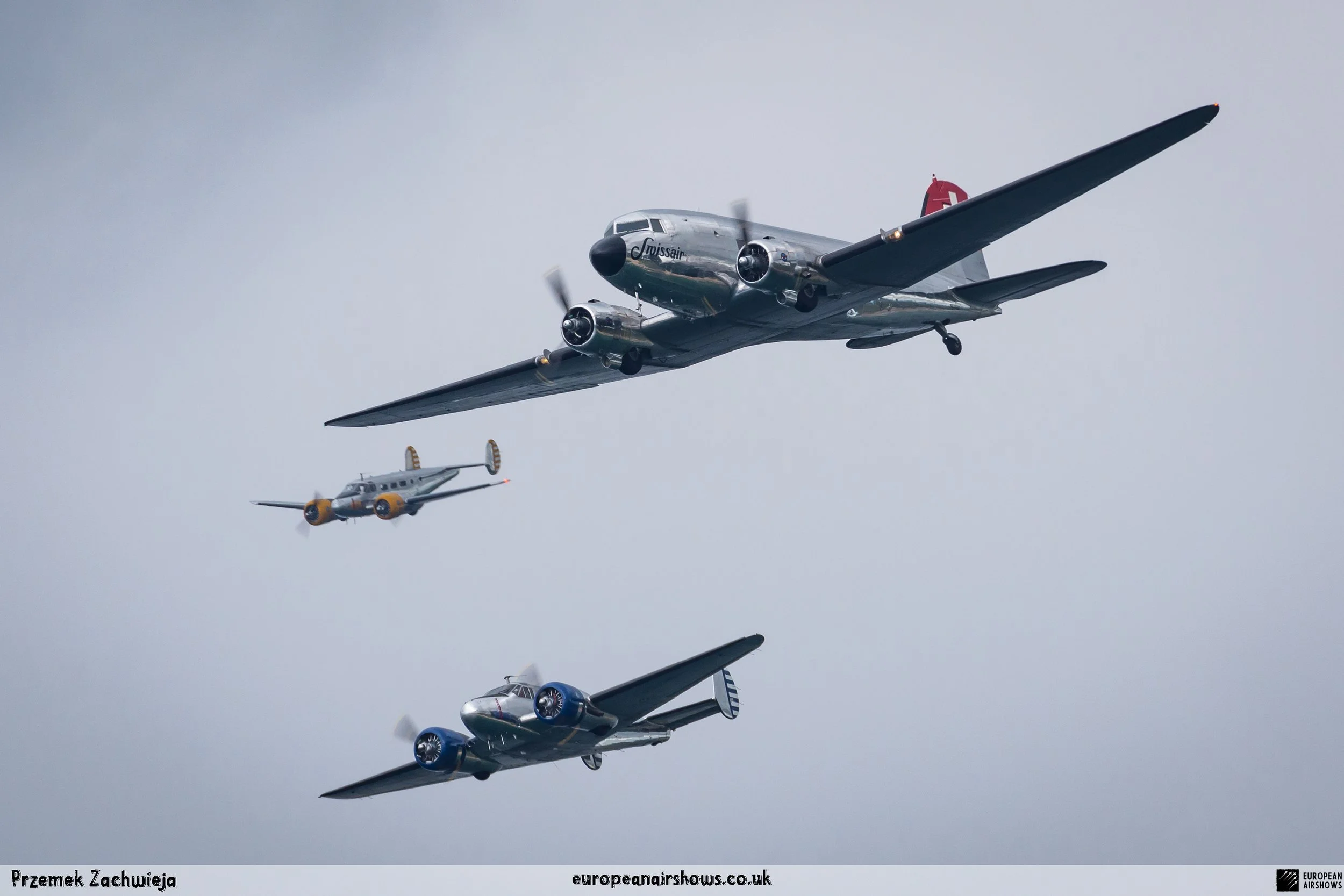
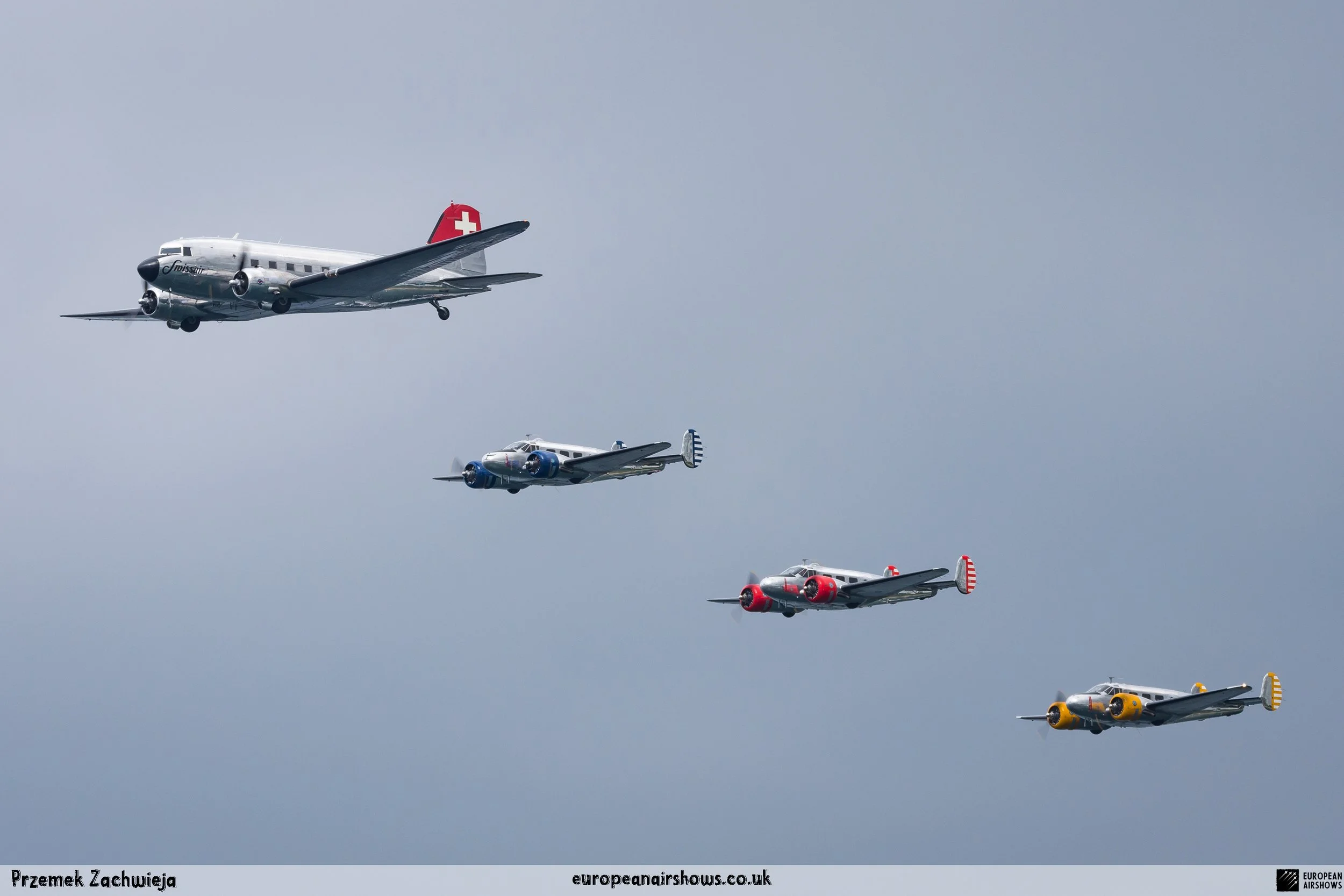
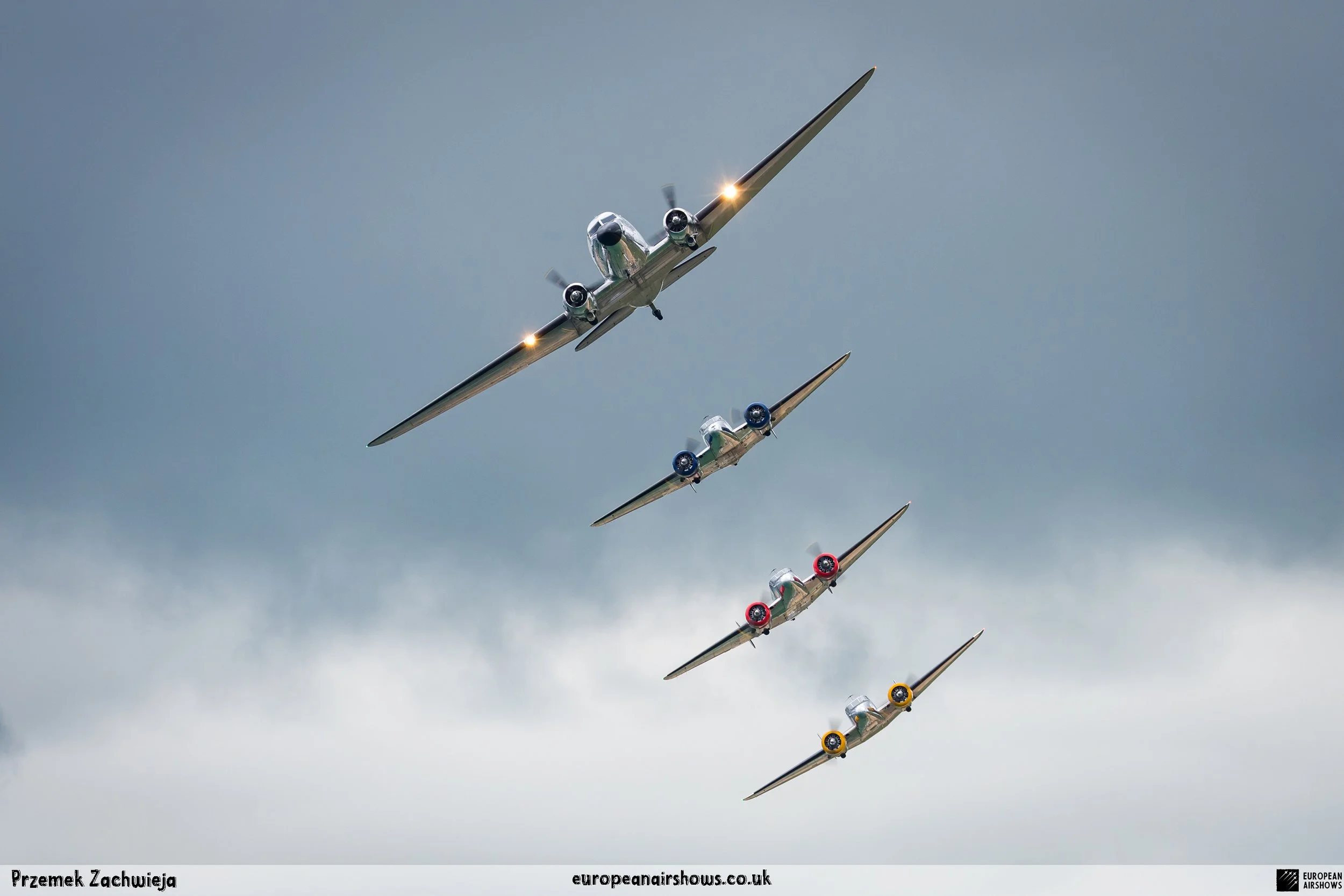
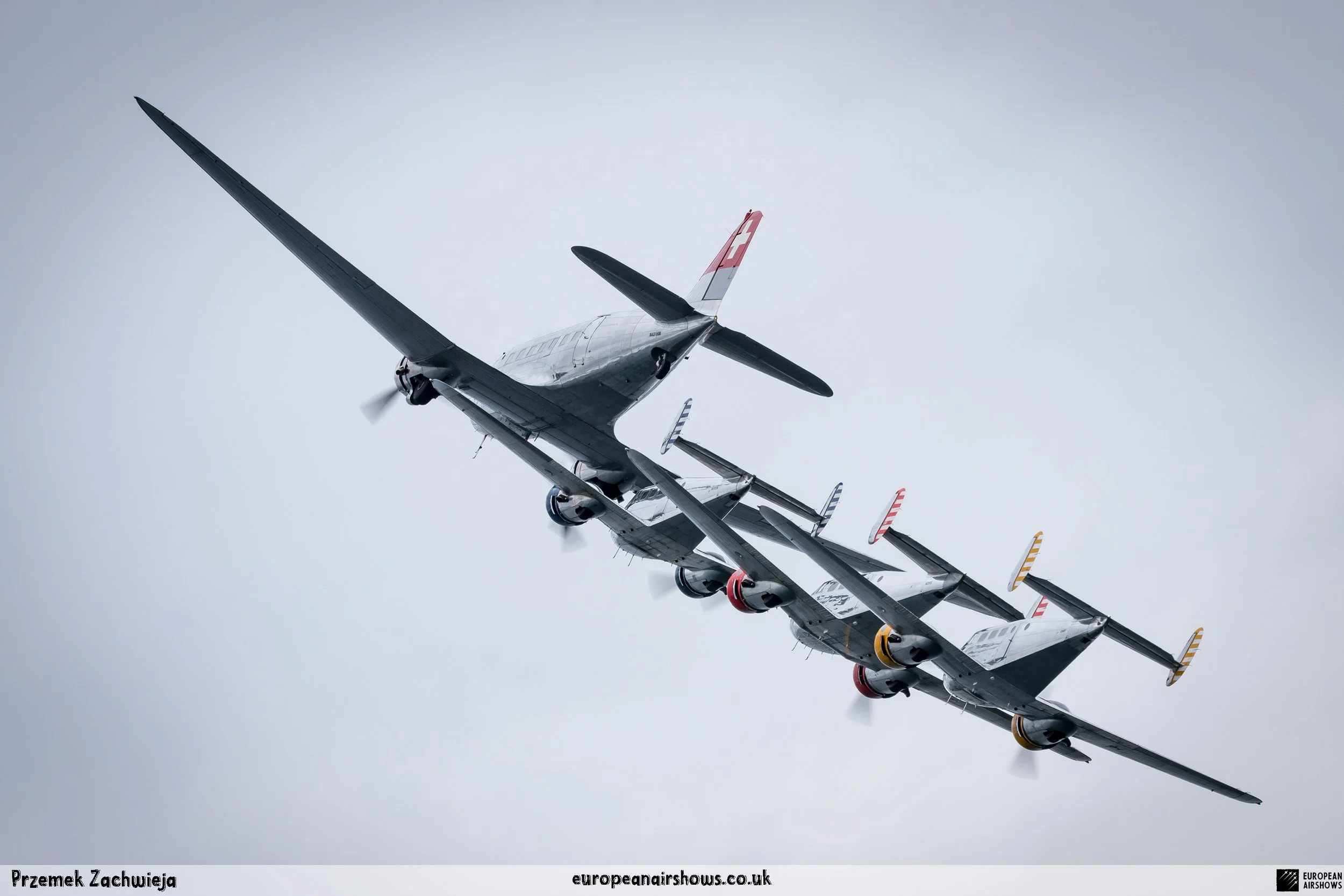
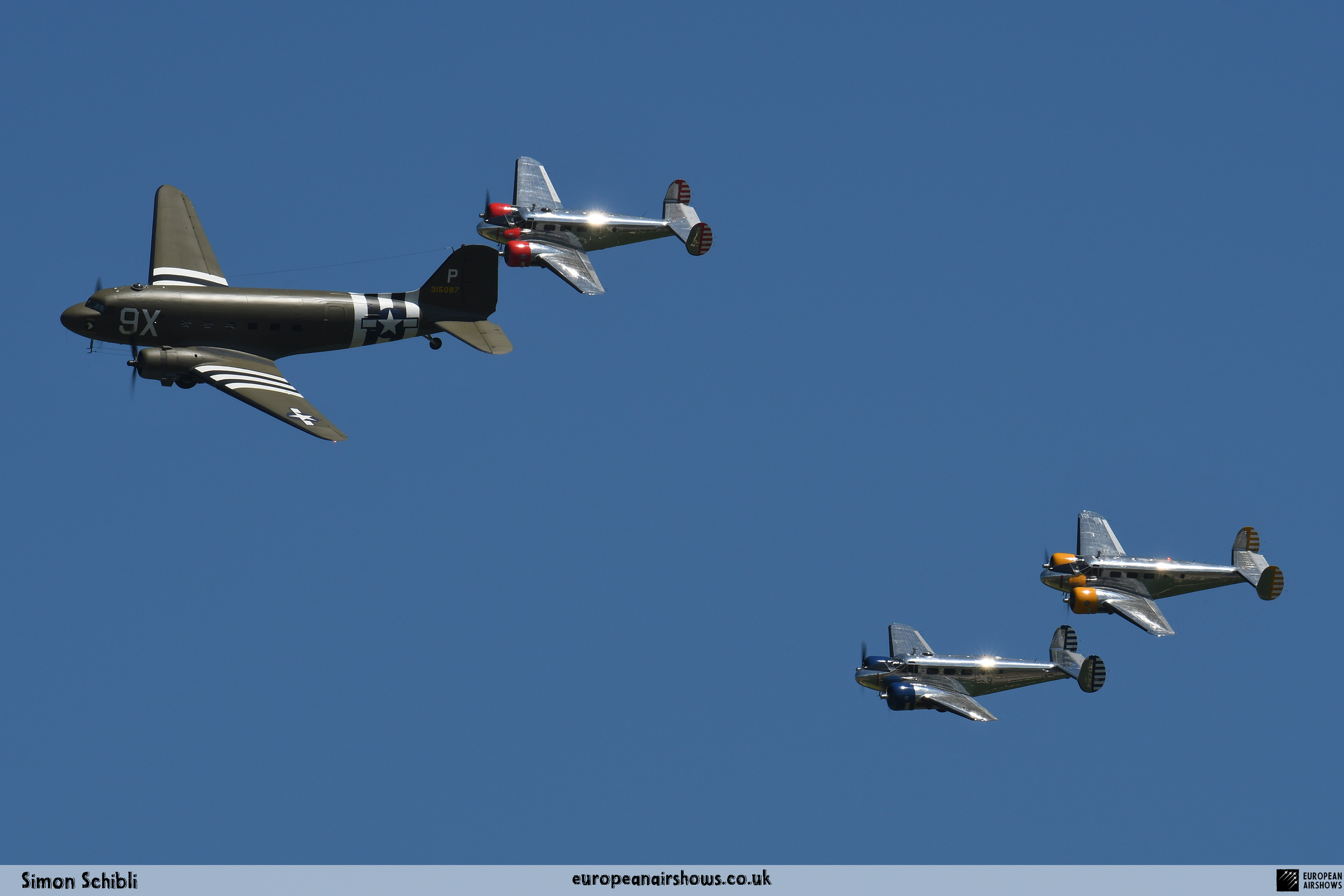
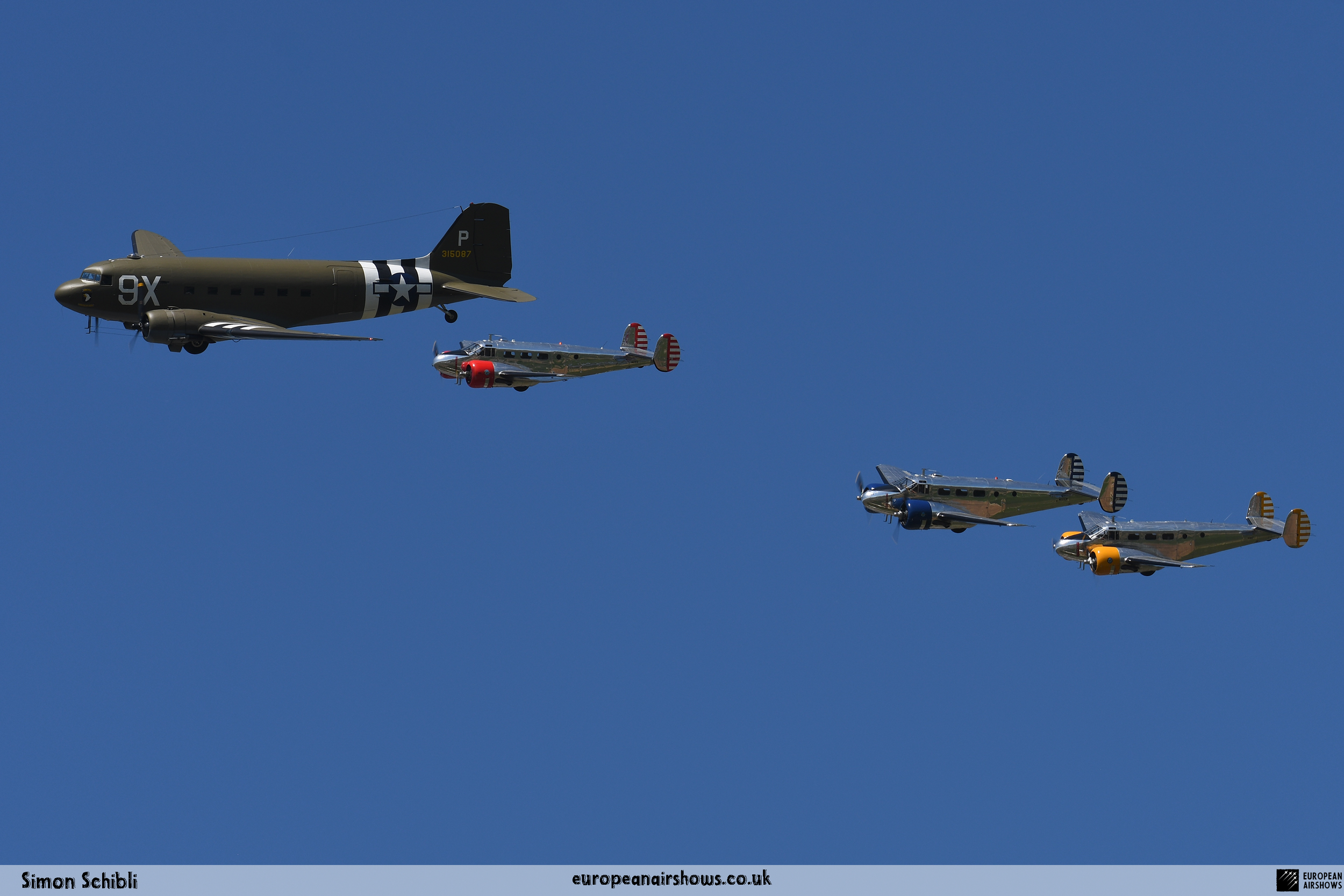
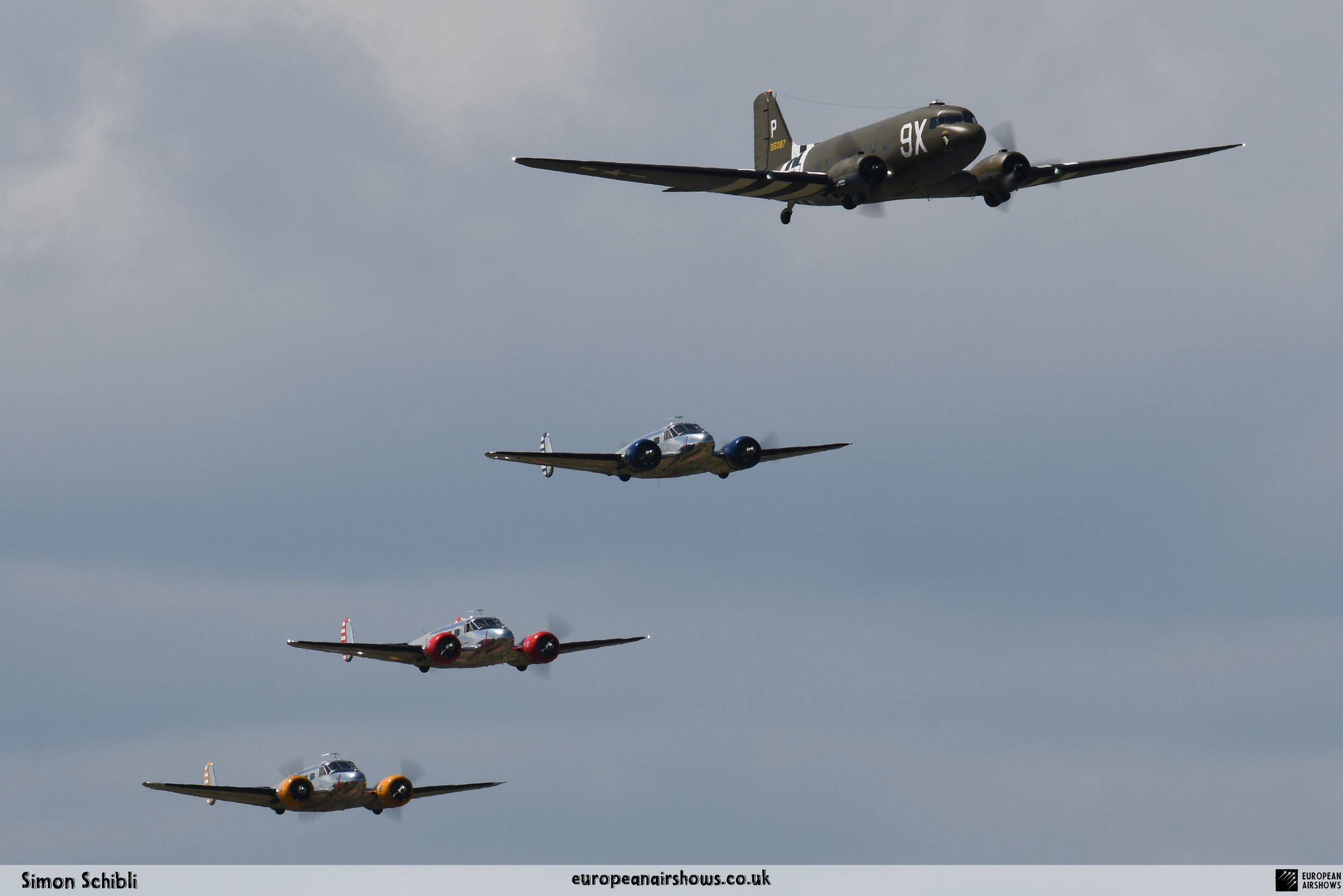
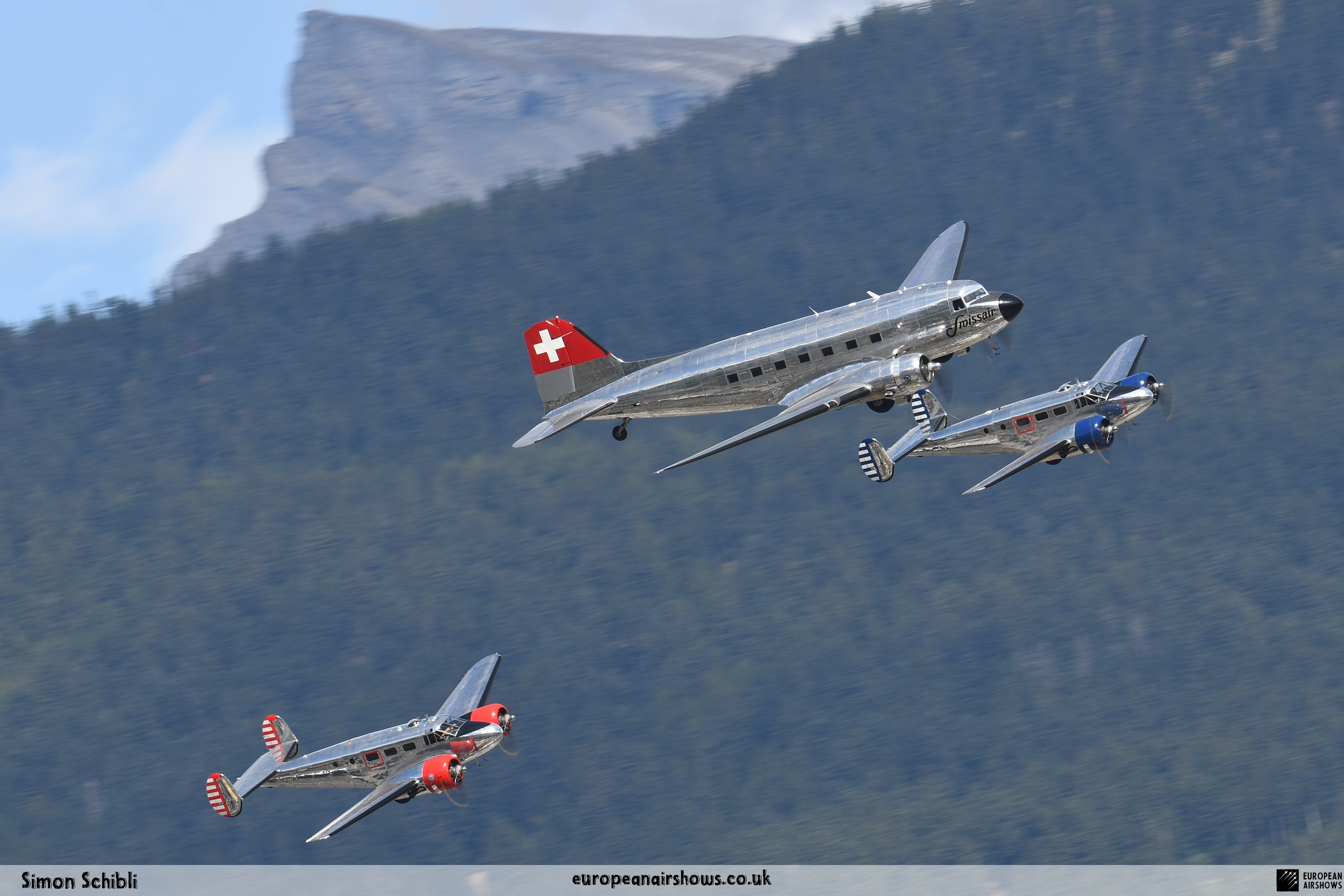
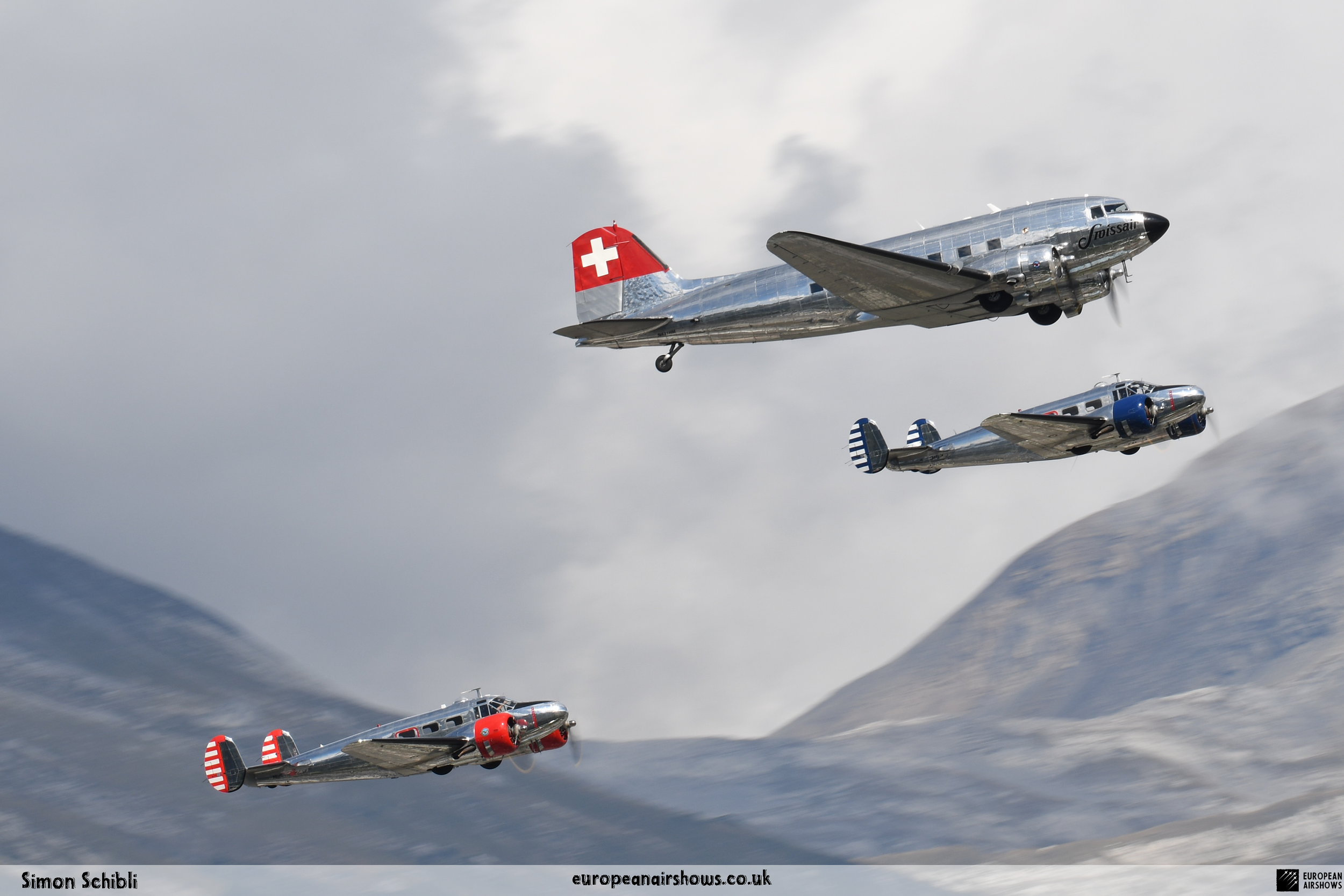
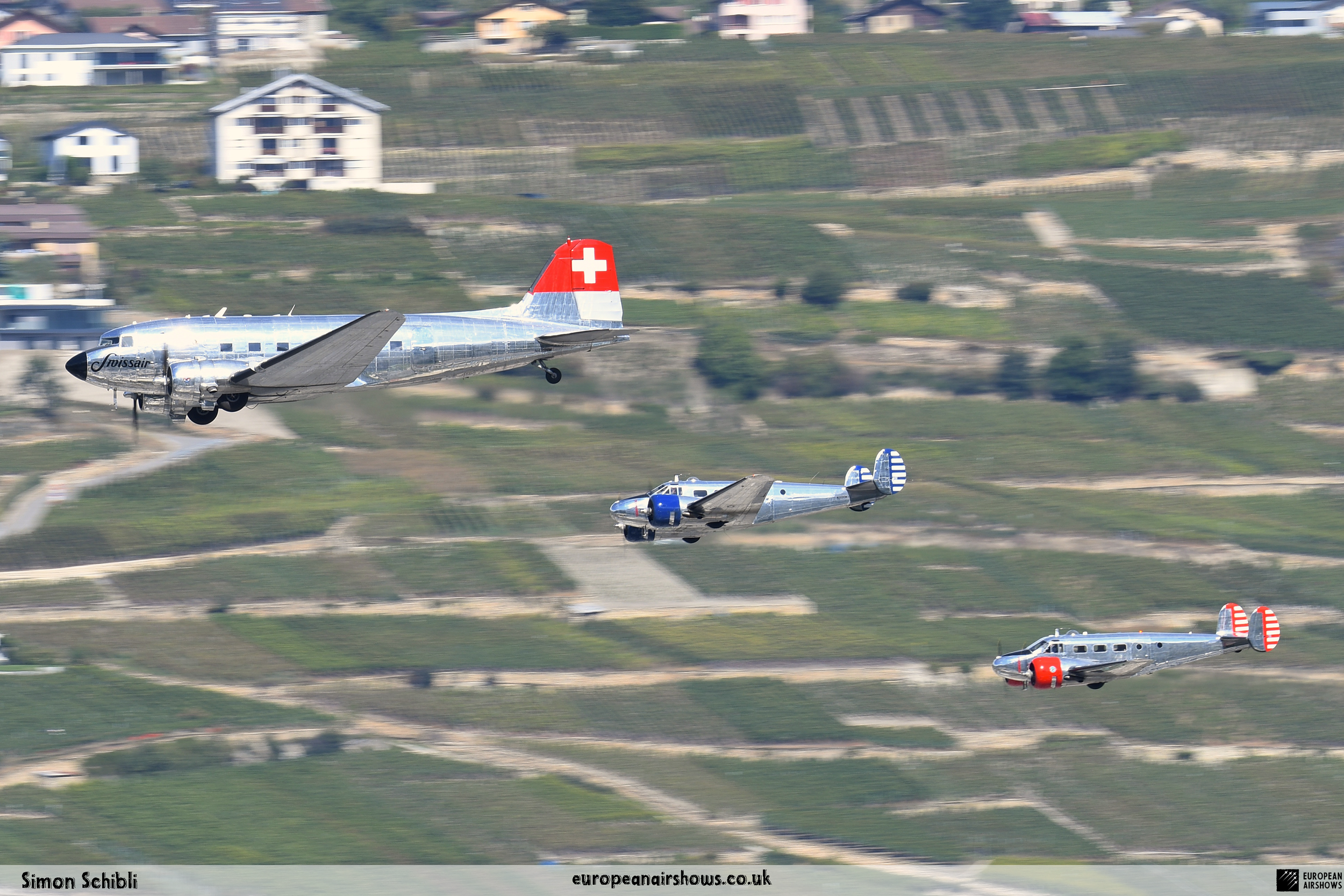
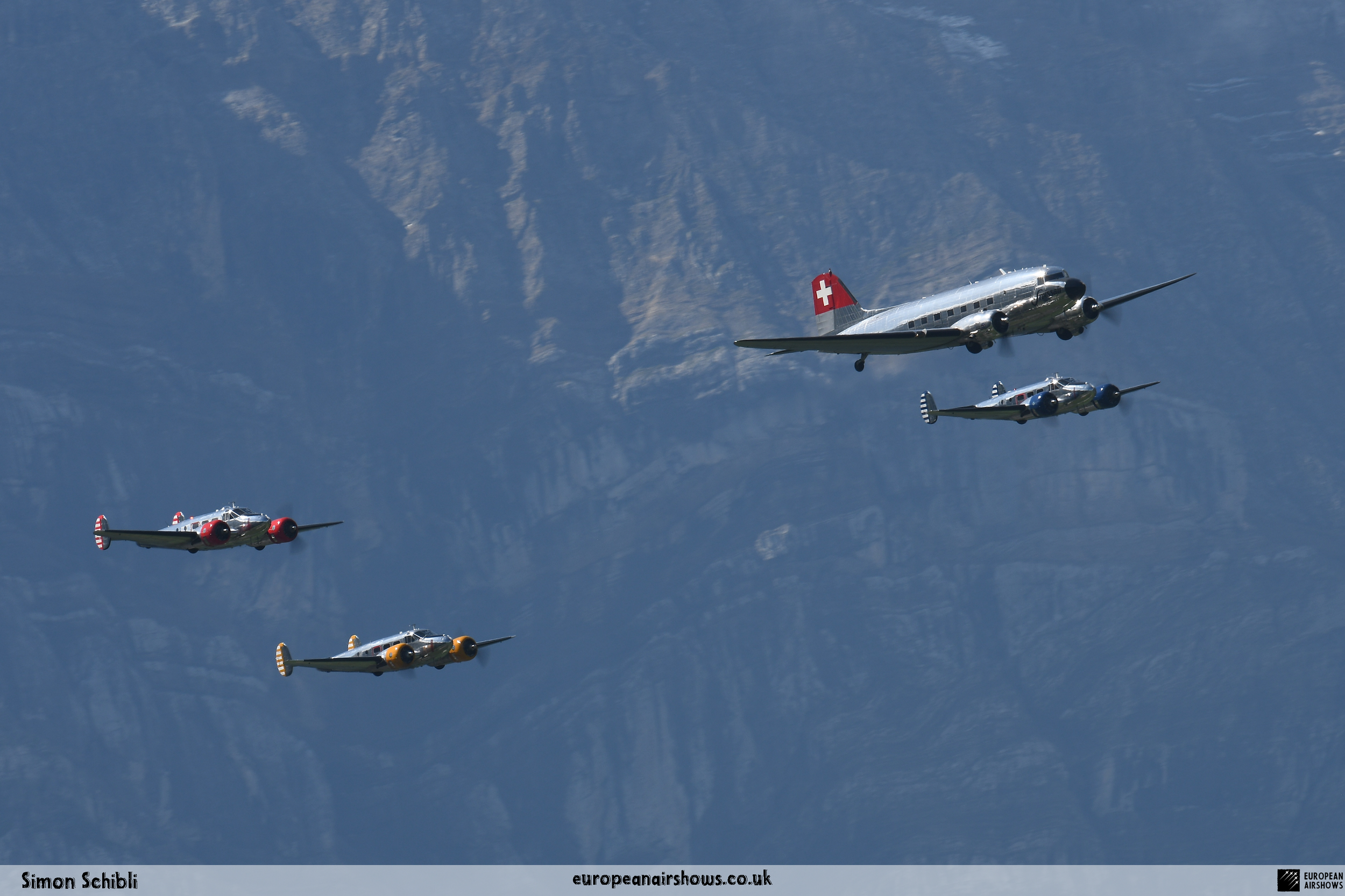
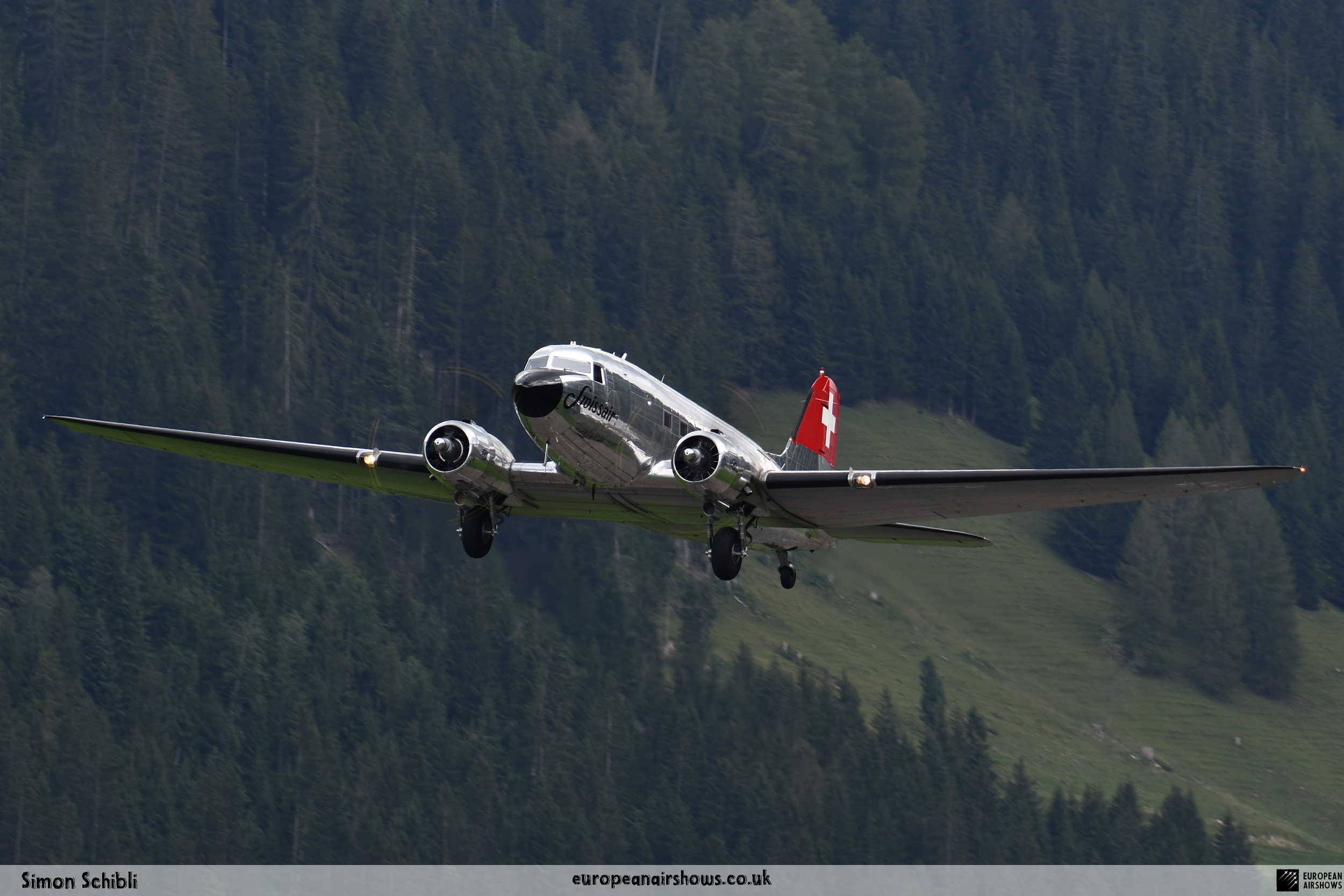
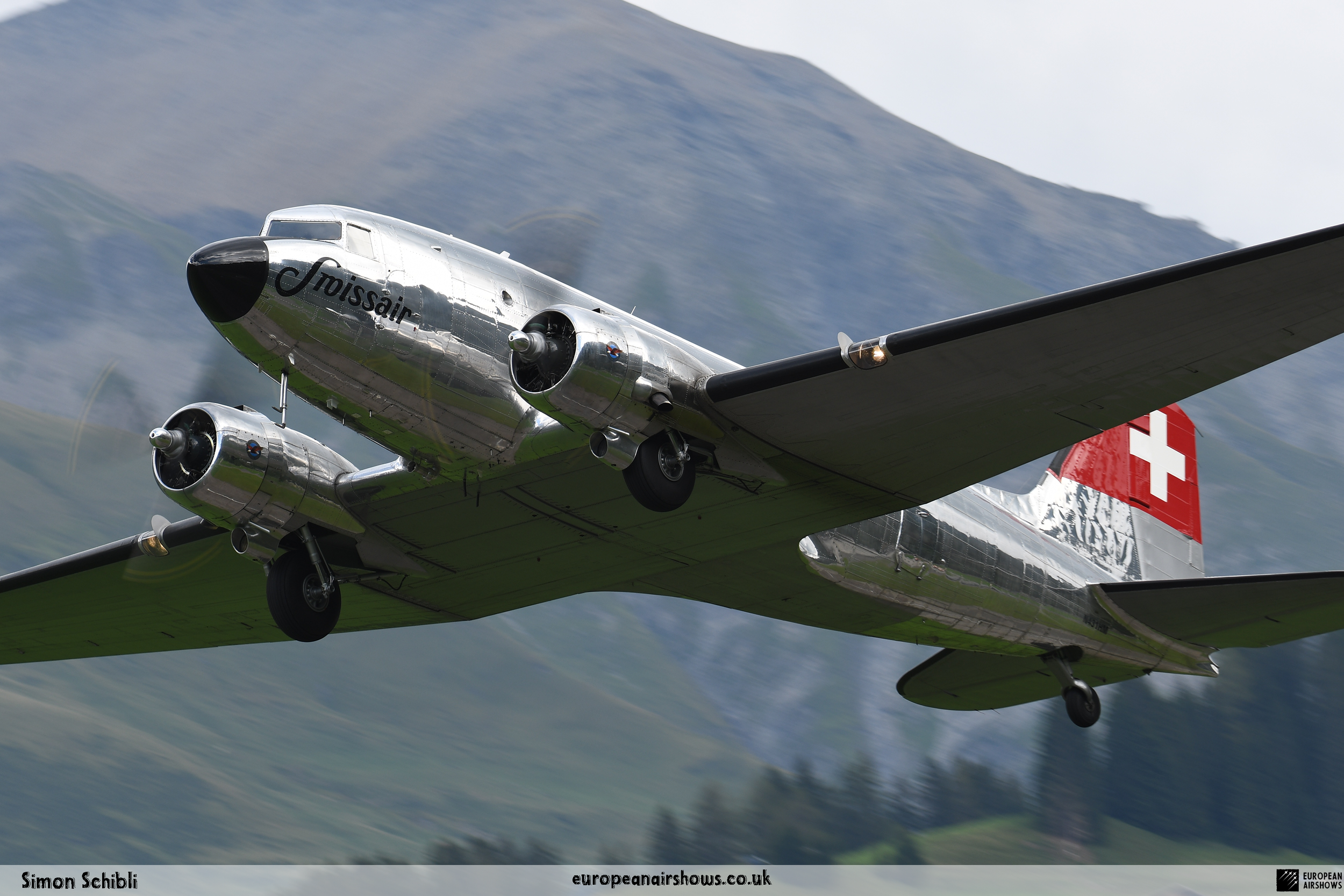
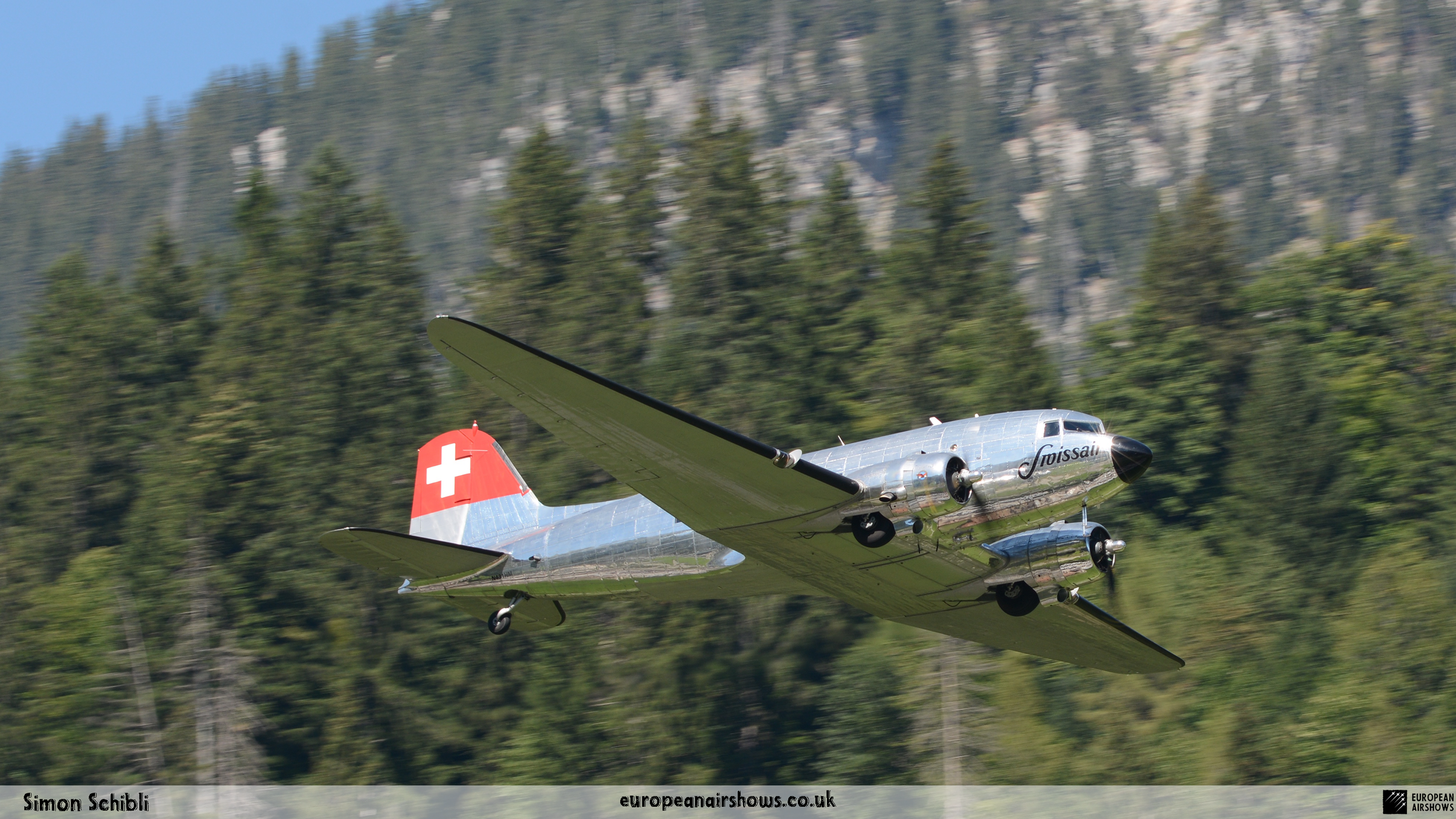
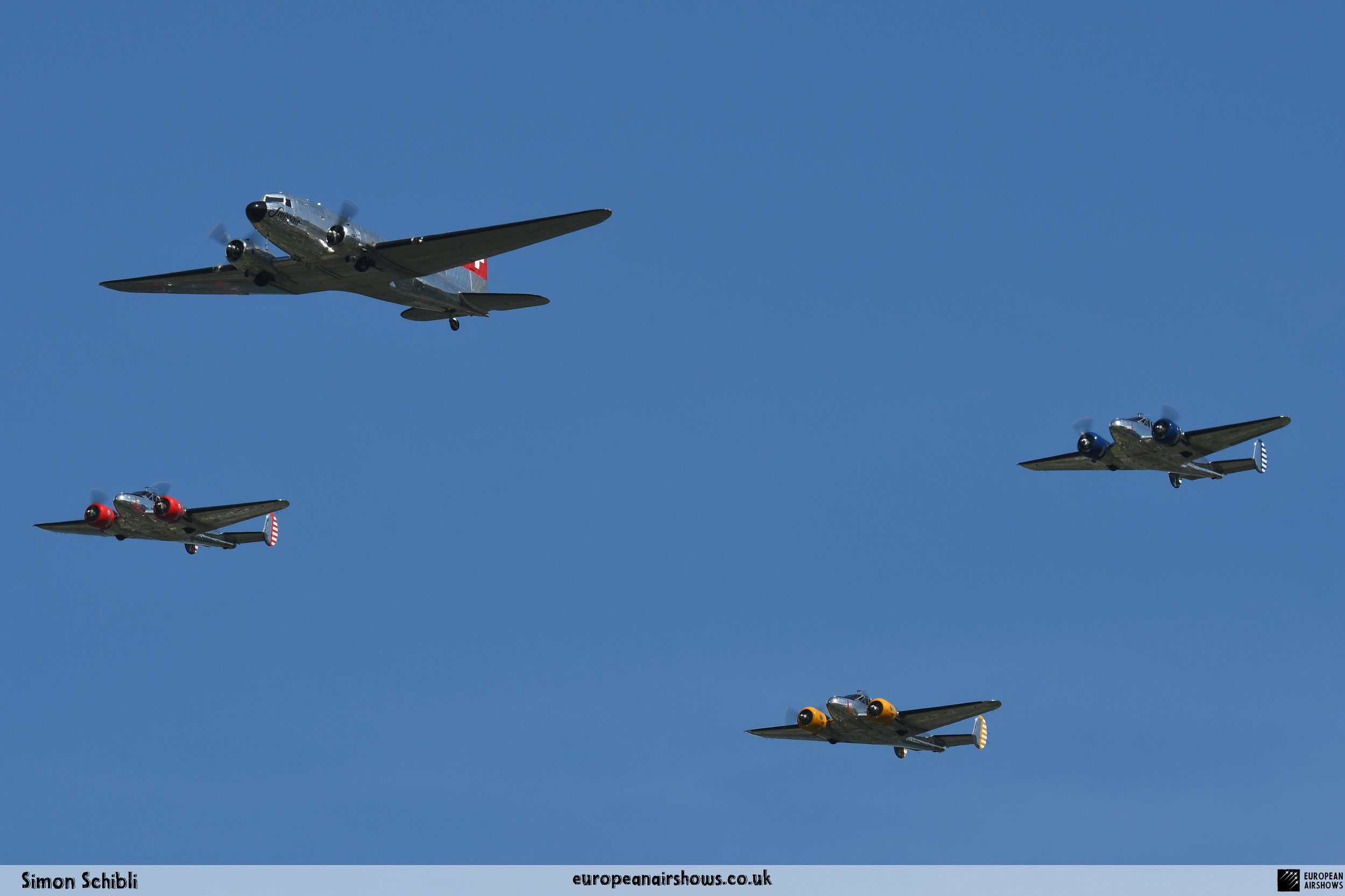
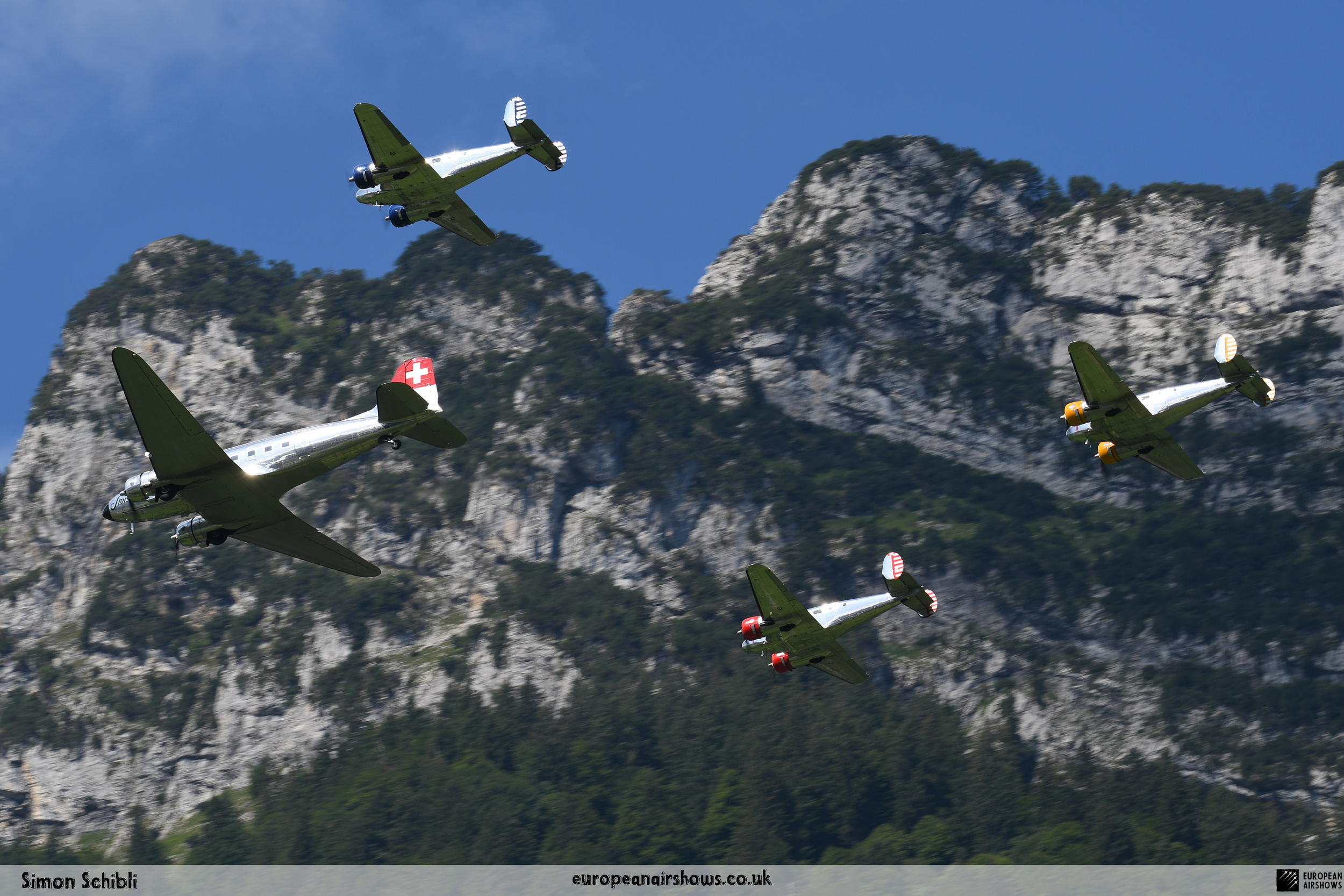
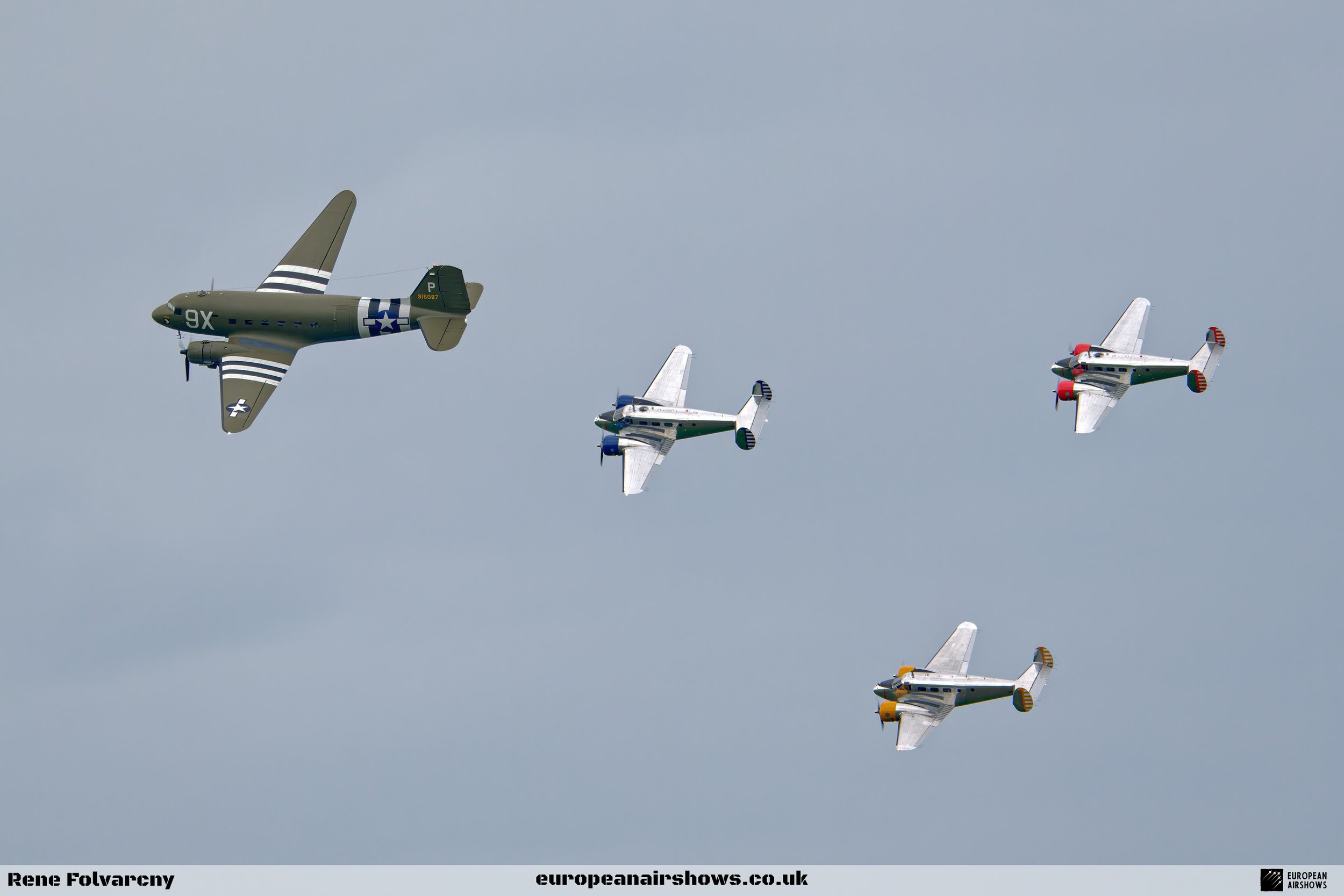
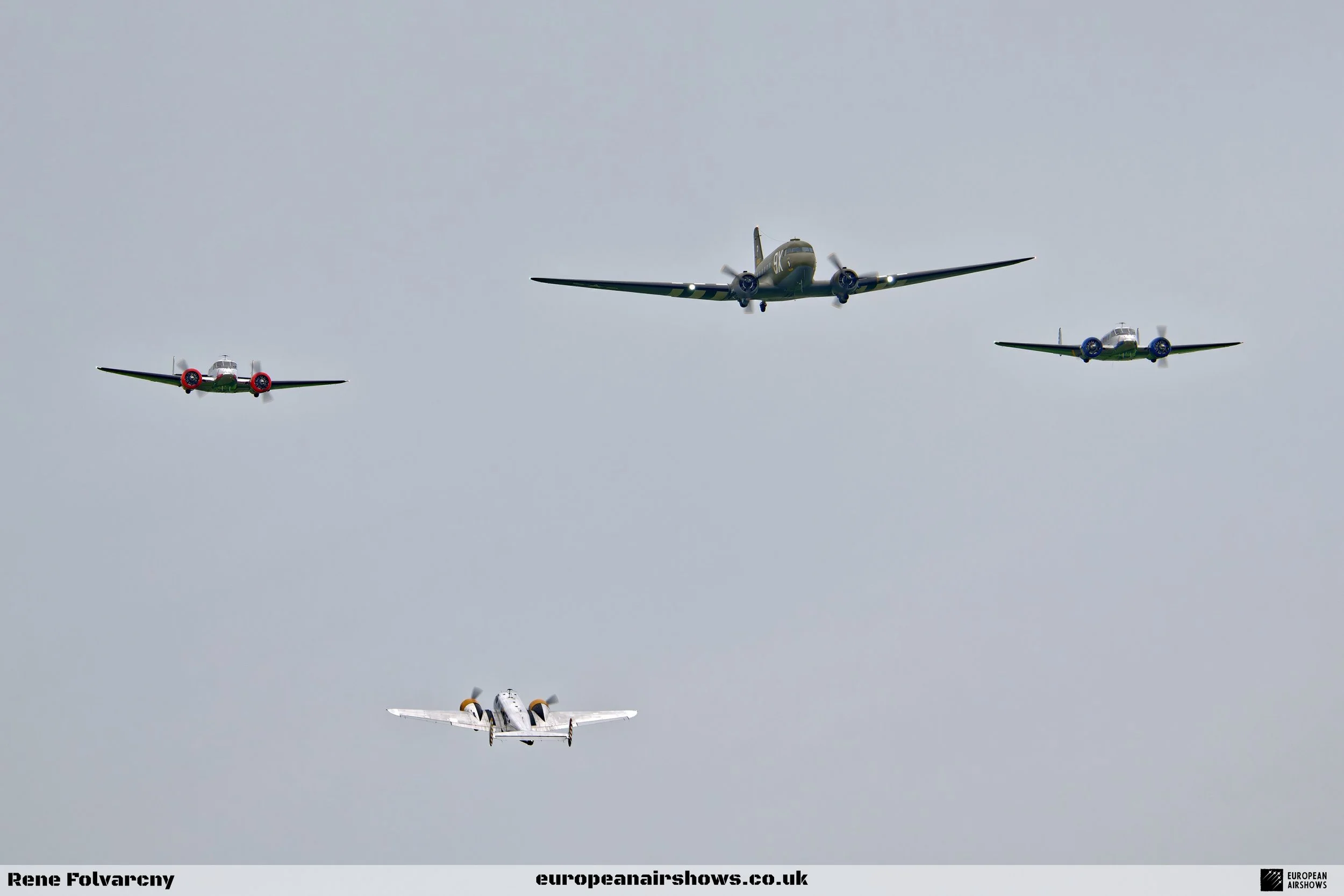
The Classic Formation brings four polished twin-engined taildraggers together in one of Europe's most distinctive vintage displays. A Douglas DC-3 in Swissair heritage colours leads three smaller Beechcraft Model 18s, combining the presence of a classic transport with disciplined formation flying.
- Origins
- Developed in the early 2010s
- Home
- Grenchen Airport, LSZG
- Formation
- One DC-3 and three Beech 18s
- Aircraft years
- 1943 and 1952
- Owner
- Hugo Mathys
- Status
- Active vintage formation
The team
A privately supported collection shaped into a disciplined display formation.
Swiss pilot and entrepreneur Hugo Mathys owns the four core aircraft and created the idea of flying them as a vintage formation. He finances not only their operation, but also the formation training and recurrent type training required to keep pilots current on the DC-3 and Beech 18.
The flying team draws on airline, business-aviation and former military experience. Philipp "Phile" Müller, a former Swiss Air Force pilot and PC-7 Team member, developed and directs the specialist formation training. The public profile does not lock each aircraft to one permanent pilot because commanders and copilots can change between operations.
Four aircraft, four formation numbers
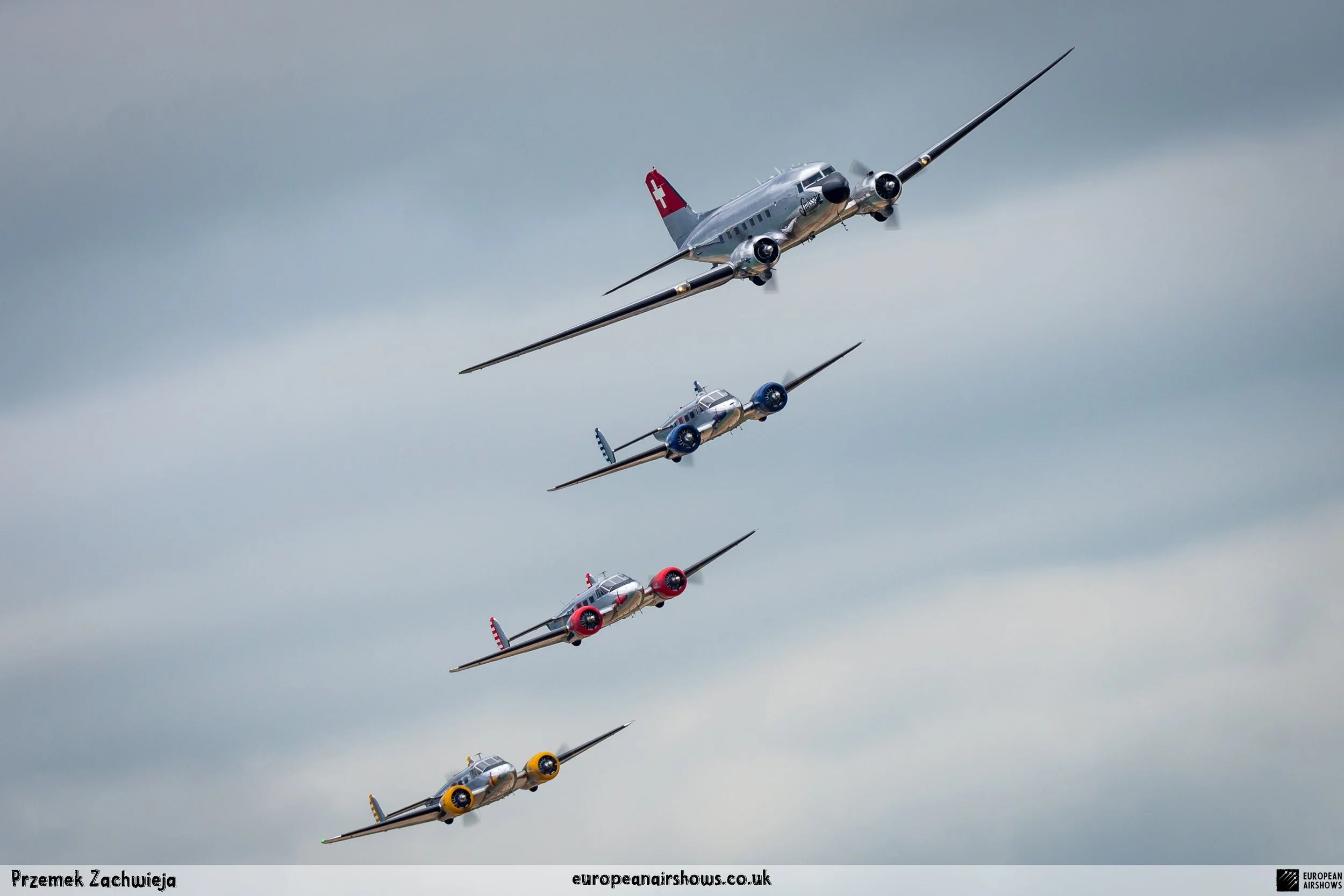
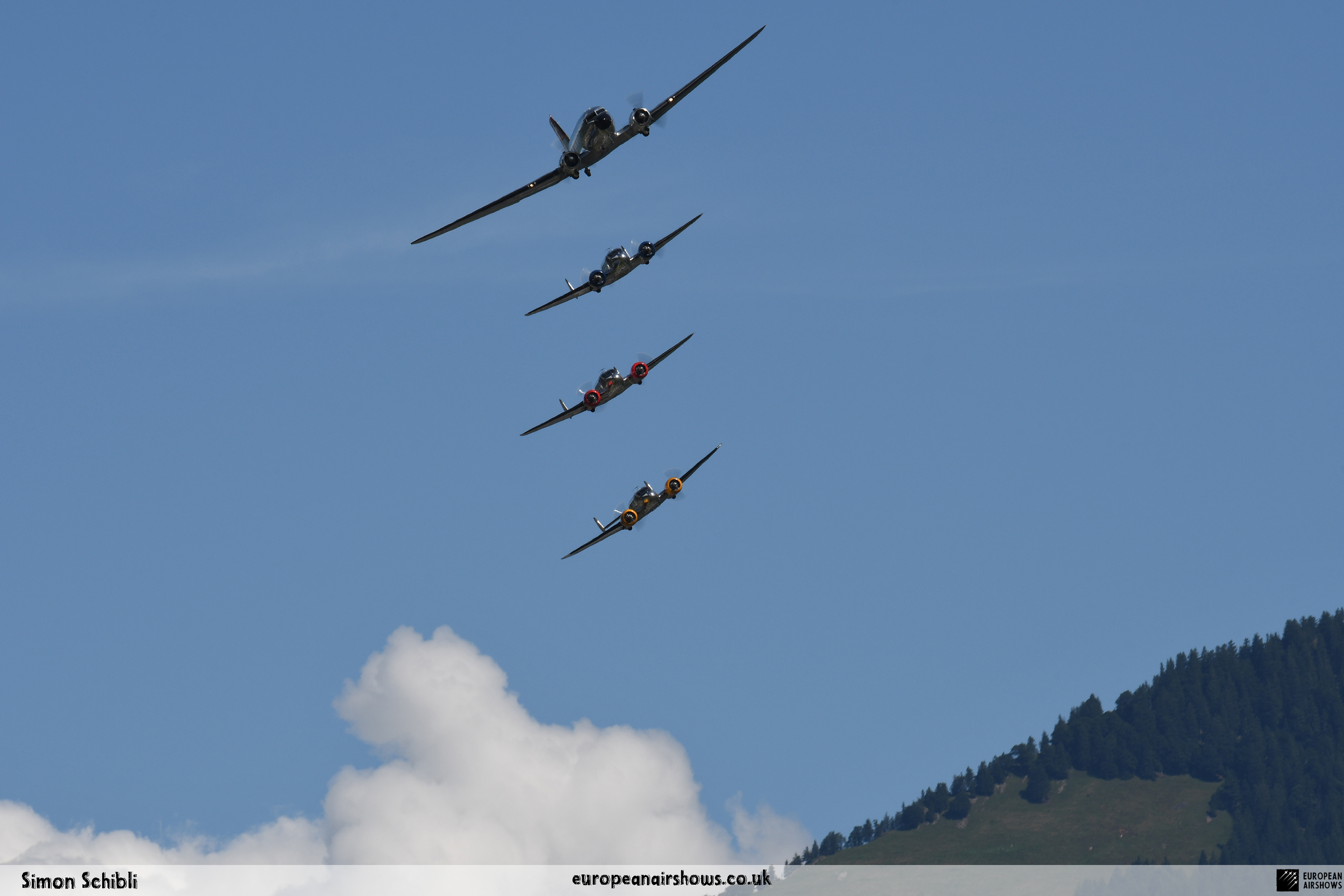
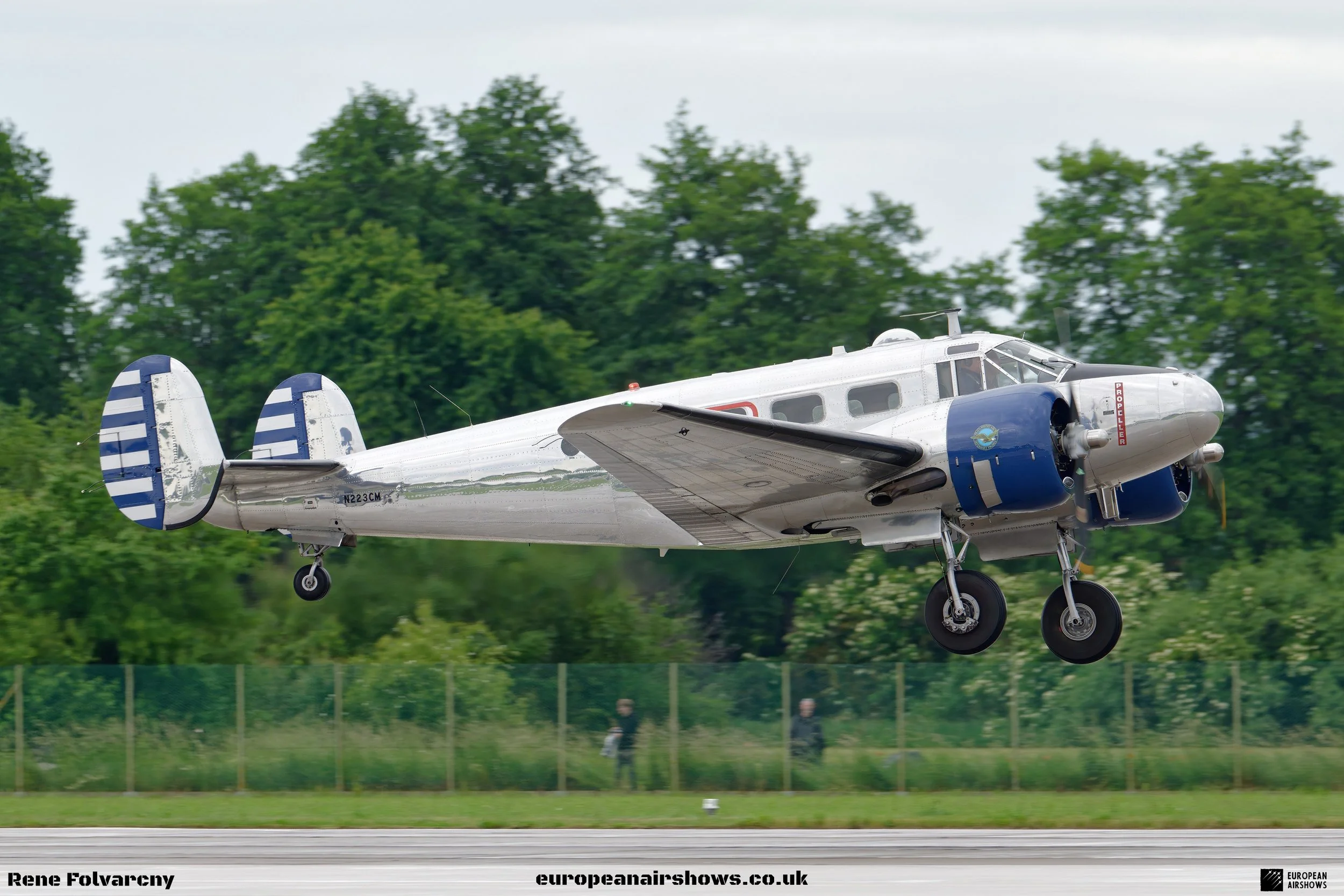
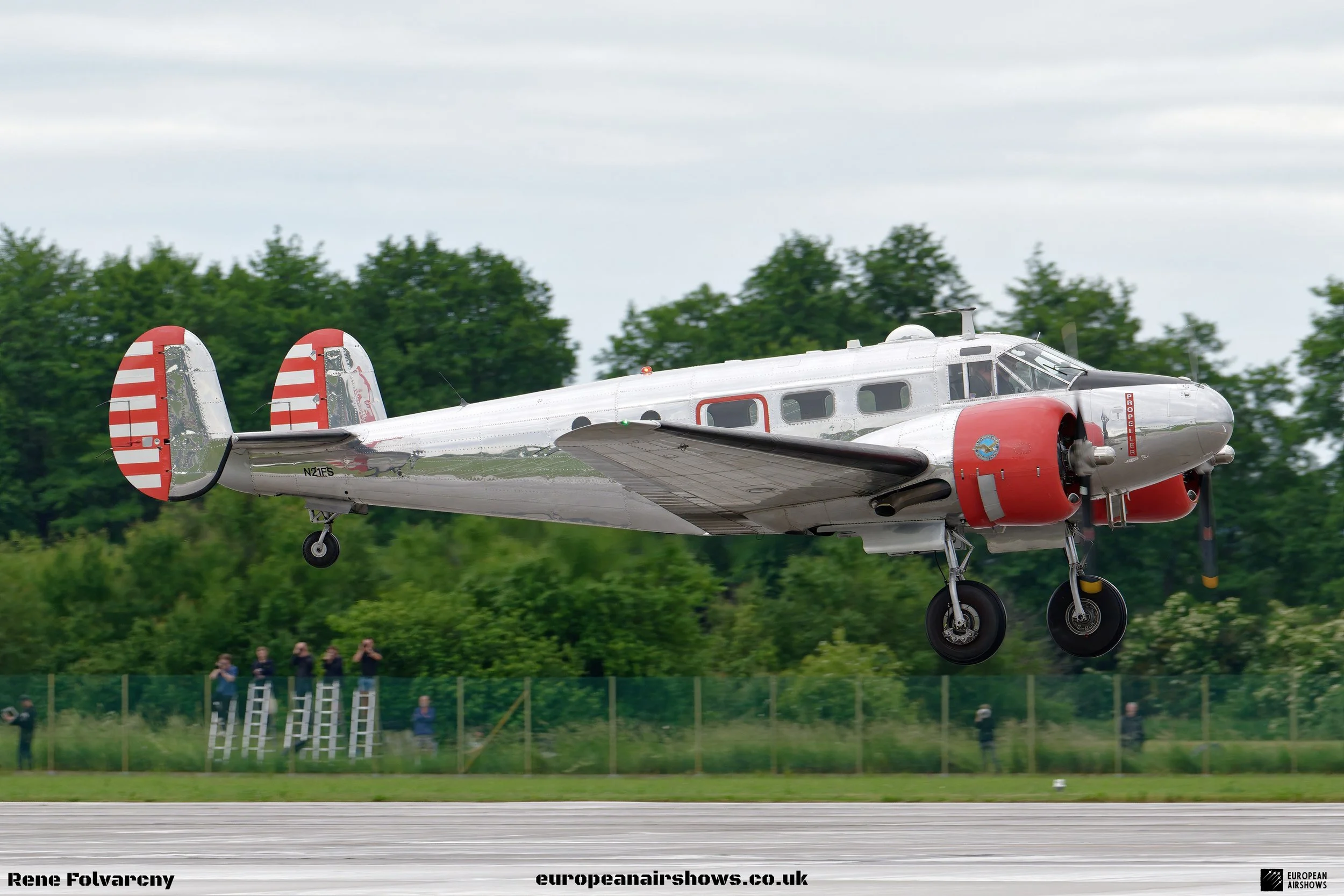
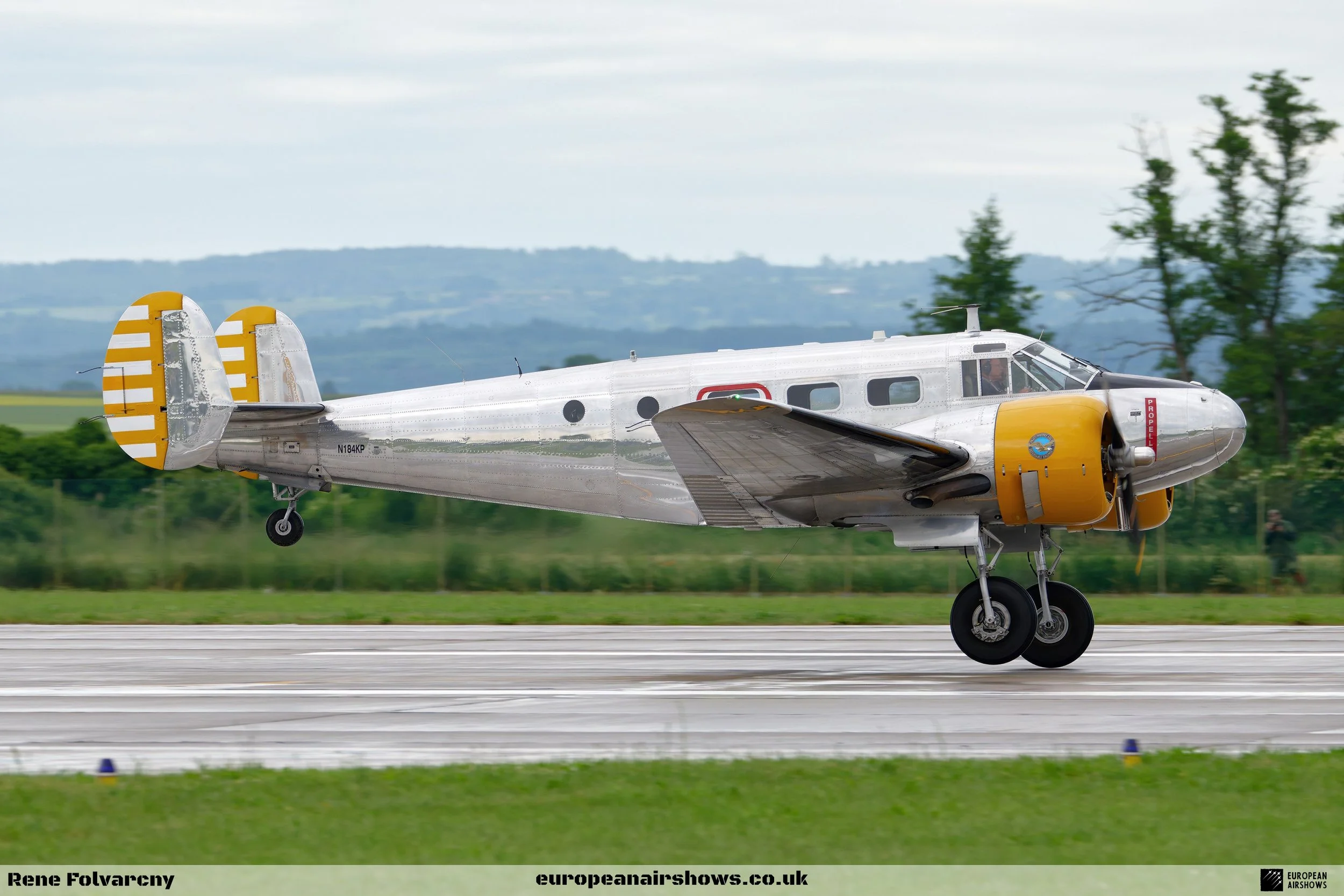
The DC-3 is Classic 1 and provides the large visual anchor. Blue Beech 18 N223CM is Classic 2, red N21FS is Classic 3 and yellow N184KP is Classic 4. Their colour accents help spectators and crews distinguish the smaller aircraft while retaining the polished-metal family appearance.
Grenchen is more than an address
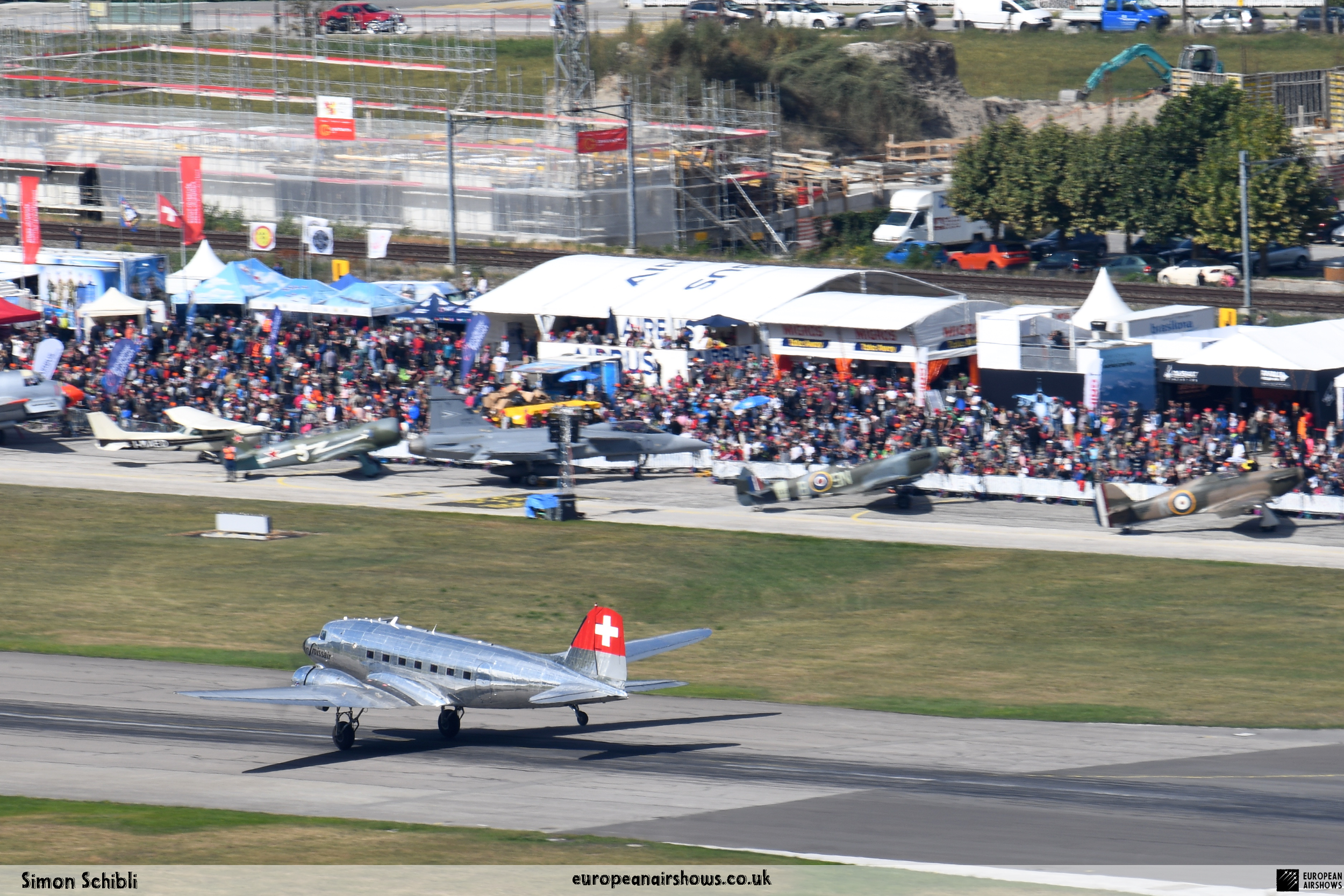
Grenchen Airport in the canton of Solothurn is the formation's home and the centre of its flying, maintenance and organisation. Keeping all four aircraft together supports the recurrent work needed for close formation with large, elderly taildraggers whose operating demands differ from modern display types.
An active team without a dated label
The Classic Formation remains an operating display organisation. Its status is intentionally presented without a season year so the page describes the enduring team rather than one calendar of bookings. Individual appearances can still use fewer aircraft when availability or event requirements demand it.
The display
Mass, polished metal and formation geometry rather than aerobatics.
The routine is designed around the visual contrast between the DC-3 and the smaller Beech 18s. Smooth passes show the complete formation, while turns, breaks and rejoins change the geometry without asking historic transports to imitate a modern unlimited aerobatic team.
The DC-3 as anchor
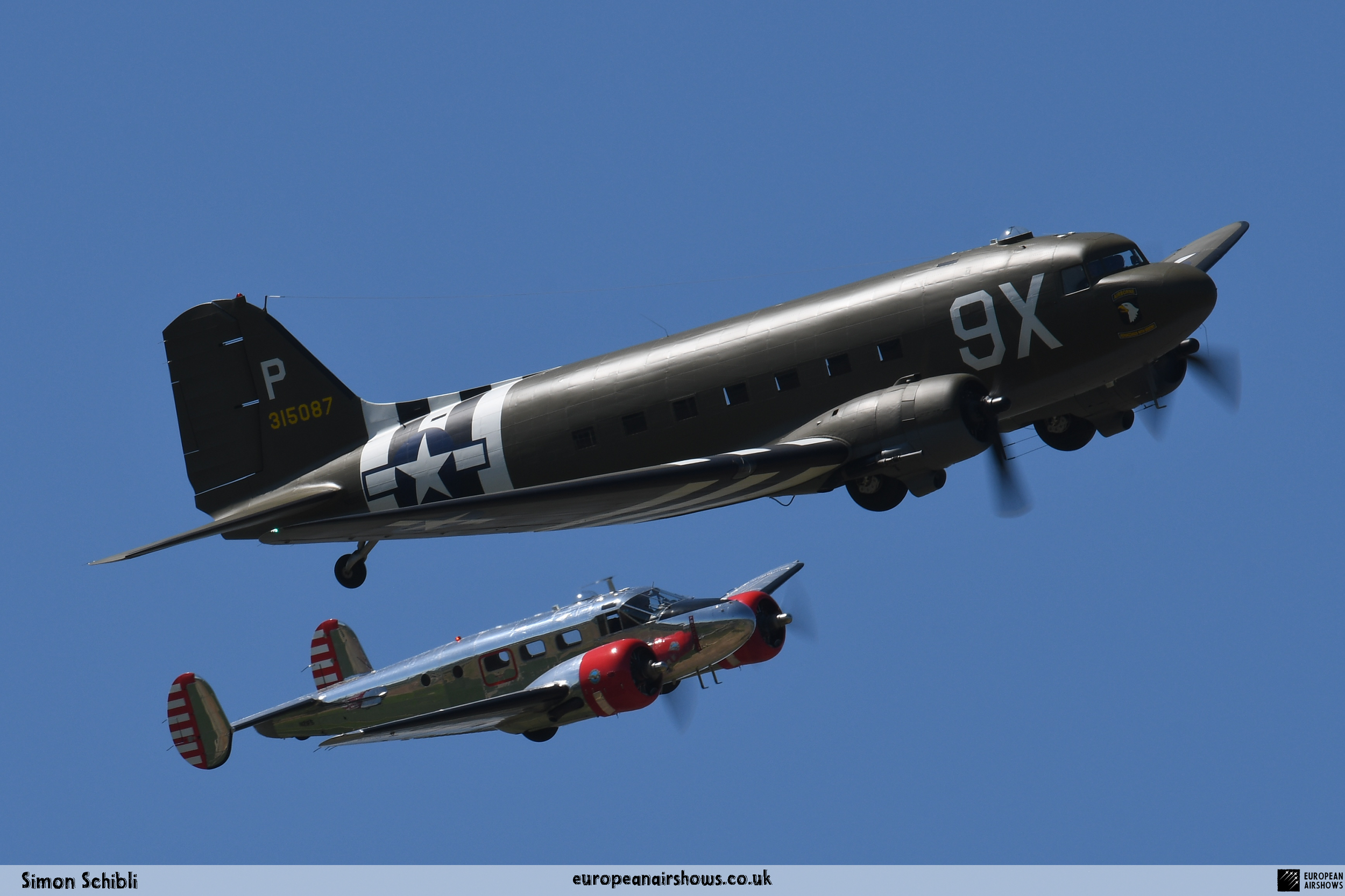
Classic 1 sets the pace and provides a large, stable visual reference for the three Beech aircraft flying around it.
Four-ship passes
The complete formation presents the polished undersides, radial engines and size difference in clean, readable shapes.
Curving presentation
Gentle formation turns keep the aircraft in view for longer and expose changing angles without relying only on straight flypasts.
Break and rejoin
Separating the Beech element from the DC-3 adds movement before the aircraft rebuild the formation or set up the next pass.
Radial-engine soundtrack
Eight radial engines create a layered sound unlike a single-type formation: two larger Twin Wasps and six smaller Wasp Juniors.
Event-specific programme
Formation size, sequence and duration depend on aircraft serviceability, crew availability, weather, venue geometry and approval.
The aircraft
A former USAAF transport leads three former Canadian Expeditors.
N431HM · Douglas DC-3, Classic 1
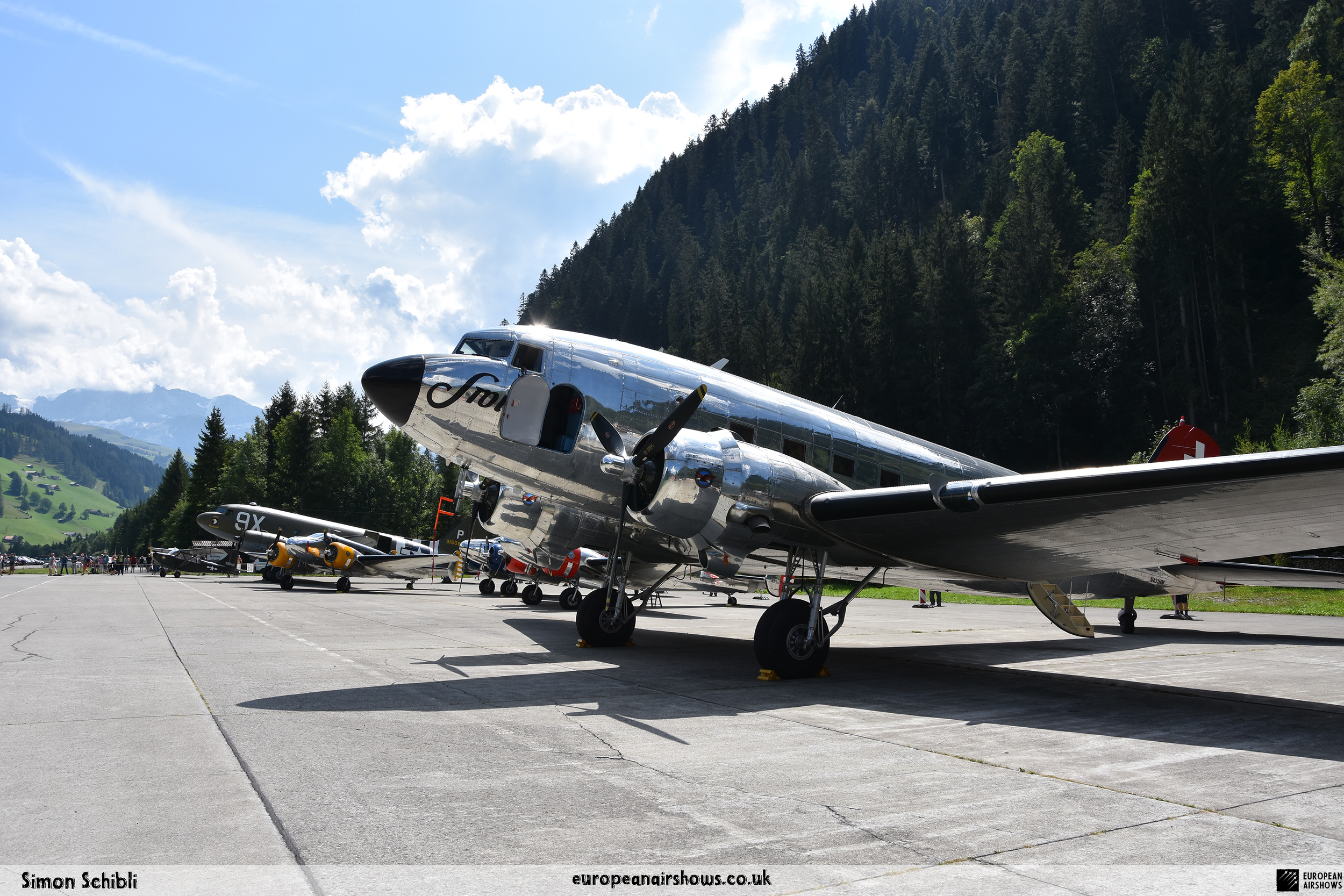
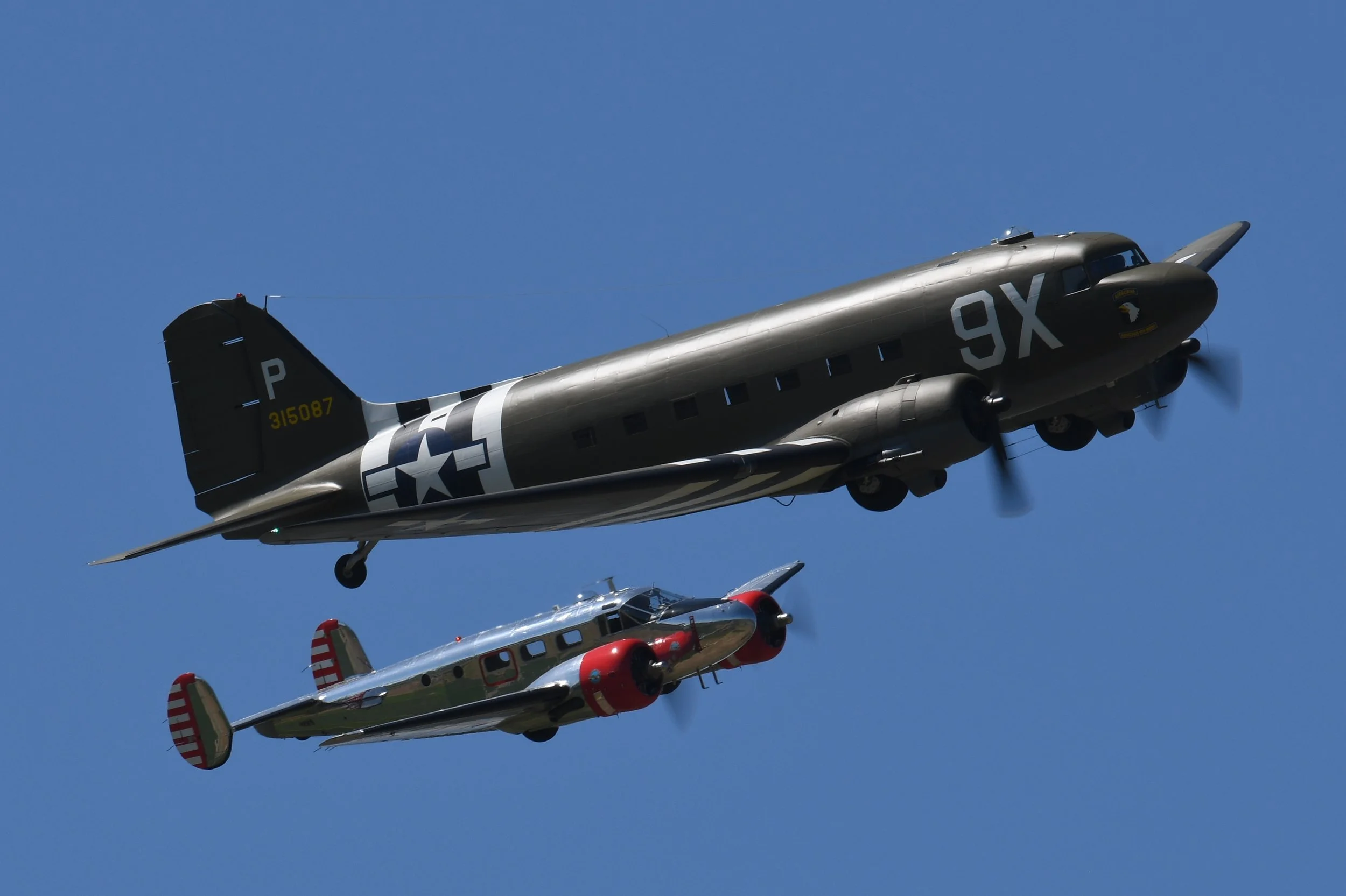
The lead aircraft was built at Long Beach in 1943 as C-47A-45-DL serial 42-24133, construction number 9995, for the United States Army Air Forces. Its long civilian career eventually brought it to Switzerland as HB-ISC. Following overhaul and US re-registration it became N431HM.
Swissair colours, but not a former Swissair airframe
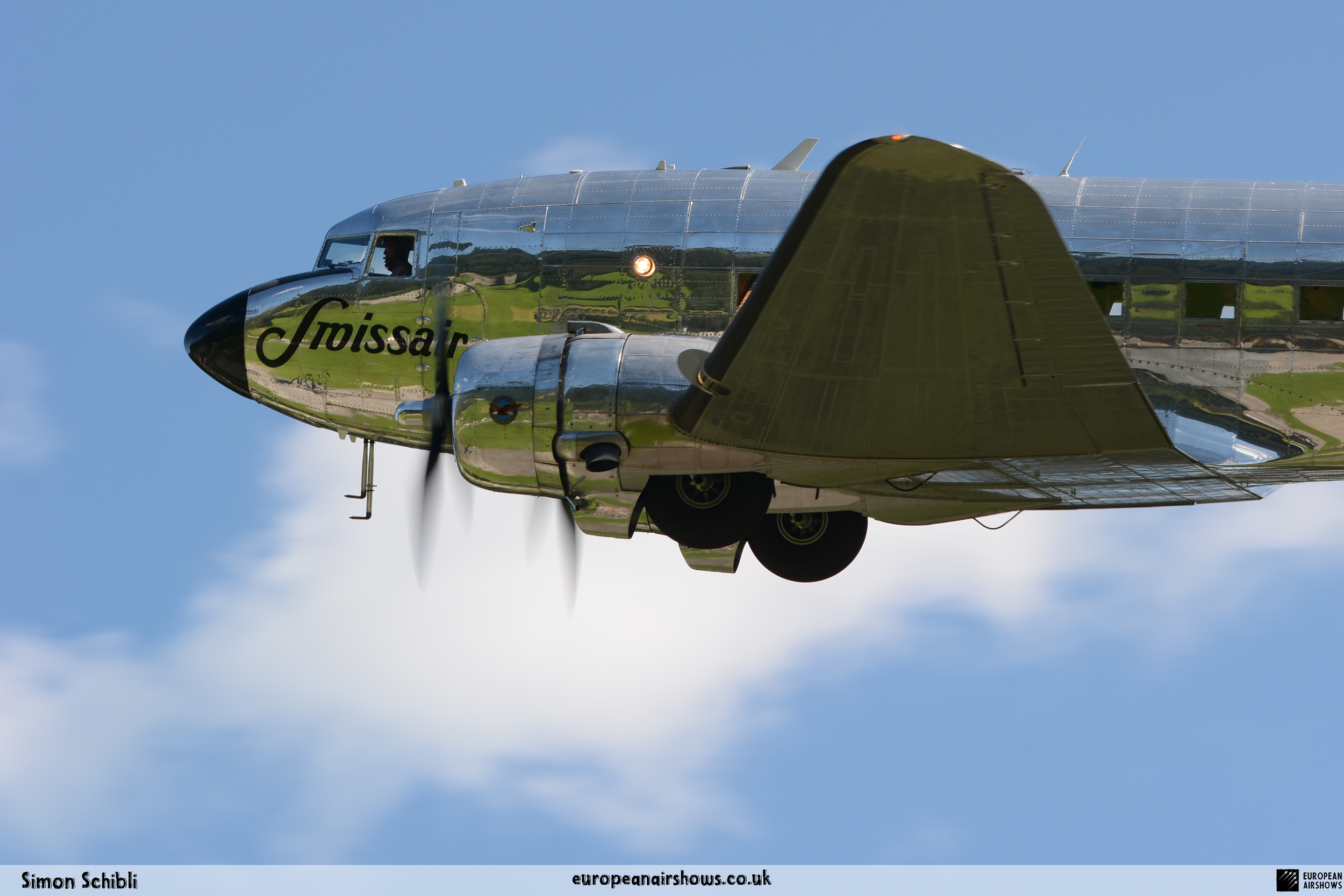
N431HM's polished finish recreates the appearance of an early Swissair DC-3 and celebrates Swiss civil aviation. The distinction matters: this particular aircraft never operated for Swissair. The livery is historical interpretation, while the airframe's own origin is military C-47A.
N223CM, N21FS and N184KP · Beechcraft Model 18
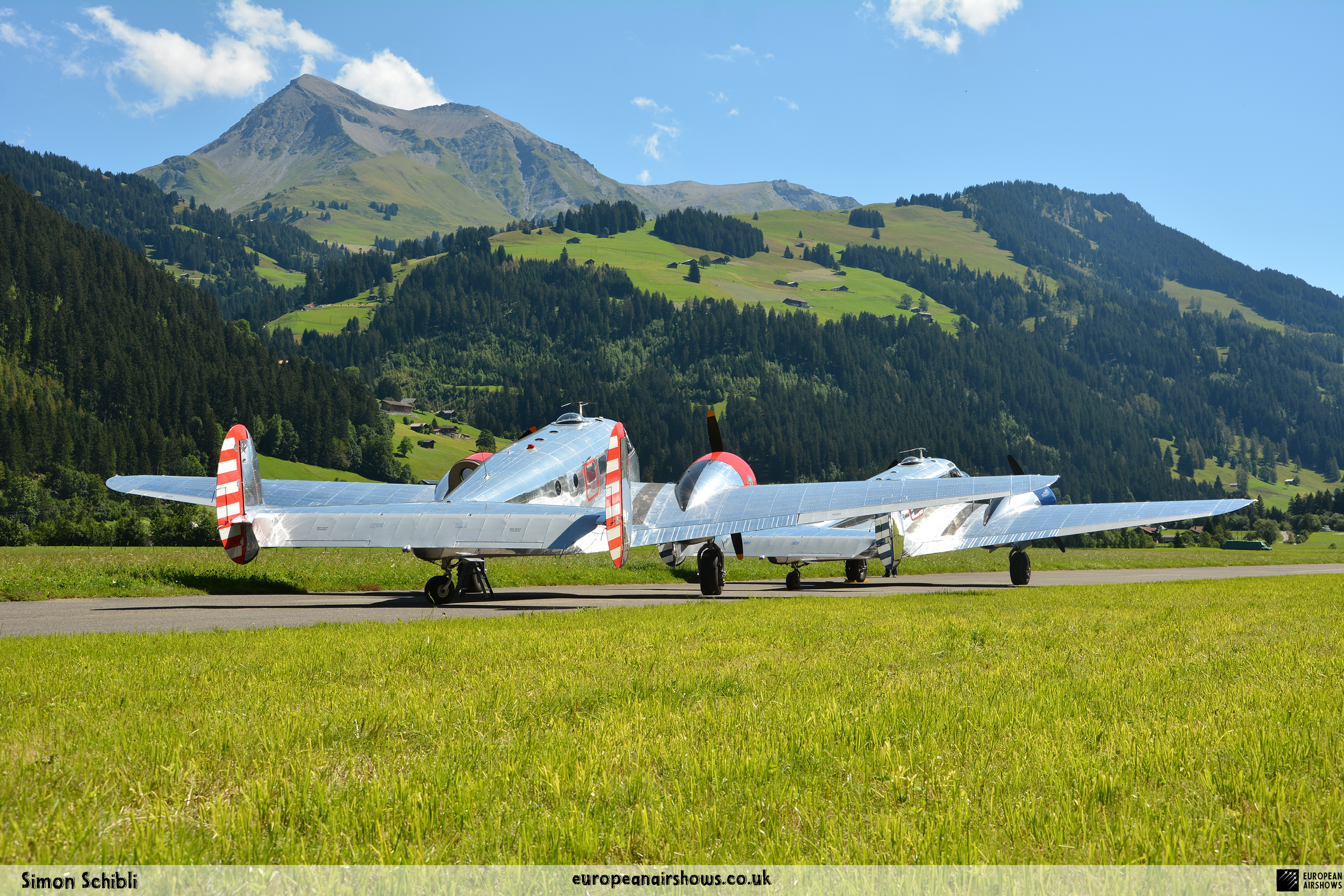
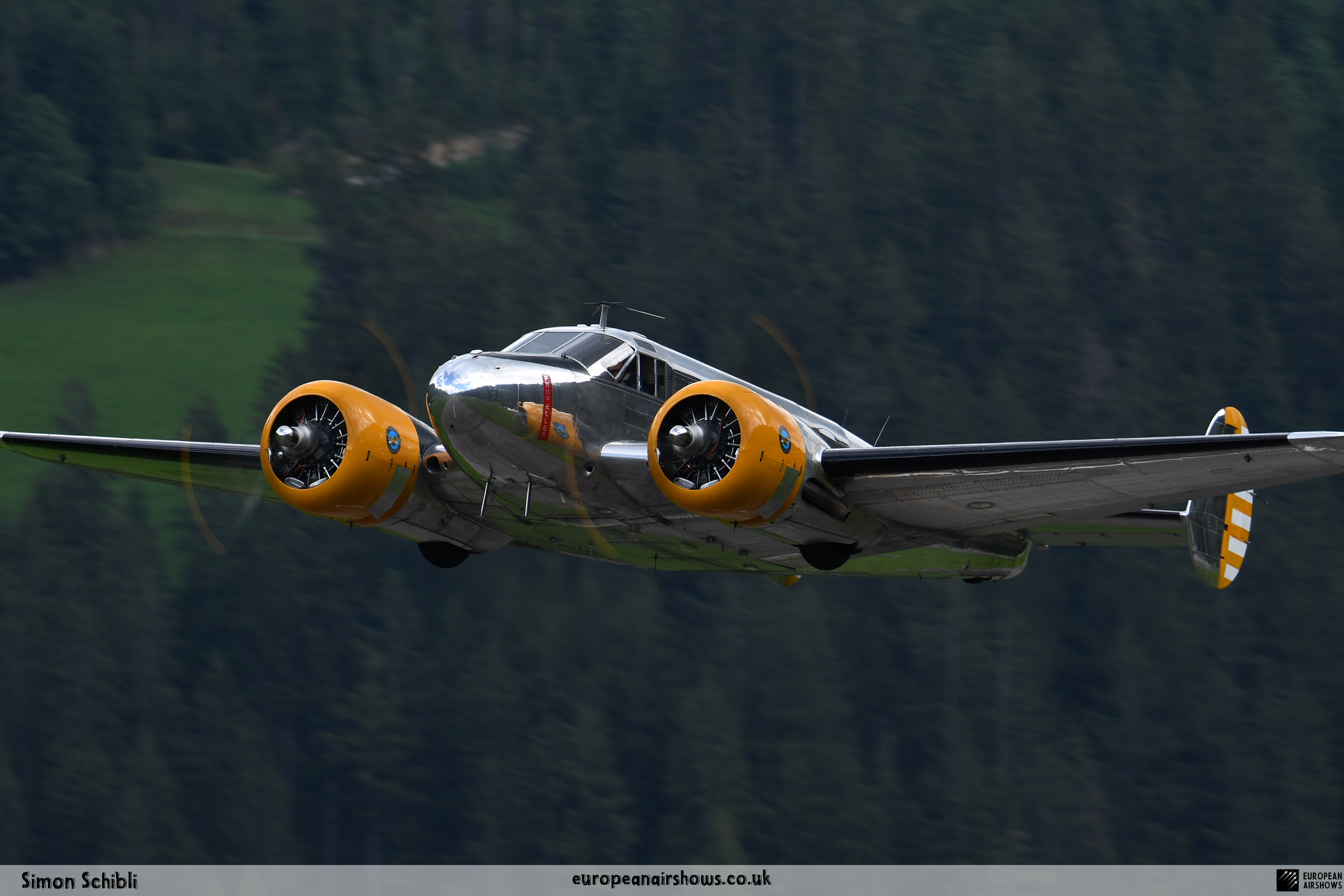
All three Beech twins were built in 1952 and served with the Royal Canadian Air Force as Expeditors before moving into civil ownership. Their compact airframes and shared Pratt & Whitney Wasp Junior powerplants give the formation a coherent smaller element around the much larger DC-3.
One family appearance, three individual aircraft
The blue, red and yellow trim corresponds to Classic 2, 3 and 4. The three aircraft should not be reduced to one generic Beech 18 entry in detailed event coverage: each has its own registration, Expeditor history and crew.
N431HM
Classic 1. Douglas DC-3/C-47A built in 1943, finished in Swissair heritage colours.
N223CM
Classic 2. Blue-trimmed Beechcraft Model 18, built in 1952 and formerly RCAF 2344.
N21FS
Classic 3. Red-trimmed Beechcraft Model 18, built in 1952 and formerly RCAF 1538.
N184KP
Classic 4. Yellow-trimmed Beechcraft Model 18, built in 1952 and formerly RCAF 1530.
How the formation developed
The four-ship grew from an earlier Swiss formation-flying project.
2006
A modern twin-engine forerunner
A public formation of three Diamond DA42 Twin Stars at Grenchen provides an early predecessor to Mathys' later historic-aircraft concept. Philipp Müller is already involved in the formation work.
2007-2010
The DC-3 is secured and overhauled
Hugo Mathys acquires the former HB-ISC, keeping the airworthy aircraft in Switzerland. A major overhaul and US re-registration establish N431HM as the future formation leader.
Early 2010s
The Classic Formation takes shape
Archive films document N431HM flying with two Beech 18s as the recognisable historic formation develops around training, polished presentation and European appearances.
2016
Three aircraft at Flying Legends
The DC-3 and two Beech 18s make a notable appearance at Duxford, demonstrating the original three-aircraft version of the display.
2017
German debut at Speyer
The three-aircraft Classic Formation presents its choreography at Airliner Classics, one of a growing number of appearances beyond Switzerland.
By 2018
The third Beech creates a four-ship
N184KP joins N223CM and N21FS around the DC-3, completing the one-plus-three formation represented in the team's logo and aircraft numbering.
Established format
Training sustains the display
Dedicated formation practice, recurrent type training and specialist maintenance support the continuing operation of the DC-3 and three Beech 18s from Grenchen.
Identity & context
Four distinctions explain what makes the formation unusual.
Swiss operation, US registrations
The formation is based and operated in Switzerland, while all four aircraft carry United States N-number registrations.
Heritage livery, different history
N431HM honours Swissair visually but did not fly for the airline. Its own story began as a USAAF C-47A.
Private, not military
Hugo Mathys owns and supports the fleet. Experienced former military pilots contribute expertise, but the team itself is civilian.
Formation, not unlimited aerobatics
The spectacle comes from precision, mass, sound and changing geometry rather than high-g manoeuvres or pyrotechnic effects.