Team Raven
6 × Van's RV-8 · Event-dependent seventh aircraft
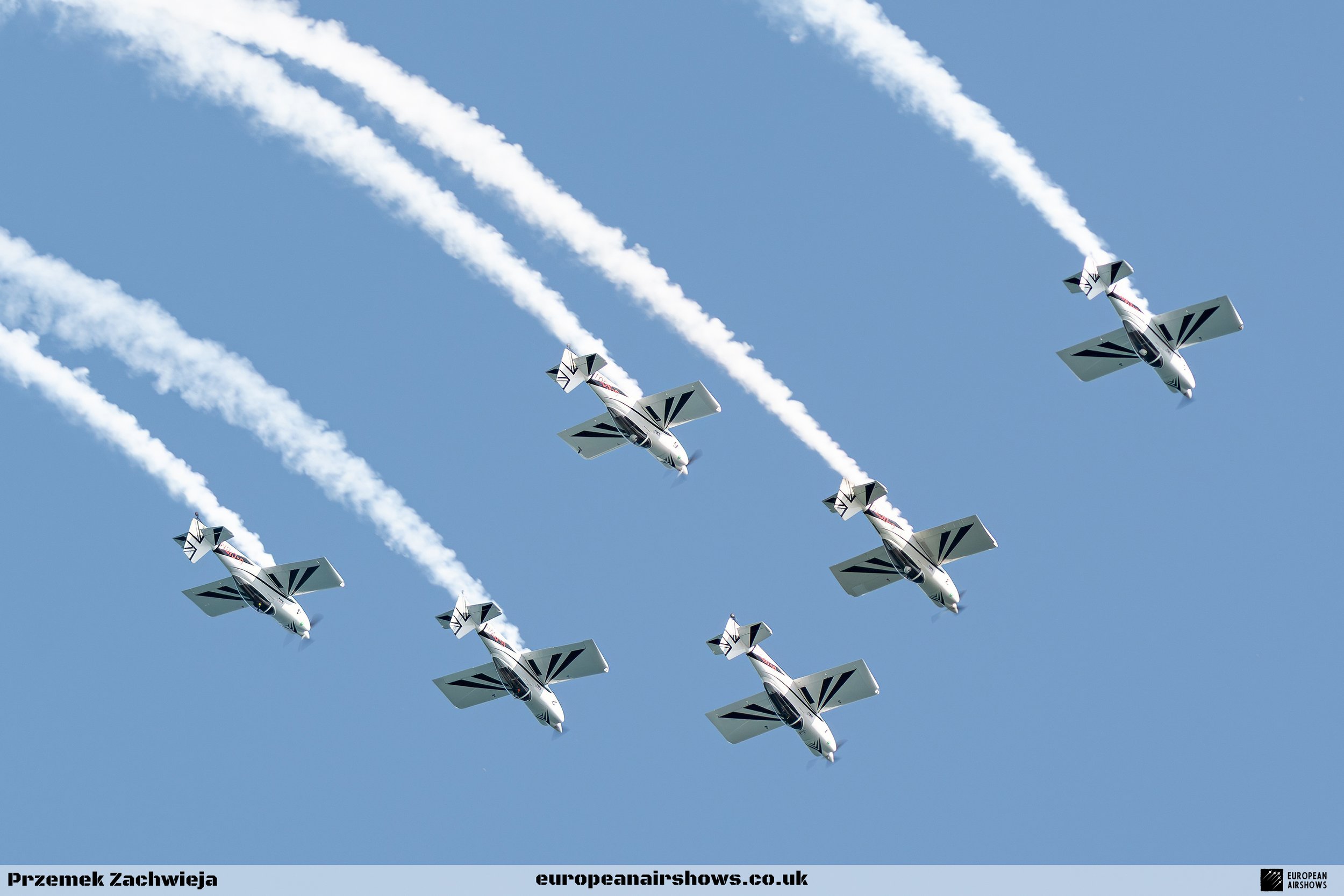
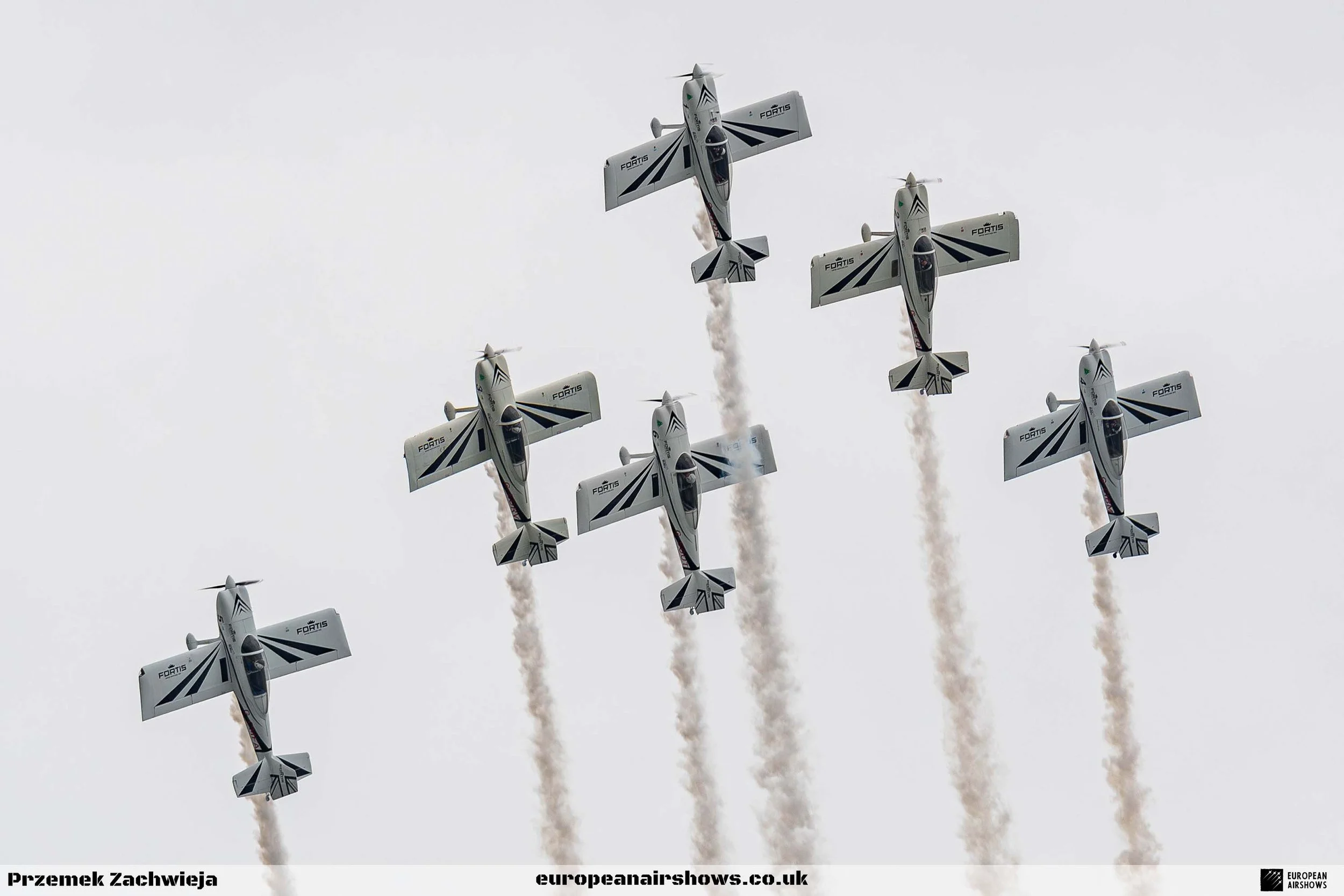
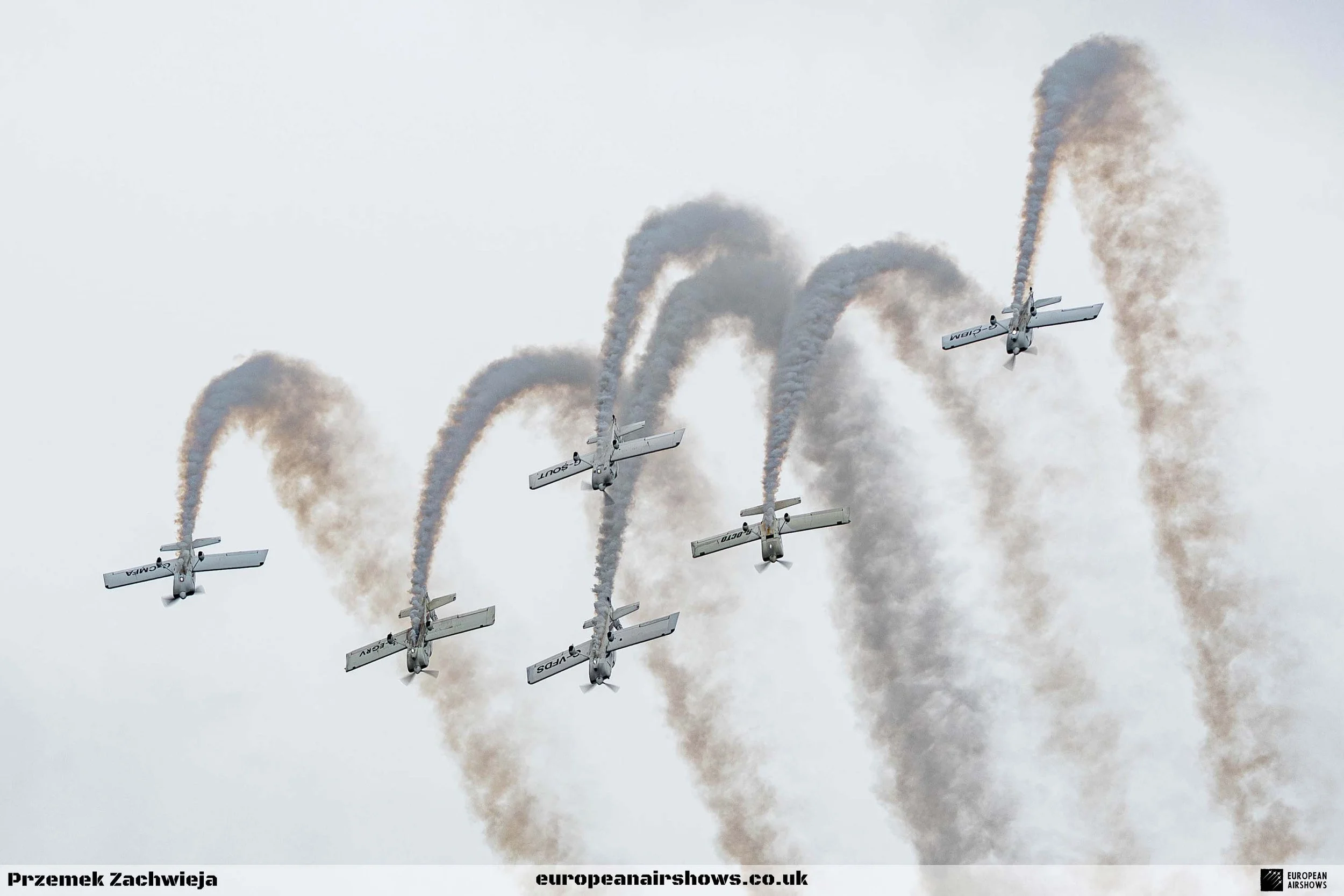
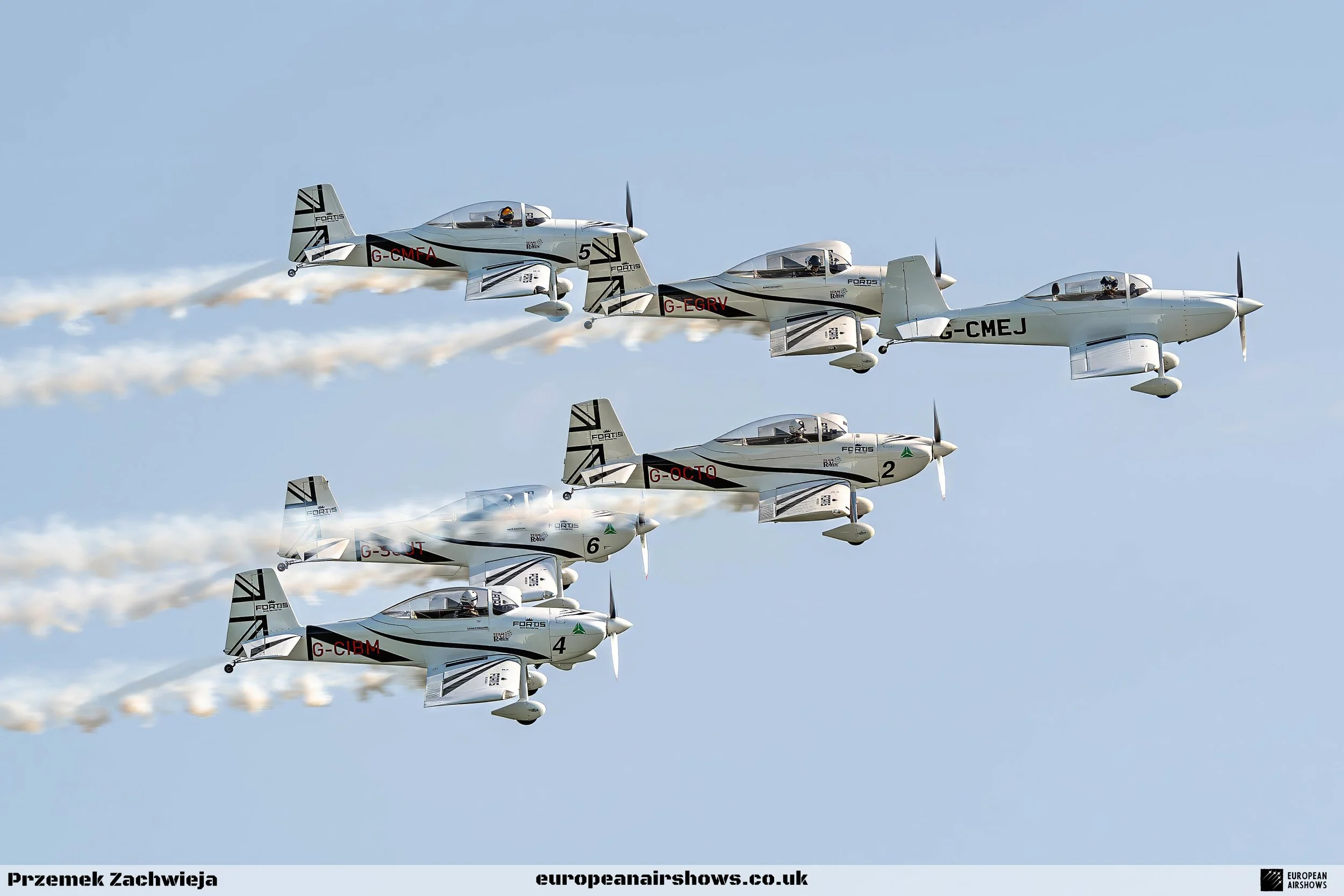
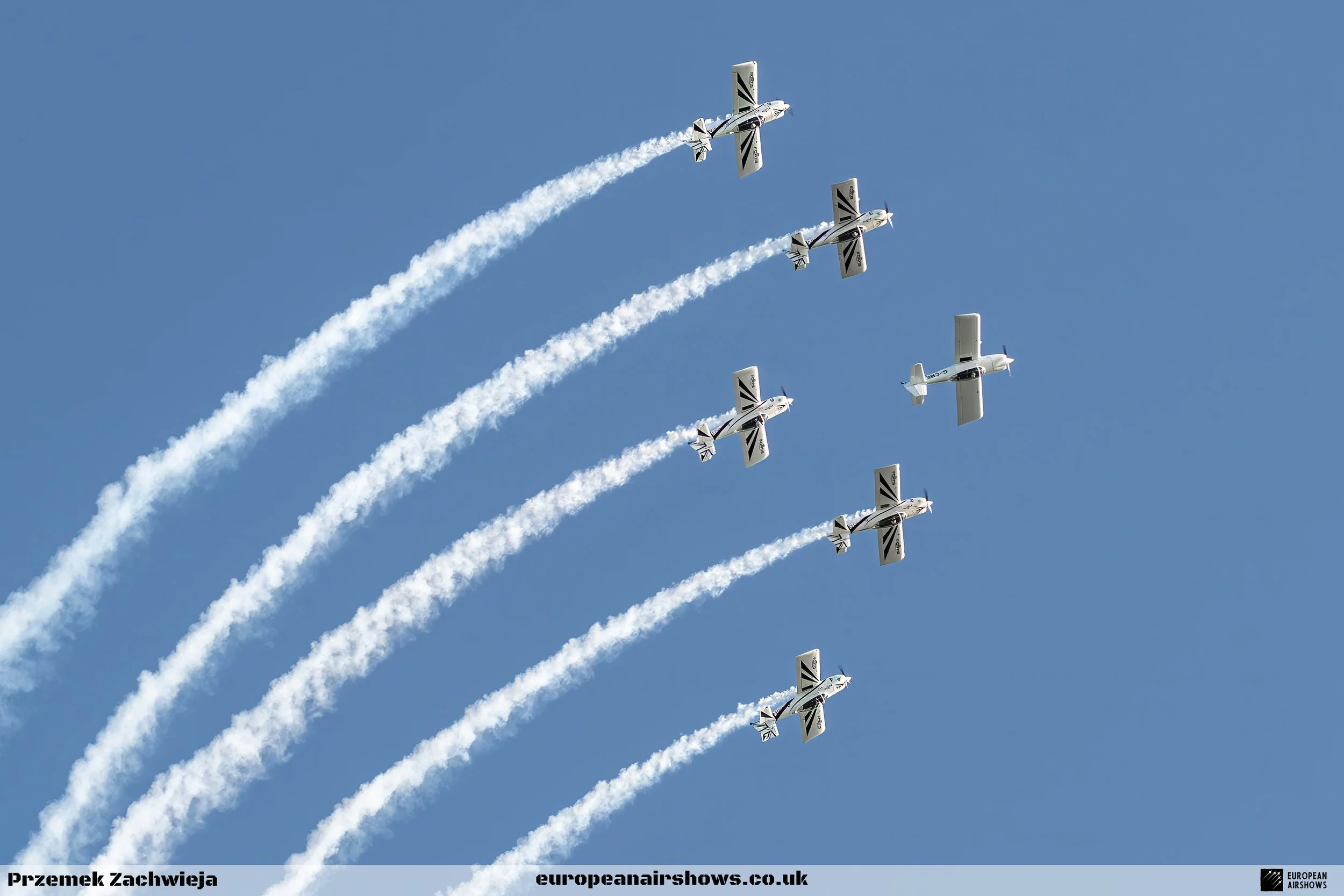
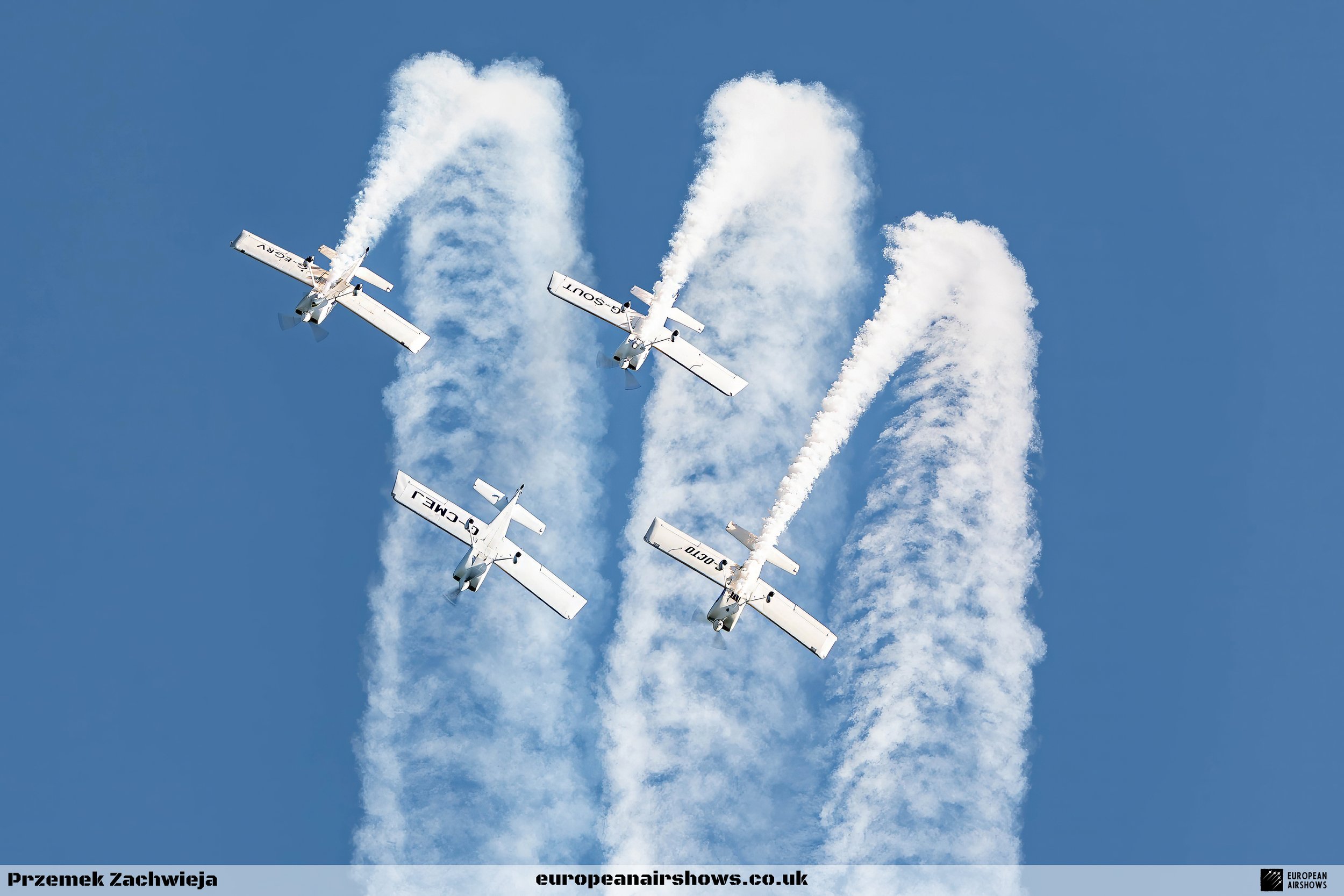
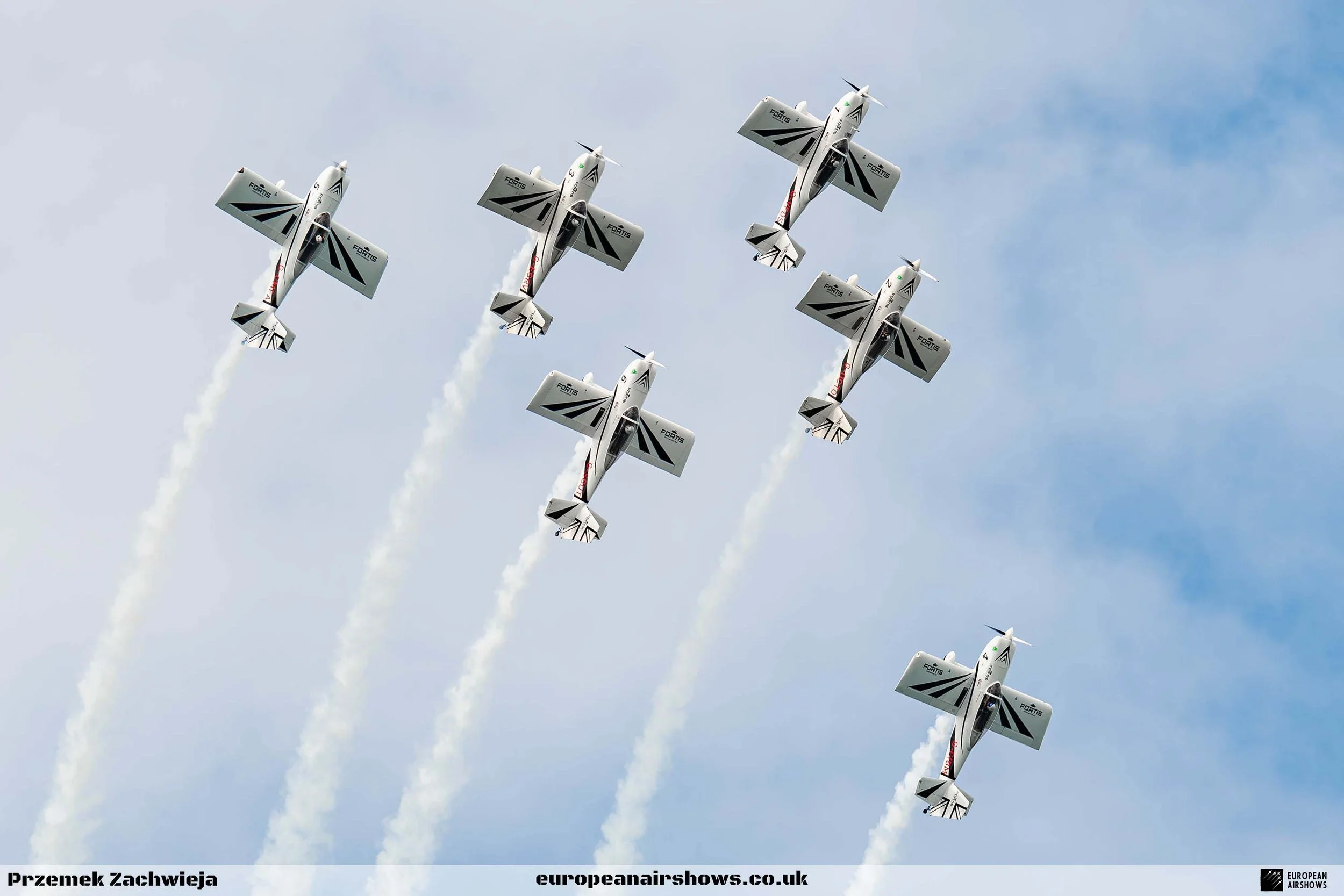
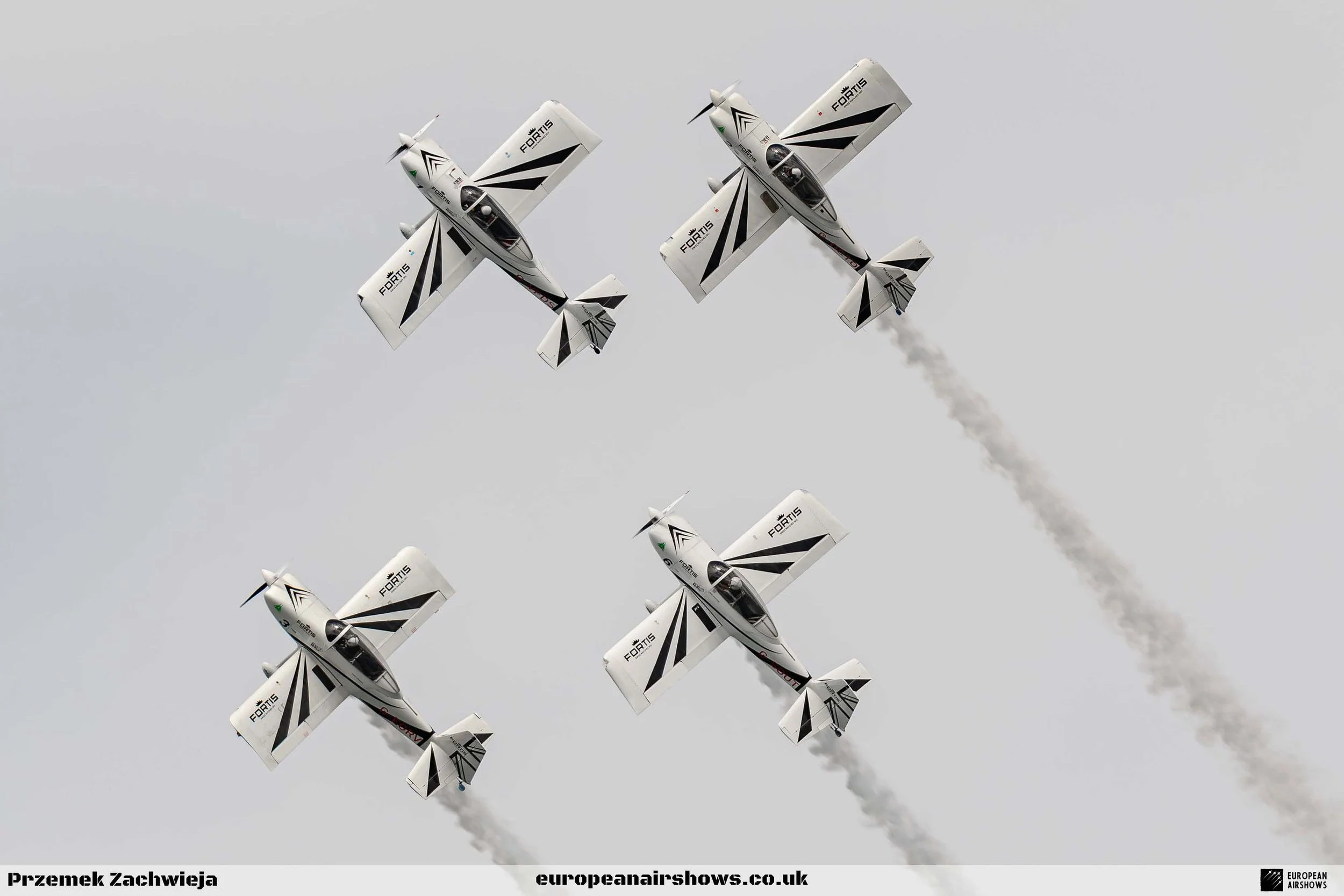
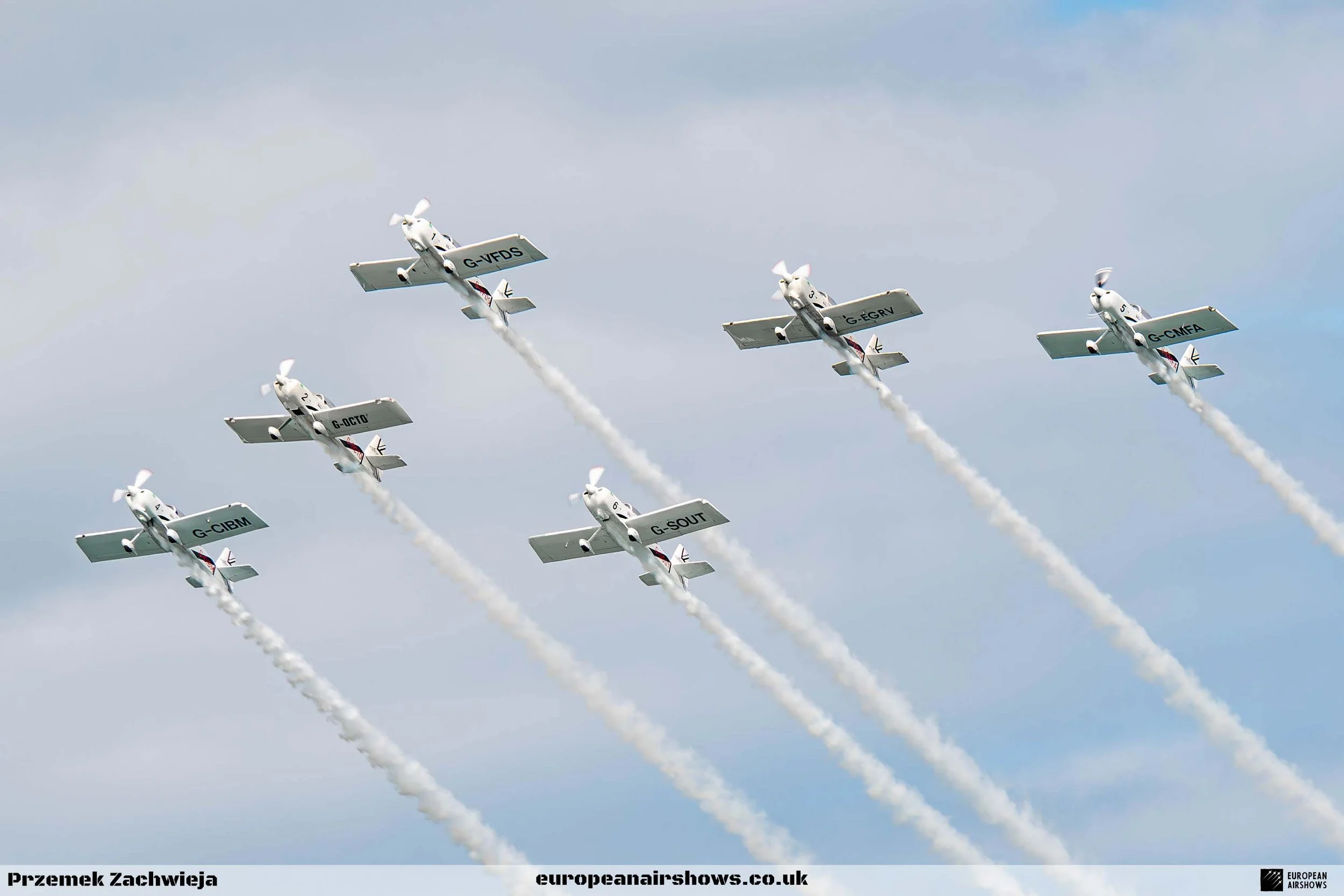
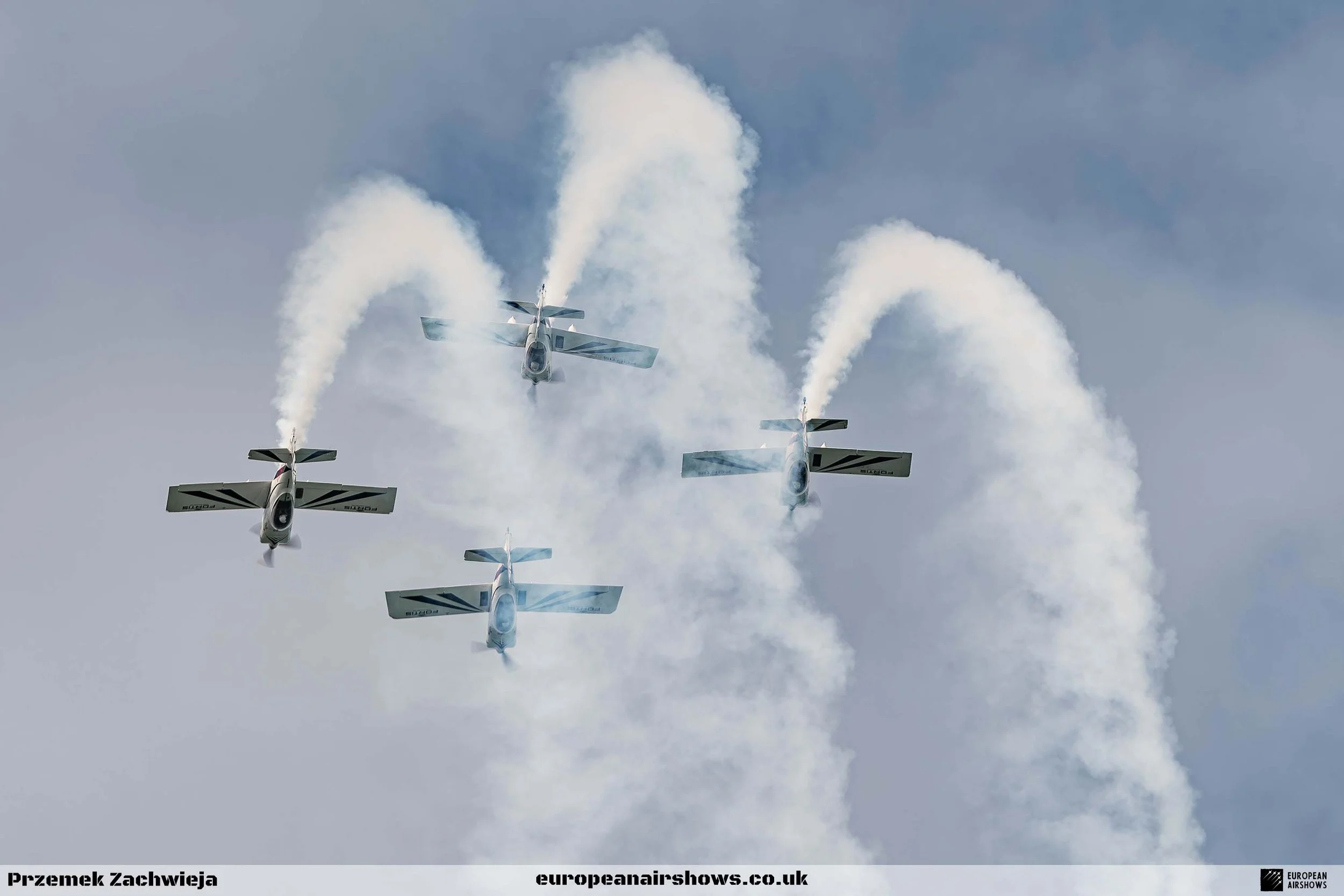
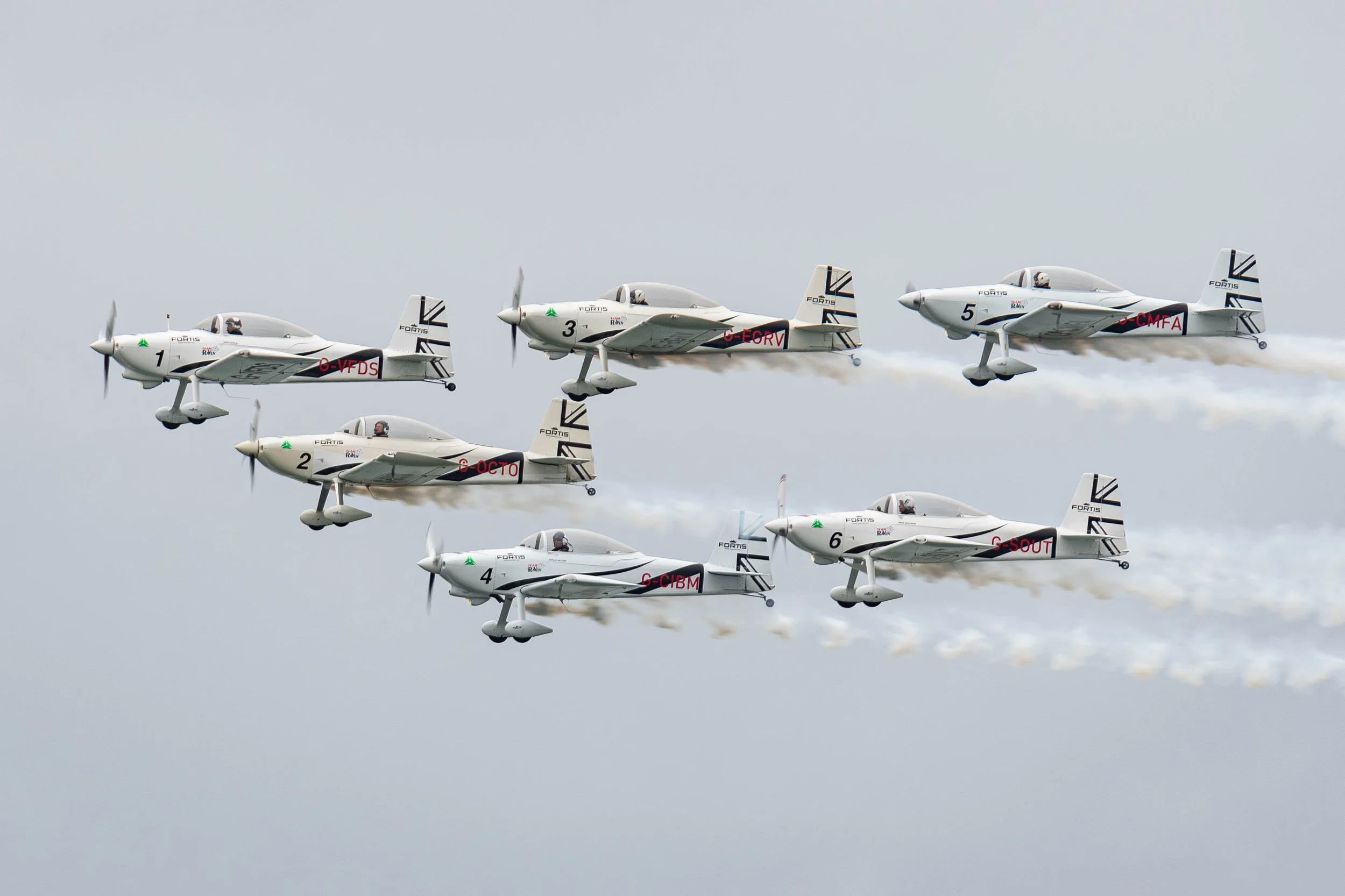
A British team that combines close formation, opposition passes and synchronised aerobatics in fast, owner-built RV-8s. Team Raven is active in 2026 with a standard six-aircraft display, while Raven 7 trains and supports the team as the optional seventh position develops.
- Formed
- May 2014
- Aircraft
- Van's RV-8
- 2026 display
- 6 aircraft
- Raven 7
- Training and support
- Operation
- Privately funded and owned
- Status
- Active international team
The team
Experienced display pilots, privately owned aircraft and a deliberately continuous show.
Team Raven formed in May 2014 around experienced British civilian display pilots, several with earlier links to Team Viper and the Red Star Rebels. The name is a wordplay on the RV family flown by the team. Its first season used five aircraft and established the combination that still defines the act: a main formation, a synchronised pair and very little empty sky between sequences.
This is not a military display unit or a centrally financed corporate team. The pilots own, build and maintain their aircraft, fund the operation themselves and bring together backgrounds spanning RAF fast jets, Fleet Air Arm aviation, civilian aerobatics, engineering and airshow management. The team is based at Swansea Airport, while pilots and aircraft are based at airfields around the United Kingdom.
Six aircraft are the 2026 standard
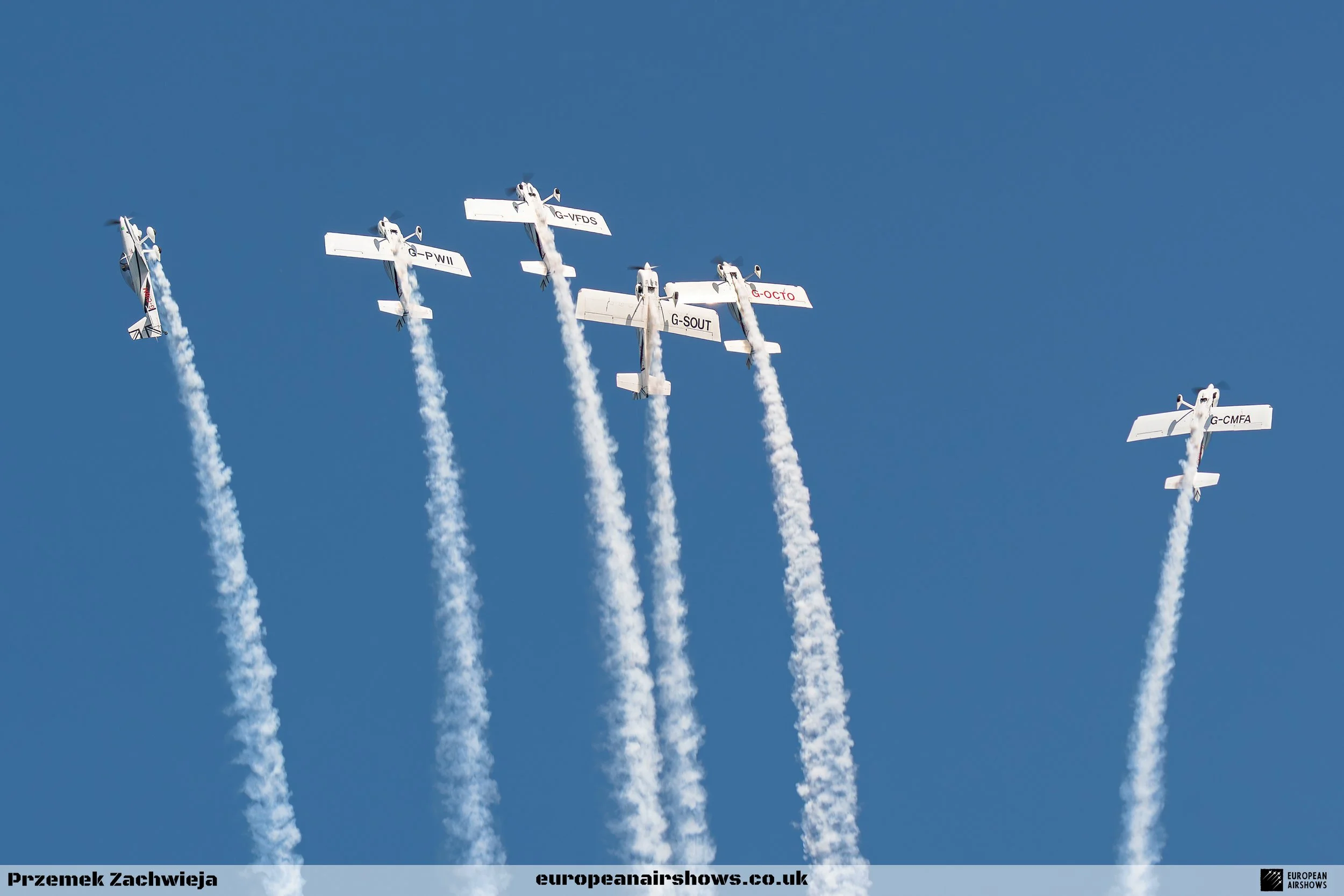
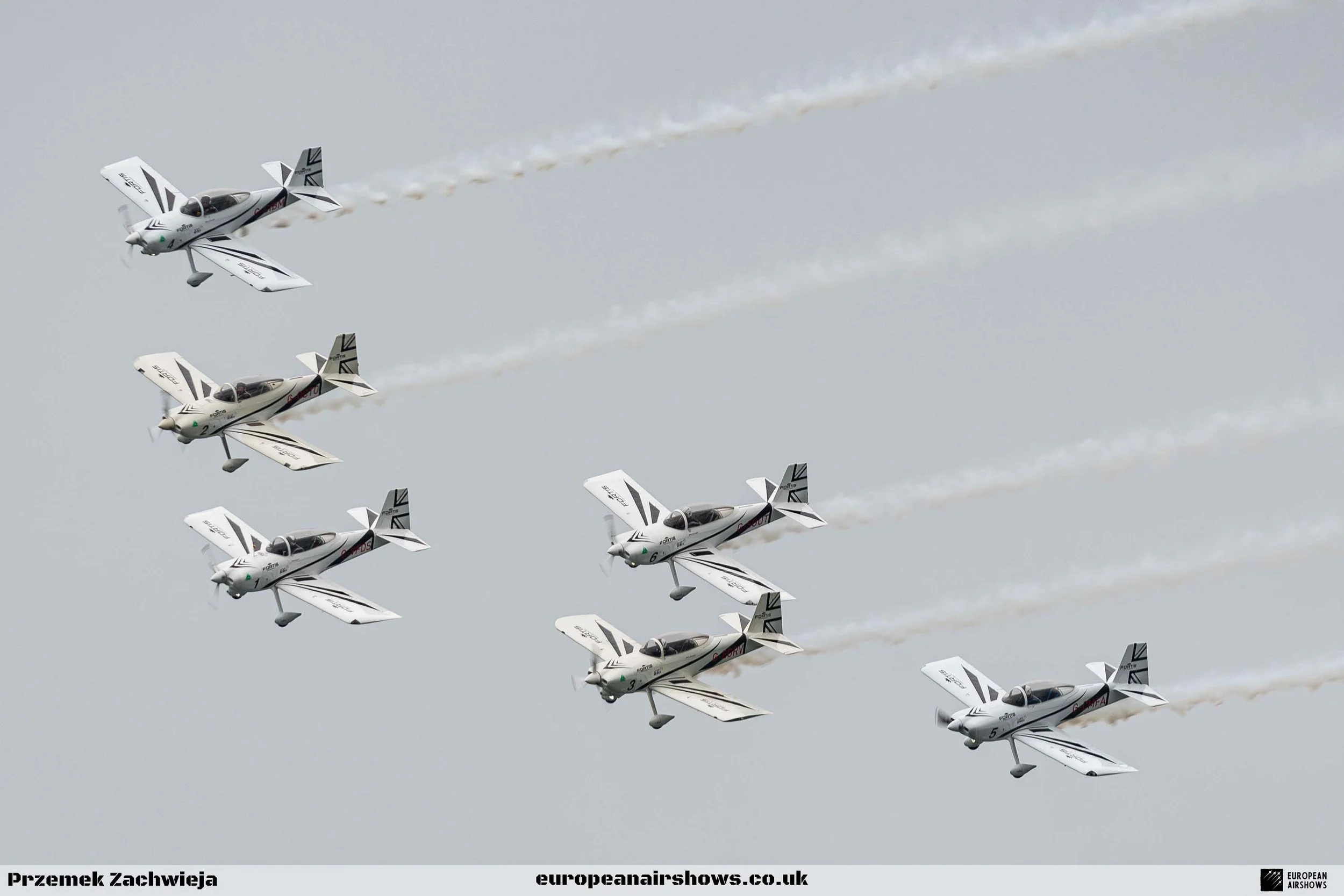
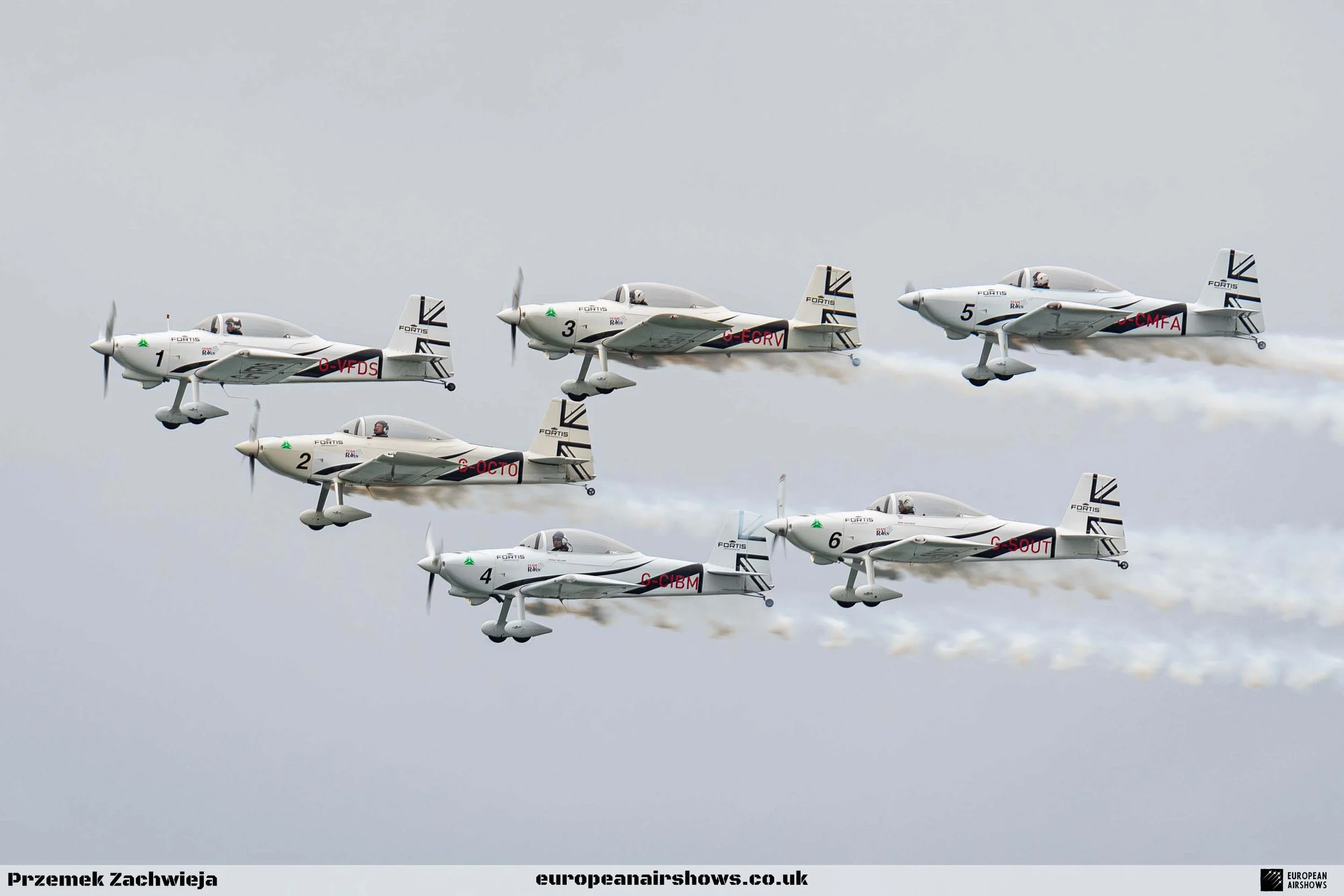
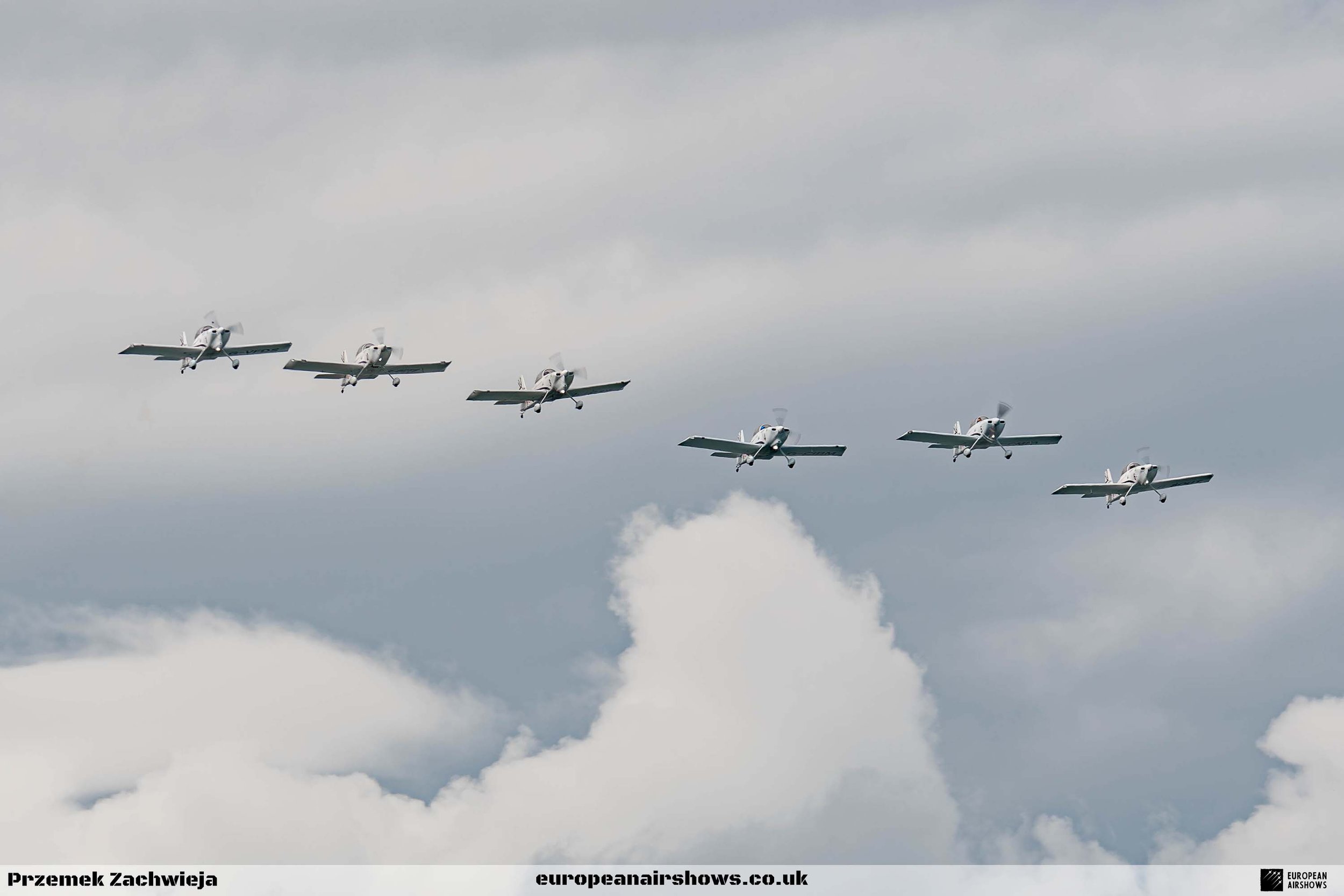
Team Raven's current website describes a six-ship RV-8 display, and its 2026 international event material does the same. The team did introduce a seven-aircraft formation during 2025, but the seventh place should not be presented as guaranteed at every current booking.
Raven 7 remains part of the team
Bruce Buglass owns the seventh RV-8 and is listed as Raven 7. During 2026 he is in a training year, supporting the operation and providing display commentary while working towards the full formation role. A seventh aircraft may therefore appear in selected flypasts or event-specific presentations, but the published core display remains six.
A deep bench of display experience
The flying roster combines former military and civilian display expertise. Simon Shirley leads the formation, supported by Patrick Willson, Pete Wells, Gerald Williams, Russ Eatwell and Mark Southern. Barry Gwynett, who flew with the team from its formation until retiring from display flying in 2023, remains team manager.
The display
Main formation and synchro action woven into one fast-moving routine.
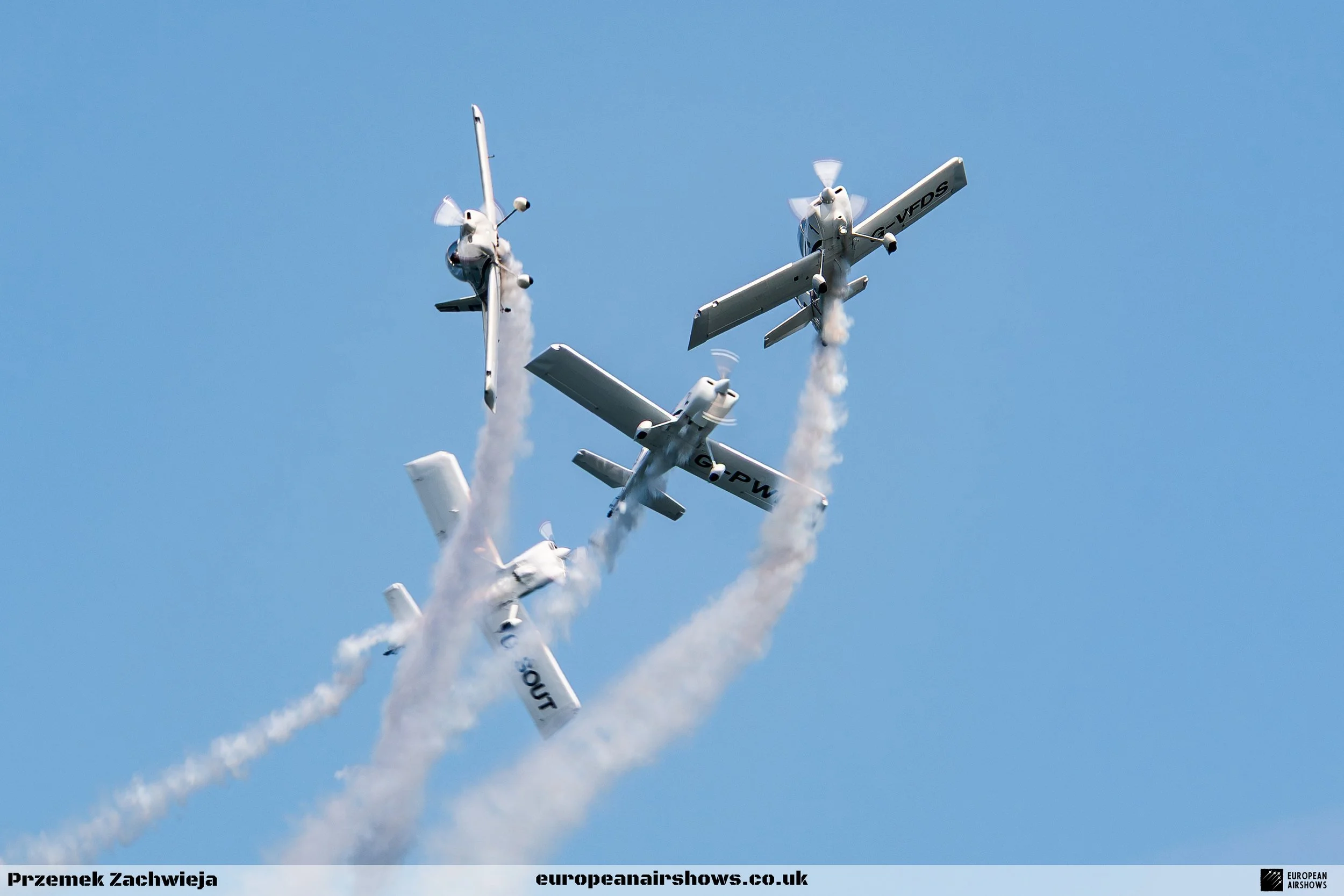
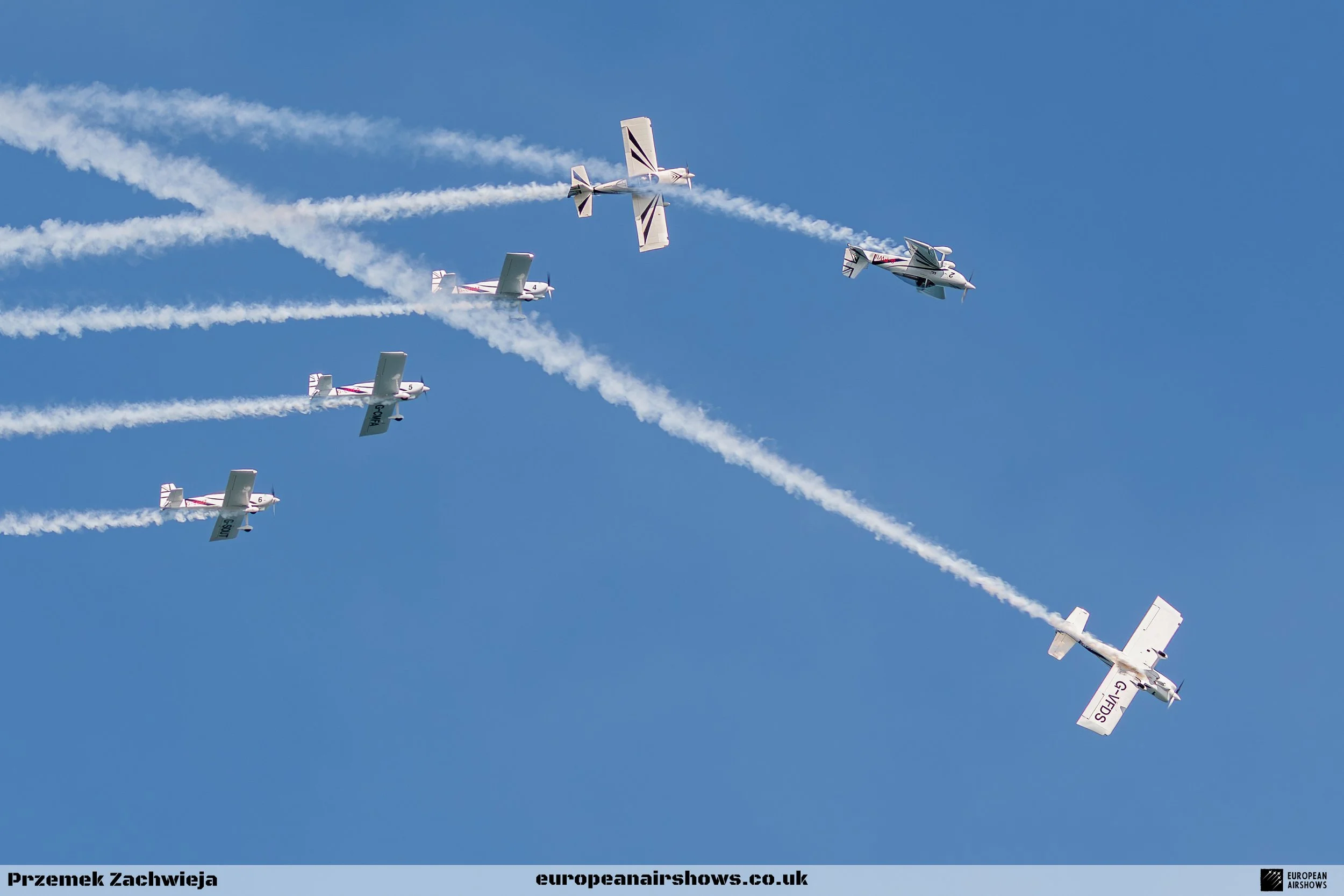
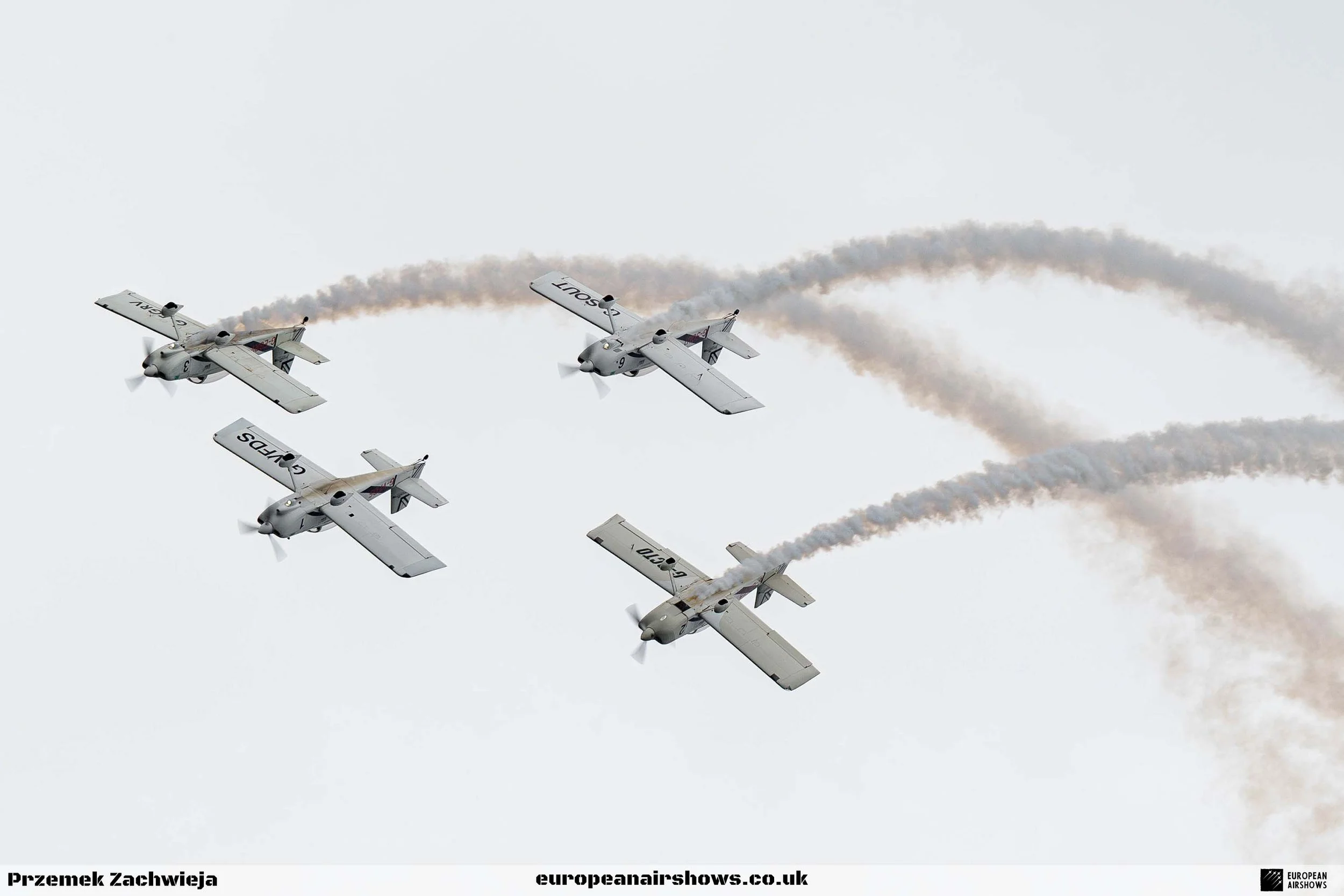
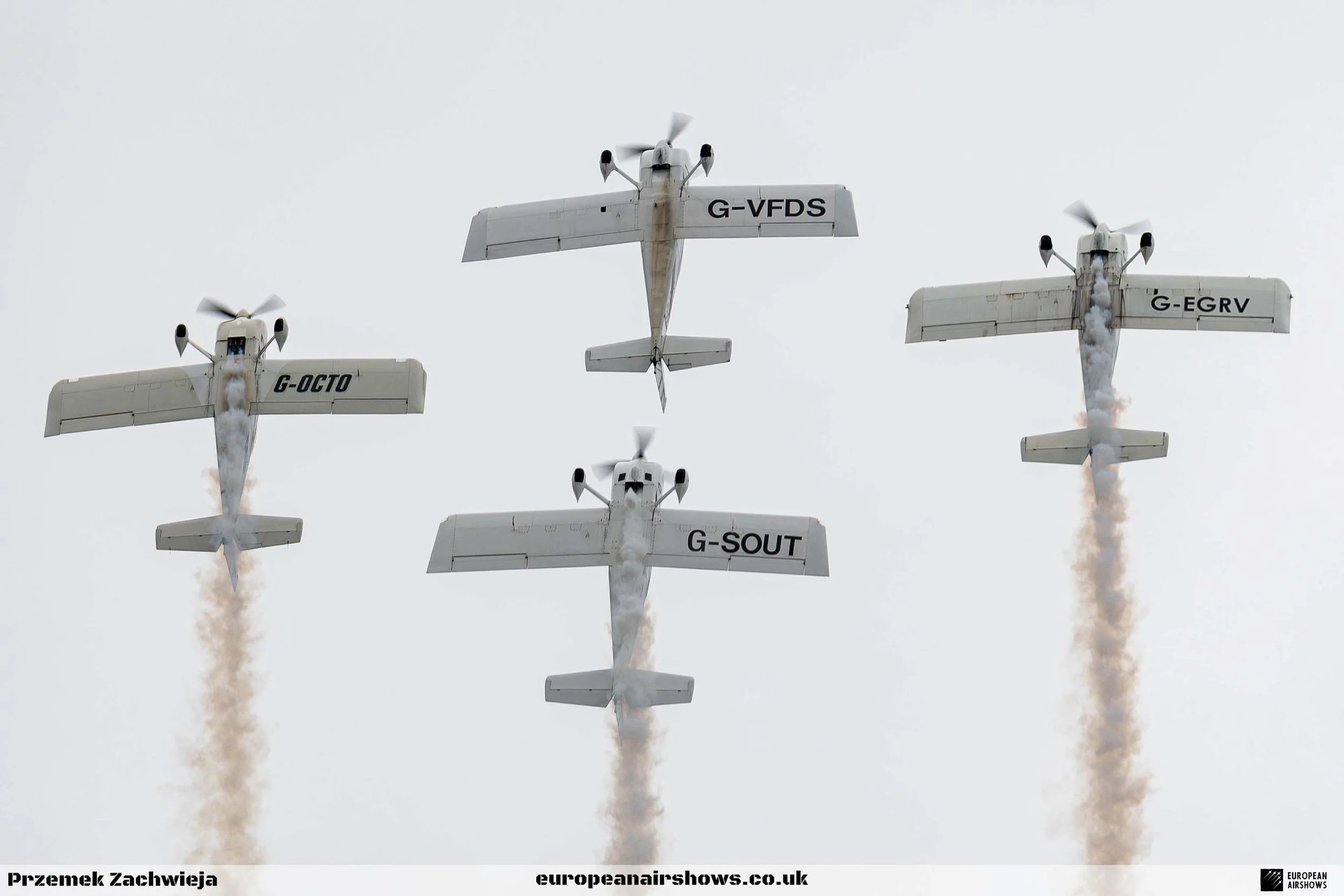
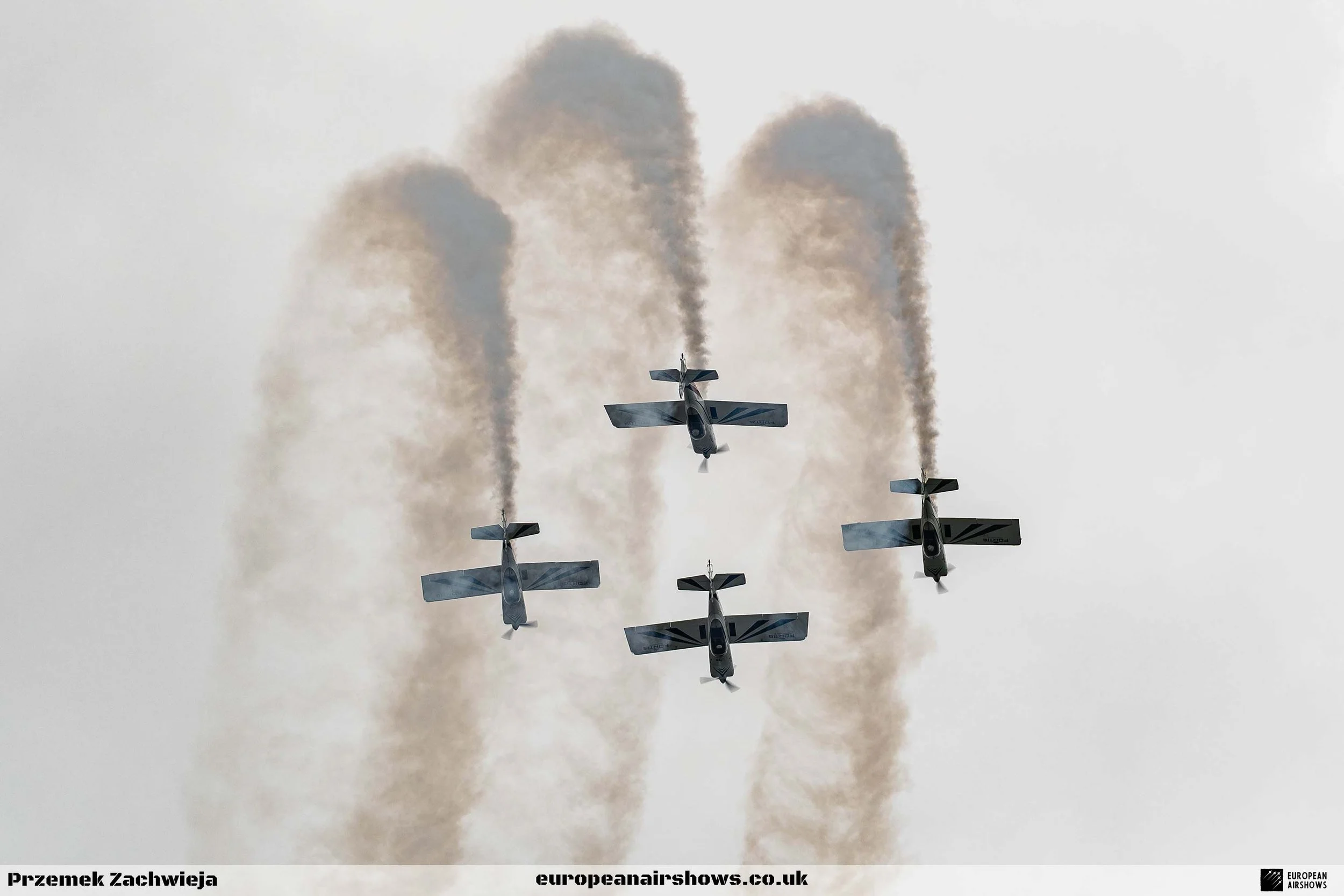
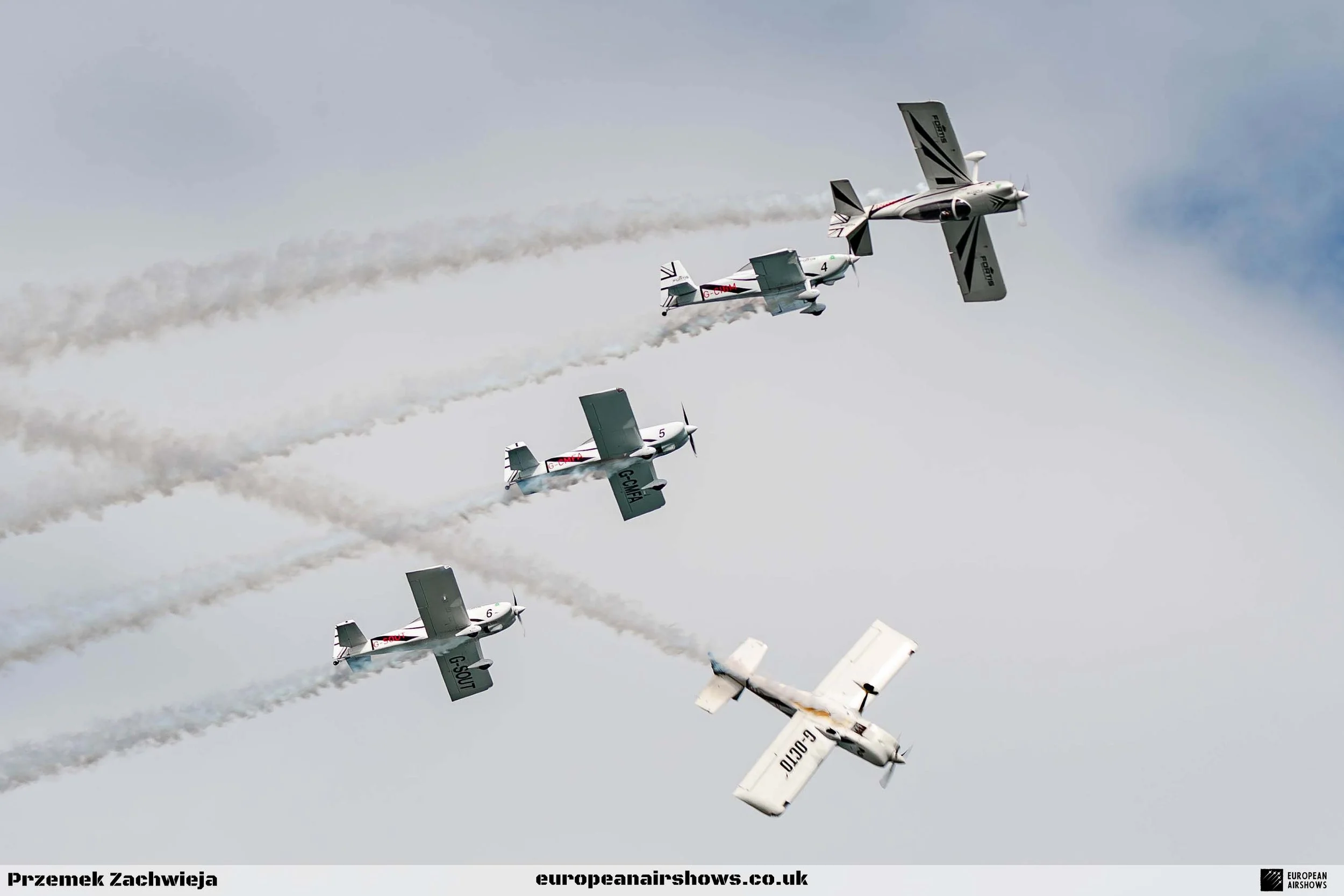
Team Raven designs its sequence to keep aircraft in front of the audience. The six ship can open together, then divide into a larger formation and a synchronised pair before rebuilding for the closing figures. Weather, display category and aircraft availability shape the exact programme.
Six-ship opening
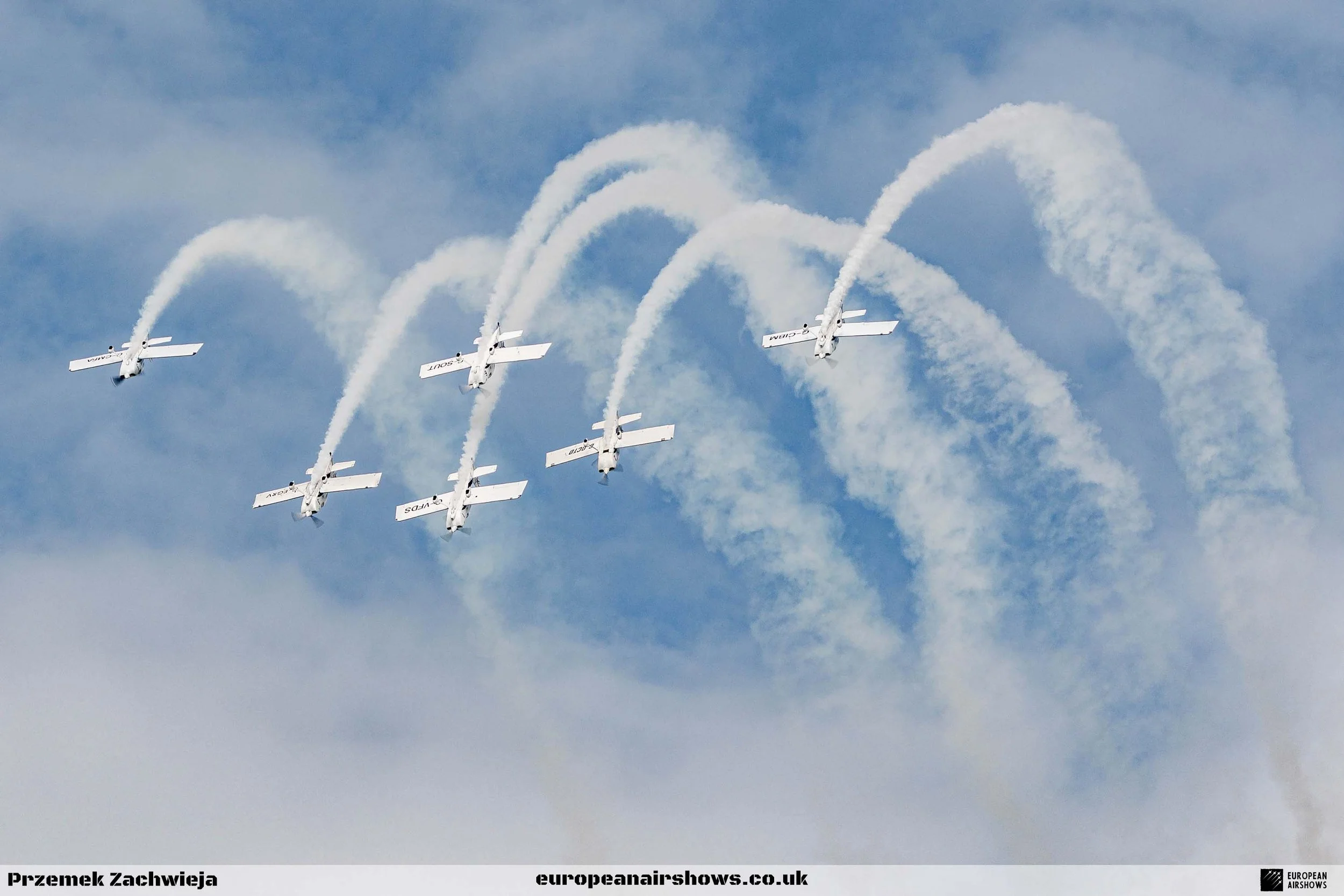
The team can arrive as one compact formation for a loop or wingover, establishing its full scale before the aircraft divide into working groups.
Main formation
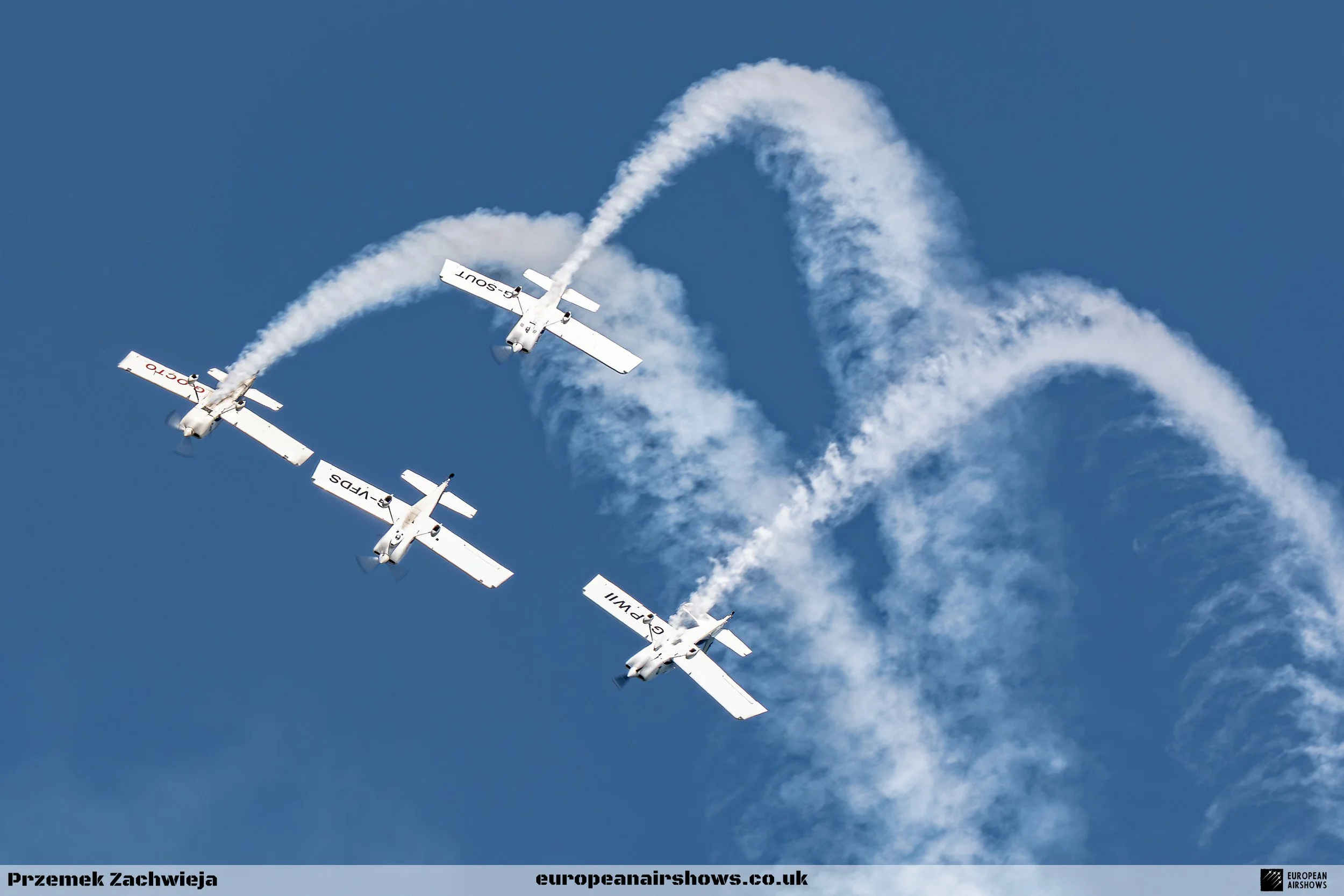
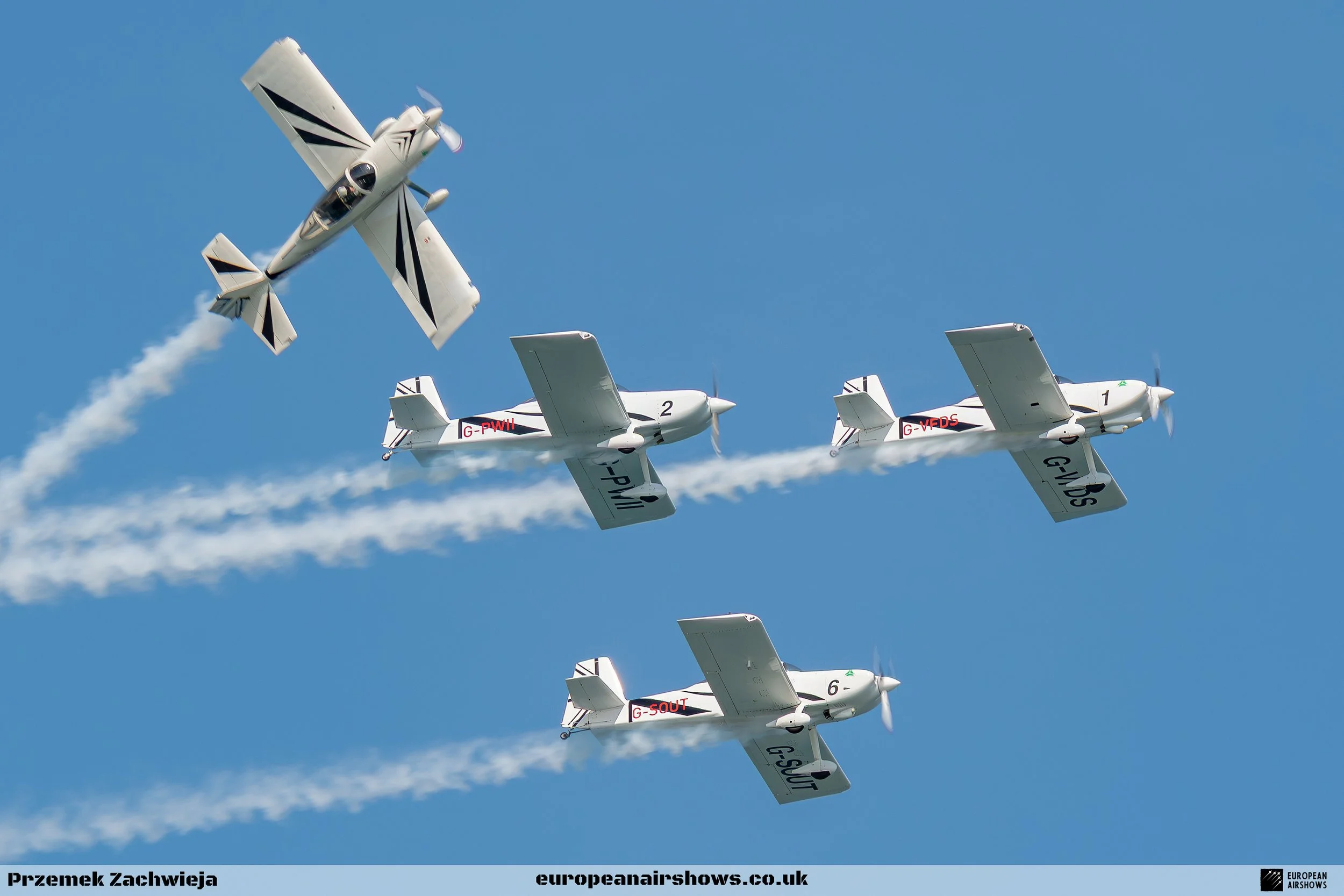
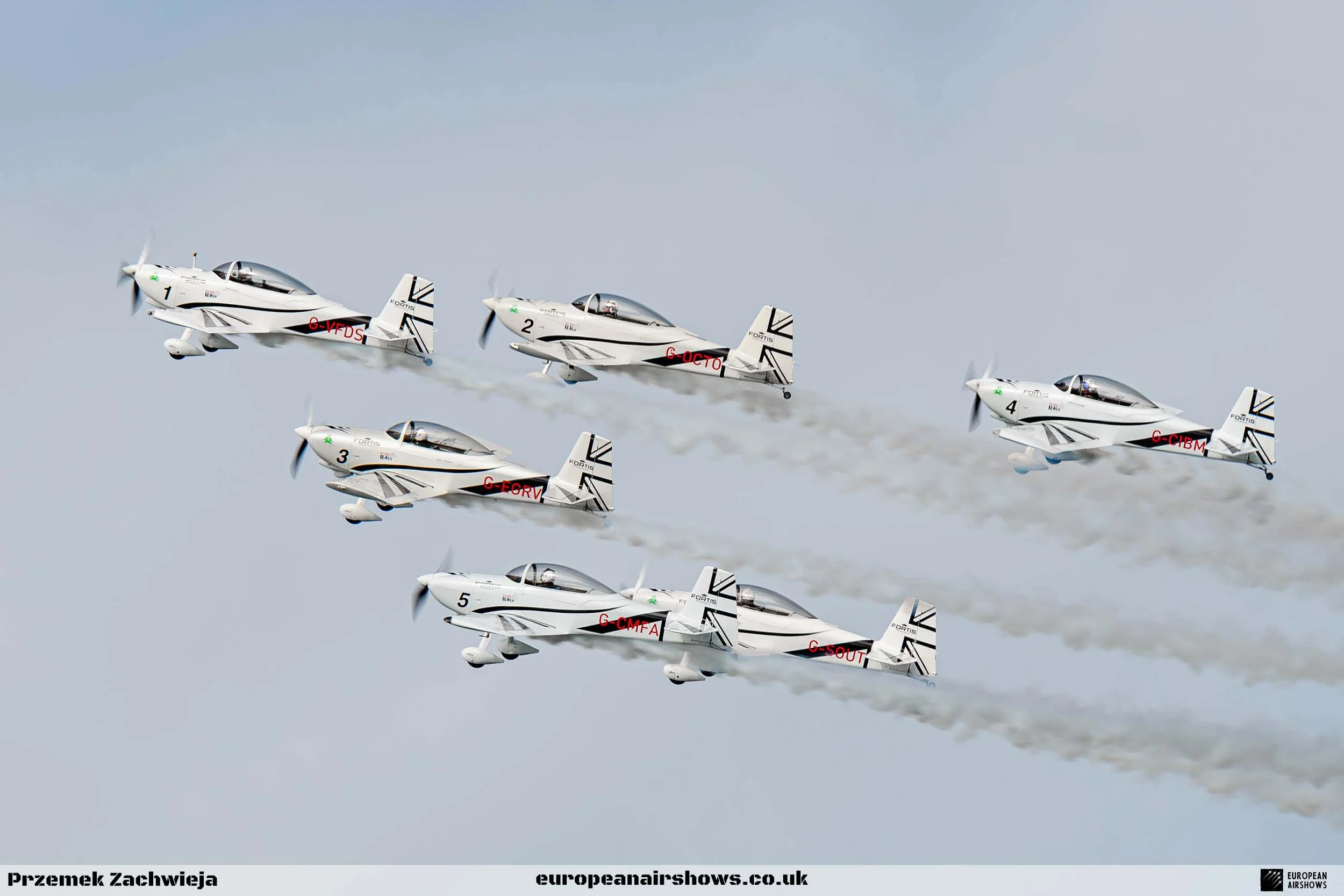
Four or five RV-8s present close loops, rolls, breaks and changing geometry while the smaller element repositions for its next crowdline pass.
Synchronised pair
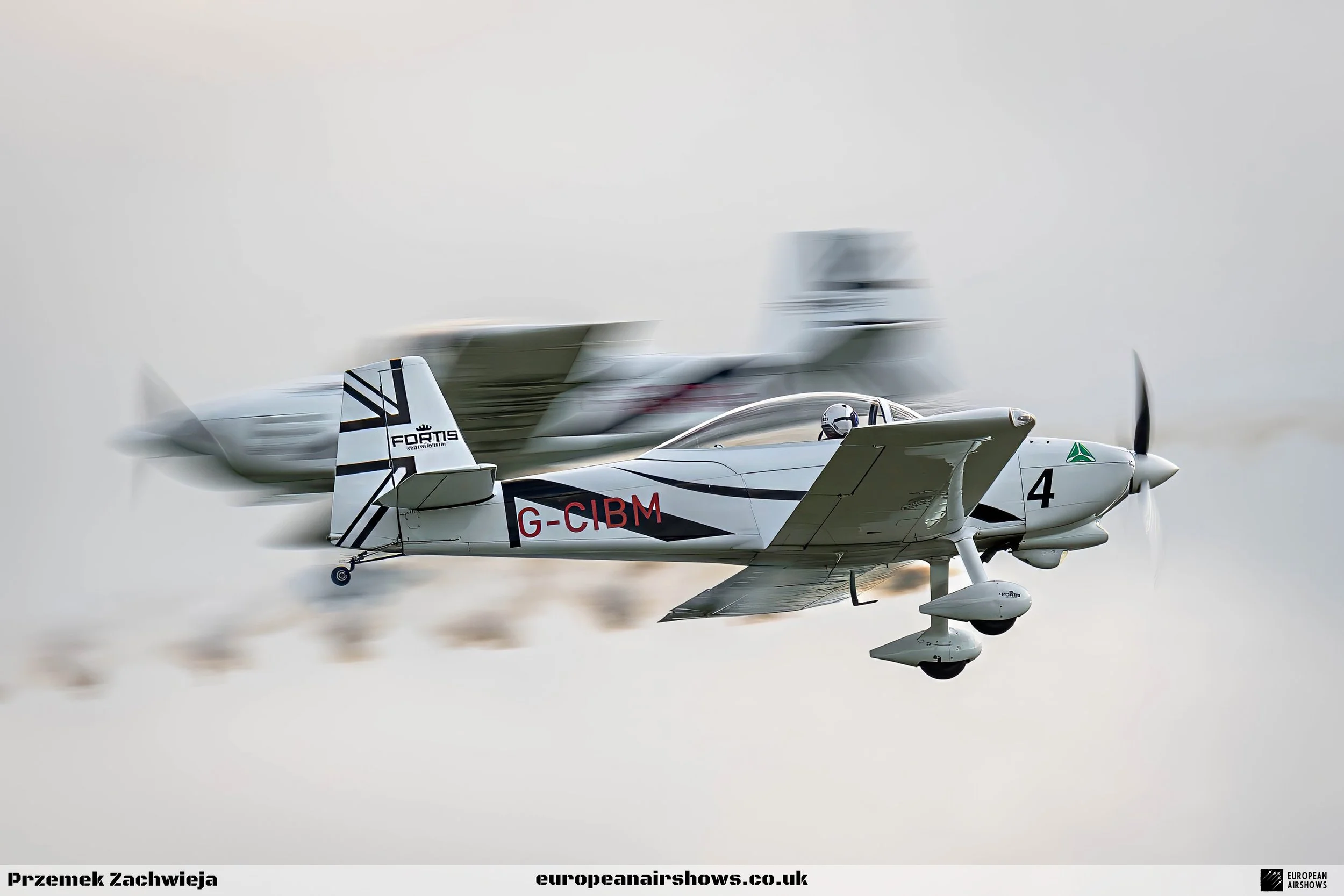
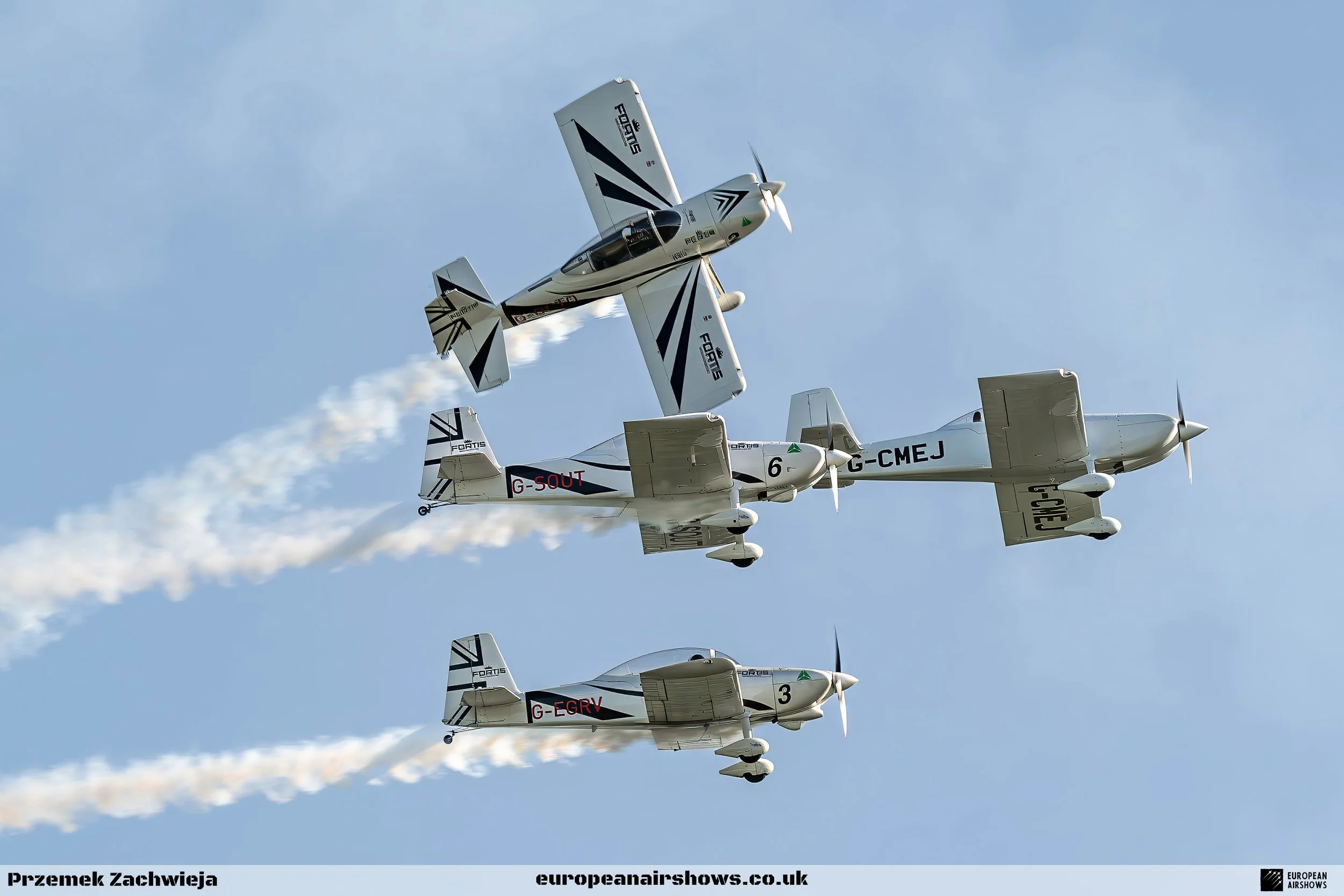
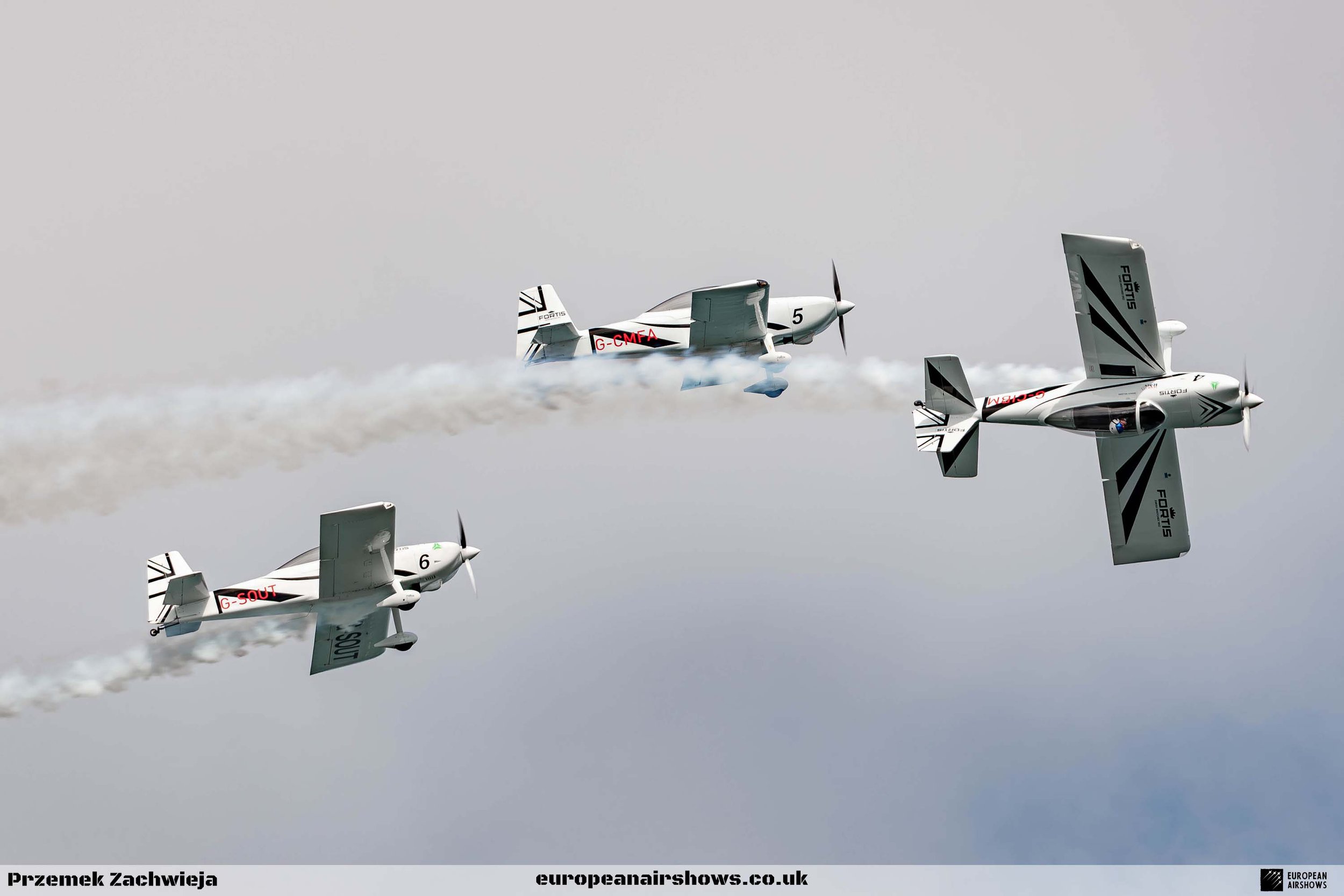
Opposition passes, crossovers and mirrored figures add speed and crossing energy while the main formation turns back towards the display axis.
Signature figures
Published sequences have included the Delta Loop, Stinger Barrel Roll, Cyclone, Crossing Flute, Cross Break and Heart and Spear.
Breaks and finales
The 3-2-1 Break, Twizzles, Big Vic Fan Break and Vertical Break turn formation geometry into a clear crowd-facing finish.
Event-specific strength
Six aircraft are the current standard. A seventh aircraft, joint sequence or modified routine is a special event option and should be confirmed for the individual show.
The aircraft
The tandem-seat RV-8 gives the team speed, visibility and fully aerobatic formation capability.
An American kit design
Van's Aircraft developed the RV-8 as a larger, updated tandem-seat successor to the RV-4. The prototype first flew in 1995. It combines an aluminium low-wing airframe, conventional tailwheel landing gear and a wide choice of Lycoming engines, giving individual builders substantial freedom over equipment and finish.
Why it suits Team Raven
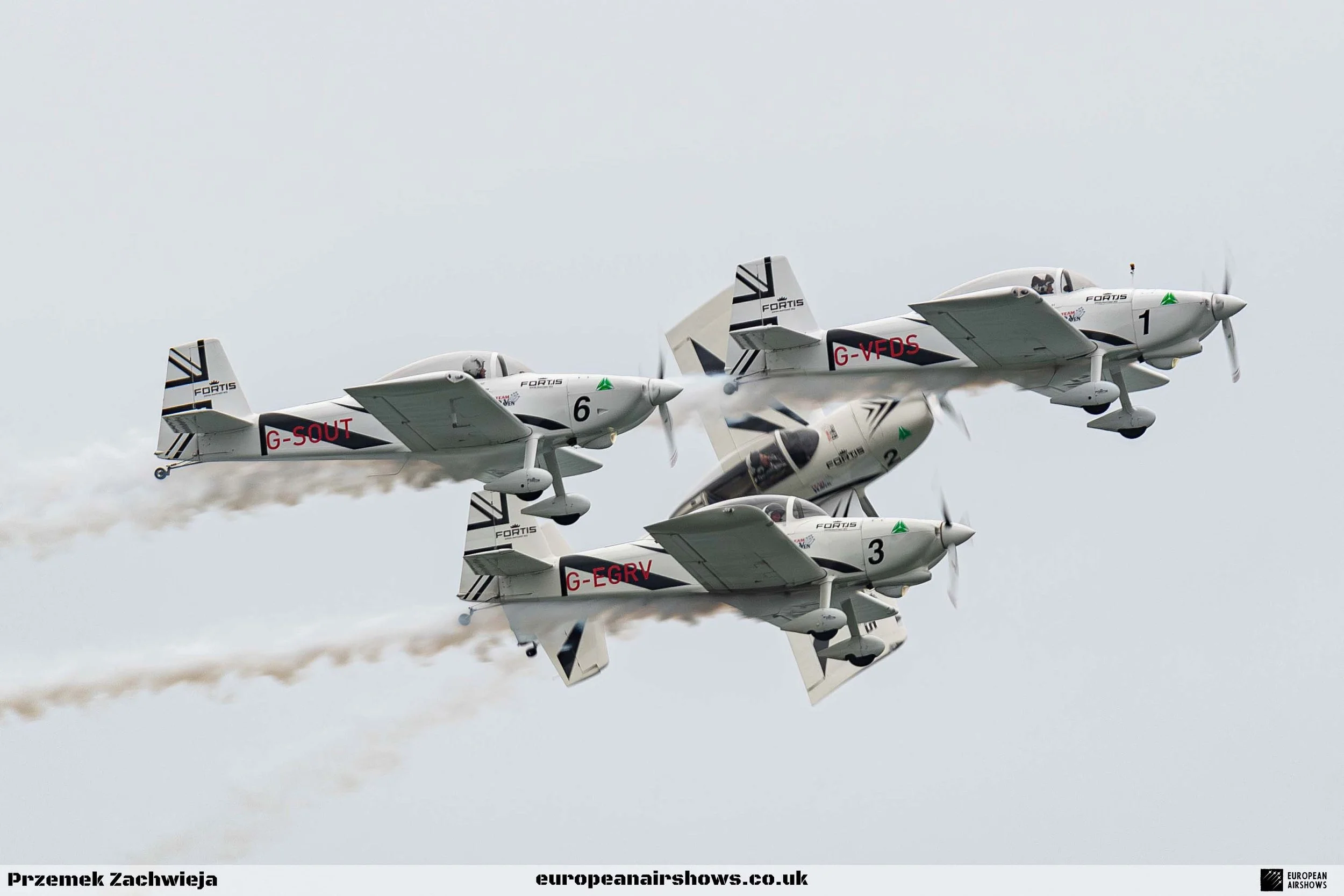
The RV-8 is quick enough to produce energetic crowdline crossings, yet predictable and responsive in close formation. Tandem seating keeps the fuselage narrow, the bubble canopy offers good outward visibility and the aerobatic design envelope supports the loops, rolls and formation figures central to the routine.
Team Raven describes its display aircraft as using 200 hp IO-360 engines, three-blade MT composite propellers and Dynon SkyView HDX avionics. Smoke systems make the formation's geometry easier to follow against the sky. The present display line-up is all RV-8; the RV-4 that appeared in the six-aircraft 2016 formation belongs to the team's history, not its current fleet description.
Individually built means individually specified
An RV-8 is completed and approved as an individual homebuilt aircraft. Engines, propellers, avionics, empty weight and operating limitations can differ. Van's published numbers therefore describe the design family, while the approved documents for each Team Raven aircraft control its actual operation.
Current type
The active display formation uses Van's RV-8 tailwheel aircraft.
Team equipment
The team publishes 200 hp IO-360 power, MT three-blade propellers and Dynon SkyView HDX avionics.
Private ownership
The aircraft are personally built or owned rather than supplied by a military service or single manufacturer fleet.
Configuration varies
Manufacturer figures are references only; each airframe's approved limits and equipment take precedence.
The story so far
From five aircraft in 2014 to an active international six-ship with a seventh position in development.
May 2014
Team Raven forms
Experienced British civilian display pilots establish a new five-aircraft team, drawing on experience from earlier formation and aerobatic groups.
2014 season
The five-ship reaches the display circuit
The team begins public appearances with its combination of close formation, split elements and continuous action.
2016
A mixed six-aircraft fleet
Six aircraft fly together, comprising five RV-8s and an RV-4. The older RV-4 should not be confused with the current all-RV-8 formation.
Later 2010s
The formation returns to five
Aircraft and pilot availability reduce the standard display before a sustained six-aircraft format is rebuilt.
From 2022
Six ship becomes the core act
The team again presents six RV-8s, allowing a larger main formation and dedicated synchronised element to share the display box.
2023
Barry Gwynett leaves the flying line
A team pilot since the beginning, Gwynett retires from display flying while continuing as Team Raven's manager.
2024
Joint Gazelle sequence
Six RV-8s and four helicopters develop a short ten-aircraft presentation with the Gazelle Squadron, an occasional collaboration rather than the normal Raven routine.
2025
Seven-ship introduction
A seventh RV-8 expands the formation during the season, marking the team's largest all-RV public configuration.
2026
Active six-ship international season
The published display returns to a six-aircraft description across a multinational calendar, while Raven 7 trains, comments and supports the team.
Identity & context
Four distinctions keep the current team picture accurate and useful.
Civilian, not military
Team Raven is a privately funded British civilian display team. Military experience among its pilots does not make the organisation an RAF or Fleet Air Arm unit.
Six is the 2026 display
The team's current public material specifies six RV-8s. Raven 7 remains in training and support, so seven-aircraft appearances are event-dependent.
All current aircraft are RV-8s
An RV-4 flew in the 2016 mixed formation, but it is historical context and should not be listed as part of the present display fleet.
Kit-built aircraft vary
Common paint, equipment and display purpose do not make every airframe technically identical. Individual approved data governs engines, weights and operating limits.