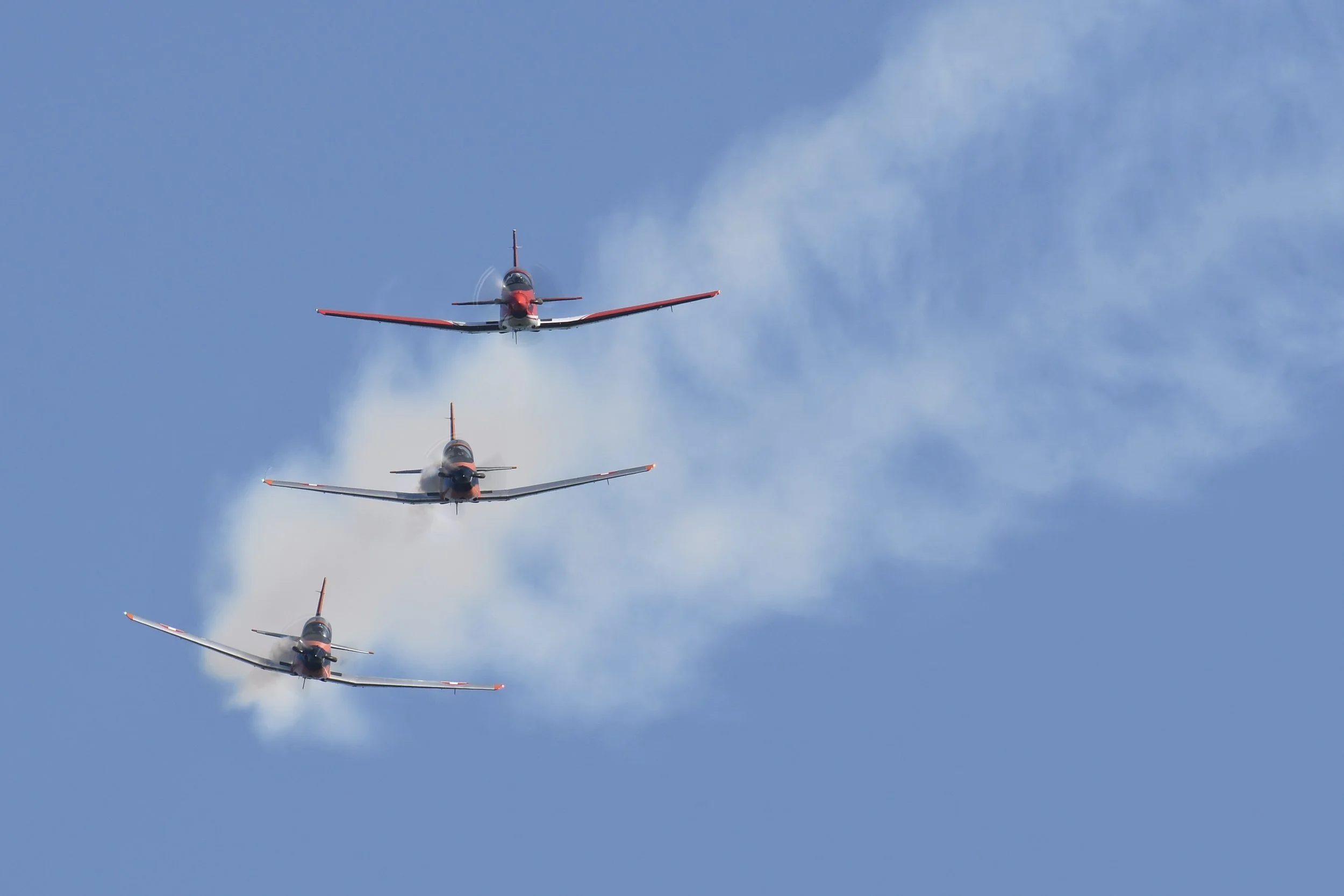
PC-7 SUBITO Team
Three Pilatus PC-7 Mk I trainers · Civilian formation aerobatics
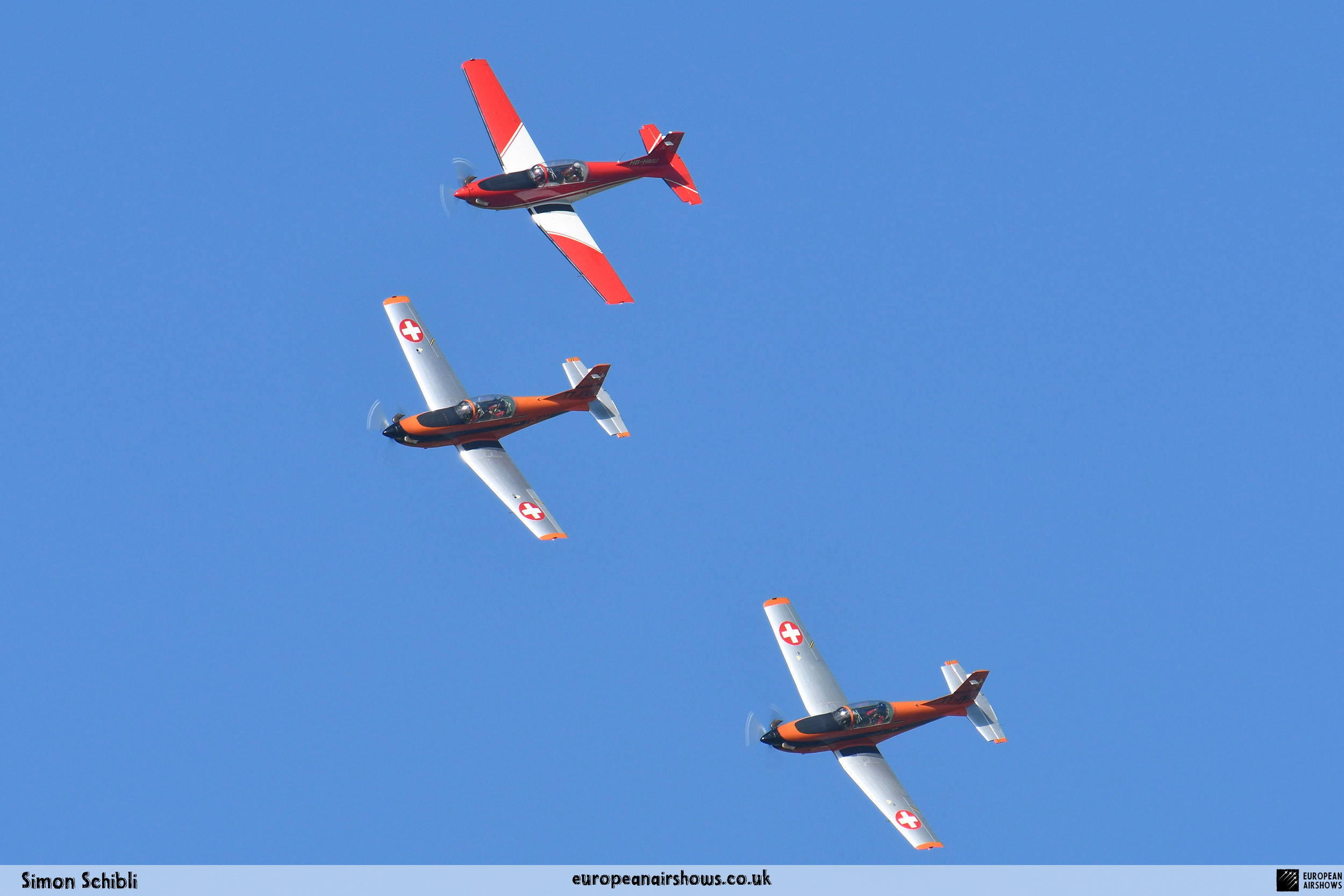
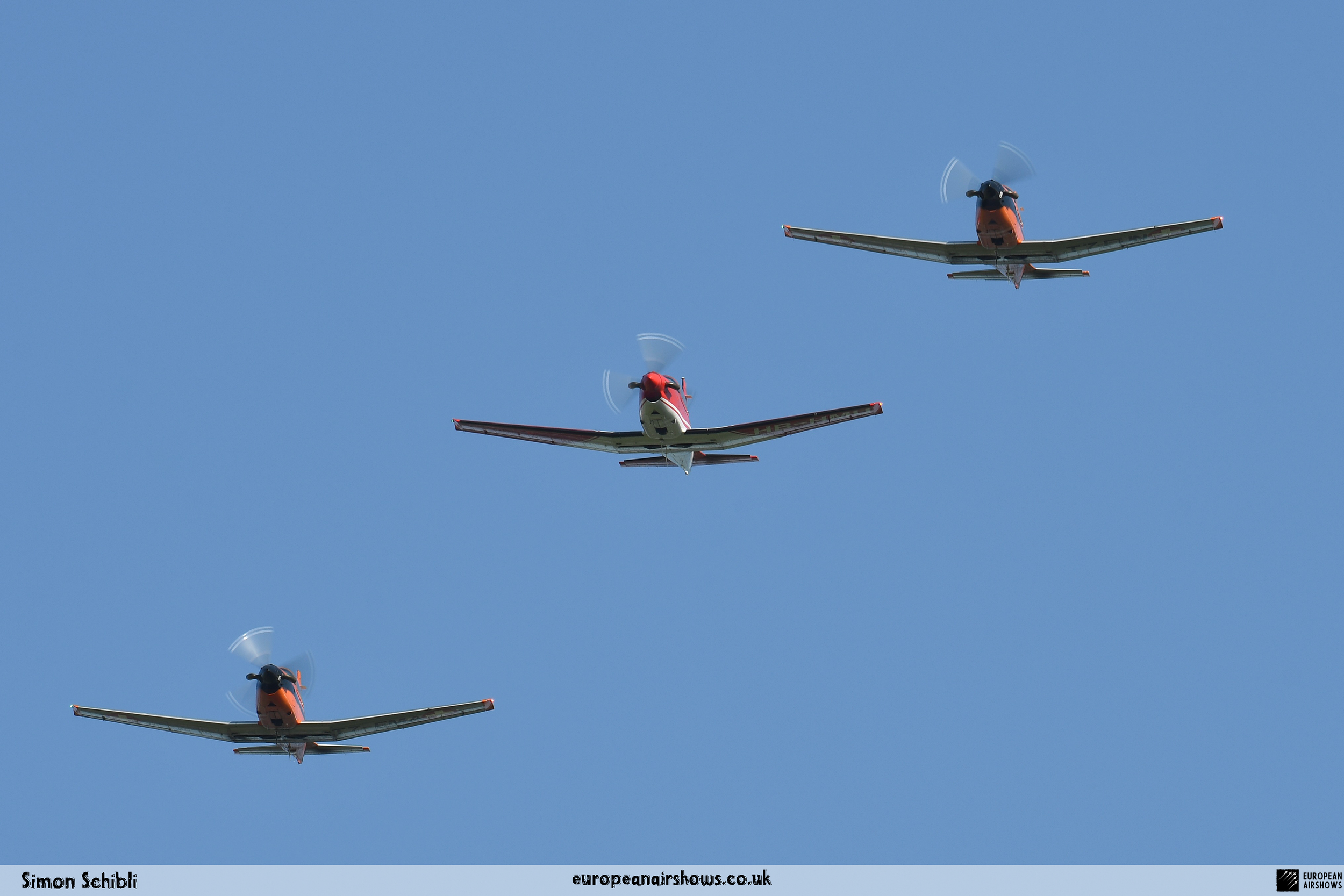
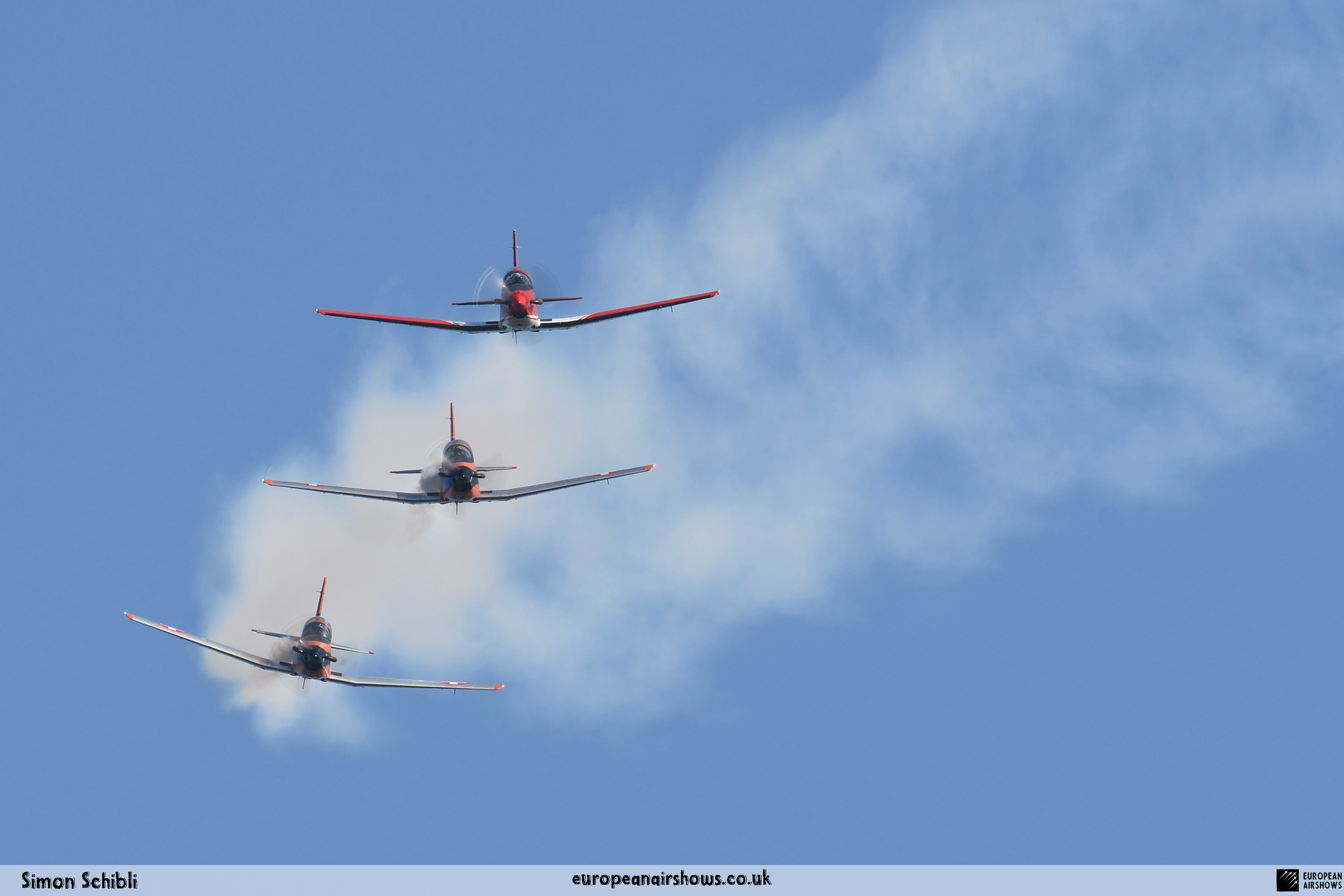
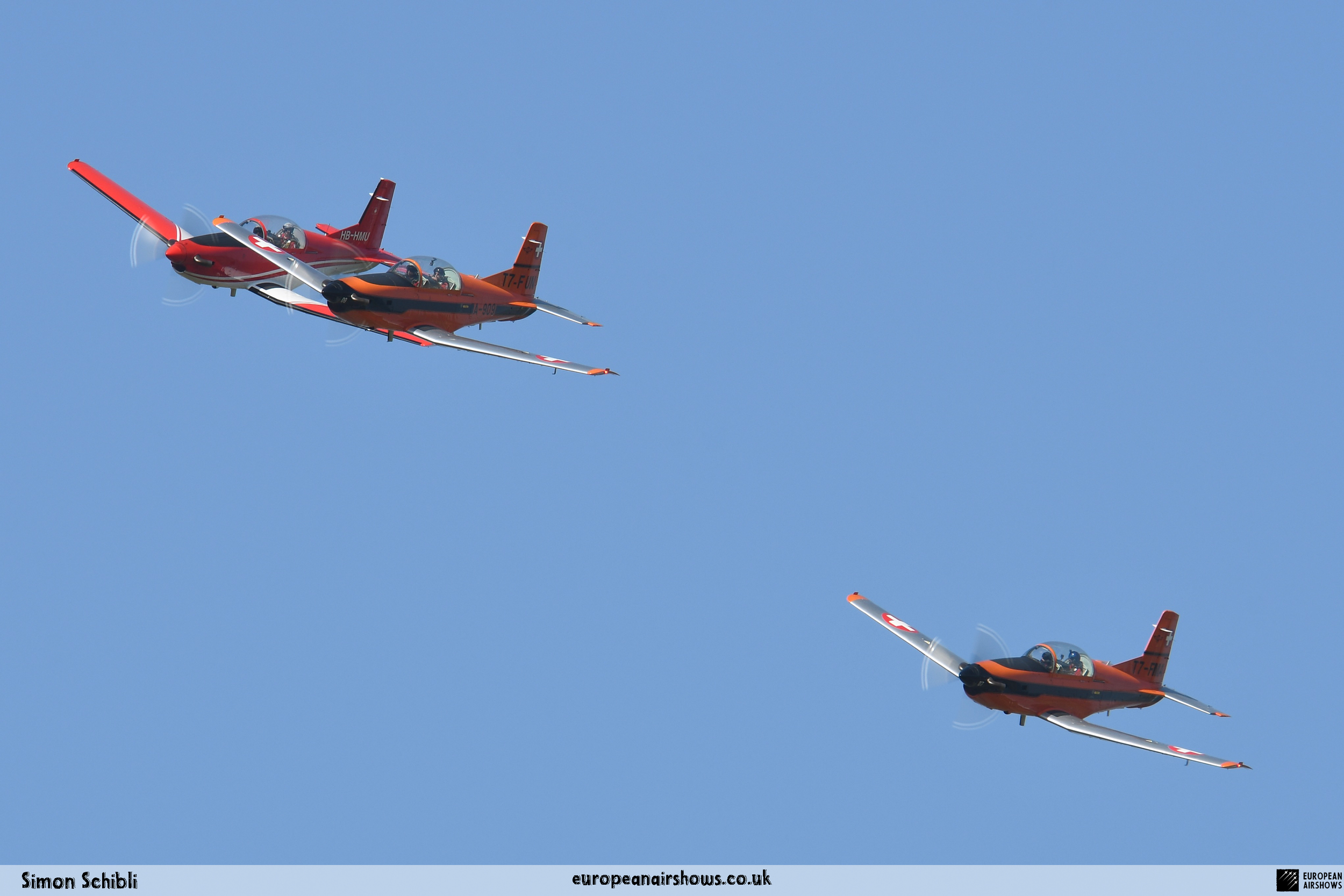
Three former Swiss Air Force trainers, one civilian museum formation. SUBITO combines the PC-7's clean lines and turbine sound with close formation aerobatics, energetic breaks and smoke, flown from its home at Altenrhein.
- Operator
- Fliegermuseum Altenrhein
- Home
- St. Gallen-Altenrhein, LSZR
- Formation
- Three aircraft
- Aircraft
- Pilatus PC-7 Mk I
- Display
- Formation aerobatics with smoke
- Status
- Active civilian team
The team
A museum team with military heritage, operated entirely as a civilian formation.
The PC-7 SUBITO Team belongs to Fliegermuseum Altenrhein, the flying museum based at St. Gallen-Altenrhein Airport in north-eastern Switzerland. Its aircraft wear Swiss training colours and all served with the Swiss Air Force, but the display team itself is a civilian museum operation.
This distinction matters because Switzerland also has an official military PC-7 Team. That formation flies nine aircraft for the Swiss Air Force. SUBITO is the museum's separate three-aircraft team, using preserved former service trainers under civilian registrations.
A trained museum pilot pool
The museum's pilots include former Swiss military aviators, serving and former professional pilots, and highly experienced private pilots. Internal instructors train, check and develop them for roles including solo aerobatics and formation flying. SUBITO therefore draws from a qualified PC-7 pilot pool rather than relying on one permanently fixed trio.
Altenrhein is more than a display base
Fliegermuseum Altenrhein describes itself as a competence centre for the operation, care and maintenance of historic aircraft. The SUBITO display is one visible part of that work: the same organisation keeps the three PC-7s airworthy, supports their training and presents their Swiss service history.
Why the name fits
Subito is Italian for immediately or at once. The team connects the word with speed and immediacy, an apt identity for a compact display in which the three aircraft move quickly from close formation to breaks and crosses.
The display
Three turbine trainers, one fast-moving line of action.
SUBITO's display combines close three-aircraft formation with loops, rolls, breaks and crossing elements. The PC-7s can use smoke to define the geometry, while the contrasting Swiss training schemes make each aircraft easy to follow. The precise routine is adapted to the site and conditions.
Close three-ship
The display begins from the shared discipline of tight formation, presenting the PC-7s as one compact shape before the routine opens out.
Formation loops
The trio carries its relative positions through the vertical, showing the smooth energy management of the turboprop trainer.
Rolling figures
Formation rolls add continuous movement while retaining the disciplined spacing that defines the team.
Breaks and crosses
The formation separates into individual lines, then returns through opposing or crossing passes that change the pace and use the full display axis.
Smoke definition
Installed smoke systems can trace loops, breaks and converging flight paths. Their use depends on the event programme and operating conditions.
Adaptable sequence
Duration, pilot positions and exact manoeuvres are adjusted for the venue, weather, aircraft serviceability and display authorisation.
The aircraft
Three PC-7s with individual service histories, united in one civilian formation.
One type, three identities
All three aircraft are Pilatus PC-7 Mk I two-seat turboprop trainers and all previously served with the Swiss Air Force. Their civilian identities now mix one Swiss registration, HB-HMU, with two San Marino registrations, T7-FUN and T7-FMA.
HB-HMU, formerly A-903
Serial number 137 entered Swiss Air Force service as A-903 on 25 October 1979. It was retired on 30 September 2009, transferred to Pilatus for a factory overhaul and then operated civilly in France. The aircraft returned to Switzerland in 2015 as HB-HMU and joined the SUBITO Team. Its livery reflects the later Swiss Air Force PC-7 scheme.
T7-FUN, formerly A-909
A-909 entered Swiss Air Force service on 30 November 1982 and was retired after 28 years when the trainer fleet was reduced. It is one of the museum's pair preserved in the original orange-and-black training finish used by the Swiss Air Force before its later red-and-white scheme.
T7-FMA, formerly A-907
Serial number 315 served as A-907. The museum records a busy training career: the aircraft had accumulated 3,398 flying hours when it was withdrawn in 2009. Together with T7-FUN, it represents the orange-and-black generation of Swiss PC-7 training colours in the formation.
HB-HMU
Former A-903, serial 137. Returned to Switzerland and joined SUBITO in 2015.
T7-FUN
Former A-909. A 1982 Swiss Air Force trainer in the earlier orange-and-black finish.
T7-FMA
Former A-907, serial 315. Retired from Swiss military service with 3,398 hours.
Shared type
Two-seat, low-wing Pilatus PC-7 Mk I with retractable tricycle landing gear.
Power
Pratt & Whitney Canada PT6A-25 turboprop, rated at 550 shaft horsepower.
Display fit
Smoke systems are used to add definition; exact use is event and aircraft dependent.
The story so far
From Swiss Air Force trainers to a flying museum's three-aircraft display.
1975
The PC-7 prototype flies
Pilatus develops the turboprop trainer from the earlier P-3 concept, combining economical training with an airframe capable of aerobatic instruction.
1979
A-903 enters Swiss service
The aircraft later registered HB-HMU begins its military career. It will eventually become the differently painted third member of the museum formation.
1982
A-907 and A-909 join the trainer fleet
The two aircraft now registered T7-FMA and T7-FUN enter Swiss Air Force service and accumulate long careers as military trainers.
2009-2010
Retirement and preservation
A-903 and A-907 are retired in 2009. From 2010, two former Swiss Air Force PC-7s are preserved at Altenrhein in their original orange-and-black condition.
2015
HB-HMU returns to Switzerland
After factory overhaul and civil operation in France, former A-903 returns as HB-HMU and joins the PC-7 SUBITO Team, completing the documented three-aircraft fleet.
Established format
Three-ship formation with smoke
The museum presents its PC-7s in tight formation aerobatics, contrasting early and later Swiss training schemes and using smoke systems to define the routine.
Identity & context
Four details place SUBITO correctly, between preservation and performance.
Civilian, not military
SUBITO is operated by Fliegermuseum Altenrhein. It must not be confused with the Swiss Air Force's separate nine-aircraft PC-7 Team.
Three former service trainers
HB-HMU, T7-FUN and T7-FMA previously flew as Swiss Air Force A-903, A-909 and A-907 respectively.
Two registration systems
HB-HMU carries a Swiss civil mark. T7-FUN and T7-FMA are registered in San Marino, despite the team's Swiss base and identity.
Two eras of colour
The formation brings earlier orange-and-black training colours together with a later Swiss Air Force-style scheme, making its history visible in flight.