Silver Swallows
Pilatus PC-9M formation display team of the Irish Air Corps
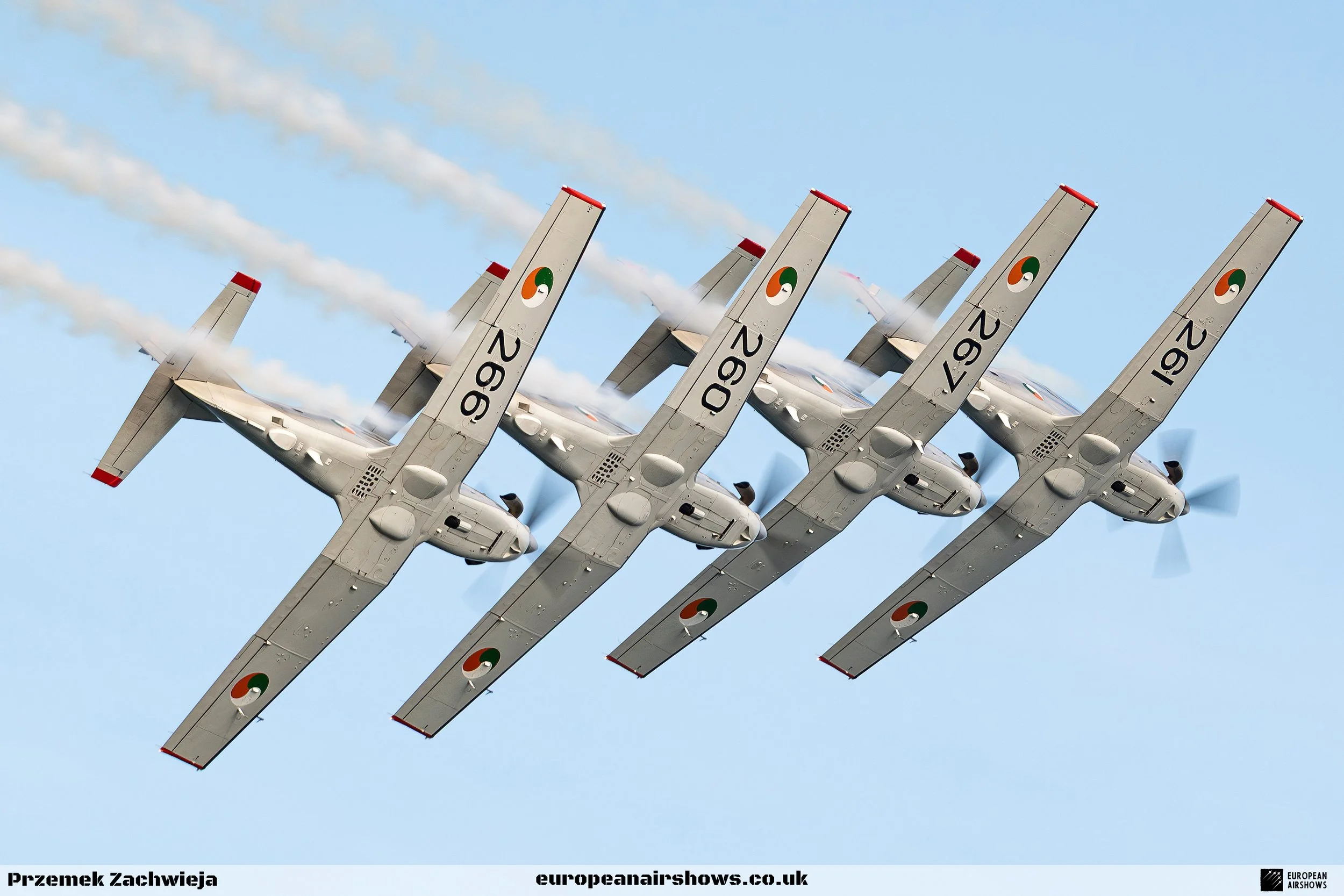
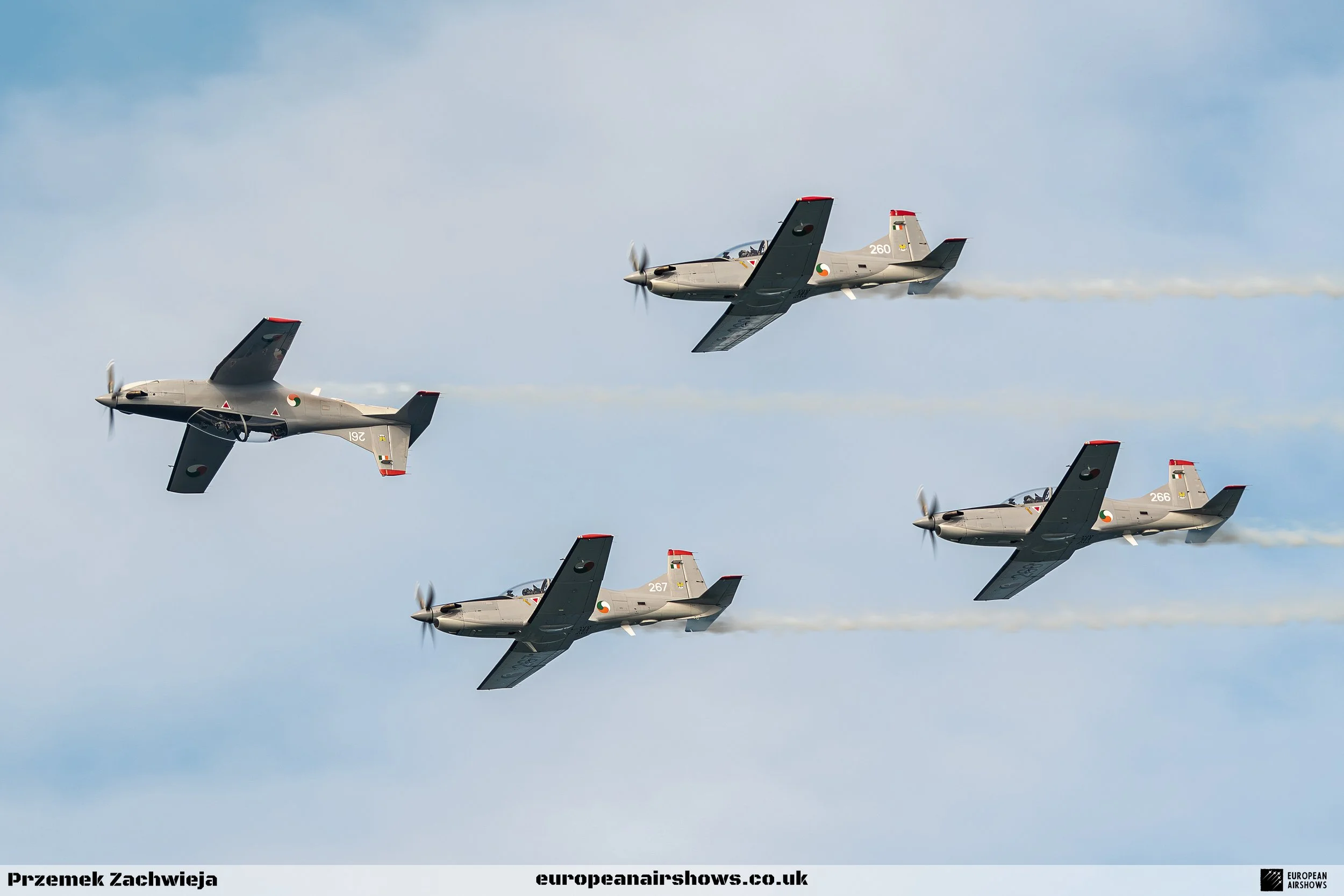
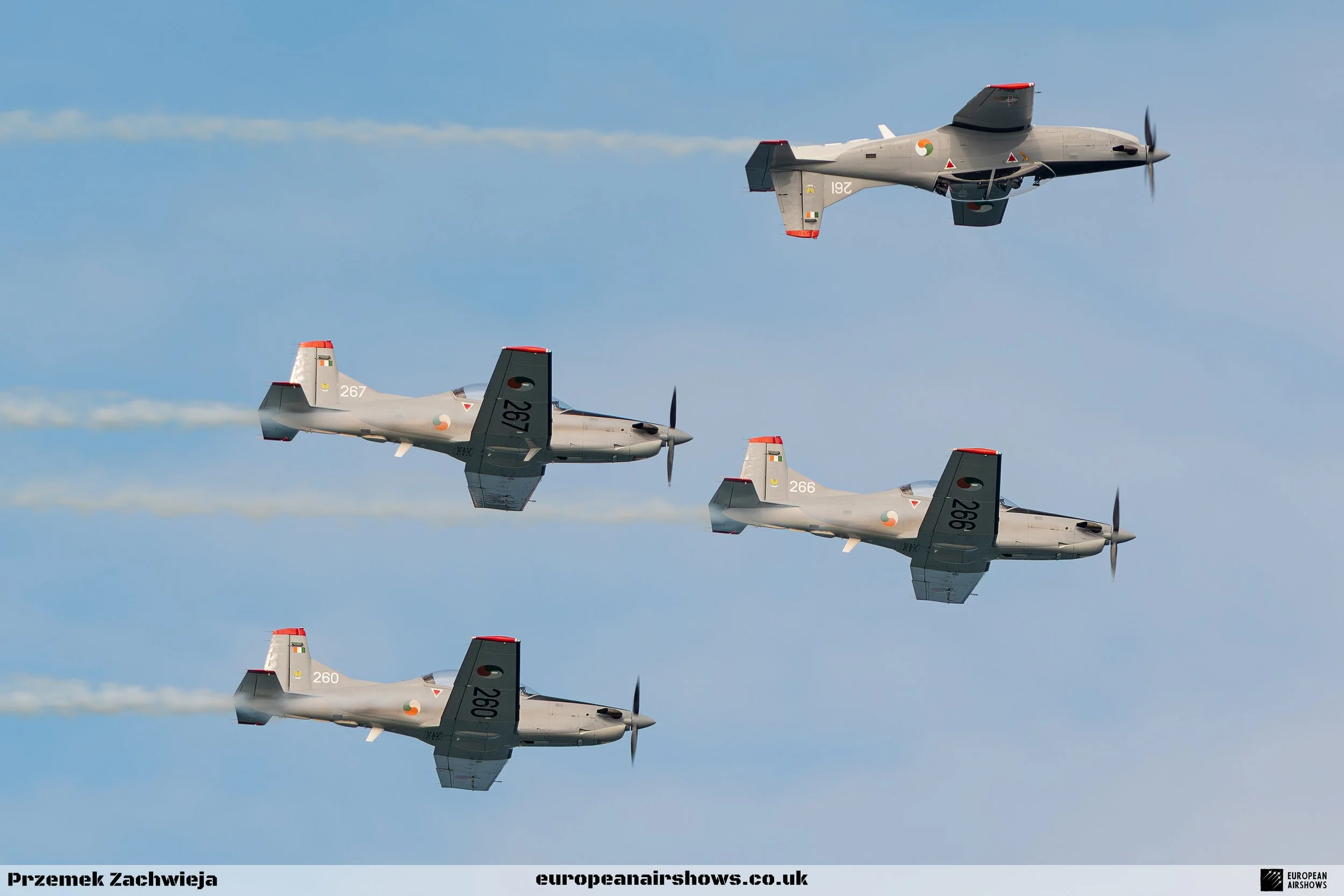
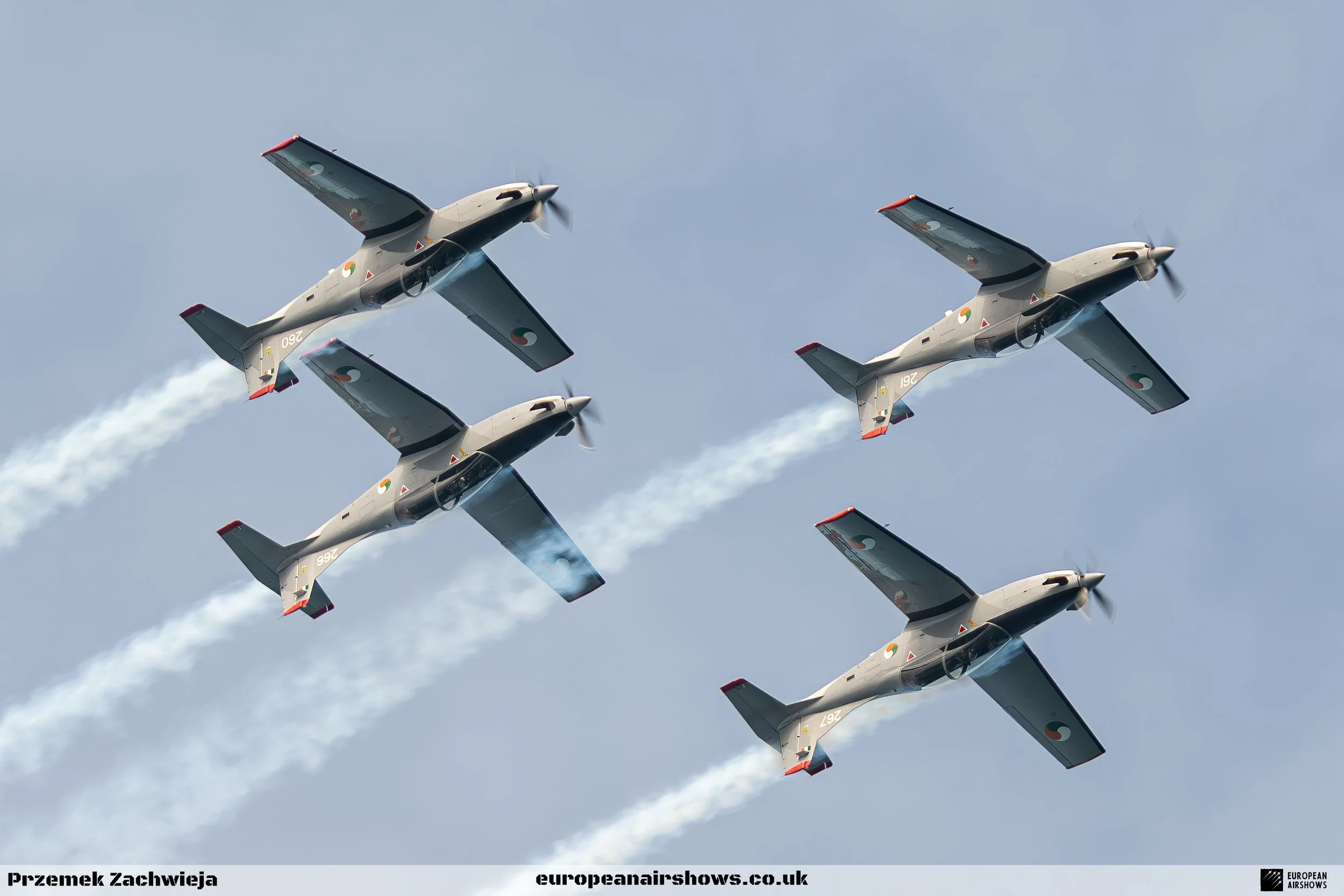
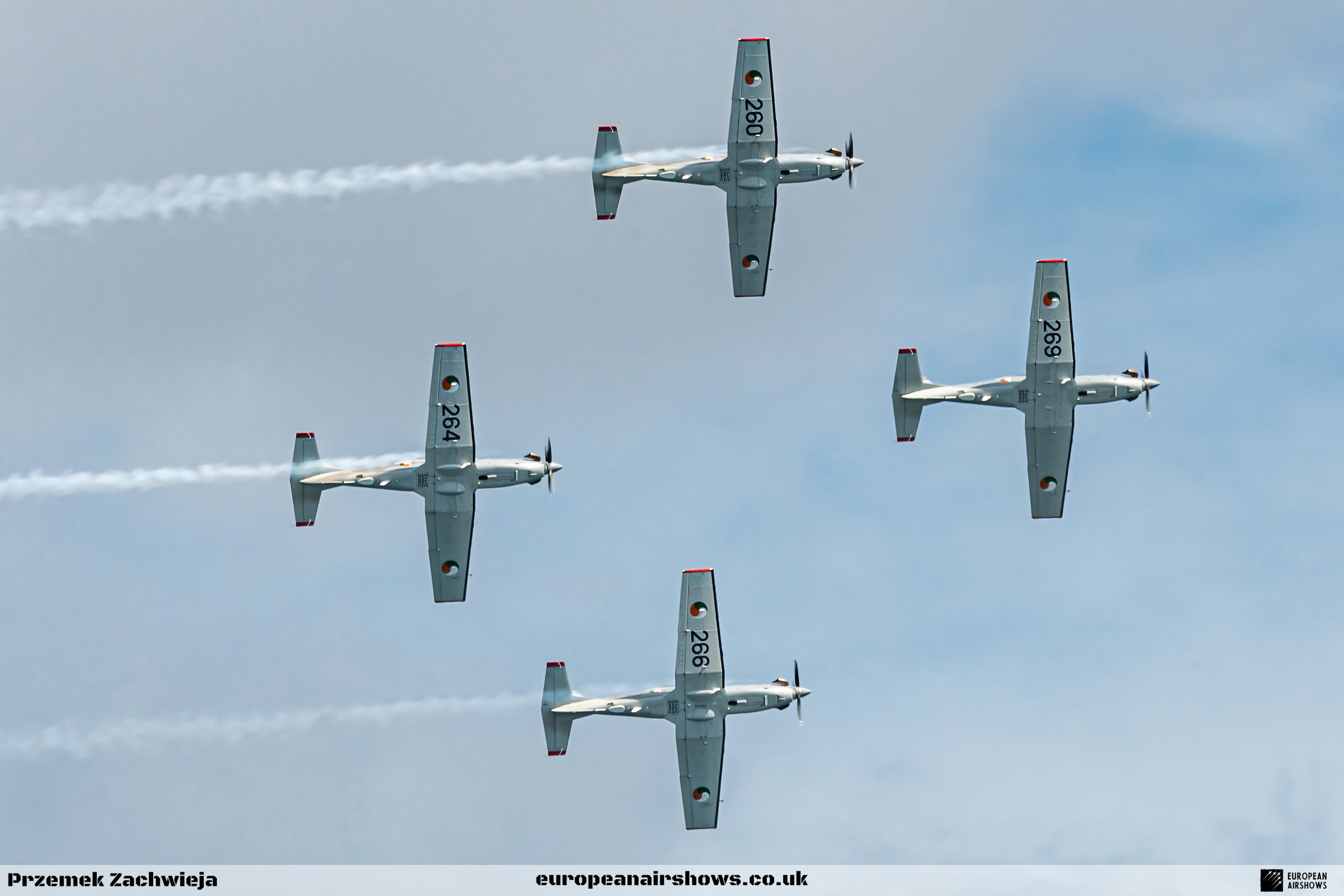
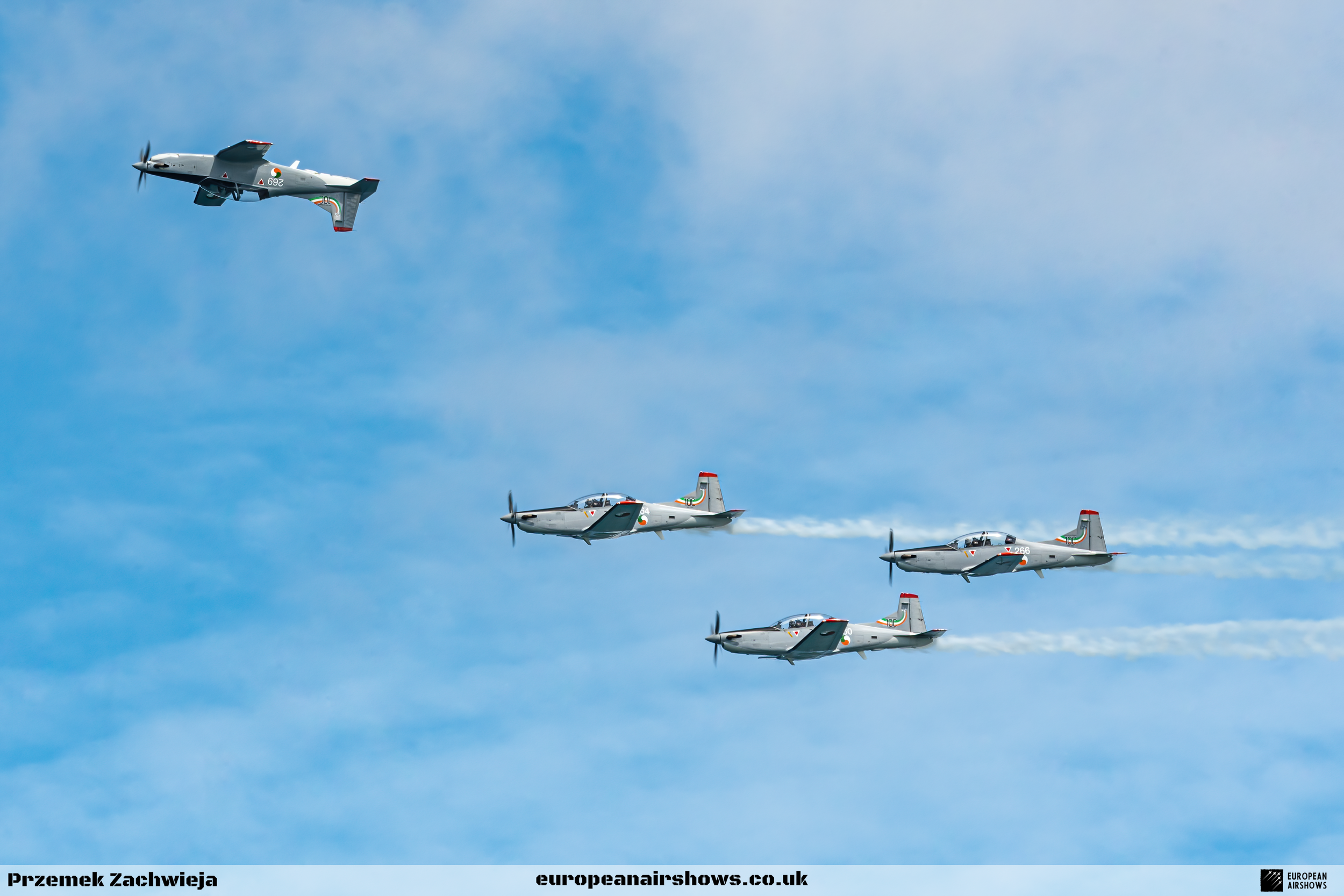
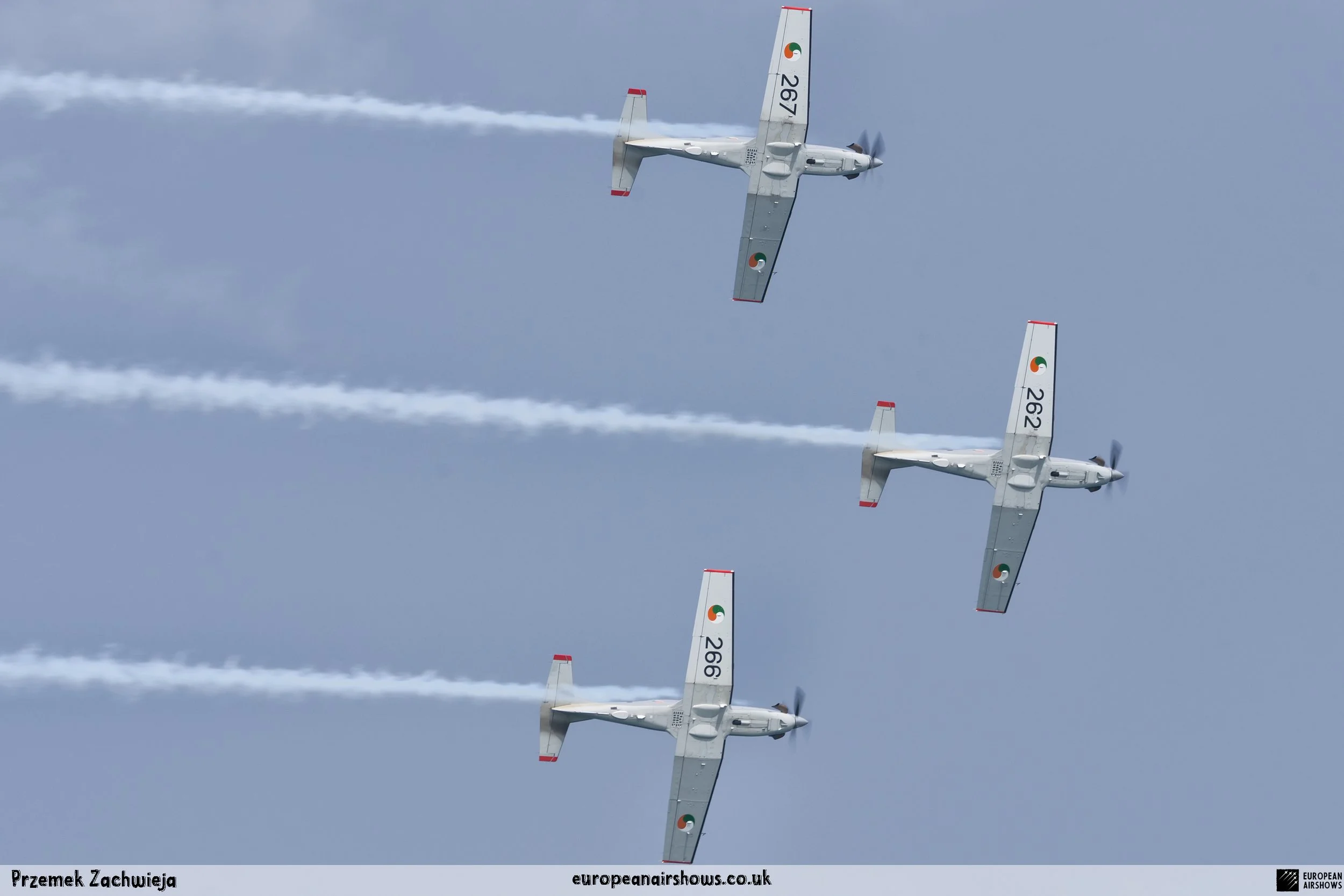
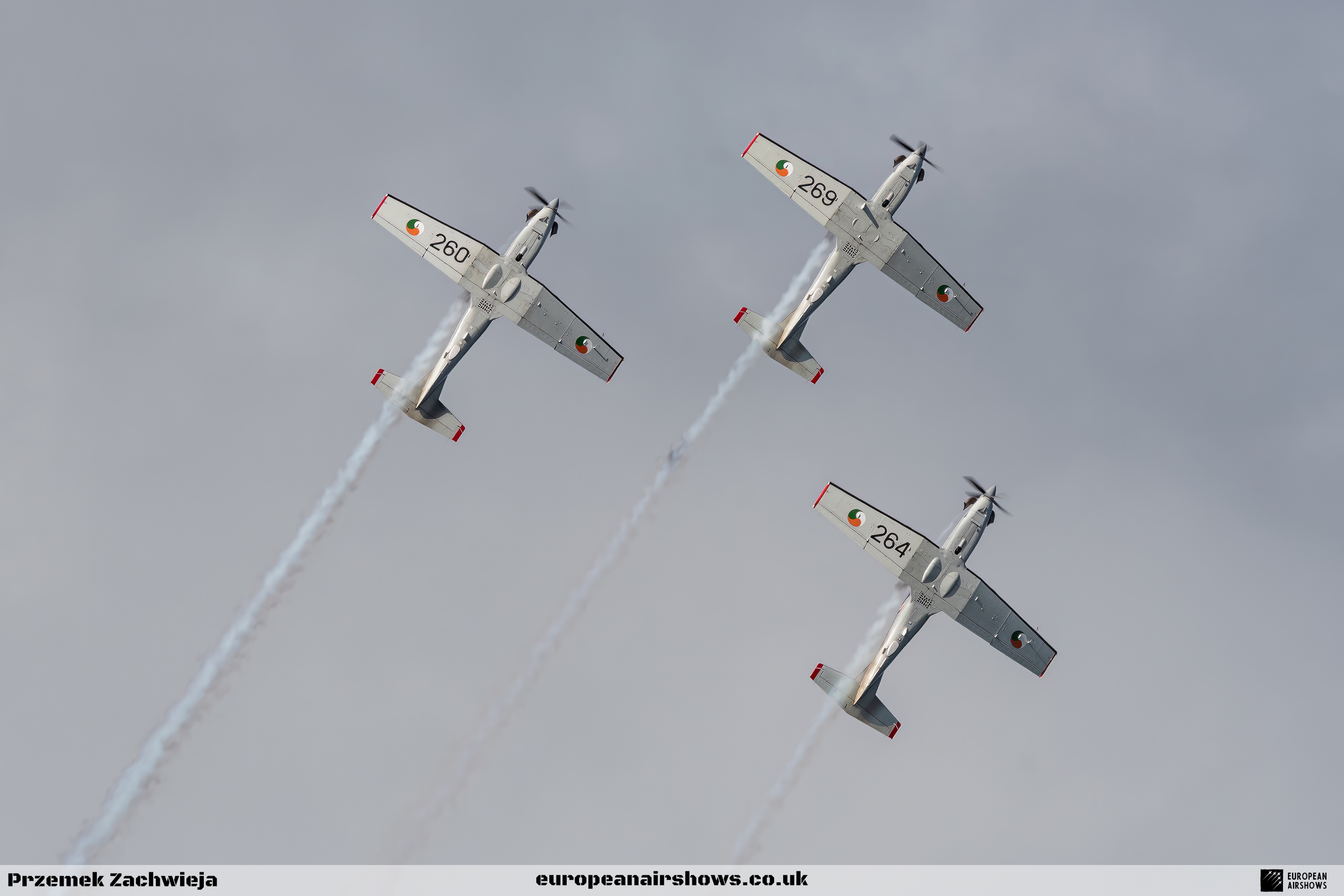
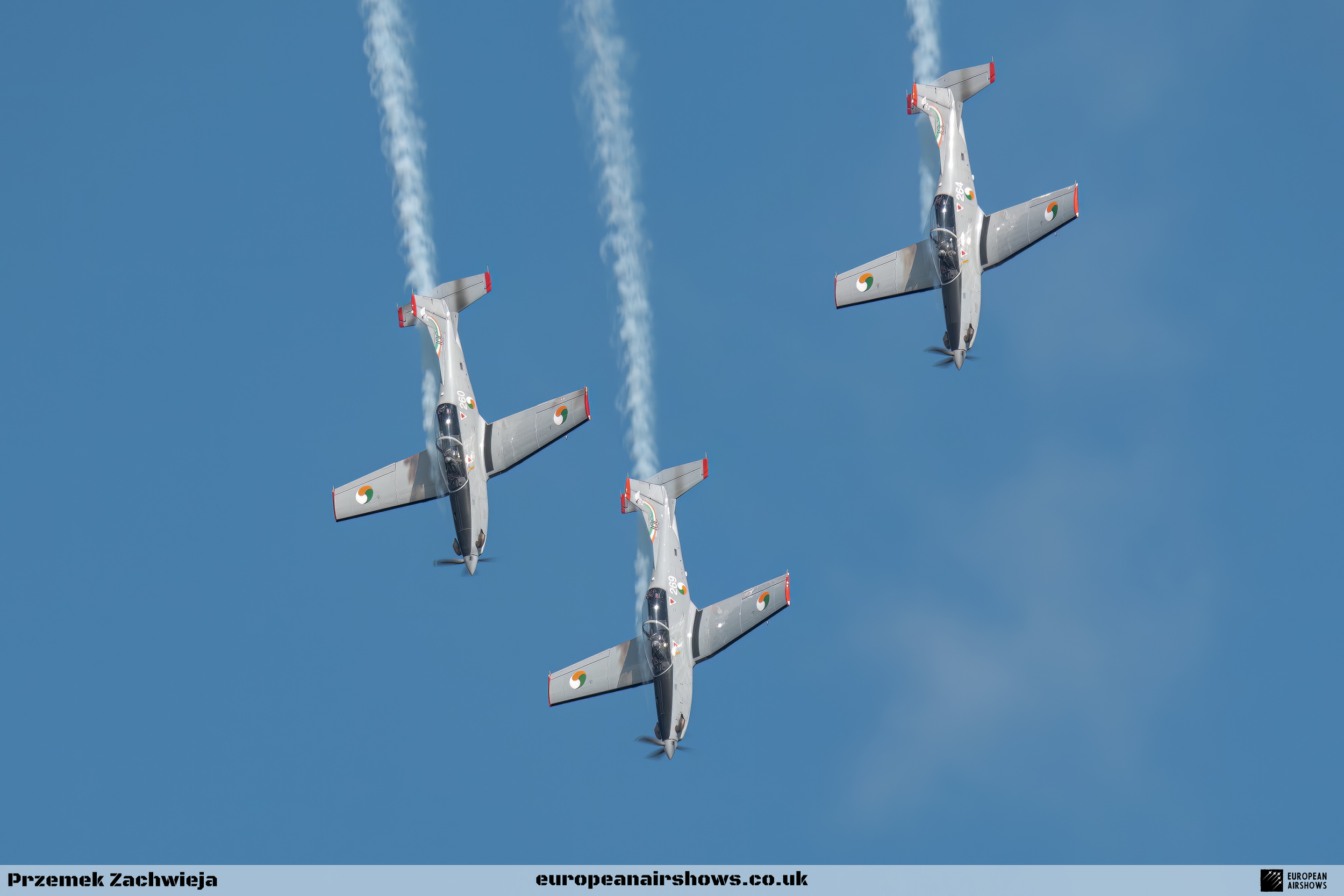
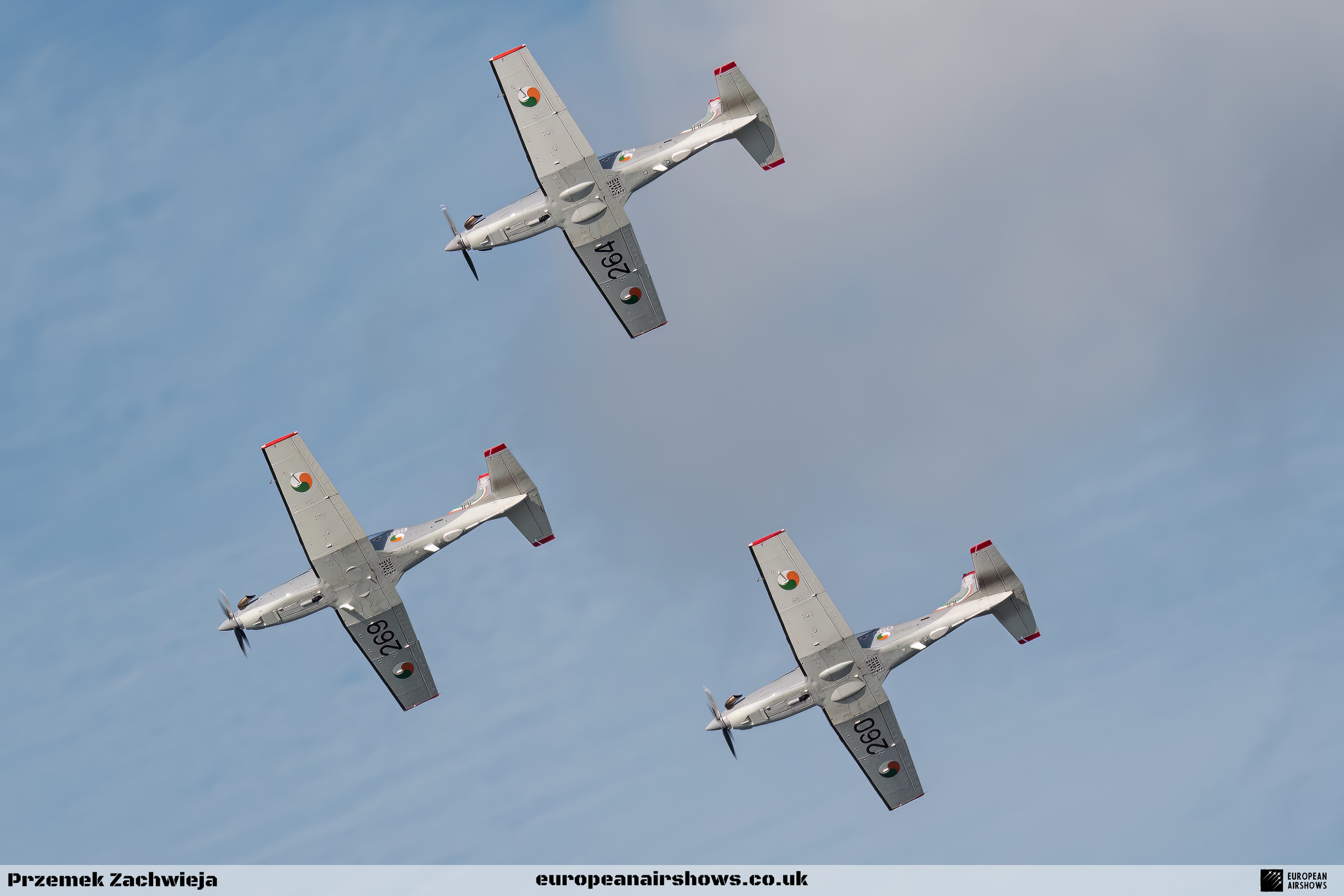
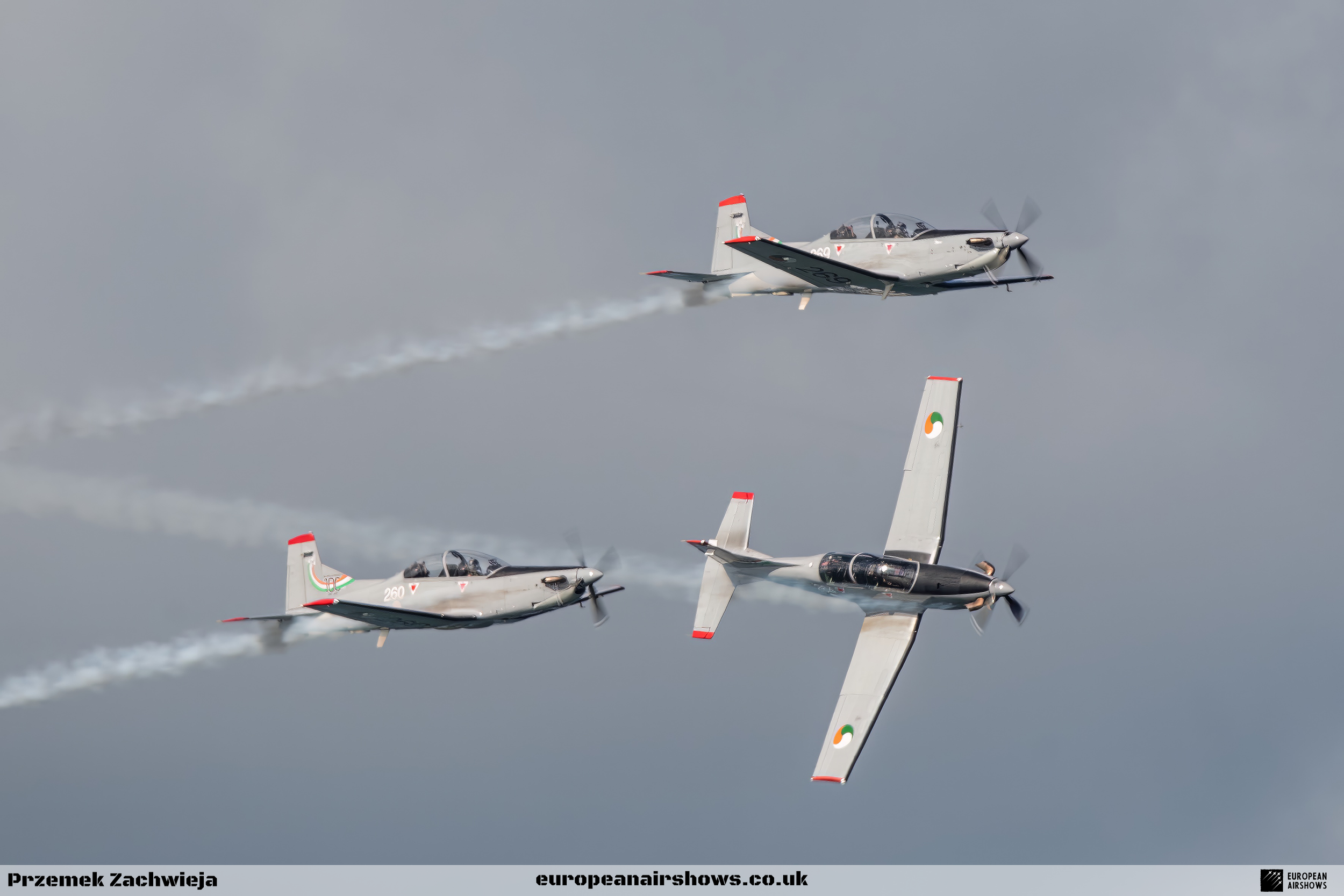
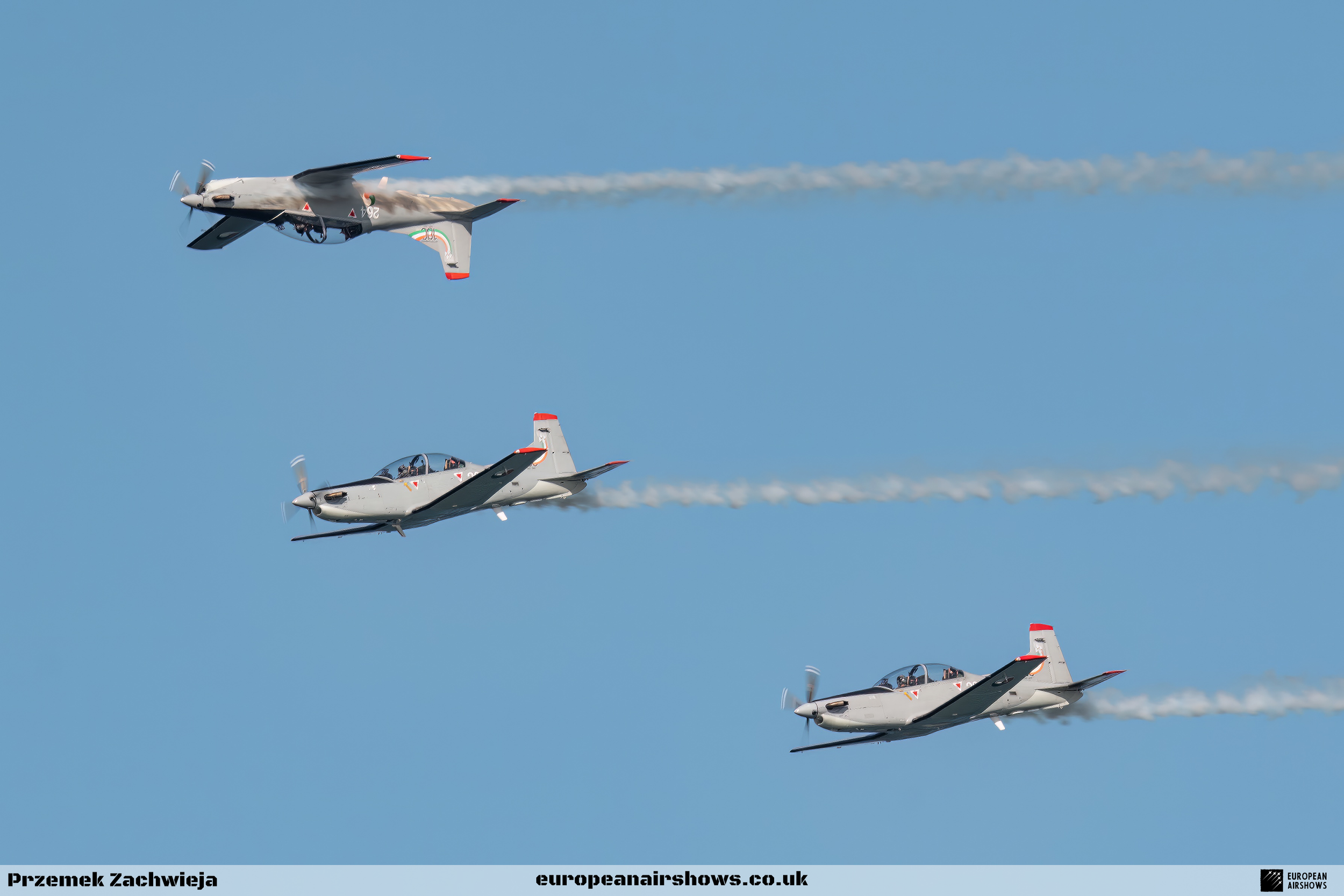
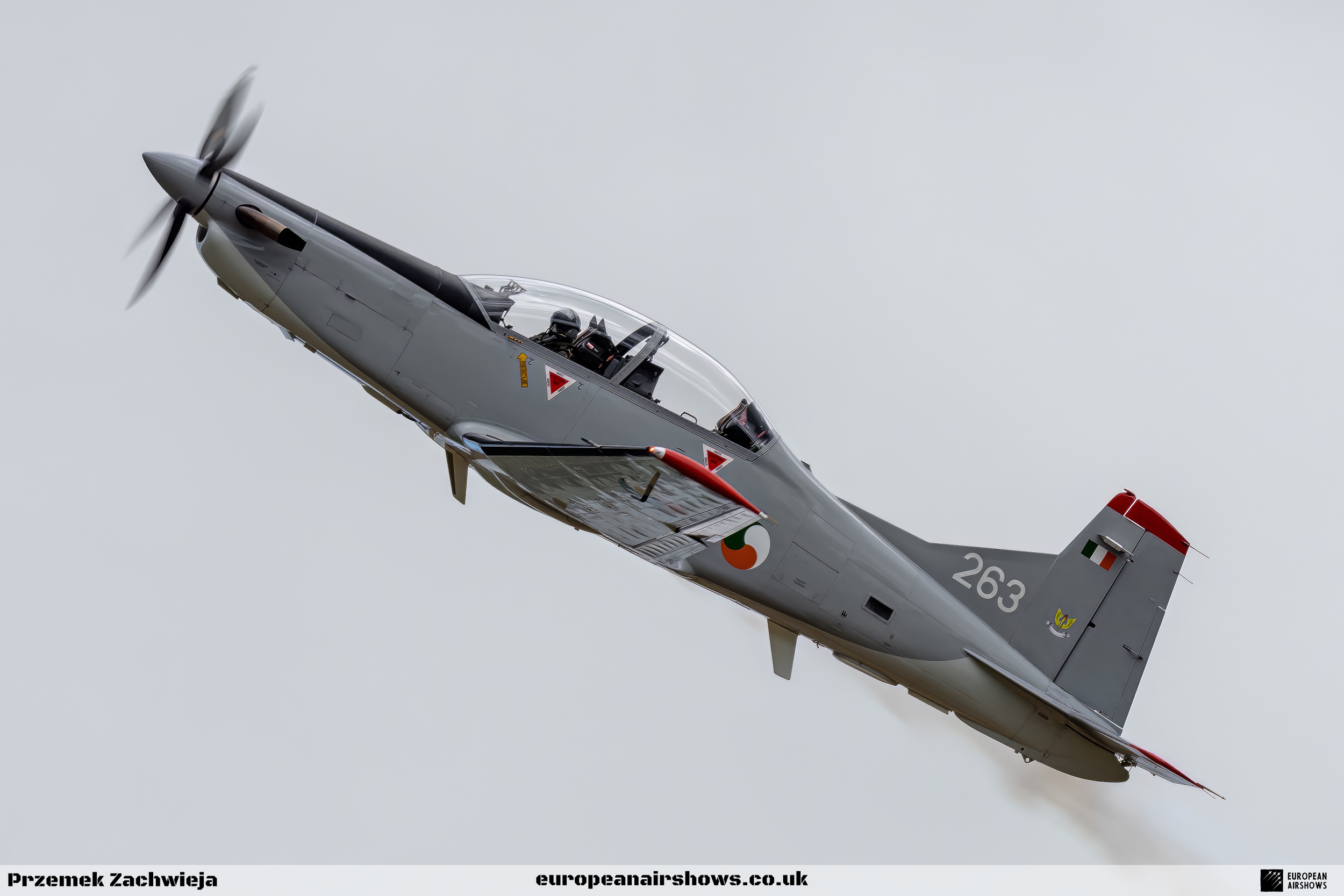
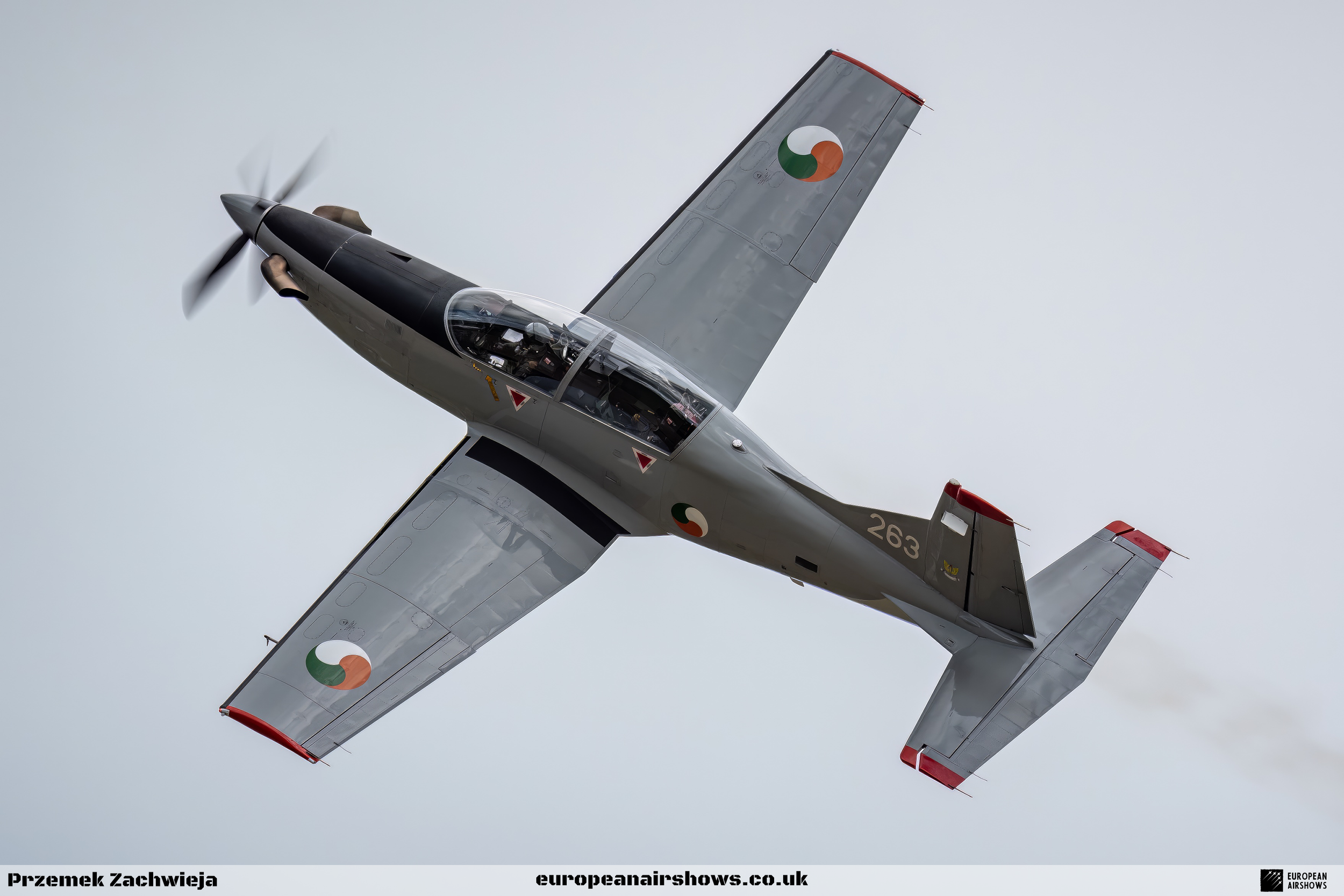
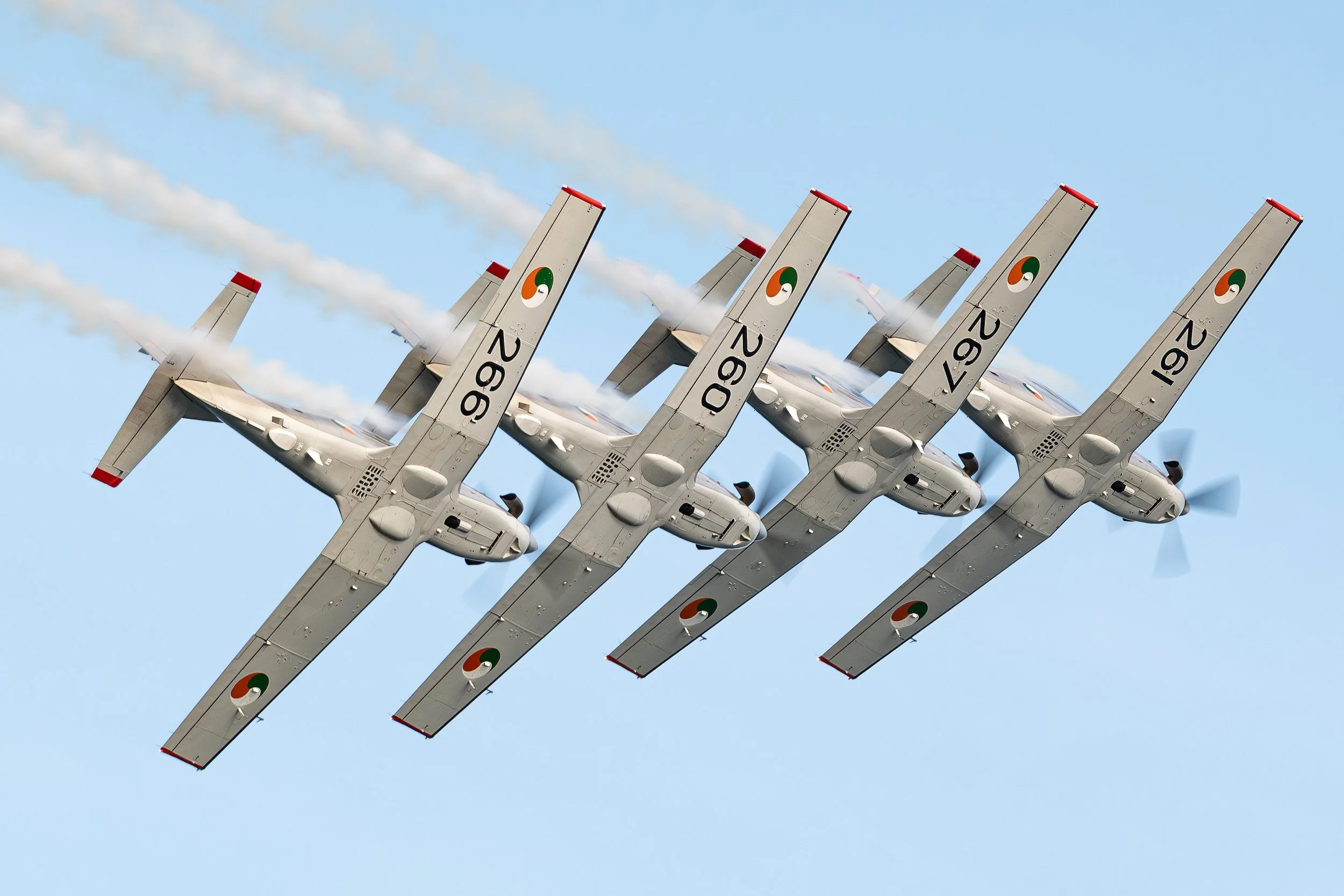
Silver Swallows carries an Irish Air Corps display name first made famous by the Fouga Magister. Today the identity belongs to a compact PC-9M team from the Flying Training School at Casement Aerodrome, combining close formation aerobatics with the aircraft's everyday military training role.
- Formation roots
- 1982
- Name adopted
- 1987
- Standard team
- 4 aircraft
- Aircraft
- Pilatus PC-9M
- Unit
- Flying Training School
- Home
- Baldonnel
The team
A national display identity carried by a working training squadron.
Built around the Flying Training School
The modern Silver Swallows is drawn from the Irish Air Corps Flying Training School, the squadron responsible for training Air Corps cadets. Display flying sits alongside the school's main work: initial and advanced pilot training, instructor training, weapons training, air tactics and operational tasks assigned to the unit.
Four aircraft is the team format
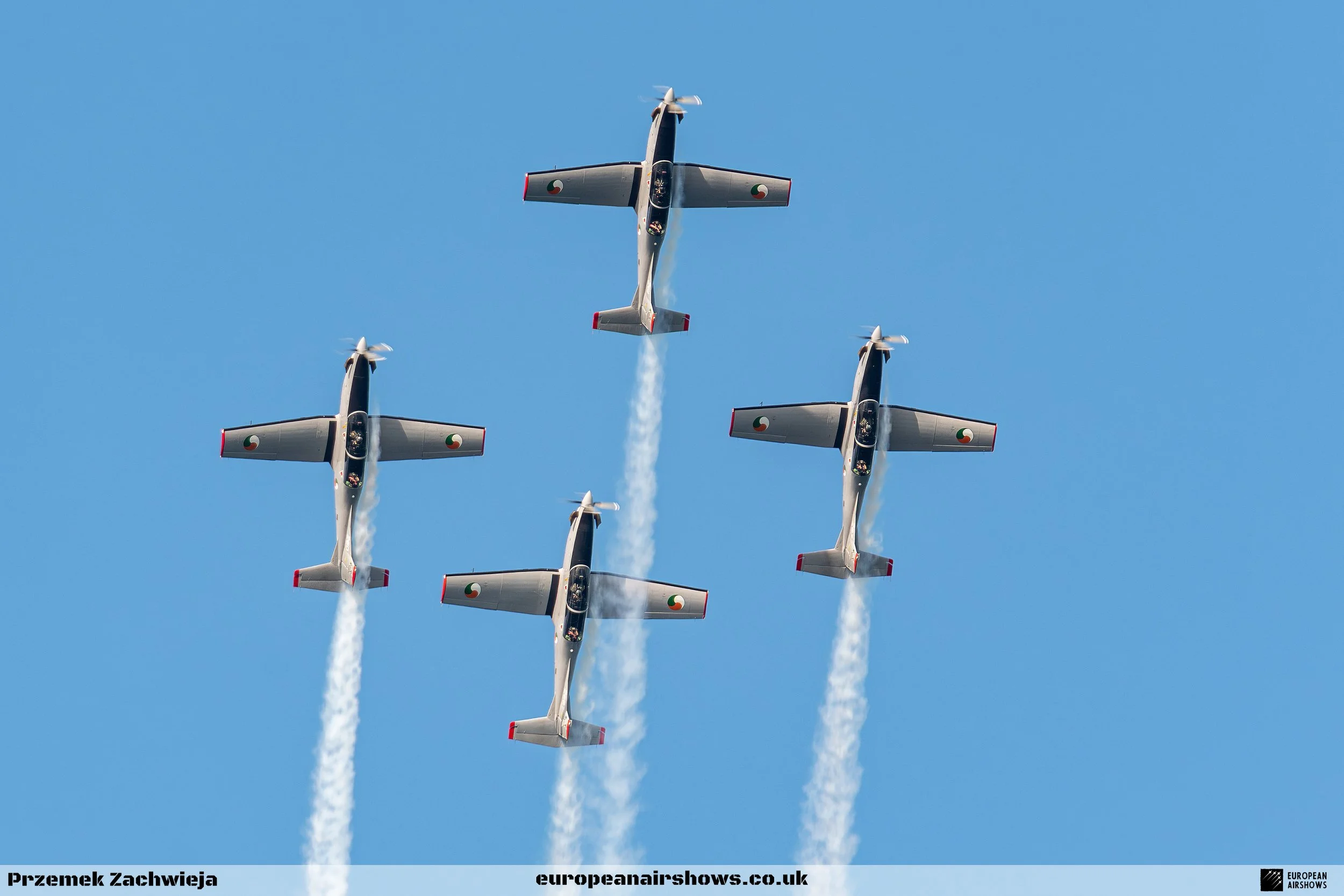
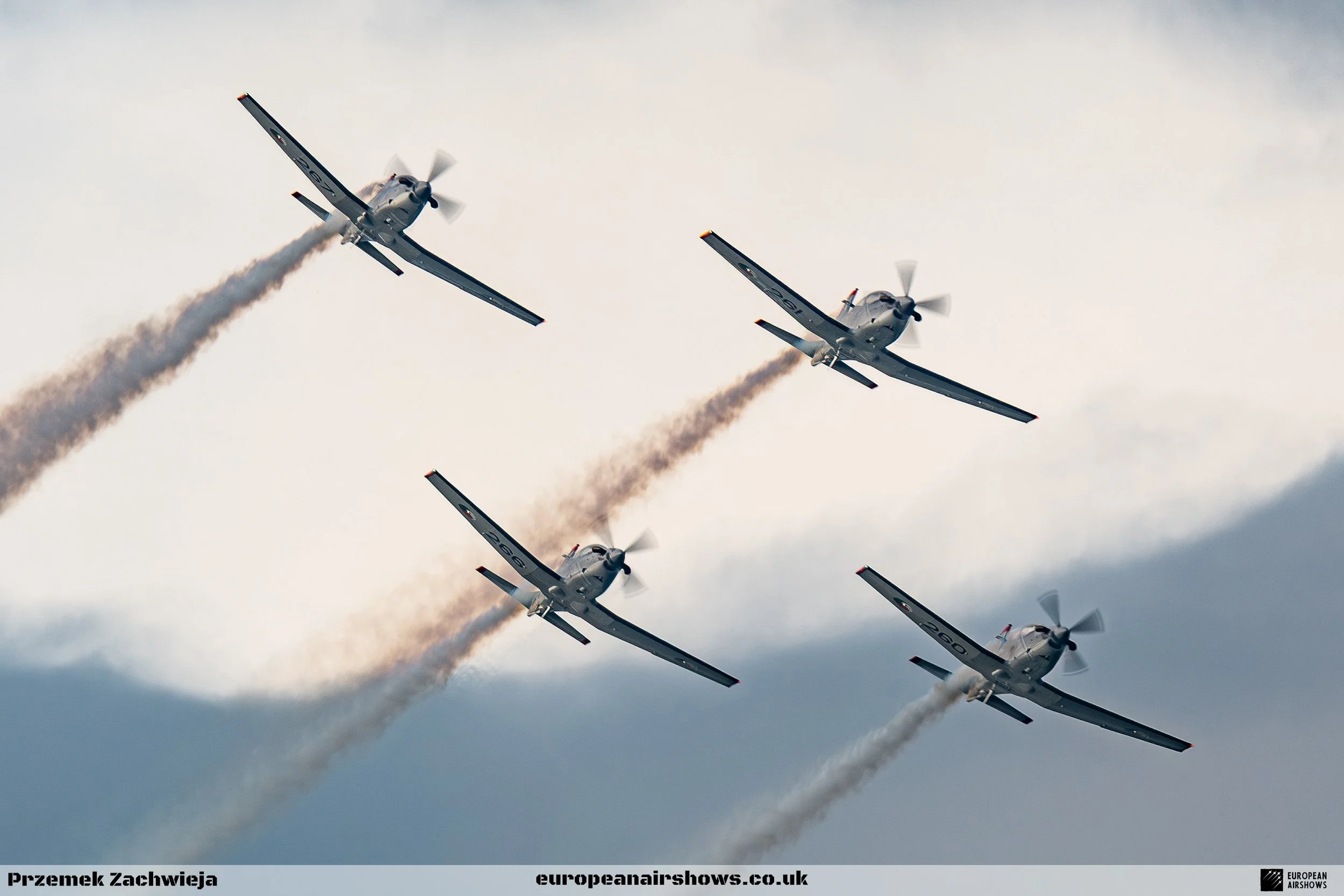
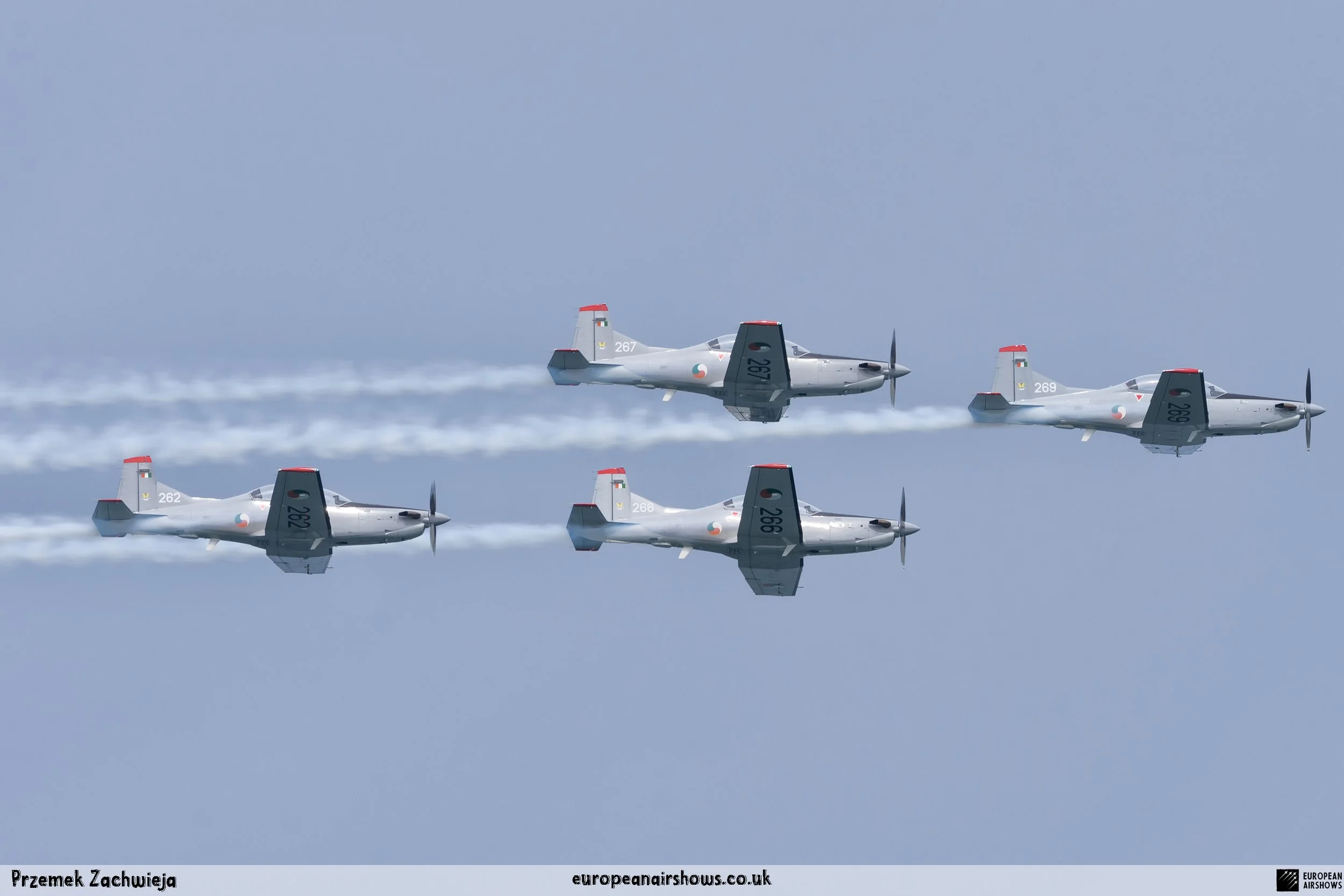
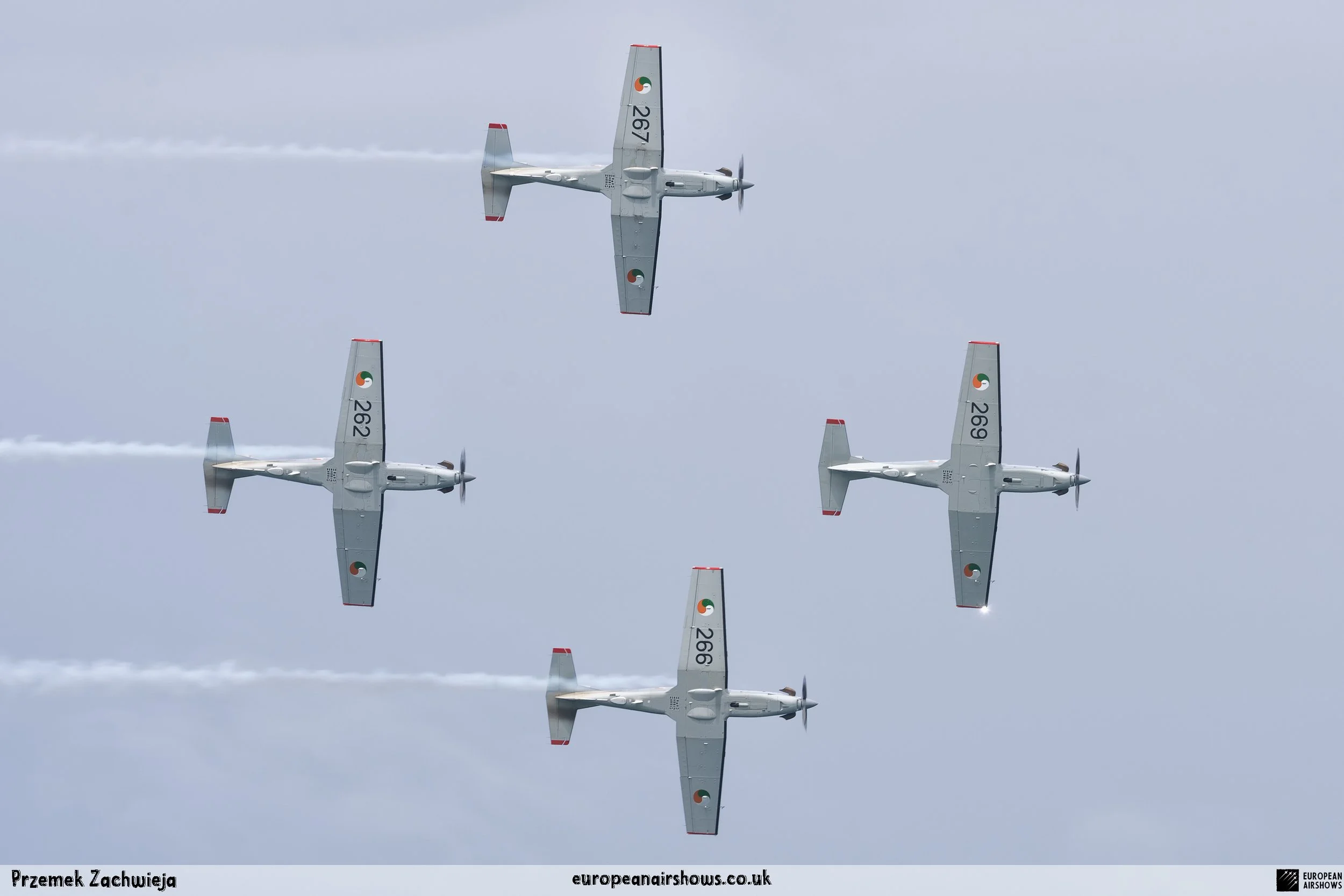
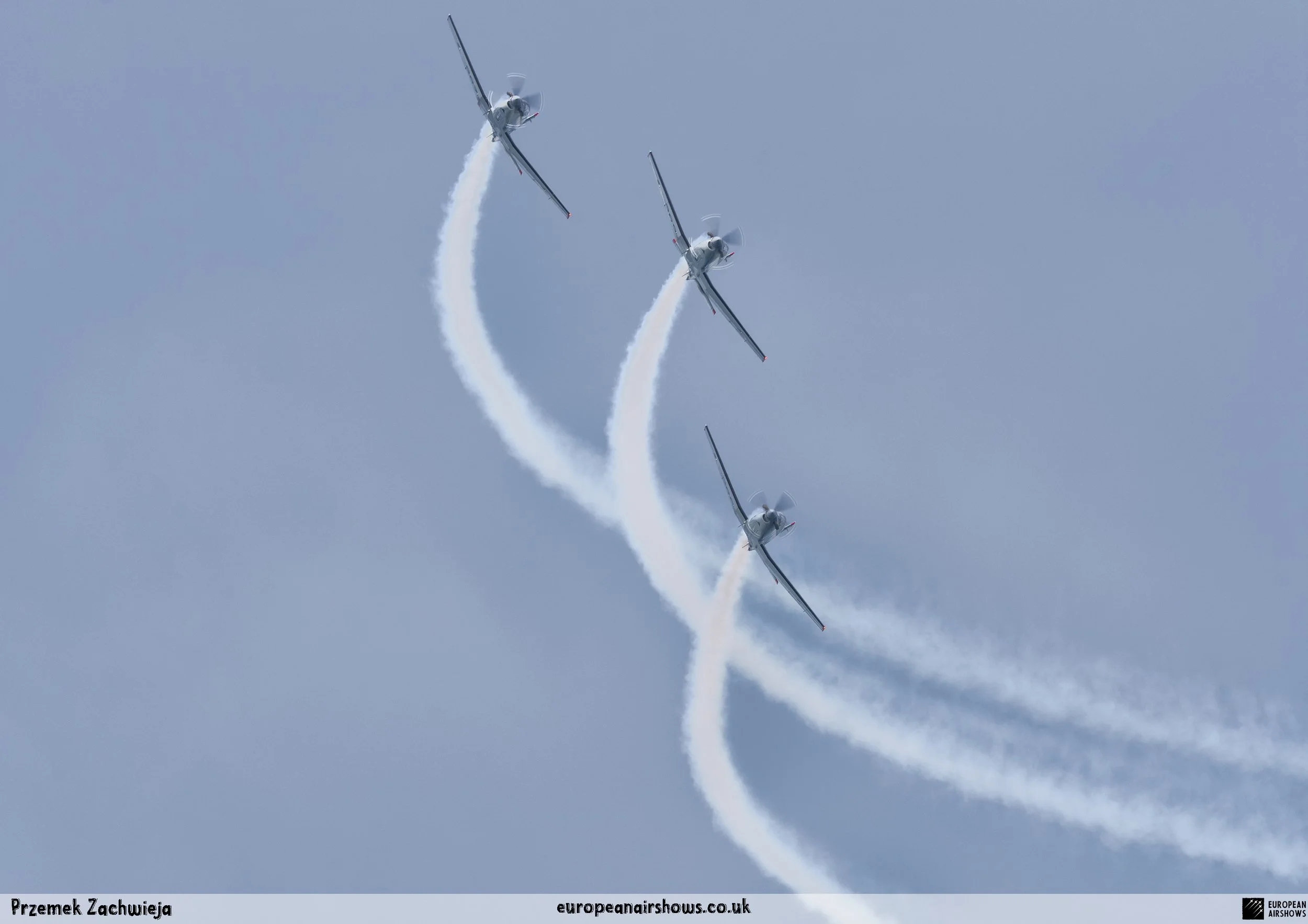
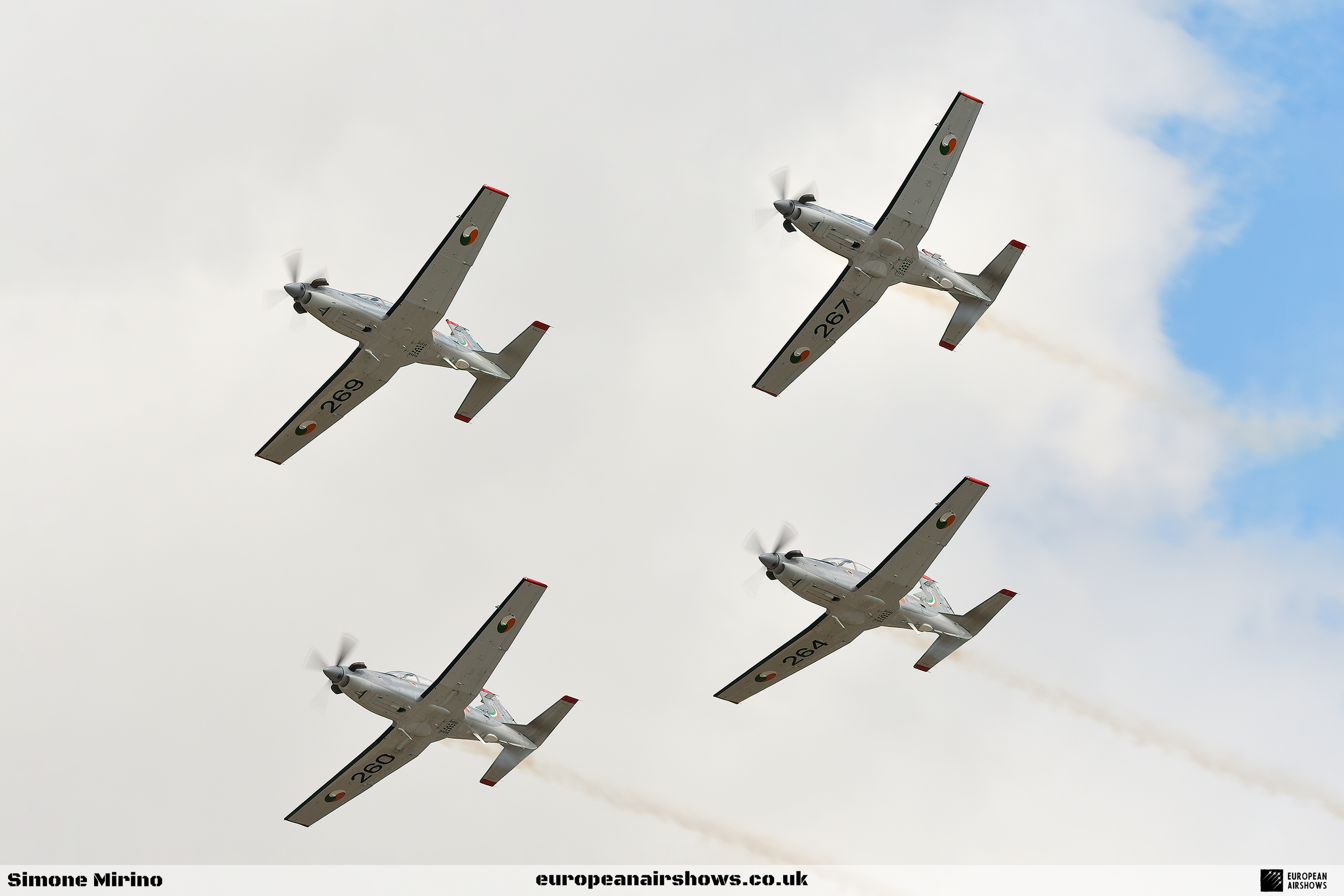
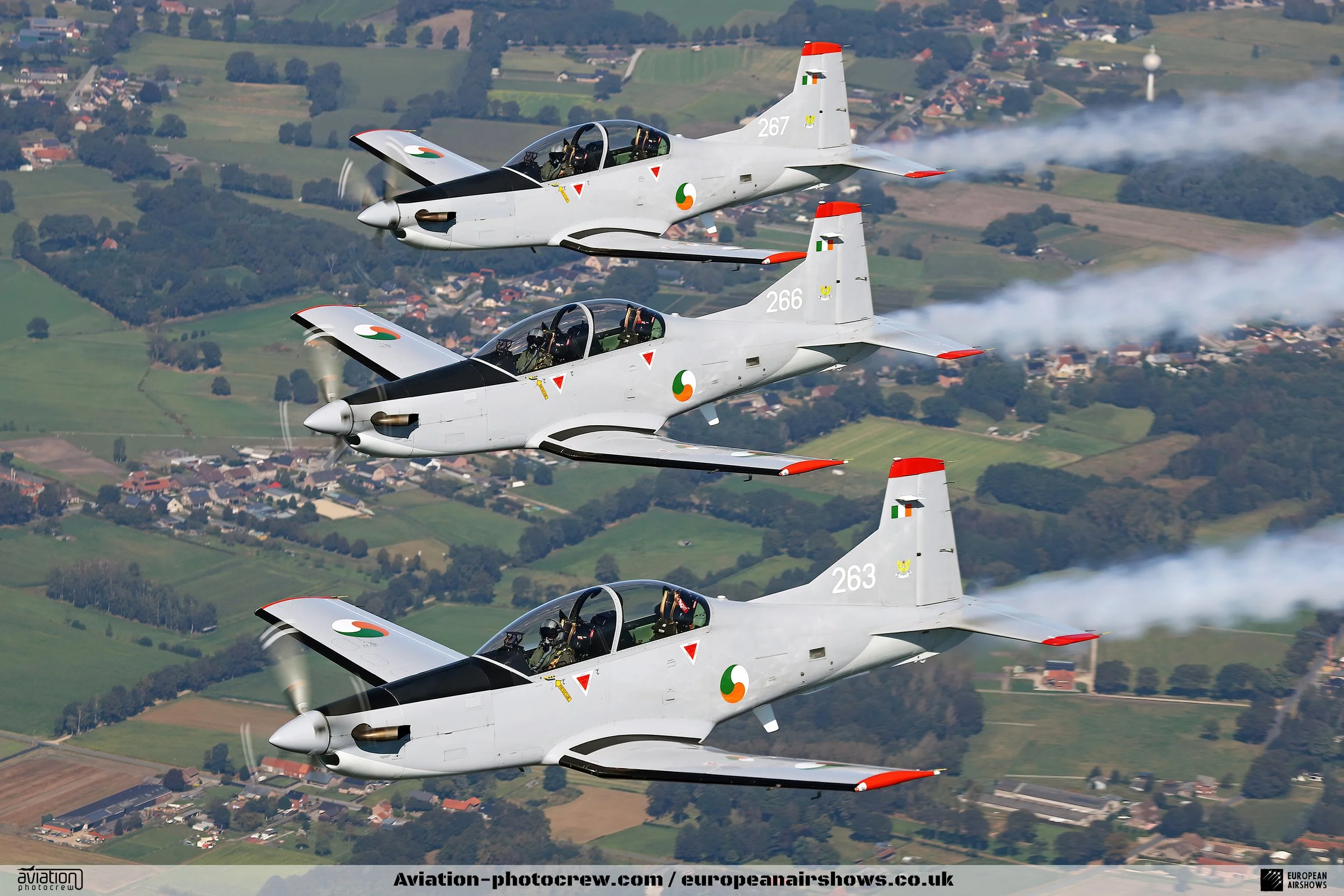
The full routine is structured around four PC-9Ms, usually presented as a close formation before the aircraft divide for individual or opposing elements. Some appearances have been flown by three aircraft, but the Silver Swallows is correctly described as a four-ship team rather than a permanently fixed three-ship formation.
Not a separate display fleet
The PC-9Ms remain part of the Flying Training School's normal fleet. The same aircraft type teaches aerobatics and close formation during the military pilot course, so the display is a public demonstration of skills that already belong to the school's training syllabus. That connection is the defining feature of the present team.
The display
Close four-ship aerobatics, then space for the breakaway aircraft.
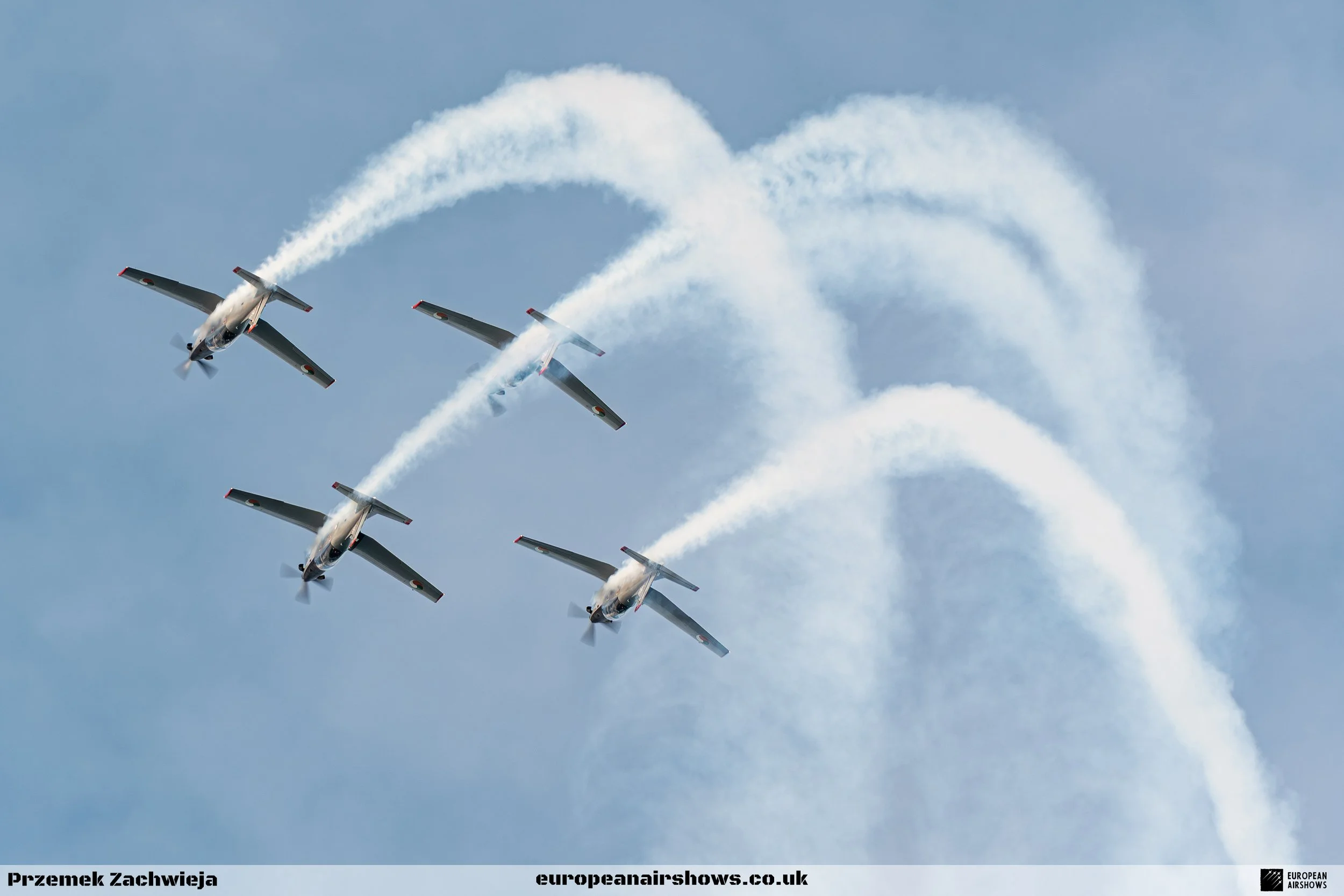
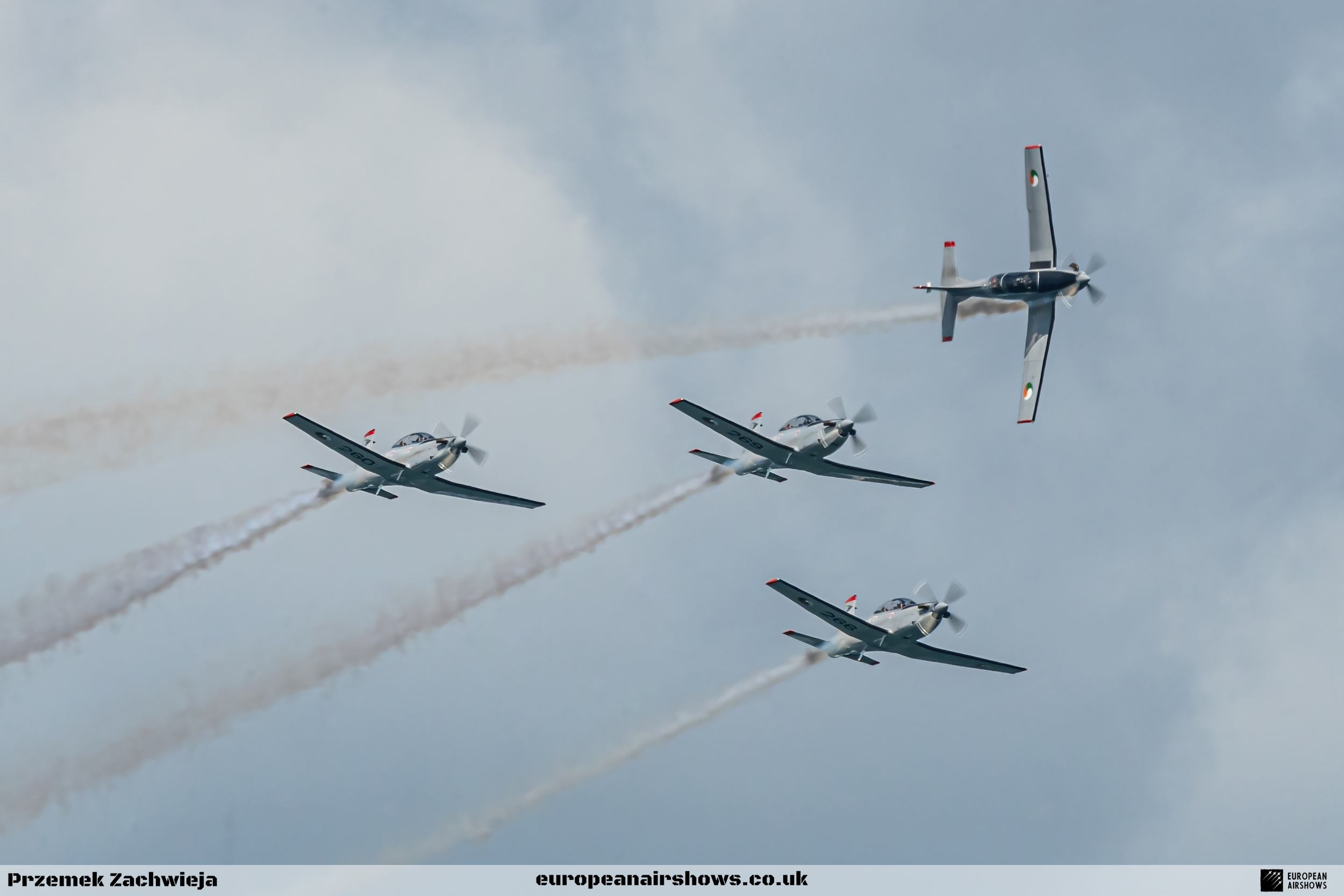
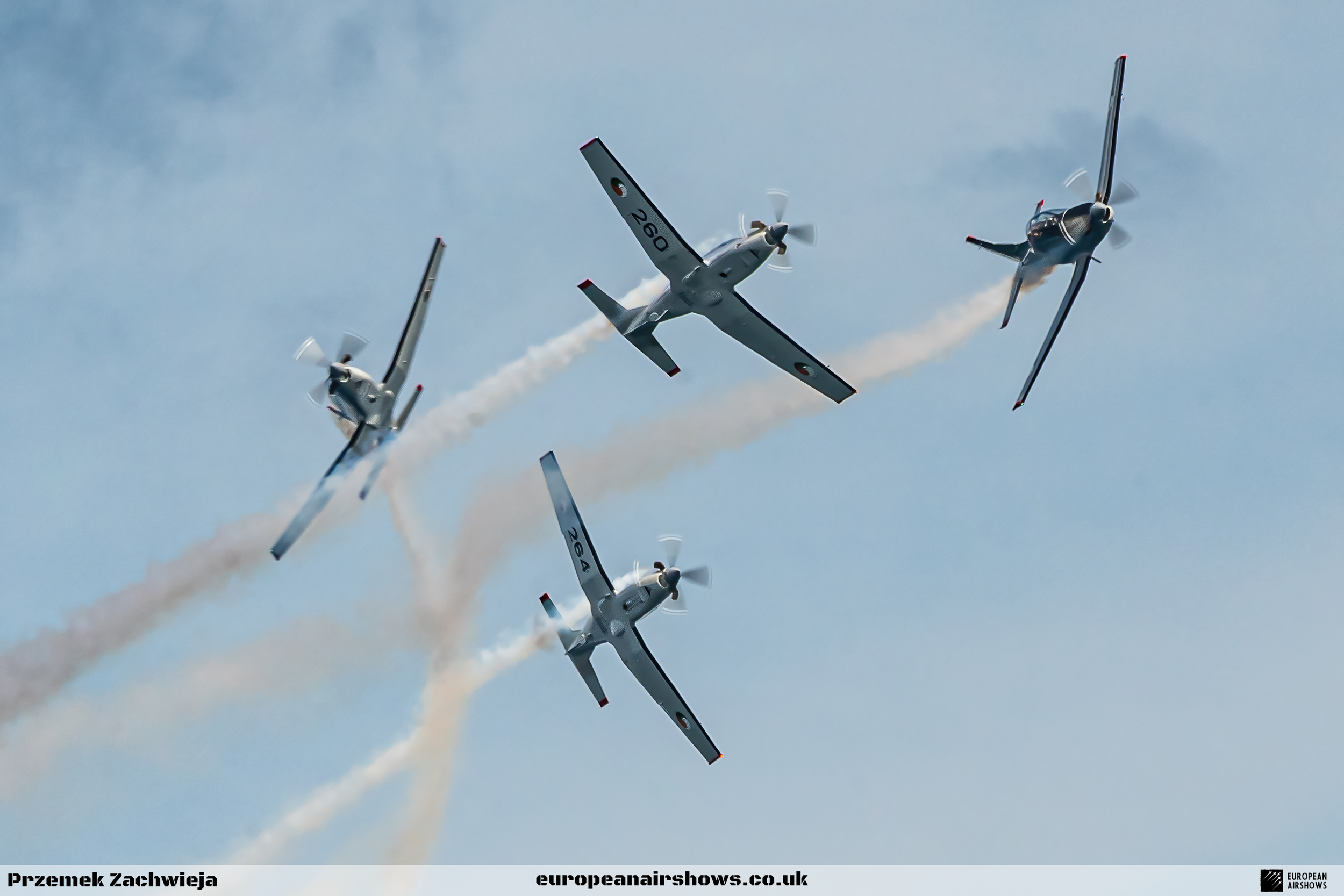
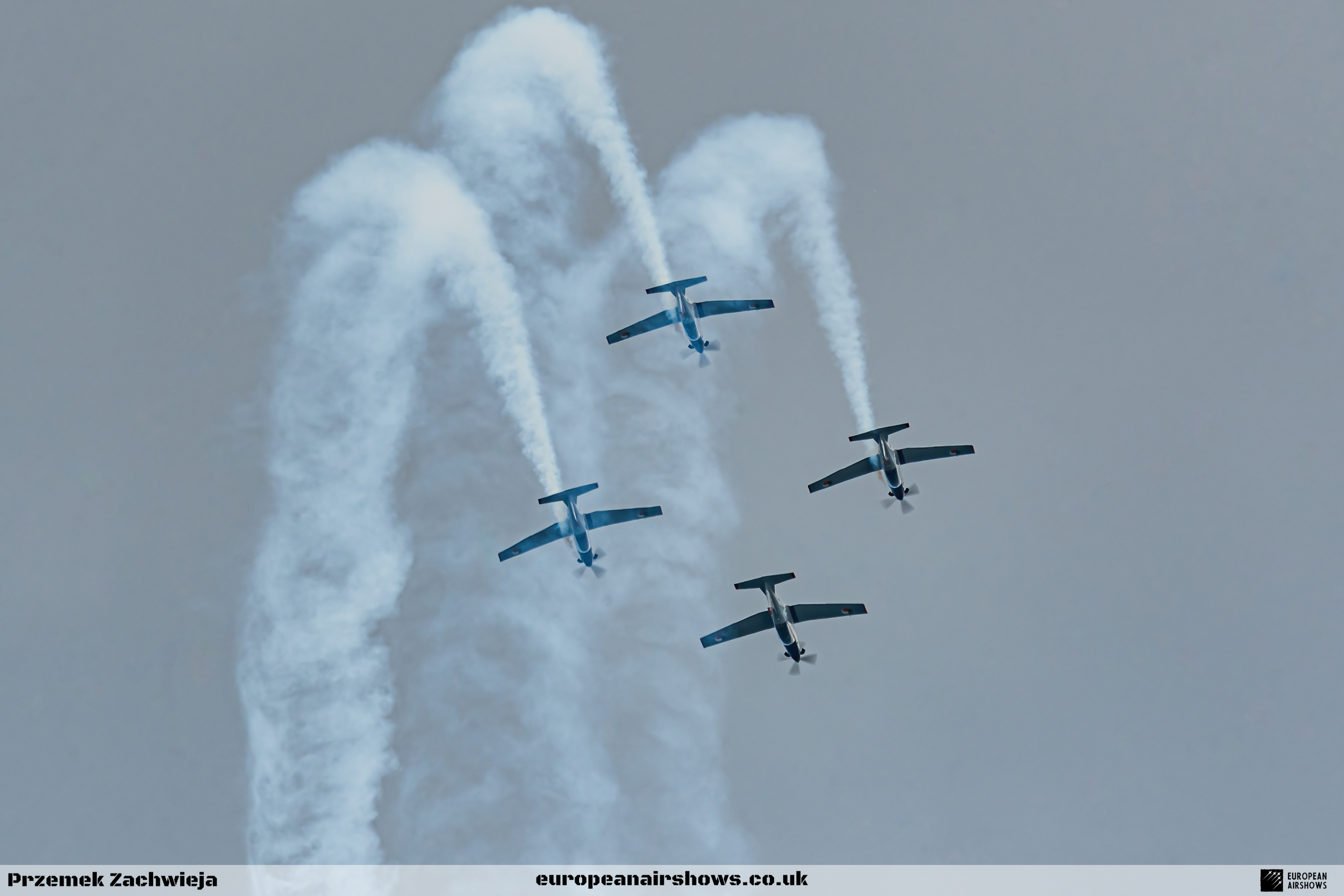
The Silver Swallows routine is deliberately compact. Formation flypasts, loops and rolls establish the four aircraft as one unit; breaks, individual aerobatics and opposition passes then change the pace without losing the clear connection to military formation training.
Formation arrival
The team normally enters as a single group, allowing the audience to read the spacing and shape before the first aerobatic figure.
Loops and rolls
The PC-9Ms fly collective loops and rolling manoeuvres while the wing aircraft hold close visual references on the leader.
Formation changes
Diamond, line and echelon-style shapes make the display readable from the ground and show the precision expected in advanced flying training.
Breakaway elements
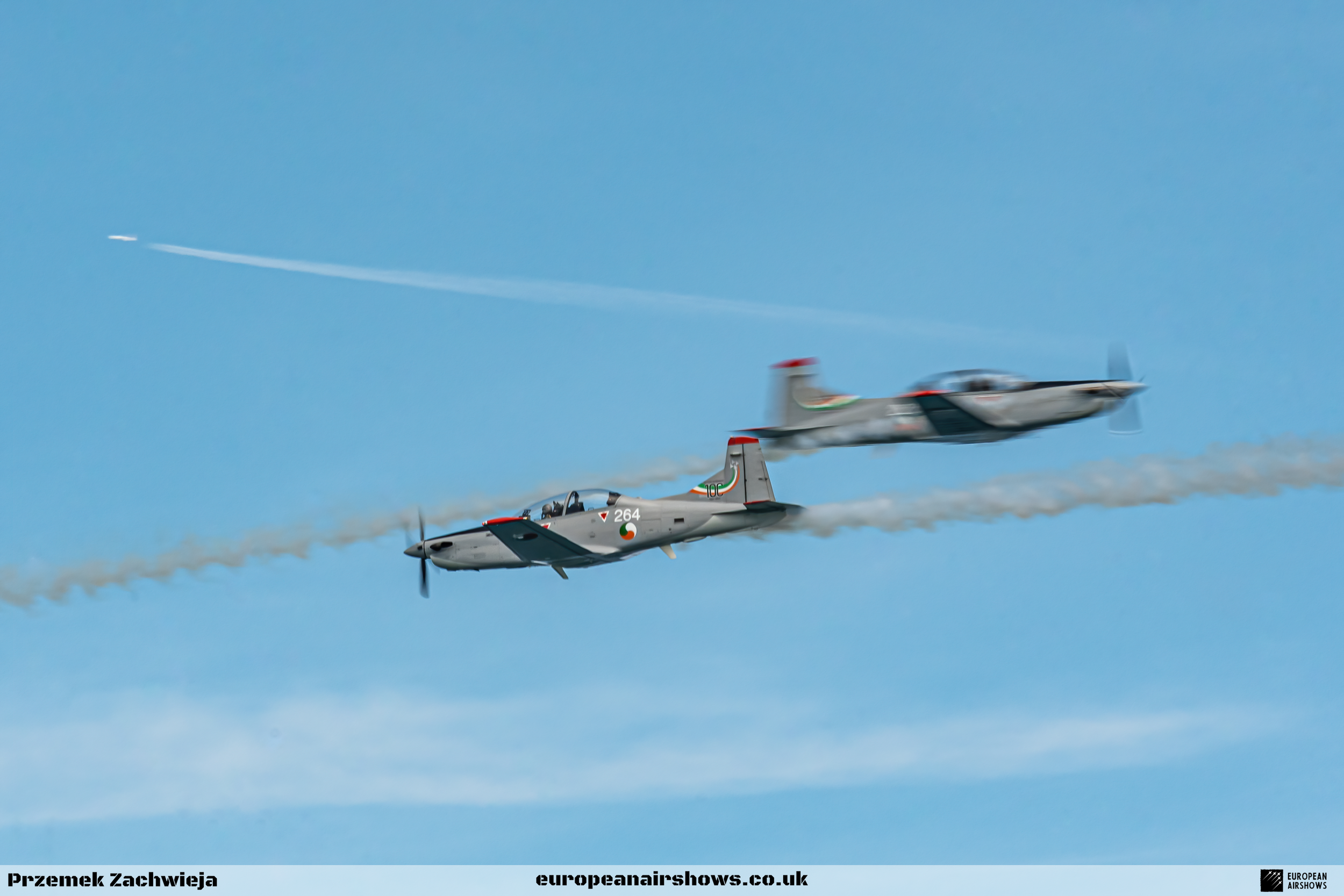
Later figures give individual aircraft or a separated pair room for faster passes, reversals and opposing approaches.
White display smoke
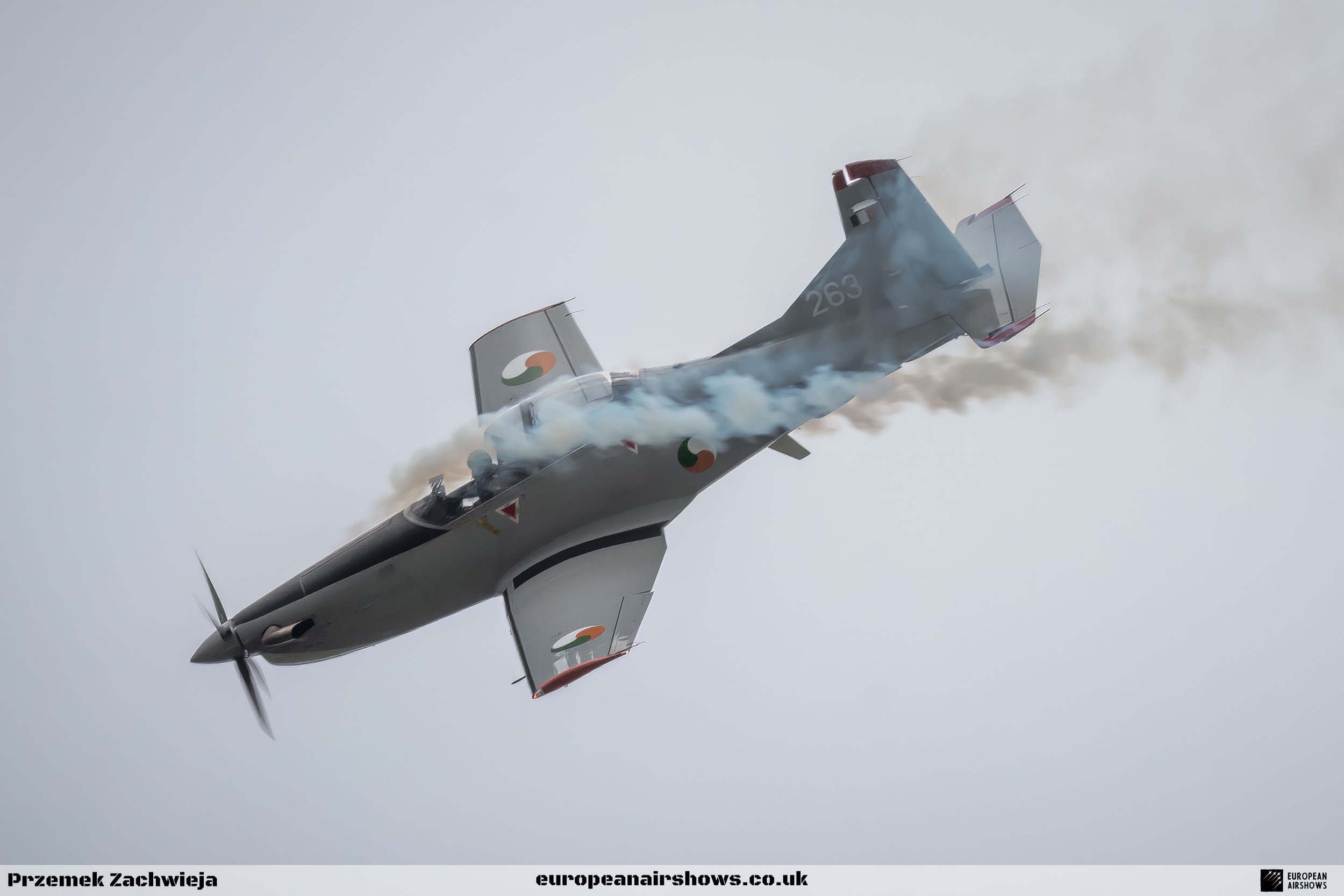
Smoke makes the flight path visible through loops, rolls and breaks, adding definition without hiding the aircraft themselves.
Ceremonial tricolour
For selected national flypasts the PC-9Ms can trail green, white and orange smoke, a capability first publicly revealed during the Easter Rising centenary commemorations in 2016.
The aircraft
Pilatus PC-9M: the Air Corps trainer behind the display.
A tandem-seat military trainer
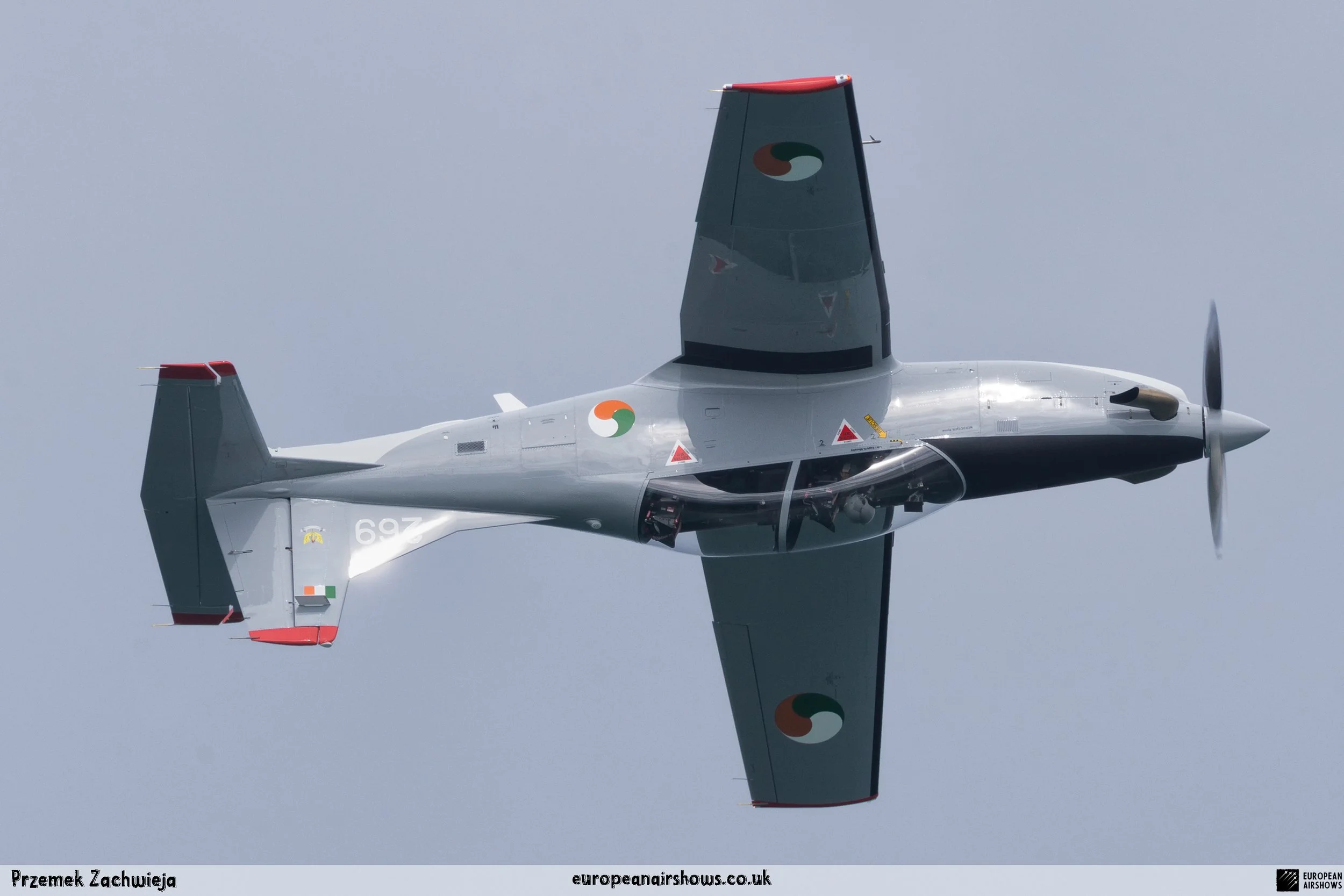
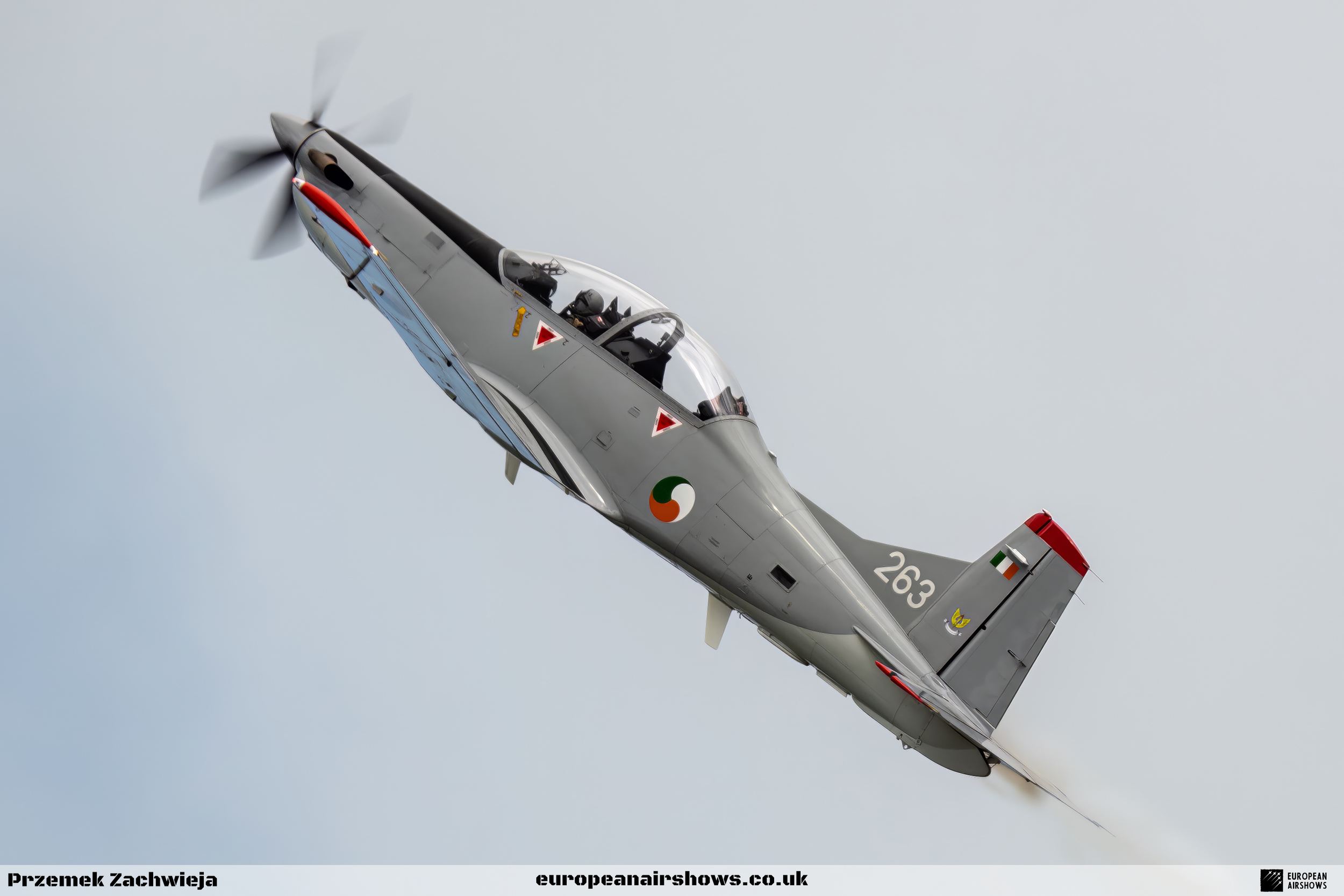
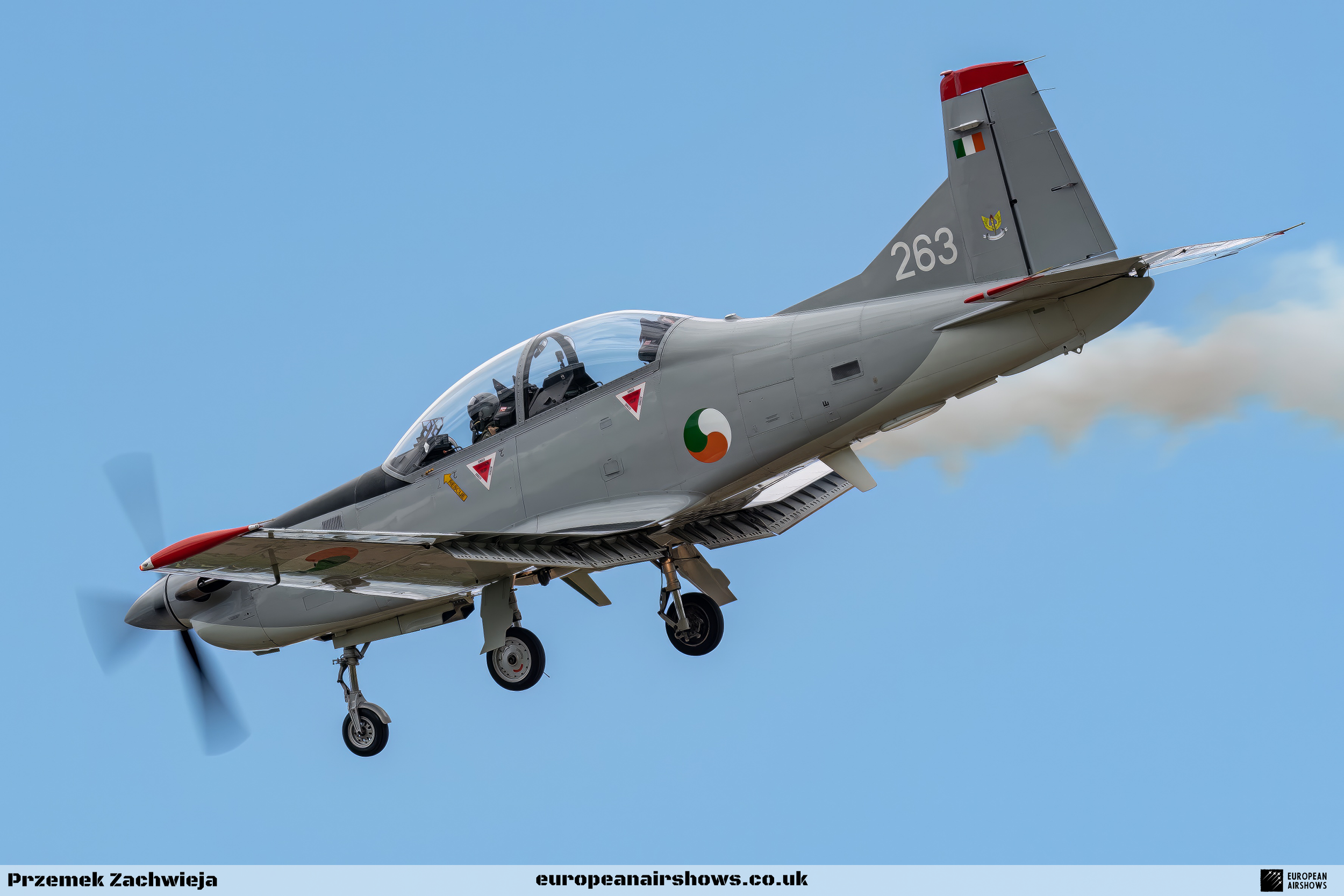
The Swiss-built PC-9M entered Irish Air Corps service in 2004 and is the service's main pilot-training aircraft. Student and instructor sit in tandem beneath a single canopy, with the rear cockpit raised to improve the instructor's forward view.
Training, tactics and operational work
The Flying Training School uses the type for ab initio, advanced and instructor pilot training. Its syllabus also includes formation flying, aerobatics, weapons training and air tactics, while the aircraft can support close-air-support tasks when required.
A modern cockpit and escape system
The Irish aircraft combine a head-up display with electronic flight instrumentation and a full VFR/IFR avionics fit. Both cockpits use Martin-Baker CG-A ejection seats, giving the PC-9M a level of safety equipment expected of an advanced military trainer rather than a civilian aerobatic aircraft.
Why it works as a display aircraft
The PT6A-62 turboprop gives the PC-9M a maximum speed of about 320 knots, while the airframe can sustain 7 g. That combination is fast enough for energetic opposition work but slow and compact enough for a small formation to remain easy to follow along the display line.
The story so far
From silver Fouga jets to a revived PC-9M formation.
1975
The Fouga Magister joins the Air Corps
Six Fouga CM.170-2 Super Magisters entered Irish Air Corps service in 1975 to replace the Vampire. Their silver finish and distinctive V-tail later supplied both the appearance and the name of Ireland's best-known military display team.
1982
The formation-aerobatic roots
A four-Fouga display for the Air Corps' 60th anniversary developed a routine built around keeping the aircraft close to the audience, breaking the formation apart and reforming during aerobatic figures. This was the direct flying tradition from which the team emerged.
1986-87
The Silver Swallows identity takes shape
A three-aircraft team operated in 1986. A fourth Fouga was added in 1987, when the Silver Swallows name was adopted for the Baldonnel Air Spectacular. The name referred to the aircraft's silver finish and swallow-like V-tail.
26 Jul 1990
First display outside Ireland
The Fouga team made its international debut at the RAF Brawdy Open Day in Wales, beginning a small but memorable overseas history.
1997
An award-winning RIAT appearance
During the Air Corps' 75th anniversary year, the Silver Swallows appeared in Britain and Belgium. At the Royal International Air Tattoo they received the Lockheed Martin Cannestra Trophy for the best flying demonstration by an overseas participant.
1998-99
The original jet era ends
The Fougas completed their final flying in 1998 and the type left Irish Air Corps service in 1999. Without the V-tailed jets, the original Silver Swallows team disappeared from the display circuit.
2004
The PC-9M enters service
The Pilatus PC-9M became the Air Corps' principal pilot-training aircraft. Formation displays later returned under PC-9M identities, preserving the Baldonnel tradition before the historic name came back.
2016
Smoke gives the PC-9M display a new signature
Six PC-9Ms revealed green, white and orange smoke during the Easter Rising centenary flypast over Dublin. Four aircraft then used the new smoke system in an aerobatic display at Bray later that year.
2022
The Silver Swallows name returns
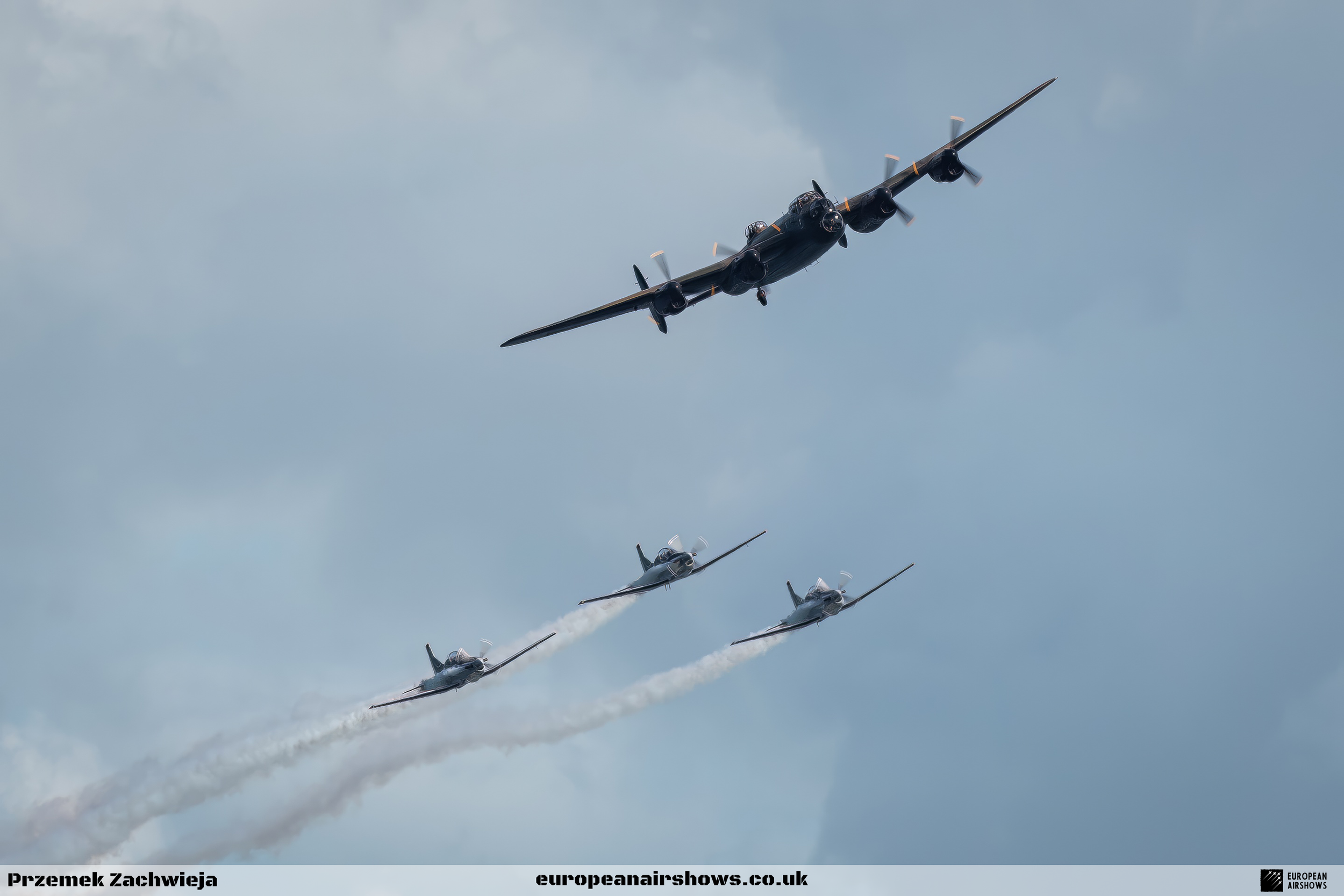
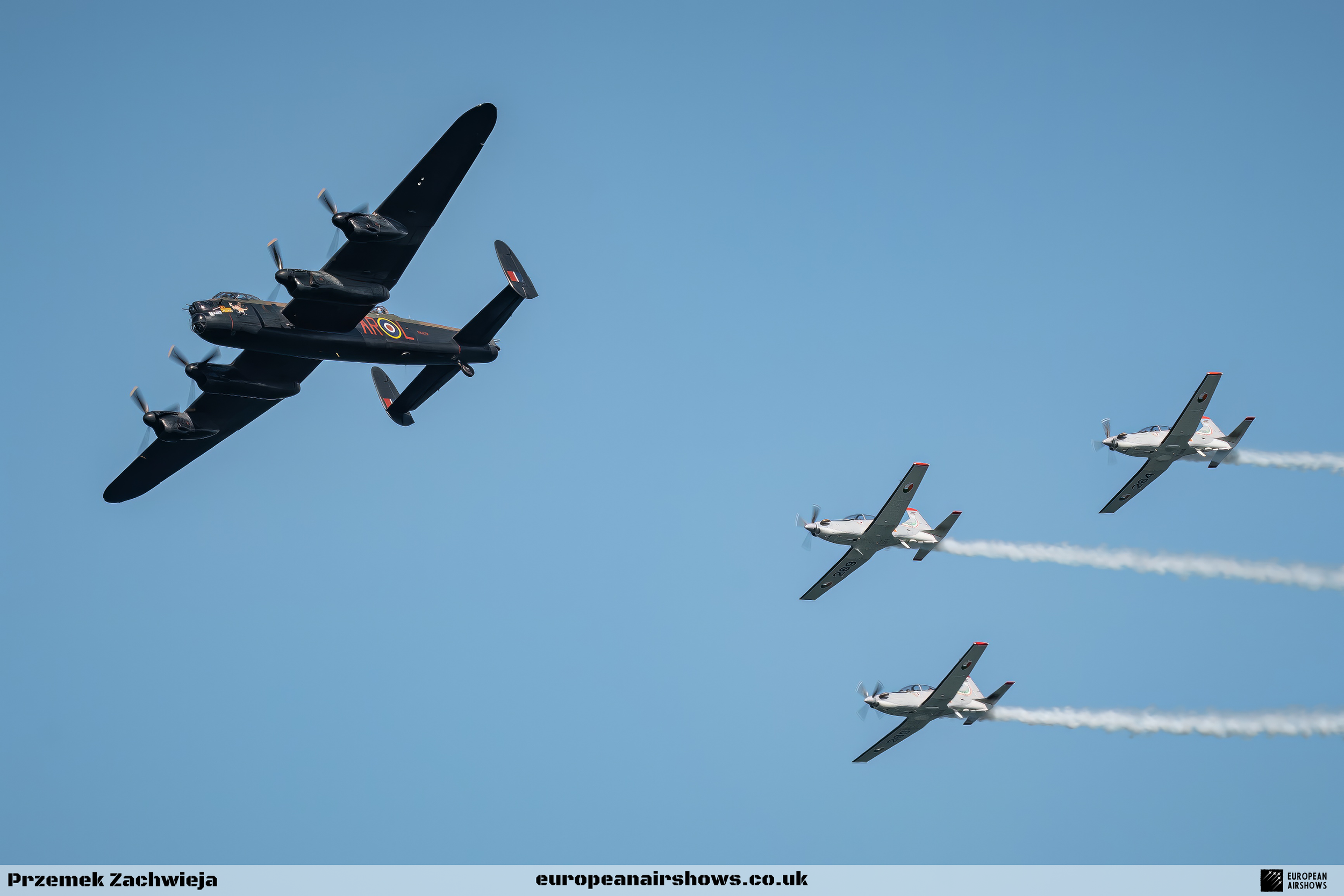
The Irish Air Corps restored the identity for its centenary year. Four PC-9Ms flew at RIAT, returning the team to Fairford after 25 years, and the formation also escorted the Battle of Britain Memorial Flight across Dublin during Veterans Day events.
2024-25
The revival continues beyond the centenary
A three-aircraft Silver Swallows formation made the Irish Air Corps' debut at the International Sanicole Airshow in 2024. The team was still displaying in Ireland in 2025, confirming that the restored identity had continued beyond its centenary-year return.
Understanding the identity
One historic name, two very different generations of aircraft.
1982 is the origin - 1987 is the named team
Formation aerobatics reached a new level with the four-Fouga display of 1982, but the Silver Swallows identity did not yet formally exist. The team developed through the mid-1980s and adopted the name in 1987. Keeping both dates explains the history without treating them as the same event.
The name came from the Fouga, not the PC-9M
The original aircraft were natural-metal jets with a butterfly-like V-tail, suggesting a silver swallow in flight. The modern PC-9Ms do not share that shape or finish; they carry the historic name as a link to the Air Corps display tradition created at Baldonnel.