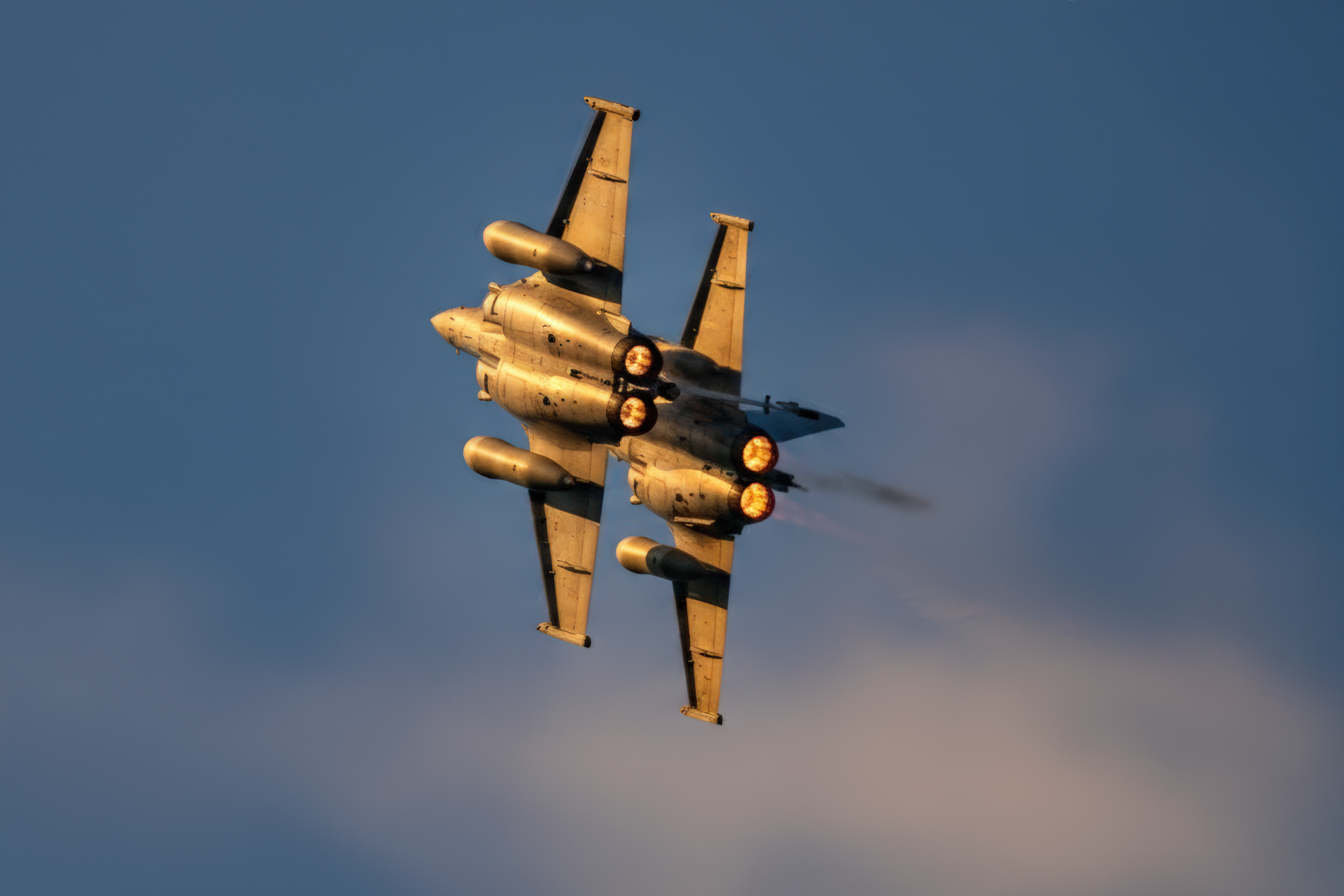
Requin Mike
Rafale B tactical demonstration of the 4th Fighter Wing
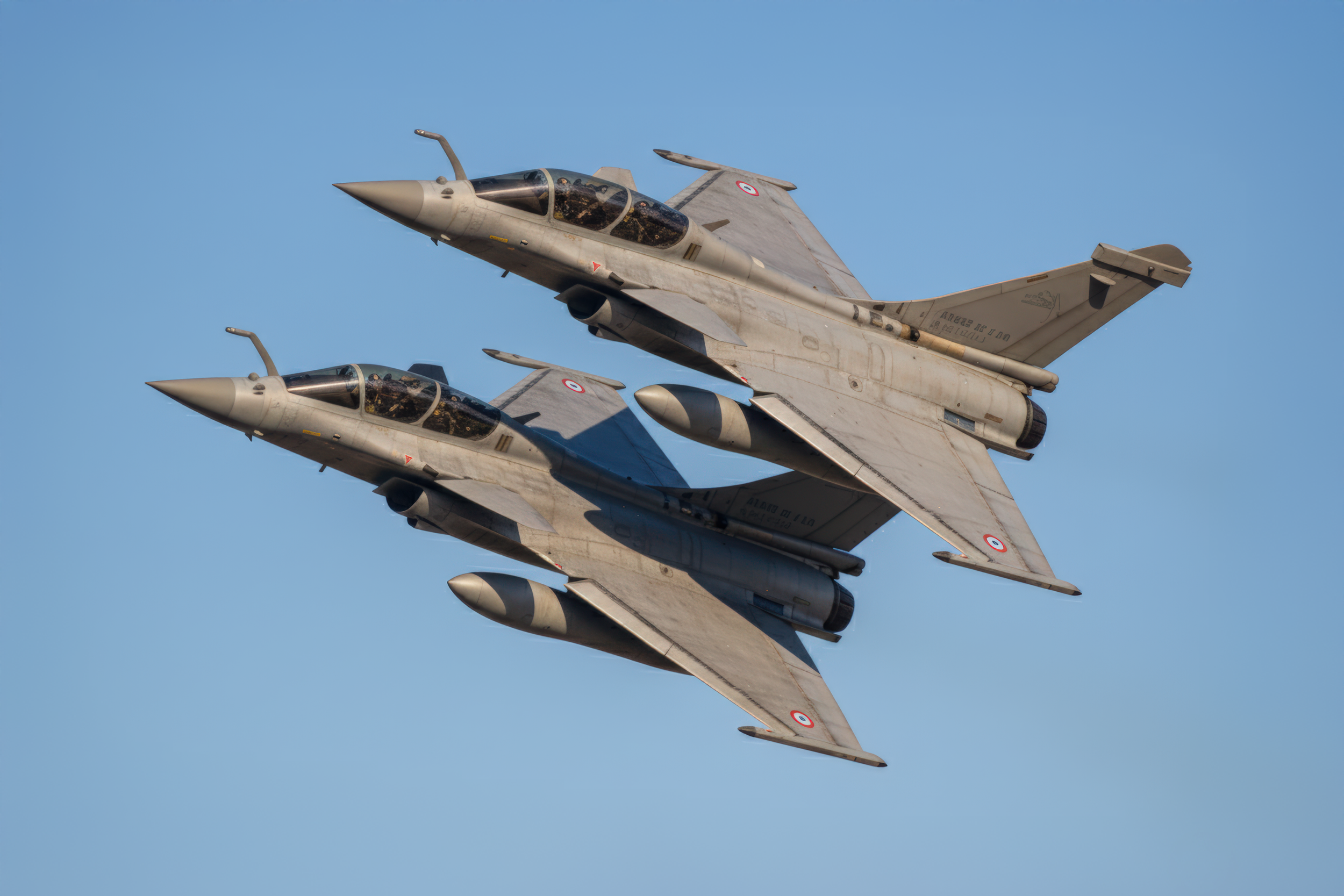
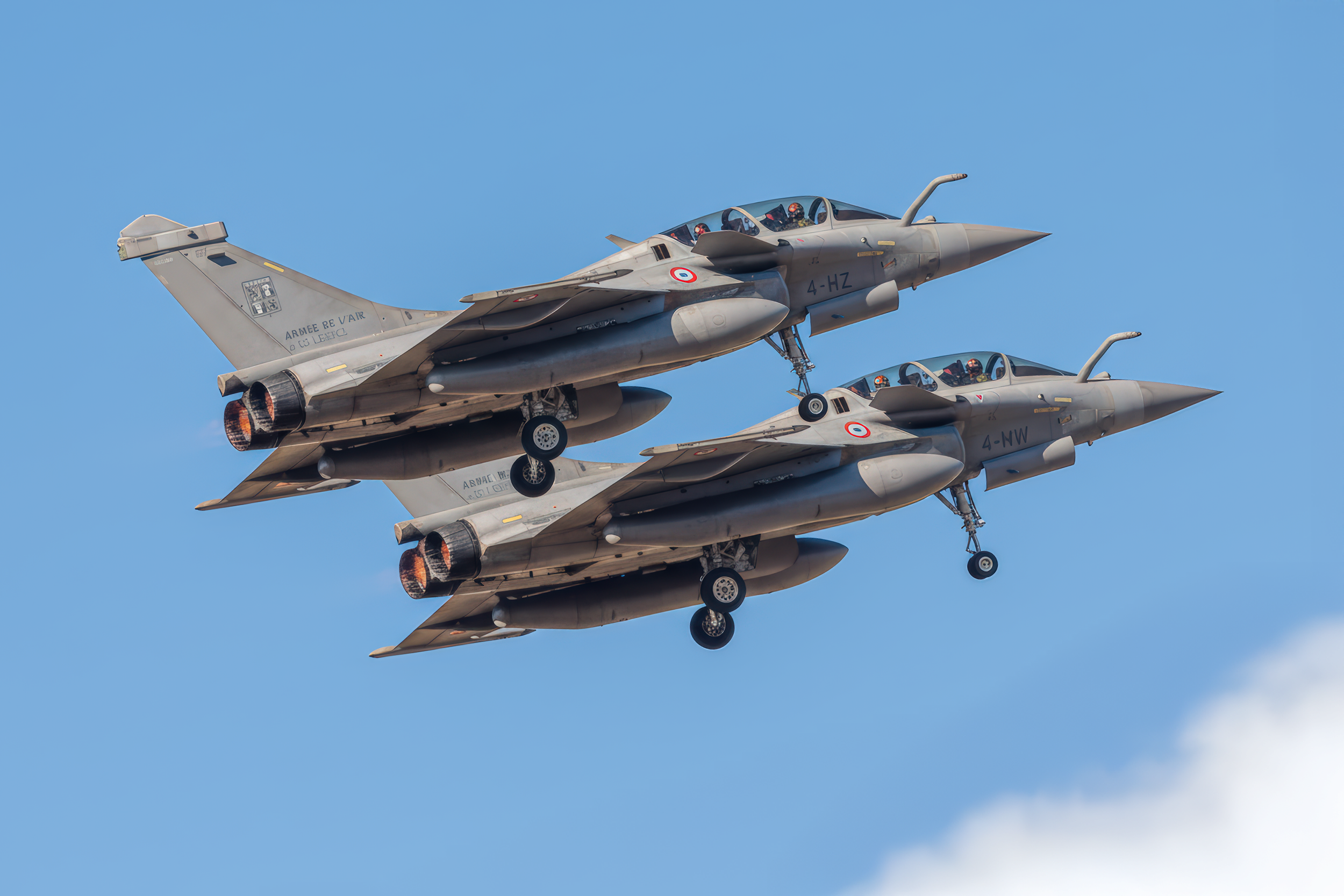
Requin Mike turns a two-aircraft Rafale mission into a compact public demonstration. Four operational aircrew from BA 113 Saint-Dizier use two twin-seat Rafale Bs to illustrate simulated cannon employment, air-to-ground attack, air-policing intervention and the disciplined formation work of France's Strategic Air Forces.
- Created
- 2020
- Formation
- 2 aircraft / 4 crew
- Aircraft
- Dassault Rafale B
- Parent unit
- 4th Fighter Wing
- Mission family
- Strategic Air Forces
- Home
- Saint-Dizier
The team
Two operational Rafale Bs, four frontline aircrew and no separate show-only squadron.
Created at Saint-Dizier in 2020
Requin Mike was created within the 4e Escadre de Chasse during the COVID-disrupted 2020 season. Its approved display was validated on 1 September 2020 by the commander of the Strategic Air Forces and the Inspector of the Air and Space Force. The idea was deliberately different from the Rafale Solo Display: two operational jets would show how Rafale crews complete a mission together rather than simply demonstrate one aircraft's maximum manoeuvrability.
Crews from Gascogne and La Fayette
The patrol is associated with Escadron de Chasse 1/4 “Gascogne” and Escadron de Chasse 2/4 “La Fayette”, the two Rafale B combat squadrons of the 4th Fighter Wing at BA 113. Each aircraft carries a pilot in the front cockpit and a navigateur officier systèmes d'armes — NOSA — in the rear. The NOSA manages navigation, sensors, weapons employment and tactical workload as a full combat crewmember, not as a passive second pilot.
A Strategic Air Forces capability demonstration
Saint-Dizier's Rafale B force forms part of the Forces aériennes stratégiques, the airborne component of France's nuclear deterrent. The same wing also conducts conventional strike, air defence, allied air policing, deployments and live weapons training. Requin Mike therefore represents a genuinely multirole operational community, even though its public routine concentrates on conventional and air-policing scenarios.
Small programme, operational priorities first
Requin Mike was never intended to maintain the schedule of a permanent national display team. The original plan envisaged only a handful of appearances and a very limited number of dedicated training sorties. Exercises, deterrence duties, deployments, alert commitments and aircraft availability remain more important than airshow bookings. A season without a public programme should therefore be treated as inactivity for that year, not automatic proof that the identity has been formally disbanded.
The display
A fifteen-minute Rafale mission translated into visible tactical scenes.
The original presentation was divided into roughly fifteen tactical tableaux. Official descriptions identify three central mission families: a simulated cannon pass, air-to-ground attack and intervention under the permanent air-policing mission. Formation changes, separation and rejoins connect those scenarios into one coordinated sortie.
Operationally loaded arrival
The Rafales can appear with two or three external tanks, preserving the heavy silhouette and energy-management challenge of aircraft configured for long-range operational work.
Air-policing intervention
The pair illustrates how alert aircraft approach, identify and control an unknown or non-compliant aeroplane while maintaining mutual support.
Simulated cannon pass
An attack line represents employment of the Rafale's internal 30 mm cannon, with the geometry compressed into a safe and clearly readable airshow figure.
Air-to-ground attack
The aircraft separate into complementary roles so one crew can present the attack while the second supports, covers or repositions for the next tactical scene.
High-speed show of force
Fast low passes demonstrate how speed, sound and visual presence can deter hostile action without turning the routine into conventional formation aerobatics.
Formation recovery
Turns, crosses and rejoins show the judgement of closure rate, energy, altitude and relative position required to rebuild a tactical pair after separation.
The aircraft
Dassault Rafale B: a two-seat combat aircraft, not a trainer conversion.
The twin-seat French Air and Space Force variant
Rafale B is the two-seat land-based member of the Rafale family. It keeps the full combat capability, aerodynamic performance and mission systems of the single-seat Rafale C while adding a second cockpit. France chose a substantial two-seat fleet because complex penetration, strike, reconnaissance and deterrence missions benefit from sharing workload between a pilot and a NOSA.
Canard-delta aerodynamics and digital control
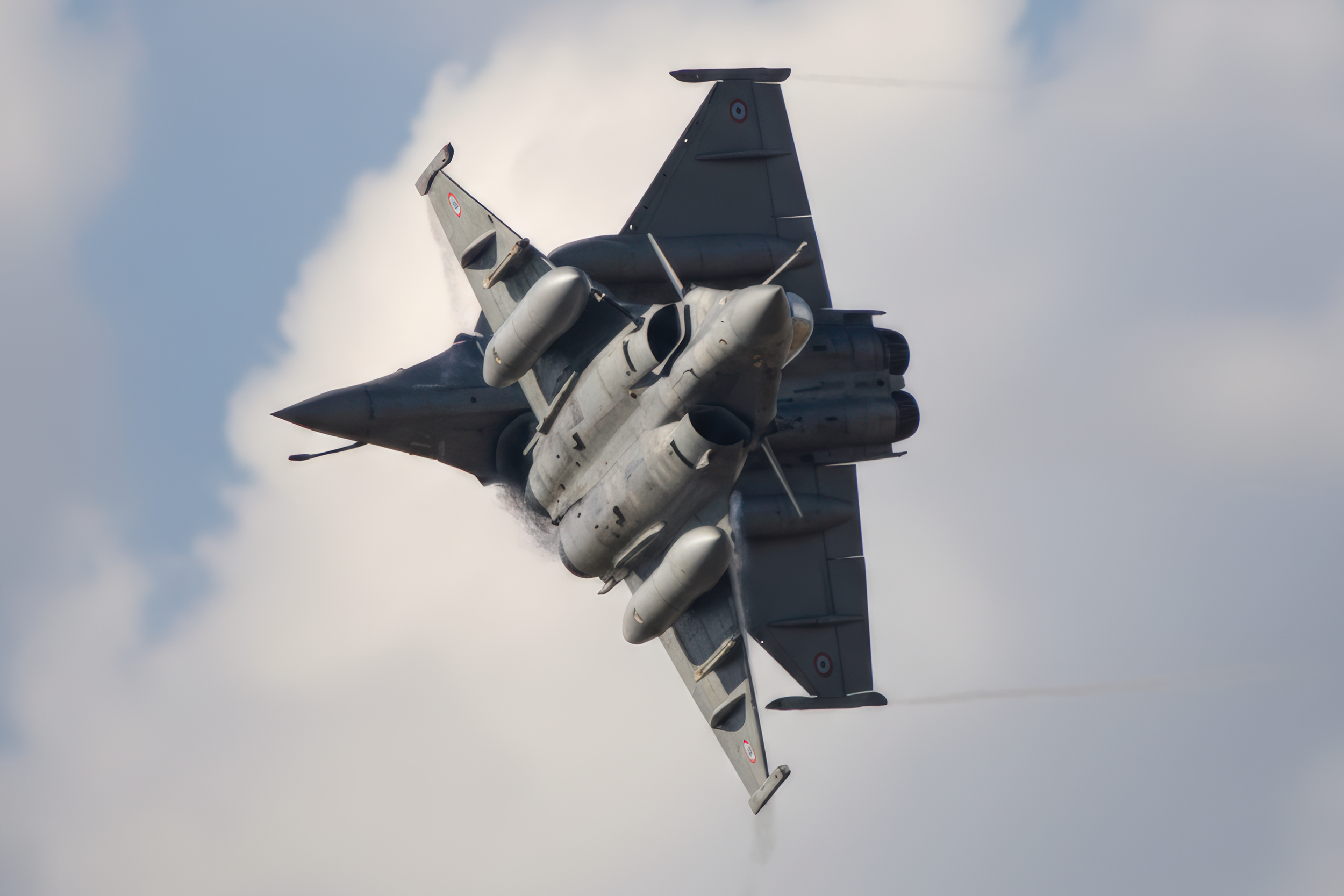
Close-coupled canards work with the broad delta wing to provide lift, pitch authority and agility across a wide speed range. The intentionally unstable airframe is controlled through a digital fly-by-wire system, giving the crew precise response in formation and during high-G tactical manoeuvring. The airframe limit published by Dassault extends from -3.2 g to +9 g.
Two Safran M88 engines
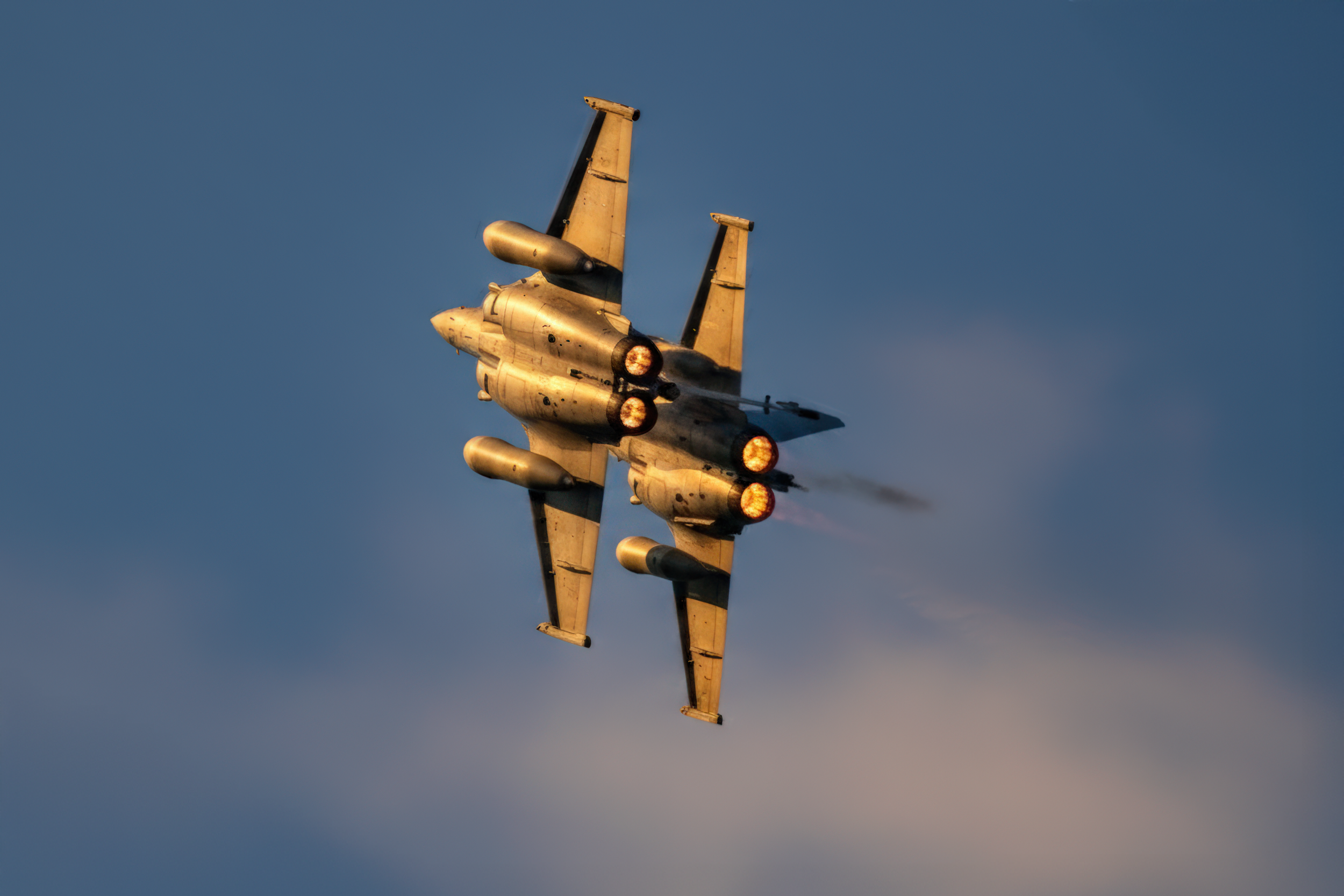
Twin M88 afterburning turbofans give the Rafale rapid acceleration, compact installation and engine redundancy. Dassault publishes maximum thrust as two 7.5-tonne-class engines. For Requin Mike, responsive power management is especially important because external tanks and the heavy operational-style configuration influence drag, inertia and the energy required for each rejoin.
An integrated combat system
The RBE2 AESA radar, Front Sector Optronics, SPECTRA electronic-warfare suite, identification systems and information received over data links are fused by the mission computers. Targeting pods such as TALIOS and weapons including MICA, Meteor, AASM and SCALP support the conventional mission set. The public display does not reproduce those invisible sensor functions directly; it visualises the coordinated manoeuvres that follow from them.
The deterrence role
Rafale B also carries France's airborne nuclear mission. The ASMPA entered Rafale service in 2010, and the modernised ASMPA-R has been evaluated from Rafale B during representative strategic raids. Requin Mike does not simulate nuclear weapons employment at airshows, but its crews and parent wing belong to the force responsible for maintaining that national role.
Normal aircraft, changing configurations
There is no permanently painted Requin Mike fleet. Operational Rafale Bs are selected according to maintenance and squadron requirements. Two- or three-tank configurations were used from the beginning to retain the look and handling of deployed aircraft, making the display visually different from a clean-configured solo demonstration.
The story so far
Created in the disrupted 2020 season and developed as an occasional frontline capability display.
Before 2020
The Raffin Mike heritage
Saint-Dizier previously fielded the Jaguar tactical patrol known as Raffin Mike. When the Rafale pair was created, the new identity deliberately retained “Mike” as a link to that local display tradition while using “Requin”, a callsign associated with EC 2/4 “La Fayette”.
Summer 2020
A two-Rafale concept is developed
The 4th Fighter Wing prepares a tactical presentation using two heavy-configured Rafale Bs. Aircrew are selected from EC 1/4 “Gascogne” and EC 2/4 “La Fayette”, with each jet carrying a pilot and NOSA.
1 September 2020
The display programme is validated
The approximately fifteen-minute sequence is approved by senior Strategic Air Forces and Air and Space Force authorities. Its mission scenes include simulated cannon fire, air-to-ground attack and intervention under the permanent air-policing posture.
2020-2021
Limited beginnings during the pandemic
COVID-19 heavily restricts the normal airshow environment, but the identity becomes established at Saint-Dizier. From the outset, the patrol is planned as an occasional operational demonstration rather than a full-season ambassador team.
2022-2023
Selected public appearances
Requin Mike appears at a limited mixture of French events and base open days. The 2023 programme includes appearances associated with Air Legend and the open days at BA 702 Avord, helping make the heavy two-seat Rafale pair increasingly familiar to enthusiasts.
2024
A new seasonal team is prepared
Training for the 2024 crew begins in mid-June at Saint-Dizier. The French Air and Space Force publicly profiles the four crewmembers and confirms a short international programme including Cambrai, Tanagra and Istres.
September 2024
Strategic Air Forces anniversary at Istres
Requin Mike displays during the BA 125 open days marking 60 years of the Strategic Air Forces. The event closely matches the team's purpose: presenting everyday Rafale missions while representing the airborne nuclear-deterrence community.
2025-2026
No fixed public season
Bookings become sparse and planned participation can be replaced by other tactical teams when operational circumstances change. No formal service announcement has been identified that permanently disbands Requin Mike, so the identity is best described as active but occasional rather than continuously touring.
Identity & role
A Saint-Dizier tactical identity that connects Jaguar heritage, Rafale operations and the FAS.
Why “Requin Mike”?
The official 2020 explanation links “Mike” to Saint-Dizier's earlier Raffin Mike Jaguar patrol. “Requin” — shark in French — was taken from the callsign used by EC 2/4 “La Fayette”. The result is a new Rafale identity with a deliberate local historical connection rather than a random display callsign.
Not Vautour Bravo or the Rafale Solo Display
Requin Mike represents the 4th Fighter Wing at Saint-Dizier and normally uses two Rafale Bs with pilot-NOSA crews. Vautour Bravo belongs to the 30th Fighter Wing at Mont-de-Marsan and has commonly used Rafale C single-seaters. The Rafale Solo Display is a dedicated one-aircraft technical presentation and an official national ambassador. They are separate teams with different organisations and purposes.