Red Arrows
BAE Systems Hawk T1 formation aerobatic team of the Royal Air Force
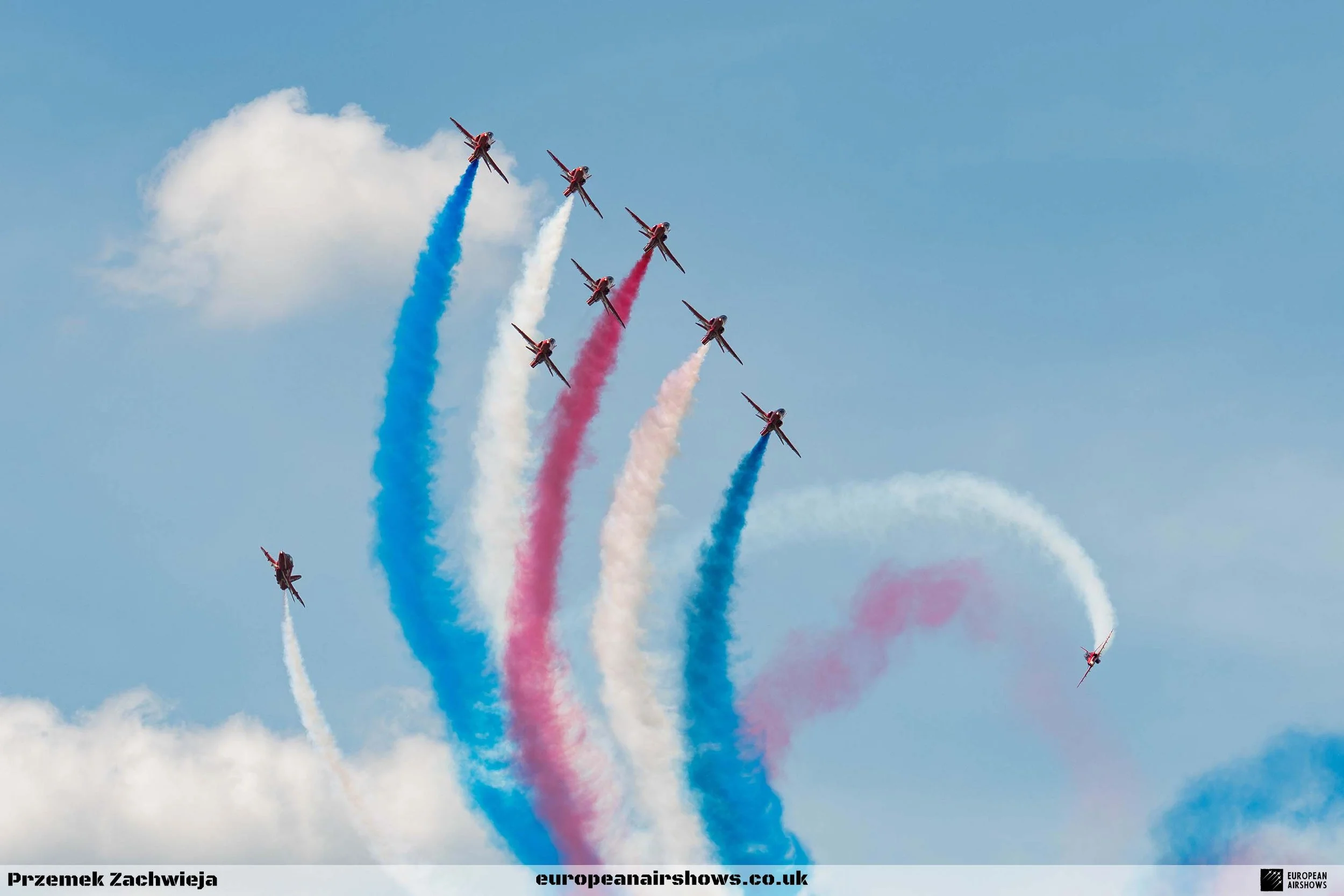
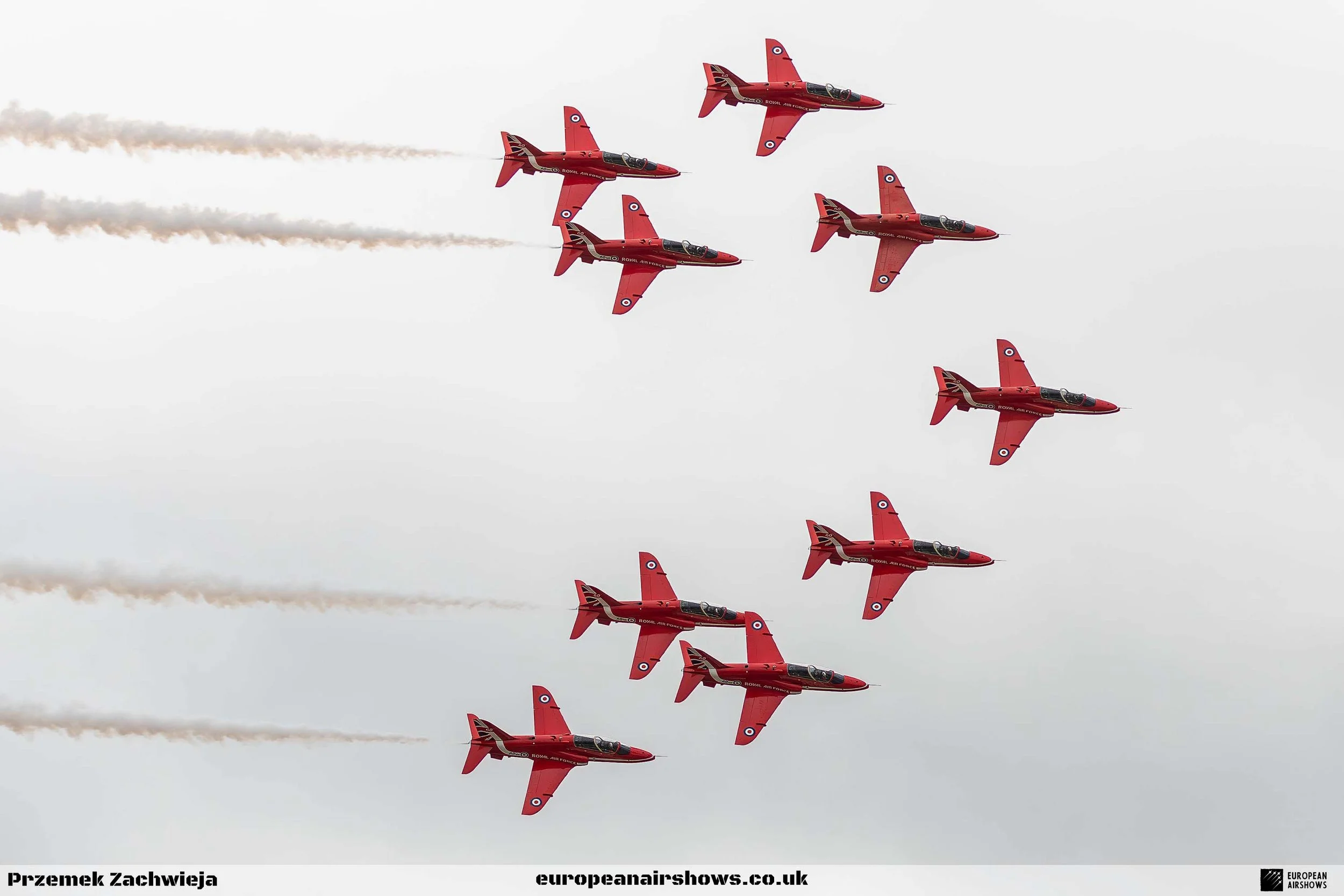
The Red Arrows are the Royal Air Force Aerobatic Team and one of the best-known military formations in the world. The unit combines frontline flying experience, close-formation precision and a large technical organisation to represent the RAF and the United Kingdom. From 2026, public aerobatic displays are flown by seven Hawks, while nine-aircraft formations remain available for selected national and state flypasts.
- Team formed
- 1964
- First season
- 1965
- Aerobatic display
- 7 aircraft
- Selected flypasts
- Up to 9 aircraft
- Aircraft
- Hawk T1
- Unit strength
- About 150 personnel
The team
A flying formation at the front, supported by an RAF unit of around 150 people.
The public face of the Royal Air Force
The Red Arrows are not a civilian entertainment act carrying military colours. They are a Royal Air Force unit whose purpose is to demonstrate the Service’s standards of precision, preparation and teamwork, support recruitment, represent the United Kingdom overseas and contribute to defence diplomacy. Every public display is therefore the visible end of a much larger military operation involving flying, engineering, logistics, safety management and mission support.
Officer Commanding and Red 1 are different jobs
The Officer Commanding is responsible for the entire Royal Air Force Aerobatic Team, including safety, engineering, personnel, operations and engagement. Red 1 is the Team Leader in the air: the pilot who designs the annual sequence, leads the formation and calls each manoeuvre. The two responsibilities may be held by different officers, a distinction often missed when the Red Arrows are described only through their flying line-up.
Display pilots arrive with frontline experience
Applicants must normally have at least 1,500 fast-jet flying hours, have completed a frontline operational tour and be assessed as above average in their flying role before they can enter the selection process. Interviews, flying assessments and peer review follow. Pilots generally serve a three-year tour, allowing a small number of newcomers to learn alongside experienced team members rather than rebuilding the formation from the beginning each winter.
Red 10 supervises from the ground
Red 10 is the display supervisor and commentator. During practice and public performances, Red 10 remains on the ground, maintains two-way radio contact with Red 1 and monitors the show from the crowd’s viewpoint. The role joins operational supervision with public explanation, translating the calls, shapes and changing sections of the routine for spectators.
The Blues keep the aircraft and operation moving
Most of the unit is made up of engineers and technical specialists known as the Blues because of their royal-blue display-season coveralls. Mechanical, avionics and weapons technicians maintain the Hawks, while logistics staff, drivers, survival-equipment specialists, operations personnel, photographers and administrators sustain the wider programme. The flying display cannot exist independently of this ground organisation.
Circus and Dye Teams travel with the display
Ten aircraft technicians and a visual communications specialist are selected for the travelling support group known as the Circus. Each is allocated to a pilot and supports the aircraft away from RAF Waddington. Separate Dye Teams replenish the under-fuselage smoke pods. The smoke is both a visual signature and a safety aid, helping the pilots judge the wind and relocate separated sections of the formation.
The display
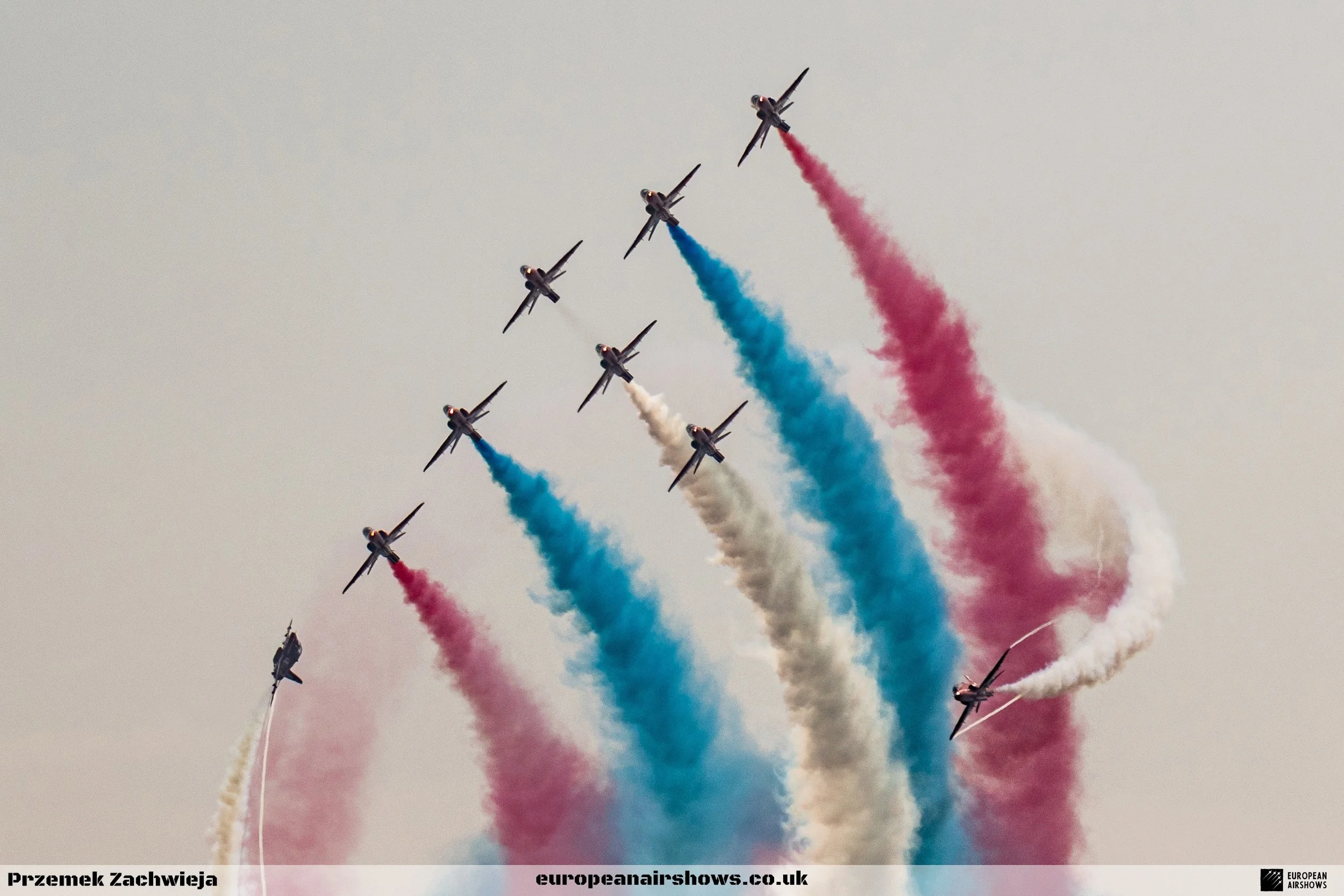
Seven Hawks now fly the aerobatic show, while the Diamond Nine survives for selected flypasts.
The familiar structure remains: a first half based on large formation shapes, loops and rolls, followed by a faster second half in which the formation separates and the Synchro Pair performs opposition work. The change introduced in 2026 concerns aircraft numbers, not the team’s commitment to a complete aerobatic sequence.
Seven-ship aerobatics
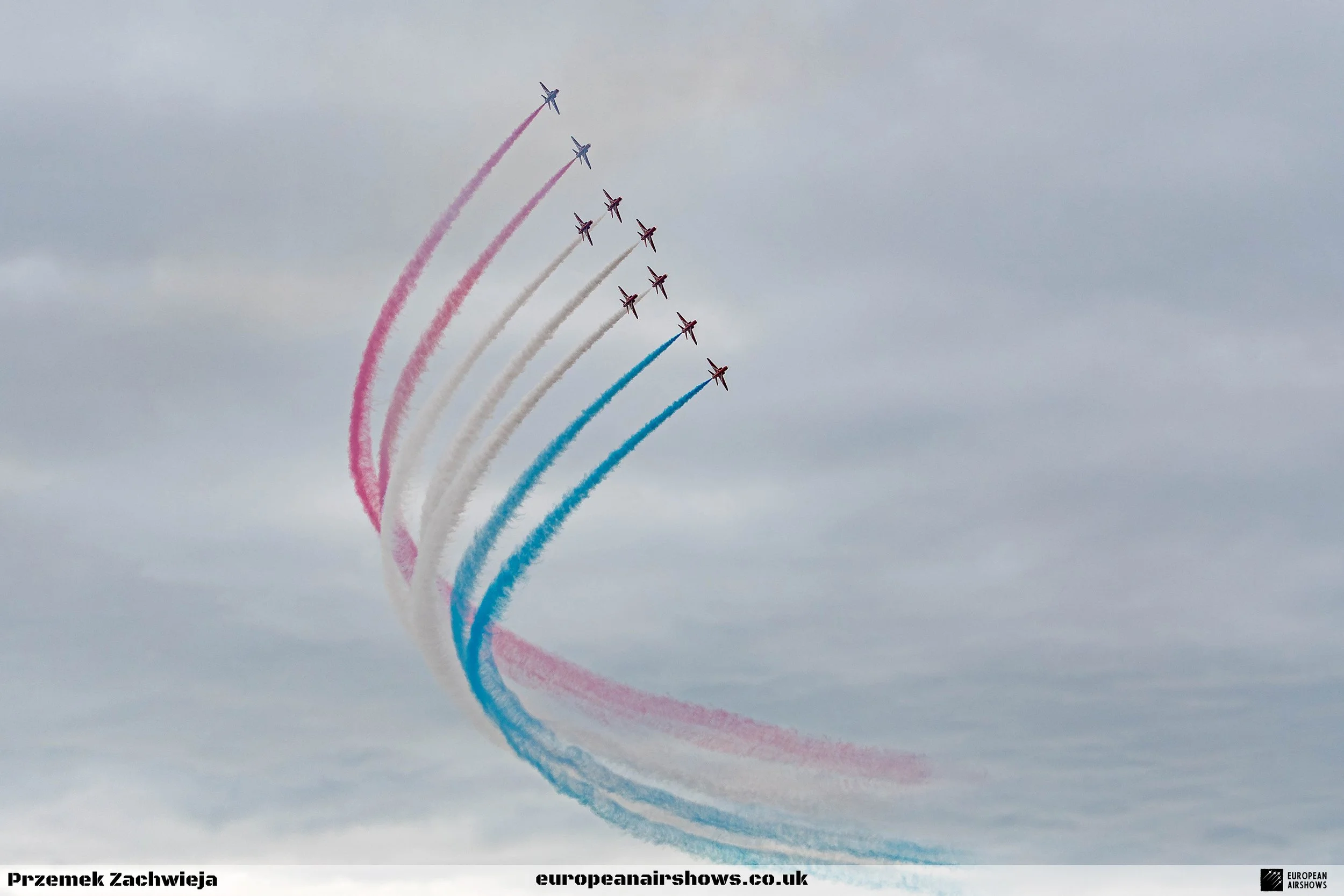
Reds 1 to 7 form the public aerobatic team from 2026. The opening phase uses all seven aircraft in wide shapes, loops, rolls and formation transitions designed to fill the display area.
Enid: Reds 1 to 5
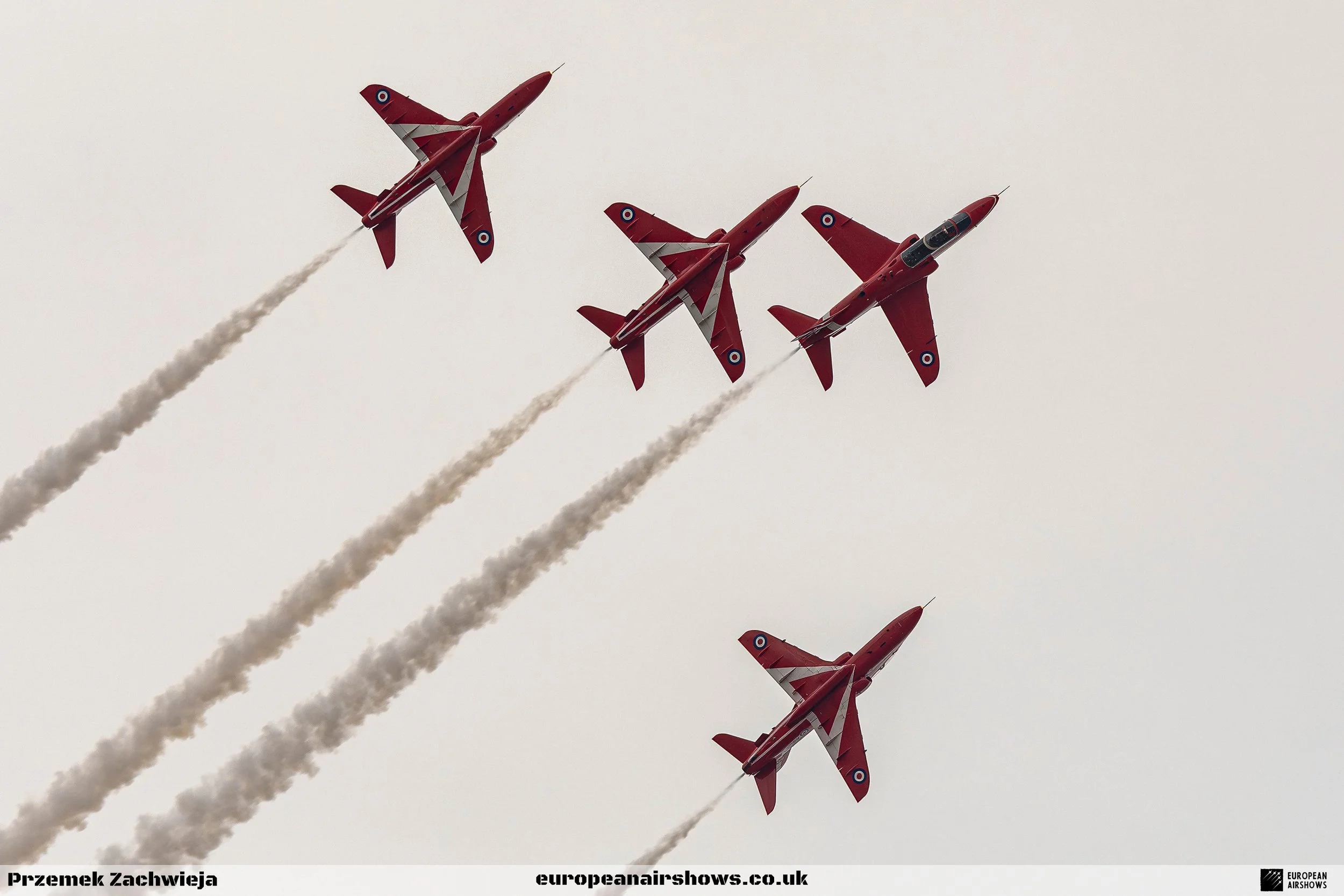
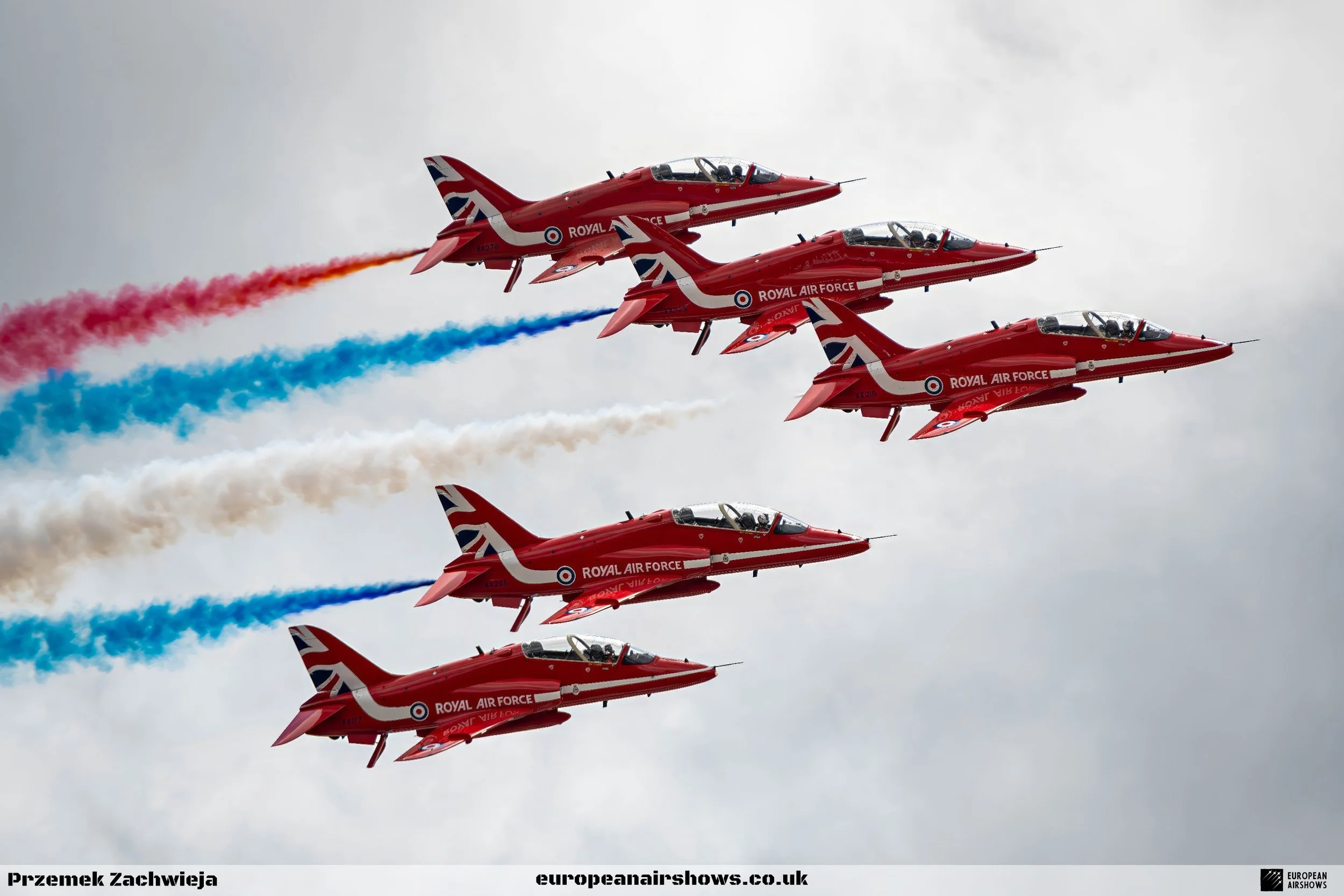
The front five are known as Enid, after Enid Blyton and the Famous Five. They provide the central formation and continue working together when the rear pair separates.
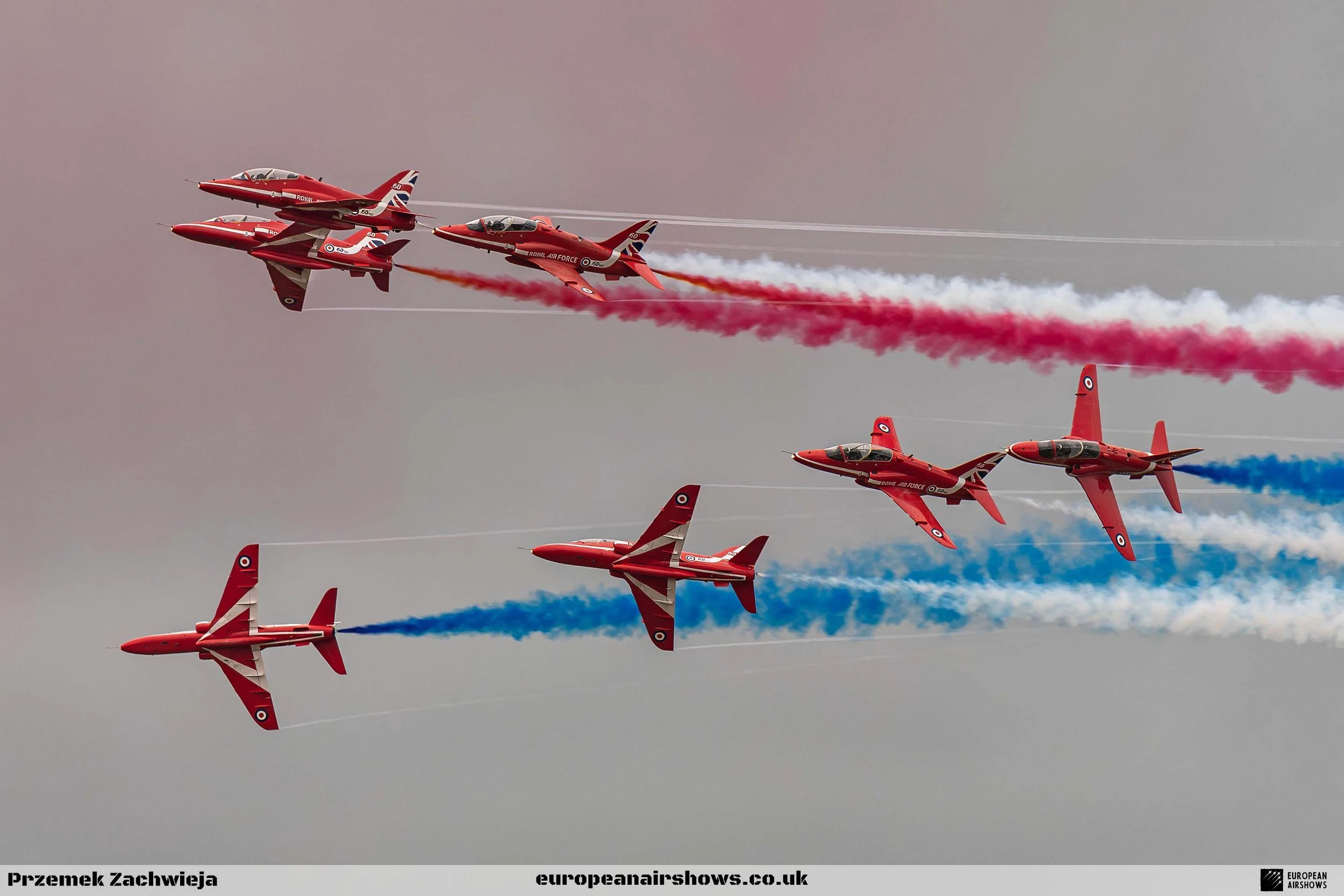
Synchro Pair: Reds 6 and 7
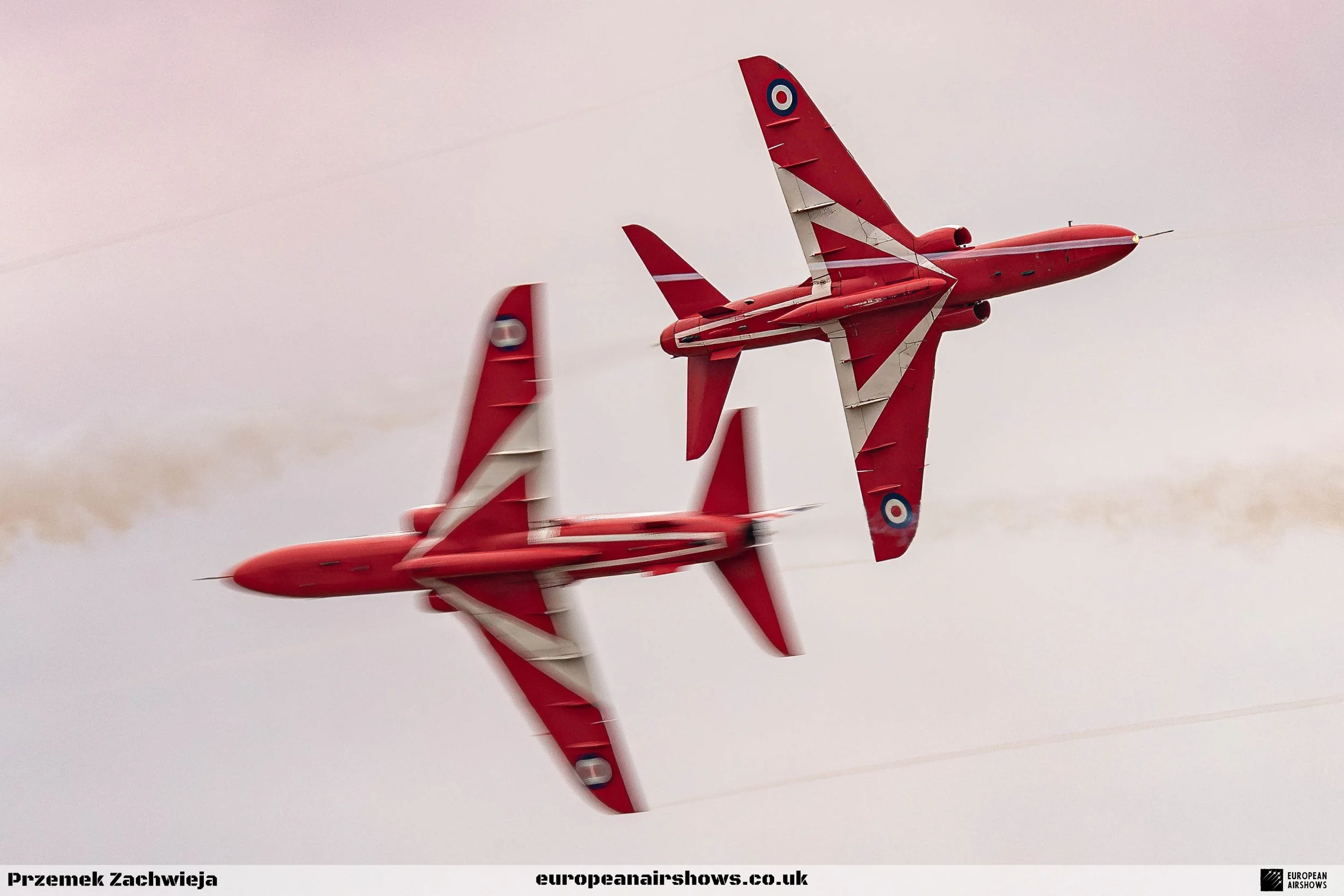
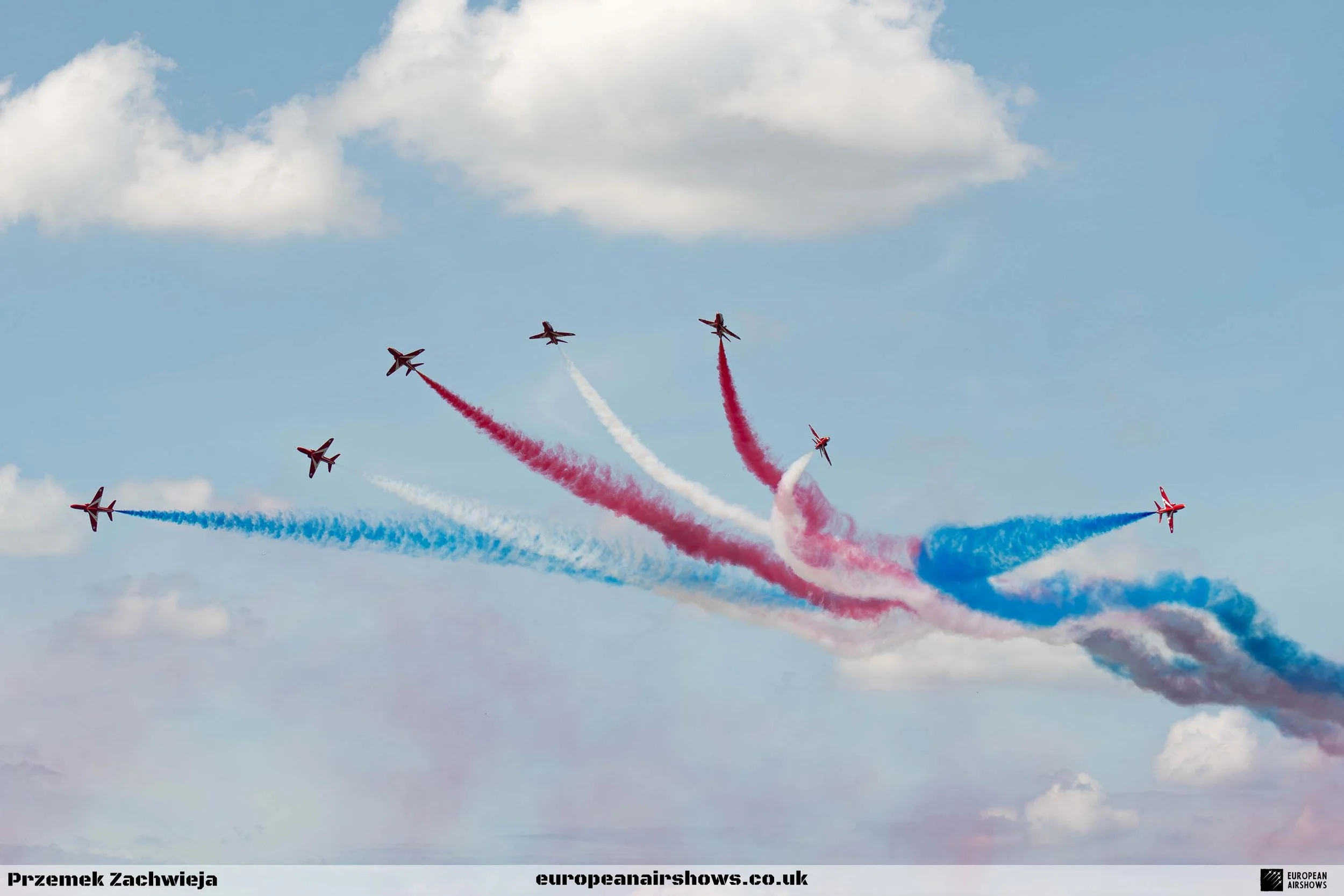
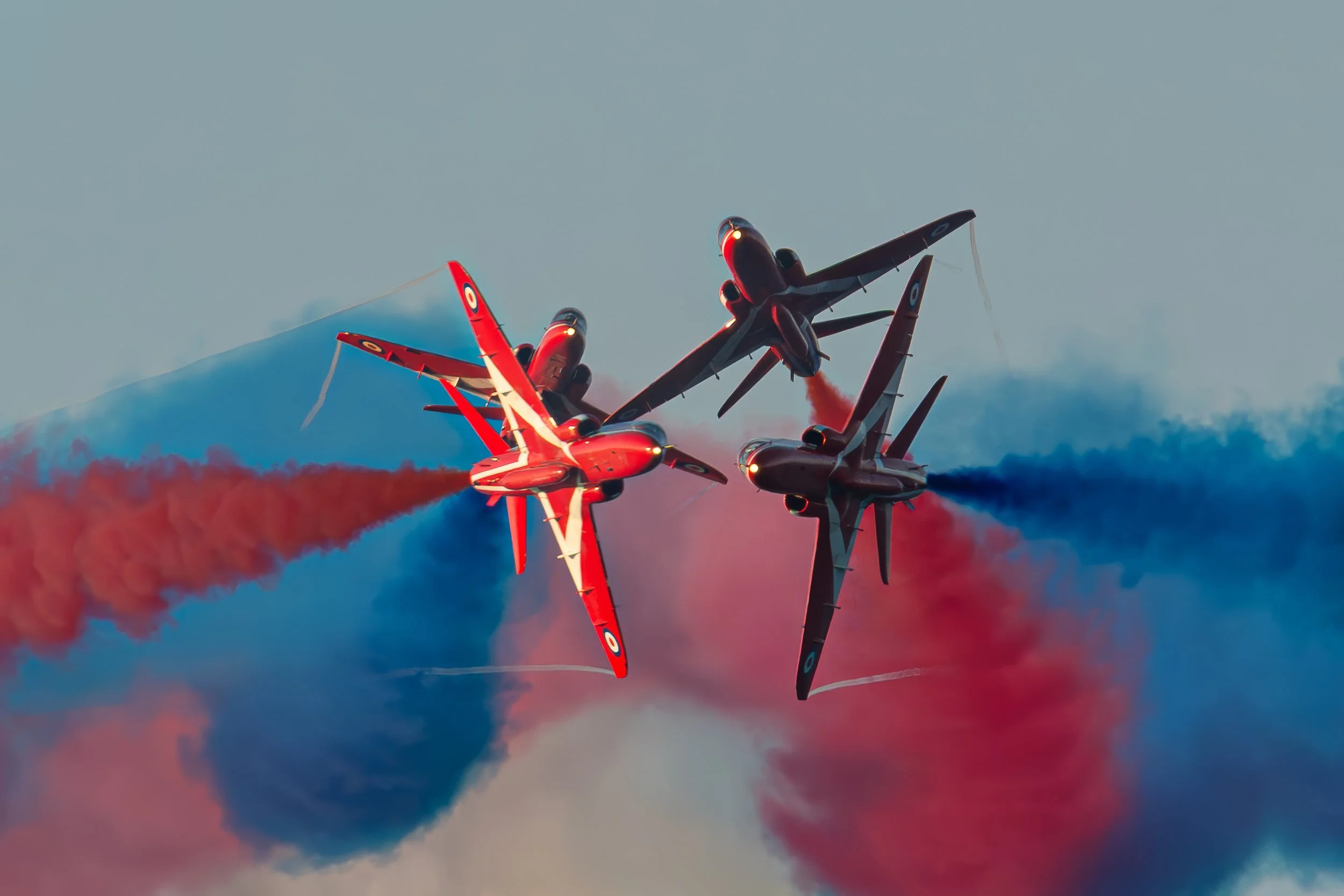
The pair delivers the opposing passes, mirrored rolls and crossing figures of the second half. Official training has used a minimum 100-foot miss distance for head-on opposition manoeuvres.
Nine-ship flypasts
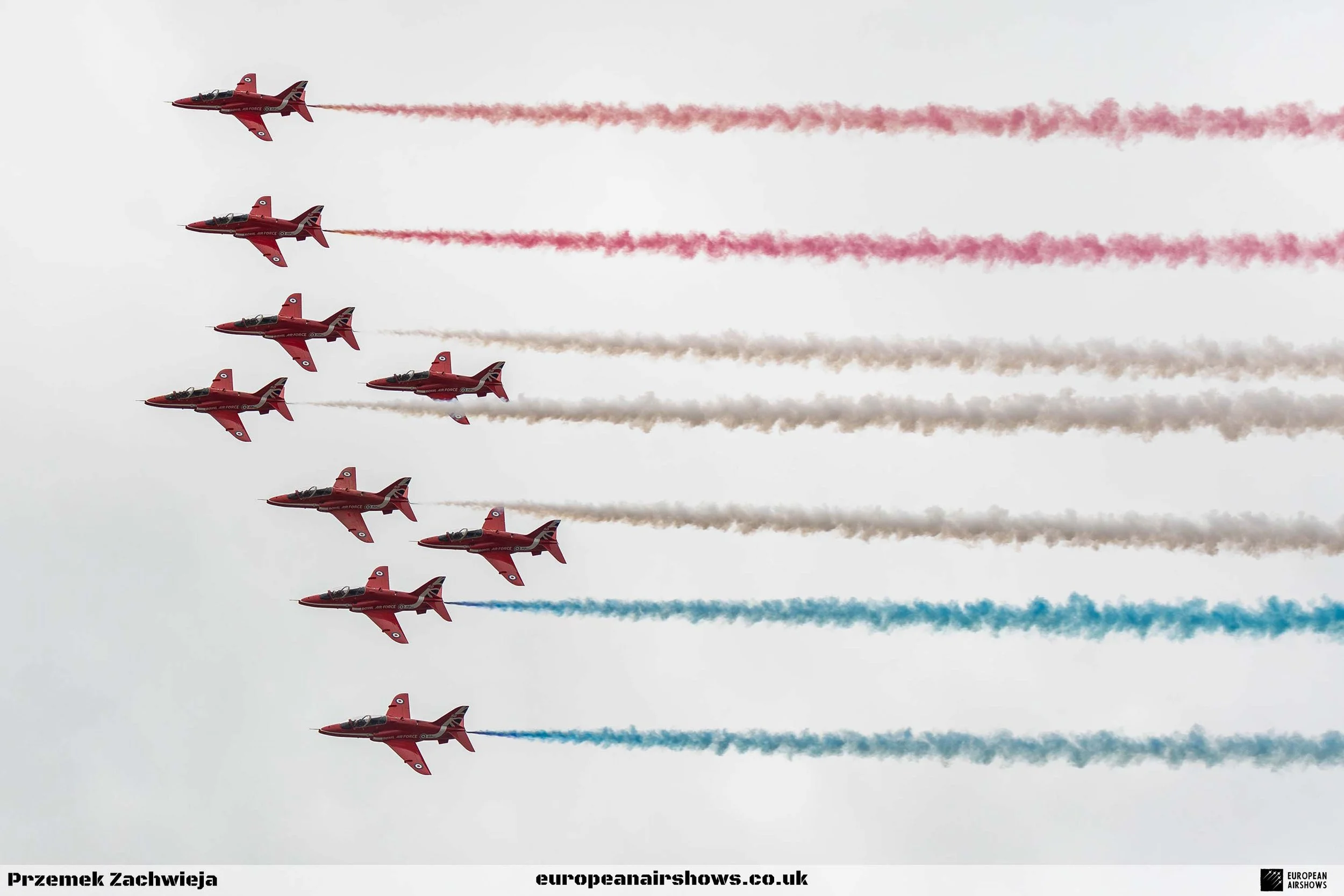
Reds 8 and 9 can join for selected national, state and ceremonial flypasts. These appearances preserve the scale and symbolism of the Diamond Nine without describing the normal aerobatic show as nine-ship.
Full, rolling and flat shows
A full looping display needs cloud above 5,500 feet. Between 2,500 and 5,500 feet the team substitutes rolling figures; below 2,500 feet it presents a flat sequence of passes and steep turns.
Smoke as a flying tool
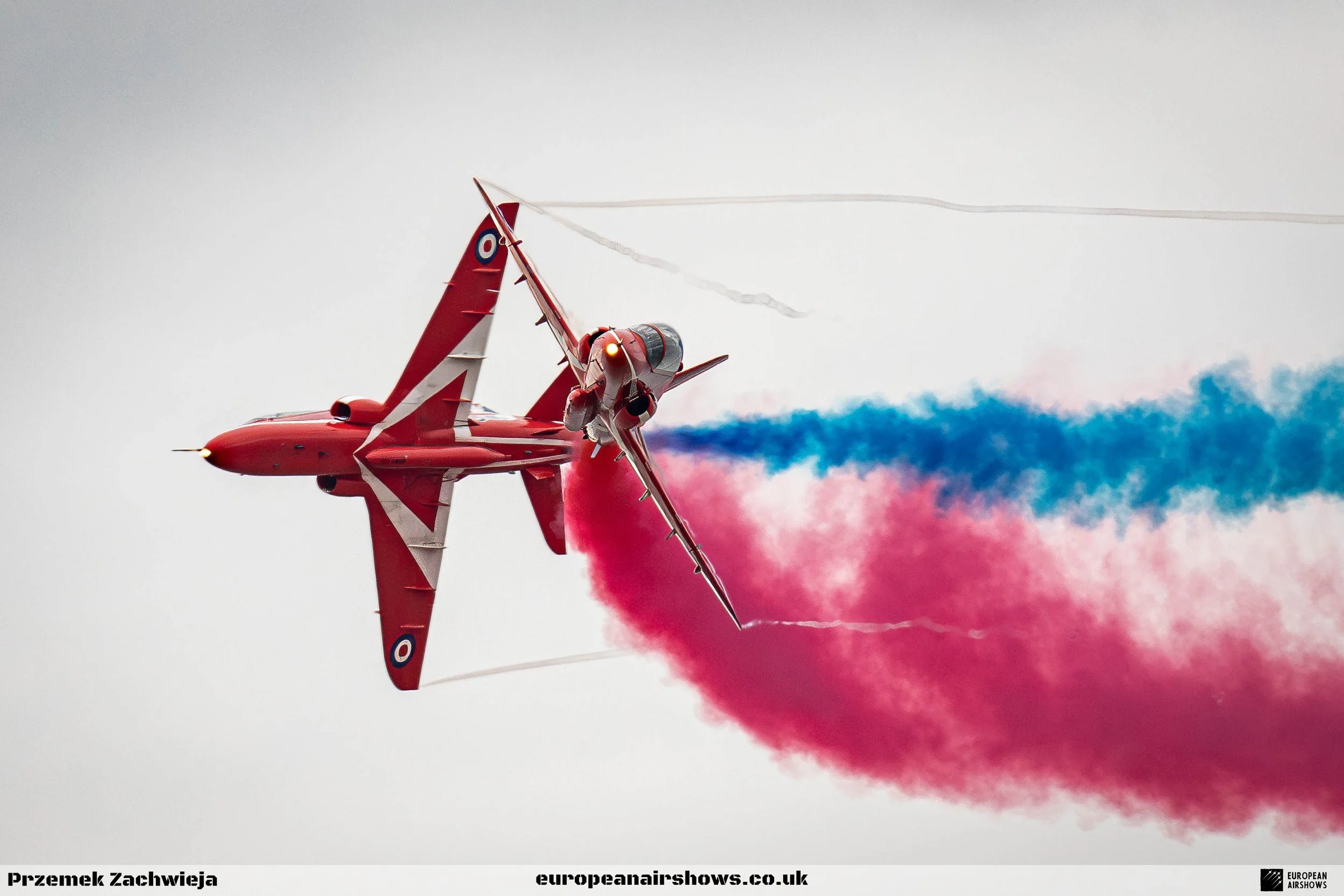
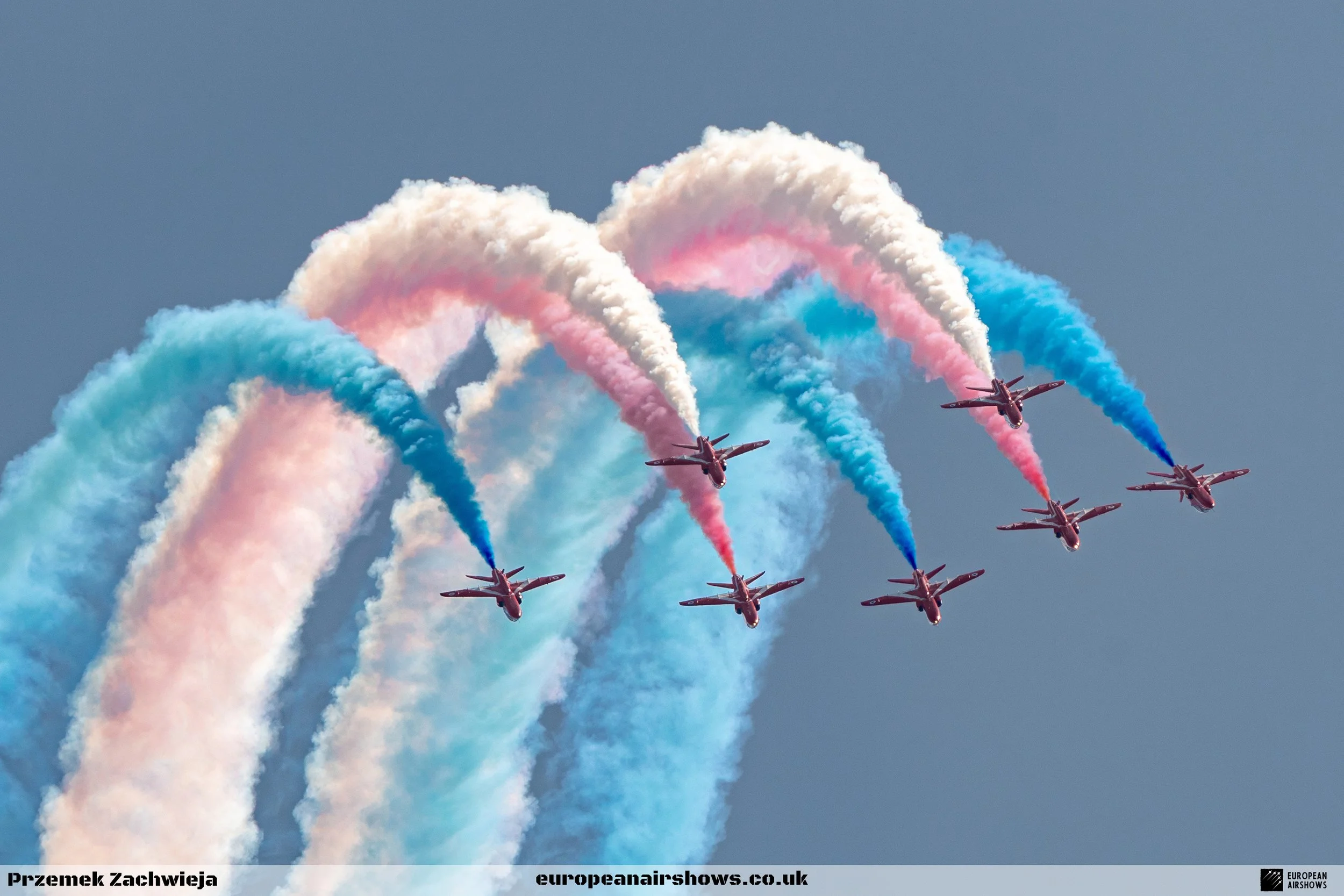
Red, white and blue trails make the formation easier to follow, but they also show wind movement and help separated elements find one another. Close figures can place aircraft only a few feet apart.
The aircraft
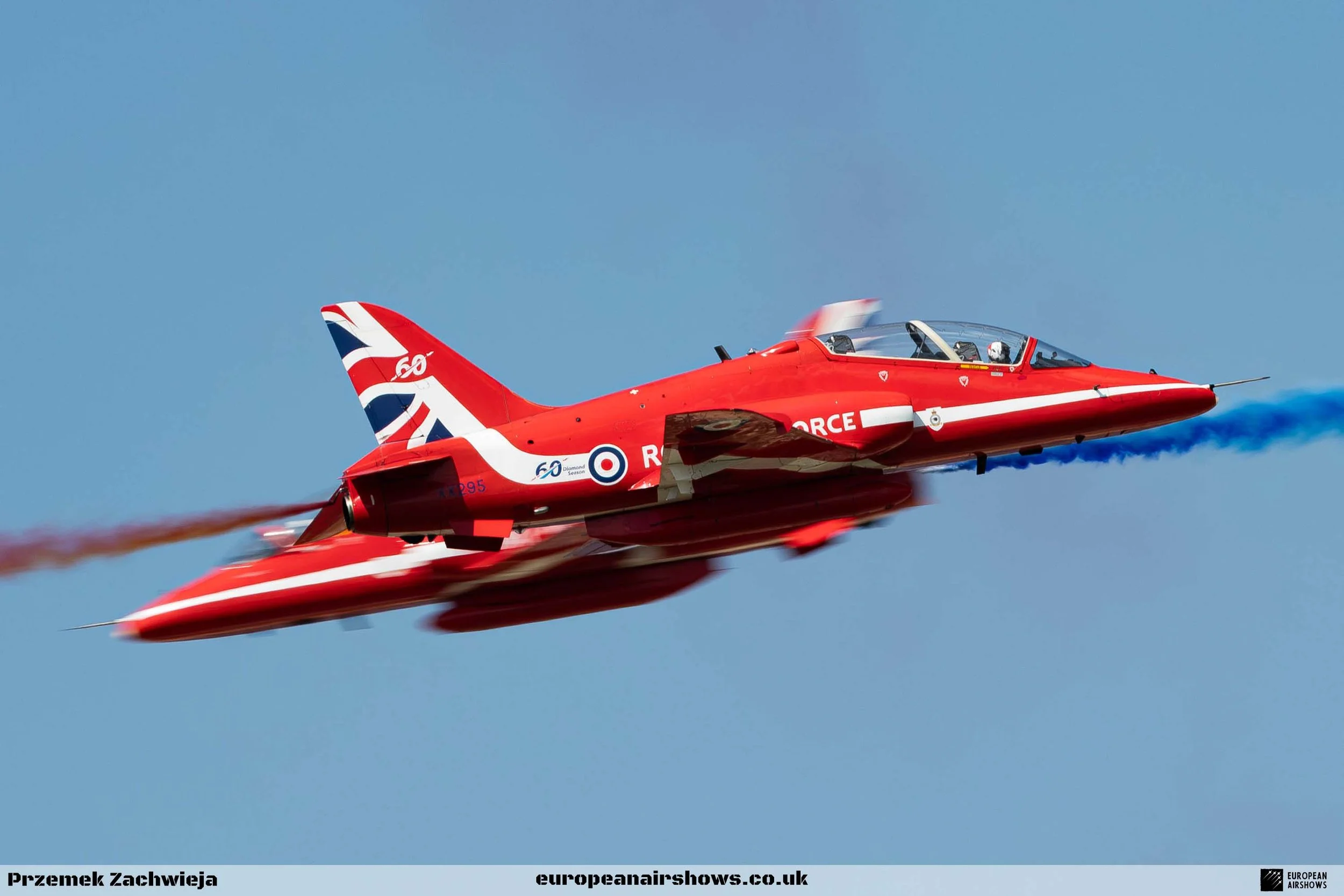
BAE Systems Hawk T1: the British trainer behind the display since 1980.
A purpose-designed advanced jet trainer
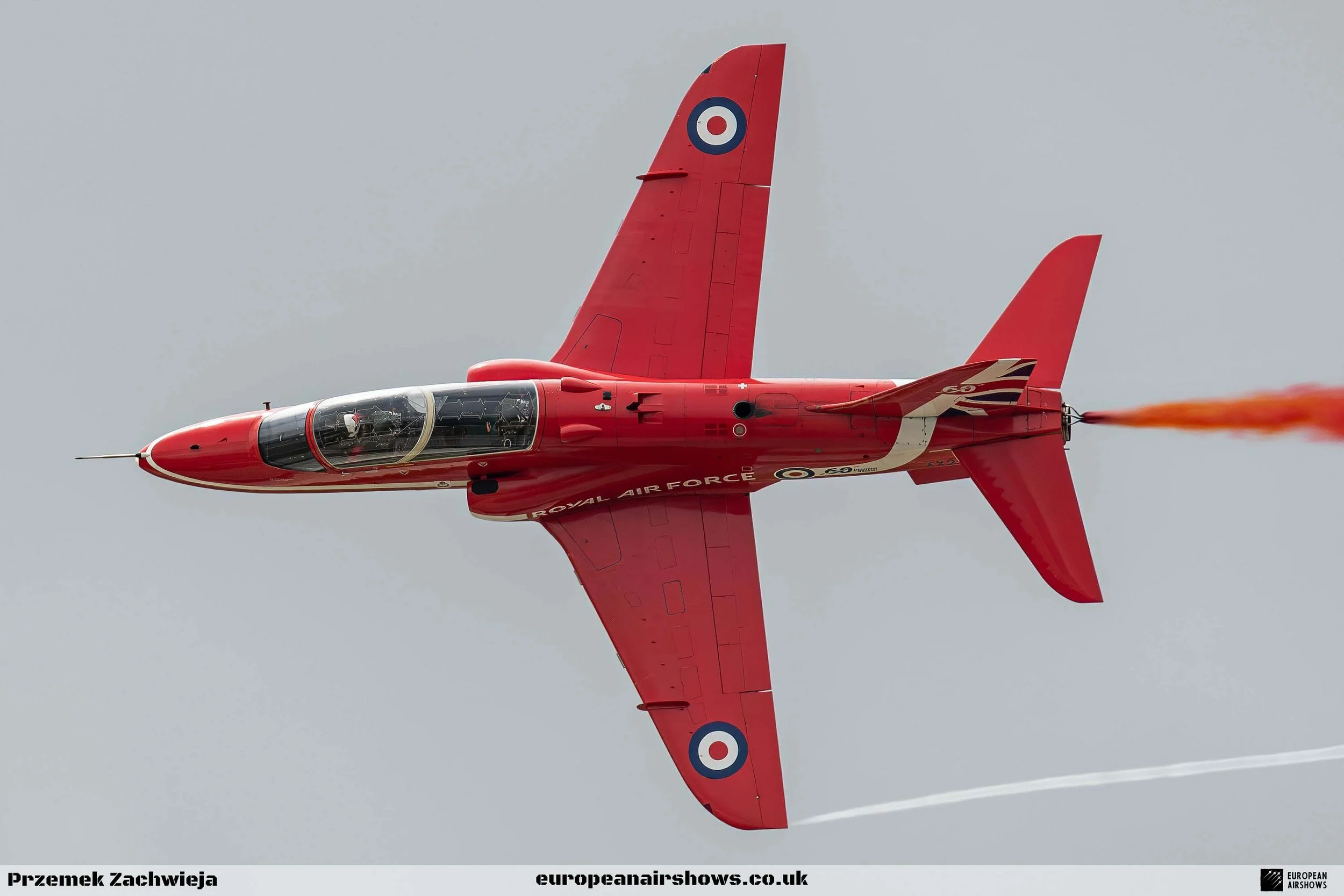
The Hawk was developed by Hawker Siddeley as a compact, economical replacement for older RAF jet trainers. The prototype first flew in 1974 and the Hawk T1 entered RAF service in 1976. Student and instructor sit in tandem beneath a long canopy, with the rear seat raised to improve forward visibility. The airframe is fully aerobatic, transonic and able to deploy without the extensive ground support demanded by a combat jet.
Why it suited the Red Arrows
Compared with the Folland Gnat, the Hawk brought greater size, range and power while remaining predictable and responsive in close formation. Its two-seat cockpit allows an engineer or photographer to travel in the rear seat on selected transit flights. The single Adour engine is economical enough for an intensive training programme, yet gives the acceleration and vertical performance needed for formation loops, rolls and dynamic breaks.
The Red Arrows modification
Team aircraft remain fundamentally Hawk T1 trainers. Their defining display changes are the under-fuselage smoke installation and a slightly uprated engine standard that improves throttle response. Smoke fluid is introduced into the hot exhaust, with dye creating the red and blue trails and undyed fluid producing white. The aircraft are normally flown clean, without the weapons associated with the Hawk’s former training and light-combat roles.
Hawk T1 or Hawk T1A?
The Royal Air Force officially describes the team’s aircraft as Hawk T1. T1A identifies T1 airframes modified for an air-defence weapons role, and individual Red Arrows airframes can be recorded under that designation. It is therefore inaccurate to present “Hawk T1A” as a unique purpose-built Red Arrows variant. The clearest performer-page description is Hawk T1, followed by a separate explanation of the airframe-level T1A designation and the team’s display equipment.
The final RAF operator of the original Hawk
The Hawk T1 left wider RAF service when 100 Squadron withdrew the type in March 2022. The remaining airframes are now allocated to sustaining the Red Arrows. Official planning keeps the Hawk with the team through the end of the 2029 display season, making fleet management, component availability and engineering knowledge increasingly important as the aircraft approaches the end of its RAF career.
The story so far
From seven Gnats at Fairford to seven Hawks in the team’s final aircraft era.
1956–1964
The RAF team tradition before the Reds
The Black Arrows, Blue Diamonds, Red Pelicans and Yellowjacks were among the prominent RAF formations of the period. Maintaining several separate squadron teams placed demands on operational units, leading the Service to create one premier team.
1964
The Red Arrows are formed
The RAF amalgamates its display activity into the Royal Air Force Aerobatic Team. The name combines the Black Arrows heritage with the red identity associated with the Red Pelicans, while the chosen Folland Gnat had already been demonstrated by the Yellowjacks.
1965
First official and public displays
Seven Gnats give the first official presentation for the media at RAF Little Rissington on 6 May. The first public display follows at Clermont-Ferrand in France on 9 May, and the first UK public show is at Biggin Hill on 15 May. The debut season totals 65 displays.
1966
The team moves from Fairford to Kemble
RAF Kemble becomes the Red Arrows’ long-term Gloucestershire home. The Central Flying School connection, intensive training and dedicated engineering support become defining parts of the team’s operating model.
1968
Nine aircraft and the Diamond Nine
The display formation permanently grows from seven to nine Gnats. The Diamond Nine becomes the team’s trademark and later receives formal recognition in the Red Arrows badge.
1979
The Gnat era closes
The compact Folland trainer completes its final Red Arrows season after 1,292 displays. Its small size had allowed exceptionally tight formation geometry, but the team now converts to the larger and more capable Hawk.
1980
The Hawk enters the display
The first full public season on the Hawk T1 begins. The new aircraft establishes the silhouette, sound and performance associated with the modern Red Arrows. The team also receives permission to use the motto Éclat, meaning brilliance or excellence.
1983
RAF Scampton becomes home
The Central Flying School moves from Kemble to Lincolnshire and the Red Arrows relocate with it. Apart from a temporary period at RAF College Cranwell between 1995 and 2000, Scampton remains the team’s base until 2022.
1995–1996
A major world tour
The team undertakes one of its most ambitious overseas programmes, demonstrating the Hawk and representing the United Kingdom across several continents. The deployment reinforces defence, diplomatic and industrial roles that extend far beyond a domestic airshow season.
2002
Concorde over London
The Red Arrows fly with British Airways Concorde during celebrations for Queen Elizabeth II’s Golden Jubilee, creating one of the most widely remembered British ceremonial aviation images.
2010
Kirsty Moore joins the display formation
Flight Lieutenant Kirsty Moore becomes the first woman to fly as a Red Arrows display pilot, completing a full tour with the team and marking an important milestone in its history.
2012
Jubilee and Olympic flypasts
The Hawks appear over London for the Diamond Jubilee and the Olympic Games Opening Ceremony, placing the team before an enormous international television audience.
2016
First display in China
A large Asia-Pacific and Middle East deployment includes the Red Arrows’ first display in China, demonstrating the team’s role in British international engagement and aerospace promotion.
2019
Western Hawk reaches North America
An eleven-week tour of the United States and Canada combines airshows, flypasts, school visits and industry engagement, bringing the team back to North America on a large scale.
2022
Waddington becomes the new home
The Red Arrows permanently relocate from RAF Scampton to RAF Waddington in October. The same year also sees the Hawk T1 withdrawn from 100 Squadron, leaving RAFAT as the type’s remaining RAF operator.
2024
The Diamond Season
The team marks its 60th season with nine-aircraft displays, commemorative markings and a Canadian tour. By the beginning of the year, almost 5,000 displays had been completed in 57 countries.
2026
Seven-ship aerobatics begin
Standard aerobatic displays move to Reds 1 to 7 to support sustainable management of the ageing Hawk fleet. Reds 8 and 9 remain part of the organisation and join selected nine-aircraft ceremonial flypasts. Wing Commander Sasha Nash also becomes the first woman to command RAFAT.
Understanding the identity
The famous image is Diamond Nine, but the current aerobatic team is seven aircraft.
1964 is the formation date; 1965 is the first display season
The Royal Air Force created the unit in 1964, but the Red Arrows did not fly their first official presentation until 6 May 1965. Both dates are correct when used for the right purpose: 1964 for the team’s creation and 1965 for the beginning of public flying.
Seven-ship display does not mean the nine-ship team disappeared
From 2026, Reds 1 to 7 fly the aerobatic sequence. Reds 8 and 9 are still available for selected national and state flypasts. A current profile must therefore separate display format from ceremonial formation size.
Diamond Nine remains part of the badge and legacy
Nine aircraft defined the Red Arrows for most of their history and the formation remains central to their visual identity. The move to seven-ship aerobatics is a fleet-management decision during the final Hawk years, not an attempt to erase that heritage.
Hawk T1 is the correct headline designation
T1A describes weapons-capable conversions within the wider Hawk fleet and may apply to individual airframes. The RAF officially presents the Red Arrows aircraft as Hawk T1, while the team-specific changes are the smoke system and responsive engine fit.
In remembrance
Remembering those lost during Red Arrows flying and training.
The team’s history includes fatal accidents involving pilots, rear-seat aircrew and an aircraft engineer. Their names belong within the story of the Red Arrows and are recorded here with restraint, grouped by incident rather than presented as spectacle.
26 March 1969 · RAF Kemble
Jerry John Bowler
Killed when a loaned Folland Gnat struck trees while rejoining formation during practice.
20 January 1971 · RAF Kemble
Euan Perreaux, John Lewis, John Haddock and Colin Armstrong
Killed in the mid-air collision of two Gnats during Synchro Pair practice.
13 December 1971 · RAF Upper Heyford
David Longdon and Richard Storr
Killed when their Gnat crashed during formation practice for a flypast.
3 March 1978 · RAF Kemble
Stephen Noble and Dennis Hazell
Killed during pre-season practice in a Folland Gnat.
22 January 1988 · RAF Scampton
Neil Duncan MacLachlan
Killed during low-level display practice in Hawk XX243.
20 August 2011 · Near Bournemouth Airport
Jon Egging
Killed when Red 4, Hawk XX179, crashed after the team’s Bournemouth display.
8 November 2011 · RAF Scampton
Sean Cunningham
Killed following an inadvertent ejection-seat activation while the Hawk was stationary before a training flight.
20 March 2018 · RAF Valley
Jonathan Bayliss
The Red Arrows aircraft engineer was killed when the Hawk in which he was travelling crashed shortly after take-off.
This section records fatal incidents connected with Red Arrows activity. It does not attempt to catalogue every aircraft loss, ejection or non-fatal accident in the team’s history.
European Airshows photography
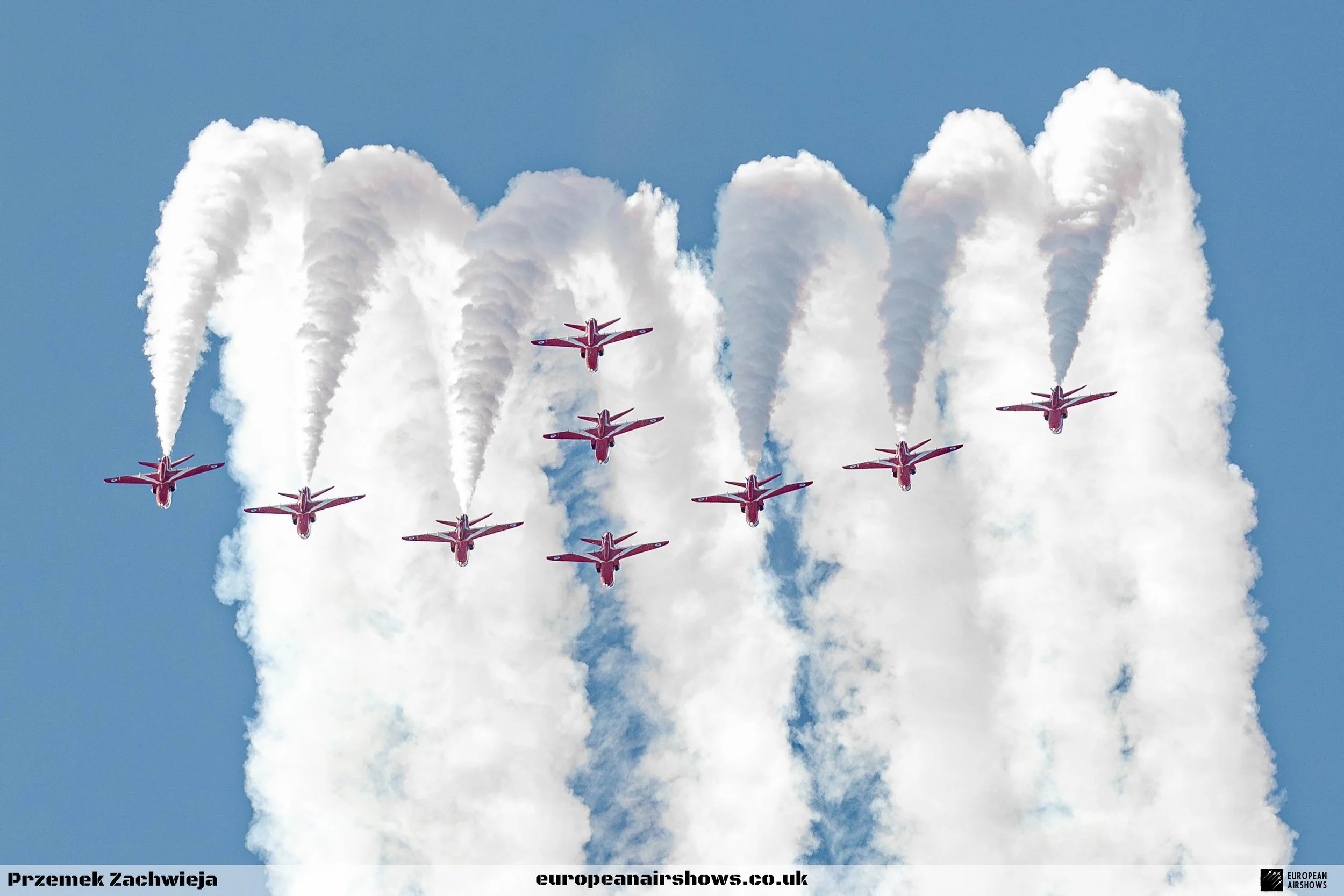
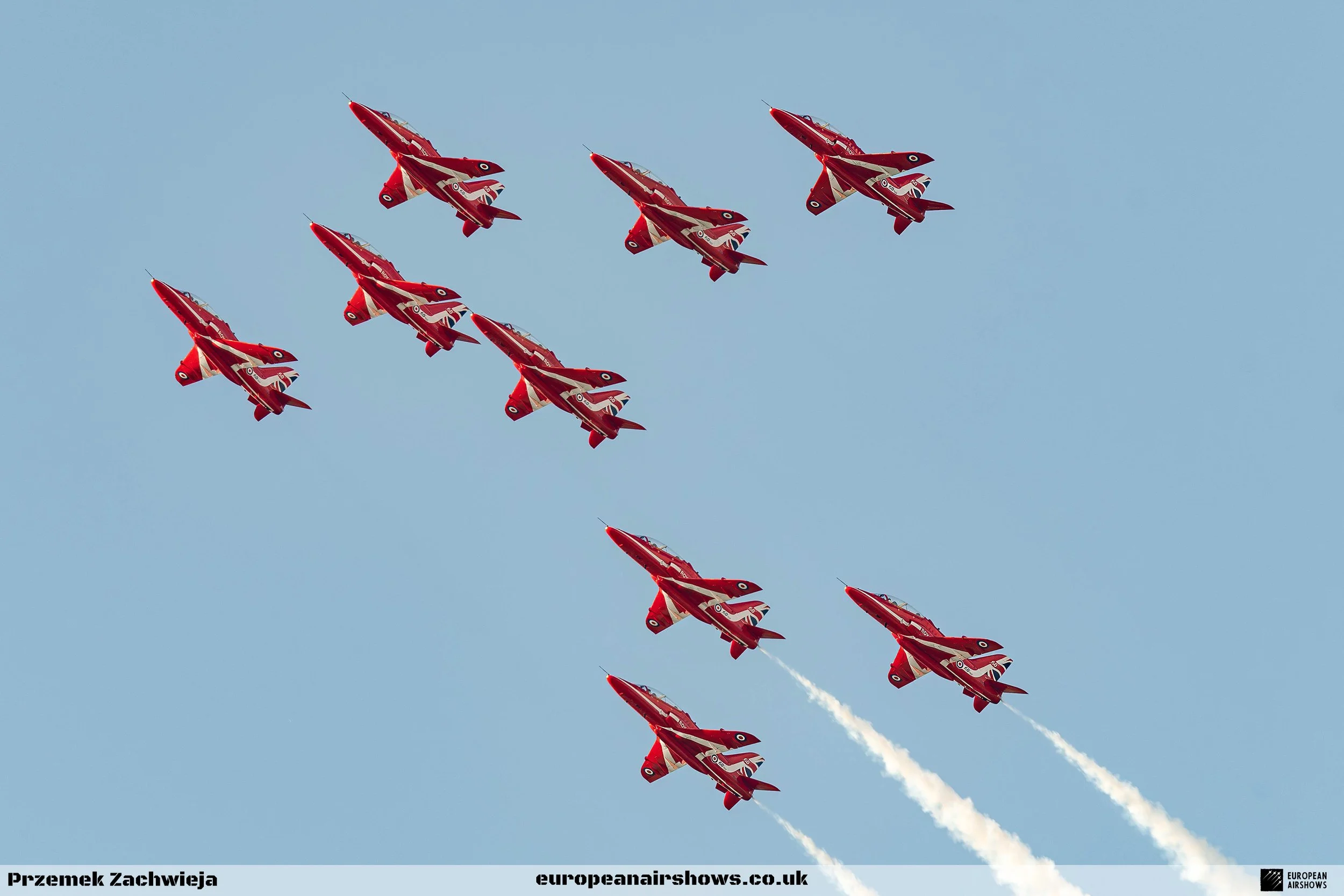
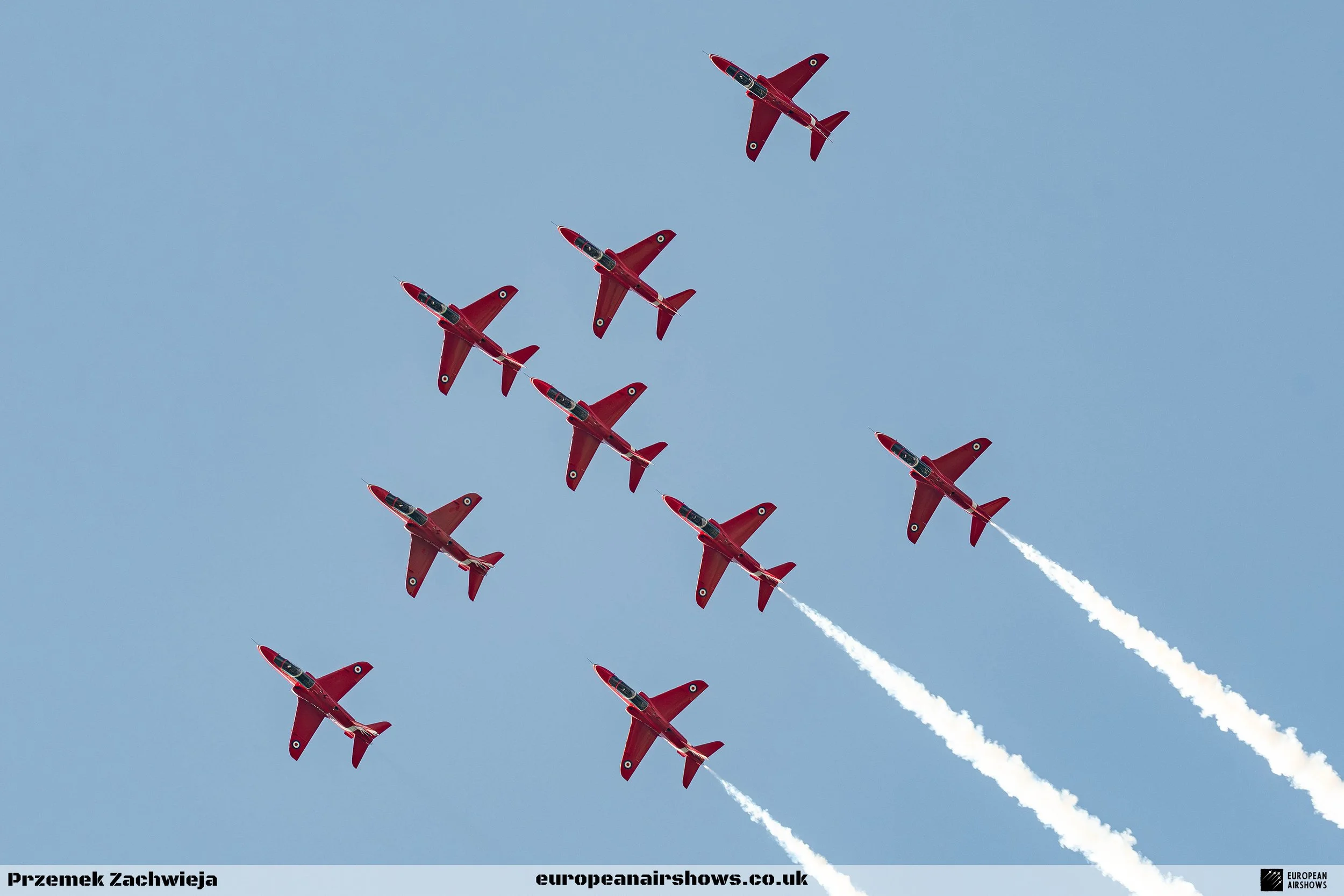
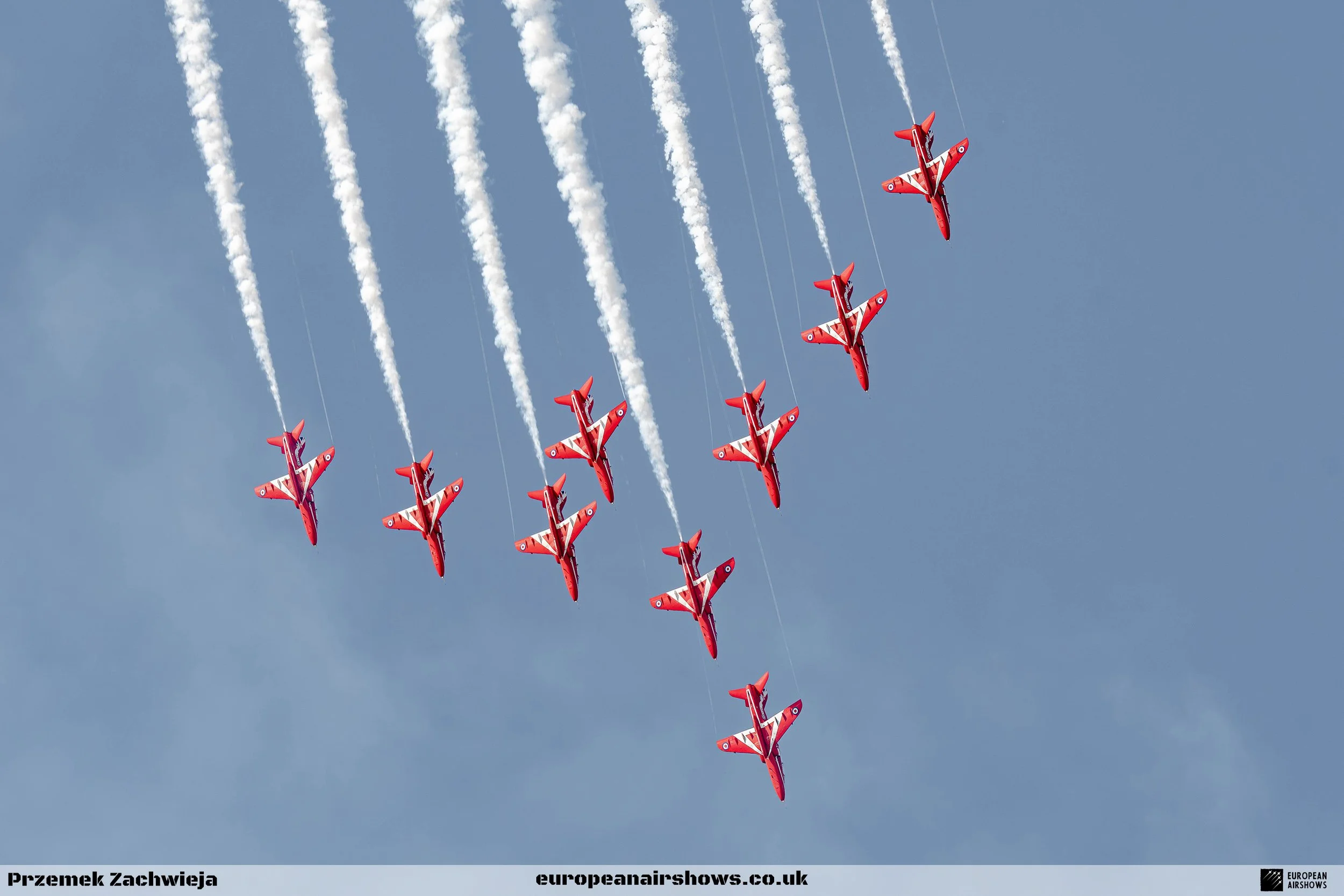
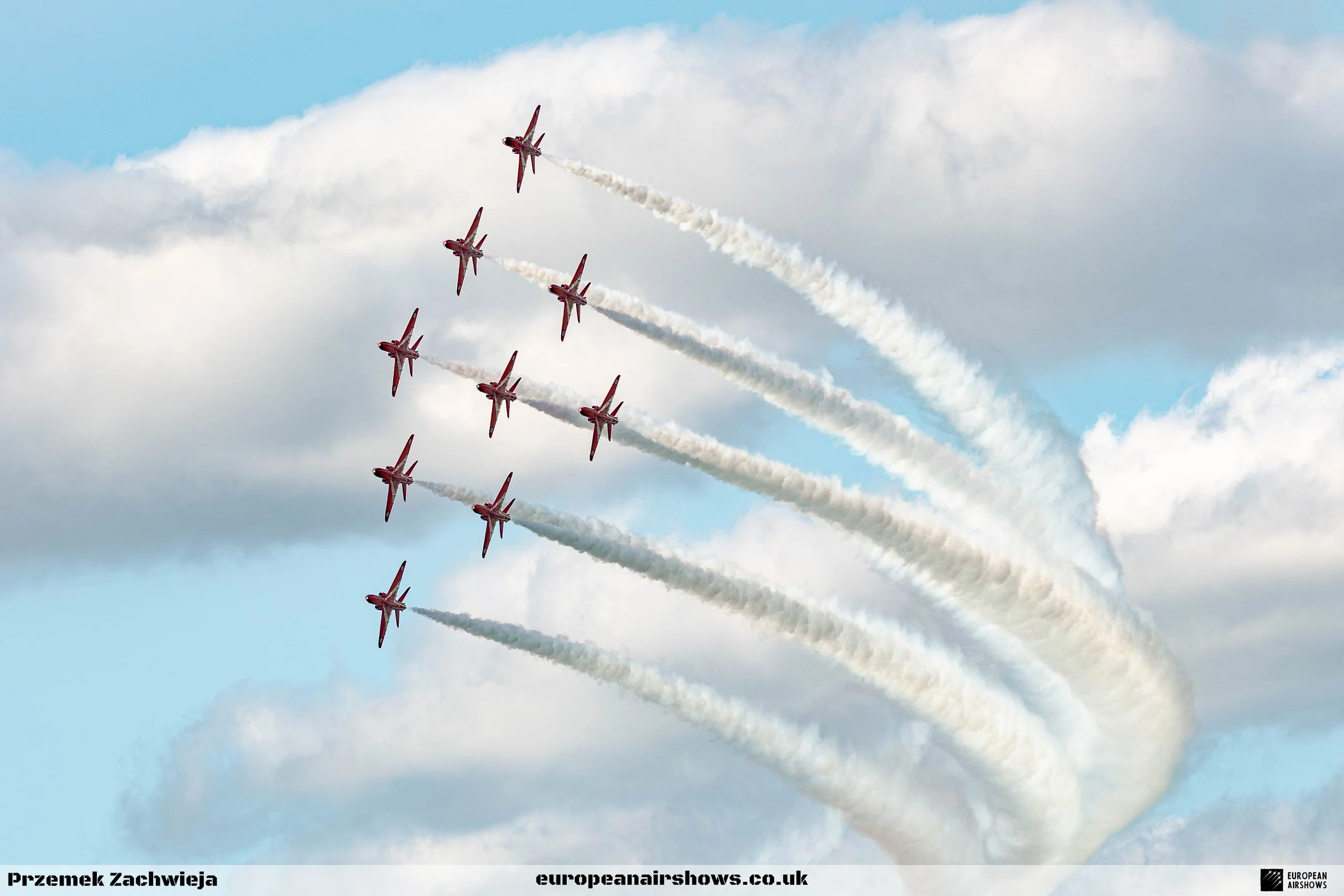
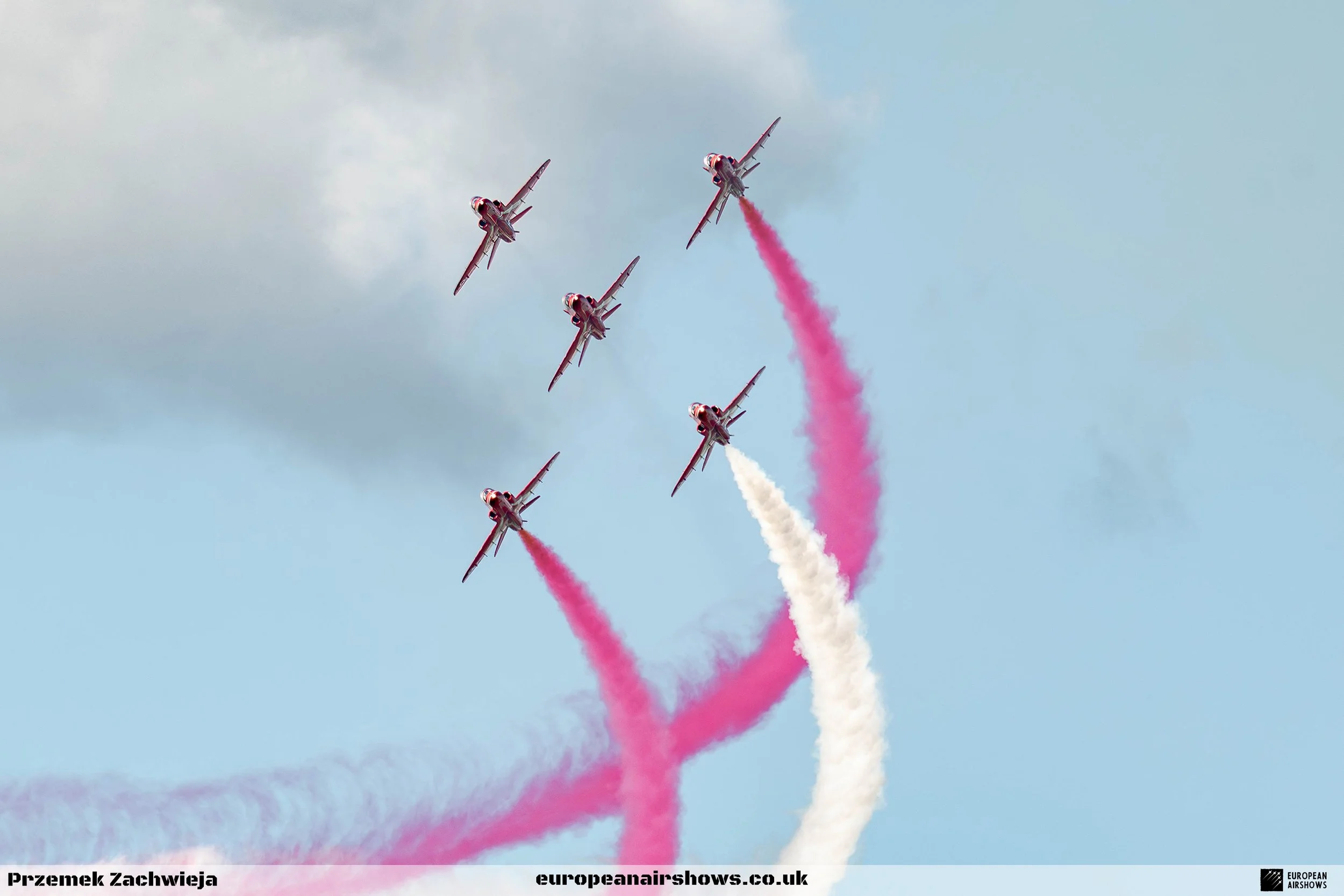
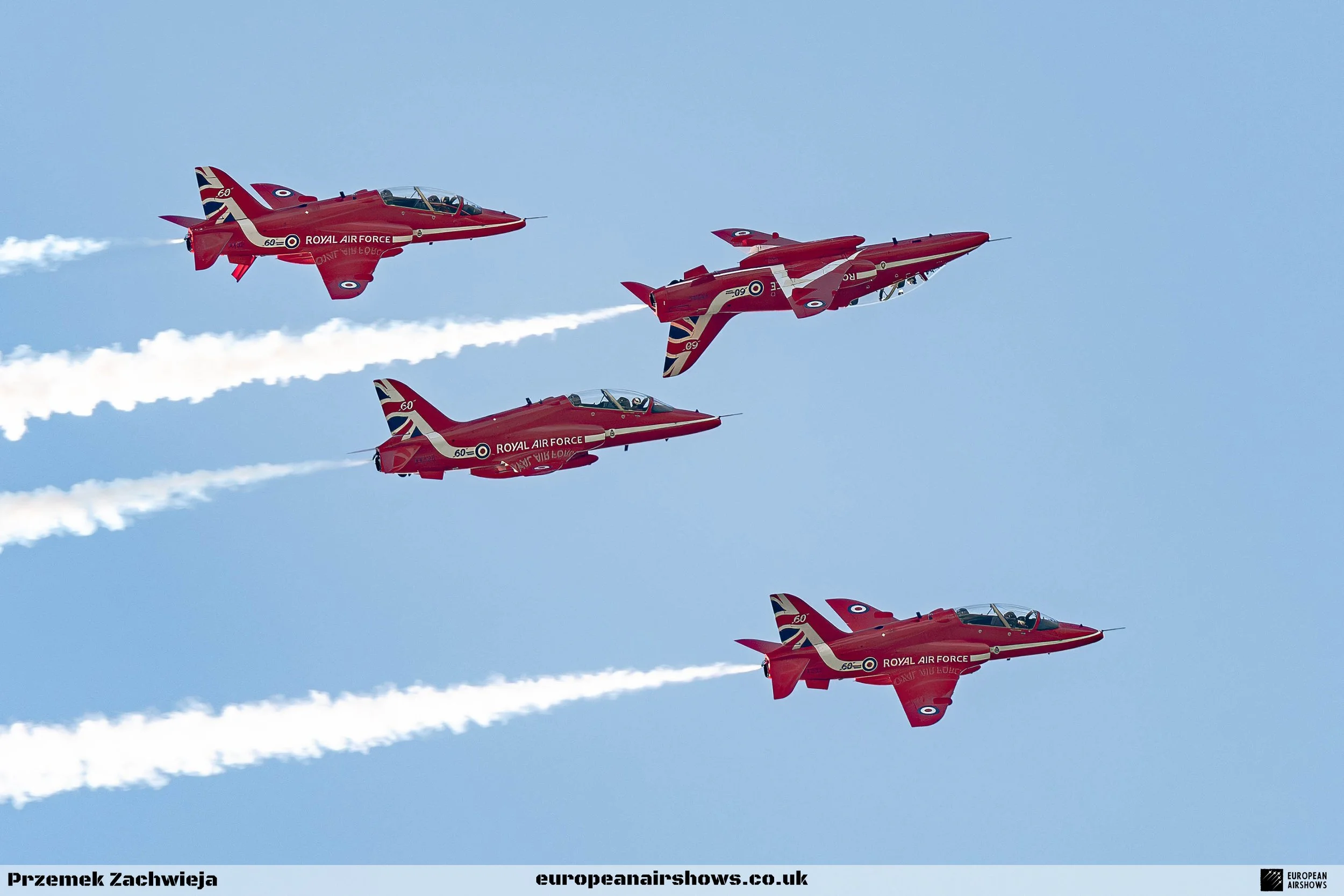
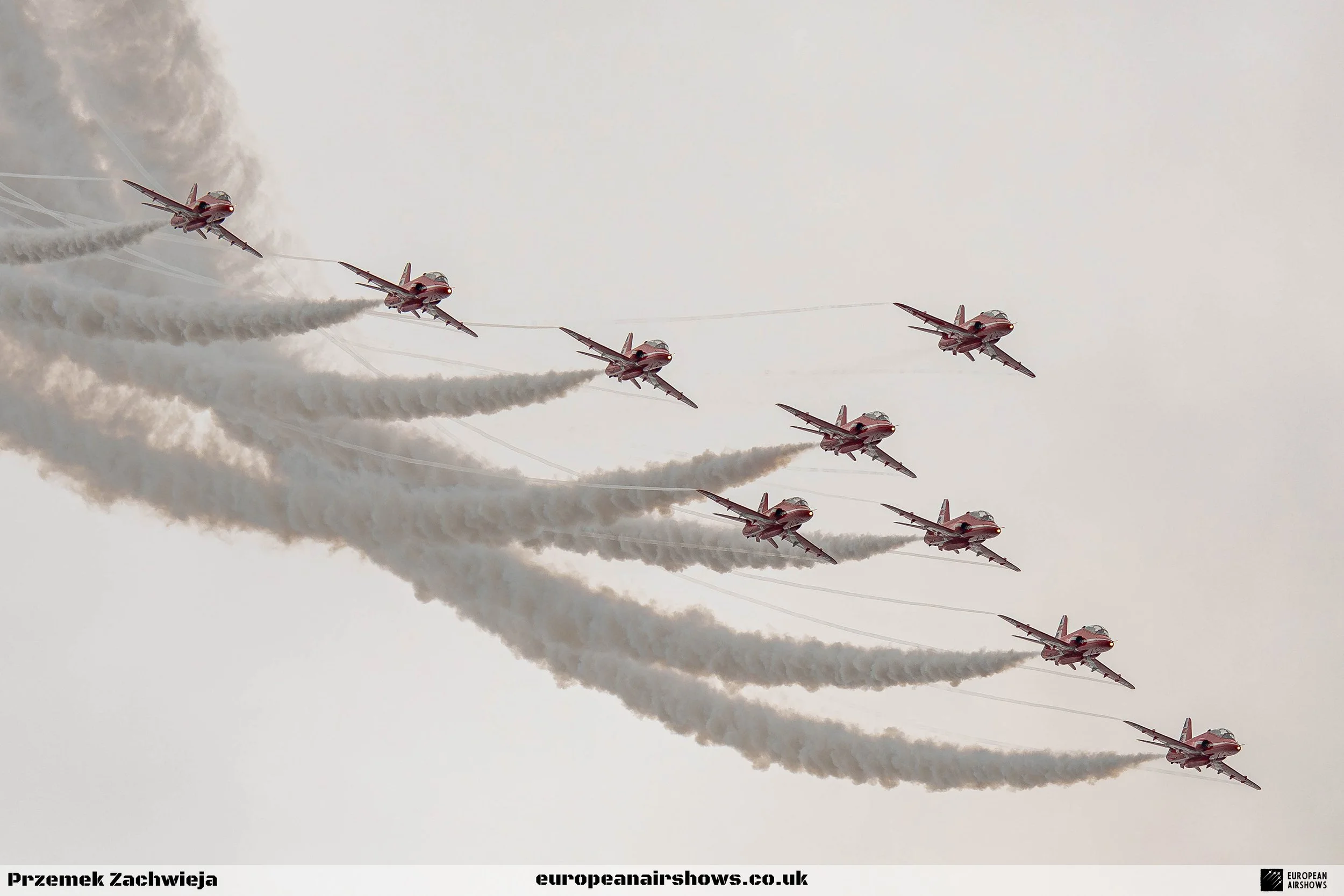
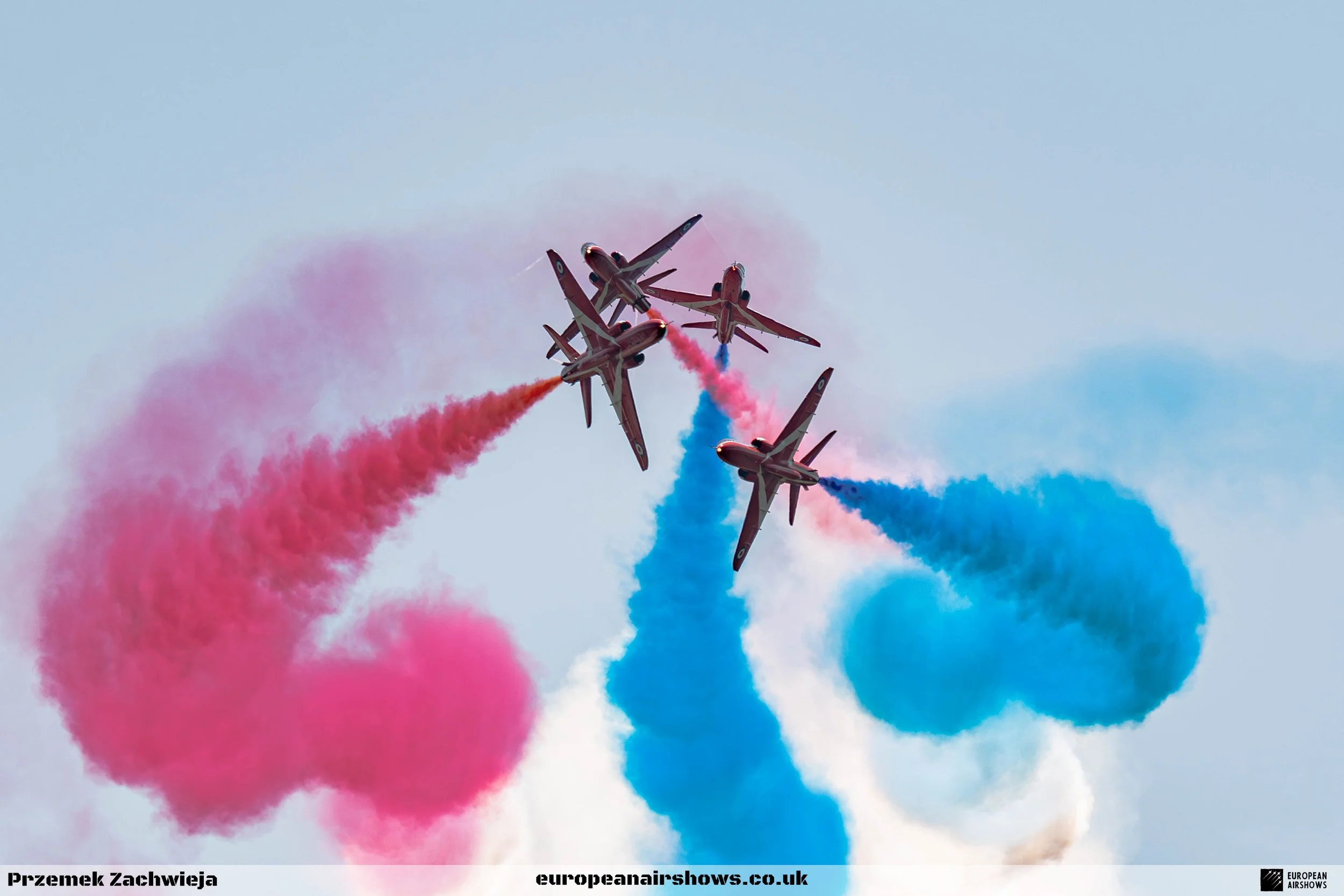
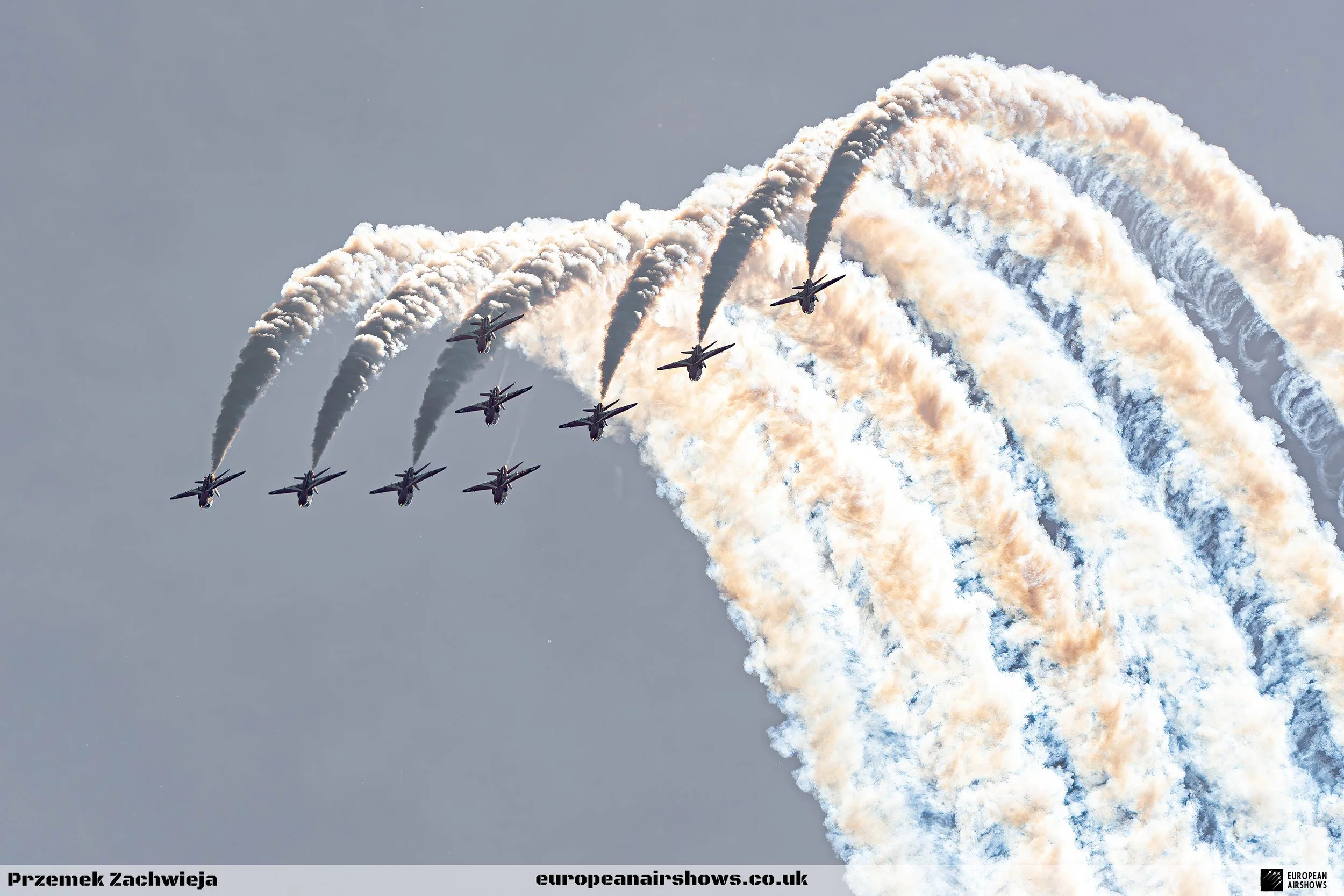
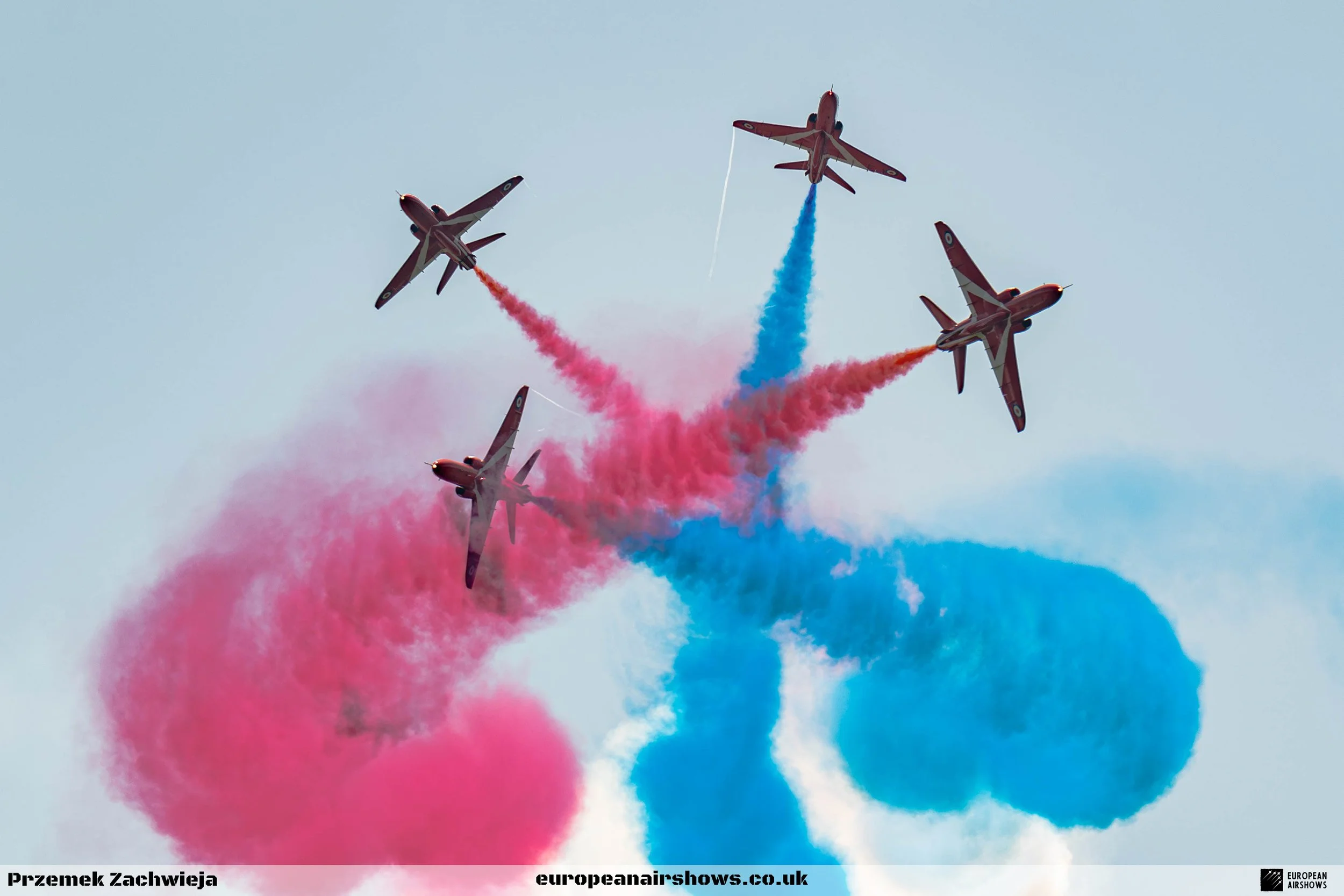
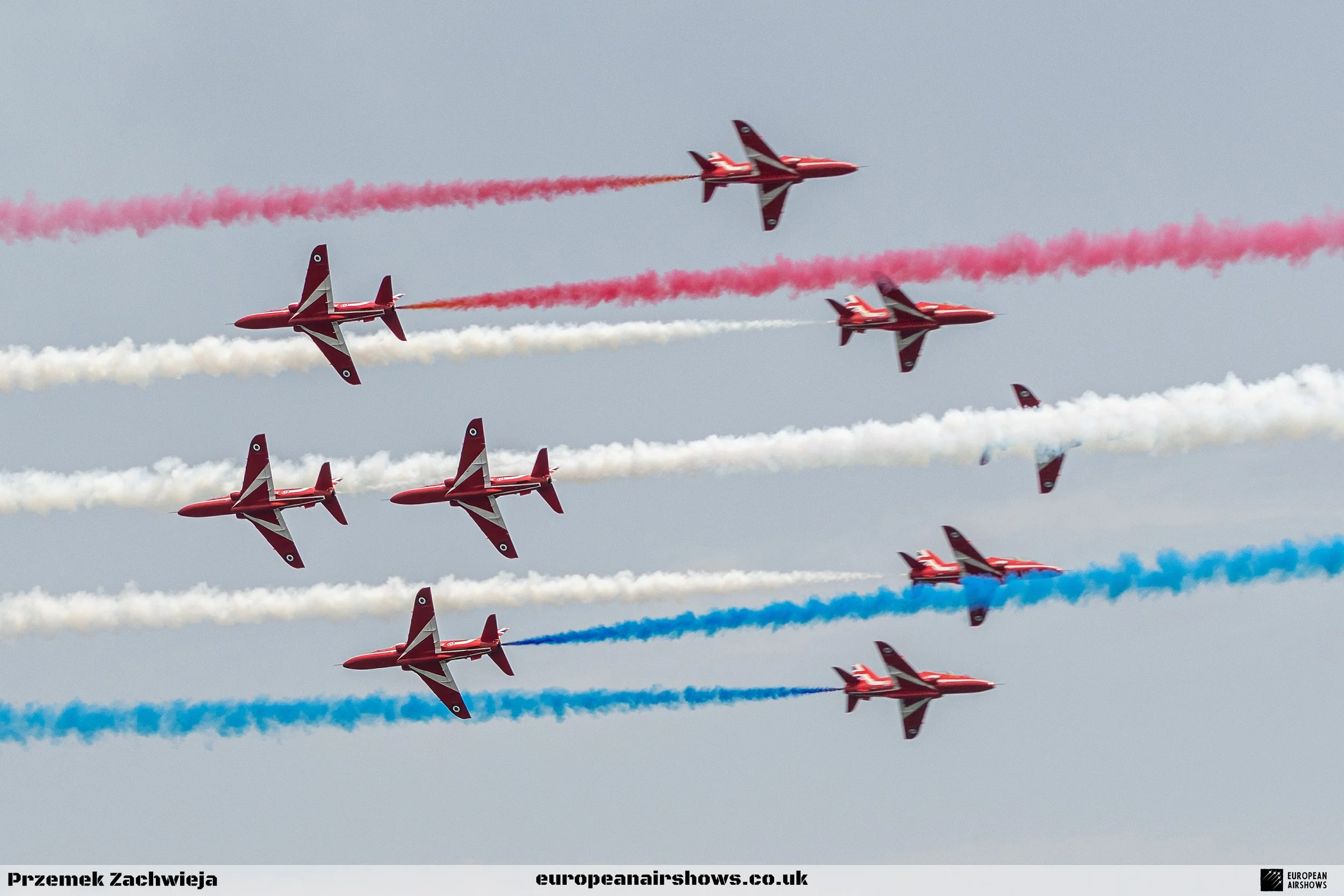
Explore the photos of the Red Arrows below.
Continue into the gallery for the Hawks in close formation, sweeping red-white-and-blue smoke, Synchro Pair crossings and the changing shapes that have made the Royal Air Force Aerobatic Team one of Europe’s most recognisable displays.