Midnight Hawks
Four-aircraft BAE Systems Hawk aerobatic team
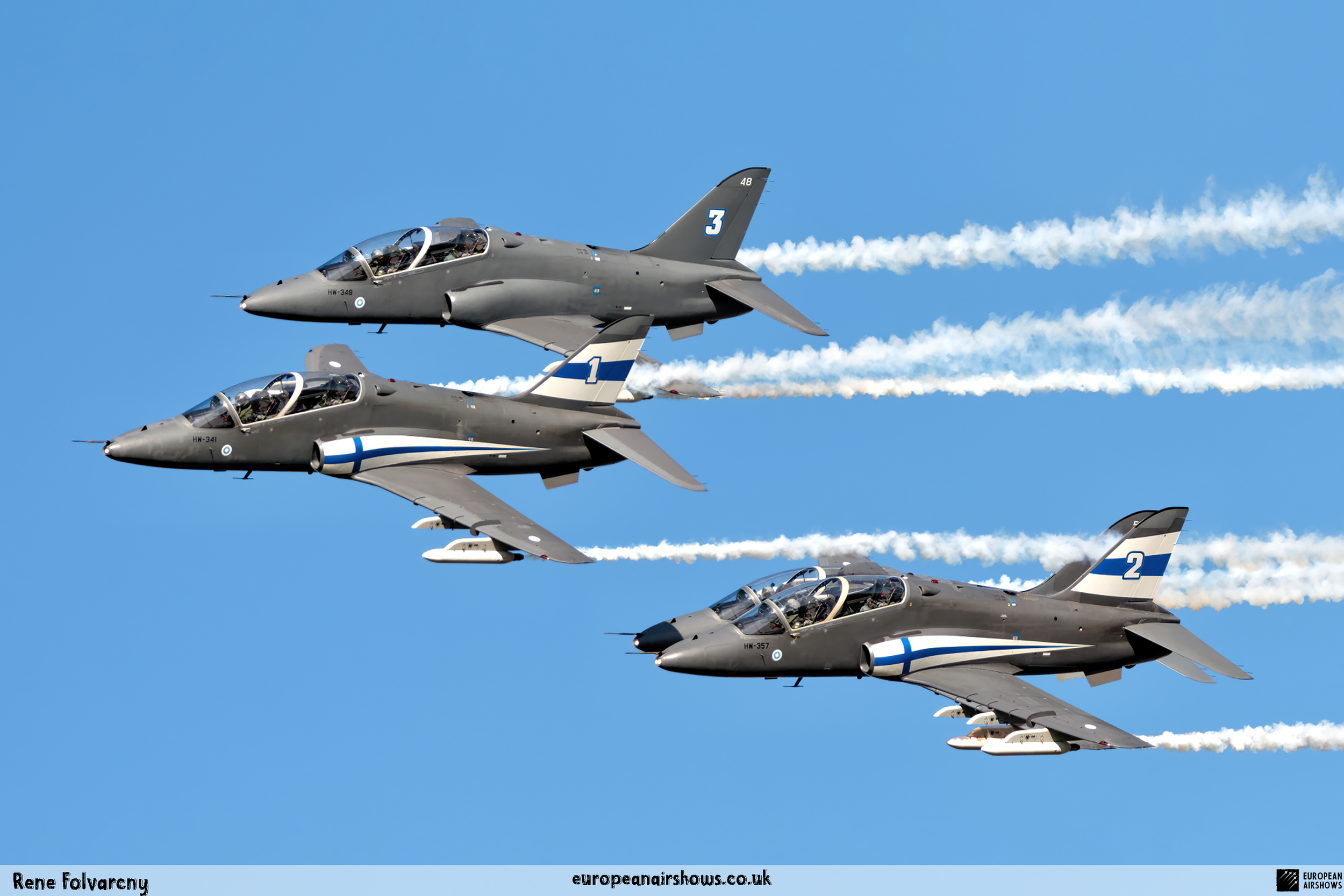
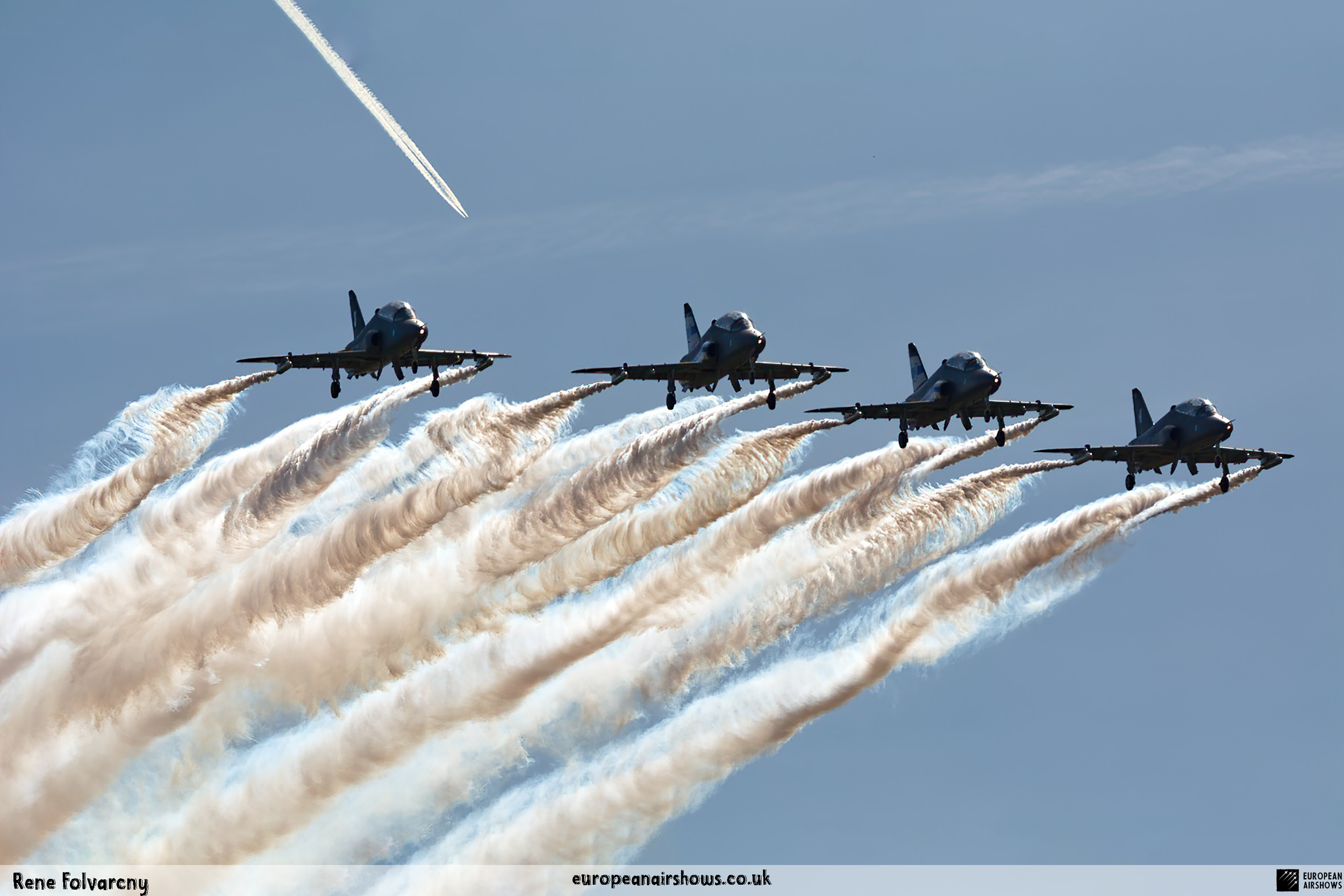
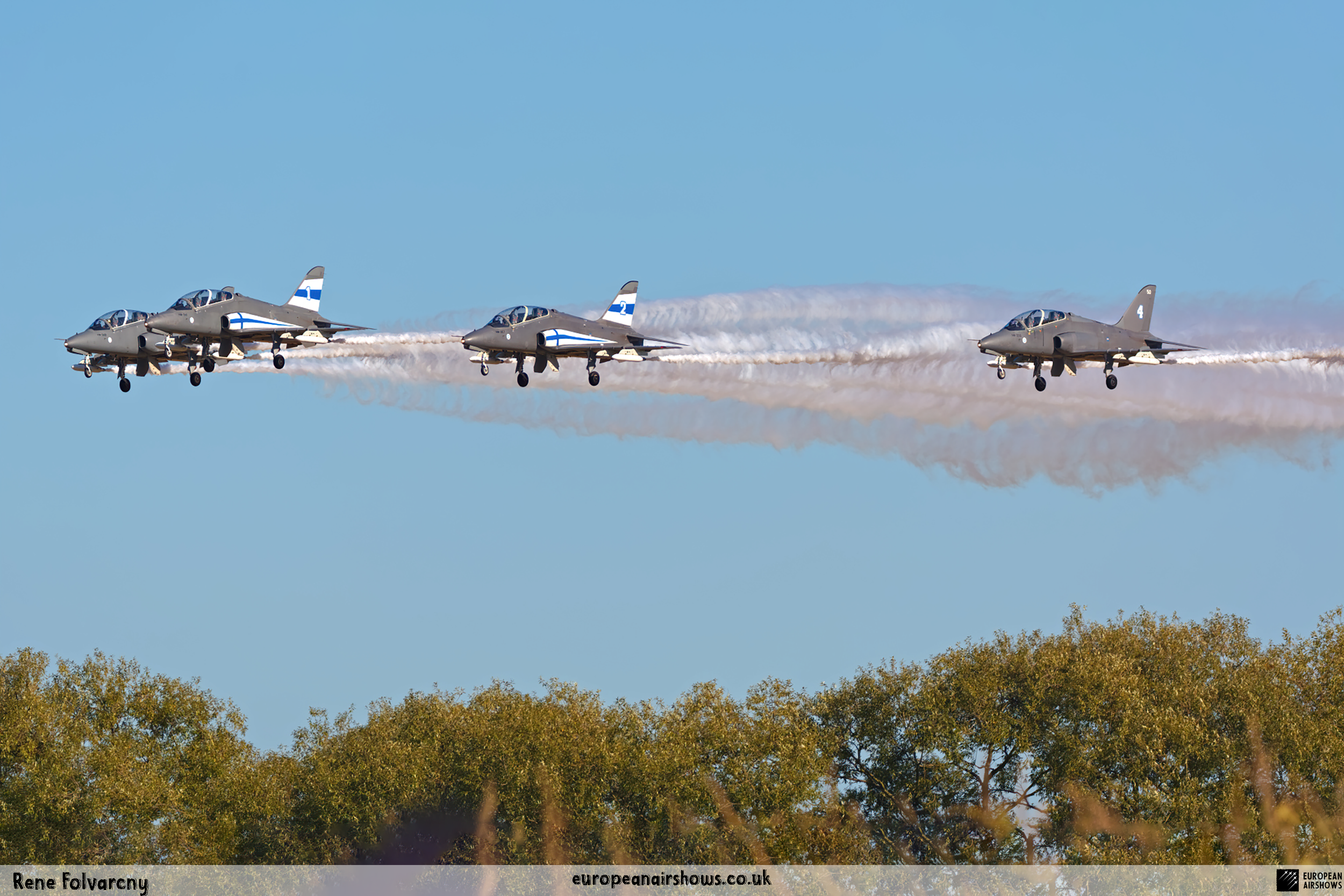
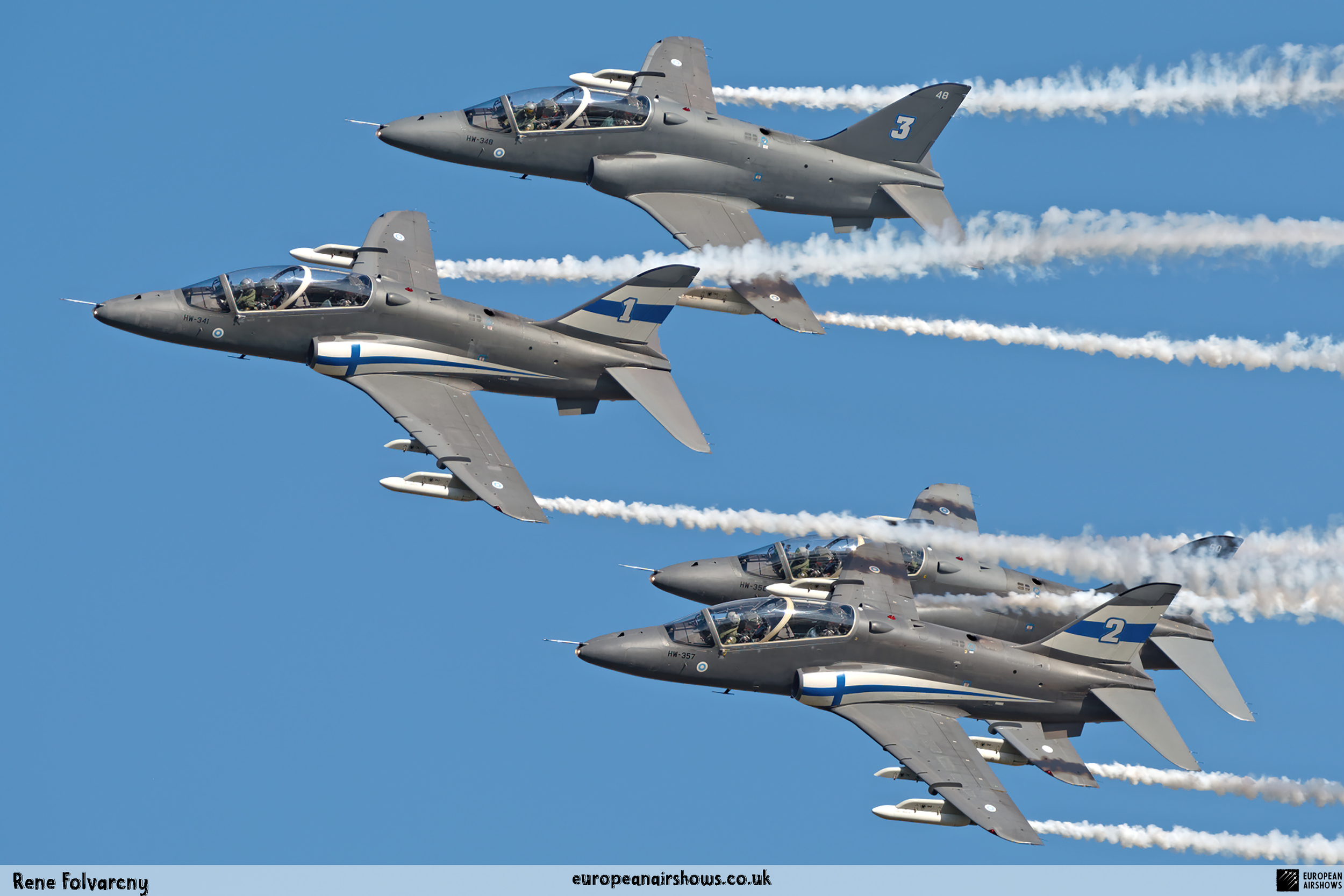
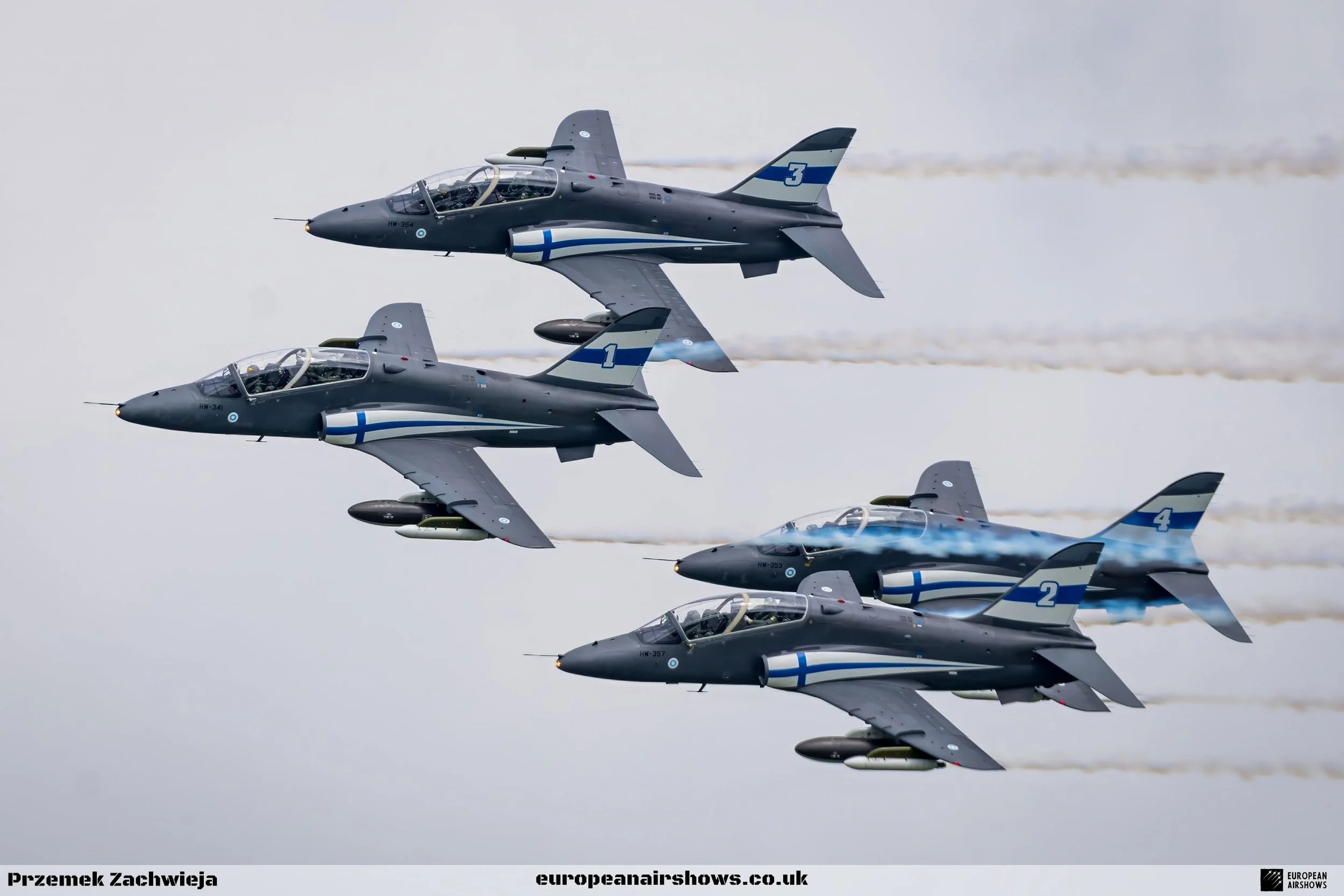
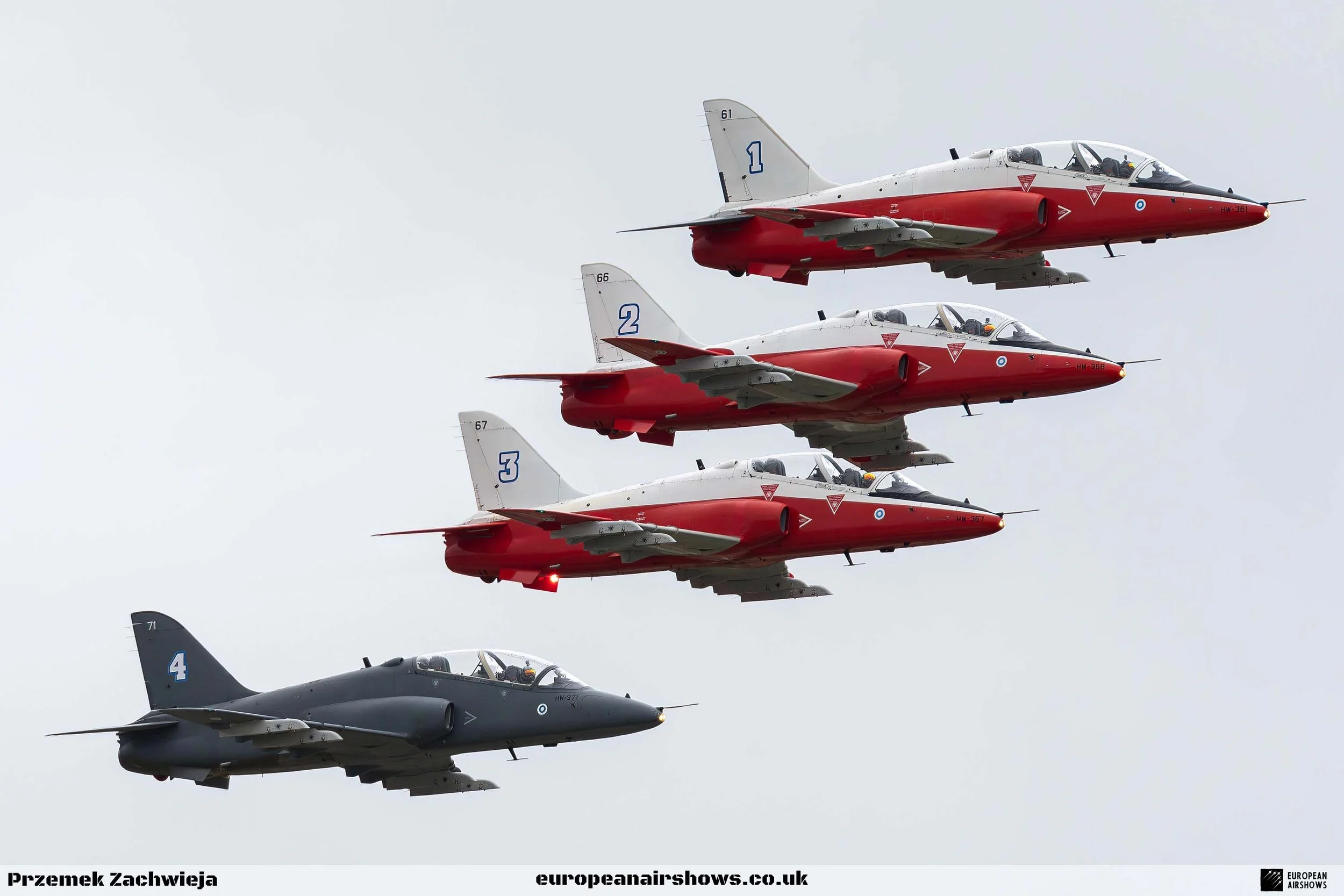
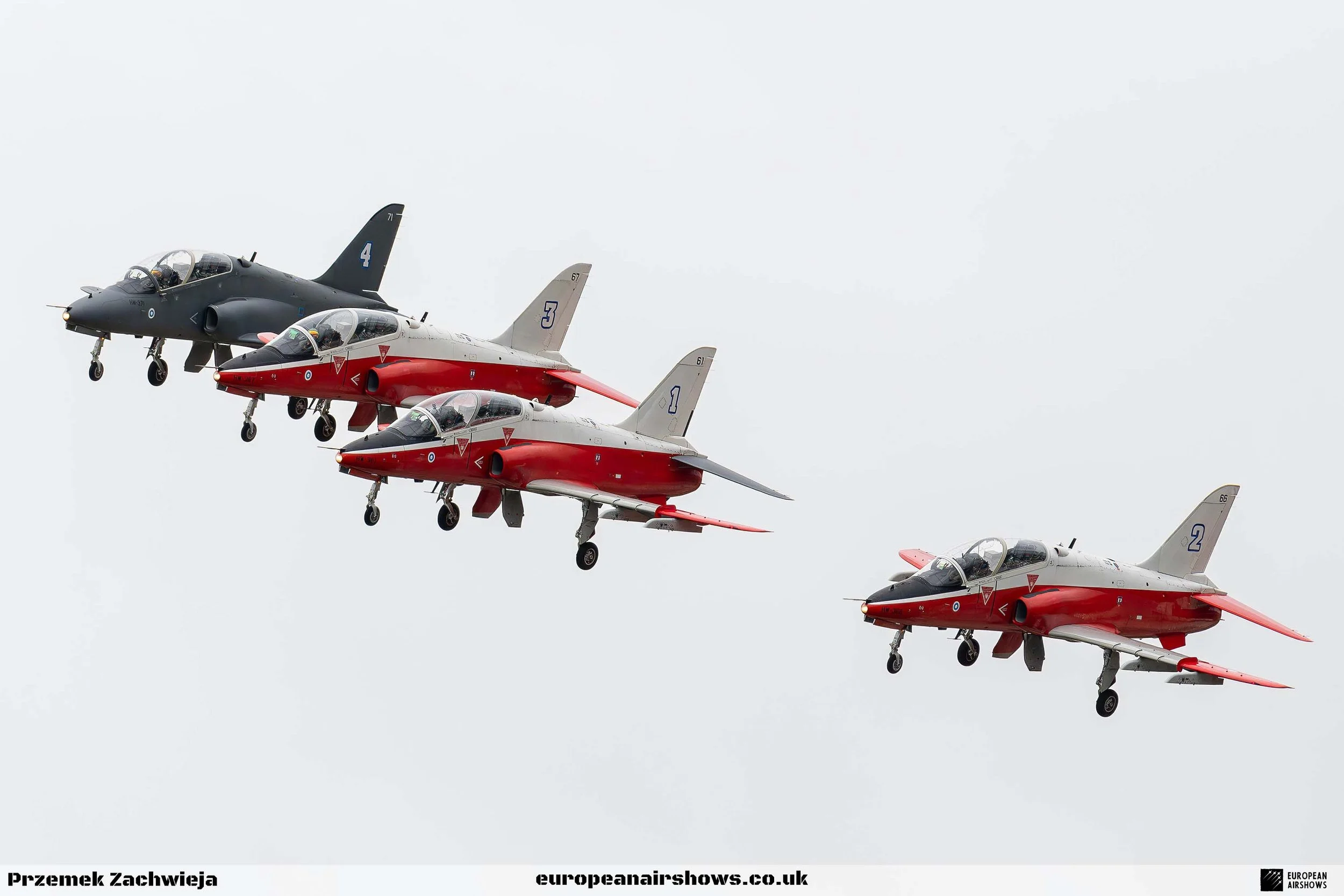
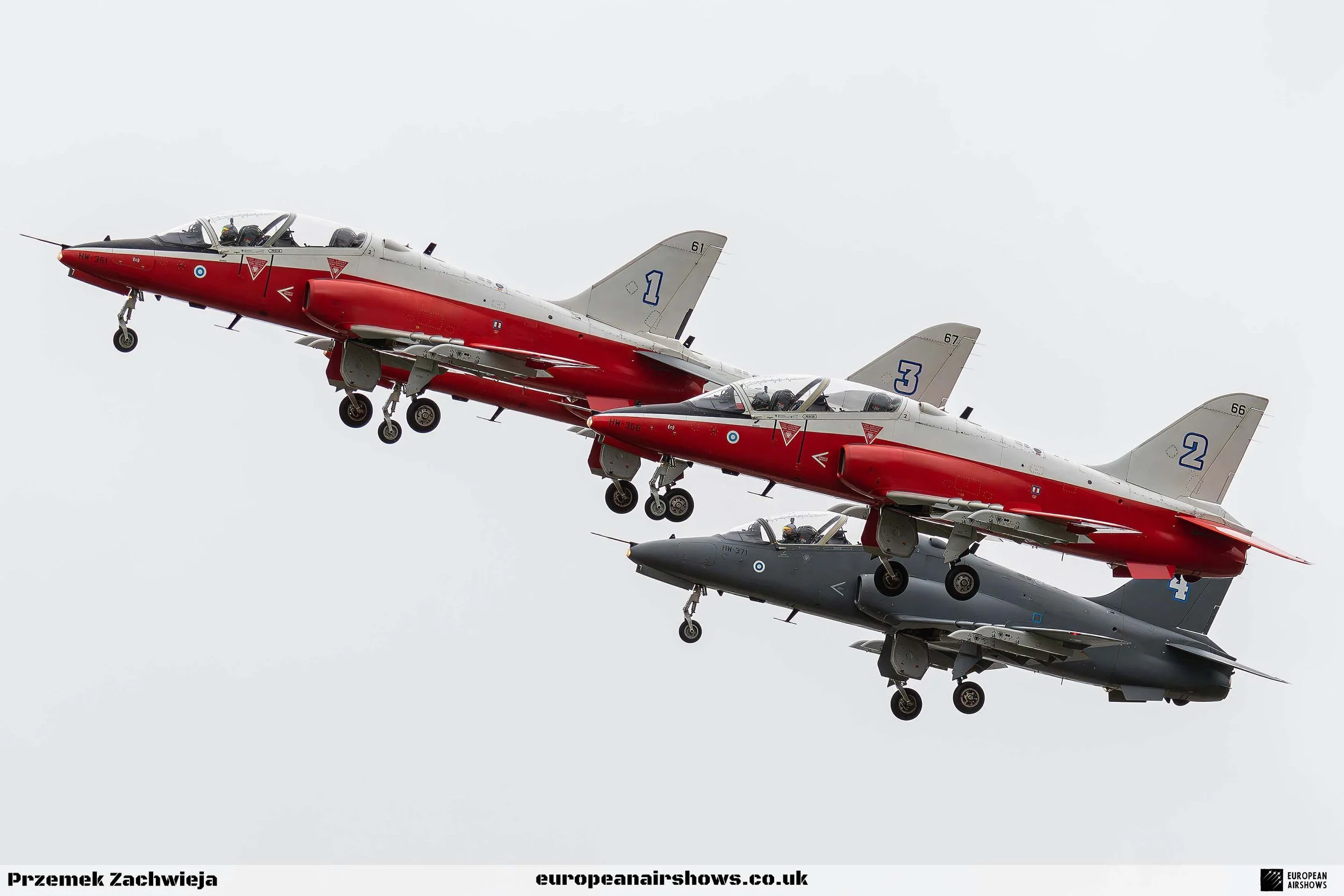
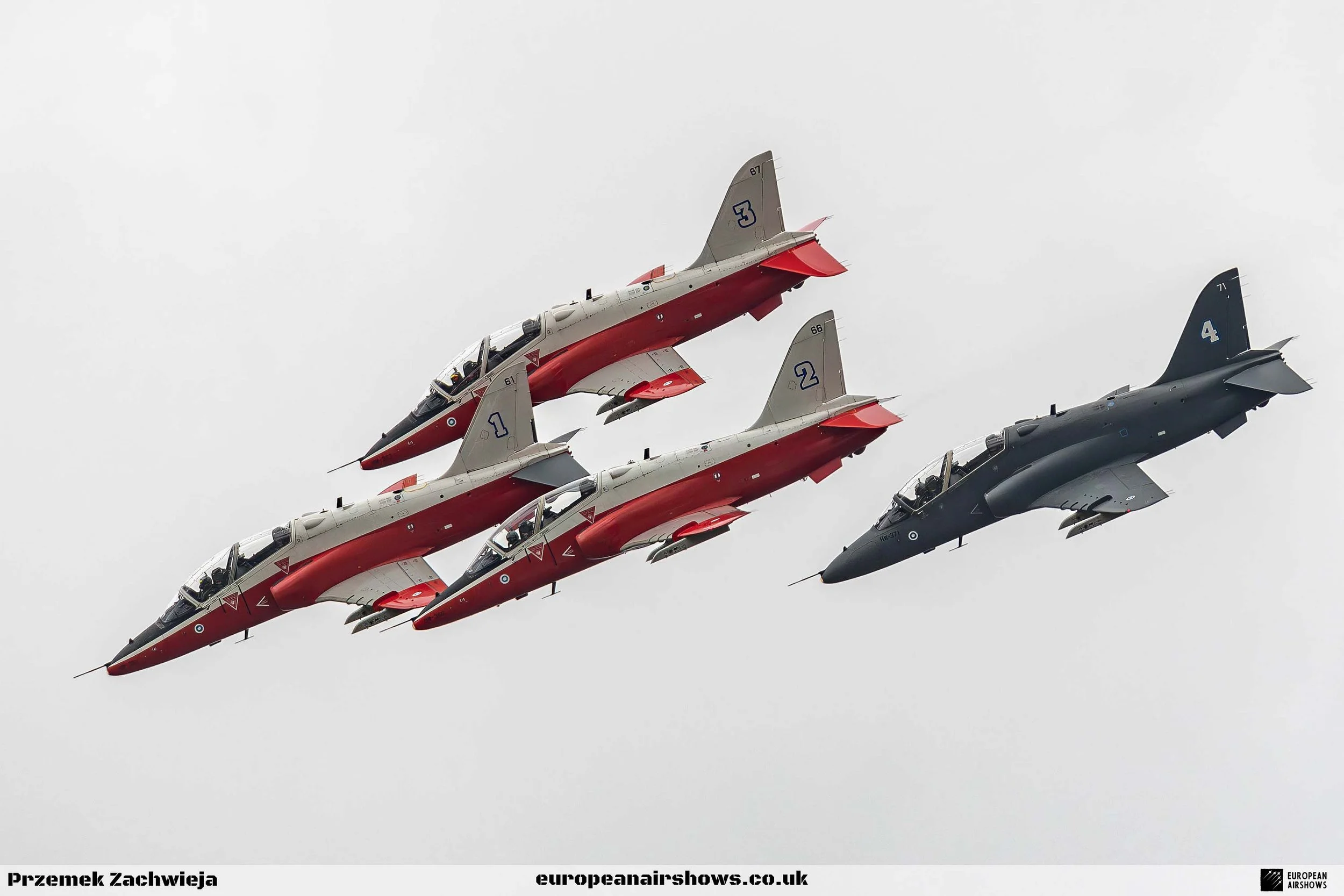
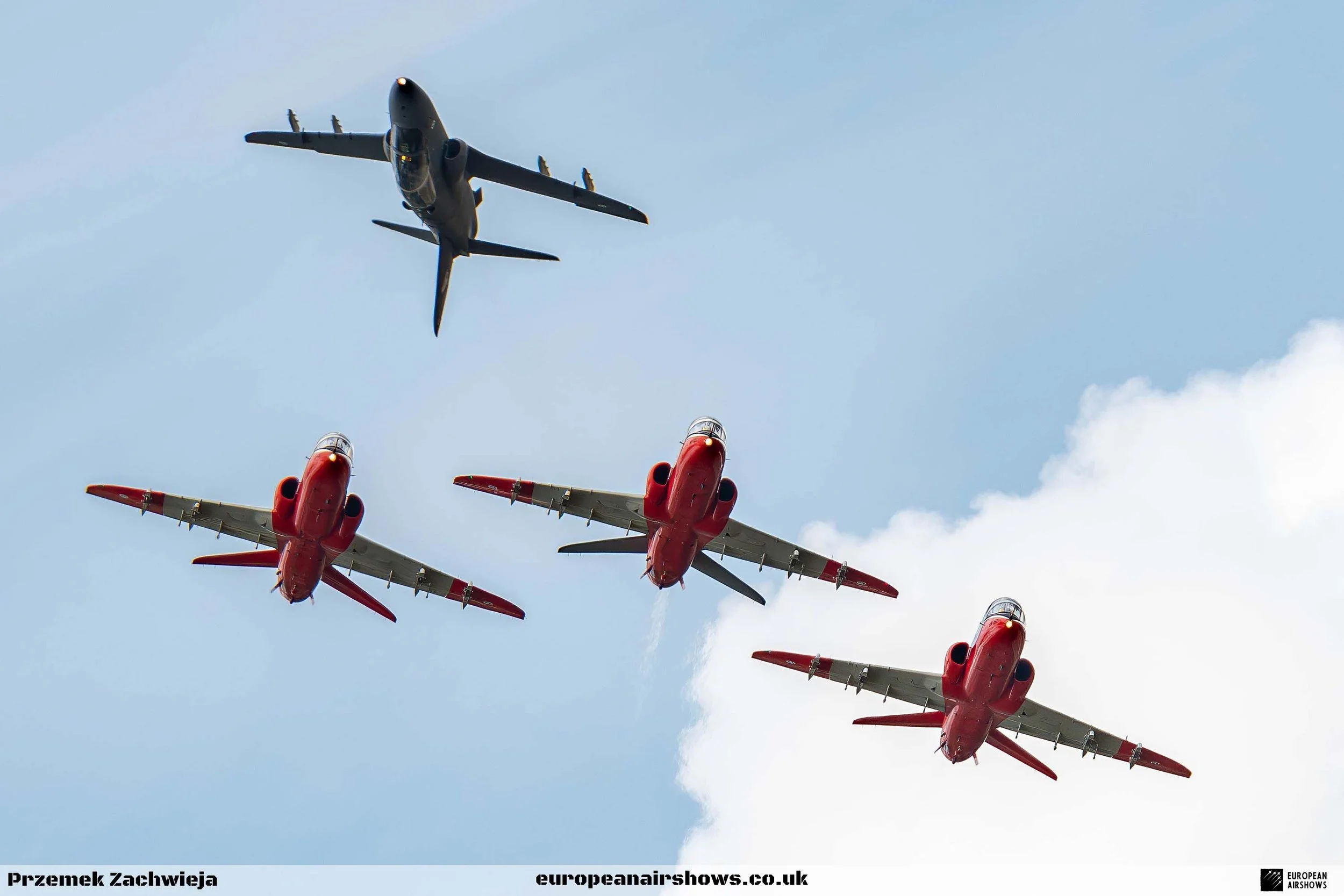
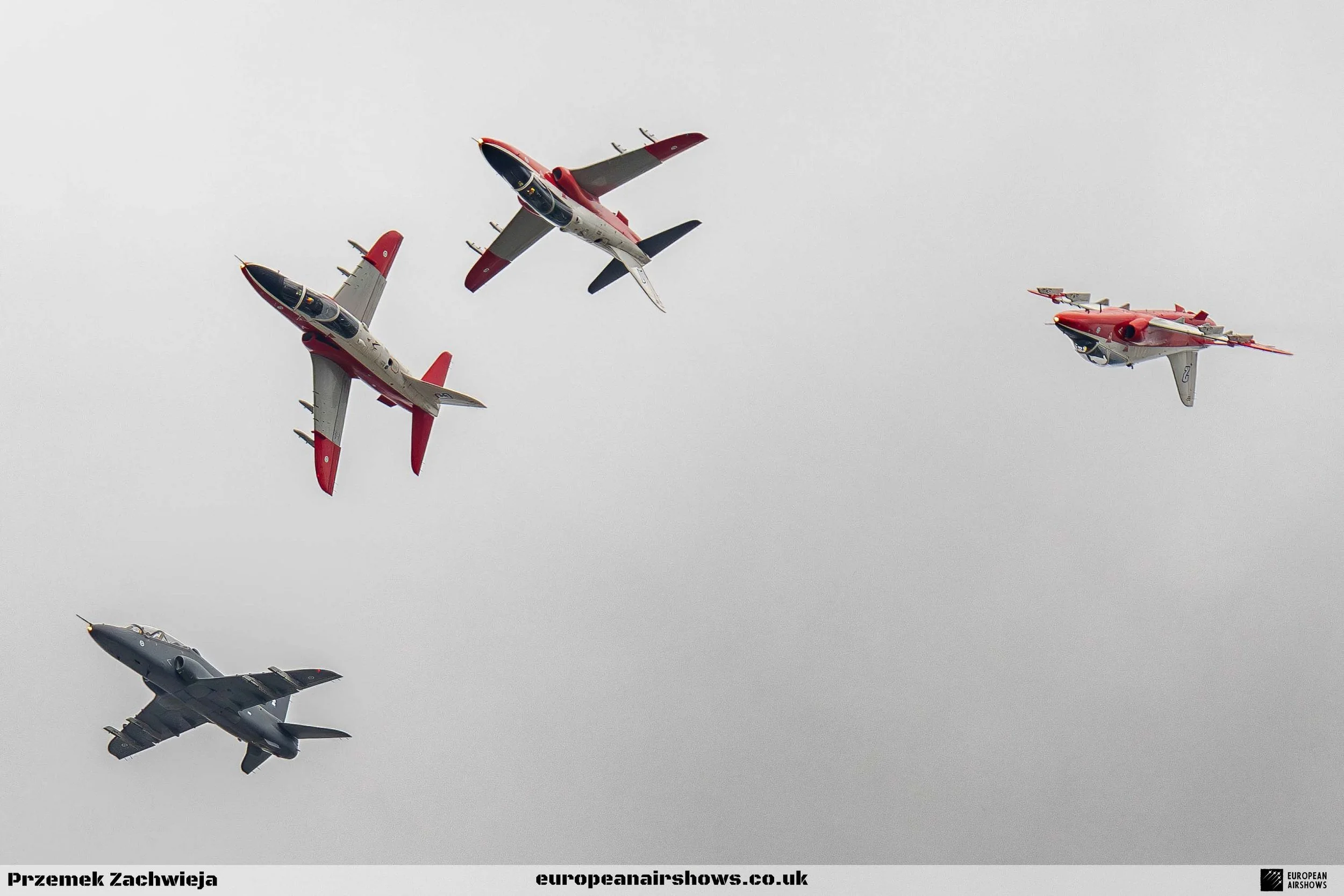
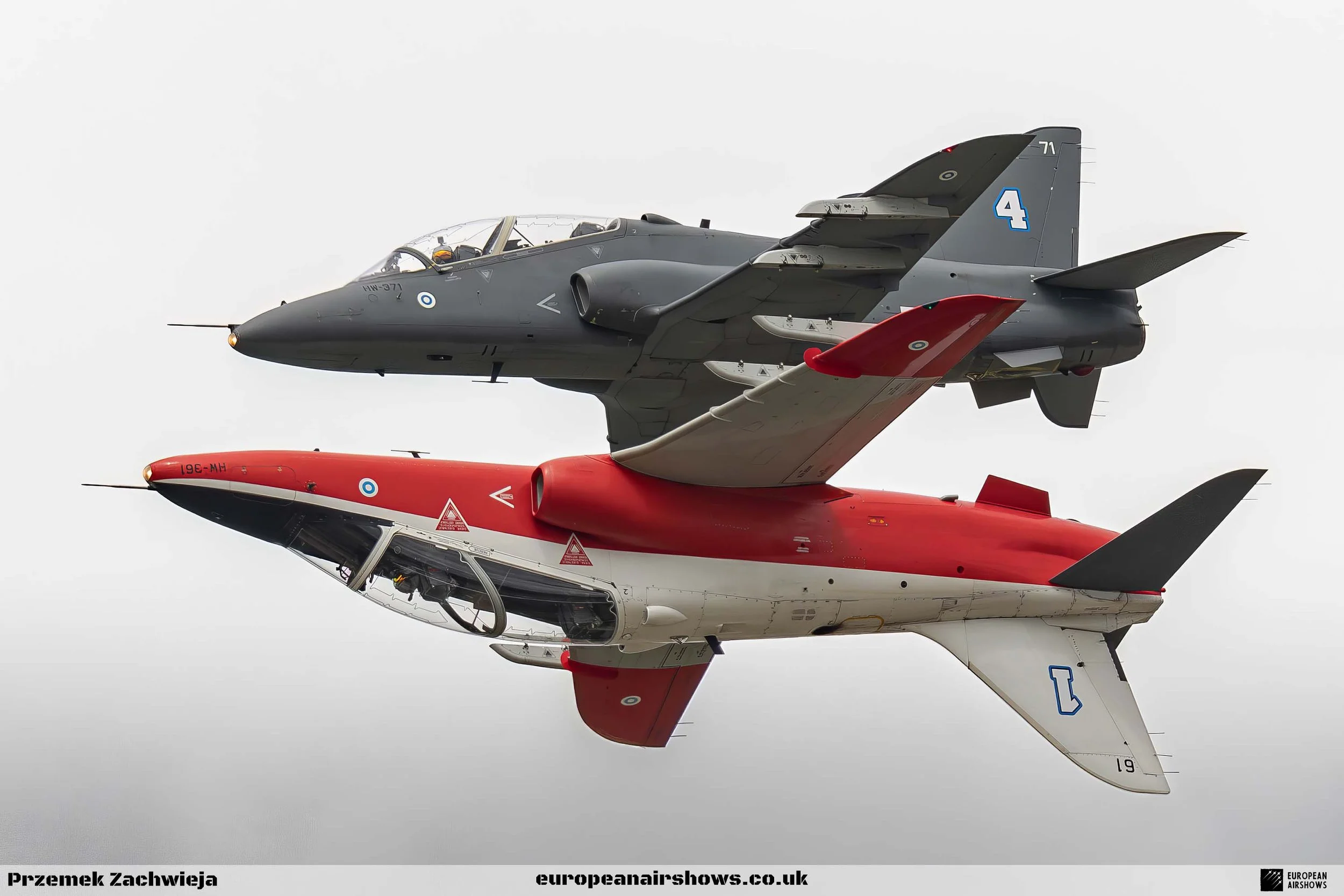
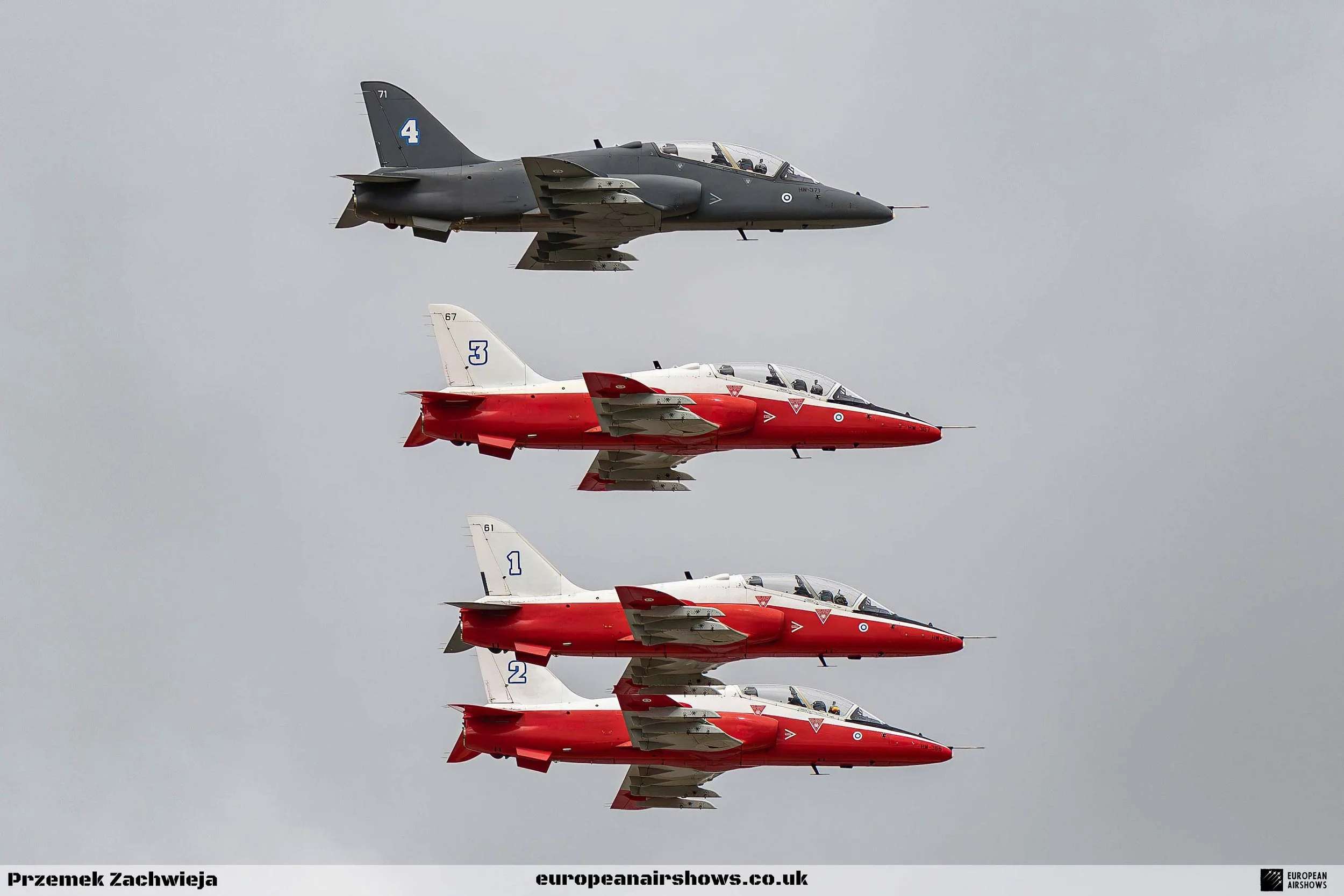
Midnight Hawks is the Finnish Air Force’s official aerobatic team. Its four-aircraft flying formation is crewed by qualified flight instructors from the Air Force Academy’s Fighter Squadron 41. They turn the precision of Finland’s jet-training system into a display that can be adapted to good, medium or low cloud.
- Named
- 1997
- Formation
- 4 aircraft
- Aircraft
- BAE Systems Hawk
- Flying roles
- Leader, wings, slot
- Parent unit
- Fighter Squadron 41
- Home
- Tikkakoski
The team
Four instructors, four positions, one tightly connected formation.
Built inside the training unit
Midnight Hawks is not a separate full-time display squadron. Its four display pilots are qualified flight instructors serving with Fighter Squadron 41 at the Finnish Air Force Academy. Flight instruction is their primary job; formation-aerobatic training is carried out alongside those normal responsibilities.
What the four flying positions do
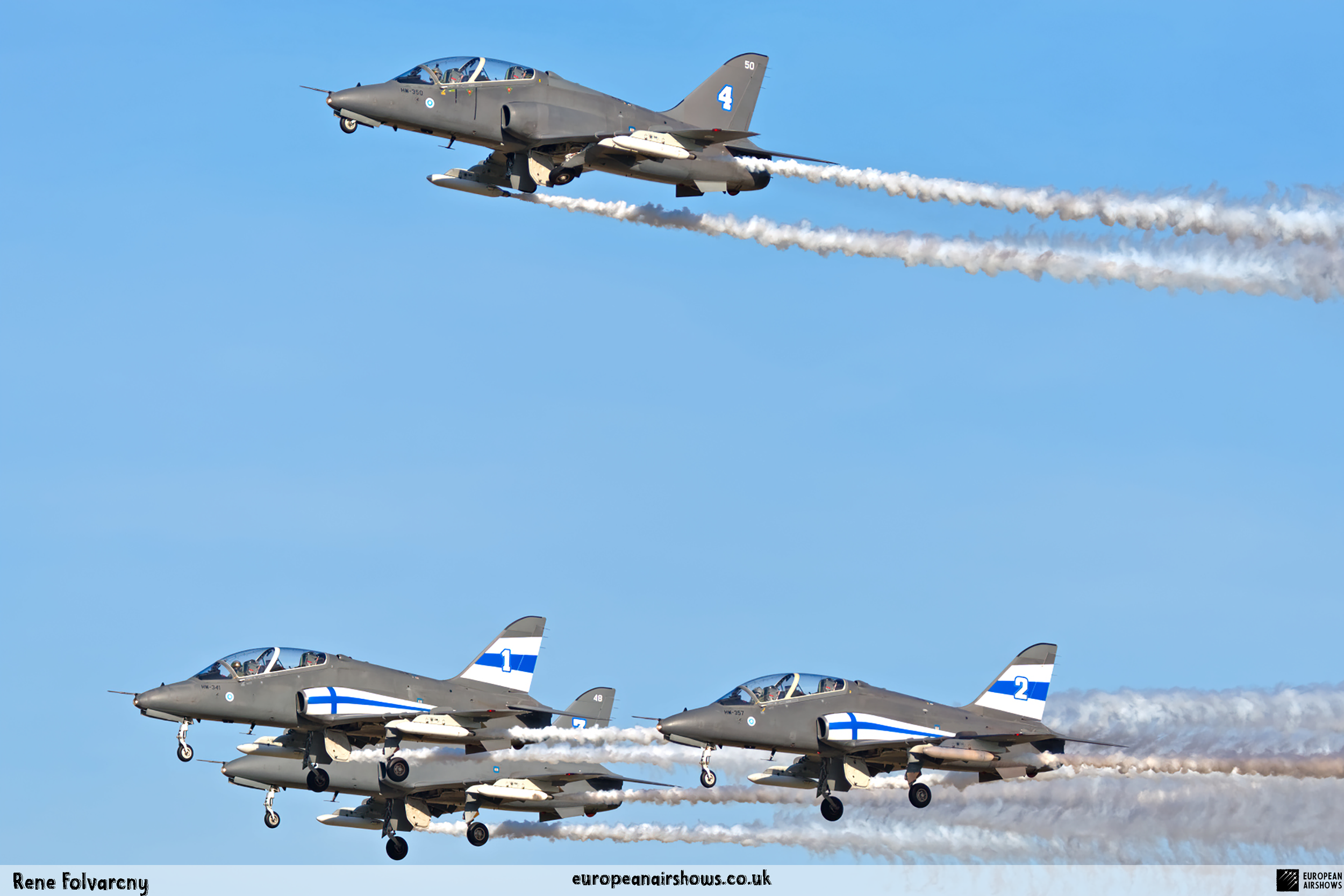
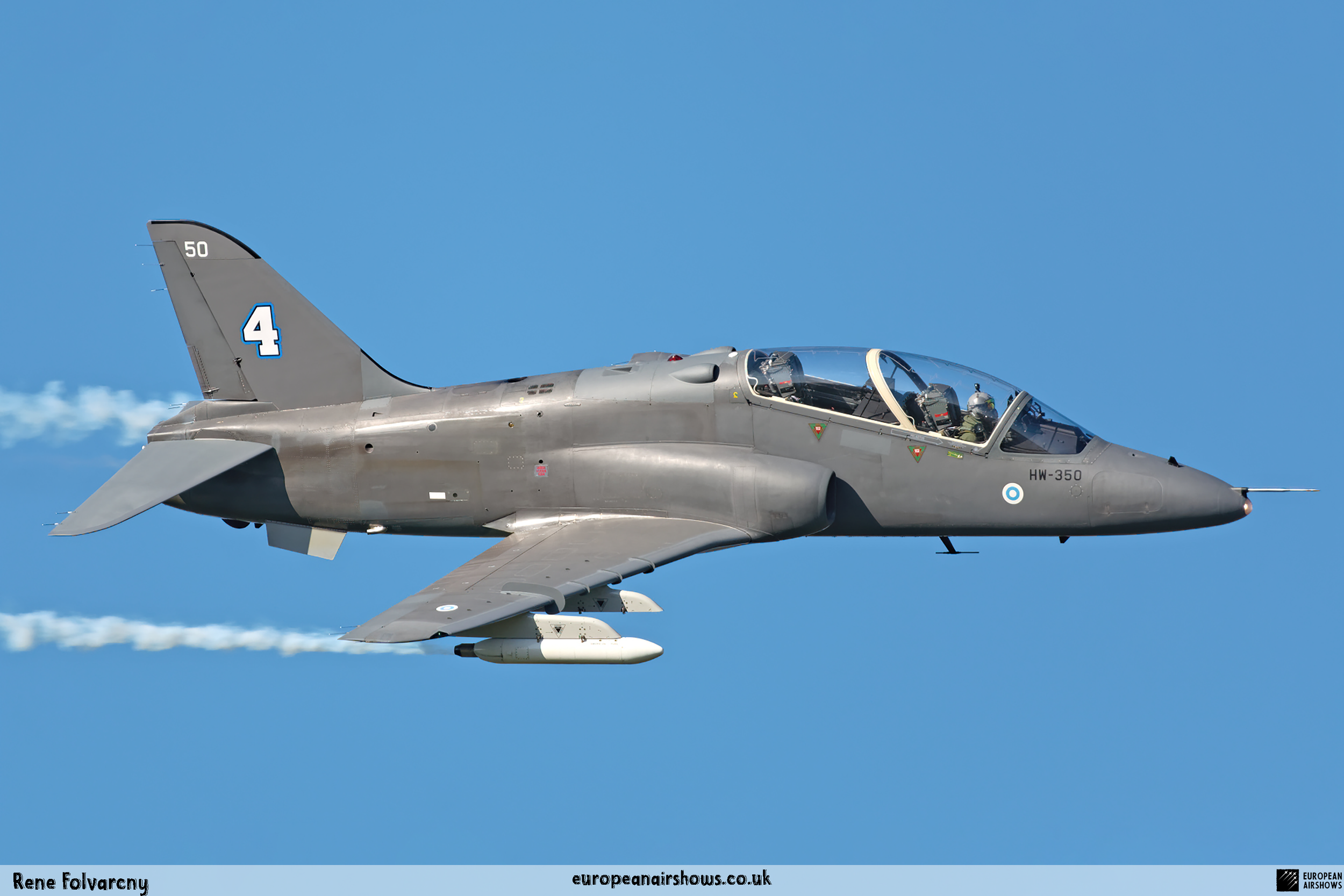
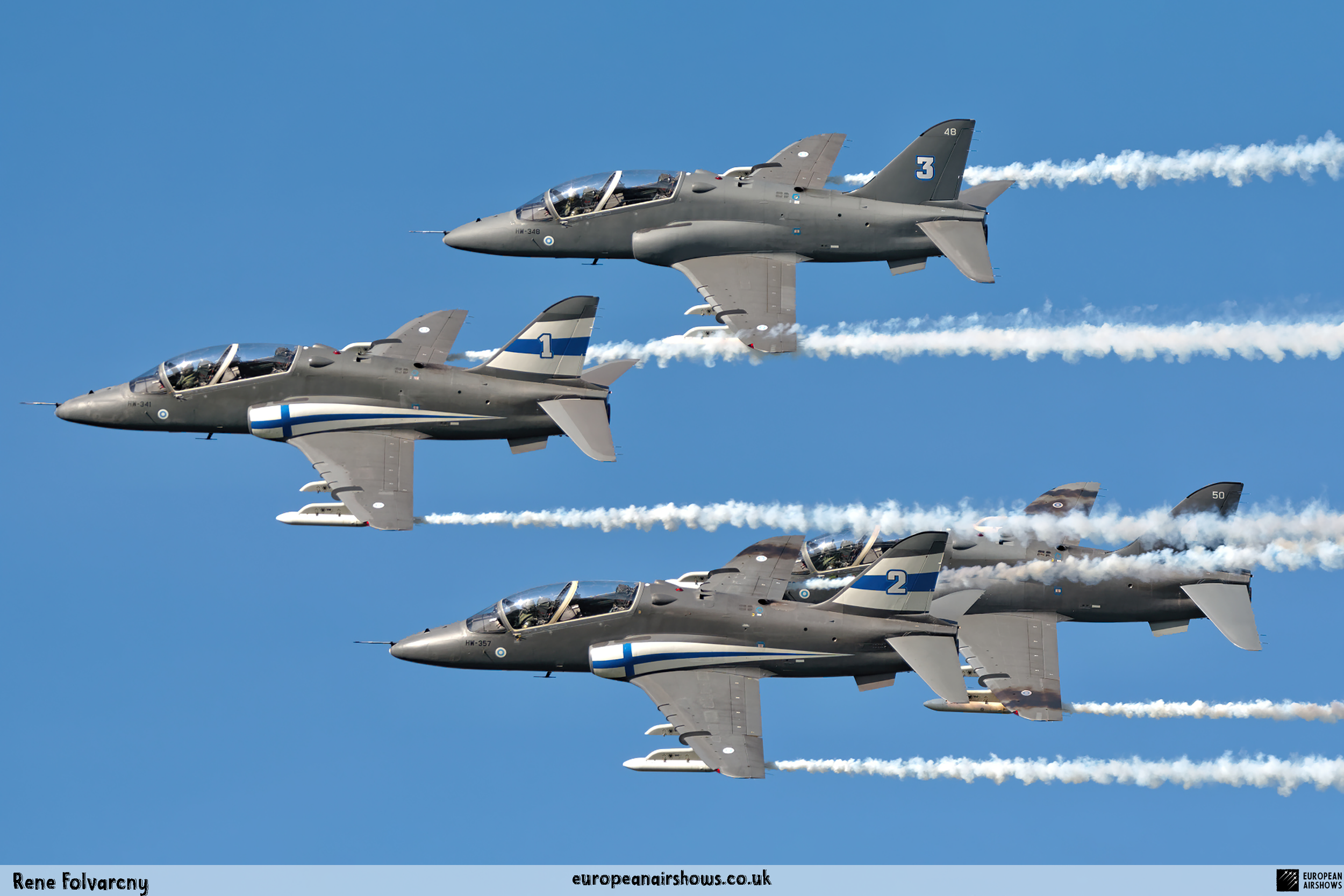
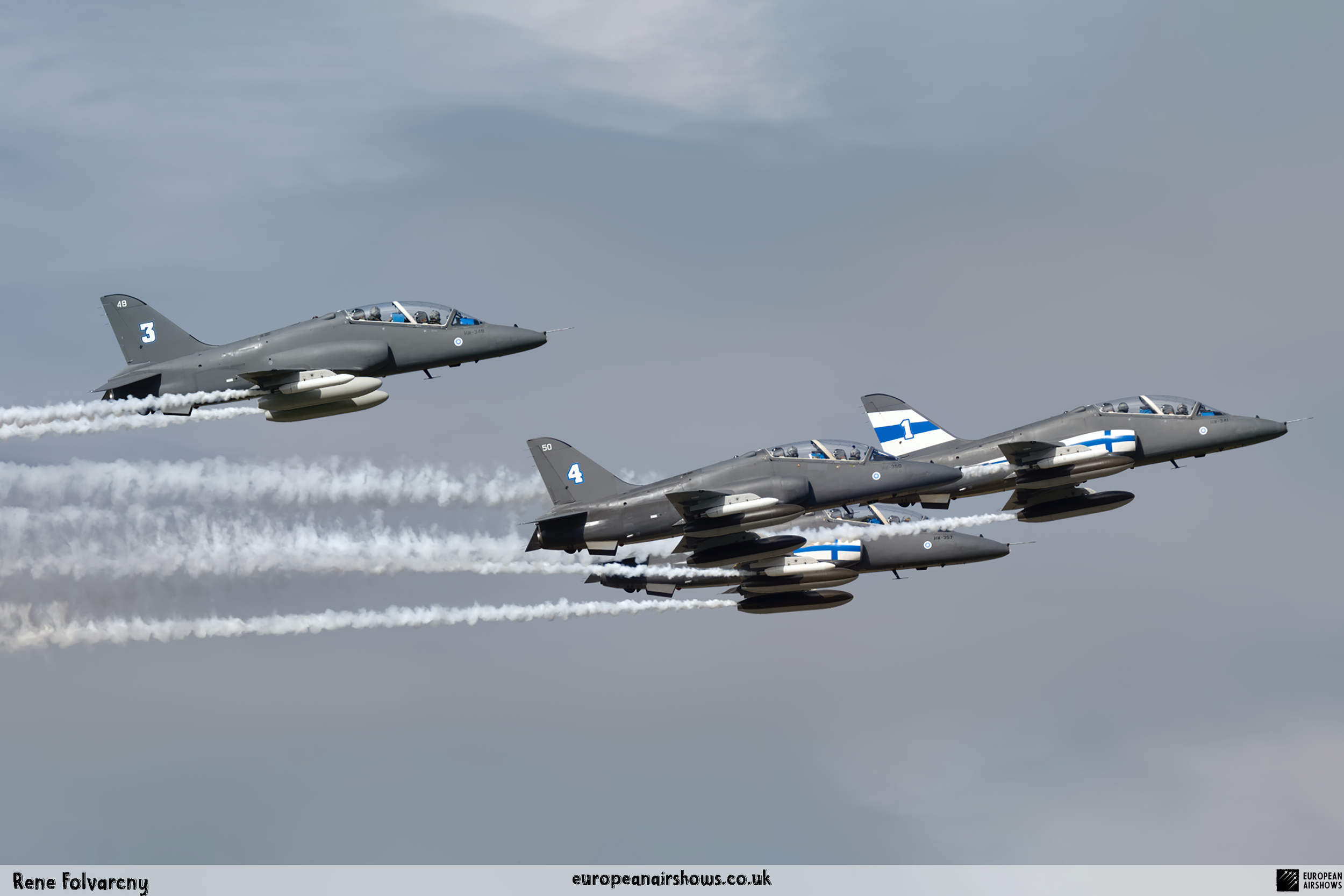
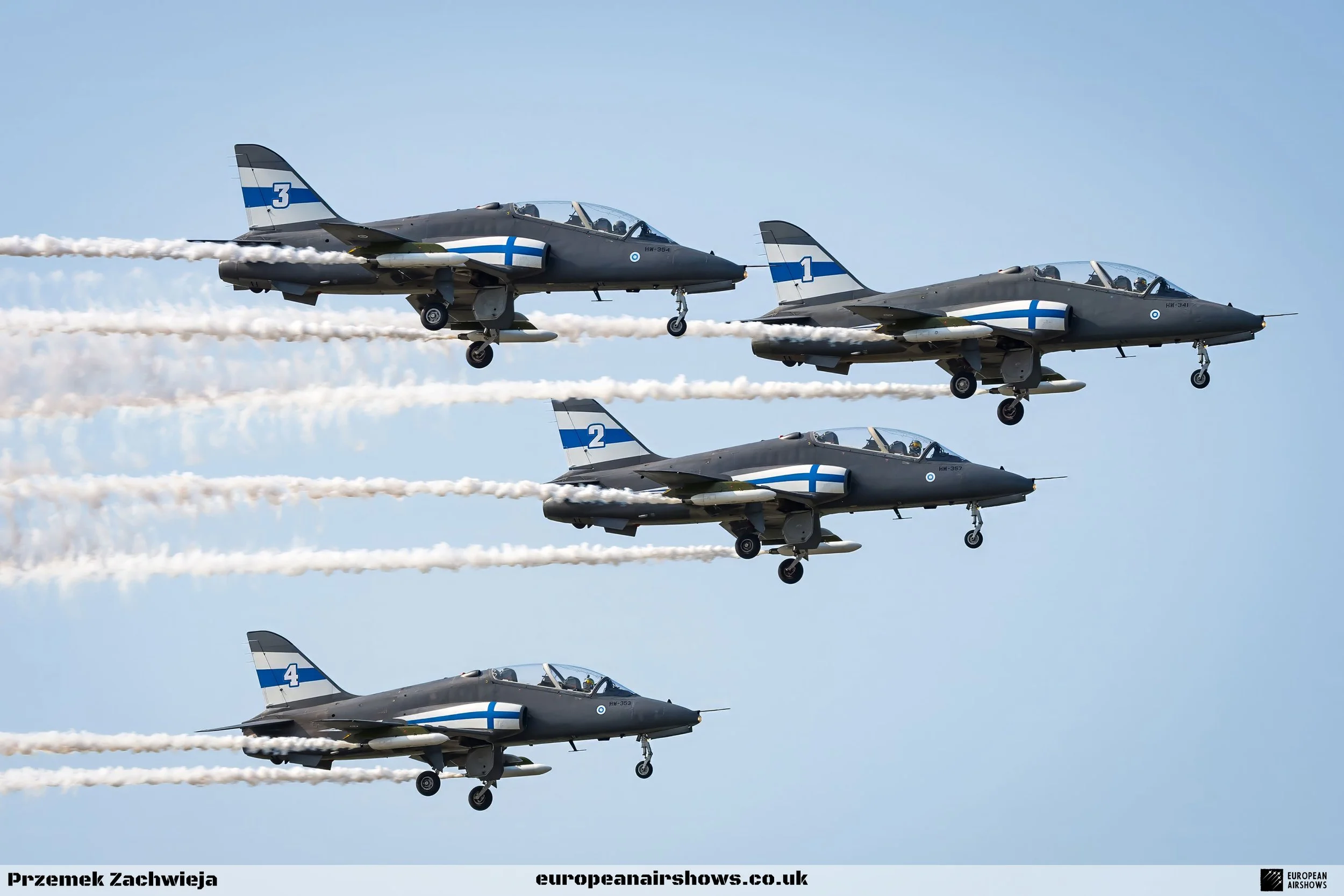
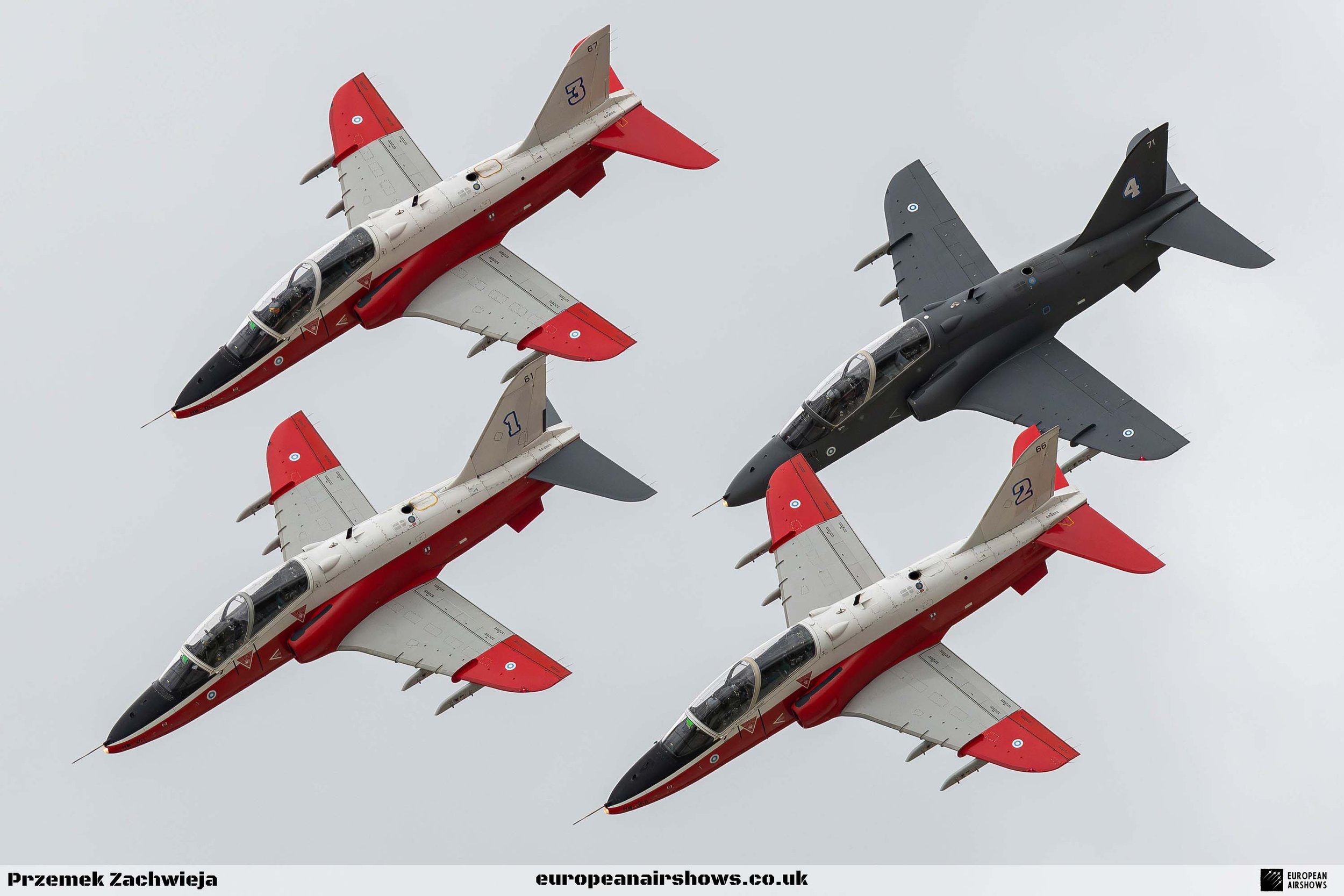
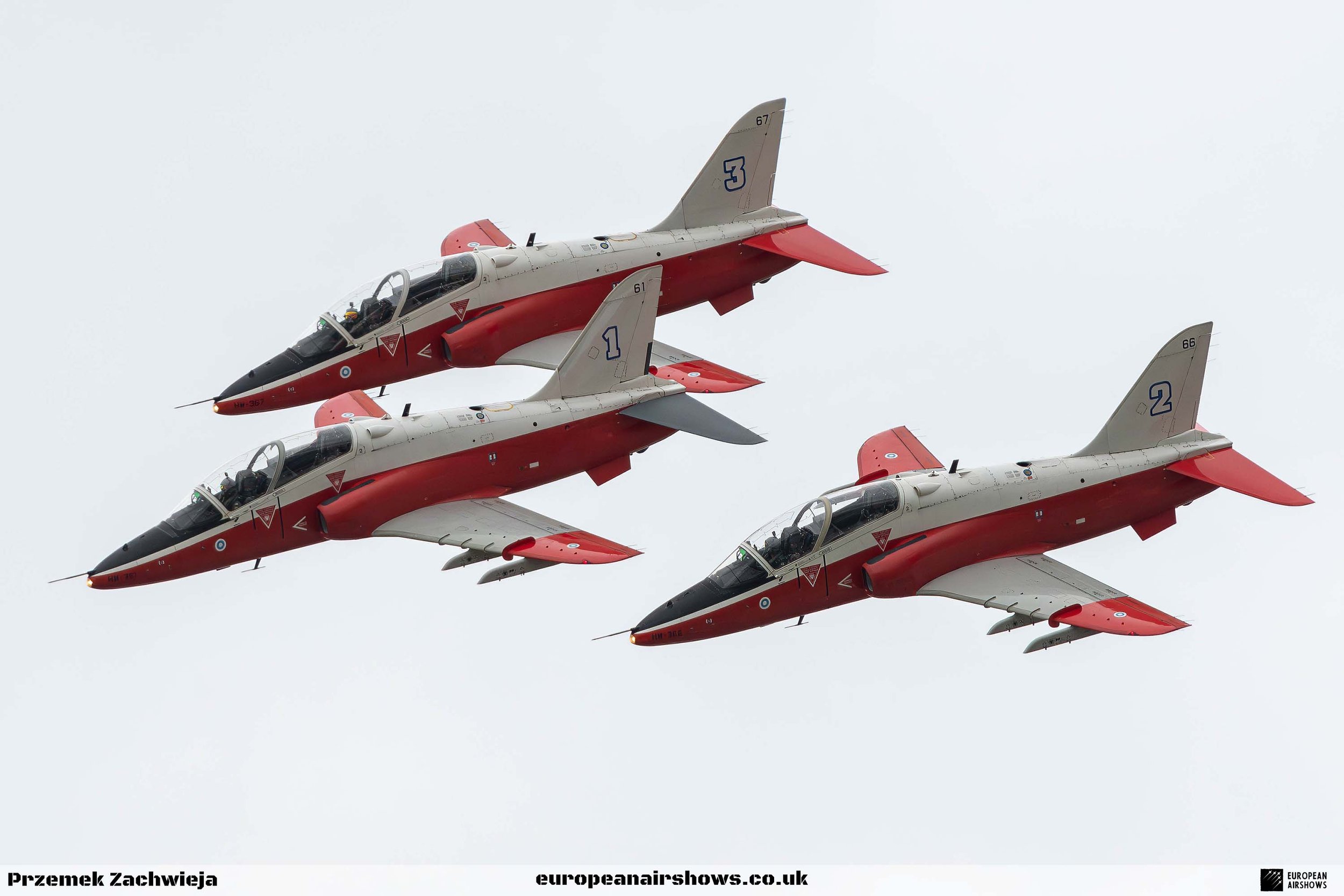
Number 1 leads the formation and establishes its flight path. Numbers 2 and 3 fly the left and right wing positions, while Number 4 occupies the slot at the rear. The leader presents the overall manoeuvre; the other three pilots hold precise visual references so the formation behaves as one aircraft.
More than four people
The four-aircraft formation is only the flying element. A team supervisor observes from the ground and oversees the safety and visual quality of the manoeuvres. The number-seven rookie handles commentary, music, social-media production and general team duties, while maintenance personnel support the aircraft. That wider ground organisation is essential to every display.
The display
Three routines for three kinds of sky.
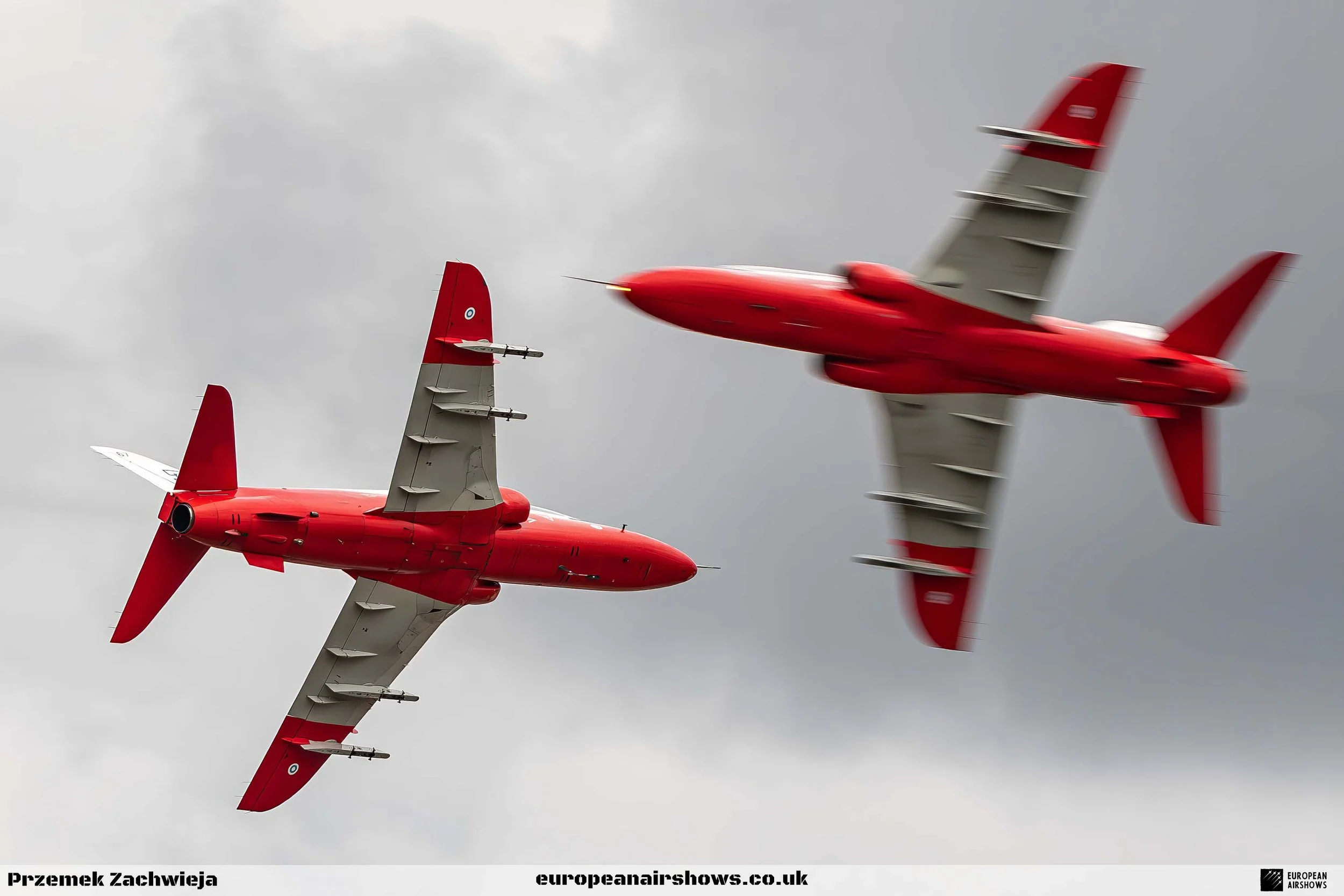
Midnight Hawks does not force one sequence into every weather window. The team has good-, medium- and low-cloud programmes. Each preserves the identity of the four-ship display while changing the amount of height needed above the show line.
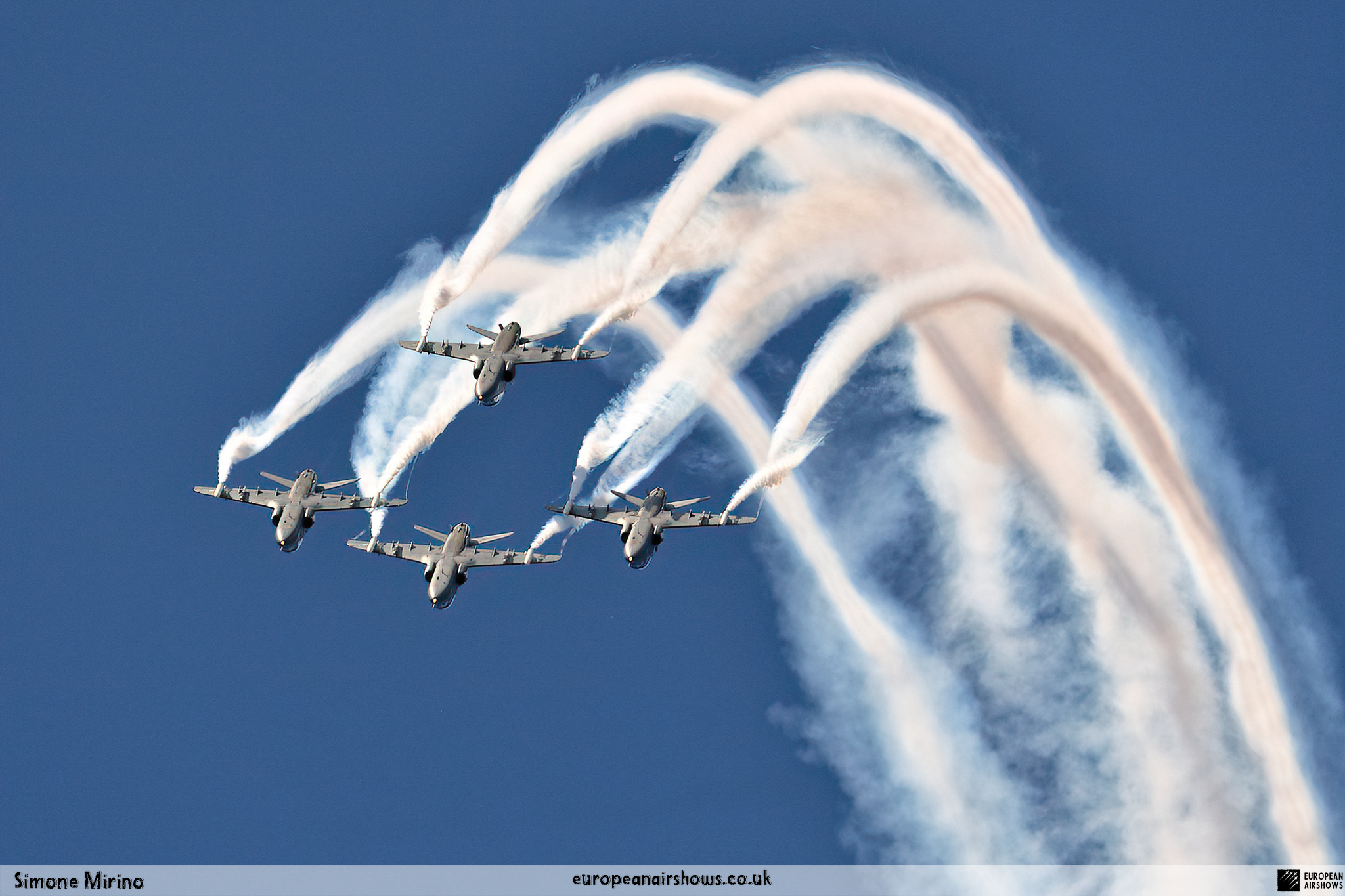
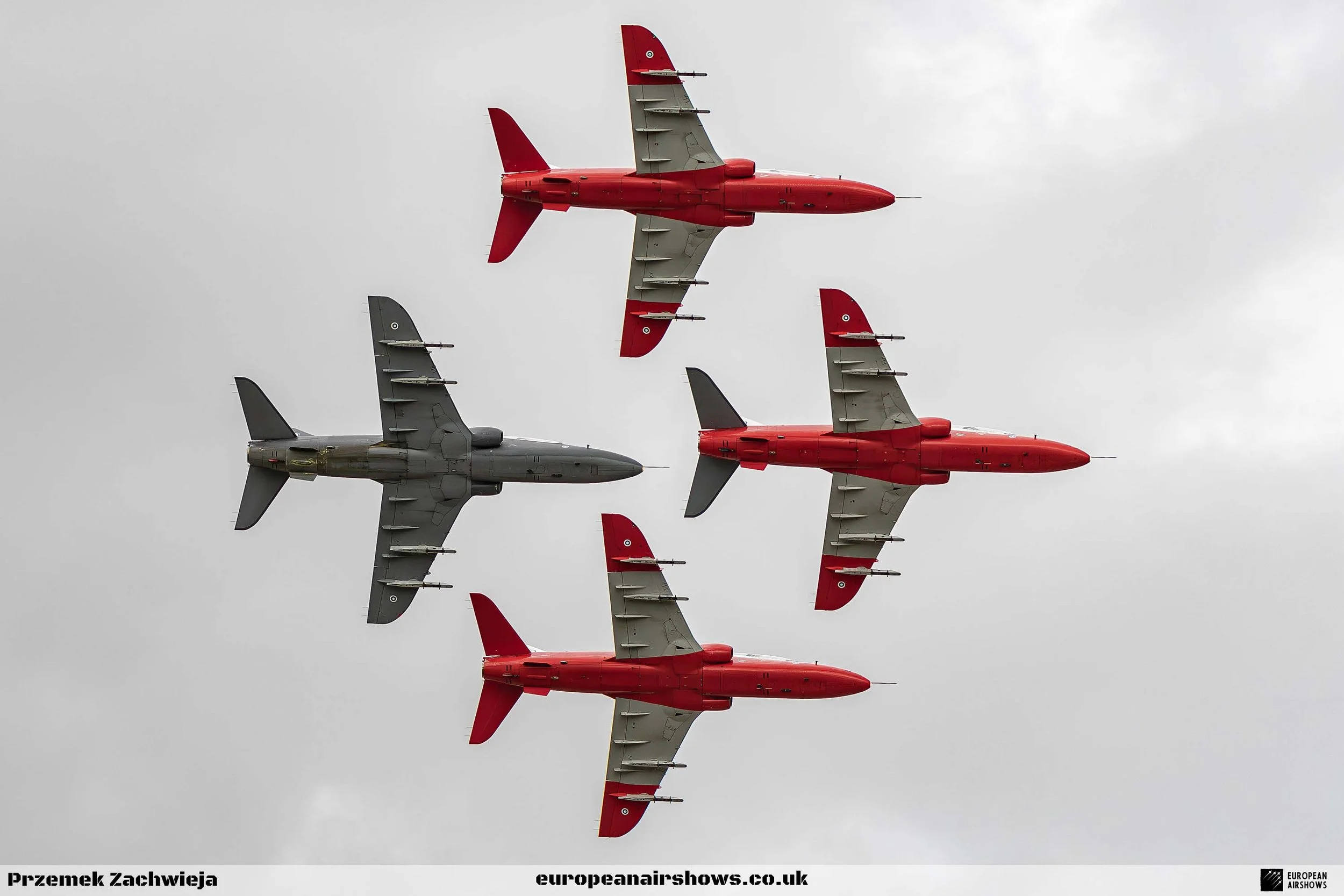
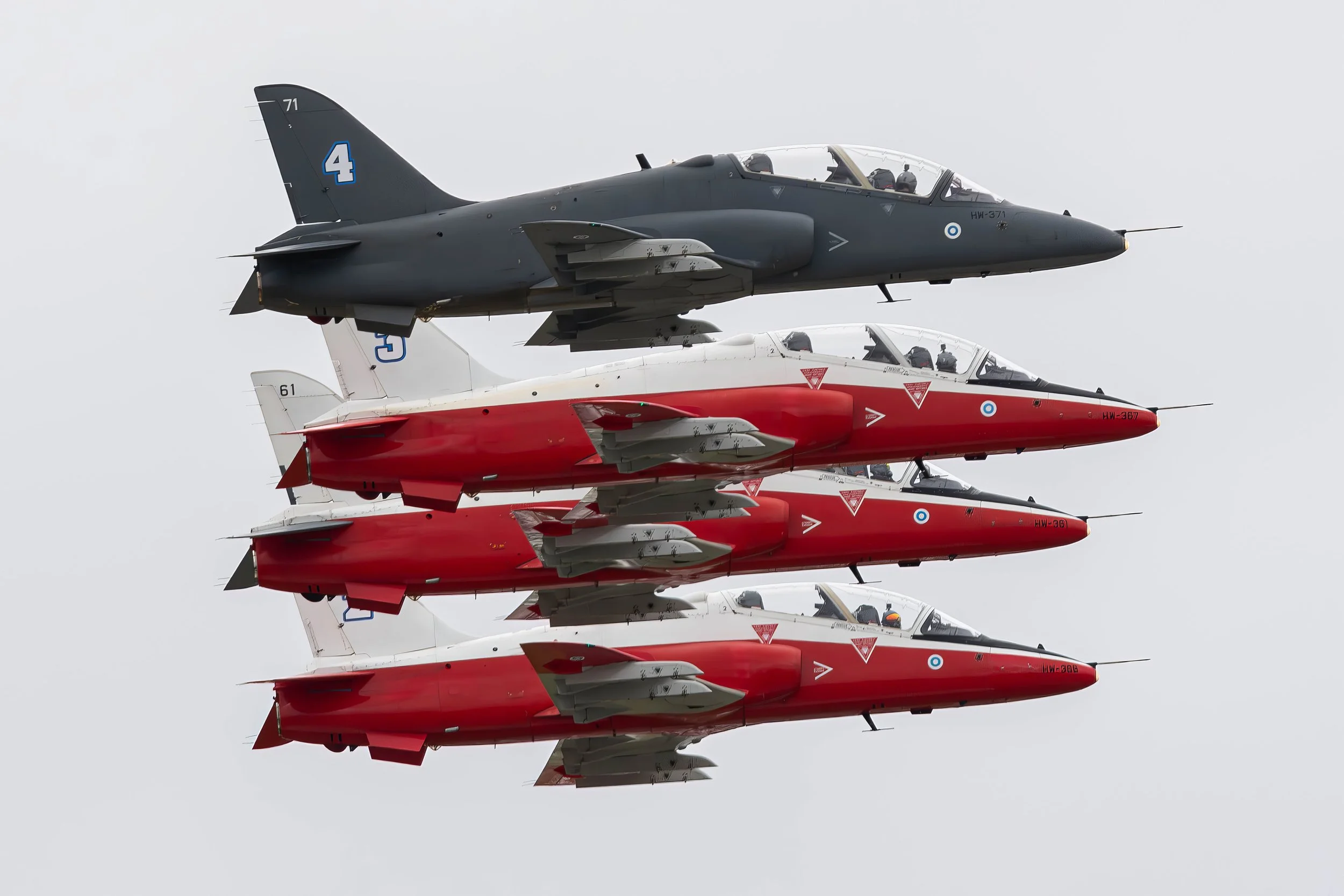
Tight diamond
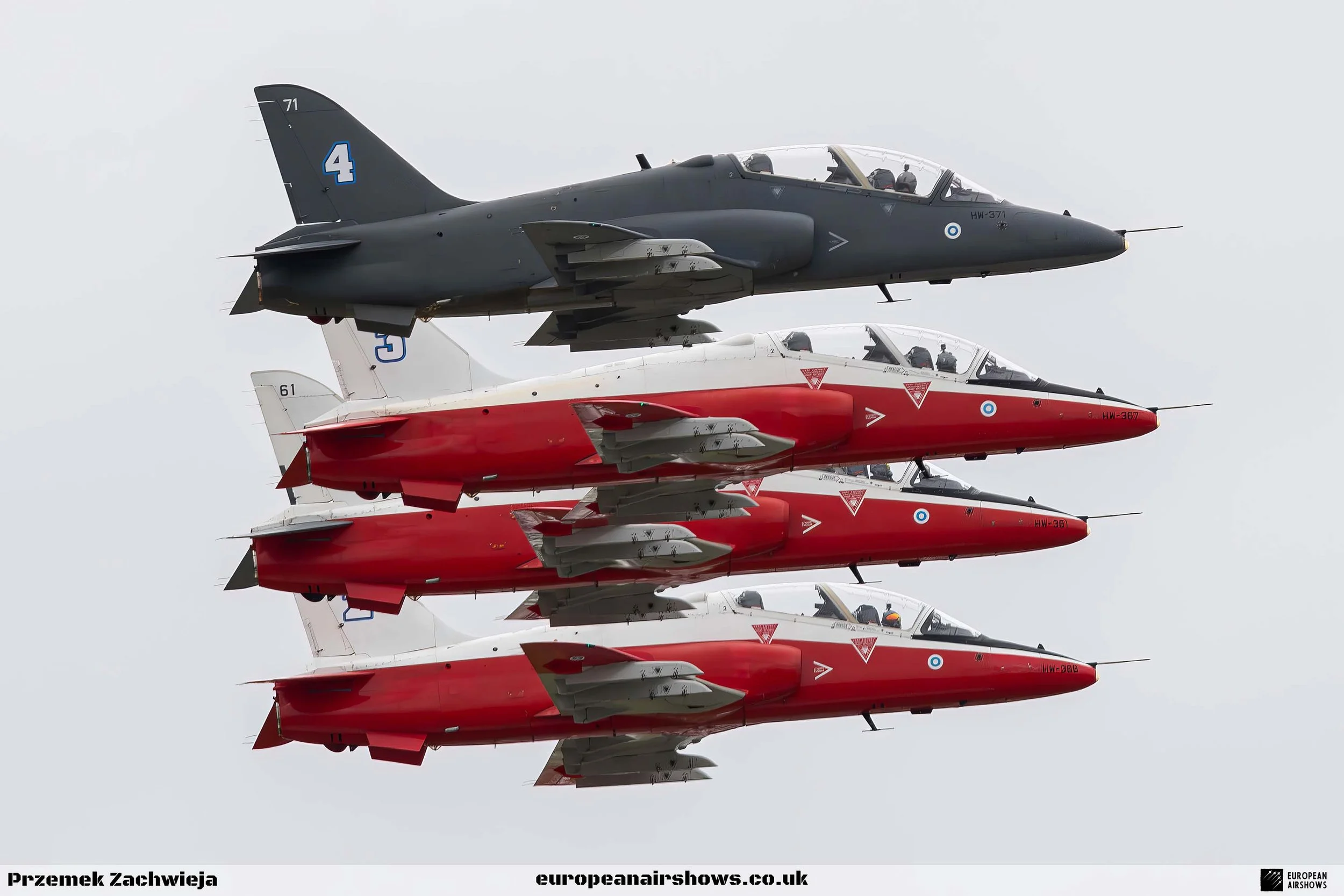
The signature formation makes small errors easy to see and rewards exact station-keeping by all four pilots.
Good weather
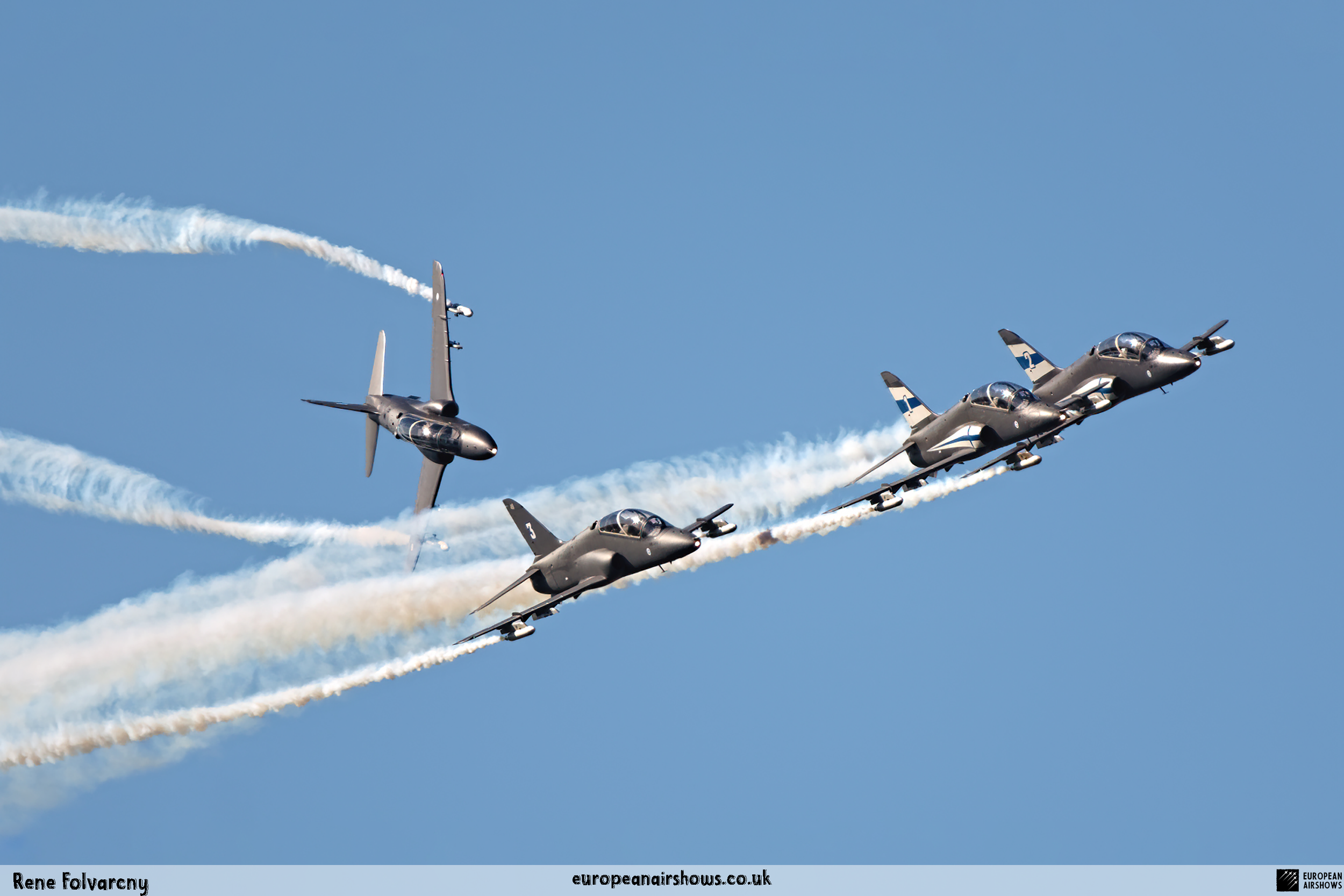
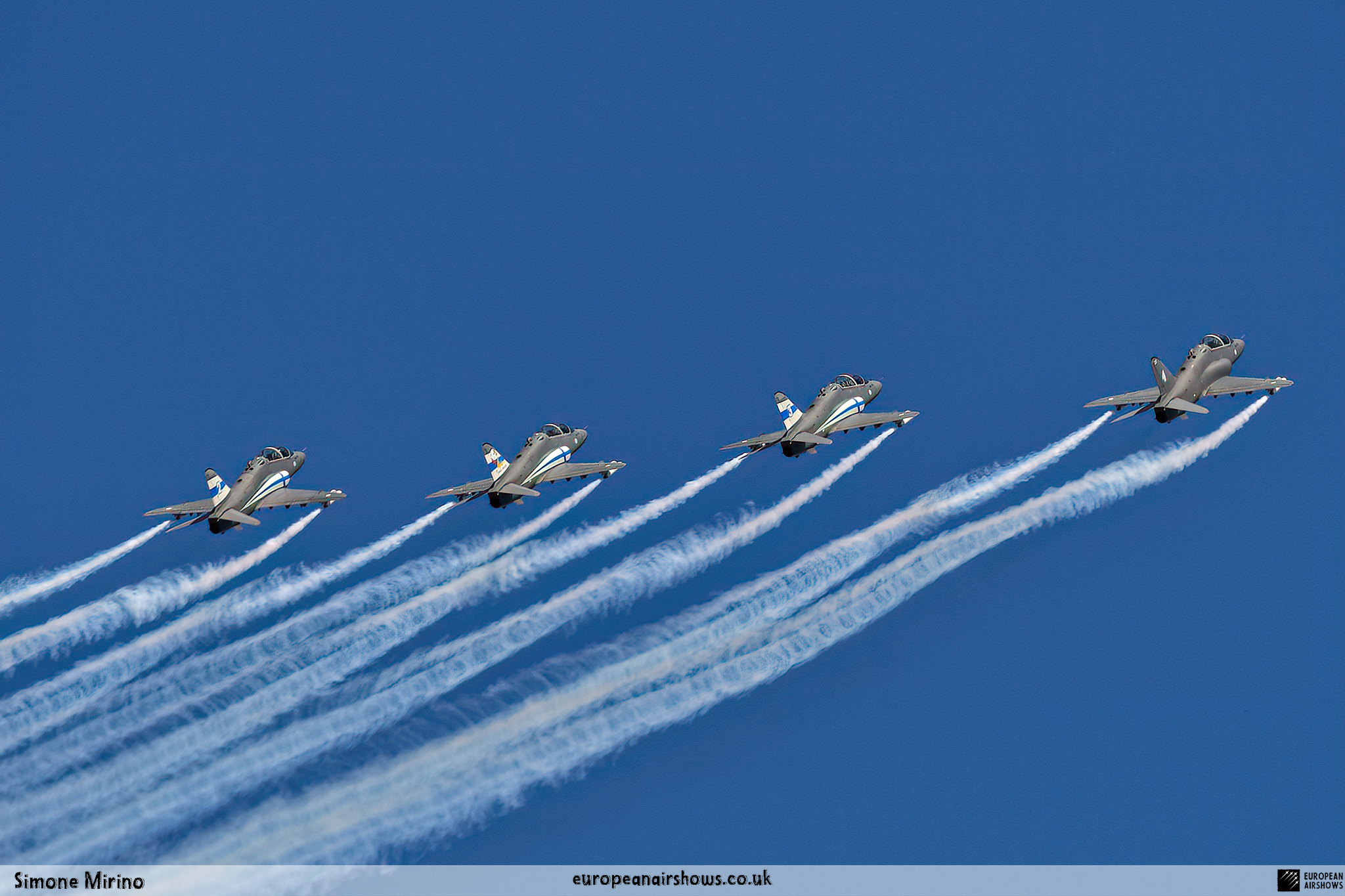
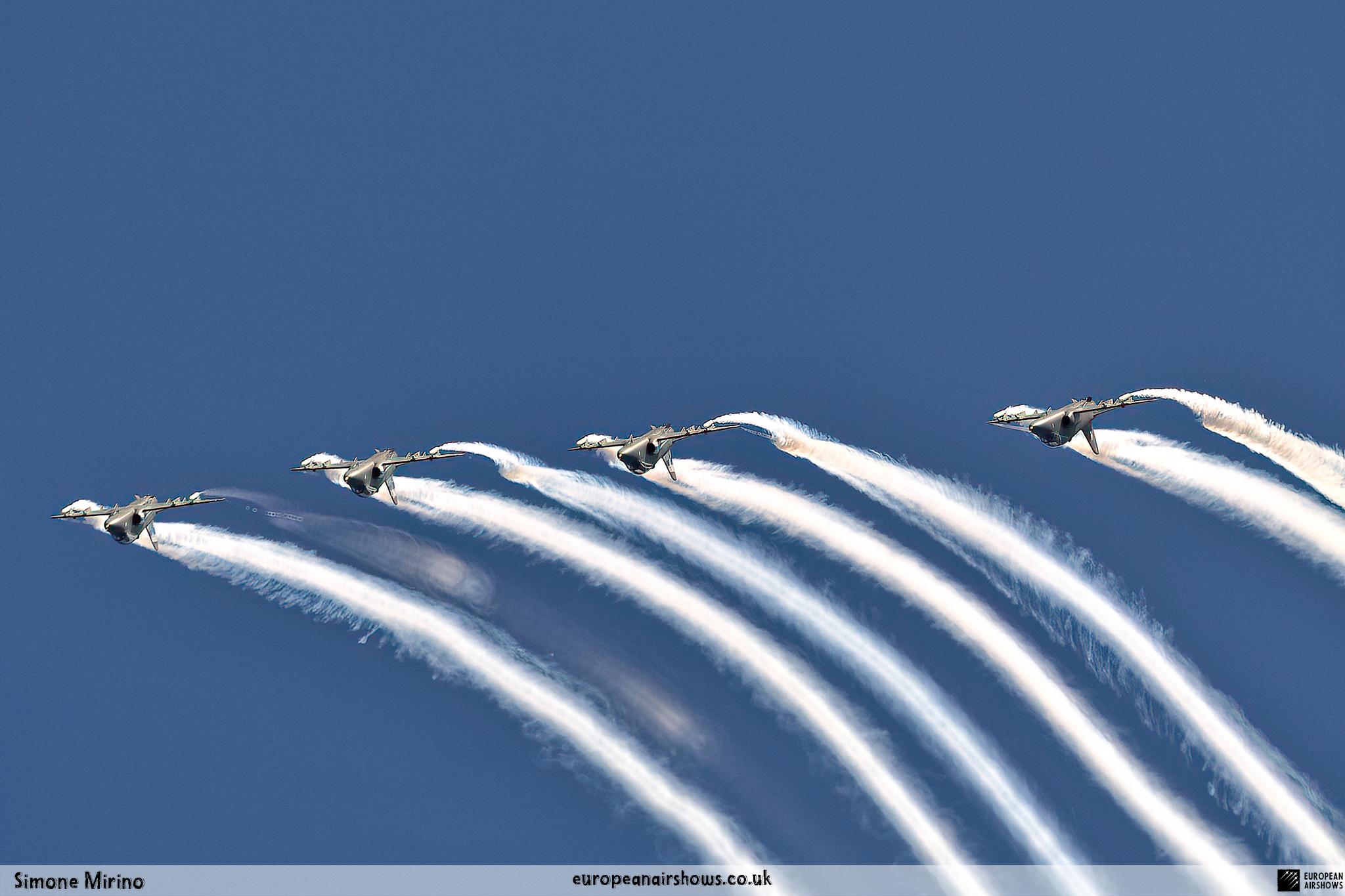
The full programme moves from diamond formation work into vertical manoeuvres, then breaks and reforming.
Medium cloud
High vertical elements and splits are replaced by manoeuvres that can be completed at a lower altitude.
Low cloud
Horizontal manoeuvres and formation changes keep the display readable when the cloud ceiling removes vertical space.
Break and reform
Separation changes the picture for the audience; a controlled rejoin then rebuilds the four-aircraft formation.
Smoke when fitted
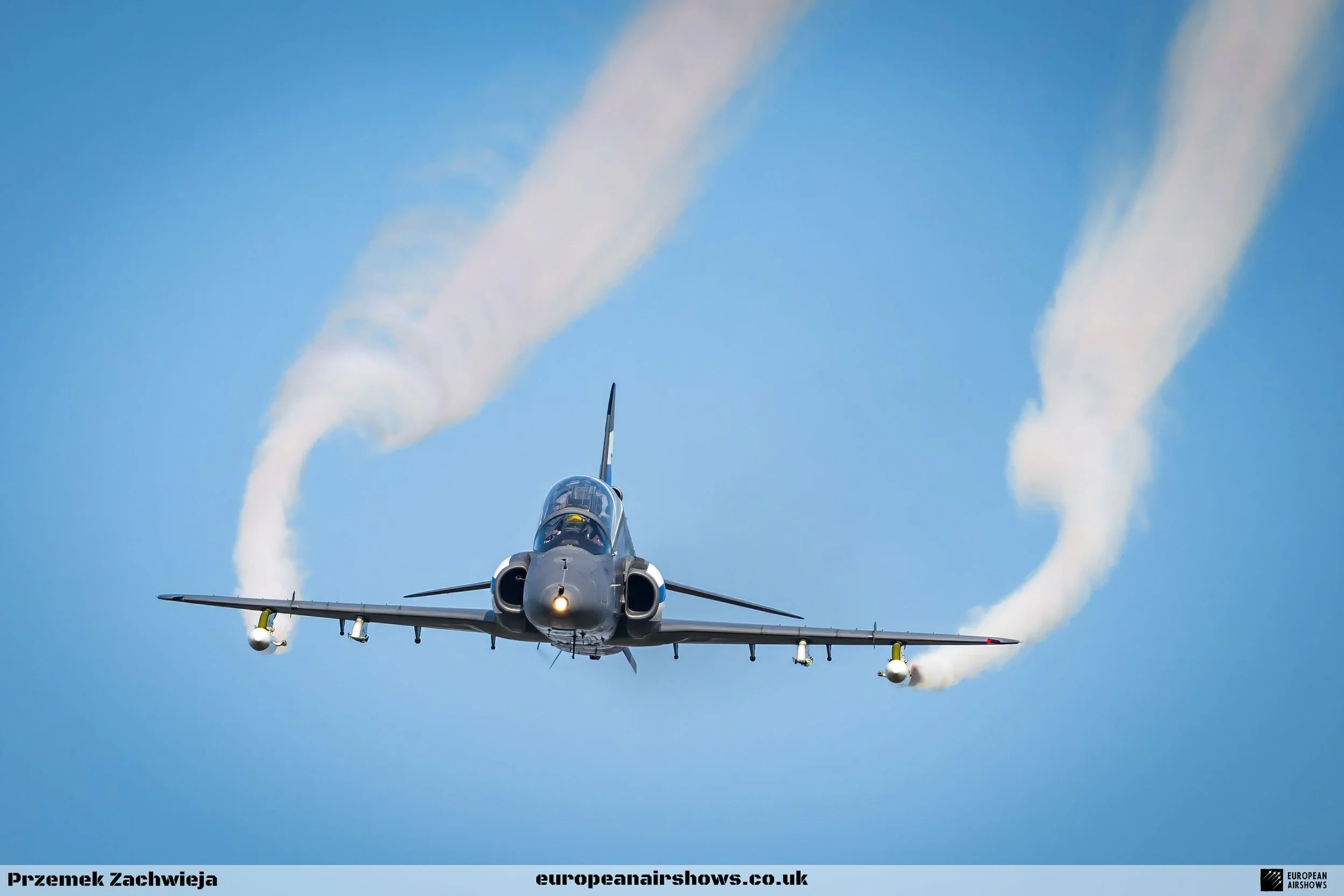
The Hawks come from the normal training and maintenance rotation, so a smoke pod is not guaranteed on every aircraft. When fitted, smoke makes the path of the formation easier to follow.
The aircraft
BAE Systems Hawk: Finland’s advanced and tactical jet trainer.
The bridge into fast-jet flying
The Hawk is a British single-engine, two-seat advanced jet trainer. In Finland it gives student pilots their first jet experience after piston-aircraft training. The initial Hawk phase covers the type rating, navigation, instrument flying, aerobatics, formation work and night flying; the later phase adds basic air-to-air and air-to-ground training.
Three Finnish variants
Finland became the Hawk’s first export customer when it ordered 50 Mk 51s in 1977. The type entered Finnish service in 1980. Four Mk 51s were built in Britain and 46 were assembled by Valmet in Finland. Seven Mk 51As were ordered in 1993, and 18 low-hour Mk 66s were acquired from Switzerland in 2007 before modification and upgrade work brought them into Finnish use between 2011 and 2013.
No permanently assigned display fleet
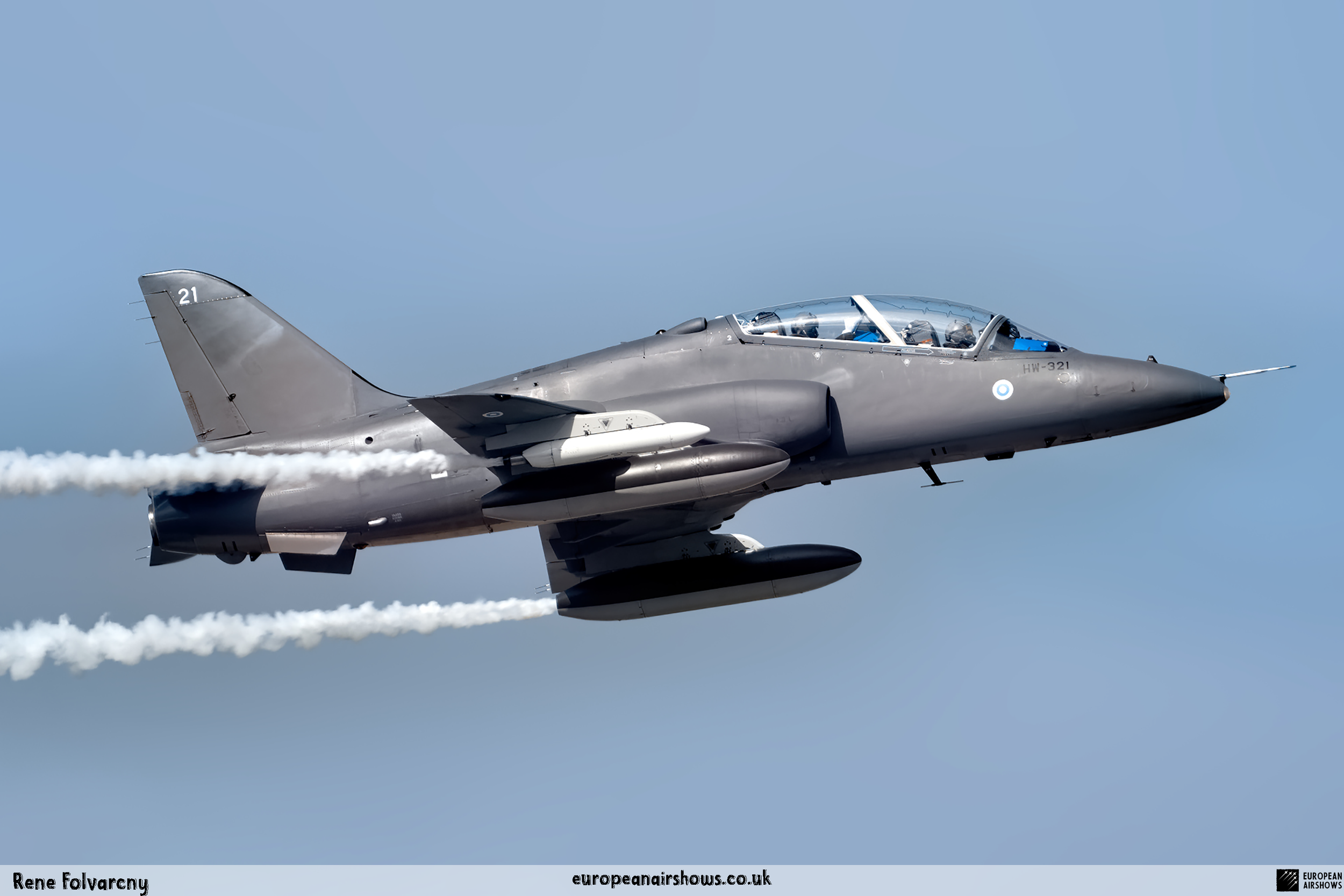
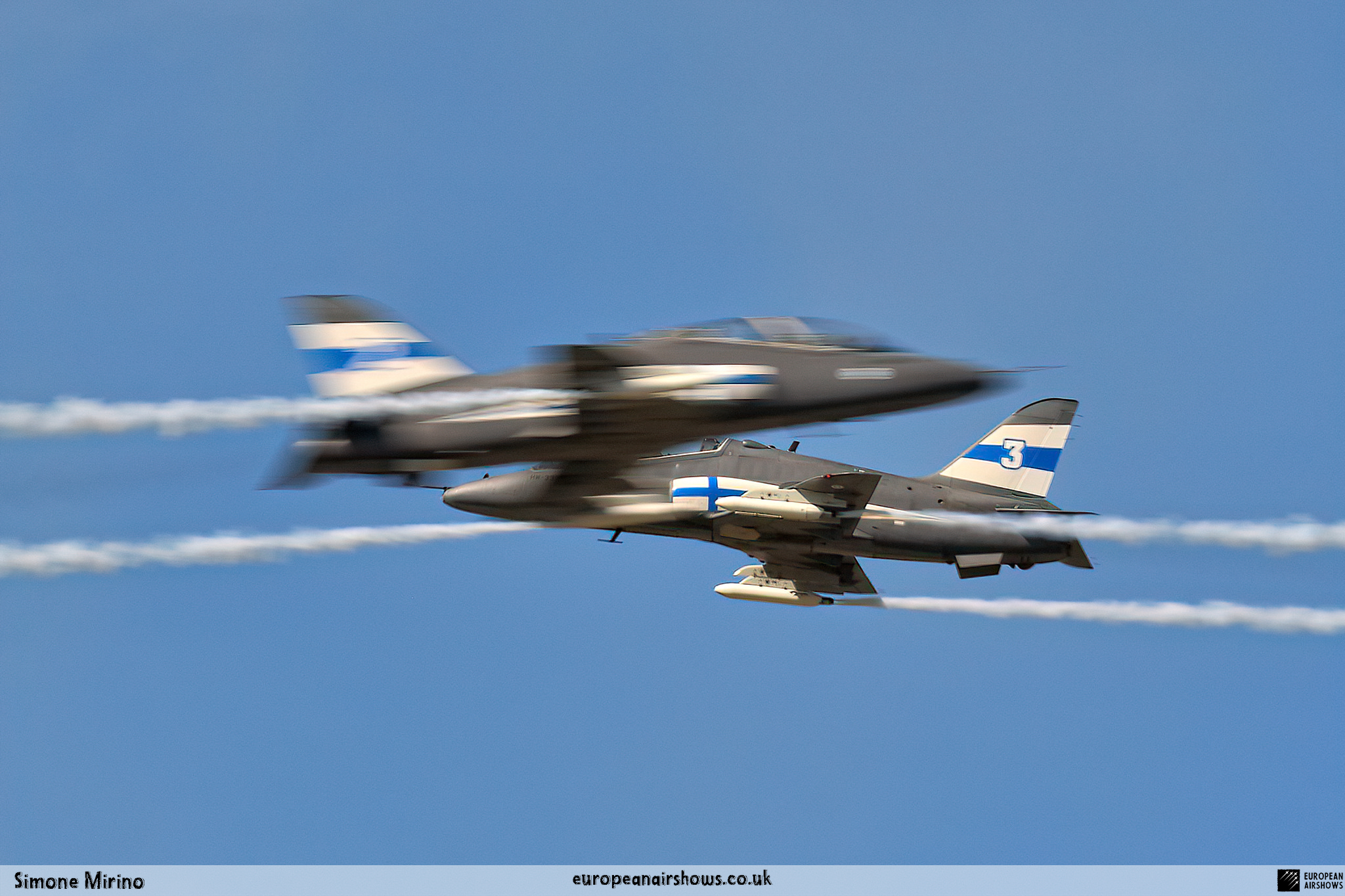
Midnight Hawks uses aircraft from the Finnish Air Force’s normal training and maintenance rotation. Depending on availability, a display may use Finnish-flag-marked Mk 51s or red-and-white Mk 66s, and not every aircraft is necessarily fitted with a smoke pod. The formation therefore does not always look identical from one appearance to the next.
A cockpit updated for modern training
Upgraded Finnish Hawks use head-up and liquid-crystal displays, a moving map, and digital mission-planning and debriefing tools. The Mk 66 also received the Hawk Link system, which exchanges position data between aircraft and helps students build the situational awareness expected in modern fighter training.
The story so far
A modern team built on a much older instructor-display tradition.
Earlier roots
Training instructors display their craft
Finnish Air Force training instructors were flying formation displays long before the Midnight Hawks name existed. Their performances became closely associated with the Midnight Sun airshow tradition at the former Air Force Academy base at Kauhava.
1980
The Hawk enters Finnish service
The Hawk replaced the Fouga Magister advanced trainer and the MiG-15UTI lead-in trainer. It became the fast-jet teaching aircraft from which the later four-ship display developed.
7 Jun 1997
The Midnight Hawks name is introduced
The Finnish Air Force display team first flew under its current name at Oulu. “Midnight” connected the new identity with Finland’s bright summer nights and the established Kauhava airshow tradition.
2007–13
The Finnish Hawk family expands
Finland acquired 18 former Swiss Mk 66s in 2007. Modification and upgrade work brought the aircraft into service between 2011 and 2013, adding a later Hawk variant to the training system.
2017
Twenty years under the name
The team marked its twentieth anniversary while six Hawks used by the team received a special blue-and-white scheme for the centenary of Finnish independence. Four Mk 51s represented the team at the Royal International Air Tattoo.
Understanding the identity
Why the name matters — and what the display is really showing.
The midnight connection
The name points to the midnight sun and the long, bright evenings of the Finnish summer. It also preserves a link with the Midnight Sun airshow at Kauhava, where Air Force training instructors had traditionally demonstrated formation flying.
A public face of the syllabus
The display is credible because it grows from the team’s ordinary profession. Formation discipline, instrument awareness, aerobatics and tactical judgement are all parts of fast-jet instruction. The airshow sequence makes that training culture visible without pretending the Hawks are front-line fighters.