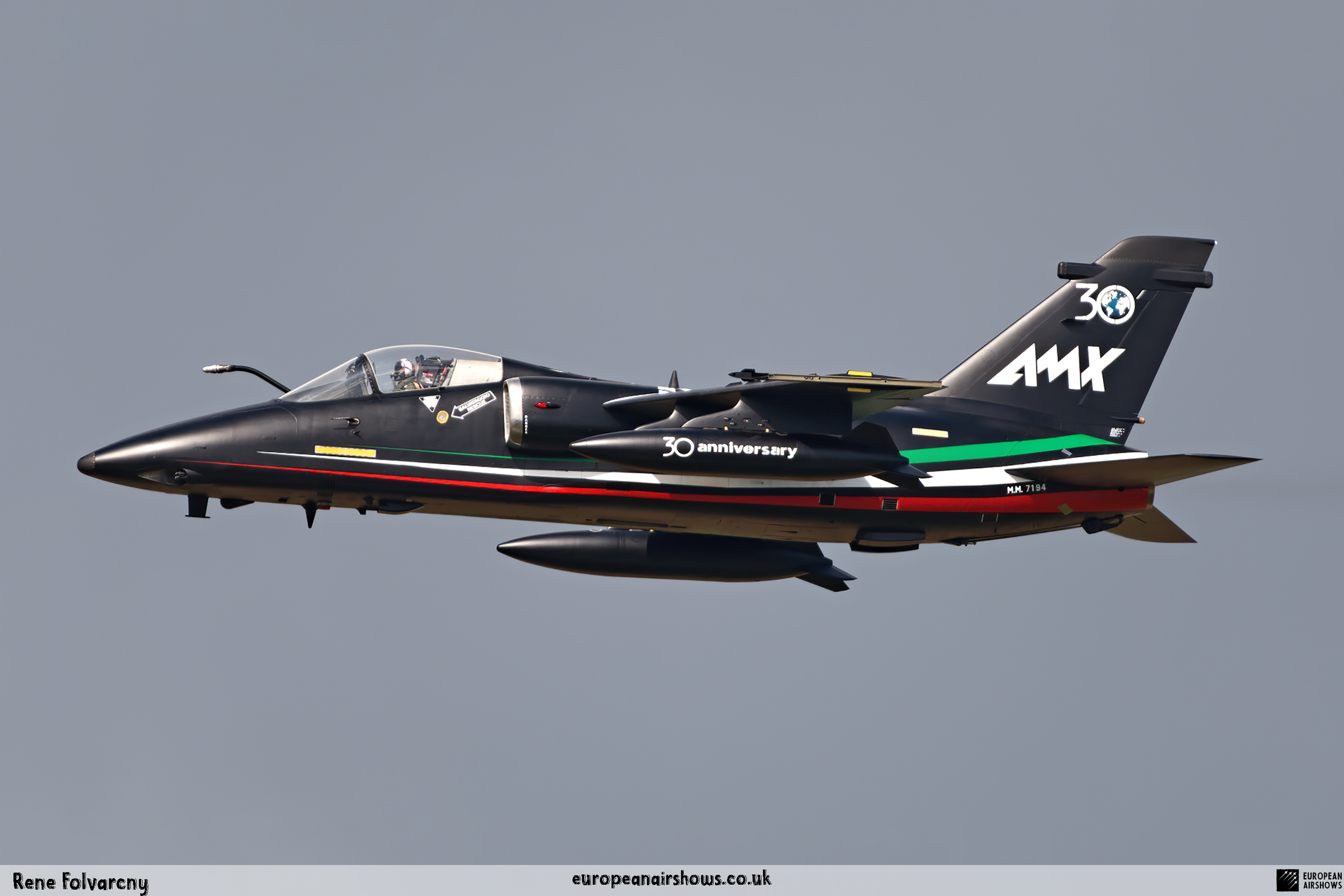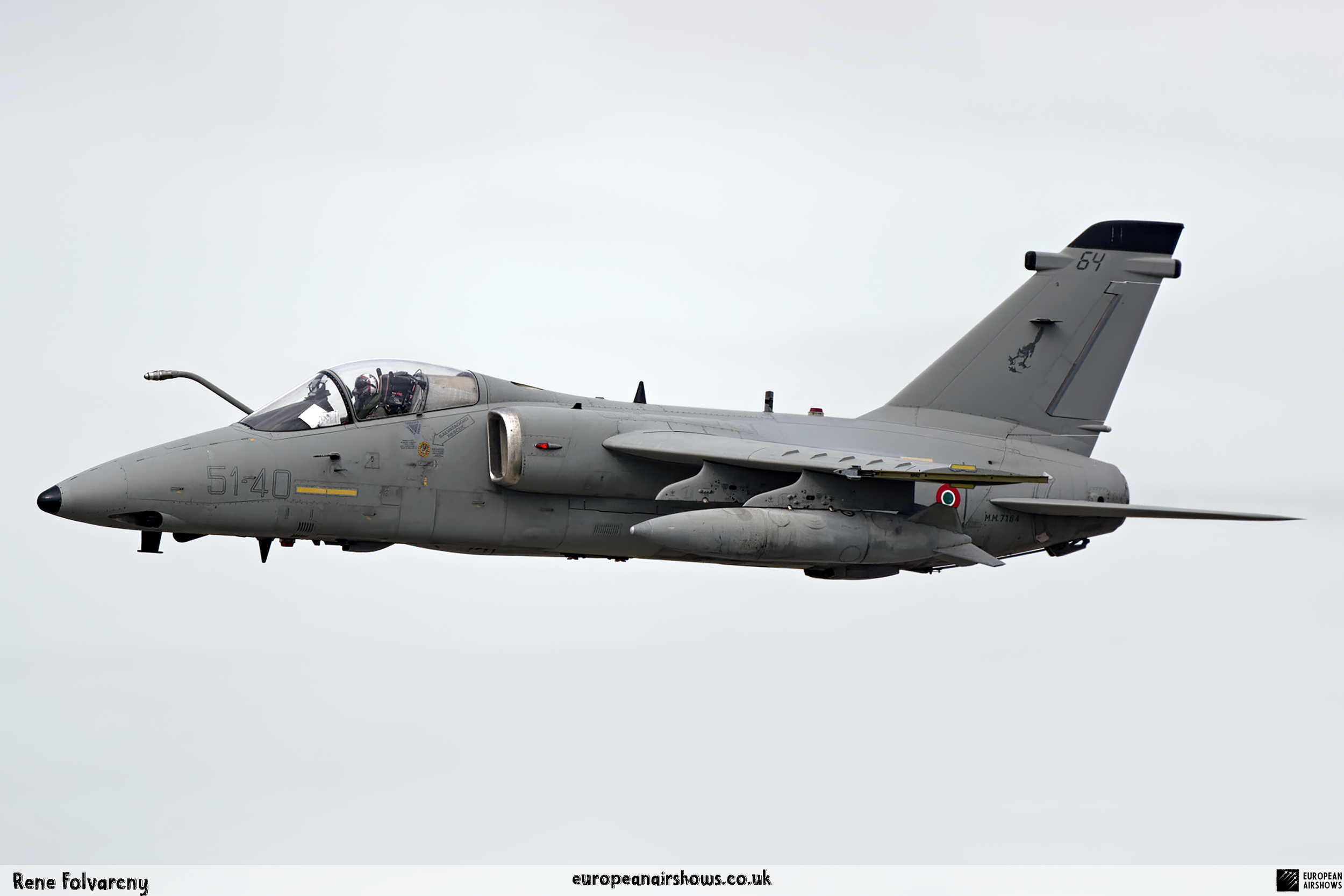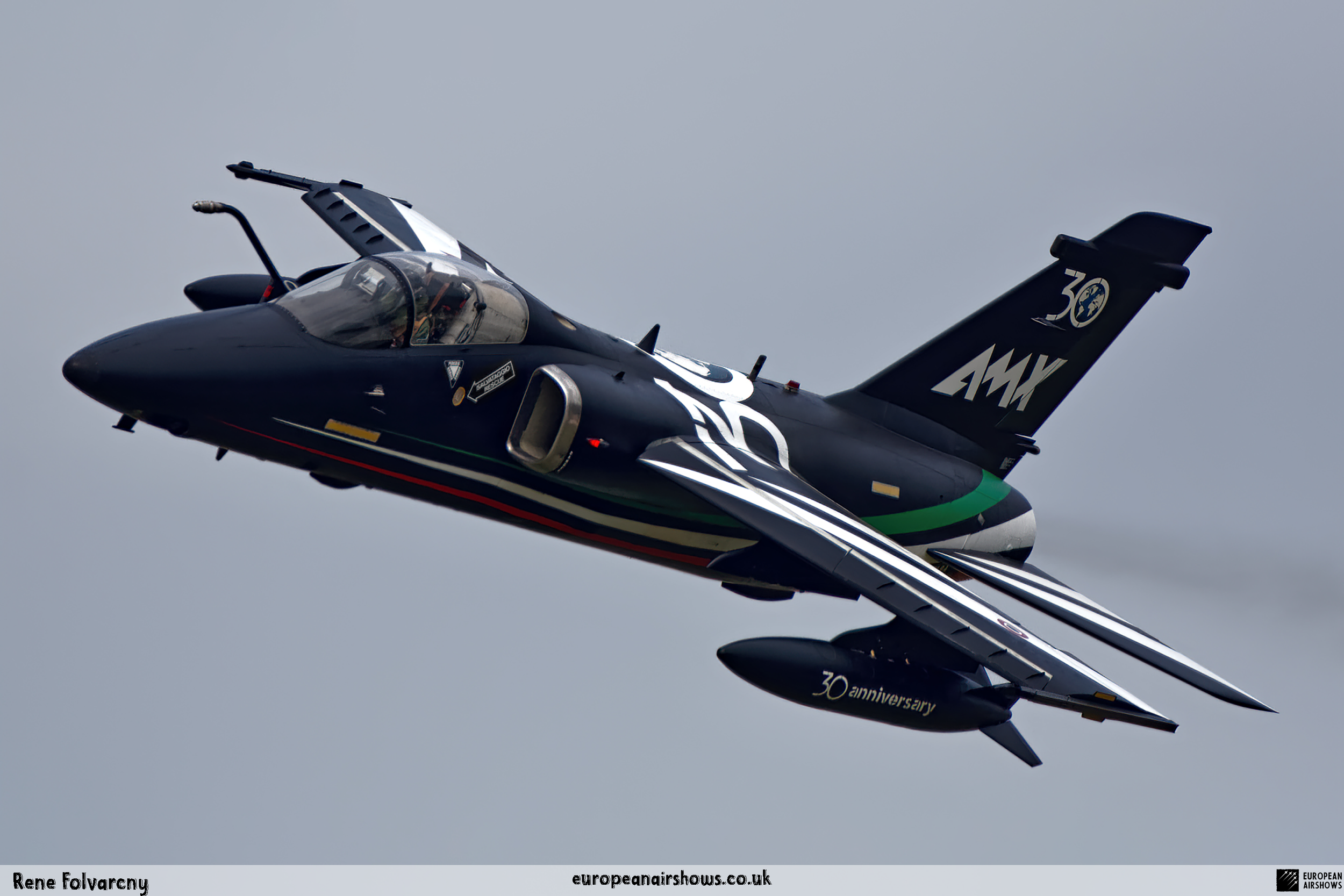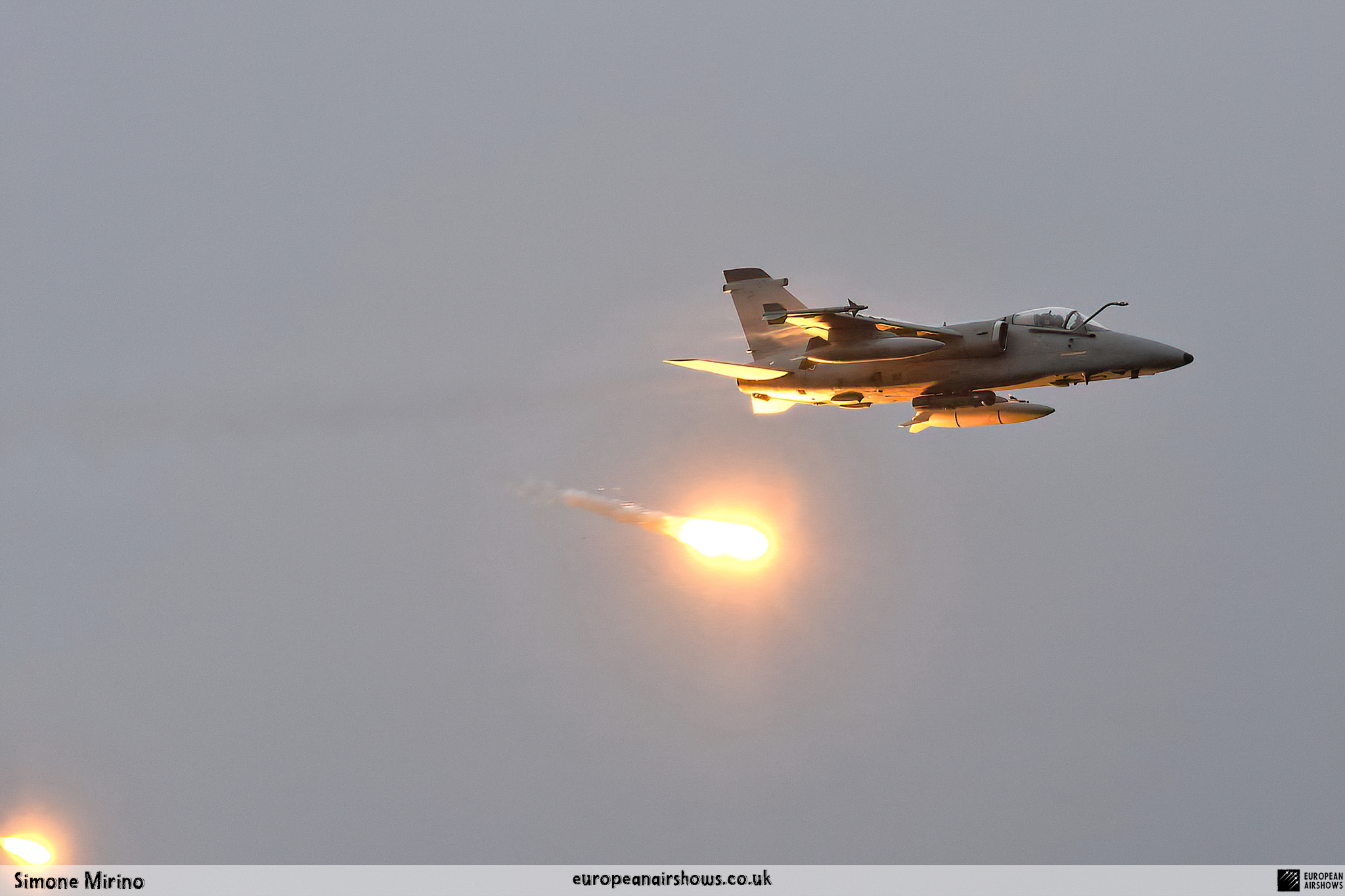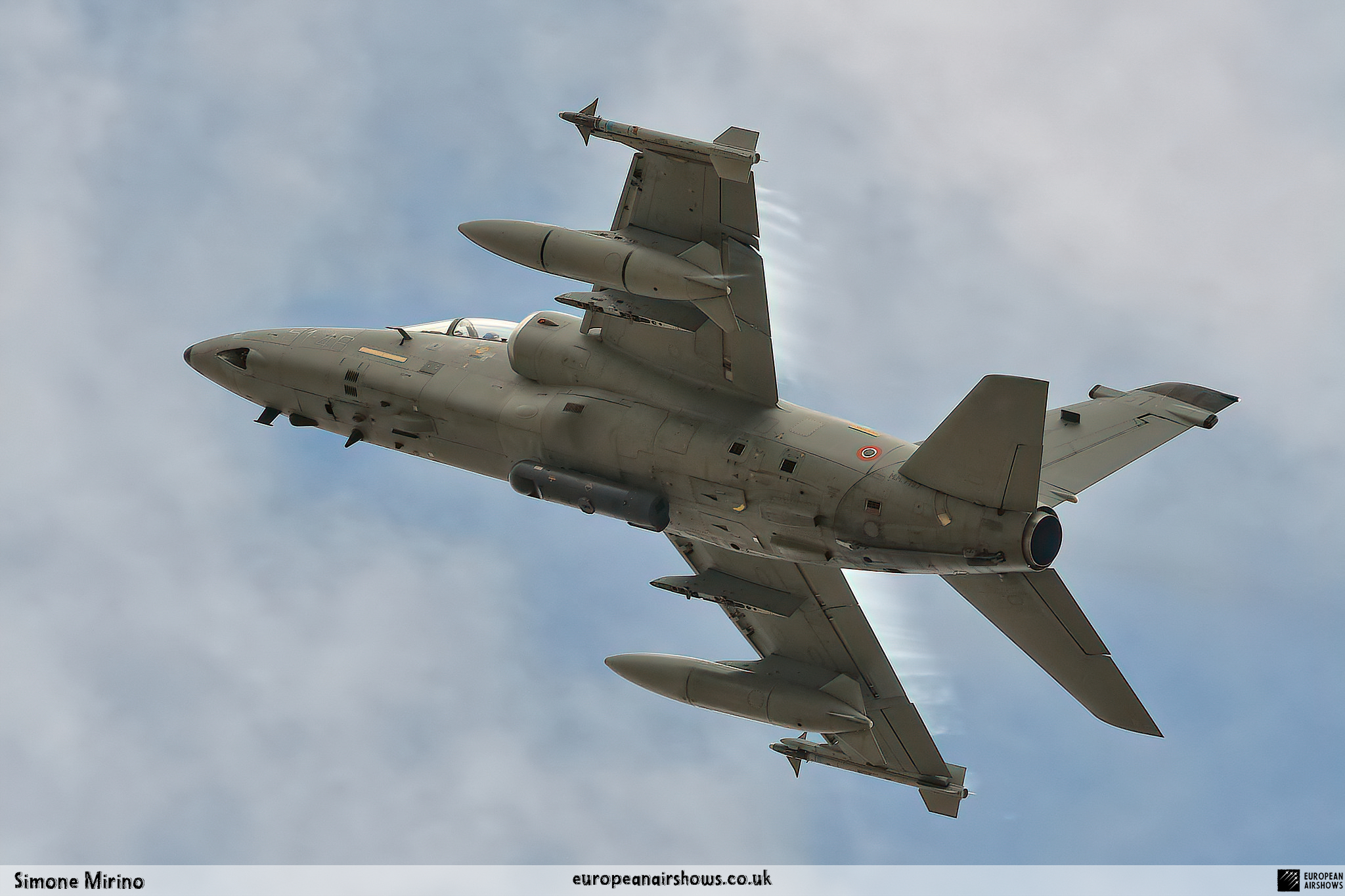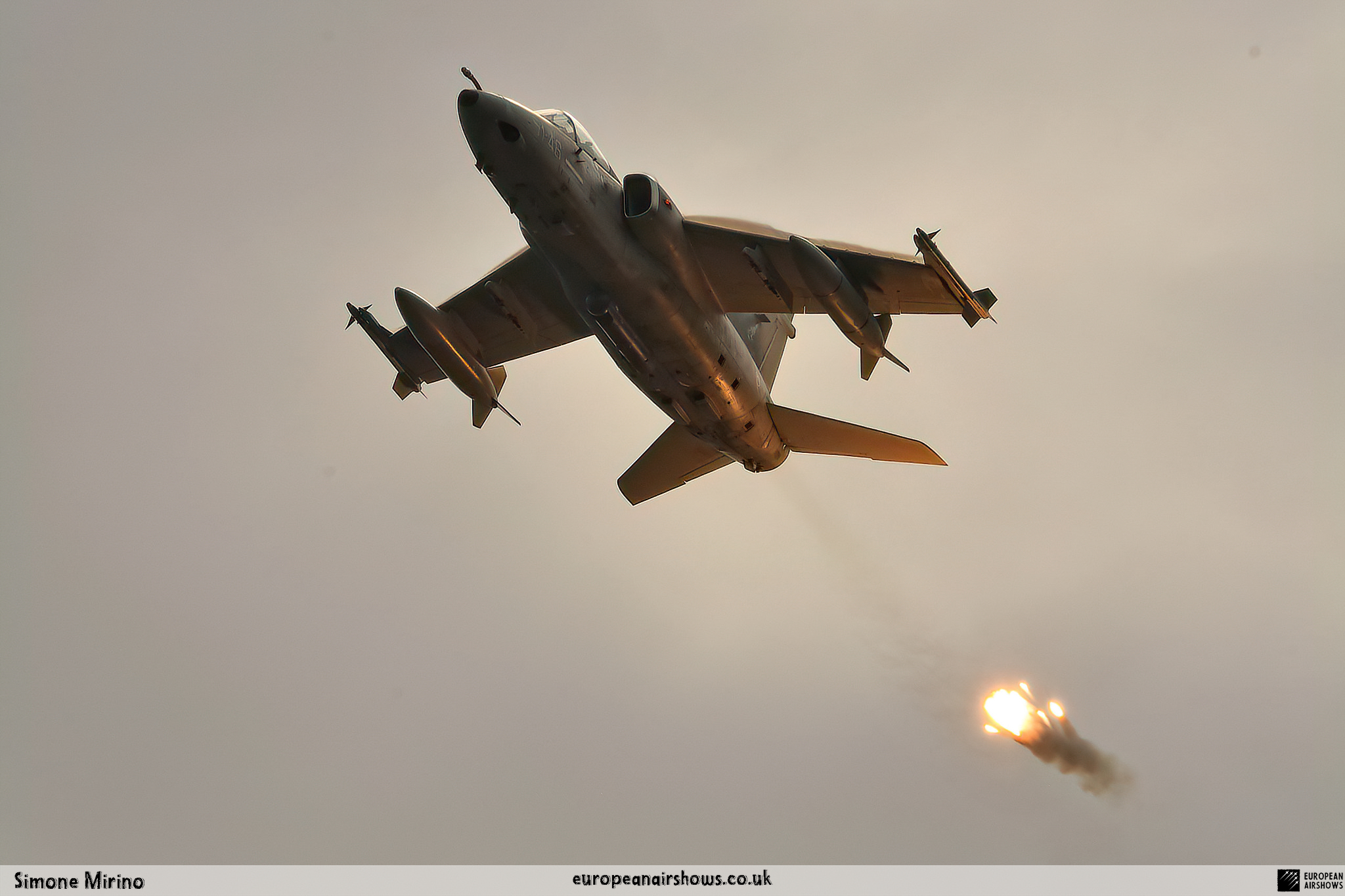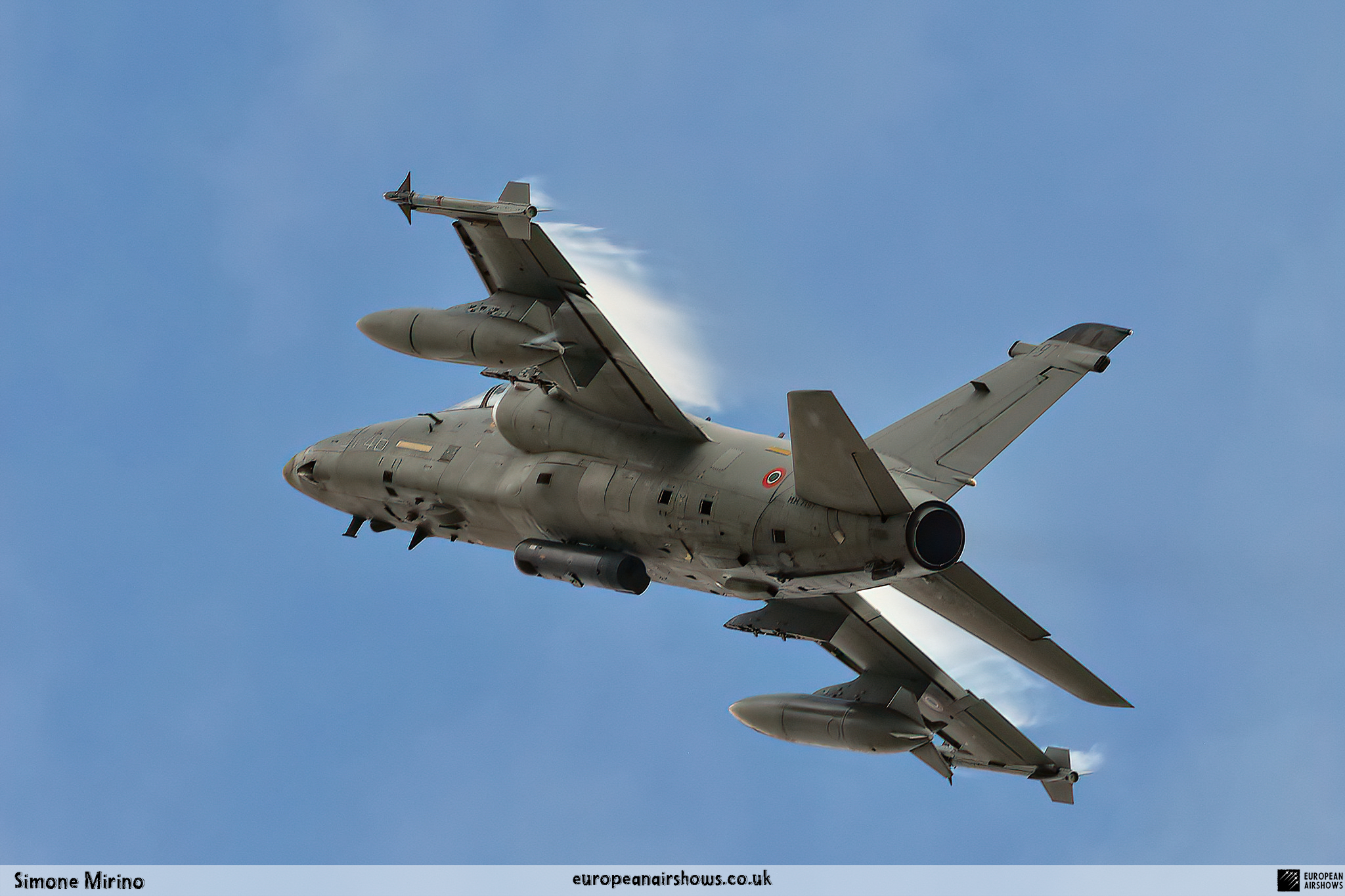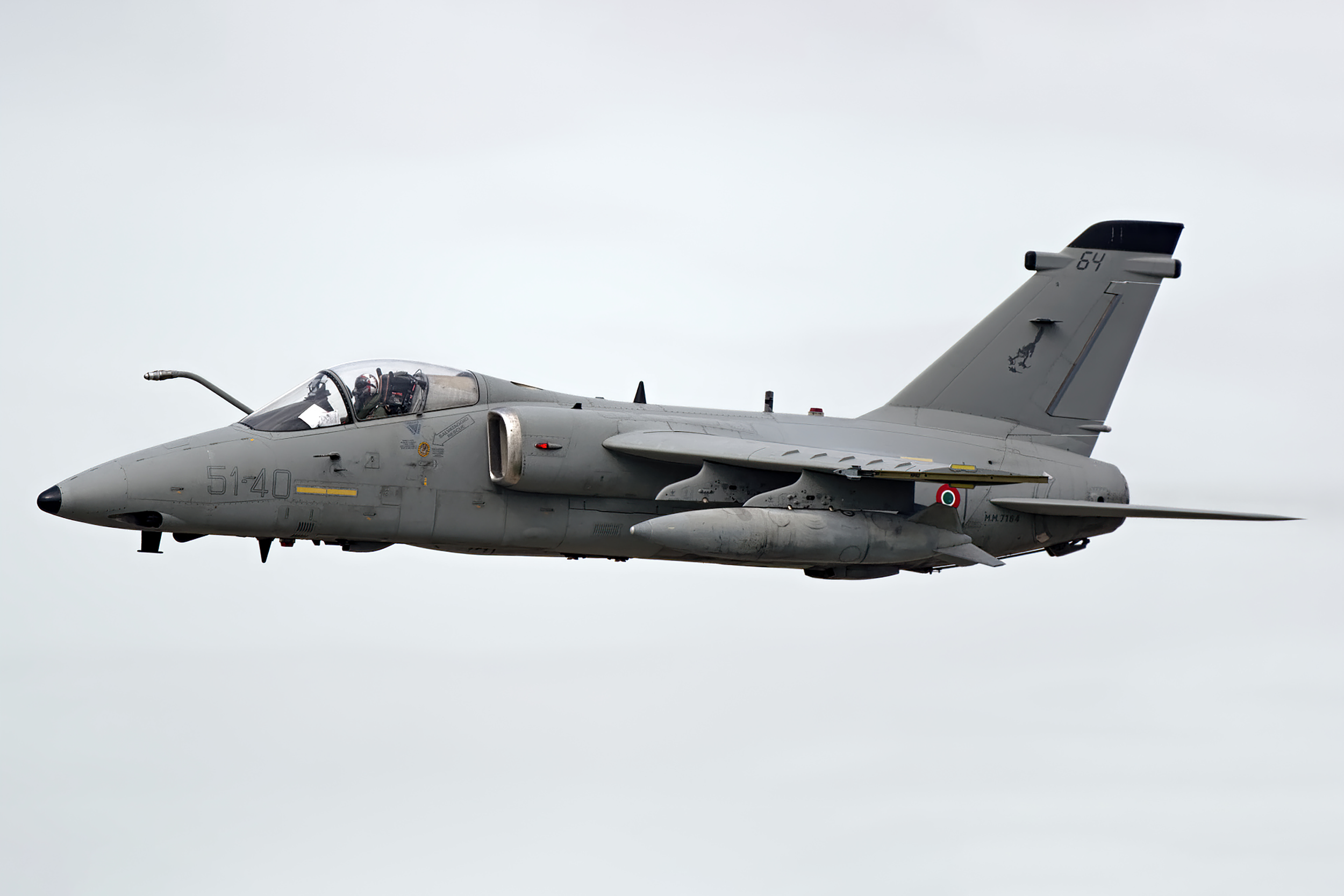
Italian Air Force AMX Solo Display
AMX Solo Display

Italian Air Force AMX Solo Display

Note: This aircraft has now been retired from the Italian Air Force.

AMX Solo Display

The Italian Air Force AMX Solo Display was a prestigious aerial showcase featuring the AMX aircraft and a skilled pilot from the 311° Gruppo Volo, a unit within the esteemed Reparto Sperimentale Volo (Experimental Flight Unit). Each solo display was meticulously coordinated by a dedicated crew comprising the display pilot, a safety observer, a camera team, a commentator, and engineers, ensuring both exhilarating performances and stringent safety standards. These displays highlighted the exceptional capabilities and versatility of the AMX in various flight maneuvers and combat scenarios. The tradition of the AMX Solo Display concluded in 2014, marking the last full solo performance before the Reparto Sperimentale Volo ceased showcasing the AMX aircraft.

About the AMX

The AMX International AMX is a ground-attack aircraft developed through a collaboration between Brazil and Italy. The initiative began in the early 1970s when Italian manufacturer Aermacchi initiated a design study for a light ground-attack aircraft, designated MB-340. Responding to a 1977 Italian Air Force requirement for 187 new strike fighters to replace the Aeritalia G.91 and other reconnaissance aircraft, Aeritalia and Aermacchi pursued a joint proposal. In 1980, Brazil expressed interest in the program to substitute its Aermacchi MB-326 fleet, leading to the formation of AMX International in 1981. The partnership divided manufacturing responsibilities among Aeritalia, Aermacchi, and Brazilian company Embraer, ensuring no duplication of work. The development phase saw the selection of the Rolls-Royce Spey 807 engine, chosen for its reliability and absence of export restrictions. The first prototype flew in May 1984, and despite an early crash, the program advanced with production deliveries commencing in 1988 for Italy and 1989 for Brazil, ultimately producing a total of 230 aircraft.

The AMX features a conventional shoulder-wing monoplane design, primarily constructed from aluminum with carbon fiber composite materials in the tail fin and elevators. Emphasizing accessibility and survivability, the aircraft incorporates duplicated key systems and robust onboard computer systems for navigation and attack. Its hybrid flight control system combines fly-by-wire for certain surfaces with a dual-redundant hydraulic system for others, ensuring operational capability even in the event of hydraulic failure. The single Rolls-Royce Spey turbofan engine, though not supersonic, provided a reliable powerplant suited to the AMX’s roles. Avionics varied between Italian and Brazilian models, with Italian aircraft equipped with NATO systems and Brazilian variants featuring specialized reconnaissance sensors. The AMX could carry a diverse array of munitions on its hardpoints, including bombs, missiles, and rockets, and was adaptable for aerial refueling and reconnaissance missions.

Operationally, the AMX entered service with the Italian and Brazilian Air Forces in the late 1980s and early 1990s. The Italian Air Force deployed the AMX in various conflict zones, including Bosnia, Kosovo, Afghanistan, and Libya, utilizing its advanced avionics and precision-guided munitions. Significant upgrades over the years have enhanced the aircraft’s capabilities, such as the Italian ACOL program and Embraer’s modernization for Brazil, which extended the aircraft’s operational life beyond 2027. The AMX also saw the development of specialized variants like the AMX-T trainer and the AMX-ATA multi-mission attack fighter. Despite setbacks, including engine-related groundings in the early 1990s and mid-1990s, the AMX has remained a versatile and enduring platform, with Italy officially retiring the aircraft in April 2024. The AMX’s legacy reflects a successful international collaboration and a robust design tailored to the evolving demands of modern ground-attack missions.

Specifications

Crew

1

Length

13.23 m (43 ft 5 in)

Wingspan

8.87 m (29 ft 1 in)

Height

4.55 m (14 ft 11 in)

Max Speed

1,053 km/h (654 mph, 568 kn)

Combat Range

889 km (552 mi, 480 nmi)

Service Ceiling

13,000 m (43,000 ft)

Rate of Climb

52.1 m/s (10,260 ft/min)

AMX in the Italian Air Force

The AMX International AMX, known as the A-11 Ghibli in Italian service, emerged from a collaborative effort between Italy and Brazil in the late 1970s to develop a modern ground-attack aircraft. The Italian Air Force aimed to replace aging platforms like the Fiat G.91 and Lockheed F-104 Starfighter with a versatile, cost-effective solution capable of close air support, reconnaissance, and training missions. To achieve this, Italian companies Aeritalia (now Alenia) and Aermacchi teamed up with Brazil’s Embraer in 1981, forming AMX International. The first prototype took flight in 1984, and after extensive testing, the AMX officially entered service with the Italian Air Force in 1989. Designed to operate from short, unprepared airstrips, the aircraft provided a flexible and robust addition to Italy’s military aviation capabilities.

The AMX has proven its worth in numerous operational deployments since entering service. During the 1990s, it played a key role in NATO-led interventions in the Balkans, conducting reconnaissance and close air support missions in Bosnia and Kosovo with precision-guided munitions like the Opher bombs. In the 2000s, the aircraft supported the International Security Assistance Force (ISAF) in Afghanistan, logging over 700 combat missions by 2014 and providing critical intelligence with systems like the RecceLite pod. The AMX also participated in Operation Unified Protector in Libya in 2011 and later supported efforts against ISIS in Iraq and Syria as part of Operation Inherent Resolve. Its ability to deliver accurate strikes and operate in challenging environments made it a valuable asset across these theaters.

To keep the AMX relevant, the Italian Air Force launched the ACOL upgrade program in 2005, enhancing 55 aircraft with advanced avionics, including laser inertial navigation, improved cockpit displays, and compatibility with JDAM guided bombs. These upgrades bolstered its precision and extended its service life. However, with the arrival of modern fighters like the Eurofighter Typhoon and Lockheed Martin F-35 Lightning II, the AMX began to be phased out. The last operational unit, the 132° Gruppo of the 51° Stormo at Istrana Air Base, ceased operations in 2024. On April 5, 2024, a retirement ceremony featured a specially painted AMX bearing the phrase "Volatus ad astra, memoria in aeternum" ("Flew to the stars, remembered forever"), marking the end of its 35-year legacy in Italian service.

Did You Know?

  • The AMX jet’s cockpit features a Head-Up Display (HUD) and multi-function displays, allowing the pilot to access critical flight and targeting data without looking down, a rarity for ground-attack aircraft of its era.
  • Despite its subsonic speed, the AMX was designed with a low radar cross-section and reduced infrared signature, making it harder for enemy defenses to detect during low-level attack runs.
  • The AMX can carry an unusually diverse payload, including anti-ship missiles like the Marte MK2, which is uncommon for a light attack aircraft primarily built for ground missions.
  • During its development, the AMX prototypes were tested with over 600 flight hours before production, revealing a unique ability to operate from short, unprepared airstrips as short as 1,000 meters.
  • The AMX’s airframe includes carbon fiber composites in its tail fin and elevators, an advanced material choice for the 1980s that improved durability while keeping weight low.

Test Your Knowledge

Return to All Performers