Irish Historic Flight Foundation
DHC-1 Chipmunk · Boeing Stearman · Reims Rocket
Five historic aircraft, one volunteer organisation and a clear purpose: to keep important chapters of Irish aviation visible, airworthy and useful to the next generation.
- Established
- December 2014
- Inaugural public flight
- 30 June 2015
- Base
- Ballyboy Airfield, County Meath
- Current fleet
- 5 aircraft
- Purpose
- Preserve · Educate · Inspire
- Status
- Active in 2026
The foundation
Irish aviation history is not only preserved here. It is maintained, flown and passed on.
The Irish Historic Flight Foundation was established in December 2014 to preserve, operate and share aircraft connected with Ireland's aviation story. Its defining idea is living heritage. The aeroplanes are not simply conserved as static objects. Volunteers inspect, maintain and fly them, allowing audiences to see the machines in the environment for which they were designed.
IHFF made its inaugural public flight from Casement Aerodrome at Baldonnel on 30 June 2015. Three Chipmunks appeared with the Aer Lingus de Havilland DH.84 Dragon Iolar before an audience that included Taoiseach Enda Kenny. The Iolar was an important participant in that launch, but it is not part of the five-aircraft fleet now published by IHFF.
A permanent home at Ballyboy
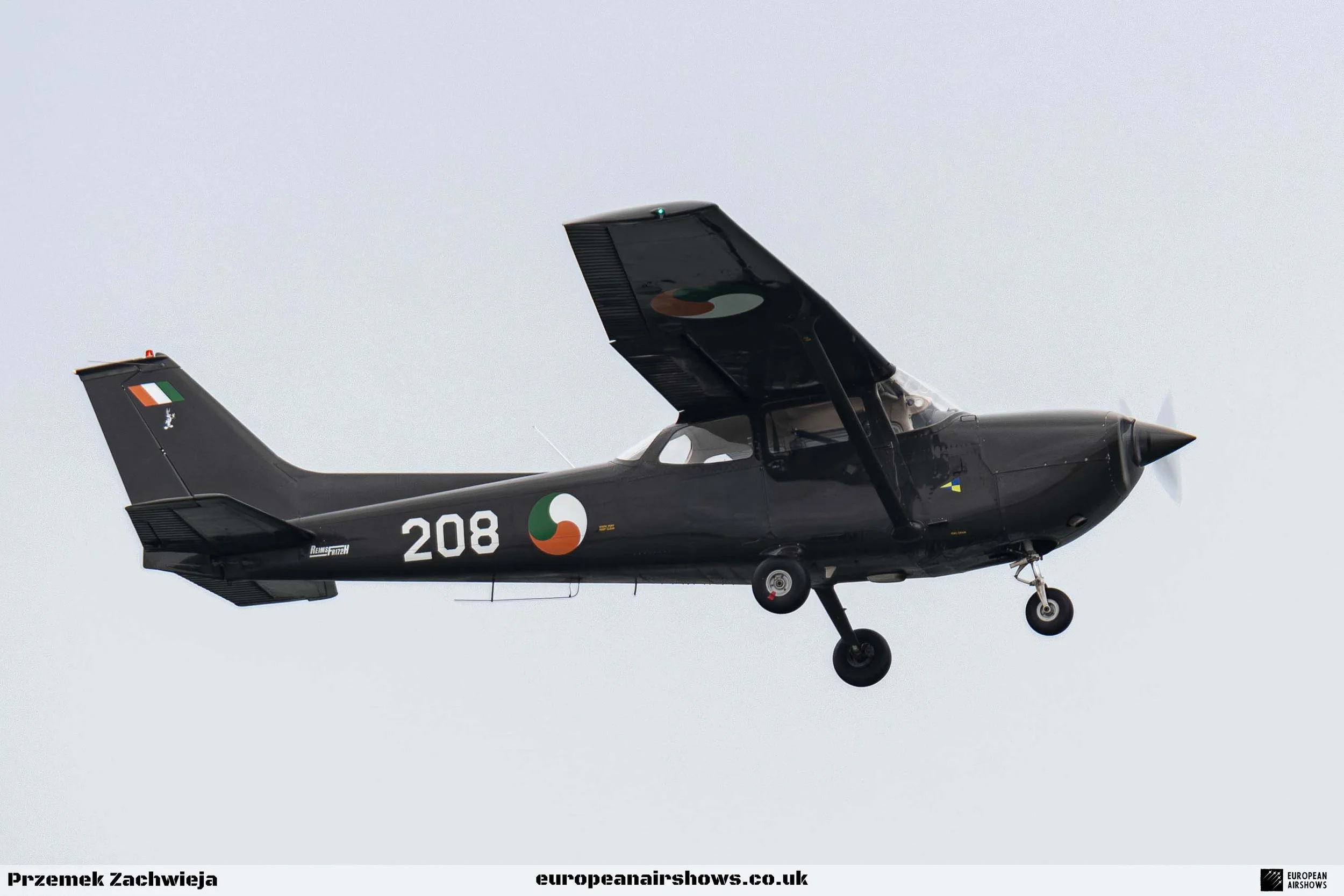
In August 2020 the foundation moved its three Chipmunks and Stearman into a purpose-built hangar at Ballyboy Airfield, also known as Athboy Airfield, near Athboy in County Meath. The base gives the organisation a centre for flying, maintenance and long-term development. Former Irish Air Corps Reims Rocket 208 joined the collection in late 2022 and became the fifth aircraft.
Volunteer effort with an educational purpose
The aircraft are the visible result of a wider volunteer effort involving pilots, engineers and aviation supporters. IHFF's stated mission is to preserve, educate and inspire. That includes protecting specialist maintenance knowledge, explaining the engineering behind the aircraft and encouraging young people towards aviation, science, technology, engineering and mathematics.
Industry and state organisations have supported different stages of the project. The foundation's launch involved the Irish Air Corps, Department of Defence, Irish Aviation Authority and major Irish airlines. ASL Aviation Holdings later sponsored IHFF's local and national event appearances during 2023. Those are documented chapters in the story, not evidence that every early partner or sponsorship remains current indefinitely.
The display
One Chipmunk, a pair or a formation: the programme changes with the aircraft available.
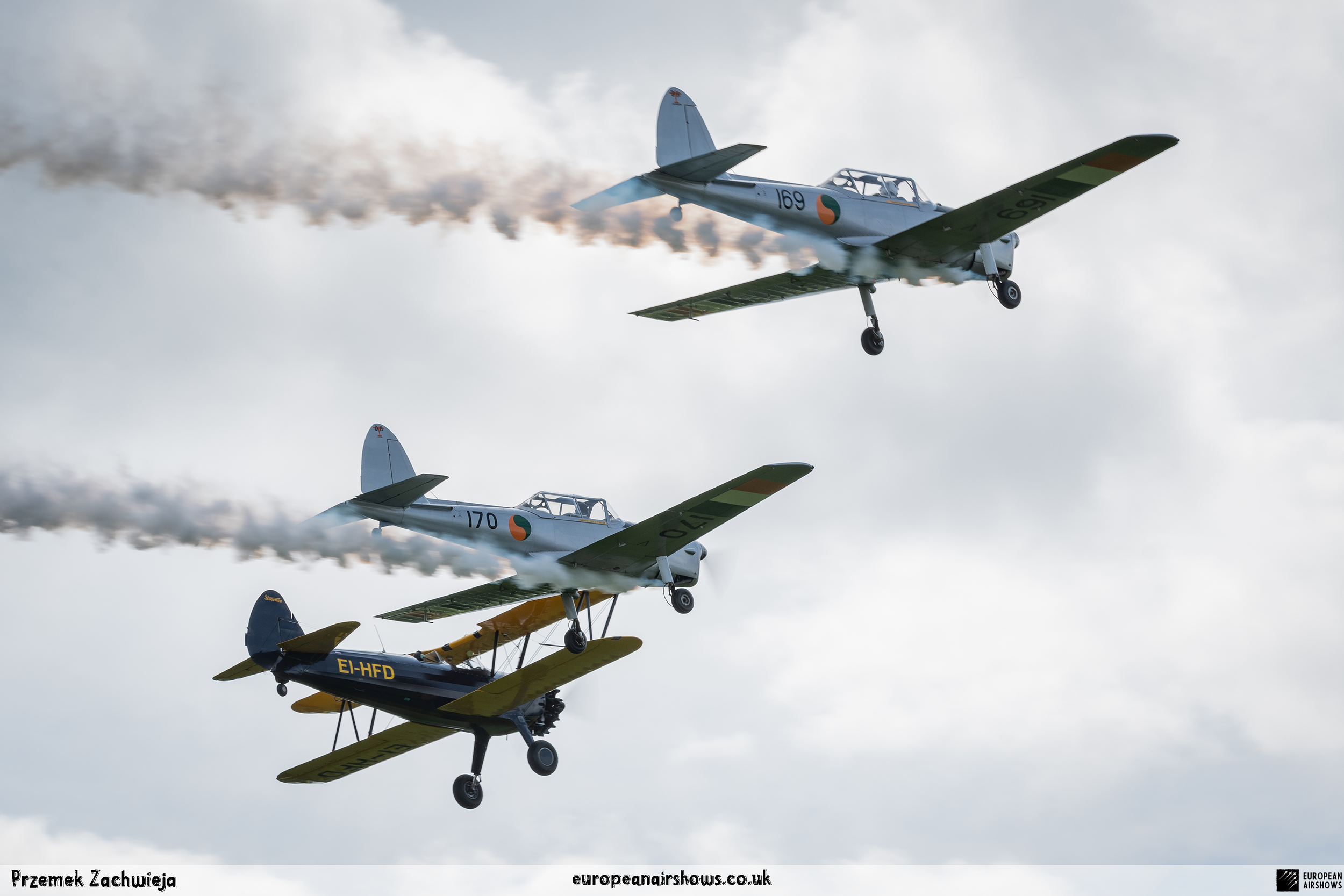
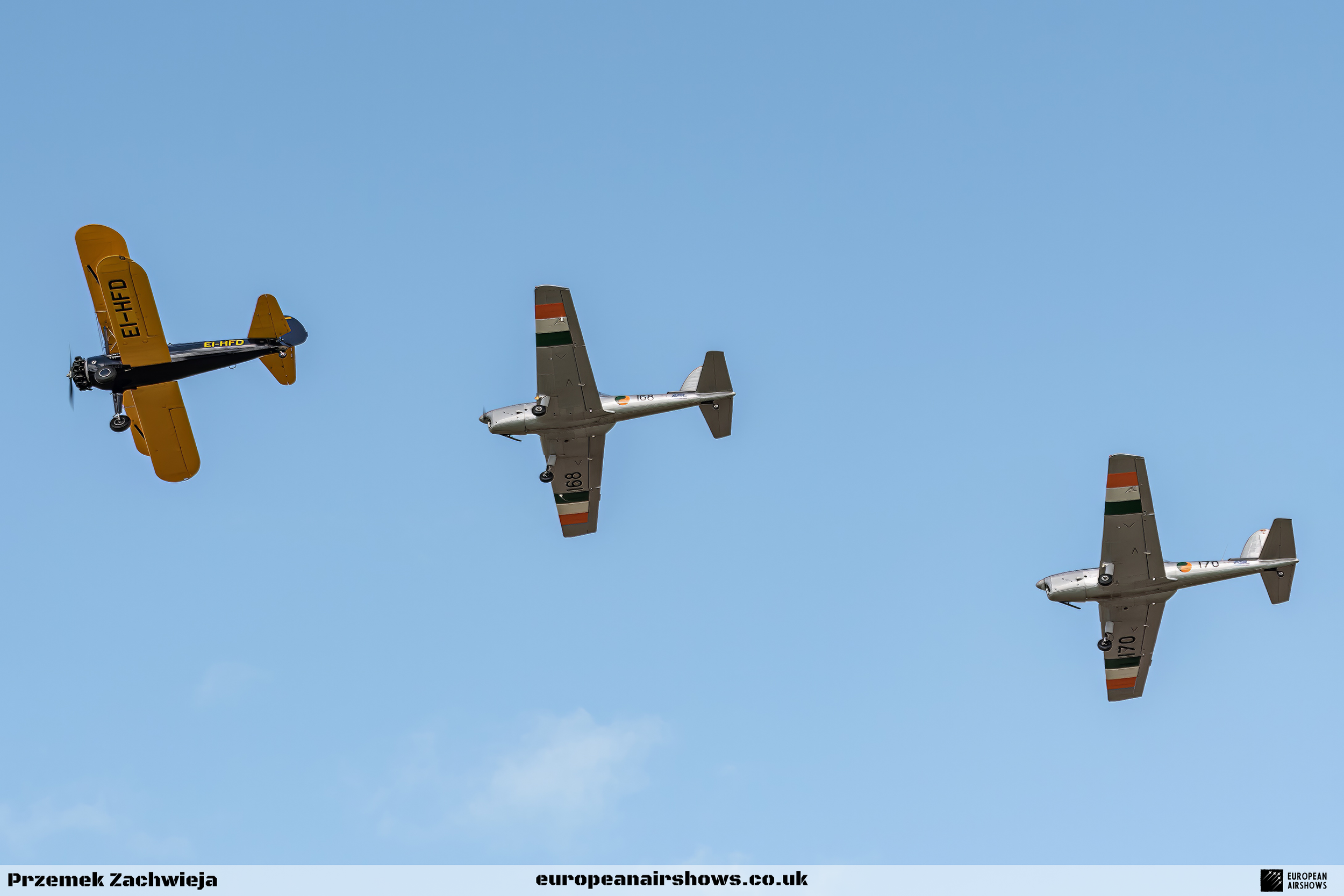
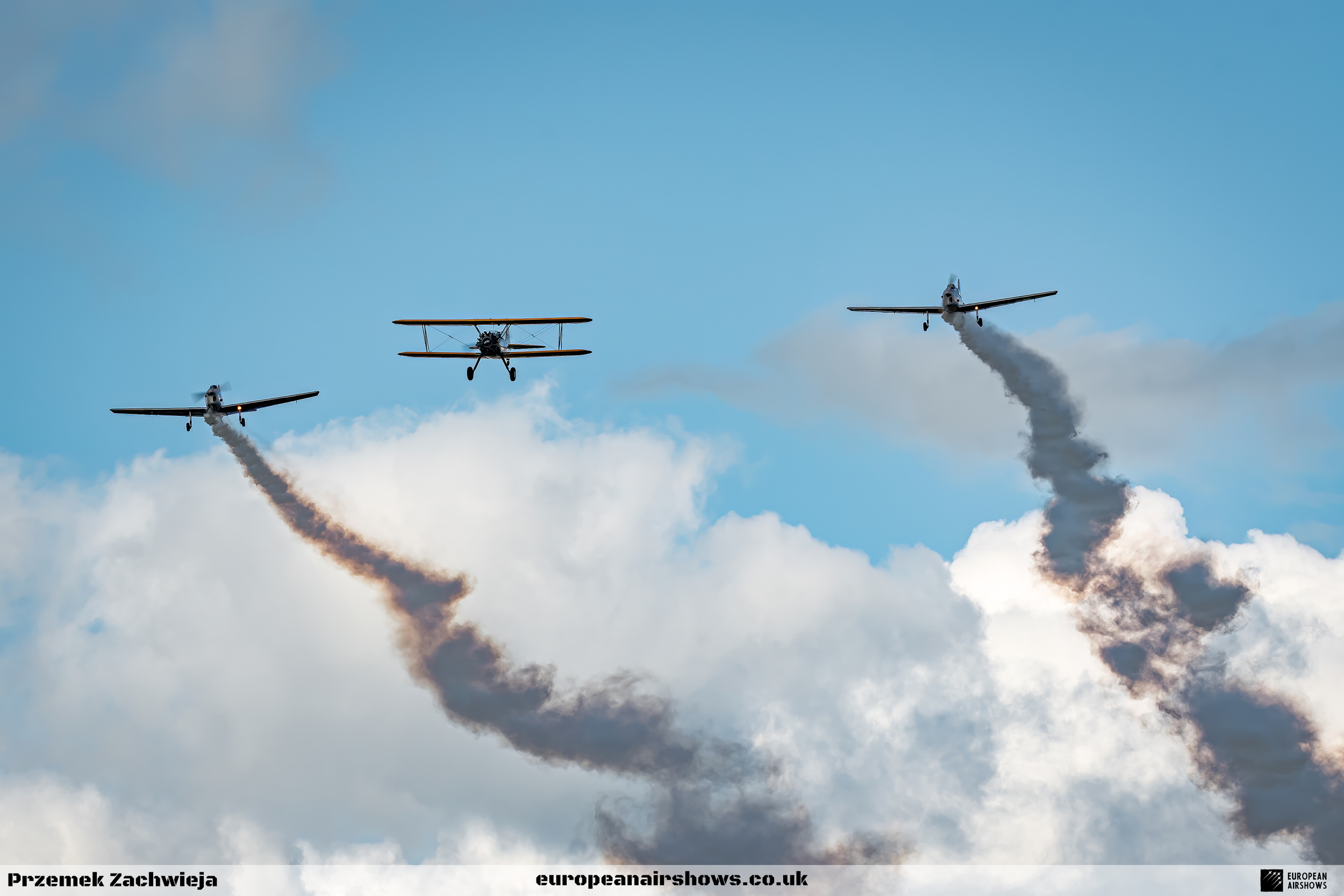
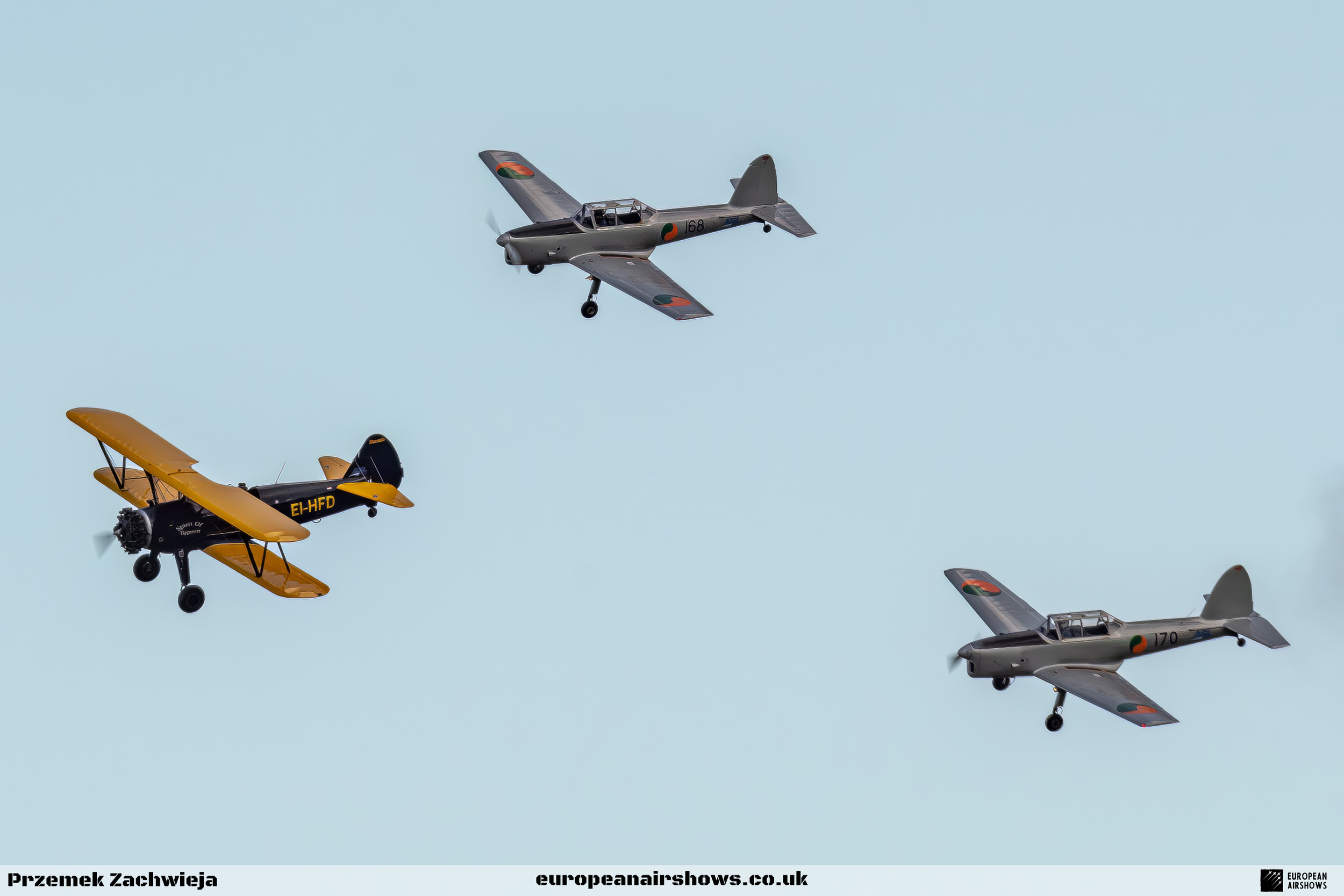
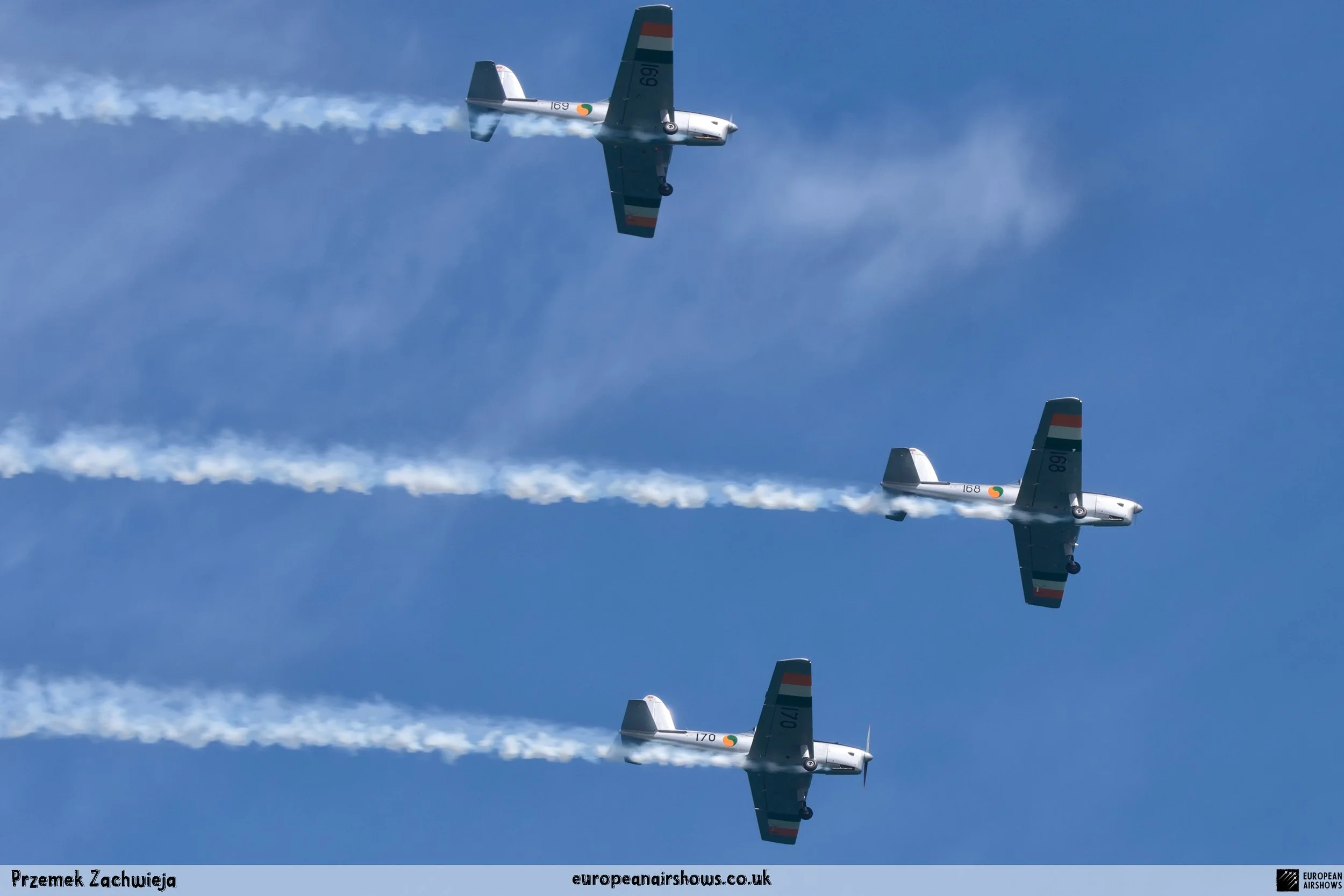
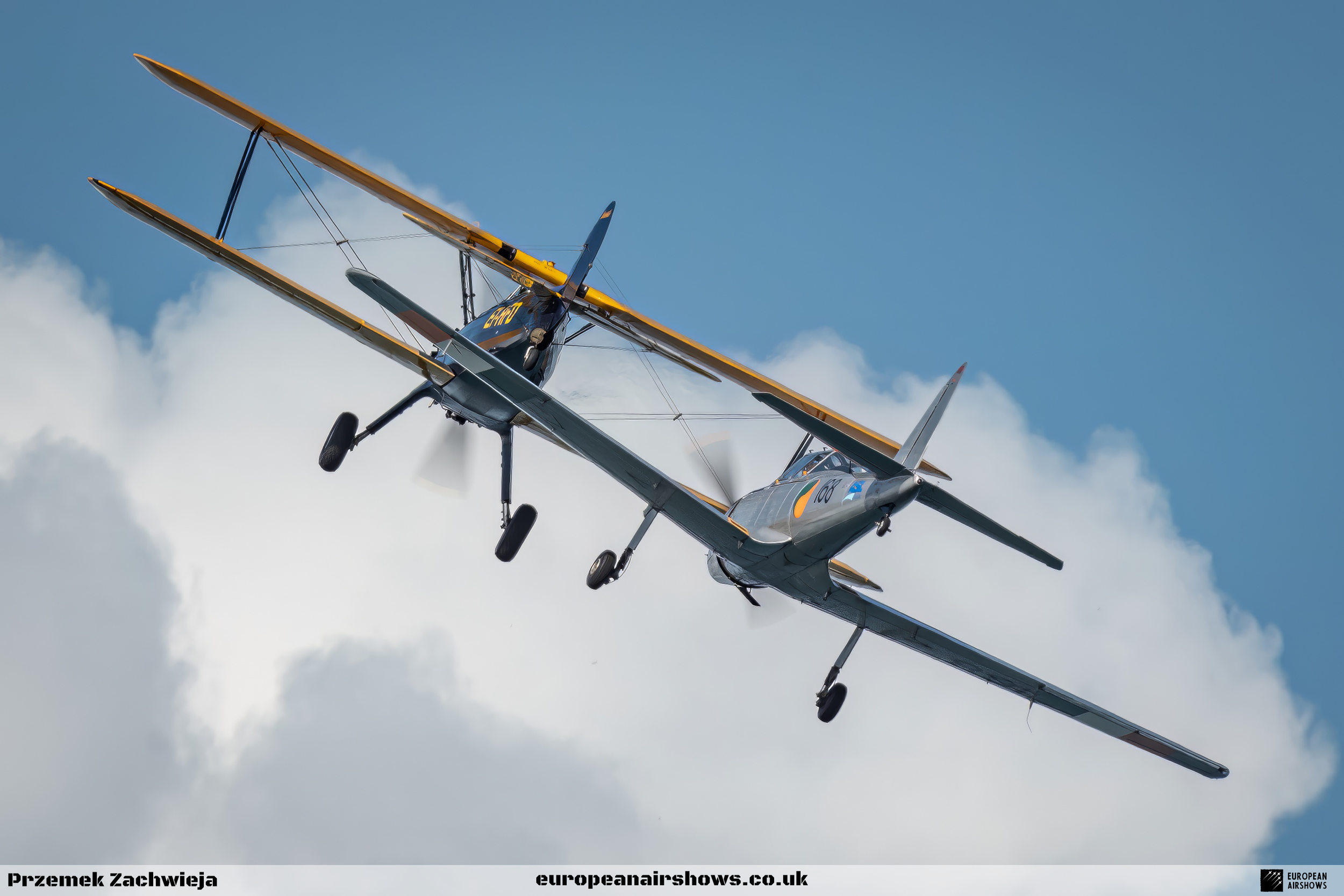
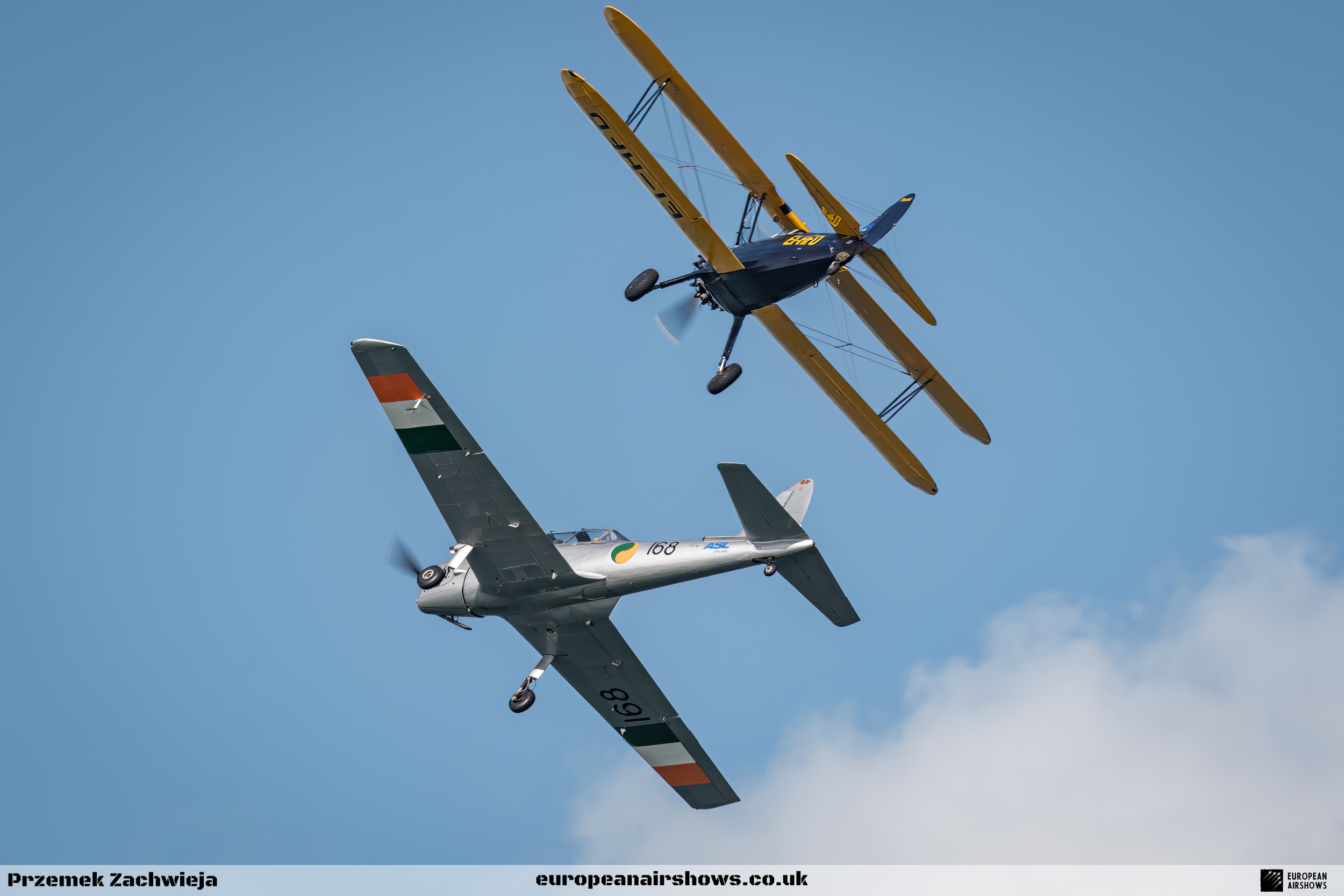
IHFF is a heritage flight rather than a fixed-format aerobatic team. Its public appearance can range from a single aircraft and ground exhibit to a Chipmunk formation, a solo routine or a mixed flypast with the Stearman. The history is always central to the presentation.
Chipmunk formation
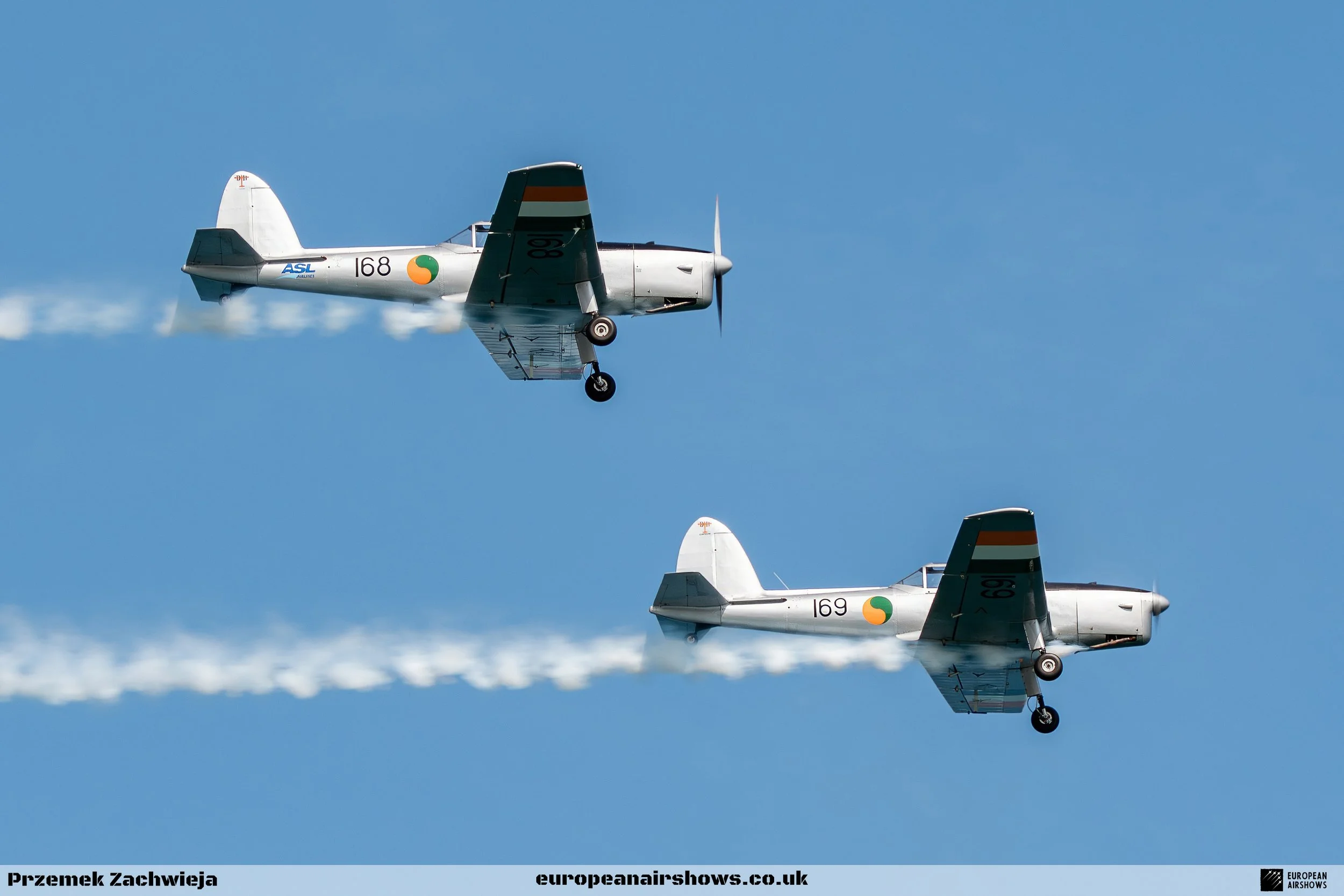
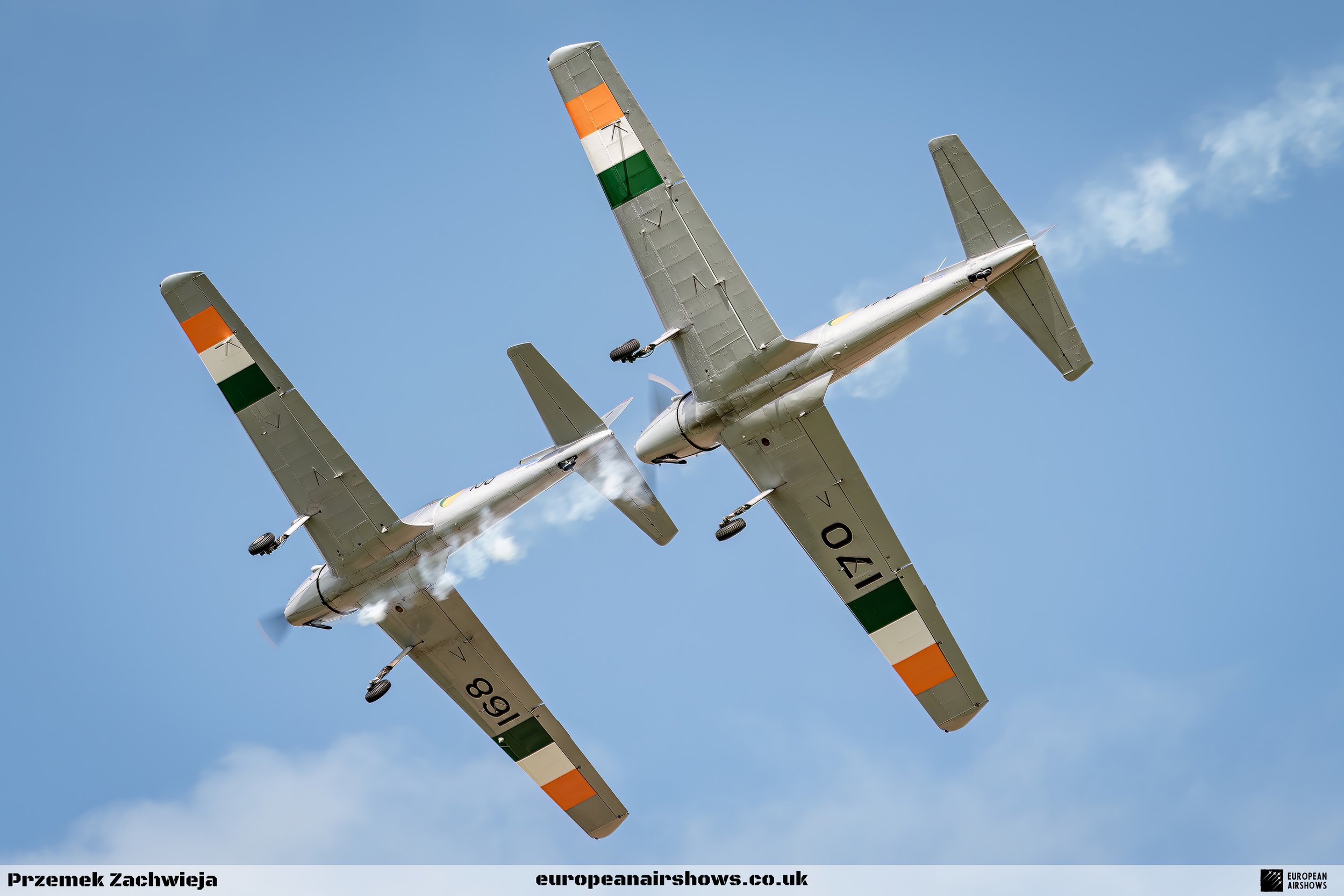
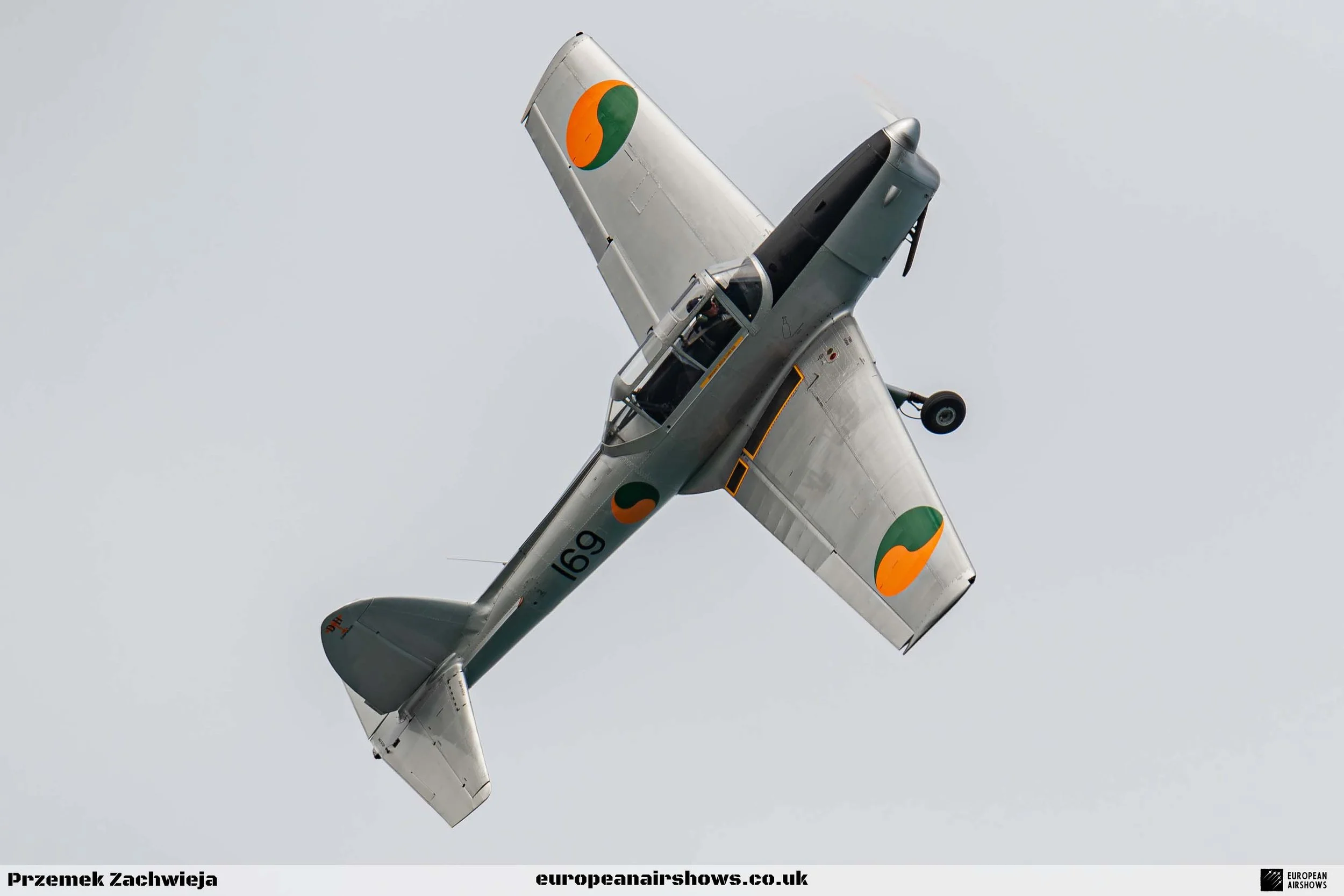
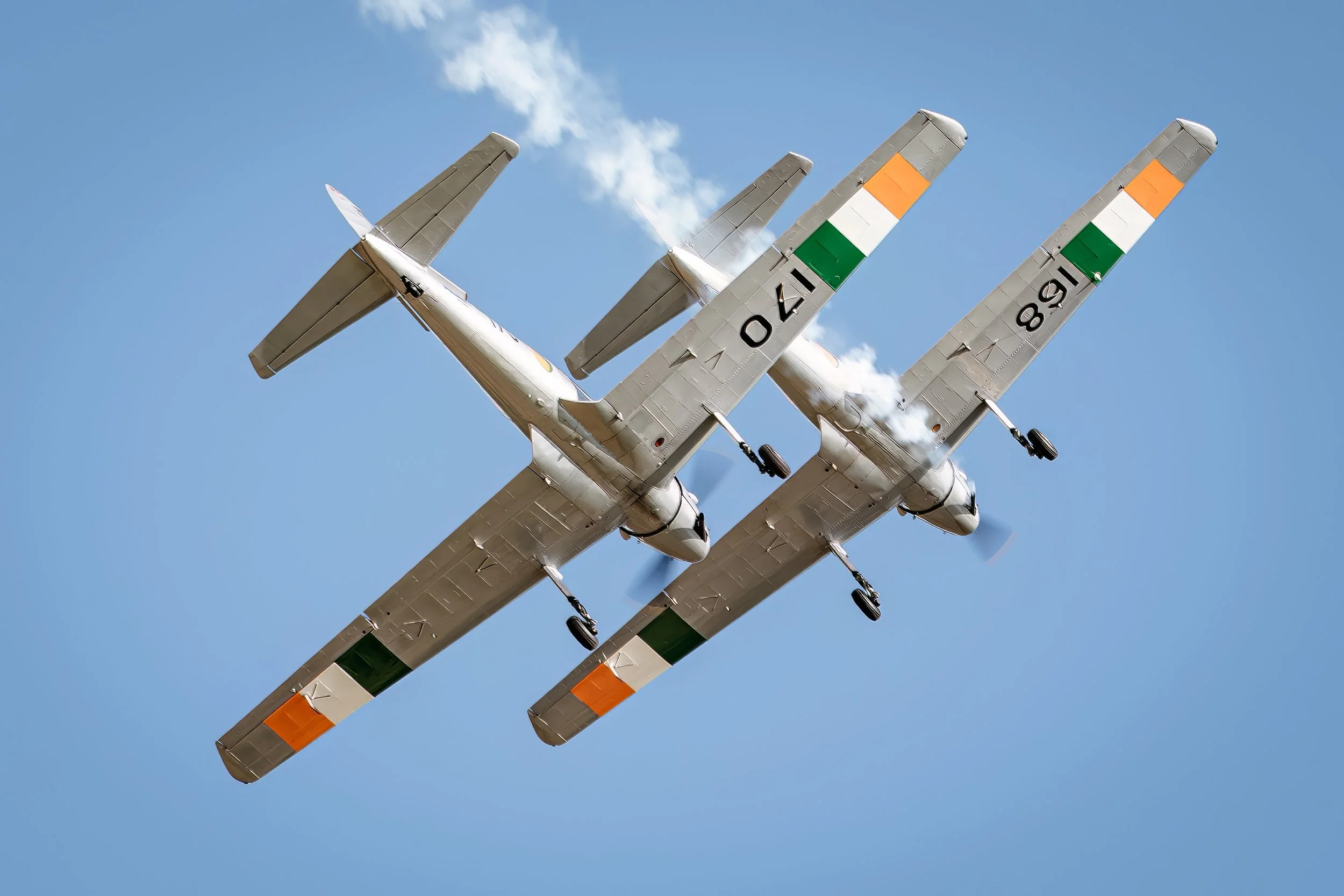
The three similarly marked trainers create IHFF's clearest formation identity. When availability permits, they can be presented as a pair or three-ship with disciplined, close formation work.
Solo Chipmunk
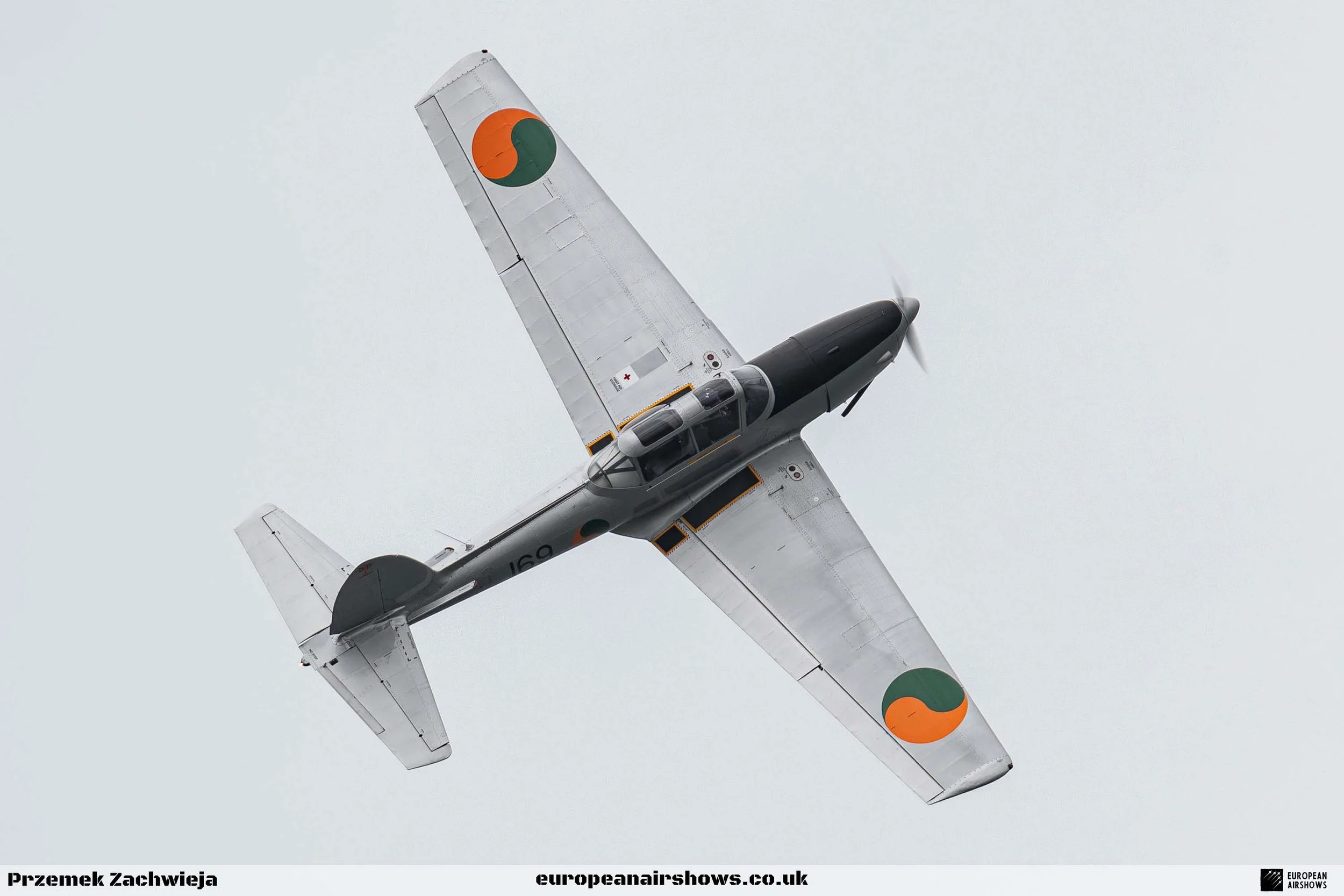
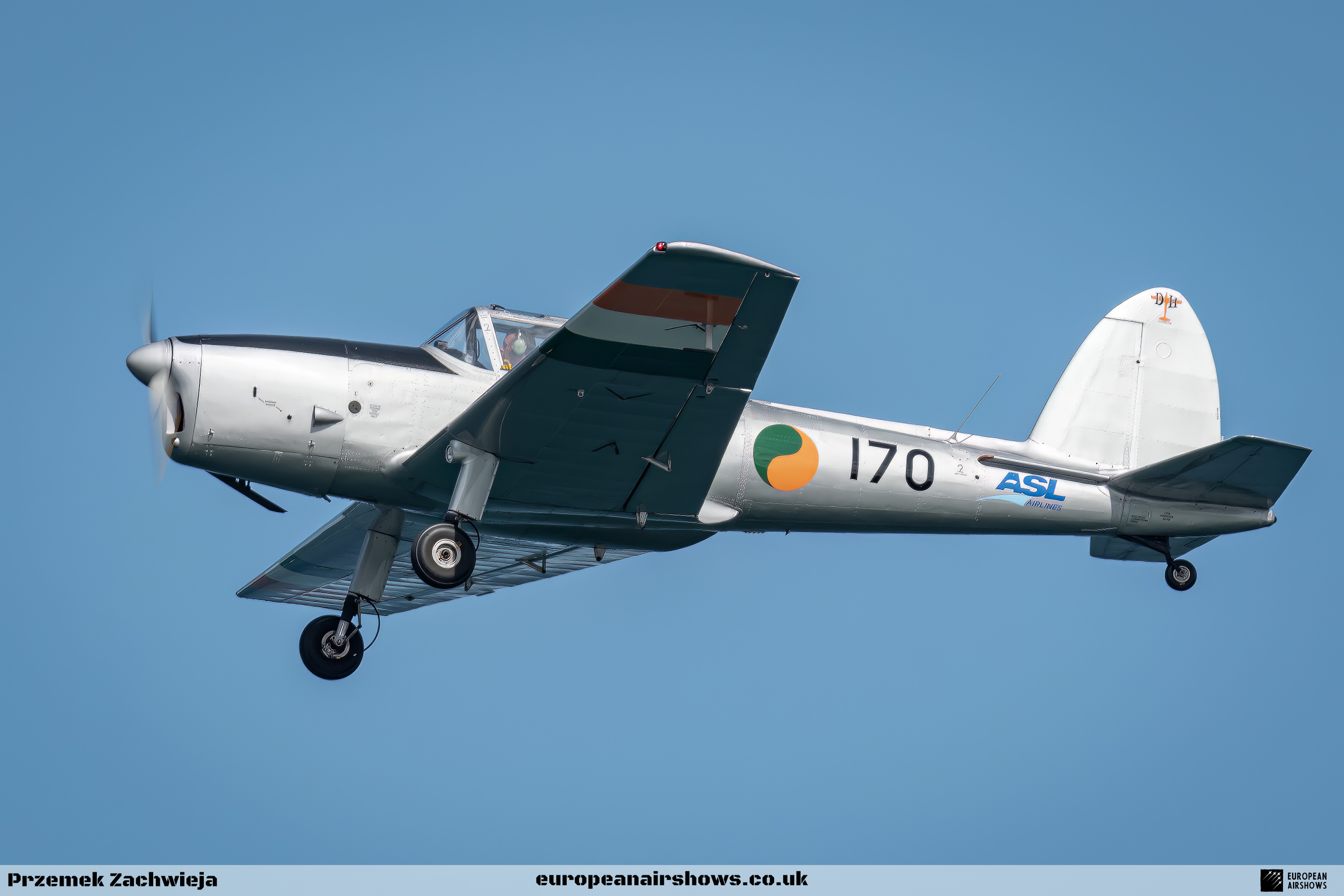
The DHC-1's balanced controls and aerobatic approval allow a solo pilot to show the handling qualities that made the type such an effective basic trainer.
Stearman character
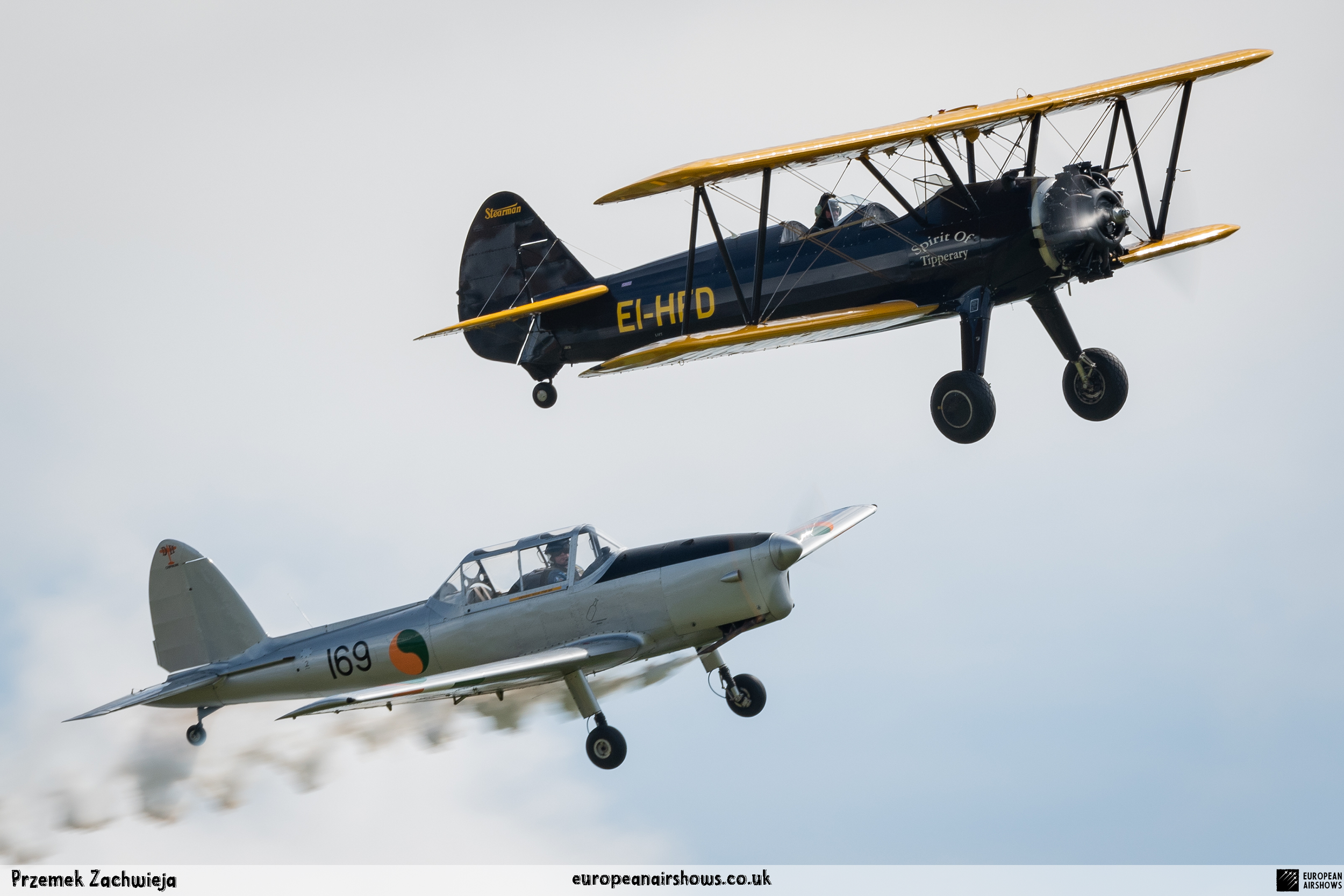
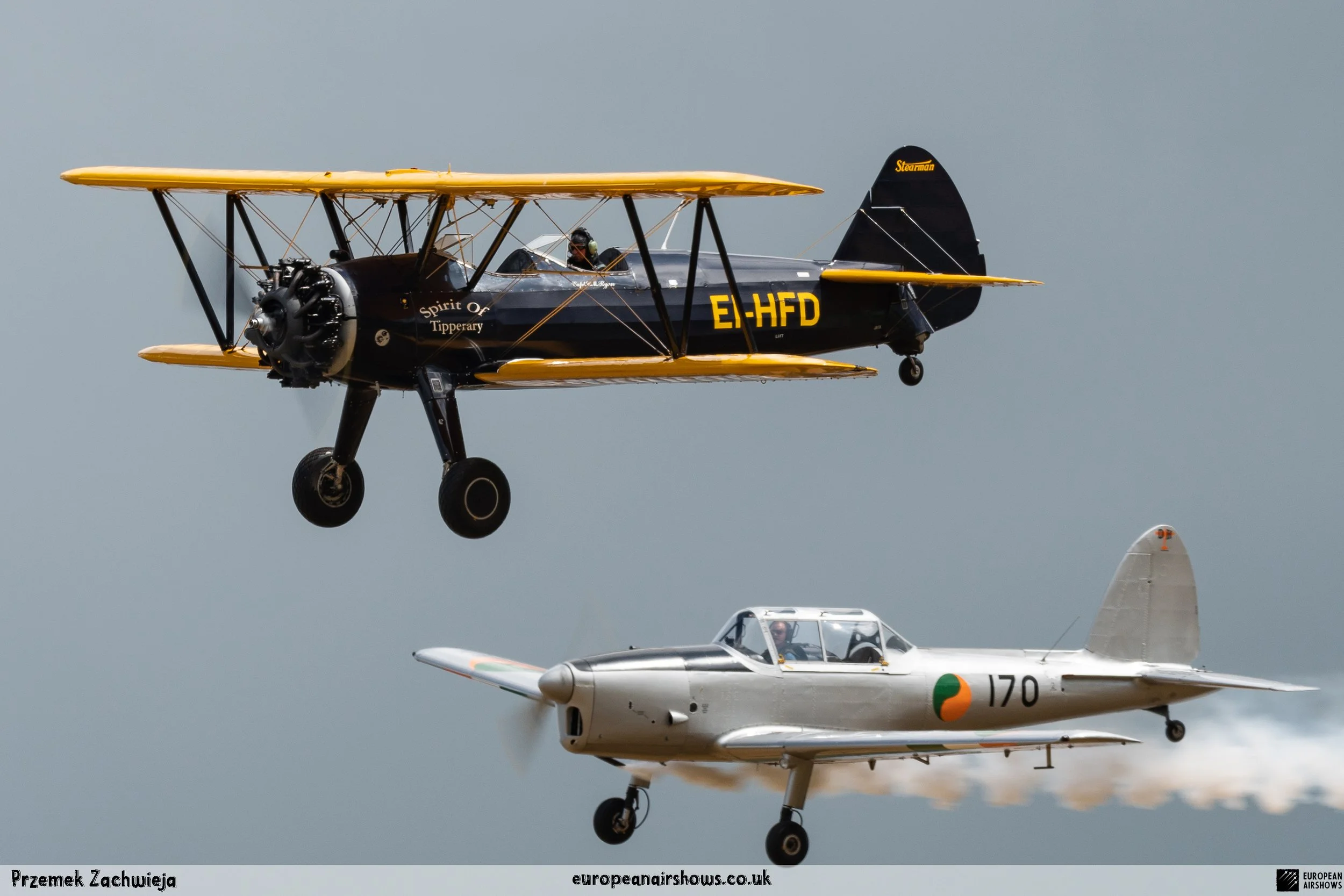
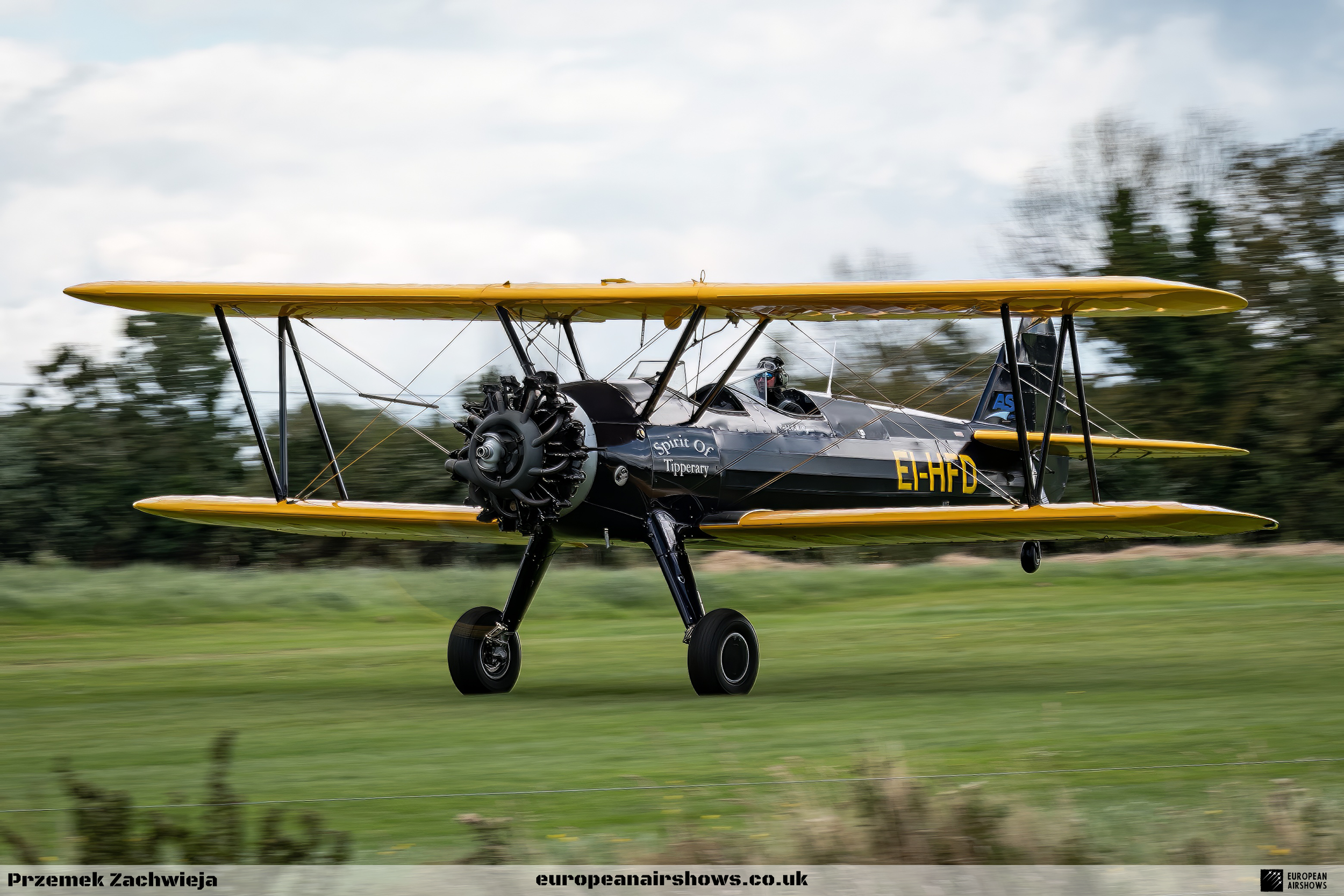
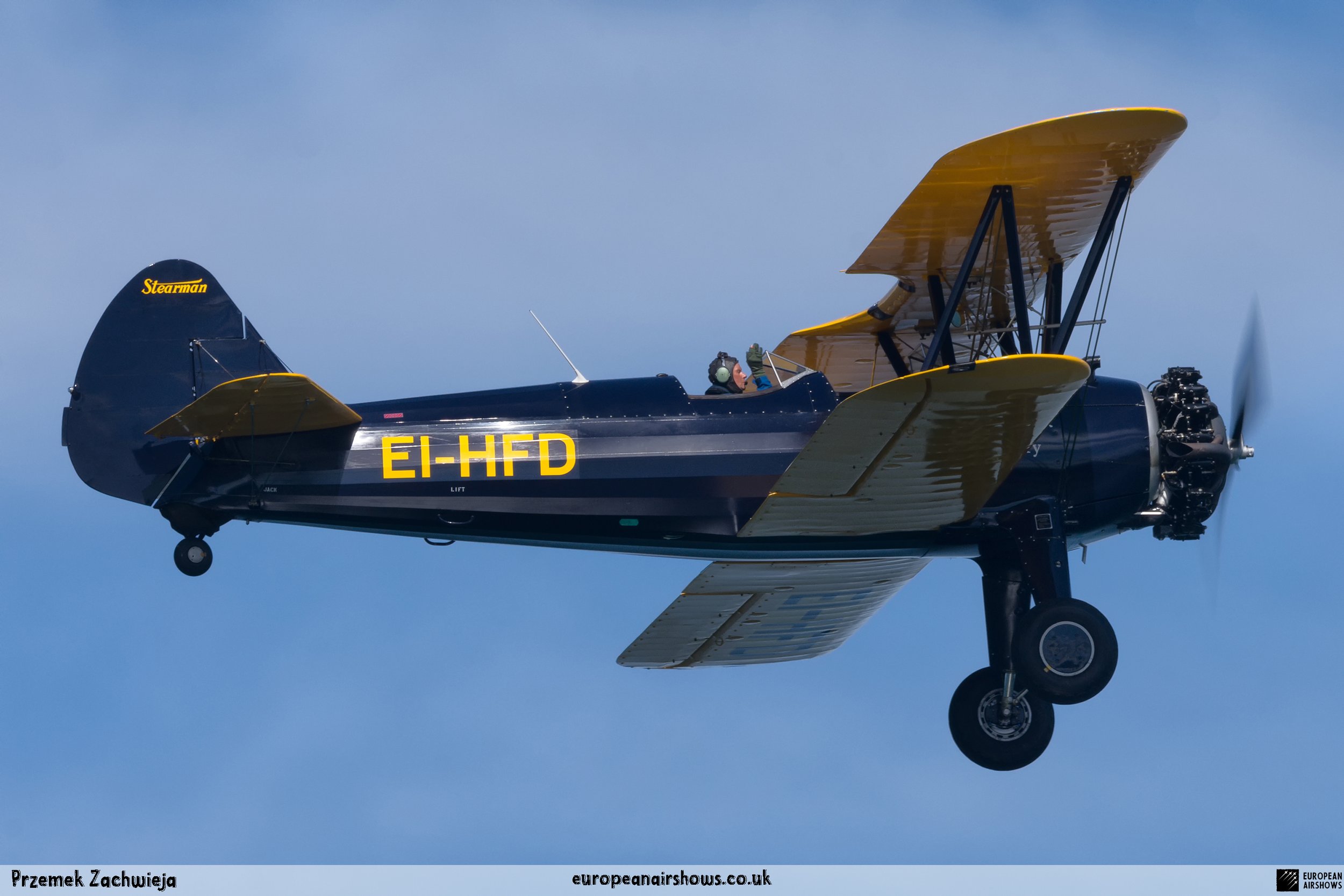
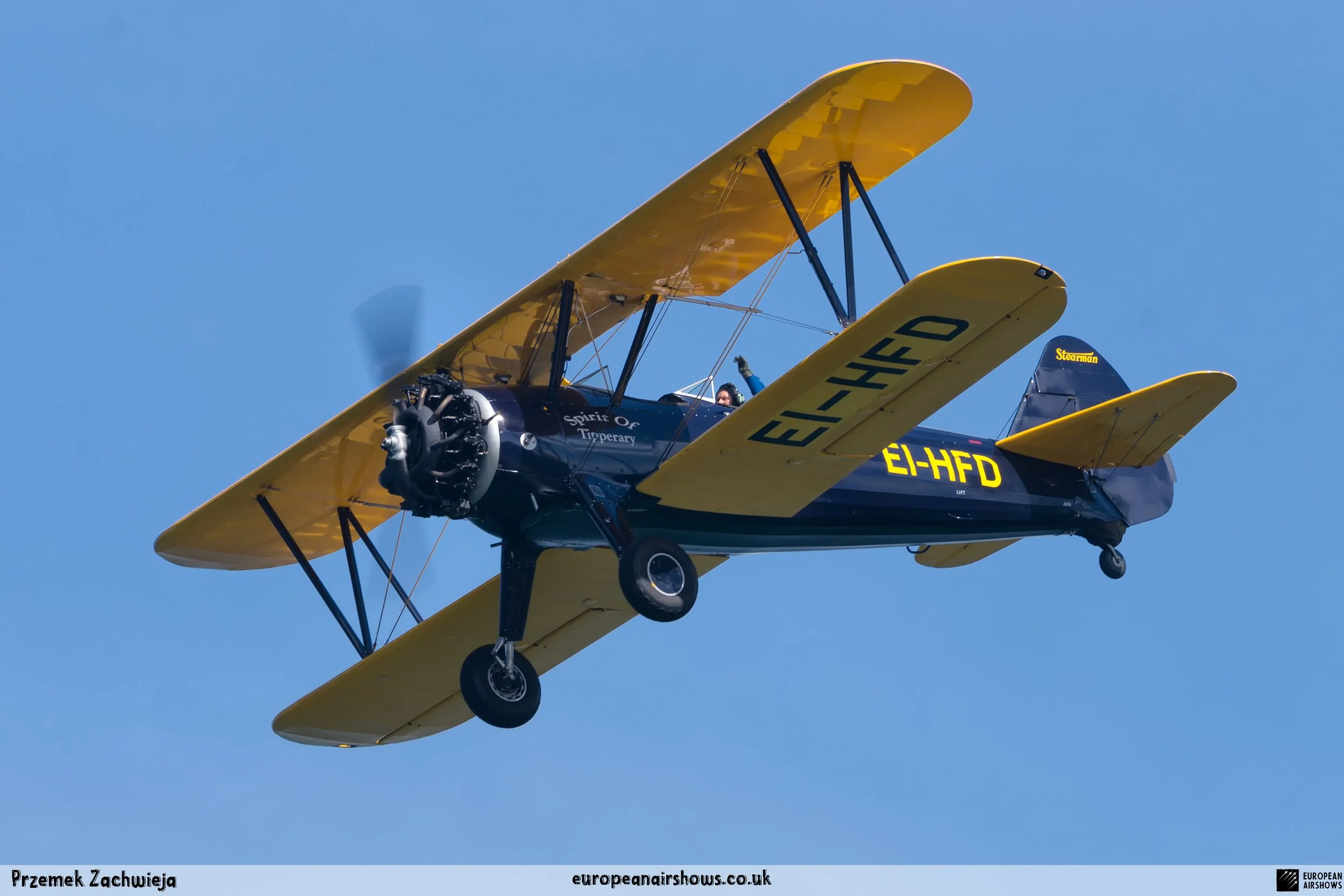
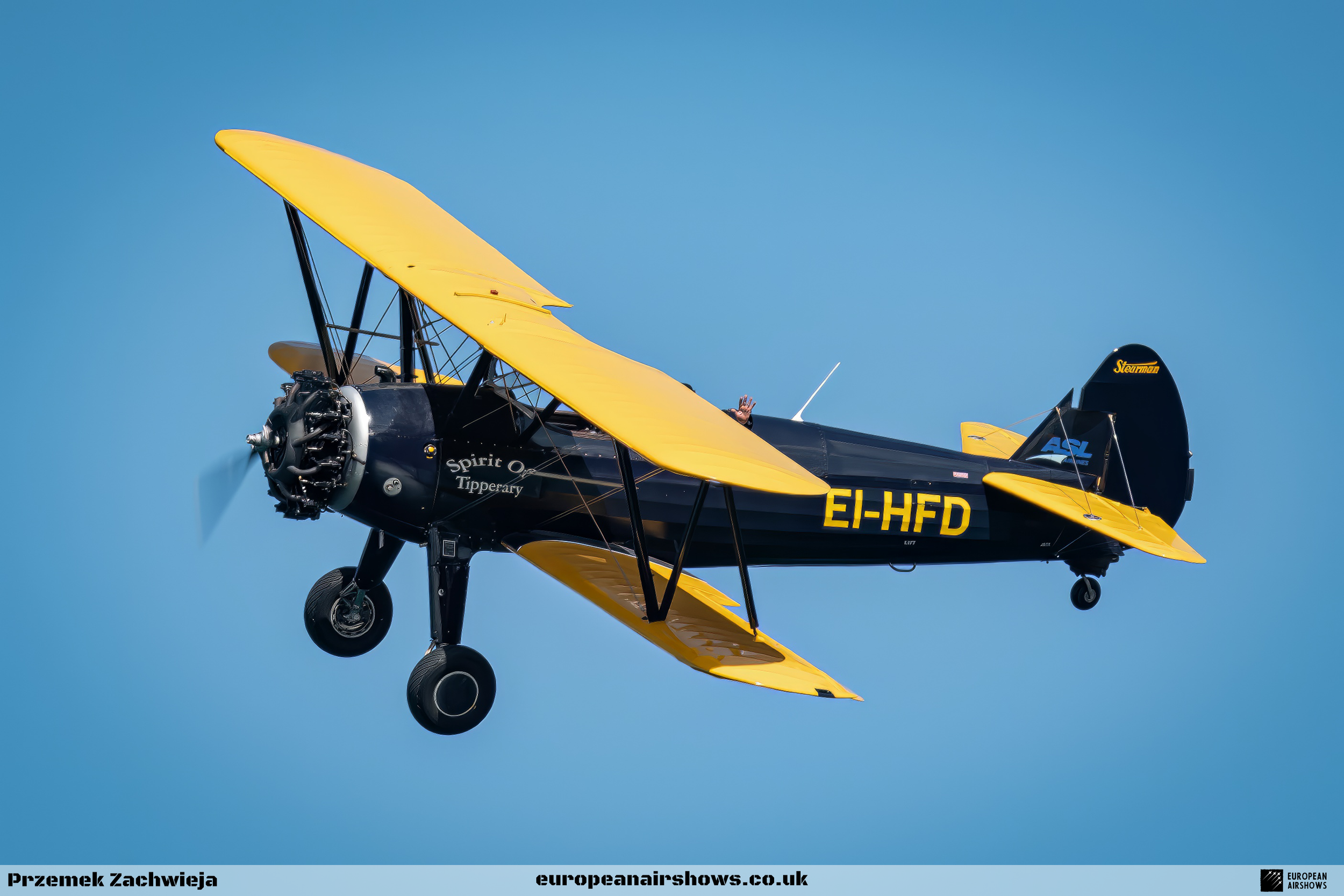
EI-HFD brings an open-cockpit biplane silhouette, radial-engine sound and the slower, deliberate presence of a Second World War primary trainer.
Reims Rocket history
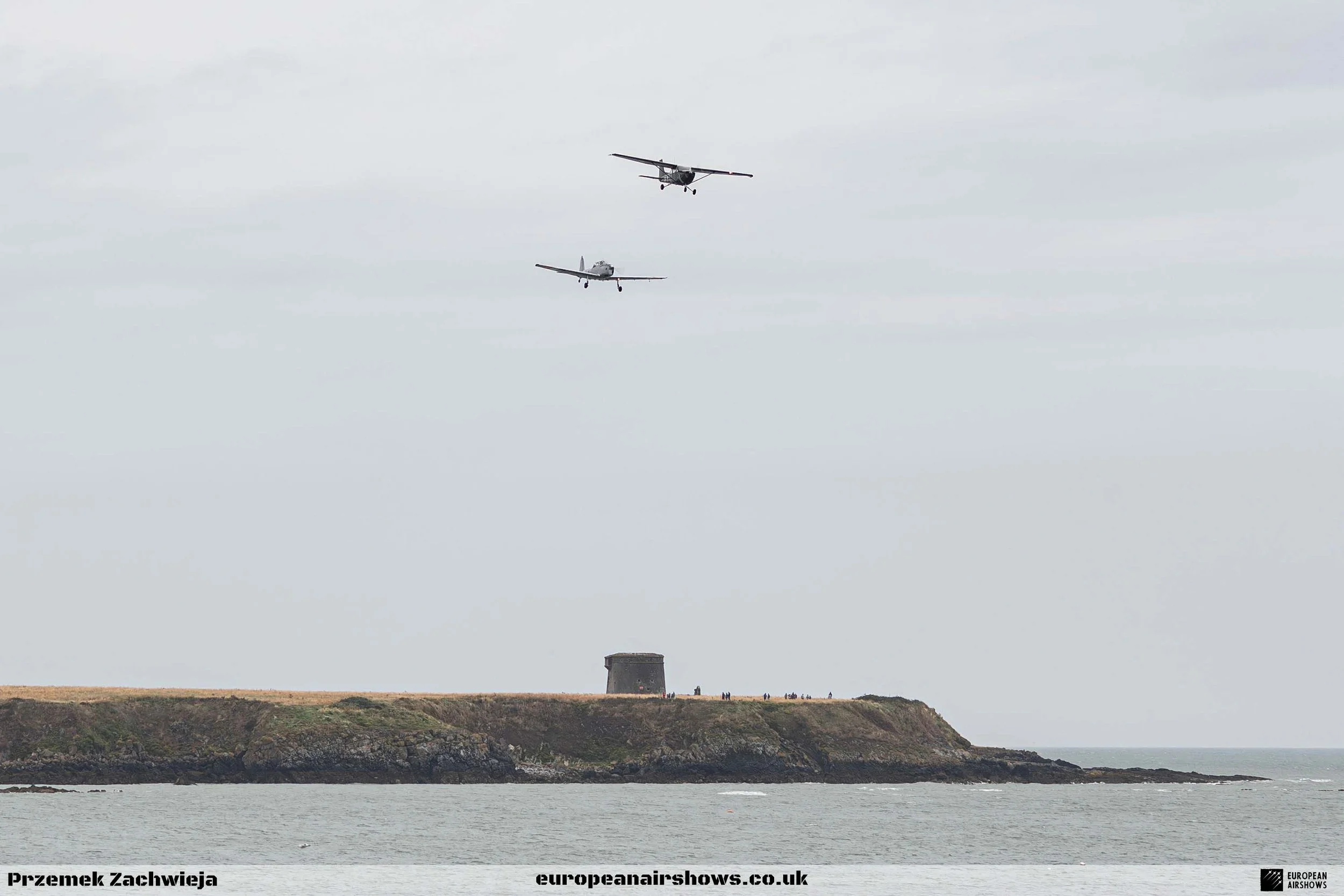
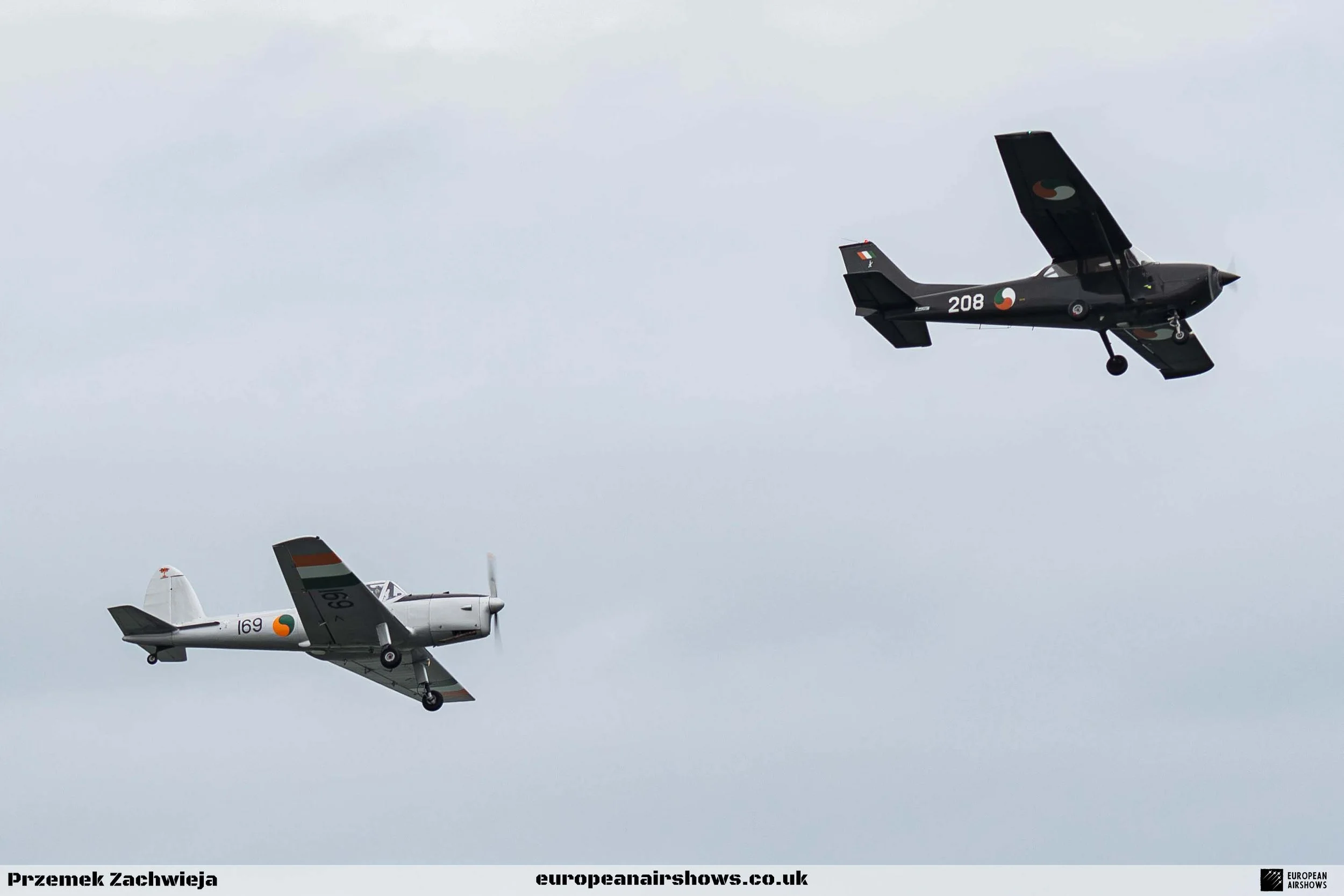
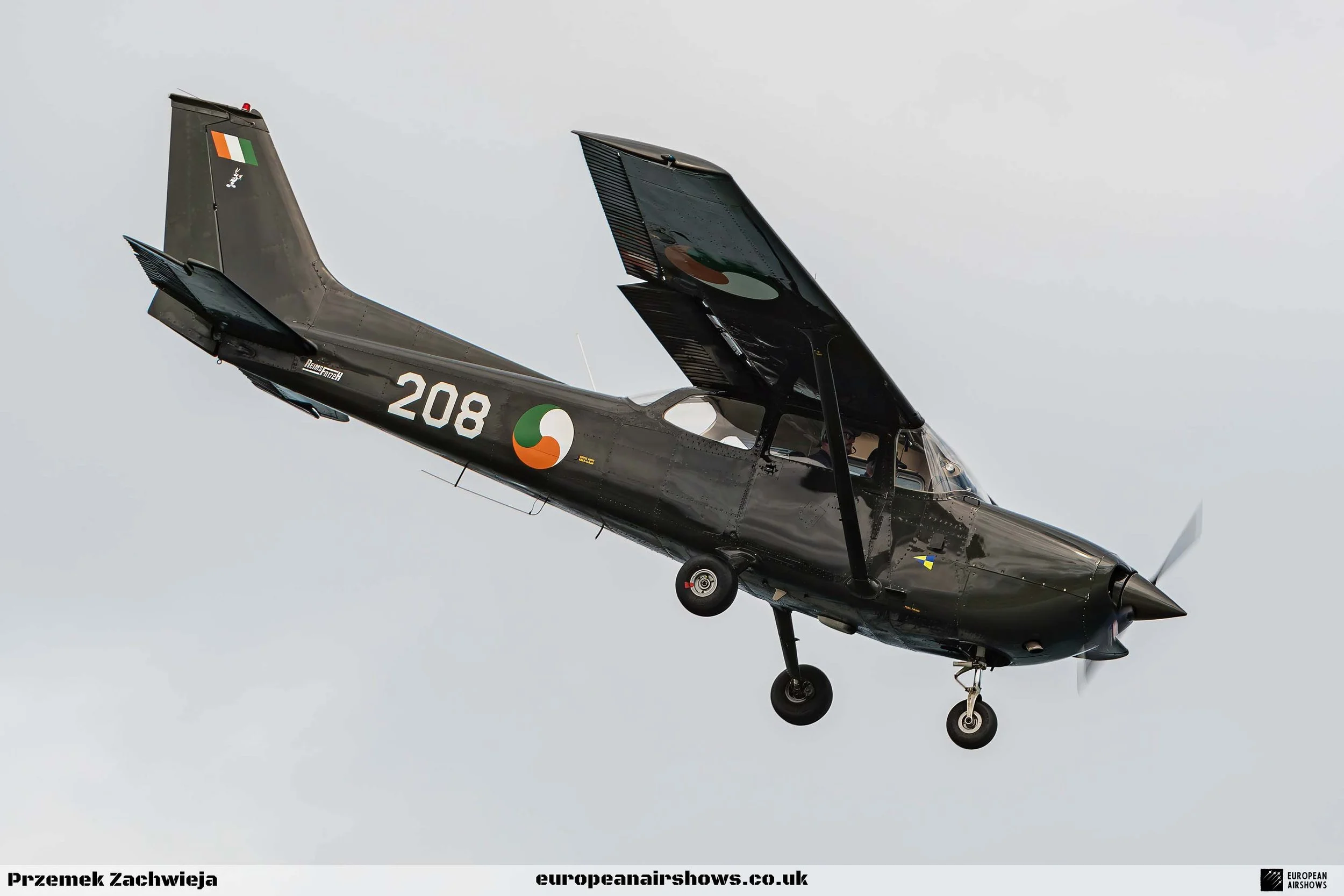
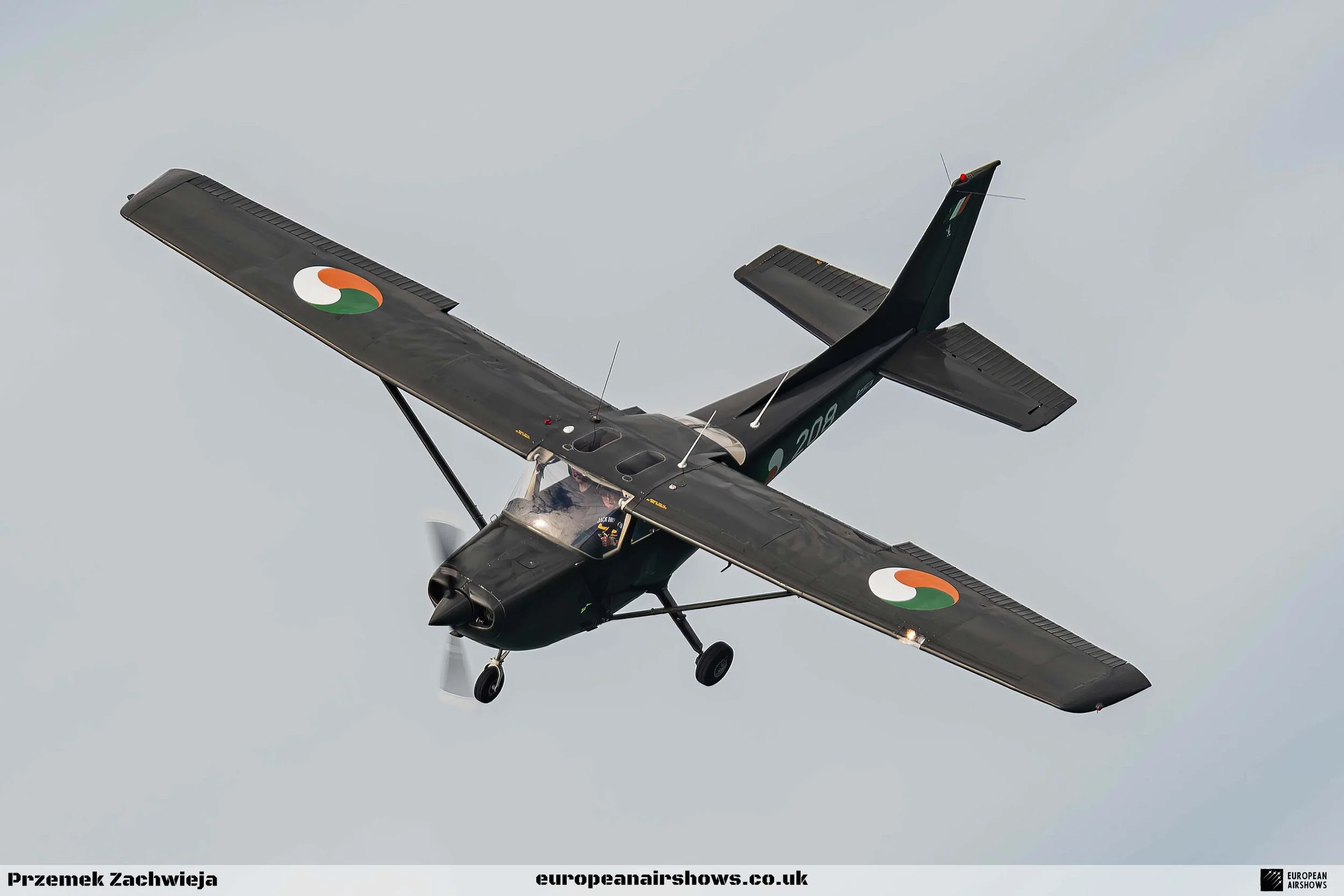
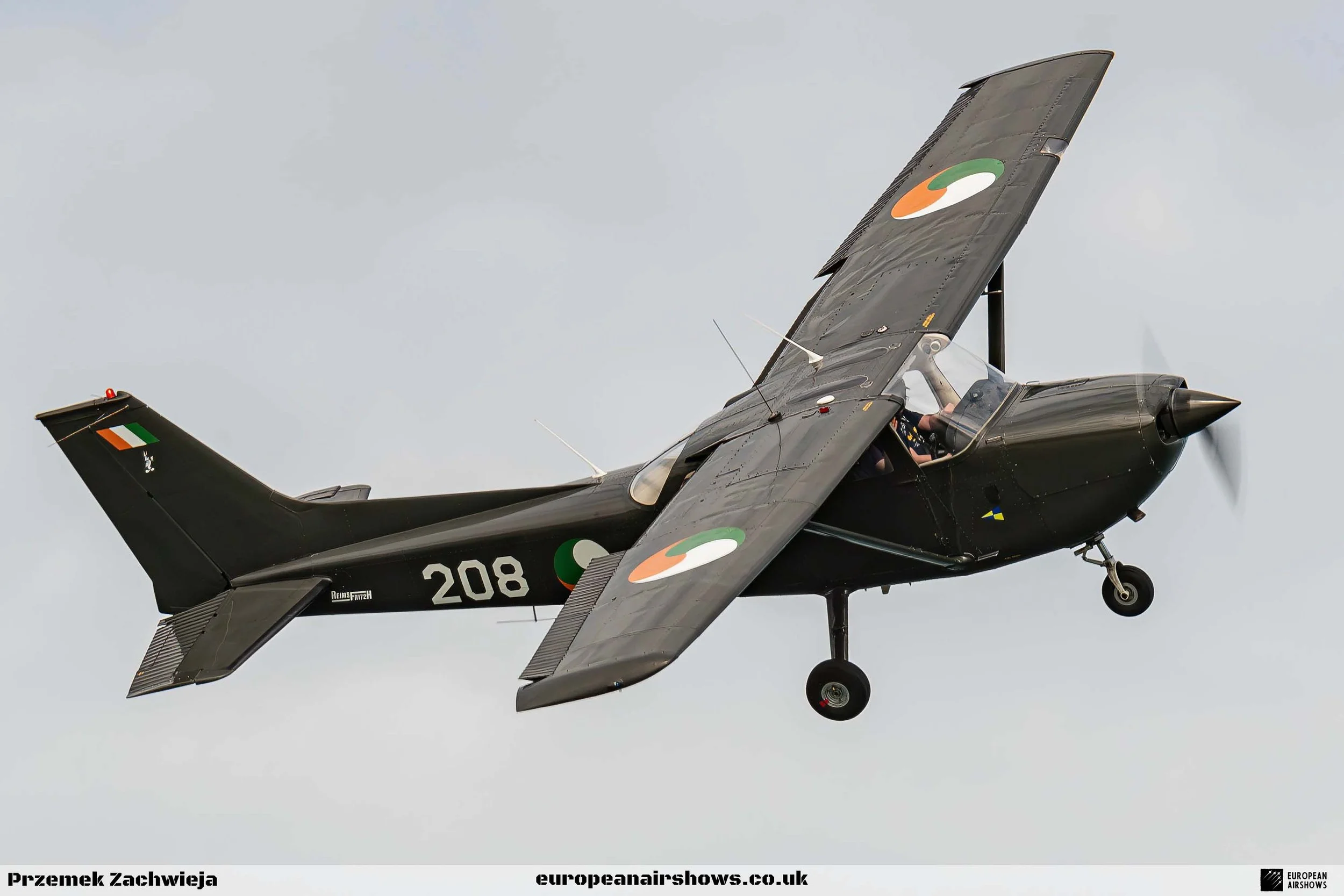
Former Irish Air Corps aircraft 208 adds a different story: border surveillance, reconnaissance, communications, parachute training and general transport rather than aerobatic instruction.
Living engineering
Every public flight rests on volunteer maintenance, continuing airworthiness and skills that must be retained across several very different piston aircraft.
Event-specific line-up
The foundation's published fleet is not a guaranteed display package. Only the aircraft confirmed by an event organiser should be treated as attending or flying.
The fleet
Five aircraft, each with a distinct provenance. The three Chipmunks do not share the same service history.
Chipmunk 168 · EI-HFA
This is the only one of IHFF's three Chipmunks that actually served with the Irish Air Corps. Built by de Havilland at Broughton as a T.Mk.20, it was delivered new on 30 January 1952 and received the Air Corps identity 168. Its last recorded military flight took place in July 1993, by which point it had accumulated about 4,500 hours. After storage and donation to IHFF it was converted to civilian Mk.22 standard, registered EI-HFA and made its first flight on the Irish civil register in June 2015.
Chipmunk 169 · EI-HFB
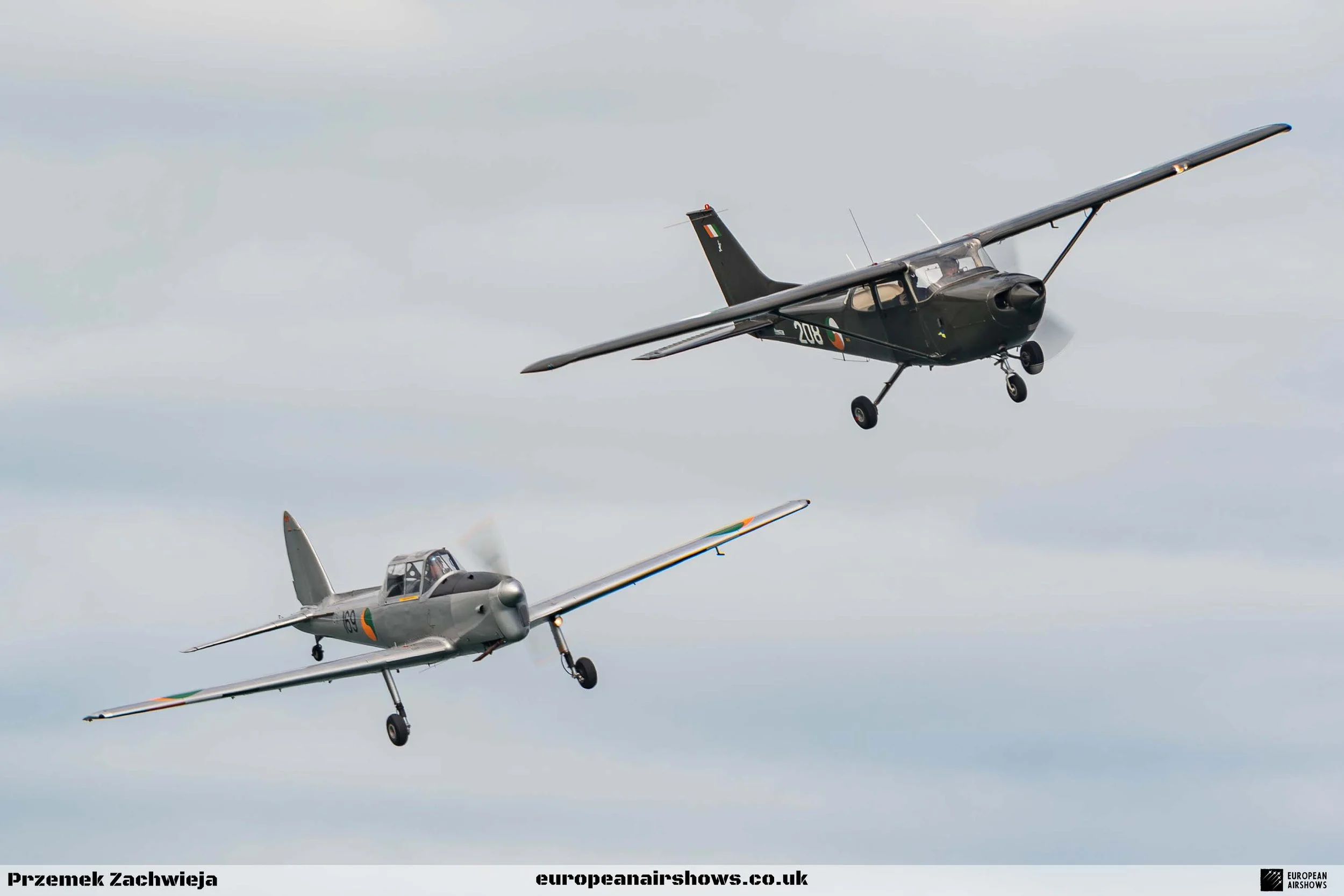
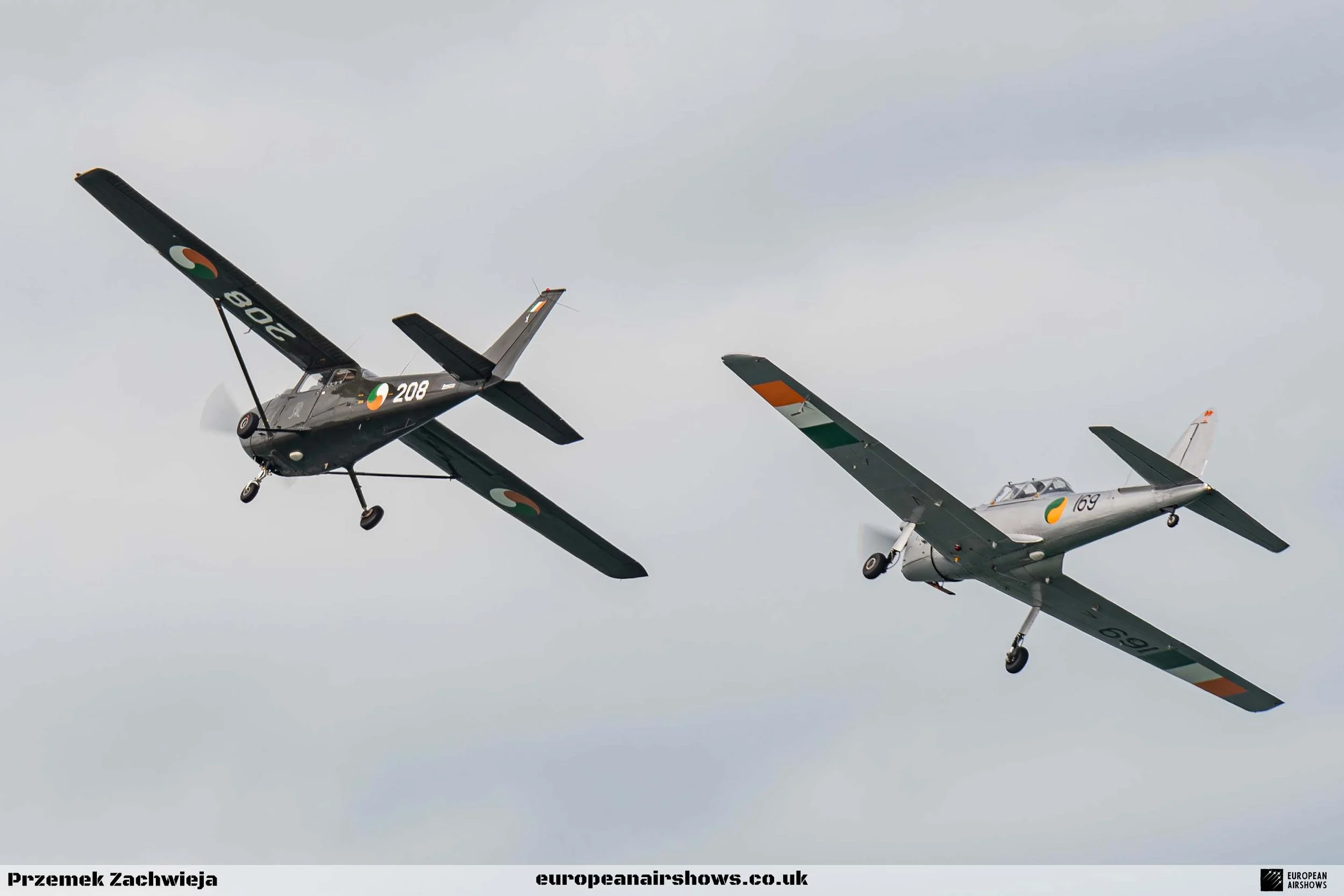
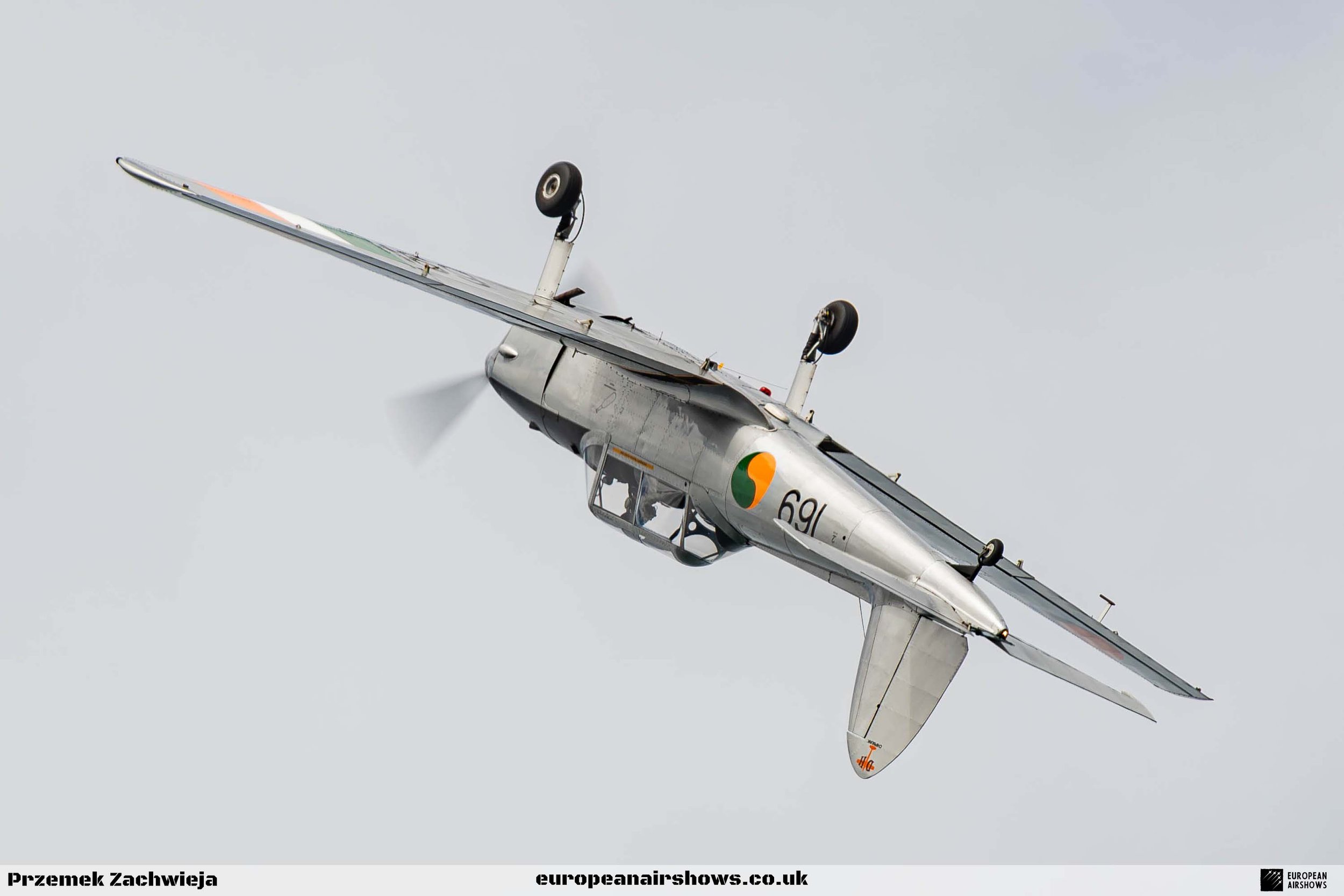
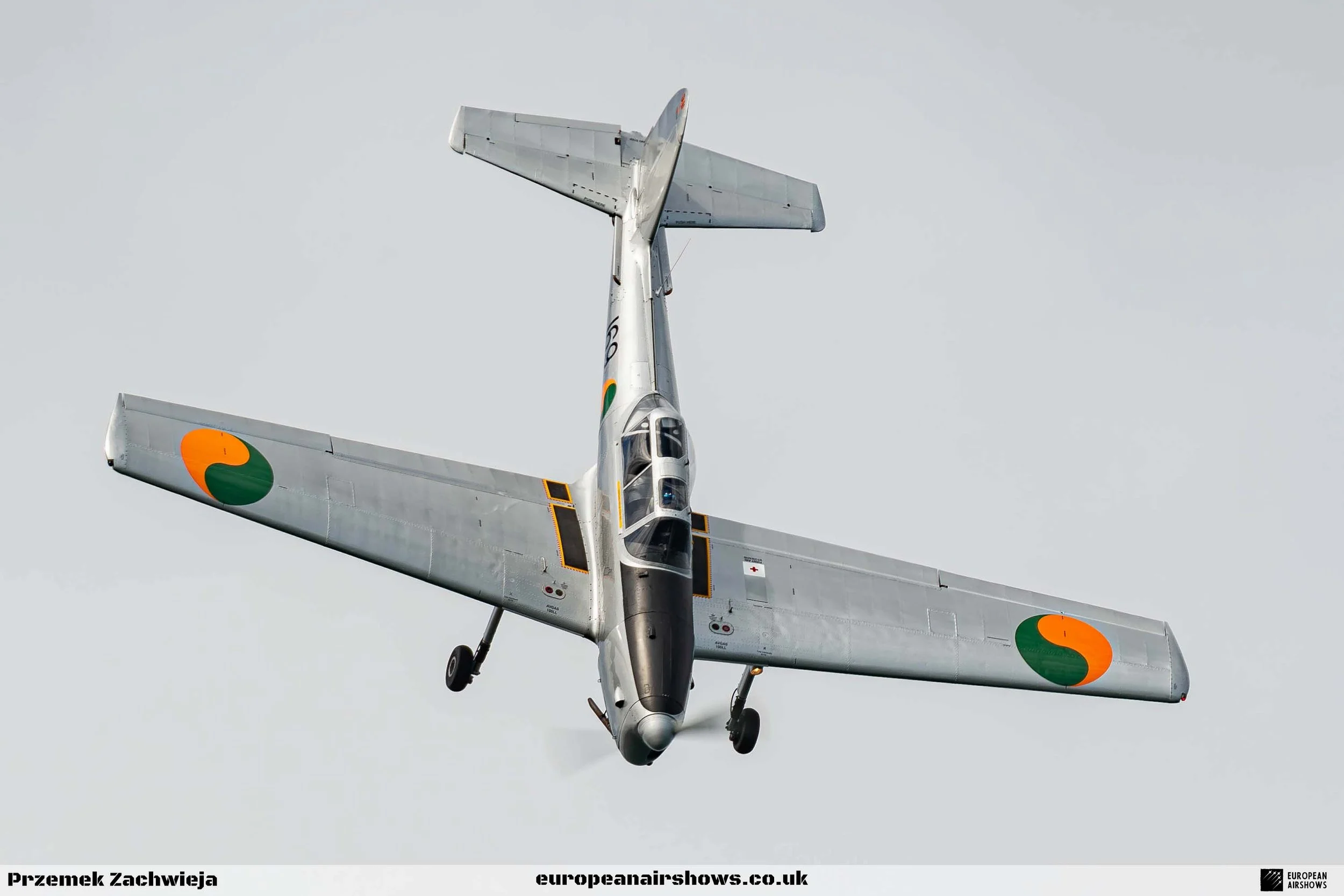
EI-HFB is a former Royal Air Force T.10, originally WD305. After more than 4,500 hours of RAF service it was converted for civilian use in 1962 as G-ARGG and spent many years with Air Navigation & Trading at Blackpool, adding roughly another 6,000 hours. IHFF acquired it in 2015 and registered it EI-HFB. Its 169 markings represent an Irish Air Corps Chipmunk identity, but this airframe itself did not serve with the Irish Air Corps.
Chipmunk 170 · EI-HFC
The third Chipmunk first flew in September 1952 and completed more than 6,500 hours with the Royal Air Force before leaving military service in 1975. It later became a civilian Mk.22, was re-covered in Ceconite in 2012 and painted to represent Irish Air Corps 170. Registered EI-HFC with IHFF, it has accumulated more than 8,500 hours in total. Like 169, the markings preserve an Irish identity, while the airframe's own service was with the RAF.
Boeing Stearman · EI-HFD
IHFF's Boeing Stearman was built at Wichita in 1942 and delivered to Pensacola for use as a primary trainer. After military service it passed through private ownership in the United States and later Britain. Tony Ryan and Cathal Ryan acquired it in 1999 and named it the Spirit of Tipperary. IHFF added the aircraft to its fleet in 2016, retaining the name and the open-cockpit, radial-engined character that makes the type instantly recognisable.
Reims Rocket 208 · EI-HFE
Built by Reims Aviation in 1972 as construction number FR17200348, this FR172H was delivered to the Irish Air Corps as 208. The uprated four-seat aircraft served in the Army Co-operation role on border surveillance, aerial reconnaissance, civil-power escort, parachute training, liaison and general transport work. The Air Corps retired the type on 4 October 2019. Aircraft 208 transferred to IHFF on 30 November 2022 and is now EI-HFE.
The story so far
From a public launch at Baldonnel to a five-aircraft home at Ballyboy.
December 2014
IHFF is established
The Irish Historic Flight Foundation is formed to preserve, operate and share aircraft connected with the country's aviation heritage through a volunteer-led living collection.
30 June 2015
Inaugural public flight
Three Chipmunks and the Aer Lingus DH.84 Dragon Iolar fly at Casement Aerodrome, Baldonnel. The Iolar is a launch participant, not one of the five aircraft in IHFF's current fleet.
May-June 2015
The Chipmunks join the Irish civil register
The three aircraft become EI-HFA, EI-HFB and EI-HFC. Former Air Corps 168 makes its first civil-register flight in June after conversion to Mk.22 standard.
2016
The Spirit of Tipperary joins
IHFF acquires Boeing Stearman EI-HFD, adding a Second World War-era biplane trainer and a radial-engine contrast to the Chipmunk formation.
4 October 2019
The Air Corps retires the Reims Rocket
The type leaves Irish Air Corps service after 47 years, closing a long record of surveillance, reconnaissance, liaison, parachute training and transport work.
August 2020
IHFF moves to Ballyboy
The three Chipmunks and Stearman enter a purpose-built hangar at Ballyboy Airfield, giving the foundation a dedicated operating and maintenance base in County Meath.
2022
Chipmunk 168 marks the Air Corps centenary
The genuine former Air Corps Chipmunk appears during the service's centenary year, reconnecting an original 1952 trainer with the organisation that operated it.
30 November 2022
Reims Rocket 208 transfers to IHFF
The former Air Corps FR172H becomes the foundation's fifth aircraft and receives the civil registration EI-HFE.
2023
ASL supports the event programme
ASL Aviation Holdings becomes exclusive sponsor of IHFF's local and national event appearances for the year, supporting public access to the flying collection.
2026
Restoration work on 168 is shared publicly
IHFF representatives discuss the work involved in restoring the foundation's genuine former Air Corps Chipmunk and the skills needed to return historic aircraft to flight.
2026 season
Chipmunks 169 and 170 fly as a pair
Contemporary coverage of the Rush display identifies EI-HFB and EI-HFC as the two participating Chipmunks, a useful reminder that the active line-up changes with serviceability and restoration.
Mission & future
Preserve the aircraft. Share the knowledge. Give the next generation a reason to begin.
Preserve
Airworthy preservation demands more than appearance. The aircraft need continuing maintenance, documentation, approved parts and people who understand ageing structures, fabric covering, piston engines and historic systems.
Educate
Each aircraft opens a different engineering and historical discussion, from tandem training and aerobatic handling to radial engines, reconnaissance equipment and the practical demands of border surveillance.
Inspire
IHFF wants the collection to encourage future pilots, engineers and aviation professionals. Seeing a real aircraft fly can turn an abstract lesson in science or technology into something immediate and memorable.
Build for the future
The foundation is developing plans for a small, high-impact STEM and heritage facility centred on the aircraft, with hands-on learning, skills development, sustainable aviation and youth engagement at its core.