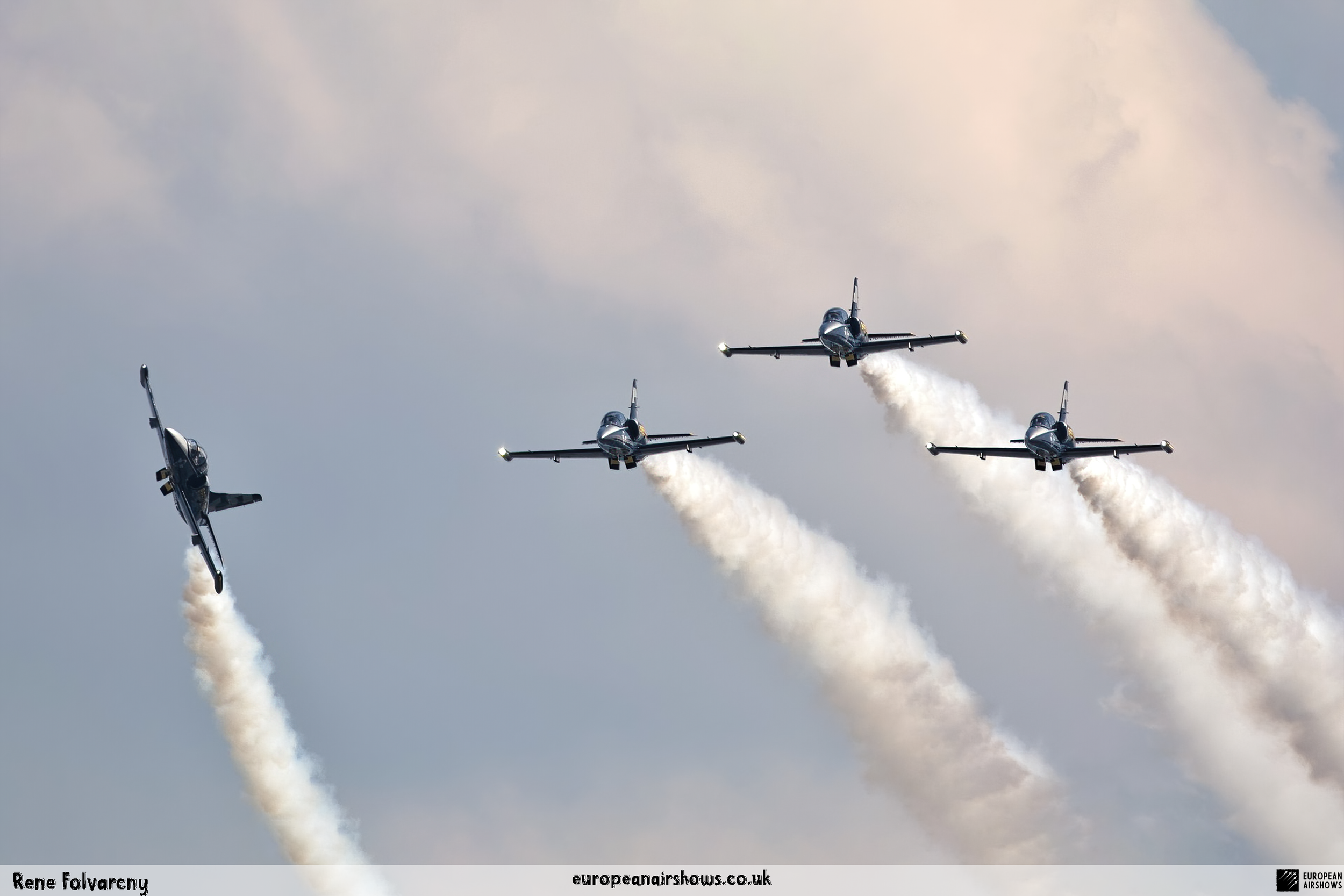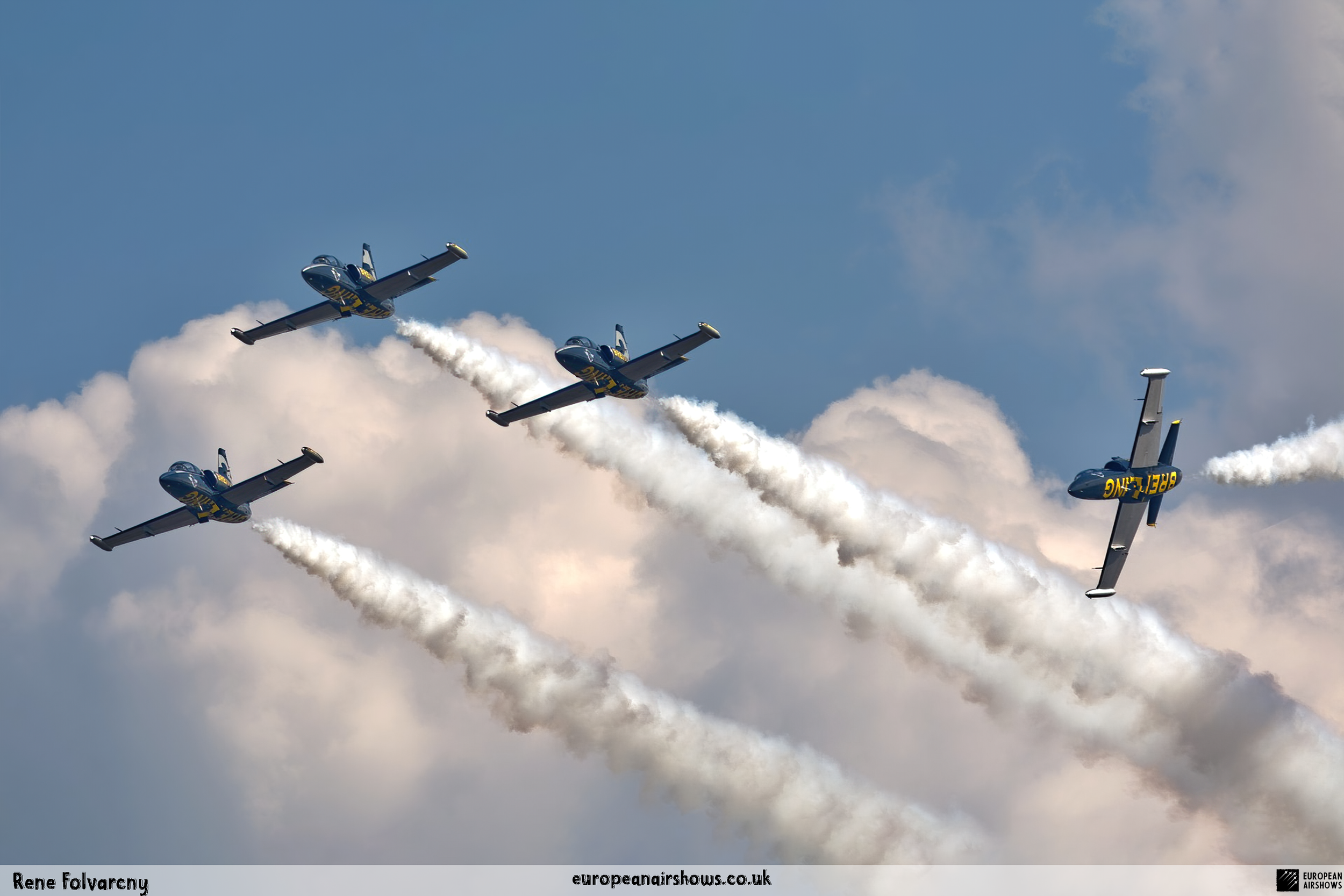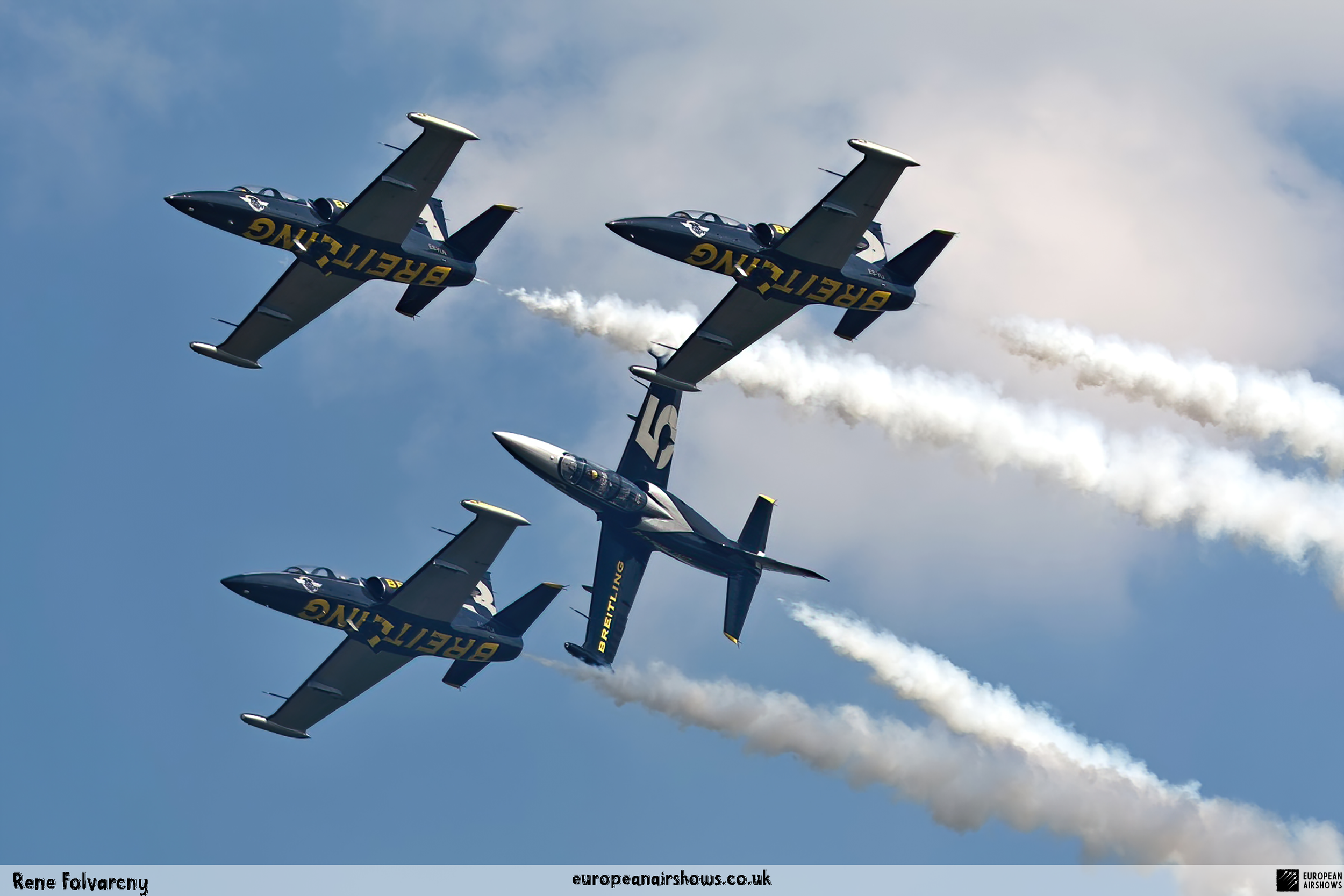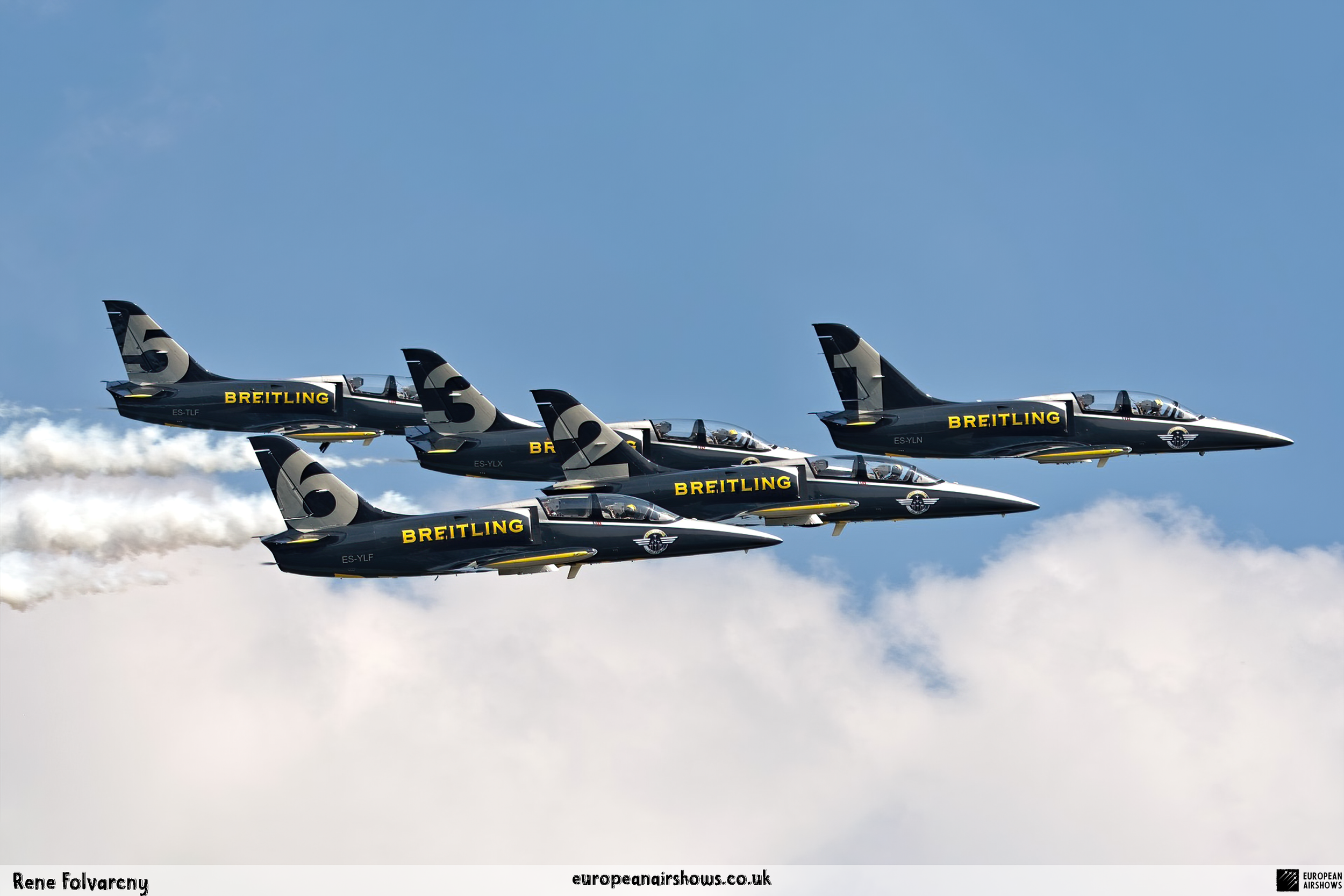
Breitling Jet Team
Aero L-39C Albatros · Breitling identity active 2003 to 2019
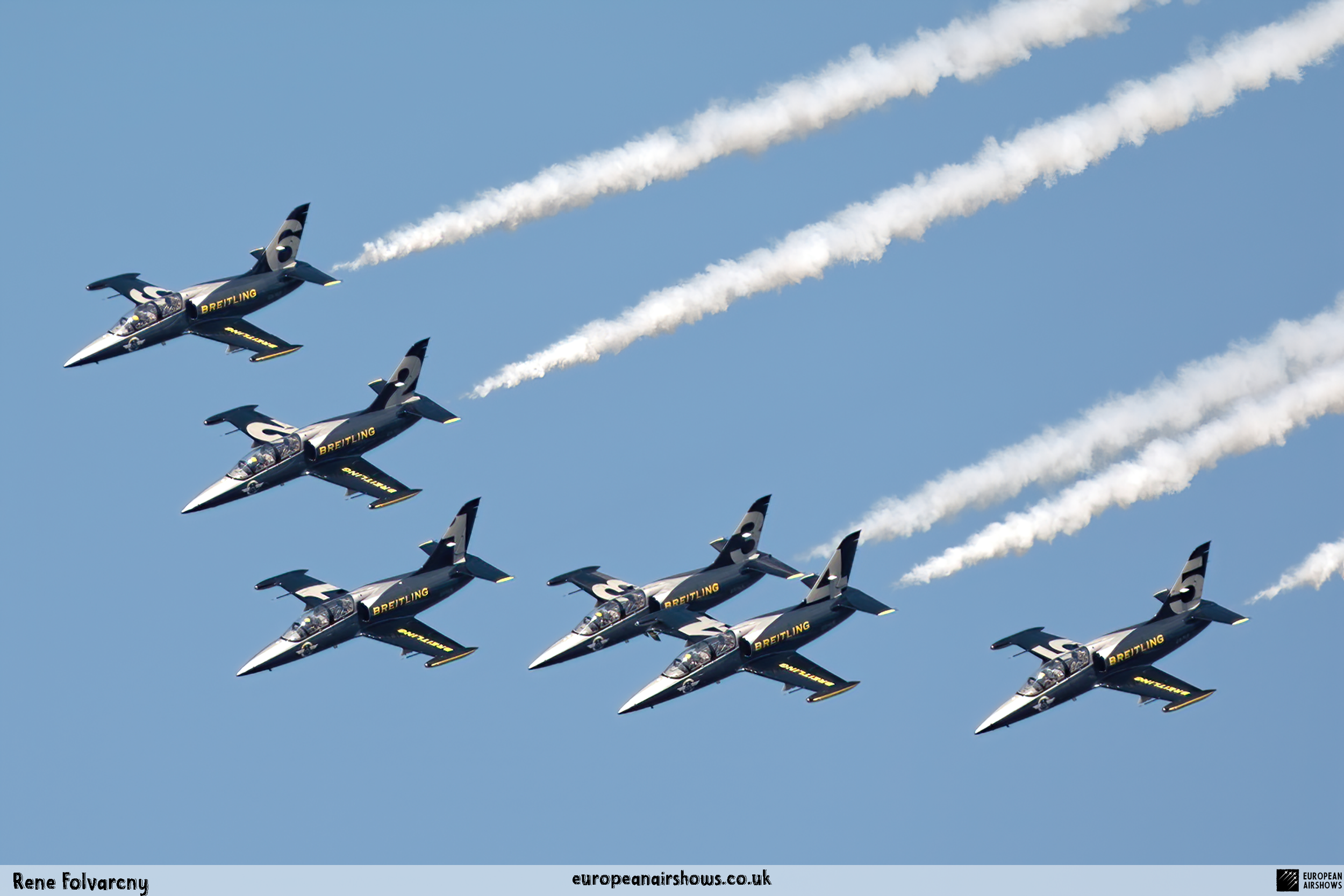
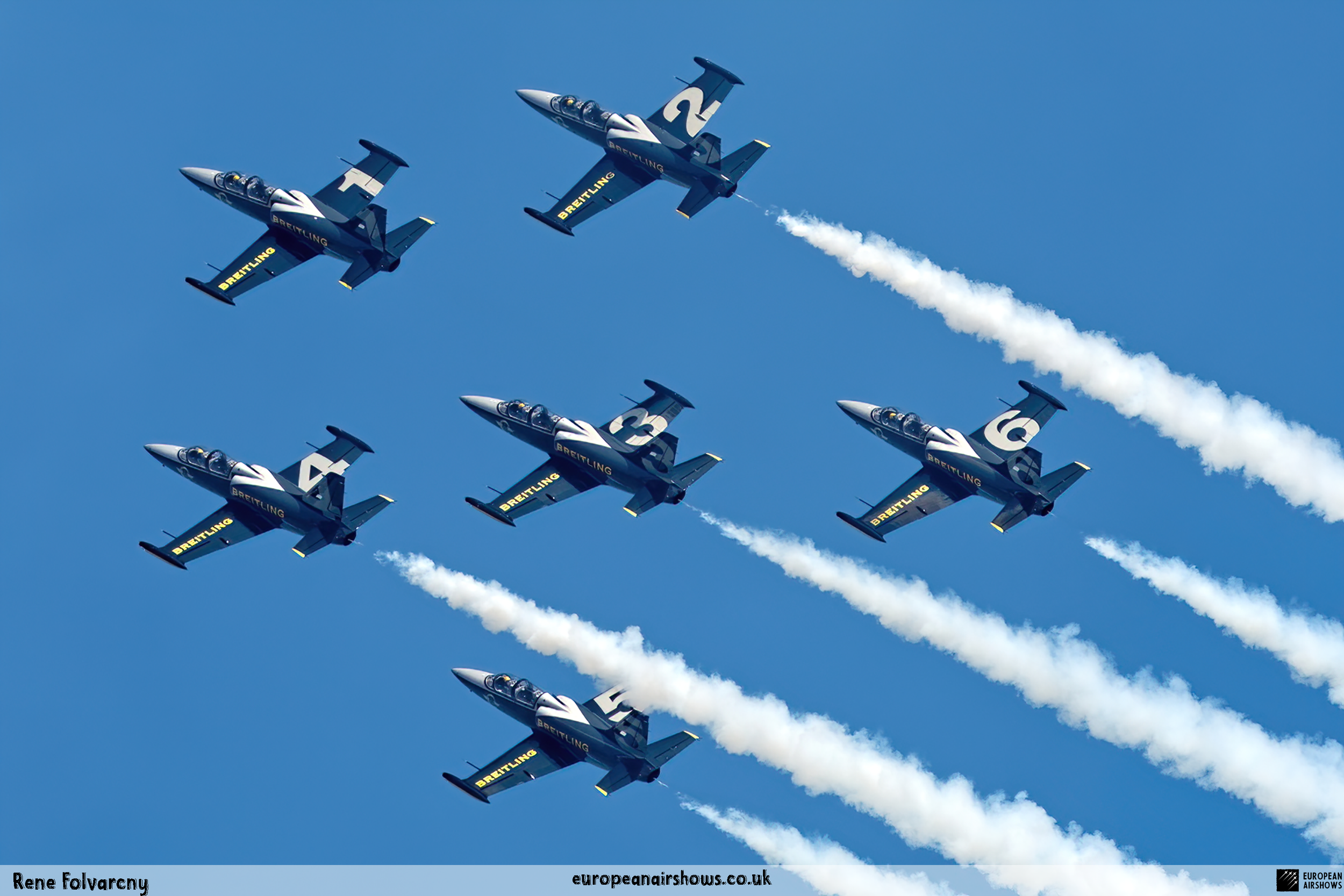
Apache Aviation's French jet team became one of the defining civilian acts of its era, reaching a peak seven-aircraft formation before flying mostly as a six-ship in its final European seasons. It has been inactive since its last public display in September 2019.
- Breitling period
- 2003 to 2019
- Jet-team lineage
- From 2002
- Aircraft
- Aero L-39C Albatros
- Peak display
- Seven aircraft
- Later formation
- Usually six aircraft
- Status
- Inactive · aircraft transferred to training
The team
Four decades of Apache Aviation display experience culminated in a landmark civilian jet team.
The story begins before the Breitling name. Jacques Bothelin started displaying a Mudry CAP 10 in 1980 and established Apache Aviation at Dijon-Darois in 1982. The company's early sponsor-backed teams flew SIAI-Marchetti SF.260s and later Pilatus PC-7s under the Martini, Ecco and Adecco identities.
After Adecco sponsorship ended, Bothelin and Philippe Laloix continued as the two-PC-7 Les Apaches team from 1999 to 2001. Apache then sold the PC-7s, acquired L-39Cs and entered the jet era with Rafik Khalifa's backing. The Khalifa Jet Team made its public debut in May 2002, growing from two to four aircraft during that first season.
Seventeen seasons in Breitling colours
Khalifa withdrew in 2003 and Swiss watchmaker Breitling became the new title sponsor. That created the Breitling Jet Team identity, although Apache Aviation remained the French operator and Bothelin remained leader. The operation expanded progressively, completing its move to a seven-aircraft display during 2008 and establishing the seven-ship as its signature format.
Peak size and later reality
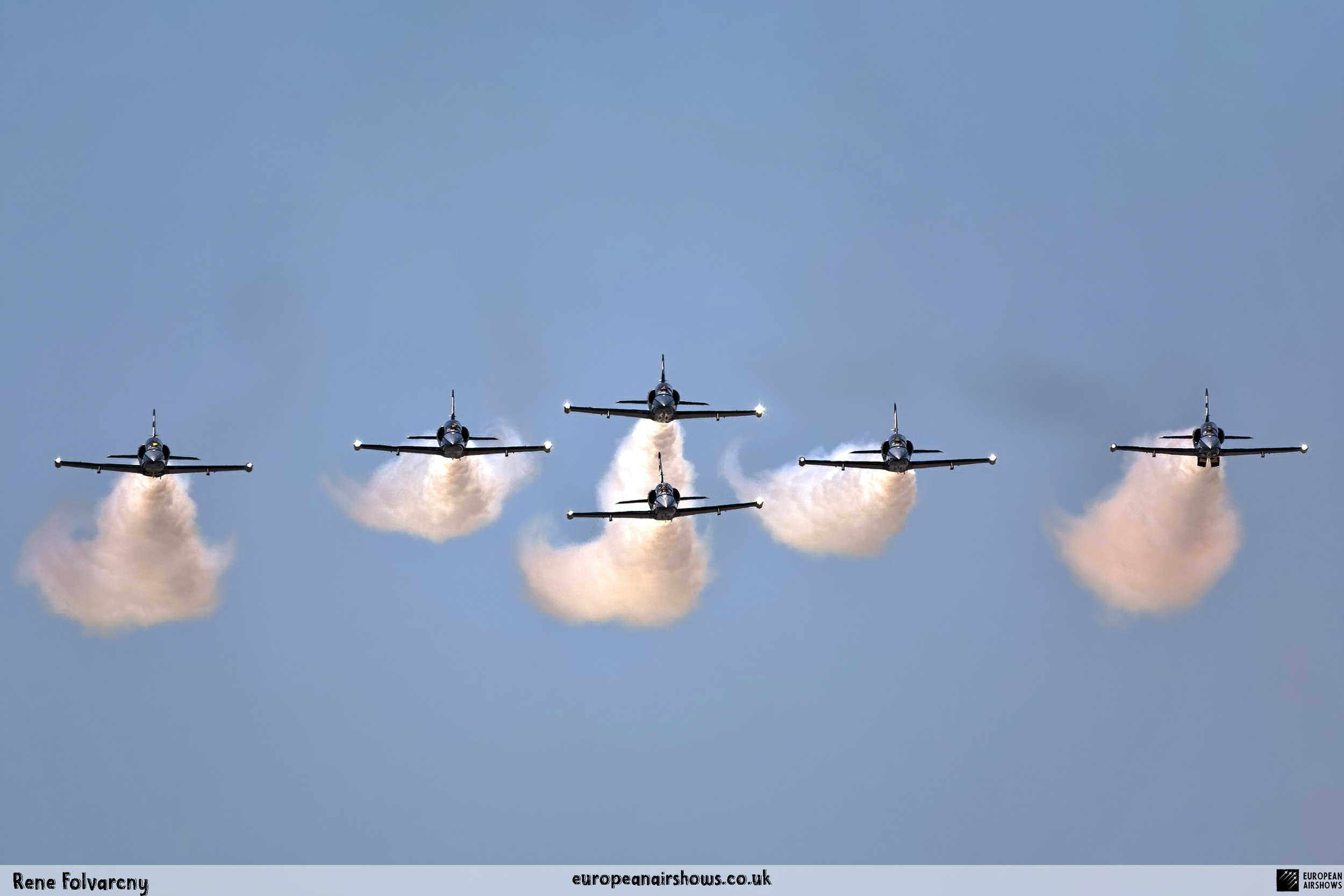
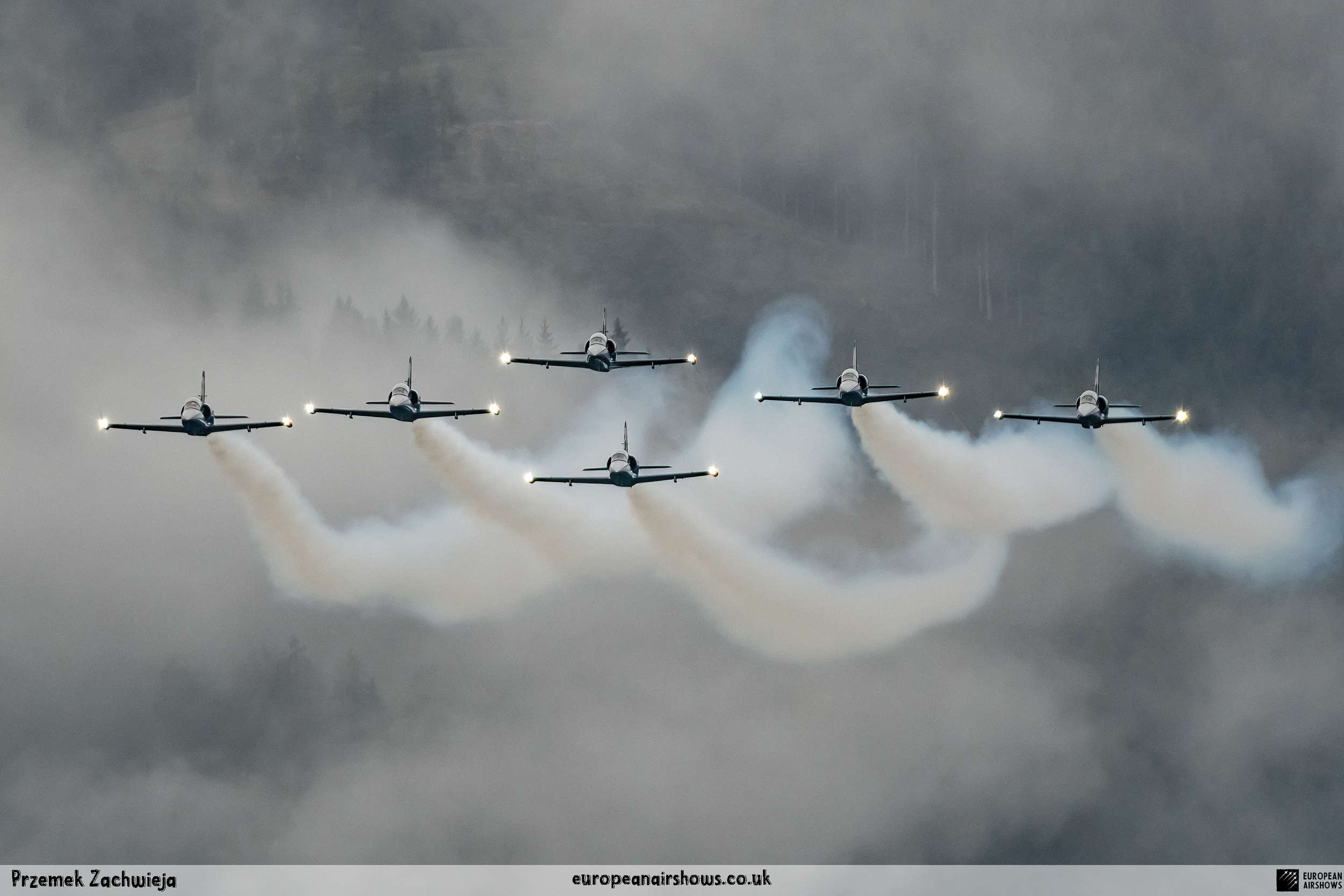
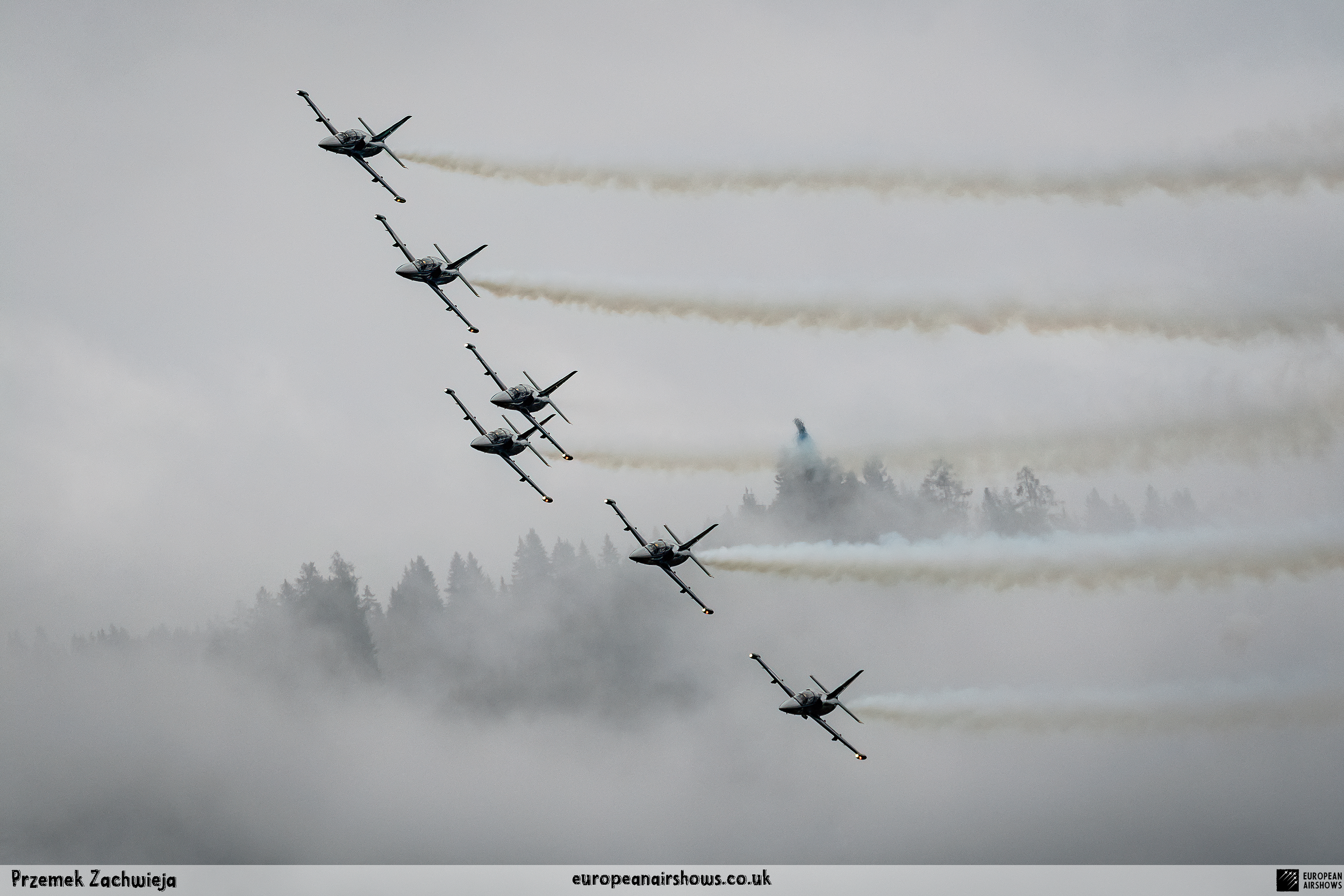
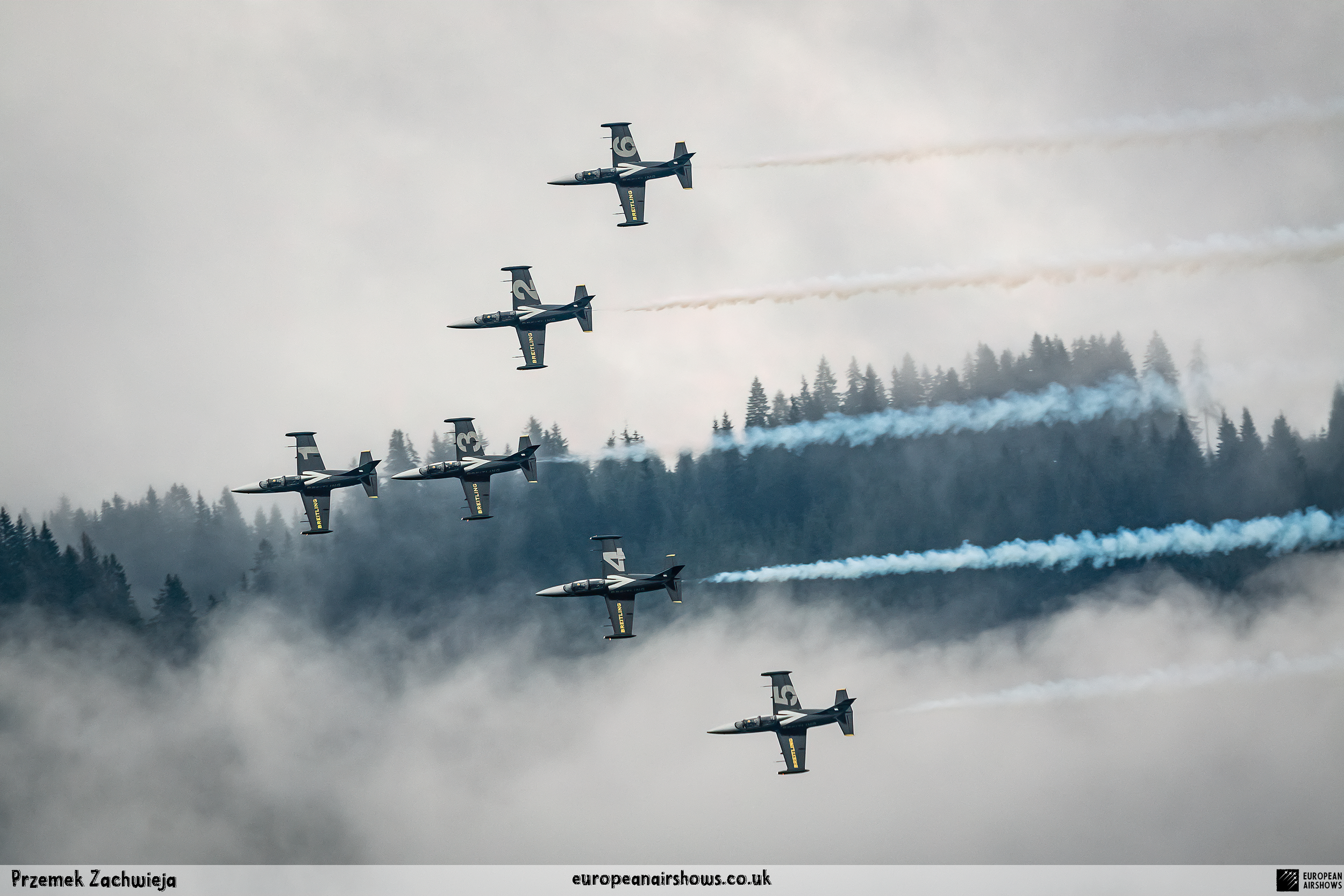
The seven-ship made the team one of the largest professional civilian jet formations in the world and supported tours across Europe, Asia and North America. However, the peak format was not universal. After the 2015 and 2016 North American tour, the team generally appeared with six aircraft during its final European seasons.
A civilian operation with military experience
Most Breitling Jet Team pilots came from military fast-jet careers and several had Patrouille de France experience, but the team itself was not a French Air and Space Force unit. It was a privately operated Apache Aviation display organisation carrying the branding of a Swiss commercial sponsor.
The display
Large formation geometry gave way to crossings, rolling opposition and a flare-lit finale.
The former routine normally lasted about 18 to 20 minutes and was divided into a formation-led opening followed by a more dynamic sequence of breaks, crossovers and individual manoeuvres. It was choreographed to music, while formation size and weather programme could vary between appearances.
Six- and seven-ship precision
The opening used close formation passes, loops and rolls, presenting the L-39s as one large geometric shape before the formation began to separate.
Breitling formations
Named shapes such as Blackbird, Avenger and Chronomat linked the choreography directly to the title sponsor's aviation-watch range.
Galactic Crossing
A solo aircraft performed opposing barrel rolls against a five-ship element, combining closure, timing and rolling movement at show centre.
Apache Roll
Four aircraft held a banking formation turn while another L-39 rolled around their flight path, a figure rooted in the operator's own identity.
Pacman Crossing
Five aircraft met an opposing pair in a broad, high-closure crossing that used the team's peak seven-aircraft strength to full effect.
Final Split
A bomb-burst separation, often enhanced by flares where local rules permitted them, created the traditional closing image of the display.
The aircraft
A tandem-seat Cold War trainer whose handling and performance made it the foundation of a world-touring display team.
The L-39C Albatros
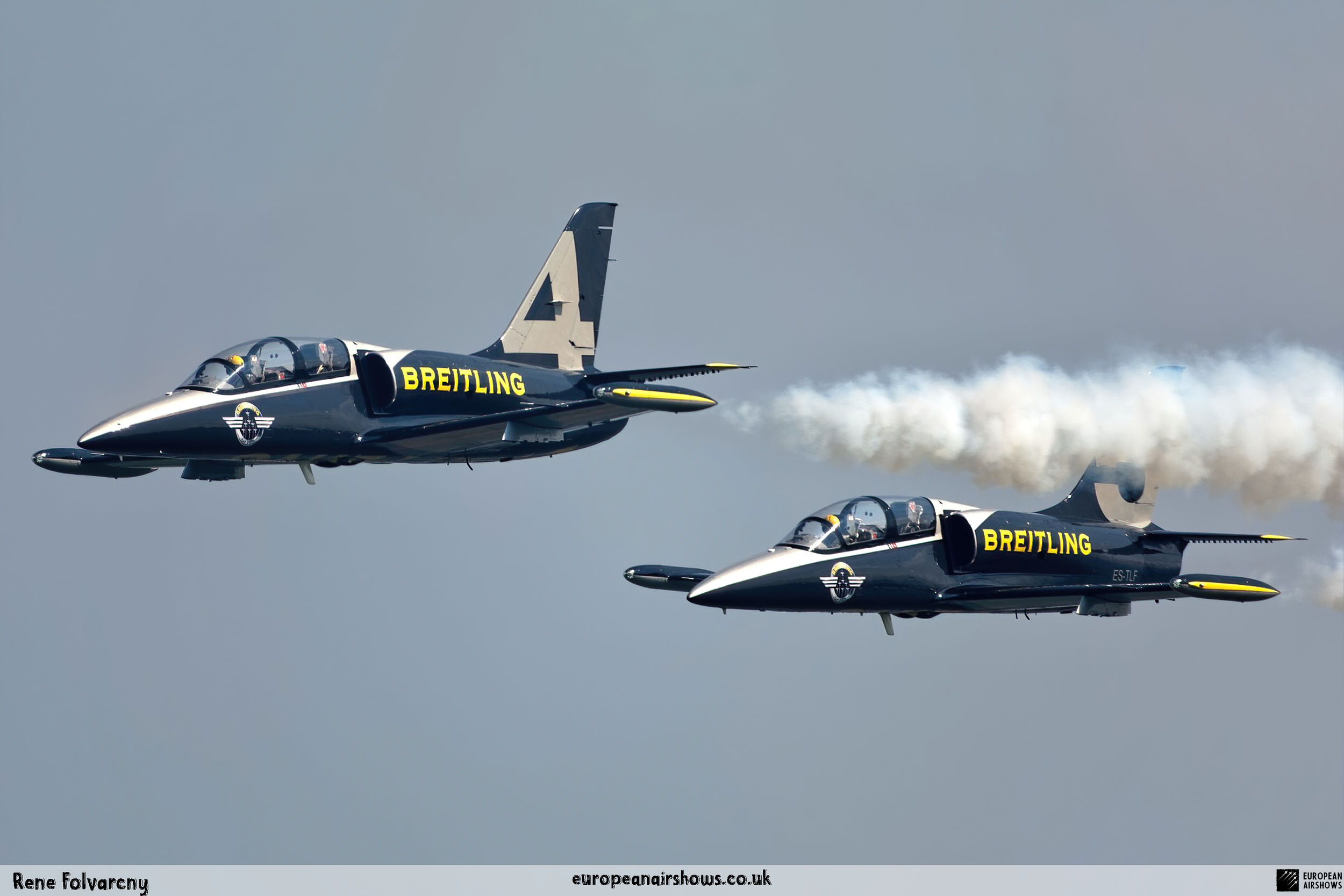
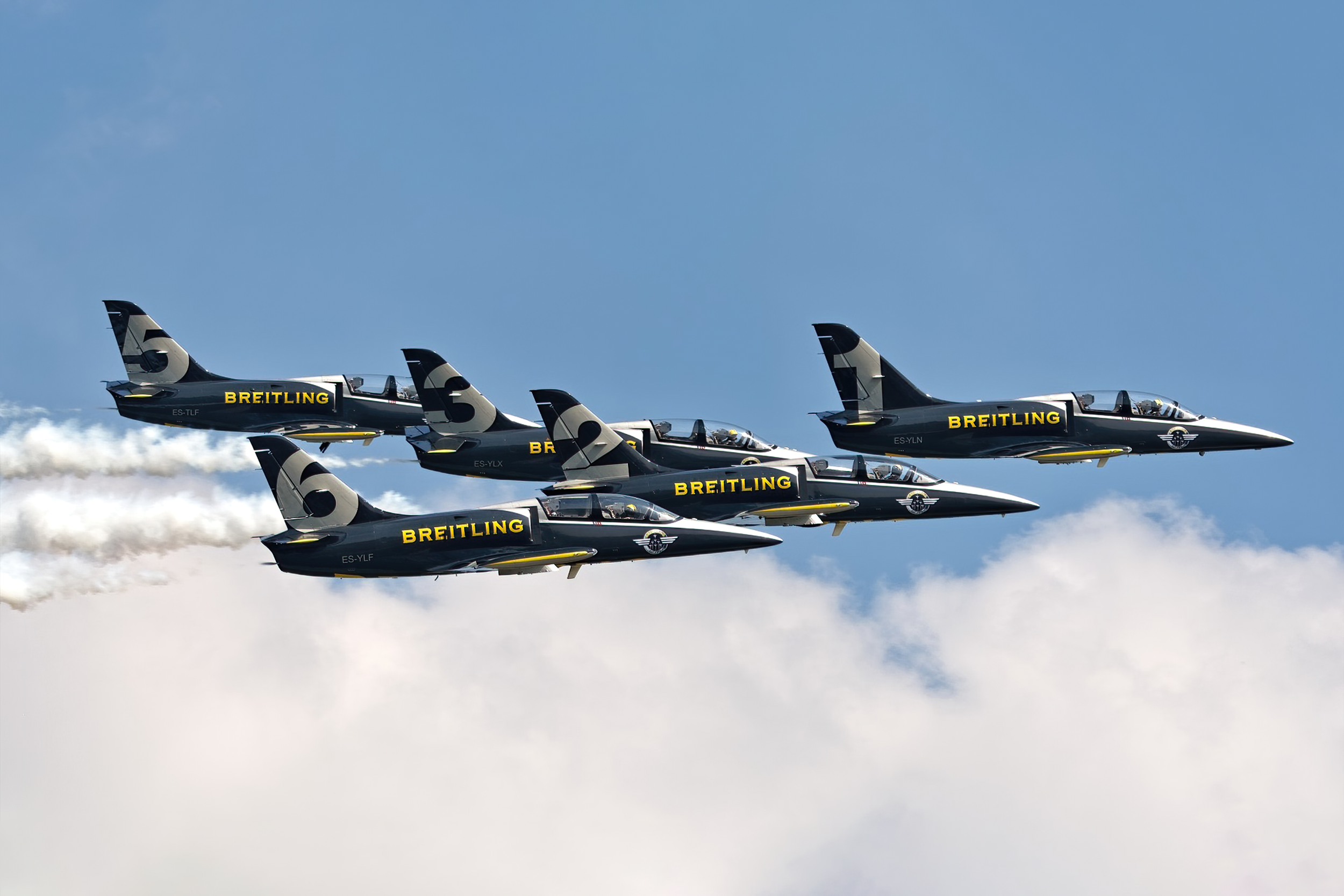
Designed at Aero Vodochody by a team led by Jan Vlček, the L-39 first flew in 1968 and entered production in 1971. The C model is the standard basic and advanced trainer: an all-metal, low-wing jet with tandem seats, a raised rear cockpit and tricycle landing gear.
AI-25TL turbofan power
One Ivchenko-Progress AI-25TL turbofan provides 1,720 kgf, equivalent to 16.87 kN or about 3,800 lbf, of maximum thrust. The side intakes keep the nose clear, while the broad canopy and stepped seating give both occupants good visibility for training, formation work and experience flights.
A practical formation platform
The L-39C was built as a military trainer rather than as a purpose-built competition aerobatic aircraft. Its predictable handling, two-seat cockpit, broad visibility and comparatively manageable operating costs made it well suited to Apache Aviation's formation and passenger work.
Display modifications and smoke
The team's L-39Cs carried smoke systems that traced formation shapes and breaks across the sky. Public descriptions sometimes add broad claims about a special display avionics fit, but the better-supported distinction is simply that these were L-39C trainers prepared and maintained for the team's civil display operation.
Four in 2003
The Breitling-branded team began with the four-aircraft formation inherited from the Khalifa operation.
Peak seven-ship
Progressive expansion produced the signature seven-aircraft display established by 2008 to 2009.
Later six-ship
The final European seasons were flown mostly with six aircraft, despite the team's seven-ship reputation.
Eleven transferred
Babcock bought 11 Apache Aviation L-39s in 2024, a fleet total rather than a display formation.
The story so far
From a CAP 10 and sponsor-backed propeller teams to a globe-touring jet act, then a final display and a new purpose for its aircraft.
1980
Bothelin begins displaying
Jacques Bothelin starts his airshow career in a Mudry CAP 10, beginning the personal display lineage that will lead to Apache Aviation's formation teams.
1982
Apache and Patrouille Martini
Apache Aviation is established at Dijon-Darois and a three-ship SIAI-Marchetti SF.260 team takes shape with Martini sponsorship.
1988 to 1998
PC-7 era
Pilatus PC-7s replace the SF.260s. The formation later carries the Ecco and Adecco identities and expands to four aircraft.
1999 to 2001
Les Apaches
After Adecco withdraws, Bothelin and Philippe Laloix keep the operation visible with a two-aircraft PC-7 team under Apache Aviation's own name.
2002
Khalifa Jet Team
The first L-39 operation debuts publicly in May, beginning as a two-ship and growing to four jets during the season.
2003
Breitling Jet Team begins
Breitling replaces Khalifa as title sponsor. Apache Aviation remains the French operator and starts a 17-season branded partnership.
2008 to 2009
The seven-ship is established
Fleet expansion produces the seven-aircraft routine that becomes the team's best-known configuration and its international calling card.
15 September 2012
ES-YLS lost during transit
Number 2 develops an engine problem while flying from Den Helder towards Kleine Brogel. Pilot Bernard Charbonnel and technician Raphaël Savoye eject safely before the aircraft crashes near Valkenswaard in the Netherlands.
2013
East Asia tour
The team takes its large L-39 formation to Asian audiences, extending an international programme that had already reached Europe and the Middle East.
2015 and 2016
North American tour
Two seasons in the United States and Canada bring the seven-ship to events including Sun 'n Fun, Oshkosh, Jones Beach and Abbotsford.
2017 to 2019
Mostly six in Europe
After returning from North America, the team usually displays as a six-ship, although its peak seven-aircraft identity remains central to its reputation.
22 September 2019
Final public display
The Breitling Jet Team closes its 17th and final branded season at Festival Aérien Cervolix in France after Breitling decides not to renew sponsorship.
19 December 2024
Babcock acquires the L-39 fleet
Babcock announces the purchase of 11 L-39s from Apache Aviation for its Dijon-based international fighter-pilot training academy.
Identity & context
Four distinctions keep the brand, the operator, the display strength and the closure accurate.
French team, Swiss sponsor
Apache Aviation owned and operated the Dijon-based civilian team. Breitling supplied the name and commercial sponsorship from Switzerland.
2002 jets, 2003 identity
The L-39 operation began as Khalifa Jet Team in 2002. Breitling Jet Team correctly dates from the sponsor change in 2003.
Seven at peak, later usually six
Seven aircraft defined the team's reputation and major tours, but its final European seasons were normally flown as a six-ship.
Inactive, not renamed
No replacement sponsor revived the public team after 2019. Babcock's 2024 acquisition moved the L-39s into training rather than a new display identity.