
White-Red Sparks, Reborn: How a Civilian Operator Is Poised to Put Iskry Back at the Heart of Airshows
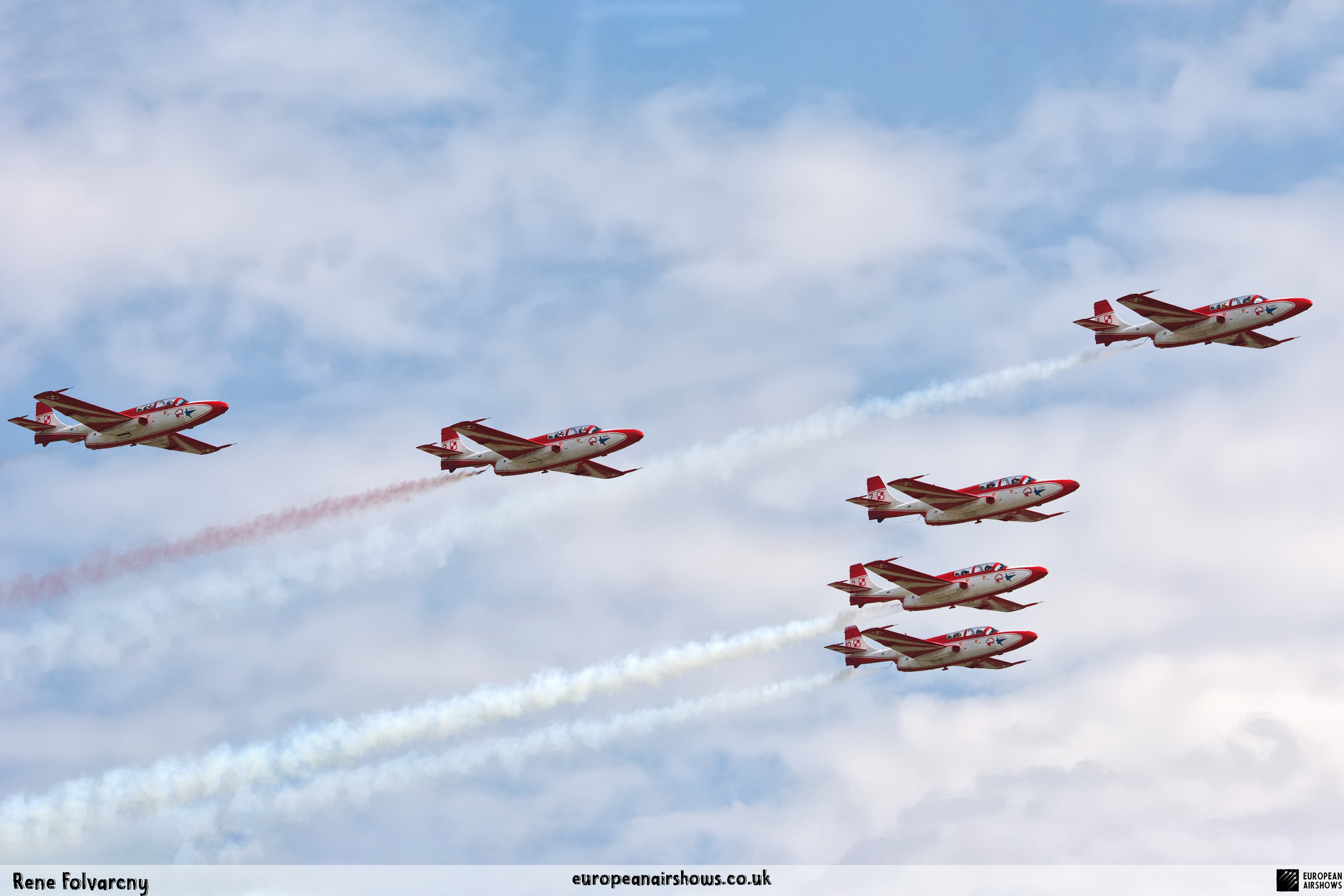
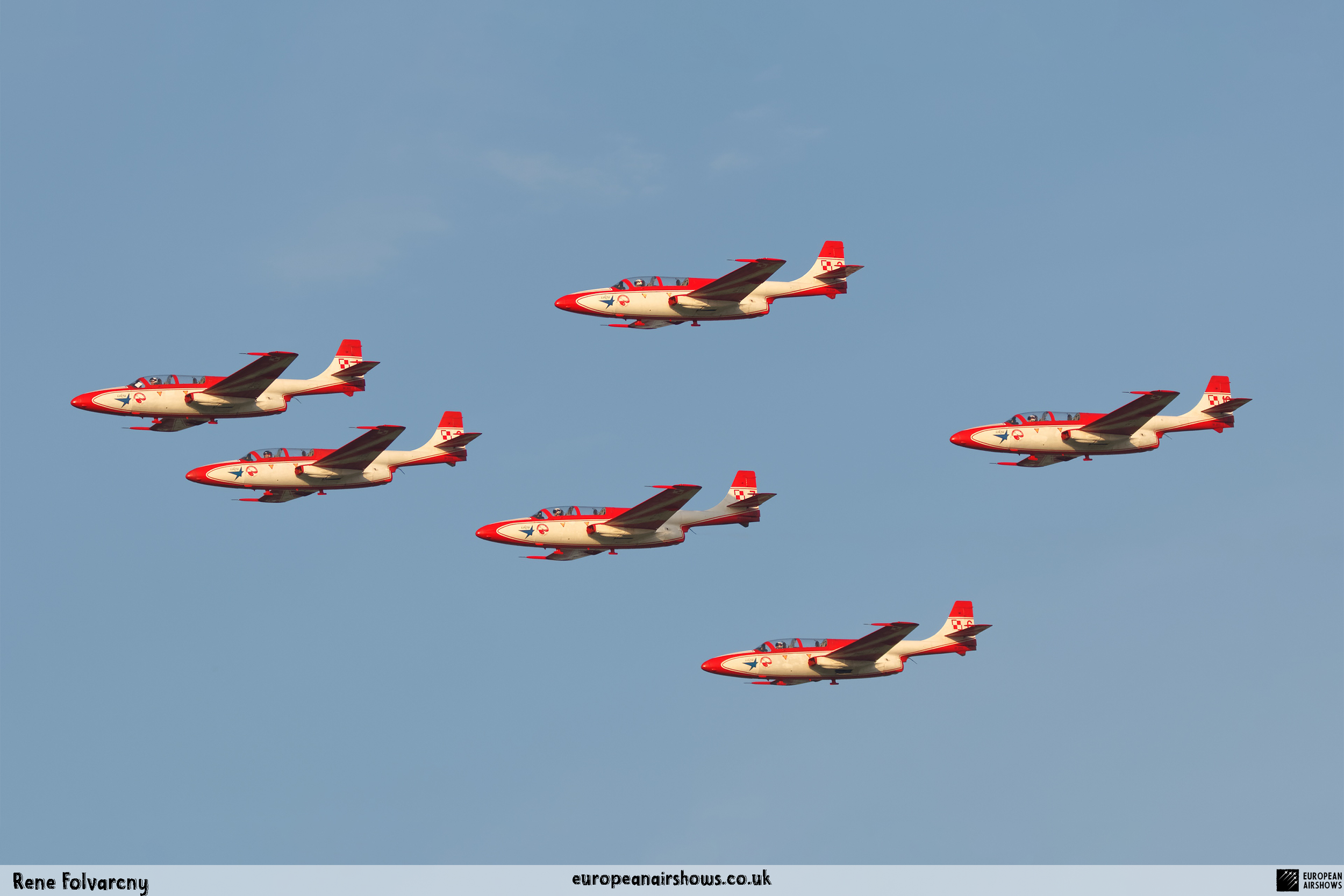
For more than fifty years, the White-Red Sparks were the flying symbol of Polish aviation. Their red-and-white TS-11 Iskras painted the sky with smoke trails that became as familiar at Radom as they were at international airshows across Europe. The team’s elegant seven-ship formations were a highlight of countless displays, and for generations of spectators, they embodied both national pride and the skill of Poland’s pilots. When the Polish Air Force retired the Iskra in 2021 and formally disbanded the team a year later, many assumed that this chapter of airshow history had finally closed.
That assumption may soon be overturned. In September 2025, during a ceremony at the Polish Air Force Museum in Dęblin, seven former White-Red Sparks Iskras were officially handed over to the White-Red Wings Foundation, a civilian organisation already operating the type. With this transfer, the foundation moves from maintaining a small three-ship heritage flight to holding the resources for a complete seven-ship aerobatic team. It is the most significant step yet in a long effort to return the Sparks to the skies — this time under civilian ownership, but with the same familiar formations and unmistakable presence.
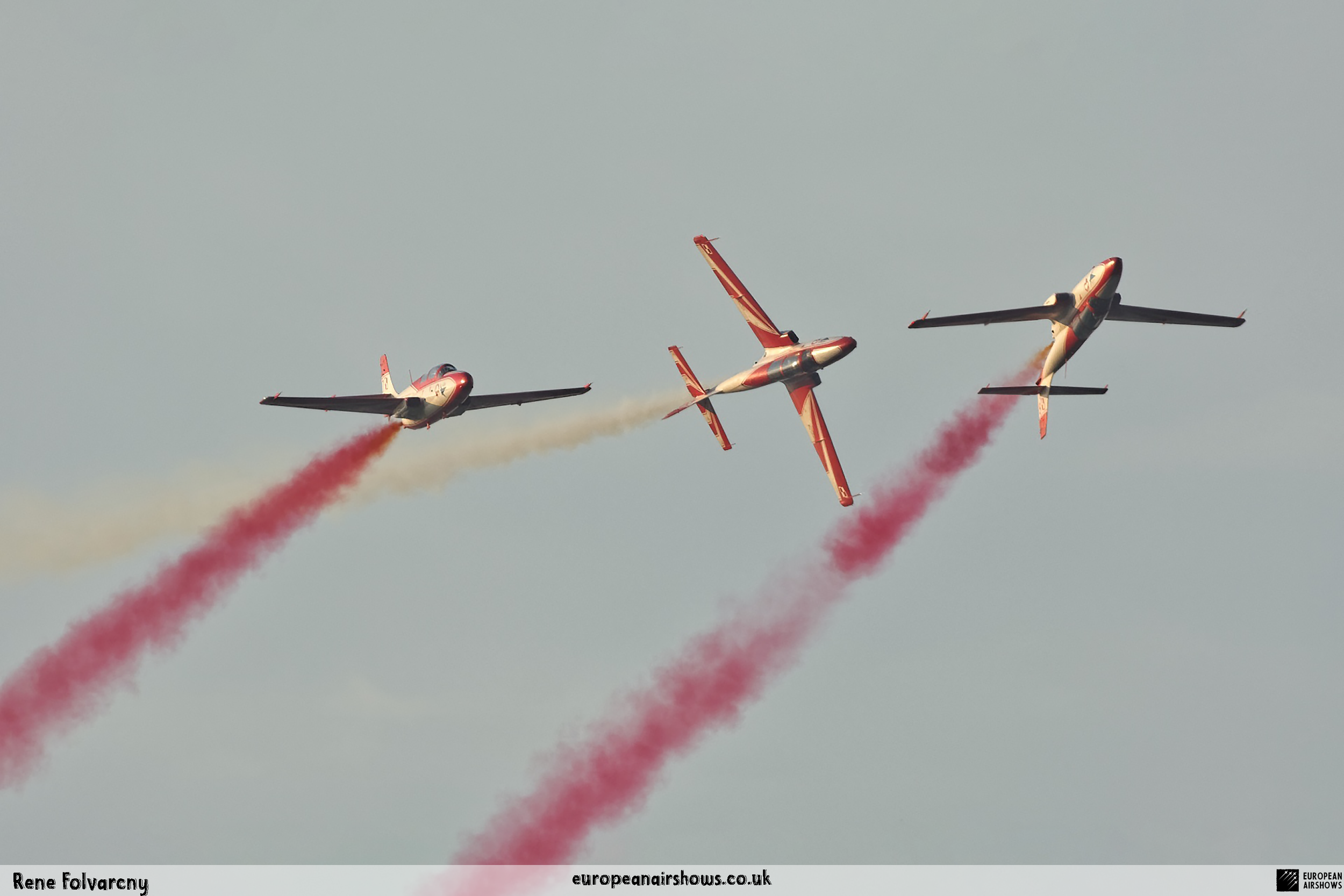
White-Red Sparks / Nato & Czech Air Force Days 2018
Seven Iskras Transferred—A Pivotal Moment
On 12 September 2025, at the Polish Air Force Museum in Dęblin, seven PZL TS-11 Iskra jets were formally transferred from the 41st Training Air Base to the White-Red Wings Foundation. These are ex-Polish Air Force aircraft previously used by the White-Red Sparks aerobatic team, and the ceremony marked the first concrete step toward rebuilding a full civilian formation. The 41st Base had kept the jets in good technical condition following military retirement, and the post-handover plan foresees a mixed repositioning: some aircraft ferried by air, others moved by road to the foundation’s hangars for phased return-to-flight work.
Until now, the foundation’s public appearances have typically featured a three-ship Iskra routine at selected events; acquiring seven additional airframes provides the scale and redundancy for a classic seven-ship programme, with enough depth for training and maintenance rotations. The group has active momentum—flying in Poland and abroad in recent seasons, including Medzinárodné letecké dni SIAD 2025 in Slovakia and other national and international outings—so this isn’t a ceremonial gesture but a practical fleet-building milestone that enables a full aerobatic team to be fielded under civilian colours.
The Airframe That Made the Team
Designed by Tadeusz Sołtyk, the PZL TS-11 Iskra first flew in 1960, entered service in 1964, and remained Poland’s principal jet trainer until retirement in 2021—an extraordinary run for a domestically designed aircraft. Roughly 424 were produced between 1963 and 1987. The type’s blend of honest handling and modest thrust was ideal for close-in formation geometry that airshow audiences could read cleanly from the crowd line.
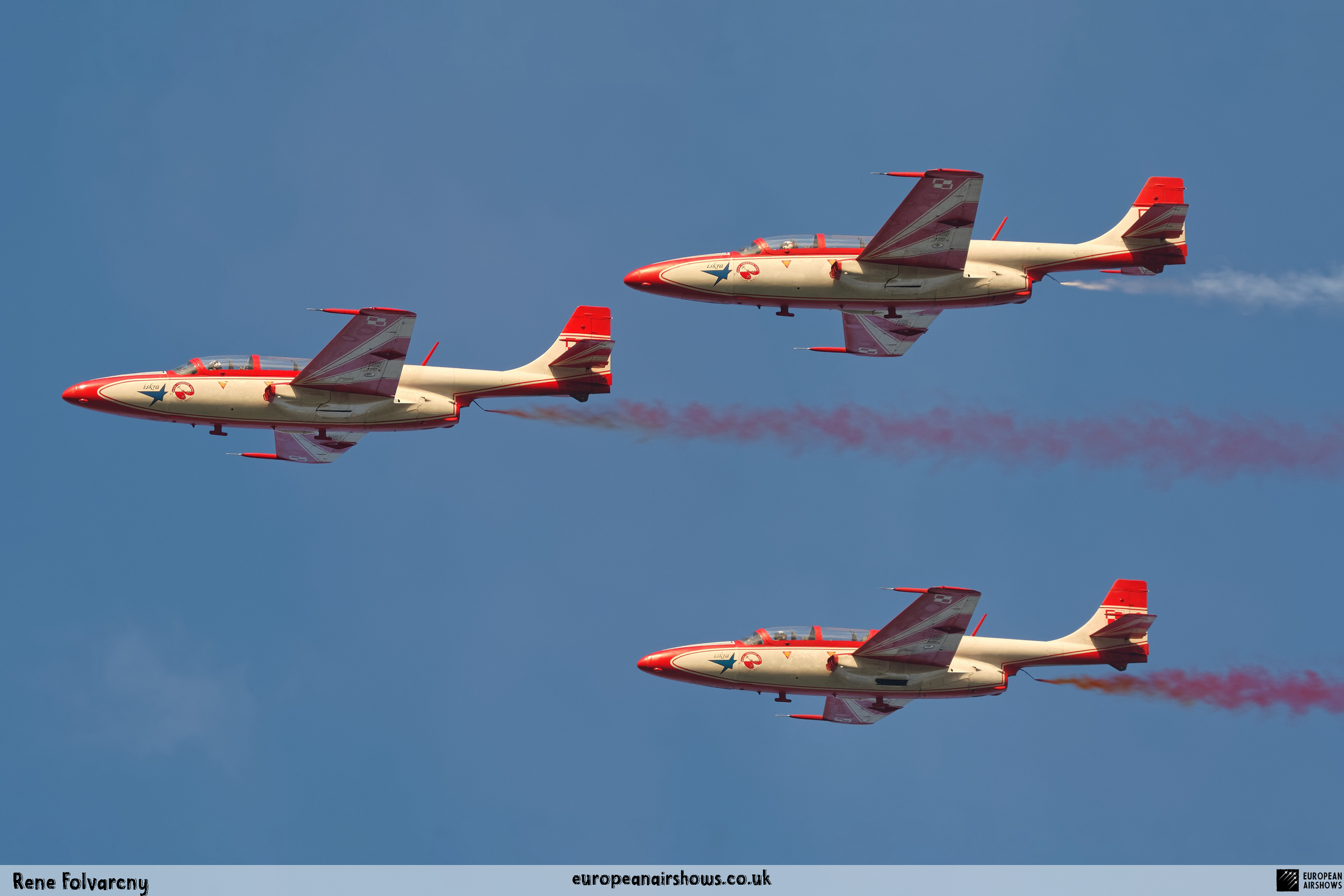
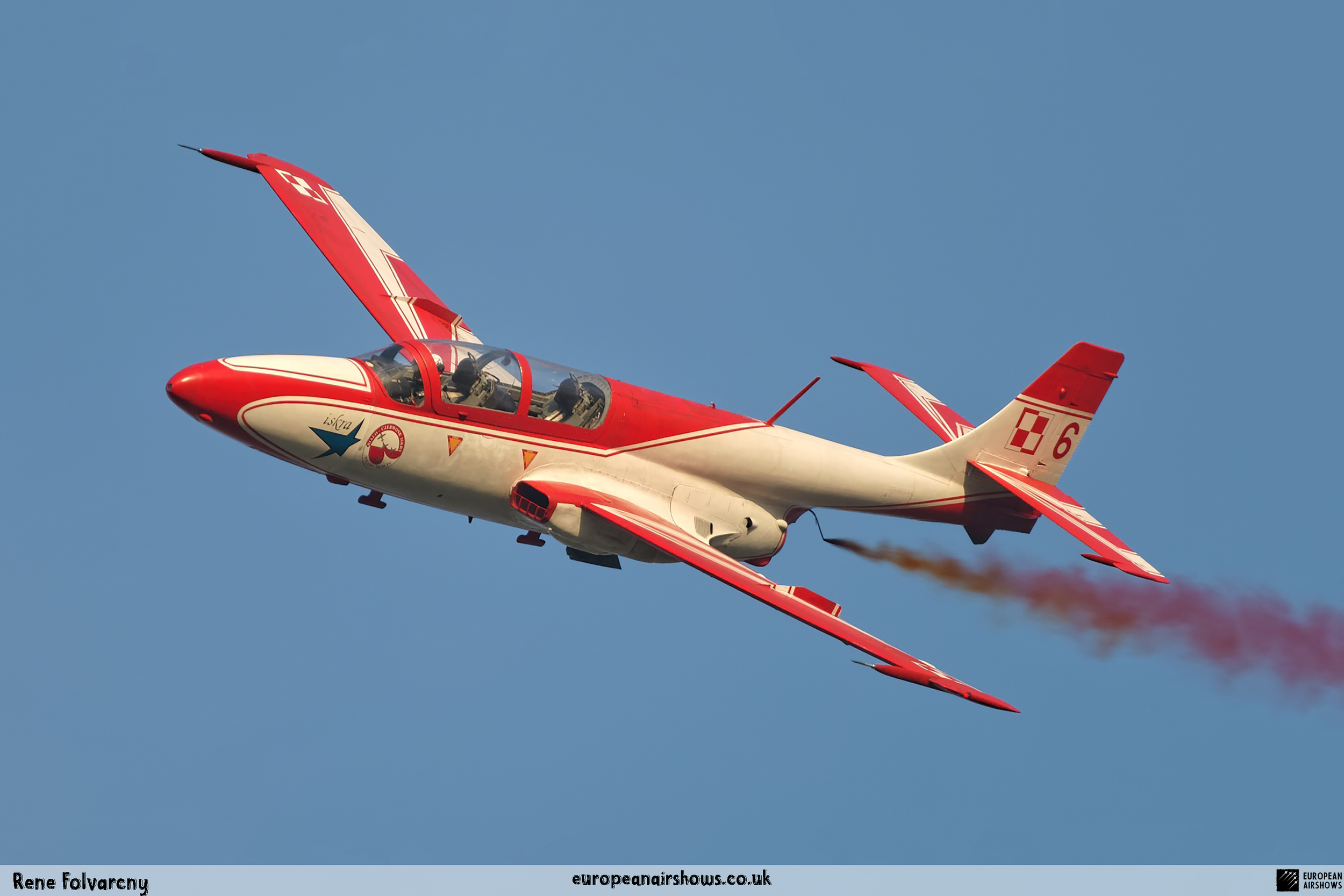
For team flying, the TS-11 Iskra MR was the definitive variant. This version was created through a dedicated modernisation programme in 1991, tailored specifically for the White-Red Sparks. The upgrades included a more powerful SO-3W engine, the removal of all weapons and the gunsight to reduce weight, and the installation of modern radionavigation equipment such as a transponder, ILS, and VOR receivers. In place of the cannon, engineers fitted a 70-litre smoke-fluid tank, giving the aircraft its signature red-and-white trails during displays.
The Iskra MR was also finished in a distinctive national livery, designed by Lt. Col. pilot Ireneusz Fibinger, with the paint scheme not only symbolising Poland but also reducing skin-friction drag. Together with the weight savings, these changes gave the aircraft improved manoeuvrability, ideally suited to precision aerobatics. Before entering service with the Sparks, many of these airframes had careers in Poland’s training units — including the 38th Training-Combat Regiment at Modlin, the 60th at Radom, and the 58th at Dęblin. As the first domestically designed Polish jet, the TS-11 had already been in service since 1964 at the Dęblin “School of Eaglets,” where it trained generations of jet pilots and maintained their flying proficiency.
The Team: From Rombik to National Icon
The White-Red Sparks were founded in 1969 as a four-ship formation of TS-11 Iskra trainers known as Rombik (“Little Rhombus”). Within a few years, the team expanded first to six and then to the seven-aircraft formation that became its trademark. Operating the Iskra MR variant, purpose-modified for aerobatic display, the Sparks grew into one of Europe’s longest-serving national jet teams, representing Poland at airshows across the continent for more than five decades.
After more than half a century of continuous service, the team gave its final public performance on 27 July 2022 at Dęblin, where it had long been based with the 41st Training Air Base. With the retirement of the TS-11 from the Polish Air Force, the White-Red Sparks were formally disbanded later that year, closing the military chapter of a unit that had become a defining symbol of Polish aviation heritage.
The Foundation: A Decade of Work Paying Off
Founded in 2014 by pilots Piotr Maciejewski and Jakub Kubicki, the White-Red Wings Foundation (Fundacja Biało-Czerwone Skrzydła) was created to restore and fly post-war Polish aircraft, with the TS-11 Iskra at its heart. That same year the foundation returned a civilian Iskra to flight, marking the start of a heritage programme that has since expanded to multiple aircraft and regular formation displays. To help sustain these operations, the foundation also offers carefully supervised introductory jet flights from Mielec (EPML), giving enthusiasts a first-hand taste of Poland’s iconic jet trainer.
Among the fleet is a striking ex–Indian Air Force Iskra, restored in authentic IAF colours. Its elegant scheme provides a vivid contrast to the familiar red-and-white Polish team paintwork, while also highlighting the Iskra’s export success and decades of service abroad. Together with the recently restored Polish examples, it has become a highlight of the foundation’s flying line-up, often joining formation routines that blend national heritage with international history.
What Changes Now: From Ceremony to Season
Transforming a ceremonial handover into a full civilian aerobatic team happens along five practical lines:
1) Civil airworthiness & paperwork.
Each aircraft must be inspected, documented, and placed on the civil register under a permit-to-fly or equivalent approval. Poland’s ULC, within the EASA framework, has established processes for ex-military types, making this the standard route for heritage jets to fly in public displays.
2) Maintenance depth.
Operating seven aircraft demands robust support: spare engines, tyres, brakes, and smoke systems, along with staggered inspections to ensure a minimum set remains display-ready while others cycle through maintenance. Poland’s established Iskra expertise and the careful preservation of these aircraft at Dęblin provide a strong foundation.
3) Pilot currency & syllabus.
Expanding from three to seven aircraft requires structured training—progressing from simple rejoins through fingertip, diamond, and arrowhead formations to opposition and mirror figures—all within approved height and speed limits. It is the same discipline once applied in the military team, adapted now for civilian operation.
4) Training & ferry logistics.
Some jets will be ferried by air once paperwork is complete, while others may be moved by road for deeper servicing. This mixed approach is common in heritage-jet operations.
5) Engagement beyond Poland.
With a full formation available, the foundation can build a strong European season and, for the first time, realistically consider transatlantic appearances—an ambition the military Sparks never realised.
What Audiences Can Expect
Authentic look, authentic sound.
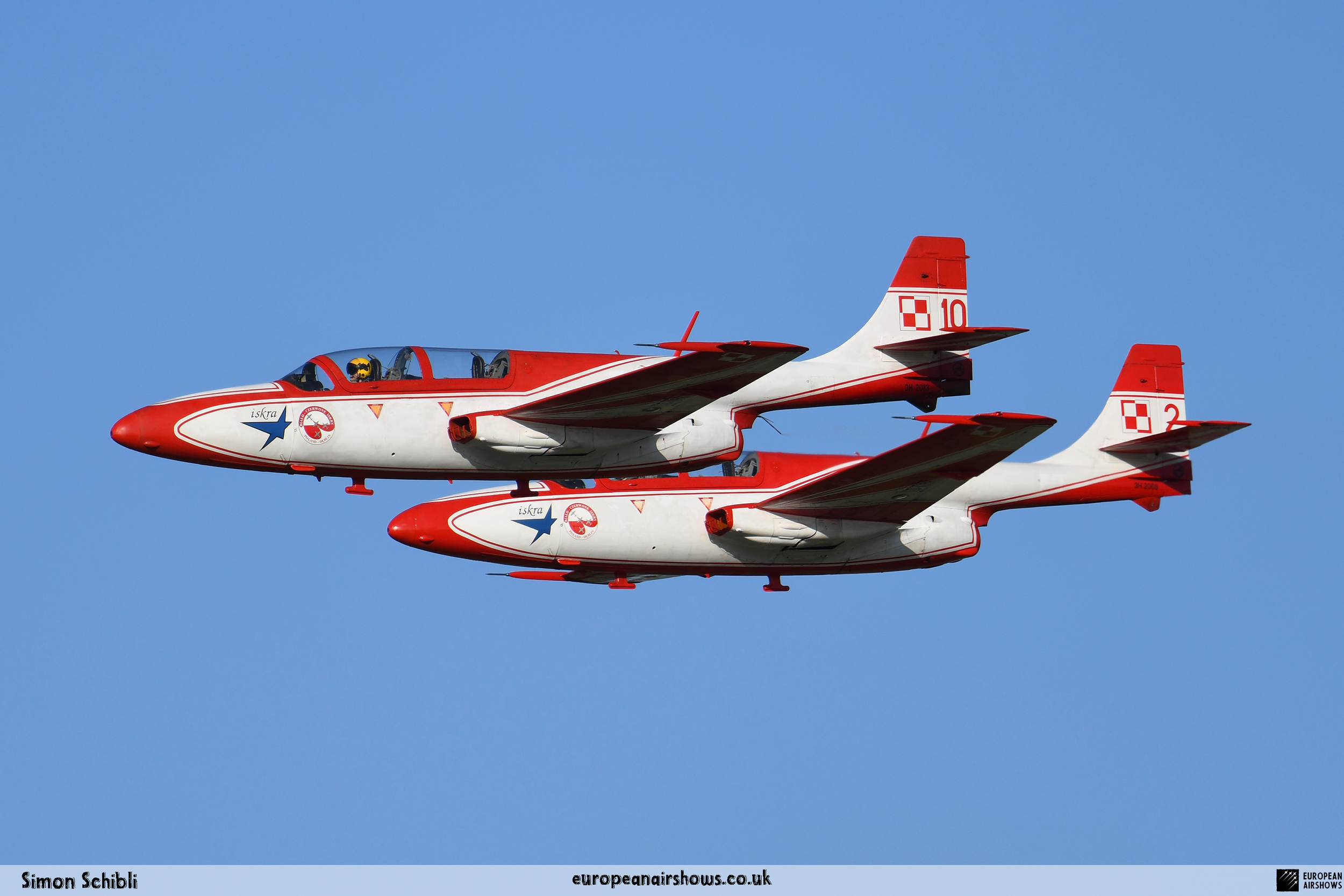
These are genuine ex-team Iskry, so both their flight-line profile and their in-air presence mirror what spectators remember: tight, readable formations, smooth energy management, and the trademark red-and-white smoke plumes. The distinctive SO-3W turbine note, combined with the jet’s crisp roll response, completes the sensory picture.
A seven-ship geometry that rewards precision.
With a top speed of about 720 km/h, a ceiling near 11,000 metres, and forgiving low-drag handling, the Iskra is perfectly suited to diamond, arrowhead, and line-abreast transitions. These figures present clearly from the show centre, relying on precision rather than raw thrust, and showcase the elegance of classic jet aerobatics.
A routine with heritage depth.
The White-Red Sparks’ choreography evolved over more than five decades. A civilian revival can draw directly on that legacy, adapting it to today’s display standards and safety requirements while preserving the character that made the team a favourite across Europe.
Why This Revival Matters
Very few organisations in the world are capable of operating a full seven-ship civilian jet aerobatic team, and fewer still can do so with authentic national heritage aircraft in original markings. If the White-Red Wings Foundation continues with the same measured approach it has shown so far, Poland could soon field the only Cold War-era jet team flying at this scale on a regular basis. The cultural value is considerable: the legacy of designer Tadeusz Sołtyk remains alive in the air rather than locked in museums, while airshows gain a centrepiece act that blends nostalgia with a style of formation flying entirely distinct from modern single-jet tactical displays.
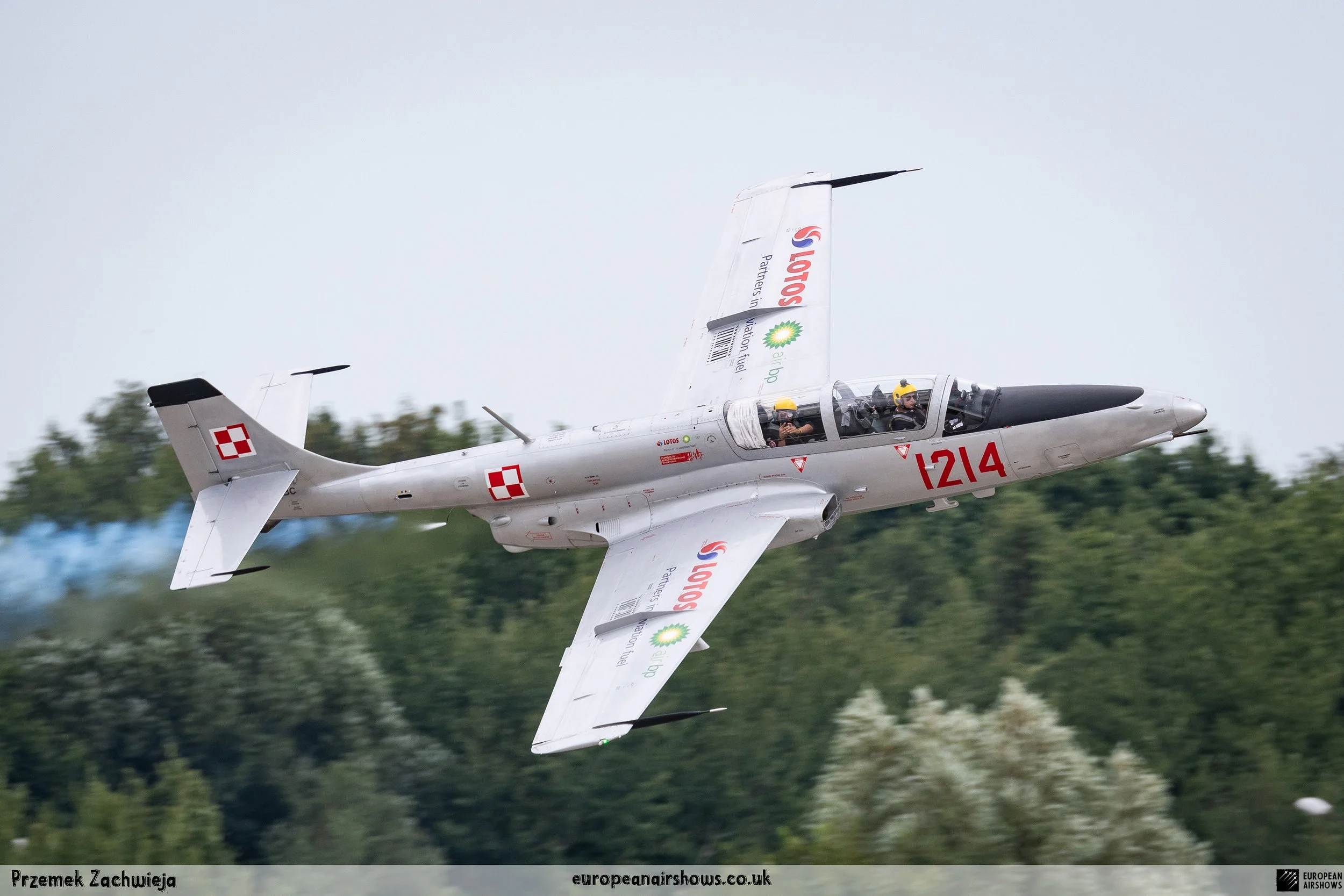

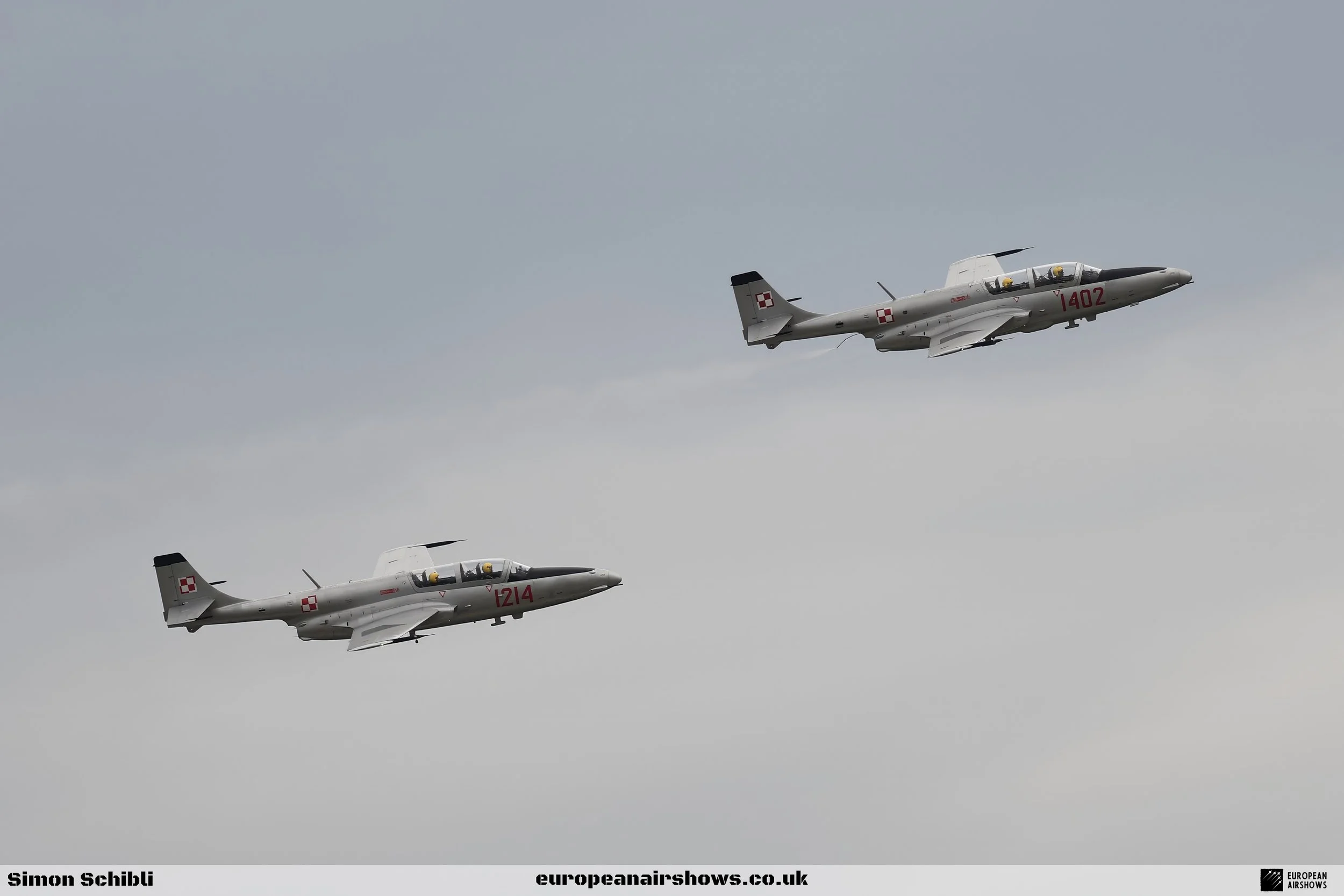
The Sparks’ farewell under military colours in 2022 marked the close of more than half a century of official service, but the TS-11 Iskra never truly vanished from Polish skies. In the years since, the White-Red Wings Foundation has restored several aircraft to civil flight, kept them active at domestic shows, and even introduced the type to new audiences abroad. This continuity preserved not only the aeroplanes themselves but also the skills, technical knowledge, and public enthusiasm that sustain them. The transfer of seven former team aircraft in September 2025 consolidates that work into a fleet capable of carrying the White-Red Sparks legacy forward—this time as a civilian aerobatic team that remains faithful to the spirit of the original.
